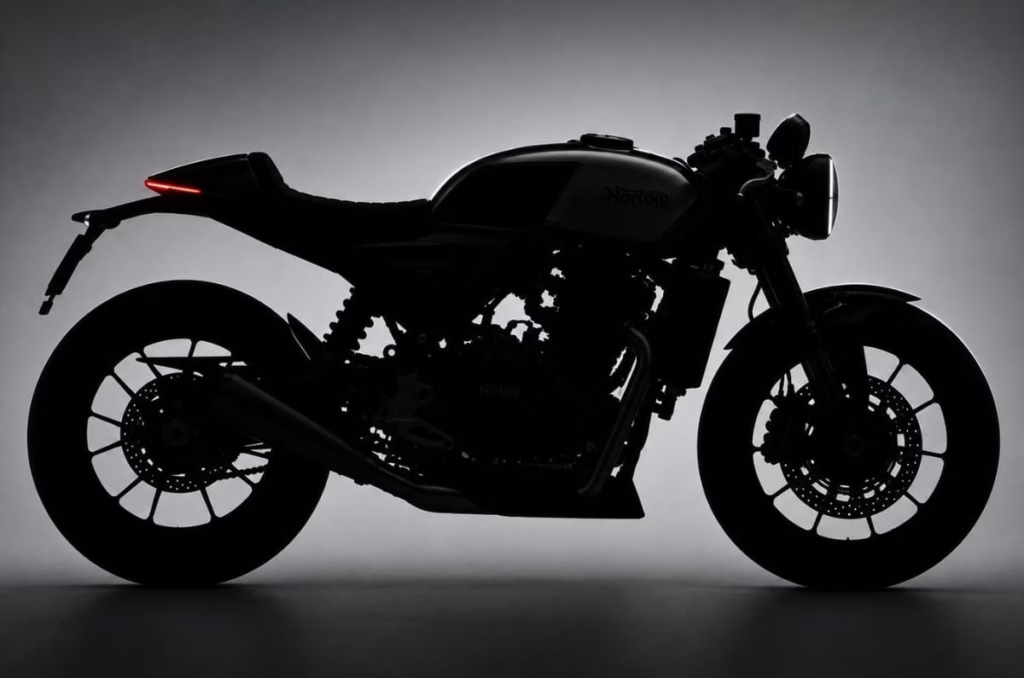
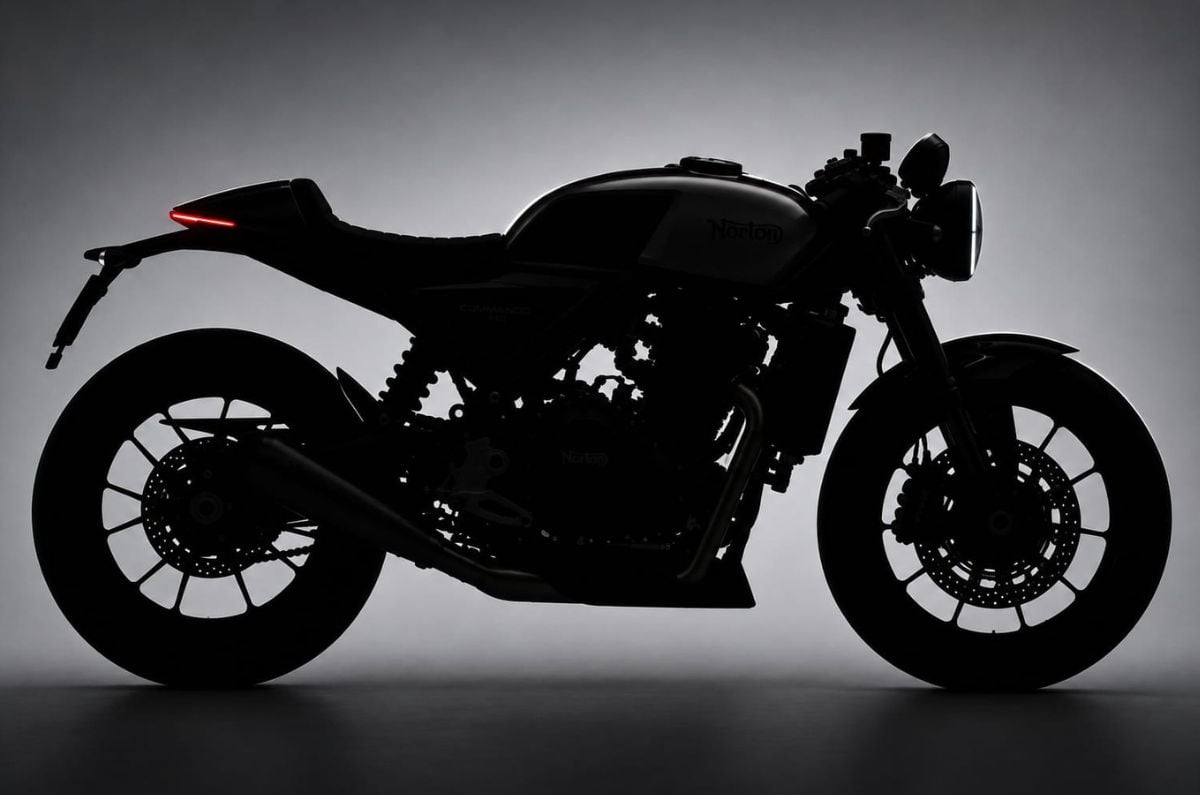
Norton Motorcycles will premiere its much-awaited 450cc-class single-cylinder roadster at EICMA 2026 in Milan, expanding its range with a motorcycle aimed at higher volumes in India and overseas. Autocar Professional expects the motorcycle to produce around 40-45hp and 40-45Nm. The engine is likely to be liquid-cooled and is expected to come with a 6-speed gearbox. The roadster will be the first model on a new platform understood to be called the H-series, with other body styles to follow. It will sit below the TVS Motor-owned British marque’s twin-cylinder Atlas range and V4-powered Manx family.
Norton Atlas is expected to first launch in India, in Q1 2027
New Norton single-cylinder motorcycle will launch overseas and in India simultaneously
Will also be manufactured at TVS’ Hosur plant
New Norton single-cylinder platform at EICMA 2026
Expected to launch in India and overseas in 2027
Autocar Professional understands that TVS plans to begin Norton’s India rollout in the January-March 2027 quarter, if not sooner, starting with the Atlas, followed by the Manx. The H-series roadster is expected to launch simultaneously in India and global markets in the second half of 2027. Responding to queries from Autocar Professional, a Norton spokesperson said the brand’s India introduction would follow its appearance at this year’s Milan show. “Norton is set to launch in India soon following the brand’s presence at EICMA this year, when the next key stage of the resurgence will be revealed,” the spokesperson said. The company has not officially confirmed the roadster’s platform name, engine capacity, output, pricing or sales timeline.
Norton has recently trademarked three names in India – Roven, Inter and Avalon and the first single cylinder bike may bear one of them. In 2025, the company also trademarked the Norton Electra name here, and this followed on the trademarking of the Norton Combat name in 2023.
Reimagined Norton under TVS
Design and ease of use is at the new Norton’s core
Differentiated design is central to TVS’s effort to give Norton a contemporary identity while retaining its British heritage. Simon Skinner, Head of Design, Norton Motorcycles, is leading the development of a design language connecting the brand’s products across capacities and categories. The roadster will extend that approach to a motorcycle intended to sell in larger numbers.
As we have seen with the thoroughly modern designs on the Atlas and V4, it is safe to anticipate modern, pared-back styling, with selected mechanical components exposed and others concealed. This could help distinguish the roadster in a segment where several competitors draw heavily on retro styling. According to Norton, the Manx R received the “Best of the Best” distinction at the 2026 Red Dot Award: Design Concept. Norton Design was also recognised at the 2026 International Design Excellence Awards in the United States.
The roadster is expected to prioritise manageable weight and ease of use, particularly in city riding. It could feature 17-inch wheels and equipment drawn from Norton’s larger motorcycles, potentially including an eight-inch TFT touchscreen, riding aids and multiple riding modes. Final specifications remain unconfirmed.
Taking on Royal Enfield
How does Norton plan to combat the 350cc onslaught?
The platform represents a significant bet on the global mid-size motorcycle market. The opportunity spans roughly the 350cc-750cc categories, with annual volumes estimated at around 15 lakh-20 lakh units. This broad classification includes motorcycles marketed as 350cc models whose actual displacement is slightly lower.
It will bring Norton into closer competition with Royal Enfield and Triumph in India and overseas. However, the new single-cylinder Nortons will face a specific challenge in India. That is the fact that they will not come under the 350cc segment, unlike the massively popular RE 350 range and the recently re-engineered 349cc Triumph line in India. The result is that they will attract the much higher 40 percent GST rate instead of 18 percent. Norton is likely to position these bikes at a premium that will be justified by higher levels of technology and a heavy focus on design, quality and detail.
Royal Enfield’s dominance in India demonstrates the demand for motorcycles used for daily travel, touring and leisure riding. Its extensive dealer network, broad product range and established riding community also present a substantial challenge for Norton. Overseas, Royal Enfield has expanded into many of the markets the TVS-owned British marque is targeting. For TVS, the single-cylinder Norton offers a way to participate more widely in this market. Additional body styles on the same platform would help spread development costs and reach buyers with different riding preferences.
The India distribution plan
TVS is yet to confirm showroom rollout schedule for India
Norton’s design and heritage will form part of its appeal, but pricing, service coverage and parts availability will be important to building sustained sales, particularly in India. TVS had said in June that the Norton Atlas would be introduced in India later in the year. It had also scheduled the launch of TVS Paddock, its premium retail channel for both Norton and select premium TVS products, for the second quarter of FY27. The latest official response did not provide an updated Paddock rollout schedule.
Current preparations are understood to point to around three Paddock outlets by December, although a larger network is being sought. The number of outlets that will be operational when motorcycle sales begin has yet to be finalised. The company said it now has more than 50 retailers across 10 markets, including the UK, Italy, France, Germany and Spain. Preparations for a United States launch are continuing, subject to the final stages of vehicle certification.
Norton said its European test-ride programme had introduced the new motorcycles to thousands of riders. Foster + Partners has designed its showroom environments. TVS acquired Norton in April 2020. Its FY2025-26 annual report records investments exceeding GBP 250 million in rebuilding the business and identifies the marque as an important part of its premium-isation strategy, particularly in developed markets.
India already supports that expansion through manufacturing. The first Atlas motorcycles rolled off TVS’s Hosur production line in June, combining Norton’s UK design and engineering with its parent’s manufacturing operations. Production for the new single-cylinder range will also be out of Hosur.
With inputs from Anurag Chaturvedi and Rishaad Mody.
19 अक्टूबर से शुरू हो रहे हफ्ते में देश में 2 नए पब्लिक इश्यू खुलने जा रहे हैं- जियो प्लेटफॉर्म्स IPO और पारस हेल्थकेयर IPO। ये दोनों मेनबोर्ड सेगमेंट से हैं। इसके अलावा पहले से खुले 5 IPO में भी नए सप्ताह में पैसे लगाने का मौका रहेगा। इनमें से 4 मेनबोर्ड सेगमेंट से हैं। स्टॉक मार्केट में नई लिस्ट होने वाली कंपनियों की बात करें तो 9 कंपनियों के शेयर अपनी शुरुआत करने वाले हैं। इनमें से 6 मेनबोर्ड सेगमेंट से हैं। आइए जानते हैं डिटेल…
नए IPO
Jio Platforms IPO: ₹30,213 करोड़ का IPO 21 अक्टूबर को खुलेगा और 23 अक्टूबर को बंद होगा। प्राइस बैंड ₹1065-₹1119 प्रति शेयर है। लॉट साइज 12 शेयर है। कंपनी की लिस्टिंग NSE और BSE पर 28 अक्टूबर को हो सकती है।
Paras Healthcare IPO: यह भी 21 अक्टूबर को खुलने वाला है। कंपनी ₹1,450 करोड़ जुटाना चाहती है। बोली लगाने के लिए प्राइस बैंड ₹660-₹693 प्रति शेयर तय हुआ है। लॉट साइज 21 शेयर है। इश्यू में 23 अक्टूबर तक पैसे लगाने का मौका रहेगा। कंपनी के शेयर NSE और BSE पर 28 अक्टूबर को लिस्ट हो सकते हैं।
पहले से खुले IPO
Sahajanand Medical Technologies IPO: यह 15 अक्टूबर को खुला था 19 अक्टूबर को बंद होगा। साइज ₹475.48 करोड़ है। बोली ₹327-₹344 प्रति शेयर के भाव पर लगा सकते हैं। लॉट साइज 43 शेयर है। कंपनी के शेयर NSE और BSE पर 23 अक्टूबर को शुरुआत कर सकते हैं।
Bonfiglioli Transmissions IPO: ₹2,533.66 करोड़ का इश्यू 15 अक्टूबर को खुला था। प्राइस बैंड ₹558-₹586 प्रति शेयर और लॉट साइज 25 शेयर है। क्लोजिंग 19 अक्टूबर को होगी। उसके बाद कंपनी की लिस्टिंग NSE और BSE पर 23 अक्टूबर को होने की उम्मीद है।
Zetwerk Manufacturing Business IPO: यह भी 15 अक्टूबर को खुला था और 19 अक्टूबर को बंद होगा। साइज ₹5,012.33 करोड़ है। बोली ₹143-₹151 प्रति शेयर के भाव पर और 99 शेयरों के लॉट में लगा सकते हैं। शेयरों की लिस्टिंग NSE और BSE पर 23 अक्टूबर को होने वाली है।
Tonbo Imaging India IPO: ₹852.18 करोड़ का पब्लिक इश्यू 19 अक्टूबर को बंद होगा। प्राइस बैंड ₹665-₹700 प्रति शेयर है। लॉट साइज 21 शेयर है। कंपनी के शेयर NSE और BSE पर 23 अक्टूबर को लिस्ट हो सकते हैं।
Shellz India IPO: यह भी 19 अक्टूबर को बंद होने वाला है। कंपनी का इरादा ₹59.97 करोड़ जुटाने का है। IPO के लिए प्राइस बैंड ₹170-₹179 प्रति शेयर और लॉट साइज 800 शेयर है। कंपनी के शेयर BSE SME पर 23 अक्टूबर को लिस्ट हो सकते हैं।
नए शुरू हो रहे सप्ताह में 21 अक्टूबर को NSE और BSE पर HD Fire Protect की लिस्टिंग होगी। इसी दिन NSE SME पर Vaibhav Vyapaar की लिस्टिंग होने वाली है। 22 अक्टूबर को NSE और BSE पर Fusion CX के शेयर लिस्ट हो सकते हैं। इसी दिन NSE SME पर Ravita Engineering Services के शेयर अपनी शुरुआत करेंगे। 23 अक्टूबर को NSE और BSE पर Sahajanand Medical Technologies, Bonfiglioli Transmissions, Zetwerk Manufacturing और Tonbo Imaging India की लिस्टिंग होने की उम्मीद है। इसी दिन BSE SME पर Shellz India लिस्ट होने वाली है।
Disclaimer: यहां मुहैया जानकारी सिर्फ सूचना के लिए दी जा रही है। यहां बताना जरूरी है कि मार्केट में निवेश बाजार जोखिमों के अधीन है। निवेशक के तौर पर पैसा लगाने से पहले हमेशा एक्सपर्ट से सलाह लें। मनीकंट्रोल की तरफ से किसी को भी पैसा लगाने की यहां कभी भी सलाह नहीं दी जाती है।
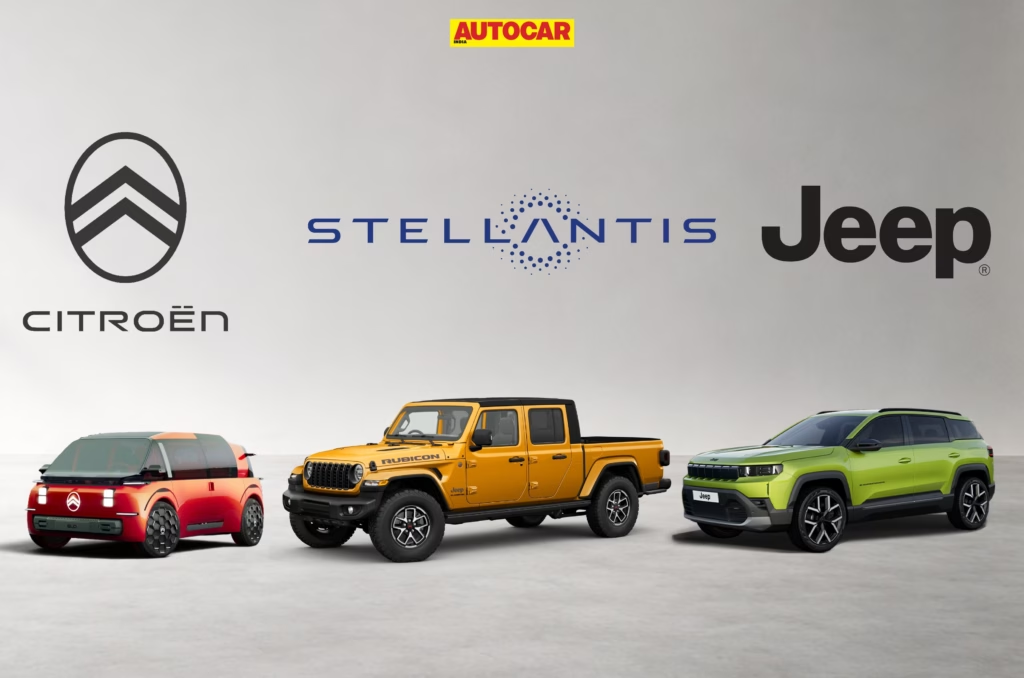
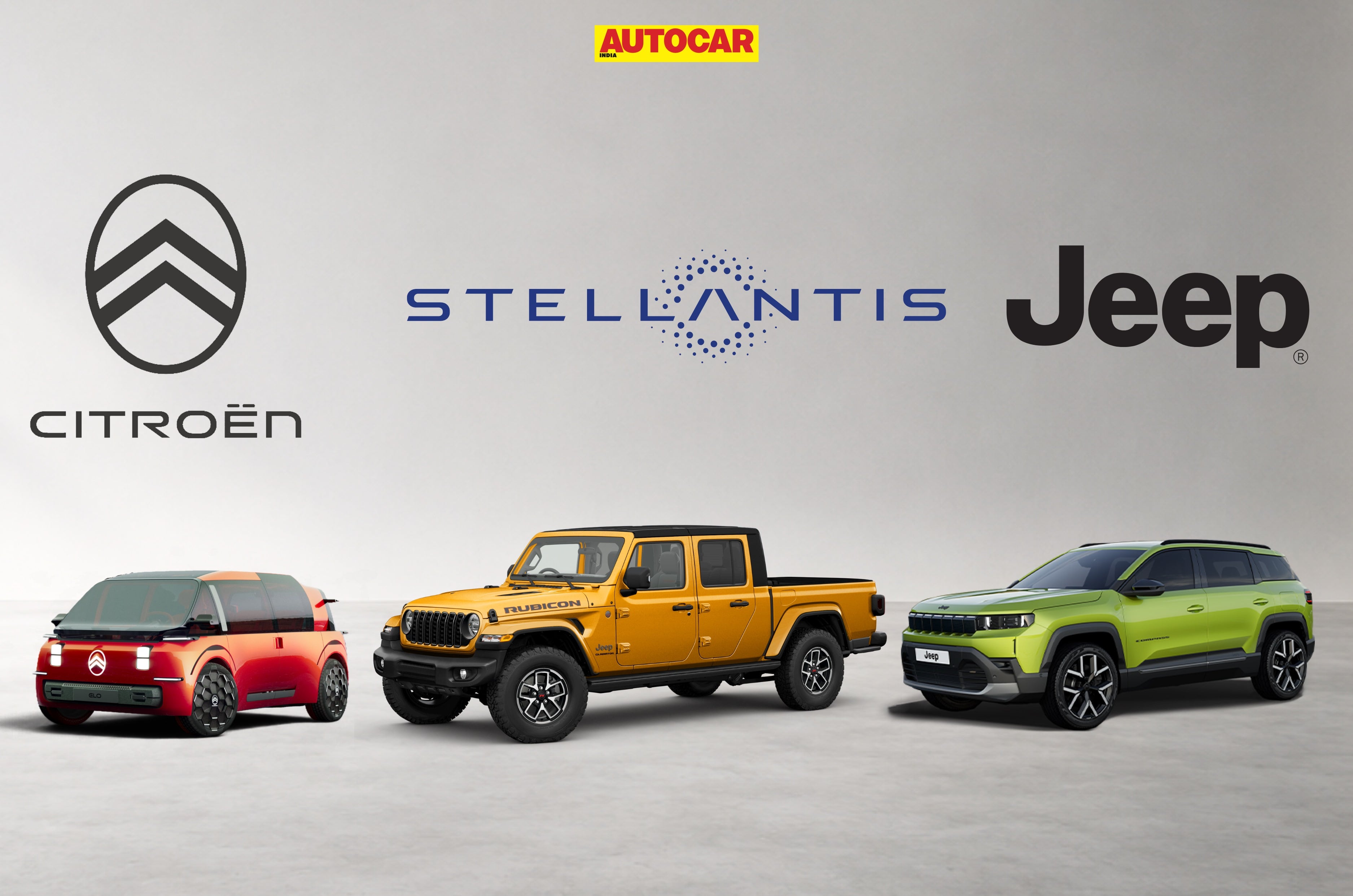
Stellantis has confirmed 12 Citroen and Jeep launches for India by 2030 as part of a roadmap dubbed ‘FaSTLAne 2030’. Speaking to Autocar India at the 2026 Paris Motor Show, Tianshu Xin – the head of Stellantis China and Asia-Pacific – confirmed a new investment of Rs 4,000 crore for the Indian market and said, “The plan is to introduce 12 new models in the next three years…seven of them will be new models and five are upgrades.”
Stellantis India lines up a dozen launches across Citroen and Jeep
Multiple SUVs inbound, along with an MPV, an entry-level car, and a premium pickup
The first model under FaSTLAne 2030 is scheduled to go on sale in India by the second quarter of 2027. This influx of new Citroen and Jeep launches will cover the compact, midsize, and premium SUV segments, and include a new MPV, an entry-level car, and a premium pickup truck. Of the 12 launches, seven will be from Citroen and five from Jeep.
Brand footprints to be expanded in India
Stellantis says these brands will play “distinct but complementary roles” in its line-up – Jeep will bolster its current position in the premium SUV arena, and Citroen will do the same in the mass-market segments. Expanding the customer reach of Citroen and Jeep is crucial, and Stellantis has committed to growing the brands’ retail and service networks, especially in Tier 2, 3, and 4 cities, along with increasing parts availability.
More Stellantis EVs coming, hybrids also confirmed
Additionally, Stellantis has confirmed a new multi-fuel strategy for the Indian market, which will span “efficient internal combustion engines, hybrid, plug-in hybrid (PHEV), and battery-electric (BEV) technologies.” These are already offered by Stellantis brands globally, and it should be interesting to see the specific powertrains that make it to India. As it stands, the majority of Stellantis India’s powertrain offerings are petrol; Citroen and Maserati also offer EVs, while Jeep additionally offers diesel in entry-level models.
Localisation target of 90 percent
According to Xin, the new models under FaSTLAne 2030 will be produced in India, so localisation will play a key role for competitive pricing. In light of that, Stellantis has set a target of 90 percent localisation across Jeep and Citroen, and will bank on its Indian R&D and manufacturing facilities, along with its supplier ecosystem, to achieve this. Moreover, India-developed FaSTLAne 2030 models will be exported to overseas markets.
Stellantis India’s two major brands, Citroen and Jeep, haven’t been very successful at attracting buyers in recent years. Citroen’s cars, despite recent updates, have struggled to gain traction in India due to their rivals being more aspirational and feature-rich. Jeep India, meanwhile, hasn’t launched any new models or facelifts in several years, turning prospective buyers away to more updated offerings. FaSTLAne 2030 is looking to be the shot in the arm that Stellantis India needs to pique buyer interest again.
What about Leapmotor?
Xin also provided an update on the long-overdue India entry of Stellantis’s Chinese EV brand, Leapmotor. Stellantis had planned to bring Leapmotor to India in 2025, but that evidently didn’t pan out. Xin noted that Leapmotor’s India entry is still being studied, and that there has to be enough “volume potential to justify the business case.” Therefore, a decision on Leapmotor entering India will only be made when the business case is ‘proven and solid.’
Follow us for more:
12 साल तक मीडिया में काम किया, लेकिन एक वक्त ऐसा आया जब जसवीर सिंह जस्सी और पत्नी सुधा शाह की नौकरियाँ चली गईं। आर्थिक तंगी आई, लोगों ने ताने मारे और कई बार लगा कि अब आगे कोई रास्ता नहीं है।
फिर मुंबई में सिद्धिविनायक मंदिर गए और वहाँ पर खाए एक वड़ा पाव ने उनकी ज़िंदगी की दिशा बदल दी।
आज यही कपल नोएडा सेक्टर 19 में अपना वड़ा पाव स्टॉल चलाता है और मेहनत से अपनी नई पहचान बना रहा है।
उनकी कहानी याद दिलाती है कि कोई काम छोटा नहीं होता, अगर आप उसे ईमानदारी और हौसले से करते हैं।
आपके लिए सफलता का असली मतलब क्या है?
@patrakarcouple
न्यूज़रूम से वड़ा पाव के ठेले तक | Journalist Couple Vada Pav Business | Patrakar Couple Vada Pav Wale | Noida
[Journalist couple started vada pav business in Noida, journalist turned street food entrepreneur, Couple lost jobs and started their own business, Small business success story, From job loss to successful business]
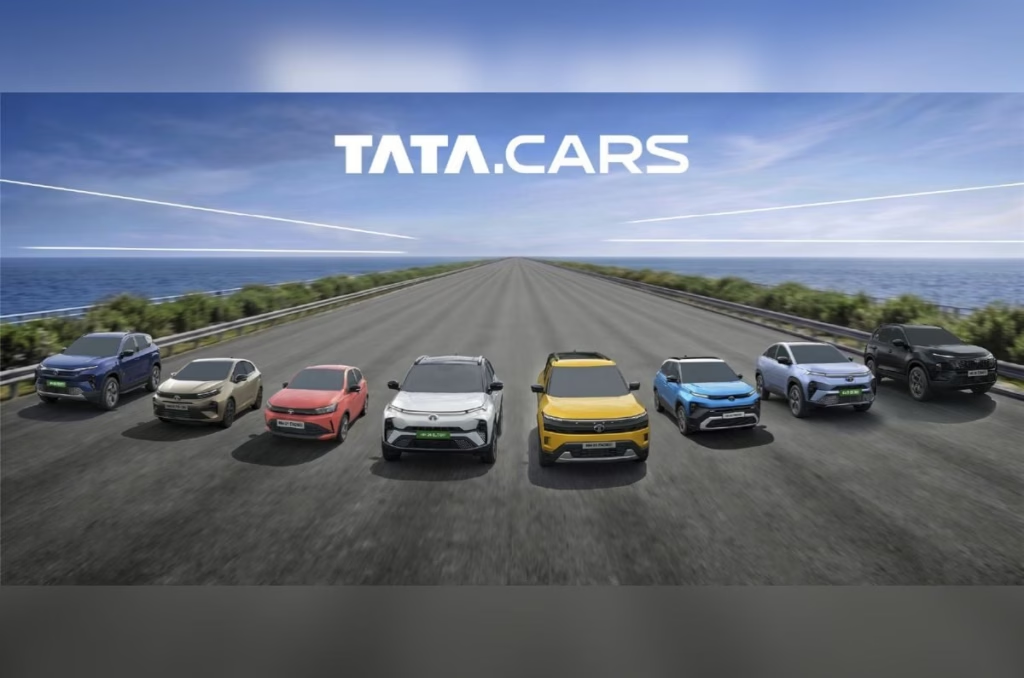
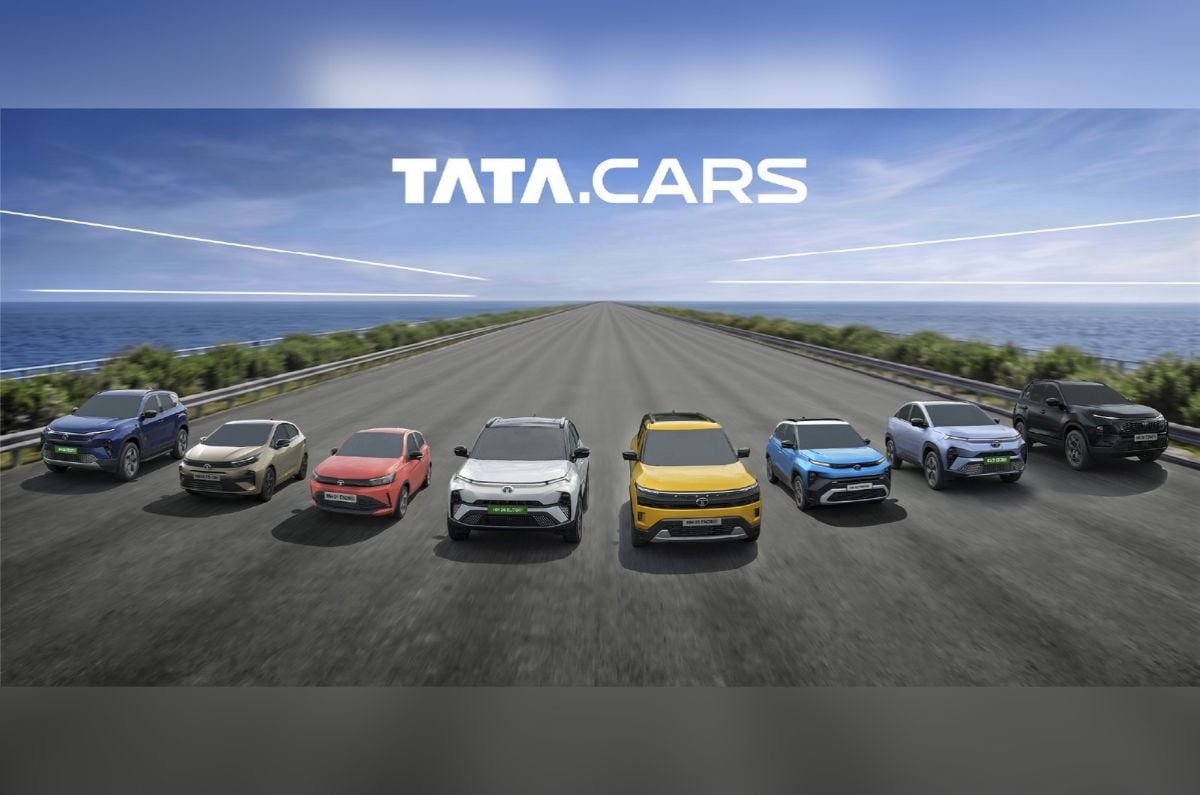
Tata’s passenger vehicle (PV) business grew by 35 percent in its first year after the demerger, which came into effect on October 1, 2025, and separated the commercial vehicle (CV) business from the PV division. Domestic sales between October 2025 and September 2026 stood at 7.44 lakh units, well ahead of the industry’s roughly 22 percent growth. According to the home-grown brand, its market share increased to 14.1 percent, making it India’s second-largest carmaker over this period.
Factors behind the Tata PV business growth
Two SUVs and a GST cut did much of the heavy lifting
One of the major factors behind Tata’s strong numbers is the revised GST rates, which took effect on September 22, 2025. This was shortly before the October 1 demerger, and it made cars more affordable across multiple segments. Despite this, Tata Managing Director Shailesh Chandra admitted to being surprised. “We had not expected 35 percent,” he said.
According to Chandra, monthly bookings topped one lakh more often than not, and more than seven in ten of these typically turned into retail sales. Tata crossed the 70,000-unit mark in a single month twice, and two of its quarters went past two lakh units.
With sales of 2.38 lakh units and 2.33 lakh units respectively, the Nexon and Punch accounted for around 63 percent of Tata’s domestic volumes over this period. Sales of the Sierra, meanwhile, crossed 60,000 units between January and September 2026. This is despite supply being constrained even as production was being scaled up.
Tata EV and CNG sales make up nearly half of volumes
Tata Motors claimed that EVs and CNG cars accounted for 44 percent of its annual volumes, rising to about 51 percent in the July-September quarter. Sales of fully electric models were up 84 percent (at 1.3 lakh units), with the brand claiming a 42 percent share of India’s EV market. Sales of CNG models grew by 31 percent, registering over 2.03 lakh units.
However, each powertrain faces a different set of rivals. “For EVs, my competitors are different,” said Chandra. Product development for all powertrain categories now falls under a single chief product officer, though each gets its own dedicated team.
Tata Motors targets 12 lakh annual sales by FY31
Six new nameplates are on the way
Tata is targeting over 12 lakh units per year by FY31 (financial year 2031), with a 20 percent share of the Indian passenger vehicle market. According to Tata, the plan involves over 20 product refreshes and the introduction of six new nameplates, including the Avinya.
What the brand calls its “15 product interventions” over the past year included models such as the Sierra and Sierra.ev, the updated Punch, Punch.ev, Tiago and Tiago.ev, petrol versions of the Harrier and Safari, and the Aeris. The Indian automaker said that it’s also recalibrating launch timelines. This, it said, is to ensure that each new model gets proper marketing support and that dealers have enough time to sell them.
The recent surge in demand means production capacity has become an immediate priority for Tata Motors. The company stated that its plants and suppliers are stretched thin, particularly smaller tier-two and tier-three firms, and that it has had to work more closely with them to resolve shortages. More capacity will come online at Tata’s existing plants, with the Sanand facility playing a major role. Helped by Tata’s entry into South Africa, exports have nearly doubled, to around 12,000 units.
Tata Motors to triple service network and focus on quality
The brand said that its workshops will grow faster than its showrooms
Apart from focusing on growth, Tata Motors will also be paying attention to addressing the quality and after-sales perception. The quality department now reports directly to Chandra instead of to the manufacturing department, the Managing Director stated. Tata has also set up a central software integration team, which will eventually become a ‘centre of excellence’. Tata now also tests software and hardware together earlier in development. In fact, the Sierra is one of the first models developed this way, the company mentioned.
Another point of attention is the brand’s service network, with Chandra stating that Tata’s workshops now see about six lakh vehicles per month – this is up from around 1.5 lakh in 2021. “My showrooms will increase by two times. But my service centres will increase by three times,” Chandra said. The automaker has addressed 26 of the 30 locations that it flagged as service problem areas, with dealer incentives now placing more weight on customer experience.
Between April and June, the availability of spare parts was an issue. This, the company said, was due to labour constraints, when production was being prioritised. It’s providing existing customers first claim on spare parts even if that affects the production of new cars, with Chandra claiming fill rates are back at around 85-86 percent. Regardless, changes will take time. “The perception will only change after three-four years,” Chandra admitted. “After people really see the consistency of that.”
With inputs from Hormazd Sorabjee and Ketan Thakkar.
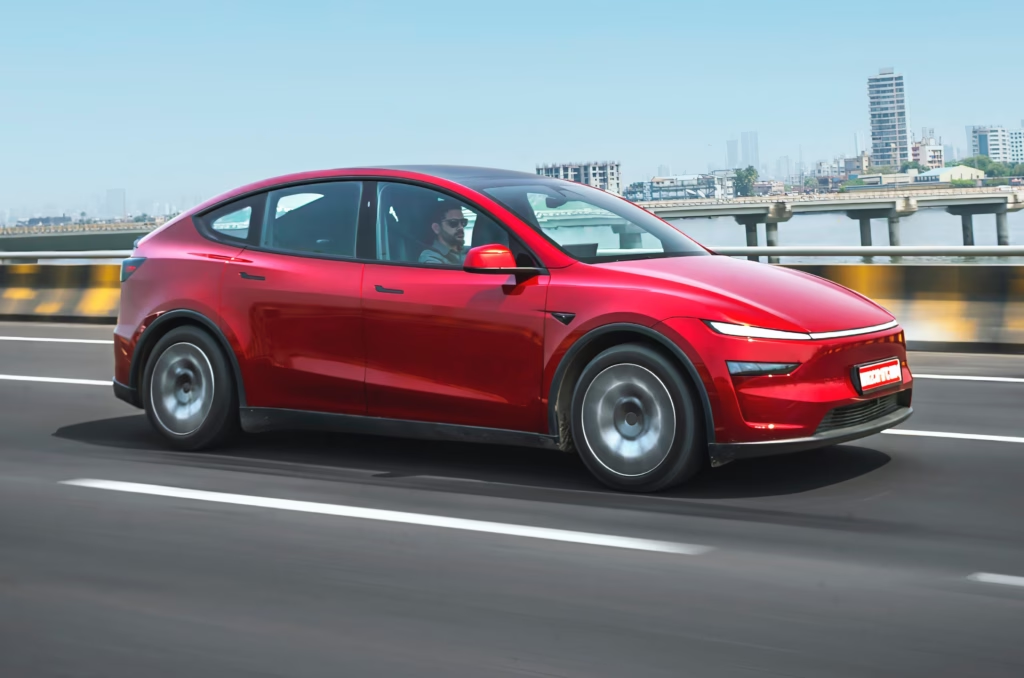
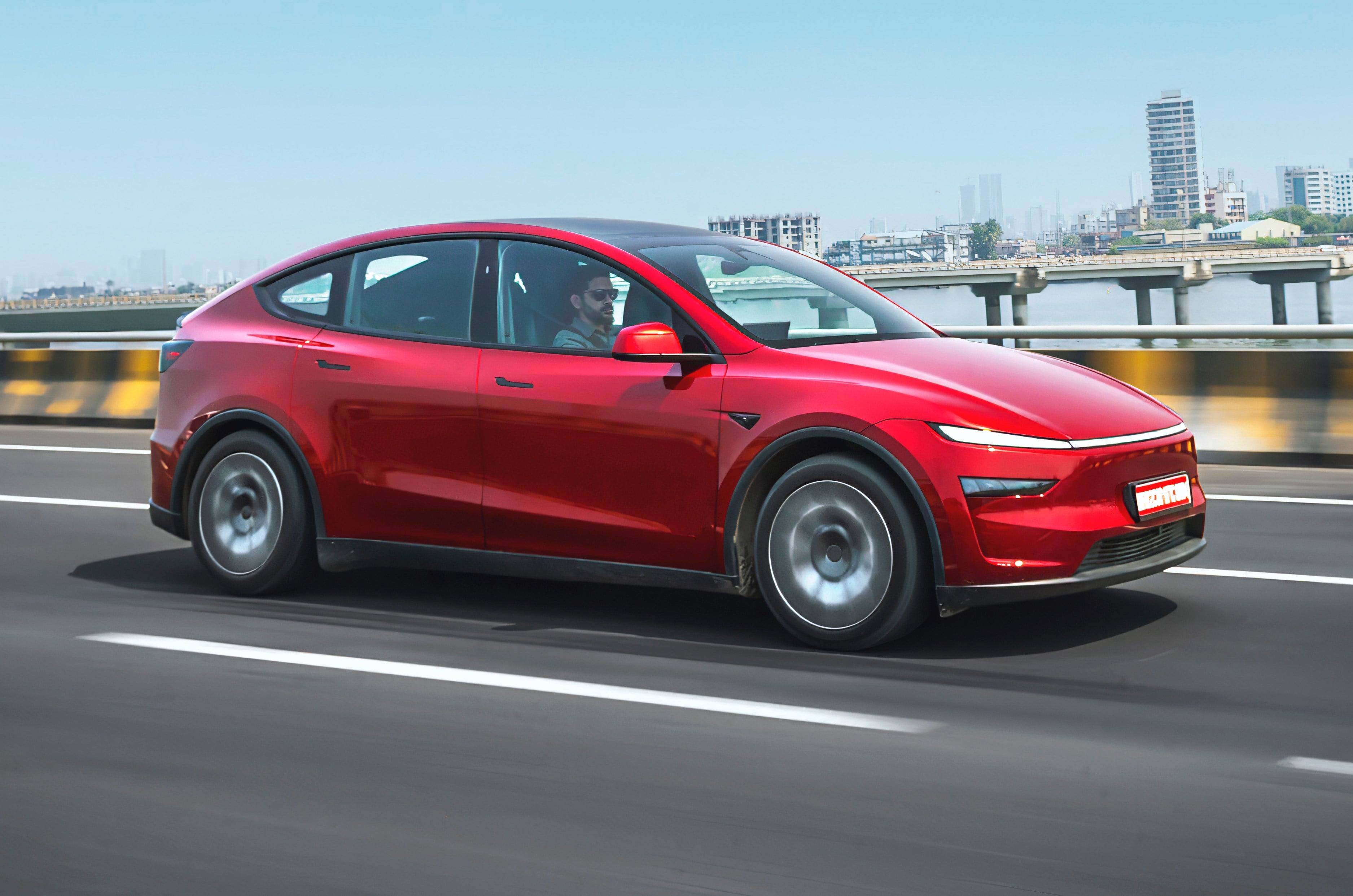
The Tesla Model Y is a tech-loaded electric crossover that prioritises cabin space and performance over everything else. The new Model Y L takes that formula a step further, adding a third row of seats, a longer wheelbase, more power with an all-wheel drive setup, more range and more sophisticated suspension as well. Given the additions, naturally it costs more than the standard-wheelbase, real wheel drive versions, but is the Y L actually worth the extra outlay?
Model Y Exterior Design and Engineering – 6/10
Appears near-identical to the Model Y, but the Y L is longer, taller and has a longer wheelbase.
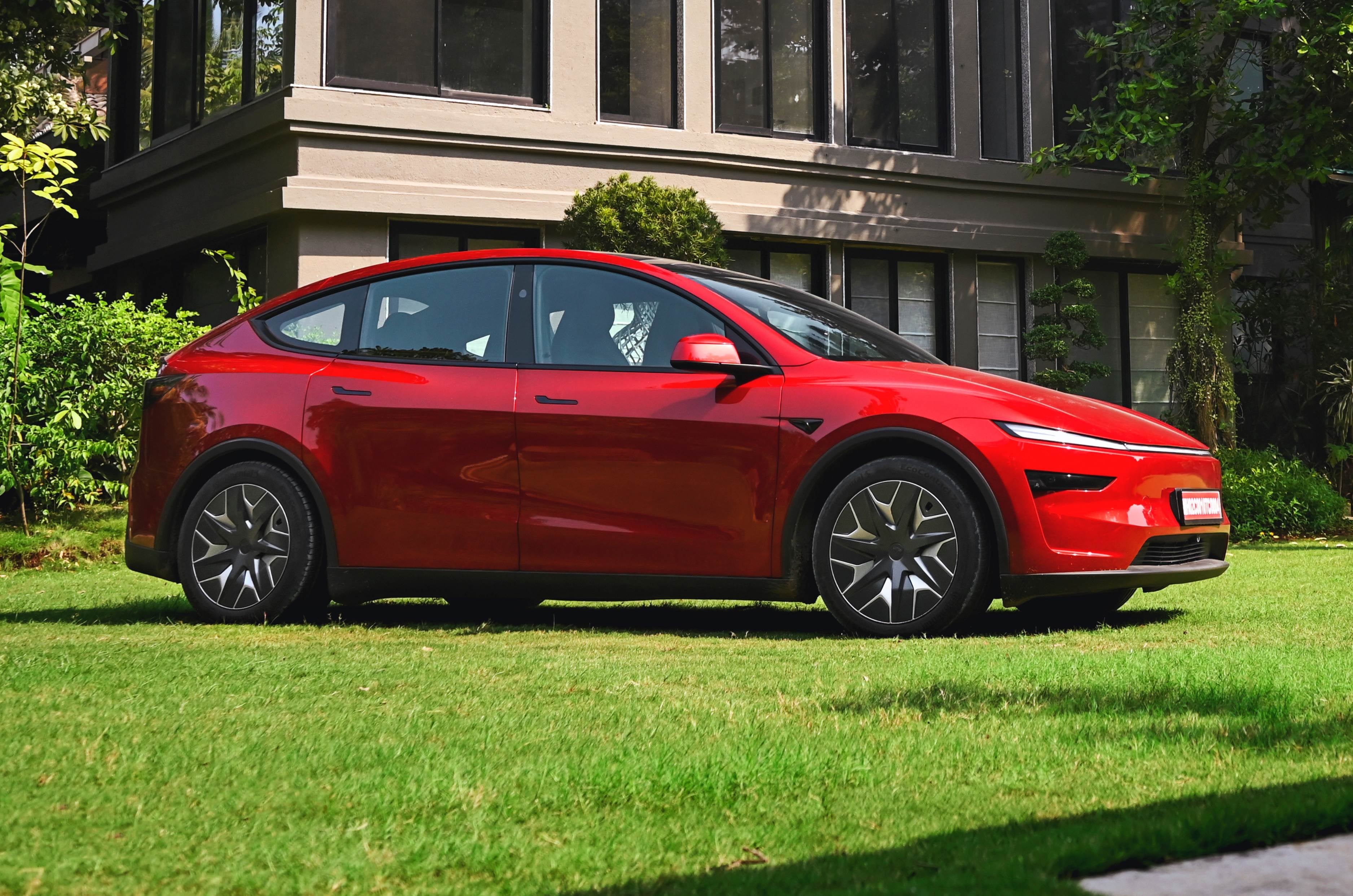
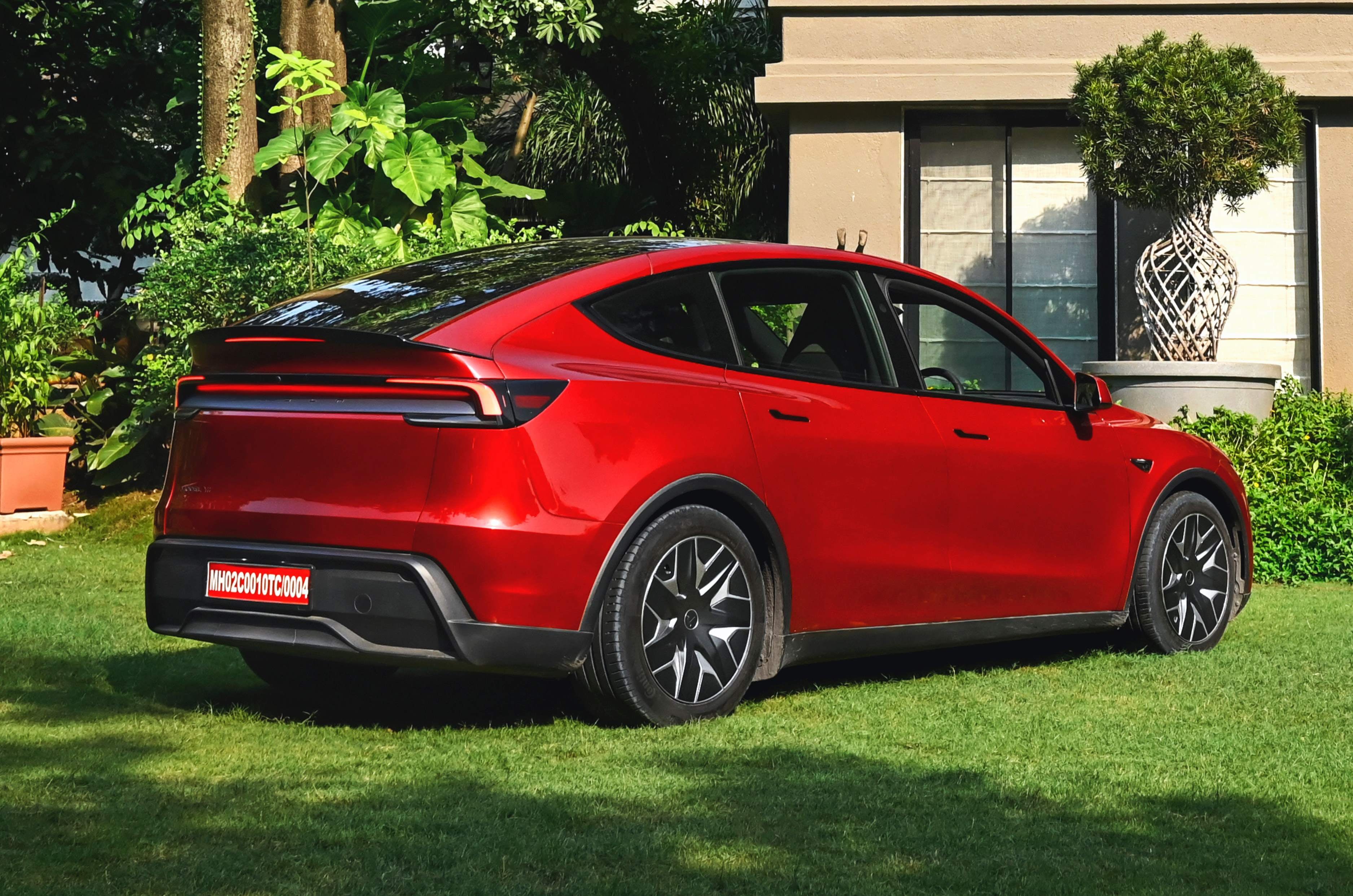
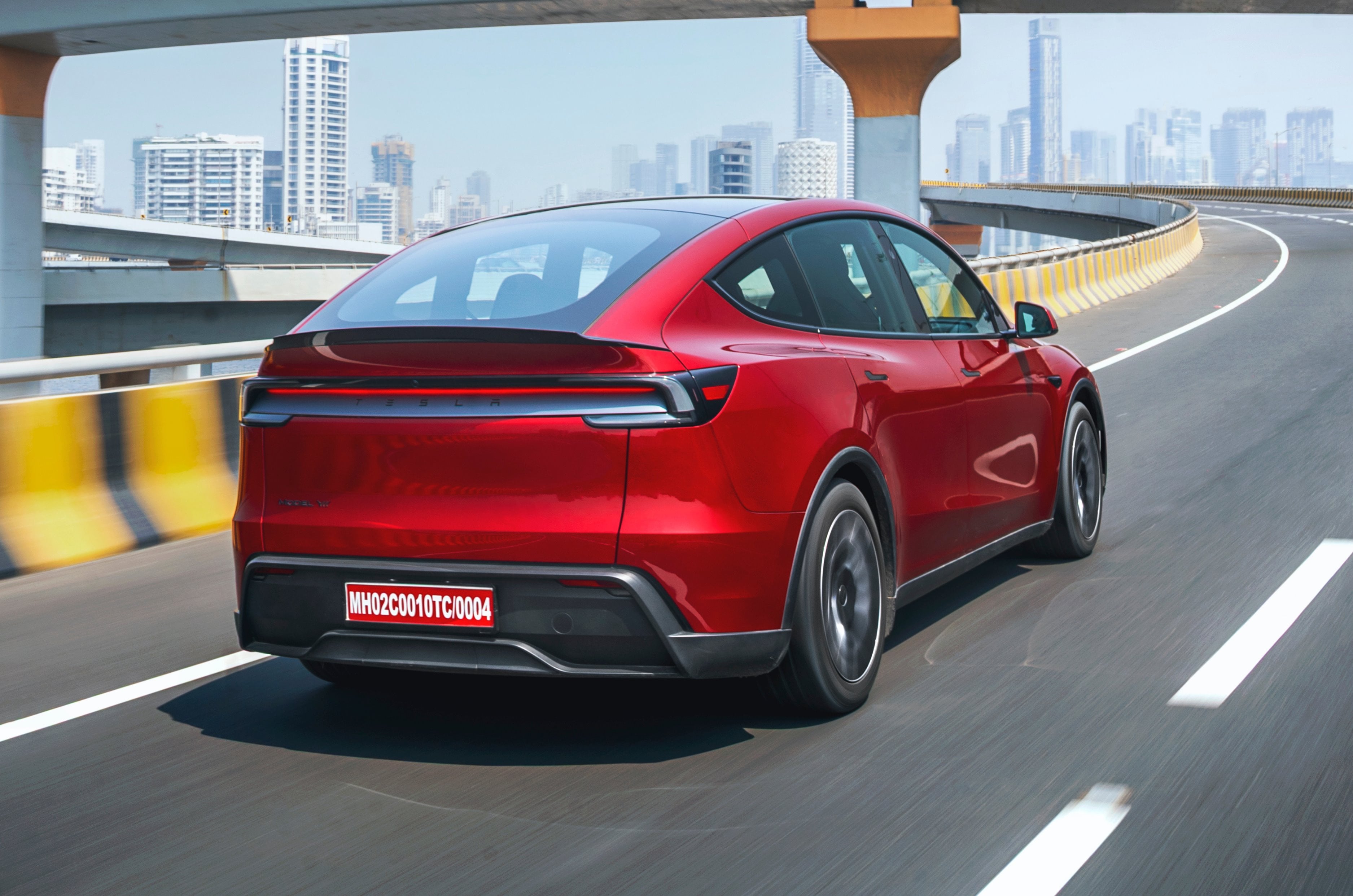
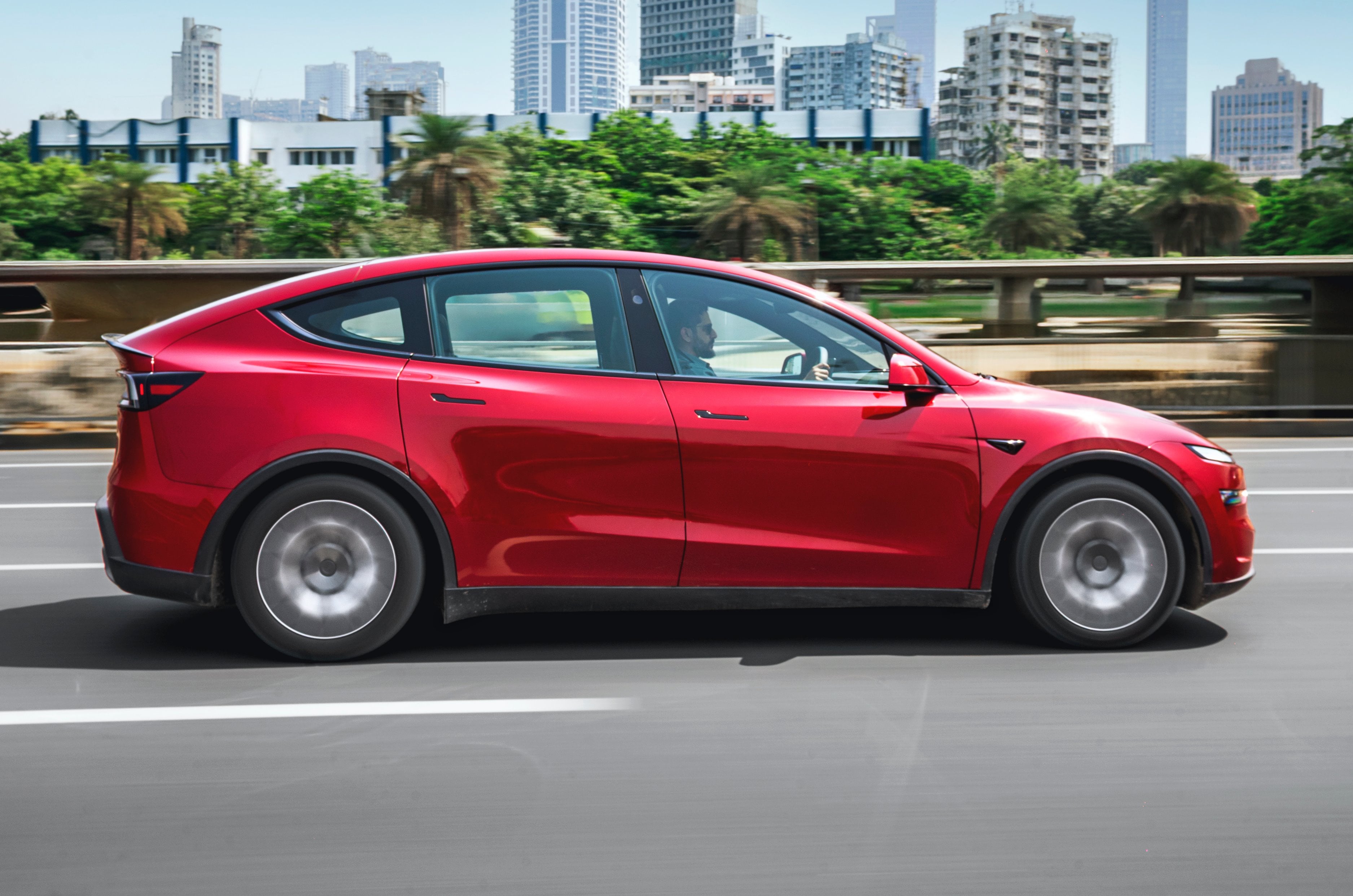
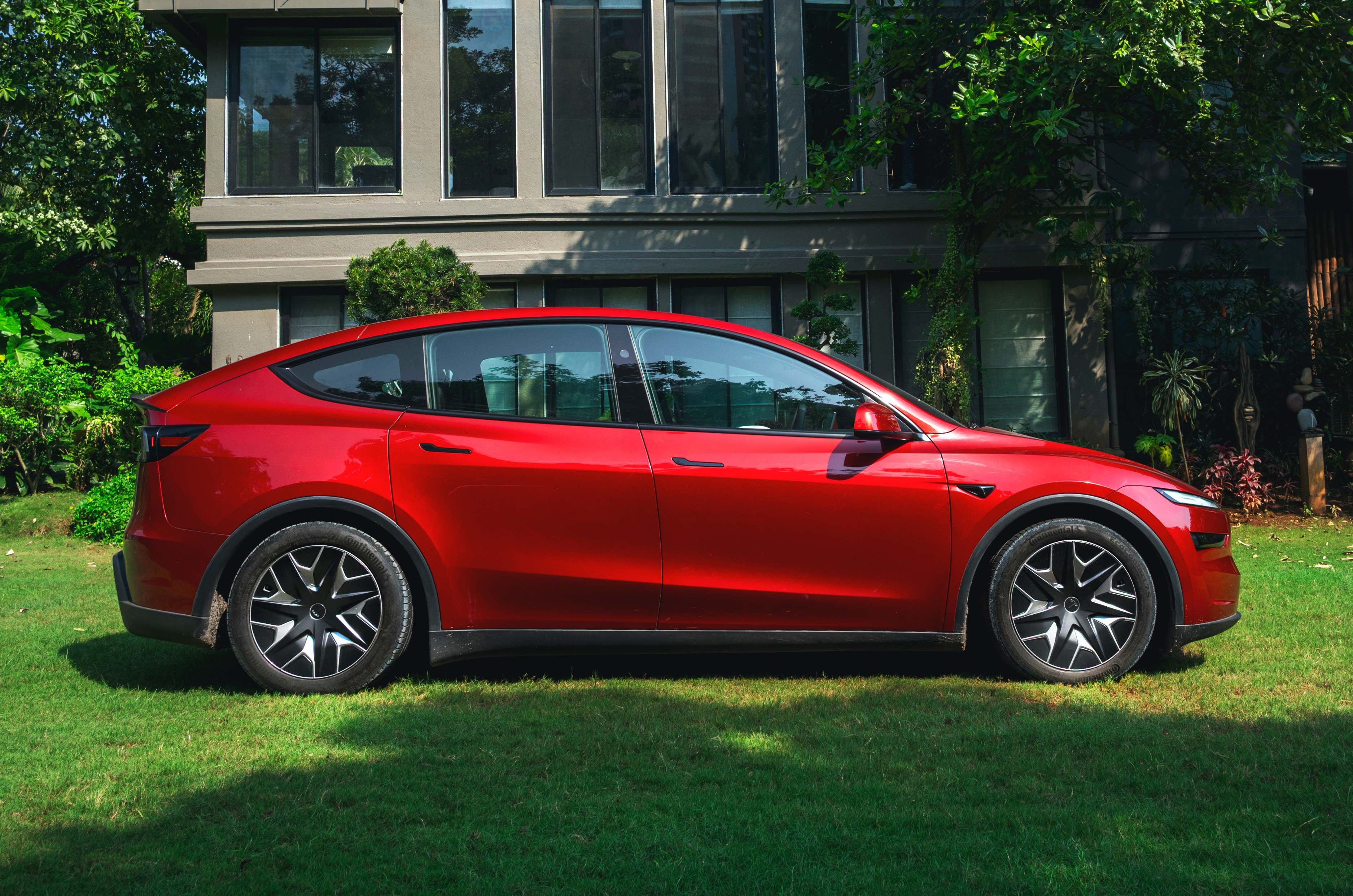
At first glance, the L looks very familiar to the Model Y, but this version looks noticeably larger from the side and rear. The Model Y L measures 4,969mm in length and 1,664mm in height, 1,982mm in width with a 3,040mm wheelbase, which makes it 179mm longer overall and 40mm taller than the Model Y, and it also has a 150mm longer wheelbase. At 166mm (unladen), the Y L has decent ground clearance but considering the longer wheelbase, you have to be extra careful going over big speedbreakers otherwise you will end up scraping the belly.
The growth in dimensions is particularly apparent in the raised and extended roofline, plus the expanded rear glass and rear-quarter glass area. The other changes include a new bootlid spoiler and the 19-inch alloy wheels have a more enclosed design, both in the interest of further aero optimisation.
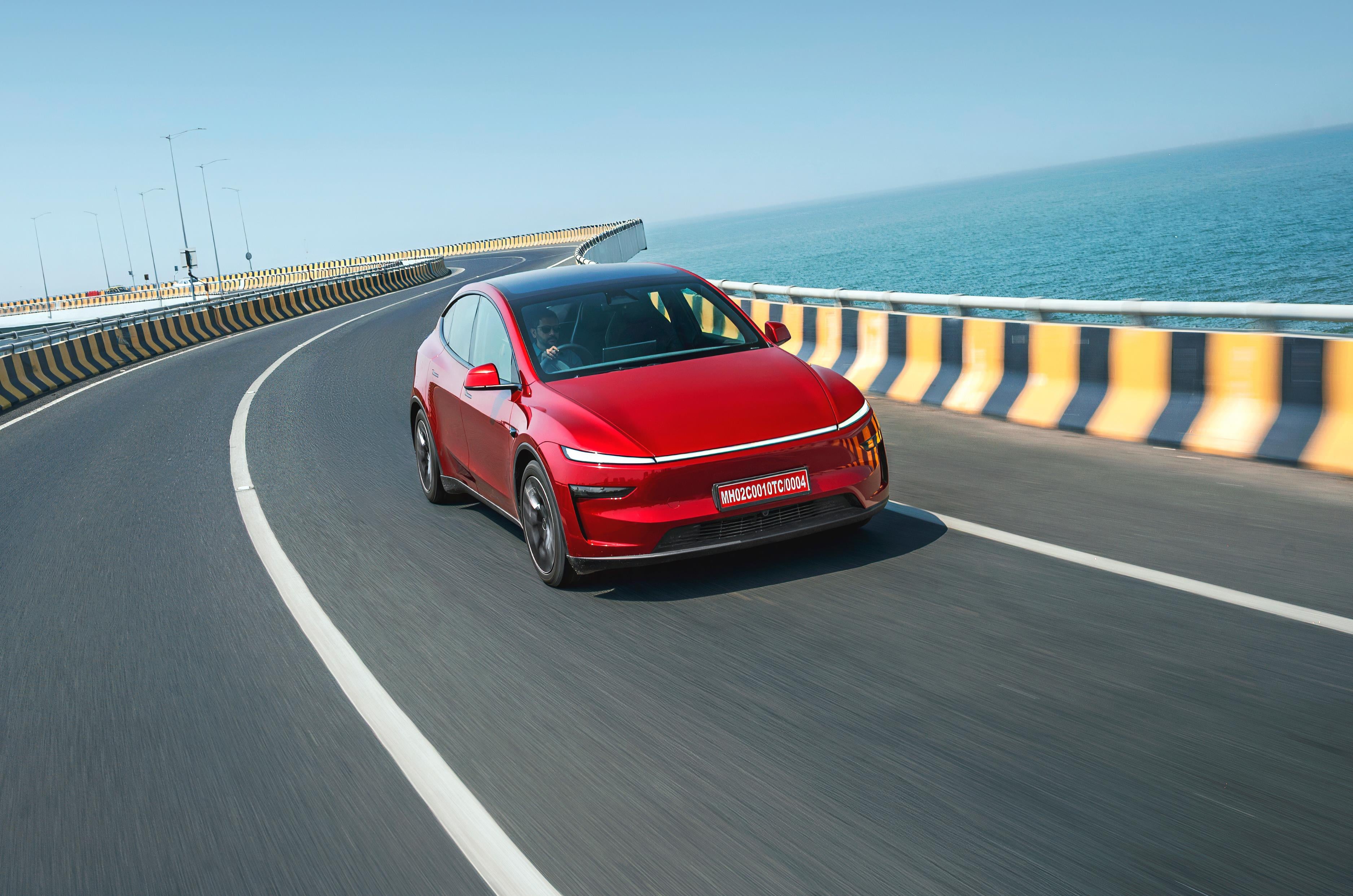
Other than that, the smooth, aerodynamic silhouette with minimalist detailing and distinctive lighting elements remain. The overall design is unmistakably Tesla, although the extra length gives it slightly more road presence. That said, the Model Y L doesn’t suddenly become a traditional SUV just because it has grown. Its rounded, slightly anonymous shape with clean surfacing continues to favour aerodynamic efficiency over visual appeal. But it looks distinctive and as such, has carved out a niche for itself in terms of design.
Model Y Interior Space and Comfort – 8/10
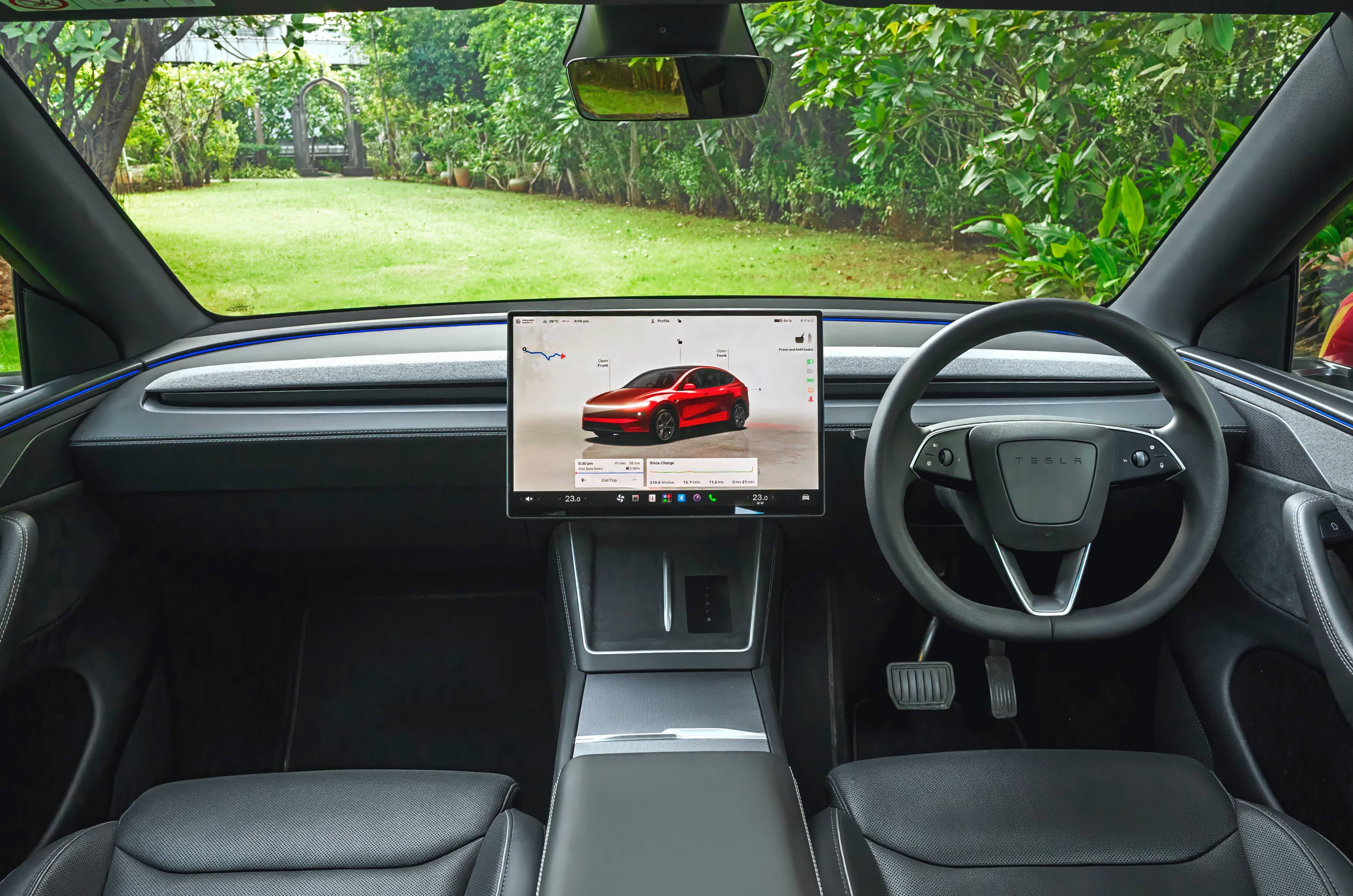
Minimalist design remains the same, save for a new textured finish on top of the dashboard.
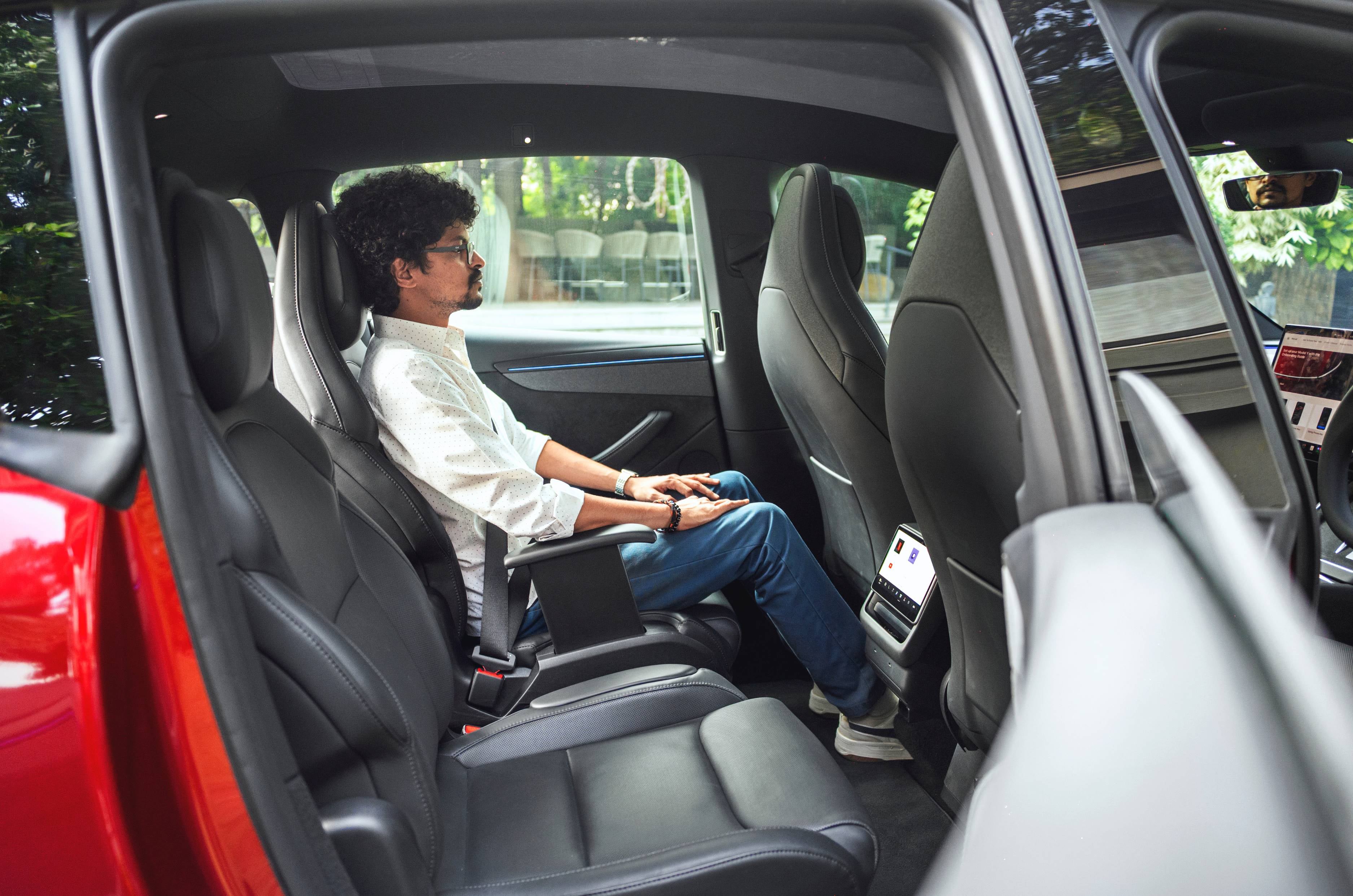
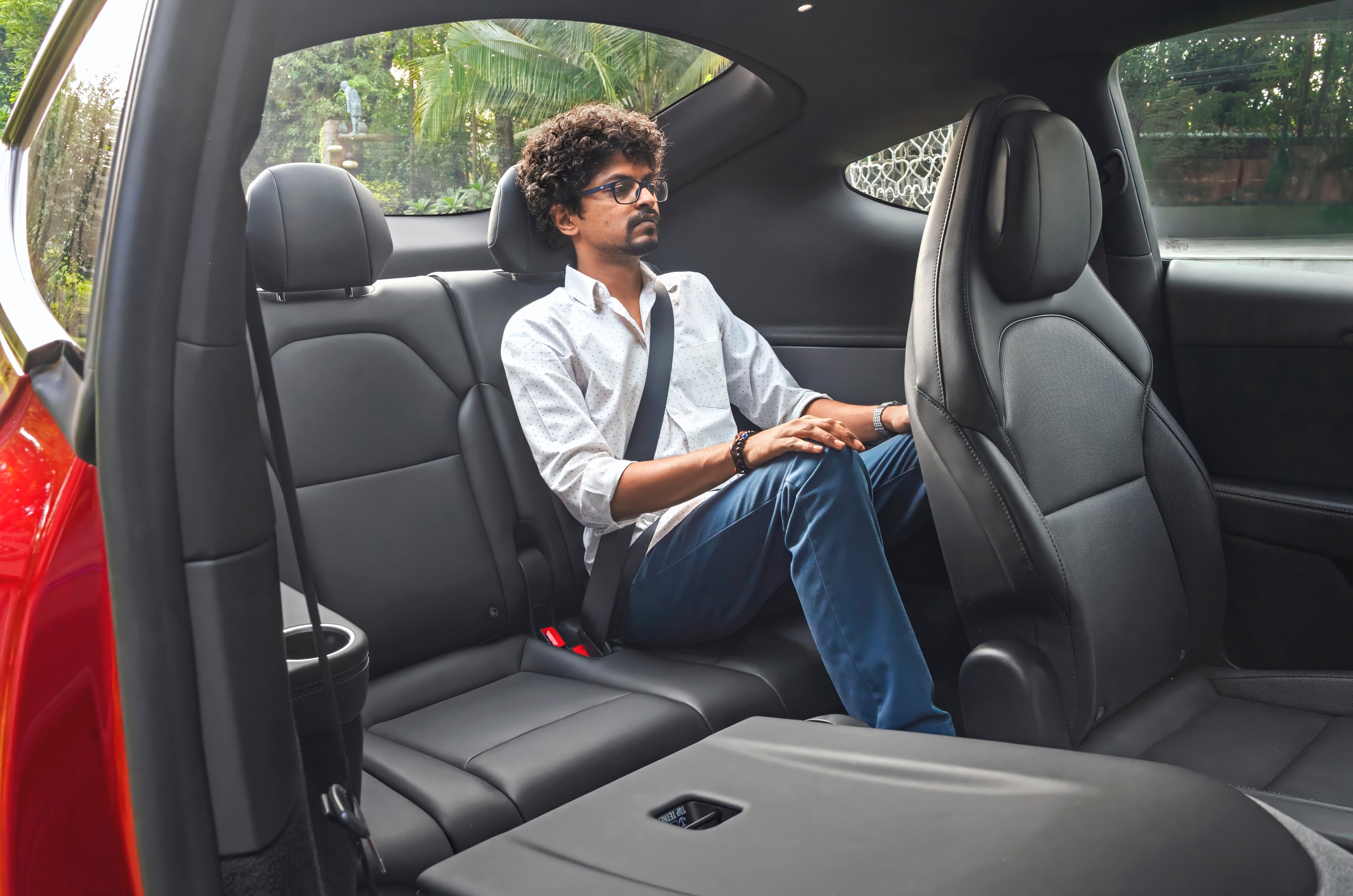
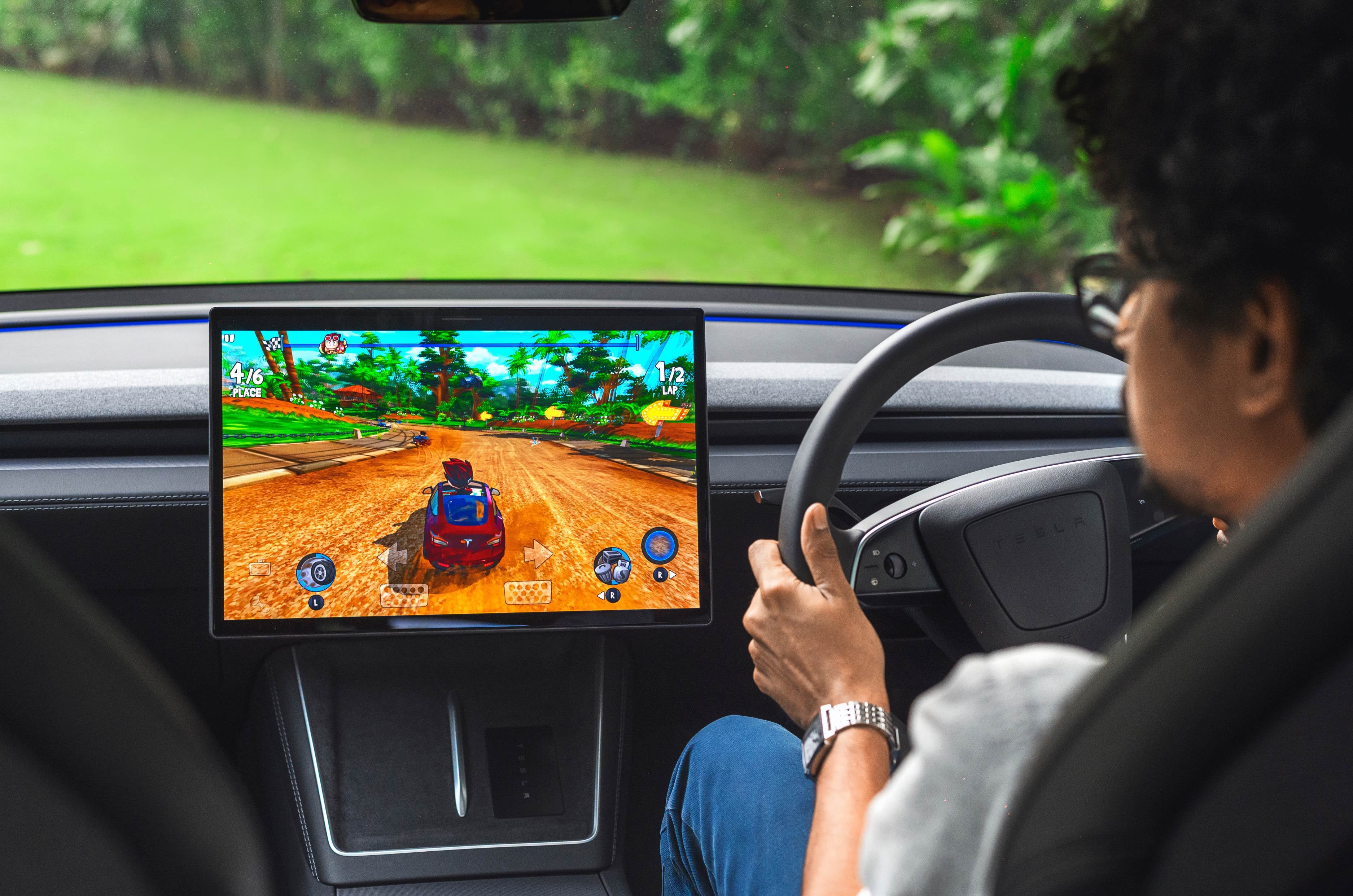
This is where the Model Y L takes a larger step up. The standard Model Y already had a spacious cabin, but the Y L has even more room and brings further versatility, by adding a third row of seats. It is a six-seater rather than a seven-seater, with two individual captain’s chairs in the middle row instead of the standard car’s bench.
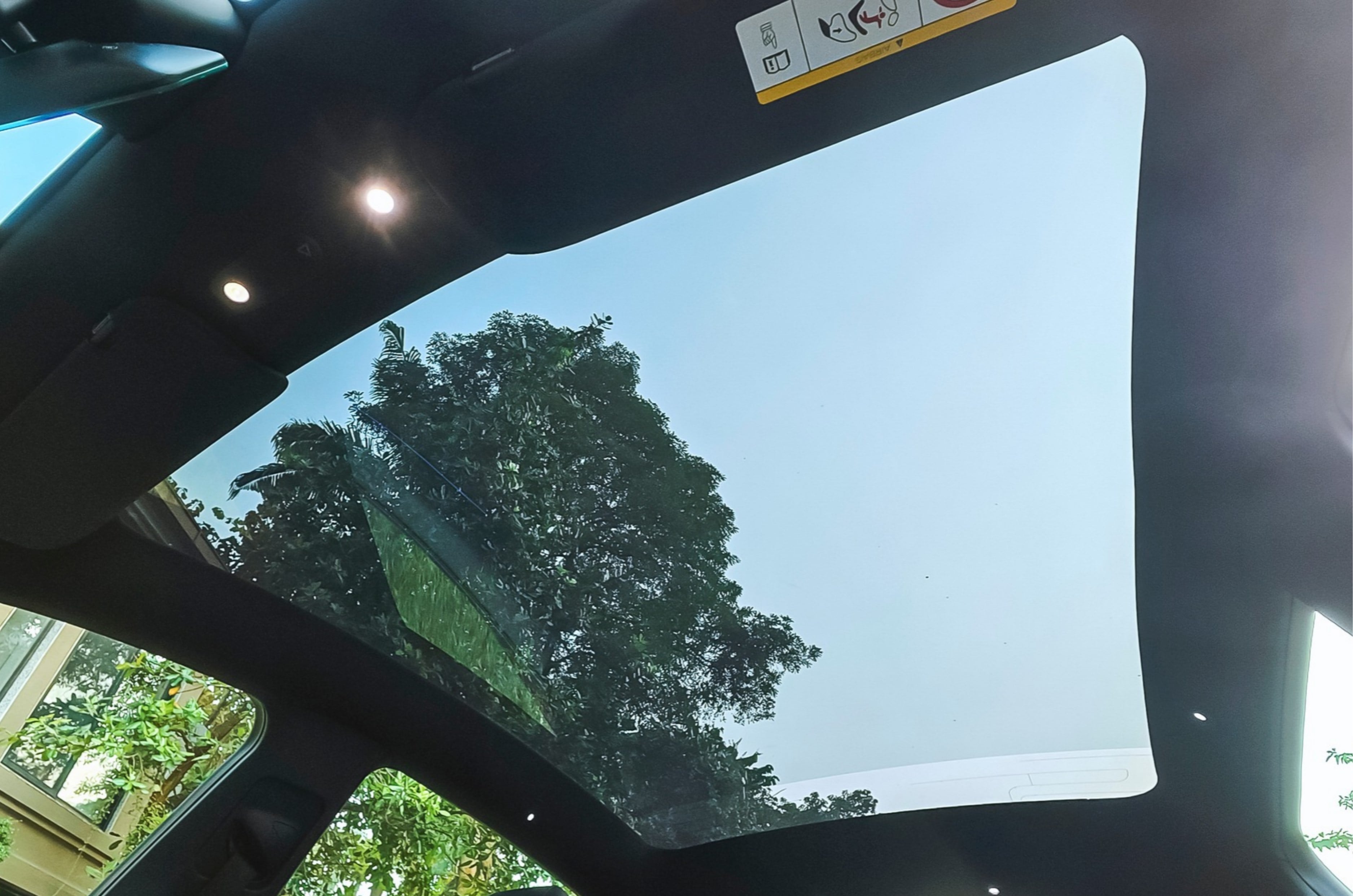
The front seats may be simple-looking but they are plush and comfy, and the extended underthigh support enhances comfort especially for taller people. These seats are also heated, cooled and feature electric adjustment. The second row is arguably the highlight, however. The individual captain’s seats are very comfy, and they feature integrated headrests, a heating and cooling function, along with power adjustment and powered armrests too. The extra wheelbase and taller roof of course gives passengers more room to stretch out and as such there’s no shortage of legroom or headroom here. The larger windows, coupled with the tinted panoramic glass roof further enhances the sense of space. However, since there are no window blinds or a sunshade for the roof, the large glasshouse area means the cabin heats up too easily especially on a hot, sunny day.
Captain seats are very comfy and there’s plenty of legroom and headroom here.
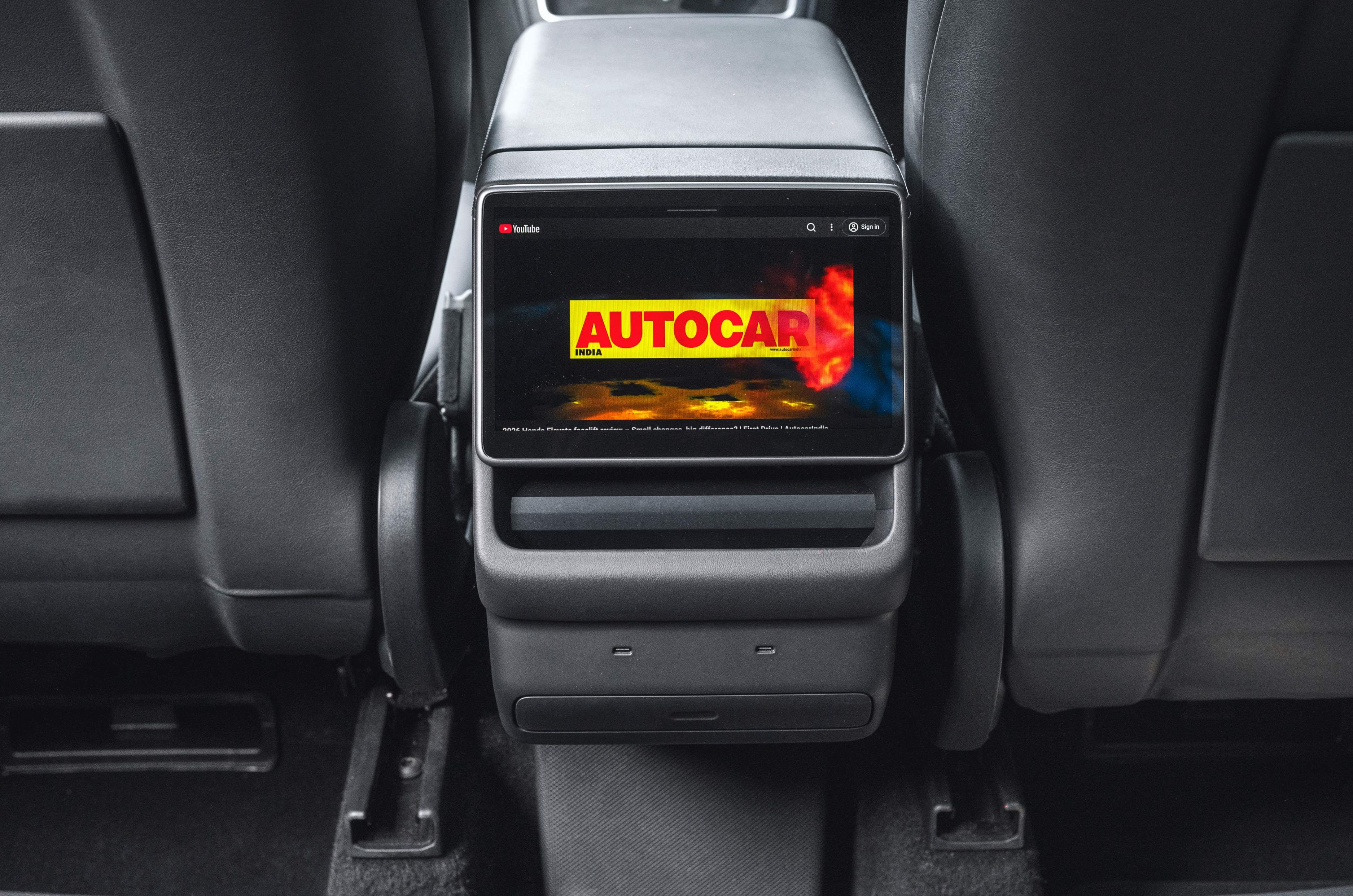
Middle row passengers are well-catered too, however. Apart from the aforementioned heated/cooled and powered seats, you also get cupholders, charging ports, cupholders and a 8-inch touchscreen. This centrally-mounted unit is just as slick to use as the one in the front and it controls several functions, along with the ability to play videos and games.
Seating is knees-up, but the third row is usable even for adults.
The third row, however, comes as a bit of a surprise. Considering the low seat, you’re sat in a knees-up position but space back here is genuinely usable for adults, with adequate headroom and kneeroom. Dedicated AC vents, cup holders and type C charging ports are useful inclusions and show that the rearmost seats aren’t simply an afterthought. Like in the middle, here too the large window and untinted rear windscreen lets in a considerable amount of heat.
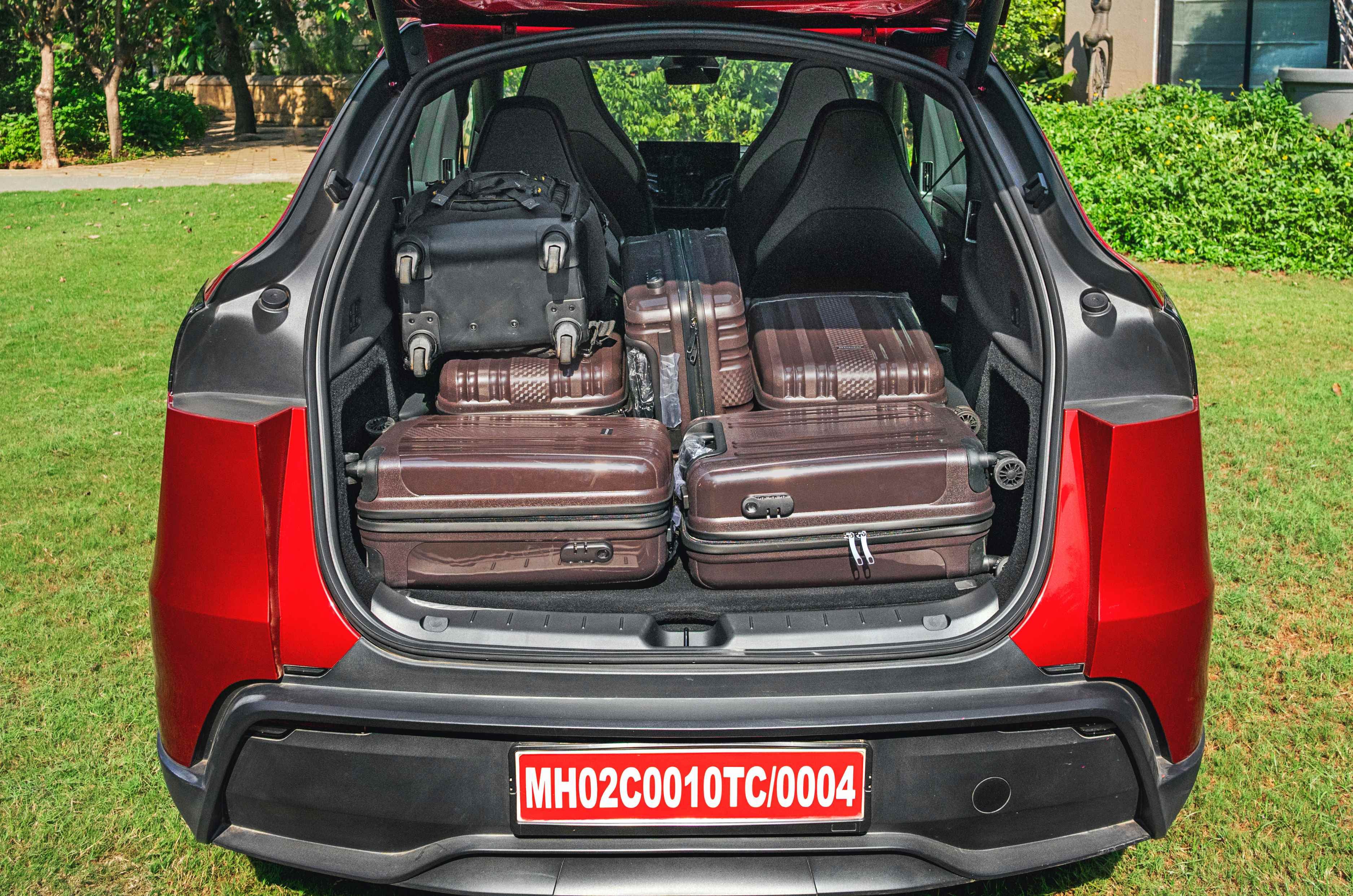
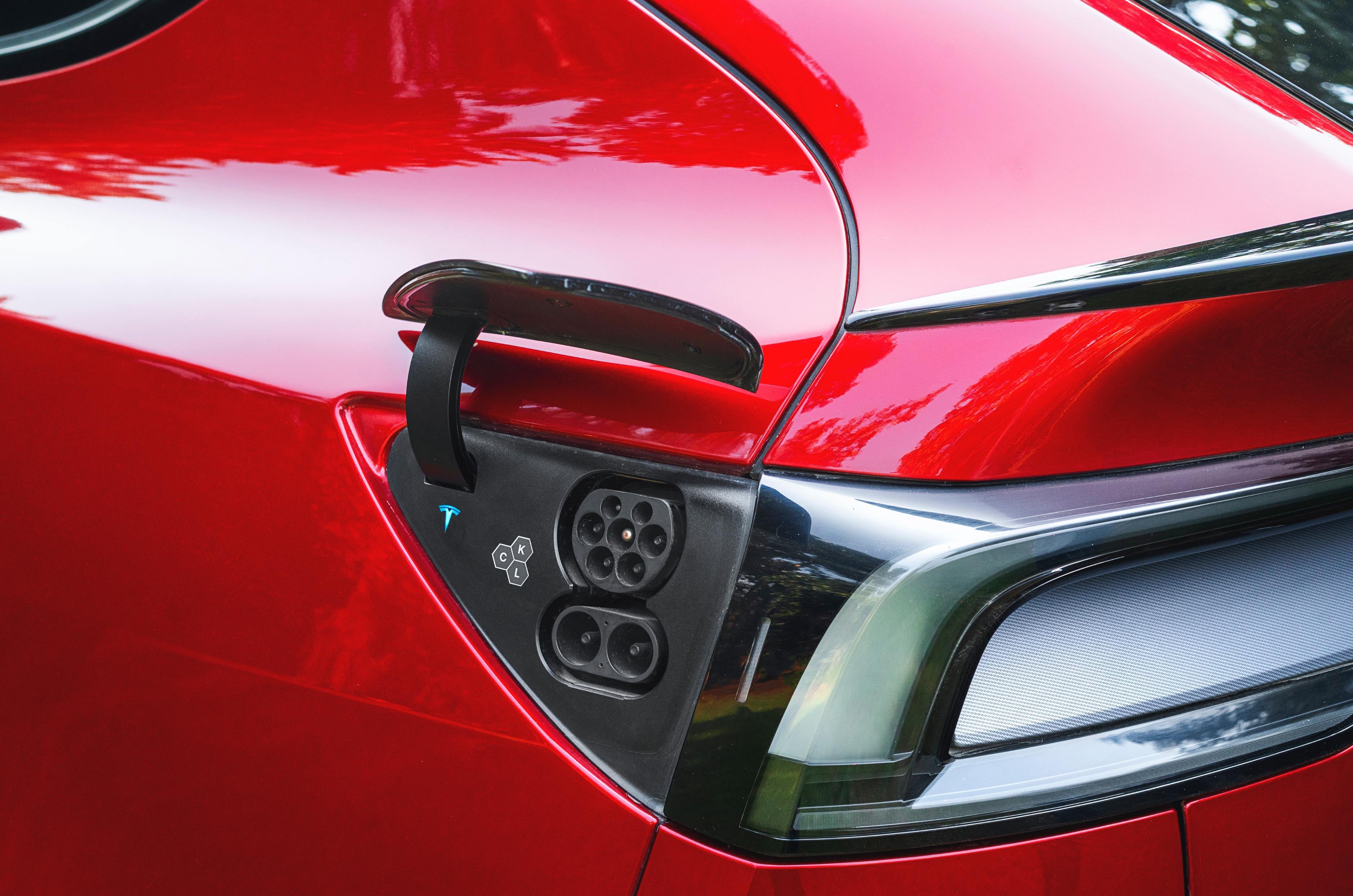
420-litre boot can be expanded to a massive 1,076 litres by folding the third row; more room under the boot floor too.
Luggage space is another important consideration for a family focused car such as the Y L. With all three rows up, boot space is a respectable 420 litres which can be further expanded to a massive 1,076 litres by electronically folding the third row. Then there’s also a considerable amount of storage space under the boot floor and a properly usable 117-litre frunk. As such, the Y L remains practical despite the added seats. It’s worth noting though, there’s no spare wheel.
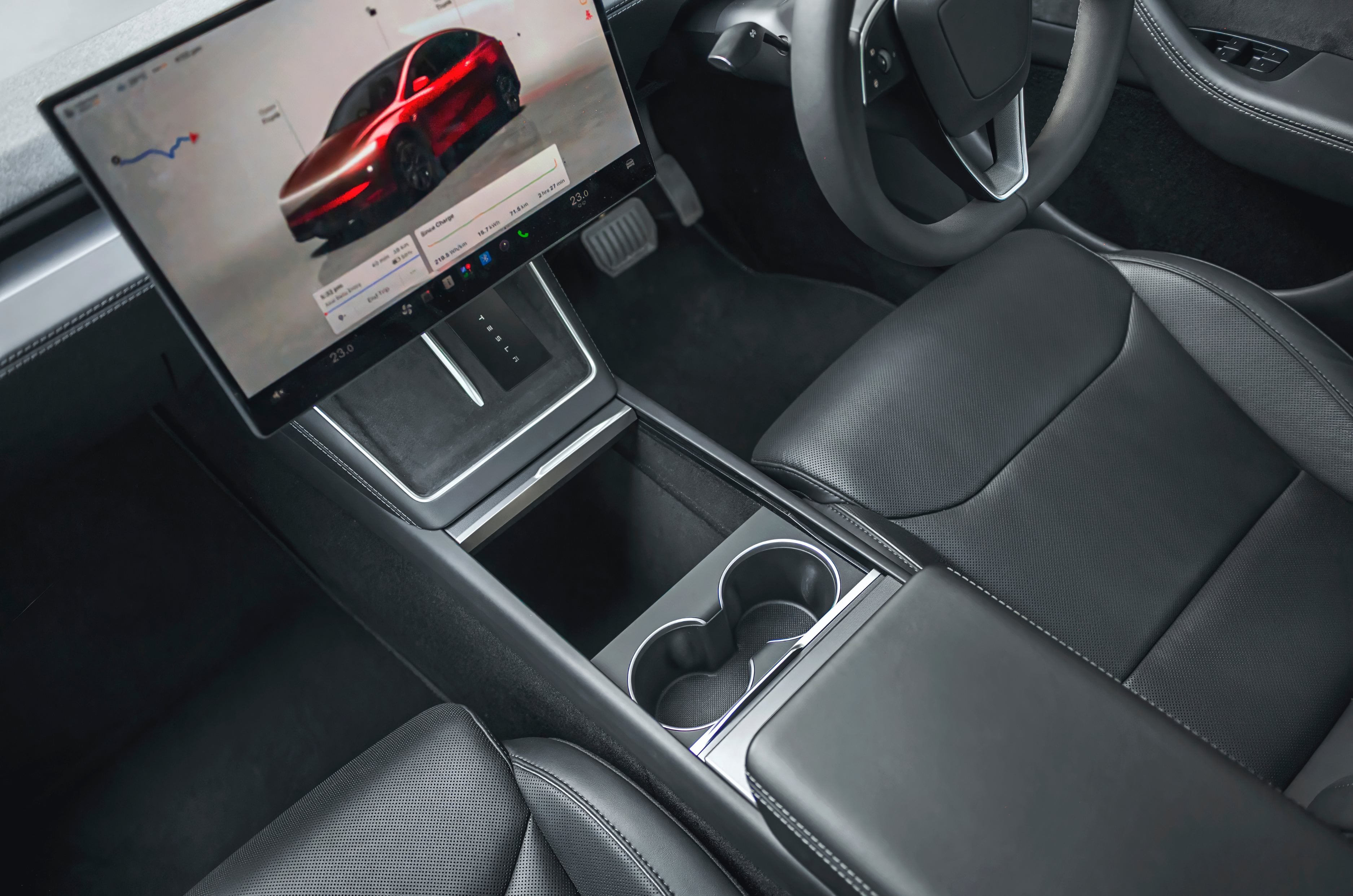
Practical cabin features a large storage box in the centre, cup holders, two wireless phone chargers, and space under the centre armrest.
Up front, the cabin retains Tesla’s familiar minimalist layout. A large central touchscreen dominates the dashboard, with very few physical controls to interrupt the clean design. This extended model gets a textured finish on top of the dashboard, but the overall layout remains largely unchanged. It also remains a practical place, with a large cubby space in the centre console, storage under the centre armrest, multiple cupholders and seat back pockets.
Model Y Features and Safety – 7/10
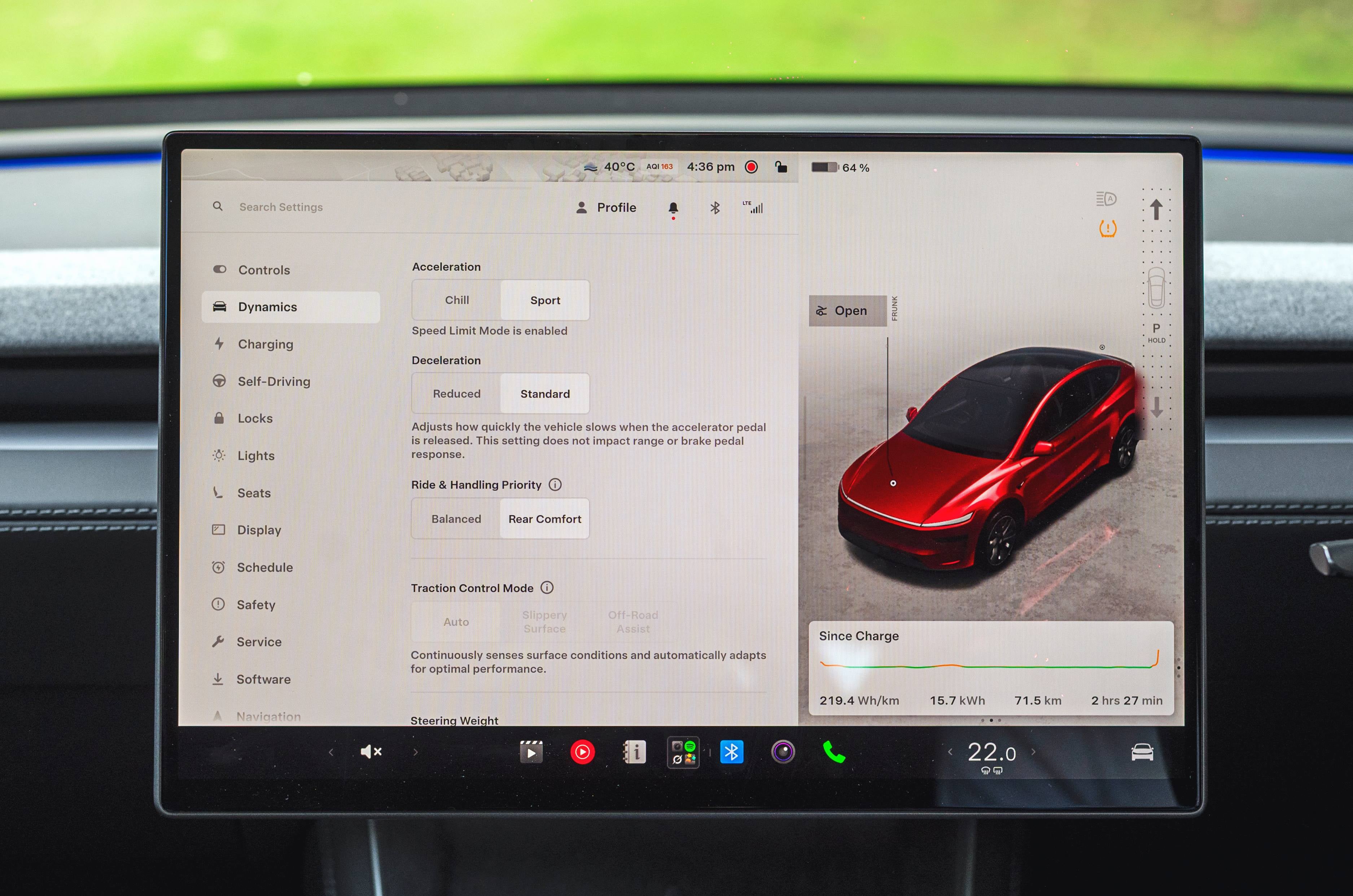
Y L gets a Sport drive mode and two settings for the new adaptive dampers.
Technology has always been central to Tesla’s appeal, and the Model Y L continues with that approach. Apart from the aforementioned 8-inch rear screen, the main party piece of this car is the central 16-inch touchscreen. This screen is easily one of the best in the business in terms of resolution and responsiveness.
16-inch touchscreen is one of the sharpest around and packs in the typical Tesla quirks and features.
The screen is slick and feature-packed, but the reliance on it for everyday functions remains a usability compromise. Adjusting climate settings and accessing basic vehicle functions like adjusting the mirrors and opening the frunk require navigating menus, which isn’t as intuitive as using dedicated switches. It looks modern and gives the cabin a clean appearance, but a little more emphasis on straightforward ergonomics wouldn’t hurt.
8-inch rear screen is just as slick and can bes used to play videos and control other functions.
But thankfully, you do get the Grok AI assistant as a part of the package which can pretty much do everything for you right from setting the AC, to setting the navigation, finding a charger and much more. It can converse in multiple languages and also constantly learns more about you, so it’s said to get more intuitive as you spend more time with it.
Other features include a panoramic glass roof, dual wireless phone chargers, multi-colour ambient lighting, a superb sounding audio system with 18 speakers and a subwoofer, heated/ventilated and powered front two rows of seats, heated third row seats, all LED lights and so much more. There’s also connected-car tech, and as with any Tesla it gets over-the-air updates, so the car is constantly improving without the need to visit a service centre.
Tinted glass roof helps the cabin feel airy but no sunshade means it heats up quickly as well.
Safety equipment includes nine airbags and a suite of driver-assistance features, including lane-departure warning, lane-keeping assist and blind-spot monitoring. The car also has high-resolution cameras all around it which provide a great view of the surroundings, although Tesla’s more advanced Autopilot capabilities remain absent in India.
The technology is impressive, but the screen-centric interface requires some acclimatisation. Some buyers may find the learning curve frustrating, especially while driving. But for the tech-savvy buyers the Y L is aimed at, they will find this approach very appealing.
Model Y Performance and Refinement – 9/10
Dual-motor, all-wheel-drive powertrain puts out over 500hp and does 0-100kph in a claimed 5 seconds.
The Model Y L is offered in India with a dual-motor all-wheel-drive setup, unlike the rear-wheel-drive only Model Y variants. Tesla does not officially list powertrain specifications, but it has an estimated combined system output of 514hp and 590Nm and the brand claims a 0-100kph time of 5 sec and a top speed of 201kph. We did a quick acceleration test and managed a 0-100kph time of 5.02sec, though we couldn’t test the top speed as our car was electronically limited to 120kph. For a family crossover which is estimated to weigh over two tonnes, the performance is properly brisk. Expectedly, acceleration feels very potent and as typical of any high-performance EV, the Model Y L pins you back into the seat. However, there is a certain progression to the power delivery and the added traction of the all wheel drive setup makes it feel manageable and not overwhelming. There’s also two drive modes, Chill and Sport, the latter of which is exclusive for the Y L. And they have a corresponding effect on the response of the powertrain, with Sport obviously feeling much more immediate.
The added performance also makes overtaking on highways and closing gaps in traffic particularly effortless, as is reflected in the rolling acceleration figures. 20-80kph takes 2.85sec while 40-100kph is dispatched in just 2.94sec.
As with the standard Model Y, the Model Y L also impresses with its refinement. The cabin is superbly insulated from the outside world, thanks in part to the double glazed windows, with barely any road, tyre and wind noise filtering through into the cabin.
Model Y Mileage / Range and Efficiency – 7/10
Tesla Supercharger is said to add up to 288km of range in 15 mins; has a WLTP-rated range of 681km.
Tesla claims a WLTP range of 681km, from the Model Y L’s 88kWh (estimated) NMC battery pack. That’s more than the standard RWD Model Y, for reference. It can also add up to 288km of range in 15 minutes when connected to a Tesla Supercharger, according to the company. Speaking of which, the electric crossover is capable of accepting up to 250kW on DC fast charging and 11kW on AC charging. As always, real world range will depend on driving conditions, speed, weather and other factors.
Model Y Ride Comfort and Handling – 7/10
Adaptive dampers and longer wheelbase does make the Y L feel more settlled than the standard Model Y.
The standard Model Y’s ride and handling package is competent, although its low-speed ride is noticeably firm, especially on uneven surfaces. Tesla has made changes to the L’s suspension, equipping it with adaptive dampers in a bid to improve comfort and body control.
This is a particularly relevant upgrade for a longer, heavier vehicle designed to carry more passengers. As with everything else, this is also controlled via the touchscreen with two settings available – Balanced and Rear Comfort. The latter softens things down and gives it a slightly plusher feel, while the former represents a good middle ground between ride comfort and handling. Even though the difference in the modes isn’t that great, the Y L does feel more composed over broken roads and avoids transmitting as much movement into the cabin as the Standard Model Y.
The longer wheelbase also helps the car feel a bit more settled at speed, although manoeuvring in confined spaces is more cumbersome, and this is particularly amplified thanks to the rather poor turning circle. Like the standard Model Y’s, the Y L’s steering is light and easy to use, but it isn’t particularly feelsome. There’s also three modes for the steering, which progressively add more weight. The handling too is more competent and predictable rather than entertaining. It doesn’t feel as agile as the Model Y but body movements do seem better controlled thanks to the adaptive dampers.
There’s two levels of regenerative braking – Standard and Reduced. Standard is the stronger setting and best for use in the city as it almost functions like a one-pedal mode while Reduced is for highway use as it allows for some coasting.
Model Y Value for Money – 7/10
The Model Y L is for those who want a spacious, quick, refined, and cutting-edge premium EV for the family.
Priced at Rs 61.99 lakh (ex-showroom), the Tesla Model Y L makes for a more compelling case than the standard Model Y despite costing 10 lakh more. It still costs a fair bit more than its most direct rivals, the BMW iX1 LWB and the BYD Sealion 7, but the Y L is more spacious with more seats. The Model Y L does have its compromises though. It’s over reliant on the touchscreen for even basic functions and the large glasshouse means the cabin heats up easily. The larger dimensions, poor turning circle, low ground clearance and long wheelbase also means it is more challenging to maneuver in the city and while parking.
But it brings a lot more to the table too. There’s more cabin space, the added versatility of a third row, a more potent dual-motor powertrain with all-wheel-drive and a higher claimed range as well. And it retains its strengths of being featured-packed, with excellent refinement and massive cargo space. Tesla says that buyers are now preferring to opt for the Y L over the Model Y considering all the additional things it brings, and that really doesn’t come as a surprise. So for buyers who want a spacious, quick, refined and cutting-edge electric crossover for the family, the Tesla Model Y L fits the bill perfectly.
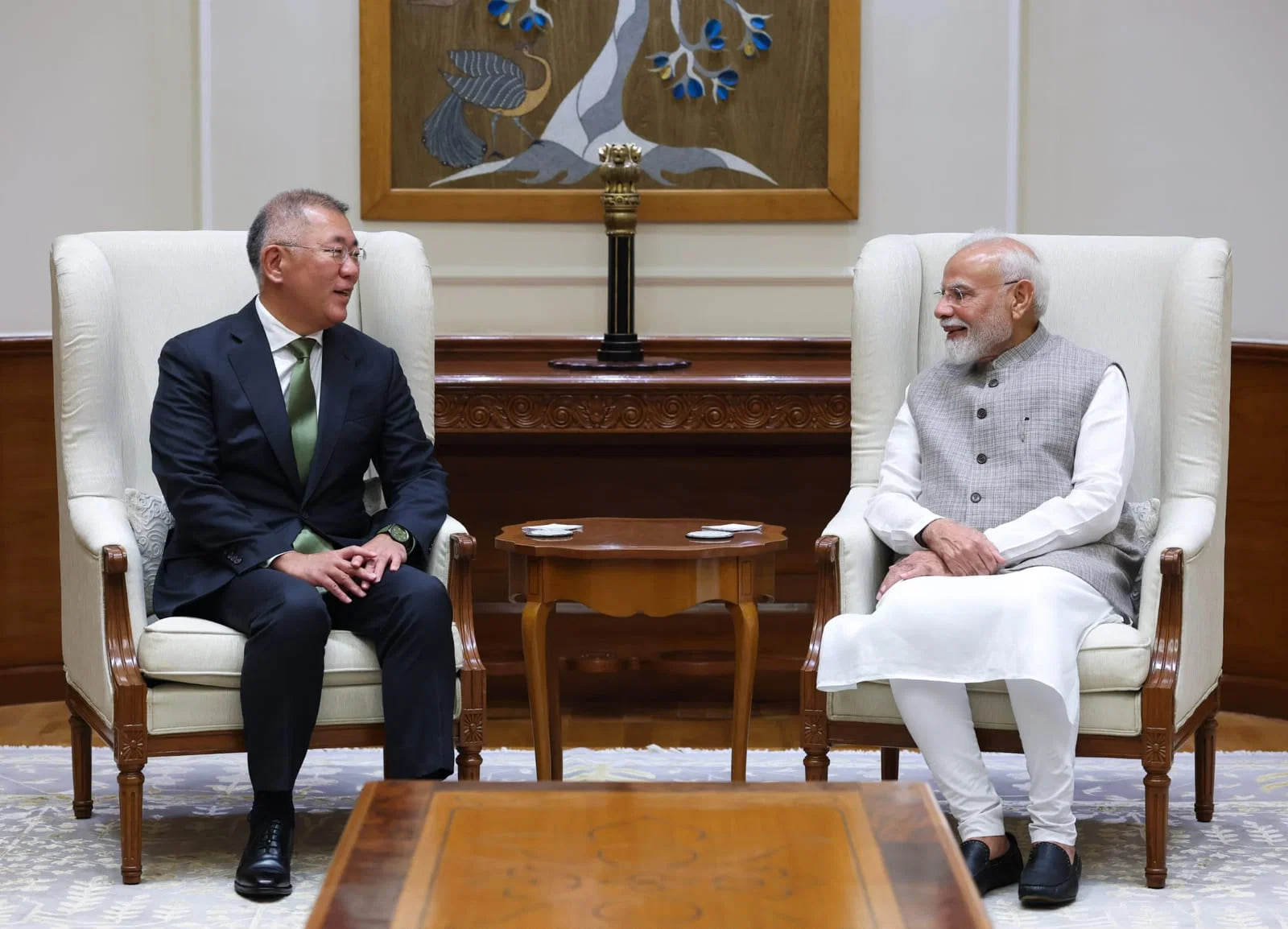
Hyundai has announced plans to invest USD 15.5 billion in India between 2026 and 2032. The investment will cover research and development, manufacturing capacity, local supplier development and businesses such as electric vehicle charging and automotive financing. The announcement follows a meeting between prime minister Narendra Modi and Hyundai Motor Group executive chair Euisun Chung in New Delhi on October 13.
“India remains one of Hyundai Motor Group’s most important and strategic markets globally. The past 30 years have been defined by our commitment to India. This investment reaffirms our commitment to India for the next 30 years and beyond,” Chung said.
Hyundai investment: R&D and manufacturing plans
The company plans to invest around USD 700 million in its Indian R&D centre, including a vehicle testing track. The investment is intended to expand engineering facilities and support the development of automotive technologies and local talent.
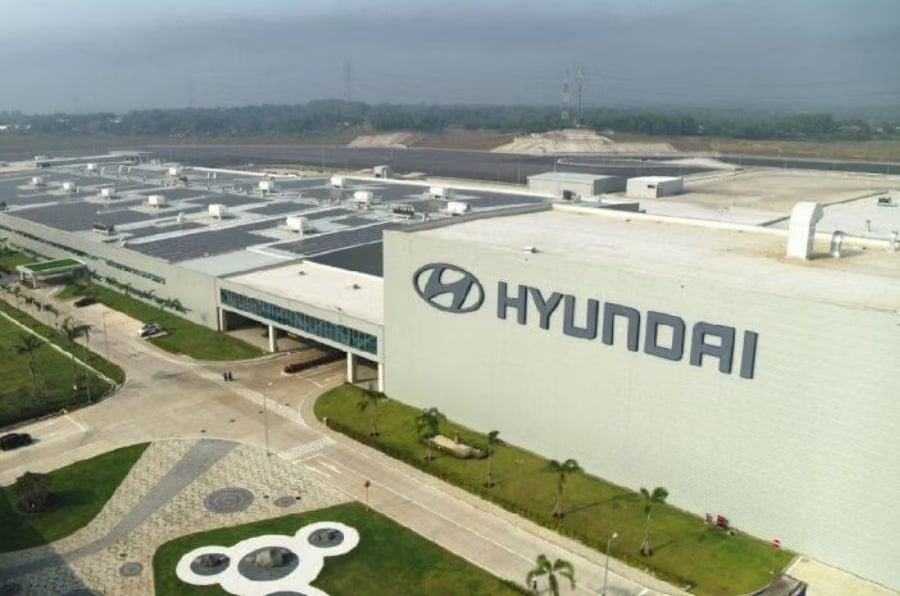
The group also plans to increase manufacturing capacity across Hyundai and Kia. Their combined annual production capacity in India currently exceeds 1.4 million vehicles, across Hyundai’s facilities in Chennai and Pune, and Kia’s plant in Anantapur.
Capacity at Hyundai’s Pune facility is scheduled to increase in phases. The group is also assessing a third manufacturing location to meet its longer-term requirements.
Our sister publication, Autocar Professional reported on September 29 that Chhatrapati Sambhaji Nagar in Maharashtra and Sanand in Gujarat were among the locations under consideration. According to people familiar with the plans, the proposed facility could eventually add around 500,000 units of annual capacity, with investment potentially exceeding USD 2 billion over time. The plant could come up around 2030, with capacity added in phases over five to seven years. The October 13 announcement did not confirm the location, investment schedule or additional capacity.
The company will also invest in local suppliers and regional partners to increase parts localisation and strengthen its supply chain. It plans to establish a dedicated investment entity in India to oversee the programme and identify suppliers, technology partners and investment opportunities.
Hyundai to explore new mobility businesses
Beyond vehicle manufacturing, Hyundai Motor Group plans to explore automotive financing, EV charging infrastructure and end-of-life vehicle recycling. It also intends to support promising start-ups and expand into mobility services linked to its vehicle business.
Hyundai is developing electric three-wheelers with TVS Motor Company under a joint development agreement. The partnership is aimed at commercialising electric three-wheelers for India and other markets.
The group said the investment programme is expected to create employment in manufacturing, R&D, engineering and supply chains, including through suppliers and new mobility businesses. It currently employs more than 24,000 people across India.
Hyundai Motor Group has not disclosed how the USD 15.5 billion investment will be divided between Hyundai and Kia, or how much will be allocated to individual projects.
नौकरी करने वाले लोगों के लिए सालाना सैलरी हाइक का इंतजार काफी अहम होता है। बढ़ती महंगाई के बीच वेतन में होने वाली बढ़ोतरी से घर का बजट संभालने में मदद मिलती है। लेकिन सॉफ्टवेयर कंपनी Zoho के कर्मचारियों को इस साल निराशा का सामना करना पड़ सकता है। कंपनी के संस्थापक श्रीधर वेम्बू ने बताया है कि इस साल कर्मचारियों की सैलरी में सामान्य सालाना बढ़ोतरी नहीं की जाएगी। इसके पीछे आर्टिफिशियल इंटेलिजेंस (AI) से जुड़े बढ़ते खर्च, सर्वर की महंगी कीमतें और वैश्विक कारोबारी अनिश्चितता जैसे कारण हैं। हालांकि, उन्होंने कर्मचारियों को यह भरोसा भी दिया है कि कंपनी बड़े पैमाने पर छंटनी से बचने की पूरी कोशिश करेगी।
Zoho कर्मचारियों को इस साल नहीं मिलेगा सालाना इंक्रीमेंट
श्रीधर वेम्बू ने सोशल मीडिया प्लेटफॉर्म X पर एक पोस्ट के जरिए कंपनी की मौजूदा स्थिति साझा की। उन्होंने बताया कि सॉफ्टवेयर इंडस्ट्री का भविष्य फिलहाल अनिश्चित बना हुआ है और AI के बढ़ते इस्तेमाल से कंपनियों का खर्च काफी बढ़ गया है। इसी दबाव के चलते Zoho ने इस साल कर्मचारियों की सामान्य वेतन वृद्धि रोकने का फैसला किया है। वेम्बू ने स्वीकार किया कि यह फैसला लेना आसान नहीं था। उन्होंने कर्मचारियों से माफी भी मांगी कि वह इस साल सैलरी हाइक को जारी नहीं रख सके।
AI के कारण चार गुना बढ़ी सर्वर की कीमतें
कंपनी के सामने सबसे बड़ी चुनौतियों में से एक डेटा सेंटर के लिए जरूरी सर्वर की बढ़ती लागत है। वेम्बू के मुताबिक, सर्वर की कीमतें चार गुना तक बढ़ गई हैं। इसके अलावा, AI टूल्स का इस्तेमाल तेजी से बढ़ने के कारण कंपनी के परिचालन खर्च में भी इजाफा हुआ है। इन बढ़ते खर्चों को नियंत्रित करने के लिए Zoho ने अपने मार्केटिंग बजट में कटौती की है। वैश्विक भू-राजनीतिक परिस्थितियों ने भी कारोबारी माहौल को चुनौतीपूर्ण बना दिया है।
बड़े पैमाने पर छंटनी से बचने की कोशिश
सैलरी हाइक रोकने के फैसले के बीच कर्मचारियों के लिए राहत की बात यह है कि कंपनी फिलहाल बड़े पैमाने पर छंटनी से बचना चाहती है। वेम्बू ने कहा कि कंपनी कर्मचारियों की बड़े स्तर पर नौकरी जाने की स्थिति से बचने के लिए पूरी मेहनत करेगी।
हालांकि, उन्होंने यह भी चेतावनी दी कि सॉफ्टवेयर क्षेत्र में नौकरियों का भविष्य चुनौतीपूर्ण दिखाई दे रहा है। उनके मुताबिक, Zoho ने पिछले 18 महीनों से अपने कर्मचारियों की संख्या में बढ़ोतरी नहीं की है। इससे कंपनी में भर्ती की रफ्तार धीमी रहने का संकेत मिलता है।
The business outlook for software is uncertain and AI has raised costs dramatically with a) massive 4-fold increase in server prices which we need for data centers b) AI usage increasing rapidly, leading to much higher expenses, which we are trying to control.
On top of that is the challenging geopolitical backdrop.
We have cut down on our marketing budget. We have also told our employees that we cannot have our usual pay increase this year. I have apolgized for not being able to avoid this.
We will work hard to avoid mass layoffs but the outlook for software jobs in general is grim. We have not been growing our employee count for 18 months now.
Most of our employees understand the situation. I am thankful to them.
We are in the middle of reinventing ourselves. The next 3-5 years will decide how our reinvention has worked. Please pray for us
वेम्बू ने बताया कि कंपनी इस समय खुद को नए कारोबारी माहौल के अनुरूप ढालने की प्रक्रिया में है। अगले तीन से पांच साल यह तय करने में महत्वपूर्ण होंगे कि कंपनी का बदलाव कितना सफल रहता है।
उन्होंने कर्मचारियों के सहयोग के लिए आभार भी जताया। उनके मुताबिक, ज्यादातर कर्मचारी कंपनी की स्थिति को समझ रहे हैं। यह फैसला ऐसे समय में आया है, जब तकनीकी कंपनियां AI में निवेश बढ़ाने के साथ अपने खर्चों पर नियंत्रण रखने की चुनौती का सामना कर रही हैं।
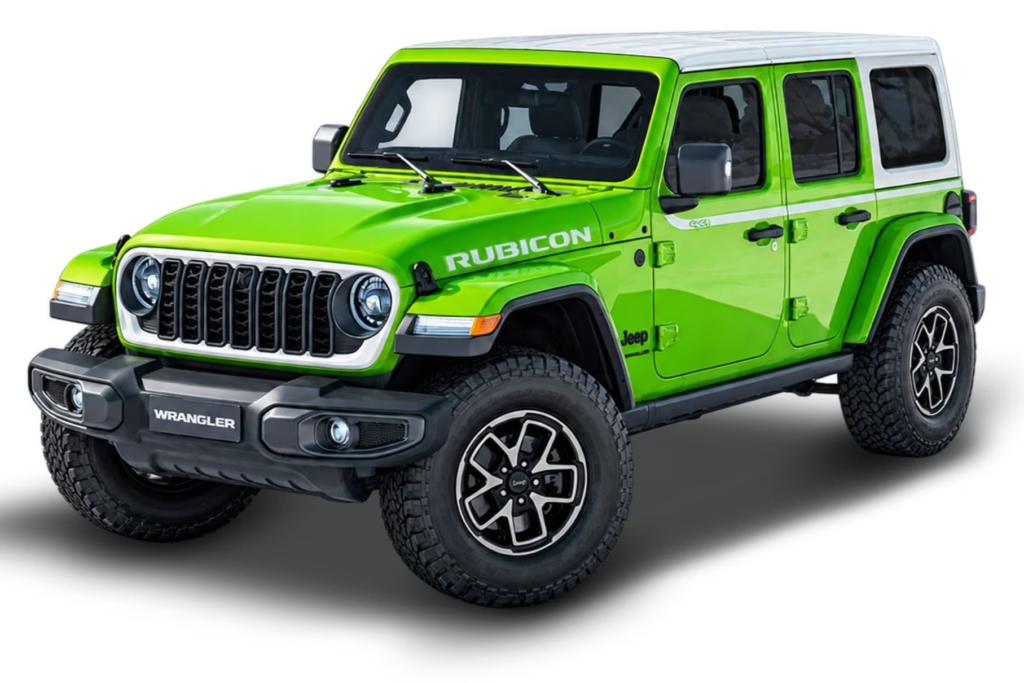
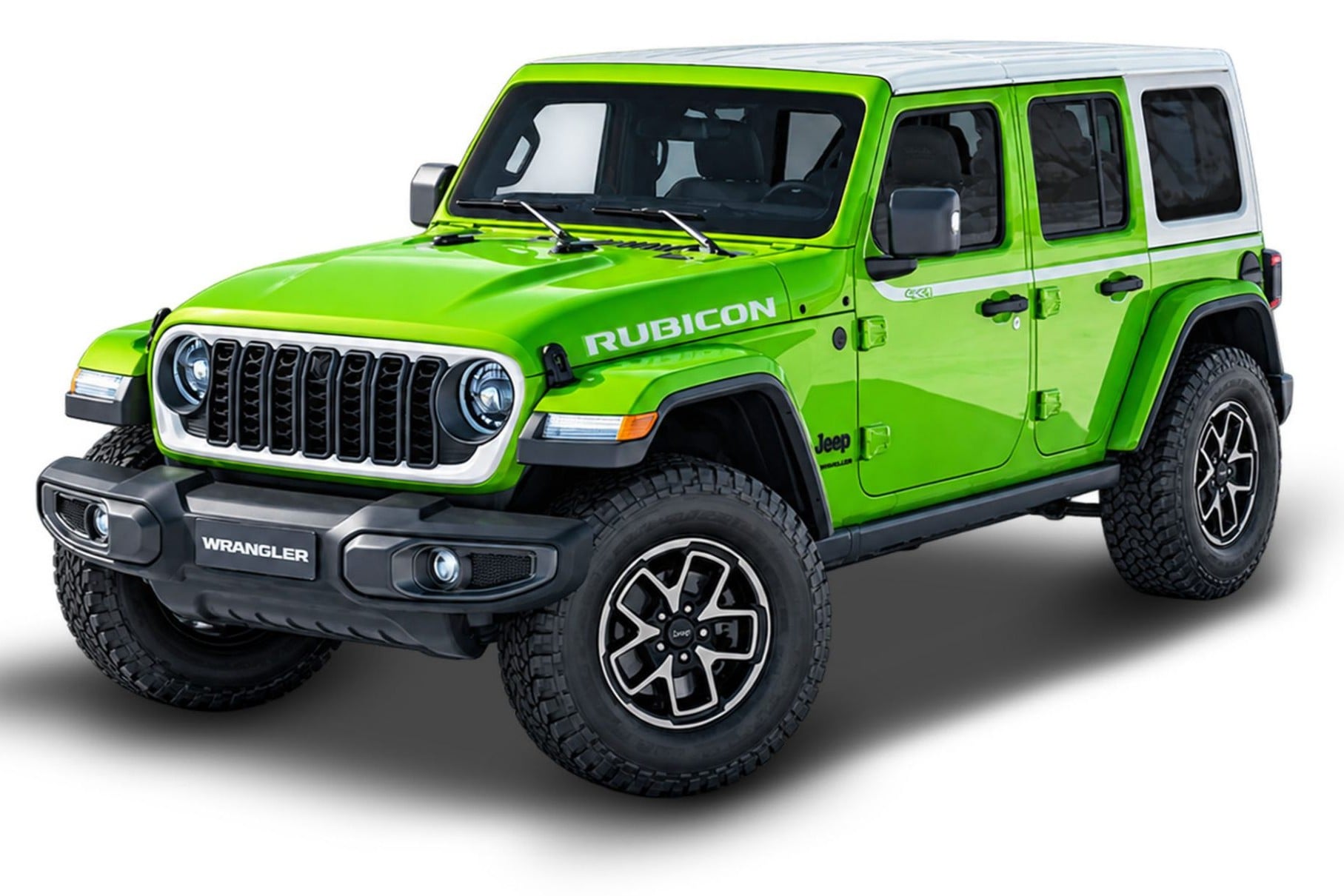
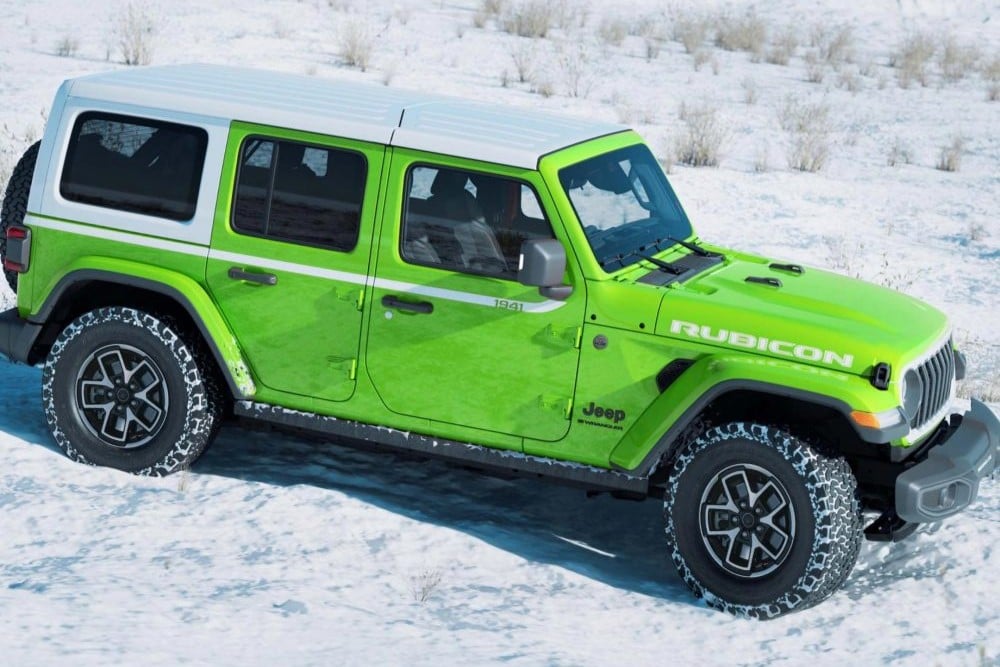
Following the reveal of the Wrangler Whitecap Mojito Limited Edition last month, Jeep has announced that the special-edition off-roader will cost Rs 73.55 lakh – a Rs 1.25 lakh premium over the Wrangler Rubicon on which the Whitecap Mojito is based. Only 25 units of the Wrangler Whitecap Mojito were offered in India, and Jeep has sold all of them. Globally, a total of 250 units of the Wrangler Whitecap Edition were made available.
Jeep Wrangler Whitecap Mojito Limited Edition: Exterior and interior changes
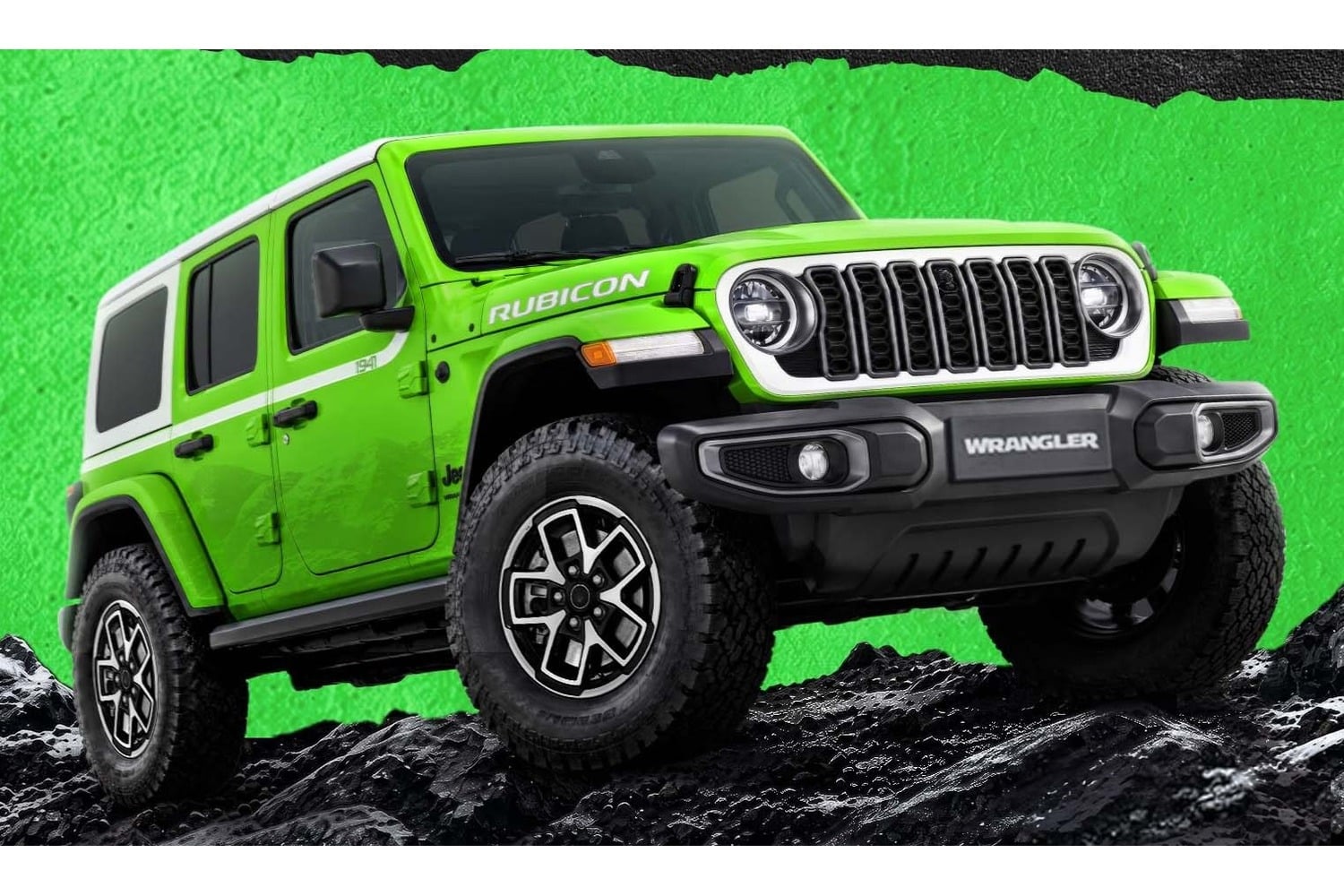
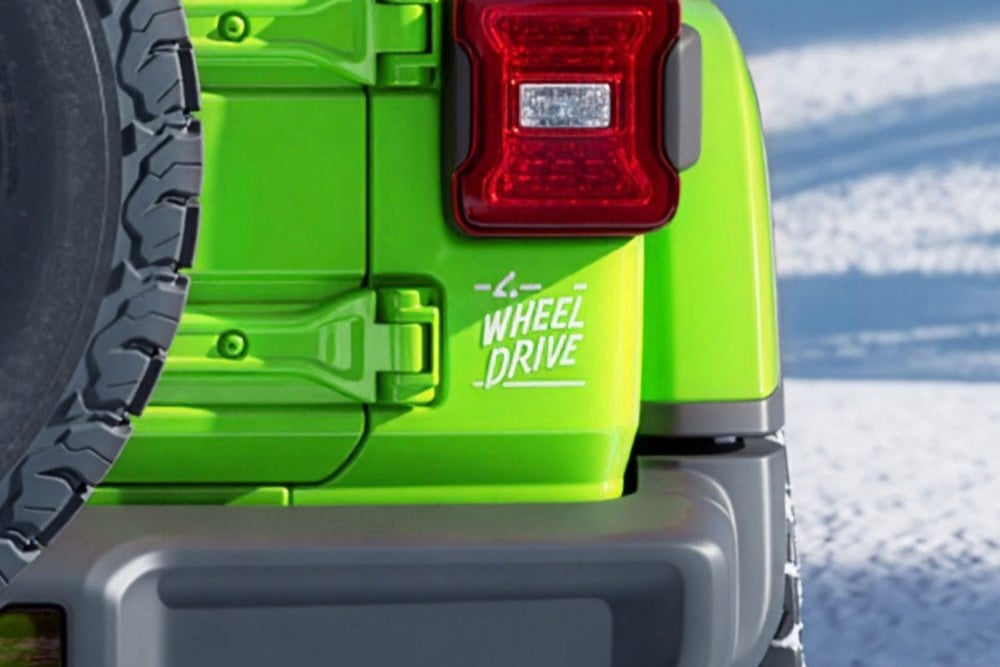
On the outside, this special-edition Wrangler Rubicon comes finished in an exclusive bright-green ‘Mojito’ shade, along with a white finish for the roof. The grille features a white surround, while the side profile gets ‘1941’ decals (a reference to the original Willys MB Jeep’s debut year) and body-coloured fenders. There’s also a white ‘4 Wheel Drive’ sticker on the boot lid.
The interior of the Wrangler Whitecap Mojito gets only two additions: a built-in dashcam and reinforced grab handles. Elsewhere, the special edition retains the feature set of the standard Wrangler Rubicon, such as a 12.3-inch infotainment touchscreen, 12-way powered front seats, an ADAS suite, 6 airbags, dual-zone climate control, a 9-speaker Alpine sound system with a subwoofer, a 7-inch driver’s display, and more.
Jeep Wrangler Whitecap Mojito Limited Edition: Engine and gearbox
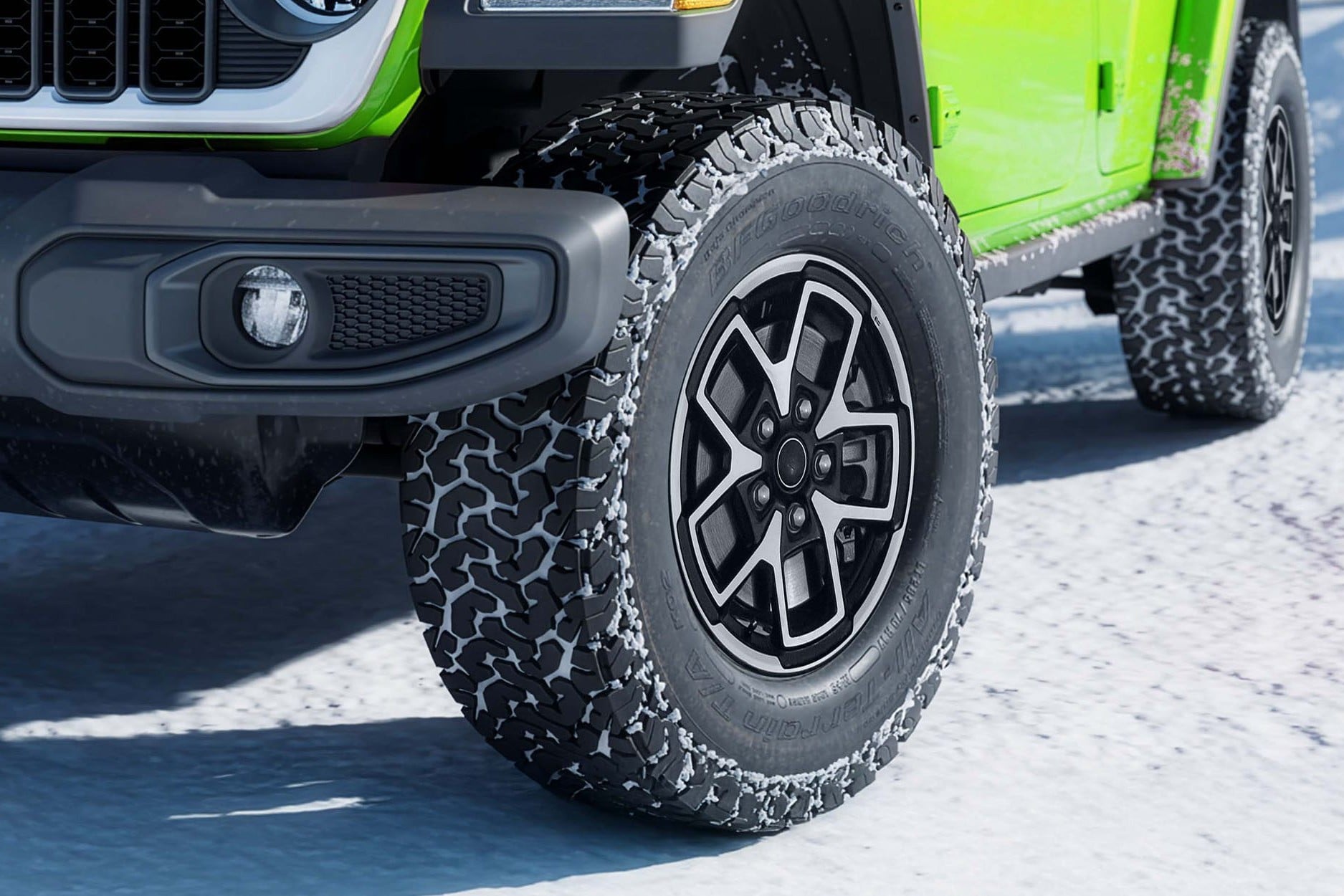
Under the skin, the Wrangler Whitecap Mojito is identical to the Rubicon. It’s powered by a 2.0-litre four-cylinder direct-injection turbo-petrol engine developing 272hp and 400Nm, paired with an 8-speed automatic transmission that channels the grunt to all four wheels via a standard 4×4 system. Since it’s based on the more off-road-capable Rubicon variant, the Wrangler Whitecap Mojito also packs hardware like heavy-duty Dana axles, an integrated off-road camera, reinforced suspension, rock rails, 255-section off-road tyres with 17-inch wheels, high-clearance front fender flares, and more.
While the Wrangler Whitecap is currently sold out in India, Jeep hinted at the possibility of bringing the special edition back in light of healthy demand. “The first 25 vehicles will remain a highly exclusive chapter in the Whitecap story, while the strength of customer interest is encouraging us to explore how we could bring this distinctive expression of Wrangler back to India in the future,” said Kumar Priyesh, business head and director – Automotive Brands, Stellantis India.
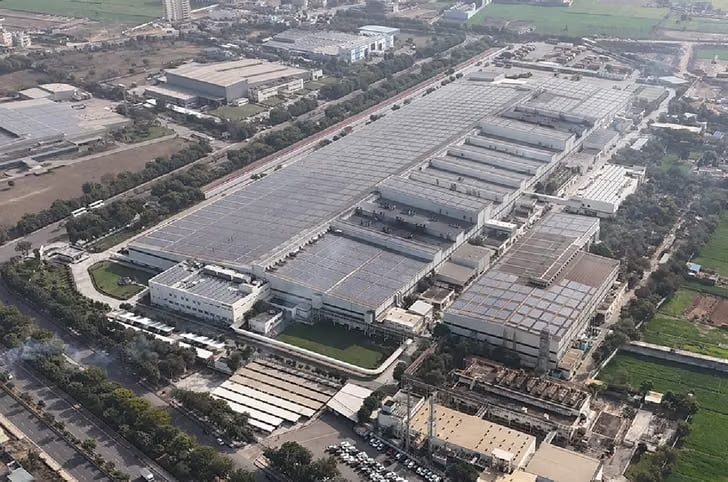
Honda Motorcycle and Scooter India (HMSI) is significantly scaling up its manufacturing capacity in India, with company President and CEO Tsutsumu Otani confirming plans to increase output across its four Indian plants from the current 62.5 lakh units per year to 80 lakh units by 2028.
HMSI to expand production capacity from 62.5 lakh to 80 lakh units annually by 2028
CB350 already being exported to Europe; CB500 being evaluated as the next export model
Africa, Central America and South America identified as key future export markets
HMSI production and export plans
The expansion is expected to create over 2,000 jobs
Otani said the expansion over the next 18-24 months is aimed at serving both domestic demand and a growing export business. “With the eight-million-unit capacity planned in 2028, we will be well equipped to handle customer demand for ICE or EV products,” he said. The company’s current production is already running at full capacity.
On the export front, HMSI has begun shipping India-made models to Europe, starting with the CB350, for which Otani said the “sales situation is also very good”. The CB500 is being evaluated as the next potential export model, although he described these plans as being at an early stage.
Beyond Europe, Otani highlighted Africa, Central America and South America as important future markets, with Africa singled out as particularly significant. “India’s geographical proximity can provide an advantage in serving the African market, especially if one were to factor in transportation costs,” he said.
To support its export ambitions, HMSI is also looking to deepen localisation. Otani acknowledged that several components currently undergo final assembly in India but rely on parts imported from Thailand, Japan and Europe. “We intend to accelerate localisation and manufacture more in India as our next step,” he said, adding that resource circulation and the recycling of steel and aluminium remain areas the company is working through, given India’s limited domestic supplies of these materials.