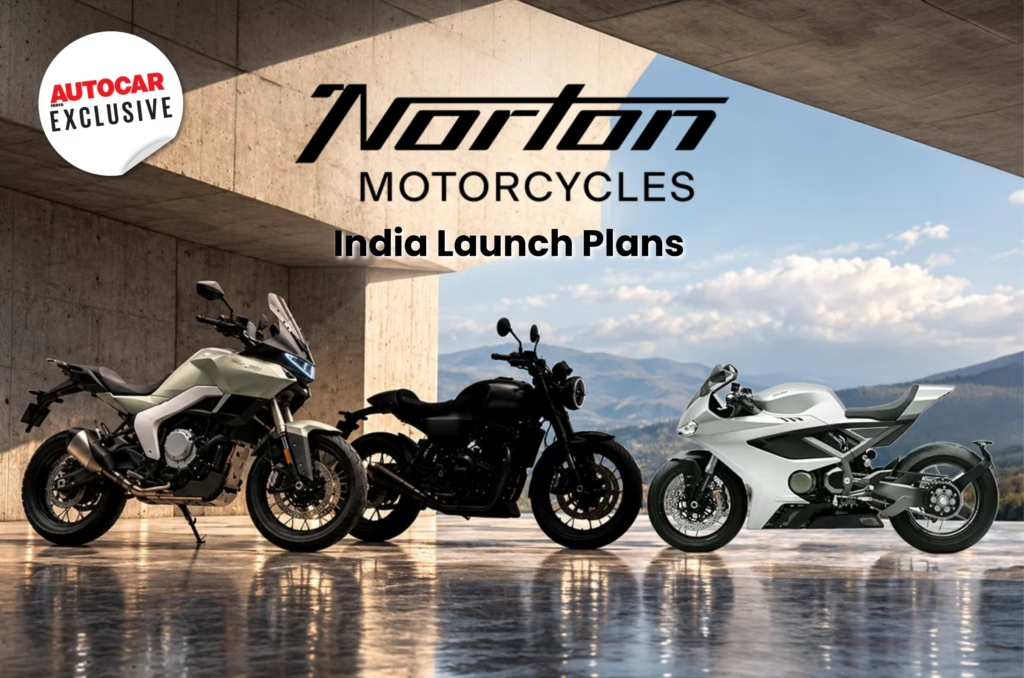
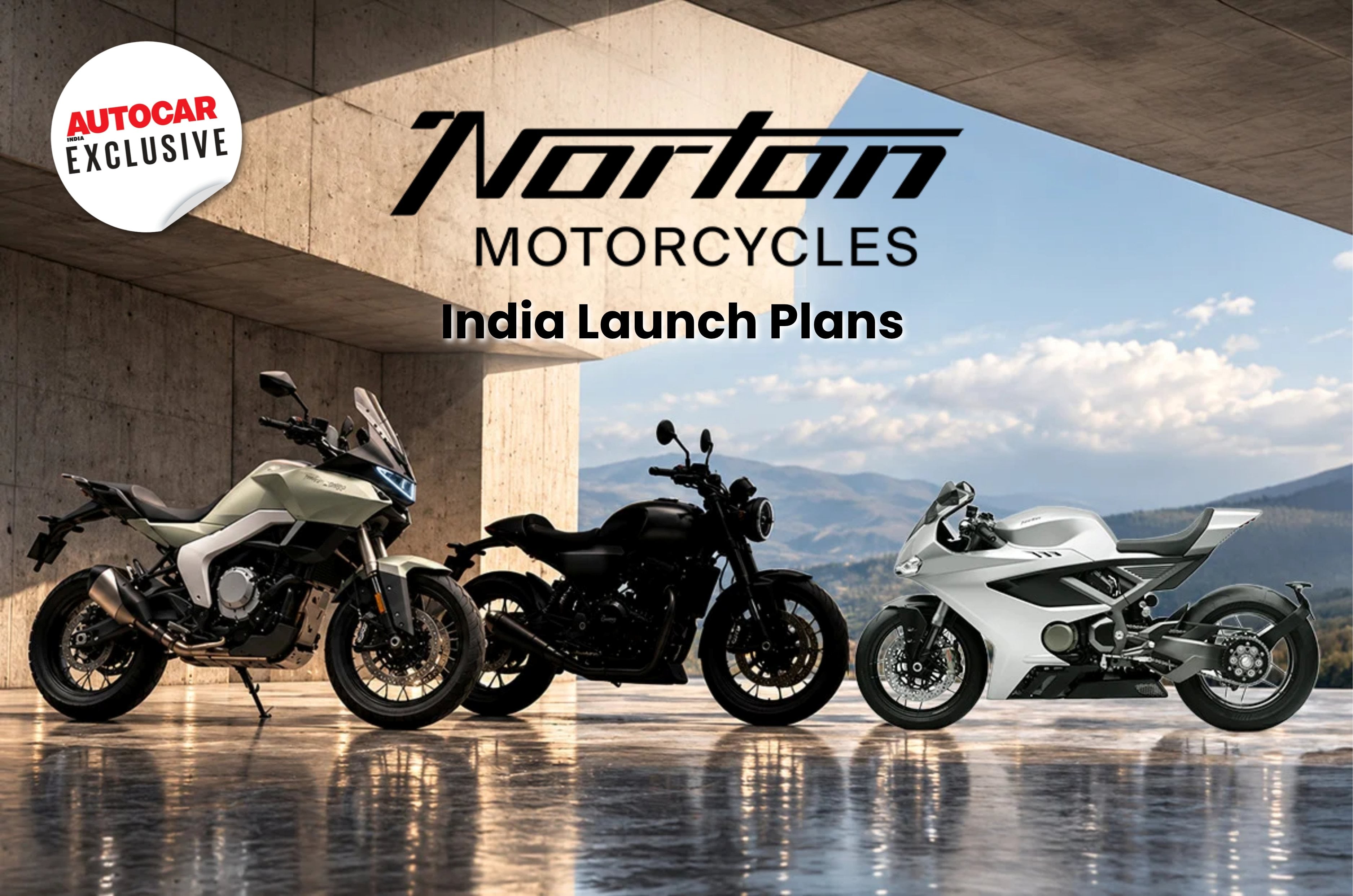
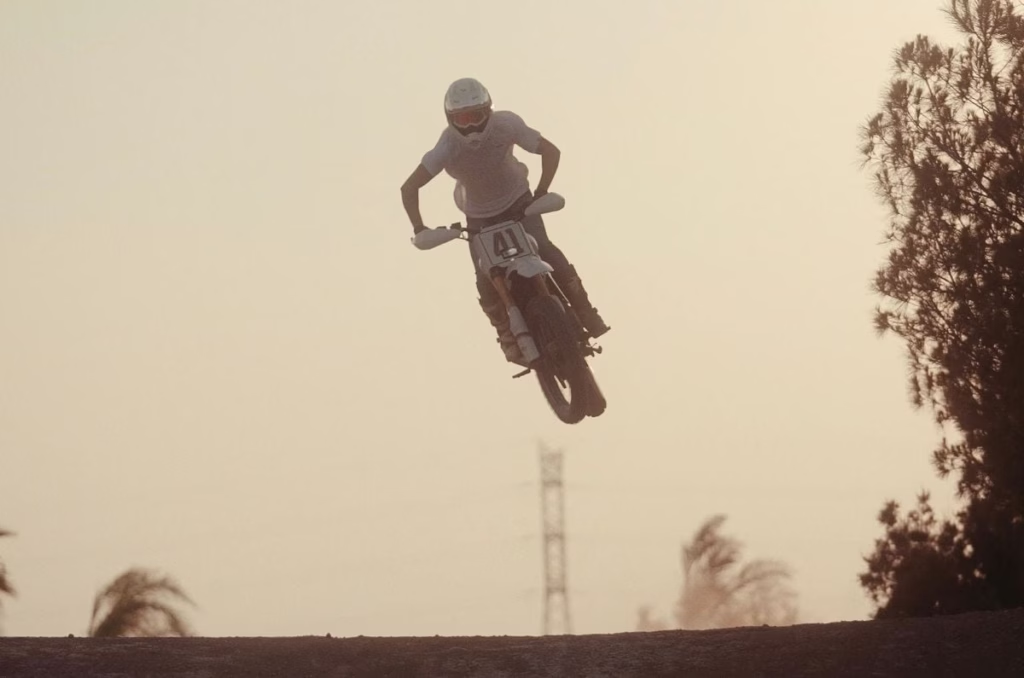
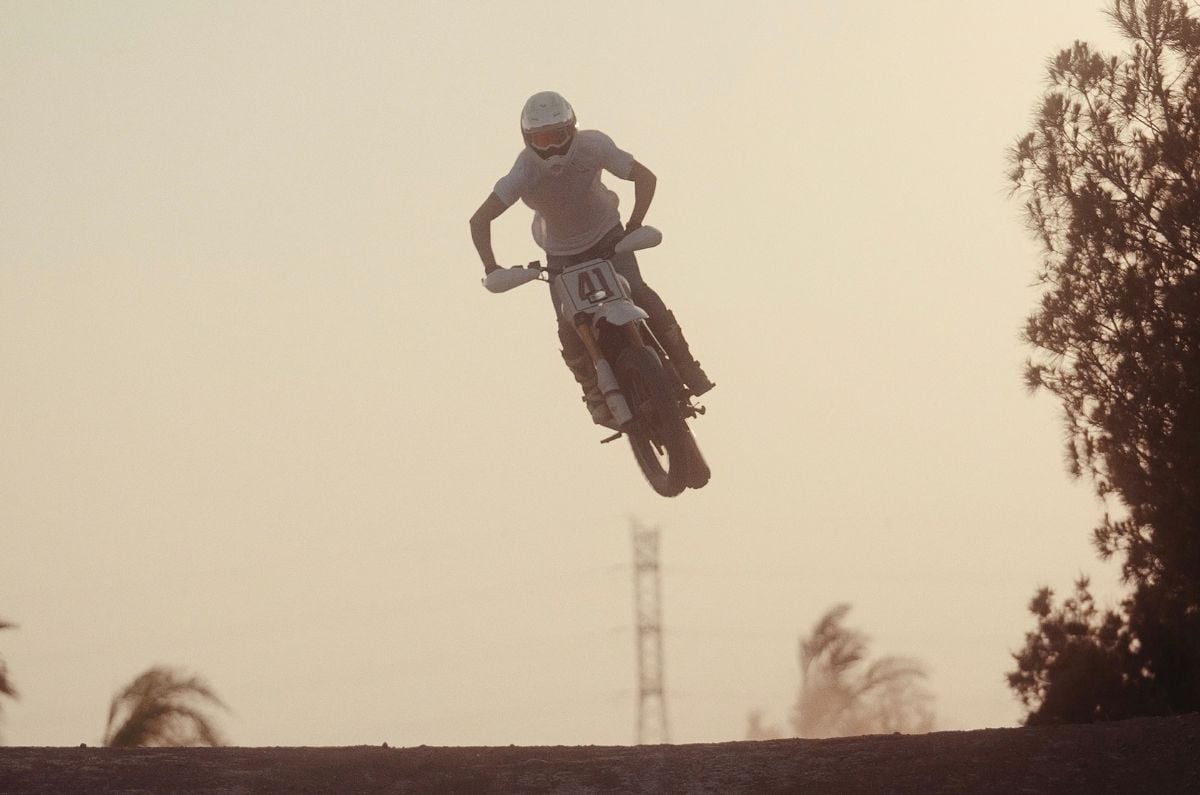
We first rode the Norton Manx R superbike overseas in May and this was followed by the Atlas adventure bike in July. At the time in June, TVS had said that the Atlas would be introduced in India later in the year. It had also scheduled the launch of TVS Paddock, its premium retail channel, for the second quarter of FY27. Paddock will serve as the retail outlet for both Norton products as well as select TVS premium vehicles across the country.
Norton motorcycles will be retailed out of a few exclusive Norton outlets as well as a new TVS Paddock dealer network
Three paddock outlets will be set up by December 2026
Norton line-up will be initiated with the Atlas, followed by Manx R and the new single-cylinder motorcycle
Norton’s reach in Europe, US and India
Indian dealer network still being established
We recently reported on the company’s new 450cc class liquid cooled single cylinder roadster making its debut at ECMA 2026. In its official response to our queries sent, a company spokesperson said, “Norton is set to launch in India soon following the brand’s presence at EICMA this year, when the next key stage of the resurgence will be revealed”.
However, the company did not provide an updated Paddock rollout schedule. Current preparations are understood to point to around three Paddock outlets by December, although a larger network is being sought. The number of outlets that will be operational when motorcycle sales begin has yet to be finalised. Under the tentative India rollout plan, the Atlas could launch in January 2027, with the Manx following by March if that schedule holds. The sequence could see Norton introduce three to four products during 2027, although the final model mix and launch dates have not been announced. As for the new single cylinder roadster, that bike is likely to be launched in India alongside overseas markets in the second half of next year.
While Norton’s India innings is yet to begin, the company spokesperson says that the Manx R and Atlas launched earlier this year are being delivered to customers across Europe. The naked Manx and road-biased Atlas GT have not yet been formally launched. The company said it now has more than 50 retailers across 10 markets, including the UK, Italy, France, Germany and Spain. Preparations for a United States launch are continuing, subject to the final stages of vehicle certification.
“As Norton continues to build the brand globally, it is important to ensure that Norton’s entry into India is equally meaningful and thoughtfully executed,” the spokesperson said. “The positive response to Norton’s products in Europe gives us confidence, and more on Norton’s India plans will be shared in due course.”
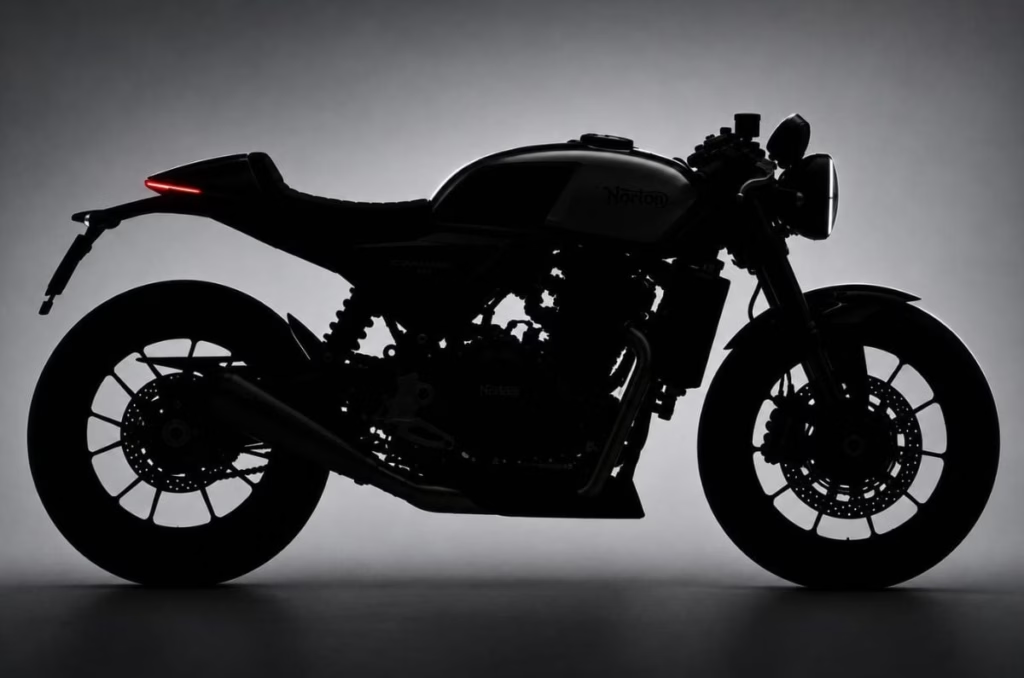
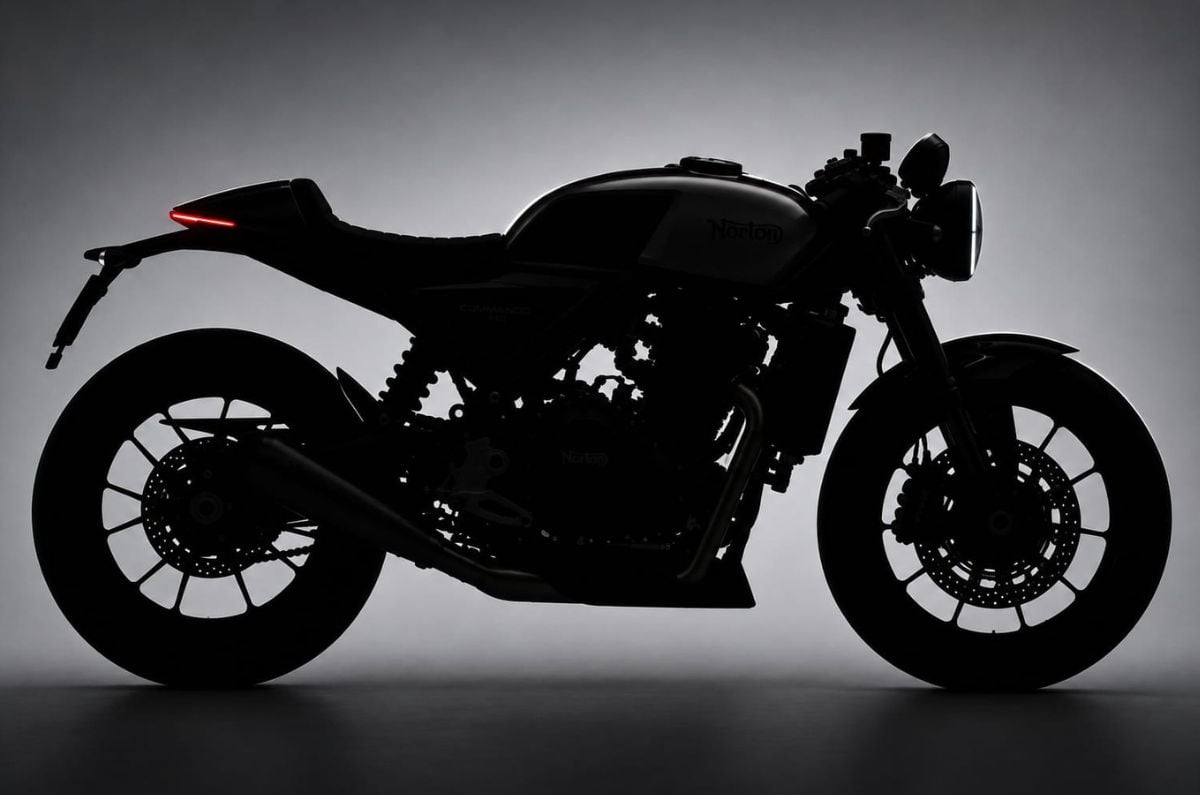
Norton Motorcycles will premiere its much-awaited 450cc-class single-cylinder roadster at EICMA 2026 in Milan, expanding its range with a motorcycle aimed at higher volumes in India and overseas. Autocar Professional expects the motorcycle to produce around 40-45hp and 40-45Nm. The engine is likely to be liquid-cooled and is expected to come with a 6-speed gearbox. The roadster will be the first model on a new platform understood to be called the H-series, with other body styles to follow. It will sit below the TVS Motor-owned British marque’s twin-cylinder Atlas range and V4-powered Manx family.
Norton Atlas is expected to first launch in India, in Q1 2027
New Norton single-cylinder motorcycle will launch overseas and in India simultaneously
Will also be manufactured at TVS’ Hosur plant
New Norton single-cylinder platform at EICMA 2026
Expected to launch in India and overseas in 2027
Autocar Professional understands that TVS plans to begin Norton’s India rollout in the January-March 2027 quarter, if not sooner, starting with the Atlas, followed by the Manx. The H-series roadster is expected to launch simultaneously in India and global markets in the second half of 2027. Responding to queries from Autocar Professional, a Norton spokesperson said the brand’s India introduction would follow its appearance at this year’s Milan show. “Norton is set to launch in India soon following the brand’s presence at EICMA this year, when the next key stage of the resurgence will be revealed,” the spokesperson said. The company has not officially confirmed the roadster’s platform name, engine capacity, output, pricing or sales timeline.
Norton has recently trademarked three names in India – Roven, Inter and Avalon and the first single cylinder bike may bear one of them. In 2025, the company also trademarked the Norton Electra name here, and this followed on the trademarking of the Norton Combat name in 2023.
Reimagined Norton under TVS
Design and ease of use is at the new Norton’s core
Differentiated design is central to TVS’s effort to give Norton a contemporary identity while retaining its British heritage. Simon Skinner, Head of Design, Norton Motorcycles, is leading the development of a design language connecting the brand’s products across capacities and categories. The roadster will extend that approach to a motorcycle intended to sell in larger numbers.
As we have seen with the thoroughly modern designs on the Atlas and V4, it is safe to anticipate modern, pared-back styling, with selected mechanical components exposed and others concealed. This could help distinguish the roadster in a segment where several competitors draw heavily on retro styling. According to Norton, the Manx R received the “Best of the Best” distinction at the 2026 Red Dot Award: Design Concept. Norton Design was also recognised at the 2026 International Design Excellence Awards in the United States.
The roadster is expected to prioritise manageable weight and ease of use, particularly in city riding. It could feature 17-inch wheels and equipment drawn from Norton’s larger motorcycles, potentially including an eight-inch TFT touchscreen, riding aids and multiple riding modes. Final specifications remain unconfirmed.
Taking on Royal Enfield
How does Norton plan to combat the 350cc onslaught?
The platform represents a significant bet on the global mid-size motorcycle market. The opportunity spans roughly the 350cc-750cc categories, with annual volumes estimated at around 15 lakh-20 lakh units. This broad classification includes motorcycles marketed as 350cc models whose actual displacement is slightly lower.
It will bring Norton into closer competition with Royal Enfield and Triumph in India and overseas. However, the new single-cylinder Nortons will face a specific challenge in India. That is the fact that they will not come under the 350cc segment, unlike the massively popular RE 350 range and the recently re-engineered 349cc Triumph line in India. The result is that they will attract the much higher 40 percent GST rate instead of 18 percent. Norton is likely to position these bikes at a premium that will be justified by higher levels of technology and a heavy focus on design, quality and detail.
Royal Enfield’s dominance in India demonstrates the demand for motorcycles used for daily travel, touring and leisure riding. Its extensive dealer network, broad product range and established riding community also present a substantial challenge for Norton. Overseas, Royal Enfield has expanded into many of the markets the TVS-owned British marque is targeting. For TVS, the single-cylinder Norton offers a way to participate more widely in this market. Additional body styles on the same platform would help spread development costs and reach buyers with different riding preferences.
The India distribution plan
TVS is yet to confirm showroom rollout schedule for India
Norton’s design and heritage will form part of its appeal, but pricing, service coverage and parts availability will be important to building sustained sales, particularly in India. TVS had said in June that the Norton Atlas would be introduced in India later in the year. It had also scheduled the launch of TVS Paddock, its premium retail channel for both Norton and select premium TVS products, for the second quarter of FY27. The latest official response did not provide an updated Paddock rollout schedule.
Current preparations are understood to point to around three Paddock outlets by December, although a larger network is being sought. The number of outlets that will be operational when motorcycle sales begin has yet to be finalised. The company said it now has more than 50 retailers across 10 markets, including the UK, Italy, France, Germany and Spain. Preparations for a United States launch are continuing, subject to the final stages of vehicle certification.
Norton said its European test-ride programme had introduced the new motorcycles to thousands of riders. Foster + Partners has designed its showroom environments. TVS acquired Norton in April 2020. Its FY2025-26 annual report records investments exceeding GBP 250 million in rebuilding the business and identifies the marque as an important part of its premium-isation strategy, particularly in developed markets.
India already supports that expansion through manufacturing. The first Atlas motorcycles rolled off TVS’s Hosur production line in June, combining Norton’s UK design and engineering with its parent’s manufacturing operations. Production for the new single-cylinder range will also be out of Hosur.
With inputs from Anurag Chaturvedi and Rishaad Mody.
Spain’s Tamarit Motorcycles has won Triumph Originals 2026 – the British manufacturer’s global custom competition, after securing 33 percent of the public vote and earning the judge panel’s highest score. Its Scrambler 400 XC based build, Miura, impressed both judges and voters with its interpretation of the brief and excellent build quality.
Bringing together custom builders from seven countries (Canada, China, France, Italy, Spain, the UK and the USA), Triumph Originals 2026 required each team to create a 1/1 ‘Time Capsule’ Scrambler inspired by a defining era from the model’s rich history.
Thousands of motorcycle enthusiasts from around the world cast their votes to help decide the winner. The public vote was combined with scores from an international judging panel made up of leading figures from the worlds of motorcycle design, custom building, journalism and heritage, ensuring every entry was assessed on its originality, technical execution and interpretation of the competition’s brief.
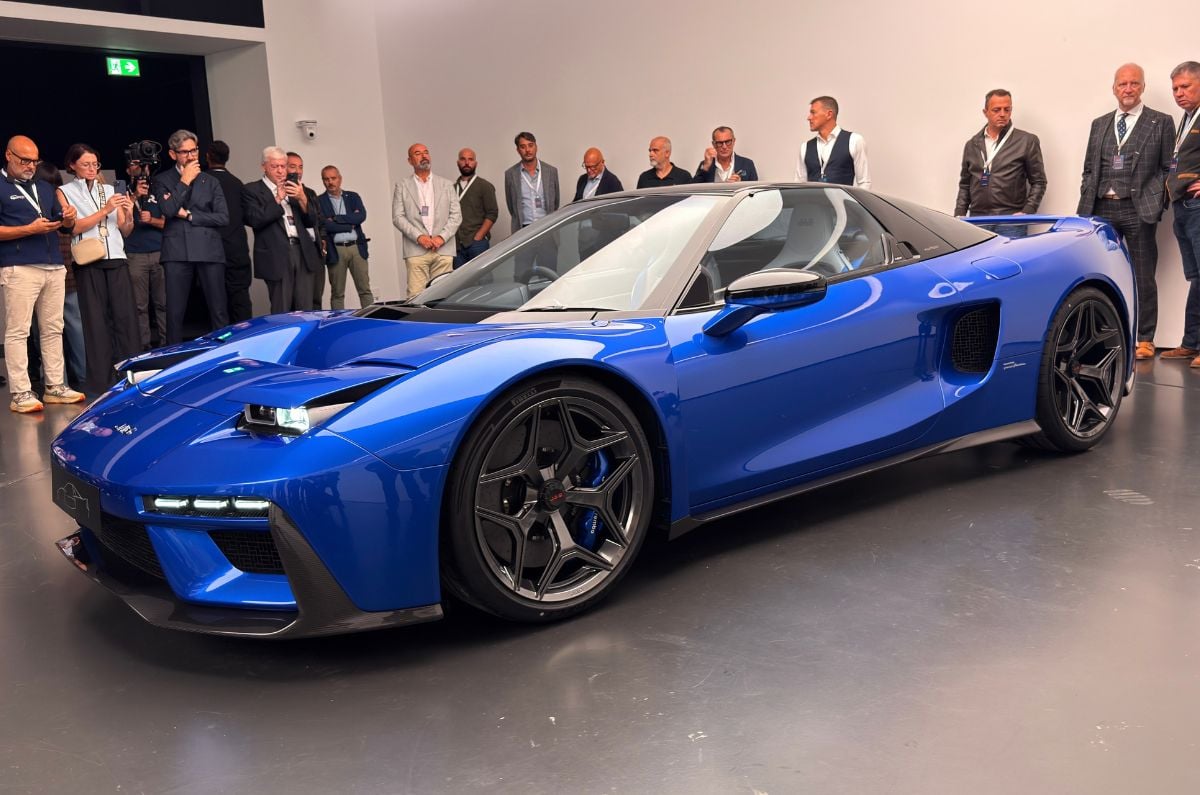
There are few cars that changed the supercar world quite like the original Honda NSX. It proved that a mid-engined exotic could be fast, reliable, approachable and, crucially, enjoyable without trying to intimidate its driver. More than three decades later, JAS Motorsport has taken that philosophy and given it a thoroughly modern interpretation.
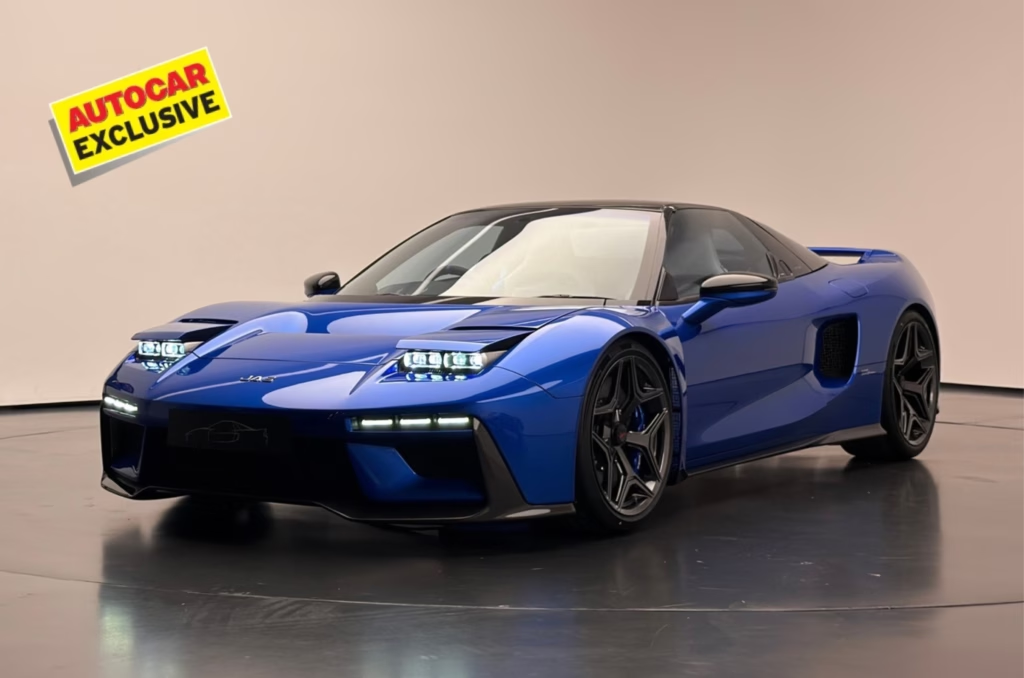
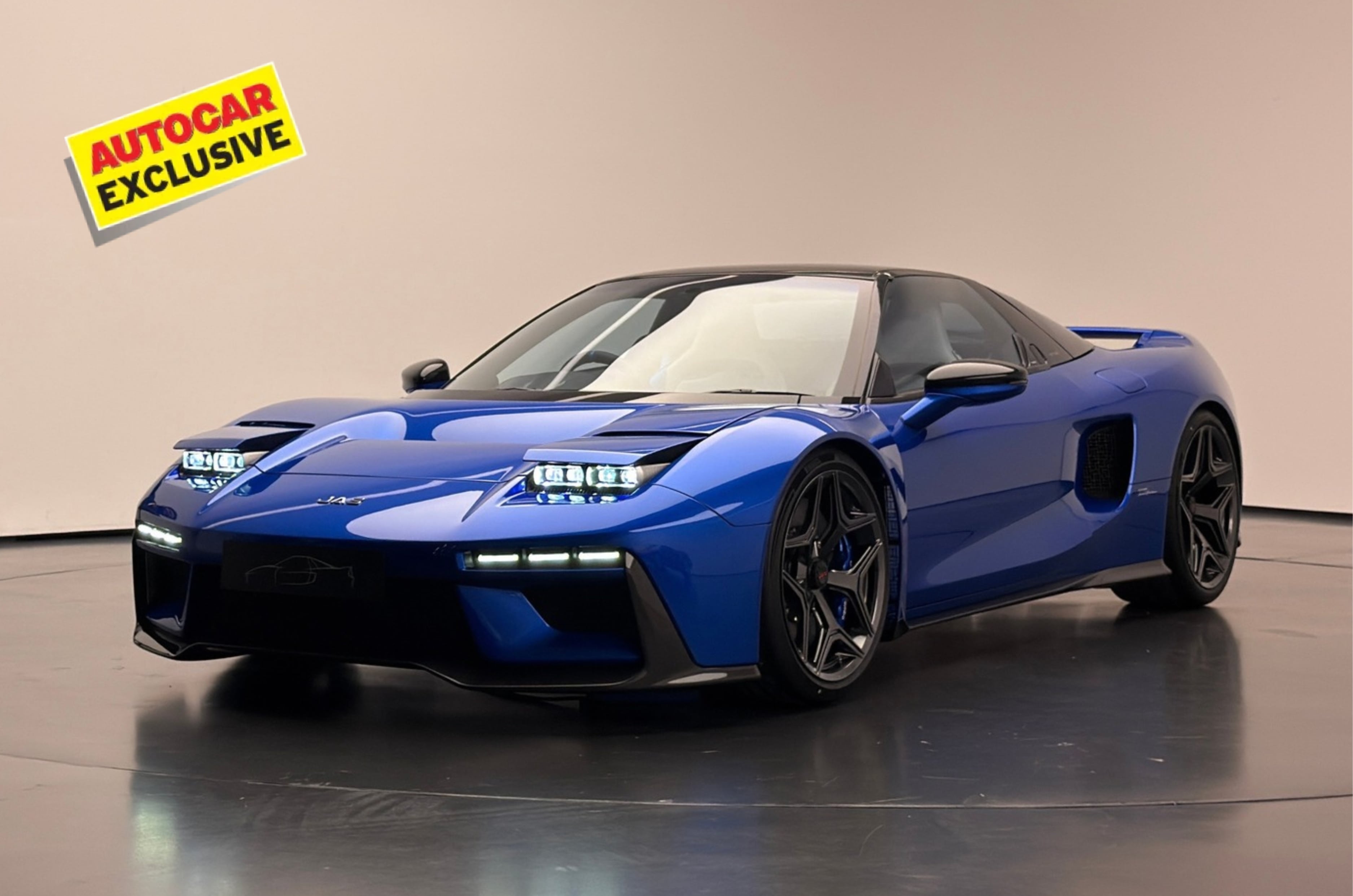
Meet the JAS Tensei. Tensei translates roughly to “rebirth” in Japanese, and the name neatly captures what JAS is attempting here. This isn’t simply an NSX restoration, nor is it a cosmetic restomod. JAS has taken the first-generation NSX as its starting point and re-engineered the car with modern materials, motorsport know-how and a new body designed by Pininfarina. And there will be just 35 examples.
But first, Who is JAS?
Launched in 1995, JAS Motorsports was named after its founders Paolo Jasson, Maurizio Ambrogetti and Giorgio Schön. They have been the official partner for Honda since 1998 and have since developed race cars for various competitions with successful results in touring car championships.
JAS Tensei: Exterior design
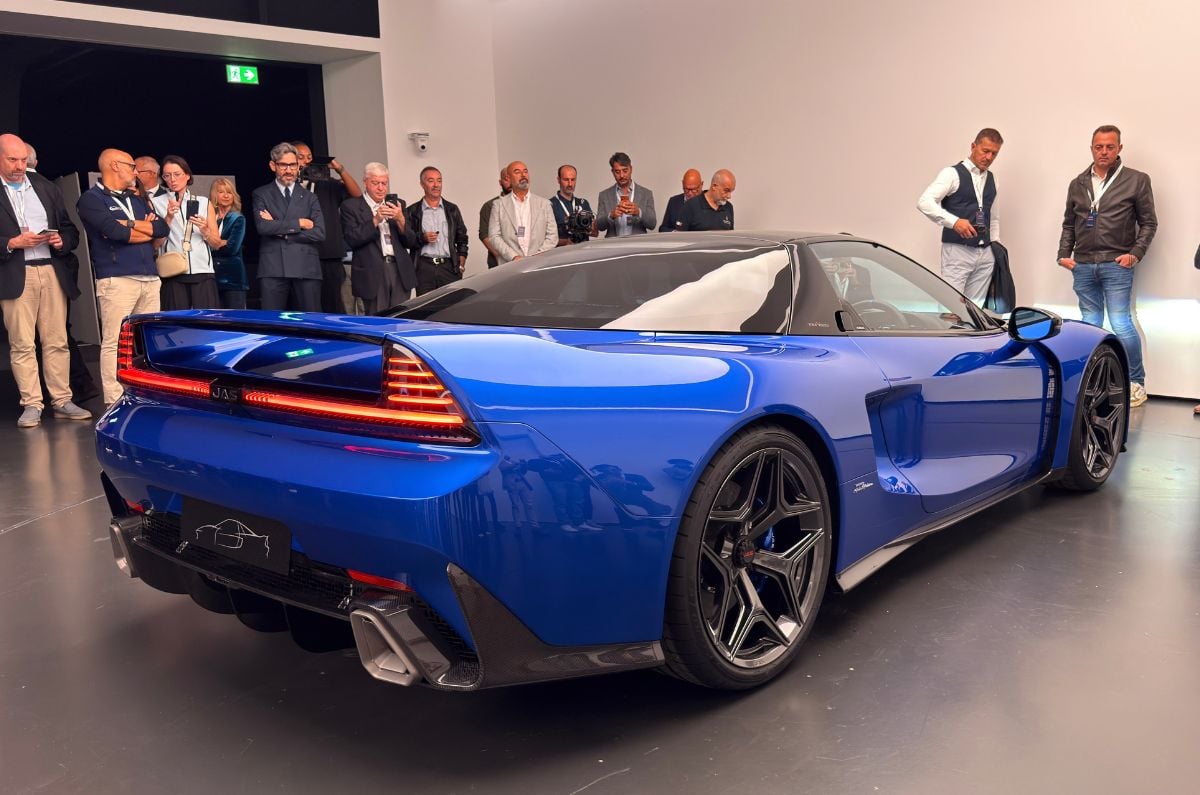
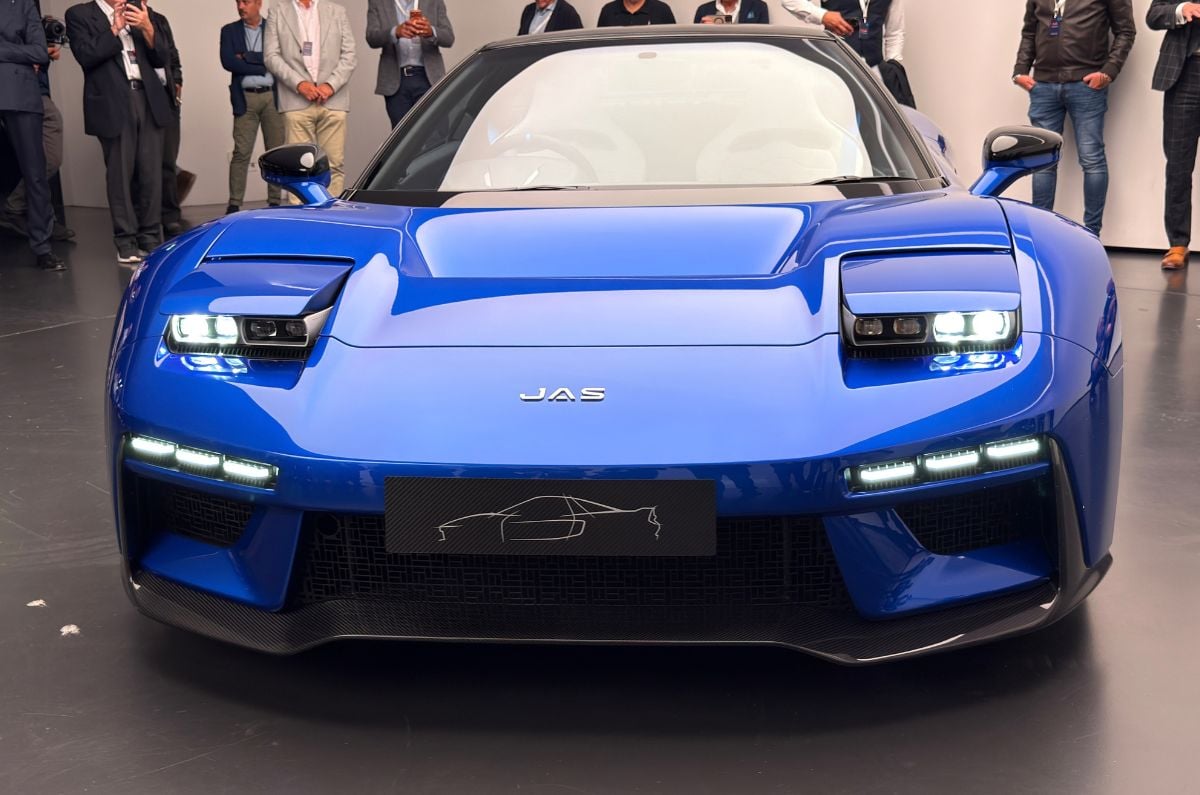
Look at the Tensei from a distance and the connection to the original NSX is immediately apparent. The proportions remain familiar, as do several of the visual cues that defined Honda’s icon. But the details are considerably more modern.
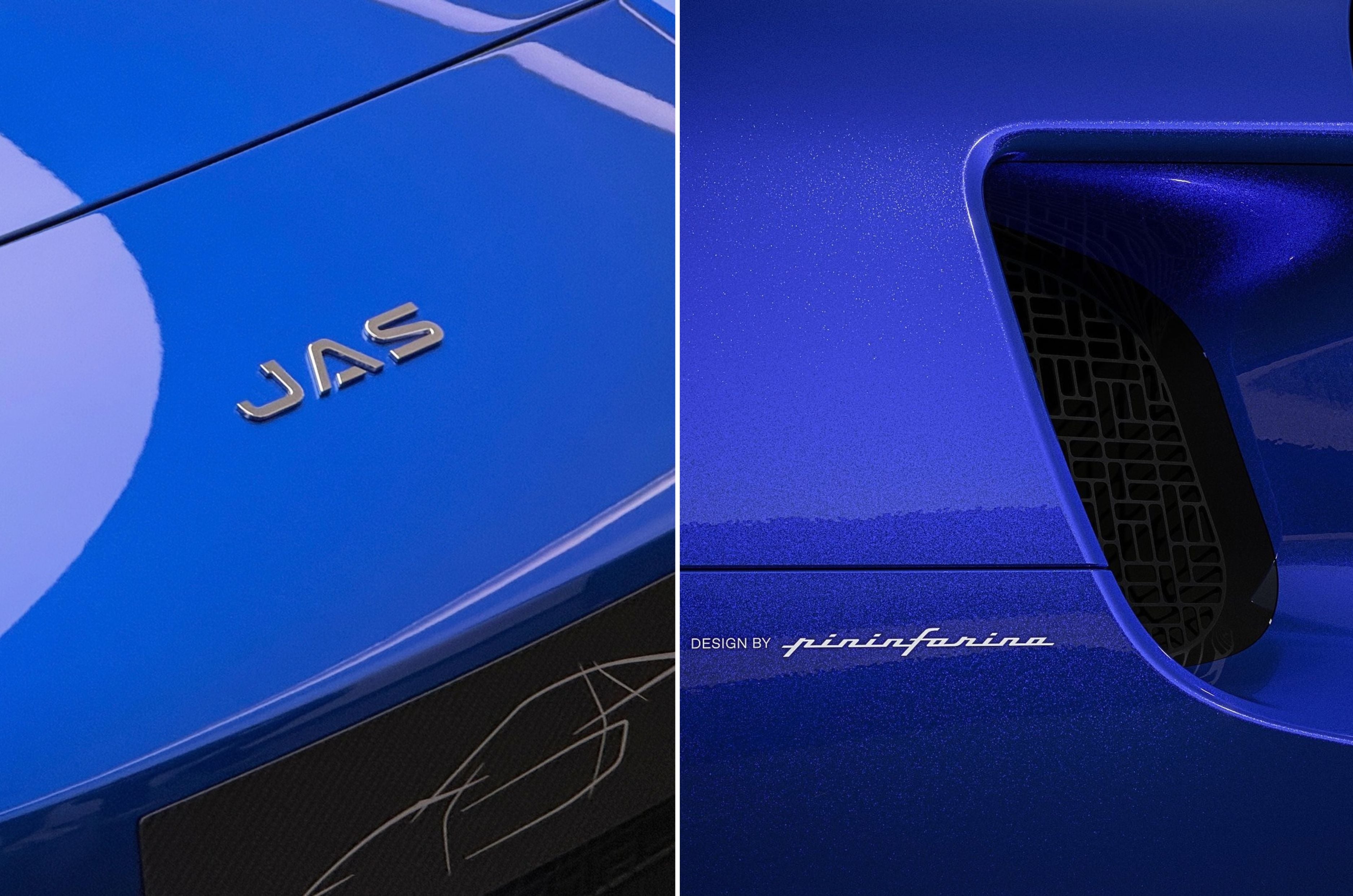
The body is constructed entirely from carbon fibre, allowing JAS to alter the car’s dimensions and surfaces while keeping weight under control. Pininfarina was responsible for the design, bringing an Italian interpretation to a fundamentally Japanese concept. It is an interesting collaboration because Pininfarina already has history with the NSX story. The company was involved with Honda’s HP-X concept, which preceded the production NSX.
The result is therefore less a replica and more an alternate evolution of the original car — essentially asking what the NSX might have looked like had its development continued into the modern era.
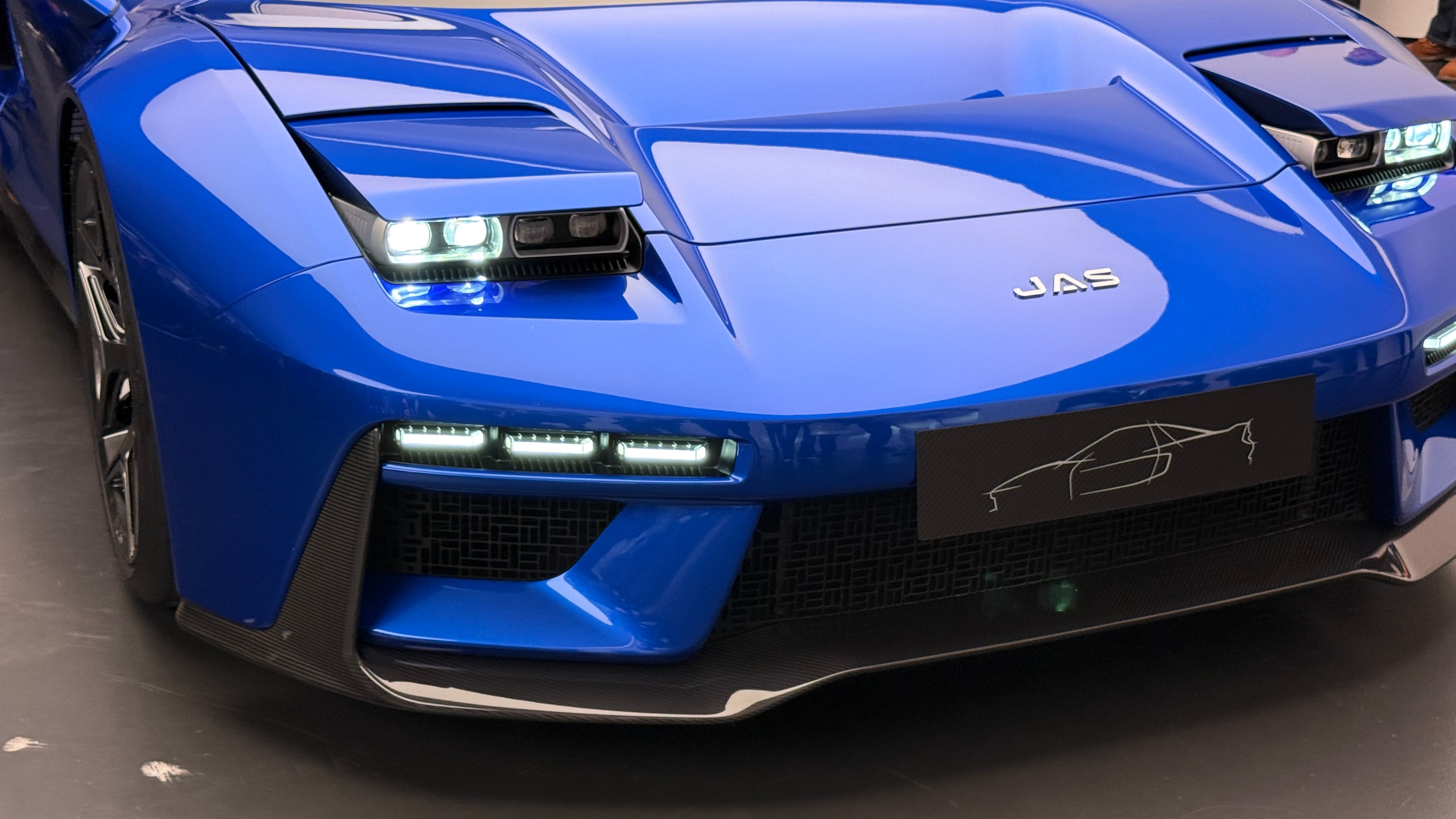
The front bumper is sculpted to guide air under the car and out of the massive duct in the bonnet. The pop-up headlamps have been retained but now feature LED treatment. The wiper covers have also been redesigned and in fact the only part that has been untouched is the roof. The A and B pillars are more raked and the wheels have gone up by a massive 4 inches. 15s and 16s on the NSX are now 19s and 20s on the Tesei. Interestingly the door handle with the NSX badge is also carried over. Low down you will spot the iconic Pininfarina badge that we are used to seeing on Ferraris.
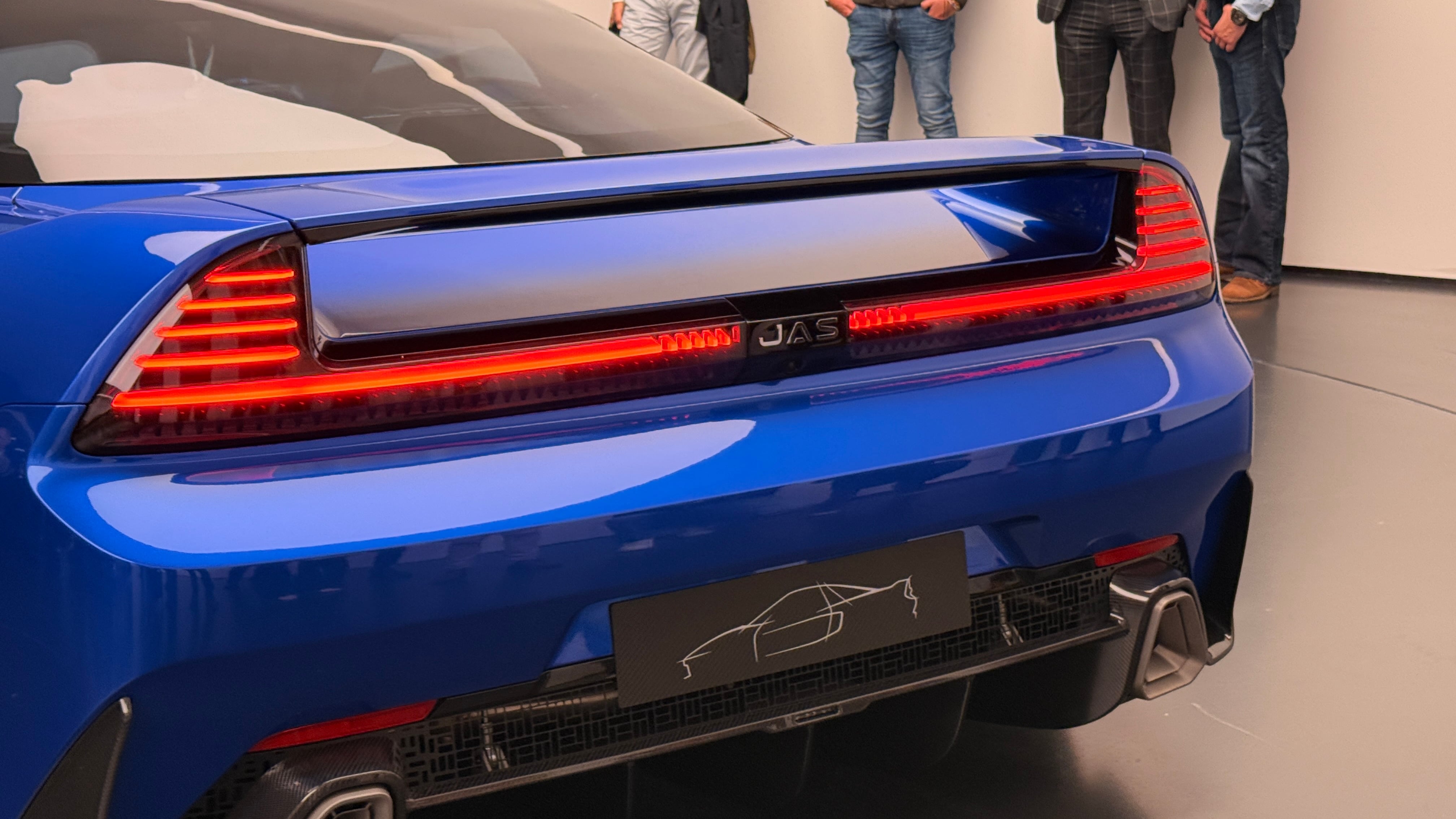
At the rear the integrated spoiler has been reworked with slight changes to the panels so as to improve airflow. The diffuser is carbon fibre and the exhausts are massive too. Like the original NSX, the tail lamps are stretched across the width and now hey 3D effect for the LED strips. Overall, it is a resto mod done to perfection. Just enough modern touches without skewing it from the iconic design.
JAS Tensei: interior and features
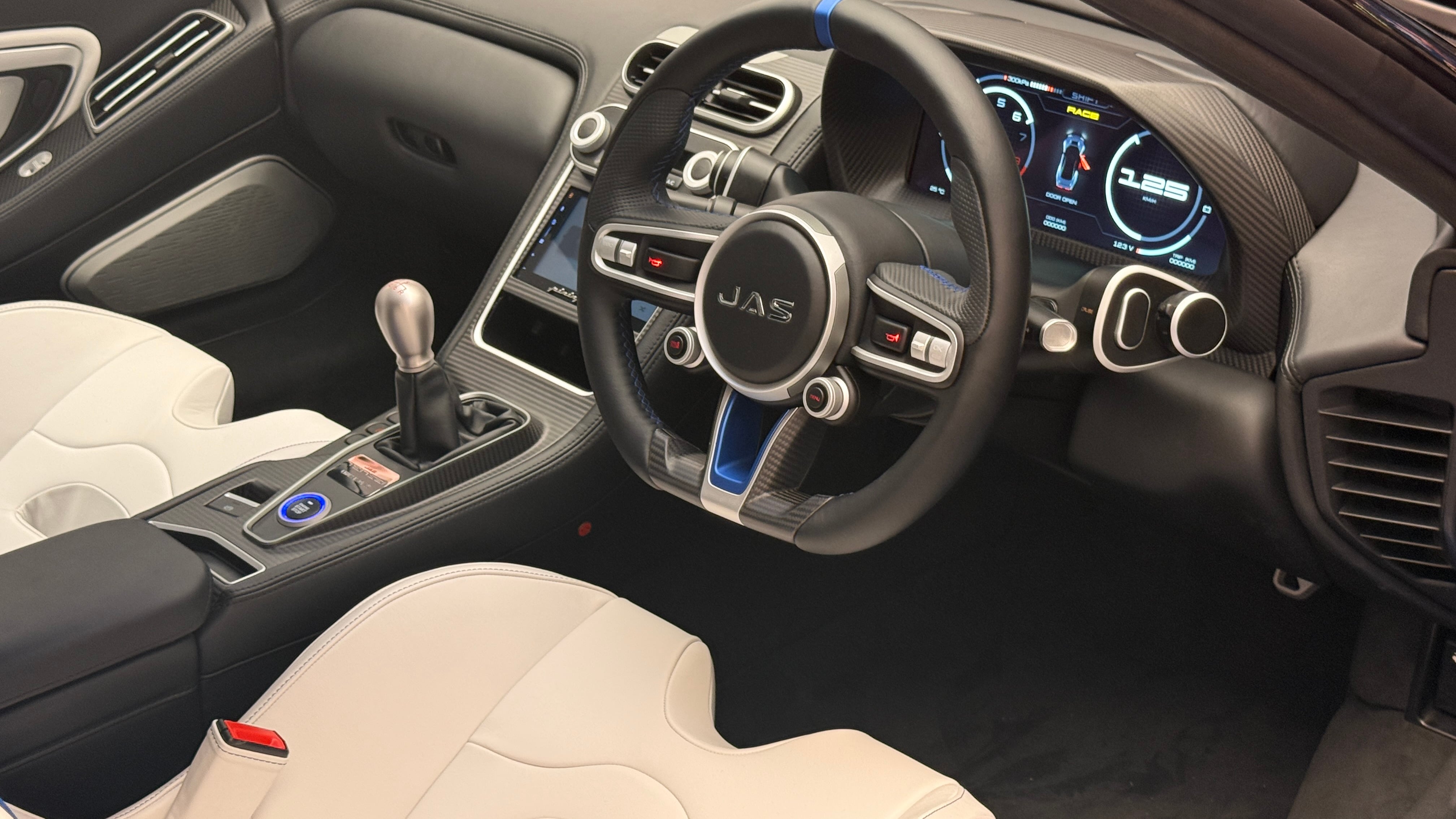
Inside the size of the cabin is identical to the original NSX, although there are updates all around. There’s a new sporty steering wheel, digital drivers display and sports seats. However, there is a full configurator available to spec your Tensei to your liking. The seat upholstery and paints can be customised along with brake calliper colours and wheels. A pleasant surprise is the centre console that does away with a massive tablet as per current trends and instead features a modest touchscreen with the climate control switchgear similar to the NSX. Pininfarina wanted to ensure none of the essence of the NSX was lost in an attempt to modernise the cabin
JAS Tensei: Powertrain and specs
Perhaps the most significant decision sits behind the cabin. The Tensei retains a naturally aspirated V6, rather than adopting the turbocharging or hybrid assistance that has become almost mandatory for modern supercars.
The 3.5-litre V6 has been extensively re-engineered with Judd Power, the British motorsport engineering specialist. The work goes considerably beyond simply increasing displacement or fitting a louder exhaust. The engine gets a billet crankshaft, forged lightweight pistons and connecting rods, individual throttle bodies, upgraded cooling and revised ignition and engine management systems. There are also new headers and an exhaust system designed to give the engine a more immediate and visceral character. The result is 420hp, with the engine capable of revving to 8,500rpm.
Those figures may not sound extraordinary in an era of 1,000hp hybrid hypercars, but that misses the point of Tensei. JAS isn’t chasing an enormous power-to-headline ratio. Instead, the emphasis is on response, linearity and the connection between throttle, engine and driver.
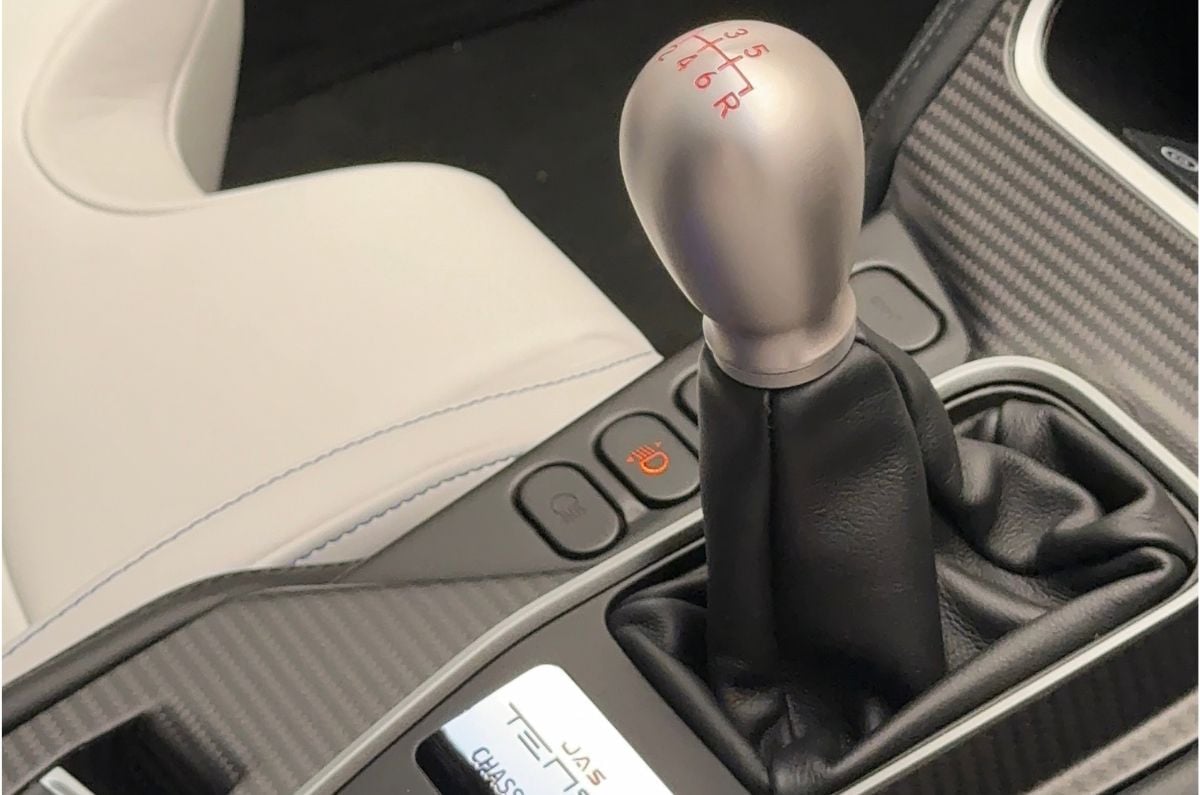
The other big piece of the puzzle is the gearbox. The Tensei uses a six-speed manual transmission and remains rear-wheel drive. That combination, together with the naturally aspirated V6, is perhaps the clearest indication of what JAS wants this car to feel like. The objective isn’t to overwhelm the driver with acceleration figures; it is to make every interaction with the car feel mechanical and deliberate.
The chassis has been extensively revised as well, with bespoke suspension components, revised geometry, upgraded bearings and uprights, enhanced anti-roll bars and KW dampers with electronically controlled damping. There is also a hydraulic front-axle lift system, while forged aluminium wheels measure 19 inches at the front and 20 inches at the rear.
JAS has taken one of the most important analogue supercars ever made and asked how its fundamental qualities could be preserved in 2026. It’s a carbon-bodied, naturally aspirated, manual, rear-wheel-drive supercar with an 8,500rpm redline. And that makes the Tensei interesting for reasons that go far beyond its rarity. It is effectively a reminder that performance isn’t necessarily about making a car faster in every measurable way. Sometimes it is about making the driver feel more involved.
Motorsport without turning it into a race car
This is where JAS’s background becomes particularly important. JAS Motorsport has spent decades developing Honda competition cars, and that experience forms the foundation of the Tensei programme. But the challenge here is fundamentally different from building a race car. A race car can sacrifice refinement, usability and longevity in pursuit of lap time. A road-going supercar cannot.
Tensei therefore represents an interesting middle ground: motorsport-derived engineering, but applied to a car designed to be driven on the road. The engine is built and tested by Judd Power before returning to JAS in Italy, where each car undergoes further testing and validation.
JAS Tensei: Super exclusive
JAS plans to build only 35 Tenseis, each individually specified by its owner. Production takes place at JAS Motorsport’s facility near Milan, with the car bringing together Japanese engineering heritage, British motorsport expertise and Italian design.
It is an unusual combination, but perhaps that’s exactly what makes the Tensei so compelling. The original NSX was unusual because Honda approached the supercar formula from a completely different direction.
Three decades later, JAS is doing something remarkably similar. It isn’t trying to build the most powerful supercar. It is trying to build the most involving interpretation of an icon. And if the original NSX was Honda’s idea of what a supercar should be, the Tensei is JAS Motorsport’s answer to what that idea could become today.
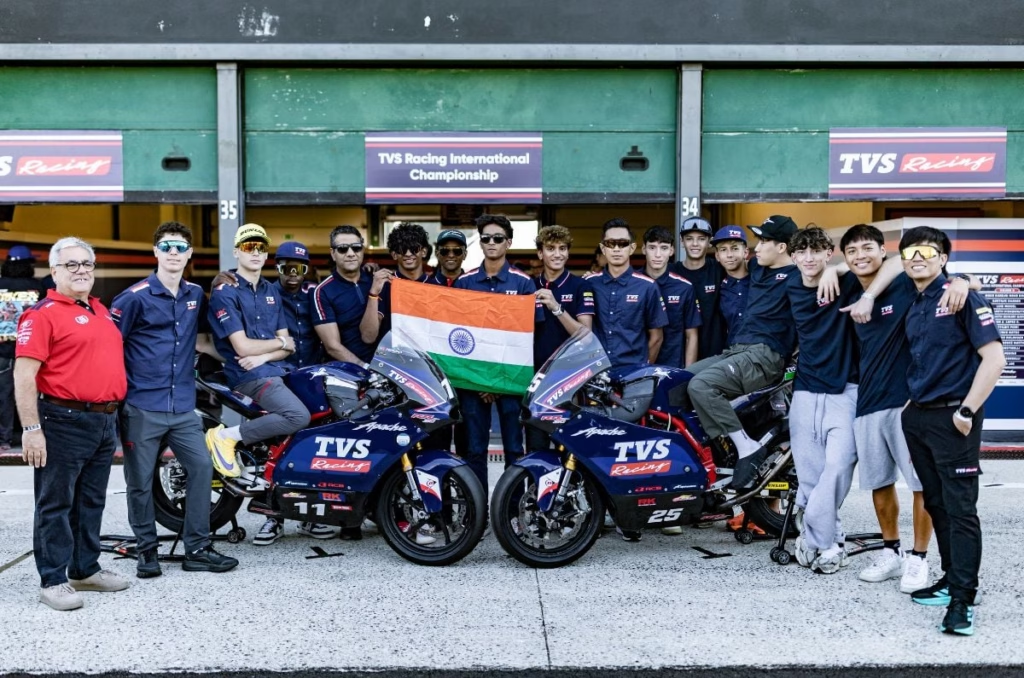
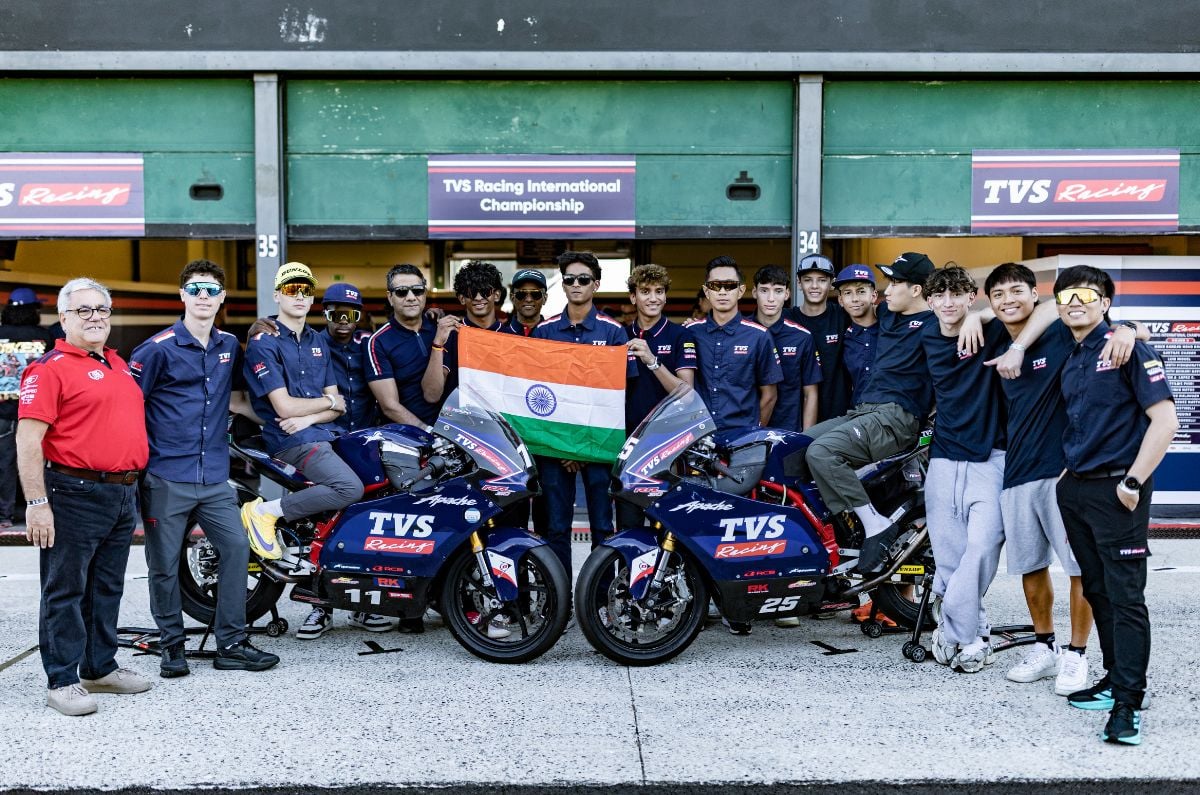
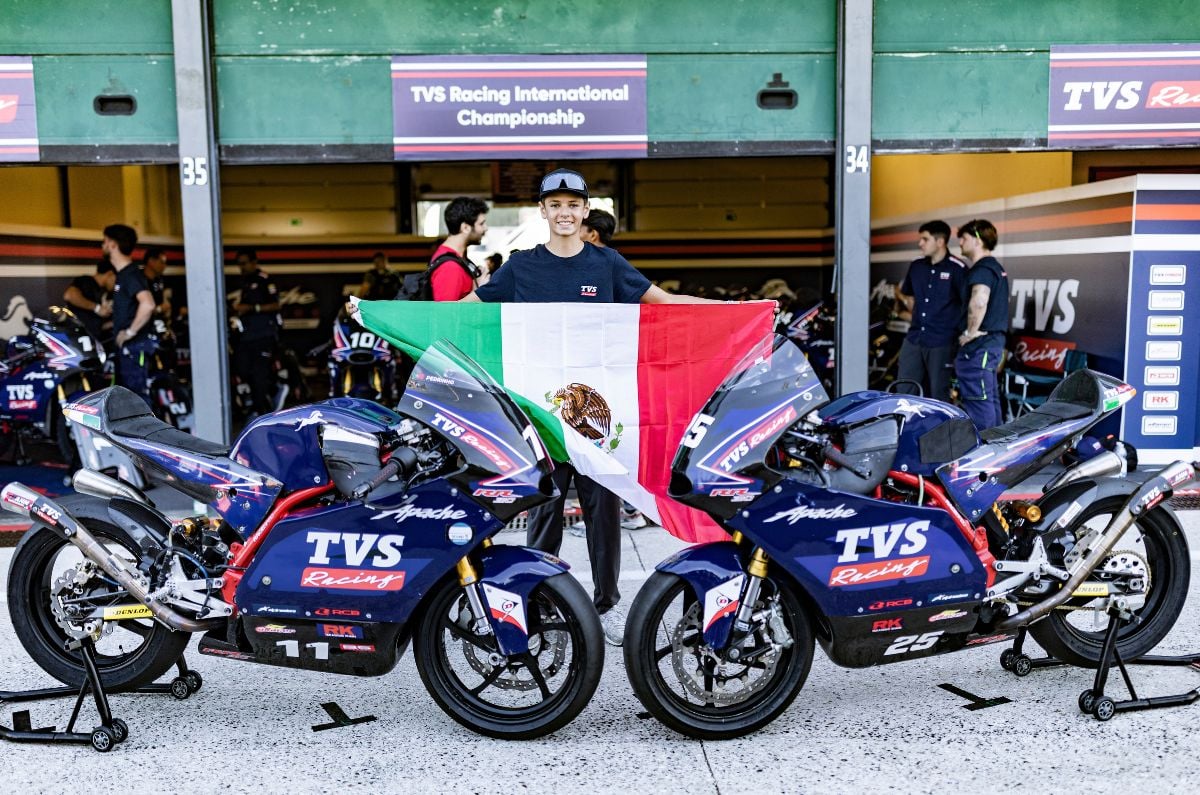
TVS Racing International Championship has gone to a European racetrack for the first time. The second last round of the season unfolded at the Misano World Circuit in Italy, alongside the Coppa Italia racing weekend – which includes superbike races, a Yamaha R7 one-make and an Aprilia RS 457 one-make racing championship.
14 riders competed in the TVS championship during the weekend
Three of the 14 TVS Racing riders were from India
TVS Racing International Championship: First European racing weekend
Italian rider Cristian Borelli takes P1, Sarthak Chavan was the best Indian rider
Racing is hardly new for TVS as the company has had a factory racing program since 1982, starting with the TVS 50 moped. Two of its biggest developments in recent times were the team’s entry into the Asia Road Racing Championship (ARRC) in 2020 and a partnership with Petronas in 2022, which resulted in the creation of TVS Racing One Make Championship in Asia; now known as the TVS Racing International Championship.
However, this is the first time the championship has gone to Europe. In this case, to the Misano World Circuit in Italy. The paddock and the circuit last weekend were shared with Coppa Italia (Italian cup), with 14 riders of the TVS Racing program participating in two races of seven laps each. Three of the fourteen riders were from India, with Sarthak Chavan being the best performer of the three, finishing P7 in the first race, and P6 in the second. The other two Indian riders, Chiranth Vishwanath and Rakshith Srihari Dave finished their races in P10 and P11 in the first; and P8 and P12 in the second, respectively. Sarthak began both races in last after a crash in qualifying. The best overall performer was Italian rider Cristian Borrelli, who finished P1 in both races; the gap between him and Chavan was just 1.973 seconds in the second race.
Cristian Borrelli from Italy won both the races earning a double home victory.
With the previous round three in Motegi, Japan, Malaysian rider Mohd Ramdan Rosli tops the ARRC standings with 101 points. India’s Sarthak Chavan follows him with 80 points. Luis Miguel (Spain) with 54 points, Oratilwe Phiri (Republic of South Africa) also with 54 points, and Chiranth Vishwanath (India) with 49 points follow the two in P3, P4 and P5 respectively. Chiranth won the first of two races conducted in Round 3 with a 0.014 second lead awarding him the win.
The concluded round in Italy was round four and the second last round of the championship, with the last round slated to happen in Buriram, Thailand alongside ARRC. While this was the first time the championship went to an European racetrack, it certainly won’t be the last time. TVS Racing is likely to take the championship out of Asia again next year for at least one round, although exact details are yet to be revealed.
It’s no secret that Volkswagen Group, the German behemoth that owns brands such as Audi, Bugatti and Lamborghini, is in financial trouble. Facing fierce competition from Chinese firms, the group already announced plans to lay off 50,000 employees in Germany alone by 2030, and the fate of several factories across the world has also become uncertain. We also received reports of the Volkswagen Group considering a simplified variant line-up for cars across its brands. It now appears the two-wheeler business will be impacted too.
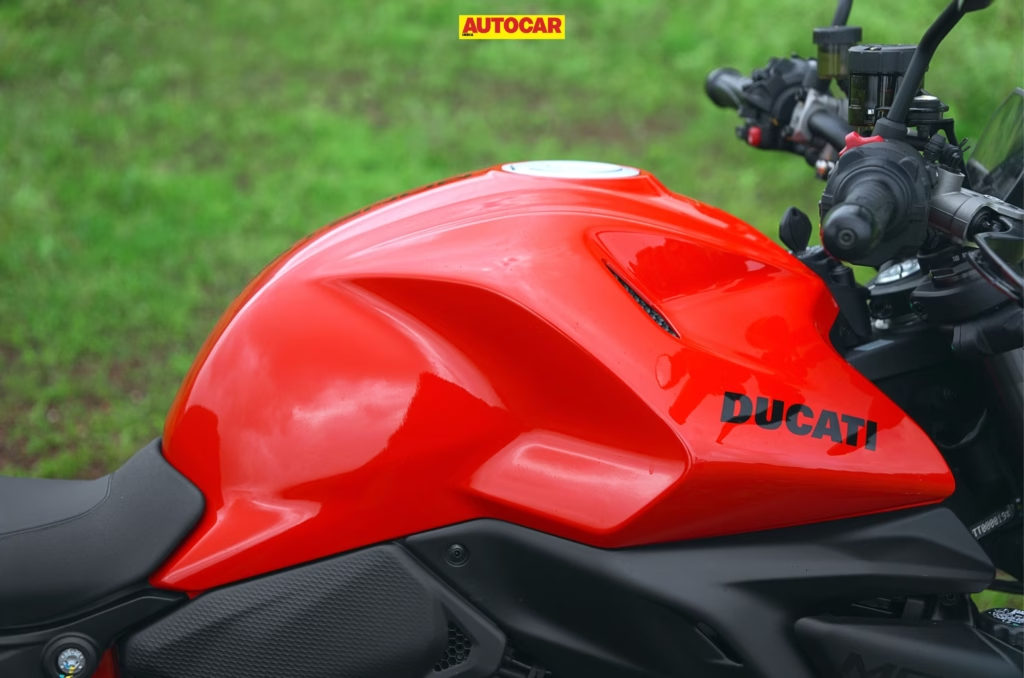
Ducati is one of the Volkswagen Group brands being evaluated for a possible sale
In 2025, it reported EUR 925 million revenue and EUR 52 million operating profit
Patritalia, another Italian company, had already made an offer for Ducati and MV Agusta
Ducati sale is under evaluation, but no decisions have been made yet
This isn’t the first time Ducati is being evaluated for sale
Claudio Domenicali, CEO of the Borgo Panigale manufacturer, confirmed that the parent group is evaluating the brand’s future. “We are aware of the shareholders’ plan to reevaluate its holdings. Ducati is one of these holdings, but no final decision has been made on Ducati yet: it’s one of the ongoing evaluations,” Domenicali told GPOne in a press interaction at the brand’s “Ducati 100 – A century on display” exhibition in Bologna, Italy. To be clear, this doesn’t mean Volkswagen Group is bent on selling Ducati; it merely confirms that it is evaluating that possibility. The brand is among 600 of the group’s 2,000 businesses being reviewed. Now, Audi CEO Gernot Dollner has confirmed Domenicali’s claim, saying, “It’s part of the evaluation process that we’ll also talk about Ducati, but nothing has been decided.”
Bloomberg reported in early June that Volkswagen Group’s supervisory board approved slimming down its portfolio by a third, with the layoffs being a part of it, and approved the sale of a 51 percent of its stake in Everllence ship-engine unit, which is expected to bring EUR 7.4 billion. In contrast, a Ducati sale is expected to bring around EUR 1.25 billion.
This isn’t the first time Ducati is being evaluated for sale. The group acquired Ducati in 2012 and then considered selling it in 2017 before quickly changing its mind. The Italian superbike manufacturer has steadily become synonymous with innovation in motorsport and has been highly successful in the World Superbike Championship (WSBK), MXGP and, of course, MotoGP. Ducati reported revenue of EUR 925 million and operating profit of EUR 52 million in 2025.
Ducati already has a potential buyer in Patritalia
An Italian investor who wants to have all-Italian technicians, MV Agusta and all MotoGP classes
If Volkswagen Group decides to hand off Ducati, there is already someone waiting in the lobby. In August, Italy-based Patritalia expressed more than an interest in acquiring Ducati, after doing the same for MV Agusta, which is also in hot water. However, some of Patritalia’s plans for the brands have already riled up quite the chatter, according to Visordown. The group has expressed interest in taking over as the sole engine supplier for Moto2, which is currently powered by Triumph, while also advocating for a more open market across all three MotoGP classes. Secondly, it has outlined a preference for Ducati to have a predominantly Italian workforce. Volkswagen Group had previously made it clear that Ducati isn’t up for sale, but considering things have changed since then, we will have to await further developments.
Triumph has been the sole engine supplier for Moto2 since 2019, when it took over from Honda. It also recently announced that it is bringing a new engine with increased peak power delivery to the class from next year. Moto3 is slated to get Yamaha as the sole engine supplier from 2028, with the R7 engine heavily modified and adapted for the class, replacing KTM and Honda. Changing either Triumph or Yamaha would require their consent, as well as consent from Liberty Media, the current owner of the MotoGP brand. Considering that both companies have announced plans for the future and that Volkswagen hasn’t been receptive to Patritalia’s bids so far, its aspirations have a slim chance of becoming a reality at the moment.
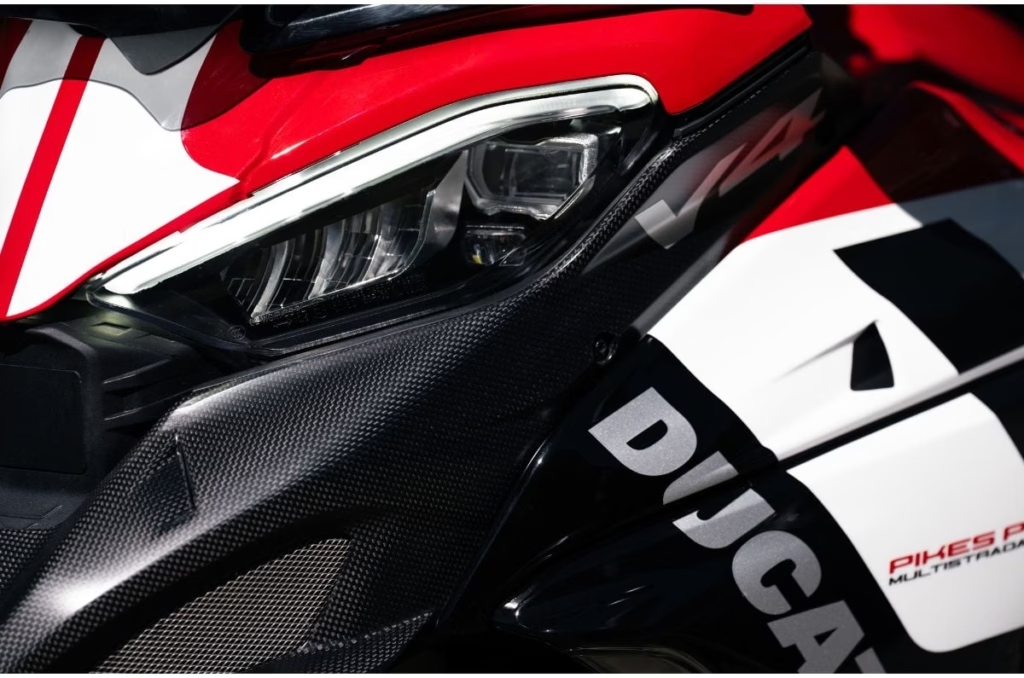
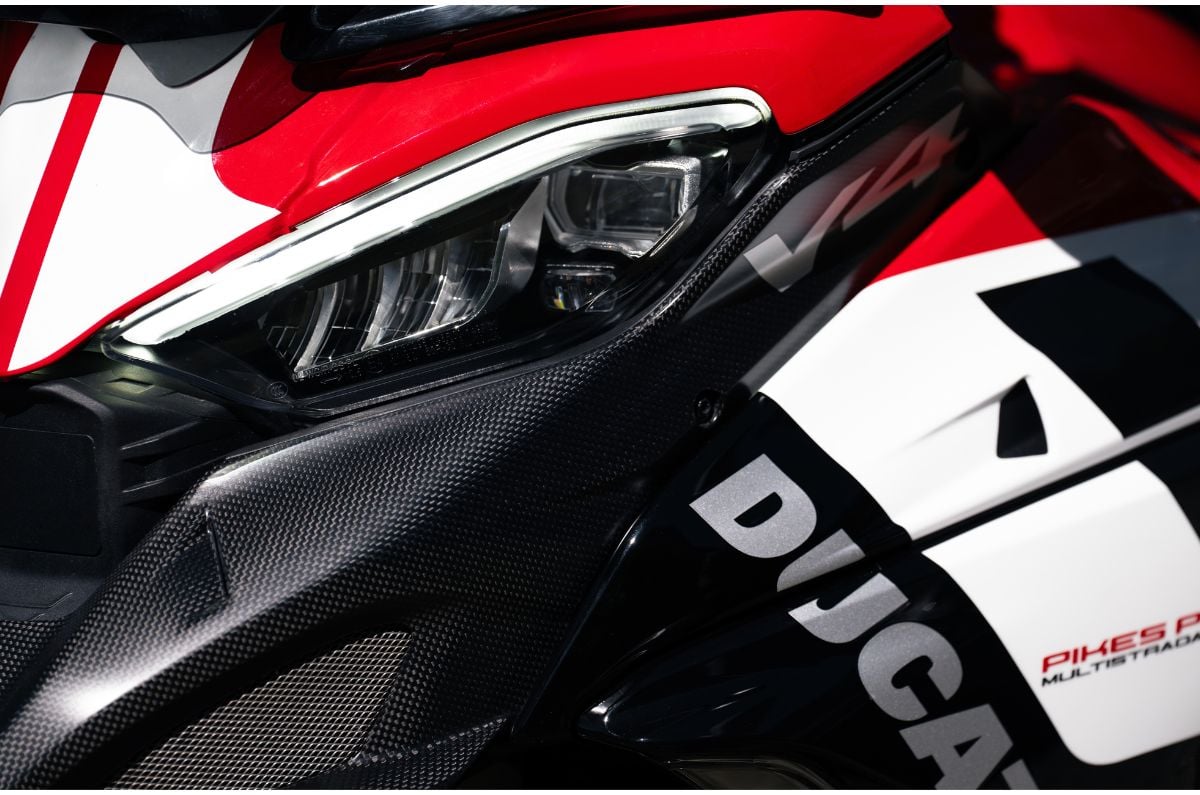
Ducati has revealed the 2027 Multistrada V4 Pikes Peak with a special livery inspired by its race bikes used in MotoGP and the World Superbike Championship. The Italian manufacturer says the new livery, designed in collaboration with Drudi Performance, is more in line with the Pikes Peak’s sporty nature and is a stronger link to its race bikes.
As of today, there are five different variants of the Ducati Multistrada V4, and the Pikes Peak leans towards the sportier side compared to the regular V4 and V4 S, with the V4 RS being the sportiest. The V4 Pikes Peak and V4 RS swap the default 19-inch front wheel for a 17-inch unit to make the motorcycle feel more dynamic to ride. The 2025 version of the Pikes Peak currently sold in India already sports a racing-inspired livery, making the 2027 version an update.
Besides the livery, the motorcycle remains unchanged by all accounts. It sticks to the 1,158cc V4 engine with 170hp and 123.8Nm. It retains all the electronic systems as well, some of which are cornering ABS, adaptive cruise control, traction control, wheelie control, hill-hold, radar system, a bi-directional quickshifter, a 6.5-inch TFT display and a street-legal Akrapovic exhaust system. The 2027 Multistrada V4 Pikes Peak is already available for purchase at European dealers; in Italy, it’s priced at EUR 33,590 (approximately Rs 36.67 lakh).
EUR-to-INR conversions are based on exchange rates at the time of writing.
Even though the platform is shared with the Desmo450 MX, Ducati has reworked it in almost every way for the Desmo450 SM. Starting with the suspension, Ducati has sought Showa’s help in redesigning it for supermoto use. The SM uses a Showa sealed cartridge 49mm USD fork with 280mm travel that is adjustable for compression and rebound. The monoshock at the rear has 295mm travel and is fully adjustable.
Other parts such as the handguards and fork guards have been made smaller to fit the discipline, and the SM sports slicks as standard, making it the first and only production Ducati to do so. The bike gets a 16.5-inch front rim and a 17-inch rear rim with a Bartubeless system. According to Ducati, this system reduces the rotating and unsprung mass on the bike by 1.2kg. The factory-fit slicks are Metzeler Racetec Slick SMs, the same as those used in the Supermoto World Championship.
The engine is a 449.6cc single-cylinder mill, delivering 63.5hp and 53.5Nm of torque. The maintenance intervals remind you once again that Ducati is aiming the Desmo450 SM at serious riders for competitive racing. An oil change is recommended every 15 hours of riding, with piston replacement and valve clearance checks necessitated every 45 hours. Ducati recommends a full engine overhaul every 90 hours of riding.
At the time of writing, Ducati has announced that the Desmo450 SM will be available in European markets starting December 2026, followed by the rest of the world. In Italy, the asking price for the Desmo450 SM is EUR 13,990 (Rs 15.38 lakh). For context, the Desmo450 MX costs EUR 12,990 (Rs 14.28 lakh) in Italy, whereas in India, it is priced at Rs 17.28 lakh.
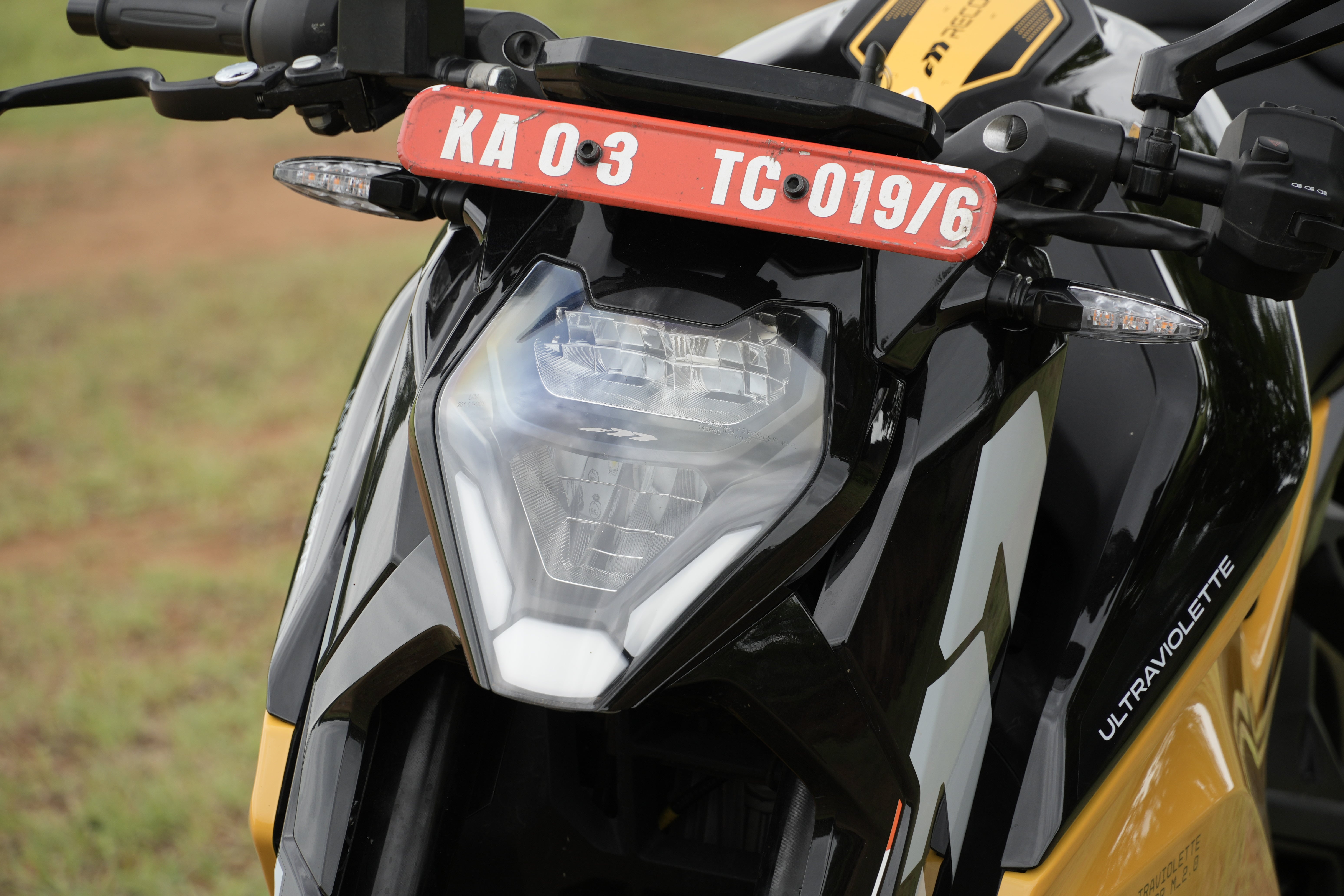
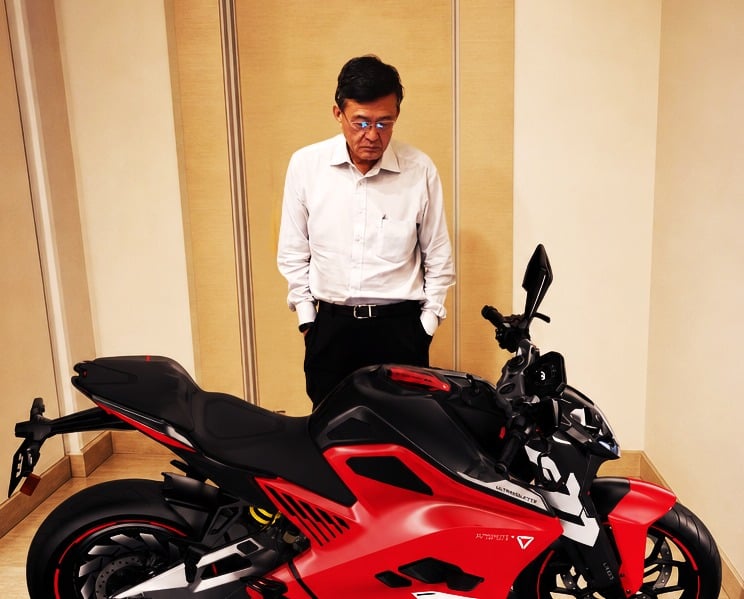
Bengaluru based EV manufacturer, Ultraviolettehad recently announced plans for a new manufacturing facility in Hosur, to increase production capacity up to 5 lakh units a year. The company has now received USD 85 million in a new funding round. The additional capital and the new factory is expected to boost the manufacturing of its current products, the F77 (Mach 2 and Superstreet), X-47, and development of upcoming platforms and products.
The USD 85 million funding was led by Deep Tech Fund Yali Capital and TDK Ventures
New Hosur plant expected to increase production capacity up to 5 lakh units a year
Ultraviolette currently has the means to build battery architecture ranging from 48V to 400V
Ultraviolette plans expansion in India and abroad
Four new products and US entry planned for next year
Currently, Ultraviolette operates in India and 20 European countries. With the fresh round of investment, the company has targeted an US market entry next year, alongside key markets in Latin America and Southeast Asia. The USD 85 million funding round was led by Deep Tech Fund Yali Capital and TDK Ventures and investment from Lip-Bu Tan, Chief Executive Officer of Intel, Chairman of Walden International and Advisor to Ultraviolette, alongside the company’s current and long-term investors. UV says the new and continued support from the investors will help scale production of its current portfolio as well as upcoming products.
The investment will also help with the development of UV’s next generation of models. The company currently boasts technical capabilities to build battery architecture spanning 48V to 400V which it says allows for engineering platforms catering to different needs. Its current list of investors include Zoho Corporation, TVS Motors, and Qualcomm Ventures. Besides India, UV currently operates across Europe including Germany, France, Spain, Portugal, the UK, Belgium, Netherlands, Italy, Switzerland and Hungary.
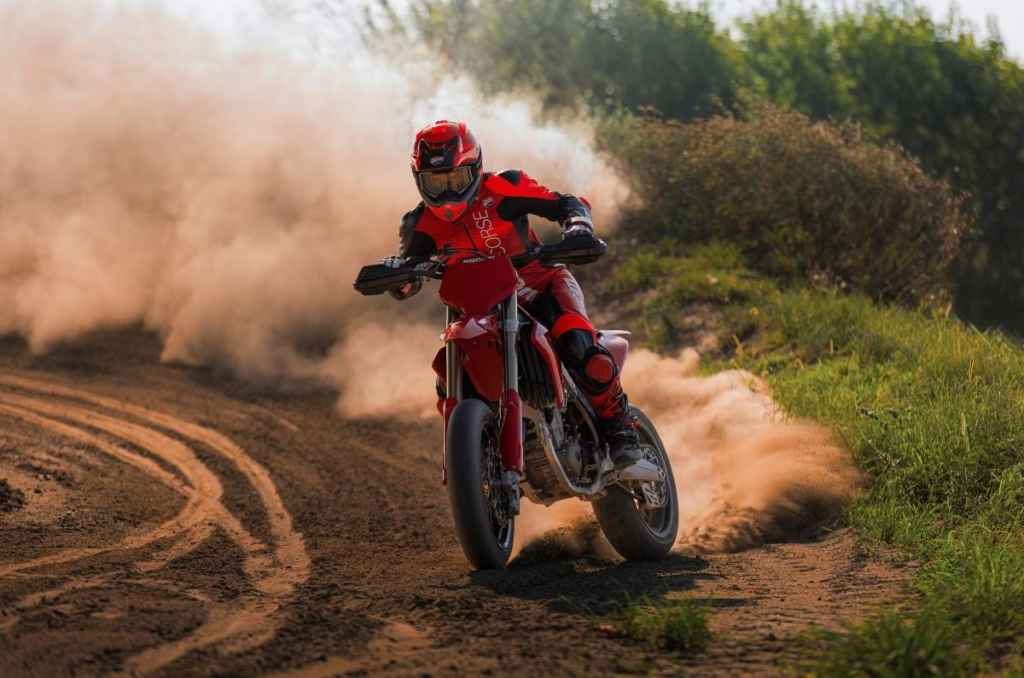
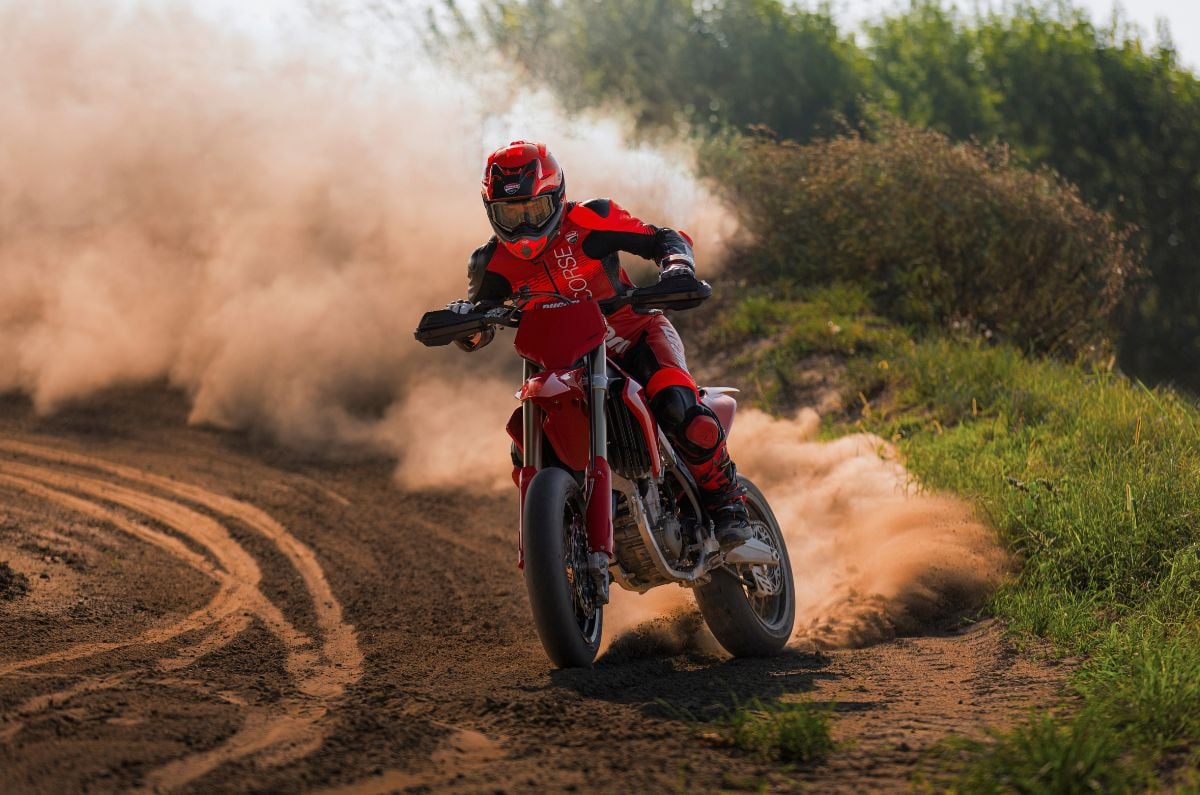
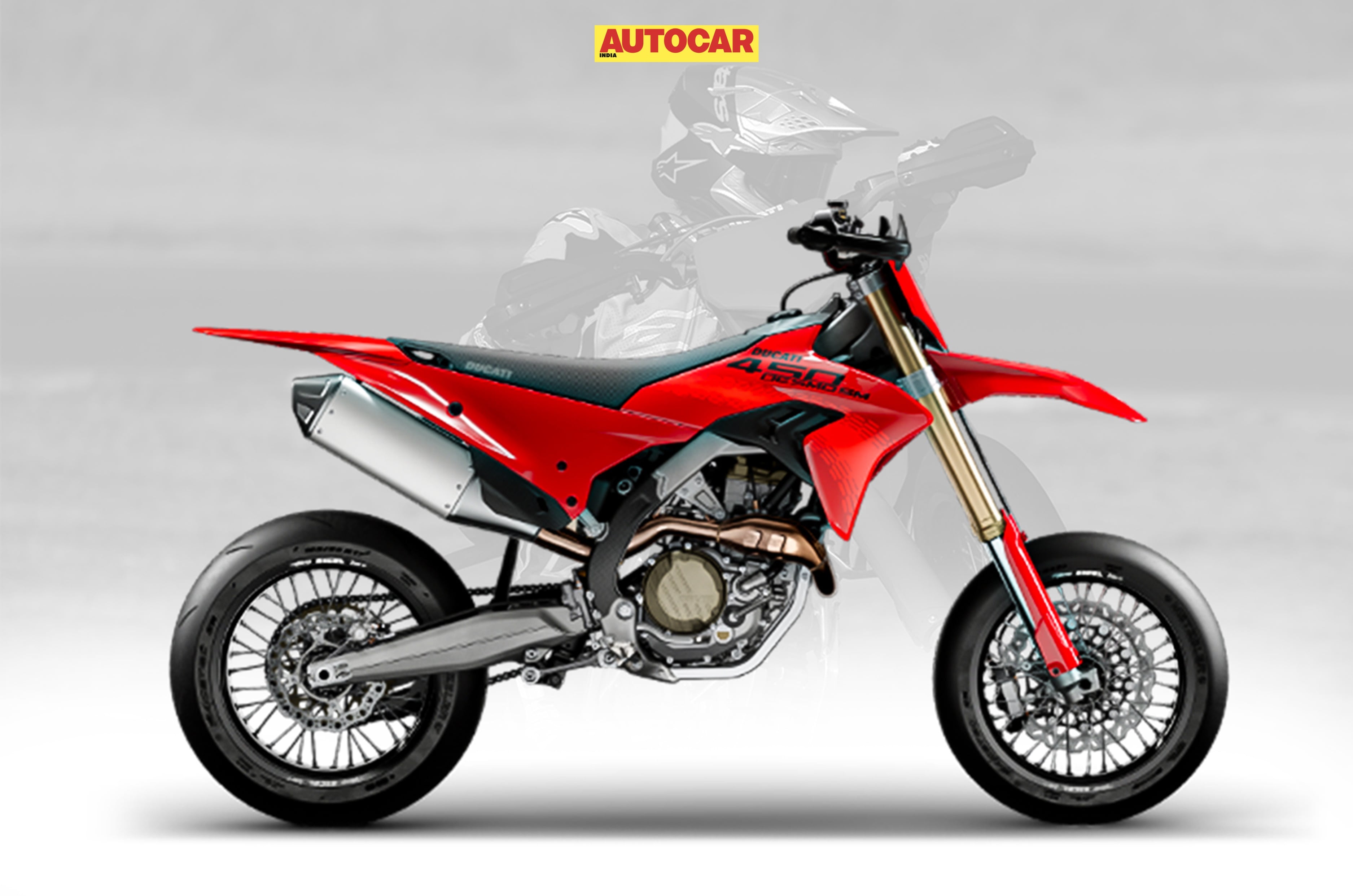
After its first look during Ducati World Week, the Italian manufacturer has unveiled the Desmo450 SM supermoto, based on the Desmo450 MX platform. Ducati appears to be aiming it squarely at racing enthusiasts, with its equipment, design, and maintenance centred around that use case. The lack of a headlight is another obvious sign that it’s not meant to be street-legal.
Gets adjustable front and rear suspension with 280mm and 295mm travel, respectively
Has 16.5 front and 17-inch rear rims with tubeless tyres
Only production Ducati to have race slick tyres as standard
Ducati Desmo450 SM: What’s different from the Desmo450 MX?
Almost completely reworked for the supermoto discipline
Even though the platform is shared with the Desmo450 MX, Ducati has reworked it in almost every way for the Desmo450 SM. Starting with the suspension, Ducati has sought Showa’s help in redesigning it for supermoto use. The SM uses a Showa sealed cartridge 49mm USD fork with 280mm travel that is adjustable for compression and rebound. The monoshock at the rear has 295mm travel, and is fully adjustable. Ducati says the suspension enables precise braking and corner entries, while keeping the balance and traction intact. The twin-spar aluminium frame, however, is shared as-is with the Desmo450 MX.
Other parts like the handguards and fork guards have been made smaller to fit the discipline and the SM sports slicks as standard, making it the first and only production Ducati to do so. The bike sports a 16.5-inch front rim and a 17-inch rear rim with a Bartubeless system. According to Ducati, this system reduces the rotating and unsprung mass on the bike by 1.2kg. The factory-fit slicks are Metzeler Racetec Slick SMs, the same as those used in the Supermoto World Championship. Speaking of which, the Desmo450 MX has already seen quite a bit of success in the 2026 Supermoto World Championship, at the hands of four-time world champion Marc-Reiner Schmidt.
The engine is a 449.6cc single-cylinder mill, delivering 63.5hp and 53.5Nm of torque. Thanks to the Desmodromic valve train, the rev limiter is set at 11,900rpm, offering a wide power band and flexible riding. The fuel tank capacity is 7.2 litres; with an empty fuel tank, the SM weighs just 109kg.
Braking duties are handled by a Brembo stylema radial caliper with a 310mm Galfer front disc and a 240mm Galfer rear disc with Brembo floating caliper. Other rider aids include Ducati Traction Control, Engine Brake Control, Launch Control, up-only quickshifter, and a Suter slipper clutch. All the control systems are tied to the two ride modes on offer, and can be customised to the rider’s liking using Ducati’s X-Link app.
The maintenance intervals remind you once again that Ducati is aiming the Desmo450 SM at serious riders for competitive racing. An oil change is recommended every 15 hours of riding, with piston replacement and valve clearance checks necessitated every 45 hours. Ducati recommends a full engine overhaul every 90 hours of riding. If you’d like electronic assistance with this, Ducati offers a Com-Link module as an accessory which assesses the wear on engine components to make maintenance precise and efficient over time.
At the time of writing, Ducati has announced the Desmo450 SM will be available in European markets starting December 2026, followed by the rest of the world; Ducati hasn’t indicated if India will be one of the markets to get the Desmo450 SM at this time, but considering that the Desmo450 MX was launched here a year after its global debut, we could see the supermoto sibling here as well. In Italy, the asking price for the Desmo450 SM is EUR 13,990 (Rs 15.38 lakh). For context, the Desmo450 MX costs EUR 12,990 (Rs 14.28 lakh) in Italy, whereas in India, it is priced at Rs 17.28 lakh. We could thus expect to see the Desmo450 SM to sit above the MX if and when Ducati launches it here.
All prices as ex-showroom. EUR-to-INR conversion based on current exchange rates.