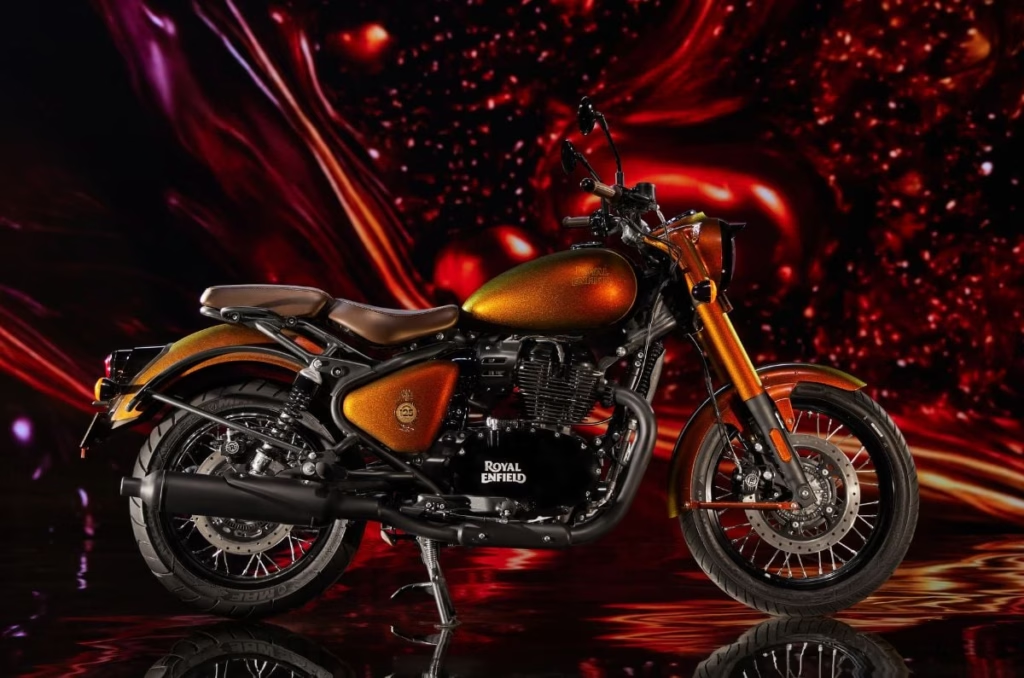
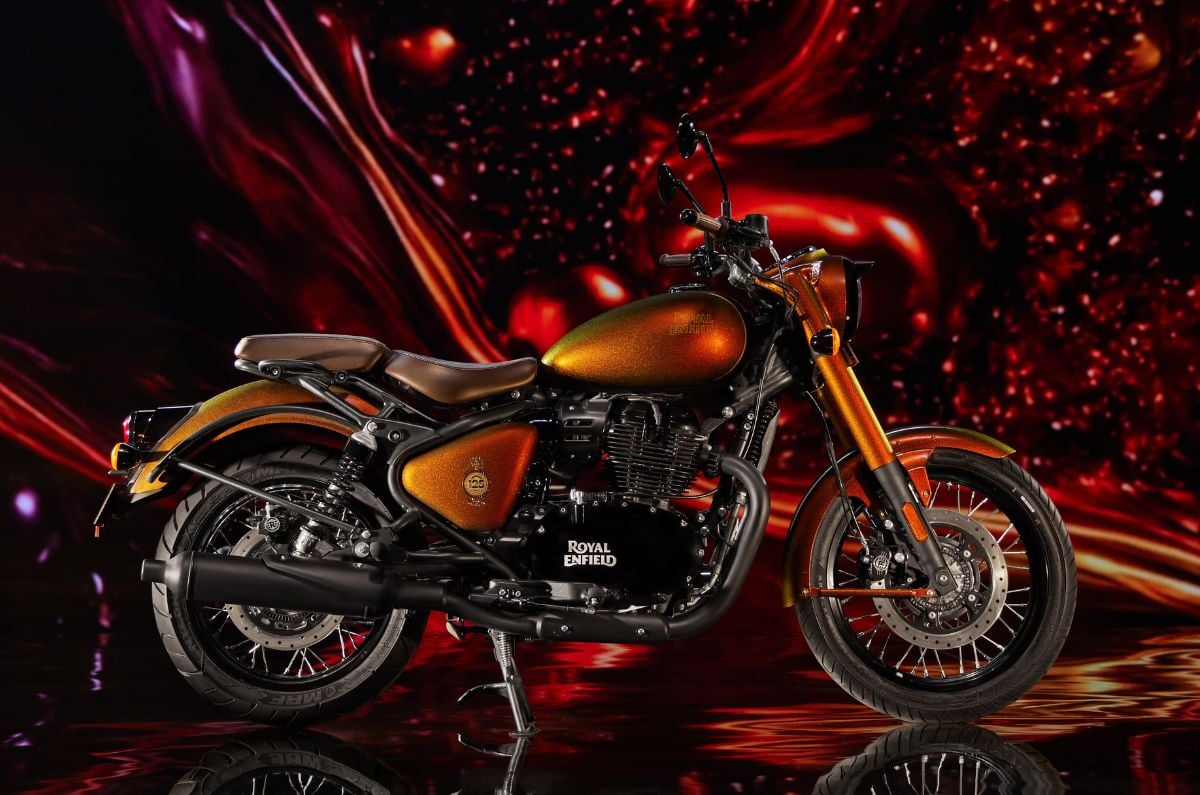
Royal Enfield has launched a special edition of the Classic 650, called the Hypershift, to commemorate the Chennai based manufacturer’s 125th anniversary. It is priced at Rs 4.26 lakh, and the company has clarified that it’s limited to 125 units in each of its key markets, including India. Hence, interested customers will need to register to buy one; registrations will be open until October 28, when sales will happen.
The Classic 650 Hypershift is mechanically identical to the production-spec Classic 650. There are no changes to the underlying design either. It has been priced at Rs 4.26 lakh, which is a Rs 58,000 premium over the base Vallam Red colour (Rs 3.68 lakh) and a Rs 43,500 premium over the top Black Chrome colour (Rs 3.82 lakh). For customers who are able to place an order for one of the 125 units on October 28, deliveries will begin in November.
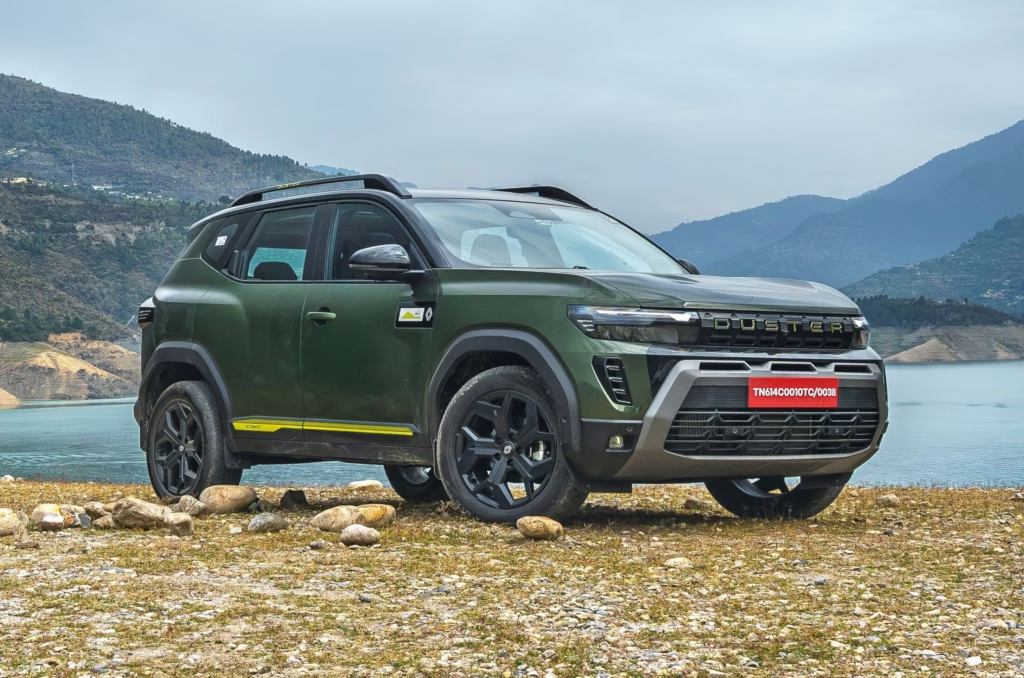
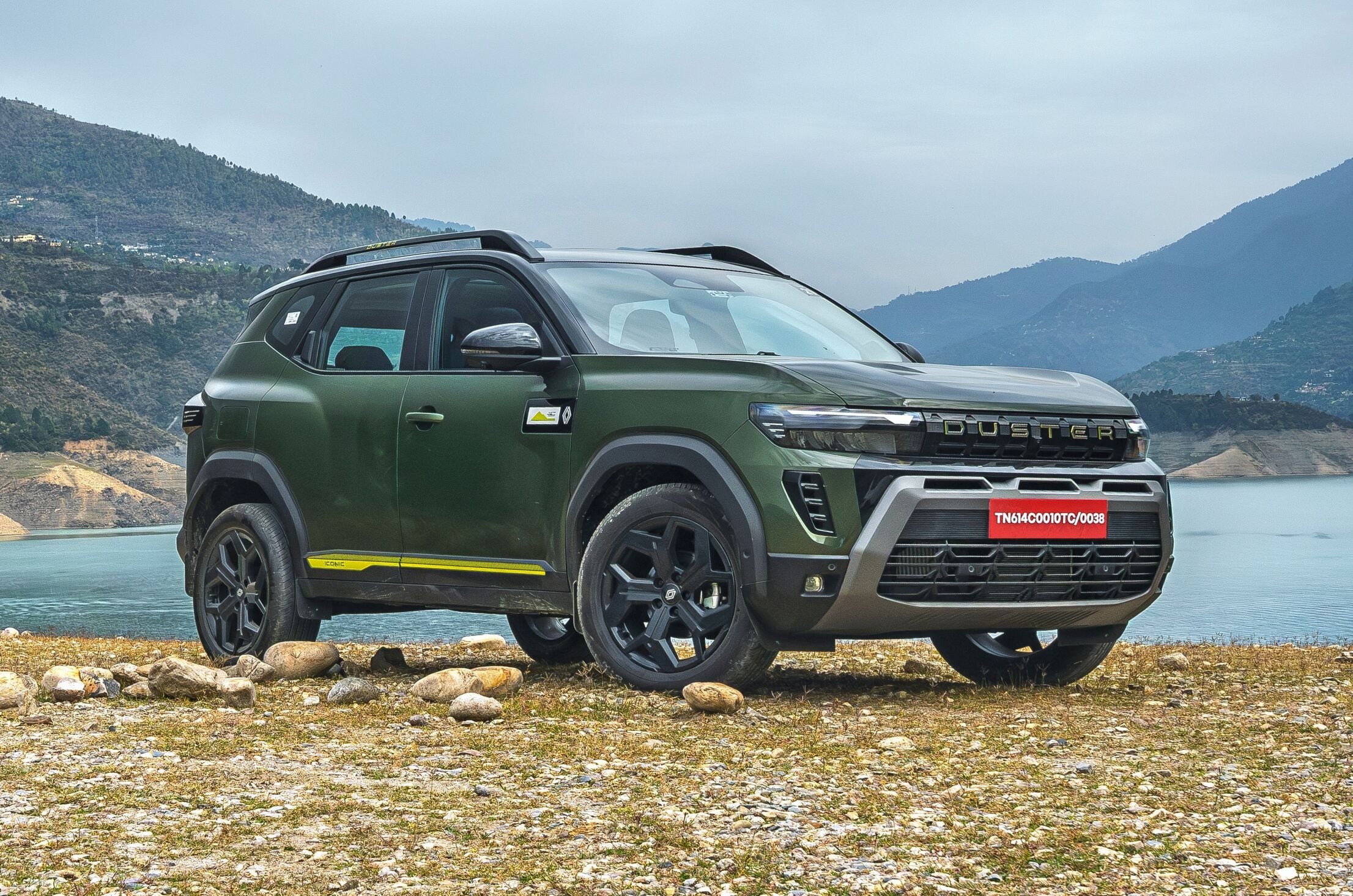
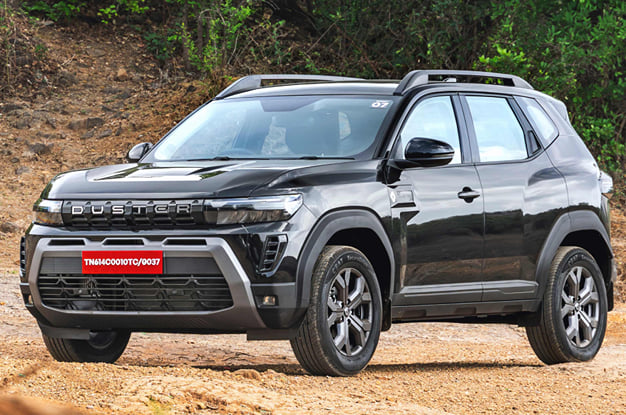
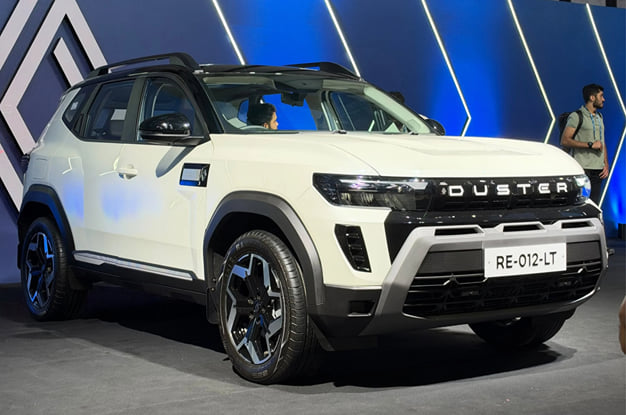
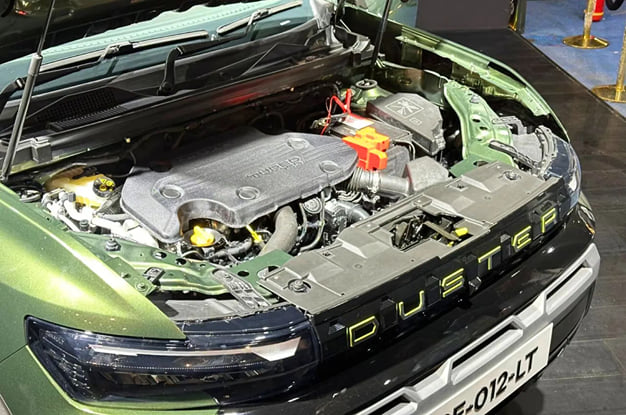
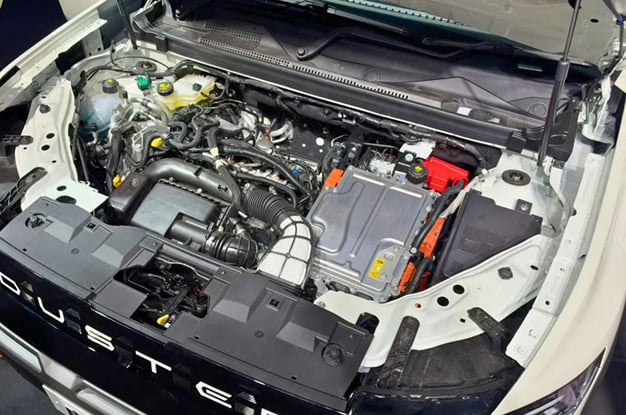
Renault has expanded the new Duster line-up with a strong-hybrid option, joining the existing 1.0-litre and 1.3-litre turbo-petrol engines. While the hybrid shares much of its design and cabin layout with the petrol versions, there are differences in styling, equipment and, most importantly, how the two powertrains deliver performance and efficiency. Here’s a closer look at what sets them apart.
Renault Duster turbo petrol vs hybrid: Exterior
The illuminated grille and badges are the main styling difference
Duster turbo petrol vs hybrid
The Duster hybrid retains the turbo-petrol model’s overall design, including its eyebrow-shaped LED daytime running lamps, chunky body cladding, roof rails and C-pillar-mounted rear door handles. It also has the same 212mm ground clearance.
The main styling changes are an illuminated ‘Duster’ grille emblem and ‘E-Tech Hybrid’ badges on the front doors and tailgate. The Hybrid version also gets frequency-dependent dampers. Boot capacity is lower than in the turbo-petrol versions, although the overall exterior design remains largely unchanged.
Renault Duster turbo petrol vs hybrid: Interior and features
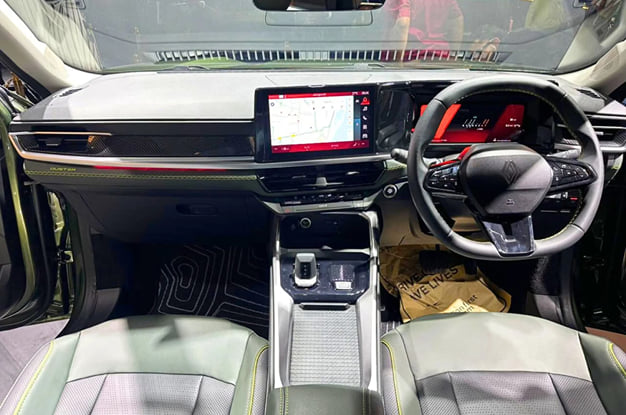
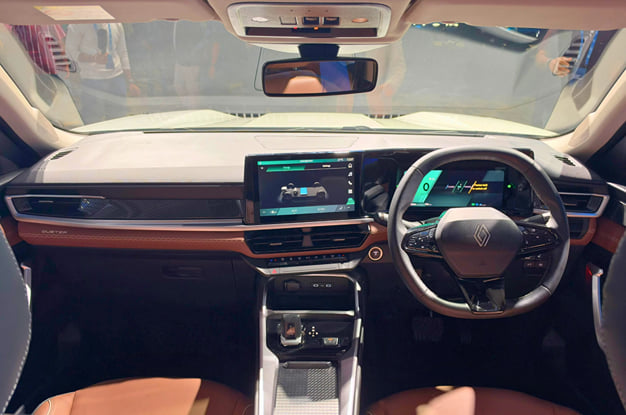
The cabin layout is similar, but the upholstery and equipment differ
Duster turbo petrol vs hybrid
The hybrid follows the turbo-petrol Duster’s dashboard layout, with a dual-screen setup and an e-shifter on the centre console. The hybrid gets a different upholstery scheme from the turbo-petrol Duster, with black upholstery and grey stitching on the Evolution, Desert Beige semi-leatherette on the Techno and Dune Brown leatherette on the Emotion. The hybrid also gets a smaller headrest.
The Duster hybrid is offered in Evolution, Techno and Emotion trims, while the turbo-petrol range gets Evolution, Techno, Techno+, Iconic and Iconic Launch Edition variants.
The hybrid and turbo-petrol Duster share some equipment across their respective trims, but there are differences. The hybrid Evolution gets a 7-inch digital driver’s display, a 10.1-inch touchscreen and dual-zone automatic climate control. The turbo-petrol Evolution has the same touchscreen and driver’s display, but gets single-zone manual air conditioning. Both the hybrid and turbo-petrol Techno trims get a panoramic sunroof.
At the top of the range, the hybrid Emotion gets a 10.25-inch digital driver’s display, ventilated and electrically adjustable front seats, and a powered tailgate. The turbo-petrol Iconic offers these features too, but additionally gets a 360-degree camera and Level 2 ADAS, which are not available on the hybrid.
Renault Duster turbo petrol vs hybrid: Engine and Performance
The 1.3-litre turbo-petrol makes more torque
Duster turbo petrol vs hybrid
The Duster turbo-petrol is available with two engine options. The 1.0-litre, three-cylinder unit produces 100hp and 166Nm and is paired with a 6-speed manual gearbox. The larger 1.3-litre, four-cylinder engine develops 163hp and 280Nm, and is available with a 6-speed manual or a 6-speed dual-clutch automatic gearbox.
The hybrid uses a naturally aspirated 1.8-litre, four-cylinder petrol engine paired with two electric motors: a 20hp generator and a 49hp motor that drives the wheels. The system produces a combined 160hp and 172Nm, with a 1.4kWh battery supporting the setup. It uses a ‘multi-mode’ automatic gearbox with two electric gears and four petrol gears.
The hybrid system automatically switches between six operating modes, including all-electric, petrol-only and series and series-parallel hybrid modes. Renault claims the Duster hybrid can cover up to 80 percent of city driving in pure electric mode and accelerate from 0-100kph in a claimed 9.61 seconds.
While the hybrid’s combined output of 160hp is close to the 1.3-litre turbo-petrol’s 163hp, its claimed torque figure of 172Nm is lower than the turbo-petrol’s 280Nm.
Renault Duster turbo petrol vs hybrid: mileage
Duster hybrid mileage is 10.55kpl higher than turbo-petrol DCT
Powertrain
Transmission
ARAI-claimed mileage
1.0-litre turbo-petrol
6-speed manual
19.41kpl
1.3-litre turbo-petrol
6-speed manual
17.75kpl
1.3-litre turbo-petrol
6-speed DCT automatic
18.45kpl
1.8-litre strong hybrid
Multi-mode automatic
29kpl
The hybrid’s claimed mileage is significantly higher than that of either turbo-petrol engine. The difference is 9.59kpl over the 1.0-litre turbo-petrol manual, 11.25kpl over the 1.3-litre turbo-petrol manual and 10.55kpl over the 1.3-litre turbo-petrol DCT. At 29kpl, the hybrid’s claimed mileage is around 57 percent higher than that of the DCT version.
The hybrid has a 50-litre fuel tank, the same capacity as the turbo-petrol versions. Renault claims a driving range of more than 1,400km on a full tank of the Hybrid variant.
Duster turbo petrol vs hybrid: Price
The hybrid costs more, even though it misses some features available on the top-spec turbo-petrol
Trim
Duster hybrid
Duster turbo-petrol
Authentic
–
10.49 (1.0 MT)
Evolution
16.99
11.69 (1.0 MT); 12.99 (1.3 MT); 14.49 (1.3 DCT)
Techno
18.99
13.49 (1.0 MT); 14.49 (1.3 MT); 15.89 (1.3 DCT)
Techno+
–
15.29 (1.3 MT); 16.69 (1.3 DCT)
Emotion / Iconic
19.49 (Emotion)
16.99 (Iconic MT); 18.49 (Iconic DCT)
MT = manual; DCT = dual-clutch automatic
The hybrid’s introductory prices apply to deliveries until December 31, 2026. In Evolution trim, the hybrid costs Rs 2.50 lakh more than the 1.3-litre turbo-petrol DCT, while the top-spec Emotion hybrid is Rs 1 lakh more than the Iconic DCT. The hybrid offers higher claimed mileage but misses out on the 360-degree camera and Level 2 ADAS available on the turbo-petrol Iconic.
The hybrid version suits buyers who cover long distances and prioritize fuel efficiency, while the 1.3-litre turbo-petrol is worth considering for its higher torque and additional driver-assistance features.
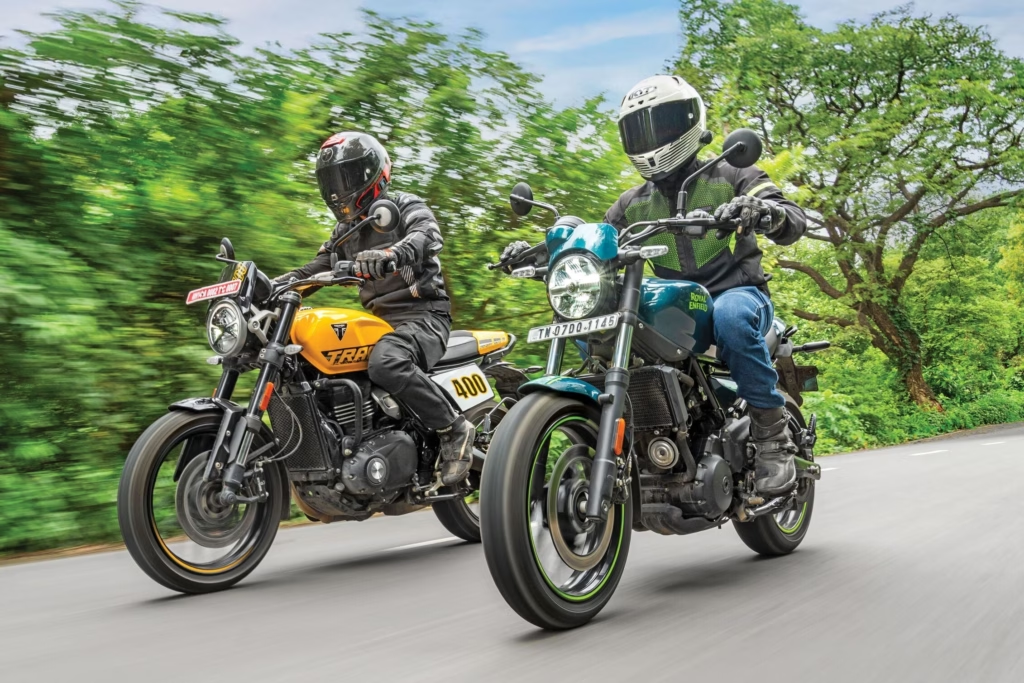
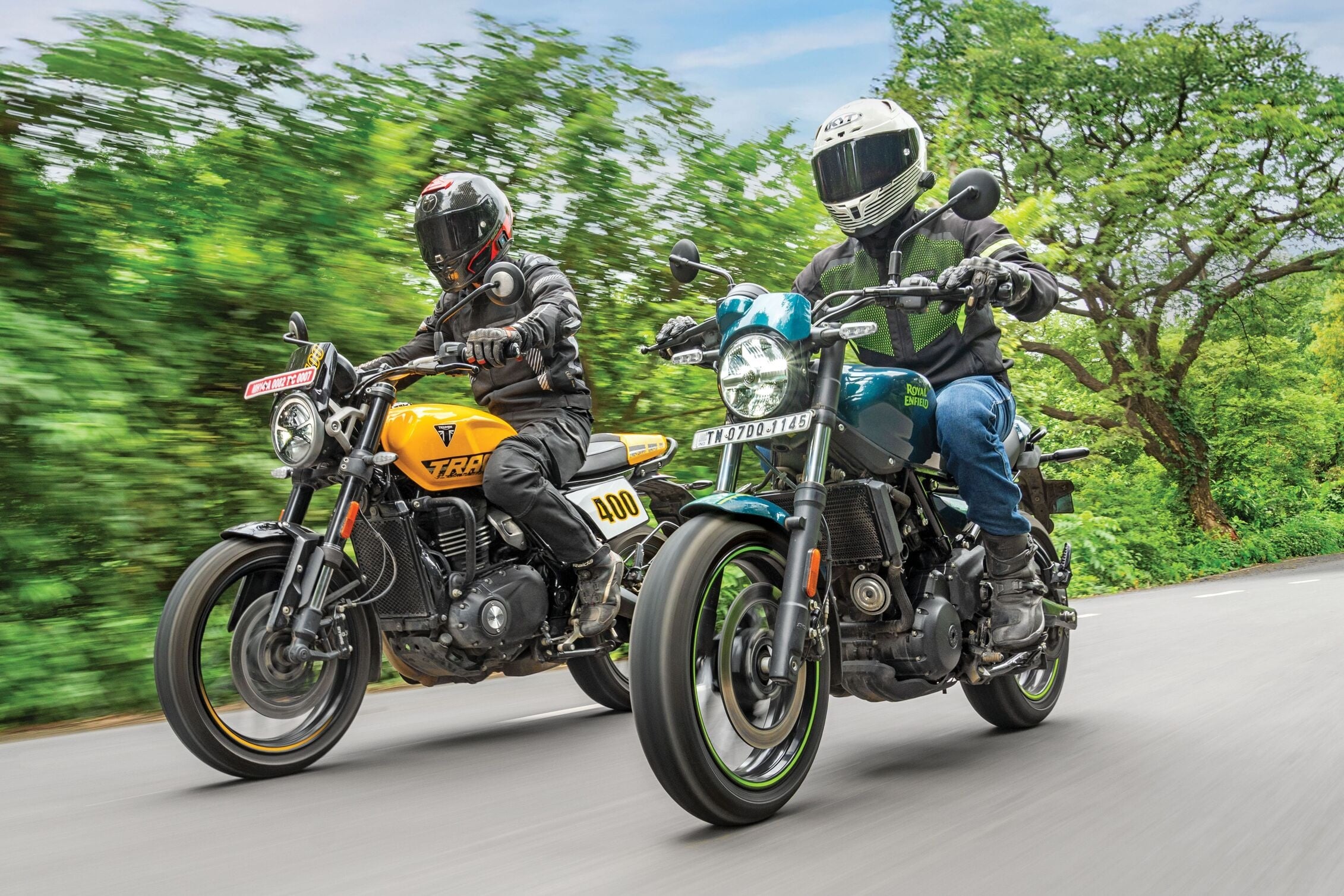
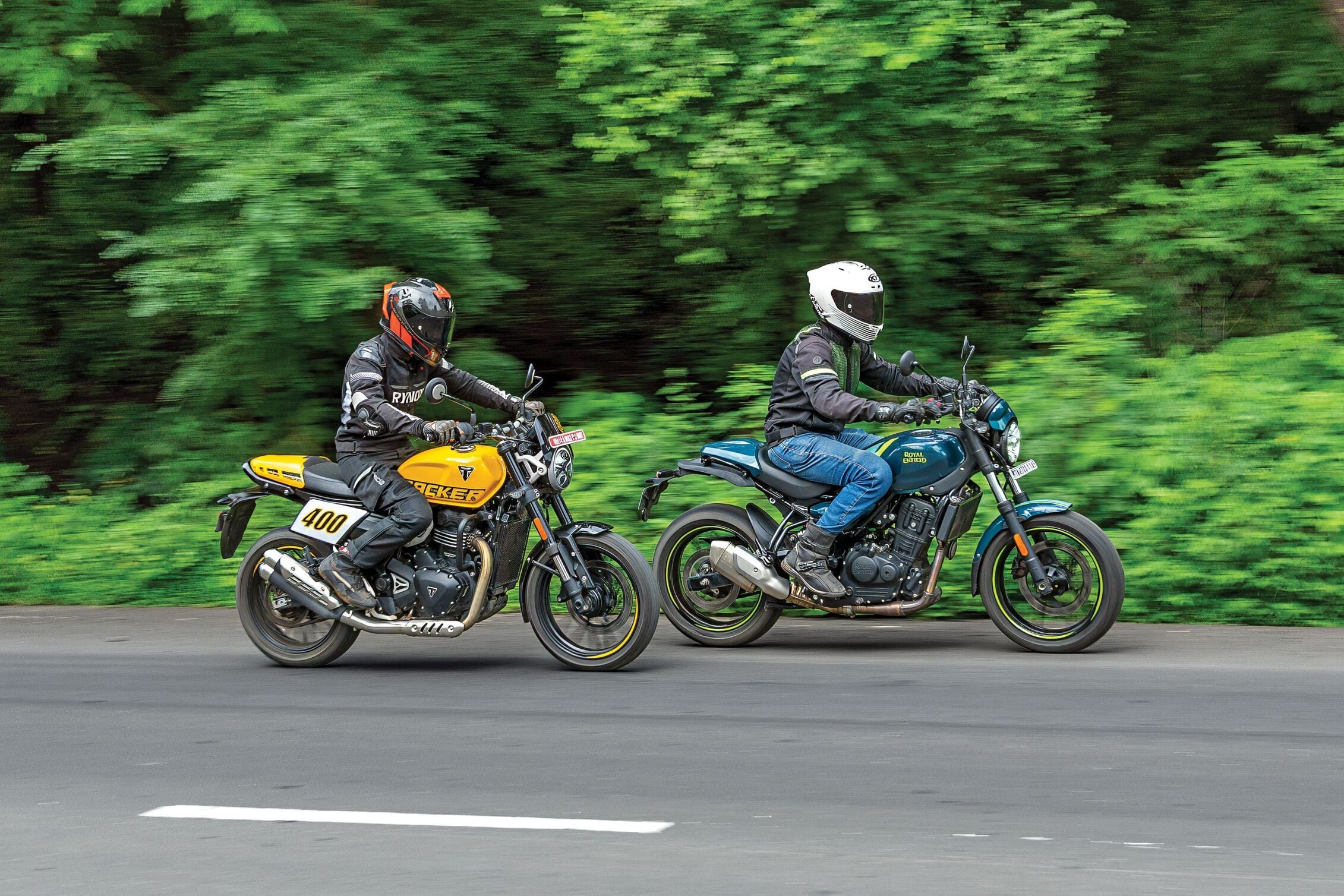
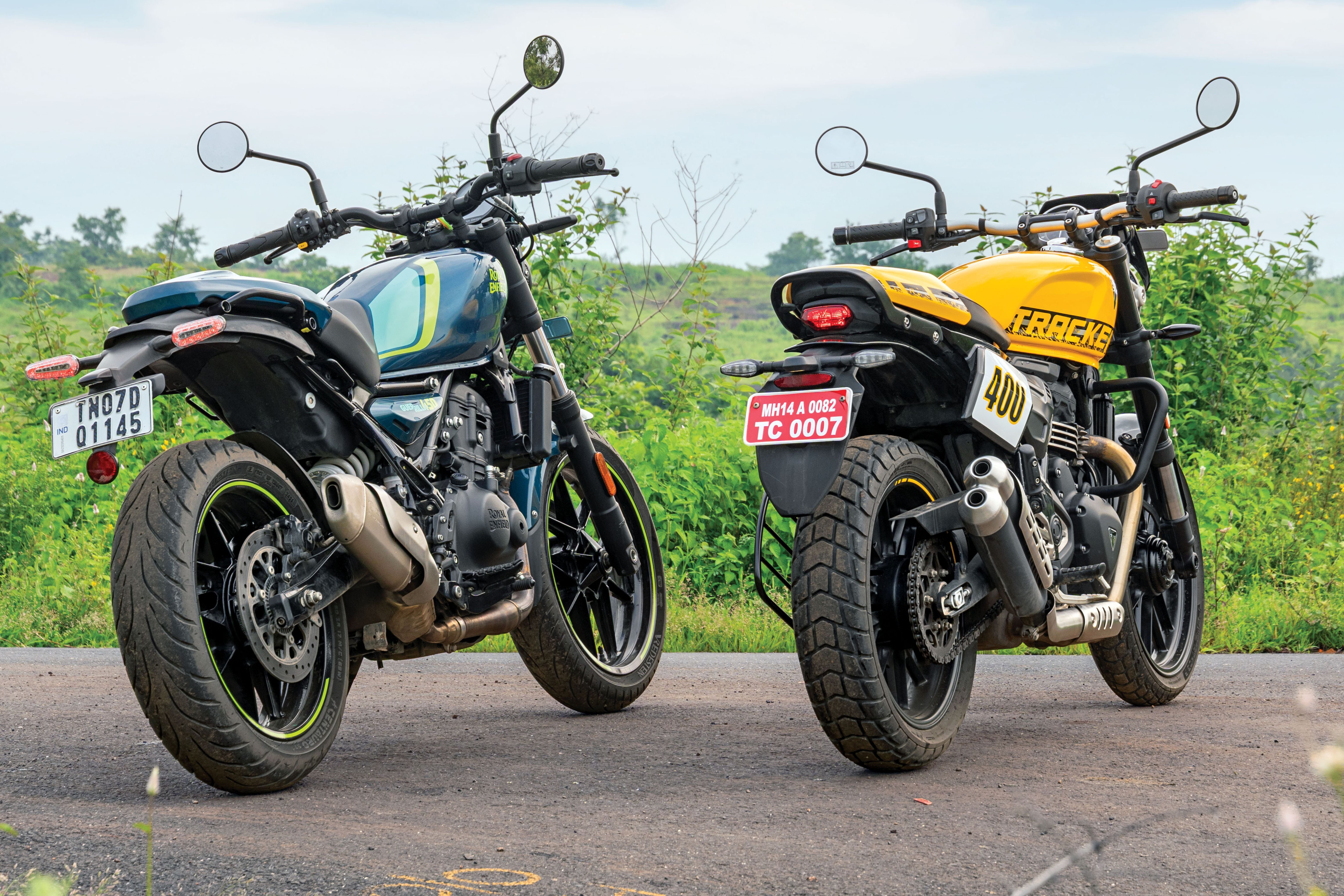
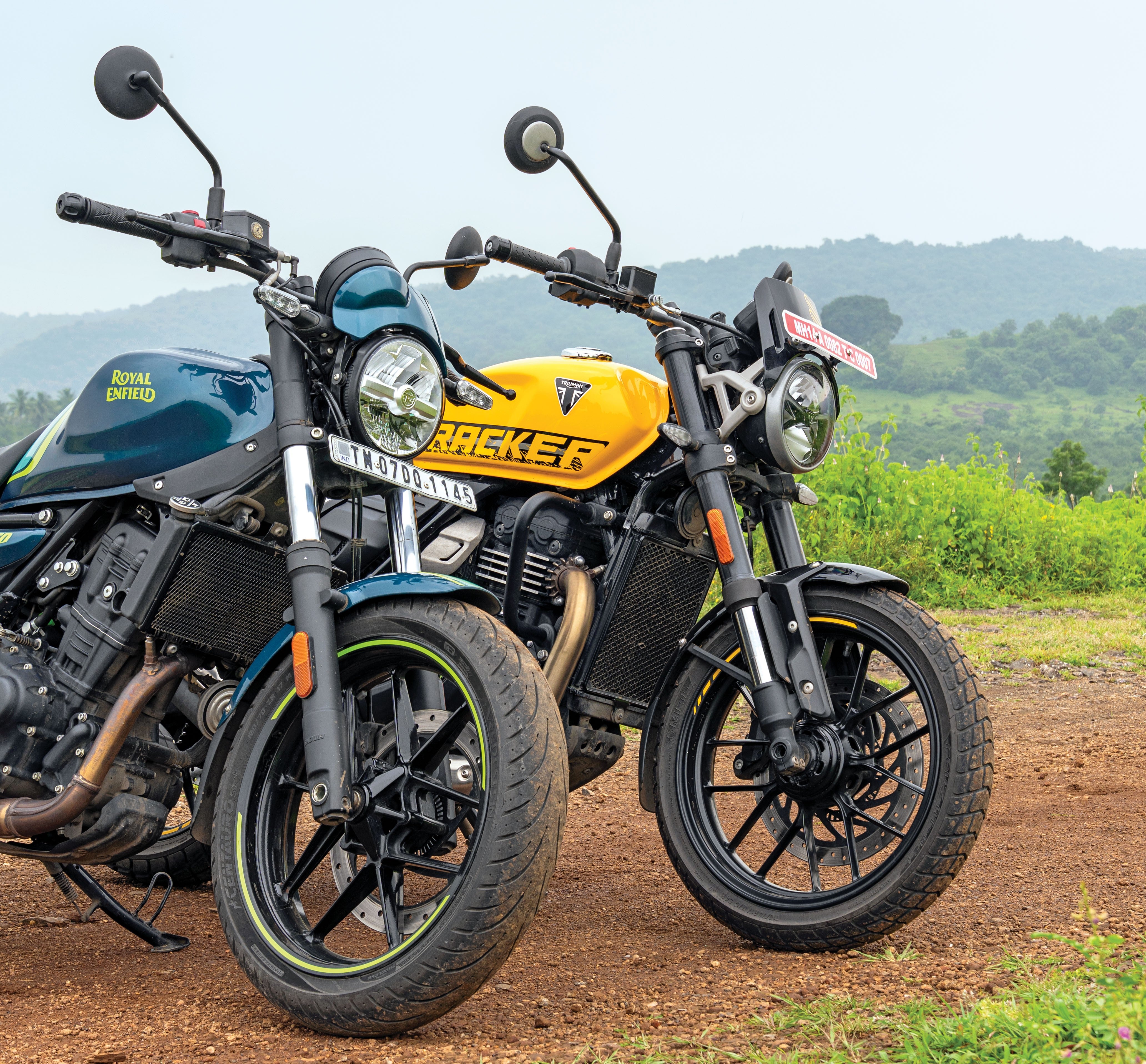
If you are considering either of these motorcycles, chances are you are also considering the other, especially since they both cost about the same. After the Triumph 400cc bikes were downsized, the Tracker 400 now uses a 349cc engine, while the Guerrilla 450 Apex is a sportier variant with more aggressive ergonomics and grippy, road-focused tyres, which I think suit the bike much better than those on the earlier variant.
On paper, the Tracker makes 40hp and 32Nm, while the Guerrilla produces 40.02hp and 40Nm. The Triumph is a lighter, more compact motorcycle, while the Royal Enfield has a larger engine with more torque and offers a stable, planted feel. So, which one makes more sense for someone looking for a sporty, entertaining roadster?
Design and Features
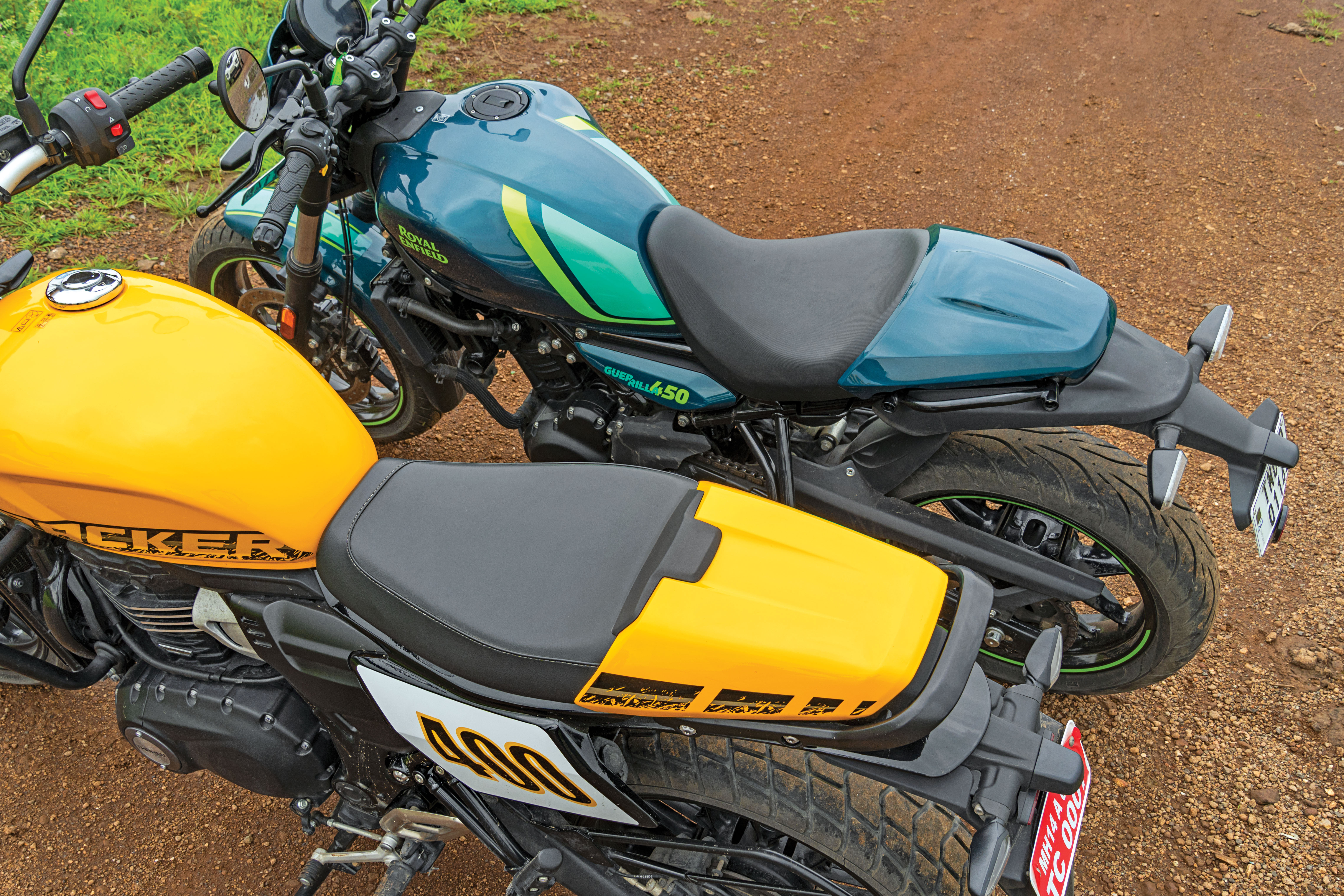
Both motorcycles have very different visual identities, and that is probably the first thing you’ll notice. The Tracker 400 is inspired by flat-track racers, with a flat seat, side number boards and a wide handlebar. But this isn’t really a dirt-track-focussed motorcycle underneath, as its ergonomics, chassis and suspension are properly road-oriented.
The Guerrilla 450 Apex, meanwhile, looks like a sporty and muscular roadster. Compared to the standard variant, it gets a small cowl over the headlight, a new aluminium handlebar, a removable rear-seat cowl and Vredestein Centauro ST+ tyres. The Apex also has a leaned-forward, more committed riding position compared with the standard Guerrilla.
The Tracker is a relatively compact motorcycle, while the Guerrilla’s longer 1,440mm wheelbase and broad 160-section rear tyre give it a more substantial stance. The Triumph gets a larger 13-litre fuel tank compared with the Guerrilla’s 11-litre unit, which can be tedious when long-distance touring.
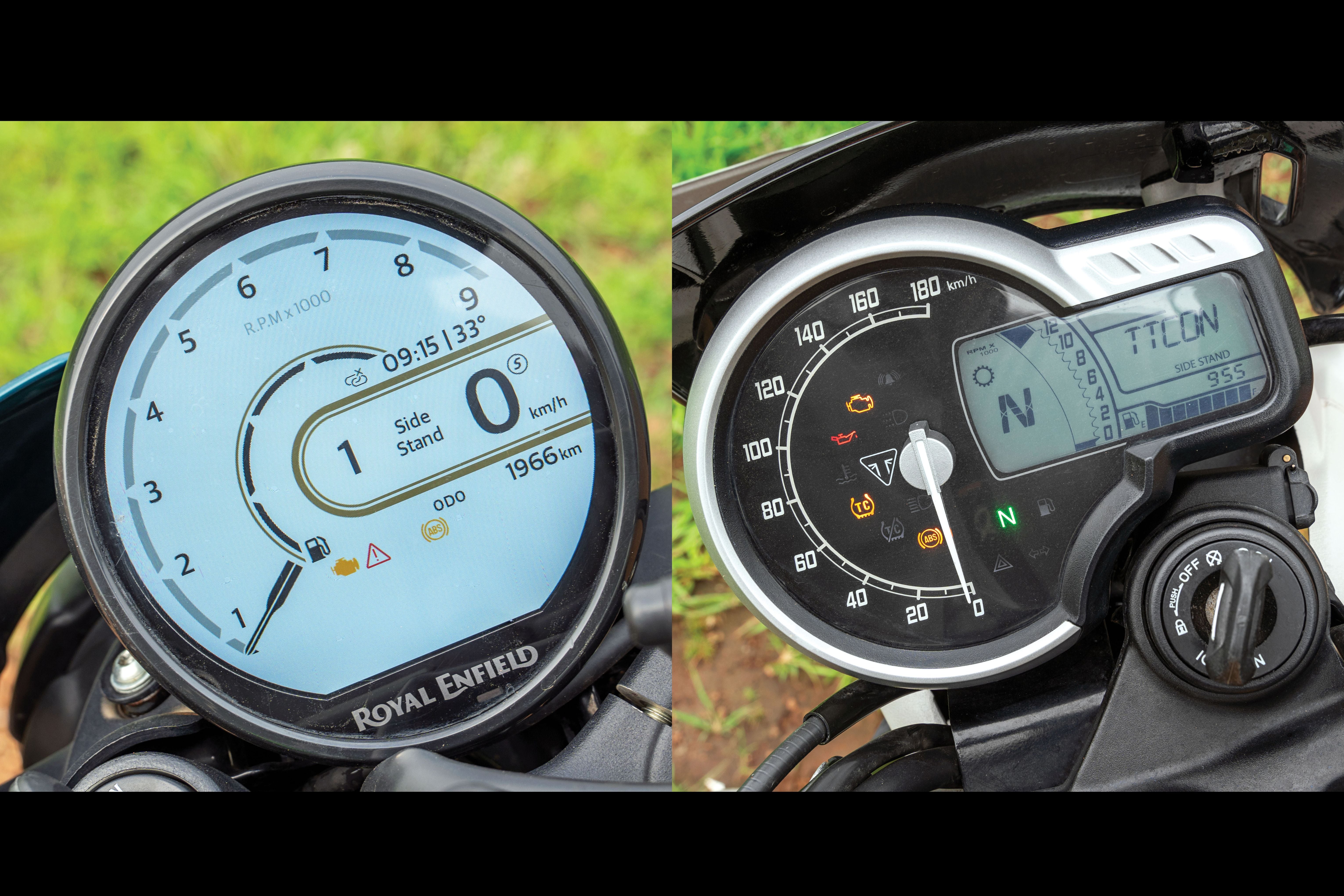
Both motorcycles are equally impressive when it comes to build quality and fit and finish. The Tracker features the same digi-analogue console we have seen on all the other Triumph 400 models, while the Guerrilla features the same TFT unit from the Himalayan. The Guerrilla gets two riding modes (Sport and Street), both of which feel quite similar. On the other hand, the Tracker gets a switchable traction control system that the Guerrilla misses out on. Neither has a quickshifter. In terms of convenience, the Guerrilla has a more accessible 780mm seat height and also gets a main stand, which aids in easier chain maintenance.
There is also a difference in ergonomics. The Tracker’s seat is flat and the riding position is relatively sporty, with rear-set footpegs that suit the character of the bike. The Guerrilla Apex has a lower and more accessible 780mm seat and roadster-like, neutral-set footpegs, along with a committed upper-body position. Between the two, you sit on top of the Tracker with its flat seat, while on the Guerrilla, you sit inside the curved seat, and it is also the more comfortable of the two.
Performance and Fuel Economy
This is where things get interesting because the Tracker 400’s 349cc engine is 103cc smaller than the Guerrilla’s 452cc unit, yet peak power is almost identical. The Triumph produces 40hp at 8,750rpm and 32Nm at 7,500rpm, while the Royal Enfield makes 40.02hp at 8,000rpm. Of course, the difference comes in torque, where the RE makes a much healthier 40Nm at 5,500rpm.
The difference in torque delivery is immediately noticeable. The Tracker’s engine likes to be revved out, but you still have to work it quite a bit. The Guerrilla’s Sherpa engine has a different personality. It doesn’t need to be worked as hard, and the additional 8Nm gives it much stronger roll-on performance. It feels more raw and powerful as soon as you open the throttle, and the surge in power after 6,000rpm makes it feel really exciting. After 7,000rpm, there are some vibrations, but nothing that really ruins the riding experience.
The Tracker’s shorter-stroke engine is very refined at moderate engine speeds, but once you start revving it harder, some buzz makes its way into the tank and footpegs at the top end of the rev range. It remains an entertaining engine, but considering I have ridden the older 398cc Thruxton 400, I feel like it misses out on that initial torque kick.
In our performance tests, the Guerrilla completed the 0-100kph sprint in 6.34 seconds, while the Tracker took 7.55 seconds for the same, marking a difference of 1.21 seconds. The real difference in performance was more visible in the roll-on acceleration tests where the Guerrilla 450 Apex was notably quicker.
Fuel efficiency was almost on par in our tests, where the Tracker delivered 24.1kpl in the city and 31.71kpl on the highway, while the Guerrilla gave us 25.23kpl in the city and 32.82kpl on the highway. The Triumph’s 13-litre tank will give it a better range despite the marginally lower highway efficiency.
Ride and Handling
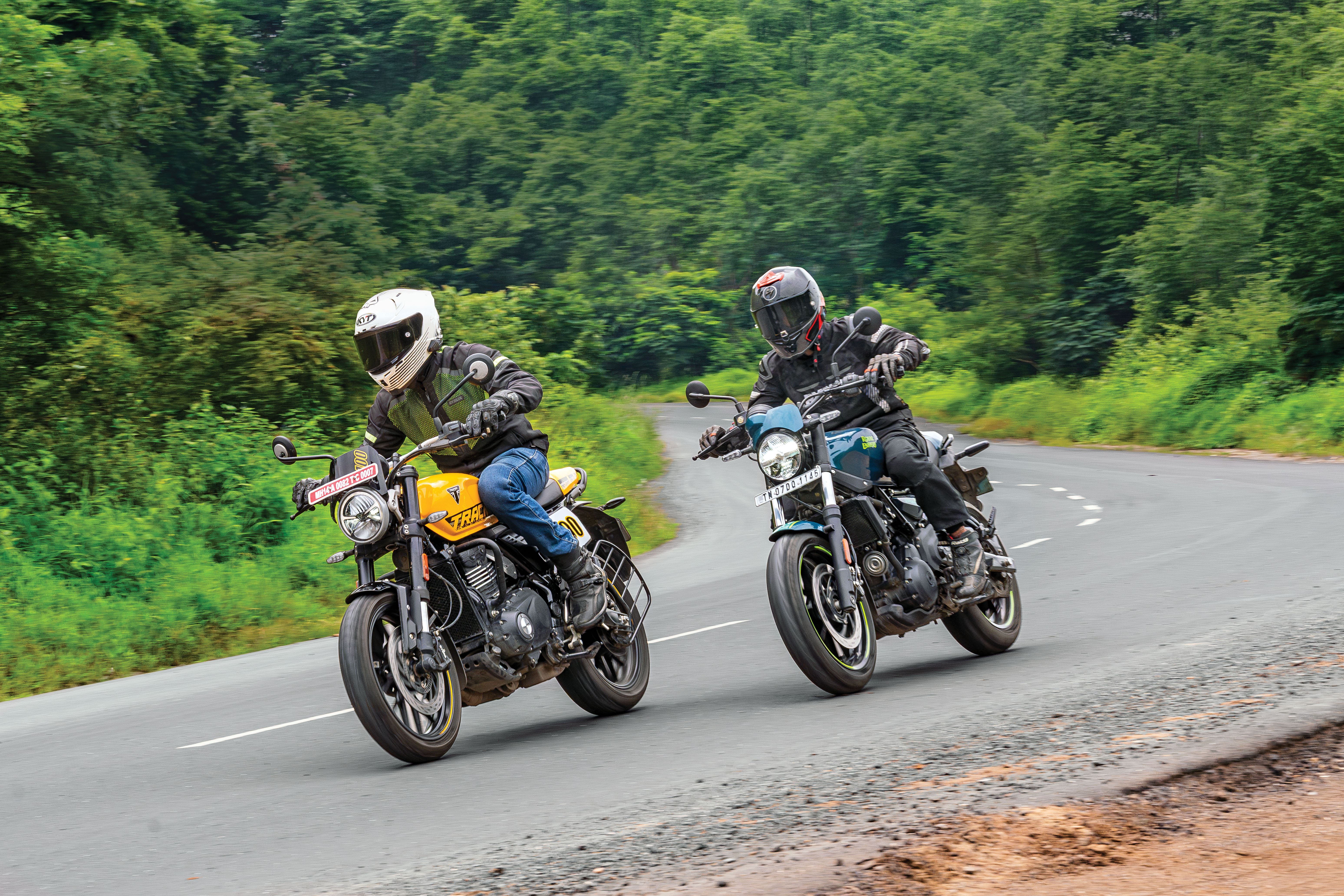
The biggest difference between these two motorcycles becomes apparent once the road starts to twist. The Guerrilla feels longer and heavier and needs a bit of muscling around, but once in a corner, it is extremely stable and planted. The grip offered by the Vredestein tyres is superb and inspires a lot of confidence. The Tracker, on the other hand, feels light, nimble and very easy to flick into corners, thanks to its shorter wheelbase and the leverage offered by the wide handlebars. Its blocky MRF tyres work well, but given how it rides more like a sporty roadster rather than a tracker, stickier tyres would have been a better choice.
While many might be disappointed about the Guerrilla 450 Apex not getting a USD fork, the suspension does work much better than the Tracker’s over bad roads and undulations. The setup feels plusher than the Tracker, which has a quicker rebound that can toss you up if you hit potholes at higher speeds.
Despite the Triumph being the more compact motorcycle, I felt like it was easier to filter through traffic on the Guerrilla, and that is because the Triumph has slightly wider handlebars and mirrors that jut out slightly more. I do remember my time spent with the Guerrilla on a go-kart track, and it was genuinely a lot of fun. The tyres kept up with the performance that the engine offers, and it was a blast to exploit the full capabilities of the bike. The only limitation was the footpegs, which kept scraping when the bike was leaned over. That said, this was never a problem out on the road.
Braking hardware is strong on both. The Tracker gets a 300mm front disc with a four-piston radial ByBre caliper, while the Guerrilla uses a 310mm front disc and 270mm rear disc. The Guerrilla stopped marginally quicker in our braking test from 60-0kph, but I did notice that the ABS intervention can be strong when emergency braking from higher speeds.
Price and Verdict
These two motorcycles are closer than their engine capacities suggest. The Tracker proves that you don’t need a large engine to make for a fun roadster. Its 349cc motor makes almost as much peak power as the Guerrilla, and its compact dimensions, wide handlebar and sporty chassis make it an engaging motorcycle on a twisty road.
The Royal Enfield Guerrilla 450 Apex, however, takes a more muscular approach. Its 452cc engine has substantially more torque, the Vredestein tyres give it a level of grip that suits its performance, and the longer wheelbase also gives it a reassuring planted character, particularly when you’re riding quickly.
They offer two distinct interpretations of the sporty modern roadster. The Tracker’s biggest strength is its agility. It feels smaller, lighter and more eager to change direction quickly. The Guerrilla’s strength is the breadth of its performance. There’s more torque, more road presence and a greater sense of stability when you’re pushing it. And that is ultimately what separates them. The Triumph is the more playful motorcycle, thanks to its nimble nature, while the Guerrilla Apex feels like a more serious attempt at turning the standard roadster into a proper performance-oriented, corner-carving machine.
While it is difficult to pick between these two motorcycles, considering that they do things in different ways, you can’t look past the value that the Guerrilla offers. Despite falling into the 40 percent GST bracket, its starting price is just Rs 10,000 more than that of the Tracker. To put things into perspective, the KTM 390 Duke R, which used to be the benchmark for affordable and accessible performance when its Gen 1 model was launched in India, is now priced at Rs 3.45 lakh (ex-showroom), taking its on-road price upwards of Rs 4 lakh. So the way I see it, the Guerrilla 450 Apex is now the new benchmark when it comes to affordable performance in India. Who’d have ever thought that the crown would one day be worn by a Royal Enfield.
कॉकरोच जनता पार्टी (CJP) के फांउडर अभिजीत दिपके ने पार्टी के सदस्य आशुतोष रांका और सौरव दास के समर्थन में एक इमोशनल नोट लिखा है। आशुतोष रांका और सौरव दास सोमवार को लगातार छठे दिन न्यायिक हिरासत में रहे। सोशल मीडिया पर किए गए पोस्ट में अभिजीत दिपके ने बताया कि दोनों ही लंदन में लाखों की कमाई कर रहे थे। अभिजीत ने उनकी पुरानी जिंदगी, देश के लिए कुछ बेहतर करने के फैसले और दूसरों के हक में आवाज उठाने के जज्बे को याद किया। उन्होंने बताया कि कैसे दोनों ने अपनी आरामदायक जिंदगी छोड़कर उन लोगों के लिए लड़ने का रास्ता चुना, जिन्हें मदद की जरूरत है।
दिपके ने किया इमोशनल पोस्ट
X पर किए गए पोस्ट में अभिजीत दिपके ने लिखा, “कुछ साल पहले आशुतोष रांका लंदन में अच्छी सैलरी वाली कॉर्पोरेट नौकरी करते थे, जहां से उन्हें लाखों रुपये मिलते थे। वहीं, सौरव दास देश की कानूनी व्यवस्था पर लिख रहे थे और अपनी जिंदगी अच्छे से जी रहे थे। दोनों के पास सफल करियर, फाइनेंशियल सिक्योरिटी और अपनी बनाई हुई जिंदगी को आगे बढ़ाने के कई मौके थे।”
उन्होंने आगे लिखा, “लेकिन दोनों ने देश को बेहतर बनाने की उम्मीद में अपनी पुरानी जिंदगी छोड़ने का फैसला किया। उनके पास आरामदायक जीवन छोड़कर सड़कों पर उतरने, मुश्किलों का सामना करने और जेल जाने की कोई मजबूरी नहीं थी। इसके बावजूद, उन्होंने यह रास्ता चुना और देश के लिए कुछ बेहतर करने की कोशिश में जुट गए।”
A few years ago, Ashu had a high-paying corporate job in London, earning millions. Saurav was writing about the country’s legal system and living a great life. Both had successful careers, financial security and every reason to continue living the lives they had built for themselves.
But they chose to give it all up in the hope of making this country a better place. They had absolutely no reason to leave behind their comfortable lives, take to the streets, face uncertainty and eventually end up in jail. Yet they did.
What I admire most about these two is that despite coming from privileged backgrounds, they chose to fight for those who aren’t as fortunate. They could have easily looked the other way, enjoyed their lives and never bothered about the struggles of people they had never even met. Nobody asked them to make these sacrifices. Nobody expected them to. But they did, because they genuinely care about people beyond themselves.
And to me, that is the greatest quality a human being can have. To stand up for people you don’t know, to fight battles that aren’t your own, and to risk everything you have so that someone else might have a better life.
दिपके ने आगे लिखा, “इन दोनों की सबसे खास बात यह है कि अच्छी बैकग्राउंड से आने के बावजूद उन्होंने उन लोगों के हक में आवाज उठाने का फैसला किया, जिनके पास उनके जैसे मौके और सुविधाएं नहीं थीं। वे चाहते तो दूसरों की परेशानियों से दूर रहकर अपनी जिंदगी आराम से बिता सकते थे। वे उन लोगों की समस्याओं को भी नजरअंदाज कर सकते थे, जिन्हें वे जानते तक नहीं थे।”
यहीं है उनकी सबसे बड़ी खूबी
दिपके ने आगे लिखा, “उनसे किसी ने अपनी सुख-सुविधाएं छोड़ने या इतना बड़ा त्याग करने के लिए नहीं कहा था। इसके बावजूद उन्होंने ऐसा किया, क्योंकि वे सिर्फ अपनी नहीं, बल्कि दूसरों की जिंदगी की भी परवाह करते थे। मेरे हिसाब से, किसी इंसान की सबसे बड़ी खूबी यही होती है कि वह अनजान लोगों के लिए भी आवाज उठाए, ऐसी लड़ाइयां लड़े जिनका सीधा संबंध उससे न हो और दूसरों की जिंदगी बेहतर बनाने के लिए अपना सब कुछ दांव पर लगाने को तैयार रहे। आशु और सौरव भी ऐसे ही इंसान हैं।” बता दें इससे पहले भी अभिजीत दिपके ने आशुतोष रांका और सौरव दास के लिए इमोशनल पोस्ट डाला था।
भारतपे के पूर्व को-फाउंडर अशनीर ग्रोवर अपने बेबाक अंदाज के लिए जाने जाते हैं, लेकिन इस बार वह खुद एक मजेदार सोशल मीडिया पोस्ट का हिस्सा बन गए हैं। गुरुग्राम के एक रियल एस्टेट कारोबारी ने उनकी प्रॉपर्टी विजिट पर चुटकी लेते हुए उन्हें नौकरी तक ऑफर कर दी। मामला गुरुग्राम के महंगे रिहायशी प्रोजेक्ट DLF Camellias का है, जहां अशनीर की विजिट के दौरान फ्लैट के बजाय क्लब, सुविधाओं और हरियाली को दिखाए जाने पर कारोबारी ने सवाल उठाए। उनकी पोस्ट अब सोशल मीडिया पर चर्चा में है।
फ्लैट देखने पहुंचे अशनीर
गुरुग्राम के रियल एस्टेट कारोबारी अभिषेक भारद्वाज ने X पर एक पोस्ट साझा करते हुए अशनीर ग्रोवर की साइट विजिट पर मजाकिया टिप्पणी की। उन्होंने बताया कि अशनीर की यह विजिट उनकी पत्नी के चैनल पर शेयर किए गए एक वीडियो में दिखाई गई थी, जिसका शीर्षक ‘Home Beyond the Price Tag’ है। अभिषेक के मुताबिक, फ्लैट में किरायेदार होने और दरवाजा नहीं खुलने की स्थिति में विजिट के दौरान क्लब, दूसरी सुविधाएं और हरियाली दिखाई गई। उन्होंने इस अनुभव की तुलना प्रॉपर्टी ब्रोकरों के उस आम तरीके से की, जिसमें फ्लैट नहीं दिखा पाने पर खरीदार को आसपास की सुविधाएं दिखाकर व्यस्त रखा जाता है।
‘क्लब दिखा दिया, हरियाली दिखा दी, फ्लैट की बात ही नहीं की’
200 से ज्यादा प्रॉपर्टी डील करने का अनुभव रखने वाले अभिषेक ने कहा कि गुरुग्राम के प्रीमियम रिहायशी प्रोजेक्ट्स में कई खरीदारों के लिए फ्लैट के साथ उसका पता और सोसायटी भी काफी मायने रखती है। ऐसी जगहों पर उपलब्ध फ्लैट कम होने के कारण खरीदार कई बार प्रॉपर्टी देखने से पहले ही उसमें दिलचस्पी दिखाने लगते हैं।
हालांकि, अभिषेक का मानना है कि अच्छी साइट विजिट में खरीदार को असली फ्लैट दिखाना जरूरी है। उन्होंने मजाक में कहा कि अगर किरायेदार दरवाजा नहीं खोल रहा हो, तो वह उसके साथ एक घंटे बैठकर चाय पीने को भी तैयार हैं, लेकिन खरीदार को फ्लैट दिखाए बिना वापस नहीं जाने देंगे।
अशनीर ग्रोवर को दे दी फील्ड एसोसिएट की नौकरी
अभिषेक ने अपनी पोस्ट में अशनीर पर तंज कसते हुए लिखा कि उन्होंने साइट विजिट बिल्कुल उसी अंदाज में की, जैसा प्रॉपर्टी इंडस्ट्री में कई बार देखने को मिलता है। उन्होंने कहा, ‘क्लब दिखा दिया, हरियाली दिखा दी, फ्लैट की बात ही नहीं की।’ इसके बाद कारोबारी ने अशनीर को फील्ड एसोसिएट की नौकरी का ऑफर दे दिया। उन्होंने बताया कि वह फिलहाल साइट विजिट के लिए लोगों की तलाश कर रहे हैं और अशनीर ने तो पहली विजिट में ही इंडस्ट्री का तरीका दिखा दिया।
Ashneer Grover did his first site visit in Gurugram yesterday, at DLF Camellias, and like every broker whose flat has a tenant inside who won’t open the door, he showed us the club, the amenities and the greenery instead.
Check out the video below.
I’ve done 200+ deals in this city, so let me do the commentary, because I know this script by heart.
The video is on his wife’s channel and it’s called “home beyond the price tag”, and that’s the first thing every broker learns; you put the price tag in the headline so the buyer feels it before he has seen anything.
Then he tells you the flat is leased out and he comes from Delhi only to use the club. That’s the second thing every broker learns. When the tenant won’t open the door, you still keep the visit on, and you take the buyer to the clubhouse, walk him slowly past the amenities, stop at the greenery for a minute so he can breathe in the Golf Course Road air, and keep him moving so he forgets to ask about the flat again.
In societies like this, that’s how the visit actually goes. You show the buyer the floor plan, you tell him the flat faces the internal greens or the golf course side, and after that there’s nothing left to see.
And the buyer doesn’t mind, because he wants the address. There are only a handful of flats in a society like this, so whichever one comes up, he just asks the size and that’s about it. The only question worth asking is what could be wrong with a flat in this society if you’re getting a good deal on it. A rare opportunity comes at a price only, if you are really interested; otherwise these flats will always look costly to someone like you.
If it was my buyer, he’d be seeing the flat, tenant or no tenant, even if I had to sit with the tenant over chai for one hour to get that door opened.
Ashneer, I’m hiring field associates for site visits right now, and you’ve already done your first one exactly the way the industry does it. Club dikha diya, greenery dikha di, flat ki baat hi nahi ki.
@Ashneer_Grover interview kab de rahe ho?
The full site visit is in the video below, check it out.
अभिषेक ने अपनी पोस्ट के आखिर में अशनीर से मजाकिया अंदाज में पूछा, ‘इंटरव्यू कब दे रहे हो?’ उनकी इस टिप्पणी ने प्रॉपर्टी विजिट के तरीके और महंगी सोसायटी में घर खरीदने के अनुभव को लेकर चर्चा छेड़ दी है। हालांकि, यह पूरा मामला कारोबारी की सोशल मीडिया पोस्ट में किए गए दावों और व्यंग्य पर आधारित है।
आलीशान घर, शानदार लोकेशन, स्विमिंग पूल और प्राइवेट गार्डन लग्जरी घर खरीदते समय लोग आमतौर पर इन्हीं सुविधाओं पर ध्यान देते हैं। लेकिन हैदराबाद में कुछ लग्जरी होमबायर्स की प्राथमिकताएं अब कुछ अलग नजर आ रही हैं। वे घर पसंद करने से पहले यह भी जानना चाहते हैं कि आसपास किसी बड़े नेता का घर तो नहीं है। वजह घर की कीमत या सुविधाएं नहीं, बल्कि शांति, निजता और रोजमर्रा की जिंदगी में होने वाली संभावित परेशानियां हैं। हैदराबाद के एक रियल एस्टेट कारोबारी की सोशल मीडिया पोस्ट ने इस दिलचस्प ट्रेंड को चर्चा में ला दिया है।
विला खरीदने पहुंचे ग्राहक ने सबसे पहले पूछा ये सवाल
हैदराबाद के रियल एस्टेट कारोबारी सतीश रेड्डी ने 19 अक्टूबर 2026 को सोशल मीडिया प्लेटफॉर्म X पर एक पोस्ट साझा की। उन्होंने बताया कि हाल ही में एक प्रीमियम विला प्रोजेक्ट में ग्राहक के साथ जाने पर उन्हें एक दिलचस्प सवाल सुनने को मिला। रेड्डी के मुताबिक, ग्राहक ने सेल्स हेड से सबसे पहले पूछा, “ई विलास लो पेद्दा पॉलिटिशियंस एवरु तीस्कोलेदु कदा?” यानी इन विला में किसी बड़े नेता ने तो घर नहीं खरीदा है?
लग्जरी प्रॉपर्टी खरीदने के दौरान इस तरह का सवाल आमतौर पर सुनने को नहीं मिलता। लेकिन रेड्डी के मुताबिक, यह कोई पहला मौका नहीं था, जब किसी ग्राहक ने आसपास रहने वाले लोगों और उनके प्रभाव के बारे में ऐसी चिंता जताई हो।
बड़े नेताओं के आसपास घर होने से क्या हो सकती है परेशानी?
रेड्डी ने अपनी पोस्ट में बताया कि किसी प्रमुख राजनीतिक हस्ती के आसपास रहने पर कुछ परिस्थितियों में आम निवासियों की दिनचर्या प्रभावित हो सकती है। किसी खास घर पर लोगों की आवाजाही बढ़ना, आगंतुकों की भीड़ जुटना और आसपास हलचल बने रहना ऐसी संभावित परेशानियां हैं।
उन्होंने जन्मदिन या अन्य अवसरों पर राजनीतिक समर्थकों की ओर से लगाए जाने वाले बड़े-बड़े बैनरों का भी जिक्र किया। उनके अनुसार, कुछ आवासीय परिसरों में ऐसे बैनर कई दिनों तक लगे रह सकते हैं और कभी-कभी लंबे समय तक भी दिखाई देते हैं।
रेड्डी ने इस संदर्भ में हैदराबाद के NCC Urban One का उदाहरण दिया। हालांकि, ये अनुभव और टिप्पणियां उनकी पोस्ट पर आधारित हैं, न कि सभी आवासीय परिसरों की स्थिति का प्रमाण।
Last evening, I was with a client at a premium villa project, and the first question he asked the sales head was:
“Ee villas lo pedda politicians evvaru teesukoledu kada” (No big politicians have bought villas here, right?)
Apart from occasional bursts of visitors and the regular high volume of visitors at certain homes, residents also have to deal with ugly banners put up by sycophants at the entrance and sometimes all along the lanes on birthdays and other occasions.
At some places, like NCC Urban One, these banners remain for days or even most part of the year too.
This is increasingly becoming an important factor for homebuyers looking for privacy, peace and exclusivity.
And this isn’t the first time I’ve heard this. Someone who moved from a community in Financial district to another villa community in Gandipet told me the same thing.
— Satish Reddy | Hyderabad Real Estate & Infra (@HydREGuide) October 19, 2026
फाइनेंशियल डिस्ट्रिक्ट से गांडीपेट तक सामने आई ऐसी चिंता
रेड्डी ने बताया कि उन्हें पहले भी ऐसा अनुभव सुनने को मिला था। उनके अनुसार, हैदराबाद के फाइनेंशियल डिस्ट्रिक्ट स्थित एक आवासीय समुदाय से गांडीपेट के दूसरे विला समुदाय में शिफ्ट हुए एक व्यक्ति ने भी इसी तरह की चिंता जाहिर की थी।
यह उदाहरण दिखाता है कि प्रीमियम घर खरीदने या बदलने के दौरान कुछ लोगों के लिए सिर्फ प्रॉपर्टी की खूबसूरती और सुविधाएं ही अहम नहीं हैं। वे यह भी देखना चाहते हैं कि वहां रहने के बाद उनकी रोजमर्रा की जिंदगी कितनी शांत और निजी रहेगी।
लग्जरी घर का मतलब सिर्फ महंगी प्रॉपर्टी नहीं
सतीश रेड्डी की पोस्ट पर सोशल मीडिया यूजर्स ने भी चर्चा की। कुछ लोगों ने माना कि घर के आसपास का माहौल, लोगों की आवाजाही और निजता किसी प्रॉपर्टी को चुनने में अहम भूमिका निभा सकते हैं।
दरअसल, महंगा घर खरीदने वाले कई लोगों के लिए लग्जरी का मतलब केवल बड़ा घर या शानदार सुविधाएं नहीं, बल्कि सुकून से रह पाना भी है। हैदराबाद में सामने आया यह मामला इसी बदलती सोच की ओर इशारा करता है, जहां घर खरीदने से पहले लोग सिर्फ यह नहीं पूछ रहे कि प्रॉपर्टी कितनी शानदार है, बल्कि यह भी जानना चाहते हैं कि वहां उनकी निजी जिंदगी कितनी प्रभावित हो सकती है।
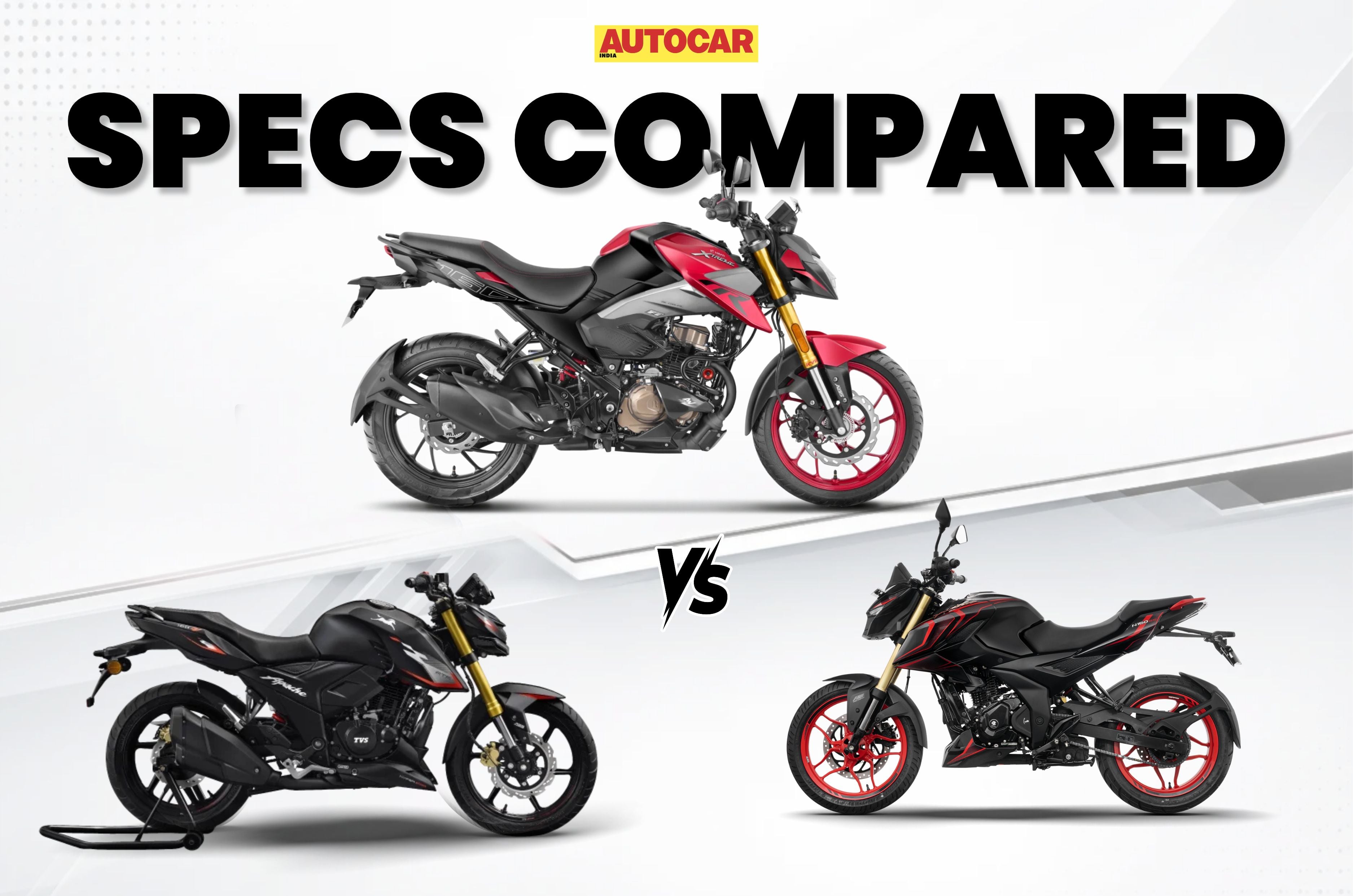
The 160cc segment was kickstarted and subsequently dominated by the TVS Apache RTR 160 and now, the RTR 160 4V is the manufacturer’s best-selling Apache, with the RTR 160 (2V) following in its footsteps. Bajaj has been attacking this duo with a trident of motorcycles, the N160, classic 150, and the NS160. In this fight, Hero’s offering the Xtreme 160R has taken a backseat all this while, but Hero’s looking to get in the front with the newly updated version of its street-naked motorcycle. Does it, really? Let’s see.
Hero Xtreme 160R 4V Carbon vs Rivals: Engine and output
Bajaj has the biggest engine with the most power
Hero Xtreme 160R 4V Carbon
TVS Apache RTR 160 4V
Bajaj Pulsar N160 SS
Engine
163.2cc, single-cylinder, oil-cooled
159.7cc, single-cylinder, oil-cooled
164.9cc, single-cylinder, oil-cooled
Power
17.1hp at 8,750rpm
17.6hp at 8,650rpm
18.5hp at 9,500rpm
Torque
14.6Nm at 6,500rpm
14.7Nm at 7,500rpm
14.4Nm at 8,000rpm
Transmission
5-speed
5-speed
5-speed
Power-to-weight ratio
114.77hp/tonne
120.21hp/tonne
122.52hp/tonne
Hero left the 163.2cc engine almost completely untouched, only raising the peak power output by a meagre 0.2hp compared to earlier. Bajaj’s upgrade to the N160 was more comprehensive than Hero and TVS, even though the other two motorcycles are chronologically newer. Said update has thus helped the N160 SS maintain the highest horsepower of the trio, though it comes in third with respect to torque.
However, the torque race is a very close one and thus unlikely to matter in real-world conditions. The noteworthy jump in power also helps Bajaj maintain a higher power-to-weight ratio, despite being the heaviest of the three motorcycles.
Hero Xtreme 160R 4V Carbon vs rivals: Dimensions and weight
Pulsar is the heaviest, but makes up for it
Hero Xtreme 160R 4V
TVS Apache RTR 160 4V
Bajaj Pulsar N160 SS
Fuel tank capacity
12 litres
12 litres
14 litres
Ground clearance
165mm
180mm
165mm
Kerb weight
149kg
146kg
151kg
Seat height
805mm
790mm
795mm
Wheelbase
1,329mm
1,357mm
1,348mm
None of these motorcycles received a generational change to the platform so the numbers largely remain the same as earlier. Starting off with the Xtreme 160R 4V, Hero has given it some additional features which has made it 1.5kg heavier than the previous Combat Edition and the seat height is a negligible 5mm taller too.
TVS added exactly two new features to the Apache so it remains exactly where it was before and is the motorcycle with the lowest seat height, while having the most amount of ground clearance. The Pulsar N160 is the heaviest of the lot, but also has two additional litres of fuel tank capacity, which is a factor in the additional weight. In this class, that translates to – at the very least – 80km of real-world range so that’s not a small advantage to the Bajaj.
Hero Xtreme 160R 4V Carbon vs Rivals: Tyres, brakes and suspension
Hero has a smaller rear brake and TVS has a narrower front tyre
Hero Xtreme 160R 4V
TVS Apache RTR 160 4V
Bajaj Pulsar N160 SS
Tyres (F, R)
100/80-17, 130/70R17
90/90-17, 130/70R17
100/80-17, 130/70R17
Brakes (F, R)
276mm disc, 220mm disc, dual-channel ABS
270mm disc, 240mm disc, dual-channel ABS
300mm disc, 230mm disc, dual-channel ABS
Suspension (F, R)
37mm USD fork, monoshock
37mm USD fork, monoshock
37mm USD fork, monoshock
Things continue to even out in this section but Bajaj makes a statement with the largest front disc rotor, which is actually from a class above. All three offer dual-channel ABS as standard on the top variants, and all have a lower variant with right-side-up (RSU) telescopic fork and single-channel ABS. Hero is the only manufacturer to offer a KYB, who is a suspension specialist, built fork but also has given the Xtreme 160R the smallest rear disc. TVS technically does have the smallest tyre of the three, but it’s not alarmingly small to imply handling issues.
Hero Xtreme 160R 4V Carbon vs Rivals: Features
Hero’s redemption attempt
This is the area Hero has caught up the most to the other two, after design. Though the Combat Edition added quite a bit to make the Xtreme 160R last year, the fight now feels even across the board, which is a great thing for you and me as consumers.
On the top Carbon variant, you get a 4.2-inch TFT display that goes toe-to-toe with the other two on this list. Xtreme 160R is the only motorcycle in this segment to give you cruise control and TVS, despite technically being the oldest platform of the lot, gives a tough fight to the other two. In terms of outright feature-set, the Bajaj still offers a higher number of features, such as an additional ride mode, document storage on the display and the likes, but TVS and Hero fight valiantly. The Hero still misses out on features such as, a slip-and-assist clutch, a dedicated mode to make low speed riding easier (Crawl mode on Bajaj, GTT on TVS) and Google Maps mirroring. So, if you’re looking for the most feature-loaded Hero, take a gander at the Xtreme 250R, which also got updated with quite a bit of features and is sitting in the segment above.
Hero Xtreme 160R 4V Carbon vs Rivals: Price
Carefully treading the affordable-line
Hero Xtreme 160R 4V
TVS Apache RTR 160 4V
Bajaj Pulsar N160 SS
Price (ex-showroom)
Rs 1.27-1.41 lakh
Rs 1.20-1.42 lakh
Rs 1.22-1.43 lakh
Hero is currently the most expensive of the three, especially if you’re looking to get the base variant; beyond that, digging further into the price difference will be splitting hairs, so look at the other sections to see if they help you make a choice. That being said, the 160cc segment in India is one of, if not, the most competitive one so whichever one you choose, you’re unlikely to make a truly bad one. See which motorcycle catches your eye the fastest and pulls your heart strings the hardest after the test ride, and you’ll probably know what you’re bringing home.
If you’re determined to live in the xtreme, er, extreme, Hero is currently taking bookings for the all-new Xtreme 160R 4V, whereas the other two motorcycles are already available in their respective showrooms. Unlike its bigger brother, the 160R 4V will be available in all Hero showrooms across the country – which is quite a large network. Deliveries for it are expected to begin in November.
Kolkata Durga Puja Stampede: पश्चिम बंगाल की राजधानी कोलकाता में दुर्गा पूजा पंडाल में बड़ा हादसा हो गया है। शनिवार शाम कोलकाता के उत्तरी हिस्से में स्थित चोरबागान सार्वजनिक दुर्गा पूजा पंडाल में अचानक भगदड़ जैसे हालात बन गए। सप्तमी के मौके पर पूजा करने के लिए बड़ी संख्या में लोग पांडाल पहुंचे थे। भीड़ बढ़ने से वहां अफरा-तफरी मच गई।
न्यूज 18 के रिपोर्ट्स के मुताबिक, कोलकाता के चोरबागान सर्बोजनिन दुर्गा पूजा पंडाल में भगदड़ की वजह से कम से कम 17 लोगों की मौत होने और 35 से ज्यादा लोगों के घायल होने की खबर है। रिपोर्ट्स के मुताबिक, पंडाल का एक हिस्सा गिरने की भी जानकारी सामने आई है। वहीं ये घटना कैसे हुई और इसके पीछे की असली वजह क्या थी अभी इसकी पूरी जानकारी सामने नहीं आई है। वहीं इस हादसे पर पीएम मोदी ने भी दुख जताया है।
पुलिस ने क्या कहा
कोलकाता पुलिस ने कहा “आज शाम करीब 7:40 बजे, गिरीश पार्क पुलिस स्टेशन के तहत आने वाले सरदा पार्क (चोर बागान) पूजा पंडाल के एग्जिट गेट पर भारी भीड़ और बारिश के कारण भगदड़ मच गई। पूजा पंडाल को अब दर्शकों के लिए बंद कर दिया गया है। सभी घायल लोगों को बचा लिया गया और इलाज के लिए MCH में शिफ्ट कर दिया गया है। अब तक मिली जानकारी के अनुसार, लगभग 35 लोगों को MCH में शिफ्ट किया गया है।”
पीएम मोदी ने जताया दुख
कोलकाता में भगदड़ की घटना पर प्रधानमंत्री नरेंद्र मोदी ने दुख जताया है। पीएमओ की ओर से जारी पोस्ट में पीएम ने कहा गया, “कोलकाता में भगदड़ बहुत दुखद है। मेरी संवेदनाएं उन लोगों के साथ हैं जिन्होंने अपने प्रियजनों को खो दिया है। घायल लोग जल्द से जल्द ठीक हों। स्थानीय प्रशासन प्रभावित लोगों को हर संभव सहायता प्रदान कर रहा है।”
The stampede in Kolkata is extremely distressing. My thoughts are with those who have lost their loved ones. May the injured recover at the earliest. The local administration is providing all possible assistance to those affected: PM @narendramodi
घटना में कई लोगों के घायल होने की खबर मिलने के बाद पश्चिम बंगाल के मुख्यमंत्री सुवेंदु अधिकारी और मुख्य सचिव मनोज अग्रवाल घायलों का हाल जानने कलकत्ता मेडिकल कॉलेज अस्पताल पहुंचे। वहीं, जानकारी मिलते ही पुलिस और आपदा प्रबंधन की टीमें भी मौके पर पहुंच गईं। पूजा आयोजकों ने भी लोगों को सुरक्षित बाहर निकालने और घायलों के इलाज के लिए जरूरी मेडिकल सहायता उपलब्ध कराने में मदद की।
गर्मी की वजह से हुआ हादसा?
पुलिस के मुताबिक, कोलकाता के दुर्गा पूजा पंडाल में मची अफरा-तफरी के दौरान कम से कम 35 लोग घायल हो गए। सभी घायलों को इलाज के लिए कलकत्ता मेडिकल कॉलेज अस्पताल पहुंचाया गया और हालात काबू में करने के लिए पंडाल को कुछ समय के लिए बंद कर दिया गया। रिपोर्ट्स के अनुसार, तेज गर्मी और ज्यादा भीड़ के कारण कुछ लोगों की तबीयत बिगड़ गई थी। वहीं, भगदड़ की खबर फैलने से लोगों में डर और बढ़ गया। इसके बाद पुलिस, अधिकारियों और पूजा आयोजकों ने भीड़ को संभालने और घायलों की मदद करने के लिए जरूरी कदम उठाए।
Aprilia may not be the biggest player in the Indian scooter market but it is certainly one of the most radical. It was the first to give us a taste of a true-blue affordable performance scooter with the SR 150 in 2015 and in 2020 the company then upped the ante and introduced India to a premium, yet attainable maxi-style scooter with the SXR 160.
However, six years is a long time and in this interim, the niche that Aprilia was the sole occupant of has now been infringed upon by TVS, Hero, Yamaha and more recently, even Honda! To counter, Aprilia has now taken the next step in the SXR’s evolution and has introduced two models with new engines (125cc and 175cc), more features and a GT suffix. We were given a chance to sample the larger 175cc version and here are our initial impressions.
Aprilia SXR GT 175 Design and features – 7/10
It’s an old design but still looks good; has received a good features upgrade
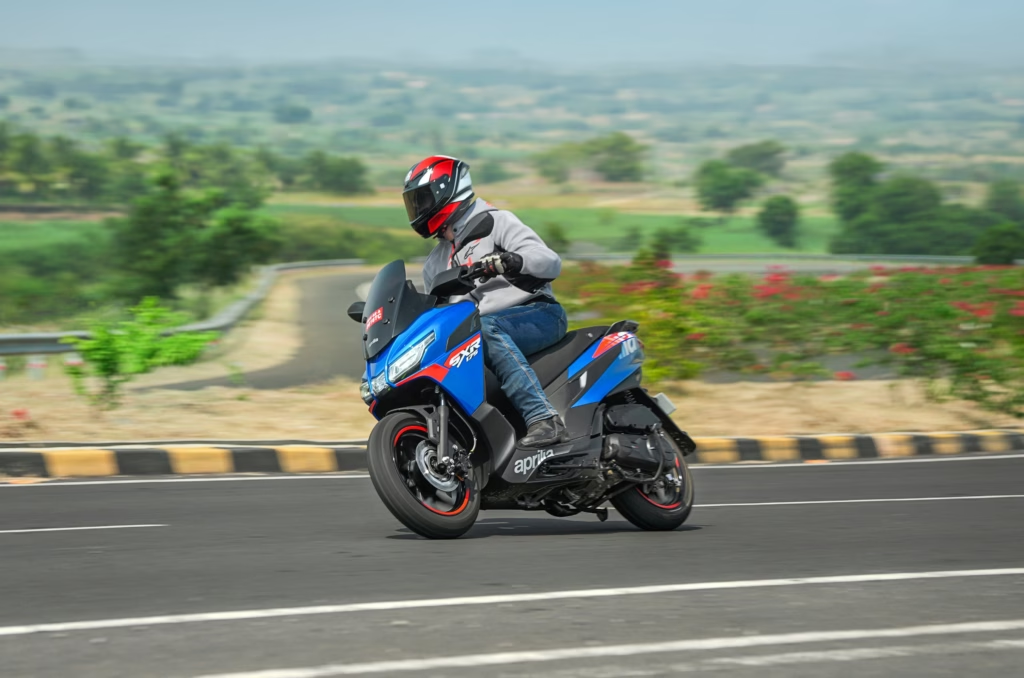
This design may be 6 years old, but it still manages to look good and turn heads
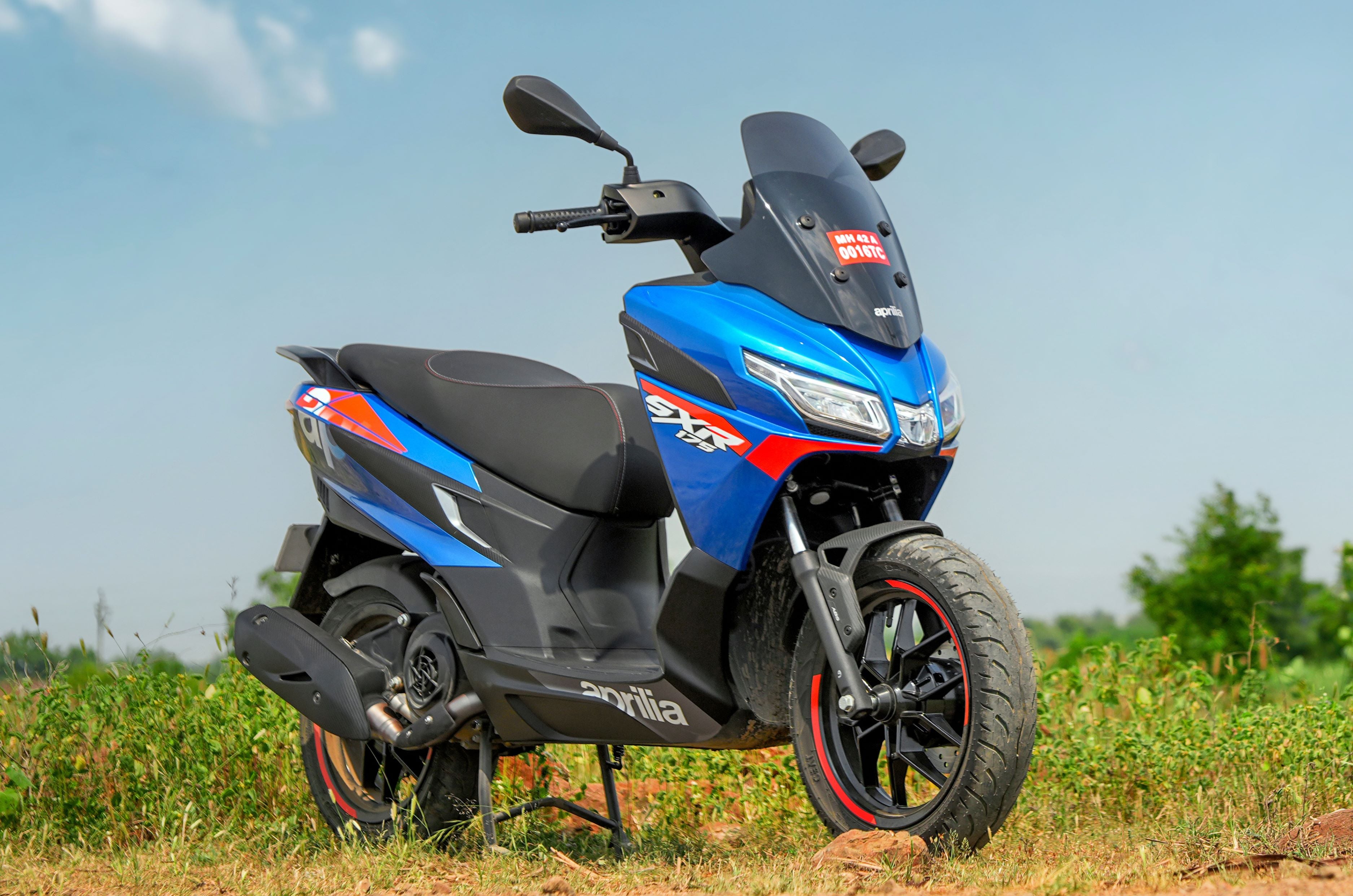
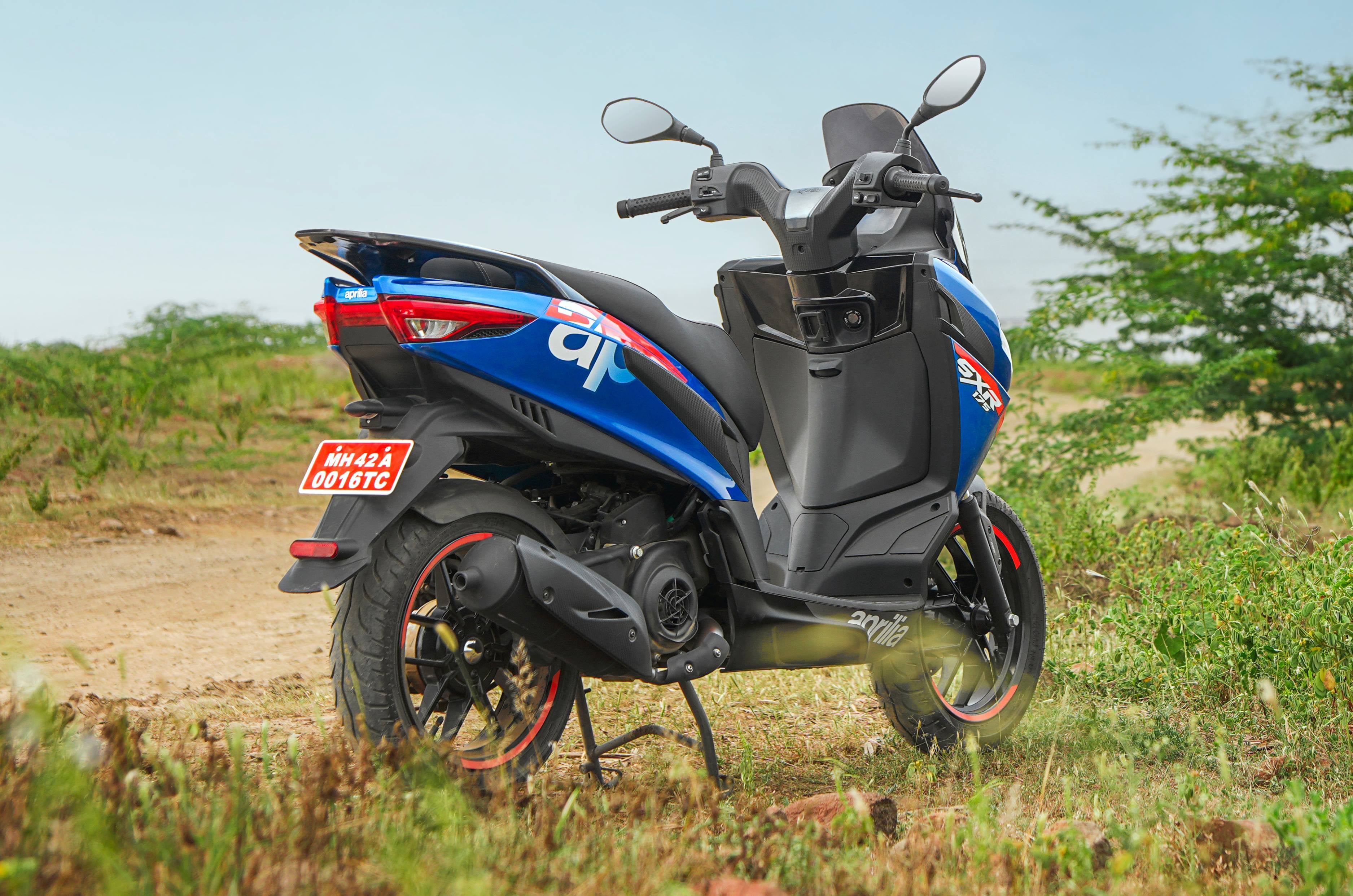
At this juncture, you’re probably wondering aside from the new colours and graphics, how different is the SXR GT 175 to the erstwhile SXR 160 it replaces? The answer to that question is, not very much. Aside from larger 14-in wheels, the SXR GTs look identical to the models they replace and you can certainly feel like it wouldn’t be unreasonable to expect more from the company. However, what you can’t deny is that the scooters still look handsome and striking without going over the top, despite looking nearly the same as they did 6 years ago – that’s Italian design brilliance for you! There are three new colours on offer – the vibrant blue you see here accompanied by a stealthy black and a camo army green scheme.
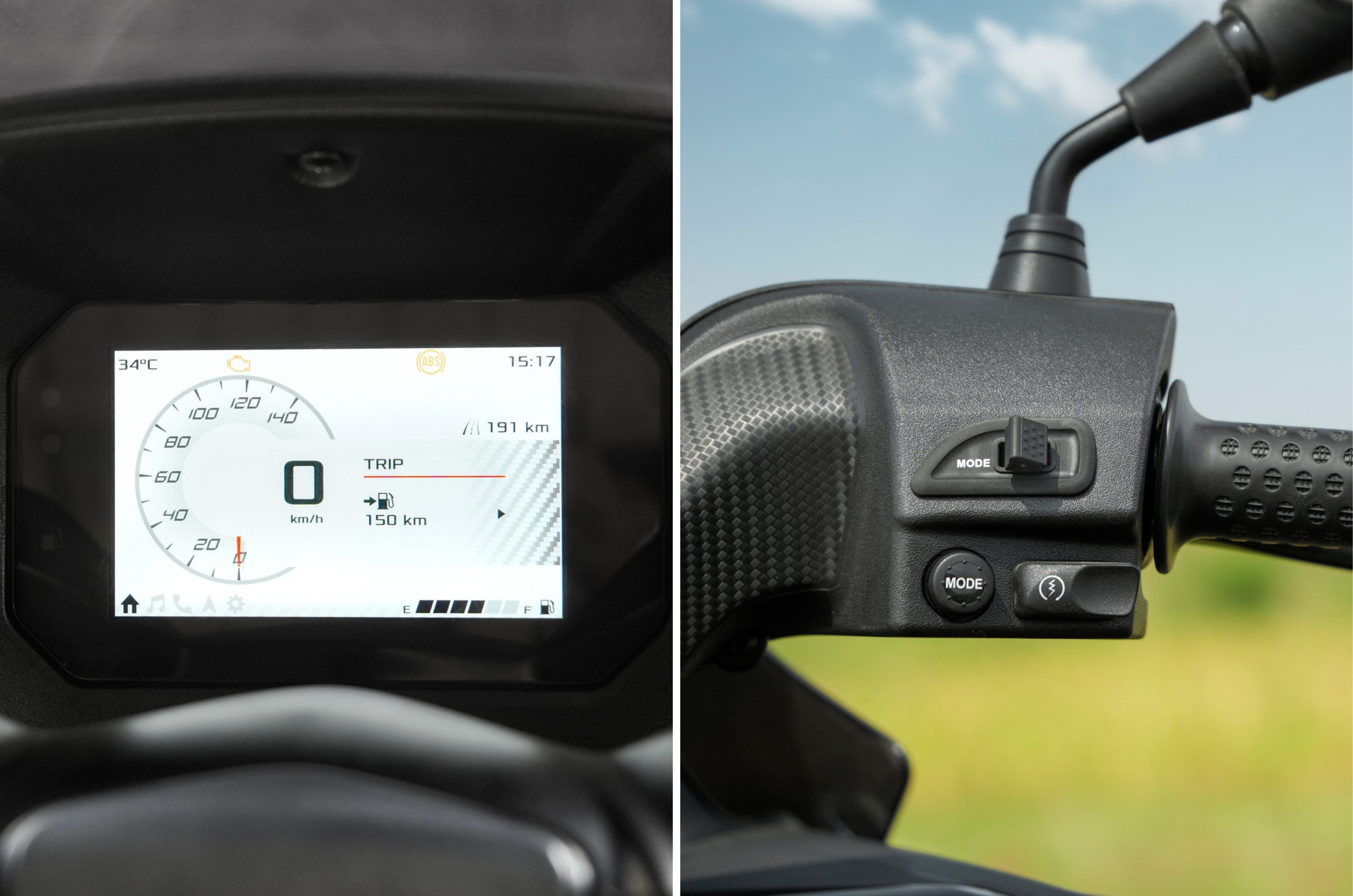
5-in TFT also shared with SR 175, is well laid out but UI isn’t entirely straightforward
However, once you get astride, you’ll realise that there are a fair few changes going on. For starters, the SXR GT 175 uses the same bright and well laid-out colour TFT display as the SR 175 and this dash is replete with Bluetooth functionality which brings in call/notification alerts & navigation prompts. Like that scooter, the overall user interface is a bit complicated and you will need to learn some of the secret handshakes necessary to fully utilise it. Another gripe I have with this dash is that while it has a lot of tech, you have to make do with a single trip meter, which seems like a small but unnecessary omission.
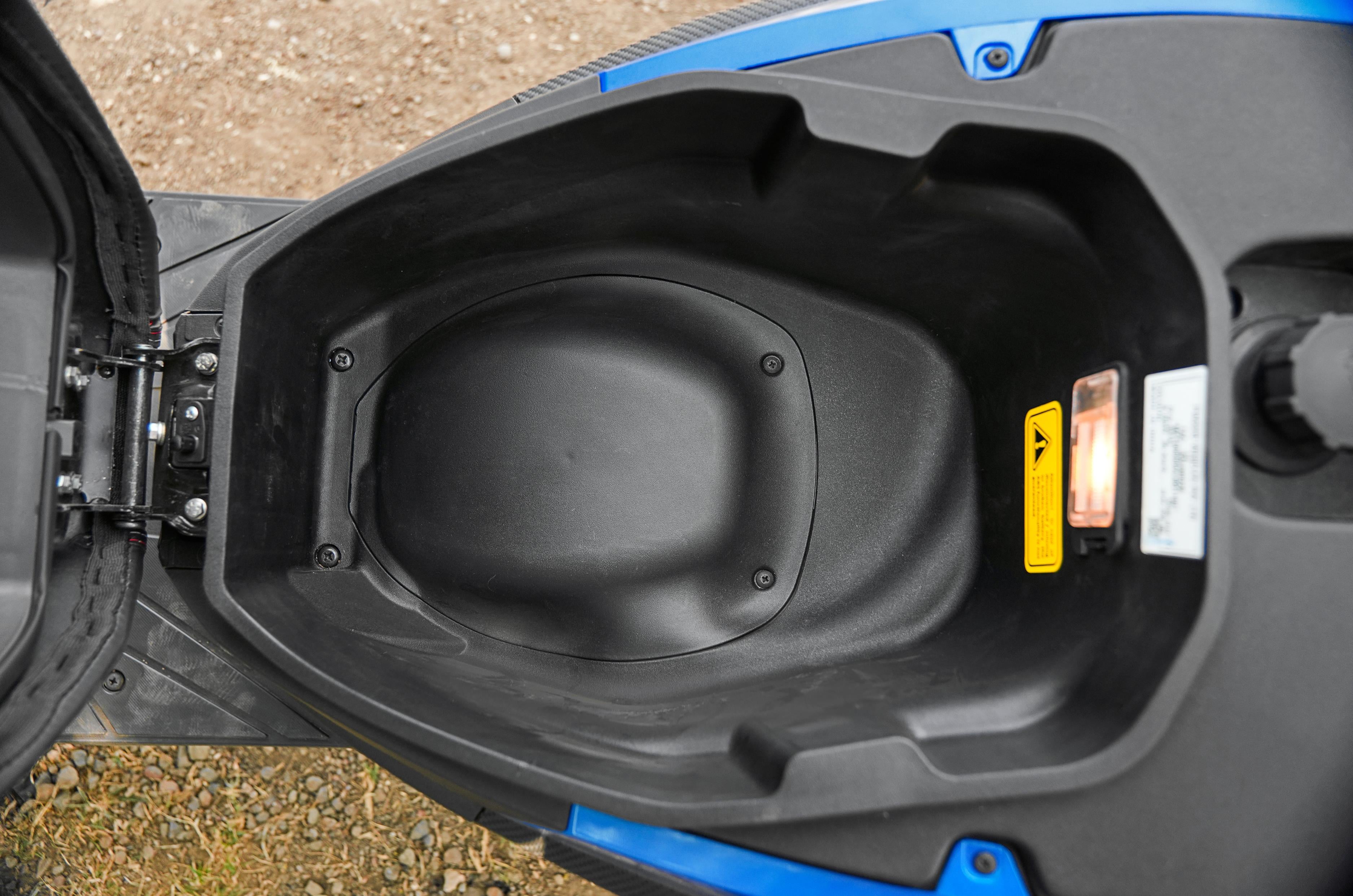
Bootspace is nothing to write home about
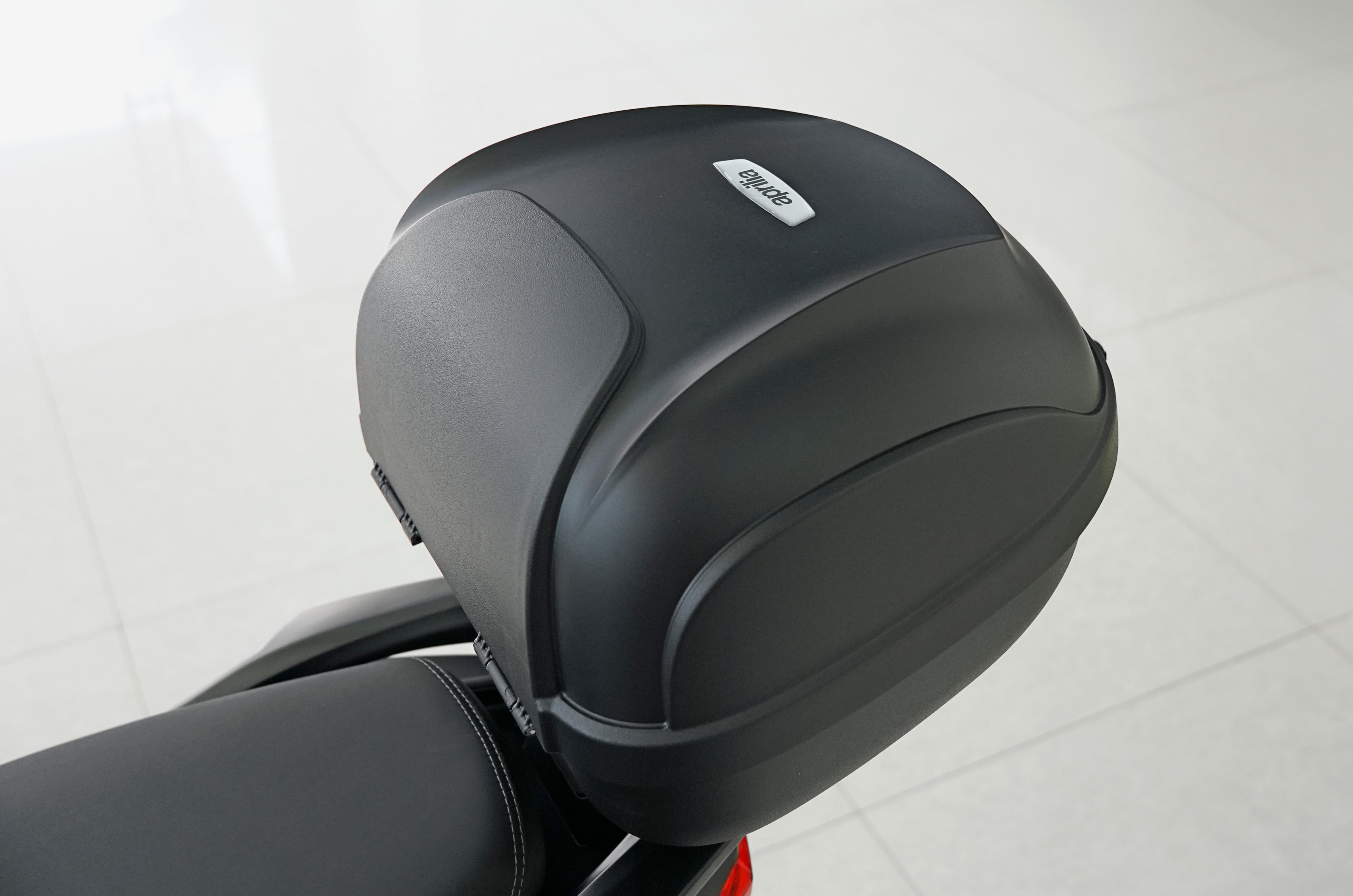
Another small omission is the absence of a multi-function ignition key slot, which means you need to remove the key and put it in its dedicated slot to open the seat and access the boot – something most smaller and cheaper scooters have long moved past. The underseat storage space here isn’t anything to write home about either. However, Aprilia will sell you a pretty spacious 32 litre accessory top box to alleviate that issue, although we don’t have a price for that yet.
But Aprilia will sell you an accessory 32L top box to alleviate that issue
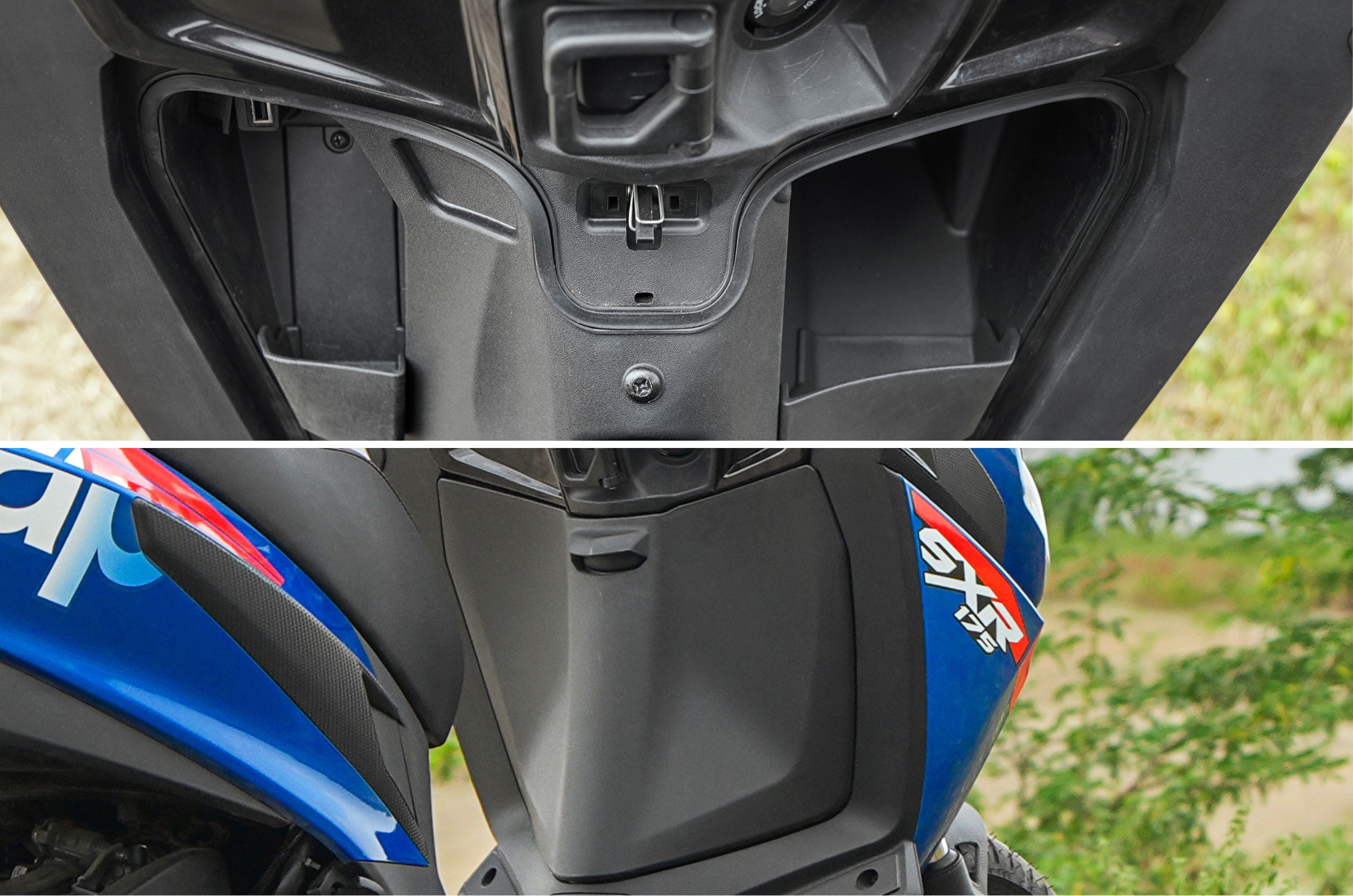
What is a nifty storage solution that comes as standard – carried over from the SXR 160 – are the fully enclosed cubbies on the front apron, and one of them even has a USB-A charging port. While this is surely a safe and practical storage area for your knick-knacks, it’s not the most convenient solution to access when on the move. That’s because you first need to come to a stop, then twist the key to its off position and press it inwards to unlock the cubby.
Enclosed, lockable area opens up to reveal 2 small cubbies; one of them has a USB Type-A charger
Aprilia SXR GT 175 Ergonomic – 7/10
Has one of the tallest seat heights in the scooter space; rider’s triangle is neutral
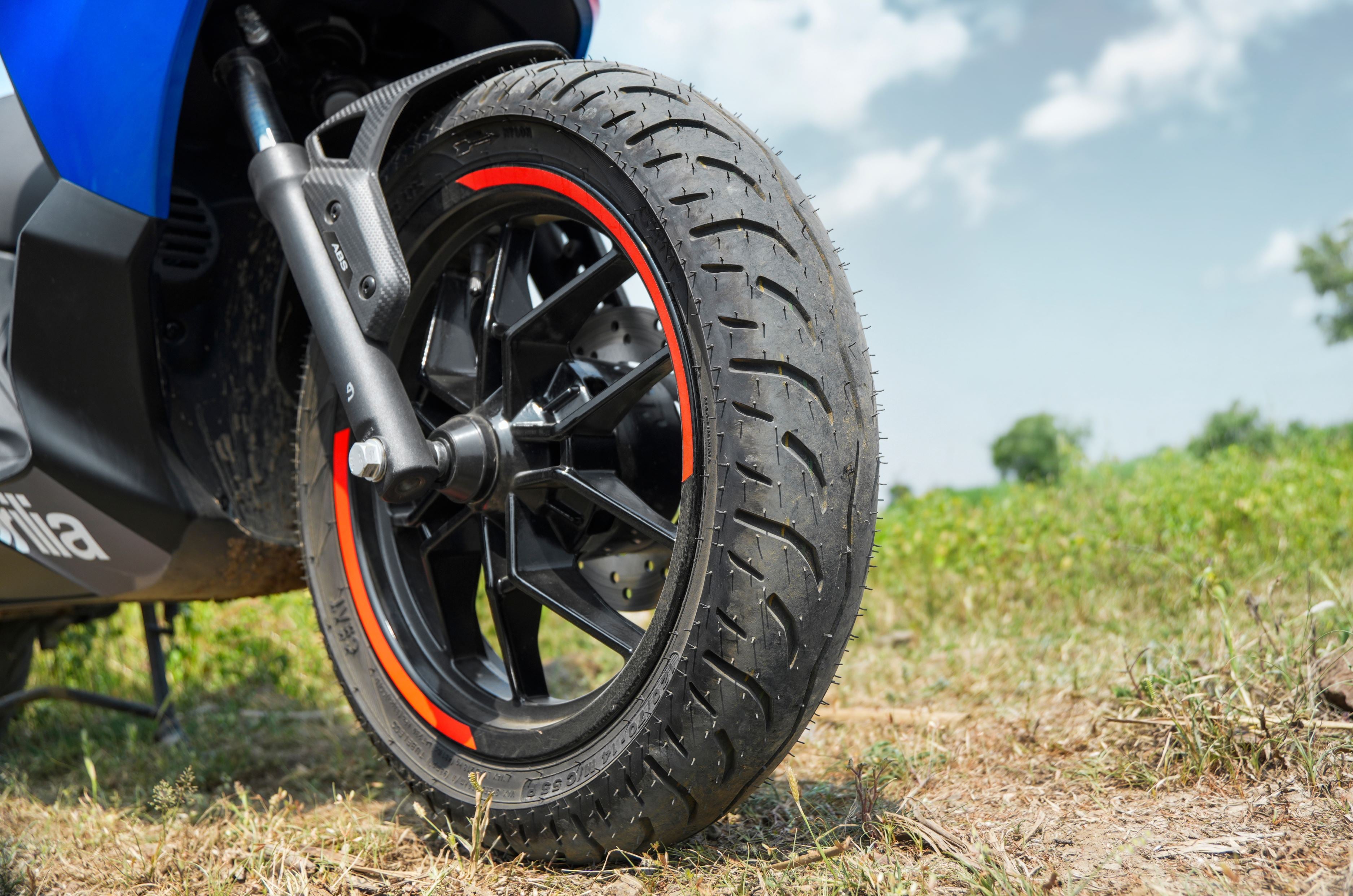
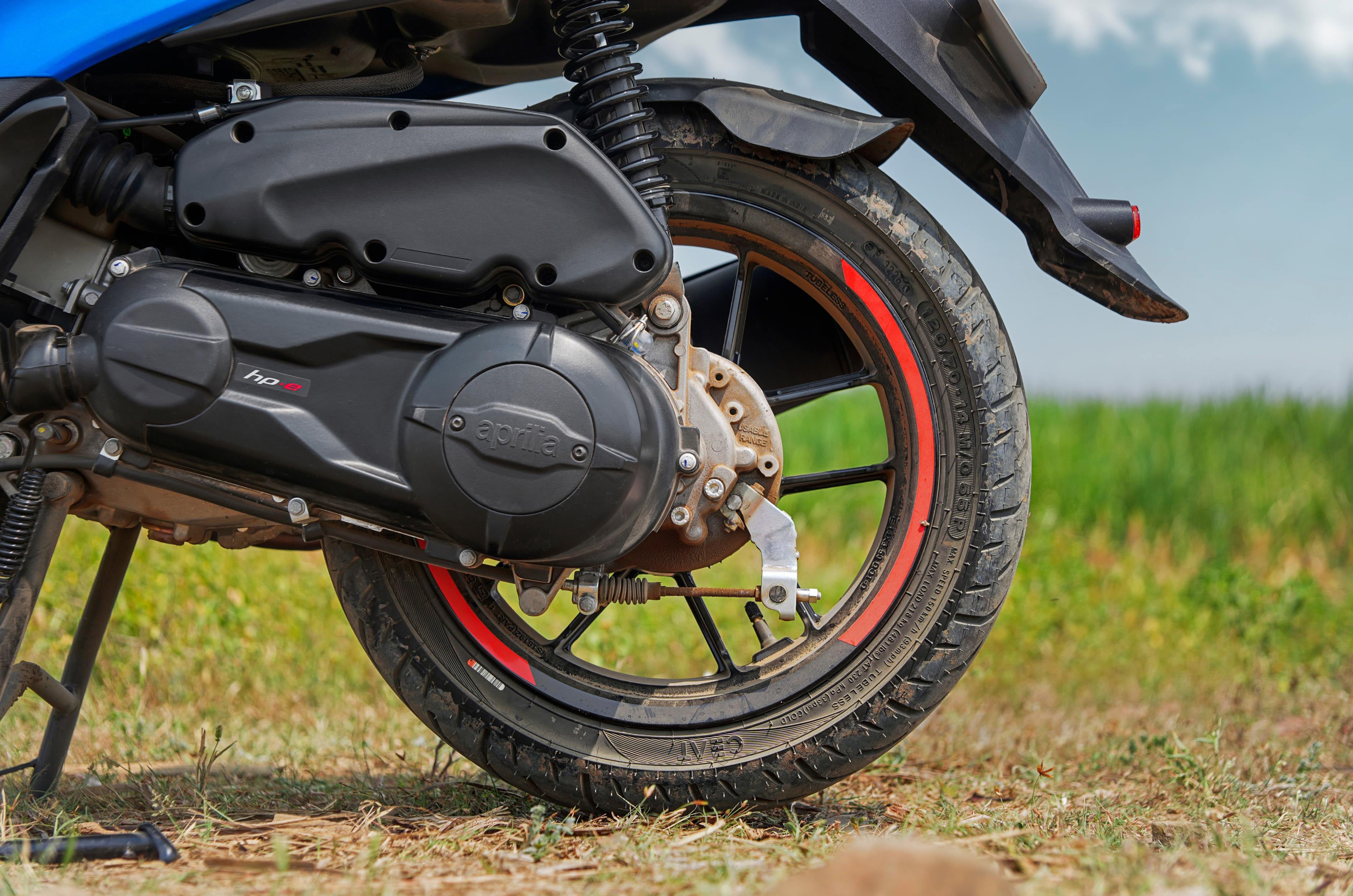
Of course, the new feature that is visible most prominently on the SXR GT is its new 14-inch wheel setup, which has its set of pros and cons. On the plus side, the proportions of the scooter are now better than ever before and its ground clearance has also now risen to 170mm – always a good thing on our unpredictable roads. However, because of the larger wheels, the SXR’s seat height has now risen to 800mm, which makes it the tallest seat height on any made-in-India petrol scooter.
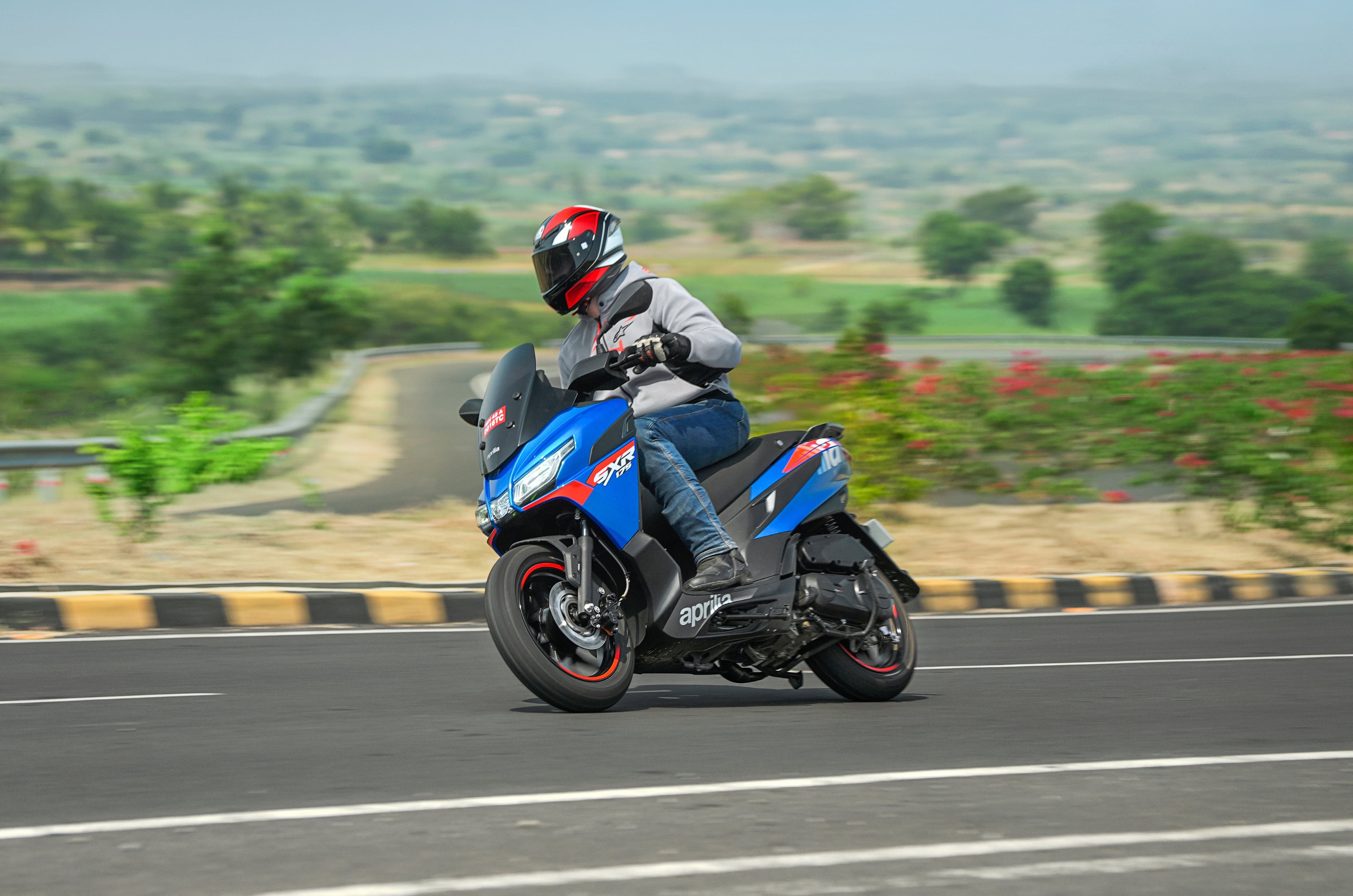
14-inch wheels bring in surefooted handling and high-speed stability but the trade-off is heavier steering at slower speeds demanding more effort
Credit where it’s due, this number may seem big on paper but in the real world its not an unapproachable machine. Our photographer Omkar (who’s 5’2) could move the scooter around at our shoot location while seated without too much trouble. However, for someone that wants a friendly and approachable machine, the 132kg SXR is not where you should be looking.
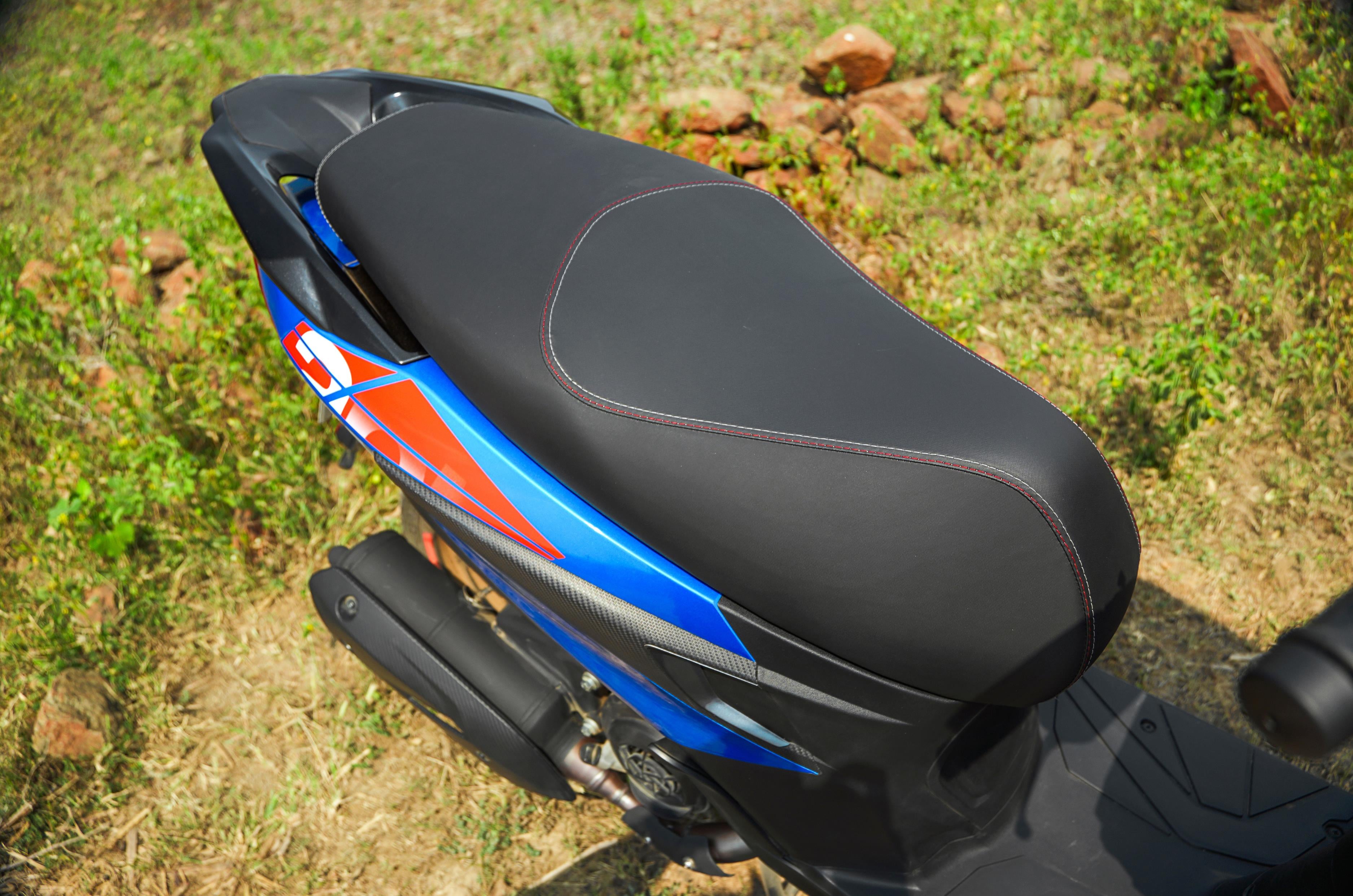
Aside from that, the SXR’s ergonomics haven’t changed and it retains the neutral and upright riding position from before. The seat’s padding is on the stiffer side, which will be especially noticeable on shorter trips but it works well for longer durations and for a person like myself that’s on the heavier side of the scale (80kg without gear). What, however, doesn’t work for a taller person like me (5’11) is that the handlebar is placed a tad low and fouls my knees when making lock-to-lock u-turns.
Neutral and upright ergonomics are unchanged from before; spacious seat’s padding is on the stiffer side
Aprilia SXR GT 175 Performance – 8/10
Engine provides sprightly performance, is smooth at high speeds
While practicality and convenience are one half of the story when it comes to a scooter like this, what plays an equally important role is how the scooter rides and handles. It will probably not come as any surprise to you when I say that this is surely a fun scooter.
From the moment you thumb the starter and the motor settles into its gruff idle, the 174.4cc, 3-valve motor makes its intentions quite clear – it wants to be ridden quickly. While the vibrations do subside once you get going, the engine clearly rewards energetic riding because the faster you go, the smoother it seems to get! Not just 80kph, even at a speedo-indicated 100kph, it remains absolutely smooth at all the touch points with no signs of protest. For all you top speed nuts, we were able to see an indicated 110kph on the display before the rev limiter kicked in.
Sprightly 174.4cc engine shared with SR 175 has enough performance to placidly sustain 80-100kph
While the SXR is a quick scooter, from what I remember, it doesn’t feel as quick as the lighter and sportier SR. The 0-50kph dash is quite energetic but after that, acceleration becomes more measured. Nevertheless, this level of performance is more than acceptable for our environs and you’ll rarely wish for more power.
Aprilia SXR GT 175 Ride and Handling – 7/10
Planted and surefooted handler, but not the easiest to manage at slower speeds
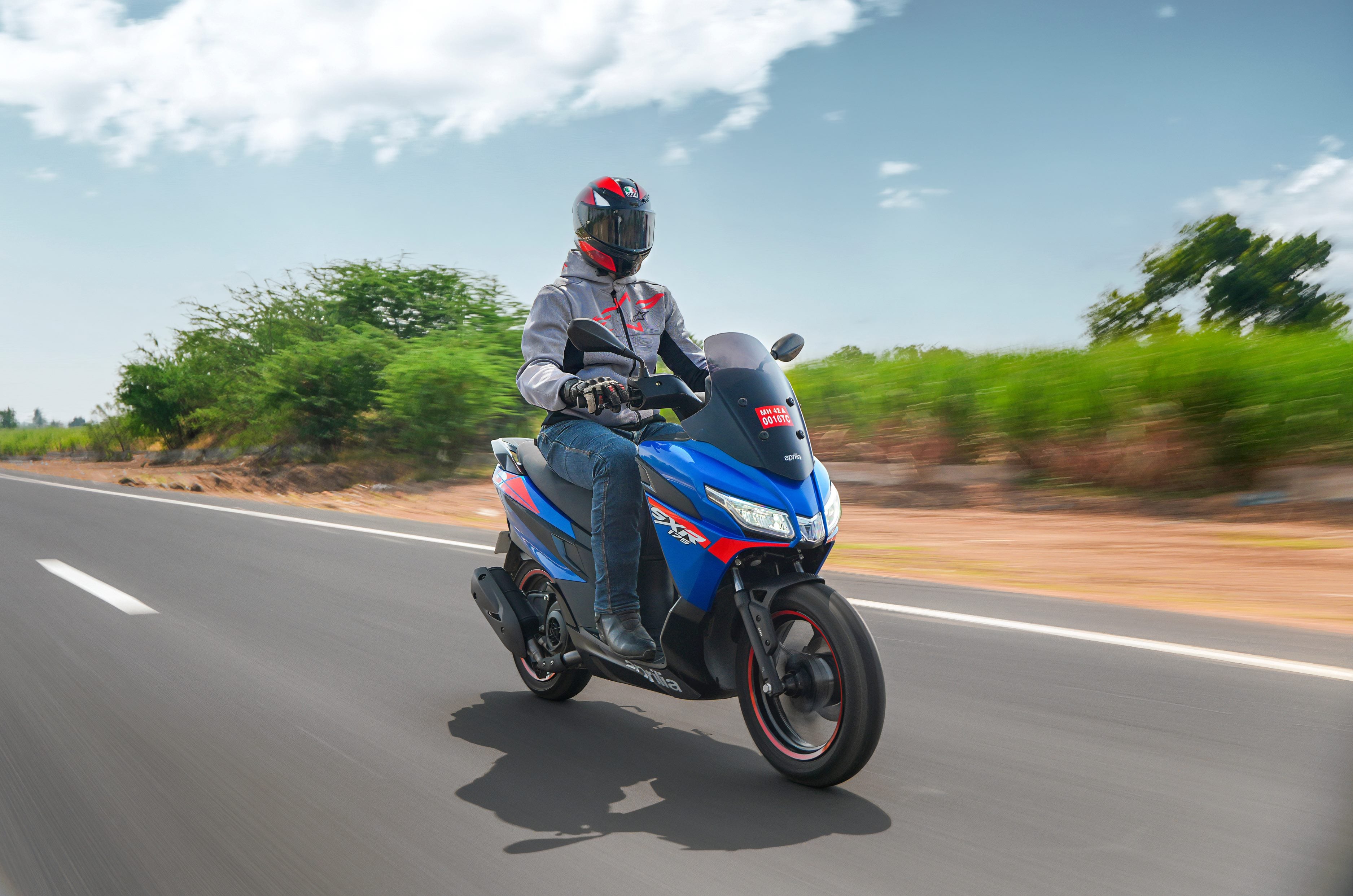
Equally as enticing as its performance is the SXR GT 175’s handling. The new and bigger 14 inch wheels lend it a newfound sense of stability around corners and at higher speeds. To ride, this feels like a proper maxi scooter experience rather than just a styling exercise. However, the tradeoff is noticeably heavier steering at slower speeds which demands quite a bit more effort. If you’re going to spend a lot of time in dense stop and go traffic that you constantly need to manoeuvre around, the SXR GT is not the ideal machine for that task.
To account for these larger wheels, Aprilia has also tuned the SXR’s suspension differently to before. The damping and shock absorption are really quite composed at the rear but the fork feels stiff and jarring over rough roads and does bottom out over larger, sharper-edged bumps. Since Mumbai’s roads are dominated by these conditions, we’re not sure how comfortable the SXR GT will be there, but hope to find out soon.
It sticks to the Aprilia SXR formula of giving you a decently-priced, good-looking scooter with both functional practicality and zippy performance
Well-priced and stands out but its not for everyone
In the scooter segment, Aprilia operates in its own niche where people that really value style and performance continue to choose its offerings over mainstream options. We don’t see that changing with the SXR GT because even though it is more well-rounded than its sporty SR sibling, it still has some hurdles to overcome both on the product’s as well as the after-sales side and fresh styling would have helped increase the appeal after all these years. Nevertheless, the company assures us it is working on the after sales front and it aims to have 250 showrooms in India before the year ends, up from the current 230. Still, that’s vastly lower than the sales reach of Aprilia’s rivals.
To sum up, this latest iteration hasn’t really diverged from what has been the cornerstone of the Aprilia SXR formula – to give you a decently-priced, good-looking scooter with both functional practicality and zippy performance. Speaking of price, the SXR GT 175 is priced at Rs 1.30 lakh (introductory, ex-showroom, Maharashtra) which is a pretty decent price considering what it brings to the table. If you must have a stylish and fun scooter that stands out of the crowd without breaking the bank, the Aprilia SXR GT should be on your radar.
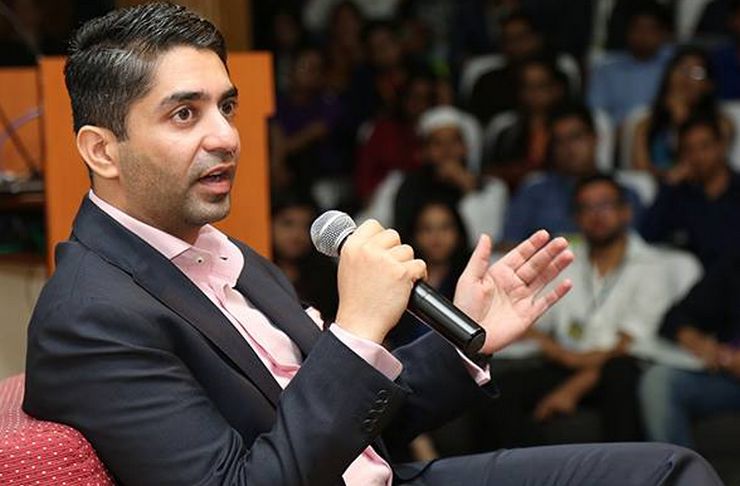
भारत के महान निशानेबाज अभिनव बिंद्रा ने शुक्रवार को कहा कि देश को ऐसे खिलाड़ियों की जरूरत है जो अपने ही काम पर, उन्हें बताई गई प्रक्रिया पर और उस ढांचे पर सवाल उठाये जिसमें वह काम करते हैं।बीजिंग ओलंपिक 2008 में व्यक्तिगत स्पर्धा का ओलंपिक स्वर्ण जीतने वाले पहले भारतीय बिंद्रा ने कहा कि उन्हें सफलता इसीलिये मिली क्योंकि वह सवाल पूछने का सामर्थ्य रखते थे।
उन्होंने संदर्भ का जिक्र नहीं करते हुए खिलाड़ियों को एक्स पर सलाह देते हुए कहा ,‘‘ मेरे पूरे खेल कैरियर में मैने कोचों से सवाल पूछे, सुझावों को चुनौती दी और उत्सुकता नहीं छोड़ी। इसलिये नहीं कि मैं सम्मान नहीं करता था बल्कि इसलिये कि मैं समझकर सीखना चाहता था।’’
Throughout my sporting career, I questioned my coaches, challenged ideas and remained curious. Not because I lacked respect but because I wanted to understand, learn and get better. I worry that when athletes feel they cannot speak freely, something far more troubling happens over time. They slowly stop questioning even in their own minds. And when that happens we loose something essential to sporting excellence. We need athletes who question their own work, their coaches, the methods recommended to them and the structures they operate within. Not out of defiance but out of a genuine desire to improve. What some might consider indiscipline may, in fact, be essential to growth. There is a difference between an athlete who refuses to learn and one who refuses to stop asking questions. Sport must be wise enough to recognise that difference.
उन्होंने कहा ,‘‘ मुझे चिंता है कि जब खिलाड़ियों को लगता है कि वे खुलकर अपनी बात नहीं कह सकते, तो समय के साथ कुछ कहीं ज्यादा चिंताजनक स्थिति पैदा हो जाती है। वे धीरे-धीरे अपने मन में भी सवाल पूछना बंद कर देते हैं। और जब ऐसा होता है, तो हम खेल में बेहतरीन प्रदर्शन के लिए जरूरी एक अहम चीज खो देते हैं।’’
बिंद्रा ने कहा ,‘‘ हमें ऐसे खिलाड़ी चाहिये जो अपने काम, अपने कोचों और उन्हें बताई गई प्रक्रिया पर सवाल उठा सकें। विद्रोह के लिये नहीं बल्कि बेहतर प्रदर्शन की वास्तविक इच्छा के लिये। कुछ को यह अनुशासनहीनता लग सकती है लेकिन विकास के लिये जरूरी है।’’उन्होंने कहा ,‘‘ सीखने की इच्छा छोड़ देने वाले खिलाड़ी और सवाल पूछना बंद करने वाले खिलाड़ी में फर्क है। यह अंतर समझना जरूरी है।’’
अब 43 साल के हो चुके बिंद्रा ने 2008 बीजिंग ओलंपिक में 10 मीटर एयर राइफल में स्वर्ण पदक जीता था। वह ओलिंपिक खेलों में व्यक्तिगत स्वर्ण पदक जीतने वाले भारत के पहले खिलाड़ी हैं।
वह 2010 से 2020 तक अंतरराष्ट्रीय निशानेबाजी खेल महासंघ (International Shooting Sport Federation ISSF) की एथलीट समिति के सदस्य थे जिसमें वह 2014 से इसके अध्यक्ष रहे। वह 2018 से आईओसी एथलीट आयोग के सदस्य हैं।