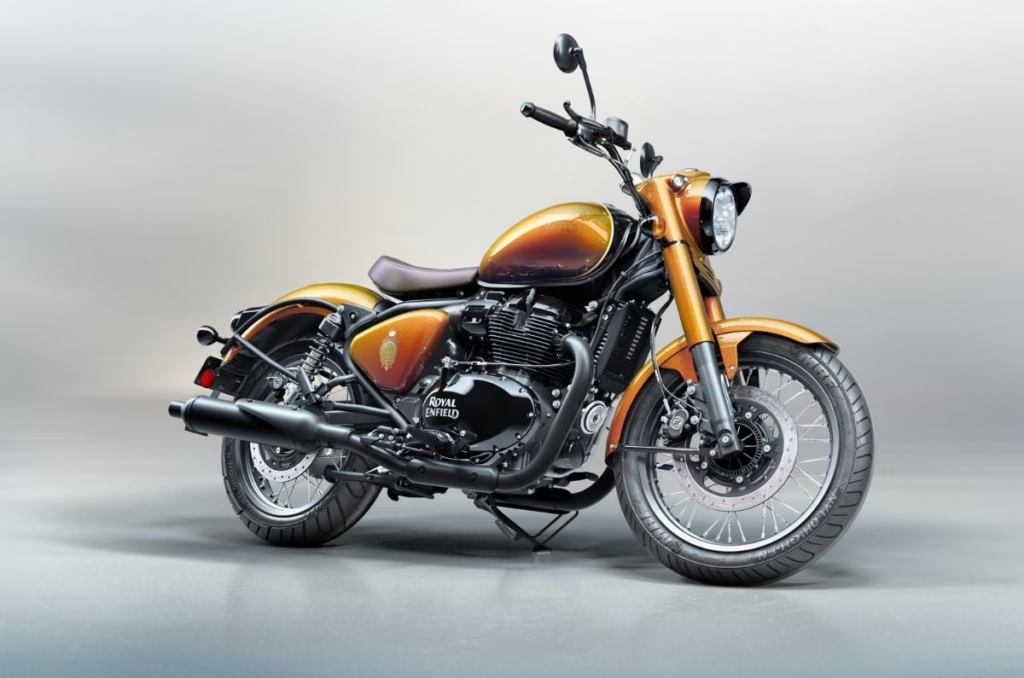
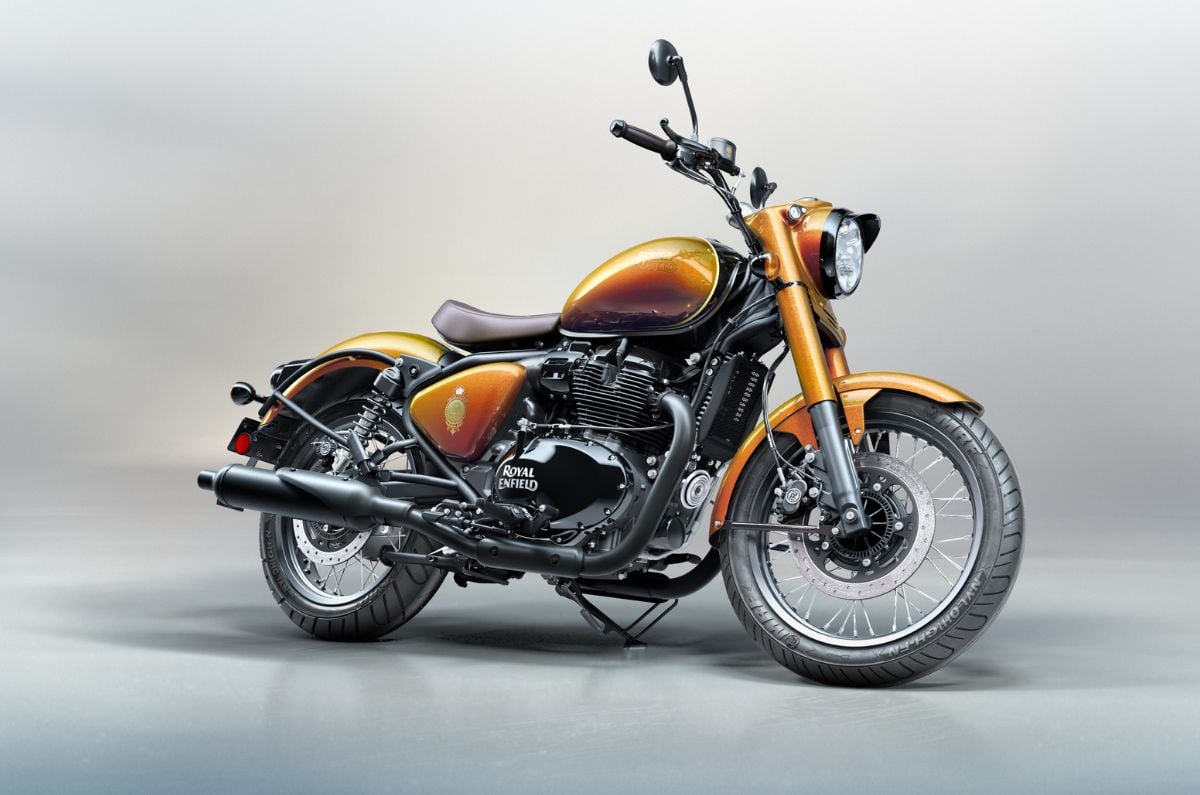
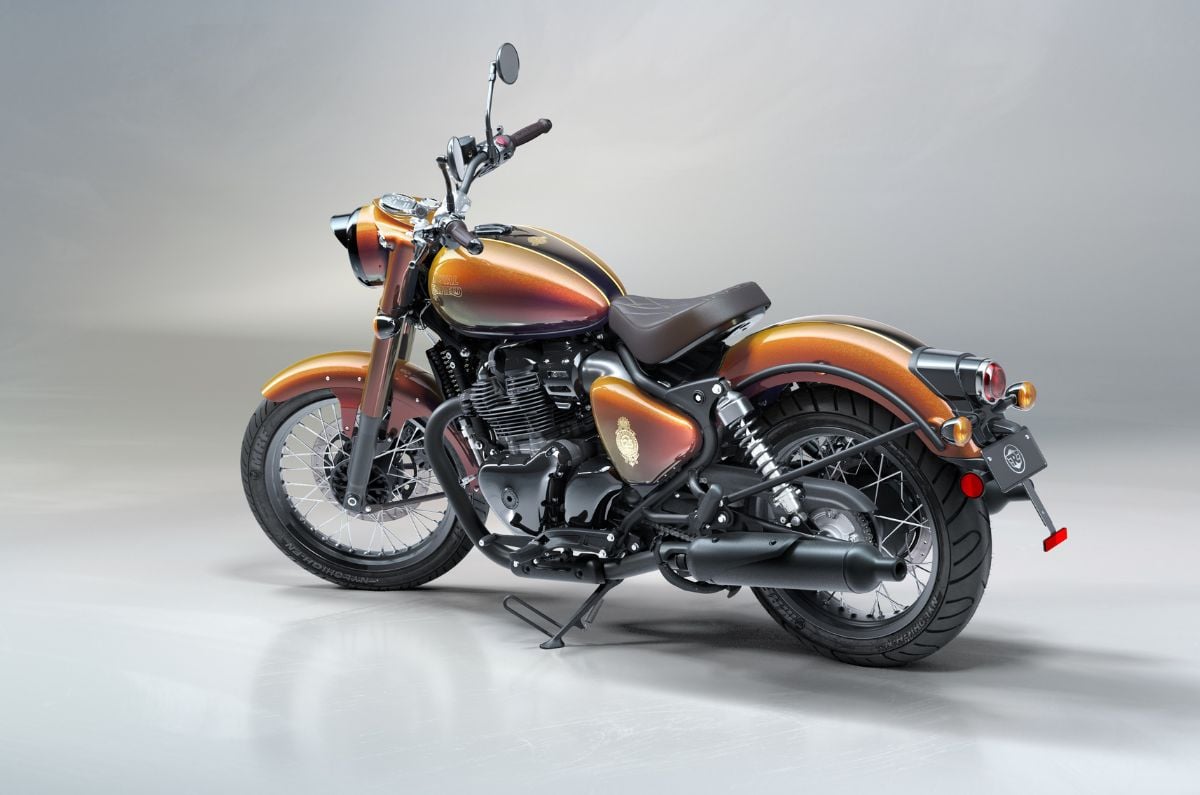
Royal Enfield has launched a special edition for the Classic 650, called Hypershift, to commemorate the Chennai-UK based manufacturer’s 125th anniversary. While there is a price, Rs 4.26 lakh, the company has clarified that it’s limited to 125 units in each of its key units, including India. Hence, interested customers will need to register to buy one; registrations will be open from today (October 16) at 2pm, till October 28, when sales begin.
All prices mentioned are ex-showroom.
Mechanically identical to the production-spec Classic 650
Costs Rs 58,000 more than the base Classic 650; Rs 43,500 more than the top
Royal Enfield Classic 650 125th anniversary edition: What’s special?
Strictly cosmetic, with exclusive Hypershift detailing
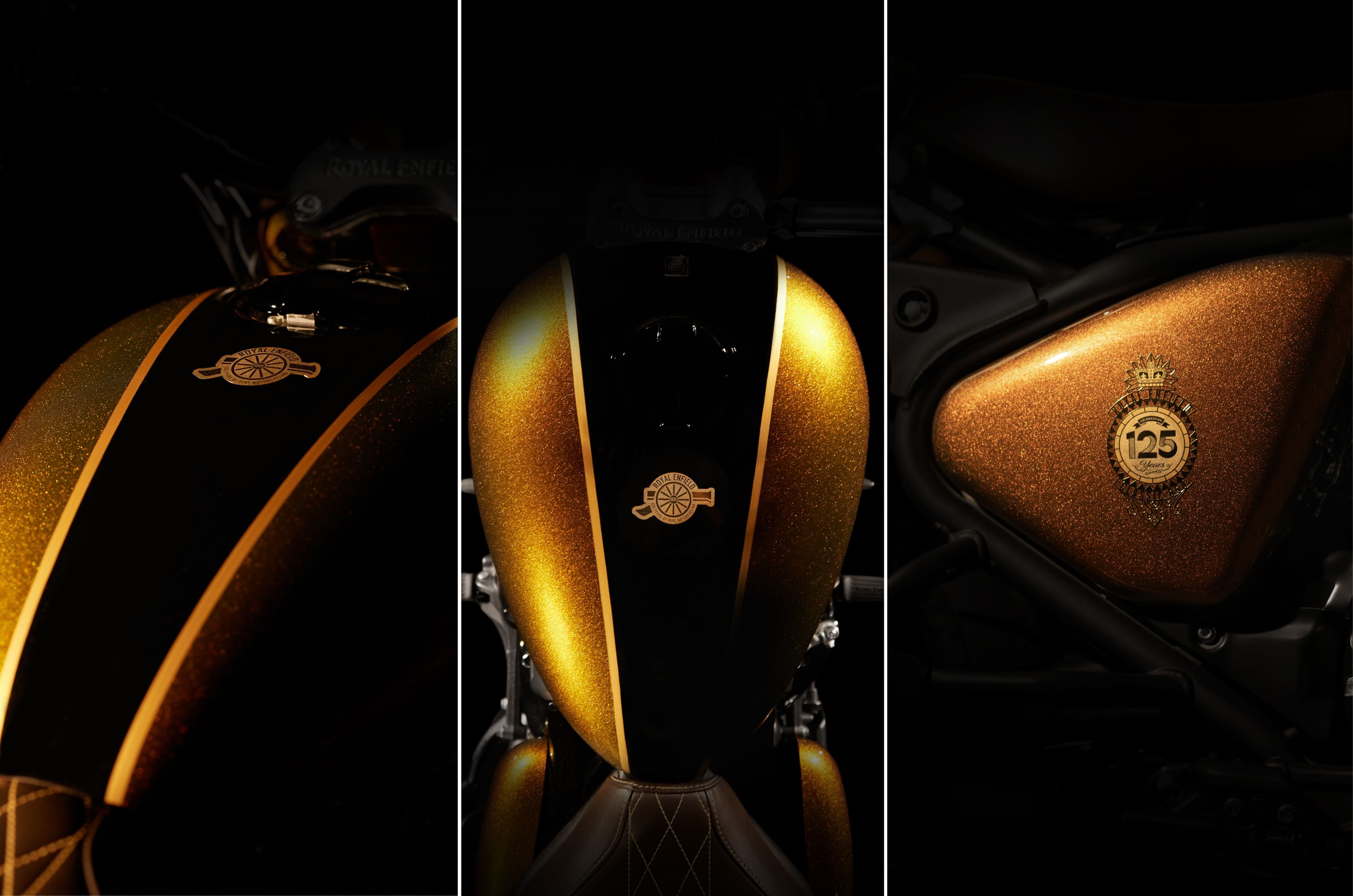
The Classic 650 Hypershift is mechanically identical to the production-spec Classic 650. There are no changes to the underlying design either. What sets it apart, primarily, is the bespoke Hypershift finish that transforms between shades of red, green and gold as light moves across the motorcycle. Complementing the finish are the additional 125-year crest on the teardrop tank, special badging on the sidepanels and of course, hand-painted pinstripes.
The Classic 650 was first launched in 2025, sharing the 648cc, air-cooled parallel twin with the Interceptor 650 and the likes, making 47hp and 52.3Nm. It has a chassis that’s derived from the Super Meteor 650, currently the most expensive Royal Enfield 650 at Rs 4.39 lakh. While the Super Meteor has a USD fork, the Classic swaps that for RSU (right side up) telescopic fork and reduces the twin-shock’s travel from 101mm to 90mm.
Classic 650 Hypershift
Classic 650 Black Chrome
Classic 650 Vallam Red/Bruntingthorpe Blue
Price (ex-showroom)
Rs 4.26 lakh
Rs 3.82 lakh
Rs 3.68 lakh
The Classic 650 Hypershift has been priced at Rs 4.26 lakh, which is a Rs 58,000 premium over the base Vallam Red colour (Rs 3.68 lakh) and a Rs 43,500 premium over the top Black Chrome colour (Rs 3.82 lakh). For customers who are able to place an order for one of the 125 units on October 28, deliveries will begin in November.
जापान में एशियाई खेलों के दौरान चोटिल हुए भारतीय लॉन्ग जम्पर मुरली श्रीशंकर के दाहिने टखने की सर्जरी हुई है। अब उनका पूरा ध्यान 2027 के एथलेटिक्स सीज़न में वापसी करने पर है।27 वर्षीय भारतीय एथलीट ने सोशल मीडिया पोस्ट के ज़रिए इस सर्जरी की पुष्टि की। श्रीशंकर ने लिखा, “मैं बिल्कुल नहीं चाहता था कि मुझे इन सब से गुजरना पड़े, लेकिन इस बार मेरे पास कोई और विकल्प नहीं था। कल लंदन के फोर्टियस क्लिनिक में डॉ. पीटर डी’हूघे की देखरेख में मेरे टखने की एक छोटी सर्जरी हुई।”
पिछले महीने आइची-नागोया में हुए एशियाई खेलों के दौरान, लॉन्ग जंप फाइनल में श्रीशंकर का टखना चोटिल हो गया था। बारिश से भीगे रनवे पर, अपने चौथे प्रयास के लिए तैयार होते समय वे टेक-ऑफ बोर्ड पर फिसल गए, जिससे उनके दाहिने टखने में मोच आ गई। उन्होंने अपने इंस्टाग्राम पेज पर इस घटना का एक वीडियो भी पोस्ट किया। इस चोट के कारण उन्हें अपने आखिरी दो जंप छोड़ने पड़े, लेकिन दूसरे राउंड में लगाई गई 8.07 मीटर की छलांग उन्हें सिल्वर मेडल दिलाने के लिए काफी रही।
शुरुआत में श्रीशंकर को लगा कि टखने की चोट गंभीर नहीं है और आराम तथा रिहैबिलिटेशन से ठीक हो जाएगी, लेकिन बाद में स्कैन और डॉक्टरों से सलाह लेने के बाद सर्जरी की ज़रूरत पड़ी। मंगलवार को स्पोर्ट्स ऑर्थोपेडिक सर्जन पीटर डी’हूघे की देखरेख में लिगामेंट रिकंस्ट्रक्शन सर्जरी की गई। मुरली श्रीशंकर, जिनके नाम पहले लॉन्ग जंप का राष्ट्रीय रिकॉर्ड था (जिसे बाद में जेस्विन एल्ड्रिन ने तोड़ दिया), ने कहा कि वह आने वाले सीज़न के लिए तैयार रहेंगे।
श्रीशंकर ने बताया, “सर्जरी ज़रूरी थी ताकि मेरा टखना स्थिर रहे और आने वाले सीज़न के लिए तैयार हो सके। इसमें बीजिंग में होने वाली 2027 वर्ल्ड चैंपियनशिप और सबसे महत्वपूर्ण, 2028 लॉस एंजेलिस ओलंपिक शामिल हैं।”
Never Give Up! This is a true comeback of our Champion TOPS Core Athlete Shreeshankar Murali as he clinches another Silver in the Men’s Long Jump in the #CWG2026. Back to back Medals in the Commonwealth Games is not easy for an athlete who not only recovered from his career-threatening Knee injury, but aced the entire game. It is a journey of amazing spirit, dedication and perseverance. Our Proud Nation salutes your comeback Champ! Jai Hind
एशियाई खेलों, कॉमनवेल्थ गेम्स और एशियाई एथलेटिक्स चैंपियनशिप में सिल्वर मेडल जीतने वाले इस भारतीय एथलीट को हाल के दिनों में चोटों के कारण काफी संघर्ष करना पड़ा है। घुटने की चोट के कारण वह पेरिस 2024 ओलंपिक में हिस्सा नहीं ले पाए थे। लंबे ब्रेक के बाद 2025 में उन्होंने वापसी की और 2026 कॉमनवेल्थ गेम्स तथा एशियाई खेलों में सिल्वर मेडल जीते, लेकिन फिर उन्हें एक और झटका लगा।
लगातार हो रही चोटों के बारे में बात करते हुए, श्रीशंकर ने सकारात्मक नज़रिया अपनाते हुए आगे की ओर देखा।उन्होंने कहा, “आप में से कुछ लोग सोच रहे होंगे कि यह खिलाड़ी बार-बार चोटिल क्यों हो जाता है। सच कहूं तो, मेरे पास इसका कोई जवाब नहीं है। मैं इसके लिए गीले टेकऑफ़ बोर्ड या अपनी किस्मत को दोष दे सकता हूं, लेकिन इससे कोई मदद नहीं मिलेगी। इसके बजाय, जो हुआ है उसे स्वीकार करके, मैं खुद को और बेहतर बनाने की दिशा में काम करना जारी रखूंगा।” बास्केटबॉल के दिग्गज कोबे ब्रायंट के प्रशंसक श्रीशंकर ने अपनी बात खत्म करते हुए कहा, “लेकिन एक बात मैं पक्के तौर पर जानता हूं कि मुझमें वापसी करने का एक खास जज़्बा और ‘म्म्बा मेंटालिटी’ है। यही चीज़ मुझे आगे बढ़ने में मदद करेगी।”
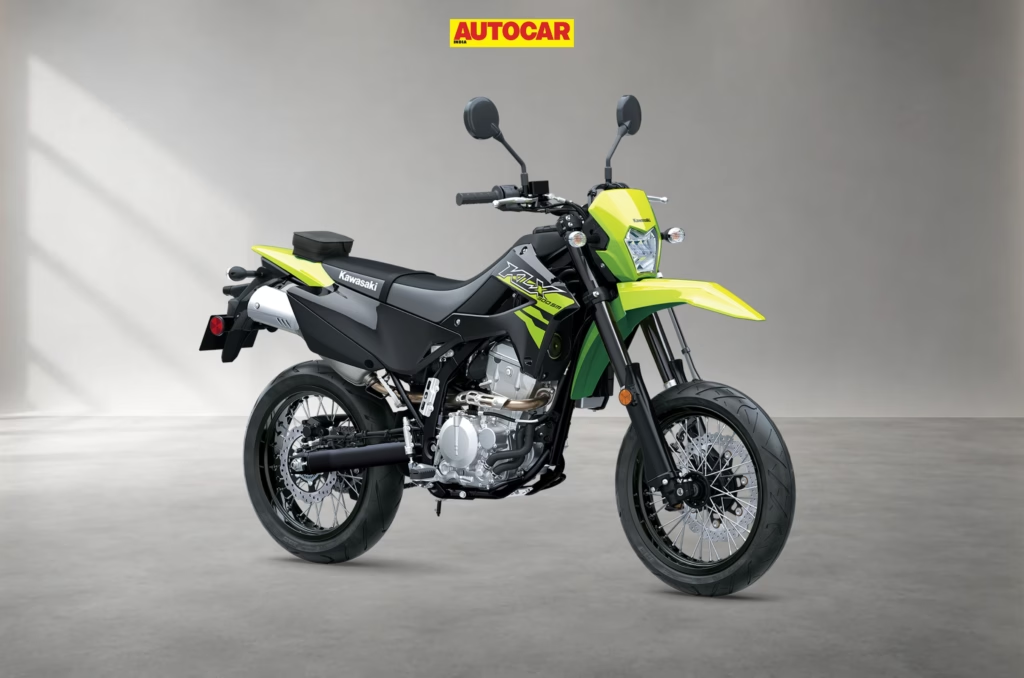
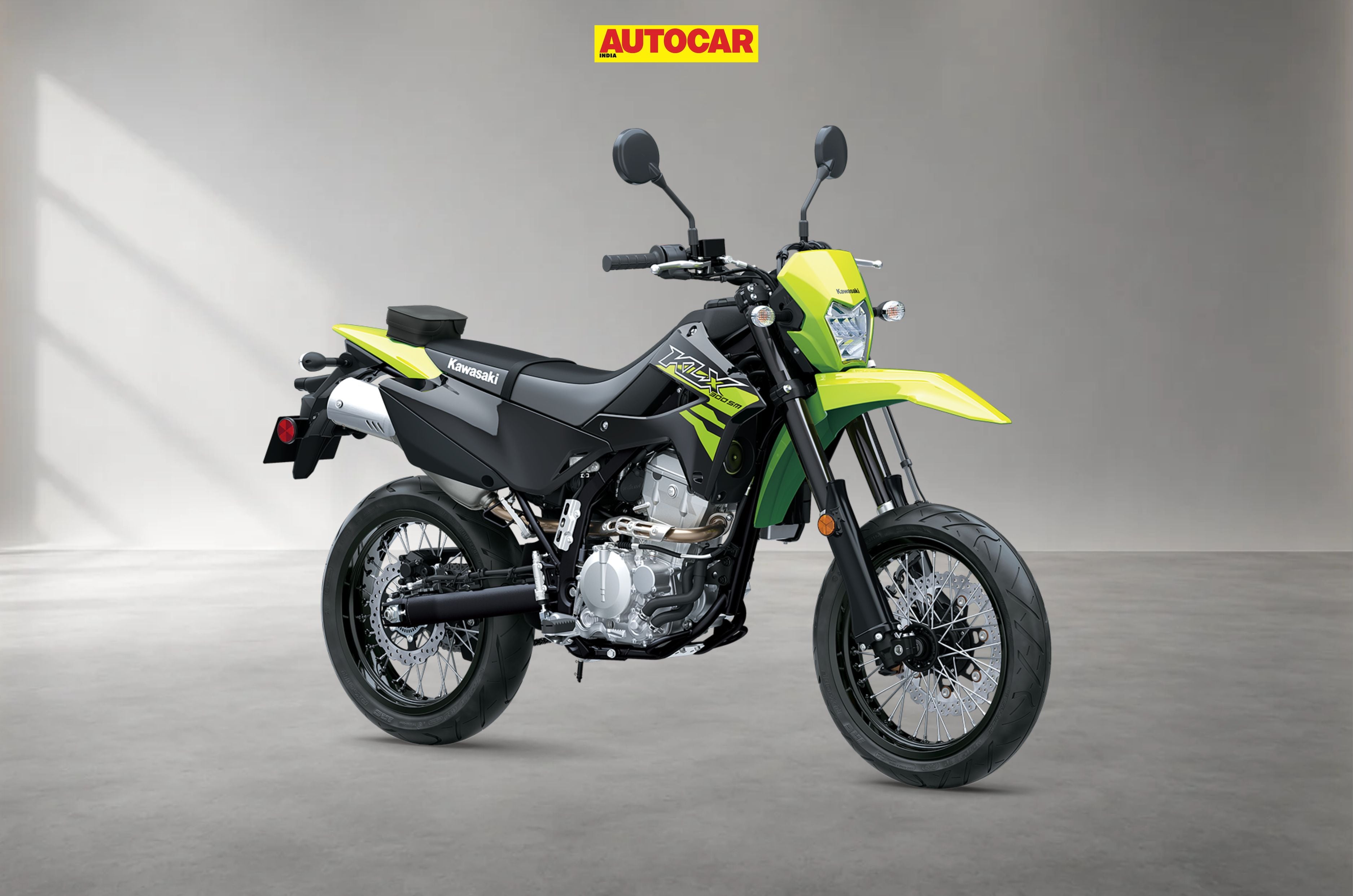
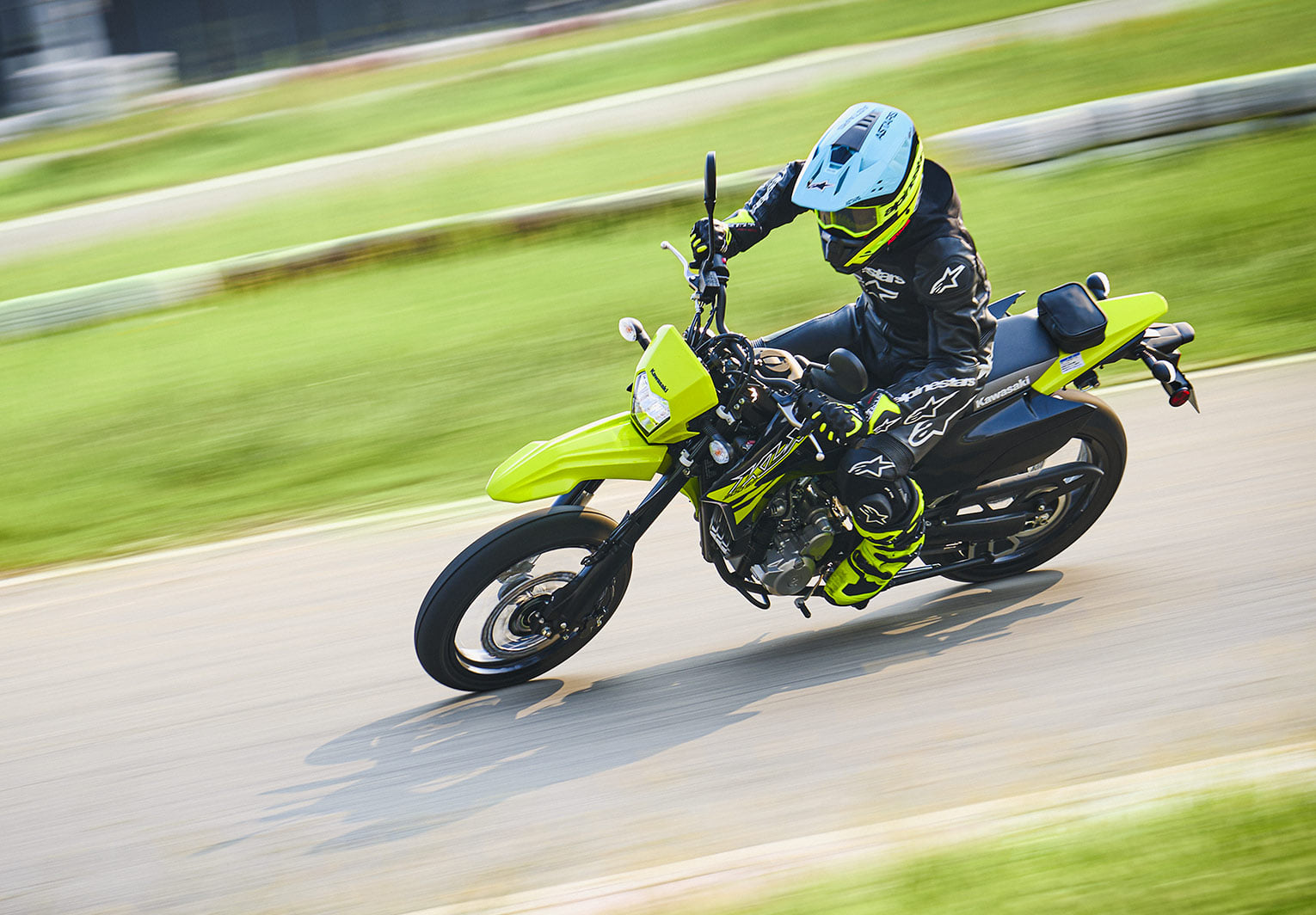
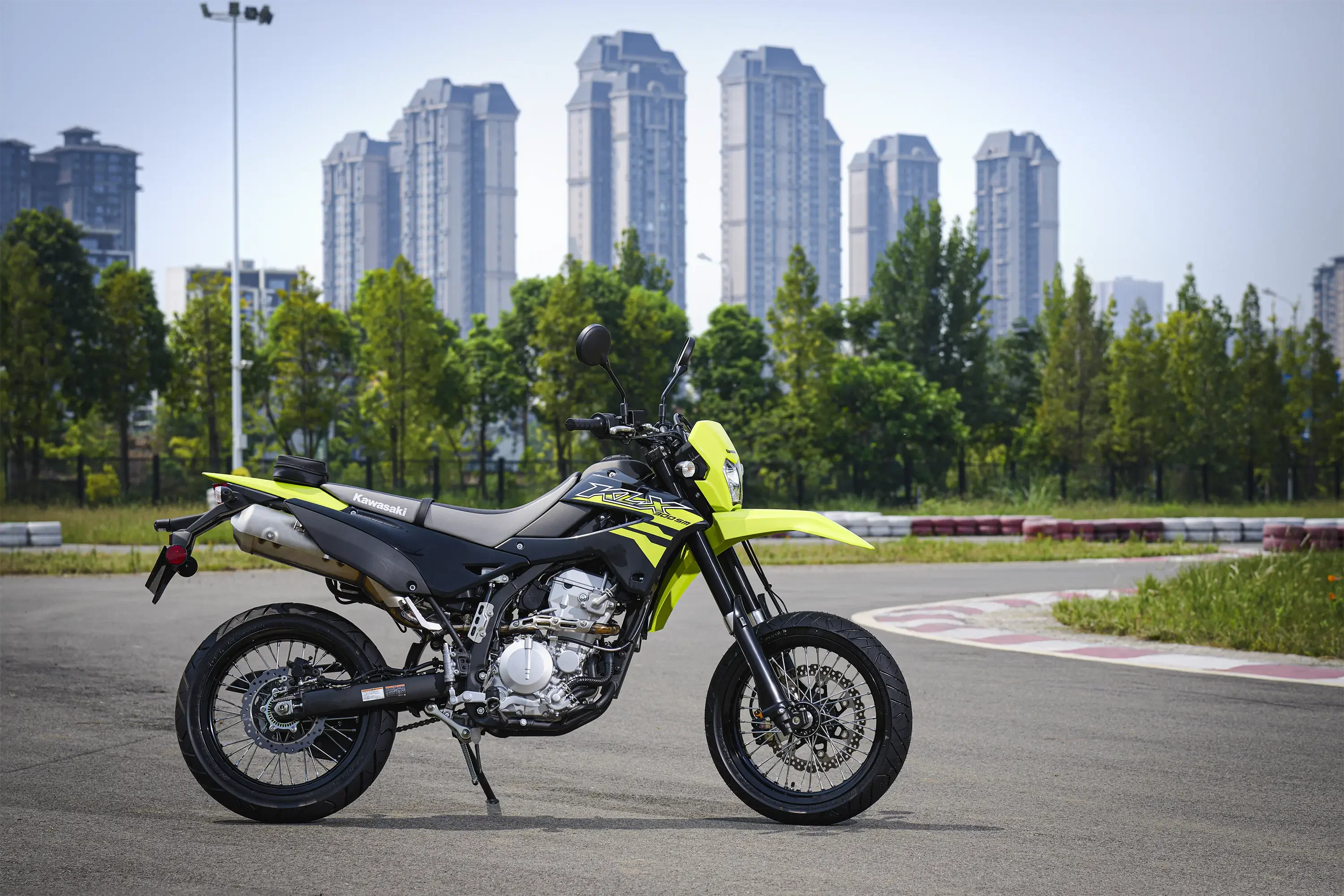
If you saw the picture and thought the KLX230 got a new variant, you’re neither alone nor correct. What we have here is the KLX300SM, Kawasaki’s supermotard for the overseas markets, and the Japanese manufacturer has just given it a minor engineering and feature refresh for 2027.
2027 KLX300SM continues with a 292cc engine but with revised internals
Not expected in India for the foreseeable future
2027 Kawasaki KLX300SM: What’s different from 2026?
The road-biased KLX230 upgrade that’s not in India (yet)
Discussing the changes is a very short affair in the KLX300SM’s case since there are only a few. First, the connecting rod big-end bearing has been changed from a needle bearing to a plain bearing, contributing to improved performance and slightly higher peak power and torque over the previous model. The single-cylinder liquid-cooled mill now makes 26.8hp and 24.9Nm compared to 25hp and 23.9Nm earlier.
Second, unlike in India, ABS is not mandatory in the US, so Kawasaki is adding single-channel ABS to the front 300mm disc for next year; the rear 240mm continues to be lockable by riders, but those who ride the KLX300SM are unlikely to complain about it. To accommodate the new ABS hardware, Kawasaki has switched from the dual radiators to a single, left-mounted radiator. However, Kawasaki says there shouldn’t be a difference in the overall cooling performance. Keeping in line with the times, Kawasaki has also updated the instrumentation and added smartphone connectivity. Through the Kawasaki Rideology app, users can connect their phone to the KLX300 for call/SMS alerts and navigation support.
Supermotards typically offer long travel suspension and a slender build with road-biased tyres, usually 17-inch, at both ends. In the KLX300’s case, it has a USD fork with 230mm travel, adjustable for compression. The monoshock with 206mm travel can be adjusted for preload and rebound. This and the road-biased wheel and tyre setup are what make supermotards a fun package. For context, the KLX230 S – Kawasaki India’s road-focused dual-sport – has 160mm travel at the front and 163mm travel at the rear.
In the US, Kawasaki has priced the KLX300SM at USD 6,399 (Rs 6.08 lakh) for its single variant, and it will be available from early December. As for India, we’re only now starting to warm up to niche categories like off-roaders, thanks to the Hero Xpulse series and KLX230 (and the Honda XR series on the horizon), so Kawasaki is unlikely to bring the KLX300SM here anytime soon. That said, it would be nice to have the KLX300SM and its refreshed dual-sport siblings in India, and more variety for the KLX230 series (there’s also a KLX230 SM!).
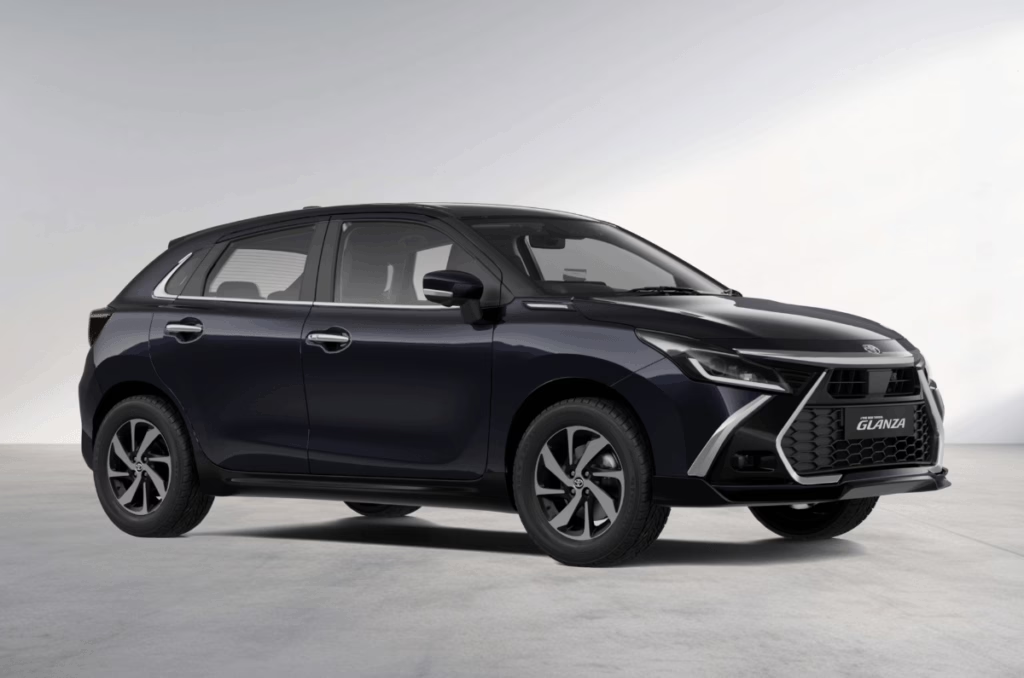
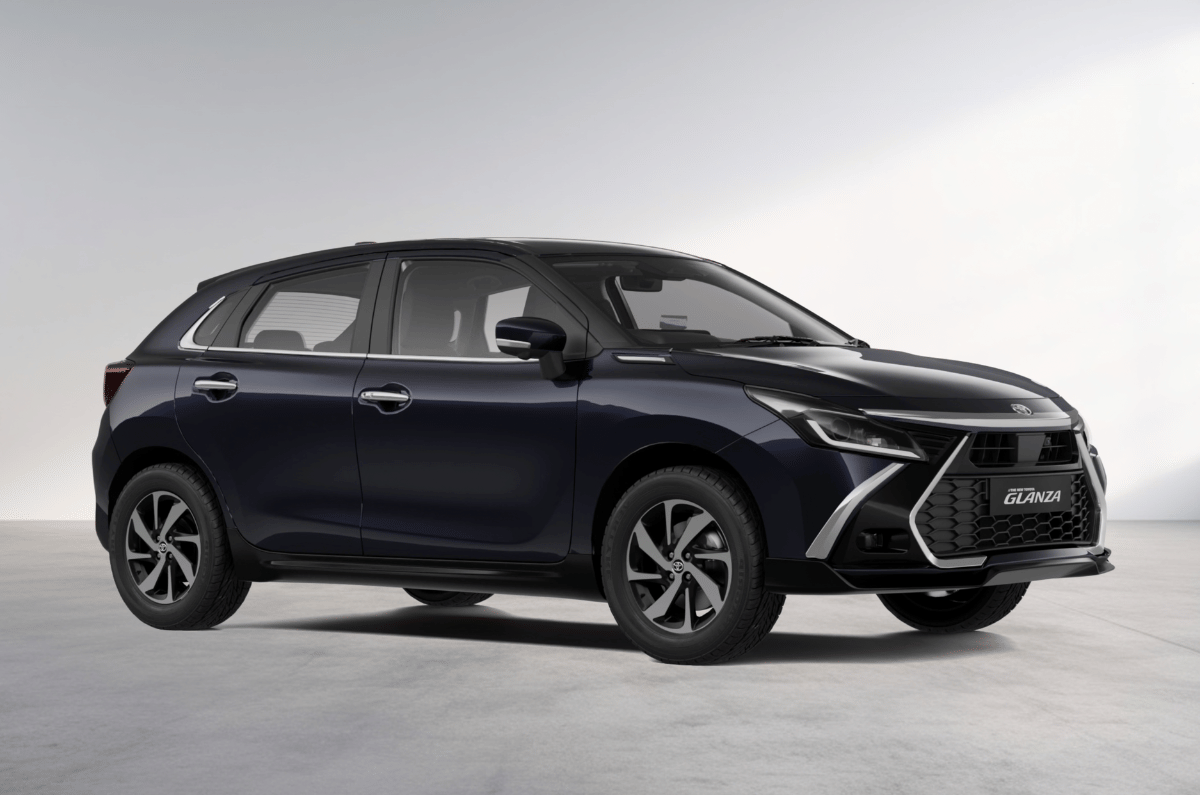
The 2026 Toyota Glanza facelift was launched in October, and it gets new powertrain options, additional features and minor design changes. However, it also misses out on a few things. Here, we look at what the updated Toyota hatchback gets right and where there is room for improvement.
Hits
More efficient powertrain
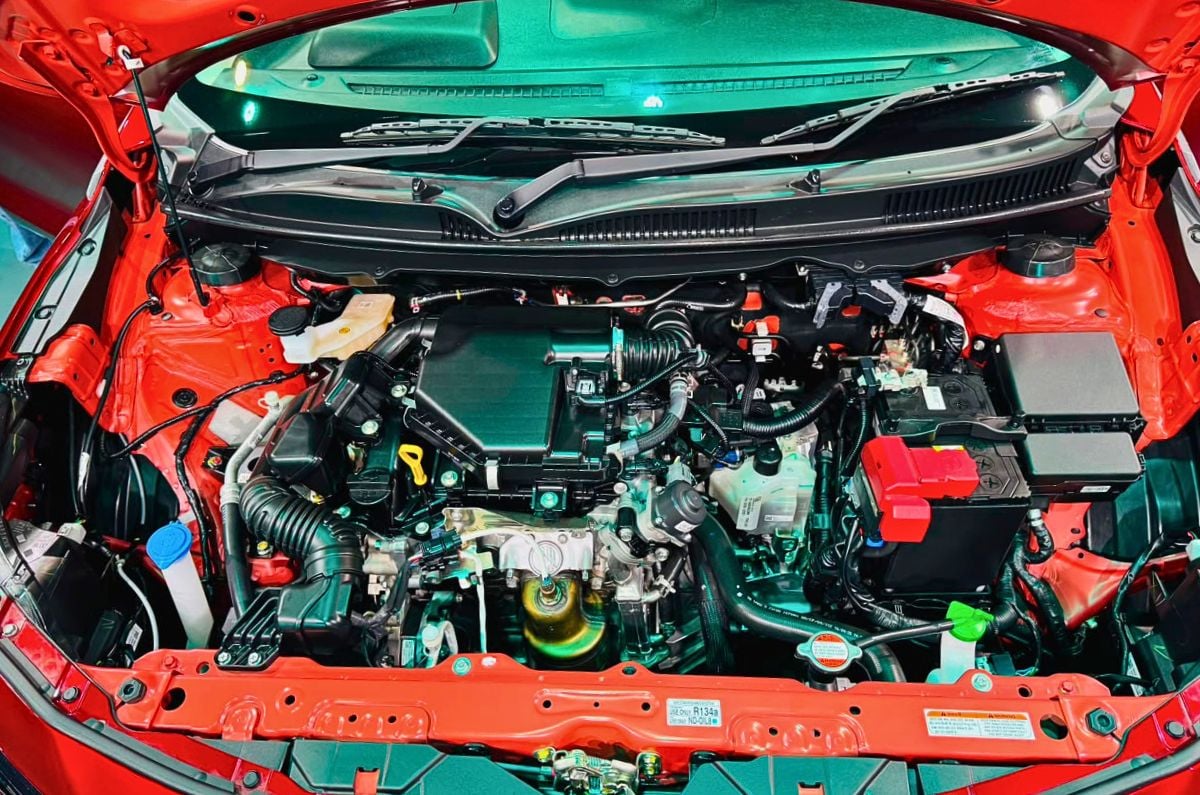
The Glanza now gets a new 1.2-litre, 3-cylinder naturally aspirated engine that runs on petrol and CNG. Compared to the previous four-cylinder engine, claimed fuel efficiency in petrol mode has improved to 23.80kpl with the manual transmission, up from 22.35kpl, and 24.77kpl with the AMT, up from 22.94kpl.
In CNG mode, the claimed mileage has increased to 33.61km/kg with the manual gearbox, up from 30.61km/kg. The new AMT option for the Glanza CNG has a claimed mileage of 34.47km/kg.
Automatic gearbox choice with CNG
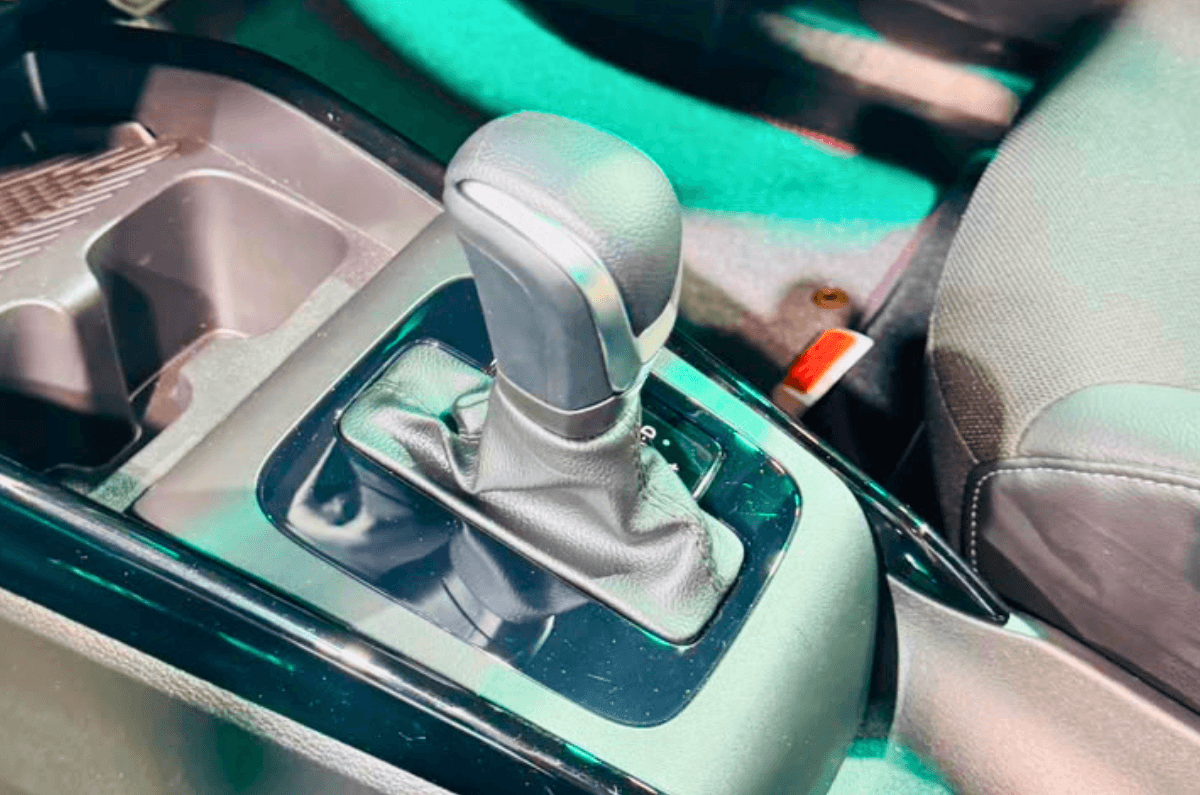
With the Glanza facelift, Toyota has introduced the choice of an automatic gearbox, an AMT in this case. Buyers who regularly commute in stop-and-go traffic will appreciate the ease of driving, along with the good fuel efficiency claimed by the carmaker.
New convenience and safety features
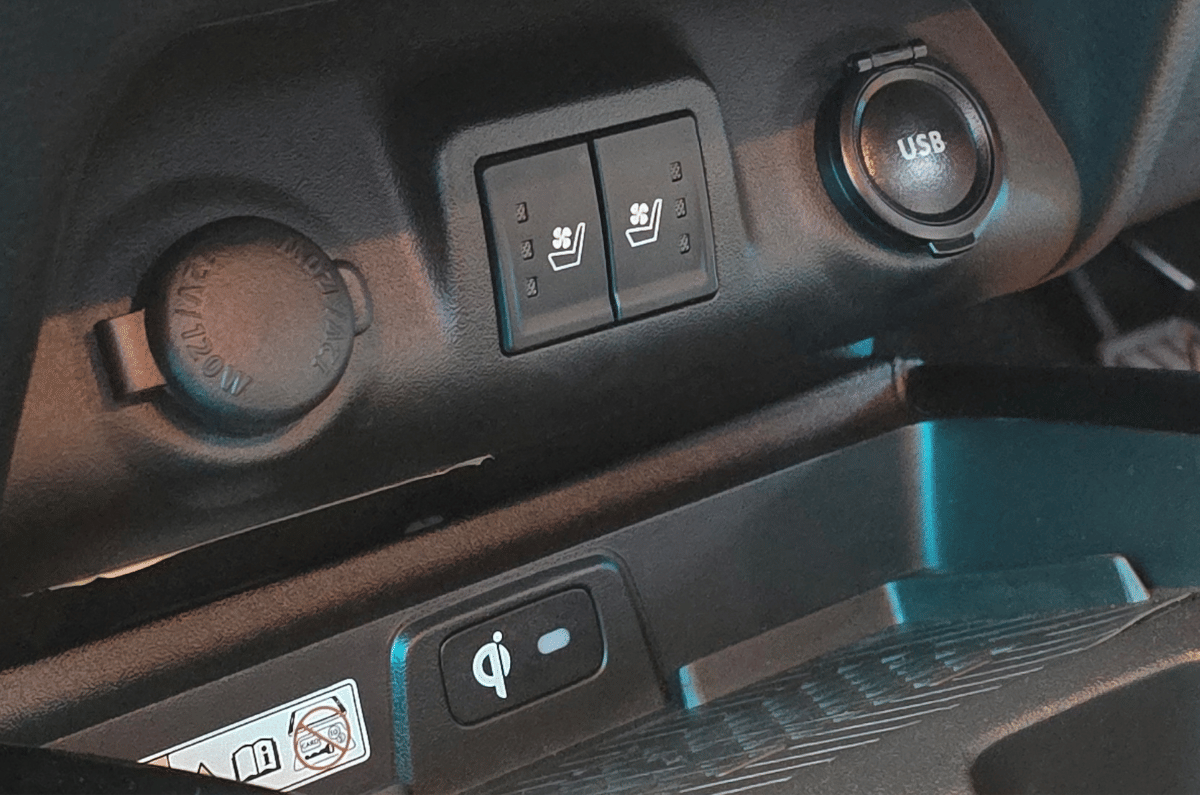
Given our climate, ventilated front seats are a welcome addition. The new Level 2 ADAS suite should also improve the Glanza’s safety quotient.
While we haven’t reviewed the new Glanza yet, our experience with the Baleno facelift gives us a reference point. During our brief test drive, the ADAS features worked as intended and felt well calibrated, without being overly intrusive. A wireless charger with ventilation has been added as well.
Continues to offer physical controls
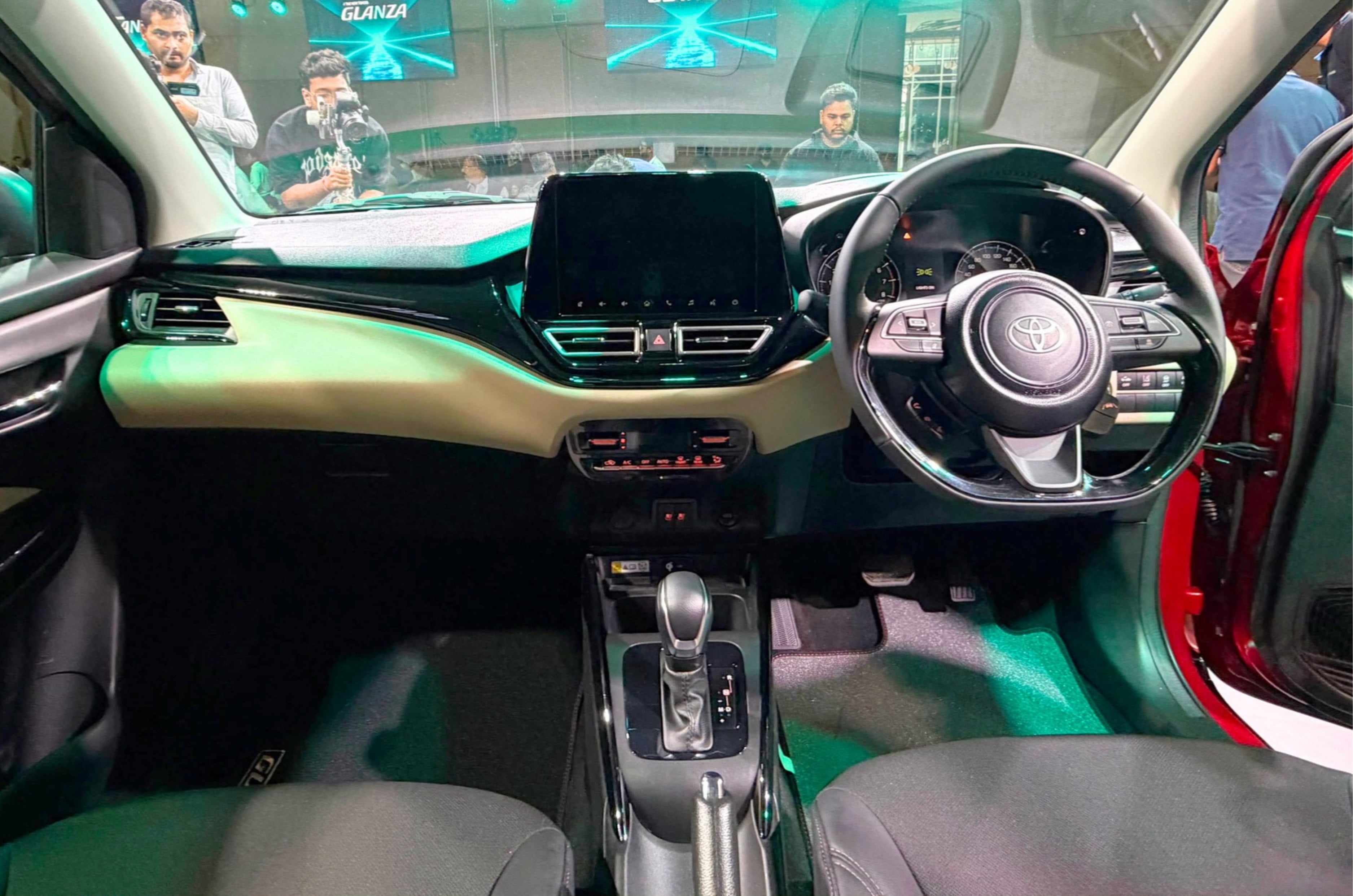
Like the outgoing model, the facelifted Glanza continues to offer plenty of physical controls for functions such as climate control and audio. These are easier to use and less distracting than accessing functions buried under multiple sub-menus on the touchscreen.
Misses
Priced comparatively higher than Baleno
Glanza vs Baleno petrol prices (Rs lakh)
Glanza petrol trim
Price
Baleno petrol trim
Price
Price difference
E MT
6.99
Sigma MT
5.99
-1
S MT | AMT
7.71 | 8.31
Delta MT | AMT
7 | 7.5
-0.71 | -0.81
G MT | AMT
8.73 | 9.33
Zeta MT | AMT
8 | 8.5
-0.73 | -0.83
V MT | AMT
9.99 | 10.59
Alpha MT | AMT
9.1 | 9.6
-0.89 | -0.99
V(O) MT | AMT
10.49 | 10.98
Alpha (O) MT | AMT
9.5 | 9.99
-0.99
Glanza vs Baleno CNG prices (Rs lakh)
Glanza CNG trim
Price
Baleno CNG trim
Price
Price difference
S MT | AMT
8.76 | 9.31
Delta MT | AMT
7.92 | 8.32
-0.84 | -0.99
G MT | AMT
9.68 | 10.23
Zeta MT | AMT
8.92 | 9.32
-0.76 | -0.91
The Glanza is pricier than the Baleno across comparable petrol variants, with the price difference ranging from Rs 71,000 to Rs 1 lakh. The gap is similar for the CNG versions, with the Toyota hatchback costing between Rs 76,000 to Rs 99,000 relatively more. Since the changes between the two are largely cosmetic, the price difference seems significant.
New engine makes relatively less power and torque
In petrol mode, the new engine produces 83hp and 112Nm, which is 7hp and 1Nm less than the outgoing model’s four-cylinder unit. In CNG mode, it produces 70hp and 102Nm. This is 7hp less but 4.5Nm more than the outgoing model. Based on our experience with the Baleno, which uses the same powertrains, the new engine doesn’t feel as peppy as the older K-Series unit or as strong at higher revs.
Misses out on some features offered by rivals
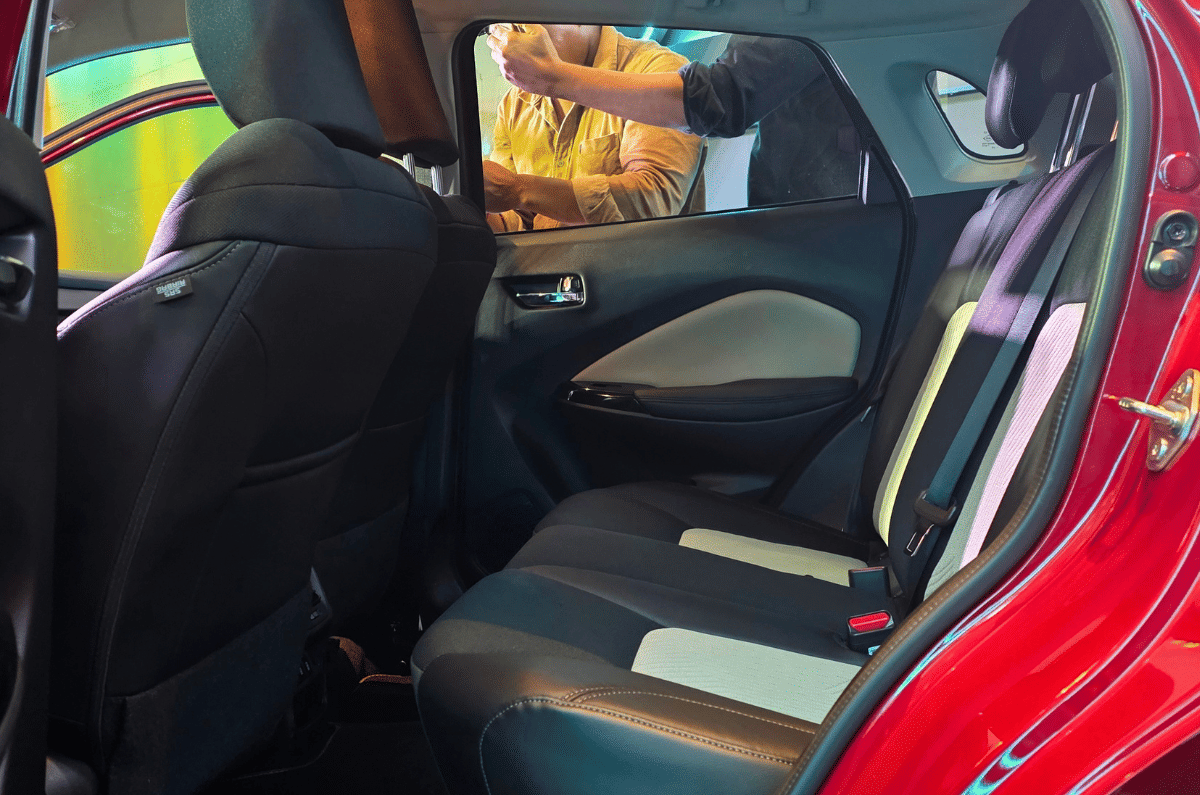
A rear centre armrest would have improved passenger comfort in a premium hatchback like the Glanza, and a single-pane sunroof would also have added to its appeal. Both features are available on its direct rivals, the Tata Altroz and Hyundai i20.
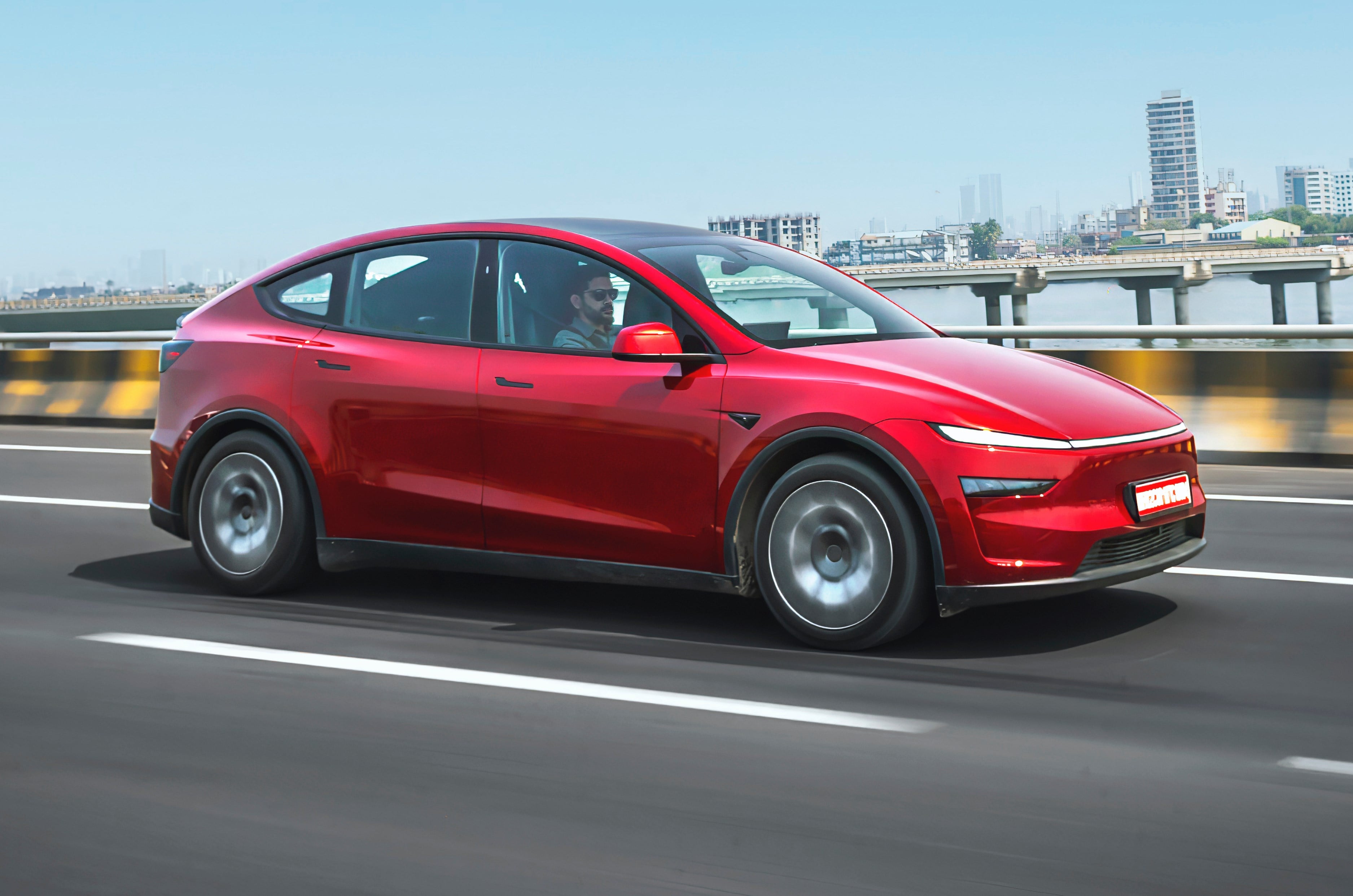
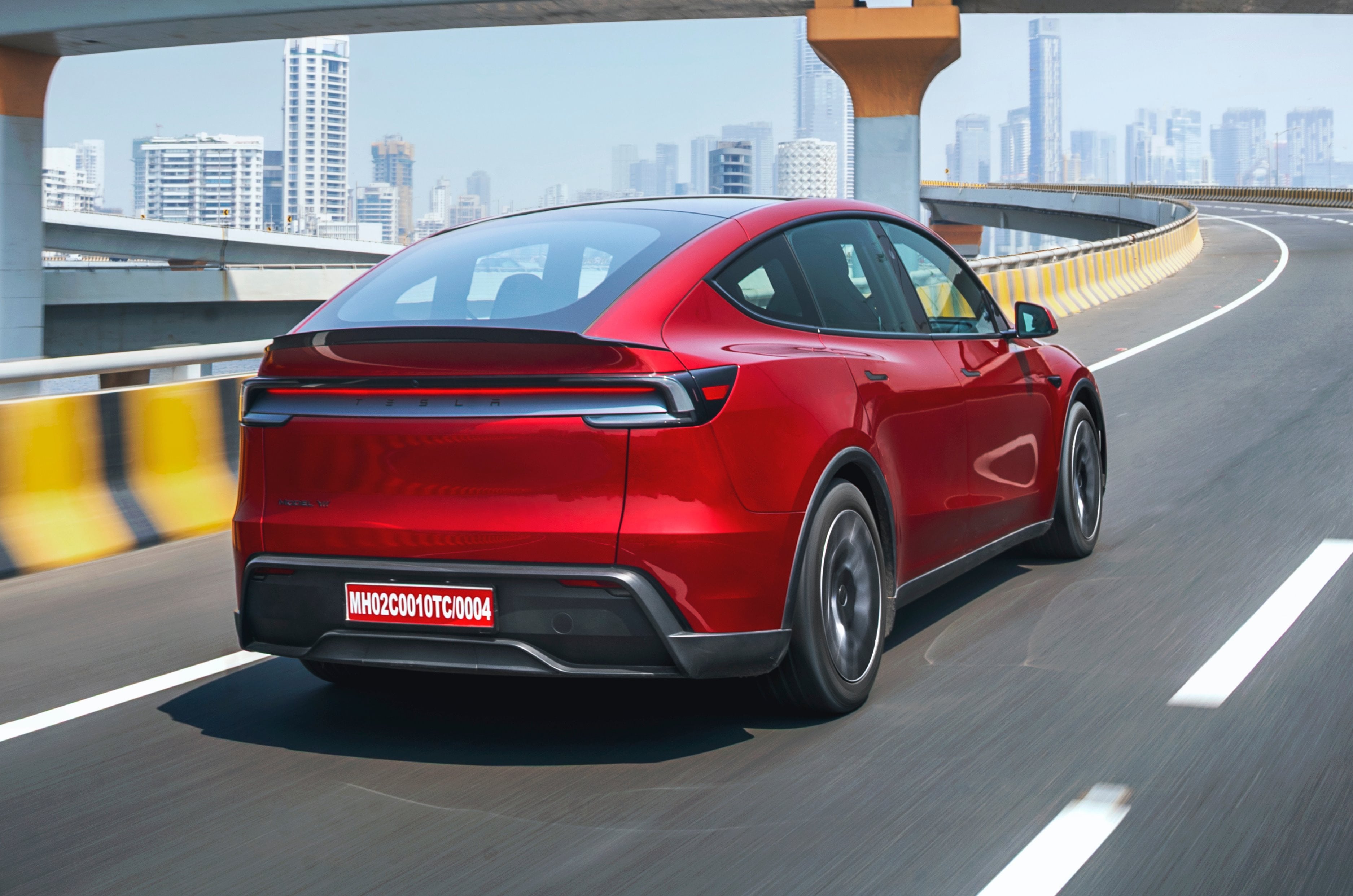
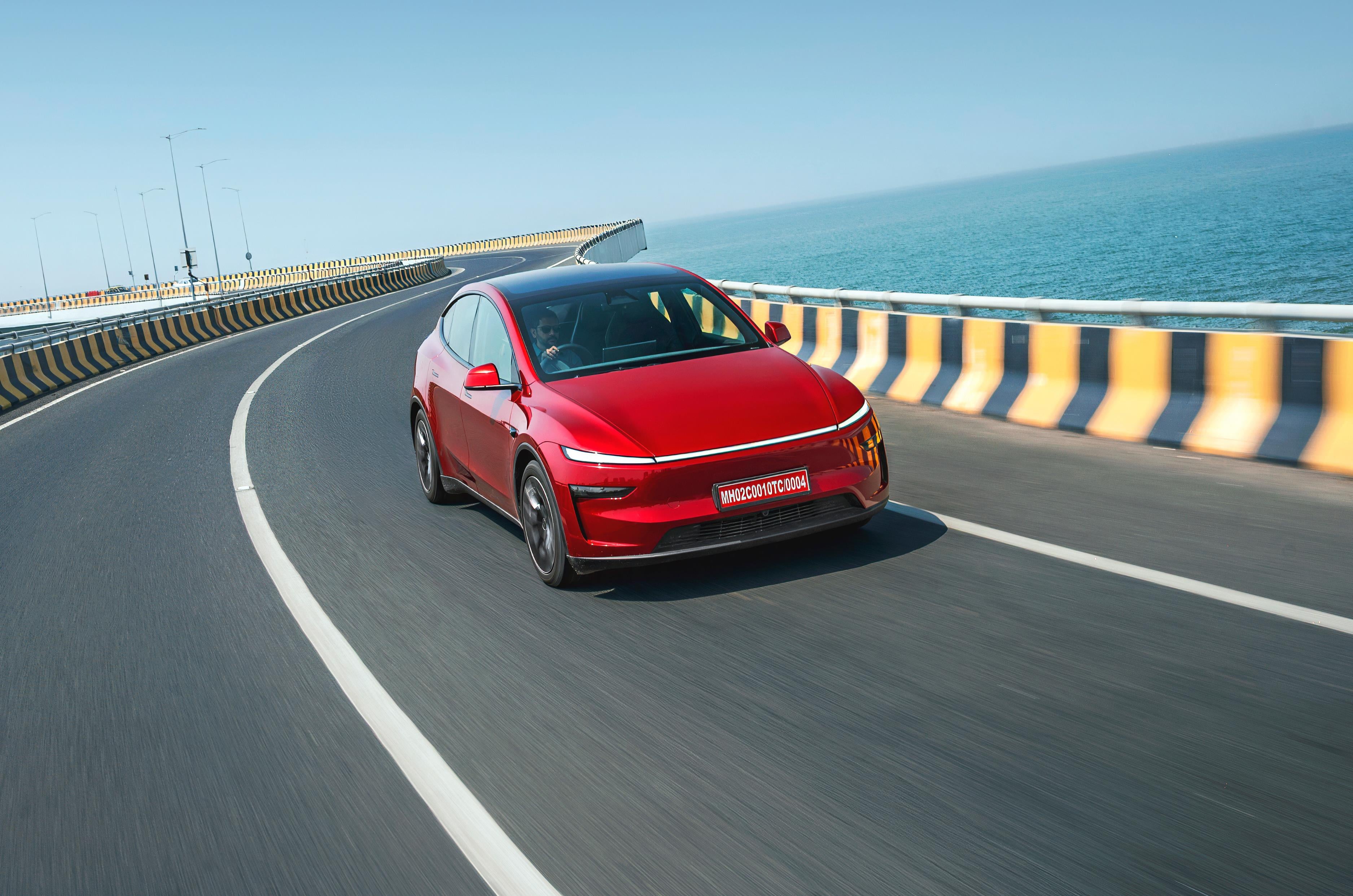
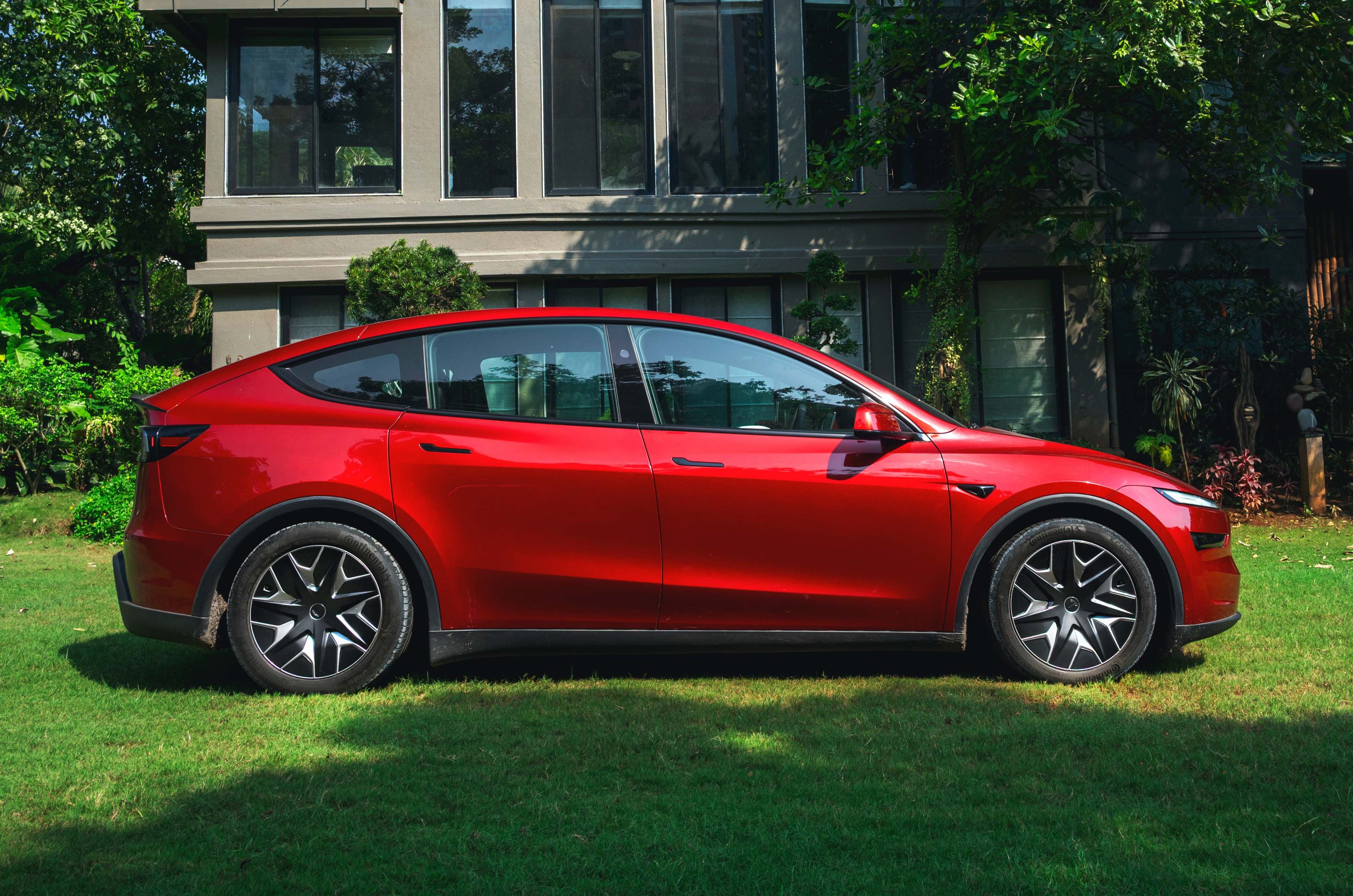
The Tesla Model Y is a tech-loaded electric crossover that prioritises cabin space and performance over everything else. The new Model Y L takes that formula a step further, adding a third row of seats, a longer wheelbase, more power with an all-wheel drive setup, more range and more sophisticated suspension as well. Given the additions, naturally it costs more than the standard-wheelbase, real wheel drive versions, but is the Y L actually worth the extra outlay?
Model Y Exterior Design and Engineering – 6/10
Appears near-identical to the Model Y, but the Y L is longer, taller and has a longer wheelbase.
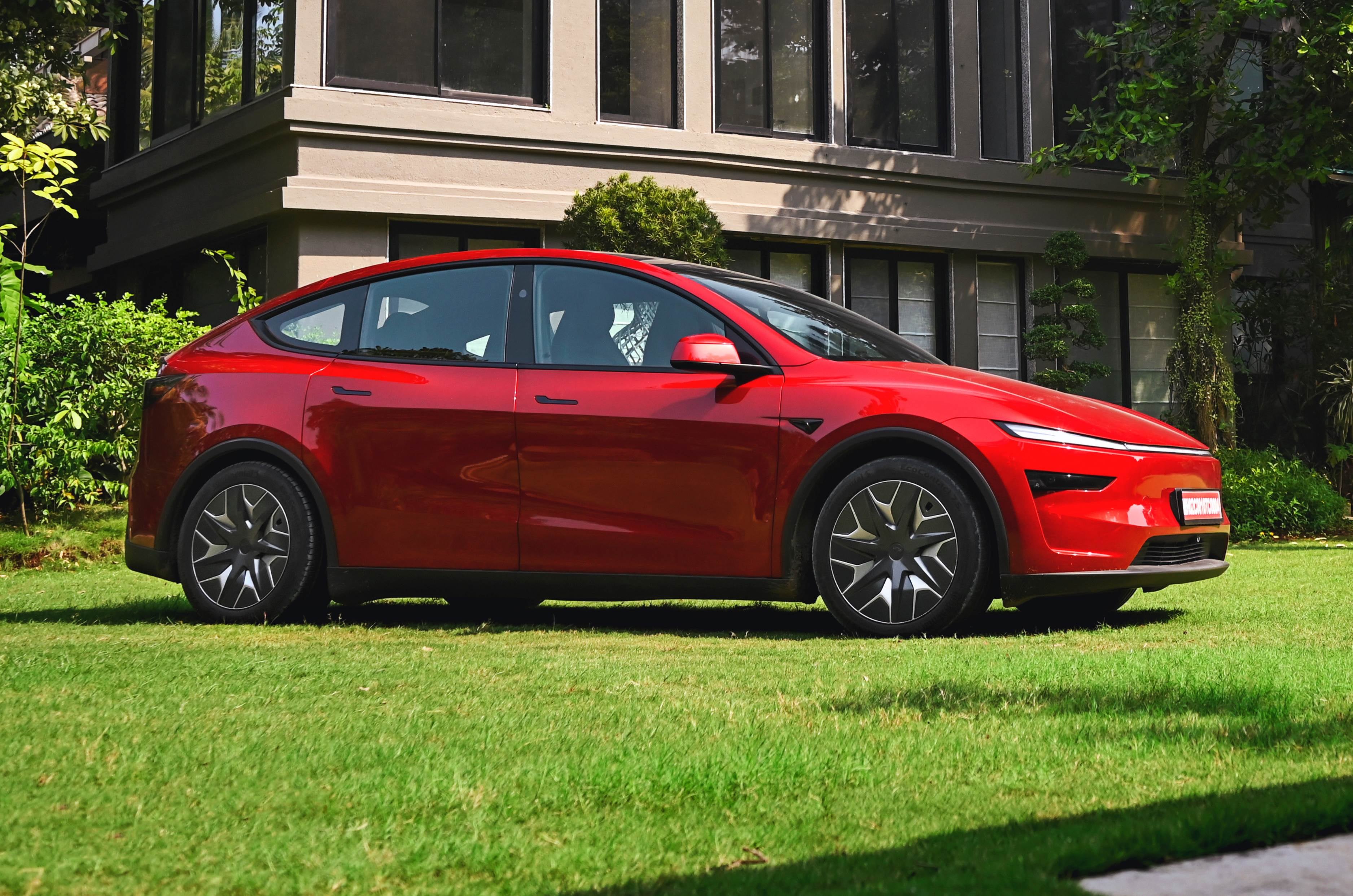
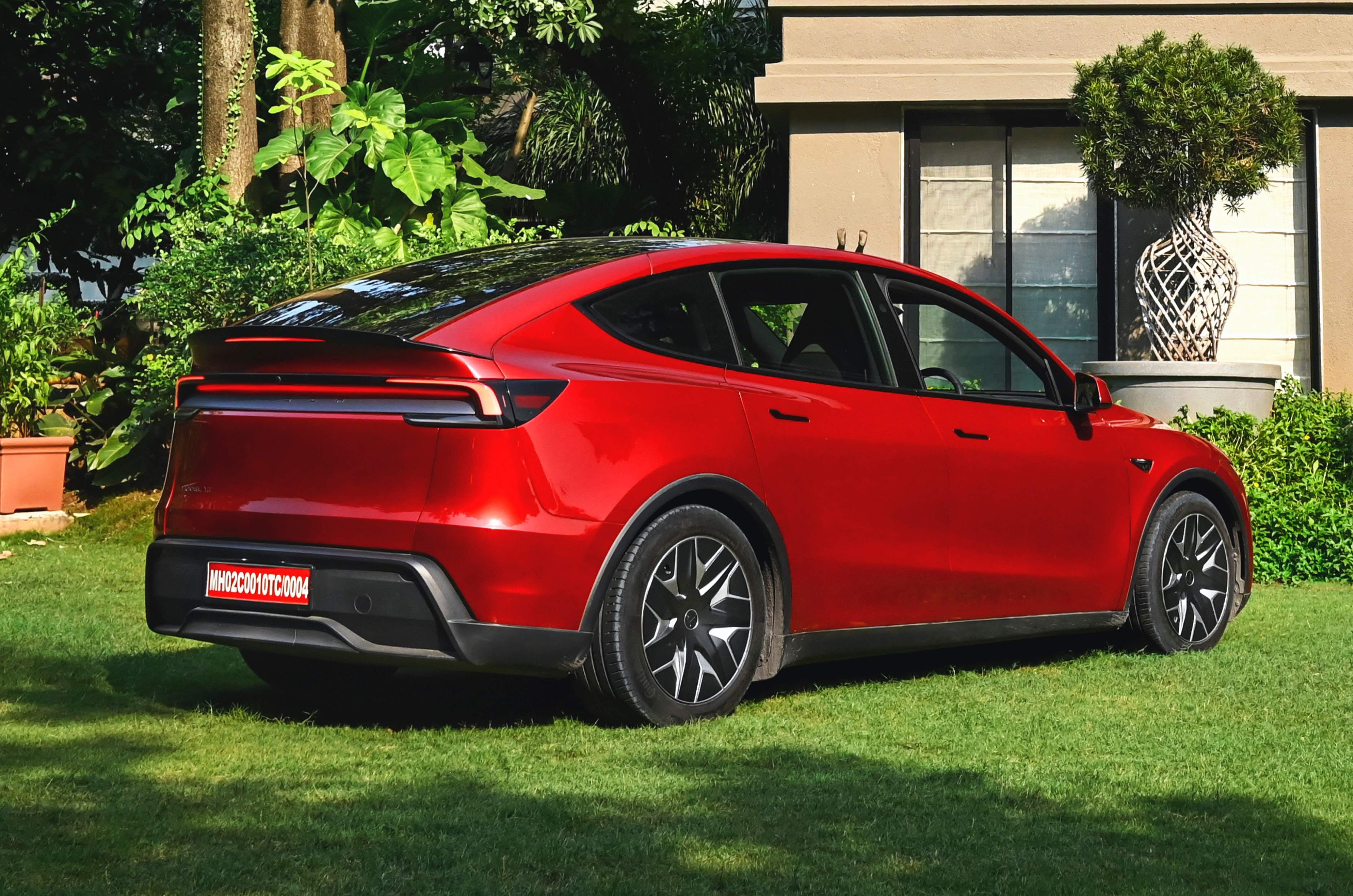
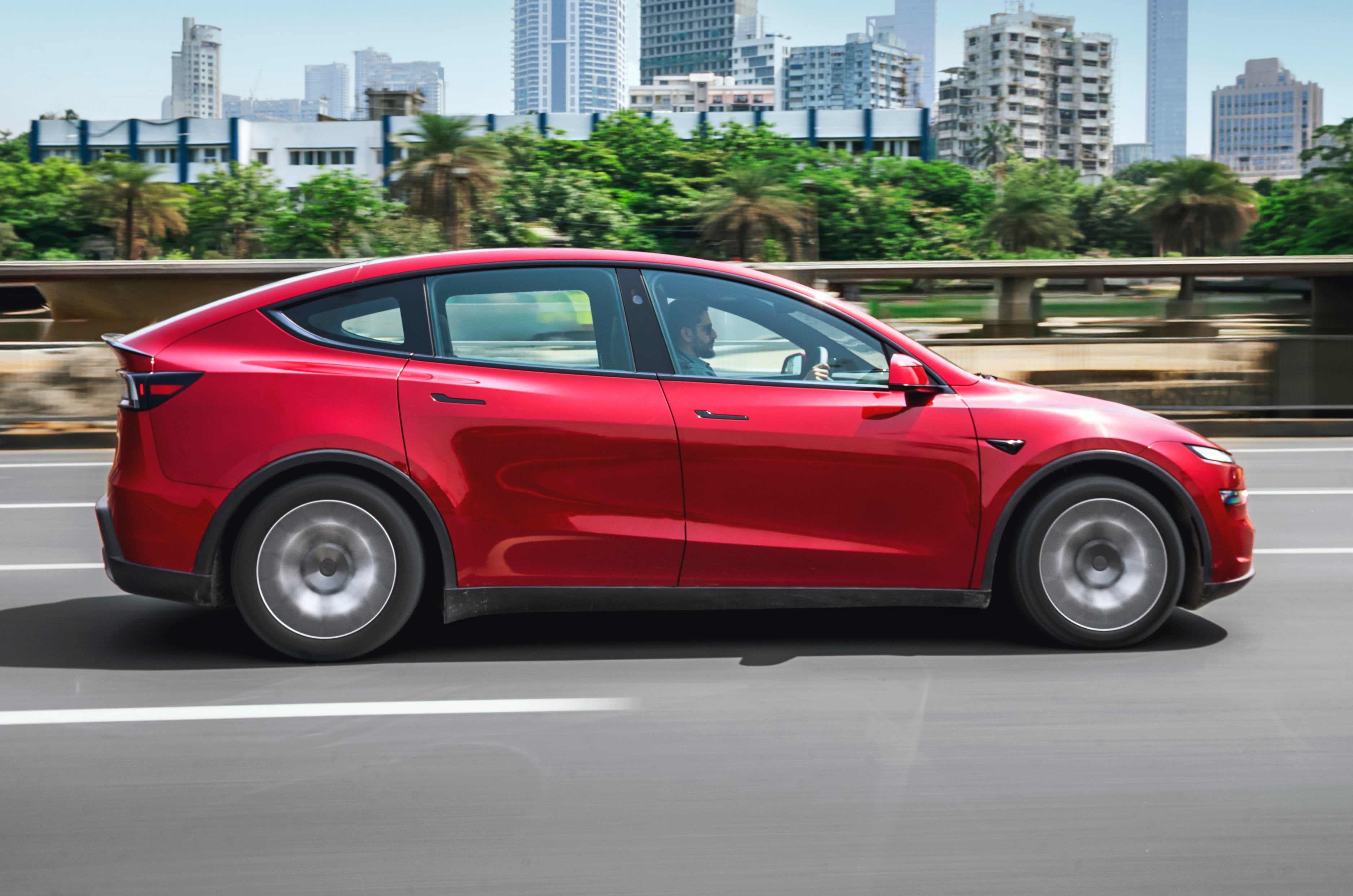
At first glance, the L looks very familiar to the Model Y, but this version looks noticeably larger from the side and rear. The Model Y L measures 4,969mm in length and 1,664mm in height, 1,982mm in width with a 3,040mm wheelbase, which makes it 179mm longer overall and 40mm taller than the Model Y, and it also has a 150mm longer wheelbase. At 166mm (unladen), the Y L has decent ground clearance but considering the longer wheelbase, you have to be extra careful going over big speedbreakers otherwise you will end up scraping the belly.
The growth in dimensions is particularly apparent in the raised and extended roofline, plus the expanded rear glass and rear-quarter glass area. The other changes include a new bootlid spoiler and the 19-inch alloy wheels have a more enclosed design, both in the interest of further aero optimisation.
Other than that, the smooth, aerodynamic silhouette with minimalist detailing and distinctive lighting elements remain. The overall design is unmistakably Tesla, although the extra length gives it slightly more road presence. That said, the Model Y L doesn’t suddenly become a traditional SUV just because it has grown. Its rounded, slightly anonymous shape with clean surfacing continues to favour aerodynamic efficiency over visual appeal. But it looks distinctive and as such, has carved out a niche for itself in terms of design.
Model Y Interior Space and Comfort – 8/10
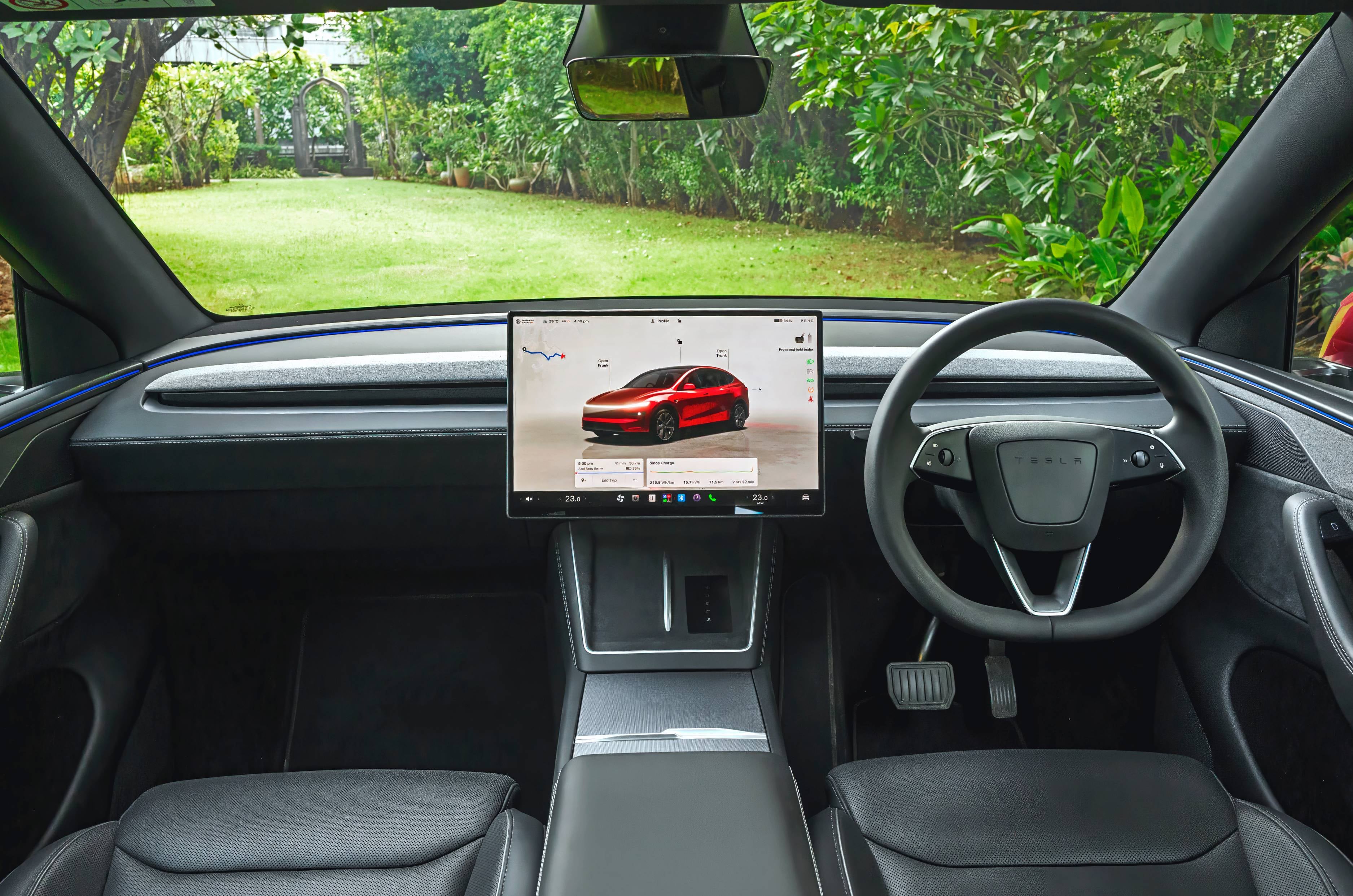
Minimalist design remains the same, save for a new textured finish on top of the dashboard.
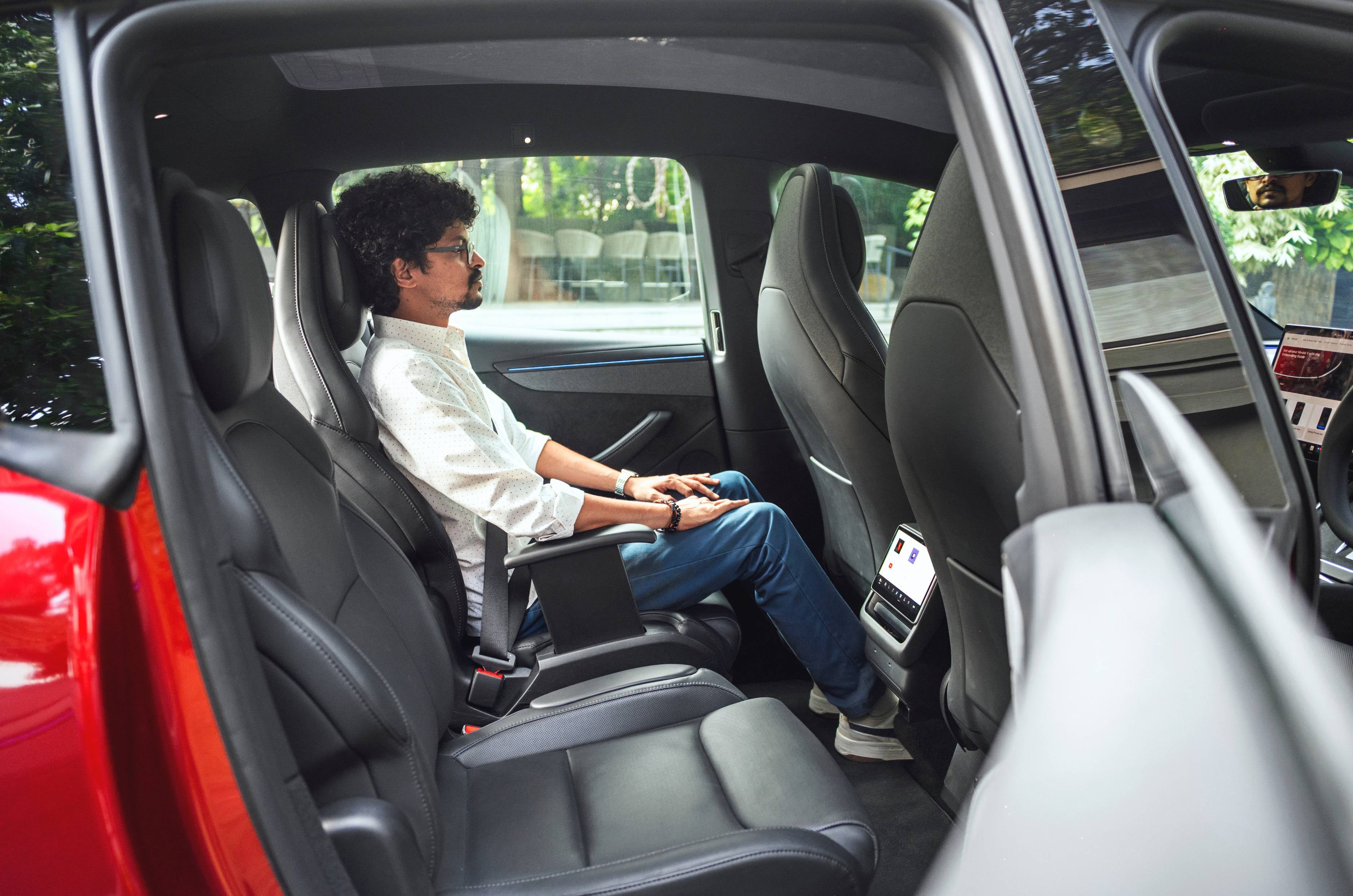
This is where the Model Y L takes a larger step up. The standard Model Y already had a spacious cabin, but the Y L has even more room and brings further versatility, by adding a third row of seats. It is a six-seater rather than a seven-seater, with two individual captain’s chairs in the middle row instead of the standard car’s bench.
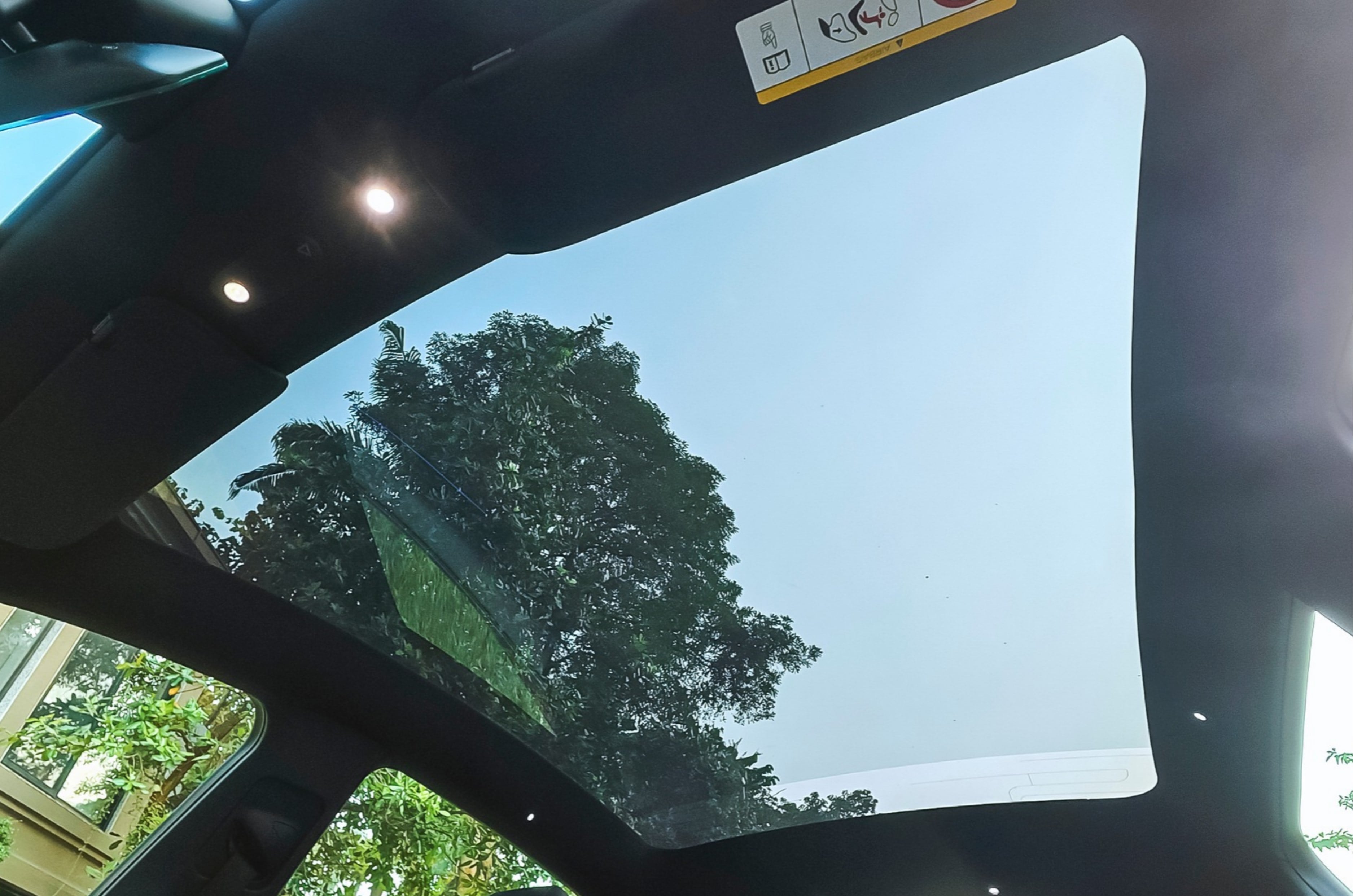
The front seats may be simple-looking but they are plush and comfy, and the extended underthigh support enhances comfort especially for taller people. These seats are also heated, cooled and feature electric adjustment. The second row is arguably the highlight, however. The individual captain’s seats are very comfy, and they feature integrated headrests, a heating and cooling function, along with power adjustment and powered armrests too. The extra wheelbase and taller roof of course gives passengers more room to stretch out and as such there’s no shortage of legroom or headroom here. The larger windows, coupled with the tinted panoramic glass roof further enhances the sense of space. However, since there are no window blinds or a sunshade for the roof, the large glasshouse area means the cabin heats up too easily especially on a hot, sunny day.
Captain seats are very comfy and there’s plenty of legroom and headroom here.
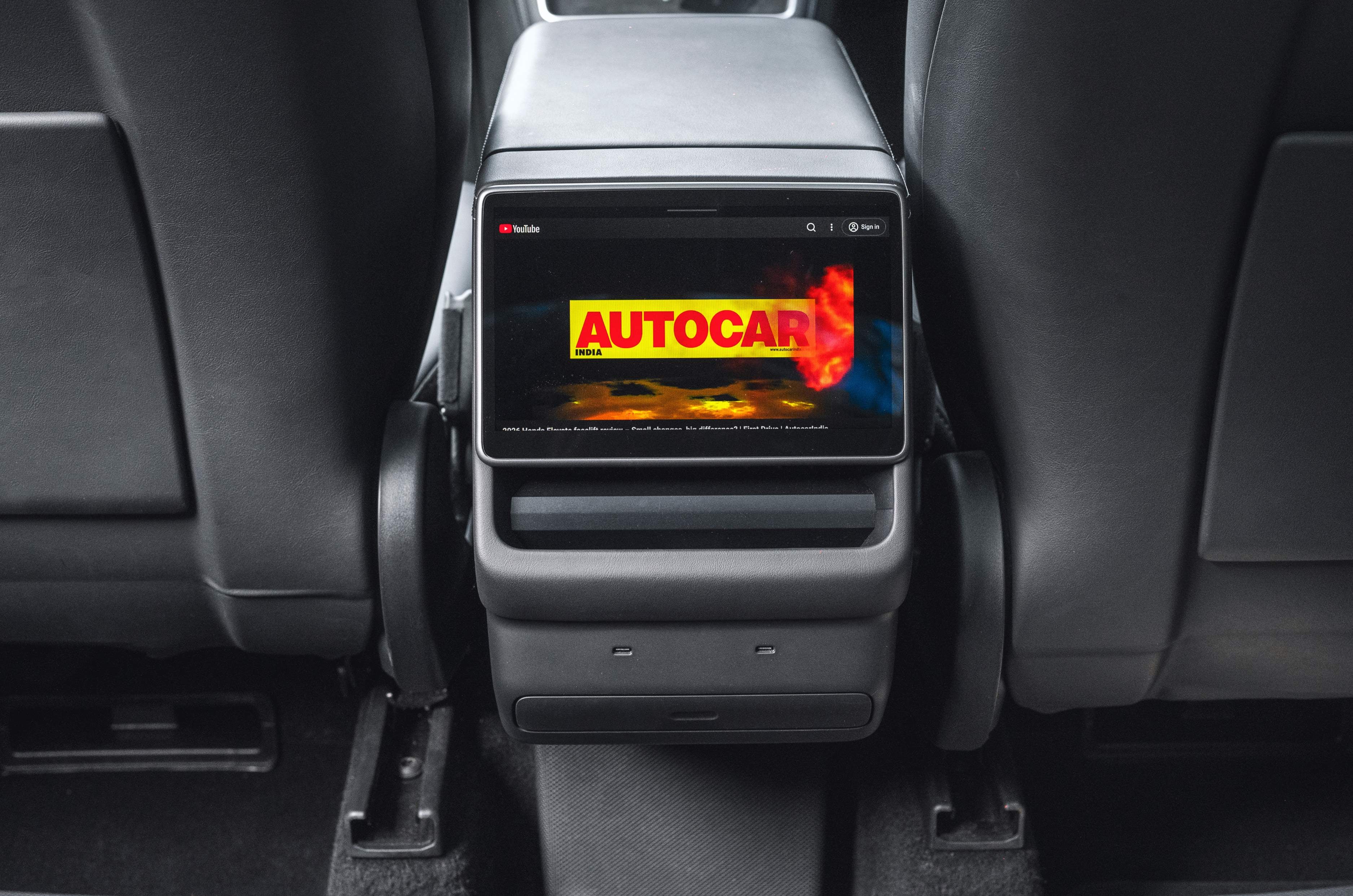
Middle row passengers are well-catered too, however. Apart from the aforementioned heated/cooled and powered seats, you also get cupholders, charging ports, cupholders and a 8-inch touchscreen. This centrally-mounted unit is just as slick to use as the one in the front and it controls several functions, along with the ability to play videos and games.
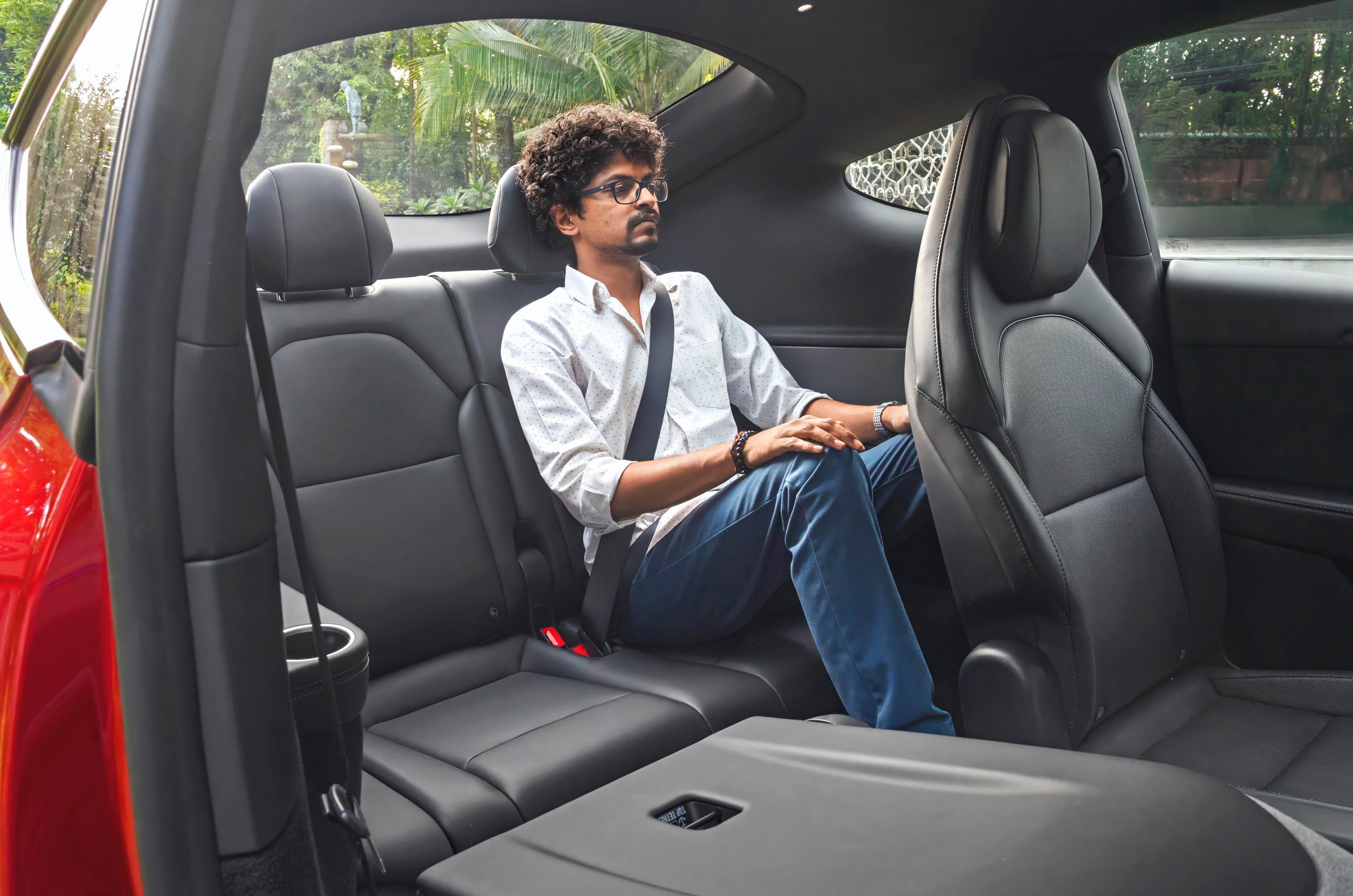
Seating is knees-up, but the third row is usable even for adults.
The third row, however, comes as a bit of a surprise. Considering the low seat, you’re sat in a knees-up position but space back here is genuinely usable for adults, with adequate headroom and kneeroom. Dedicated AC vents, cup holders and type C charging ports are useful inclusions and show that the rearmost seats aren’t simply an afterthought. Like in the middle, here too the large window and untinted rear windscreen lets in a considerable amount of heat.
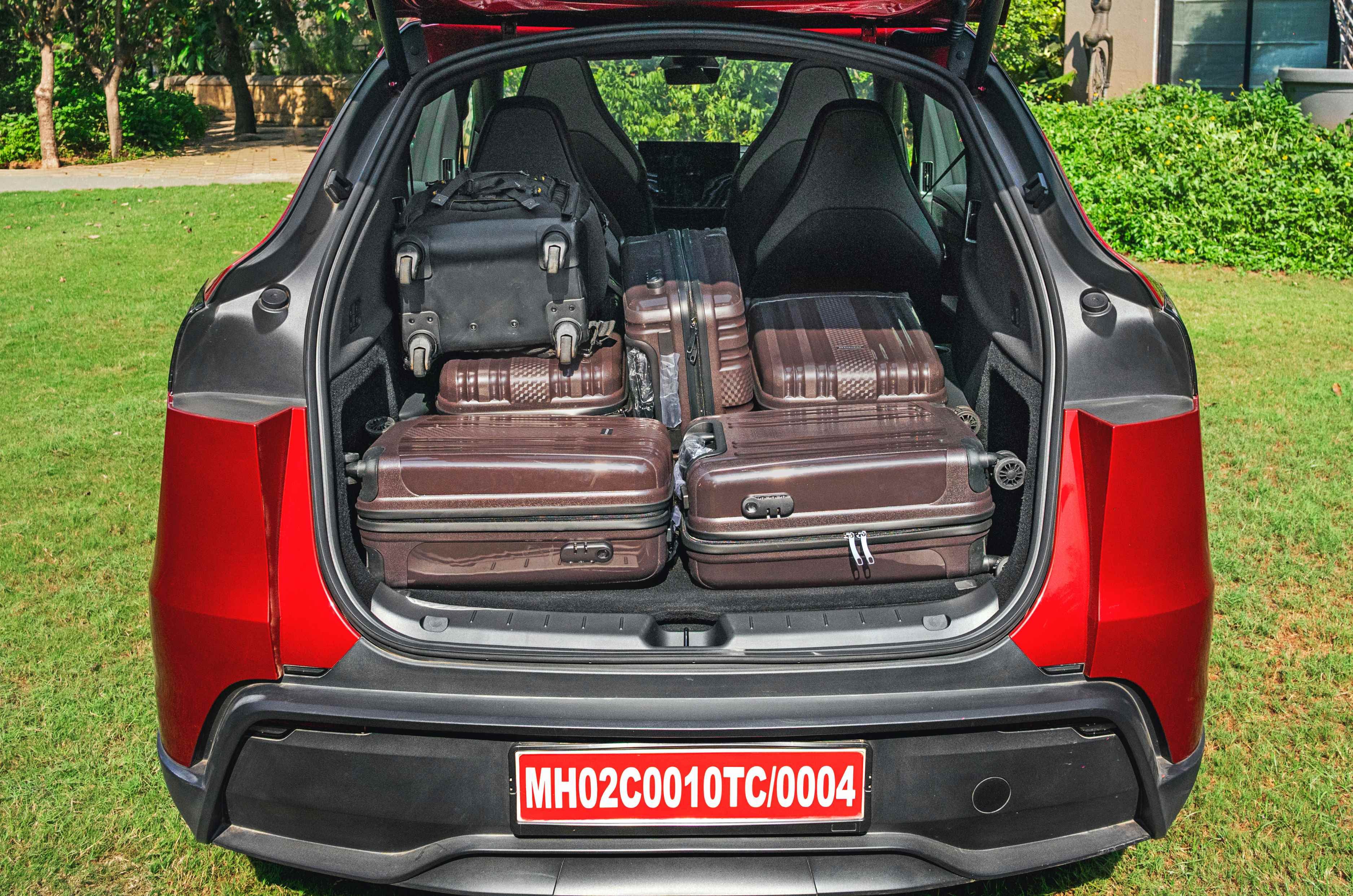
420-litre boot can be expanded to a massive 1,076 litres by folding the third row; more room under the boot floor too.
Luggage space is another important consideration for a family focused car such as the Y L. With all three rows up, boot space is a respectable 420 litres which can be further expanded to a massive 1,076 litres by electronically folding the third row. Then there’s also a considerable amount of storage space under the boot floor and a properly usable 117-litre frunk. As such, the Y L remains practical despite the added seats. It’s worth noting though, there’s no spare wheel.
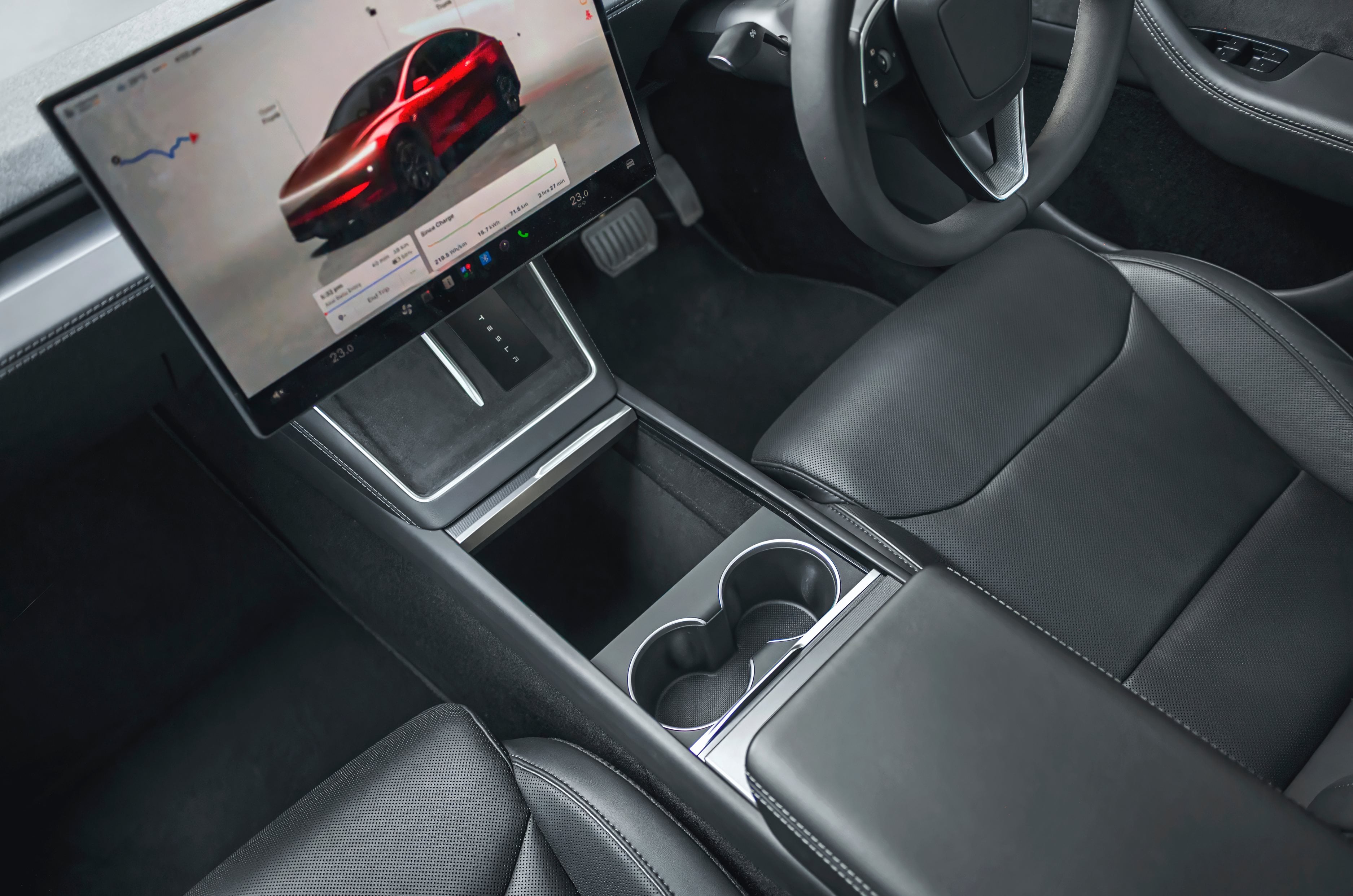
Practical cabin features a large storage box in the centre, cup holders, two wireless phone chargers, and space under the centre armrest.
Up front, the cabin retains Tesla’s familiar minimalist layout. A large central touchscreen dominates the dashboard, with very few physical controls to interrupt the clean design. This extended model gets a textured finish on top of the dashboard, but the overall layout remains largely unchanged. It also remains a practical place, with a large cubby space in the centre console, storage under the centre armrest, multiple cupholders and seat back pockets.
Model Y Features and Safety – 7/10
Y L gets a Sport drive mode and two settings for the new adaptive dampers.
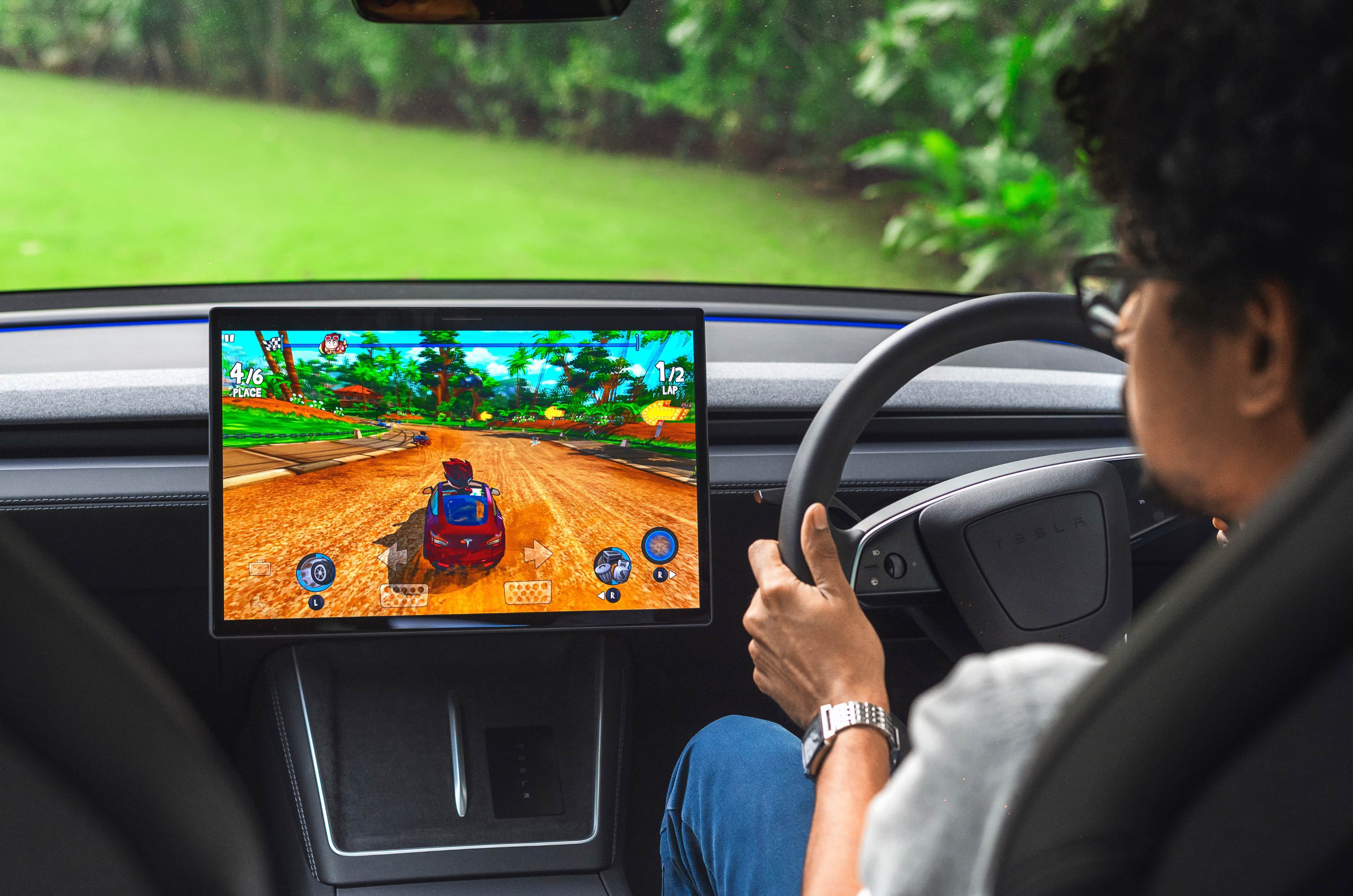
Technology has always been central to Tesla’s appeal, and the Model Y L continues with that approach. Apart from the aforementioned 8-inch rear screen, the main party piece of this car is the central 16-inch touchscreen. This screen is easily one of the best in the business in terms of resolution and responsiveness.
16-inch touchscreen is one of the sharpest around and packs in the typical Tesla quirks and features.
The screen is slick and feature-packed, but the reliance on it for everyday functions remains a usability compromise. Adjusting climate settings and accessing basic vehicle functions like adjusting the mirrors and opening the frunk require navigating menus, which isn’t as intuitive as using dedicated switches. It looks modern and gives the cabin a clean appearance, but a little more emphasis on straightforward ergonomics wouldn’t hurt.
8-inch rear screen is just as slick and can bes used to play videos and control other functions.
But thankfully, you do get the Grok AI assistant as a part of the package which can pretty much do everything for you right from setting the AC, to setting the navigation, finding a charger and much more. It can converse in multiple languages and also constantly learns more about you, so it’s said to get more intuitive as you spend more time with it.
Other features include a panoramic glass roof, dual wireless phone chargers, multi-colour ambient lighting, a superb sounding audio system with 18 speakers and a subwoofer, heated/ventilated and powered front two rows of seats, heated third row seats, all LED lights and so much more. There’s also connected-car tech, and as with any Tesla it gets over-the-air updates, so the car is constantly improving without the need to visit a service centre.
Tinted glass roof helps the cabin feel airy but no sunshade means it heats up quickly as well.
Safety equipment includes nine airbags and a suite of driver-assistance features, including lane-departure warning, lane-keeping assist and blind-spot monitoring. The car also has high-resolution cameras all around it which provide a great view of the surroundings, although Tesla’s more advanced Autopilot capabilities remain absent in India.
The technology is impressive, but the screen-centric interface requires some acclimatisation. Some buyers may find the learning curve frustrating, especially while driving. But for the tech-savvy buyers the Y L is aimed at, they will find this approach very appealing.
Model Y Performance and Refinement – 9/10
Dual-motor, all-wheel-drive powertrain puts out over 500hp and does 0-100kph in a claimed 5 seconds.
The Model Y L is offered in India with a dual-motor all-wheel-drive setup, unlike the rear-wheel-drive only Model Y variants. Tesla does not officially list powertrain specifications, but it has an estimated combined system output of 514hp and 590Nm and the brand claims a 0-100kph time of 5 sec and a top speed of 201kph. We did a quick acceleration test and managed a 0-100kph time of 5.02sec, though we couldn’t test the top speed as our car was electronically limited to 120kph. For a family crossover which is estimated to weigh over two tonnes, the performance is properly brisk. Expectedly, acceleration feels very potent and as typical of any high-performance EV, the Model Y L pins you back into the seat. However, there is a certain progression to the power delivery and the added traction of the all wheel drive setup makes it feel manageable and not overwhelming. There’s also two drive modes, Chill and Sport, the latter of which is exclusive for the Y L. And they have a corresponding effect on the response of the powertrain, with Sport obviously feeling much more immediate.
The added performance also makes overtaking on highways and closing gaps in traffic particularly effortless, as is reflected in the rolling acceleration figures. 20-80kph takes 2.85sec while 40-100kph is dispatched in just 2.94sec.
As with the standard Model Y, the Model Y L also impresses with its refinement. The cabin is superbly insulated from the outside world, thanks in part to the double glazed windows, with barely any road, tyre and wind noise filtering through into the cabin.
Model Y Mileage / Range and Efficiency – 7/10
Tesla Supercharger is said to add up to 288km of range in 15 mins; has a WLTP-rated range of 681km.
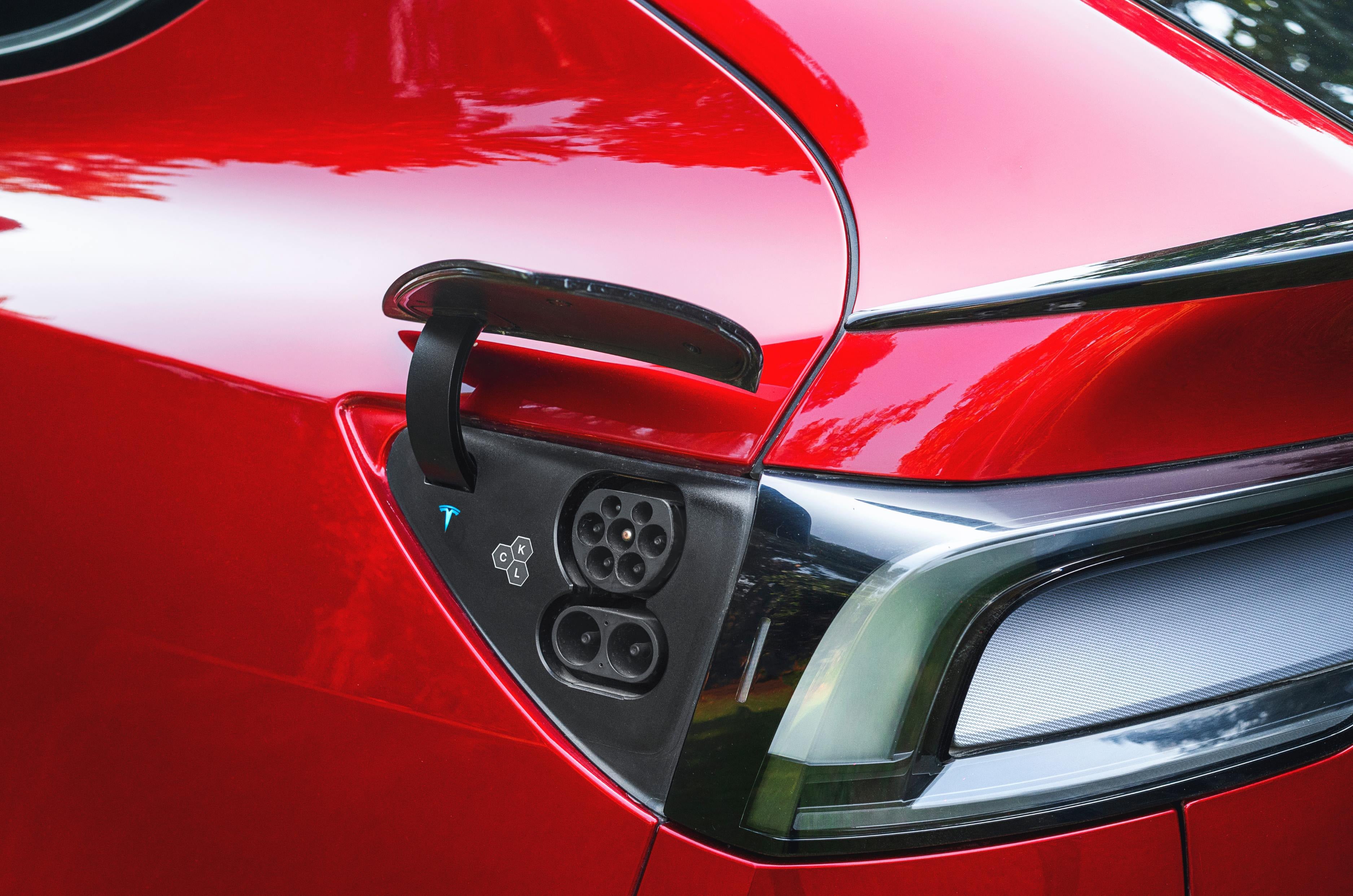
Tesla claims a WLTP range of 681km, from the Model Y L’s 88kWh (estimated) NMC battery pack. That’s more than the standard RWD Model Y, for reference. It can also add up to 288km of range in 15 minutes when connected to a Tesla Supercharger, according to the company. Speaking of which, the electric crossover is capable of accepting up to 250kW on DC fast charging and 11kW on AC charging. As always, real world range will depend on driving conditions, speed, weather and other factors.
Model Y Ride Comfort and Handling – 7/10
Adaptive dampers and longer wheelbase does make the Y L feel more settlled than the standard Model Y.
The standard Model Y’s ride and handling package is competent, although its low-speed ride is noticeably firm, especially on uneven surfaces. Tesla has made changes to the L’s suspension, equipping it with adaptive dampers in a bid to improve comfort and body control.
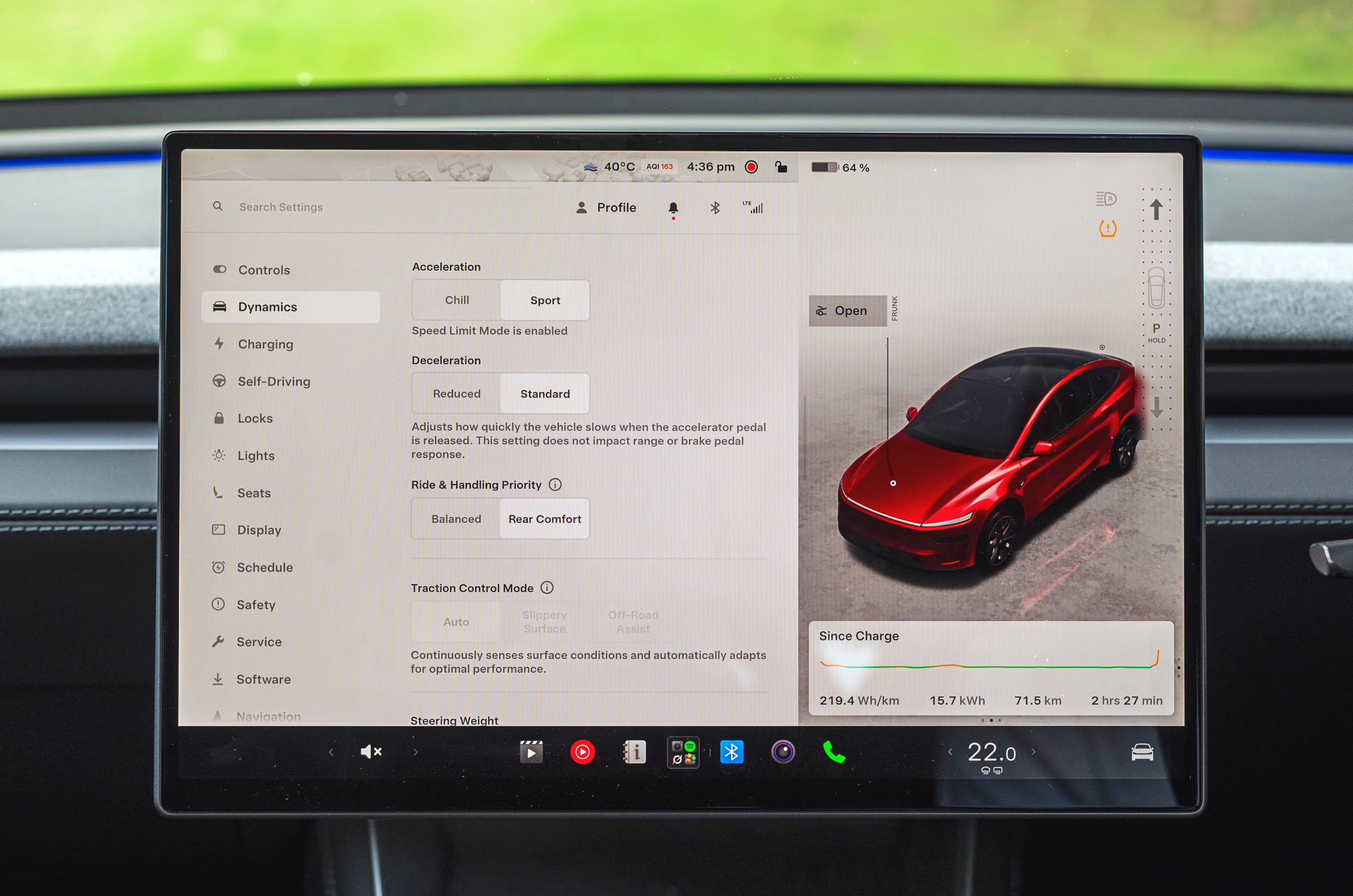
This is a particularly relevant upgrade for a longer, heavier vehicle designed to carry more passengers. As with everything else, this is also controlled via the touchscreen with two settings available – Balanced and Rear Comfort. The latter softens things down and gives it a slightly plusher feel, while the former represents a good middle ground between ride comfort and handling. Even though the difference in the modes isn’t that great, the Y L does feel more composed over broken roads and avoids transmitting as much movement into the cabin as the Standard Model Y.
The longer wheelbase also helps the car feel a bit more settled at speed, although manoeuvring in confined spaces is more cumbersome, and this is particularly amplified thanks to the rather poor turning circle. Like the standard Model Y’s, the Y L’s steering is light and easy to use, but it isn’t particularly feelsome. There’s also three modes for the steering, which progressively add more weight. The handling too is more competent and predictable rather than entertaining. It doesn’t feel as agile as the Model Y but body movements do seem better controlled thanks to the adaptive dampers.
There’s two levels of regenerative braking – Standard and Reduced. Standard is the stronger setting and best for use in the city as it almost functions like a one-pedal mode while Reduced is for highway use as it allows for some coasting.
Model Y Value for Money – 7/10
The Model Y L is for those who want a spacious, quick, refined, and cutting-edge premium EV for the family.
Priced at Rs 61.99 lakh (ex-showroom), the Tesla Model Y L makes for a more compelling case than the standard Model Y despite costing 10 lakh more. It still costs a fair bit more than its most direct rivals, the BMW iX1 LWB and the BYD Sealion 7, but the Y L is more spacious with more seats. The Model Y L does have its compromises though. It’s over reliant on the touchscreen for even basic functions and the large glasshouse means the cabin heats up easily. The larger dimensions, poor turning circle, low ground clearance and long wheelbase also means it is more challenging to maneuver in the city and while parking.
But it brings a lot more to the table too. There’s more cabin space, the added versatility of a third row, a more potent dual-motor powertrain with all-wheel-drive and a higher claimed range as well. And it retains its strengths of being featured-packed, with excellent refinement and massive cargo space. Tesla says that buyers are now preferring to opt for the Y L over the Model Y considering all the additional things it brings, and that really doesn’t come as a surprise. So for buyers who want a spacious, quick, refined and cutting-edge electric crossover for the family, the Tesla Model Y L fits the bill perfectly.
Mary Millben attacks CJP: अमेरिकी सिंगर मैरी मिलबेन ने अभिजीत दीपके की कॉकरोच जनता पार्टी (CJP) को लेकर एक सनसनीखेज दावा किया है। उन्होंने आरोप लगाया कि CJP के संस्थापक अभिजीत दीपके और उनके संगठन को अमेरिका में ऐसे डोनर से फंडिंग मिल रही है, जो प्रधानमंत्री नरेंद्र मोदी और उनके नेतृत्व में भारत के भविष्य के खिलाफ हैं। मैरी मिलबेन ने भारत के युवाओं से अपील की है कि वे कथित तौर पर देश में अशांति फैलाने वाली ताकतों के खिलाफ आवाज उठाएं और शांतिपूर्ण तरीके से विरोध दर्ज कराएं।
मिलबेन का यह बयान ऐसे समय आया है, जब नई दिल्ली में विपक्षी दलों और CJP के समर्थकों की ओर से मुख्य चुनाव आयुक्त (CEC) ज्ञानेश कुमार के इस्तीफे की मांग को लेकर विरोध प्रदर्शन किए जा रहे हैं। प्रदर्शनकारी वोटर लिस्ट के स्पेशल इंटेंसिव रिवीजन (SIR) में कथित अनियमितताओं को लेकर सवाल उठा रहे हैं।
PM मोदी के समर्थन में क्या बोलीं मैरी मिलबेन?
41 वर्षीय सिंगर मैरी मिलबेन ने सोशल मीडिया पर लिखे अपने मैसेज में कहा कि प्रधानमंत्री नरेंद्र मोदी ने 25 साल तक भारत की सेवा की है, जिनमें 12 साल PM के रूप में शामिल हैं। उन्होंने कहा कि PM मोदी लगातार तीन कार्यकाल के लिए चुने गए हैं। उनके अनुसार, वह अमेरिका से आने वाली कथित विघटनकारी ताकतों के सामने नहीं झुकेंगे। मिलबेन ने दावा किया कि कुछ अमेरिकी डोनर दुनियाभर में रूढ़िवादी विचारधारा वाले नेताओं को निशाना बनाने का एक पैटर्न अपनाते हैं।
उनके मुताबिक, पहले संबंधित देश के किसी अमेरिकी शिक्षित व्यक्ति को तलाशा जाता है। फिर उसे कट्टर विचारों की ओर प्रेरित कर वापस भेजा जाता है और उसके बाद कथित तौर पर अशांति फैलाने के लिए फंडिंग की जाती है। उन्होंने आरोप लगाया कि इस तरह की गतिविधियों का असर संबंधित देशों के विकास और शासन व्यवस्था पर पड़ता है। हालांकि, अमेरिकी डोनर से CJP को फंडिंग मिलने के अपने दावे के समर्थन में मिलबेन ने इस बयान में कोई सार्वजनिक सबूत पेश नहीं किया।
युवाओं से की शांतिपूर्ण आंदोलन की अपील
मैरी मिलबेन ने भारत के युवाओं से अपील करते हुए कहा कि उन्हें डरने की जरूरत नहीं है। उन्होंने लोकतंत्र और स्वतंत्रता की रक्षा के लिए ऐसे आंदोलनों के मुकाबले एक शांतिपूर्ण जनआंदोलन खड़ा करने की जरूरत पर जोर दिया। उन्होंने कहा कि भारत में ऐसी नई आवाज उठनी चाहिए, जो देश की मिट्टी में पैदा हुई हो, यहीं पली-बढ़ी हो और यहीं शिक्षित हुई हो। उनके मुताबिक, युवाओं को संगठित होकर शांतिपूर्ण तरीके से अपनी बात रखनी चाहिए।
भारत में क्यों लोकप्रिय हैं मैरी मिलबेन?
मैरी मिलबेन अफ्रीकी-अमेरिकी हॉलीवुड अभिनेत्री और मशहूर सिंगर हैं। भारत में वह खास तौर पर भारतीय राष्ट्रगान ‘जन गण मन’ और भक्ति गीत ‘ओम जय जगदीश हरे’ की अपनी प्रस्तुतियों के लिए लोकप्रिय हैं। वर्ष 2023 में अमेरिका में प्रधानमंत्री मोदी की यात्रा के दौरान आयोजित एक कार्यक्रम में भी उन्होंने भारत का राष्ट्रगान गाया था। इस वजह से भारतीय दर्शकों के बीच उनकी पहचान बनी है। इस बीच, दिल्ली के जंतर-मंतर में जबरन घुसने के आरोप में CJP के दो नेताओं को पांच दिन की न्यायिक हिरासत में भेजे जाने के बाद पार्टी के संस्थापक अभिजीत दीपके ने बुधवार को आरोप लगाया कि प्रधानमंत्री देश में अघोषित आपातकाल लागू कर रहे हैं।
To all the beautiful young patriots in India:
This is not the time to be silent. @abhijeet_dipke and the @Cockroachisback are being funded by donors in the U.S. who are against Prime Minister @NarendraModi and your future under his leadership. Do not fear, my young patriots. Your Prime Minister, who has served India for 25 years, 12 years as Prime Minister, elected three consecutive terms, is not going to bow to disruptive forces from my country.
And these select donors have a pattern globally – target conservative global leaders, find an U.S. educated person from the country, radicalize them, send them back to the country, and fund them to start chaos and destruction. None of them have been successful but have impacted the development and governance of the country.
It is time for a new voice in #India, born, raised, educated on the soil of India, to RISE UP, organize, and peacefully protest the disruptive spirit of the Cockroach Party. There should always be a counter movement to uphold democracy and freedom.
दीपके ने नागपुर में पत्रकारों से कहा कि CJP नेता सौरव दास और आशुतोष रांका ने जंतर-मंतर पर तिरंगा फहराकर कौन सा अपराध कर दिया है। पुलिस सूत्रों के अनुसार, शांति बनाए रखने के मुचलके के उल्लंघन और प्रदर्शन के लिए गैर-अधिसूचित क्षेत्र घोषित किए जा चुके जंतर-मंतर पर जबरन घुसने के आरोप में दास और रांका को बुधवार को पांच दिन की न्यायिक हिरासत में दिल्ली की तिहाड़ जेल भेज दिया गया।
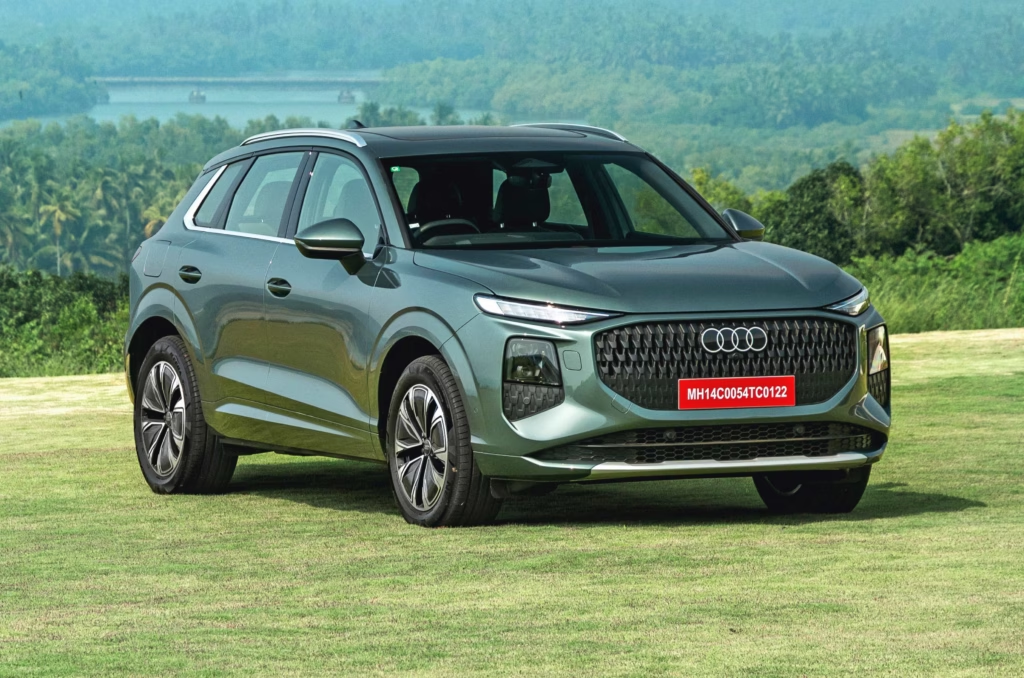
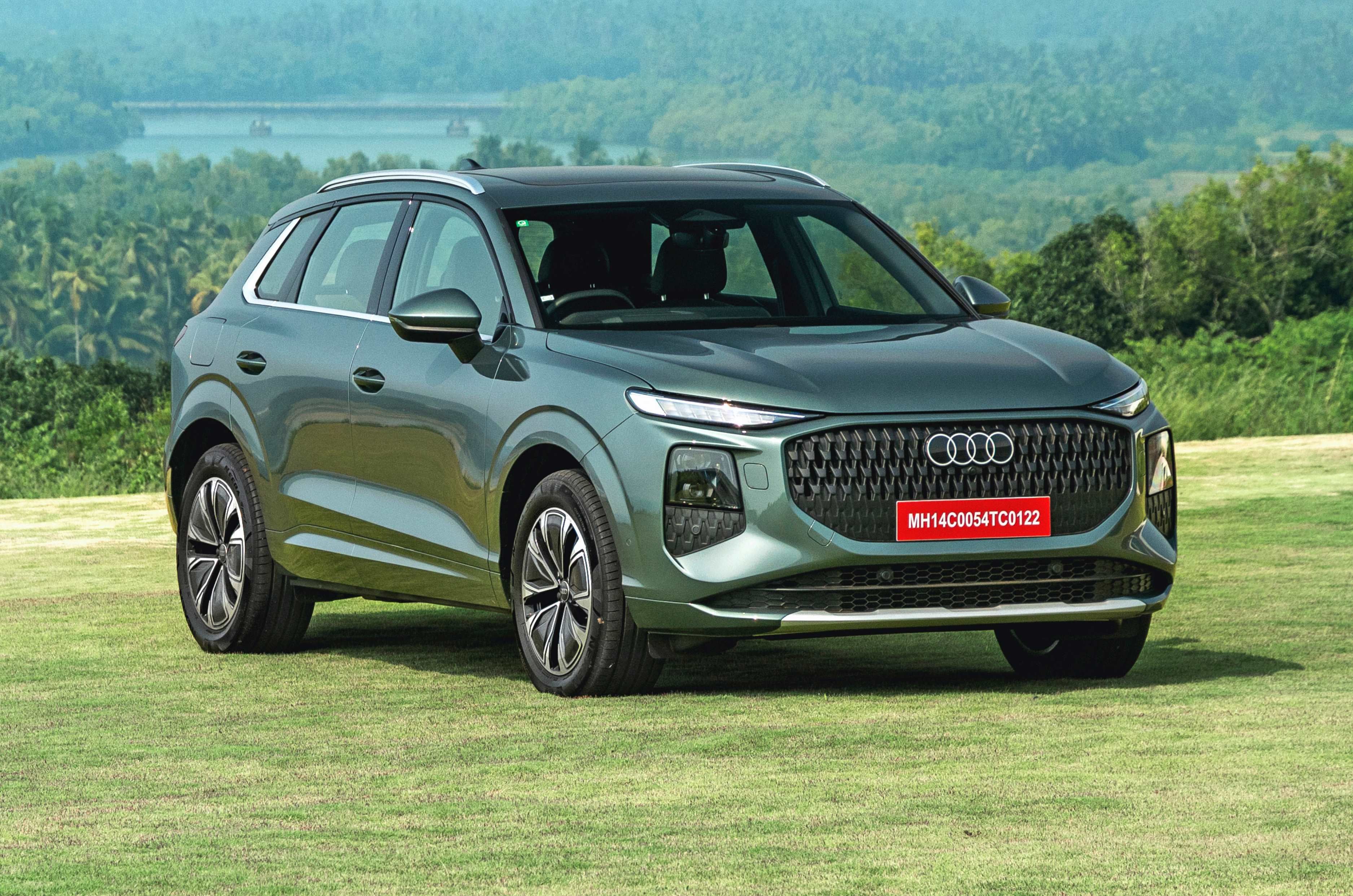
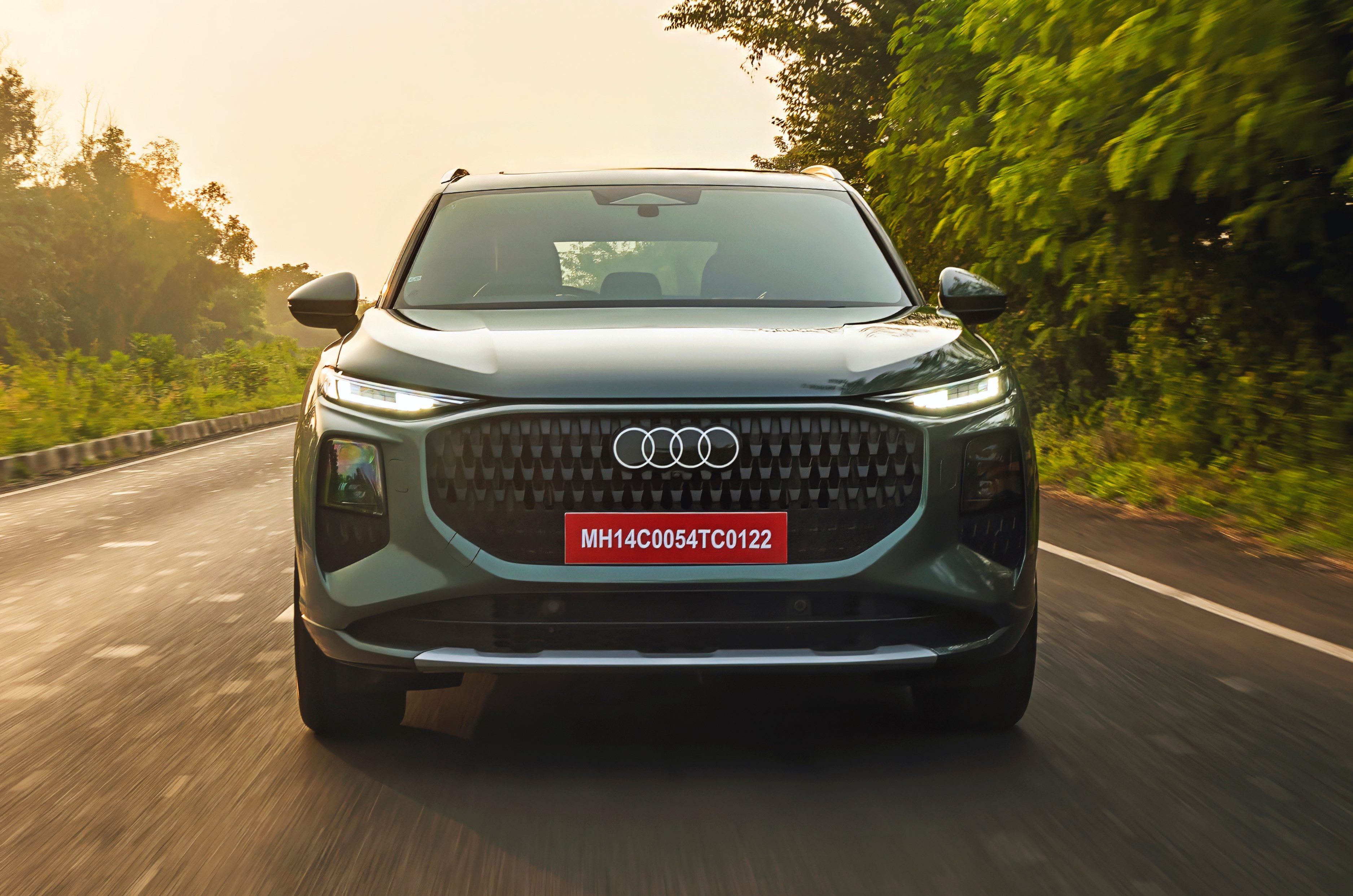
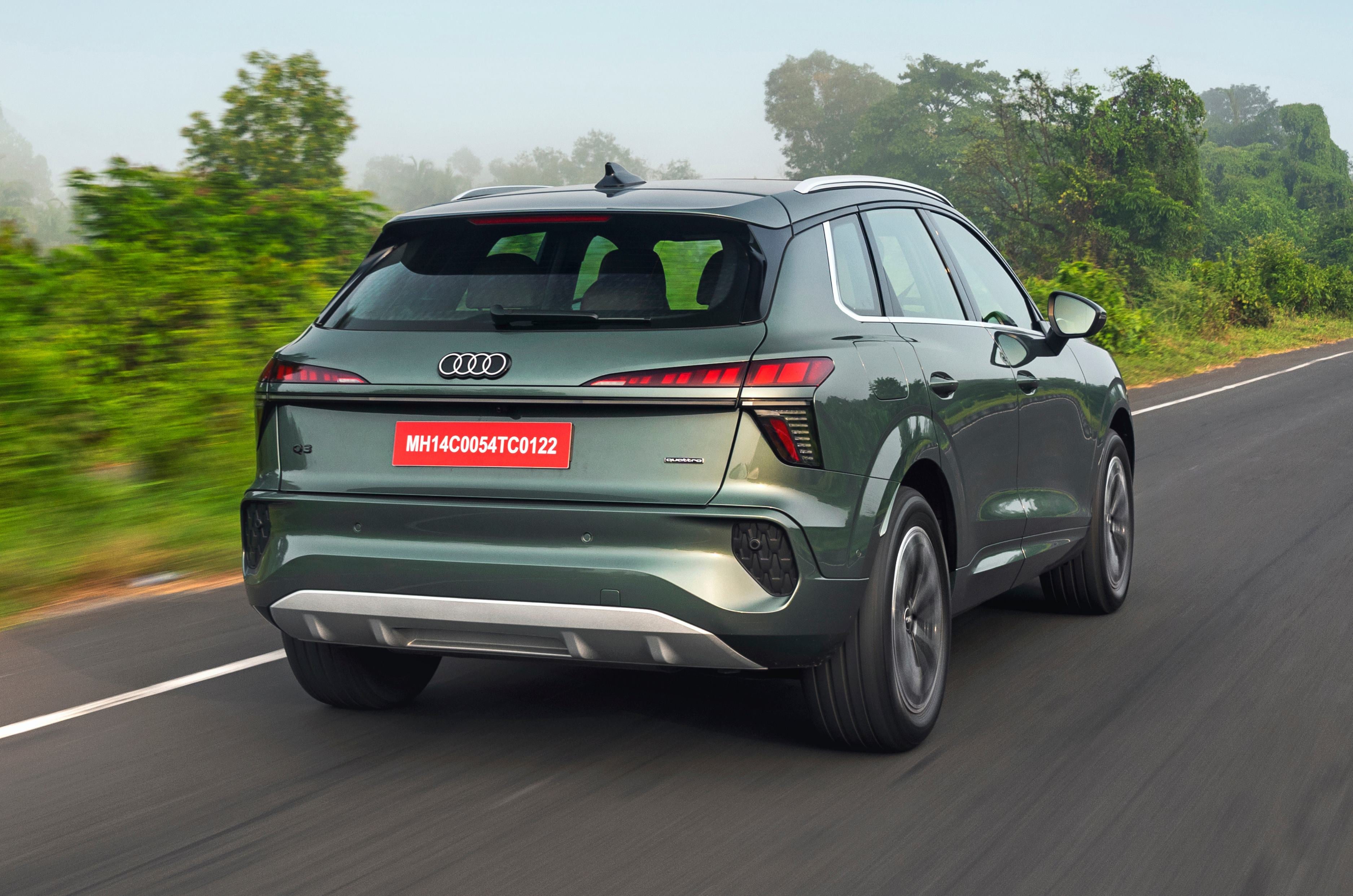
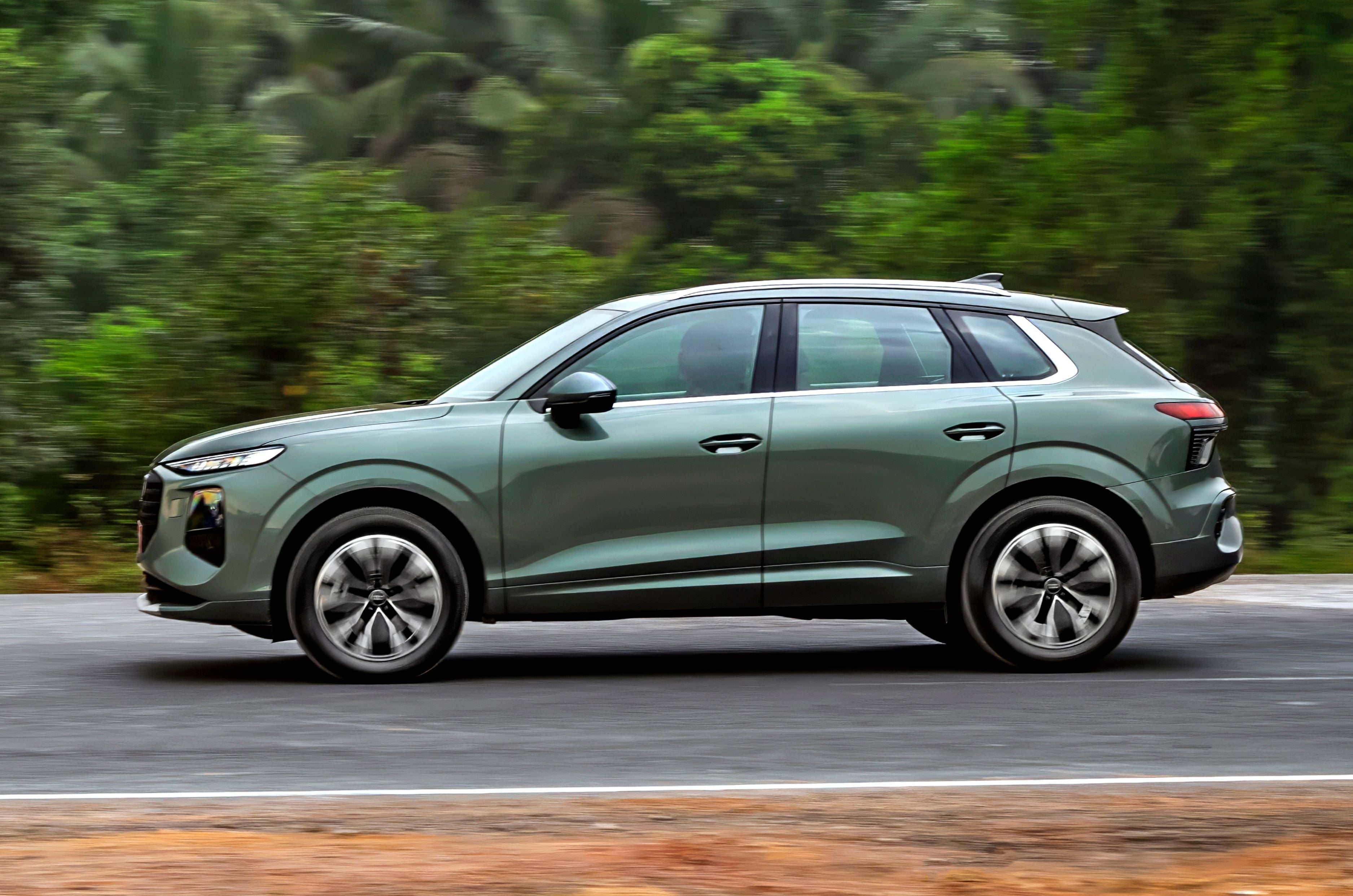
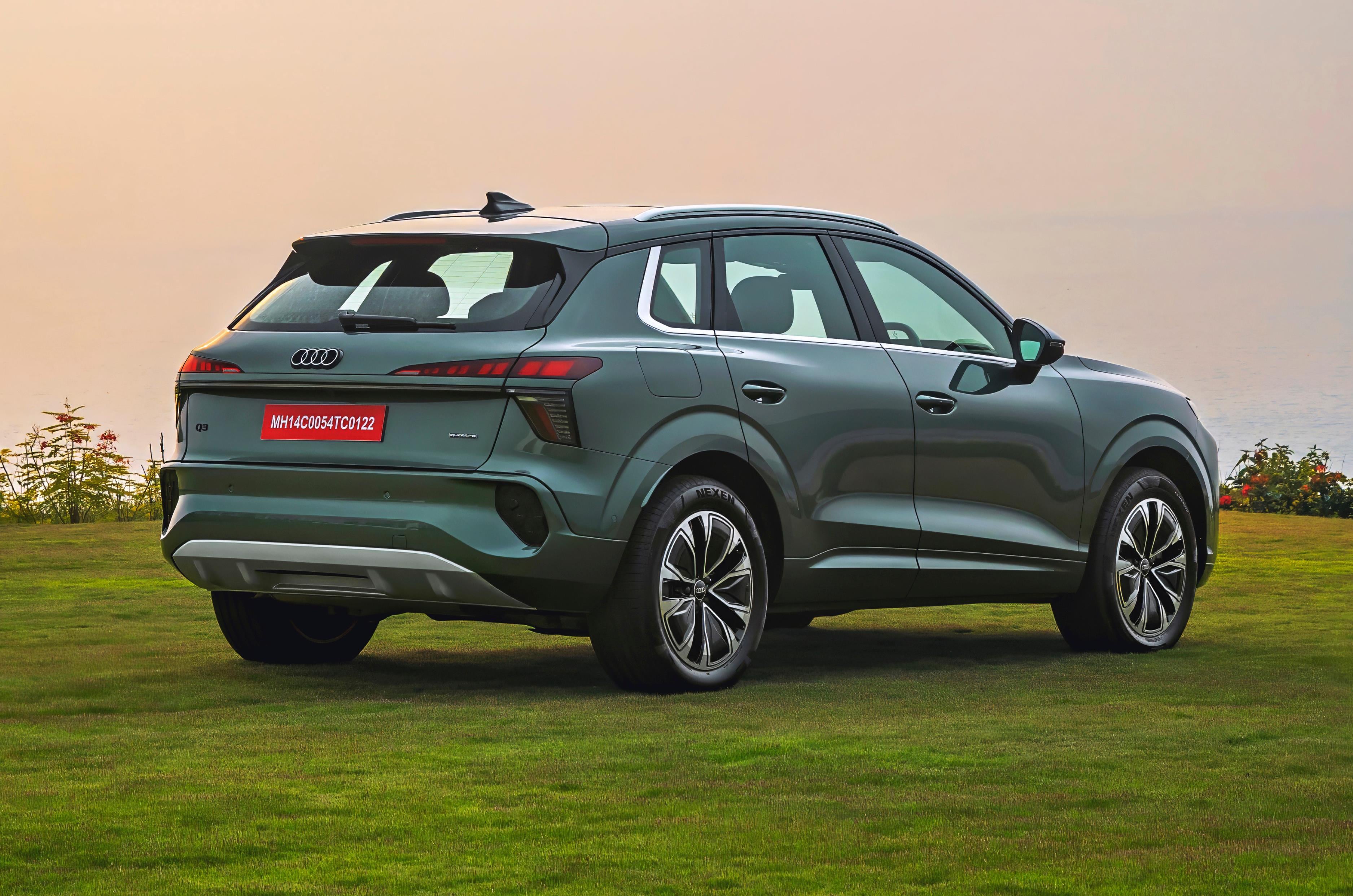
Audi India is set to launch the third-gen Q3 on Friday, 16 October. It will replace the current Q3, which has been around for quite a while, as Audi India’s entry-level SUV. More importantly, the third-gen Q3 will usher in some of the latest tech that Audi offers, which should make the SUV much more competitive against rivals like the Mercedes-Benz GLA and BMW X1. But will it? Now that we’ve reviewed the new Q3, here are three reasons why you should consider it over rivals, and two reasons why you may want to think twice about buying one.
Pros
Punchy turbo-petrol engine
Like its predecessor, the third-gen Q3 is powered by a 2.0-litre four-cylinder direct-injection turbo-petrol engine developing 204hp and 320Nm. It’s the biggest and strongest engine in its segment, and save for some brief hesitation at low revs, remains a gem. As soon as the turbo is on song, this engine is eager and free-revving, responding promptly in the city and building speed easily on the highway. Audi claims a 0-100kph time of 7.1 seconds for the new Q3 – a segment-best figure.
The Q3’s engine continues to be paired with a 7-speed dual-clutch automatic, which is a great companion. Downshifts are quick and easy, and engaging Sport mode or flicking the paddle shifters will give you full control. Audi’s Quattro all-wheel drive system is standard fit for the Q3 as well, giving you more confidence when driving on slippery surfaces.
Excellent ride and handling balance
Audi has tuned the new Q3’s suspension very well. The setup has the typical firmness you expect from a European car, but it’s never uncomfortable and absorbs potholes and broken roads with great composure. Part of the credit goes to the 55-profile tyres too, as their thick sidewalls soak up much of the shock before it reaches the suspension.
The handling of the new Q3 is surprisingly good too, with the variable-ratio steering effectively loosening at low speeds and weighing up as you increase the pace. There’s a slight amount of slack around the straight-ahead position, but the steering remains very accurate and direct regardless. Despite its quick steering, the Q3 also remains stable at highway speeds and changes lanes with ease and agility.
Well-built interior
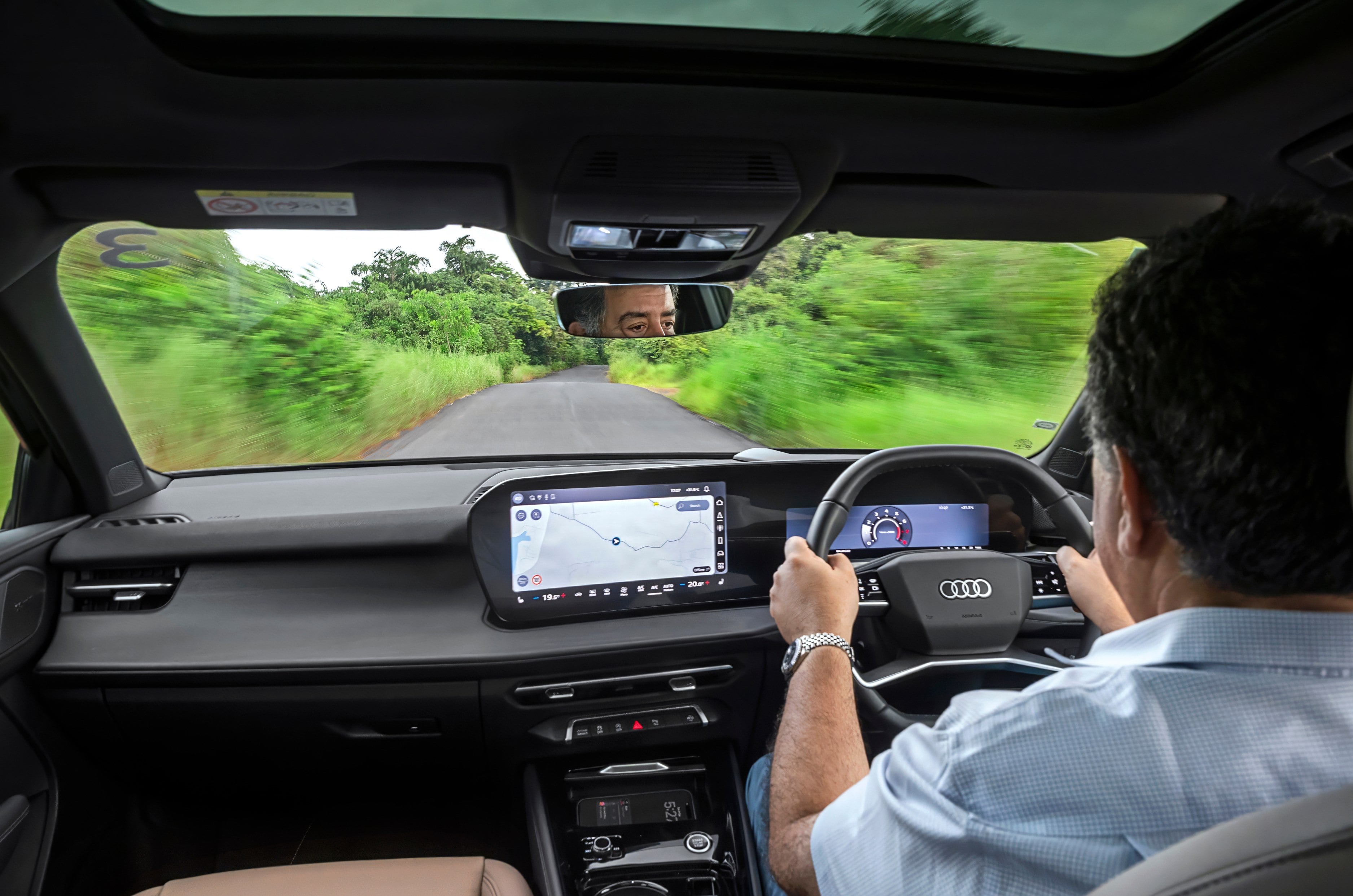
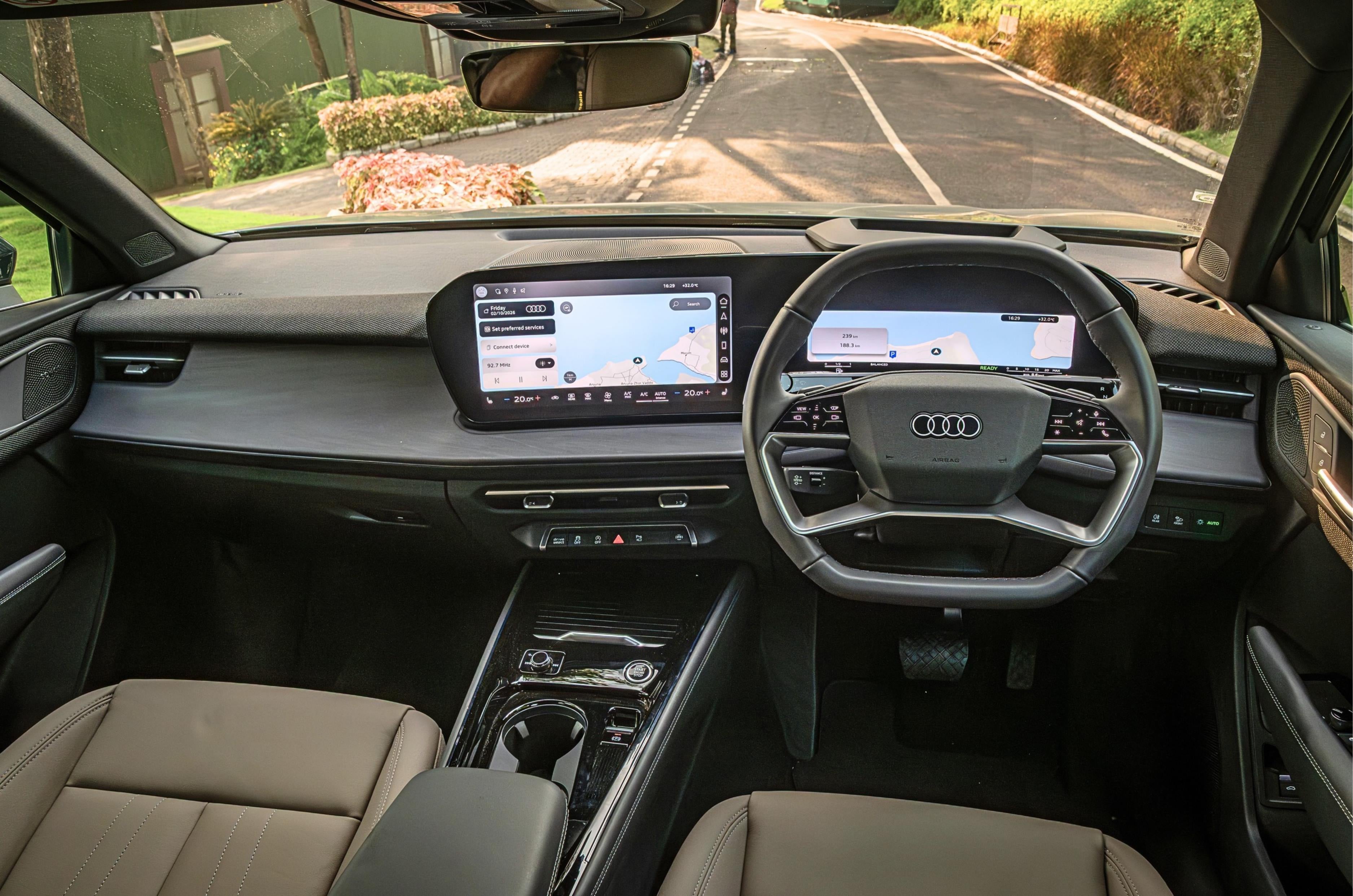
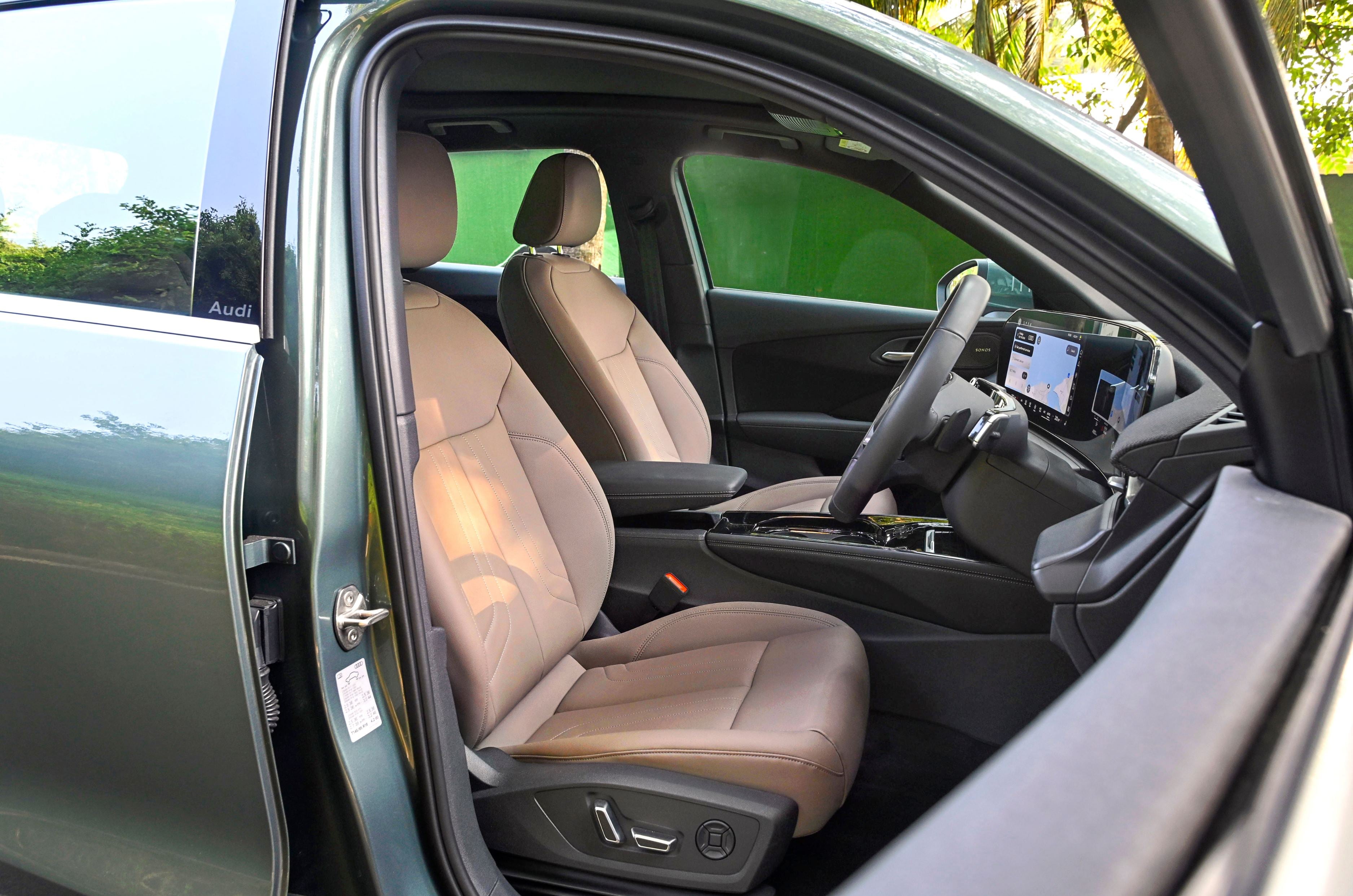
Among the most noticeable leaps of the new Q3 over the outgoing model is on the inside. The dashboard sports a cleaner and more modern layout, housing an 12.8-inch infotainment touchscreen and 11.9-inch digital driver’s display. Much of the leather in the cabin has been ditched in favour of fabric, and plastic quality isn’t that great in the lower regions, but even so, the Q3’s interior feels well put-together and more robust than those of its rivals.
Cons
Lack of powertrain options
The Q3’s turbo-petrol engine is undoubtedly lovely, but that’s about it as far as powertrain options go. There will be no diesel, hybrid, or electric versions of the India-spec Q3, at least at launch. This puts the Audi SUV at a disadvantage, since the GLA and X1 can be had with diesel engines – the BMW is available as a long-wheelbase EV too (iX1 LWB). Offering Quattro as standard may also drive up the price of the new Q3, which could dissuade buyers who prefer a lower price tag over all-wheel drive.
Some features still missing
While the Q3 has a decent list of equipment, including a 12-speaker Sonos sound system, a panoramic sunroof, powered and heated front seats, dual-zone climate control, adaptive cruise control, auto-park assist, and more, there are still some features that Audi missed out on.
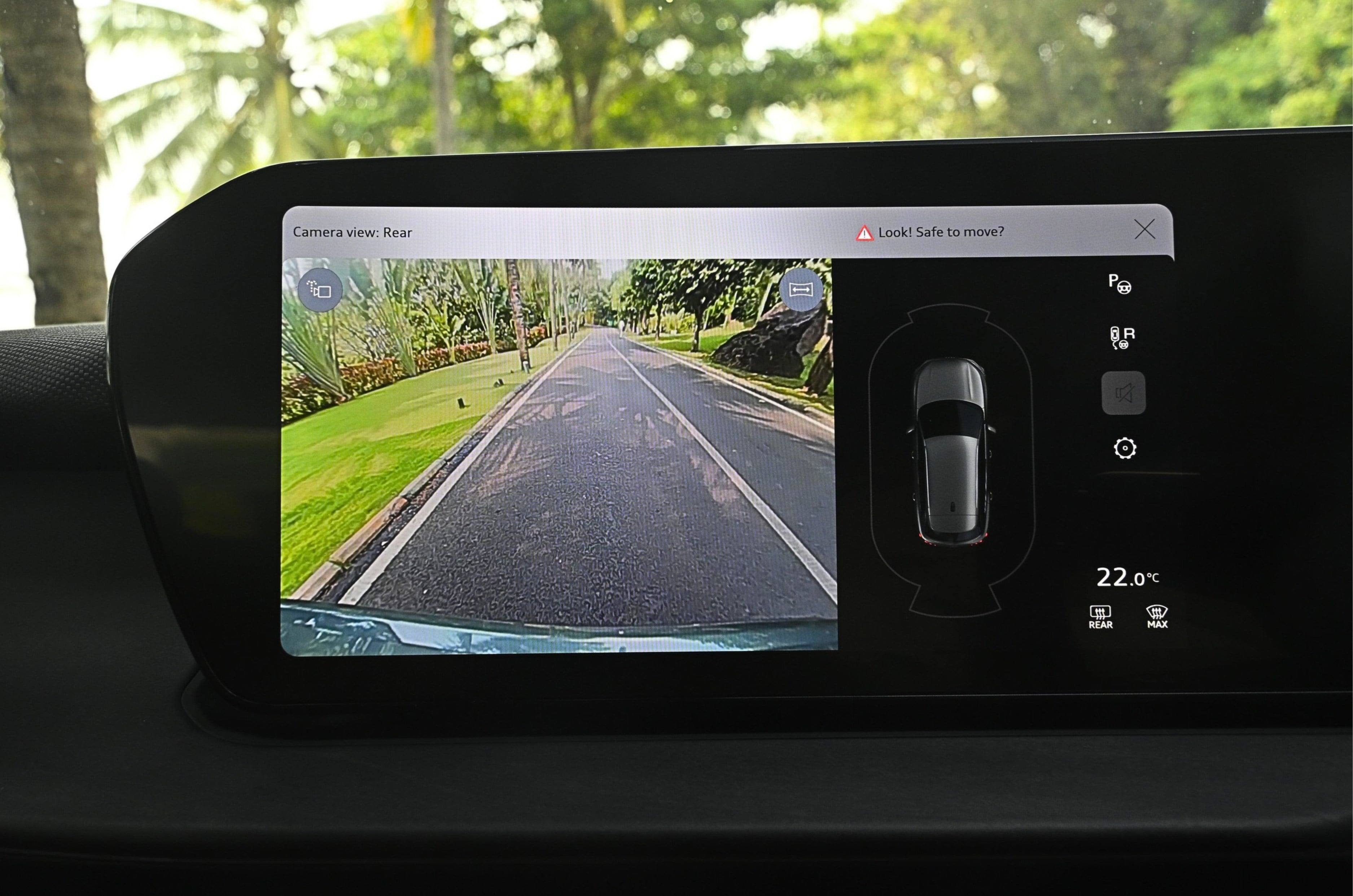
Chief among them is seat ventilation, which makes much more sense than heated seats in our climate conditions. Another big miss is a 360-degree camera, as it greatly helps with maneuovring and parking in tight spaces. The included rear camera’s resolution (pictured above) is disappointing too. Lastly, there are no ADAS features aside from adaptive cruise control – lane-keep assist and blind-spot monitoring would’ve come in handy.
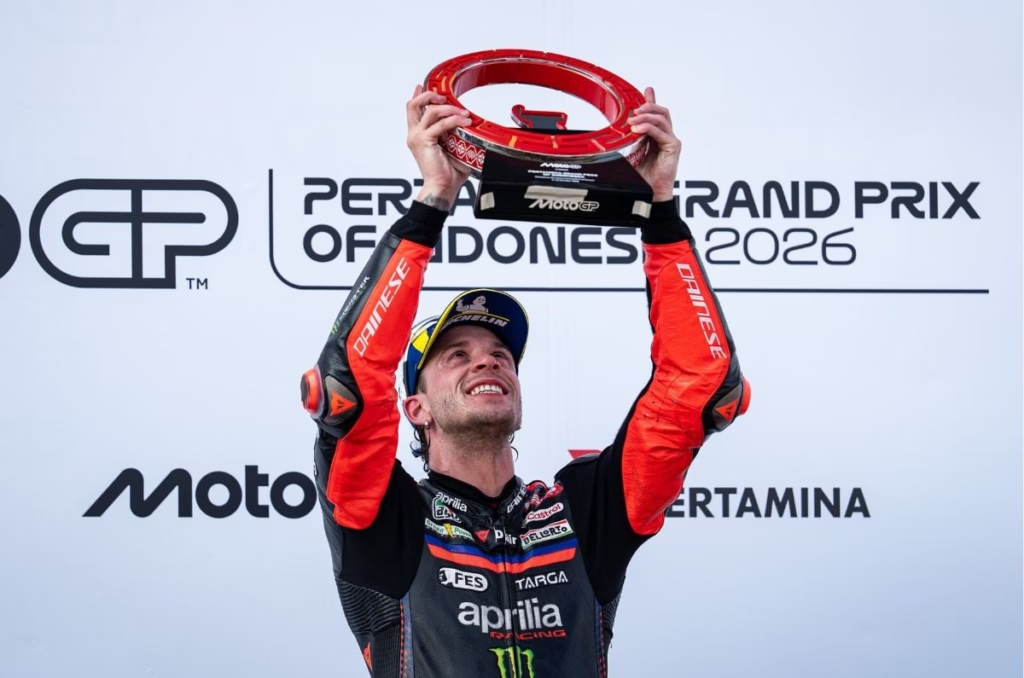
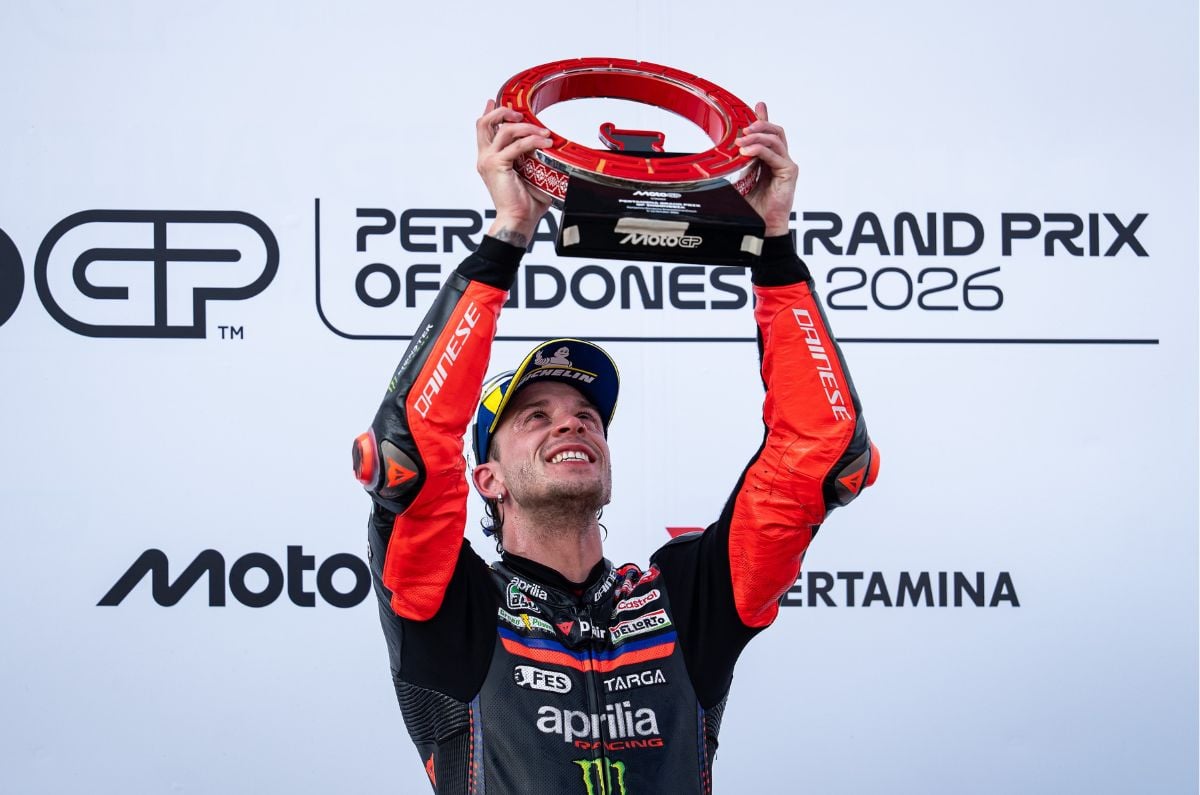
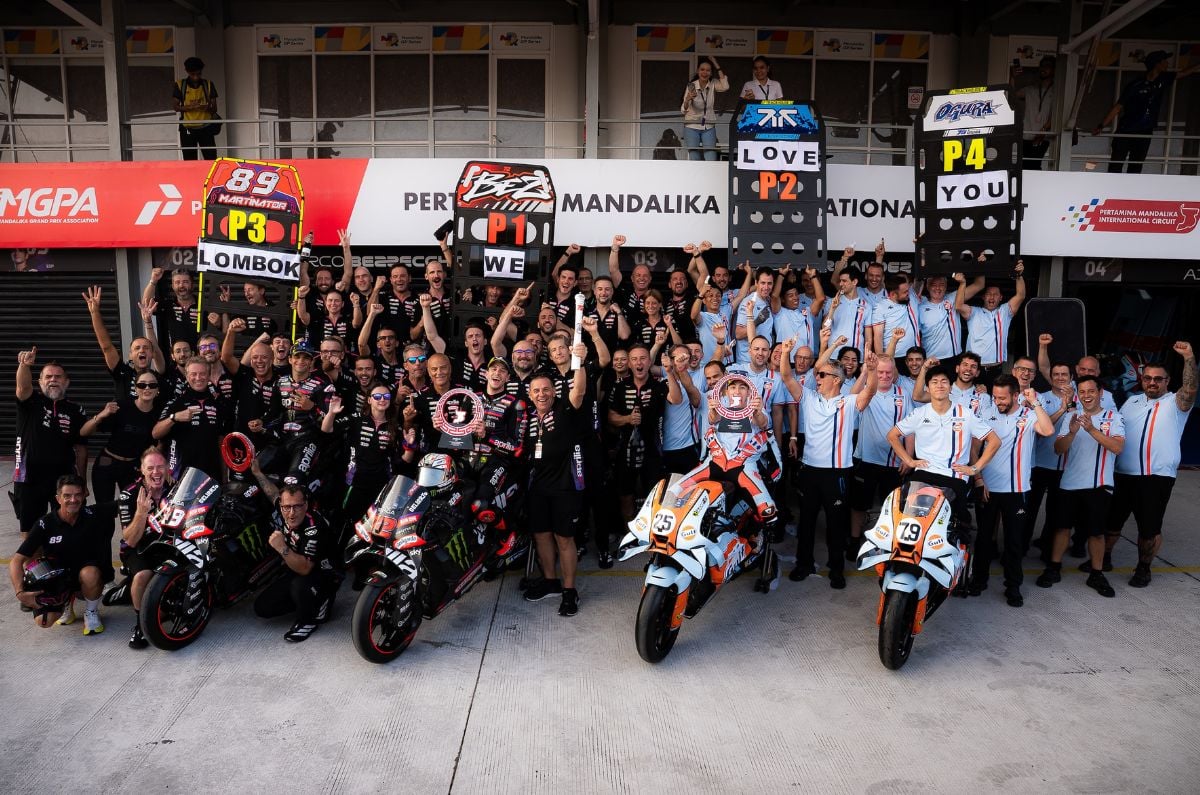
The last leg of the 2026 MotoGP season is here, and the stakes are only getting higher. Aprilia Racing rider Marco Bezzecchi, currently P3 in the world championship, won the Indonesian GP (133 days after his last win), and Jorge Martin, who currently leads the standings, took P3. Raul Fernandez and Ai Ogura of the Trackhouse MotoGP team ranked P2 and P4, resulting in an Aprilia 1-2-3-4 for the first time in the history of the premier class.
Marco Bezzecchi wins for the first time since the dominant Italian GP victory
Martin and Marquez are separated by 2 points, same as after Motegi the previous week
Maximo Quiles wins Moto3 championship, with Izan Guevara continuing to chip away at Manu Gonzalez’s lead in Moto2
Marc Marquez started off strong with Sprint win
Aided by Raul and Marco’s crash
Going into the weekend, Aprilia was expected to be the better performer and that largely held true throughout the practice sessions. However, during Saturday’s sprint, Marco Bezzecchi’s momentary lapse in judgement resulted in him and Raul Fernandez crashing out in the very first corner of the first lap. This gave the lead to Jorge Martin (started in P5), who held on to it until lap 9, when a front tyre pressure warning forced him to slow down and let the trailing rider, Marc Marquez, overtake him. Marc then started building a gap between the two of them, and while Martin sorted out his issues and started catching up to Marc, he ran wide on the last lap, thereby falling out of the podium positions, with a final P4 result.
Pedro Acosta was actively in the battle for podium with Fabio DiGiannantonio and Ai Ogura, until he received a long lap penalty for track limits and ended the Sprint with P6, behind Alex Marquez. A series of technical issues and the early crash guided Marc to a Sprint win, making him the outright championship leader on Saturday by 4 points, with Fabio and Ogura finishing in P2 and P3, respectively. Fernandez ended up with a broken index finger as a result of the crash but was cleared to race on Sunday.
An eventful Grand Prix, dominated by Aprilias
An injury-stricken Raul showed admirable resilience
The Sunday race, though, went as expected as can be. Fernandez started from pole position and had to modify his riding technique to brake with his middle finger, owing to his broken index finger. He was quick to race away from the rest of the pack, with Marco closely following for 17 out of the 27 laps, where he finally overtook him on turn 1 and won the race eventually. In addition to winning, Bezzecchi also set the fastest lap of the race at 1:29:660 and finished the race 21.060 seconds quicker compared to 2025.
Marc Marquez – rejuvenated by his Sprint victory – started strong in P3 but was subsequently overtaken by Jorge Martin and then Pedro Acosta later in the race. Marc and Pedro had a back-and-forth for some laps, where they both faced apparent front tyre pressure warnings (similar to Martin on Saturday), so they let each other pass a few times to let their tyres recover. Once Pedro resolved the issue, he overtook Marc but was then overtaken by Ogura. The race ended with Martin in P3, Ogura in P4, Pedro in P5 and Marc in P6.
Left to right: Jorge Martin (P3), Marco Bezzecchi (P1), Raul Fernandez (P2) and Ai Ogura (P4) celebrating the historic Aprilia 1-2-3-4 with their teams.
Fabio DiGiannantonio had a desirable race start at P3 but was quickly overtaken by all the riders above as well as Alex Marquez, ending his race with P8. Pedro was once again the best performing KTM rider, after Enea Bastianini out-performed him in Motegi. Speaking of whom, Enea ended his run with P10, followed by Pedro’s teammate Brad Binder in P11.
After his win in the Japanese GP, Marc Marquez had reduced the points gap to leader Jorge Martin to 2; and he briefly led the championship after his Sprint win. However, the race results have brought the duo back to the same gap with Jorge Martin once again becoming the leader, followed by Marc Maquez with a two points deficit going to Phillip Island, Australia.
Hot track, hotter riders, notable crashes
Four DNFs and one DNS
The Indonesian GP, hosted in the Lambok island, is considered to be a trying track for the riders as well as their motorcycles. During the MotoGP race, the track temperature was at a scalding 62 degree celsius and the air temperature was bordering around 29 degrees with 73 percent humidity. The conditions remained similarly scorching throughout the weekend, and evidently, it was a tough environment to race in. Fermin Aldeguer, last year’s Indonesian GP winner, crashed out at the end of lap 1, followed by Jack Miller and Pecco Bagnaia – separate incidents – in lap 5. Toprak Razgatlioglu retired in lap 8, due to weakness and lack of feeling in his right shoulder following a massive highside on Saturday practice, as he explained in post race interviews.
Honda had announced Aleix Espargaro will be replacing Joan Mir for the weekend and Aleix partook in all the practice sessions and the Sprint. However, he withdrew from the Grand Prix, citing arm pump issues and choosing to focus on Honda’s 850cc tests in Sepang next week.
Maximo Quiles takes Moto3 championship
A chaos filled Moto2 race with a closer championship fight than MotoGP
The other two races were just as eventful and perhaps more chaotic than MotoGP. After an impressive 2026 campaign, Maximo Quiles of CFMoto Gaviota Aspar team became the Moto3 World Champion with five races remaining. Quiles has the second-best win rate of 58.8 percent, trailing only David Alonso’s dominant run of 2024, with a 70 percent win rate.
Speaking of David Alonso, his Moto2 race came to a sadly premature end. Alonso started as P2 in the race, but in the first turn of the first lap, his CFMoto Power Electronics Aspar teammate Dani Holgado crashed into him leading to Alonso’s bike getting severely damaged. The crash also took out Joe Roberts and Collin Veijer, which brought red flags out, and resulted in a race restart with a reduced 14 laps (versus planned 22 laps). Except Alonso, the other three riders were able to restart their races, although Joe Roberts quickly retired because of an issue with his rear brake.
Klint Racing’s Alex Escrig was quick to overtake Izan Guevara and held on to the lead successfully, until a technical issue with his bike made him drop out of the race with two laps to go, handing Izan the victory. The final race results saw Izan Guevara in P1, current rider championship leader Manu Gonzalez in P2, and Dani Holgado in P3. With his hattrick race win, Izan has reduced the points gap to Manu to 6.5, going to Phillip Island in two weeks’ time.
Best OnlyFans Ranking: A Practical Guide to Choosing the Top Creators
1. Understanding the OnlyFans Landscape
OnlyFans has grown from a niche subscription service into a global marketplace where creators of all types can monetize exclusive content. The platform is open to artists, fitness coaches, chefs, and many other professionals, each leveraging a personalized fan base for recurring income. Because the ecosystem is so diverse, newcomers often wonder how to identify the most successful creators and whether those rankings matter for their own strategy.
In practice, the best onlyfans ranking reflects a blend of audience size, earnings consistency, engagement rates, and niche relevance. By studying these factors, you can gauge which creators set realistic standards and which tactics are worth emulating. This understanding forms the foundation for any decision‑making process on the platform.
2. How Rankings Are Determined
Rankings typically aggregate public metrics such as subscriber count, monthly earnings, post frequency, and interaction levels (likes, comments, direct messages). Some third‑party tools also factor in growth trends and audience demographics to provide a more nuanced picture. While raw numbers are important, qualitative aspects like brand consistency and content quality heavily influence long‑term ranking stability.
Most reputable rankings use algorithms that assign weighted scores to each metric. For example, subscriber count might carry a 30 % weight, while engagement averages account for 25 %. Understanding this methodology helps you interpret a ranking position beyond just a headline number.
3. Top Criteria for Evaluating OnlyFans Creators
When you compare creators, focus on the following criteria:
Audience size and growth rate: A large, steadily expanding subscriber base indicates market demand.
Engagement quality: High comment and message volumes show a loyal, interactive community.
Content diversity: Regularly varied media (photos, videos, live streams) keeps fans interested.
Monetization tactics: Use of paid messages, tip menus, and subscription tiers indicates revenue optimization.
Brand consistency: Cohesive visual style and messaging help maintain fan trust.
By scoring each creator against these benchmarks, you can build a personalized ranking that aligns with your business needs.
4. The Current Best OnlyFans Ranking – Who Leads the Pack
Based on publicly available data from the last quarter, the following creators consistently appear at the top of the best onlyfans ranking. They excel across the criteria discussed above and set industry standards for content strategy, pricing, and fan interaction.
Creator
Monthly Subscribers
Average Earnings (USD)
Primary Niche
Key Strength
Alice Blaze
125,000
$780,000
Fitness & Lifestyle
High‑volume live workouts
Nova Noir
98,000
$620,000
Adult Entertainment
Personalized video requests
Chef Marco
47,000
$210,000
Culinary Arts
Exclusive recipe bundles
These creators illustrate how different niches can dominate the ranking when they master the fundamental metrics of subscriber growth and fan engagement.
5. Features and Benefits of High‑Performing OnlyFans Accounts
Top‑ranked creators typically leverage a robust set of platform features. Automated subscription reminders, drip‑feed content schedules, and integrated payment processing reduce administrative overhead while maximizing revenue.
Benefits include predictable cash flow, deeper fan relationships, and the ability to scale content production without sacrificing quality. By using the dashboard analytics, successful creators can identify peak posting times and adjust pricing tiers to capture maximum willingness to pay.
6. Pricing, Payouts, and Monetization Strategies
Pricing is a delicate balance between perceived value and market competition. Most top creators set a base subscription between $15‑$30, then offer premium bundles, pay‑per‑view content, and tip incentives. Seasonal promotions—such as limited‑time discounts or exclusive holiday bundles—can boost subscriber acquisition without long‑term price erosion.
Payouts on OnlyFans are processed weekly, with a standard 20 % platform fee. Creators should plan for tax obligations and reserve a portion of earnings for reinvestment in equipment, marketing, or content upgrades.
7. Setting Up for Success – Step‑by‑Step Guide
Getting started on OnlyFans doesn’t require a degree in digital marketing, but a systematic approach helps you replicate the practices of the best onlyfans ranking leaders.
Create a professional profile: Use high‑resolution photos, a concise bio, and clear content categories.
Define pricing tiers: Start with a modest base price, then add premium options as your library grows.
Develop a content calendar: Plan at least three posts per week, mixing photos, videos, and live streams.
Engage daily: Respond to messages, run polls, and thank top fans to boost loyalty.
Analyze performance: Use the built‑in dashboard to track subscriber growth and adjust strategies.
Following these steps positions you to climb the ranking ladder while maintaining a sustainable workflow.
8. Common Pitfalls and How to Avoid Them
Even the most dedicated creators encounter obstacles. Below are frequent mistakes and practical solutions:
Inconsistent posting: Set automated reminders or batch‑create content to maintain a steady flow.
Over‑pricing early on: Test lower price points first; you can increase rates once you have proven value.
Neglecting fan feedback: Conduct regular surveys and adjust content based on direct requests.
Ignoring platform policies: Review OnlyFans terms to avoid content removals or account suspensions.
By proactively addressing these issues, you minimize churn and protect your position in the best onlyfans ranking.
9. Frequently Asked Questions
Is the best onlyfans ranking reliable for newcomers?
While rankings provide a useful snapshot of top performers, they should be combined with your own niche analysis. Use them as benchmarks, not absolute rules.
How long does it take to appear in the ranking?
Most creators see measurable movement within three to six months of consistent effort, provided they follow best practices for content and engagement.
Can I improve my ranking without increasing prices?
Yes. Enhancing engagement, offering exclusive experiences, and optimizing posting times can boost your score even with stable pricing.
Best OnlyFans Sites: A Practical Guide for Creators and Fans
Understanding OnlyFans and What Makes a Site Among the Best OnlyFans Sites
OnlyFans started as a subscription‑based platform that lets creators share exclusive content with paying fans. Over time, dozens of similar services have emerged, each tweaking the original formula with different feature sets, revenue models, and community tools. When you hear the phrase “best only fans sites,” it usually refers to platforms that balance creator freedom, fan engagement, and reliable earnings.
To differentiate the top choices, focus on three core pillars: the robustness of the platform’s features, the fairness of its pricing and revenue share, and the strength of its security and support infrastructure. By anchoring your decision on these pillars, you can avoid gimmicks and choose a service that truly meets your business needs.
Key Features and Benefits to Look For
A solid platform will offer a set of essential features that empower both creators and fans. Look for a customizable dashboard that lets creators schedule posts, manage subscriptions, and track earnings in one place. Automation tools such as scheduled posting, auto‑reply messages, and workflow integrations can save time and keep the audience engaged.
Benefits of these features include higher fan retention, smoother monetization, and the ability to scale your content operation without constantly juggling manual tasks. When a platform bundles these capabilities into an intuitive interface, it becomes a strong candidate among the best only fans sites.
Feature Checklist
Content scheduling and calendar tools
Advanced analytics dashboard
Built‑in messaging and automation
Multiple payment gateways
Customizable subscription tiers
Pricing Models and How They Influence Your Decision
Pricing structures vary widely across platforms. Some charge a flat monthly fee, while others take a percentage of creator earnings. Understanding these models helps you forecast net revenue and choose a site that aligns with your financial goals.
When evaluating the best only fans sites, compare the total cost of ownership—including transaction fees, payout schedules, and any hidden charges. A platform with a higher revenue share but lower transaction fees might ultimately be more profitable than one with a low percentage but hefty processing costs.
Typical Pricing Comparison
Platform
Monthly Subscription Range
Revenue Share
Unique Feature
Platform A
$4.99 – $49.99
80%
Integrated live‑stream tipping
Platform B
$5 – $50
85%
AI‑powered content suggestions
Platform C
$3 – $45
78%
Multi‑currency payouts
Security, Reliability, and Support – Non‑Negotiable Factors
Any platform handling paid subscriptions must prioritize security and reliability. Look for encryption standards, two‑factor authentication, and regular third‑party security audits. A reliable uptime record ensures that fans can access content without interruption, protecting both creator reputation and revenue.
Equally important is responsive support. Whether you need help with onboarding, troubleshooting payouts, or addressing policy questions, a dedicated support team that offers live chat or ticket‑based assistance can make a big difference. Choose a site whose support hours align with your operating timezone.
Support Features to Expect
24/7 live chat or email ticketing
Comprehensive knowledge base
Account manager for high‑volume creators
Clear escalation path for security incidents
Setup and Integration: Getting Started Quickly
Fast onboarding reduces the time between signing up and earning your first subscription. The best only fans sites typically offer step‑by‑step guides, video tutorials, and pre‑built integrations with popular marketing tools such as email newsletters and social media schedulers.
Here’s a simple three‑step setup process you can expect:
Create an account and verify your identity.
Customize your profile, add payment details, and set subscription tiers.
Connect your preferred social channels and schedule your first batch of content.
Following these steps ensures a smooth launch and lets you focus on creating rather than troubleshooting.
Use Cases: Who Is Each Platform Best For?
Different creators have distinct needs. Some prioritize high revenue share, while others need advanced analytics or niche community features. Below are common use cases and the platform type that usually fits best.
Typical Creator Profiles
Fitness influencers: Need integrated live‑stream workouts and tipping.
Artists and photographers: Require high‑resolution media support and customizable galleries.
Adult content creators: Look for strong privacy controls and discreet billing.
Educators and coaches: Benefit from subscription bundles and private messaging.
Small‑scale hobbyists: Prefer low monthly fees and simple dashboards.
Matching your primary goals with the platform’s strengths helps you choose the most suitable site among the best only fans sites.
Final Checklist Before You Sign Up
Before committing to any platform, run through this quick checklist to ensure you’ve covered the essential criteria:
Feature set matches your content workflow.
Revenue share and pricing are transparent.
Security protocols meet industry standards.
Support channels are responsive and available in your timezone.
Onboarding process aligns with your launch timeline.
Keeping this list handy will help you avoid costly surprises and set a solid foundation for sustainable growth. For more insights and real‑world examples, visit the best onlyfans blog.