Duster turbo petrol vs hybrid: Similarities and differences explained

Duster turbo petrol vs hybrid: Similarities and differences explained
Duster

Renault has expanded the new Duster line-up with a strong-hybrid option, joining the existing 1.0-litre and 1.3-litre turbo-petrol engines. While the hybrid shares much of its design and cabin layout with the petrol versions, there are differences in styling, equipment and, most importantly, how the two powertrains deliver performance and efficiency. Here’s a closer look at what sets them apart.

Renault Duster turbo petrol vs hybrid: Exterior

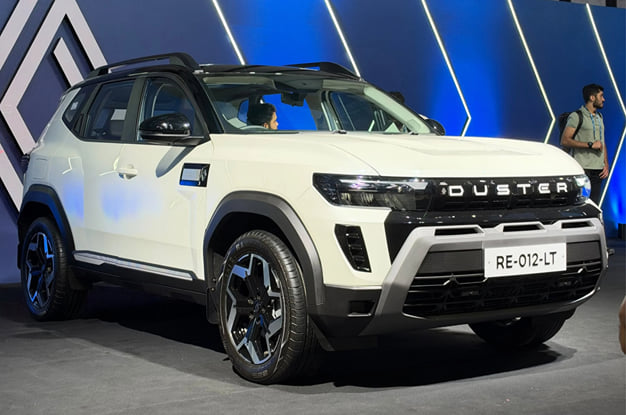
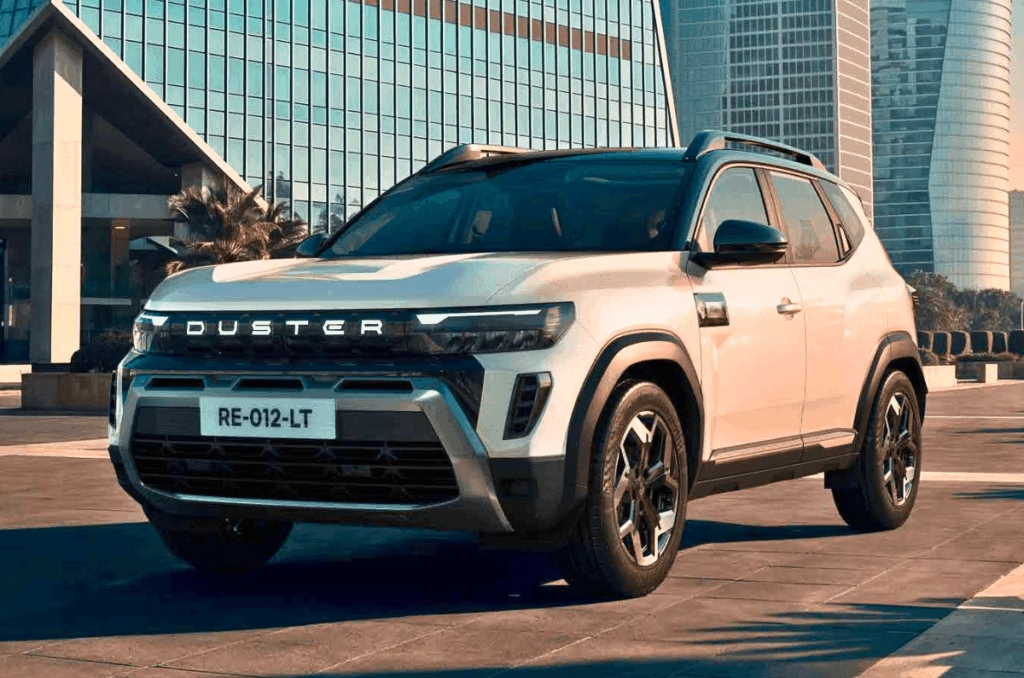
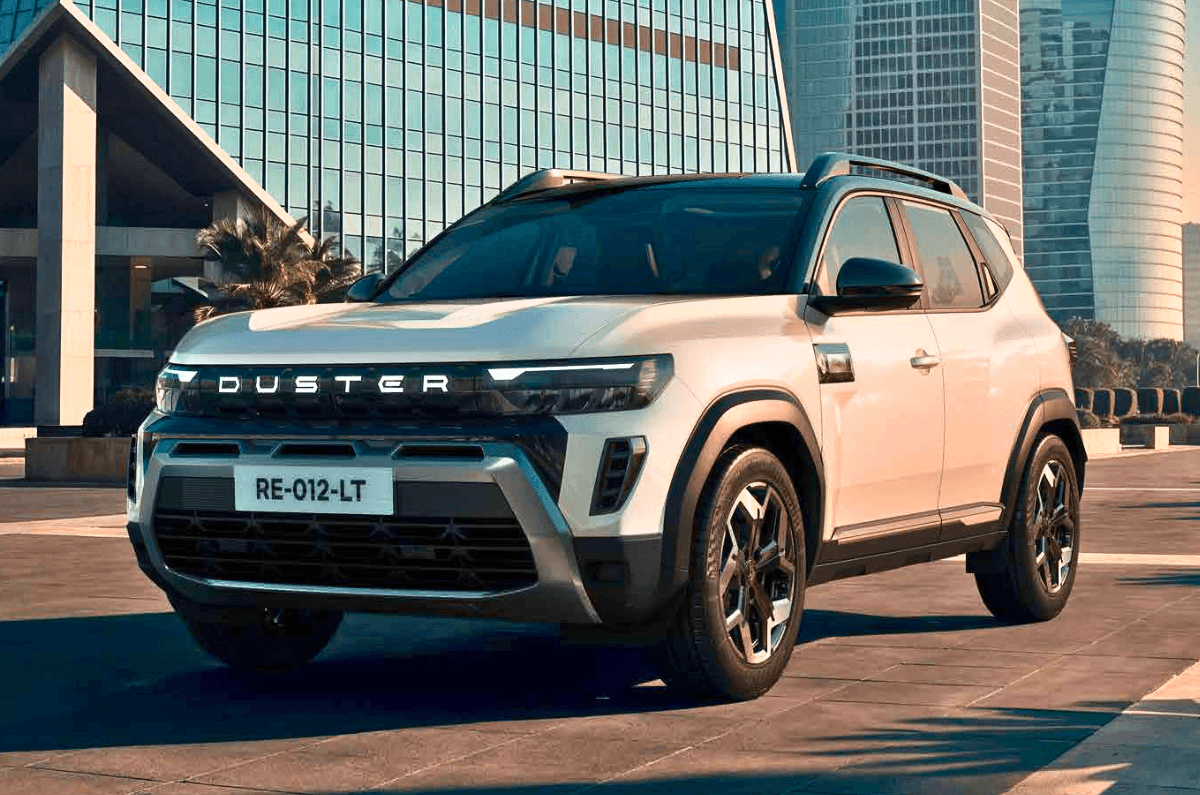
The illuminated grille and badges are the main styling difference
Duster turbo petrol
Duster hybrid
 

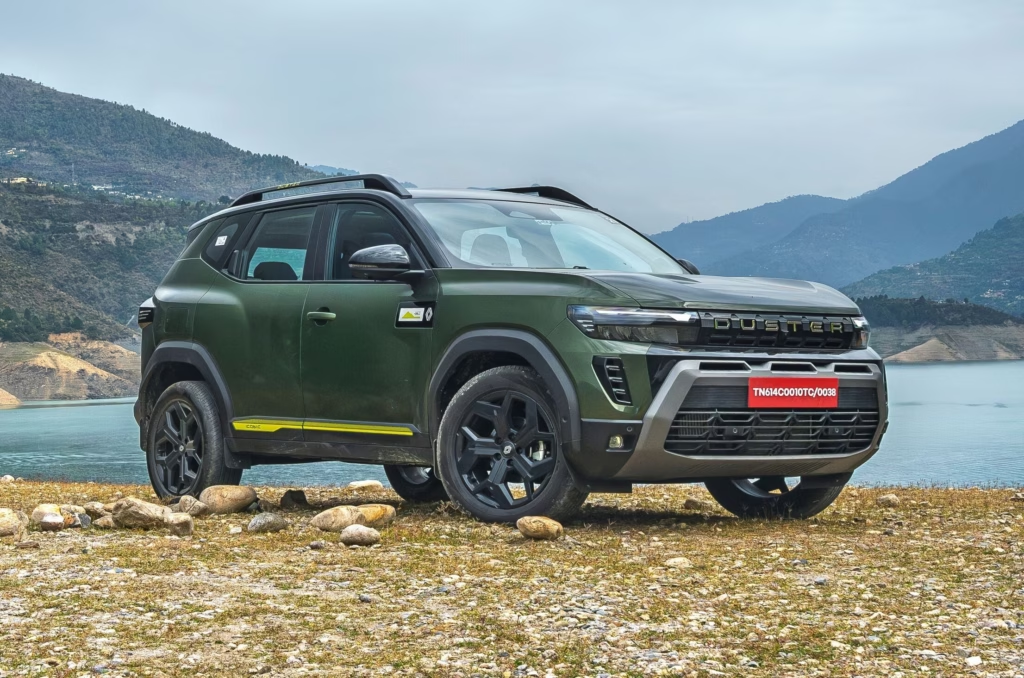
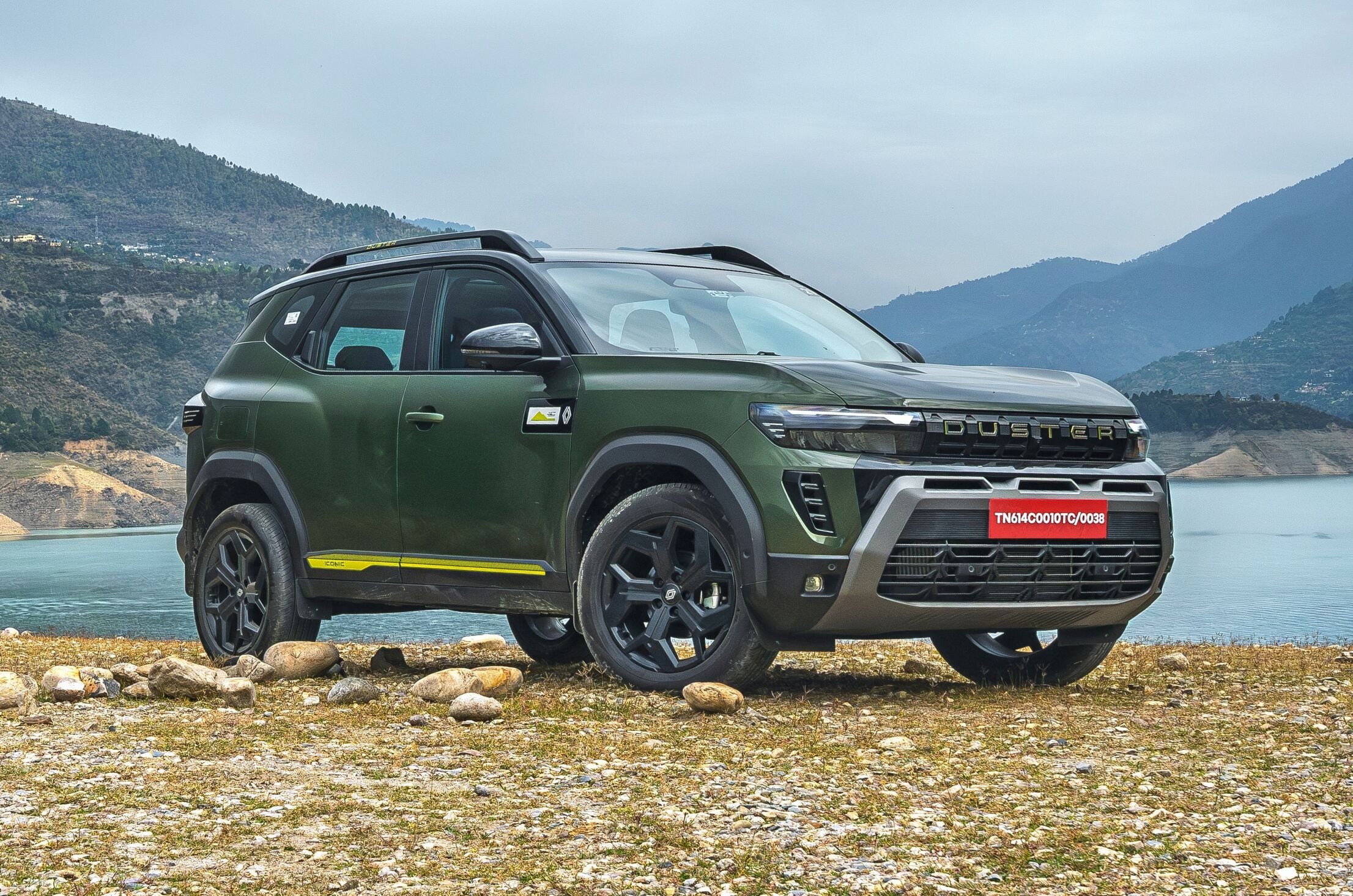
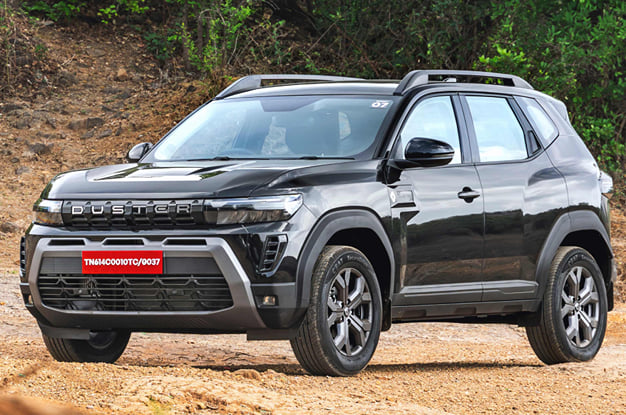
Duster turbo petrol vs hybrid

The Duster hybrid retains the turbo-petrol model’s overall design, including its eyebrow-shaped LED daytime running lamps, chunky body cladding, roof rails and C-pillar-mounted rear door handles.  It also has the same 212mm ground clearance.

The main styling changes are an illuminated ‘Duster’ grille emblem and ‘E-Tech Hybrid’ badges on the front doors and tailgate. The Hybrid version also gets frequency-dependent dampers. Boot capacity is lower than in the turbo-petrol versions, although the overall exterior design remains largely unchanged.

Renault Duster turbo petrol vs hybrid: Interior and features

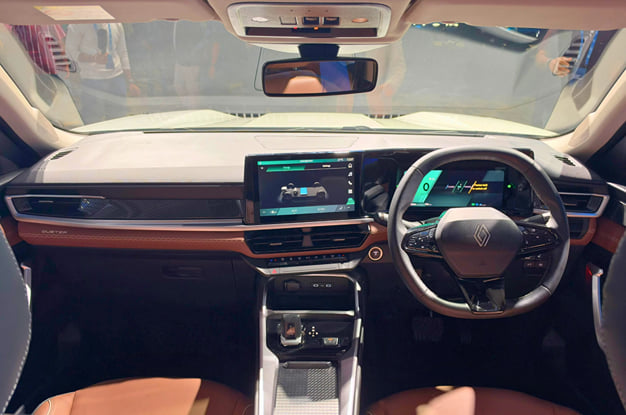
The cabin layout is similar, but the upholstery and equipment differ
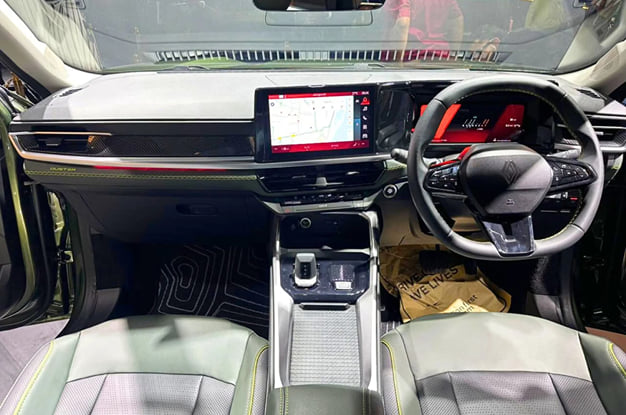
Duster turbo petrol
Duster turbo hybrid
 

Duster turbo petrol vs hybrid

The hybrid follows the turbo-petrol Duster’s dashboard layout, with a dual-screen setup and an e-shifter on the centre console. The hybrid gets a different upholstery scheme from the turbo-petrol Duster, with black upholstery and grey stitching on the Evolution, Desert Beige semi-leatherette on the Techno and Dune Brown leatherette on the Emotion. The hybrid also gets a smaller headrest.

The Duster hybrid is offered in Evolution, Techno and Emotion trims, while the turbo-petrol range gets Evolution, Techno, Techno+, Iconic and Iconic Launch Edition variants. 

The hybrid and turbo-petrol Duster share some equipment across their respective trims, but there are differences. The hybrid Evolution gets a 7-inch digital driver’s display, a 10.1-inch touchscreen and dual-zone automatic climate control. The turbo-petrol Evolution has the same touchscreen and driver’s display, but gets single-zone manual air conditioning. Both the hybrid and turbo-petrol Techno trims get a panoramic sunroof.

At the top of the range, the hybrid Emotion gets a 10.25-inch digital driver’s display, ventilated and electrically adjustable front seats, and a powered tailgate. The turbo-petrol Iconic offers these features too, but additionally gets a 360-degree camera and Level 2 ADAS, which are not available on the hybrid.

Renault Duster turbo petrol vs hybrid: Engine and Performance

The 1.3-litre turbo-petrol makes more torque
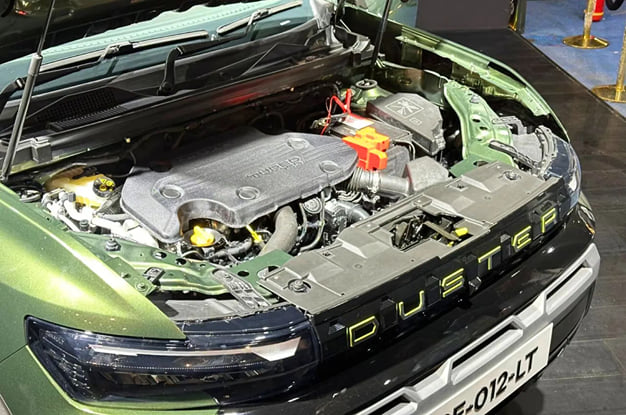
Duster turbo petrol
Duster hybrid
 

Duster turbo petrol vs hybrid

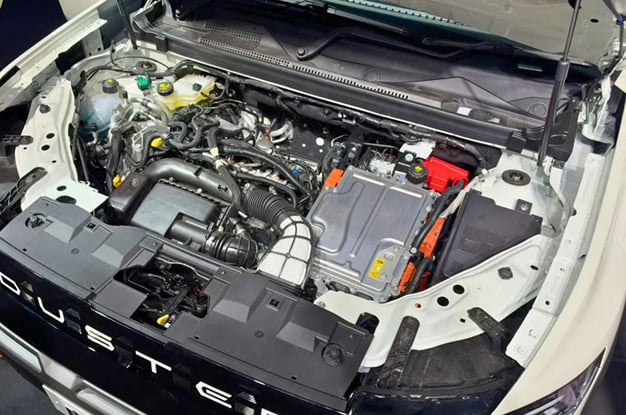
The Duster turbo-petrol is available with two engine options. The 1.0-litre, three-cylinder unit produces 100hp and 166Nm and is paired with a 6-speed manual gearbox. The larger 1.3-litre, four-cylinder engine develops 163hp and 280Nm, and is available with a 6-speed manual or a 6-speed dual-clutch automatic gearbox.

The hybrid uses a naturally aspirated 1.8-litre, four-cylinder petrol engine paired with two electric motors: a 20hp generator and a 49hp motor that drives the wheels. The system produces a combined 160hp and 172Nm, with a 1.4kWh battery supporting the setup. It uses a ‘multi-mode’ automatic gearbox with two electric gears and four petrol gears.

The hybrid system automatically switches between six operating modes, including all-electric, petrol-only and series and series-parallel hybrid modes. Renault claims the Duster hybrid can cover up to 80 percent of city driving in pure electric mode and accelerate from 0-100kph in a claimed 9.61 seconds.

While the hybrid’s combined output of 160hp is close to the 1.3-litre turbo-petrol’s 163hp, its claimed torque figure of 172Nm is lower than the turbo-petrol’s 280Nm.

Renault Duster turbo petrol vs hybrid: mileage 

Duster hybrid mileage is 10.55kpl higher than turbo-petrol DCT

PowertrainTransmissionARAI-claimed mileage
1.0-litre turbo-petrol6-speed manual19.41kpl
1.3-litre turbo-petrol6-speed manual17.75kpl
1.3-litre turbo-petrol6-speed DCT automatic18.45kpl
1.8-litre strong hybridMulti-mode automatic29kpl

The hybrid’s claimed mileage is significantly higher than that of either turbo-petrol engine. The difference is 9.59kpl over the 1.0-litre turbo-petrol manual, 11.25kpl over the 1.3-litre turbo-petrol manual and 10.55kpl over the 1.3-litre turbo-petrol DCT. At 29kpl, the hybrid’s claimed mileage is around 57 percent higher than that of the DCT version. 

The hybrid has a 50-litre fuel tank, the same capacity as the turbo-petrol versions. Renault claims a driving range of more than 1,400km on a full tank of the Hybrid variant.

Duster turbo petrol vs hybrid: Price

The hybrid costs more, even though it misses some features available on the top-spec turbo-petrol

TrimDuster hybridDuster turbo-petrol
Authentic–10.49 (1.0 MT)
Evolution16.9911.69 (1.0 MT); 12.99 (1.3 MT); 14.49 (1.3 DCT)
Techno18.9913.49 (1.0 MT); 14.49 (1.3 MT); 15.89 (1.3 DCT)
Techno+–15.29 (1.3 MT); 16.69 (1.3 DCT)
Emotion / Iconic19.49 (Emotion)16.99 (Iconic MT); 18.49 (Iconic DCT)

MT = manual; DCT = dual-clutch automatic

The hybrid’s introductory prices apply to deliveries until December 31, 2026. In Evolution trim, the hybrid costs Rs 2.50 lakh more than the 1.3-litre turbo-petrol DCT, while the top-spec Emotion hybrid is Rs 1 lakh more than the Iconic DCT. The hybrid offers higher claimed mileage but misses out on the 360-degree camera and Level 2 ADAS available on the turbo-petrol Iconic.

The hybrid version suits buyers who cover long distances and prioritize fuel efficiency, while the 1.3-litre turbo-petrol is worth considering for its higher torque and additional driver-assistance features.

All prices are ex-showroom, India.
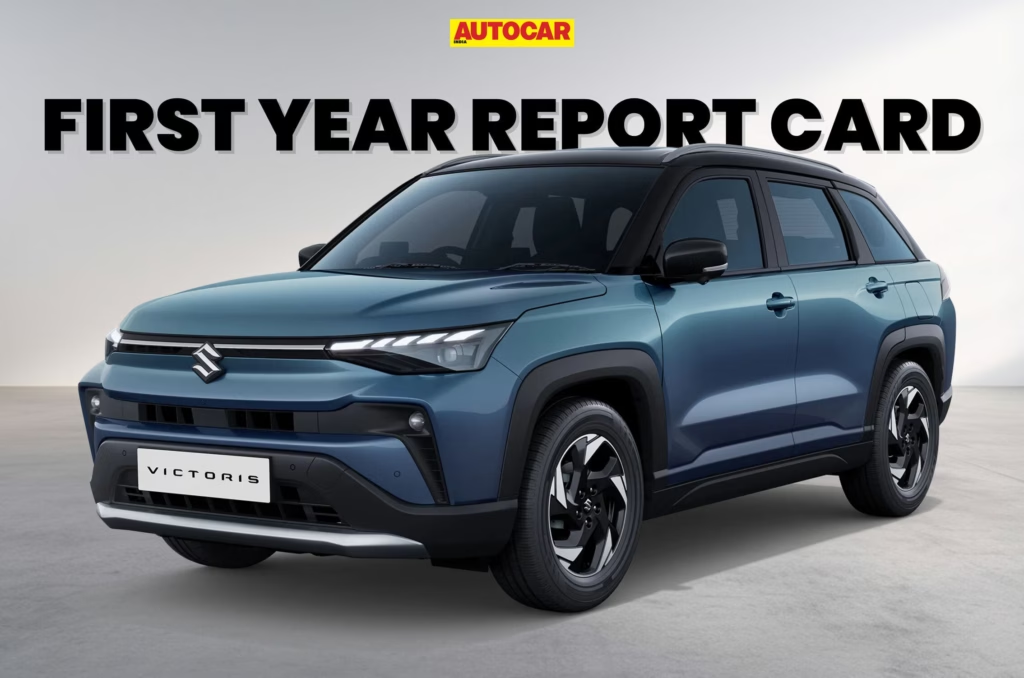
Report Card: Maruti Victoris’ 1-Year Innings

Report Card: Maruti Victoris’ 1-Year Innings
Maruti Victoris one year report card

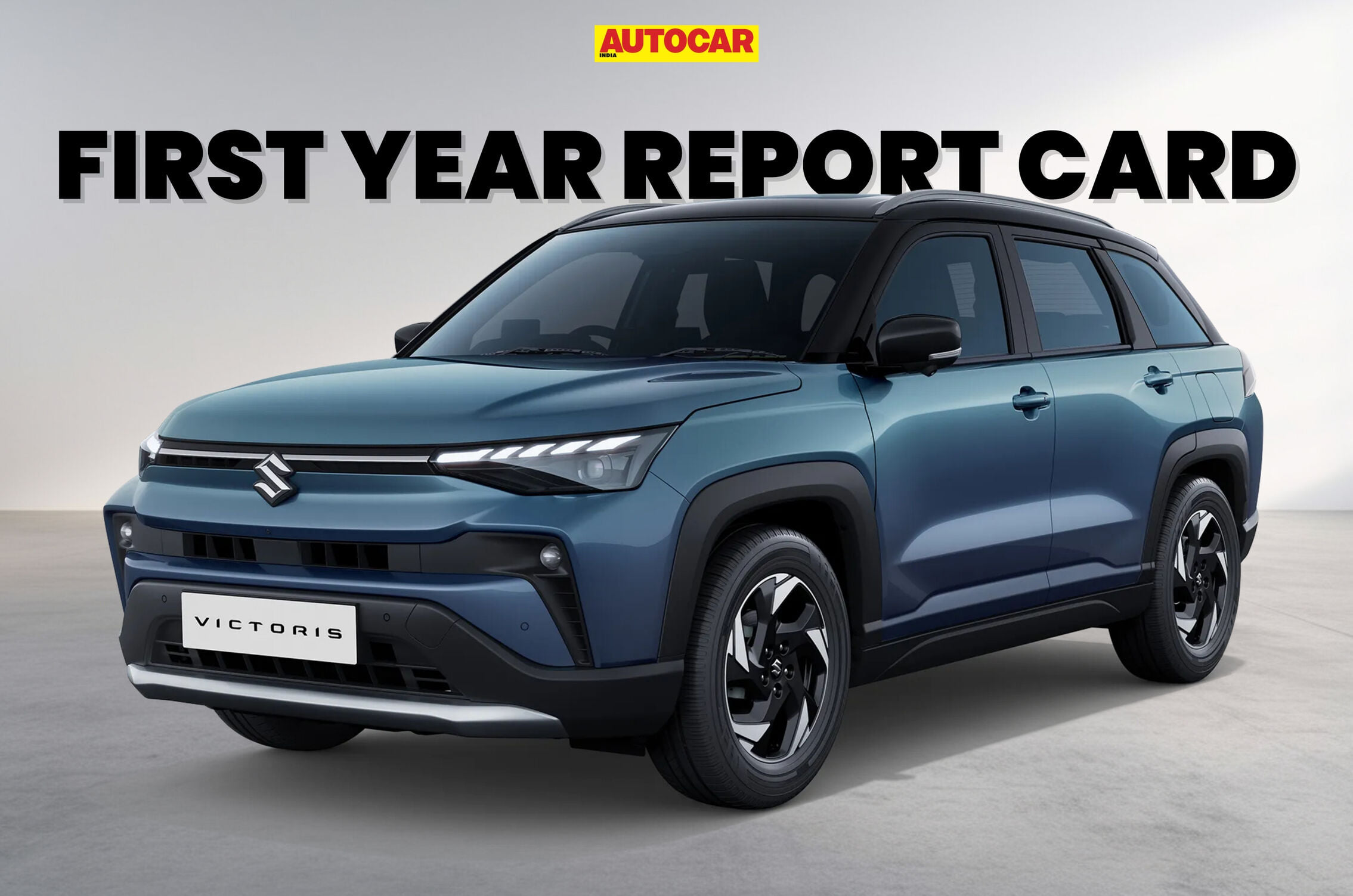
Maruti Suzuki introduced the Victoris SUV on September 15, 2026, as its second mid-size SUV. With the Victoris, Maruti aimed to capture a larger share of the mid-size SUV segment by retailing it through its widespread Arena dealership network, in contrast to its Nexa-sold stablemate, the Grand Vitara. The Victoris shares its platform and engines with the Grand Vitara but sports a distinct exterior design. Additionally, it introduced features such as an underbody-mounted CNG tank and became the first Maruti model to feature a Level 2 ADAS suite.

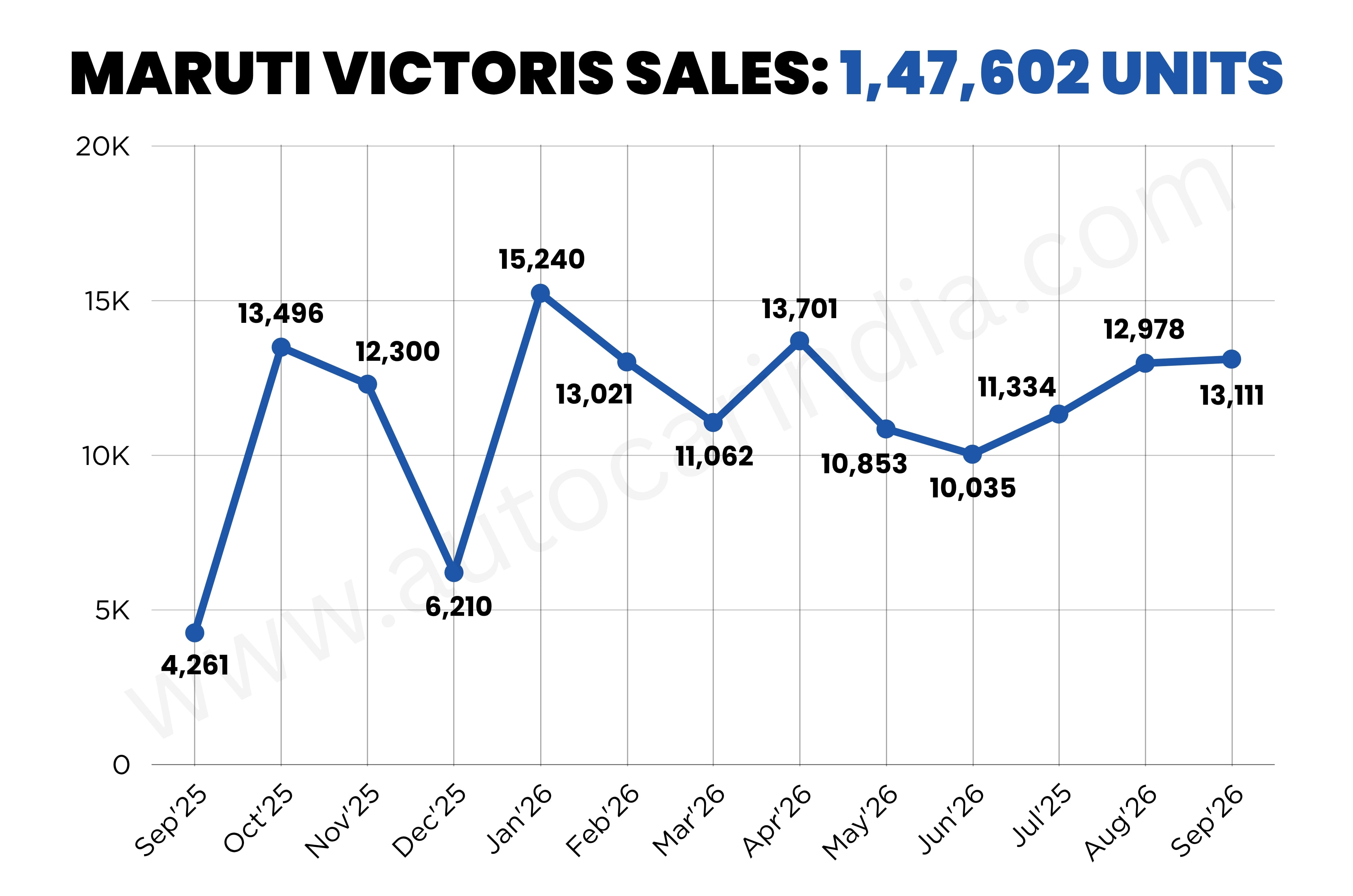
  1. Victoris records 1,47,602 units in total sales in its first year.
  2. Prices have increased/decreased for select variants; still range between Rs 10.5 lakh and Rs 19.99 lakh.
  3. No variant rejigs took place in its first year.

Maruti Victoris sales 

In its first year since launch, the Maruti Suzuki Victoris recorded sales of 1,47,602 units, averaging roughly 12,300 units per month. Monthly volumes began at 4,261 units in September 2025 and rose quickly to 13,496 units in October 2025. Following a minor dip to 12,300 units in November 2025, sales dropped by nearly half in December 2025. Peak sales were recorded in January 2026 at 15,240 units, after which the SUV maintained steady monthly volumes ranging between 10,000 and 13,000 units.

Despite launching after the Grand Vitara, the Victoris achieves higher monthly sales figures, largely supported by Maruti Suzuki’s wider Arena dealership network. Notably, the SUV crossed the 1-lakh sales milestone within eight months of launch—outpacing the Grand Vitara to reach this mark. 

Maruti Victoris variant -wise price 

Variant

Price now (Rs lakh)

Price at launch (Rs lakh)

1.5 LXi

10.50

10.50

1.5 LXi CNG

11.55

11.50

1.5 VXi

11.85

11.80

1.5 VXi AT

13.41

13.36

1.5 VXi CNG

12.90

12.80

1.5 VXi strong hybrid eCVT

16.43

16.38

1.5 ZXi  

13.62

13.57

1.5 ZXi AT

15.18

15.13

1.5 ZXi CNG

14.66

14.57

1.5 ZXi strong hybrid eCVT

18.00

17.80

1.5 ZXi(O)  

13.69

14.08

1.5 ZXi(O) AT 

15.25

15.64

1.5 ZXi(O) strong hybrid

18.43

18.39

1.5 ZXi+  

15.39

15.24

1.5 ZXi+ AT

17.34

17.19

1.5 ZXi+ AT AWD

18.69

18.64

1.5 ZXi+ strong hybrid eCVT

19.52

19.47

1.5 ZXi+(O) 

15.48

15.82

1.5 ZXi+(O)  AT

17.43

17.77

1.5 ZXi+(O) AT AWD

19.27

19.22

1.5 ZXi+(O) strong hybrid eCVT

19.99

19.99

The Victoris is priced between Rs 10.50 lakh and Rs 19.99 lakh, and is offered in several variants. Depending on the variant, prices have increased by up to Rs 20,000 because of hikes by the carmaker due to a rise in input costs. However, select variants of the Victoris saw a price cut of up to Rs 39,000 in July 2026.

Maruti Victoris milestones

Within its first year in the market, Maruti hasn’t introduced or discontinued any of its variants. Additionally, the SUV has not been subject to any recalls.

Maruti Victoris specifications

The Victoris is offered with petrol, CNG, and strong-hybrid powertrains. The petrol and CNG versions use a 1.5-litre naturally aspirated engine: the former produces 103hp and 139Nm, while the latter outputs 88hp and 122Nm. Petrol variants feature a 5-speed manual or a 6-speed automatic transmission, with the automatic also available in an all-wheel-drive (AWD) configuration. CNG versions come exclusively with a 5-speed manual.

The strong-hybrid variant is powered by a 1.5-litre naturally aspirated Atkinson-cycle petrol engine producing 92hp and 122Nm, paired with an e-CVT. The system incorporates a 0.76 kWh battery and an electric motor generating 80hp and 141Nm, delivering a combined peak power output of 116 hp.

In terms of fuel efficiency, the claimed figures for the petrol manual, petrol automatic, and petrol AWD variants are 21.18kpl, 21.06kpl, and 19.07kpl, respectively. The strong-hybrid model leads with a claimed efficiency of 28.65kpl, while the CNG version delivers 27.02km/kg.

All prices are ex-showroom, India

Kia Sorento sells 1,739 units in its first month since launch

Kia Sorento sells 1,739 units in its first month since launch
Kia Sorento

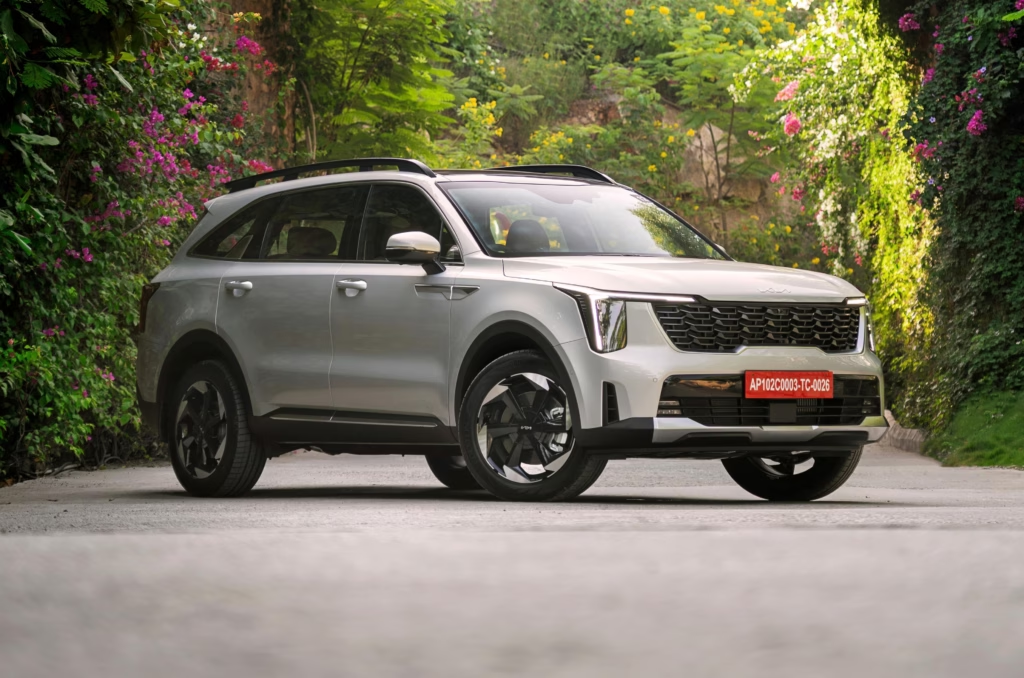
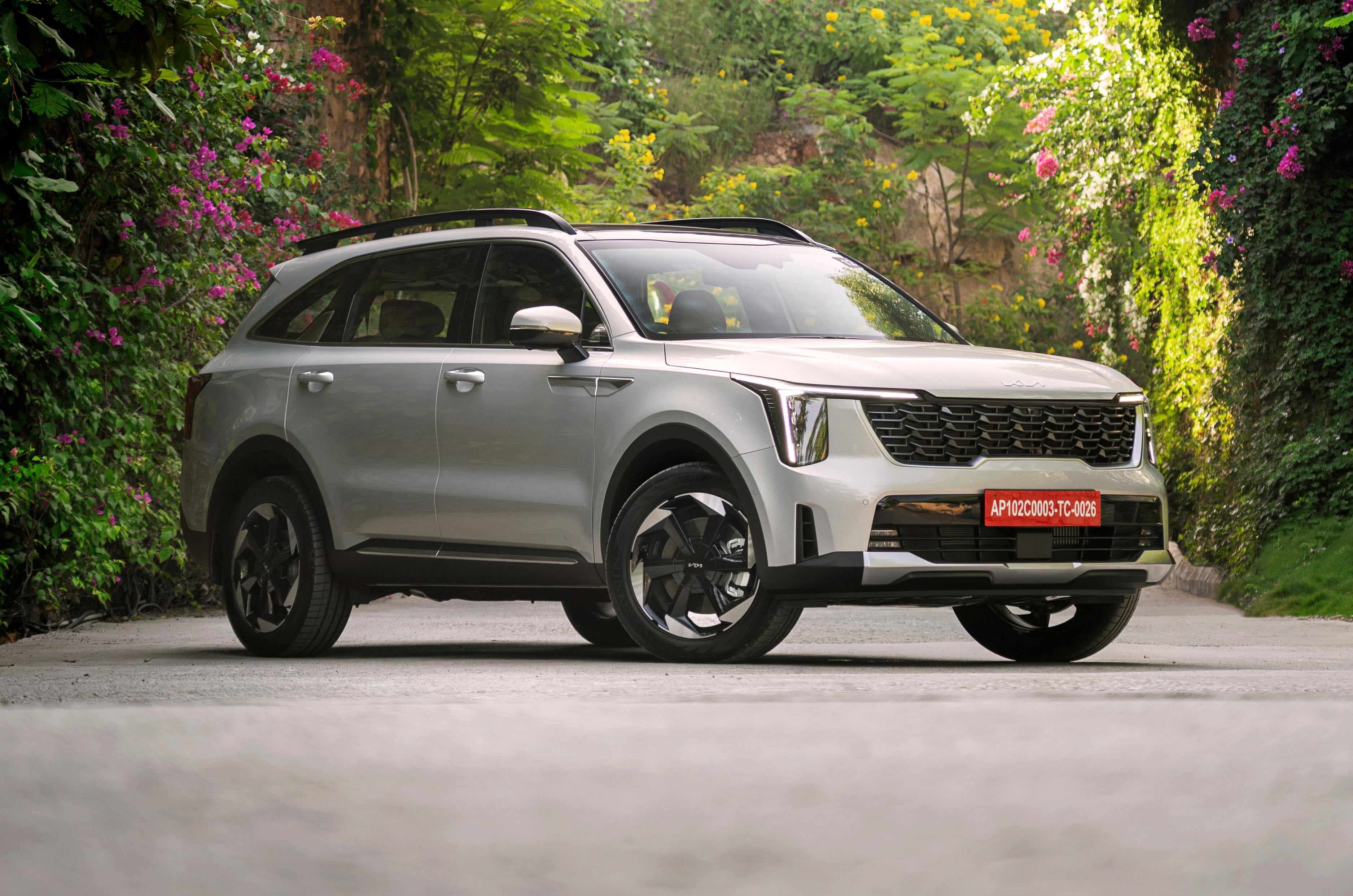
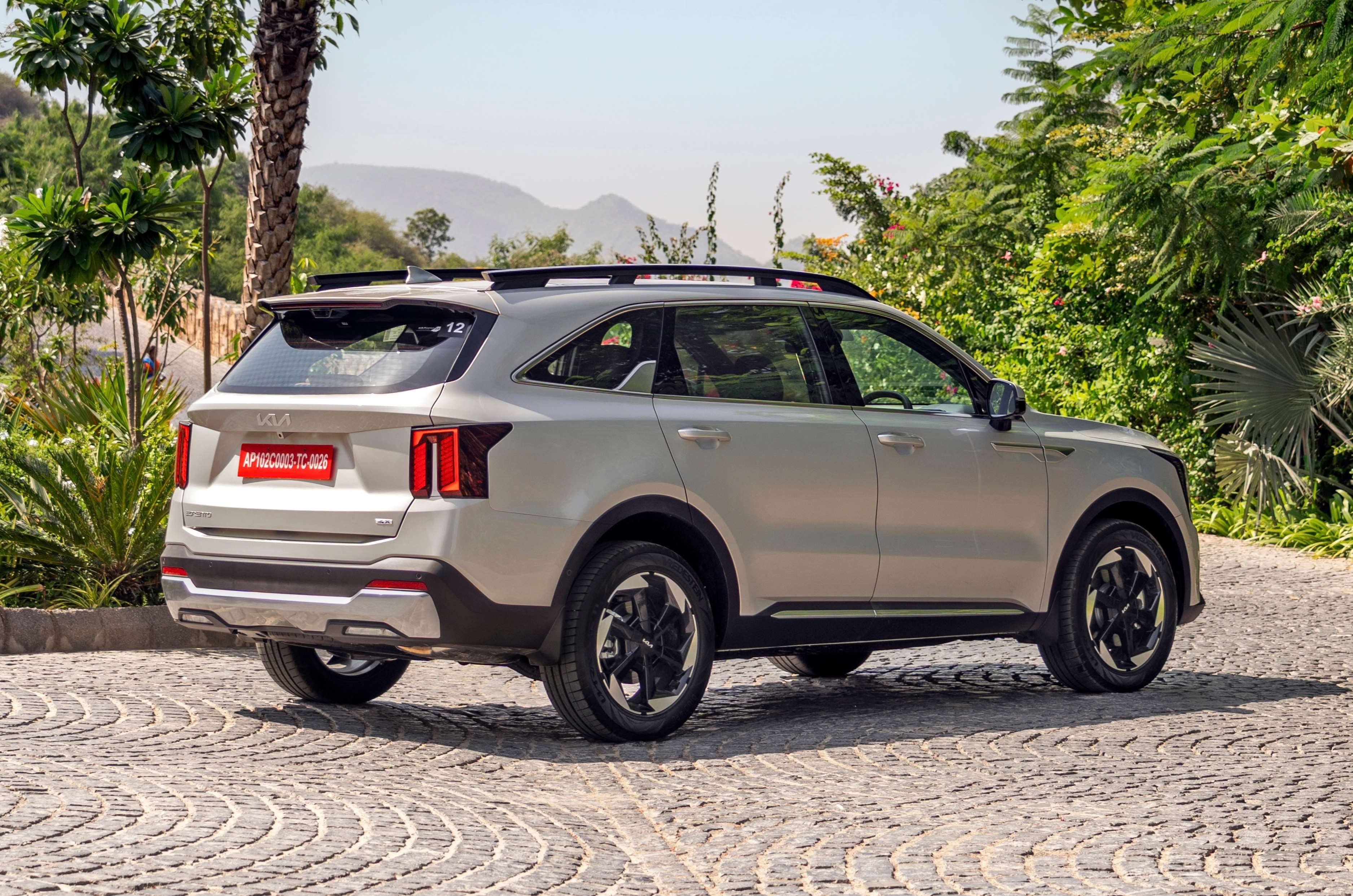
The Kia Sorento recorded 1,739 units in domestic wholesales in September 2026, its first month on sale after launching on September 4. It was Kia India’s fifth best-selling model that month. Including 365 units dispatched to dealers in August ahead of the launch, the Sorento’s total wholesales stood at 2,104 units.

Kia India recorded its highest-ever monthly wholesales of 32,017 units in September, up 41 percent year on year. This was the first time the company had crossed 30,000 units in a month, surpassing its previous record of 29,556 units in October 2025, which was the first month after the GST 2.0 rate cuts kicked in.

Kia Sorento: All you need to know

The Sorento is priced between Rs 27.99 lakh and Rs 40.39 lakh (ex-showroom). It is offered with a 1.6-litre turbo-petrol strong-hybrid powertrain or a 2.2-litre turbo-diesel engine. The hybrid setup pairs a 180hp, 265Nm petrol engine with a 65hp, 264Nm electric motor, while the diesel mill produces 193hp and 442Nm.

The SUV is available in six- and seven-seat configurations. Key features include dual 12.3-inch displays, a head-up display, ventilated front seats, a powered tailgate, a panoramic sunroof and second-row captain seats with ventilation. Safety equipment includes 10 airbags, a 360-degree camera, dual dashcams and Level 2+ ADAS.

The Kia Sorento rivals the Jeep Meridian, Skoda Kodiaq and Volkswagen Tayron. 

Kia India sales up 29 percent in H1 FY2027

Kia India recorded wholesales of 1,68,683 units between April and September 2026, a 29 percent year-on-year increase. September wholesales stood at 32,017 units, up 41 percent year on year and the company’s highest monthly total since it entered India in 2019. In Q2 FY2027 (July-September 2026), sales grew 39 percent year on year to 89,259 units and were 12 percent higher than in Q1 FY2027.

The Seltos was Kia’s best-selling model in the first half of FY2027, with 67,667 units, up 99 percent year on year. It accounted for 40 percent of the company’s total wholesales during the period. The Sonet ranked second with 56,929 units, up 21 percent, contributing 34 percent of sales. The Carens range, including the Carens, Carens Clavis and Clavis EV, recorded 34,284 units, down 18 percent year on year.

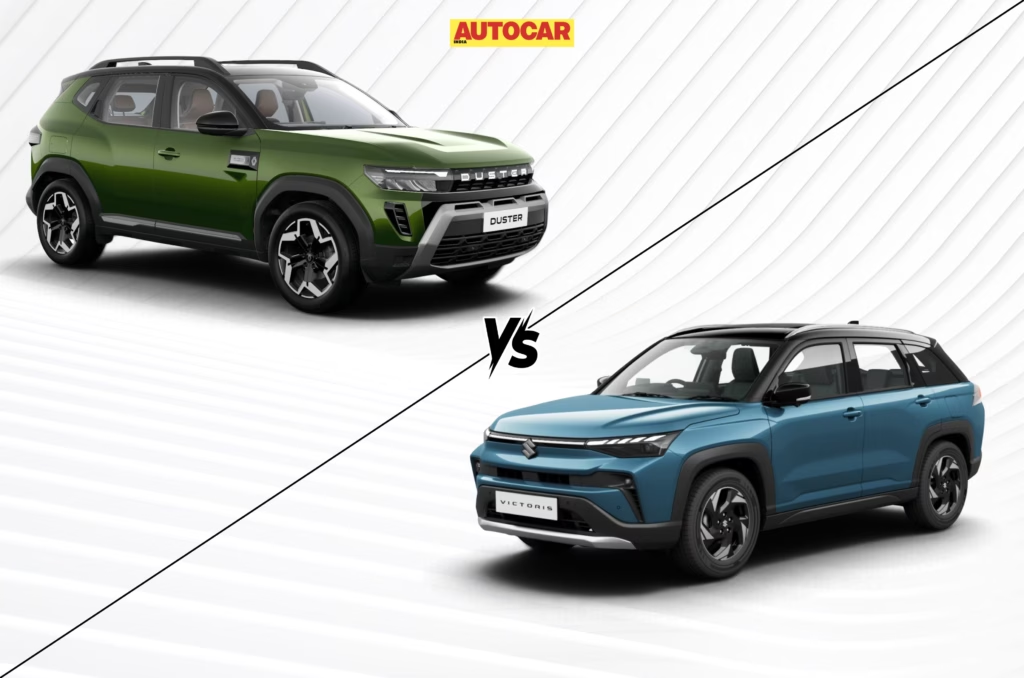
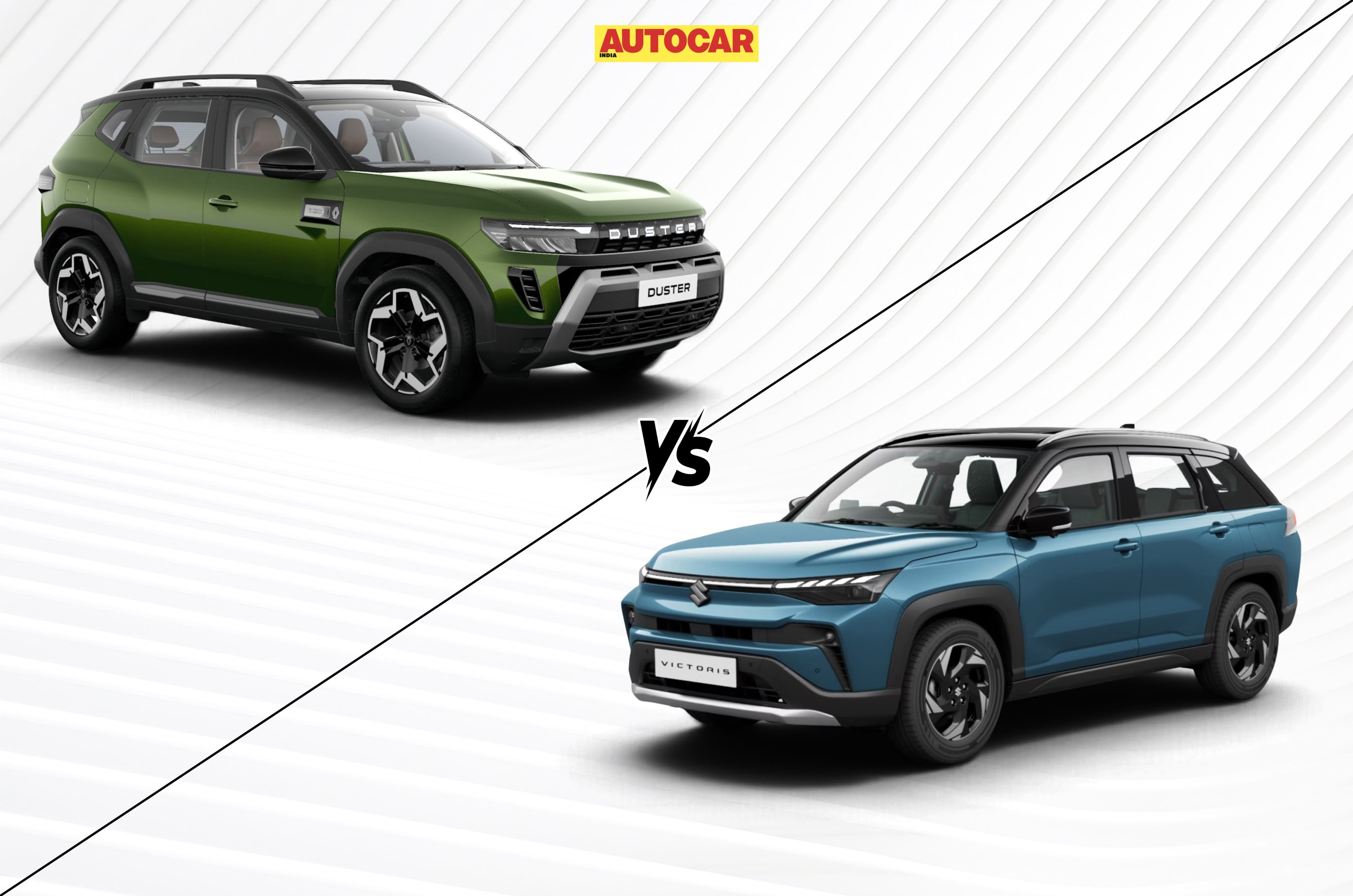
Renault Duster vs Maruti Victoris: Top-spec strong-hybrid SUVs compared

Renault Duster vs Maruti Victoris: Top-spec strong-hybrid SUVs compared
Renault Duster vs Maruti Victoris

With the Duster strong-hybrid E-Tech 160, Renault is the latest brand to jump on the strong-hybrid bandwagon. The Duster strong-hybrid is positioned as an economical alternative powertrain and adds to its existing turbo-petrol options. On the other hand, the Maruti Victoris has been in the market for a year, offering a strong-hybrid powertrain since launch. But which strong-hybrid mid–size SUV in top-spec guise offers more bang for buck? We compare their respective on-paper specifications to find out. For this comparison, we’ve chosen the top-spec Emotion and ZXi+ (O) versions of the strong-hybrid Renault Duster and Maruti Victoris, respectively.

Renault Duster vs Maruti Victoris: Dimensions

Renault Duster vs Maruti Victoris: Dimensions


Renault Duster

Maruti Victoris

Difference

Length (mm)

4,346

4,360

-14

Width (mm)

1,815

1,795

+20

Height (mm)

1,694

1,655

+39

Wheelbase (mm)

2,657

2,600

+57

Ground clearance (mm)

212

210

+2

Boot space (litres)

372

Under 300 (est.)

–

Est. – Estimated

Apart from length, the Duster outranks the Victoris in every other dimension. It is 20mm wider, 39mm taller, has a 57mm longer wheelbase, and rides 2mm higher off the ground. 

Renault Duster vs Maruti Victoris: Powertrain specifications

Renault Duster vs Maruti Victoris: Powertrain specifications


Renault Duster

Maruti Victoris

Engine 

Naturally aspirated petrol, Atkinson cycle

Naturally aspirated petrol, Atkinson cycle

Displacement (cc)

1,789

1,490

Power (hp)

110

92

Torque (Nm)

175

122

Transmission

multi-mode automatic gearbox with 2 electric gears & 4 petrol gears

e-CVT

Battery capacity (kWh)

1.4

0.76

E-motor power (hp)

50

80

E-motor torque (Nm)

208

141

Maximum power output (hp)

160

116

Maximum torque output (Nm)

NA

NA

Claimed efficiency (kpl)

29

28.65

In strong-hybrid guise, both SUVs utilise a naturally aspirated petrol engine running on the more efficient Atkinson cycle. However, the Duster’s larger unit delivers more power and torque figures. The Duster also uses a larger battery pack.  Both SUVs also use e-motors, wherein the one on the Maruti produces more power, but the Duster’s e-motor outputs more torque. With a combined power output of 160hp, the Duster strong-hybrid is much more powerful than the Victoris strong-hybrid. 

Both SUVs also differ in the gearboxes utilised here. The Duster uses a multi-mode automatic gearbox with 2 electric and 4 petrol gears, whereas the Victoris uses an e-CVT. Renault says that the Duster drives 80 percent on EV power in the city, which likely contributes to its higher claimed mileage. But real-world tests are awaited for the Renault.

Renault Duster vs Maruti Victoris: Exterior features

Renault Duster vs Maruti Victoris: Exterior features


Renault Duster

Maruti Victoris

Headlamps

LED

LED projector

LED DRLs

Yes

Connected

Puddle lamps

Yes

No

Tail lamps

Connected LED

Connected LED

Fog lamps

Optional

Yes

Welcome/goodbye animation

Yes

No

Wheel sizes

18-inch

17-inch

Rear spoiler

Yes

Yes

Electric adjust/fold ORVMs

Yes

Yes

Sharkfin antenna

Yes

Yes

Roof rails

Yes

Yes

Powered tailgate

Yes

Yes

Colour

Monotone and dual-tone

Monotone and dual-tone 

On the outside, LED light setups, DRLs, roof rails, a shark fin antenna, and a powered tailgate are found on both SUVs.  However, larger 18-inch alloy wheels, puddle lamps, and welcome/goodbye animations for the light setups are unique to the Duster.

Renault Duster vs Maruti Victoris: Interior features

Renault Duster vs Maruti Victoris: Interior features


Renault Duster

Maruti Victoris

Ventilated seats

Yes

Yes

Sunroof

Panoramic

Panoramic

Infotainment screen size

10.1-inch

10.1-inch

Digital driver’s display

10.25-inch

10.25-inch

Head-up display

Optional

Yes

Wireless Apple CarPlay, Android Auto

Yes

Yes

On-board navigation

No

Yes

Powered driver seat

6-way

8-way

Powered co-driver seat

6-way

No

Reclining rear seats

No

No

Air Purifier

Optional

Yes

Auto AC

Dual-zone

Single zone

Rear AC vents

Yes

Yes

Seat upholstery

Leatherette

Leatherette

Wireless phone charger

Yes

Yes

Audio system

6-speaker Arkamys

8-speaker Infinity

60:40 split rear seat folding

Yes

Yes

USB Type-C ports 

2x front, 2x rear

2x front, 2x rear

Rear armrest

No

Yes

Connected car tech

Yes

Yes

Rear window sunshade

No

No

Ambient lighting

Optional

Yes

Leatherette inserts on the dashboard

Yes

Yes

Push-button start

Yes

Yes

Keyless entry

Yes

Yes

Steering adjust

Tilt and Telescopic

Tilt and Telescopic

The Renault offers features such as a powered co-driver seat and dual-zone automatic climate control that the Maruti lacks. In contrast, the latter gets further adjustment for the driver seat, two additional speakers, and on-board navigation, while features like a head-up display and ambient lighting are factory-fitted on the former.

Renault Duster vs Maruti Victoris: Driving features 

Renault Duster vs Maruti Victoris: Driving features 


Renault Duster

Maruti Victoris

Drive modes

No

Eco, Normal, Sport

Cruise control

Regular

Regular

As far as driving features are concerned, both models come with regular cruise control, but drive modes are found only on the Victoris.

Renault Duster vs Maruti Victoris: Safety features 

Renault Duster vs Maruti Victoris: Safety features 

Safety features

Renault Duster

Maruti Victoris

Airbags

Six

Sx

Parking sensors

Rear

Front and rear 

Camera setup

Rear view

360-degree

Dash cam

Optional

Optional

Electronic parking brake with auto hold

Yes

Yes

ADAS

No

No

TPMS

Yes

Yes

Hill start assist

Yes

Yes

Disc brakes (Front/Rear)

Yes

Yes

ESC

Yes

Yes

Auto-dimming IRVM

Yes

Yes

On the safety front, both SUVs are well-equipped with features such as 6 airbags, rear parking sensors, auto-dimming IRVM, electronic parking brake with auto-hold, all-wheel disc brakes, and TPMS. However, the Victoris pips the Duster here by offering a 360-degree camera and front parking sensors. Notably, both miss out on a Level 2 ADAS suite.

Renault Duster vs Maruti Victoris: Prices and verdict 

Renault Duster vs Maruti Victoris: Prices (Rs lakh)


Renault Duster

Maruti Victoris

Price 

19.49

19.98

Comparing top-spec versions side by side, the Duster strong-hybrid is more affordable by Rs 41,000. Between the two, it’s the Duster we’d recommend. Apart from being the more affordable option, it offers slightly more kit and delivers more power without sacrificing much in terms of efficiency.

Government bars sugar-based ethanol in 2026-27 tender: Report

Government bars sugar-based ethanol in 2026-27 tender: Report
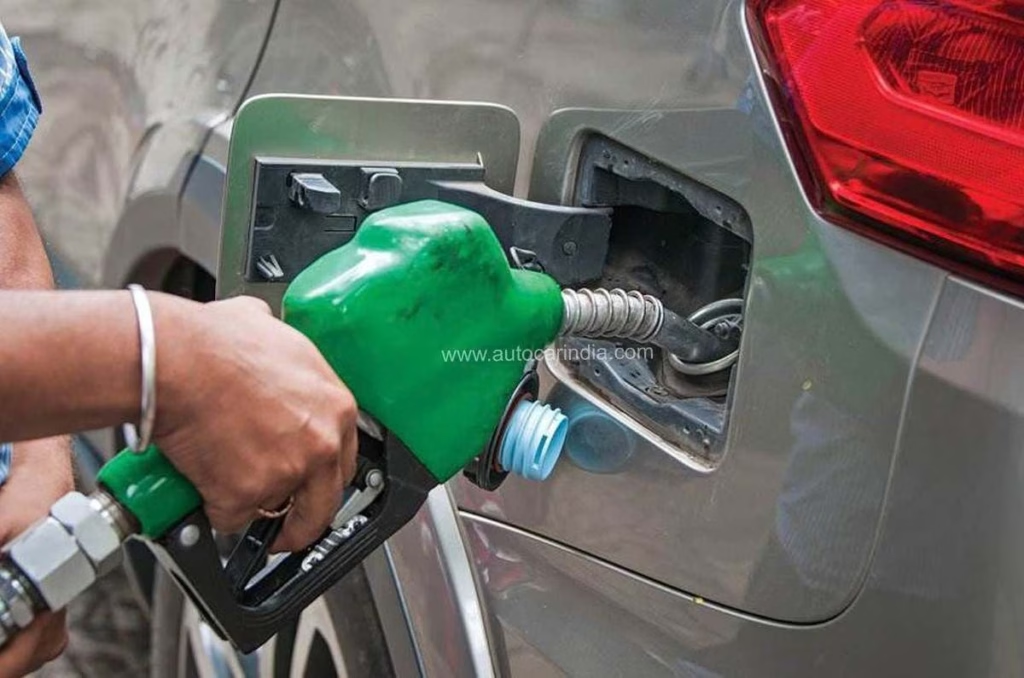
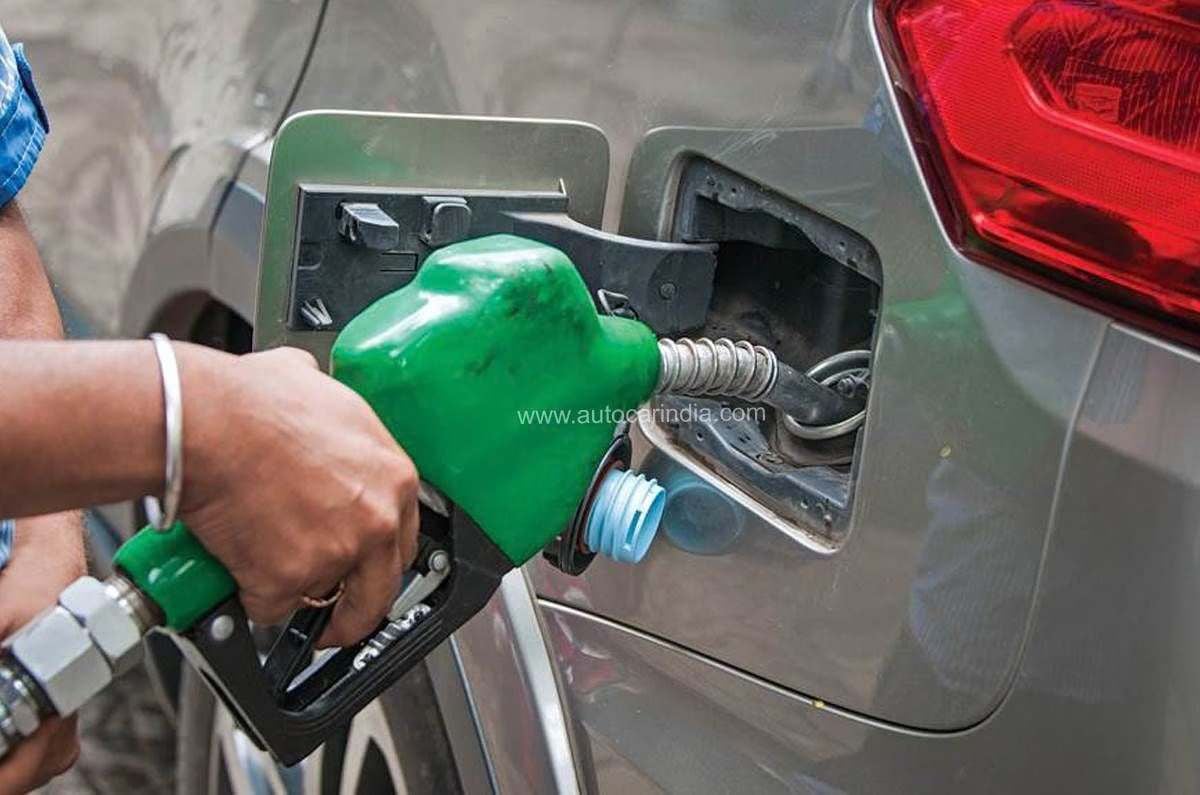
Car being refuelled with petrol

Sugar-based ethanol has been left out of India’s ethanol tender for the 2026-27 supply year, according to a Reuters report. Citing the tender issued on October 16, the report states that the government has instructed state-run oil marketing companies (OMCs) to ensure no sugar is diverted towards ethanol production for this period. No bids have therefore been invited for ethanol produced using sugarcane juice, sugar or sugar syrup, or B-heavy molasses, the report adds.

  1. Oil firms invited bids for 11 billion litres of ethanol for 2026-27
  2. Tender allows bids for ethanol made from corn, broken rice and surplus FCI rice
  3. Incentive for corn-based ethanol cut from Rs 5.79/litre to Rs 2.79/litre

Tender details

It seeks 11 billion litres for the supply year starting in November 2026

The tender comes from Indian Oil, Bharat Petroleum and Hindustan Petroleum. “The Government of India has issued directions that sugar diversion for ethanol be reduced to zero for ethanol supply year 2026-27,” the tender document said, according to the report.

The companies are looking to procure 11 billion litres of ethanol for the supply year, which kicks off in November 2026. Distillers can submit bids for ethanol produced from corn, broken rice and surplus FCI (Food Corporation of India) rice. Corn-based ethanol will also fetch less this time. Its incentive has dropped by Rs 3 per litre to Rs 2.79 per litre, taking the procurement price from Rs 71.86 per litre to Rs 68.86 per litre, as per the report.

Ethanol blending and sugar supply

India is trying to rein in high sugar prices

Surplus sugar has been a key contributor to India’s ethanol-blending programme for several years. India also consumes more sugar than any other country, and has been trying to increase local production while easing prices.

Reuters had reported in August 2026 that limits on the use of sugarcane for ethanol were being considered for the season starting October 2026. Weaker rains in Maharashtra and Karnataka had already cast doubt on this year’s sugar production at the time.

Ethanol blending is aims to reduce India’s oil imports. E20 petrol, which became compulsory nationwide earlier this year, was introduced to cut emissions as well as the country’s dependence on imported crude. However, diverting sugarcane juice, sugar syrup and B-heavy molasses towards ethanol can lead to a reduction in the amount of sugar produced.

Petrol Diesel Price Today: 19 अक्टूबर को पेट्रोल-डीजल के नए रेट जारी, जानें अपने शहर का भाव

Petrol Diesel Price Today: हर दिन की शुरुआत सिर्फ सूरज की किरणों से नहीं होती, बल्कि पेट्रोल और डीजल की नई कीमतों से भी होती है, जो आम आदमी की जेब पर सीधा असर डालती हैं। सुबह 6 बजे देश की तेल विपणन कंपनियां (OMCs) ताजा दरें जारी करती हैं, जो अंतरराष्ट्रीय बाजार में कच्चे तेल की कीमतों और डॉलर-रुपए की विनिमय दर में आए बदलावों पर आधारित होती हैं। ये बदलाव रोजमर्रा की जिंदगी को प्रभावित करते हैं, चाहे वो ऑफिस जाने वाला व्यक्ति हो या फल-सब्जी बेचने वाला व्यापारी।

ऐसे में हर दिन की कीमतों की जानकारी रखना सिर्फ जरूरी ही नहीं, बल्कि समझदारी भी है। सरकार की यह प्रणाली पारदर्शिता सुनिश्चित करती है ताकि उपभोक्ताओं को किसी तरह की भ्रमित जानकारी न मिले।

आपके शहर में आज का पेट्रोल-डीजल का भाव

ये रहे 19 अक्टूबर 2026 के प्रमुख शहरों के पेट्रोल-डीजल के ताजा रेट

नई दिल्ली: पेट्रोल ₹102.12 प्रति लीटर और डीजल ₹95.20 प्रति लीटर।

मुंबई: पेट्रोल ₹111.18 और डीजल ₹97.83 प्रति लीटर।

कोलकाता: पेट्रोल ₹113.47 जबकि डीजल ₹99.82 प्रति लीटर।

चेन्नई: पेट्रोल ₹107.77 और डीजल ₹99.55 प्रति लीटर।

गुरुग्राम: पेट्रोल ₹102.77 तथा डीजल ₹95.44 प्रति लीटर।

नोएडा: पेट्रोल ₹102.12 और डीजल ₹95.56 प्रति लीटर।

बेंगलुरु: पेट्रोल ₹110.93 जबकि डीजल ₹98.80 प्रति लीटर।

भुवनेश्वर: पेट्रोल ₹109.92 और डीजल ₹100.92 प्रति लीटर।

चंडीगढ़: पेट्रोल ₹98.10 तथा डीजल ₹86.09 प्रति लीटर।

हैदराबाद: पेट्रोल ₹115.69 और डीजल ₹103.82 प्रति लीटर।

जयपुर: पेट्रोल ₹112.66 जबकि डीजल ₹97.78 प्रति लीटर।

लखनऊ: पेट्रोल ₹102.05 और डीजल ₹95.55 प्रति लीटर।

पटना: पेट्रोल ₹113.35 तथा डीजल ₹99.36 प्रति लीटर।

तिरुवनंतपुरम: पेट्रोल ₹115.49 और डीजल ₹104.40 प्रति लीटर।

पिछले दो साल से स्थिर क्यों हैं कीमतें?

मई 2022 के बाद से केंद्र और कई राज्यों द्वारा टैक्स में कटौती की गई, जिसके बाद पेट्रोल-डीजल की कीमतों में स्थिरता देखी जा रही है। हालांकि अंतरराष्ट्रीय बाजार में उतार-चढ़ाव होता रहता है, फिर भी भारतीय उपभोक्ताओं के लिए कीमतें तुलनात्मक रूप से स्थिर बनी हुई हैं।

किन कारणों से तय होती हैं ईंधन की कीमतें?

  1. कच्चे तेल की कीमतें:

पेट्रोल और डीजल का उत्पादन मुख्य रूप से कच्चे तेल से होता है। जब अंतरराष्ट्रीय स्तर पर कच्चे तेल की कीमतें बढ़ती हैं, तो इसका असर सीधे भारतीय बाजार पर पड़ता है।

  1. डॉलर के मुकाबले रुपया:

भारत अधिकतर कच्चा तेल आयात करता है, और यह डॉलर में खरीदा जाता है। यदि रुपया कमजोर होता है, तो ईंधन महंगा हो जाता है।

  1. सरकारी टैक्स और शुल्क:

केंद्र और राज्य सरकारें पेट्रोल-डीजल पर भारी टैक्स लगाती हैं, जो खुदरा मूल्य का बड़ा हिस्सा होते हैं। यही कारण है कि राज्यों में कीमतों में अंतर होता है।

  1. रिफाइनिंग की लागत:

कच्चे तेल को इस्तेमाल लायक बनाने की प्रक्रिया (रिफाइनिंग) में भी खर्च होता है। ये लागत कच्चे तेल की गुणवत्ता और रिफाइनरी की क्षमता पर निर्भर करती है।

  1. मांग और आपूर्ति का संतुलन:

बाजार में ईंधन की मांग अगर बढ़ जाती है, तो कीमतें भी ऊपर जाने लगती हैं। खासकर त्योहारों, गर्मी या सर्दी के मौसम में ईंधन की खपत ज्यादा होती है।

कैसे करें अपने शहर की कीमतें SMS से चेक?

अगर आप मोबाइल से ईंधन की कीमत जानना चाहते हैं, तो ये प्रक्रिया आसान है:

Indian Oil ग्राहक: अपने शहर का कोड टाइप करें और उसे “RSP” के साथ 9224992249 पर भेजें।

BPCL ग्राहक: “RSP” लिखकर 9223112222 पर भेजें।

HPCL ग्राहक: “HP Price” लिखकर 9222201122 पर भेजें।

Renault Duster on-road prices listed in major Indian cities

Renault Duster on-road prices listed in major Indian cities
New Renault Duster on-road prices listed in major Indian cities

The Renault Duster is priced from Rs 10.49 lakh to Rs 19.49 lakh, ex-showroom. It recently added a hybrid powertrain, which is sold alongside the existing turbo-petrol engine options. The Duster is now available in seven trims: Authentic, Evolution, Adventure, Techno, Techno+, Iconic and Emotion.

If you want to know how much you need to pay to for the Renault Duster, here are its on-road prices across major Indian cities.

New Renault Duster turbo-petrol on-road prices in major Indian cities (in Rs lakh)

Trim

Mumbai

Delhi

Kolkata

Bengaluru

Chandigarh

Authentic 1.0 MT12.3812.1712.1712.9111.75
Evolution 1.0 MT13.8013.5713.5714.3813.10
Evolution 1.3 MT15.3315.0715.0715.9814.55
Evolution 1.3 DCT17.1016.8116.8117.8316.23
Adventure 1.0 MT15.3315.0715.0715.9814.55
Adventure 1.3 MT16.5116.2316.2317.2115.67
Adventure 1.3 DCT18.1717.8617.8618.9417.24
Techno+ 1.3 MT18.0517.7417.7418.8117.13
Techno+ 1.3 DCT19.7019.3719.3720.5318.70
Iconic 1.3 MT20.0519.7119.7120.9019.03
Iconic 1.3 DCT21.8221.4521.4522.7520.71

New Renault Duster hybrid on-road prices in major Indian cities (in Rs lakh)

Trim

Mumbai

Delhi

Kolkata

Bengaluru

Chandigarh

Evolution 1.8 AT20.0519.7119.7120.9019.03
Techno 1.8 AT22.4122.0322.0323.3621.27
Emotion 1.8 AT20.0522.6122.6123.9821.83

Note: On-road prices may vary based on city-specific registration charges and other cost components, including insurance, FASTag and RTO fees. Please check with your nearest Honda dealership for exact figures.

Among the major cities listed, the new Renault Duster’s on-road prices are the highest in Bengaluru and the lowest in Chandigarh. The entry-level Authentic 1.0 MT costs Rs 12.91 lakh in Bengaluru and Rs 11.75 lakh in Chandigarh, a difference of Rs 1.16 lakh. For the top-spec Iconic 1.3 DCT, the prices are Rs 22.75 lakh and Rs 20.71 lakh, respectively, a gap of Rs 2.04 lakh.

Speaking of the Duster hybrid’s on-road prices, they are also the highest in Bengaluru and lowest in Chandigarh. The most accessible variant, Evolution 1.8 AT, costs Rs 19.03 lakh in Chandigarh, while the top-spec Emotion 1.8 AT costs Rs 23.98 lakh in Bengaluru, a difference of Rs 4.95 lakh.

Prices mentioned above are as on October 18, 2026.

3 reasons to buy the Mahindra XUV 3XO CNG and 3 reasons not to

3 reasons to buy the Mahindra XUV 3XO CNG and 3 reasons not to
Mahindra XUV 3XO CNG front quarter

The Mahindra XUV 3XO ZNG takes on the Tata Nexon iCNG and the Maruti Brezza CNG in the CNG compact SUV space. Priced from Rs 9.99 lakh to Rs 12.27 lakh (ex-showroom), it carries a premium of Rs 1 lakh to Rs 1.2 lakh over the corresponding petrol versions. Before signing on the dotted line, here are the key strengths and weaknesses of this Mahindra SUV.

Reasons to buy the Mahindra XUV 3XO CNG

Strong performance on CNG

The XUV 3XO CNG loses none of its power when running on gas

Mahindra XUV 3XO CNG engine

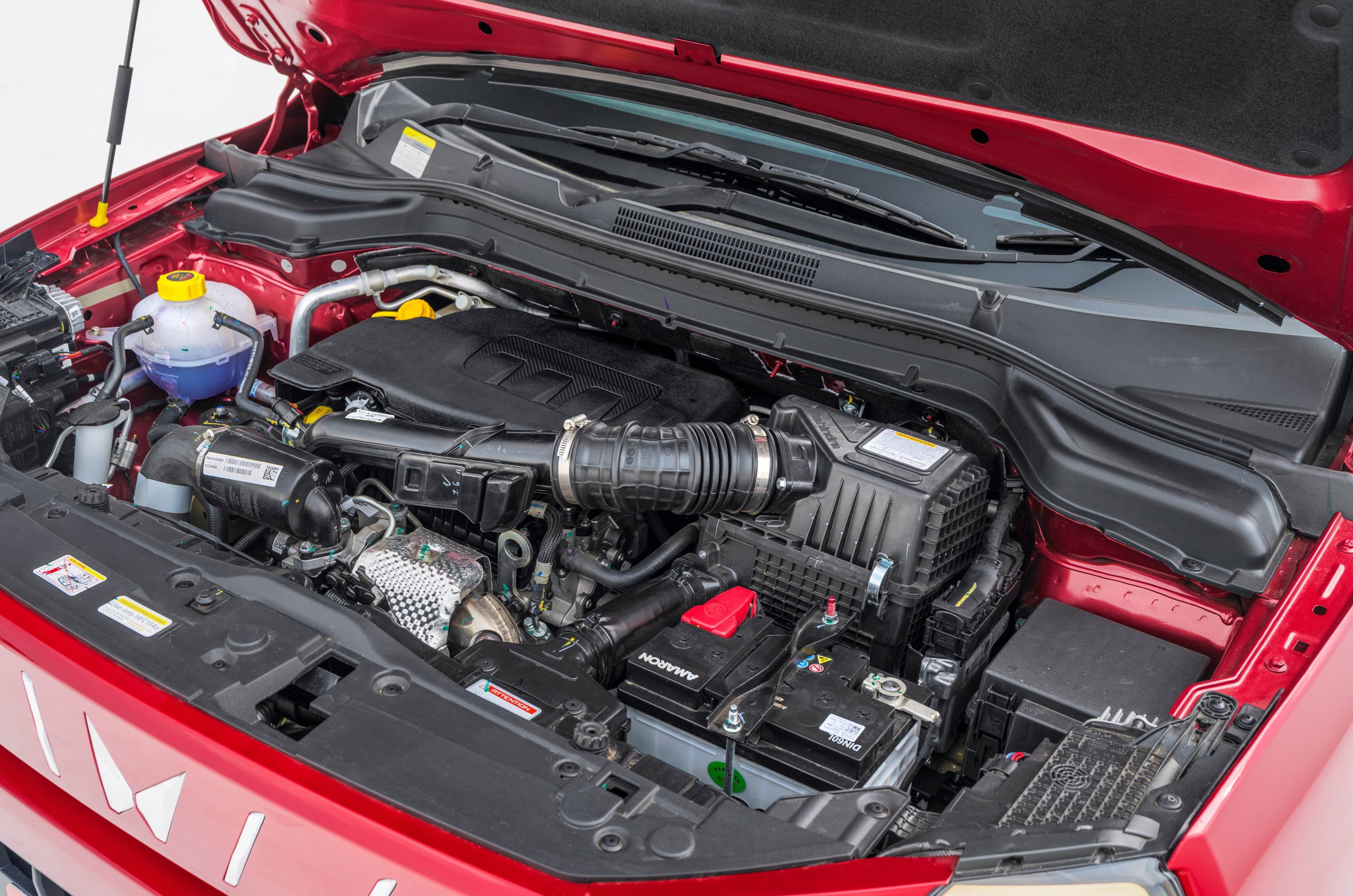
The 1.2-litre MPFI (multi-point fuel-injected) turbo-petrol engine of the XUV 3XO CNG is the same unit found in the lower and mid-spec petrol trims. Here it develops 111hp and 200Nm in both petrol and CNG modes. While there’s some turbo lag below 2,000rpm, the engine pulls eagerly once it crosses that mark. This unit is also notable for its refinement and tractability, rarely requiring one to drop down to first gear, for going over speed breakers, for example.

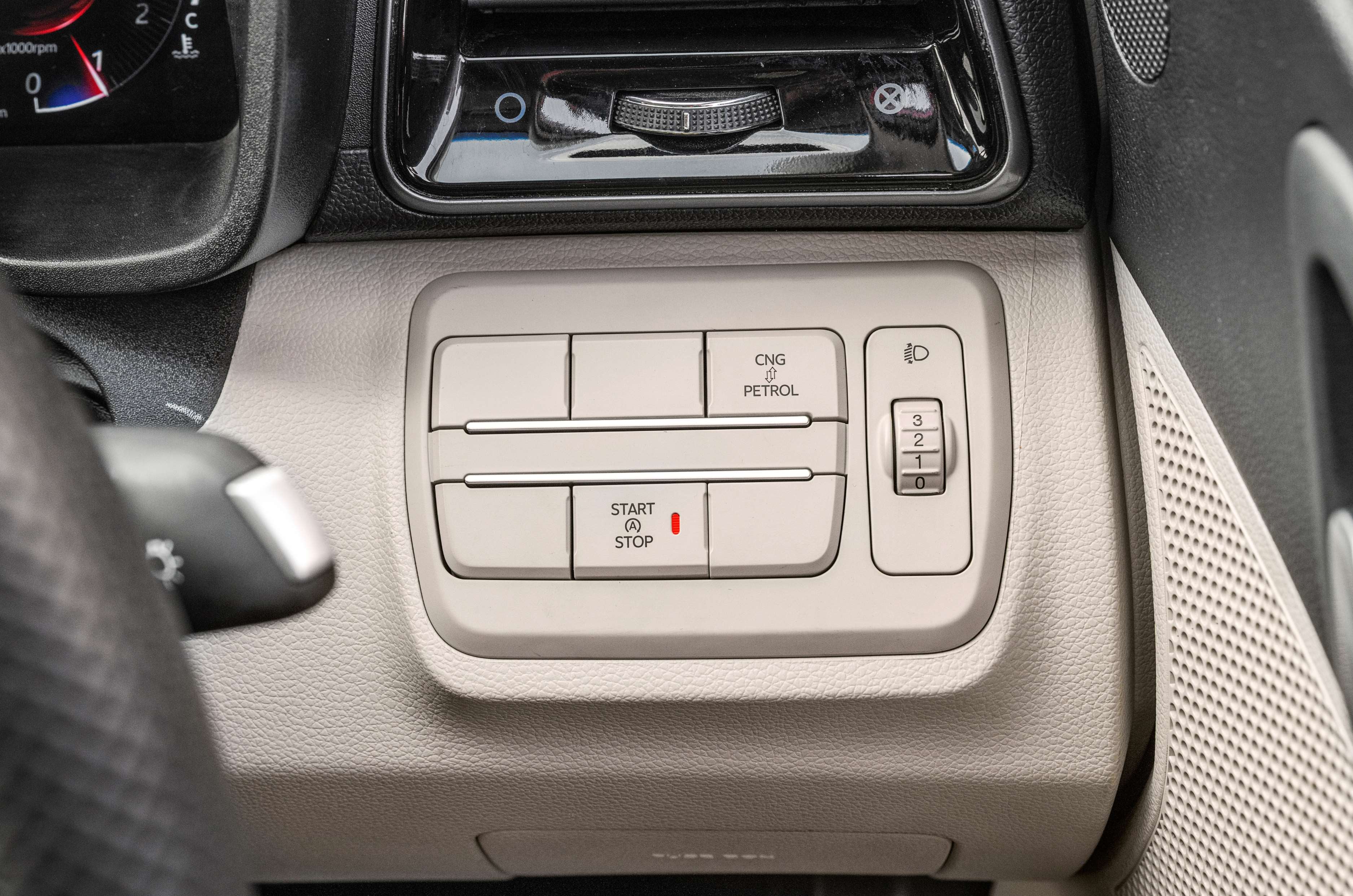
Mahindra XUV 3XO CNG mode switch

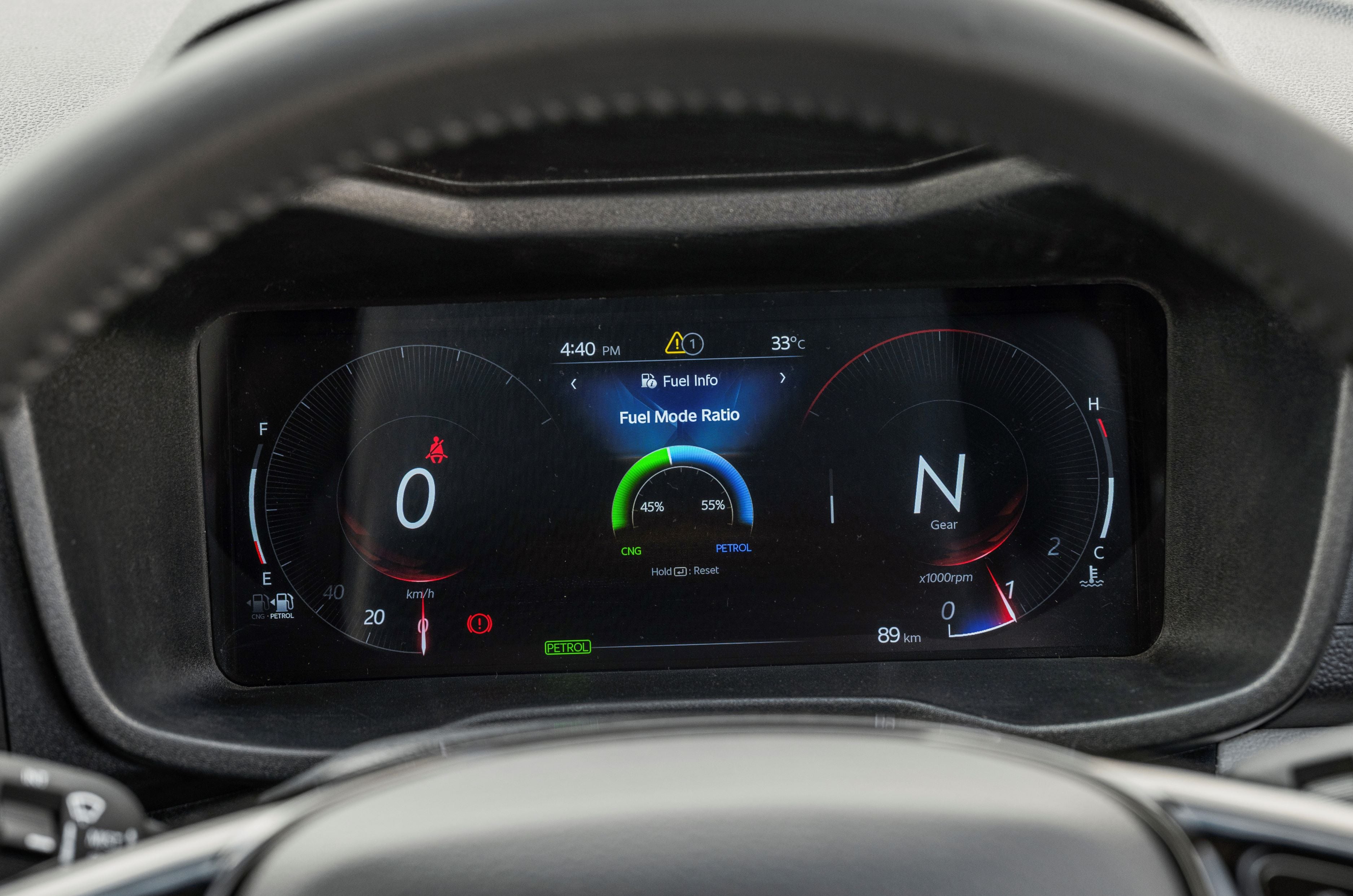
Switching between petrol and CNG is seamless as well, and few would be able to tell which fuel the XUV 3XO ZNG is running on. While we’re yet to test it, Mahindra claims a mileage of 24.7km/kg for this compact SUV, translating to a theoretical range of 247km on CNG.

Comfy ride and tidy handling

Mahindra has retuned the suspension to accommodate the extra heft of the CNG kit

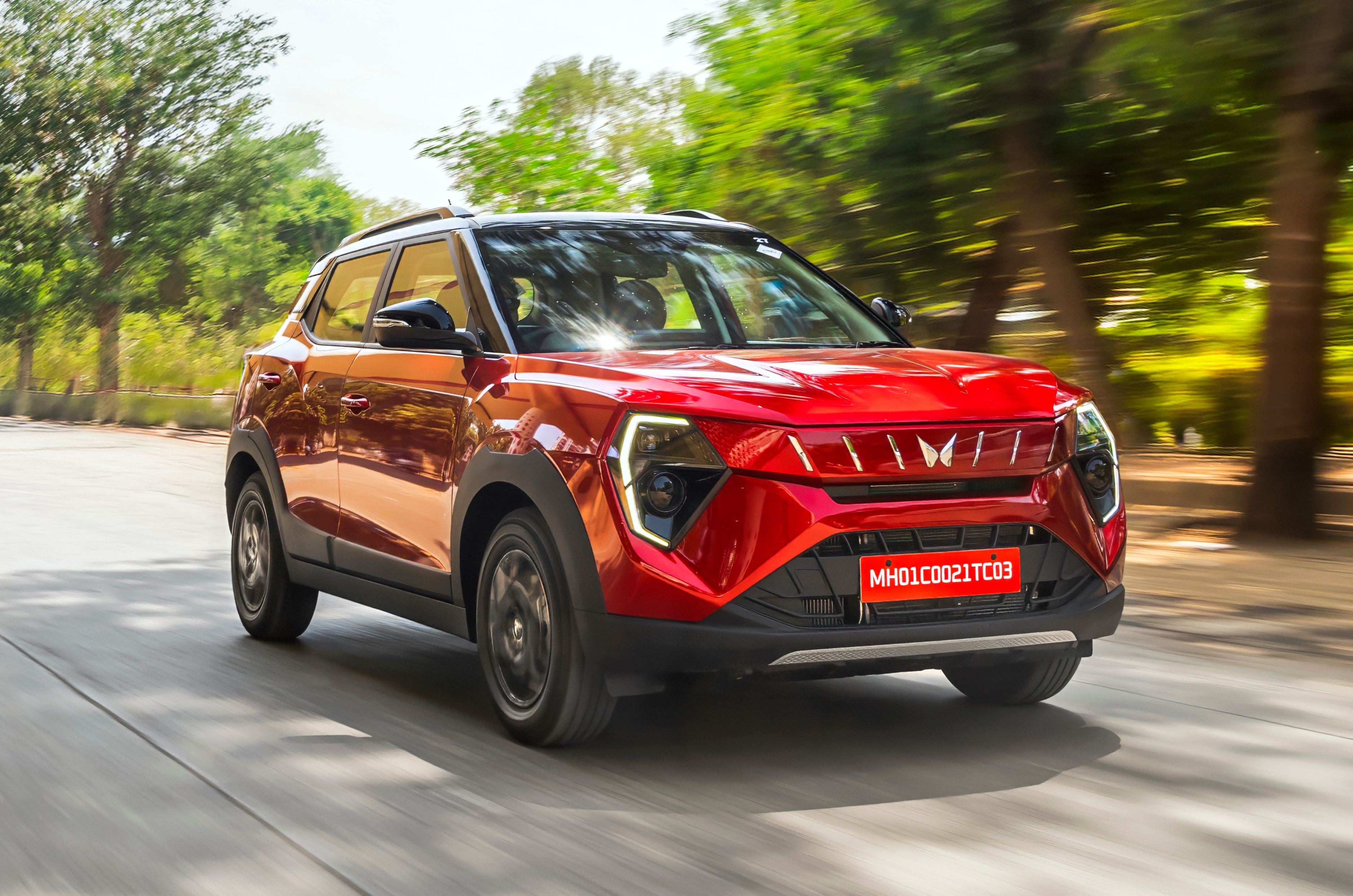
Mahindra XUV 3XO CNG front quarter tracking

The CNG hardware adds around 100kg to the XUV 3XO’s kerb weight, with the majority of it being over the rear axle. Mahindra has reworked the suspension to compensate for this heft. The result is a slightly firm ride but one that deals with bad roads quite well.

Mahindra XUV 3XO CNG steering modes

Adding to the overall comfort here are the 16-inch wheels wrapped with high-profile tyres. These manage to cushion the cabin from sharp bumps. The XUV 3XO CNG rides better than most cars in its segment. What’s good is that this ride comfort doesn’t come at the cost of sloppy handling. In fact, this Mahindra SUV feels tight and planted around corners. The steering is direct and doesn’t require much effort, with drivers being offered three steering modes for flexibility.

Upmarket cabin

This cabin is just as plush as that of the petrol and diesel versions

Mahindra XUV 3XO CNG seats

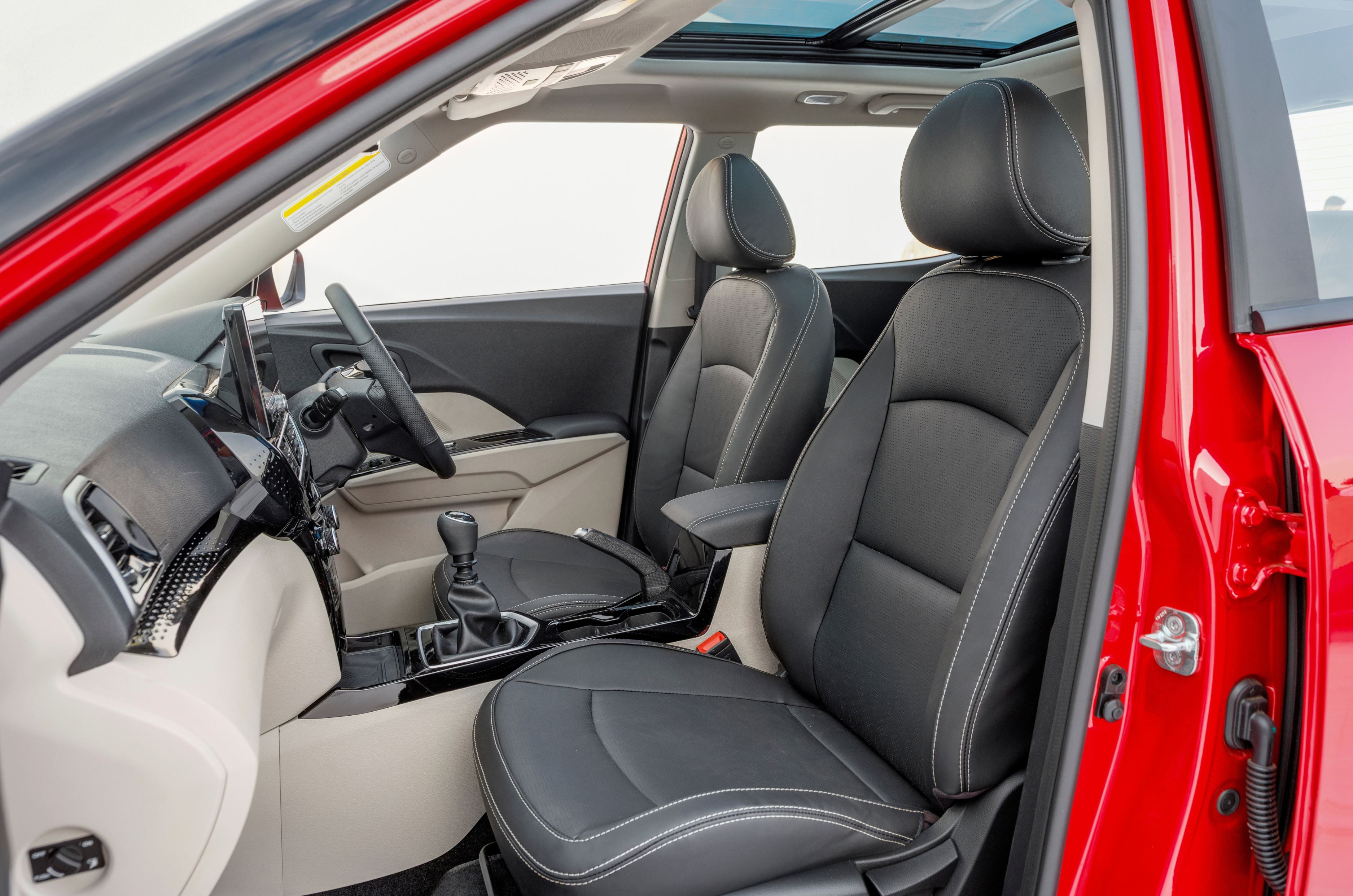
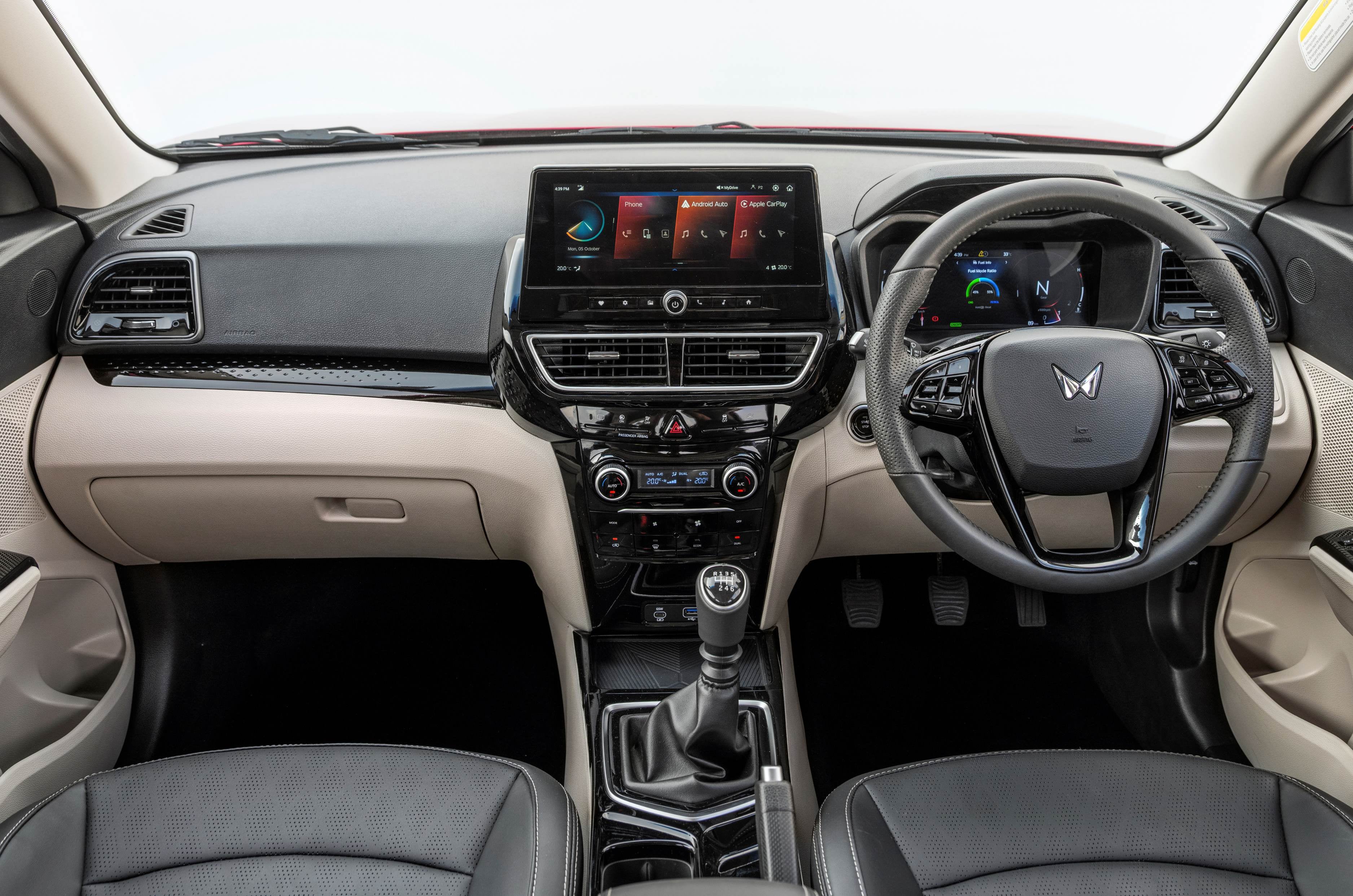
A CNG switch next to the steering wheel aside, the cabin of the XUV 3XO CNG is identical to that of non-CNG versions. While it can’t be had in equally top-end trim levels, the CNG version is available with a dual-tone dashboard, gloss black accents and leatherette upholstery. Overall, there’s a feeling of good build that’s backed by a sense of premiumness. Meanwhile, the rear seat is quite roomy for the class and can accommodate three adults without much fuss.

Mahindra XUV 3XO CNG digital instrument panel

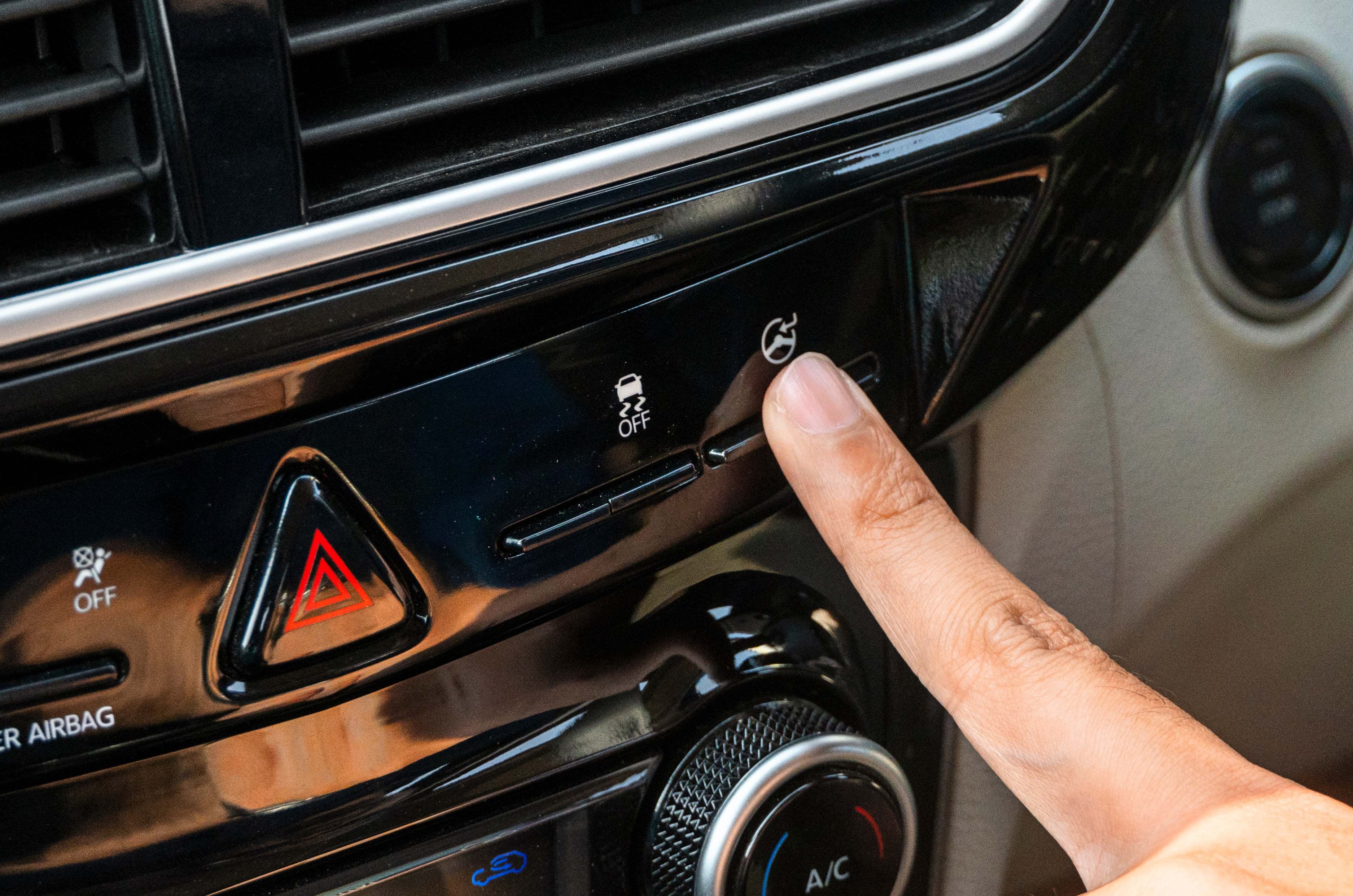
The top-spec RevX A trim gets twin 10.25-inch screens, a panoramic sunroof and a 6-speaker audio system with Dolby Atmos. Mahindra says the CNG version is engineered to match the five-star Bharat NCAP safety rating of other combustion-powered XUV 3XO versions. Standard safety features here include 6 airbags, stability control, ISOFIX anchors and a reversing camera.

Reasons not to buy the Mahindra XUV 3XO CNG

Small boot

The twin-tank setup eats into what was already a small boot

Mahindra XUV 3XO CNG tanks

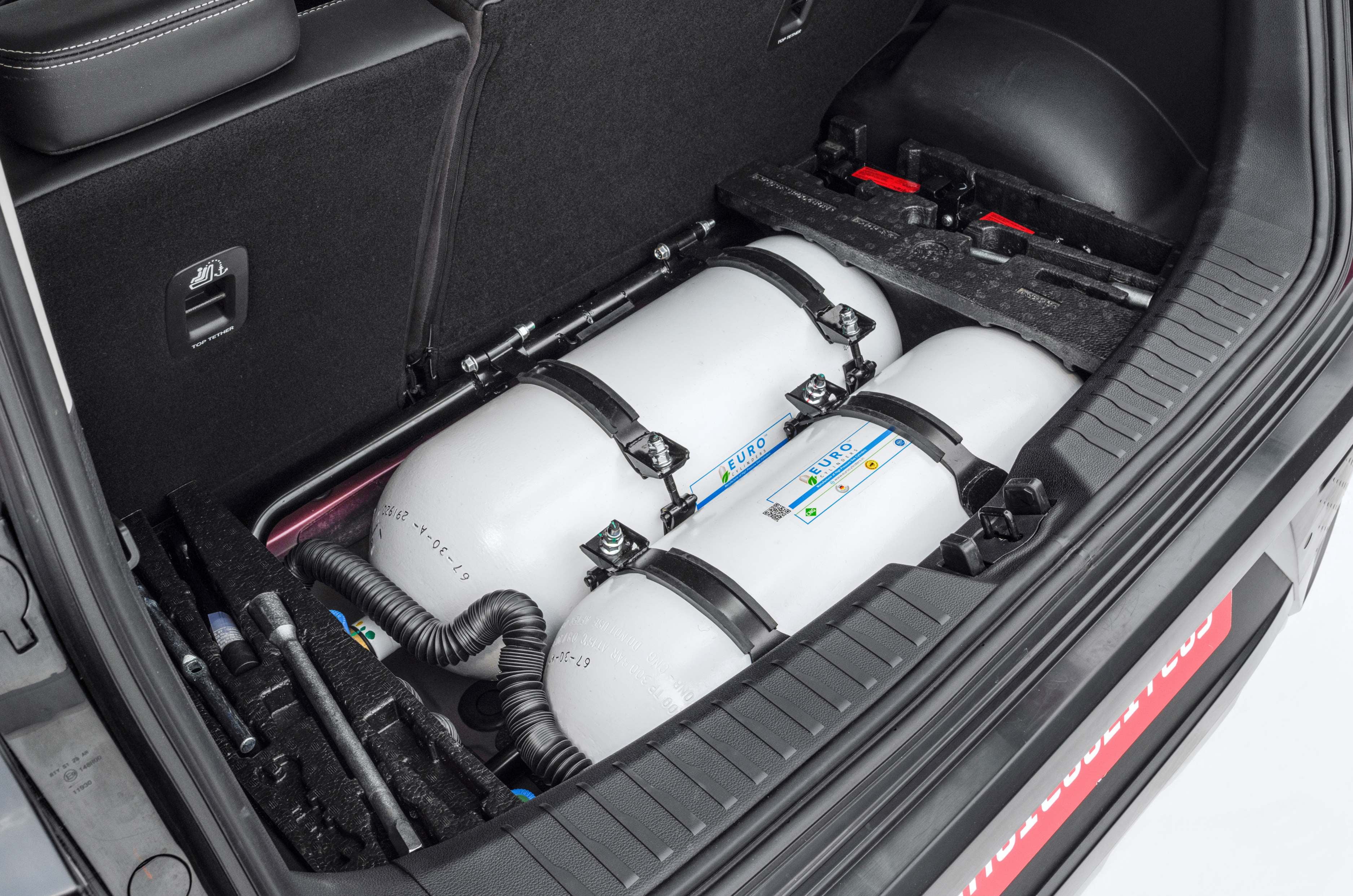
The 295-litre boot of the XUV 3XO was already the most compact in the segment. Despite moving the spare wheel under the car’s body and fitting the twin cylinders beneath the boot floor, the XUV 3XO CNG’s boot is even more compromised – offering just 270 litres of cargo space. It’s only its width that allows up to four cabin-sized bags to be stored.

Cabin niggles

The XUV 3XO CNG’s interior isn’t devoid of ergonomic flaws

Mahindra XUV 3XO CNG interior

While the black leatherette seats look sporty, they don’t get a ventilation function. This means that, on a bright sunny day, they will heat up quite quickly. If you’ve a larger build, the front seats of the XUV 3XO CNG will feel lacking in space. Adding to the ergonomic niggles is the steering wheel, which cannot be adjusted for reach, making it harder to find a comfortable driving position. Lastly, not only is the XUV 3XO CNG’s driver footwell cramped, there’s also no dead pedal.

Limited options

Customers get only mid-spec trim levels with the CNG version

Mahindra XUV 3XO CNG headlamps

The CNG version of the Mahindra XUV 3XO is sold in just four trim levels, all of which are mid-spec options within the broader line-up. This limitation becomes obvious given the lack of a 360-degree camera, ventilated front seats, or a wireless charging pad – these are available in the Nexon iCNG. There are no fog lamps, either. Another limitation is that the CNG version only comes with a 6-speed manual, which has long throws and a fair amount of clutch pedal travel.

LPG Price 18 October 2026: दिल्ली से लखनऊ तक, जानें 14.2 किलो सिलेंडर का भाव

LPG Price 18 October 2026: हर महीने की तरह अक्टूबर में भी एलपीजी गैस सिलेंडर की कीमतों को लेकर लोगों की दिलचस्पी बनी हुई है। त्योहारों के सीजन में रसोई का खर्च पहले से ही बढ़ जाता है, ऐसे में गैस सिलेंडर के दाम आम परिवारों के बजट को प्रभावित कर सकते हैं। वहीं, होटल और रेस्टोरेंट संचालकों के लिए कमर्शियल सिलेंडर की कीमतें कारोबार के खर्च से सीधे जुड़ी होती हैं। 18 अक्टूबर 2026 को घरेलू गैस सिलेंडर बुक कराने की तैयारी कर रहे हैं, तो अपने शहर का ताजा रेट जानना आपके लिए जरूरी है।

इस महीने घरेलू एलपीजी सिलेंडर की कीमतों में फिलहाल कोई नया बदलाव नहीं हुआ है, जबकि कमर्शियल सिलेंडर के दाम बढ़ाए गए हैं। ऐसे में सवाल है कि दिल्ली, मुंबई, लखनऊ और पटना समेत दूसरे शहरों में आज गैस सिलेंडर किस कीमत पर मिल रहा है? आइए, शहरवार रेट पर नजर डालते हैं।

दिल्ली में घरेलू और कमर्शियल सिलेंडर की कीमत कितनी है?

राजधानी दिल्ली में 14.2 किलोग्राम वाले घरेलू एलपीजी सिलेंडर के लिए 942 रुपये देने पड़ रहे हैं। दूसरी ओर, 19 किलोग्राम वाले कमर्शियल सिलेंडर की कीमत 2,810 रुपये है। यानी घरेलू उपभोक्ताओं को फिलहाल राहत मिली हुई है, लेकिन कमर्शियल गैस का इस्तेमाल करने वाले कारोबारियों को बढ़ी हुई कीमतों के हिसाब से अपना बजट तैयार करना पड़ सकता है।

आपके शहर में कितने रुपये का मिल रहा LPG सिलेंडर?

गैस सिलेंडर की कीमत हर शहर में एक जैसी नहीं होती। स्थानीय टैक्स और अन्य खर्चों के कारण इनके दाम में अंतर देखने को मिलता है। नीचे प्रमुख शहरों में 14.2 किलो वाले घरेलू एलपीजी सिलेंडर की कीमतें दी गई हैं।

  • दिल्ली: 942 रुपये
  • मुंबई: 941.50 रुपये
  • कोलकाता: 968 रुपये
  • चेन्नई: 957.50 रुपये
  • नोएडा: 939.50 रुपये
  • गुरुग्राम: 950.50 रुपये
  • लखनऊ: 979.50 रुपये
  • जयपुर: 945.50 रुपये
  • पटना: 1,031.50 रुपये
  • हैदराबाद: 994 रुपये

इन आंकड़ों पर नजर डालें तो सूची में पटना में घरेलू सिलेंडर की कीमत सबसे ज्यादा, जबकि नोएडा में सबसे कम है। हालांकि, बुकिंग से पहले अपने स्थानीय गैस वितरक से मौजूदा कीमत की पुष्टि करना बेहतर रहेगा।

आखिर क्यों अलग-अलग होते हैं गैस सिलेंडर के दाम?

एलपीजी की कीमतें केवल घरेलू मांग और आपूर्ति से तय नहीं होतीं। अंतरराष्ट्रीय बाजार में गैस की कीमतों में उतार-चढ़ाव और अमेरिकी डॉलर के मुकाबले रुपये की स्थिति भी इन पर असर डालती है। इसके अलावा, स्थानीय करों और वितरण से जुड़े खर्चों के कारण अलग-अलग शहरों में अंतिम कीमत अलग हो सकती है।

तेल विपणन कंपनियां घरेलू और कमर्शियल सिलेंडर की कीमतों की समय-समय पर समीक्षा करती हैं। आम तौर पर हर महीने की शुरुआत में कीमतों में बदलाव की घोषणा पर नजर रहती है, लेकिन इसका मतलब यह नहीं कि हर महीने दाम बदलना जरूरी है।

घरेलू ग्राहकों को राहत

घरेलू सिलेंडर की कीमत स्थिर रहने से फिलहाल परिवारों के रसोई बजट पर कोई नया सीधा असर नहीं पड़ा है। दूसरी तरफ, कमर्शियल सिलेंडर महंगा होने से होटल, ढाबे और रेस्टोरेंट संचालकों की लागत बढ़ सकती है। इसका असर कारोबार के मुनाफे और आगे चलकर कुछ खाद्य पदार्थों की कीमतों पर भी पड़ सकता है।

इसलिए गैस सिलेंडर बुक कराने से पहले अपने शहर का ताजा रेट जरूर जांचें। खासकर कारोबारियों के लिए कमर्शियल सिलेंडर की कीमतों पर नजर रखना जरूरी है, ताकि महीने के खर्च का सही हिसाब रखा जा सके।

Petrol Diesel Price Today: 18 अक्टूबर को पेट्रोल-डीजल की कीमतें अपडेट, टंकी फुल कराने से पहले जानें रेट

Petrol Diesel Price Today: 18 अक्टूबर को पेट्रोल-डीजल की कीमतें अपडेट, टंकी फुल कराने से पहले जानें रेट

Petrol Diesel Price Today: हर दिन की शुरुआत सिर्फ सूरज की किरणों से नहीं होती, बल्कि पेट्रोल और डीजल की नई कीमतों से भी होती है, जो आम आदमी की जेब पर सीधा असर डालती हैं। सुबह 6 बजे देश की तेल विपणन कंपनियां (OMCs) ताजा दरें जारी करती हैं, जो अंतरराष्ट्रीय बाजार में कच्चे तेल की कीमतों और डॉलर-रुपए की विनिमय दर में आए बदलावों पर आधारित होती हैं। ये बदलाव रोजमर्रा की जिंदगी को प्रभावित करते हैं, चाहे वो ऑफिस जाने वाला व्यक्ति हो या फल-सब्जी बेचने वाला व्यापारी।

ऐसे में हर दिन की कीमतों की जानकारी रखना सिर्फ जरूरी ही नहीं, बल्कि समझदारी भी है। सरकार की यह प्रणाली पारदर्शिता सुनिश्चित करती है ताकि उपभोक्ताओं को किसी तरह की भ्रमित जानकारी न मिले।

आपके शहर में आज का पेट्रोल-डीजल का भाव

ये रहे 18 अक्टूबर 2026 के प्रमुख शहरों के पेट्रोल-डीजल के ताजा रेट

नई दिल्ली: पेट्रोल ₹102.12 प्रति लीटर और डीजल ₹95.20 प्रति लीटर।

मुंबई: पेट्रोल ₹111.18 और डीजल ₹97.83 प्रति लीटर।

कोलकाता: पेट्रोल ₹113.47 जबकि डीजल ₹99.82 प्रति लीटर।

चेन्नई: पेट्रोल ₹107.77 और डीजल ₹99.55 प्रति लीटर।

गुरुग्राम: पेट्रोल ₹102.77 तथा डीजल ₹95.44 प्रति लीटर।

नोएडा: पेट्रोल ₹102.12 और डीजल ₹95.56 प्रति लीटर।

बेंगलुरु: पेट्रोल ₹110.93 जबकि डीजल ₹98.80 प्रति लीटर।

भुवनेश्वर: पेट्रोल ₹109.92 और डीजल ₹100.92 प्रति लीटर।

चंडीगढ़: पेट्रोल ₹98.10 तथा डीजल ₹86.09 प्रति लीटर।

हैदराबाद: पेट्रोल ₹115.69 और डीजल ₹103.82 प्रति लीटर।

जयपुर: पेट्रोल ₹112.66 जबकि डीजल ₹97.78 प्रति लीटर।

लखनऊ: पेट्रोल ₹102.05 और डीजल ₹95.55 प्रति लीटर।

पटना: पेट्रोल ₹113.35 तथा डीजल ₹99.36 प्रति लीटर।

तिरुवनंतपुरम: पेट्रोल ₹115.49 और डीजल ₹104.40 प्रति लीटर।

पिछले दो साल से स्थिर क्यों हैं कीमतें?

मई 2022 के बाद से केंद्र और कई राज्यों द्वारा टैक्स में कटौती की गई, जिसके बाद पेट्रोल-डीजल की कीमतों में स्थिरता देखी जा रही है। हालांकि अंतरराष्ट्रीय बाजार में उतार-चढ़ाव होता रहता है, फिर भी भारतीय उपभोक्ताओं के लिए कीमतें तुलनात्मक रूप से स्थिर बनी हुई हैं।

किन कारणों से तय होती हैं ईंधन की कीमतें?

  1. कच्चे तेल की कीमतें:

पेट्रोल और डीजल का उत्पादन मुख्य रूप से कच्चे तेल से होता है। जब अंतरराष्ट्रीय स्तर पर कच्चे तेल की कीमतें बढ़ती हैं, तो इसका असर सीधे भारतीय बाजार पर पड़ता है।

  1. डॉलर के मुकाबले रुपया:

भारत अधिकतर कच्चा तेल आयात करता है, और यह डॉलर में खरीदा जाता है। यदि रुपया कमजोर होता है, तो ईंधन महंगा हो जाता है।

  1. सरकारी टैक्स और शुल्क:

केंद्र और राज्य सरकारें पेट्रोल-डीजल पर भारी टैक्स लगाती हैं, जो खुदरा मूल्य का बड़ा हिस्सा होते हैं। यही कारण है कि राज्यों में कीमतों में अंतर होता है।

  1. रिफाइनिंग की लागत:

कच्चे तेल को इस्तेमाल लायक बनाने की प्रक्रिया (रिफाइनिंग) में भी खर्च होता है। ये लागत कच्चे तेल की गुणवत्ता और रिफाइनरी की क्षमता पर निर्भर करती है।

  1. मांग और आपूर्ति का संतुलन:

बाजार में ईंधन की मांग अगर बढ़ जाती है, तो कीमतें भी ऊपर जाने लगती हैं। खासकर त्योहारों, गर्मी या सर्दी के मौसम में ईंधन की खपत ज्यादा होती है।

कैसे करें अपने शहर की कीमतें SMS से चेक?

अगर आप मोबाइल से ईंधन की कीमत जानना चाहते हैं, तो ये प्रक्रिया आसान है:

Indian Oil ग्राहक: अपने शहर का कोड टाइप करें और उसे “RSP” के साथ 9224992249 पर भेजें।

BPCL ग्राहक: “RSP” लिखकर 9223112222 पर भेजें।

HPCL ग्राहक: “HP Price” लिखकर 9222201122 पर भेजें।