Royal Enfield Guerrilla 450 vs Triumph Tracker 400 Comparison: Street Brawl

Royal Enfield Guerrilla 450 vs Triumph Tracker 400 Comparison: Street Brawl
Royal Enfield Guerrilla 450 vs Triumph Tracker 400 Comparison Lead Image

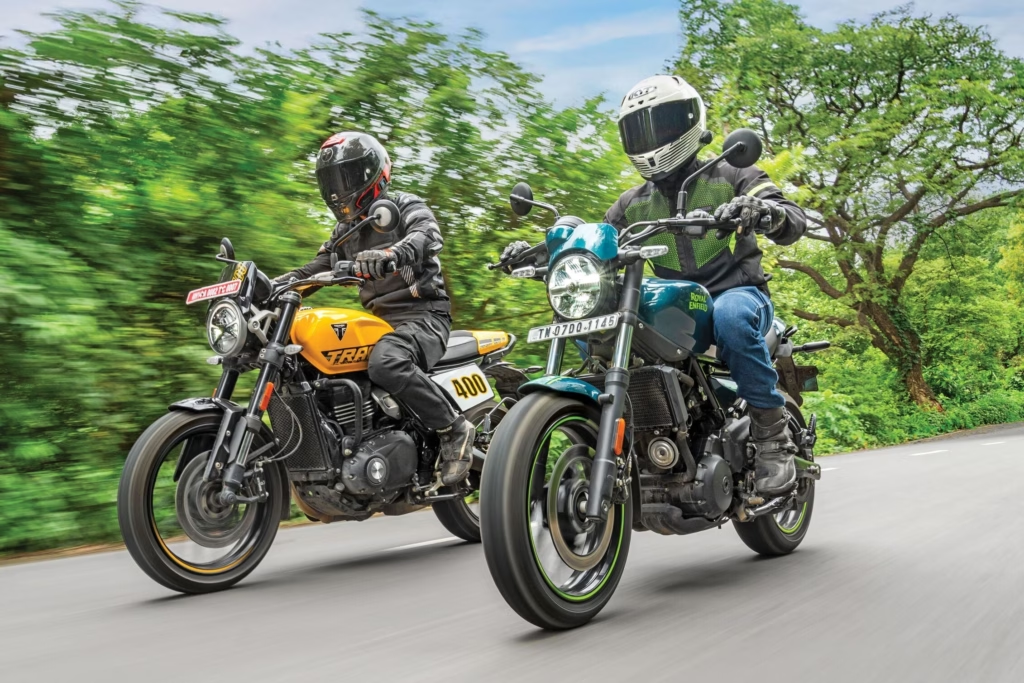
If you are considering either of these motorcycles, chances are you are also considering the other, especially since they both cost about the same. After the Triumph 400cc bikes were downsized, the Tracker 400 now uses a 349cc engine, while the Guerrilla 450 Apex is a sportier variant with more aggressive ergonomics and grippy, road-focused tyres, which I think suit the bike much better than those on the earlier variant.

On paper, the Tracker makes 40hp and 32Nm, while the Guerrilla produces 40.02hp and 40Nm. The Triumph is a lighter, more compact motorcycle, while the Royal Enfield has a larger engine with more torque and offers a stable, planted feel. So, which one makes more sense for someone looking for a sporty, entertaining roadster?

Design and Features

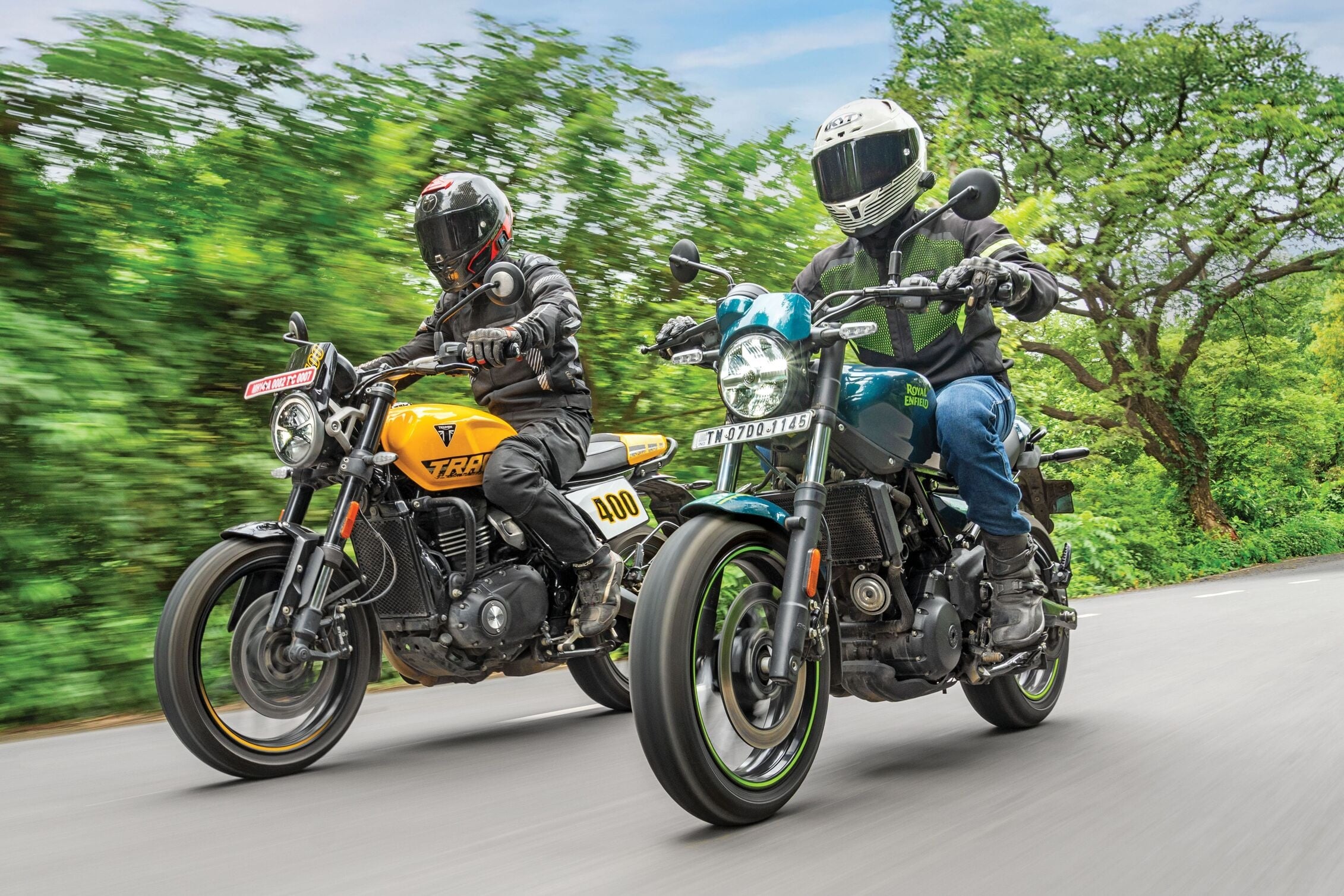
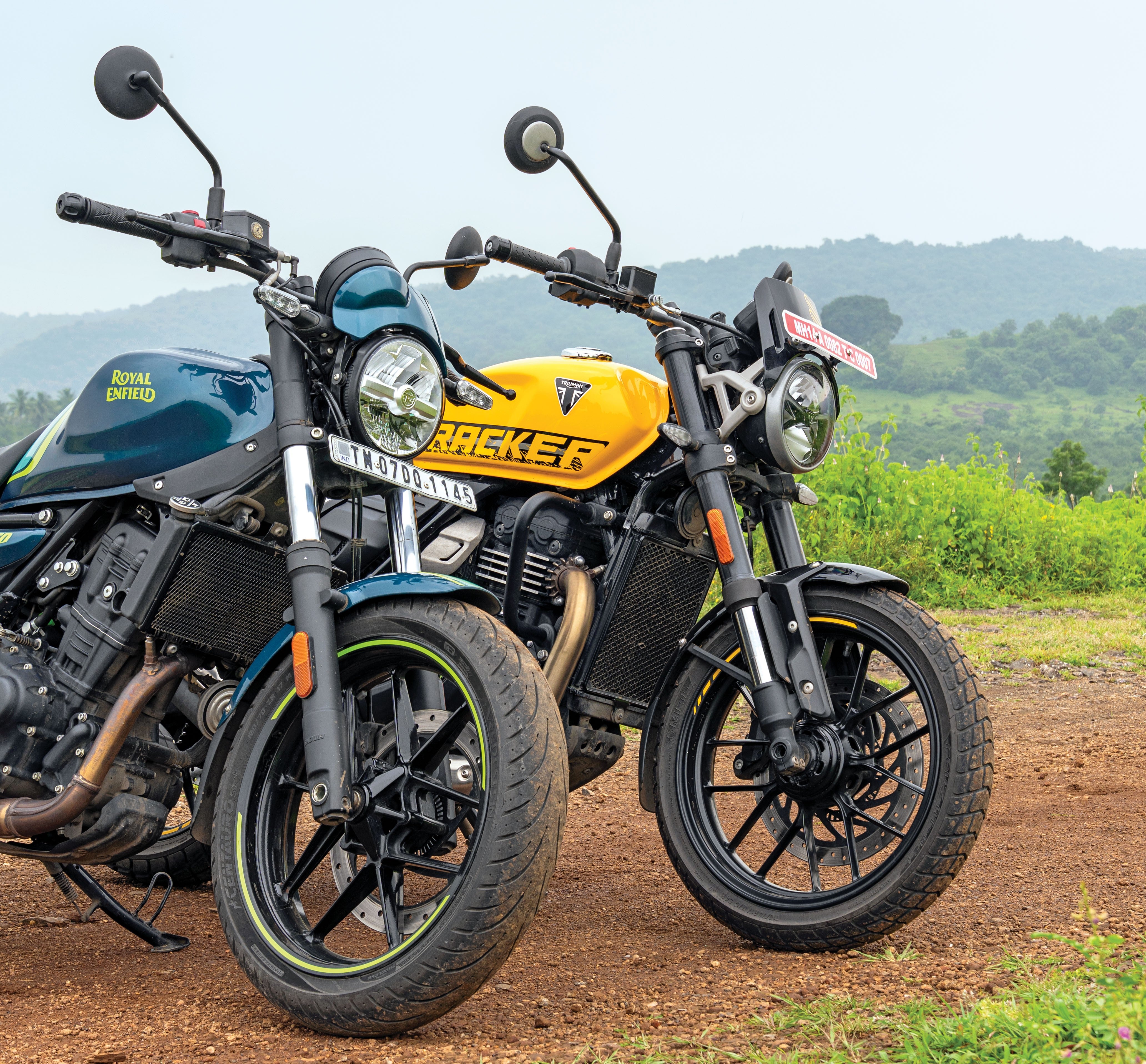
Both motorcycles have very different visual identities, and that is probably the first thing you’ll notice. The Tracker 400 is inspired by flat-track racers, with a flat seat, side number boards and a wide handlebar. But this isn’t really a dirt-track-focussed motorcycle underneath, as its ergonomics, chassis and suspension are properly road-oriented.

The Guerrilla 450 Apex, meanwhile, looks like a sporty and muscular roadster. Compared to the standard variant, it gets a small cowl over the headlight, a new aluminium handlebar, a removable rear-seat cowl and Vredestein Centauro ST+ tyres. The Apex also has a leaned-forward, more committed riding position compared with the standard Guerrilla.
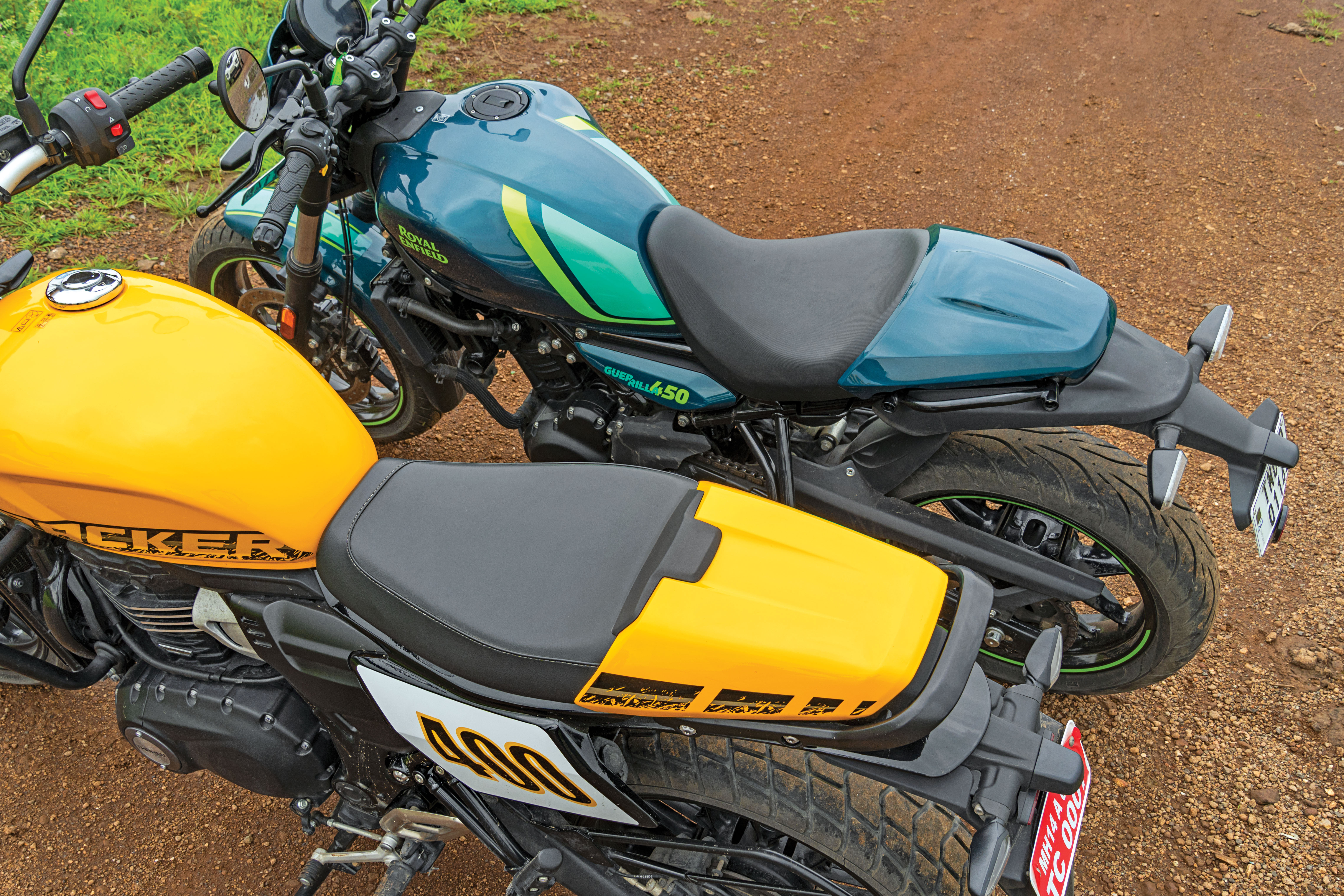
The Tracker is a relatively compact motorcycle, while the Guerrilla’s longer 1,440mm wheelbase and broad 160-section rear tyre give it a more substantial stance. The Triumph gets a larger 13-litre fuel tank compared with the Guerrilla’s 11-litre unit, which can be tedious when long-distance touring.

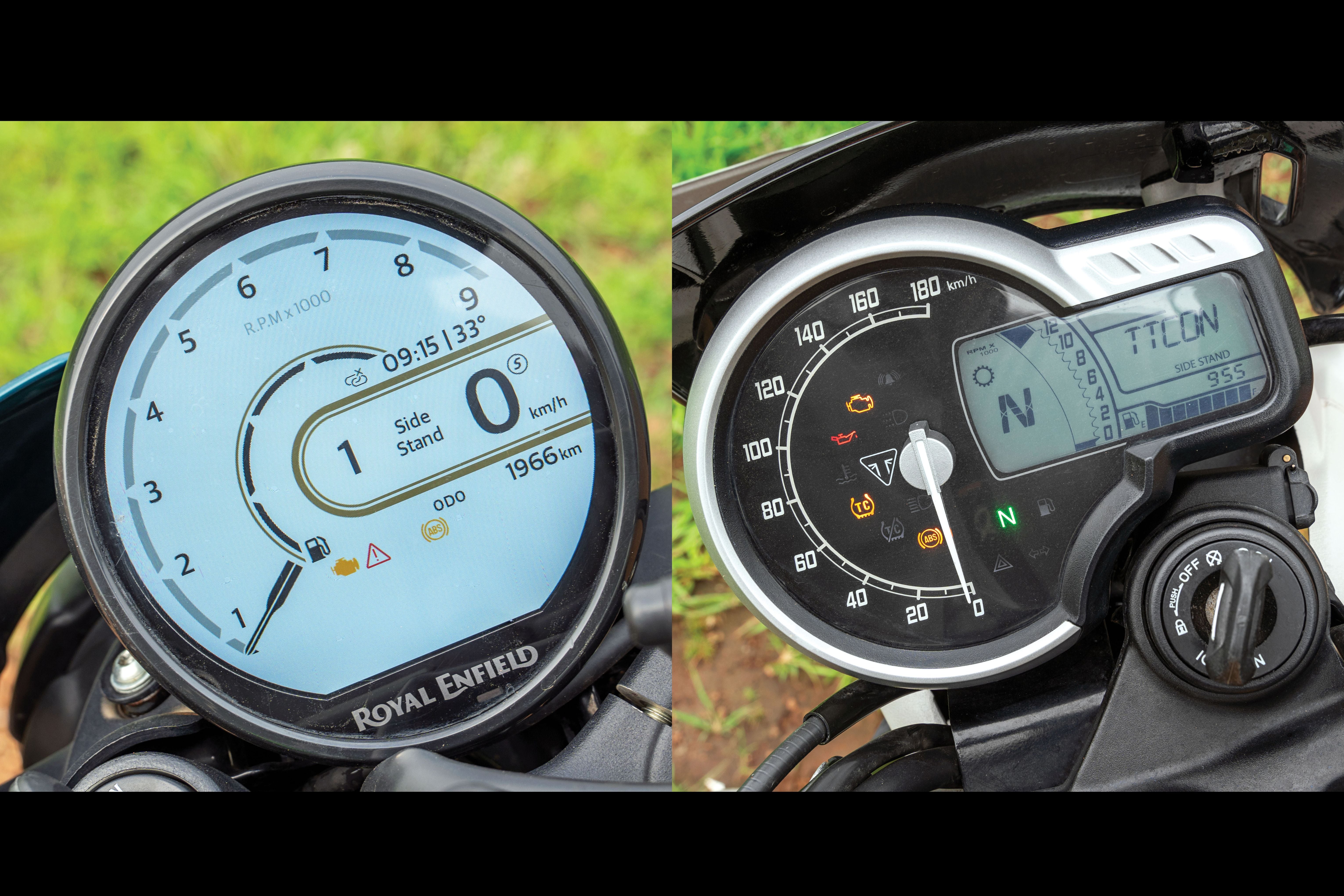
Both motorcycles are equally impressive when it comes to build quality and fit and finish. The Tracker features the same digi-analogue console we have seen on all the other Triumph 400 models, while the Guerrilla features the same TFT unit from the Himalayan. The Guerrilla gets two riding modes (Sport and Street), both of which feel quite similar. On the other hand, the Tracker gets a switchable traction control system that the Guerrilla misses out on. Neither has a quickshifter. In terms of convenience, the Guerrilla has a more accessible 780mm seat height and also gets a main stand, which aids in easier chain maintenance.
There is also a difference in ergonomics. The Tracker’s seat is flat and the riding position is relatively sporty, with rear-set footpegs that suit the character of the bike. The Guerrilla Apex has a lower and more accessible 780mm seat and roadster-like, neutral-set footpegs, along with a committed upper-body position. Between the two, you sit on top of the Tracker with its flat seat, while on the Guerrilla, you sit inside the curved seat, and it is also the more comfortable of the two.

Performance and Fuel Economy

This is where things get interesting because the Tracker 400’s 349cc engine is 103cc smaller than the Guerrilla’s 452cc unit, yet peak power is almost identical. The Triumph produces 40hp at 8,750rpm and 32Nm at 7,500rpm, while the Royal Enfield makes 40.02hp at 8,000rpm. Of course, the difference comes in torque, where the RE makes a much healthier 40Nm at 5,500rpm.

The difference in torque delivery is immediately noticeable. The Tracker’s engine likes to be revved out, but you still have to work it quite a bit. The Guerrilla’s Sherpa engine has a different personality. It doesn’t need to be worked as hard, and the additional 8Nm gives it much stronger roll-on performance. It feels more raw and powerful as soon as you open the throttle, and the surge in power after 6,000rpm makes it feel really exciting. After 7,000rpm, there are some vibrations, but nothing that really ruins the riding experience.
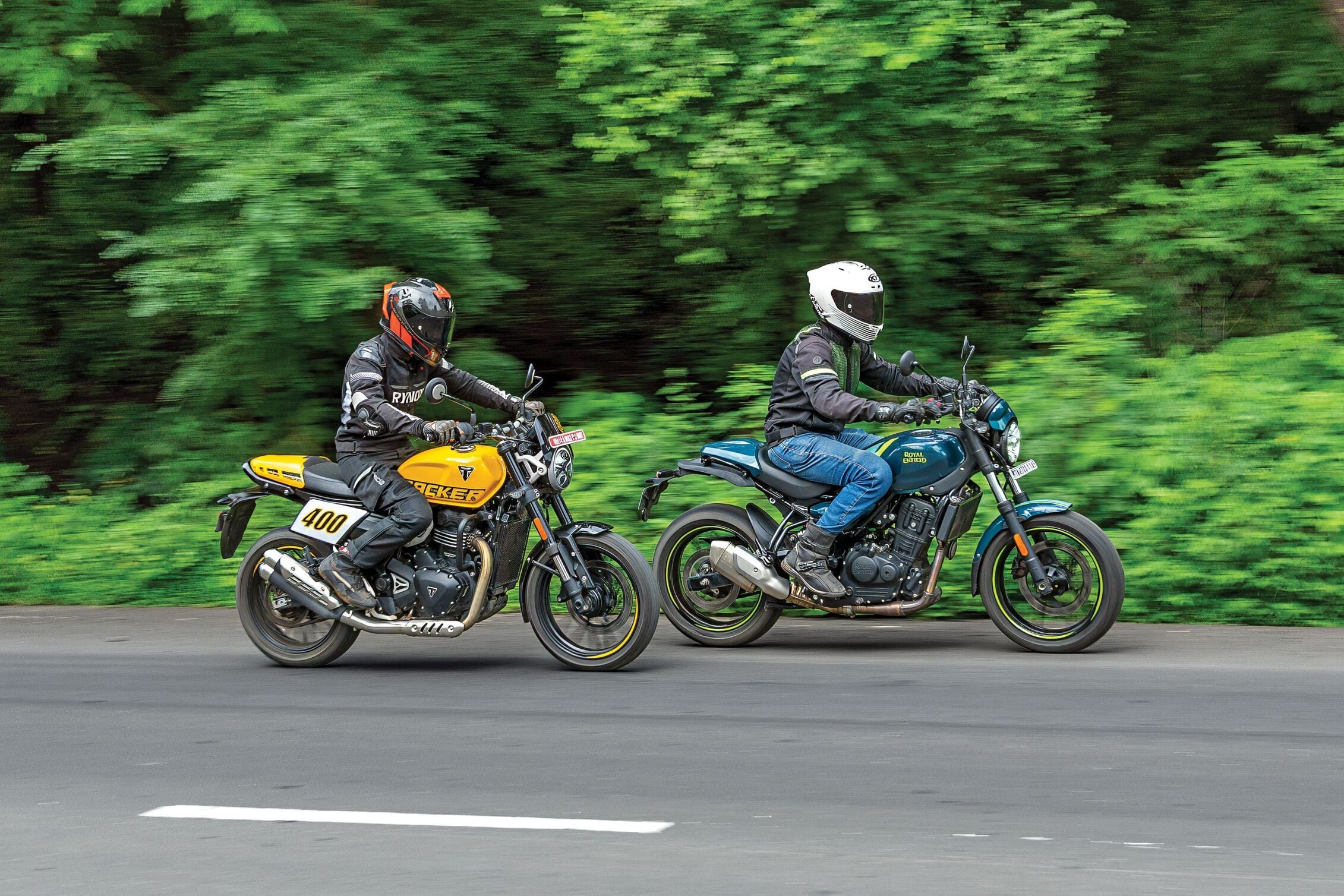
The Tracker’s shorter-stroke engine is very refined at moderate engine speeds, but once you start revving it harder, some buzz makes its way into the tank and footpegs at the top end of the rev range. It remains an entertaining engine, but considering I have ridden the older 398cc Thruxton 400, I feel like it misses out on that initial torque kick.

In our performance tests, the Guerrilla completed the 0-100kph sprint in 6.34 seconds, while the Tracker took 7.55 seconds for the same, marking a difference of 1.21 seconds. The real difference in performance was more visible in the roll-on acceleration tests where the Guerrilla 450 Apex was notably quicker.

Fuel efficiency was almost on par in our tests, where the Tracker delivered 24.1kpl in the city and 31.71kpl on the highway, while the Guerrilla gave us 25.23kpl in the city and 32.82kpl on the highway. The Triumph’s 13-litre tank will give it a better range despite the marginally lower highway efficiency. 

Ride and Handling

The biggest difference between these two motorcycles becomes apparent once the road starts to twist. The Guerrilla feels longer and heavier and needs a bit of muscling around, but once in a corner, it is extremely stable and planted. The grip offered by the Vredestein tyres is superb and inspires a lot of confidence. The Tracker, on the other hand, feels light, nimble and very easy to flick into corners, thanks to its shorter wheelbase and the leverage offered by the wide handlebars. Its blocky MRF tyres work well, but given how it rides more like a sporty roadster rather than a tracker, stickier tyres would have been a better choice.

While many might be disappointed about the Guerrilla 450 Apex not getting a USD fork, the suspension does work much better than the Tracker’s over bad roads and undulations. The setup feels plusher than the Tracker, which has a quicker rebound that can toss you up if you hit potholes at higher speeds. 
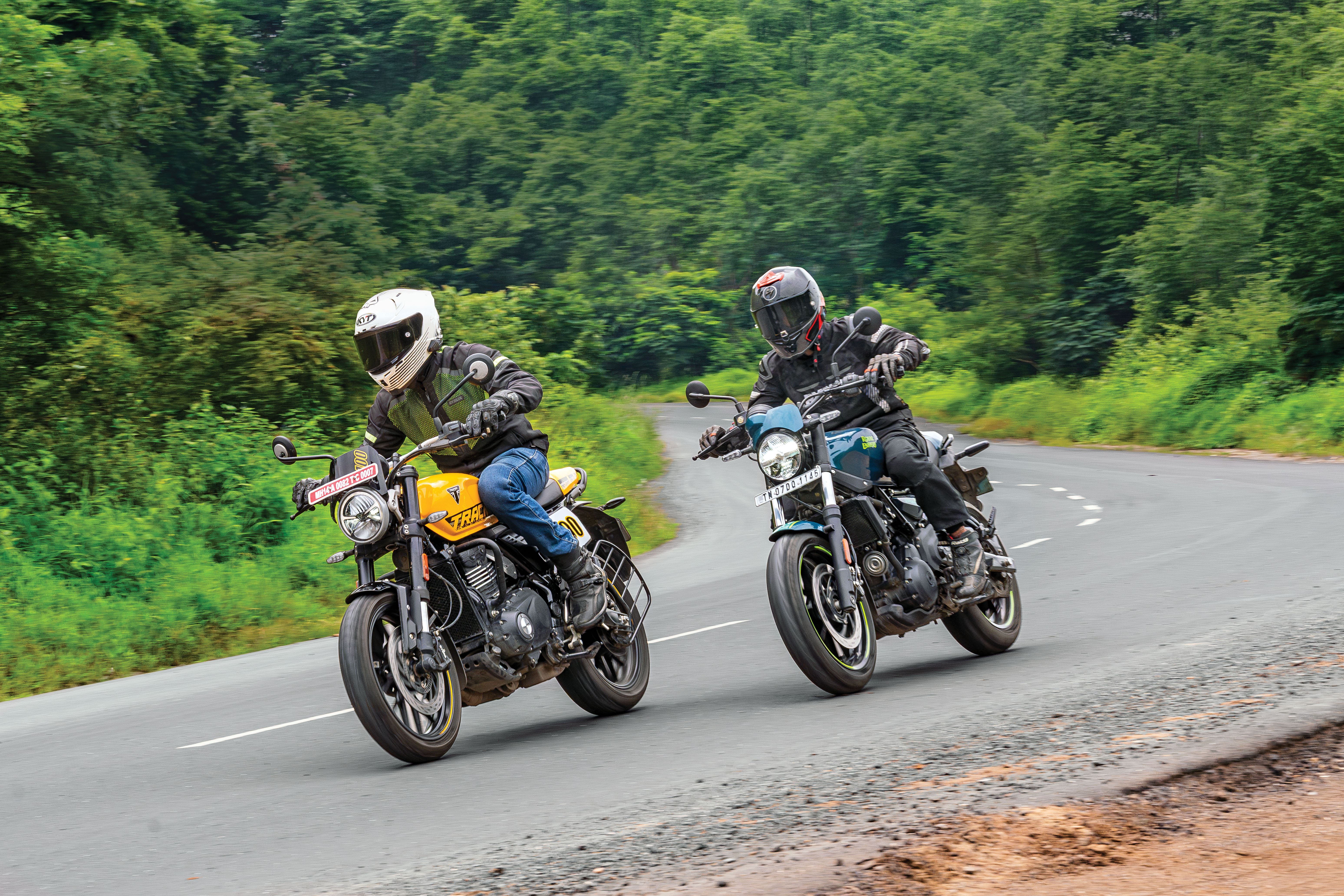
Despite the Triumph being the more compact motorcycle, I felt like it was easier to filter through traffic on the Guerrilla, and that is because the Triumph has slightly wider handlebars and mirrors that jut out slightly more. I do remember my time spent with the Guerrilla on a go-kart track, and it was genuinely a lot of fun. The tyres kept up with the performance that the engine offers, and it was a blast to exploit the full capabilities of the bike. The only limitation was the footpegs, which kept scraping when the bike was leaned over. That said, this was never a problem out on the road.

Braking hardware is strong on both. The Tracker gets a 300mm front disc with a four-piston radial ByBre caliper, while the Guerrilla uses a 310mm front disc and 270mm rear disc. The Guerrilla stopped marginally quicker in our braking test from 60-0kph, but I did notice that the ABS intervention can be strong when emergency braking from higher speeds.

Price and Verdict

These two motorcycles are closer than their engine capacities suggest. The Tracker proves that you don’t need a large engine to make for a fun roadster. Its 349cc motor makes almost as much peak power as the Guerrilla, and its compact dimensions, wide handlebar and sporty chassis make it an engaging motorcycle on a twisty road.

The Royal Enfield Guerrilla 450 Apex, however, takes a more muscular approach. Its 452cc engine has substantially more torque, the Vredestein tyres give it a level of grip that suits its performance, and the longer wheelbase also gives it a reassuring planted character, particularly when you’re riding quickly.
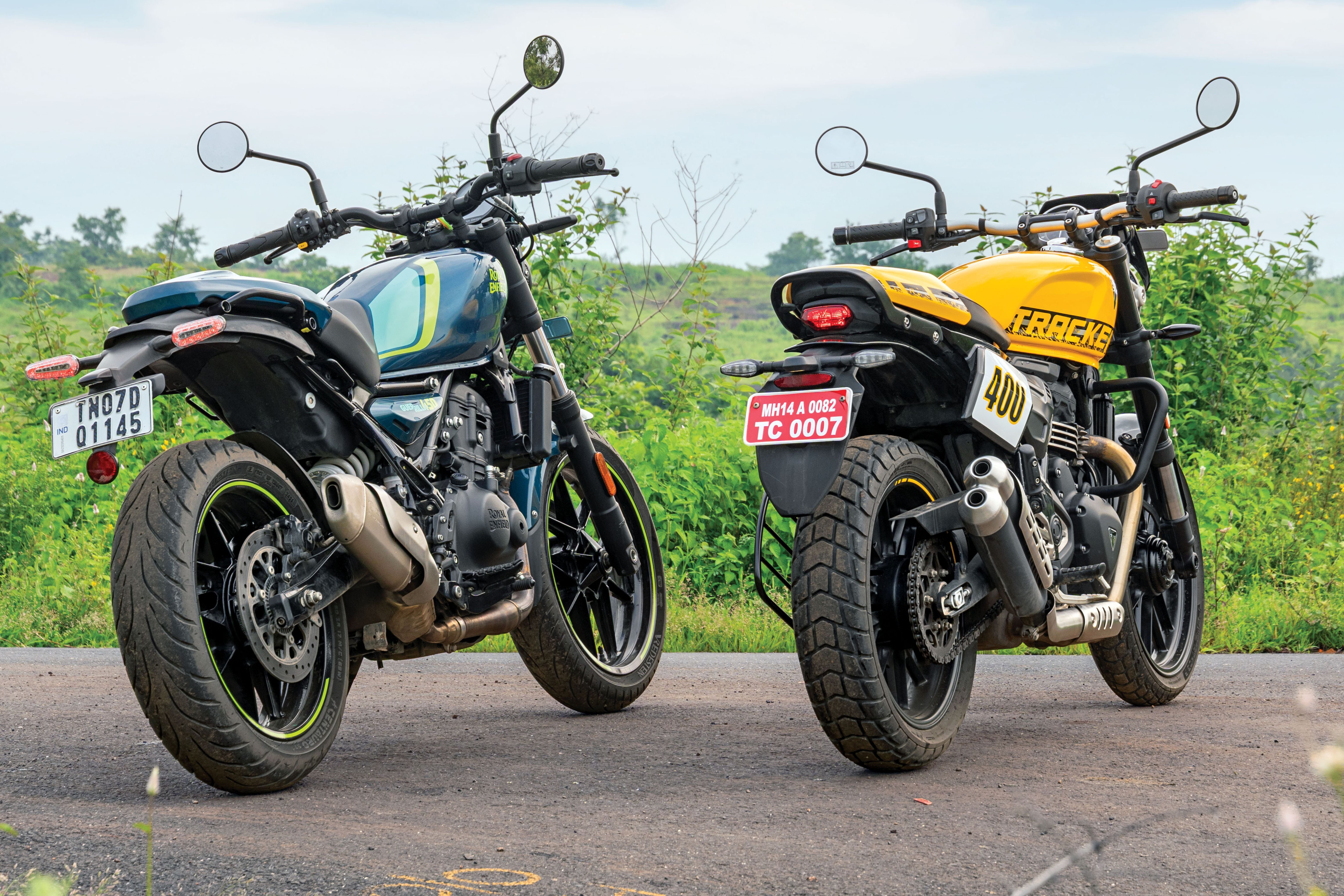
They offer two distinct interpretations of the sporty modern roadster. The Tracker’s biggest strength is its agility. It feels smaller, lighter and more eager to change direction quickly. The Guerrilla’s strength is the breadth of its performance. There’s more torque, more road presence and a greater sense of stability when you’re pushing it. And that is ultimately what separates them. The Triumph is the more playful motorcycle, thanks to its nimble nature, while the Guerrilla Apex feels like a more serious attempt at turning the standard roadster into a proper performance-oriented, corner-carving machine.

While it is difficult to pick between these two motorcycles, considering that they do things in different ways, you can’t look past the value that the Guerrilla offers. Despite falling into the 40 percent GST bracket, its starting price is just Rs 10,000 more than that of the Tracker. 
To put things into perspective, the KTM 390 Duke R, which used to be the benchmark for affordable and accessible performance when its Gen 1 model was launched in India, is now priced at Rs 3.45 lakh (ex-showroom), taking its on-road price upwards of Rs 4 lakh. So the way I see it, the Guerrilla 450 Apex is now the new benchmark when it comes to affordable performance in India. Who’d have ever thought that the crown would one day be worn by a Royal Enfield.
2027 Kawasaki KLE500 SE SmartRide revealed

2027 Kawasaki KLE500 SE SmartRide revealed
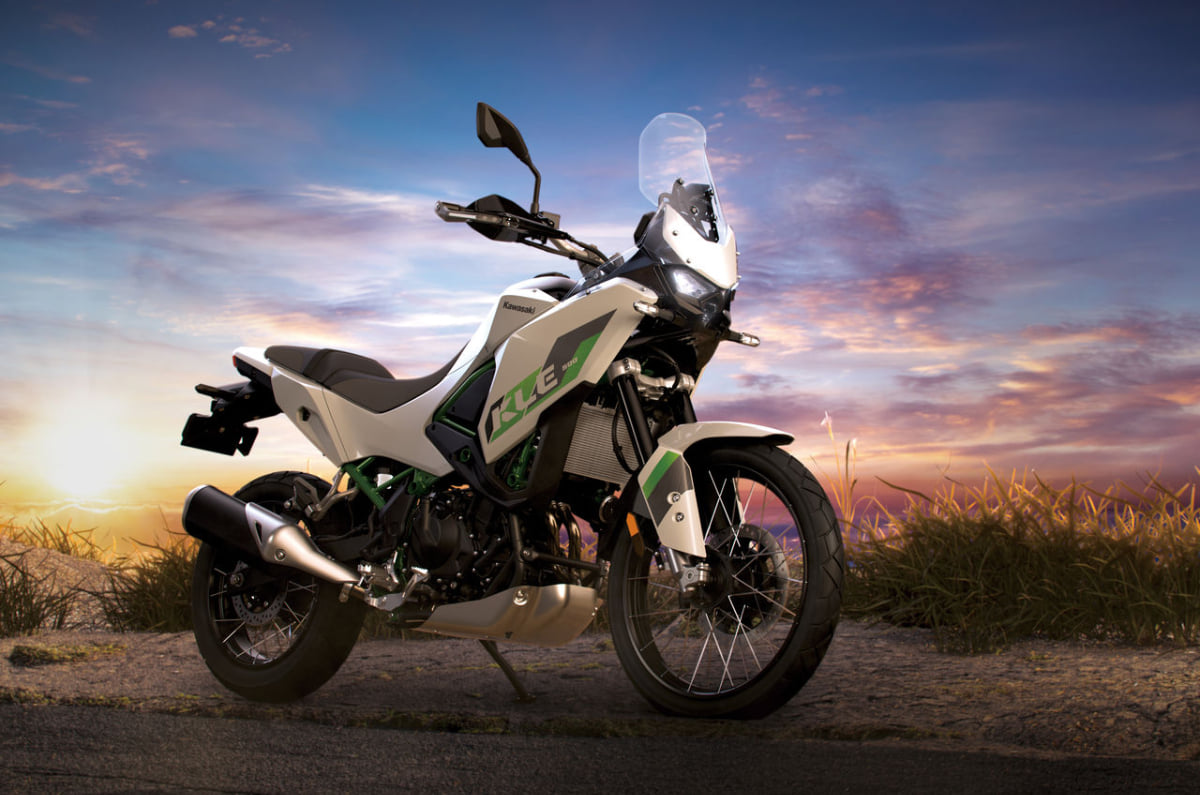
KLE500 SE press image

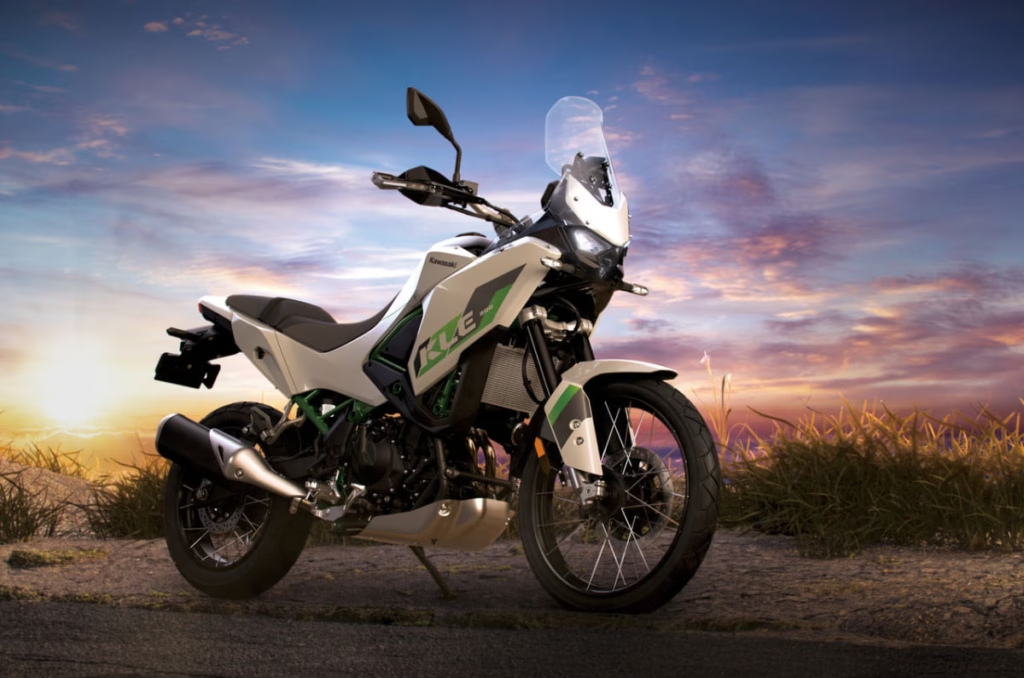
Kawasaki has expanded its 2027 KLE500 range with a new SE SmartRide variant, which adds a mechanical centrifugal clutch to the parallel-twin adventure motorcycle. The system allows riders to pull away and come to a stop without operating the clutch lever, while gear changes on the move still use the lever and pedal as normal.

  1. KLE500 now has three variants
  2. 451cc parallel-twin engine produces 45hp and 42.6Nm

Kawasaki KLE500 SE SmartRide details

No other mechanical changes over the KLE500 SE, which debuted last year

The KLE500 lineup now comprises three variants – the base KLE500, the KLE500 SE and the new KLE500 SE SmartRide. At first, the SmartRide system may sound similar to Honda’s E-Clutch technology, but the two work quite differently. While both aim to simplify clutch operation, Honda uses an electromechanical actuator to automate clutch movement, whereas SmartRide relies on a purely mechanical centrifugal clutch.

Aside from the addition of the clutch technology, the SmartRide variant also gets tubeless tyres, replacing the tube-type setup on the standard SE. Otherwise, the two variants share the same hardware, including the 451cc parallel-twin engine producing 45hp at 9,000rpm and 42.6Nm at 6,000rpm.

The SE SmartRide is available in a single colour, Pearl Blizzard White. Following its international debut last year, we’d reported that Kawasaki India has the KLE500 in the pipeline for a launch here, which we expect to happen over the next few months.

When it goes on sale, the KLE500 will join a growing list of sub-500cc adventure bikes in our market. Given its potential CBU (Completely Built-Up) import route and the premium pricing that would entail, it will also see competition from upcoming India-made motorcycles such as the Royal Enfield Himalayan 750 and the Norton Atlas.

5 things to know about the Hero Xtreme 250R Carbon

5 things to know about the Hero Xtreme 250R Carbon
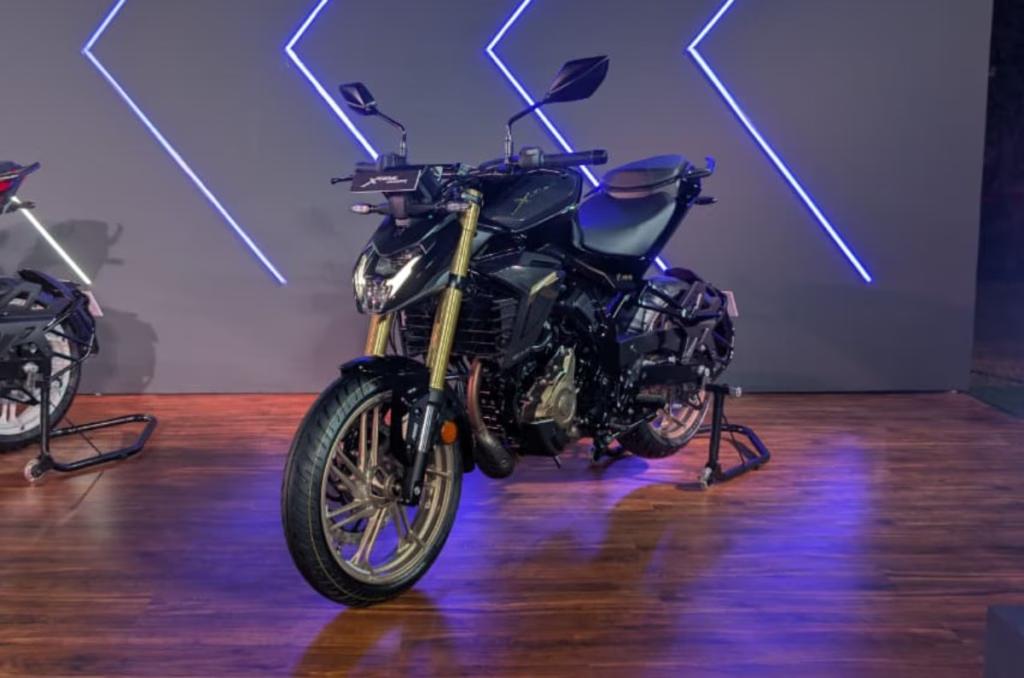
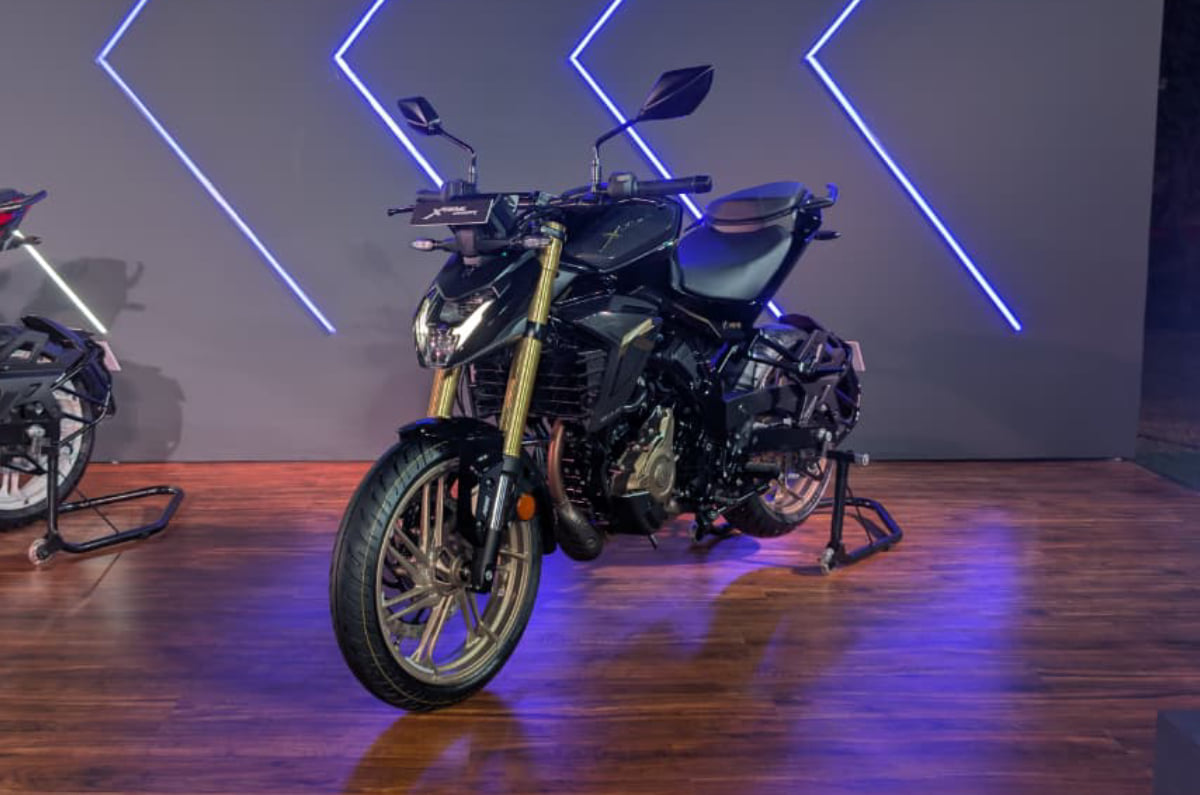
Xtreme 250R Carbon in black colour parked at the launch event

Hero MotoCorp has introduced a new Xtreme 250R Carbon variant with a substantial feature overhaul, adding multiple hardware and tech updates. Here are the five things you need to know about the bike.

1. What’s new on the updated Hero Xtreme 250R?

The Xtreme 250R Carbon features ride-by-wire, which unlocks four riding modes – Rain, Road, Sport and Track – along with traction control calibrated individually for each mode. A bi-directional quickshifter, cruise control and TPMS have also been added. In terms of tech, the LCD instrument cluster has been replaced by a 4.2-inch TFT screen borrowed from the Xpulse 210.

The rear suspension gets Frequency Selective Damping (FSD), a system that uses a secondary valve to automatically vary damping across two distinct profiles based on the speed and frequency of road inputs. It stiffens up to absorb high-frequency impacts, such as road chatter, and softens for longer, slower compressions, such as when going over a speed breaker.

2. What does the Hero Xtreme 250R engine have to offer?

The 249cc liquid-cooled, single-cylinder engine is carried over largely unchanged, producing 30hp at 9,250rpm and 25.3Nm at 7,500rpm. The latter represents a minor 0.3Nm increase over the outgoing bike, delivered 250rpm higher in the rev range.

3. Which is faster, the KTM 250 Duke or the Hero Xtreme 250R?

We found the Hero Xtreme 250R to be the quicker of the two during our tests. The KTM 250 Duke completed the 0-60kph run in 3.44 seconds and the 0-100kph run in 8.50 seconds. The Xtreme 250R, tested on the same day, completed the same runs in 3.15 seconds and 8.22 seconds, respectively.

It’s worth noting that these figures are for the standard Xtreme 250R. However, the engine remains largely unchanged, and Hero’s claimed 0-60kph time for the Carbon is identical to that of the standard model, so we expect the updated bike’s performance to be largely similar.

4. What is the price of the updated Hero Xtreme 250R Carbon?

The Hero Xtreme 250R Carbon is priced at Rs 1.98 lakh (ex-showroom, Delhi), a Rs 14,000 premium over the standard Xtreme 250R following an Rs 11,000 price hike for the standard model alongside the introduction of the Carbon variant. Despite the premium, the Carbon remains notably more affordable than the KTM 250 Duke, which costs Rs 2.28 lakh.

5. What colours is the new Xtreme 250R available in?

The Hero Xtreme 250R Carbon is offered in three colours: Carbon Red, Carbon Black and Carbon White. Along with the new colours, the Carbon variant also gets coloured wheels and exclusive graphics.

BMW F 450 RR vs Rivals: Specification comparison

BMW F 450 RR vs Rivals: Specification comparison
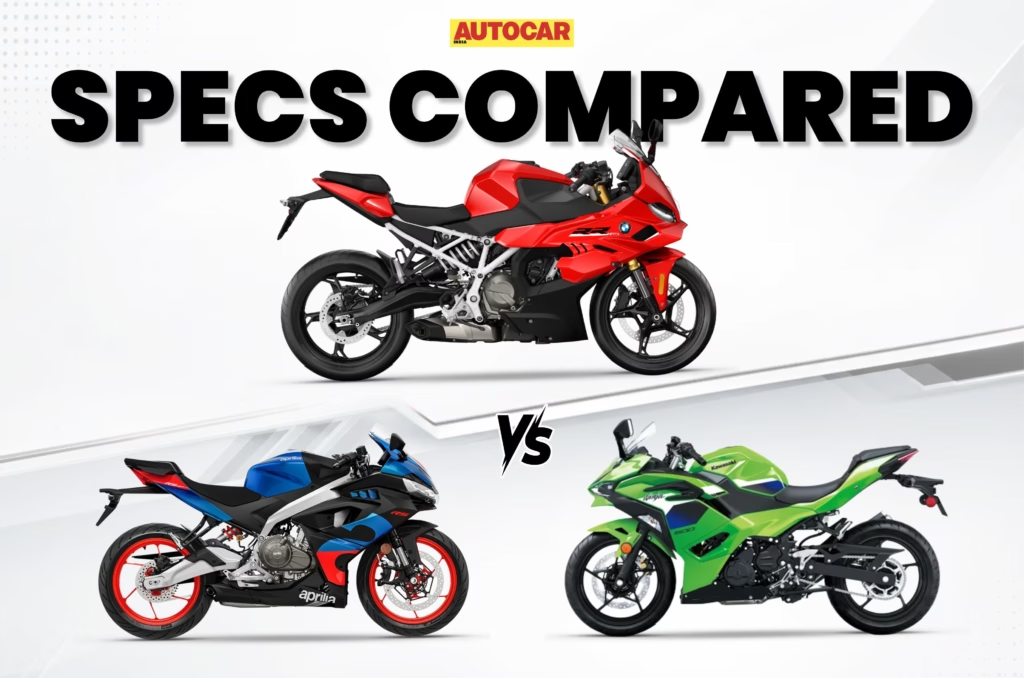
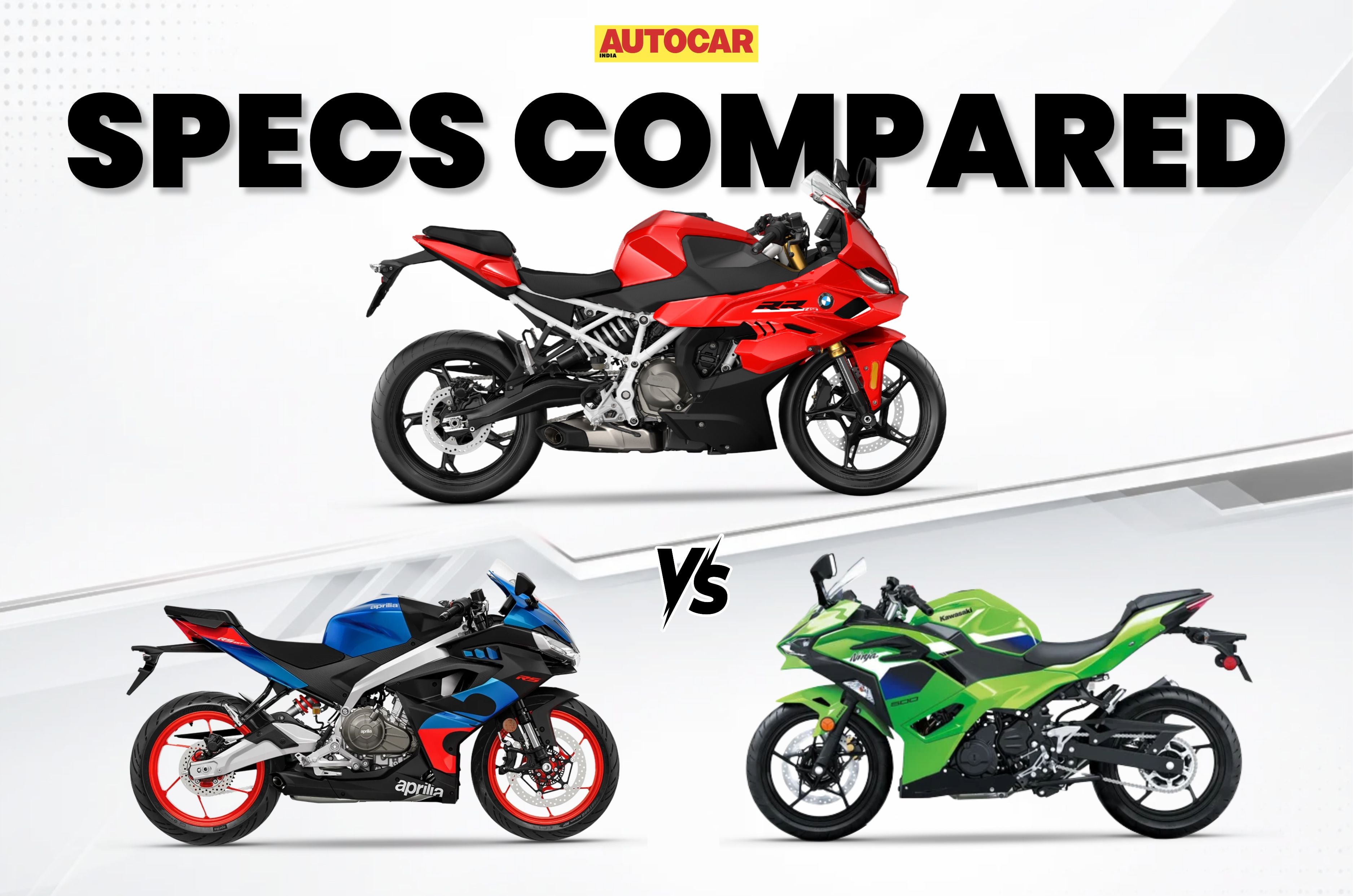
A render showing the recently revealed BMW F 450 RR, Aprilia RS 457 and Kawasaki Ninja 500

The recently revealed F 450 RR is the new supersport motorcycle in BMW’s lineup. As a fully-faired supersport with a parallel-twin engine, it finds itself in the same segment as the Aprilia RS 457 and the Kawasaki Ninja 500, Here is how these superbikes stack up against each other.

BMW F 450 RR vs Aprilia RS 457 vs Kawasaki Ninja 500: Engine and output  

The F 450 RR is the most powerful in its segment


BMW F450 RR

Aprilia RS 457

Kawasaki Ninja 500

Engine

420cc, twin-cylinder, liquid-cooled

457cc, twin-cylinder, liquid-cooled

451cc, twin-cylinder, liquid-cooled

Power

48hp at 8,750rpm

47.6hp at 9,400rpm

45.41hp at 9,000rpm

Torque

43Nm at 6,750rpm

43.5Nm at 6,700rpm

42.6Nm at 6,000rpm

Gearbox

6-speed

6-speed

6-speed

Power-to-weight ratio

270hp/tonne

272hp/tonne

252hp/tonne

BMW didn’t make any changes to the powertrain for the F 450 RR, it uses the same 420cc parallel twin-cylinder liquid-cooled engine that makes 48hp at 8,750rpm and 43Nm of torque at 6,750rpm that debuted in the F 450 GS. In contrast the Aprilia RS 457’s parallel-twin 457cc engine makes 47.6hp and 43.5Nm. The BMW has a marginally more powerful engine on paper, but we’ll be able to comment on real world performance against its rivals only once we’ve ridden the bike.

BMW F 450 RR vs Aprilia RS 457 vs Kawasaki Ninja 500: Dimension and weight

The Ninja 500 offers the more accessible saddle


BMW F 450 RR

Aprilia RS 457

Kawasaki Ninja 500

Fuel tank capacity

14 litres

13 litres

14 litres

Ground Clearance

NA

NA

145mm

Kerb weight

178kg

175kg

176kg

Seat Height

790mm

800mm

785mm

Wheelbase

1405mm

NA

1375mm

Here, the Kawasaki is one step ahead by offering the lowest seat height as standard, making it more accessible for shorter riders. BMW offers an optional low rider seat, which reduces seat height by 15mm (775mm) and a high sport rider seat, that raises seat height by 20mm (810mm). As standard Aprilia has the tallest saddle in the segment. Neither Aprilia nor BMW share ground clearance numbers, and Aprilia doesn’t list RS 457’s wheelbase either. Kawasaki has a 30mm shorter wheelbase compared to the BMW.

BMW F 450 RR vs Aprilia RS 457 vs Kawasaki Ninja 500: Tyres, brakes and suspension

BMW and Aprilia offers adjustable suspension


BMW F 450 RR

Aprilia RS 457

Kawasaki Ninja 500

Tyre (F, R)

110/70R17, 150/60R17

110/70R17, 150/60R17

110/70R17, 150/60R17

Brakes (F/R)

310mm disc/ 240mm disc (dual-channel ABS)

320mm disc/

220mm disc (dual-channel ABS)

310mm disc

220mm disc (dual-channel ABS)

Suspension (F/R)

USD fork/ Monoshock 

USD fork/ Monoshock

Telescopic fork /  Monoshock 

While all three motorcycles ride on 17-inch alloy wheels wrapped in 110-section front and 150-section rear tyres, their suspension and braking hardware take different approaches. The F 450 RR has a 43mm USD fork at the front (with optional adjustable rebound and compression damping) and a monoshock with adjustable preload and rebound damping at the rear. The RS 457 gets a 41mm preload-adjustable USD fork, whereas the Ninja 500 uses a 41mm telescopic fork, and both bikes feature a preload-adjustable monoshock.

The BMW and the Aprilia have a more sophisticated braking setup compared to the Kawasaki. BMW uses a 310mm front disc and Aprilia uses a 320mm front disc, both are paired with a radially mounted caliper, whereas the Kawasaki uses a 310mm disc with axially mounted caliper. All three bikes are equipped with dual-channel ABS as standard.

BMW F 450 RR vs Aprilia RS 457 vs Kawasaki Ninja 500: Features

F 450 RR is loaded with tech

The F 450 RR has a clear edge when it comes to features and electronics, offering optional Easy Ride Clutch (ERC), configurable ride modes and a bidirectional quickshifter on higher variants. While offering a comprehensive electronic suite of rider aids, comprising three riding modes, lean sensitive ABS and traction control, and heated grips as standard. It also gets a 6.5-inch TFT display with smartphone connectivity and turn-by-turn navigation.

The Aprilia RS 457 follows with its electronic suite of rider aids, comprising three riding modes, three levels of traction control and an optional bidirectional quickshifter. It also gets a 5-inch TFT display with Bluetooth connectivity and turn-by-turn navigation.

The Ninja 500, in contrast, takes a simpler approach. The India-spec motorcycle comes with an LCD instrument cluster, LED lighting, dual-channel ABS and an assist-and-slipper clutch as standard but lacks electronic rider aids such as traction control, riding modes and a quickshifter. 

3 reasons to buy the Mahindra XUV 3XO CNG and 3 reasons not to

3 reasons to buy the Mahindra XUV 3XO CNG and 3 reasons not to
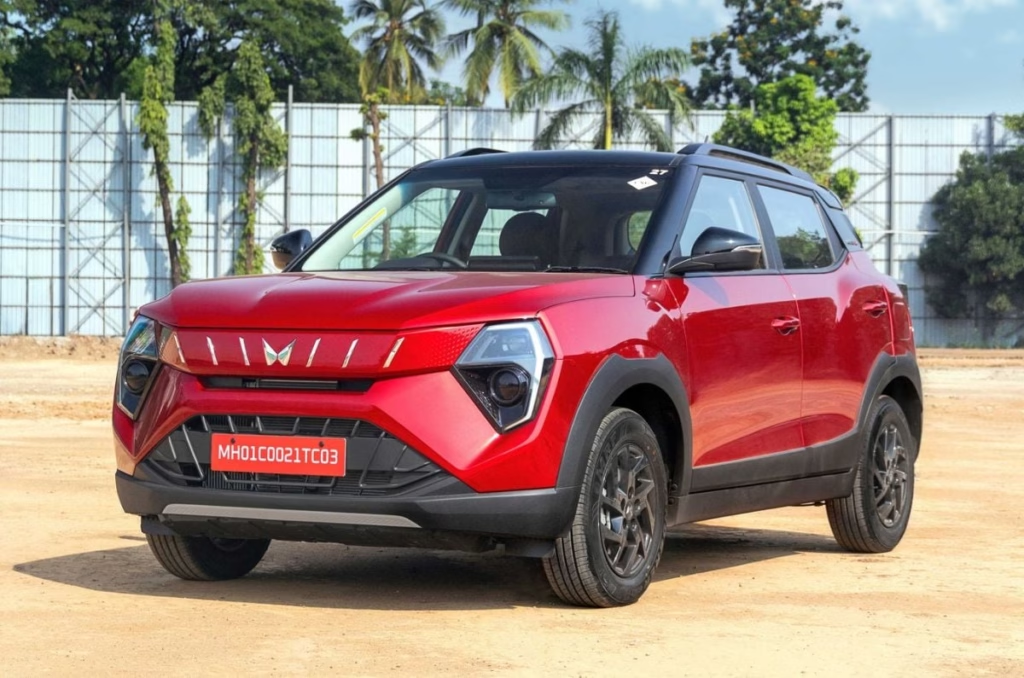
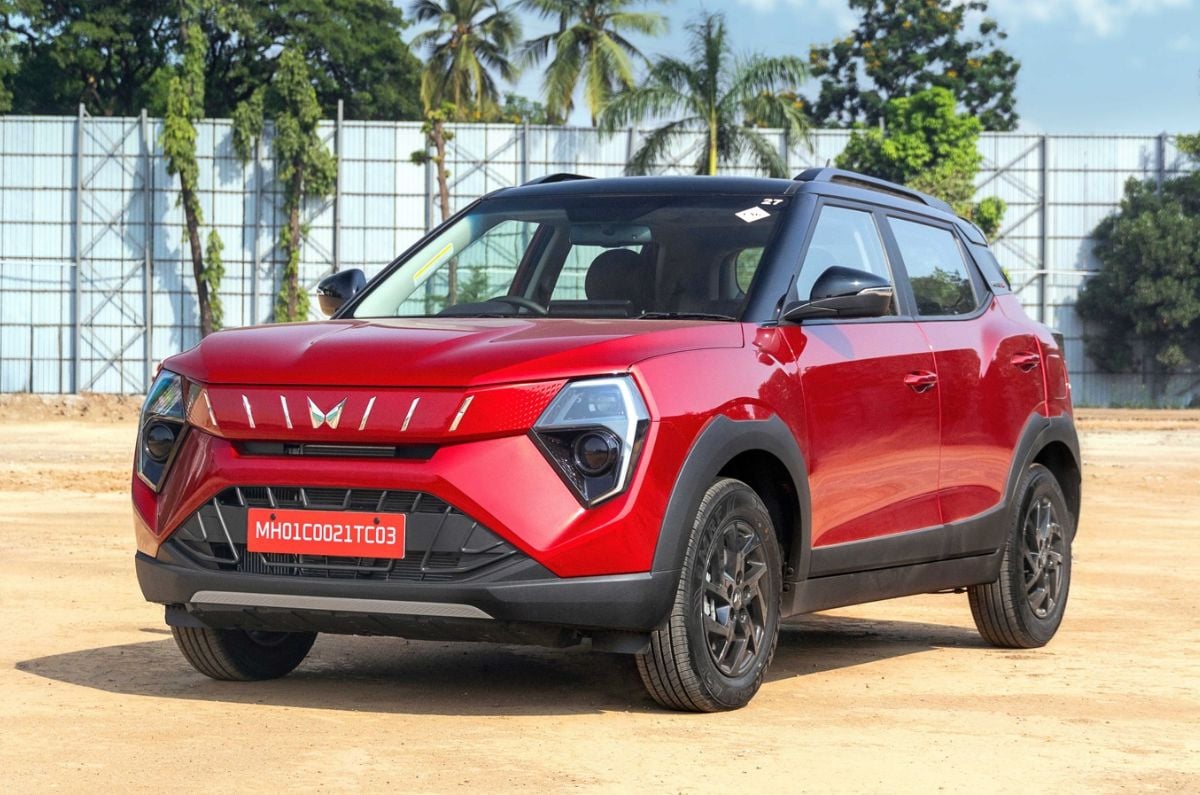
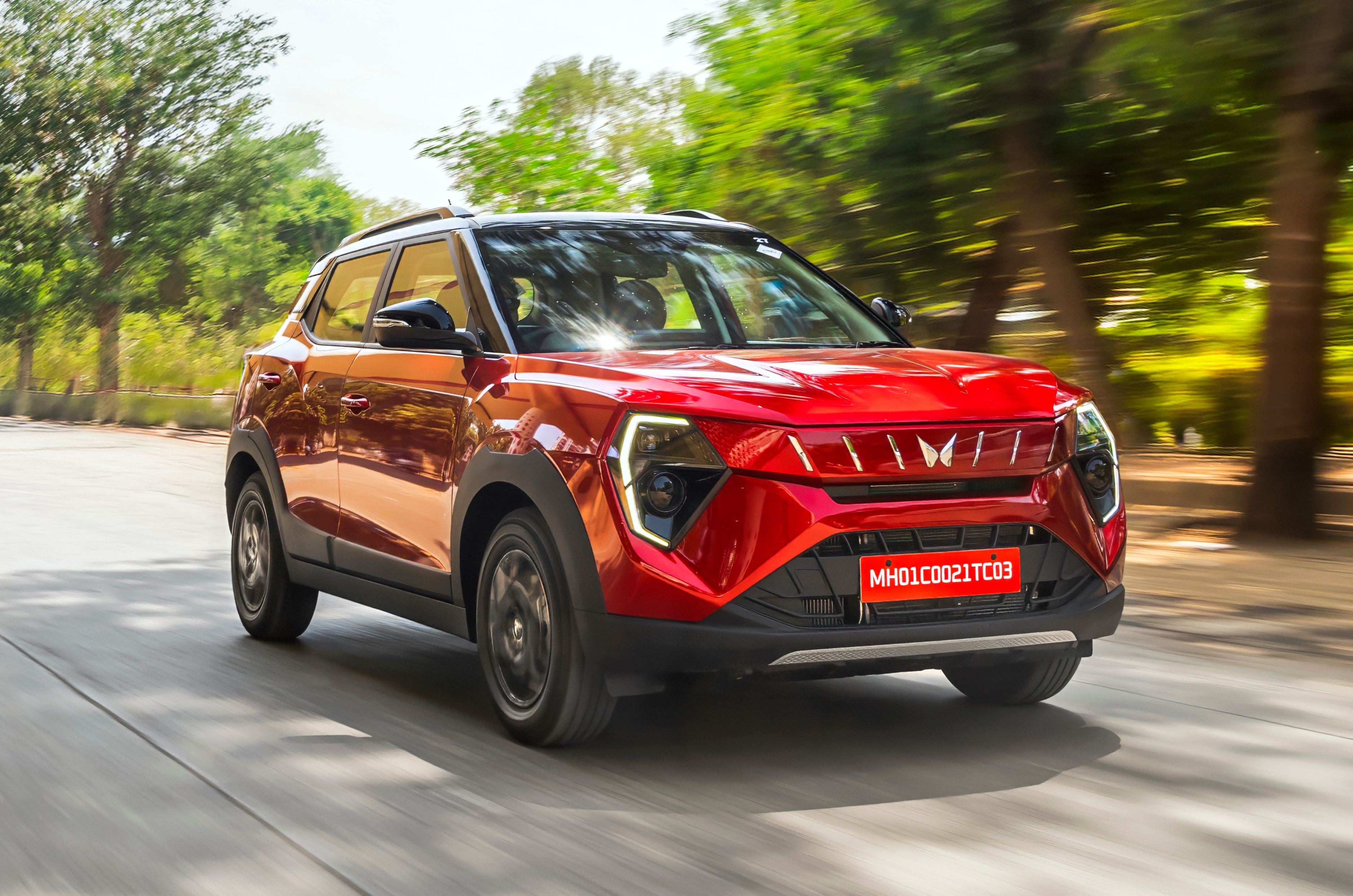
Mahindra XUV 3XO CNG front quarter

The Mahindra XUV 3XO ZNG takes on the Tata Nexon iCNG and the Maruti Brezza CNG in the CNG compact SUV space. Priced from Rs 9.99 lakh to Rs 12.27 lakh (ex-showroom), it carries a premium of Rs 1 lakh to Rs 1.2 lakh over the corresponding petrol versions. Before signing on the dotted line, here are the key strengths and weaknesses of this Mahindra SUV.

Reasons to buy the Mahindra XUV 3XO CNG

Strong performance on CNG

The XUV 3XO CNG loses none of its power when running on gas

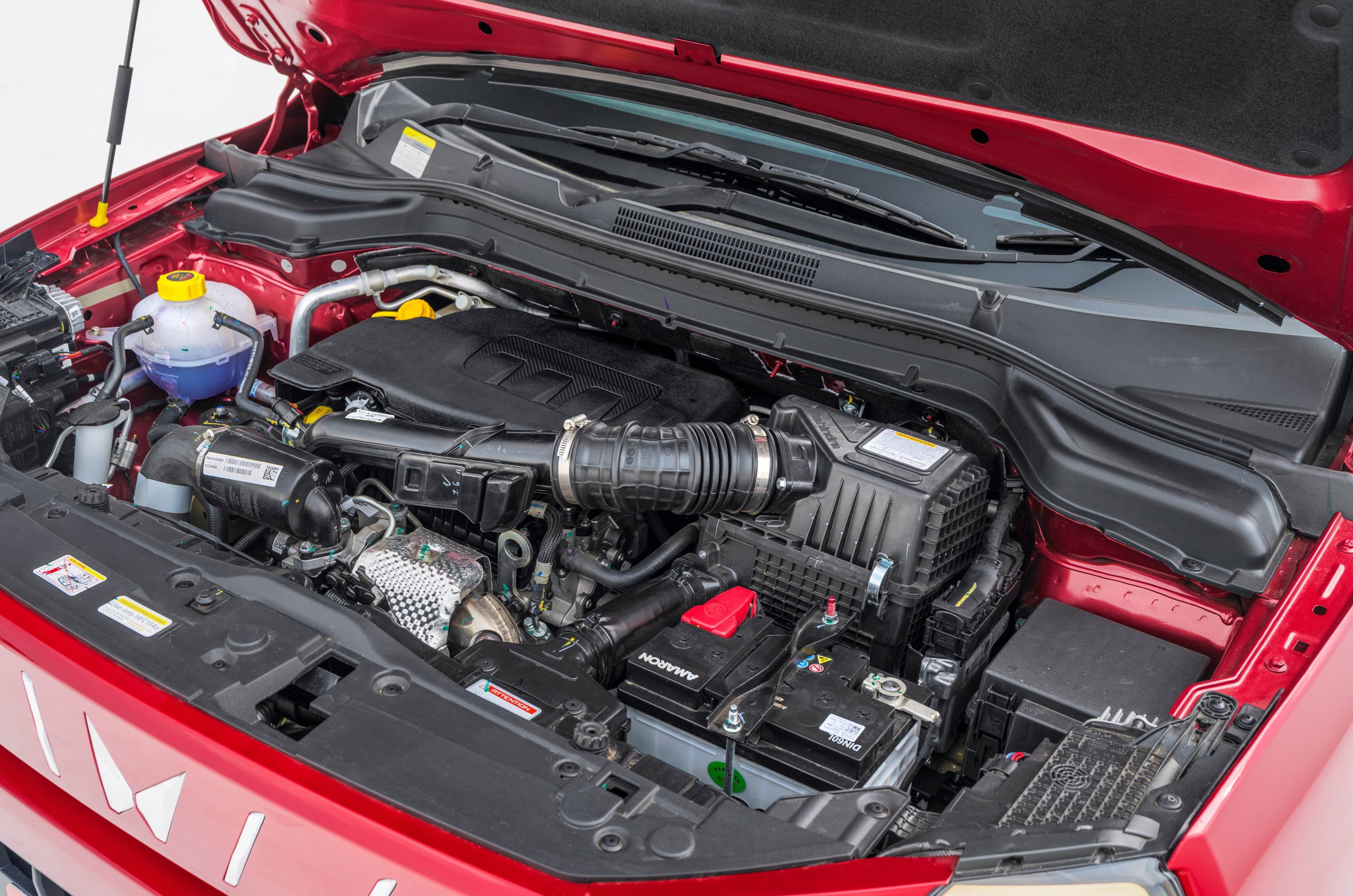
Mahindra XUV 3XO CNG engine

The 1.2-litre MPFI (multi-point fuel-injected) turbo-petrol engine of the XUV 3XO CNG is the same unit found in the lower and mid-spec petrol trims. Here it develops 111hp and 200Nm in both petrol and CNG modes. While there’s some turbo lag below 2,000rpm, the engine pulls eagerly once it crosses that mark. This unit is also notable for its refinement and tractability, rarely requiring one to drop down to first gear, for going over speed breakers, for example.

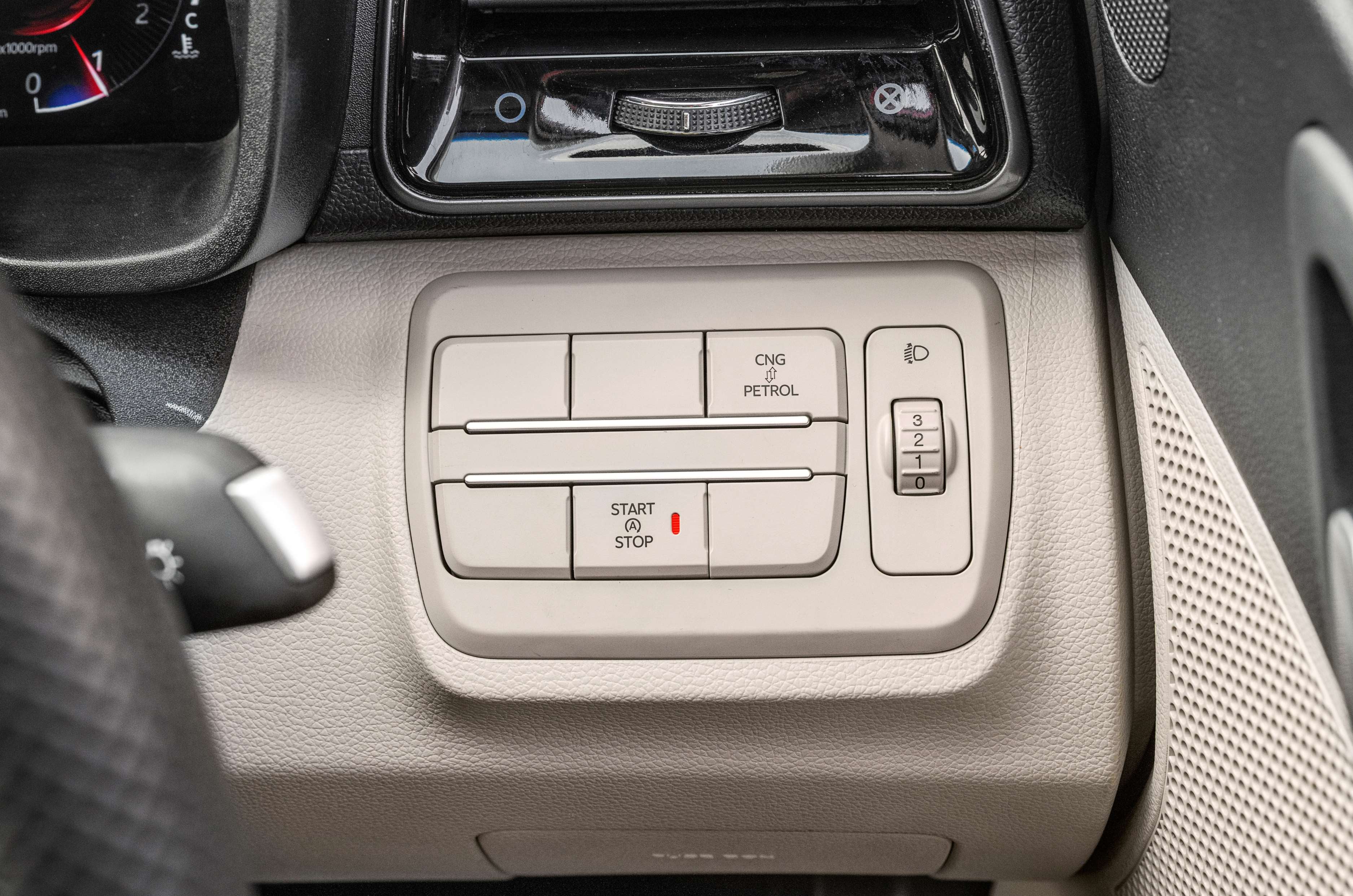
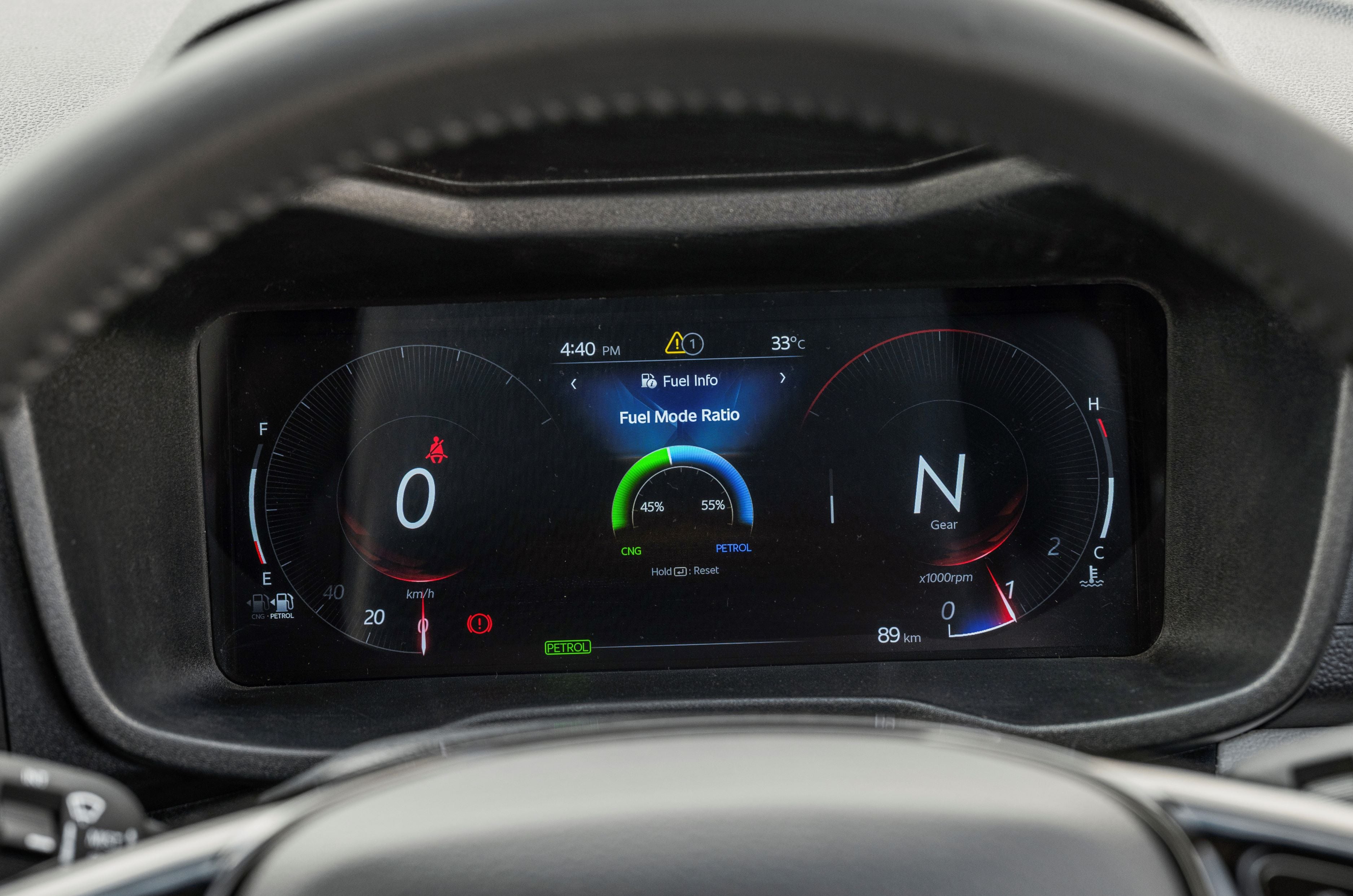
Mahindra XUV 3XO CNG mode switch

Switching between petrol and CNG is seamless as well, and few would be able to tell which fuel the XUV 3XO ZNG is running on. While we’re yet to test it, Mahindra claims a mileage of 24.7km/kg for this compact SUV, translating to a theoretical range of 247km on CNG.

Comfy ride and tidy handling

Mahindra has retuned the suspension to accommodate the extra heft of the CNG kit

Mahindra XUV 3XO CNG front quarter tracking

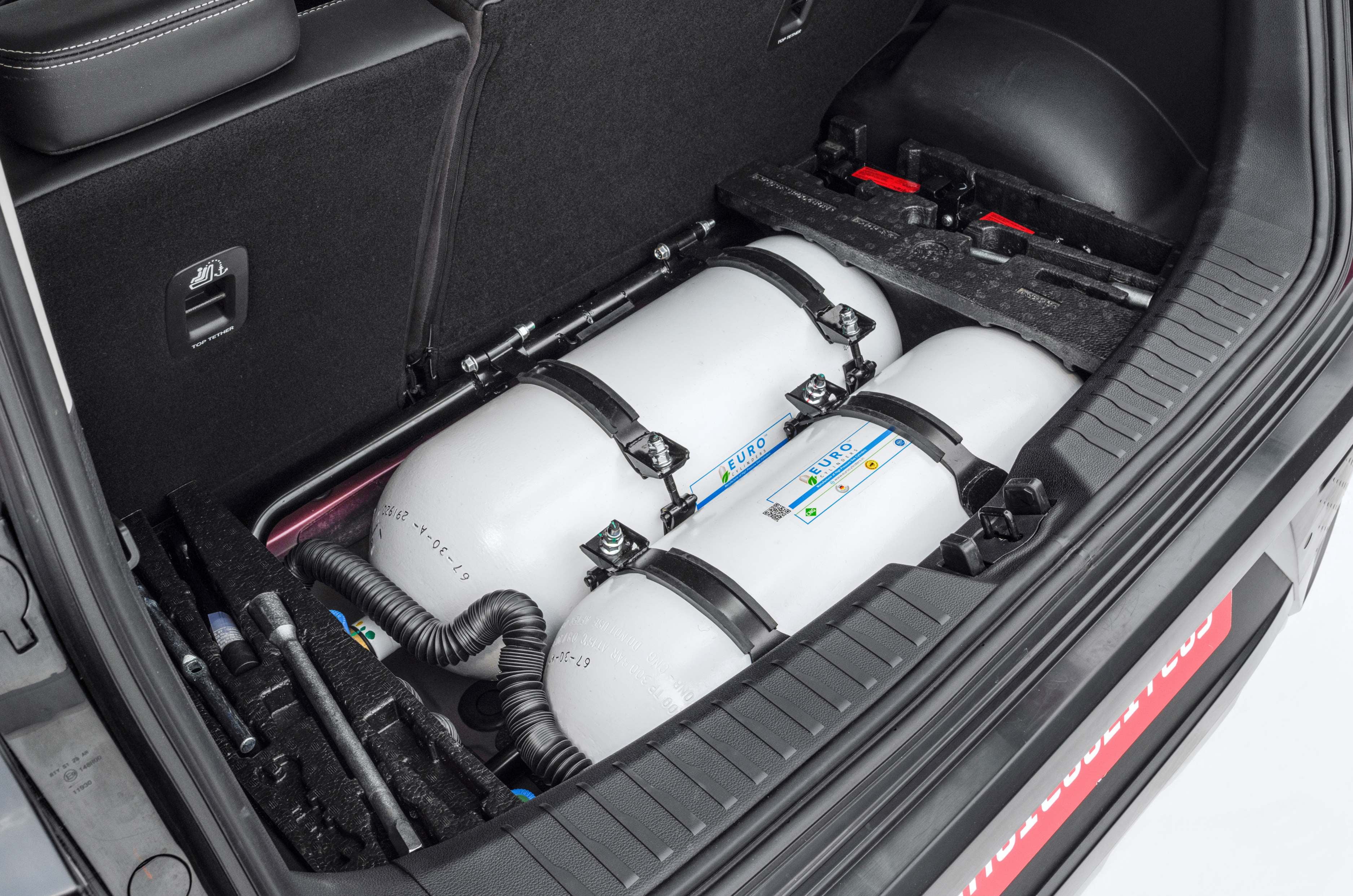
The CNG hardware adds around 100kg to the XUV 3XO’s kerb weight, with the majority of it being over the rear axle. Mahindra has reworked the suspension to compensate for this heft. The result is a slightly firm ride but one that deals with bad roads quite well.

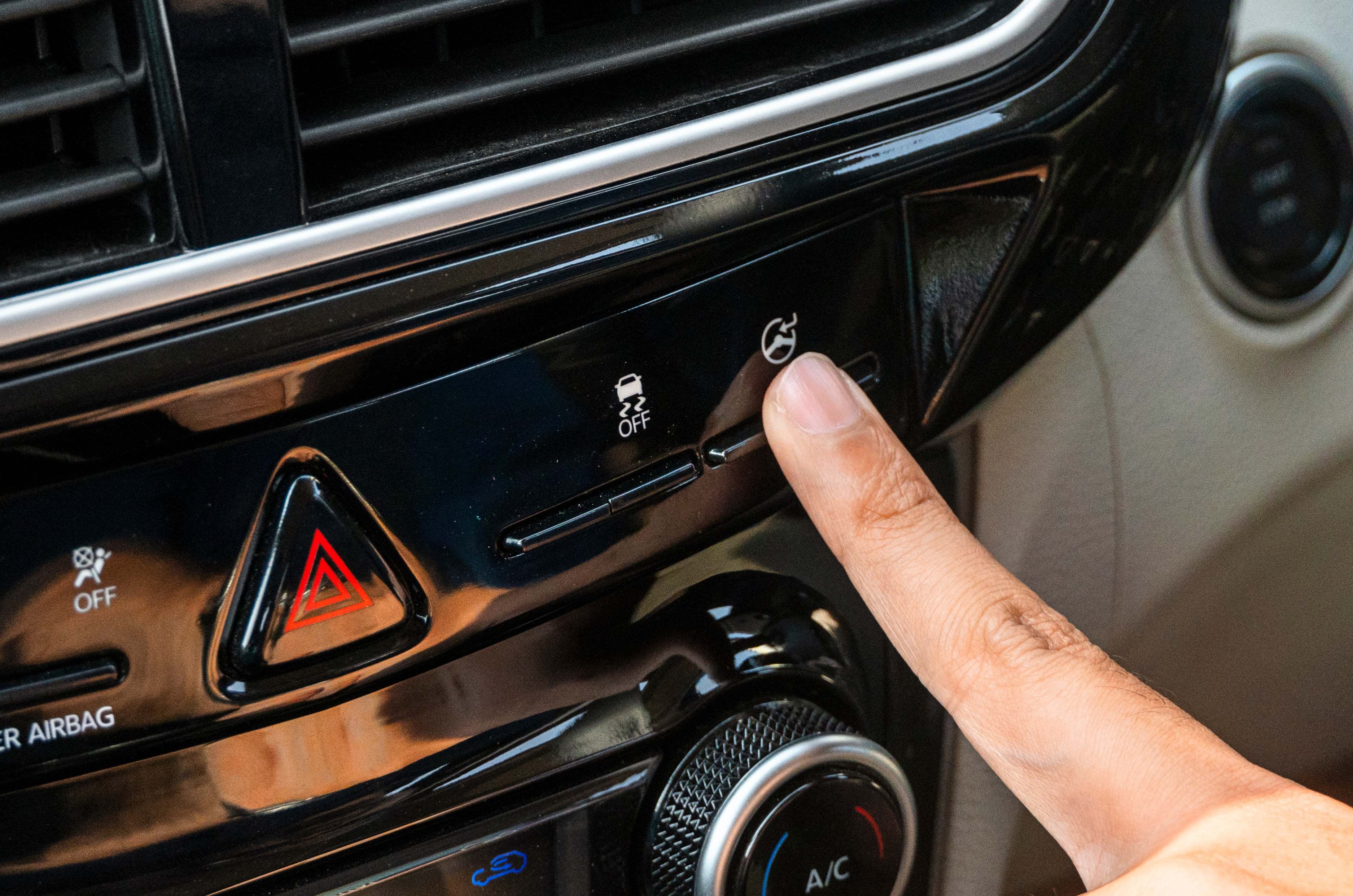
Mahindra XUV 3XO CNG steering modes

Adding to the overall comfort here are the 16-inch wheels wrapped with high-profile tyres. These manage to cushion the cabin from sharp bumps. The XUV 3XO CNG rides better than most cars in its segment. What’s good is that this ride comfort doesn’t come at the cost of sloppy handling. In fact, this Mahindra SUV feels tight and planted around corners. The steering is direct and doesn’t require much effort, with drivers being offered three steering modes for flexibility.

Upmarket cabin

This cabin is just as plush as that of the petrol and diesel versions

Mahindra XUV 3XO CNG seats

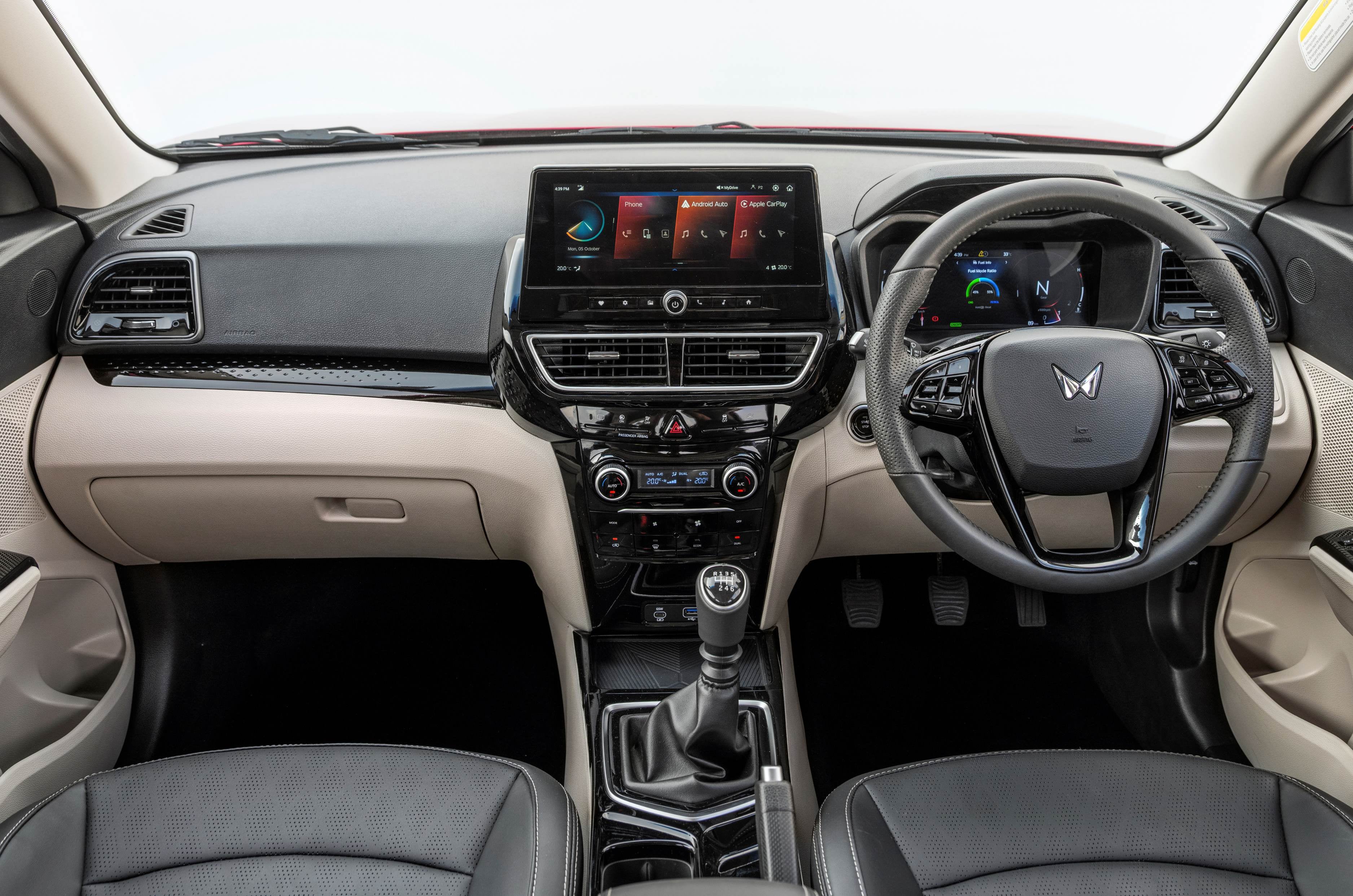
A CNG switch next to the steering wheel aside, the cabin of the XUV 3XO CNG is identical to that of non-CNG versions. While it can’t be had in equally top-end trim levels, the CNG version is available with a dual-tone dashboard, gloss black accents and leatherette upholstery. Overall, there’s a feeling of good build that’s backed by a sense of premiumness. Meanwhile, the rear seat is quite roomy for the class and can accommodate three adults without much fuss.

Mahindra XUV 3XO CNG digital instrument panel

The top-spec RevX A trim gets twin 10.25-inch screens, a panoramic sunroof and a 6-speaker audio system with Dolby Atmos. Mahindra says the CNG version is engineered to match the five-star Bharat NCAP safety rating of other combustion-powered XUV 3XO versions. Standard safety features here include 6 airbags, stability control, ISOFIX anchors and a reversing camera.

Reasons not to buy the Mahindra XUV 3XO CNG

Small boot

The twin-tank setup eats into what was already a small boot

Mahindra XUV 3XO CNG tanks

The 295-litre boot of the XUV 3XO was already the most compact in the segment. Despite moving the spare wheel under the car’s body and fitting the twin cylinders beneath the boot floor, the XUV 3XO CNG’s boot is even more compromised – offering just 270 litres of cargo space. It’s only its width that allows up to four cabin-sized bags to be stored.

Cabin niggles

The XUV 3XO CNG’s interior isn’t devoid of ergonomic flaws

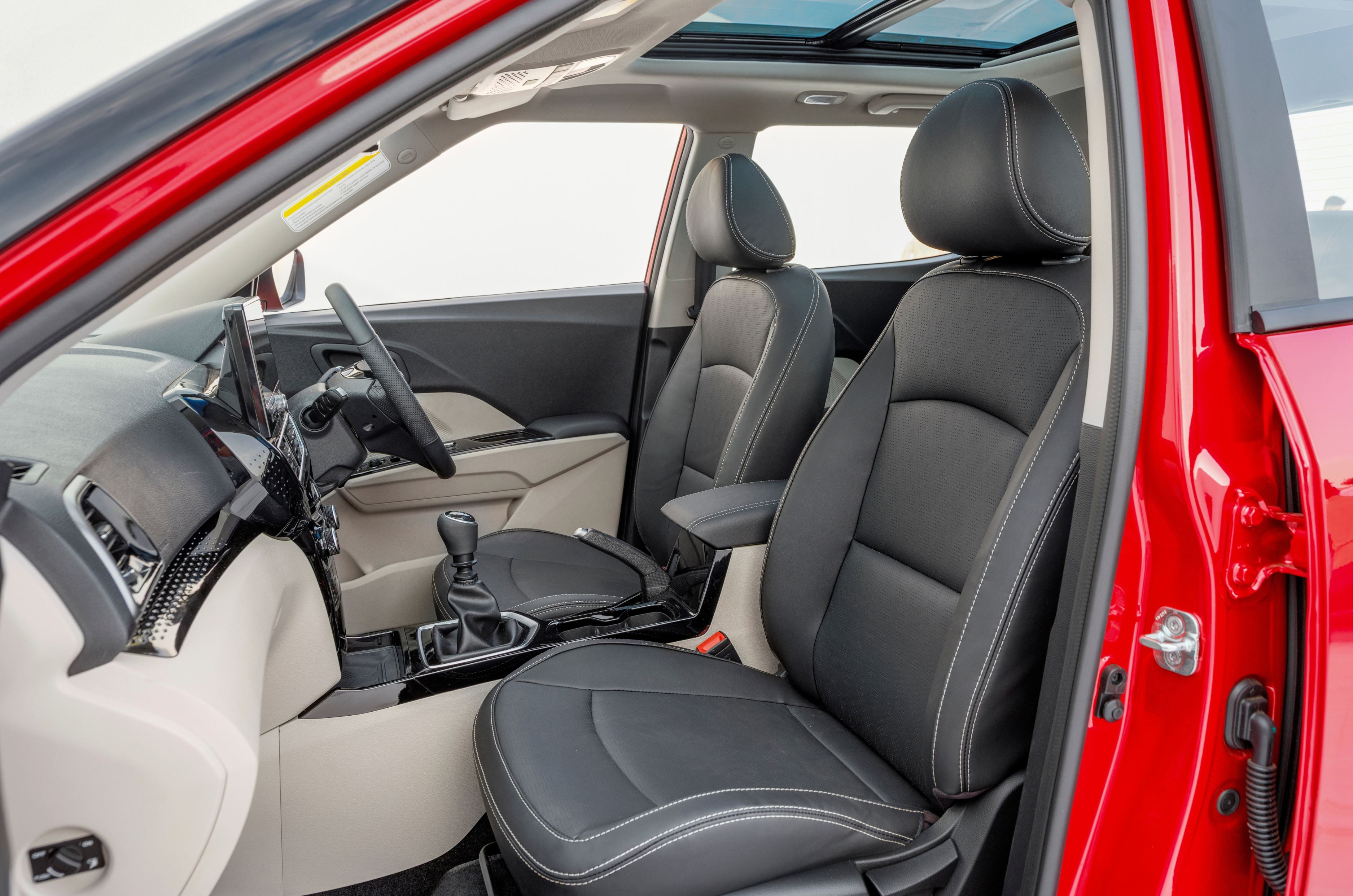
Mahindra XUV 3XO CNG interior

While the black leatherette seats look sporty, they don’t get a ventilation function. This means that, on a bright sunny day, they will heat up quite quickly. If you’ve a larger build, the front seats of the XUV 3XO CNG will feel lacking in space. Adding to the ergonomic niggles is the steering wheel, which cannot be adjusted for reach, making it harder to find a comfortable driving position. Lastly, not only is the XUV 3XO CNG’s driver footwell cramped, there’s also no dead pedal.

Limited options

Customers get only mid-spec trim levels with the CNG version

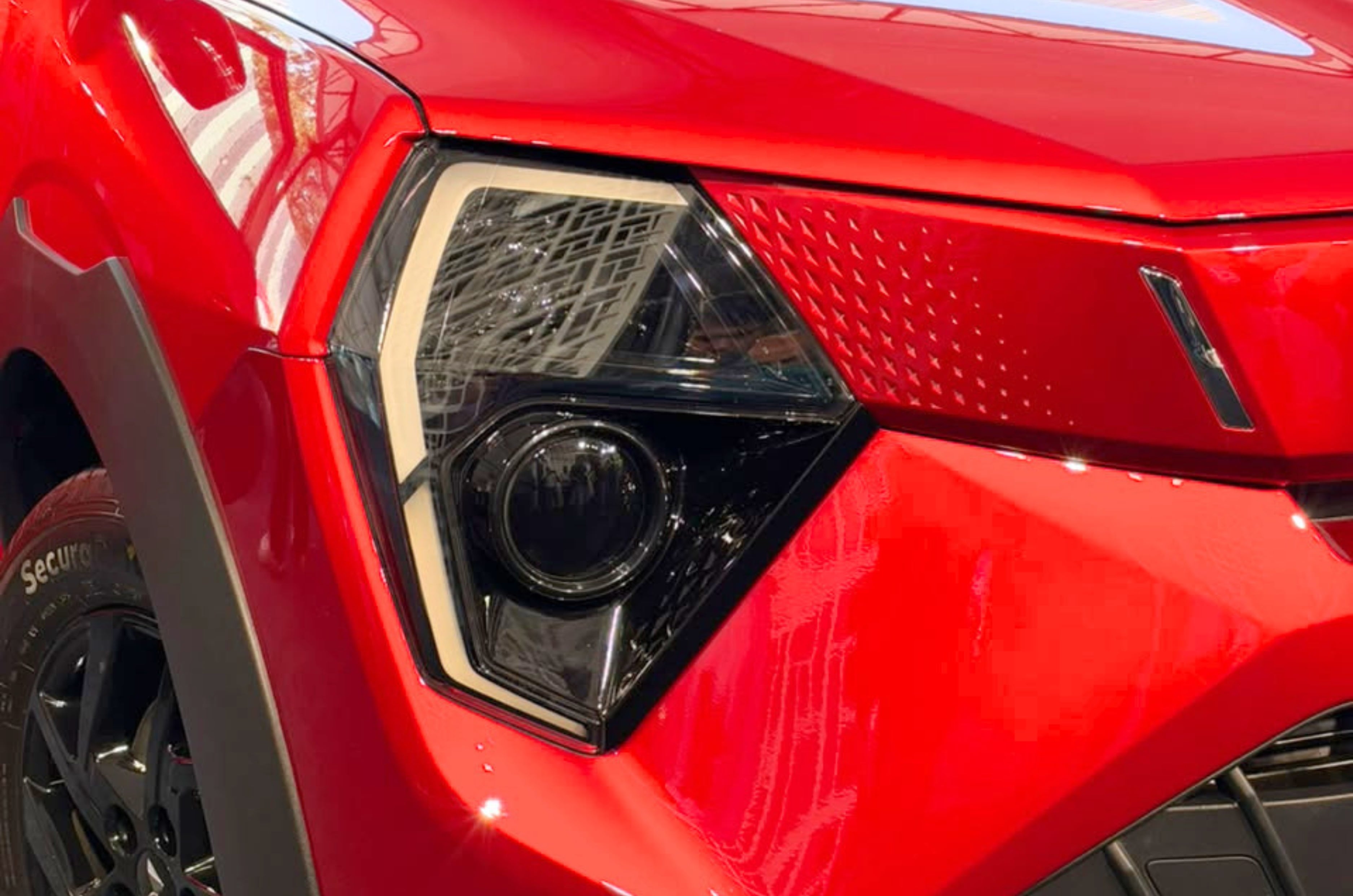
Mahindra XUV 3XO CNG headlamps

The CNG version of the Mahindra XUV 3XO is sold in just four trim levels, all of which are mid-spec options within the broader line-up. This limitation becomes obvious given the lack of a 360-degree camera, ventilated front seats, or a wireless charging pad – these are available in the Nexon iCNG. There are no fog lamps, either. Another limitation is that the CNG version only comes with a 6-speed manual, which has long throws and a fair amount of clutch pedal travel.

2027 Kawasaki KLX300SM revealed

2027 Kawasaki KLX300SM revealed
2027 Kawasaki KLX230 SM front right quarter.

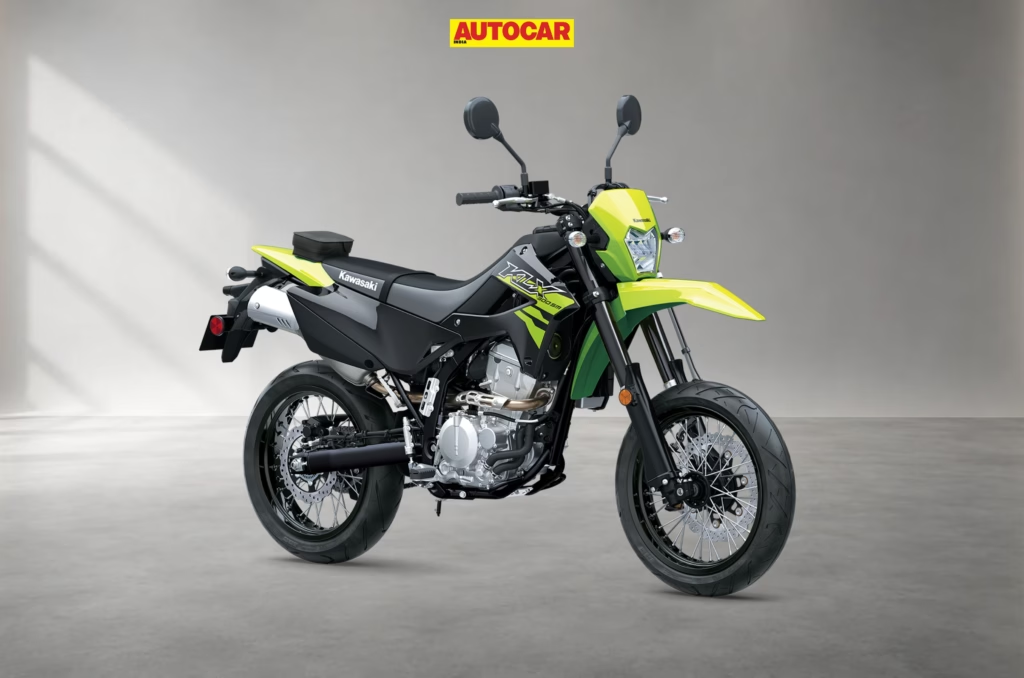
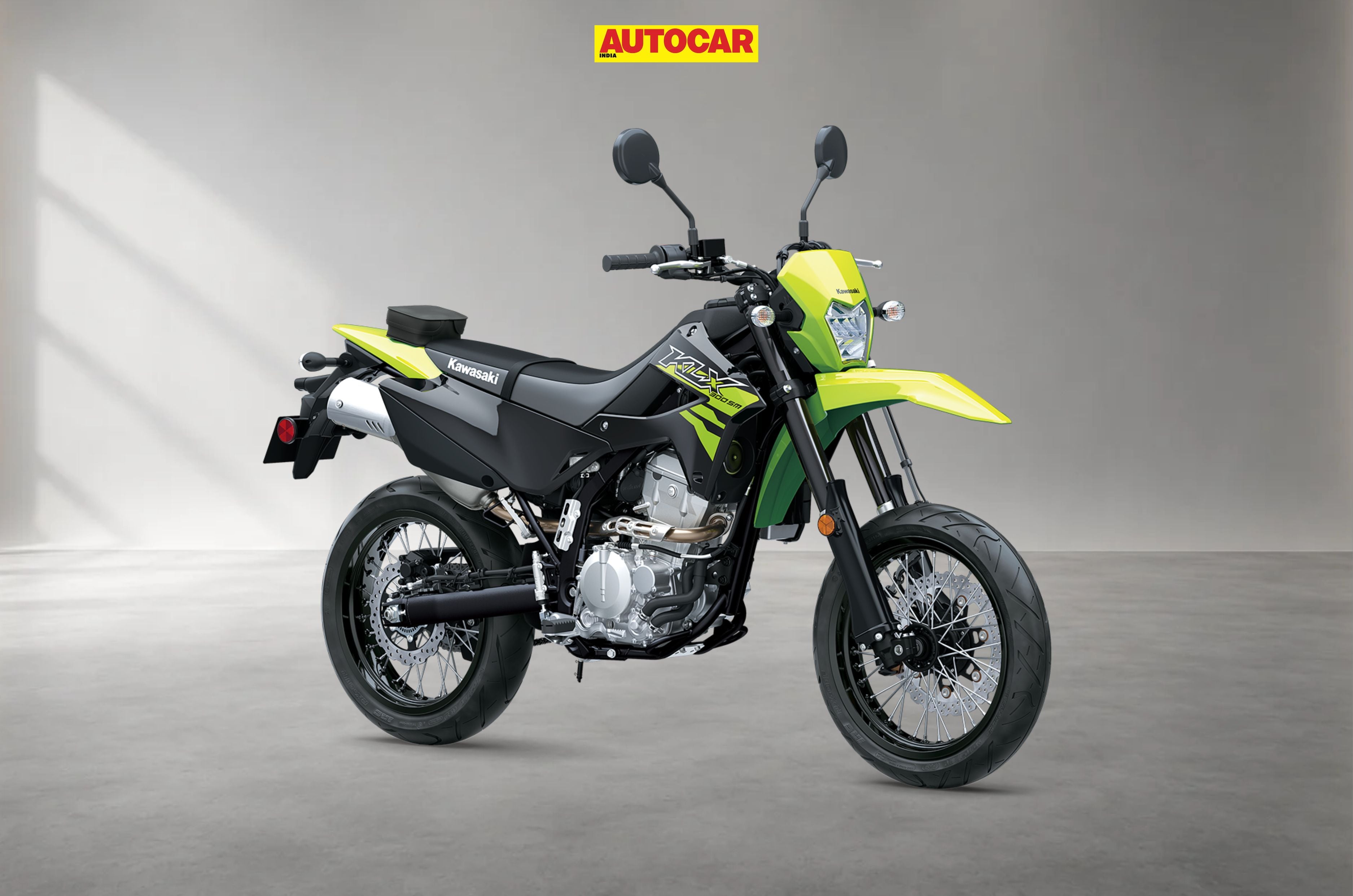
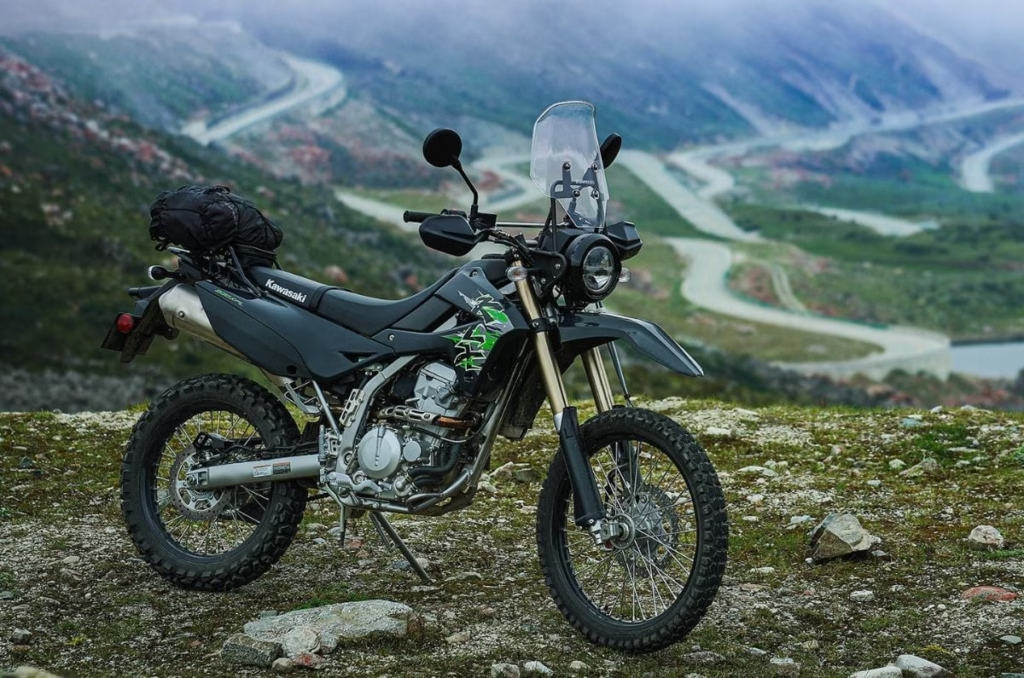
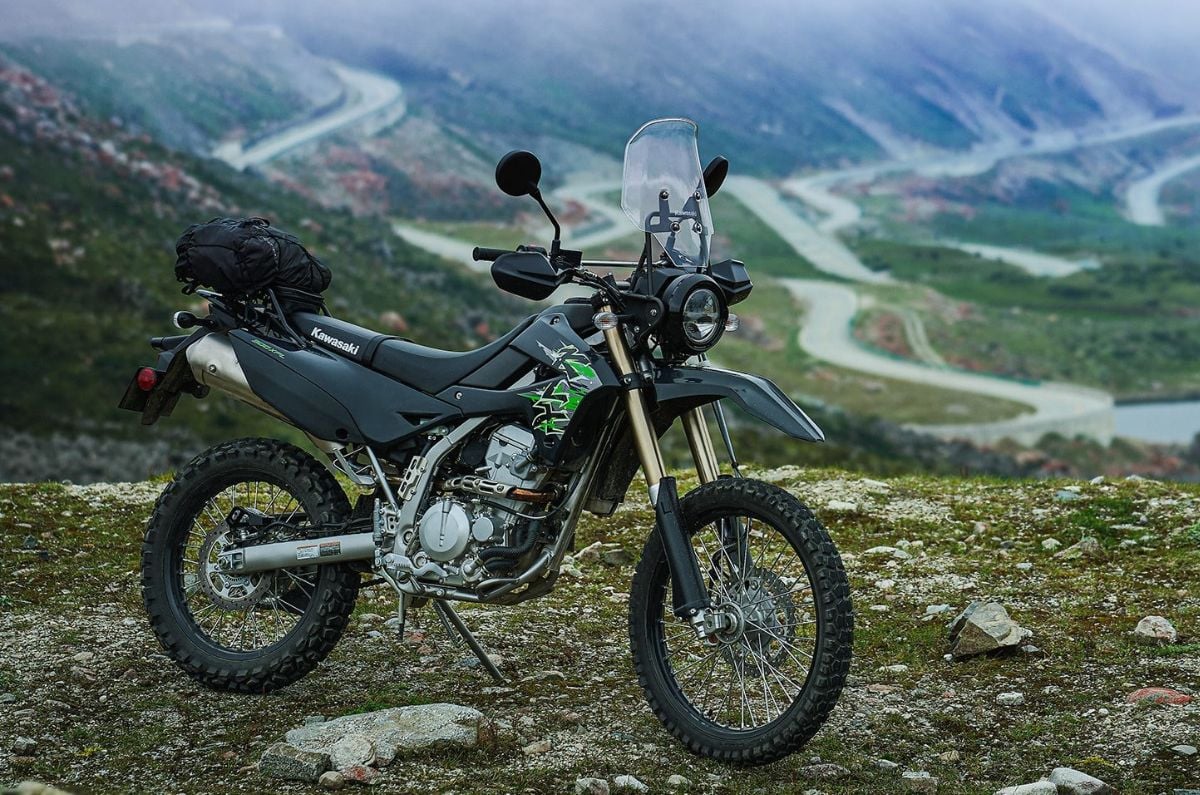
If you saw the picture and thought the KLX230 got a new variant, you’re neither alone nor correct. What we have here is the KLX300SM, Kawasaki’s supermotard for the overseas markets, and the Japanese manufacturer has just given it a minor engineering and feature refresh for 2027.

  1. 2027 KLX300SM continues with a 292cc engine but with revised internals
  2. Not expected in India for the foreseeable future

2027 Kawasaki KLX300SM: What’s different from 2026?

The road-biased KLX230 upgrade that’s not in India (yet)

Discussing the changes is a very short affair in the KLX300SM’s case since there are only a few. First, the connecting rod big-end bearing has been changed from a needle bearing to a plain bearing, contributing to improved performance and slightly higher peak power and torque over the previous model. The single-cylinder liquid-cooled mill now makes 26.8hp and 24.9Nm compared to 25hp and 23.9Nm earlier.

Second, unlike in India, ABS is not mandatory in the US, so Kawasaki is adding single-channel ABS to the front 300mm disc for next year; the rear 240mm continues to be lockable by riders, but those who ride the KLX300SM are unlikely to complain about it. To accommodate the new ABS hardware, Kawasaki has switched from the dual radiators to a single, left-mounted radiator. However, Kawasaki says there shouldn’t be a difference in the overall cooling performance. Keeping in line with the times, Kawasaki has also updated the instrumentation and added smartphone connectivity. Through the Kawasaki Rideology app, users can connect their phone to the KLX300 for call/SMS alerts and navigation support.

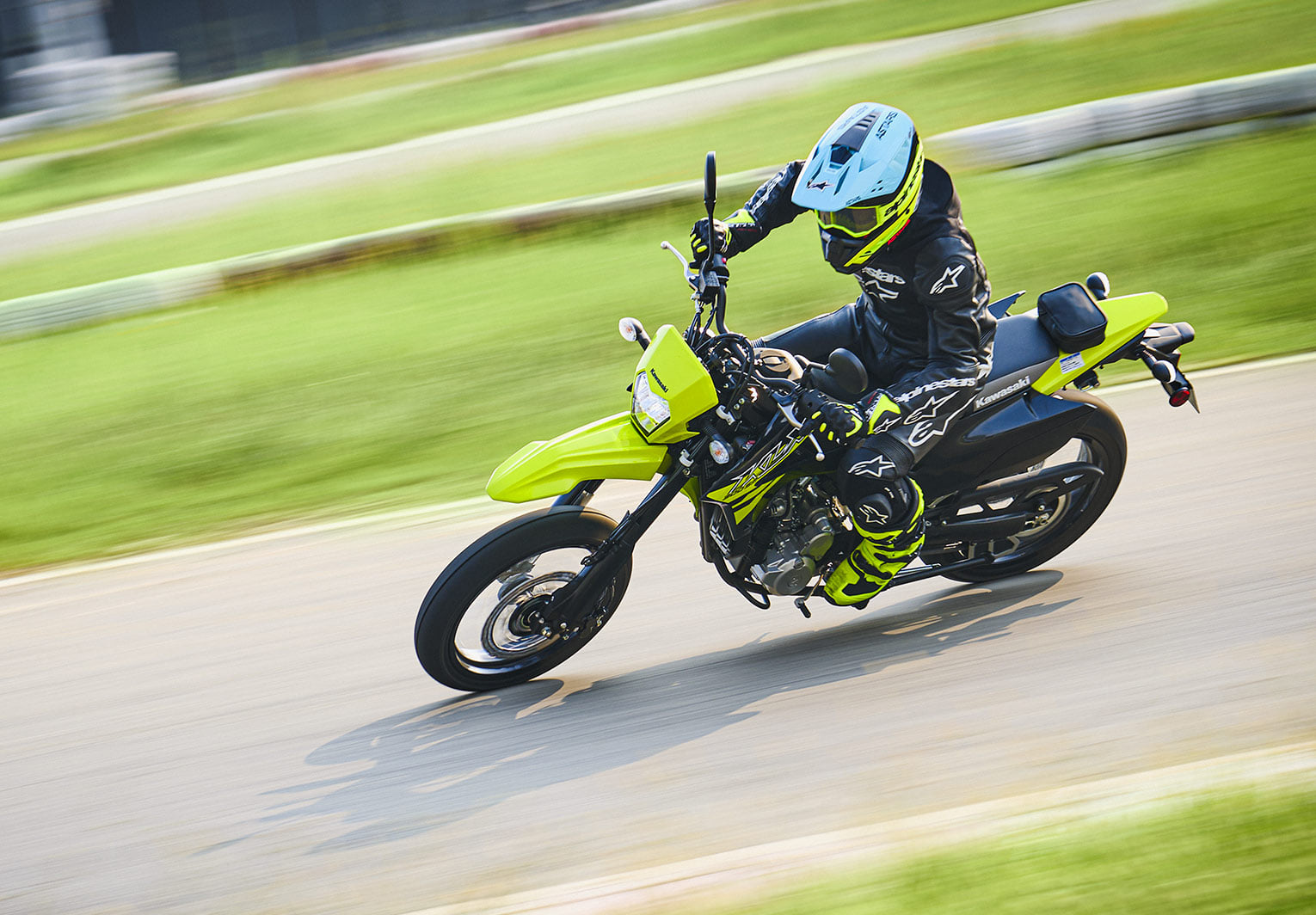
Rider performing a left leaning turn on the 2027 Kawasaki KLX300 SM.

Supermotards typically offer long travel suspension and a slender build with road-biased tyres, usually 17-inch, at both ends. In the KLX300’s case, it has a USD fork with 230mm travel, adjustable for compression. The monoshock with 206mm travel can be adjusted for preload and rebound. This and the road-biased wheel and tyre setup are what make supermotards a fun package. For context, the KLX230 S – Kawasaki India’s road-focused dual-sport – has 160mm travel at the front and 163mm travel at the rear.

In the US, Kawasaki has priced the KLX300SM at USD 6,399 (Rs 6.08 lakh) for its single variant, and it will be available from early December. As for India, we’re only now starting to warm up to niche categories like off-roaders, thanks to the Hero Xpulse series and KLX230 (and the Honda XR series on the horizon), so Kawasaki is unlikely to bring the KLX300SM here anytime soon. That said, it would be nice to have the KLX300SM and its refreshed dual-sport siblings in India, and more variety for the KLX230 series (there’s also a KLX230 SM!).

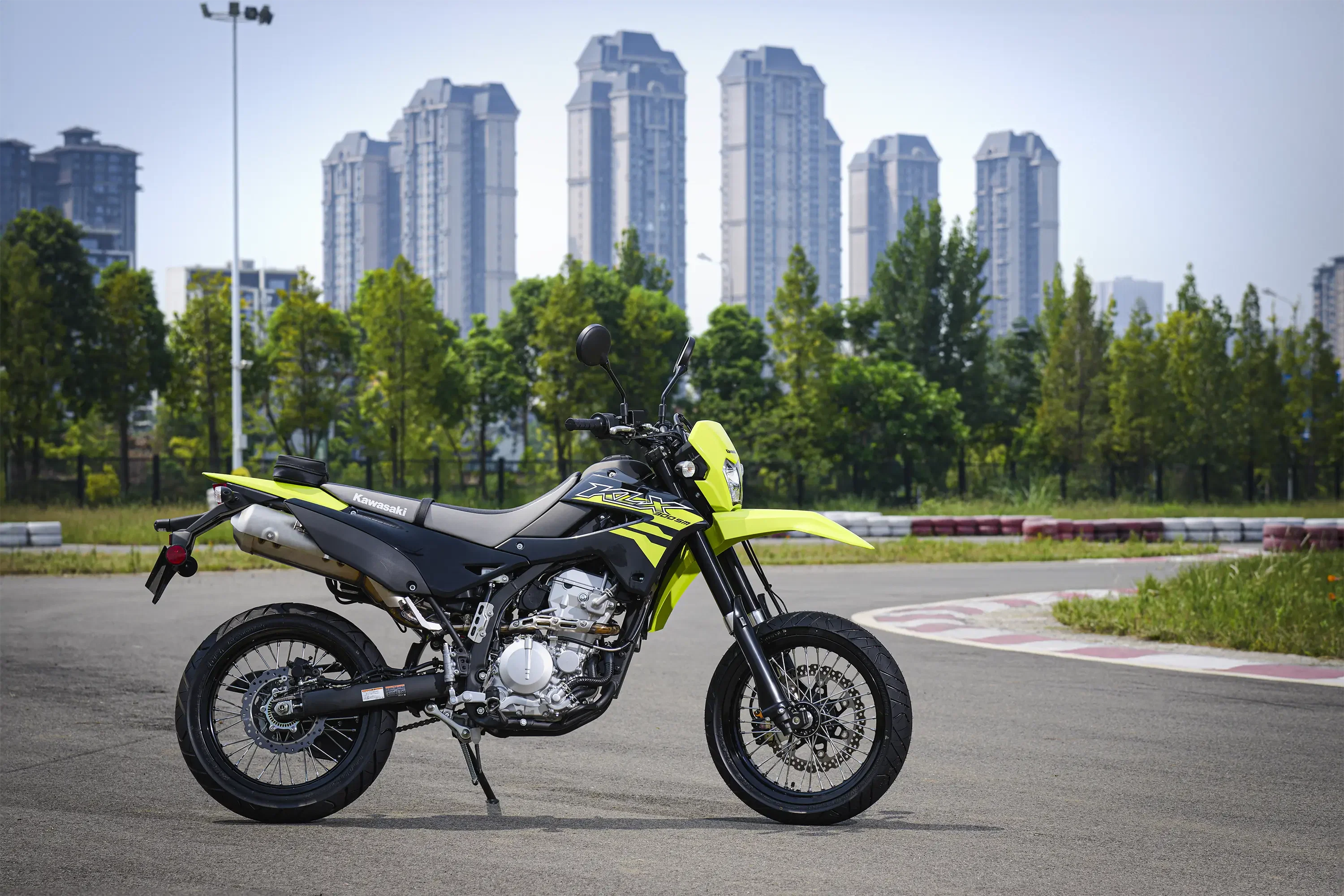
2027 Kawasaki KLX300 SM right profile.

Kawasaki KLX300 XPL revealed

Kawasaki KLX300 XPL revealed
An outdoor shot of the new Kawasaki KLX300 XPL

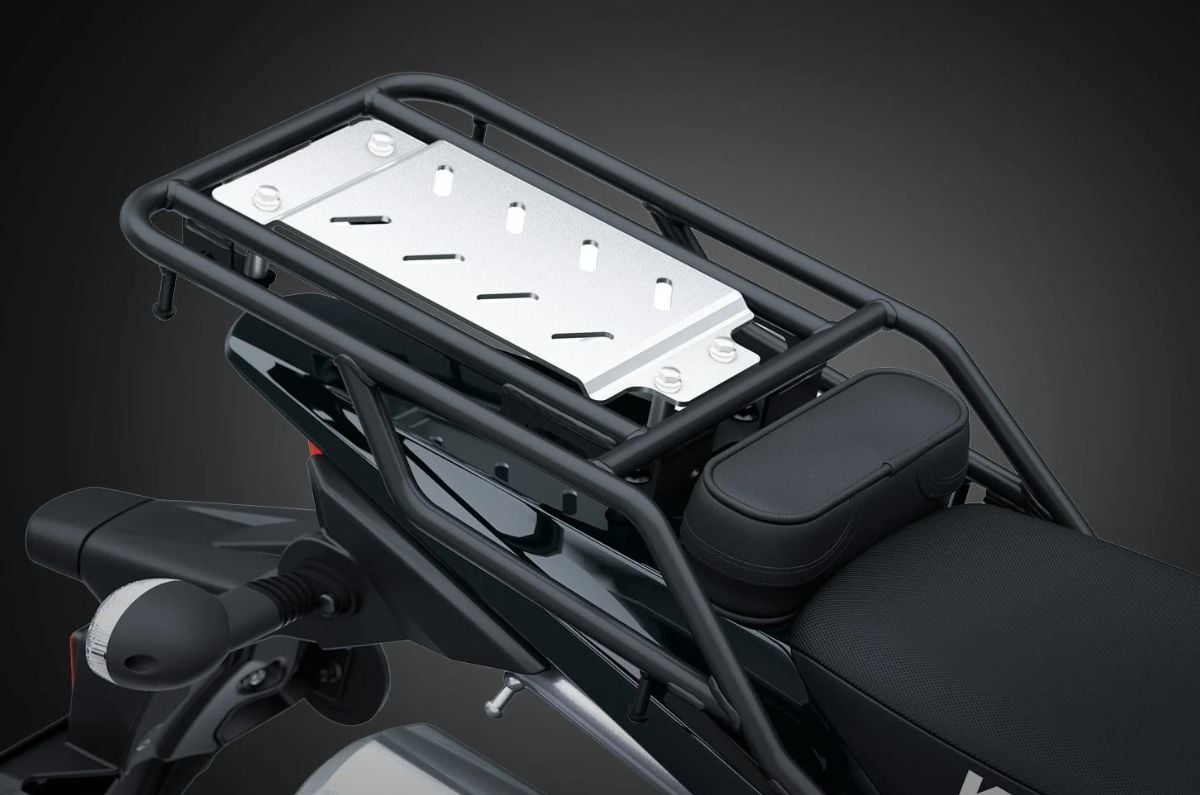
Kawasaki has launched the KLX300 XPL in America, priced at USD 6,499 (equivalent to Rs 6.17 lakh). This travel-oriented dual-sport motorcycle is based on the base KLX300 but has factory-fitted accessories which include a tall windscreen, handguard and rear carrier. This lineup also comprises the standard KLX300, the KLX300 DF (which adds a hand guard and a rear carrier as standard), and KLX300 SM (supermoto with 17-inch wheels and road-focused tyres).

  1. Powered by a 292cc liquid-cooled engine making 27hp, 25Nm of torque
  2. Gets adjustable suspension both at the front and rear
  3. Uses a 21/18 wheel setup like the KLX230

2027 Kawasaki KLX300 XPL details  

The liquid-cooled single-cylinder engine makes around 27hp and 25Nm of torque

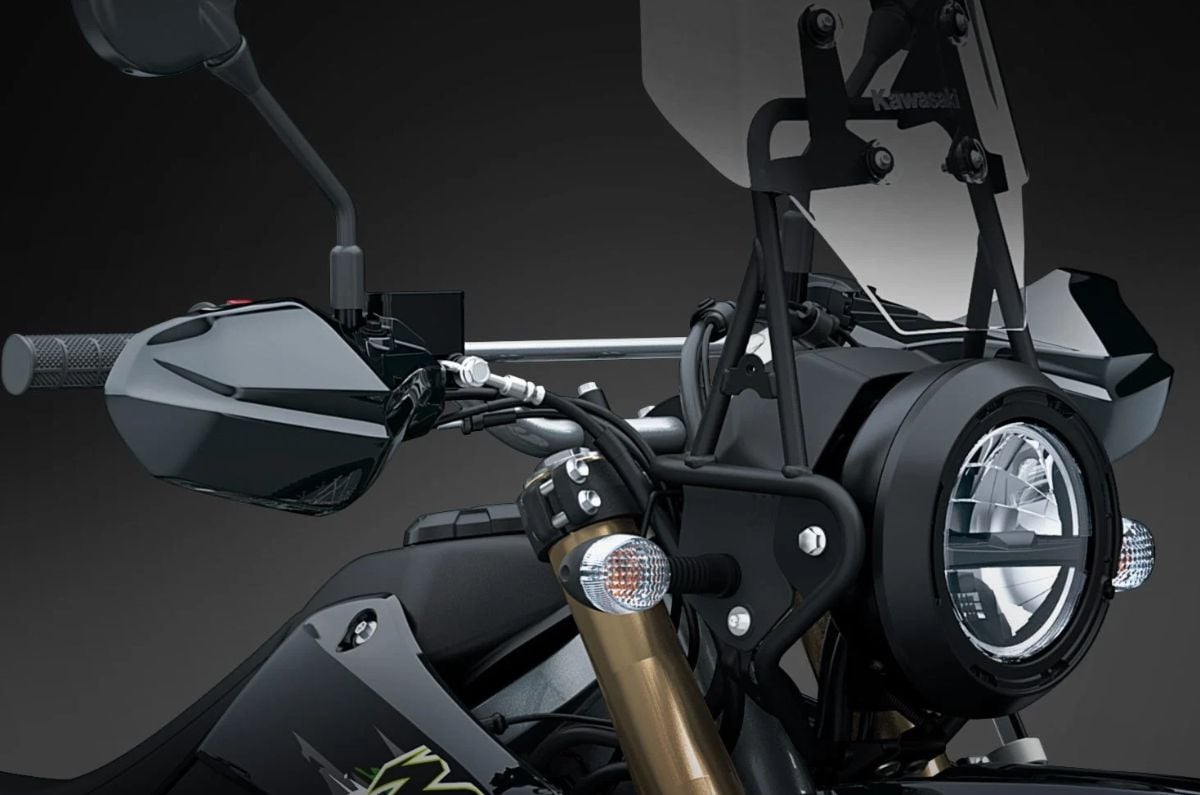
Setting the new KLX300 XPL apart from the rest of the range is a distinct round LED headlight. All four variants are powered by the 292cc liquid-cooled single-cylinder engine, producing 26.8hp at 8,000rpm and 24.9Nm of torque at 6,800rpm, paired with a 6-speed gearbox. Kawasaki has introduced revised internals like a new connecting rod bearing design across the 2027 range to enhance engine performance and reliability. The twin-radiator setup from the previous model has also given way to a repositioned single unit to accommodate the new ABS hardware.

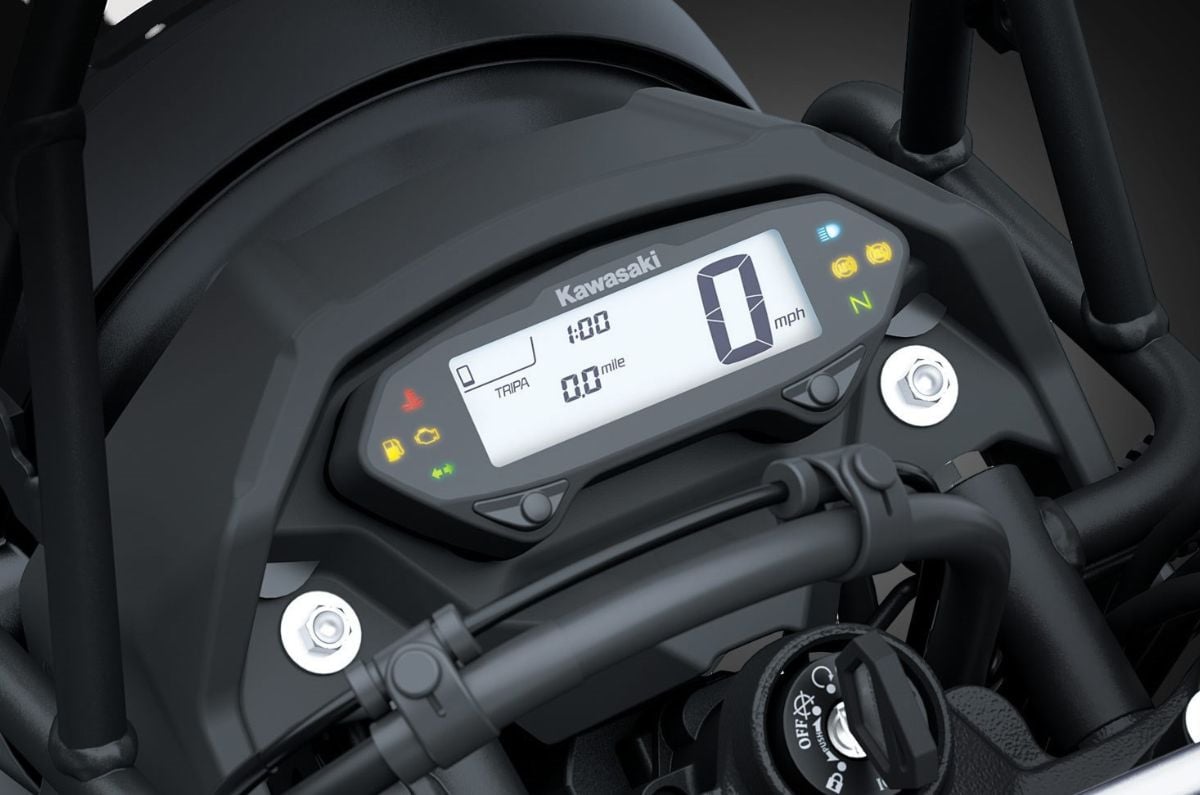
On the features front, the 2027 updates brings a redesigned LCD instrument cluster with smartphone connectivity through the Kawasaki Rideology app. Kawasaki has also equipped the KLX300 lineup with front-wheel ABS, which can be disabled to tailor braking performance when riding off-road. When the motorcycle is turned off and restarted, ABS automatically returns to its default active setting.

Chassis setup comprises a double cradle frame paired with an aluminum swingarm. Up front, it features a 43mm USD fork with adjustable compression damping, while the rear gets a fully adjustable link-type monoshock. Despite the additional equipment on offer, the KLX300 XPL (142kg) only weighs 3kg more than the KLX230 which is sold in India (139kg).

In theory, the KLX300 would make for a good step up from the KLX230 (Rs 2.19 lakh ex-showroom) sold in India, which has an air-cooled 233cc motor. However, Kawasaki India currently has made no announcement to indicate that the liquid-cooled KLX models will be coming to our shores.

USD-to-INR conversions are based on exchange rates at the time of writing.

Tata’s passenger vehicle business grows 35 percent in first year after demerger

Tata’s passenger vehicle business grows 35 percent in first year after demerger
Tata Motors passenger vehicles

Tata’s passenger vehicle (PV) business grew by 35 percent in its first year after the demerger, which came into effect on October 1, 2025, and separated the commercial vehicle (CV) business from the PV division. Domestic sales between October 2025 and September 2026 stood at 7.44 lakh units, well ahead of the industry’s roughly 22 percent growth. According to the home-grown brand, its market share increased to 14.1 percent, making it India’s second-largest carmaker over this period.

Factors behind the Tata PV business growth

Two SUVs and a GST cut did much of the heavy lifting

One of the major factors behind Tata’s strong numbers is the revised GST rates, which took effect on September 22, 2025. This was shortly before the October 1 demerger, and it made cars more affordable across multiple segments. Despite this, Tata Managing Director Shailesh Chandra admitted to being surprised. “We had not expected 35 percent,” he said.

According to Chandra, monthly bookings topped one lakh more often than not, and more than seven in ten of these typically turned into retail sales. Tata crossed the 70,000-unit mark in a single month twice, and two of its quarters went past two lakh units.

With sales of 2.38 lakh units and 2.33 lakh units respectively, the Nexon and Punch accounted for around 63 percent of Tata’s domestic volumes over this period. Sales of the Sierra, meanwhile, crossed 60,000 units between January and September 2026. This is despite supply being constrained even as production was being scaled up.

Tata EV and CNG sales make up nearly half of volumes

Tata Motors claimed that EVs and CNG cars accounted for 44 percent of its annual volumes, rising to about 51 percent in the July-September quarter. Sales of fully electric models were up 84 percent (at 1.3 lakh units), with the brand claiming a 42 percent share of India’s EV market. Sales of CNG models grew by 31 percent, registering over 2.03 lakh units.

However, each powertrain faces a different set of rivals. “For EVs, my competitors are different,” said Chandra. Product development for all powertrain categories now falls under a single chief product officer, though each gets its own dedicated team.

Tata Motors targets 12 lakh annual sales by FY31

Six new nameplates are on the way

Tata is targeting over 12 lakh units per year by FY31 (financial year 2031), with a 20 percent share of the Indian passenger vehicle market. According to Tata, the plan involves over 20 product refreshes and the introduction of six new nameplates, including the Avinya.

What the brand calls its “15 product interventions” over the past year included models such as the Sierra and Sierra.ev, the updated Punch, Punch.ev, Tiago and Tiago.ev, petrol versions of the Harrier and Safari, and the Aeris. The Indian automaker said that it’s also recalibrating launch timelines. This, it said, is to ensure that each new model gets proper marketing support and that dealers have enough time to sell them.

The recent surge in demand means production capacity has become an immediate priority for Tata Motors. The company stated that its plants and suppliers are stretched thin, particularly smaller tier-two and tier-three firms, and that it has had to work more closely with them to resolve shortages. More capacity will come online at Tata’s existing plants, with the Sanand facility playing a major role. Helped by Tata’s entry into South Africa, exports have nearly doubled, to around 12,000 units.

Tata Motors to triple service network and focus on quality

The brand said that its workshops will grow faster than its showrooms

Apart from focusing on growth, Tata Motors will also be paying attention to addressing the quality and after-sales perception. The quality department now reports directly to Chandra instead of to the manufacturing department, the Managing Director stated. Tata has also set up a central software integration team, which will eventually become a ‘centre of excellence’. Tata now also tests software and hardware together earlier in development. In fact, the Sierra is one of the first models developed this way, the company mentioned.

Another point of attention is the brand’s service network, with Chandra stating that Tata’s workshops now see about six lakh vehicles per month – this is up from around 1.5 lakh in 2021. “My showrooms will increase by two times. But my service centres will increase by three times,” Chandra said. The automaker has addressed 26 of the 30 locations that it flagged as service problem areas, with dealer incentives now placing more weight on customer experience.

Between April and June, the availability of spare parts was an issue. This, the company said, was due to labour constraints, when production was being prioritised. It’s providing existing customers first claim on spare parts even if that affects the production of new cars, with Chandra claiming fill rates are back at around 85-86 percent. Regardless, changes will take time. “The perception will only change after three-four years,” Chandra admitted. “After people really see the consistency of that.”

With inputs from Hormazd Sorabjee and Ketan Thakkar.


Jeep Wrangler Whitecap Mojito Limited Edition priced at Rs 73.55 lakh

Jeep Wrangler Whitecap Mojito Limited Edition priced at Rs 73.55 lakh
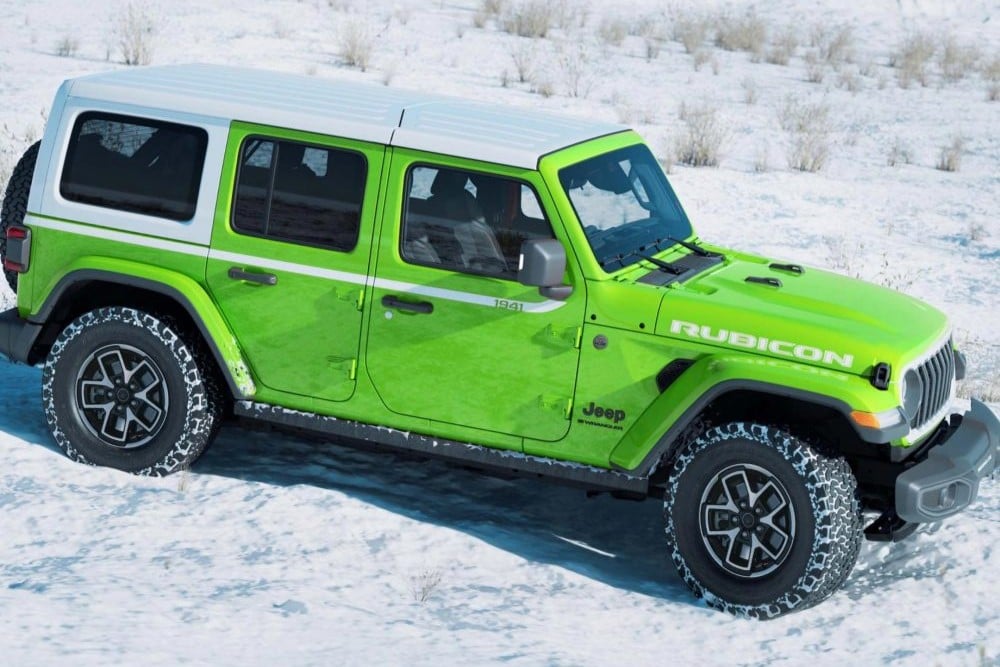
Jeep Wrangler Whitecap Mojito Limited Edition

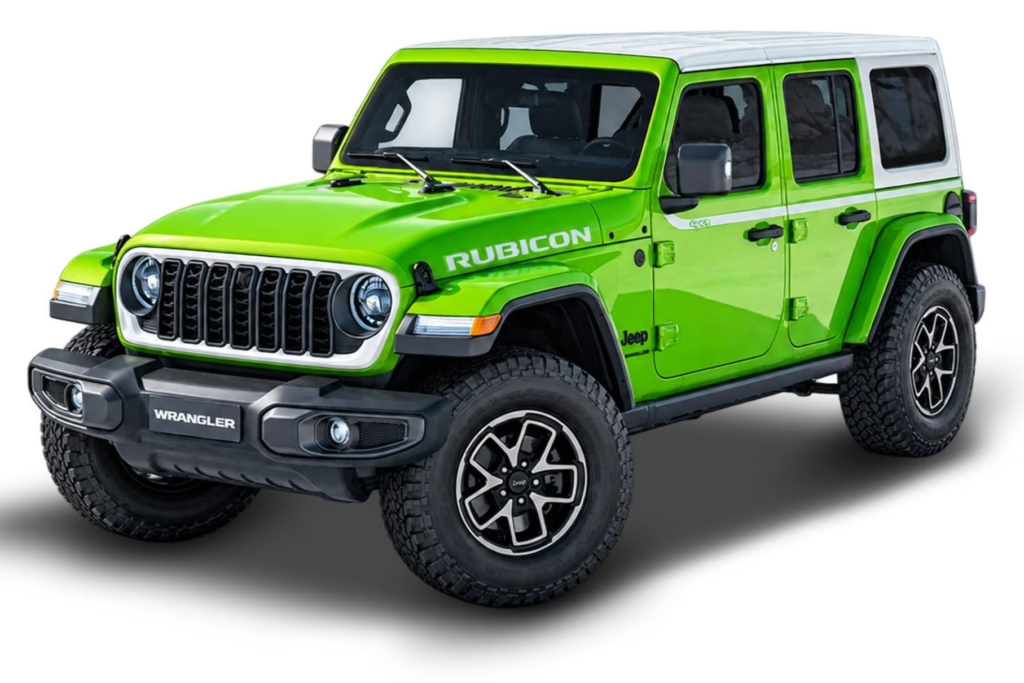
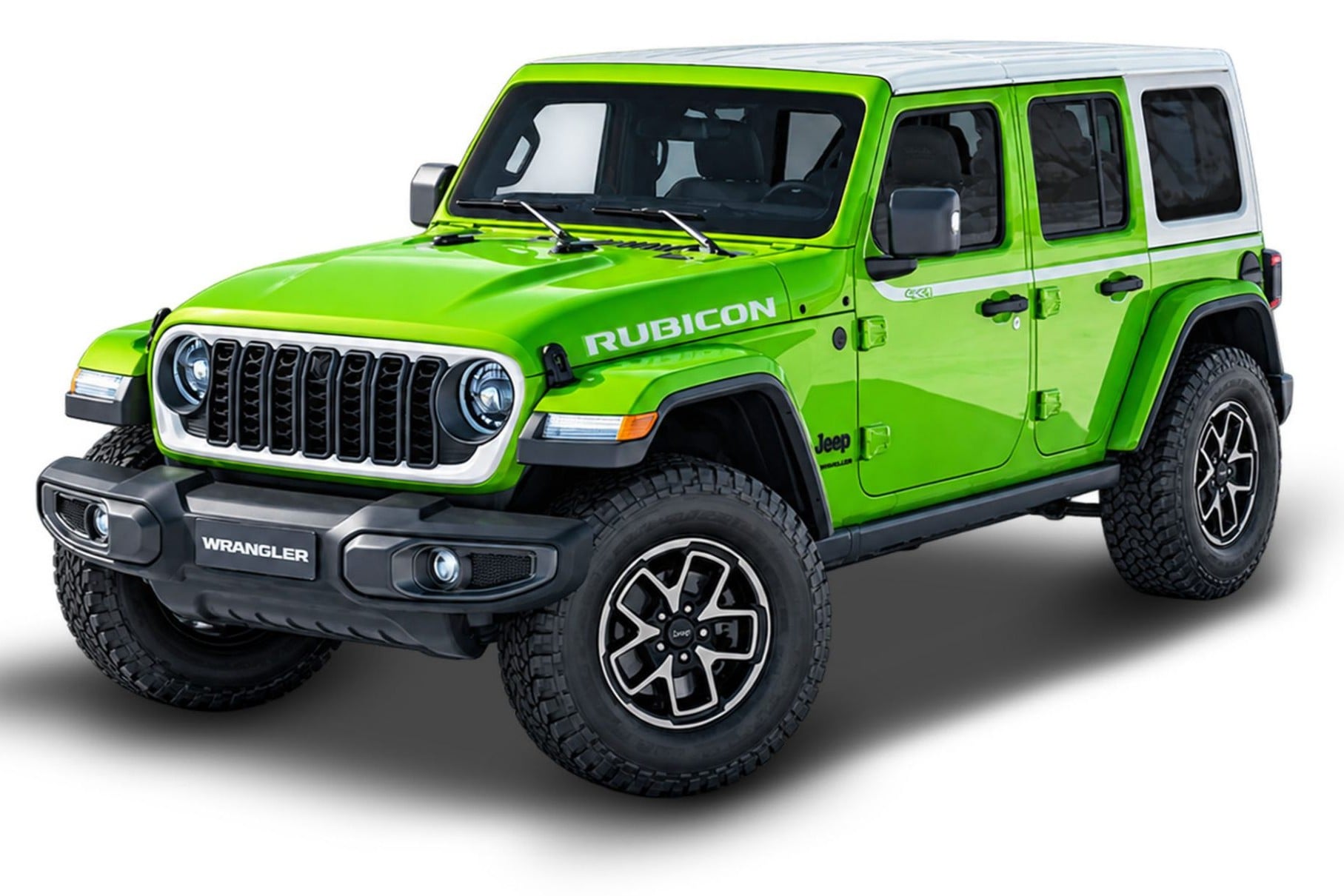
Following the reveal of the Wrangler Whitecap Mojito Limited Edition last month, Jeep has announced that the special-edition off-roader will cost Rs 73.55 lakh – a Rs 1.25 lakh premium over the Wrangler Rubicon on which the Whitecap Mojito is based. Only 25 units of the Wrangler Whitecap Mojito were offered in India, and Jeep has sold all of them. Globally, a total of 250 units of the Wrangler Whitecap Edition were made available.

Jeep Wrangler Whitecap Mojito Limited Edition: Exterior and interior changes

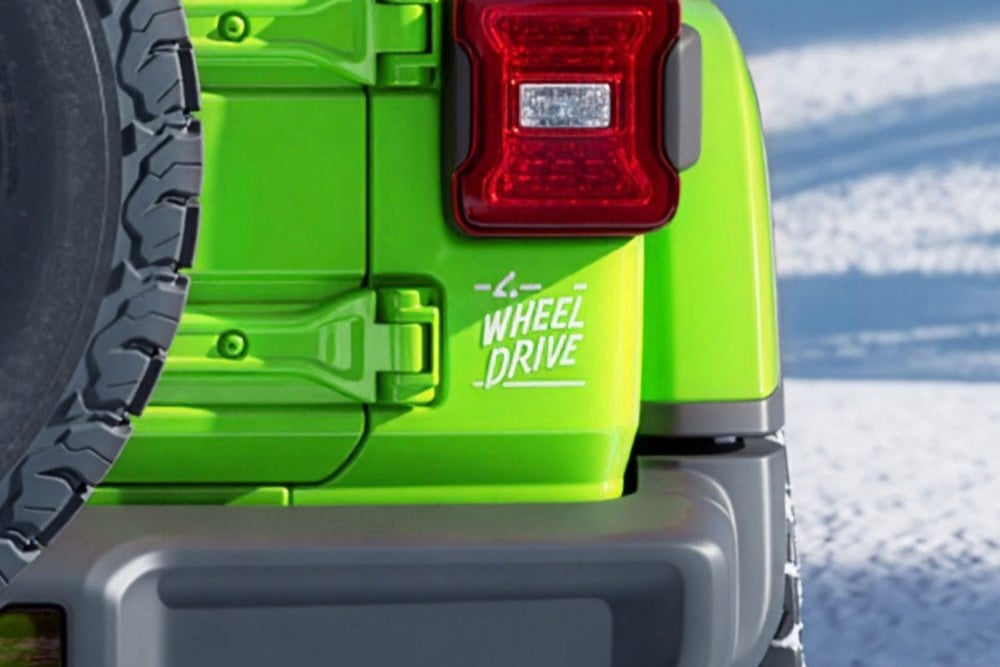
On the outside, this special-edition Wrangler Rubicon comes finished in an exclusive bright-green ‘Mojito’ shade, along with a white finish for the roof. The grille features a white surround, while the side profile gets ‘1941’ decals (a reference to the original Willys MB Jeep’s debut year) and body-coloured fenders. There’s also a white ‘4 Wheel Drive’ sticker on the boot lid.

The interior of the Wrangler Whitecap Mojito gets only two additions: a built-in dashcam and reinforced grab handles. Elsewhere, the special edition retains the feature set of the standard Wrangler Rubicon, such as a 12.3-inch infotainment touchscreen, 12-way powered front seats, an ADAS suite, 6 airbags, dual-zone climate control, a 9-speaker Alpine sound system with a subwoofer, a 7-inch driver’s display, and more.

Jeep Wrangler Whitecap Mojito Limited Edition: Engine and gearbox

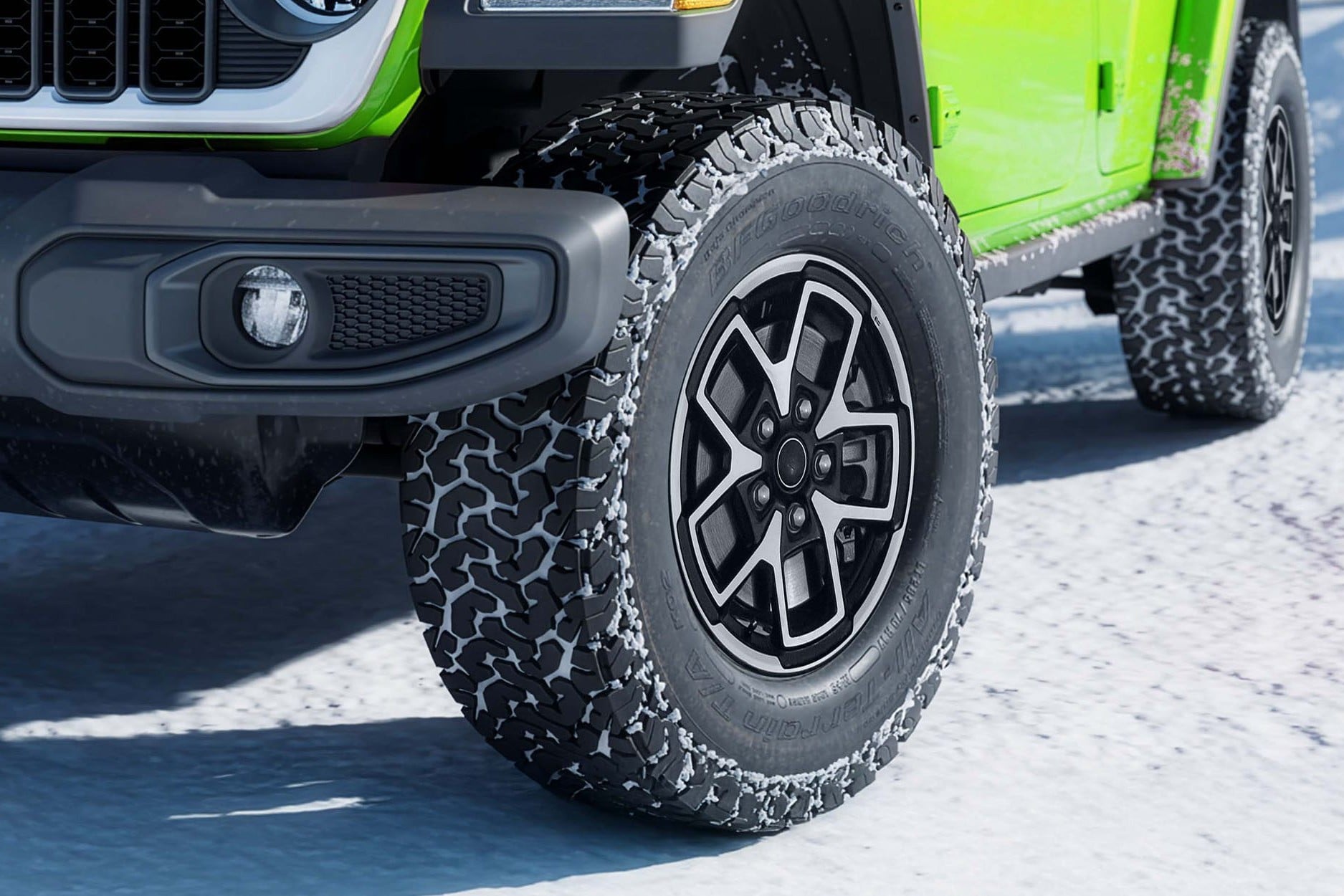
Under the skin, the Wrangler Whitecap Mojito is identical to the Rubicon. It’s powered by a 2.0-litre four-cylinder direct-injection turbo-petrol engine developing 272hp and 400Nm, paired with an 8-speed automatic transmission that channels the grunt to all four wheels via a standard 4×4 system. Since it’s based on the more off-road-capable Rubicon variant, the Wrangler Whitecap Mojito also packs hardware like heavy-duty Dana axles, an integrated off-road camera, reinforced suspension, rock rails, 255-section off-road tyres with 17-inch wheels, high-clearance front fender flares, and more.

While the Wrangler Whitecap is currently sold out in India, Jeep hinted at the possibility of bringing the special edition back in light of healthy demand. “The first 25 vehicles will remain a highly exclusive chapter in the Whitecap story, while the strength of customer interest is encouraging us to explore how we could bring this distinctive expression of Wrangler back to India in the future,” said Kumar Priyesh, business head and director – Automotive Brands, Stellantis India.

All prices are ex-showroom, India.

Tata, Stellantis formalise pact for Sierra-based Jeep SUV

Tata, Stellantis formalise pact for Sierra-based Jeep SUV
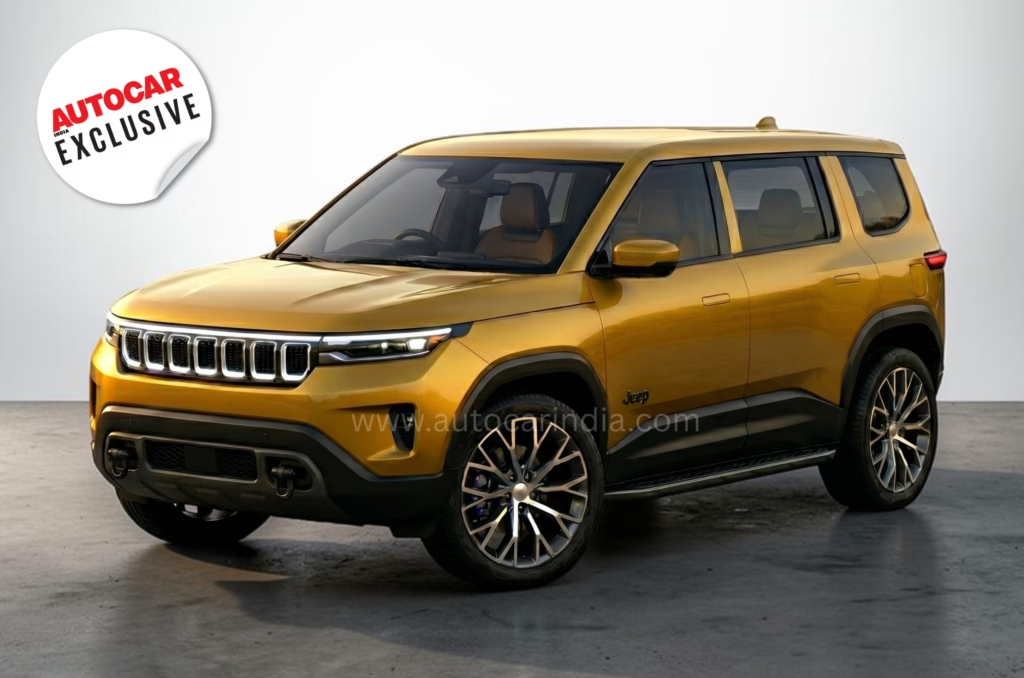
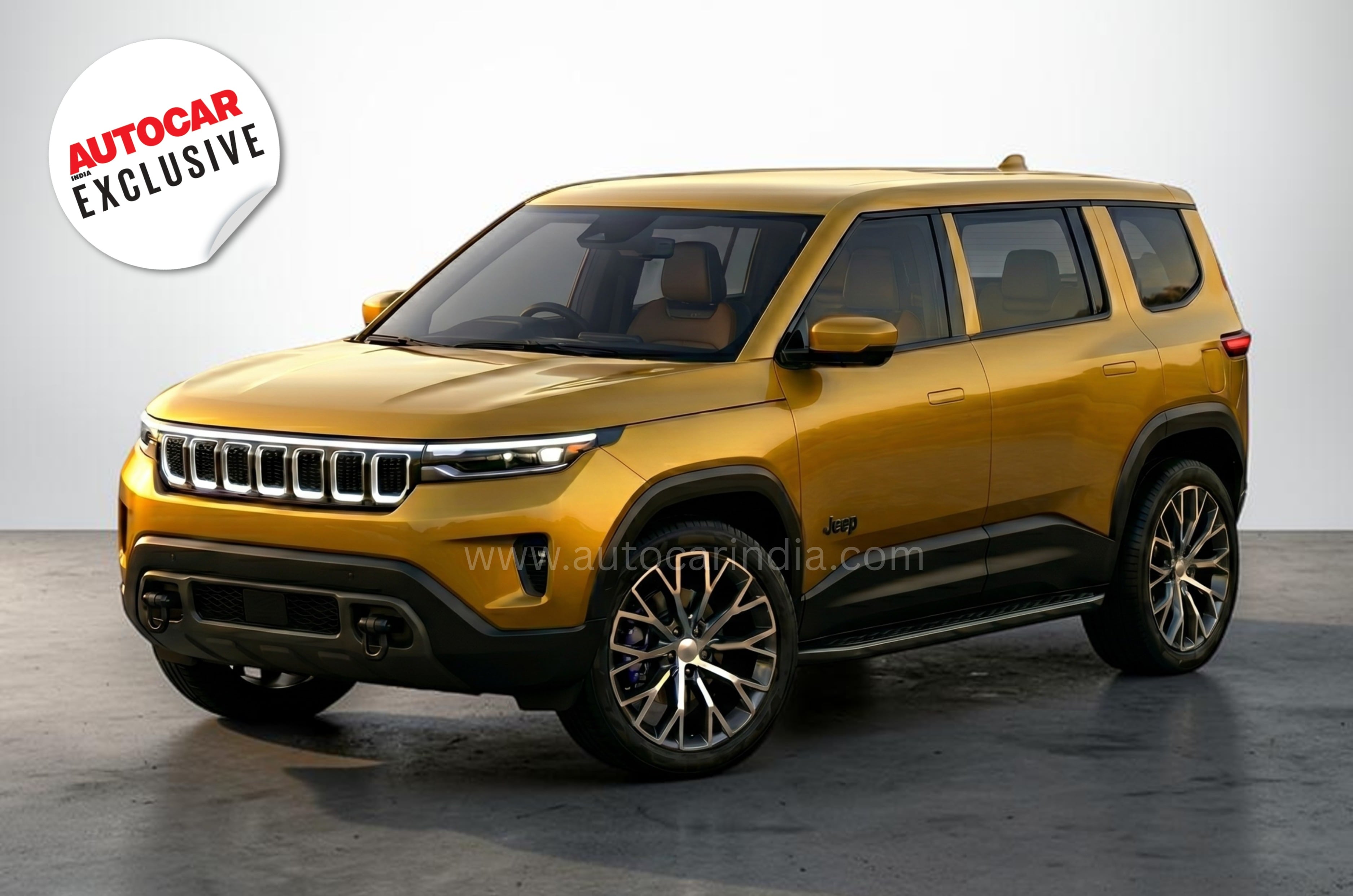
Tata Sierra-based Jeep SUV

Tata Motors Passenger Vehicles (TMPV) and Stellantis have signed a formal agreement to expand their partnership into product technology, platforms and vehicle architecture, formalising plans for a new Jeep SUV based on the Tata Sierra’s ARGOS platform, according to people in the know. Internally codenamed J1J, the Jeep SUV will get both internal combustion engine and electric versions and it is likely to use the same powertrains as the Sierra, say people in the know.

Sierra-based Jeep SUV: platform and production plans 

ARGOS stands for All-Terrain Ready, Omni-Energy and Geometry Scalable. It is TMPV’s modular, multi-energy vehicle architecture, designed to accommodate different vehicle dimensions and powertrain applications, which can open up more opportunities for Stellantis in the future.

While Tata Motors is producing the Sierra at its Sanand factory in Gujarat, production of the Jeep model is likely to take place at the Fiat India Automobiles Ltd (FIAL) joint venture facility in Ranjangaon, Maharashtra. The manufacturing operations are expected to be adapted for the programme over the next 18 months, added a person in the know.

The programme forms part of Stellantis’ wider ambition to sell 100,000 locally produced vehicles globally in 2028 across its Tata and Dongfeng partnership programmes combined, as outlined at its May 2026 Investor Day. The target covers several products. The company is likely to launch the first vehicle in the first half of 2028, say sources.

A dedicated team for the project is currently based out of Pune and will look at adapting the vehicle architecture, including a left-hand-drive version for overseas markets. A range-extender electric vehicle application is also being explored on the platform, although no production decision for the REEV has been finalised, according to people familiar with the engineering work.

An email sent to Tata Motors and Stellantis seeking comment remained unanswered at the time of publication.

The formal agreement builds on a relationship spanning more than two decades. Having collaborated on manufacturing, powertrains and the supply chain, the partners are now extending their cooperation into vehicle development.

Sierra-based Jeep SUV: Different body and cabin

Stellantis is benchmarking its own Jeep Renegade and Compass products for the J1J model development, according to company sources. Its eventual name and final production design are being firmed up.

This clearly indicates that the Jeep will have a different upper body, or top hat, exterior styling and cabin. Changes will extend to the seating package, interior features and equipment. These will distinguish it from the Sierra, while allowing the companies to share the underlying architecture and components.

Much of the platform is expected to be retained, with structural modifications and reinforcements, where required, to accommodate the Jeep body and meet crash and overseas regulatory requirements. Details of Jeep-specific suspension tuning and off-road hardware could not immediately be established. A 4×4 variant is also likely as Jeep’s brand guidelines insist on giving its customers a 4×4 option for all its models. Whilst the electric version of the Sierra already comes with 4×4, the ARGOS platform has been packaged and developed to accommodate a 4×4 ICE drive train as well. In fact, the Jeep partnership could accelerate the launch of a Sierra 4×4 to coincide with launch of the next-gen Jeep SUV. 

Tata Motors sister company Tata Technologies is understood to be involved in engineering execution at Stellantis. The work includes the Jeep-specific body and interior package, left-hand-drive adaptation and changes needed to meet overseas regulations.

According to people familiar with the programme, TMPV will retain ownership of the architecture and license it to Stellantis. Existing Sierra suppliers are expected to support Jeep where components can be shared, with separate sourcing and tooling for model-specific parts.

India development, global markets

Stellantis had disclosed its intention to develop a Tata-based Jeep at its May 21, 2026 Investor Day. Grégoire Olivier, its Asia Pacific chief operating officer, said Tata Motors would provide a competitive platform for a new Jeep vehicle to be developed and assembled in India through the existing joint venture for global markets. 

Olivier had also outlined exports to more than 50 countries across the wider portfolio, including the Dongfeng programmes, the Tata-based Jeep and the existing Citroën Smart Car programme in India. The markets allocated specifically to J1J have not been established.

For Stellantis, Tata’s architecture and supplier base offer a way to reduce development expenditure while adding a new Jeep product. For TMPV, the arrangement could generate licensing revenue and spread platform costs across additional vehicles. Common components could also bring suppliers higher volumes.

The alliance is a much-needed segue for the Jeep brand which has been in India for close to a decade but has been relegated to the fringes of the Indian market with a lack of product action. A licensed modular architecture with the potential for multiple powertrains, 4×4 capability and different wheelbases will open opportunities for more products in a quicker time interval. 

The programme would extend the Ranjangaon venture from manufacturing cooperation to producing a Jeep on Tata’s vehicle architecture. The left-hand-drive version would widen its overseas reach, giving the plant access to demand beyond India and other right-hand-drive markets.

With inputs from Ketan Thakkar