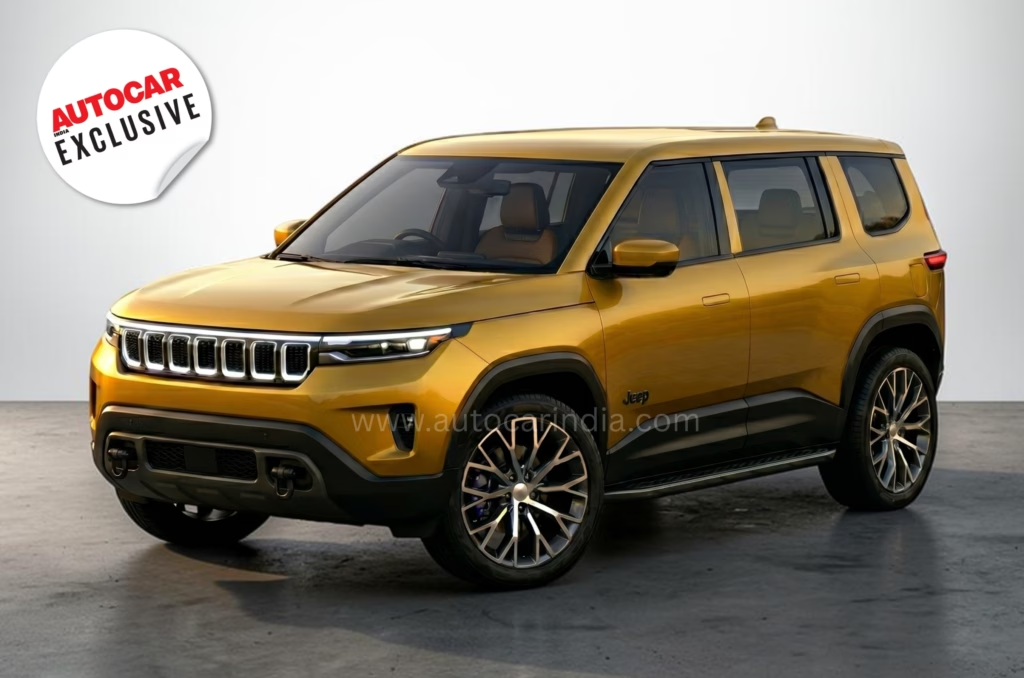
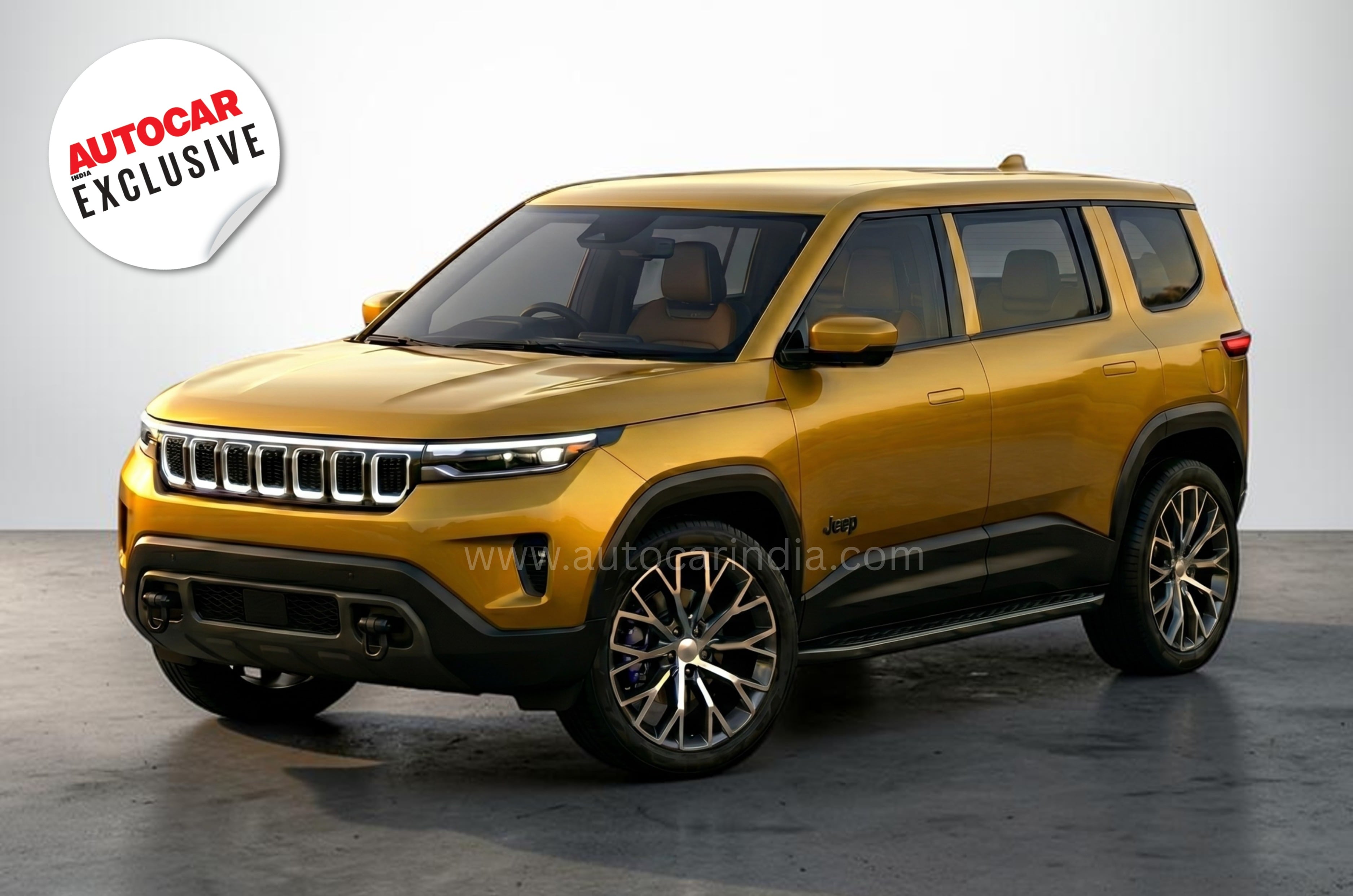
Jeep is mulling a revival of its iconic Willys military off-roader for an affordable electric SUV after 2030. The proposed model is part of Jeep’s plans to develop compact EVs and strengthen its position against growing competition from Chinese carmakers, particularly in Europe.
Speaking to Autocar UK, Xavier Peugeot, the head of Jeep Europe, said that the Willys is the brand’s “key attention” for the future, and that its electric revival is one of several “new ideas” that could be realised in the coming years. He described Jeep’s heritage as a key advantage in countering new rivals, especially from China, stating: “One of our main assets to counter this offensive is our DNA.”
Jeep Willys revival: All we know so far
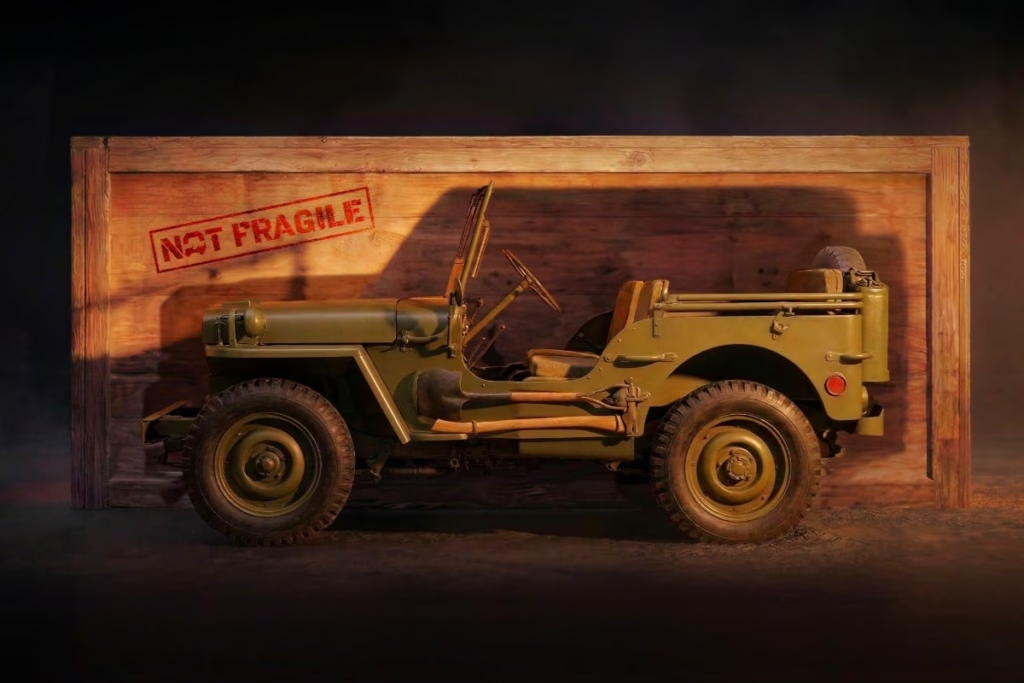
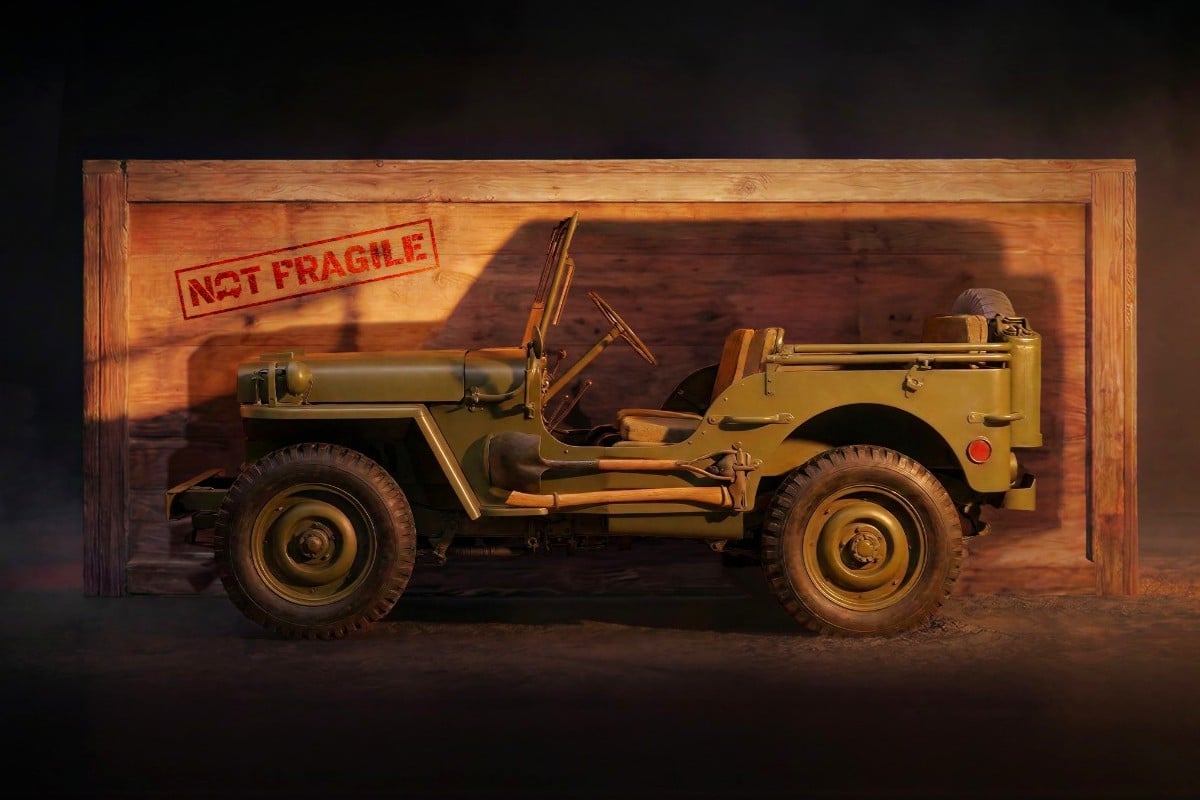
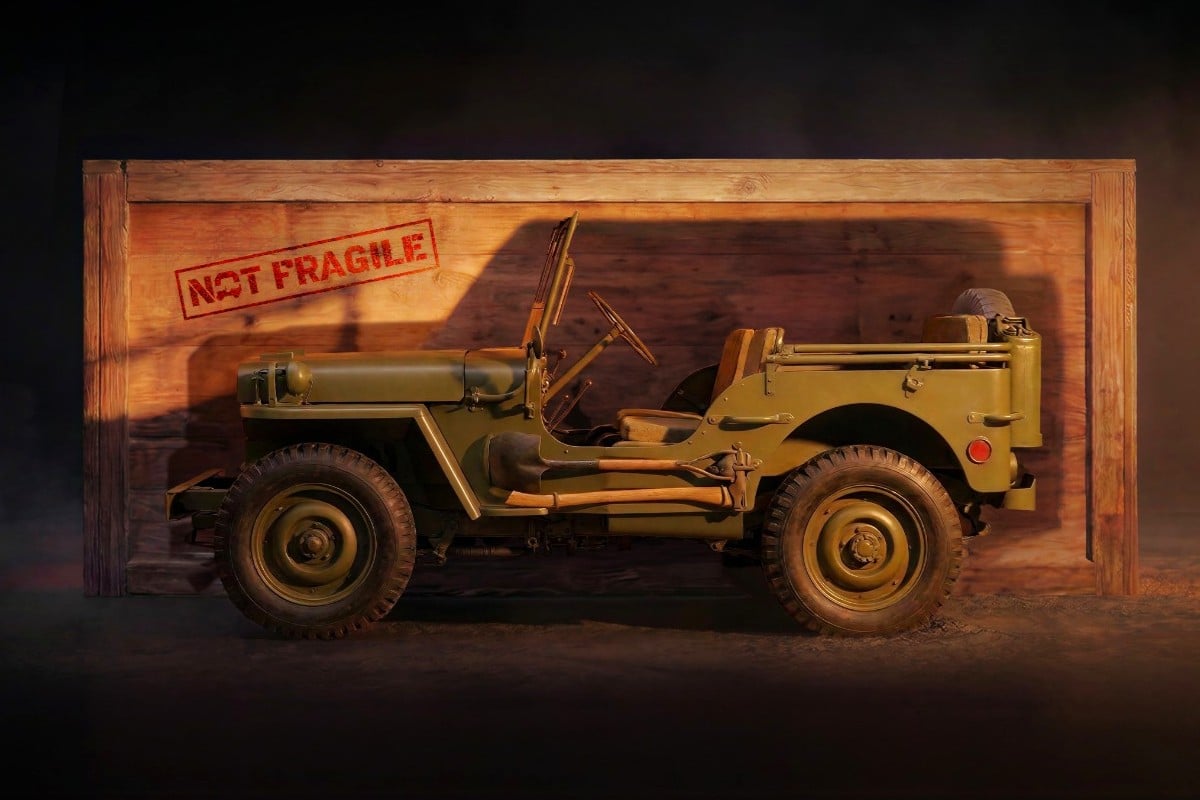
A recent teaser image released by Stellantis shows the original Willys MB military Jeep parked in front of the silhouette of a larger, closed-roof SUV with a bootlid-mounted spare wheel. The boxy design of this SUV looks to draw heavily from the original Willy’s utilitarian trappings, and the “Not Fragile” lettering on the crate implies ruggedness, and perhaps a focus on off-road prowess.
Specifics about the proposed Willys revival are yet to be finalised, but Peugeot noted “BEV affordability” as an important attribute, suggesting the EV could be aimed at the more attainable end of the price spectrum. To that end, the electric Willys may use a new low-cost EV architecture being developed by Stellantis for models that comply with the European Union’s proposed ‘E-car’ regulations – the production version of the recently-revealed Citroen 2CV concept is also expected to use this platform.
Peugeot additionally said that “each model in [Jeep’s] future range will be 4×4-compatible,” which could help set the electric Willys revival apart from the rest of Stellantis’s upcoming EVs. The project is expected to move forward after Jeep completes its current ‘Road to 2030’ strategy.
That said, Peugeot did remark that Jeep is “not confirming any concrete launch for this year or that year,” and that “ideas around Willys [will be] confirmed” by the end of this decade.
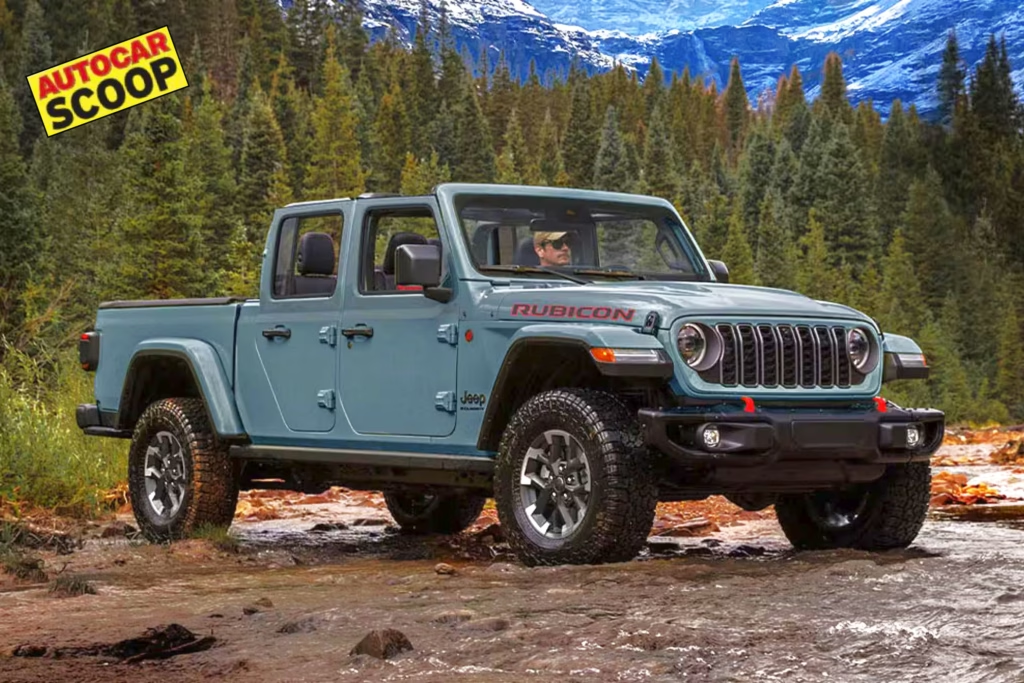
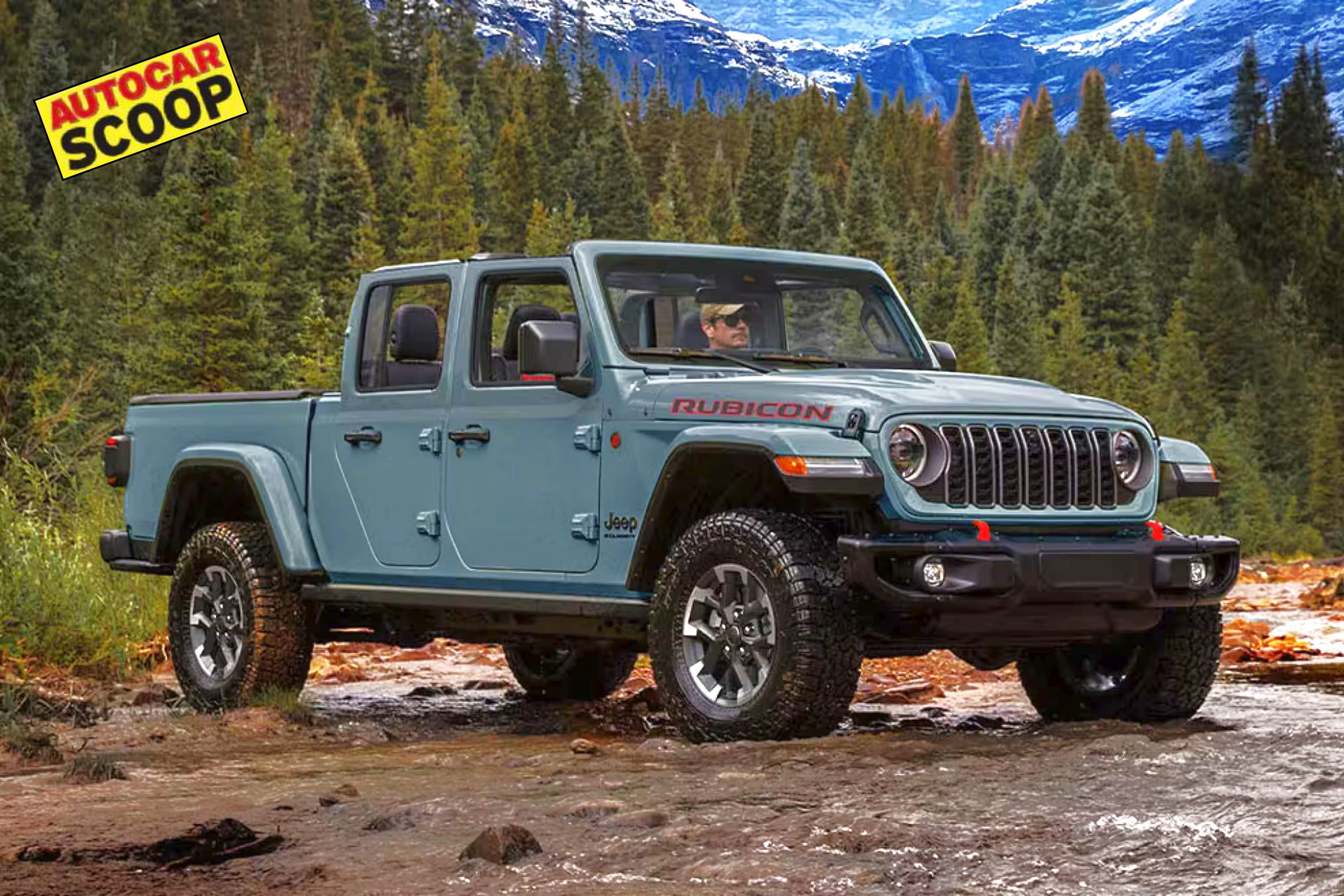
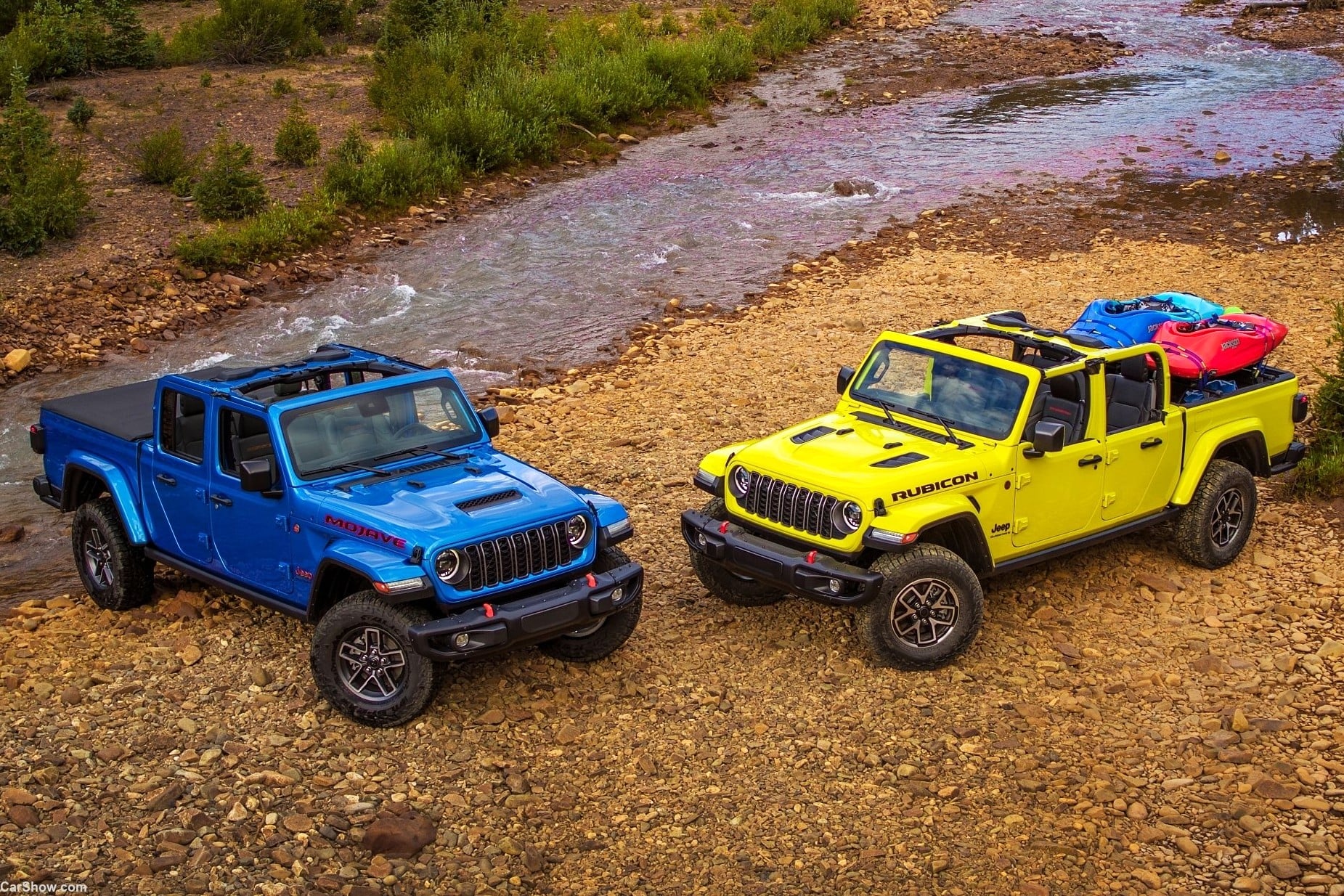
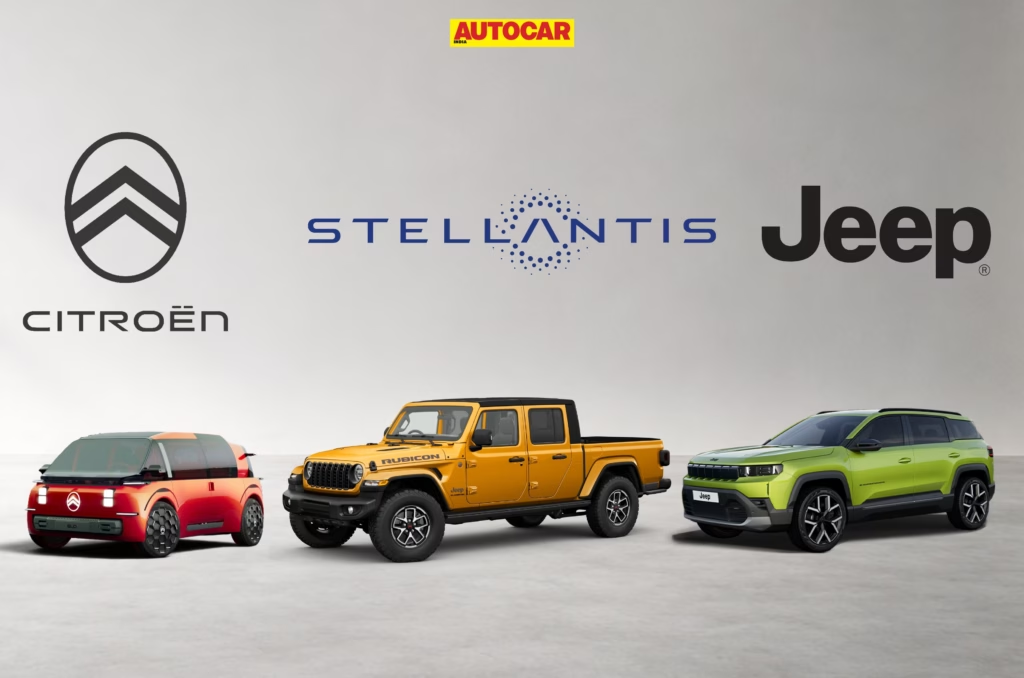
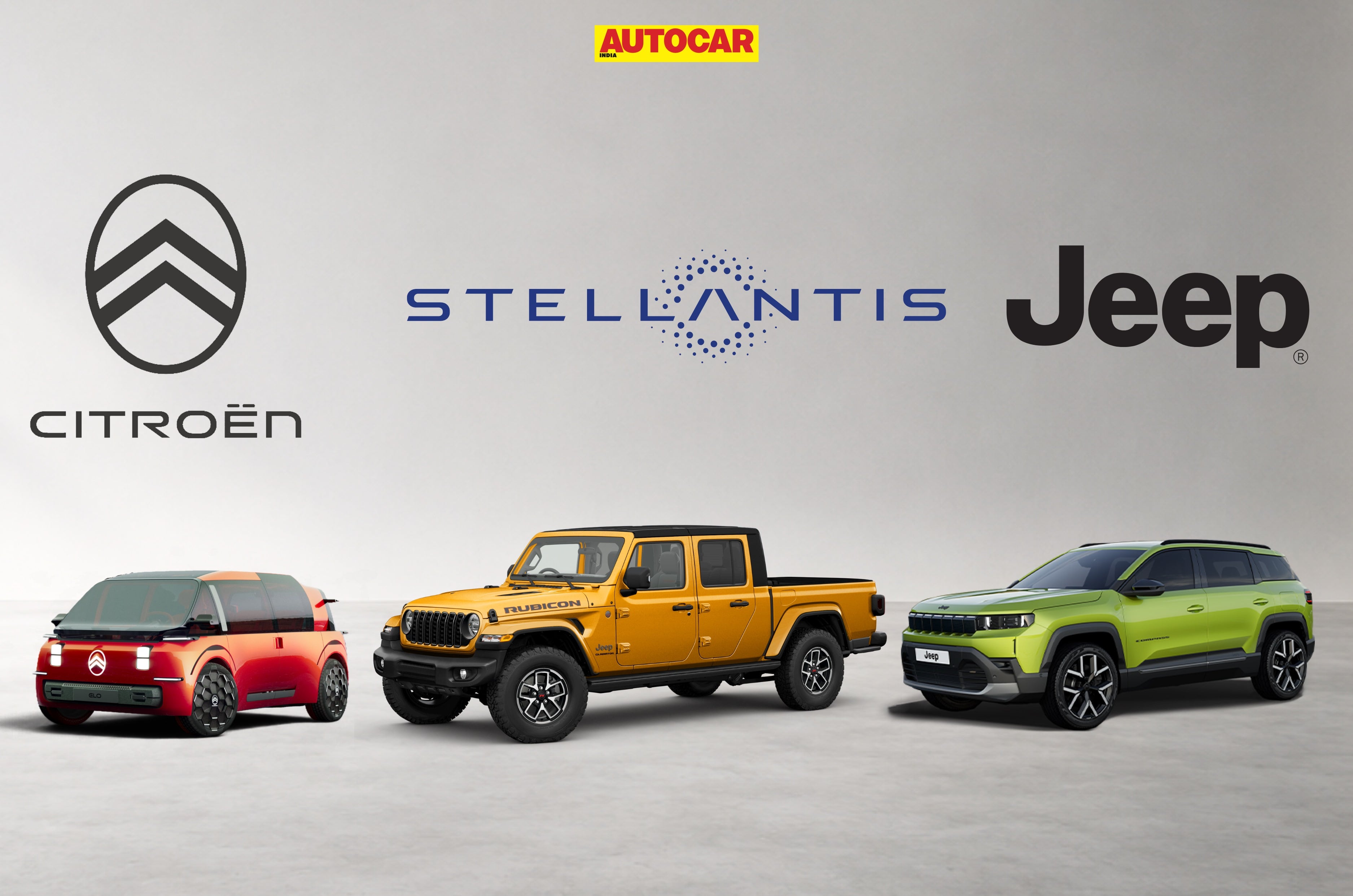
Stellantis India recently announced a new and much-needed product onslaught comprising seven Citroen and five Jeep models, all due within the next four years. While the conglomerate did not specify what these models would be, it did confirm there would be a premium pickup, which we understand would be the Jeep Gladiator.
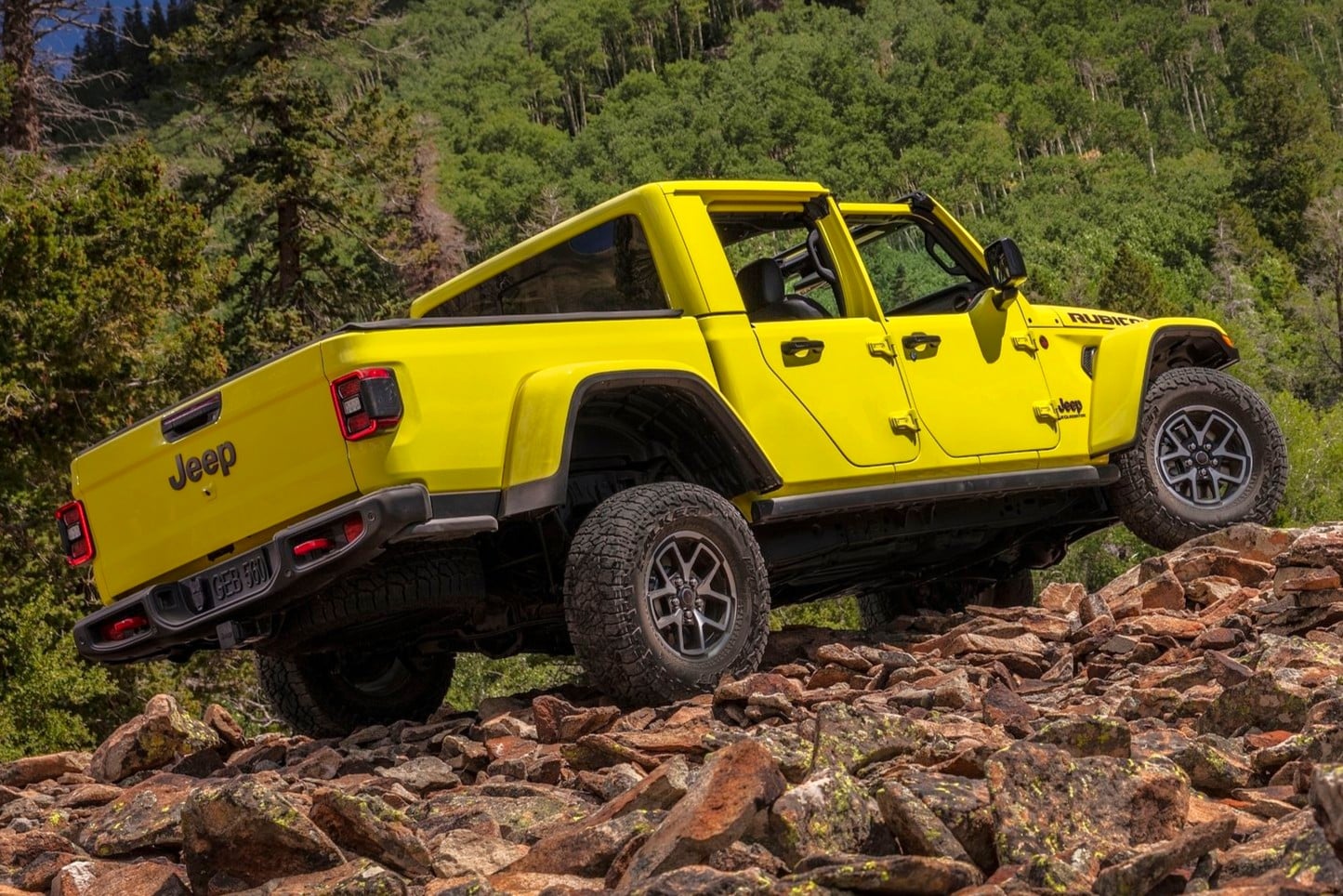
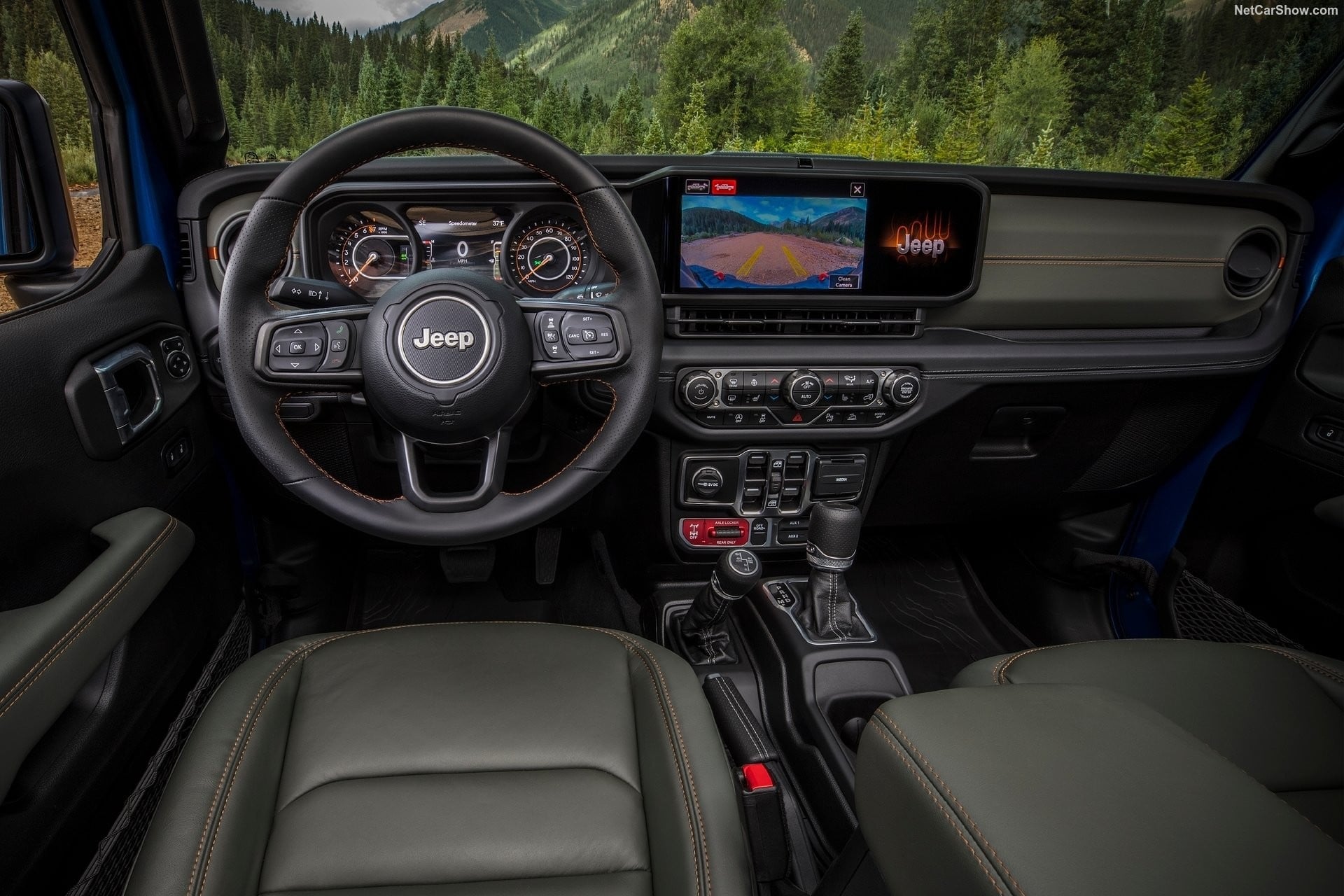
The pickup would be one of the earlier arrivals, and the company is likely to bring it in as a CKD, just as it currently does with the Grand Cherokee and the Wrangler – with which the Gladiator shares its platform (JL).
Gladiator may mark Jeep India’s entry into the premium pickup segment
Currently the American pickup offers a single 3.6 litre V6 petrol and that could be the engine of choice for India too, and as is intrinsic to the brand, a 4×4 powertrain would also likely be offered. Alternatively, given that the Gladiator and Wrangler share a platform, Jeep India could consider utilizing the Wrangler’s 2.0-litre direct-injection four-cylinder turbo-petrol engine under the hood of the Gladiator in India.
In Jeep’s home market, the USA, the Gladiator and the four-door Wrangler are similarly priced, thus expect the Gladiator to be priced at around the Rs 70 lakh mark in India. This would be considerably higher than the Toyota Hilux. However, the Gladiator is larger than the Hilux; at over 5.5 meters in length, the Gladiator stretches the tape past the Hilux, which measures just over 5.3 meters.
The lifestyle pickup segment remains a niche market in India, although interest is gathering, with the new Toyota Hilux recently launched, the Isuzu D-Max V-Cross continuing to be sold here, and Mahindra announcing its Scorpio Lifestyler. Given the higher segment that the Gladiator would occupy however, expect modest sales numbers. Besides, the American auto giant also needs to upgrade its sales and service network, a process it says is already underway. The company says its Stellantis Brand House format would support its expansion into Tier 2 as well as Tier 3/4 markets, where it sees potential.
Stellantis has confirmed 12 Citroen and Jeep launches for India by 2030 as part of a roadmap dubbed ‘FaSTLAne 2030’. Speaking to Autocar India at the 2026 Paris Motor Show, Tianshu Xin – the head of Stellantis China and Asia-Pacific – confirmed a new investment of Rs 4,000 crore for the Indian market and said, “The plan is to introduce 12 new models in the next three years…seven of them will be new models and five are upgrades.”
Stellantis India lines up a dozen launches across Citroen and Jeep
Multiple SUVs inbound, along with an MPV, an entry-level car, and a premium pickup
The first model under FaSTLAne 2030 is scheduled to go on sale in India by the second quarter of 2027. This influx of new Citroen and Jeep launches will cover the compact, midsize, and premium SUV segments, and include a new MPV, an entry-level car, and a premium pickup truck. Of the 12 launches, seven will be from Citroen and five from Jeep.
Brand footprints to be expanded in India
Stellantis says these brands will play “distinct but complementary roles” in its line-up – Jeep will bolster its current position in the premium SUV arena, and Citroen will do the same in the mass-market segments. Expanding the customer reach of Citroen and Jeep is crucial, and Stellantis has committed to growing the brands’ retail and service networks, especially in Tier 2, 3, and 4 cities, along with increasing parts availability.
More Stellantis EVs coming, hybrids also confirmed
Additionally, Stellantis has confirmed a new multi-fuel strategy for the Indian market, which will span “efficient internal combustion engines, hybrid, plug-in hybrid (PHEV), and battery-electric (BEV) technologies.” These are already offered by Stellantis brands globally, and it should be interesting to see the specific powertrains that make it to India. As it stands, the majority of Stellantis India’s powertrain offerings are petrol; Citroen and Maserati also offer EVs, while Jeep additionally offers diesel in entry-level models.
Localisation target of 90 percent
According to Xin, the new models under FaSTLAne 2030 will be produced in India, so localisation will play a key role for competitive pricing. In light of that, Stellantis has set a target of 90 percent localisation across Jeep and Citroen, and will bank on its Indian R&D and manufacturing facilities, along with its supplier ecosystem, to achieve this. Moreover, India-developed FaSTLAne 2030 models will be exported to overseas markets.
Stellantis India’s two major brands, Citroen and Jeep, haven’t been very successful at attracting buyers in recent years. Citroen’s cars, despite recent updates, have struggled to gain traction in India due to their rivals being more aspirational and feature-rich. Jeep India, meanwhile, hasn’t launched any new models or facelifts in several years, turning prospective buyers away to more updated offerings. FaSTLAne 2030 is looking to be the shot in the arm that Stellantis India needs to pique buyer interest again.
What about Leapmotor?
Xin also provided an update on the long-overdue India entry of Stellantis’s Chinese EV brand, Leapmotor. Stellantis had planned to bring Leapmotor to India in 2025, but that evidently didn’t pan out. Xin noted that Leapmotor’s India entry is still being studied, and that there has to be enough “volume potential to justify the business case.” Therefore, a decision on Leapmotor entering India will only be made when the business case is ‘proven and solid.’
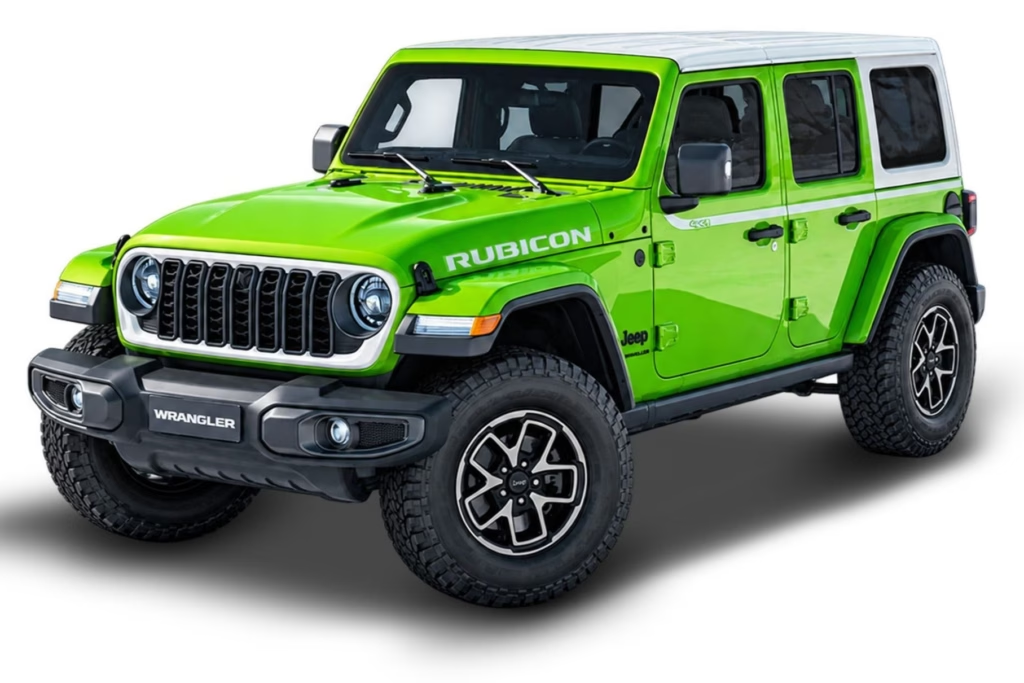
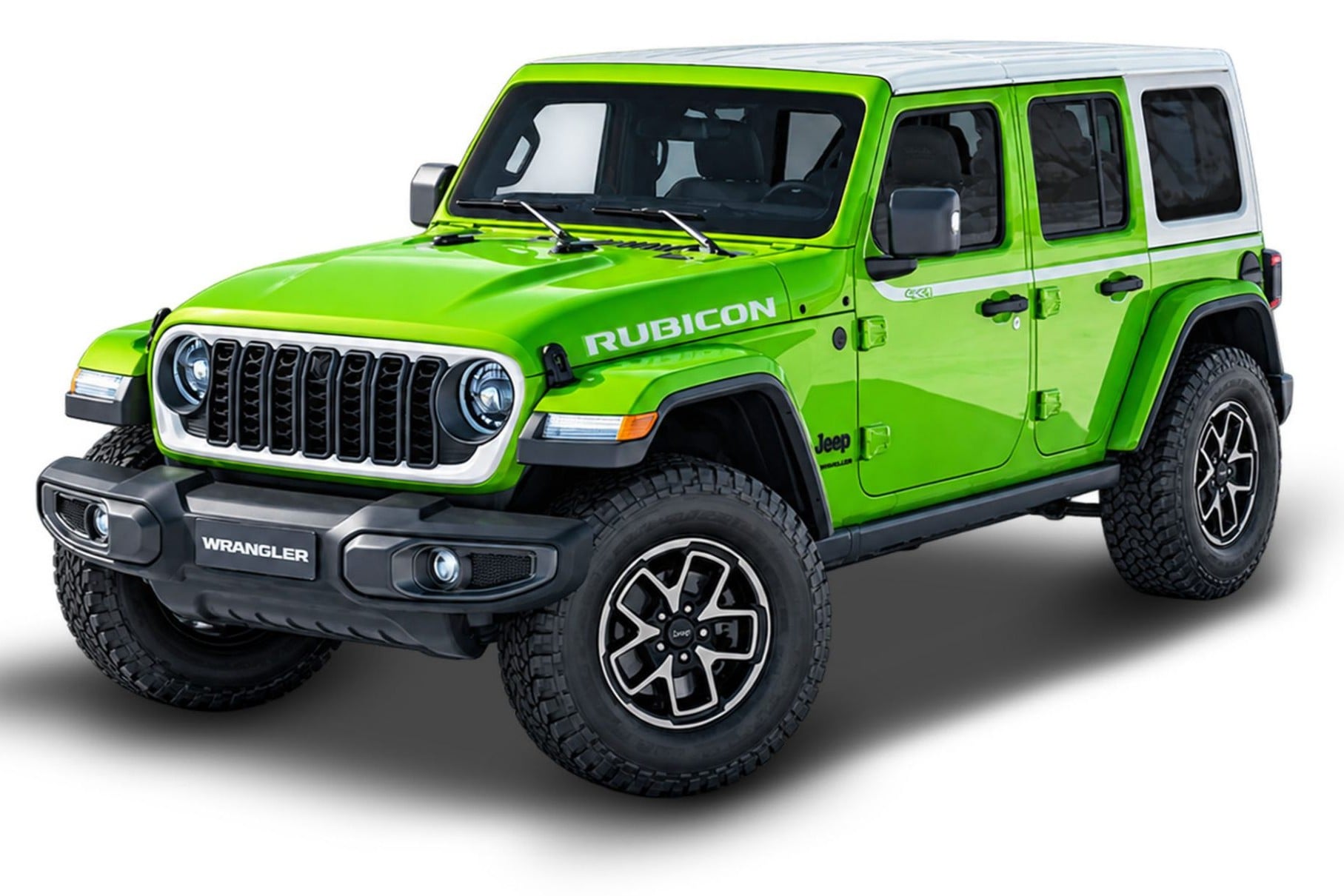
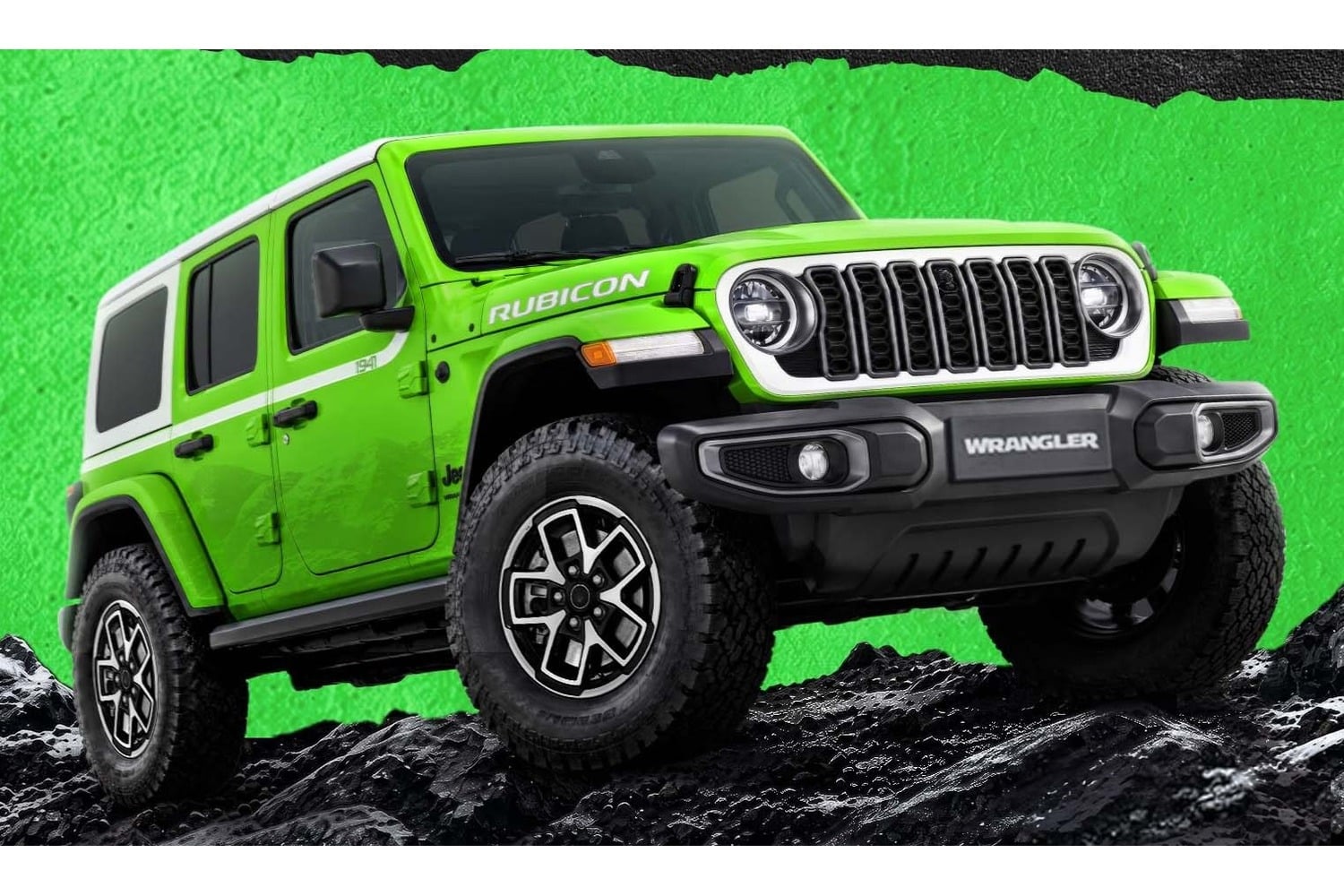
Following the reveal of the Wrangler Whitecap Mojito Limited Edition last month, Jeep has announced that the special-edition off-roader will cost Rs 73.55 lakh – a Rs 1.25 lakh premium over the Wrangler Rubicon on which the Whitecap Mojito is based. Only 25 units of the Wrangler Whitecap Mojito were offered in India, and Jeep has sold all of them. Globally, a total of 250 units of the Wrangler Whitecap Edition were made available.
Jeep Wrangler Whitecap Mojito Limited Edition: Exterior and interior changes
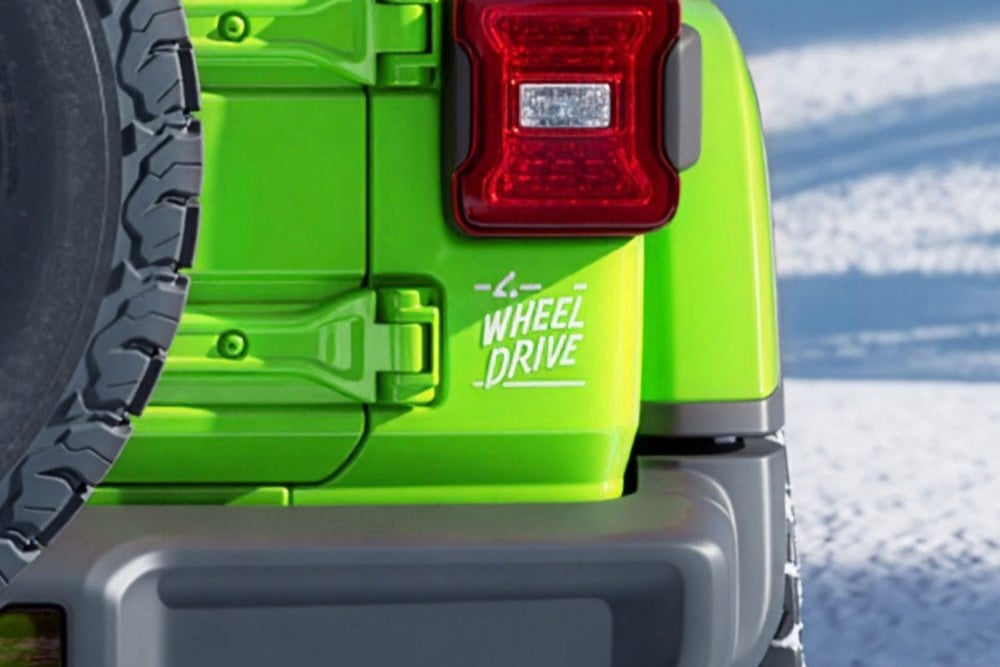
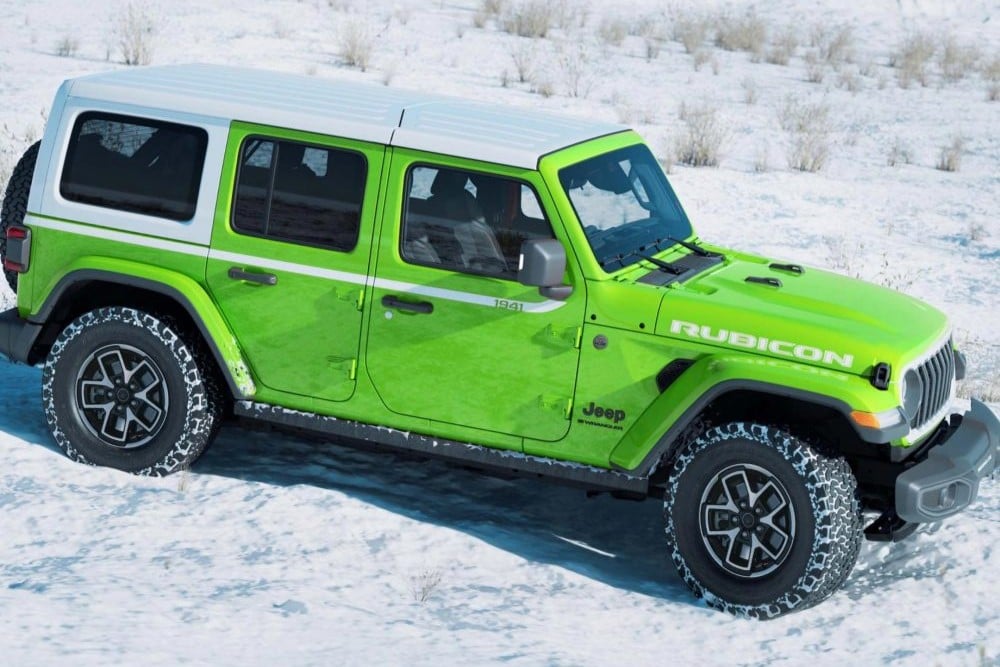
On the outside, this special-edition Wrangler Rubicon comes finished in an exclusive bright-green ‘Mojito’ shade, along with a white finish for the roof. The grille features a white surround, while the side profile gets ‘1941’ decals (a reference to the original Willys MB Jeep’s debut year) and body-coloured fenders. There’s also a white ‘4 Wheel Drive’ sticker on the boot lid.
The interior of the Wrangler Whitecap Mojito gets only two additions: a built-in dashcam and reinforced grab handles. Elsewhere, the special edition retains the feature set of the standard Wrangler Rubicon, such as a 12.3-inch infotainment touchscreen, 12-way powered front seats, an ADAS suite, 6 airbags, dual-zone climate control, a 9-speaker Alpine sound system with a subwoofer, a 7-inch driver’s display, and more.
Jeep Wrangler Whitecap Mojito Limited Edition: Engine and gearbox
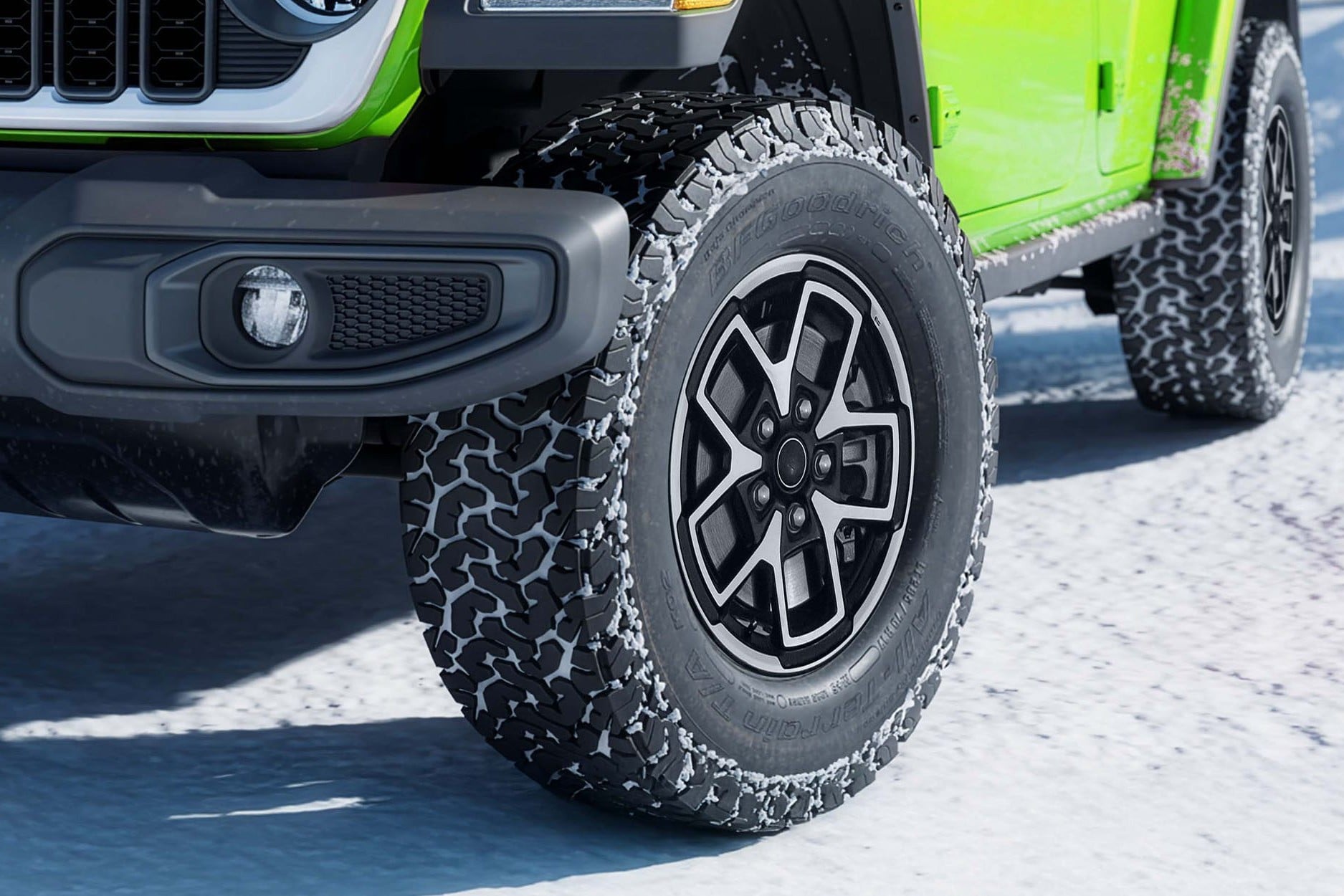
Under the skin, the Wrangler Whitecap Mojito is identical to the Rubicon. It’s powered by a 2.0-litre four-cylinder direct-injection turbo-petrol engine developing 272hp and 400Nm, paired with an 8-speed automatic transmission that channels the grunt to all four wheels via a standard 4×4 system. Since it’s based on the more off-road-capable Rubicon variant, the Wrangler Whitecap Mojito also packs hardware like heavy-duty Dana axles, an integrated off-road camera, reinforced suspension, rock rails, 255-section off-road tyres with 17-inch wheels, high-clearance front fender flares, and more.
While the Wrangler Whitecap is currently sold out in India, Jeep hinted at the possibility of bringing the special edition back in light of healthy demand. “The first 25 vehicles will remain a highly exclusive chapter in the Whitecap story, while the strength of customer interest is encouraging us to explore how we could bring this distinctive expression of Wrangler back to India in the future,” said Kumar Priyesh, business head and director – Automotive Brands, Stellantis India.
Tata Motors Passenger Vehicles (TMPV) and Stellantis have signed a formal agreement to expand their partnership into product technology, platforms and vehicle architecture, formalising plans for a new Jeep SUV based on the Tata Sierra’s ARGOS platform, according to people in the know. Internally codenamed J1J, the Jeep SUV will get both internal combustion engine and electric versions and it is likely to use the same powertrains as the Sierra, say people in the know.
Sierra-based Jeep SUV: platform and production plans
ARGOS stands for All-Terrain Ready, Omni-Energy and Geometry Scalable. It is TMPV’s modular, multi-energy vehicle architecture, designed to accommodate different vehicle dimensions and powertrain applications, which can open up more opportunities for Stellantis in the future.
While Tata Motors is producing the Sierra at its Sanand factory in Gujarat, production of the Jeep model is likely to take place at the Fiat India Automobiles Ltd (FIAL) joint venture facility in Ranjangaon, Maharashtra. The manufacturing operations are expected to be adapted for the programme over the next 18 months, added a person in the know.
The programme forms part of Stellantis’ wider ambition to sell 100,000 locally produced vehicles globally in 2028 across its Tata and Dongfeng partnership programmes combined, as outlined at its May 2026 Investor Day. The target covers several products. The company is likely to launch the first vehicle in the first half of 2028, say sources.
A dedicated team for the project is currently based out of Pune and will look at adapting the vehicle architecture, including a left-hand-drive version for overseas markets. A range-extender electric vehicle application is also being explored on the platform, although no production decision for the REEV has been finalised, according to people familiar with the engineering work.
An email sent to Tata Motors and Stellantis seeking comment remained unanswered at the time of publication.
The formal agreement builds on a relationship spanning more than two decades. Having collaborated on manufacturing, powertrains and the supply chain, the partners are now extending their cooperation into vehicle development.
Sierra-based Jeep SUV: Different body and cabin
Stellantis is benchmarking its own Jeep Renegade and Compass products for the J1J model development, according to company sources. Its eventual name and final production design are being firmed up.
This clearly indicates that the Jeep will have a different upper body, or top hat, exterior styling and cabin. Changes will extend to the seating package, interior features and equipment. These will distinguish it from the Sierra, while allowing the companies to share the underlying architecture and components.
Much of the platform is expected to be retained, with structural modifications and reinforcements, where required, to accommodate the Jeep body and meet crash and overseas regulatory requirements. Details of Jeep-specific suspension tuning and off-road hardware could not immediately be established. A 4×4 variant is also likely as Jeep’s brand guidelines insist on giving its customers a 4×4 option for all its models. Whilst the electric version of the Sierra already comes with 4×4, the ARGOS platform has been packaged and developed to accommodate a 4×4 ICE drive train as well. In fact, the Jeep partnership could accelerate the launch of a Sierra 4×4 to coincide with launch of the next-gen Jeep SUV.
Tata Motors sister company Tata Technologies is understood to be involved in engineering execution at Stellantis. The work includes the Jeep-specific body and interior package, left-hand-drive adaptation and changes needed to meet overseas regulations.
According to people familiar with the programme, TMPV will retain ownership of the architecture and license it to Stellantis. Existing Sierra suppliers are expected to support Jeep where components can be shared, with separate sourcing and tooling for model-specific parts.
India development, global markets
Stellantis had disclosed its intention to develop a Tata-based Jeep at its May 21, 2026 Investor Day. Grégoire Olivier, its Asia Pacific chief operating officer, said Tata Motors would provide a competitive platform for a new Jeep vehicle to be developed and assembled in India through the existing joint venture for global markets.
Olivier had also outlined exports to more than 50 countries across the wider portfolio, including the Dongfeng programmes, the Tata-based Jeep and the existing Citroën Smart Car programme in India. The markets allocated specifically to J1J have not been established.
For Stellantis, Tata’s architecture and supplier base offer a way to reduce development expenditure while adding a new Jeep product. For TMPV, the arrangement could generate licensing revenue and spread platform costs across additional vehicles. Common components could also bring suppliers higher volumes.
The alliance is a much-needed segue for the Jeep brand which has been in India for close to a decade but has been relegated to the fringes of the Indian market with a lack of product action. A licensed modular architecture with the potential for multiple powertrains, 4×4 capability and different wheelbases will open opportunities for more products in a quicker time interval.
The programme would extend the Ranjangaon venture from manufacturing cooperation to producing a Jeep on Tata’s vehicle architecture. The left-hand-drive version would widen its overseas reach, giving the plant access to demand beyond India and other right-hand-drive markets.
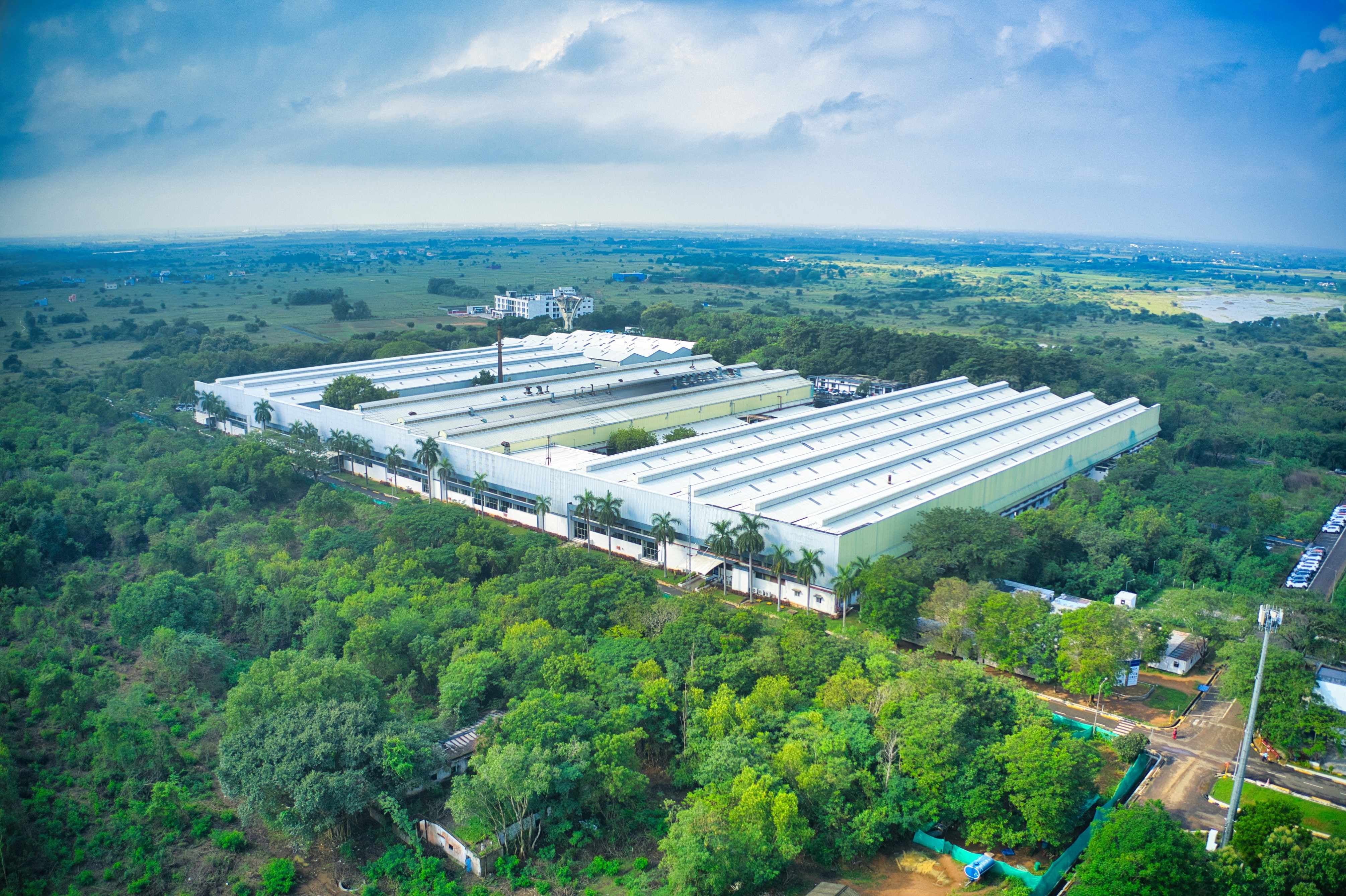
Stellantis India announced that it has acquired the remaining equity stake held by CK Birla Group firm Hindustan Motor Finance Corporation Ltd. (HMFCL) in Stellantis Automobiles India Private Limited (SAIPL), taking 100% ownership of the joint venture and its car assembly facility in Thiruvallur, Tamil Nadu.
With full ownership of the JV, it gains full control over its Thiruvallur facility.
The facility manufactures four Citroen models and exports to eight countries.
Stellantis aims to ramp up current production capacity and workforce.
The transaction, executed through foreign direct investment, concludes the joint venture established in 2017 between Stellantis and the CK Birla Group, which brought French carmaker Citroen to the Indian market. The plant manufactures four Citroen nameplates, including the C3, eC3, Aircross, and Basalt, and ships completely built units (CBUs) to eight export destinations across four continents.
What is Stellantis India planning after exercising full control?
With sole control established, Stellantis says it plans to raise annual output at Thiruvallur by more than 160%, targeting a ramp-up from 16,000 units in 2026 to upwards of 43,000 units by 2028. The expansion is projected to more than double the facility’s direct shopfloor workforce from its current level of 610 employees.
Shailesh Hazela, CEO and Managing Director, Stellantis India, said, “India remains a key pillar of Stellantis’ growth strategy. Having invested close to INR 11,000 crore in the country to build a strong manufacturing, engineering and export ecosystem, we continue to see significant opportunities ahead. This milestone will enable greater integration and enhance our ability to respond more quickly to customer and market needs.”
Picture the scene: you’re a commando who’s just parachuted behind enemy lines. Along with you and your team are a bunch of military off-roaders. It’s been a tough jump. High winds, terrain, difficult odds. While the men all make it intact, the machines break up and are destroyed. The team has to salvage what it can, reassemble a couple of off-roaders from the parts of the half dozen parachuted out. What’s clear is that special forces and the military need a tougher, more capable off-roader, one engineered with today’s tech and requirements in mind.
From the school of hard knocks
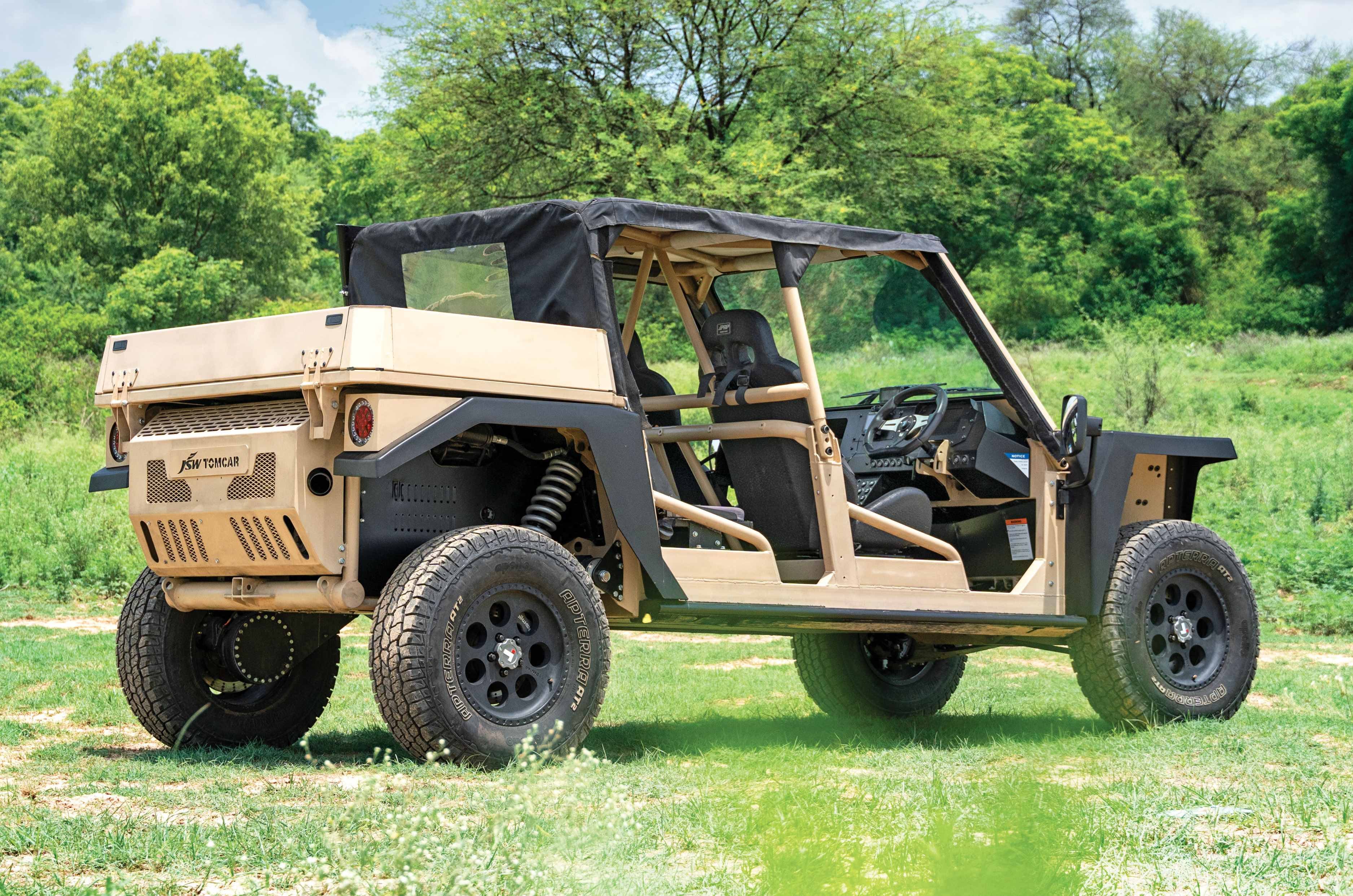
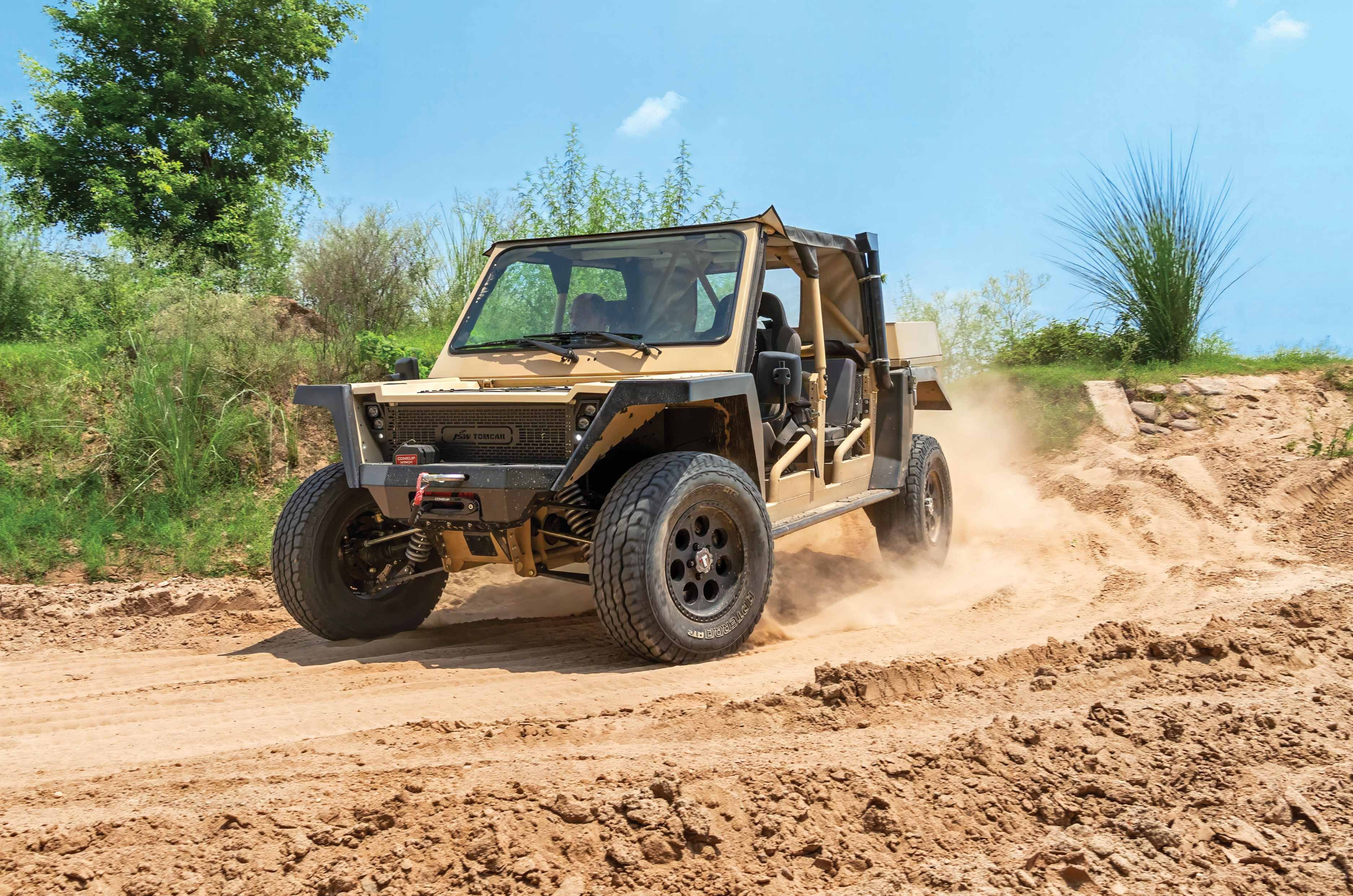
The Tomcar is purpose-engineered and built for special forces.
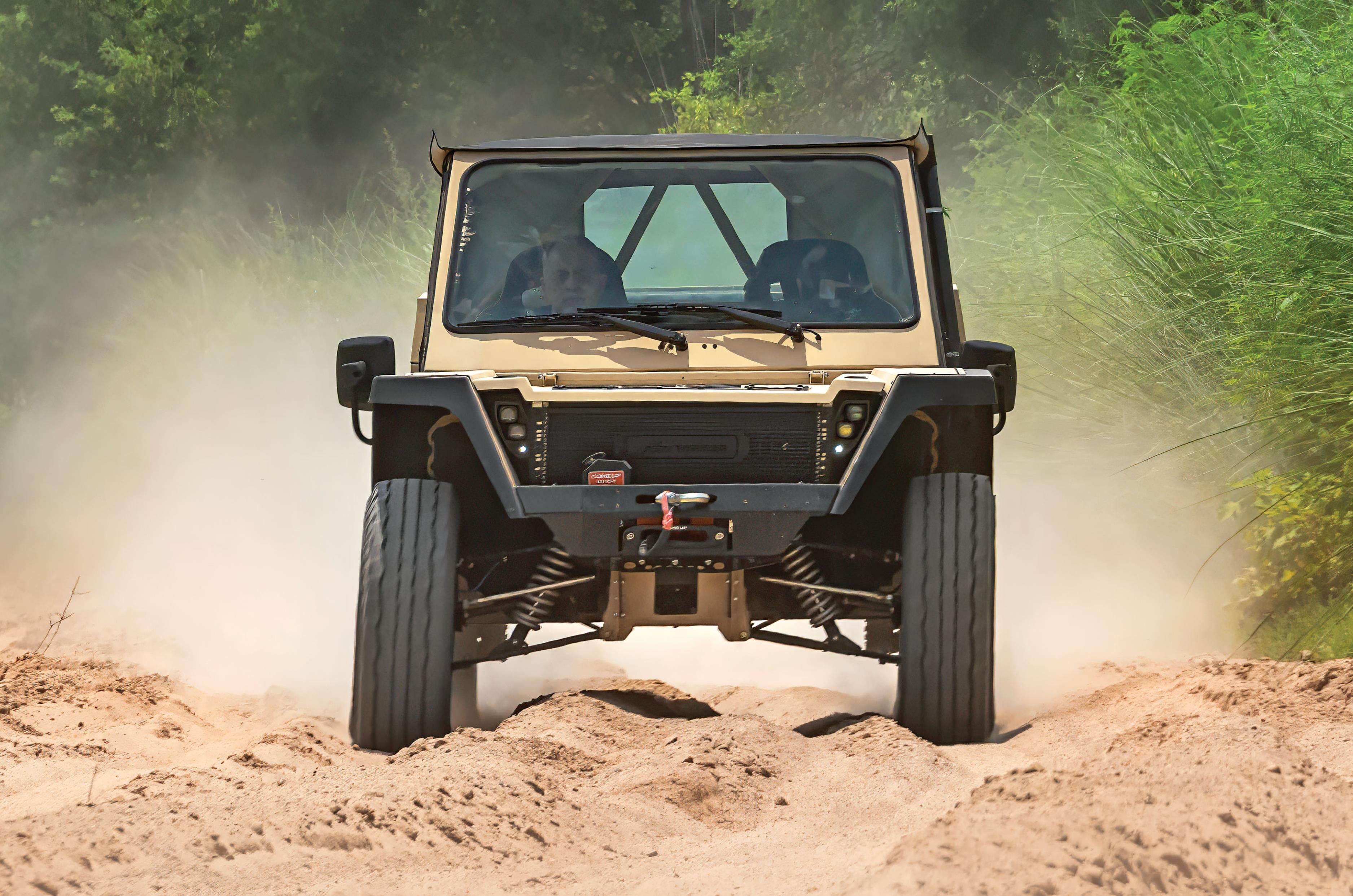
This then is the Tomcar: a military off-roader explicitly designed for commando operations. Designed to survive a parachute drop without requiring a rebuild or a massive parachute, heavy rigging and cushioning equipment, it sets an all-new benchmark. The Tomcar is built to take hard knocks, and that’s because the structure is fundamentally different.
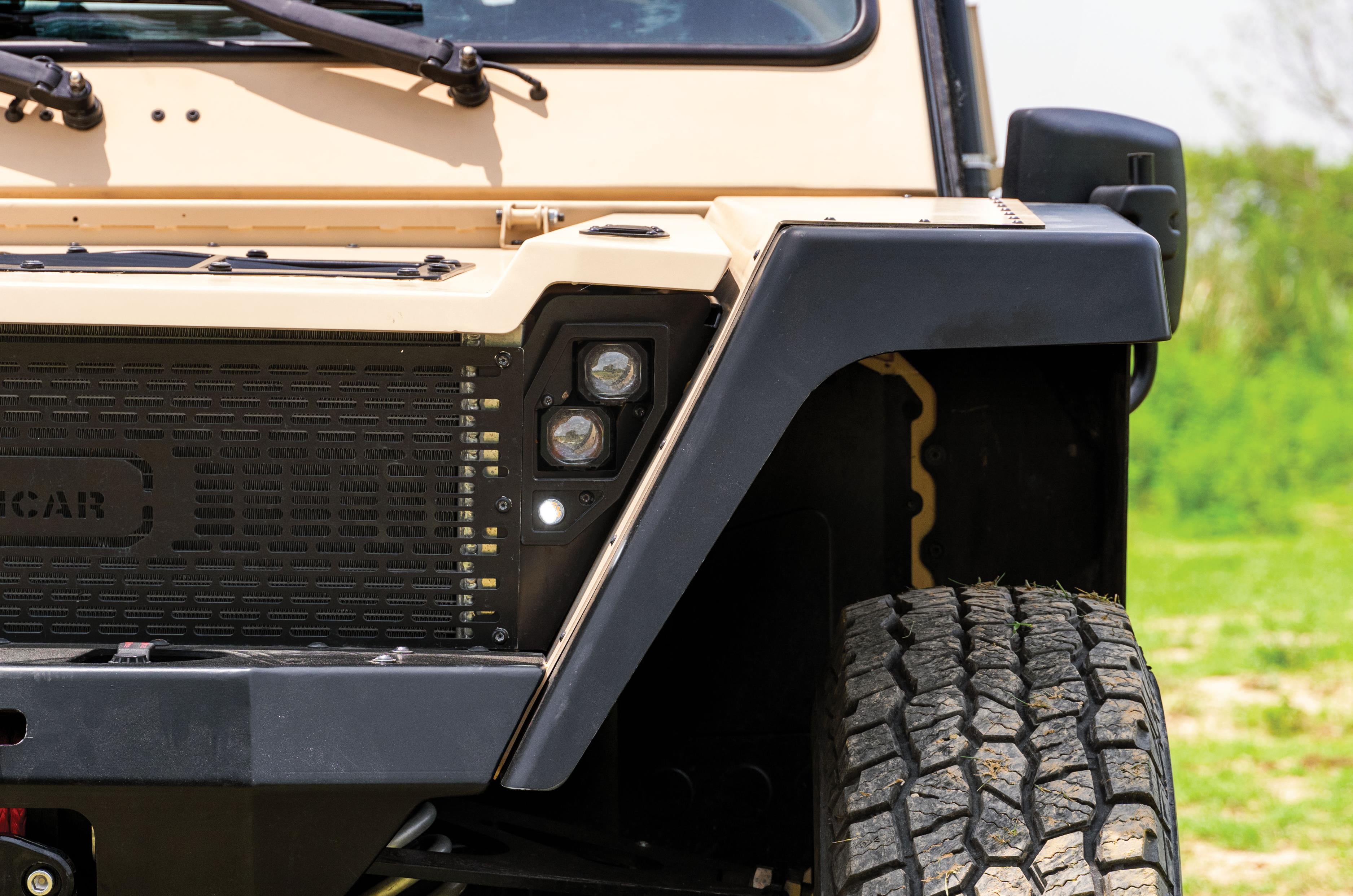
Compact nose and tiny LED headlights are unique.
This is evident even when you take a quick glance at the Tomcar TX. It looks like nothing you’ve seen before. Stubby nose, tiny headlights, no doors and a heavy-set rear. What’s for certain is that every small bit is purpose-built and functional, and the only decorative bit seems to be the badge at the rear.
No form, all function
Let’s start with what you can’t see: the monocoque frame. Unlike other off-roaders that use bolted frames, the Tomcar has a one-piece, fully welded frame and integrated roll cage. Designed specifically and tested to absorb and dissipate the extreme G-forces of an air drop (without bending or shearing), it forms the centrepiece of the design. Perfectly in sync with the concept of a very durable, over-engineered vehicle that can be air-dropped or dragged out of aerial transport at low speed. What’s even more impressive is that it can easily be repaired in the field with basic hand tools.
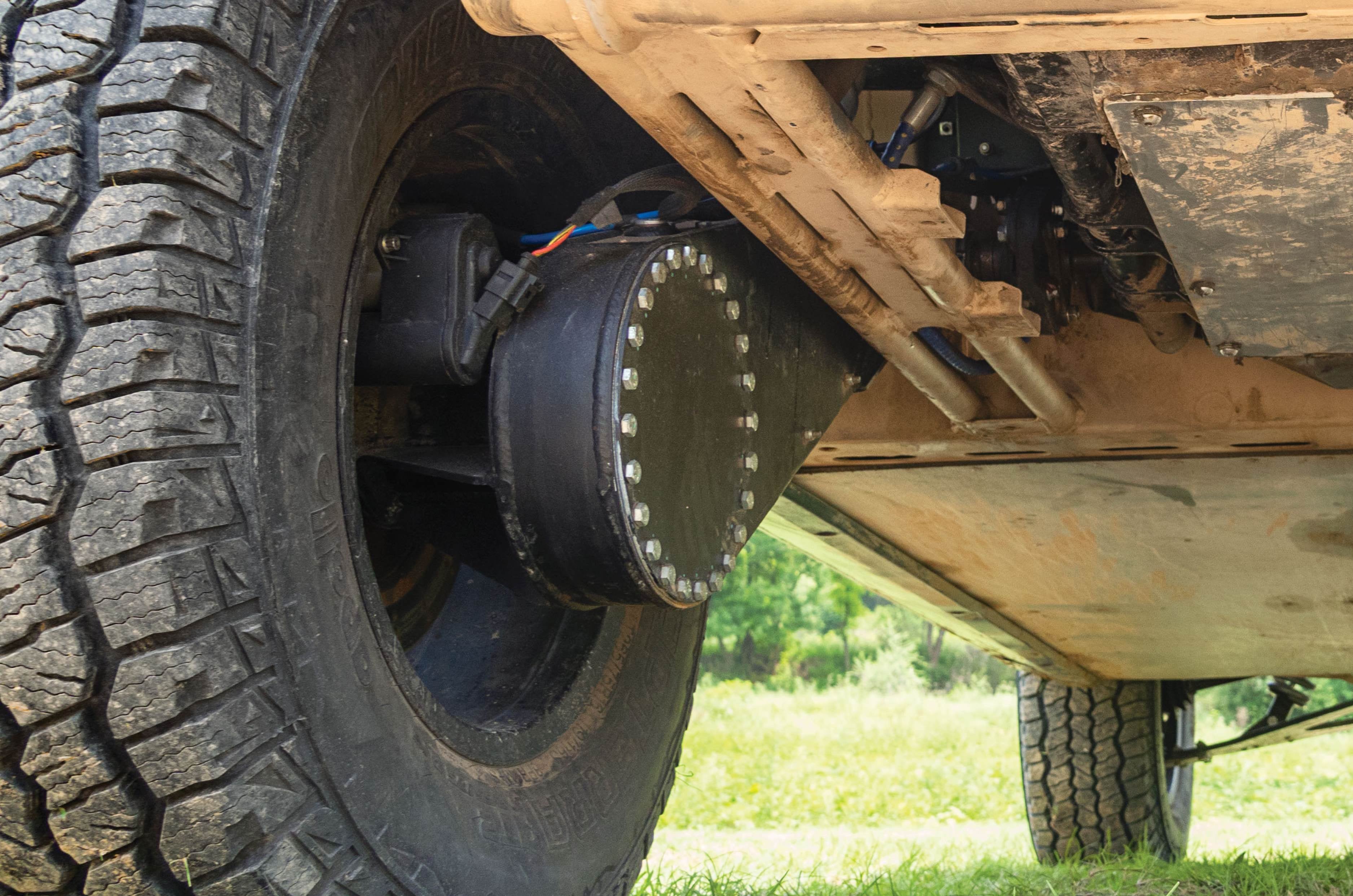
Independent rear suspension and chain drive in one single compact unit.
Next up, the all-independent suspension, which has massive travel and long suspension arms. The heavy-duty suspension offers up to 14 inches of travel and 17 inches (430mm) of ground clearance. This setup uses massive coil springs, not dissimilar to Baja racers, and motorsport-like damper systems with remote reservoirs. This enables it both to take hard knocks and remain stable at speed. This is so that the Tomcar can cruise effortlessly across undulating terrain at speed and provide a stable platform.
Special powers
175hp engine sits low in the back, aids traction and lends stability.
I walk around the rear and take a good look as the next piece of the puzzle falls in place. There are vents at the rear, and that means that’s where the engine sits. Done to maximise traction, like VW-based Baja buggies, the Tomcar has its 1.5-litre four-cylinder engine mounted low in the rear. The Chevy engine makes 175hp and 275Nm torque.
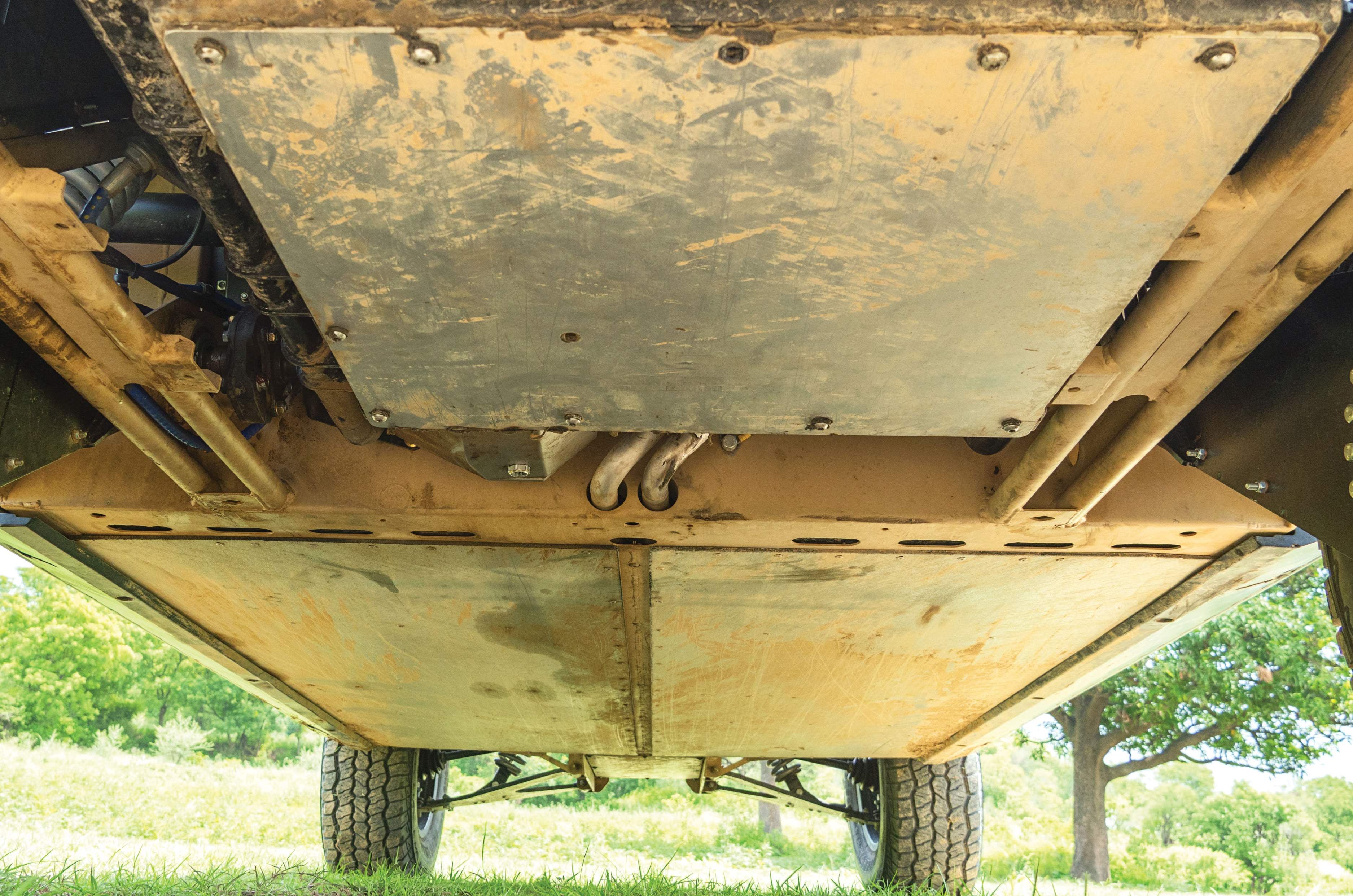
Flat floor prevents it from snagging on rough terrain.
The TX uses a CVT gearbox for easy use and good torque manipulation. This is placed at the rear with the engine and sends power forward to two transfer cases that are sandwiched together. The first transfer case allows you to shift from rear-wheel drive to four-wheel drive instantly with a mere push of a lever. Bang! The second gives you low range, and along with that, regular gearbox directional functionality – Drive, Neutral and Reverse. There is no Park, only an E-parking brake. These differentials have another unique tech – they are both air-locking and are engineered so that the Tomcar has a completely flat belly – nothing hangs down so it can slide over terrain without the belly fouling. Even more interesting is how power gets transferred to the rear wheels; it’s done through a pair of double chain-drive systems, encased in the hardened steel swing arms!
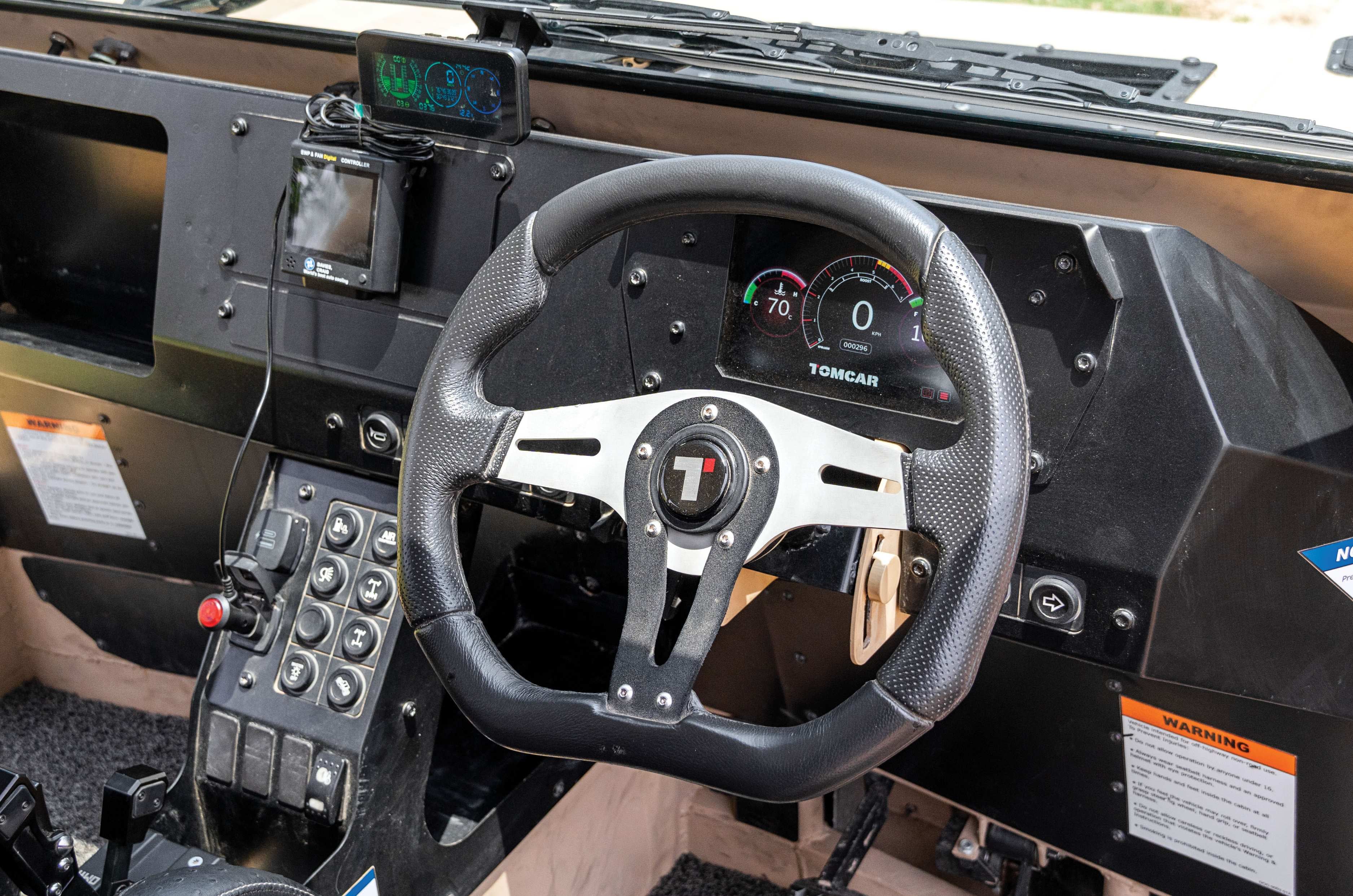
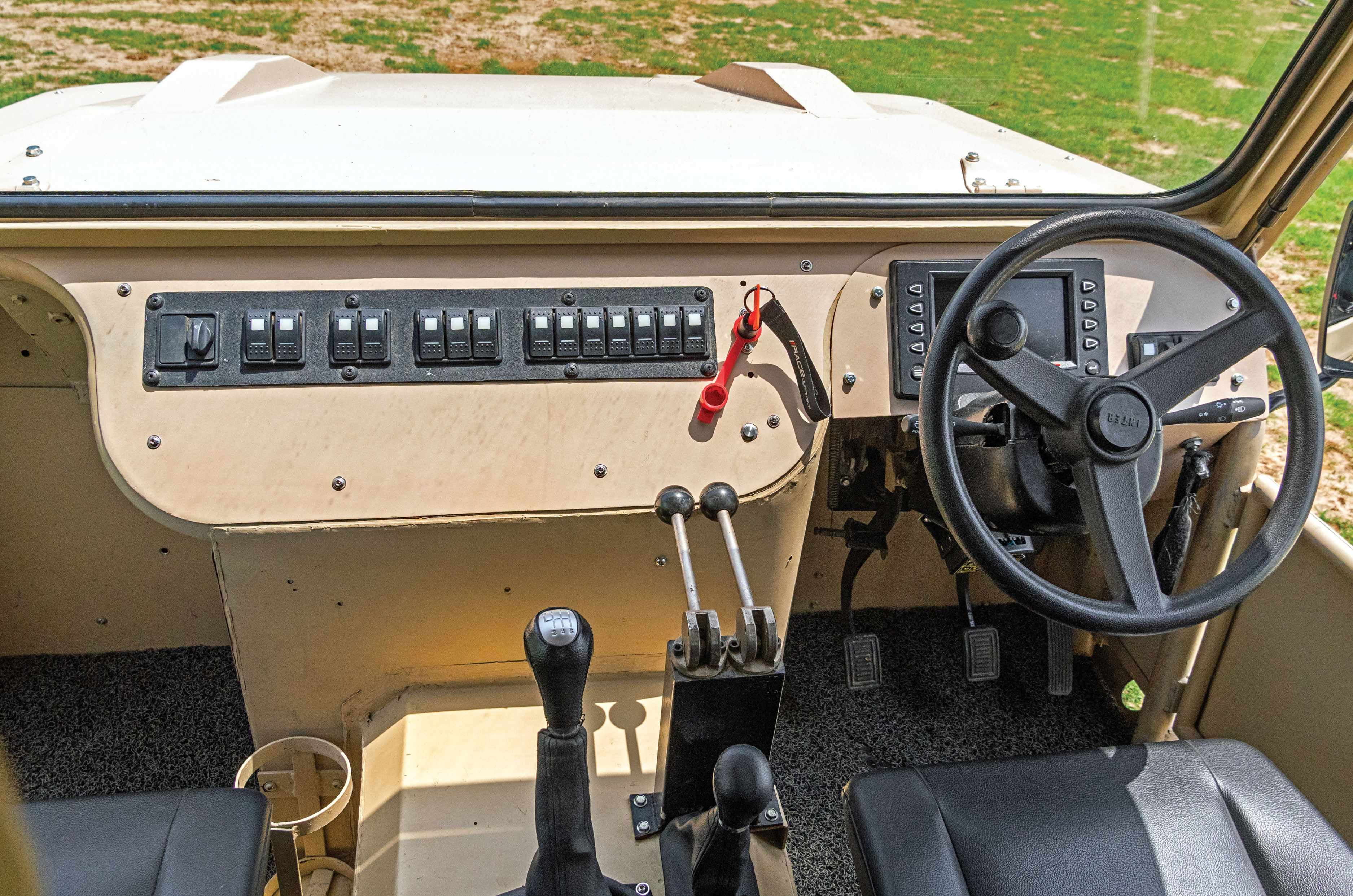
Basic dash and instruments get the job done.
In addition, the Tomcar has been made for easy serviceability in the field. Components often have a backup, and the vehicle can even function with a high degree of redundancy. There are, for example, two end-to-end fuel systems and twin radiators, and then bits like the suspension have load paths designed specifically to break at specific points where parts are easy to replace. What’s also impressive is that this 1.3-tonne vehicle can carry or pull more than a tonne.
Floats like a butterfly
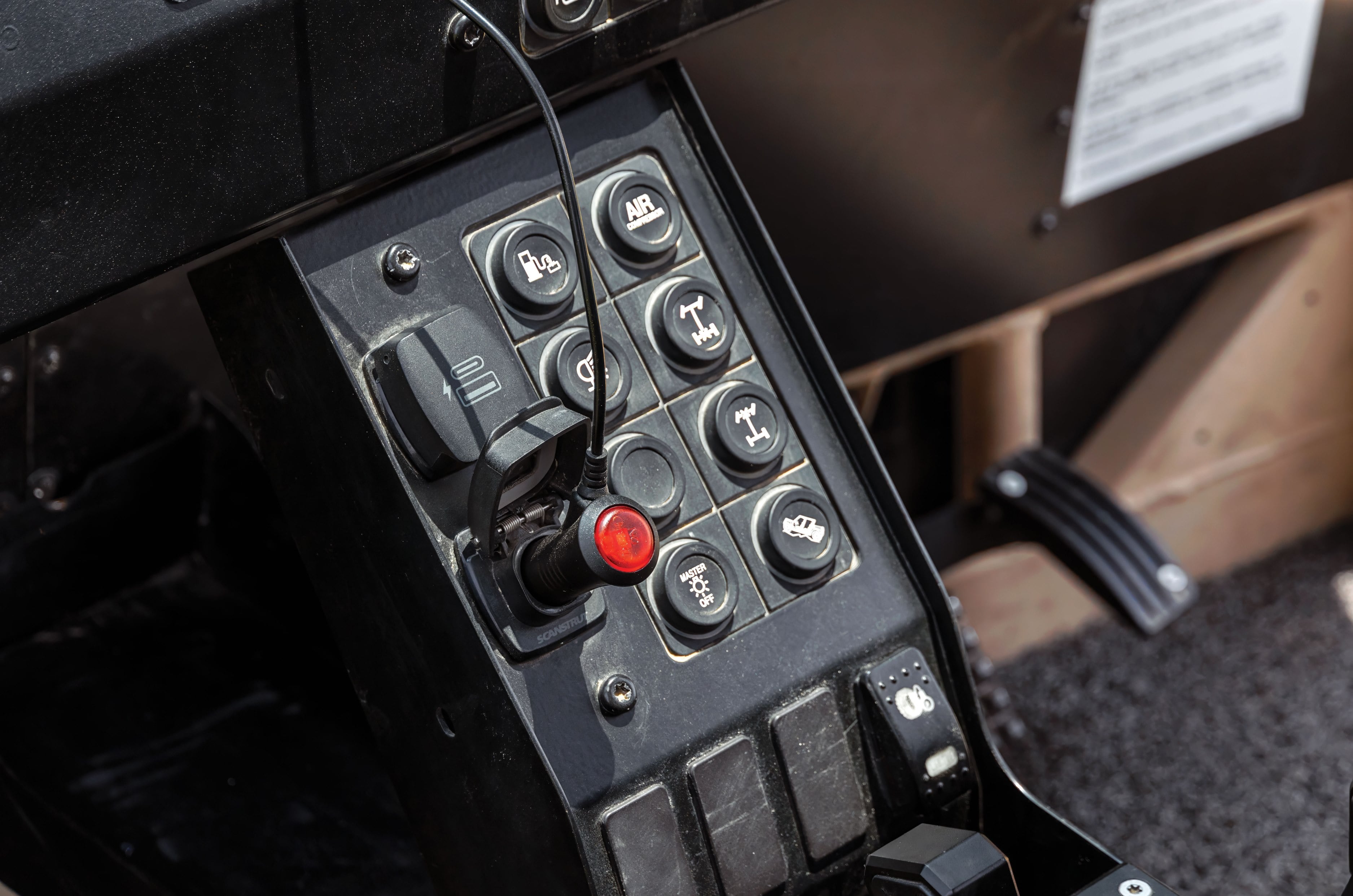
Big buttons are hardy, can deal with dirt and are easy to hit with gloves on.
With this kind of unique specification, it’s little wonder that this vehicle feels unique to drive. For a start, with no doors, you just slide in behind the wheel. Start up is pretty straightforward, and you can sort of tell this vehicle will be comfortable to operate even with heavy gloves.
Initially, the sound of the quad drive chains at the rear dominates. A gnashing, chainsaw-like ripping sound, it combines with the whine of the CVT to give the Tomcar a unique sound signature. And from slow speeds, especially in sand, the CVT does require a buildup of revs before it pulls forward happily.
Once you build a bit of momentum, however, progress over the sand feels effortless. You can just float over big ruts and carry on without too much deflection of the wheel. A lot of this is because it has the weight of the engine pushing down over the rear-driven wheels, and the stiff chassis and soft, long-travel suspension deal beautifully with the soft undulating surface. While most 4x4s feel heavy when driving through sandy river beds like the one we are on, and tend to bog down and struggle when you slow to a crawl, the Tomcar feels right at home. It’s even relatively easy to steer and place it alongside another vehicle on the narrower sections of this riverbed. Sure, the turning radius isn’t great, and it pays to be ham-fisted with the steering, but what surprises me is just how much speed I can carry without it getting uncomfortable.
It feels completely at home even on seriously difficult off-road trails.
What’s also very impressive is its ability to do some serious off-roading. Running along the steep sides of the ravine, you can feel the low centre of gravity, which feels like it sits somewhere below the level of the driver’s seat. And then we climb an extremely steep hill, the Tomcar ‘walking’ up the step-like undulations of the trail with superb rear traction. Only the engine and CVT system seem to strain with the load of the uphill climb.
Also super impressive is the ride. The stiff chassis, long-travel suspension and motorsport damper system mean you can carry speed over sections you normally only have to crawl over. You look at a broken trail and drive over, fully expecting to be tossed around, but the Tomcar stays flat, so you add more speed. And this goes on for a bit until eventually stopping distances rein you in. Want to carry speed over rough terrain? This thing operates in another dimension.
Making India’s extreme off-roaders
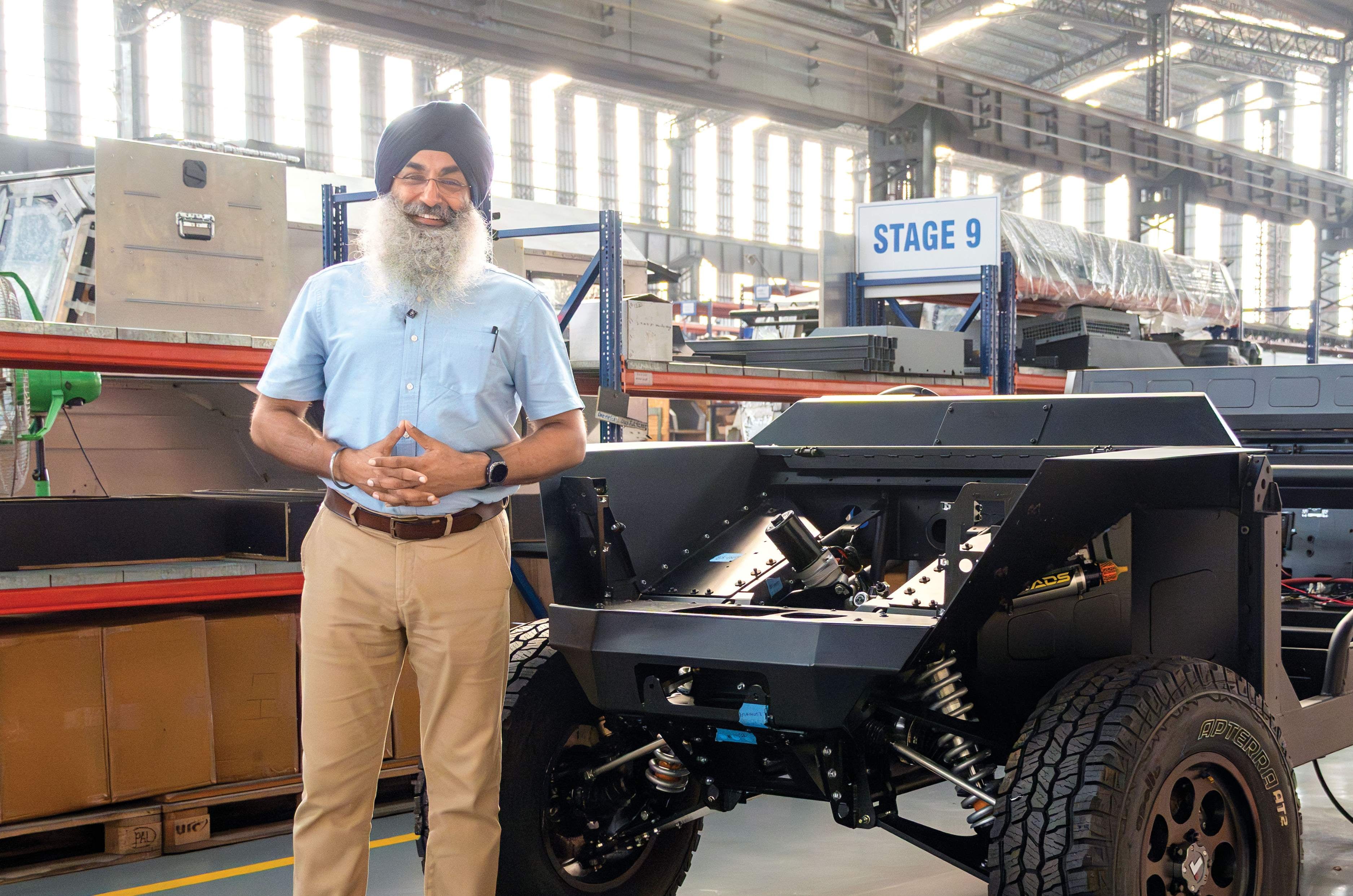
CEO and founder director of JSW Sarbloh Motors started his journey in extreme off-roading.
One of Jaskirat Singh Nagra’s first off-road excursions landed him, and his family car, in a ditch. Things, however, have looked up since then. Not only has his company Sarbloh Motors made several winning contenders for events like the Rain Forest Challenge and Orange Festival in Arunachal, it, along with JSW Defence, also makes the Sherp and Tomcar in India. Up next, the company’s own EX4. And with 140 Sherps already produced and a line already setup for tactical ATVs, you can expect many more extreme off-roaders to be built by this company.
The EX4: Engineered, designed and made in India
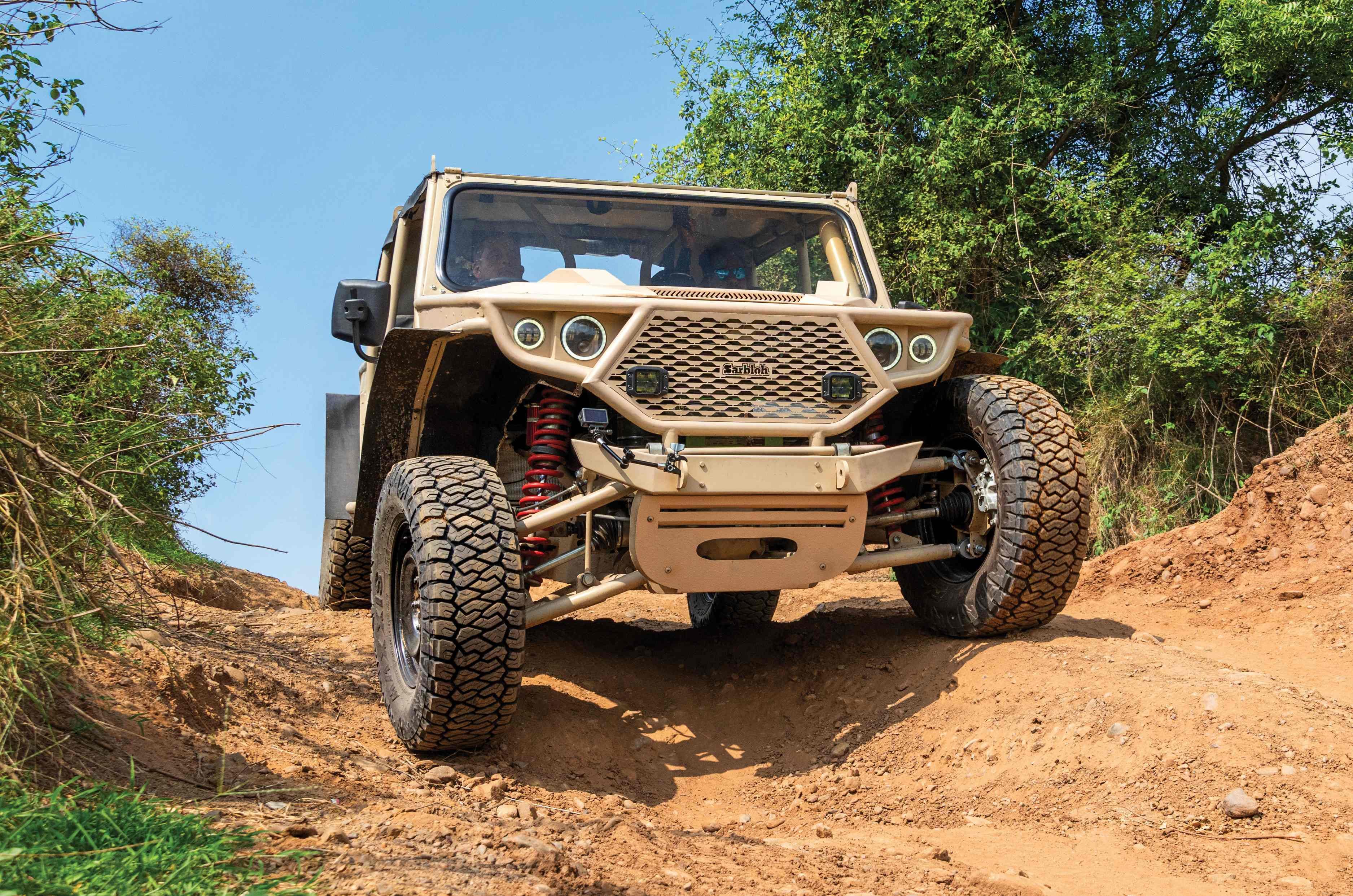
EX4’s wheel articulation with independent suspension.
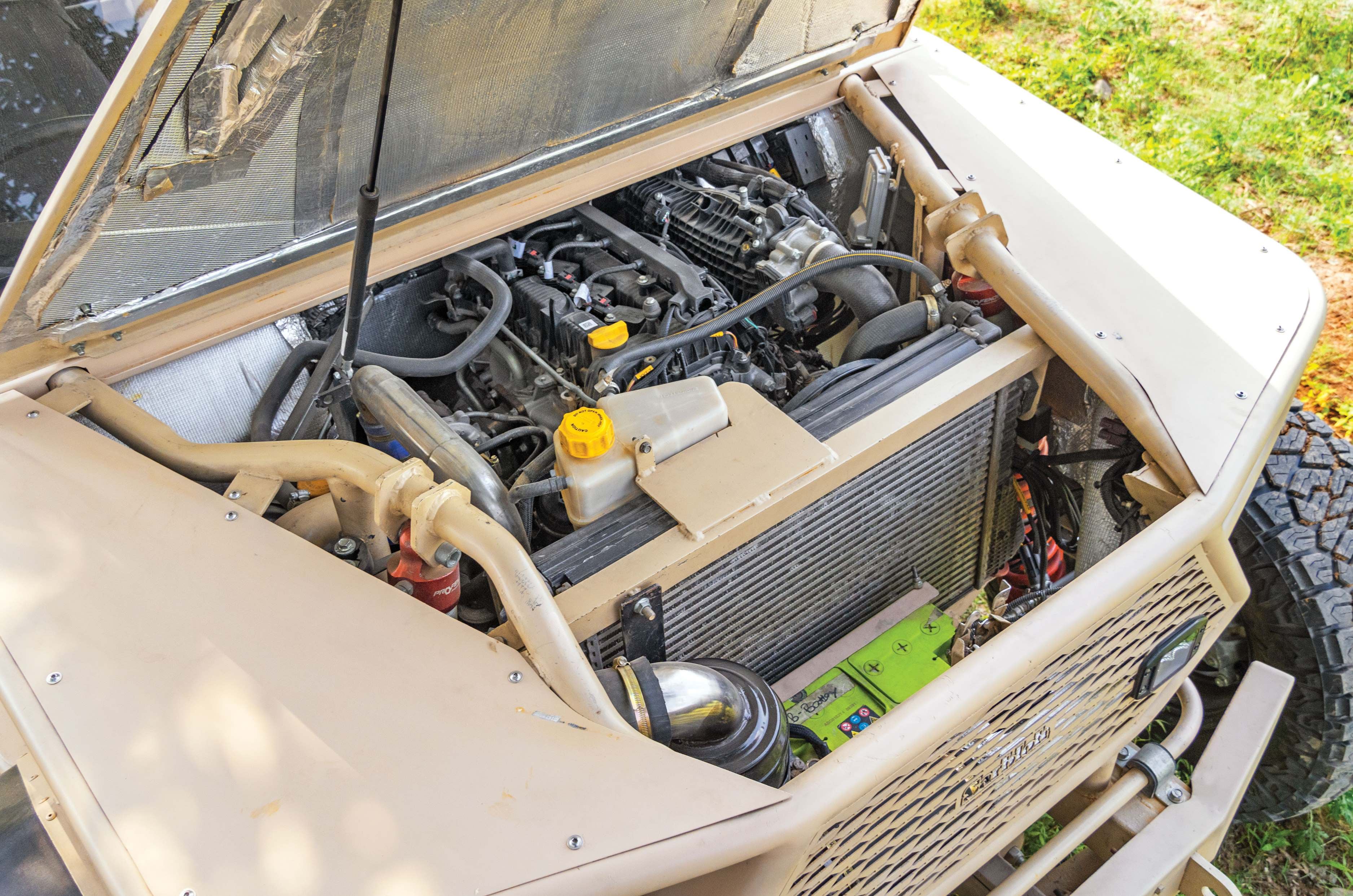
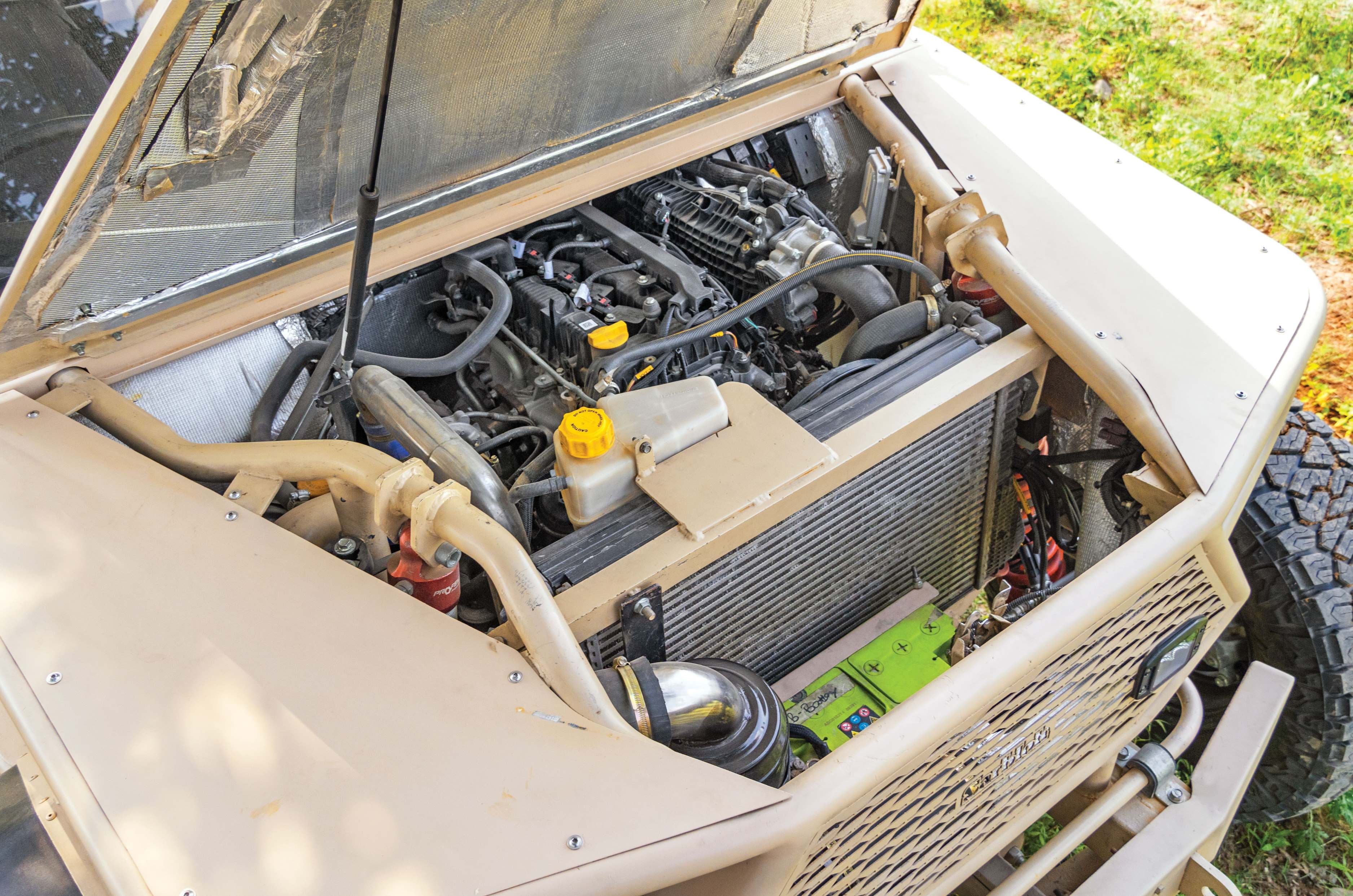
While the Tomcar is a tactical ATV meant to function as the tip of the sword, the EX4 is a home-grown scout vehicle built to take on difficult terrain and tough off-road conditions. Based on an extreme off-roader, this is a more conventional vehicle that has its engine up front and extremely short front and rear overhangs. Power comes via the same 175hp 1.5-litre turbo-petrol, and then this one even gets the option of a 2.0 diesel that makes 167hp. The latter is sourced from Fiat/Jeep or Stellantis. The chassis is a tubular space frame, and from the dimensions, you can sort of tell that this thing evolved from a Rain Forest Challenge buggy.
It can be had with a 175hp petrol or 167hp diesel.
A large A-arm suspension up front and an elongated rear trailing arm help it clamber over most obstacles, and like the Tomcar, it uses canister-fed, motorsport-based dampers that can be adjusted over a wide range. Now, despite the engine being in front, the nose is pretty compact, and interestingly, the anti-roll bar can be seen running around the front of the grille! Of course, the tyres form the extremities of the car; it gets rubber or plastic fenders around the side, and check this out, you can raise the windscreen so you can stick a weapon out and defend yourself if you are in the front seat.
The snorkel is placed with the frame.
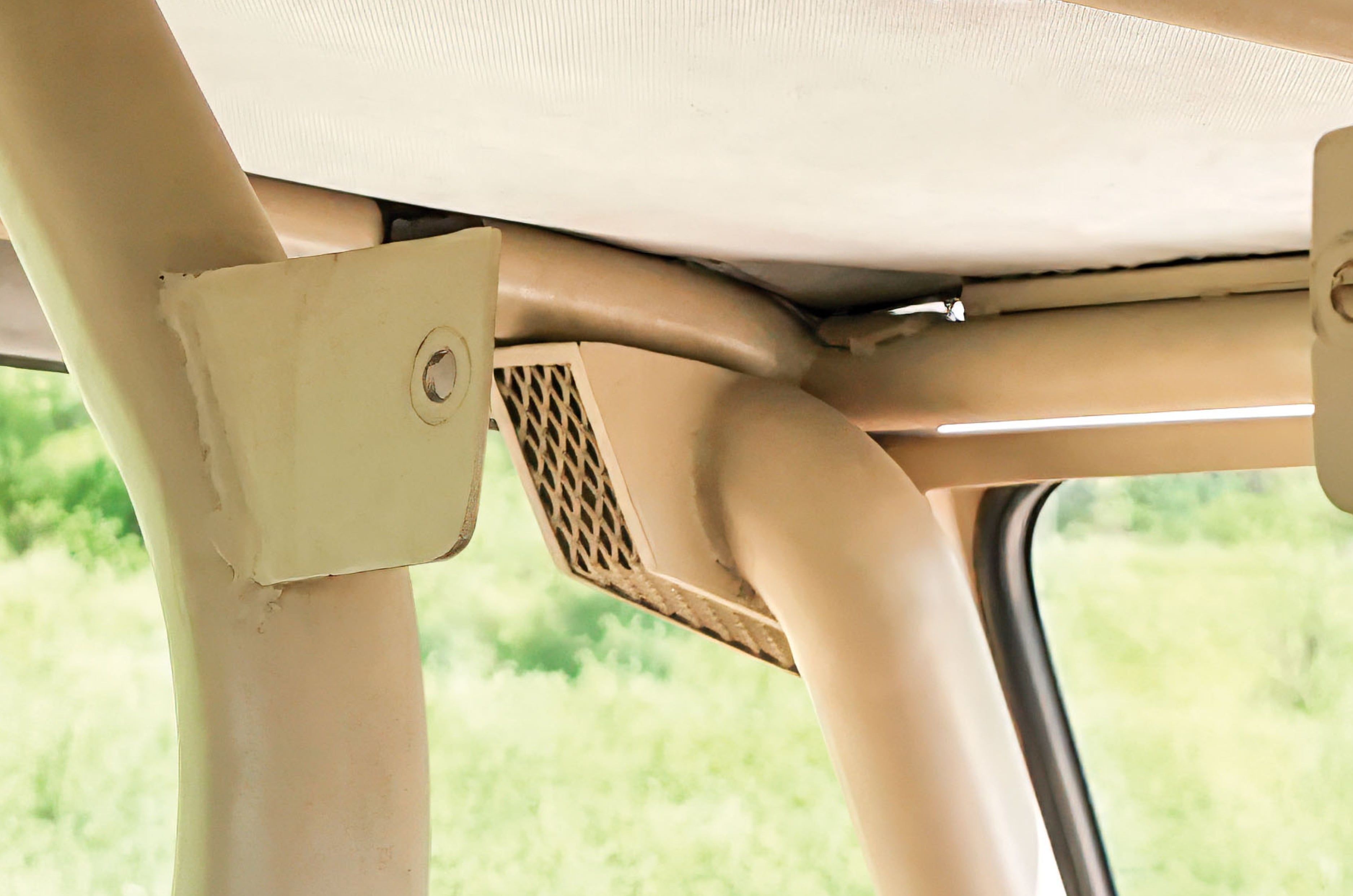
Unlike the Tomcar, this one also has mini doors, look behind the A-pillar on the left and you see the snorkel (neatly hidden away), and walk around to the rear and you get a sense of just how compact this car is. It’s so tight, even the spare sticks out the back. Also interesting are the large brackets on the roof, in case you want to air-lift this vehicle or hoist it onto a ship.
This prototype has many basic features that are likely to be upgraded in future versions.
Once behind the wheel, the EX4 feels more ‘direct,’ the manual gearbox making it feel much more sprightly. And then once you find traction in the sand, it takes off and accelerates better too. If anything, this one clearly has more zip, and it feels lighter on its feet too. The ride on this early prototype, however, isn’t anywhere as stable, and the faster you go, the more it bobs and gets tossed around. What’s also clear as you up the speed is that directional stability isn’t as good. That said, it is more willing to turn and take tighter corners. What you also hear while driving the EX4 is the intake, placed not too far from your ear, and that’s especially when you work the throttle and ask for more air. Where it shines is in extreme off-road conditions. Steep climbs with low traction, drops that could give you nose bleed, these are taken in its stride, the low range and superior traction not even needing the intervention of the locking differential for the most part. The EX4 is available from Rs 40 lakh.
Compact rear carries essential water supply for troop.
Bespoke by design
Blessed with the functional focus of a moon buggy, the ability to drive over terrain at speed that would have a regular 4×4-based military off-roader bouncing all over the place, the Tomcar is a purpose-built weapon system engineered by the end user. Designed to push the envelope in specific areas and deliver speed and dependability over rough terrain, it possesses a unique set of characteristics that are sure to give our special forces and advanced tactical units a unique advantage. And the cherry on top is that it is made right here in India by JSW Tomcar (part of JSW Defence).
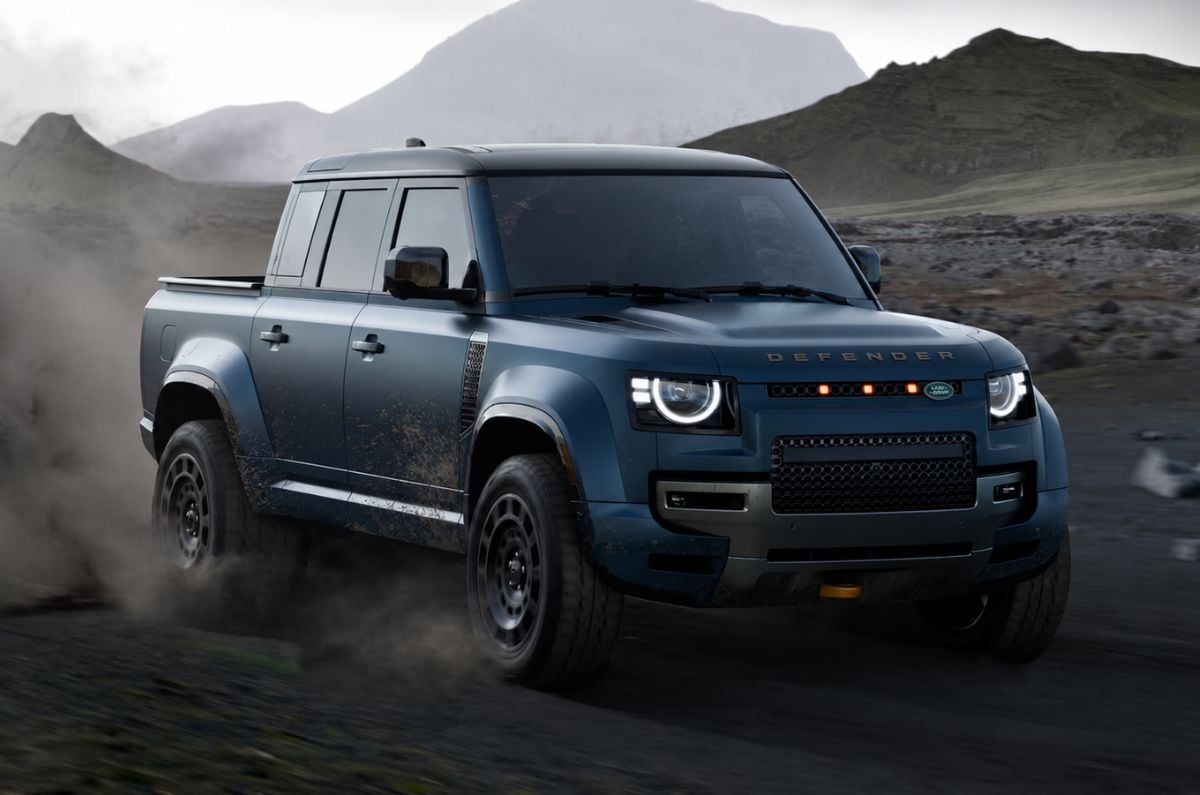
Jaguar Land Rover (JLR), along with its Stellantis partner, is considering a Defender Pickup truck for the US market, according to a report by The Times. This comes just a few months after JLR and Stellantis signed a Memorandum of Understanding (MOU) aimed specifically at collaborating for product development opportunities for buyers in North America.
The Defender Pickup is aimed at the US market.
Likely to be localised in the States to avoid import tariffs.
To be one of several new models JLR’s planning for the region.
Land Rover Defender Pickup: What we know so far?
While the two brands have signed a MoU, exact details regarding the upcoming Land Rover pickup truck are expected to emerge towards the end of 2026. Former Executive Director of Vehicle Programmes at JLR, Nick Collins, admitted to Autocar UK in 2021 that not only is “there a customer demand” for such a pickup truck, but also that one “can be made from a monocoque as there are no structural limitations”.
However, it remains to be seen which platform the Defender Pickup truck actually uses. For perspective, JLR and Stellantis have at their disposal the Defender’s monocoque platform and the body-on-frame designs used by Stellantis-owned brands like Jeep and RAM. Buyers looking for high-end pickup trucks in North America currently have popular options that include range-topping variants of the Ford F-150, Chevrolet Silverado 1500, GMC Sierra 1500 and RAM 1500 – all of which are body-on-frame models.
While the Defender SUV range sold worldwide rolls out of JLR’s Slovakia facility, The Times report indicated that the Defender Pickup truck is likely to be produced locally in the US to avoid import tariffs. The US is a “priority growth market” and will lead to “exclusive offerings” in due course, PB Balaji, Chief Executive Officer of JLR, said. JLR’s plans for North America stretches beyond just one model. “Working with Stellantis allows us to explore complementary capabilities in product and technology development that support our long‑term growth plans for the US market,” Balaji added.