
Hyundai compact EV to debut by end of 2026

Hyundai compact EV to debut by end of 2026

At its 2026 CEO Investor Day, Hyundai revealed plans to debut its made-in-India compact electric SUV by March 2027. However, Tarun Garg, Managing Director and CEO of Hyundai Motor India, in an interaction with our sister publication Autocar Professional, confirmed the EV will debut earlier than that, by the end of 2026. Garg also said that the EV will initially use battery cells from Svolt, before moving to its original plan to source them from Exide. 

  1. To be built on the E-GMP (K) platform that underpins the Inster EV
  2. Will rival the Tata Nexon EV, Mahindra XUV 3XO EV and Kia Syros EV

Hyundai has also revealed it expects EVs to account for more than 7 percent of its domestic sales within the next year. In FY26 (April 2025 to March 2026), EVs accounted for a 1 percent share of total Hyundai sales in the country, a figure similar to FY25 (April 2024 to March 2025).

Upcoming Hyundai compact EV: More details

Svolt to supply battery cells initially, after Exide flagged production delays earlier

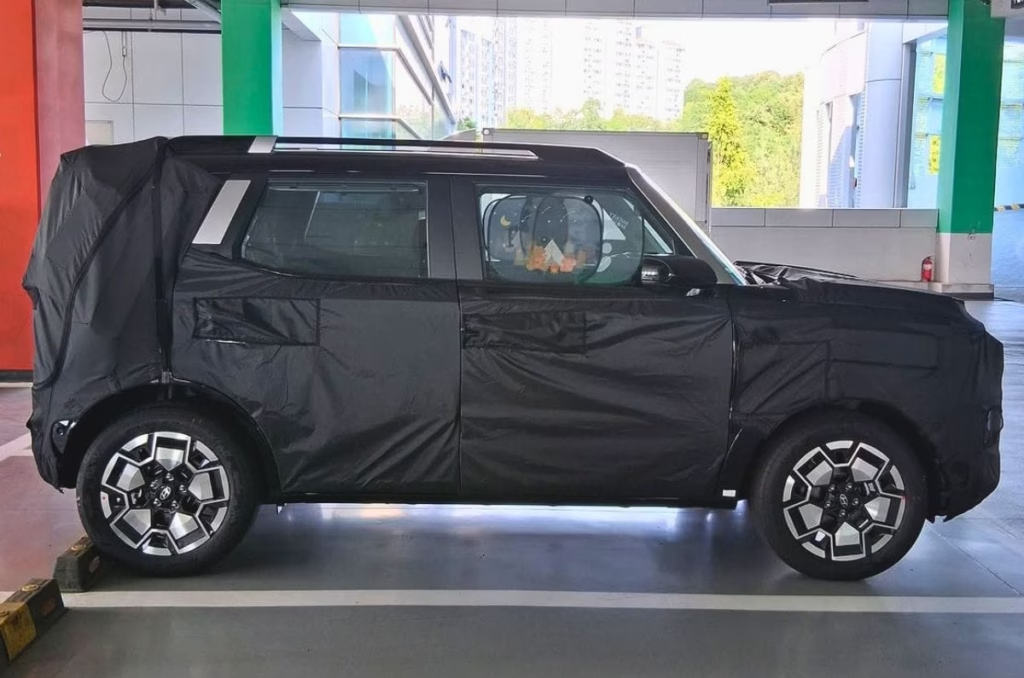
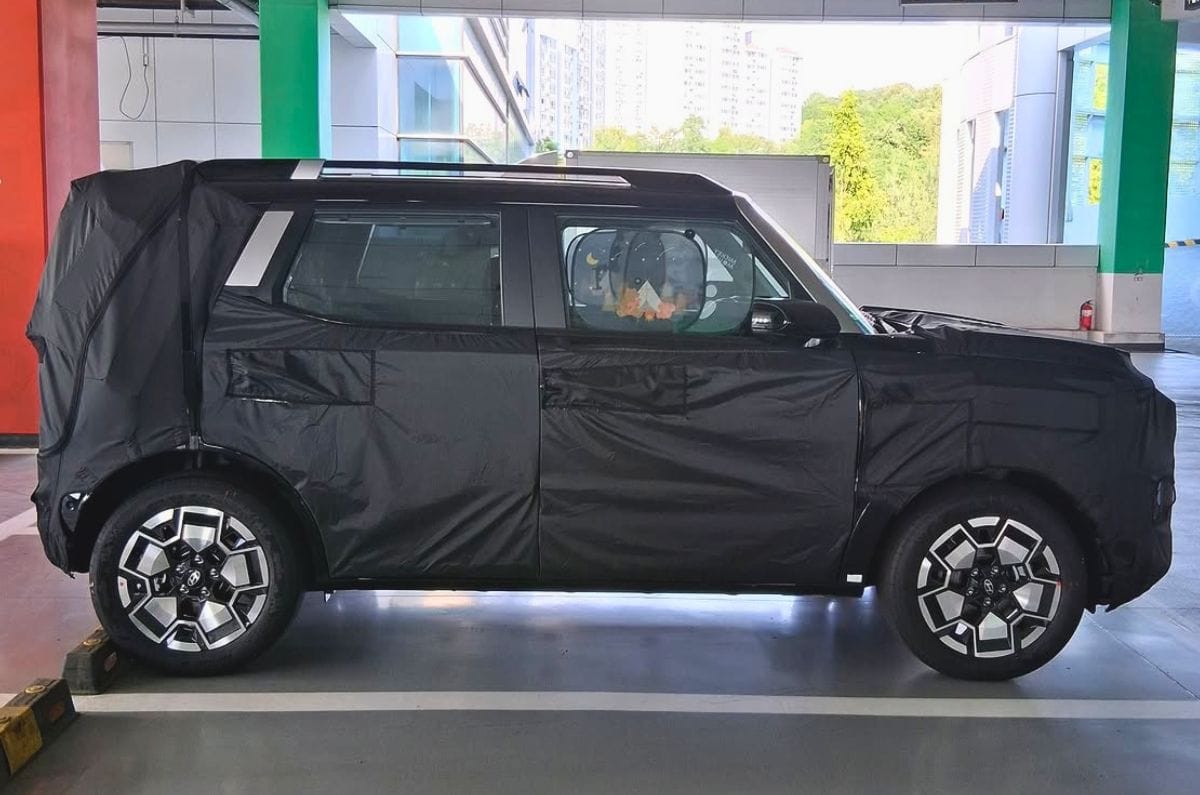
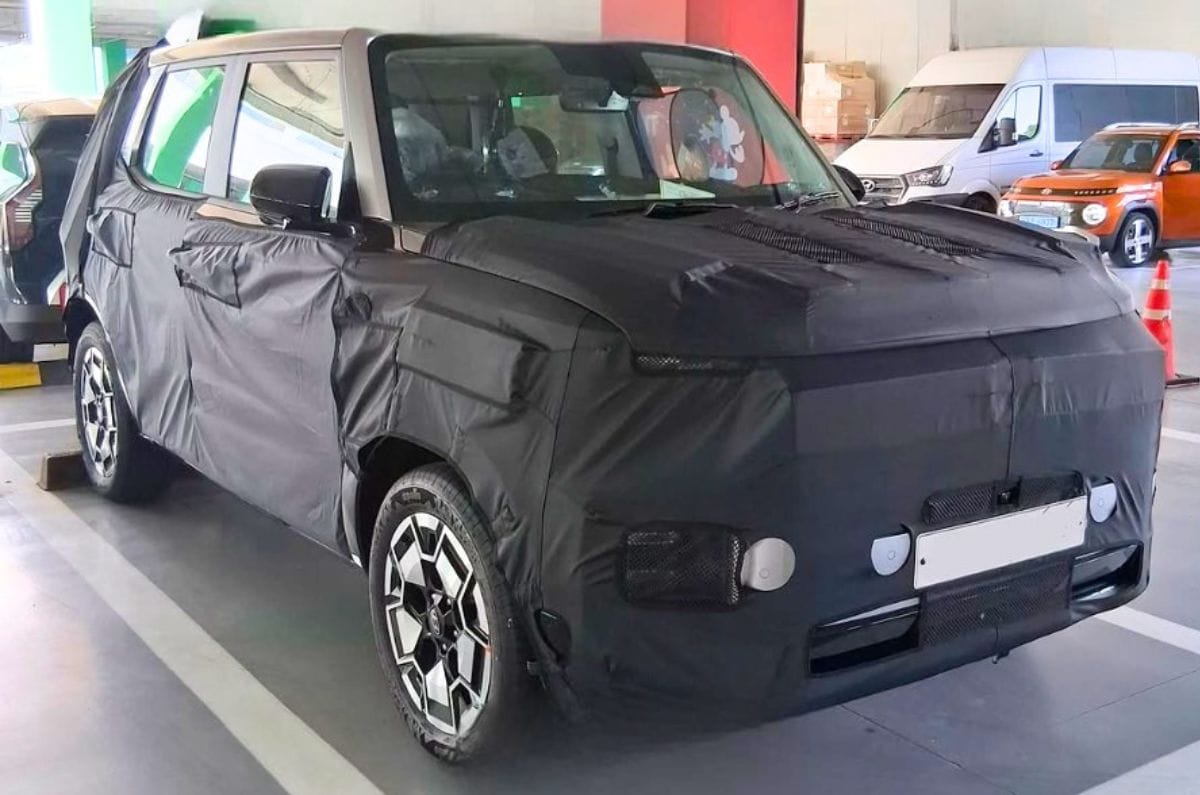
Image source: @joonsun_erin on Instagram

The upcoming compact EV will initially use Svolt battery cells. “We are already ready with the new EV using Svolt cells. Otherwise, the programme could have been delayed, and we did not want to delay the vehicle,” Garg said to Autocar Professional. However, Hyundai subsequently plans to source locally produced cells through its association with Exide, as was originally planned. Notably, Exide revealed in August 2026 that battery production is delayed and that they would not be able to supply components by FY27 (by March 2027). 

Will be underpinned by the Inster’s E-GMP (K) platform

The upcoming compact EV, codenamed HE1i, will be underpinned by the E-GMP (K) platform, also used by the internationally available Inster EV. It will be offered in two versions: standard range and long range, but exact specifications are under wraps. For context, the Inster EV is also available in standard and long-range versions, with 42kWh and 45kWh batteries, respectively, offering a WLTP-claimed range of up to 355km.

Hyundai has also confirmed that the new compact EV will get a ‘next-generation infotainment system’, which could be the Pleos Connect infotainment system seen on several new-age Hyundai models now, and a ‘Level 2 assisted driving technology’. It will be manufactured at Hyundai’s Sriperumbudur facility in Tamil Nadu. Upon launch, it will lock horns with the Tata Nexon EV, Mahindra XUV 3XO EV and Kia Syros EV. 

With inputs from Ketan Thakkar and Hormazd Sorabjee

Tata Motors adopts Tata.cars as new identity for PV business

Tata Motors adopts Tata.cars as new identity for PV business
Tata Motors adopts Tata.cars identity for passenger vehicle business

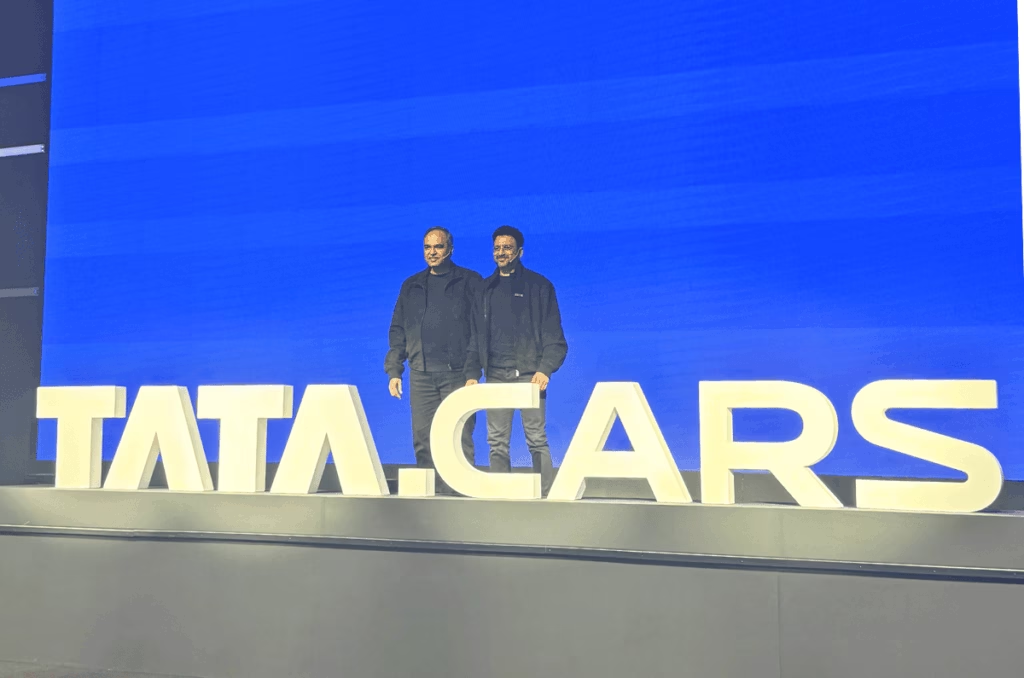
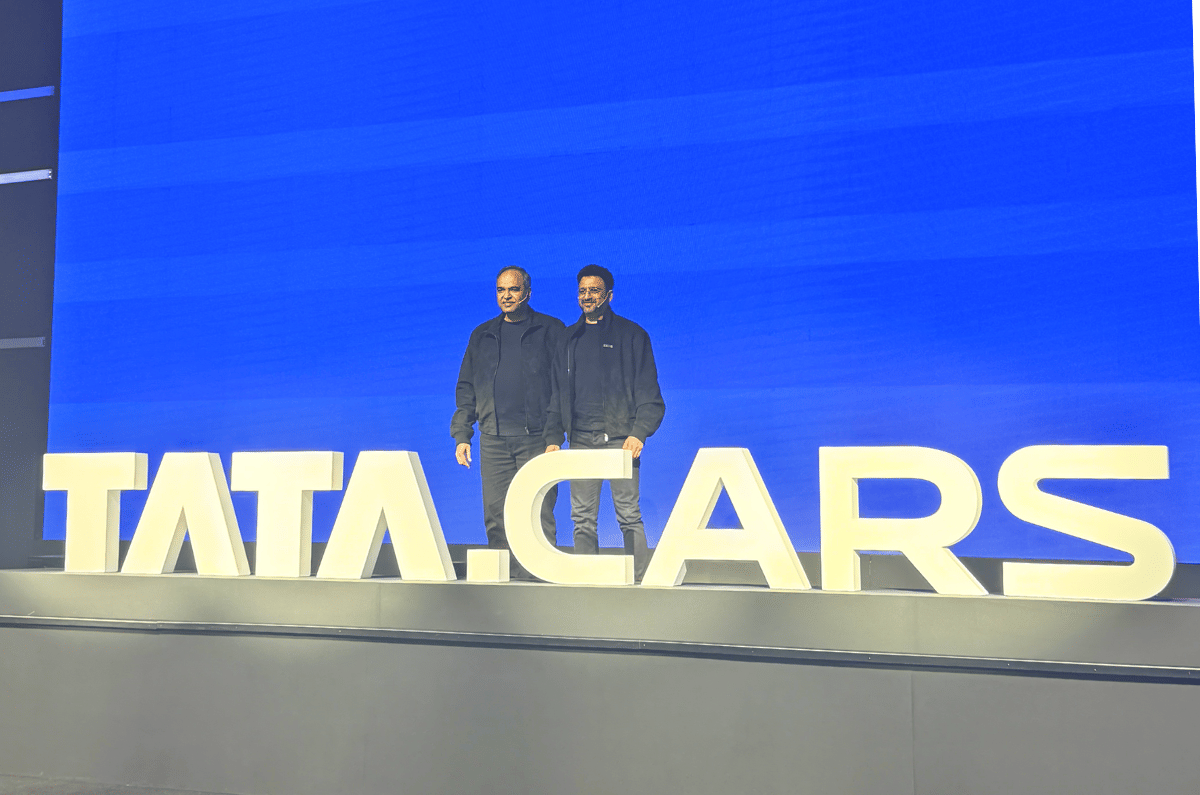
Tata Motors announced Tata.cars as the new retail name for its passenger vehicle (PV) division on Thursday. Both internal combustion engine (ICE) and electric vehicle (EV) models will now come under Tata.cars umbrella brand. Tata.ev will continue as a sub-brand under the wider Tata.cars brand. This new identity will progressively appear across showrooms, digital touch points, after-sales and service operations, and marketing communications.

  1. Tata.ev to continue as a sub-brand under Tata.cars
  2. Tata Motors Passenger Vehicles to remain as the registered legal entity
  3. New principal colour and typeface are a part of the new identity

That said, the company’s legal identity and corporate structure remain unchanged. Tata Motors Passenger Vehicles will continue to be the registered legal entity for statutory filings, manufacturing plants, official contracts and regulatory obligations. 

Tata Motors adopts Tata.cars as new identity for PV business

Tata Motors said the new identity formalises how Indian customers already refer to its passenger vehicles as “Tata cars”. “In many ways, Tata.cars is an identity that India has given us. Today, we formally embrace it,” said Shailesh Chandra, Managing Director, Tata Motors Passenger Vehicles and Tata Passenger Electric Mobility. “The Tata name carries our heritage, our values and the trust earned over generations, while Tata.cars gives our passenger vehicle business a distinct, modern and future-facing expression,” he added.

Vivek Srivatsa, Chief Commercial Officer, Tata Passenger Electric Mobility, said the transition would also introduce a new visual and sensory system built around a design philosophy called Parallel Pathways. It includes Ambition Blue as the principal colour, a bespoke typeface called Parallel Display and a new sonic identity. Tata Motors will also begin updating its dealerships over the next few months with redesigned interiors and a new stainless-steel facade featuring louvred panels.

The new brand system has been designed to work across products, technologies, customer experiences and markets. While customers will increasingly encounter Tata.cars across sales and service channels, corporate and regulatory references will continue under Tata Motors Passenger Vehicles.

With inputs from Ketan Thakkar.

Skoda India to bring EVs as limited imports next year

Skoda India to bring EVs as limited imports next year
Skoda Peaq front quarter static

Skoda Auto India plans to bring electric vehicles from its global portfolio to India in limited volumes next year as the Czech automaker looks to establish its presence in the EV market. According to Ashish Gupta, Brand Director, Skoda Auto India, the company needs an electric vehicle in its portfolio not only to meet future regulatory requirements but also to remain relevant as EV adoption gathers pace in India.

Skoda India to bring EVs: Additional details 

“A lot of things are under discussion. So, for meeting the CAFÉ norms, there are a lot of opportunities available along with electrification, which has to be the cornerstone of meeting all compliance regulations. So that is something which we are aggressively working on,” Gupta told our sister publication, Autocar Professional.

Gupta added that the company needs an electric car in its portfolio since adoption has grown in the last 3 months owing to increasing fuel prices. While Skoda has yet to announce a specific locally manufactured EV for India, Gupta confirmed that the company plans to introduce EVs from its global line-up next year.

“It may not be a local EV, but yes, we just had two blockbuster launches globally of the Epiq and the Peaq. The Elroq is the best-selling EV in Europe. So these are opportunities available to us in limited batches,” he said. He added that in the current duty structure, it will not be possible to bring them at price points that will get volumes. “But definitely we need to urgently showcase our EV credentials and the proof point to India,” he added. 

This will allow Skoda to establish a presence in the EV market without immediately committing to the significant investment required to localise an electric model. With imported EVs still facing a challenging cost structure, Gupta said the initial objective would be to demonstrate the brand’s technology and capabilities rather than chase mass-market volumes. 

Skoda India’s hybrid ambitions take a slow gear 

Skoda’s approach to hybrids, meanwhile, appears less certain. Gupta said the company had previously viewed hybrids as a potentially stronger opportunity than EVs in India, but market data over the past two years has changed his assessment.

“Two years ago, I would have said I would take a bet on hybrid more than EV. But the tax structure has not helped anybody. In the last year, pure hybrids have stayed at 2% of the market. They have not gone beyond that. So, I am not sure whether hybrid is the right way to go. And what the last 6 months have also shown us is that people are more than willing to go for EVs now,” he said. 

The current trade and taxation structure also influences the company’s hesitation. Gupta said the India-EU Free Trade Agreement, while potentially creating opportunities for imported petrol and diesel models, does not provide similar benefits for EVs and hybrid electric vehicles. “I think from a global portfolio point of view, and if I want to bring the cars from the global portfolio with the contours of the FTA as they are, petrol and diesel will definitely be an opportunity. The diesel opportunity opens up; HEVs and electrics do not have any benefit, unfortunately,” he said. 

Gupta said the brand’s positioning in India is a bit above mass and below luxury. “That’s our natural positioning; that’s why customers buy us as well, and if we try to sell to cheap customers, they don’t buy us. If we try to sell to expensive customers, they don’t buy from us. So we have to stay true to our positioning and how customers see us,” he said. The immediate priority, Gupta adds, is to get EVs into the country as the company continues to assess which powertrains can deliver the right combination of regulatory compliance, customer demand and commercial viability.

With inputs from Ketan Thakkar

Kia evaluating new B- and C-segment models for India

Kia evaluating new B- and C-segment models for India
Upcoming Kia models in India

Kia has a barrage of new products lined up for India over the next couple of years, which includes the likes of the Sorento, Seltos and Carnival hybrids and also the next-generation Sonet. However, despite the expansive lineup of products, there will still be a couple of key gaps in the carmaker’s portfolio in India. 

Specifically speaking, given Kia’s price and positioning strategy, there exists a gap between the Syros and Seltos, and going forward, there will be a space to fill between the Seltos and Sorento as well. Our sources have indicated that Kia is looking to address these exact gaps with two additional models that could launch by 2028-29. 

New Kia B-segment model: what to expect?

The new-gen Seltos (priced between Rs 10.99 lakh – Rs 21.82 lakh) has moved a notch up on the premium-ness ladder, leaving a sizeable space between itself and the Syros (priced between Rs 8.42 lakh – Rs 15 lakh). Kia is looking at a two-pronged strategy to tackle the midsize SUV segment, much like Hyundai will be doing with the Creta and upcoming Bayon-based SUV.  

This upcoming B-segment model is expected to slot in the sweet spot between the Syros and the Seltos, likely measuring around 4.2 meters in length. It is not clear yet what exactly will be the body style of this upcoming model, but Kia could be leaning towards an SUV given the market’s preference. It can be expected to be powered by Kia’s existing petrol and diesel engines along with an electrified powertrain option as well.

New Kia C-segment model: what to expect?

When the Sorento arrives later this year, it is expected to be priced between Rs 30-35 lakh (ex-showroom), meaning there will be a sizeable gap created between the Seltos and Sorento. This is expected to be filled up by a new C-segment model that will be positioned against the likes of the Hyundai Alcazar and other three-row SUVs. This, too, is expected to come with a diverse range of powertrain options, including electrified ones. 

While the B-segment model is all but confirmed, Kia is still understood to be studying the feasibility of the C-segment model, and is yet to take a final call on it. 

Kia has previously confirmed that it plans to expand local portfolio to 10 models by 2030, and these two upcoming models will be a crucial part of the puzzle. In fact, sources say the carmaker is even mulling setting up another assembly line at its plant to address the production of these upcoming models. These models are expected to give Kia a much more complete lineup as it looks to solidify its place among the top five carmakers in India.

With inputs from Ketan Thakkar

Skoda Superb diesel India launch in 2027

Skoda Superb diesel India launch in 2027
Skoda Superb India launch details

Skoda Auto will bring the diesel-powered Superb back to India in the first half of 2027, marking the return of the brand’s flagship sedan after a two-year hiatus. The previous, third-gen Superb had a brief second innings as an import, with a limited run of just 100 units. Skoda, however, hasn’t given up on its flagship. In fact, the latest fourth-gen Superb, which debuted globally in late 2023, was shown to the Indian public at the Bharat Mobility Show in January 2025, and Skoda had indicated at the time that it would bring the sedan to India. 

  1. Superb expected to return with a 2.0-litre diesel engine 
  2. Marks the return of diesel to a VW group brand since 2020
  3. Could benefit from India-EU FTA set to take effect next year 

The flagship sedan is expected to be imported as a completely built-up unit (CBU) and positioned at the top of Skoda’s Indian range. 

Skoda Superb to return with a diesel 

Significantly, the Superb will mark the return of diesel to Skoda’s India portfolio, and is expected to use VW Group’s 2.0-litre TDI engine. The carmaker discontinued diesel ahead of the transition to BS6 emission norms in 2020 and currently sells only petrol-powered models in the country. 

The Superb diesel was showcased at the 2026 Bharat Mobility Global Expo. 

The diesel engine could well be the Superb’s main selling point, as there is no premium diesel sedan on sale in India today. There is still a small but steady demand for diesel, and that’s exactly what Skoda cleverly wants to tap into. The model is expected to remain a low-volume import, with its role focused on strengthening the brand and the sedan legacy of Skoda.

Flagship appeal, halo effect

The Superb has played an important part in establishing Skoda’s premium image over its 25 years in India. Its return would give existing customers an upgrade path within the brand and add a large sedan option in a portfolio dominated by SUVs. It would also allow dealers to address a wider price band and reach customers from rival brands. If priced right, the Superb could be an alternative to the Toyota Camry, the only other sedan in the premium segment. 

Superb diesel could be a unique proposition as there are currently no premium diesel sedans available. 

As a CBU, the Superb will attracts steep customs duties, and local assembly isn’t an option either, as the Bratislava plant that builds the sedan has no facility to produce CKD kits for export markets. The timing, however, is just right. With the EU-India free trade agreement set to take effect from next year, a sharp reduction in customs duties could see the Superb diesel priced far more attractively than before. For now, though, expect the fully loaded variant to come in at around Rs 55 lakh-60 lakh.

With inputs from Ketan Thakkar 

JSW Group and Skoda-VW manufacturing joint venture MoU expected within 2 months

JSW Group and Skoda-VW manufacturing joint venture MoU expected within 2 months

Skoda Auto Volkswagen India and the JSW Group are in the final stages of discussions for a manufacturing joint venture, we have learned. The two companies are likely to sign a non-binding memorandum of understanding (MoU) within the next two months. The proposed venture is currently being discussed as a 51:49 joint venture, with the JSW Group expected to hold the majority stake.

Emails seeking comments were sent to Skoda Auto Volkswagen India and the JSW Group on Tuesday, but neither company responded till the time of publishing. Autocar Professional, our sister publication, understands senior global executives from Skoda Auto and Volkswagen are expected to visit India in the second fortnight of August. The proposed alliance with the JSW Group is expected to be among the key subjects on the agenda as the two sides work towards signing the non-binding MoU.

Equity infusion could fund EV development

The proposed partnership comes as Skoda Auto Volkswagen India prepares its next round of investments in electrification and localisation. The equity infusion from the JSW Group is expected to fund the development and localisation of electric vehicles and support future product programmes.

A large part of the investment is expected to go towards vehicles based on the India Main Platform (IMP), Volkswagen Group’s EV architecture for India. The IMP is derived from the China Main Platform (CMP), allowing the group to use an existing EV architecture and adapt it to Indian regulations, the local supplier base and localisation requirements.

The platform is expected to underpin multiple electric SUVs for the Skoda and Volkswagen brands over the next few years. Higher localisation will be key to bringing down costs and reducing dependence on imports. The scope of discussions goes beyond manufacturing. We understand that the sales and marketing operations across the group’s brands are also part of the talks. A few years ago, the sales organisations of Skoda, Volkswagen, Audi, Porsche and Lamborghini were integrated with the manufacturing business under Skoda Auto Volkswagen India. This has also brought the premium brands within the scope of the discussions.

JSW’s broader automotive strategy

For the JSW Group, the proposed venture is part of a broader effort to build an integrated automotive business across passenger vehicles, commercial vehicles, batteries, manufacturing and exports. Unlike JSW MG Motor India, the proposed Skoda Auto Volkswagen venture will have no Chinese participation, allowing the group to further de-risk its automotive business from China-linked partnerships. We understand the alliance will also help diversify JSW Group’s passenger vehicle operations while creating a Make in India manufacturing base serving both domestic and export markets by leveraging Volkswagen Group’s global production and distribution network. The proposed India-EU Free Trade Agreement is also expected to strengthen the business case for exports from India to Europe over the longer term, making exports an important part of the proposed alliance.

The partnership also fits into the group’s wider automotive plans. JSW already has its joint venture with MG, has set up JSW Motors as a separate passenger vehicle business for products outside the MG alliance, operates JSW Greentech for buses and commercial vehicles, and is investing in cell manufacturing and localisation. The group is looking to connect these businesses with its existing strengths in steel, paints and energy, creating greater vertical integration across its automotive operations.

Localisation of some models being studied

We understand the alliance will also look to leverage manufacturing assets across the JSW Group wherever feasible. This includes the JSW Motors facility at Sambhaji Nagar, formerly Aurangabad, where higher localisation of products such as the Skoda Kodiaq and select Audi models is being evaluated. The aim is to improve localisation levels while making better use of the group’s existing manufacturing footprint.

The alliance is also evaluating the localisation of the next-generation Kodiaq platform. If approved, it could underpin a locally manufactured three-row SUV positioned in the Mahindra XUV 7XO segment. Localising the platform would allow Skoda Auto Volkswagen to compete in one of the country’s largest SUV segments with significantly higher local content.

Following the signing of the non-binding MoU, the two sides are expected to finalise the equity structure, including the shareholding pattern, before moving towards definitive agreements and the required approvals. The discussions are currently centred on a 51:49 joint venture, with the JSW Group expected to hold the majority stake.

With inputs from Ketan Thakkar.

Ketan Agarwal Murder Case: केतन की हत्या करने से पहले सिया ने चेतन से कर ली थी शादी! WhatsApp चैट से हुआ खुलासा

Ketan Agarwal Murder Case: लोनावला के पास ऐतिहासिक लोहागढ़ किले से कारोबारी केतन अग्रवाल को कथित तौर पर धक्का देकर नीचे गिराने और उनकी मौत के मामले ने पूरे देश को हिला दिया था। अब इस केस में एक और चौंकाने वाला मोड़ सामने आया है। पुलिस जांच में पता चला है कि केतन की मंगेतर और इस मामले की मुख्य आरोपी सिया गोयल कथित तौर पर पहले से शादीशुदा थीं।

News18 की एक रिपोर्ट के अनुसार, पुलिस का दावा है कि आरोपी सिया गोयल और उनके कथित प्रेमी चेतन चौधरी ने चार महीने पहले अपने परिवारों से छिपाकर गुपचुप तरीके से शादी कर ली थी।

खबरों के मुताबिक, उनके फोन से मिली WhatsApp चैट से यह बात सामने आई है। जांचकर्ताओं का कहना है कि इन चैट ने इस गुपचुप शादी का राज खोल दिया है और पूरे मामले को एक नया मोड़ दिया है।

आरोप है कि 18 जून को केतन अग्रवाल को लोहागढ़ किले से नीचे धकेलकर मार डाला गया था। फिलहाल, पुलिस ने इस मामले में सिया गोयल और चेतन चौधरी को गिरफ्तार किया है।

WhatsApp चैट और इंटरनेट हिस्ट्री से कथित तौर पर क्या पता चला?

News18 के मुताबिक, पुलिस ने आरोपियों के फोन से मिले कॉल रिकॉर्ड, लोकेशन डेटा, चैट और इंटरनेट सर्च हिस्ट्री की जांच की। पिछले छह-सात महीनों के डिजिटल डेटा की जांच के दौरान, जांच करने वालों को पता चला कि सिया और चेतन ने कथित तौर पर चार महीने पहले ही शादी कर ली थी, लेकिन परिवारों के डर से इसे छिपाकर रखा था।

पुलिस को शक है कि इसी गुपचुप शादी के बाद केतन को रास्ते से हटाने की कथित साजिश रची गई थी।

‘मुझमें हिम्मत नहीं है, तुम भी आओ’: सिया ने कथित तौर पर चेतन से क्या कहा?

पुलिस का कहना है कि केतन अग्रवाल की हत्या की पहली कोशिश कथित तौर पर 14 जून को ही की गई थी, लेकिन सिया आखिरी पल में घबरा गई और कोशिश नाकाम रही। इसके बाद, उसने कथित तौर पर चेतन को मैसेज किया, “मुझमें यह करने की हिम्मत नहीं है, तुम भी आओ – हम दोनों मिलकर उसे चट्टान से नीचे धकेल देंगे।” जांचकर्ताओं का कहना है कि दोनों ने कथित तौर पर 18 जून को मिलकर हत्या को अंजाम दिया।

यह भी पढ़ें: Ketan Murder Case: केतन अग्रवाल मर्डर केस में अब क्या होगा? पंचशील टेस्ट से जमानत तक, जानिए आगे की पूरी कहानी

Ketan Murder Case: केतन अग्रवाल मर्डर केस में अब क्या होगा? पंचशील टेस्ट से जमानत तक, जानिए आगे की पूरी कहानी

पूरे देश को हिला देने वाले पुणे के केतन अग्रवाल मर्डर केस की आरोपी सिया गोयल और उसके बॉयफ्रेंड चेतन चौधरी को 16 जुलाई तक न्यायिक हिरासत में भेज दिया है। दोनों की 11 दिन की पुलिस रिमांड पूरी होने के बाद अब जांच एजेंसियां उनसे पूछताछ की बजाय मामले से जुड़े सबूतों की जांच और उन्हें मजबूत करने पर ध्यान दे रही हैं।

अब आगे क्या होगा?

इस मामले में अब जांच का सबसे बड़ा फोकस डिजिटल सबूतों पर है। जांच एजेंसियां सिया गोयल के मोबाइल से मिले डेटा और कोड में लिखे गए मैसेज को समझने की कोशिश कर रही हैं। पुणे ग्रामीण पुलिस को हाल ही में स्नैपचैट की एक चैट मिली है। इसमें सिया ने कथित तौर पर अपनी एक दोस्त से आधार कार्ड की जानकारी मांगी थी ताकि टिकट बुक किया जा सके। चैट में उसने यह भी लिखा था कि यह “ऐसी शादी के लिए है जो कभी नहीं होगी।” अब जांचकर्ता दूसरे संदिग्ध कोड वाले मैसेज भी खंगाल रहे हैं। उनका पता लगाना है कि क्या इस कथित साजिश में सिया और चेतन के अलावा कोई तीसरा व्यक्ति भी शामिल था।

इन सबूतों पर टिकी जांच

इस मामले में लोहगढ़ किले से कथित तौर पर धक्का देने की घटना का कोई चश्मदीद गवाह नहीं है। इसलिए पुलिस पूरे मामले को परिस्थितिजन्य सबूतों के आधार पर मजबूत बनाने में जुटी है। कानूनी प्रक्रिया के तहत अभियोजन पक्ष को ऐसे सबूत पेश करने होंगे, जिनसे घटनाओं की पूरी कड़ी साफ तौर पर जुड़ जाए और यह साबित हो सके कि आरोपियों की भूमिका ही अपराध की ओर इशारा करती है।

जांच में पुलिस कई अहम सबूतों को जोड़कर मामला मजबूत करने की कोशिश कर रही है। इसमें घटनास्थल का पंचनामा, घटना का री-क्रिएशन (दोबारा घटनाक्रम तैयार करना) और वह जगह भी शामिल है, जहां आरोपियों ने कथित तौर पर केतन को धक्का देने की प्रैक्टिस की थी। इसके अलावा, घटना के समय पहने गए बताए जा रहे कपड़ों और केतन के जले हुए पासपोर्ट की फोरेंसिक जांच भी की जा रही है।

क्या है पंचशील टेस्ट?

पंचशील टेस्ट सुप्रीम कोर्ट का एक अहम कानूनी सिद्धांत है। इसका इस्तेमाल तब किया जाता है, जब किसी मामले में सीधे गवाह नहीं होते और फैसला परिस्थितिजन्य सबूतों के आधार पर करना होता है। साल 1984 में ‘शरद बिरधीचंद सारडा बनाम महाराष्ट्र राज्य’ मामले में सुप्रीम कोर्ट ने इसके पांच मुख्य सिद्धांत बताए थे।इन पांच सिद्धांतों में यह जरूरी है कि सभी तथ्य पूरी तरह साबित हों, सबूत अपराध से साफ तौर पर जुड़े हों, उनकी विश्वसनीयता मजबूत हो, किसी दूसरी संभावना की गुंजाइश न बचे और सभी सबूत मिलकर ऐसी अटूट कड़ी बनाएं जो सीधे आरोपी की ओर इशारा करे।

शुरुआत में पुलिस दोनों आरोपियों के अलग-अलग बयानों की सच्चाई जानने के लिए उनका पॉलीग्राफ और नार्को टेस्ट कराना चाहती थी। लेकिन कोर्ट में पेशी के दौरान सिया गोयल और चेतन चौधरी, दोनों ने इन टेस्ट के लिए अपनी मंजूरी देने से इनकार कर दिया। भारतीय कानून के अनुसार, किसी आरोपी की सहमति के बिना पॉलीग्राफ या नार्को टेस्ट नहीं किया जा सकता। इसलिए पुलिस को इन टेस्ट की मांग वापस लेनी पड़ी और अब जांच दूसरे सबूतों के आधार पर आगे बढ़ाई जा रही है।

कोर्ट में अब जमानत की लड़ाई शुरू

सिया गोयल और चेतन चौधरी अब पुलिस हिरासत की जगह न्यायिक हिरासत में हैं। ऐसे में दोनों की ओर से जमानत के लिए कानूनी प्रक्रिया शुरू कर दी गई है। उनके वकीलों का कहना है कि पुलिस जरूरी डिजिटल डिवाइस पहले ही जब्त कर चुकी है, इसलिए अब उन्हें लंबे समय तक जेल में रखने की जरूरत नहीं है। वहीं, सिया गोयल की ओर से अदालत में कौन वकील पेश होगा, इसे लेकर भी नया कानूनी विवाद सामने आया है। इस मामले में एक चर्चित वकील का नाम सामने आया है और 10 करोड़ रुपये के मानहानि नोटिस की भी चर्चा हो रही है।

Ketan Agarwal Murder Case: कस्टडी में आरोपी सिया गोयल ने पहना ₹30 हजार का स्वेटशर्ट! सोशल मीडिया पर छिड़ी बहस

Ketan Agarwal Murder Case: पुणे के चर्चित केतन अग्रवाल मर्डर केस के कुछ दिन बाद सोशल मीडिया पर आरोपी सिया गोयल के ड्रेस को लेकर चर्चा शुरू हो गई है। कई वायरल पोस्ट में दावा किया जा रहा है कि कस्टडी के दौरान सिया ने 30,000 रुपये कीमत वाली स्वेटशर्ट पहनी थी। एक यूजर्स ने आरोप लगाया कि वह “जेल में भी आलीशान जिंदगी जी रही हैं।”

वहीं, कुछ लोगों ने तो यह भी आरोप लगाया कि वह केतन अग्रवाल से लिए गए ₹1 करोड़ का इस्तेमाल कर रही हैं। एक वायरल पोस्ट में लिखा था, “कस्टडी में भी वह फैशन कर रही हैं।”

हालांकि, सोशल मीडिया पर हर कोई इन दावों से सहमत नहीं था। एक यूजर ने बताया कि जिस स्वेटशर्ट को 30,000 रुपये का बताया जा रहा है, वह कथित तौर पर Ajio पर करीब 1,600 रुपये में उपलब्ध है। उसने आरोप लगाया कि कुछ सोशल मीडिया पेज सिर्फ लोगों का ध्यान खींचने और एंगेजमेंट बढ़ाने के लिए बढ़ा-चढ़ाकर दावे कर रहे हैं।

एक व्यक्ति ने लिखा, “इतने बुरे भी मत बनो। अगर वे दोषी पाए जाते हैं तो उन्हें सजा मिलनी चाहिए, लेकिन कपड़ों और फैशन पर ध्यान देना बेतुका है।”

एक और यूजर ने कहा, “बिल्कुल, पैसे के लिए इतनी जहर उगलना बंद करो।”

स्क्रीनशॉट 2026-07-04 140415

इन सबके बावजूद, सिया के खिलाफ लोगों का गुस्सा जबरदस्त बना रहा। कई यूजर्स का कहना था कि पुलिस कस्टडी में वह “तनाव-मुक्त” दिख रही थी, जबकि कुछ लोगों ने सवाल उठाया कि ऑनलाइन वायरल हो रहे कुछ वीडियो में उनके हाथों में हथकड़ी क्यों नहीं थी। एक व्यक्ति ने टिप्पणी की, “उन्हें पता है कि सिस्टम कैसे काम करता है।”

वहीं, मामला तब और चर्चा में आ गया जब कोर्ट के बाहर मीडियाकर्मियों की ओर सिया ने कथित तौर पर अश्लील इशारा किया, जिसका वीडियो सोशल मीडिया पर वायरल हो गया। जिससे ऑनलाइन गुस्सा और बढ़ गया।

इस बीच, मामले की जांच तेजी से आगे बढ़ रही है। पुणे की एक अदालत ने रियल एस्टेट कारोबारी केतन अग्रवाल की कथित हत्या के मामले में आरोपी सिया गोयल और चेतन चौधरी को 14 दिन की न्यायिक हिरासत में भेज दिया है। केतन अग्रवाल की 18 जून को पुणे के पास लोहागढ़ किले से गिरने के बाद मौत हो गई थी। पुलिस का दावा है कि यह मौत कोई दुर्घटना नहीं थी और उन्हें शक है कि इन दोनों ने ही उन्हें पहाड़ी से धक्का दिया था।

जांचकर्ताओं ने कोर्ट को यह भी बताया कि आरोपियों के फोन से मिली बातचीत में कथित तौर पर “कोड नेम” और एन्क्रिप्टेड-स्टाइल में बातचीत शामिल थी। पुलिस ने यह भी दावा किया कि घटना से पहले हत्या की रिहर्सल की गई हो सकती है।

वो शादी जो कभी नहीं हुई

रियल एस्टेट कारोबारी केतन अग्रवाल की कथित हत्या की जांच में एक नया मोड़ आया है। पुलिस ने आरोपी सिया गोयल के मोबाइल फोन से डिलीट किए गए चैट्स रिकवर किए हैं, जिनकी अब गहराई से जांच की जा रही है।

पुलिस सूत्रों के अनुसार, बरामद चैट्स में से एक में सिया कथित तौर पर एक दोस्त से शादी के टिकट बुक करने के लिए अपने आधार कार्ड के दोनों तरफ की तस्वीरें भेजने के लिए कह रही है। चैट्स में लिखा था: “आधार कार्ड के आगे पीछे का फोटो भेज दे। शादी के टिकट लिए जो होने वाली नहीं है, फिर भी भेज दे।”

इस मैसेज का का सीधा-सीधा अनुवाद यह है: “मुझे अपने आधार कार्ड के आगे और पीछे की तस्वीरें भेजो। ये शादी के टिकट बुक करने के लिए हैं, जो कभी होने वाली नहीं थी, लेकिन फिर भी भेज दो।”

यह भी पढ़ें: Ketan Agarwal Murder Case: ‘वो शादी जो होनी नहीं है…’ केतन अग्रवाल मर्डर केस में सिया गोयल और उसकी दोस्त की चैट आई सामने