Scooter sales hit record high in first half of FY2027

Scooter sales hit record high in first half of FY2027
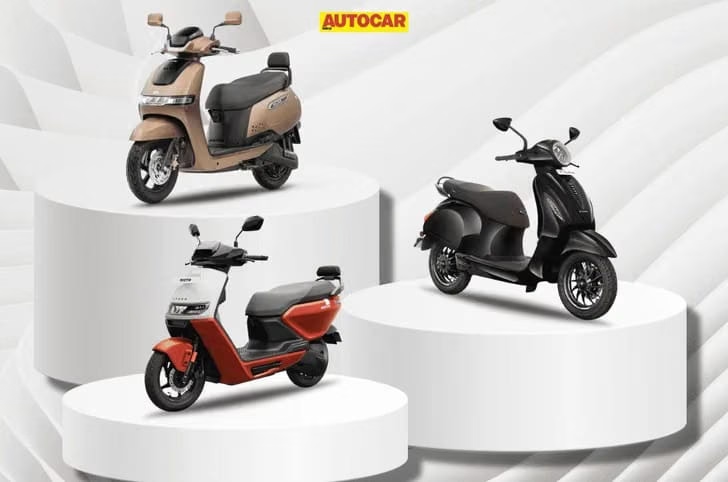
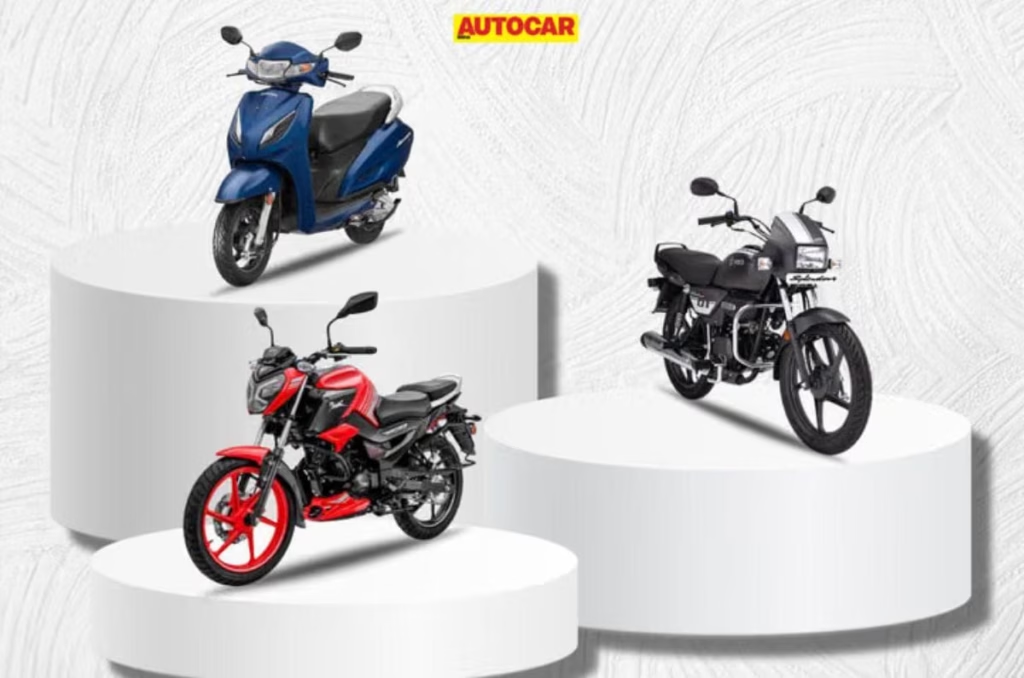
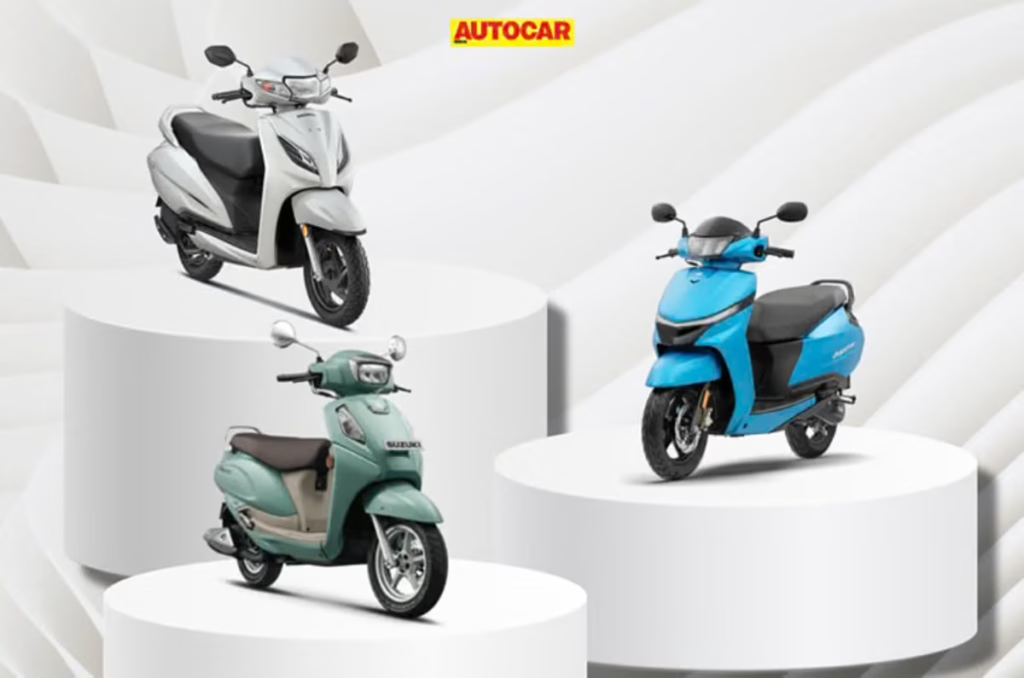
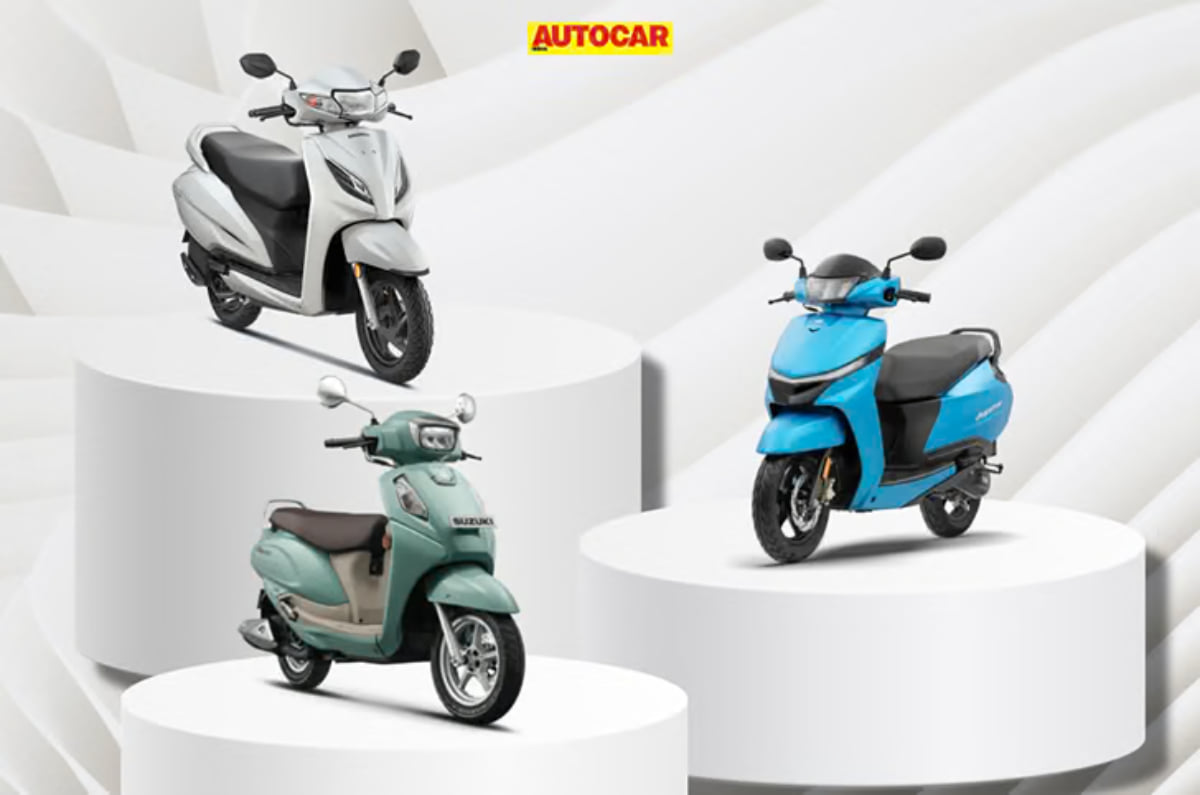
Graphic with Activa, Jupiter, and Access on a podium

Two-wheeler manufacturers have dispatched a record 48,65,192 scooters in the domestic market in the first half (H1) of FY2027. That’s an additional 10.8 lakh units over the same period last year, representing a 29 percent increase. The six-month period included two monthly records: April 2026 opened as the best-ever April, with 6,91,993 units, while September registered 9,95,576 units – the highest monthly total ever for the category and just 4,424 units short of the million-unit (10 lakh) milestone.

Zooming out, the scale of the growth becomes clearer. Scooter sales have more than doubled over 12 years. In H1 FY2016, the total was 2.4 million units, whereas FY2027’s first half has already reached about 60 percent of FY2026’s full-year record of 8.11 million units.

Electric scooters double, claim a 20 percent share

Honda leads overall, TVS grows faster

The fastest-growing part of the segment is electric. E-scooter wholesales hit 9,78,017 units in H1 FY2027, up 103 percent year-on-year from 4,81,199 units in H1 FY2026. This surge has pushed EVs’ share of total scooter sales from 13 percent to 20 percent in a single year.

TVS Motor Company leads the e-scooter market, with 3,05,972 iQube and Orbiter units dispatched, up 107 percent year-on-year, giving it a 31 percent share. Bajaj Auto is second, with 2,60,982 Chetak and Yulu units – a 116 percent jump – and a 27 percent share. Together, the two account for 58 percent of all e-scooters sold in the first half. Ather Energy, with 1,71,611 units and 56 percent growth, held third place, though its share dipped from 23 percent to 18 percent as the market expanded. Hero MotoCorp’s Vida dispatched 1,33,964 units, up 118 percent, for a 14 percent share.

The three Japanese players – Honda, Suzuki and Yamaha – collectively sold 12,523 e-scooters, accounting for a combined 1 percent share. Honda led the group with 7,010 units, up 176 percent.
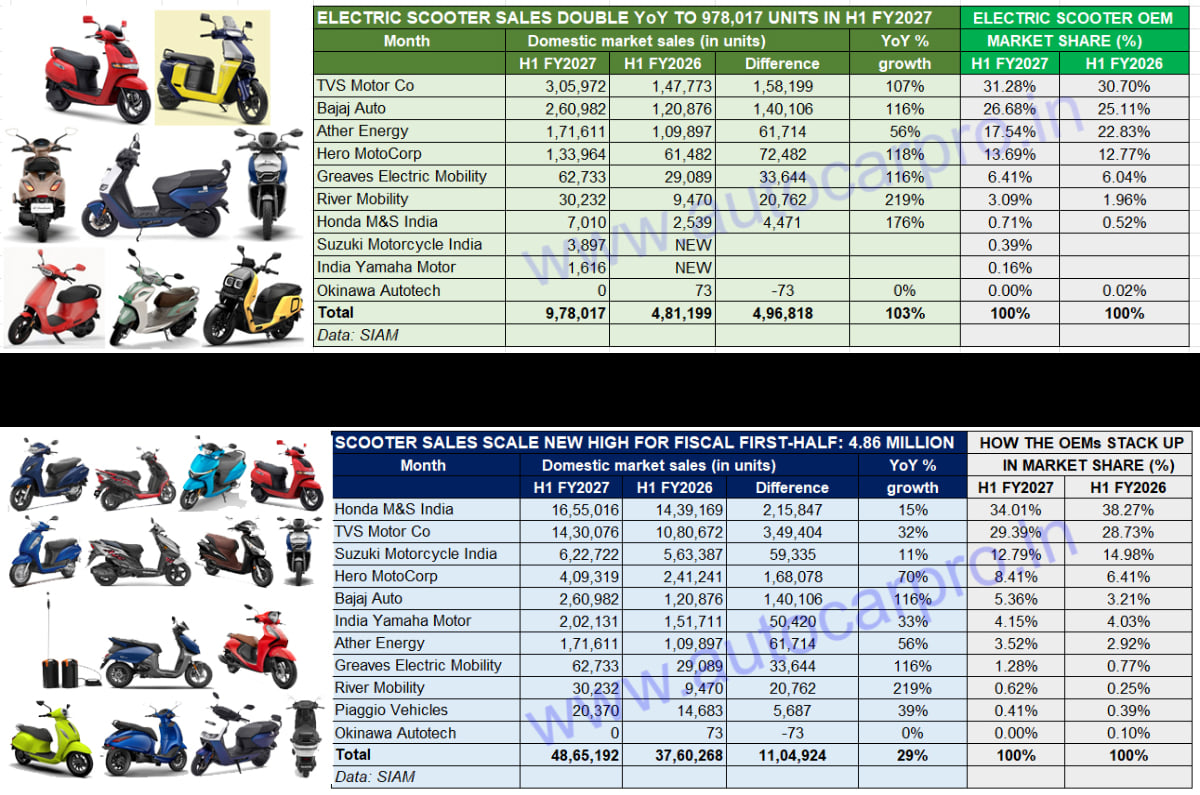
Across ICE and EV models combined, Honda Motorcycle & Scooter India remains the category leader with 1.65 million units, up 15 percent, although its market share has dipped from 38 percent to 34 percent. TVS Motor Company is in second place with 1.43 million units and 32 percent growth, adding 3,49,404 units year-on-year. Nearly half of that incremental volume came from its electric lineup.

Suzuki, with 6,22,722 units and 11 percent growth, and Hero MotoCorp, with 4,09,319 units and 70 percent growth, hold third and fourth place, respectively. Bajaj Auto has climbed to fifth with 2,60,982 units and 116 percent growth, displacing Yamaha, which recorded 2,02,131 units, up 33 percent. Ather Energy is seventh with 1,71,611 units, while River Mobility has entered the top 10, overtaking Piaggio with 30,232 units of the Indie scooter.

With the festive season now underway, the industry will be looking to convert the strong H1 momentum into retail sales. Whether Q3 and Q4 can sustain the near-30 percent growth rate needed to push scooter sales past 10 million units for the first time remains to be seen, but the trajectory points firmly in that direction.
 

Scooter industry records highest-ever monthly sales in September 2026

Scooter industry records highest-ever monthly sales in September 2026
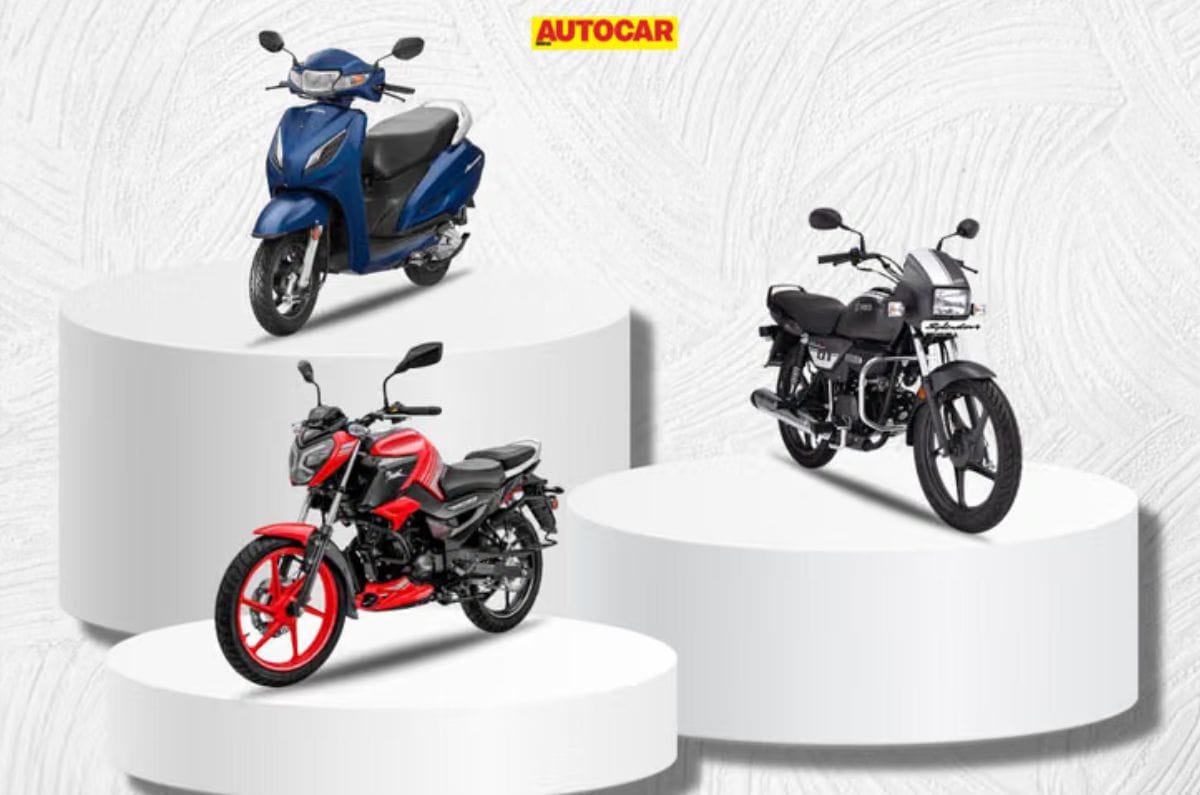
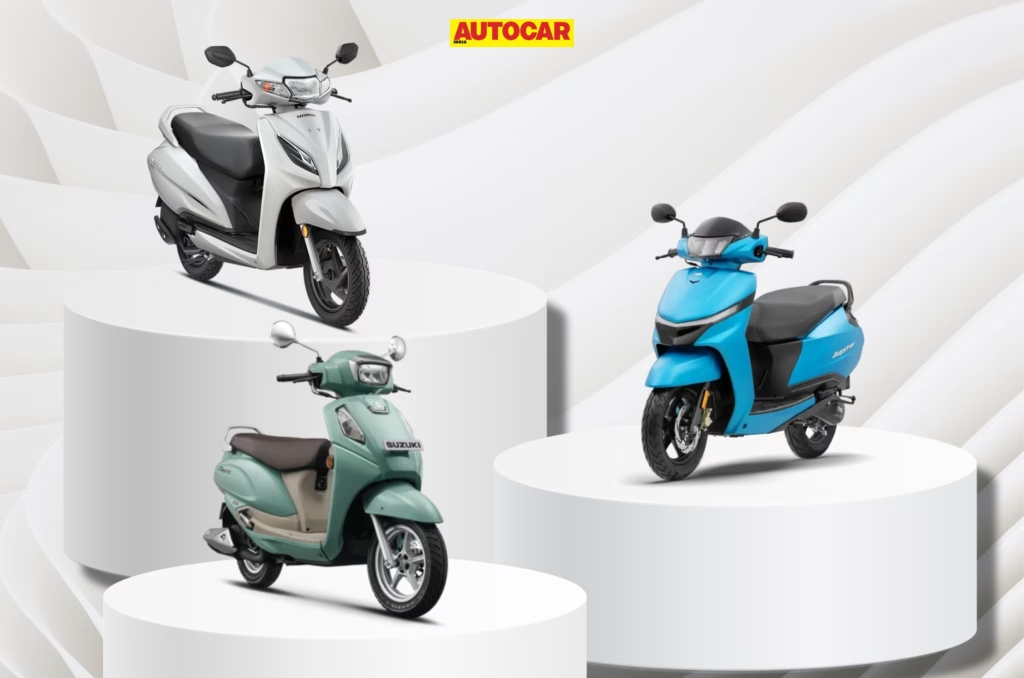
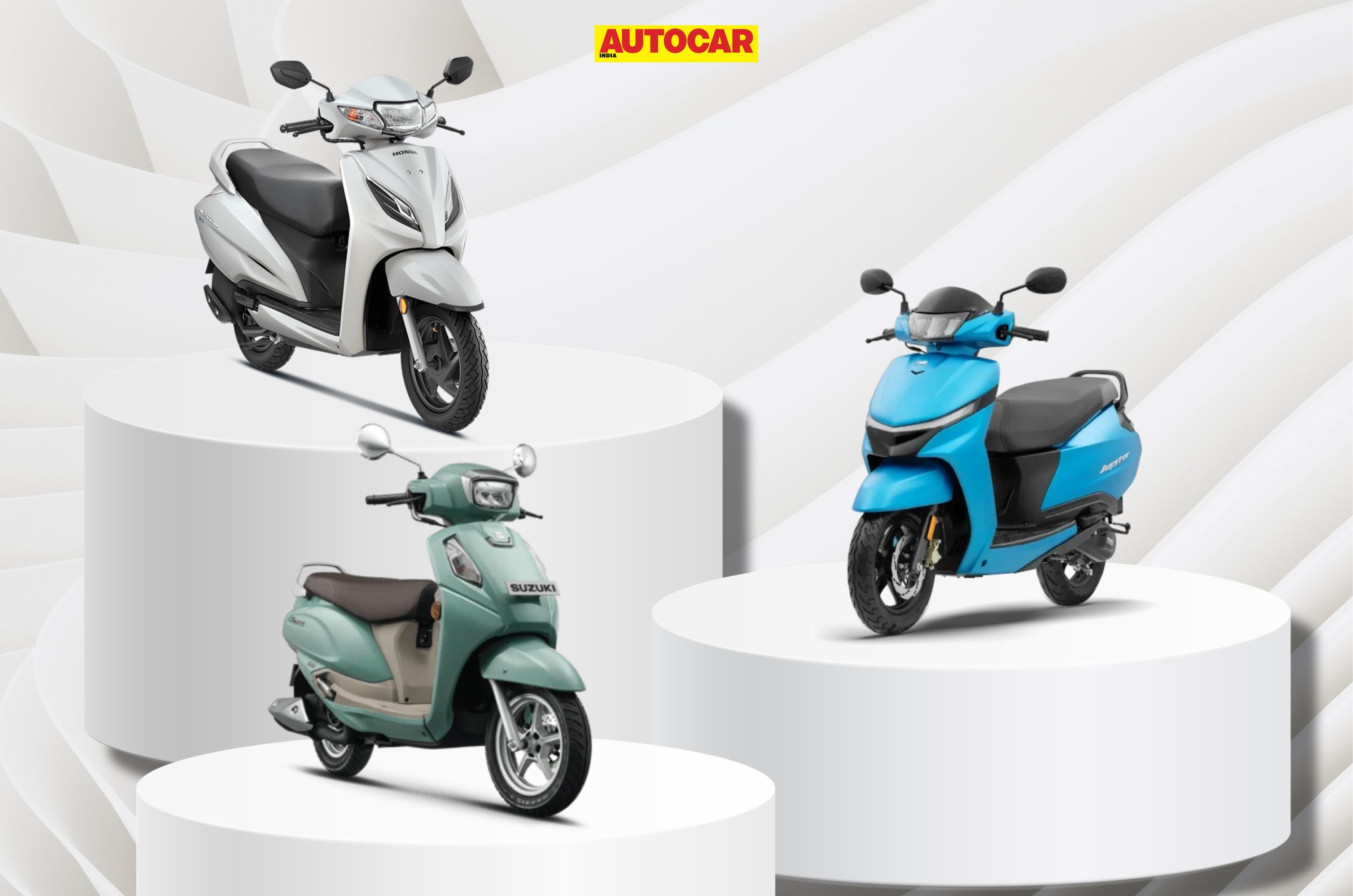
Graphic with the three highest selling scooter models - Activa, Jupiter, and Access

The Indian scooter industry has hit a new milestone, recording its highest-ever monthly dispatches in September 2026. A total of 9,95,576 scooters were dispatched during the month, marking a substantial 34 percent jump over the 7,42,602 units sold in September 2025 and comfortably surpassing the previous monthly record of 8,55,715 units set just a month earlier, in August 2026.

  1. Highest monthly total in the segment’s history, falling just 4,424 units short of the 10 lakh mark
  2. Honda led with 3,83,035 units, followed by TVS at 2,77,115 units
  3. Electric scooter dispatches reached 1,86,692 units

September 2026 scooter sales

Honda and TVS dominate sales

Honda Motorcycle and Scooter India led the segment by a wide margin, dispatching 3,83,035 units – a 46 percent year-on-year increase – to claim roughly 38 percent of the market. TVS Motor Company was second with 2,77,115 units, up 29 percent, accounting for around 28 percent of the market. Together, the two OEMs accounted for approximately two-thirds of all scooter dispatches during the month.

Suzuki and Hero MotoCorp rounded out the top four, with 1,06,274 units (+1 percent) and 96,254 units (+67 percent), respectively.

Electric scooters continue their climb

The electric segment had another strong showing, with 1,86,692 scooters dispatched in September – a 68 percent year-on-year increase. This was the second-highest month on record for electric scooters, behind only August 2026, when dispatches reached 1,88,714 units.

TVS led the charge in terms of EV volumes, with its iQube and Orbiter models together clocking 62,347 units – more than double the year-ago figure. Hero MotoCorp’s Vida range sold 28,962 units, up 88 percent, while Bajaj’s Chetak posted 28,862 units, also up 88 percent. Ather Energy dispatched 30,121 units, a 20 percent increase, with its recently launched mass-market Konarc expected to add further momentum.

For the April-September period, scooter dispatches totalled 48.2 lakh units, up 29 percent year-on-year, underlining the segment’s consistent growth trajectory heading into the festive second half of the fiscal year.

Honda, Suzuki and Yamaha e-scooter sales cross 10,000 units in 2026

Honda, Suzuki and Yamaha e-scooter sales cross 10,000 units in 2026
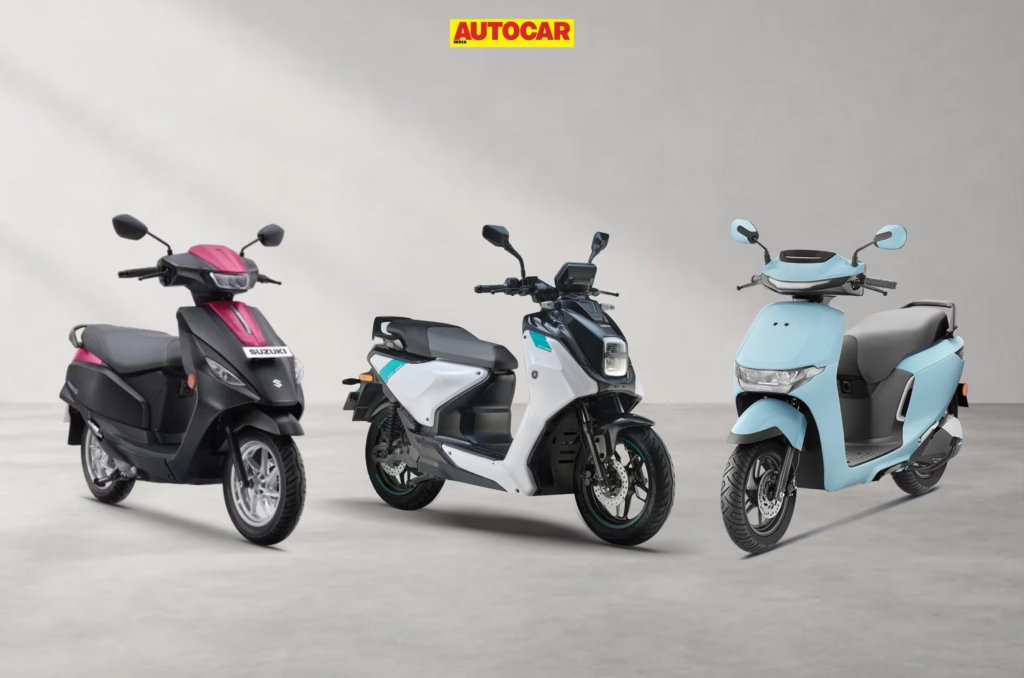
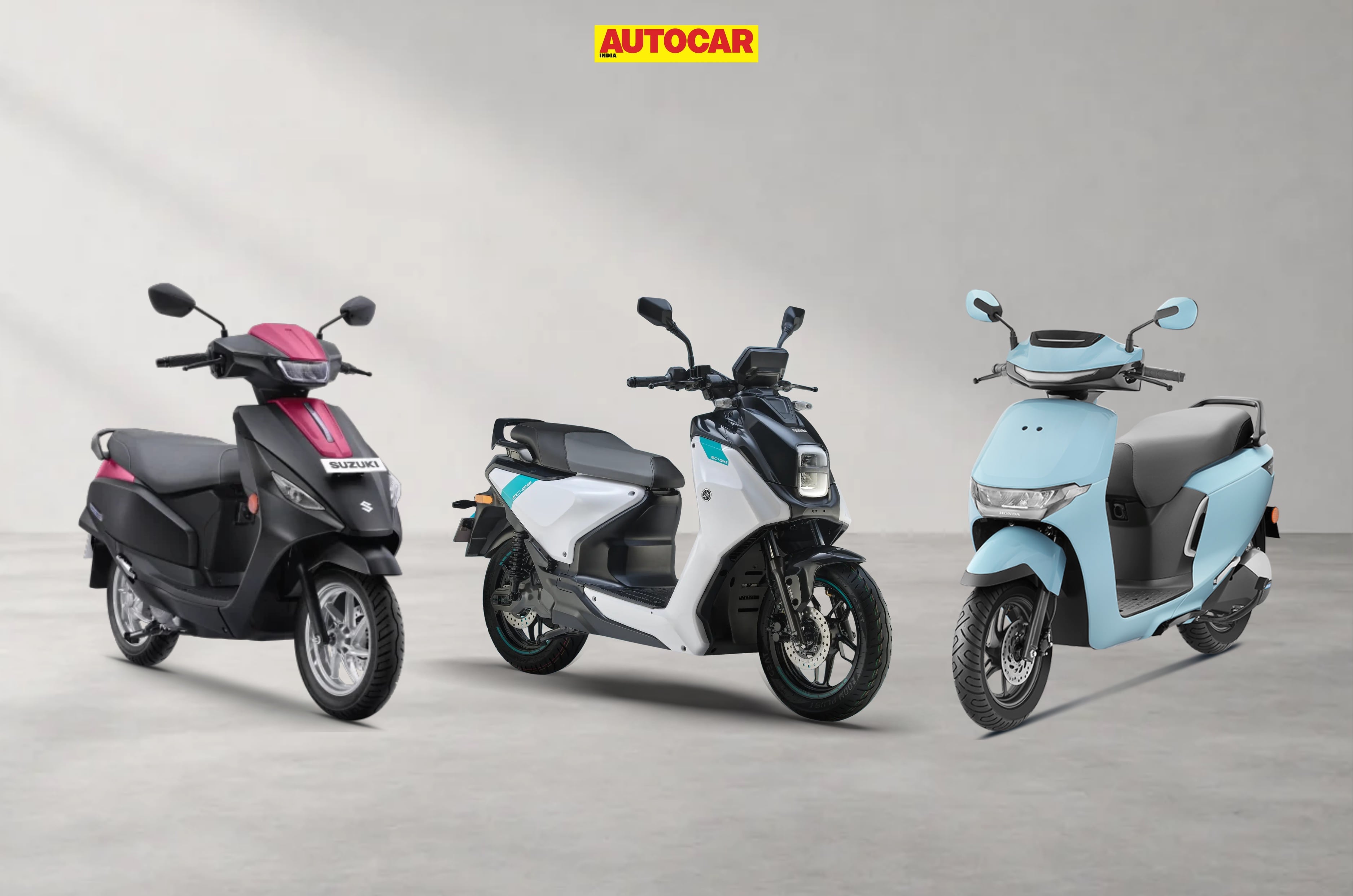
Graphic with Honda, Suzuki and Yamaha e-scooters

Cumulative retail sales of the three Japanese electric scooter manufacturers in India – Honda, Suzuki and Yamaha – have crossed the 10,000-units mark for the first time in a calendar year. As per the latest Vahan statistics, this triumvirate have delivered 10,735 units to their customers between January 1 and October 8 in 2026. 

Last year, Honda, which was the sole e-2-wheeler OEM in India, had sold 7,730 units of the Activa-e and QC1, less of the former and more of the latter. While Suzuki entered the market in January 2026 with its e-Access, Yamaha plugged in two months later in March with its EC-O6. This makes 2026 the first year when all these three Japanese OEMs are part of the Indian electric scooter market.

A look at the OEMs’ monthly performance reveals that Honda Motorcycle & Scooter India has sold 5,536 units in this year to date, accounting for 51 percent of the total 10,735 Japanese e-scooters delivered. HMSI’s best monthly sales this year were in September (1,107 units), marking the first time the OEM has crossed 1,000 units. This number can only improve following the recent launch of its third e-scooter for India – the QC3. 

The initial rollout of the QC3 will be limited to five cities across the country: Delhi, Agra, Cuttack, Surat and Kollam, with a nationwide rollout to follow in a phased manner.. 

Suzuki Motorcycle India, which entered the India e-2W market with its e-Access in January this year as an alternative to the popular petrol-engined Suzuki Access 125, has delivered 4,133 units till October 8. This gives the company a 39 percent share of the three Japanese OEM’s total e2W retail sales. The monthly sales chart reveals that monthly sales have crossed 600 units for three months running: July (606 units), August (674 units) and September (657 units). Rather creditable considering this is an expensive product, priced at Rs 1.88 lakh (ex-showroom) and the costliest amongst the Japanese EVs. 

India Yamaha Motor, which plugged into the e-2W market this March, has retailed 1,066 units, which gives it a 10 percent share of the 10,735 units delivered by Honda, Suzuki and Yamaha. Yamaha’s vehicle of entry is the EC-06, its first electric scooter developed in collaboration with River Mobility. IYM’s highest monthly sales to date were in September (232 units)

Japanese OEMs have 0.66 percent share of e-2Ws sold in 2026 so far

As the monthly retail sales data table depicts, combined Honda-Suzuki-Yamaha sales were at their highest in September 2026 (1,996 units), which gives them a 1 percent share of the record 2,07,850 e-2Ws sold in India last month. Of the total 16,10,854 e-2Ws sold between January 1 and October 8, these three Japanese OEMs with 10,735 units have a meagre 0.66 percent share. 

Among the reasons for their minimal presence in this booming segment of the Indian EV industry is that Honda, Suzuki and Yamaha entered the e-2W market late, as compared to their ICE legacy rivals TVS Motor Co (January 2020), Bajaj Auto (January 2020) or Hero MotoCorp Vida (November 2022).

While market leader TVS has sold 4,22,274 iQubes and Orbiters for a 26 percent market share of the e-2W sales in 2026 to date, Bajaj Auto has delivered 3,61,988 Chetaks (22 percent share), Ather Energy has sold 2,67,579 units (17 percent share) and Hero Vida 1,77,541 e-scooters (11 percent share). 

There is also the issue of their stiff model pricing in a value-conscious market, which has a plethora of more affordable e-scooters which are also more tech-laden, as well as a limited sales network compared to the Indian legacy OEMs as well as a host of startups which are regulars in the monthly Top 10 e-2W OEM chart. 

Jio Users के लिए बड़ा ऑफर, 12 महीने तक मुफ्त Canva Pro, ₹4,000 तक की बचत, जानें कौन उठा सकता है फायदा

Jio Users के लिए बड़ा ऑफर, 12 महीने तक मुफ्त Canva Pro, ₹4,000 तक की बचत, जानें कौन उठा सकता है फायदा

जियो यूजर्स अब बिना अतिरिक्त पैसे दिए Canva के प्रीमियम डिजाइन टूल्स इस्तेमाल कर सकेंगे। जियो और Canva ने साझेदारी की है, जिसके तहत पात्र ग्राहकों को 12 महीने तक Canva Pro या Canva Pro Lite मुफ्त मिलेगा। कंपनी के मुताबिक इस ऑफर की कीमत ₹4,000 तक है और इसे 16 सितंबर से MyJio ऐप के जरिए एक्टिव किया जा सकेगा।

ALSO READ: 5,000 का डिस्काउंट, 10,000mAh बैटरी और 3,500 निट्स डिस्प्ले, सस्ते स्मार्टफोन्स ने मचाया तहलका

किस ग्राहक को कौन-सा Canva मिलेगा, यह उसके जियो रिचार्ज प्लान पर निर्भर करेगा। ₹399 के प्लान पर Canva Pro मिलेगा, जबकि ₹349 और ₹349 से ऊपर के पात्र 2GB प्रतिदिन डेटा वाले प्लान पर Canva Pro Lite दिया जाएगा। ऑफर के लिए कोई अतिरिक्त शुल्क या छिपा हुआ चार्ज नहीं होगा।

इसका सीधा फायदा छात्रों, कंटेंट क्रिएटर्स, प्रोफेशनल्स और छोटे कारोबारियों को मिल सकता है। Canva की मदद से मोबाइल पर ही स्कूल प्रोजेक्ट, सोशल मीडिया पोस्ट, प्रेजेंटेशन, मार्केटिंग मटीरियल और फेस्टिवल ग्रीटिंग जैसे डिजाइन बनाए जा सकते हैं। हिंदी समेत कई भारतीय भाषाओं में भी कंटेंट तैयार किया जा सकेगा।

ALSO READ: EV Scooter को लेकर बड़ी खबर, iQube Orbiter, Bajaj Chetak और Ather Energy क्यों मचा रहे हैं धमाल

Canva Pro Lite में लाखों प्रीमियम टेम्पलेट, फोटो, वीडियो और फॉन्ट के साथ बैकग्राउंड रिमूवर, Magic Resize और 50GB क्लाउड स्टोरेज जैसे फीचर मिलेंगे। वहीं Canva Pro में इसके अलावा Canva AI, Content Planner, ज्यादा AI लिमिट और 100GB क्लाउड स्टोरेज जैसे अतिरिक्त फीचर होंगे।

ALSO READ: iPhone Duo vs Galaxy Z Fold 8 : दोनों फोल्डेबल में कौन है ज्यादा दमदार? जानें फीचर्स और कीमत

रिलायंस इंडस्ट्रीज के प्रेसिडेंट किरण थॉमस ने कहा कि इस साझेदारी के जरिए जियो लाखों भारतीयों तक AI आधारित डिजाइन टूल्स मुफ्त पहुंचाना चाहता है, ताकि छात्र, क्रिएटर्स और छोटे कारोबारी अपनी पसंद की भाषा में सीख और काम कर सकें। ऑफर का लाभ लेने के लिए पात्र जियो यूजर को MyJio ऐप खोलकर Canva ऑफर पर टैप करना होगा। इसके बाद वह सीधे डिजाइन बनाना शुरू कर सकेगा।

5,000 का डिस्काउंट, 10,000mAh बैटरी और 3,500 निट्स डिस्प्ले, सस्ते स्मार्टफोन्स ने मचाया तहलका

5,000 का डिस्काउंट, 10,000mAh बैटरी और 3,500 निट्स डिस्प्ले, सस्ते स्मार्टफोन्स ने मचाया तहलका

xioami smartphones

Xiaomi ने भारत में अपनी Redmi Note 17 सीरीज के दो नए स्मार्टफोन Redmi Note 17 Pro और Redmi Note 17 Pro Max लॉन्च कर दिए हैं। इनमें Pro Max को ज्यादा प्रीमियम मॉडल के तौर पर पेश किया गया है। इसकी सबसे बड़ी खासियत 10,000mAh की सिलिकॉन-कार्बन बैटरी है। वहीं Redmi Note 17 Pro में 9,000mAh की बैटरी दी गई है। दोनों फोन में 6.83 इंच का 1.5K AMOLED डिस्प्ले, 120Hz रिफ्रेश रेट और 3,500 निट्स तक की पीक ब्राइटनेस मिलती है। फोन Android 16 पर आधारित Xiaomi के HyperOS 3 पर चलते हैं।

ALSO READ: EV Scooter को लेकर बड़ी खबर, iQube Orbiter, Bajaj Chetak और Ather Energy क्यों मचा रहे हैं धमाल

Redmi Note 17 Pro की कीमत

Redmi Note 17 Pro को दो स्टोरेज वेरिएंट में लॉन्च किया गया है।


8GB RAM + 128GB: ₹33,999

8GB RAM + 256GB: ₹36,999


इस फोन की बिक्री 17 सितंबर से शुरू होगी।


Redmi Note 17 Pro Max की कीमत


Pro Max की कीमत ज्यादा है, लेकिन इसमें बड़ी बैटरी और ज्यादा पावरफुल फीचर्स मिलते हैं।


8GB RAM + 256GB: ₹44,999

12GB RAM + 256GB: ₹50,999


इसकी बिक्री 23 सितंबर से शुरू होगी।


कंपनी नए फोन पर बैंक ऑफर के तहत ₹5,000 तक की छूट भी दे रही है। दोनों स्मार्टफोन Amazon, Xiaomi के ऑनलाइन स्टोर और चुनिंदा ऑफलाइन रिटेल स्टोर्स के जरिए खरीदे जा सकेंगे।


3,500 निट्स की ब्राइटनेस वाला AMOLED डिस्प्ले


Redmi Note 17 Pro और Pro Max दोनों में 6.83 इंच का 1.5K AMOLED डिस्प्ले दिया गया है। इसका रिफ्रेश रेट 120Hz है, जिससे स्क्रॉलिंग और एनिमेशन ज्यादा स्मूद नजर आ सकते हैं।


डिस्प्ले में:


  • 1.5K रेजोल्यूशन
  • 120Hz रिफ्रेश रेट
  • 3,200Hz टच सैंपलिंग रेट
  • 3,500 निट्स तक पीक ब्राइटनेस
  • 12-बिट कलर टेक्नोलॉजी
  • 68.7 अरब तक कलर्स का सपोर्ट


मिलता है।


स्क्रीन को Corning Gorilla Glass Victus 2 से सुरक्षा दी गई है। दोनों फोन में Dolby Atmos सपोर्ट वाले स्टीरियो स्पीकर भी मिलते हैं। बैटरी में बड़ा अंतर, Pro Max में 10,000mAh


बैटरी इन दोनों फोन की सबसे बड़ी खासियतों में से एक है।


Redmi Note 17 Pro में 9,000mAh की सिलिकॉन-कार्बन बैटरी दी गई है, जो 67W फास्ट चार्जिंग सपोर्ट करती है। वहीं Redmi Note 17 Pro Max में 10,000mAh की सिलिकॉन-कार्बन बैटरी है और यह 100W फास्ट चार्जिंग सपोर्ट करता है।


Xiaomi के मुताबिक Pro Max की बैटरी 1,600 से ज्यादा चार्जिंग साइकल के बाद भी 80 प्रतिशत क्षमता बनाए रखने के लिए रेटेड है। इसमें 27W वायर्ड रिवर्स चार्जिंग का फीचर भी दिया गया है। यानी जो यूजर फोन को बार-बार चार्ज नहीं करना चाहते या लंबे समय तक गेमिंग, वीडियो और दूसरे काम करते हैं, उनके लिए Pro Max ज्यादा आकर्षक विकल्प हो सकता है।

ALSO READ: EV Scooter को लेकर बड़ी खबर, iQube Orbiter, Bajaj Chetak और Ather Energy क्यों मचा रहे हैं धमाल

कैमरा में 50MP का मेन सेंसर


दोनों स्मार्टफोन में डुअल रियर कैमरा सेटअप दिया गया है।


इसमें:


50MP मेन कैमरा

8MP सुपर-वाइड एंगल कैमरा


शामिल हैं।


हालांकि सेल्फी कैमरे में दोनों मॉडल अलग हैं। Redmi Note 17 Pro Max में 32MP फ्रंट कैमरा, जबकि Redmi Note 17 Pro में 16MP सेल्फी कैमरा दिया गया है। फोन में AI आधारित इमेजिंग फीचर्स भी मिलते हैं, जिनकी मदद से फोटो से ग्लेयर, रिफ्लेक्शन और अनचाही वस्तुओं को हटाया जा सकता है।


Pro और Pro Max में अलग-अलग प्रोसेसर


परफॉर्मेंस के लिए दोनों मॉडल में अलग चिपसेट दिए गए हैं। Redmi Note 17 Pro में Snapdragon 6s Gen 4 प्रोसेसर और 8GB तक RAM मिलती है। Redmi Note 17 Pro Max में Qualcomm Snapdragon 6 Gen 5 प्रोसेसर और 12GB तक RAM का विकल्प है। इसलिए दोनों में केवल बैटरी ही नहीं, बल्कि प्रोसेसिंग पावर और RAM के मामले में भी अंतर है।


HyperOS 3 और Android 16


दोनों फोन Xiaomi के HyperOS 3 पर चलते हैं, जो Android 16 पर आधारित है। कंपनी ने इन स्मार्टफोन के लिए 4 साल के OS अपडेट और 6 साल के सिक्योरिटी अपडेट देने का वादा किया है। लंबे समय तक फोन इस्तेमाल करने वाले ग्राहकों के लिए यह एक महत्वपूर्ण बात है।


पानी और धूल से सुरक्षा


Redmi Note 17 Pro सीरीज में मजबूत प्रोटेक्शन भी दिया गया है। दोनों फोन को IP66, IP68 और IP69K रेटिंग के साथ पेश किया गया है। Pro Max में एक फोटोक्रोमिक रियर पैनल का विकल्प भी मिलता है, जो सीधी धूप पड़ने पर अपना रंग/शेड बदल सकता है।

ALSO READ: EV Scooter को लेकर बड़ी खबर, iQube Orbiter, Bajaj Chetak और Ather Energy क्यों मचा रहे हैं धमाल

Redmi Note 17 Pro या Pro Max, किसे खरीदना बेहतर?

अगर आपका बजट करीब ₹34,000-₹37,000 है और आप बड़ी बैटरी के साथ AMOLED डिस्प्ले वाला फोन चाहते हैं, तो Redmi Note 17 Pro पर विचार किया जा सकता है। वहीं अगर आपका बजट ₹45,000 से ऊपर है और आपकी प्राथमिकता बड़ी बैटरी, 100W चार्जिंग, ज्यादा RAM और बेहतर सेल्फी कैमरा है, तो Redmi Note 17 Pro Max ज्यादा फीचर वाला विकल्प है। खास तौर पर 10,000mAh बैटरी और 100W चार्जिंग Pro Max को उन यूजर्स के लिए अलग बनाती है जो बैटरी बैकअप को सबसे ज्यादा महत्व देते हैं।

Electric two-wheeler sales fall 11 percent in August after record July 2026

Electric two-wheeler sales fall 11 percent in August after record July 2026
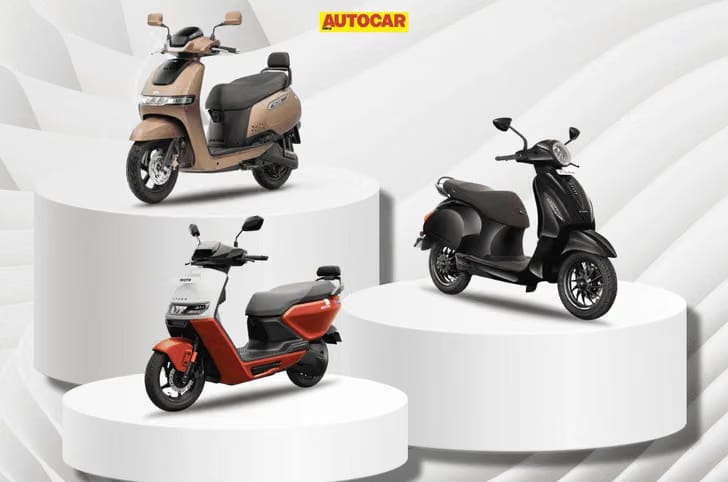
TVS iQube, Bajaj Chetak, and Ather Rizta on a podium graphic

Following a record-setting July that saw the electric two-wheeler segment cross 2 lakh monthly sales for the first time, August delivered a more measured 1,82,936 units – down 11 percent month-on-month but still 67 percent higher than the same month last year. With cumulative sales in the first eight months of the year crossing 13.6 lakh units, already surpassing the full-year tally of 13.4 lakh units in 2025, the 20 lakh annual sales milestone is within reach, with four months and the festive season surge still to go.

  1. Electric two-wheeler retail sales of 1,82,936 units in August 2026
  2. TVS, Bajaj, Ather and Hero Vida account for 75 percent of sales
  3. 2026 sales already exceed the full-year 2025 total

August 2026 electric two-wheeler sales: OEM breakdown

TVS Motor Co: 48,873 units

TVS Motor Company sold 48,873 electric scooters last month – up 91 percent year-on-year and good for a 27 percent market share, up from 23 percent a year ago. While this represents a 12 percent drop from July’s record 55,823 units, cumulative eight-month sales of 3,56,579 units have already exceeded TVS’s full-year CY2025 total of 3,15,082 units. As it stands, TVS is on course to cross 5,25,000 annual electric scooter sales for the first time in 2026.

Bajaj Auto: 41,019 units

Bajaj Auto delivered 41,019 Chetak units in August – a 235 percent year-on-year increase. However, it is worth noting that the comparison is skewed by supply chain disruptions that affected production in August 2025. Like TVS, Bajaj’s sales so far this year, at 3,05,226 units, have already surpassed the brand’s full-year total of 2,79,687 units from 2025. It is now on track to cross 4 lakh annual EV sales for the first time.

Ather Energy: 28,708 units

Ather sold 28,708 units in August, up 49 percent year-on-year, for a 16 percent market share. Cumulative eight-month sales of 2,29,099 units are up 83 percent year-on-year. With the recently introduced Konarc, the brand will be looking to significantly accelerate volumes heading into the festive season.

Vida: 18,978 units

Vida delivered 18,978 units in August, up 38 percent year-on-year but down 17 percent from its best-ever month of 22,989 units in July. Sales from January to August, at 1,48,069 units, are up 151 percent year-on-year, putting the brand on course to cross 2 lakh annual EV sales for the first time.

Ola Electric: 13,849 units

Ola Electric sold 13,849 units in August – down 29 percent from last August and making it the only top-10 brand to register a decline. The company’s eight-month total of 94,307 units is down 39 percent year-on-year. Ola’s market share has dropped sharply to 8 percent from 18 percent a year ago, when it ranked third overall.

Other notable performers

Greaves Electric Mobility delivered 8,612 units, up 89 percent year-on-year, with the Ampere Magnus Neo and the recently updated Magnus G Max both contributing to demand. River Mobility sold 5,134 units of the Indie, up 170 percent year-on-year, while Bgauss Auto sold 4,844 units, up 180 percent from last August. Simple Energy delivered 1,635 units from its One, OneS and Ultra range, with the Simple Wave, expected to go on sale later this month, potentially helping boost those figures further.

Hero MotoCorp aims to be number one Indian EV seller

Hero MotoCorp aims to be number one Indian EV seller
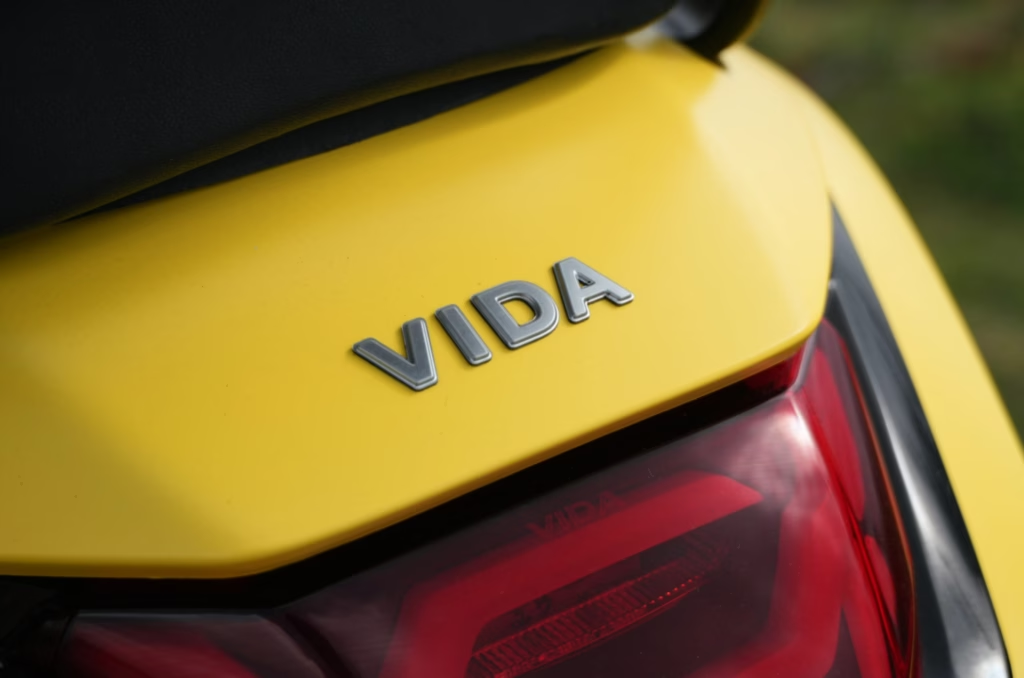
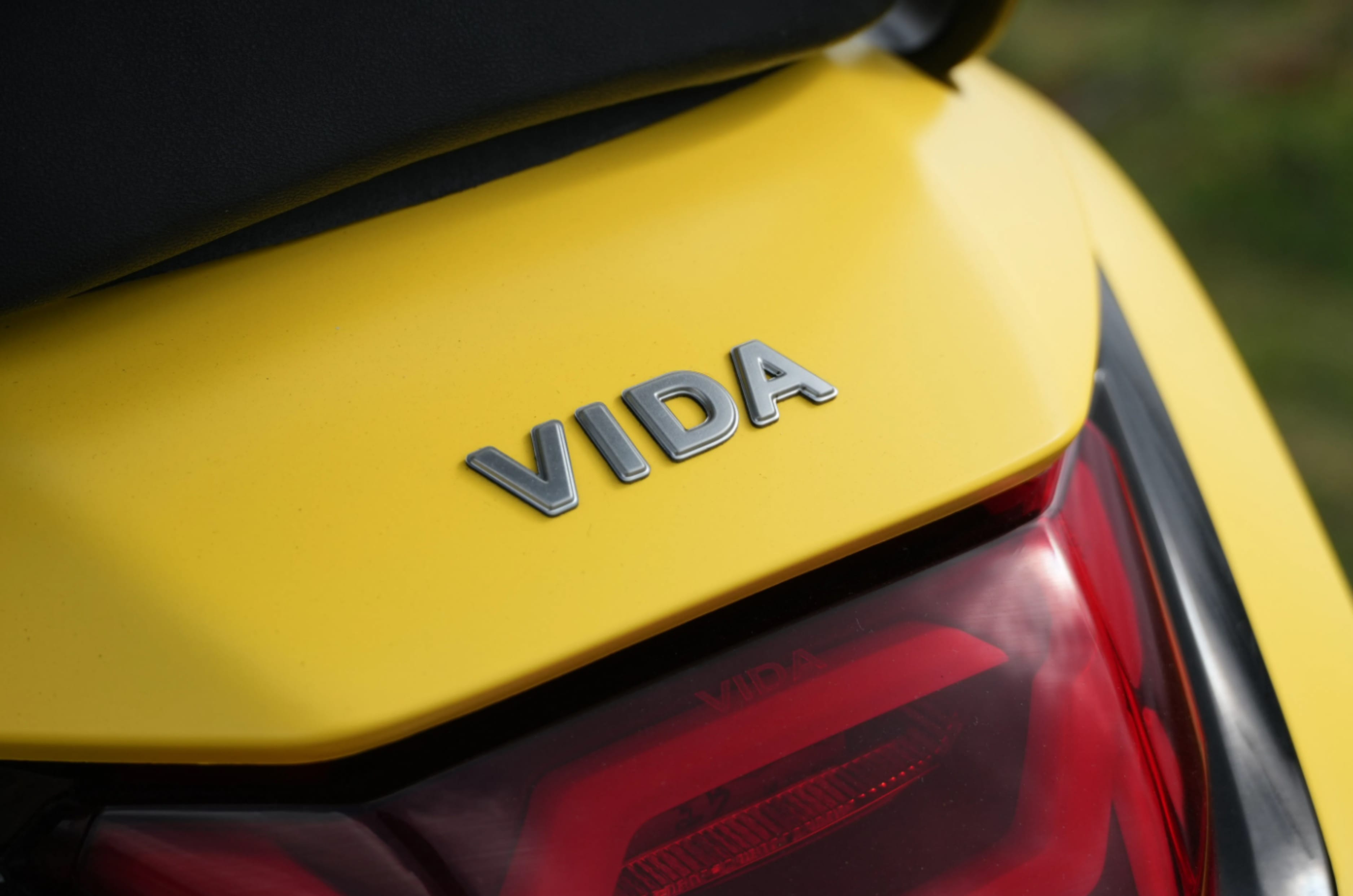
A close-up shot of the Vida logo on the Vida VX2.

Hero is targeting the top position in India’s electric two-wheeler market as it scales up its Vida business and continues to back Ather Energy. “We clearly are focusing on being number one. There we are not shy of that,” Hero MotoCorp CEO Harshavardhan Chitale told Autocar Professional at the SIAM Annual Convention in New Delhi. He added that Vida and Ather sales, taken together, have already occupied the top position during some months. Considering individual sales numbers from January till August this year, Vida is currently fourth, behind Ather.

  1. Hero currently invests in Ather Energy and Euler Motors; recently increased its Ather investment
  2. Vida currently offers scooters with both fixed and removable batteries
  3. Hero CEO says Ather-Hero joint product may happen in future

Vida is Hero’s EV subsidiary

Company is increasing production and exploring different offerings

Hero initially differentiated the brand through removable batteries, targeting, among others, customers living in apartments without convenient access to charging. The company is now pursuing fixed-battery scooters alongside its removable-battery models. Chitale said the two configurations are attracting different sets of buyers. Fixed batteries allow Hero to offer a more competitively priced product, with the difference between the two configurations at around Rs 10,000.

Vida has gained almost 600 basis points (6 percent) of market share over the past year and is seeing year-on-year growth of around 100 percent, according to Chitale. Demand has prompted Hero to increase production. Chitale said EV capacity would rise by almost 50 percent this month compared with the previous month, followed by a further doubling by December. Demand for removable-battery models has remained strong, despite the introduction of fixed-battery alternatives.

Ather-Hero partnership progress

Charging already integrated, joint product might happen in future

Hero’s EV strategy also includes its investment in Ather, which it has continued to support through successive fundraises, including the most recent one of Rs 1758 crore. For now, the two companies will continue pursuing independent product roadmaps rather than integrating their vehicle platforms. However, that could change as the market matures. Chitale said the companies discuss areas including battery-cell sourcing, software, motors and motor components. Joint sourcing could become an option, although no such arrangement is currently underway.

Charging infrastructure is already an area where both the companies are working together. Hero and Ather are part of an interoperable fast-charging initiative which, according to Chitale, now involves close to 20 companies and nearly 6,000 charging points.

Hero also has an interest in electric commercial vehicle maker Euler Motors. Chitale described Euler as potentially the “next Ather in making” and said Hero would continue supporting the company through its fundraises. The combination of Vida, Ather and Euler gives Hero exposure across electric two-wheelers and commercial vehicles as it seeks a larger share of India’s expanding EV market.

With inputs from Mukul Y. Singh, Hormazd Sorabjee, Ketan Thakkar, and Stephen Raj Antony.

Two-wheeler retail sales up 19.7 percent in August

Two-wheeler retail sales up 19.7 percent in August

Two-wheeler retail sales in India rose 19.69 percent year on year to 17,14,610 units in August 2026, according to the Federation of Automobile Dealers Associations (FADA). The segment recorded its highest-ever August sales, although volumes declined 5.70 percent from July, when dealers retailed 18,18,289 two-wheelers. August 2025 sales stood at 14,32,537 units.

  1. Retail sales reach 17.15 lakh units, highest for an August
  2. Share of EVs in two-wheeler sales crosses 10 percent in a non-festive month
  3. Honda leads the market as dealers turn optimistic ahead of the festive season

FADA attributed the strong year-on-year growth to healthy rural demand and improved affordability following the GST 2.0 rollout. The month-on-month decline was attributed to the seasonal monsoon slowdown, rainfall in some regions and the inauspicious Shravan/Aadi period.

Rural two-wheeler retail grew 20.25 percent year on year in August, slightly ahead of the 19.07 percent growth recorded in urban markets. Compared with July, however, two-wheeler sales fell 6.85 percent in rural areas and 4.38 percent in urban centres.

EVs accounted for 10.68 percent of total two-wheeler retail sales in August, up from 7.66 percent a year ago. The share of electric models was 11.24 percent in July. FADA noted that August was the first non-festive month in which EVs comprised over 10 percent of two-wheeler sales.

As for fuel type, petrol continued to dominate the two-wheeler market with an 89.23 percent share, while CNG and LPG models together accounted for 0.08 percent.

Honda Motorcycle and Scooter India remained the largest two-wheeler OEM in August with a 26.09 percent market share, retailing 4,47,342 units. Hero MotoCorp was second with 4,13,996 units and a 24.15 percent share, while TVS Motor Company sold 3,53,746 units and had a 20.63 percent share.

Bajaj Auto retailed 1,57,149 two-wheelers, giving it a 9.17 percent share, followed by Suzuki Motorcycle India with 1,04,217 units and a 6.08 percent share. Royal Enfield recorded 94,448 units and a 5.51 percent share.

Among the electric-focused manufacturers listed separately by FADA, Ather Energy sold 28,757 units and had a 1.68 percent share, while Ola Electric registered 13,852 units and a 0.81 percent share. Greaves Electric Mobility, River Mobility and BGauss recorded 8,613, 5,141 and 4,845 units, respectively.

With the festive season approaching, FADA expects two-wheeler demand to strengthen in September. Rural cash flows and late-season rainfall remain key factors that could influence sales, while the continued shift towards alternative powertrains is expected to support the market.

Dealer sentiment for September remains positive, with 67.09 percent of dealers expecting growth, 27.35 percent expecting a flat market and 5.56 percent anticipating de-growth. For the September-November period, 81.62 percent of dealers expect the market to grow.

With inputs from Eshisha Java

Ather plans to expand to 2000 stores by 2028

Ather plans to expand to 2000 stores by 2028
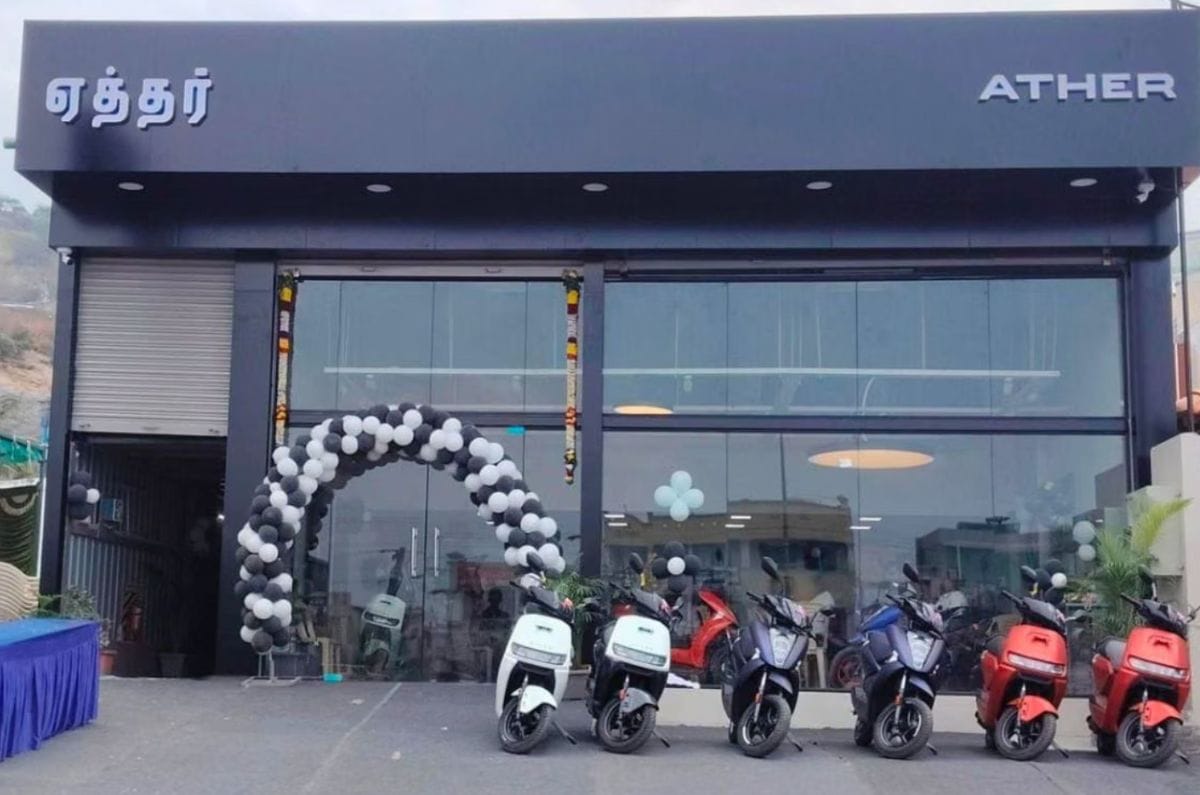
An outside image of an Ather showroom

Ather is targeting to more than double its retail footprint to between 1,800 and 2,000 stores over the next two years as the EV maker rolls out its new family scooter Konarc and expands production capacity, according to a senior company official. The company currently sells the 450X and Rizta electric scooters, which are positioned in the premium and mass premium segments of the market across some 750 stores. The company plans to use its new EL platform to broaden its product range into the more affordable segment.

  1. More scooters of different battery sizes expected from the EL platform
  2. Ather EV motorcycle at least two years away
  3. Production capacity to increase with the Aurangabad plant becoming operational

Number of retail stores and production to increase

More products expected from the Konarc’s EL platform

The newly unveiled Konarc will be available in two variants and six battery options at a starting ex-showroom price of Rs 99,999. The delivery of the first two battery options (S 125 and S 161) is set to commence in September 2026. “We are targeting 1,800 to 2,000 stores in the next 24 months,” Ather Energy’s Chief Business Officer Ravneet Phokela said. Phokela said the company expects the domestic market to remain its main focus for now, with exports only becoming important after a few years.

The EL platform, on which the Konarc is based, can produce different types of scooters, and it can also accommodate different battery sizes, wheel dimensions and dashboard designs. The company boasts that the platform helps launch more products while also reducing costs through changes like lower use of aluminium and simpler engineering. Ather has said it plans to launch multiple scooter products based on the platform first; and added that an Ather electric motorcycle is more than two years away.

Ather’s push into a wider range of scooters comes as the company looks to increase production capacity. Ather currently manufactures electric scooters at its Hosur plant, which has an annual production capacity of 4.20 lakh units. Its upcoming Aurangabad facility is expected to add another 5 lakh units of annual capacity when its first phase becomes operational later this year. The company said that it’s also considering whether to accelerate the second phase of the Aurangabad facility if demand continues to grow at its current pace.

With inputs from Stephen Raj Antony.
 

एथर एनर्जी ने टेस्ला और BYD को पीछे छोड़ा, इस साल शेयर 130% उछला; आगे और तेजी की उम्मीद

Ather Energy Share Price: इलेक्ट्रिक टू-व्हीलर कंपनी Ather Energy ने इस साल शेयर बाजार में Tesla, BYD और Xiaomi जैसी दिग्गज कंपनियों को भी पीछे छोड़ दिया है। कंपनी के शेयर 2026 में अब तक करीब 130% चढ़ चुके हैं। विश्लेषकों को बढ़ते मार्केट शेयर की वजह से स्टॉक में आगे भी तेजी की उम्मीद है।

Ather के शेयर में तेजी ने ग्लोबल निवेशकों का भी ध्यान खींचा है। सोमवार को BlackRock Global Funds ने ओपन मार्केट से कंपनी में 1% से कम हिस्सेदारी खरीदी है।

इसके उलट EV कंपनियों से जुड़े 104 शेयरों को ट्रैक करने वाला ब्लूमबर्ग इंडेक्स इस साल करीब 1% गिरा है। Tesla, BYD और Xiaomi जैसी बड़ी कंपनियों के कमजोर प्रदर्शन का असर इस इंडेक्स पर पड़ा है।

पिछले महीने शेयर 36% से ज्यादा चढ़ा

Hero MotoCorp की हिस्सेदारी वाली Ather Energy इलेक्ट्रिक टू-व्हीलर की डिजाइनिंग, मैन्युफैक्चरिंग और सर्विसिंग करती है। कंपनी का अपना चार्जिंग नेटवर्क भी है। भारत में EV की बढ़ती मांग का कंपनी को फायदा मिल रहा है।

बेंगलुरु की कंपनी का शेयर पिछले महीने 36% से ज्यादा चढ़ा। मई 2025 में लिस्टिंग के बाद यह किसी एक महीने में कंपनी की सबसे बड़ी तेजी है। बाजार में कंपनी की ग्रोथ को लेकर भरोसा बढ़ा है।

FY28 तक 26% मार्केट शेयर का अनुमान

Emkay Global Financial Services का अनुमान है कि FY28 तक Ather Energy का मार्केट शेयर बढ़कर 26% हो सकता है। मार्च के अंत में कंपनी का मार्केट शेयर करीब 17% था।

ब्रोकरेज का मानना है कि नए प्रोडक्ट लॉन्च और कंपनी की इन-हाउस टेक्नोलॉजी से Ather को फायदा मिल सकता है। इससे कंपनी घरेलू प्रतिद्वंद्वी Ola Electric को कड़ी टक्कर दे सकती है। पिछले हफ्ते Ather ने Konarc इलेक्ट्रिक स्कूटर लॉन्च किया था। इसे कंपनी की अपनी EV आर्किटेक्चर पर बनाया गया है। यह मास मार्केट सेगमेंट के लिए तैयार किया गया है।

Konarc से दोगुना हो सकता है बाजार

Nomura Holdings के एनालिस्ट्स का कहना है कि Konarc की वजह से Ather का एड्रेसेबल मार्केट दोगुना हो सकता है। यानी कंपनी के पास पहले के मुकाबले ज्यादा ग्राहकों तक पहुंचने का मौका होगा।

एनालिस्ट्स का कहना है कि भारत में इलेक्ट्रिक टू-व्हीलर का बाजार अब अहम मोड़ पर पहुंच रहा है। इस सेगमेंट में लंबी अवधि के लिए Ather को सबसे मजबूत विकल्पों में शामिल माना जा रहा है।

लिस्टिंग के बाद 440% चढ़ा शेयर

लिस्टिंग के बाद से Ather Energy का शेयर करीब 440% चढ़ चुका है। पिछले पांच साल में ₹2,500 करोड़ या उससे ज्यादा का IPO लाने वाली भारतीय कंपनियों में Ather Energy का प्रदर्शन सबसे बेहतर रहा है।

तेजी के बावजूद एनालिस्ट्स अभी भी स्टॉक को लेकर बुलिश हैं। ब्लूमबर्ग के मुताबिक, कंपनी को कवर करने वाले सभी 14 एनालिस्ट्स शेयर पर खरीदारी की सलाह दे रहे हैं।

Axis Capital ने Ather Energy का टारगेट प्राइस ₹2,100 रखा है। सोमवार के क्लोजिंग प्राइस के मुकाबले इसमें करीब 22% की तेजी की संभावना बताई गई है।

अगले 3-4 साल में शेयर दोगुना हो सकता है

Emkay के एनालिस्ट चिराग जैन का मानना है कि अगले तीन से चार साल में मौजूदा स्तर से भी Ather Energy का शेयर दोगुना हो सकता है।

उनका कहना है कि Ather सिर्फ फीचर्स हटाकर कीमत कम करने के पक्ष में नहीं है। कंपनी लागत कम करके कीमत घटाने की रणनीति पर काम कर रही है, ताकि ब्रांड और प्रोडक्ट क्वालिटी पर असर न पड़े।

एथर एनर्जी का शेयर मंगलवार को 1.07% की तेजी के साथ 1,736 रुपये पर बंद हुआ।

गोदरेज ग्रुप का स्टॉक 55% उछल सकता है, कोटक ने ₹1010 का टारगेट दिया

Disclaimer: मनीकंट्रोल.कॉम पर दिए गए सलाह या विचार एक्सपर्ट/ब्रोकरेज फर्म के अपने निजी विचार होते हैं। वेबसाइट या मैनेजमेंट इसके लिए उत्तरदायी नहीं है। यूजर्स को मनीकंट्रोल की सलाह है कि कोई भी निवेश निर्णय लेने से पहले हमेशा सर्टिफाइड एक्सपर्ट की सलाह लें।