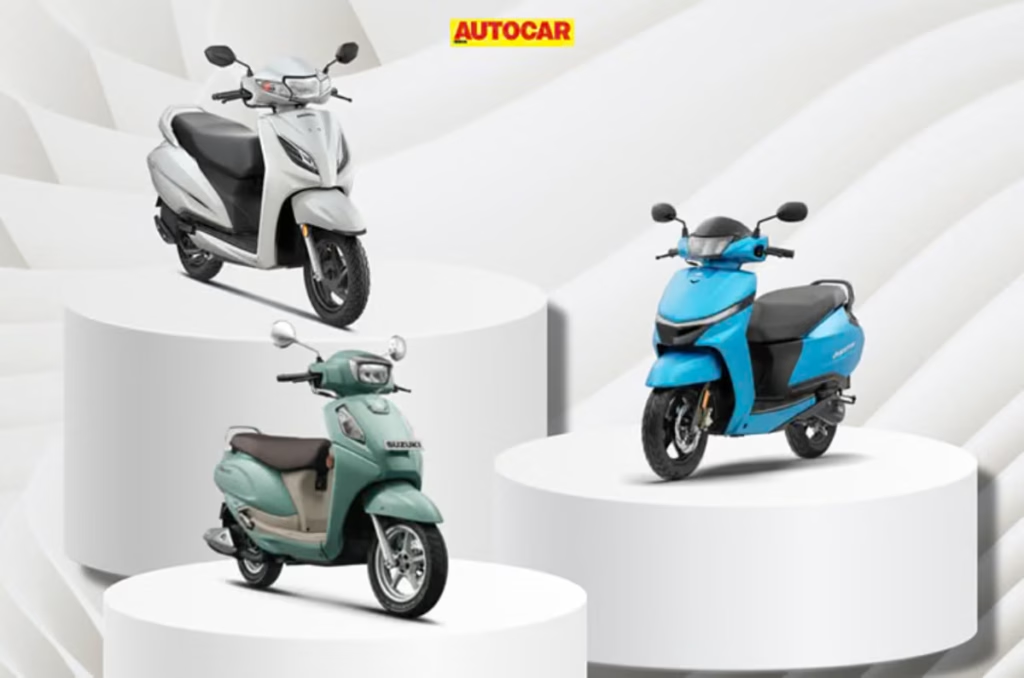
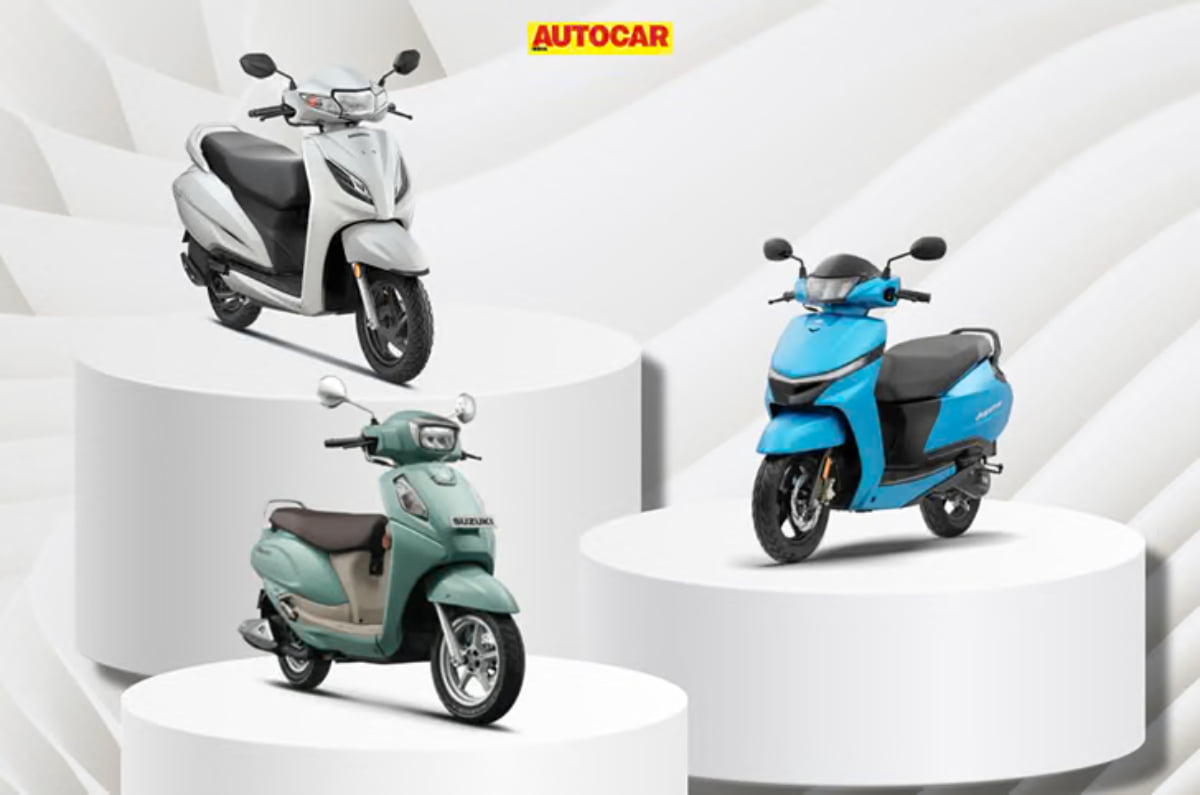
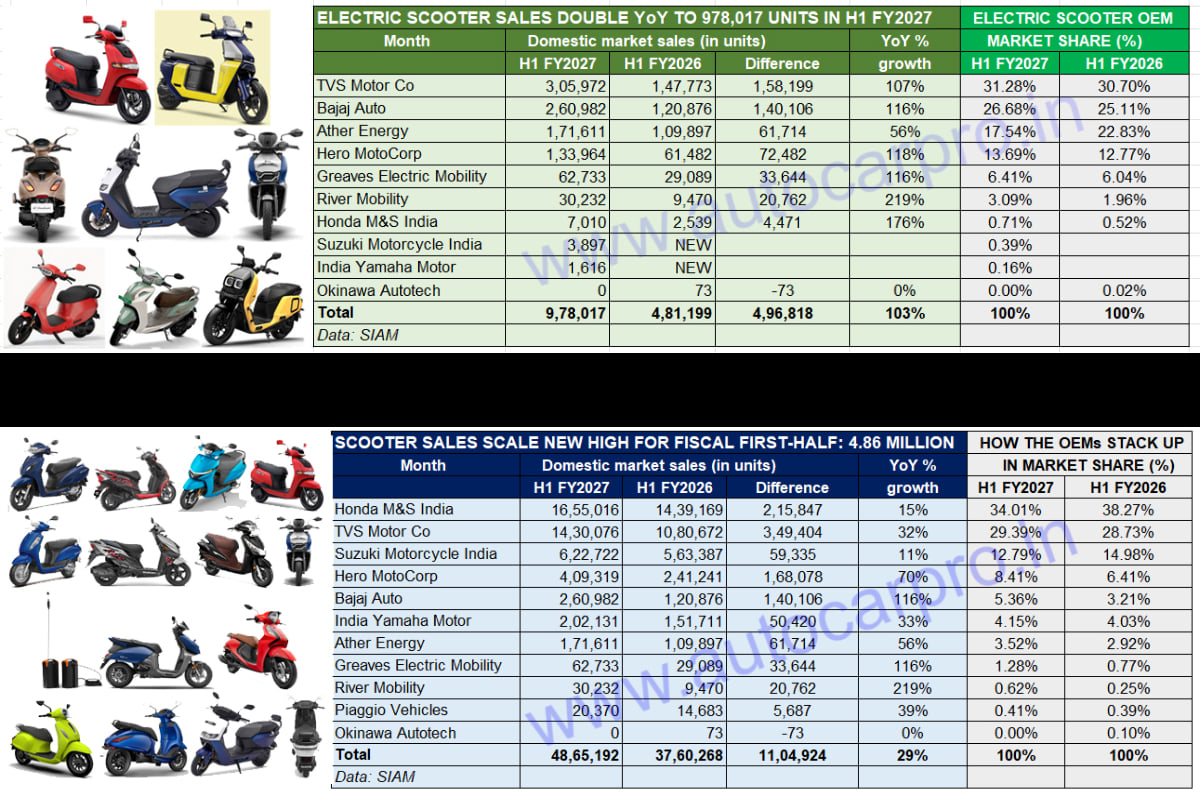
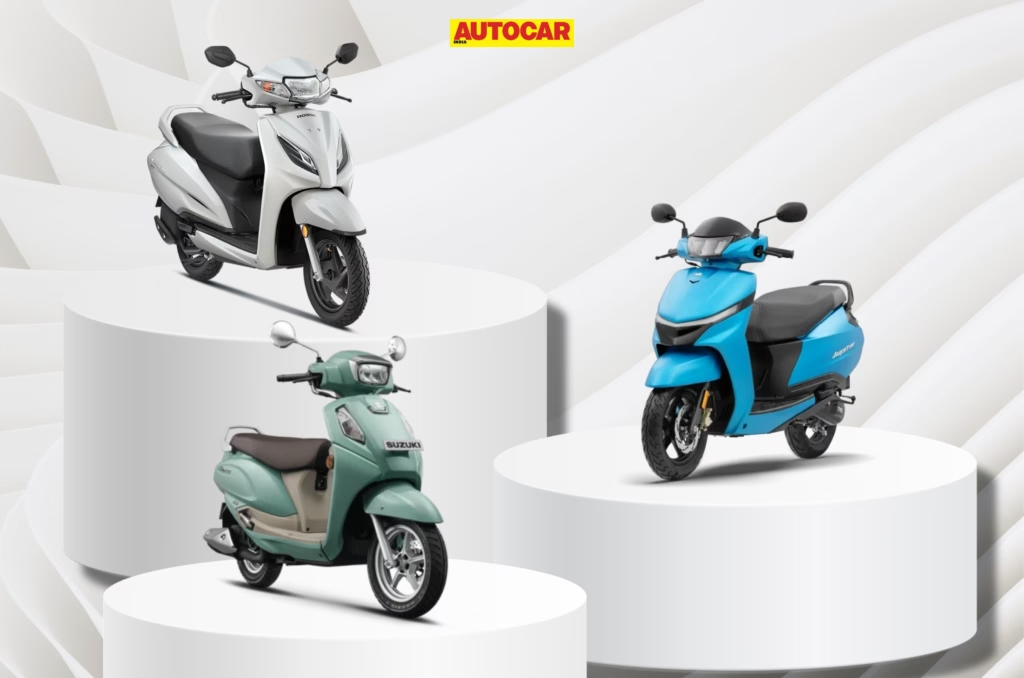
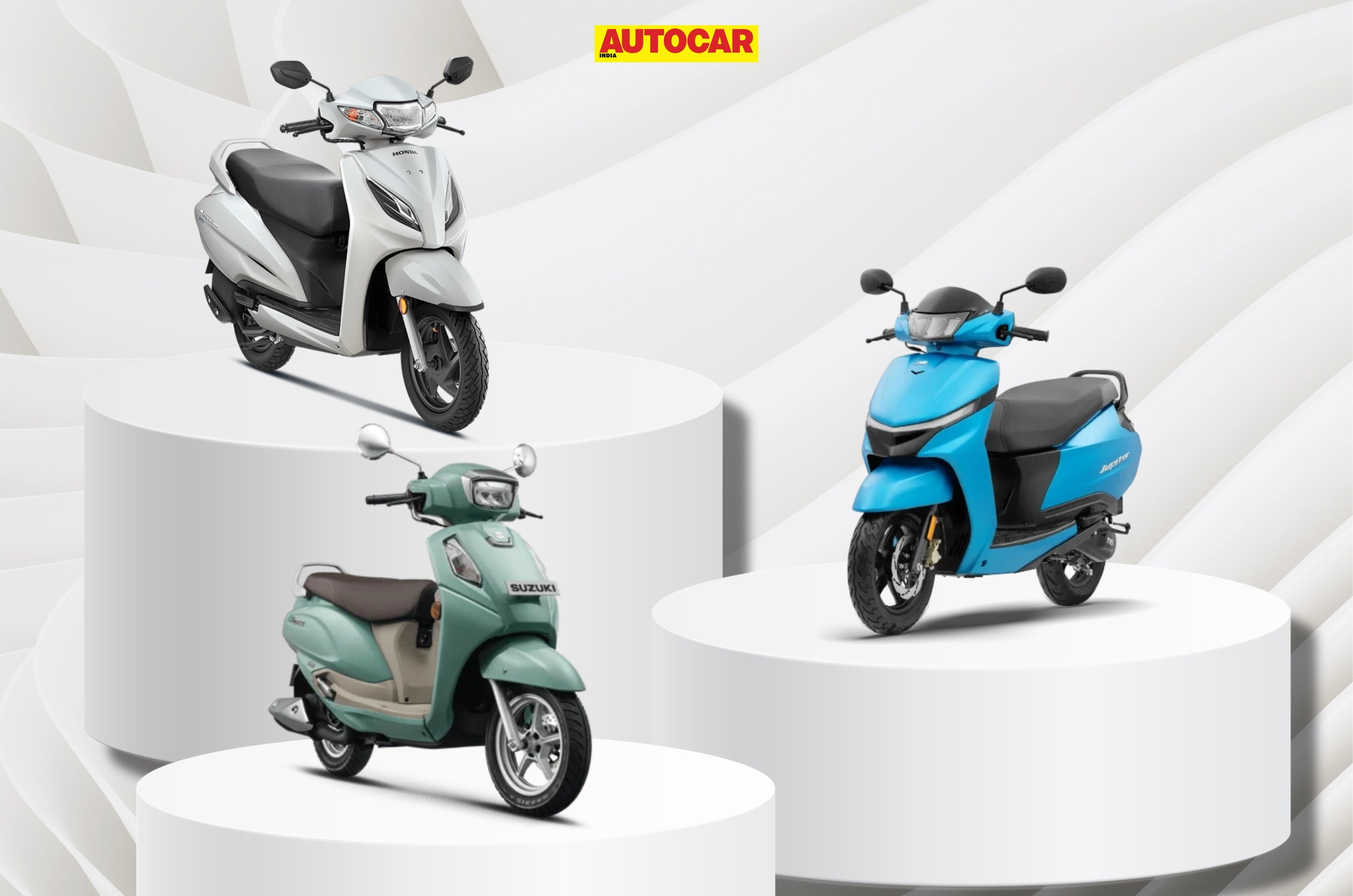
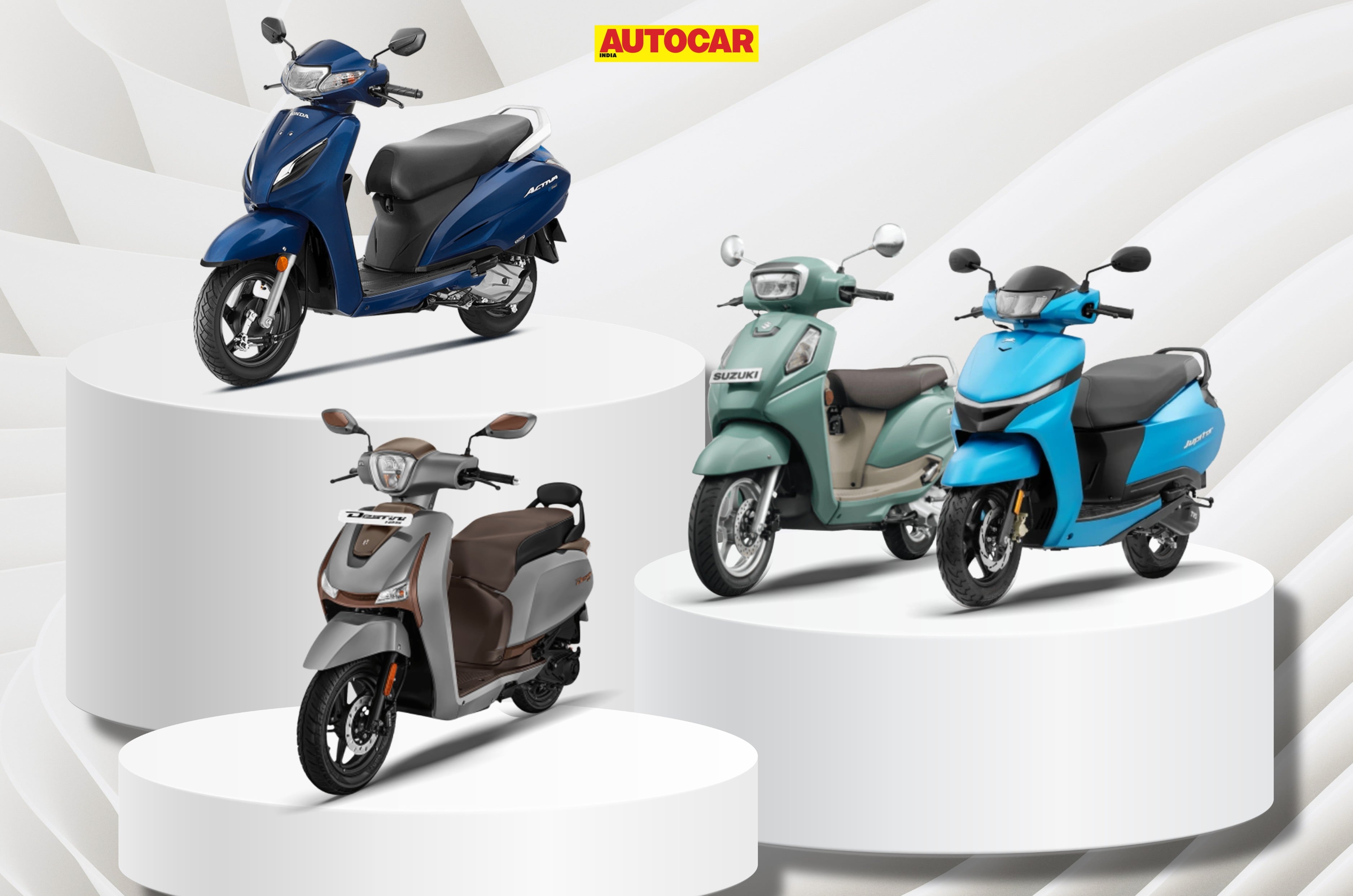
Two-wheeler manufacturers have dispatched a record 48,65,192 scooters in the domestic market in the first half (H1) of FY2027. That’s an additional 10.8 lakh units over the same period last year, representing a 29 percent increase. The six-month period included two monthly records: April 2026 opened as the best-ever April, with 6,91,993 units, while September registered 9,95,576 units – the highest monthly total ever for the category and just 4,424 units short of the million-unit (10 lakh) milestone.
Zooming out, the scale of the growth becomes clearer. Scooter sales have more than doubled over 12 years. In H1 FY2016, the total was 2.4 million units, whereas FY2027’s first half has already reached about 60 percent of FY2026’s full-year record of 8.11 million units.
Electric scooters double, claim a 20 percent share
Honda leads overall, TVS grows faster
The fastest-growing part of the segment is electric. E-scooter wholesales hit 9,78,017 units in H1 FY2027, up 103 percent year-on-year from 4,81,199 units in H1 FY2026. This surge has pushed EVs’ share of total scooter sales from 13 percent to 20 percent in a single year.
TVS Motor Company leads the e-scooter market, with 3,05,972 iQube and Orbiter units dispatched, up 107 percent year-on-year, giving it a 31 percent share. Bajaj Auto is second, with 2,60,982 Chetak and Yulu units – a 116 percent jump – and a 27 percent share. Together, the two account for 58 percent of all e-scooters sold in the first half. Ather Energy, with 1,71,611 units and 56 percent growth, held third place, though its share dipped from 23 percent to 18 percent as the market expanded. Hero MotoCorp’s Vida dispatched 1,33,964 units, up 118 percent, for a 14 percent share.
The three Japanese players – Honda, Suzuki and Yamaha – collectively sold 12,523 e-scooters, accounting for a combined 1 percent share. Honda led the group with 7,010 units, up 176 percent.
Across ICE and EV models combined, Honda Motorcycle & Scooter India remains the category leader with 1.65 million units, up 15 percent, although its market share has dipped from 38 percent to 34 percent. TVS Motor Company is in second place with 1.43 million units and 32 percent growth, adding 3,49,404 units year-on-year. Nearly half of that incremental volume came from its electric lineup.
Suzuki, with 6,22,722 units and 11 percent growth, and Hero MotoCorp, with 4,09,319 units and 70 percent growth, hold third and fourth place, respectively. Bajaj Auto has climbed to fifth with 2,60,982 units and 116 percent growth, displacing Yamaha, which recorded 2,02,131 units, up 33 percent. Ather Energy is seventh with 1,71,611 units, while River Mobility has entered the top 10, overtaking Piaggio with 30,232 units of the Indie scooter.
With the festive season now underway, the industry will be looking to convert the strong H1 momentum into retail sales. Whether Q3 and Q4 can sustain the near-30 percent growth rate needed to push scooter sales past 10 million units for the first time remains to be seen, but the trajectory points firmly in that direction.
The Indian scooter industry has hit a new milestone, recording its highest-ever monthly dispatches in September 2026. A total of 9,95,576 scooters were dispatched during the month, marking a substantial 34 percent jump over the 7,42,602 units sold in September 2025 and comfortably surpassing the previous monthly record of 8,55,715 units set just a month earlier, in August 2026.
Highest monthly total in the segment’s history, falling just 4,424 units short of the 10 lakh mark
Honda led with 3,83,035 units, followed by TVS at 2,77,115 units
Electric scooter dispatches reached 1,86,692 units
September 2026 scooter sales
Honda and TVS dominate sales
Honda Motorcycle and Scooter India led the segment by a wide margin, dispatching 3,83,035 units – a 46 percent year-on-year increase – to claim roughly 38 percent of the market. TVS Motor Company was second with 2,77,115 units, up 29 percent, accounting for around 28 percent of the market. Together, the two OEMs accounted for approximately two-thirds of all scooter dispatches during the month.
Suzuki and Hero MotoCorp rounded out the top four, with 1,06,274 units (+1 percent) and 96,254 units (+67 percent), respectively.
Electric scooters continue their climb
The electric segment had another strong showing, with 1,86,692 scooters dispatched in September – a 68 percent year-on-year increase. This was the second-highest month on record for electric scooters, behind only August 2026, when dispatches reached 1,88,714 units.
TVS led the charge in terms of EV volumes, with its iQube and Orbiter models together clocking 62,347 units – more than double the year-ago figure. Hero MotoCorp’s Vida range sold 28,962 units, up 88 percent, while Bajaj’s Chetak posted 28,862 units, also up 88 percent. Ather Energy dispatched 30,121 units, a 20 percent increase, with its recently launched mass-market Konarc expected to add further momentum.
For the April-September period, scooter dispatches totalled 48.2 lakh units, up 29 percent year-on-year, underlining the segment’s consistent growth trajectory heading into the festive second half of the fiscal year.
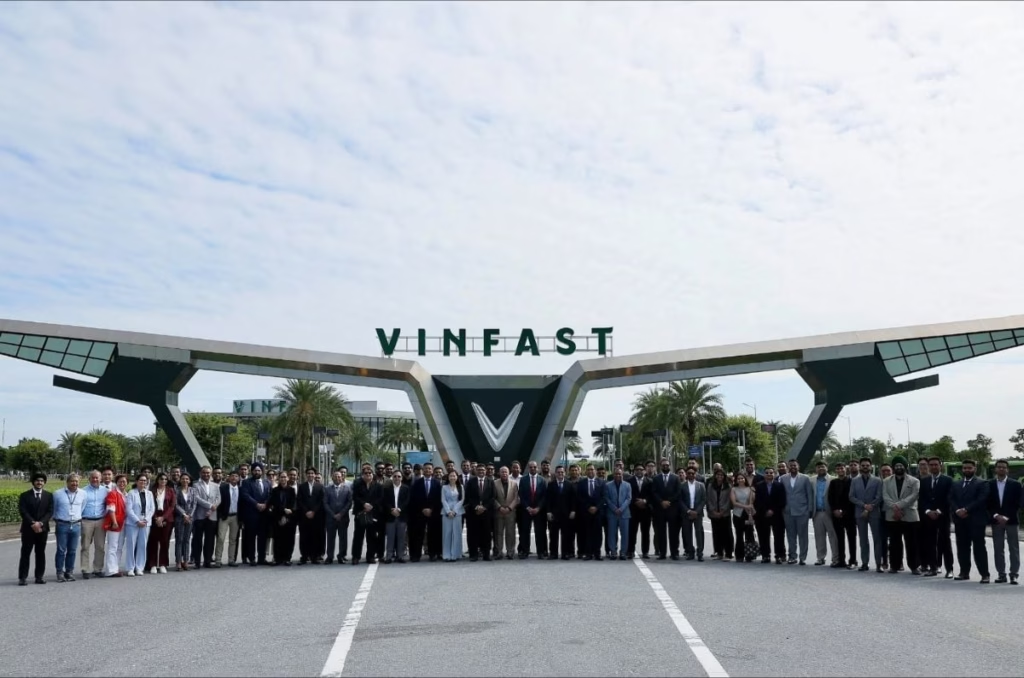
VinFast entered the Indian market in 2025, with activities spanning from the distribution, manufacturing and assembly of electric cars. Following this, the brand also showed some e-scooters at Auto Expo and then subsequently patented designs of some of them in our market, all hinting at plans to enter the huge Indian two-wheeler market. The signing of these letters of intent (LOIs) and partnering with numerous electric two-wheeler dealers now marks a new phase in the brand’s expansion in the Indian market.
Partnered with 50+ electric two-wheeler dealers across 15 states
Plans to establish showrooms across 34 cities
Line-up likely to feature the recently patented Viper and Rasad e-scooters
Retail network expansion details
Over 50 showrooms panned 15 states
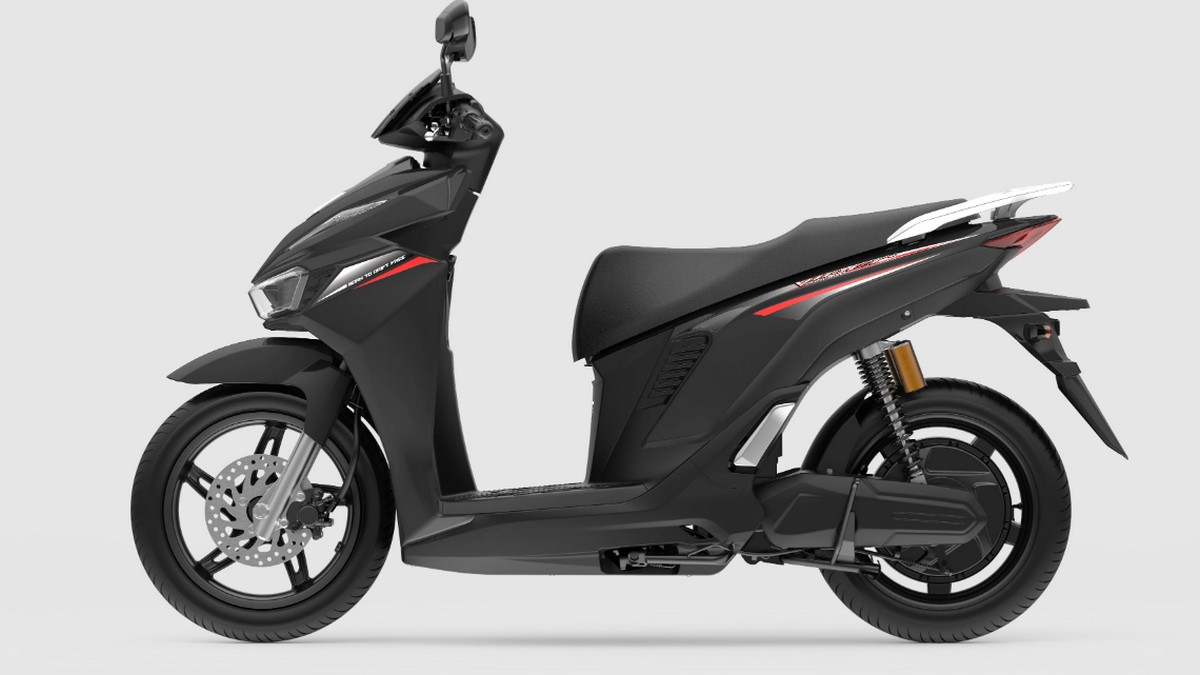
Vinfast and its dealer partners will work together to establish 50+ electric two-wheeler showrooms across 34 cities in 15 states and territories. The locations that the company is targeting to establish a presence in first include Delhi, Rajasthan, Punjab, Madhya Pradesh, Chhattisgarh, Uttar Pradesh, Maharashtra, Gujarat, Karnataka, Telangana, Tamil Nadu, Kerala, Andhra Pradesh, West Bengal and Odisha. Through these partnerships VinFast plans to bring its electric scooter line-up to the country, though it hasn’t shared any timelines so far. Initial line-up expected to feature the Viper and Rasad electric scooters, following design patents filed in India earlier this year.
These selected cities and regions have large two-wheeler markets, providing significant room for the brand’s expansion. VinFast says in fiscal year 2025-2026 there were 21.41 million two-wheelers registered, of which electric vehicles accounted for only 6.54 percent. When VinFast does officially launch some of its models in our country, it will have to ward off stiff competition from both established legacy players as well as mould-breaking start-ups like Bajaj, TVS, Hero, Suzuki, Yamaha, Ather and River.
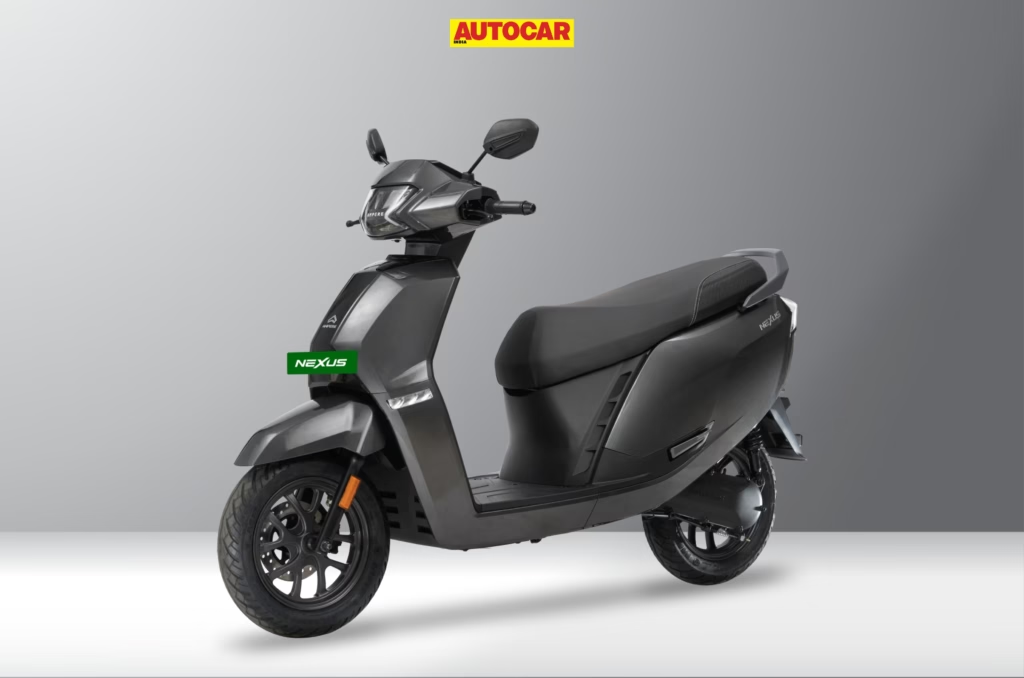
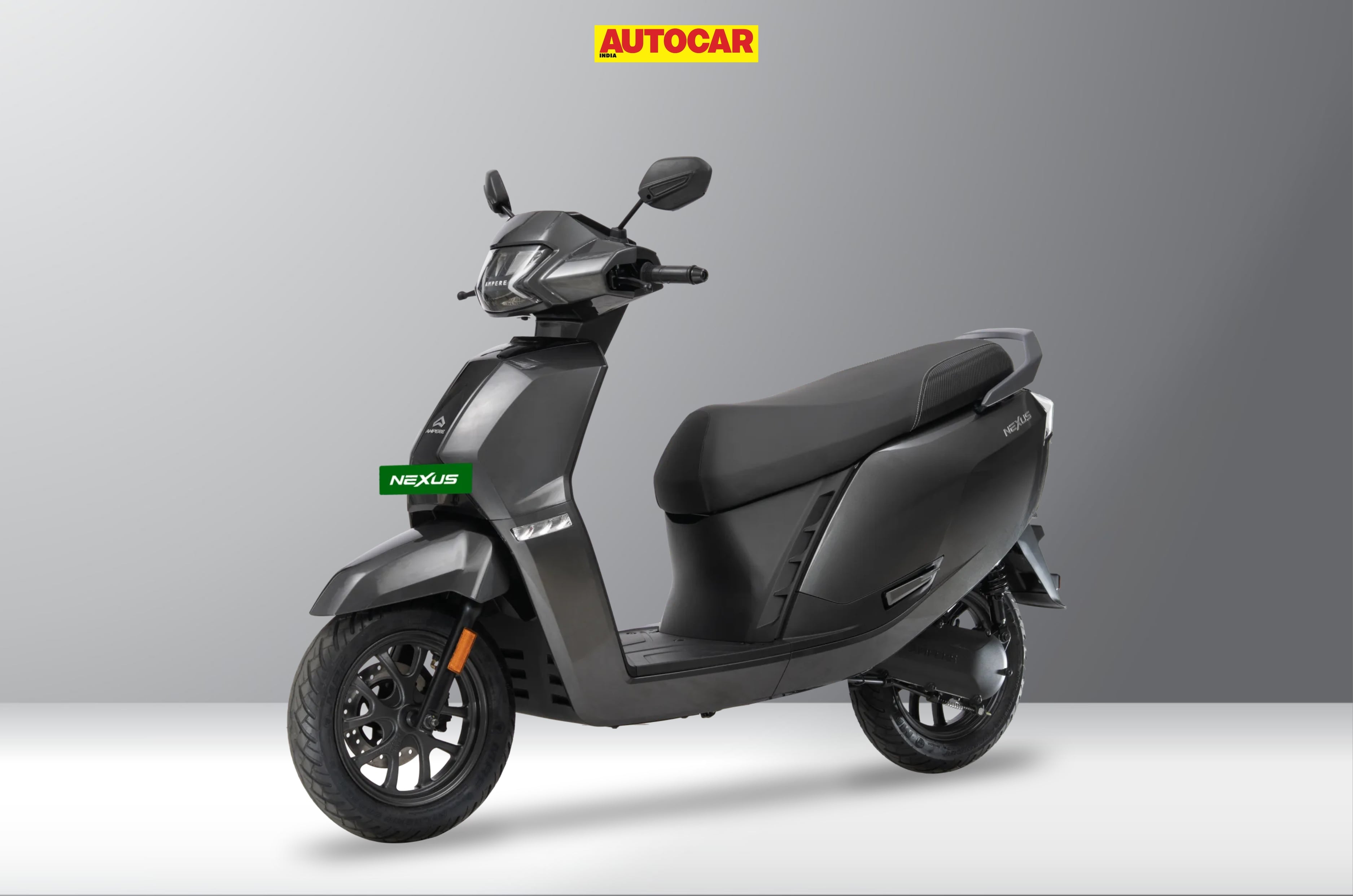
Ampere has launched the Nexus EX+ at Rs 1.30 lakh, the electric scooter’s updated version, featuring a more powerful 5kW motor and an IP65-rated water-resistant charger. The e-scooter is available in two variants, with the higher-spec variant adding Ampere’s Intellipack connected technology, which brings features such as turn-by-turn navigation, geofencing, call alerts and more.
EX+ gets a 5kW motor compared to the previous 4kW motor
Now comes with an IP65-rated 750W charger
Intellipack-equipped variant costs Rs 6,000 more
Ampere Nexus EX+: What’s new?
Now gets a powerful motor, IP65-rated charger and an optional Intellipack
The 5kW motor now produces 202Nm of peak torque at the wheel (bear in mind, the multiplication factor of the gearing on EVs always exaggerates torque numbers), which allows the scooter to accelerate from 0-40kph in 4.5 seconds (claimed). It is also claimed to improve the gradeability on steep climbs, flyovers and hilly roads. The scooter also gets an IP65-rated water-resistant 750W charger, which should give some peace of mind when charging out in open spaces or for those who don’t have shaded parking.
The Intellipack equipped version uses Ampere’s Connect App to provide more than 30 connected features. These include turn-by-turn navigation, geo fencing, call alerts, live location sharing, real-time charging status, find my scooter and many more. The standard Nexus EX+ is priced at Rs 1.30 lakh, while the Nexus EX+ with Intellipack costs Rs 1.36 lakh.
The scooter uses a 3kWh LFP battery with a claimed IDC range of 136km. The Nexus EX+ also gets a five-year/75,000km warranty for the battery and three-year/30,000km warranty for the rest of the scooter. The new Nexus EX+ and Nexus EX+ with Intellipack are available through Ampere dealerships across India.
Earlier, the Nexus was available in two variants EX and ST with their primary differences being the instrument clusters, connected features, and price points. Now, Ampere seems to have streamlined the portfolio and the two EX+ variants are the only way to buy a Nexus.
The Nexus EX+ is positioned in the mid-to-high segment of family electric scooters, where it competes with other major players like the TVS iQube 3.1kWh, Ather Konarc, Vida VX2 and the Chetak C3001, making it one of the compelling option for buyer prioritizing range and features.
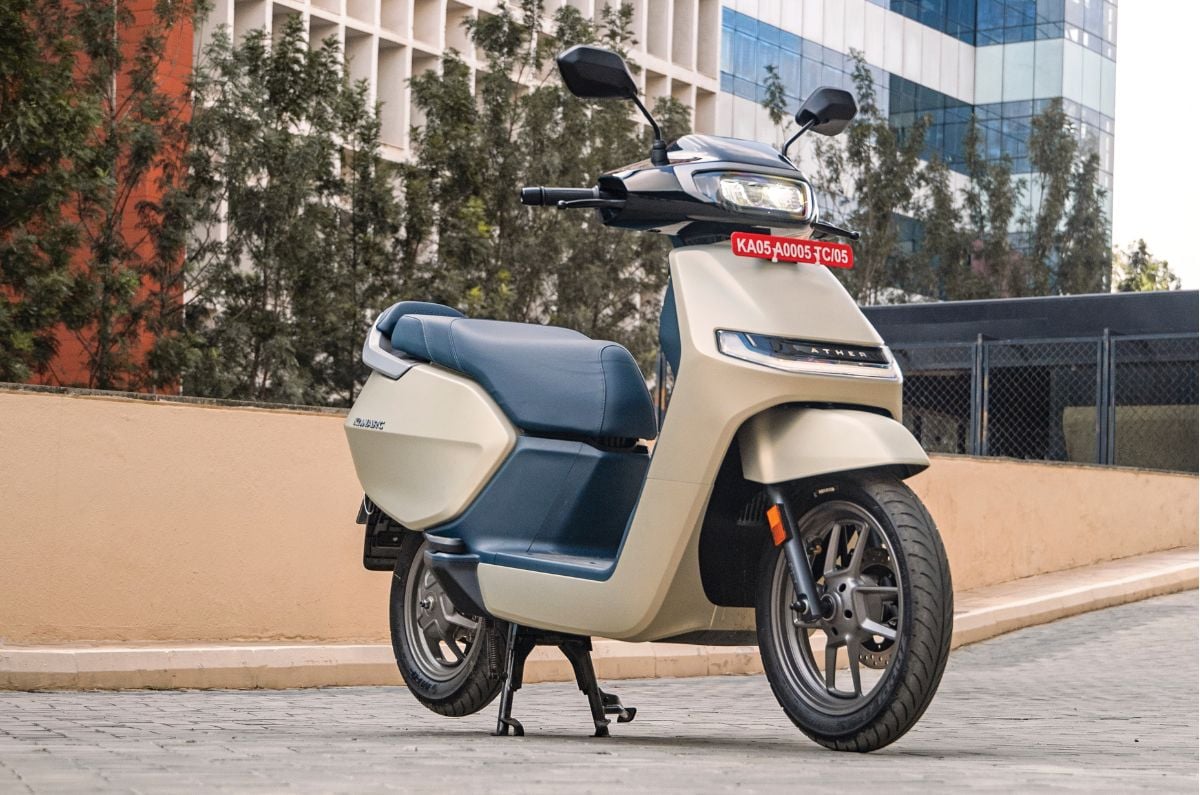
Bengaluru-based EV maker Ather expects its newly launched Konarc electric scooter to drive more than half of its sales over the next two years. The company is positioning Konarc as a key product in its attempt to take electric scooters mainstream, with the focus less on taking customers from rival EV makers and more on converting buyers who would otherwise remain with internal-combustion engine scooters.
Konarc has five variants, four of which are priced close to the Rizta
Manufacturing and availability set to ramp up after the festive season this year
Konarc is expected to make (Ather) EVs mainstream
Konarc has higher profit margins than Rizta despite a lower price
“The role of Konarc is to take EVs mainstream, which, by definition, means that we’re looking at weaning people away from ICE,” said Ather’s chief business officer Ravneet Phokela. “This is not about getting market share from somebody else. It’s really about getting share from the ICE world.” For these customers, he added, Ather first needs to address fundamental considerations around comfort, safety and battery life before features and technology become the differentiators.
Despite a lower starting price of Rs 99,999, the Konarc also has better margins than the Rizta, according to Phokela. It is currently available in five variants (three S and two Z), with four positioned around price points similar to the Rizta’s. Ather has moved from an aluminium chassis for the 450/Rizta to a tubular steel chassis on the Konarc and from a two-stage belt transmission to a gearbox. The charger and motor controller have also been combined into a single unit.
The EL platform has allowed Ather to incorporate learnings from the 450 platform that couldn’t be introduced into that architecture. Phokela described the 450 platform as appropriate for the performance-oriented 450 but “overkill” for the family-focused Rizta, which had to use the existing architecture to meet its development timeline. The EL platform, in contrast, was conceived from the outset as a simpler architecture with a fundamentally lower cost structure.
Konarc is currently being supplied only in parts of North India, with Ather yet to open bookings across central and southern markets. Ather expects this constraint to ease after its new manufacturing facility is commissioned in December, although Phokela said it would take a few months thereafter to ramp up production. More markets are expected to be added progressively as supplies improve. The supply situation has also led Ather to pause showroom expansions for now. It currently has around 750 outlets, with expansion expected to gather pace again after the festive period. Over the next 18-24 months, Phokela sees around 2,000 stores as a target while maintaining that expansion will be calibrated to ensure dealers remain viable and profitable.
With inputs from Mukul Yudhveer Singh and Stephen Raj Antony
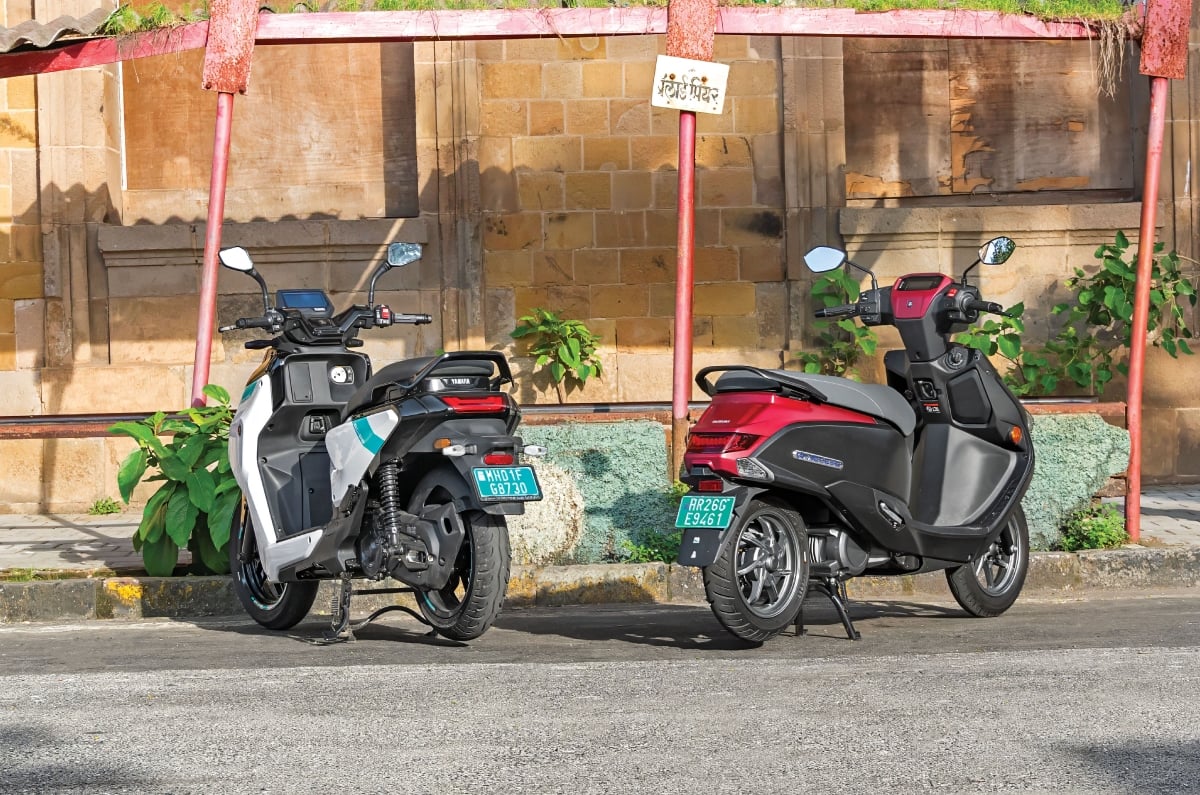
While the Indian manufacturers have been quick to capitalise on the EV boom, the Japanese have been rather more measured in their approach. Honda arrived in 2025 with not one but two in-house electric scooters, though both had unique limitations that prevented them from succeeding.
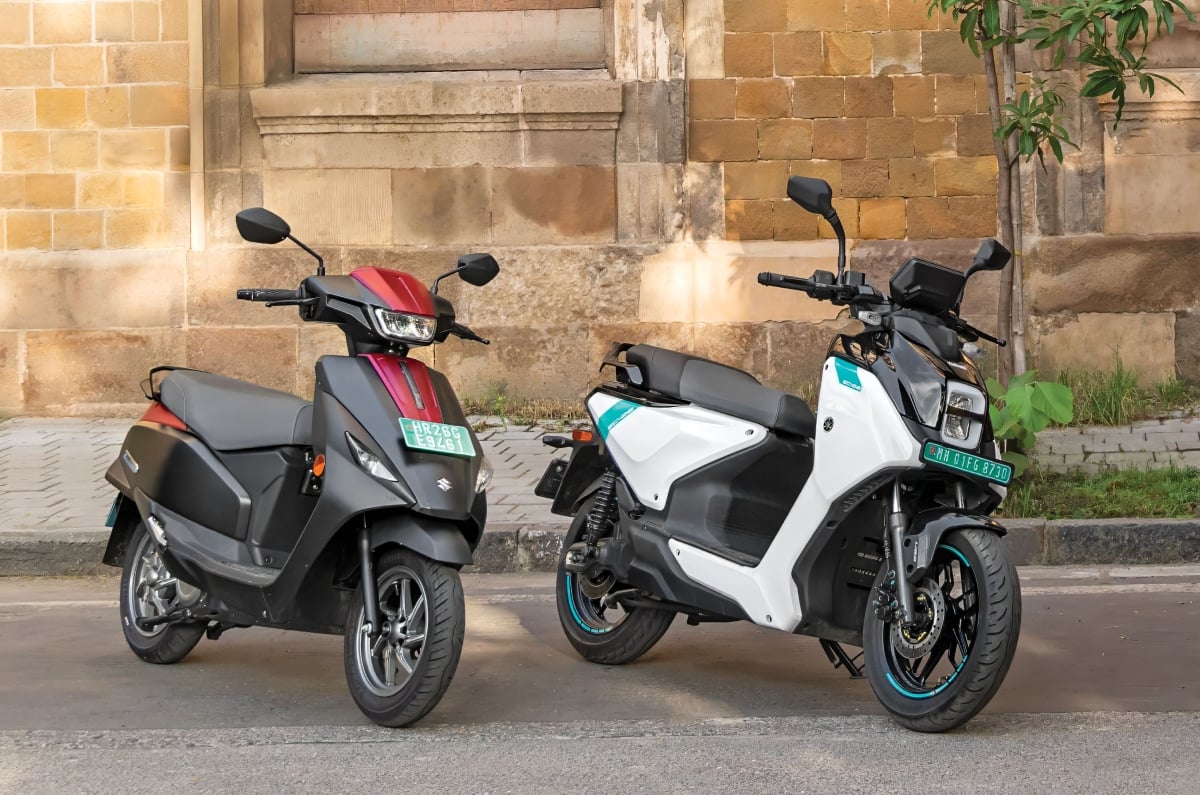
Suzuki, like Honda, chose to develop its own platform from scratch, but its e-Access appears expensive for what it offers. Yamaha, meanwhile, took a markedly different route for its more affordable offering and partnered with an Indian startup. The EC-06 is, in essence, a more expensive River Indie in sharper clothes.
So if you’ve been waiting for a Japanese e-scooter, you now have two choices, but like their very different inceptions, both also offer you two very different flavours of electric scooter. The question, then, is which one deserves your money – and whether either deserves it over the competition.
Not hiding in plain sight
Subtle, these scooters are not. Both take distinctly left-field approaches to styling and will stand out from the crowd. Over the fortnight we spent with them, the EC-06 consistently drew more positive attention thanks to its chunky, squared-off proportions. The e-Access found its niche too, though its double duck-bill nose, flowing front panels with a contrastingly boxy tail make it more of an acquired taste.
Yamaha EC-06
Suzuki e-Access
Kerb weight
132kg
122kg
Seat height
770mm
765mm
Underseat storage
24.5 litres
17 litres
Ground clearance
145mm (laden)
160mm (unladen)
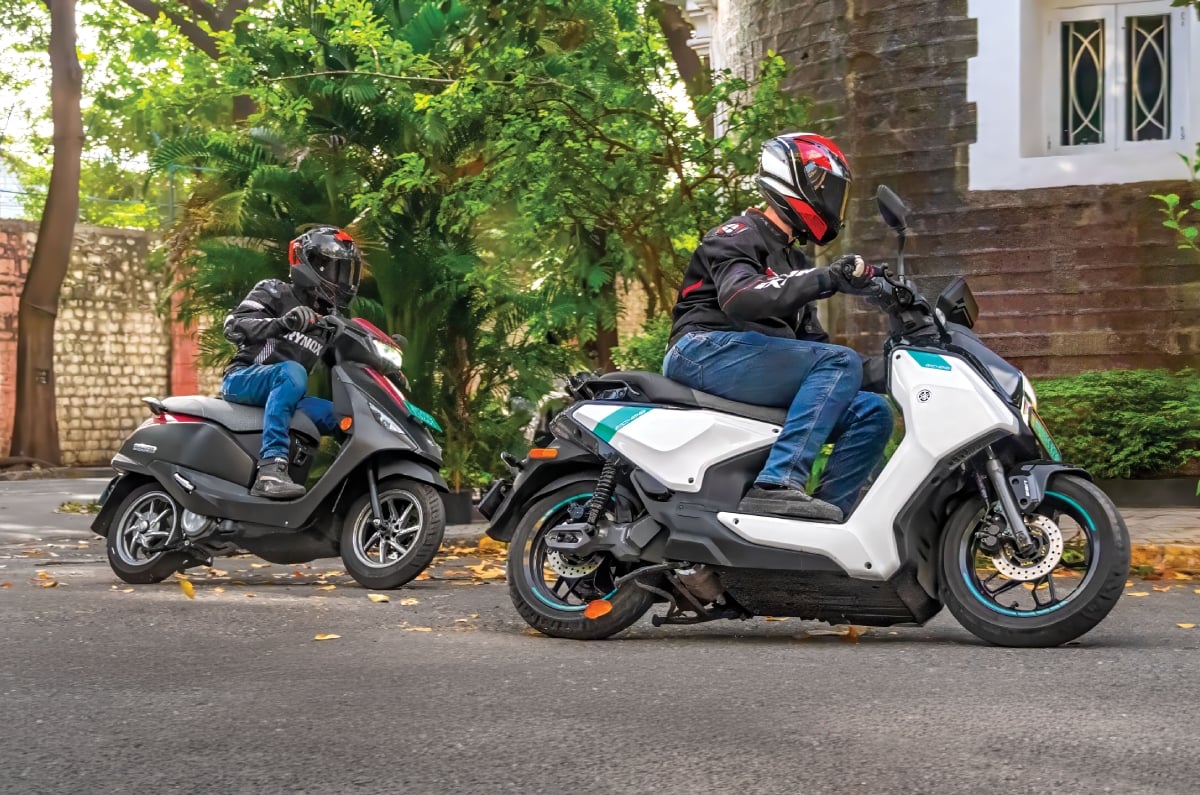
Climb aboard and their personalities diverge further still. The e-Access feels more like a conventional scooter. Despite its compact dimensions, it never feels cramped, even for taller riders, while its 765mm seat height makes it instantly approachable for shorter ones.
The EC-06, by comparison, feels a size larger. Its riding triangle is noticeably roomier, which taller riders will appreciate in a segment that seldom caters to them. Yet, with a friendly 770mm seat height, it remains fairly unintimidating for shorter riders. In fact, tall riders will want a higher seat.
Different strokes
The riding experience of both also reflects two very different engineering philosophies. The 122kg e-Access feels exceptionally light on its feet; whether wheeling it around a parking space or flicking it into a bend, it responds eagerly – actually, a bit too eagerly. Some of that can be attributed to Suzuki mounting the battery pack vertically beneath the seat, a decision that, as you will read further on, has implications elsewhere too.
Yamaha EC-06
Suzuki e-Access
Battery capacity / chemistry
4kWh / NMC
3.072kWh / LFP
Motor
Permanent Magnet Synchronous
Permanent Magnet Synchronous
Power
6.7kW
4.1kW
Torque
26Nm
15Nm
Like the latest Burgman, its ride also errs towards the firmer side rather than the plush feel of a TVS iQube. It isn’t uncomfortable by any means, but it is something worth paying attention to on a test ride. Taller riders will also discover the Suzuki’s compactness during full-lock U-turns, where their knees will foul the handlebar.
On the flip side, the EC-06 is relatively heavier and slower to steer, but it’s a small tradeoff. That’s because its larger 14-inch wheels lend it greater stability at faster speeds and also help it dismiss broken roads with admirable composure. Its absorptive suspension also factors in here, though particularly sharp impacts can provoke a slight judder in the fork.
E-Access has the more flighty, energetic demeanour, whereas the EC-06’s handling is more sure-footed.
The Yamaha’s seat, however, leaves quite some room for improvement. Its forward-sloping shape constantly makes you slide forward, necessitating frequent shuffling about. The padding is also too soft, and after just 30 minutes or so, you find yourself sinking into the seat pan. This results in a gradually more knees-up riding position, which might sound like a trifling problem at first but one that becomes increasingly apparent over longer journeys.
Neither one gets ABS, which feels like quite an egregious oversight considering their price points. Nevertheless, the Yamaha’s brakes inspire greater confidence because they are powerful without being overly aggressive, and its wider tyres also provide better traction. The Suzuki’s brakes, conversely, are almost too sharp. On Mumbai’s slippery concrete roads, they demand a more measured touch when coming to a halt quickly.
Not that you’ll often rely heavily on them. That’s partly down to the well-calibrated regenerative braking system and partly because the e-Access’ performance is quite unremarkable. Not only is it much slower than the EC-06, but it also feels noticeably less eager than the petrol-powered Access. It’s perfectly usable in the city, but on faster roads, overtakes require planning. Unsurprisingly, the Yamaha feels considerably livelier. It accelerates with genuine enthusiasm in its top Power mode, the regenerative braking is seamlessly calibrated in all 3 modes (Standard and Eco being the other two) and, despite using chain drive, its drivetrain is remarkably silent – akin to a hub-mounted motor.
Feel Good (?) Features
Build quality on both is reassuringly solid and exactly what one expects from the Japanese. At these prices, however, there are a few omissions that are difficult to overlook.
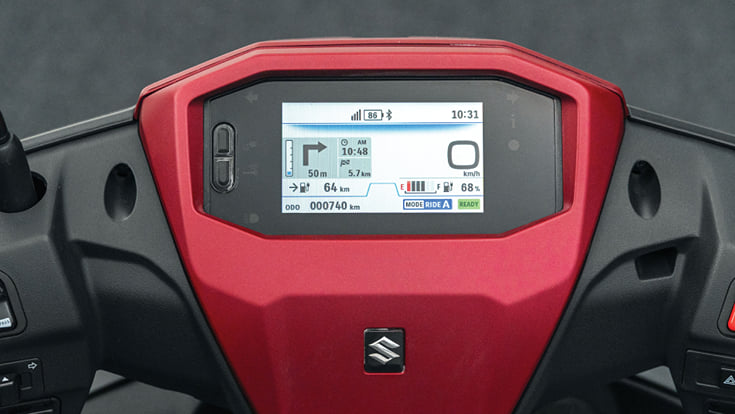
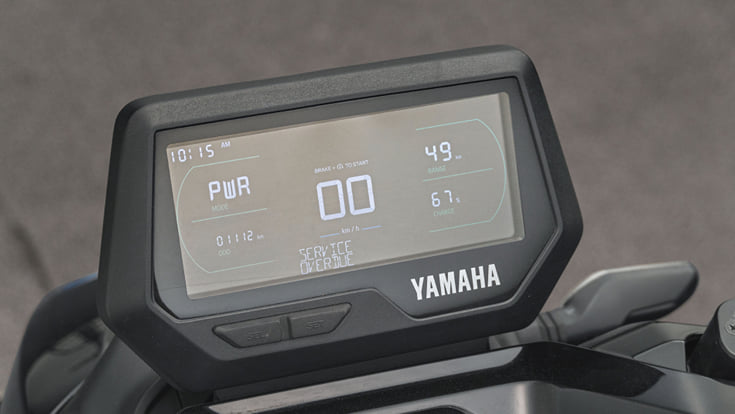
The e-Access employs the same TFT display found on the ICE Access 125 and Burgman, both of which cost substantially less. Yamaha, meanwhile, supplies only the slower 480W charger, despite the considerably more affordable River offering a faster 750W unit as a Rs 3,000 option.
Same TFT as ICE Access; EC’s negative LCD is simpler but well laid out.
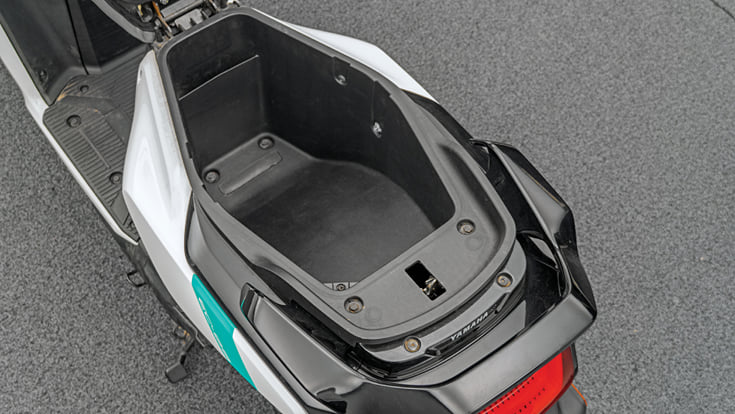
The EC-06 also sacrifices a lot of storage compared to the Indie. Its 24.5-litre under-seat boot is far short of the latter’s enormous 43-litre boot and trails established rivals such as the iQube, Rizta and Chetak. The River’s lockable 12-litre glovebox has been omitted too, though Yamaha has used this to reposition the charging port to a more convenient location.
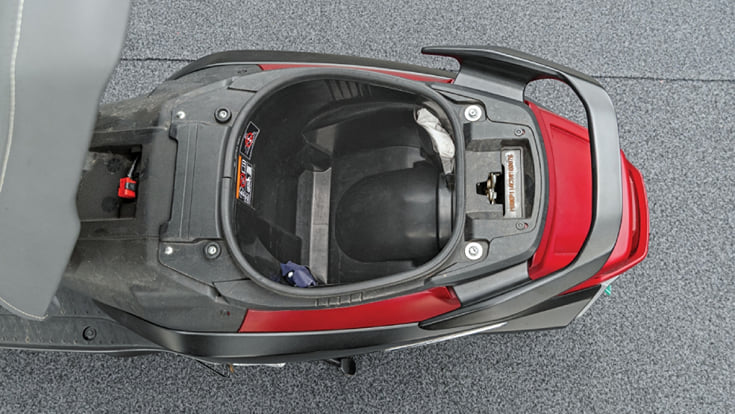
e-Access’ 17L boot far too small and oddly shaped; Yamaha’s 24.5L boot is more usable but not segment-leading.
If the Yamaha’s storage is merely average, the Suzuki’s is positively outclassed. The battery’s position beneath the seat results in just 17 litres of bootspace – roughly half what you’ll find on rivals like the Rizta and Chetak. In fact, even the ICE Access 125 offers you quite a bit more storage space. The e-Access’ boot is also shaped quite awkwardly, and unless the charger’s cables are folded with almost Victorian precision, it simply refuses to fit.
Range Rovers?
An electric scooter ultimately needs to deliver one thing above all else – promising range to reduce your running costs. In Ride A mode, which delivers full performance and max regen, the e-Access covered a little over 88km in our range test. Given its smaller 3kWh battery and its use of safer, but less energy-dense, LFP chemistry, the result is respectable in isolation; however, compared to the market’s front-runners, it falls far short.
Yamaha EC-06
Suzuki e-Access
0-40kph
3.46s
4.94s
0-60kph
6.82s
11.93s
Roll-on Acceleration
20-50kph
3.31s
5.46s
30-70kph
7.34s
17.01s
50-80kph
10.96s
–
Our test on the EC-06 was conducted in its middle Standard mode, which retains full performance but softens throttle response compared to Power mode. It covered 114km, comfortably exceeding the distance initially predicted. Both scooters deserve praise here, as their range indicators proved refreshingly honest, not indulging in optimistic guesswork.
Yamaha EC-06
Suzuki e-Access
60-0kph
22.87m
24.64m
Using Eco mode will naturally extend the range on both, though with reduced acceleration and lower top speeds. Thankfully, neither becomes painfully slow. Even in Eco, both climb flyovers and keep up with city traffic without reducing themselves to rolling roadblocks.
While the Yamaha’s range is undoubtedly more impressive, its charging time is a rather different story. The supplied 480W charger requires a glacial ten hours to replenish a flat battery. Meanwhile, the Suzuki’s 600W unit requires around six hours to do the same, although its battery pack is also smaller.
One thoughtful detail both manufacturers deserve credit for is the inclusion of a dedicated charger bag. It is a small touch, but one that should help protect the charger from spending years rattling around inside the boot.THE BIGGER PICTURE
Judged purely against each other, the result is straightforward – the EC-06 clearly wins. It offers superior performance, greater comfort, longer range and also costs much less than the e-Access.
Yamaha EC-06
Suzuki e-Access
Price (ex-showroom, Bengaluru)
Rs 1.71 lakh
Rs 1.92 lakh
However, if you zoom out and look at the broader market, the context changes. At Rs 1.71 lakh, the Yamaha is hardly inexpensive, and the Suzuki, which is knocking on the door of Rs 2 lakh, is even worse off. When proven alternatives from TVS, Ather, Bajaj, Vida and River offer similar or even superior alternatives for substantially less money, the Japanese appear more like fringe players and less like mainstream contenders.
There will undoubtedly be a small demographic of buyers for whom a Japanese badge carries enough cachet to justify this big premium. However, for the rest of us, the more keenly priced and proven homegrown contenders are the better bet.
Bajaj Auto has exported 11,00,827 two-wheelers in the April-August period of FY27, up 50 percent year-on-year from 7,34,193 units in the same period last year. The figure already represents 56 percent of Bajaj’s highest-ever annual motorcycle export tally of 19.6 lakh units in FY26, putting the company on course to set a new record by the end of the fiscal year. Across all vehicle categories – two-wheelers, three-wheelers and the Qute quadricycle – Bajaj exported 12,66,714 units in the five-month period, up 50 percent year-on-year.
Bajaj Auto exports 11 lakh two-wheelers in April–August FY27
Holds 41 percent share of India’s total two-wheeler exports; TVS second at 28 percent
Entry-level 100-125cc bikes account for 71 percent of motorcycle export volumes
Bajaj Auto 2W export breakdown
Latin America and Africa drive demand
Of the 10,96,009 motorcycles exported (remaining 4,818 units in the two-wheeler tally were Chetak electric scooters) in the period, bikes displacing 100-110cc accounted for the largest share at 4,70,362 units – up 95 percent year-on-year – and a 43 percent share of total motorcycle exports. The 110-125cc bracket contributed a further 3,04,191 units, up 42 percent, for a 28 percent share. Together, these two entry-level categories account for 71 percent of Bajaj’s motorcycle exports in the period.
The 125-150cc bracket (Boxer, CT 150, Pulsar) contributed 1,02,266 units, up 11 percent, while the 150-200cc range fared better at 1,22,481 units, up 17 percent. In terms of geographies, motorcycle exports have risen strongly in Latin America – particularly Brazil and Mexico, the region’s two largest two-wheeler markets – and in Africa, where the Boxer 125 Heavy Duty is seeing strong demand in Nigeria.
Commercial vehicles and Qute
Three-wheeler exports also posted strong growth, with Bajaj shipping 1,60,685 units in the period – up 48 percent year-on-year – for a commanding 62 percent share of India’s total three-wheeler exports of 2,59,593 units. Demand for the Qute surged 206 percent year-on-year to 5,202 units, driven by Egypt, Turkey and select African markets, and is already 78 percent of the Qute’s highest-ever annual export total of 6,696 units in FY26.
BGauss Auto has delivered over 10,000 electric scooters across July and August, with 5,560 units in July – its highest-ever monthly figure – followed by 5,045 units in August. Cumulative retail sales since its launch in August 2022 now stand at 91,373 units, with the 1 lakh milestone expected this year.
BGauss delivers 10,605 units in July and August combined
2026 already its best-ever year with 32,627 units
BGauss sales details
New flagship scooter, C12 MaxR, enters a competitive premium segment
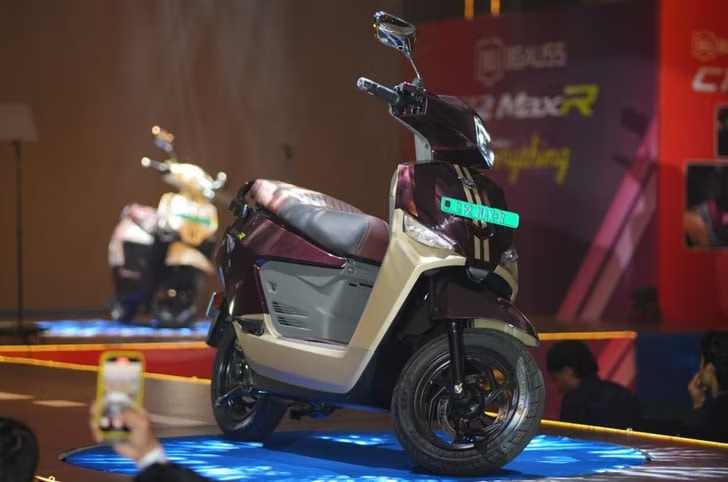
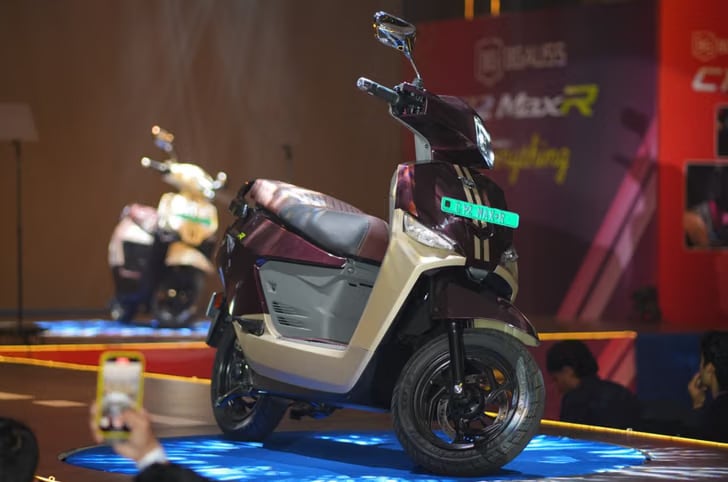
The recently launched C12 MaxR is BGauss’s most premium product to date, priced at Rs 1.60 lakh (ex-showroom). The scooter is powered by a hub-mounted motor that produces 4.2kW of peak power, enabling a claimed top speed of 75kph. It comes with three ride modes – Eco, Ride and Sport – along with a reverse mode and cruise control. Its 3.8kWh LFP battery offers a claimed IDC range of 178km and, according to BGauss, is rated for a lifespan of up to 1.5 lakh kilometres.
At its price point, the C12 MaxR competes directly with the mid- and upper-end variants of the TVS iQube, Bajaj Chetak and Ather Rizta – the highest-selling scooters in our country. BGauss’s broader four-model portfolio of the RUV 350, Oowah, C12 Max and C12 MaxR is entirely priced above Rs 1 lakh, leaving the brand without an entry in the segment that houses newer, more affordable models like the base Ather Konarc.
That said, at its current monthly run rate, BGauss is on course to deliver around 46,000-47,000 units in 2026, which would be its best-ever annual figure. However, consistently crossing 7,000 units a month will be needed to make a meaningful move up the OEM rankings from its current position.
भारत का इलेक्ट्रिक स्कूटर बाजार आने वाले समय में और दिलचस्प होने वाला है। VinFast, Ultraviolette और Honda अपने नए इलेक्ट्रिक स्कूटर भारत में लाने की तैयारी कर रही हैं। तीनों कंपनियों के उत्पादों का फोकस अलग-अलग है। जहां VinFast भारतीय बाजार के लिए खास इलेक्ट्रिक स्कूटर विकसित कर रही है, वहीं Ultraviolette अपना पहला इलेक्ट्रिक स्कूटर Tesseract लॉन्च करेगी। दूसरी ओर, Honda परिवार और रोजमर्रा की जरूरतों को ध्यान में रखकर QC3 इलेक्ट्रिक स्कूटर तैयार कर रही है।
1. VinFast Electric Scooter
वियतनाम की कंपनी VinFast भारत के इलेक्ट्रिक टू-व्हीलर बाजार में एंट्री की तैयारी कर रही है। कंपनी ने पहले ही 2026 की दूसरी छमाही में भारत में इलेक्ट्रिक स्कूटर सेगमेंट में उतरने की योजना की पुष्टि की थी। इसके लिए कंपनी स्थानीय सप्लायर्स के साथ मिलकर भारत की जरूरतों के मुताबिक स्कूटर विकसित कर रही है।
VinFast के आने वाले स्कूटरों में से एक का संबंध वियतनाम में बिकने वाले Viper से हो सकता है। भारत में दाखिल किए गए एक डिजाइन पेटेंट में स्पोर्टी डिजाइन वाला इलेक्ट्रिक स्कूटर दिखाई दिया है। इसमें बड़े पहिए, चौड़े टायर और हब-माउंटेड मोटर नजर आती है। पेटेंट वाले मॉडल में ट्विन-पॉड हेडलैंप और कुछ अलग बॉडी डिजाइन दिया गया है। हालांकि, VinFast ने अभी यह पुष्टि नहीं की है कि पेटेंट में दिखने वाला यही मॉडल भारत में लॉन्च किया जाएगा। वियतनाम में बिकने वाले मौजूदा Viper में 4.8 kWh बैटरी और 3 kW मोटर दी गई है।
Ultraviolette Tesseract कंपनी के लिए बड़ा बदलाव लेकर आएगा, क्योंकि यह कंपनी का पहला इलेक्ट्रिक स्कूटर होगा। इस फ्यूचरिस्टिक इलेक्ट्रिक स्कूटर को 2025 में पेश किया गया था और अब इसे 2027 की पहली तिमाही (Q1) में भारतीय बाजार में उतारे जाने की तैयारी है।
Tesseract में Ultraviolette ने नया 100V आर्किटेक्चर विकसित किया है। कंपनी के अनुसार इसका उद्देश्य बेहतर परफॉर्मेंस और तेज चार्जिंग क्षमता हासिल करना है। इस इलेक्ट्रिक स्कूटर की कीमत 1.5 लाख रुपये से कम रहने की उम्मीद है। कंपनी ने यह भी संकेत दिया है कि भविष्य में Tesseract का उत्पादन लगभग 10,000 यूनिट प्रति माह तक बढ़ाया जा सकता है।
उत्पादन क्षमता बढ़ाने के लिए Ultraviolette ने Hosur में सालाना 2.5 लाख यूनिट क्षमता वाला नया प्लांट भी घोषित किया है। इसके साथ कंपनी प्रीमियम मोटरसाइकिलों से आगे बढ़कर ज्यादा वॉल्यूम वाले सेगमेंट में प्रवेश करने की तैयारी कर रही है।
3. Honda QC3
Honda भारत में अपने अगले इलेक्ट्रिक स्कूटर QC3 को पहले ही पेश कर चुकी है। Tesseract के मुकाबले QC3 का फोकस परफॉर्मेंस से ज्यादा परिवार और रोजमर्रा के इस्तेमाल पर है। Honda QC3 में 3 kWh बैटरी दी गई है और इसकी IDC रेंज करीब 150 किलोमीटर बताई गई है। कंपनी के मुताबिक स्कूटर की बैटरी को करीब 2 घंटे 40 मिनट में 80 फीसदी तक चार्ज किया जा सकता है। फैमिली यूज को ध्यान में रखते हुए इसमें 32 लीटर अंडर-सीट स्टोरेज, Smart Key और कनेक्टेड फीचर्स के साथ 5-इंच TFT इंस्ट्रूमेंट क्लस्टर दिया गया है।
Honda ने अभी QC3 की आधिकारिक कीमत का ऐलान नहीं किया है। हालांकि, मौजूदा इंडस्ट्री अनुमानों के मुताबिक इसकी कीमत करीब 1.2 लाख रुपये हो सकती है। QC3 को कंपनी के मौजूदा Activa e: के साथ रखा जाएगा। Activa e: में दो स्वैपेबल बैटरी का सेटअप मिलता है और इसकी IDC रेंज 102 किलोमीटर है।
Long-standing scooter market leader Honda, who was outsold by TVS for the first time in July 2026, has bounced back into the lead in August. Honda dispatched 2.85 lakh units to showrooms across the country, posting 6 percent sales growth compared to August 2025. However, Honda’s market share has gone down by 6 percent compared to last year. The top 10 scooter manufacturers delivered a record 8.55 lakh units to their showrooms in August 2026, up by 24 percent compared to August 2025. This beats the previous best in October 2025 (8.24 lakh units), the only other time monthly scooter sales crossed 8 lakh.
One in every five TVS scooter sold is an e-scooter
River dispatched the highest number Indies so far in August 2026
Honda sold its highest number of e-scooters so far in August 2026
2026 cumulative sales so far have increased by 31 percent compared to 2025
Honda, TVS, Suzuki and Hero lead the charge
Month
CY2026
CY2025
Percentage change
January
7,50,580
5,48,201
37%
February
7,29,774
5,12,783
42%
March
7,61,422
5,86,485
30%
April
6,91,993
5,48,370
26%
May
7,39,669
5,80,696
27%
June
7,44,823
5,35,307
39%
July
7,98,190
6,45,022
24%
August
8,55,715
6,91,430
24%
Total
60,72,166
46,48,294
31%
Data: Society of Indian Automobile Manufacturers (SIAM)
That’s not the only news from August. At 60.7 lakh units, cumulative scooter sales for the first eight months of 2026 have registered a handsome 31 percent YoY growth (January-August 2025: 46.4 lakh units). TVS dispatched 2.56 lakh scooters last month, up by 24 percent compared to August 2025. This gives the Hosur-based manufacturer a 30 percent market share, unchanged from last year. TVS’ monthly sales continue to benefit from its two EVs – iQube and Orbiter – which added 57,523 units, up by 135 percent from last year.
Ranked third is Suzuki with 1.01 lakh scooters, up by 11 percent, and a 12 percent market share; the Access 125 remains its best-selling product. Suzuki sold 668 units of the eAccess in August 2026, its only EV at the moment.
Hero dispatched 72,150 scooters last month, up 49 percent from last year, giving it an 8 percent market share, up by one percent compared to August 2025. Like TVS, Hero is also benefiting from the sustained demand for its Vida EVs, which sold 25,558 units, up by 108 percent.
Bajaj, which produces the electric Chetak and Yulu models, sold 53,748 e-2Ws in August, up 279 percent YoY; the high growth is due to the company’s production and sales finally recovering from the supply chain issues it faced last year.
Yamaha registered 23 percent growth for a 4 percent market share. It was the last Japanese manufacturer to start selling EVs and dispatched 475 EC-06 e-scooter last month.
Manufacturer
Domestic market sales (in units)
Market share percentage
August 2026
August 2025
Percentage change
August 2026
August 2025
Honda
2,85,527
2,69,923
6%
33.36%
39.02%
TVS
2,56,442
2,06,598
24%
29.96%
29.87%
Suzuki
1,01,267
91,065
11%
11.83%
13.17%
Hero
72,150
48,304
49%
8.43%
6.98%
Bajaj
53,748
14,164
279%
6.28%
2.04%
Yamaha
34,279
27,944
23%
4.00%
4.04%
Ather
29,694
22,757
30%
3.47%
3.29%
Greaves Electric Mobility (GEM)
12,439
5,804
114%
1.45%
0.83%
River
6,567
2,229
195%
0.76%
0.32%
Piaggio (Aprilia and Vespa)
3,602
2,602
38%
0.42%
0.37%
Okinawa
0
40
-100%
0.00%
0.01%
Total
8,55,715
6,91,430
24%
100%
100%
Data: Society of Indian Automobile Manufacturers (SIAM)
Ather, which launched its mass-market family scooter Konarc on August 29, sold 29,694 units of the Rizta and 450 models in August, up 30 percent YoY, for a 3 percent overall scooter market share.
Greaves Electric Mobility – manufacturer of Ampere Electric scooters – is the newest SIAM member. The company has reported dispatches of 12,439 units last month, up 114 percent from August 2025. River, which currently only sells the Indie, dispatched a record 6,567 units in August, up 195 percent from last year and by 9 percent compared to July 2026. Piaggio, which markets the Aprilia and Vespa brands, wraps up the Top 10 scooter manufacturers list with wholesales of 3,602 units, up 38 percent compared to August 2025.
The stellar performance of the scooter segment last month ensured that overall 2W sales hit a new high for the month of August with 20 lakh units. With the festive season ahead, we can expect to see further increases in sales by the end of the year.