5 things to know before buying the Keeway Hypevolt-R

Keeway Hypevolt-R studio image

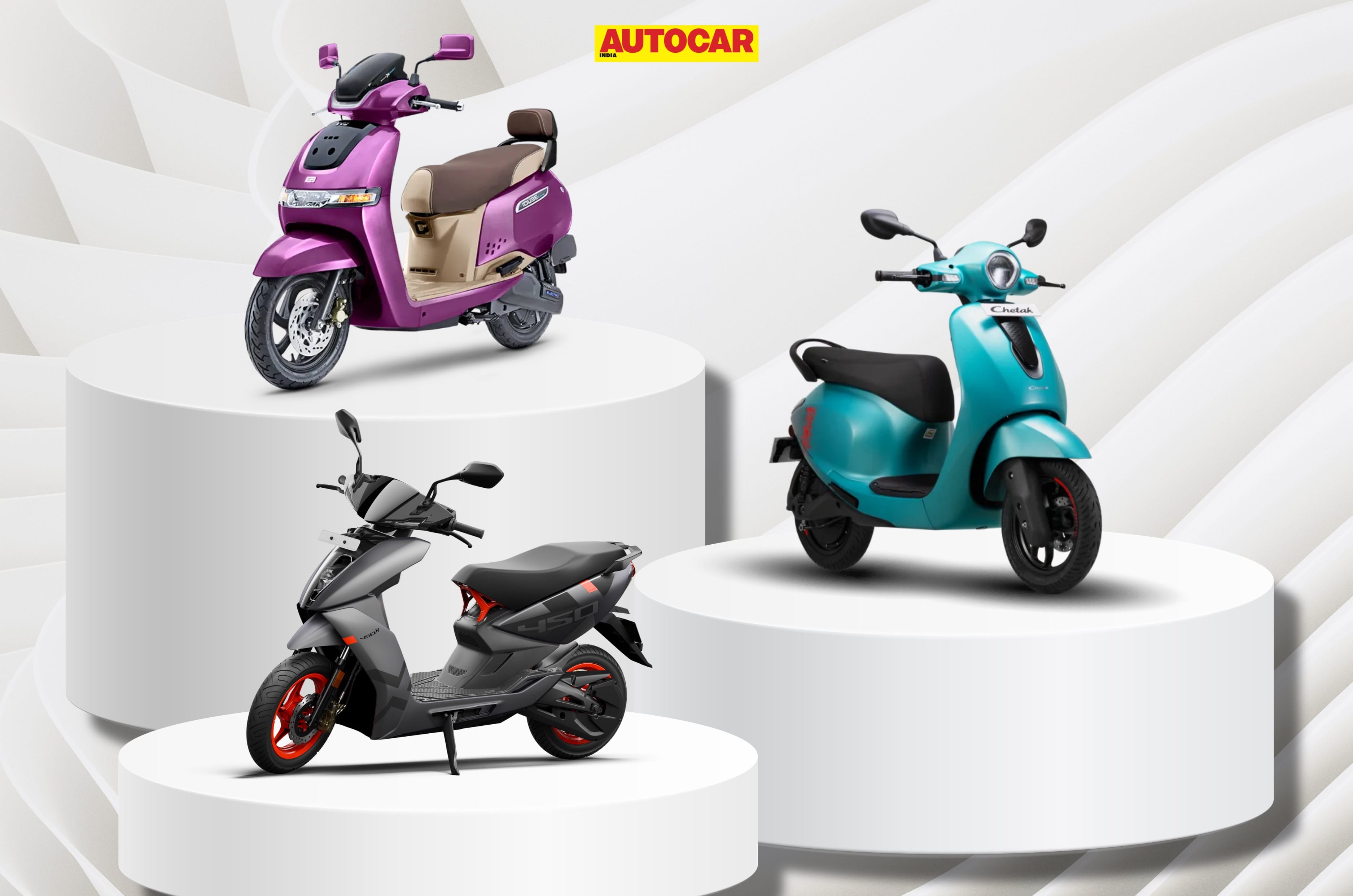
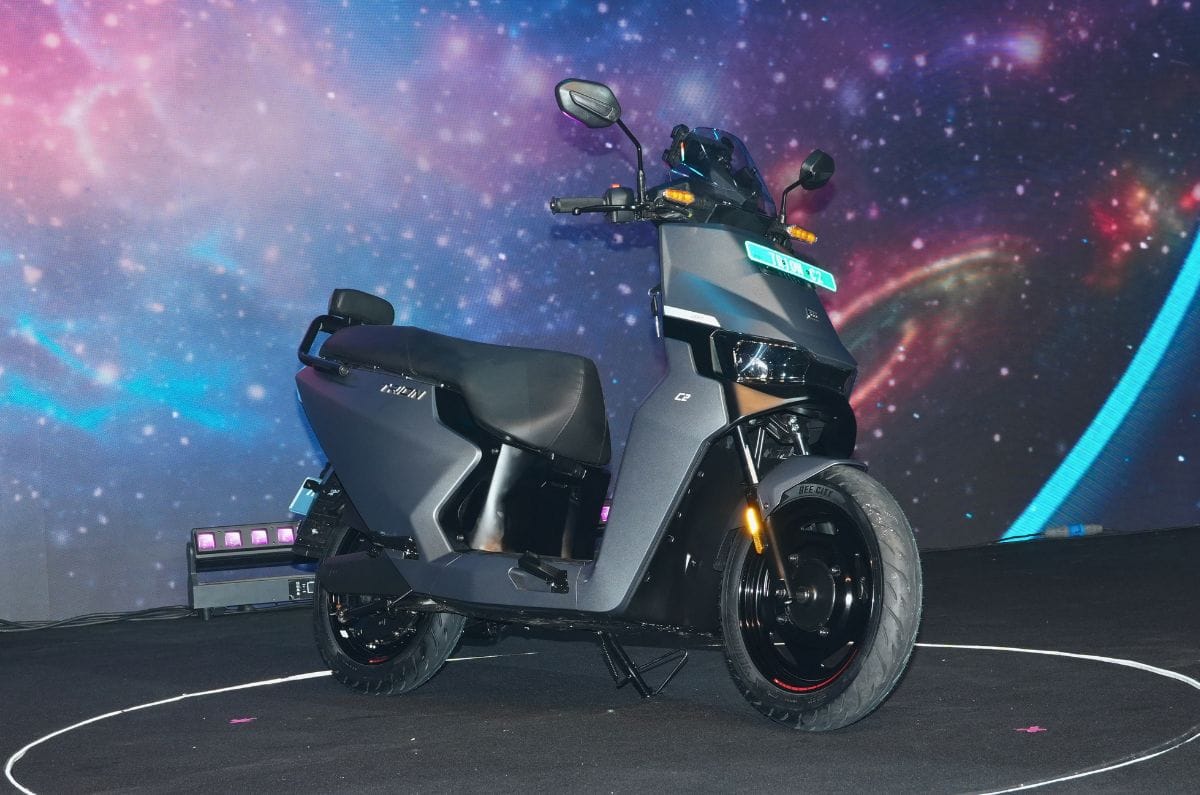
The Keeway Hypevolt-R is the Chinese brand’s first electric scooter for the Indian market and, on paper, is an impressive proposition. At its price point, it occupies a middle ground between most mainstream electric scooters and more niche offerings like the TVS X and Yamaha Aerox-E. Here are answers to some of the most commonly asked questions about the scooter.

What is the price of the Keeway Hypevolt-R?

The Keeway Hypevolt-R is priced at Rs 1.99 lakh (ex-showroom, India). Keeway has described this as an introductory price, suggesting it may increase in the future. Bookings are currently open through the brand’s official website for a token amount of Rs 5,000. The scooter is available in two colour options – Crystal White and Platinum Grey.

What motor does the Keeway Hypevolt-R use?

The Keeway Hypevolt-R is powered by a mid-mounted permanent magnet synchronous motor producing 12kW of peak power. Keeway claims the scooter can sprint from 0-40kph in 2.3 seconds and reach a top speed of 115kph. It also gets three riding modes – Eco, Normal and Sport.

What is the range and charging time of the Keeway Hypevolt-R?

The Keeway Hypevolt-R uses a dual 5kWh removable battery setup with a claimed IDC range of 180km. Both batteries can be charged either on or off the scooter. Using the onboard charger, a 0-80 percent charge takes approximately three hours.

What features does the Keeway Hypevolt-R have?

The Hypevolt-R comes with a comprehensive feature list for its price. It gets projector LED headlamps with a full-width LED light bar, a 5-inch TFT display with Bluetooth connectivity, reverse mode, USB Type-A and Type-C charging ports, and 27 litres of underseat storage. On the safety front, it gets dual-channel ABS, traction control, hill-hold control, hill-descent control, cruise control, blind-spot detection and a rear-view camera.

What is the seat height and weight of the Keeway Hypevolt-R?

The Keeway Hypevolt-R has a seat height of 770mm and weighs 140kg. That makes it slightly heavier than the Yamaha Aerox-E (139kg) and the TVS X (134kg), but it is also more powerful than both, producing 12kW compared to their respective outputs of 9.4kW and 11.7kW.

VinFast Viper electric scooter and new electric motorcycle patented in India

Vinfast Viper and new motorcycle design image

VinFast has filed design patents in India for two electric two-wheelers – the Viper electric scooter and what appears to be an electric motorcycle based on the Sulad concept revealed earlier this year. The filings suggest VinFast is expanding its India product plans beyond the three electric scooters it had previously indicated it would bring to the country.

  1. VinFast Viper electric scooter design patented in India
  2. VinFast Sulad concept-based electric motorcycle also patented
  3. VinFast had previously indicated plans to launch electric scooters in India in 2026

VinFast Viper and new electric motorcycle details

The electric motorcycle appears to be based on the VinFast Sulad concept revealed earlier this year

We had previously reported that a sporty-looking scooter resembling the VinFast Viper had been patented in India in June, although at the time we noted a few visual differences, including a twin-pod headlight instead of the Viper’s single-piece unit and more rounded body panels. This latest patent filing is a much closer match to the Viper sold in Vietnam, with its angular styling, five-spoke alloy wheels, hub-mounted motor and overall silhouette closely mirroring the production model. The current-generation Viper is equipped with a 4.8kWh battery and a 3kW hub-mounted motor.

The electric motorcycle patent is the more intriguing of the two. Based on its design, it appears to resemble the VinFast Sulad concept that the brand unveiled earlier this year as part of its broader electric motorcycle strategy. While VinFast has not released any technical specifications for the concept, Vietnamese media reports suggest it could be powered by a motor producing up to 50kW and have a top speed of around 130kph.

VinFast had stated earlier this year that it planned to launch electric scooters in India in 2026 and had identified three models from its Vietnam lineup as candidates for our market. With both the Viper and an electric motorcycle now patented in India, the company’s two-wheeler plans for the country appear to be broader than initially indicated. VinFast has not announced a launch timeline for either model, and we will update this story as more information becomes available

All you need to know about the Suzuki e-Access

Suzuki e-Access

The Suzuki e-Access is the first electric two-wheeler from Suzuki Motorcycle India, built on an entirely new platform developed in-house rather than shared with the petrol Access 125. It brings Suzuki’s reputation for reliability to a segment increasingly crowded with newer entrants. Here are answers to some of the most commonly asked questions about it.

What is the price of the Suzuki e-Access?

The Suzuki e-Access is available in a single variant priced at Rs 1.88 lakh (ex-showroom, Delhi). At this price, it is one of the more expensive electric scooters from a mainstream manufacturer in the country, sitting above the TVS iQube S and Bajaj Chetak C3501, and closer to the Ather Rizta S in pricing.

What motor and battery does the Suzuki e-Access use?

The Suzuki e-Access is powered by a hub-mounted permanent magnet synchronous motor producing 3.5kW of rated power and 6kW of peak power, with 90Nm of torque at the rear wheel. The battery is a 3kWh LFP (Lithium Ferrous Phosphate) pack – a chemistry that offers relatively longer battery life and better thermal stability compared to the NCM batteries used in most rival electric scooters, but at the cost of lower energy density and, as a result, lower range for a given pack size. 

What is the charging time of the Suzuki e-Access?

The e-Access ships with a portable 600W charger capable of topping up a flat battery to full in 6 hours 20 minutes. In our real-world test, we verified the actual charging time to be 6 hours flat when plugged into a standard 12A, 3-pin socket – slightly faster than the claimed figure. There is no fast-charging option available.

What is the range of the Suzuki e-Access?

Suzuki claims an IDC range of 95km on a full charge. In our real-world range test conducted in Ride A mode – the more powerful of the two ride modes – the e-Access covered 88.4km before the battery was fully depleted. Notably, the range indicator on the display was reliable throughout, with the scooter displaying an estimated range of 93km at the start of the run and never catching us by surprise as the battery dropped. Riding in the more efficient Eco mode will yield additional range. The e-Access comes closest to its claimed IDC figure in real-world conditions compared to other electric scooters we have tested.

What is the top speed of the Suzuki e-Access?

The Suzuki e-Access has a claimed top speed of 80kph, which should be achievable in either of its two Ride modes – Ride A and Ride B. Both offer identical peak power and throttle response, differing only in the level of regenerative braking intervention, with Ride B providing a gentler regen effect than Ride A. There’s also a lower-power Eco mode, which in our tests reached a VBOX-verified 55kph.

Yamaha EC-06 Performance Tested and Explained

Yamaha EC-06 being ridden through South Bombay

The Yamaha EC-06 electric scooter gets a 4kWh battery pack, a claimed IDC range of 169km, and a top speed of 79kph. 

Yamaha EC-06: Acceleration

During our test, the conditions were dry.

Acceleration

Time

0-40kph

3.46 seconds

0-60kph

6.82 seconds

0-80kph

15.50 seconds

The EC-06 gets three riding modes including Eco, Standard, and Power. We conducted this acceleration test in Power mode with the battery state of charge above 97 percent. In this riding mode, acceleration is fairly quick and the scooter managed to get from 0 to 80kph in 15.50 seconds. 

Yamaha EC-06: Roll-On Acceleration

The scooter delivers 6.7kW (8.9hp) of peak power.

Roll-On Acceleration

Time

20-50kph

3.31 seconds

30-70kph

7.34 seconds

50-80kph

10.96 seconds

In our roll-on acceleration tests, the scooter took 3.31 seconds to get from 20-50kph, 7.34 seconds from 30-70kph, and 10.96 seconds from 50-80kph. In the city, making quick overtakes is fairly easy while riding in Standard or Power mode. Eco mode can get to 50kph, but is a usable mode in the city and while climbing flyovers as well. 

Yamaha EC-06: Braking

Decent braking performance with good regenerative braking as well.

Braking

Distance

60-0kph

22.87 metres

The EC-06 gets disc brakes at both ends and features a combined braking system. The regenerative braking is also strong and at slow speeds, allows a rider to smoothly filter through stop-go traffic without having to constantly apply the brakes.

Yamaha EC-06: Specifications and price

Yamaha has co-developed the EC-06 with Bengaluru-based startup River. 

Peak Power

6.7kW

Max Torque

26Nm

Battery Capacity

4kWh

Kerb Weight

132kg

Brakes (F/R)

Disc / Disc

Tyres (F/R)

110/80-14  / 120/70-14 

Price (ex-showroom)

Rs 1.72 lakh (ex-showroom, Delhi)

Priced at Rs 1.72 lakh (ex-showroom, Delhi), this is one of the more expensive electric scooters on sale in India.

Scooter industry posts best-ever first-half sales in 2026

graphic showing the activa, jupiter, and access

India’s scooter industry has delivered its strongest-ever first-half (H1) performance, with wholesales of 44.2 lakh units – up 33 percent year on year (YoY) and 11 lakh units higher than in the same period of 2025. Monthly sales crossed the 7 lakh-unit mark in five of the six months, with April being the only exception. At this pace, the segment is on course to surpass 90 lakh annual units for the first time in a calendar year.

  1. Scooter wholesales reach 44.2 lakh units in H1 2026
  2. Segment on course to cross 90 lakh units in CY2026

India scooter sales H1 2026: OEM breakdown

Honda Motorcycle & Scooter India

16.2 lakh units

Market leader Honda maintained its position with 16.2 lakh scooter dispatches, up 32 percent year-on-year, giving it a 37 percent market share as the Activa and Dio continued to drive volumes. Honda’s electric scooter sales, comprising the Activa e: and QC1, contributed 2,100 units in the first half, down 4 percent year-on-year. Honda’s share of the scooter market has fallen significantly over the past decade, from 57 percent in FY2017 to 37 percent today, as TVS and other manufacturers have gained ground.

TVS Motor Co

12.6 lakh units

TVS dispatched 12.6 lakh scooters in H1 2026, up 32 percent year-on-year. Its ICE scooters, led by the Jupiter, NTorq and Zest, contributed 10.24 lakh units (up 26 percent), while the electric iQube and Orbiter added 2.41 lakh units (up 66 percent). EVs now account for 19 percent of TVS’s scooter sales, up from 15 percent a year ago.

Suzuki Motorcycle India

5.95 lakh units

Suzuki dispatched 5.95 lakh scooters, up 11 percent year-on-year, although its market share fell to 13 percent from 16 percent as the broader market expanded at a faster pace. The Access 125 remained the brand’s volume leader, ahead of the Burgman Street and Avenis. The e-Access contributed 3,390 wholesale units in H1 2026, while retail sales stood at 2,042 units.

Hero MotoCorp

3.46 lakh units

Hero MotoCorp posted the strongest growth among the larger manufacturers, with 3.46 lakh scooter dispatches – up 72 percent year-on-year. ICE scooters contributed 2.44 lakh units (up 54 percent), while the Vida electric range added 1.02 lakh units (up 136 percent). Hero’s EV penetration has risen sharply, with Vida now accounting for 30 percent of its scooter sales, compared to 21 percent in H1 2025.

Bajaj Auto

2.07 lakh units

Bajaj Auto dispatched 2.07 lakh scooters, up 53 percent year-on-year, of which 2.04 lakh were Chetak electric scooters and 2,850 were Yulu e-bikes. Bajaj’s overall scooter market share edged up to around 5 percent from 4 percent a year ago.

India Yamaha Motor

1.89 lakh units

Yamaha posted 39 percent growth with 1.89 lakh scooter dispatches, with the Fascino and RayZR accounting for 1.75 lakh units of that total. The Aerox grew 15 percent to 12,590 units. Yamaha also dispatched 678 EC-06 electric scooters between March and June, before launching the Aerox-E earlier this month.

Ather 

1.64 lakh units

Ather Energy dispatched 1.64 lakh scooters, up 67 percent year-on-year, taking its share of the overall scooter market to 4 percent from 3 percent a year ago. The Rizta remained the company’s key volume driver alongside the 450 range. Ather recently became the fourth Indian EV manufacturer to cross 7 lakh cumulative retail sales.

Other manufacturers

Piaggio Vehicles (Aprilia and Vespa) dispatched 19,162 units, up 27 percent year-on-year. River Mobility, which became a SIAM member during the year, dispatched 11,569 River Indie scooters in the April-June quarter alone, including its highest-ever monthly wholesale of 5,217 units in June.

Ather Energy share Price: एथर एनर्जी का शेयर बना रॉकेट, आईपीओ के निवेशकों का पैसा 3 गुना हुआ

एथर एनर्जी के शेयर 15 जुलाई को बाजार खुलते ही रॉकेट बन गए। एक समय शेयर 9 फीसदी से ज्यादा चढ़ गए थे। हालांकि, बाद में तेजी थोड़ी कम पड़ गई। 11:40 बजे शेयर 8.65 फीसदी उछाल के साथ 1,306 रुपये पर चल रहा था। शेयरों में तेजी की वजह एक खबर है। हीरो मोटोकॉर्प का एथर एनर्जी में 1,000 करोड़ रुपये निवेश करने का प्लान है।

Ather Energy बेंगलुरु की कंपनी है, जो इलेक्ट्रिक टू-व्हीलर बनाती है। हीरो मोटोकॉर्प यह निवेश प्रिफरेंशियल इश्यू या कनवर्टिबल वारंट्स के जरिए करेगी। हीरो मोटोकॉर्प ने कहा है कि इस ट्रांजेक्शन के बाद उसकी शेयरहोल्डिंग प्रस्तावित सिक्योरिटीज इश्यूएंस की फाइनल प्राइसिंग और स्ट्रक्चर पर निर्भर करेगी। जरूरी एप्रूवल मिलने के 15 दिन के अंदर इस ट्रांजेक्शन के पूरा हो जाने की उम्मीद है।

एथर एनर्जी में इस साल जून के अंत में Hero MotoCorp की 29.5 फीसदी हिस्सेदारी थी। हीरो मोटोकॉर्प का दर्जा एथर एनर्जी के प्रमोटर का है। एथर एनर्जी भारत में इलेक्ट्रिक टू-व्हीलर बनाने वाली शुरुआती कंपनियों में से एक है। इसका मुकाबला TVS Motor और Bajaj Auto जैसी दिग्गज कंपनियों से है, जिन्होंने बड़े लेवल पर इलेक्ट्रिक टू-व्हीलर सेगमेंट में एंट्री की है। इसके अलावा ओला भी इलेक्ट्रिक टू-व्हीलर के मार्केट में है।

एथर एनर्जी का आईपीओ अप्रैल 2025 में आया था। कंपनी के शेयर 321 रुपये के इश्यू प्राइस के मुकाबले 328 रुपये पर लिस्ट हुए थे। कंपनी का शेयर 2026 में 60 फीसदी से ज्यादा चढ़ चुका है। यह इश्यू प्राइस से करीब 3 गुना हो चुका है। उधर, इलेक्ट्रिक टू-व्हीलर बनाने वाली ओला इलेक्ट्रिक का शेयर इश्यू प्राइस से करीब 48 फीसदी गिरा है।

एथर एनर्जी इलेक्ट्रिक स्कूटर्स की डिजाइनिंग, मैन्युफैक्चरिंग और बिक्री खुद करती है। इसका चार्जिंग नेटवर्क और बैटरी एनर्जी मैनेजमेंट सर्विसेज भी है। 31 मार्च, 2026 के अंत में कंपनी का टर्नओवर 3,671.76 करोड़ रुपये था। 14 जुलाई को कंपनी का शेयर 1,47 फीसदी चढ़कर 1,202 रुपये पर बंद हुआ था। ऑटो इंडस्ट्री के जानकारों का कहना है कि एथर एनर्जी ने इलेक्ट्रिक टू-व्हीलर्स के बाजार में अच्छी पैठ बना ली है।

15 जुलाई को शेयर बाजार में तेजी दिखी। निफ्टी 0.56 फीसदी यानी 132 अंक चढ़कर 24,185 अंक पर चल रहा था। सेंसेक्स 0.65 फीसदी यानी 500 अंक के उछाल के साथ 77,549 पर था। बैंक निफ्टी में भी 0.89 फीसदी की तेजी दिखी। 14 जुलाई को शेयर बाजार में गिरावट आई थी।