Exclusive: New 450cc class single-cylinder Norton to debut at EICMA 2026

Exclusive: New 450cc class single-cylinder Norton to debut at EICMA 2026
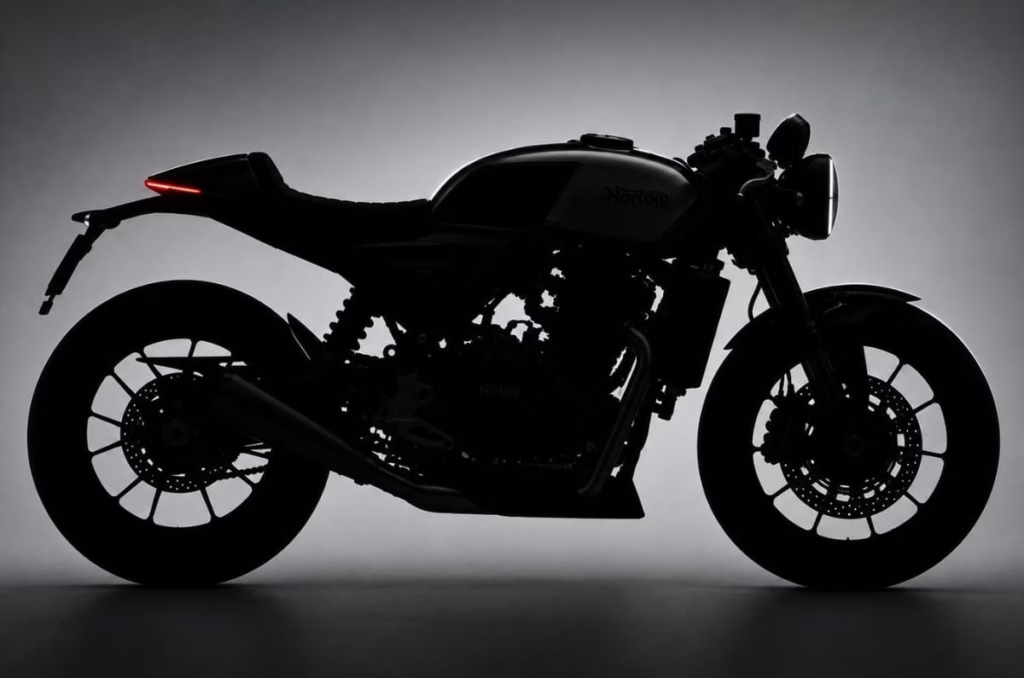
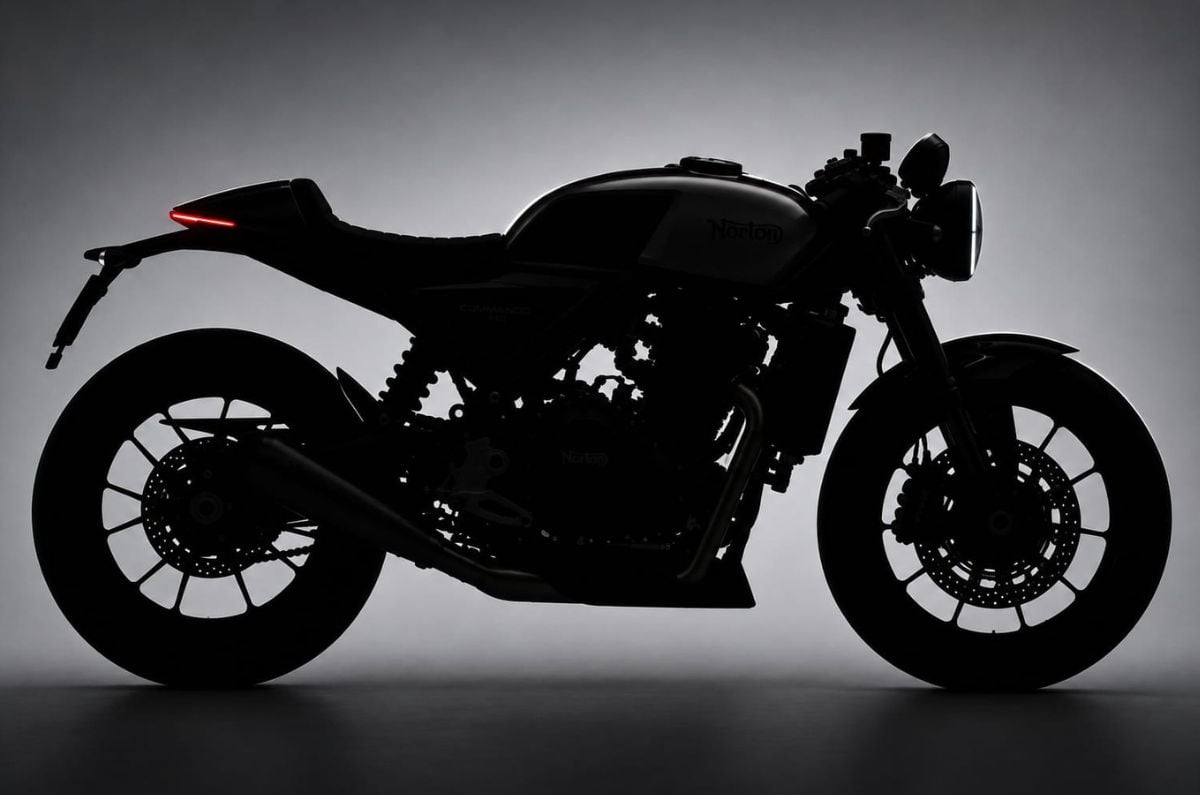
A silhouette of the soon-to-debut single-cylinder Norton

Norton Motorcycles will premiere its much-awaited 450cc-class single-cylinder roadster at EICMA 2026 in Milan, expanding its range with a motorcycle aimed at higher volumes in India and overseas. Autocar Professional expects the motorcycle to produce around 40-45hp and 40-45Nm. The engine is likely to be liquid-cooled and is expected to come with a 6-speed gearbox. The roadster will be the first model on a new platform understood to be called the H-series, with other body styles to follow. It will sit below the TVS Motor-owned British marque’s twin-cylinder Atlas range and V4-powered Manx family.

  1. Norton Atlas is expected to first launch in India, in Q1 2027
  2. New Norton single-cylinder motorcycle will launch overseas and in India simultaneously
  3. Will also be manufactured at TVS’ Hosur plant

New Norton single-cylinder platform at EICMA 2026

Expected to launch in India and overseas in 2027

Autocar Professional understands that TVS plans to begin Norton’s India rollout in the January-March 2027 quarter, if not sooner, starting with the Atlas, followed by the Manx. The H-series roadster is expected to launch simultaneously in India and global markets in the second half of 2027. Responding to queries from Autocar Professional, a Norton spokesperson said the brand’s India introduction would follow its appearance at this year’s Milan show. “Norton is set to launch in India soon following the brand’s presence at EICMA this year, when the next key stage of the resurgence will be revealed,” the spokesperson said. The company has not officially confirmed the roadster’s platform name, engine capacity, output, pricing or sales timeline.

Norton has recently trademarked three names in India – Roven, Inter and Avalon and the first single cylinder bike may bear one of them. In 2025, the company also trademarked the Norton Electra name here, and this followed on the trademarking of the Norton Combat name in 2023.

Reimagined Norton under TVS

Design and ease of use is at the new Norton’s core

Differentiated design is central to TVS’s effort to give Norton a contemporary identity while retaining its British heritage. Simon Skinner, Head of Design, Norton Motorcycles, is leading the development of a design language connecting the brand’s products across capacities and categories. The roadster will extend that approach to a motorcycle intended to sell in larger numbers.

As we have seen with the thoroughly modern designs on the Atlas and V4, it is safe to anticipate modern, pared-back styling, with selected mechanical components exposed and others concealed. This could help distinguish the roadster in a segment where several competitors draw heavily on retro styling. According to Norton, the Manx R received the “Best of the Best” distinction at the 2026 Red Dot Award: Design Concept. Norton Design was also recognised at the 2026 International Design Excellence Awards in the United States.

The roadster is expected to prioritise manageable weight and ease of use, particularly in city riding. It could feature 17-inch wheels and equipment drawn from Norton’s larger motorcycles, potentially including an eight-inch TFT touchscreen, riding aids and multiple riding modes. Final specifications remain unconfirmed.

Taking on Royal Enfield

How does Norton plan to combat the 350cc onslaught?

The platform represents a significant bet on the global mid-size motorcycle market. The opportunity spans roughly the 350cc-750cc categories, with annual volumes estimated at around 15 lakh-20 lakh units. This broad classification includes motorcycles marketed as 350cc models whose actual displacement is slightly lower.

It will bring Norton into closer competition with Royal Enfield and Triumph in India and overseas. However, the new single-cylinder Nortons will face a specific challenge in India. That is the fact that they will not come under the 350cc segment, unlike the massively popular RE 350 range and the recently re-engineered 349cc Triumph line in India. The result is that they will attract the much higher 40 percent GST rate instead of 18 percent. Norton is likely to position these bikes at a premium that will be justified by higher levels of technology and a heavy focus on design, quality and detail.

Royal Enfield’s dominance in India demonstrates the demand for motorcycles used for daily travel, touring and leisure riding. Its extensive dealer network, broad product range and established riding community also present a substantial challenge for Norton. Overseas, Royal Enfield has expanded into many of the markets the TVS-owned British marque is targeting. For TVS, the single-cylinder Norton offers a way to participate more widely in this market. Additional body styles on the same platform would help spread development costs and reach buyers with different riding preferences.

The India distribution plan

TVS is yet to confirm showroom rollout schedule for India

Norton’s design and heritage will form part of its appeal, but pricing, service coverage and parts availability will be important to building sustained sales, particularly in India. TVS had said in June that the Norton Atlas would be introduced in India later in the year. It had also scheduled the launch of TVS Paddock, its premium retail channel for both Norton and select premium TVS products, for the second quarter of FY27. The latest official response did not provide an updated Paddock rollout schedule.

Current preparations are understood to point to around three Paddock outlets by December, although a larger network is being sought. The number of outlets that will be operational when motorcycle sales begin has yet to be finalised. The company said it now has more than 50 retailers across 10 markets, including the UK, Italy, France, Germany and Spain. Preparations for a United States launch are continuing, subject to the final stages of vehicle certification.

Norton said its European test-ride programme had introduced the new motorcycles to thousands of riders. Foster + Partners has designed its showroom environments. TVS acquired Norton in April 2020. Its FY2025-26 annual report records investments exceeding GBP 250 million in rebuilding the business and identifies the marque as an important part of its premium-isation strategy, particularly in developed markets.

India already supports that expansion through manufacturing. The first Atlas motorcycles rolled off TVS’s Hosur production line in June, combining Norton’s UK design and engineering with its parent’s manufacturing operations. Production for the new single-cylinder range will also be out of Hosur.

With inputs from Anurag Chaturvedi and Rishaad Mody.
IPOs This Week: 19 अक्टूबर से शुरू हफ्ते में Jio IPO समेत 2 नए इश्यू, 9 कंपनियां होंगी लिस्ट

19 अक्टूबर से शुरू हो रहे हफ्ते में देश में 2 नए पब्लिक इश्यू खुलने जा रहे हैं- जियो प्लेटफॉर्म्स IPO और पारस हेल्थकेयर IPO। ये दोनों मेनबोर्ड सेगमेंट से हैं। इसके अलावा पहले से खुले 5 IPO में भी नए सप्ताह में पैसे लगाने का मौका रहेगा। इनमें से 4 मेनबोर्ड सेगमेंट से हैं। स्टॉक मार्केट में नई लिस्ट होने वाली कंपनियों की बात करें तो 9 कंपनियों के शेयर अपनी शुरुआत करने वाले हैं। इनमें से 6 मेनबोर्ड सेगमेंट से हैं। आइए जानते हैं डिटेल…

नए IPO

Jio Platforms IPO: ₹30,213 करोड़ का IPO 21 अक्टूबर को खुलेगा और 23 अक्टूबर को बंद होगा। प्राइस बैंड ₹1065-₹1119 प्रति शेयर है। लॉट साइज 12 शेयर है। कंपनी की लिस्टिंग NSE और BSE पर 28 अक्टूबर को हो सकती है।

Paras Healthcare IPO: यह भी 21 अक्टूबर को खुलने वाला है। कंपनी ₹1,450 करोड़ जुटाना चाहती है। बोली लगाने के लिए प्राइस बैंड ₹660-₹693 प्रति शेयर तय हुआ है। लॉट साइज 21 शेयर है। इश्यू में 23 अक्टूबर तक पैसे लगाने का मौका रहेगा। कंपनी के शेयर NSE और BSE पर 28 अक्टूबर को लिस्ट हो सकते हैं।

पहले से खुले IPO

Sahajanand Medical Technologies IPO: यह 15 अक्टूबर को खुला था 19 अक्टूबर को बंद होगा। साइज ₹475.48 करोड़ है। बोली ₹327-₹344 प्रति शेयर के भाव पर लगा सकते हैं। लॉट साइज 43 शेयर है। कंपनी के शेयर NSE और BSE पर 23 अक्टूबर को शुरुआत कर सकते हैं।

Bonfiglioli Transmissions IPO: ₹2,533.66 करोड़ का इश्यू 15 अक्टूबर को खुला था। प्राइस बैंड ₹558-₹586 प्रति शेयर और लॉट साइज 25 शेयर है। क्लोजिंग 19 अक्टूबर को होगी। उसके बाद कंपनी की लिस्टिंग NSE और BSE पर 23 अक्टूबर को होने की उम्मीद है।

Zetwerk Manufacturing Business IPO: यह भी 15 अक्टूबर को खुला था और 19 अक्टूबर को बंद होगा। साइज ₹5,012.33 करोड़ है। बोली ₹143-₹151 प्रति शेयर के भाव पर और 99 शेयरों के लॉट में लगा सकते हैं। शेयरों की लिस्टिंग NSE और BSE पर 23 अक्टूबर को होने वाली है।

Tonbo Imaging India IPO: ₹852.18 करोड़ का पब्लिक इश्यू 19 अक्टूबर को बंद होगा। प्राइस बैंड ₹665-₹700 प्रति शेयर है। लॉट साइज 21 शेयर है। कंपनी के शेयर NSE और BSE पर 23 अक्टूबर को लिस्ट हो सकते हैं।

Shellz India IPO: यह भी 19 अक्टूबर को बंद होने वाला है। कंपनी का इरादा ₹59.97 करोड़ जुटाने का है। IPO के लिए प्राइस बैंड ₹170-₹179 प्रति शेयर और लॉट साइज 800 शेयर है। कंपनी के शेयर BSE SME पर 23 अक्टूबर को लिस्ट हो सकते हैं।

Cult.fit को IPO के लिए SEBI से मिली मंजूरी, रहेंगे ₹950 करोड़ तक के नए शेयर

इन कंपनियों की ​होगी लिस्टिंग

नए शुरू हो रहे सप्ताह में 21 अक्टूबर को NSE और BSE पर HD Fire Protect की लिस्टिंग होगी। इसी दिन NSE SME पर Vaibhav Vyapaar की लिस्टिंग होने वाली है। 22 अक्टूबर को NSE और BSE पर Fusion CX के शेयर लिस्ट हो सकते हैं। इसी दिन NSE SME पर Ravita Engineering Services के शेयर अपनी शुरुआत करेंगे। 23 अक्टूबर को NSE और BSE पर Sahajanand Medical Technologies, Bonfiglioli Transmissions, Zetwerk Manufacturing और Tonbo Imaging India की लिस्टिंग होने की उम्मीद है। इसी दिन BSE SME पर Shellz India लिस्ट होने वाली है।

Disclaimer: यहां मुहैया जानकारी सिर्फ सूचना के लिए दी जा रही है। यहां बताना जरूरी है कि मार्केट में निवेश बाजार जोखिमों के अधीन है। निवेशक के तौर पर पैसा लगाने से पहले हमेशा एक्सपर्ट से सलाह लें। मनीकंट्रोल की तरफ से किसी को भी पैसा लगाने की यहां कभी भी सलाह नहीं दी जाती है।

अगले 5 साल में क्रिटिकल मिनरल्स बिजनेस 5 गुना बढ़ाएगा वर्ल्ड बैंक ग्रुप, जानिए क्या है भारत और दुनिया के लिए प्लान

वर्ल्ड बैंक ने कहा है कि वह अगले पांच सालों में क्रिटिकल मिनरल्स के कारोबार को पांच गुना बढ़ाने की योजना पर काम कर रहा है। वर्ल्ड बैंक के अध्यक्ष अजय बंगा ने शुक्रवार को बताया कि स्थानीय उद्योगों को विकसित करने के लिए संभावित साझेदारियों के वास्ते 20 देशों की पहचान की गई है। उन्होंने इस बात पर जोर दिया कि विकासशील अर्थव्यवस्थाओं के भीतर ही अधिक नौकरियां और इकोनॉमिक वैल्यू बनाए रखने के प्रयास किए जा रहे हैं।

बैंकॉक में वर्ल्ड बैंक की वार्षिक बैठकों के एक सेशन को संबोधित करते हुए, अजय बंगा ने कहा, “हम अगले पांच सालों में क्रिटिकल मिनरल्स के क्षेत्र में अपने कारोबार को पांच गुना करने की योजना पर काम कर हैं। इस सप्ताह, हमने अन्य MDB (मल्टीलेटरल डेवलपमेंट बैंक) साझेदारों के साथ मिलकर अपने पहले ‘कंट्री कॉम्पैक्ट्स'(देश-स्तरीय समझौते) शुरू किए हैं। इसका मकसद लोकल स्तर पर उद्योगों की स्थापना करना और खनिज कारोबार से मिलने वाले मूल्य और नौकरियों को संबंधित देश के भीतर ही बनाए रखना है।” उन्होंने आगे बताया कि इस काम के लिए उन्होंने 20 देशों की पहचान की है, जिनके साथ वे साझेदारी करेंगे।

आर्थिक गलियारों के विकास पर दिया जा रहा जोर

उन्होंने आगे कहा कि वर्ल्ड बैंक ग्रुप आर्थिक गलियारों (economic corridors)पर अपना फोकस और बढ़ा रहा है, जो बुनियादी ढांचे के विकास को निवेश के अवसरों के साथ जोड़ते हैं। इस संस्था ने पिछले साल 52 नई आर्थिक गलियारा परियोजनाएं शुरू कीं, जबकि इससे एक साल पहले इनकी संख्या सिर्फ 23 थी।

अजय बंगा ने एक ऐसे कॉरिडोर का उदाहरण दिया, जिसे शुरू में मुख्य रूप से खनिजों के परिवहन के लिए बनाया गया था, लेकिन बाद में किसान अपनी फसलों को बाजारों तक पहुंचाने के लिए इसका इस्तेमाल करने लगे, जिससे इस रास्ते के किनारे बसे कस्बों और शहरों के विकास में मदद मिली।

विकास के लिए निजी पूंजी जुटाने पर फोकस बढ़ा

इन प्रयासों के साथ-साथ, वर्ल्ड बैंक ग्रुप विकास कार्यों के लिए निजी पूंजी जुटाने के अपने प्रयासों का विस्तार कर रहा है। बंगा ने बताया कि पिछले साल इस संस्था ने 112 अरब अमेरिकी डॉलर की निजी पूंजी जुटाई, जो वित्त वर्ष 2022 के लगभग 35 अरब अमेरिकी डॉलर के मुकाबले तीन गुना से भी अधिक है।

उन्होंने कहा,”पिछले साल 112 अरब अमेरिकी डॉलर जुटाए गए,जो कि तीन गुना बढ़त है।” उन्होंने आगे बताया कि संस्था की अपनी फंडिंग को मिलाकर कुल फंडिंग 230 अरब अमेरिकी डॉलर से अधिक हो गई है।

उन्होंने यह भी बताया कि निम्न-मध्यम आय वाले देशों में निजी पूंजी जुटाने की मात्रा लगभग तीन गुना हो गई, जबकि उच्च-मध्यम आय वाले देशों में यह चार गुना हो गई। वहीं, पूरे अफ्रीका में इसमें दोगुने से अधिक की वृद्धि हुई। हालांकि,कम आय वाली,कमजोर और संघर्ष-ग्रस्त अर्थव्यवस्थाओं में निजी पूंजी जुटाने की स्थिति स्थिर रही है,जहां व्यावसायिक निवेश आकर्षित करना अब भी मुश्किल बना हुआ है।

विकास के लिए साझा सिस्टम विकसित करने पर जोर

अजय बंगा ने कहा कि यह संस्था गारंटी, इक्विटी और स्थानीय मुद्रा में फाइनेंसिंग के ज़रिए करेंसी रिस्क और फाइनेंस तक सीमित पहुंच जैसी बाधाओं को दूर कर रही है। यह अन्य बहुपक्षीय विकास बैंकों के साथ मिलकर ऐसे साझा सिस्टम विकसित करने पर भी काम कर रही है, जिससे निवेश को दूसरे निवेशकों तक पहुंचाया जा सके और नई विकास परियोजनाओं के लिए पूंजी जुटाई जा सके। इसका मेन मकसद उन क्षेत्रों में निवेश बढ़ाना है जो उत्पादकता में सुधार करते हैं और रोजगार पैदा करते हैं। इनमें बुनियादी ढांचा और ऊर्जा, कृषि-व्यवसाय, स्वास्थ्य सेवा, पर्यटन और वैल्यू एडेड मैन्यूफैक्चरिंग (value-added manufacturing) जैसे क्षेत्र शामिल हैं।

नौकरी कोई आंकड़ा नहीं, नौकरी सम्मान है

अजय बंगा ने ग्लोबल लेवल पर लगभग 80 करोड़ नौकरियों की अनुमानित कमी की ओर भी इशारा किया। उन्होंने चेतावनी दी कि अगर युवाओं के लिए अवसर पैदा नहीं किए गए,तो पूरी दुनिया में इसके खराब परिणाम देखने को मिल सकते हैं। उन्होंने युवाओं को अपना भविष्य बनाने में सक्षम बनाने के लिए रोज़गार के महत्व पर ज़ोर देते हुए कहा “नौकरी कोई आंकड़ा नहीं है। नौकरी सम्मान है।”

वर्ल्ड बैंक ग्रुप का विकास मॉडल कई चीजों का मेल

उन्होंने आगे कहा कि वर्ल्ड बैंक ग्रुप का विकास मॉडल कई चीजों का मेल है। पब्लिक फाइनेंलिंग (वहां,जहां बाजार नहीं पहुंच पाते), निजी पूंजी (वहां, जहां बड़े पैमाने पर नौकरियां पैदा की जा सकती हैं), शुरुआती जोखिमों में मदद के लिए परोपकारी निवेश और फाइनेंशिग को अधिक प्रभावी बनाने के लिए तकनीक शामिल हैं। अजय बंगा ने कहा,”नौकरियों की कमी केवल एक अनुमान है। जरूरी नहीं कि हमारा भविष्य भी ऐसा ही हो।” उन्होंने विकास से जुड़ी पहलों को और बड़े पैमाने पर तथा तेजी से लागू करने का आह्वान किया।


‘भारतीयों को मारने का इंतजार नहीं कर सकता’, शिकागो मंदिर हमले के आरोपी ने सहकर्मियों से कहा, ‘बंदूक जाम होने पर फिर कोशिश की दी धमकी

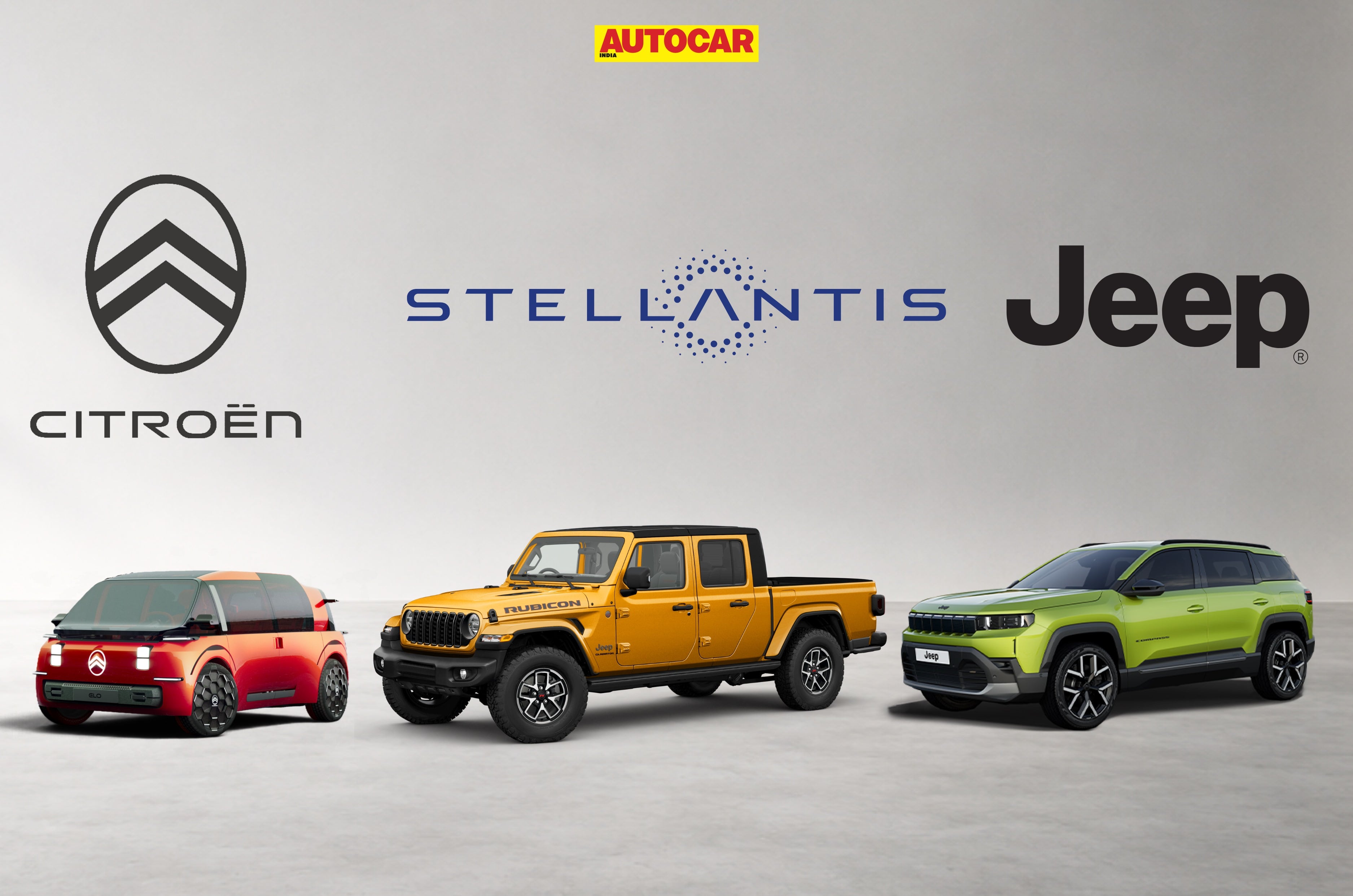
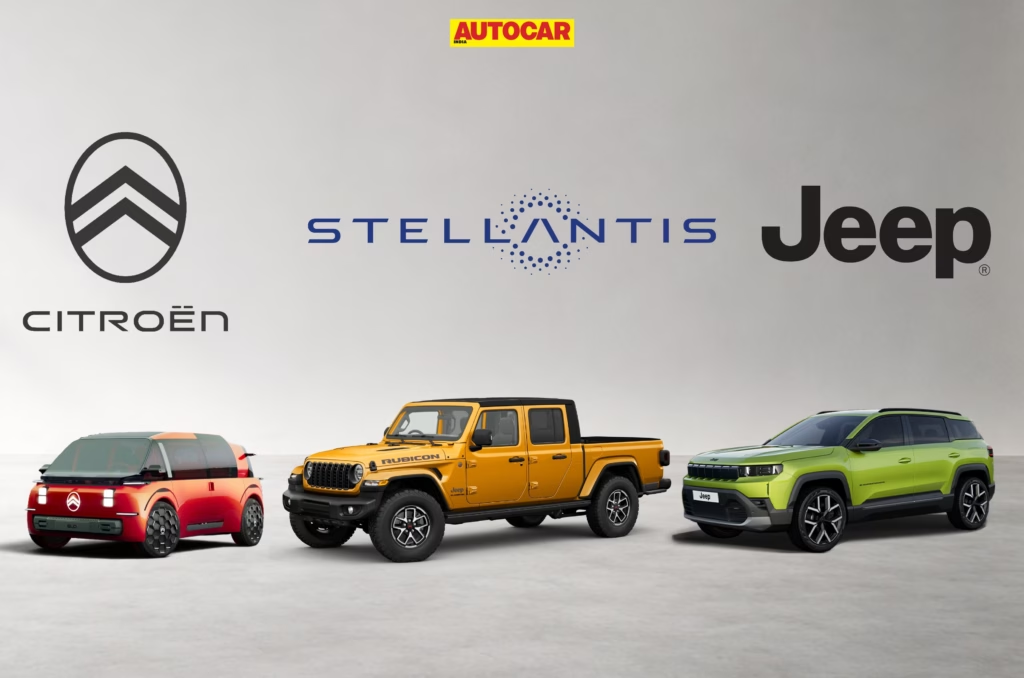
Stellantis lines up 12 Citroen, Jeep launches for India by 2030

Stellantis lines up 12 Citroen, Jeep launches for India by 2030

Stellantis has confirmed 12 Citroen and Jeep launches for India by 2030 as part of a roadmap dubbed ‘FaSTLAne 2030’. Speaking to Autocar India at the 2026 Paris Motor Show, Tianshu Xin – the head of Stellantis China and Asia-Pacific – confirmed a new investment of Rs 4,000 crore for the Indian market and said, “The plan is to introduce 12 new models in the next three years…seven of them will be new models and five are upgrades.”

Stellantis India lines up a dozen launches across Citroen and Jeep

Multiple SUVs inbound, along with an MPV, an entry-level car, and a premium pickup

The first model under FaSTLAne 2030 is scheduled to go on sale in India by the second quarter of 2027. This influx of new Citroen and Jeep launches will cover the compact, midsize, and premium SUV segments, and include a new MPV, an entry-level car, and a premium pickup truck. Of the 12 launches, seven will be from Citroen and five from Jeep.

Brand footprints to be expanded in India

Stellantis says these brands will play “distinct but complementary roles” in its line-up – Jeep will bolster its current position in the premium SUV arena, and Citroen will do the same in the mass-market segments. Expanding the customer reach of Citroen and Jeep is crucial, and Stellantis has committed to growing the brands’ retail and service networks, especially in Tier 2, 3, and 4 cities, along with increasing parts availability.

More Stellantis EVs coming, hybrids also confirmed

Additionally, Stellantis has confirmed a new multi-fuel strategy for the Indian market, which will span “efficient internal combustion engines, hybrid, plug-in hybrid (PHEV), and battery-electric (BEV) technologies.” These are already offered by Stellantis brands globally, and it should be interesting to see the specific powertrains that make it to India. As it stands, the majority of Stellantis India’s powertrain offerings are petrol; Citroen and Maserati also offer EVs, while Jeep additionally offers diesel in entry-level models.

Localisation target of 90 percent

According to Xin, the new models under FaSTLAne 2030 will be produced in India, so localisation will play a key role for competitive pricing. In light of that, Stellantis has set a target of 90 percent localisation across Jeep and Citroen, and will bank on its Indian R&D and manufacturing facilities, along with its supplier ecosystem, to achieve this. Moreover, India-developed FaSTLAne 2030 models will be exported to overseas markets.

Stellantis India’s two major brands, Citroen and Jeep, haven’t been very successful at attracting buyers in recent years. Citroen’s cars, despite recent updates, have struggled to gain traction in India due to their rivals being more aspirational and feature-rich. Jeep India, meanwhile, hasn’t launched any new models or facelifts in several years, turning prospective buyers away to more updated offerings. FaSTLAne 2030 is looking to be the shot in the arm that Stellantis India needs to pique buyer interest again.

What about Leapmotor?

Xin also provided an update on the long-overdue India entry of Stellantis’s Chinese EV brand, Leapmotor. Stellantis had planned to bring Leapmotor to India in 2025, but that evidently didn’t pan out. Xin noted that Leapmotor’s India entry is still being studied, and that there has to be enough “volume potential to justify the business case.” Therefore, a decision on Leapmotor entering India will only be made when the business case is ‘proven and solid.’

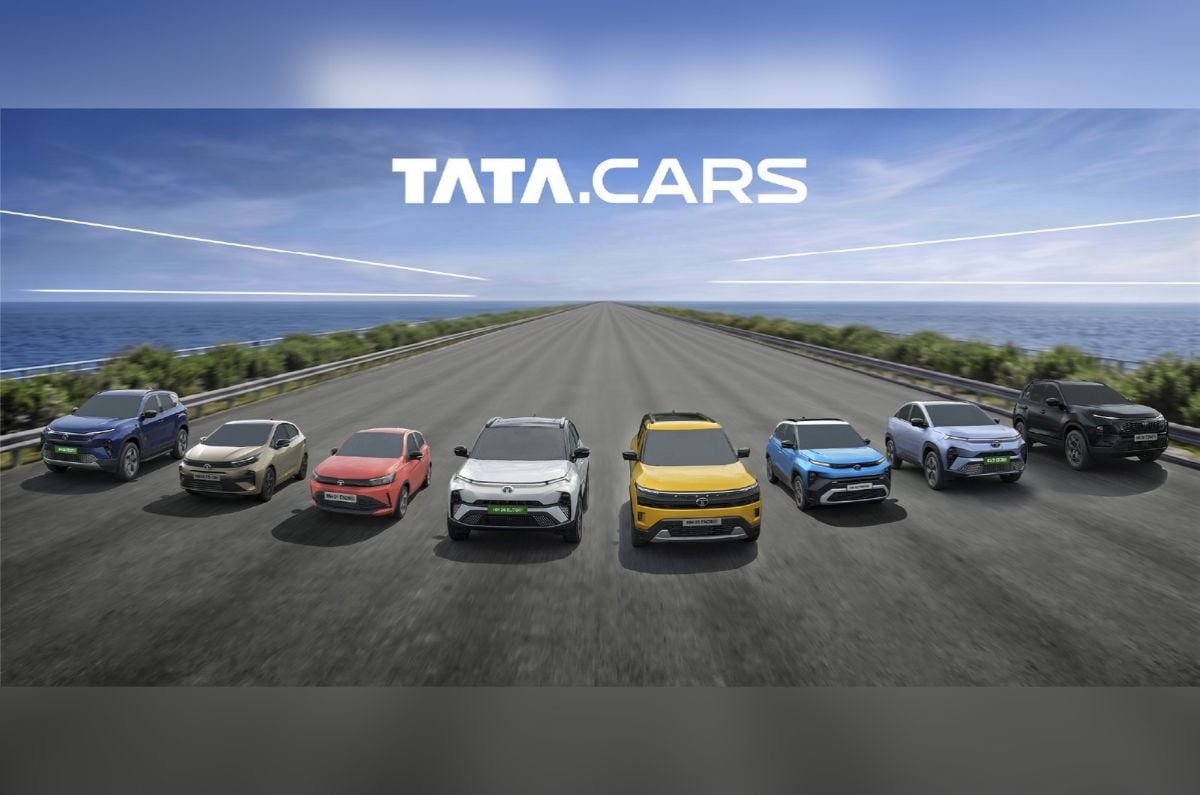
Tata’s passenger vehicle business grows 35 percent in first year after demerger

Tata’s passenger vehicle business grows 35 percent in first year after demerger
Tata Motors passenger vehicles

Tata’s passenger vehicle (PV) business grew by 35 percent in its first year after the demerger, which came into effect on October 1, 2025, and separated the commercial vehicle (CV) business from the PV division. Domestic sales between October 2025 and September 2026 stood at 7.44 lakh units, well ahead of the industry’s roughly 22 percent growth. According to the home-grown brand, its market share increased to 14.1 percent, making it India’s second-largest carmaker over this period.

Factors behind the Tata PV business growth

Two SUVs and a GST cut did much of the heavy lifting

One of the major factors behind Tata’s strong numbers is the revised GST rates, which took effect on September 22, 2025. This was shortly before the October 1 demerger, and it made cars more affordable across multiple segments. Despite this, Tata Managing Director Shailesh Chandra admitted to being surprised. “We had not expected 35 percent,” he said.

According to Chandra, monthly bookings topped one lakh more often than not, and more than seven in ten of these typically turned into retail sales. Tata crossed the 70,000-unit mark in a single month twice, and two of its quarters went past two lakh units.

With sales of 2.38 lakh units and 2.33 lakh units respectively, the Nexon and Punch accounted for around 63 percent of Tata’s domestic volumes over this period. Sales of the Sierra, meanwhile, crossed 60,000 units between January and September 2026. This is despite supply being constrained even as production was being scaled up.

Tata EV and CNG sales make up nearly half of volumes

Tata Motors claimed that EVs and CNG cars accounted for 44 percent of its annual volumes, rising to about 51 percent in the July-September quarter. Sales of fully electric models were up 84 percent (at 1.3 lakh units), with the brand claiming a 42 percent share of India’s EV market. Sales of CNG models grew by 31 percent, registering over 2.03 lakh units.

However, each powertrain faces a different set of rivals. “For EVs, my competitors are different,” said Chandra. Product development for all powertrain categories now falls under a single chief product officer, though each gets its own dedicated team.

Tata Motors targets 12 lakh annual sales by FY31

Six new nameplates are on the way

Tata is targeting over 12 lakh units per year by FY31 (financial year 2031), with a 20 percent share of the Indian passenger vehicle market. According to Tata, the plan involves over 20 product refreshes and the introduction of six new nameplates, including the Avinya.

What the brand calls its “15 product interventions” over the past year included models such as the Sierra and Sierra.ev, the updated Punch, Punch.ev, Tiago and Tiago.ev, petrol versions of the Harrier and Safari, and the Aeris. The Indian automaker said that it’s also recalibrating launch timelines. This, it said, is to ensure that each new model gets proper marketing support and that dealers have enough time to sell them.

The recent surge in demand means production capacity has become an immediate priority for Tata Motors. The company stated that its plants and suppliers are stretched thin, particularly smaller tier-two and tier-three firms, and that it has had to work more closely with them to resolve shortages. More capacity will come online at Tata’s existing plants, with the Sanand facility playing a major role. Helped by Tata’s entry into South Africa, exports have nearly doubled, to around 12,000 units.

Tata Motors to triple service network and focus on quality

The brand said that its workshops will grow faster than its showrooms

Apart from focusing on growth, Tata Motors will also be paying attention to addressing the quality and after-sales perception. The quality department now reports directly to Chandra instead of to the manufacturing department, the Managing Director stated. Tata has also set up a central software integration team, which will eventually become a ‘centre of excellence’. Tata now also tests software and hardware together earlier in development. In fact, the Sierra is one of the first models developed this way, the company mentioned.

Another point of attention is the brand’s service network, with Chandra stating that Tata’s workshops now see about six lakh vehicles per month – this is up from around 1.5 lakh in 2021. “My showrooms will increase by two times. But my service centres will increase by three times,” Chandra said. The automaker has addressed 26 of the 30 locations that it flagged as service problem areas, with dealer incentives now placing more weight on customer experience.

Between April and June, the availability of spare parts was an issue. This, the company said, was due to labour constraints, when production was being prioritised. It’s providing existing customers first claim on spare parts even if that affects the production of new cars, with Chandra claiming fill rates are back at around 85-86 percent. Regardless, changes will take time. “The perception will only change after three-four years,” Chandra admitted. “After people really see the consistency of that.”

With inputs from Hormazd Sorabjee and Ketan Thakkar.


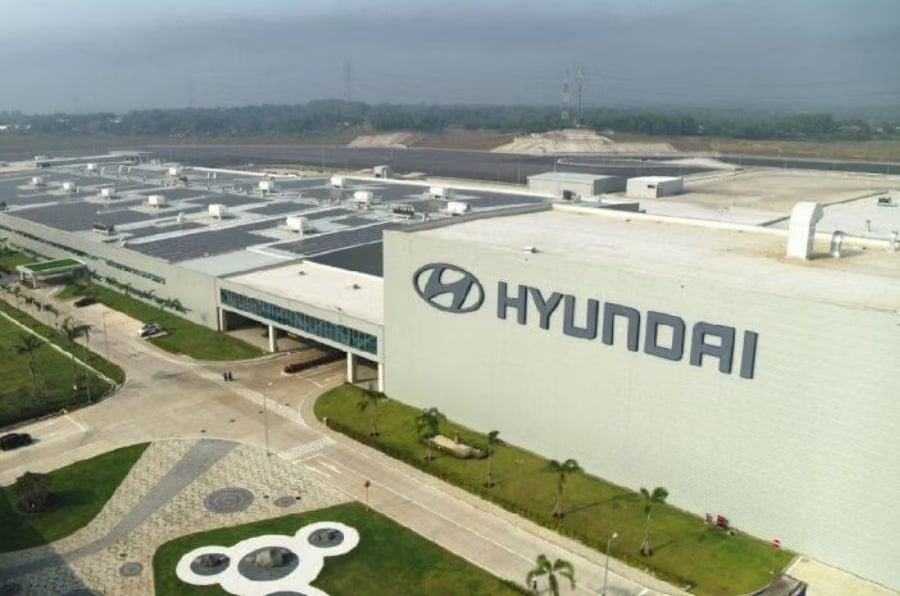
Hyundai inaugurates Pune plant, to invest Rs 11,000 crore

Hyundai inaugurates Pune plant, to invest Rs 11,000 crore
Hyundai

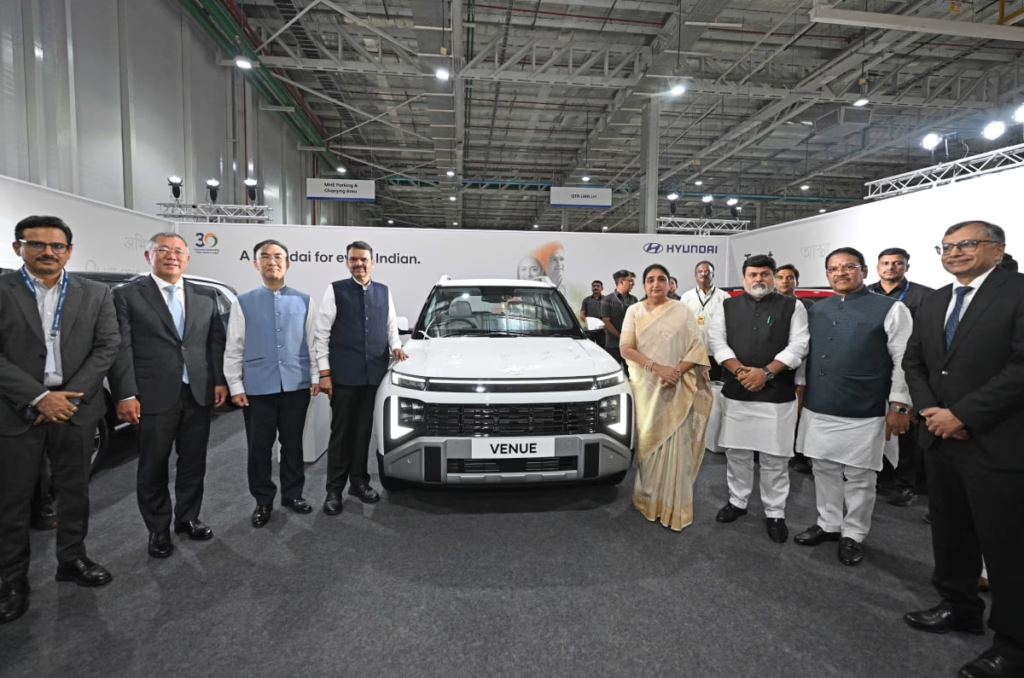
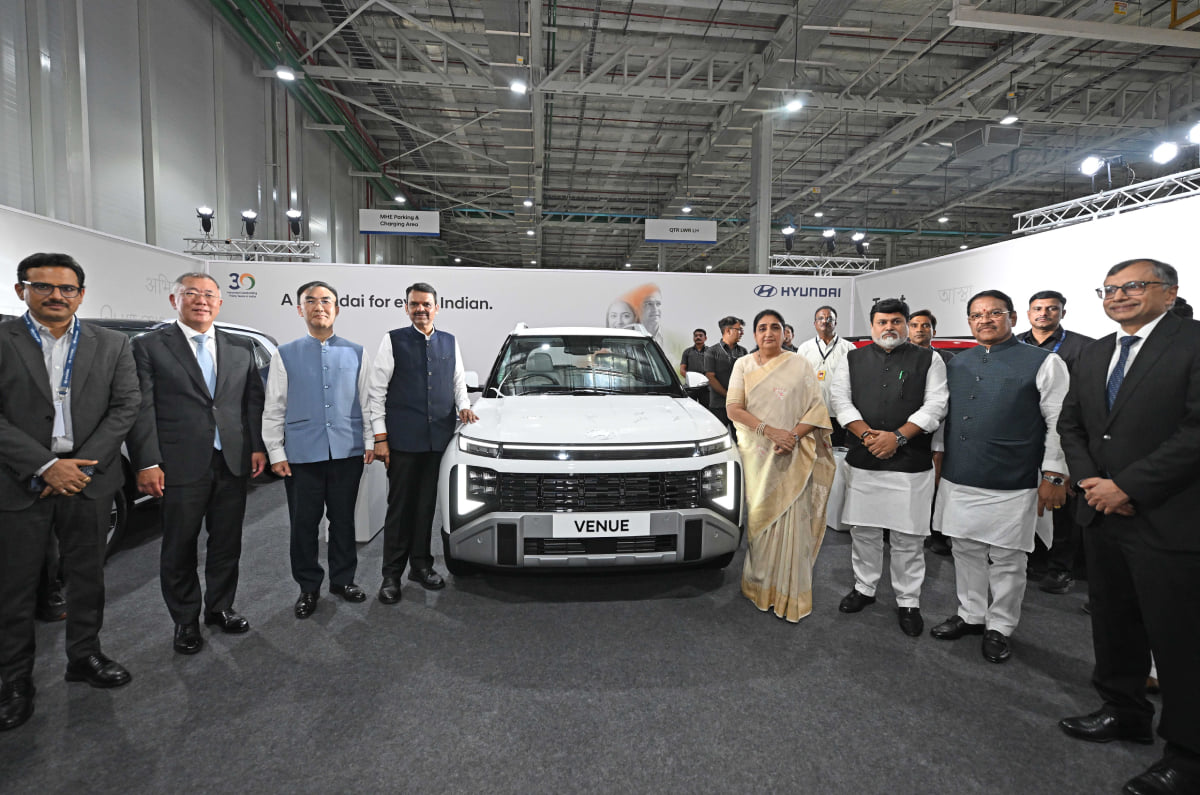
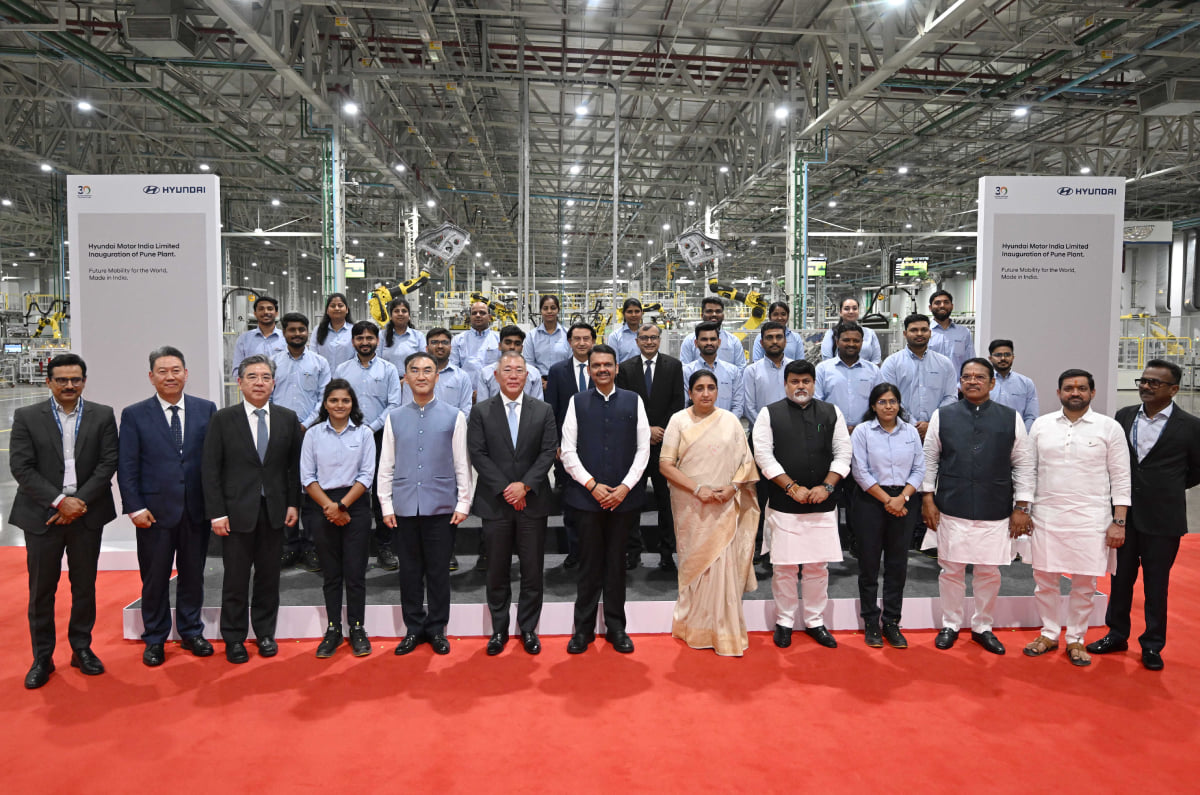
Hyundai Motor India has inaugurated its manufacturing plant in Talegaon, Pune, marking its first major manufacturing expansion outside Tamil Nadu. The facility currently has an installed annual production capacity of 1.7 lakh units, which is planned to increase to 3.2 lakh units by 2030. Managing director and CEO Tarun Garg announced that the company will invest Rs 11,000 crore in phases at the plant.

Hyundai Pune plant: Capacity and investment

Maharashtra Chief Minister Devendra Fadnavis inaugurated the plant on October 14, 2026. Hyundai Motor Group executive chair Euisun Chung and Hyundai Motor Company president and CEO Jose Munoz were also present.

Garg said, “We will invest INR 11,000 crore in phases at this facility. Beyond expanding manufacturing capacity, the facility will drive industrial development, innovation and employment generation in the region.”

The expansion will take Hyundai Motor India’s combined annual production capacity at its Pune and Chennai plants to nearly 11.4 lakh units by 2030, according to the company. The Pune facility also has an engine shop with an annual capacity of 1.5 lakh units.

The plant uses Hyundai’s E-FOREST digital factory platform, with AI-based quality checks, predictive maintenance, digital simulations and augmented reality-based worker training. Its production lines can support multiple internal combustion engine and hybrid models.

Hyundai Venue to be made at Pune plant

The Hyundai Venue will be manufactured exclusively at the Pune plant and exported to global markets. Hyundai plans to expand exports of the model to more than 35 countries.

The inauguration coincided with Hyundai Motor India marking cumulative exports of 40 lakh passenger vehicles since 1999 and domestic sales of nearly 1 crore passenger vehicles over its 30 years in India.

Chung said, “India remains one of Hyundai’s most important and strategic markets globally.” He added that the Pune plant reflected the group’s long-term commitment to India and that the export milestone highlighted the role of Indian manufacturing in its global operations.

Hyundai said 55 Tier-1 suppliers have invested nearly Rs 4,600 crore in Maharashtra. Nearly half of its supplier network is located within 50km of the plant. The combined Tier-1 and Tier-2 supplier network has generated more than 18,000 employment opportunities in the state, according to the company.

Hyundai also cited nearly 40 ongoing research projects with seven Indian academic institutions, covering battery technology, electrification and future mobility.

Hyundai to invest USD 15.5 billion in India by 2032

Hyundai to invest USD 15.5 billion in India by 2032
Hyundai

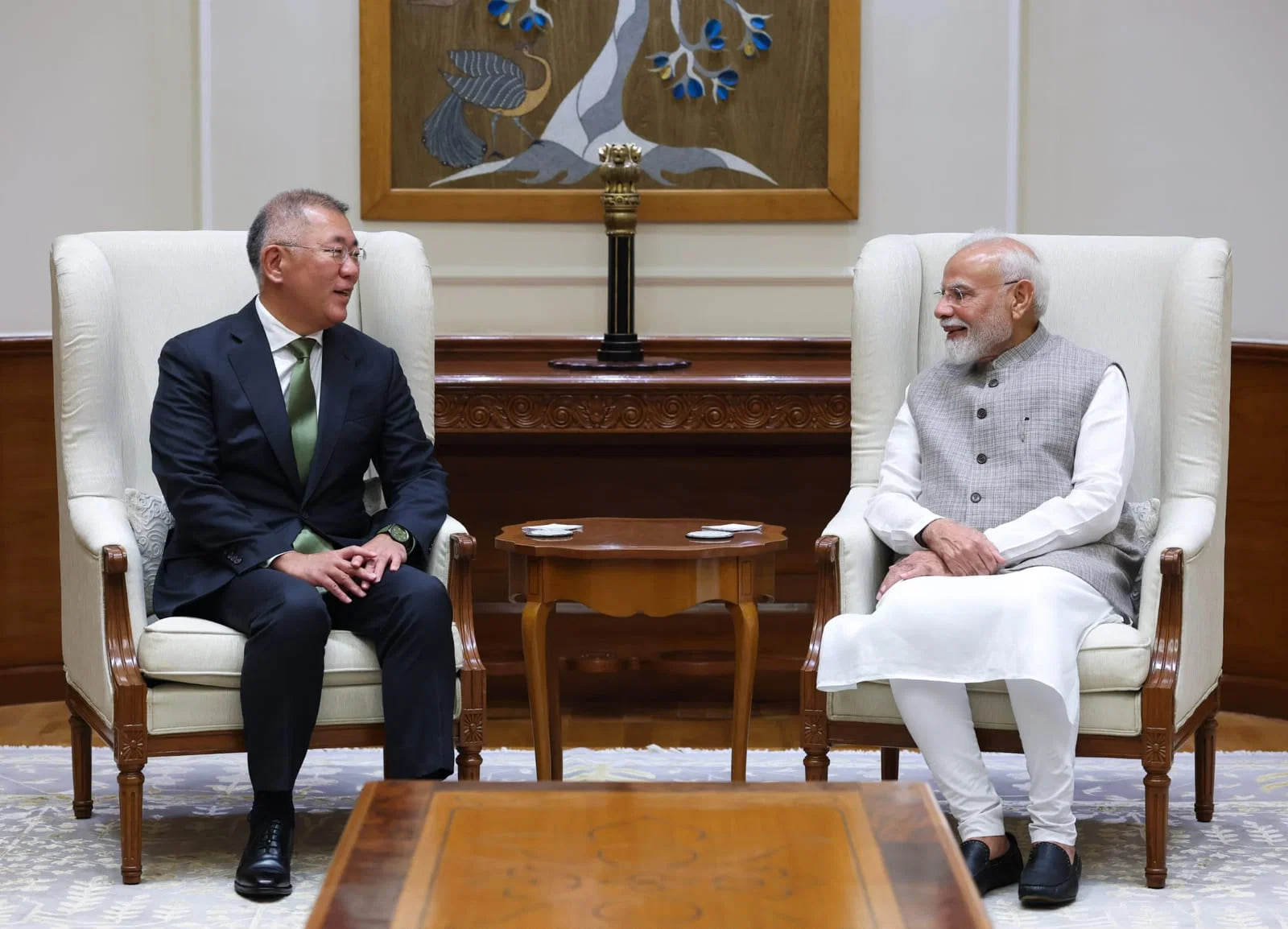
Hyundai has announced plans to invest USD 15.5 billion in India between 2026 and 2032. The investment will cover research and development, manufacturing capacity, local supplier development and businesses such as electric vehicle charging and automotive financing. The announcement follows a meeting between prime minister Narendra Modi and Hyundai Motor Group executive chair Euisun Chung in New Delhi on October 13.

“India remains one of Hyundai Motor Group’s most important and strategic markets globally. The past 30 years have been defined by our commitment to India. This investment reaffirms our commitment to India for the next 30 years and beyond,” Chung said.

Hyundai investment: R&D and manufacturing plans

The company plans to invest around USD 700 million in its Indian R&D centre, including a vehicle testing track. The investment is intended to expand engineering facilities and support the development of automotive technologies and local talent.

The group also plans to increase manufacturing capacity across Hyundai and Kia. Their combined annual production capacity in India currently exceeds 1.4 million vehicles, across Hyundai’s facilities in Chennai and Pune, and Kia’s plant in Anantapur.

Capacity at Hyundai’s Pune facility is scheduled to increase in phases. The group is also assessing a third manufacturing location to meet its longer-term requirements. 

Our sister publication, Autocar Professional reported on September 29 that Chhatrapati Sambhaji Nagar in Maharashtra and Sanand in Gujarat were among the locations under consideration. According to people familiar with the plans, the proposed facility could eventually add around 500,000 units of annual capacity, with investment potentially exceeding USD 2 billion over time. The plant could come up around 2030, with capacity added in phases over five to seven years. The October 13 announcement did not confirm the location, investment schedule or additional capacity.

The company will also invest in local suppliers and regional partners to increase parts localisation and strengthen its supply chain. It plans to establish a dedicated investment entity in India to oversee the programme and identify suppliers, technology partners and investment opportunities.

Hyundai to explore new mobility businesses

Beyond vehicle manufacturing, Hyundai Motor Group plans to explore automotive financing, EV charging infrastructure and end-of-life vehicle recycling. It also intends to support promising start-ups and expand into mobility services linked to its vehicle business.

Hyundai is developing electric three-wheelers with TVS Motor Company under a joint development agreement. The partnership is aimed at commercialising electric three-wheelers for India and other markets.

The group said the investment programme is expected to create employment in manufacturing, R&D, engineering and supply chains, including through suppliers and new mobility businesses. It currently employs more than 24,000 people across India.

Hyundai Motor Group has not disclosed how the USD 15.5 billion investment will be divided between Hyundai and Kia, or how much will be allocated to individual projects.

Honda to scale two-wheeler production to 80 lakh units by 2028 and expand export

Honda to scale two-wheeler production to 80 lakh units by 2028 and expand export
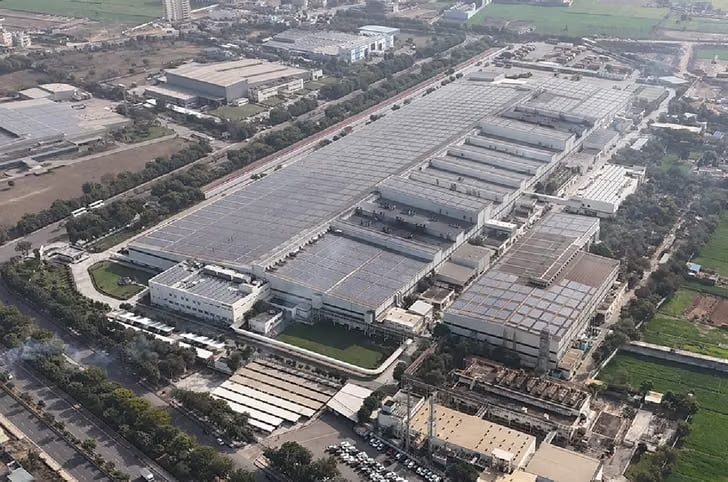
Aerial image of Honda factory

Honda Motorcycle and Scooter India (HMSI) is significantly scaling up its manufacturing capacity in India, with company President and CEO Tsutsumu Otani confirming plans to increase output across its four Indian plants from the current 62.5 lakh units per year to 80 lakh units by 2028.

  1. HMSI to expand production capacity from 62.5 lakh to 80 lakh units annually by 2028
  2. CB350 already being exported to Europe; CB500 being evaluated as the next export model
  3. Africa, Central America and South America identified as key future export markets

HMSI production and export plans

The expansion is expected to create over 2,000 jobs

Otani said the expansion over the next 18-24 months is aimed at serving both domestic demand and a growing export business. “With the eight-million-unit capacity planned in 2028, we will be well equipped to handle customer demand for ICE or EV products,” he said. The company’s current production is already running at full capacity.

On the export front, HMSI has begun shipping India-made models to Europe, starting with the CB350, for which Otani said the “sales situation is also very good”. The CB500 is being evaluated as the next potential export model, although he described these plans as being at an early stage.

Beyond Europe, Otani highlighted Africa, Central America and South America as important future markets, with Africa singled out as particularly significant. “India’s geographical proximity can provide an advantage in serving the African market, especially if one were to factor in transportation costs,” he said.

To support its export ambitions, HMSI is also looking to deepen localisation. Otani acknowledged that several components currently undergo final assembly in India but rely on parts imported from Thailand, Japan and Europe. “We intend to accelerate localisation and manufacture more in India as our next step,” he said, adding that resource circulation and the recycling of steel and aluminium remain areas the company is working through, given India’s limited domestic supplies of these materials.

Source: ET Auto

Tata, Stellantis formalise pact for Sierra-based Jeep SUV

Tata, Stellantis formalise pact for Sierra-based Jeep SUV
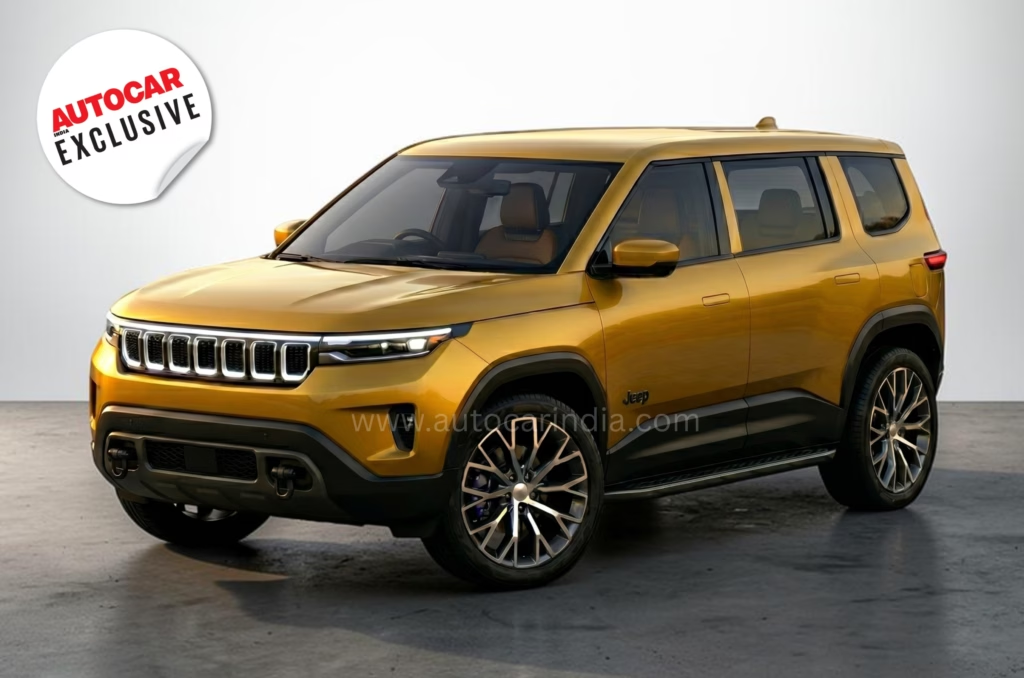
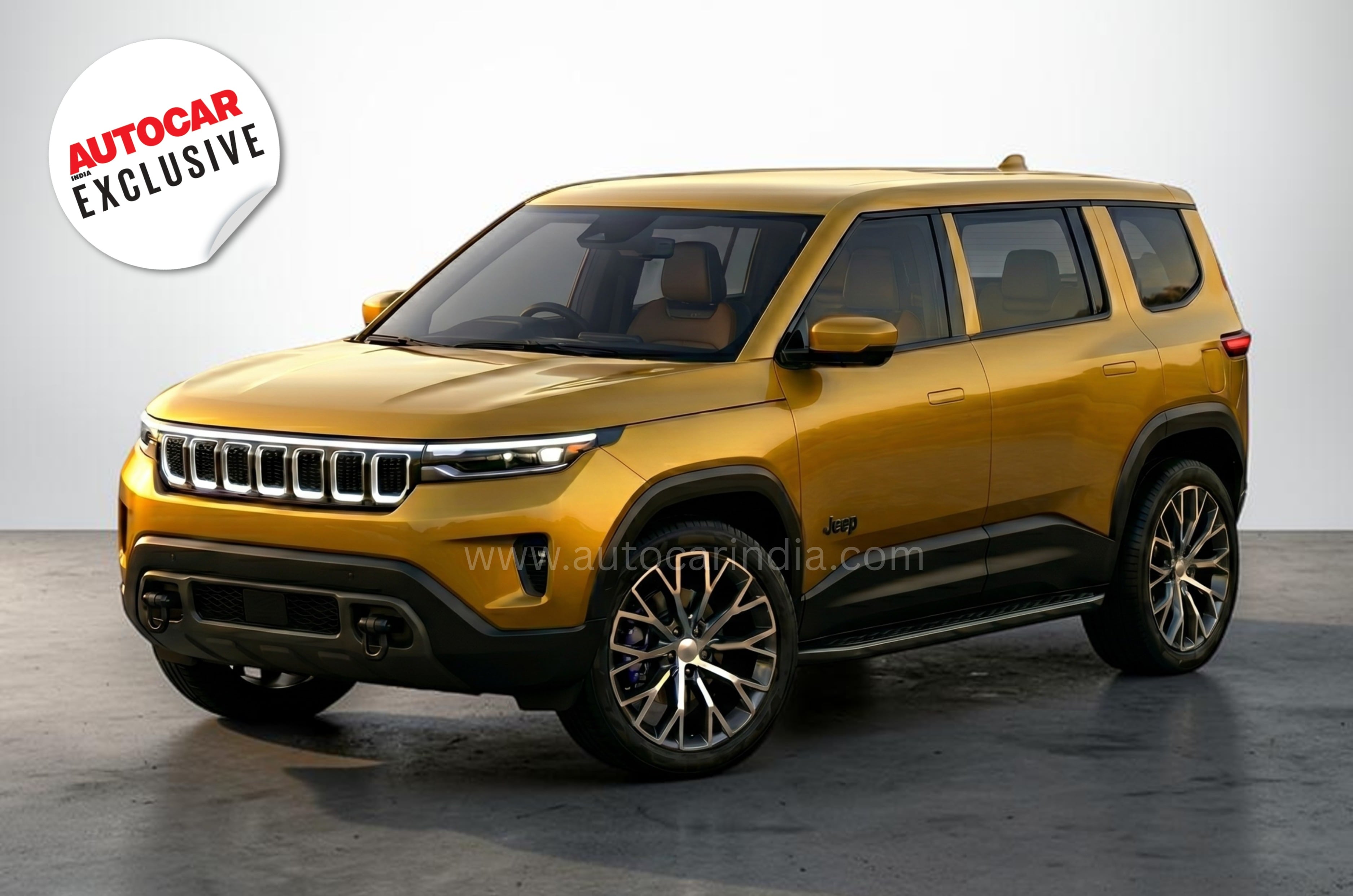
Tata Sierra-based Jeep SUV

Tata Motors Passenger Vehicles (TMPV) and Stellantis have signed a formal agreement to expand their partnership into product technology, platforms and vehicle architecture, formalising plans for a new Jeep SUV based on the Tata Sierra’s ARGOS platform, according to people in the know. Internally codenamed J1J, the Jeep SUV will get both internal combustion engine and electric versions and it is likely to use the same powertrains as the Sierra, say people in the know.

Sierra-based Jeep SUV: platform and production plans 

ARGOS stands for All-Terrain Ready, Omni-Energy and Geometry Scalable. It is TMPV’s modular, multi-energy vehicle architecture, designed to accommodate different vehicle dimensions and powertrain applications, which can open up more opportunities for Stellantis in the future.

While Tata Motors is producing the Sierra at its Sanand factory in Gujarat, production of the Jeep model is likely to take place at the Fiat India Automobiles Ltd (FIAL) joint venture facility in Ranjangaon, Maharashtra. The manufacturing operations are expected to be adapted for the programme over the next 18 months, added a person in the know.

The programme forms part of Stellantis’ wider ambition to sell 100,000 locally produced vehicles globally in 2028 across its Tata and Dongfeng partnership programmes combined, as outlined at its May 2026 Investor Day. The target covers several products. The company is likely to launch the first vehicle in the first half of 2028, say sources.

A dedicated team for the project is currently based out of Pune and will look at adapting the vehicle architecture, including a left-hand-drive version for overseas markets. A range-extender electric vehicle application is also being explored on the platform, although no production decision for the REEV has been finalised, according to people familiar with the engineering work.

An email sent to Tata Motors and Stellantis seeking comment remained unanswered at the time of publication.

The formal agreement builds on a relationship spanning more than two decades. Having collaborated on manufacturing, powertrains and the supply chain, the partners are now extending their cooperation into vehicle development.

Sierra-based Jeep SUV: Different body and cabin

Stellantis is benchmarking its own Jeep Renegade and Compass products for the J1J model development, according to company sources. Its eventual name and final production design are being firmed up.

This clearly indicates that the Jeep will have a different upper body, or top hat, exterior styling and cabin. Changes will extend to the seating package, interior features and equipment. These will distinguish it from the Sierra, while allowing the companies to share the underlying architecture and components.

Much of the platform is expected to be retained, with structural modifications and reinforcements, where required, to accommodate the Jeep body and meet crash and overseas regulatory requirements. Details of Jeep-specific suspension tuning and off-road hardware could not immediately be established. A 4×4 variant is also likely as Jeep’s brand guidelines insist on giving its customers a 4×4 option for all its models. Whilst the electric version of the Sierra already comes with 4×4, the ARGOS platform has been packaged and developed to accommodate a 4×4 ICE drive train as well. In fact, the Jeep partnership could accelerate the launch of a Sierra 4×4 to coincide with launch of the next-gen Jeep SUV. 

Tata Motors sister company Tata Technologies is understood to be involved in engineering execution at Stellantis. The work includes the Jeep-specific body and interior package, left-hand-drive adaptation and changes needed to meet overseas regulations.

According to people familiar with the programme, TMPV will retain ownership of the architecture and license it to Stellantis. Existing Sierra suppliers are expected to support Jeep where components can be shared, with separate sourcing and tooling for model-specific parts.

India development, global markets

Stellantis had disclosed its intention to develop a Tata-based Jeep at its May 21, 2026 Investor Day. Grégoire Olivier, its Asia Pacific chief operating officer, said Tata Motors would provide a competitive platform for a new Jeep vehicle to be developed and assembled in India through the existing joint venture for global markets. 

Olivier had also outlined exports to more than 50 countries across the wider portfolio, including the Dongfeng programmes, the Tata-based Jeep and the existing Citroën Smart Car programme in India. The markets allocated specifically to J1J have not been established.

For Stellantis, Tata’s architecture and supplier base offer a way to reduce development expenditure while adding a new Jeep product. For TMPV, the arrangement could generate licensing revenue and spread platform costs across additional vehicles. Common components could also bring suppliers higher volumes.

The alliance is a much-needed segue for the Jeep brand which has been in India for close to a decade but has been relegated to the fringes of the Indian market with a lack of product action. A licensed modular architecture with the potential for multiple powertrains, 4×4 capability and different wheelbases will open opportunities for more products in a quicker time interval. 

The programme would extend the Ranjangaon venture from manufacturing cooperation to producing a Jeep on Tata’s vehicle architecture. The left-hand-drive version would widen its overseas reach, giving the plant access to demand beyond India and other right-hand-drive markets.

With inputs from Ketan Thakkar 

Zetwerk Manufacturing IPO 15 अक्टूबर से, प्राइस बैंड ₹143-₹151 प्रति शेयर तय

जेटवर्क मैन्युफैक्चरिंग बिजनेस लिमिटेड का IPO 15 अक्टूबर को खुलने जा रहा है। इसके लिए प्राइस बैंड ₹143-₹151 प्रति शेयर फिक्स किया गया है। लॉट साइज 99 शेयर है। कंपनी का इरादा ₹5,012.33 करोड़ जुटाने का है। IPO में ₹2,830 करोड़ के नए शेयर जारी होंगे, साथ ही ₹2,182.33 करोड़ के शेयरों का ऑफर फॉर सेल (OFS) रहेगा। इश्यू 19 अक्टूबर को बंद होगा, जिसके बाद अलॉटमेंट 21 अक्टूबर को फाइनल हो सकता है। 20 अक्टूबर को शेयर बाजार में दशहरा की छुट्टी है। कंपनी के शेयर NSE और BSE पर 23 अक्टूबर को लिस्ट हो सकते हैं।

जेटवर्क पहले एक डिजिटल मार्केटप्लेस थी और अब मैन्युफैक्चरर्स को ग्राहकों से जोड़कर एक एंड-टू-एंड इंडस्ट्रियल मैन्युफैक्चरिंग प्लेटफॉर्म बन गई है। यह कई सेक्टर्स में कस्टम-बिल्ट कंपोनेंट्स के लिए इंजीनियरिंग, उत्पादन और डिलीवरी को व्यवस्थित करती है। ग्राहक डिजाइन प्रदान करते हैं, जेटवर्क सप्लायर का चयन, गुणवत्ता नियंत्रण, टाइमलाइंस और लॉजिस्टिक्स को संभालती है। कंपनी लैपटॉप, हियरेबल्स, वियरेबल्स, IT हार्डवेयर बनाती है। जेटवर्क में खोसला वेंचर्स, एक्सेल, लाइटस्पीड, पीक XV पार्टनर्स, ग्रीनओक्स, एवेनिर जैसे दिग्गजों का पैसा लगा हुआ है।

जेटवर्क में फुली डाइल्यूटेड बेसिस पर पीक XV पार्टनर्स इनवेस्टमेंट्स V सबसे बड़ी इंडीविजुअल शेयरहोल्डर है, जिसके पास 9.12 प्रतिशत हिस्सेदारी है। ग्रीनओक्स कैपिटल अपॉर्चुनिटीज फंड II के पास 8.61 प्रतिशत, रामकृष्णन के पास 8.36 प्रतिशत, एक्सेल इंडिया V के पास 7.74 प्रतिशत और आचार्य के पास 7.53 प्रतिशत हिस्सा है।

Zetwerk IPO को जुलाई में सेबी से मिली थी मंजूरी

जेटवर्क ने अपने IPO के लिए इस साल मार्च में कॉन्फिडेंशियल तरीके से ड्राफ्ट पेपर जमा किए थे। कैपिटल मार्केट रेगुलेटर सेबी से जुलाई में मंजूरी मिलने के बाद अपडेटेड ड्राफ्ट रेड हेरिंग प्रॉस्पेक्टस 13 अगस्त 2026 को फाइल किया। OFS में प्रमोटर-ग्रुप एंटिटी Creovate Innovation, को-फाउंडर अमृत आचार्य, श्रीनाथ रामकृष्णन के साथ-साथ निवेशक पीक XV पार्टनर्स, एक्सेल, लाइटस्पीड वेंचर, के कैपिटल आदि भी शेयरों को बिक्री के लिए रखेंगे।

Fusion CX IPO: ₹702 करोड़ का एक और इश्यू 14 अक्टूबर से; रहेंगे ₹500 करोड़ के नए शेयर; चेक करें प्राइस बैंड

IPO के लिए कोटक महिंद्रा कैपिटल कंपनी, मॉर्गन स्टेनली इंडिया, गोल्डमैन सैक्स (इंडिया) सिक्योरिटीज, एवेंडस कैपिटल, जेएम फाइनेंशियल, एचएसबीसी सिक्योरिटीज एंड कैपिटल मार्केट्स (इंडिया), पैंटोमैथ कैपिटल एडवाइजर्स, बुक रनिंग लीड मैनेजर हैं। रजिस्ट्रार Kfin Technologies Ltd. है। इश्यू में 75 प्रतिशत हिस्सा क्वालिफाइड इंस्टीट्यूशनल बायर्स के लिए, 10 प्रतिशत हिस्सा रिटेल इनवेस्टर्स के लिए और 15 प्रतिशत हिस्सा नॉन इंस्टीट्यूशनल इनवेस्टर्स के लिए रिजर्व है।

IPO के पैसे कैसे होंगे इस्तेमाल

Zetwerk अपने IPO में नए शेयरों को जारी कर हासिल होने वाले पैसों का इस्तेमाल अपना और सब्सिडियरीज का कर्ज चुकाने, पहले से न पता अधिग्रहणों, अन्य रणनीतिक निवेशों और सामान्य कॉर्पोरेट उद्देश्यों के लिए करेगी। अप्रैल-जून 2026 तिमाही में कंपनी का रेवेन्यू ₹4,195.70 करोड़ और शुद्ध घाटा ₹732.98 करोड़ रहा। इस बीच कंपनी पर ₹1,942.19 करोड़ की उधारी थी। वित्त वर्ष 2025-26 में जेटवर्क का रेवेन्यू 40 प्रतिशत बढ़कर ₹16,100.63 करोड़ रहा। घाटा 1,606.17 करोड़ दर्ज किया गया।

Disclaimer: यहां मुहैया जानकारी सिर्फ सूचना के लिए दी जा रही है। यहां बताना जरूरी है कि मार्केट में निवेश बाजार जोखिमों के अधीन है। निवेशक के तौर पर पैसा लगाने से पहले हमेशा एक्सपर्ट से सलाह लें। मनीकंट्रोल की तरफ से किसी को भी पैसा लगाने की यहां कभी भी सलाह नहीं दी जाती है।