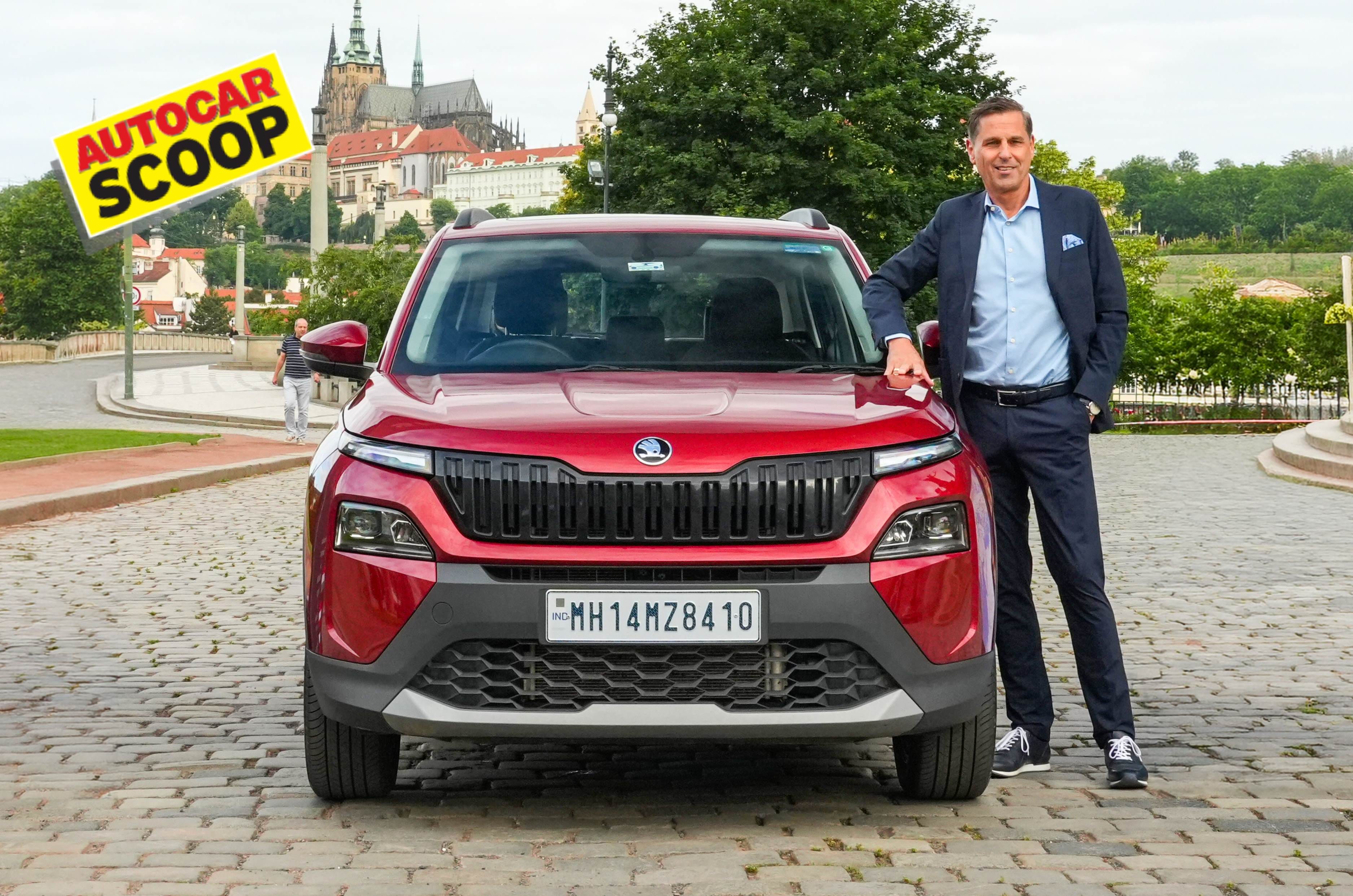
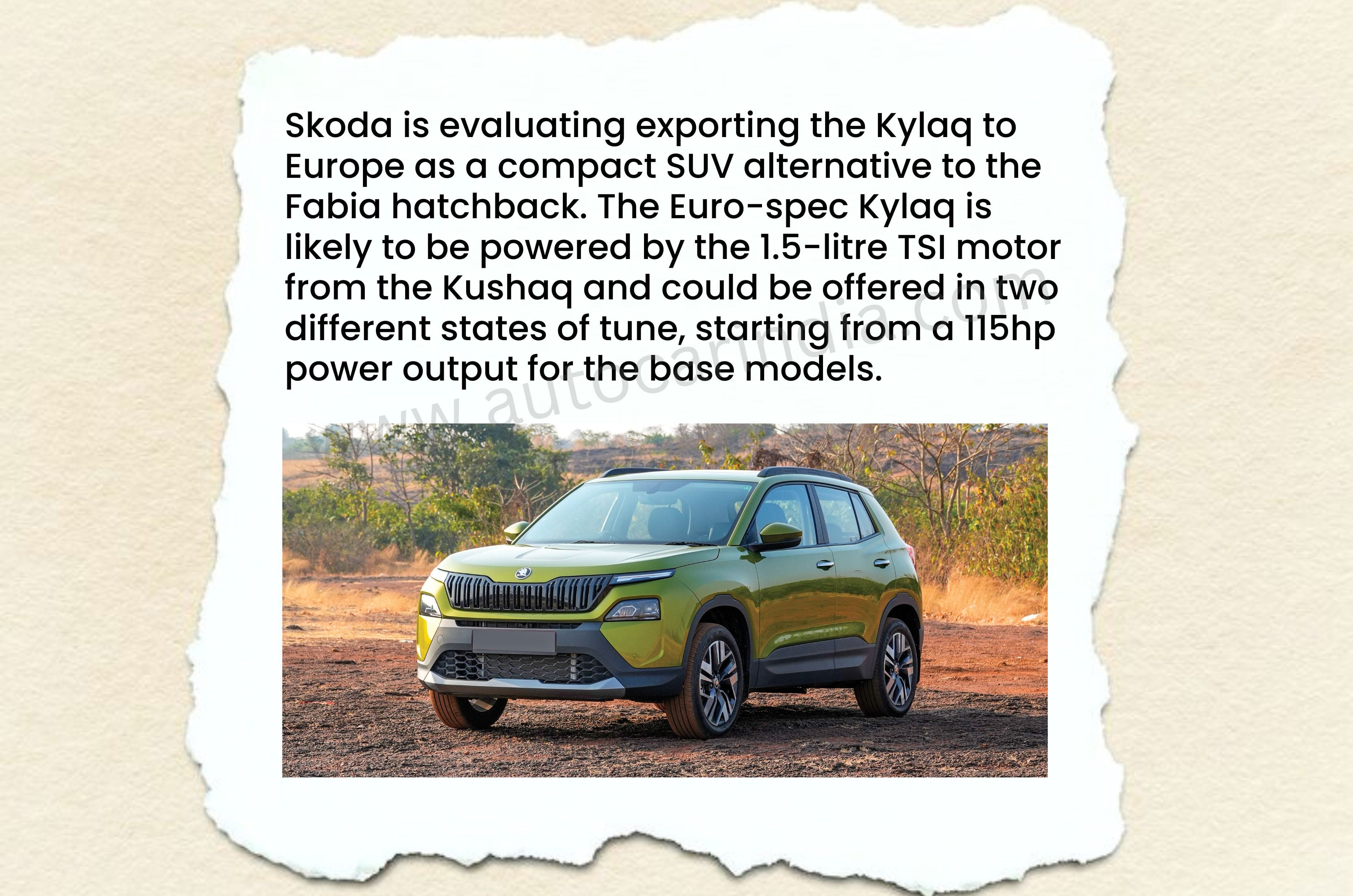
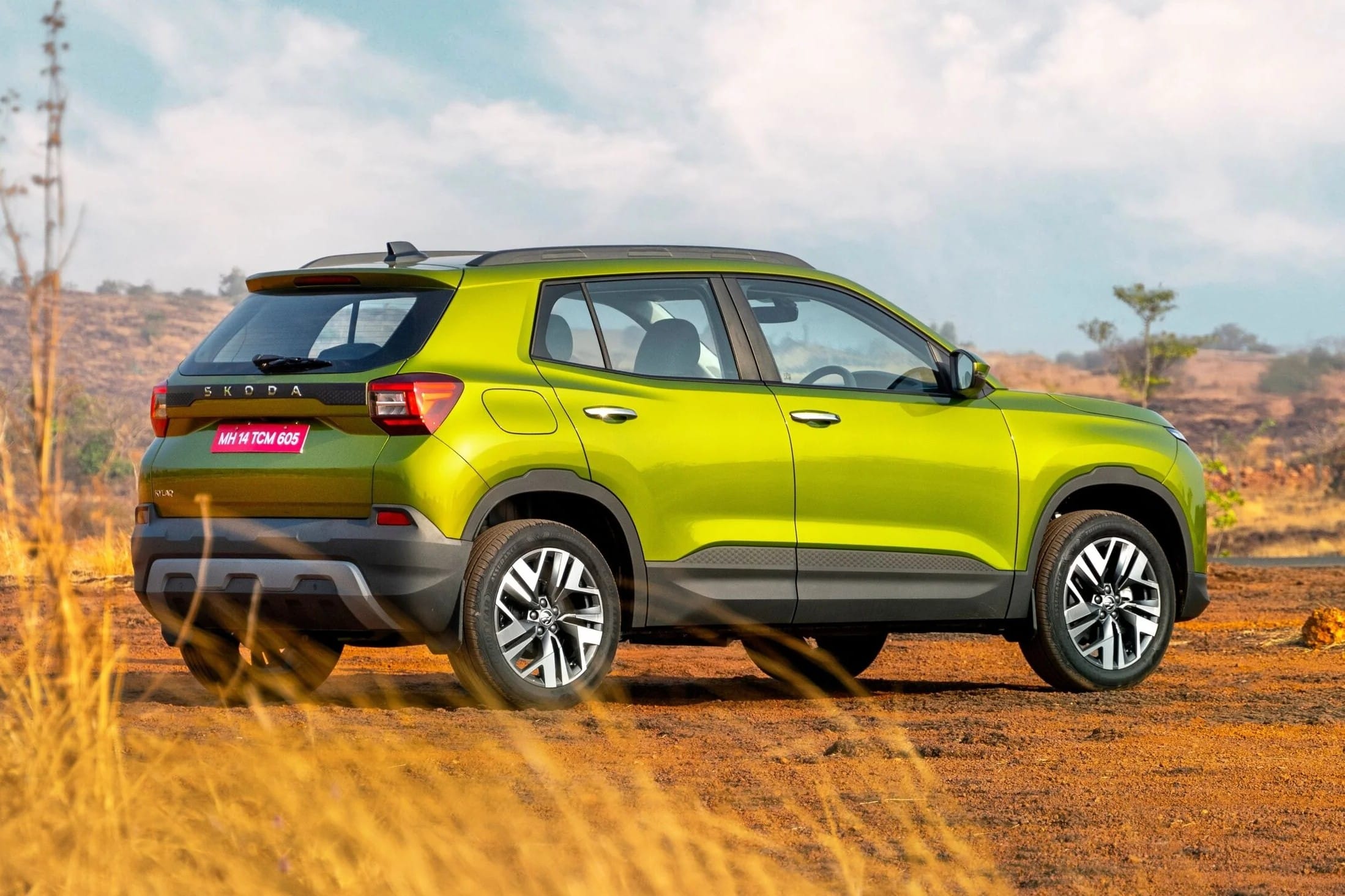
Skoda is considering exporting the made-in-India Kylaq to the European market as a crossover alternative to the Fabia hatchback. Launched here at the tail-end of 2024, the Kylaq is the third Skoda model to come out of Skoda-VW’s ‘India 2.0’ strategy and the Czech carmaker’s smallest SUV to date. While the Kylaq is designed specifically for the Indian market, Skoda feels the compact SUV carries enough pedigree and appeal for European customers.
Autocar India’s recent Pune to Prague drive, a 19,000km cross continent drive that covered several European countries, including the Czech Republic, the brand’s home country, established the Kylaq as a product that could blend in well in some of Skoda’s key markets. “We’re looking into a possibility or an opportunity to bring Kylaq to Europe, but there are a lot of barriers, a lot of homologation questions,” Skoda CEO Klaus Zellmer told us after the conclusion of the cross-continent Kylaq road trip.
1.0 TSI or 1.5 TSI for the Euro-spec Kylaq?
We reported about Kylaq’s export plans to Europe in June 2026 issue of the Autocar India magazine.
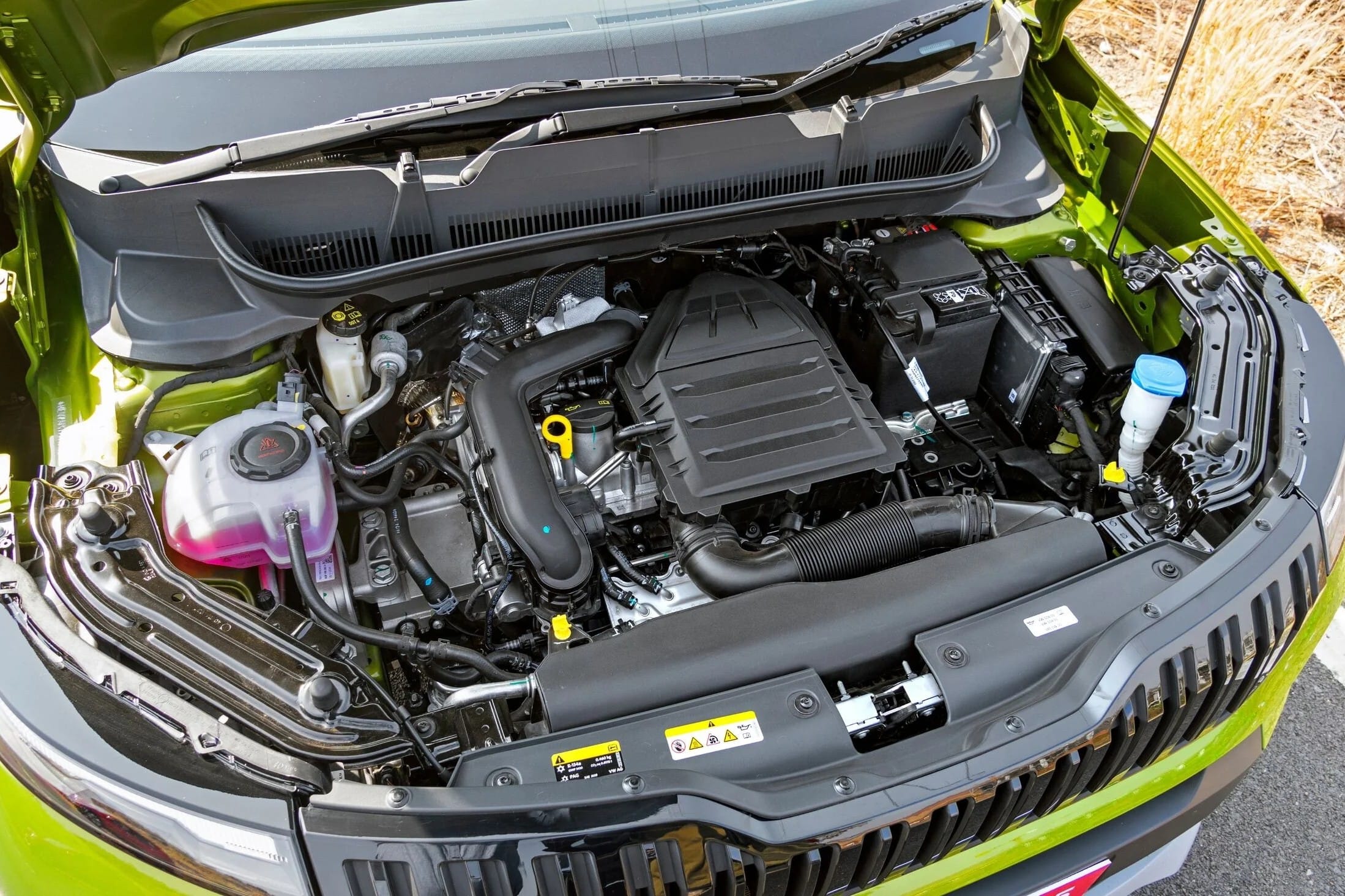
In India, the Kylaq is powered solely by the locally manufactured 115hp 1.0-litre 3-cyl direct-injection turbo-petrol engine (1.0 TSI), which can be had with either a 6-speed manual or 6-speed automatic. For Europe, however, Skoda might equip the Kylaq with the 1.5-litre 4-cyl direct-injection turbo-petrol mill (1.5 TSI) seen in the Slavia and Kushaq, paired to a 7-speed DCT.
The 1.5 TSI engine is used in Skoda’s other models and is already Euro 7 compliant making it the logical choice for export markets. However, from a cost perspective the 1.0 TSI is more attractive as it is a three-cylinder unit and is locally produced. However, the 1.0 TSI does not meet Euro 7 standards and upgrading it to the latest emission standards will call for significant upfront investment which will impact the overall cost of the Kylaq for exports.
If Skoda decides on the 1.5 TSI the export version of the Kylaq, it will likely be in a lower 115hp state of tune to help meet the Euro 7 targets. In fact, the Kylaq 1.5 TSI could be offered in two states of tune for the European market, but its not clear what the other power output of the engine would be.
Beyond emission regulations, the Kylaq would have to meet Europe’s safety, security and other homologation requirements that would again add to the cost of the vehicle.
India-EU FTA and weak rupee helps Kylaq’s export business case
The incoming India-EU FTA, in conjunction with the depreciating rupee against the euro, makes a strong case for exporting the Kylaq to Europe. Piyush Arora, the MD of Skoda Auto Volkswagen India Private Limited (SAVWIPL), said that the India-EU FTA will “open up opportunities” for SAVWIPL across all of its business verticals, including CBU imports, components, fully developing new models for India, and exporting cars to the European market.
A final decision has not been taken. However, a European programme would mark a significant step for Skoda Auto Volkswagen India by moving the country’s role beyond developing and manufacturing vehicles for India and other emerging markets to supplying a product to the carmaker’s home region.
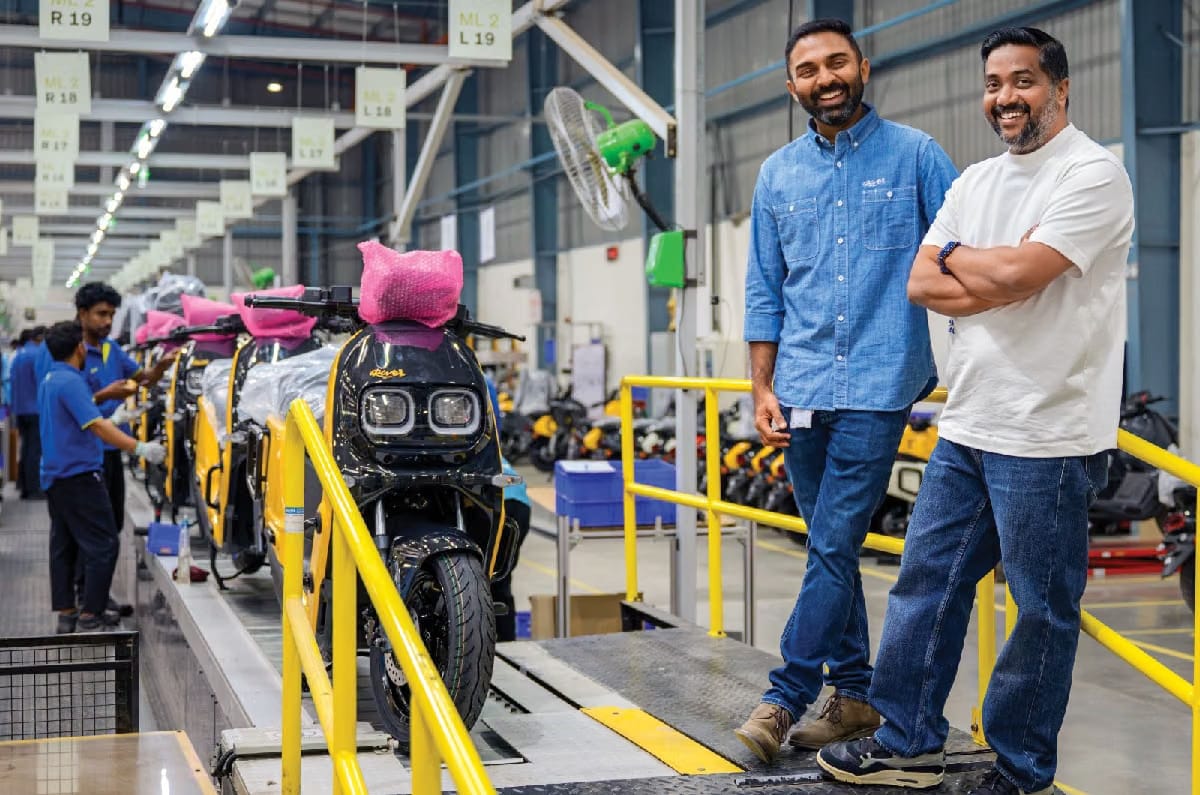
River Mobility has closed a $120 million (Rs 1,141 crore approximately) Series C funding round comprising equity and venture debt, marking one of the largest private fundraises in India’s electric two-wheeler sector. The company plans to use the capital to expand its manufacturing footprint, develop new products in the utility lifestyle segment and improve profitability.
$120 million Series C round closed with equity and venture debt components
Round led by Elev8 Venture Partners and Claypond Capital; existing backers also participated
Capital to fund new greenfield plant, product launches and margin improvement
River Mobility funding
First significant round from Indian institutional investors for the company
The equity portion of the round was led by Elev8 Venture Partners and Claypond Capital, with participation from Singularity AMC, Anicut Capital, 360 ONE Asset, JIF Capital and HDFC AMC – marking the first time River Mobility has attracted significant backing from Indian institutional investors. Venture debt came from Alteria Capital, Innoven Capital and Stride Ventures. Existing global backers Yamaha Motor Corporation, Al Futtaim Group and Mitsui & Co. also participated in the round.
River’s monthly retail sales have since grown to around 5,000-6,000 units, and the company recently rolled out its 50,000th unit from its Hoskote plant. It currently has over 75 stores across India, with a target of over 350 stores by March 2028. The company also manufactures the Yamaha EC-06 at the same facility under a partnership with Yamaha Motor Co.
The company says these funds will be directed towards capacity expansion at the existing Hoskote facility, the construction of a new greenfield plant, new product development and improvements to gross margins and EBITDA profitability.
Skoda Auto Volkswagen India and the JSW Group are in the final stages of discussions for a manufacturing joint venture, we have learned. The two companies are likely to sign a non-binding memorandum of understanding (MoU) within the next two months. The proposed venture is currently being discussed as a 51:49 joint venture, with the JSW Group expected to hold the majority stake.
Emails seeking comments were sent to Skoda Auto Volkswagen India and the JSW Group on Tuesday, but neither company responded till the time of publishing. Autocar Professional, our sister publication, understands senior global executives from Skoda Auto and Volkswagen are expected to visit India in the second fortnight of August. The proposed alliance with the JSW Group is expected to be among the key subjects on the agenda as the two sides work towards signing the non-binding MoU.
Equity infusion could fund EV development
The proposed partnership comes as Skoda Auto Volkswagen India prepares its next round of investments in electrification and localisation. The equity infusion from the JSW Group is expected to fund the development and localisation of electric vehicles and support future product programmes.
A large part of the investment is expected to go towards vehicles based on the India Main Platform (IMP), Volkswagen Group’s EV architecture for India. The IMP is derived from the China Main Platform (CMP), allowing the group to use an existing EV architecture and adapt it to Indian regulations, the local supplier base and localisation requirements.
The platform is expected to underpin multiple electric SUVs for the Skoda and Volkswagen brands over the next few years. Higher localisation will be key to bringing down costs and reducing dependence on imports. The scope of discussions goes beyond manufacturing. We understand that the sales and marketing operations across the group’s brands are also part of the talks. A few years ago, the sales organisations of Skoda, Volkswagen, Audi, Porsche and Lamborghini were integrated with the manufacturing business under Skoda Auto Volkswagen India. This has also brought the premium brands within the scope of the discussions.
JSW’s broader automotive strategy
For the JSW Group, the proposed venture is part of a broader effort to build an integrated automotive business across passenger vehicles, commercial vehicles, batteries, manufacturing and exports. Unlike JSW MG Motor India, the proposed Skoda Auto Volkswagen venture will have no Chinese participation, allowing the group to further de-risk its automotive business from China-linked partnerships. We understand the alliance will also help diversify JSW Group’s passenger vehicle operations while creating a Make in India manufacturing base serving both domestic and export markets by leveraging Volkswagen Group’s global production and distribution network. The proposed India-EU Free Trade Agreement is also expected to strengthen the business case for exports from India to Europe over the longer term, making exports an important part of the proposed alliance.
The partnership also fits into the group’s wider automotive plans. JSW already has its joint venture with MG, has set up JSW Motors as a separate passenger vehicle business for products outside the MG alliance, operates JSW Greentech for buses and commercial vehicles, and is investing in cell manufacturing and localisation. The group is looking to connect these businesses with its existing strengths in steel, paints and energy, creating greater vertical integration across its automotive operations.
Localisation of some models being studied
We understand the alliance will also look to leverage manufacturing assets across the JSW Group wherever feasible. This includes the JSW Motors facility at Sambhaji Nagar, formerly Aurangabad, where higher localisation of products such as the Skoda Kodiaq and select Audi models is being evaluated. The aim is to improve localisation levels while making better use of the group’s existing manufacturing footprint.
The alliance is also evaluating the localisation of the next-generation Kodiaq platform. If approved, it could underpin a locally manufactured three-row SUV positioned in the Mahindra XUV 7XO segment. Localising the platform would allow Skoda Auto Volkswagen to compete in one of the country’s largest SUV segments with significantly higher local content.
Following the signing of the non-binding MoU, the two sides are expected to finalise the equity structure, including the shareholding pattern, before moving towards definitive agreements and the required approvals. The discussions are currently centred on a 51:49 joint venture, with the JSW Group expected to hold the majority stake.
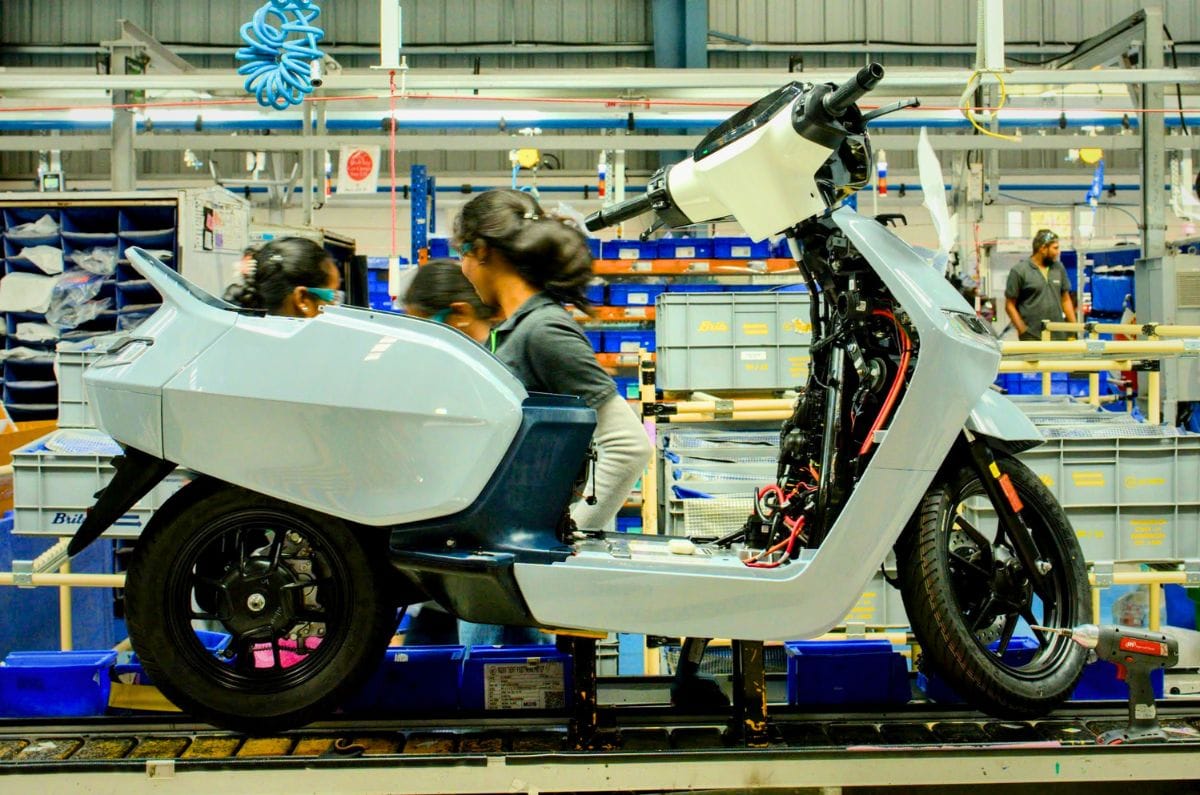
Ather Energy is exploring whether to accelerate the second phase of its upcoming Aurangabad manufacturing facility as demand for electric scooters continues to outpace expectations, with the company saying its planned capacity could come under pressure if current growth trends persist.
The company’s co-founder and CEO, Tarun Mehta, said the company has begun considering an earlier rollout of Phase 2 after a sharp rise in demand in recent months. He added that the recently completed Rs 2,500-crore fund raise gives the company the flexibility to move ahead with the expansion without waiting for Phase 1 to mature.
EL platform based family scooter to launch on August 29
EL production to initially begin from Hosur, before shifting to Aurangabad
Ather’s electric bike still quite a ways away
Aurangabad Plant to Add 5 Lakh Units Annual Capacity
The comments come as Ather prepares to commission the first phase of its Aurangabad, or AURIC, manufacturing facility in a couple of months. The company currently manufactures electric scooters from its Hosur plant, which has an annual production capacity of 4.2 lakh units. Mehta said the facility is now operating at almost full utilisation following steady production ramp-up during the first quarter.
Once the Aurangabad plant comes live, it will add another 5 lakh units of annual capacity, taking Ather’s total manufacturing capacity to 9.2 lakh units a year. He added that the Aurangabad facility is progressing as planned, with the assembly line already installed, the paint shop under trial and warehouse and utility work nearing completion ahead of commercial operations later this year. However, Mehta said even that may prove insufficient if the current pace of demand continues.
“GoLive of Auric will take our total capacity up from 4.2 lakh units to 9.2 lakh units later this calendar year. But we believe demand is ramping up very fast. 9.2 lakh units per annum is only 77,000 units a month. We believe on current demand trajectories, even this may be tight in the coming quarters. Which is why I think we were lucky here when we took Aurangabad land. We took a larger land capacity and we had always planned for Auric phase two,” he said.
EV Demand Outpaces Supply
Demand has risen sharply over the past few months, according to the company, resulting in supply constraints across several markets. Mehta said dealer inventories have fallen from 14 days to just three days, while some dealerships have temporarily stopped accepting fresh pre-orders because waiting periods have stretched to around two months or more. The company estimates it could have retailed another 13,000 to 15,000 scooters every month if sufficient production capacity had been available.
“There are 50,000 pre-orders, despite the fact that in many states now, our dealers are no longer even accepting new pre-orders, because the waiting times are now hitting two months or even higher. The underlying demand we strongly believe is very, very high,” Mehta said. “We believe today that of the 30,000 units that we retail average in Q1, we could have probably sold an incremental 13,000 to 15,000 units extra every month.”
New EL Scooter Platform Set to Launch on August 29
Ather expects demand to receive another boost with the launch of its first new scooter based on its brand-new EL platform on August 29. Production of the vehicle has already begun at the Hosur plant, homologation has been completed and high-volume trials are underway.
Initially, production will continue from Hosur before gradually shifting to Aurangabad as the new facility ramps up. The company plans to scale manufacturing capacity for the EL platform to about 60,000 units a month across the two plants. The EL platform will underpin multiple future scooter models and forms part of Ather’s strategy to expand production and meet rising demand for electric scooters.
Ather electric bike still at least 2 years away
Even as it prepares to debut a fresh onslaught of new products based on its EL platform, Ather Energy has no plans to enter the electric motorcycle segment in the near term. According to Ather Energy co-founder and Chief Executive Officer Tarun Mehta, the company’s strategy is to first concentrate on rolling out products based on its new EL platform before entering the electric motorcycle space.
“At this point, we are focused on the EL platform and getting at least the first, maybe two products, maybe another product out on it in the next year,” Mehta said to investors. Ather had earlier said it is developing a dedicated motorcycle platform, codenamed Zenith, alongside its EL scooter architecture. The comments indicate that Ather is now taking a measured approach towards a segment that is still at an early stage of adoption.
“Motorcycles are starting to look interesting. But Ather may not be the pioneer this time. We may watch the market. We want to see how consumers respond, which segments show a willingness and an interest towards the segment before we make our maiden launch here,” Mehta said.
He added that an electric motorcycle from Ather is not expected anytime soon. “So this, I would say, more than a year away, for sure. Probably two years plus.” he said. The company’s strategy comes at a time when India’s electric two-wheeler market continues to be led by scooters, while electric motorcycles account for only a miniscule share of overall EV sales.
Royal Enfield has begun sales of its Flying Flea C6 electric motorcycle on a small scale, while startups including Ultraviolette, Revolt and Oben are expanding their presence. Other legacy players like Bajaj Auto and Hero MotoCorp are also developing their own electric motorcycle platforms, although a debut from either brand is still some time away. Ather, however, plans to observe how the market evolves before committing resources to the category.
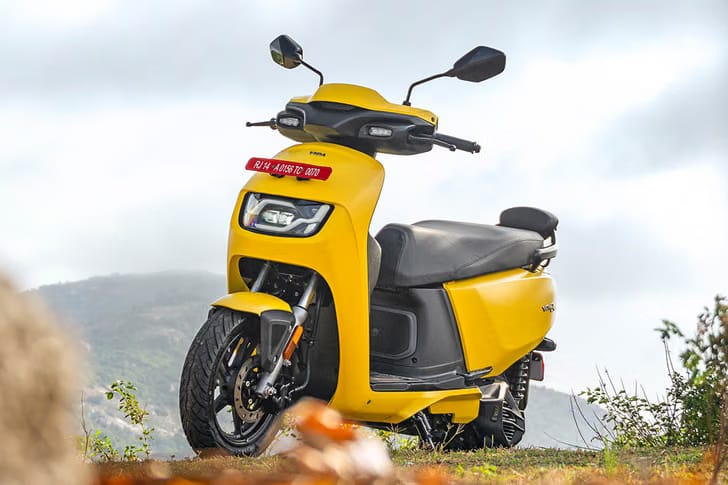
Vida, Hero MotoCorp’s electric two-wheeler brand, has surpassed the 3 lakh retail sales milestone in the Indian market. As per the latest Vahan numbers, cumulative retail sales from November 2022 till August 1, 2026 are 300,458 units.
Vida sold its first 1 lakh units in around 33 months
Whereas, the 2 lakh to 3 lakh sales milestone took just 5 months
With its strong growth trajectory, Vida could garner over 2-lakh sales in a single year for the first time.
Vida’s BaaS has been a key sales driver
Vida currently has coverage across India with over 900 touchpoints
The surge in demand for the Vida e-scooters is seen in the strong growth, particularly over the past year. While the first 1 lakh units were sold in around 33 months, the run from 1 lakh to 2 lakh units took a little over seven months. Now the last 1 lakh units – from 2 lakh to 3 lakh – have taken just five months, reflecting the surging demand for Vida e-scooters this year. With July (22,883 units) being the new monthly high, beating the previous best of June (21,893 units) this year.
From 4 percent in CY2024 to 11 percent in CY2026 Year-to-date, Hero Vida has reaped strong gains in India’s booming e-2W market. Expect it to achieve total retail sales of around 2.25 lakh units this calendar year.
It’s been a noteworthy run for the world’s largest two-wheeler company in the EV space. Vida now stands at No. 4 in the e-2W market share after TVS Motor Co, Bajaj Auto and Ather Energy and is ahead of Ola Electric and Greaves Electric Mobility.
With strong sales tailwinds emanating from a growing number of ICE buyers transitioning to e-mobility due to the multiple price hikes in petrol in May 2026 as well as the upcoming festive season, it can be expected that Vida will maintain the same strong growth trajectory. This would mean Hero MotoCorp’s annual e-2W sales will cross the 2-lakh units milestone in a single calendar year for the first time in CY2026. Estimate them to be in the region of 2.25 lakh to 2.35 lakh units.
Another strategic sales driver for Vida has been the introduction of the Battery-As-a-Service (BaaS) ownership model which significantly reduces the upfront ownership cost, making electric mobility more affordable and accessible to a wider customer base, and has since been adopted by Ather Energy and TVS Motor among a host of other OEMs.
The company, which opened its first Experience Centre in November 2022, currently has coverage across India with over 900 touchpoints spanning 415 cities and 700-plus dealers. Hero MotoCorp enables Vida users to access charging at over 5,900 locations including the Ather Grid network owned by Ather Energy in which Hero MotoCorp is an early investor (with a 29.48 percent stake at present) and has recently invested an additional Rs 1,000 crore.
Manufacturing capacity expansion is also on the cards for Vida. In May this year, Hero MotoCorp revealed details of its planned capital expenditure of over Rs 1,500 crore in FY2027. Cognisant of the strong growth potential in its e-2W business, the company has outlined a strategic manufacturing expansion for its Vida brand. Having already ramped up capacity by 66 percent from 15,000 units per month to 25,000 units, the company has outlined plans for further expansion by doubling monthly capacity to 50,000 units at its plant in Chittoor in Andhra Pradesh to cater to growing demand.
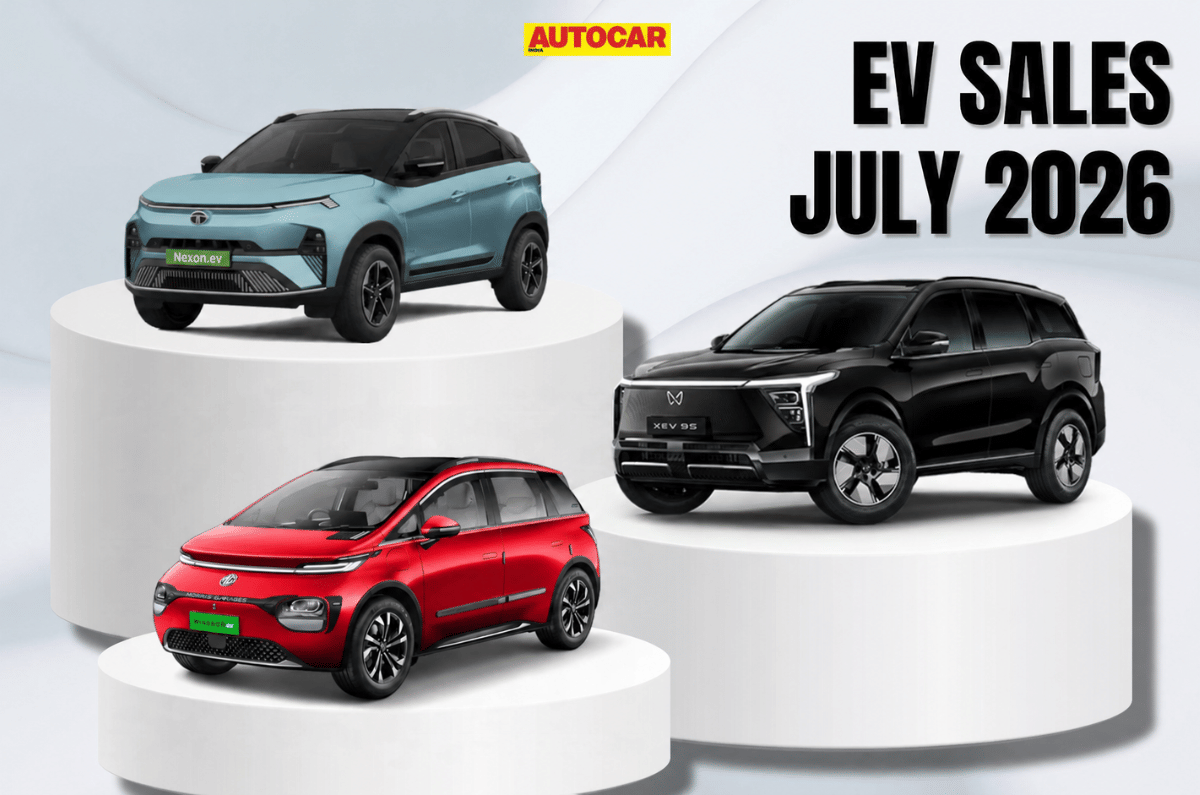
Retail sales of electric passenger vehicles breached the 30,000-unit mark for the second month in a row in July 2026. After a record 33,307 units in June, buyers took home a total of 32,609 EVs last month, up 83 percent year-on-year, as per Vahan data. Tata Motors recorded its highest-ever monthly EV sales, while Mahindra and Maruti Suzuki posted their second-highest monthly totals.
Tata Motors
July 2026: 13,578 units, up 102 percent YoY
Tata Motors, which recently expanded its EV portfolio with the launch of the Sierra EV, recorded its best-ever monthly retail sales of 13,578 units in July. This is 102 percent higher than July 2025 and 6 percent more than June 2026. The company also crossed the 40 percent EV market share mark after a long gap. Its 42 percent share in July is 4 percentage points higher than the 38 percent it held a year ago, despite growing competition.
July was also the second consecutive month that Tata sold more than 12,000 EVs, after 12,756 units in June. Cumulative sales between April and July stood at 46,697 units, up 108 percent YoY.
Mahindra
July 2026: 7,677 units, up 125 percent YoY
Mahindra crossed the 7,000-unit mark for the second month in a row. It sold 7,677 electric SUVs in July, up 125 percent over July 2025, although this was 498 units fewer than June. The performance helped Mahindra increase its market share to 22 percent, up from 19 percent a year ago. The BE 6 and XEV 9e continue to see strong demand. The XEV 9S, Mahindra’s first three-row born-electric SUV, has further strengthened its EV line-up.
JSW MG Motor India
July 2026: 5,642 units, down 4 percent YoY
JSW MG Motor India sold 5,642 EVs in July, down 4 percent YoY and 9 percent lower than June 2026. Its market share stood at 16 percent, down sharply from 33 percent in July 2025. The Windsor EV continues to be MG’s best-selling model.
Maruti Suzuki
July 2026: 1,590 units
Maruti Suzuki sold 1,590 e Vitaras in July. This was the fifth consecutive month of four-digit sales, following March, April and May. However, July sales were 20 percent lower than June, which remains the model’s best month so far. Until now, domestic sales of the e Vitara were limited because a larger share of production was allocated for exports. This is expected to change with the start of production at a new fourth manufacturing line at Maruti Suzuki’s Hansalpur, Gujarat plant. The expanded facility now builds the e Vitara, Fronx, Baleno and Swift.
Vinfast India
July 2026: 1,478 units
Vinfast ranked fifth among the country’s 18 electric passenger vehicle manufacturers. The Vietnamese carmaker recorded its highest-ever monthly sales in July with 1,478 units, surpassing its previous best of 1,448 units in June by 30 units, or 2 percent. This gave the company a 4 percent EV market share in July.
According to wholesales data, the VF Limo Green (for commercial use) is currently its best-selling model. In Q1 FY2027 (April-June 2026), SIAM wholesale data shows the Green Limo accounted for 2,746 units, or 46 percent of Vinfast India’s total sales of 6,001 units, well ahead of the VF7, VF6 and MPV7.
BYD India
July 2026: 742 units, up 47 percent YoY
BYD sold 742 EVs in July, up 47 percent over July 2025. However, sales were 20 percent lower than June 2026, which remains the company’s best monthly performance so far. On July 1, BYD increased prices of its EVs by 1-2 percent, marking its second price hike of the year after the one on May 1. The company’s current line-up includes the Atto 3 SUV, e-Max 7 MPV, Seal sedan and Sealion 7 SUV. BYD has also confirmed that it will launch the Seal U PHEV later this year.
Hyundai
July 2026: 565 units, down 21 percent YoY
Hyundai sold 565 EVs in July, down 21 percent compared to 719 units in July 2025. However, on a month-on-month basis, sales were up 51 percent from the 374 units sold in June 2026. At present, Hyundai’s EV portfolio in India consists of just two models: the Creta Electric and the Ioniq 5.
Kia India
July 2026: 464 units, up 614 percent YoY
Kia ranked eighth with retail sales of 464 units in July. This is a 614 percent year-on-year increase over the low base of 65 units in July 2025. However, sales were 14 percent lower than 539 units in June 2026. Kia’s monthly sales have improved since the launch of the mass-market Carens Clavis EV MPV, which joined the much more expensive EV6 and EV9, both of which are imported as CBUs.
Toyota Kirloskar Motor
July 2026: 123 units
Toyota delivered 123 units of the Urban Cruiser Ebella in July. This placed the company 11th among the country’s electric passenger vehicle manufacturers. The Urban Cruiser Ebella is the badge-engineered version of the Maruti e Vitara, and it is currently available in a single E3 variant.
Carmaker
July 2026
July 2025
YoY Change (in percent)
Tata Motors
13,578
6,712
102
Mahindra
7,677
3,416
125
JSW MG Motor
5,642
5,900
-4
Maruti Suzuki
1,590
–
–
Vinfast
1,478
–
–
BYD
742
505
47
Hyundai
565
719
-21
Kia
464
65
614
BMW
367
270
36
Mercedes-Benz
163
115
42
Toyota
123
–
–
Tesla
115
–
–
Stellantis
51
68
-25
Volvo
48
42
14
Porsche
6
8
-25
Audi
0
1
-100
Rolls-Royce
0
2
-100
Jaguar Land Rover
0
0
–
Total
32,609
17,823
83
Luxury electric carmakers sell record units in July
Demand for luxury electric cars continued to grow in July 2026. Carmakers in this segment sold 699 EVs, up 60 percent year-on-year. However, sales were 17 percent lower than the record 847 units sold in June 2026. BMW and Mercedes-Benz continued to lead the luxury EV market, while Tesla India crossed the 100-unit mark for the first time with its highest-ever monthly sales.
BMW India
BMW remained the leader in the luxury EV segment with 367 units. This is 36 percent higher than 270 units sold in July 2025, giving the brand a 52 percent segment share. However, sales were 29 percent lower than 517 units in June 2026. After topping the luxury EV segment in FY2026 with a record 3,898 units, BMW has sold 1,606 EVs between April and July, which is 41 percent of its FY2026 total.
Mercedes-Benz
Mercedes- Benz sold 163 EVs in July, up 42 percent from 115 units in July 2025. However, this was 33 percent lower than the 243 units sold in June 2026. The brand’s growth has been supported by the launch of the CLA electric sedan at the end of April.
Tesla
Tesla recorded its highest-ever monthly sales in India, selling 115 Model Ys in July. This is a 203 percent increase over 38 units sold in June 2026. Its luxury EV market share also rose sharply from 4 percent in June to 16 percent in July, allowing it to move ahead of Volvo Auto India. The strong growth follows Tesla India’s decision to reduce the price of the Model Y by Rs 9 lakh, bringing the starting price down to Rs 50.89 lakh, ex-showroom.
Volvo
Volvo, now ranked fourth in the luxury EV segment, sold 48 EVs in July. This is 14 percent higher than 42 units sold in July 2025 and 23 percent more than the 39 units sold in June 2026. The Swedish carmaker increased prices of its models by up to Rs 1 lakh from May 1, citing ongoing global supply chain challenges and fluctuations in foreign exchange rates. Volvo’s market share stood at 7 percent in July, down from 10 percent a year ago.
Porsche, Audi and Rolls-Royce
Porsche sold 6 EVs in July. According to Vahan data, Audi, Rolls-Royce and JLR India did not sell a single EV during the month.
Overall, luxury EV makers accounted for 2.14 percent of the 32,609 electric passenger vehicles sold in July 2026, compared to 2.45 percent in July 2025 and 2.54 percent in June 2026.
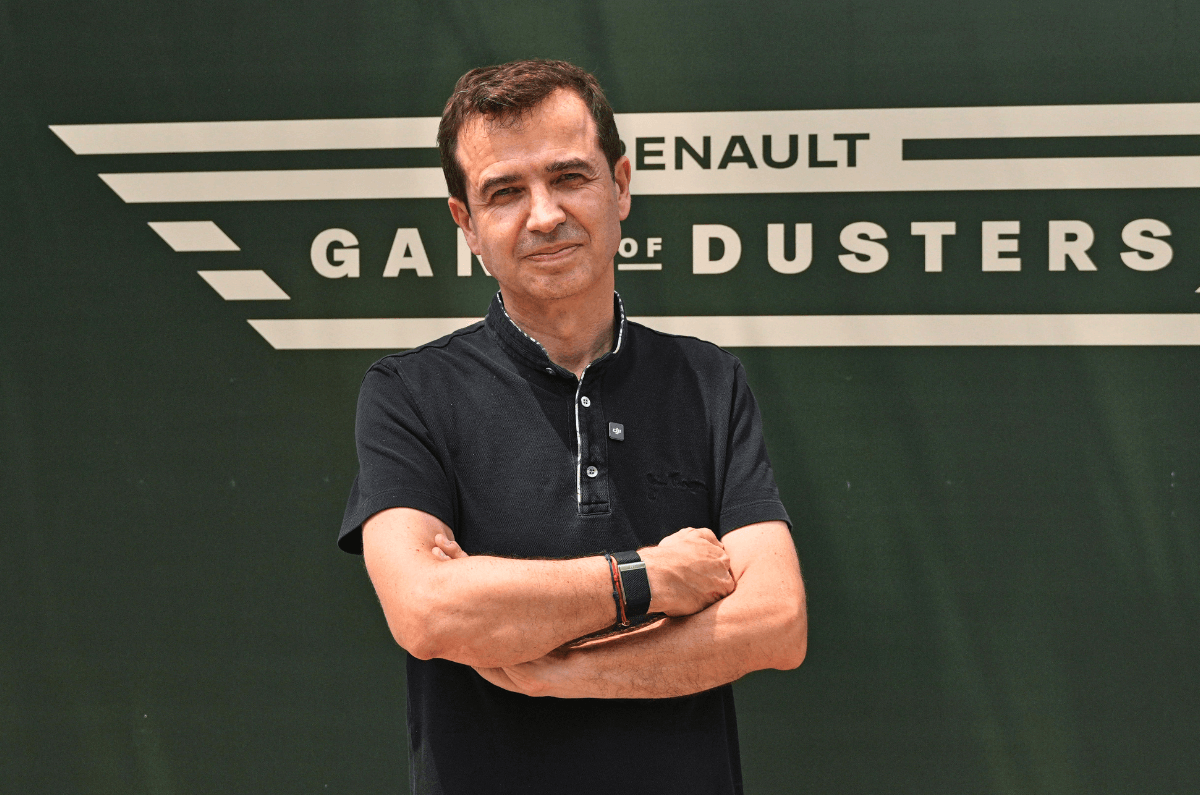
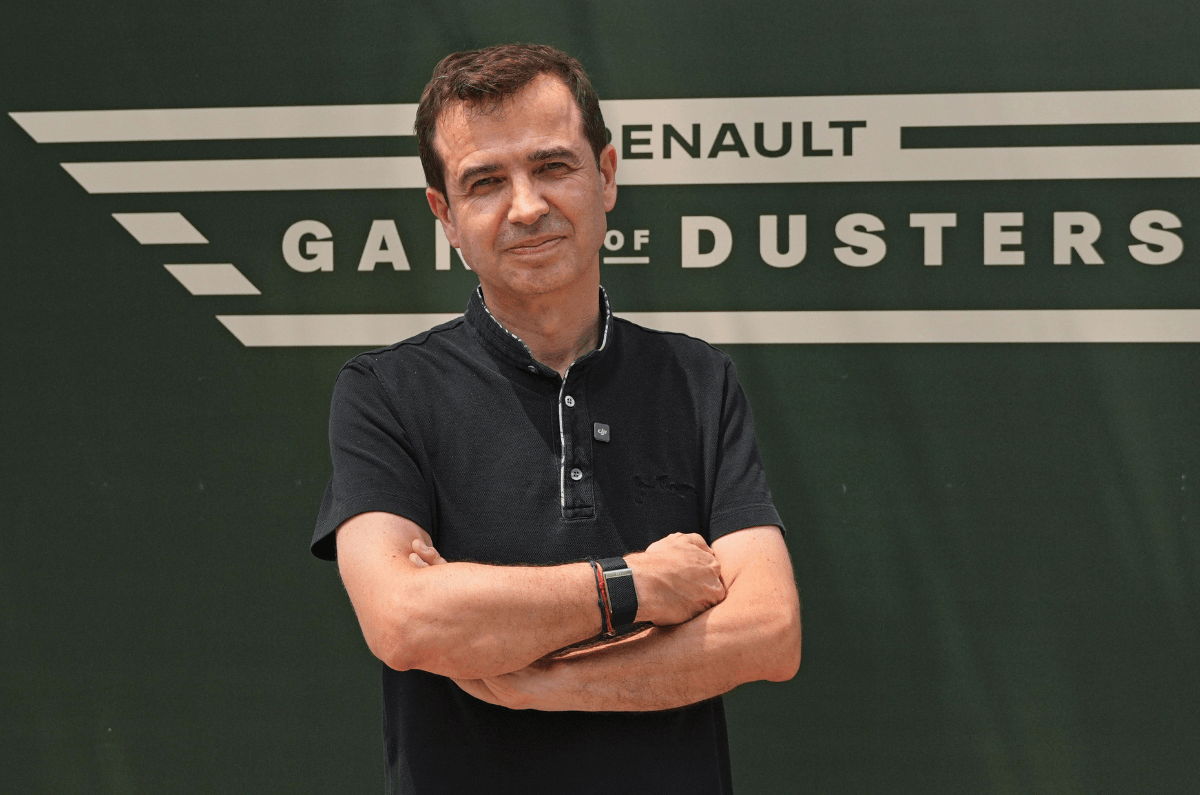
Renault Group India CEO Stephane Deblaise took charge of the company in September last year, and since then, the carmaker has been busy expanding and refreshing its India line-up. In this interview, Deblaise talks about the response to the new Renault Duster and the possibility of a more affordable automatic variant, the company’s upcoming product plans, progress on the Bridger compact SUV concept, and how Renault plans to strengthen its position in the Indian market.
On the response to the 1.0-litre Duster
It’s still early, so we don’t know the exact response, but it’s a key part of our phased strategy, which was to first focus on the 160hp DCT that is the high-end version in the ICE car. And then we want to introduce the 100hp, the more ‘regular’ car, which is less expensive. That Rs 10.5 lakh price is very, very good for people who want to enter the B+ SUV segment, and it has very good fuel efficiency. Moreover, the Duster is a very good car, and people are loyal to good cars, so we are expecting the Duster to do well on the whole.
On the slow rate of Duster bookings and deliveries
So, at Renault, we don’t overstate or overpromise. We won’t say we have 60,000 people waiting and, after that, you would discover that we did not do 60,000 deliveries. Some people do that; we don’t. We are very serious and would prefer to focus on one (variant), and then another, and a third, so in this way people keep speaking about it. For the hybrid, we were not ready; that’s why it is coming later, but with the 160hp and 100hp Duster, we wanted to focus first on the high-end and then the lower version. You know, we were in a little bit of a hibernation, and you can’t go from that to summer in one day. I think it’s good to build up step by step.
On the possibility of a 1.0-litre automatic
I am not saying what gearbox or even the engine, but what I can say is that very soon we will introduce a new, less expensive version with an automatic. It was not planned at the beginning, but since we launched the new Duster, we have been having a lot of queries about this from customers. Plus, if you look at the pricing of all the models and variants we currently have, there is a gap between the manual variants and the first automatic version.
On the rest of the Renault portfolio
I arrived in India on the 1st of September, and on the 16th of October I went to Paris to validate our India plan, and all the programmes that we decided to pursue were validated. Then, as you know, we communicated this in April this year. The programmes are completely running as per our expectations and on time. On the Renault Group Entry Platform (RGEP), we have made many modifications and carried out re-engineering to bring in new engines, new equipment and other things that you have requested. They are now finally coming. Next year will be a blowout of new products.
On the brand’s new design centre in India
The India R&D centre is playing a very big role in our local as well as global plans. When I arrived, I was requested to bring together the three entities we had, which were all separate: one dedicated to sales, one to engineering, and one dedicated to manufacturing, which was along with Nissan. Now we have all three together under one leadership – mine – and this helps a lot because communication is easier and quicker, and this is improving our agility and our ability to see and respond to the market much better. This is why we will now deliver exactly what the market needs and is asking for.
On the development of the Bridger concept
This is a very important topic. It’s my project, and I am working very hard on this with our whole team. We have three meetings per week about the project, and in the coming weeks, there is a very important milestone. But I am happy to say that everything is going nicely and is on track, so I am satisfied with our progress.
Renault Group India CEO Stephane Deblaise took charge of the company in September last year, and since then, the carmaker has been busy expanding and refreshing its India line-up. In this interview, Deblaise talks about the response to the new Renault Duster and the possibility of a more affordable automatic variant, the company’s upcoming product plans, progress on the Bridger compact SUV concept, and how Renault plans to strengthen its position in the Indian market.
On the response to the 1.0-litre Duster
It’s still early, so we don’t know the exact response, but it’s a key part of our phased strategy, which was to first focus on the 160hp DCT that is the high-end version in the ICE car. And then we want to introduce the 100hp, the more ‘regular’ car, which is less expensive. That Rs 10.5 lakh price is very, very good for people who want to enter the B+ SUV segment, and it has very good fuel efficiency. Moreover, the Duster is a very good car, and people are loyal to good cars, so we are expecting the Duster to do well on the whole.
On the slow rate of Duster bookings and deliveries
So, at Renault, we don’t overstate or overpromise. We won’t say we have 60,000 people waiting and, after that, you would discover that we did not do 60,000 deliveries. Some people do that; we don’t. We are very serious and would prefer to focus on one (variant), and then another, and a third, so in this way people keep speaking about it. For the hybrid, we were not ready; that’s why it is coming later, but with the 160hp and 100hp Duster, we wanted to focus first on the high-end and then the lower version. You know, we were in a little bit of a hibernation, and you can’t go from that to summer in one day. I think it’s good to build up step by step.
On the possibility of a 1.0-litre automatic
I am not saying what gearbox or even the engine, but what I can say is that very soon we will introduce a new, less expensive version with an automatic. It was not planned at the beginning, but since we launched the new Duster, we have been having a lot of queries about this from customers. Plus, if you look at the pricing of all the models and variants we currently have, there is a gap between the manual variants and the first automatic version.
On the rest of the Renault portfolio
I arrived in India on the 1st of September, and on the 16th of October I went to Paris to validate our India plan, and all the programmes that we decided to pursue were validated. Then, as you know, we communicated this in April this year. The programmes are completely running as per our expectations and on time. On the Renault Group Entry Platform (RGEP), we have made many modifications and carried out re-engineering to bring in new engines, new equipment and other things that you have requested. They are now finally coming. Next year will be a blowout of new products.
On the brand’s new design centre in India
The India R&D centre is playing a very big role in our local as well as global plans. When I arrived, I was requested to bring together the three entities we had, which were all separate: one dedicated to sales, one to engineering, and one dedicated to manufacturing, which was along with Nissan. Now we have all three together under one leadership – mine – and this helps a lot because communication is easier and quicker, and this is improving our agility and our ability to see and respond to the market much better. This is why we will now deliver exactly what the market needs and is asking for.
On the development of the Bridger concept
This is a very important topic. It’s my project, and I am working very hard on this with our whole team. We have three meetings per week about the project, and in the coming weeks, there is a very important milestone. But I am happy to say that everything is going nicely and is on track, so I am satisfied with our progress.
Royal Enfield has outlined an ambitious manufacturing and international expansion plan following a strong Q1 FY27 performance, with capacity targeted at 2.45 million units per year by FY30 and a CKD assembly plant in Indonesia under active consideration. The announcements were made by Eicher Motors MD and Royal Enfield CEO B Govindarajan during the company’s Q1 FY27 investor call.
Royal Enfield to expand capacity from 1.5 million to 2.45 million units by FY30
Rs 1,225 crore approved for Phase 1 of new Andhra Pradesh greenfield plant
Indonesia CKD plant decision expected this quarter
Royal Enfield capacity expansion plans
Brownfield expansion at Cheyyar to take capacity to 2 million by FY28
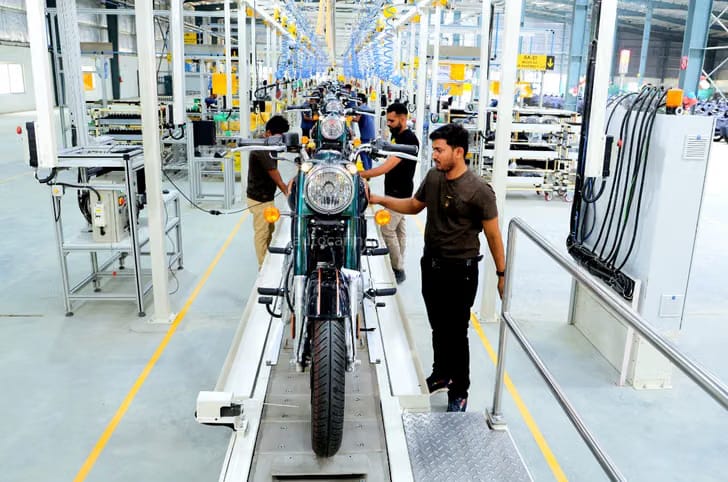
Royal Enfield currently has an annual manufacturing capacity of around 1.5 million motorcycles across four production units in Cheyyar and Chennai in Tamil Nadu – up from 50 percent utilisation in FY20 to 90 percent in FY26. The first module of the brownfield expansion at Cheyyar is now operational, with daily production crossing 5,000 units. The remaining phases are expected to be completed by FY28, taking total capacity to 2 million units annually.
Beyond that, Eicher Motors’ board has approved an investment of Rs 1,225 crore for the first phase of a new greenfield manufacturing facility in Andhra Pradesh. This addition is expected to contribute a further 4.5 lakh units of annual capacity and bring Royal Enfield’s total manufacturing footprint to 2.45 million units by FY30. The combined brownfield and greenfield expansion represents a capacity increase of over 60 percent from current levels.
Indonesia CKD plant could be set up at faster pace due to low local content requirements
On the international front, Royal Enfield is actively evaluating a CKD assembly plant in Indonesia after finding that exports from its existing Thailand CKD plant are still subject to import quotas of around 10,000 units per year – despite the ASEAN trade framework. Govindarajan said the company had identified a local assembler in Indonesia and that a decision on setting up a CKD operation there was expected during the current quarter. He noted that Indonesia’s local content requirements are relatively low, which could allow a CKD facility to come online quickly. However, he cautioned that a luxury tax of around 140 percent would remain even with local assembly, and the key benefit being the removal of the import quota restriction.
Royal Enfield currently operates seven CKD assembly units across Argentina, Bangladesh, Brazil (two units), Colombia, Nepal and Thailand, with a combined annual assembly capacity of 150,000 units. Indonesia would be the eighth. The company is also evaluating a CKD plant in Mexico following higher import tariffs there. Overseas revenue crossed Rs 1,000 crore for the first time in Q1 FY27, accounting for around 15 percent of total revenue, led by strong growth in Brazil and other Latin American markets.
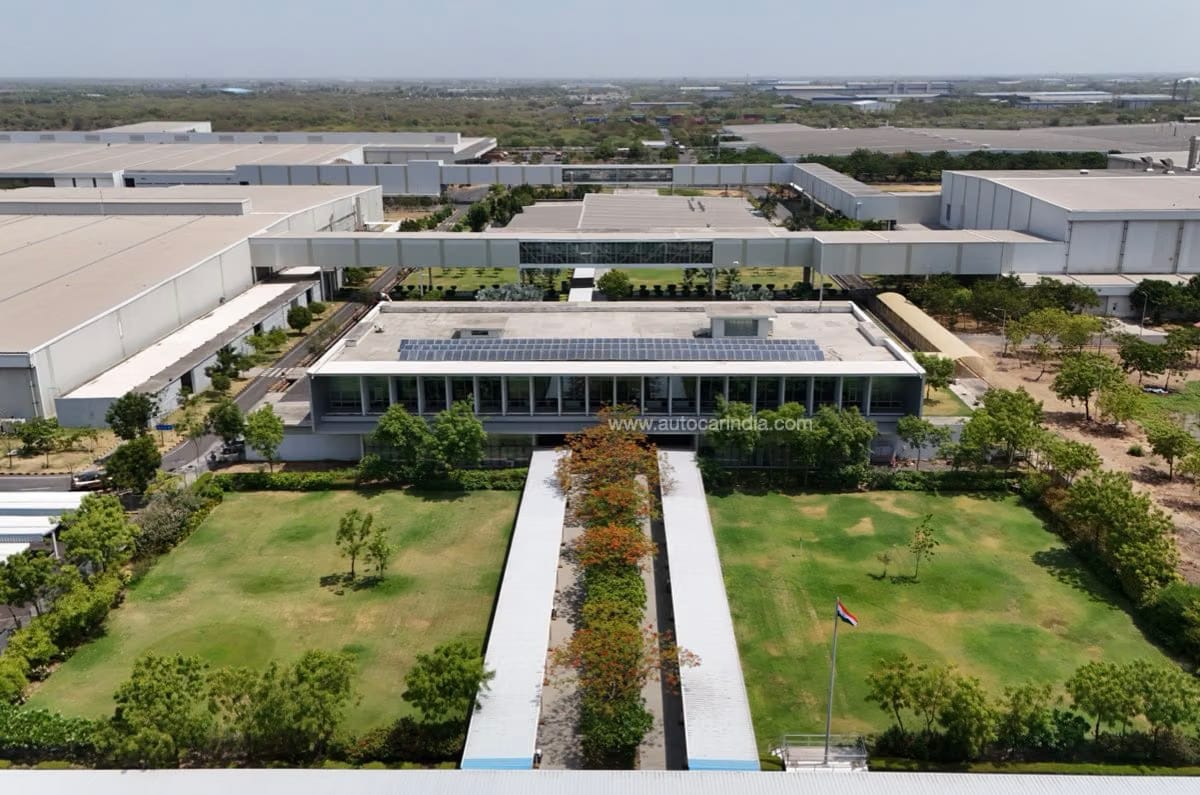
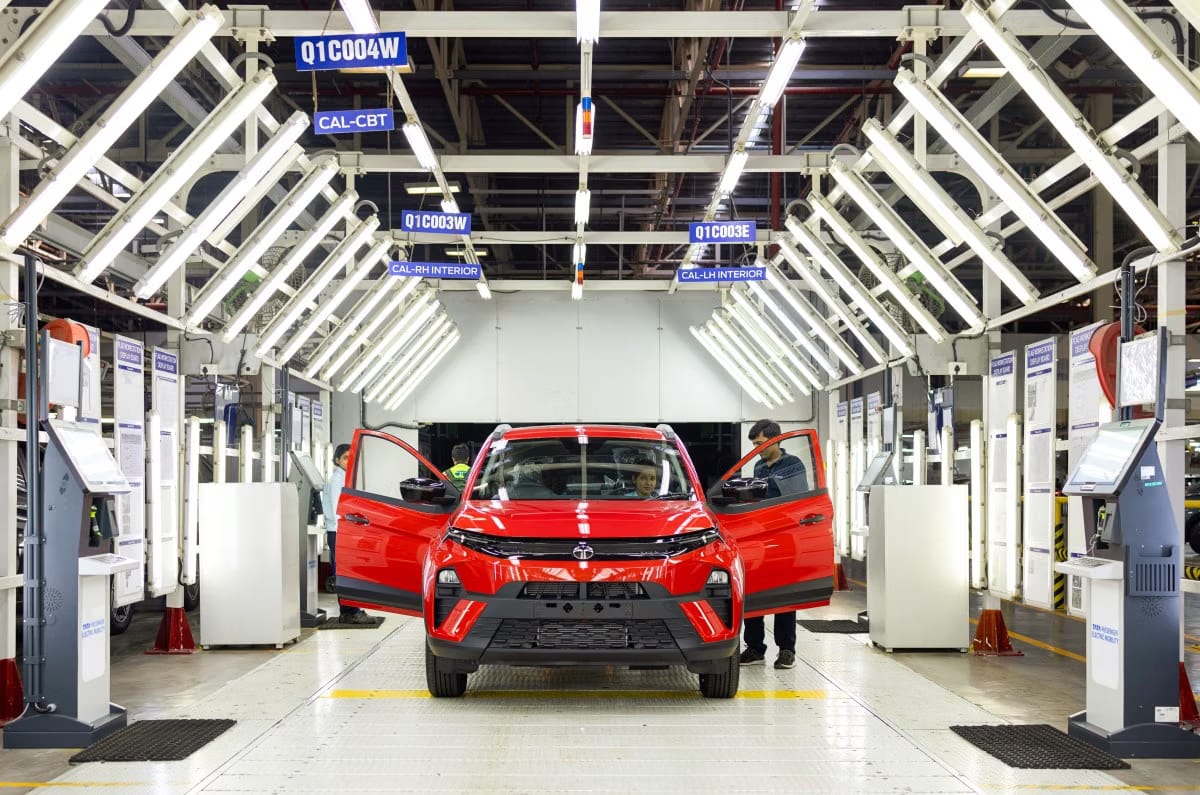
In a new regulatory filing to stock exchanges, Tata Motors has reported a temporary disruption to operations at its manufacturing plants in Sanand, Gujarat, after heavy monsoon rains and flooding affected the region. Specifically, some areas in Gujarat received between 300mm and 500mm of rain within 24 hours, which led to flooding, widespread road and rail disruptions, and the evacuation of more than 40,000 people across the state.
Production of Tata Nexon, Sierra, Tiago, Tigor briefly paused
In the regulatory filing, Tata Motors revealed that severe flooding disrupted supplier facilities in and around Gujarat as well, further impacting the carmaker’s supply chain. Efforts to restore operations at Tata’s assembly plants and vendor facilities are underway, and the carmaker is working closely with flood-affected suppliers to help them resume production as quickly as possible. If all goes to plan, production at Tata’s Sanand plants is expected to bounce back over the next few days.
Established in 2010 and located 25-30 km from Ahmedabad, the Sanand manufacturing complex houses two Tata Motors passenger vehicle plants. Both Sanand facilities manufacture the Tata Sierra, Nexon, Tiago, and Tigor, so the production pause could prolong waiting periods for these models.
Tata Motors also stated the overall financial impact and extent of damage are still being assessed. However, the carmaker assured that it has adequate insurance coverage for losses arising from natural calamities such as floods.