August 2026 car sales: Tata widens monthly lead over Mahindra

August 2026 car sales: Tata widens monthly lead over Mahindra
August

India’s passenger vehicle market remained on a strong growth path in August 2026, with most carmakers reporting higher domestic wholesales compared with the same month last year. Maruti Suzuki retained the top spot, while Tata Motors remained ahead of Mahindra for second place. Hyundai held fourth position, while Kia overtakes Toyota for the fifth spot.

July 2026 carmaker-wise sales in India
CarmakerAug 2026 salesJul 2026 salesMoM changeAug 2025 salesYoY change
Maruti Suzuki1,76,9711,96,203-9.80%1,31,27834.8%
Tata Motors67,75362,6114.22%43,315 56%
Mahindra

59,257

60,048

-1.32%

39,399

50%

Hyundai

54,396

54,210

0.3%

43,966

23.6%

Kia

29,042

28,200

3%

19,608

48.1%

Toyota

28,410 

30,516

-7%

29,302

-3%

MG 

7,508

8,158

-8%

6,687

12.3%

Nissan

3,426

3,006

14%

1,384

147% 

Renault

2,842 

3,293

-14%

3,015 

-5.7%

Maruti Suzuki

Sales: 1,76,971 units. Change: 34.8 percent YoY

Maruti Suzuki retained its position as India’s largest carmaker in August, with domestic passenger vehicle sales rising 34.8 percent year on year. Utility vehicless, including the Brezza, Ertiga, e Vitara, Fronx, Grand Vitara, Invicto, Jimny, Victoris and XL6, accounted for 79,045 units, while compact and mid-size segment, led by the Baleno, Swift, Dzire and WagonR, contributed 77,166 units. The mini segment, comprising the Alto and S-Presso, added 8,799 units, while the Eeco contributed 11,961 units.

The carmaker also crossed one million total sales in the first five months of FY2026-27. Its total August sales, including exports and sales to other OEMs, stood at 2,19,220 units.

Tata Motors

Sales: 67,753 units. Change: 56 percent YoY
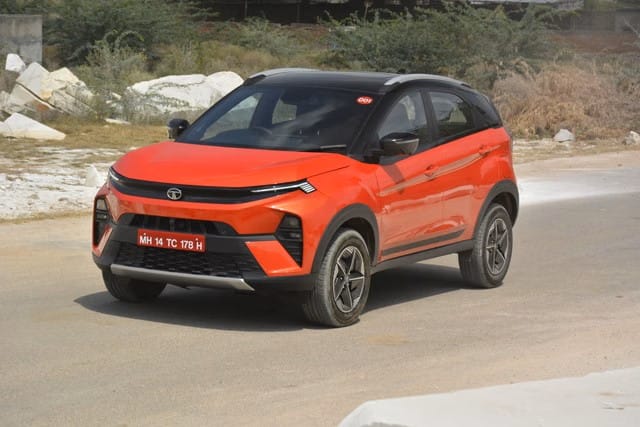
Tata Motors retained second place with 67,753 domestic passenger vehicle sales in August, up 56 percent from the same month last year. Electric vehicle sales, including domestic and international volumes, stood at 16,549 units, almost doubling from 8,540 units in August 2025. Tata also announced a price hike across its passenger vehicle range from September 1.

Mahindra

Sales: 59,257 units. Change: 50 percent YoY

Mahindra remained in third place, recording domestic SUV sales of 59,257 units in August, a 50 percent increase over the 39,399 units sold in August 2025. Its overall vehicle sales, including exports, stood at 1,07,648 units, up 42 percent year on year.

During the month, Mahindra launched the updated Scorpio-N and BE 6 SporteQ, and also introduced its Battery-as-a-Service option for the XEV 9e and XEV 9S.

Hyundai

Sales: 54,396 units. Change: 23.6 percent YoY
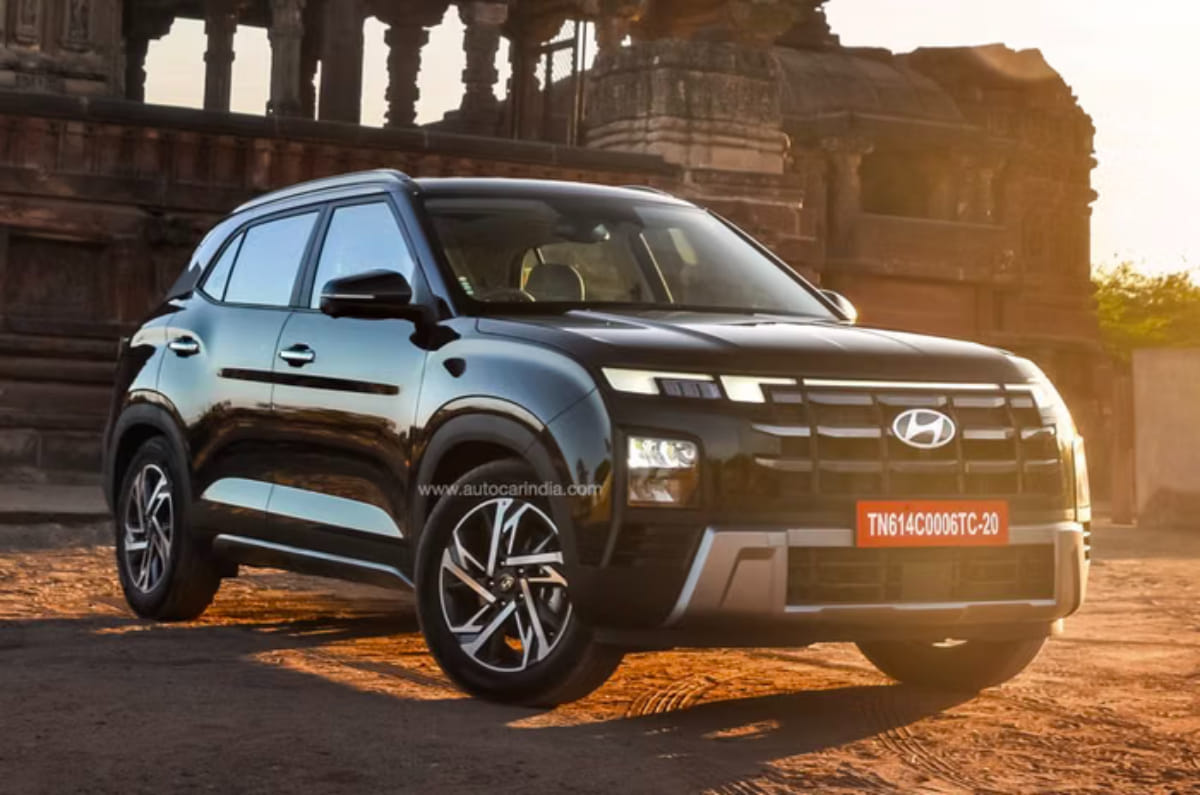
Hyundai recorded 54,396 domestic sales in August, up 23.6 percent year on year. The company said this was its highest-ever domestic sales figure for an August. Hyundai has introduced an assured buyback programme for the Creta Electric, while the carmaker is also set to increase prices from this September 2026.

Kia

Sales: 29,042 units, Change: 48.1 percent YoY

Kia recorded 29,042 units in August, up 48.1 percent from 19,608 units in the same month last year. This was the carmaker’s highest-ever August wholesale volume since entering India. The Seltos and Sonet continued to account for a large share of Kia’s volumes, while the newly launched Syros EV also contributed to the brand’s performance.

Toyota

Sales: 28,410 units, Change: -3 percent YoY

Toyota recorded domestic sales of 28,410 units in August 2026, down 3 percent from 29,302 units in the same month last year. The company remains optimistic about demand during the upcoming festive season, with the Innova Hycross, Urban Cruiser Hyryder and Glanza continuing to drive sales.

JSW MG Motor India

Sales: 7,508 units. Change: 12.3 percent YoY
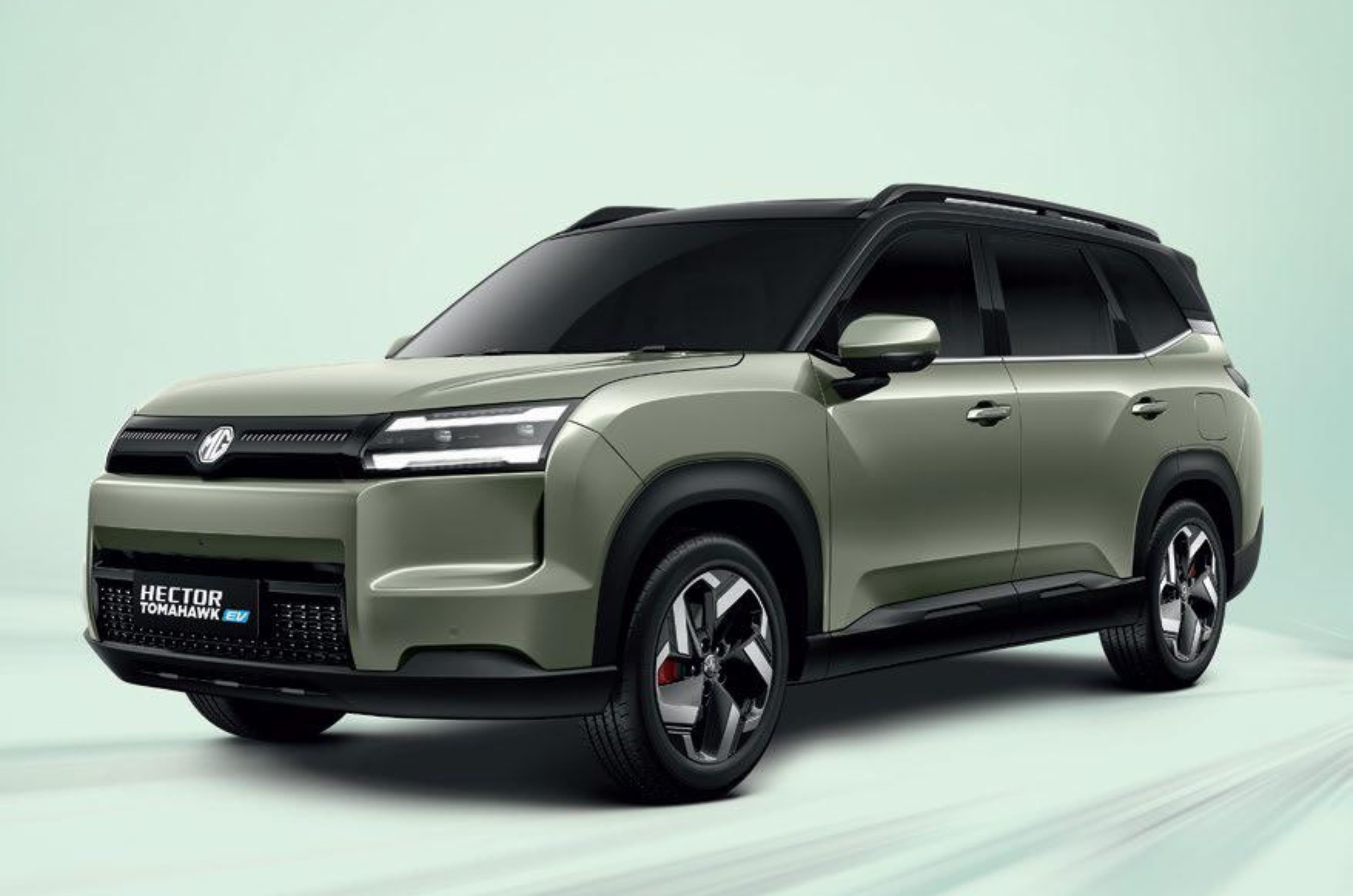
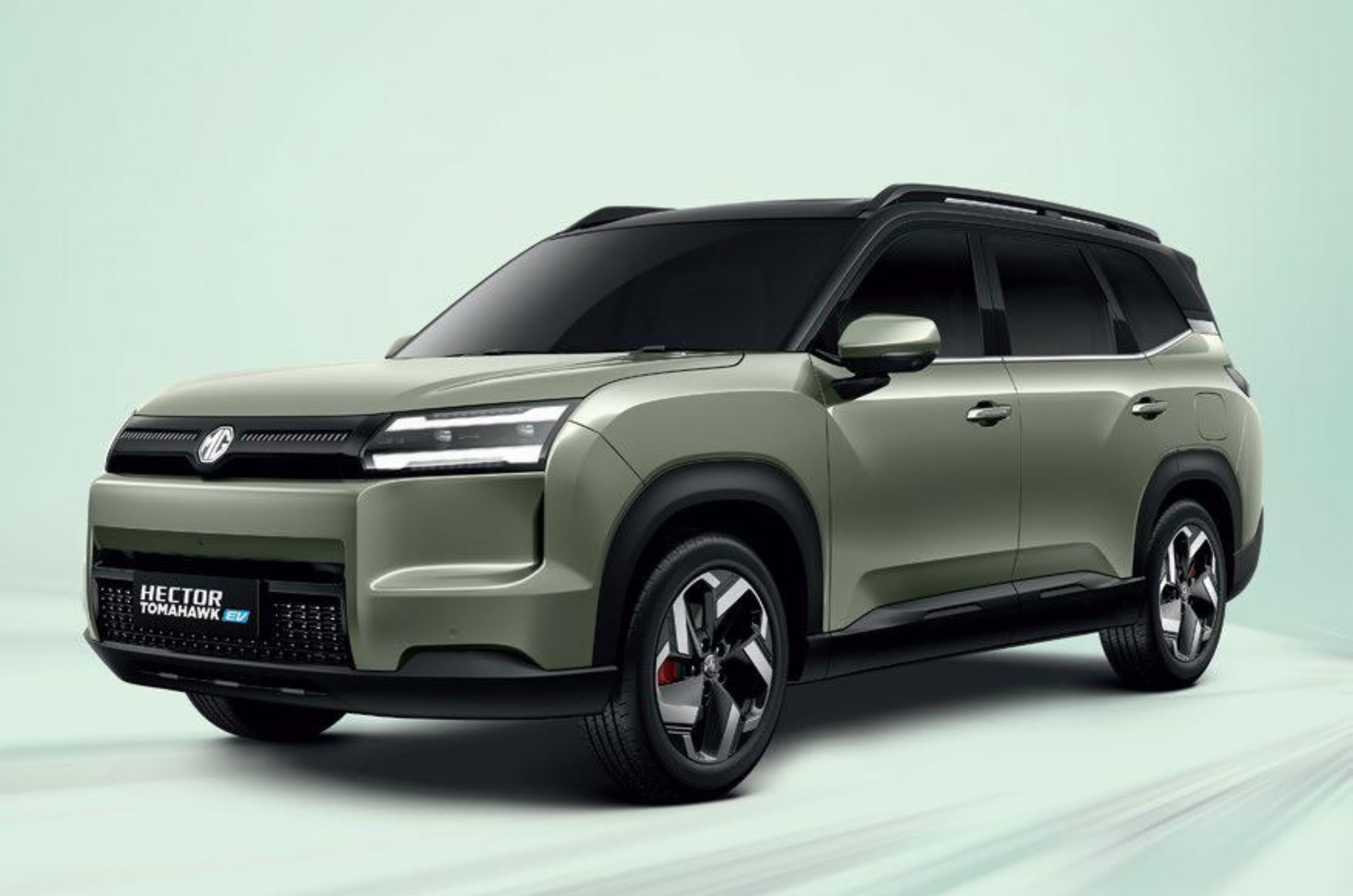
JSW MG Motor recorded sales of 7,508 units in August, up 14 percent year on year. The company launched the Hector Tomahawk in both EV and PHEV forms during the month. Bookings for both versions are open, while deliveries of the Tomahawk EV are scheduled to begin in September. PHEV test drives and deliveries are scheduled to start in November.

Nissan

Sales: 3,426 units. Change: 147 percent YoY

Nissan recorded domestic wholesale sales of 3,426 units in August, up 147 percent year on year. The company attributed the performance to demand for the Magnite and Gravite, along with the response to the recently launched Tekton. Nissan also began exporting the Tekton to South Africa, Bhutan and Nepal during the month, with the first batch comprising more than 1,300 units.

Renault

Sales: 2,842 units, Change: -5.7 percent YoY
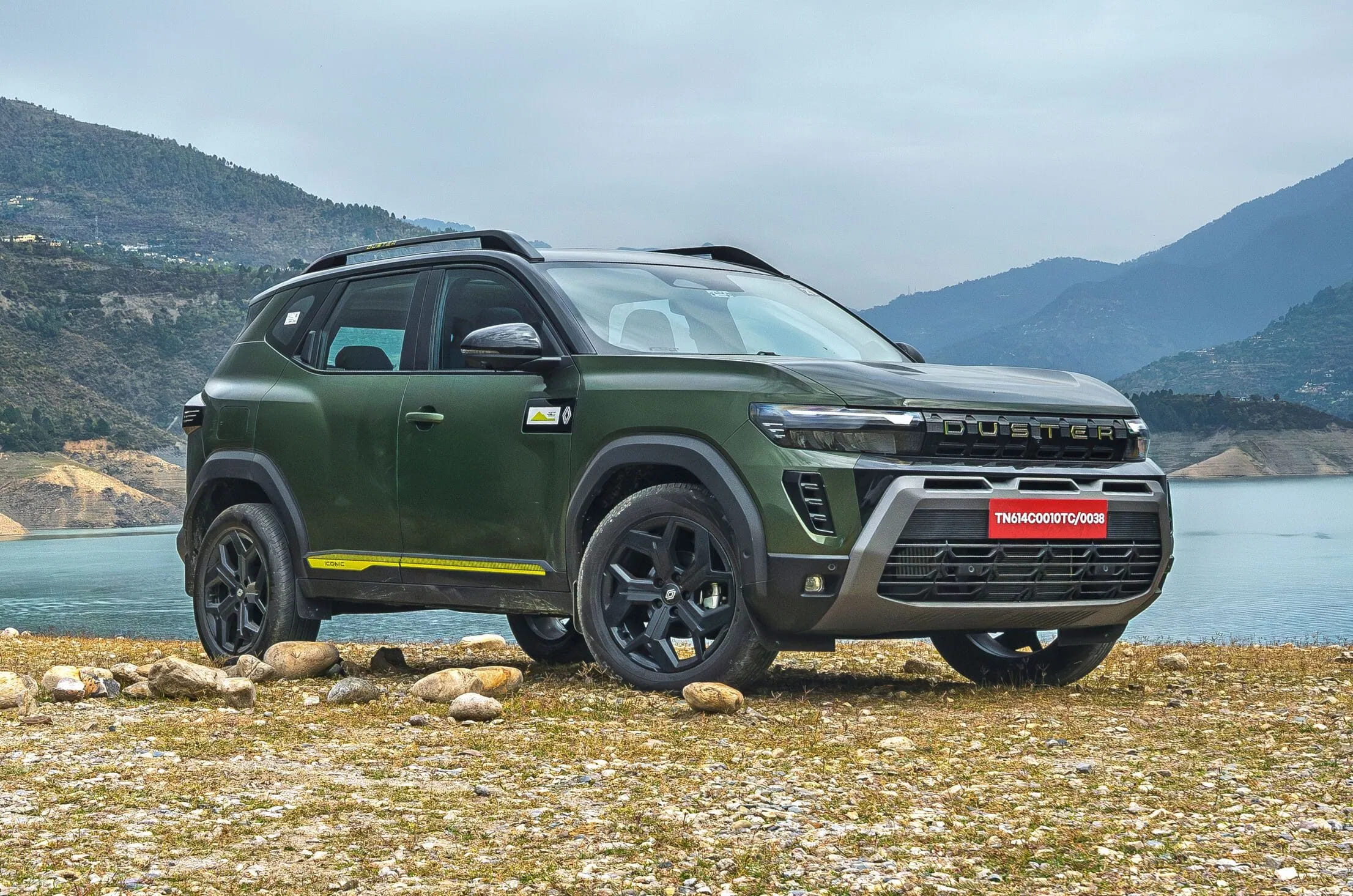
Renault recorded sales of 2,842 units in August 2026, down 5.7 percent from 3,015 units in August 2025. The carmaker’s cumulative domestic wholesales for January-August 2026 stood at 31,979 units, up 47.9 percent from 21,621 units in the same period last year. The company will add another powertrain option to the Triber range with the Triber Turbo, which is scheduled to arrive in late September 2026.
MG Hector Tomahawk PHEV powertrain explained

MG Hector Tomahawk PHEV powertrain explained

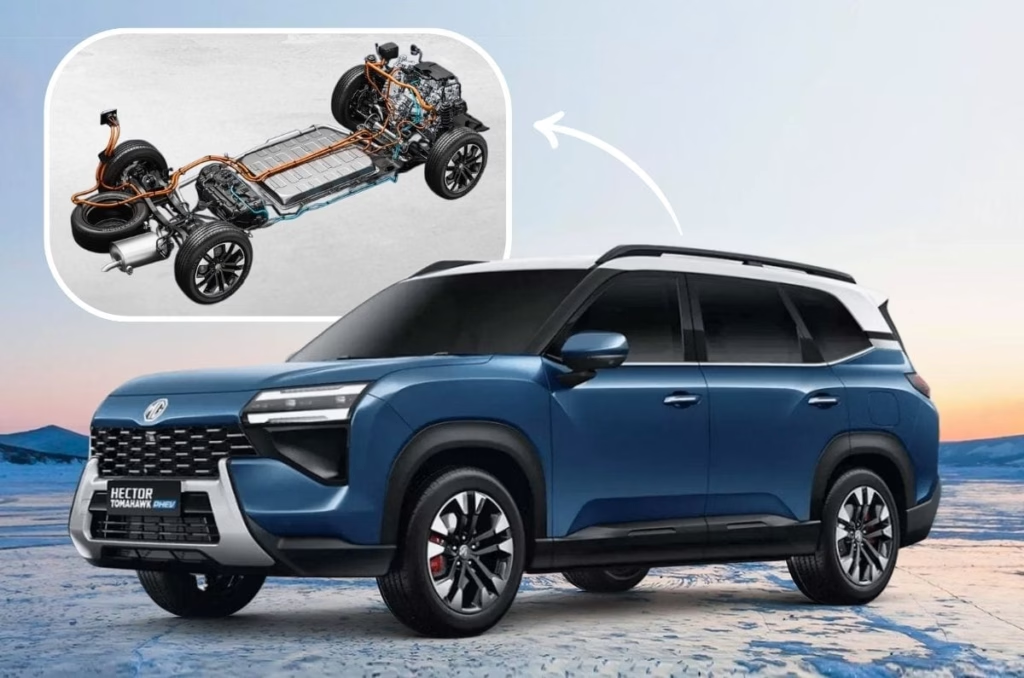
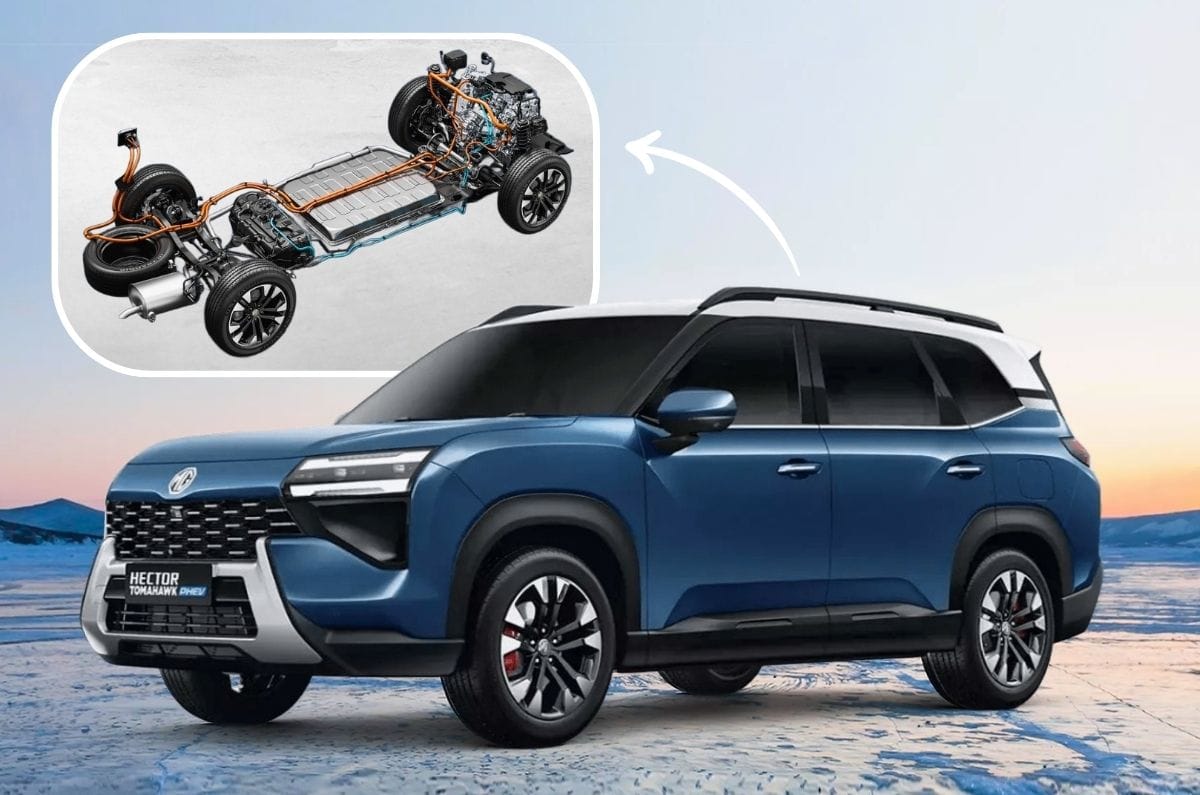
MG has introduced the Hector Tomahawk PHEV as India’s first mass-market plug-in hybrid, with prices ranging from Rs 25.70 lakh to Rs 27.80 lakh (ex-showroom). It combines a 1.5-litre petrol engine with a 20.5kWh battery and electric motor, allowing it to offer electric-only driving as well as the longer range of a petrol engine. But how does the Hector Tomahawk PHEV’s hybrid system work, and how does it differ from the strong-hybrid systems already offered by Maruti Suzuki, Toyota and Honda Let’s take a closer look. 

MG Hector Tomahawk PHEV powertrain: All you need to know

Gets an electric motor powered by a 20.5kWh battery and a 1.5-litre petrol engine

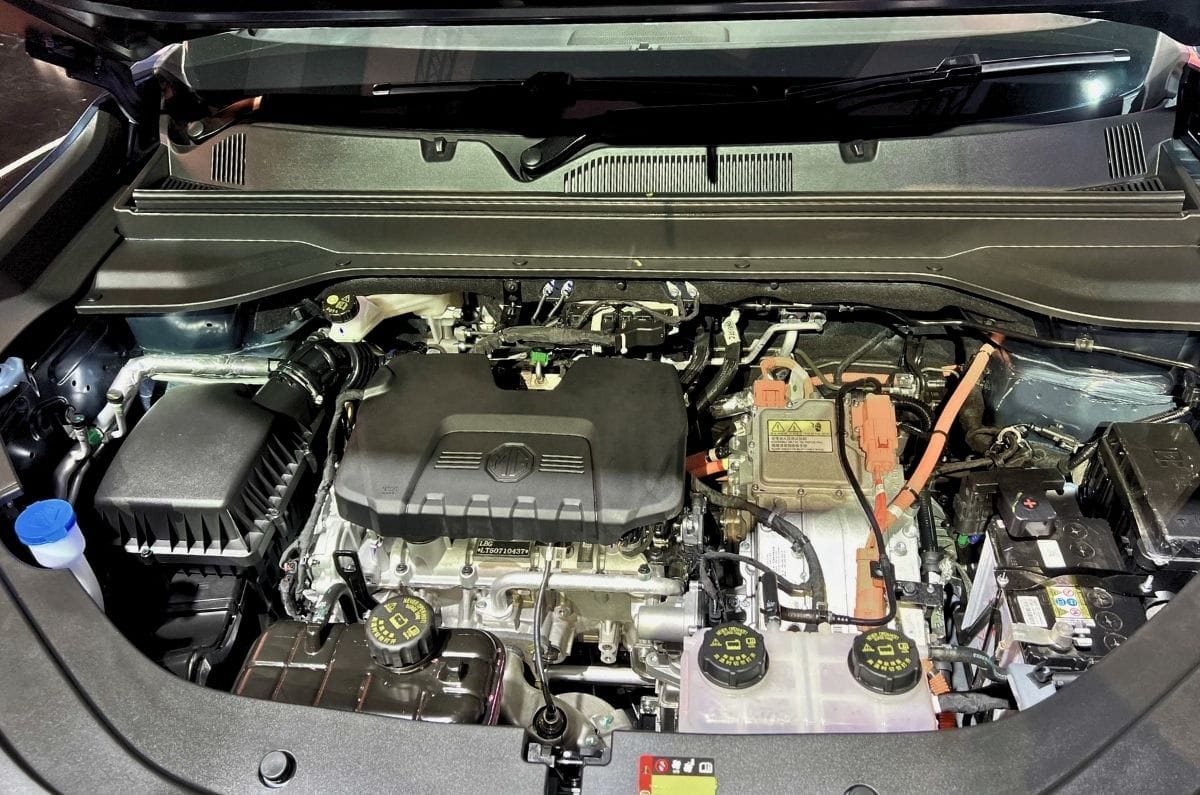
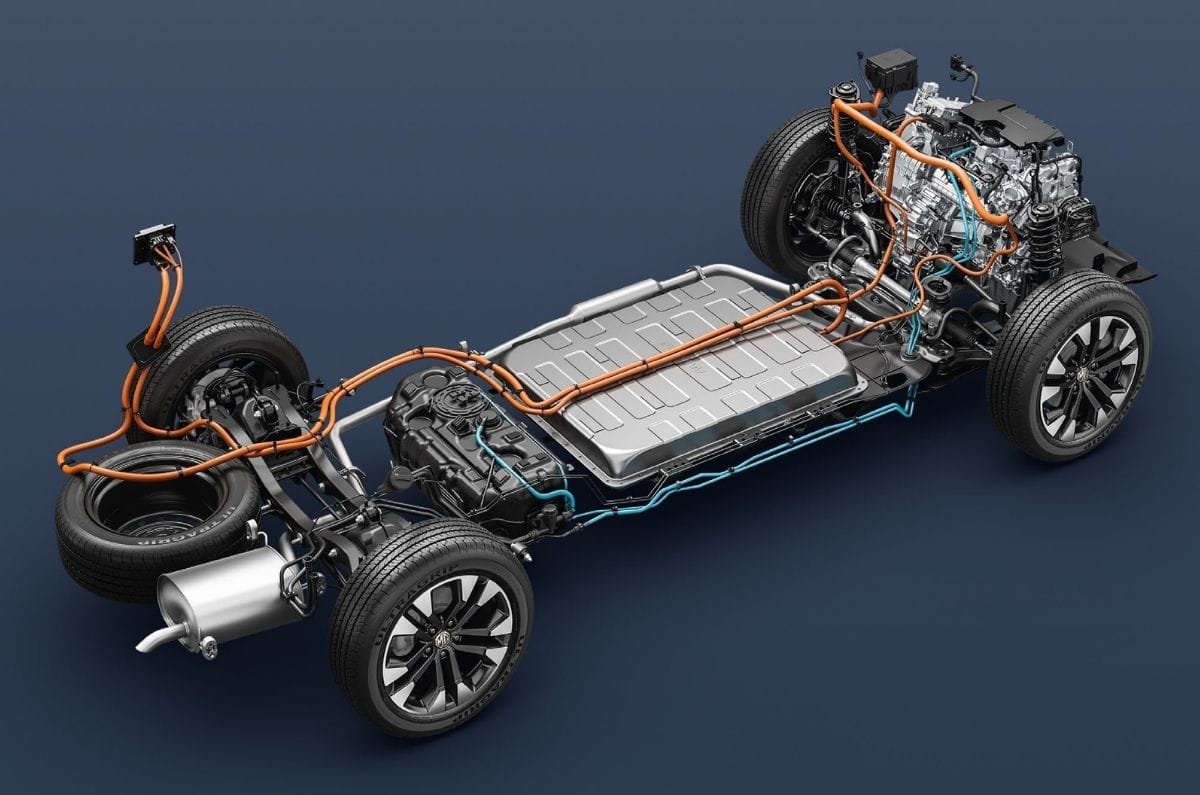
The Hector Tomahawk PHEV combines a 1.5-litre naturally aspirated petrol engine with a 20.5kWh battery and an electric motor. The petrol engine uses the Atkinson cycle and produces 102hp and 125Nm, while the permanent-magnet synchronous motor develops 201hp and 237Nm. The system sends a combined 198hp and 230Nm to the front wheels.

The petrol engine is paired with a Dedicated Hybrid Transmission (DHT) with an e-clutch, while the battery uses lithium iron phosphate (LFP) chemistry. Unlike a conventional hybrid, the Hector Tomahawk PHEV’s battery can be charged externally, allowing it to operate as an EV for more than 115km, according to MG, before the petrol engine kicks in.

How is the Hector Tomahawk PHEV different from a strong-hybrid powertrain?

Honda, Toyota and Maruti Suzuki offer strong-hybrid powertrains in models such as the City Hybrid, Urban Cruiser Hyryder, Innova Hycross, Grand Vitara, Victoris and Invicto. These systems also use an electric motor and battery, but their battery packs are charged through regenerative braking and the combustion engine rather than an external power source. They can drive the wheels on electric power for short periods but do not offer the extended electric driving capability of a plug-in hybrid.

The Hector Tomahawk PHEV’s 20.5kWh battery can be charged from the grid, giving it a greater electric driving capability. It supports 25kW DC charging, which MG claims takes 35 minutes for a 30-80 percent charge. A 3.3kW AC charger is said to take 7.5 hours for a 10-100 percent charge.

MG claims a 43.2 percent thermal efficiency for the petrol engine and around 50kpl combined fuel efficiency. The company pegs the combined range with a fully charged battery and the 52-litre fuel tank brimmed at over 1,100km.

MG offers it with four primary drive modes

The MG Hector Tomahawk PHEV can operate in four primary drive modes: EV, Series Hybrid, Parallel Hybrid and Engine Direct. Each mode uses the petrol engine, electric motor and battery differently. Here is how each one works.

  • EV mode: The battery alone powers the electric motor, which drives the wheels. The petrol engine remains switched off, making this the mode used for electric-only driving.
  • Series Hybrid mode: The petrol engine runs as a generator to produce electricity. It recharges the battery pack, which powers the electric motor driving the front wheels. The engine therefore does not directly power the wheels in this mode.
  • Parallel Hybrid mode: Both the petrol engine and electric motor drive the wheels. This allows the powertrain to combine the engine’s output with electric assistance when higher performance is required.
  • Engine Direct drive mode: The petrol engine drives the wheels directly through the hybrid transmission, reducing energy conversion losses associated with generating electricity and then using the motor to drive the wheels. This mode is primarily suited for high-speed cruising.

However, MG is offering no way to change these drive modes manually. The automaker claims the system shuffles between the modes in just 0.1 seconds, depending on the Hector Tomahawk PHEV’s state of charge, speed, throttle input and road conditions.

MG Hector Tomahawk PHEV prices

Although it’s a plug-in hybrid, the Hector Tomahawk PHEV comes with a BaaS option

MG Hector Tomahawk PHEV prices (ex-showroom)

Trim

Non-BaaS prices

BaaS prices

Upfront cost saving

Exclusive

Rs 25.70 lakh

Rs 21.79 lakh + 3.2 per km

Rs 3.91 lakh

Essence

Rs 27.80 lakh 

Rs 23.89 lakh + 3.2 per km

Rs 3.91 lakh

Both the Exclusive and Essence trims get the same powertrain, but certain features differ. Interestingly, the Hector Tomahawk PHEV is being offered with a Battery-as-a-Service (BaaS) scheme, just like the manufacturer’s EVs. This scheme reduces the upfront cost by a significant Rs 3.91 lakh.

As mentioned earlier, the MG Hector Tomahawk PHEV is the sole plug-in hybrid in India, offering a more fuel-efficient alternative to three-row SUVs such as the Tata Safari and Mahindra XUV 7XO.

Prices are ex-showroom, India.

Mahindra XEV 9e and XEV 9S now available with BaaS

Mahindra XEV 9e and XEV 9S now available with BaaS
Mahindra XEV 9s, XEV 9S, BE 6 BaaS

Mahindra has extended its Battery-as-a-Service (BaaS) ownership programme to the XEV 9S and the XEV 9e. Under BaaS, prices start at Rs 12.65 lakh for the XEV 9S and at Rs 13.90 lakh for the XEV 9e (all ex-showroom), and an additional Rs 3.75 per km will be charged for the battery. All of Mahindra’s born EVs are now available under the BaaS programme.

  1. XEV 9S and XEV 9e starting price reduced by Rs 8 lakh with BaaS
  2. Rs 3.75 to be charged additionally for each kilometre driven 

The BaaS program essentially brings down the entry price of both the XEV 9e and the XEV 9S by Rs 8 lakh, which is significant saving on the upfront cost of the vehicle. For reference, prices for the XE 9S start from Rs 20.65 lakh, while the XEV 9e is priced from Rs 21.90 lakh (ex-showroom, without charger)

Additionally, Mahindra has also extended the BaaS program to all variants of the BE 6 Sporteq – until now, it was only available on the Pack One and Pack Two trims with the smaller 59kWh battery. Mahindra, however, hasn’t revealed the exact variant-wise break up of BaaS prices for each of three EVs. 

The separate battery financing model carries an effective running cost calculated at Rs 3.75 per kilometre, based on an initial monthly battery EMI of Rs 6,975 assuming a daily running average of 60 kilometres alongside a specified down payment.

What is BaaS? 

BaaS is a pricing structure that excludes the cost of an EV’s battery pack from its ex-showroom price, affording the buyer a substantially lower upfront cost. The battery cost is then financed per kilometre of usage for a certain tenure and interest rate, depending on the financier. It’s worth noting, though, that charging expenditures are not included in the battery usage costs.

JSW-MG Motor India was the first carmaker to offer BaaS with the Windsor. Since then, several other electric carmakers such as Tata Motors, Maruti, Toyota, Hyundai and Citroen have adopted this pricing strategy to advance electric vehicle adoption. Mahindra is now the latest carmaker to adopt the BaaS model, although acceptance of BaaS among EV buyers is still very limited.  

All you need to know about the MG Hector Tomahawk EV and PHEV

All you need to know about the MG Hector Tomahawk EV and PHEV

MG launched the Hector Tomahawk in India in both all-electric (EV) and plug-in hybrid (PHEV) versions, with prices starting from Rs 19.50 lakh and Rs 25.70 lakh, respectively. Both models are offered with a lot of new-age technology and have piqued the interest of enthusiasts. Here’s everything you need to know about the MG Hector Tomahawk EV and Hector Tomahawk PHEV. 

1. What are the exterior differences between the EV and PHEV?

Both versions get different grilles, front bumpers, and alloy wheels

EV
PHEV
 

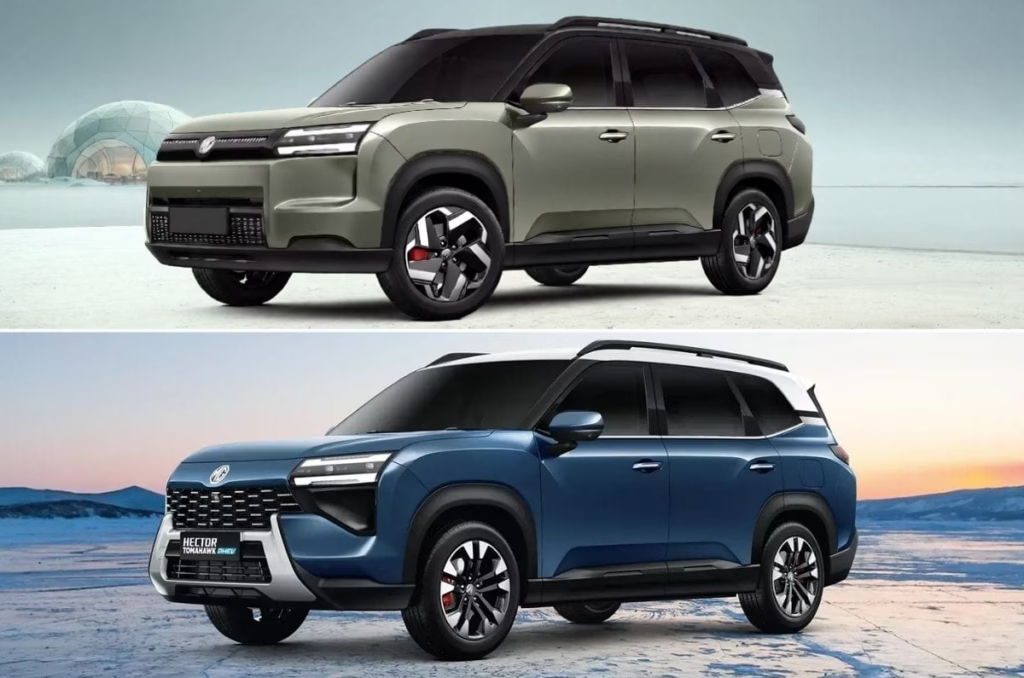
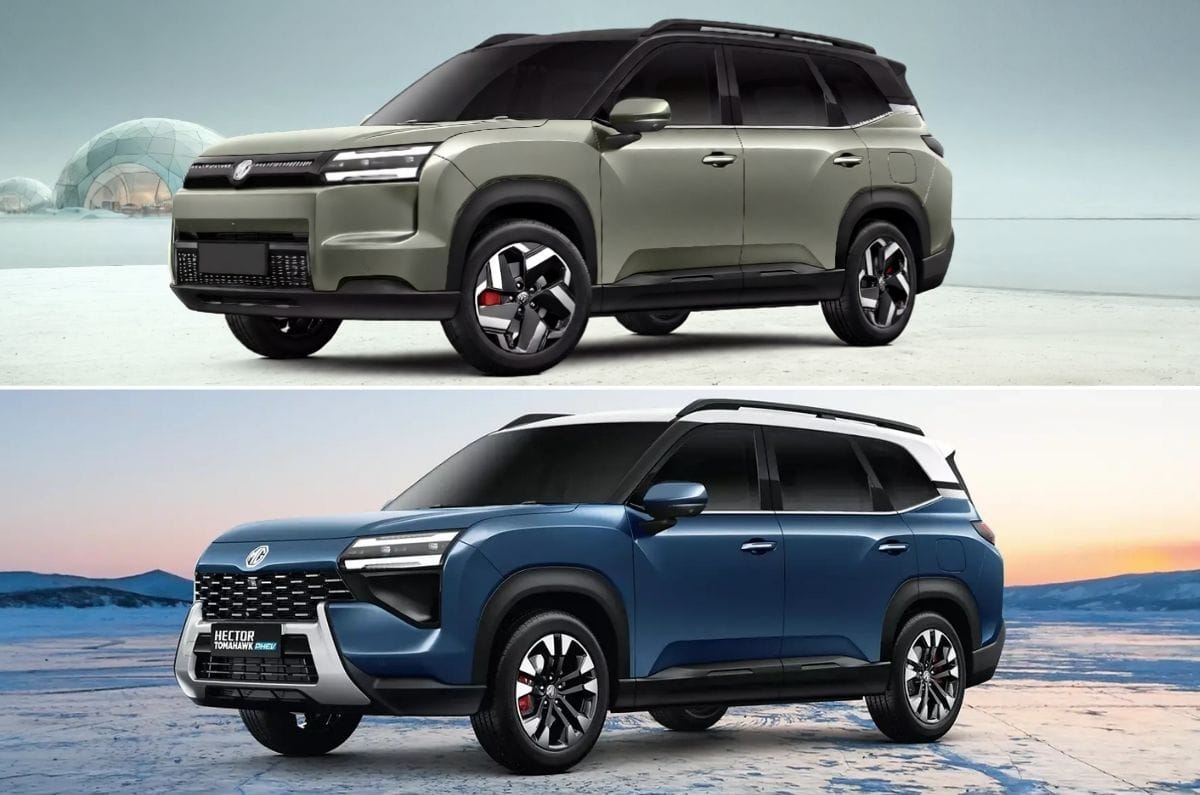
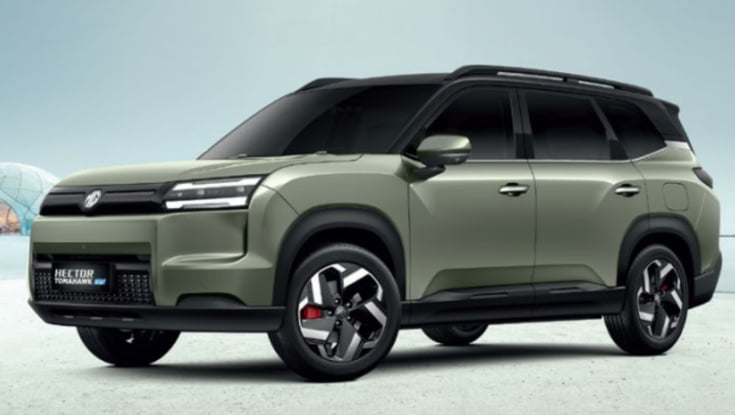
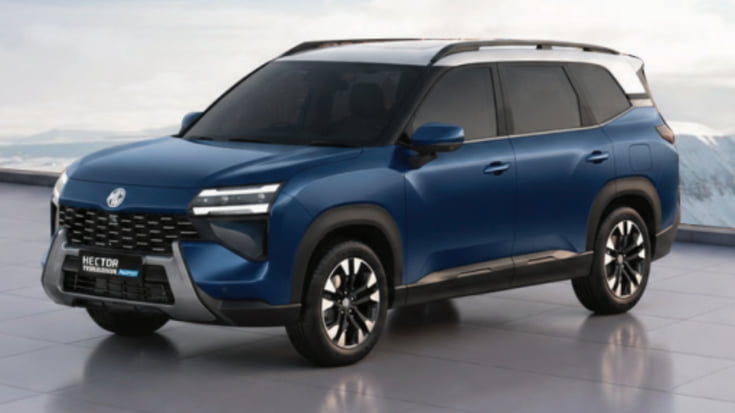
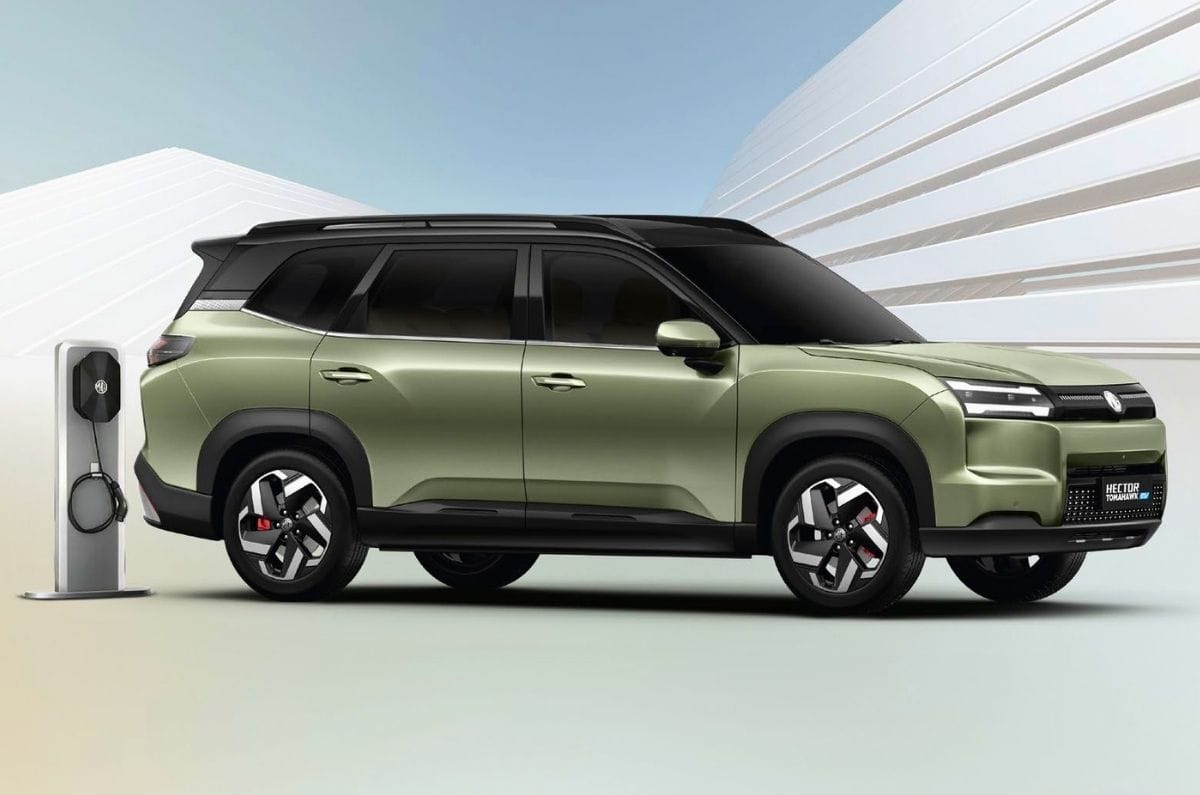
Both the Hector Tomahawk’s EV and PHEV versions have some design differences. While the EV gets a blanked-off gloss-black grille, the PHEV gets a functional grille with chrome inserts and black trims underneath the headlights. The front bumper design is also different, with the PHEV getting a silver bullbar-like element in the centre that the EV misses. The headlights and illuminated MG logo are, however, shared. 

Not much is different in the side profile, except for the 18-inch alloy designs and red callipers on the top-spec Hector Tomahawk PHEV. If you opt for a dual-tone shade, the EV will have a black roof, while the PHEV will have a white roof. The rear design, however, is identical for both versions of the SUV.

2. What are the interior differences between the EV and PHEV?

Save for a luggage cover and different cabin themes, everything else is the same

MG Hector Tomahawk EV gets a beige and black cabin theme.

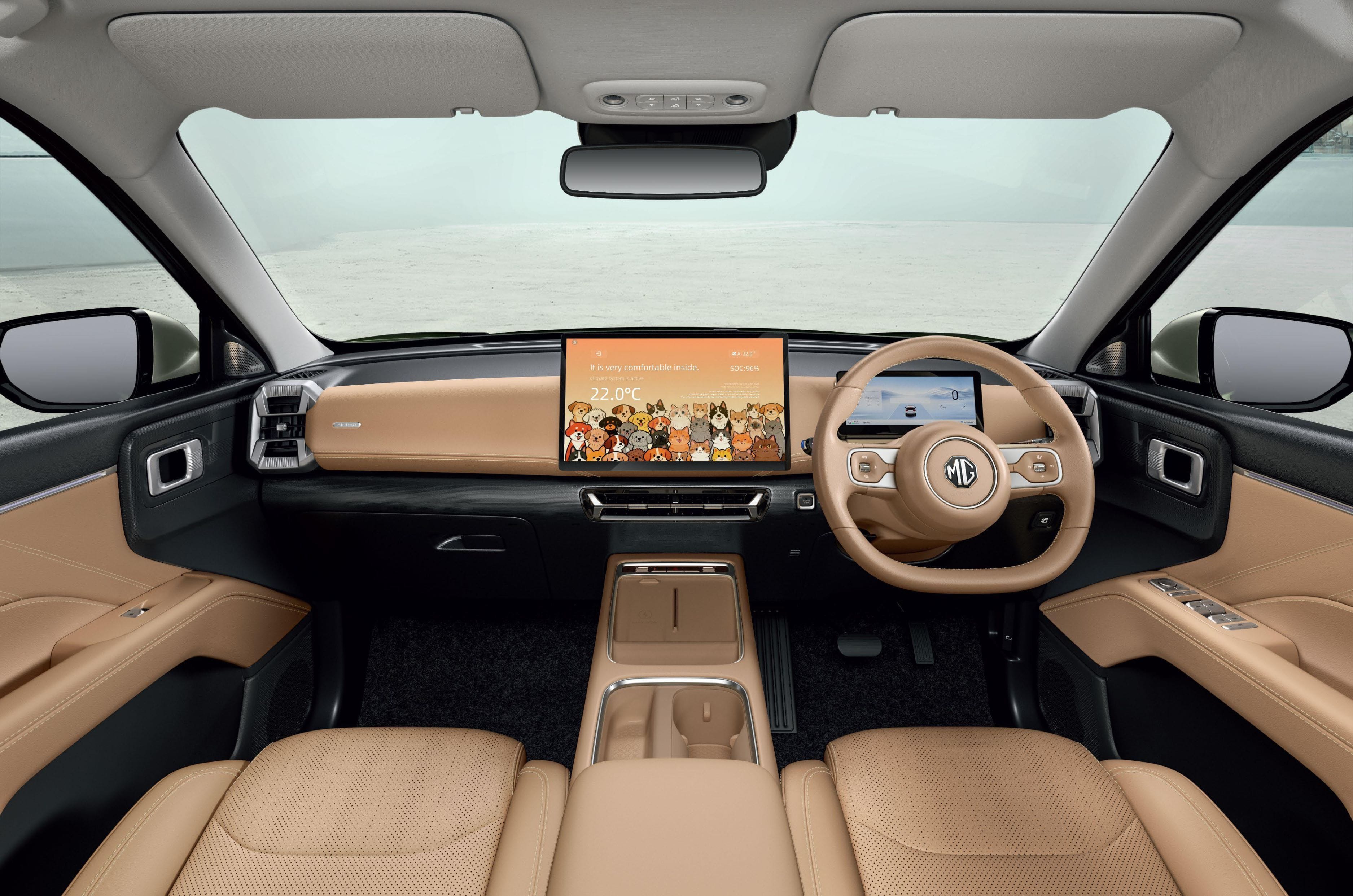
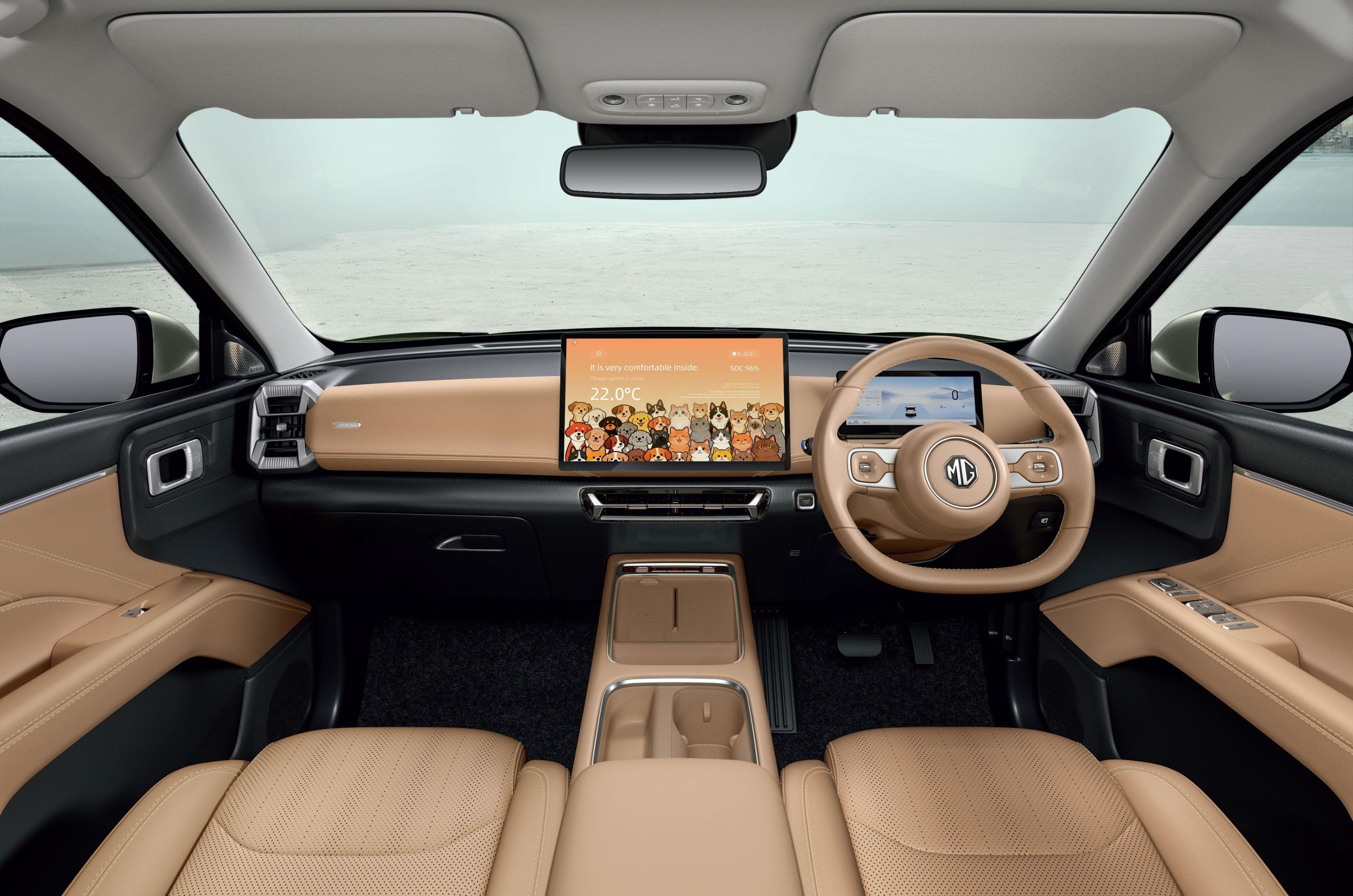
Save for a rolling luggage shade on the 5-seater variants of the EV, and a different cabin theme – brown and black on the EV and a darker brown and black on the PHEV – there is no visible difference. Everything else is the same, including the feature suite: a 15.6-inch touchscreen infotainment system, an 8.8-inch digital driver’s display, a 10-speaker Infinity sound system, a panoramic sunroof, powered and ventilated front seats with memory function for the driver’s seat, and a 50W fast wireless charger. 

MG Hector Tomahawk PHEV gets a brown and black cabin theme.

The safety suite is also identical in both Hector Tomahawk versions, which includes 6 airbags, a 360-degree camera with an under-bonnet view, Level 2 advanced driver assistance systems (ADAS) and a tyre pressure monitoring system (TPMS). 

3. What is the boot space on the MG Hector Tomahawk EV and PHEV?

EV and PHEV versions offer up to 610 litres and 192 litres of boot space, respectively

5-seater MG Hector Tomahawk EV’s boot space. 

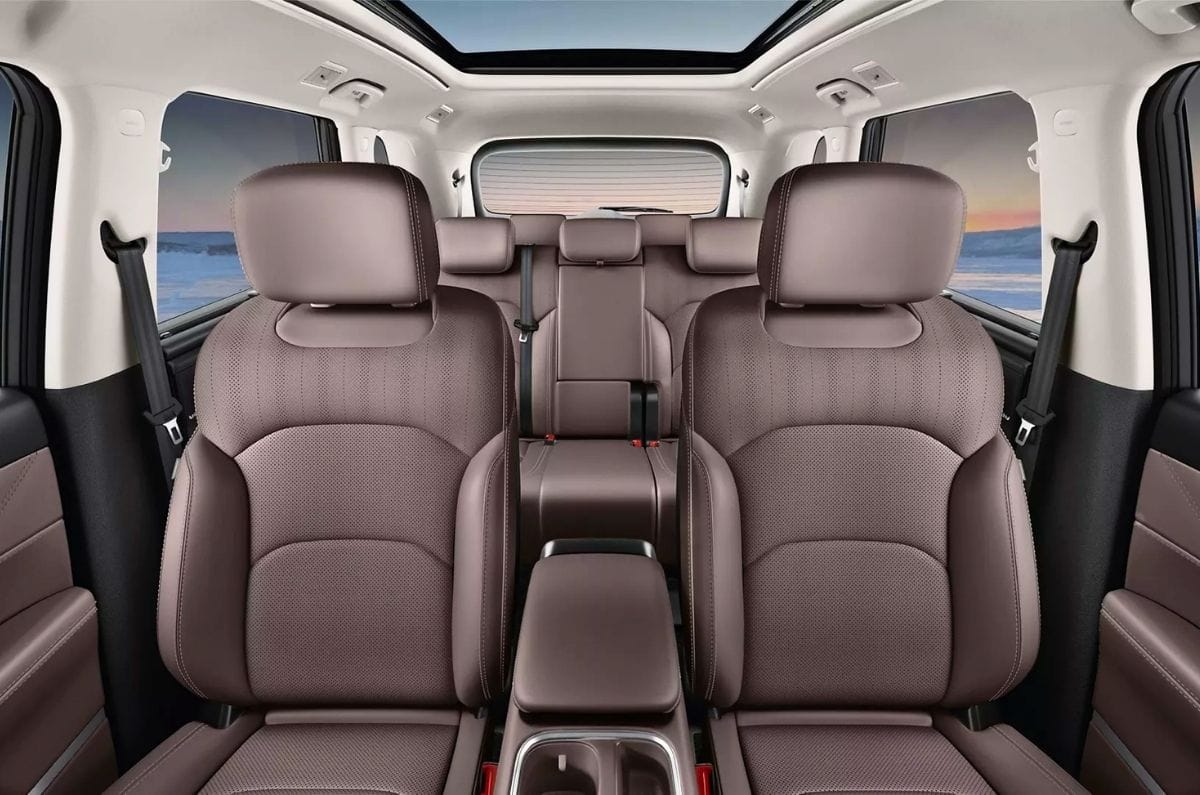
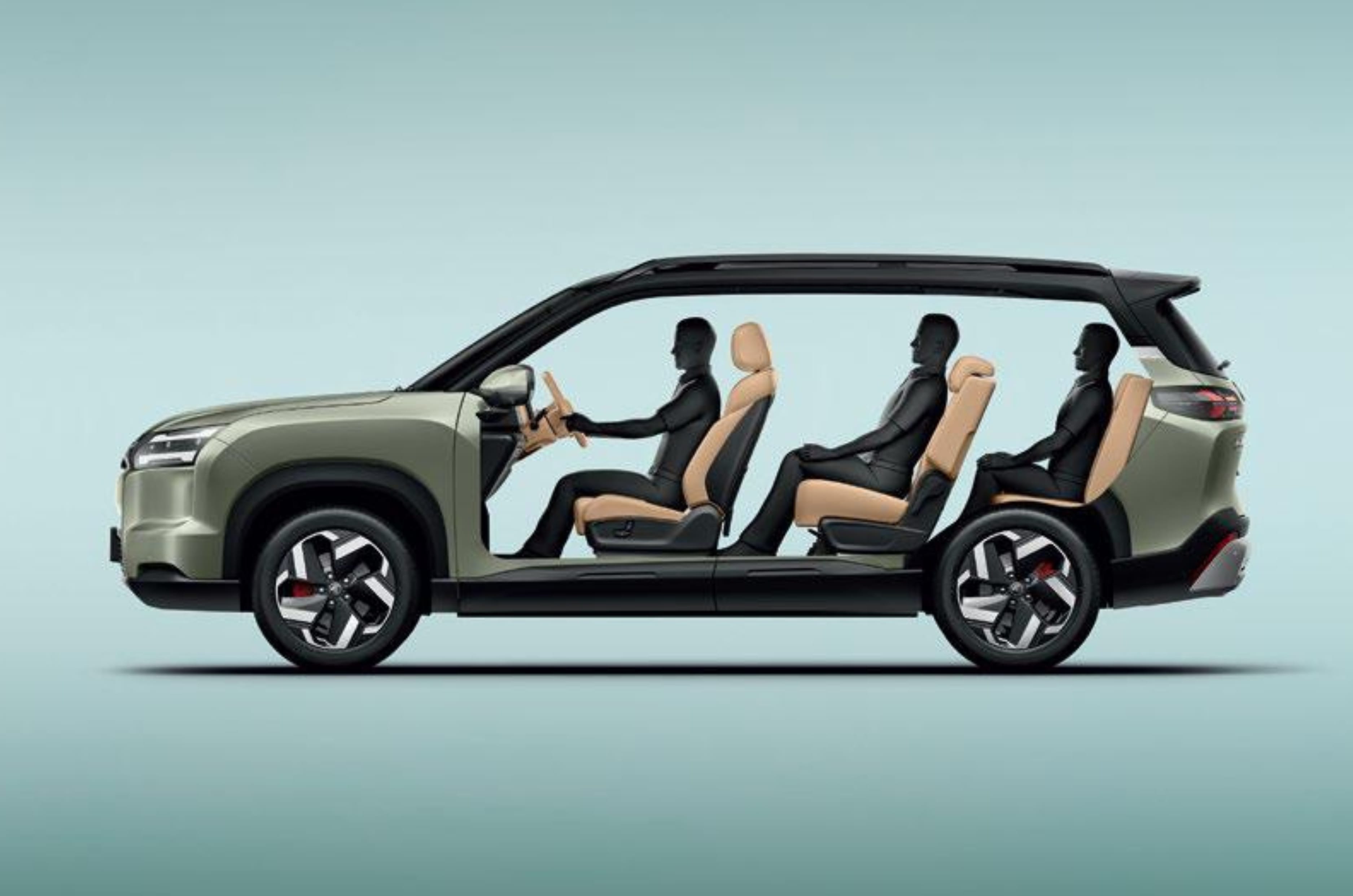
The MG Hector Tomahawk EV is offered in either a 5-seater or a 7-seater version. The 5-seater offers 610-litre boot space, with all rows up, which can be expanded to 1,053 litres by folding down the rear row. The 7-seater version offers a 192-litre boot space with all rows up,  and 528 litres when the third row is folded. 

The PHEV, offered only as a 7-seater, offers 192-litre boot space like the EV’s 7-seater version, expandable to 528 litres by folding the third row. Neither the EV nor the PHEV version of the Hector Tomahawk are offered with a frunk (storage space under the bonnet). 

4. What are the powertrain specifications of the MG Hector Tomahawk PHEV and EV?

PHEV gets a 1.5L engine and 20.5kWh battery; EV offers a 69.2kWh battery pack

The MG Hector Tomahawk PHEV gets a 1.5-litre naturally aspirated petrol engine and a 20.5kWh battery pack, offering a combined output of 198hp and 230Nm. The front-wheel-drive (FWD) SUV has an all-electric range of around 115km and a total range including the petrol engine of around 1,100km. 

The MG Hector Tomahawk EV, on the other hand, gets a 69.2kWh battery pack, mated to a front-axle-mounted electric motor producing 204hp and 310Nm. It has a claimed range of 517km.  

5. Can the Hector Tomahawk PHEV be charged at a public EV charging station?

It supports 25kW DC fast charging

Yes, being a plug-in hybrid (PHEV), the MG Hector Tomahawk PHEV supports 25kW DC fast charging. This can replenish the battery from 30 to 80 percent in 35 minutes, like a typical EV. MG is also offering it with a 3.3kW home charger, which can recharge the battery pack from 10 to 100 percent in 7.5 hours.

6. Are the MG Tomahawk EV and PHEV more affordable with BaaS?

BaaS reduces the EV’s and PHEV’s initial prices by up to Rs 6.01 lakh and 3.91 lakh, respectively 

MG Hector Tomahawk EV, PHEV BaaS vs non-BaaS prices (in Rs, lakh)


Without BaaS

With BaaS

Initial cost difference

EV

19.50 to 23.50

13.99 to 17.49*

Up to 6.01

PHEV

25.70 to 27.80

21.79 to 23.89^

3.91

*Battery subscription fee is Rs 4.9 per km per month

^Asks for a battery subscription fee of Rs 3.2 per km per month

The BaaS (Battery-as-a-Service) option reduces the upfront price of the MG Hector Tomahawk EV by Rs 6.01 lakh and the PHEV by Rs 3.91 lakh. However, you then pay a battery rental fee for every kilometre you drive: Rs 4.90 per km for the EV and Rs 3.20 per km for the PHEV. At these rates, the upfront savings from BaaS are effectively used up after around 1.22 lakh km. The break-even point is 1,22,653 km for the EV and 1,22,187 km for the PHEV.

In simple terms, if you expect to drive less than 1.22 lakh km over the entire ownership period, BaaS could be the more affordable option because of its lower initial cost. However, if you plan to drive more than 1.22 lakh km, buying the Hector Tomahawk with the battery included is likely to save you more money in the long run.

There is also another factor to consider. Under the BaaS plan, you do not own the battery, so your long-term costs depend on the rental agreement. If MG increases the per-kilometre fee or changes the contract in the future, your running costs could also increase. So, while BaaS would be more affordable for most buyers, purchasing the vehicle with the battery included may offer greater certainty in running cost calculations.

Prices are ex-showroom, India.

MG Hector Tomahawk EV 7-seater vs rivals: Price, specs compared

MG Hector Tomahawk EV 7-seater vs rivals: Price, specs compared
MG Hector Tomahawk EV 7-seater vs rivals

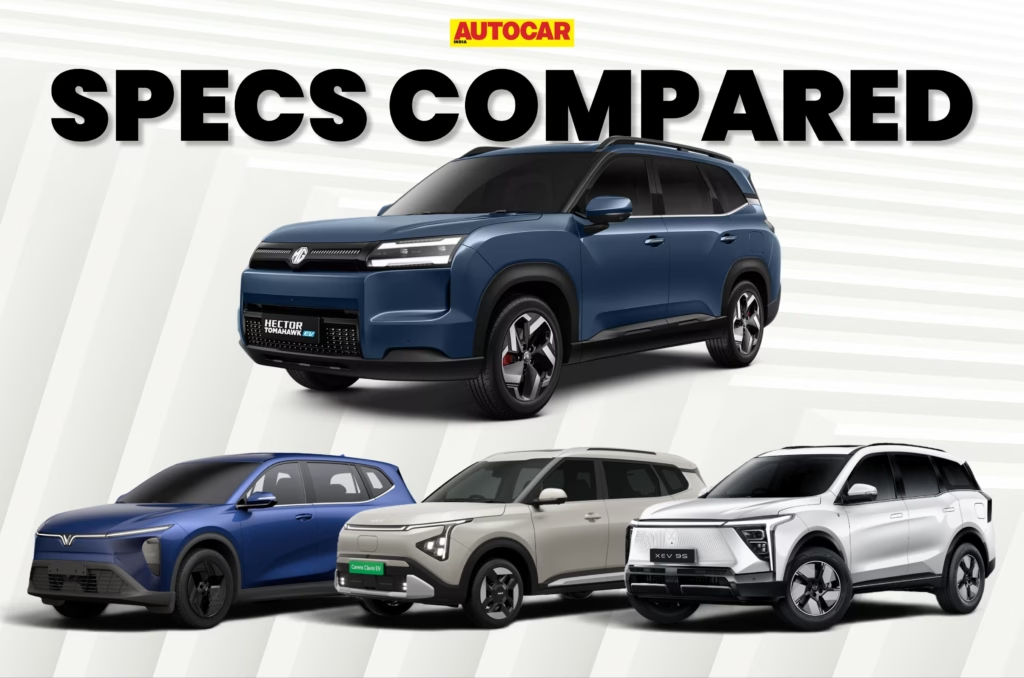
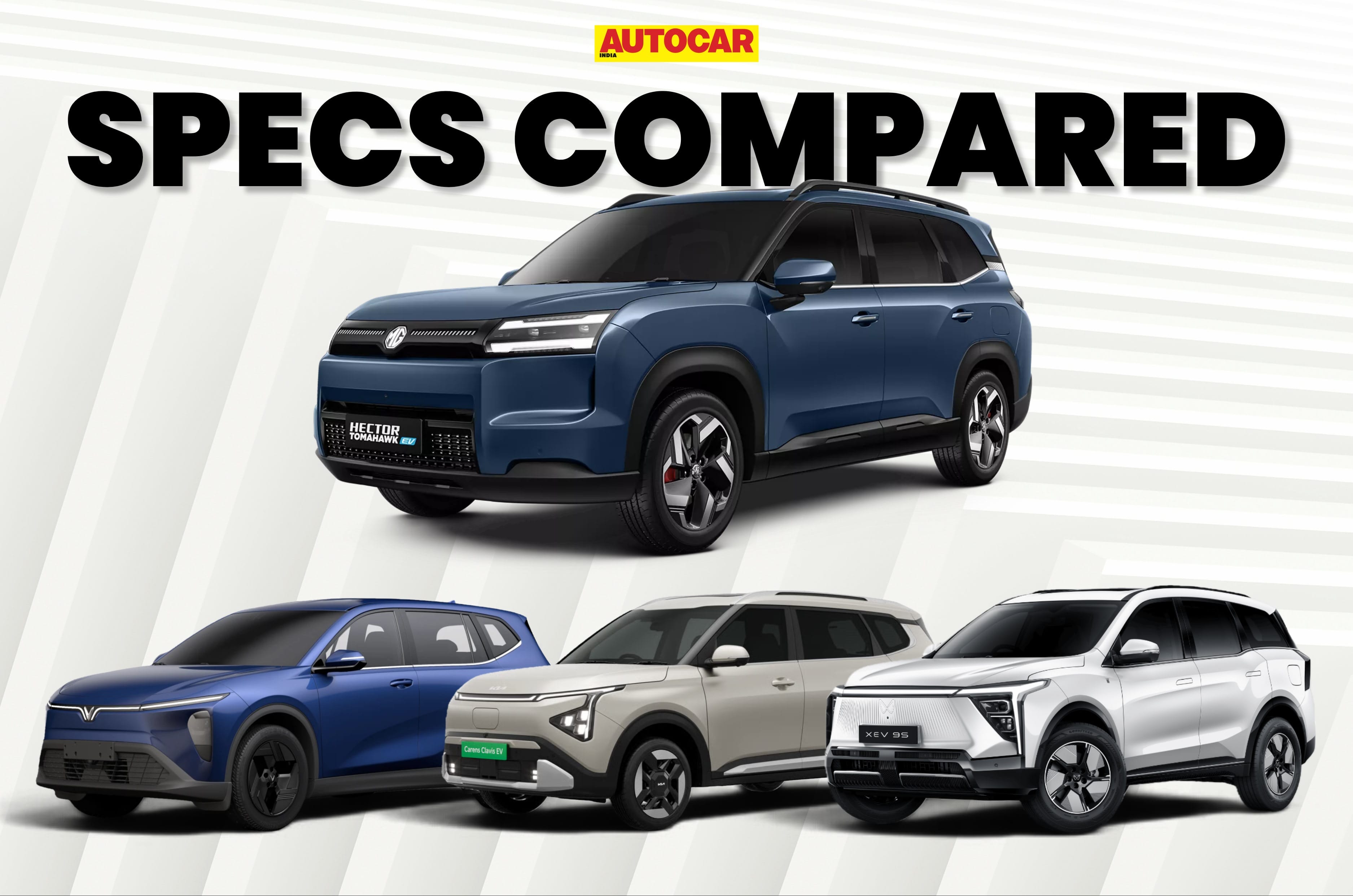
The MG Hector Tomahawk EV is the latest entrant in the mass-market three-row EV segment, going up against the Mahindra XEV 9S, Kia Carens Clavis EV, Vinfast VF MPV 7, and BYD eMax 7. Below, we’ve compared the 7-seat version of the Hector Tomahawk EV to see how it fares against its rivals on paper.

MG Hector Tomahawk EV 7-seater vs rivals: dimensions

 Hector Tomahawk EVXEV 9S

Carens Clavis EV

VF MPV 7

eMax 7

Length (mm)4,7454,737

4,550

4,740

4,710

Width (mm)1,8501,900

1,800

1,872

1,810

Height (mm)1,7701,747

1,730

1,734

1,690

Wheelbase (mm)2,8102,762

2,780

2,840

2,800

Wheel size (inches)1818

17

19

17

Boot space (litres)*192126180
Frunk space (litres)N/A15025N/AN/A

*With all three rows up.

The Hector Tomahawk EV is the longest among its rivals, and wins out in the wheelbase and height departments as well. However, the XEV 9S and VF MPV 7 have the Hector Tomahawk EV beat in terms of width. Its 18-inch wheels are in line with class standards. Coming to boot space, the Hector Tomahawk EV claims the largest volume with all three rows up, though it’s worth noting that neither Mahindra nor Kia disclose similar figures. That said, the XEV 9S and Carens Clavis EV are the only ones here to offer frunks for additional storage.

MG Hector Tomahawk EV 7-seater vs rivals: battery and motor

 Hector Tomahawk EVXEV 9S

Carens Clavis EV

VF MPV 7

eMax 7

Battery size (kWh)69.259 / 70 / 79

42 / 51.4

60.13

71.8

Electric motor setupSingle, frontSingle, rearSingle, frontSingle, frontSingle, front
Power (hp)204231 / 245 / 286

135 / 171

204

163 / 204

Torque (Nm)310380

255

280

310

Gearbox1-speed AT1-speed AT1-speed AT1-speed AT1-speed AT
Drive layoutFWDRWD

FWD

FWD

FWD

The Hector Tomahawk EV does quite well on the battery capacity front, with its 69.2kWh pack falling short of only that of the eMax 7 and the higher versions of the XEV 9S. Power output is a similar story, with the Hector Tomahawk EV matching the e Max 7’s stronger state of tune and beating out the Carens Clavis EV and the VF MPV 7 – the latter by quite a slim margin. The XEV 9S remains the only EV in this space that’s not front-wheel drive.

MG Hector Tomahawk EV 7-seater vs rivals: range and charging

 Hector Tomahawk EVXEV 9SCarens Clavis EVVF MPV 7eMax 7
Battery capacity (kWh)69.259 / 70 / 79

42 / 51.4

60.13

71.8

MIDC range (km)517521 / 600 / 679404 / 490

517

485 / 530 (NEDC)

7.2kW AC charging time (hours)12.58.7 / 10.2 / 11.7
11.2kW AC charging time (hours)6 / 7 / 84 / 4.75
DC charging time (minutes)35 (90kW)20 (140kW) / 20 (160kW) / 20 (180kW)39 (100kW)30 (80kW)37 (80kW)

As far as range goes, the Hector Tomahawk EV surpasses the Carens Clavis EV and the lower-spec version of the eMax 7, matches the VF MPV 7 (even though the Vinfast has a smaller battery), and falls well short of the XEV 9S. Even the base version of the XEV 9S claims a higher range than the Hector Tomahawk EV despite its 10kWh capacity deficit. The Hector Tomahawk EV’s AC charging time is also higher than that of the 79kWh XEV 9S. Unlike the XEV 9S and Carens Clavis EV, the Hector Tomahawk EV does not support 11kW AC charging either.

MG Hector Tomahawk EV 7-seater vs rivals: price

 Price range (in Rs lakh)
Hector Tomahawk EV19.50-23.50 (13.99-17.49 w/ BaaS)
XEV 9S*20.65-29.95
Carens Clavis EV18.04-25.00
VF MPV 724.49
eMax 728.30-29.90

*Prices exclusive of home charger and installation costs.

MG has priced the Hector Tomahawk EV very competitively, with it undercutting the XEV 9S, VF MPV 7, and eMax 7. The Carens Clavis EV is the only one with a lower starting price than the Hector Tomahawk EV, but the Kia’s top-spec variant is Rs 1.5 lakh more expensive than that of the MG SUV. Moreover, MG offers the Hector Tomahawk EV with a battery-as-a-service (BaaS) scheme, which knocks up to Rs 6 lakh off the sticker price and introduces a monthly battery rental fee of Rs 4.9/km.

All prices are ex-showroom, India.

MG Hector Tomahawk EV colours gallery

MG Hector Tomahawk EV colours gallery
MG Hector Tomahawk EV

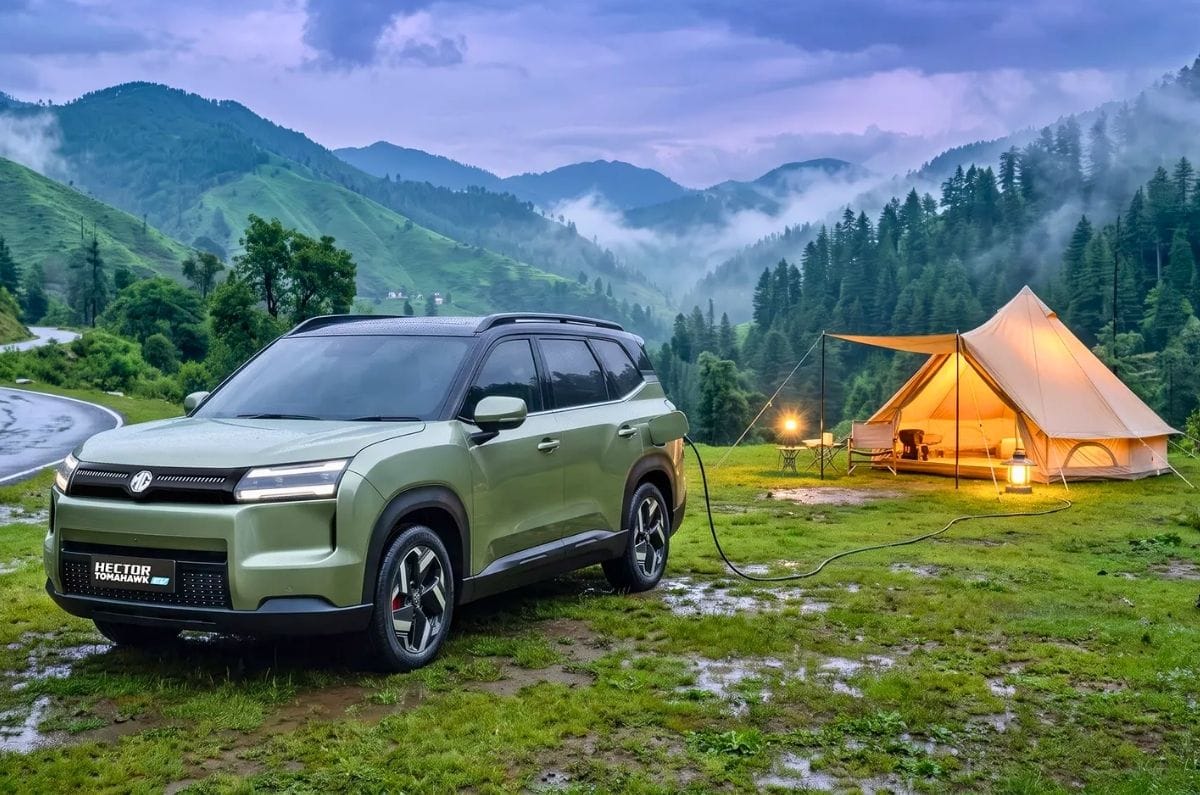
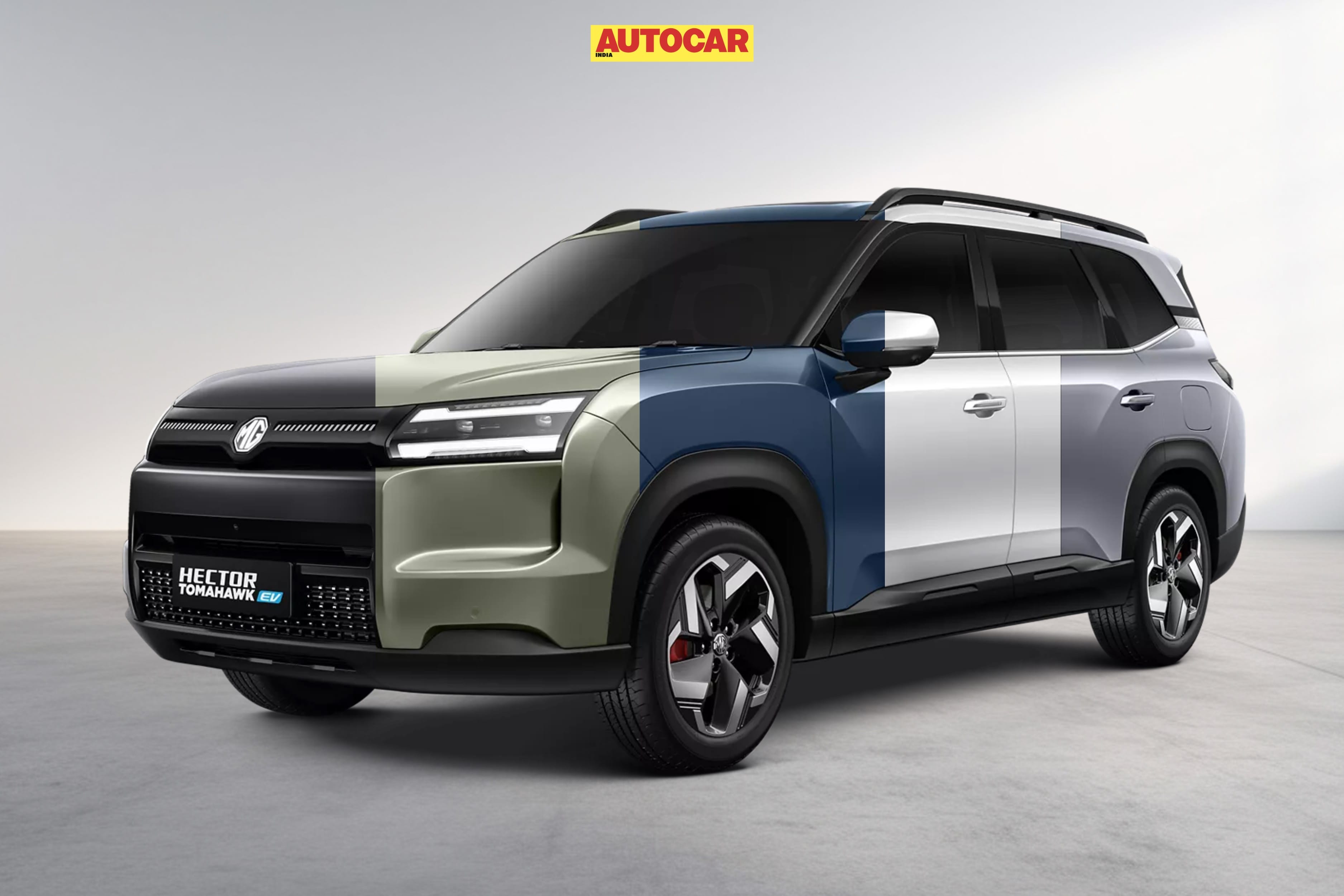
The new MG Hector Tomahawk EV is offered in five monotone shades and one dual-tone shade. Monotone shades include Khaki Green, Aurora Silver, Starry Black, Celadon Blue and Pearl White. The Khaki Green paint can be had with a blacked out roof as well. 

The MG Hector Tomahawk EV’s price starts at Rs 19.49 lakh and goes up to Rs 23.49 lakh, ex-showroom. The carmaker is also offering a BaaS or battery-as-a-service option with the SUV.

Which variant of the MG Hector Tomahawk EV should you buy?

Which variant of the MG Hector Tomahawk EV should you buy?
MG Hector Tomahawk EV

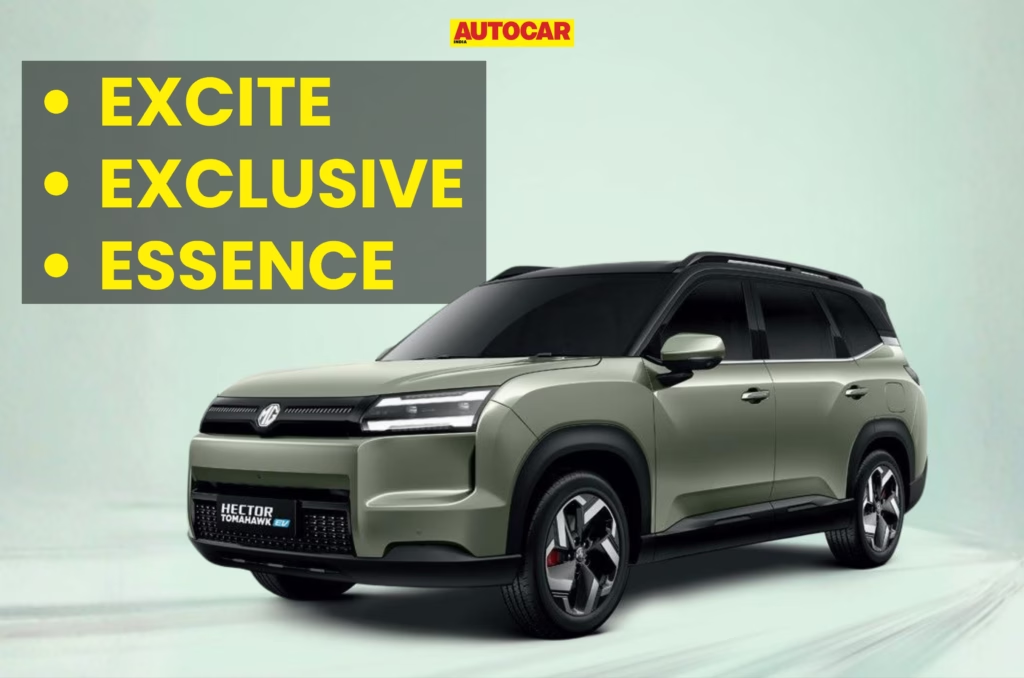
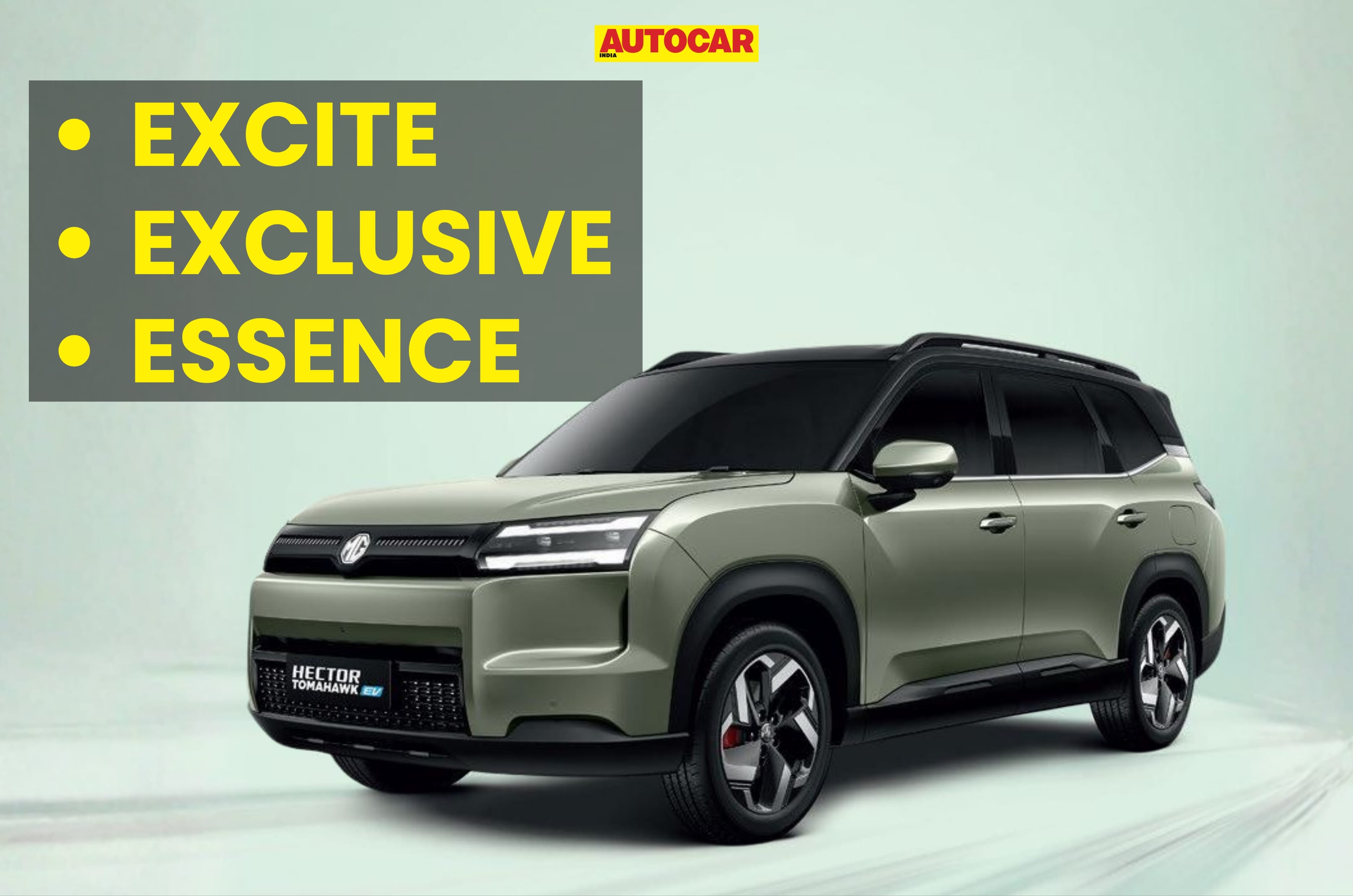
The MG Hector Tomahawk EV is a three-row SUV available in Excite, Exclusive and Essence trims. All three use the same battery pack and electric motor, with the main differences being the features and seating layouts on offer. If you’re considering the Hector Tomahawk EV, here’s a detailed look at which variant makes the most sense.

MG Hector Tomahawk EV: Prices, powertrain specs

TrimBaaS price (Rs)Non-BaaS price (Rs)Difference (Rs)
Excite 7 seater13.99 lakh + 4.9 per km*19.5 lakh5.51 lakh
Exclusive 7 seater15.99 lakh + 4.9 per km*22 lakh6.01 lakh
Essence 5 seater16.99 lakh + 4.9 per km*23 lakh6.01 lakh
Essence 7 seater17.49 lakh + 4.9 per km*23.5 lakh6.01 lakh

*Battery rental fee.

The MG Hector Tomahawk EV, like all MG EVs sold in India (excluding the M9 and the Cyberster), is available with a Battery-as-a-Service (BaaS) scheme that lowers the upfront cost. Notably, buyers opting for BaaS have to pay a battery rental fee of Rs 4.9 per kilometre. For the Hector Tomahawk EV, the scheme reduces the upfront price by up to Rs 6.01 lakh.

All trims feature a 69.2kWh battery pack, which powers a 204hp, 310Nm electric motor mounted on the front axle. The sprint from 0-100kph takes 8.2 seconds. On the Modified Indian Driving Cycle (MIDC), the SUV can go up to 517km on a single charge. As per MG, it takes about 35 minutes to charge the battery from 30 percent to 80 percent with a 90kW DC fast charger. With a 7.4kW AC unit, the carmaker claims a charging time of about 12.5 hours for a 10 percent to 100 percent top-up.

MG Hector Tomahawk EV: Features

Excite

Rs 19.5 lakh

  • Six airbags
  • Electronic stability program (ESP)
  • Traction control system (TCS)
  • Hill hold control
  • ABS and EBD
  • All four disc brakes
  • Electronic parking brake with auto hold
  • TPMS
  • Front and rear defogger
  • Rear wiper and washer
  • Three-point seatbelts for all seats
  • Reverse parking camera
  • 8.8-inch driver’s display
  • 12.8-inch touchscreen
  • Wireless Android Auto, Apple CarPlay
  • AI voice assistant
  • OTA updates
  • Six speakers
  • Steering-mounted controls
  • Leatherette seat upholstery
  • Pro Pet mode
  • Eco, Normal, Sports, Custom drive modes
  • Powered adjustment for front seats
  • Push button start/stop system
  • Powered ORVMs with auto fold and integrated turn indicators 
  • Tilt and telescopic adjustment for steering wheel
  • Cruise control
  • Slide function for second-row seats (7-seater version)
  • Second and third row AC vents
  • 60:40 split seats in the second row with recline function
  • 50:50 split seats in the third row (7-seater version)
  • Front armrest with storage for the driver
  • Type-A and fast charging Type-C ports at the front
  • Fast charging Type-C, Type-A ports in the second row
  • Height-adjustable headrests 
  • LED projector headlights, LED tail lamps
  • LED daytime running lights (DRLs)
  • Illuminated MG logo at the front
  • 18-inch alloy wheels
  • Roof rails

Exclusive

Rs 22 lakh

In addition to Excite

  • 360-degree camera with Transparent Chassis view
  • Rain-sensing wipers
  • Ambient lighting (blue colour only)
  • Panoramic sunroof
  • Ventilated seats at the front
  • 50W wireless charger with cooling
  • Chrome-finish on select exterior trims
  • Automatic headlights
  • Powered tailgate

Essence

Rs 23 lakh-23.5 lakh

In addition to Exclusive

  • Level 2 ADAS
  • Adaptive cruise control
  • Front parking sensors
  • Auto-dimming IRVM
  • Memory function for the driver’s seat
  • Rear window sunshade
  • 15.6-inch touchscreen
  • 10-speaker Infinity sound system
  • Multi-colour ambient lights (256 colours)
  • Rear parcel tray (5-seater version only)
  • Vehicle to load (V2L), vehicle to vehicle (V2V) charging support
  • Vehicle to home (V2H) charging support
  • Red-coloured brake callipers

Which variant of the MG Hector Tomahawk EV should you buy?

The mid-spec Exclusive trim, priced at Rs 22 lakh, ex-showroom, is the one we recommend for the MG Hector Tomahawk EV. Compared to the base Excite, it adds front ventilated seats, a 50W wireless charger with cooling and a powered tailgate, features that should appeal to buyers of such an EV. With the BaaS option, the upfront cost can be reduced by Rs 6.1 lakh (as on August 26, 2026), making for a significant initial saving. Buyers who want the five-seat version will have to choose the top-spec Essence trim, as it is the only one available with this seating configuration. 

What’s good is that there is no difference in performance or range across the lineup. All trims use the same 69.2kWh battery pack and 204hp electric motor, while the MIDC-rated range remains identical at 517km.

MG Hector Tomahawk EV 5-seater vs rivals: Price, specs compared

MG Hector Tomahawk EV 5-seater vs rivals: Price, specs compared
MG Hector Tomahawk EV 5-seater vs rivals

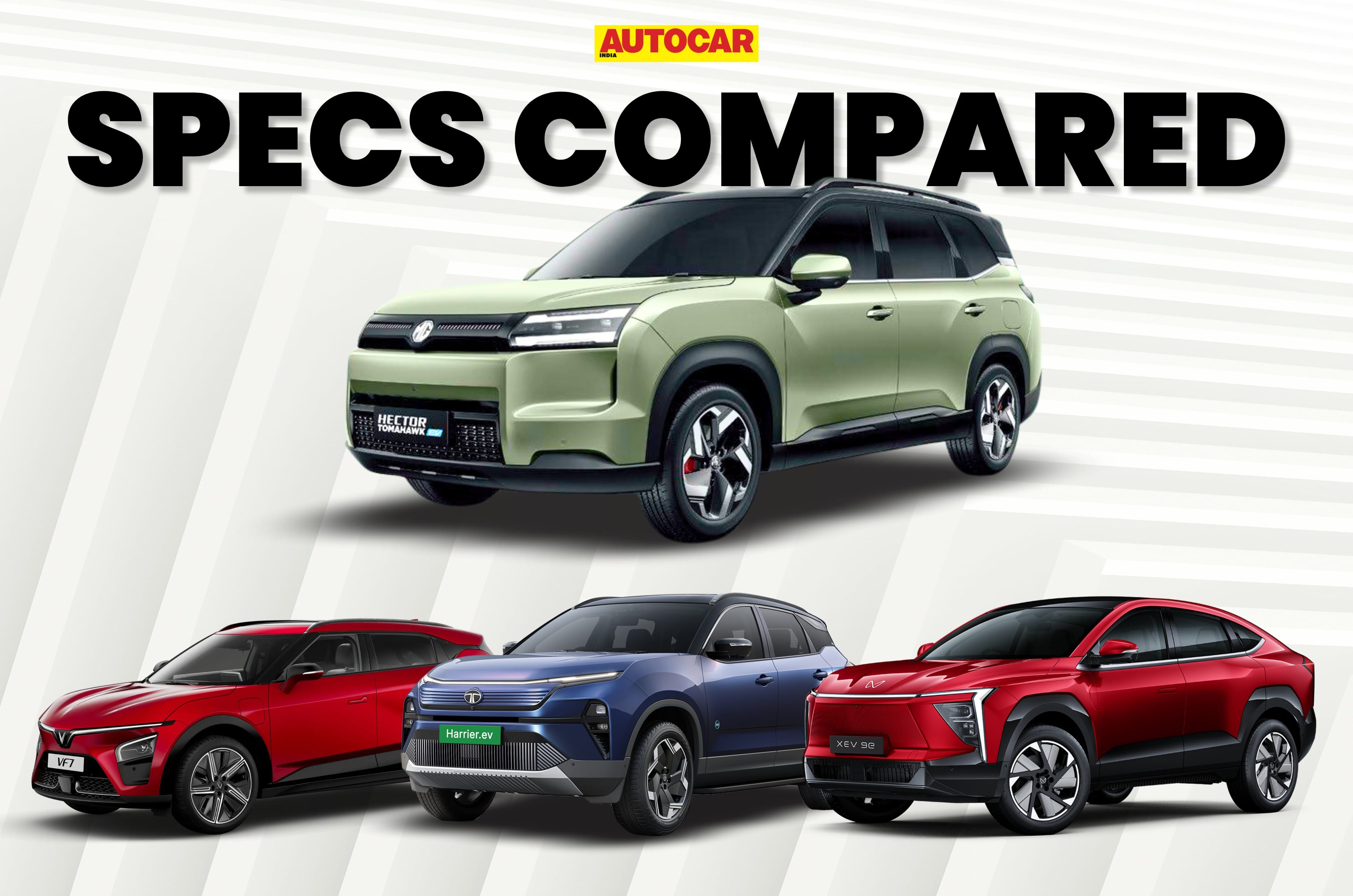
MG Motor India has launched the Hector Tomahawk EV in India as the brand’s contender for the electric midsize SUV segment. In this space, the 5-seat version of the Hector Tomahawk EV rivals the Tata Harrier EV, Mahindra XEV 9e, Vinfast VF7, and BYD Atto 3. Let’s have a look at how MG’s latest SUV stacks up against its peers on paper.

MG Hector Tomahawk EV 5-seater vs rivals: dimensions

Tallest in its segment, and one of the longest

 Hector Tomahawk EVHarrier EVXEV 9eVF7Atto 3
Length (mm)4,7454,6074,7894,5504,455
Width (mm)1,8501,9221,9071,8931,875
Height (mm)1,7701,7401,6941,5961,615
Wheelbase (mm)2,8102,7412,7752,8402,720
Wheel size (inches)1818-19191917-18
Boot space (litres)610502*663537440
Frunk space (litres)N/A35-67150N/AN/A

*Measured till roof instead of parcel tray.

The Hector Tomahawk EV is the second-longest SUV in its segment, falling behind the XEV 9e by only 44mm. That said, the Hector Tomahawk EV extracts a longer wheelbase from its length than the XEV 9e does, but even so, it’s behind the VF7 by a margin of 30mm. The MG electric SUV is the narrowest among its rivals, but edges past all of them on height front. It also claims a 230mm ground clearance, but this is measured at the battery.

Coming to luggage space, the Hector Tomahawk EV has the second-largest boot here, though it doesn’t get a frunk like the Harrier EV and XEV 9e do. At 18 inches, the Hector Tomahawk EV’s alloy wheel sizes are also competitive by segment standards, though the XEV 9e and VF7 offer 19-inchers.

MG Hector Tomahawk EV 5-seater vs rivals: battery and motor

Battery size fits right between those of Harrier EV and XEV 9e

 Hector Tomahawk EVHarrier EVXEV 9eVF7Atto 3
Battery size (kWh)69.265 / 7559 / 7959.6 / 7049.92 / 60.48
Electric motor setupSingle, frontSingle, rear / Dual, front and rearSingle, rearSingle, front / Dual, front and rearSingle, front
Power (hp)204238 / 313231 / 286177 / 204, 353204
Torque (Nm)310315 / 504380250 / 310, 500310
Gearbox1-speed AT1-speed AT1-speed AT1-speed AT1-speed AT
Drive layoutFWDRWD / RWD, AWDRWDFWD / FWD, AWDFWD
Claimed 0-100kph time (seconds)8.26.3 (AWD)6.8 (79kWh)9.1 / 8.5 (FWD), 5.8 (AWD)7.9 / 7.3

Under the skin, the Hector Tomahawk EV comes fitted with a sole 69.2kWh battery pack. At that capacity, it fits quite well between the ones offered by the Harrier EV and XEV 9e, comes very close to the top-spec unit of the VF7, and outsizes both of the Atto 3’s battery options. The Hector Tomahawk EV’s battery powers a sole front-mounted electric motor, making for a front-wheel drive layout. Rivals like the Harrier EV and VF7 can be had with all-wheel drive, and the XEV 9e is purely rear-wheel drive.

In terms of output, the Hector Tomahawk EV perfectly matches the Atto 3 and the 70kWh FWD version of the VF7, but significantly behind the XEV 9e and Harrier EV. Higher-powered versions of the Mahindra and Tata SUVs claim sub-7-second 0-100kph times, while the Hector Tomahawk EV’s acceleration figure slots between those of the Atto 3 and VF7.

MG Hector Tomahawk EV 5-seater vs rivals: range and charging

Range is on the lower end of the segment, and charging times are the highest

 Hector Tomahawk EVHarrier EVXEV 9eVF7Atto 3
Battery capacity (kWh)69.265 / 7559 / 7959.6 / 7049.92 / 60.48
Drive layoutFWDRWD / RWD, AWDRWDFWD / FWD, AWDFWD
MIDC range (km)517538 / 627 (RWD), 622 (AWD)542 / 656438 / 532 (FWD), 510 (AWD)468 / 521
7.2kW AC charging time (hours)12.59.3 / 10.78.7 / 11.78.0 / 9.5-10
11.2kW AC charging time (hours)6 / 8
DC charging time (minutes)35 (90kW)25 (100kW) / 25 (120kW)20 (140kW) / 20 (180kW)24 (100kW) / 28 (110kW)50 (88kW)

Coming to range, the Hector Tomahawk EV carries the lowest MIDC figure when compared with similarly-sized batteries offered by rivals. In fact, even the 60.48kWh Atto 3 and the smaller-battery versions of the Harrier EV and XEV 9e boast higher range figures than that of the Hector Tomahawk EV. The MG SUV also claims the longest AC charging time, more than even the 75kWh and 79kWh variants of the Harrier EV and XEV 9e, respectively.

MG Hector Tomahawk EV 5-seater vs rivals: price

Substantially cheaper than top-spec variants of competitors

 Price range (Rs, lakh)
Hector Tomahawk EV23.00 (16.99 w/ BaaS)
Harrier EV*21.69-29.19
XEV 9e*21.90-29.35
VF722.99-28.09
Atto 324.99-34.49

*Prices exclusive of home charger and installation costs.

The 5-seat configuration for the Hector Tomahawk EV is available only in the top-spec Essence variant, and is priced at Rs 23 lakh. This makes the Hector Tomahawk EV much more affordable than the equivalent top-spec versions of its rivals, with the Atto 3 commanding the highest premium at over Rs 11 lakh – the BYD SUV is retailed via the CKD route in India and thereby attracts higher taxation.

It’s also worth noting that MG offers the Hector Tomahawk EV with a segment-first battery-as-a-service (BaaS) scheme. This knocks off an additional Rs 6 lakh from the sticker price, and introduces a battery rental fee of Rs 4.9/km that is to be paid on a monthly basis. At the BaaS price, the Hector Tomahawk EV competes with electric SUVs of a segment below and even undercuts a lot of them, making for stellar value.

All prices are ex-showroom, India.

Which variant of the MG Hector Tomahawk PHEV should you buy?

Which variant of the MG Hector Tomahawk PHEV should you buy?

MG has launched the Hector Tomahawk PHEV as the first mass-market plug-in-hybrid (PHEV) car in India, priced from Rs 25.70 lakh (ex-showroom). It is offered in two trims: Exclusive and Essence, and like other MG cars, it is equipped with a plethora of modern-day features. If you are interested in the MG Hector Tomahawk PHEV, which variant should you choose? Let us find out.  

MG Hector Tomahawk PHEV powertrain options and prices

Both Hector Tomahawk PHEV variants get the same 1.5L engine and 20.5kWh battery

The MG Hector Tomahawk PHEV is offered with a 1.5-litre naturally aspirated petrol engine producing 102hp and 125Nm. It gets a 20.5kWh battery pack powering an electric motor producing 201hp and 237Nm. The battery pack has an indicative claimed range of 115km, and combined with the petrol engine, it could have a total range of around 1,100km. Both the Exclusive and Essence variants are offered with the same powertrain. 

MG Hector Tomahawk PHEV variant-wise BaaS, non-BaaS prices


Hector Tomahawk PHEV Exclusive

Hector Tomahawk PHEV Essence

Non-BaaS price

Rs 25.70 lakh

Rs 27.80 lakh 

BaaS price

Rs 21.79 lakh + Rs 3.2 per km*

Rs 23.89 lakh + Rs 3.2 per km*

*Rs 3.2 per km is charged as the battery rental fee for the battery-as-a-service (BaaS) scheme.

MG Hector Tomahawk PHEV variant-wise features

Exclusive

Price: Rs 25.70 lakh (or Rs 21.79 lakh + Rs 3.2 per km with BaaS)

  • Automatic LED projector headlights
  • LED taillights
  • LED DRLs
  • Rear LED fog lamps
  • Illuminated MG logo at the front
  • 18-inch alloy wheels
  • ORVM-mounted turn indicators
  • Glass antenna
  • Roof rails
  • Rear spoiler
  • Chrome finish on window beltline and door handles
  • Black body cladding on side and wheel arches
  • Brown and grey interior
  • Blue ambient lighting
  • 12.8-inch touchscreen infotainment system
  • 6-speaker sound system
  • Wireless Android Auto and Apple CarPlay support
  • 8.8-inch digital driver’s display
  • Panoramic sunroof
  • 6-way powered driver’s seat
  • 4-way powered co-driver’s seat
  • Ventilated front seats
  • Powered tailgate
  • 50W wireless phone charger
  • Leatherette seat upholstery
  • Leatherette materials on steering wheel and door pads
  • Drive modes: Eco, Normal, Sports, Custom
  • Rain-sensing wipers
  • PM2.5 air filter
  • Push-button start/stop
  • Powered ORVMs
  • Steering-mounted audio controls
  • Tilt and telescopic adjustable steering column
  • Cruise control
  • 2nd row features: 60:40 split, seat recline, one-touch tumble, centre armrest with cupholders
  • 3rd row features: 50:50 split
  • USB Type-A and Type-C chargers in 1st and 2nd rows
  • All four power windows with one-touch up/down and anti-pinch functions
  • Rear wiper and washer
  • Pet mode, Nap mode and Camp mode
  • Connected car technology
  • 6 airbags
  • 360-degree camera with under-bonnet and wheel views
  • Digital rearview monitor
  • Reverse parking sensors
  • All four disc brakes
  • Electronic parking brake with auto hold
  • TPMS
  • Front and rear defogger
  • ISOFIX child seat anchors
  • Hill hold control
  • Traction control
  • ESP
  • ABS+EBD


Essence (features over Exclusive)

Price: Rs 27.80 lakh (or Rs 23.89 lakh + Rs 3.2 per km with BaaS)

  • 15.6-inch touchscreen infotainment system
  • 10-speaker Infinity sound system
  • Rear window sunshades
  • Driver’s seat memory and welcome/exit retract functions
  • V2L, V2V and V2H charging support
  • Level-2 ADAS
  • Auto-dimming IRVM
  • Front parking sensors
  • 256-colour ambient lighting 
  • Red brake callipers
  • Sequential turn indicators

Which MG Hector Tomahawk PHEV variant should you buy?

We recommend the entry-spec Essence variant, as it is offered with a lot of modern-day features like a 12.8-inch touchscreen infotainment system, a panoramic sunroof, a powered tailgate and a 360-degree camera. It also costs Rs 2.10 lakh less than the top-spec Essence, making it the more value-for-money Hector Tomahawk PHEV variant. 

Prices are ex-showroom, India.

MG Hector Tomahawk EV launched at Rs 19.49 lakh

MG Hector Tomahawk EV launched at Rs 19.49 lakh
MG Hector Tomahawk EV

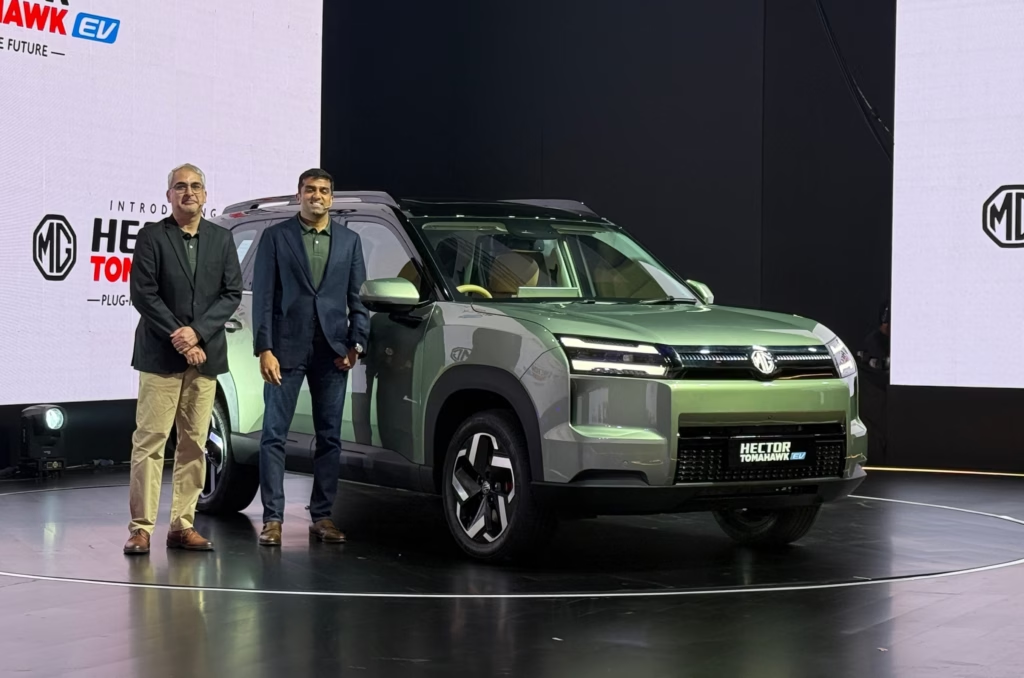
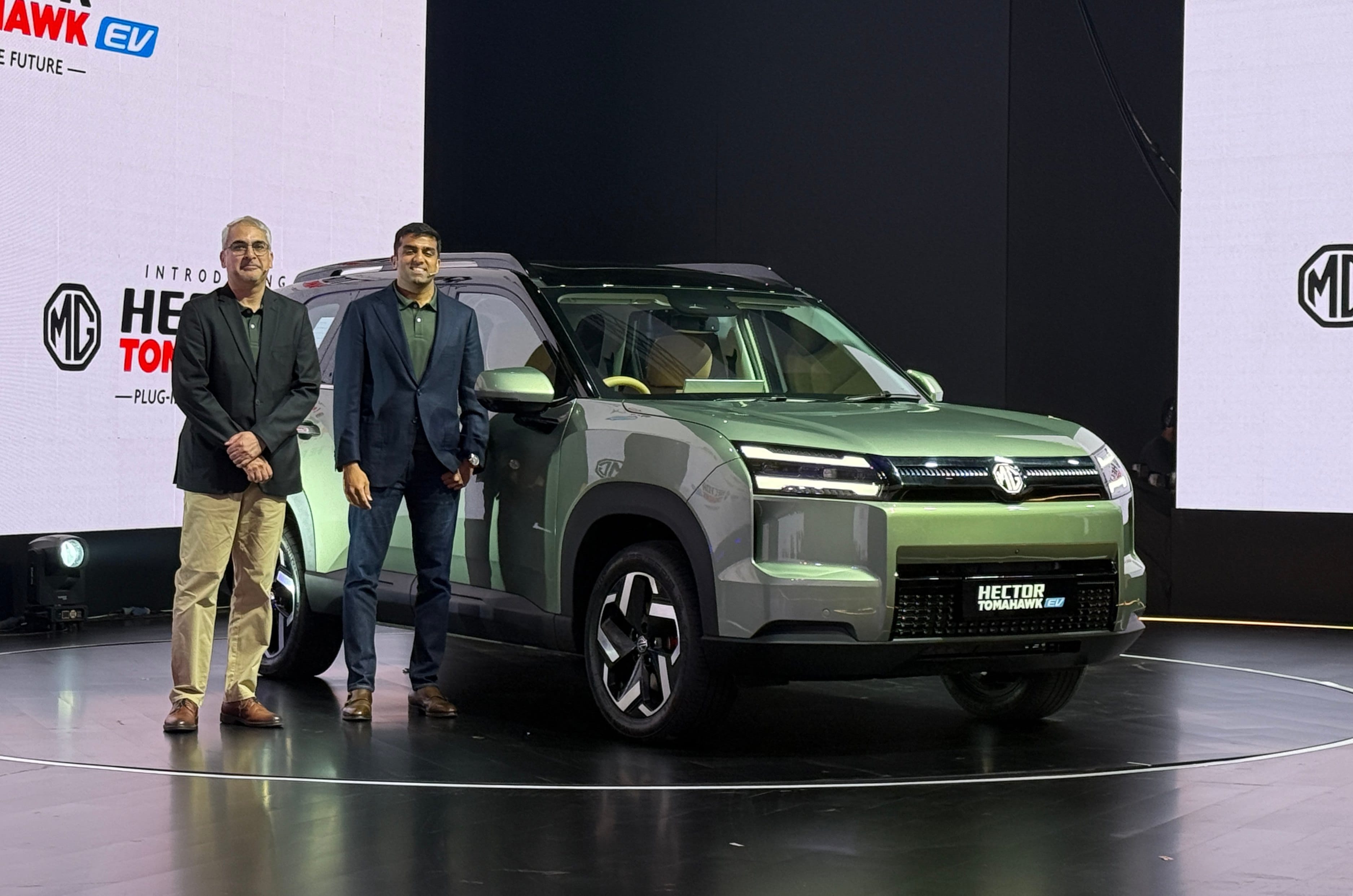
JSW MG Motor India has launched the Hector Tomahawk EV at a starting price of Rs 19.49 lakh (ex-showroom), while prices under its Battery-as-a-Service (BaaS) programme start at Rs 13.99 lakh. The electric SUV gets a 69.2kWh battery and is available in five and seven-seat configurations. The Tomahawk EV is the first MG model in India based on the brand’s ADAPT architecture. 

  1. Deliveries to commence in September
  2. Gets a 15.6-inch touchscreen and 8.8-inch digital driver’s display
  3. 204hp electric motor develops 310Nm
  4. 90kW DC charging; 30-80 percent in 35 minutes

MG Hector Tomahawk EV: price and variants

VariantSeatingEx-showroom price
Excite7-seatRs 19.49 lakh
Exclusive7-seatRs 21.99 lakh
Essence7-seatRs 23.49 lakh
Essence5-seatRs 22.99 lakh

The Hector Tomahawk EV is priced from Rs 19.49 lakh to Rs 23.49 lakh (ex-showroom). The five-seat version is offered only in the Essence variant and is priced at Rs 22.99 lakh, while the seven-seat version is available in Excite, Exclusive and Essence trims. 

MG is also offering the Hector Tomahawk EV under its Battery-as-a-Service (BaaS) programme, with prices starting at Rs 13.99 lakh. Buyers opting for BaaS pay a separate battery rental of Rs 4.90 per km. MG has not disclosed variant-wise BaaS prices.

The prices are introductory and applicable to limited units only.

In terms of rivals, the Hector Tomahawk EV will primarily face the Mahindra XEV 9S and Kia Carens Clavis EV, both of which are available with three-row seating. The Tomahawk EV’s five-seat version also broadens its competition to other electric SUVs in this price range.

MG Hector Tomahawk EV: exterior

The Hector Tomahawk EV gets LED projector headlamps with LED daytime running lights with an illuminated MG logo positioned between them. The front bumper has a blacked out, closed-off lower front fascia, while the SUV rides on 18-inch dual-tone alloy wheels. It also gets roof rails, black cladding around the wheel arches and lower doors and an automatic powered tailgate.

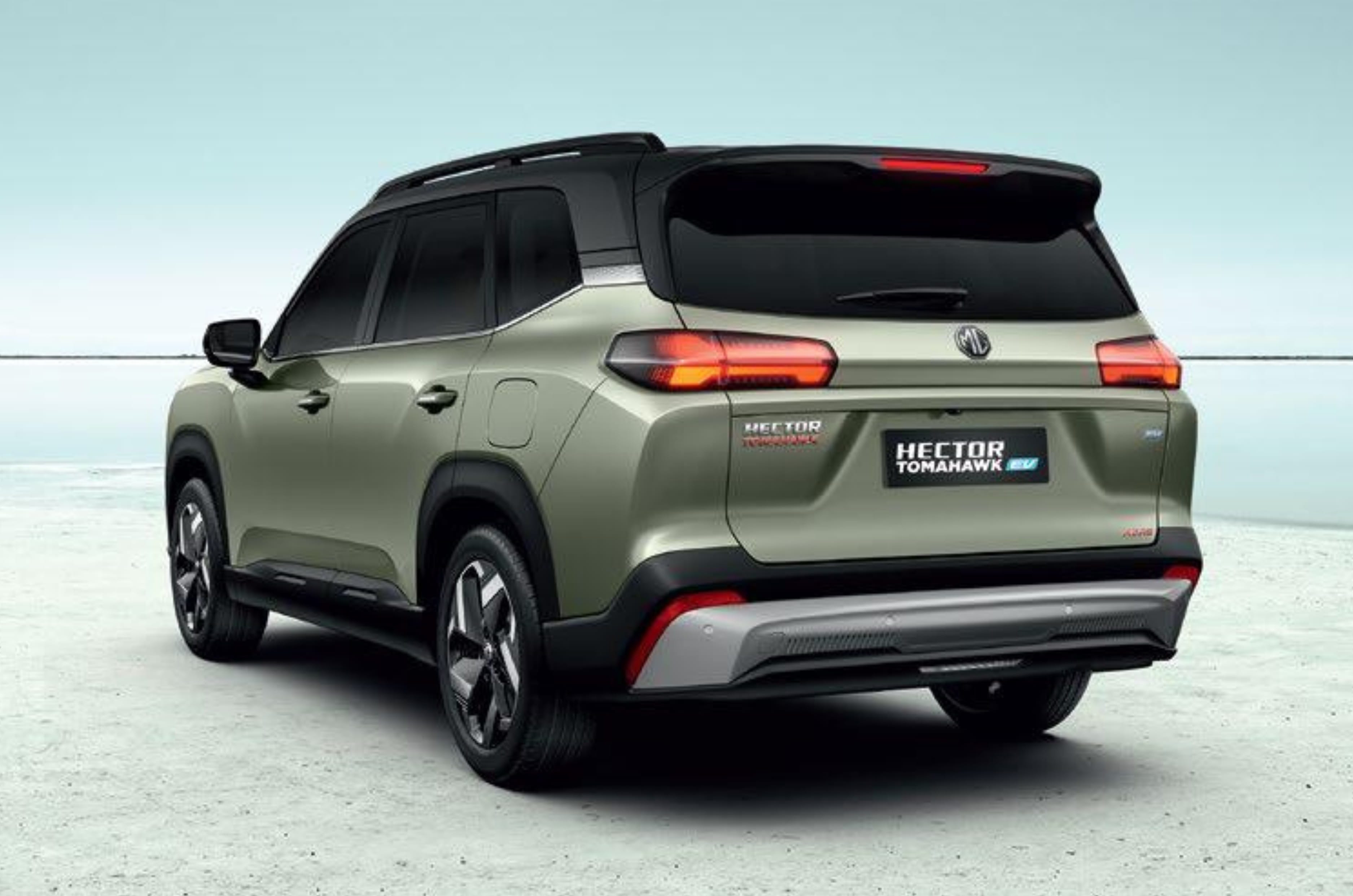
At the rear, the Tomahawk EV features wraparound LED tail-lamps and a sculpted rear bumper. The SUV measures 4,745mm long, 1,850mm wide and 1,770mm tall, with a 2,810mm wheelbase and 230mm ground clearance. The Hector Tomahawk EV gets a 610-litre boot for the five-seat version, while the seven-seat version offers 192 litres with all three rows in use and 528 litres with the third row folded.

MG Hector Tomahawk EV: interior and features

The Hector Tomahawk EV gets a 15.6-inch infotainment touchscreen, a 8.8-inch digital drivers display, wireless Apple CarPlay and Android Auto, wireless phone charging and gesture controls for functions such as the air-conditioning and audio system. 

Other features include a panoramic sunroof, ventilated front seats, 256-colour ambient lighting, a 10-speaker Infinity sound system, a powered tailgate, connected car tech, rear window sunshades and a driver’s seat with memory and auto-retract functionality. The SUV also gets several cabin modes, including Nap, Camp, Energise, Pro Pet, Valet and Quiet modes.

The Hector Tomahawk EV is available with five or seven seats. The five-seat version has 610 litres of boot space, which increases to 1,053 litres with the second row folded. The seven-seat version offers 192 litres with all three rows in use and 528 litres with the third row folded.

MG Hector Tomahawk EV: battery and range

The Tomahawk EV gets a 69.2kWh battery paired with a permanent-magnet synchronous motor producing 204hp and 310Nm. MG claims a 517km MIDC range and a 0-100kph time of 8.2sec.

The EV uses a CCS2 charging connection and supports DC fast charging at up to 90kW. MG claims a 30-80 percent charge in around 35 minutes using a 90kW DC charger. With a 7.4kW AC charger, a 10-100 percent charge takes around 12.5 hours. A portable charger that plugs into a 15A socket is also offered.

The Tomahawk EV also supports vehicle-to-load (V2L) and vehicle-to-vehicle (V2V) functions. MG says V2L can power compatible external devices and appliances, while V2V allows the SUV to charge another electric vehicle. It also claims the Tomahawk EV is India’s first vehicle-to-home (V2H) vehicle, allowing its battery to supply power to household appliances through two-way charging.