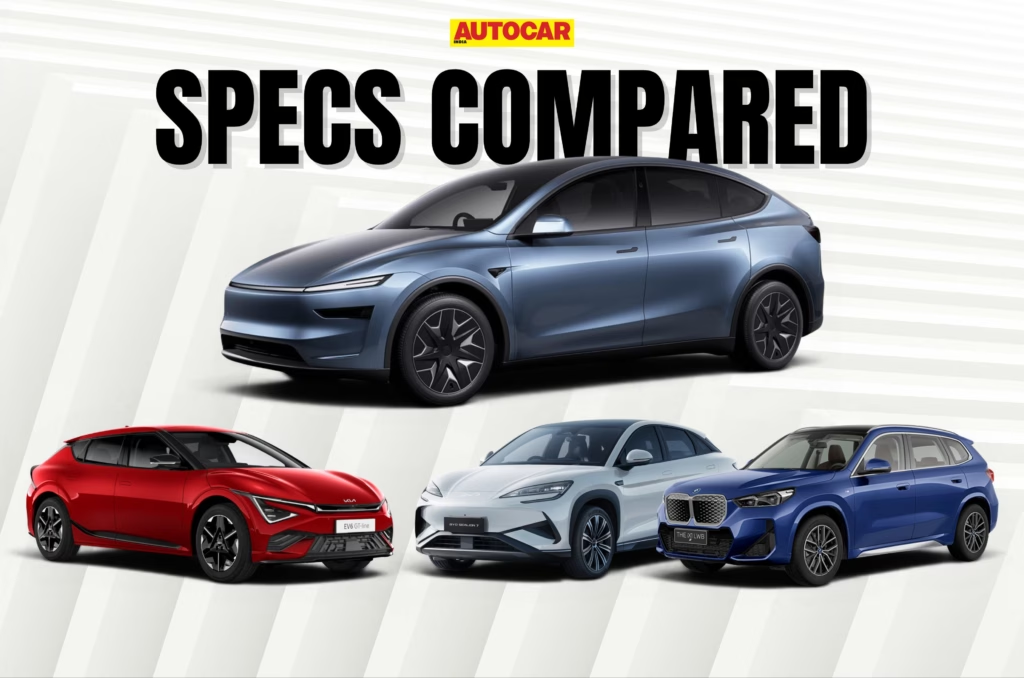
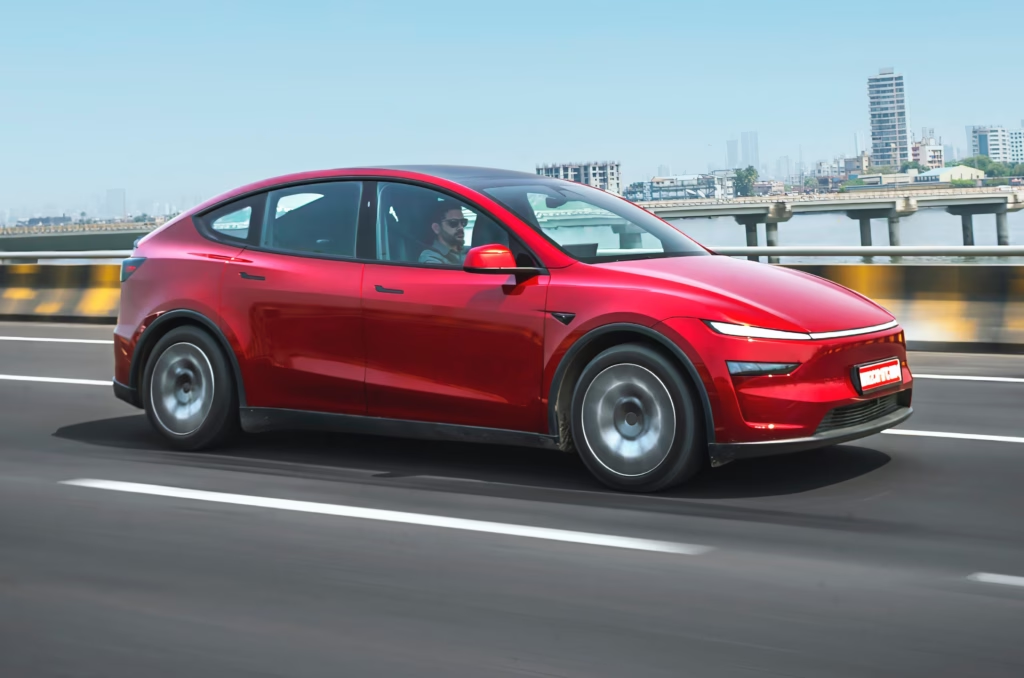
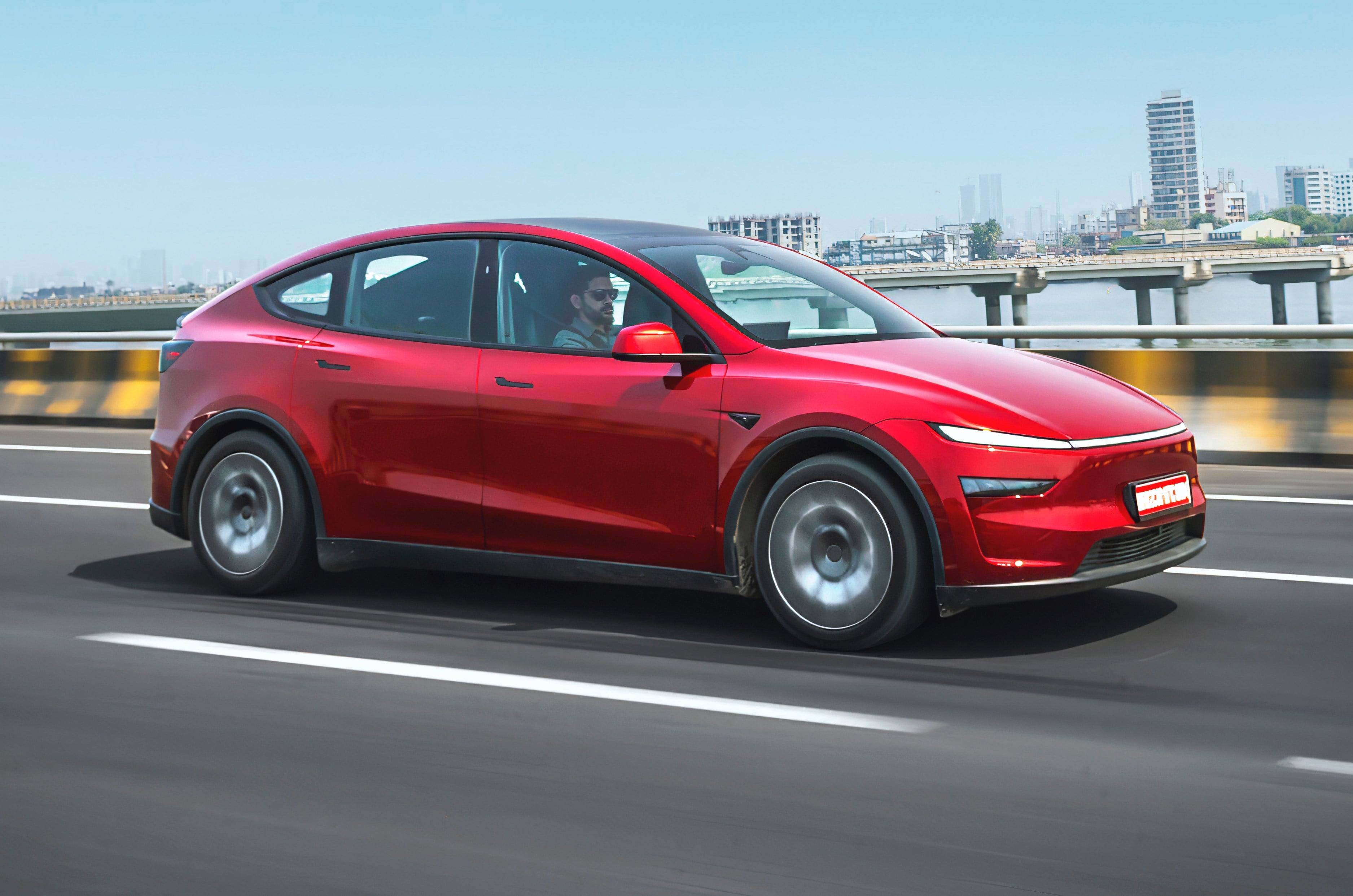
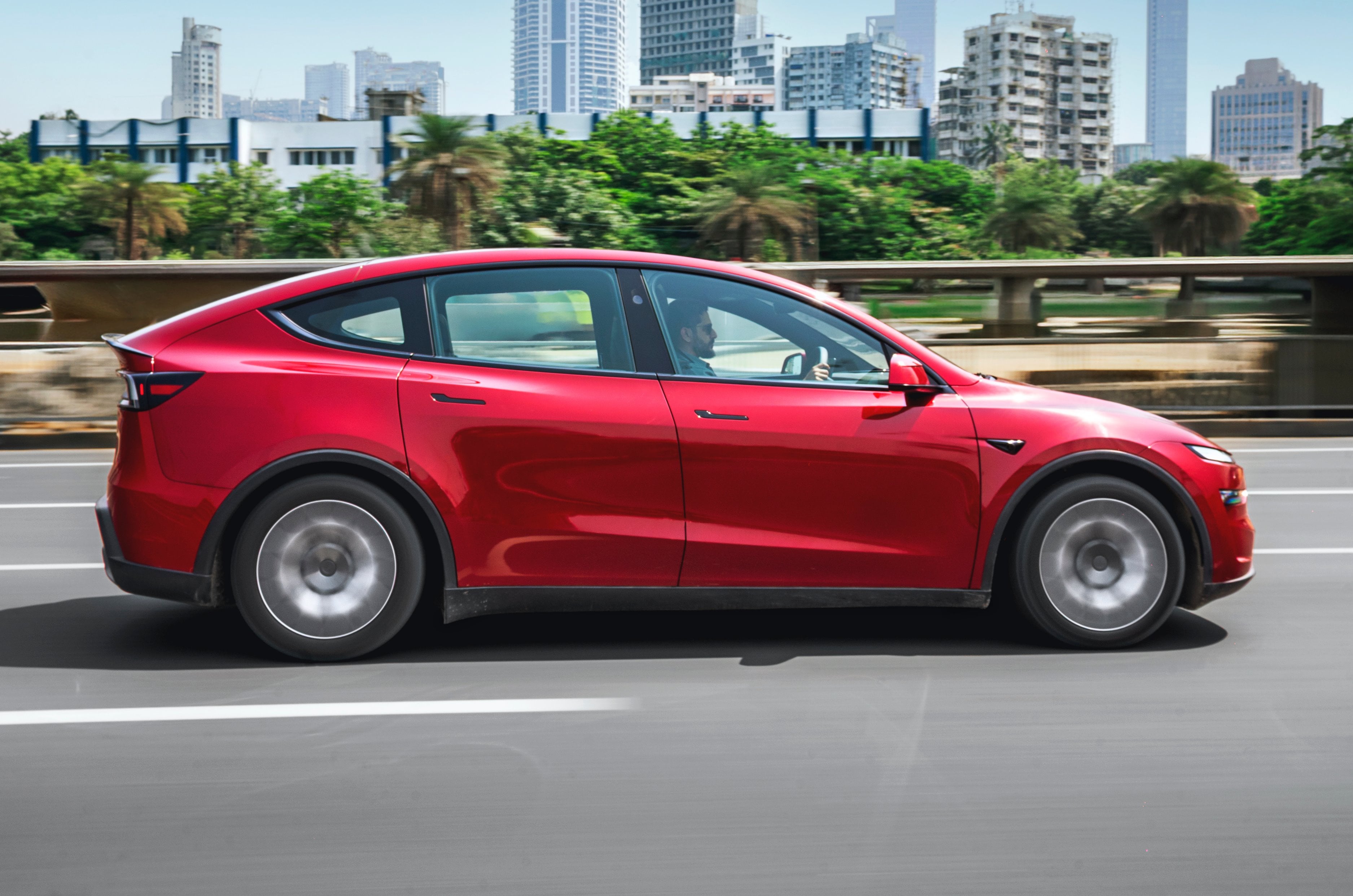
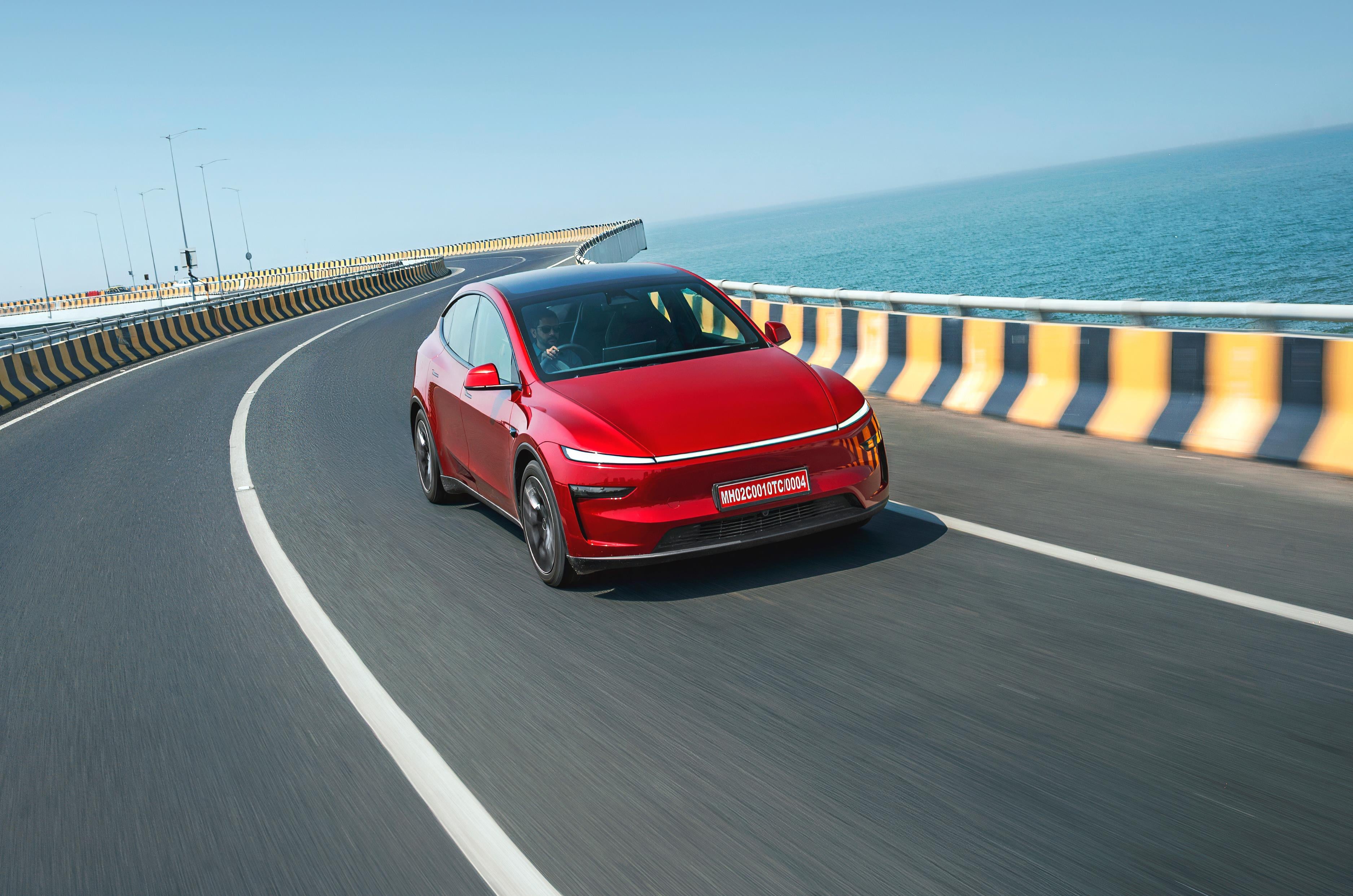
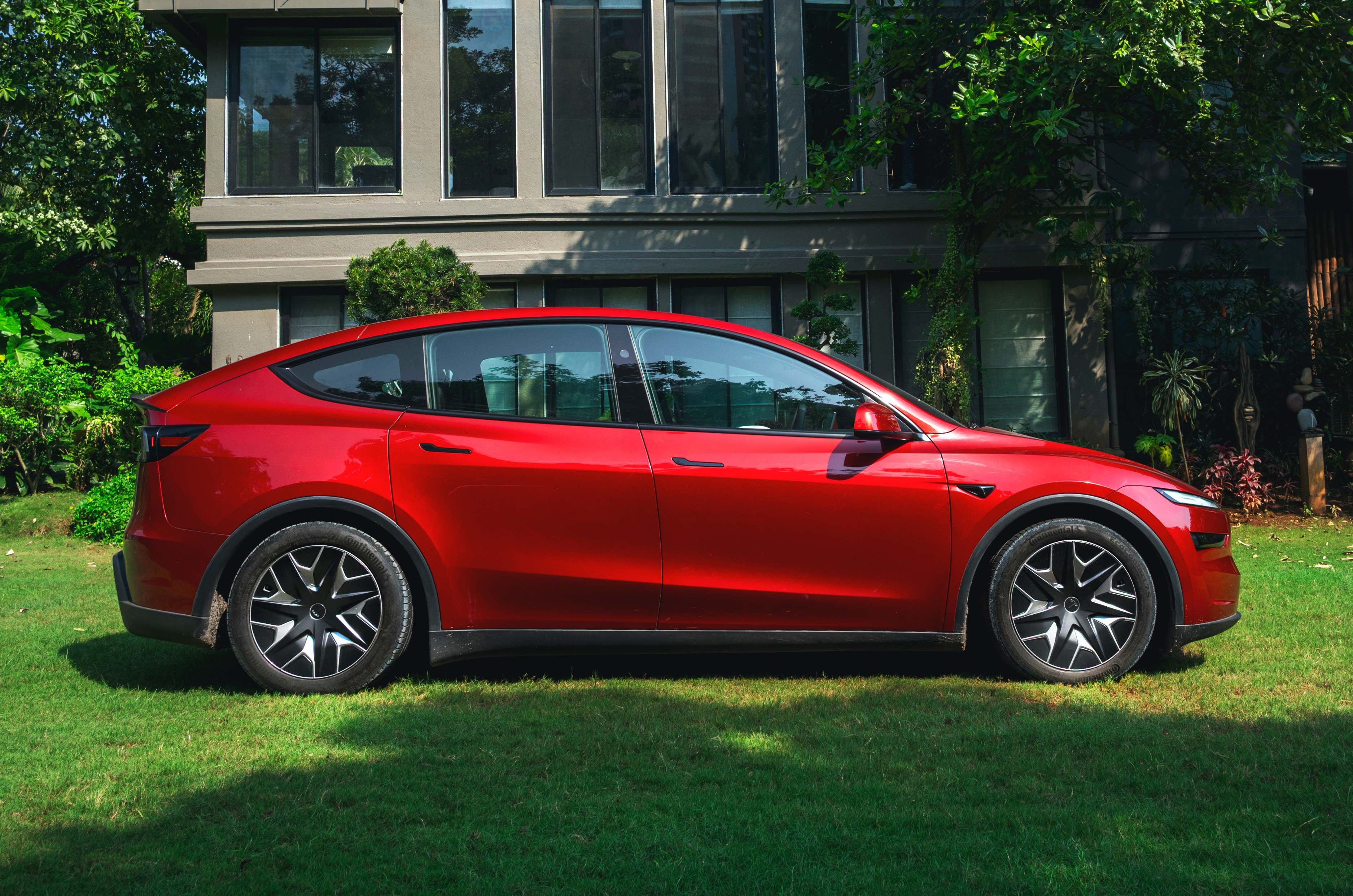
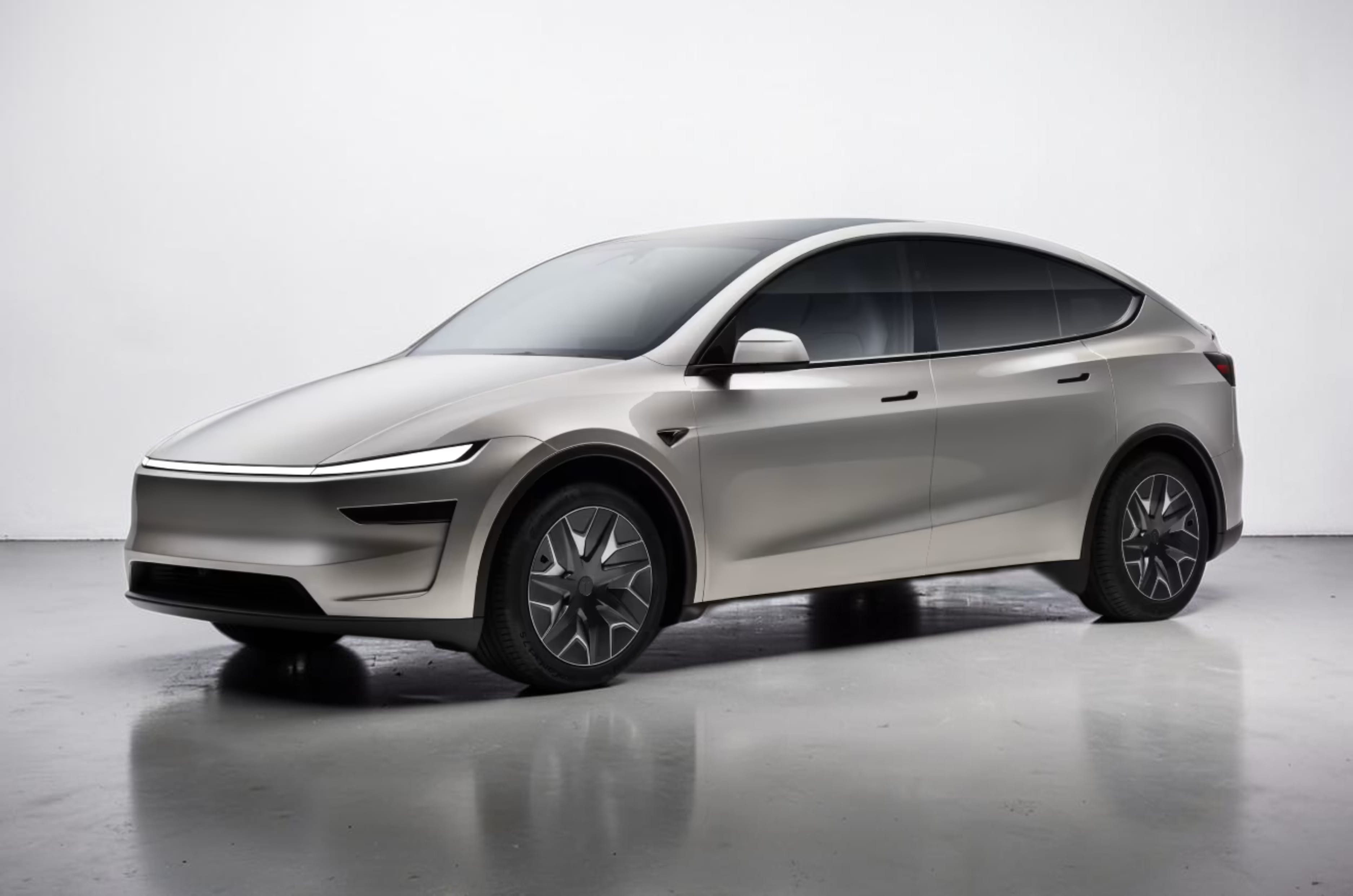
Tesla has launched a three-row long-wheelbase variant of the Model Y electric crossover in India. Christened the Model Y L, this new variant notably offers seating for up to six occupants, captain seats in the middle row and a stronger powertrain with a higher claimed range. Below, we lay out how the new Tesla Model Y L fares against its entry-level luxury EV rivals, namely the BYD Sealion 7, Kia EV6, BMW iX1 LWB, Volvo EC40 and Mini Countryman Electric on paper.
Tesla Model Y L vs rivals: Dimensions
Larger than rivals in every sense
Tesla Model Y L vs rivals: Dimensions compared
L / W / H (mm)
Wheelbase (mm)
Ground clearance (mm)
Frunk / Boot (litres)
Wheel size (inches)
Model Y L
4,976 / 1,982 / 1,668
3,040
169
116 / 420 (all seats up)
19
Sealion 7
4,830 / 1,925 / 1,620
2,930
170
58 / 500
19 / 20
iX1 LWB
4,616 / 1,845 / 1,627
2,800
190 (estimated)
– / 490
18
Countryman Electric
4,445 / 1,843 / 1,635
2,692
165
– / 460
19
EC40
4,440 / 1,873 / 1,591
2,702
171
31 / 404
19
EV6
4,695 / 1,890 / 1,570
2,900
–
20 / 490
19
The Model Y L beats its rivals in every dimension, and the Sealion 7 emerges as the second-biggest EV here overall. Tesla has slightly increased the Model Y L’s ground clearance vis-a-vis the standard wheelbase (SWB) version, though the iX1 LWB still rides the highest in this company. While the alloy wheel size remains unchanged for the Model Y L, it is mostly at par with rivals on this front.
Coming to boot space, Tesla claims a cavernous 2,539-litre cargo capacity for the Model Y L with the second and third rows folded. With all three rows of seating up, the Model Y L has an estimated boot space of 420 litres, which grows to around 1,076 litres with the third row folded, and there’s a 116-litre frunk too. All told, the Model Y L offers significantly higher total cargo capacity than the 5-seater EVs it rivals.
Tesla Model Y L vs rivals: Powertrain and performance
Sealion 7 AWD is the strongest and quickest to 100kph
Tesla Model Y L vs rivals: Battery, power, performance compared
Model
Battery capacity (kWh)
Motor setup
Power (hp)
Drive layout
0-100kph (seconds)
Model Y L
88.2*
Dual
514*
AWD
4.5
Sealion 7
82.56
Single / Dual
313 / 530
RWD / AWD
6.7 / 4.5
iX1 LWB
66.5
Single
204
FWD
8.6
Countryman Electric
66.5
Single
204
FWD
8.6
EC40
78
Dual
408
AWD
4.7
EV6
84
Dual
325
AWD
5.3
*Estimated figures
In addition to the longer body, Tesla has fitted the Model Y L with an 88.2kWh battery pack (85kWh net), which is larger than that of the standard model. It also gets a more powerful dual-motor powertrain, making the Model Y L the first Tesla car to offer AWD in India. While the Model Y L has the biggest battery pack among its rivals, its power output falls a bit short of that of the Sealion 7 AWD.
Regardless, the Model Y L is the second-most powerful EV here by a considerable margin. As for claimed 0-100kph times, the Model Y L matches the Sealion 7 AWD, ranking above the EC40, iX1 LWB, and Countryman Electric.
Tesla Model Y L vs rivals: Range and charging speeds
Model Y L features the highest WLTP-tested range
Tesla Model Y L vs rivals: Range and charging speeds compared
Model
Battery capacity (kWh)
Claimed range (km)
DC fast charging time^
Model Y L
88.2*
681 (WLTP)
288km in 15 min
Sealion 7
82.56
480 / 460 (WLTP)
45 min
iX1 LWB
66.5
531 (MIDC)
32 min
Countryman Electric
66.5
462 (WLTP)
29 min
EC40
78
530 (WLTP)
27 min
EV6
84
581 (WLTP)
18 min
^10-80 percent state of charge (SOC)
*Estimated
Thanks to its larger battery pack, the Model Y L widens the WLTP range lead that the standard model already holds over its rivals. The Model Y L’s range is 100km ahead of the EV6’s, which ranks second, and a whopping 221km more than that of the Sealion 7 AWD, which has the lowest WLTP range of 460km here.
Charging speeds are difficult to compare head-to-head, as Tesla has only confirmed that the Model Y L’s battery can be charged at up to 250kW DC and that it can add 288km of range in just 15 minutes. Keeping the Model Y L aside, the EV6 has the lowest 10-80 percent DC charging time, followed by the EC40, Countryman Electric, iX1 LWB and Sealion 7.
Tesla Model Y L vs rivals: Price
Model Y L is more affordable than the top-spec SWB version
Tesla Model Y L vs rivals: Prices compared
Price range (Rs lakh)
Model Y L
61.99
Sealion 7
49.40-54.90
iX1 LWB
51.40
Countryman Electric
55.65-60.70
EC40
59.00
EV6
65.96
Even though the Model Y L is larger, can accommodate more occupants and offers a stronger powertrain with a higher claimed range, it’s impressively priced at around Rs 6 lakh less than the top-spec Model Y Long Range RWD. That makes the Model Y L more affordable than the EV6, the priciest EV here, but costlier than the Sealion 7, Countryman Electric, iX1 LWB and EC40.
The Tesla Model Y is a tech-loaded electric crossover that prioritises cabin space and performance over everything else. The new Model Y L takes that formula a step further, adding a third row of seats, a longer wheelbase, more power with an all-wheel drive setup, more range and more sophisticated suspension as well. Given the additions, naturally it costs more than the standard-wheelbase, real wheel drive versions, but is the Y L actually worth the extra outlay?
Model Y Exterior Design and Engineering – 6/10
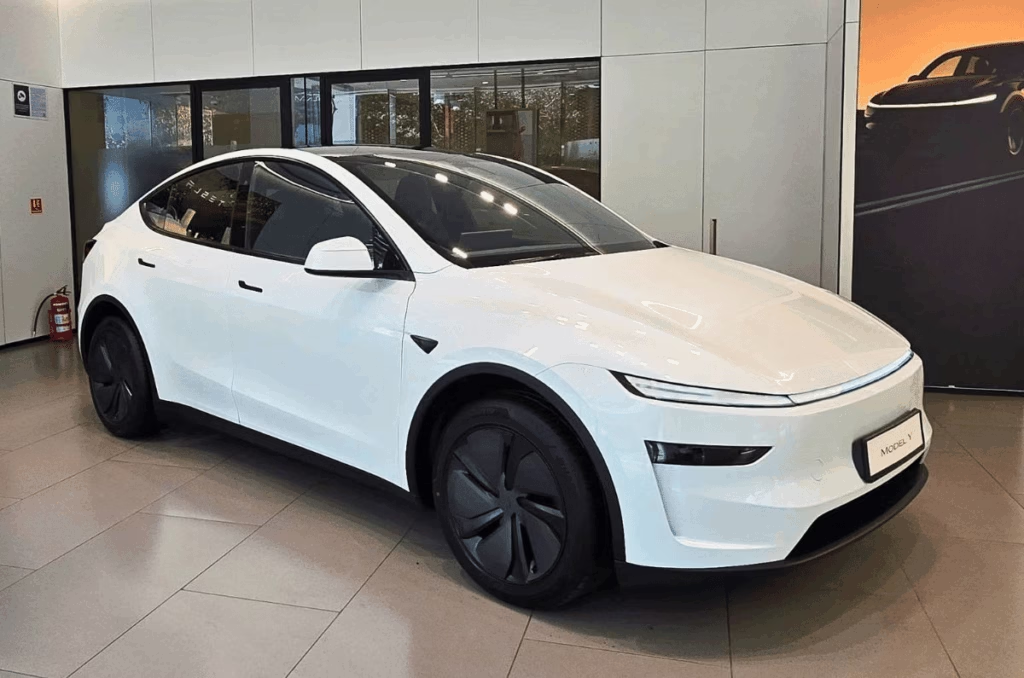
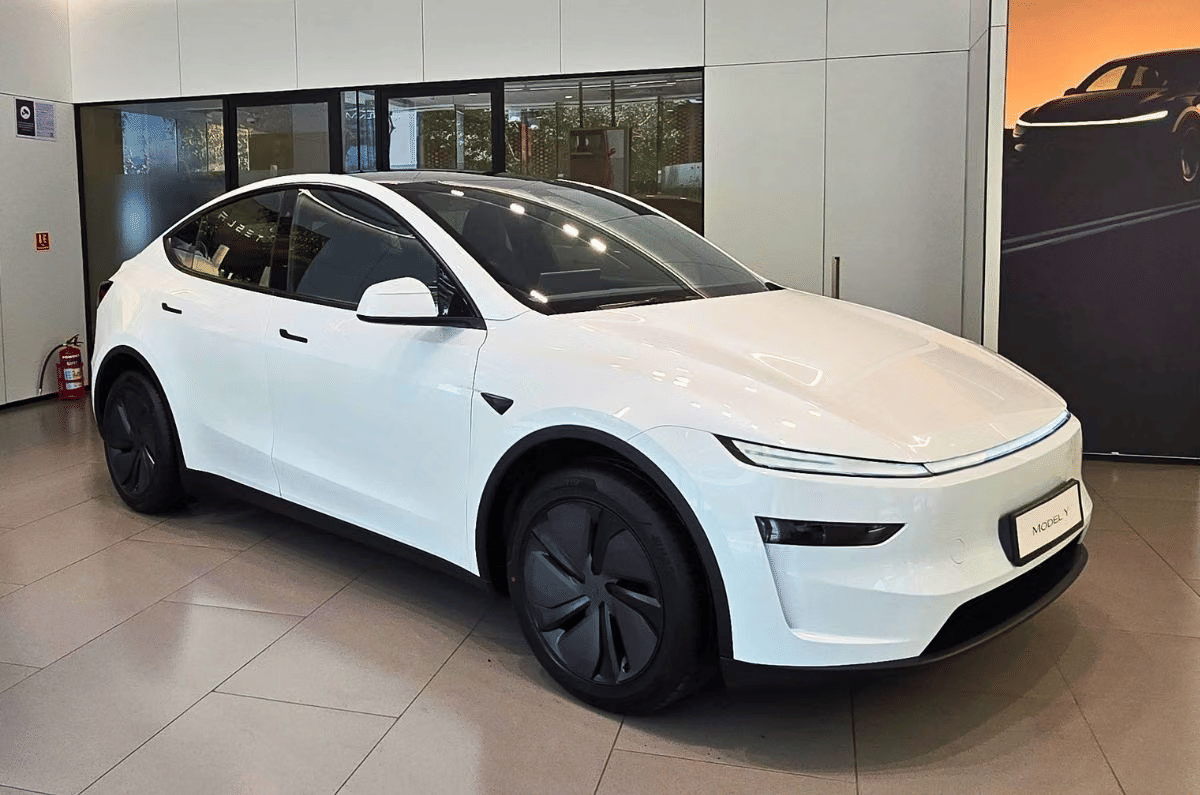
Appears near-identical to the Model Y, but the Y L is longer, taller and has a longer wheelbase.
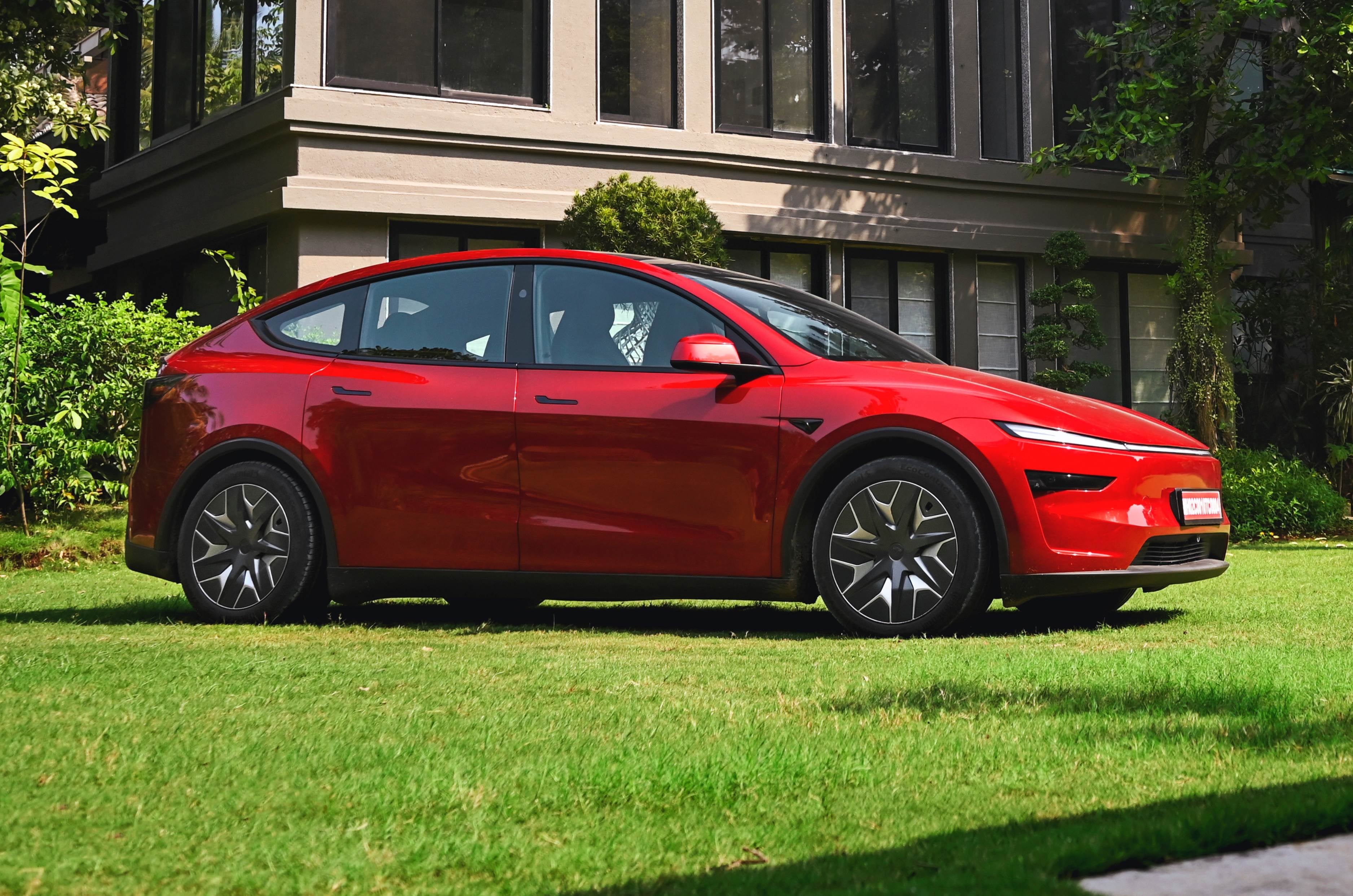
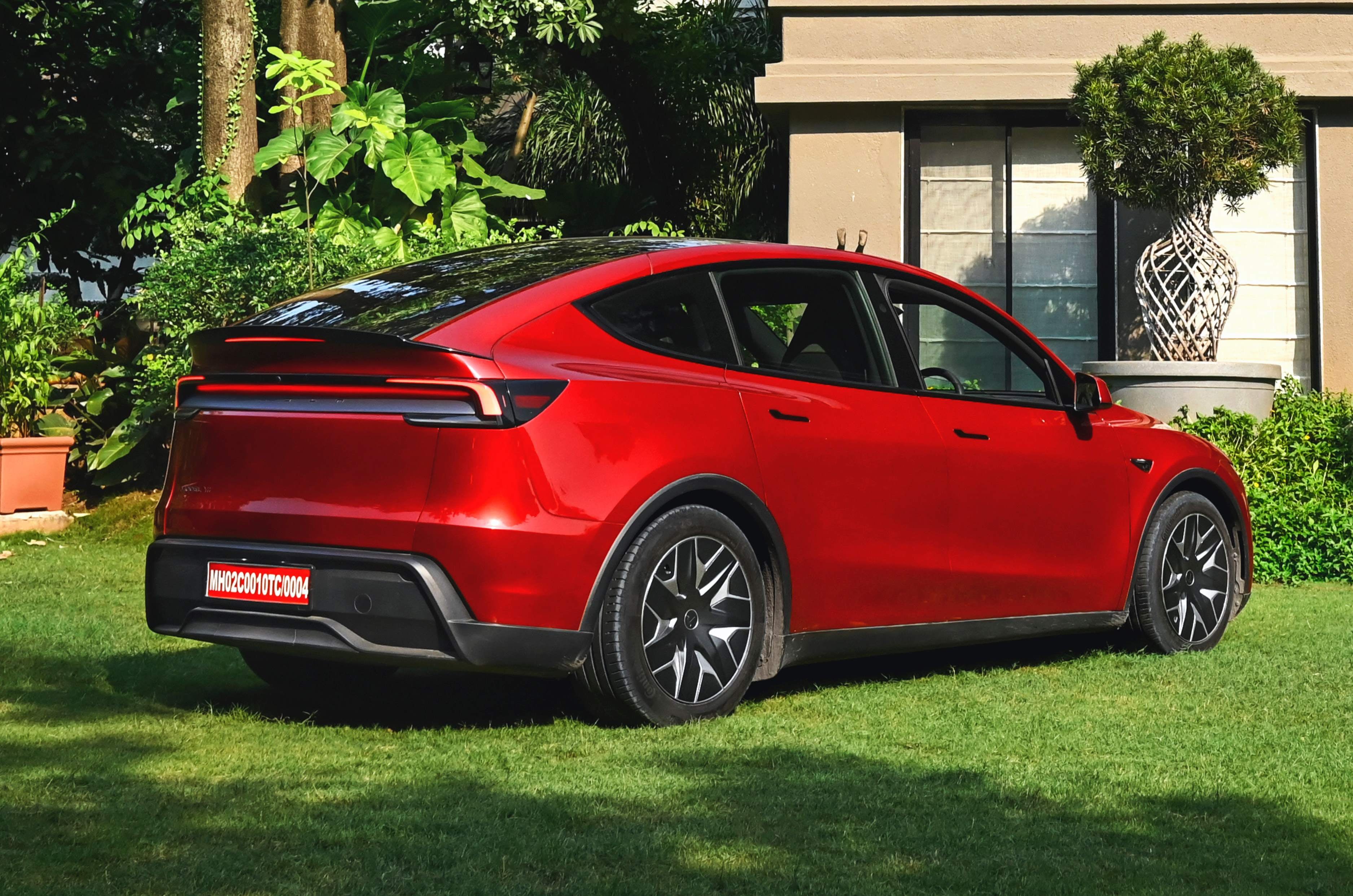
At first glance, the L looks very familiar to the Model Y, but this version looks noticeably larger from the side and rear. The Model Y L measures 4,969mm in length and 1,664mm in height, 1,982mm in width with a 3,040mm wheelbase, which makes it 179mm longer overall and 40mm taller than the Model Y, and it also has a 150mm longer wheelbase. At 166mm (unladen), the Y L has decent ground clearance but considering the longer wheelbase, you have to be extra careful going over big speedbreakers otherwise you will end up scraping the belly.
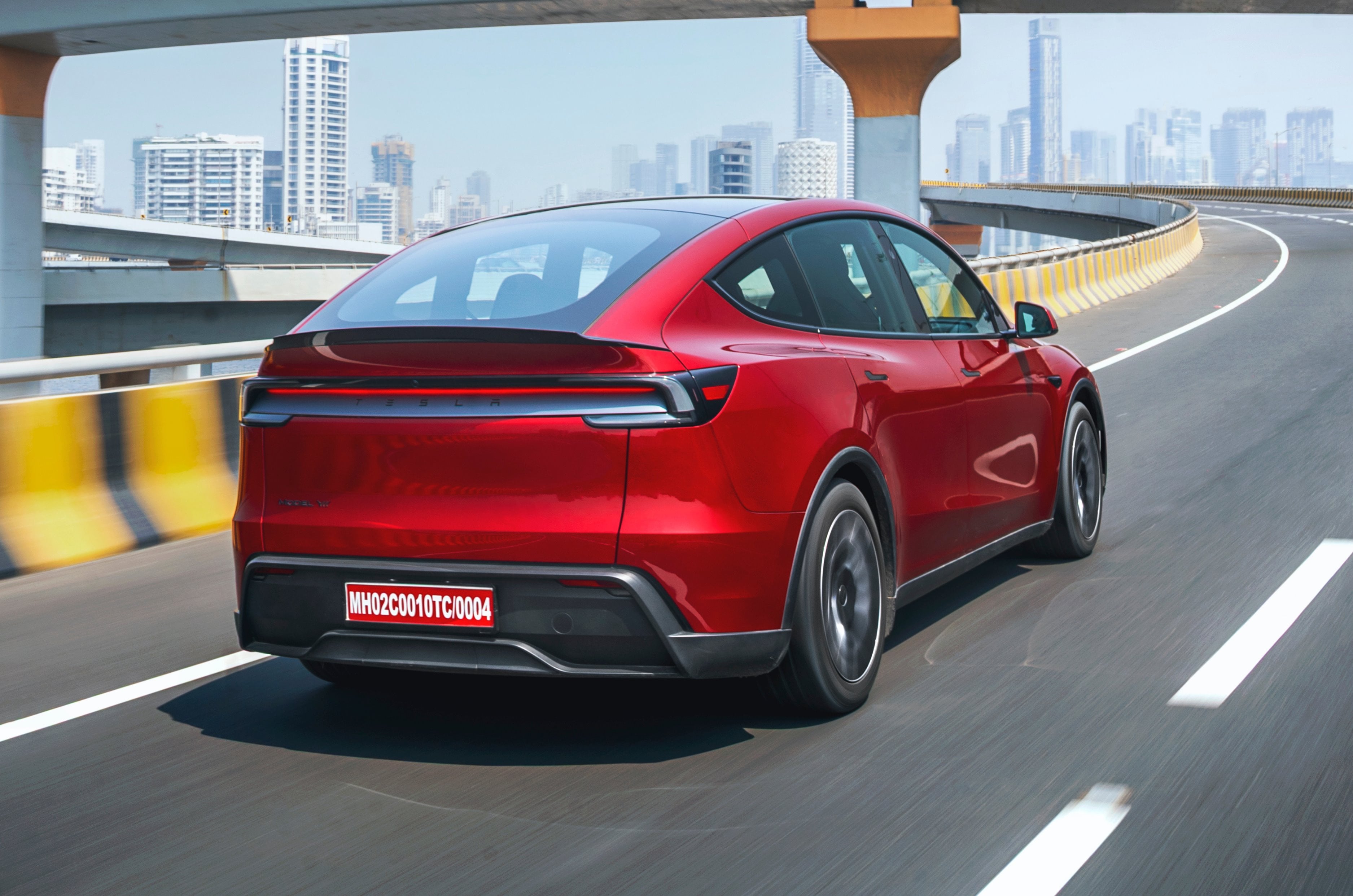
The growth in dimensions is particularly apparent in the raised and extended roofline, plus the expanded rear glass and rear-quarter glass area. The other changes include a new bootlid spoiler and the 19-inch alloy wheels have a more enclosed design, both in the interest of further aero optimisation.
Other than that, the smooth, aerodynamic silhouette with minimalist detailing and distinctive lighting elements remain. The overall design is unmistakably Tesla, although the extra length gives it slightly more road presence. That said, the Model Y L doesn’t suddenly become a traditional SUV just because it has grown. Its rounded, slightly anonymous shape with clean surfacing continues to favour aerodynamic efficiency over visual appeal. But it looks distinctive and as such, has carved out a niche for itself in terms of design.
Model Y Interior Space and Comfort – 8/10
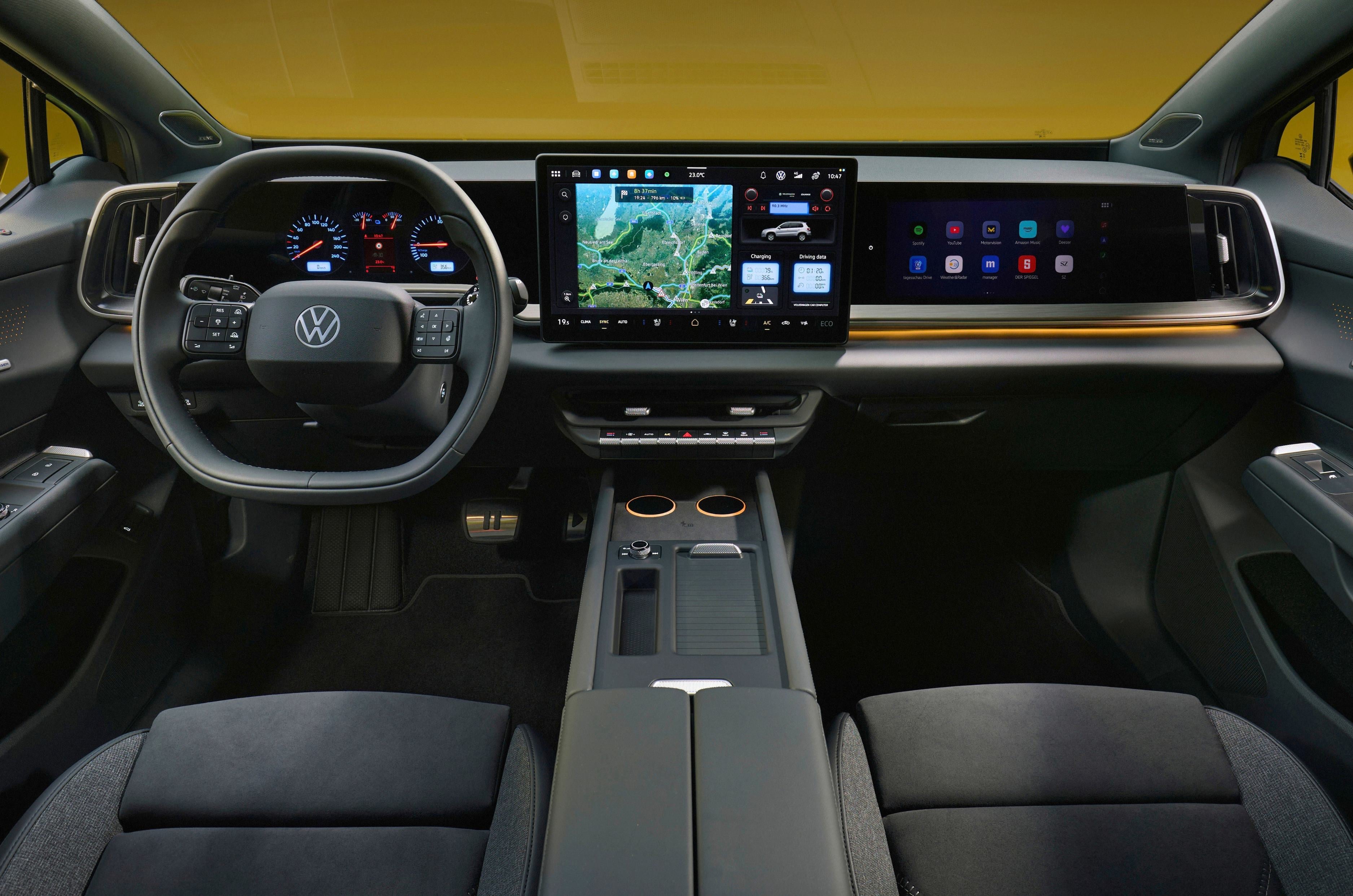
Minimalist design remains the same, save for a new textured finish on top of the dashboard.
This is where the Model Y L takes a larger step up. The standard Model Y already had a spacious cabin, but the Y L has even more room and brings further versatility, by adding a third row of seats. It is a six-seater rather than a seven-seater, with two individual captain’s chairs in the middle row instead of the standard car’s bench.
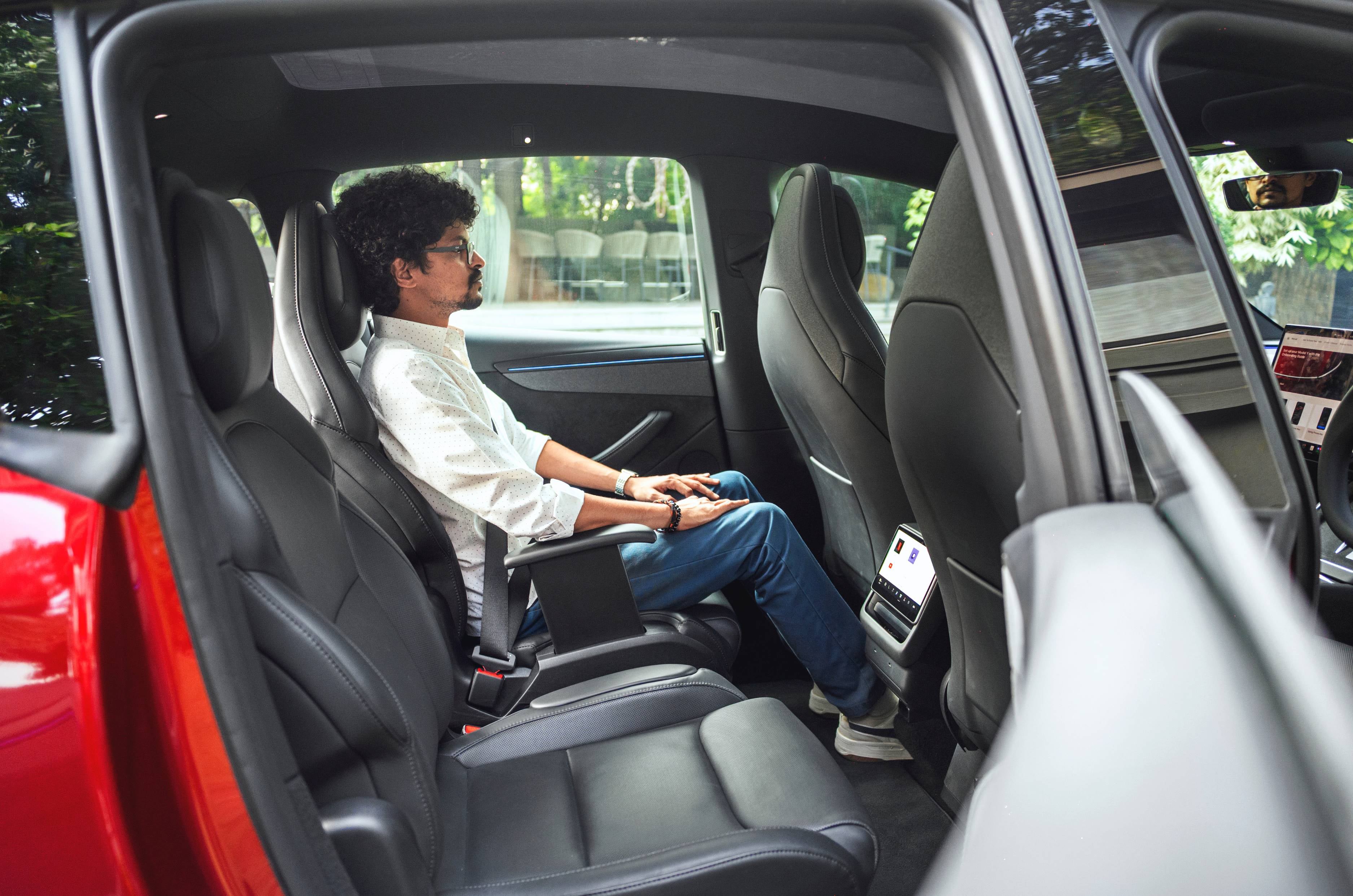
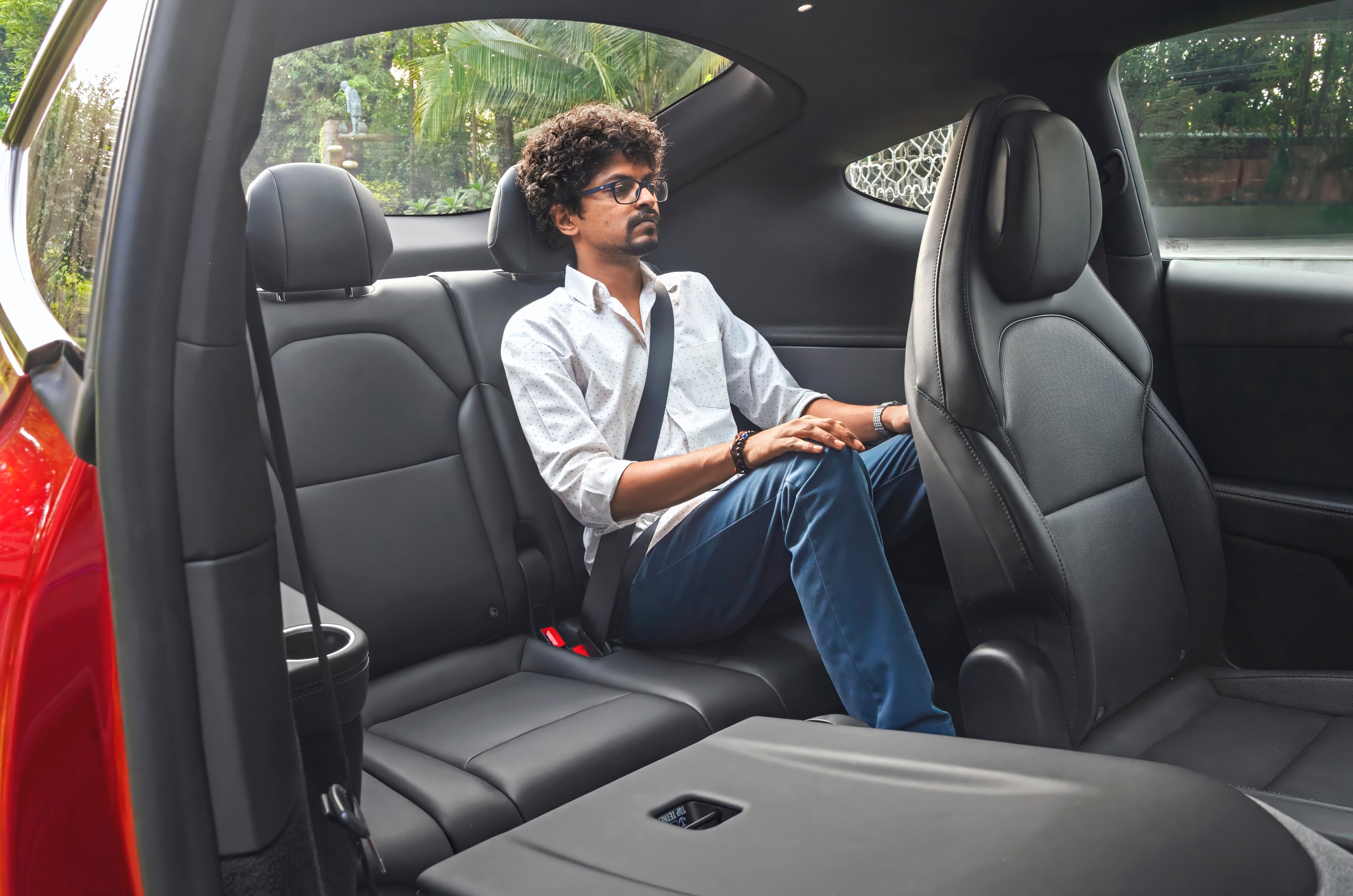
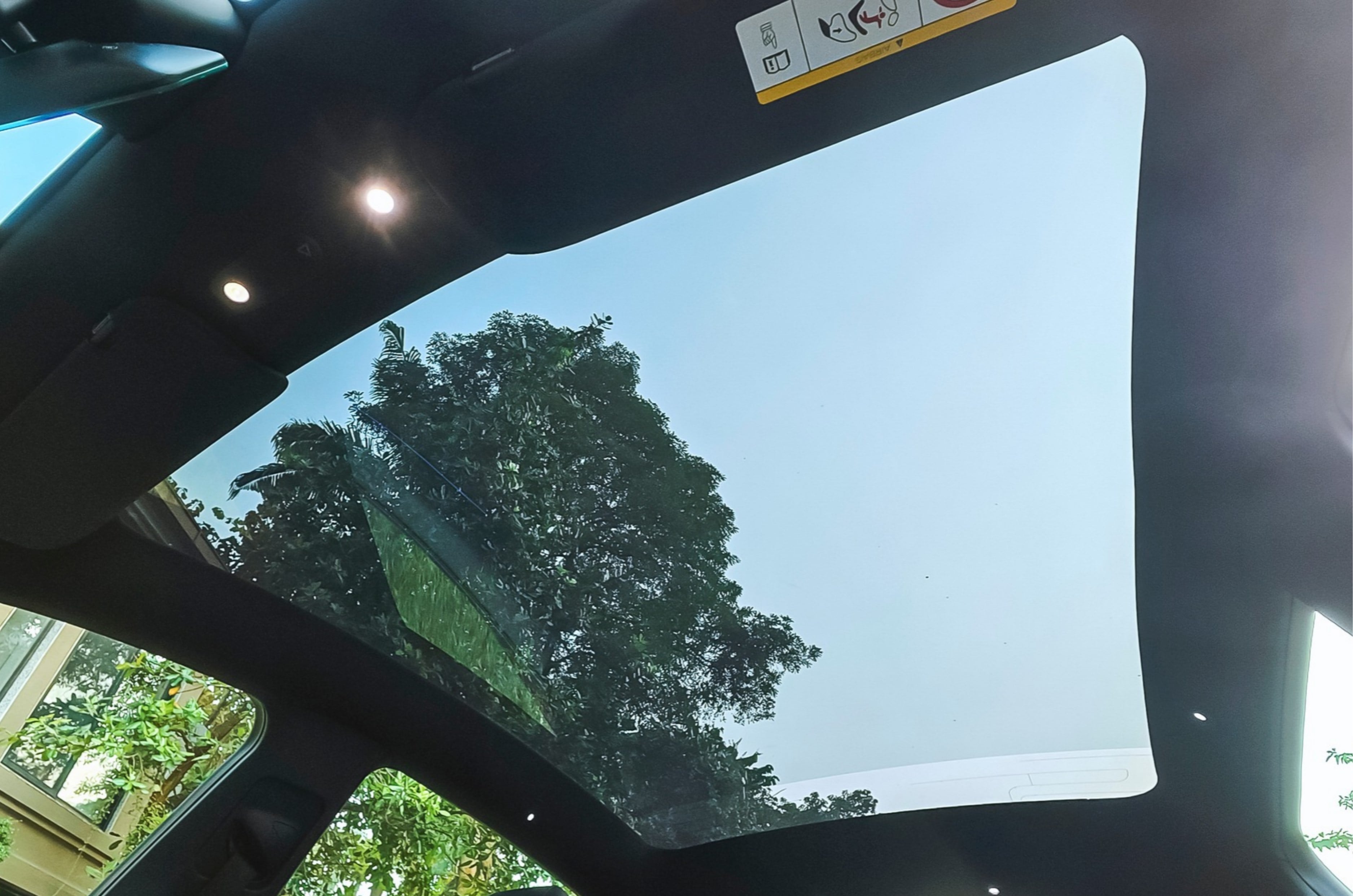
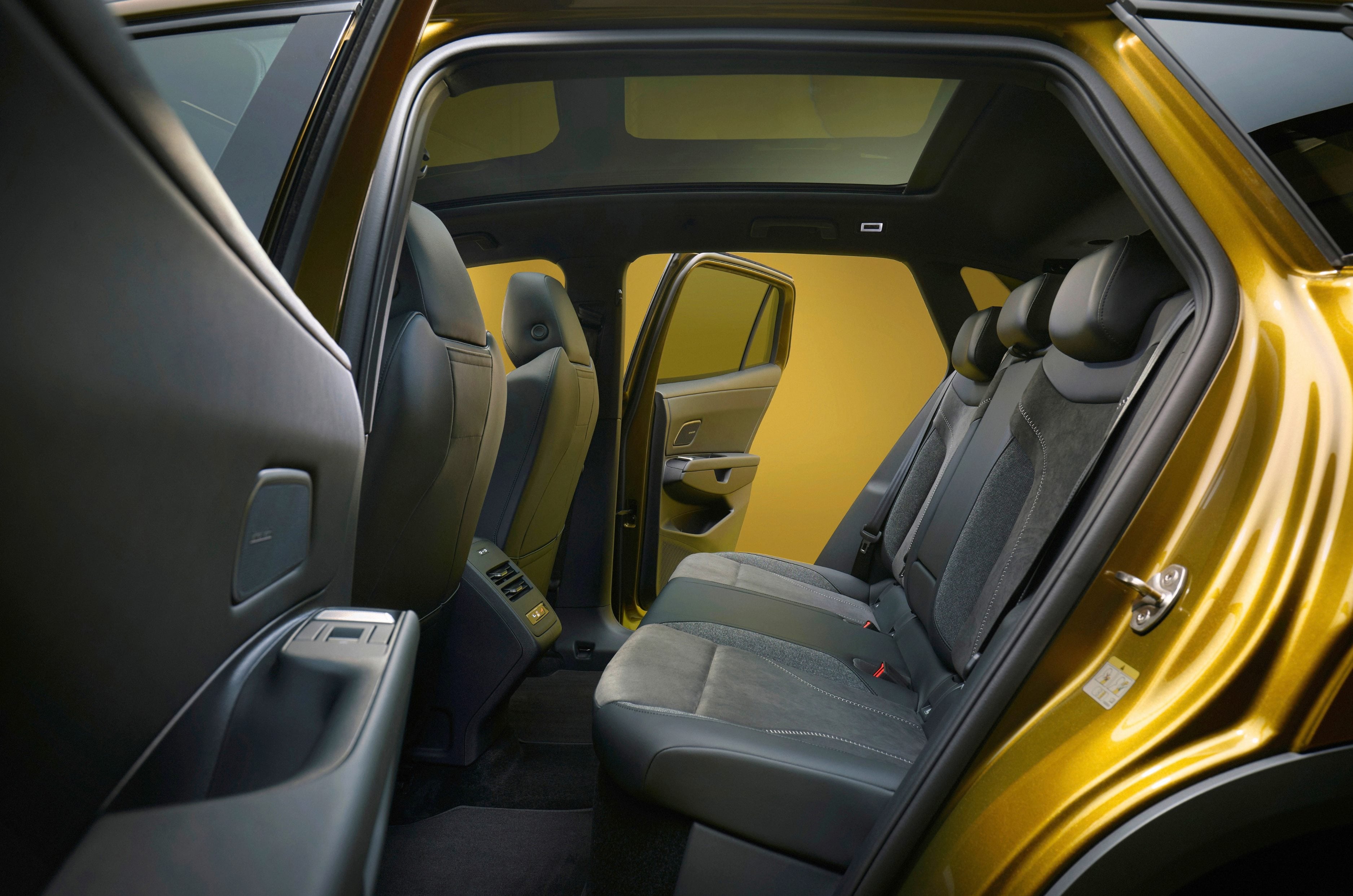
The front seats may be simple-looking but they are plush and comfy, and the extended underthigh support enhances comfort especially for taller people. These seats are also heated, cooled and feature electric adjustment. The second row is arguably the highlight, however. The individual captain’s seats are very comfy, and they feature integrated headrests, a heating and cooling function, along with power adjustment and powered armrests too. The extra wheelbase and taller roof of course gives passengers more room to stretch out and as such there’s no shortage of legroom or headroom here. The larger windows, coupled with the tinted panoramic glass roof further enhances the sense of space. However, since there are no window blinds or a sunshade for the roof, the large glasshouse area means the cabin heats up too easily especially on a hot, sunny day.
Captain seats are very comfy and there’s plenty of legroom and headroom here.
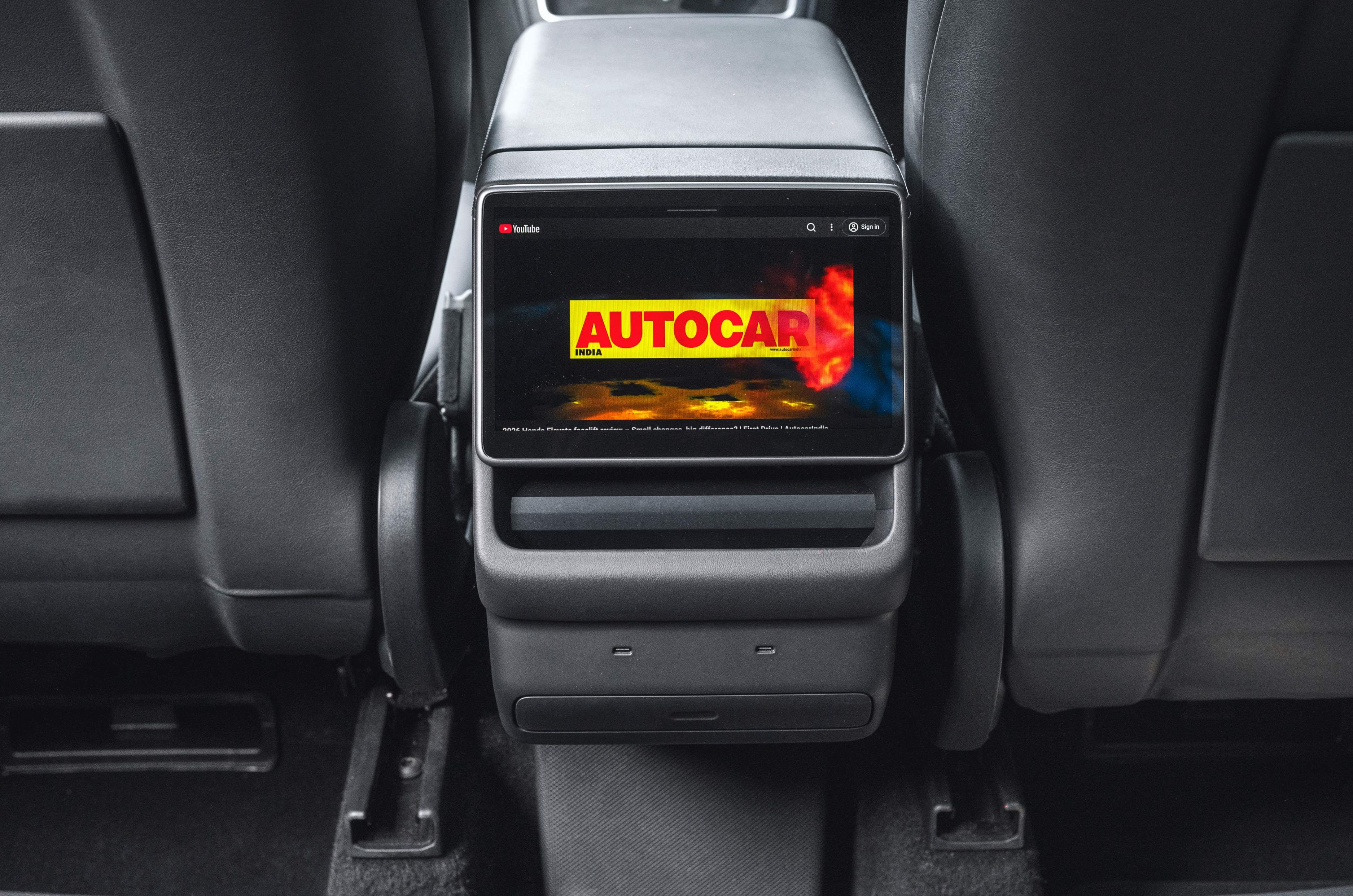
Middle row passengers are well-catered too, however. Apart from the aforementioned heated/cooled and powered seats, you also get cupholders, charging ports, cupholders and a 8-inch touchscreen. This centrally-mounted unit is just as slick to use as the one in the front and it controls several functions, along with the ability to play videos and games.
Seating is knees-up, but the third row is usable even for adults.
The third row, however, comes as a bit of a surprise. Considering the low seat, you’re sat in a knees-up position but space back here is genuinely usable for adults, with adequate headroom and kneeroom. Dedicated AC vents, cup holders and type C charging ports are useful inclusions and show that the rearmost seats aren’t simply an afterthought. Like in the middle, here too the large window and untinted rear windscreen lets in a considerable amount of heat.
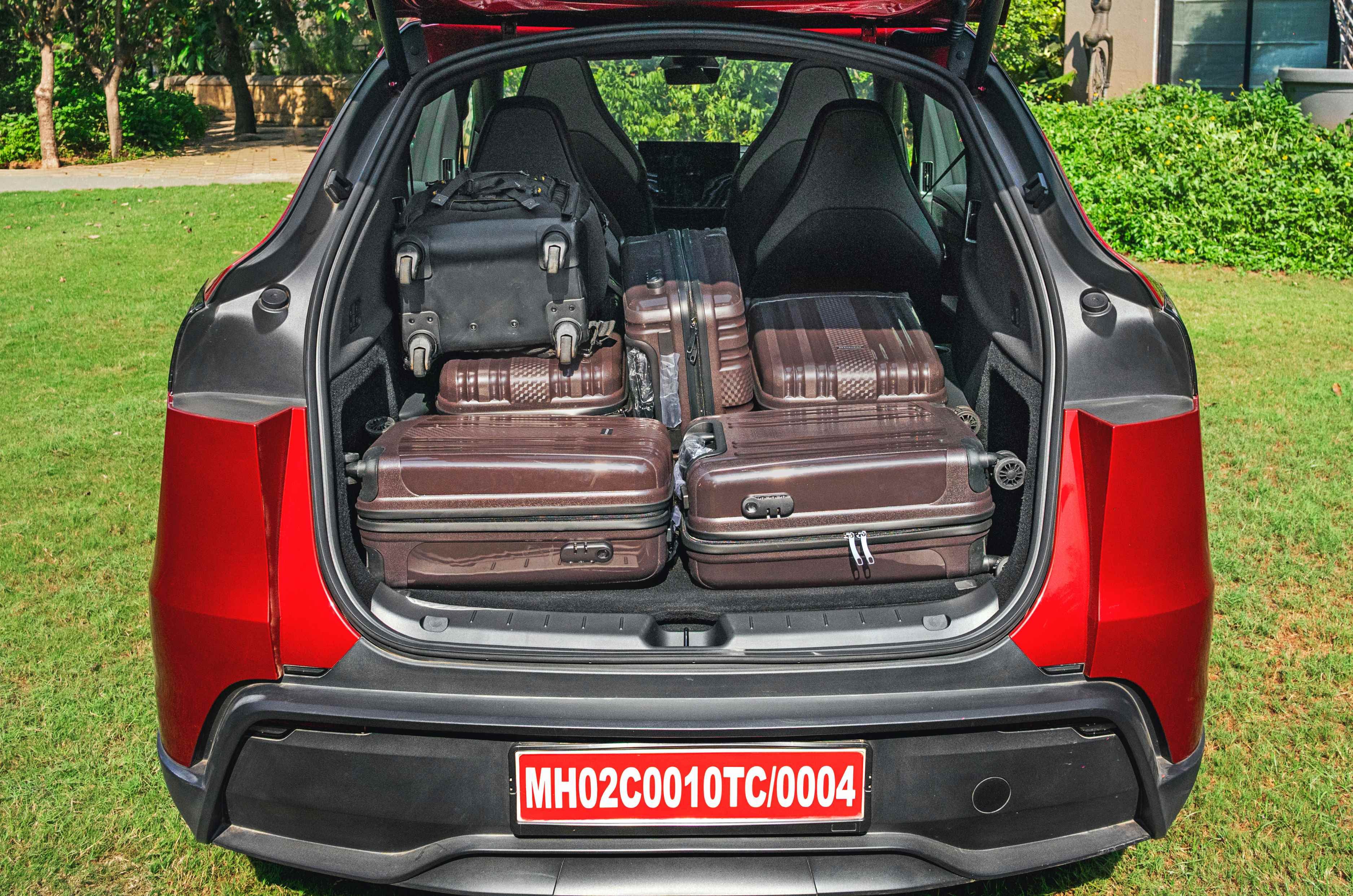
420-litre boot can be expanded to a massive 1,076 litres by folding the third row; more room under the boot floor too.
Luggage space is another important consideration for a family focused car such as the Y L. With all three rows up, boot space is a respectable 420 litres which can be further expanded to a massive 1,076 litres by electronically folding the third row. Then there’s also a considerable amount of storage space under the boot floor and a properly usable 117-litre frunk. As such, the Y L remains practical despite the added seats. It’s worth noting though, there’s no spare wheel.
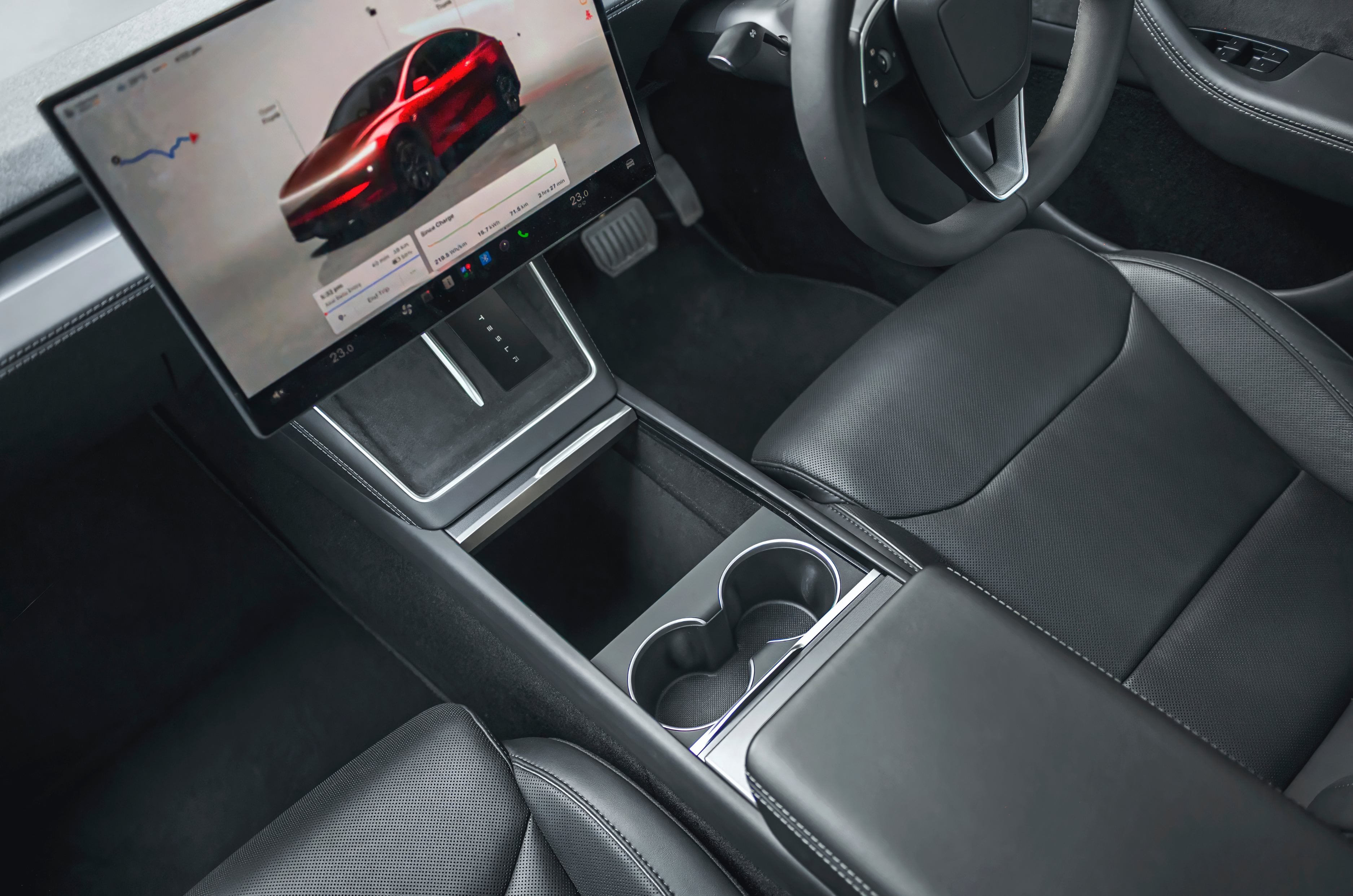
Practical cabin features a large storage box in the centre, cup holders, two wireless phone chargers, and space under the centre armrest.
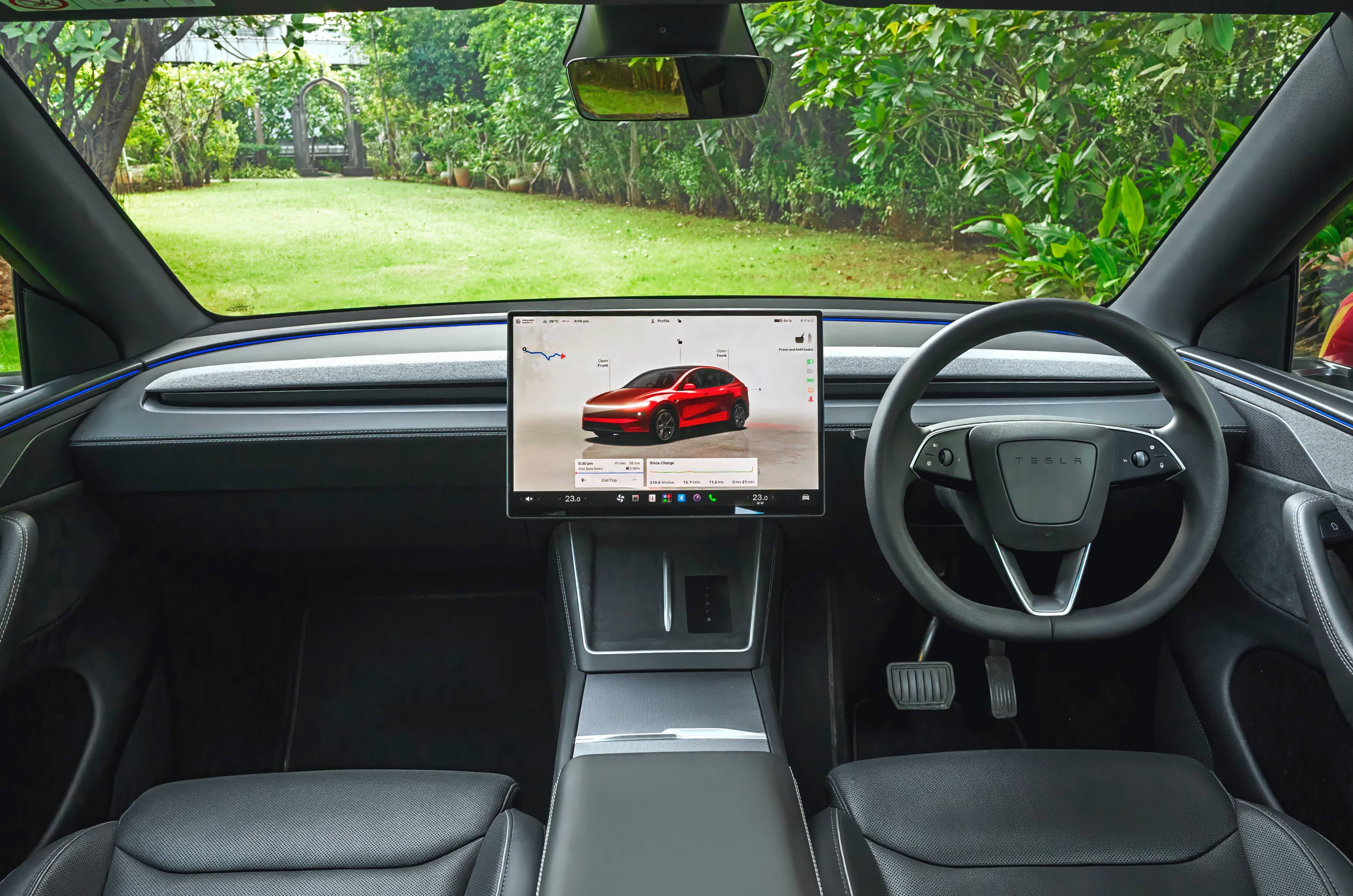
Up front, the cabin retains Tesla’s familiar minimalist layout. A large central touchscreen dominates the dashboard, with very few physical controls to interrupt the clean design. This extended model gets a textured finish on top of the dashboard, but the overall layout remains largely unchanged. It also remains a practical place, with a large cubby space in the centre console, storage under the centre armrest, multiple cupholders and seat back pockets.
Model Y Features and Safety – 7/10
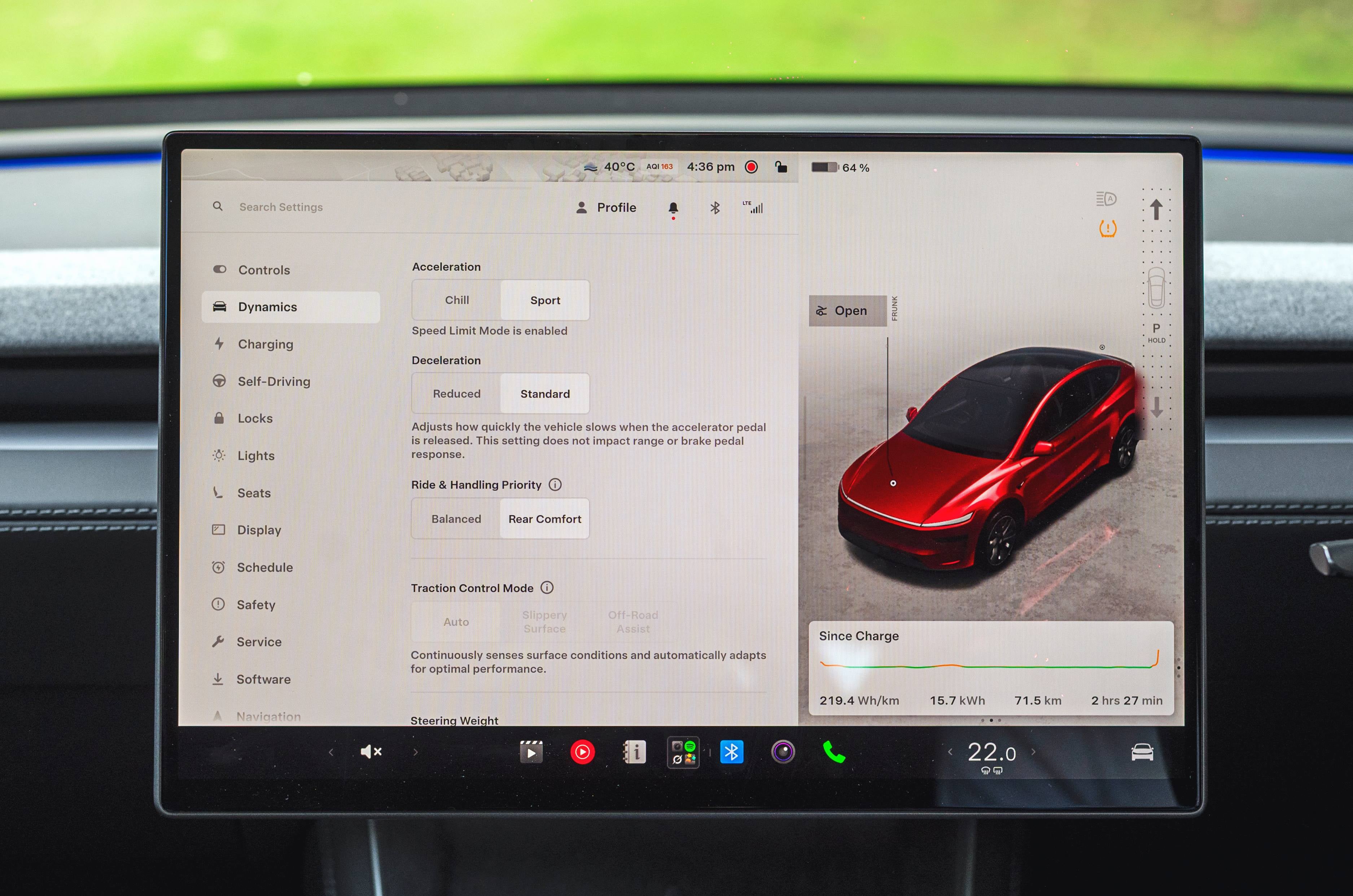
Y L gets a Sport drive mode and two settings for the new adaptive dampers.
Technology has always been central to Tesla’s appeal, and the Model Y L continues with that approach. Apart from the aforementioned 8-inch rear screen, the main party piece of this car is the central 16-inch touchscreen. This screen is easily one of the best in the business in terms of resolution and responsiveness.
16-inch touchscreen is one of the sharpest around and packs in the typical Tesla quirks and features.
The screen is slick and feature-packed, but the reliance on it for everyday functions remains a usability compromise. Adjusting climate settings and accessing basic vehicle functions like adjusting the mirrors and opening the frunk require navigating menus, which isn’t as intuitive as using dedicated switches. It looks modern and gives the cabin a clean appearance, but a little more emphasis on straightforward ergonomics wouldn’t hurt.
8-inch rear screen is just as slick and can bes used to play videos and control other functions.
But thankfully, you do get the Grok AI assistant as a part of the package which can pretty much do everything for you right from setting the AC, to setting the navigation, finding a charger and much more. It can converse in multiple languages and also constantly learns more about you, so it’s said to get more intuitive as you spend more time with it.
Other features include a panoramic glass roof, dual wireless phone chargers, multi-colour ambient lighting, a superb sounding audio system with 18 speakers and a subwoofer, heated/ventilated and powered front two rows of seats, heated third row seats, all LED lights and so much more. There’s also connected-car tech, and as with any Tesla it gets over-the-air updates, so the car is constantly improving without the need to visit a service centre.
Tinted glass roof helps the cabin feel airy but no sunshade means it heats up quickly as well.
Safety equipment includes nine airbags and a suite of driver-assistance features, including lane-departure warning, lane-keeping assist and blind-spot monitoring. The car also has high-resolution cameras all around it which provide a great view of the surroundings, although Tesla’s more advanced Autopilot capabilities remain absent in India.
The technology is impressive, but the screen-centric interface requires some acclimatisation. Some buyers may find the learning curve frustrating, especially while driving. But for the tech-savvy buyers the Y L is aimed at, they will find this approach very appealing.
Model Y Performance and Refinement – 9/10
Dual-motor, all-wheel-drive powertrain puts out over 500hp and does 0-100kph in a claimed 5 seconds.
The Model Y L is offered in India with a dual-motor all-wheel-drive setup, unlike the rear-wheel-drive only Model Y variants. Tesla does not officially list powertrain specifications, but it has an estimated combined system output of 514hp and 590Nm and the brand claims a 0-100kph time of 5 sec and a top speed of 201kph. We did a quick acceleration test and managed a 0-100kph time of 5.02sec, though we couldn’t test the top speed as our car was electronically limited to 120kph. For a family crossover which is estimated to weigh over two tonnes, the performance is properly brisk. Expectedly, acceleration feels very potent and as typical of any high-performance EV, the Model Y L pins you back into the seat. However, there is a certain progression to the power delivery and the added traction of the all wheel drive setup makes it feel manageable and not overwhelming. There’s also two drive modes, Chill and Sport, the latter of which is exclusive for the Y L. And they have a corresponding effect on the response of the powertrain, with Sport obviously feeling much more immediate.
The added performance also makes overtaking on highways and closing gaps in traffic particularly effortless, as is reflected in the rolling acceleration figures. 20-80kph takes 2.85sec while 40-100kph is dispatched in just 2.94sec.
As with the standard Model Y, the Model Y L also impresses with its refinement. The cabin is superbly insulated from the outside world, thanks in part to the double glazed windows, with barely any road, tyre and wind noise filtering through into the cabin.
Model Y Mileage / Range and Efficiency – 7/10
Tesla Supercharger is said to add up to 288km of range in 15 mins; has a WLTP-rated range of 681km.
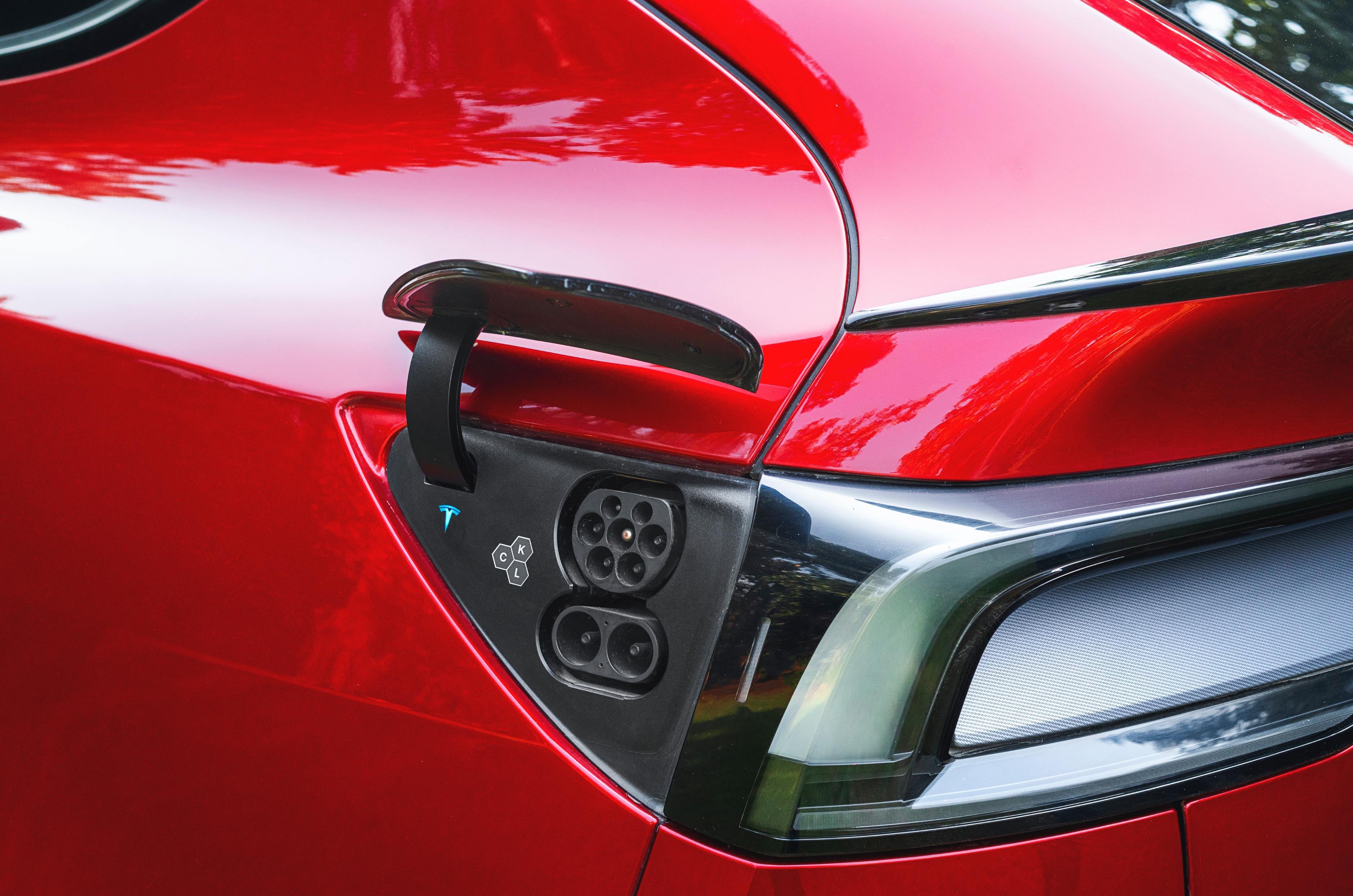
Tesla claims a WLTP range of 681km, from the Model Y L’s 88kWh (estimated) NMC battery pack. That’s more than the standard RWD Model Y, for reference. It can also add up to 288km of range in 15 minutes when connected to a Tesla Supercharger, according to the company. Speaking of which, the electric crossover is capable of accepting up to 250kW on DC fast charging and 11kW on AC charging. As always, real world range will depend on driving conditions, speed, weather and other factors.
Model Y Ride Comfort and Handling – 7/10
Adaptive dampers and longer wheelbase does make the Y L feel more settlled than the standard Model Y.
The standard Model Y’s ride and handling package is competent, although its low-speed ride is noticeably firm, especially on uneven surfaces. Tesla has made changes to the L’s suspension, equipping it with adaptive dampers in a bid to improve comfort and body control.
This is a particularly relevant upgrade for a longer, heavier vehicle designed to carry more passengers. As with everything else, this is also controlled via the touchscreen with two settings available – Balanced and Rear Comfort. The latter softens things down and gives it a slightly plusher feel, while the former represents a good middle ground between ride comfort and handling. Even though the difference in the modes isn’t that great, the Y L does feel more composed over broken roads and avoids transmitting as much movement into the cabin as the Standard Model Y.
The longer wheelbase also helps the car feel a bit more settled at speed, although manoeuvring in confined spaces is more cumbersome, and this is particularly amplified thanks to the rather poor turning circle. Like the standard Model Y’s, the Y L’s steering is light and easy to use, but it isn’t particularly feelsome. There’s also three modes for the steering, which progressively add more weight. The handling too is more competent and predictable rather than entertaining. It doesn’t feel as agile as the Model Y but body movements do seem better controlled thanks to the adaptive dampers.
There’s two levels of regenerative braking – Standard and Reduced. Standard is the stronger setting and best for use in the city as it almost functions like a one-pedal mode while Reduced is for highway use as it allows for some coasting.
Model Y Value for Money – 7/10
The Model Y L is for those who want a spacious, quick, refined, and cutting-edge premium EV for the family.
Priced at Rs 61.99 lakh (ex-showroom), the Tesla Model Y L makes for a more compelling case than the standard Model Y despite costing 10 lakh more. It still costs a fair bit more than its most direct rivals, the BMW iX1 LWB and the BYD Sealion 7, but the Y L is more spacious with more seats. The Model Y L does have its compromises though. It’s over reliant on the touchscreen for even basic functions and the large glasshouse means the cabin heats up easily. The larger dimensions, poor turning circle, low ground clearance and long wheelbase also means it is more challenging to maneuver in the city and while parking.
But it brings a lot more to the table too. There’s more cabin space, the added versatility of a third row, a more potent dual-motor powertrain with all-wheel-drive and a higher claimed range as well. And it retains its strengths of being featured-packed, with excellent refinement and massive cargo space. Tesla says that buyers are now preferring to opt for the Y L over the Model Y considering all the additional things it brings, and that really doesn’t come as a surprise. So for buyers who want a spacious, quick, refined and cutting-edge electric crossover for the family, the Tesla Model Y L fits the bill perfectly.
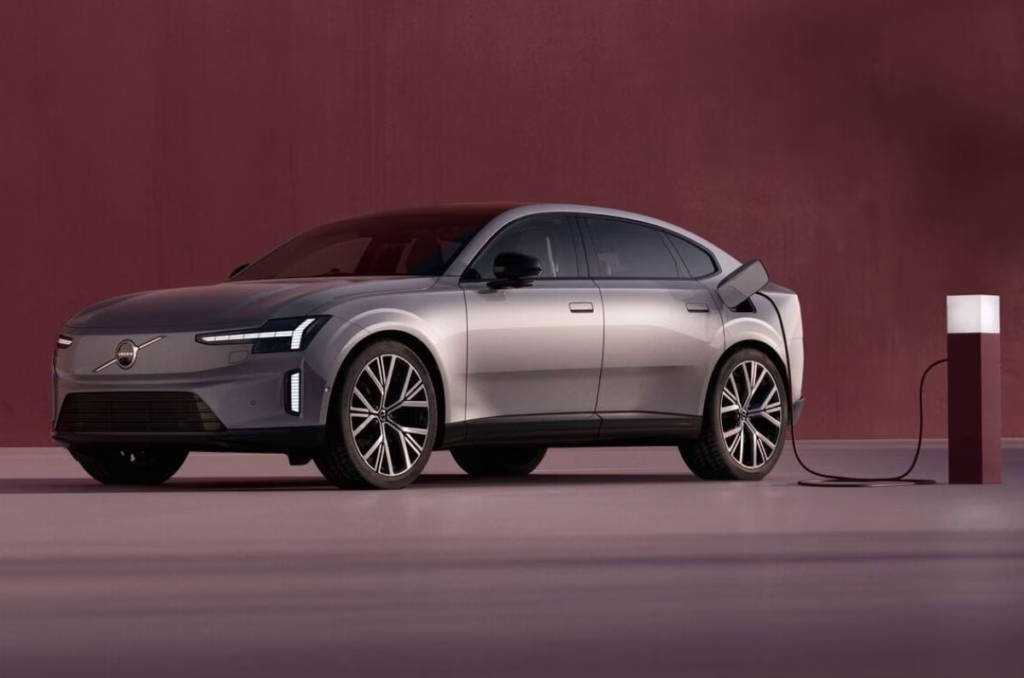
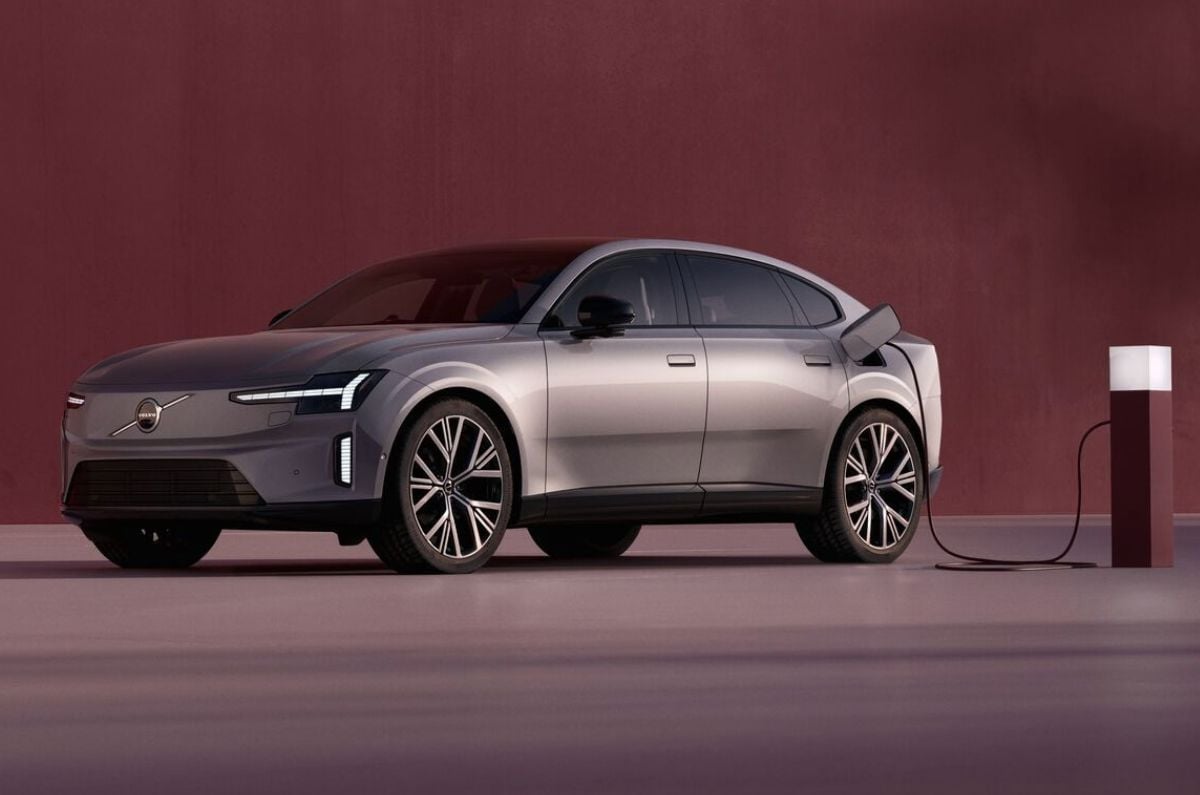
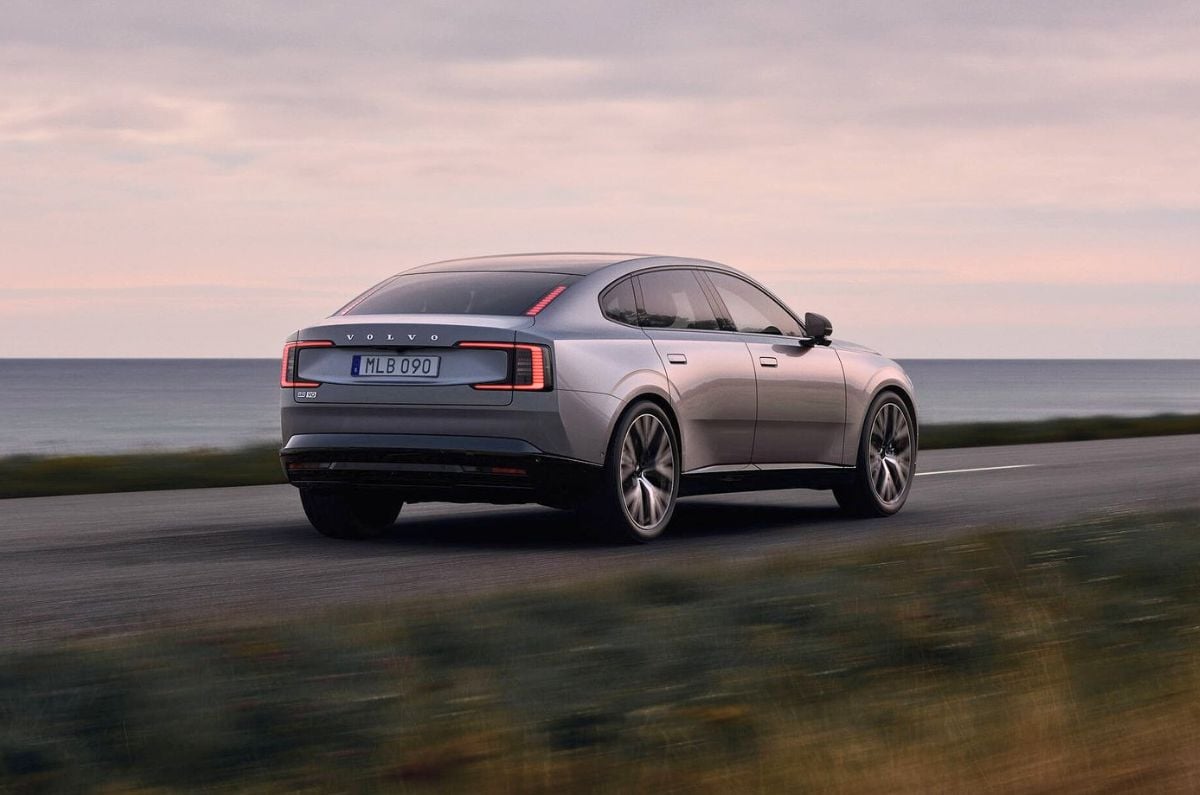
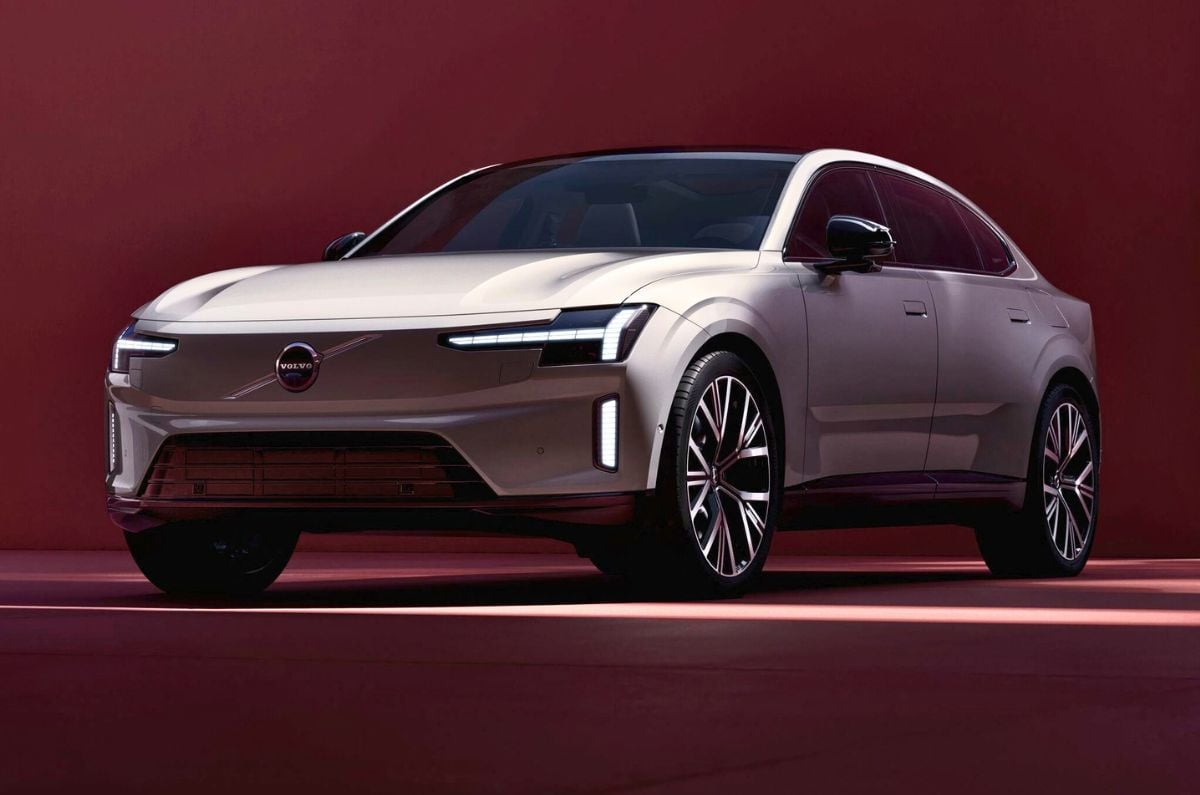
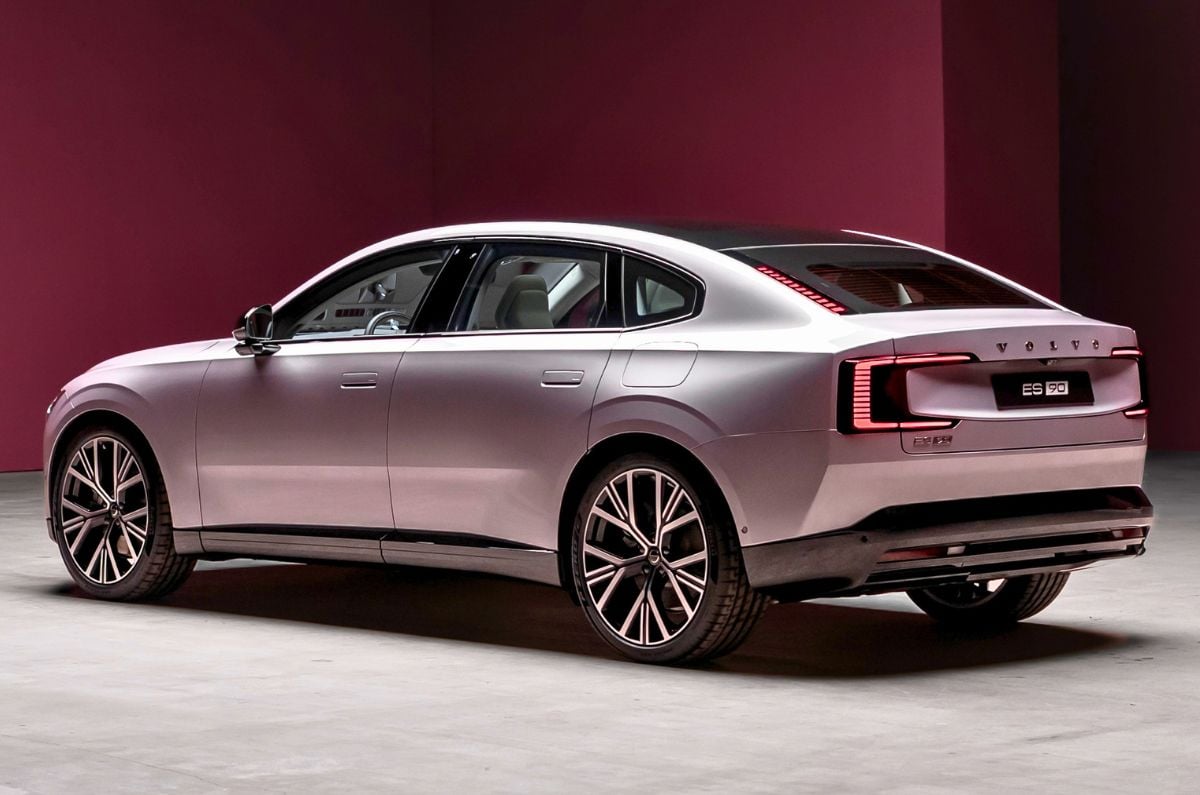
The Volvo ES90 will be launched in India tomorrow, marking a comeback for a Volvo sedan in the country after the S90’s discontinuation in 2024. Upon launch, it will serve as the manufacturer’s flagship EV alongside the EX90 SUV, which will also be launched alongside the ES90 sedan. Here’s everything you need to know about the upcoming Volvo ES90 ahead of its launch tomorrow.
1. What is the expected price of the Volvo ES90?
Prices are expected to be in the Rs 1 crore to Rs 1.20 crore range (ex-showroom)
The Volvo ES90 will arrive in India as a completely built unit (CBU) import. It is expected to be priced in the Rs 1 crore to Rs 1.20 crore range (ex-showroom) in the country.
2. What powertrain option will the India-spec Volvo ES90 get?
Gets two battery pack options and choices between RWD and AWD internationally
The Volvo ES90 is built on the manufacturer’s 800-volt SPA2 architecture shared with the EX90 eSUV. Internationally, the ES90 is offered with either a 92kWh or a 106kWh battery. The smaller battery has a claimed WLTP range of 664km and is paired with a rear-axle-mounted (RWD) electric motor that produces 333hp and 480Nm. It has a claimed 0-100kph time of 6.6 seconds and has a 180kph capped top speed. It supports up to 350kW DC fast charging, which can replenish the battery from 10-80 percent in 22 minutes.
The larger 106kWh battery has a claimed WLTP range of 702km, and is offered with a dual-motor all-wheel-drive (AWD) setup producing either 456hp and 670Nm, or 680hp and 870Nm, with claimed 0-100kph sprint times of 5.4 seconds and 4 seconds, respectively, depending on the chosen trim. 180kph capped top speed, 350kW DC fast-charging capability, and 22-minute 10-80 percent charging time are the same as the smaller battery version.
Volvo is yet to reveal which powertrain option will be offered with the India-spec ES90 sedan.
3. What are the design highlights of the Volvo ES90?
Gets LED lights all around, with a rather simple and elegant design
The Volvo ES90 features a blanked-off body-coloured grille with a Volvo logo in the centre, flanked by LED headlights with segmented Thor’s hammer LED DRLs on both ends. The bumper has air inlets in the centre to cool the internals and features vertically stacked LED fog lamps similar to those on the EX90. A LiDAR sensor was previously mounted on the edge of the roof, but is no longer offered on Volvo’s MY2026 models in international markets, following the termination of Volvo’s contract with its supplier, Luminar, after the latter filed for bankruptcy.
In profile, it offers wheel sizes ranging from 20 to 22 inches, all with aerodynamic inserts. It gets a gloss black section on the lower portion of the doors, along with black outside rearview mirrors (ORVMs) and a blacked-out roof, which add contrast. It gets sleek pull-type door handles. Interestingly, the ES90 has a drag coefficient (Cd) of 0.25, making it Volvo’s most aerodynamic production car yet.
At the rear, it features C-shaped wraparound LED taillights and LED stop lights on both sides of the rear windscreen, similar to the EX90. The rear bumper features a gloss black portion that gives a nice contrast to the otherwise simple design.
4. What features will the Volvo ES90 offer?
Features two free-standing screens, 4-zone AC, and up to 25 speakers
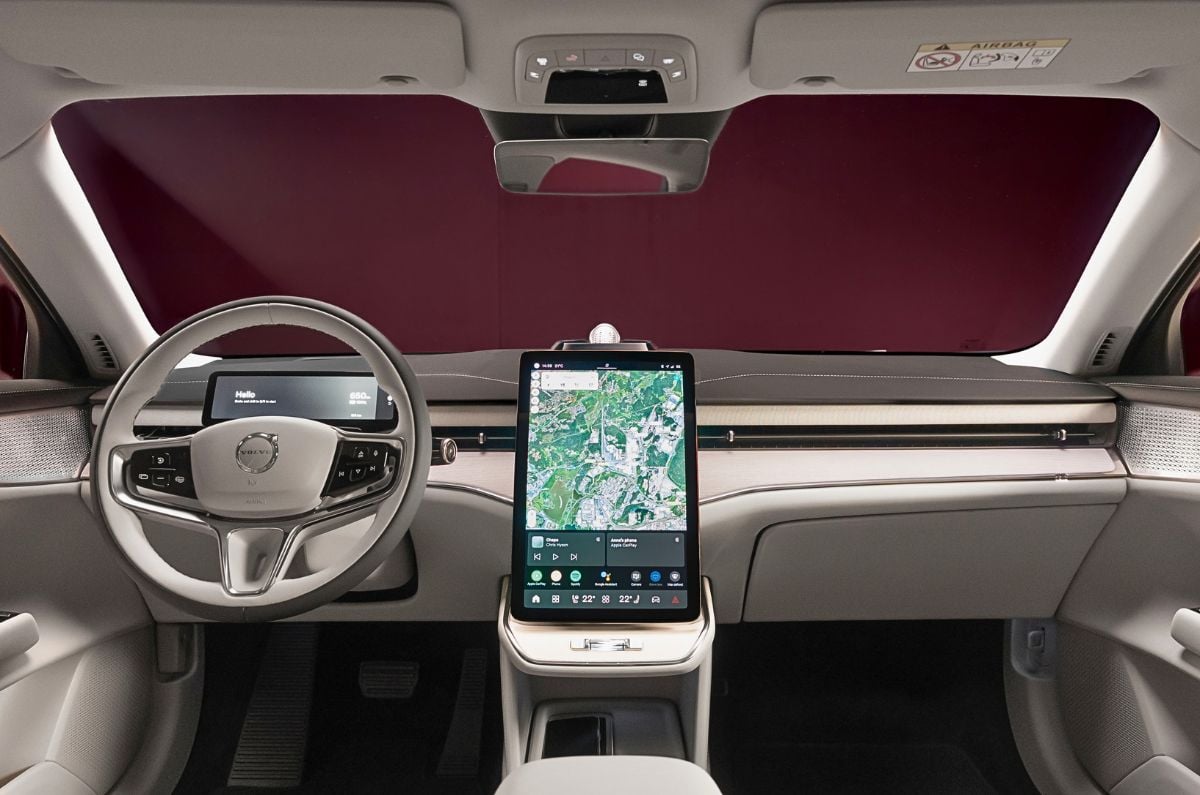
Inside, the Volvo ES90 has a clean design and is filled to the brim with modern-day features. These include a 14.5-inch portrait-oriented, free-standing infotainment touchscreen, a 9-inch digital driver’s display, a 13.2-inch coloured head-up display (HUD), and a 14-speaker Bose sound system, which can be upgraded to a 25-speaker Bowers & Wilkins audio setup. Other features include a wireless phone charger, a powered tailgate, a 4-zone climate control and a digital key. The front seats are powered, heated, ventilated and offer a massage function with powered lumbar support. The rear seats are electrically reclinable, have powered side bolsters, and are offered with heating and ventilation functions.
Most of these features are expected to be a part of the India-spec Volvo ES90.
5. Which cars will the Volvo ES90 rival in India
Will be a more affordable alternative to full-size BMW and Mercedes-Benz electric sedans
The Volvo ES90 will be a more reasonably priced alternative to the Mercedes-Benz EQS sedan (Rs 1.30 crore) and the BMW i7 (Rs 1.95 crore).
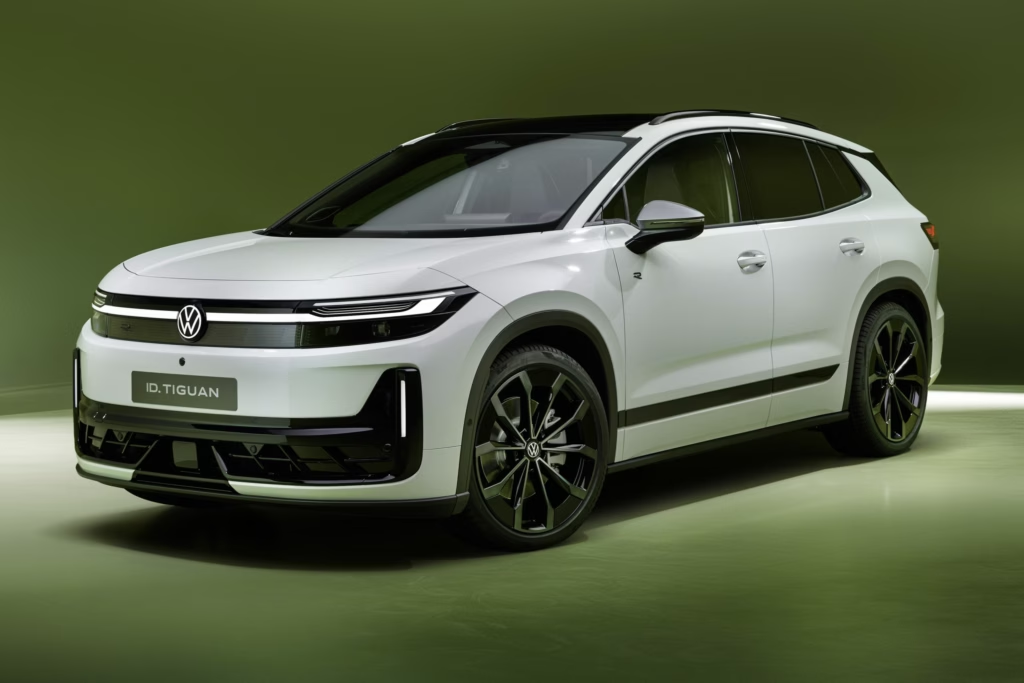
Volkswagen has revealed the ID. Tiguan for the European market. Slated to launch in 2027, the ID. Tiguan is a successor to the ID. 4 and ID. 5, says Volkswagen. The eSUV will be offered with 58kWh and 77kWh battery packs in RWD and AWD layouts. The ID. Tiguan will continue to sell alongside the ICE-powered Tiguan in global markets.
Volkswagen ID. Tiguan Exterior
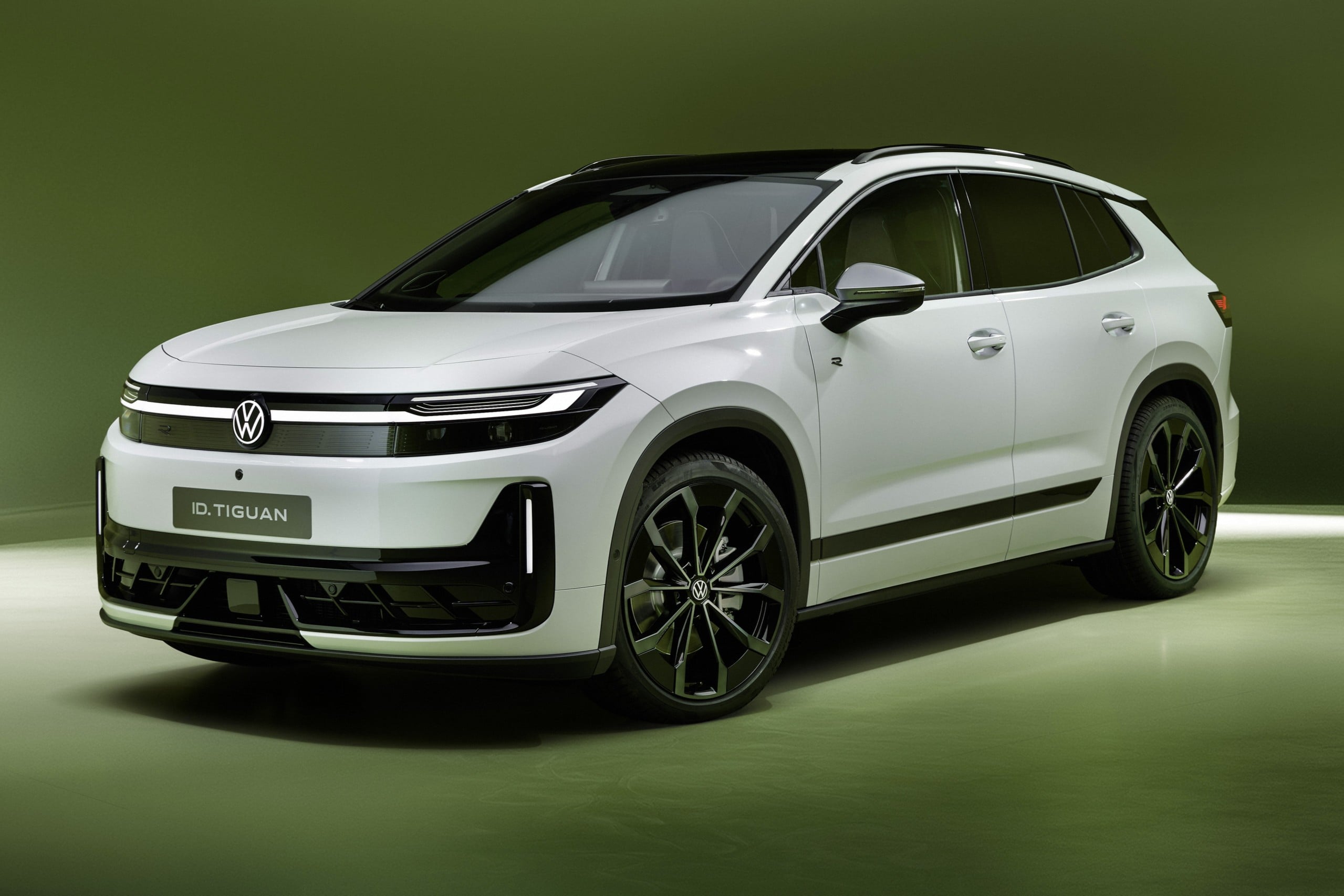
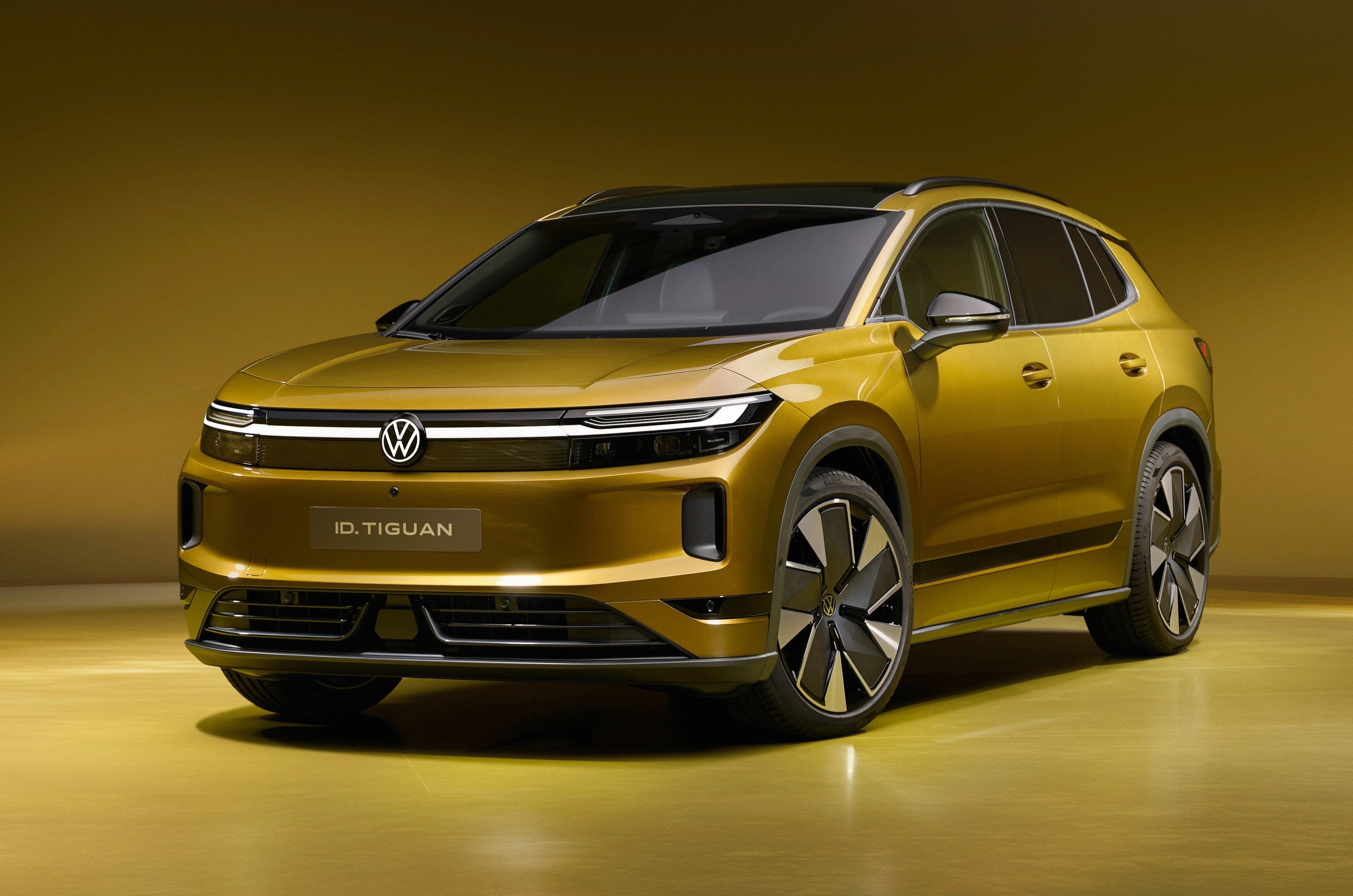
The ID. Tiguan is underpinned by the MEB+ platform and gets the brand’s ‘Pure Positive’ design language. Additionally, the brand says it has given the ID. Tiguan a more SUV-like design as opposed to the crossover-esque look of the ID. 4 and 5. LED headlamps, connected LED DRLs, and an illuminated logo are encased in a black trim.
Volkswagen ID. Tiguan. Interior and features
All-black theme, triple screen setup and powered, ventilated front seats
Inside, the ID. Tiguan gets an all-black theme with silver accents. Flanking the layered dashboard is a triple-screen setup, which is surrounded partly by silver trim. You get physical buttons for HVAC controls, and the high-set centre console comes with cubbyholes. There’s also a two-spoke steering wheel with a plethora of physical buttons, and behind it is a digital driver’s display with themes displaying dials from older VW models.
The Tiguan will be sold in four trim levels, namely, Trend, Life, Style, and R-Line. Niceties include a 15-inch infotainment system, 10-inch digital driver’s display, 12-inch passenger screen, an ADAS suite, powered front seats with memory, massage, and ventilation functions, Harmon Kardon sound system, panoramic sunroof, a wireless phone charger, connected car tech, ambient lighting, and V2L functionality.
Volkswagen ID. Tiguan powertrains
Up to 299hp, RWD and AWD options
The ID. Tiguan will be offered with 58kWh and 77kWh battery packs. The former is paired solely with a rear-mounted motor producing 190hp. The larger 78kWh battery pack is available in RWD and AWD layouts, producing 286hp and 299hp, respectively. The carmaker forecasts a WLTP range of up to 600km. Additionally, Volkswagen claims a towing capacity of up to 2 tonnes depending on the battery pack chosen. However, charging speed support and time details remain under wraps.
A little over 13 months after entering the Indian market, Tesla has crossed the 1,000-unit sales mark with its sole offering – the Model Y. According to the Vahan portal, Tesla India recorded total deliveries of 1,017 Model Y units between September 2025 and October 2, 2026. Last month, Tesla recorded its highest-ever monthly sales in the country at 291 units, up 322 percent from 69 units from the year-ago period. Month-on-month, too, sales were up 149 percent from 117 units in August.
Tesla India sales so far
Triple-digit sales registered since July
Tesla Model Y sales in India so far
Month
Units
Change (percent)
September 2025
69
–
October 2025
40
-42
November 2025
48
20
December 2025
69
44
January 2026
38
-45
February 2026
29
-24
March 2026
53
83
April 2026
43
-19
May 2026
36
-16
June 2026
38
6
July 2026
116
205
August 2026
117
1
September 2026
291
149
October 2026*
30
–
Total
1,017
–
*Data for October 1 and 2.
The American EV maker’s September sales performance came during a record month for India’s electric passenger vehicle (e-PV) market, which recorded monthly retail sales of 35,995 units; Tesla accounted for 0.80 percent of total e-PV sales. It also moved up to second place in the luxury e-PV segment for the first time, outselling Mercedes-Benz India, which sold 125 units in September. BMW India was the segment leader with 502 units and a 51 percent share. Tesla’s share of the luxury e-PV market rose to 30 percent in September 2026, from 11 percent a year earlier. In July, Tesla had moved ahead of Volvo to take third place.
Tesla Model Y L AWD.
From September 2025 until June 2026, the Model Y recorded monthly deliveries in double digits. Sales rose 205 percent month-on-month to 116 units in July, compared to just 38 units in June. Between July and October 2, Tesla delivered 554 Model Ys, accounting for 54 percent of its total sales so far. This came after Tesla India cut the Model Y Premium RWD base trim’s price by Rs 9 lakh in May, bringing it down to Rs 50.89 lakh. The Tesla EV is available in five-seater (Model Y) and six-seater (Model Y L) iterations. Compared to the top-spec Model Y L Premium AWD, the Model Y Premium RWD costs Rs 11.1 lakh less.
The Model Y rivals the Hyundai Ioniq 5 (Rs 55.71 lakh), Kia EV6 (Rs 65.98 lakh) and BYD Sealion 7 (Rs 49.4 lakh to Rs 55.9 lakh).
Model Y specs, range
The Model Y Premium RWD gets a 64kWh battery (gross capacity) with a claimed 500km WLTP range, and it uses a 299hp, 420Nm electric motor. The battery size of the Model Y L has not been revealed. Since the Model Y L in right-hand drive configuration is also available in Australia, and going by the Australian-spec model, it is likely powered by an 88.2kWh battery (gross capacity). Power and torque figures are estimated at 514hp and 590Nm, respectively. Tesla India has confirmed that the Model Y L gets a dual-motor AWD setup and has a claimed range of 681km (WLTP).
Tesla India expanding sales, charging network
6 showrooms, 7 charging stations are operational here
Last month, Tesla India opened its sixth showroom in Chennai, adding to its existing outlets in Mumbai, Delhi, Gurugram, Bengaluru and Hyderabad. It has also started service and bodyshop operations in Chennai, taking its service network to eight locations.
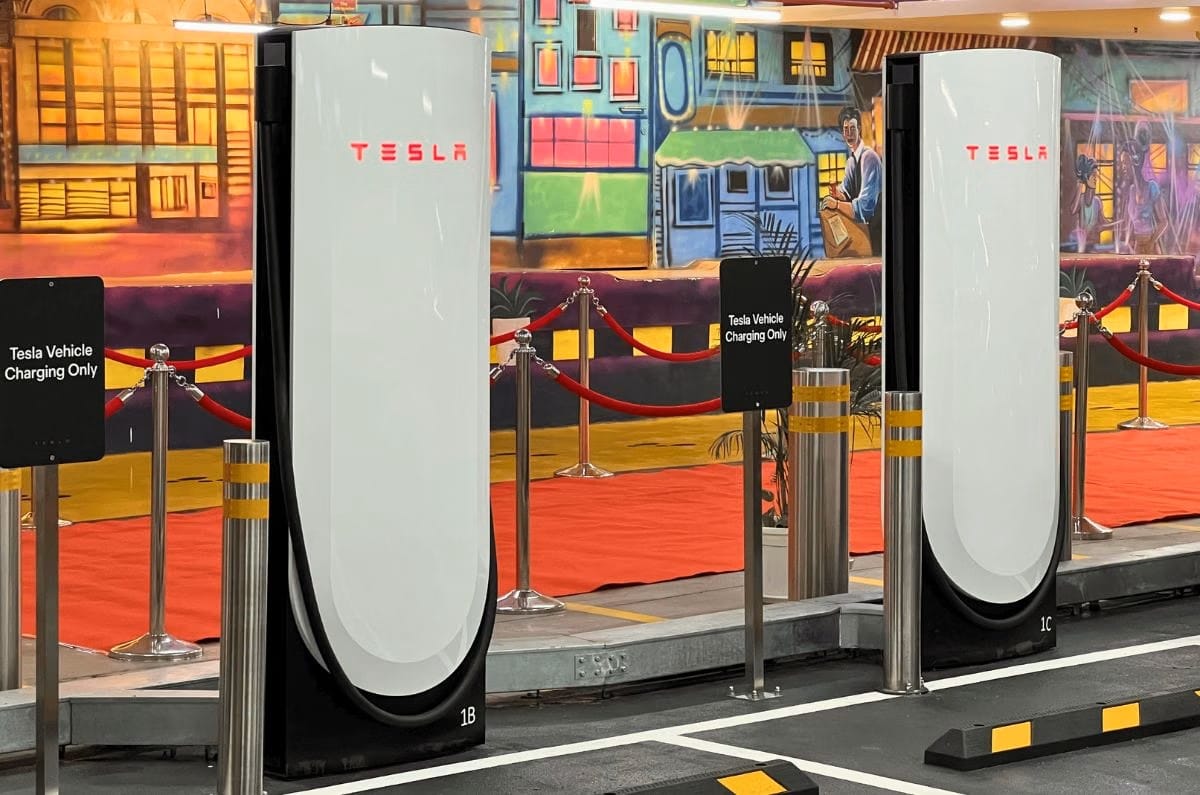
In August, Tesla opened its latest Destination Charging facility at Lake Shore Thane in Mumbai. It has four 11kW AC chargers. Tesla now operates seven charging stations in India, including locations in Navi Mumbai, Delhi and Gurugram, with 20 Superchargers and 24 Destination Chargers.
Ex-showroom prices mentioned above are as on October 5, 2026.
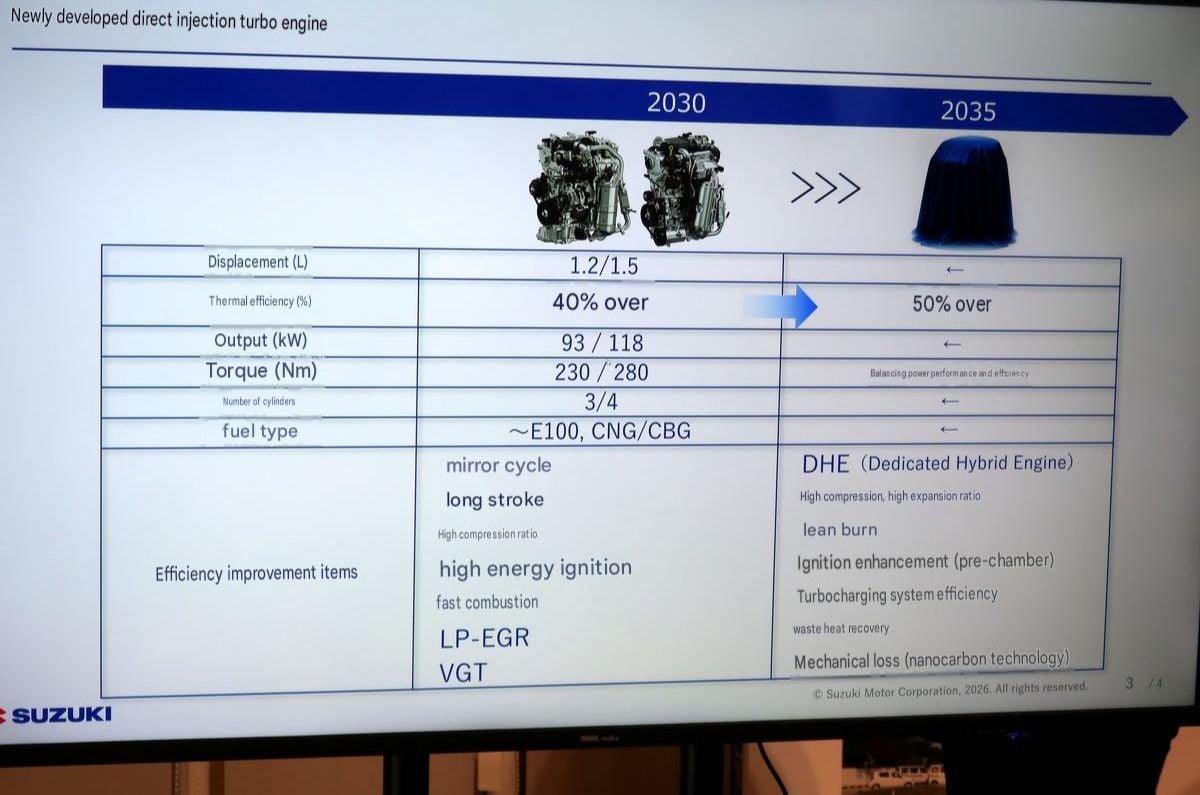
Suzuki recently revealed plans to develop a new direct-injection turbocharged (DITC) engine for growth markets, including India, as part of its ‘Technology Strategy 2026: Looking 10 Years Ahead’ roadmap. The manufacturer has also revealed specifications for a 1.2-litre 3-cylinder turbo-petrol engine prototype in Japan, which is being developed for compatibility with E100, CNG (compressed natural gas) and CBG (compressed biomethane gas). While not confirmed by the manufacturer, this engine is likely to eventually be offered in India.
1.2-litre turbo-petrol engine prototype produces up to 126hp and 230Nm
This engine is being developed to achieve up to 40 percent thermal fuel efficiency
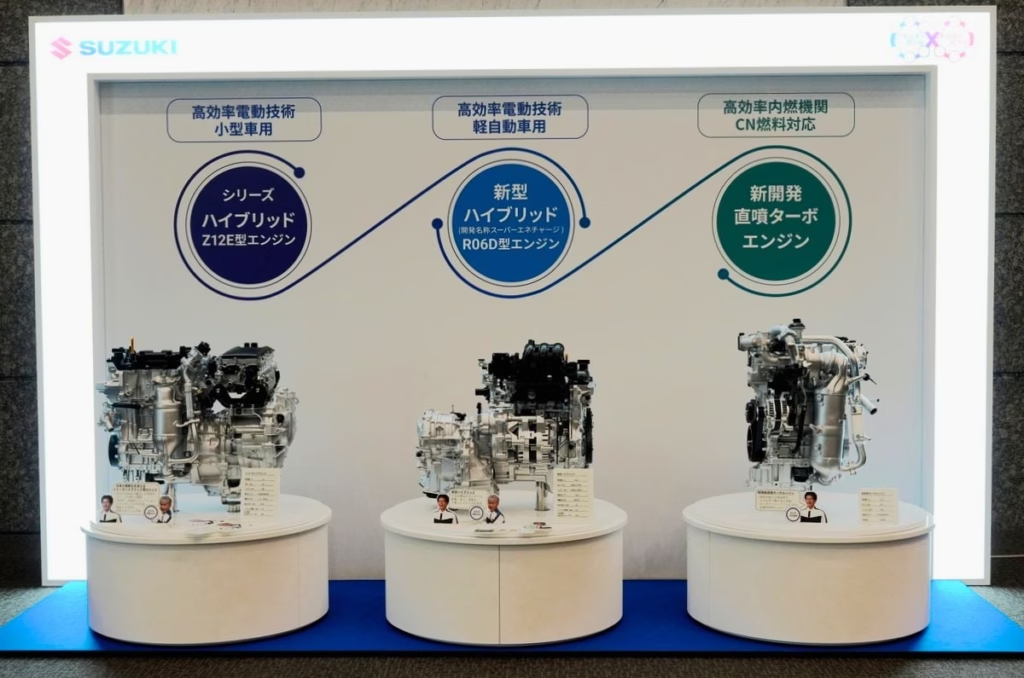
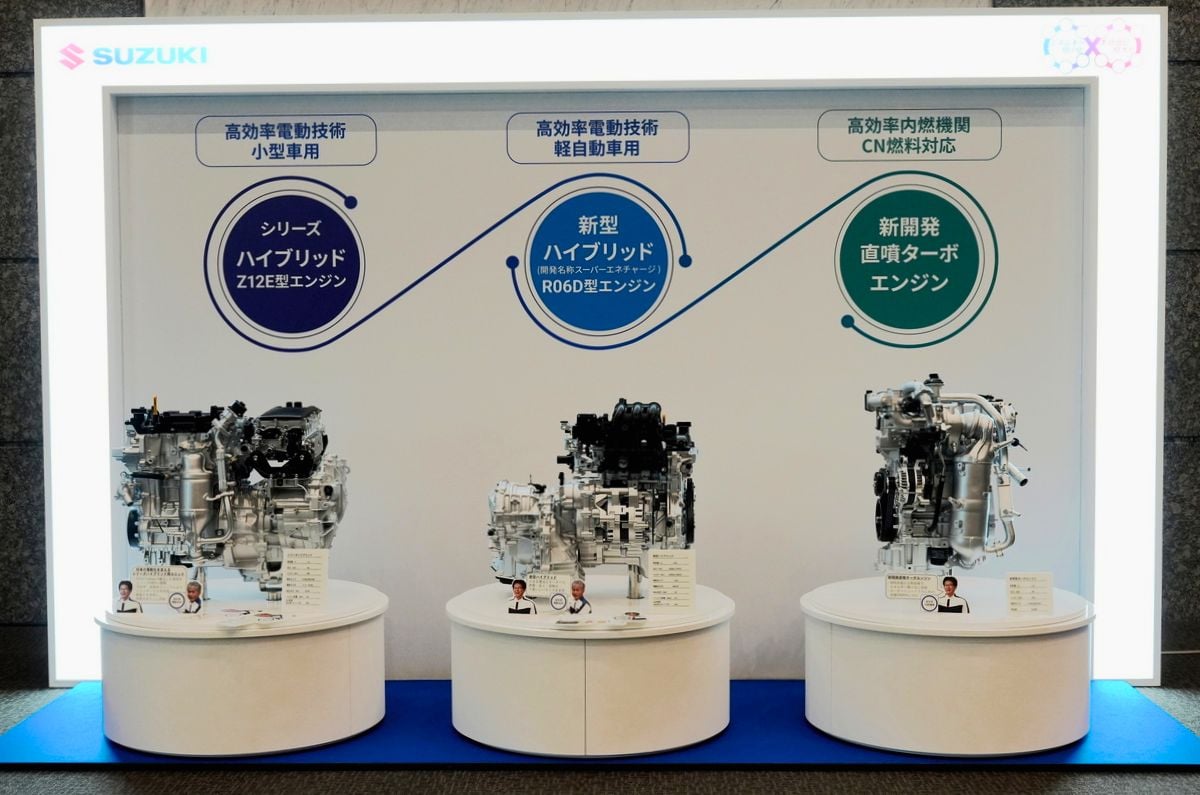
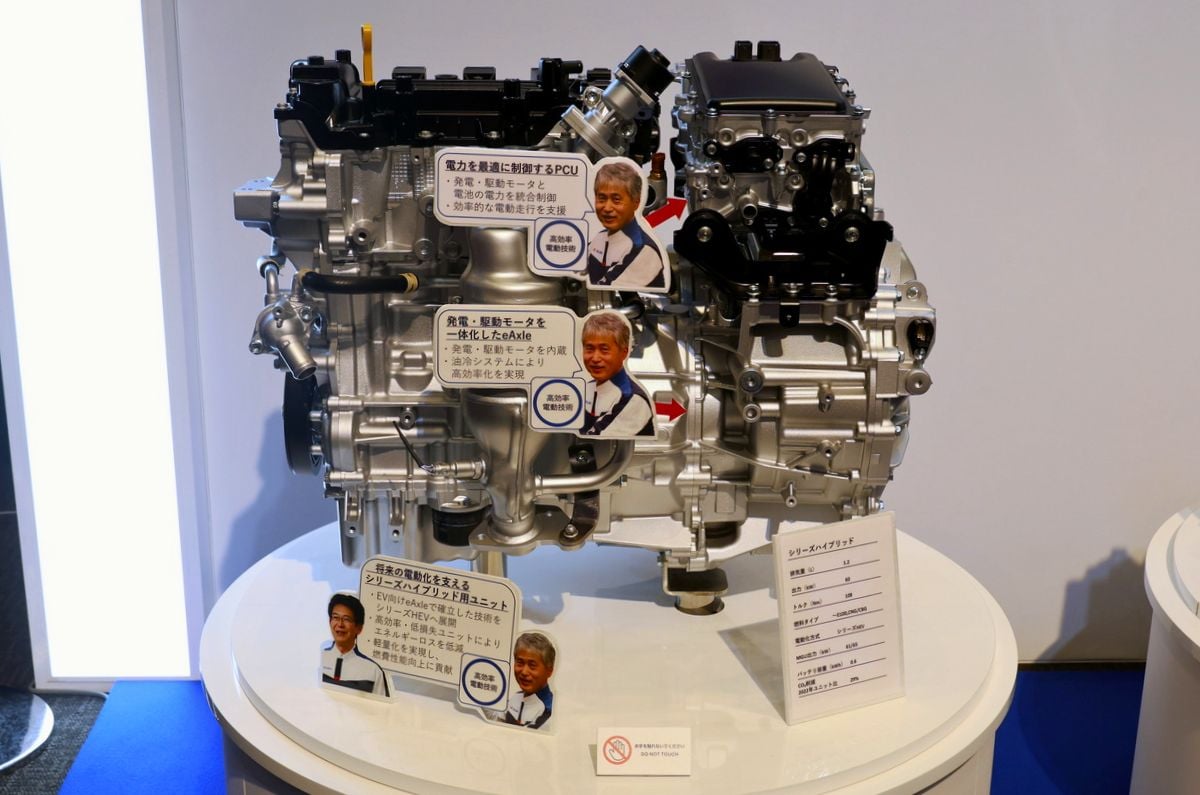
Alongside the turbo-petrol engine, Suzuki has also showcased a series-hybrid powertrain based on the Z12E 3-cylinder engine and a smaller 0.66-litre engine for kei cars. Specifications of a 1.5-litre direct-injection turbo-petrol engine were also revealed.
Suzuki’s new engine prototypes: More details
1.2-litre 3-cylinder turbo-petrol engine is based on Z12E, as per a media report
Image source: Autocar Japan (text translated into English)
The showcased prototype is a 1.2-litre direct-injection turbo-petrol engine, aimed at producing up to 126hp and 230Nm, with thermal fuel efficiency targeted at up to 40 percent at launch and up to 50 percent by 2035. The engine is being developed for compatibility with E100 (100 percent ethanol), CNG and CBG.
According to a report by Japan’s MotorFan, the engine is based on Suzuki’s Z12E 3-cylinder unit and features a variable-geometry (VG) turbocharger and a water-cooled intercooler. The Z12E is offered in a naturally aspirated avatar in the Swift, Baleno and Dzire. While not confirmed by the manufacturer, the new turbocharged engine could eventually be offered in sub-4m cars in India.
Z12E engine to also form the basis of a series-hybrid powertrain
Suzuki is also developing the 1.2-litre Z12E 3-cylinder engine for use in a series-hybrid powertrain. In this setup, the engine generates electricity, while an electric motor drives the wheels. The system uses two motors – one for generating electricity and another for driving the wheels. In this application, the Z12E engine produces up to 82hp and 108Nm, while the generator motor has a maximum output of 83hp and the drive motor produces up to 88hp. The system uses a 0.6kWh battery.
Series hybrid system combining a 1.2L engine and two electric motors. (Image source: Autocar Japan)
Suzuki is also considering combining this series-hybrid system with its new 1.2-litre direct-injection turbo-petrol engine in a future plug-in hybrid setup. The proposed combination could deliver a total system output of up to 177hp.
1.5-litre turbo-petrol engine and a 0.66-litre engine (for kei cars) also in development
As per Autocar Japan, Suzuki is also developing a 1.5-litre 4-cylinder, aimed at producing up to 160hp and 280Nm. Like the smaller 1.2-litre engine, the 1.5-litre turbo-petrol engine is also being developed for compatibility with E100, CNG and CBG fuels.
Suzuki also showcased a smaller 0.66-litre 3-cylinder engine in Japan. The engine is being developed in both naturally aspirated and turbocharged forms for kei cars.
Notably, all the engines showcased by Suzuki are designed for transverse-mounted, front-wheel-drive (FWD) vehicles, with no mention of powertrains for longitudinally mounted, rear-wheel-drive (RWD) models such as the Jimny. However, powertrains for RWD models are also understood to be under development and could be revealed at a later date.
Not too long after a significant update, Mahindra has given the Thar yet another shot in the arm. The Thar OG now gets a whole new set of upgrades to the design, interior and, mainly, under the skin. A new suspension, new steering and added features are all part of the aim to make it more liveable and urban-friendly while retaining the Thar’s butch and bullyish character. Have they succeeded?
Mahindra Thar OG exterior design and engineering – 9/10
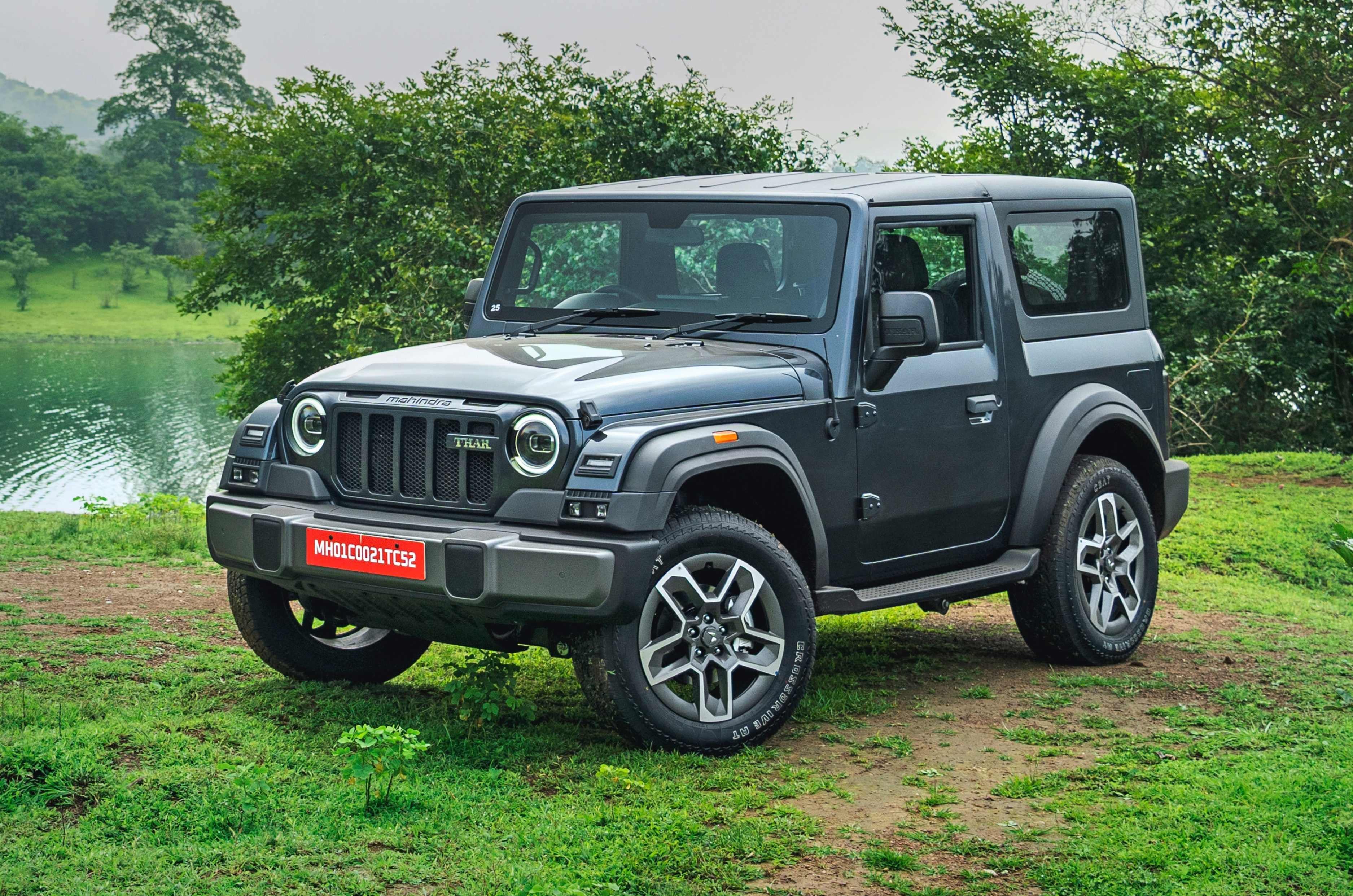
Design updates have retained the classic Thar look and road presence.
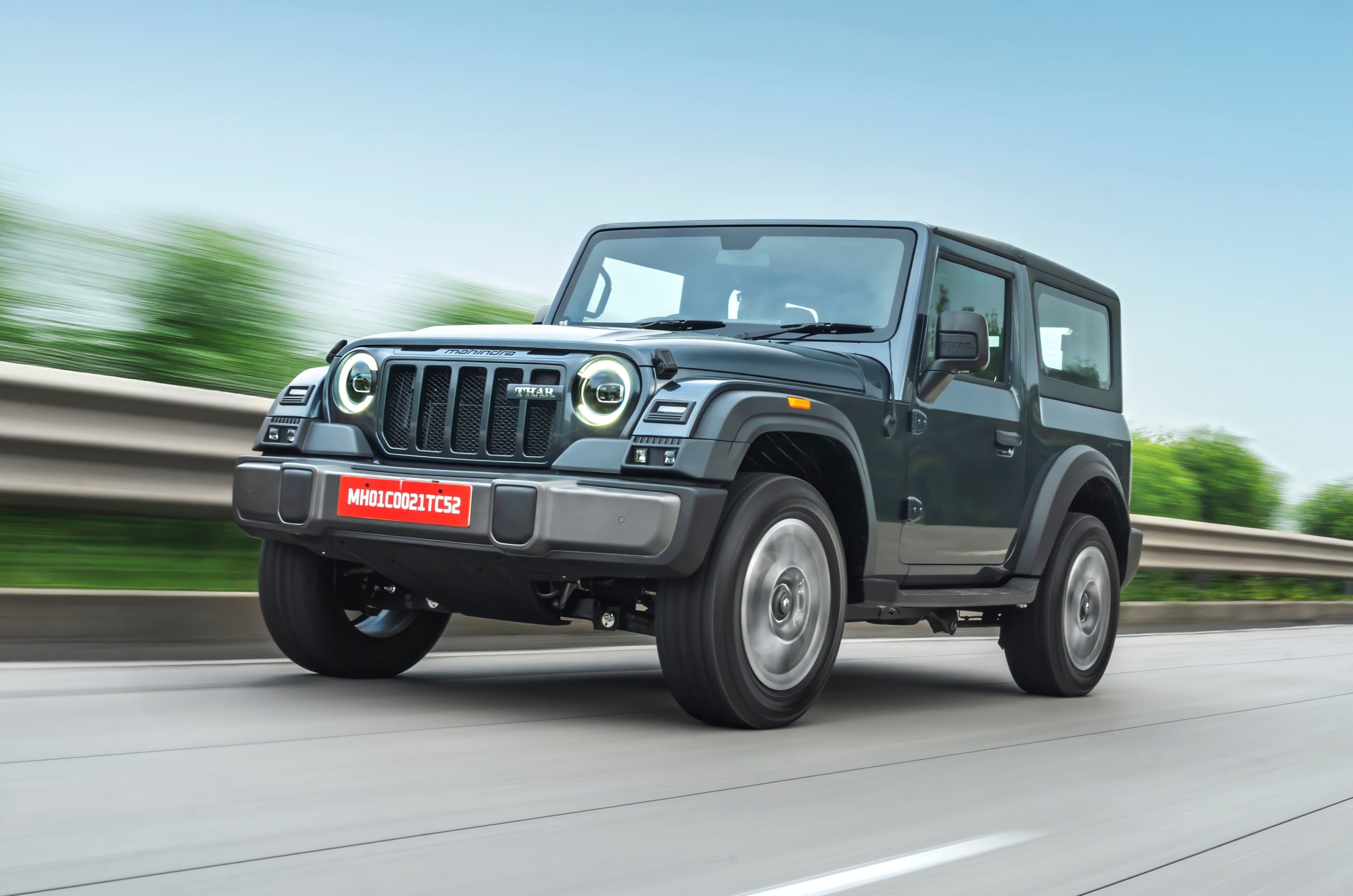
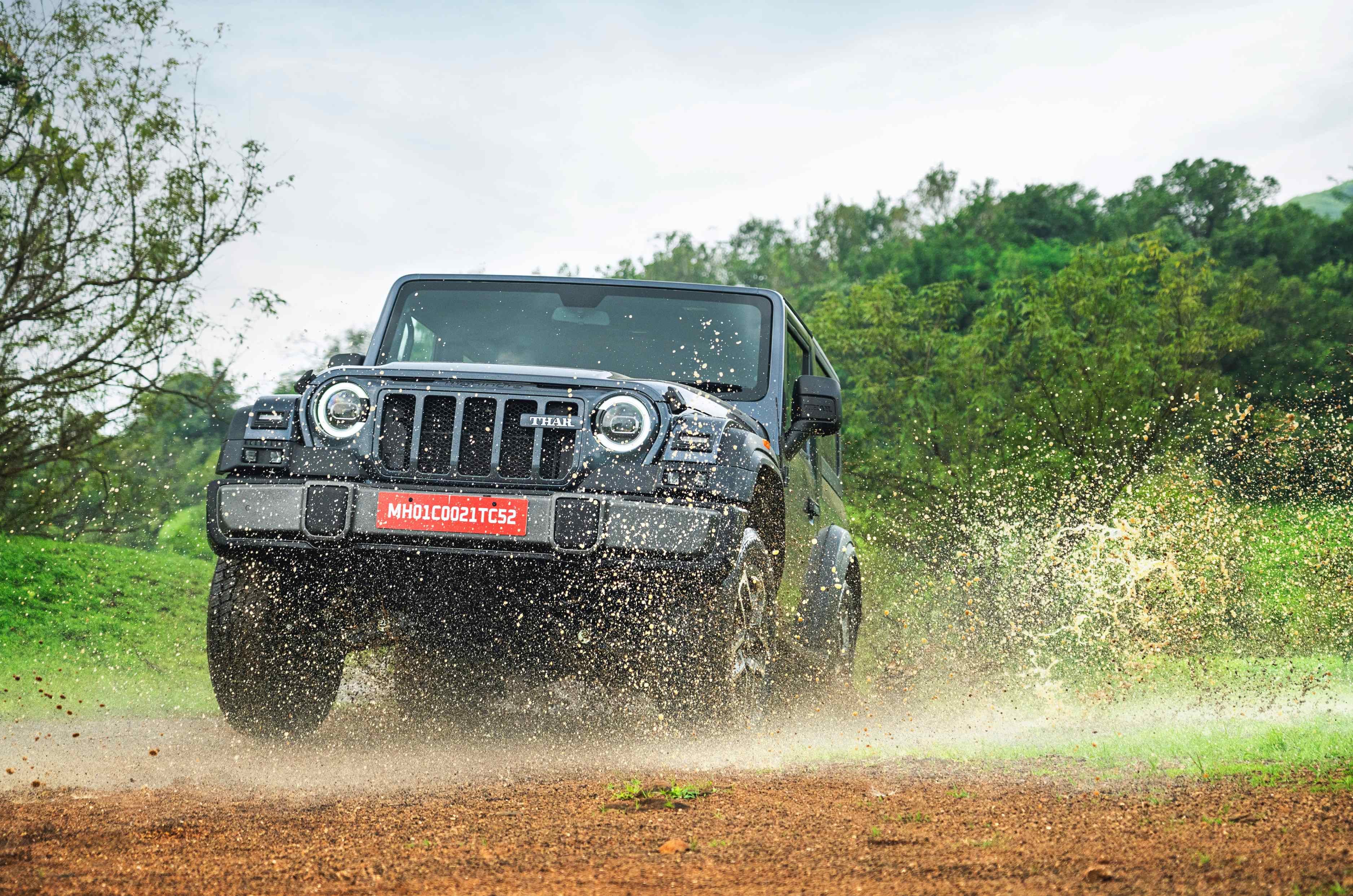
The design is why the Thar stands out, so Mahindra has not done much to change its character. However, it now gets some modern touches. At the front, the halogens are replaced with LED headlamps with C-shaped LED DRLs, along with LED fog lamps. The grille has been redesigned, with the Thar logo forged into it, and so has the front bumper. Look closer, and you will also see front parking sensors now, while the track has been widened for more stability.
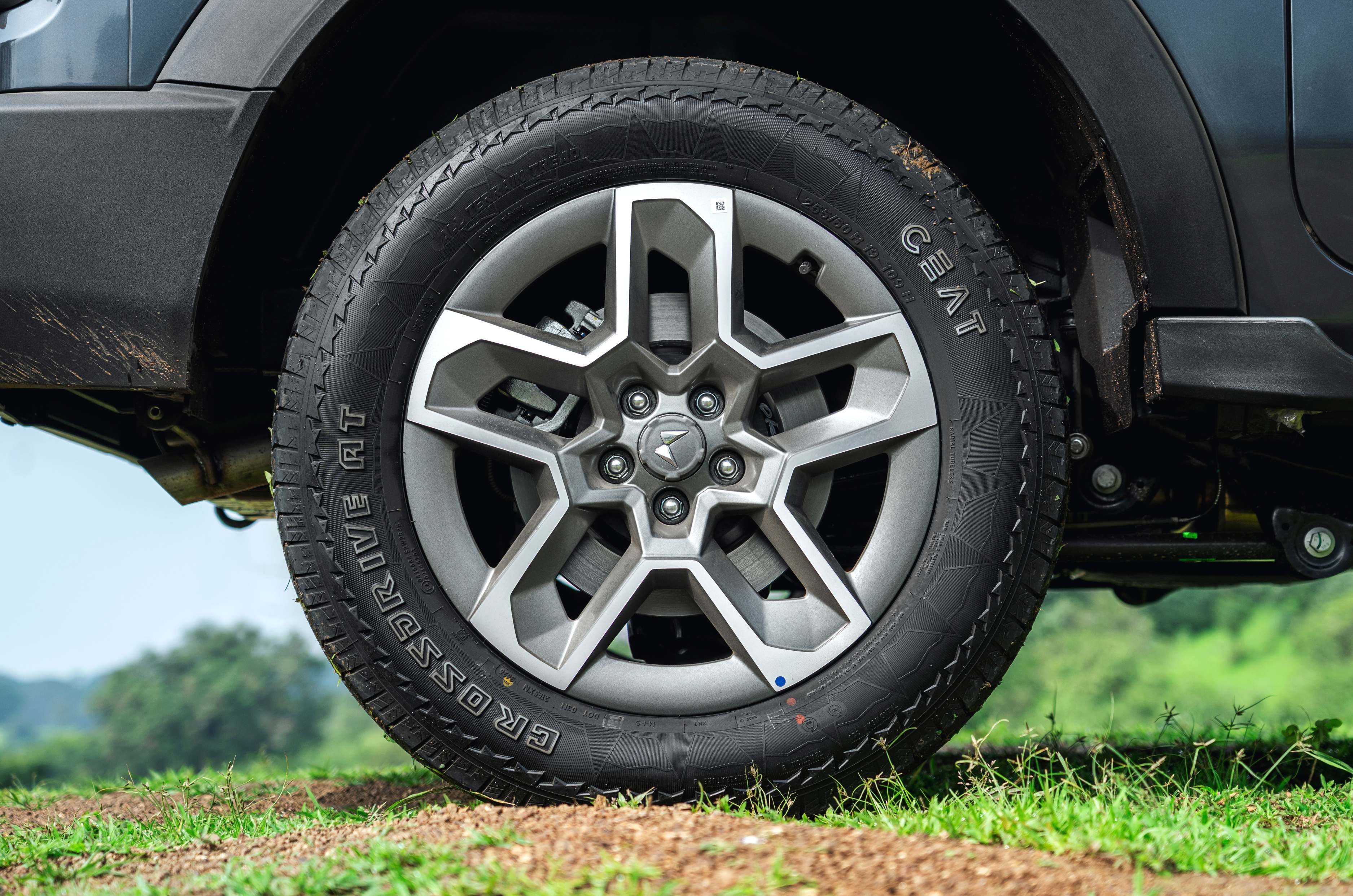
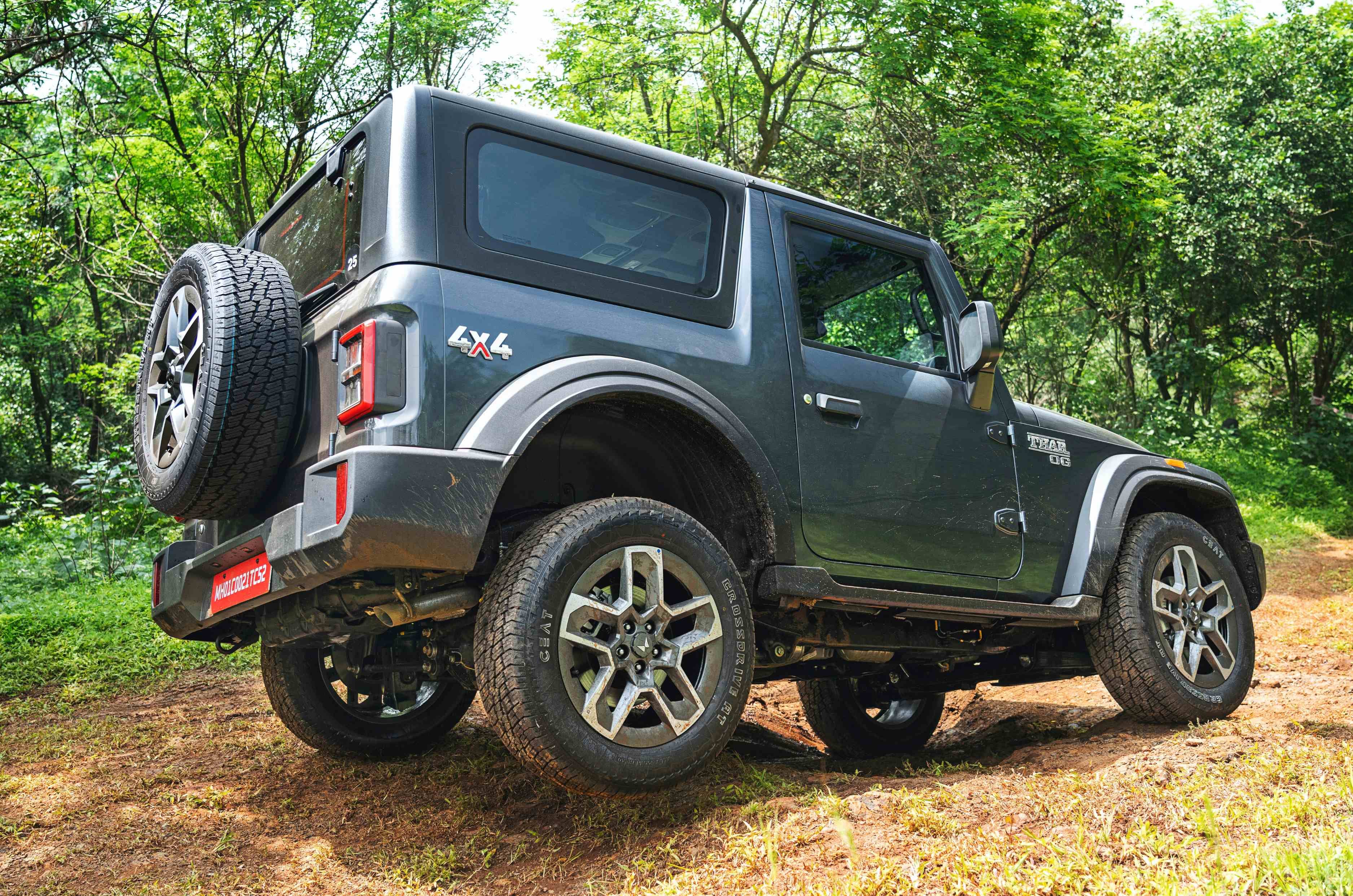
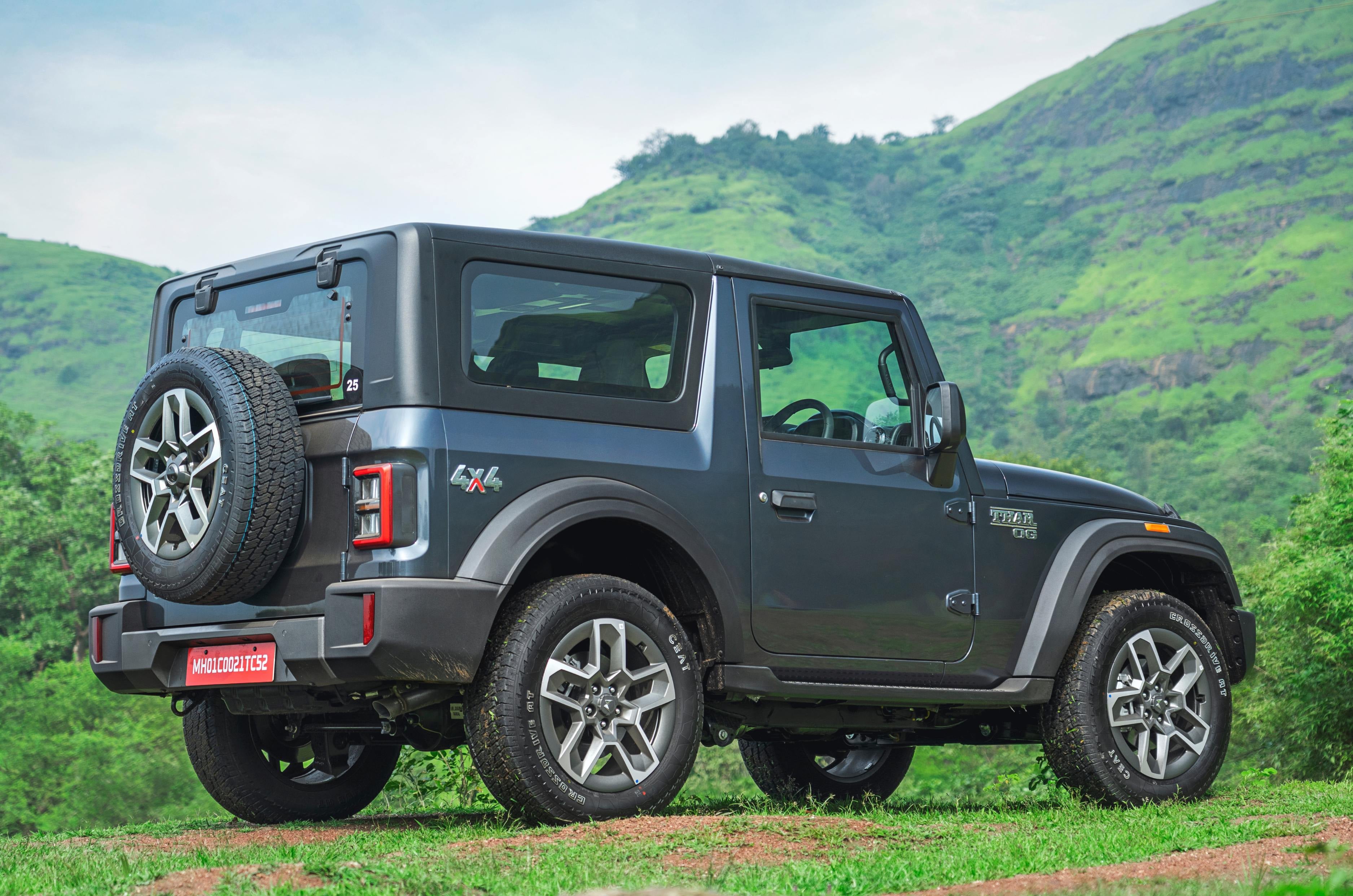
19-inch alloy wheels with AT tyres add to the toughness.
What you don’t see is the new platform the Thar sits on. The OG is now based on the Gen 4 chassis, dubbed M-Glyde, which also serves the Roxx. The side profile flaunts new 19-inch wheels with AT tyres, the Thar OG badge and a new design for the cladding.
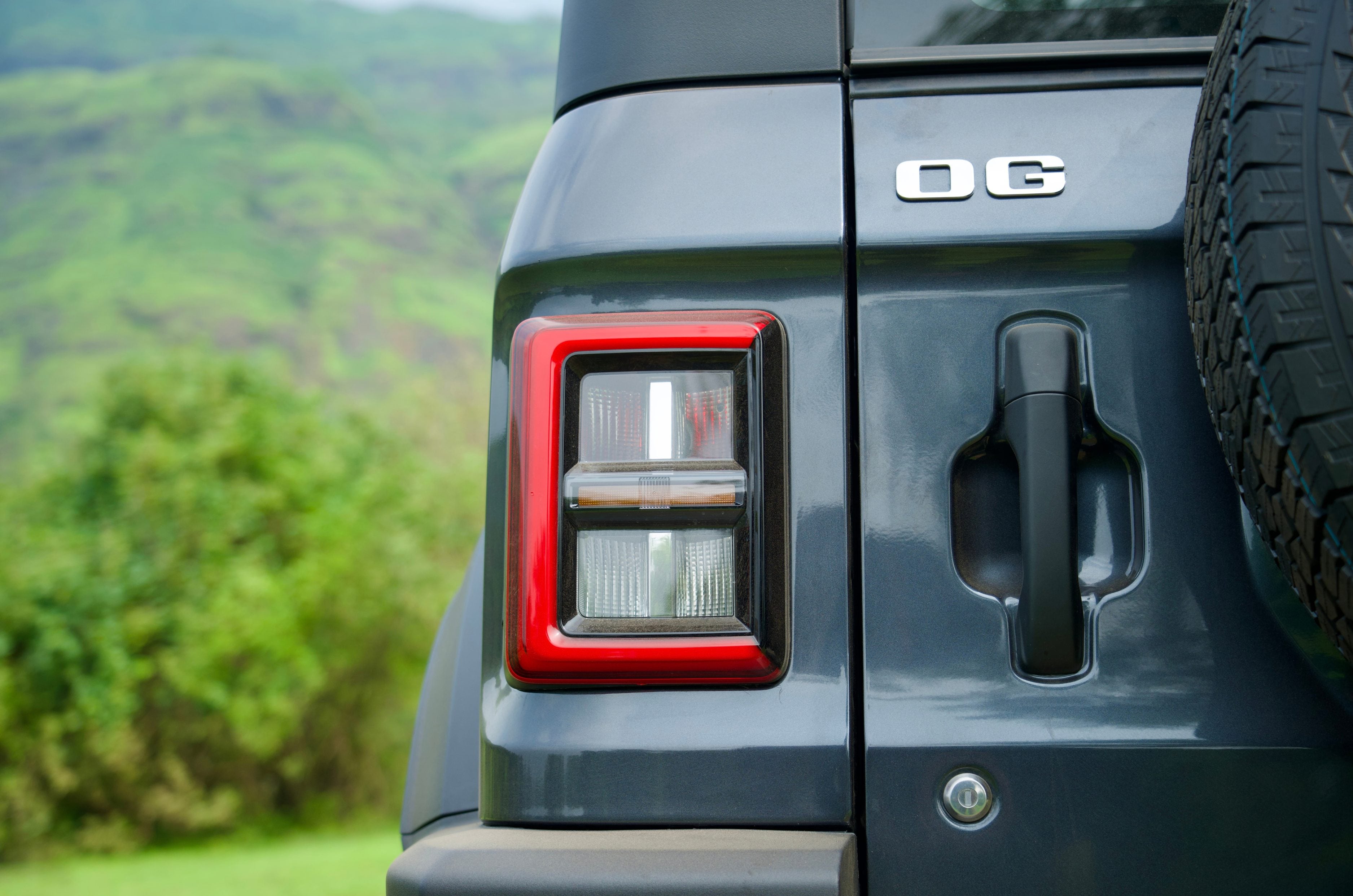
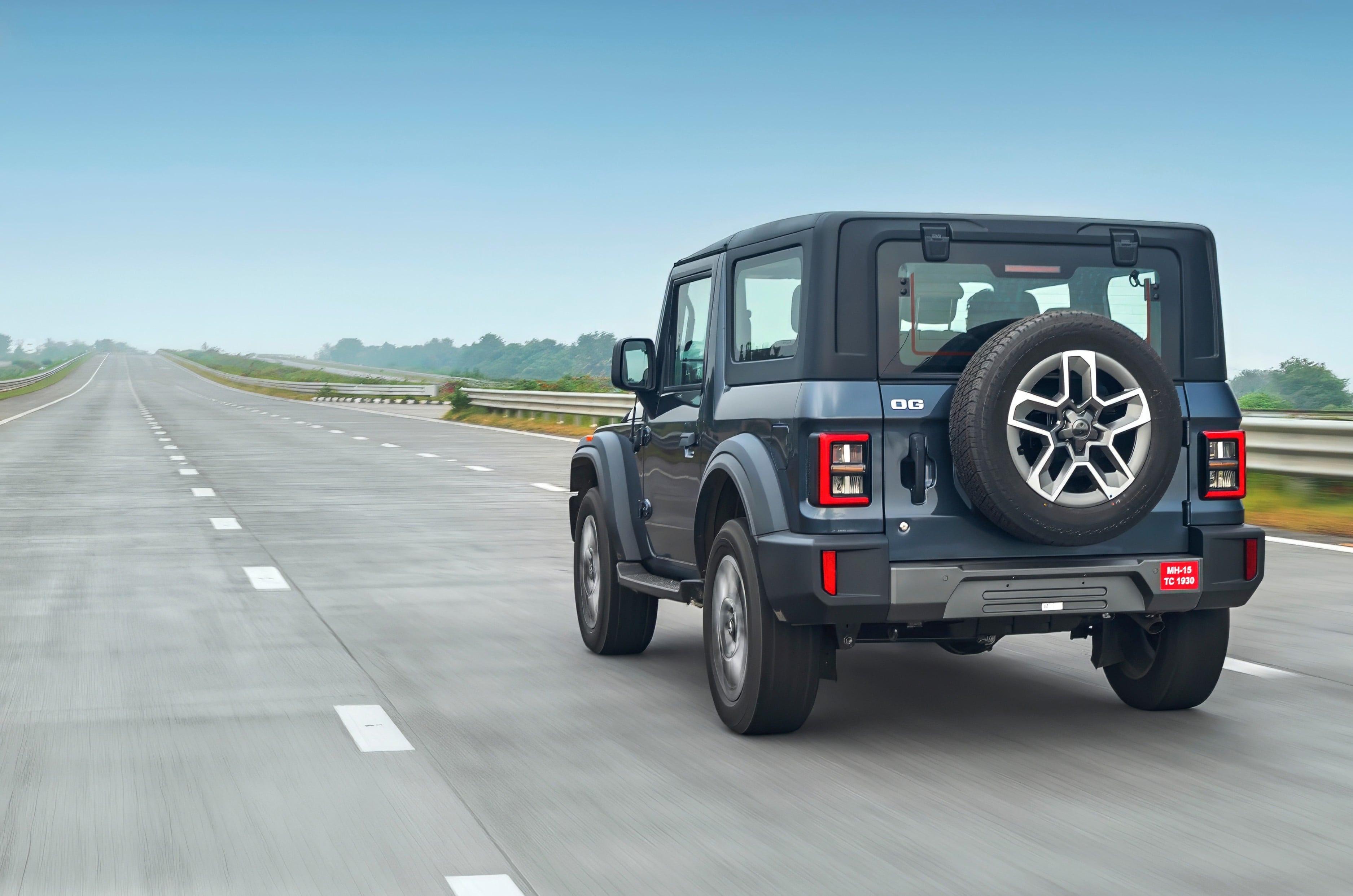
LED taillamps are similar to the Thar Roxx.
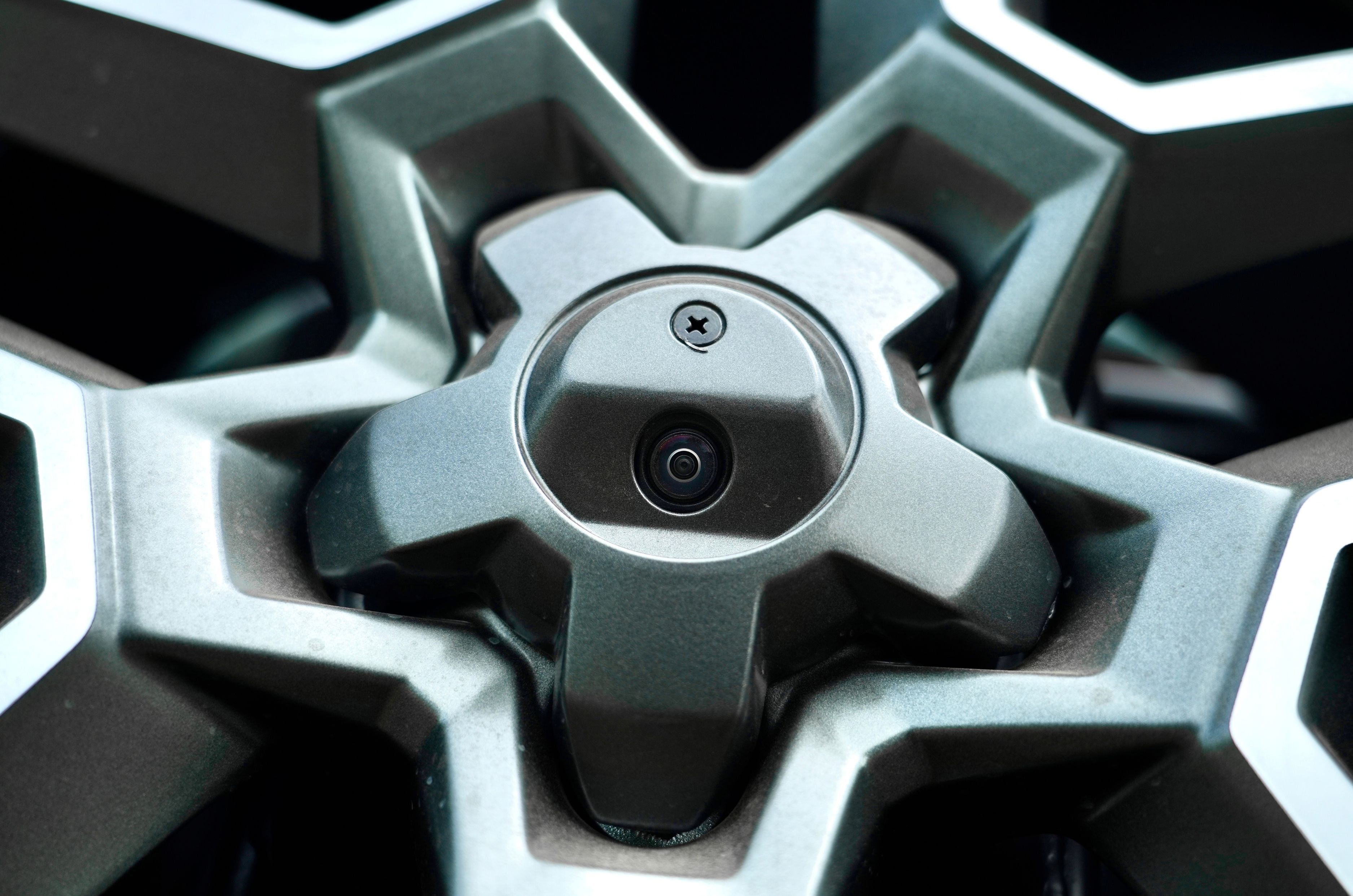
The rear continues with the LED treatment, with C-shaped taillamps, a new bumper and another OG logo. A closer look reveals a rear camera in the centre of the spare wheel.
The reversing camera is tucked in the centre of the spare wheel.
Overall, the imposing, butch design remains, with new modern touches.
Mahindra Thar OG interior space and comfort – 6/10
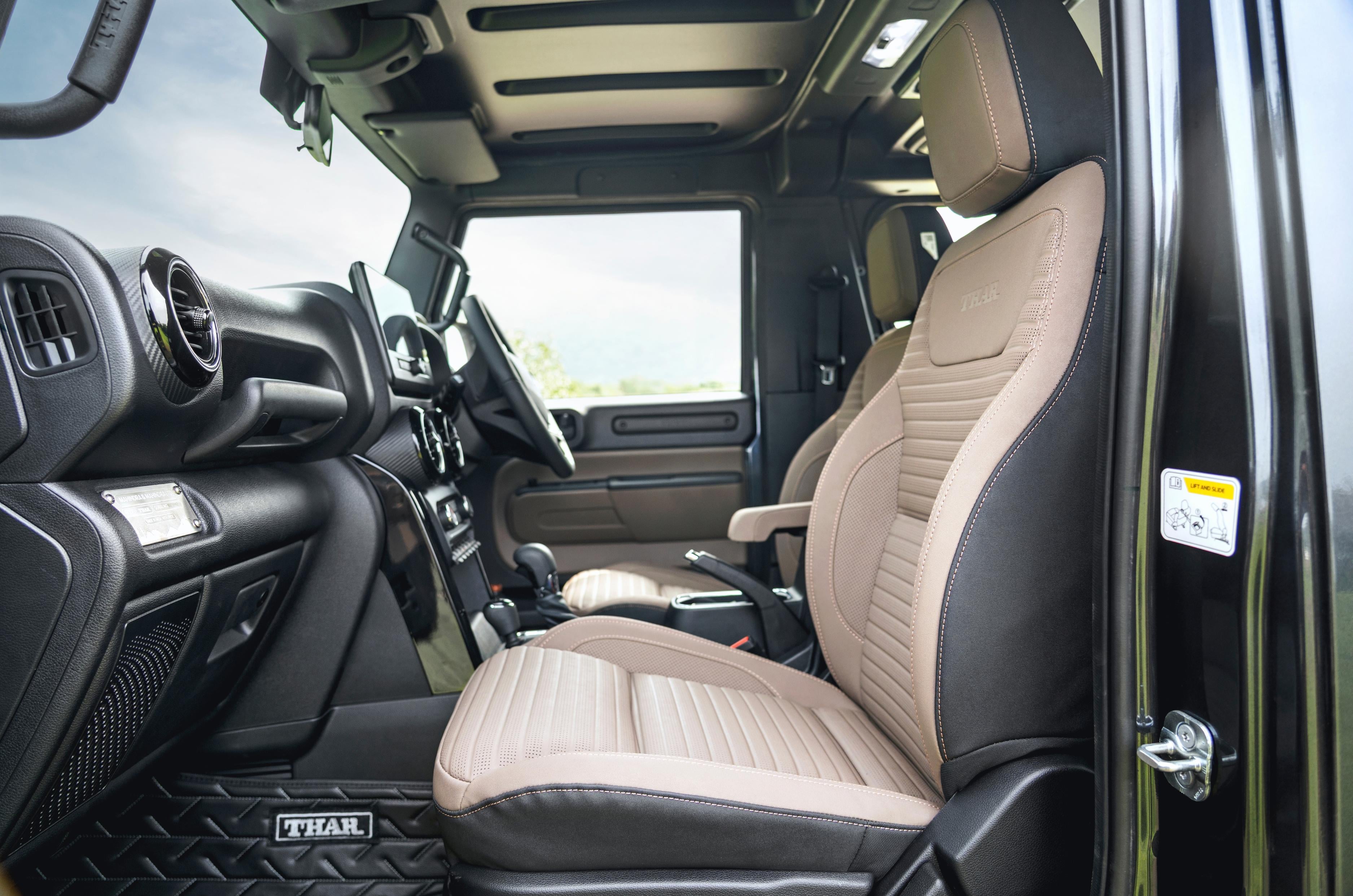
Top-spec ZXT trim gets leatherette upholstery in a new shade.
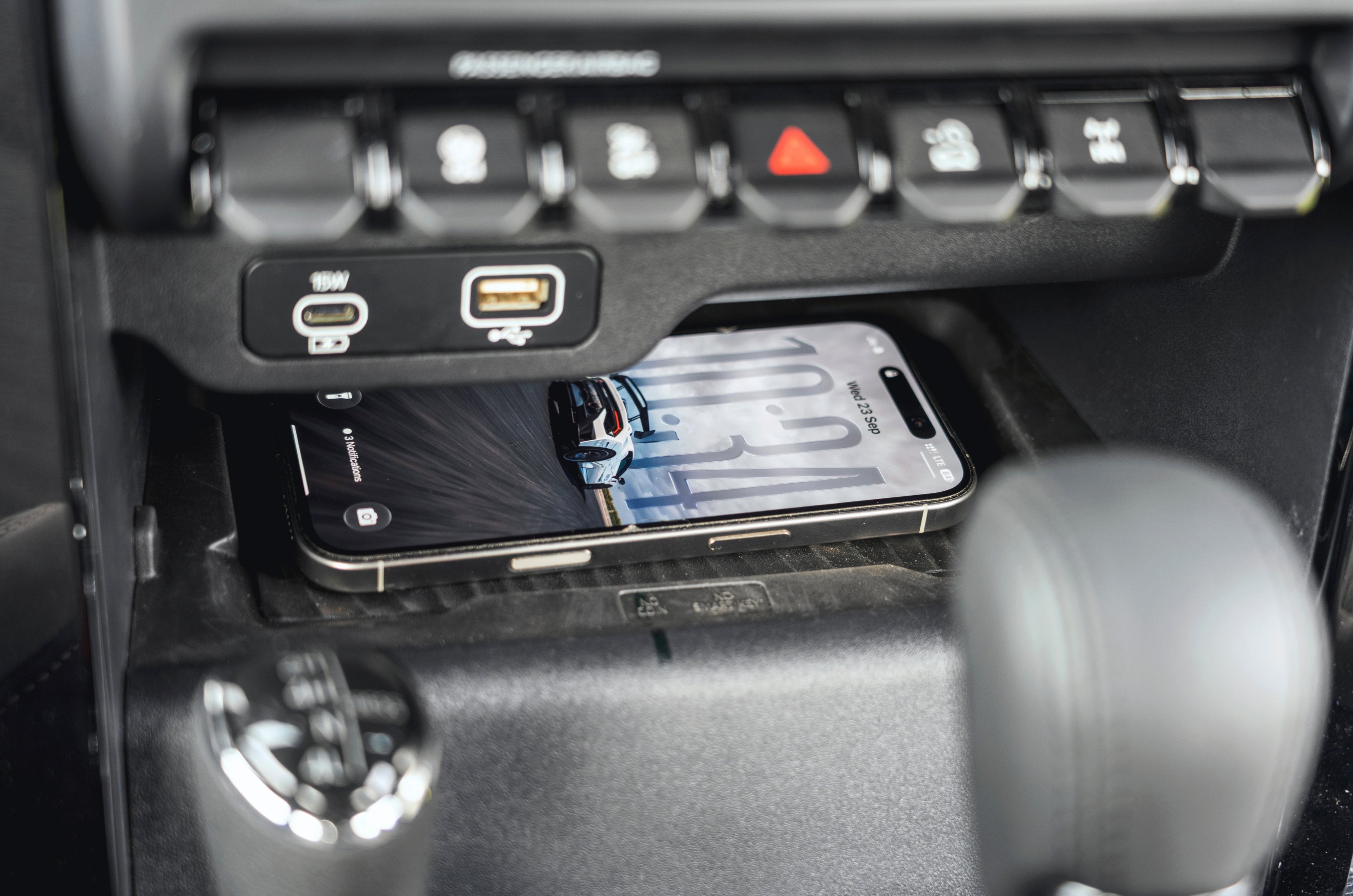
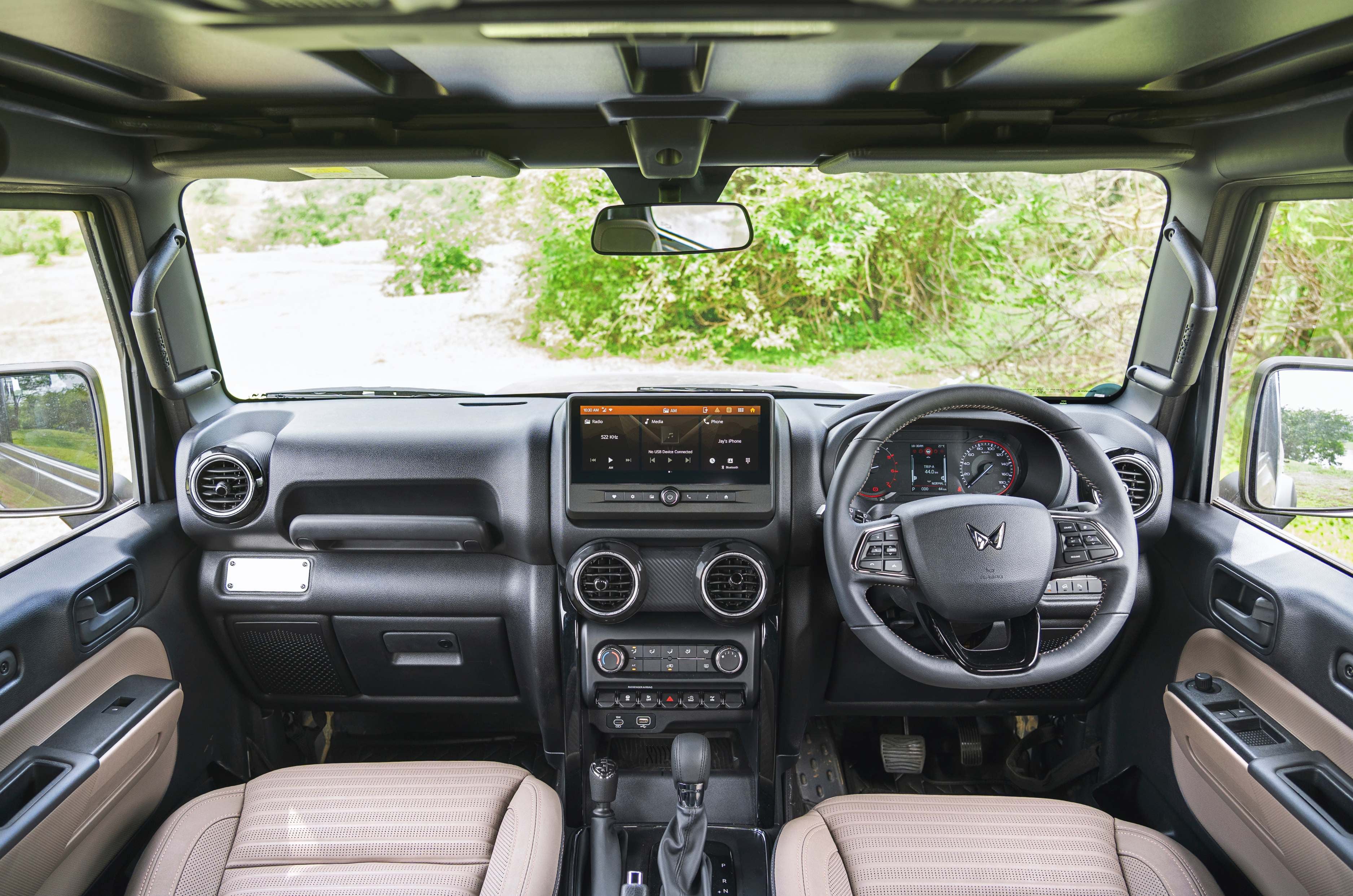
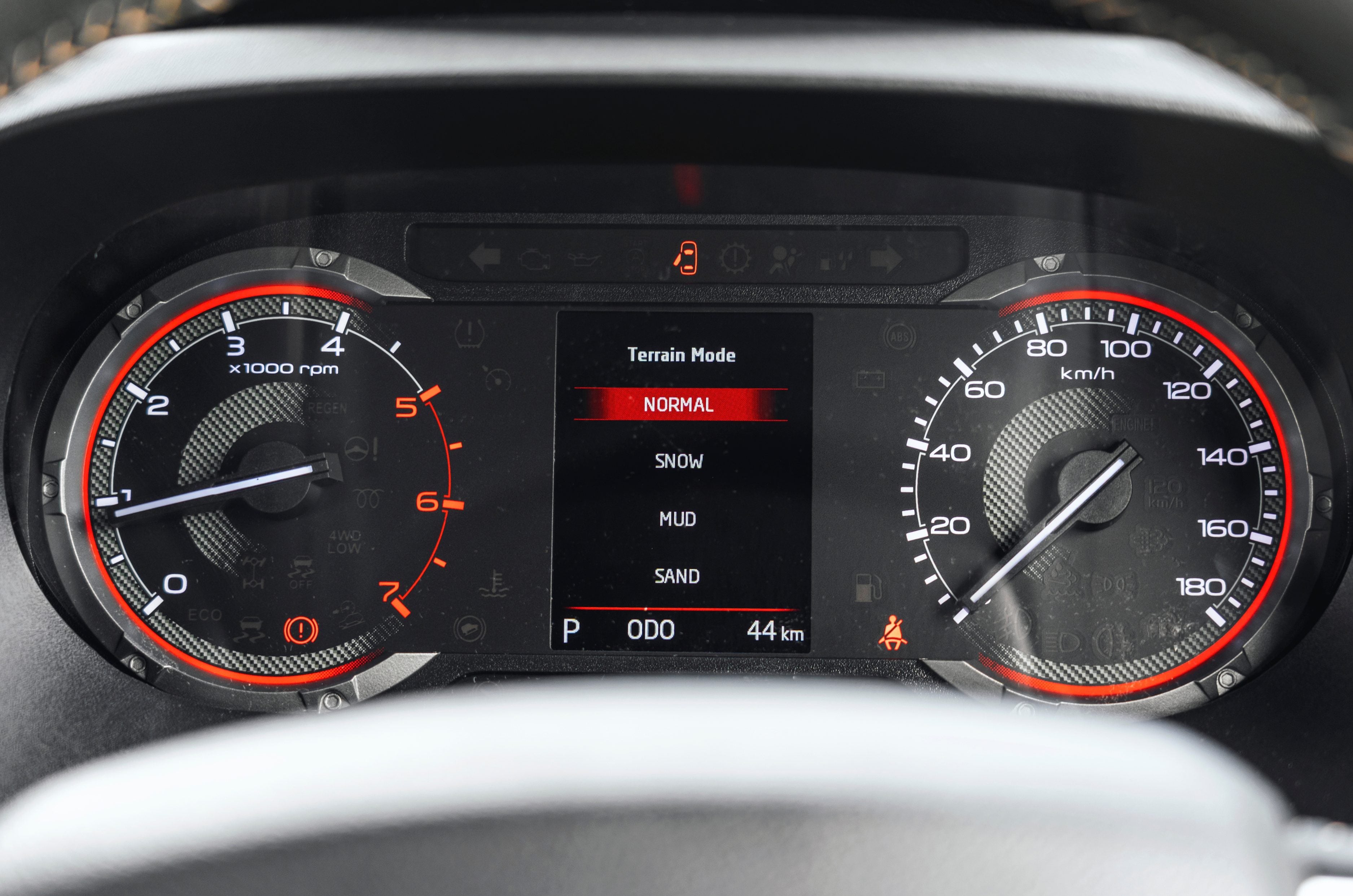
Compared to the exterior, the changes on the inside are a lot more subtle. The new top-spec ZXT trim gets leatherette upholstery finished in a shade of brown, which looks premium with the exposed stitching. There is a new wireless charger and two new switches on the centre console: one for the terrain modes and the other to engage the electronic locking differential.
Gets a new wireless phone charger and different switchgear.
The Thar received a facelift around a year ago, when the cabin was brought up to date with a new steering wheel, touchscreen and dashboard, and these features have been carried over to the OG. The seats are broad and comfy but miss out on ventilation. The two dummy buttons on the centre console will hopefully be used for this feature soon.
Dashboard design is unchanged from the 2025 facelift.
The steering wheel is also the same as before, as is the analogue instrument cluster with an MID in the centre. The plastics, however, feel low-rent, especially when you consider the rivals in the same price bracket.
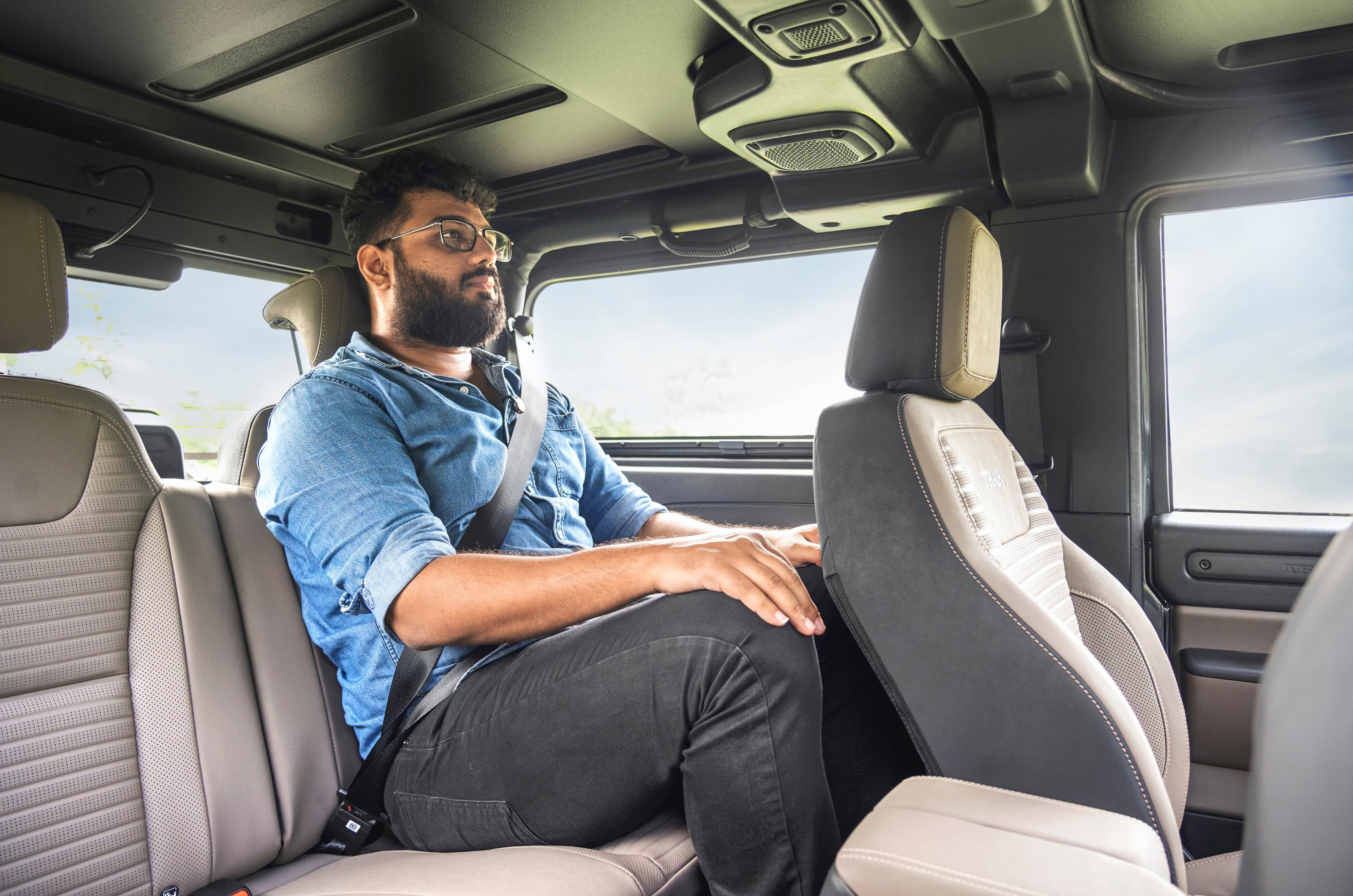
Just enough room in the rear seat; gets AC vents now.
At the rear, space remains as it was, and it is exclusively a two-seater. However, the addition of AC vents, a USB-C port and soft-plastic armrests with cupholders has enhanced comfort. The backrest can recline, and short drives should be easy once you settle in.
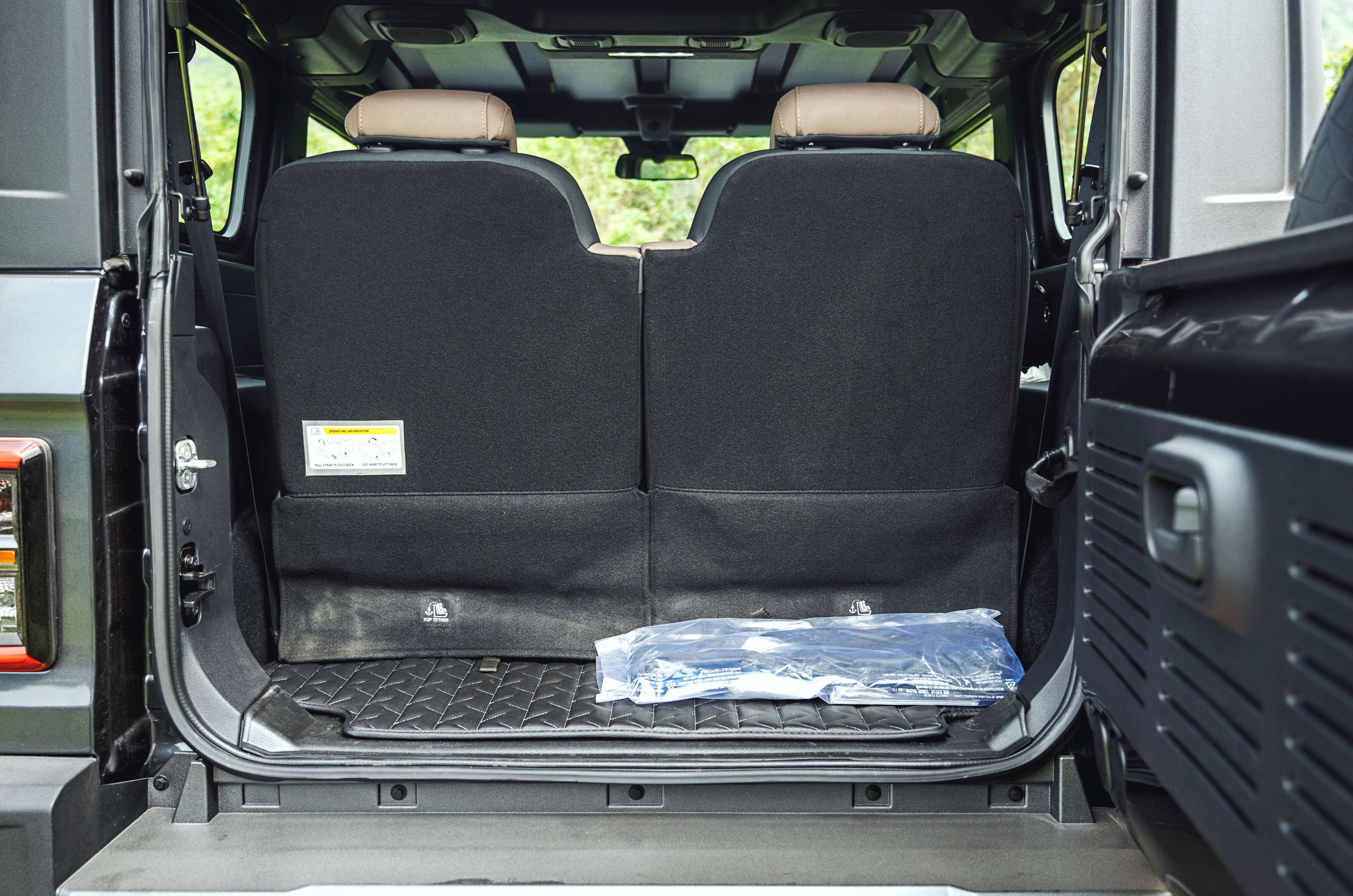
Boot space is still not adequate for long trips or airport runs without folding the second row.
The boot space remains a weak point too, with barely any room for an airport run. Large suitcases will require folding down the second row.
Mahindra Thar OG features and safety – 7/10
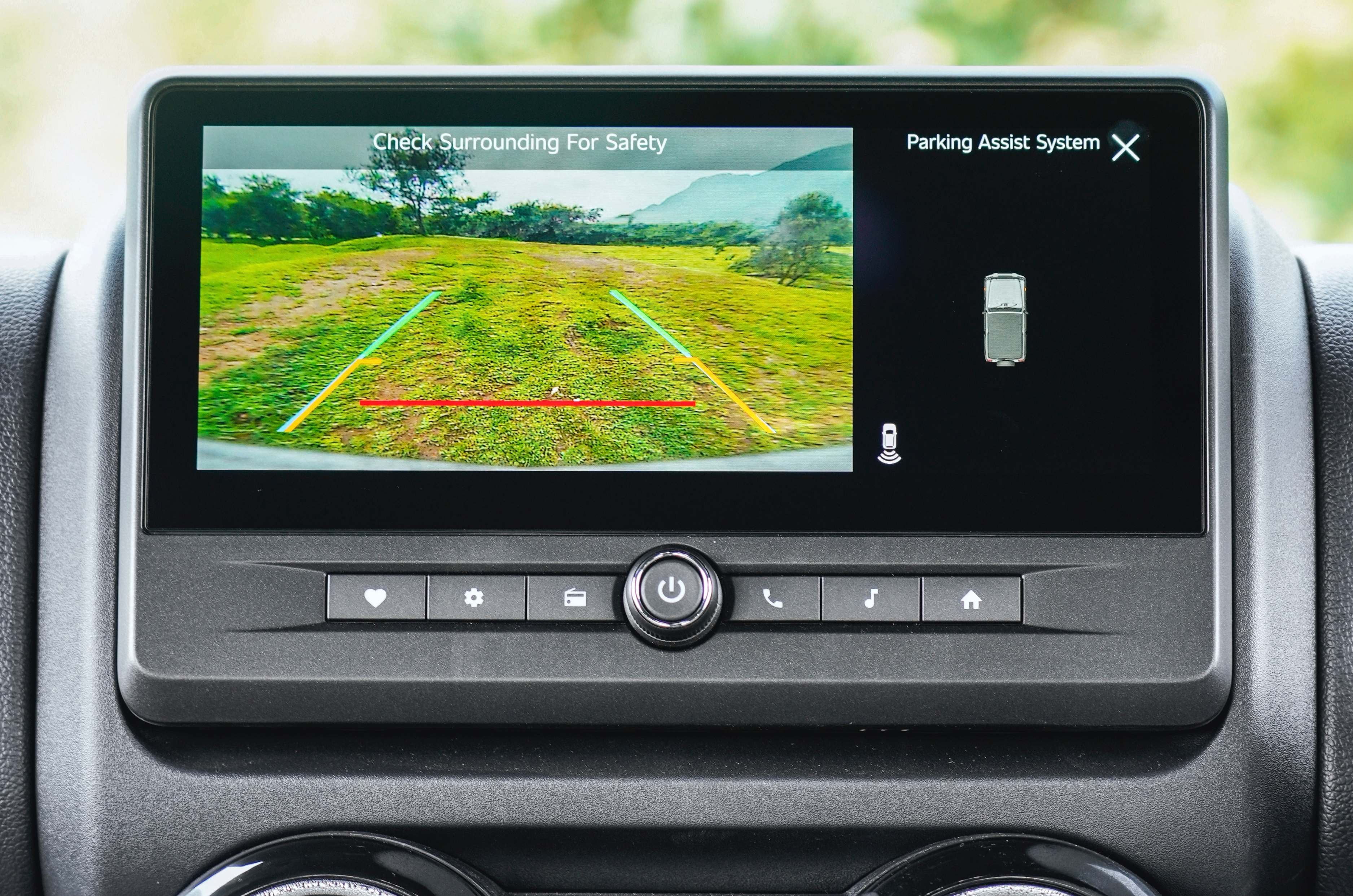
Not the best clarity and misses a 360-degree view, which is essential for off-roading.
The Thar OG isn’t on par with rival mid-size SUVs but does get the essentials this time around. There are grab handles, manual AC controls, a USB-A port for Apple CarPlay since it isn’t wireless, and a USB-C port for charging. Android Auto gets wireless connectivity.
Crucially, the ZXT trim gets six airbags now, with the launch of the new HPTS airbags, which stand for Head, Pelvis, Thorax and Shoulder. There are front parking sensors with a reversing camera now, although, given the Thar’s off-road bias, a 360-degree camera would have been a lot more useful. The ESP also gets a retune for better response, and then there are the big mechanical updates under the skin.
Mahindra Thar OG performance and refinement – 8/10
The bump in power and torque makes it better at highway cruising.
Powering the Thar OG is the same powertrain lineup as before, but with a bump in power and torque for the turbo-petrol engine and the bigger diesel. We had the 2.2-litre diesel engine on test with the six-speed automatic gearbox. The engine now produces 152hp and 330Nm, which is 18hp and 30Nm more than the outgoing unit.
To be honest, the jump in performance is not evident initially, as Mahindra engines have always had a good off-the-line response. Where the power comes in is in the second half of the rev band. Highway cruising at triple-digit speeds is a bit more effortless now, but you wouldn’t enjoy rushing the Thar. Sedate cruising is what it does best.
Highway stability is better now, but over an uneven stretch it still tosses you around.
What Mahindra has also improved is NVH, and the cabin is a bit more muted now. You still hear the diesel drone past 2,500rpm, but overall sound damping has been improved.
The gearbox, too, likes to pace itself, and quick overtakes come at the cost of engine noise. The shifts are smooth but relaxed, and even in manual mode, you don’t get much better response. Enthusiastic driving is not something the Thar enjoys, contrary to the infamous videos circulating online.
Mahindra Thar OG ride comfort and handling – 7/10
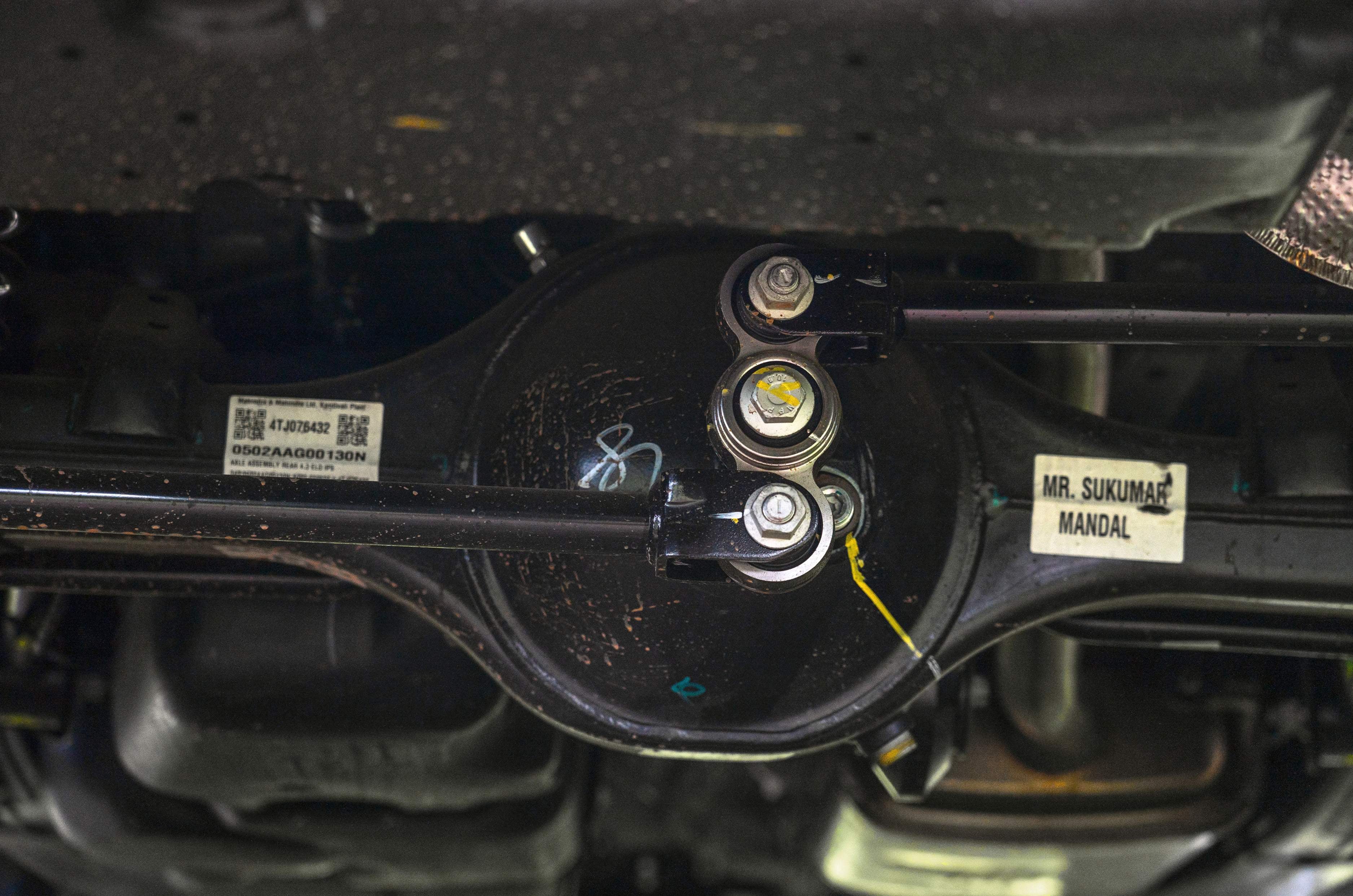
Rear pentalink suspension with Watts linkage for added stability and comfort.
The biggest advances to the Thar OG have taken place under the body. The stiffer Gen 4 chassis is paired with a new Pentalink suspension at the rear, with a Watts linkage and DAVINCI dampers. Frequency-dependent damping, however, is only available on the top-spec trim. But has that improved the Thar on the road? The simple answer is yes.
The Watts linkage is responsible for adding stability at the rear. Imagine you’re pushing a shopping trolley. If one wheel suddenly moves sideways while you hit a bump, the trolley gets wobbly. The Watts linkage basically tells the axle: “You can go up and down, but please stay in the middle.” The effect is less bouncing over uneven highways and bad patches.
The electronic locking differential is now convenient to use, making the Thar just as capable as before.
Then there is the DAVINCI damping that was seen on the XUV 7XO. The thuds coming from sharp, low-speed bumps are now not as harsh and, while it will still toss you around, if you hit a bad bump, it won’t unsettle the car. To add even more comfort with the bigger 19-inch wheels, the ZXT trim also gets frequency-dependent dampers along with the DAVINCI setup. Over a rough patch, you can tell they are working full-time to keep the cabin unfazed.
New gen 4 platform seen on the Roxx now underpins the 3-door Thar.
Now, as sophisticated as all of this is, the Thar OG is still a hardcore body-on-frame SUV at the end of the day. The new tech has certainly improved its on-road manners, but if you want a plush, supple ride, the Thar won’t cut it. A long drive will now be more comfortable, but you will still get knocked awake from your snooze.
Terrain modes work with ESP, throttle control and steering input for maximum assistance while off-roading.
The new EPS, however, has made a huge difference. The amount of effort needed to steer and turn the Thar is no longer a game of might. Under 20kph, the steering is light enough to twirl with just one finger, but as the speed rises, it gains heft so as not to feel uncomfortably light at speed. So, there is no need to wrangle with the steering to make a three-point turn anymore.
Also new and exclusive to the ZXT trim are rear disc brakes, which have added to the stopping power. The bite is stronger, and the Thar feels a lot more confident when slowing down now.
Mahindra Thar OG price and verdict – 8/10
The Thar OG is improved in all areas without sacrificing its character.
With a starting price of Rs 10.32 lakh, the Thar OG is rather tempting. However, for most of the new bells and whistles, you will have to opt for the top-spec ZXT trim, which starts at Rs 13.99 lakh for the 1.5-litre engine with RWD. The diesel-AT version we drove will set you back Rs 18.99 lakh, so you need to be sure of what you want. The Thar OG is mighty capable, has a lot of character and is a lot better in every area than before. But as an everyday car, you’d still want some more practicality, creature comforts and refinement. However, if you are someone who likes to off-road or even just take the long way home with little regard for plushness, there is nothing like the Thar OG under Rs 65 lakh.
अगर आप Mahindra Thar खरीदने का प्लान बना रहे हैं, और आप कन्फ्यूज हैं कि Thar OG खरीदें या फिर Thar Roxx। तो हम आपको बता दें कि दोनों SUVs का लुक काफी हद तक एक जैसा है, लेकिन असली फर्क इनके इंजन, पावर, ड्राइवट्रेन और इस्तेमाल के तरीके में है। जहां Thar OG को खास तौर पर ऑफ-रोडिंग के लिए पसंद किया जाता है, वहीं Thar Roxx ज्यादा स्पेस और रोजाना के इस्तेमाल के लिए बनाई गई है। ऐसे में दोनों में से कौन सी Thar आपकी जरूरत के हिसाब से फिट बैठती है, आइए जानते हैं।
Thar OG: तीन इंजन, RWD और 4WD का विकल्प
2026 Thar OG को तीन इंजन ऑप्शन के साथ पेश किया गया है। इनमें 1.5-लीटर टर्बो-डीजल, 2.2-लीटर टर्बो-डीजल और 2.0-लीटर टर्बो-पेट्रोल इंजन शामिल हैं। इनमें सबसे बेस 1.5-लीटर mHawk डीजल इंजन करीब 119 hp की पावर और 300 Nm का टॉर्क देता है। यह इंजन सिर्फ 6-स्पीड मैनुअल गियरबॉक्स के साथ आता है और इसमें रियर-व्हील ड्राइव (RWD) दिया गया है। यह आमतौर पर बेस AXT वेरिएंट में मिलता है।
2.2-लीटर mHawk डीजल इंजन अब करीब 150 hp की पावर और 330 Nm का टॉर्क देता है। पिछले वर्जन के मुकाबले इसमें 16 hp की पावर और 30 Nm का टॉर्क बढ़ाया गया है। वहीं, 2.0-लीटर mStallion TGDI पेट्रोल इंजन करीब 159 hp की पावर और 330 Nm का टॉर्क देता है।
2.2-लीटर डीजल और 2.0-लीटर पेट्रोल दोनों इंजन LXT और ZXT वेरिएंट में मिलते हैं। इनमें 6-स्पीड मैनुअल और 6-स्पीड टॉर्क-कन्वर्टर ऑटोमैटिक गियरबॉक्स का विकल्प दिया गया है। दोनों इंजन को RWD यानी रियर-व्हील ड्राइव या पार्ट-टाइम 4WD के साथ खरीदा जा सकता है। 4WD सिस्टम में हाई और लो रेंज गियर भी मिलते हैं, जो खासकर मुश्किल ऑफ-रोड रास्तों पर काम आते हैं।
4WD वेरिएंट्स में, Thar OG में इलेक्ट्रिक पावर स्टीयरिंग और सेमी-फ्लोटिंग एक्सल के साथ मैनुअल-शिफ्ट पार्ट-टाइम फोर-व्हील-ड्राइव सिस्टम का इस्तेमाल किया गया है।
Thar Roxx: दो इंजन, 4WD सिर्फ डीजल के साथ
Thar Roxx में पावरट्रेन के मामले में दो इंजन का विकल्प है: एक 2.0-लीटर टर्बो-पेट्रोल और दूसरा 2.2-लीटर टर्बो-डीजल। दोनों इंजन 6-स्पीड मैनुअल या 6-स्पीड ऑटोमैटिक ट्रांसमिशन के साथ आते हैं, लेकिन फोर-व्हील ड्राइव (4WD) का विकल्प सिर्फ डीजल इंजन के साथ ही मिलता है। बाकी सभी पेट्रोल वेरिएंट और डीजल के निचले ट्रिम्स RWD (रियर-व्हील ड्राइव) हैं।
वहीं, Roxx के लिए इस्तेमाल किए गए ज्यादा पावर वाले ट्यून में, 2.0L टर्बो-पेट्रोल इंजन लगभग 174 hp और 380 Nm तक की पावर और टॉर्क दे सकता है, जबकि टॉप स्पेसिफिकेशन वाले 2.2L डीजल इंजन में यह लगभग 172 hp और 370 Nm तक पहुंचता है। ये आंकड़े ओरिजिनल Thar (OG) की ज्यादा से ज्यादा पावर और टॉर्क से ज्यादा हैं, जो अलग ट्यूनिंग और पोजिशनिंग को दिखाते हैं। हालांकि, Roxx के कई आम वेरिएंट (जैसे MX1, MX3, MX5, AX5L, AX7L, STAR EDN) ट्रिम और मार्केट स्पेसिफिकेशन के आधार पर OG की रेंज के आस-पास की पावर के साथ आते हैं।
Thar Roxx के MX5, AX5L और AX7L ट्रिम के सिर्फ डीजल वेरिएंट में 4×4 का विकल्प मिलता है। यानी अगर आप ज्यादा जगह और बेहतर कंफर्ट के साथ पांच दरवाजों वाली डीजल 4×4 SUV चाहते हैं, तो Roxx में यह विकल्प मिलता है। Thar OG में इतनी जगह और कंफर्ट के साथ ऐसा 4×4 पैकेज नहीं मिलता।
वहीं, Roxx का पेट्रोल वेरिएंट सिर्फ RWD के साथ आता है। दूसरी ओर, Thar OG के टॉप वेरिएंट में पेट्रोल इंजन के साथ भी 4WD का विकल्प दिया गया है।
Thar OG और Thar Roxx में किसे चुनें?
अगर आप तीन दरवाजों वाली क्लासिक Thar का लुक, ज्यादा इंजन ऑप्शन और पेट्रोल इंजन के साथ 4WD चाहते हैं, तो Thar OG आपके लिए एक पारंपरिक ऑफ-रोड SUV का विकल्प है। वहीं, अगर आपकी प्राथमिकता पांच दरवाजे, ज्यादा जगह और बेहतर कंफर्ट है और आप 4WD के लिए डीजल इंजन चुनने को तैयार हैं, तो Thar Roxx परिवार और एडवेंचर दोनों तरह के इस्तेमाल के लिए ज्यादा उपयोगी हो सकती है।
दोनों ही मॉडल में अब अपडेटेड इंजन और ट्रांसमिशन मिलते हैं, लेकिन उनकी पावरट्रेन स्ट्रेटेजी एक ही Thar फैमिली के अंदर थोड़ी अलग-अलग जरूरतों को पूरा करती है। अभी, Thar OG की कीमतें 10.32 लाख रुपये से शुरू होकर 18.99 लाख रुपये तक हैं। वहीं, Thar Roxx की कीमतें 12.52 लाख रुपये से शुरू होकर 23.52 लाख रुपये तक हैं।
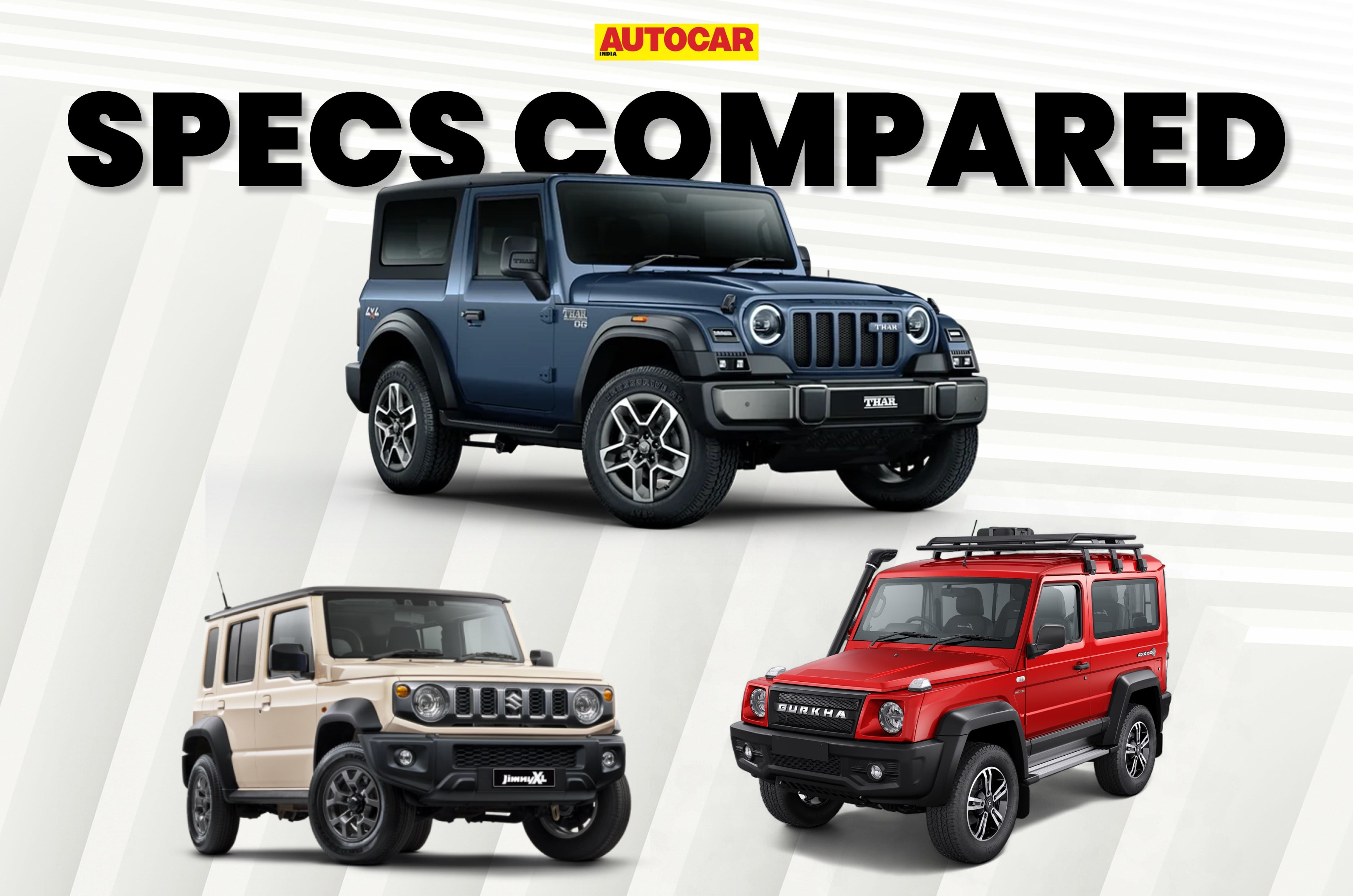
Mahindra launched the Thar OG in September 2026 with several hardware, styling and safety upgrades over the outgoing model. The Mahindra Thar OG competes with the Maruti Suzuki Jimny and Force Gurkha 3-door in the relatively niche mass-market off-roader segment. Let us look at how the changes and improvements in the Thar OG help the model take on its rivals.
Mahindra Thar OG vs rivals: Dimensions
Thar and Jimny are longest here
Mahindra Thar OG vs Maruti Jimny vs Force Gurkha dimensions
Thar OG
Jimny
Gurkha 3 door
Length (mm)
3,995
3,985
3,965
Width (mm)
1,870
1,645
1,865
Height (mm)
1,855
1,720
2,080
Wheelbase (mm)
2,450
2,590
2,400
Ground clearance (mm)
232
210
233
Approach angle (degree)
40
36
39
Departure angle (degree)
36
46
37
Rampover angle (degree)
26.4
24
28
Water wading depth (mm)
650
310 (estimated)
700
Wheel size (inch)
18/ 19
15
18
All three models trade punches in the size department. The Thar OG and Jimny are longer than the Gurkha 3-door, with the Jimny’s wheelbase being the longest. However, the Maruti off-roader is the narrowest and shortest one here. The Gurkha rides the highest off the ground, followed closely by the Thar OG with its 226mm clearance. Both of them offer 18-inch wheels, though the top-spec Thar OG ZXT trim rides on 19-inch units. The Jimny, on the other hand, comes with 15-inch wheels only.
The Thar OG has a 40-degree approach angle, while the Gurkha and Jimny have 39 degrees and 36 degrees, respectively. The Jimny has the highest departure angle at 46 degrees, followed by the Gurkha at 37 degrees and Thar at 36 degrees. The Gurkha has the best rampover angle at 28 degrees, compared to 26.4 degrees for the Thar and 24 degrees for the Jimny. The Gurkha also has the highest water-wading depth at 700mm, followed by the Thar at 650mm and the Jimny at an estimated 310mm.
Mahindra Thar OG vs rivals: Engine and gearbox
Mahindra Thar OG vs Maruti Jimny vs Force Gurkha powertrains
Thar OG
Jimny
Gurkha 3 door
Engine
1.5D | 2.0P | 2.2D
1.5P
2.6D
Turbocharged
Yes
No
Yes
Power (hp)
119 | 162 | 152
105
140
Torque (Nm)
300 | 330
134.2
320
Gearbox
6MT | 6MT or 6AT
5MT or 4AT
5MT
Drive layout
RWD | RWD or 4WD
4WD
4WD
The Mahindra Thar OG offers the widest choice of powertrains here, with three engines, while the Jimny and Gurkha 3-door get only one engine each. Thar’s 162hp 2.0-litre petrol is the most powerful here. Its 2.2-litre diesel engine makes the highest torque output here.
The stronger turbo-petrol and diesel engines of the Thar OG can be had with either a 6-speed manual or a 6-speed automatic gearbox. These also offer the choice between rear-wheel drive and four-wheel drive (4WD) layouts. Whereas, the 1.5-litre diesel engine is available in the rear-wheel drive guise, and transmission duties are handled solely by a 6-speed manual gearbox.
The Jimny offers 5-speed manual and 4-speed automatic options with 4WD as standard, whereas the Gurkha has a 5-speed manual gearbox with 4WD.
Mahindra Thar OG vs rivals: Off-roading features
Mahindra Thar OG vs Maruti Jimny vs Force Gurkha Off-roading hardware
Thar OG
Jimny
Gurkha 3 door
Front suspension
Independent double wishbone
3-link rigid axle
Independent double wishbone
Rear suspension
Pentalink with Watt’s link
3-link rigid axle
Multi-link with track bar
Terrain modes
In 4WD
No
No
Locking differential
Electronic; in 4WD
Electronic; in 4WD
Manual
The Thar OG and Gurkha 3-door both use independent double-wishbone front suspension, while the Jimny gets a 3-link rigid-axle setup at both ends. At the rear, the Thar uses a five-link setup with a Watt’s link, while the Gurkha gets a multi-link setup with a track bar.
In terms of off-road equipment, the Thar has an advantage with terrain modes available in 4WD, a feature that the Jimny and Gurkha do not offer. Both the Thar and Jimny use electronic locking differentials in 4WD, while the Gurkha gets a manual locking differential.
With its September update, the Thar OG also gains Mahindra’s DaVinci dampers, which is standard fitment across the range. The range-topping ZXT trim goes a step further by adding frequency dependent damping (FDD) to this setup.
Mahindra Thar OG vs rivals: Price
Mahindra Thar OG vs Maruti Jimny vs Force Gurkha prices
Thar OG
Jimny
Gurkha 3 door
Price range (Rs, lakh)
10.32-17.75
12.59-14.52
16.26
When it comes to base trims, the Thar OG is the indisputable winner. Prices start at Rs 10.32 lakh with the Thar OG AXT diesel 2WD MT, which is Rs 2.27 lakh more affordable than the base-spec Jimny Zeta Pro MT and a whopping Rs 5.94 lakh lower than the Gurkha (sold in one trim only).
Coming to the top trims, the Thar OG ZXT diesel 4WD AT trim is the most expensive here at Rs 17.75 lakh, pricier by Rs 1.49 lakh than the Gurkha and Rs 3.23 lakh than the Jimny Alpha AT.