6 updates Mahindra BE 6 Sporteq gets over its predecessor

6 updates Mahindra BE 6 Sporteq gets over its predecessor
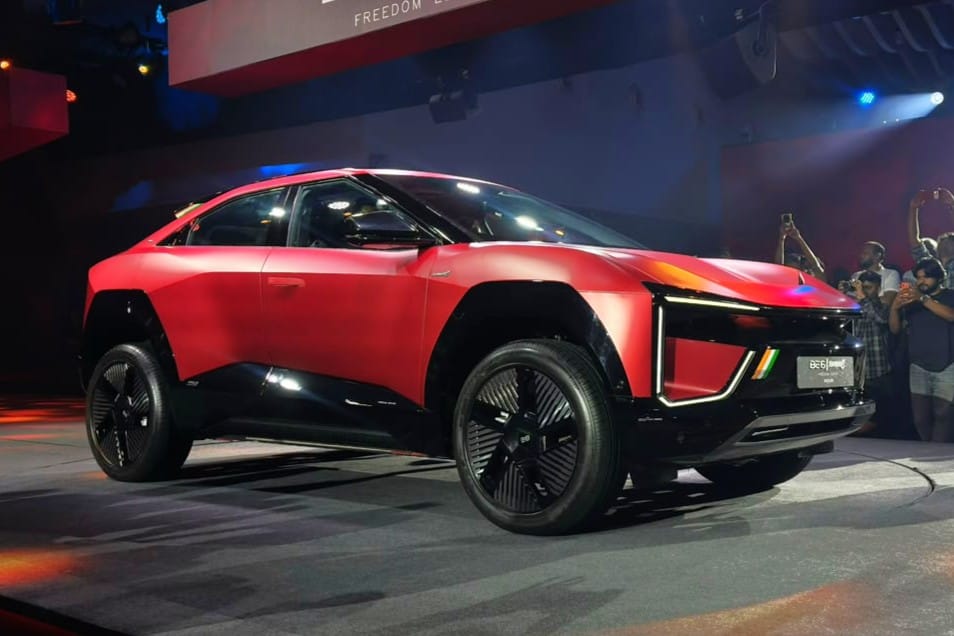
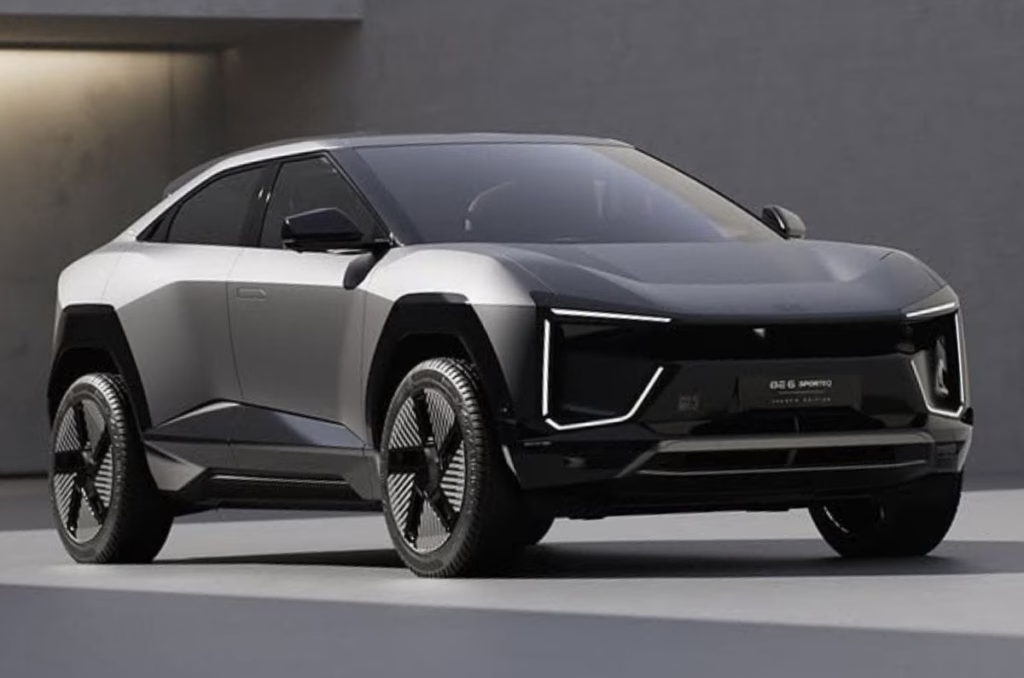
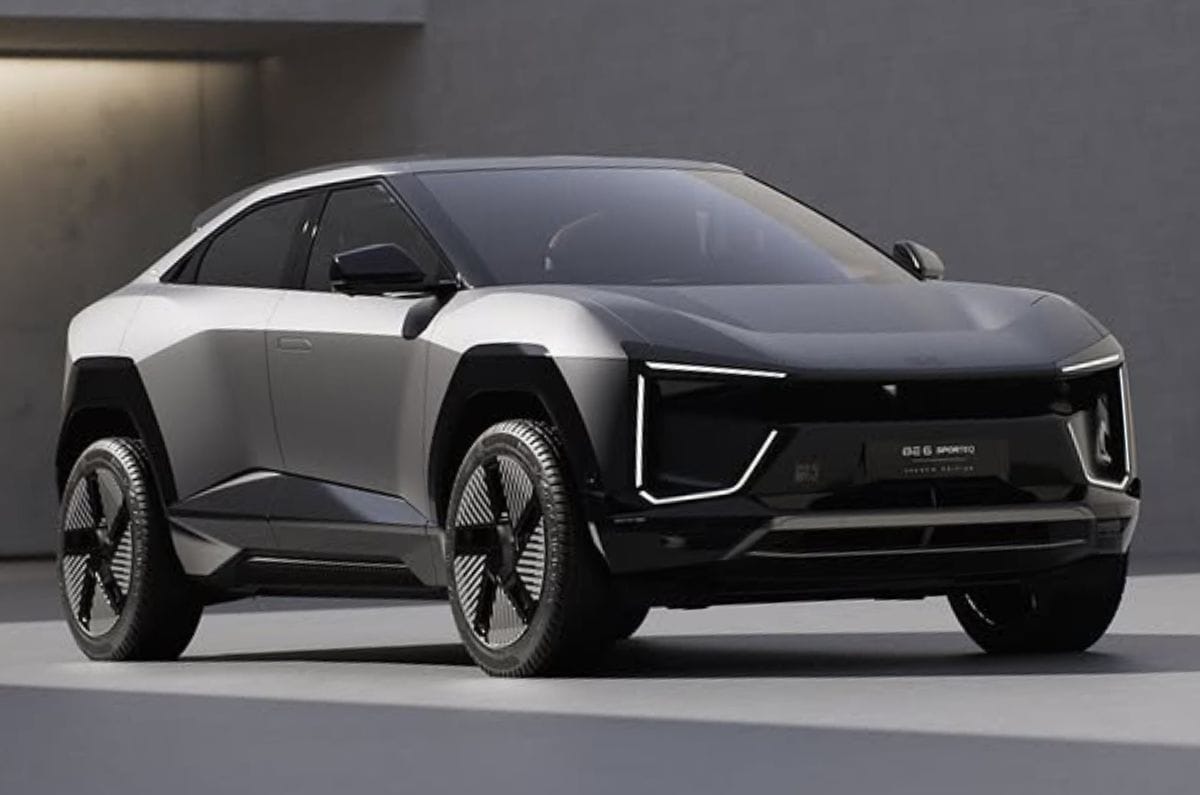
2026 Mahindra BE 6 Sporteq front quarter static

Mahindra launched the 2026 BE 6 recently, adding the ‘Sporteq’ moniker and pricing it from Rs 19.45 lakh to Rs 26.95 lakh (ex-showroom). Along with a new name, Mahindra has also introduced some updates to the midsize electric SUV to keep it modern in the segment. Here’s a detailed list of these updates:

New 70kWh battery pack

New battery pack offers 651km range and is mated to a 241hp rear motor
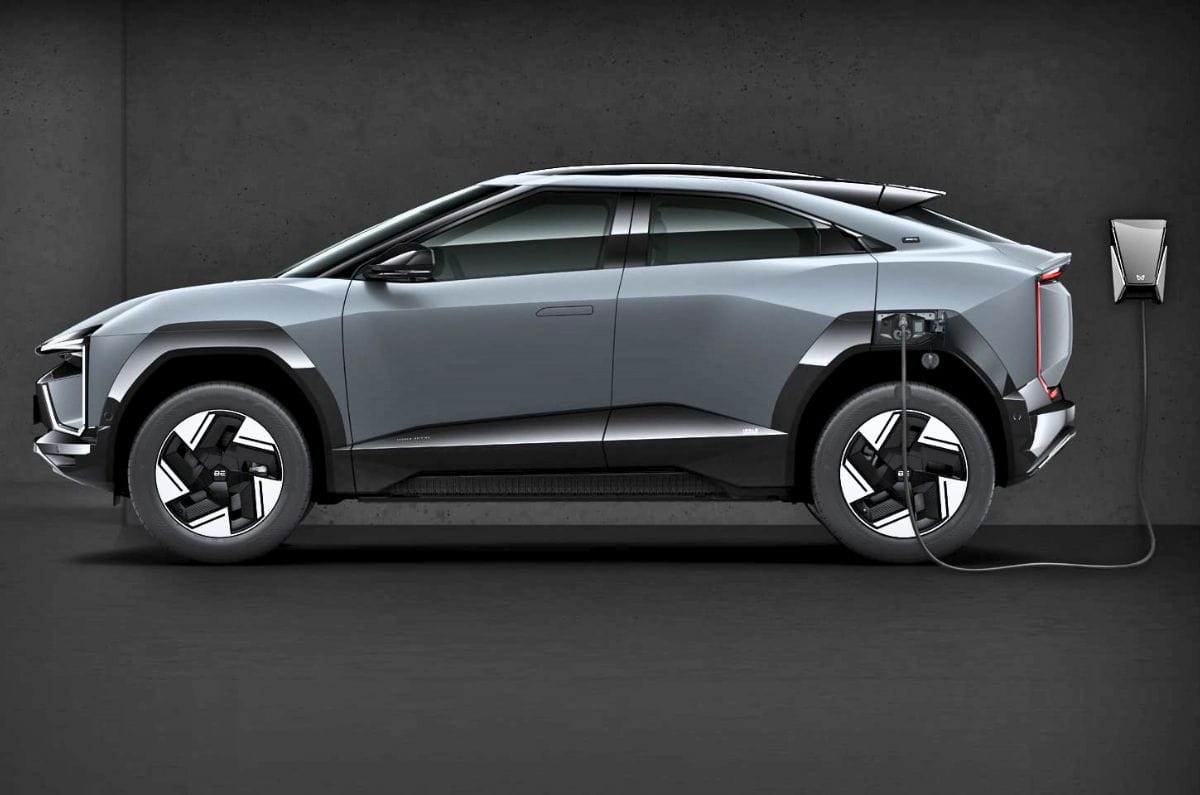
The 2026 Mahindra BE 6 Sporteq gets a new 70kWh battery pack in addition to the previously available 59kWh and 79kWh batteries. This new 70kWh battery offers an ARAI-claimed range of 651km and a rear-axle-mounted (RWD) electric motor that produces 241hp and 360Nm. It supports a 7.2kW AC, a 11.2kW AC and a 160kW DC charger. The DC fast charger recharges the battery pack from 20-80 percent in a claimed 20 minutes.

Mahindra is offering the 70kWh battery with the Three and Three+ trims, priced at Rs 22.95 lakh and Rs 23.95 lakh, respectively (ex-showroom). 

Battery-as-a-Service (BaaS) scheme

Battery rental scheme makes the 59kWh battery variants Rs 8 lakh more affordable

Along with a new battery, Mahindra is also offering the BE 6 with a battery-as-a-service (BaaS) scheme, which is also a first for the brand. However, the BaaS scheme is offered only with the 59kWh battery pack available in the One and Two trims. The battery rental scheme essentially lowers the BE 6’s initial price by Rs 8 lakh, but requires a monthly subscription fee for the battery. Here are the details:

Mahindra BE 6 battery-as-a-service (BaaS) price vs standard price


Standard price

BaaS price*

Difference^

One

Rs 19.45 lakh

Rs 11.45 lakh + Rs 3.75/km

– Rs 8 lakh

Two

Rs 20.95 lakh

Rs 12.95 lakh + Rs 3.75/km

– Rs 8 lakh

Notes: BaaS scheme requires a minimum monthly payment of Rs 6,750, calculated assuming usage of 60km per day and an 8-year battery loan, as per Mahindra’s terms and conditions. The price difference calculated above is on the initial price and does not include the BaaS scheme’s battery subscription charges.

Triple-screen setup on dashboard

Offers an additional third screen for the front passenger now
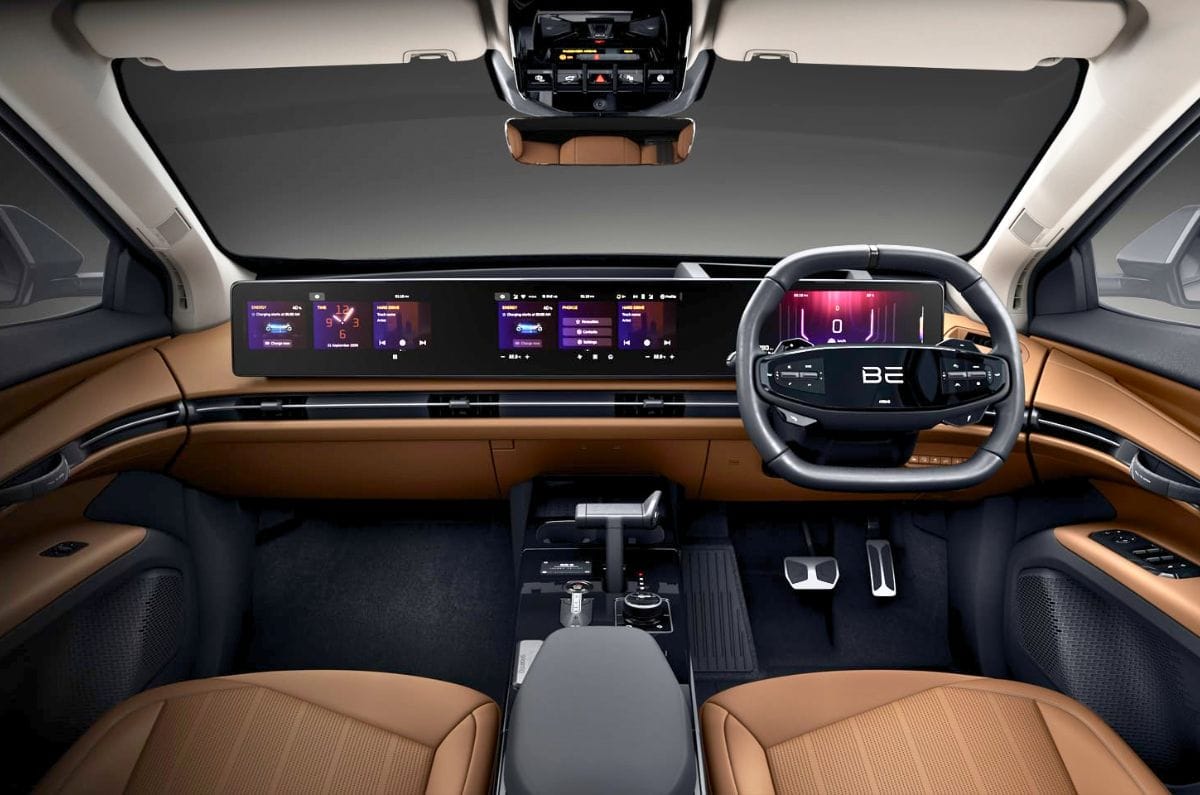
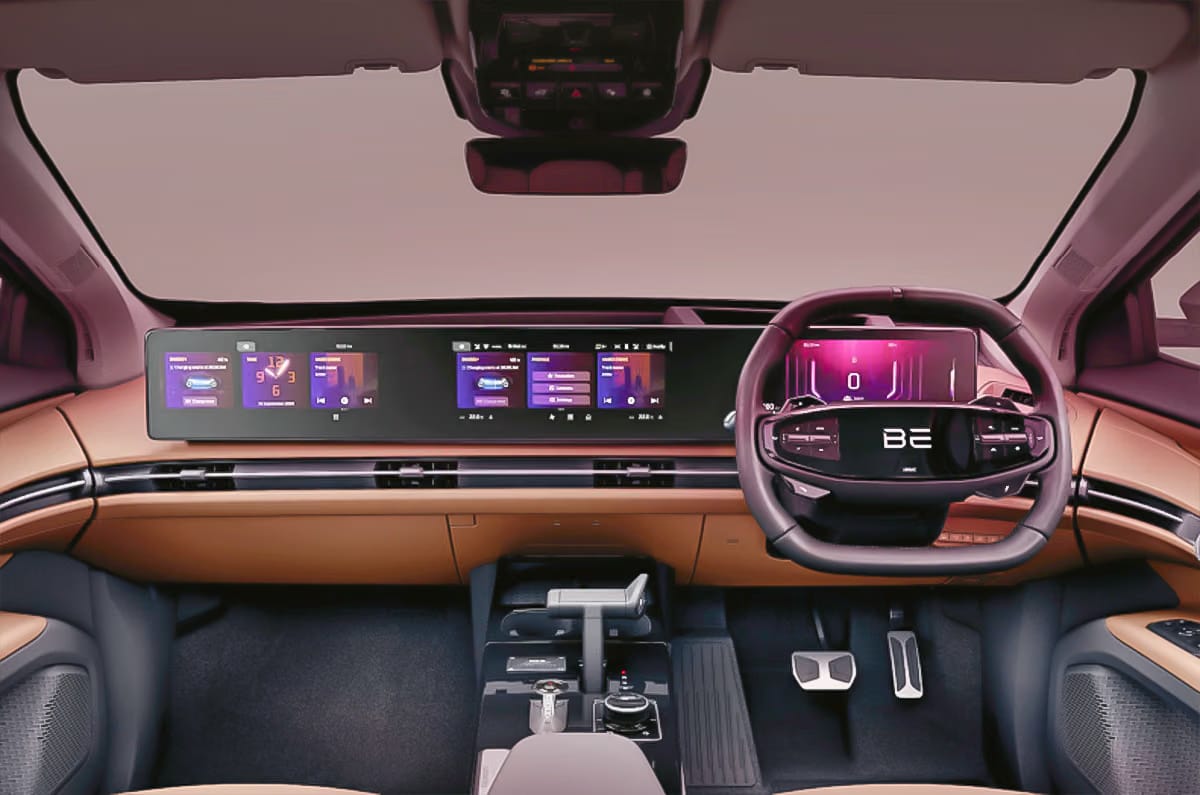
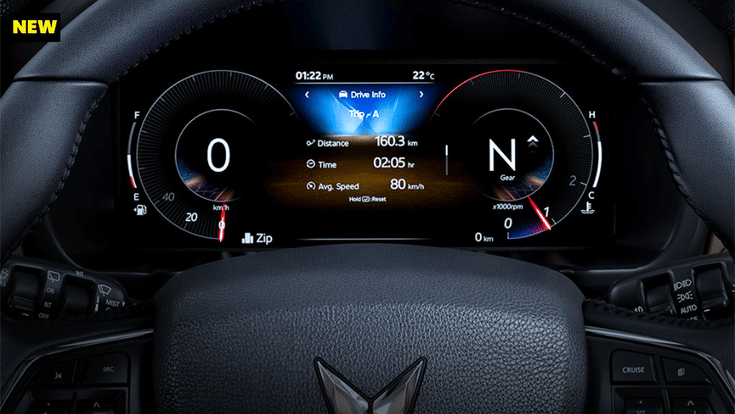
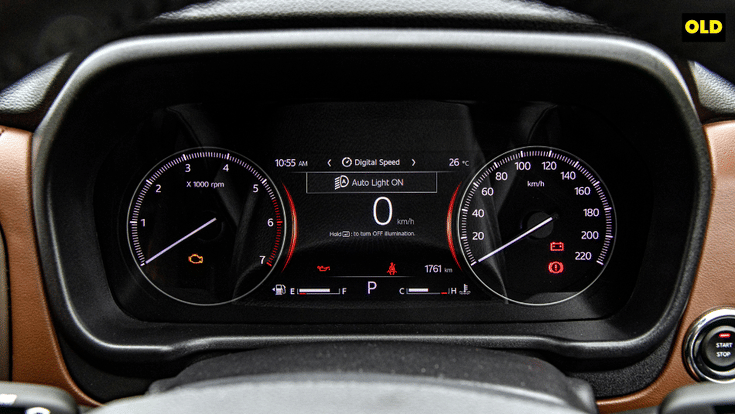
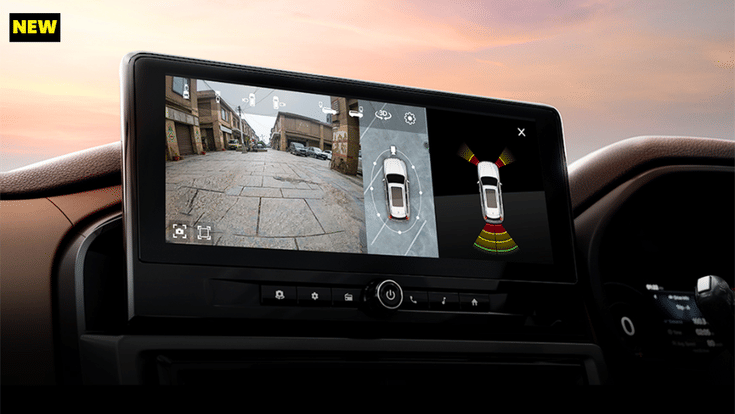
The 2026 update also brought a major redesign to the BE 6’s dashboard, now offered with an additional 12.30-inch screen for the front passenger, in addition to the similarly sized digital driver’s display and touchscreen infotainment system. The new front passenger display also removed the halo-like design element connecting the dashboard to the centre console, allowing the addition of two cupholders on the centre console, something that was sorely missing on the older model.

Mahindra is offering a triple-screen setup on all trims of the BE 6 Sporteq except the base-spec One and the sportier Formula E editions. 

Redesigned Formula E edition

The 2026 Formula E Freedom looks nothing like the older Formula E edition
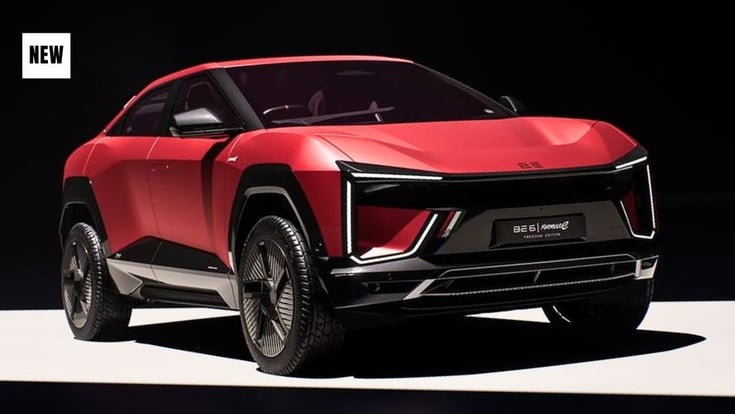
2026 Mahindra BE 6 Formula E Freedom Edition
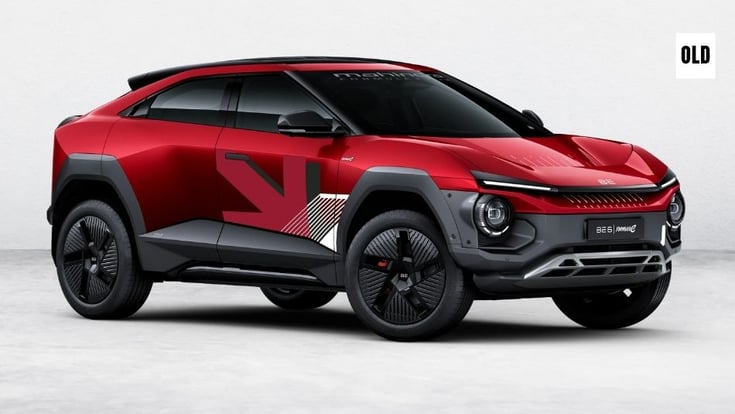
2026 Mahindra BE 6 Formula E Edition
 

With the 2026 update, Mahindra has also rejigged the exterior design of the Formula E edition. Unlike the previous model, which had a different fascia from the standard model with circular-shaped LED headlights and a revised bumper, the 2026 Formula E Freedom edition gets the same design as the standard BE 6 Sporteq, with some Formula E badges and FIA decals. Moreover, the Formula E edition is only offered with the older model’s dual-screen dashboard and a halo design element for a sporty appeal.
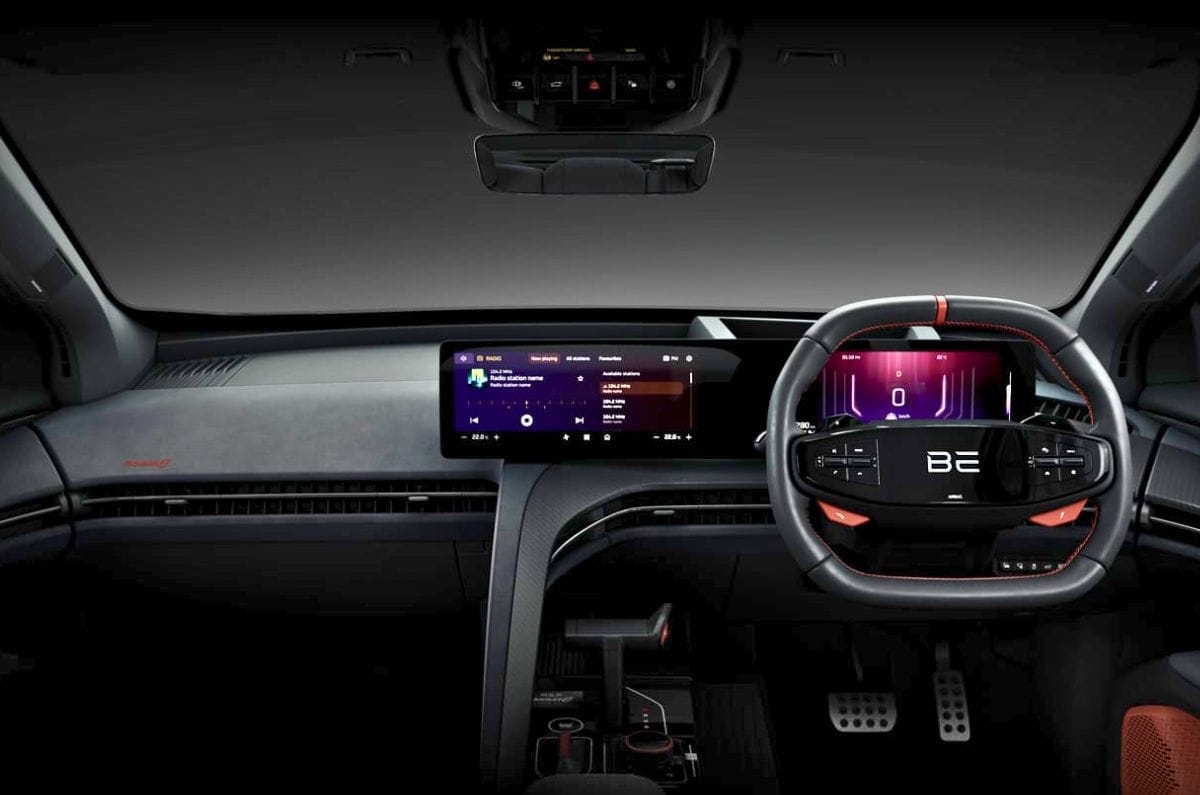
Mahindra is offering the 2026 Formula E edition at the Three and Four trim levels, priced at Rs 24.45 lakh and Rs 26.95 lakh, respectively (ex-showroom).

Fresh exterior and interior colours

Both the BE 6 Sporteq and Formula E edition get new colour themes
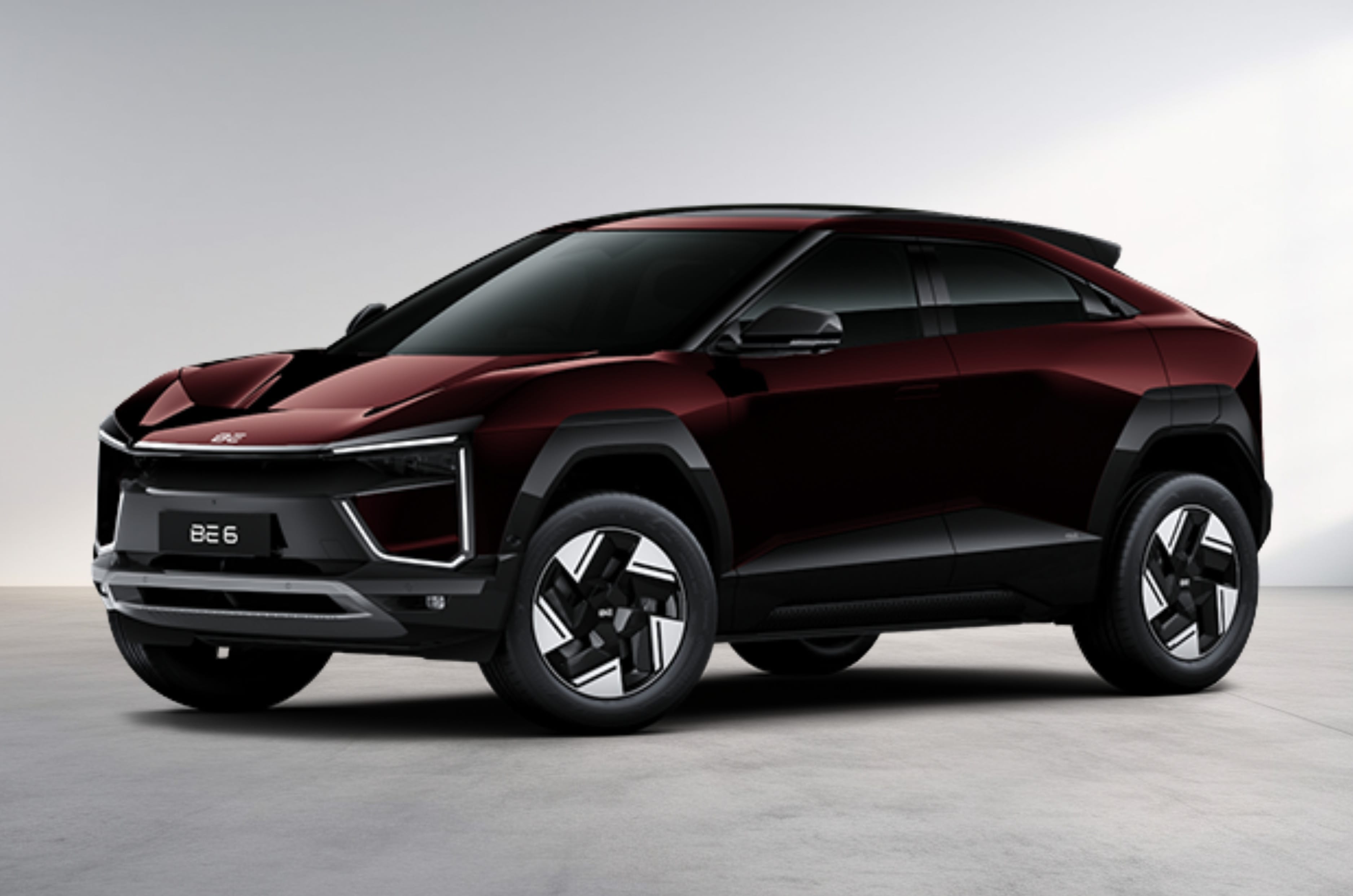
Mahindra BE 6 Sporteq Ruby Velvet exterior colour.

The 2026 Mahindra BE 6 Sporteq is being offered with fresh exterior and interior colour options. It is available in a new ‘Ruby Red’ exterior theme and new Racing Tan and Black interior hues for the Two, Three, Three+ and Four trims. The base-spec One is offered with the same Sage Green and Grey theme as before. A Sporteq Launch Edition, based on the fully loaded Four trim, is also available, which offers a new Graphite Storm exterior paint and Racing Tan interior theme. 
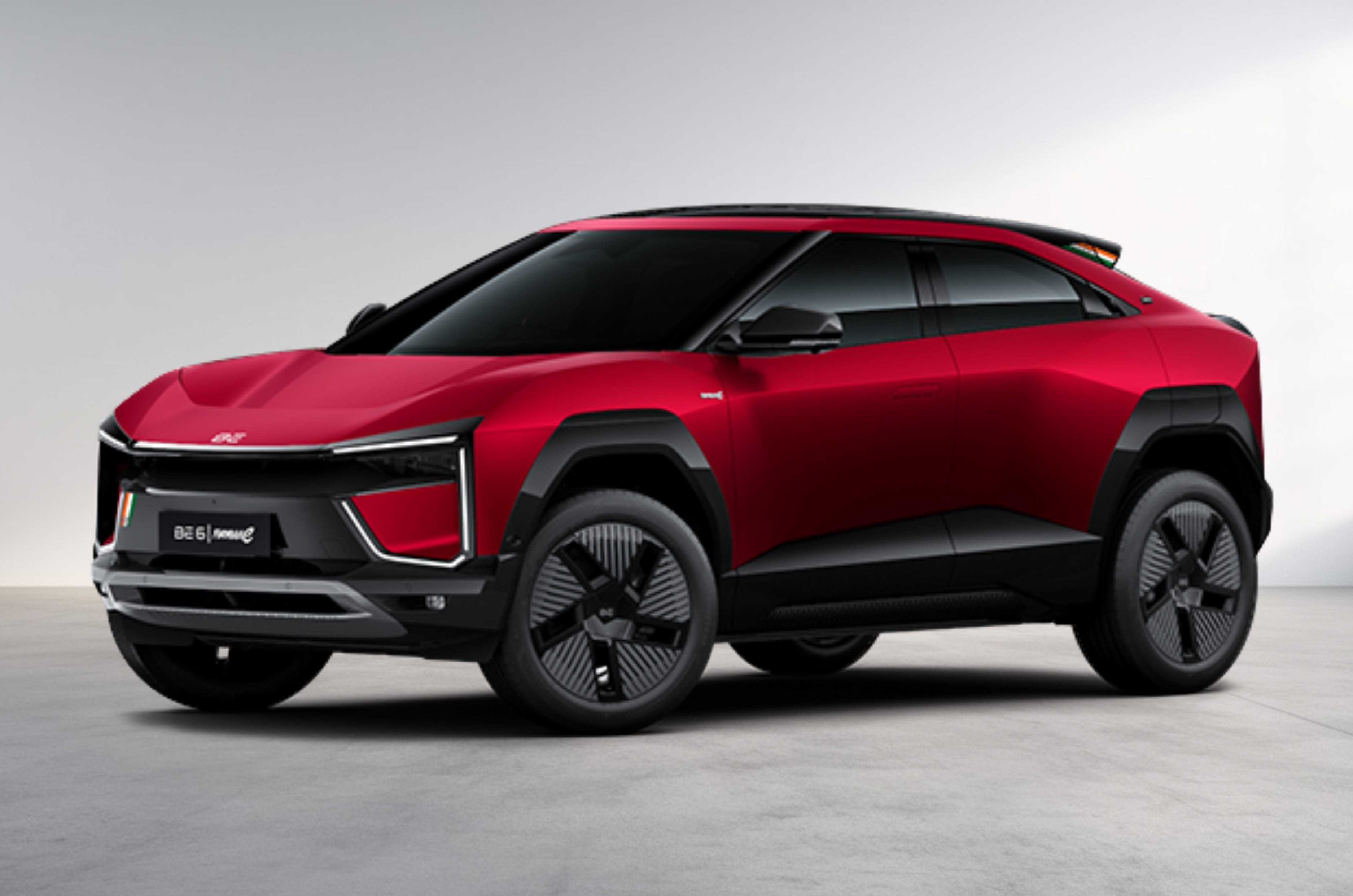
Mahindra BE 6 Formula E Freedom edition Rosso Impulso exterior colour.

While the 2026 BE 6 Formula E edition is offered with a new Rosso Impulso exterior hue, the all-black interior with orange elements for contrast is the same as the outgoing model.

New ‘TEQ’ suite

The suite enables Gemini-based interactions, unlocks additional drive modes and Revive functionalities

Another addition to the BE 6 Sporteq is the new ‘TEQ’ suite, which Mahindra says is designed to make the vehicle more intuitive, engaging, secure and responsive to individual customer needs. At its core is a Gemini-based AI conversation assistant that allows natural voice interactions for functions such as vehicle controls, navigation and music. The suite also introduces a Karaoke mode, along with support for Dolby Vision and Dolby Audio.
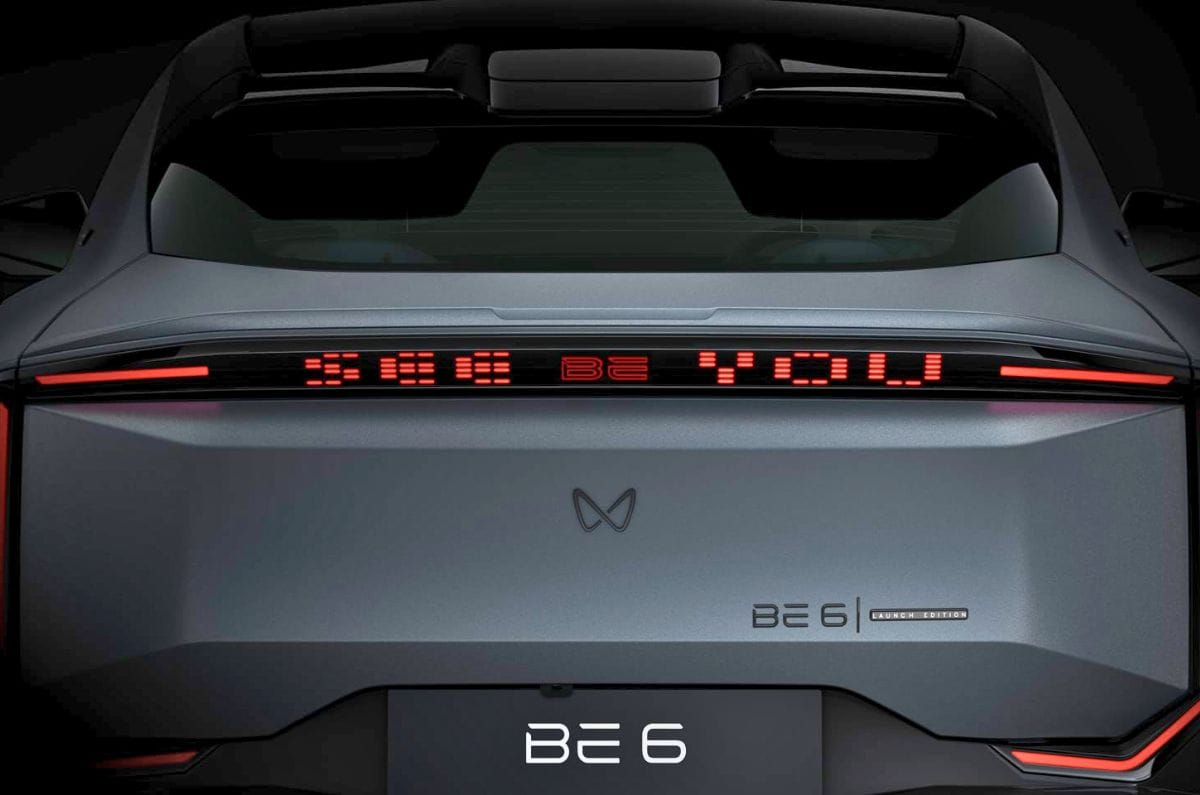
The TEQ suite also adds several performance and convenience features, including Custom Drive Mode, Drift Mode and an acceleration boost mode for the Formula E Freedom Edition, which enables a claimed 0-100 kph time of 6.44 seconds. It also includes Revive and Revive SOS, which can provide additional range even after the battery has run out. Another new feature is ‘TEQ_xting’, which lets owners display personalised messages on the vehicle’s tailgate.

The Mahindra BE 6 Sporteq is priced from Rs 19.45 lakh to Rs 26.95 lakh (ex-showroom), and it rivals the Hyundai Creta Electric, Tata Sierra EV, Tata Curvv EV, MG ZS EV, Maruti Suzuki e Vitara and Toyota Ebella.

Prices are ex-showroom, India, and do not include a wall charger or its installation cost.
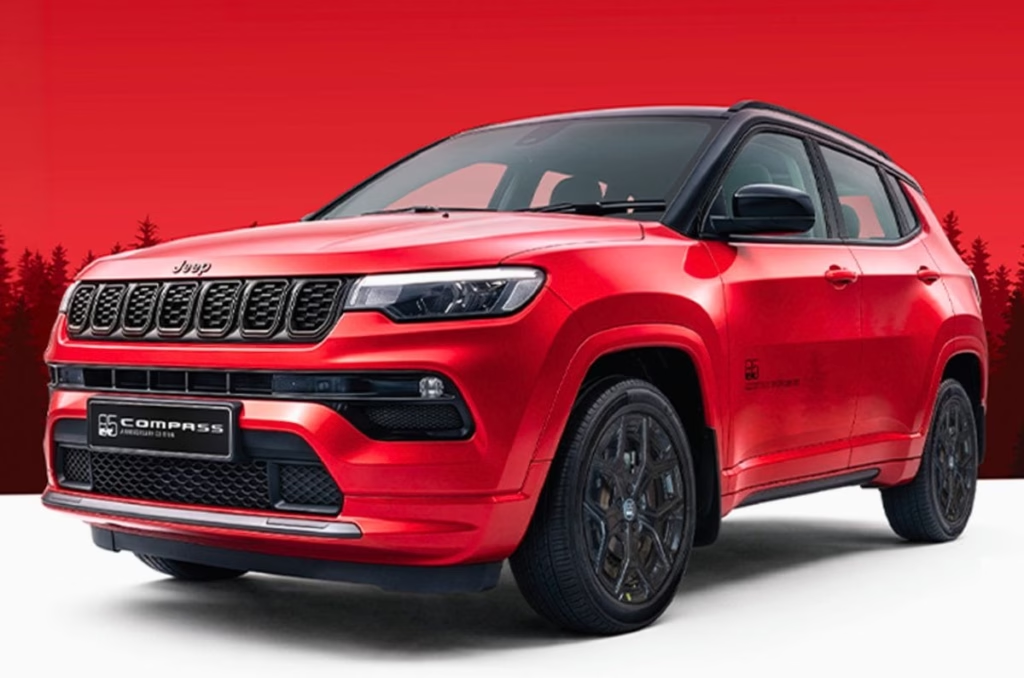
Jeep Compass 85th Anniversary Edition launched at Rs 26.70 lakh

Jeep Compass 85th Anniversary Edition launched at Rs 26.70 lakh
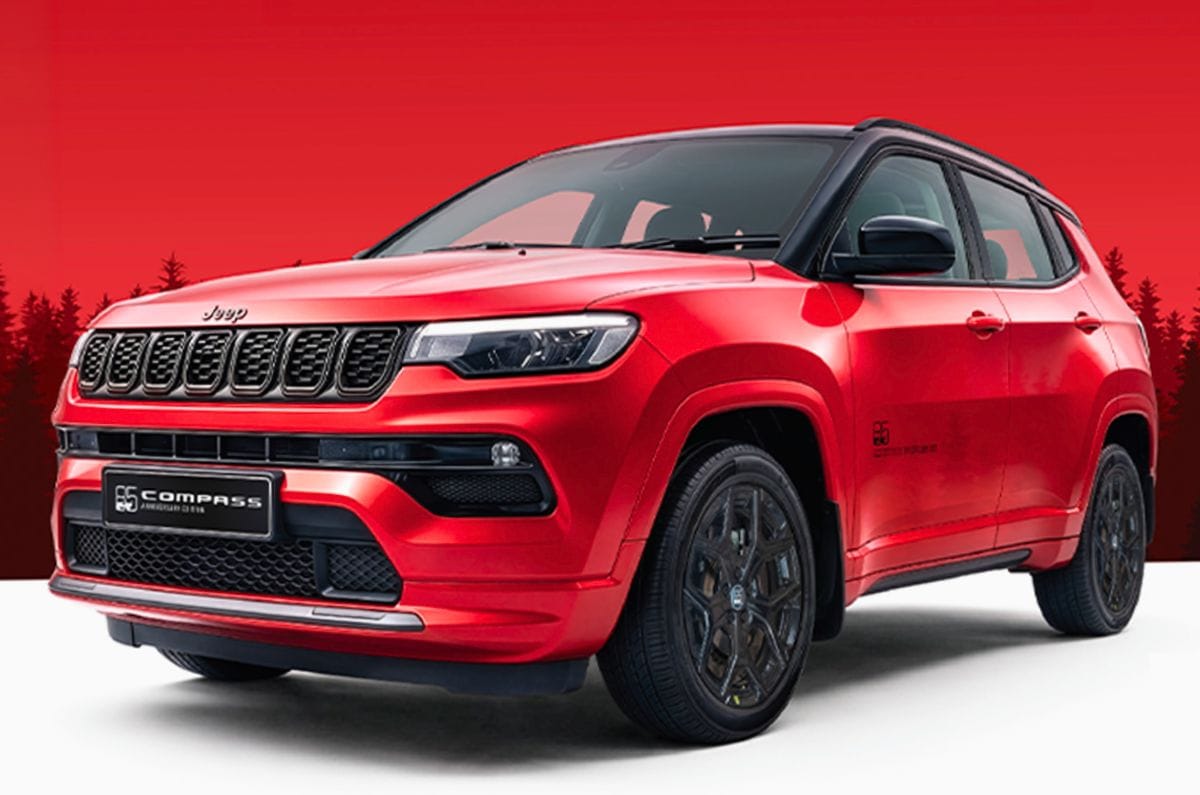
Jeep Compass 85th Anniversary Edition front quarter static

Jeep has launched the Compass 85th Anniversary Edition in India to commemorate 85 years of the brand globally. It is based on the higher-spec Model S (O) trim with identical prices starting at Rs 26.70 lakh (ex-showroom). It has a limited production run of only 85 units. Compared to the standard Compass, it offers some exterior decals, black alloy wheels, an all-black cabin with gold-coloured accents and a few additional features. 

  1. Equipped with a 2.0L diesel engine with MT, AT options
  2. Offered with both RWD and 4WD setups

Jeep Compass 85th Anniversary Edition: What’s new?

Gets new decals and gloss-black alloy wheels

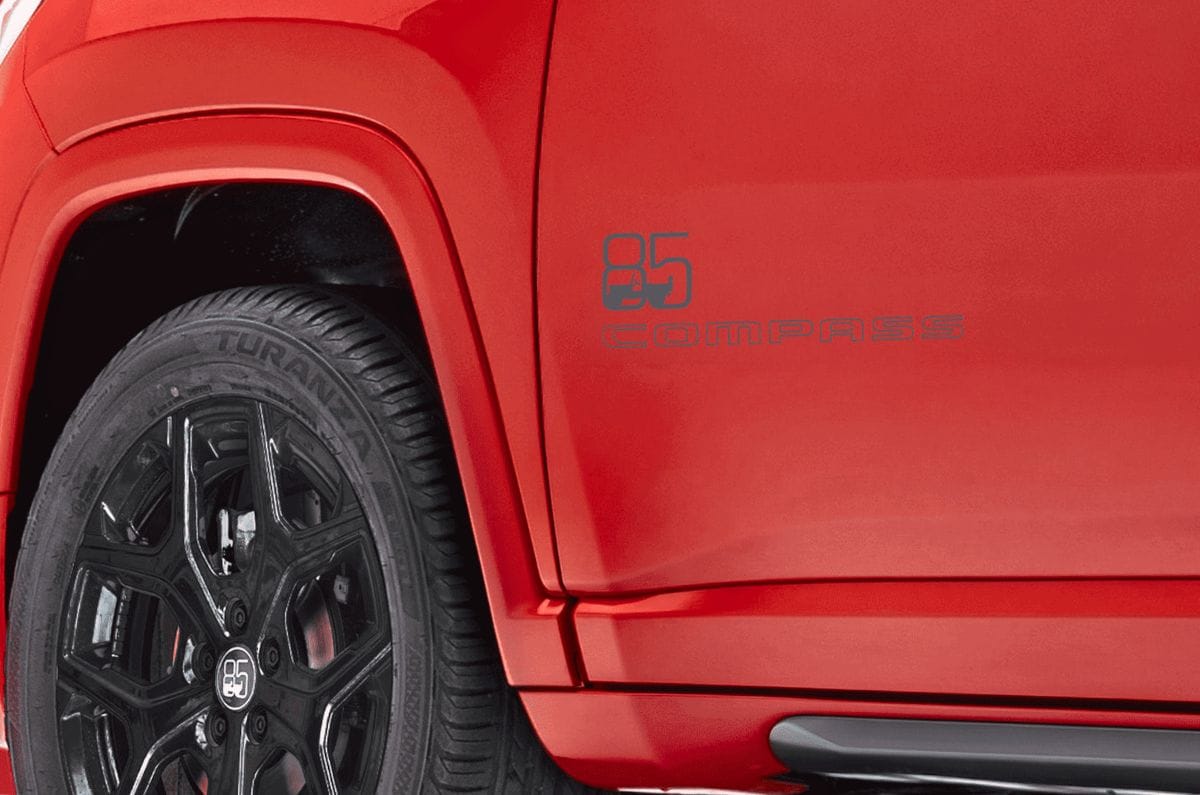
On the outside, the only changes are the new ‘85’ decals on the doors, tailgate and wheel hub caps, and gloss-black 18-inch black alloy wheels. Everything else is the same, including the LED headlights with eyebrow-shaped LED DRLs, a black grille with 7 slats, LED fog lamps, alloy wheel design, LED taillights and LED rear fog lamps. 

Sports an all-black cabin with gold accents, and offers some new features

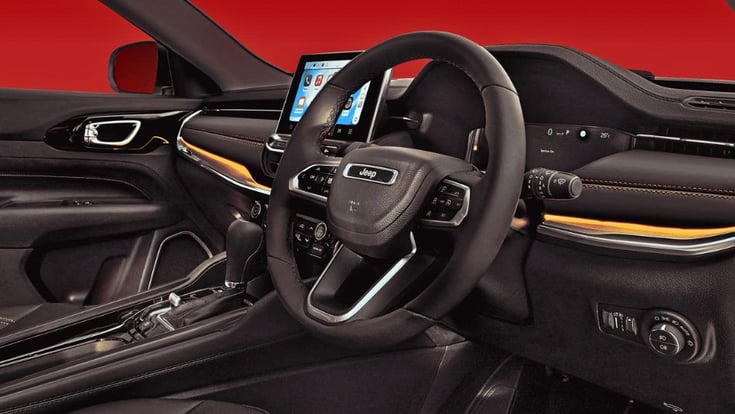
Jeep Compass 85th Anniversary Edition dashbaord
Jeep Compass 85th Anniversary Edition seats
 

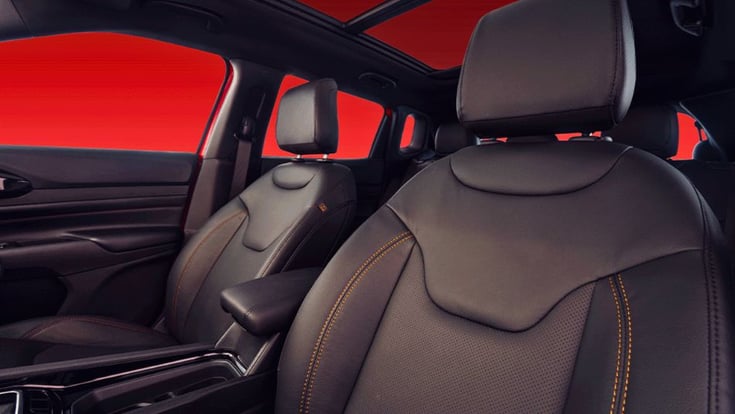
Inside, the Jeep Compass 85th Anniversary Edition is offered with an all-black cabin that looks sporty, with Mayan Gold accents for contrast. The seats also get black leatherette upholstery with the same gold-coloured stitching. This golden hue is also extended to the ambient lighting and illumination on the panoramic sunroof’s sides.
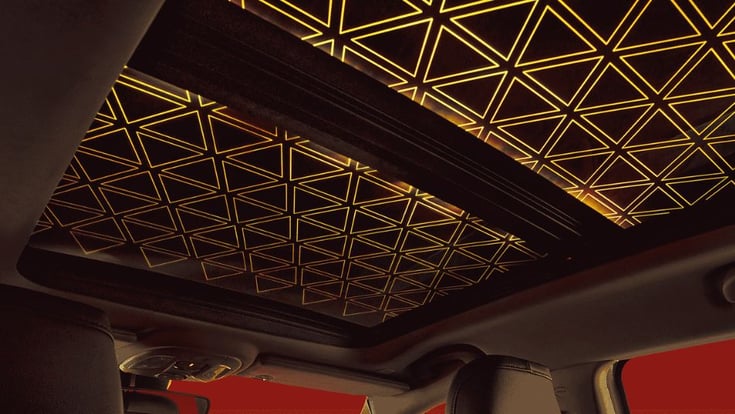
Jeep Compass 85th Anniversary Edition illuminated panoramic sunroof elements
Jeep Compass 85th Anniversary Edition seats
 

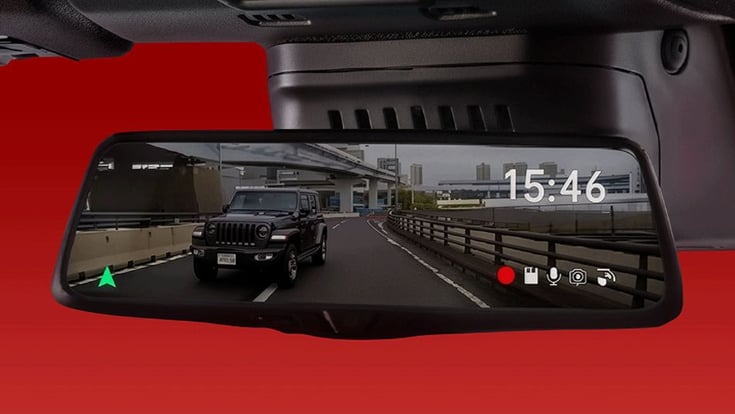
The Compass 85th Anniversary Edition is also available with an 85th Anniversary AXS accessory pack that equips it with additions like illuminated elements on the panoramic sunroof, a digital inside rearview mirror (IRVM), and front and rear dashcams. Other features are the same as the standard Compass, including powered and ventilated front seats, memory function on the driver’s seat, a 10.1-inch touchscreen infotainment system, a 9-speaker Alpine sound system, dual-zone climate control and a wireless phone charger.

Gets the same powertrains as the standard Compass Model S (O) 

The Compass 85th Anniversary Edition is powered by the same 2.0-litre diesel engine that produces 170hp and 350Nm. It is offered with a 6-speed manual or a 9-speed automatic transmission, the latter of which is also available with a four-wheel-drive (4WD) option.

Notably, the Jeep Compass 85th Anniversary Edition shares its entire price range with the Model S (O) trim, but Jeep has yet to announce the price of the 85th Anniversary AXS accessory pack. Bookings are open at pan-India Jeep dealerships and the Jeep India website. 

Aston Martin Valen revealed at the Monterey Car Week

Aston Martin Valen revealed at the Monterey Car Week
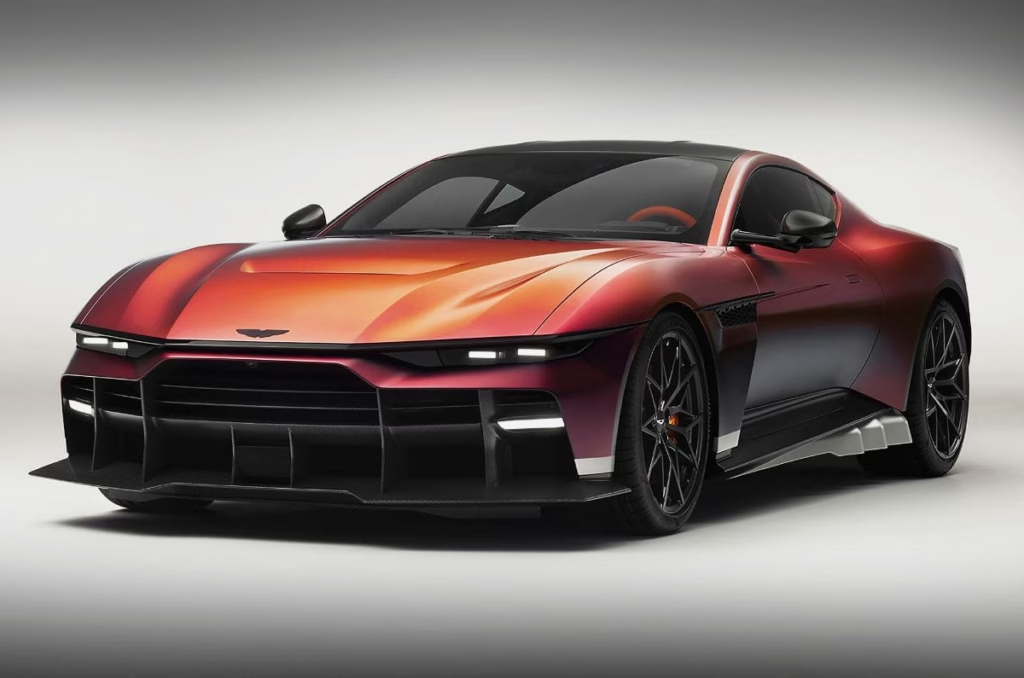
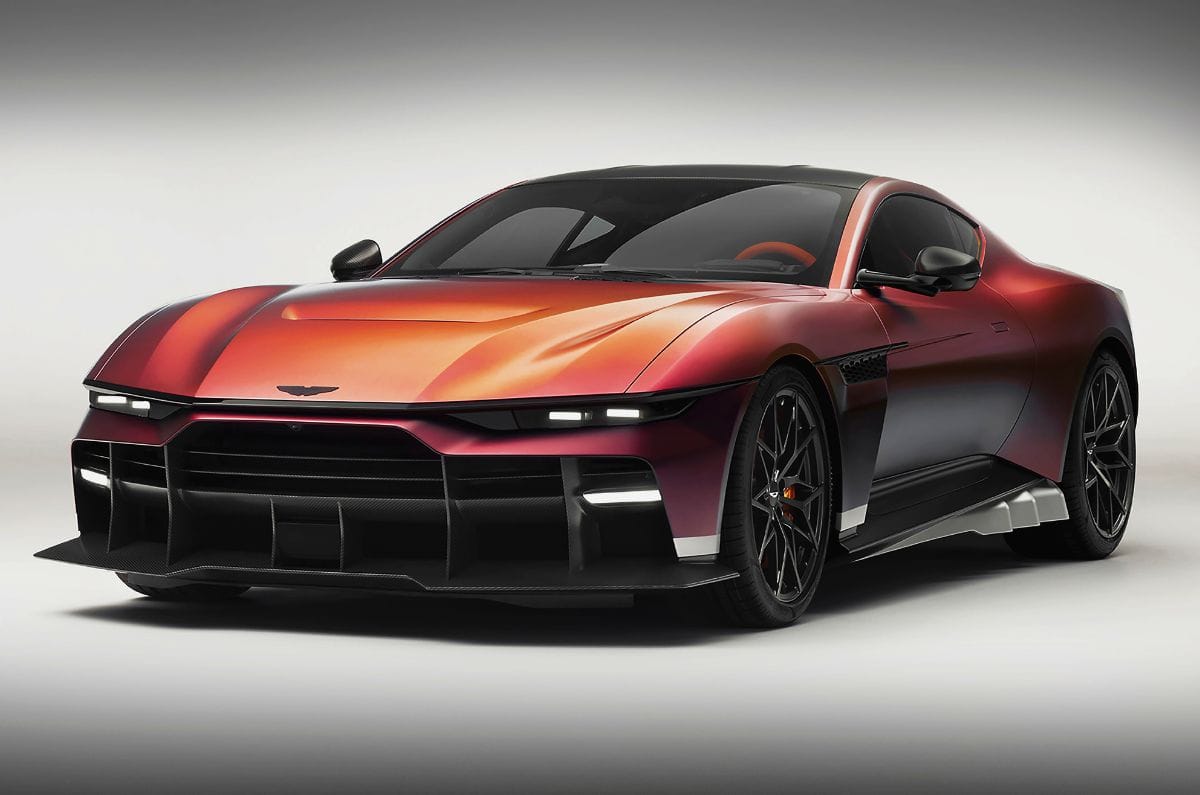
Aston Martin Valen front quarter static

Aston Martin has revealed the Valen as its most powerful front-engined production car at the 2026 Monterey Car Week. An 850hp, 5.2-litre twin-turbo V12 engine, derived from the Vanquish, powers this GT car. Only 150 units of the Valen are being built by the manufacturer’s ‘Q’ personalisation department, with deliveries commencing in the second quarter of 2027.

  1. Claimed 0-100kph time is 3.1 seconds and top speed is 345kph
  2. Uses carbon fibre, aluminium, titanium, and magnesium elements in plenty
  3. Weighs 110kg less than the Aston Martin Vanquish

Aston Martin Valen powertrain details

Produces 15hp more than the Vanquish and is 0.2s faster in a 0-100kph sprint

The Aston Martin Valen is powered by the same 5.2-litre twin-turbo V12 engine as the Vanquish GT, but with more performance. It produces 850hp (15hp more) and 1,000Nm (same as the Vanquish) and is mated to an 8-speed automatic transmission that sends power to the rear wheels (RWD). The gearbox software has, however, been remapped with the Vantage GT4 racecar’s software for “more engaging shifts in all drive modes”. With the Valen, Aston Martin claims a 0-100kph time of 3.1 seconds (0.2s faster than the Vanquish) and an electronically limited top speed of 345kph.

The Valen is 110kg lighter than the Vanquish due to the use of lightweight motorsport-inspired materials, including carbon fibre, aluminium, titanium and magnesium. Aston Martin has also made “significant hardware changes and targeted software calibration” to the ESP, throttle, braking and steering systems. The suspension system uses stiffer springs for reduced roll and pitch motions to driver inputs for increased agility. 

Aston Martin Valen exterior design

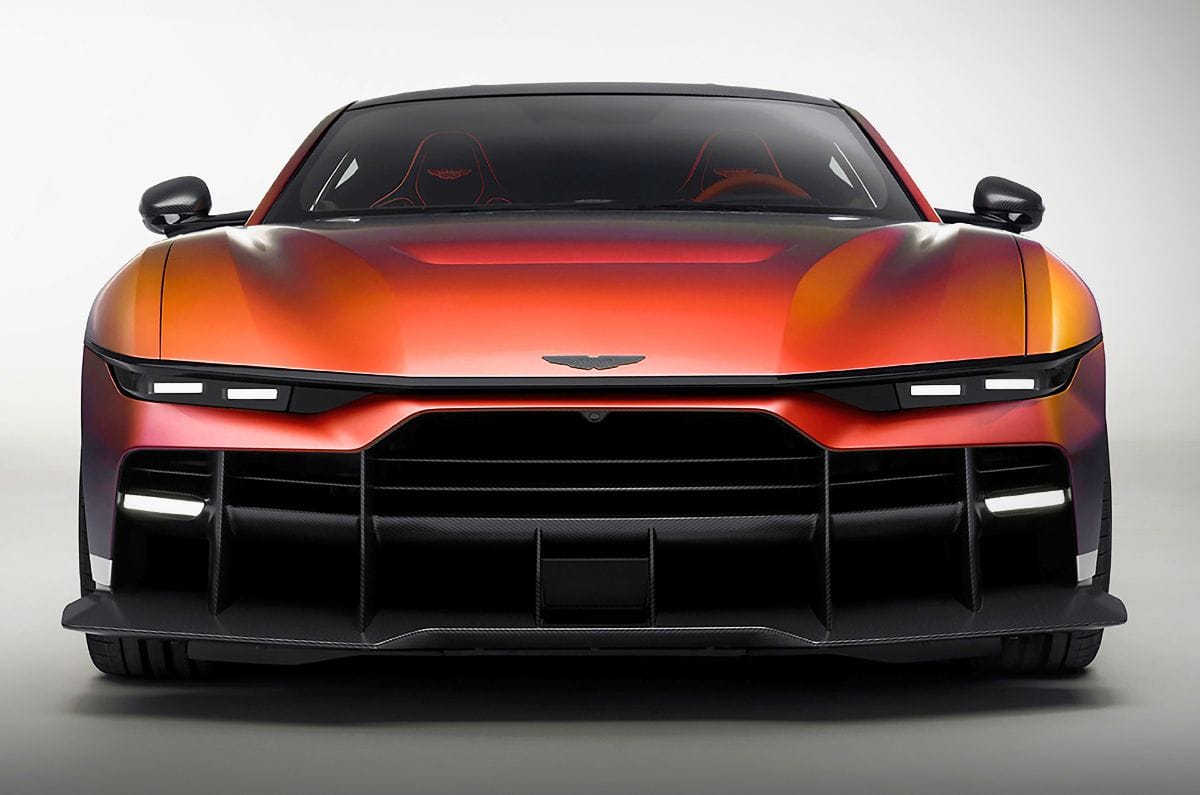
Looks sportier and brutish than the other Aston Martin models

The Valen looks sportier than the gentlemanly designs Aston Martin is generally known for and, as per chief creative officer Marek Reichman, “the Valen is a significant departure from what has gone before”. At the front, the Valen sports a new snout with an aggressive bonnet featuring a functional top vent to draw more air to the engine. The signature Aston Martin grille motif extends to the ends of the fascia. The LED DRLs and LED headlights are slim horizontal bars that make the Valen look menacing. It also gets an “acutely angled” front splitter to channel the air into the GT’s internals. 

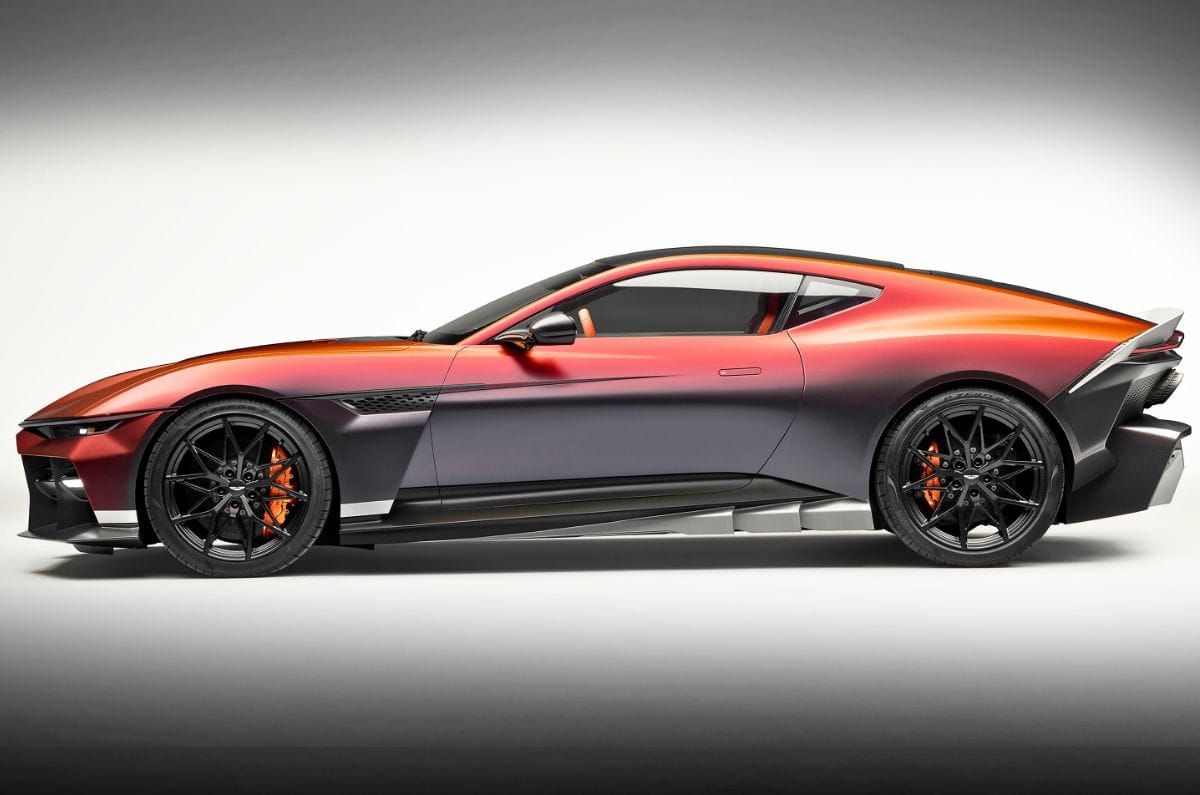
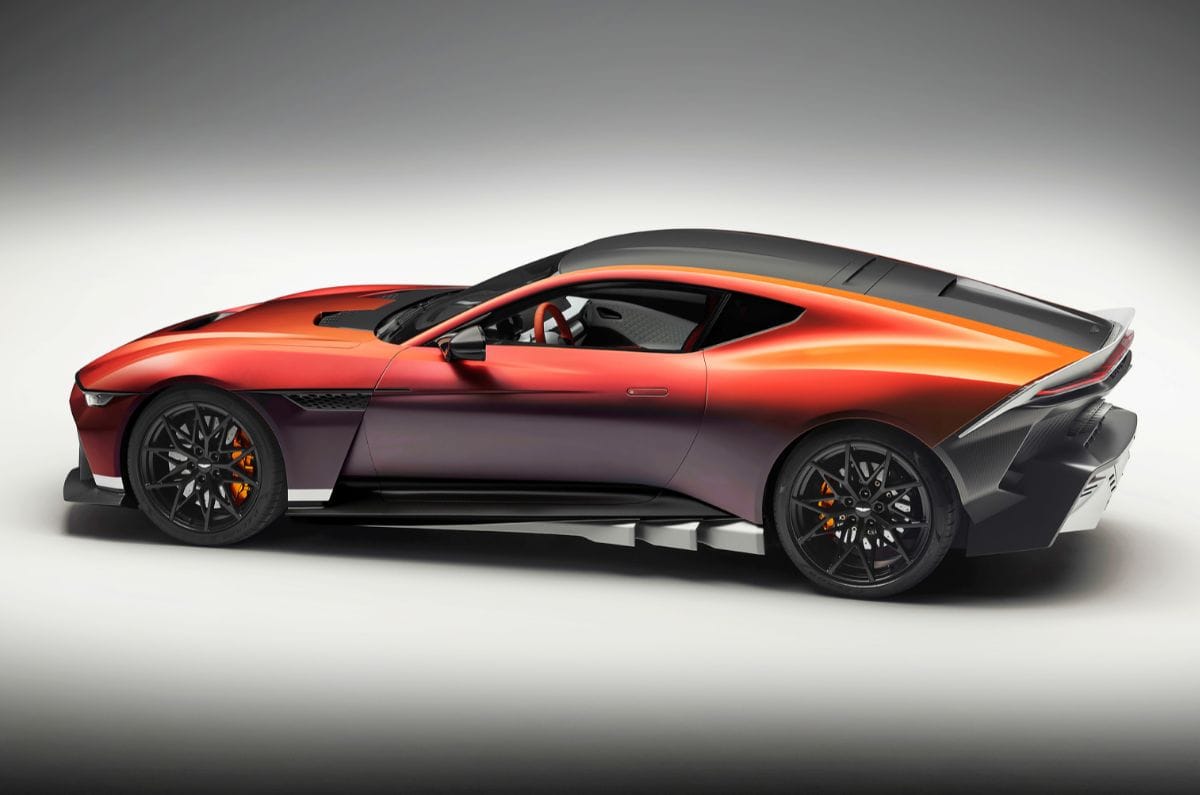
In profile, it sports lightweight magnesium wheels shod with Pirelli P Zero R tyres (275/35 ZR21 front, 325/30 ZR21 rear), specifically developed for the Valen. The GT also gets Pirelli’s latest Cyber Tyre technology, allowing real-time tyre data sharing with the vehicle’s dynamic control systems. The traditional side strakes incorporate large functional vents that extract air from the wheel arch, guiding it towards the rear for improved downforce.

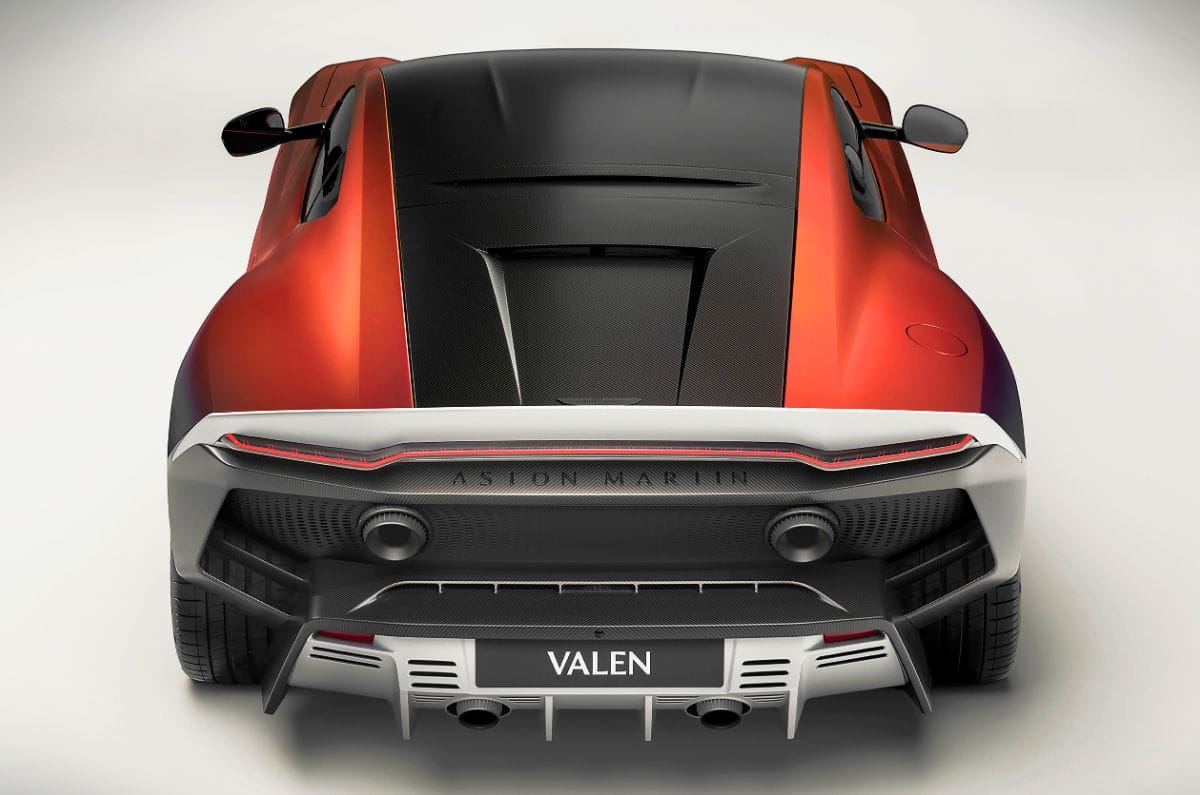
The rear design is bold as well, replacing a traditional fixed rear windscreen with a solid tailgate that opens to reveal 170 litres of boot space. The tailgate features an aerodynamic wing that acts as a Gurney flap that “generates downforce with minimal drag and negates the need for a conventional rear wing”. Beneath this wing is a slim LED taillight bar and 3D-printed quad titanium exhausts stacked in a 2-up, 2-down arrangement. The upper exhaust outlets are always open, while the lower ones open in the raciest drive modes.
The Valen is available with an optional fully exposed carbon fibre exterior that can be tinted in both satin- and gloss-finished hues by the ‘Q’ customisation department. 

Aston Martin Valen interior design

Features a minimalistic dashboard and a well-loaded cabin

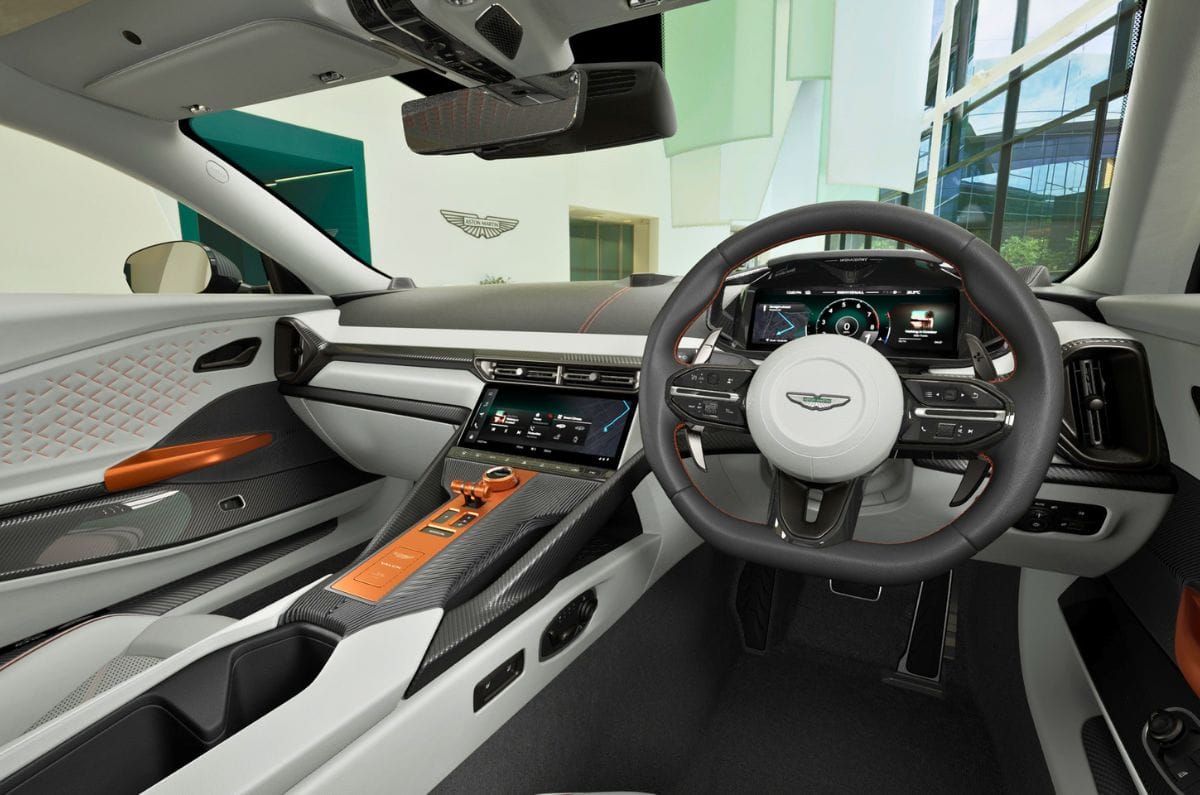
The Valen’s interior is heavily influenced by the Vanquish and hence offers a minimalistic dashboard with a 10.25-inch-inch digital driver’s display, a 3-spoke steering wheel and a 10.25-inch touchscreen infotainment system. What’s different from the Vanquish is that the centre console has been 3D-printed for “greater precision to the surfaces you regularly interact with”. This console has a carbon fibre finish and features a push-button start-stop and an aircraft-style drive mode selector.

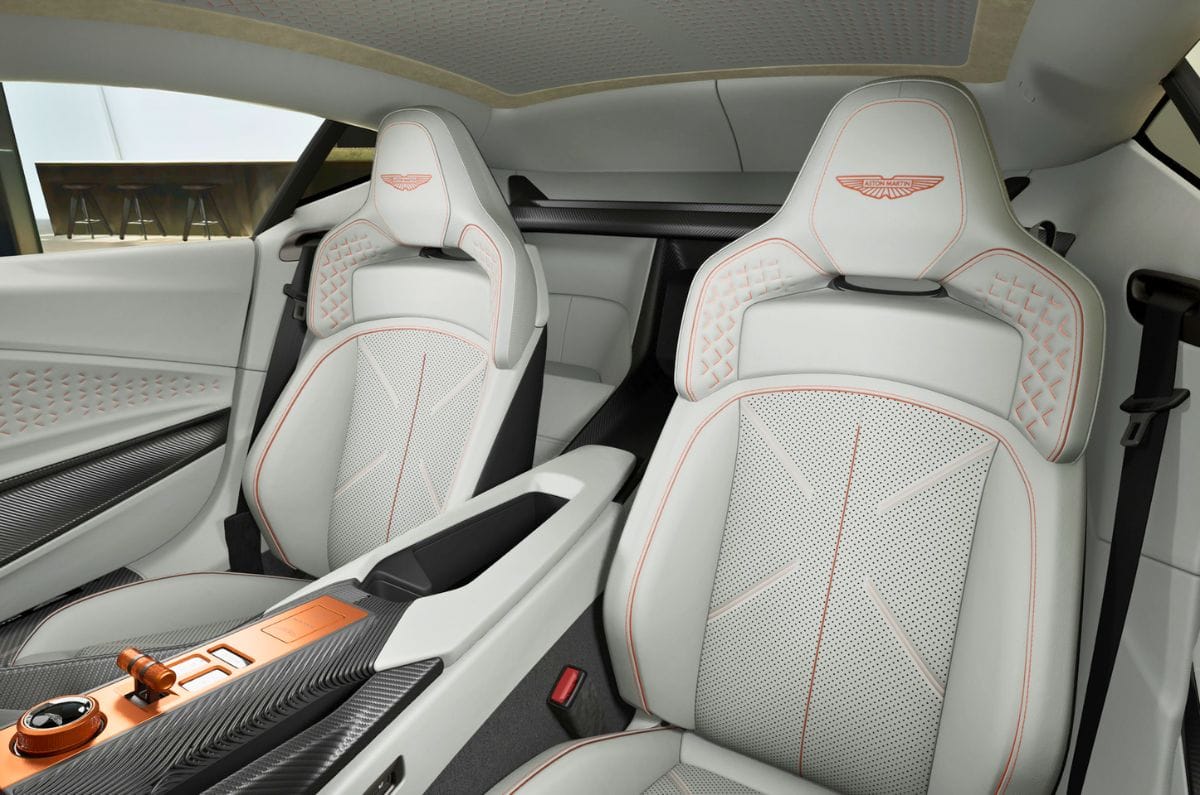
The Aston Martin Valen offers an option between ‘Sport Plus’ seats that “combine support with long-distance comfort” or carbon-fibre ‘Performance’ seats that offer “a more focused driving experience”. Features include a 15-speaker Bowers & Wilkins sound system, a 360-degree camera system, a digital inside rearview mirror (IRVM), a powered steering column and a wireless phone charger. 

Reichman says, “Valen gave us the opportunity to explore and express more extreme emotions through a new form language and surface treatment.” Reflecting this bold design approach, Aston Martin has priced the Valen at 1.5 million pound (approximately Rs 19.46 crore), before buyers choose from the extensive catalogue of optional extras.

Tesla Model Y RWD real world range tested, explained

Tesla Model Y RWD real world range tested, explained

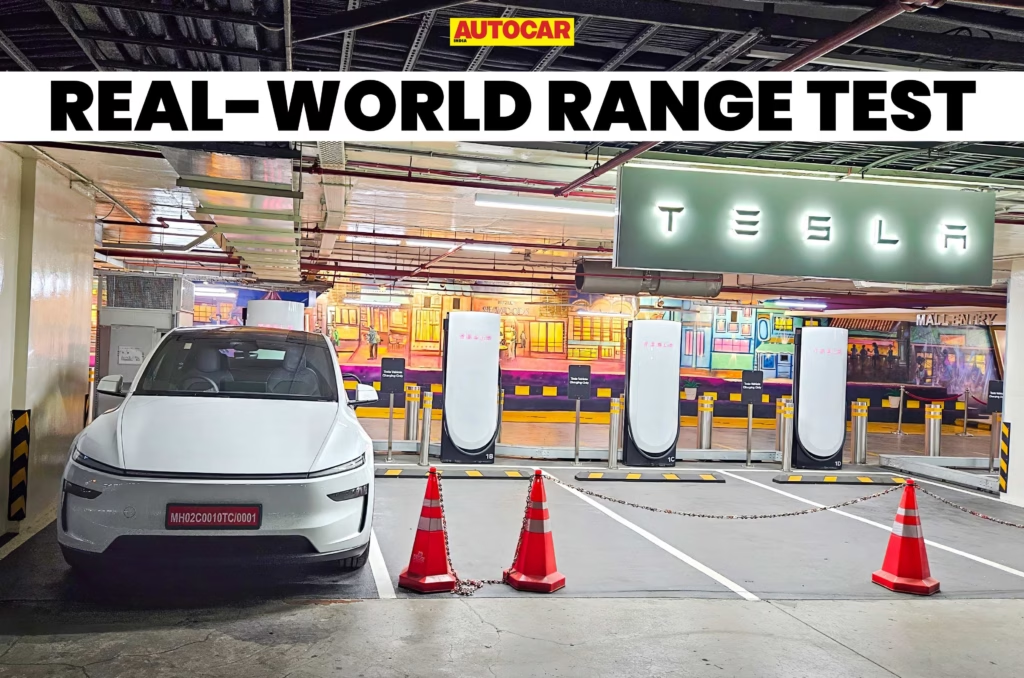
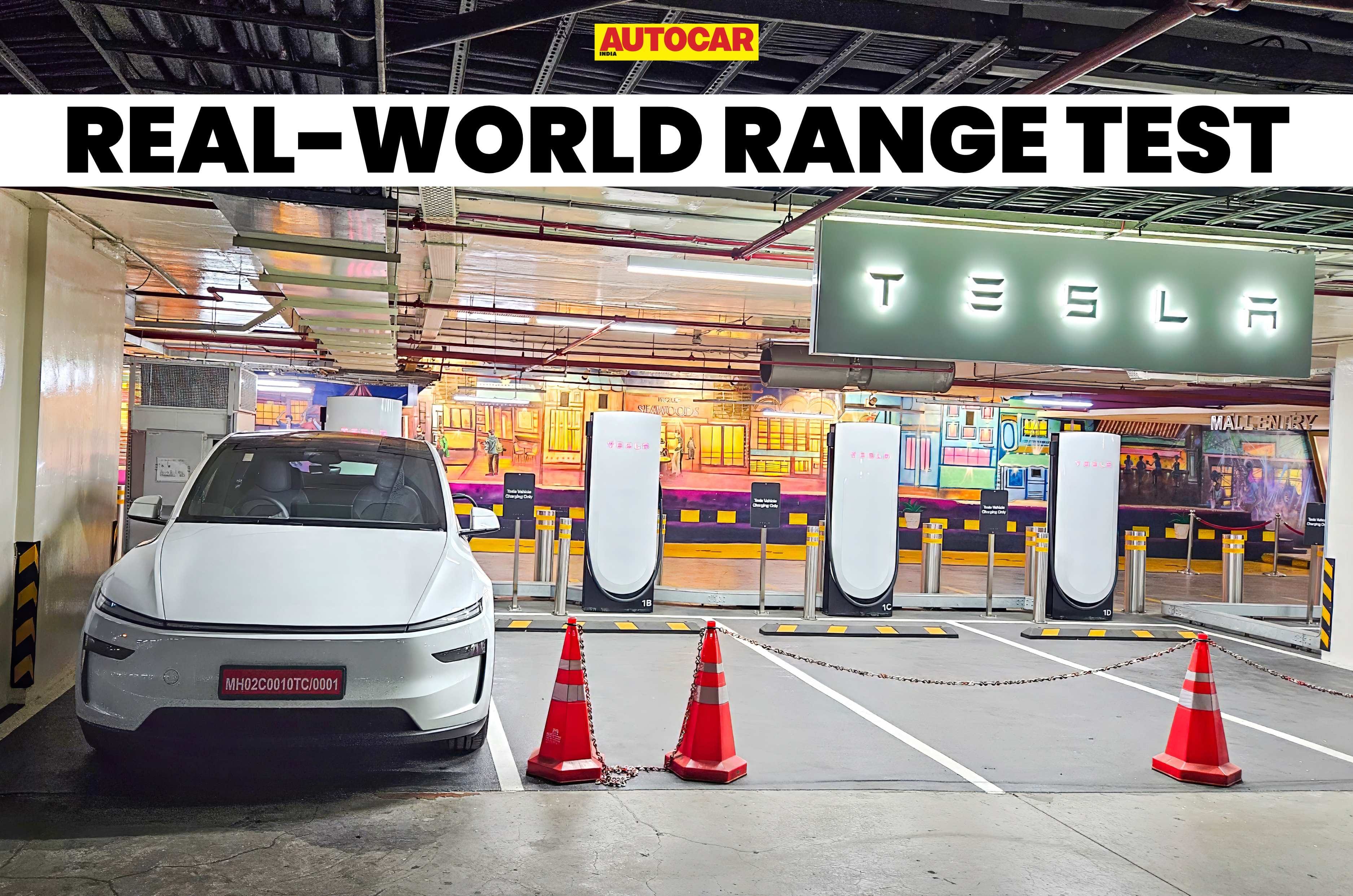
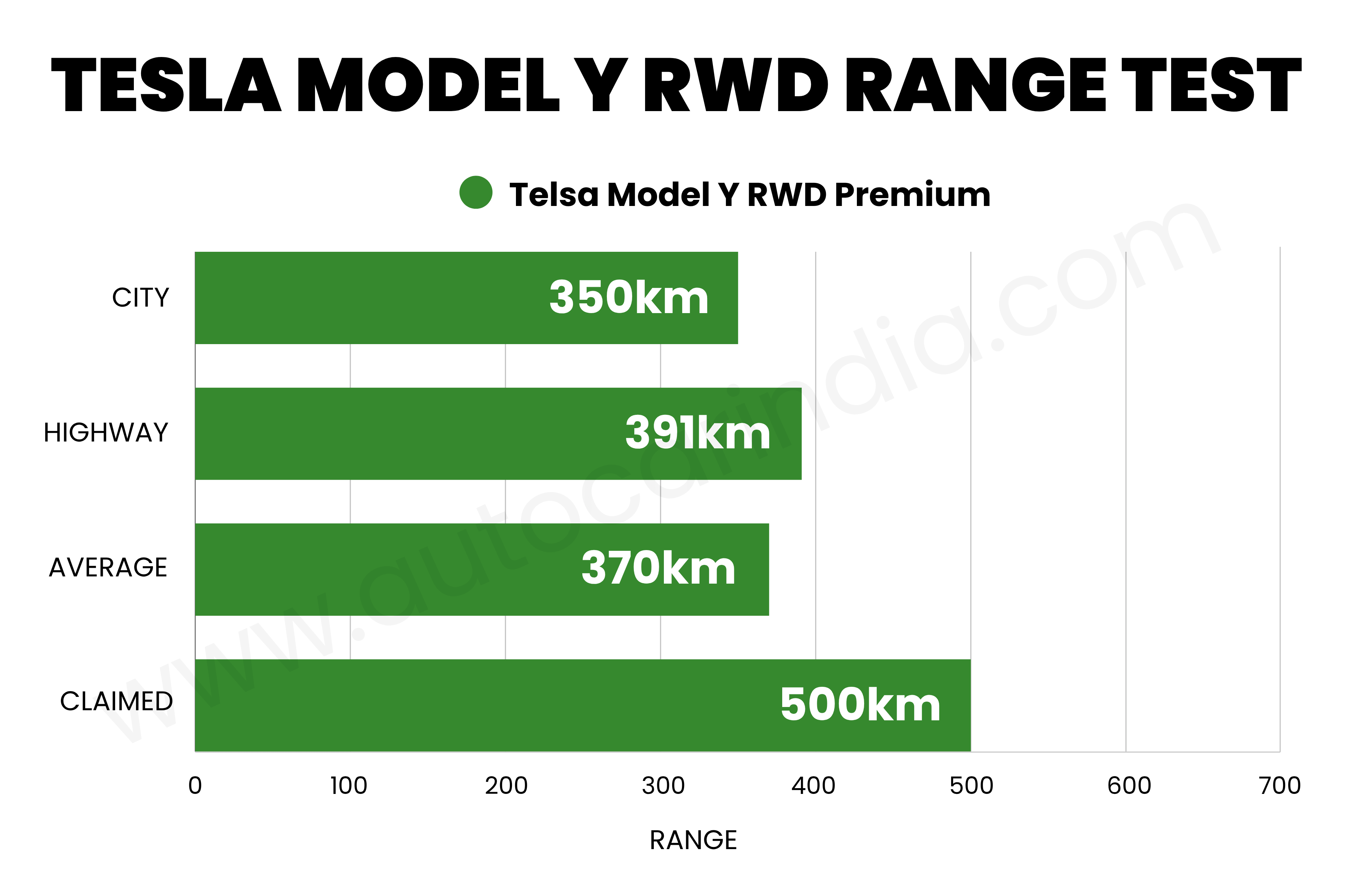
Tesla is offering the 2026 Model Y in two variants: Premium RWD and L Premium AWD, both with 60kWh. Priced at Rs 50.89 lakh (ex-showroom), the lower-spec Premium RWD comes with a rear-axle-mounted electric motor and a 60kWh LFP battery (64kWh gross) with a WLTP-claimed range of 500km. We put this 2026 Tesla Model Y RWD Premium variant to the test to calculate its real-world efficiency.

  1. We used ‘Chill’ driving mode for our tests
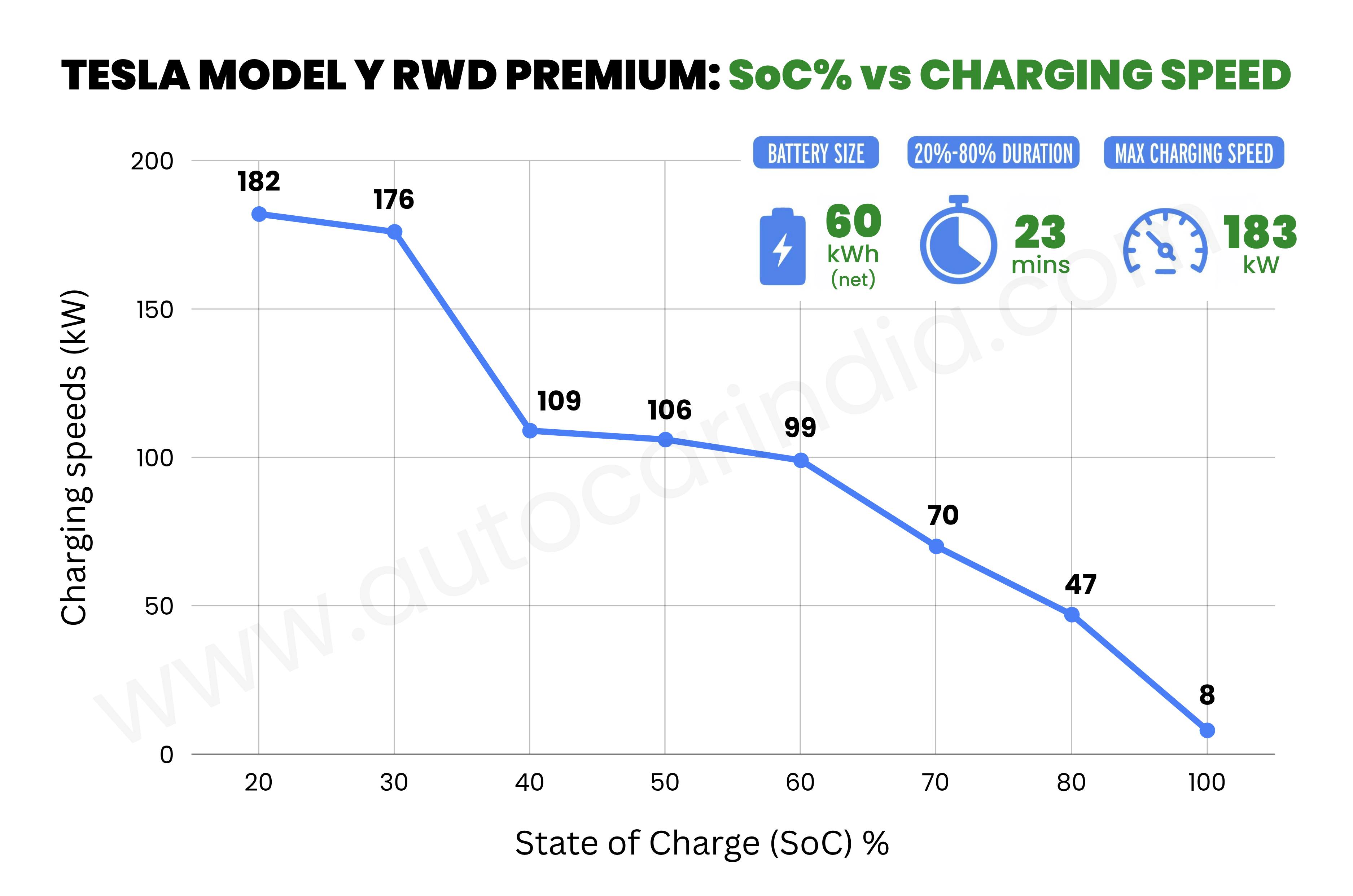
  2. 20-80 percent recharge takes 23 minutes on a 250kW Tesla Supercharger
  3. Has a kerb weight of 1,928 kg 

Tesla Model Y Premium RWD: Range, Efficiency tested

The Model Y is powered by a rear-mounted electric motor which produces 299hp and 420Nm of torque. It is equipped with two drive modes– Standard and Chill,  the latter being an Economy setting, which we used for our tests. It also gets two levels of regenerative braking– Standard and Reduced. For our runs, we used ‘Standard’ (most aggressive) in the city and ‘Reduced’ on the highway.

In the city, it delivered an efficiency of 5.84km/kWh extrapolating to a range of about 350km. On the highway, it was much more efficient, delivering 6.52km/kWh, resulting in a range of about 391km. With the overall efficiency of 6.18km/kWh, you can expect a real-world range of about 370km, which is reasonable for this 1.9-tonne crossover.

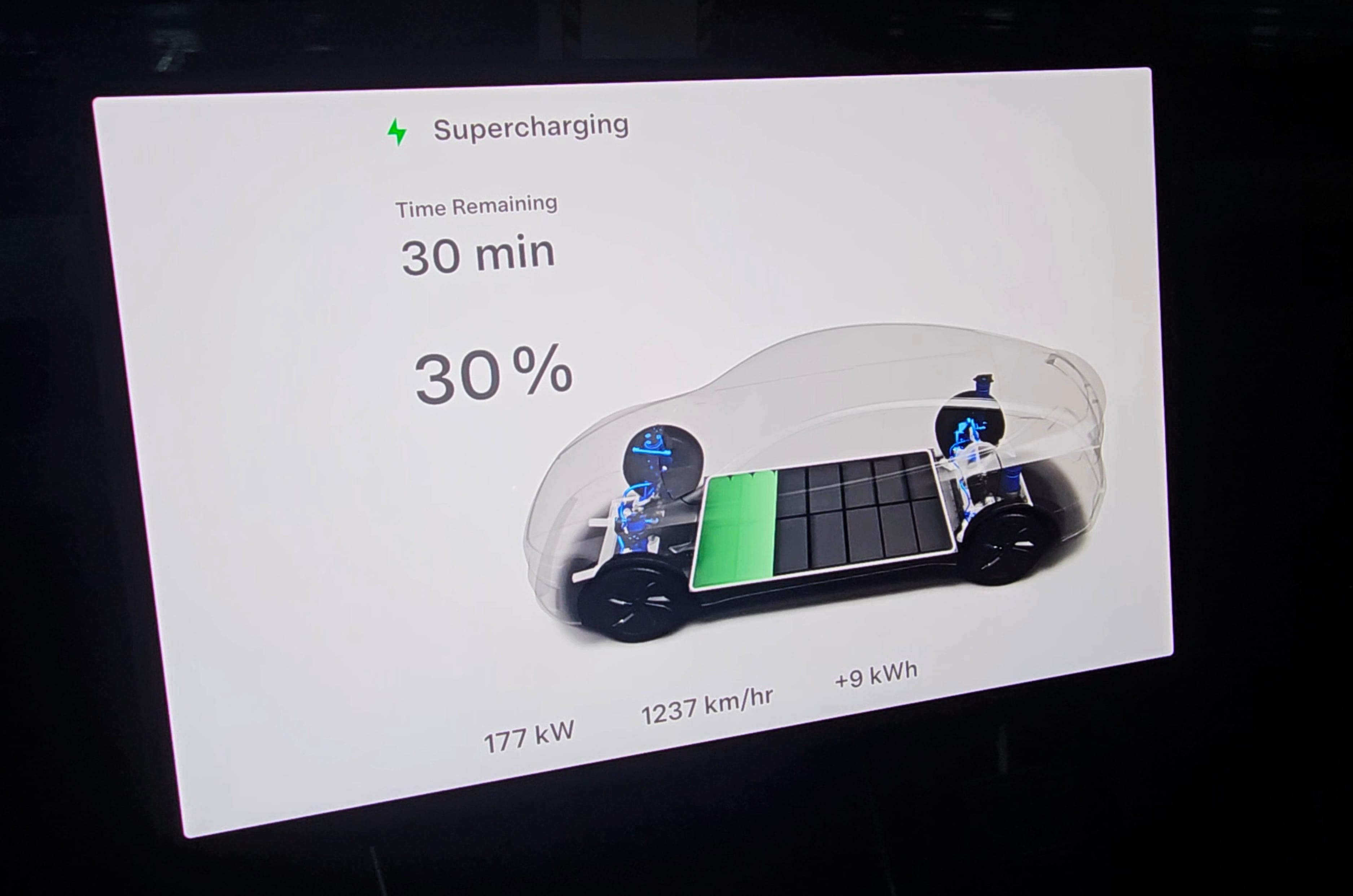
We also plugged the Model Y into a 250kW Tesla Supercharger. Notably, we noticed peak charging speeds (displayed) at 183kW. However, the charging speeds dropped rapidly from 176kW at 30 percent SOC to 109kW at 40 percent SOC, and thereafter the speeds kept dropping gradually throughout. As far as time goes, the Tesla Model Y’s battery charged from 20-80 percent SoC in 23 minutes, and it took another 30 minutes to charge from 80-100 percent.

Autocar India’s range testing

Before our real-world range tests, the battery of our test car was fully charged and we maintained tyre pressures in accordance with the manufacturer’s recommendations. The car was driven on a weekday in Mumbai city and on the adjoining state highway in a fixed loop, and we maintained the set average speeds. At the end of each cycle, we calculated the range based on the percentage charge consumed.

Throughout our tests, the climate control was set to 22deg C in a full-auto setting, and other electricals, such as the audio system, indicators and ventilated front seats, were used when required, just as a regular user would. We take pride in our testing data, which isn’t merely consistent but also gives users an accurate indication of what they can expect in the real world.

Which variant of the Mahindra BE 6 Sporteq should you buy?

Which variant of the Mahindra BE 6 Sporteq should you buy?
Mahindra BE 6 Sporteq variants and features explained

Mahindra has rejigged the line-up of its entry-level born-electric SUV, the BE 6, and added a ‘Sporteq’ suffix to its name. The BE 6 Sporteq also gets some additional features, a new 70kWh battery option, and more. Let’s take an in-depth look at the BE 6 Sporteq line-up.

Mahindra BE 6 Sporteq price and powertrains

Mahindra BE 6 Sporteq price list* (Rs, lakh)

 59kWh70kWh79kWh
One19.45––
Two20.95––
Three21.9522.95–
Three+–23.9524.95
Four / Launch Edition––26.95
FE––24.45
FE Four––26.95

*Exclusive of home charger and installation costs.

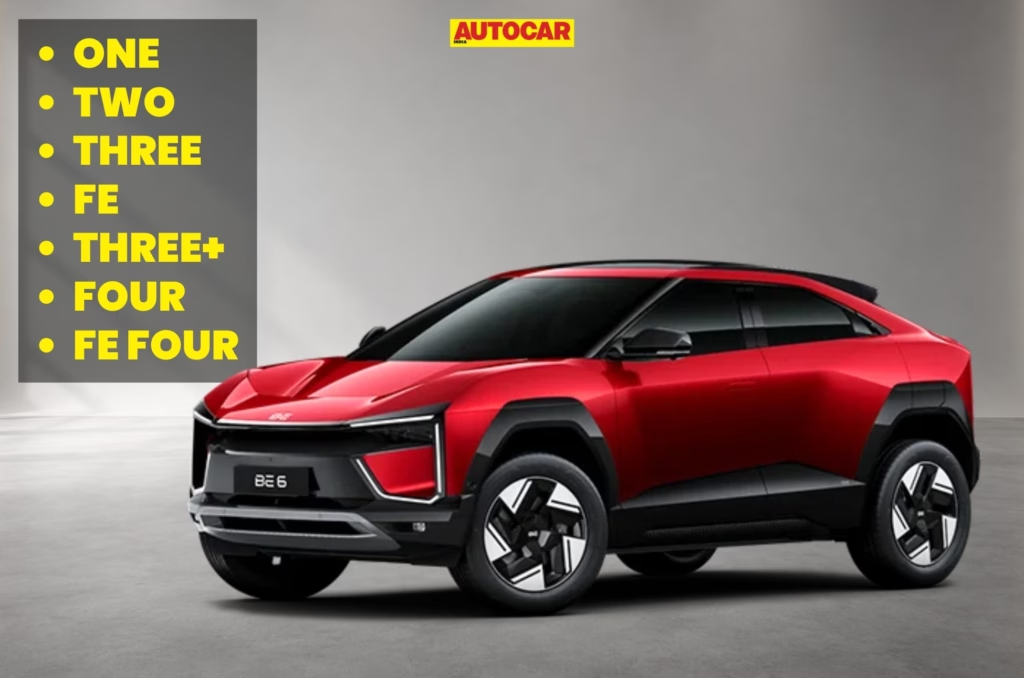
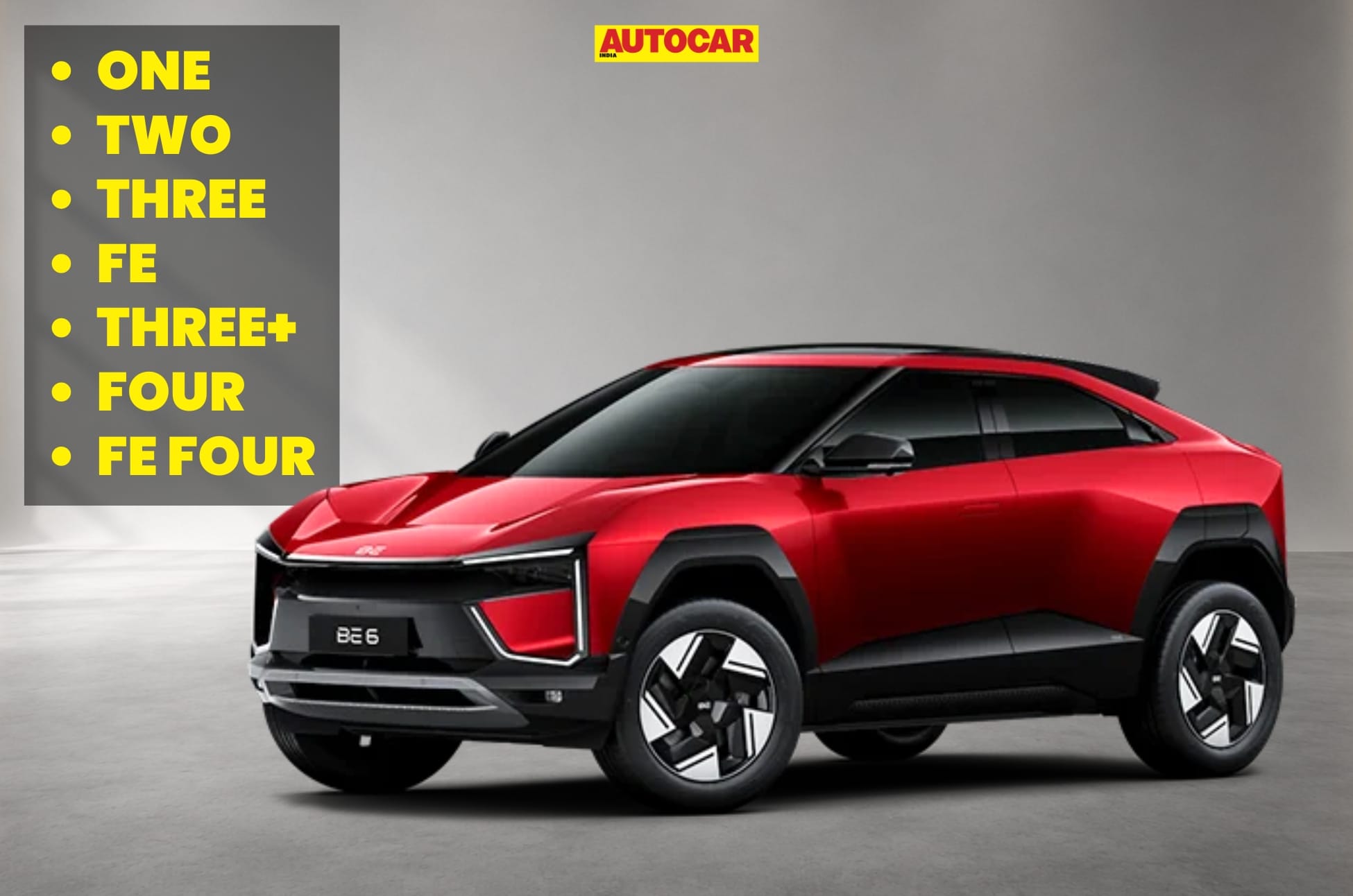
Pricing for the BE 6 Sporteq starts at Rs 19.45 lakh – a Rs 85,000 increase over the outgoing BE 6 – climbing all the way up to Rs 26.95 lakh. Seven BE 6 Sporteq variants are on offer, namely One, Two, Three, Three+, Four, FE, and FE Four. The ‘FE’ trims refer to the BE 6 Sporteq Formula E Freedom Edition, which gets sportier cosmetic tweaks. There’s a Launch Edition of the BE 6 Sporteq too, which is based on the top-spec Four variant and comes with unique exterior and interior finishes.

BaaS now available

Mahindra has also joined the BaaS (battery-as-a-service) bandwagon with the BE 6 Sporteq. With BaaS opted, the price of the lower-spec One and Two variants drops to Rs 11.45 lakh and Rs 12.95 lakh, respectively – a reduction of Rs 8 lakh – and the battery rental fee is pegged at Rs 3.75/km. BaaS pricing for other BE 6 Sporteq variants is yet to be revealed.

Mahindra BE 6 Sporteq powertrain details

 59kWh70kWh79kWh
Motor setupRearRearRear
Power (hp)231245286
Torque (Nm)380380380
Drive layoutRWDRWDRWD
MIDC-claimed range (km)548651683
10-100 percent 7.2kW AC charging (hrs)8.710.211.7
10-100 percent 11.2kW AC charging (hrs)678
20-80 percent DC charging time (mins)20 (120kW)20 (160kW)20 (180kW)

The BE 6 Sporteq retains the 59kWh and 79kWh battery options of the prior model, but adds the 70kWh pack that was introduced with the Mahindra XEV 9S. As before, all batteries are wired up to a single 380Nm rear-mounted (RWD) motor, outputting 231hp in 59kWh guise, 245hp in 70kWh spec, and 286hp in the 79kWh variants. MIDC-certified range stands at 548km, 651km, and 683km, respectively. All three batteries support 11.2kW and 7.2kW AC charging, while DC charging support is capped at 120kW for the 59kWh, 160kW for the 70kWh, and 180kW for the 79kWh units.

Mahindra BE 6 Sporteq colour options

Mahindra BE 6 Sporteq Formula E Freedom Edition in Rosso Impulso.

Seven exterior colours are available for the standard BE 6 Sporteq, specifically Deep Forest, Desert Myst, Everest White, Firestorm Orange, Ruby Velvet (new addition), Stealth Black, and Tango Red. The FE variants get an exclusive Rosso Impulso finish, but can’t be had with the Deep Forest, Desert Myst, Tango Red, and Ruby Velvet option. Meanwhile, the BE 6 Sporteq Launch Edition comes finished solely in Graphite Storm.

A total of four colour schemes are on offer for the cabin. The base BE Sporteq One variant gets a Sage Green and Grey interior finish, while the Two, Three, Three+, and Four variants are finished in Racing Tan and Black. FE variants offer a unique Black and Firestorm Orange colour scheme, while the Launch Edition gets a Racing Tan finish (pictured).

Mahindra BE 6 Sporteq variant-wise features

One

Battery options: 59kWh

  • 6 airbags
  • Rear-view camera with parking sensors
  • Tyre pressure monitoring system
  • Tyre inflator
  • Front and rear disc brakes
  • Rain-sensing wipers
  • ESP
  • Brake-by-wire technology
  • Electronic brake booster
  • Driver drowsiness detection system
  • Electronic parking brake
  • LED headlamps with DRLs
  • Automatic headlamps
  • Illuminated Mahindra emblems
  • LED tail-lamps
  • Height-adjustable driver’s seat
  • Push-button start/stop
  • Tilt and telescopic steering
  • 12.3-inch infotainment touchscreen
  • 12.3-inch digital driver’s display
  • Halo loop dashboard design
  • Wireless Android Auto and Apple CarPlay
  • Steering wheel with physical controls and illuminated Mahindra logo
  • Automatic climate control
  • Rear AC vents
  • PawPal, Keep, CampMe, and Valet modes
  • Charge scheduling function
  • Drive modes: Default, Range, Everyday, Race, Custom, Snow
  • Drift Mode
  • Revive emergency function (grants extra range at 0 percent battery to reach charging station)
  • Multi-level regenerative braking
  • Frequency-dependent dampers
  • Cruise control
  • Virtual engine sounds
  • Connected car tech
  • Tribe Drive function to keep track of friends/family while on road trips
  • 6-speaker sound system
  • OTA software updates
  • Cabin pre-cooling function
  • Electrically adjustable ORVMs with indicators
  • Three Type-C USB ports (15W and 65W up front, 65W rear)
  • Rear demister
  • Cooled console storage
  • 60:40 split second-row seats with two-step recline
  • Second-row armrest

Two

Battery options: 59kWh

Features over One

  • 16-speaker Harman Kardon sound system with Dolby Atmos
  • Digital Key and NFC card support
  • 12.3-inch passenger screen (triple-display setup)
  • Parental lock for passenger screen
  • Horizontal dashboard layout
  • Leatherette-wrapped instrument panel and door trims
  • Leatherette steering wheel
  • Leatherette gear selector
  • 540-degree camera (360 degrees + underfloor view)
  • Manual drive-video recording
  • TPMS with individual tyre monitoring
  • Front parking sensors
  • User profiles with automatic detection
  • Dual-zone climate control
  • Auto-dimming IRVM
  • Auto defogger
  • Wireless charging pad

Three / FE

Battery options: 59kWh, 70kWh, 79kWh

Features over Two

  • Fixed panoramic glass roof
  • LED DRLs with welcome/goodbye animations
  • Sequential front and rear indicators
  • Additional Type-C USB port in second row
  • Acoustic-laminated door glass
  • 6-way powered driver’s seat with memory (Three only)
  • Ventilated front seats (Three only)
  • ORVM reverse auto-dip function (Three only)
  • Adaptive suspension (FE only)
  • Dual 12.3-inch screens with halo dashboard (FE only)
  • Unique virtual engine sounds (FE only)
  • Carpet lamps  (FE only)

Three+

Battery options: 70kWh, 79kWh

Features over Three

  • Auto regen function
  • C-shaped front LED DRLs with animation
  • Front fog lamps
  • C-shaped LED tail lamps
  • Personalised messaging and animations in rear light bar
  • Cornering lamps
  • Auto Booster lamps
  • Passive keyless entry
  • Flush door handles
  • Powered tailgate with gesture control
  • Music and light show function
  • Ambient lighting
  • Carpet lamps
  • Level 2 ADAS (1 radar, 1 camera)
  • Second front wireless charging pad
  • Parcel shelf

Four / FE Four

Battery options: 79kWh

Features over Three+

  • Adaptive suspension
  • Knee airbag (7 airbags total)
  • Google Gemini integration in infotainment system
  • Gaming and karaoke suites
  • Private audio function (routes infotainment audio to Bluetooth device)
  • Dolby Vision
  • Heads-up display
  • Auto park assist
  • Cabin air purifier
  • Ambient lighting elements in panoramic glass roof
  • Level 2+ ADAS (5 radars, 1 camera)
  • Dashcam function with Intrusion Alert
  • Approach and walk-away lock/unlock
  • One-touch auto up/down driver window
  • Touch-capacitive start/stop button (FE Four only)
  • Touch-capacitive virtual engine sound button (FE Four only)
  • Dual 12.3-inch displays with halo dashboard (FE Four only)

Which Mahindra BE 6 Sporteq variant should you buy?

Three is our value pick

The BE 6 Sporteq Three variant offers the best value and most choice in the line-up. It gets all the crucial safety kit from the One and Two varants, you can choose from all three battery options, and the sportier-looking FE variant is available as an alternative too. Moreover, the BE 6 Sporteq Three packs nice-to-have goodies like a triple-screen setup, panoramic glass roof, ventilated front seats, a powered driver’s seat, welcome/goodbye sequences for the DRLs, and more.

All prices are ex-showroom, India.

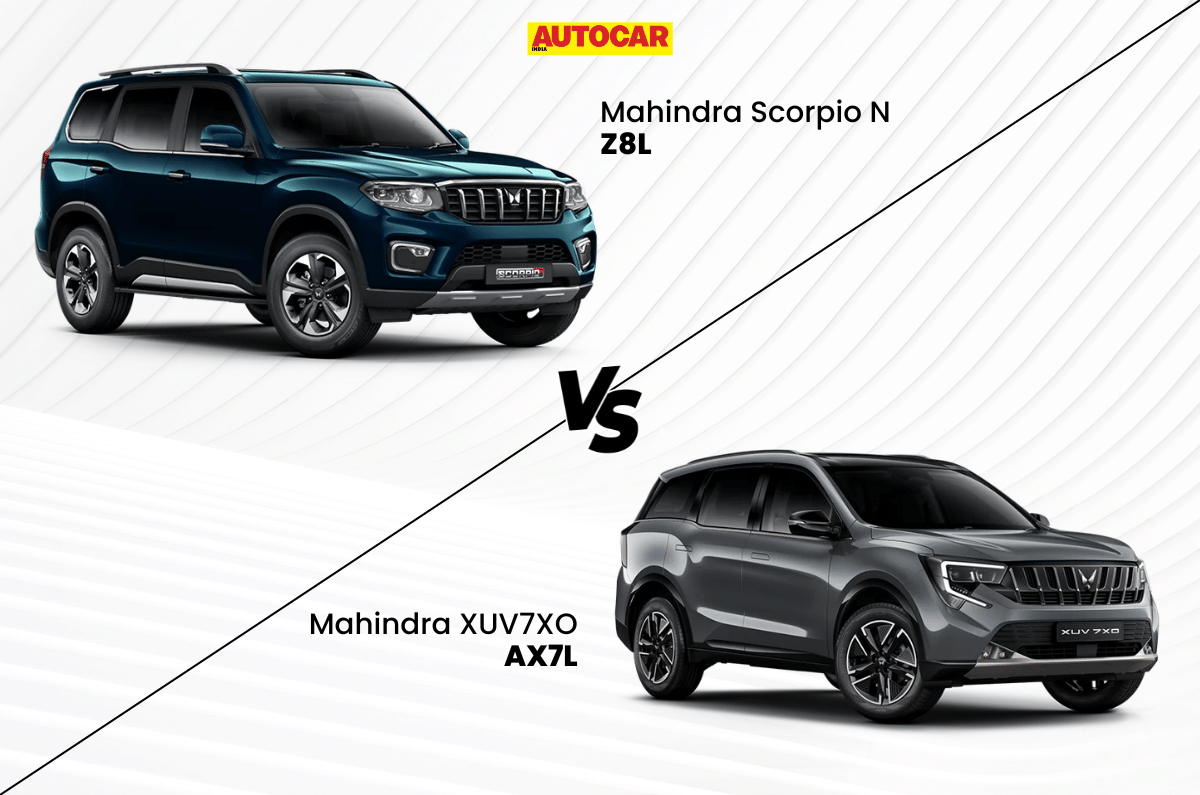
Mahindra Scorpio N Z8L vs XUV 7XO AX7L top trims compared

Mahindra Scorpio N Z8L vs XUV 7XO AX7L top trims comparison

The Mahindra Scorpio N and XUV 7XO are popular three-row SUVs offered by the Indian carmaker. While the Scorpio N uses a ladder-frame chassis, the XUV 7XO is based on a monocoque construction. Both SUVs received mid-life updates in 2026 and are now well-equipped by modern standards. However, they differ in areas such as dimensions, powertrain tuning, features and pricing. To see how they compare, we have put their top trims, the Scorpio N Z8L and XUV 7XO AX7 L, head-to-head.

Mahindra Scorpio N Z8L vs XUV 7XO AX7L: Dimensions


Scorpio N

XUV 7XO

Length (mm)

4,662

4,695

Width (mm)

1,917

1,890

Height (mm)

1,857

1,755

Wheelbase (mm)

2,750

2,750

Seat layout

6/ 7

6/ 7

The two SUVs have the same 2,750mm wheelbase and offer both six- and seven-seat layouts. However, the XUV 7XO is 33mm longer than the Scorpio N, while the Scorpio N is 27mm wider and 102mm taller.

Mahindra Scorpio N Z8L vs XUV 7XO AX7L: Powertrain


Scorpio N

XUV 7XO

Engine

2-litre turbo petrol / 2.2-litre diesel2-litre turbo petrol / 2.2-litre diesel

Power (hp)

203 / 175203/ 185

Torque (Nm)

370-380 / 370-400380/ 420-450

Gearbox

6MT or 6AT6MT or 6AT
Drive layoutRWD / RWD, 4WDFWD / FWD, AWD

Both use the same 2-litre turbo-petrol and 2.2-litre diesel engines, but their outputs differ. The petrol engines make 203hp in both SUVs, while the XUV 7XO’s diesel is more powerful at 185hp versus 175hp in the Scorpio N. Depending on the gearbox, the XUV 7XO also produces more torque with its diesel engine, at 420-450Nm compared to 370-400Nm in the Scorpio N.

The Scorpio N has a proper 4WD system (with low range) and offers it with both the manual and automatic gearboxes in diesel form. The XUV 7XO, meanwhile, gets an AWD system only with the diesel automatic version. When not equipped with four-wheel drive, the Scorpio N uses a RWD layout, which gives it better traction on hilly terrains. The non-AWD XUV 7XO, meanwhile, uses a front-wheel-drive setup.

Mahindra Scorpio N Z8L vs XUV 7XO AX7L: Exterior


Scorpio N

XUV 7XO

Headlights

Auto LED

Auto LED

Taillights

LED

LED

DRLs

LED

LED

Front fog lamps

LED

LED with cornering function

Wheels

18-inch alloys

19-inch alloys
Door handlesPull typeFlush fitting
Chrome finish on door handlesYesNo

Powered ORVMs with indicators

Yes

Yes

Roof rails

Yes

Yes

Shark-fin antenna

Yes

Yes

Rear spoiler

Yes

Yes

Both SUVs get LED headlights, tail-lights and DRLs, along with powered ORVMs, roof rails, a shark-fin antenna and a rear spoiler. However, the XUV 7XO gets larger 19-inch alloy wheels compared to the Scorpio N’s 18-inch units, while its front fog lamps also add a cornering function. The Scorpio N uses conventional pull-type door handles with chrome detailing, whereas the XUV 7XO gets flush-fitting handles without chrome.

Mahindra Scorpio N Z8L vs XUV 7XO AX7L: Interior, features


Scorpio N

XUV 7XO

Driver’s display

10.25 inch

12.3 inch

Central touchscreen

12.3 inch

12.3 inch
Passenger touchscreenNA12.3 inch

Android Auto, Apple CarPlay

Wireless

Wireless
Type-C USB portsFront and rearFront and rear

Audio system

12-speaker Sony

16-speaker Harman Kardon

Push-button start/stop

Yes

Yes

Sunroof

Panoramic

Panoramic

Powered tailgate

No

No

Climate control

Dual-zone

Dual-zone

Seat upholstery

Leatherette

Leatherette

Steering wheel adjustment

Tilt

Tilt and telescopic

Wireless phone charger

Front

Front and rear

Driver’s seat adjustment

Powered

Powered

Co-driver’s seat adjustment

Manual

Powered

Ventilated front seats

Yes

Yes
Ventilated second-row seatsNoOutboard only (both 6 and 7 seater versions)
Boss modeNoYes
Bring your own device mountsNoYes

The XUV 7XO has an edge in cabin tech, with a larger 12.3-inch driver’s display and an additional 12.3-inch passenger touchscreen, which the Scorpio N does not offer. It also gets a 16-speaker Harman Kardon system versus the Scorpio N’s 12-speaker Sony setup. Both get wireless Android Auto and Apple CarPlay, panoramic sunroofs, dual-zone climate control, powered driver’s seats and ventilated front seats.

There are also a few other differences. The XUV 7XO gets a telescopic steering adjustment, powered co-driver’s seat, wireless phone charging for both front and rear passengers, and ventilated outboard second-row seats. It also offers Boss Mode and bring-your-own-device mounts, which are not available on the Scorpio N. Interestingly, neither SUV gets a powered tailgate.

Mahindra Scorpio N Z8L vs XUV 7XO AX7L: Driving tech


Scorpio N

XUV 7XO

Drive modes

Zip, Zap, Zoom (diesel only)

Zip, Zap, Zoom (diesel only)

Terrain modes

Normal, Snow, Mud and Ruts, Sand (diesel only)

No
Low range 4WDYesNo

Electronic locking differential

4WD only

No

Paddle shifters

AT only

AT only

Cruise control

Adaptive

Adaptive

Both SUVs offer the same three drive modes, namely Zip, Zap and Zoom, along with adaptive cruise control and paddle shifters with the automatic gearbox. However, the Scorpio N has a clear advantage for off-road use, with terrain modes for Normal, Snow, Mud and Ruts, and Sand. It also gets low-range 4WD system, as mentioned before, and an electronic locking differential, features that are not available on the XUV 7XO.

Mahindra Scorpio N Z8L vs XUV 7XO AX7L: Safety


Scorpio N

XUV 7XO

Airbags

6

7

ADAS

Level 2

Level 2

Camera setup

540-degree

540-degree

Parking sensors

Front and rear

Front and rear

Electronic parking brake

Yes

Yes

All-wheel disc brakes

Yes

Yes
ABSYesYes

TPMS

Yes

Yes

IRVM

Auto-dimming

Auto-dimming

Rear wiper, washer and defogger

Yes

Yes

Hill hold assist

Yes

Yes

Hill descent control

Yes

Yes

ESC

Yes

Yes

This is one area where the two SUVs aren’t that far apart, especially in their respective top trims. Both get Level 2 ADAS, 540-degree cameras, front and rear parking sensors, all-wheel disc brakes, ABS, TPMS, auto-dimming IRVMs, electronic parking brakes, hill hold assist and hill descent control. The XUV 7XO does have a small advantage with seven airbags, compared with six in the Scorpio N.

Mahindra Scorpio N Z8L vs XUV 7XO AX7L: Prices and verdict


Scorpio N

XUV 7XO

Petrol MT

21.31-21.69

–

Petrol AT

22.87-23.05

24.29-24.49

Diesel MT 

21.99-22.25

23.29

Diesel AT

23.49-25.49

24.79-25.79

Clearly, the Mahindra XUV 7XO AX7L is more expensive than the Scorpio N Z8L. The price gap is smallest for the petrol AT, at Rs 1.24-1.44 lakh, while the diesel AT carries a difference of Rs 1.30-1.31 lakh. For the diesel manual, the XUV 7XO is also more expensive by Rs 1.04-1.30 lakh. The Scorpio N is also the only one of the two available with a petrol manual at the top end.

Without a doubt, the two SUVs are well equipped, but their focus is quite different. The Scorpio N is better suited to buyers who want to go off-road, thanks to its ladder-frame construction and the 4WD system. The XUV 7XO, on the other hand, is better suited to those looking for a three-row SUV for city and highway use, with some mild off-road ability. Additionally, its monocoque construction and dampers with DCx piston valves are aimed at delivering a more comfortable ride. 

Overall, we recommend the XUV 7XO for its overall package, offering higher engine outputs, a more premium cabin and additional features, a relatively more usable third row and better ride and handling. It does command a slight premium over the Scorpio N, but we think the added cost is justified.

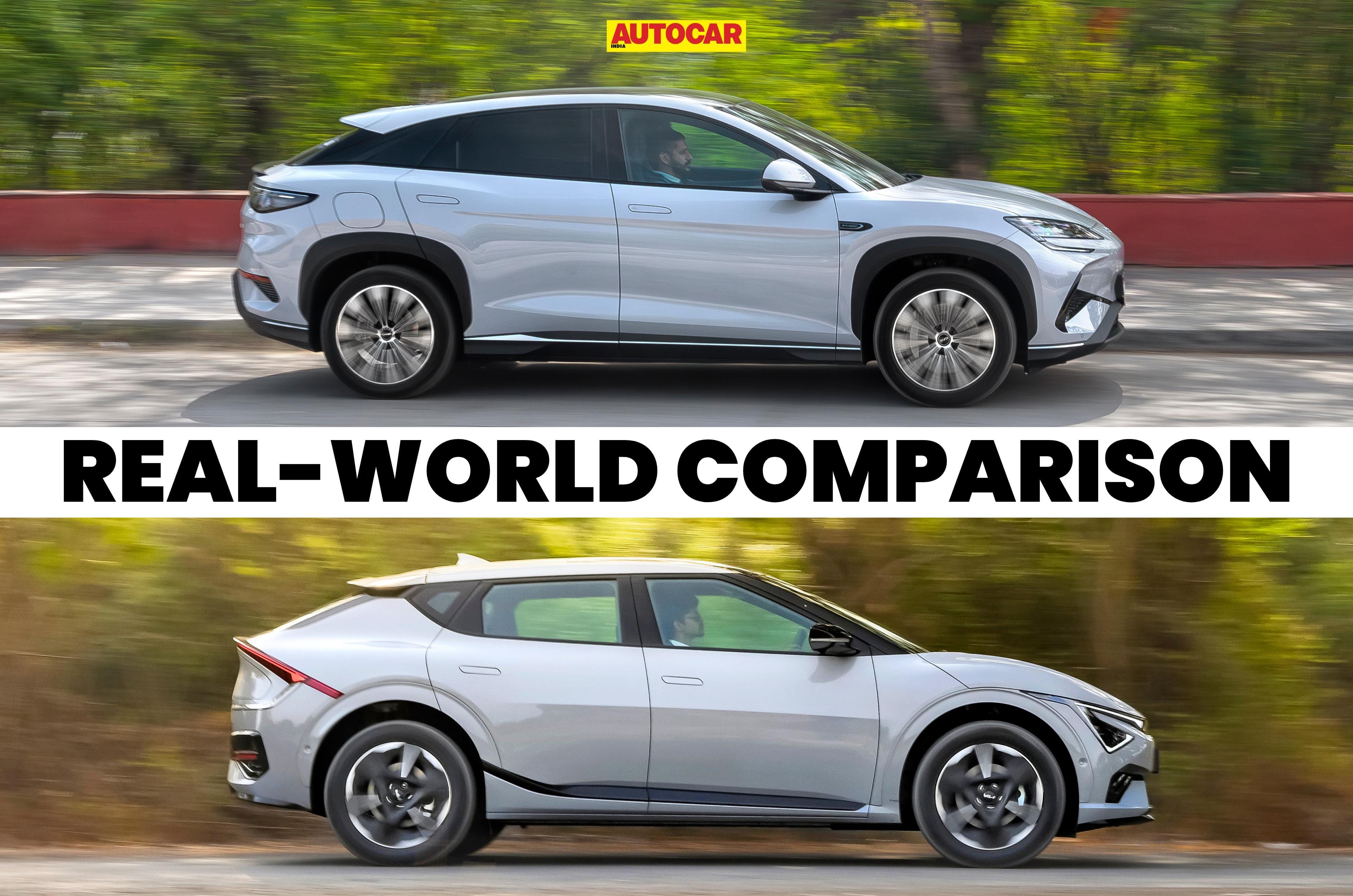
BYD Sealion 7 vs Kia EV6: Performance, Range, Regen Compared

BYD Sealion 7 vs Kia EV6 compared

The BYD Sealion 7 and Kia EV6 are premium EV offerings, roughly priced between Rs 50-70 lakh. They’ve both got modern designs, premium cabins and punchy performance. They are also fully imported as completely built units (CBU) and rival cars like the Hyundai Ioniq 5 and BMW iX1. In this story, we compare the performance, range and regen of the respective top-spec variants of both cars.

BYD Sealion 7 vs Kia EV6: Specifications, price

The Sealion 7 is bigger, has more performance and is less expensive

BYD Sealion 7 Performance AWD vs Kia EV6 GT Line AWD: Specifications, price


Sealion 7 Performance AWD

EV6 GT Line AWD

Battery Size (kWh)

82.56 

84

Power (hp)

530

325

Torque (Nm)

690

605

Claimed Range (km)

542 (NEDC)

663 (ARAI)

Kerb weight (kg)

2,340

NA

Power-to-weight*

226.49

NA

Torque-to-weight^

294.87

NA

Price (in Rs lakh)

Rs 55.9 lakh

Rs 65.97 lakh

*Power-to-weight is hp per tonne

^Torque-to-weight is Nm per tonne

The BYD Sealion 7 is bigger in every dimension – length, width, height and even wheelbase, but the Kia gets a bigger 84kWh NMC battery (versus an 82.56kWh LFP battery in the Sealion 7). In terms of performance, the Sealion 7 makes 205hp and 85Nm more than the EV6. And while the EV6 is available in an AWD setup only, the Sealion 7 is available in a RWD layout with less performance. The big difference is how they are priced, and the price difference between the top-spec trims of these cars is roughly Rs 10 lakh.

BYD Sealion 7 vs Kia EV6: Performance tests

With 205hp and 85Nm more, the Sealion 7 is quicker in all our tests

BYD Sealion 7 Performance AWD vs Kia EV6 GT Line AWD: Performance tests


BYD Sealion 7

Kia EV6

Winner

0-100kph (sec) 

4.43

5.16

Sealion 7

20-80kph (sec)

2.48

2.77

Sealion 7

40-100kph (sec) 

2.91

3.49

Sealion 7

With the difference in performance between these two, it was a little easier to predict the outcome. In all the performance tests, the Sealion 7 was faster. It completed the 0-100kph run in 4.43s and is 0.73s faster than the EV6. Again, 20-80kph and 40-100kph runs are 0.29s and 0.58s faster than the EV6, respectively.

BYD Sealion 7 vs Kia EV6: Regen and range tests

Kia EV6 has stronger regen modes and offers better range overall

BYD Sealion 7 Performance AWD vs Kia EV6 GT Line AWD: Regen and range

Regen mode

BYD Sealion 7

Kia EV6

Winner

One-pedal

NA

NA

–

High

236.44m / 18.13s

105.49m / 7.6s

Kia EV6

Medium

–

146.75m / 10.95s

Kia EV6

Low

421.22m / 32.16s 

365.88m / 26.85s

Kia EV6

The BYD gets two regen modes – Standard and High, whereas the EV6 gets four, including the option of a single pedal driving mode. In all the modes, the EV6 showed stronger regenerative braking than the Sealion 7. In their respective highest regen mode, the Sealion 7 takes more than twice as long to slow down from 80-20kph when compared to the Kia EV6.

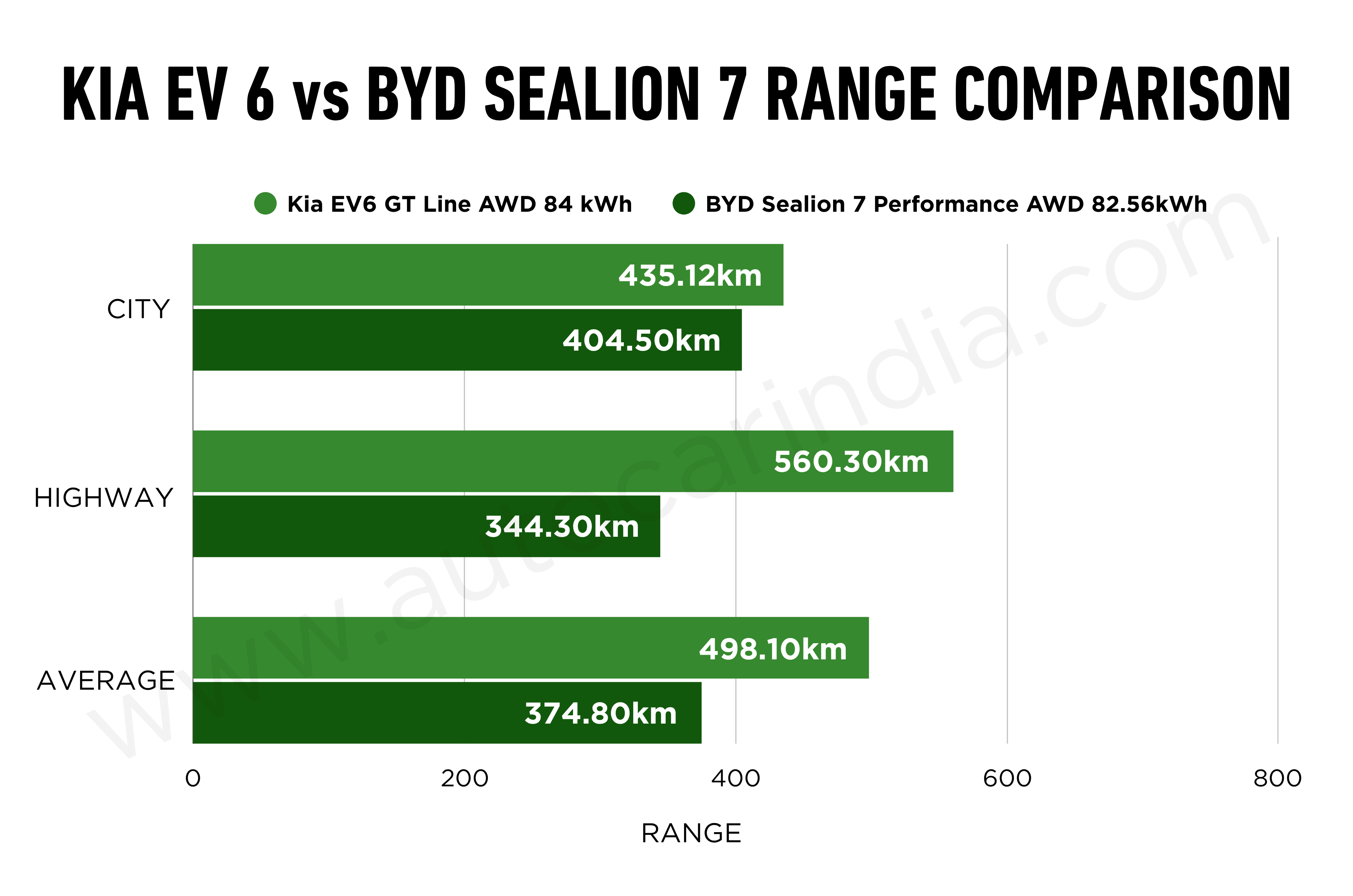
In our real-world range tests, we found the Kia to be more efficient than the BYD. In the city, the EV6 delivered an efficiency of 5.18km/kWh versus 4.90km/kWh for the Sealion 7. Thanks to the stronger regen modes in the EV6, you can expect a real-world range of 435km in the city, whereas with the Sealion 7 you can expect 405km – about 30km less than the EV6.

On the highway, the difference is even wider – the EV6 becomes more efficient (6.67km/kWh), and the Sealion 7 becomes even less efficient (4.17km/kWh) than in the city. One can expect a real-world range of 344km with the Sealion 7, whereas the EV6 will go 216km further!

BYD Sealion 7 vs Kia EV6: Verdict

The BYD Sealion 7 is priced from Rs 49.9 lakh for the RWD variant to Rs 55.9 lakh for the top-spec AWD variant, and is the more affordable option here, while also being the more powerful EV. The Kia EV6 GT-Line AWD is the more expensive pick and costs Rs 65.97 lakh. If budget isn’t an issue, the Kia EV6 will be a better all-rounder. It has better range, faster charging speeds and multiple regenerative braking modes, including single-pedal driving that makes city driving that much easier.

Autocar India’s testing standards

Before we conduct our performance tests, we check and maintain tyre pressures per the manufacturer’s recommendations and ensure the car is charged to 100 percent. The car is then tested in a controlled environment with two people on board, and the data is collected via highly accurate GPS-based timing equipment.

For our real-world range test, we begin with each car’s battery fully charged and tyre pressures set as per the manufacturer’s recommendations. We drive the cars on a fixed loop covering both city and highway stretches while maintaining set average speeds. We then calculate the range based on the percentage of charge consumed. The AC is set to 22deg C in auto mode, and features such as the music system, lights and ventilated seats are used as needed, just as a regular user would. This approach ensures consistency and gives a clear idea of what to expect in daily use.

To test regenerative braking, we pre-select a level of regen braking, completely lift off the throttle pedal and allow the car to decelerate till under 20kph. This procedure is then repeated for as many levels of regenerative braking the EV packs in. The deceleration rate, distance covered and time taken to go from 80kph to 20kph are recorded on a GPS-based Vbox system.

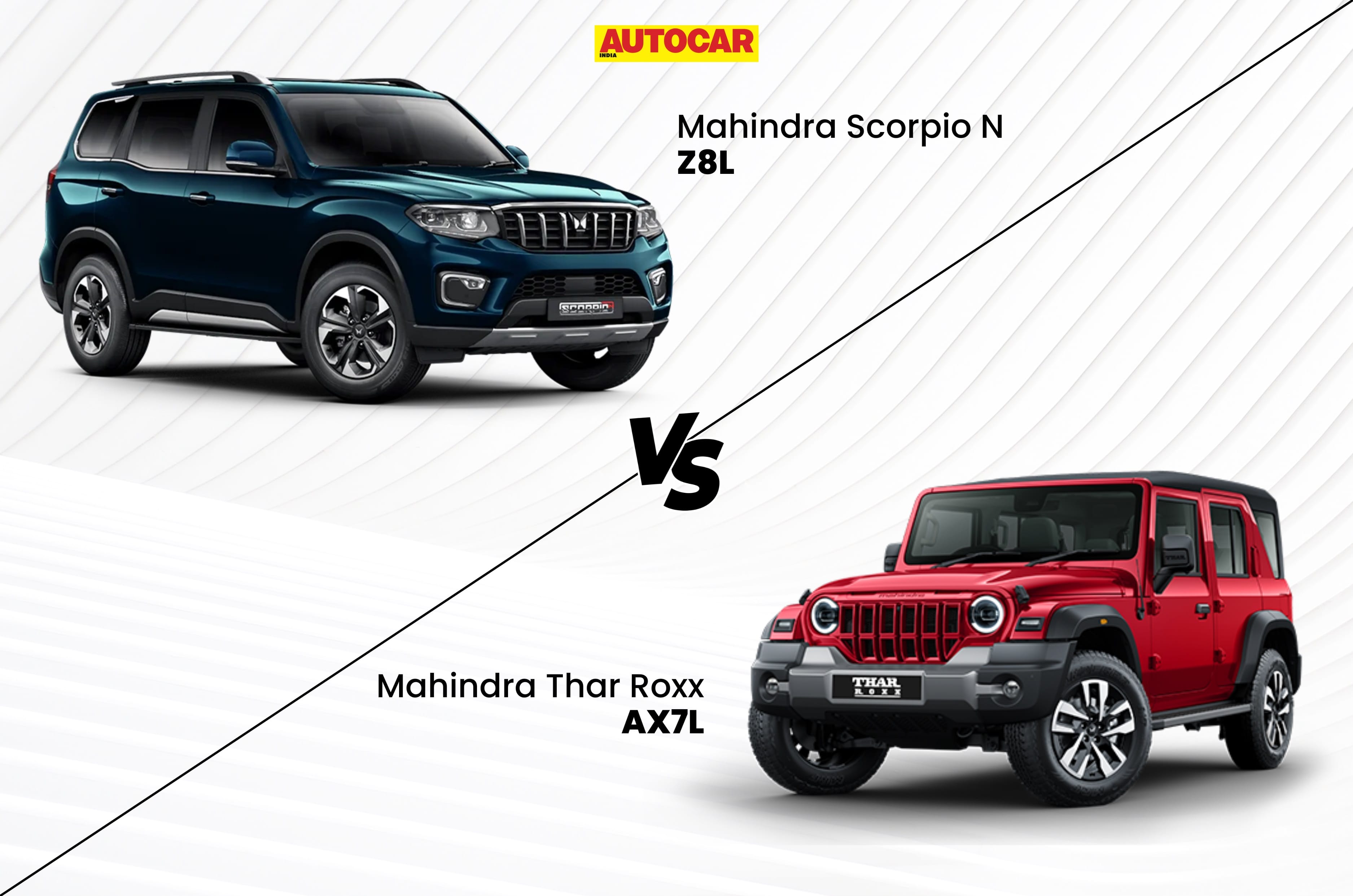
2026 Mahindra Scorpio N vs Thar Roxx: Top variants compared

2026 Mahindra Scorpio N vs Thar Roxx: Top variants compared

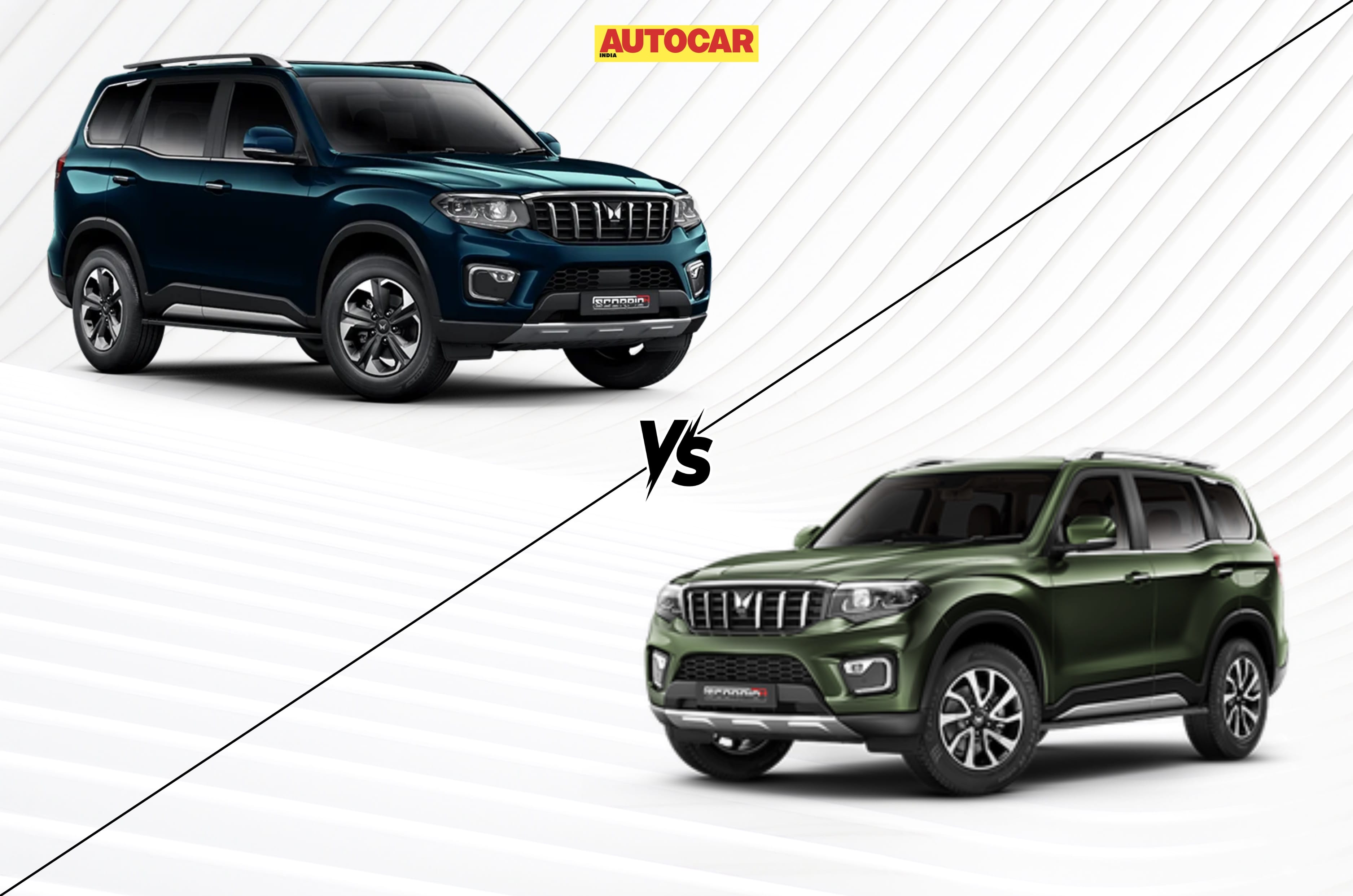
Mahindra recently launched the 2026 Scorpio N, introducing a handful of changes, including new rims, a larger touchscreen, a fresh driver’s display, and a 540-degree camera, while retaining the same powertrain and drivetrain options. It is priced from Rs 13.69 lakh to Rs 25.49 lakh (ex-showroom). Its prices are similar to those of the Thar Roxx’s, which also offers the same powertrain and drivetrain options. So, if you are looking for a Mahindra SUV at around Rs 25 lakh, should you choose the top-spec Mahindra Scorpio N Z8L or the Thar Roxx AX7L? We find out.

2026 Mahindra Scorpio N vs Thar Roxx: Dimensions

Scorpio N is larger and offers more boot space; Thar Roxx has better ground clearance

Mahindra Scorpio N vs Thar Roxx: Dimensions and other specifications


Scorpio N

Thar Roxx

Difference

Length (mm)

4,662

4,428

+234

Width (mm)

1,917

1,870

+47

Height (mm)

1,857

1,923

-66

Wheelbase (mm)

2,750

2,850

-100

Ground clearance (mm)

187

226

-39

Boot space (litres)

786*

447

+339

No. of seats (mm)

6 or 7

5

–

*786 litres of boot space is with the third row folded (with 5 seats up).

The Mahindra Scorpio N is significantly longer compared to the Thar Roxx, and it is also slightly wider. The Thar Roxx, on the other hand, has a larger wheelbase and is also taller than the Scorpio N. 

The Scorpio N offers a larger boot with the third row folded. Notably, the Scorpio N is offered with either 6 or 7 seats, the former asking a premium over the latter, while the Thar Roxx is strictly a 5-seater.

2026 Mahindra Scorpio N Z8L vs Thar Roxx AX7L: Powertrain

Both Mahindra SUVs get the same powertrain options, but with slightly different tunes

Top-spec Mahindra Scorpio N vs Thar Roxx: Powertrain options


Scorpio N Z8L*

Thar Roxx AX7L^

Engine

2.0L TP | 2.2L D

2.0L TP | 2.2L D

Power (hp)

203 | 175

177 | 152-175

Torque (Nm)

370-380 | 370-400

380 | 330-400

Transmission

6MT, 6AT | 6MT, 6AT

6AT | 6MT, 6AT

Drivetrain

RWD | RWD, 4WD

RWD | RWD, 4WD

*Scorpio N’s direct-injection turbo-petrol produces 203hp, 370Nm with MT, and 203hp, 380Nm with AT; diesel engine produces 175hp, 370Nm with MT, 175hp, 400Nm with AT.

^Thar Roxx’s direct-injection turbo-petrol engine produces 152hp,300Nm with MT, and 175hp, 400Nm with AT.

Both top-spec Mahindra Scorpio N Z8L and Thar Roxx AX7 are offered with a choice between a 2.0-litre direct-injection turbo-petrol engine and a 2.2-litre diesel engine. However, these engines are offered in different states of tune, with varying power and torque outputs, and the Scorpio N’s select powertrains are slightly more powerful than the Thar Roxx’s. 

The Scorpio N’s petrol-AT produces 28hp more than the Thar Roxx. Notably, the Thar Roxx AX7L is not offered with a petrol-manual option. The Scorpio N’s diesel-MT produces 23hp and 40Nm more than the Thar Roxx, while with the diesel-AT both SUVs offer 175hp and 400Nm. 

The diesel engines on both SUVs are available with both rear-wheel-drive (RWD) and four-wheel-drive (4WD) setups with both manual and automatic variants, while the petrol engines are only offered with only a RWD setup.

2026 Mahindra Scorpio N Z8L vs Thar Roxx AX7L: Exterior

Thar Roxx AX7L has bigger rims, but Scorpio N Z8L offers roof rails

Mahindra Scorpio N Z8L vs Thar Roxx AX7L: Exterior


Scorpio N Z8L

Thar Roxx AX7L 

Headlights

Auto LED

Auto LED

Taillights

Wraparound LED

Wraparound LED

DRLs

LED

LED

Front fog lamps

LED

LED

Wheels

18-inch

19-inch

Powered ORVMs

Yes

Yes

Roof rails

Yes

No

Sharkfin antenna

Yes

No

Colour

Mono-tone

Dual-tone

Top-spec trims of both SUVs are offered with all-LED lighting. The differences, however, are larger 19-inch alloy wheels on the Mahindra Thar Roxx AX7L, and roof rails on the Scorpio N Z8L. The Scorpio N has a sharkfin antenna, while the Thar Roxx’s antenna is placed on the front left fender. 

The top-spec Scorpio N is offered with monotone hues only, while the Thar Roxx is available only in dual-tone shades.

2026 Mahindra Scorpio N Z8L vs Thar Roxx AX7L: Interior, features

Scorpio N Z8L offers larger infotainment, more speakers and dual-zone AC

Mahindra Scorpio N Z8L vs Thar Roxx AX7L: Interior and features


Scorpio N Z8L

Thar Roxx AX7L 

Driver’s display

10.25-inch

10.25-inch

Infotainment screen

12.30-inch

10.25-inch

Android Auto, Apple CarPlay

Wireless

Wireless

Audio system

12-speaker Sony

8-speaker Harman Kardon

On-board navigation

Yes

Yes

Sunroof

Panoramic

Panoramic

Powered tailgate

No

No

Climate control

Dual-zone

Single-zone

Seat upholstery

Leatherette

Leatherette

Steering wheel adjustment

Tilt

Tilt

Wireless phone charger

Yes, with cooling

Yes

Driver seat adjustment

6-way

6-way

Co-driver’s seat adjustment

–

–

Front seat features

Ventilation

Ventilation

Rear window sunshade

No

No

The Scorpio N Z8L offers a larger 12.3-inch touchscreen infotainment system paired with a 12-speaker Sony sound system compared to the Thar Roxx AX7L’s 10.25-inch unit with an 8-speaker Harman Kardon sound system. The Scorpio N is also equipped with dual-zone climate control and a wireless phone charger with cooling, while the Thar Roxx gets basic single-zone automatic climate control and misses out on the cooling function for the wireless phone charger.

Everything else is identical on both SUVs, including a panoramic sunroof, a 10.25-inch driver’s display, a 6-way powered driver’s seat, front seat ventilation, and a tilt-adjustable steering wheel. Both SUVs also show adventure statistics including a compass, roll and pitch and an altimeter. 

2026 Mahindra Scorpio N Z8L vs Thar Roxx AX7L: Driving tech

Scorpio N Z8L comes with more terrain modes than the Thar Roxx AX7L

Mahindra Scorpio N Z8L vs Thar Roxx AX7L: Driving technology


Scorpio N Z8L

Thar Roxx AX7L 

Drive modes (RWD only)

Zip, Zap, Zoom

Zip, Zoom

Terrain modes (4WD only)

Normal, Snow, Mud & Ruts, Sand

Snow, Sand, Mud

Shift-on-fly 4WD

Yes

Yes

Electronic locking differential

4WD only

4WD only

Paddle shifters

AT only

AT only

Cruise control

Adaptive

Adaptive

Drive modes on the Scorpio N are offered only with the diesel-RWD variants, while even the petrol variants of the Thar Roxx get this suite. However, the Scorpio N gets an additional ‘Sand’ terrain mode missing on the Thar Roxx. Both SUVs, however, get a shift-on-fly 4WD system and an electronic locking differential, enhancing grip on slippery terrains.

2026 Mahindra Scorpio N Z8L vs Thar Roxx AX7L: Safety

Safety features are similar, save for a 540-degree camera on Scorpio N Z8L 

Mahindra Scorpio N Z8L vs Thar Roxx AX7L: Safety features


Scorpio N Z8L

Thar Roxx AX7L 

Airbags

6

6

ADAS

Level-2

Level-2

Camera setup

540-degree*

360-degree

Parking sensors

Front and rear

Front and rear

Electronic parking brake

Yes

Yes

All-wheel disc brakes

Yes

Yes

TPMS

Yes

Yes

IRVM

Auto-dimming

Auto-dimming

Rear wiper, washer

Yes

Yes

Hill start assist

Yes

Yes

Hill descent control

Yes

Yes

ESC

Yes

Yes

Traction control

Yes

Yes

*The 540-degree camera setup includes an under-bonnet display.

Except for a 540-degree camera setup on the Scorpio N Z8L, which shows the view under the SUV’s bonnet, all other safety features are identical to both SUVs. These include 6 airbags, Level-2 advanced driver assistance system (ADAS), front and rear parking sensors, a tyre pressure monitoring system (TPMS), and hill start and hold assists. 

2026 Mahindra Scorpio N Z8L vs Thar Roxx AX7L: Prices

The Thar Roxx comes at a lower price compared to the top-spec Scorpio N

Mahindra Scorpio N Z8L vs Thar Roxx AX7L: Variant-wise ex-showroom price (Rs, lakh)


Scorpio N Z8L

Thar Roxx AX7L

Petrol MT

21.31-21.69

–

Petrol AT

22.87-23.05

20

Diesel MT

21.99-22.47

19.52

Diesel AT

23.49-23.80

20.78

Diesel MT 4WD

24.25

22.12

Diesel AT 4WD

25.49

22.53

The Mahindra Scorpio N Z8L is more expensive than the Thar Roxx AX7L in all powertrain configurations by over Rs 2 lakh. However, it is offered with an additional third row, which can accommodate more passengers.  On the other hand, the Mahindra Thar Roxx is derived from a hardcore off-roader and is a good recreational vehicle while also serving urban buyers with its tech-loaded suite. However, the Scorpio N, despite being pricier, is a more practical option that packs in all the necessary off-roading tech and offers an additional third row, making it a good value-for-money SUV in its class.

Mahindra Scorpio N new vs old: Differences and similarities explained

Mahindra Scorpio N new vs old: Differences and similarities explained

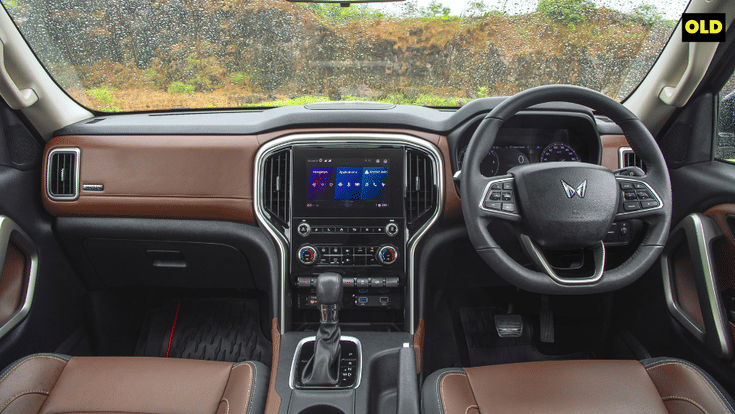
Four years after its introduction, Mahindra has facelifted the Scorpio N for 2026. The Scorpio N facelift gains a revised interior, new features and very minor styling tweaks. We go in-depth, comparing the Scorpio N facelift with its previous version and list out all differences and similarities from exterior, interior, features, engines and price.

Mahindra Scorpio N new vs old: Exterior

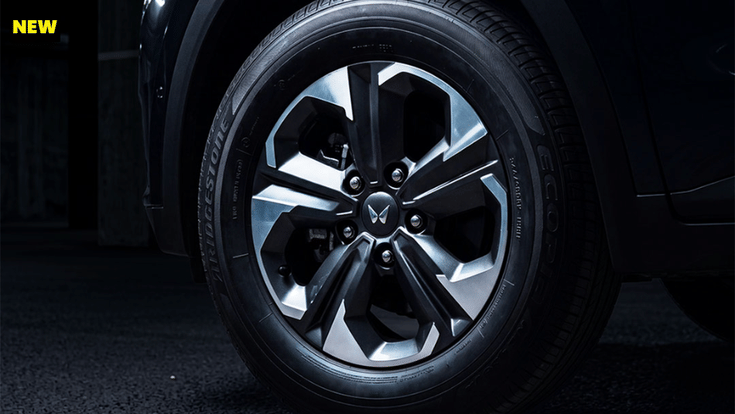
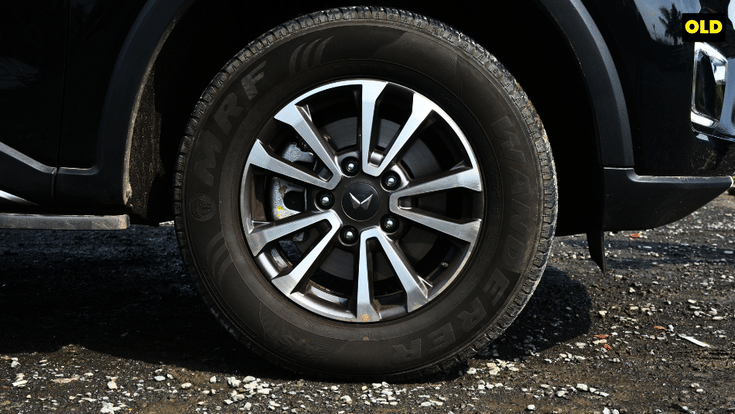
Except for new alloy wheels, everything else remains the same

Mahindra Scorpio N facelift alloy wheel
Mahindra Scorpio N pre-facelift alloy wheel
 

Updates on the outside of the Scorpio facelift aren’t very comprehensive. There’s a new design for the dual-tone 18-inch alloy wheels. Apart from that, things remain unchanged over the older model. The Scorpio N facelift retains the pre-facelift’s butch, and boxy looks, including a rugged design for the bumpers, six-slatted grille, faux skid plates, LED light setups, cladding on the lower sides of the doors, roof rails, and a ‘scorpion tail’ chrome element for the windowline.

Mahindra Scorpio N new vs old: Interior and features

Gets a redesigned dash and new equipment 

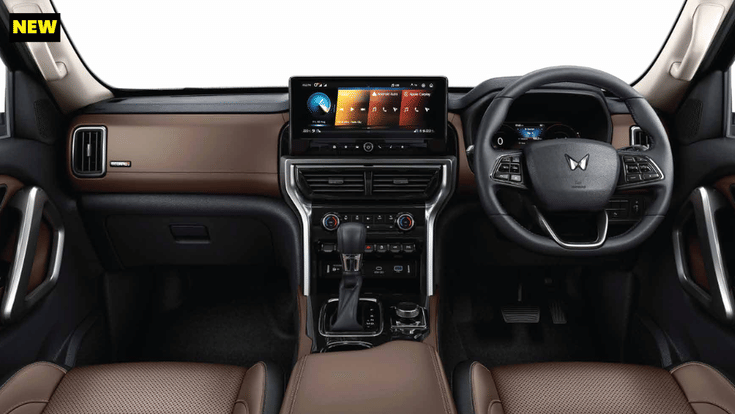
Mahindra Scorpio N facelift interior
Mahindra Scorpio N pre-facelift interior
 

Unlike the exterior, changes to the interior of the Scorpio N facelift are more extensive. The biggest update is the infotainment display, wherein the dash-integrated unit is replaced with a freestanding screen. Secondly, the infotainment screen is a 12.3-inch in size, which is larger than the previous version’s 9-inch unit. The repositioned infotainment screen has also brought about a redesigned centre console, and there’s some new switchgear as well. Vertical aircon vents have now made way for horizontal ones that are placed below the infotainment display. Meanwhile, the previous model’s black and brown colour scheme and seat upholstery design have been carried over.

Mahindra Scorpio N facelift instrument cluster
Mahindra Scorpio N pre-facelift instrument cluster
 

As for equipment, Mahindra has replaced the single-pane sunroof from the older Scorpio N with a much larger panoramic unit in the Scorpio N facelift. Also, the semi-analogue dials with a 7-inch MID from the previous model are replaced by an all-digital 10.25-inch screen, and the front row now gets a 65WType-CC charging port.

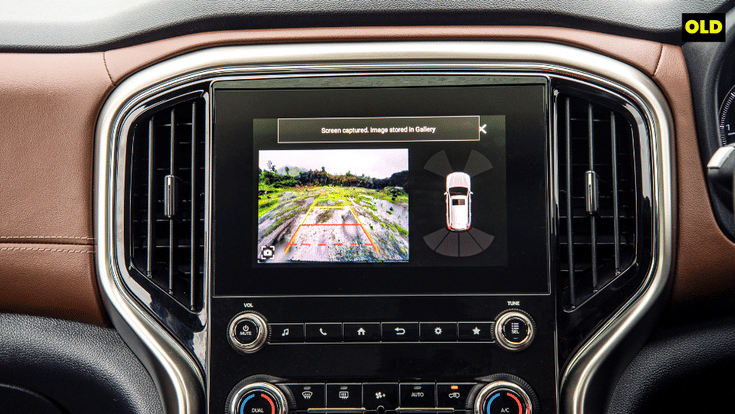
Mahindra Scorpio N facelift 540-degree camera
Mahindra Scorpio N pre-facelift 360-degree camera
 

A new ‘Adventure Statistics’ feature in the infotainment showcases a plethora of information like engine performance, roll and pitch, compass, altimeter and G-force. On the other hand, the safety kit sees the inclusion of a 540-degree surround view camera and a blind view monitor, replacing the front and rear cameras of the older model.

Mahindra Scorpio N new vs old: Engine and gearbox

Mechanically, things remain unchanged

Under the hood,d the Scorpio N facelift retains the powertrain options from the older model. This includes a 2.0-litre direct-injection turbo-petrol engine and a 2.2-litre turbo-diesel engine with the latter available in two states of tune. The turbo-petrol mill churns out 204hp and 370Nm with the manual gearbox, while automatic versions get slightly higher torque at 380Nm.

On the other hand, lower variants powered by the turbo-diesel unit develop 132hp and 300Nm, while higher variants produce 175hp and 370Nm, with the latter increasing to 400Nm in automatic versions. In diesel guise, only the one above base Z4 and the top-end Z8T and Z8L offer a 4×4 drive layout, while the remaining variants, including the petrol, come standard with RWD. Consumers can choose between a 6-speed manual or a 6-speed torque converter automatic gearbox.

Mahindra Scorpio N new vs old: Price 

Updates make the facelift pricier by up to Rs 83,500 

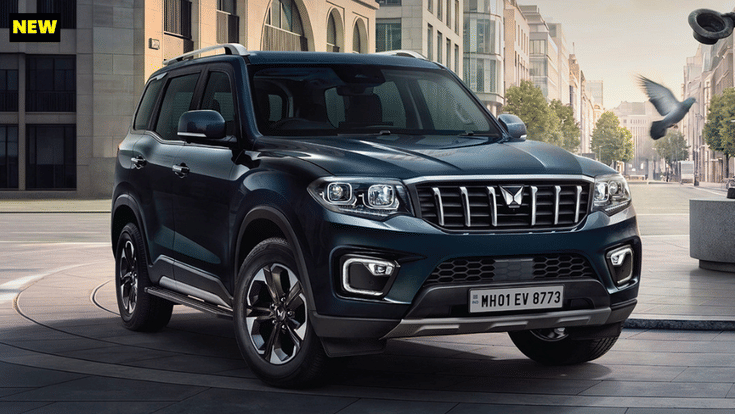
Mahindra Scorpio N facelift front quarter static
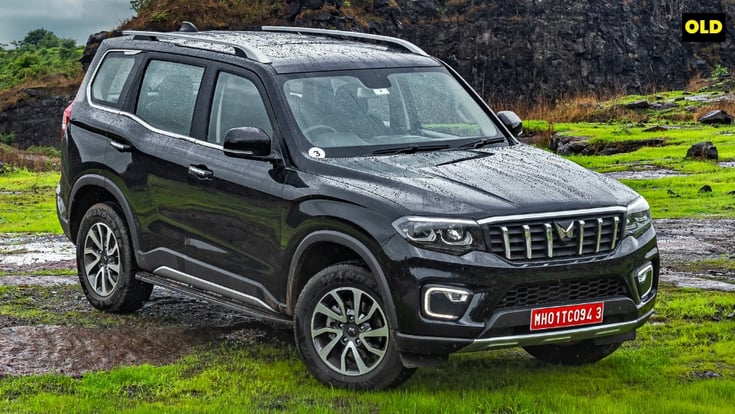
Mahindra Scorpio N pre-facelift front quarter static
 

As far as price is concerned, the facelifted Scorpio N starts from Rs 13.69 lakh, which is Rs 20,000 pricier than its predecessor. The same is the case at the top end, where the most expensive Z8L 7-seat diesel-automatic 4×4 variant of the facelift is pricier by Rs 54,00 in comparison to the corresponding variant of the older model. Depending on the variant chosen, the newer Scorpio N facelift is more expensive than the pre-facelift version by up to Rs 83,500.

All prices are ex-showroom, India

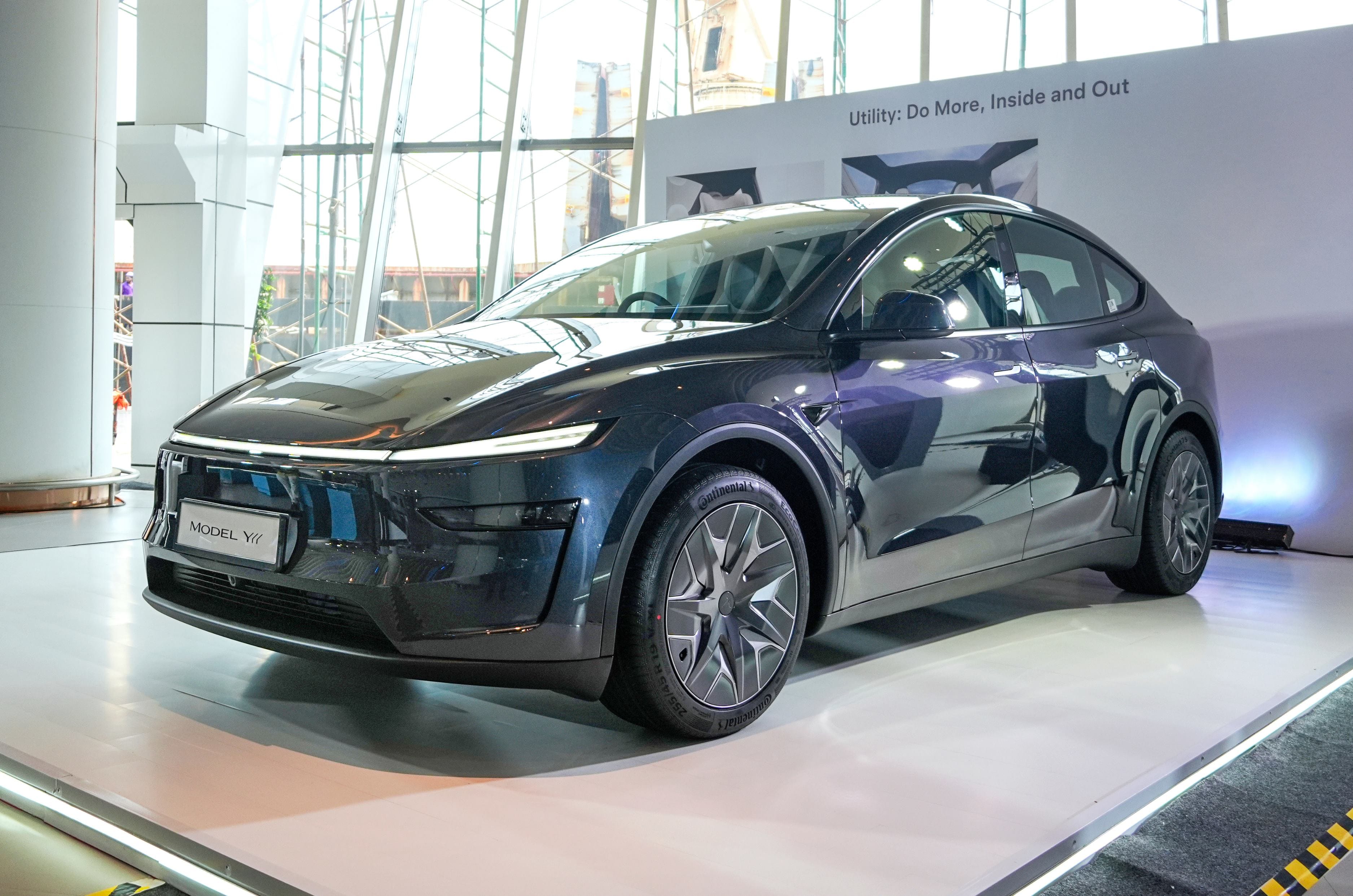
Tesla Model Y now available with Grok AI

Tesla Model Y L front quarter static

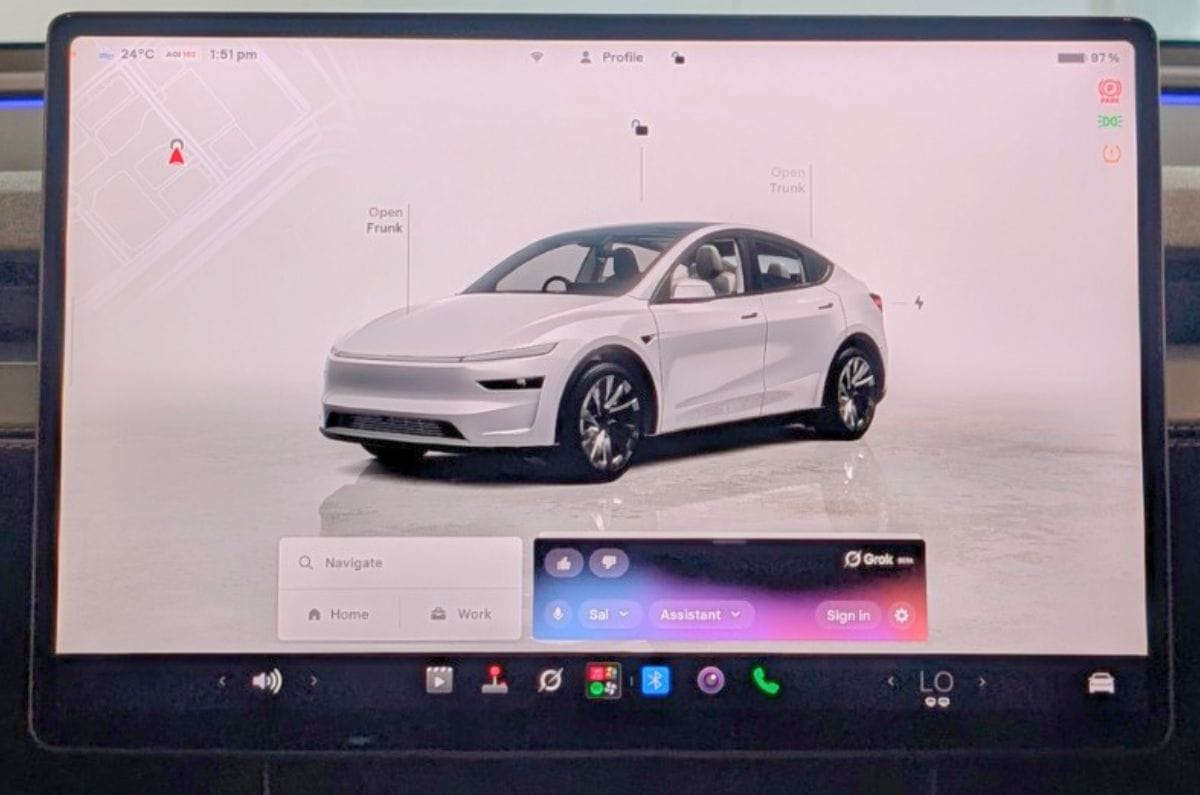
The Tesla Model Y is now available with new artificial intelligence features in India, the most significant being the Grok AI assistant. The new AI features, including Grok assistant integration, are pushed through an over-the-air (OTA) update at no additional cost and “bring conversational intelligence directly into the cabin of every Tesla Model Y in India”.

  1. Grok AI assistant can interact in Hindi, Marathi, Gujarati, Telugu, Tamil, and Kannada
  2. It can be accessed by saying “Hey Grok” or pushing the voice button on the steering wheel

Alongside the announcement of new AI features, Tesla has also announced the commencement of test drives for the Model Y Premium RWD variant across its dealerships in India.

Tesla Model Y with Grok AI assistance: All you need to know

Grok AI assistance allows for easier voice-enabled navigation and vehicle intelligence capabilities

While the Grok AI assistant integration is new for Tesla cars in India, it has been offered internationally since 2025. The American manufacturer has now released the Summer 2026 update, which “enhances the Grok AI Assistant feature with new capabilities” and by which “automatic navigation has expanded beyond home and work to support any destination based on the driver’s personal habits and schedule”. All these features are now available to Model Y customers in India at no extra cost via an OTA update. 

Tesla said that the Grok features can be accessed by saying “Hey Grok” or using the voice button on the steering wheel. The AI assistant can interact in multiple Indian languages, including Hindi, Marathi, Gujarati, Telugu, Tamil, and Kannada. Among all features, Tesla has highlighted that the new AI-based assistant would help plan multi-stop journeys with voice commands, locate nearby Tesla Superchargers, coffee shops, restaurants, hospitals, ATMs and toilets, and explain the various alerts and warnings that pop up on the screens. The Grok AI’s tone, language, and conversational style can be personalised to suit the customer’s preferences.

The Tesla Model Y is offered in India in two trims: a 5-seater Premium RWD and a 7-seater L Premium AWD, priced from Rs 50.89 lakh to Rs 61.99 lakh (ex-showroom, India). It rivals the Hyundai Ioniq 5, Kia EV6, and BYD Sealion 7 in India.