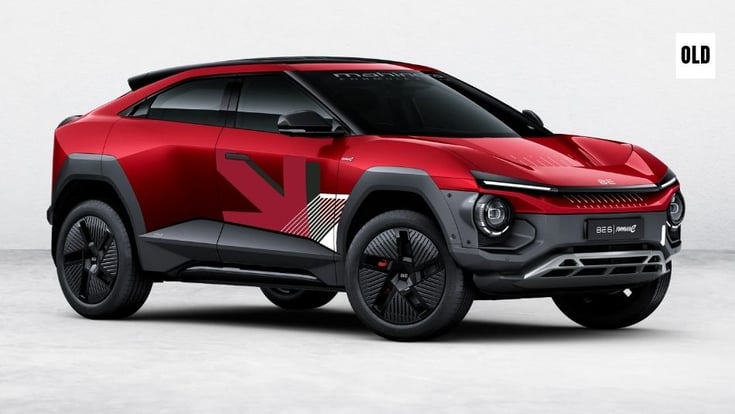
A newly spotted test mule of the upcoming Mahindra Thar 3-door facelift previews the off-roader’s revised front end. While the Thar 3-door received a nip-and-tuck with some feature additions in October 2025, this upcoming facelift looks to be more comprehensive in scope. Expect the 2026 Thar 3-door facelift to launch in the coming months, priced slightly higher than the current model, which costs Rs 10.32 lakh-18 lakh (ex-showroom).
2026 Mahindra Thar 3-door facelift exterior updates
Credit: thepathfinder722 via Instagram
Previous test mule sightings of the facelifted Thar 3-door hinted at an all-new grille that heavily resembles the double-stacked 6-slat one of the Thar Roxx. This test mule, however, has a different 5-slot grille with a small horizontal intrusion on the right side, possibly to accommodate a badge. The discrepancy in grille designs is unclear, with one likely explanation being that the Thar 3-door facelift will be sold in different editions with unique grilles. Aside from the grille, new 5-spoke alloy wheels can also be spotted on the test mule.
2026 Mahindra Thar 3-door facelift powertrain updates
Under the bonnet, the facelifted Thar 3-door is expected to retain the current model’s 119hp 1.5-litre diesel, 132hp 2.2-litre diesel, and 152hp 2.0-litre direct-injection turbo-petrol engine options. All engines get a 6-speed manual gearbox as standard, with the 2.2-litre diesel and 2.0-litre turbo-petrol ones additionally offering a 6-speed torque converter automatic. 4×4 can be equipped with those two engines as well, while the 1.5-litre diesel comes with 4×2 (RWD) only. As we exclusively reported last April, An electric power steering system is also expected to replace the current hydraulic setup.
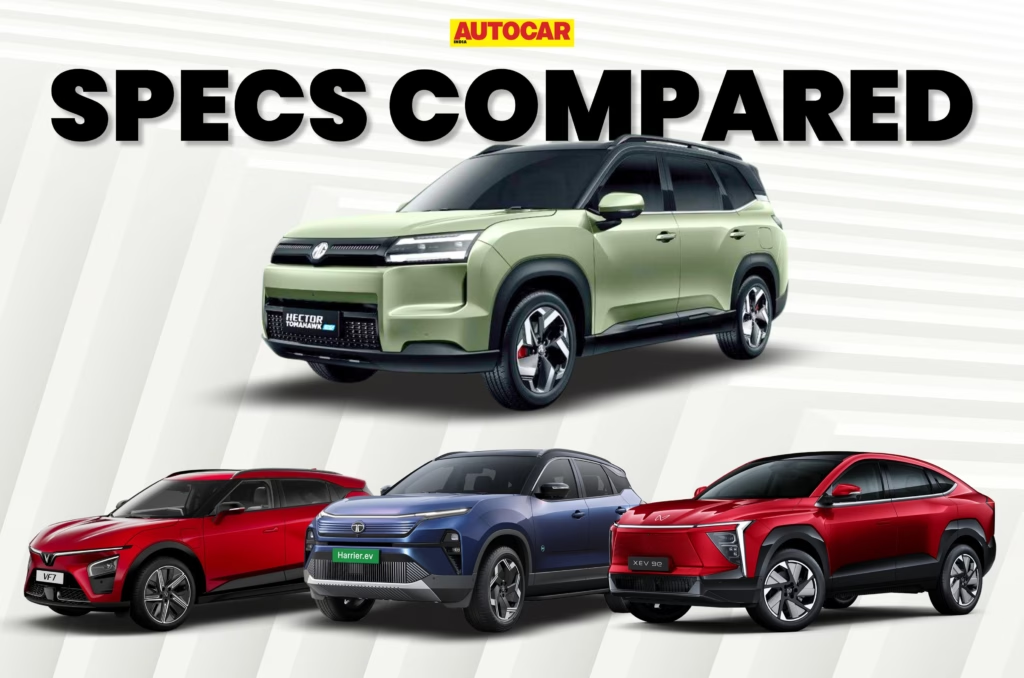
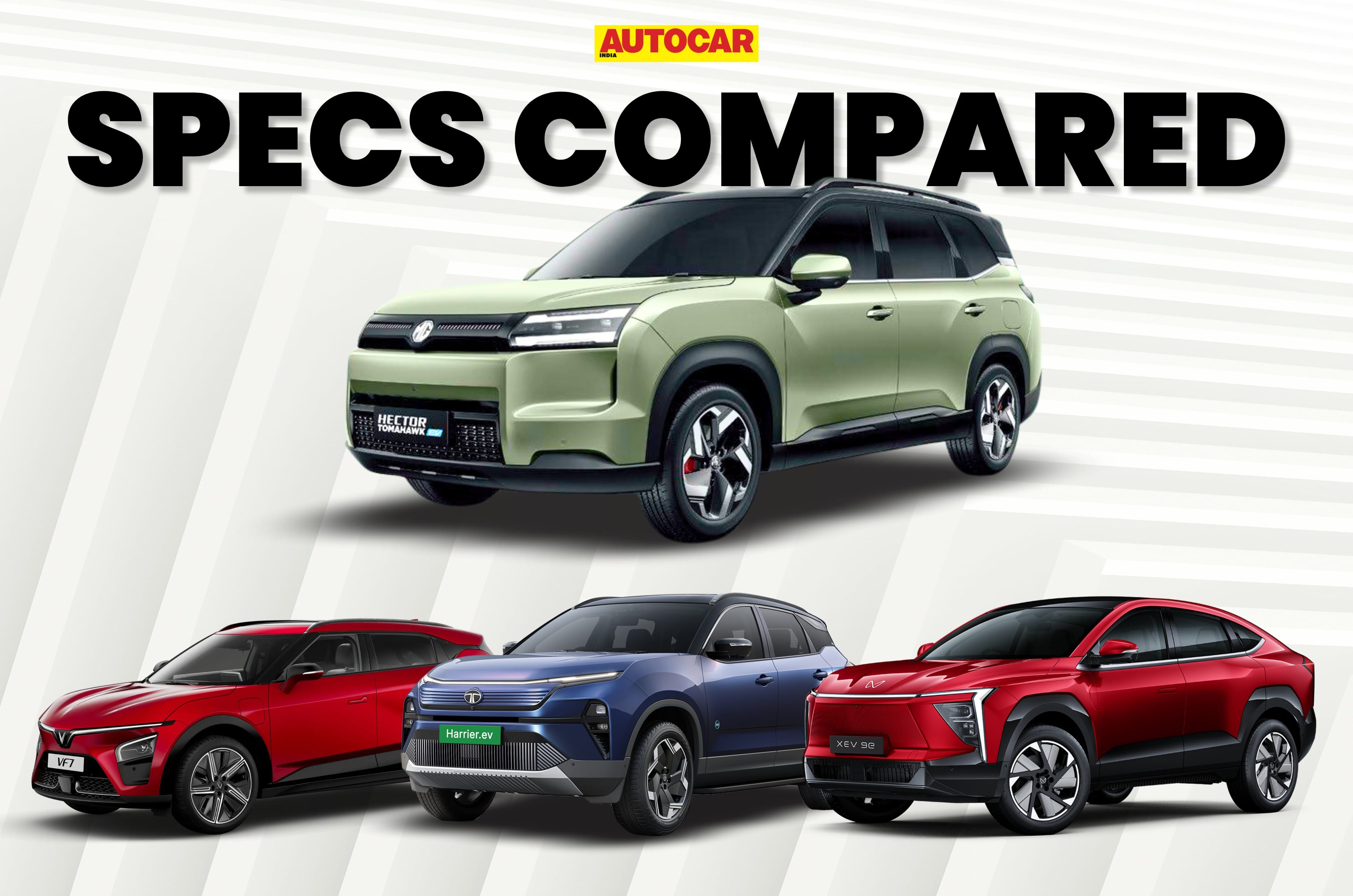
MG Motor India has launched the Hector Tomahawk EV in India as the brand’s contender for the electric midsize SUV segment. In this space, the 5-seat version of the Hector Tomahawk EV rivals the Tata Harrier EV, Mahindra XEV 9e, Vinfast VF7, and BYD Atto 3. Let’s have a look at how MG’s latest SUV stacks up against its peers on paper.
MG Hector Tomahawk EV 5-seater vs rivals: dimensions
Tallest in its segment, and one of the longest
Hector Tomahawk EV
Harrier EV
XEV 9e
VF7
Atto 3
Length (mm)
4,745
4,607
4,789
4,550
4,455
Width (mm)
1,850
1,922
1,907
1,893
1,875
Height (mm)
1,770
1,740
1,694
1,596
1,615
Wheelbase (mm)
2,810
2,741
2,775
2,840
2,720
Wheel size (inches)
18
18-19
19
19
17-18
Boot space (litres)
610
502*
663
537
440
Frunk space (litres)
N/A
35-67
150
N/A
N/A
*Measured till roof instead of parcel tray.
The Hector Tomahawk EV is the second-longest SUV in its segment, falling behind the XEV 9e by only 44mm. That said, the Hector Tomahawk EV extracts a longer wheelbase from its length than the XEV 9e does, but even so, it’s behind the VF7 by a margin of 30mm. The MG electric SUV is the narrowest among its rivals, but edges past all of them on height front. It also claims a 230mm ground clearance, but this is measured at the battery.
Coming to luggage space, the Hector Tomahawk EV has the second-largest boot here, though it doesn’t get a frunk like the Harrier EV and XEV 9e do. At 18 inches, the Hector Tomahawk EV’s alloy wheel sizes are also competitive by segment standards, though the XEV 9e and VF7 offer 19-inchers.
MG Hector Tomahawk EV 5-seater vs rivals: battery and motor
Battery size fits right between those of Harrier EV and XEV 9e
Hector Tomahawk EV
Harrier EV
XEV 9e
VF7
Atto 3
Battery size (kWh)
69.2
65 / 75
59 / 79
59.6 / 70
49.92 / 60.48
Electric motor setup
Single, front
Single, rear / Dual, front and rear
Single, rear
Single, front / Dual, front and rear
Single, front
Power (hp)
204
238 / 313
231 / 286
177 / 204, 353
204
Torque (Nm)
310
315 / 504
380
250 / 310, 500
310
Gearbox
1-speed AT
1-speed AT
1-speed AT
1-speed AT
1-speed AT
Drive layout
FWD
RWD / RWD, AWD
RWD
FWD / FWD, AWD
FWD
Claimed 0-100kph time (seconds)
8.2
6.3 (AWD)
6.8 (79kWh)
9.1 / 8.5 (FWD), 5.8 (AWD)
7.9 / 7.3
Under the skin, the Hector Tomahawk EV comes fitted with a sole 69.2kWh battery pack. At that capacity, it fits quite well between the ones offered by the Harrier EV and XEV 9e, comes very close to the top-spec unit of the VF7, and outsizes both of the Atto 3’s battery options. The Hector Tomahawk EV’s battery powers a sole front-mounted electric motor, making for a front-wheel drive layout. Rivals like the Harrier EV and VF7 can be had with all-wheel drive, and the XEV 9e is purely rear-wheel drive.
In terms of output, the Hector Tomahawk EV perfectly matches the Atto 3 and the 70kWh FWD version of the VF7, but significantly behind the XEV 9e and Harrier EV. Higher-powered versions of the Mahindra and Tata SUVs claim sub-7-second 0-100kph times, while the Hector Tomahawk EV’s acceleration figure slots between those of the Atto 3 and VF7.
MG Hector Tomahawk EV 5-seater vs rivals: range and charging
Range is on the lower end of the segment, and charging times are the highest
Hector Tomahawk EV
Harrier EV
XEV 9e
VF7
Atto 3
Battery capacity (kWh)
69.2
65 / 75
59 / 79
59.6 / 70
49.92 / 60.48
Drive layout
FWD
RWD / RWD, AWD
RWD
FWD / FWD, AWD
FWD
MIDC range (km)
517
538 / 627 (RWD), 622 (AWD)
542 / 656
438 / 532 (FWD), 510 (AWD)
468 / 521
7.2kW AC charging time (hours)
12.5
9.3 / 10.7
8.7 / 11.7
–
8.0 / 9.5-10
11.2kW AC charging time (hours)
–
–
6 / 8
–
–
DC charging time (minutes)
35 (90kW)
25 (100kW) / 25 (120kW)
20 (140kW) / 20 (180kW)
24 (100kW) / 28 (110kW)
50 (88kW)
Coming to range, the Hector Tomahawk EV carries the lowest MIDC figure when compared with similarly-sized batteries offered by rivals. In fact, even the 60.48kWh Atto 3 and the smaller-battery versions of the Harrier EV and XEV 9e boast higher range figures than that of the Hector Tomahawk EV. The MG SUV also claims the longest AC charging time, more than even the 75kWh and 79kWh variants of the Harrier EV and XEV 9e, respectively.
MG Hector Tomahawk EV 5-seater vs rivals: price
Substantially cheaper than top-spec variants of competitors
Price range (Rs, lakh)
Hector Tomahawk EV
23.00 (16.99 w/ BaaS)
Harrier EV*
21.69-29.19
XEV 9e*
21.90-29.35
VF7
22.99-28.09
Atto 3
24.99-34.49
*Prices exclusive of home charger and installation costs.
The 5-seat configuration for the Hector Tomahawk EV is available only in the top-spec Essence variant, and is priced at Rs 23 lakh. This makes the Hector Tomahawk EV much more affordable than the equivalent top-spec versions of its rivals, with the Atto 3 commanding the highest premium at over Rs 11 lakh – the BYD SUV is retailed via the CKD route in India and thereby attracts higher taxation.
It’s also worth noting that MG offers the Hector Tomahawk EV with a segment-first battery-as-a-service (BaaS) scheme. This knocks off an additional Rs 6 lakh from the sticker price, and introduces a battery rental fee of Rs 4.9/km that is to be paid on a monthly basis. At the BaaS price, the Hector Tomahawk EV competes with electric SUVs of a segment below and even undercuts a lot of them, making for stellar value.
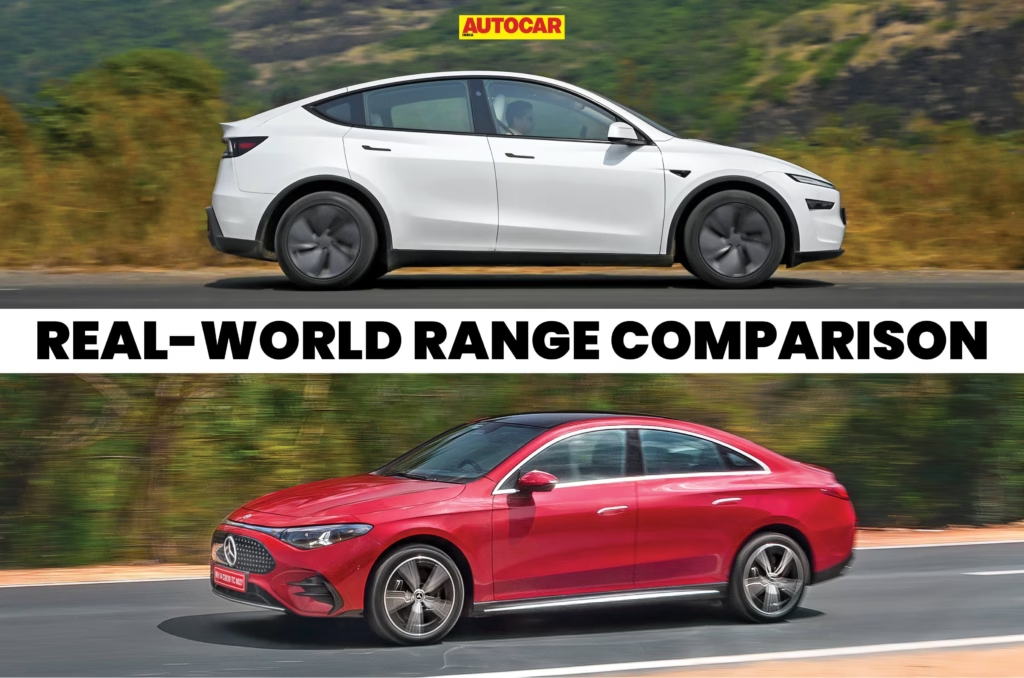
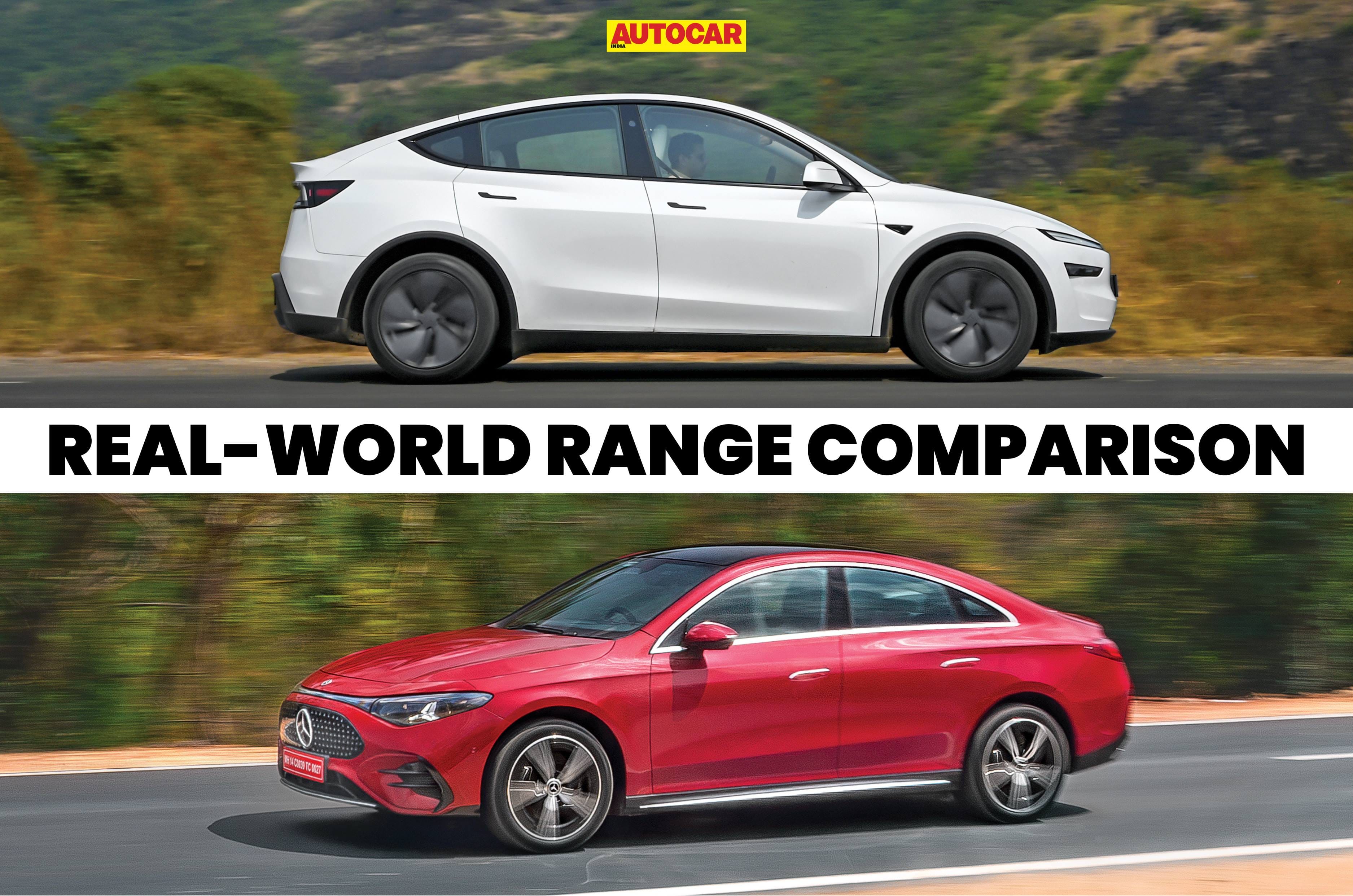
The Tesla Model Y and Mercedes-Benz CLA EV are two zero-emission offerings priced below Rs 65 lakh, but they take very different approaches. The Model Y is a crossover and Tesla’s only model on sale in India, while the CLA sedan is the entry point to Mercedes-Benz’s EV range. They also use different battery sizes and claim different ranges. We recently put both to our comprehensive range tests to see how they compare in the real world.
Tesla Model Y vs Mercedes CLA EV: Specifications, price
Model Y Premium
CLA EV 250+ AMG Line
Battery size (kWh)
60
85
Power (hp)
299
272
Torque (Nm)
420
335
Drive layout
RWD
RWD
Claimed range (km)
500
792
Kerb weight (kg)
1,928
2,055
Price (in Rs lakh)
50.89
60.50
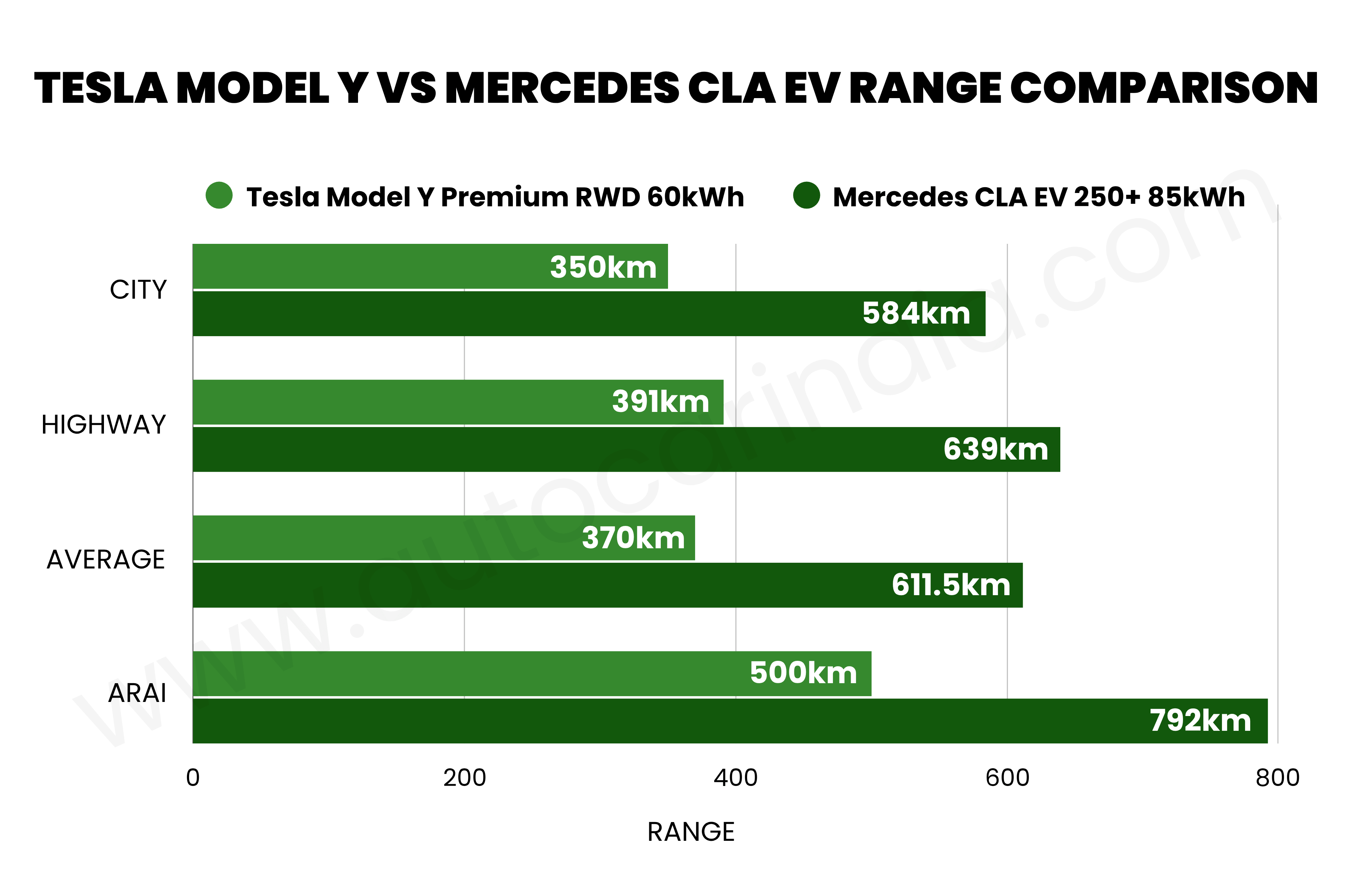
Both are rear-wheel-drive electric vehicles, but the CLA 250+ AMG Line has a much larger 85kWh battery compared to the Model Y Premium RWD’s 60kWh unit. This gives the CLA a claimed range of 792km, significantly higher than the Model Y’s 500km.
The Tesla, however, makes more power and torque at 299hp and 420Nm, compared with 272hp and 335Nm for the CLA. The Model Y is also lighter at 1,928kg versus 2,055kg for the CLA.
There is also a noticeable price difference. The Model Y Premium RWD costs Rs 50.89 lakh – Rs 9.61 lakh less than the CLA 250+ AMG Line, which is priced at Rs 60.50 lakh.
Tesla Model Y vs Mercedes CLA EV: Real-world range
Model Y Premium
CLA EV 250+ AMG Line
City (km)
350
584
Highway (km)
391
639
Average (km)
370
611.5
Clearly, the CLA 250+, with its larger battery pack, has the upper hand in real-world range despite weighing more. In our tests, it managed 584km in the city and 639km on the highway, compared with 350km and 391km, respectively, for the Model Y. The two-speed gearbox, with its taller 5:1 second gear that enables greater efficiency at higher speeds, also contributed to the EV’s highway efficiency. This gives the CLA an average real-world range of 611.5km, which is 241.5km more than the Model Y’s 370km.
Its slightly lower drag coefficient of 0.21 versus 0.22 for the Model Y is also a contributor to its higher range. That said, a 0.22Cd figure is still excellent for a crossover.
The Mercedes sedan also has stronger regenerative braking. In the strongest regen mode, the CLA EV slowed from 80kph to 20kph in 6.98 seconds, covering 96.36 metres. The Tesla Model Y took 8.28 seconds and needed 116.71 metres to cover the same speed reduction. One-pedal driving is available on both EVs.
Autocar India’s range testing
For our real-world range comparisons, we begin with each car’s battery fully charged and tyre pressures set as per the manufacturer’s recommendations. We drive the cars on a fixed loop covering both city and highway stretches while maintaining set average speeds. We then calculate the range based on the percentage of charge consumed. The AC is set to 22deg C in auto mode, and we use features such as the music system, lights and ventilated seats as needed, just as a regular user would. This approach ensures consistency and gives a clear idea of what to expect in actual conditions.
Ex-showroom prices mentioned above are as of August 20, 2026.
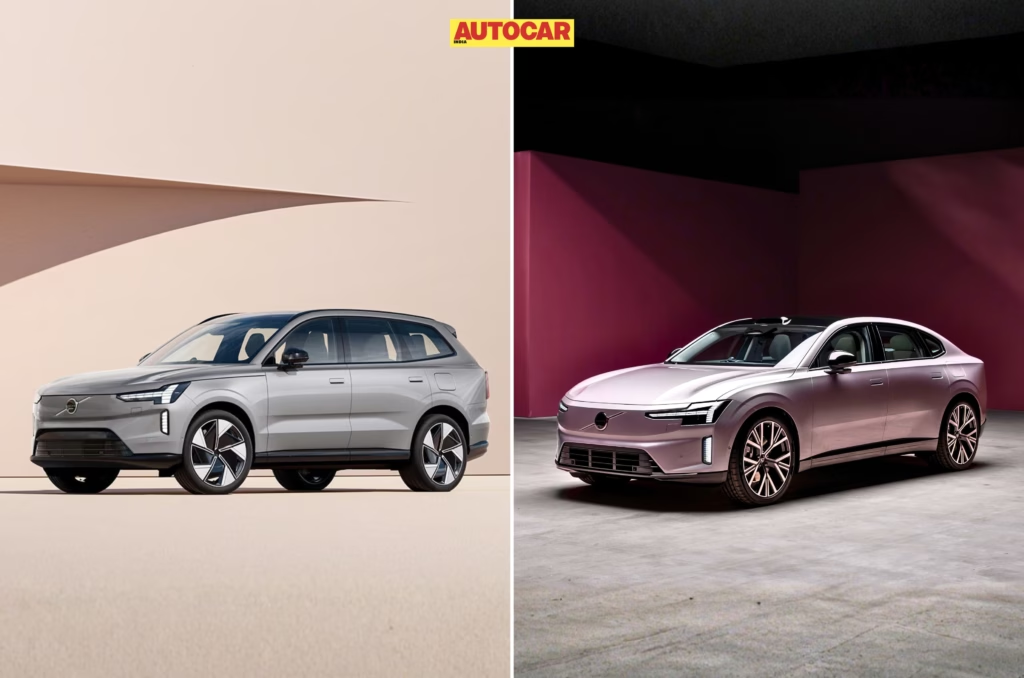
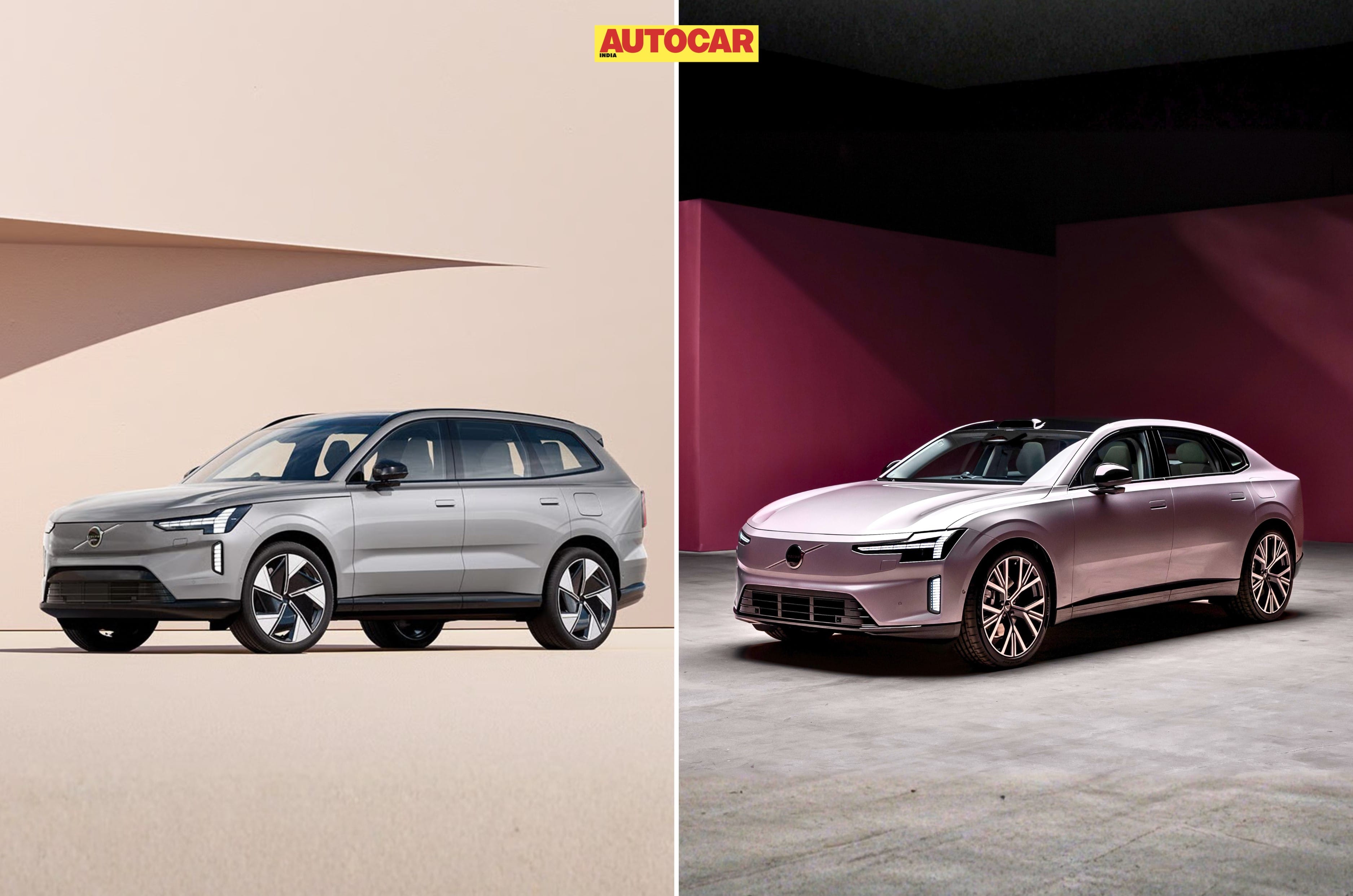
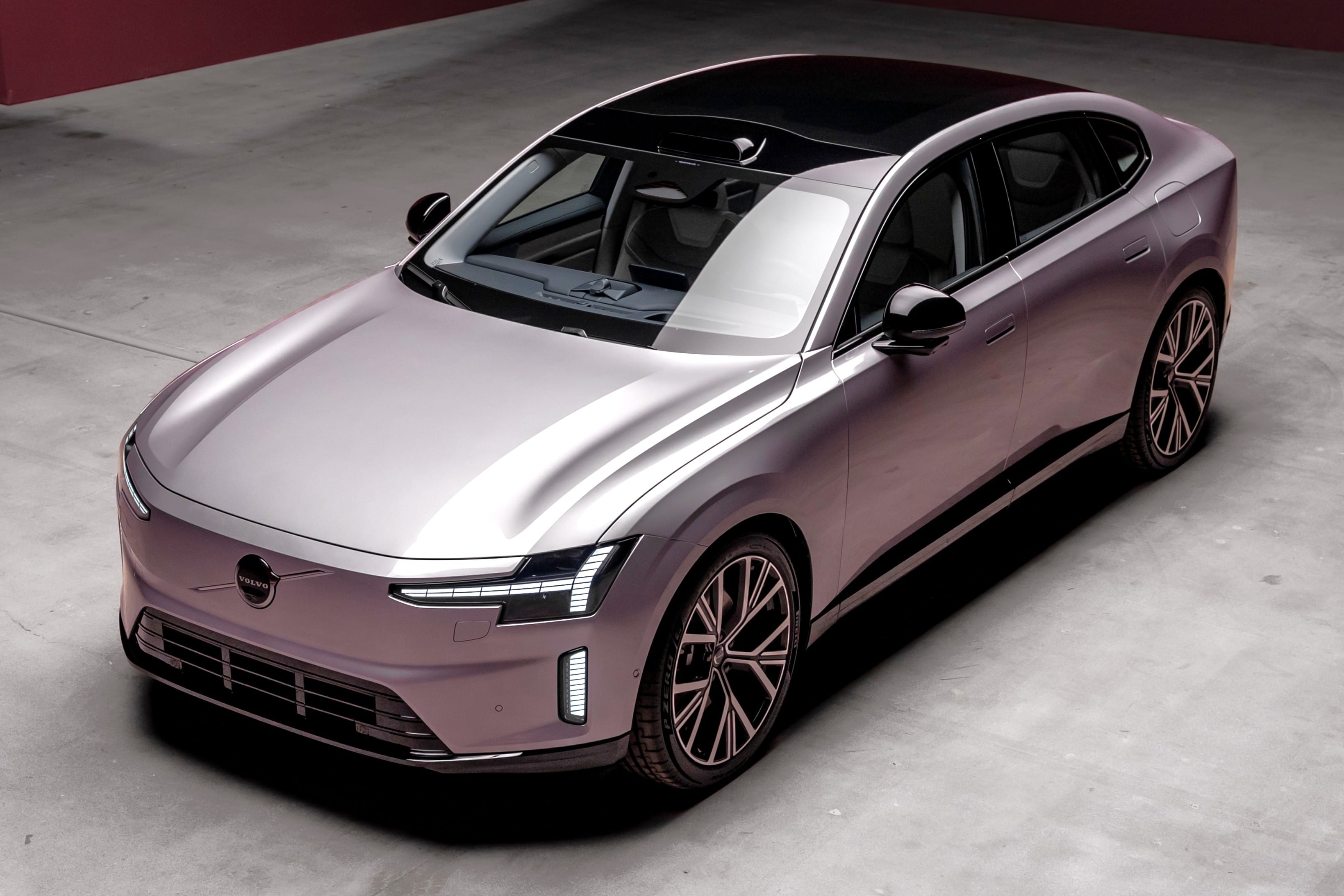
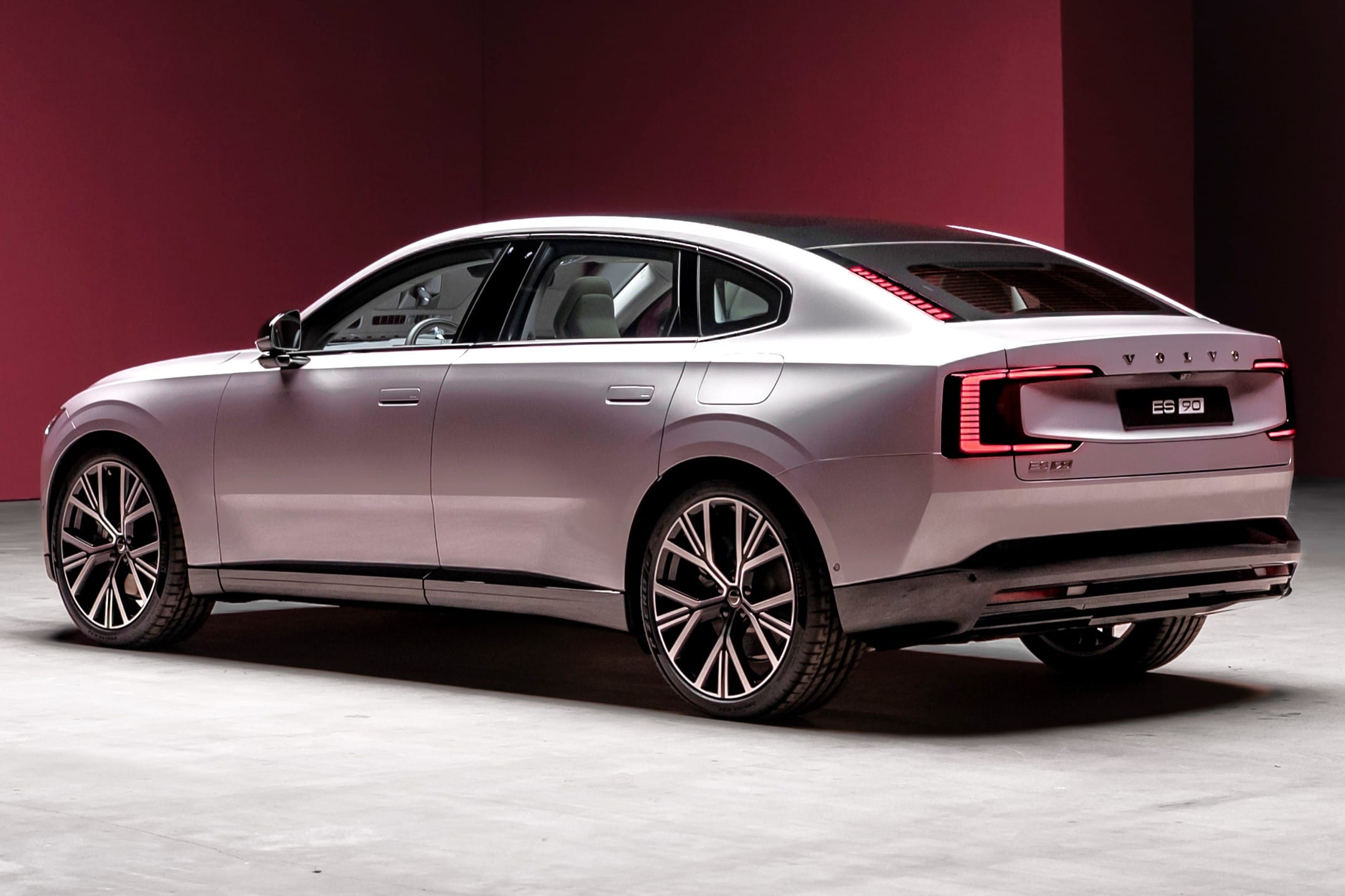
Volvo has confirmed that it will launch two new EVs, the EX90 SUV and the ES90 sedan, in India on October 12, 2026. The EX90 and ES90 will serve as Volvo’s flagship electric offerings for the Indian market. Notably, the ES90 will mark Volvo India’s return to the luxury sedan space, following the discontinuation of the S90 in June 2025. The EX90 is expected to rival the likes of the Mercedes-Benz EQS and Kia EV9, while the ES90 is likely to go up against the BMW i5.
Volvo EX90, ES90 battery and range
Identical 92kWh RWD and 106kWh AWD powertrains
The EX90 and ES90 are both underpinned by Volvo’s SPA2 platform, which features as 800V electrical architecture. In global markets, both EVs can be had in 92kWh (Single Motor) and 106kWh (Twin Motor) guises. In 92kWh spec, the EX90 and ES90 get a single rear-mounted motor (RWD) outputting 333hp and 480Nm. Meanwhile, the 106kWh battery option is split into Twin Motor and Twin Motor Performance variants, developing 456hp/670Nm and 680hp/870Nm, respectively.
For the EX90, 0-100kph comes up in a claimed 6.6 seconds for the 92kWh, 5.3 seconds for the 106kWh Twin Motor, and 4 seconds for the Twin Motor Performance. The ES90 Twin Motor is slightly slower from 0-100kph at 5.4 seconds, but mirrors the EX90 for the other variants.
As for WLTP range, the EX90 92kWh is rated at 565km, while the Twin Motor and Twin Motor Performance trims manage 608km and 602km, respectively. Meanwhile, the ES90’s WLTP range is certified at 664km for the 92kWh variant and 696km for the 106kWh versions.
Coming to charging speeds, both the EX90 and ES90 can utilise up to 350kW DC charging, and take 22 minutes for a 10-80 percent charge across all variants.
Volvo EX90, ES90 exterior design
Look quite different compared to the XC90 and S90
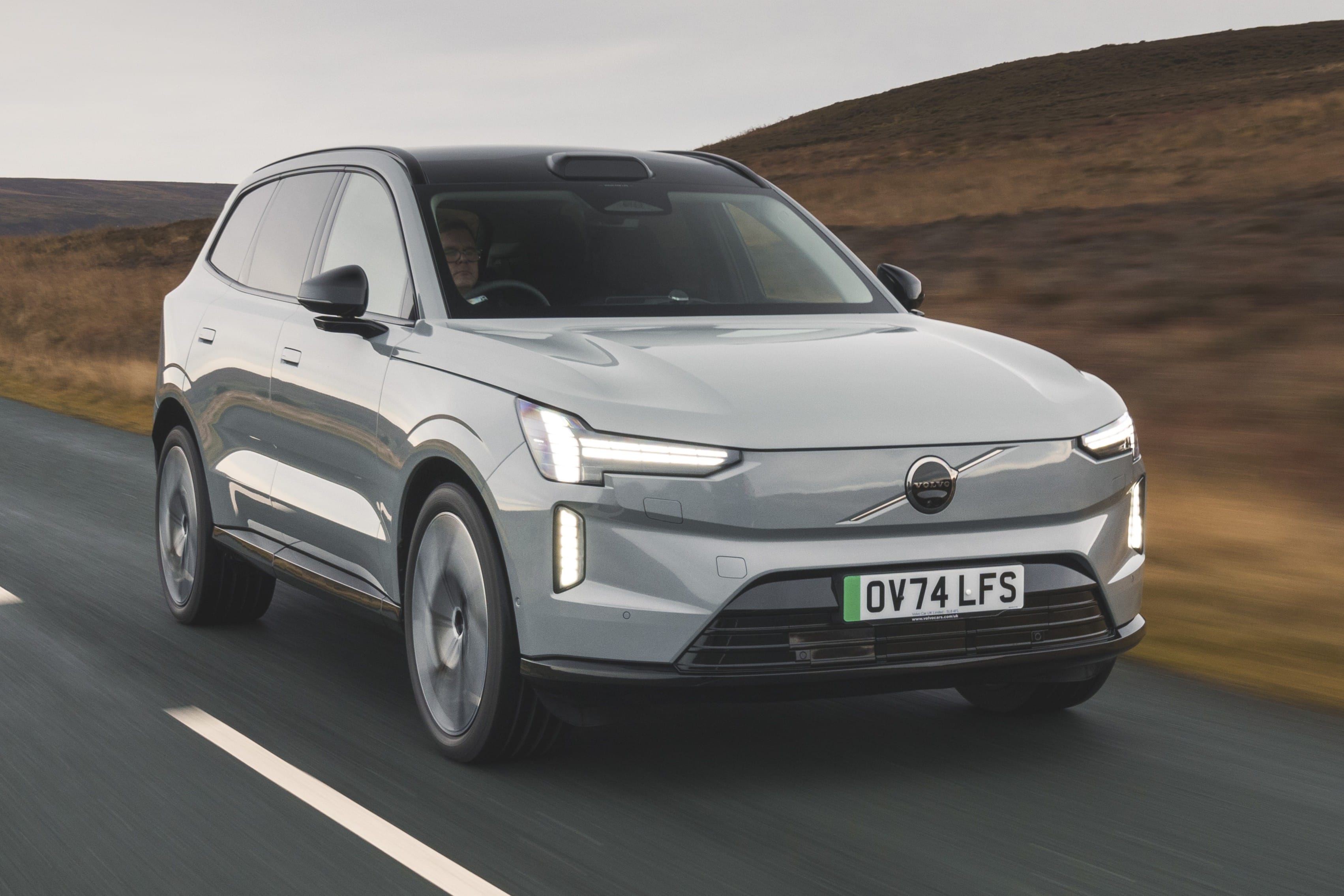
Measuring 5,037mm in length, 1,964mm in width, 1,744mm in height, and 2,985mm in wheelbase, the EX90 is dimensionally similar to the XC90, but sports a distinct design. Up front, the EX90 has sleeker T-shaped headlamps with pixel-like ‘Thor’s Hammer’ DRL signatures, below which sits a pair of slim vertically-arranged fog lamps. The Volvo badge is placed front and centre on the grille-less fascia, with a discreet air dam underneath. A LiDAR sensor can also be spotted on the leading edge of the roof.
The side profile of the EX90 is cleanly-styled, with a prominent shoulder line and gently rising glass area, and there’s not much in the way of body cladding– Volvo claims a drag coefficient of 0.29Cd. 20-inch alloy wheels are fitted as standard, with 21- and 22-inchers optionally available. Over to the rear, the EX90 gets C-shaped LED tail-lamps with an additional vertical row of brake lights flanking the rear windscreen. Other styling elements of note include a sizable roof spoiler and a Volvo wordmark on the bootlid.
Coming to the ES90, it adopts very similar styling cues to the EX90, like the Thor’s Hammer DRLs, vertical fog lamps, grille-less fascia, brake lights around the rear windshield, Volvo wordmark on the bootlid, gloss black bumpers and skirts, and more. However, the ES90 sets itself apart with slightly reshaped headlamps and tail-lamps, different alloy wheel designs (sizes range from 20 to 22 inches), and of course, its sedan form factor.
Thanks to its more low-slung proportions, the ES90 sports a drag coefficient of 0.25, which makes it the most aerodynamic Volvo car to date.
Volvo EX90, ES90 interior and features
14.5-inch infotainment touchscreen sits front and centre on the dash
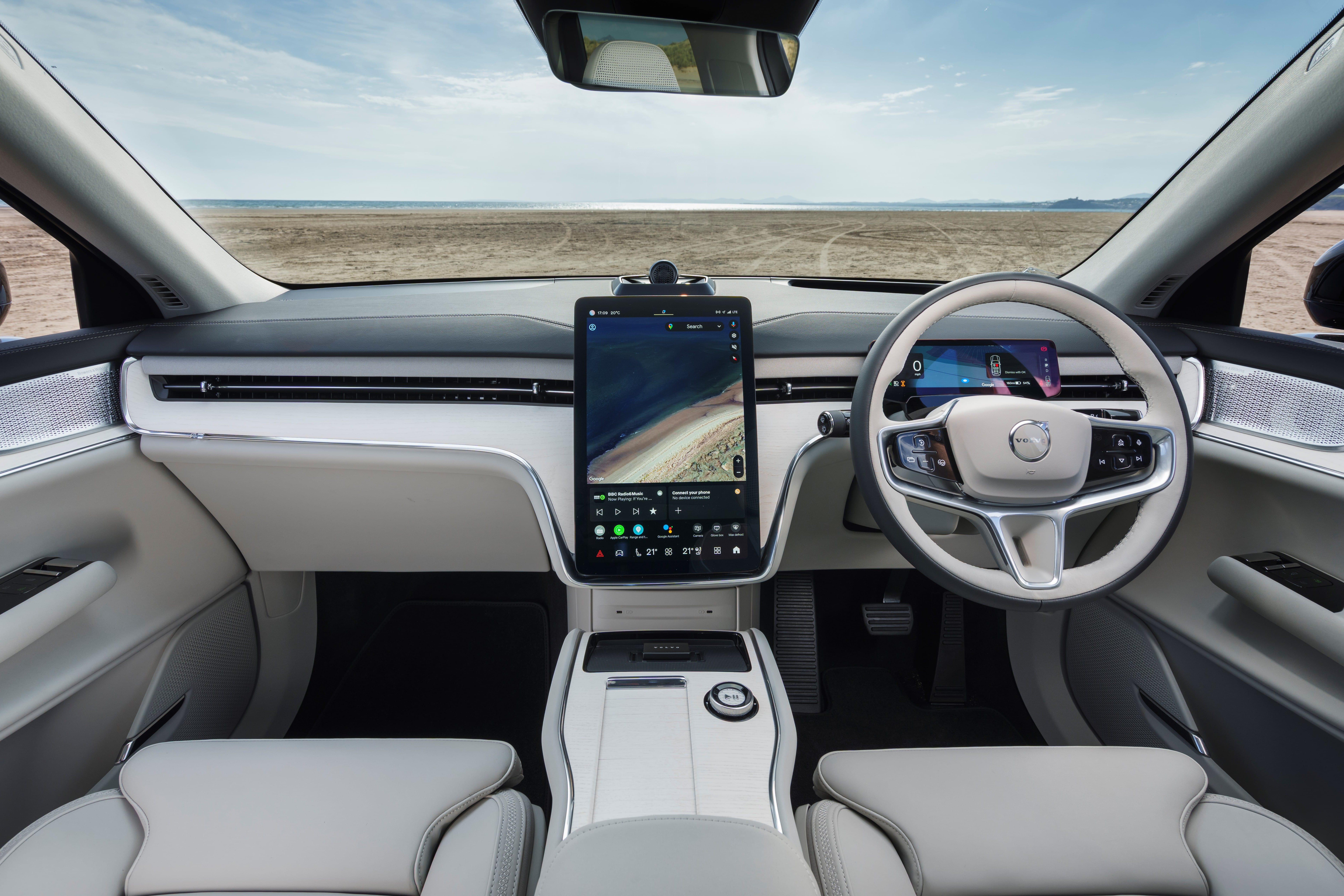
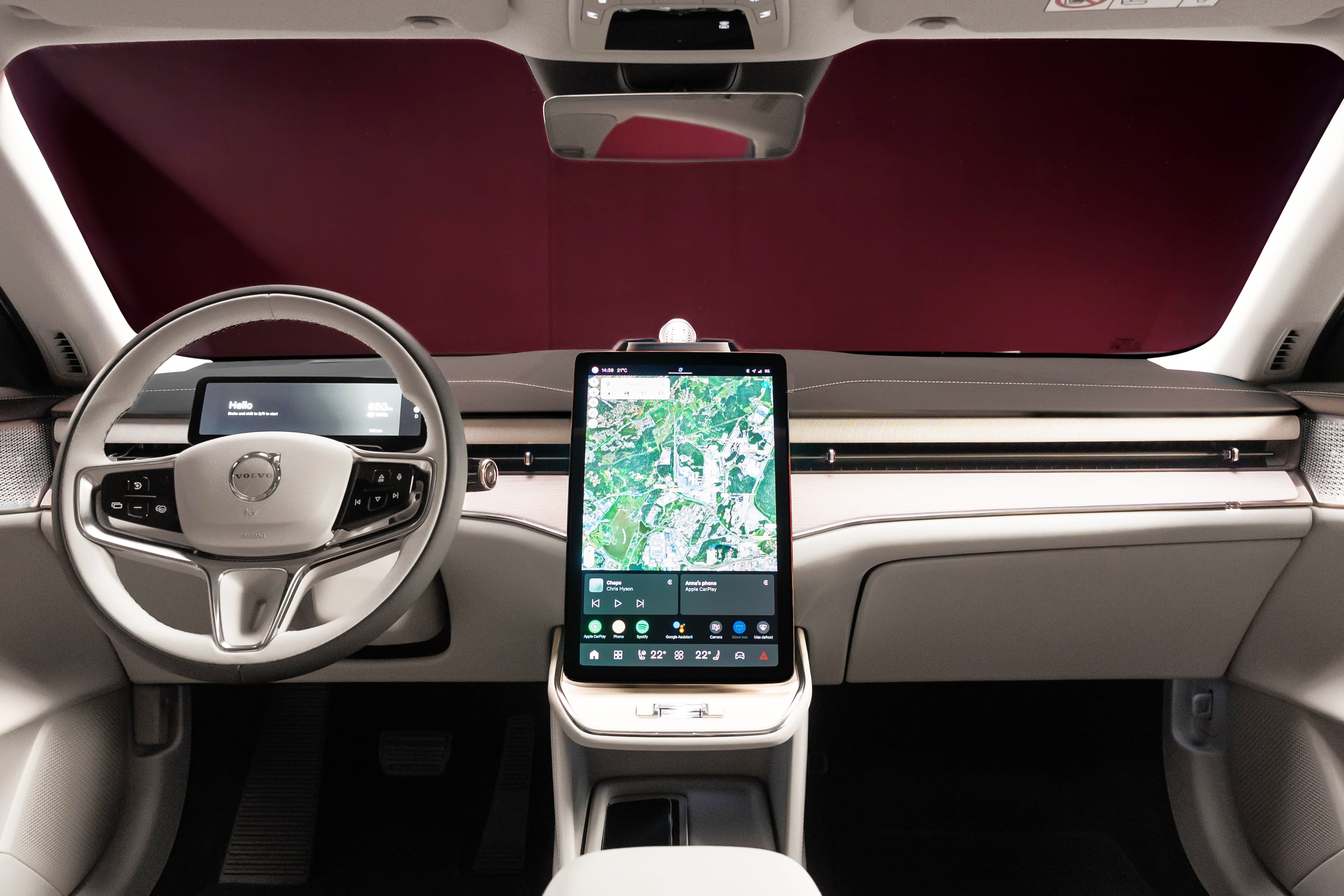
Inside, the EX90 and ES90 are very similar in terms of dashboard layout. Both get a minimalistic dashboard dominated by a 14.5-inch Google-based portrait touchscreen that incorporates much of the in-car functionality– physical controls are few and far between. There’s also a floating centre console, a three-spoke steering wheel with a neat layered design, a slim 9-inch digital driver’s display, and a 13.2-inch heads-up display.
The area between the portrait screen and centre console, however, differs between the two. The EX90 has a split design with a more open cubby, whereas the ES90 has a more enclosed storage space with two buttons underneath the touchscreen.
While the ES90 is a 5-seater, the EX90 is a 7-seater as standard, with certain variants offering a 6-seat configuration with captain’s chairs for the second row. In some markets, Volvo even offers a 4-seater version of the EX90 with a rear centre console that integrates a refrigerator, rivalling the likes of the Mercedes Maybach EQS SUV. Boot space is pegged at up to 384 litres with all three rows up for the EX90 and 424 litres for the ES90. The EX90 additionally gets a 45-litre frunk, while the ES90 features a 27-litre space.
As for creature comforts, both EVs pack a 5G connection to aid OTA updates, a digital key, ambient lighting, four-zone climate control, a cabin air purifier, a wireless charging pad, a 360-degree camera, powered front seats, a panoramic glass roof, a Bose sound system, connected car tech, auto park assist, Level-3 ADAS, V2L functionality, and lots more. The EX90 is touted to be Volvo’s safest car to date, holding 5-star crash safety ratings from Euro NCAP and NCAP. The ES90, however, is yet to be crash-tested by an NCAP agency.
Tesla India recorded its highest-ever monthly retail sales in July 2026, delivering 115 Model Y SUVs according to Vahan data. The American EV maker’s previous best stood at 69 units, achieved in September and December 2025. The strong performance follows Tesla’s Rs 9 lakh price cut for the Model Y in June, which lowered its starting price to Rs 50.89 lakh (ex-showroom).
Tesla holds a 16 percent share of the luxury EVs sold in July
Over 600 units of cumulative sales so far
Tesla Model Y priced between Rs 50.89 lakh and Rs 61.99 lakh (ex-showroom)
Tesla Model Y price cut drives July sales
Tesla delivered 115 Model Ys in July, up 203 percent from 38 units sold in June. The sharp increase came after the company reduced the Model Y’s starting price by Rs 9 lakh to Rs 50.89 lakh in June, improving its competitiveness in the luxury EV segment. Before the price revision, demand for the electric SUV had remained relatively limited.
Tesla becomes third-largest luxury EV brand
The July performance gave Tesla a 16 percent share of the 736 luxury electric passenger vehicles retailed during the month, placing it behind BMW India (390 units) and Mercedes-Benz India (174 units), while ahead of Volvo Auto India (51 units). Tesla’s cumulative India sales have now reached 578 units since deliveries began in September 2025, giving it an 8 percent share of the 6,825 luxury EVs sold during the same period. The company has already retailed 60 vehicles in the first 16 days of August, taking cumulative sales past the 600-unit mark.
Tesla’s record monthly sales also contributed to India’s highest-ever monthly electric passenger vehicle retail sales of 34,033 units in July. The company accounted for 0.33 percent of the overall electric passenger vehicle market during the month.
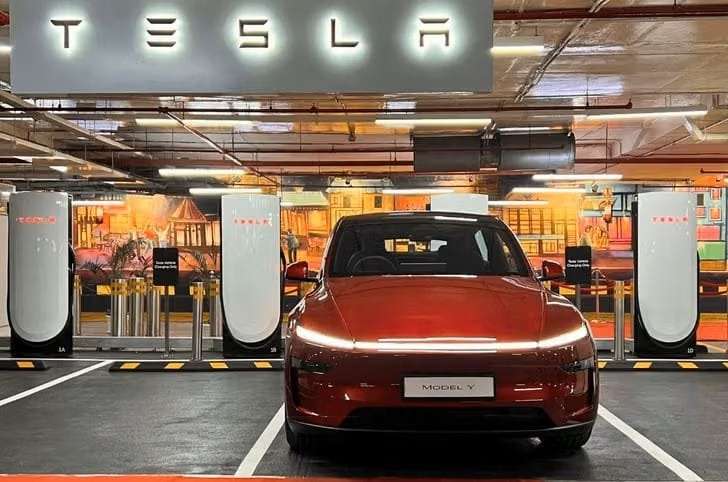
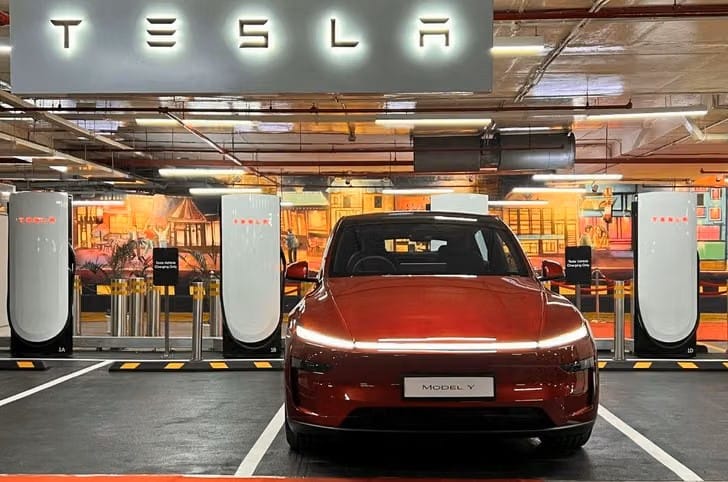
Tesla currently offers the Model Y in five-seat and six-seat Model Y L versions, priced between Rs 50.89 lakh and Rs 61.99 lakh (ex-showroom). The five-seat Premium RWD variant uses a 64kWh battery with a claimed 500km WLTP range, while the Premium Long Range RWD gets an 84.2kWh battery with a claimed 661km WLTP range. Tesla says the six-seat Model Y L features a dual-motor all-wheel-drive setup with a claimed 681km WLTP range. The Model Y also is now available in India with new artificial intelligence features, the most significant being the Grok AI assistant.
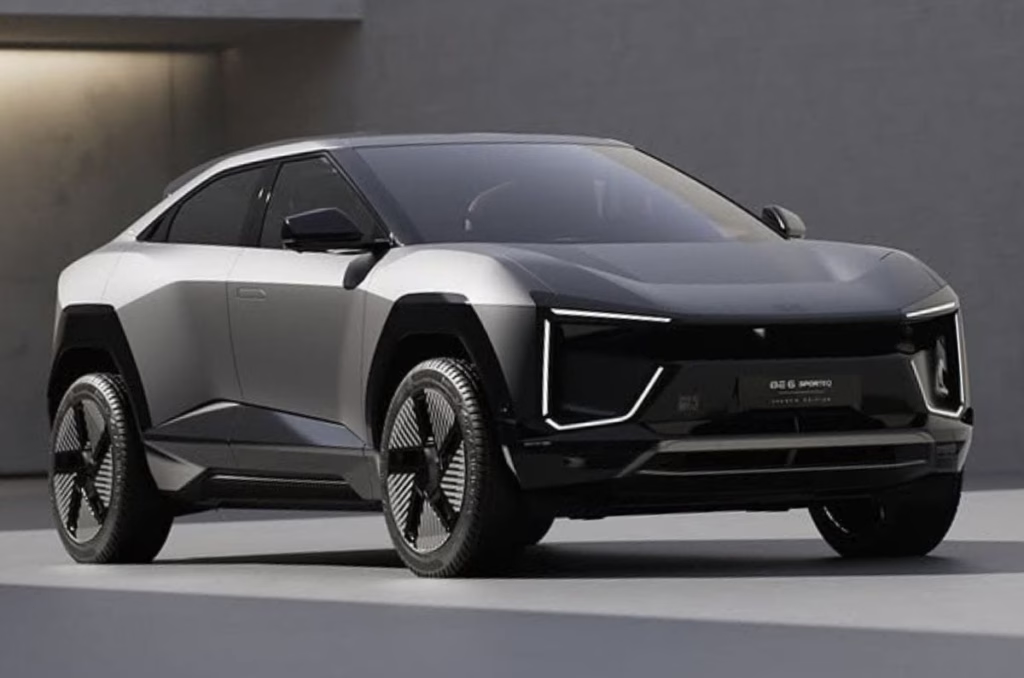
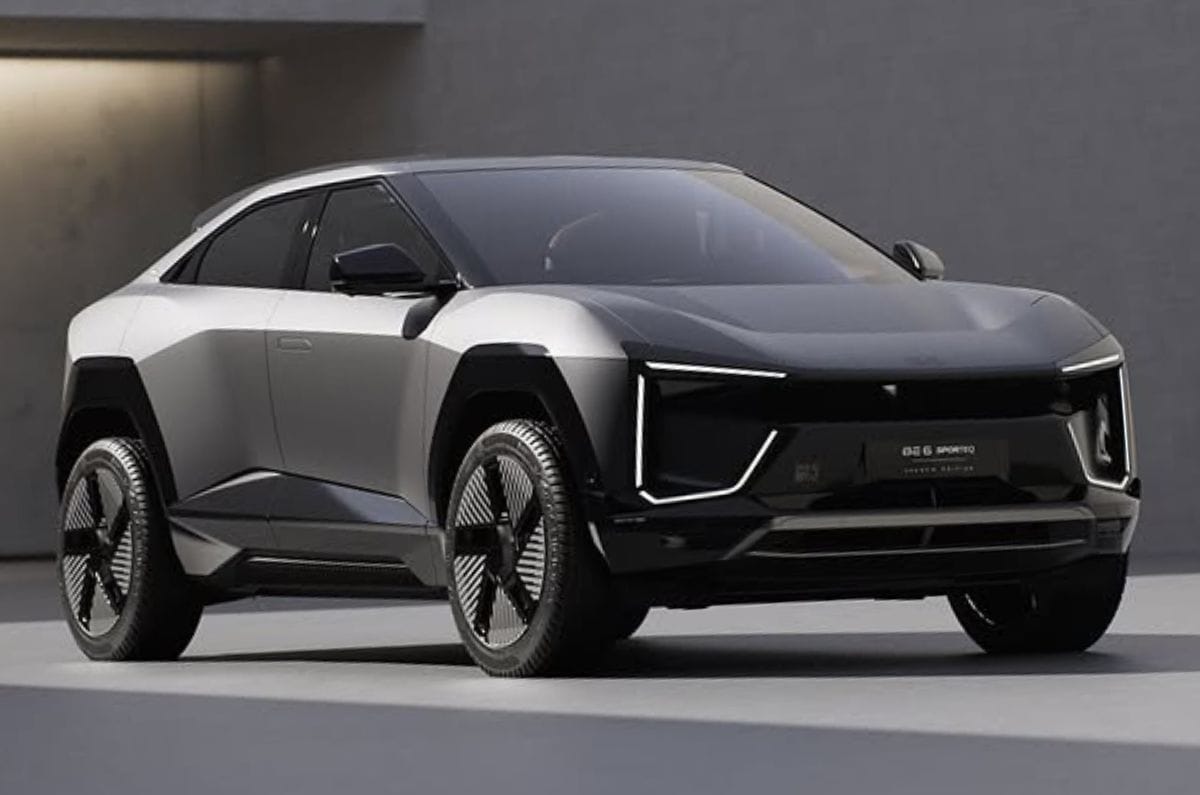
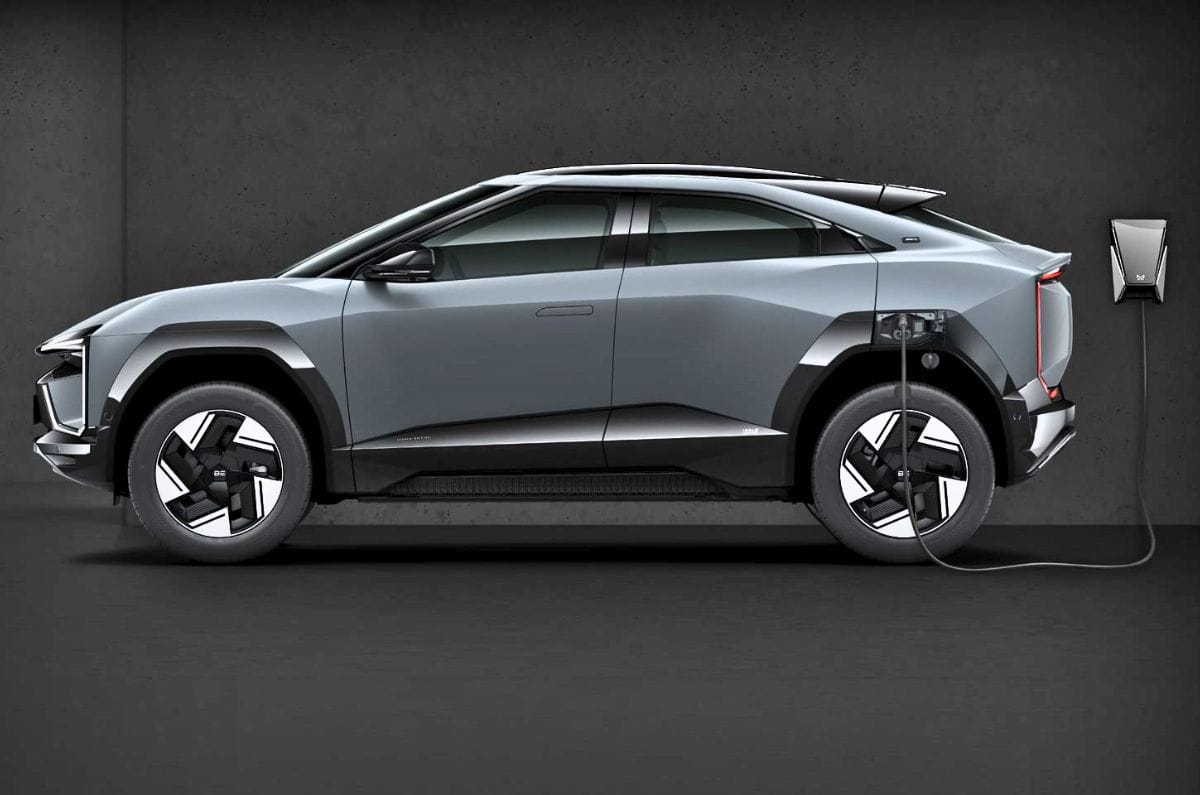
Mahindra launched the 2026 BE 6 recently, adding the ‘Sporteq’ moniker and pricing it from Rs 19.45 lakh to Rs 26.95 lakh (ex-showroom). Along with a new name, Mahindra has also introduced some updates to the midsize electric SUV to keep it modern in the segment. Here’s a detailed list of these updates:
New 70kWh battery pack
New battery pack offers 651km range and is mated to a 241hp rear motor
The 2026 Mahindra BE 6 Sporteq gets a new 70kWh battery pack in addition to the previously available 59kWh and 79kWh batteries. This new 70kWh battery offers an ARAI-claimed range of 651km and a rear-axle-mounted (RWD) electric motor that produces 241hp and 360Nm. It supports a 7.2kW AC, a 11.2kW AC and a 160kW DC charger. The DC fast charger recharges the battery pack from 20-80 percent in a claimed 20 minutes.
Mahindra is offering the 70kWh battery with the Three and Three+ trims, priced at Rs 22.95 lakh and Rs 23.95 lakh, respectively (ex-showroom).
Battery-as-a-Service (BaaS) scheme
Battery rental scheme makes the 59kWh battery variants Rs 8 lakh more affordable
Along with a new battery, Mahindra is also offering the BE 6 with a battery-as-a-service (BaaS) scheme, which is also a first for the brand. However, the BaaS scheme is offered only with the 59kWh battery pack available in the One and Two trims. The battery rental scheme essentially lowers the BE 6’s initial price by Rs 8 lakh, but requires a monthly subscription fee for the battery. Here are the details:
Mahindra BE 6 battery-as-a-service (BaaS) price vs standard price
Standard price
BaaS price*
Difference^
One
Rs 19.45 lakh
Rs 11.45 lakh + Rs 3.75/km
– Rs 8 lakh
Two
Rs 20.95 lakh
Rs 12.95 lakh + Rs 3.75/km
– Rs 8 lakh
Notes: BaaS scheme requires a minimum monthly payment of Rs 6,750, calculated assuming usage of 60km per day and an 8-year battery loan, as per Mahindra’s terms and conditions. The price difference calculated above is on the initial price and does not include the BaaS scheme’s battery subscription charges.
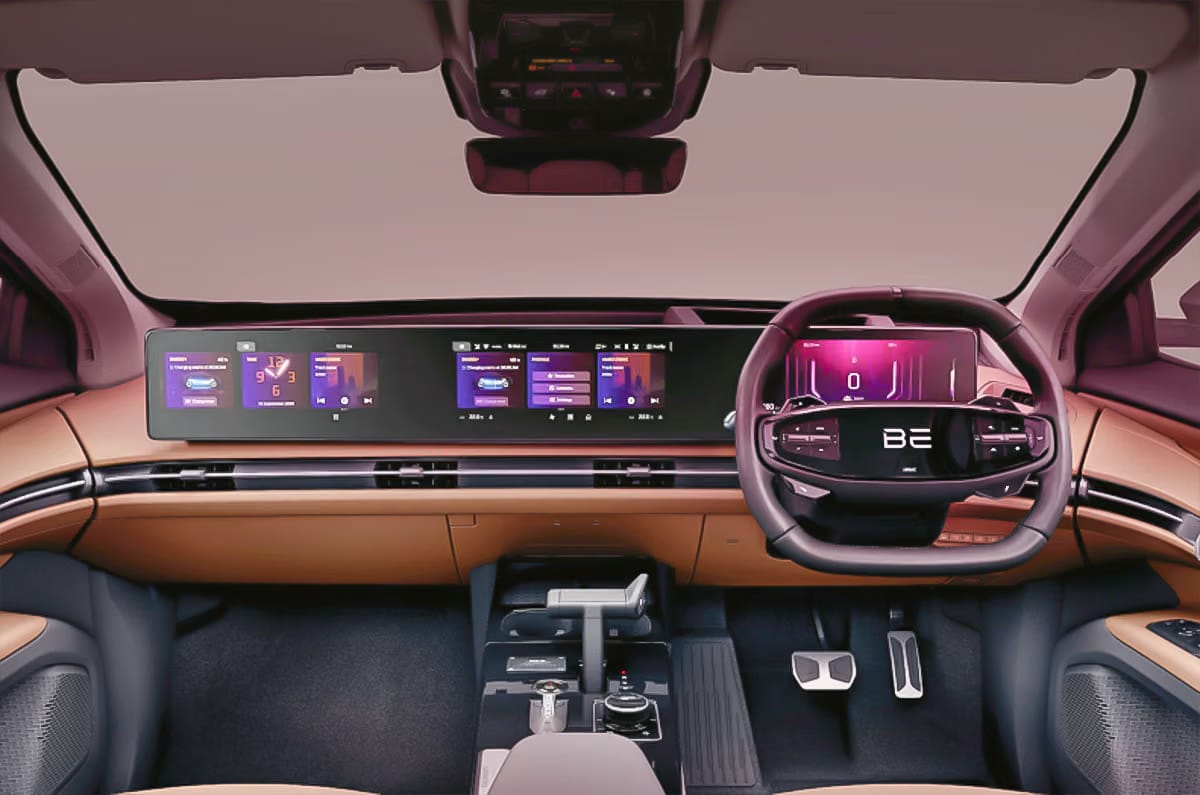
Triple-screen setup on dashboard
Offers an additional third screen for the front passenger now
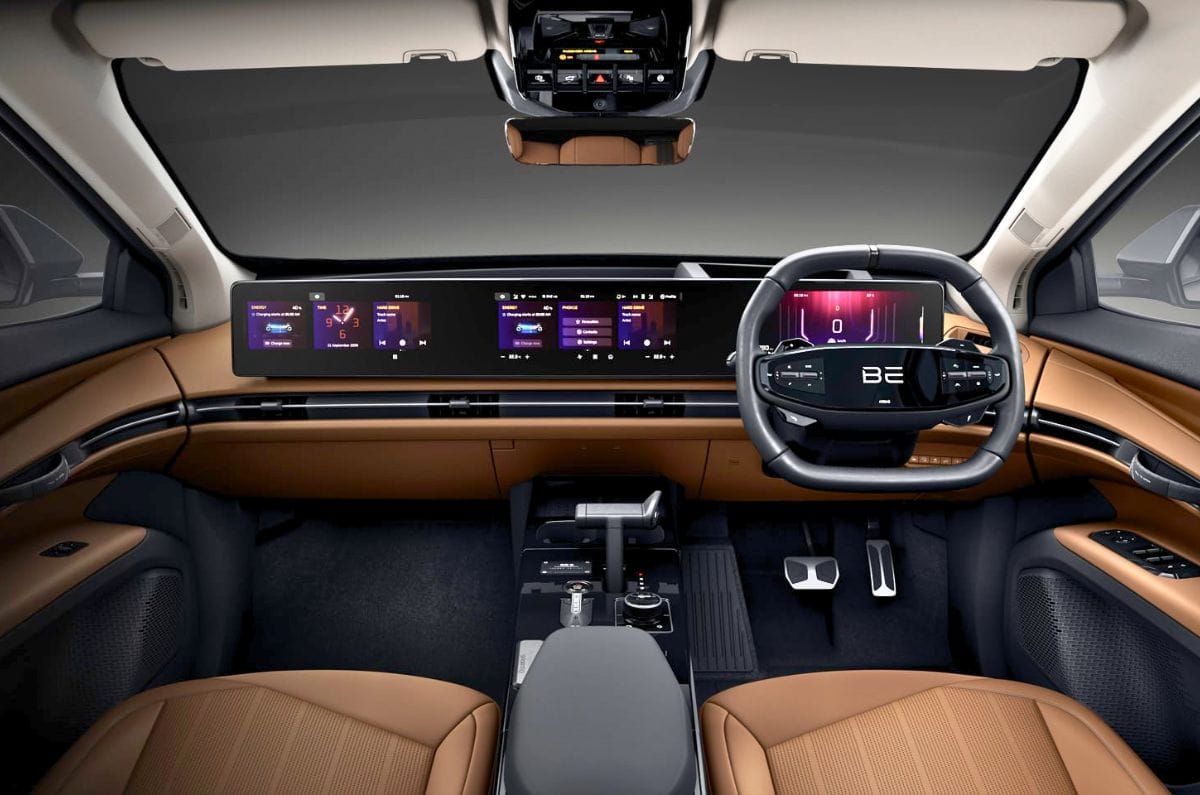
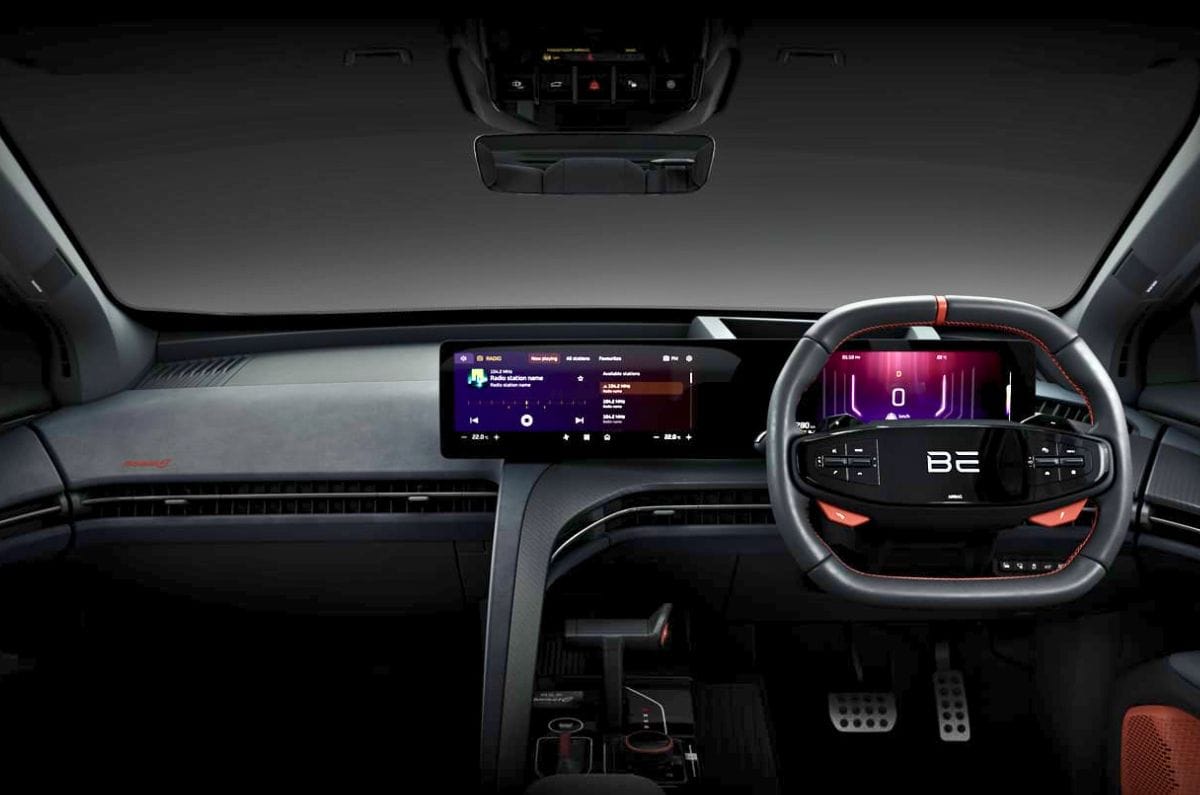
The 2026 update also brought a major redesign to the BE 6’s dashboard, now offered with an additional 12.30-inch screen for the front passenger, in addition to the similarly sized digital driver’s display and touchscreen infotainment system. The new front passenger display also removed the halo-like design element connecting the dashboard to the centre console, allowing the addition of two cupholders on the centre console, something that was sorely missing on the older model.
Mahindra is offering a triple-screen setup on all trims of the BE 6 Sporteq except the base-spec One and the sportier Formula E editions.
Redesigned Formula E edition
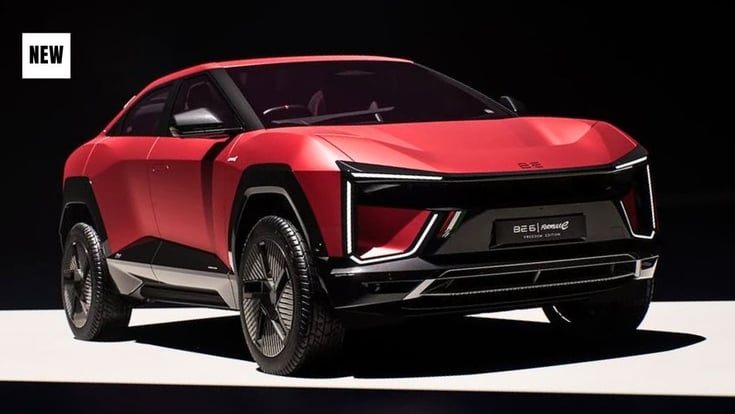
The 2026 Formula E Freedom looks nothing like the older Formula E edition
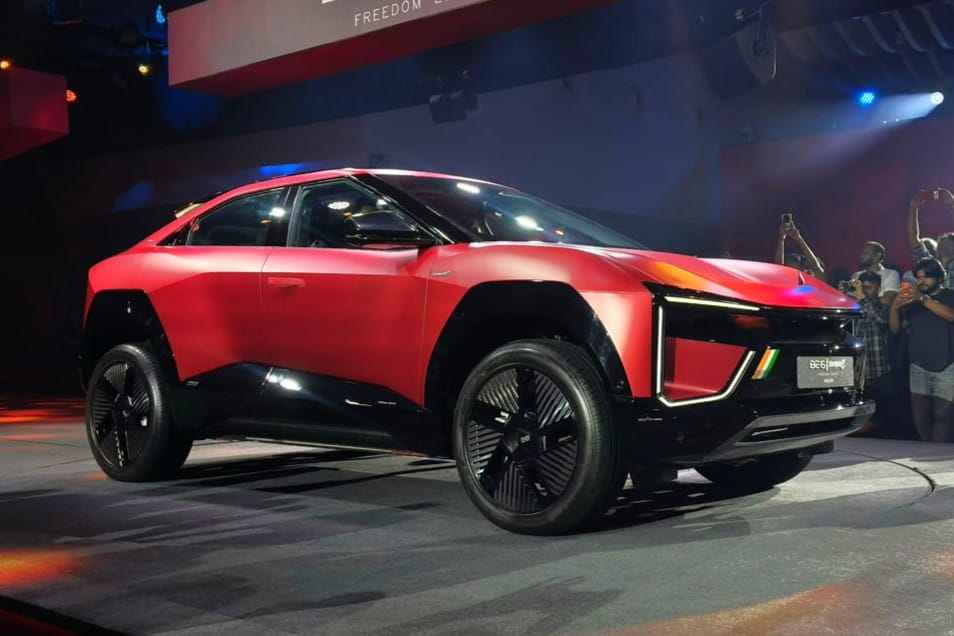
With the 2026 update, Mahindra has also rejigged the exterior design of the Formula E edition. Unlike the previous model, which had a different fascia from the standard model with circular-shaped LED headlights and a revised bumper, the 2026 Formula E Freedom edition gets the same design as the standard BE 6 Sporteq, with some Formula E badges and FIA decals. Moreover, the Formula E edition is only offered with the older model’s dual-screen dashboard and a halo design element for a sporty appeal.
Mahindra is offering the 2026 Formula E edition at the Three and Four trim levels, priced at Rs 24.45 lakh and Rs 26.95 lakh, respectively (ex-showroom).
Fresh exterior and interior colours
Both the BE 6 Sporteq and Formula E edition get new colour themes
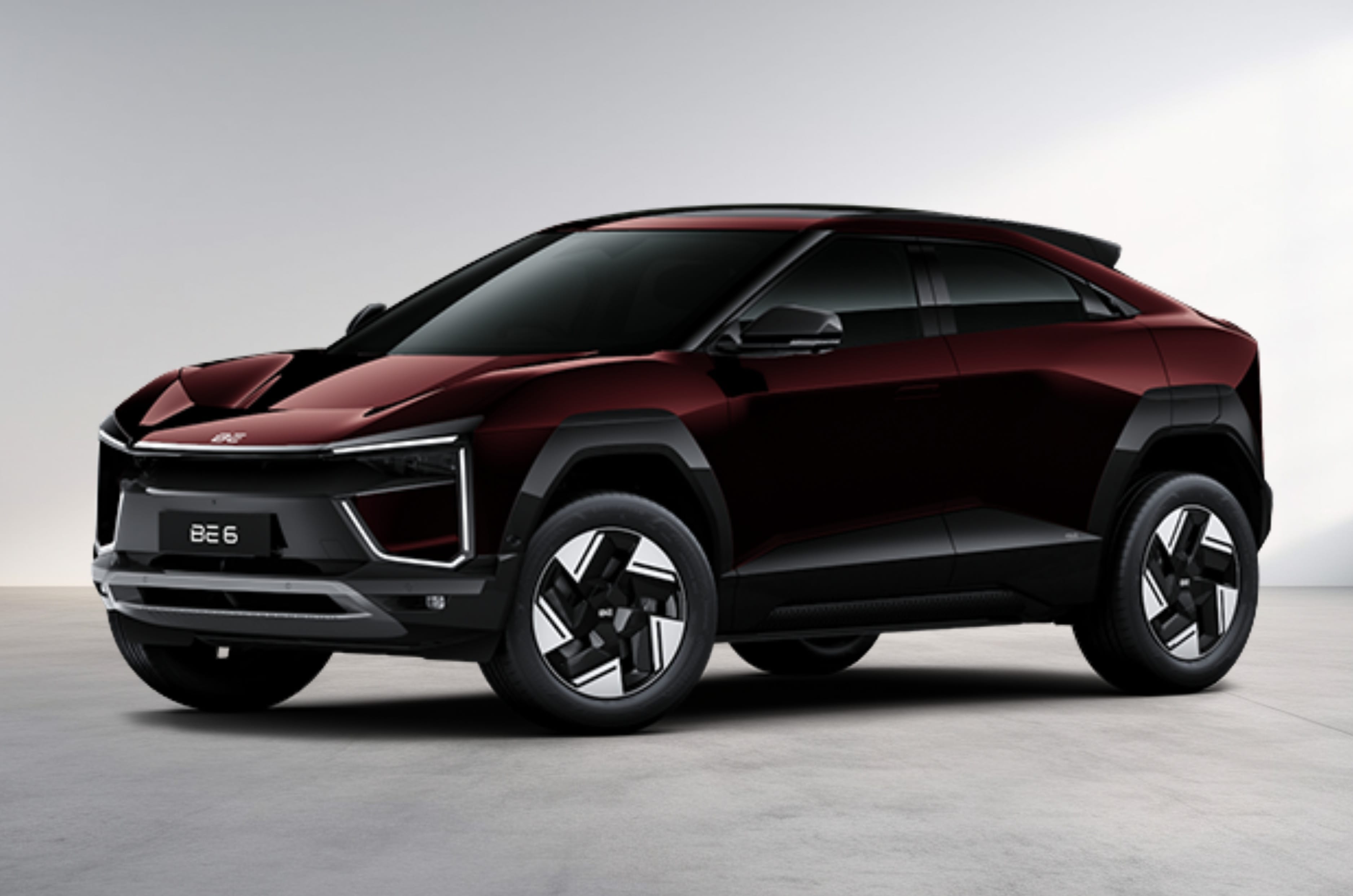
Mahindra BE 6 Sporteq Ruby Velvet exterior colour.
The 2026 Mahindra BE 6 Sporteq is being offered with fresh exterior and interior colour options. It is available in a new ‘Ruby Red’ exterior theme and new Racing Tan and Black interior hues for the Two, Three, Three+ and Four trims. The base-spec One is offered with the same Sage Green and Grey theme as before. A Sporteq Launch Edition, based on the fully loaded Four trim, is also available, which offers a new Graphite Storm exterior paint and Racing Tan interior theme.
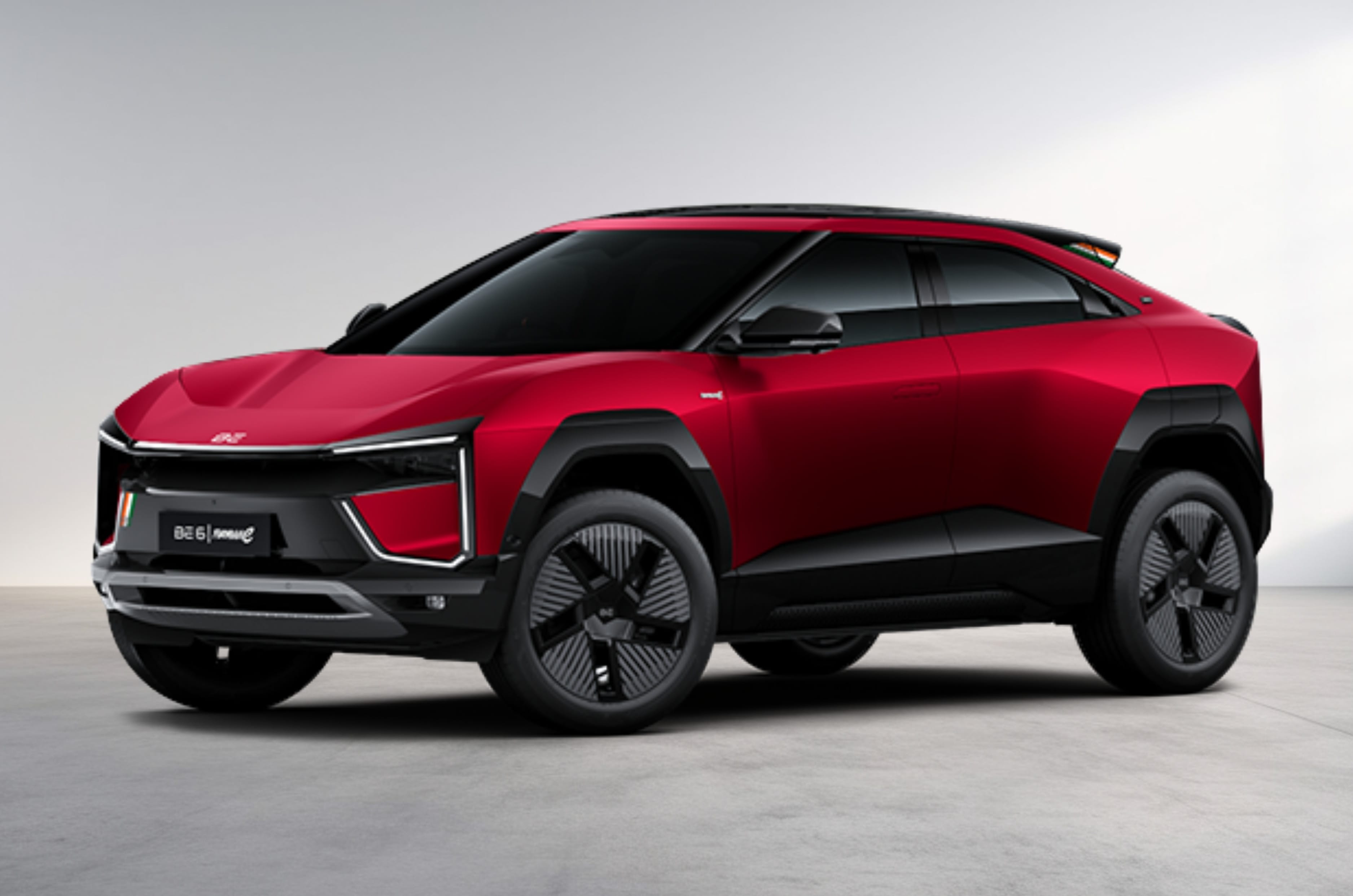
Mahindra BE 6 Formula E Freedom edition Rosso Impulso exterior colour.
While the 2026 BE 6 Formula E edition is offered with a new Rosso Impulso exterior hue, the all-black interior with orange elements for contrast is the same as the outgoing model.
New ‘TEQ’ suite
The suite enables Gemini-based interactions, unlocks additional drive modes and Revive functionalities
Another addition to the BE 6 Sporteq is the new ‘TEQ’ suite, which Mahindra says is designed to make the vehicle more intuitive, engaging, secure and responsive to individual customer needs. At its core is a Gemini-based AI conversation assistant that allows natural voice interactions for functions such as vehicle controls, navigation and music. The suite also introduces a Karaoke mode, along with support for Dolby Vision and Dolby Audio.
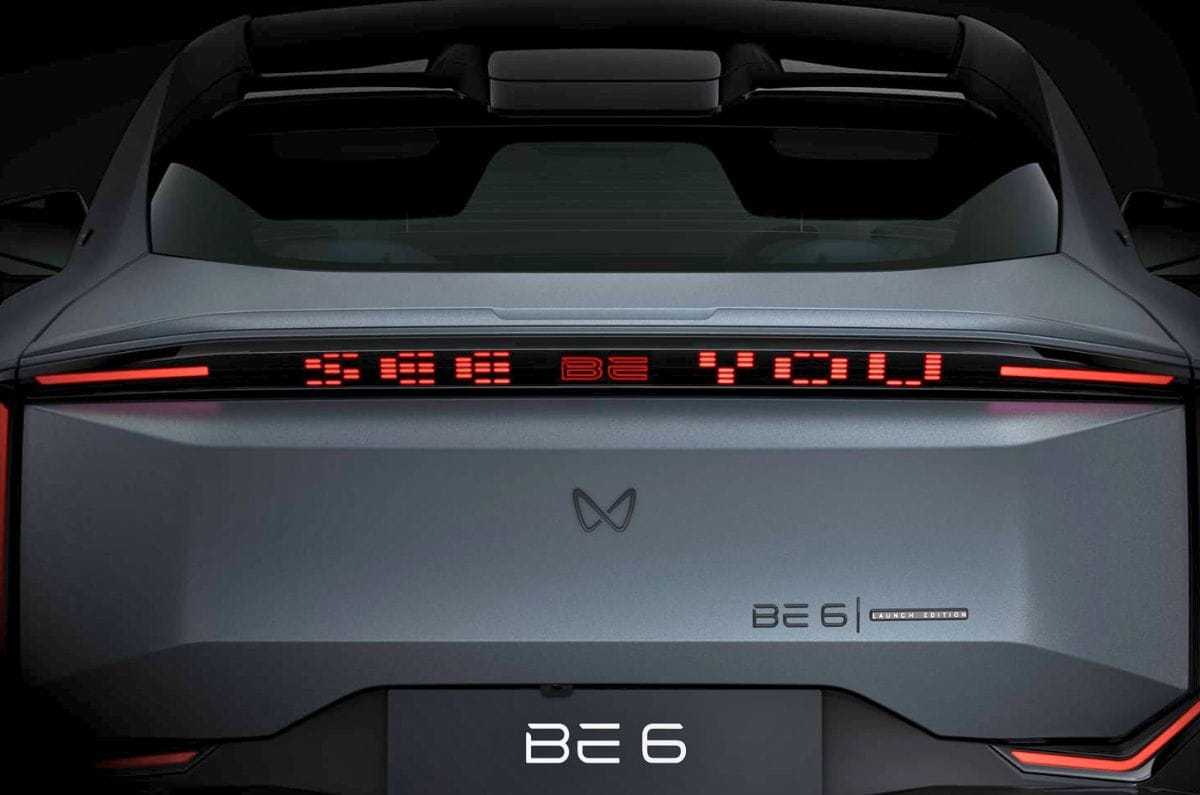
The TEQ suite also adds several performance and convenience features, including Custom Drive Mode, Drift Mode and an acceleration boost mode for the Formula E Freedom Edition, which enables a claimed 0-100 kph time of 6.44 seconds. It also includes Revive and Revive SOS, which can provide additional range even after the battery has run out. Another new feature is ‘TEQ_xting’, which lets owners display personalised messages on the vehicle’s tailgate.
The Mahindra BE 6 Sporteq is priced from Rs 19.45 lakh to Rs 26.95 lakh (ex-showroom), and it rivals the Hyundai Creta Electric, Tata Sierra EV, Tata Curvv EV, MG ZS EV, Maruti Suzuki e Vitara and Toyota Ebella.
Prices are ex-showroom, India, and do not include a wall charger or its installation cost.
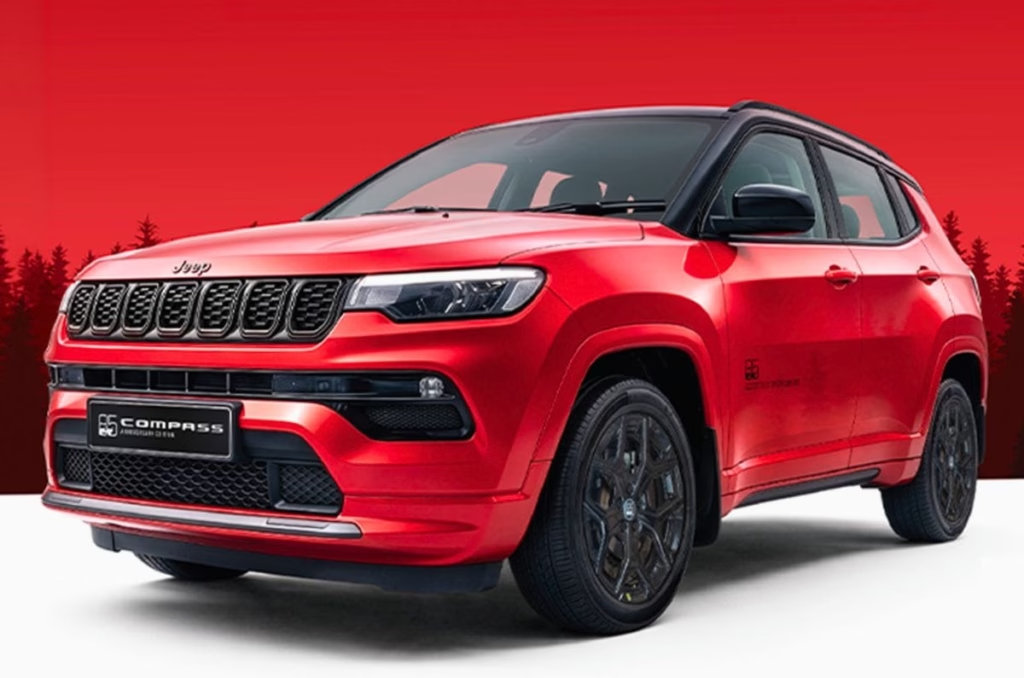
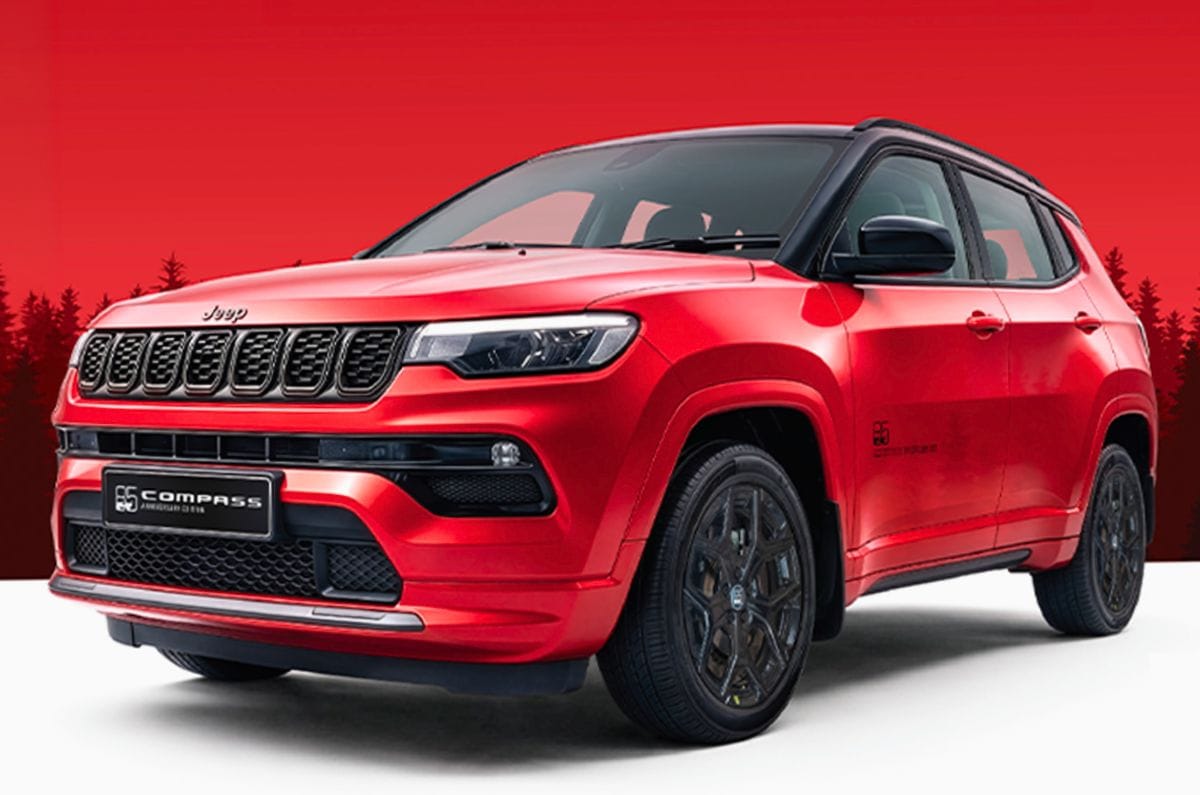
Jeep has launched the Compass 85th Anniversary Edition in India to commemorate 85 years of the brand globally. It is based on the higher-spec Model S (O) trim with identical prices starting at Rs 26.70 lakh (ex-showroom). It has a limited production run of only 85 units. Compared to the standard Compass, it offers some exterior decals, black alloy wheels, an all-black cabin with gold-coloured accents and a few additional features.
Equipped with a 2.0L diesel engine with MT, AT options
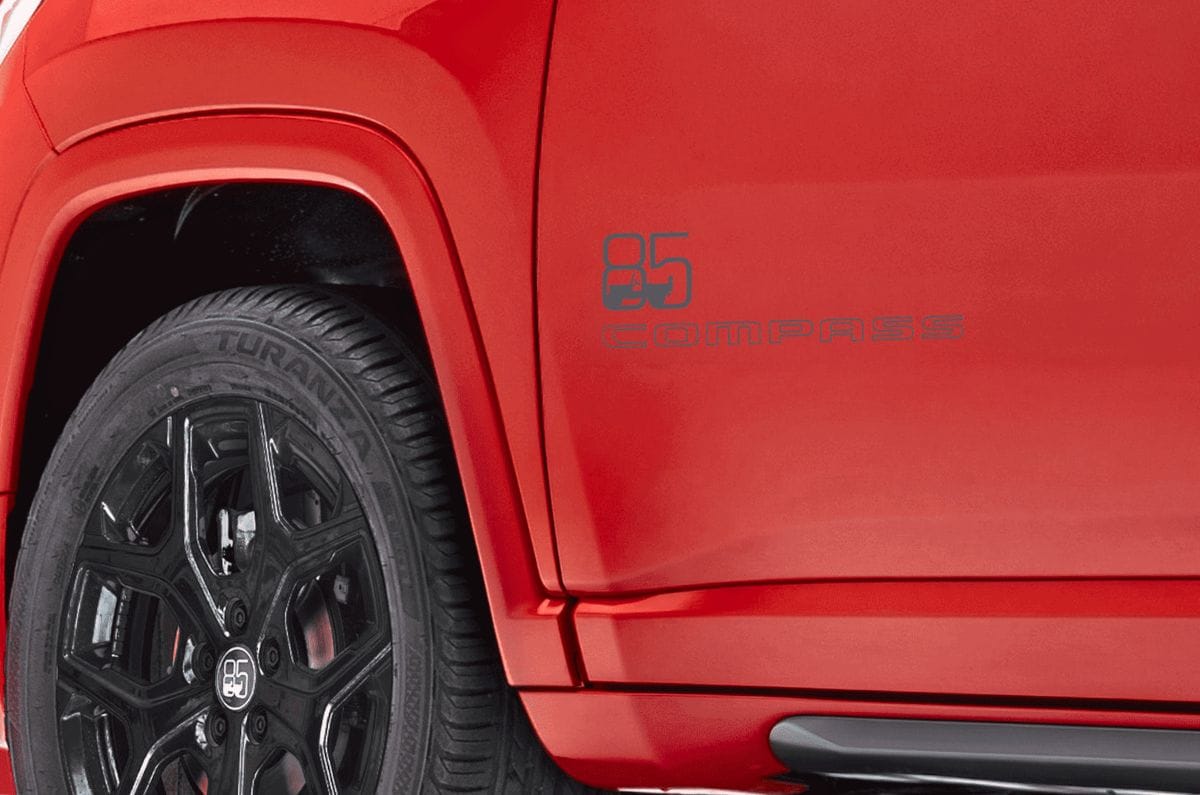
On the outside, the only changes are the new ‘85’ decals on the doors, tailgate and wheel hub caps, and gloss-black 18-inch black alloy wheels. Everything else is the same, including the LED headlights with eyebrow-shaped LED DRLs, a black grille with 7 slats, LED fog lamps, alloy wheel design, LED taillights and LED rear fog lamps.
Sports an all-black cabin with gold accents, and offers some new features
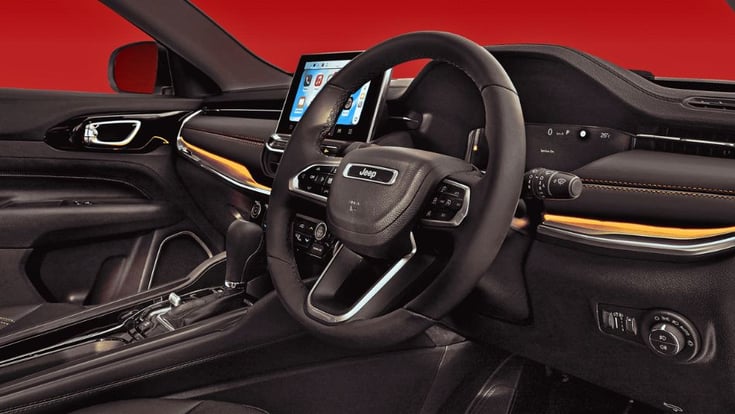
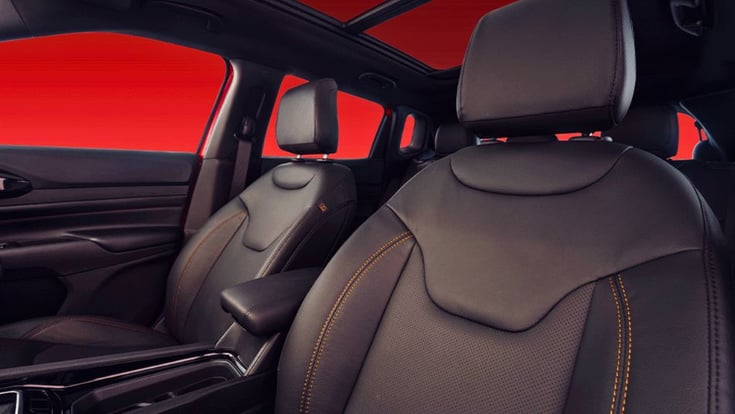
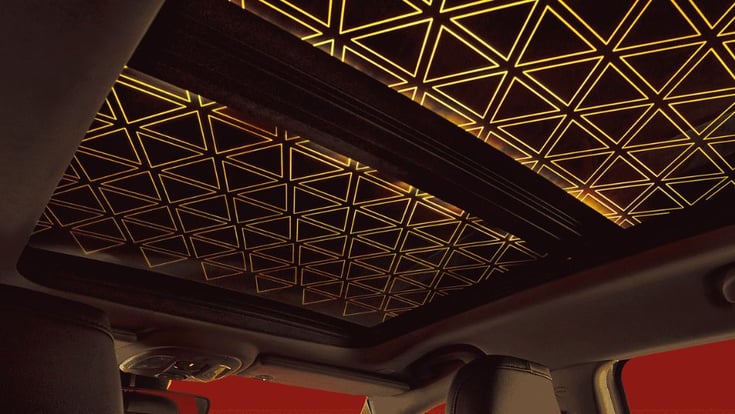
Inside, the Jeep Compass 85th Anniversary Edition is offered with an all-black cabin that looks sporty, with Mayan Gold accents for contrast. The seats also get black leatherette upholstery with the same gold-coloured stitching. This golden hue is also extended to the ambient lighting and illumination on the panoramic sunroof’s sides.
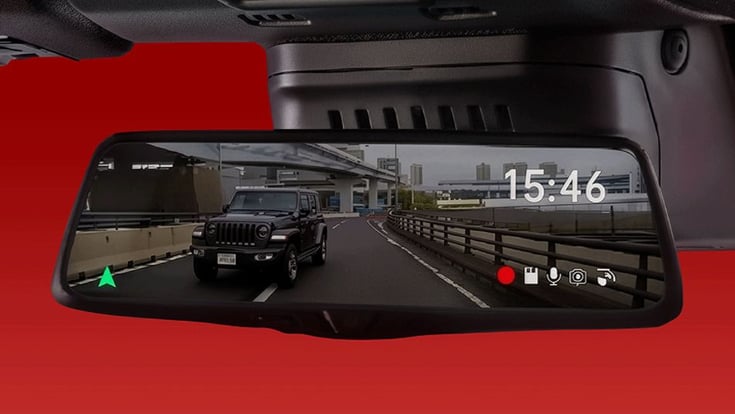
The Compass 85th Anniversary Edition is also available with an 85th Anniversary AXS accessory pack that equips it with additions like illuminated elements on the panoramic sunroof, a digital inside rearview mirror (IRVM), and front and rear dashcams. Other features are the same as the standard Compass, including powered and ventilated front seats, memory function on the driver’s seat, a 10.1-inch touchscreen infotainment system, a 9-speaker Alpine sound system, dual-zone climate control and a wireless phone charger.
Gets the same powertrains as the standard Compass Model S (O)
The Compass 85th Anniversary Edition is powered by the same 2.0-litre diesel engine that produces 170hp and 350Nm. It is offered with a 6-speed manual or a 9-speed automatic transmission, the latter of which is also available with a four-wheel-drive (4WD) option.
Notably, the Jeep Compass 85th Anniversary Edition shares its entire price range with the Model S (O) trim, but Jeep has yet to announce the price of the 85th Anniversary AXS accessory pack. Bookings are open at pan-India Jeep dealerships and the Jeep India website.
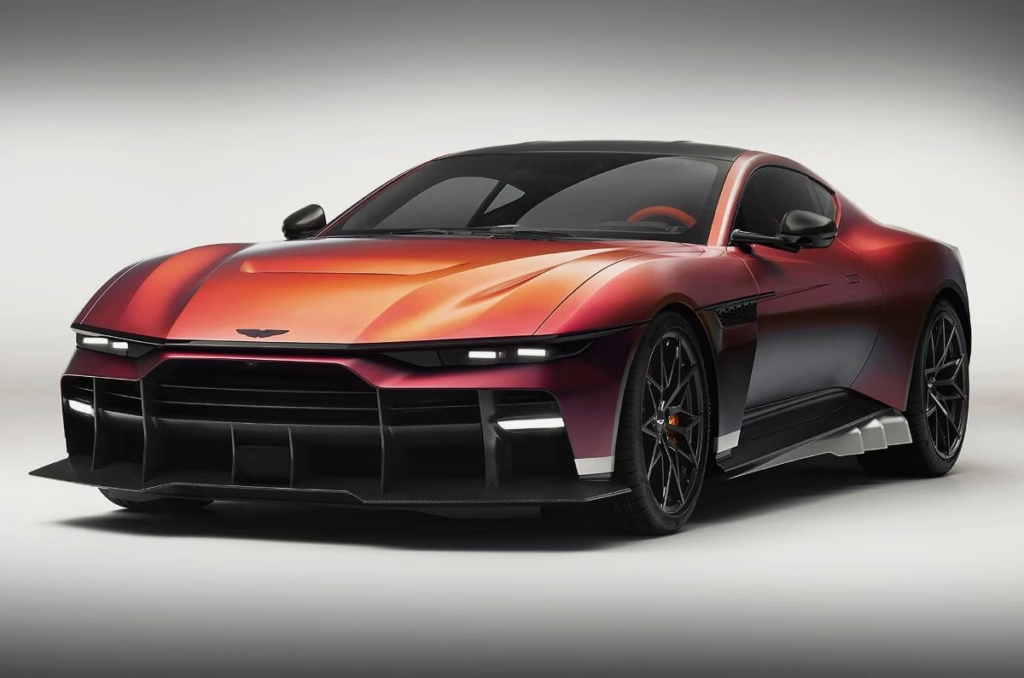
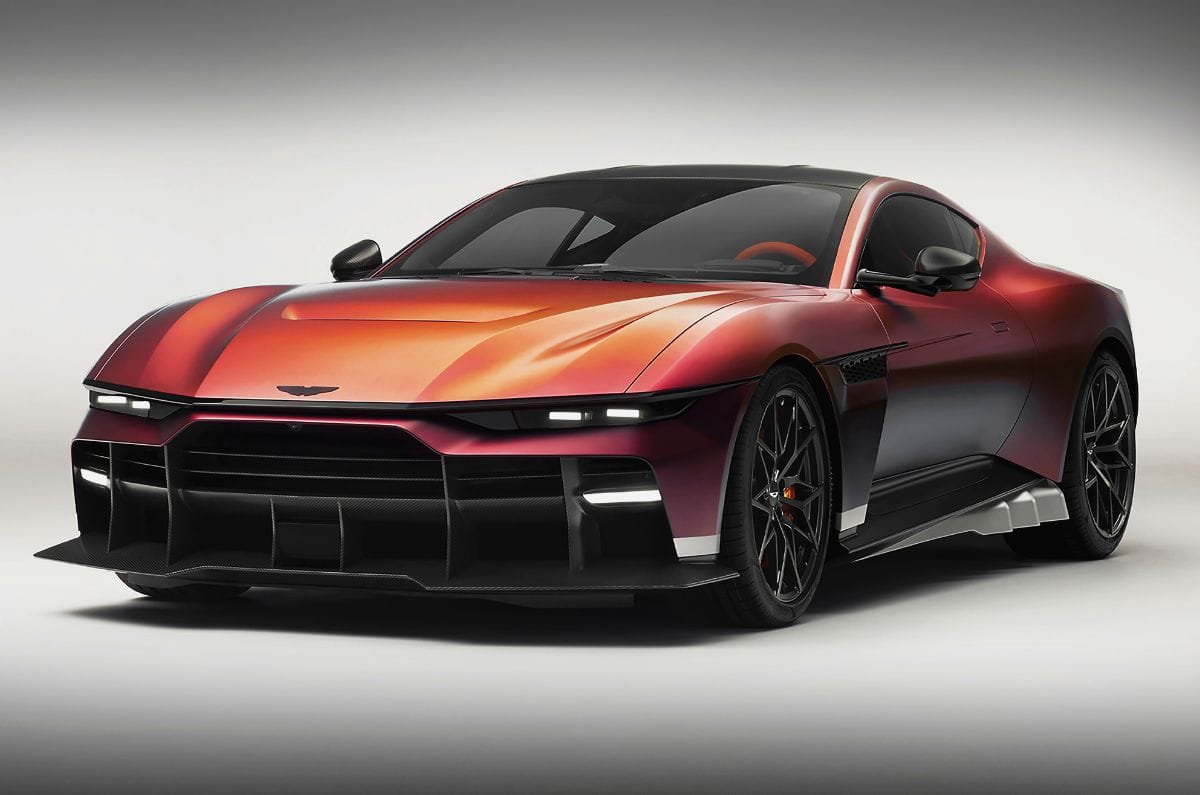
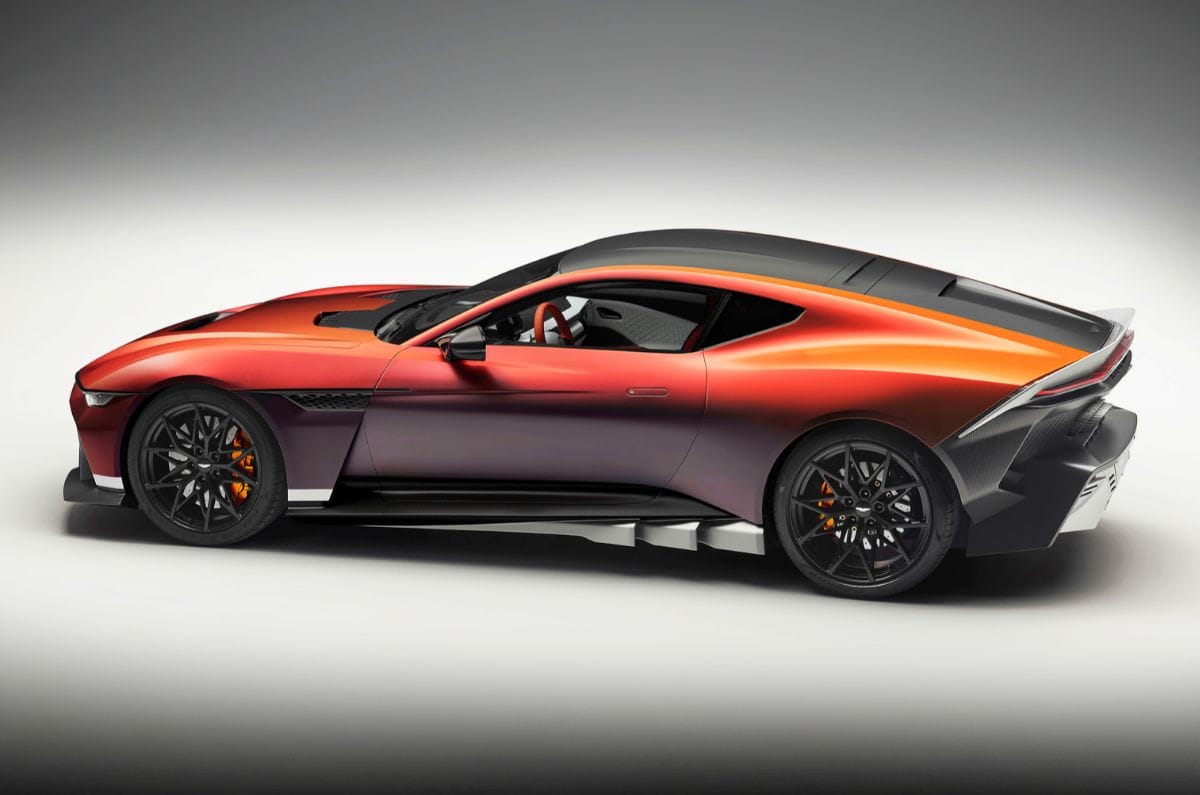
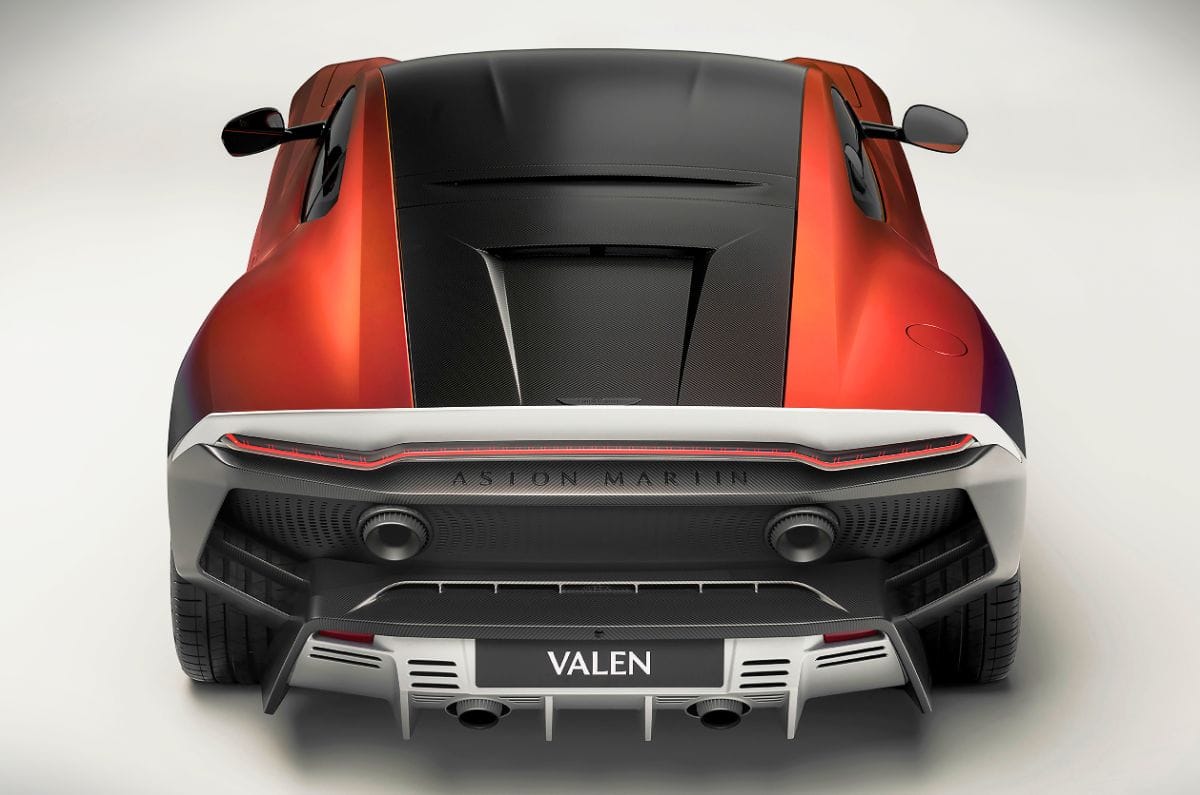
Aston Martin has revealed the Valen as its most powerful front-engined production car at the 2026 Monterey Car Week. An 850hp, 5.2-litre twin-turbo V12 engine, derived from the Vanquish, powers this GT car. Only 150 units of the Valen are being built by the manufacturer’s ‘Q’ personalisation department, with deliveries commencing in the second quarter of 2027.
Claimed 0-100kph time is 3.1 seconds and top speed is 345kph
Uses carbon fibre, aluminium, titanium, and magnesium elements in plenty
Weighs 110kg less than the Aston Martin Vanquish
Aston Martin Valen powertrain details
Produces 15hp more than the Vanquish and is 0.2s faster in a 0-100kph sprint
The Aston Martin Valen is powered by the same 5.2-litre twin-turbo V12 engine as the Vanquish GT, but with more performance. It produces 850hp (15hp more) and 1,000Nm (same as the Vanquish) and is mated to an 8-speed automatic transmission that sends power to the rear wheels (RWD). The gearbox software has, however, been remapped with the Vantage GT4 racecar’s software for “more engaging shifts in all drive modes”. With the Valen, Aston Martin claims a 0-100kph time of 3.1 seconds (0.2s faster than the Vanquish) and an electronically limited top speed of 345kph.
The Valen is 110kg lighter than the Vanquish due to the use of lightweight motorsport-inspired materials, including carbon fibre, aluminium, titanium and magnesium. Aston Martin has also made “significant hardware changes and targeted software calibration” to the ESP, throttle, braking and steering systems. The suspension system uses stiffer springs for reduced roll and pitch motions to driver inputs for increased agility.
Aston Martin Valen exterior design
Looks sportier and brutish than the other Aston Martin models
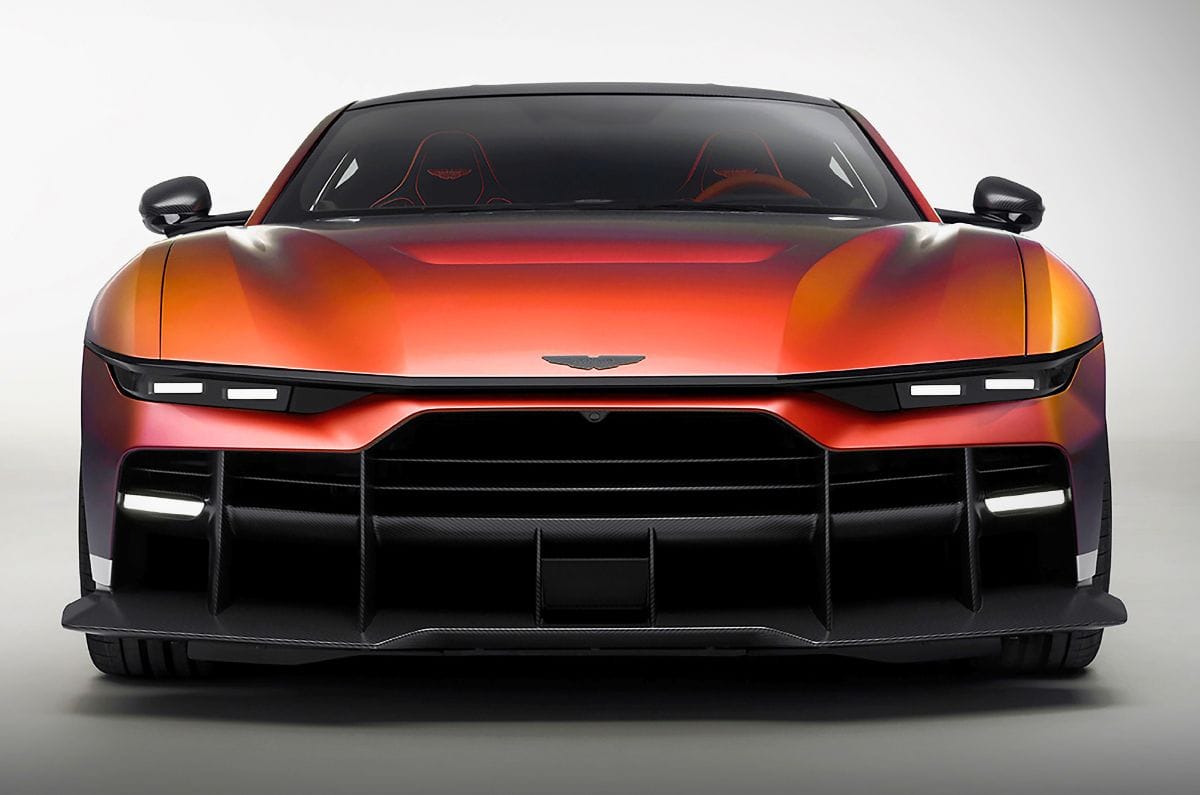
The Valen looks sportier than the gentlemanly designs Aston Martin is generally known for and, as per chief creative officer Marek Reichman, “the Valen is a significant departure from what has gone before”. At the front, the Valen sports a new snout with an aggressive bonnet featuring a functional top vent to draw more air to the engine. The signature Aston Martin grille motif extends to the ends of the fascia. The LED DRLs and LED headlights are slim horizontal bars that make the Valen look menacing. It also gets an “acutely angled” front splitter to channel the air into the GT’s internals.
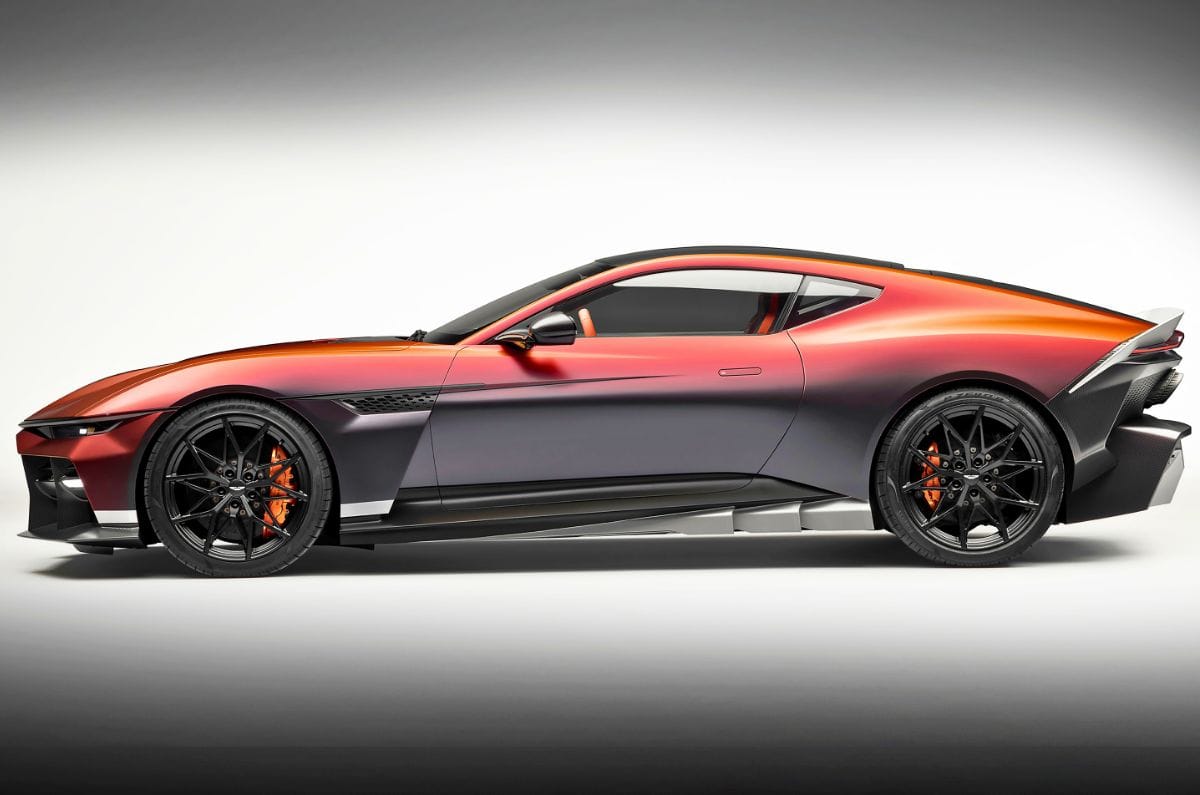
In profile, it sports lightweight magnesium wheels shod with Pirelli P Zero R tyres (275/35 ZR21 front, 325/30 ZR21 rear), specifically developed for the Valen. The GT also gets Pirelli’s latest Cyber Tyre technology, allowing real-time tyre data sharing with the vehicle’s dynamic control systems. The traditional side strakes incorporate large functional vents that extract air from the wheel arch, guiding it towards the rear for improved downforce.
The rear design is bold as well, replacing a traditional fixed rear windscreen with a solid tailgate that opens to reveal 170 litres of boot space. The tailgate features an aerodynamic wing that acts as a Gurney flap that “generates downforce with minimal drag and negates the need for a conventional rear wing”. Beneath this wing is a slim LED taillight bar and 3D-printed quad titanium exhausts stacked in a 2-up, 2-down arrangement. The upper exhaust outlets are always open, while the lower ones open in the raciest drive modes.
The Valen is available with an optional fully exposed carbon fibre exterior that can be tinted in both satin- and gloss-finished hues by the ‘Q’ customisation department.
Aston Martin Valen interior design
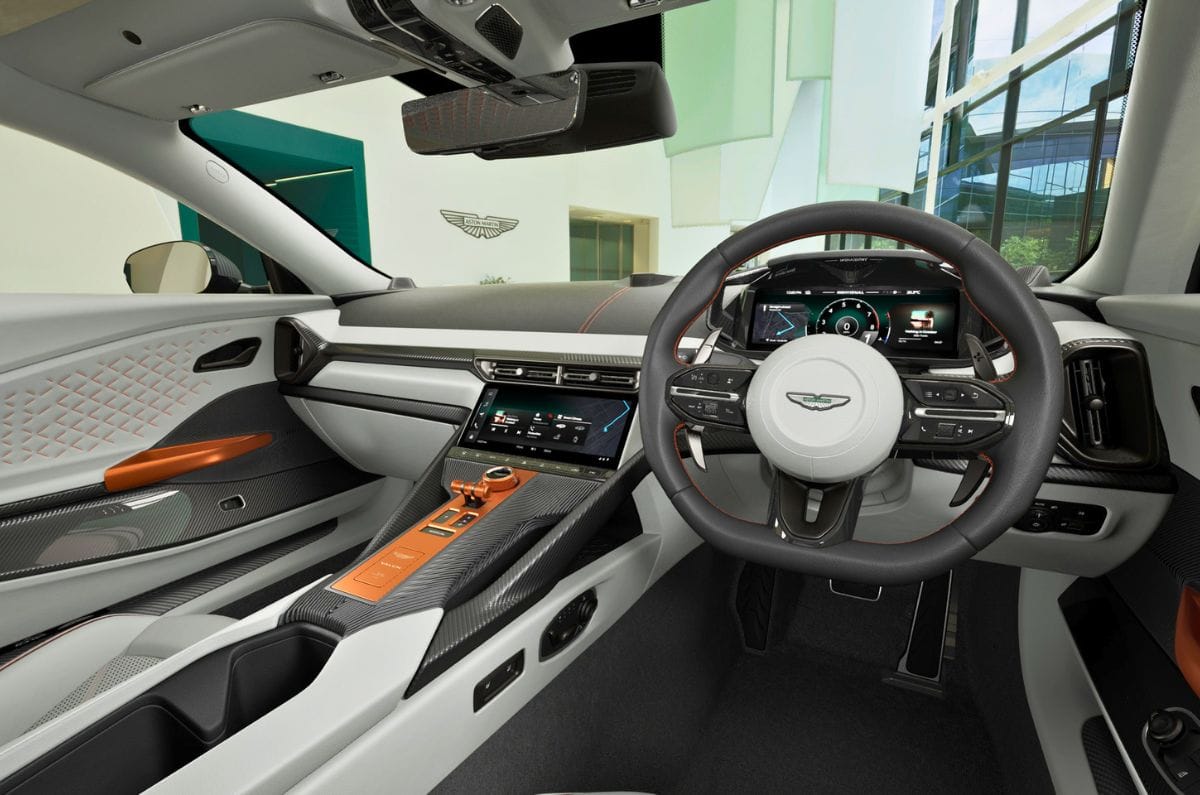
Features a minimalistic dashboard and a well-loaded cabin
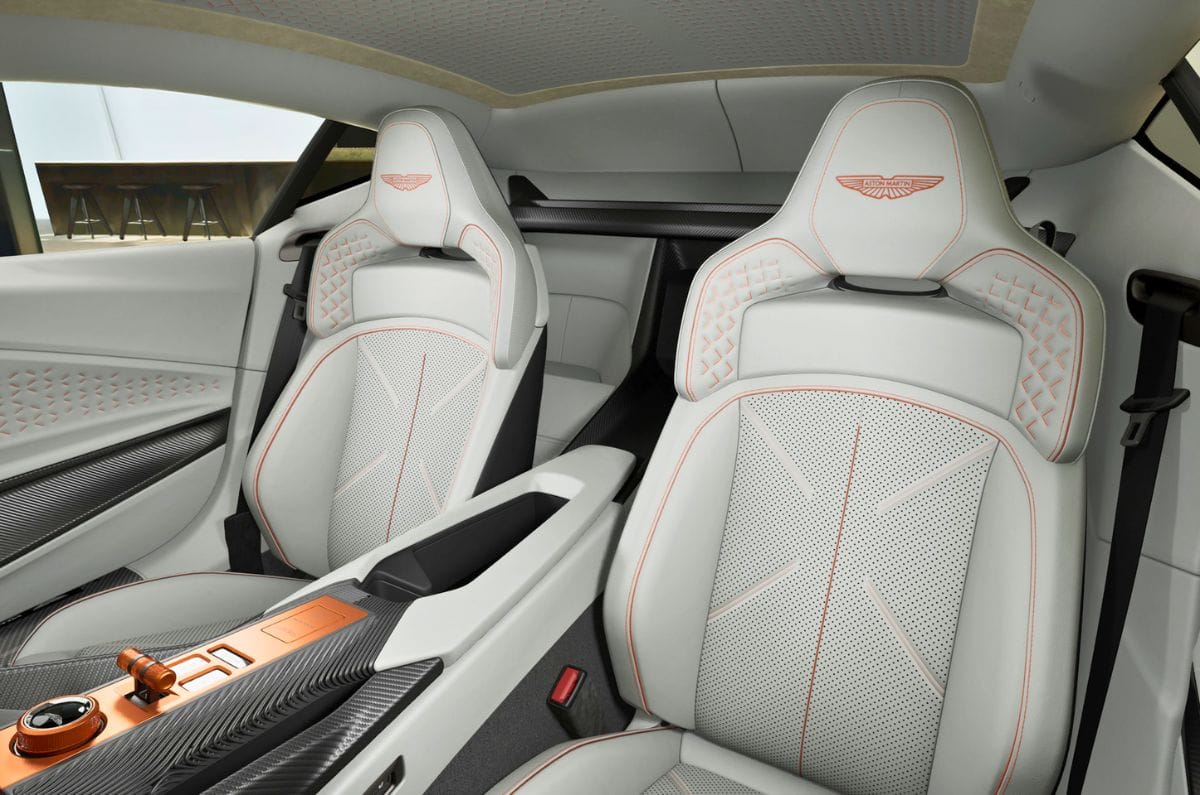
The Valen’s interior is heavily influenced by the Vanquish and hence offers a minimalistic dashboard with a 10.25-inch-inch digital driver’s display, a 3-spoke steering wheel and a 10.25-inch touchscreen infotainment system. What’s different from the Vanquish is that the centre console has been 3D-printed for “greater precision to the surfaces you regularly interact with”. This console has a carbon fibre finish and features a push-button start-stop and an aircraft-style drive mode selector.
The Aston Martin Valen offers an option between ‘Sport Plus’ seats that “combine support with long-distance comfort” or carbon-fibre ‘Performance’ seats that offer “a more focused driving experience”. Features include a 15-speaker Bowers & Wilkins sound system, a 360-degree camera system, a digital inside rearview mirror (IRVM), a powered steering column and a wireless phone charger.
Reichman says, “Valen gave us the opportunity to explore and express more extreme emotions through a new form language and surface treatment.” Reflecting this bold design approach, Aston Martin has priced the Valen at 1.5 million pound (approximately Rs 19.46 crore), before buyers choose from the extensive catalogue of optional extras.
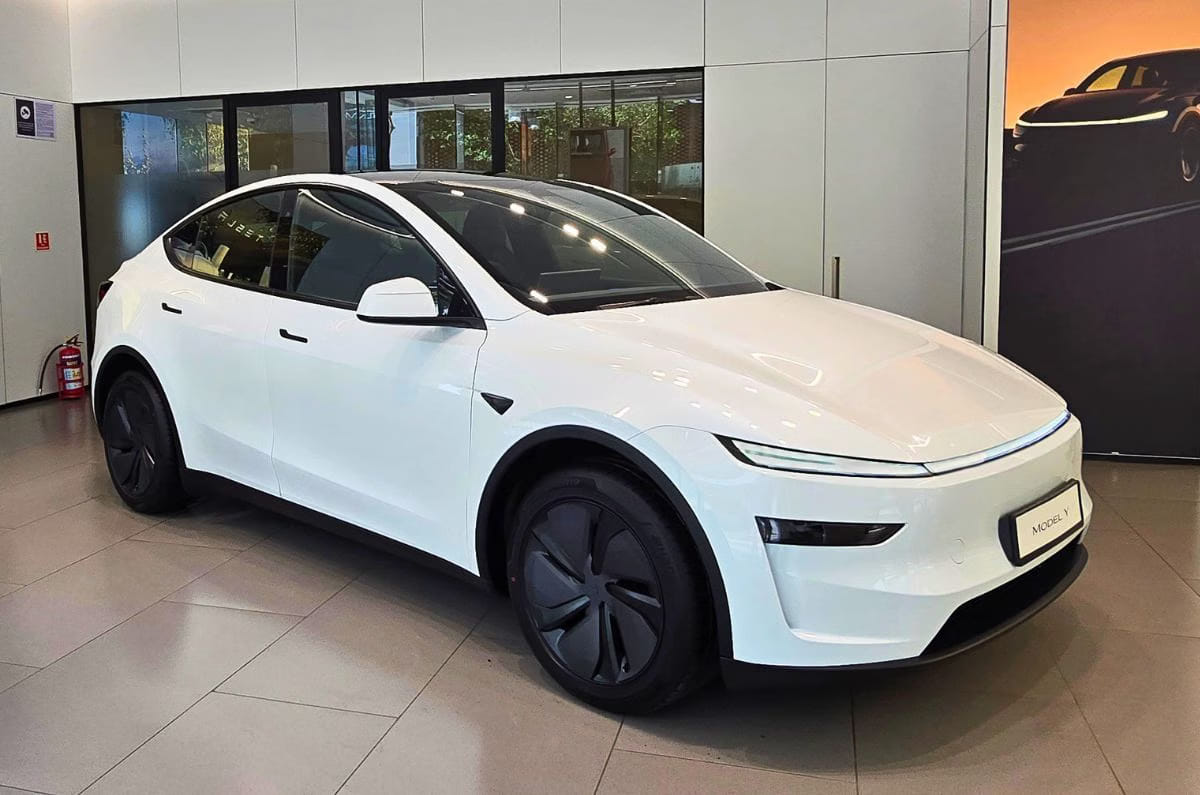
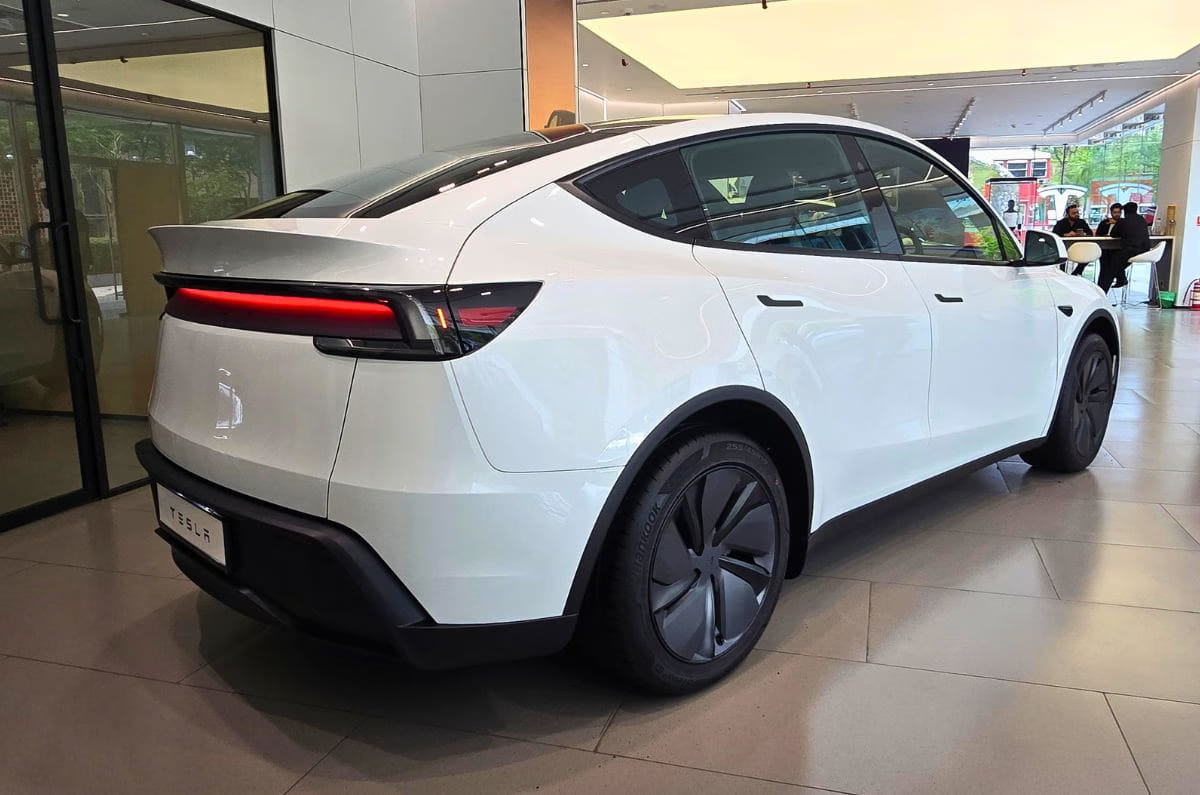
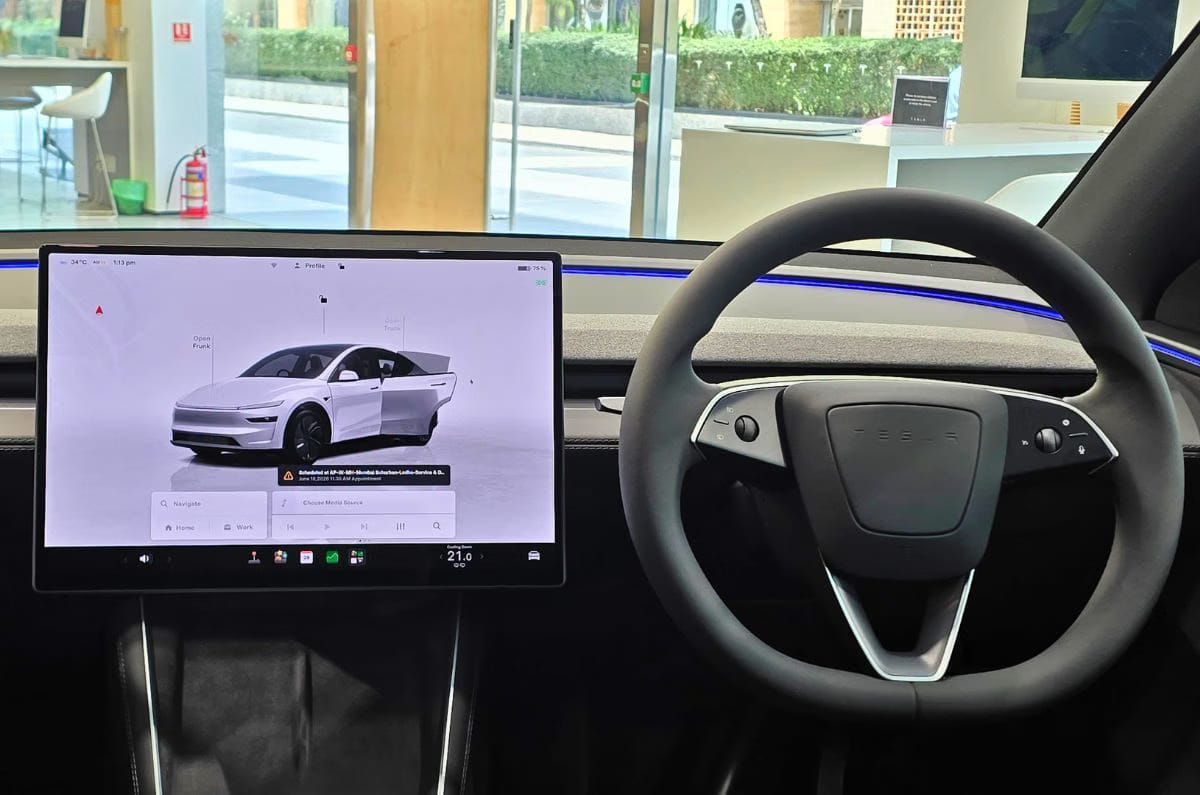
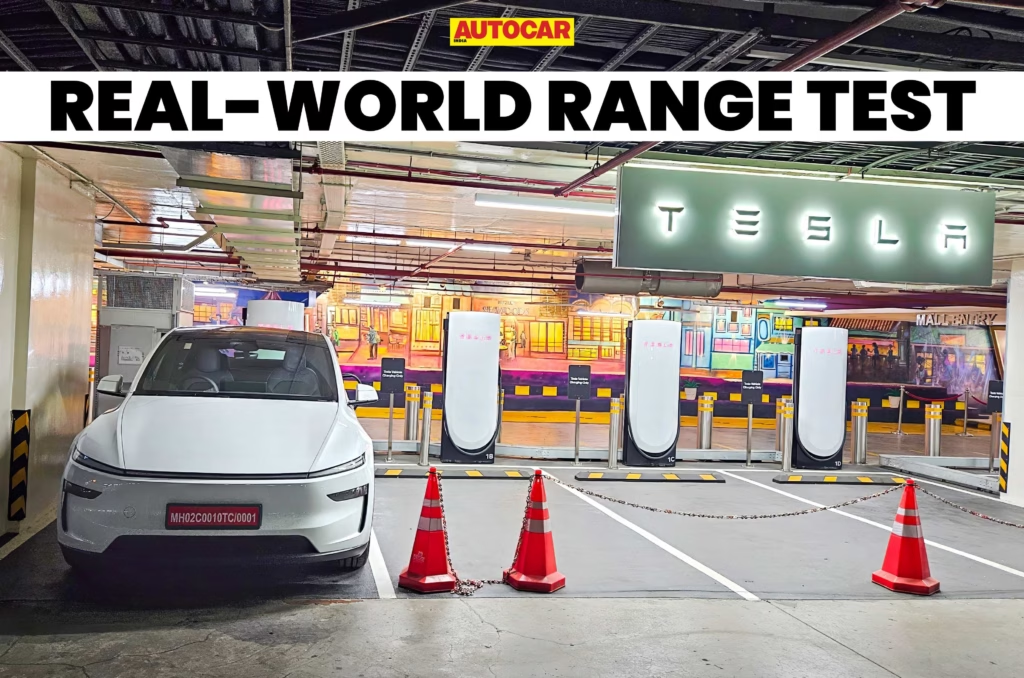
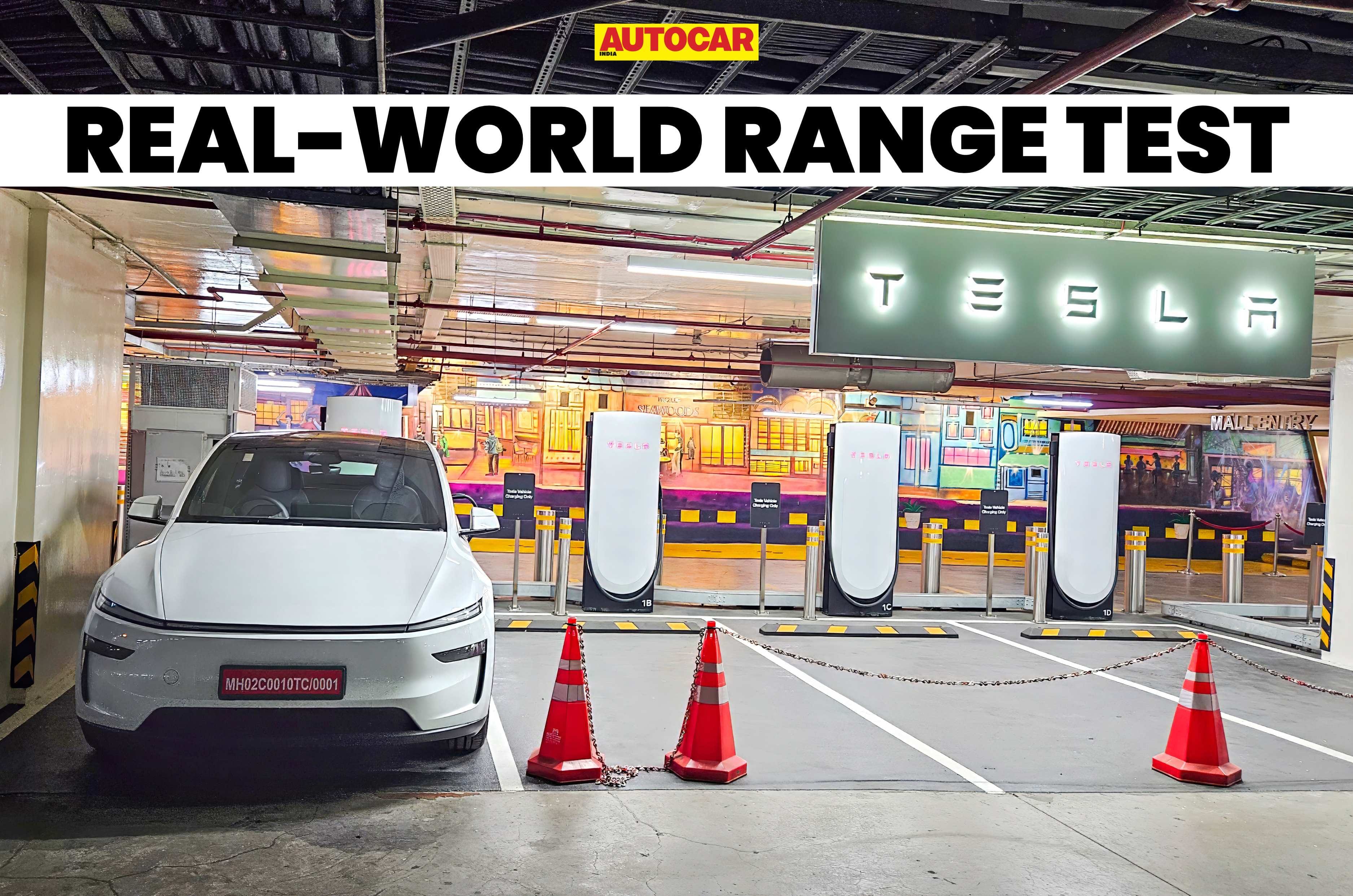
Tesla is offering the 2026 Model Y in two variants: Premium RWD and L Premium AWD, both with 60kWh. Priced at Rs 50.89 lakh (ex-showroom), the lower-spec Premium RWD comes with a rear-axle-mounted electric motor and a 60kWh LFP battery (64kWh gross) with a WLTP-claimed range of 500km. We put this 2026 Tesla Model Y RWD Premium variant to the test to calculate its real-world efficiency.
We used ‘Chill’ driving mode for our tests
20-80 percent recharge takes 23 minutes on a 250kW Tesla Supercharger
Has a kerb weight of 1,928 kg
Tesla Model Y Premium RWD: Range, Efficiency tested
The Model Y is powered by a rear-mounted electric motor which produces 299hp and 420Nm of torque. It is equipped with two drive modes– Standard and Chill, the latter being an Economy setting, which we used for our tests. It also gets two levels of regenerative braking– Standard and Reduced. For our runs, we used ‘Standard’ (most aggressive) in the city and ‘Reduced’ on the highway.
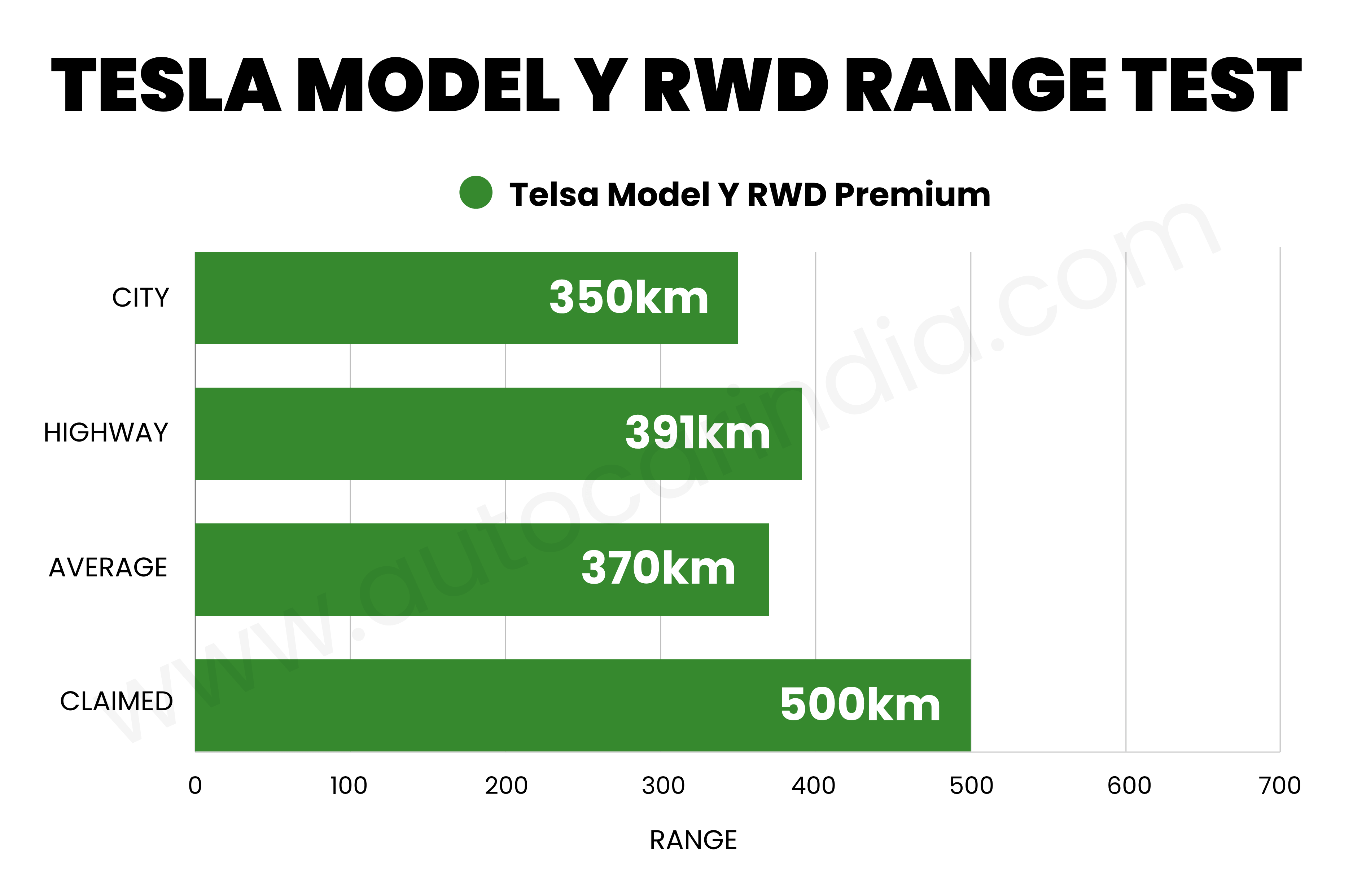
In the city, it delivered an efficiency of 5.84km/kWh extrapolating to a range of about 350km. On the highway, it was much more efficient, delivering 6.52km/kWh, resulting in a range of about 391km. With the overall efficiency of 6.18km/kWh, you can expect a real-world range of about 370km, which is reasonable for this 1.9-tonne crossover.
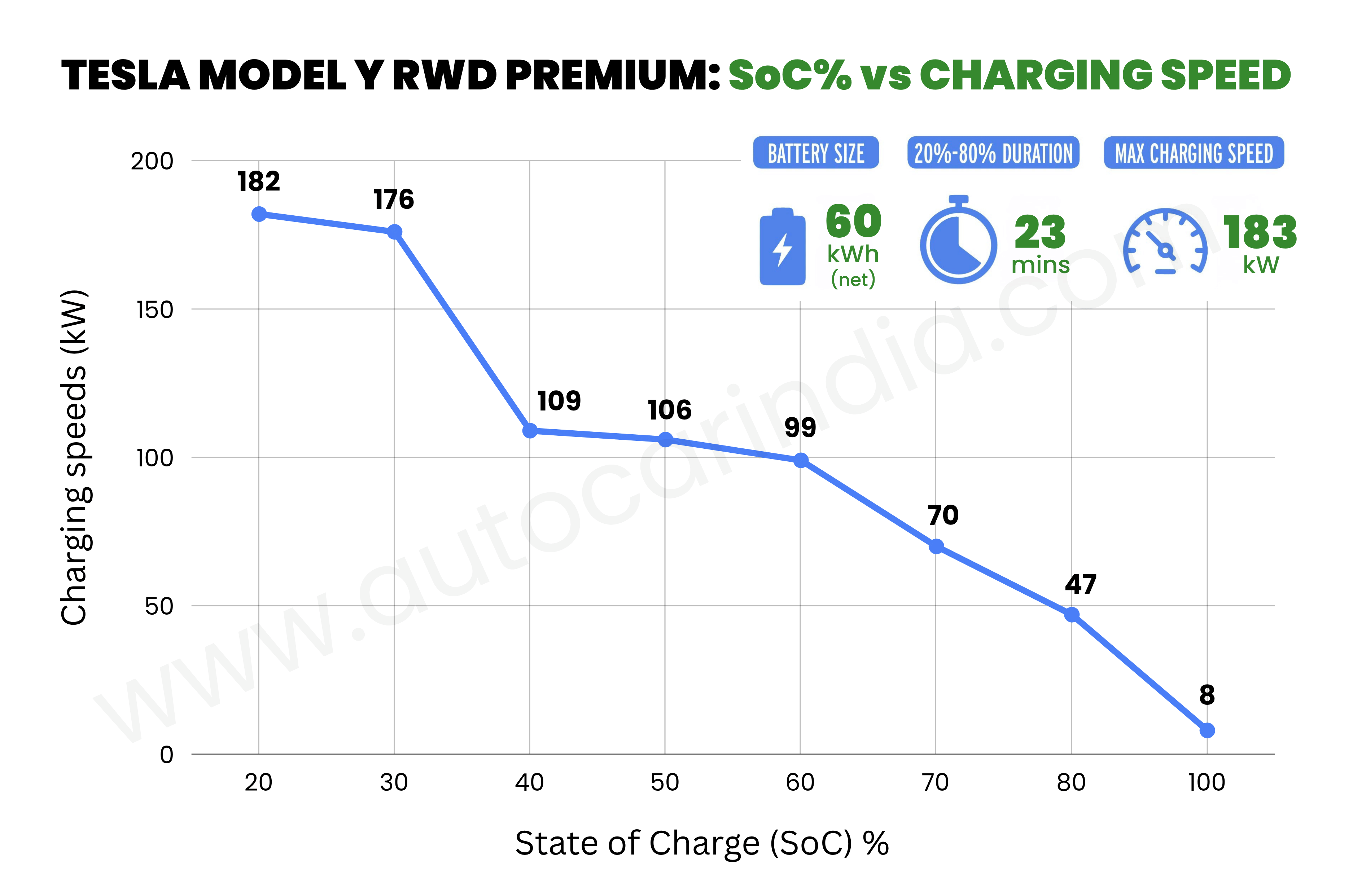
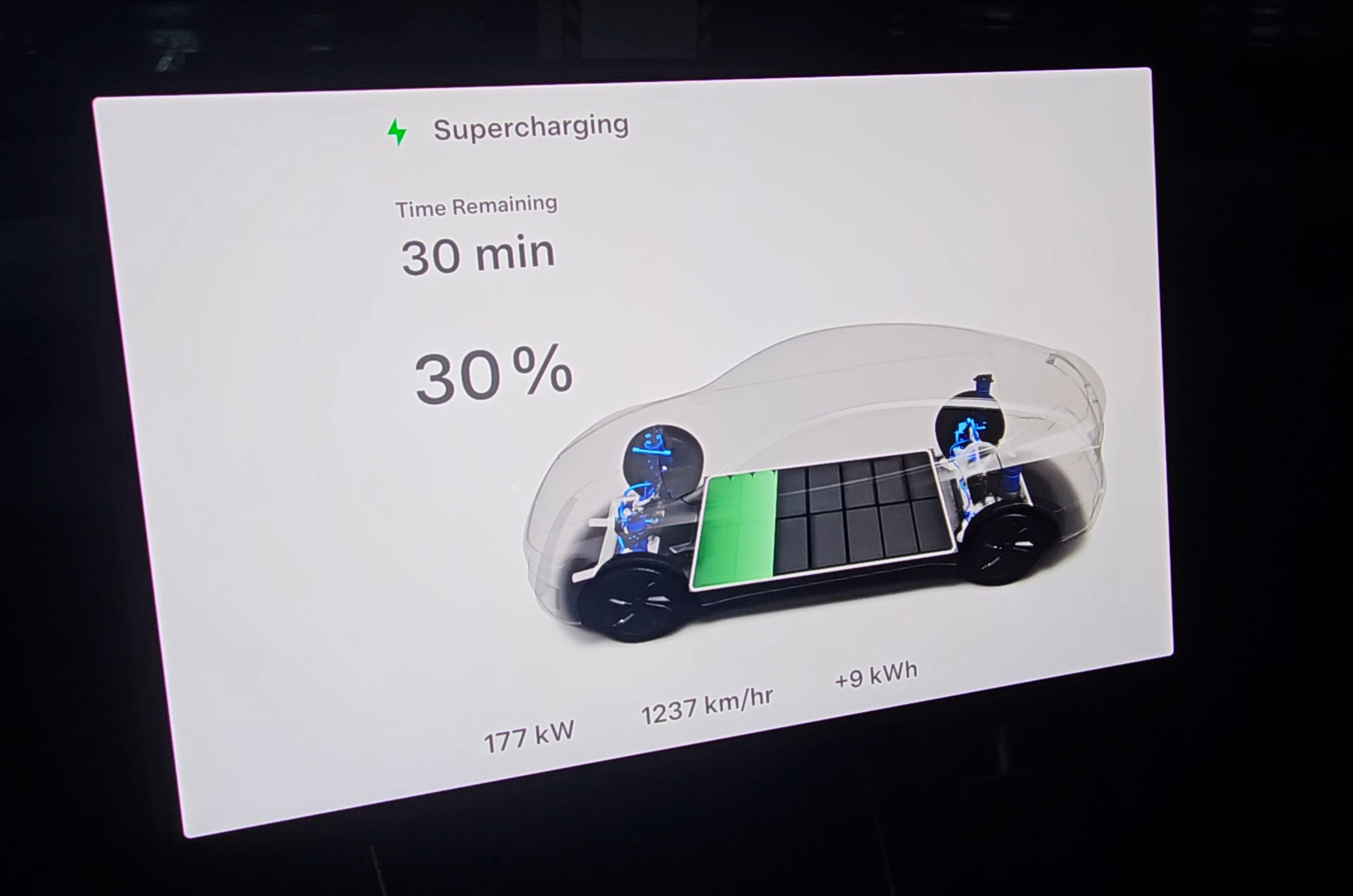
We also plugged the Model Y into a 250kW Tesla Supercharger. Notably, we noticed peak charging speeds (displayed) at 183kW. However, the charging speeds dropped rapidly from 176kW at 30 percent SOC to 109kW at 40 percent SOC, and thereafter the speeds kept dropping gradually throughout. As far as time goes, the Tesla Model Y’s battery charged from 20-80 percent SoC in 23 minutes, and it took another 30 minutes to charge from 80-100 percent.
Autocar India’s range testing
Before our real-world range tests, the battery of our test car was fully charged and we maintained tyre pressures in accordance with the manufacturer’s recommendations. The car was driven on a weekday in Mumbai city and on the adjoining state highway in a fixed loop, and we maintained the set average speeds. At the end of each cycle, we calculated the range based on the percentage charge consumed.
Throughout our tests, the climate control was set to 22deg C in a full-auto setting, and other electricals, such as the audio system, indicators and ventilated front seats, were used when required, just as a regular user would. We take pride in our testing data, which isn’t merely consistent but also gives users an accurate indication of what they can expect in the real world.
Mahindra has rejigged the line-up of its entry-level born-electric SUV, the BE 6, and added a ‘Sporteq’ suffix to its name. The BE 6 Sporteq also gets some additional features, a new 70kWh battery option, and more. Let’s take an in-depth look at the BE 6 Sporteq line-up.
Mahindra BE 6 Sporteq price and powertrains
Mahindra BE 6 Sporteq price list* (Rs, lakh)
59kWh
70kWh
79kWh
One
19.45
–
–
Two
20.95
–
–
Three
21.95
22.95
–
Three+
–
23.95
24.95
Four / Launch Edition
–
–
26.95
FE
–
–
24.45
FE Four
–
–
26.95
*Exclusive of home charger and installation costs.
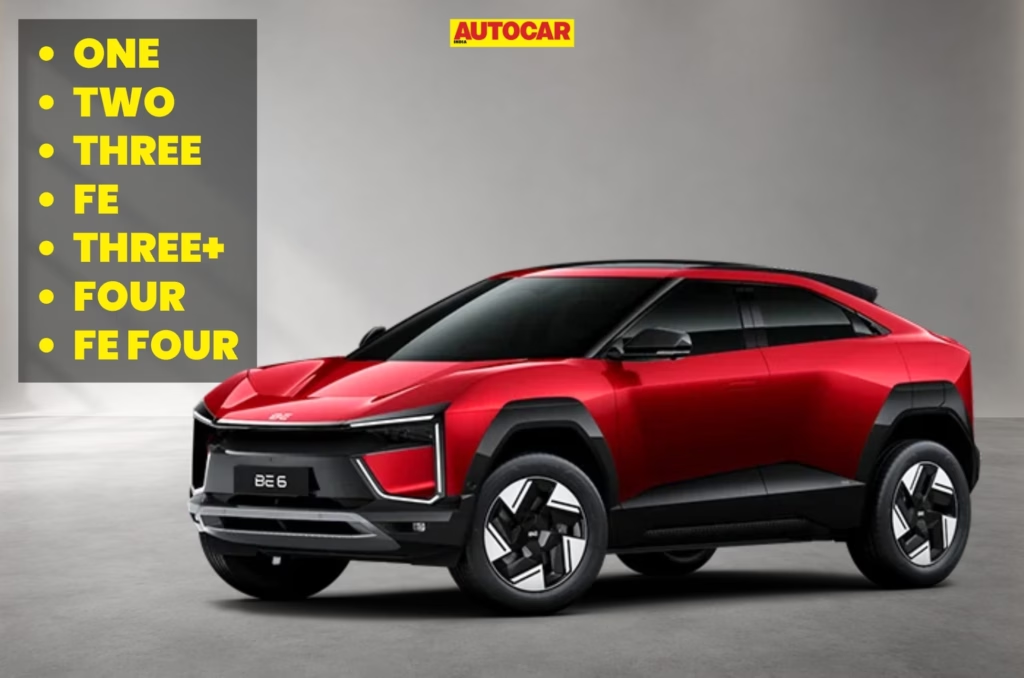
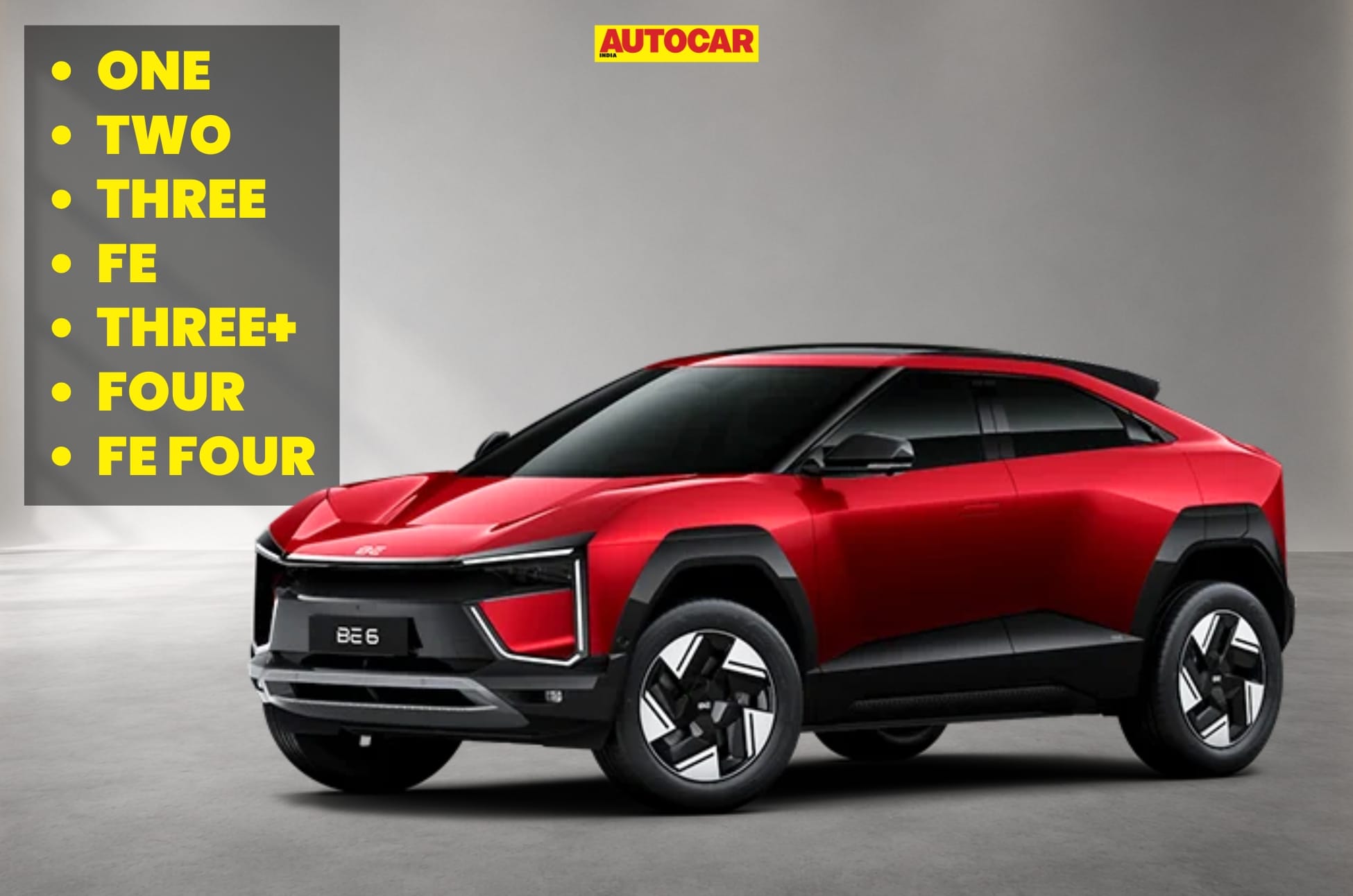
Pricing for the BE 6 Sporteq starts at Rs 19.45 lakh – a Rs 85,000 increase over the outgoing BE 6 – climbing all the way up to Rs 26.95 lakh. Seven BE 6 Sporteq variants are on offer, namely One, Two, Three, Three+, Four, FE, and FE Four. The ‘FE’ trims refer to the BE 6 Sporteq Formula E Freedom Edition, which gets sportier cosmetic tweaks. There’s a Launch Edition of the BE 6 Sporteq too, which is based on the top-spec Four variant and comes with unique exterior and interior finishes.
BaaS now available
Mahindra has also joined the BaaS (battery-as-a-service) bandwagon with the BE 6 Sporteq. With BaaS opted, the price of the lower-spec One and Two variants drops to Rs 11.45 lakh and Rs 12.95 lakh, respectively – a reduction of Rs 8 lakh – and the battery rental fee is pegged at Rs 3.75/km. BaaS pricing for other BE 6 Sporteq variants is yet to be revealed.
Mahindra BE 6 Sporteq powertrain details
59kWh
70kWh
79kWh
Motor setup
Rear
Rear
Rear
Power (hp)
231
245
286
Torque (Nm)
380
380
380
Drive layout
RWD
RWD
RWD
MIDC-claimed range (km)
548
651
683
10-100 percent 7.2kW AC charging (hrs)
8.7
10.2
11.7
10-100 percent 11.2kW AC charging (hrs)
6
7
8
20-80 percent DC charging time (mins)
20 (120kW)
20 (160kW)
20 (180kW)
The BE 6 Sporteq retains the 59kWh and 79kWh battery options of the prior model, but adds the 70kWh pack that was introduced with the Mahindra XEV 9S. As before, all batteries are wired up to a single 380Nm rear-mounted (RWD) motor, outputting 231hp in 59kWh guise, 245hp in 70kWh spec, and 286hp in the 79kWh variants. MIDC-certified range stands at 548km, 651km, and 683km, respectively. All three batteries support 11.2kW and 7.2kW AC charging, while DC charging support is capped at 120kW for the 59kWh, 160kW for the 70kWh, and 180kW for the 79kWh units.
Mahindra BE 6 Sporteq colour options
Mahindra BE 6 Sporteq Formula E Freedom Edition in Rosso Impulso.
Seven exterior colours are available for the standard BE 6 Sporteq, specifically Deep Forest, Desert Myst, Everest White, Firestorm Orange, Ruby Velvet (new addition), Stealth Black, and Tango Red. The FE variants get an exclusive Rosso Impulso finish, but can’t be had with the Deep Forest, Desert Myst, Tango Red, and Ruby Velvet option. Meanwhile, the BE 6 Sporteq Launch Edition comes finished solely in Graphite Storm.
A total of four colour schemes are on offer for the cabin. The base BE Sporteq One variant gets a Sage Green and Grey interior finish, while the Two, Three, Three+, and Four variants are finished in Racing Tan and Black. FE variants offer a unique Black and Firestorm Orange colour scheme, while the Launch Edition gets a Racing Tan finish (pictured).
Mahindra BE 6 Sporteq variant-wise features
One
Battery options: 59kWh
6 airbags
Rear-view camera with parking sensors
Tyre pressure monitoring system
Tyre inflator
Front and rear disc brakes
Rain-sensing wipers
ESP
Brake-by-wire technology
Electronic brake booster
Driver drowsiness detection system
Electronic parking brake
LED headlamps with DRLs
Automatic headlamps
Illuminated Mahindra emblems
LED tail-lamps
Height-adjustable driver’s seat
Push-button start/stop
Tilt and telescopic steering
12.3-inch infotainment touchscreen
12.3-inch digital driver’s display
Halo loop dashboard design
Wireless Android Auto and Apple CarPlay
Steering wheel with physical controls and illuminated Mahindra logo
Revive emergency function (grants extra range at 0 percent battery to reach charging station)
Multi-level regenerative braking
Frequency-dependent dampers
Cruise control
Virtual engine sounds
Connected car tech
Tribe Drive function to keep track of friends/family while on road trips
6-speaker sound system
OTA software updates
Cabin pre-cooling function
Electrically adjustable ORVMs with indicators
Three Type-C USB ports (15W and 65W up front, 65W rear)
Rear demister
Cooled console storage
60:40 split second-row seats with two-step recline
Second-row armrest
Two
Battery options: 59kWh
Features over One
16-speaker Harman Kardon sound system with Dolby Atmos
Digital Key and NFC card support
12.3-inch passenger screen (triple-display setup)
Parental lock for passenger screen
Horizontal dashboard layout
Leatherette-wrapped instrument panel and door trims
Leatherette steering wheel
Leatherette gear selector
540-degree camera (360 degrees + underfloor view)
Manual drive-video recording
TPMS with individual tyre monitoring
Front parking sensors
User profiles with automatic detection
Dual-zone climate control
Auto-dimming IRVM
Auto defogger
Wireless charging pad
Three / FE
Battery options: 59kWh, 70kWh, 79kWh
Features over Two
Fixed panoramic glass roof
LED DRLs with welcome/goodbye animations
Sequential front and rear indicators
Additional Type-C USB port in second row
Acoustic-laminated door glass
6-way powered driver’s seat with memory (Three only)
Ventilated front seats (Three only)
ORVM reverse auto-dip function (Three only)
Adaptive suspension (FE only)
Dual 12.3-inch screens with halo dashboard (FE only)
Unique virtual engine sounds (FE only)
Carpet lamps (FE only)
Three+
Battery options: 70kWh, 79kWh
Features over Three
Auto regen function
C-shaped front LED DRLs with animation
Front fog lamps
C-shaped LED tail lamps
Personalised messaging and animations in rear light bar
Cornering lamps
Auto Booster lamps
Passive keyless entry
Flush door handles
Powered tailgate with gesture control
Music and light show function
Ambient lighting
Carpet lamps
Level 2 ADAS (1 radar, 1 camera)
Second front wireless charging pad
Parcel shelf
Four / FE Four
Battery options: 79kWh
Features over Three+
Adaptive suspension
Knee airbag (7 airbags total)
Google Gemini integration in infotainment system
Gaming and karaoke suites
Private audio function (routes infotainment audio to Bluetooth device)
Dolby Vision
Heads-up display
Auto park assist
Cabin air purifier
Ambient lighting elements in panoramic glass roof
Level 2+ ADAS (5 radars, 1 camera)
Dashcam function with Intrusion Alert
Approach and walk-away lock/unlock
One-touch auto up/down driver window
Touch-capacitive start/stop button (FE Four only)
Touch-capacitive virtual engine sound button (FE Four only)
Dual 12.3-inch displays with halo dashboard (FE Four only)
Which Mahindra BE 6 Sporteq variant should you buy?
Three is our value pick
The BE 6 Sporteq Three variant offers the best value and most choice in the line-up. It gets all the crucial safety kit from the One and Two varants, you can choose from all three battery options, and the sportier-looking FE variant is available as an alternative too. Moreover, the BE 6 Sporteq Three packs nice-to-have goodies like a triple-screen setup, panoramic glass roof, ventilated front seats, a powered driver’s seat, welcome/goodbye sequences for the DRLs, and more.