Mary Millben attacks CJP: अमेरिकी सिंगर मैरी मिलबेन ने अभिजीत दीपके की कॉकरोच जनता पार्टी (CJP) को लेकर एक सनसनीखेज दावा किया है। उन्होंने आरोप लगाया कि CJP के संस्थापक अभिजीत दीपके और उनके संगठन को अमेरिका में ऐसे डोनर से फंडिंग मिल रही है, जो प्रधानमंत्री नरेंद्र मोदी और उनके नेतृत्व में भारत के भविष्य के खिलाफ हैं। मैरी मिलबेन ने भारत के युवाओं से अपील की है कि वे कथित तौर पर देश में अशांति फैलाने वाली ताकतों के खिलाफ आवाज उठाएं और शांतिपूर्ण तरीके से विरोध दर्ज कराएं।
मिलबेन का यह बयान ऐसे समय आया है, जब नई दिल्ली में विपक्षी दलों और CJP के समर्थकों की ओर से मुख्य चुनाव आयुक्त (CEC) ज्ञानेश कुमार के इस्तीफे की मांग को लेकर विरोध प्रदर्शन किए जा रहे हैं। प्रदर्शनकारी वोटर लिस्ट के स्पेशल इंटेंसिव रिवीजन (SIR) में कथित अनियमितताओं को लेकर सवाल उठा रहे हैं।
PM मोदी के समर्थन में क्या बोलीं मैरी मिलबेन?
41 वर्षीय सिंगर मैरी मिलबेन ने सोशल मीडिया पर लिखे अपने मैसेज में कहा कि प्रधानमंत्री नरेंद्र मोदी ने 25 साल तक भारत की सेवा की है, जिनमें 12 साल PM के रूप में शामिल हैं। उन्होंने कहा कि PM मोदी लगातार तीन कार्यकाल के लिए चुने गए हैं। उनके अनुसार, वह अमेरिका से आने वाली कथित विघटनकारी ताकतों के सामने नहीं झुकेंगे। मिलबेन ने दावा किया कि कुछ अमेरिकी डोनर दुनियाभर में रूढ़िवादी विचारधारा वाले नेताओं को निशाना बनाने का एक पैटर्न अपनाते हैं।
उनके मुताबिक, पहले संबंधित देश के किसी अमेरिकी शिक्षित व्यक्ति को तलाशा जाता है। फिर उसे कट्टर विचारों की ओर प्रेरित कर वापस भेजा जाता है और उसके बाद कथित तौर पर अशांति फैलाने के लिए फंडिंग की जाती है। उन्होंने आरोप लगाया कि इस तरह की गतिविधियों का असर संबंधित देशों के विकास और शासन व्यवस्था पर पड़ता है। हालांकि, अमेरिकी डोनर से CJP को फंडिंग मिलने के अपने दावे के समर्थन में मिलबेन ने इस बयान में कोई सार्वजनिक सबूत पेश नहीं किया।
युवाओं से की शांतिपूर्ण आंदोलन की अपील
मैरी मिलबेन ने भारत के युवाओं से अपील करते हुए कहा कि उन्हें डरने की जरूरत नहीं है। उन्होंने लोकतंत्र और स्वतंत्रता की रक्षा के लिए ऐसे आंदोलनों के मुकाबले एक शांतिपूर्ण जनआंदोलन खड़ा करने की जरूरत पर जोर दिया। उन्होंने कहा कि भारत में ऐसी नई आवाज उठनी चाहिए, जो देश की मिट्टी में पैदा हुई हो, यहीं पली-बढ़ी हो और यहीं शिक्षित हुई हो। उनके मुताबिक, युवाओं को संगठित होकर शांतिपूर्ण तरीके से अपनी बात रखनी चाहिए।
भारत में क्यों लोकप्रिय हैं मैरी मिलबेन?
मैरी मिलबेन अफ्रीकी-अमेरिकी हॉलीवुड अभिनेत्री और मशहूर सिंगर हैं। भारत में वह खास तौर पर भारतीय राष्ट्रगान ‘जन गण मन’ और भक्ति गीत ‘ओम जय जगदीश हरे’ की अपनी प्रस्तुतियों के लिए लोकप्रिय हैं। वर्ष 2023 में अमेरिका में प्रधानमंत्री मोदी की यात्रा के दौरान आयोजित एक कार्यक्रम में भी उन्होंने भारत का राष्ट्रगान गाया था। इस वजह से भारतीय दर्शकों के बीच उनकी पहचान बनी है। इस बीच, दिल्ली के जंतर-मंतर में जबरन घुसने के आरोप में CJP के दो नेताओं को पांच दिन की न्यायिक हिरासत में भेजे जाने के बाद पार्टी के संस्थापक अभिजीत दीपके ने बुधवार को आरोप लगाया कि प्रधानमंत्री देश में अघोषित आपातकाल लागू कर रहे हैं।
To all the beautiful young patriots in India:
This is not the time to be silent. @abhijeet_dipke and the @Cockroachisback are being funded by donors in the U.S. who are against Prime Minister @NarendraModi and your future under his leadership. Do not fear, my young patriots. Your Prime Minister, who has served India for 25 years, 12 years as Prime Minister, elected three consecutive terms, is not going to bow to disruptive forces from my country.
And these select donors have a pattern globally – target conservative global leaders, find an U.S. educated person from the country, radicalize them, send them back to the country, and fund them to start chaos and destruction. None of them have been successful but have impacted the development and governance of the country.
It is time for a new voice in #India, born, raised, educated on the soil of India, to RISE UP, organize, and peacefully protest the disruptive spirit of the Cockroach Party. There should always be a counter movement to uphold democracy and freedom.
दीपके ने नागपुर में पत्रकारों से कहा कि CJP नेता सौरव दास और आशुतोष रांका ने जंतर-मंतर पर तिरंगा फहराकर कौन सा अपराध कर दिया है। पुलिस सूत्रों के अनुसार, शांति बनाए रखने के मुचलके के उल्लंघन और प्रदर्शन के लिए गैर-अधिसूचित क्षेत्र घोषित किए जा चुके जंतर-मंतर पर जबरन घुसने के आरोप में दास और रांका को बुधवार को पांच दिन की न्यायिक हिरासत में दिल्ली की तिहाड़ जेल भेज दिया गया।
Best OnlyFans Sites: A Practical Guide for Creators and Fans
Understanding OnlyFans and What Makes a Site Among the Best OnlyFans Sites
OnlyFans started as a subscription‑based platform that lets creators share exclusive content with paying fans. Over time, dozens of similar services have emerged, each tweaking the original formula with different feature sets, revenue models, and community tools. When you hear the phrase “best only fans sites,” it usually refers to platforms that balance creator freedom, fan engagement, and reliable earnings.
To differentiate the top choices, focus on three core pillars: the robustness of the platform’s features, the fairness of its pricing and revenue share, and the strength of its security and support infrastructure. By anchoring your decision on these pillars, you can avoid gimmicks and choose a service that truly meets your business needs.
Key Features and Benefits to Look For
A solid platform will offer a set of essential features that empower both creators and fans. Look for a customizable dashboard that lets creators schedule posts, manage subscriptions, and track earnings in one place. Automation tools such as scheduled posting, auto‑reply messages, and workflow integrations can save time and keep the audience engaged.
Benefits of these features include higher fan retention, smoother monetization, and the ability to scale your content operation without constantly juggling manual tasks. When a platform bundles these capabilities into an intuitive interface, it becomes a strong candidate among the best only fans sites.
Feature Checklist
Content scheduling and calendar tools
Advanced analytics dashboard
Built‑in messaging and automation
Multiple payment gateways
Customizable subscription tiers
Pricing Models and How They Influence Your Decision
Pricing structures vary widely across platforms. Some charge a flat monthly fee, while others take a percentage of creator earnings. Understanding these models helps you forecast net revenue and choose a site that aligns with your financial goals.
When evaluating the best only fans sites, compare the total cost of ownership—including transaction fees, payout schedules, and any hidden charges. A platform with a higher revenue share but lower transaction fees might ultimately be more profitable than one with a low percentage but hefty processing costs.
Typical Pricing Comparison
Platform
Monthly Subscription Range
Revenue Share
Unique Feature
Platform A
$4.99 – $49.99
80%
Integrated live‑stream tipping
Platform B
$5 – $50
85%
AI‑powered content suggestions
Platform C
$3 – $45
78%
Multi‑currency payouts
Security, Reliability, and Support – Non‑Negotiable Factors
Any platform handling paid subscriptions must prioritize security and reliability. Look for encryption standards, two‑factor authentication, and regular third‑party security audits. A reliable uptime record ensures that fans can access content without interruption, protecting both creator reputation and revenue.
Equally important is responsive support. Whether you need help with onboarding, troubleshooting payouts, or addressing policy questions, a dedicated support team that offers live chat or ticket‑based assistance can make a big difference. Choose a site whose support hours align with your operating timezone.
Support Features to Expect
24/7 live chat or email ticketing
Comprehensive knowledge base
Account manager for high‑volume creators
Clear escalation path for security incidents
Setup and Integration: Getting Started Quickly
Fast onboarding reduces the time between signing up and earning your first subscription. The best only fans sites typically offer step‑by‑step guides, video tutorials, and pre‑built integrations with popular marketing tools such as email newsletters and social media schedulers.
Here’s a simple three‑step setup process you can expect:
Create an account and verify your identity.
Customize your profile, add payment details, and set subscription tiers.
Connect your preferred social channels and schedule your first batch of content.
Following these steps ensures a smooth launch and lets you focus on creating rather than troubleshooting.
Use Cases: Who Is Each Platform Best For?
Different creators have distinct needs. Some prioritize high revenue share, while others need advanced analytics or niche community features. Below are common use cases and the platform type that usually fits best.
Typical Creator Profiles
Fitness influencers: Need integrated live‑stream workouts and tipping.
Artists and photographers: Require high‑resolution media support and customizable galleries.
Adult content creators: Look for strong privacy controls and discreet billing.
Educators and coaches: Benefit from subscription bundles and private messaging.
Small‑scale hobbyists: Prefer low monthly fees and simple dashboards.
Matching your primary goals with the platform’s strengths helps you choose the most suitable site among the best only fans sites.
Final Checklist Before You Sign Up
Before committing to any platform, run through this quick checklist to ensure you’ve covered the essential criteria:
Feature set matches your content workflow.
Revenue share and pricing are transparent.
Security protocols meet industry standards.
Support channels are responsive and available in your timezone.
Onboarding process aligns with your launch timeline.
Keeping this list handy will help you avoid costly surprises and set a solid foundation for sustainable growth. For more insights and real‑world examples, visit the best onlyfans blog.
In the previous issue (August 2026), you saw the Skoda Kylaq take on the familiarity of India, the hills and traditions of Nepal, and the variety of China through Tibet’s gorgeous but bone-shaking terrain, followed by the sensory overload of food and culture. Now, it was time for a fresh experience through Central Asia on the ancient Silk Route, subsequently entering Europe towards our final destination.
Kyrgyzstan – Uzbekistan – Kazakhstan
Kyrgyzstan
The Kylaq had everyone turning heads.
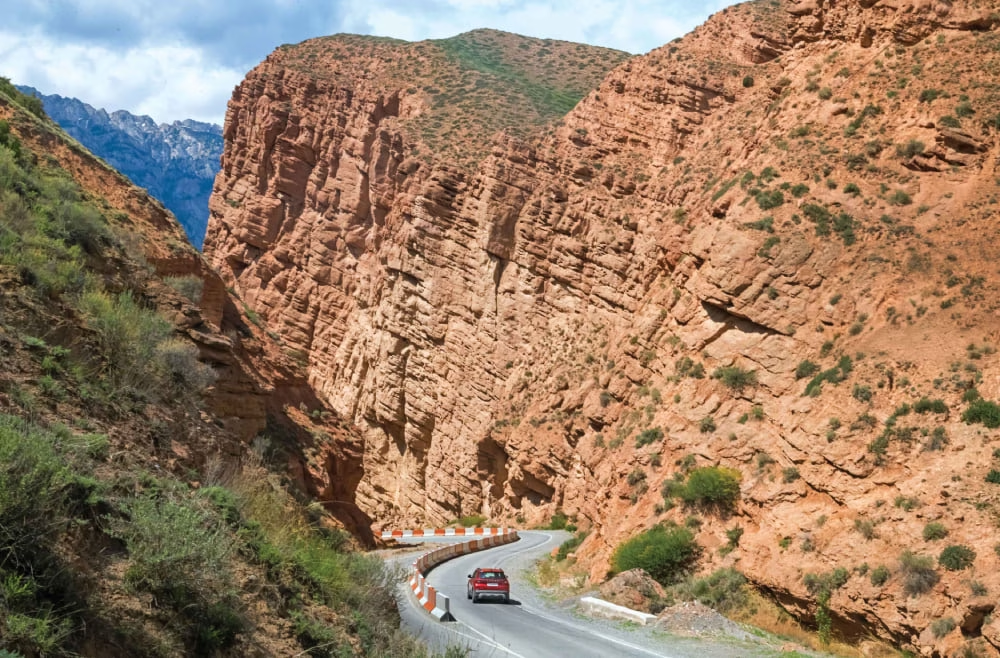
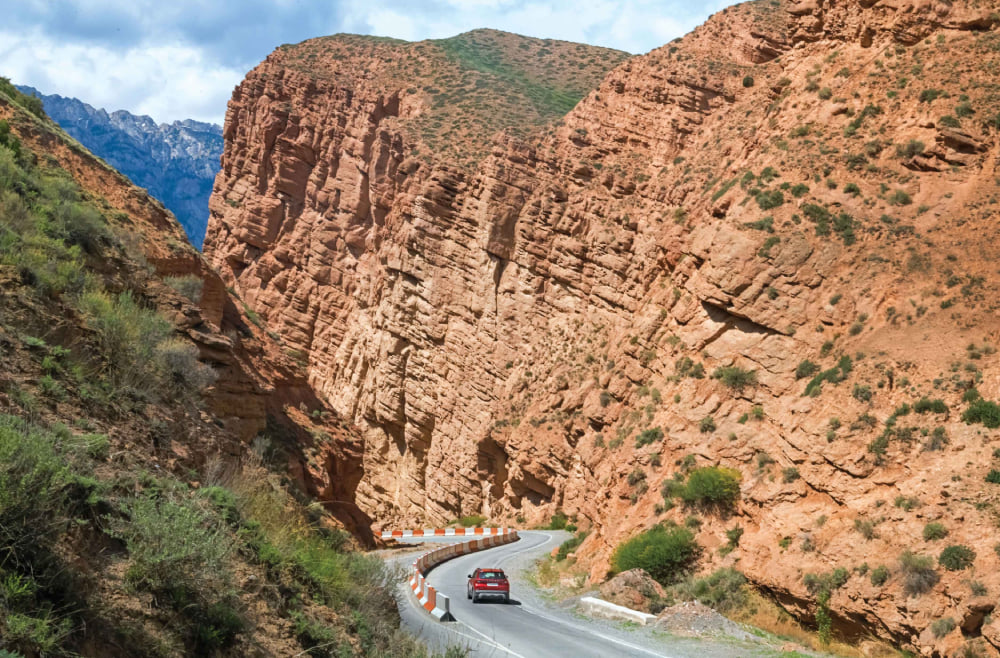
Crossing the Chinese border into Kyrgyzstan was like crossing into a different world. The differences are immediate, right from the signage, fonts and faces to the sights, terrain and traffic. Being a landlocked country peppered with alpine mountains, one doesn’t need to go far to experience what Kyrgyzstan has to offer. As you drive through the ribbon of tarmac between the peaks, you realise why it is called the “Switzerland of Asia”.
A roughly 400km drive to our first halt in Naryn was smooth sailing. However, the chilly weather was a far cry from the piercing heat of China. We pulled out our jackets that were buried deep in our bags and made a beeline the next day for the capital city of Bishkek. The roads are a driver’s delight, and while there aren’t many sights to stop and admire, the Orto-Tokoy Reservoir made for a stunning photo-op.
Kyrgyzstan in numbers
Torgart – Uzbek border
Distance covered
1,321km
Fuel consumed
126.49 litres
Average fuel economy
10.44kpl
Approx. fuel cost
Rs 11,727
Avg. per-litre fuel cost
Rs 92.58
Total time driven
34hrs 23min
Average speed
38.4kph
From Bishkek, we headed to Osh, which is also known as the capital of the south and is the oldest city in Kyrgyzstan. Walking through the Jayma Bazaar in the city centre, you may get a bit of celebrity treatment, as the locals aren’t used to having many tourists just walking through. Some playful heckling and wide smiles add to the overall experience.
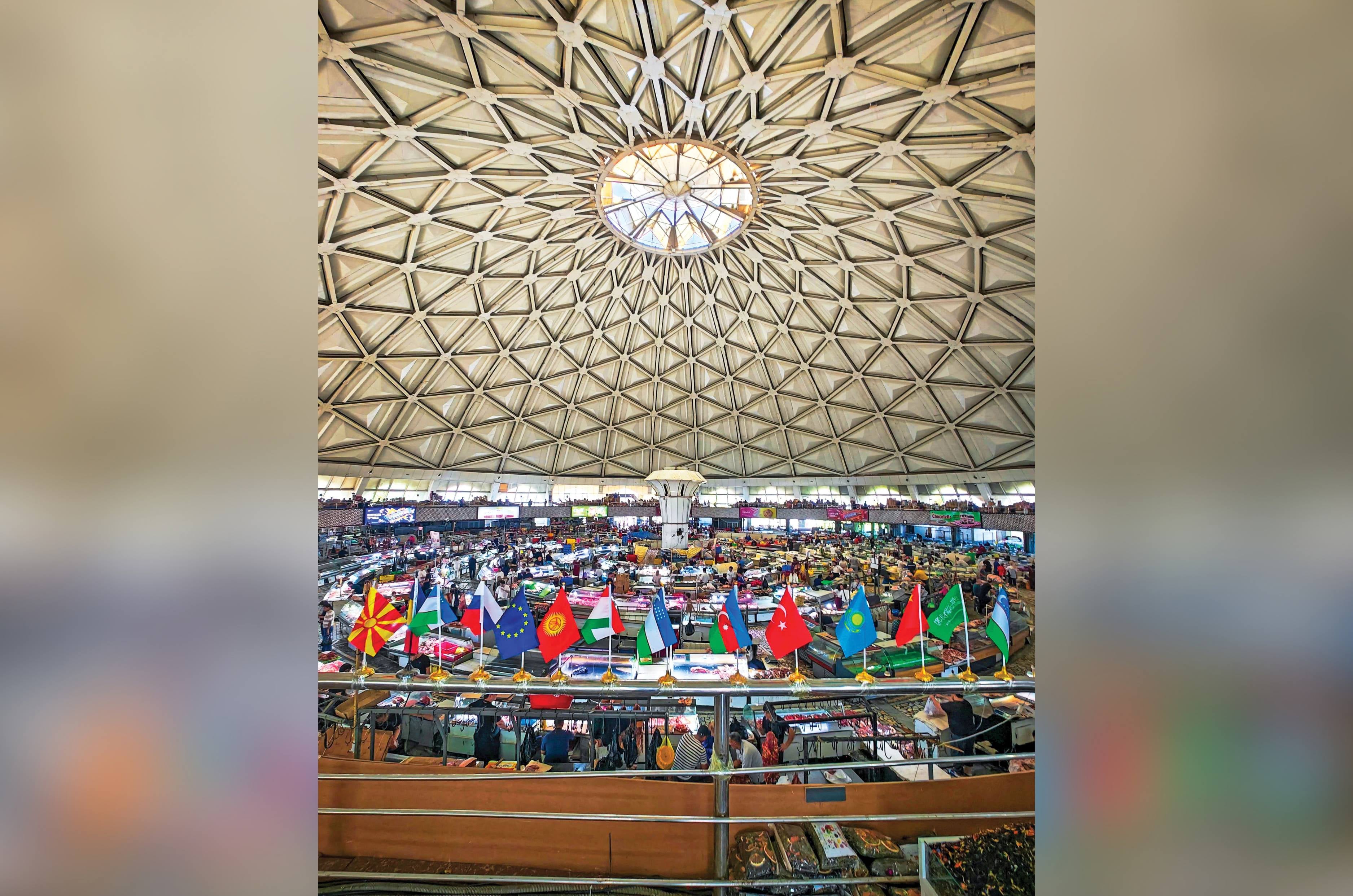
Chorsu Bazaar is a one-stop shop for everything in Tashkent.
What the market offers is mounds of kurut, a snack made from curdled milk or oghurt, salted and then hardened. The best part is its extended shelf life without needing a refrigerator. We packed some with the hope of eating it at home, knowing fully well that it would vanish by the next town.
From Osh, we would be exiting the stunning valleys and terrain of Kyrgyzstan and entering the city of Fergana in Uzbekistan.
Uzbekistan
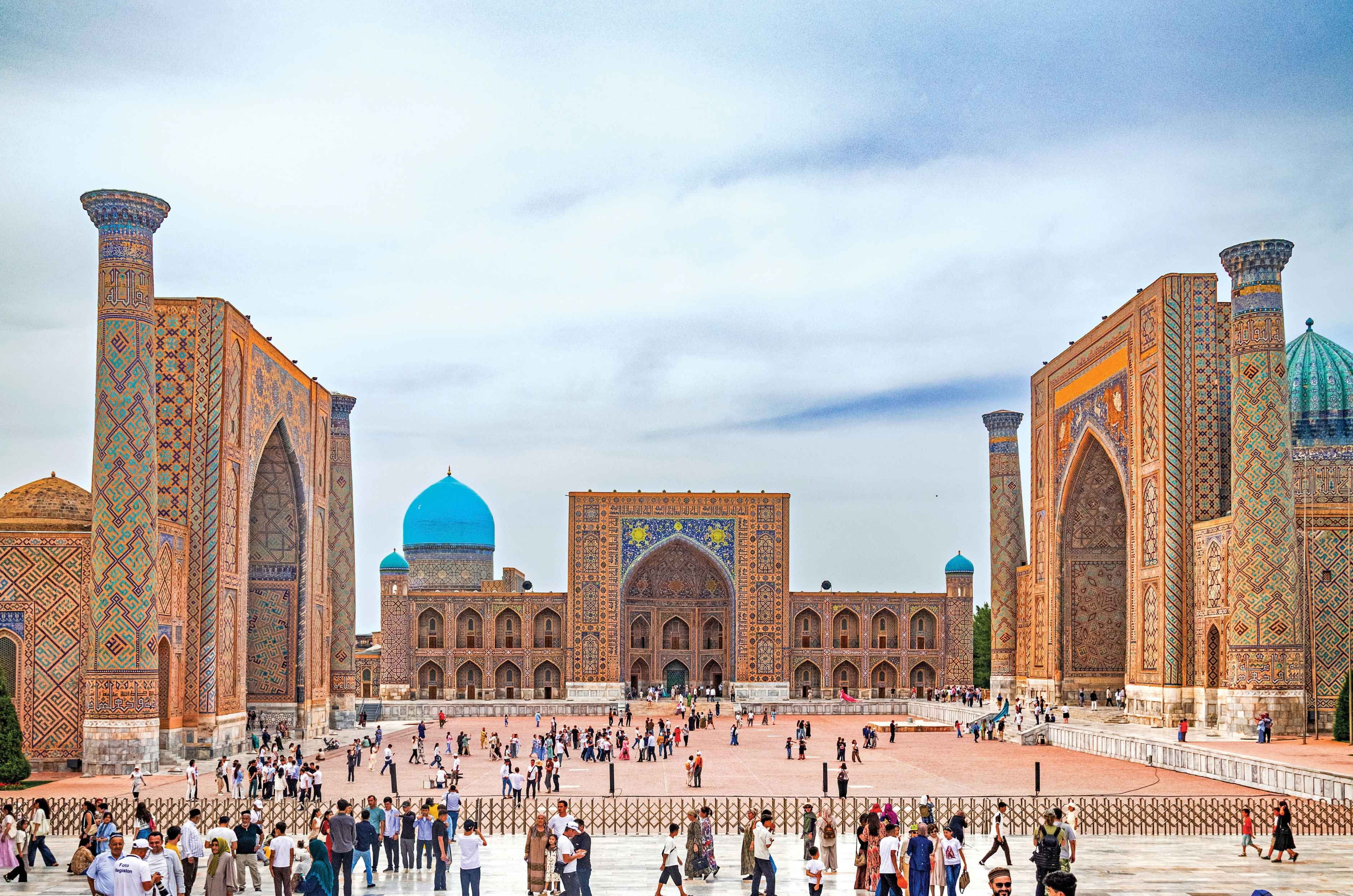
Registan Square in Samarkand is breathtaking from every angle.
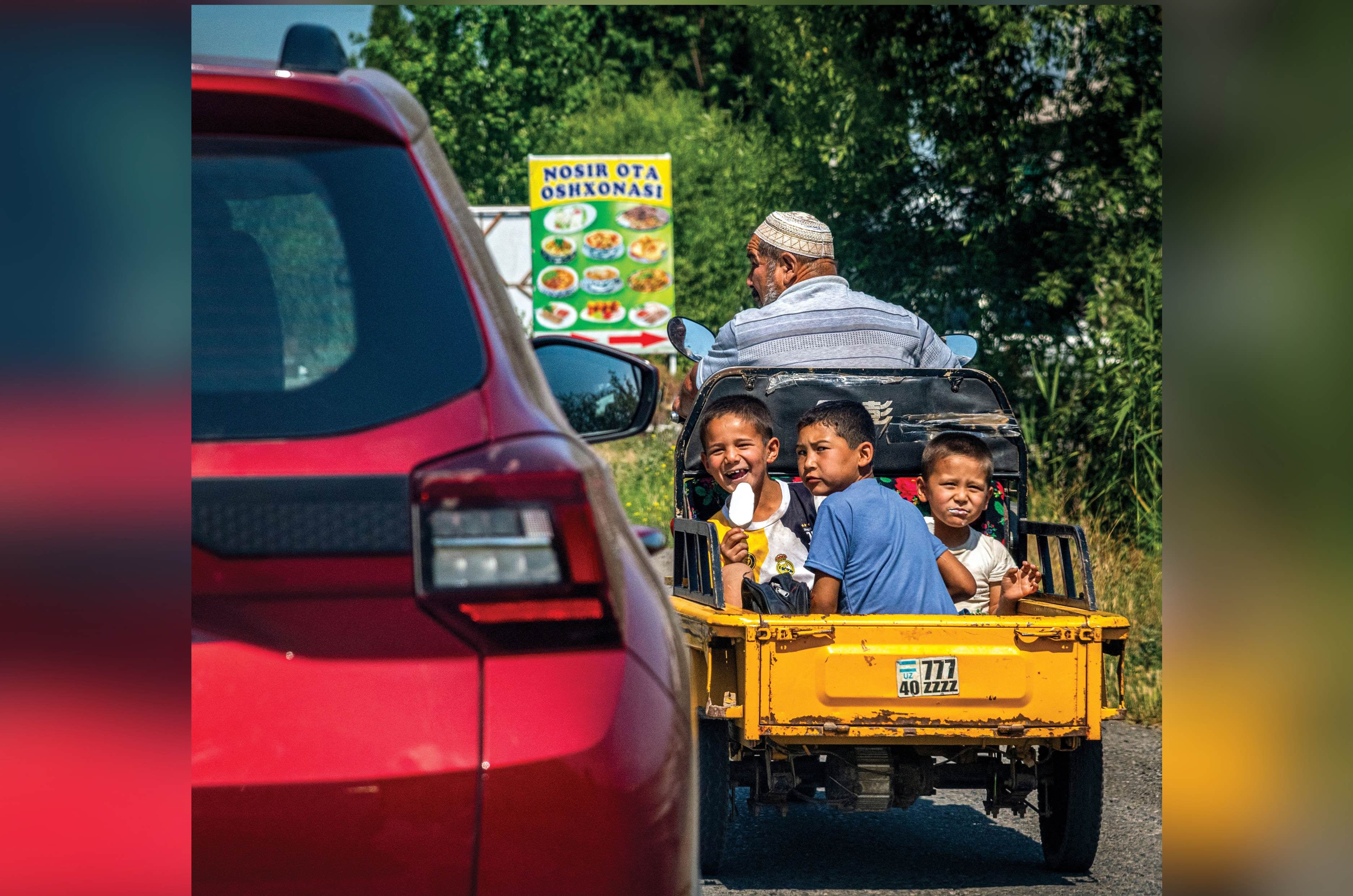
Like Kyrgyzstan, Uzbekistan also has its own personality. While there are similarities in the faces and fashion, the city of Fergana has a tinge of European infrastructure. Roads are lined with trees and patir shops – flatbread made from butter or lamb fat, with intricate detailing and some sesame seeds sprinkled on top. It’s pretty enough to dissuade you from eating it, but tastes like something that would go extremely well with a cup of chai.
Uzbekistan in numbers
Kyrgyz-Uzbek border – Turkistan
Distance covered
1,257km
Fuel consumed
81.74 litres
Average fuel economy
15.37kpl
Approx. fuel cost
Rs 9,800
Avg. per-litre fuel cost
Rs 120
Total time driven
27hrs 5mins
Average speed
46.4kph
What is also fascinating is the number of old Soviet-era cars still running on the highways with no fuss. We shared road space with old Ladas crammed with luggage inside and on the roof. Over the smooth highways of Uzbekistan, the Kylaq had an easy run, allowing us to focus on the sights around us.
From Fergana, we headed to the capital city of Tashkent. A properly modern metropolis with high-end malls and low-slung supercars, parks, walkways and everything you expect from a big city. So, to get a taste of age-old tradition, we ventured towards Samarkand, which used to be a major trading hub on the Silk Route.
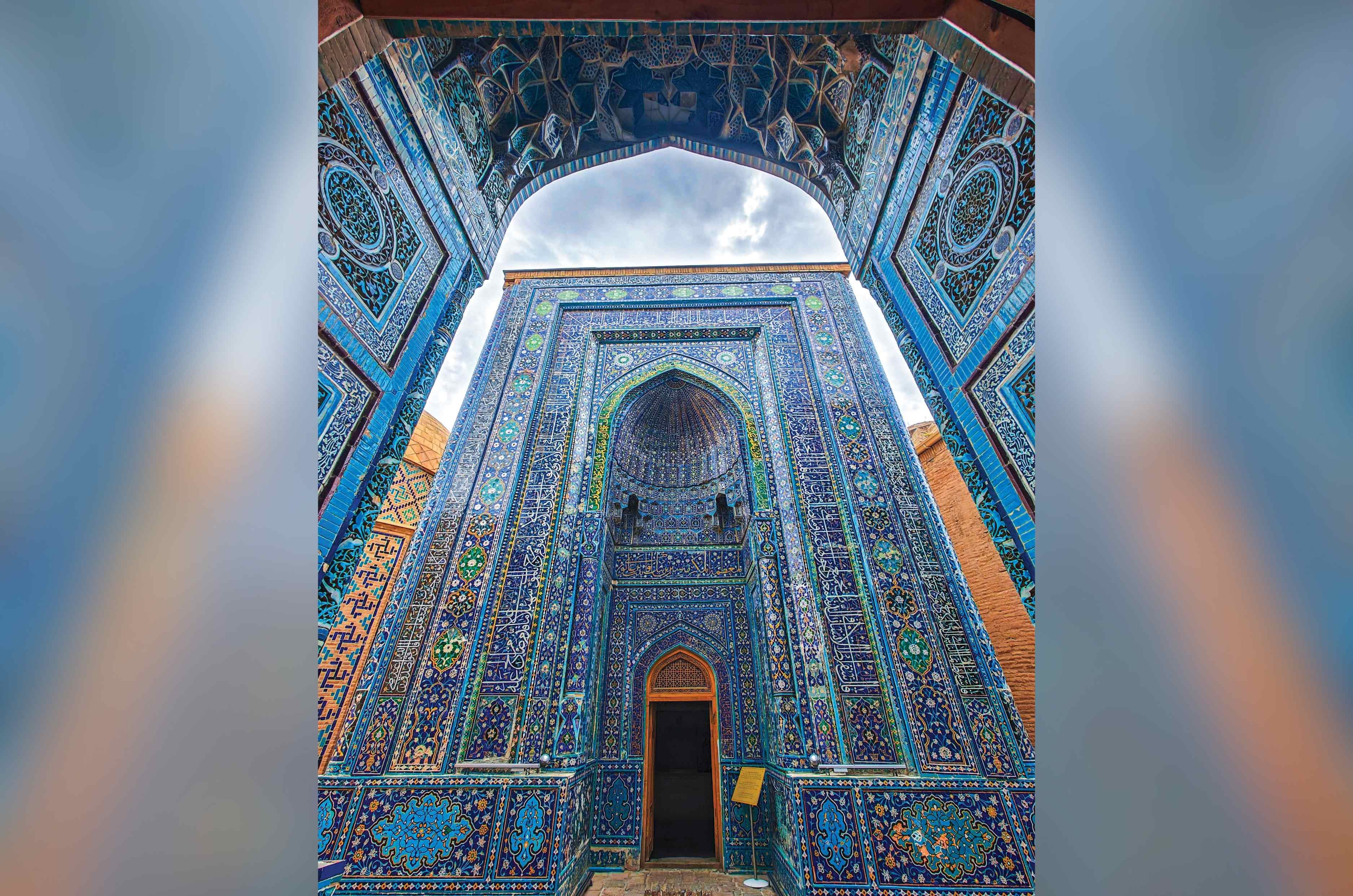
The Shah-i-Zinda ensemble has 11 mausoleums with incredibly detailed azure and turquoise tiles.
Entering Samarkand, you almost feel the tradition in the air. Years of cross-cultural civilisation have made it a stunning destination to get a glimpse of history, and it is unlike any other Western or Eastern city. The highlight here, of course, is the Bibi-Khanym Mosque in the Registan ensemble. Turquoise domes kissing the sky, with walls adorned with hand-carved artistry, are nothing short of breathtaking.
You can walk through the corridors and the square innumerable times, and each time, you will gasp at the sheer detail and effort. And to think it was built as far back as the 15th century. Magnificent is an understatement.
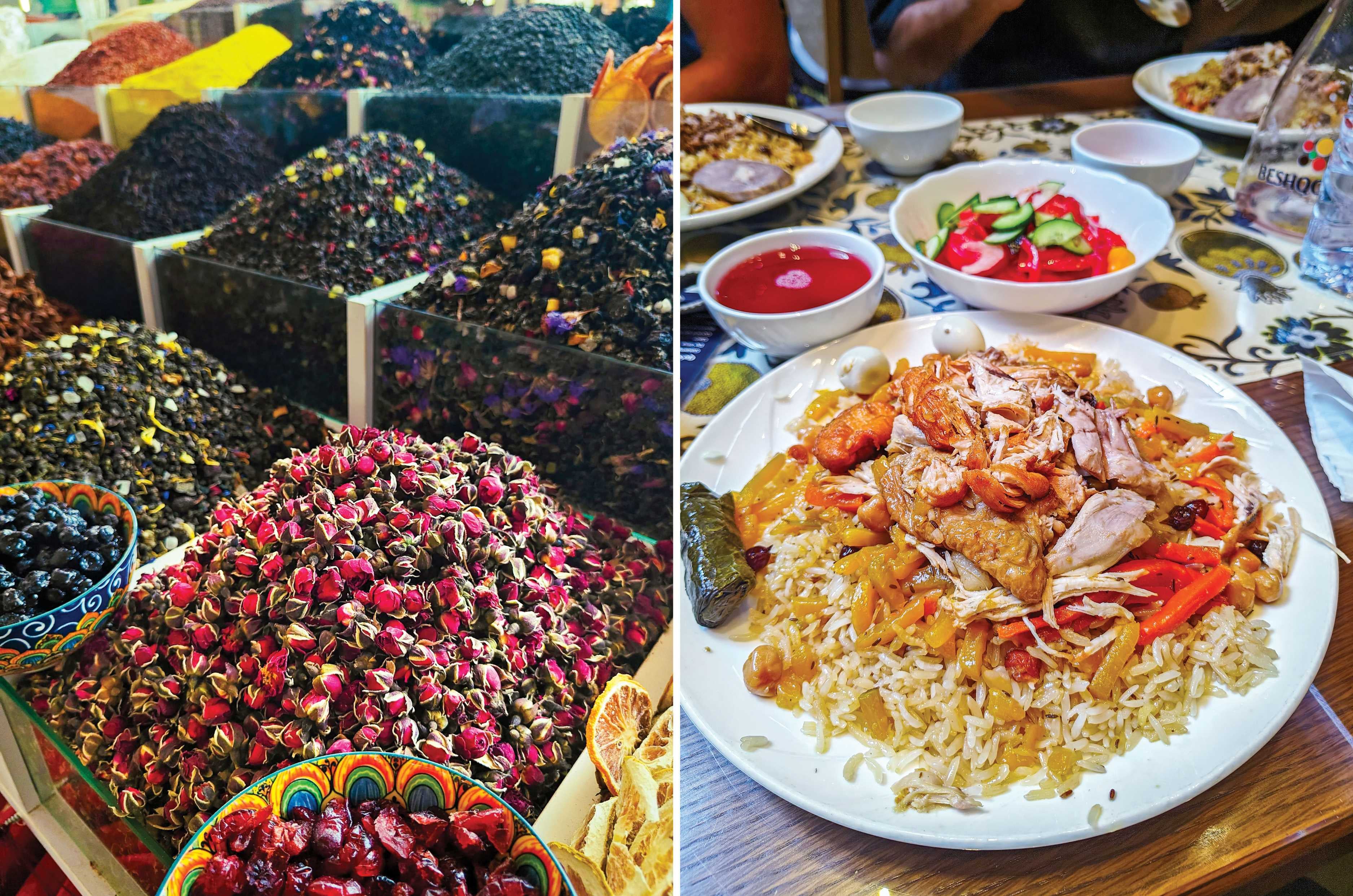
After soaking in the stunning detail, we headed back to Tashkent and straight to the equally fascinating Chorsu Bazaar. What looks like an IMAX dome on the outside is a full-fledged one-stop shop on the inside. Teas, dry fruits or even a leg of lamb, you can get it all here.
Uzbekistan’s market is nothing short of paradise for tea lovers.
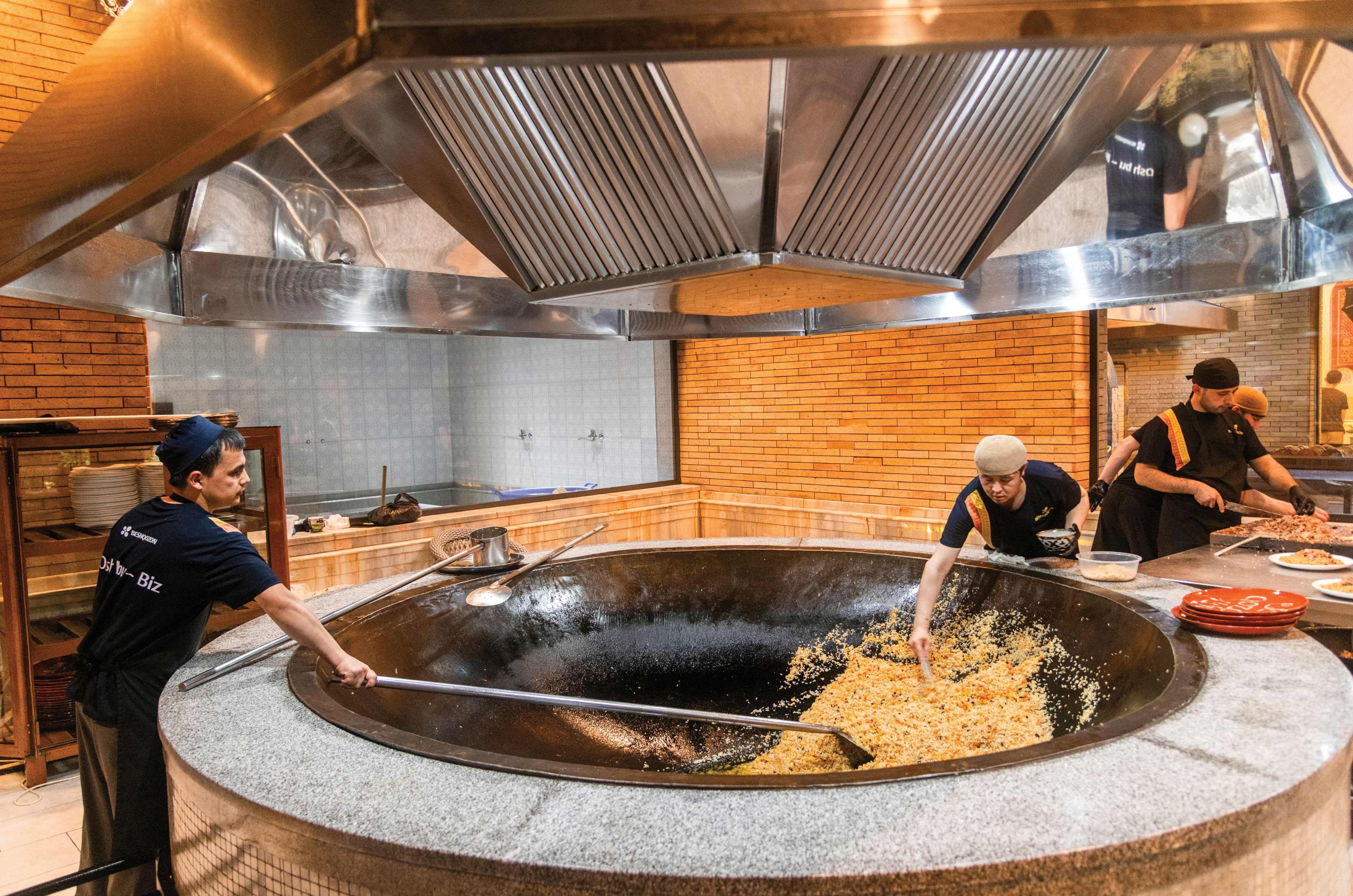
After a long walk that ended with bags of tea and dehydrated kiwis, we headed for Uzbekistan’s pièce de résistance: the famous plov. Like a biryani, but made with different spices, and if you want to go heavy on culture, you can have one with horse meat, too. Some bravehearts did try it and resorted to chicken or lamb, but it did offer the lost taste of biryani and got us homesick in the first bite.
Massive dome known as a kazan used to make the famous Uzbek plov.
After days of driving through mountains and around lakes, and walking through corridors that were once at the peak of world trade, our next adventure would take us to the Great Steppe of Kazakhstan.
Kazakhstan
The Great Steppe in Kazakhstan feels like driving on an endless treadmill.
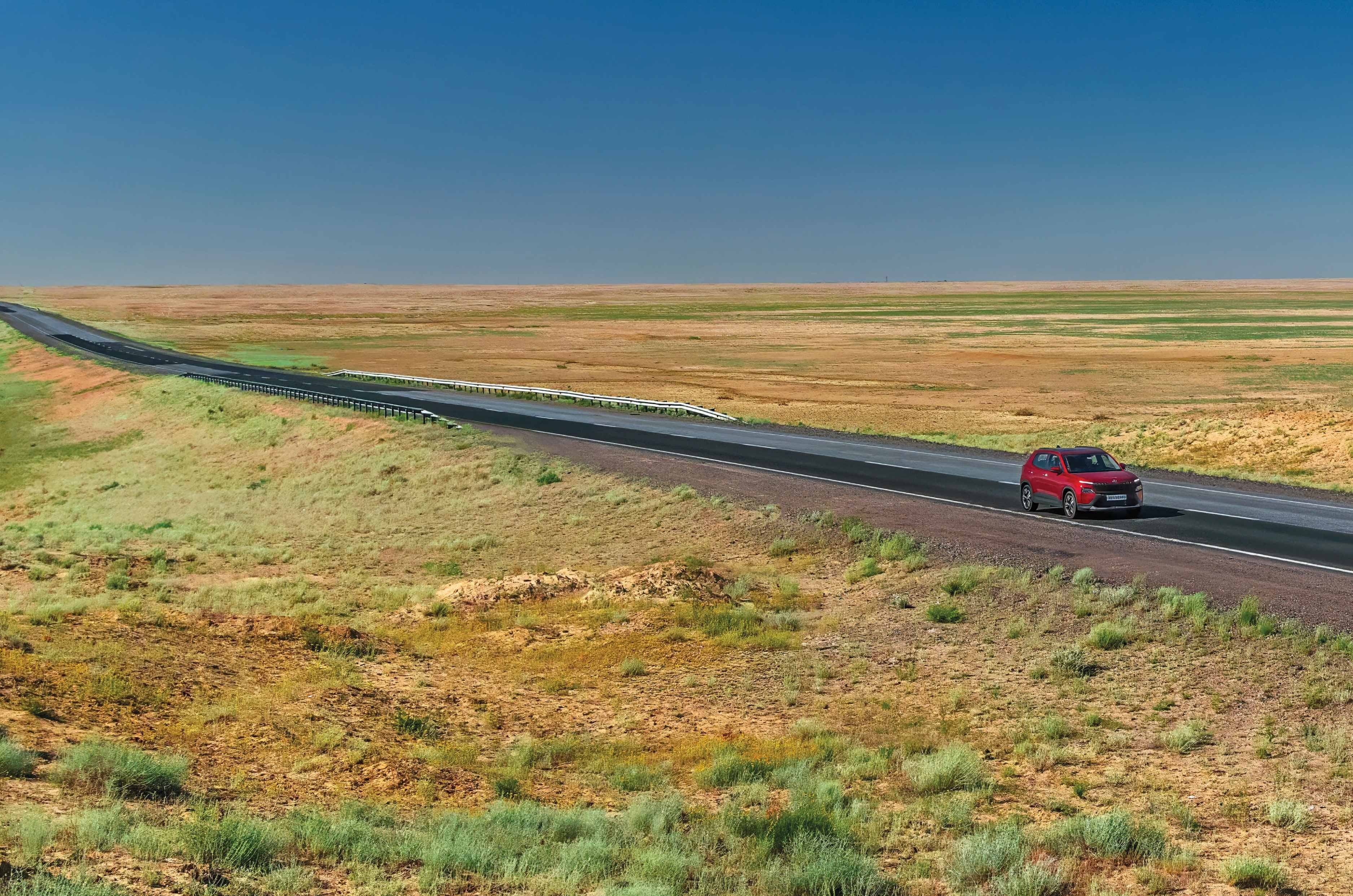
Crossing from Turkmenistan after vigorous checks, Kazakhstan feels almost desolate. Arrow-straight highways for kilometres, between acres of flat land with nothing on the horizon. We were driving through green pastures that would turn into brown, dried patches before turning green again, kilometre after kilometre.
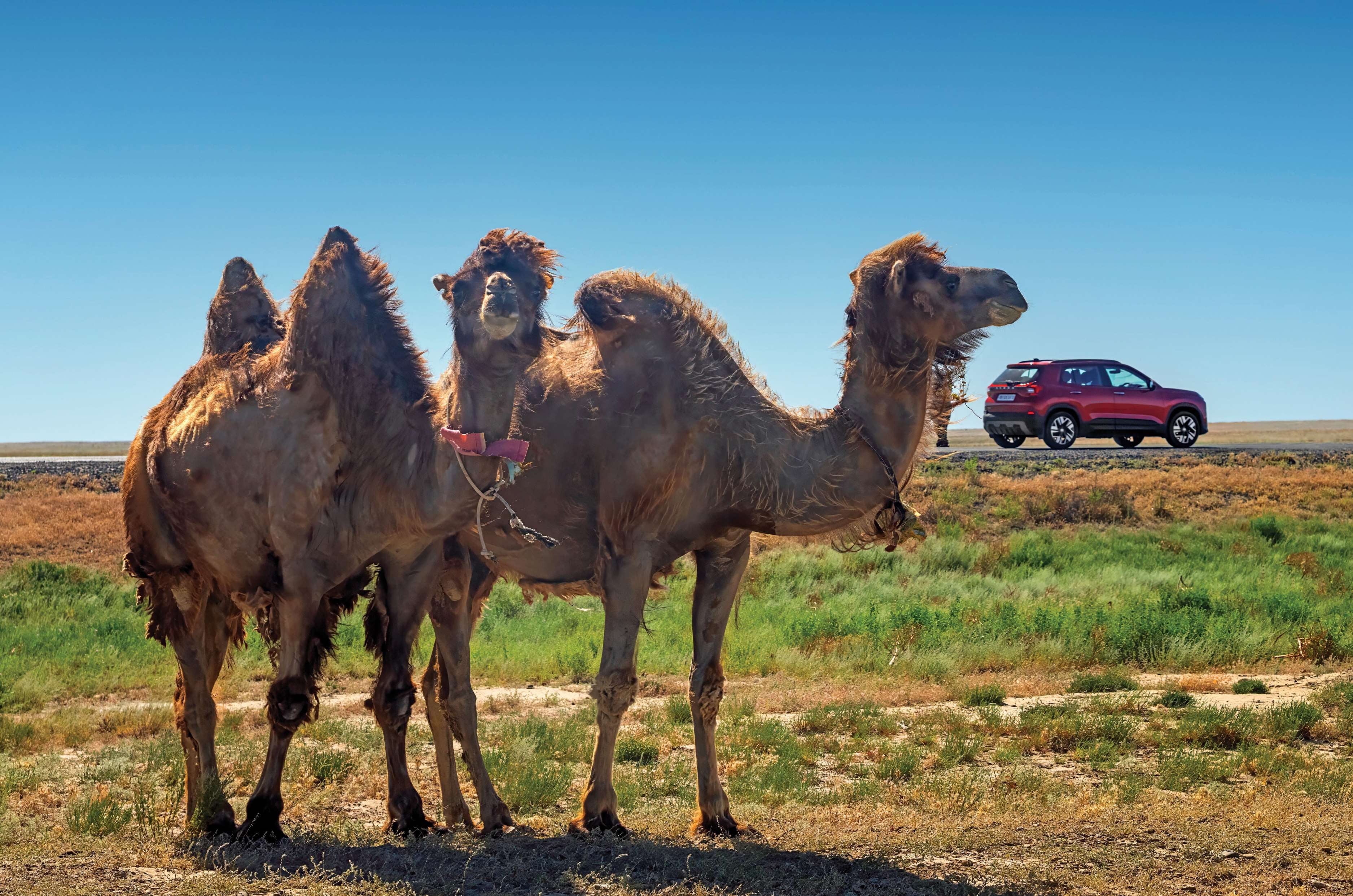
The Great Steppe, while stunning in size, is also a bit monotonous when you’re driving through it for days. The only respite would be a herd of double-humped Bactrian camels, cooling off at a nearby pond and often curious to know what a cherry-red Kylaq was doing in the middle of Kazakhstan.
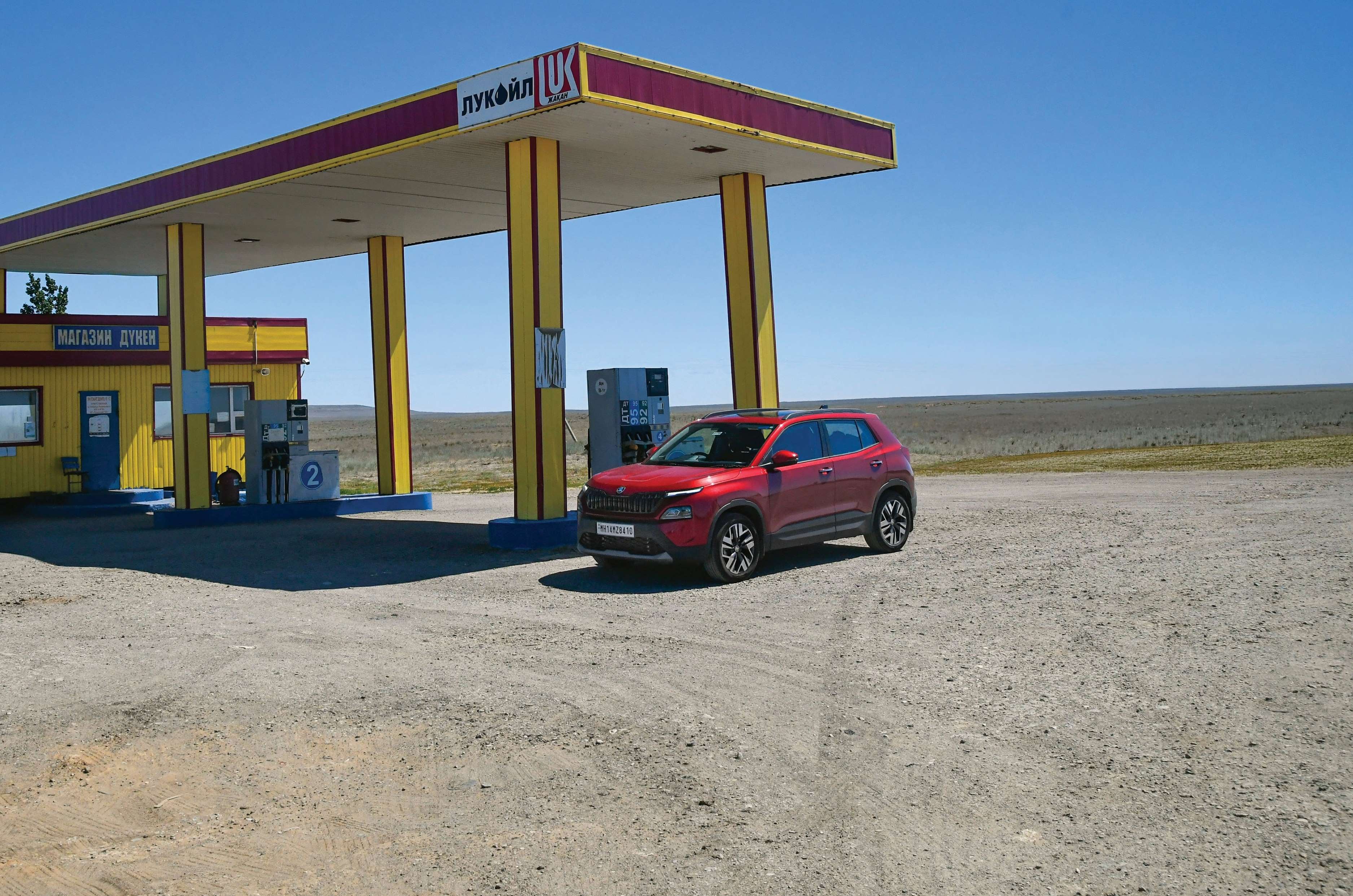
At Rs 58.17 per litre, Kazakhstan offered the lowest fuel price of the entire drive.
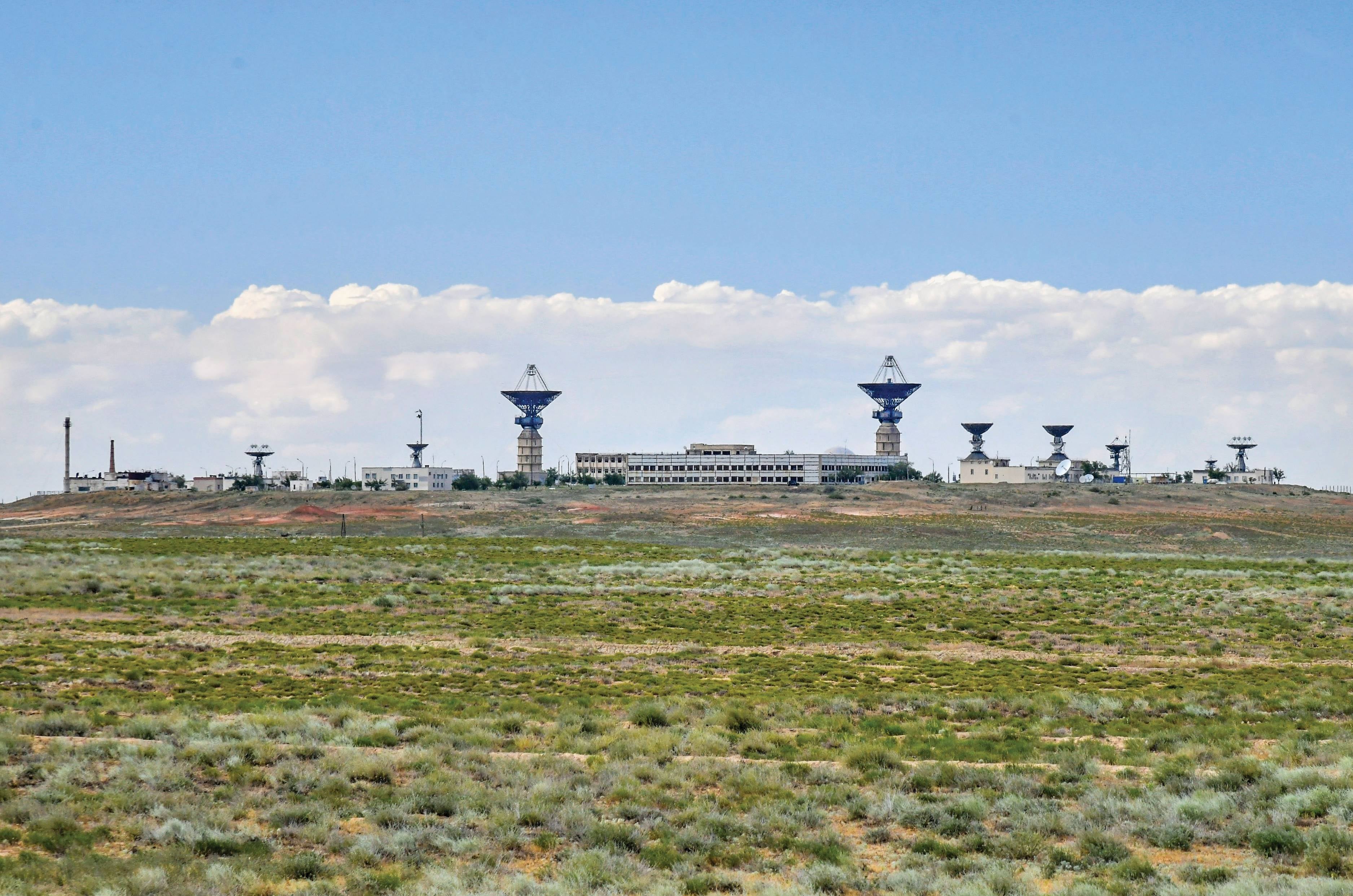
An interesting stop between Turkistan and Aral is the Baikonur Cosmodrome, which is the world’s first and largest operational space launch facility. However, thanks to the endless highways through Aral, Aktobe and Atyrau, we only got to test the Kylaq’s wheel alignment and its highway stability more than we would have liked.
Baikonur Cosmodrome – the world’s first, largest and operational space launch facility.
The mighty Stans were all about breathtaking sights, warm people and mouth-watering cuisine. The region still feels unadulterated, and that itself is what makes it special.
Kazakhstan in numbers
Turkistan – Kazakh-Russia border
Distance covered
3,237km
Fuel consumed
229.52 litres
Average fuel economy
14.10kpl
Approx. fuel cost
Rs 13,325
Avg. per-litre fuel cost
Rs 58.17
Total time driven
42 hrs
Average speed
77.1kph
Georgia – The Birthplace of Wine
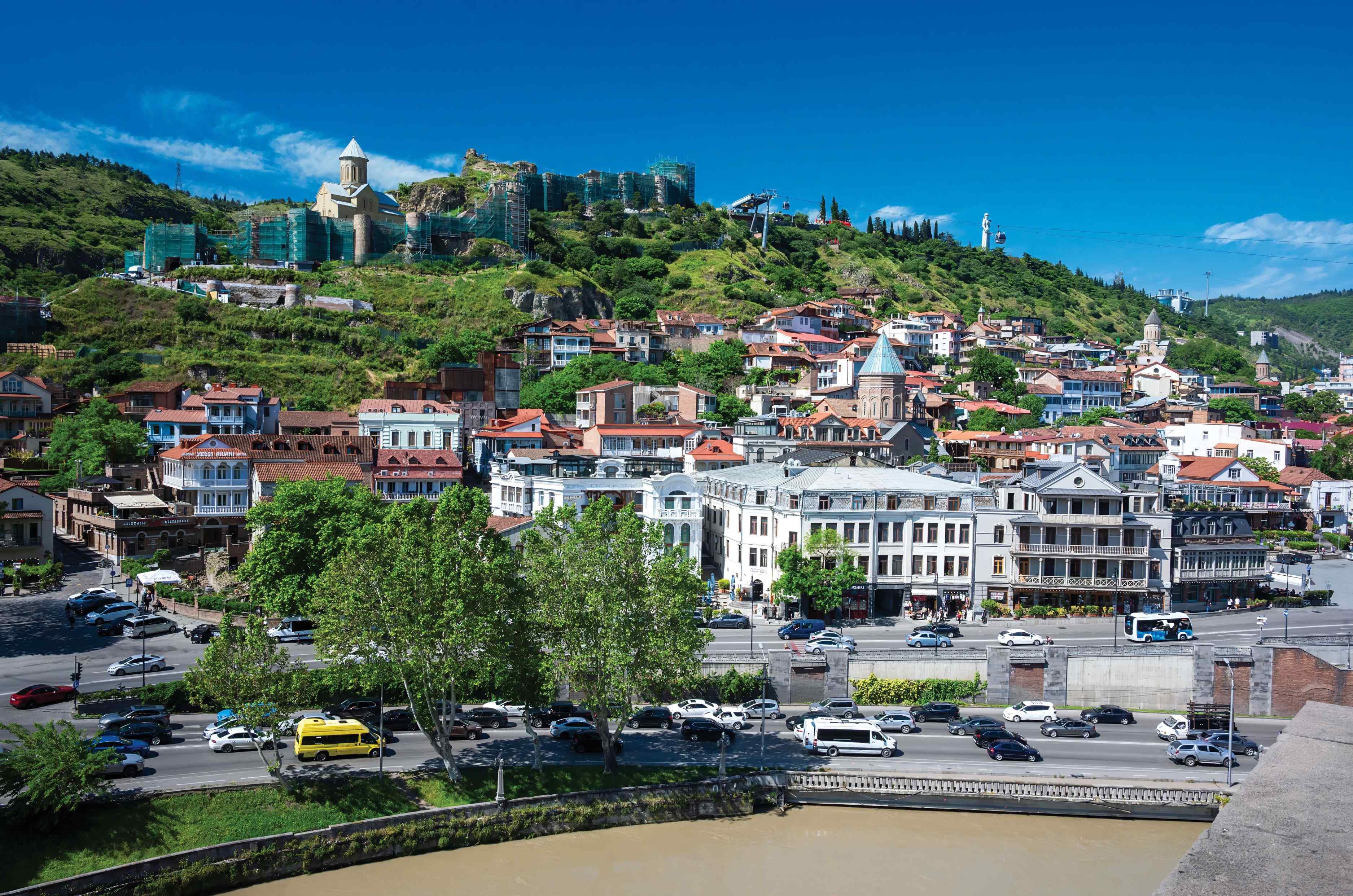
Compared to the vast landscapes and long highways of the Stans, Georgia was a contradiction. Based within the Caucasus Mountains, it has its share of twisties, which the Kylaq enjoyed. But the capital, Tbilisi, is the largest city and thereby pretty chaotic to drive in. Peak-hour traffic is just like what you would have in India, so we parked the car in a worryingly narrow alleyway and, for the most part, made our way on foot.
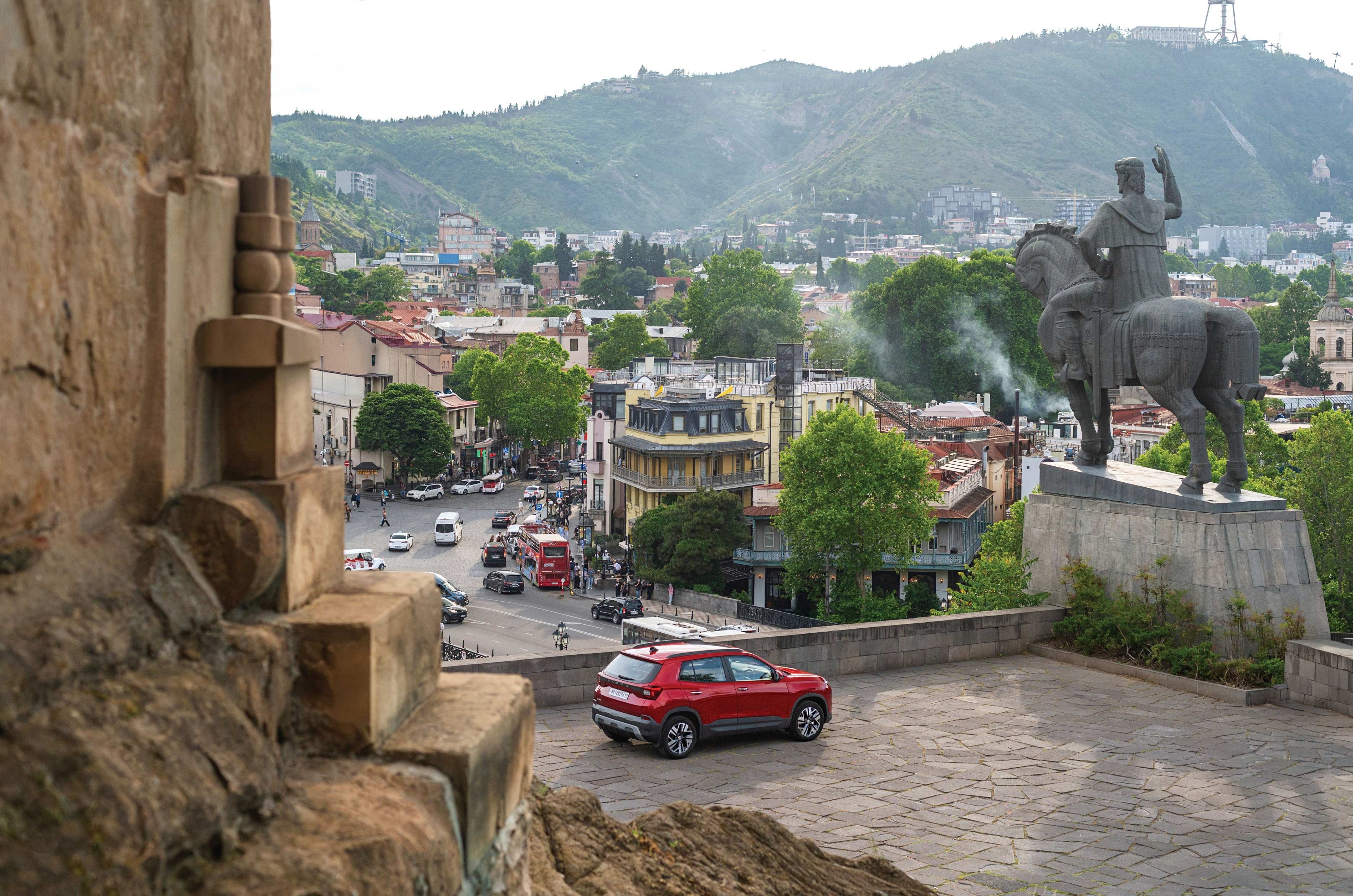
Huge statue of the founder of Tbilisi King Vakhtang I Gorgasali.
Like any big city, Tbilisi has its modern side, with glass buildings and modern restaurants, but there is still a large section that is rooted in tradition. Cobblestone streets with wooden houses and sulphur baths are a fascinating experience, as is the fantastic view from near the monument of King Vakhtang Gorgasali, the founder of Tbilisi.
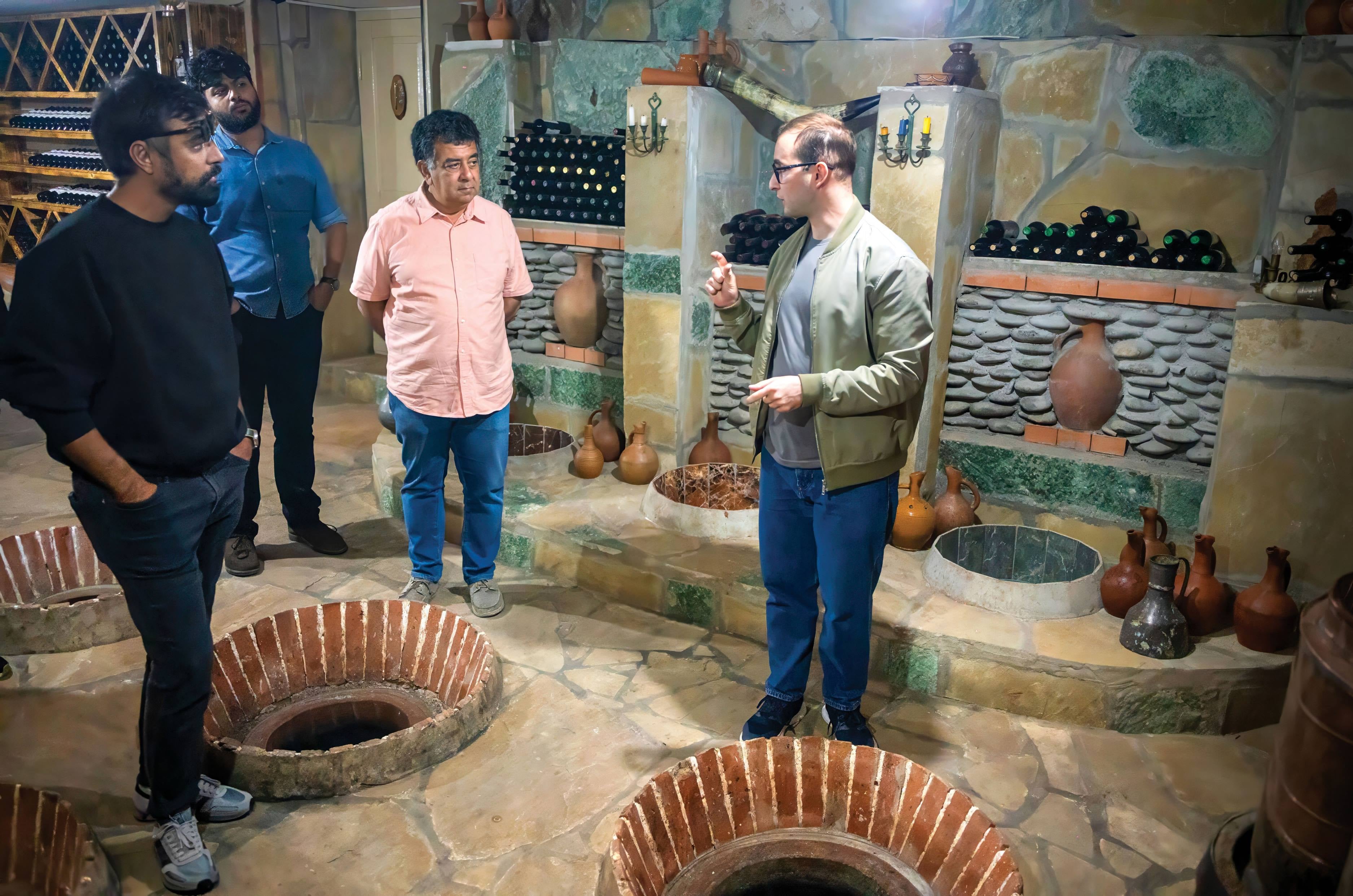
The monument itself is a striking bronze equestrian statue located on a rocky cliff above the Mtkvari River, next to the historic Metekhi Church in Tbilisi, Georgia. But Georgia is known to be the birthplace of wine, and on our drive to Tbilisi, we spotted several vineyards sprawling for acres. We had to get a closer look, and thankfully, our guide’s friend owned one of them.
Georgian wine fermented in clay jars buried in the ground.
The Georgians still use the ancient process of fermenting wine in barrels under the floor, but have now blended it with modern technology that allows them to control the temperature and get a more consistent batch each time. Wine connoisseur or not, the experience is enthralling.
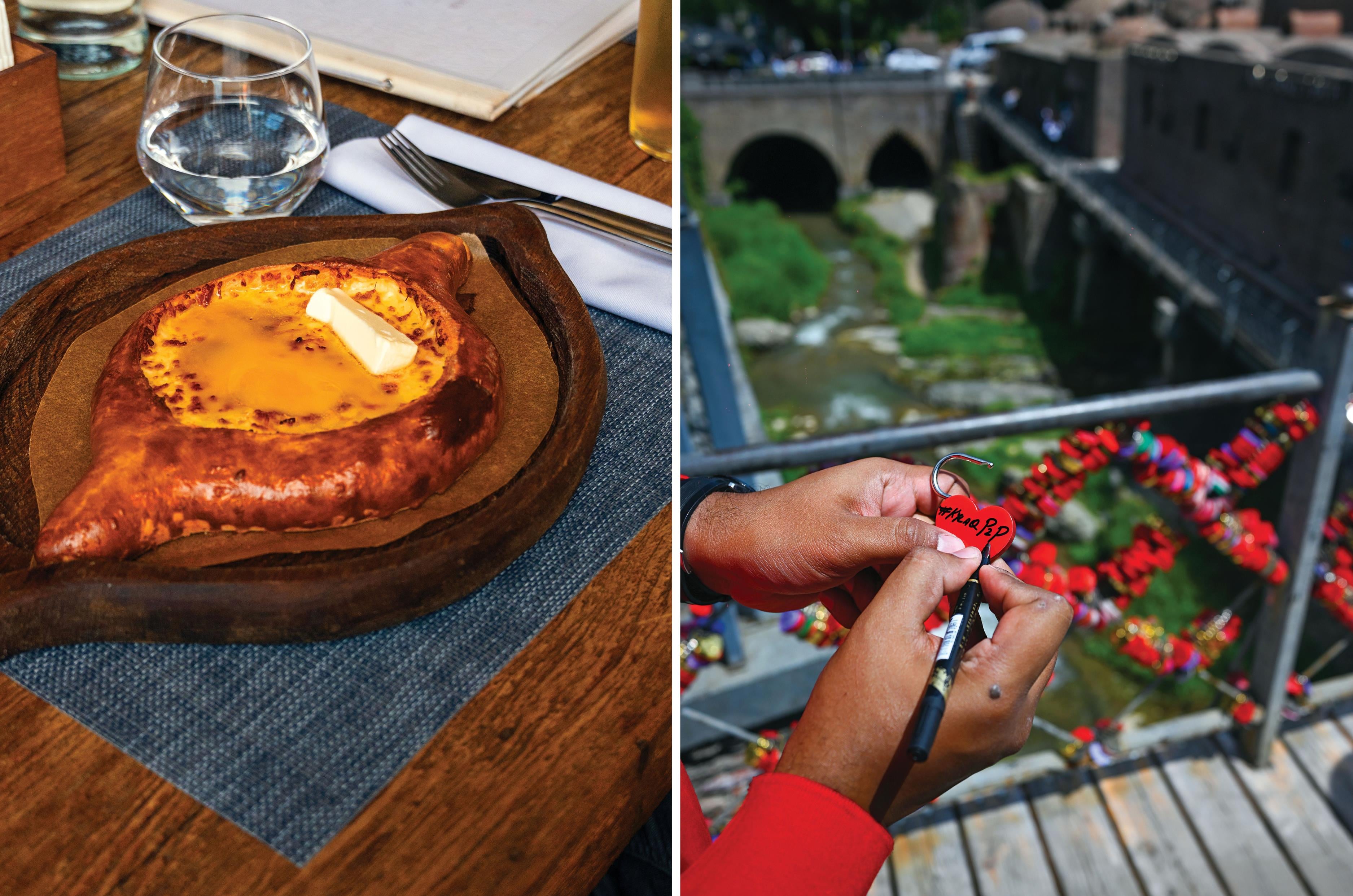
Khachapuri (flatbread with cheese and egg) is Georgia’s national snack.
The city tour built up an appetite, and we followed the scent of fresh bread for some authentic khachapuri. A Georgian flatbread that is hollowed out in the centre and filled with cheese, khachapuri varies depending on the region you’re in. You can have it with an egg cracked into it or with meat, too.
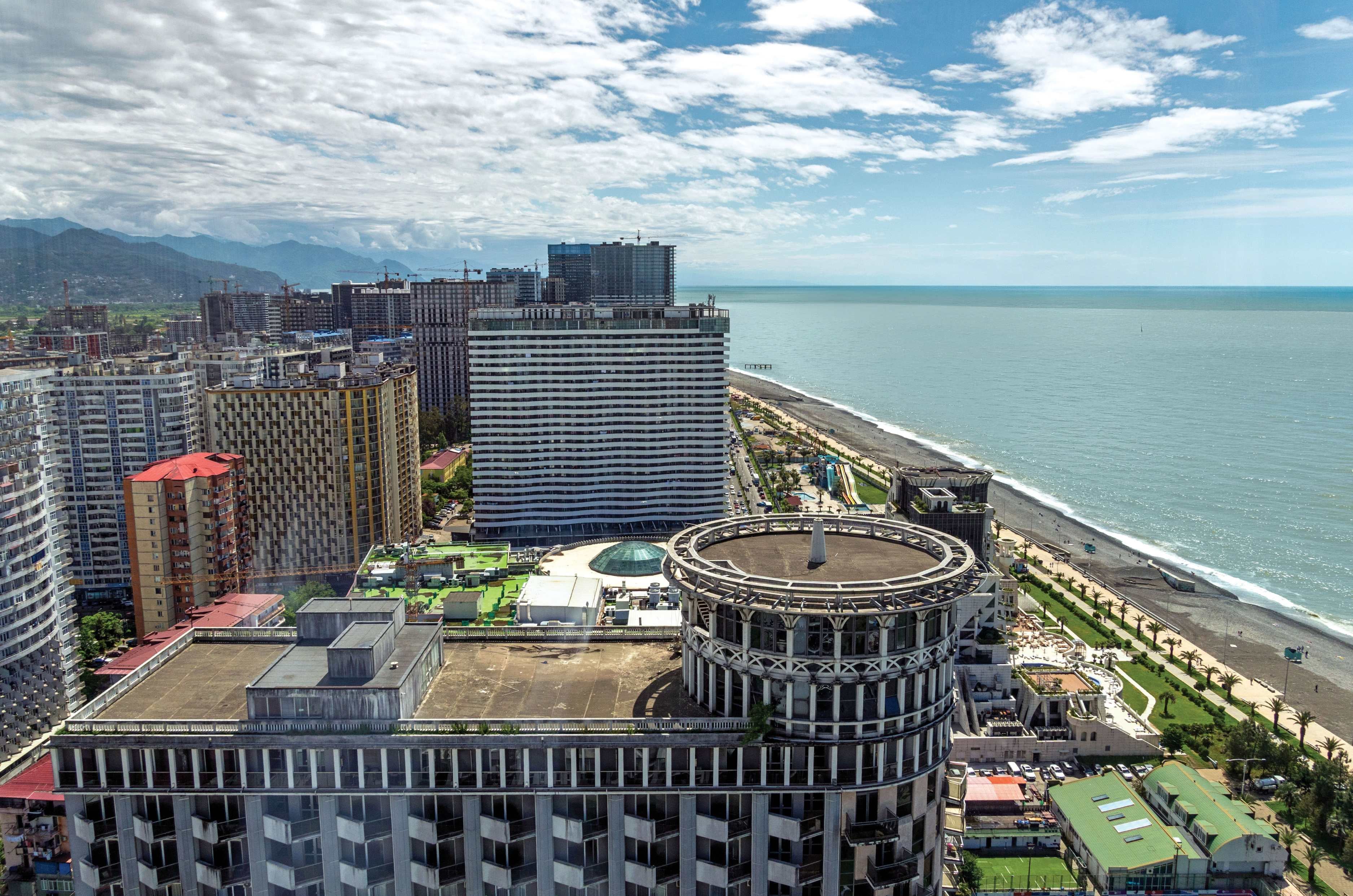
Coastal city of Batumi is a stark contrast of Tbilisi.
With sightseeing done, we drove the next day to the coastal city of Batumi. A vibrant, modern city with a lot more European influence. However, if the roads in Tbilisi were narrow, Batumi was on another level. Despite the compact dimensions of the Kylaq, our hotel parking was a sidewalk cordoned off by the hotel manager, as there simply was no space to park.
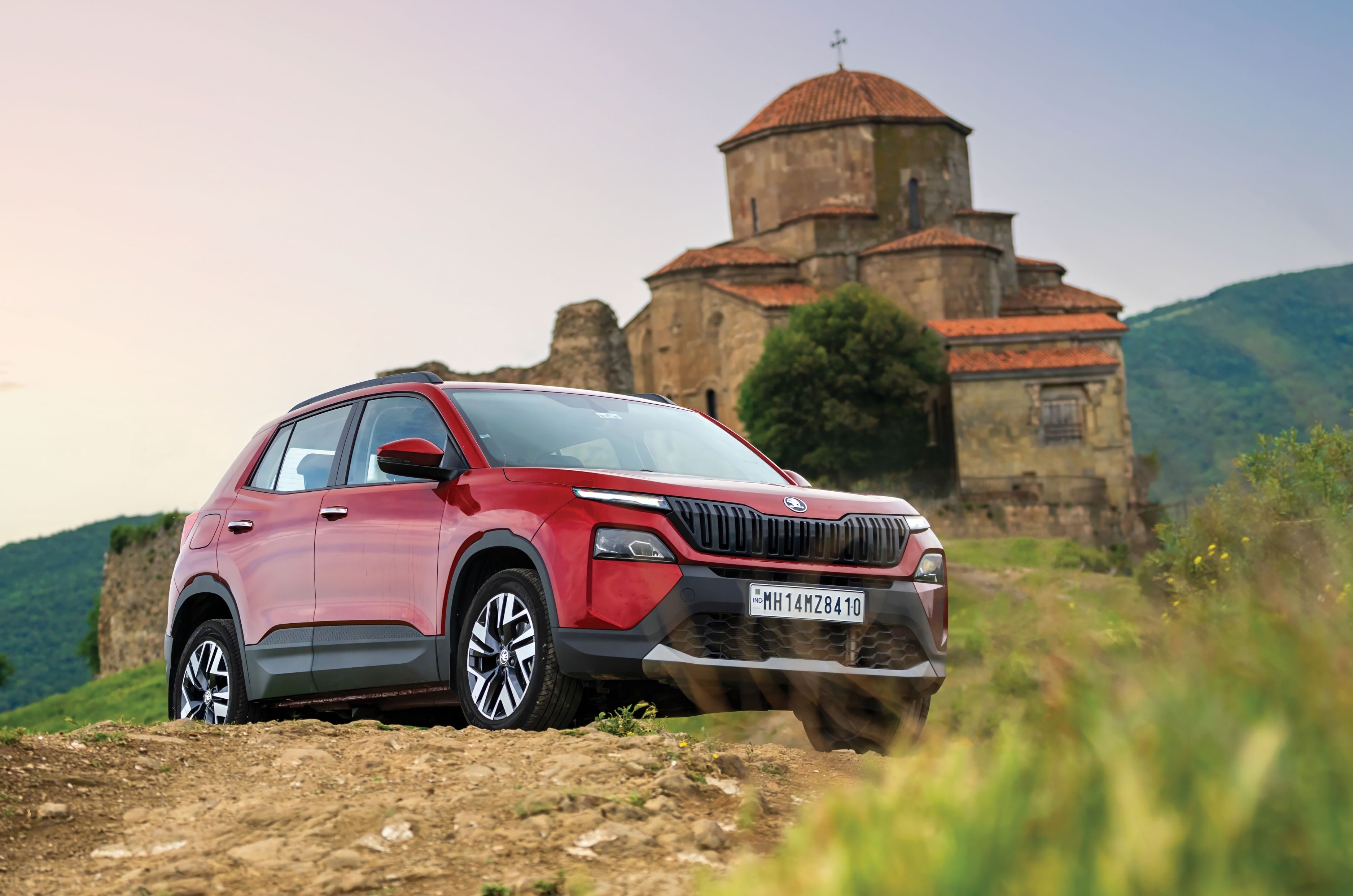
14th-century Gergeti Trinity Church has stunning views of the Caucasus Mountains.
Still, we made the most of it by strolling by the shore of the Black Sea, watching the locals angling for fish. Georgia, just like the Stans, offered a unique glimpse into this part of the world and its diverse culture. For our final stretch before Europe, we had one last country to drive through – the colourful Türkiye.
Georgia in numbers
Tbilisi – Türkiye border
Distance covered
624km
Fuel consumed
58.62 litres
Average fuel economy
10.64kpl
Approx. fuel cost
Rs 7,607
Avg. per-litre fuel cost
Rs 129.78
Total time driven
17.5hrs
Average speed
58.5kph
Türkiye – Gateway to Europe
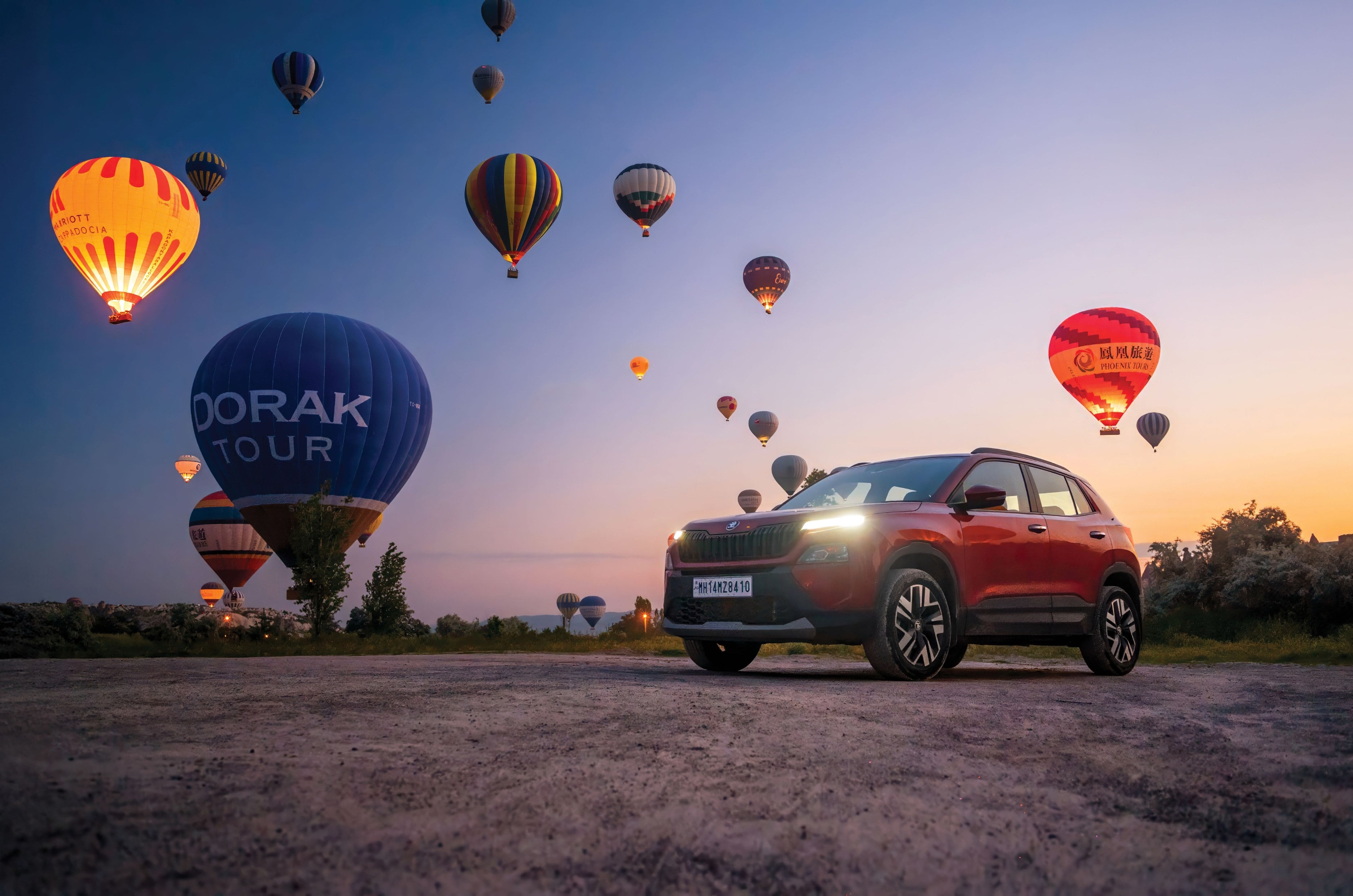
Cappadocia’s claim to fame is well worth the hype.
As the Kylaq crossed into Türkiye, our first stop was in Erzurum. A major winter sports town, but thanks to the time of year, our ski resort was bright, sunny and without an ounce of snow. A quick stroll through the small town and we hit the sack in preparation for a 700km-plus drive to the tourist haven that is Cappadocia.
The next morning, the plan was to do what you must do in Türkiye – take a hot-air-balloon ride. A pre-dawn wake-up call is never comfortable, but the peace was soon shattered by the sound of a group of old diesel Land Rover Defenders revving to keep themselves warm while they waited to transfer tourists to the balloon launch site. The balloon ride is arguably the largest tourist attraction in Türkiye, so there was quite the rush.
We, too, loaded up the Kylaq and hit the road to get the perfect shot of the sun coming up over the hills while the sky was filled with balloons. And boy, did we get it. As the orange tinge hit the fairy chimneys, we saw what the hype was about. The visual is nothing like you have ever seen: watching one colourful hot-air balloon is rare, and here there were over a hundred. We shot GBs worth of images and videos and got back to catch up on the broken sleep from earlier.
Türkiye in numbers
Erzurum – Bulgaria border
Distance covered
1,436km
Fuel consumed
98.1 litres
Average fuel economy
14.63kpl
Approx. fuel cost
17,187
Avg. per-litre fuel cost
Rs 134.19
Total time driven
19.5 hrs
Average speed
73.64kph
A relaxing drive the next day got us to Istanbul, which, to some, might seem like the capital thanks to its bustling character – a glimpse of which we got as we got closer. A traffic jam stretching for more than a couple of kilometres brought the Kylaq to crawling speeds. To avoid the repercussions of driving next to hasty cab drivers, we parked the Kylaq and headed to check out the nightlife, but more importantly, the döner kebab.
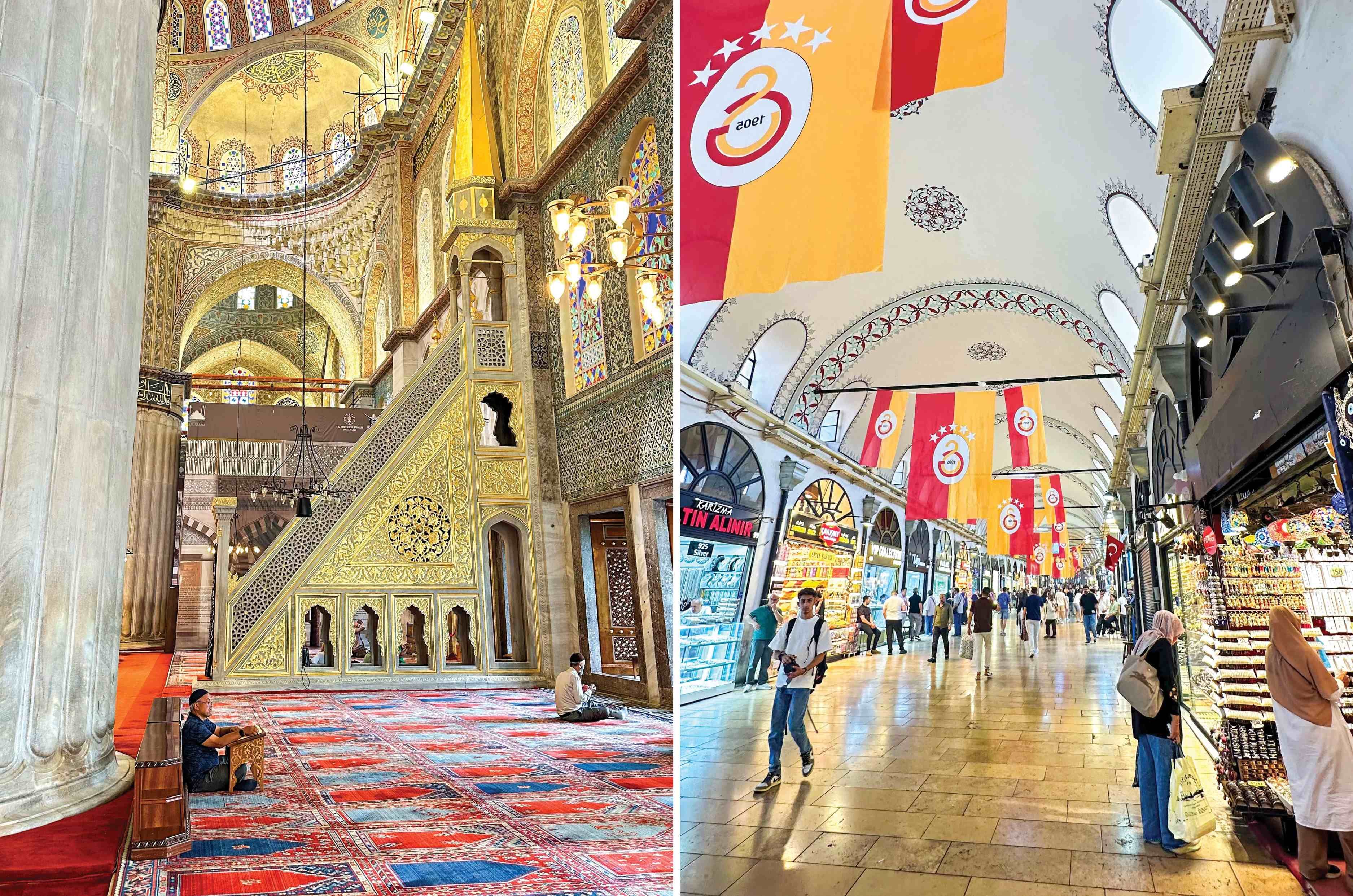
Exceptional interiors and an unbelievable calm in Istanbul.
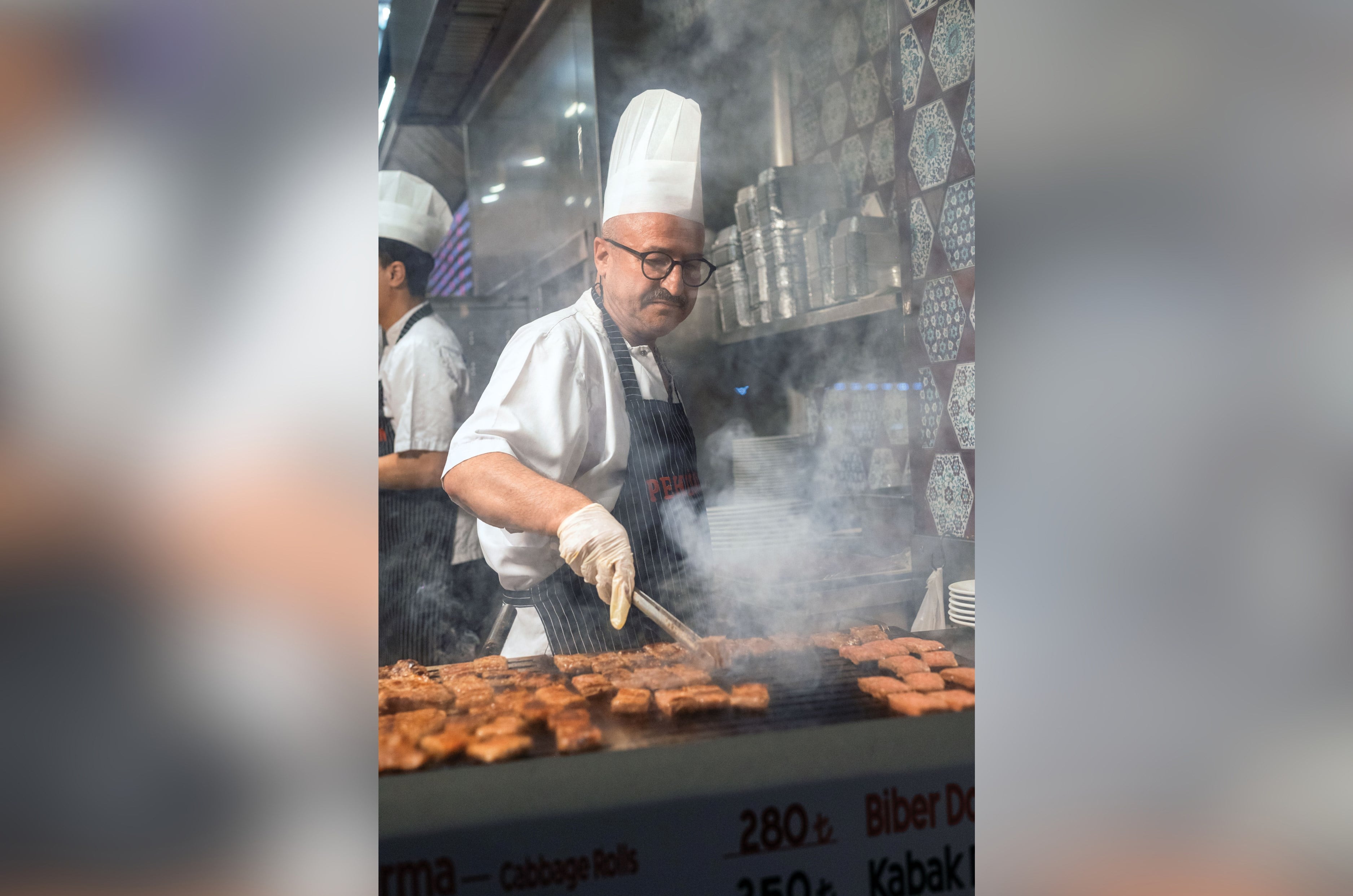
Similar to a shawarma, the döner kebab consists of a pile of meat that is cooked on a rotisserie over a flame. The dripping fat is mopped up by pita bread, which is then loaded with the sliced meat and seasonings. After a long walk through the Grand Bazaar, haggling for a fake Rolex, the döner becomes almost a necessity.
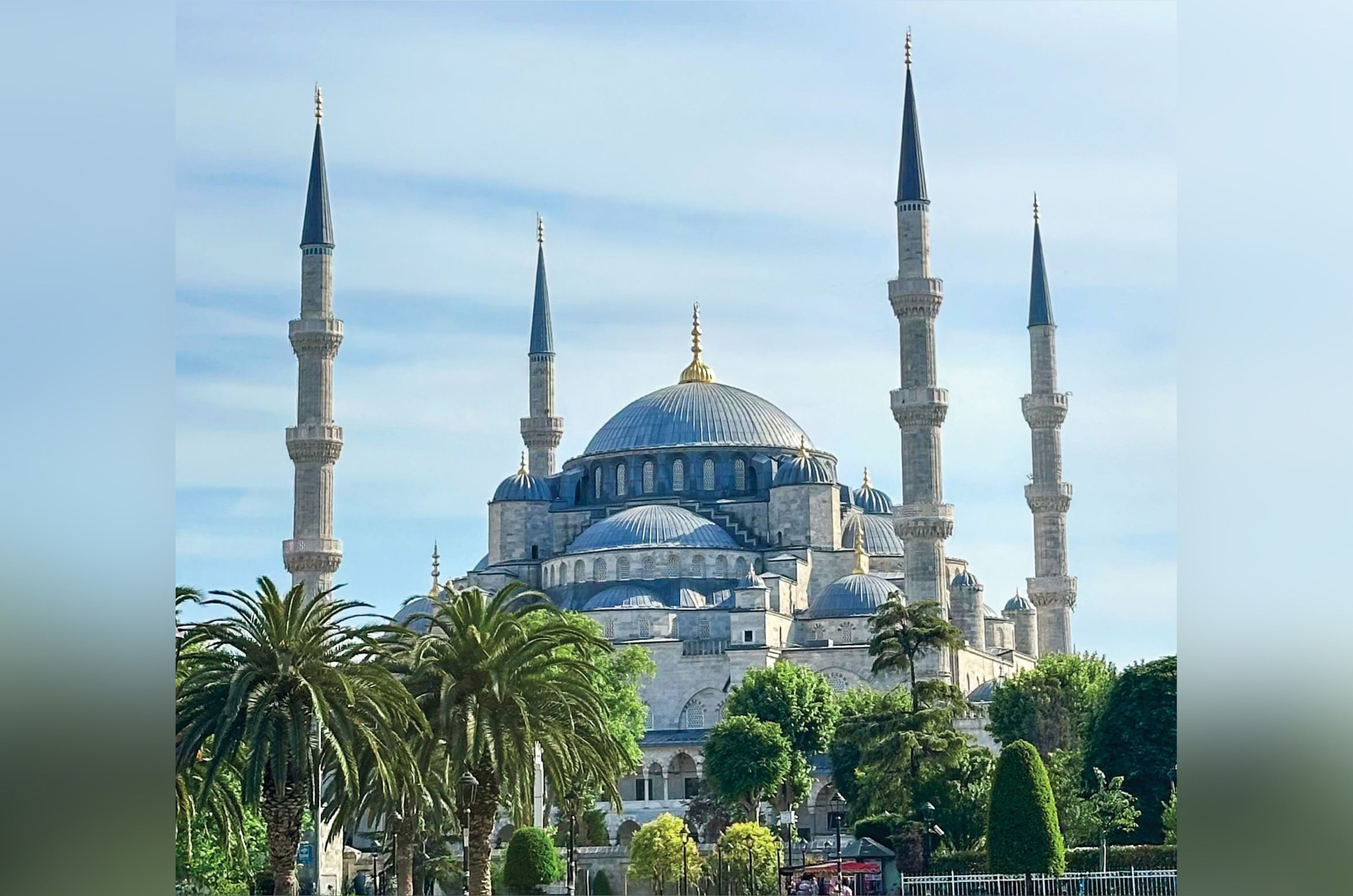
What’s also equally stunning is the Blue Mosque. Known formally as the Sultan Ahmed Mosque, it was constructed between 1609 and 1617 in the Ottoman era by Ahmed I. To get the entire mosque in frame, you need to fall back to the Hagia Sophia Mosque, which is in the same vicinity. Both equally grand, equally detailed and equally important.
The Blue Mosque, built in the Ottoman era, is majestic.
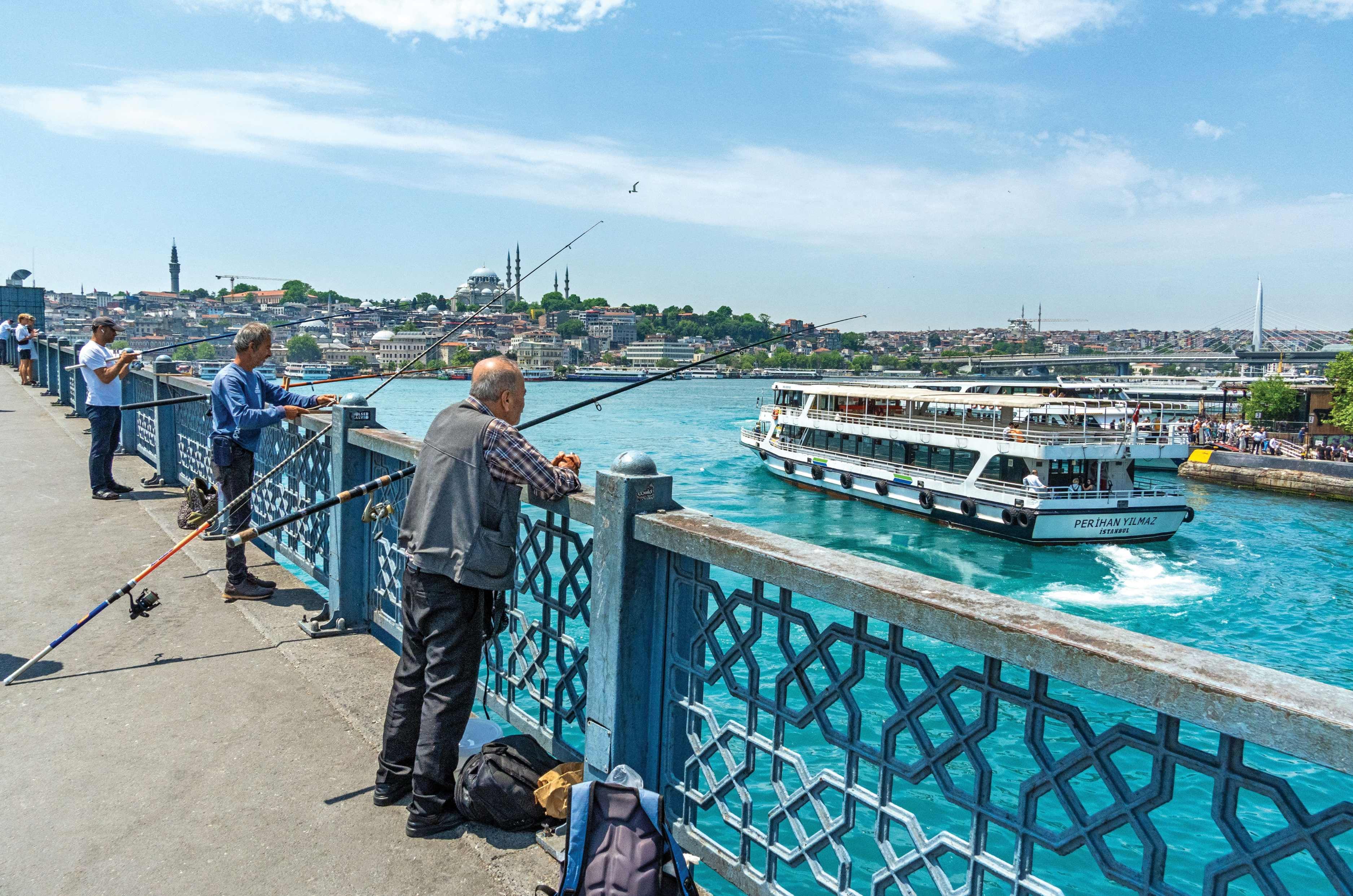
To explore more of Türkiye, we got back into the Kylaq and realised there was a bridge that is unlike any other in the world. The Bosphorus Bridge is located over the Bosphorus Strait, but its claim to fame is that it, quite literally, has one end in Asia and one end in Europe. You can cross the bridge in about two minutes, depending on traffic, but the sense that you can practically drive over from Asia into Europe before you can finish watching a reel is unreal.
Angling over the Bosphorus strait is a common hobby.
Europe – Home Stretch
Bulgaria – Romania – Hungary – Slovakia – Prague
The end of our incredible Pune-to-Prague drive was now a matter of days away. After over two months on the road, we were a couple of thousand kilometres away from the finish line. The excitement that had tapered off midway was back in full force.
We would be entering Europe through Bulgaria, and the border, as expected, was busy. Documentation, carnets, passports, stringent car checks and some explaining later, we were finally in.
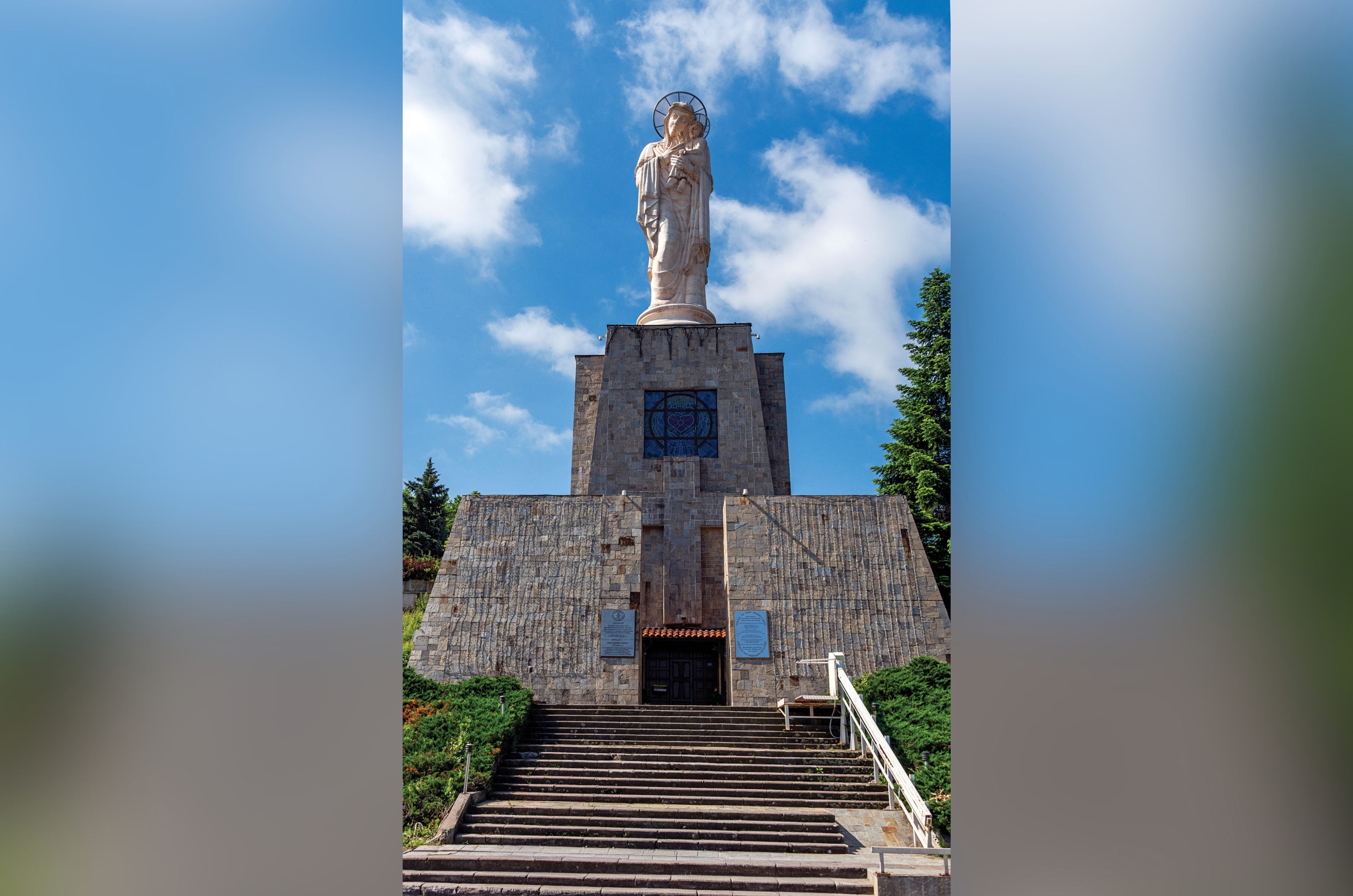
Monument of the Holy Mother of God in Haskovo.
Haskovo is a quaint town with a slow pace and none of the bustle of a European city, but it boasts a Guinness record for having the towering Monument of the Holy Mother of God, the tallest statue of the Virgin Mary and Baby Jesus in the world. Naturally, we had to check it out before we headed further.
Crossing countries in Europe is the equivalent of crossing states in India. There are no significant border checks or passport-control booths. A board with the blue EU flag and the name of the country is all you will see.
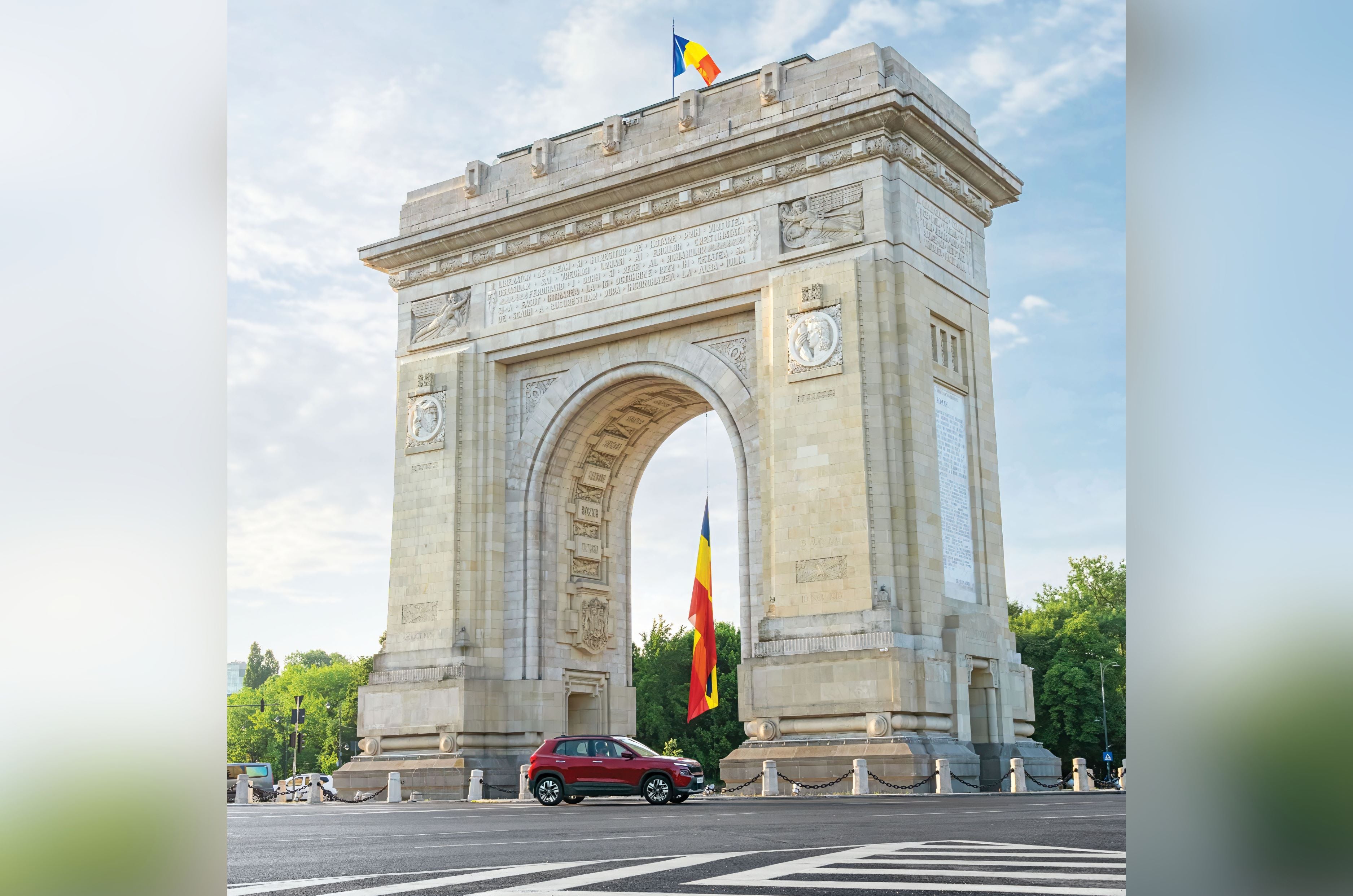
Romania’s Arcul de Triumf an ode to the one in Paris.
We crossed into Romania rather unassumingly and headed for Bucharest. The capital is picturesque and is also colloquially known as “Little Paris”. Like the Arc de Triomphe in Paris, Romania too has its own version. A tad smaller in comparison, but just as iconic.
However, what takes the cake is the Parliament Building, formally known as the Palace of the Parliament, which is also the heaviest building in the world, standing at approximately a ridiculous 4,098,500 tonnes. We couldn’t verify that, but since the Kylaq looked like a mere speck in front of it, it was all the proof we needed.
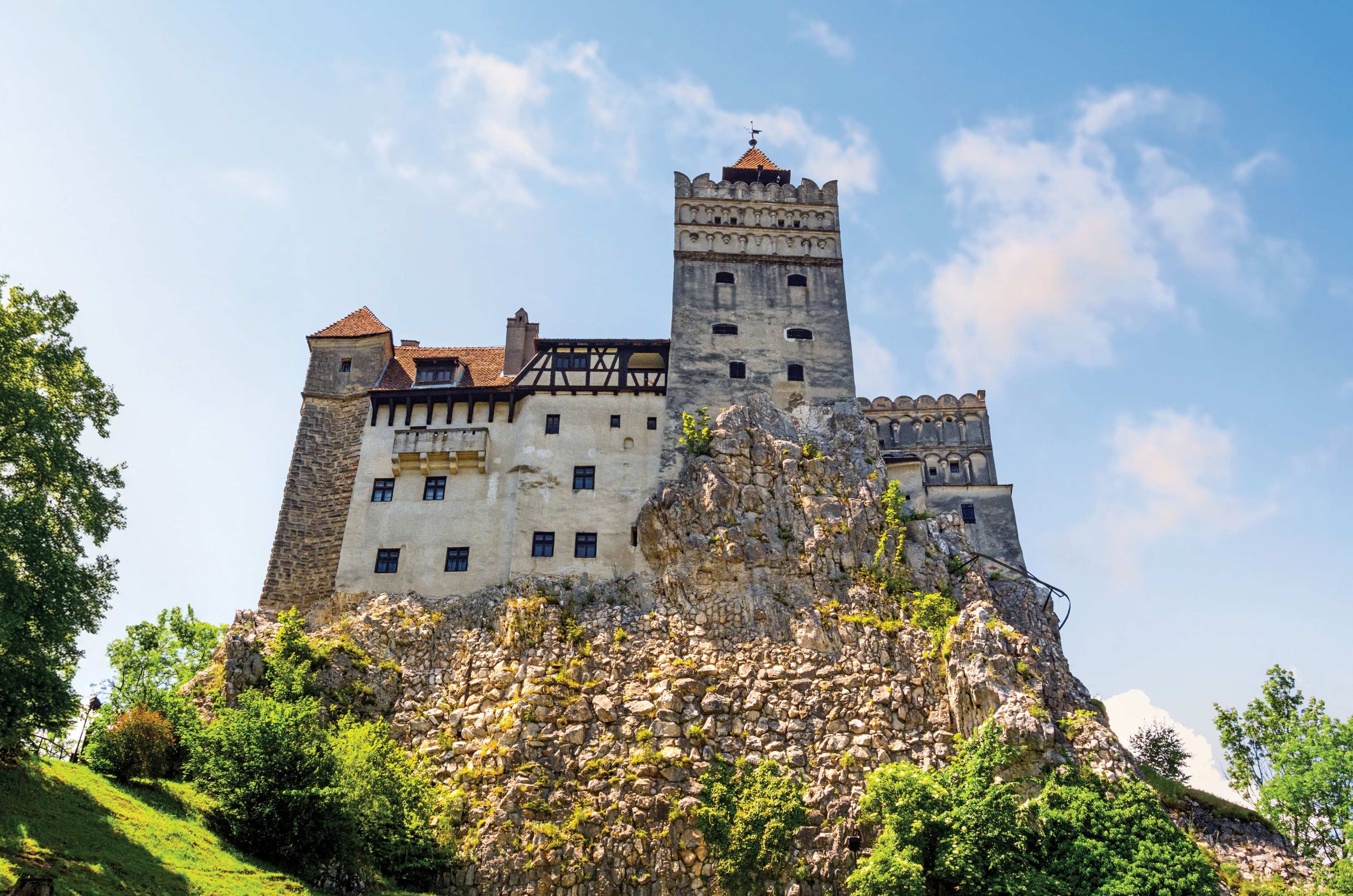
Bran Castle is widely marketed as Dracula’s home.
Bucharest also has a thriving nightlife, with the quiet cobbled streets turning into party hubs post-sunset. As we headed towards Hungary, we couldn’t help but make a stop at Bran Castle. Despite the myth that it was once home to the famous Dracula, there is nothing but merchandise at the foot of the castle to prove that claim. Historians have dismissed the claim and, while it is fascinating, there is plenty of evidence against it. Still, that did not stop us from buying some fake vampire teeth and Dracula magnets.
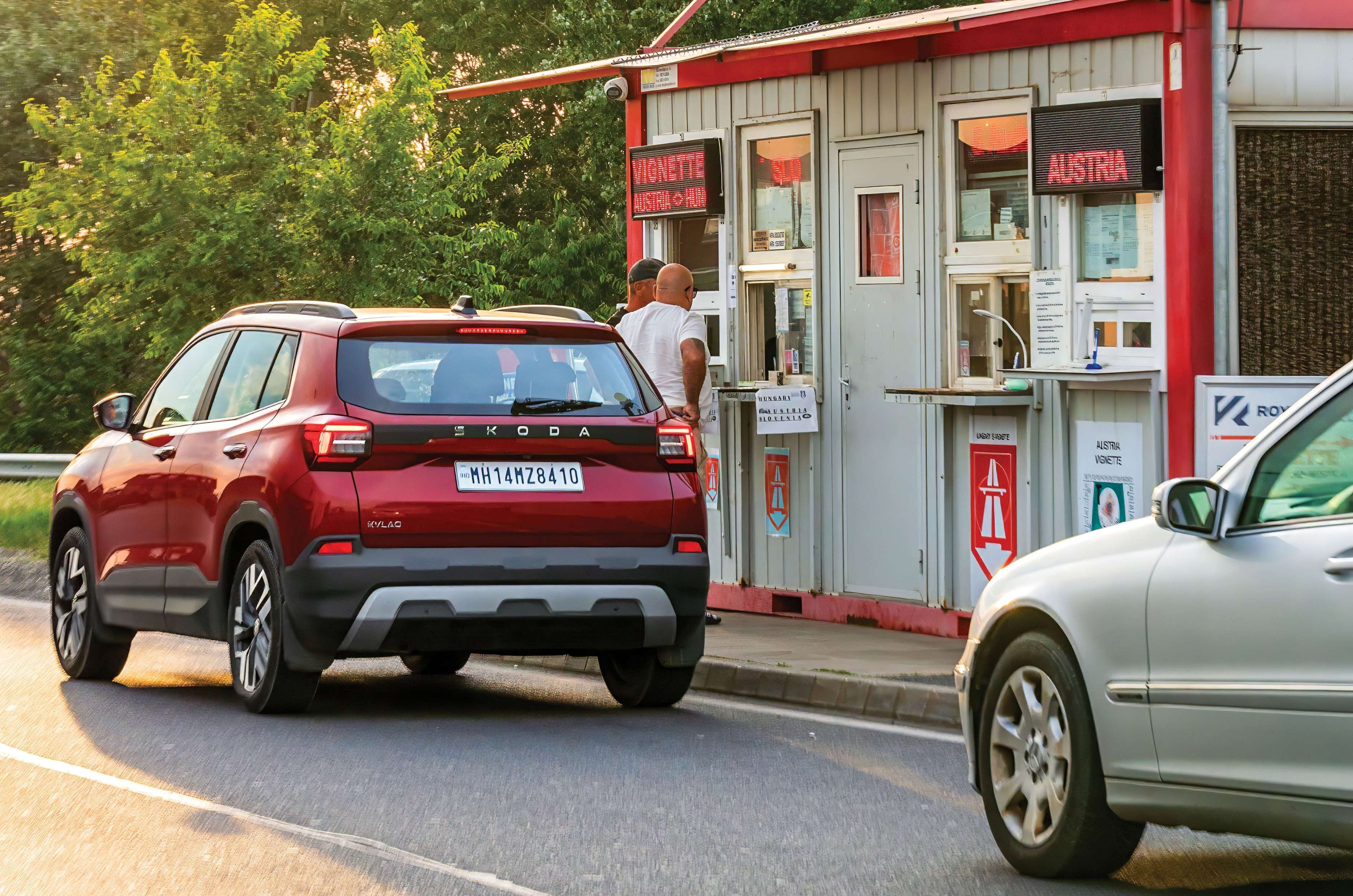
Vignette is Europe’s FASTag and is essential on the freeways.
From the shores of the Black Sea, we drove into landlocked Hungary. The drive to Budapest was long, but thanks to Europe’s seamless highways, it was light work for the Kylaq. In Europe, it just blended in with the other cars, and at no point did it feel out of place. It might have been built in India, but it felt every bit as European as it got closer to Prague.
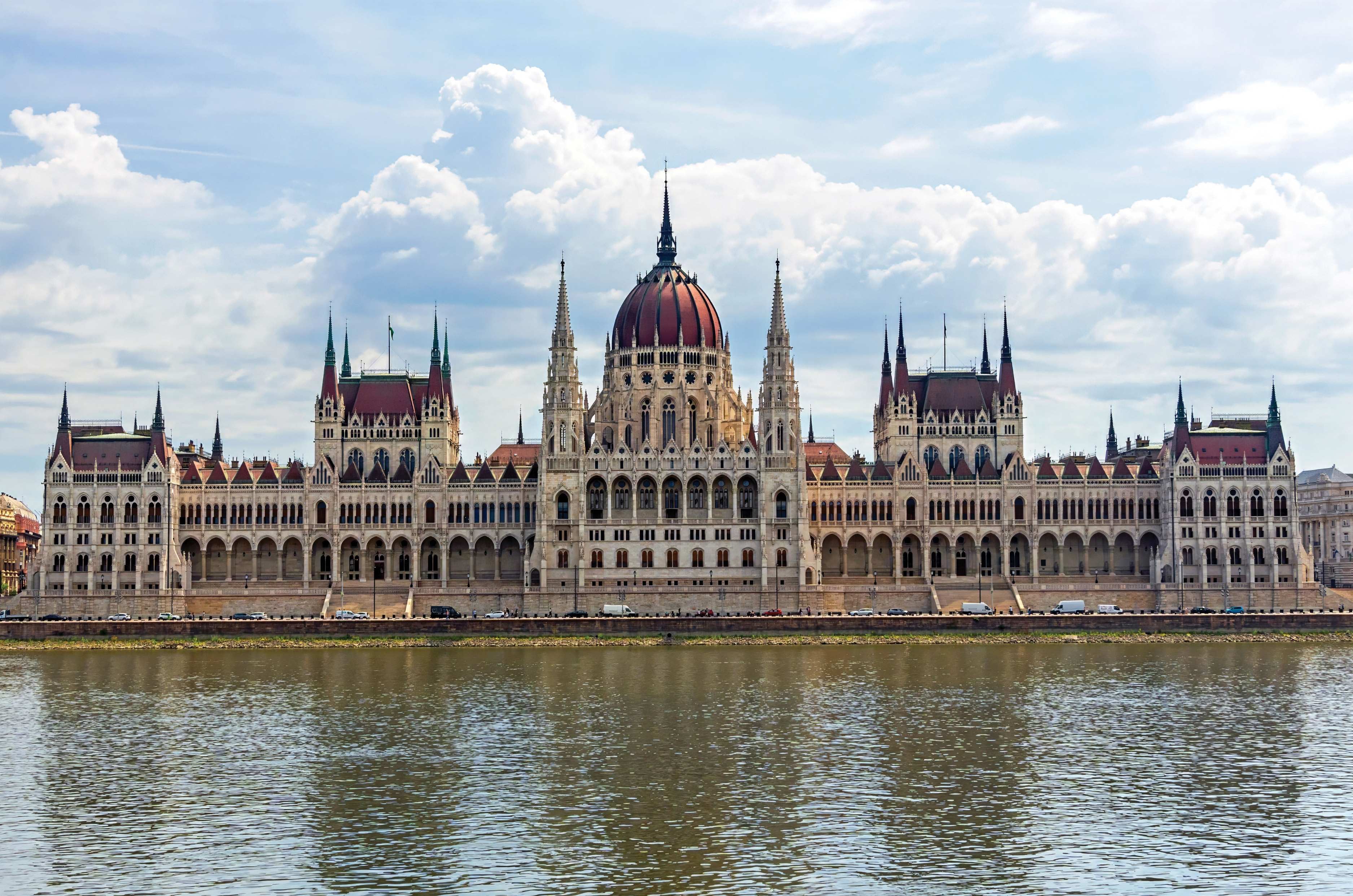
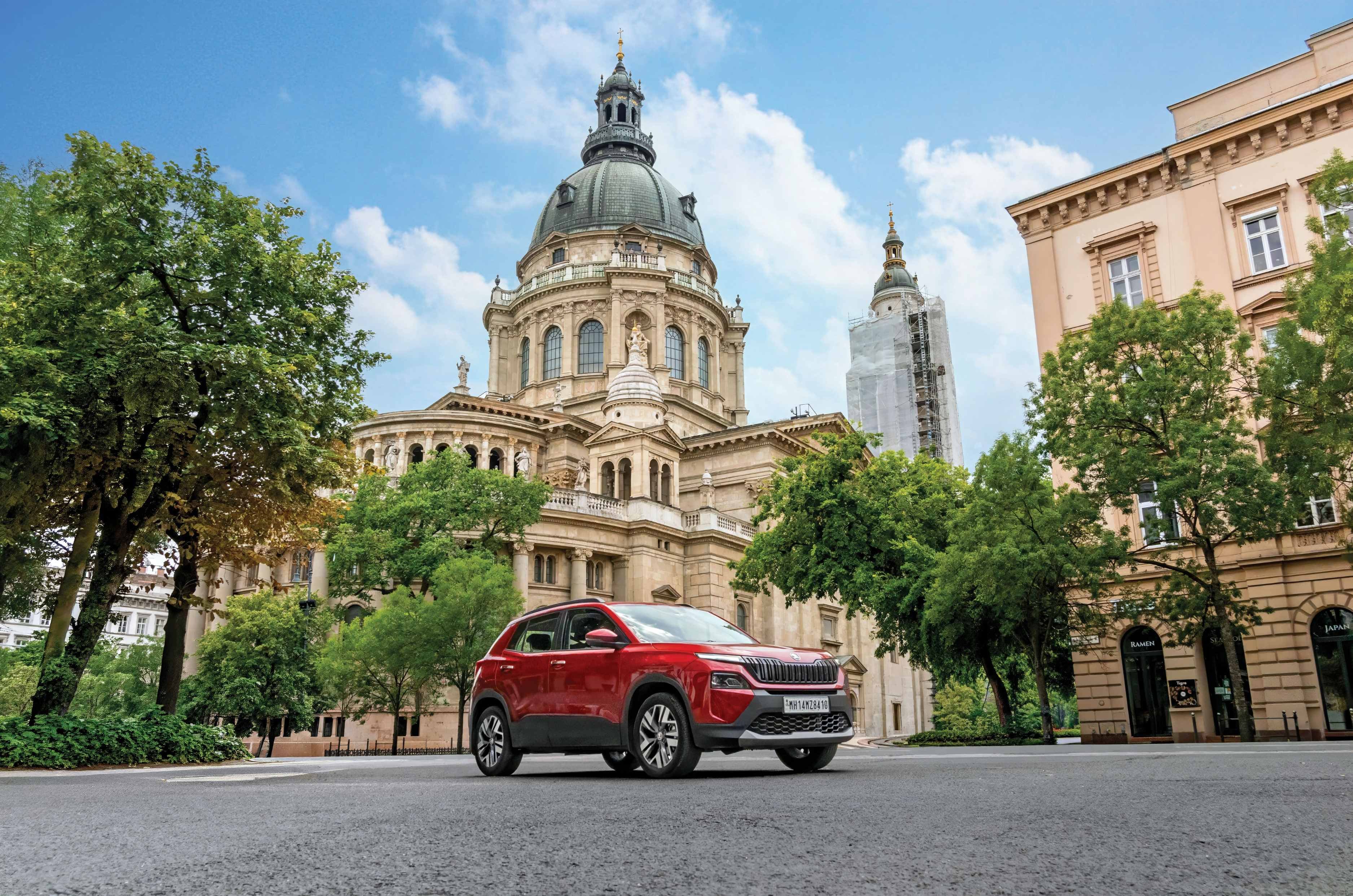
Budapest’s Parliament Building sits by the banks of the Danube River.
As we drove by the banks of the Danube, we were in awe of the stunning Hungarian Parliament Building. Budapest is also known for its bridges, with as many as 13 iconic ones, each with its own identity.
St. Stephen’s Basilica is the largest church in Budapest.
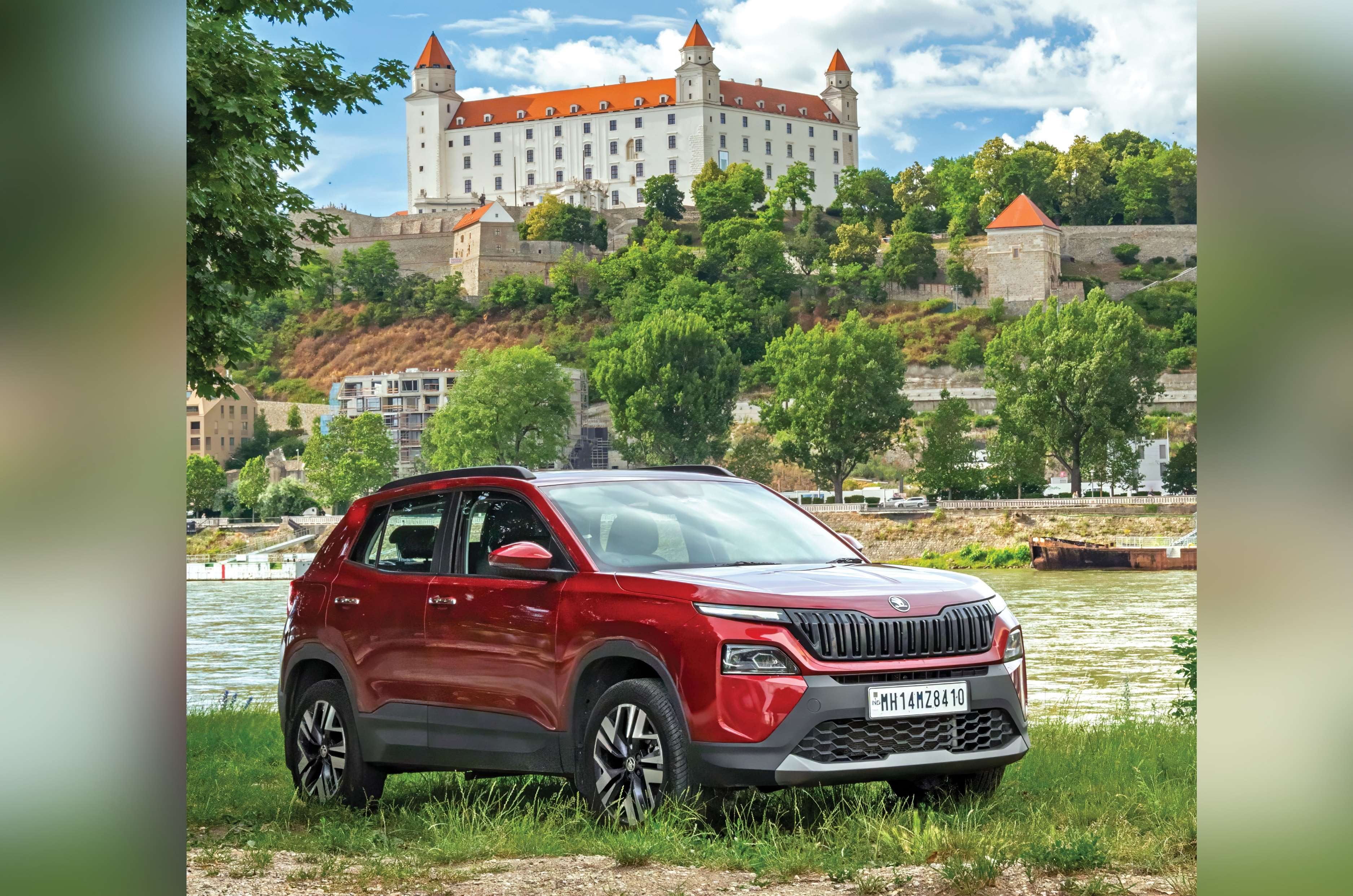
The last country before we entered the Czech Republic was Slovakia. The small country, with a quarter of the population of Mumbai, has a rather interesting Indian connection, as we found out in the pedestrian-only zone of its capital, Bratislava. Bratislava was visited by Pt. Jawaharlal Nehru in 1938, along with a young Indira Gandhi, regarding the freedom movement under British rule.
Bratislava Castle, built in the 13th century on the banks of the Danube, is now a museum.
The town square is also an open market with rich produce, handmade jewellery and a lot more. After buying the last few souvenirs before our bags exploded, we were set for the home stretch.
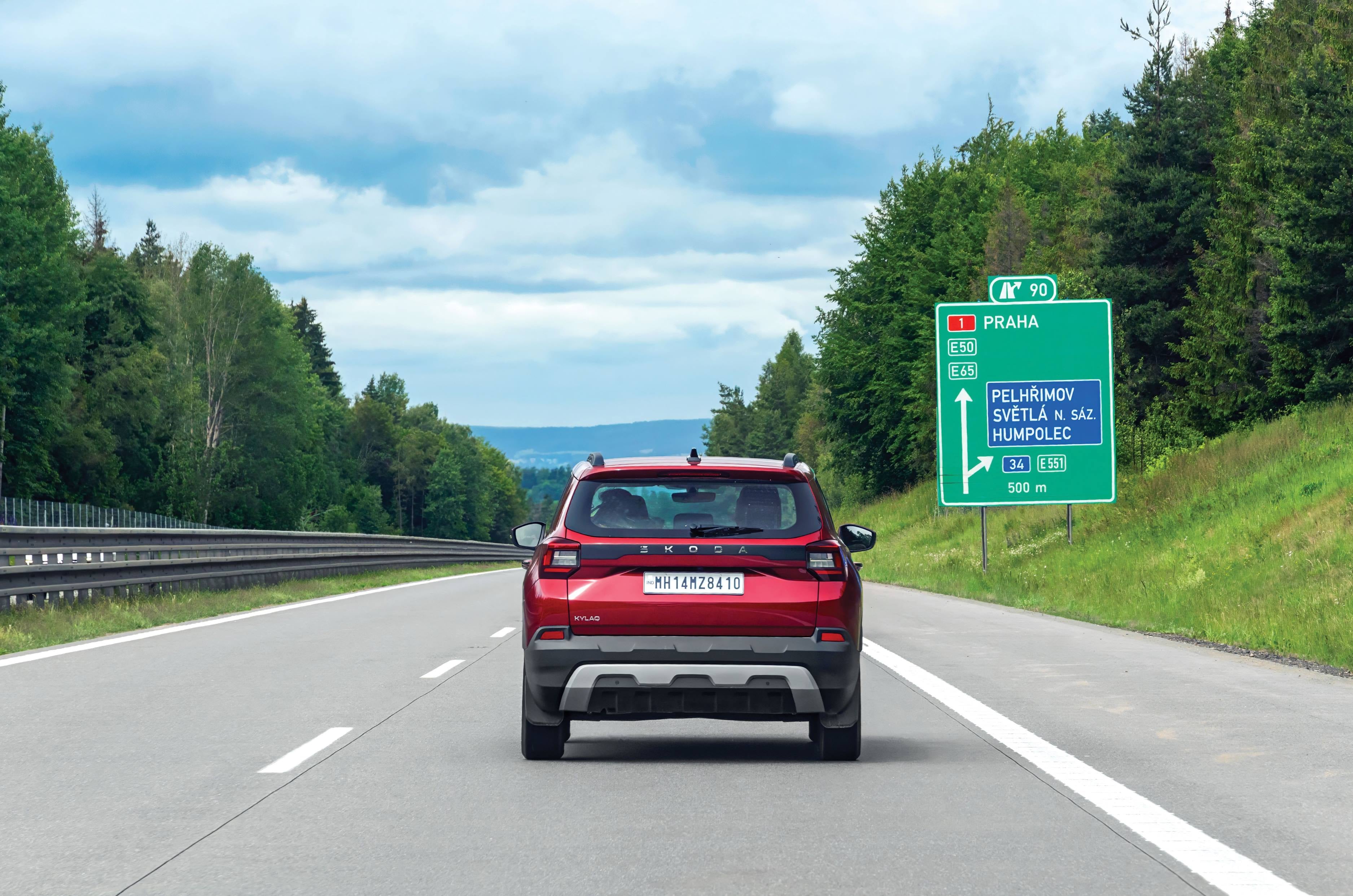
Prague boards were the beginning of a bittersweet end.
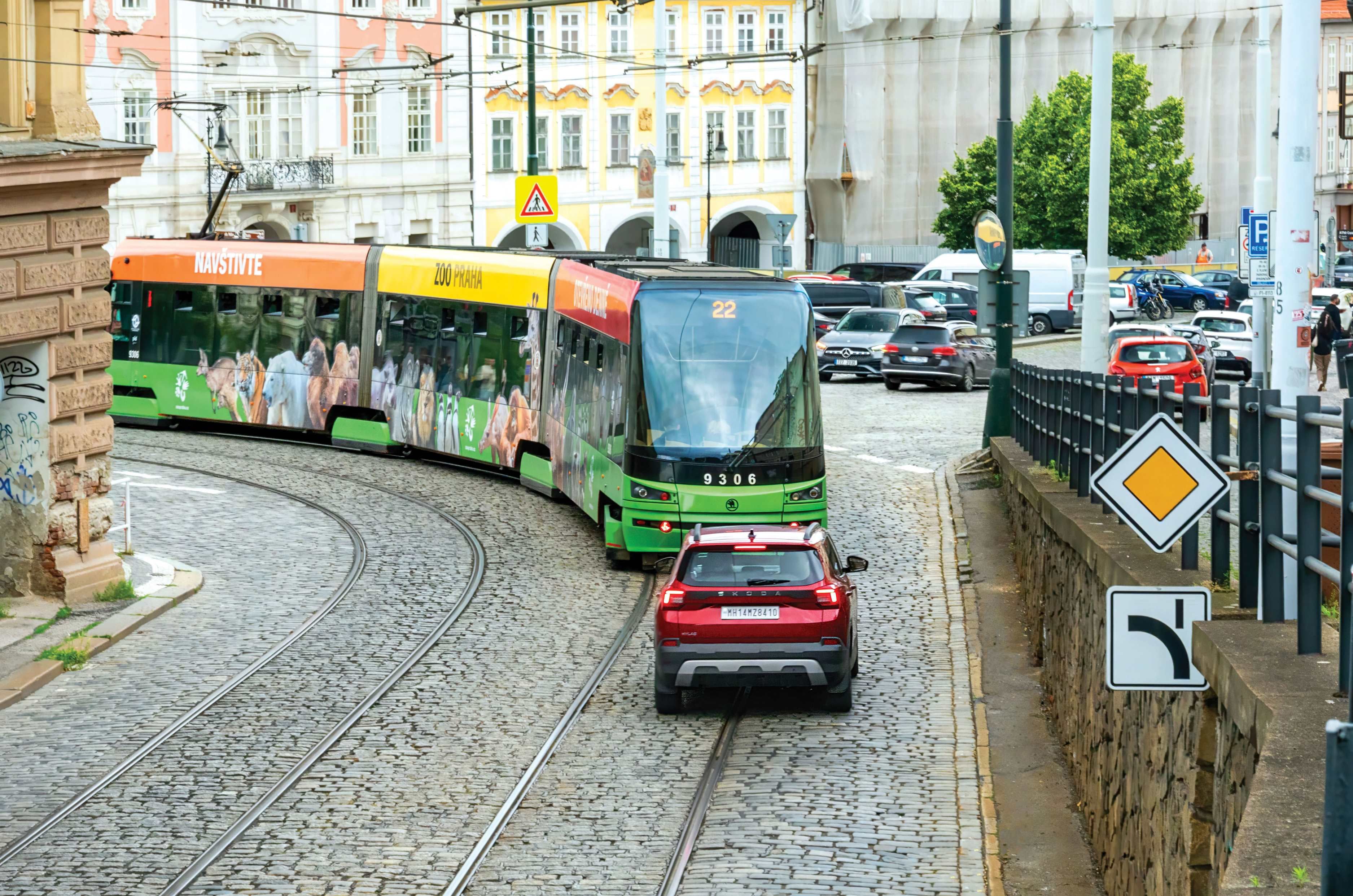
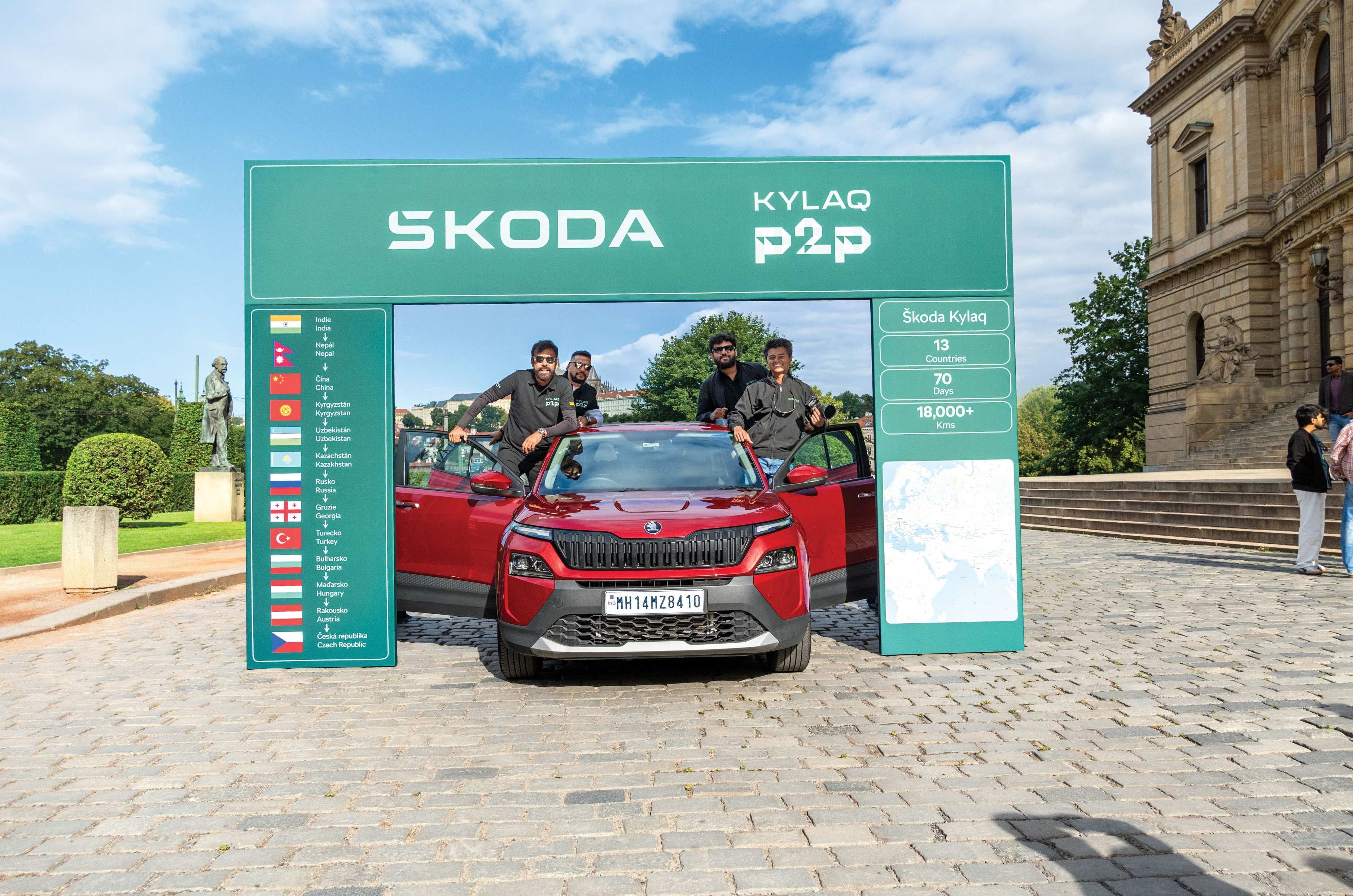
Prague was no more than 200-odd kilometres away, and the bittersweet feeling of it all coming to an end loomed over each and every one of us. As we crossed Brno and got closer to Mlada Boleslav (Skoda’s headquarters), we all reminisced about how gigantic this drive had been. Seventy days, almost 20,000km and not a single fault with the car, not even a puncture.
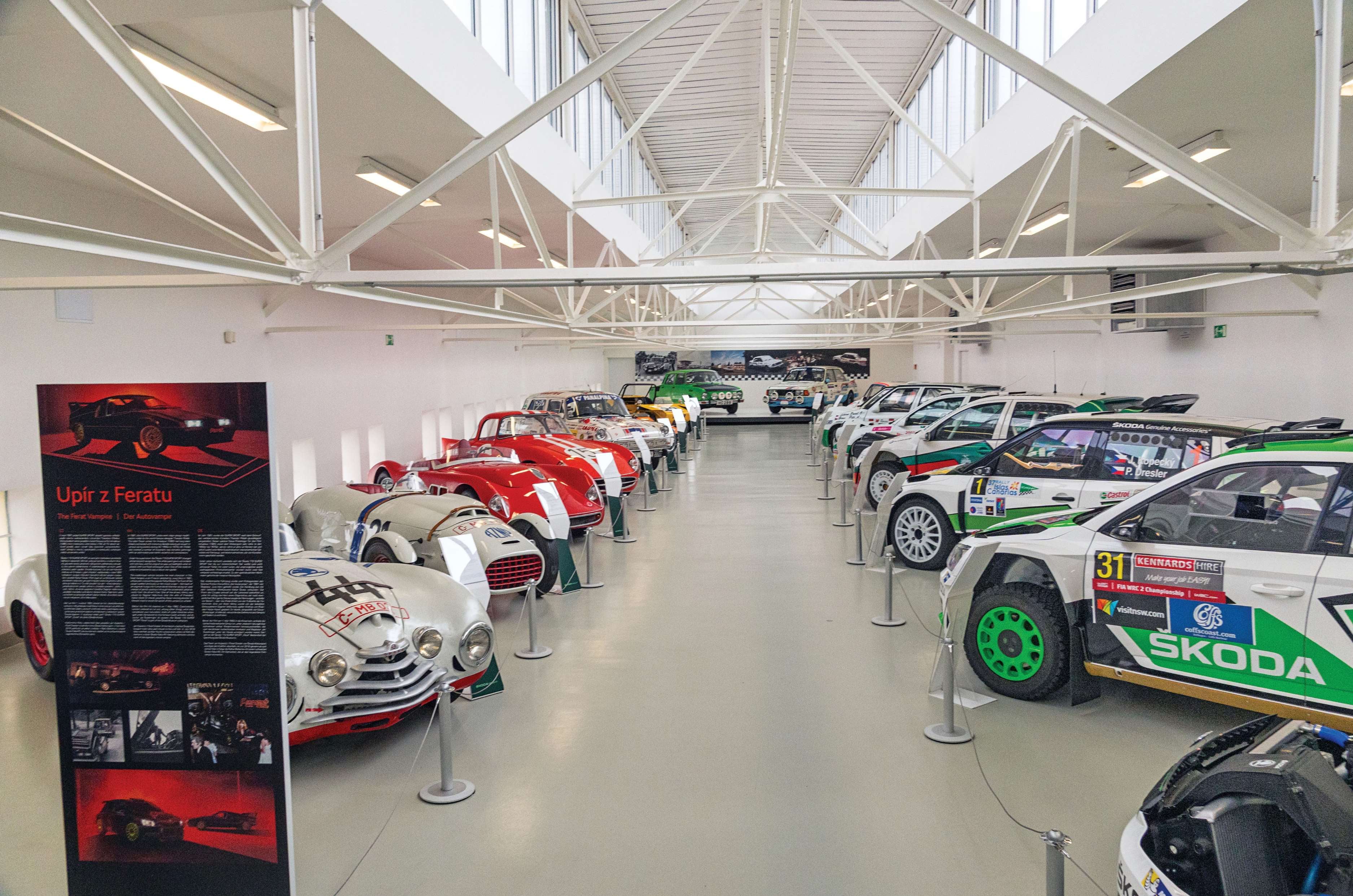
Rich history of rally and motorsport at the Skoda museum.
We crossed the Skoda factory gates with employees gazing in amusement and confusion. They had never seen this car, but strangely, it had a Skoda logo. As we parked the car near the iconic museum that preserves over 130 years of history, we had to peek in and see where it all started.
The fact that a simple bicycle gave birth to one of the largest auto manufacturers in the world is pretty astonishing. Road cars, racing cars and rally legends, Skoda has done it all. A reputation built over a century for being tough, resilient and deeply desirable.
Watching the Indian-made Kylaq sitting proud and faultless in the gleaming sunlight against the backdrop of Prague Castle, looking exactly like it did on the factory floor in Chakan, only proves that the 130-year-old ethos is still the same, no matter where Skoda builds a car.
The final picture in the camera that will always take us back in time
In a world rapidly shifting towards more screens and fewer experiences, a drive like P2P isn’t just a rarity; it’s a statement of defiance: as long as there’s a world to explore, we will find a way to drive across it.
There are vastly different ideas of what luxury means. For some, it is craftsmanship – the quality of the materials, the precision of the detailing and the sense of occasion that comes with them. For others, it is exclusivity, space or technology. But perhaps the most valuable form of luxury today is something considerably harder to manufacture: time.
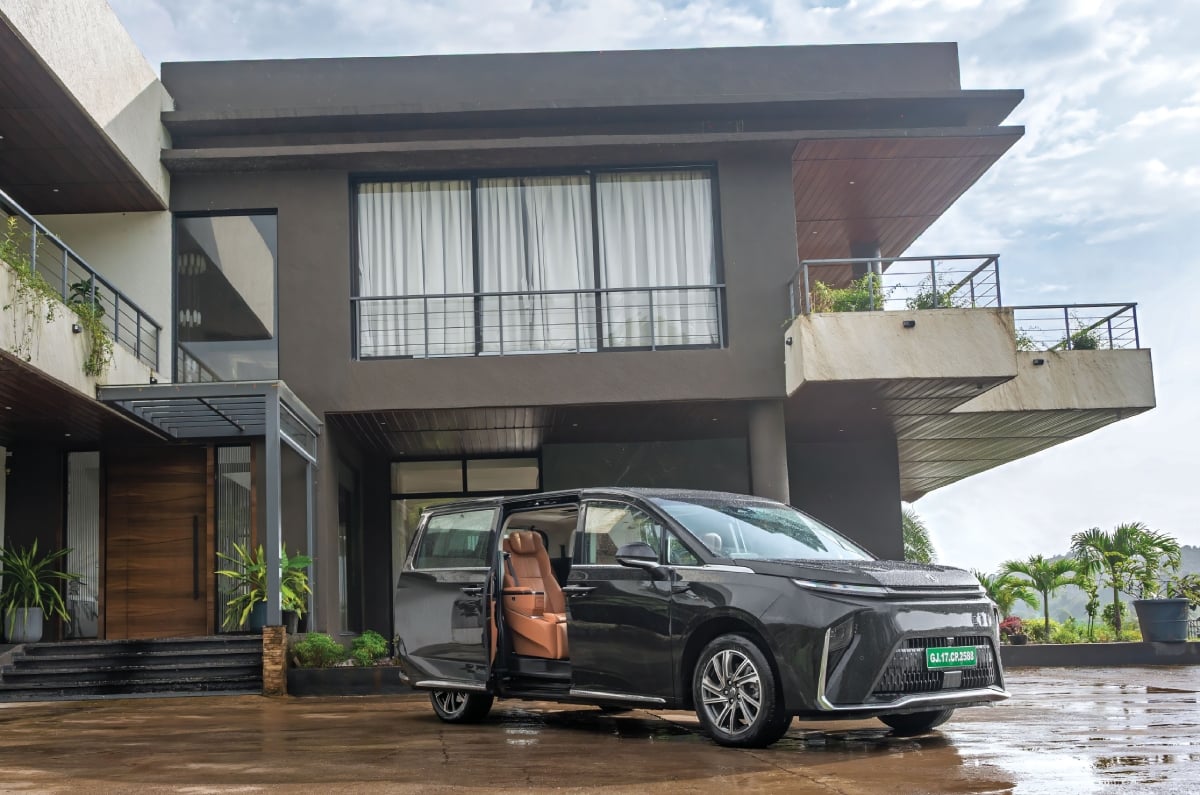
The freedom to spend a journey exactly as you want, without worrying about the road ahead, is the kind of luxury the MG M9 is built around. And nowhere is that more evident than in its Presidential second row.
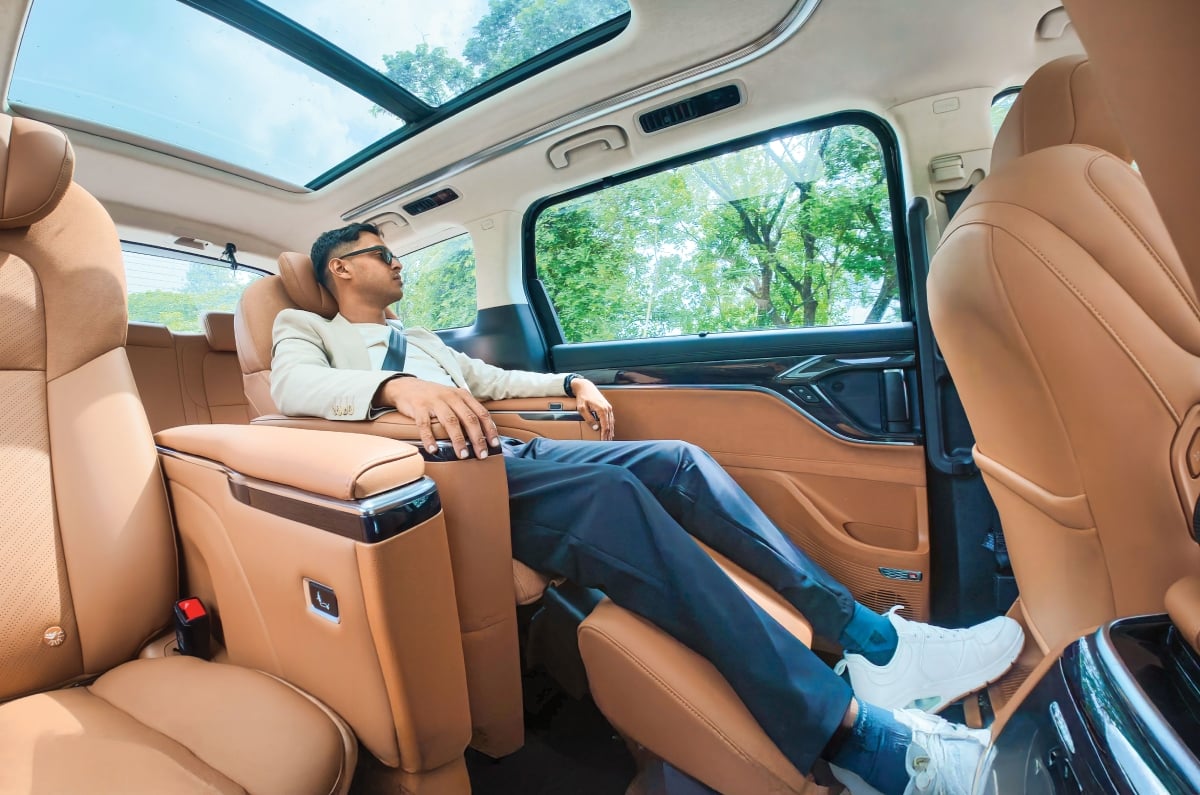
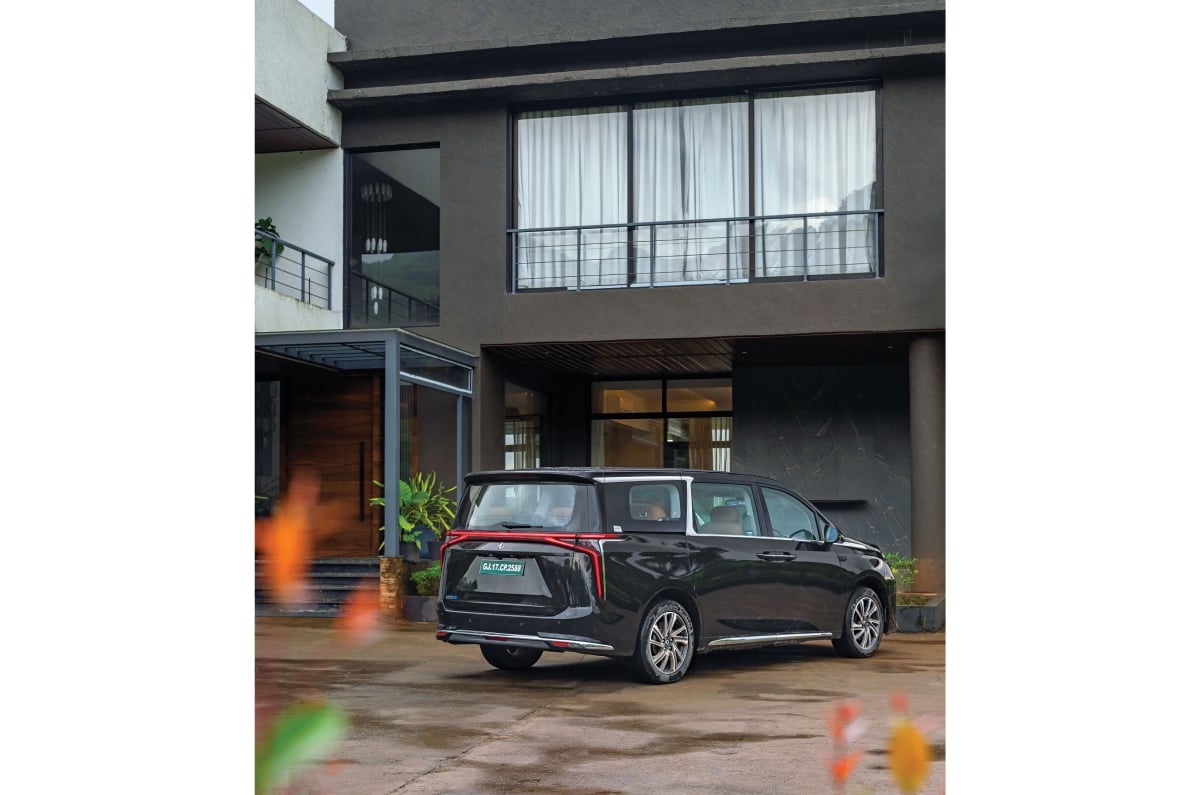
Every drive in the M9 is an opportunity to stretch out and relax.
Leaving Mumbai behind for Karjat, the M9 turns what could be a routine road trip into something rather different. The traffic, the road surface and the distance to the destination are still there, but they no longer need to occupy the passenger’s attention. The second row has been designed to make the journey itself the experience.
The two Presidential Seats are the obvious starting point. With 16-way electric adjustment, heating, ventilation and eight massage functions, they offer considerably more than simply a comfortable place to sit. Their leg rests can be extended, allowing you to get that ‘putting your feet up after a long day’ experience, and the backrests can be reclined. And particularly with Boss Mode moving the front passenger seat forward, the available space is nothing short of vast.
The M9’s Boss Mode is especially handy if you want to free up some leg room in the second row.
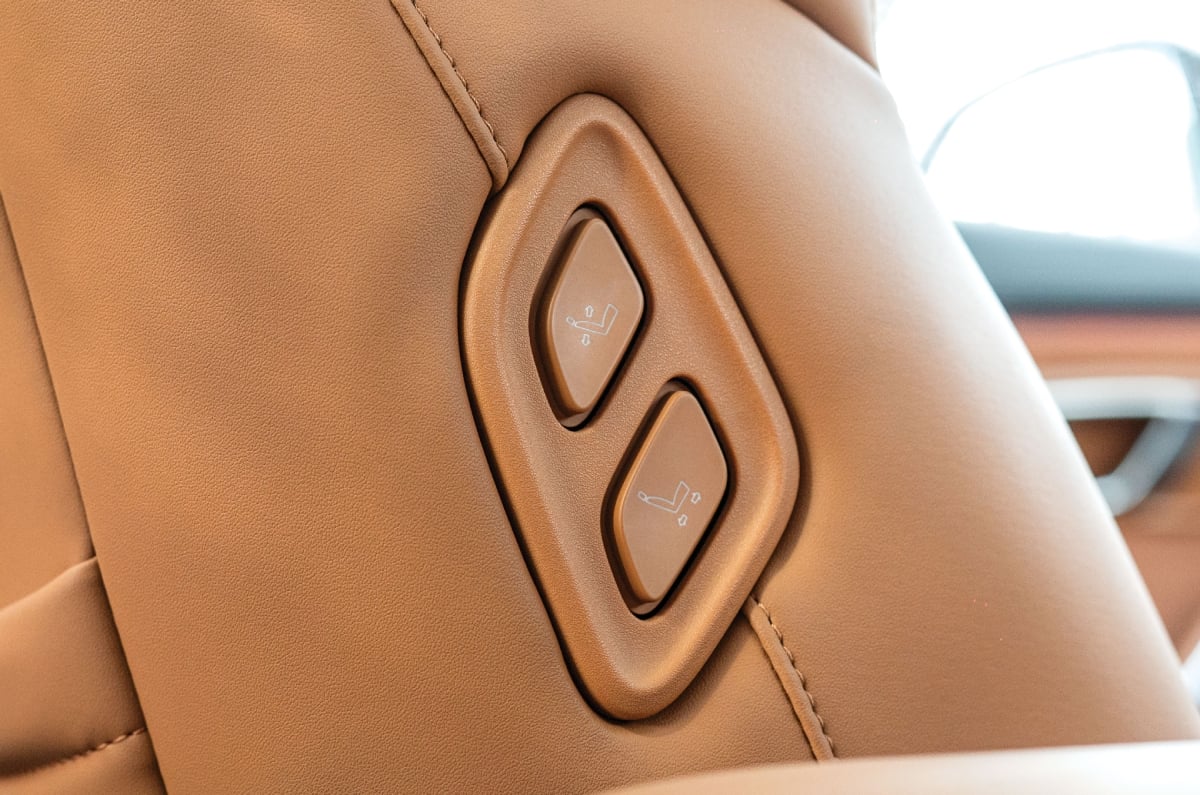
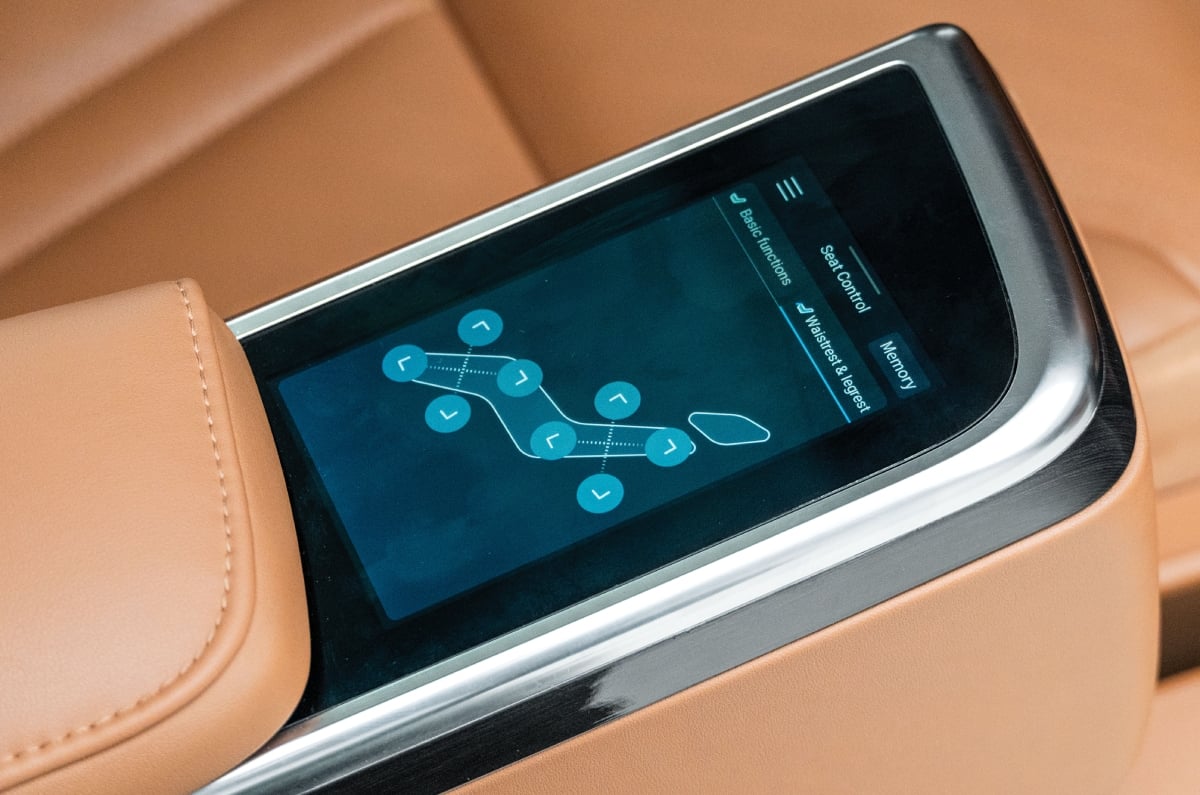
It is the sort of environment in which work can be done without feeling like work. Every major seat function is within easy reach thanks to the intelligent armrests. Not only can passengers adjust their seats’ position and temperature and regulate the AC, they can even get a massage, activate the sunroof or alter the ambient lighting. Once the laptop is closed, the M9 can change character just as easily.
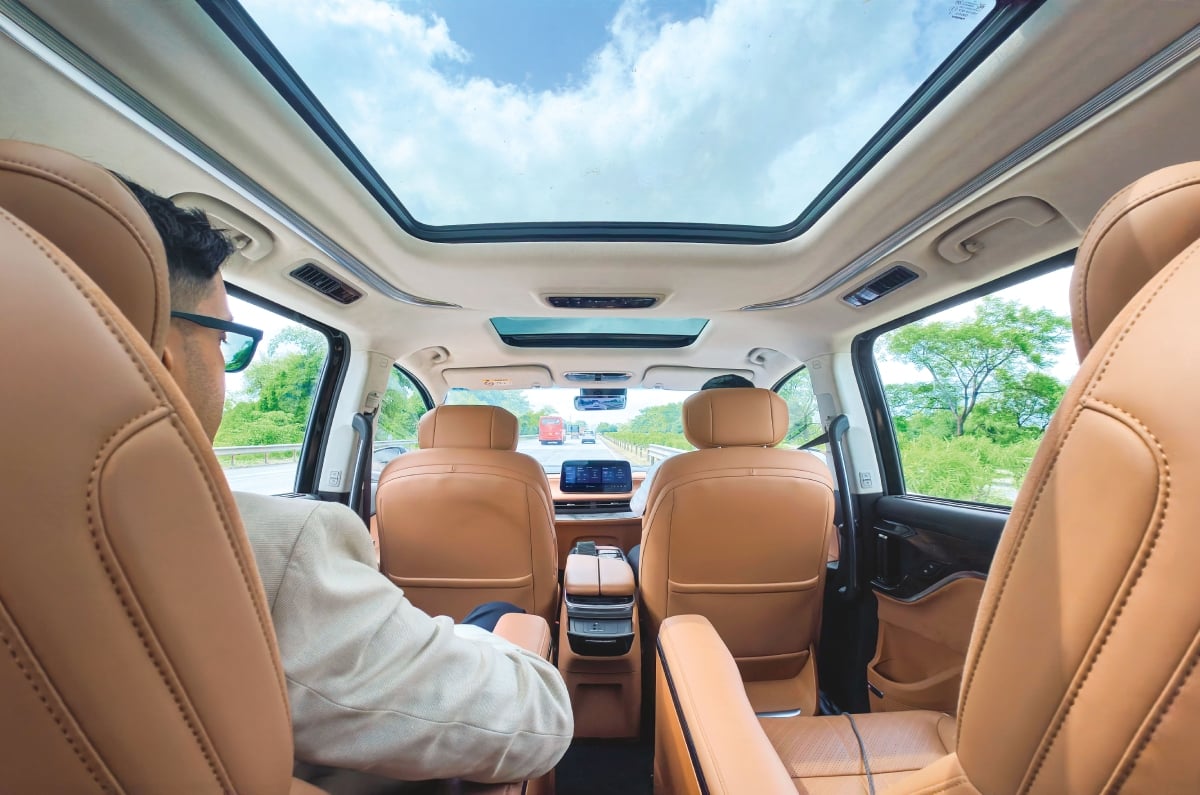
The dedicated second-row climate zone means passengers can set the temperature to their liking, while 64-colour ambient lighting allows the atmosphere to be changed from bright and functional to subdued and relaxing. The panoramic, yacht-style dual sunroof adds another layer to the sense of space, bringing natural light into what already feels more like a lounge than an MPV cabin.
The M9’s 13-speaker JBL audio system, complete with amplifier and subwoofer, takes advantage of the cabin’s excellent isolation. Even the details that are easy to overlook have been considered. There is a wireless charger, an air purifier and sunshades for the rear windows. The front seats are heated, ventilated and massaging too, while the third row gets its own air-conditioning vents and USB connectivity. This is a seven-seater, after all, and the M9 doesn’t treat the occupants furthest from the driver as an afterthought.
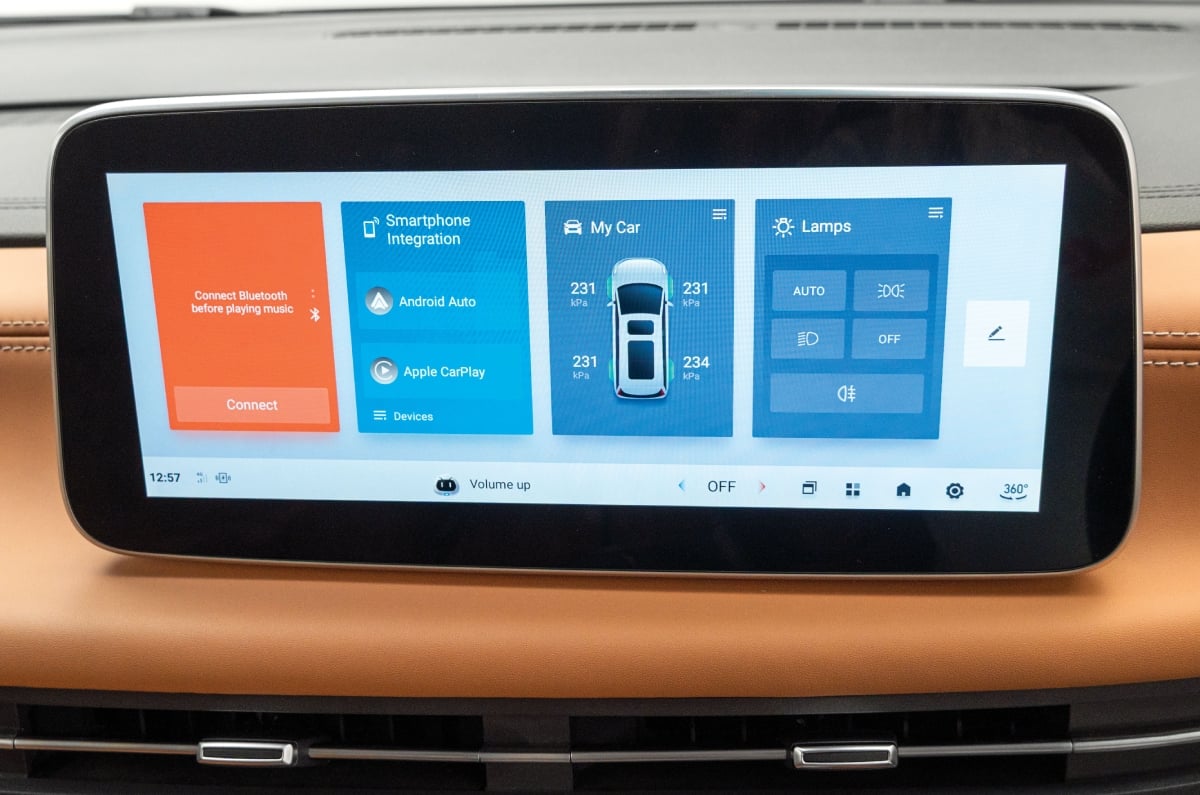
M9’s 12.3-inch central screen is loaded with useful functions and can even fully recline the second-row seats.
But it is the Presidential second row that defines the M9. And as the journey progresses, its importance becomes increasingly apparent. Mumbai’s roads aren’t always smooth. There are bumps, undulations, and speed breakers that arrive with little warning. Yet the M9’s suspension works quietly underneath, muffling sharper edges and keeping the cabin composed.
That refinement is complemented by the electric powertrain. A 90kWh NMC battery feeds a front-mounted motor producing 245hp and 350Nm, with a claimed range of 548km. But for those in the back, the more important numbers are the ones that don’t appear on a specification sheet: how little noise enters the cabin, how smoothly the M9 gathers speed and how rarely the occupants are reminded of the machinery doing the work.
Seat massage and adjustment controls are neatly built into second-row armrests.
As Mumbai’s traffic thins out, the road begins to wind through the green, mist-covered hills approaching Karjat, and the monsoon transforms the landscape into a succession of views worth looking at.
The M9 takes the inherent practicality and space of an MPV and reorganises them around the passenger. Its Presidential second row isn’t simply a collection of luxury features; it is the point around which the entire vehicle’s character revolves.
And the response has been encouraging. The M9 has found more than 2,500 buyers in less than a year, the surest sign that the idea of luxury is changing. It is becoming less about arriving with a sense of occasion and more about making the journey itself feel effortless.
Because when someone else is worrying about the road, the greatest luxury isn’t necessarily having somewhere better to go. It is having the time – and the space – to enjoy getting there.
भारत राष्ट्र-राज्य के 145 करोड़ लोगों, एक अरब यानी कोई सौ करोड़ मतदाताओं के रिकॉर्ड की डिजिटल चाबी और मतदाता सूचियों की धांधली के पासवर्ड का नाम है—सीमा खन्ना। दुनिया कृत्रिम बुद्धिमत्ता (AI) से निरंकुश राक्षसी तंत्र (Despotic System), डिजिटल तानाशाही की जिन आशंकाओं में उसके प्रोटोटाइप की झलक देखती है, उसकी एक भारतीय प्रतीक, नमूना हैं चुनाव आयोग की सीमा खन्ना (डायरेक्टर जनरल, इन्फॉर्मेशन टेक्नोलॉजी, चुनाव आयोग)।
सवाल है कैसे यह महिला भारत के एक अरब मतदाताओं की डिजिटल मतदाता सूची के दरवाजे की चाबी? तो जान ले बात मामूली वेबसाइट या ऐप की नहीं है। मतदाताओं को काटने-जोड़ने व मतदाता सूचियों को जैसा चाहे बनाने वाले, कंट्रोलर याकि ECINet की बनवाई डिजिटल व्यवस्था है। इसमें चुनाव आयोग ने अपने चालीस से अधिक apps और portals को समेटा-बांधा हुआ है। मतदाता का registration, application, voter list में नाम, e-EPIC, शिकायत—सब इसी ecosystem में। चुनाव आयोग इसे “one unified platform” कहता है। जनवरी में इसके औपचारिक लॉन्च पर मुख्य चुनाव आयुक्त ज्ञानेश कुमार ने बेशर्मी से झूठ बोला था कि इसे कानून के अनुरूप बनाया गया है। DG-IT सीमा खन्ना ने तब कहा—technology अब support function नहीं, strategic enabler है; ECINet transparency, efficiency, credibility और public trust बढ़ाता है।
पर इसी को लेकर चुनाव आयोग के बाकी दो चुनाव आयुक्त—सुखबीर सिंह संधू और विवेक जोशी—ने फाइलों में अलग लिखा। चार नवंबर 2025 को Deputy Election Commissioner ने सीमा खन्ना और दूसरे वरिष्ठ अफसरों को लिखकर साफ किया—ERO, DEO और CEO के जो statutory functions हैं, वे उन्हीं को करने हैं, किसी और को नहीं। आईटी सिस्टम कानून के अनुरूप होना चाहिए, “without any exception”। फिर 2 जनवरी को सीमा खन्ना को दोबारा लिखा गया—software ऐसा हो कि ERO को कानून से मिली discretion किसी तरह restricted न हो।
भला क्यों लिखना पड़ा?
क्योंकि मतदाता सूची की संवैधानिक-वैधानिक व्यवस्था का मूल विचार उलटा पड़ रहा था। दिल्ली में कोई एक बाबू (यानी सीमा खन्ना की चाबी, उसका पासवर्ड, उसके access point) बैठकर देश की voter list नहीं बनाता। constituency में Electoral Registration Officer होता है। वही कानून से अधिकृत अधिकारी है। नागरिक उसके सामने दस्तावेज देता है। वह जांचता है। वह तय करता है कि नाम जुड़ेगा या हटेगा।
लेकिन अब बीच में मशीन थी। और मशीन की चाबी दिल्ली में! एक आईटी अफसर के हाथ में (मतलब प्रदेशों के चुनाव अधिकारियों, आईएएस अफसरों, कैबिनेट सचिव से लेकर पूरी नौकरशाही में किसी के भी पास नहीं। न मंत्रियों के पास। न ही मंत्रिमंडल, मंत्रालयों आदि किसी के प्रति accountable, जवाबदेह)।
16 अप्रैल 2026 को चुनाव आयुक्त संधू ने खुद फाइल पर दर्ज किया कि IT division ने पिछले कुछ महीनों में कई नए modules और portals विकसित किए, लेकिन उन्हें न तो इसकी जानकारी दी गई और न वे Commission के सामने रखे गए। उन्होंने यहां तक लिखा कि उन्हें नए developments का पता मीडिया से चल रहा है। उन्होंने कहा—DG-IT सभी Commissioners को जानकारी दें और जरूरी approvals लिए बिना गतिविधि न करें।
फिर 29 मई 2026 को दूसरे चुनाव आयुक्त विवेक जोशी ने खतरे का असली नाम लिखा—“gradual centralisation of the electoral roll database.” और इलाज भी सुझाया। स्वतंत्र audit हो। IIT जैसे बाहरी विशेषज्ञ से जांच कराई जाए और certify किया जाए कि voter database में बदलाव करने की credentials संबंधित statutory authorities के अलावा किसी के पास नहीं हैं।
सोचें, खुद भारत के Election Commissioner कह रहे है—जांच कराओ कि देश की voter list बदलने की digital credentials किस-किस के पास हैं! फिर अगस्त में संधू ने और साफ लिखा। राज्यों के CEO, DEO और ERO बता रहे थे कि उन्हें ERONet का “proper and complete access” नहीं है। उनकी वैधानिक शक्तियां DG-IT स्तर के centralised control से सीमित हो रही हैं। संधू ने सीमा खन्ना के पद के बारे में रिकॉर्ड पर लिखा कि DG-IT को statutory authorities को कानून से मिला पूरा access और operational freedom रोकने का कोई legal authority नहीं है।
पर न चुनाव आयुक्त की सुनना। न देश के जमीनी, चुनावी अफसरों की चिंता। जाहिर है सीमा खन्ना को सुनने, परवाह करने की भला क्या जरूरत है, जब प्रधानमंत्री नरेंद्र मोदी और गृहमंत्री अमित शाह को सीमा खन्ना के कंट्रोल से वह सब प्राप्त है जो चुनावी धांधलियों के आर्किटेक्ट या अपने ही पन्ना प्रमुखों से स्क्रीन पर नाम काटने-जोड़ने का काम धड़ल्ले से फ्रॉड डिजिटल इंडिया के जरिए प्राप्त हो रहा हो?
और ‘इंडियन एक्सप्रेस’ में छपा उदाहरण हकीकत की पुष्टि है। सत्य गोवा के 97 नागरिकों के अनुभवों का है। इनके बतौर मतदाता नाम काटे जाने के बाद सुप्रीम कोर्ट में जब याचिका हुई, तब सुप्रीम कोर्ट का निर्देश हुआ। गोवा ERO/AERO ने कागज देखे। 97 लोगों को योग्य पाया। पहले उन्हें हटाने का जो फैसला हुआ था, उसे reverse करना था।
लेकिन ECINet में reverse करने का option ERO अफसरों के पास नहीं!
सो गोवा के Chief Electoral Officer के कार्यालय ने सात दिनों में आठ ईमेल दिल्ली भेजे। सीमा खन्ना को हर बार copy किया गया। 18 फरवरी को चुनाव आयोग के अपने Deputy Election Commissioner ने DG-IT को साफ लिखा कि चुनाव आयोग का IT system सुप्रीम कोर्ट के निर्देश के अनुसार जरूरी कार्रवाई को block नहीं कर सकता। ERO के निर्णय के अनुसार कार्रवाई facilitate की जाए।
फिर?
21 फरवरी को final voter list प्रकाशित हुई। वे 97 मतदाता जस के तस बाहर।
‘इंडियन एक्सप्रेस’ ने 20 सिंतबर को सभी 97 नाम जांचे। सभी 97 सूची से बाहर थे। Goa के CEO संजय गोयल ने अखबार से कहा कि उन्होंने आयोग को बताया था कि इन लोगों को शामिल किया जाना है। और फिर वह वाक्य जो पूरे Digital India को नंगा कर देता है—“The call (to not include) was theirs.” ‘इंडियन एक्सप्रेस’ ने सीमा खन्ना से पूछा कि final roll से पहले rollback facility क्यों enable नहीं की गई। अखबार के मुताबिक जवाब नहीं मिला।
तो सवाल सीमा खन्ना नाम की एक महिला का नहीं है। उन्हें कोई “एक अरब वोटरों की मालिक” नहीं कह सकता। लेकिन लोकतंत्र को यह जरूर जानना चाहिए कि एक अरब मतदाताओं के database की digital keys की architecture क्या है।
और इसका Super-admin कौन है? किसके पास read access है? किसके पास write access? कौन नाम बदल सकता है? कौन reversal रोक सकता है? प्रत्येक बदलाव का क्या immutable audit trail है या नहीं? क्या Commissioners उसे देख सकते हैं? क्या बाहरी independent audit कभी हुआ? चुनाव आयुक्त विवेक जोशी ने जो independent audit मांगा था उसका क्या हुआ?
और सबसे बड़ा सवाल—यदि देश के तीन चुनाव आयुक्तों में से दो को ही अपने चुनाव आयोग के IT architecture पर ये सवाल लिखने पड़ें, तो भारत का साधारण मतदाता किस भरोसे सोए?
पहले वोट की रखवाली कानून करता था। फिर चुनाव अधिकारी करता था। अब बीच में software खड़ा है। और यह software आया कहां से? किसने बनवाया? कैसे बना? देश में बना या विदेश में इजराइल जैसे किसी देश से बनवाया गया?
कानून मतदाता के बारे में दो टूक कहता है—ERO फैसला करेगा। और ERO कहता है कि फलां नागरिक योग्य है, वैध मतदाता है। फिर सुप्रीम कोर्ट भी कहता है—सुनो और निर्णय करो।
और सीमा खन्ना के software की screen कहती है—Access denied!
क्यों? भला कौन है इसका SUPER ADMIN? उसकी credentials किसके पास हैं? यदि ERO के पास नहीं, राज्य के CEO के पास नहीं और खुद चुनाव आयुक्तों को इस पर सवाल लिखने पड़ रहे हैं, तो आखिर उस डिजिटल दरवाजे की आखिरी चाबी किसके पास है? नरेंद्र मोदी-अमित शाह की चुनावी मशीनरी से क्या उसका रिश्ता है? क्या इनके पन्ना प्रमुखों और उसके चुनावी control rooms की voter-data machinery तथा चुनाव आयोग के database के बीच कोई तकनीकी access, interface या data-flow है? यदि नहीं, तो चुनाव आयोग ने अब तक, ऐसे भंडाफोड के बाद भी सार्वजनिक रूप से स्पष्ट दवाब क्यों नहीं दिया?
हे राम! यह है मां भारत का Digital India—मनुष्य प्राणियों को वैध और अवैध ठहराने वाले यमराजों के दरवाजों के चौकीदारों का मोदी राज! क्या नहीं?
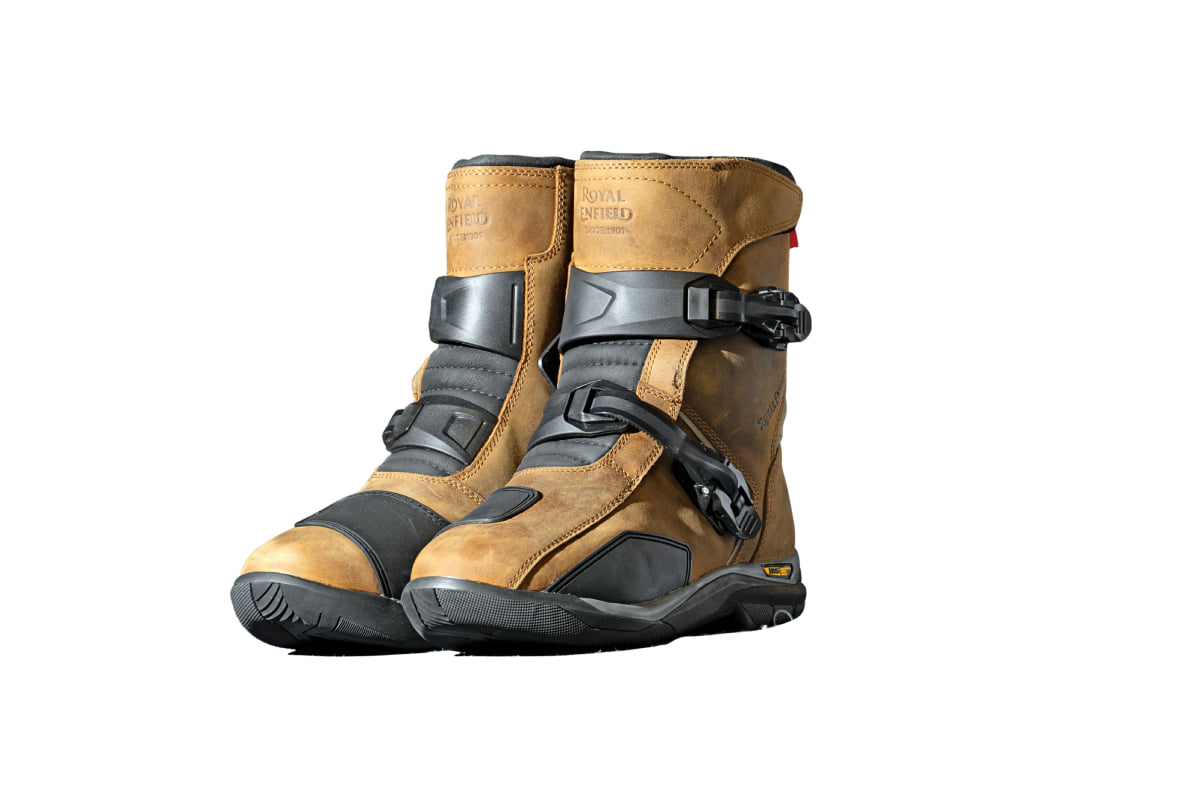
These are versatile riding boots that sit between an everyday motorcycle boot and a more rugged touring option. They use leather as the primary outer material and feature a sturdy construction with a grippy sole. For waterproofing, the boots use a membrane/liner and sealed seams.
They feel substantial and sturdy when you first put them on. They weren’t uncomfortable but didn’t have the flexibility you would expect. It took around 500-600km of riding for them to properly break in. Once they did, the difference was quite noticeable. They became more comfortable and allowed greater freedom of movement. They also started feeling more natural when walking around off the bike, which is important for a pair of boots that you’re likely to use as a daily option in the rainy season.
On the motorcycle, these boots give you a good sense of security. They feel sturdy around your feet and ankles, and the solid construction with TPR protectors in the heel cup, toe box, and ankle inspires confidence while riding. Whether shifting gears, using the rear brake or standing on the pegs, they were secure without feeling cumbersome.
The boots are also alright for some mild off-road riding. I wouldn’t recommend them for particularly technical or hardcore trails, where a dedicated off-road boot would offer greater protection, but for lighter trails and the occasional gravel or dirt section, they get the job done.
The waterproofing, however, is where these boots have a limitation. During shorter rides, they performed well. I used them extensively around the city and encountered wet conditions without any water seeping through. Even for longer commutes of 50-60km, the waterproof liner did a good job of keeping water out.
However, things changed on a longer tour. After around 300km of riding in wet conditions, water eventually started making its way inside the boots. Of course, this also depends on the intensity of rain and how much water is hitting each boot. From my experience, more water seeped into the right boot compared to the left. So, I’d be more inclined to recommend the Wanderers for city use and shorter weekend getaways rather than long rides. Additionally, once they get wet from the inside, they take quite some time to dry out. In other respects, the boots work really well as touring footwear.
Priced at Rs 9,990, they offer a good mix of protection, comfort and versatility, especially once they have been properly broken in.
The Revolutionaries में Bhuvan Bam जिस क्रांतिकारी का किरदार निभा रहे हैं, उनकी असली कहानी भी बेहद दिलचस्प है। 🇮🇳
मिलिए रासबिहारी बोस से—उस क्रांतिकारी से, जिन्होंने नेताजी सुभाष चंद्र बोस से पहले आज़ाद हिंद फ़ौज का सपना देखा था।
अंग्रेज़ों को चकमा देकर जापान पहुंचने से लेकर INA की नींव रखने तक, आइए जानते हैं रासबिहारी बोस के उस सफर के बारे में, जिसने भारत की आज़ादी की लड़ाई को एक नई दिशा दी।
[Rash Behari Bose Revolutionary Story, The Revolutionaries Bhuvan Bam Series, Real Story Of Rash Behari Bose, Rash Behari Bose Escape To Japan, Rash Behari Bose Role In INA, Indian Freedom Fighters Untold Stories]
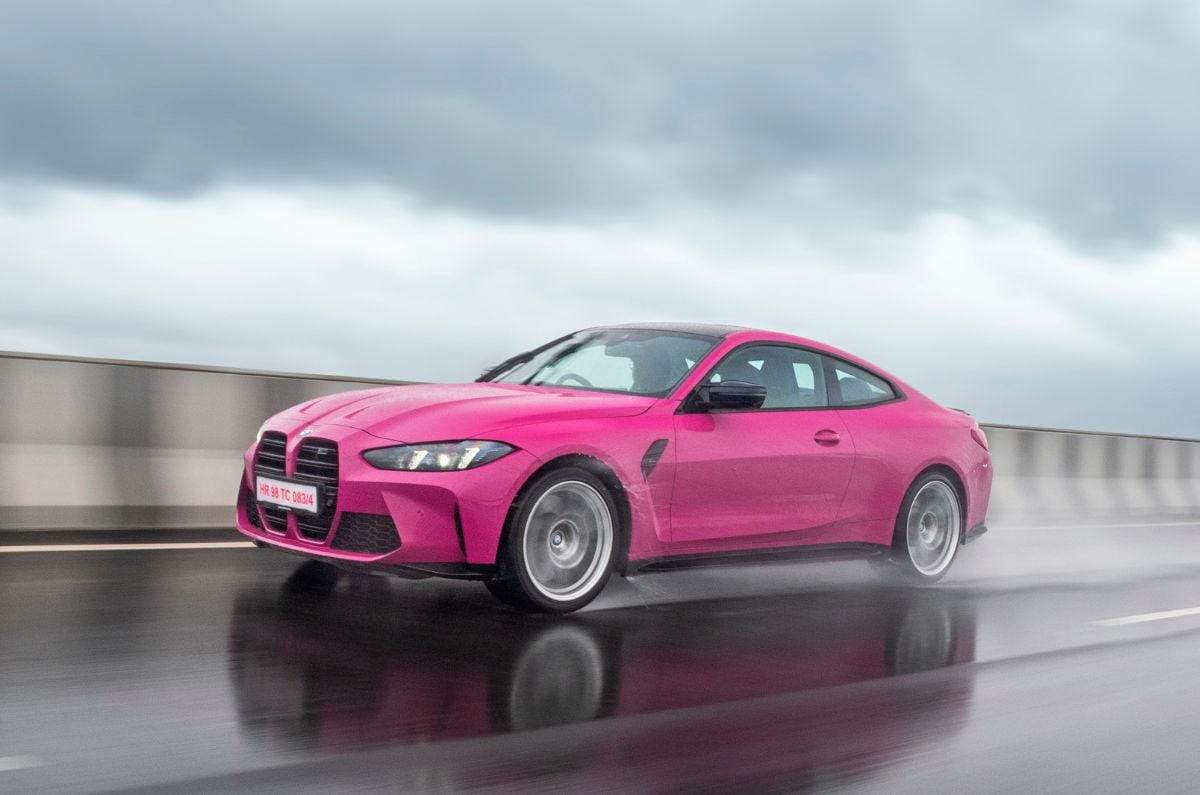
This G82-gen BMW M4 that you see has been on sale internationally since 2020, it came to India in 2022, and it even received a facelift (LCI or Life Cycle Impulse in BMW speak) a few years back. Yet, somehow, we never got a chance to drive it on Indian tarmac all these years. Now, however, we’ve finally spent some meaningful time with the BMW M4 Competition on home turf to see what it’s like.
BMW M4 Competition exterior design and engineering – 8/10
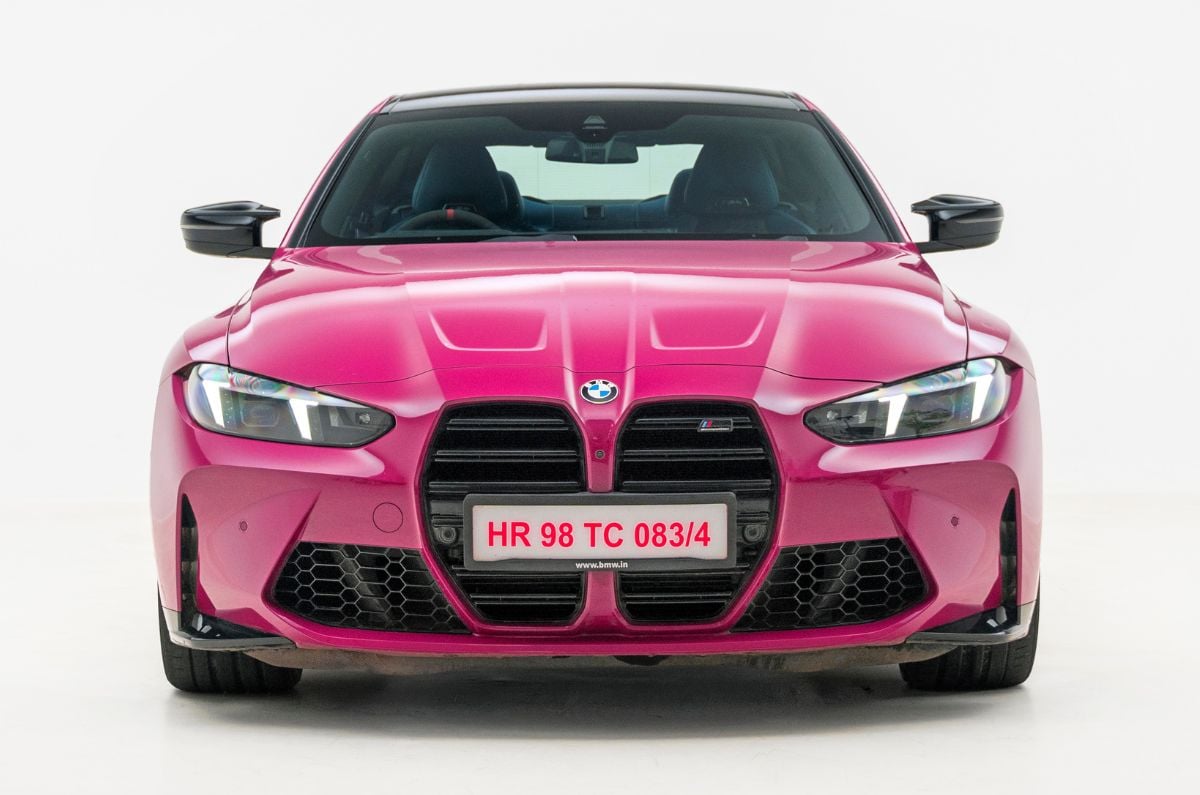
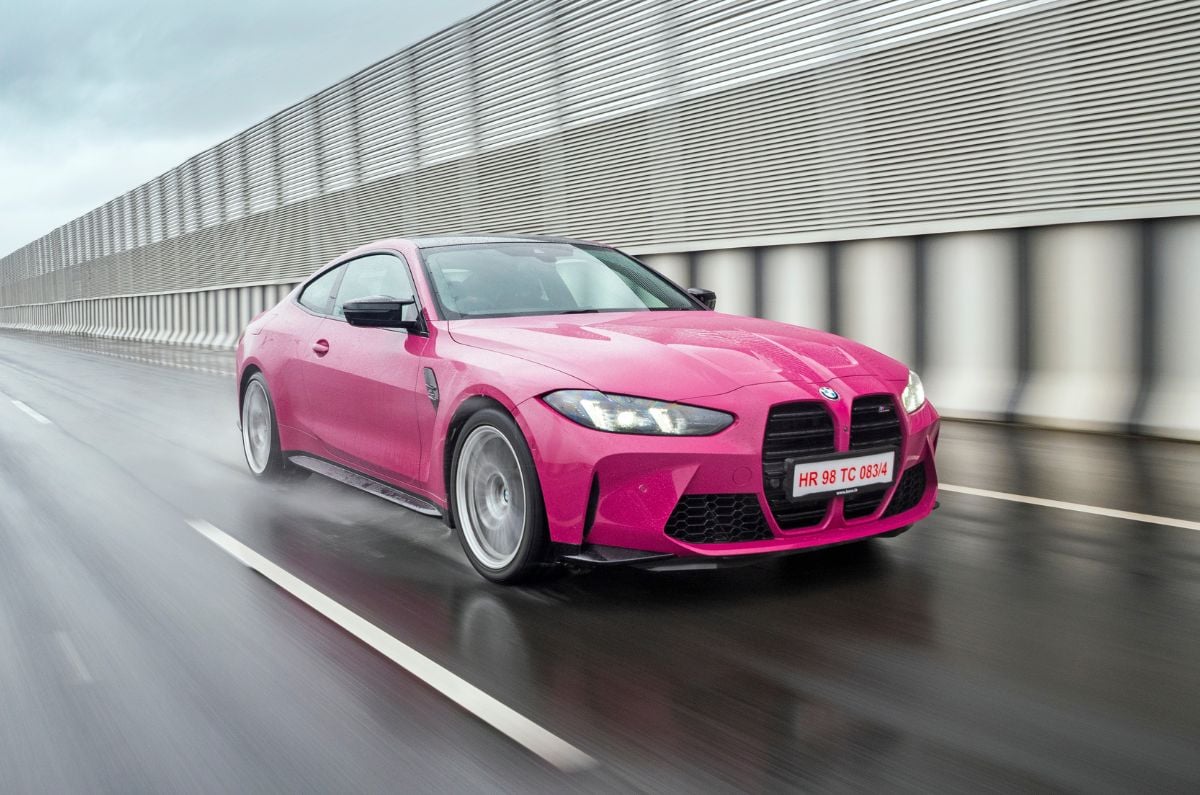
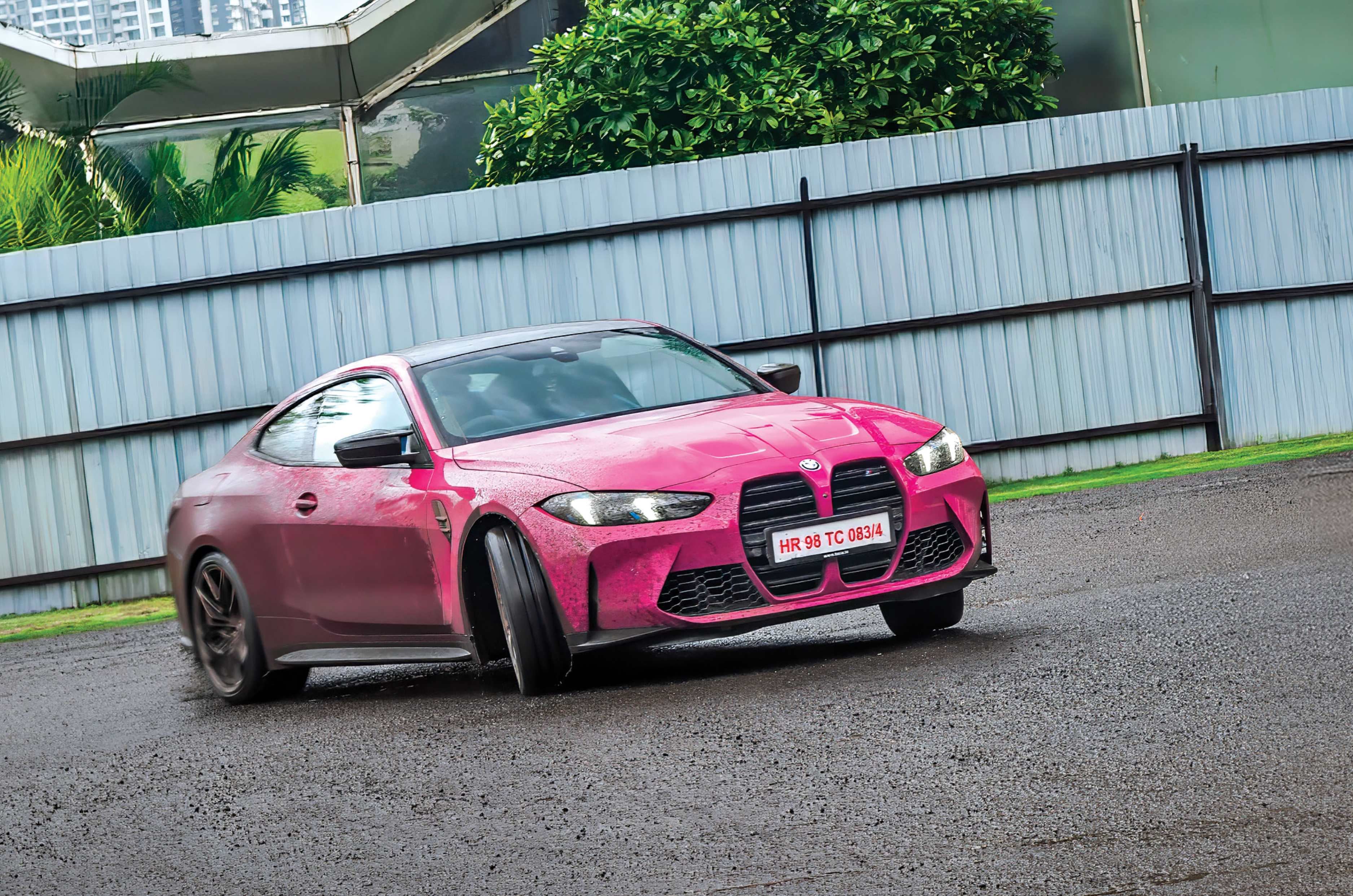
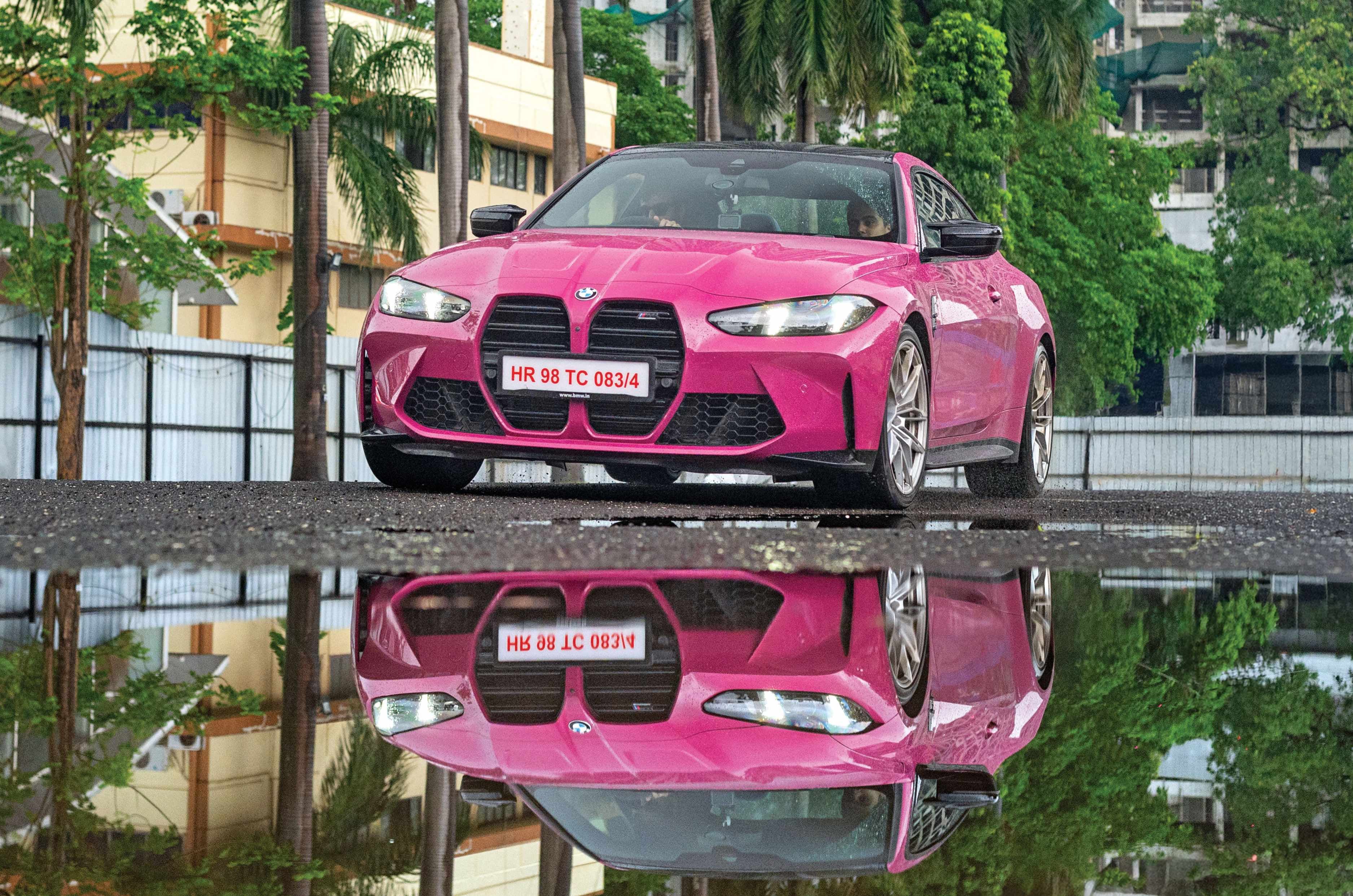
Whether you like it or not, the huge kidney grille gives it an imposing road presence.
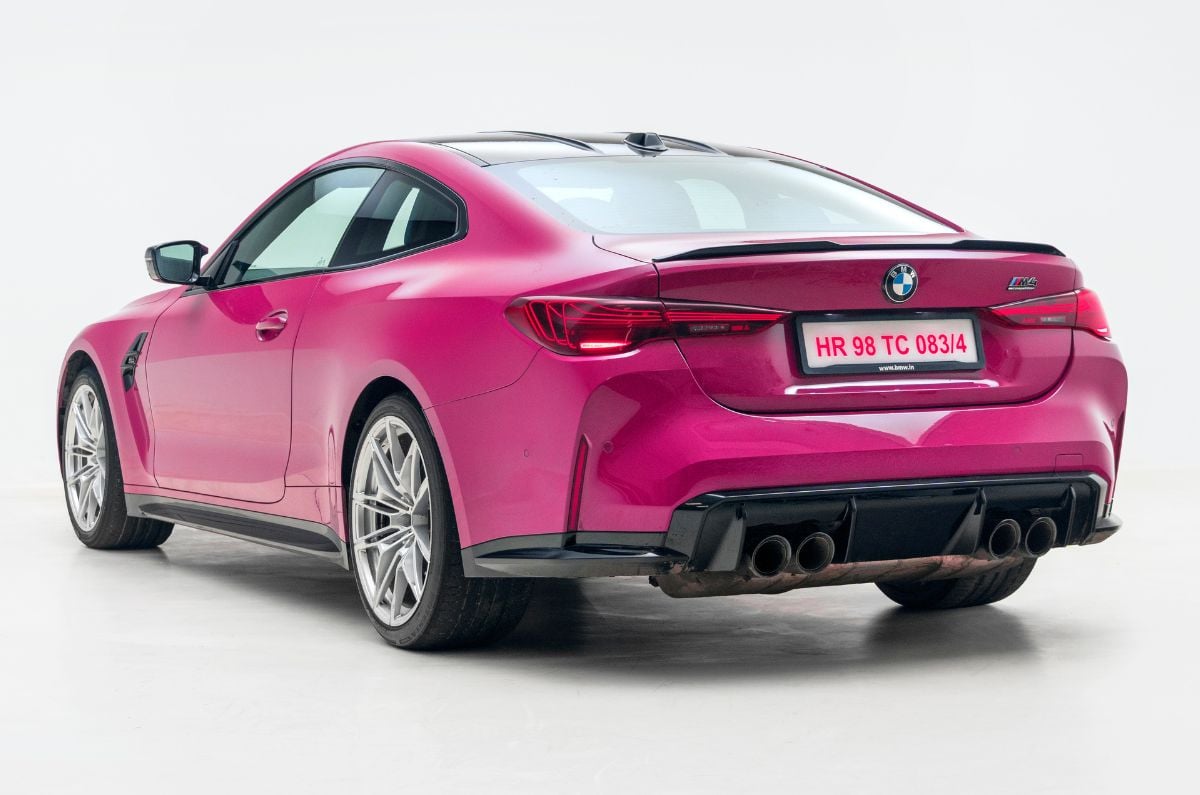
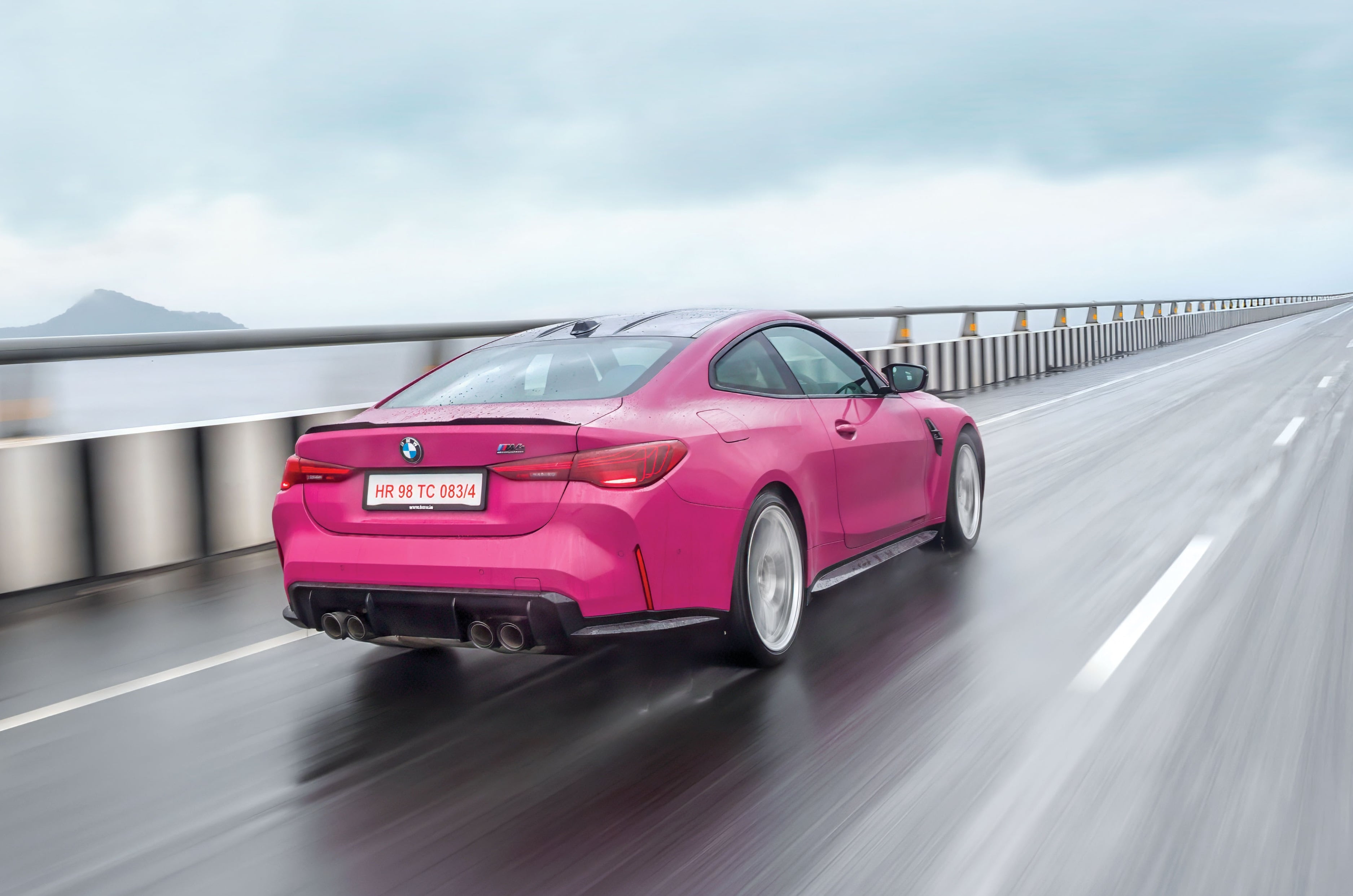
The BMW M4 Competition remains one of those cars that gets people talking before they’ve even heard it start. The enormous kidney grille is still the defining feature, and whether you like it or not, it gives the M4 a face that is impossible to mistake for anything else. The rest of the design is far more cohesive, with a long bonnet, heavily sculpted surfaces, flared wheel arches and a low, wide stance. At the rear, the quad exhausts, bootlip spoiler and prominent diffuser just add more drama to the design.
There’s serious engineering behind the visual drama, too. The M4 gets M-specific suspension hardware and aluminium suspension components, while the near-50:50 weight distribution helps give it the balance expected of an M car. And unlike all previous M3s and M4s, this one gets BMW’s M xDrive all-wheel-drive system, and it rides on staggered 19-inch front and 20-inch rear wheels.
Quad exhausts is an M signature and this LCI also gets beautifully detailed Laser LED taillights.
At 4,801mm long and 1,887mm wide, it’s a substantial car, and at 1,850kg, it’s certainly not light. But BMW has worked hard to keep the mass low and central, like with the use of a carbon-fibre roof, for example.
BMW M4 Competition interior space and comfort – 8/10
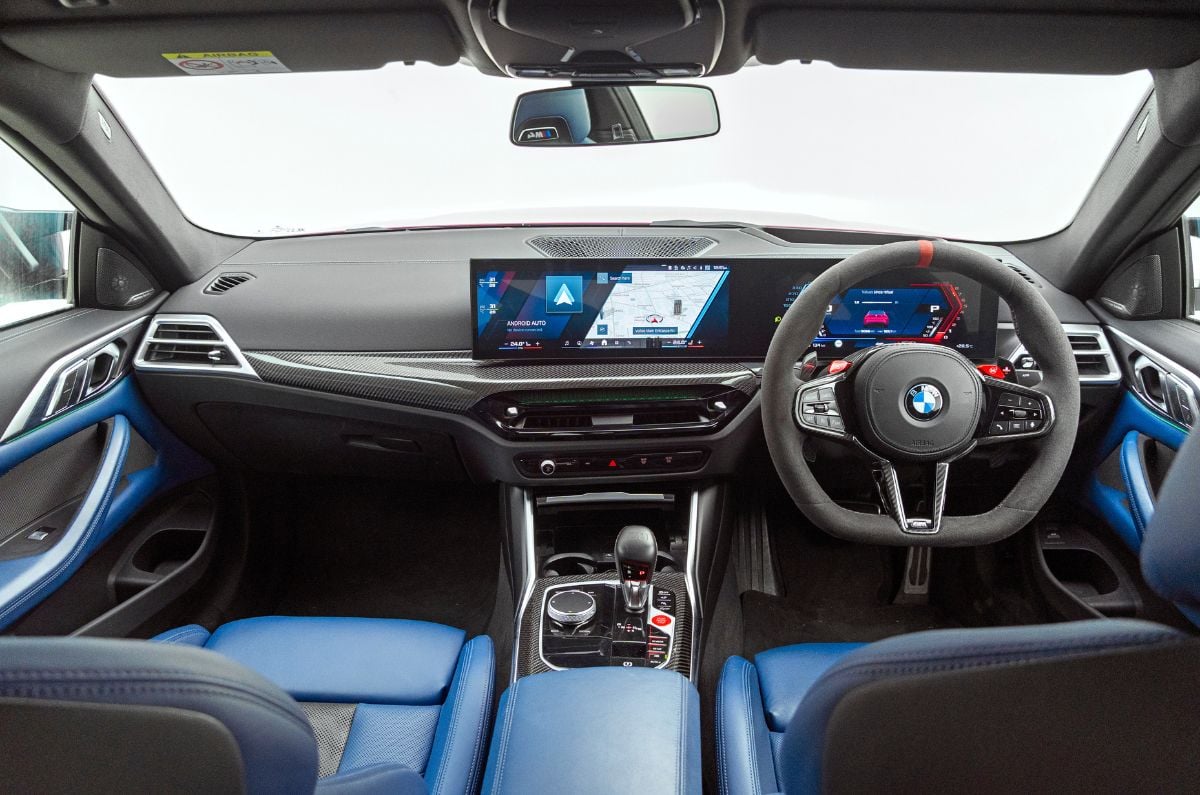
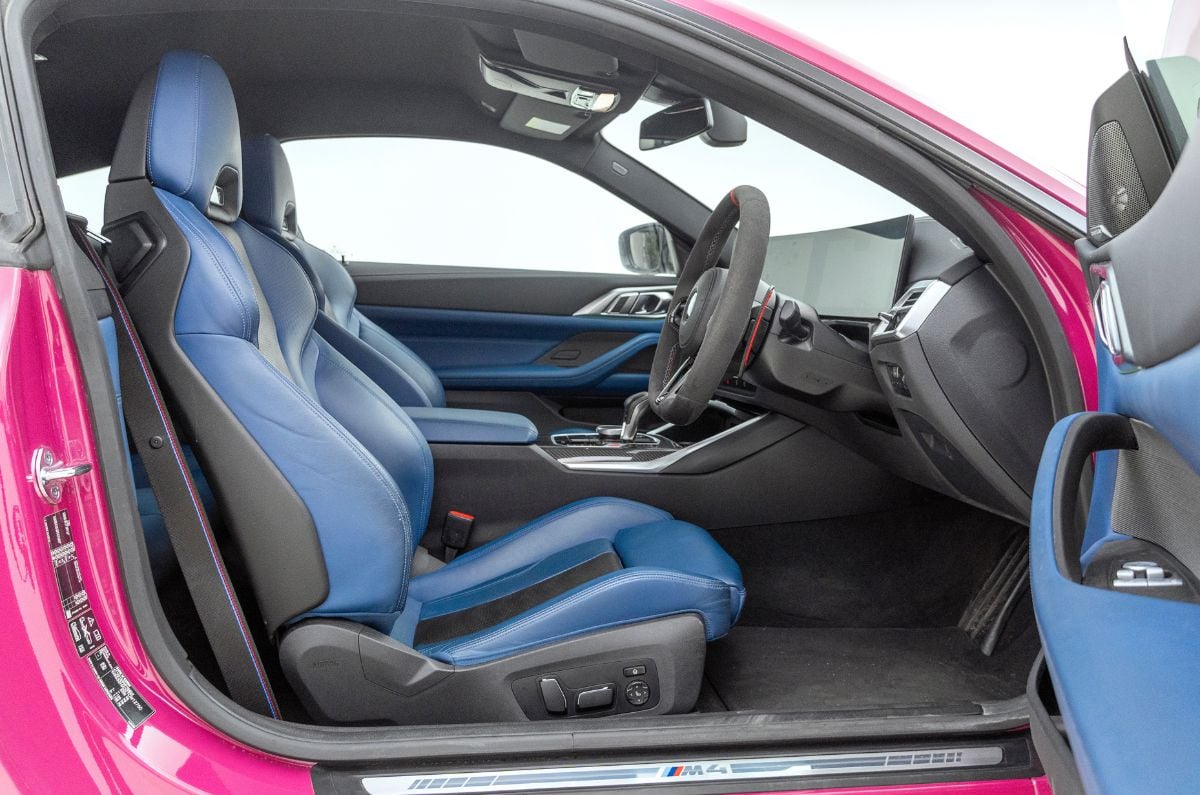
High-quality, driver-focused cabin is a mix of leather, carbon fibre and Alcantara.
The M4’s cabin is a good example of how far modern M cars have moved from being purely performance machines. There’s plenty of everyday usability here, but the driving position still feels special. You sit low, the steering wheel is perfectly positioned, and the large front seats are supportive and comfortable, and hold you securely when you start driving enthusiastically.
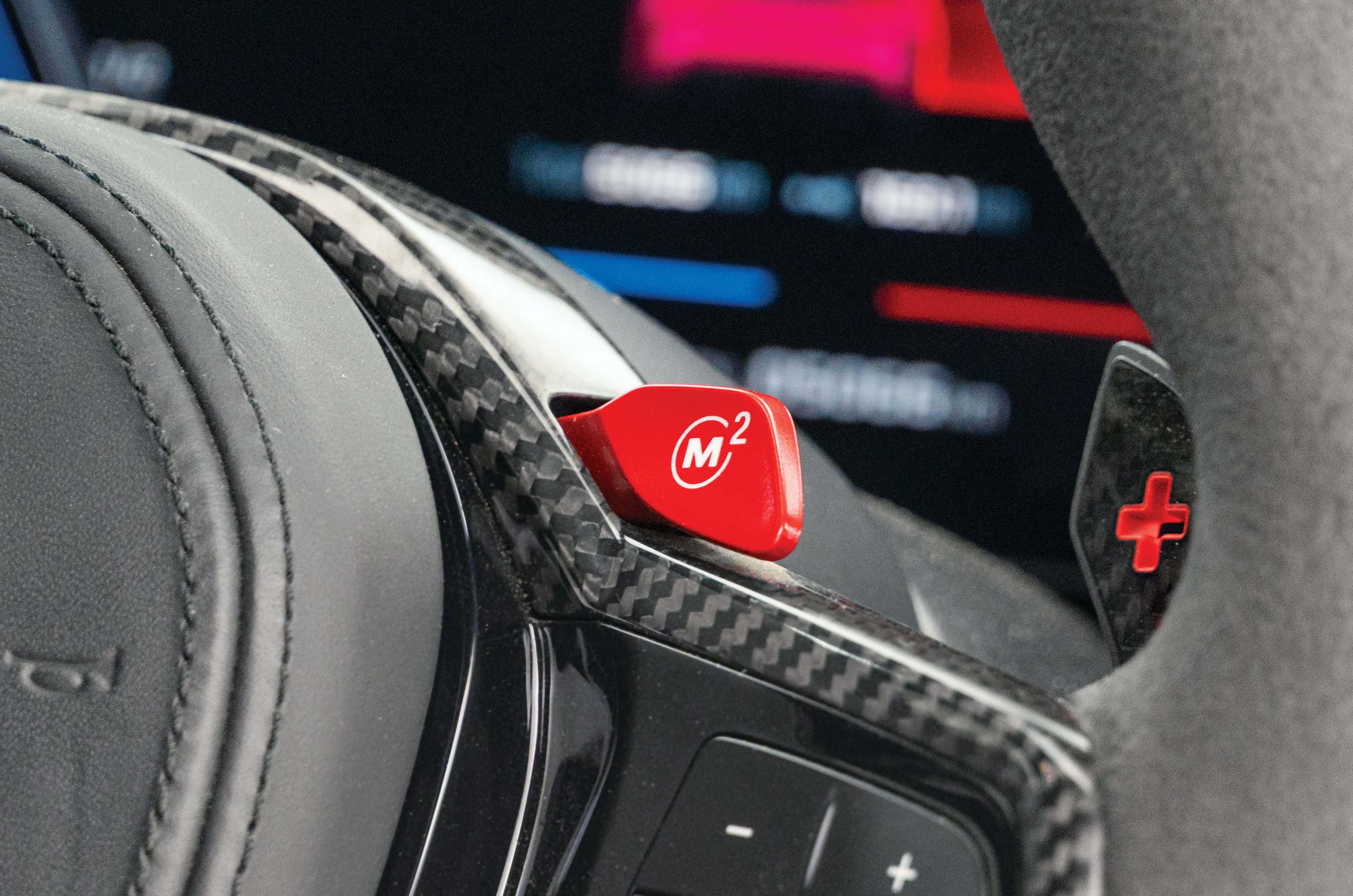
The dashboard follows BMW’s familiar layout, dominated by the curved display, while M-specific details like carbon-fibre trim throughout, M colours on the seatbelts and the red M1 and M2 buttons give the cabin enough visual distinction.
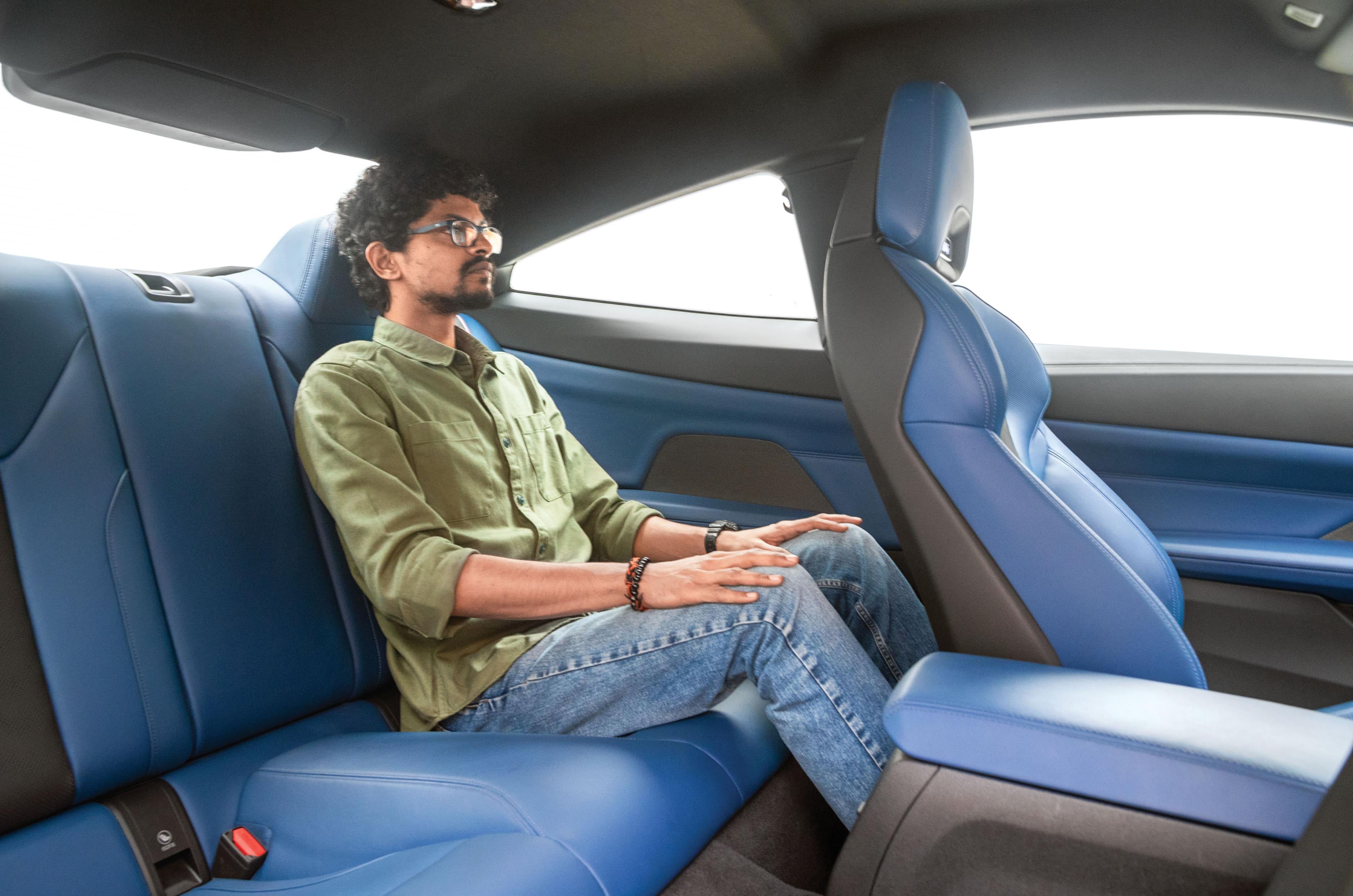
Access to the rear is tricky, though it’s a reasonably spacious place to be.
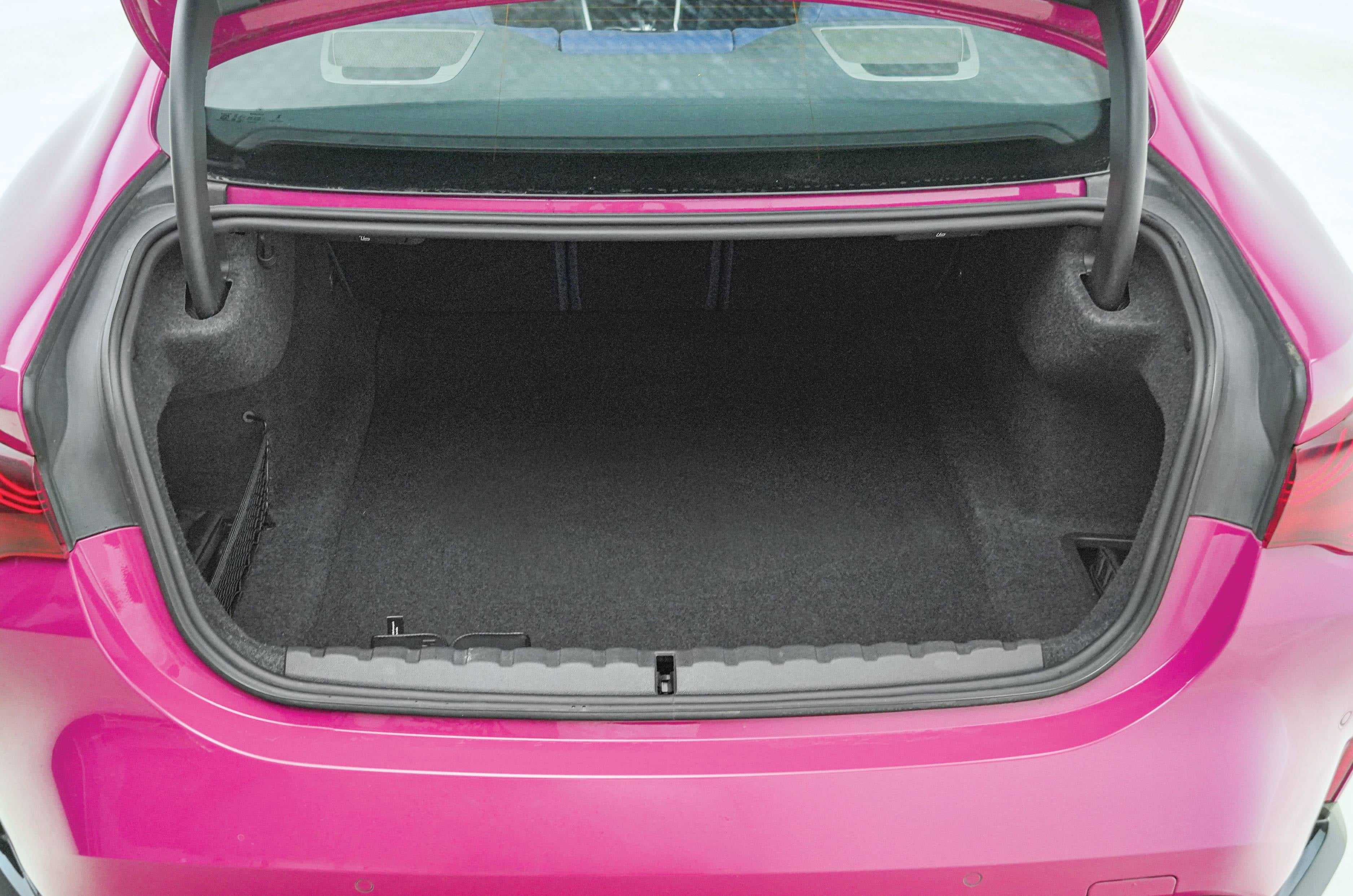
The coupe body does limit rear-seat access and space, but the back seats are still surprisingly usable, and not merely for show. There’s also a 440-litre boot, which means the M4 can manage luggage for a weekend away without too much hassle. That combination of usable cabin room and decent boot space is one of the car’s biggest strengths; very few cars with this level of performance are this practical.
440-litre boot can easily swallow up your luggage for the weekend.
It’s also relatively easy to live with in everyday conditions. The visibility is manageable, the controls are familiar and, at low speeds, the M4 is far more relaxed than its appearance suggests.
BMW M4 Competition features and safety – 8/10
The M4 Competition gets the technology expected of a modern BMW, but the really interesting equipment is the hardware and software designed to make its performance accessible.
M1 and M2 buttons are shortcuts for your preferred, pre-selected drive settings.
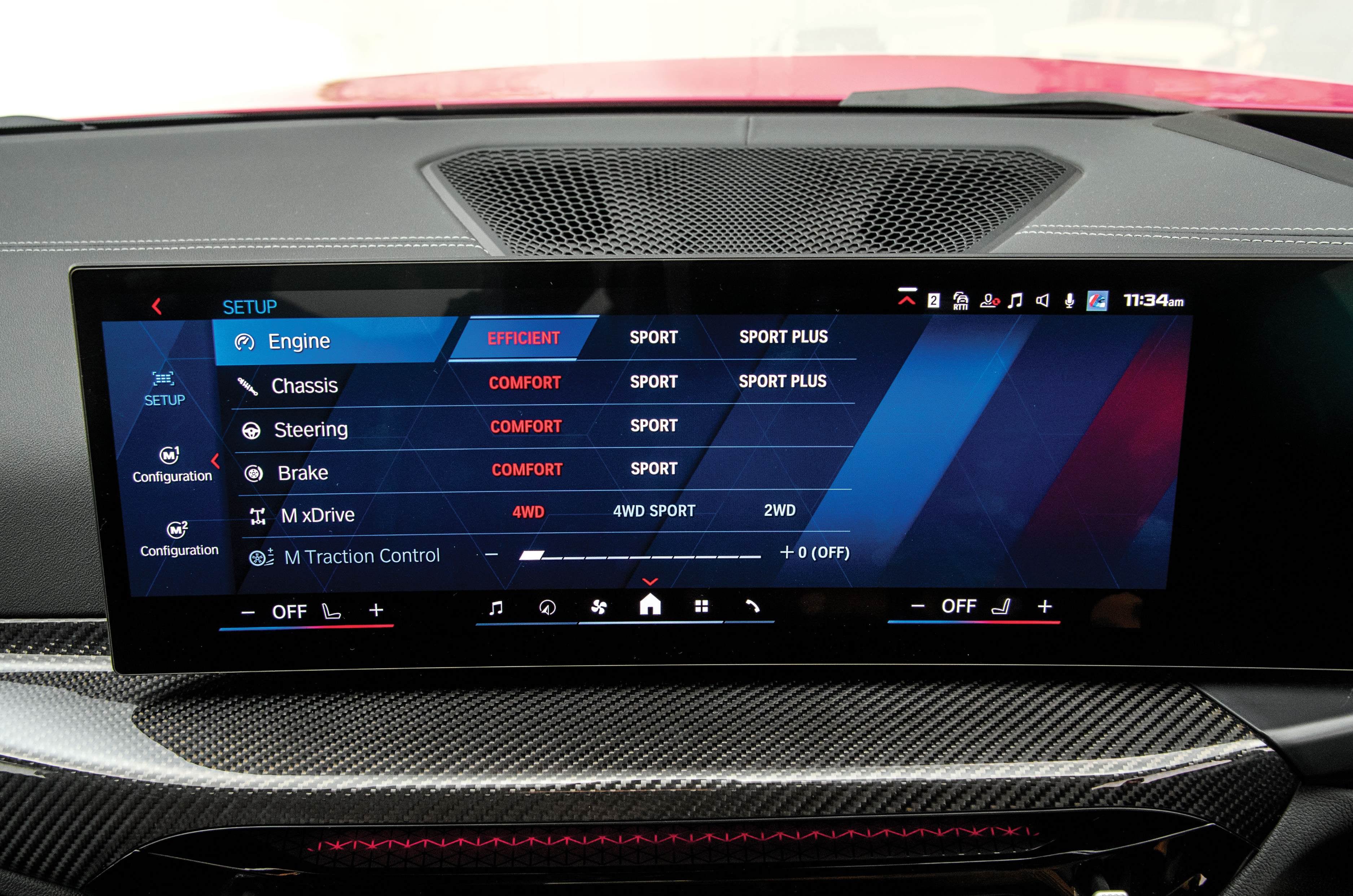
The adaptive M suspension can be adjusted through Comfort, Sport and Sport Plus settings, allowing the car to switch between everyday usability and sharper responses. M Drive lets you save preferred combinations of chassis, steering, engine and transmission settings, and these preferred settings can be designated to the M1 and M2 buttons on the chunky steering wheel.
Then there’s the more serious performance tech. The M4 gets a selectable rear-wheel-drive mode, which essentially allows you to turn the all-wheel-drive M4 into a rear-driven machine, while the M Drift Analyser adds another layer of entertainment for those inclined to explore the car’s limits in a controlled environment. While it’s nice to have this level of customisation, some may find configuring it a bit too confusing and overwhelming.
The screen is crisp, but navigating through the sub-menus gets confusing.
And that’s the case with the touchscreen as well. It’s super-crisp, slick to the touch and has M-coloured themes, which look quite cool, but the myriad apps and sub-menus are confusing to operate, to say the least. And that problem is amplified when you’re trying to make adjustments on the move.
Front seats are large, supportive and feature ventilation too.
There’s a three-zone climate control, powered and ventilated front seats, a HUD, a Harman/Kardon sound system, wireless smartphone integration, a wireless charger, a curved display, and so much more. So, the M4 isn’t lacking in the areas that matter for everyday use.
As for safety, there are multiple airbags, ADAS tech, stability and braking systems and electronic assistance systems working in the background, although in a car like this, it’s the multiple drive modes and traction systems that are arguably the more important features.
BMW M4 Competition powertrain and performance – 9/10
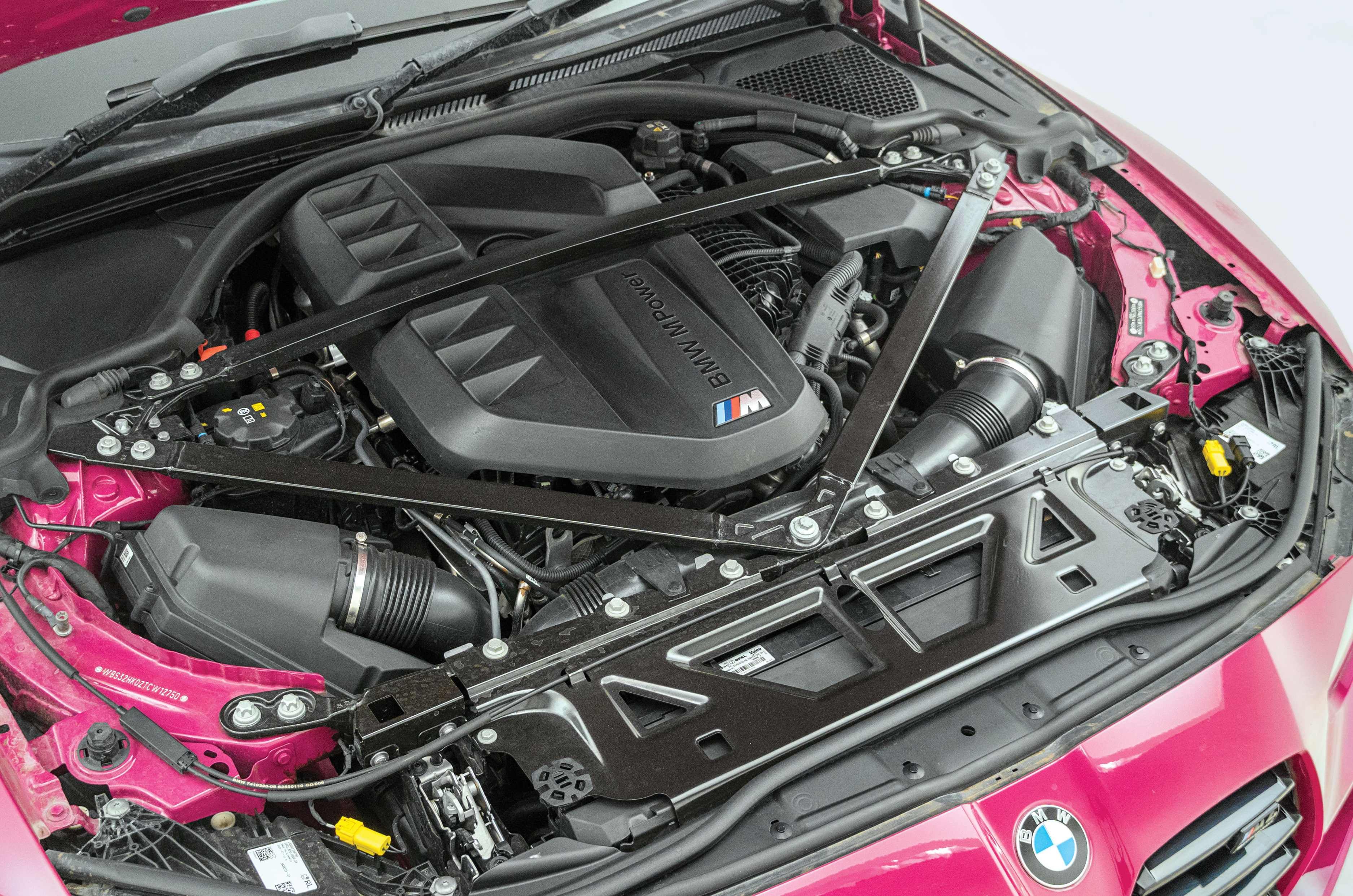
530hp, twin-turbo, straight-six pulls relentlessly and sounds good too.
The M4 Competition’s 3.0-litre twin-turbocharged S58 straight-six is the real star of the show, however. In this form, it develops 530hp and 650Nm and sends power through an 8-speed torque converter automatic to all four wheels, and BMW claims 0-100kph in 3.5sec.
What makes the engine so impressive isn’t just the numbers, but the way it delivers them. There’s almost none of the old-fashioned turbo lag here. Instead, power builds in an almost naturally aspirated fashion, with the engine pulling strongly through the rev range. It’s linear, responsive and keeps pulling hard all the way till the redline.
Be it drifting or touring, the M4 is up for both.
The gearbox is smooth when left to its own devices and can be calibrated to shift much more aggressively when you start driving harder. It can occasionally feel less urgent than you might expect, especially in comparison to the last-gen M4’s DCT, but the sheer performance of the engine means there’s never any shortage of pulling power.
The all-wheel-drive setup also makes it devastatingly effective when you have the space to exploit it, and it doesn’t scare you like the older rear-wheel-drive M4. The best part is that it doesn’t feel like a car that needs to be driven at ten-tenths to be entertaining. More importantly, the M4 doesn’t compromise everyday usability simply because it is so performance-focused. Driven gently, the drivetrain can be remarkably civilised.
The ride is compliant enough to make long distance travel feasible.
There’s also a pleasing authenticity to the engine note. It may not have the theatrical soundtrack of some older M cars, but the straight-six’s sound is sufficiently characterful without relying heavily on artificial enhancement.
BMW M4 Competition fuel efficiency – 6/10
Fuel economy, expectedly, isn’t the M4’s strongest suit, but the 59-litre fuel tank gives it enough range to be usable as a long-distance car, although enthusiastic driving will inevitably bring that figure down considerably.
BMW M4 Competition ride comfort and handling – 8/10
At city speeds, the M4 can be surprisingly subdued. The steering is light, and there’s little indication of the aggression that lies underneath. The ride, though, even with the adaptive dampers set to Comfort, is firm, and sharp bumps do filter through to the cabin.
What’s impressive is how effectively BMW disguises the M4’s 1,850kg mass. It is a heavy car, but it rarely feels unwieldy when you’re attacking a sequence of corners. There is a bit of understeer, but there’s virtually no body roll, making it feel agile. The M4’s grip is immense, and the xDrive system allows you to put down its considerable power remarkably effectively. Yet, it isn’t simply a point-and-shoot machine. The adjustable traction control and rear-wheel-drive mode (or even the semi-lenient ‘AWD Sport’ mode) allow considerably more freedom, revealing the car’s playful side that isn’t immediately apparent in normal driving.
Rear wheel drive mode and adjustable traction settings allow for some proper tail out fun.
The electric power steering isn’t as feelsome as the hydraulic-steering M cars of old, but the accuracy is excellent. The M4 goes precisely where you point it, and the chassis remains composed even when you begin to carry serious speed. It’s decently capable at dealing with speed breakers too, as long as you take them slow and the large ones at an angle. Road noise, however, does become apparent at higher speeds over concrete surfaces.
The M4 really has a dual personality. Around town, it can be relaxed and relatively easy to live with; on an open road, it becomes seriously fast and agile. The ride is not plush or comfy, but it is compliant enough to make long-distance driving feasible.
BMW M4 Competition value for money and verdict – 8/10
As far as fast, versatile coupes go, there’s few better than the M4 Competition.
At Rs 1.60 crore (ex-showroom, before options), the M4 Competition is a difficult car to categorise, with no real direct rivals, and that is precisely why it works so well. It has the performance to keep up with exotic sports cars, yet it retains usable rear seats, a decent boot, and it is easy enough to be driven every day.
The polarising styling remains subjective, the ride quality is stiff and the infotainment interface is unintuitive. But once you find an open road, those shortcomings simply melt away. What you’re left with is a very capable all-rounder. The 530hp straight-six provides devastating performance without being difficult to manage, the all-wheel-drive system provides great traction and a useful safety net, and it has enough adjustability to keep even the most experienced driver entertained. Fast, practical, hugely capable and remarkably usable, that versatility is ultimately what makes the M4 Competition such a compelling performance car.
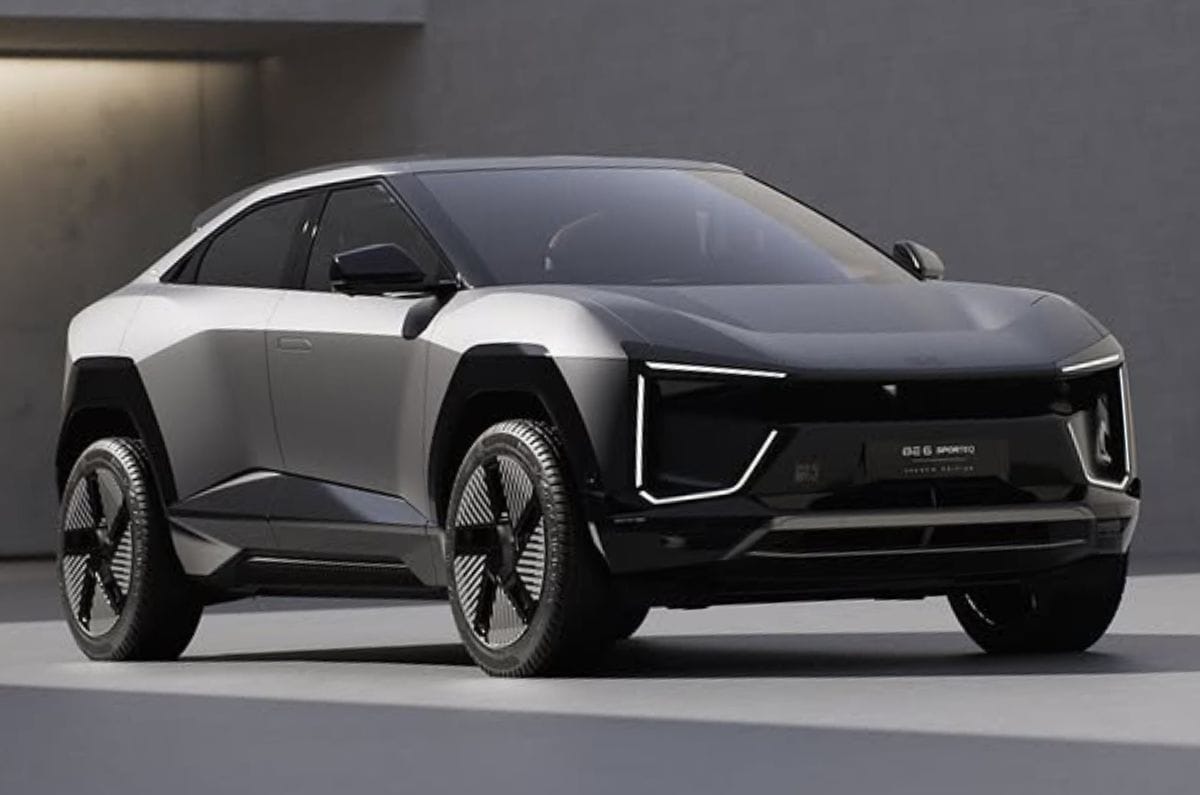
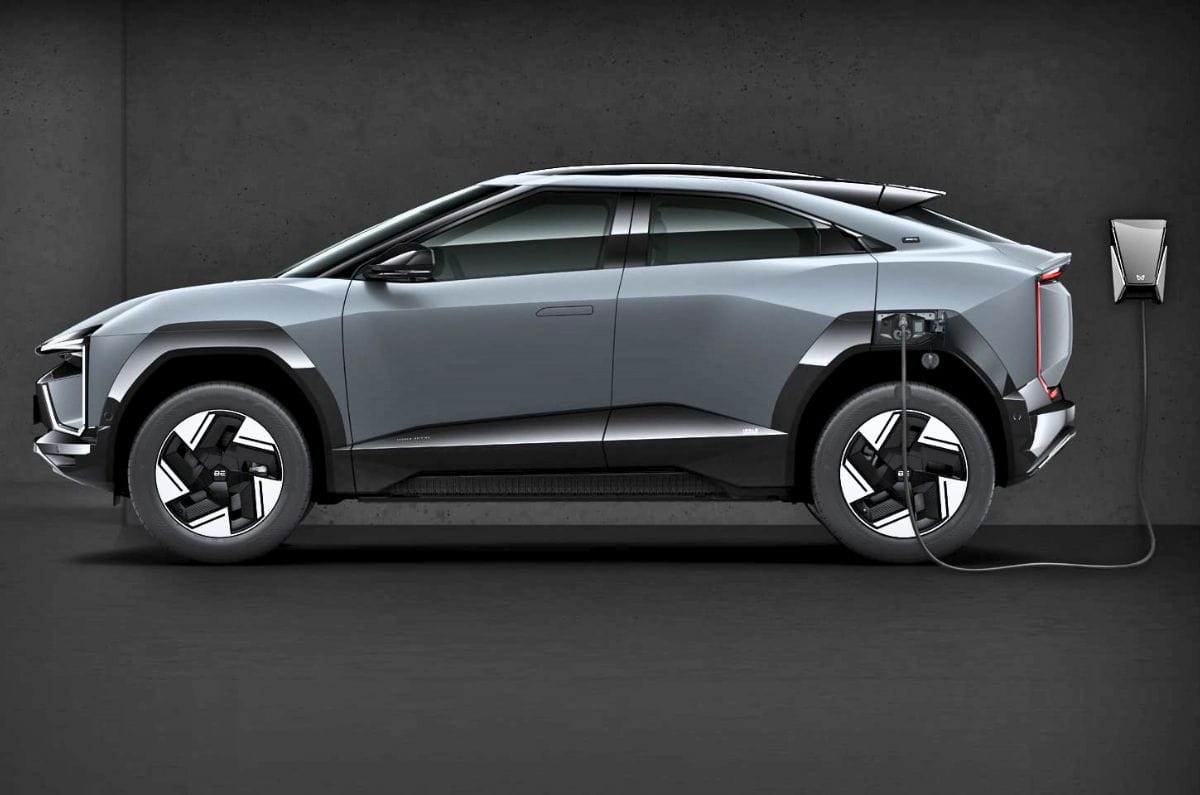
Mahindra launched the 2026 BE 6 recently, adding the ‘Sporteq’ moniker and pricing it from Rs 19.45 lakh to Rs 26.95 lakh (ex-showroom). Along with a new name, Mahindra has also introduced some updates to the midsize electric SUV to keep it modern in the segment. Here’s a detailed list of these updates:
New 70kWh battery pack
New battery pack offers 651km range and is mated to a 241hp rear motor
The 2026 Mahindra BE 6 Sporteq gets a new 70kWh battery pack in addition to the previously available 59kWh and 79kWh batteries. This new 70kWh battery offers an ARAI-claimed range of 651km and a rear-axle-mounted (RWD) electric motor that produces 241hp and 360Nm. It supports a 7.2kW AC, a 11.2kW AC and a 160kW DC charger. The DC fast charger recharges the battery pack from 20-80 percent in a claimed 20 minutes.
Mahindra is offering the 70kWh battery with the Three and Three+ trims, priced at Rs 22.95 lakh and Rs 23.95 lakh, respectively (ex-showroom).
Battery-as-a-Service (BaaS) scheme
Battery rental scheme makes the 59kWh battery variants Rs 8 lakh more affordable
Along with a new battery, Mahindra is also offering the BE 6 with a battery-as-a-service (BaaS) scheme, which is also a first for the brand. However, the BaaS scheme is offered only with the 59kWh battery pack available in the One and Two trims. The battery rental scheme essentially lowers the BE 6’s initial price by Rs 8 lakh, but requires a monthly subscription fee for the battery. Here are the details:
Mahindra BE 6 battery-as-a-service (BaaS) price vs standard price
Standard price
BaaS price*
Difference^
One
Rs 19.45 lakh
Rs 11.45 lakh + Rs 3.75/km
– Rs 8 lakh
Two
Rs 20.95 lakh
Rs 12.95 lakh + Rs 3.75/km
– Rs 8 lakh
Notes: BaaS scheme requires a minimum monthly payment of Rs 6,750, calculated assuming usage of 60km per day and an 8-year battery loan, as per Mahindra’s terms and conditions. The price difference calculated above is on the initial price and does not include the BaaS scheme’s battery subscription charges.
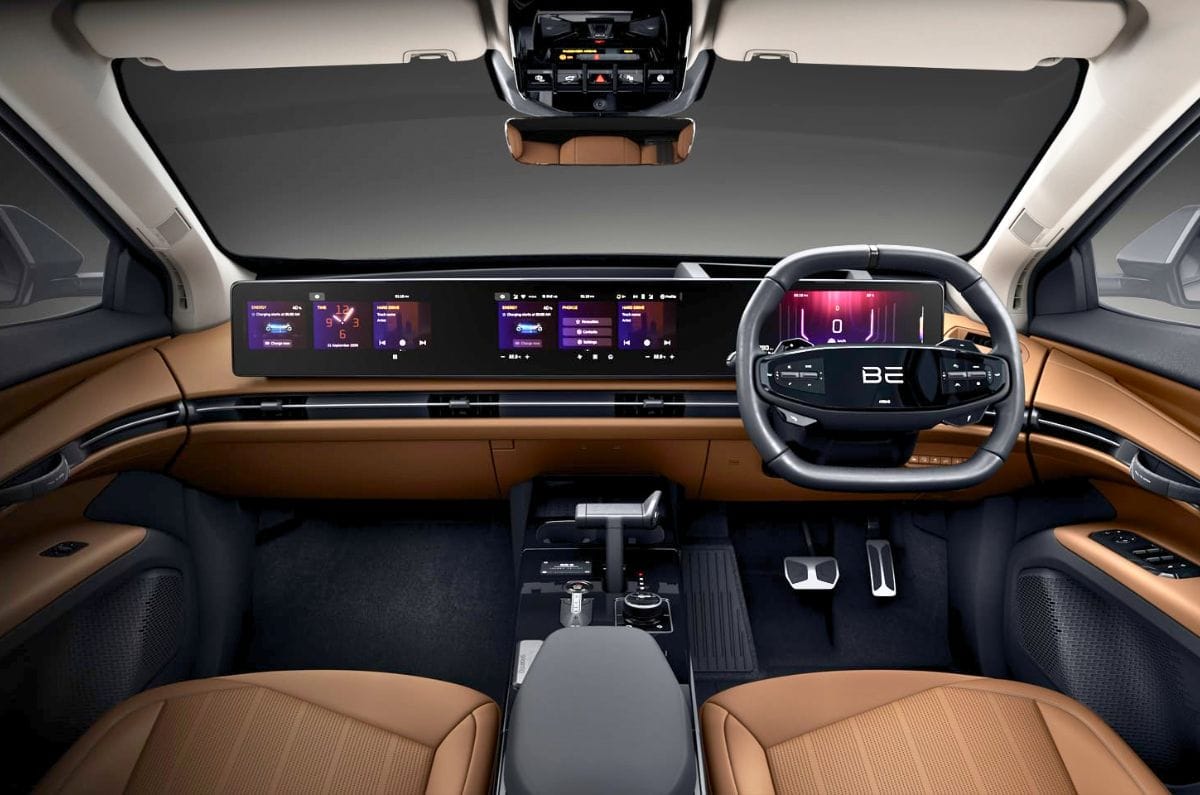
Triple-screen setup on dashboard
Offers an additional third screen for the front passenger now
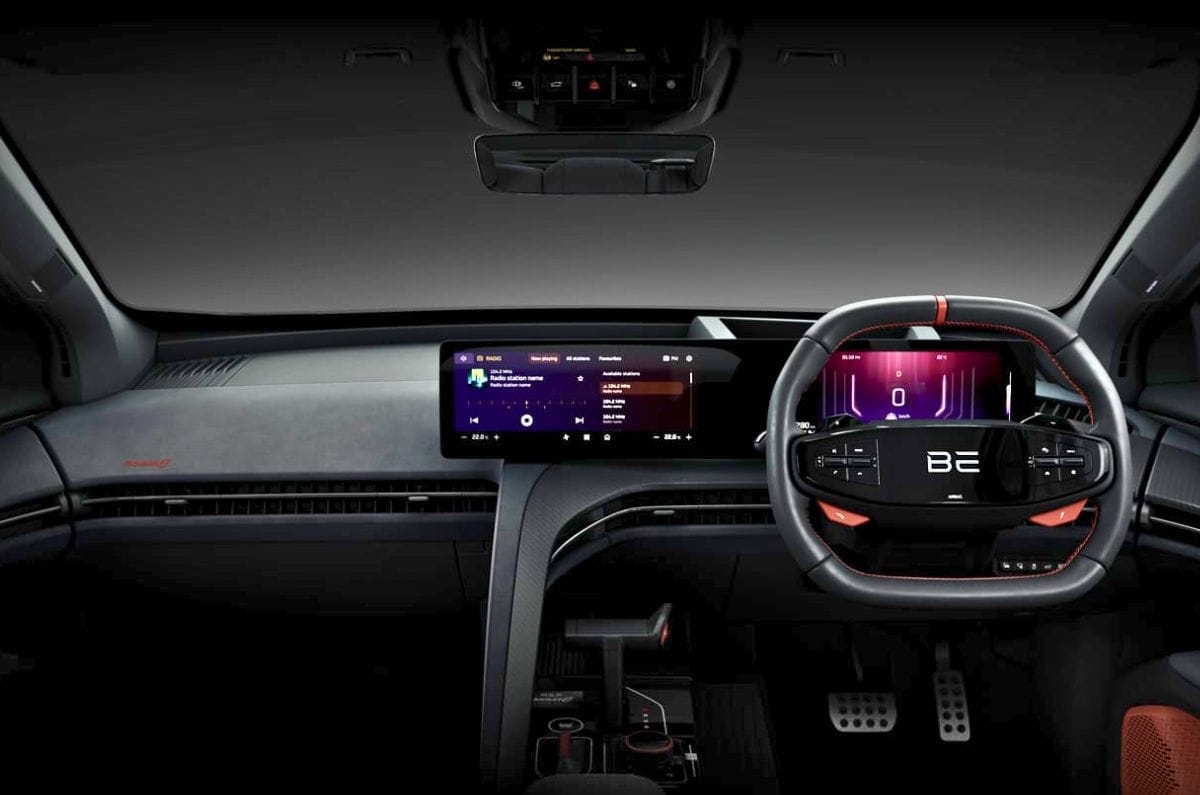
The 2026 update also brought a major redesign to the BE 6’s dashboard, now offered with an additional 12.30-inch screen for the front passenger, in addition to the similarly sized digital driver’s display and touchscreen infotainment system. The new front passenger display also removed the halo-like design element connecting the dashboard to the centre console, allowing the addition of two cupholders on the centre console, something that was sorely missing on the older model.
Mahindra is offering a triple-screen setup on all trims of the BE 6 Sporteq except the base-spec One and the sportier Formula E editions.
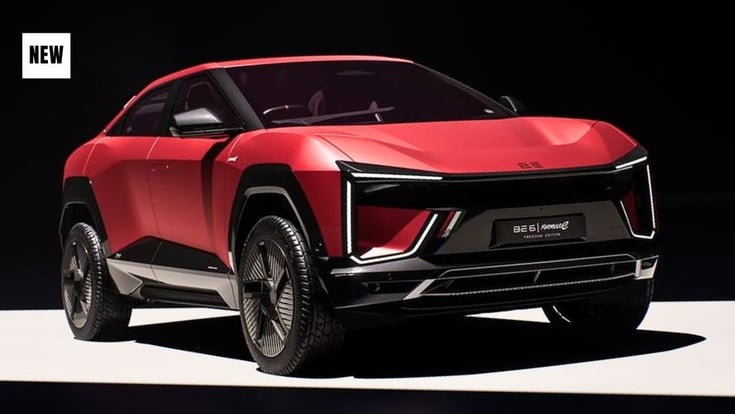
Redesigned Formula E edition
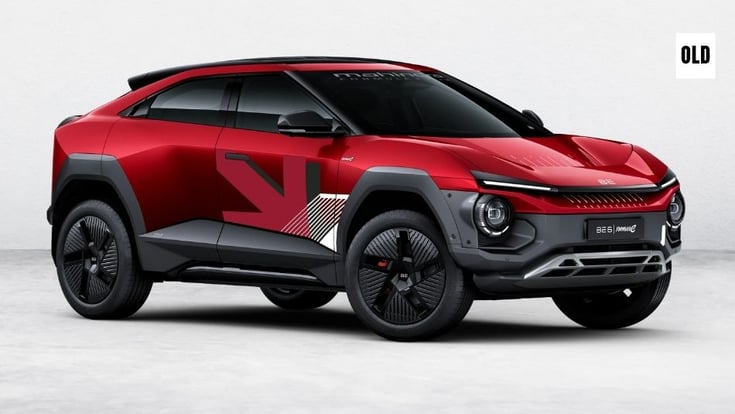
The 2026 Formula E Freedom looks nothing like the older Formula E edition
With the 2026 update, Mahindra has also rejigged the exterior design of the Formula E edition. Unlike the previous model, which had a different fascia from the standard model with circular-shaped LED headlights and a revised bumper, the 2026 Formula E Freedom edition gets the same design as the standard BE 6 Sporteq, with some Formula E badges and FIA decals. Moreover, the Formula E edition is only offered with the older model’s dual-screen dashboard and a halo design element for a sporty appeal.
Mahindra is offering the 2026 Formula E edition at the Three and Four trim levels, priced at Rs 24.45 lakh and Rs 26.95 lakh, respectively (ex-showroom).
Fresh exterior and interior colours
Both the BE 6 Sporteq and Formula E edition get new colour themes
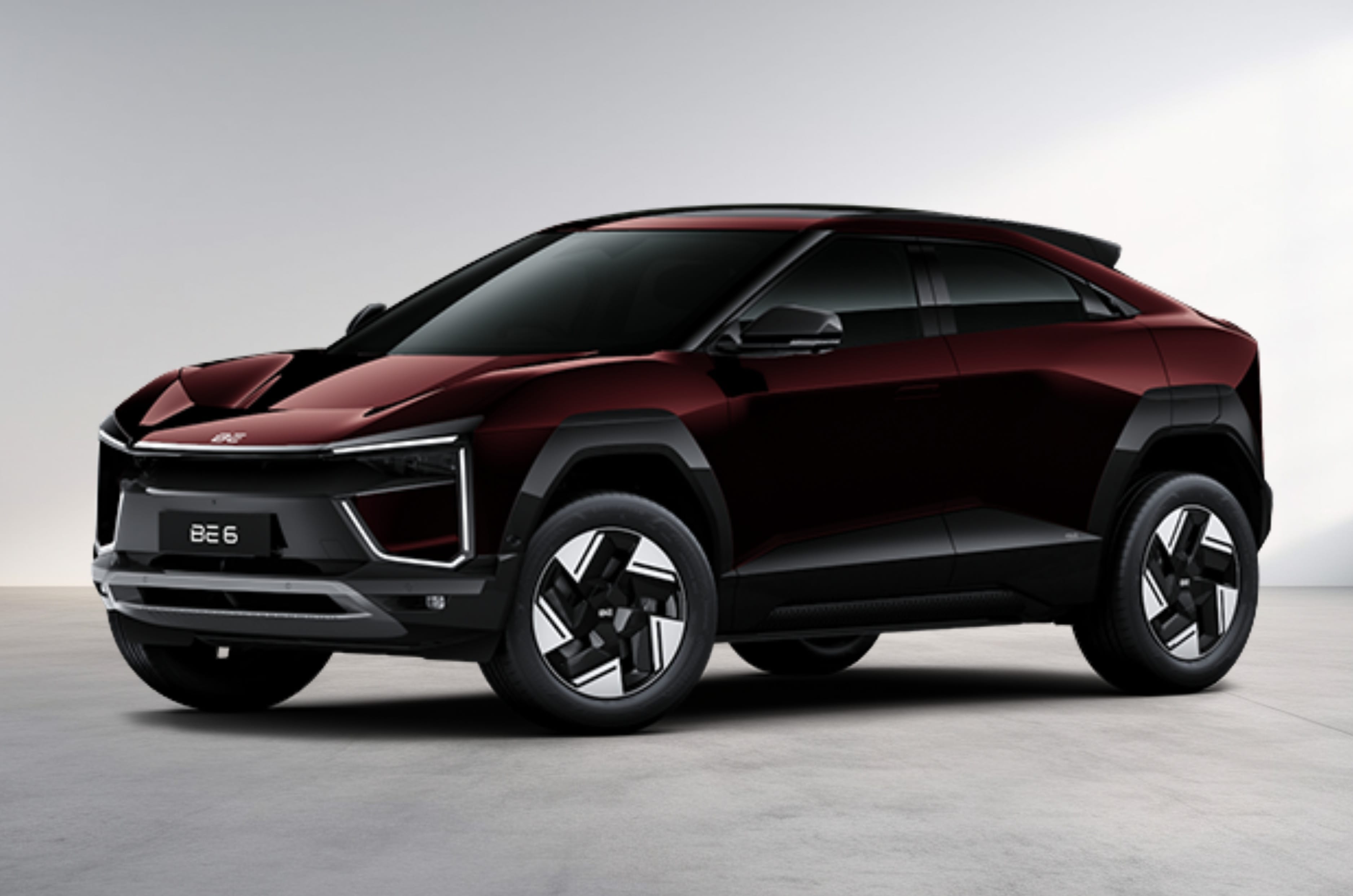
Mahindra BE 6 Sporteq Ruby Velvet exterior colour.
The 2026 Mahindra BE 6 Sporteq is being offered with fresh exterior and interior colour options. It is available in a new ‘Ruby Red’ exterior theme and new Racing Tan and Black interior hues for the Two, Three, Three+ and Four trims. The base-spec One is offered with the same Sage Green and Grey theme as before. A Sporteq Launch Edition, based on the fully loaded Four trim, is also available, which offers a new Graphite Storm exterior paint and Racing Tan interior theme.
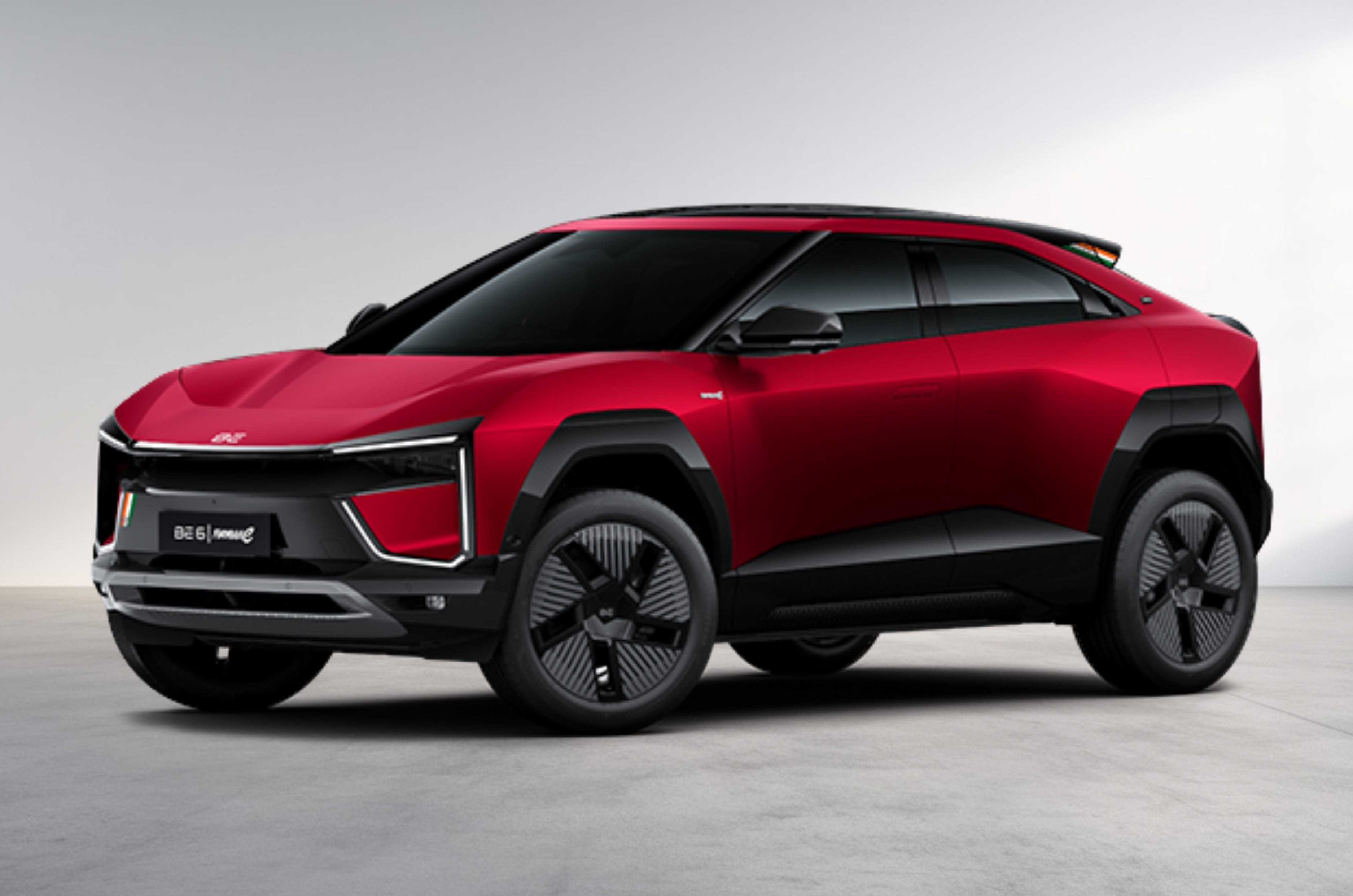
Mahindra BE 6 Formula E Freedom edition Rosso Impulso exterior colour.
While the 2026 BE 6 Formula E edition is offered with a new Rosso Impulso exterior hue, the all-black interior with orange elements for contrast is the same as the outgoing model.
New ‘TEQ’ suite
The suite enables Gemini-based interactions, unlocks additional drive modes and Revive functionalities
Another addition to the BE 6 Sporteq is the new ‘TEQ’ suite, which Mahindra says is designed to make the vehicle more intuitive, engaging, secure and responsive to individual customer needs. At its core is a Gemini-based AI conversation assistant that allows natural voice interactions for functions such as vehicle controls, navigation and music. The suite also introduces a Karaoke mode, along with support for Dolby Vision and Dolby Audio.
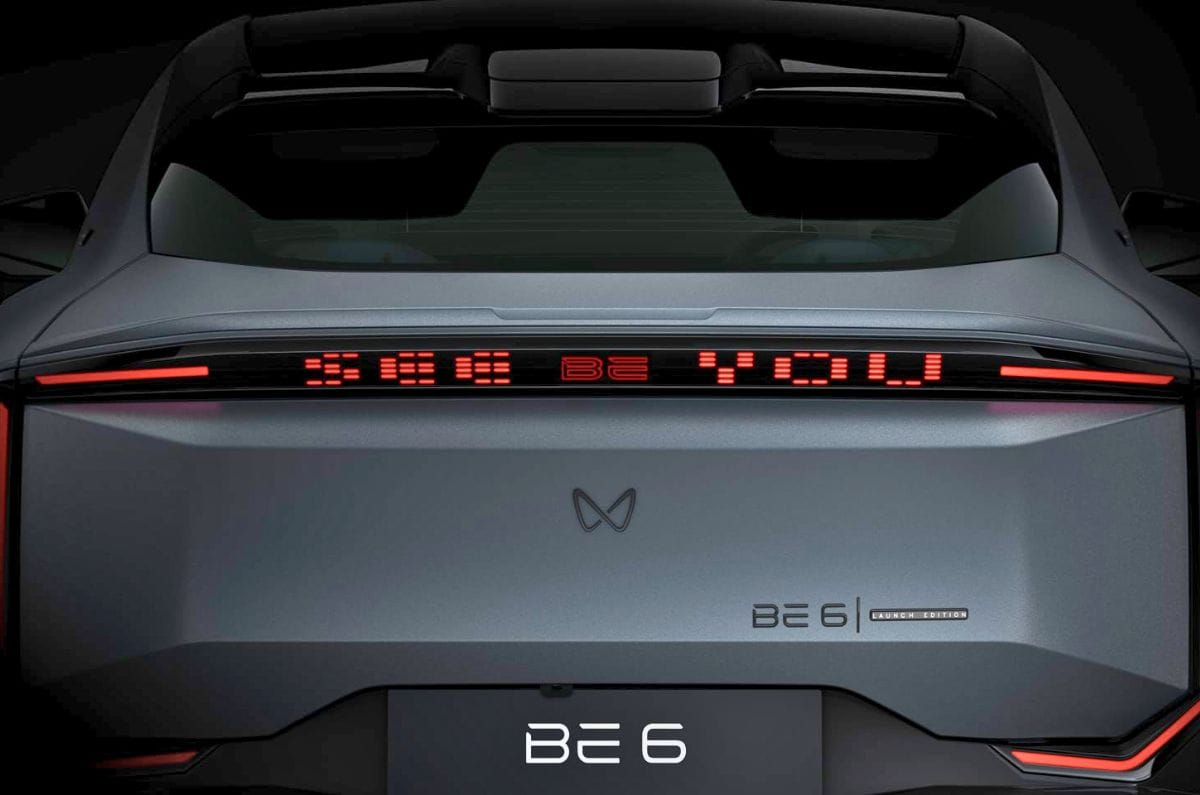
The TEQ suite also adds several performance and convenience features, including Custom Drive Mode, Drift Mode and an acceleration boost mode for the Formula E Freedom Edition, which enables a claimed 0-100 kph time of 6.44 seconds. It also includes Revive and Revive SOS, which can provide additional range even after the battery has run out. Another new feature is ‘TEQ_xting’, which lets owners display personalised messages on the vehicle’s tailgate.
The Mahindra BE 6 Sporteq is priced from Rs 19.45 lakh to Rs 26.95 lakh (ex-showroom), and it rivals the Hyundai Creta Electric, Tata Sierra EV, Tata Curvv EV, MG ZS EV, Maruti Suzuki e Vitara and Toyota Ebella.
Prices are ex-showroom, India, and do not include a wall charger or its installation cost.
क्या आप नई इलेक्ट्रिक SUV लेने का प्लान बना रहे हैं? अगर हां, तो इस खबर को आपको जरूर पढ़ना चाहिए। दरअसल, Mahindra & Mahindra ने आज BE 6 Sporteq को भारत में लॉन्च कर दिया है। यह कंपनी की BE 6 इलेक्ट्रिक SUV पर आधारित नई सीरीज है। इसकी शुरुआती कीमत 19.45 लाख रुपये (एक्स-शोरूम) है और इसमें बैटरी की कीमत भी शामिल है।
कंपनी ने इसे Battery as a Service (BaaS) मॉडल के साथ भी पेश किया है। इस मॉडल में BE 6 Sporteq की शुरुआती कीमत 11.45 लाख रुपये (एक्स-शोरूम) है। इसके अलावा बैटरी इस्तेमाल करने के लिए 3.75 रुपये प्रति किलोमीटर का चार्ज देना होगा।
BaaS मॉडल में 3.75 रुपये प्रति किलोमीटर का बैटरी चार्ज रोजाना करीब 60 किलोमीटर की ड्राइविंग को ध्यान में रखकर तय किया गया है। बता दें कि BE 6 Sporteq की डिलीवरी 26 अगस्त 2026 से शुरू होगी।
इस नई सीरीज को आप 8 वेरिएंट में खरीद सकते हैं — One, Two, Three, Three+, Four, FE (फ्रीडम एडिशन), FE Four और लॉन्च एडिशन। ग्राहक अपनी जरूरत और वेरिएंट के हिसाब से 59kWh, 70kWh और 79kWh बैटरी पैक में से चुन सकते हैं।
Mahindra BE 6 Sporteq की कीमतें
59 kWh बैटरी वाले BE 6 Sporteq One की कीमत BaaS के तहत ₹11.45 लाख और बैटरी के साथ ₹19.45 लाख है। Two वेरिएंट की कीमत BaaS के तहत ₹12.95 लाख और 59 kWh बैटरी के साथ ₹20.95 लाख है।
Three वेरिएंट की कीमत 59 kWh बैटरी के साथ ₹21.95 लाख और 70 kWh यूनिट के साथ ₹22.95 लाख है। वहीं, Three+ की कीमत 70 kWh बैटरी के साथ ₹23.95 लाख और 79 kWh बैटरी के साथ ₹24.95 लाख है।
इसके अलावा, Four और ‘लॉन्च एडिशन’ (Launch Edition), दोनों ही 79 kWh बैटरी के साथ आते हैं और इनकी कीमत 26.95 लाख रुपये है। FE की कीमत 24.45 लाख रुपये है, जबकि FE फोर की कीमत 26.95 लाख रुपये है। फॉर्मूला E से प्रेरित इन दोनों ही वेरिएंट्स में 79 kWh की बैटरी का इस्तेमाल किया गया है।
ये सभी कीमतें एक्स-शोरूम हैं और इनमें वॉल चार्जर और उसके इंस्टॉलेशन का खर्च शामिल नहीं है।
तीन-स्क्रीन वाला डिजिटल कॉकपिट
Mahindra ने BE 6 Sporteq सीरीज को 12 एक्सटीरियर कलर ऑप्शन में पेश किया है। इनमें चार नए कलर भी शामिल हैं—Rosso Impulso, Ruby Velvet, Graphite Storm और Firestorm Orange Satin।
Two वेरिएंट से आगे के सभी मॉडल में तीन-स्क्रीन वाला कोस्ट-टू-कोस्ट डिजिटल कॉकपिट दिया गया है। हालांकि, Formula E से प्रेरित Freedom Edition खरीदने वाले ग्राहकों को पहले वाला दो-स्क्रीन कॉकपिट और खास ‘हेलो डिजाइन’ मिलेगा।
Sporteq रेंज में छह नए टेक्नोलॉजी सुइट्स भी पेश किए गए हैं — TEQ_Talk, TEQ_Play, TEQ_Drive, TEQ_Me, TEQ_Secure और TEQ_xting। ये सभी MAIA (महिंद्रा का आर्टिफिशियल इंटेलिजेंस आर्किटेक्चर) पर आधारित हैं, जो कंपनी की ‘सॉफ्टवेयर-डिफाइंड व्हीकल’ स्ट्रैटेजी का आधार है।
Google Gemini-पावर्ड वॉइस असिस्टेंट
TEQ_Talk को Google Gemini के साथ बनाया गया है और इसमें 17 खास AI एजेंट का इस्तेमाल किया गया है। Mahindra के अनुसार, यह सिस्टम 100 से ज्यादा मुख्य फंक्शन और 48 एप्लीकेशन को सपोर्ट करता है, जिनमें गाड़ी के कंट्रोल, नेविगेशन, म्यूजिक और न्यूज शामिल हैं।
TEQ_Play में एंटरटेनमेंट फीचर जैसे कि कराओके, ‘ब्रिंग-योर-ओन-डिवाइस’ (BYOD) मोड वाला इन-कार गेमिंग सुइट, प्राइवेट ऑडियो, Dolby Vision, Dolby Atmos और GrooveMe Party शामिल हैं। Mahindra का दावा है कि भारत में ऑटोमोटिव बनाने वाली कंपनियों में कराओके फ़ीचर और BYOD मोड में गेमिंग की सुविधा सबसे पहले इसी में दी गई है।
TEQ_Drive में परफॉर्मेंस से जुड़े फंक्शन जैसे कस्टम ड्राइव मोड, ड्रिफ़्ट मोड, ट्राइब ड्राइव, रिवाइव और रिवाइव SOS शामिल हैं। Formula E Freedom Edition में एक अतिरिक्त ‘एक्सेलरेशन बूस्ट’ फंक्शन भी मिलता है।
TEQ_Me में ऑटोमैटिक डिटेक्शन वाले यूजर प्रोफाइल की सुविधा है, जबकि TEQ_xting मालिकों को टेलगेट के लिए पर्सनलाइज्ड मैसेज बनाने की सुविधा देता है।
TEQ_Secure में Secure360 Pro शामिल है, जो ऑडियो रिले और घुसपैठ की चेतावनी (intrusion alert) के साथ लाइव व्यू देता है। इसमें iPhone, Apple Watch, Android और Samsung स्मार्टफोन के साथ-साथ NFC की-कार्ड के ज़रिए NFC और डिजिटल कार-की का सपोर्ट भी मिलता है।
महिंद्रा का दावा है कि वह पहली भारतीय ऑटोमोटिव कंपनी है जो कई डिवाइस इकोसिस्टम में ‘कार कनेक्टिविटी कंसोर्टियम’ (CCC) के नियमों के मुताबिक Digital Car-Key फंक्शनैलिटी देती है। इस सुइट में तीसरी स्क्रीन के लिए पैरेंटल लॉक भी शामिल है।.
मौजूदा महिंद्रा इलेक्ट्रिक SUV में अपडेट्स आएंगे
महिंद्रा ने कहा कि Sporteq सीरीज के साथ पेश की गई सभी नई टेक्नोलॉजी और सॉफ्टवेयर फीचर्स को मौजूदा BE 6, XEV 9e और XEV 9S गाड़ियों में धीरे-धीरे लाया जाएगा, हालांकि उपलब्ध फीचर्स मॉडल और वैरिएंट के हिसाब से अलग-अलग होंगे। यह रोलआउट जनवरी 2027 से चरणों में शुरू होगा।
Mahindra & Mahindra के ऑटोमोटिव बिजनेस के प्रेसिडेंट और महिंद्रा इलेक्ट्रिक ऑटोमोबाइल लिमिटेड के मैनेजिंग डायरेक्टर, आर वेलुसामी ने कहा, “इलेक्ट्रिक मोबिलिटी एक नए दौर में प्रवेश कर रही है। ग्राहक अब EV को सिर्फ उसकी रेंज या तेजी (एक्सेलरेशन) से नहीं आंकते हैं। वे उम्मीद करते हैं कि यह अपनी पूरी लाइफ-साइकिल के दौरान ज्यादा स्मार्ट, ज्यादा पर्सनल और ज्यादा काबिल बने। Sporteq इसी बदलाव को दिखाता है। MAIA से पावर्ड, यह AI, पर्सनलाइजेशन, परफॉर्मेंस और एंटरटेनमेंट को इस तरह से एक साथ लाता है कि हर सफर ज्यादा आसान और बेहतर (इंट्यूटिव) बन जाता है।”
लॉन्च एडिशन और फॉर्मूला E फ्रीडम एडिशन
रेंज के टॉप मॉडल के तौर पर BE 6 Sporteq Launch Edition को खास Graphite Storm एक्सटीरियर फिनिश के साथ पेश किया गया है। इसके केबिन में Racing Tan कलर की पूरी लेदर जैसी फिनिश वाली सीटें और इंटीरियर दिया गया है।
वहीं, Formula E Freedom Edition का डिजाइन Mahindra Racing के Formula E रेसिंग प्रोग्राम से प्रेरित है। इसमें BE 6 के पुराने हेडलैंप डिजाइन को बरकरार रखा गया है। इसके अलावा, कार में तिरंगे वाले एक्सटीरियर एक्सेंट, सैटिन पेंट ऑप्शन और नया Rosso Impulso कलर मिलता है।
इसके केबिन में Black और Firestorm Orange थीम दी गई है। साथ ही इसमें दो-स्क्रीन डिजिटल कॉकपिट और कंपनी का खास Halo डिजाइन मिलता है।
Acceleration Boost फीचर की मदद से Formula E Freedom Edition महज 6.44 सेकंड में 0 से 100 किमी/घंटा की रफ्तार पकड़ सकती है। यह कंपनी द्वारा बताया गया दावा किया गया आंकड़ा है।