कॉकरोच जनता पार्टी (CJP) के फांउडर अभिजीत दिपके ने पार्टी के सदस्य आशुतोष रांका और सौरव दास के समर्थन में एक इमोशनल नोट लिखा है। आशुतोष रांका और सौरव दास सोमवार को लगातार छठे दिन न्यायिक हिरासत में रहे। सोशल मीडिया पर किए गए पोस्ट में अभिजीत दिपके ने बताया कि दोनों ही लंदन में लाखों की कमाई कर रहे थे। अभिजीत ने उनकी पुरानी जिंदगी, देश के लिए कुछ बेहतर करने के फैसले और दूसरों के हक में आवाज उठाने के जज्बे को याद किया। उन्होंने बताया कि कैसे दोनों ने अपनी आरामदायक जिंदगी छोड़कर उन लोगों के लिए लड़ने का रास्ता चुना, जिन्हें मदद की जरूरत है।
दिपके ने किया इमोशनल पोस्ट
X पर किए गए पोस्ट में अभिजीत दिपके ने लिखा, “कुछ साल पहले आशुतोष रांका लंदन में अच्छी सैलरी वाली कॉर्पोरेट नौकरी करते थे, जहां से उन्हें लाखों रुपये मिलते थे। वहीं, सौरव दास देश की कानूनी व्यवस्था पर लिख रहे थे और अपनी जिंदगी अच्छे से जी रहे थे। दोनों के पास सफल करियर, फाइनेंशियल सिक्योरिटी और अपनी बनाई हुई जिंदगी को आगे बढ़ाने के कई मौके थे।”
उन्होंने आगे लिखा, “लेकिन दोनों ने देश को बेहतर बनाने की उम्मीद में अपनी पुरानी जिंदगी छोड़ने का फैसला किया। उनके पास आरामदायक जीवन छोड़कर सड़कों पर उतरने, मुश्किलों का सामना करने और जेल जाने की कोई मजबूरी नहीं थी। इसके बावजूद, उन्होंने यह रास्ता चुना और देश के लिए कुछ बेहतर करने की कोशिश में जुट गए।”
A few years ago, Ashu had a high-paying corporate job in London, earning millions. Saurav was writing about the country’s legal system and living a great life. Both had successful careers, financial security and every reason to continue living the lives they had built for themselves.
But they chose to give it all up in the hope of making this country a better place. They had absolutely no reason to leave behind their comfortable lives, take to the streets, face uncertainty and eventually end up in jail. Yet they did.
What I admire most about these two is that despite coming from privileged backgrounds, they chose to fight for those who aren’t as fortunate. They could have easily looked the other way, enjoyed their lives and never bothered about the struggles of people they had never even met. Nobody asked them to make these sacrifices. Nobody expected them to. But they did, because they genuinely care about people beyond themselves.
And to me, that is the greatest quality a human being can have. To stand up for people you don’t know, to fight battles that aren’t your own, and to risk everything you have so that someone else might have a better life.
दिपके ने आगे लिखा, “इन दोनों की सबसे खास बात यह है कि अच्छी बैकग्राउंड से आने के बावजूद उन्होंने उन लोगों के हक में आवाज उठाने का फैसला किया, जिनके पास उनके जैसे मौके और सुविधाएं नहीं थीं। वे चाहते तो दूसरों की परेशानियों से दूर रहकर अपनी जिंदगी आराम से बिता सकते थे। वे उन लोगों की समस्याओं को भी नजरअंदाज कर सकते थे, जिन्हें वे जानते तक नहीं थे।”
यहीं है उनकी सबसे बड़ी खूबी
दिपके ने आगे लिखा, “उनसे किसी ने अपनी सुख-सुविधाएं छोड़ने या इतना बड़ा त्याग करने के लिए नहीं कहा था। इसके बावजूद उन्होंने ऐसा किया, क्योंकि वे सिर्फ अपनी नहीं, बल्कि दूसरों की जिंदगी की भी परवाह करते थे। मेरे हिसाब से, किसी इंसान की सबसे बड़ी खूबी यही होती है कि वह अनजान लोगों के लिए भी आवाज उठाए, ऐसी लड़ाइयां लड़े जिनका सीधा संबंध उससे न हो और दूसरों की जिंदगी बेहतर बनाने के लिए अपना सब कुछ दांव पर लगाने को तैयार रहे। आशु और सौरव भी ऐसे ही इंसान हैं।” बता दें इससे पहले भी अभिजीत दिपके ने आशुतोष रांका और सौरव दास के लिए इमोशनल पोस्ट डाला था।
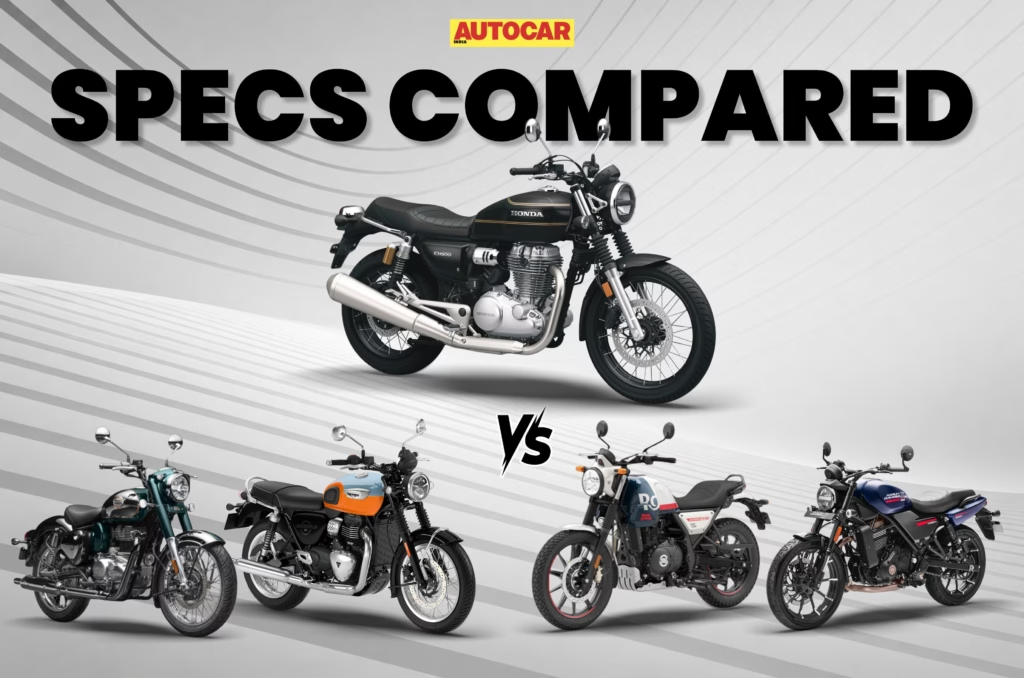
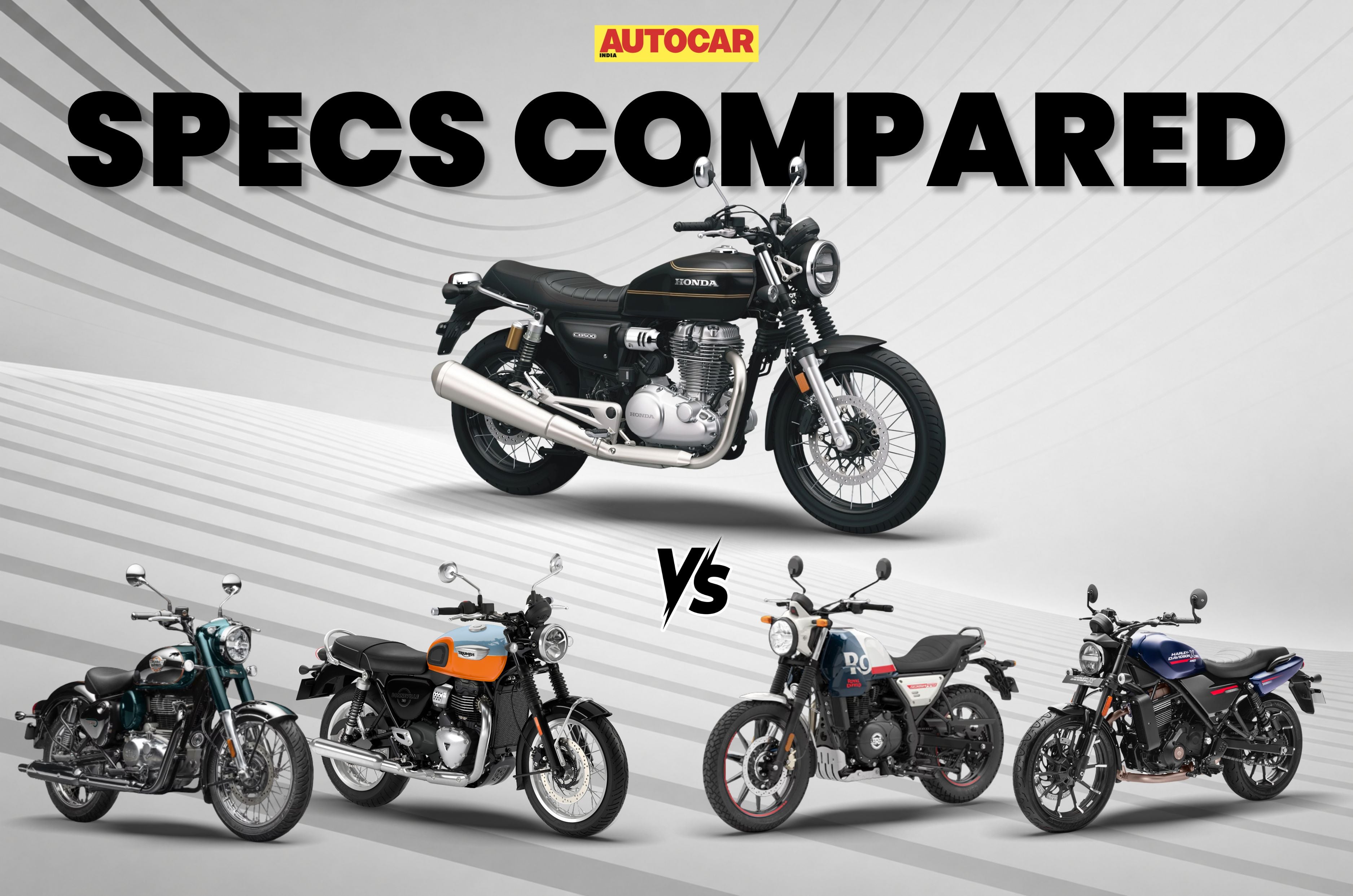
Honda has revealed the specifications for the CB500, so it’s only natural that we see how it stacks up against its main rivals such as the Harley-Davidson X440 T and Triumph Bonneville T40. For good measure, we’ve even thrown in other lower-priced and lower-spec but far more popular alternatives like the Royal Enfield Scram 440 and the king of this class, the Classic 350. Here is how these stack up against each other on paper.
Honda CB500 vs Rivals: Engine and output
The Honda CB500 shines with plenty of low-to-mid range torque
Honda CB500
Harley-Davidson X440 T
Triumph Bonneville T40
Royal Enfield Scram 440
Royal Enfield
Classic 350
Engine
501.7cc, single-cylinder, oil-cooled
440cc, single-cylinder, oil-cooled
350cc, single-cylinder, liquid-cooled
443cc, single-cylinder, oil-cooled
349cc, single-cylinder, liquid-cooled
Power
28.14hp at 5,250rpm
27hp at 6,000rpm
29hp at 9,000rpm
25.42hp at 6,250rpm
20.2hp at 6,100rpm
Torque
43.3Nm at 3,750rpm
38Nm at 4,000rpm
31.2Nm at 5,500rpm
34Nm at 4,000rpm
27Nm at 4,000rpm
Gearbox
5-speed
6-speed
6-speed
6-speed
5-speed
Power-to-weight ratio
148.88hp/tonne
140hp/tonne
148.71hp/tonne
129.69hp/tonne
103.59hp/tonne
With its large 501.7cc mill, the Honda offers more low-to-mid-range torque than the others, and it arrives the earliest too, at 3,750rpm. The torque outputs in this comparison are largely dictated by the engine’s displacement. In the modern retro segment where riders want an effortless riding experience, a healthy torque output delivered without too much effort is almost a necessity. The only anomaly here is the Bonneville T40, with its short stroke and liquid-cooled engine, making the most peak horsepower, although its torque output can’t match the larger bikes’ figures.
Honda CB500 vs Rivals: Dimension and weight
The CB 500 is the lightest in its segment
Honda CB500
Harley-Davidson X440 T
Triumph Bonneville T40
Royal Enfield Scram 440
Royal Enfield
Classic 350
Fuel tank capacity
15.2 litres
13.5 litres
14.5 litres
15 litres
13 litres
Ground Clearance
168mm
170mm
165mm
200mm
170mm
Kerb weight
189kg
192kg
195kg
196kg
195kg
Seat Height
NA
805mm
790mm
795
805mm
Wheelbase
1439mm
1418mm
1418mm
1460
1390mm
The Honda CB500 immediately stands out because of its kerb weight. It is the lightest motorcycle in this comparison, despite having the largest motor. Of all the bikes here, the T40 offers the most accessible saddle height, and you can further drop it down to 770mm with the accessory low seat. No bike here is a corner carver and all of them prioritize a laidback and stable demeanour on the side of their tyres. Given that we are yet to ride 2 of the most recent entrants yet, any comment on a comparison of their ride and handling will have to wait until a later date.
If you want your neo retro machine to be able to tackle bad roads, all of them should be up for the job but it’s the Scram that is the most apt for it with its Himalayan-derived suspension and chassis.
Honda CB500 vs Rivals: Tyres, brakes and suspension
The X440 T is the only motorcycle that features a USD fork
While the Harley-Davidson features a USD front fork, the other motorcycles rely on right way up telescopic forks and twin rear shocks with the exception of the Scram, which uses a link-type monoshock. Again, in keeping with their more relaxed nature, the simple spec on offer here is more than sufficient for these bikes’ intended roles. Of them all, the H-D X440 T is likely to be the most agile owing to its more sophisticated front suspension and smaller wheel sizes, which are almost akin to a traditional roadster.
More pertinent here is that the Classic 350 (except for the alloy wheel ‘Dark’ variant) and Bonneville T40 come only with tubed tyres. The Honda comes with tubeless tyres on all variants and save for the base one, the other two come with neat-looking side-laced rims permitting the aforementioned feature.
Honda CB500 vs Rivals: Features
Triumph takes the lead in the features department
The Bonneville T40 offers more features than any bike in the neo-retro segment (even more than its much more expensive twin-cylinder brethren!). Its electronic throttle body permits five ride modes (Eco, Road, Rain and customizable Rider A and B) as well as cruise control. A handsome full colour, 4-in TFT dash further brings in turn-by-turn navigation and cornering ABS as well as traction control complete its electronic arsenal.
The X440 T also has a TFT display, but it’s neither as sophisticated nor as pleasing to look at as the one on the ‘Bonnie’. It brings in 2 riding modes (Road and Rain) and has the safety net of switchable dual channel ABS and traction control. While the Honda has the same riding aids as the Harley, it displays information to the rider via a simple and easy-on-the-eyes digi-analogue display which has basic Bluetooth connectivity. The Scram and Classic -in true RE fashion – are simple, but not spartan machines. The Classic offers you a slip-and-assist clutch, type-C charger and dual-channel ABS, whereas the Scram misses out the slip-and-assist clutch and further offers you the ability to disable ABS at the rear.
Honda CB500 vs Rivals: Price
The CB500 is priced competitively
Honda CB500
Harley-Davidson X440 T
Triumph Bonneville T40
Royal Enfield Scram 440
Royal Enfield
Classic 350
Price (ex-showroom)
Rs 2.75-3.02 lakh
Rs 2.86 lakh
Rs 2.80 lakh
Rs 2.25-2.32 lakh
Rs 1.89-2.26 lakh
Honda has priced the CB500 rather well considering its capacity, what it brings to the table and despite the higher 40 percent GST working against it. In fact, its starting price undercuts both the smaller Harley and Triumph, and not by an unsubstantial amount.
However, in comparison to the slower and smaller REs, the Honda’s price is a segment higher and rightly so, because the CB500 is, for all intents and purposes, a machine from a segment above. Deliveries for the Alloy variants are expected later this year, and for the spoke and tubeless spoked variants in the first quarter of 2027.
Given what the latest offerings bring to the segment and their differing price strategies, the neo retro segment is now larger and more diverse than ever before with an option to suit just about every need. Choosing between these bikes is more than a simple comparison on paper and will need a more nuanced understanding of what they offer the rider.
Kolkata Durga Puja Stampede: पश्चिम बंगाल की राजधानी कोलकाता में दुर्गा पूजा के दौरान एक दर्दनाक हादसा सामने आया है। शनिवार, 17 अक्टूबर की शाम उत्तर कोलकाता में स्थित चोरबागान दुर्गा पूजा पंडाल में बारिश के बीच अचानक भीड़ का दबाव बढ़ने से भगदड़ मच गई। इसमें कम से कम 19 लोगों की मौत हो गई और 25 अन्य लोग घायल हो गए। गिरिश पार्क थाना क्षेत्र स्थित सरदा पार्क (चोरबागान) दुर्गा पूजा पंडाल के एग्जिट गेट पर अचानक भगदड़ मच गई। घटना के बाद इलाके में अफरा-तफरी का माहौल बन गया। घायलों को तत्काल बचाकर अस्पताल पहुंचाया गया, जहां उनका इलाज किया जा रहा है।
शाम करीब 7:40 बजे हुआ हादसा
जानकारी के मुताबिक, यह घटना 17 अक्टूबर की शाम करीब 7:40 बजे हुई। उस समय दुर्गा पूजा पंडाल में दर्शन करने के लिए बड़ी संख्या में लोग पहुंचे हुए थे। पंडाल के एग्जिट गेट पर लोगों की भारी भीड़ जमा हो गई। इसी दौरान अचानक भीड़ का दबाव बढ़ने से अफरा-तफरी मच गई और भगदड़ की स्थिति पैदा हो गई। बताया जा रहा है कि बाहर निकलने के रास्ते पर बड़ी संख्या में लोगों के एकत्र होने से हालात बिगड़े। हालांकि, भगदड़ के पीछे की परिस्थितियों और घटना के सटीक कारणों को लेकर डिटेल्स जानकारी का इंतजार है।
कैसे मची भगदड़?
घटना का ब्योरा देते हुए मुख्यमंत्री शुभेंदु अधिकारी ने कहा कि उत्तर कोलकाता के चोरबागान में सामुदायिक दुर्गा पूजा के आयोजकों की एक घोषणा के बाद श्रद्धालुओं के बीच अचानक भीड़ बढ़ गई, जिससे यह दुखद हादसा हुआ। उन्होंने कहा कि घटना की जांच की जाएगी। उन्होंने कहा, “घटनास्थल पर मौजूद अधिकारियों की शुरुआती रिपोर्ट के अनुसार पूजा आयोजकों द्वारा लाउडस्पीकर पर की गई एक घोषणा के कारण यह घटना हुई।”
मुख्यमंत्री ने बताया कि चोरबागान दुर्गा पूजा आयोजित करने वाले क्लब के पदाधिकारियों, निजी सुरक्षा कर्मियों और ड्यूटी पर तैनात अधिकारियों को हिरासत में लिया गया है। उन्होंने कहा कि मृतकों में से दो के परिजनों के अनुसार पंडाल परिसर में निजी सुरक्षा कर्मियों द्वारा सीटी बजाए जाने के कारण पंडाल में एंट्री के लिए इंतजार कर रहे लोगों में अचानक धक्का-मुक्की शुरू हो गई।
एक पुलिस अधिकारी के अनुसार, बारिश शुरू होते ही पंडाल के बाहर इंतजार कर रही भीड़ अचानक आगे बढ़ी। इस दौरान कुछ लोग सड़क पर गिर गए, जिससे भगदड़ मच गई। प्रशासन ने घटना के बाद भीड़भाड़ वाले कई दुर्गा पूजा आयोजनों को अस्थायी रूप से अपने पंडाल बंद करने की सलाह दी है। कोलकाता में दुर्गा पूजा के लिए करीब 3,500 पंडाल लगाए गए हैं।
सीएम ने कहा कि यह घटना कुछ हद तक बारिश के कारण हुई। पूजा समिति द्वारा अंदर की गई व्यवस्थाओं में भी कुछ कमियां थीं। कोलकाता पुलिस CCTV फुटेज की जांच कर रही है। जो भी लापरवाही का दोषी पाया जाएगा, उसके खिलाफ कानूनी कार्रवाई की जाएगी।
उन्होंने बताया कि प्रधानमंत्री नरेंद्र मोदी को इस बारे में सूचित कर दिया गया है। अधिकारी ने कहा कि हम कलकत्ता हाई कोर्ट के एक मौजूदा जज की अध्यक्षता में एक जांच समिति (फैक्ट-फाइंडिंग कमिटी) बनाएंगे। फिर सरकार उसकी सिफारिशों के आधार पर कार्रवाई करेगी।
अमित शाह पहुंचे कोलकाता
केंद्रीय गृह मंत्री अमित शाह शनिवार शाम को कोलकाता पहुंचे थे। उनका रविवार को दुर्गा पूजा पंडालों का दौरा करने का कार्यक्रम था। उन्होंने कहा कि भगदड़ की घटना के मद्देनजर वह अपने निर्धारित कार्यक्रम स्थगित कर रहे हैं। आज वह हादसे में घायल लोगों से मुलाकात करेंगे। पश्चिम बंगाल की पूर्व मुख्यमंत्री ममता बनर्जी ने कहा कि चोरबागान पूजा पंडाल में भगदड़ जैसी स्थिति की खबर सुनकर उन्हें गहरा सदमा लगा है।
सीएम अधिकारी और राज्य के मुख्य सचिव मनोज अग्रवाल ने भी सरकारी अस्पताल का दौरा किया। चोरबागान दुर्गा पूजा हाल के वर्षों में काफी लोकप्रिय हुई है। यहां बड़ी संख्या में श्रद्धालु आते हैं। यह पूजा चित्तरंजन एवेन्यू से सटी एक संकरी सड़क पर आयोजित की जाती है।
हादसे के बाद बंद किया गया पूजा पंडाल
भगदड़ की घटना के बाद प्रशासन ने सरदा पार्क (चोरबागान) दुर्गा पूजा पंडाल को श्रद्धालुओं के लिए बंद कर दिया। मौके पर पुलिस और इमरजेंसी टीमें तैनात रहीं। अधिकारी घटना से जुड़े तथ्यों की जानकारी जुटाने और स्थिति का आकलन करने में लगे हैं।
शुरुआती जानकारी के अनुसार, पंडाल के एग्जिट पर श्रद्धालुओं की भारी भीड़ जमा होना भगदड़ की प्रमुख वजह रही। भीड़ के अचानक बढ़े दबाव के कारण लोग अफरा-तफरी में फंस गए। हालांकि, घटना के सटीक कारणों और सुरक्षा इंतजामों की भूमिका को लेकर अभी विस्तृत जानकारी सामने आनी बाकी है। फिलहाल प्रशासन का ध्यान घायलों को उपचार उपलब्ध कराने, भीड़ को नियंत्रित करने और घटना से संबंधित तथ्यों को जुटाने पर है। इस हादसे ने दुर्गा पूजा जैसे बड़े सार्वजनिक आयोजनों में भीड़ मैनेजमेंट और सुरक्षित निकास व्यवस्था की अहमियत को एक बार फिर सामने ला दिया है।
#WATCH | Kolkata | West Bengal CM Suvendu Adhikari says, “At around 7.30 PM, a tragic incident occurred at a popular puja in Kolkata’s Chorbagan Sarbojanin. In this tragic incident, 19 people have died so far, most of whom are girls and children. This is a very painful incident, and 25 people have also sustained injuries; their treatment is ongoing. 24 of them are out of danger, while one is critical. We are providing the best possible medical treatment. Following this incident, I immediately came to the Medical College along with the entire government administration… The place of occurrence has been sealed. The forensic team, STF, and fire brigade are conducting the initial investigation there. This happened partly due to the rain, and there were also some shortcomings in the arrangements made by the puja committee inside. The Kolkata Police AFS is studying the CCTV footage. Whoever is found negligent will face legal action. The Prime Minister has been informed about this. The Home Minister is himself in Kolkata, and is personally monitoring the situation. Tomorrow, the Home Minister’s and all our programs have been cancelled… Across the entire state, 58,000 pujas are taking place, and we are taking steps to ensure no such incident happens anywhere else. Initially, we have declared compensation of Rs 25 lakh from the state government and a job for every family that lost a loved one. For all the injured, the full responsibility for their medical treatment has been taken by the state government, and we will provide Rs 5 lakh as compensation to each of them. So far, I have personally met with 10 bereaved families. Even though it is midnight, I am still standing with the victim families, alongside ministers, MLAs, the police, and the Chief Secretary. Under the leadership of a sitting judge of the Kolkata High Court, we will form a fact-finding committee, and the government will take action based on its recommendations.”
कई बार रोजमर्रा की खरीदारी के दौरान लोग छोटी-मोटी कमियों को नजरअंदाज कर देते हैं, लेकिन कुछ लोग सवाल उठाने से पीछे नहीं हटते। ऐसा ही एक मामला बिस्किट के पैकेट को लेकर सामने आया है, जहां एक कंटेंट क्रिएटर ने दुकानदार से ऑनलाइन शिकायत करने की बात कही। दुकानदार के जवाब और दोनों के बीच हुई बातचीत का वीडियो सोशल मीडिया पर तेजी से वायरल हो गया। इसे देखने के बाद लोग उपभोक्ता जागरूकता और खाद्य पदार्थों की गुणवत्ता पर चर्चा करने लगे। कई यूजर्स ने शिकायत करने के कदम की तारीफ की, तो कुछ ने खाद्य सुरक्षा विभाग की भूमिका पर ध्यान दिलाया।
इस घटना ने एक बार फिर सवाल खड़ा किया है कि अगर किसी पैकेटबंद खाद्य पदार्थ की गुणवत्ता पर संदेह हो, तो उपभोक्ता को क्या करना चाहिए और अपनी शिकायत कहां दर्ज करानी चाहिए।
दुकानदार से पूछा- ऑनलाइन शिकायत कर दूं?
राघव दुबे नाम के कंटेंट क्रिएटर ने यह वीडियो शेयर किया है। इसमें वह बिस्किट के पैकेट की गुणवत्ता को लेकर सवाल करते हैं और दुकानदार से पूछते हैं, “Complaint online daalu chalega” यानी क्या वह ऑनलाइन शिकायत दर्ज करा सकते हैं?
इस पर दुकानदार जवाब देता है, “हां, डाल दो।” वीडियो में हुई इस छोटी-सी बातचीत ने लोगों का ध्यान खींचा। रिपोर्ट के मुताबिक, वीडियो को 1.4 करोड़ से ज्यादा बार देखा गया। कई यूजर्स ने कहा कि किसी उत्पाद की गुणवत्ता पर संदेह होने पर ग्राहक को आवाज उठानी चाहिए, न कि मामले को अनदेखा करना चाहिए।
वीडियो पर कई लोगों ने कंटेंट क्रिएटर के कदम की तारीफ की। कुछ यूजर्स ने इसे उपभोक्ता जागरूकता से जोड़कर देखा, तो कुछ ने खाद्य सुरक्षा विभाग के काम की सराहना की। एक यूजर ने लिखा, “Good Job”, जबकि दूसरे ने खाद्य सुरक्षा विभाग की तारीफ की। कुछ लोगों ने यह भी पूछा कि शिकायत कहां दर्ज की गई और कार्रवाई होने में कितना समय लगा। यूजर्स का कहना था कि खाने-पीने की चीजों की गुणवत्ता से जुड़ी शिकायतों को गंभीरता से लिया जाना चाहिए।
महाराष्ट्र FDA में ऑनलाइन शिकायत की सुविधा
महाराष्ट्र के खाद्य एवं औषधि प्रशासन (FDA) के पास खाद्य पदार्थों की गुणवत्ता से जुड़ी शिकायतें दर्ज कराने की ऑनलाइन सुविधा है। इसके माध्यम से मिलावट, असुरक्षित खाद्य उत्पादों और पैकेट पर गलत जानकारी जैसी समस्याओं की शिकायत की जा सकती है। जुलाई 2026 में विभाग ने आयुक्त तुकाराम मुंढे के नेतृत्व में AI की मदद से शिकायतों को संभालने वाला प्लेटफॉर्म शुरू किया था। इसका उद्देश्य शिकायत दर्ज कराने और उनकी स्थिति जानने की प्रक्रिया को आसान बनाना है।
खाद्य पदार्थ में गड़बड़ी दिखे तो क्या करें?
अगर किसी बिस्किट या पैकेटबंद खाद्य पदार्थ की गुणवत्ता पर संदेह हो, तो उसका पैकेट संभालकर रखें। उत्पाद, बैच नंबर और एक्सपायरी तारीख की तस्वीरें लें। खरीदारी का बिल भी सुरक्षित रखें और संदिग्ध उत्पाद का सेवन न करें। इसके बाद निर्माता या संबंधित खाद्य सुरक्षा विभाग में शिकायत दर्ज कराएं।
Follow us for more:
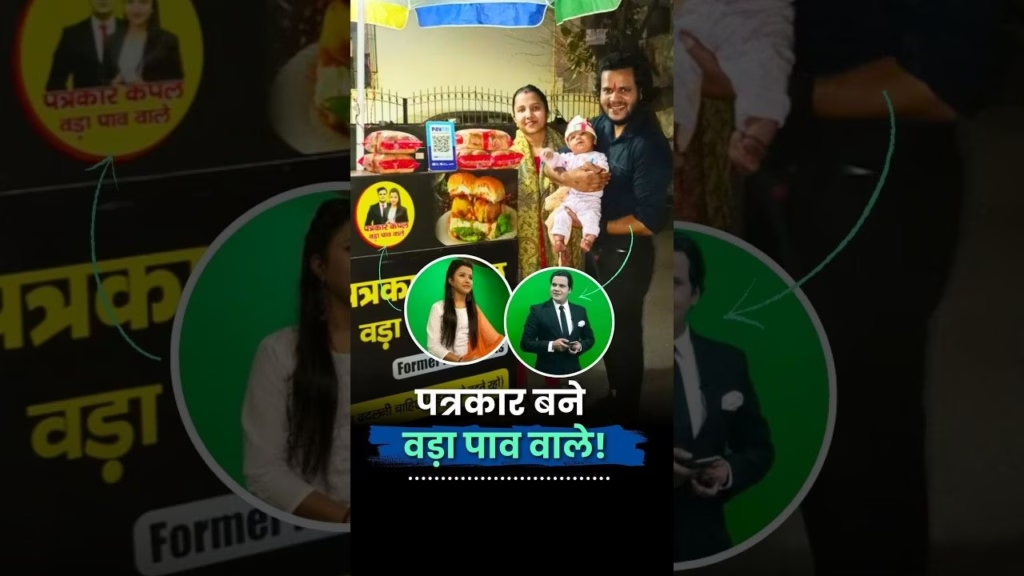
12 साल तक मीडिया में काम किया, लेकिन एक वक्त ऐसा आया जब जसवीर सिंह जस्सी और पत्नी सुधा शाह की नौकरियाँ चली गईं। आर्थिक तंगी आई, लोगों ने ताने मारे और कई बार लगा कि अब आगे कोई रास्ता नहीं है।
फिर मुंबई में सिद्धिविनायक मंदिर गए और वहाँ पर खाए एक वड़ा पाव ने उनकी ज़िंदगी की दिशा बदल दी।
आज यही कपल नोएडा सेक्टर 19 में अपना वड़ा पाव स्टॉल चलाता है और मेहनत से अपनी नई पहचान बना रहा है।
उनकी कहानी याद दिलाती है कि कोई काम छोटा नहीं होता, अगर आप उसे ईमानदारी और हौसले से करते हैं।
आपके लिए सफलता का असली मतलब क्या है?
@patrakarcouple
न्यूज़रूम से वड़ा पाव के ठेले तक | Journalist Couple Vada Pav Business | Patrakar Couple Vada Pav Wale | Noida
[Journalist couple started vada pav business in Noida, journalist turned street food entrepreneur, Couple lost jobs and started their own business, Small business success story, From job loss to successful business]
आजकल ज्यादा रिटर्न पाने के लिए कई लोग म्यूचुअल फंड में निवेश करते हैं। लेकिन कभी-कभी निवेश के चक्कर में वे अपने कर्ज को नजरअंदाज कर देते हैं। ऐसा ही एक मामला स्टार्टअप CEO आबिद हसन ने सोशल मीडिया पर साझा किया है। वह अपने नाई के साथ बातचीत कर रहे थे, तभी उन्हें पता चला कि वह एक तरफ म्यूचुअल फंड में पैसा लगा रहा है, जबकि दूसरी तरफ उस पर भारी ब्याज वाले कई लोन भी हैं। इस घटना के बाद हसन ने लोगों को निवेश और कर्ज से जुड़ी एक जरूरी सलाह दी।
बाल कटवाते समय सामने आई हैरान करने वाली बात
आबिद हसन ने X पर बताया कि एक दिन उनके नाई ने उनसे अपने म्यूचुअल फंड पोर्टफोलियो के बारे में राय मांगी। इसके बाद हसन ने उसकी आर्थिक स्थिति को समझने की कोशिश की। बातचीत में पता चला कि नाई ने तीन लोन ले रखे थे, जिन पर 20 फीसदी से ज्यादा ब्याज देना पड़ रहा था।
इसके बावजूद वह म्यूचुअल फंड में निवेश कर रहा था। जब हसन ने उससे इसकी वजह पूछी, तो उसने बताया कि उसे अपने निवेश से 30 फीसदी से ज्यादा रिटर्न मिलने की उम्मीद है।
20% ब्याज वाले कर्ज के बीच निवेश करना कितना सही?
हसन ने इस सोच पर सवाल उठाया। उनका कहना था कि शेयर बाजार या म्यूचुअल फंड से हर बार ज्यादा रिटर्न मिलने की गारंटी नहीं होती। बाजार में उतार-चढ़ाव के कारण निवेश की वैल्यू घट भी सकती है। दूसरी तरफ, लोन पर ब्याज चुकाना एक जरूरी जिम्मेदारी है।
उदाहरण के लिए, अगर किसी व्यक्ति को अपने कर्ज पर 20 फीसदी ब्याज देना पड़ रहा है, तो उसके लिए निवेश से लगातार इससे ज्यादा रिटर्न कमाना मुश्किल हो सकता है। ऐसे में बाजार से मुनाफे की उम्मीद करने के बजाय महंगे कर्ज को कम करना ज्यादा फायदेमंद हो सकता है।
10% से ज्यादा ब्याज वाला लोन पहले चुकाने की सलाह
आबिद हसन ने सलाह दी कि अगर किसी व्यक्ति पर 10 फीसदी से ज्यादा ब्याज वाला कर्ज है, तो उसे अतिरिक्त निवेश करने से पहले कर्ज चुकाने पर ध्यान देना चाहिए। इससे ब्याज का बोझ कम हो सकता है और आर्थिक स्थिति मजबूत बनाने में मदद मिल सकती है।
उन्होंने यह भी कहा कि लोन की किस्त समय पर नहीं चुकाने पर पेनल्टी और अतिरिक्त खर्च बढ़ सकते हैं। नौकरी छूटने जैसी स्थिति में कर्ज चुकाना और भी मुश्किल हो सकता है।
कम आमदनी वाले लोगों के लिए भी जरूरी संदेश
हसन ने लोगों से अपील की कि वे यह सलाह घरेलू कामगारों, ब्लू-कॉलर कर्मचारियों और कम अनुभव वाले नौकरीपेशा लोगों तक भी पहुंचाएं। कई बार लोग लोन की असली लागत और ब्याज दर को ठीक से समझ नहीं पाते।
The person who regularly gives me haircuts once told me he invests in MFs, and asked for my feedback on his portfolio. While he was cutting hair, I thought I will do a financial planning exercise for him. I found out that he had like 3 loans exceeling 20% interest. And yet he was investing in MF. I asked him why, he said he expects 30% plus return.
That tells you how grossly wrong the notions of investors have been in the last few years. And how distorted our financial expectations have gotten. There is no way the market would give him more than his interest rate on loans. And this one financial mistake, of investing while still servicing high interest loans, is something we may all have seen often.
So here is a tip: If you have a loan even in excess of 10% interest, please pay that off first. There is no way market gives you more than that in the long run. Worse, if you miss loan payments, you will have higher interest rates and penalities. If you lose your job, debt is what kills you with all this + extortive collection agents
Most of you reading this might not have this problem – so please tell this to others who might. Your domestic helpers, blue collar workers, even some entry level white collar crowd. They are the ones who are hit the most by the loan sharks
Please pay off your high interest debt first. Investing can wait.
हसन की पोस्ट पर कुछ यूजर्स ने कहा कि कई लोग म्यूचुअल फंड को बचत का जरिया मानते हैं और कर्ज को अलग जिम्मेदारी समझते हैं। एक यूजर ने बताया कि उसके दोस्त ने लोन लिया था, जिसकी प्रभावी सालाना ब्याज दर 24 फीसदी से ज्यादा निकली।
(डिस्क्लेमर: यह रिपोर्ट सोशल मीडिया पर यूज़र द्वारा शेयर किए गए कंटेंट पर आधारित है। मनीकंट्रोल इन दावों की न तो स्वतंत्र रूप से पुष्टि नहीं करता है और न ही इनका समर्थन करता है।)
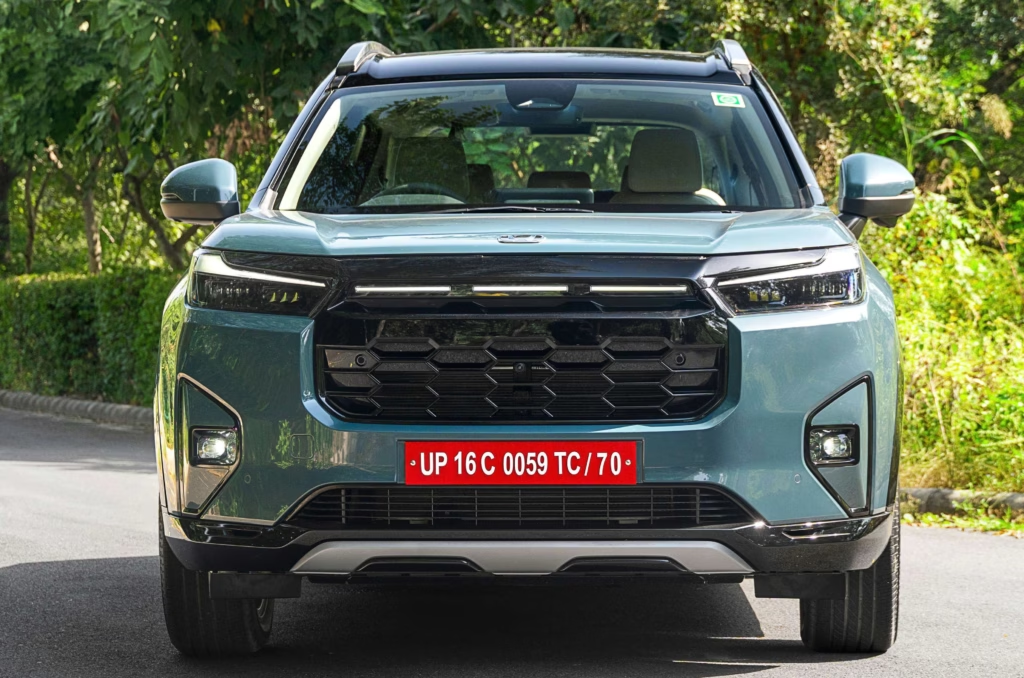
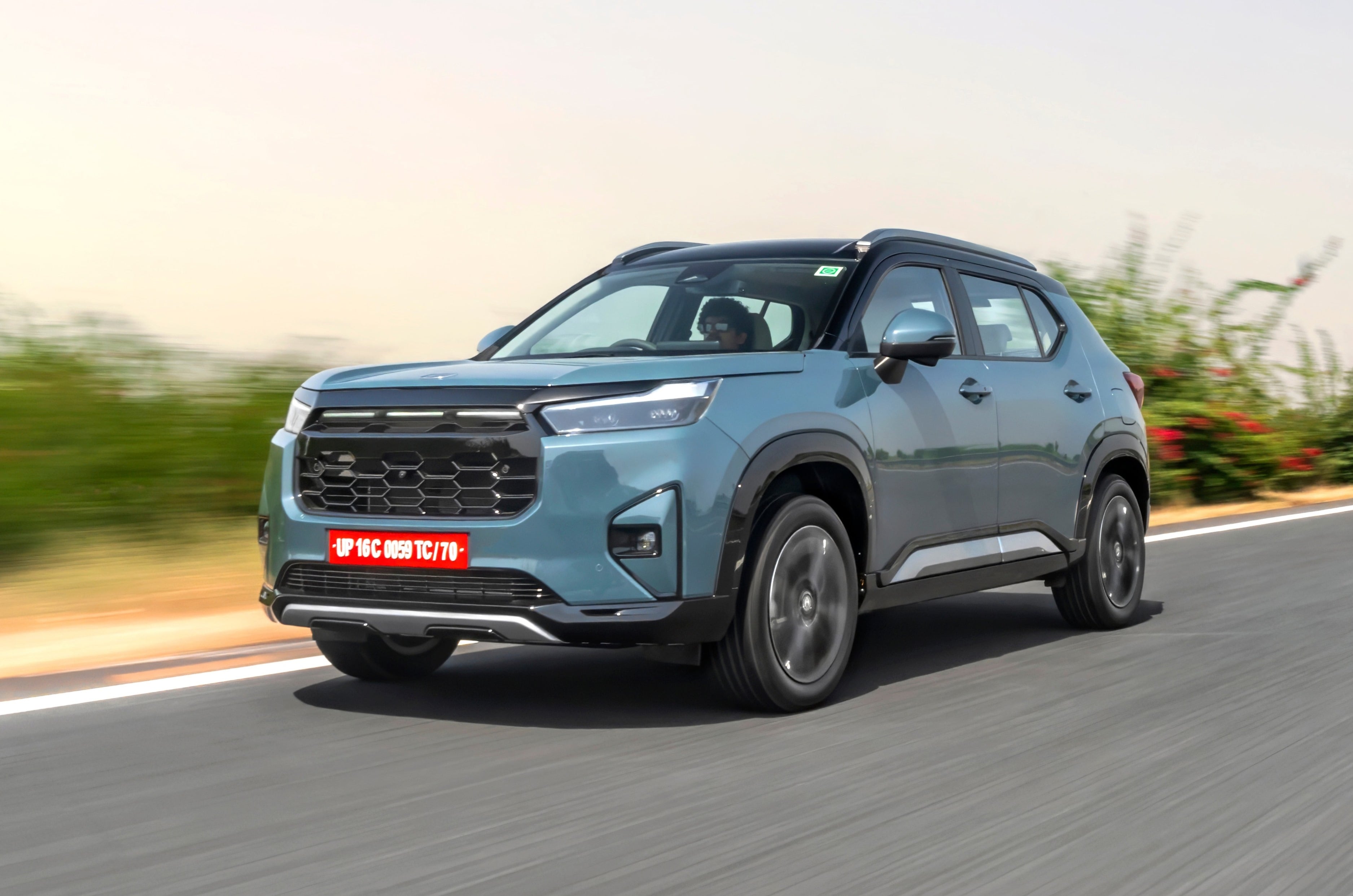
Honda has priced the 2026 Elevate facelift from Rs 11.80 lakh to Rs 18.58 lakh (ex-showroom). Its list of midsize SUV rivals is pretty long, and includes the Hyundai Creta, Kia Seltos, Tata Sierra, Renault Duster, Nissan Tekton, Volkswagen Taigun and Skoda Kushaq. The Elevate is underpinned by the City’s platform, and comes with a single 1.5-litre petrol engine with a choice of manual and CVT gearboxes. Here’s what works in the updated Elevate’s favour, and what doesn’t.
Reasons to buy the 2026 Honda Elevate facelift
Eager engine and confident road manners
A lively engine, tidy handling and strong brakes are among the Elevate’s fortes
The Elevate’s i-VTEC engine provides strong performance, while high-speed stability is good too.
The 2026 Elevate continues with the same 1.5-litre four-cylinder i-VTEC petrol engine of its predecessor, but it’s now WLTP emissions norms compliant. The smooth and eager unit produces 121hp and 145Nm of torque, delivering this power cleanly and progressively all through its rev range. The throttle response is sharp, too. For those looking for a hassle-free urban commuter, the smooth CVT (continuously variable transmission) does the job well. It also gets paddle shifters so you can move through pre-set ratios, offering that extra sense of control.
The Elevate feels planted and offers a good balance between handling and ride quality.
The Elevate has always been an easy car to drive around town, courtesy of a light yet responsive steering that makes parking manoeuvres easy. The steering weighs up progressively as speeds rise, and the Elevate also feels planted out on the open highway, inspiring confidence. A good control on body roll means that, despite its tall SUV stance, the Honda Elevate corners neatly without much drama. The brakes are strong and feel progressive, further inspiring driver confidence. The ride feels firm but the Elevate manages to smooth out surface imperfections with relative ease.
Premium and comfy cabin
Interior retains the model’s practicality quotient while upping the premium experience
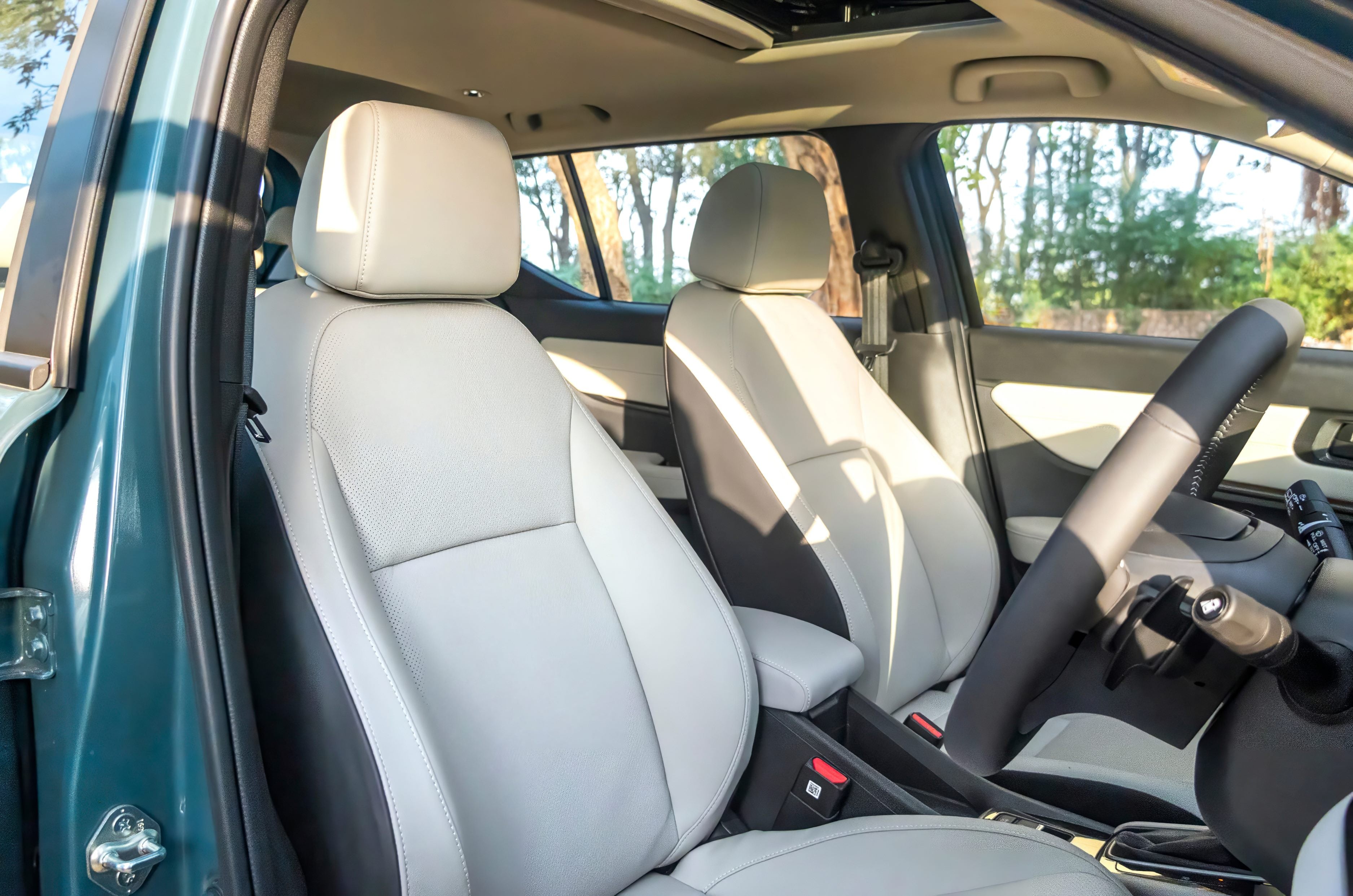
The 2026 update has made this interior feel more premium.
The Elevate has been known for providing an ergonomically sound cabin – this hasn’t changed with the 2026 update. The front seats remain nice and supportive, while finding a comfortable driving position is easy. There’s now lighter leatherette padding and stitching on the dashboard, a revised headliner that looks and feels more premium, and an updated HVAC panel with buttons for the front-seat ventilation feature.
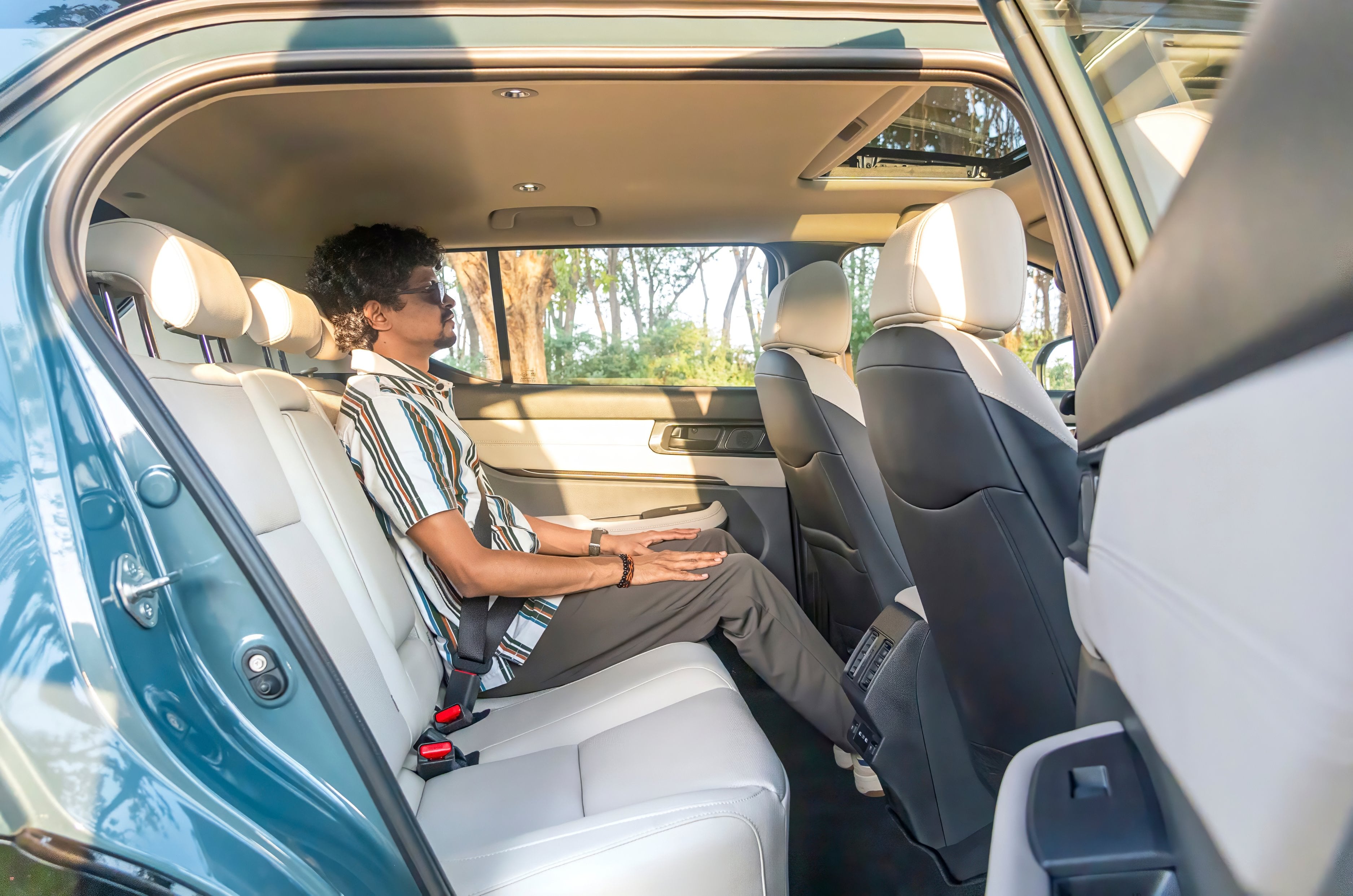
Headroom and kneerom for back-seat passengers is good.
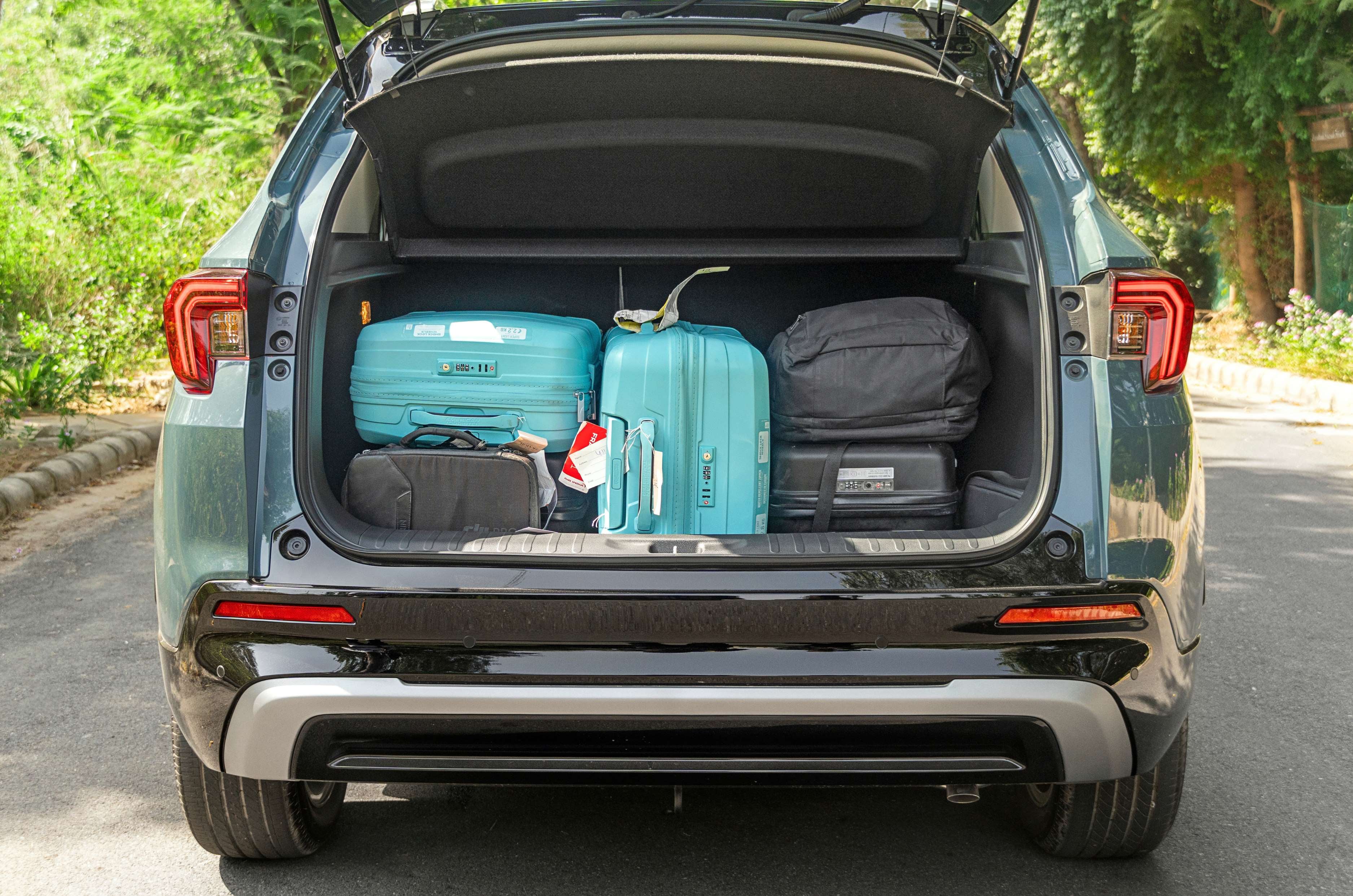
It is easy to get comfortable in the back of the Honda Elevate facelift. There’s plenty of headroom and kneeroom for two adults, while conveniences like a centre armrest with cupholders, dedicated AC vents and USB charging ports add to the overall experience. There’s also no shortage of cubbies to store your knick-knacks, plus a roomy 458-litre boot. You also get a spare tyre under the boot floor, further boosting the Elevate’s practicality.
Better equipped than before
Honda has added more features to the Elevate’s equipment list
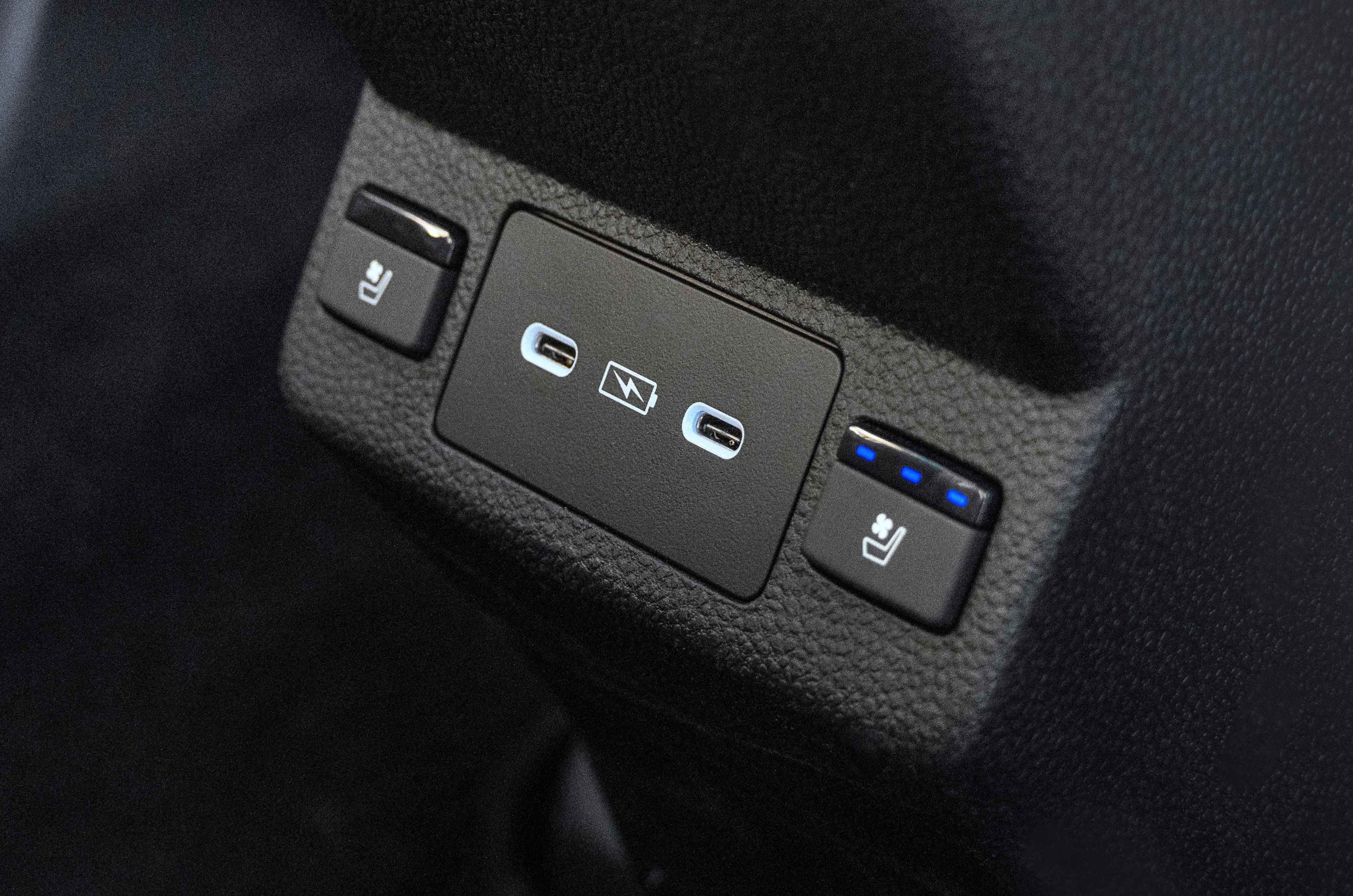
The Honda Elevate now gets segment-first rear-seat ventilation.
The back seats of the 2026 Elevate facelift are also where you will see the new touch-operated LED reading lamps. The Elevate now offers rear-seat ventilation, which is a first for the segment. Features such as orange ambient lighting, multi-way powered front seats, wireless charging, auto climate control with a built-in PM2.5 air purifier, wireless Apple CarPlay & Android Auto, an 8-speaker audio system, a 7-inch MID, and a 360-degree camera are available too.
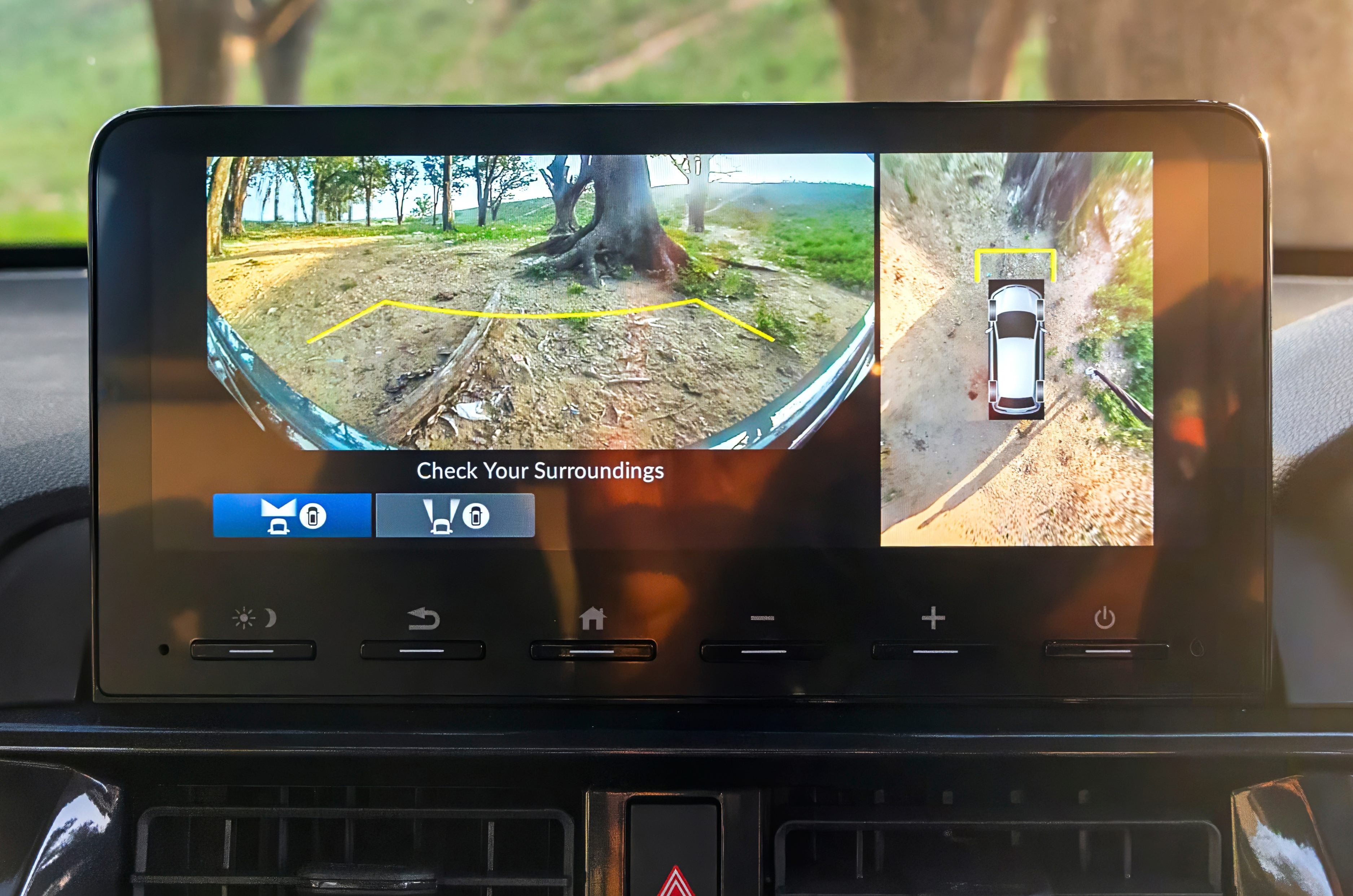
A 360-degree camera is now a factory-fit option on the top-spec trim.
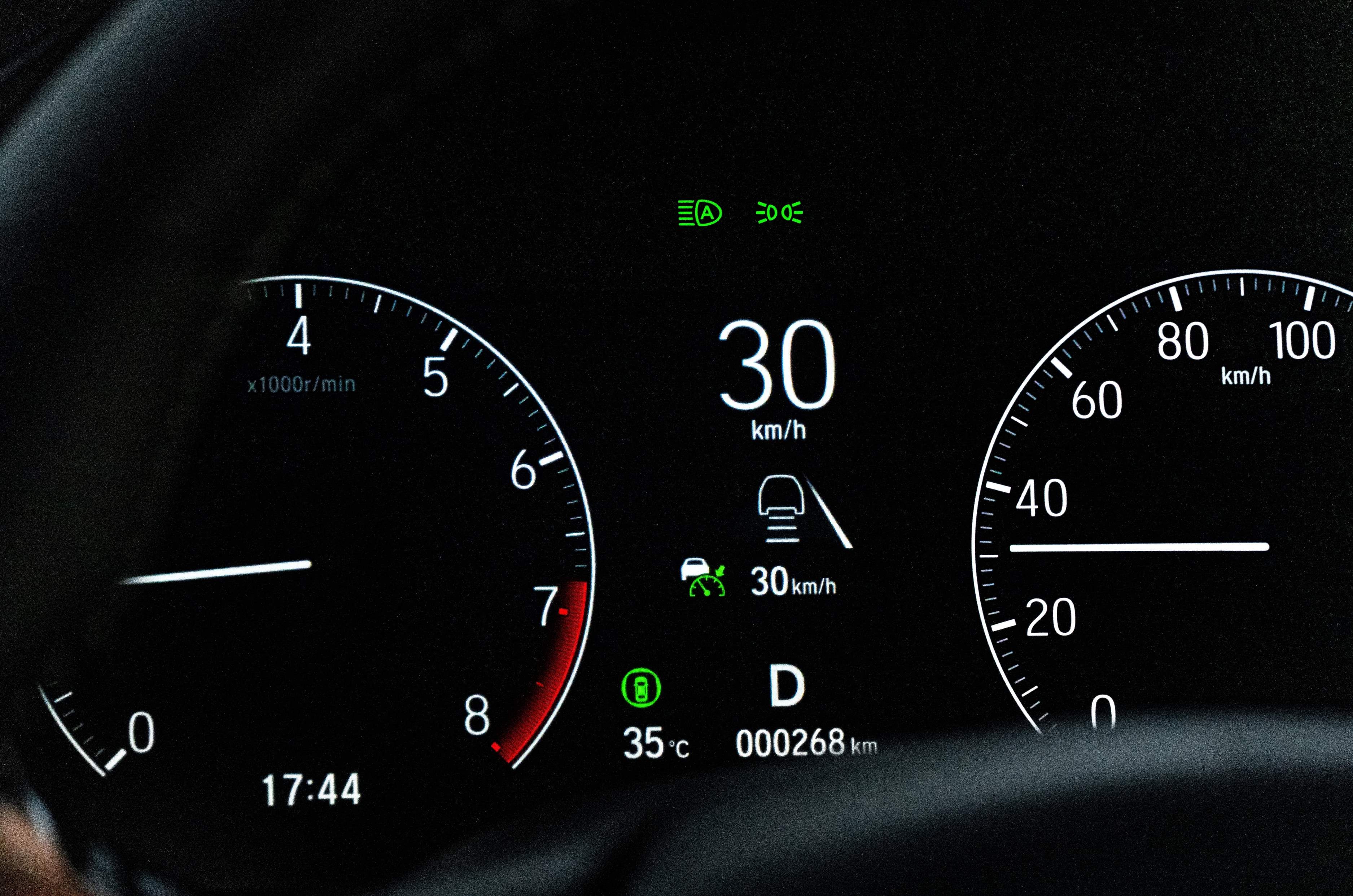
There’s enough on the safety front, too. The 2026 Elevate facelift is available with front parking sensors, Honda’s LaneWatch camera, and a camera-based ADAS (advanced driver assistance systems) suite. This ropes in adaptive cruise control, auto-emergency braking, lane-keep assist and more. The CVT variants get a new low-speed follow function for the adaptive cruise control to tackle stop-and-go traffic conditions, along with rear disc brakes and an electronic parking brake with auto hold. Standard equipment includes 6 airbags, stability & traction control, rear parking sensors, adjustable headrests and three-point seatbelts for all occupants.
Reasons not to buy the 2026 Honda Elevate facelift
Cabin has its shortcomings
Lacklustre noise insulation aside, the Elevate’s cabin still has a few niggles
Some may find the front lumbar support to be excessive.
While the 2026 facelift has made the Honda Elevate more competitive, there’s still room for improvement. For starters, the lumbar support up front can feel intrusive for some, and taller occupants will find the under-thigh support underwhelming. Seating a third passenger in the back wouldn’t be easy, due to the narrower cabin width of the Elevate over some rivals. The raised centre seat doesn’t make this better, either.
Rear occupants will notice vertical movements at higher speeds over undulating roads.
The cabin is quieter than before, but engine and road noise can be heard quite easily at highway speeds. Those at the back will also notice a fair bit of vertical movement over undulating highways at triple-digit speeds.
Only one engine option
The Elevate still doesn’t get a diesel, turbo-petrol, hybrid or CNG option
Lack of engine choices even with the latest update is a definite con for the Honda Elevate.
In a segment where rivals offer multiple engine options (even across fuel types), the 2026 Honda Elevate facelift continues with just the one naturally aspirated petrol unit. This limits its appeal when compared to other offerings in the hotly contested midsize segment. While we are yet to test its mileage, the lack of an automatic engine stop-start system and ‘Eco’ drive mode won’t help boost fuel efficiency.
Latest features reserved for the top trim
Most of the headline features are offered only with the new range-topping ZX+
Only the range-topping ZX+ gets all of the newly introduced features.
If you want all the new bells & whistles that the 2026 Honda Elevate facelift has to offer, you’ll have to stretch your budget to accommodate the new top-spec ZX+ trim. This is where niceties like rear seat ventilation, powered front seats, a 360-degree camera and front parking sensors reside. However, this also means a price tag of between Rs 16.88 lakh and Rs 18.58 lakh (ex-showroom).
The ZX+ trim still misses features like two-zone climate control, a panoramic sunroof and rear sunblinds.
Despite the ZX+’s higher price, it still misses out on a panoramic sunroof, powered tailgate, a fully digital driver’s display, rear sunblinds and dual-zone climate control. Some similarly priced rivals offer a more comprehensive feature set, more cabin space and multiple powertrain options.
हर कोई लाखों के पैकेज वाली नौकरी पाने का सपना देखता है, लेकिन IIT रुड़की के हरकिरत सिंह ने नौकरी मिलने के बाद ही अपना रास्ता बदलने का फैसला किया। Goldman Sachs जैसी बड़ी कंपनी छोड़कर उन्होंने फ्रीलांसिंग में हाथ आजमाया और रिपोर्ट्स के मुताबिक, सालाना 80 लाख रुपये तक कमाए। अब Gather में उनकी रिमोट सॉफ्टवेयर डेवलपर की नौकरी का पैकेज करीब 4 करोड़ रुपये बताया जा रहा है। उनकी कहानी सिर्फ मोटी सैलरी तक पहुंचने की नहीं, बल्कि करियर में अलग रास्ता चुनने के फैसले की भी है। हालांकि, इतनी बड़ी कमाई की खबर के बीच यह समझना भी जरूरी है कि हर किसी के लिए ऐसा सफर एक जैसा नहीं होता।
IIT रुड़की से पढ़ाई, Google के प्रोग्राम में भी लिया हिस्सा
हरकिरत सिंह ने 2018 में IIT रुड़की से कंप्यूटर साइंस में बीटेक किया था। उनकी प्रोफेशनल यात्रा में Google Summer of Code में दो बार हिस्सा लेना भी शामिल रहा। इसके अलावा, उन्होंने FAANG कंपनियों, फाइनेंस सेक्टर और स्टार्टअप्स के साथ काम करके अपना अनुभव बढ़ाया। इस तरह उनका करियर सिर्फ एक कंपनी या एक क्षेत्र तक सीमित नहीं रहा।
Goldman Sachs छोड़ी, फ्रीलांसिंग को बनाया कमाई का जरिया
आमतौर पर बड़ी वित्तीय कंपनी में नौकरी मिलना युवाओं के लिए बड़ी उपलब्धि माना जाता है। लेकिन हरकिरत ने महामारी से ठीक पहले इस नौकरी को छोड़कर दूसरे अवसर तलाशने का फैसला किया। इसके बाद उन्होंने फ्रीलांसिंग के जरिए काम करना शुरू किया।
बताया जाता है कि इस दौरान उनकी सालाना कमाई करीब 80 लाख रुपये तक पहुंच गई। अलग-अलग प्रोजेक्ट्स पर काम करने और तकनीकी कौशल का इस्तेमाल करने से उन्हें वैश्विक बाजार में अवसर तलाशने का मौका मिला।
अब ₹4 करोड़ के रिमोट पैकेज की चर्चा
हरकिरत सिंह को लेकर साझा की जा रही जानकारी के मुताबिक, उन्हें Gather में रिमोट सॉफ्टवेयर डेवलपर की भूमिका मिली, जिसके लिए सालाना पैकेज करीब 4 करोड़ रुपये बताया जा रहा है। हालांकि, इस रकम और नौकरी की शर्तों की स्वतंत्र पुष्टि उपलब्ध जानकारी से नहीं होती।
Meet Harkirat Singh, a 2018 https://t.co/YSvOF5fxhn Computer Science graduate from IIT Roorkee. This guy secured a remote software developer role at Gather with a package of ₹4 crore per year.
He has participated in Google Summer of Code twice and worked across FAANG companies, finance, and startups.
He resigned from Goldman Sachs just before COVID to explore new opportunities. Through freelancing, he reportedly earned around ₹80 lakh per year and eventually secured a remote software developer role with a package of ₹4 crore per year.
Here are some remote job platforms where companies pay in USD.
उनकी कहानी पर कुछ यूजर्स ने तकनीकी कौशल और लगातार सीखते रहने की अहमियत बताई। वहीं, एक यूजर ने कहा कि फ्रेशर्स और जूनियर कर्मचारियों के लिए रिमोट नौकरी पाना आज भी मुश्किल है, जबकि अनुभवी लोगों को अपेक्षाकृत ज्यादा अवसर मिलते हैं।
हरकिरत की यात्रा यही दिखाती है कि करियर में नए रास्ते तलाशना फायदेमंद हो सकता है, लेकिन इसके लिए कौशल, अनुभव और जोखिम उठाने की तैयारी भी जरूरी है।
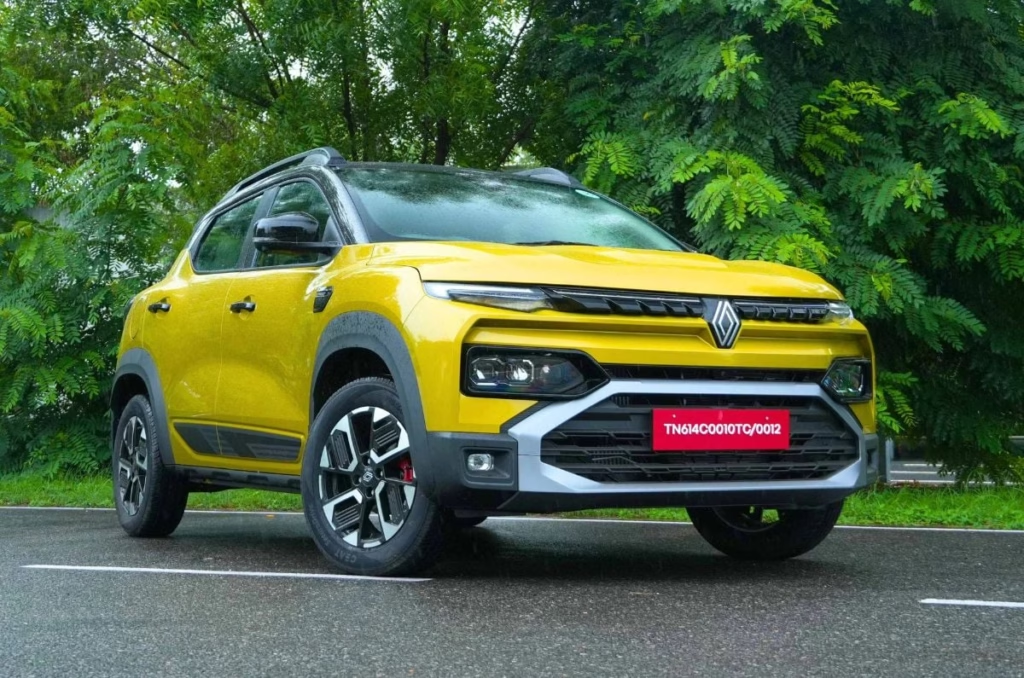
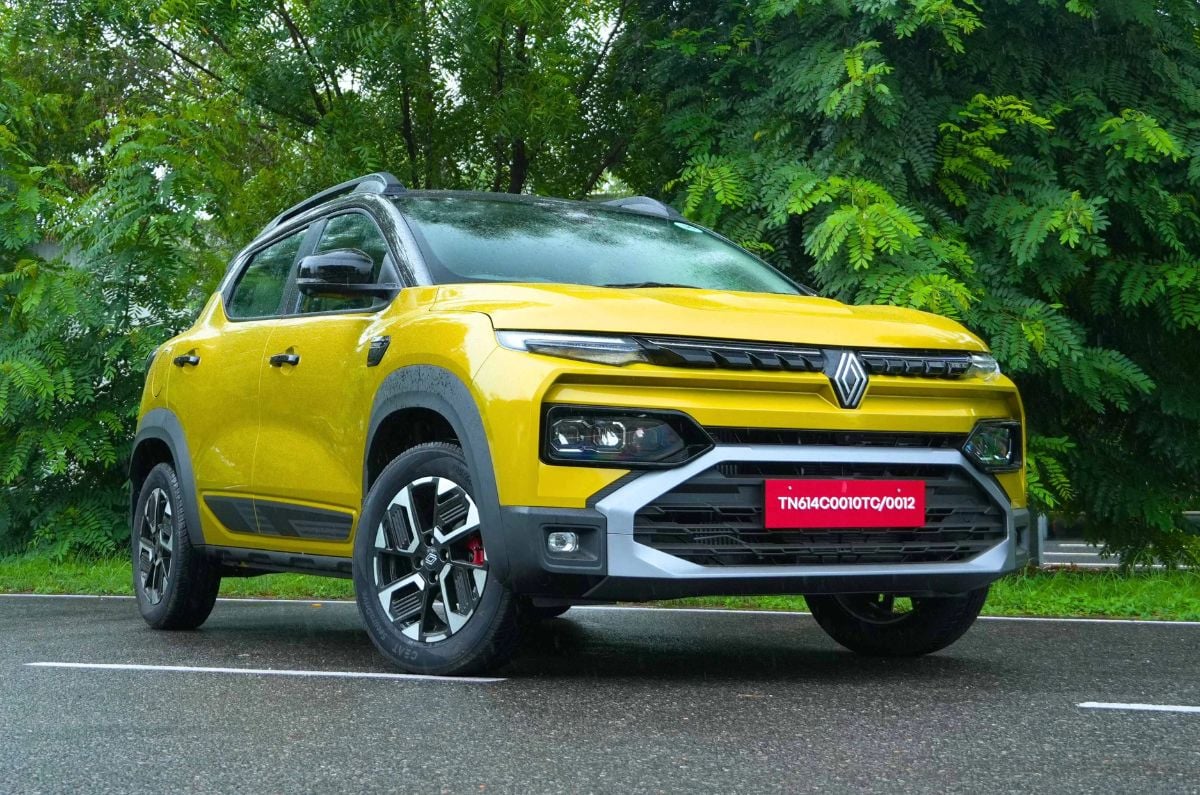
The Renault Kiger sits on the automaker’s CMF-A+ platform, which it shares with the Triber MPV and also its Nissan Magnite rival. The Kiger is priced from Rs 5.81 lakh to Rs 10.40 lakh (ex-showroom), and is available with two engine and three gearbox options. Here are the main pros and cons of the Renault Kiger.
Reasons to buy the Renault Kiger
Peppy turbo-petrol engine and a sorted CVT
This engine-gearbox combination works well and remains our pick
The 1.0-litre three-cylinder turbo-petrol engine puts out 100hp and 152Nm when paired with the CVT (continuously variable transmission) and 160Nm when mated to the 5-speed manual gearbox. However, it’s the former that we would pick as it displays very little in the way of the type’s notorious rubber-band affect.
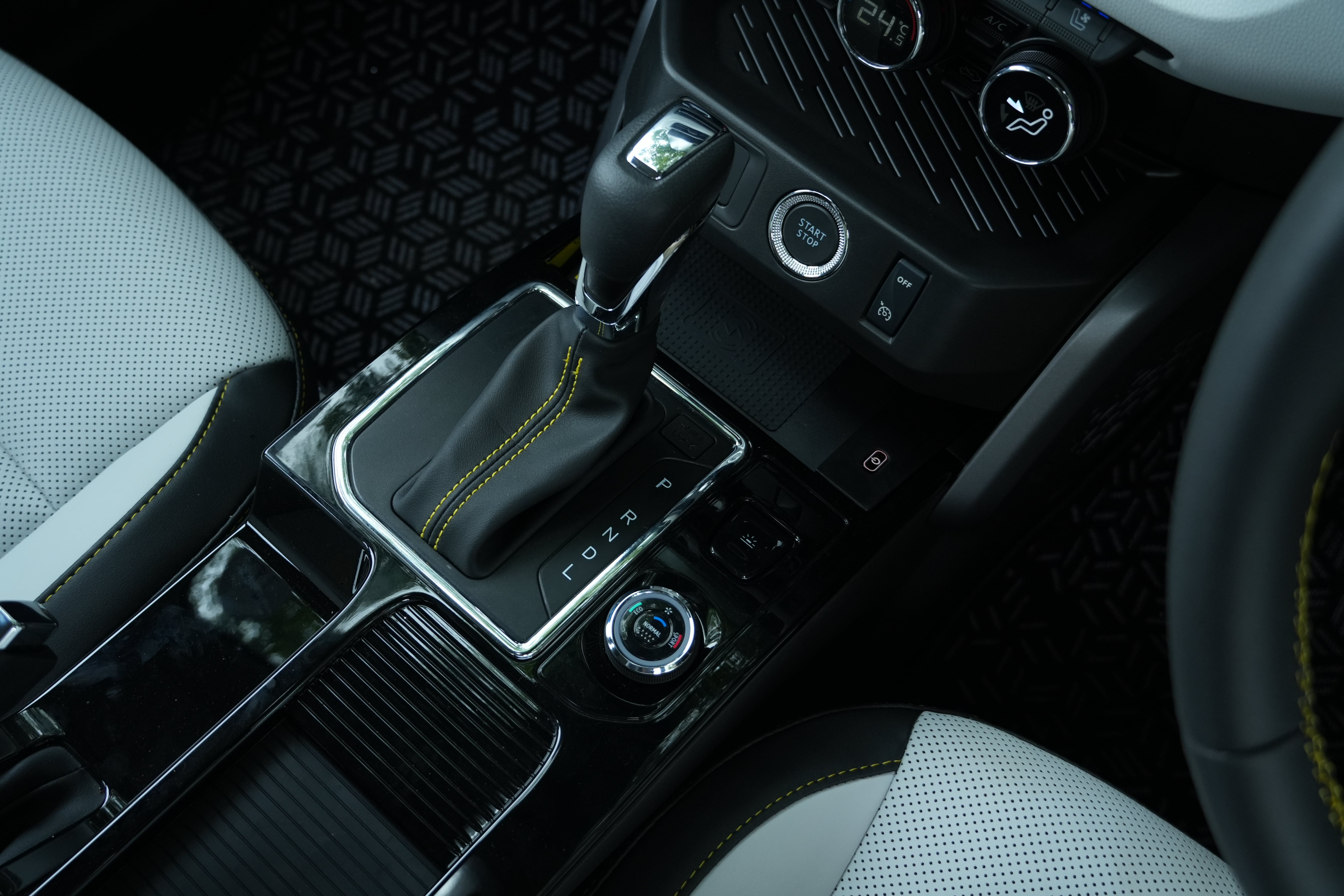
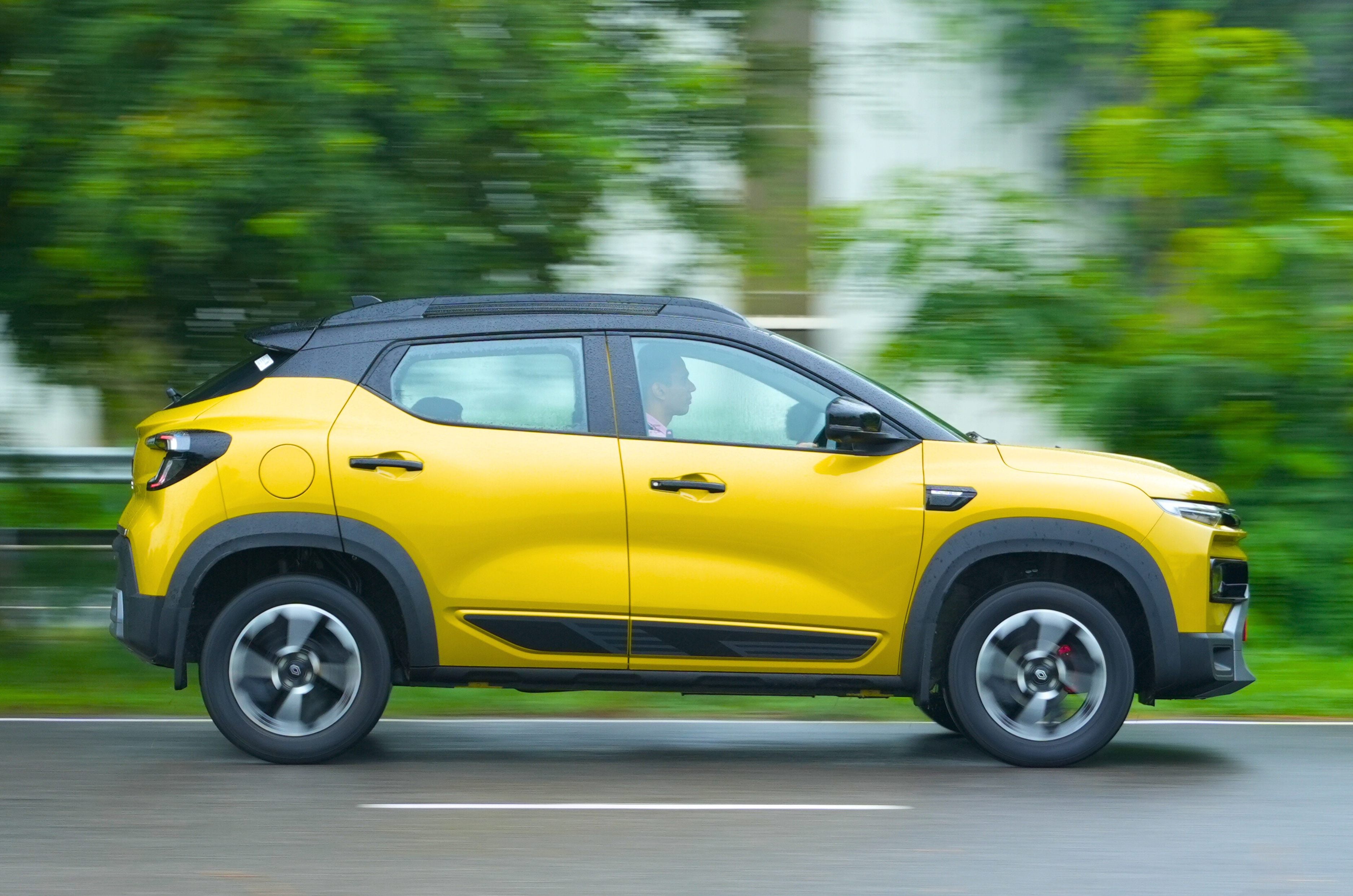
The CVT not feels smooth but also does a fine job of keeping this turbo-petrol engine on the boil, with the latter delivering a linear pull even past the 5,000rpm mark – the throttle response is quick too. The available Eco, Normal and Sport drive modes actually feel different as you switch between them. Then there’s the way the Kiger ride, feeling compliant and displaying a sense of confidence at higher speeds that few cars this size manage to do.
Spacious interior with comfy seats
The Kiger’s cabin feels roomy, practical and more premium than its predecessor
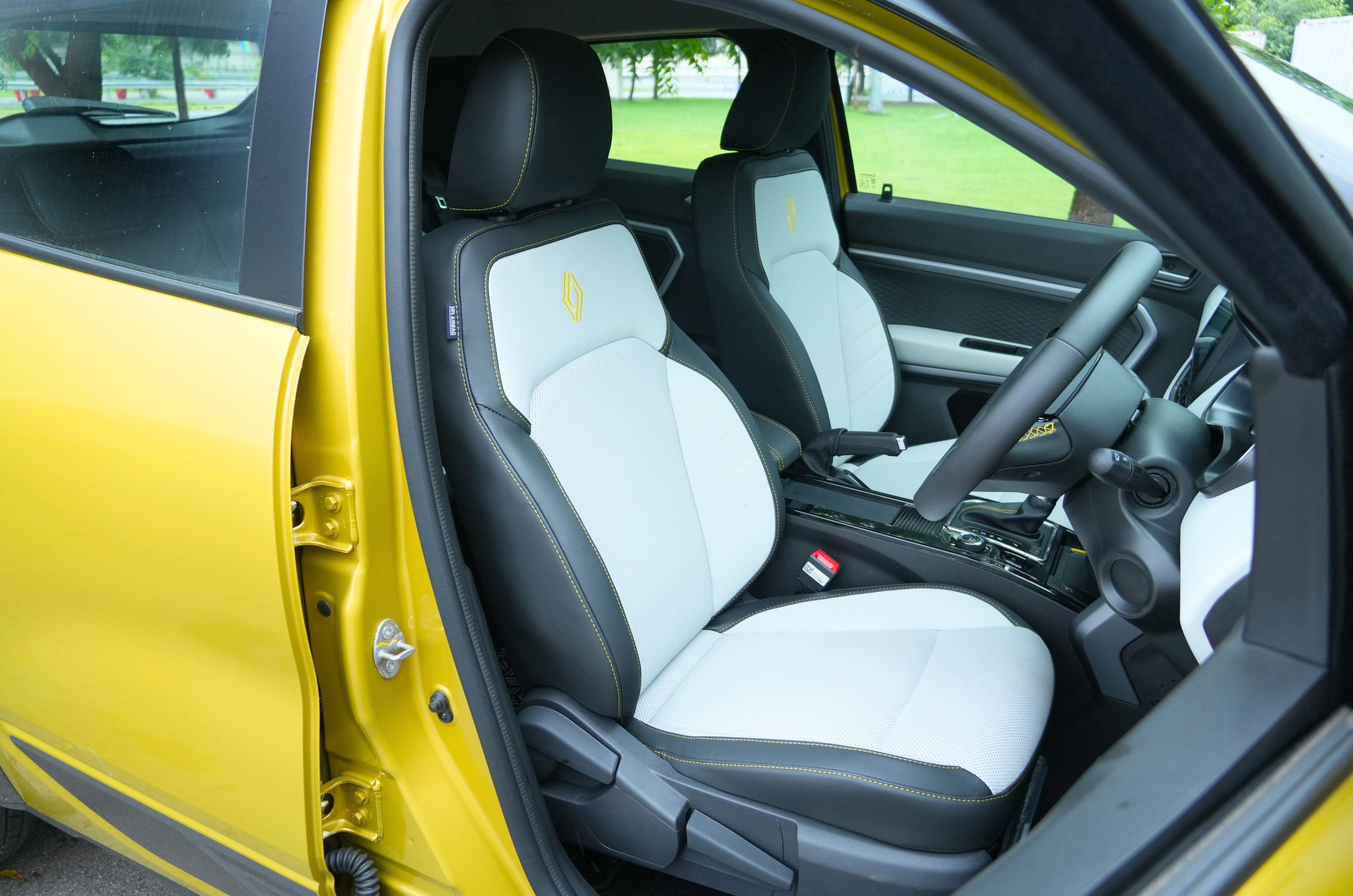
Stepping into the Renault Kiger’s cabin reveals a premium-looking cabin, especially with the top-end trim. The two-tone colour theme and contrast stitching on select surfaces, along with the embroidered Renault diamond on the front seats, add to the overall appeal. There’s no shortage of storage spaces either – be it the 405-litre boot, or the large door pockets, two gloveboxes and the twin phone trays – useful cubbies are everywhere.
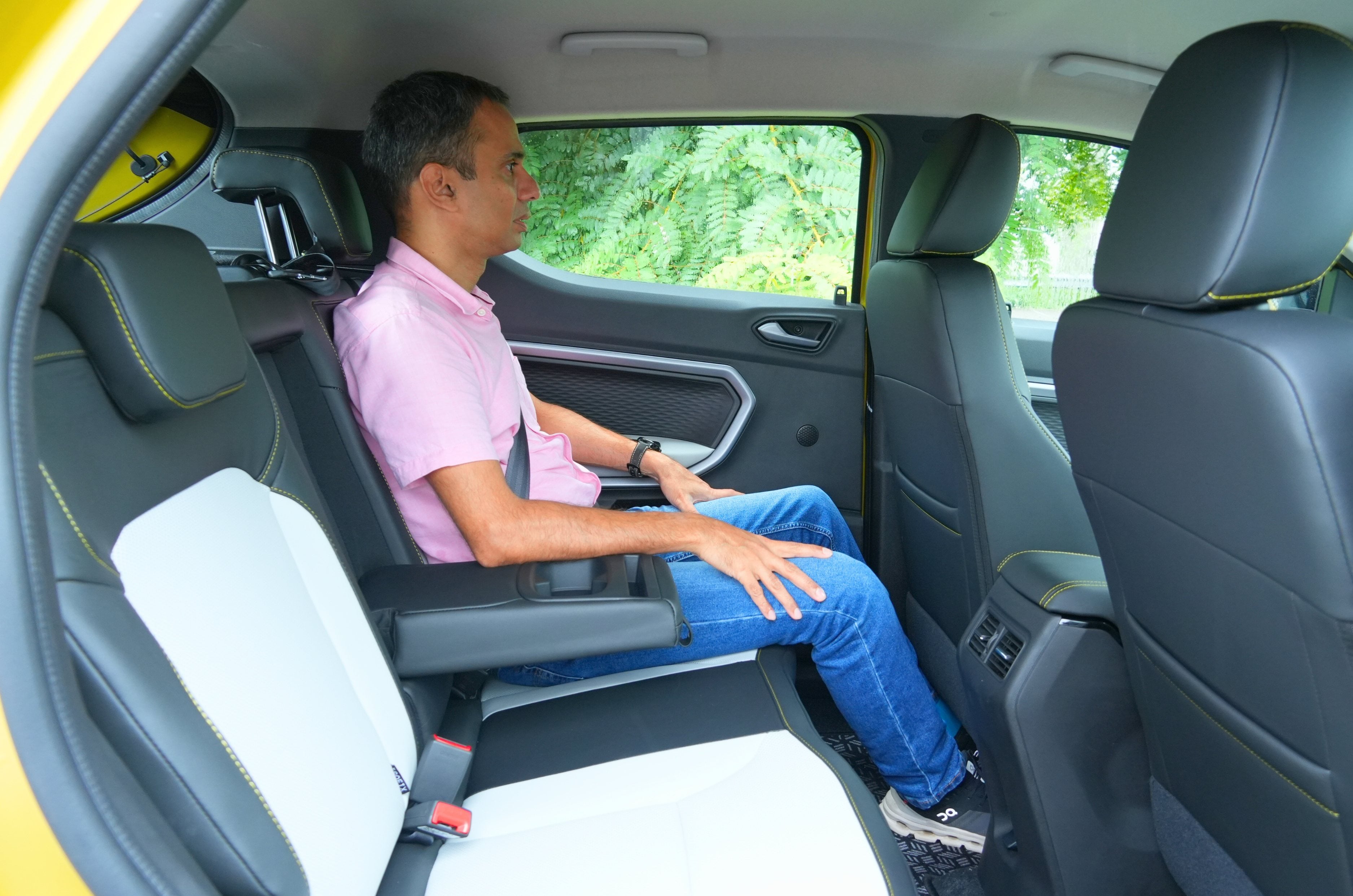
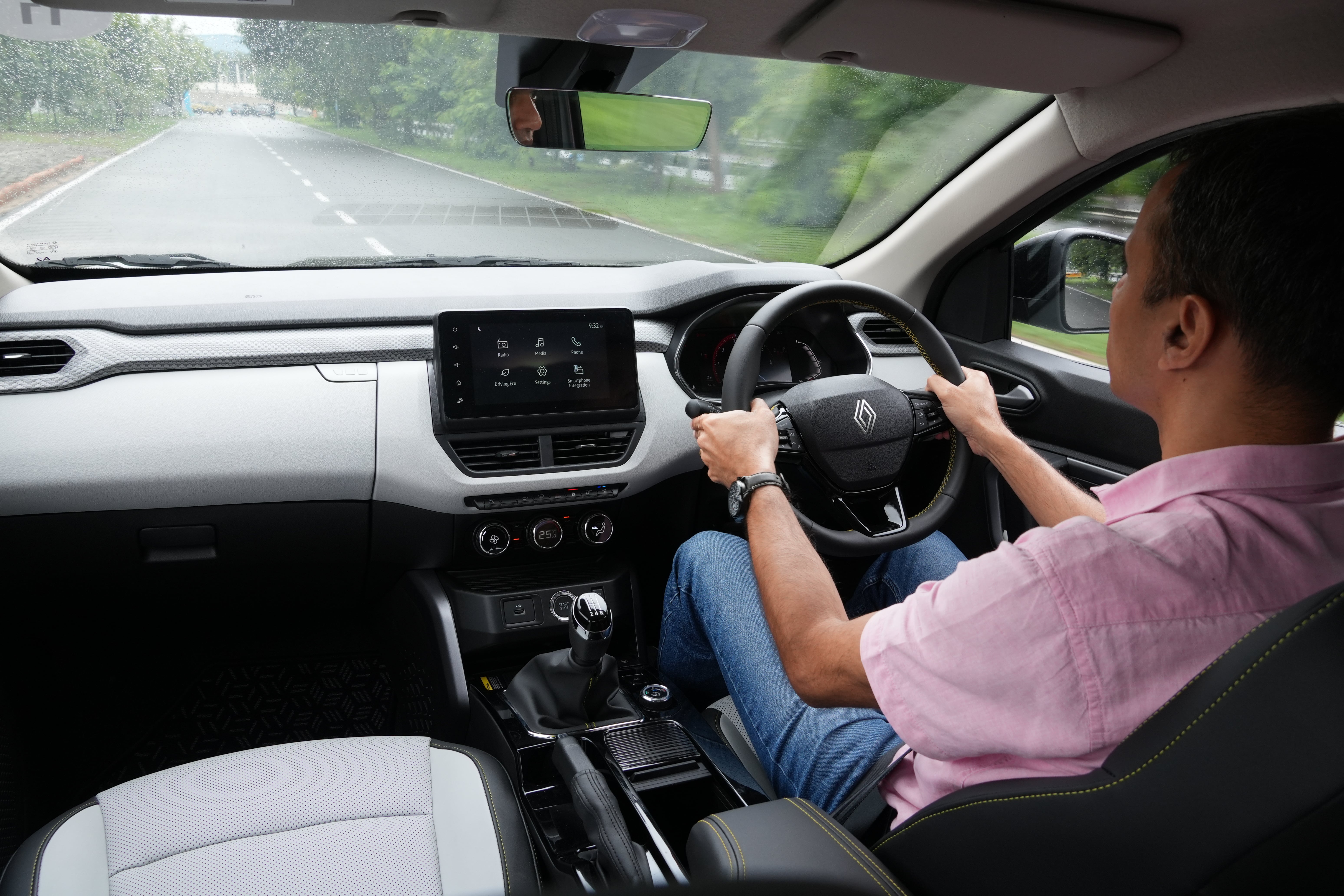
You will also notice the front seats to be supportive and reasonably well-designed. The outer rear seats are not only well-sized, but offer the passengers sat ample headroom and legroom. In case there are just two occupants in the back, the centre armrest can be folded down to reveal cupholders. Should you wish to carry an additional passenger instead, the centre seat is wide enough for the job. Build quality is fine, but it’s the climate control dials that particularly impress with their tactile feel and crisp, integrated displays.
Reasons to not buy the Renault Kiger
a mediocre feature set
The equipment list of the Kiger isn’t as impressive as some rivals
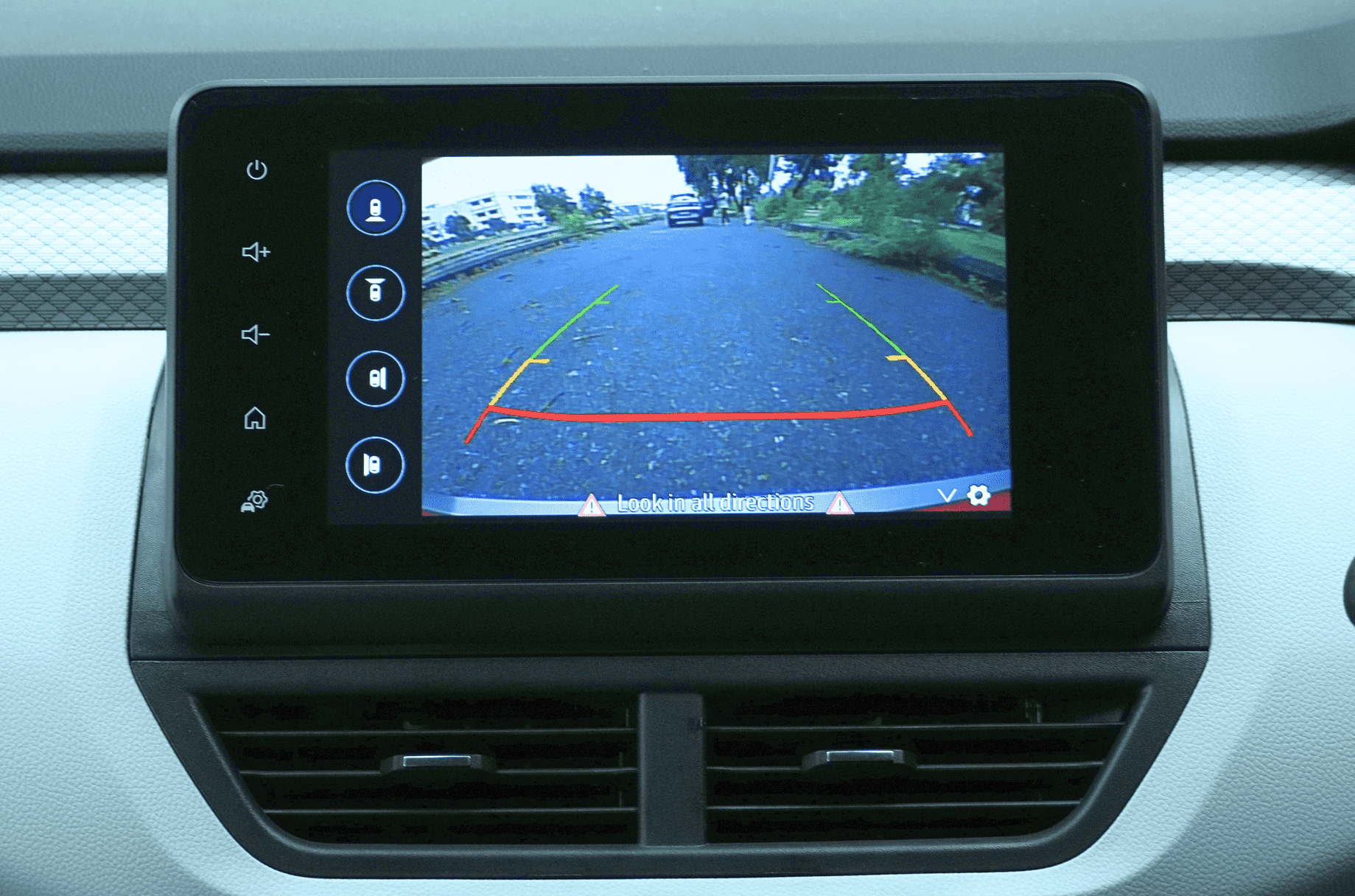
The Renault Kiger does not get a powered sunroof, while its 8.0-inch touchscreen is smaller than units found in some of its rivals offer. Moreover, this screen’s resolution is far from crisp and its built-in features are also not segment-best by measure. Then there are its thick bezels that immediately make this design look dated.
Poor cabin insulation
It doesn’t take much for mechanical noises to be heard inside the Kiger
While Renault claims to have upped the sound proofing alongside providing thicker carpets over the old model, the Kiger’s cabin is far from a calm place. One can easily pick out the noises made by the engine, suspension and brakes as they go about their business without much effort. In fact, even the sound made by the rear wiper motor is quite distinguishable.
The midsize SUV space is now more competitive than ever. Just the last few months have seen new launches in the form of the Tata Sierra, Renault Duster, Nissan Tekton and the facelifts of the Volkswagen Taigun and Skoda Kushaq. Then there are the venerable Kia Seltos and the Hyundai Creta, the latter of which is set to receive a new-gen model next year, and an all-new entrant, the Hyundai Bayon, is about to join the ranks.Powertrain choices have been expanding too; diesel continues to be popular, turbo petrols add a dose of excitement, CNG is fast becoming the high-mileage option and there’s electrification in the form of hybrids and full EVs.So in a bid to keep it relevant, Honda has updated its midsize SUV contender, the Elevate, and here’s how it all comes together.
Design and engineering – 8/10
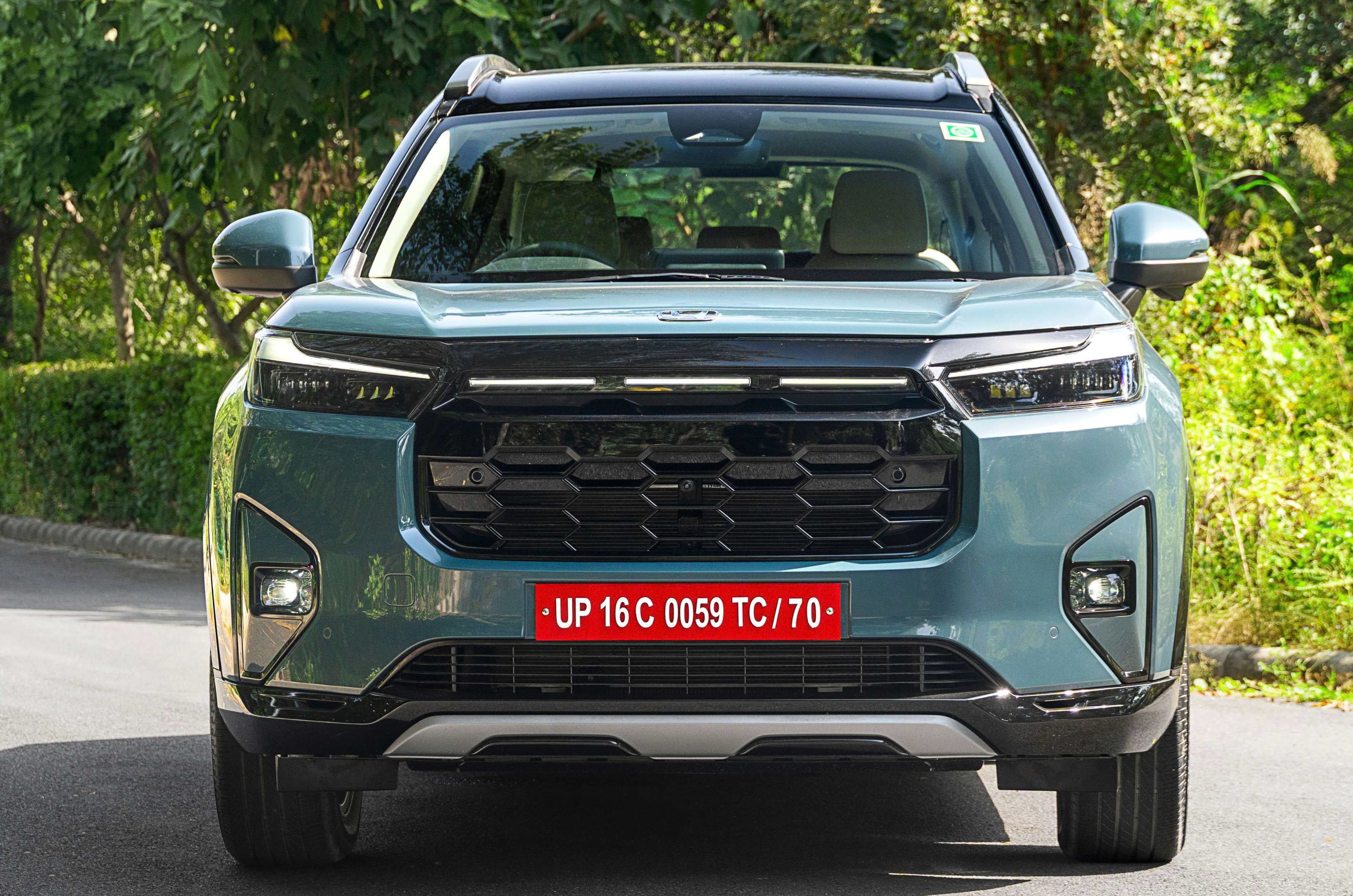
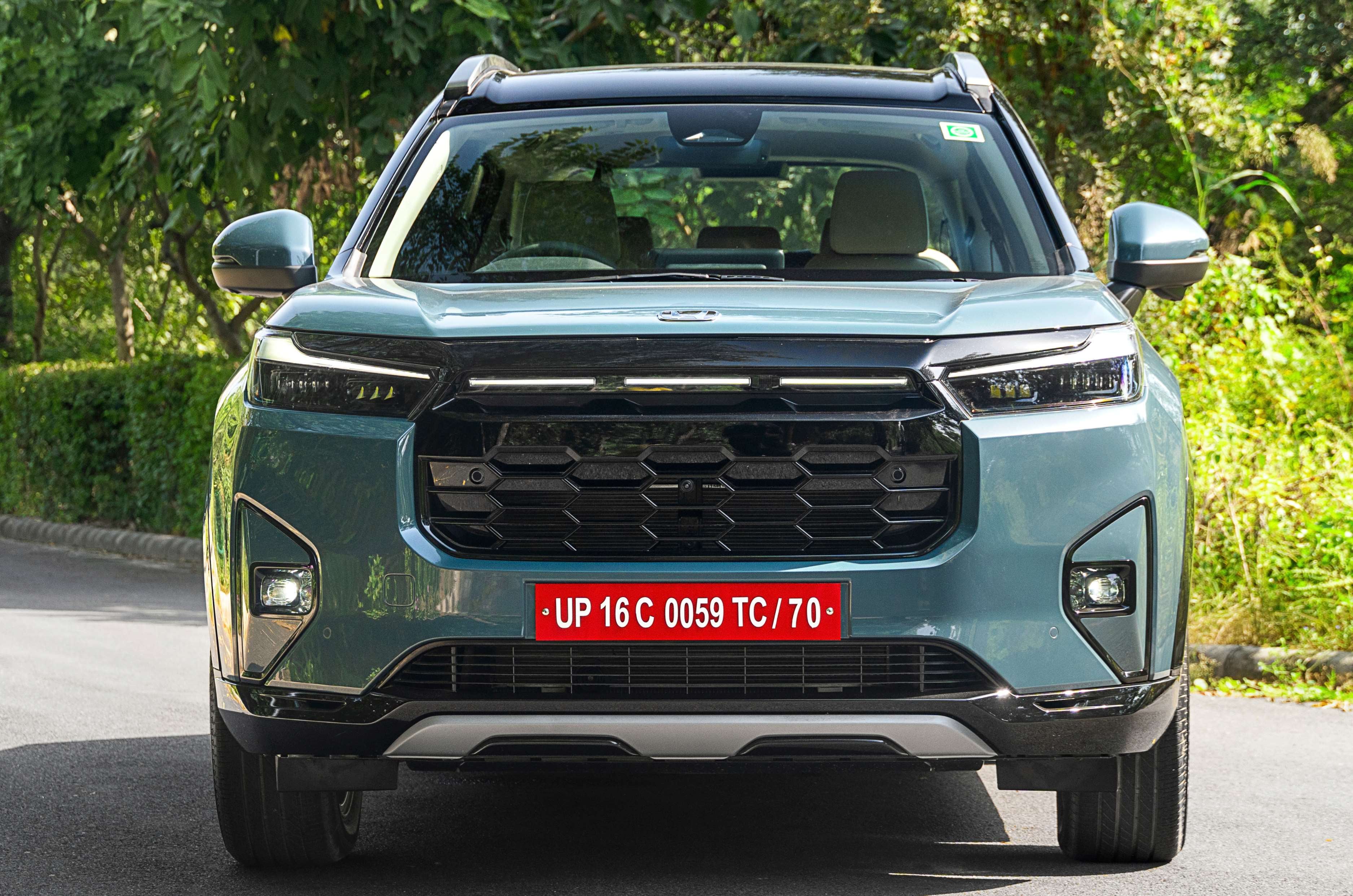
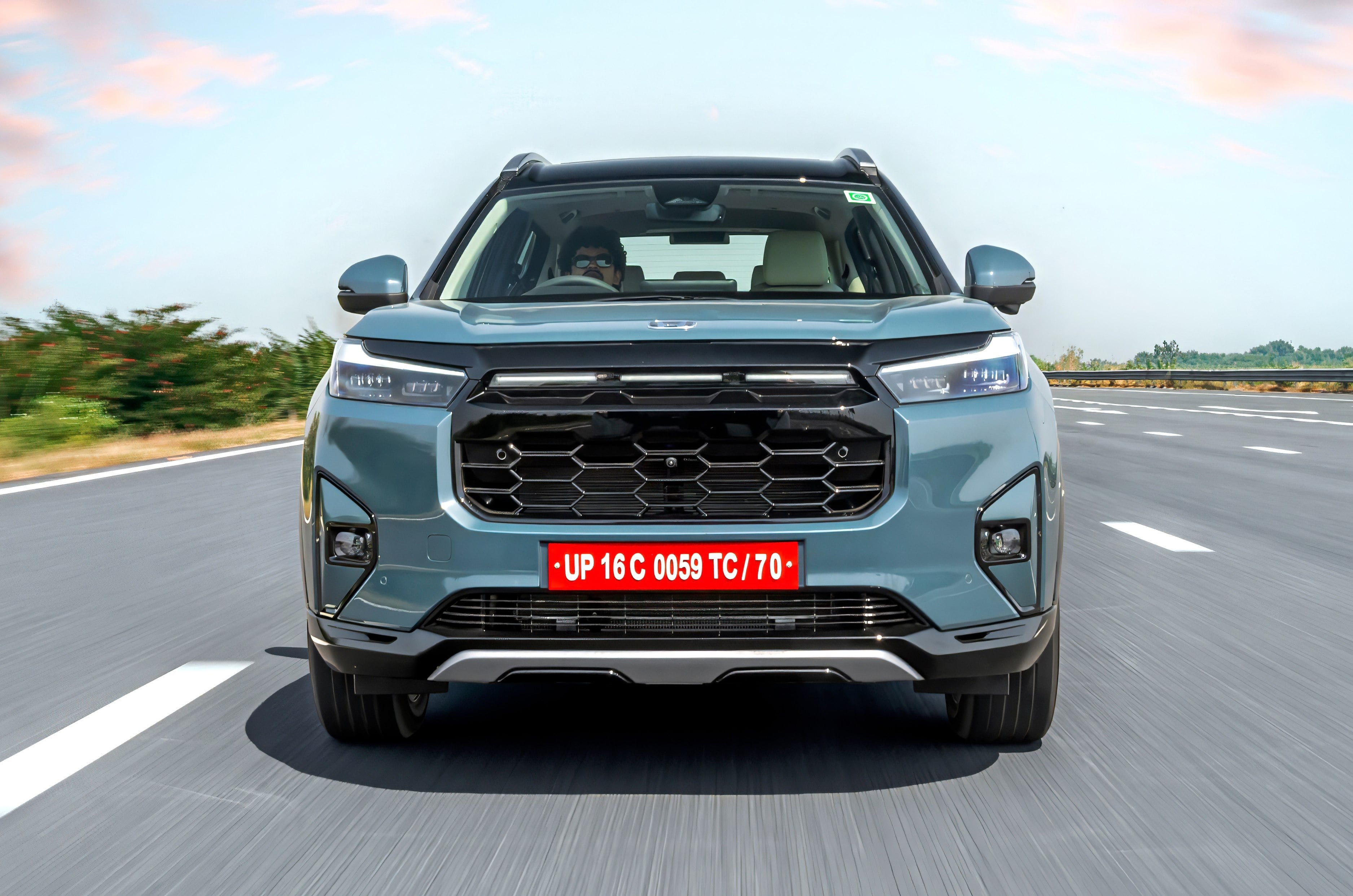
Features a new gloss black grille with a honeycomb pattern and a segmented LED light bar.
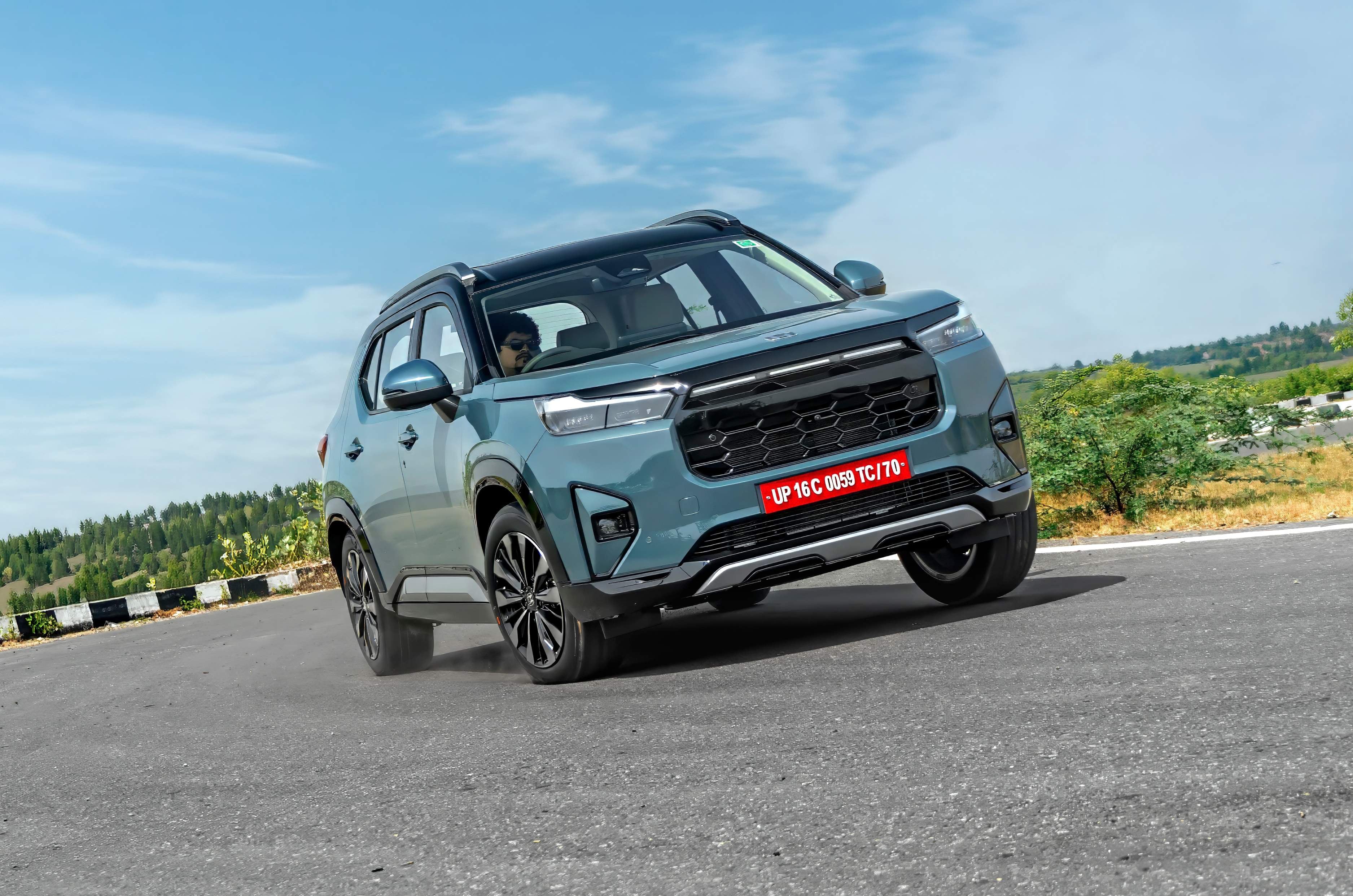
Honda has given the Elevate a subtle design update, but the changes are effective enough to give the SUV a fresher, more contemporary look without straying far from the original design. The biggest revisions are concentrated at the front end, where a new segmented LED light strip links the LED headlamps and the thick chrome band above them has been replaced with gloss black trim. The front grille gets a revised mesh pattern and a gloss-black finish, lending the front end a slightly sportier, more butch appearance. The Honda badge now sits on the bonnet rather than within the grille, while the fog-lamp housings are now finished in body colour instead of black for a cleaner look.
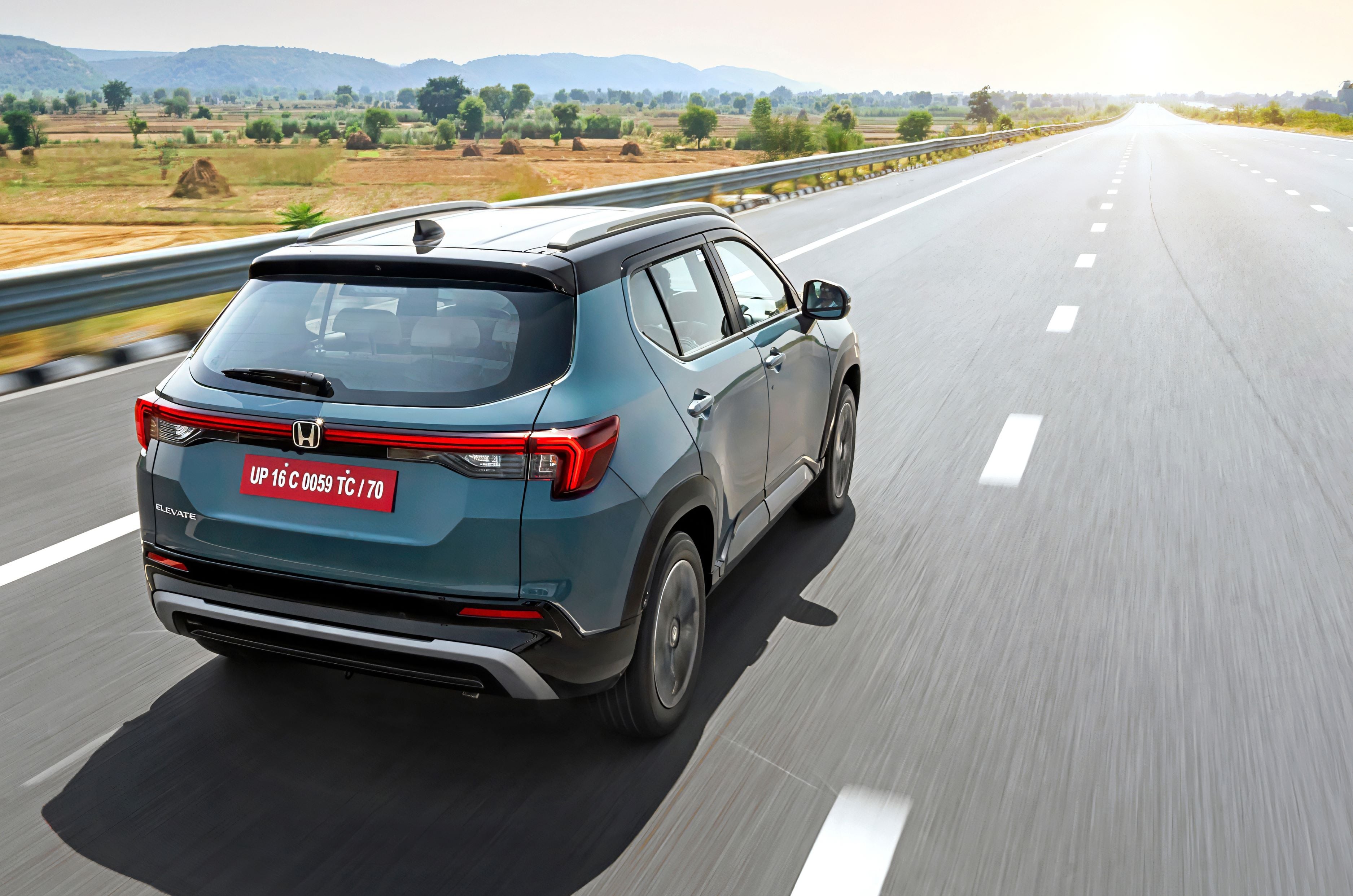
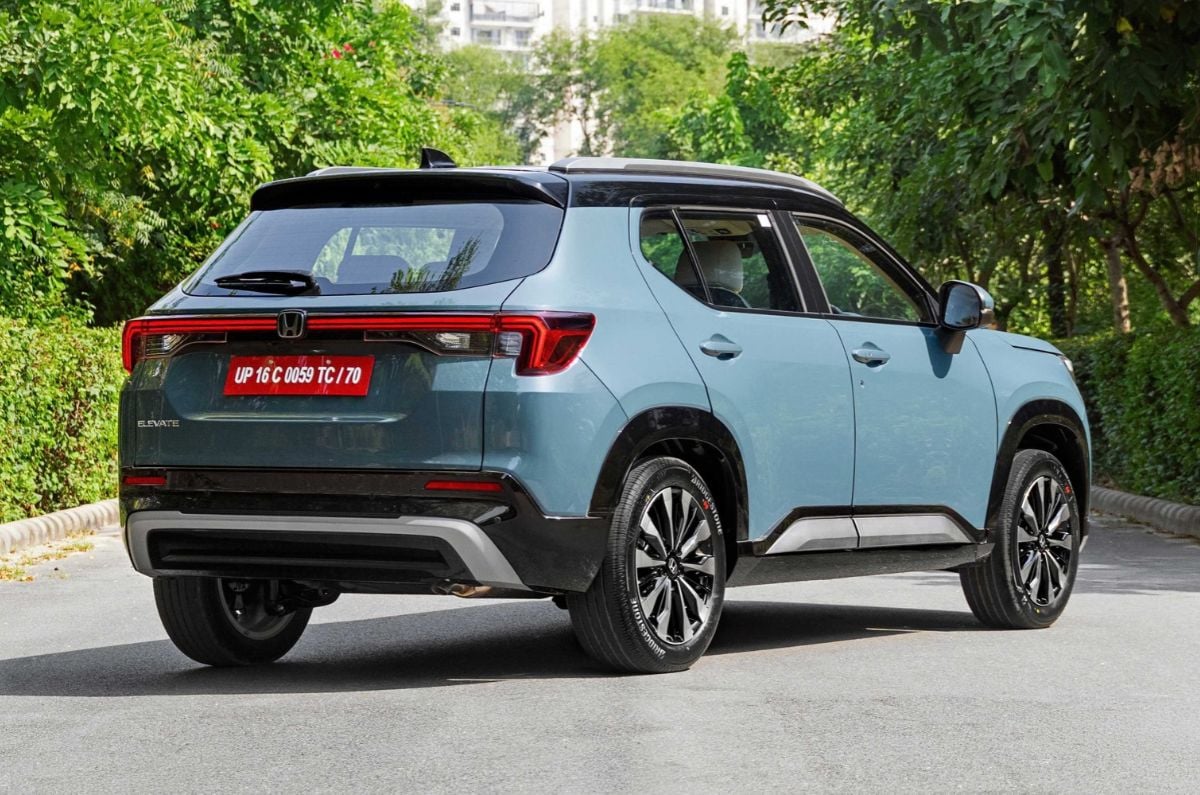
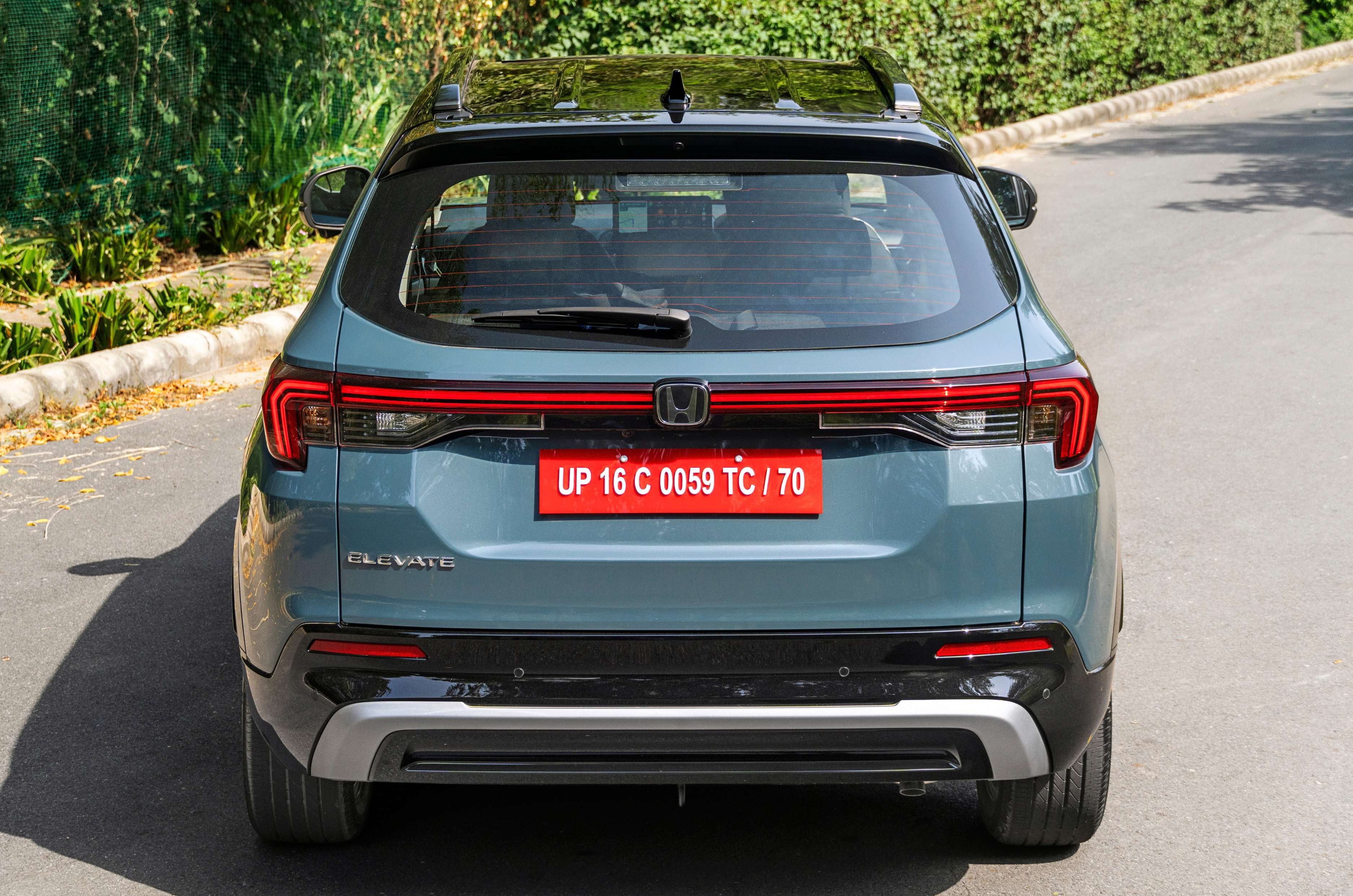
New LED light bar now connects the tail-lamps, giving it a more cohesive appearance.
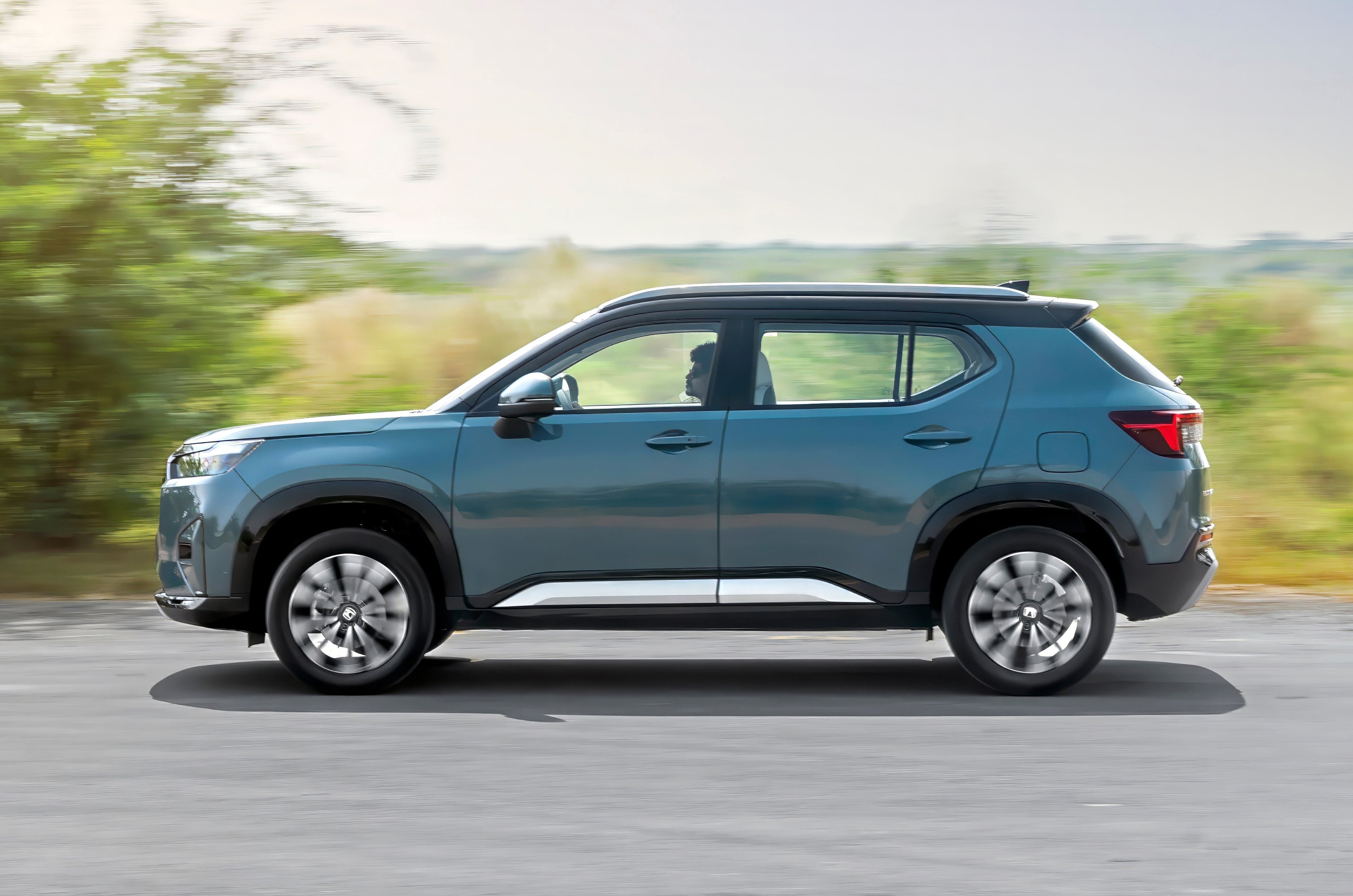
It’ll take a keen eye to spot the changes along the sides as they’re limited to a new gloss black body cladding instead of a matte finish, silver coloured inserts in the cladding on the doors instead of body colour and a darker finish for the 17-inch alloy wheels which continue with the same design. At the rear, the facelift introduces a new LED light bar that connects the tail-lamps, giving the tailgate a wider, more cohesive appearance, particularly after dark. Rounding off the updates is a new Nordic Forest Pearl paint shade, as you can see in the pictures here.
As for dimensions, it continues to measure 4.3 metres in length, nearly 1.8 metres in width and just over 1.6 metres in height. It’s based on the City platform, but gets a stretched 2650mm wheelbase, wider tracks front and rear and a substantial 220mm of ground clearance.
Interior space and comfort – 8/10
The cabin gets more substantial updates than the exterior, with the changes aimed at improving comfort and perceived quality. To start off, there’s a new ivory and black dual-tone upholstery theme that enhances the sense of space inside and is perhaps more neutral than the tan upholstery earlier. It will be tough to clean though, thankfully there is the option of all-black upholstery with the ‘Black’ edition Elevate.
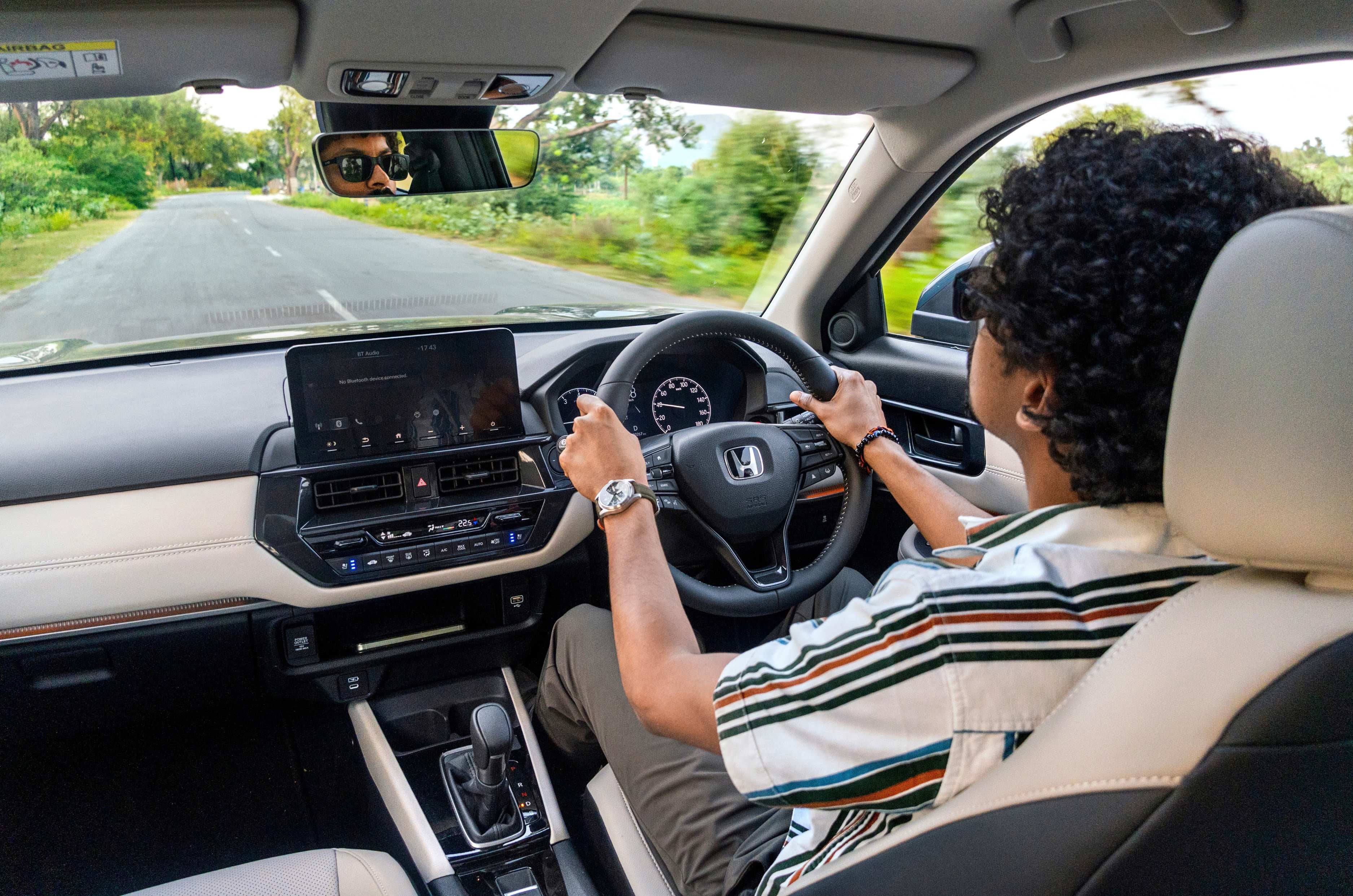
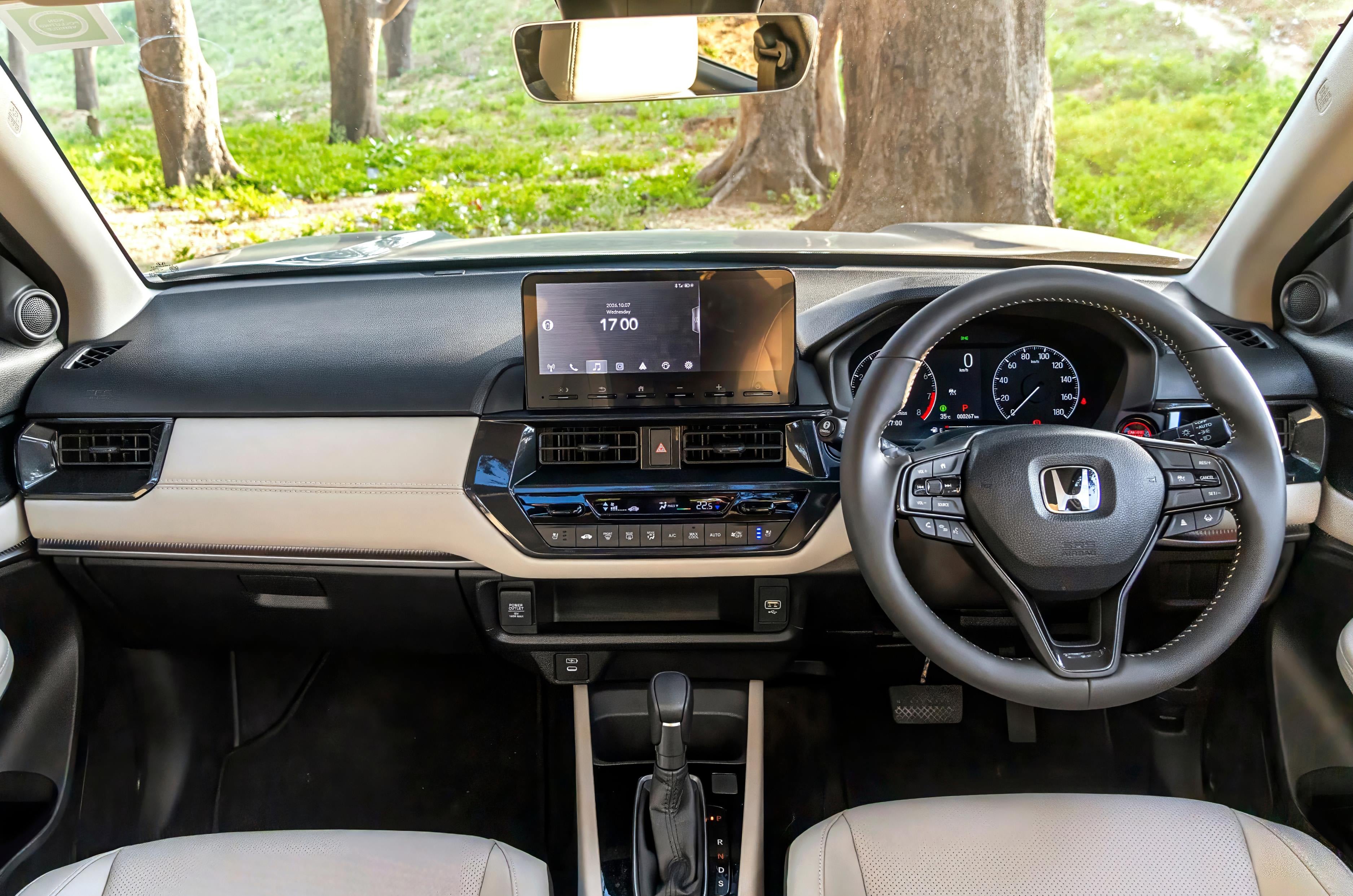
Upholstery is now ivory and black with a new leatherette panel on the dash; cabin remains practical and feels well-built.
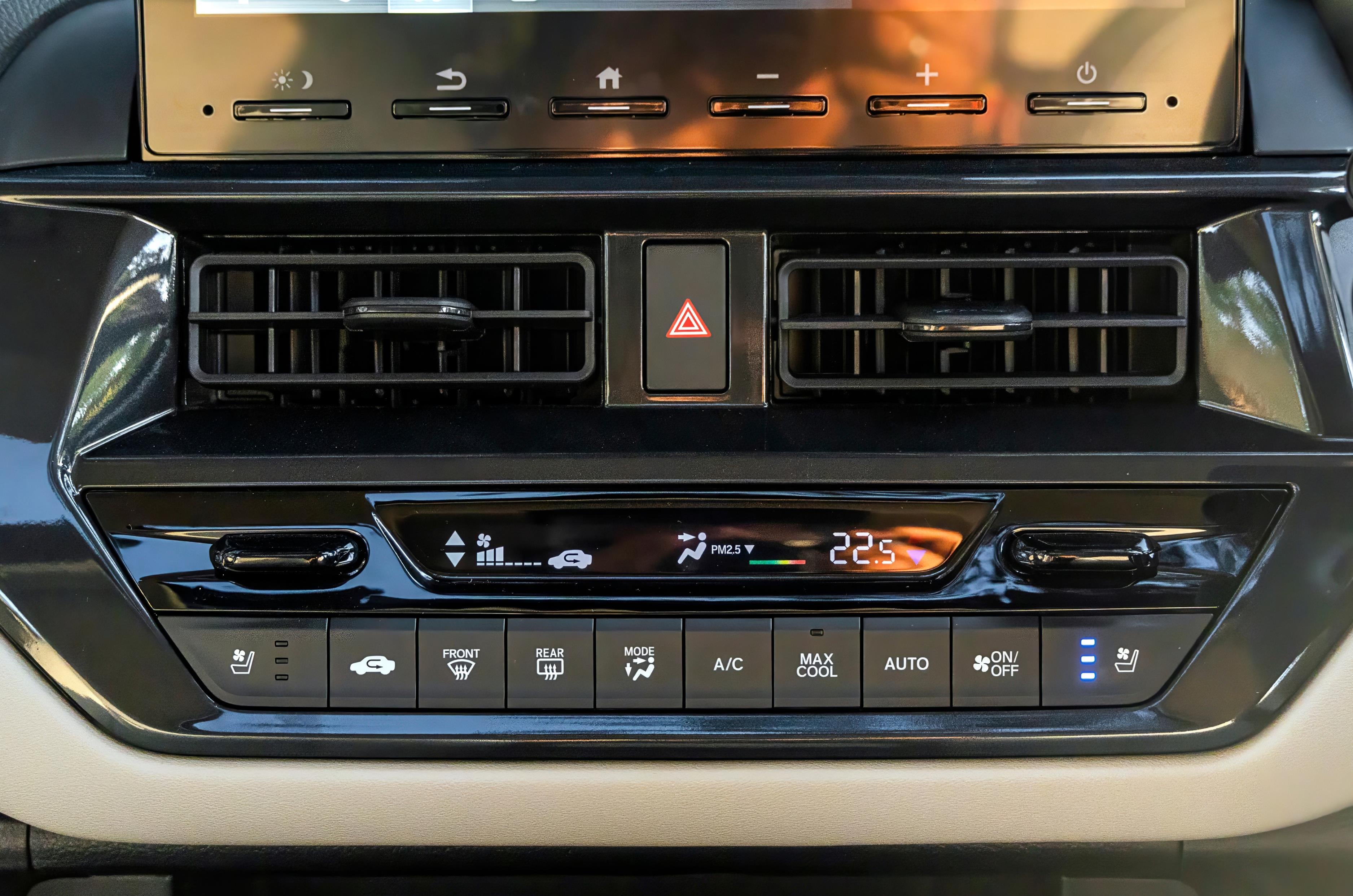
The dashboard has been revised too, with more white leatherette padding and stitching replacing the outgoing model’s faux wood trim, and the AC controls have been revised, now housing the seat ventilation buttons. Honda has even updated the roofliner fabric which looks and feels much nicer than the older woven roofliner. All of this gives the cabin a fresher look, although the overall layout remains familiar.
Front seats remain comfortable and now feature ventilation and power adjustment.
Ergonomics remain a strong point, with the Elevate offering a commanding driving position and supportive front seats that make it easy to get comfortable behind the wheel. The lumbar support, however, might feel excessive for some and taller people may find underthigh support a bit lacking.
Ample headroom and kneeroom but best for two adults thanks to the narrow width and raised centre seat.
At the rear, space is generous, with plenty of kneeroom and headroom making it a very comfy place for two adults. However, fitting a third passenger will be tight thanks to the cabin’s limited width and raised centre seat. There are no sunblinds either, but Honda has added an adjustable headrest and a three-point seatbelt for the centre passenger, which was an omission earlier. Features back here include dedicated AC vents, USB charging ports, a fold down centre armrest with cupholders, new capacitive-touch LED reading lamps and the most prominent, seat ventilation.
428-litre boot can fit in more than the number suggests; continues to feature a spare tyre under the boot floor.
Practicality, meanwhile, remains a strength, with the Elevate offering ample storage spaces throughout the cabin. The boot is also a substantial 458-litres and can pack in much more than the number would suggest. What’s also nice is that it continues to get a spare tyre under the boot floor.
Features and safety – 8/10
360-degree parking camera is a helpful addition but has limited angles of view and a small display on the screen.
The Elevate facelift addresses some of the key equipment gaps in the outgoing model, bringing a more comprehensive feature set to the table. In terms of safety features, there’s now a 360-degree camera (its display on the screen is quite small though, with limited angles of view), which works alongside the existing ‘LaneWatch’ camera, though curiously this feature is still only for the left hand side.
ADAS suite now packs in a useful low-speed follow function for the adaptive cruise control.
Front parking sensors have also been added to make parking and manoeuvring in tight gaps easier. However, the CVT variants get even more safety kit in the form of an electronic parking brake with auto hold function, rear disc brakes and the addition of a low-speed follow function for the adaptive cruise control, which is useful in stop-and-go traffic.
Rear-seat ventilation is a first-in-segment, but it’s only available in the top-spec ZX+ trim.
As for comfort and convenience features, the most important additions are the ventilated front and rear seats, the latter which is a segment-first. Though they take some time to cool effectively, it has enhanced the Elevate’s cabin comfort. Then there’s powered front seats – 8-way for the driver and 4-way for the passenger – ambient lighting and a PM2.5 air purifier. Other than that, much of the existing equipment has been carried over unchanged.
AC controls have been revised with new buttons for seat ventilation; now features an air purifier too.
There’s a 10.25-inch infotainment touchscreen with wireless smartphone integration (though its software and feature set still feel basic at best), semi-digital instrument cluster, a single-pane sunroof, wireless phone charger, six airbags, ESC, traction control, camera-based ADAS tech including auto emergency braking, lane keep assist and more. Still however, there are some features missing that rivals offer like a dual-zone for the auto climate control, panoramic sunroof and powered tailgate.
Powertrain and refinement – 8/10
121hp, free-revving, naturally aspirated 1.5 petrol remains the only engine option with the Elevate.
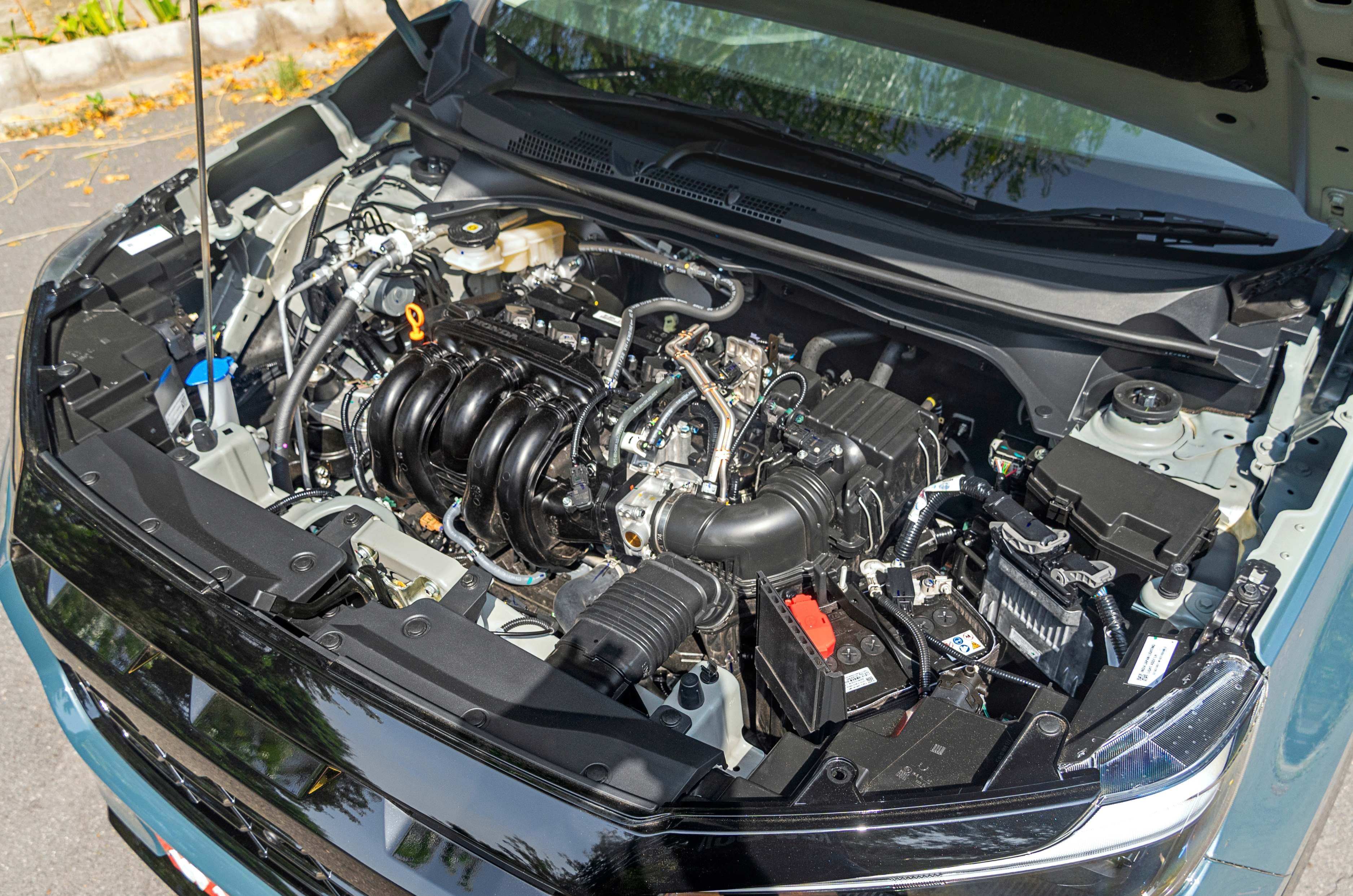
There have been no changes under the hood of the Honda Elevate. It still continues to be powered by a 1.5-litre, four-cylinder, naturally aspirated petrol engine that produces 121hp and 145Nm. Gearbox options remain unchanged too, with a 6-speed manual and a 7-step CVT automatic, and we got to sample the latter. However, the engine has been future-proofed and is now WLTP emissions norms compliant while already being E20 fuel compatible.
This i-VTEC engine still impresses however. Throttle response is immediate, with no noticeable delay, making the engine feel sharp and eager. As before, the naturally aspirated motor pulls cleanly from idle all the way to the redline, in a smooth and progressive manner. However, it feels most energetic higher up the rev range, where it feels at its most potent too.
The 7-step CVT works well as an automatic, making light work of everyday commuting with its smooth operation. Paddle shifters with pre-set ratio points also give it some resemblance to a conventional automatic, allowing you to have greater control. However, push the throttle hard and the familiar ‘rubber band’ effect becomes apparent, with the engine holding on to high revs for extended periods, which doesn’t make for a relaxed driving experience. In this respect, Hyundai and Kia’s chain-driven CVT feels a bit smoother and more responsive than this belt-driven one.
As for performance, we managed a 0-100kph time of 11.89sec with the pre-facelift Elevate CVT and you can expect this facelifted model to be in the same ballpark. Expectedly, the manual does a quicker 10.82sec time to 100kph.
However, like before the lack of powertrain options is disappointing. In a time when rivals are offering diesels, turbo petrols, strong hybrids and CNGs, the Elevate has to soldier on with a solitary, naturally-aspirated petrol engine which restricts its appeal.
It feels quieter than before but there’s still prominent engine and road noise filtering into the cabin, especially on highways.
Honda has also worked on improving the Elevate’s noise insulation, an area where the existing model lacked. The company claims better isolation from both engine and road noise, but that has worked only to a small extent, in our experience. It feels quieter than before but there’s still prominent engine and road noise filtering into the cabin, especially at highway speeds, and there’s definitely more room for improvement here.
Fuel efficiency – 7/10
Given our short test drive, we didn’t subject the Elevate facelift to our real-world mileage tests. For reference though, the pre-facelift Elevate CVT did 8.60kpl in the city and 13.10kpl on the highway while the Elevate MT managed 8.7kpl in the city and 13.30kpl out on the highway. The Elevate CVT misses out on an Eco drive mode and auto start/stop, which certainly affects its fuel efficiency.
Ride comfort and handling – 8/10
Despite being a high-riding SUV, the Elevate feels remarkably composed on the move.
As before, the Honda Elevate continues to impress with its ride and handling balance. Despite being a tall riding SUV, it feels remarkably composed on the move. Suspension damping, though on the firmer side, is well judged and does a good job of ironing out road imperfections. It’s only when you’re travelling at triple digit speeds on an undulating highway is where you’ll notice quite a bit of vertical movement in the rear seat. But apart from that, the Elevate feels planted on the road.
Body roll is also well contained for a tall SUV, making it predictable around bends.
The steering is accurate and light at slow speeds, which helps with manoeuvrability, but it picks up weight progressively which is reassuring. Body roll is also well contained for a tall SUV and as such, it’s predictable around bends. As for the brakes, the CVT has gained rear discs but that hasn’t made a noticeable difference. Braking performance, like before, remains strong with a nice, progressive feel.
Value for money and verdict – 7/10
With this facelift, Honda has addressed some of the Elevate’s earlier shortcomings with some much-needed features and the updated look and feel inside the cabin. However, some drawbacks still remain like the lack of powertrain options and the below-par sound insulation.
It remains a sensible, practical midsize SUV that continues to prioritise the essentials over outright novelty.
What the Elevate continues to get right, though, are the fundamentals. It continues to offer a comfortable and practical cabin, a responsive engine and a well-sorted ride and handling package. Add to that the design refresh and the fairly expansive features list, and the Elevate facelift feels more rounded than before. Priced from Rs 11.80 lakh to Rs 18.40 lakh (ex-showroom), it’s still very competitively priced, though the new top ZX+ variant is up there with the heavy hitters.
Ultimately, the Elevate remains a sensible, practical midsize SUV that continues to prioritise the essentials over outright novelty. As a result, the Elevate facelift represents a great option for buyers who value comfort, everyday usability, reliability and the peace of mind associated with the Honda badge.