3 reasons to buy the Toyota Hyryder and 2 reasons not to

3 reasons to buy the Toyota Hyryder and 2 reasons not to
Toyota Urban Cruiser Hyryder

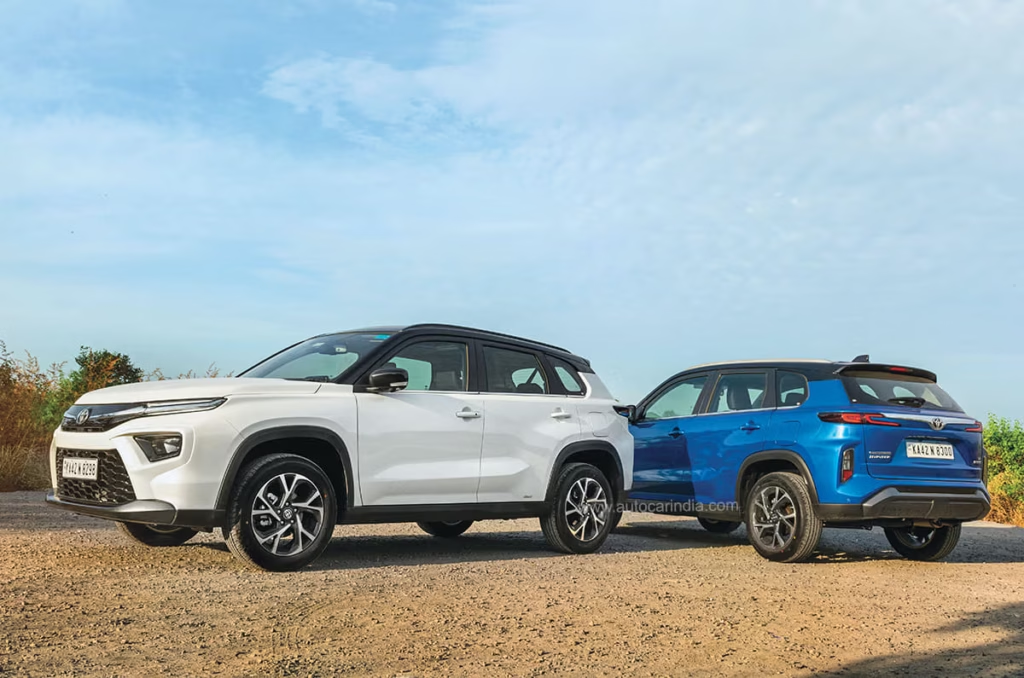
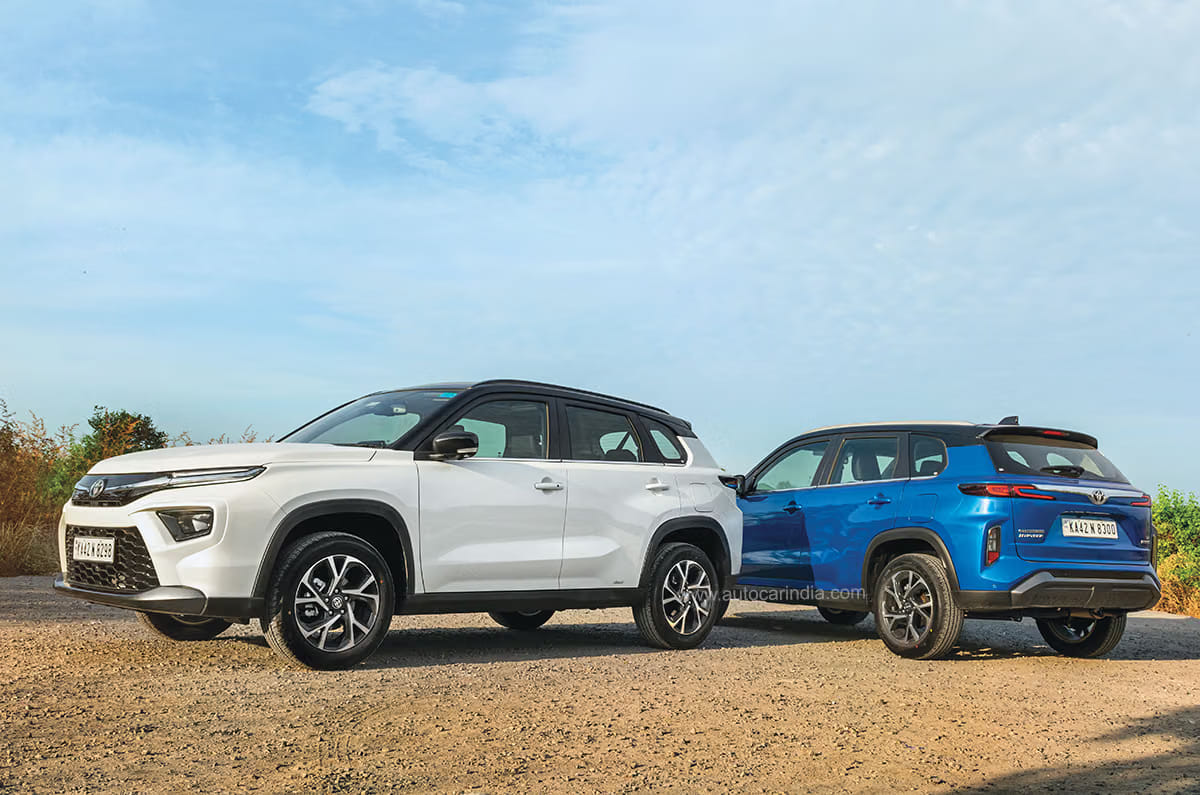
Introduced in 2022, the Urban Cruiser Hyryder and Maruti Grand Vitara were the first products co-developed through the partnership between Toyota and Maruti Suzuki. Currently, the Hyryder is Toyota’s bestselling SUV in India, averaging 7,000-9,000 units a month. If you are considering the Hyryder, we will help you decide whether this midsize SUV is suitable for you or whether you should look elsewhere.  

Reasons to buy the Toyota Hyryder

Efficient strong hybrid engine
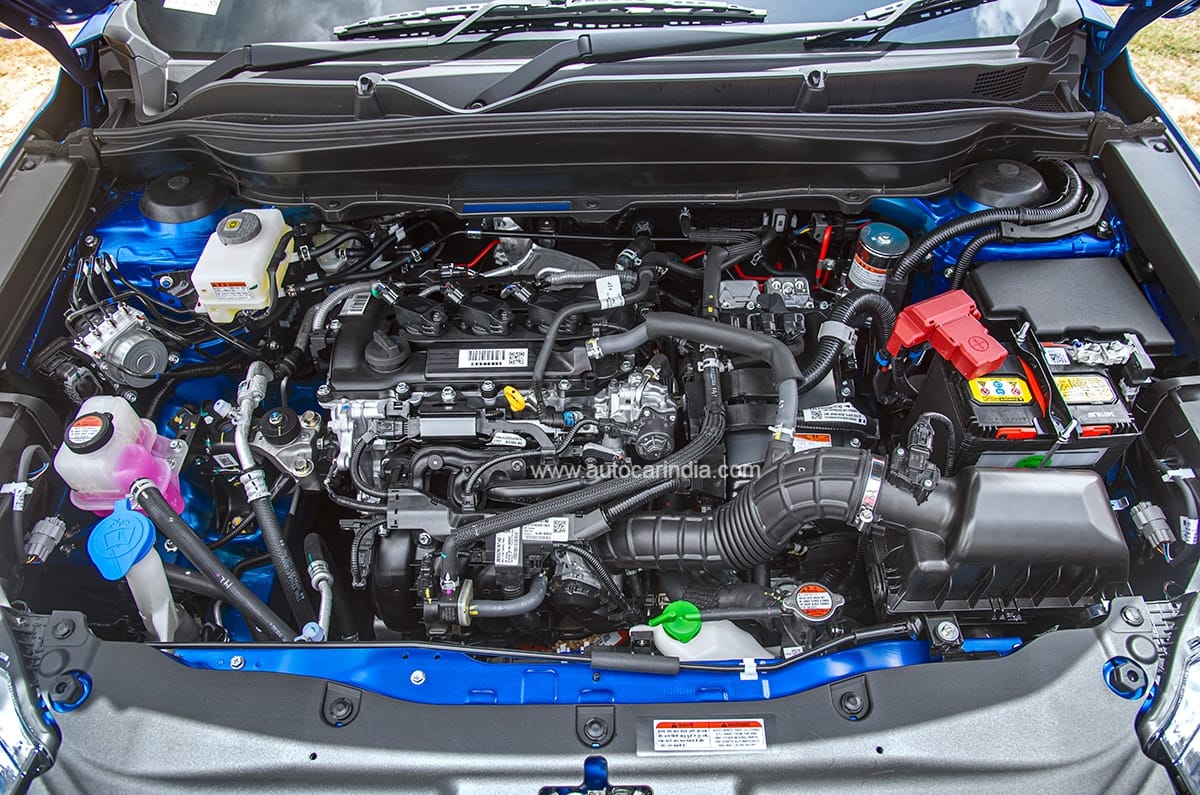
The petrol engine in the strong hybrid version runs on the Atkinson cycle that prioritises efficiency. Coupled with the battery and motor, the Hyryder can run temporarily on pure electric power, which helps curb fuel consumption. In our real-world fuel efficiency tests, the Hyryder strong hybrid delivered much higher efficiencies than the mild hybrid petrol automatic version: 20.28kpl in the city and 22.85kpl on the highway compared to 10.83kpl and 15.67kpl, respectively. Do note that this test was done before the rollout of E20 fuel.

Well-judged ride and handling
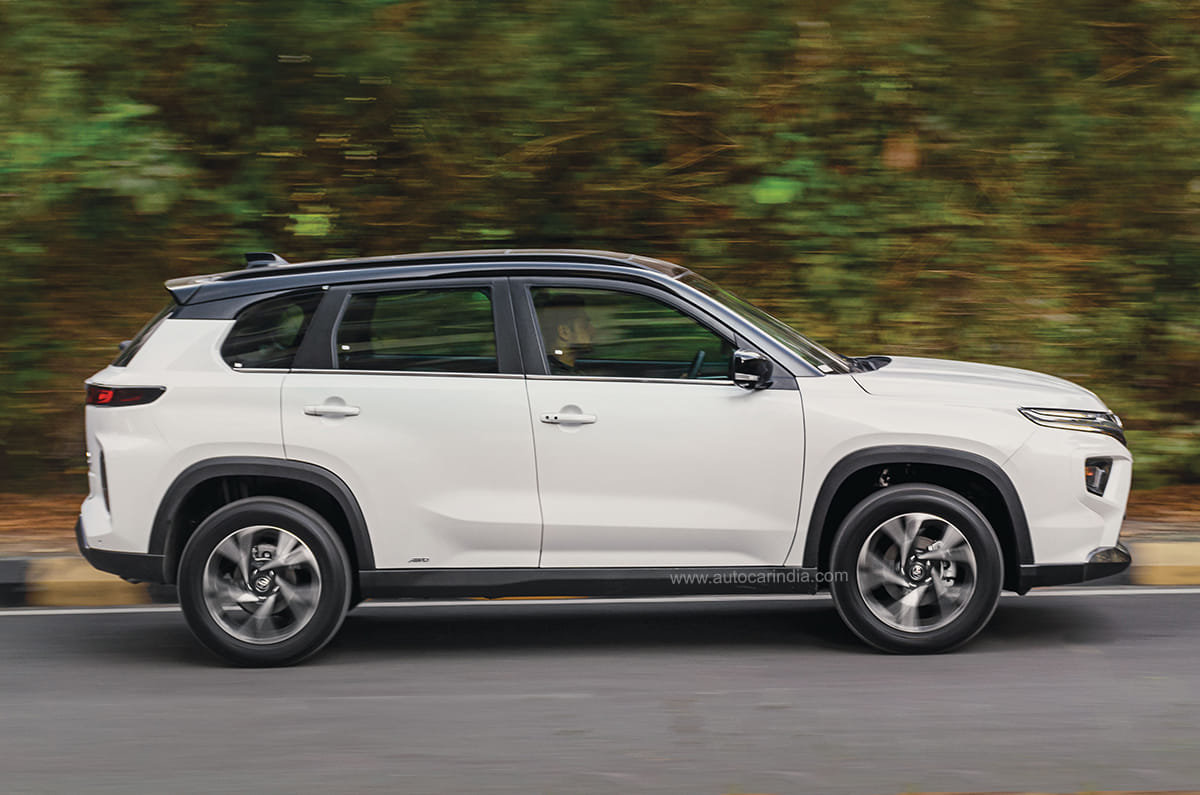
A combination of tough underpinnings and well-judged suspension helps the Hyryder have a balanced ride and handling setup. It handles tough roads with ease, and even the sharp surfaces are absorbed quite well. At higher speeds, the Hyryder remains glued to the road and composed, while direction changes and cornering abilities are predictable. Even when cornering, body roll is kept to a minimum despite its high 210mm ground clearance, which is remarkable.

AWD availability
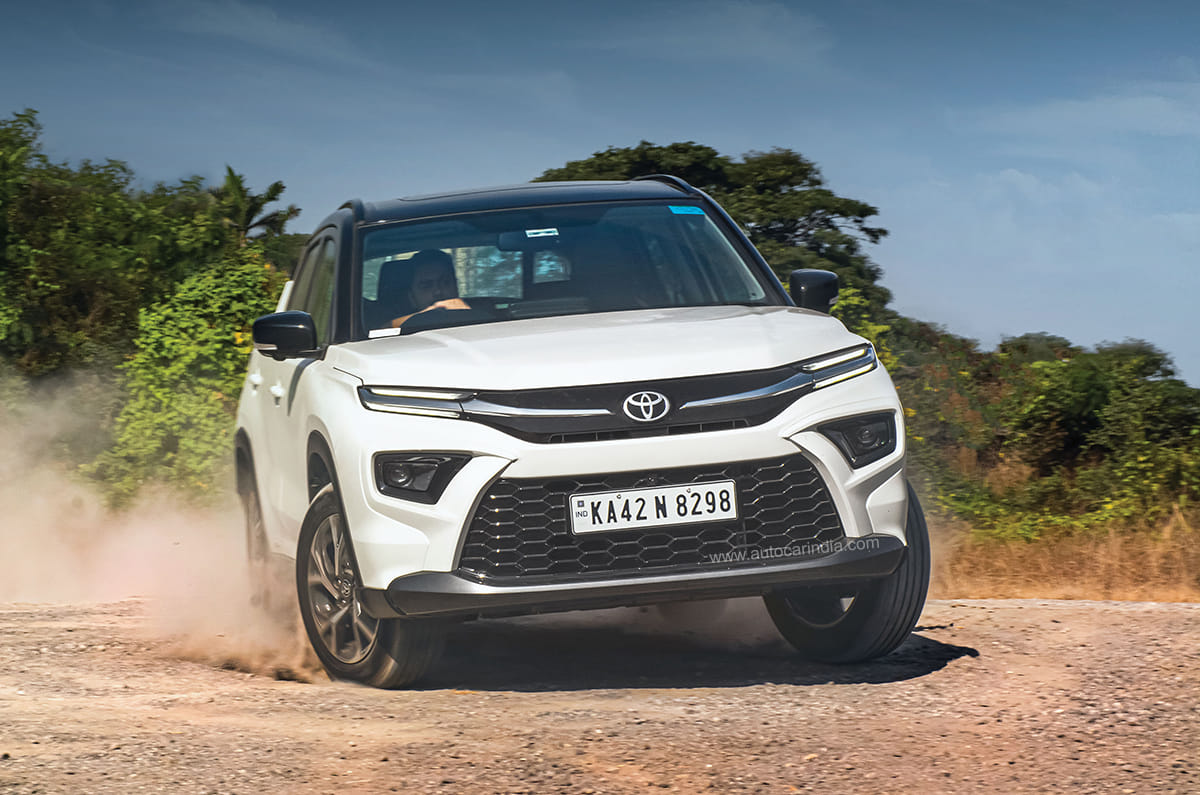
The Hyryder is among the few models in the very crowded midsize SUV space to offer AWD. Available solely with an automatic gearbox, it comes with Suzuki’s AllGrip Select all-wheel-drive system, bringing decent off-road capability for the Hyryder, especially for those who regularly drive in snowy or slushy conditions. With the help of terrain modes and the ability to send 50 percent of its power to the rear wheels, it can tackle challenging roads.

Reasons not to buy the Toyota Hyryder

Engines lack outright performance
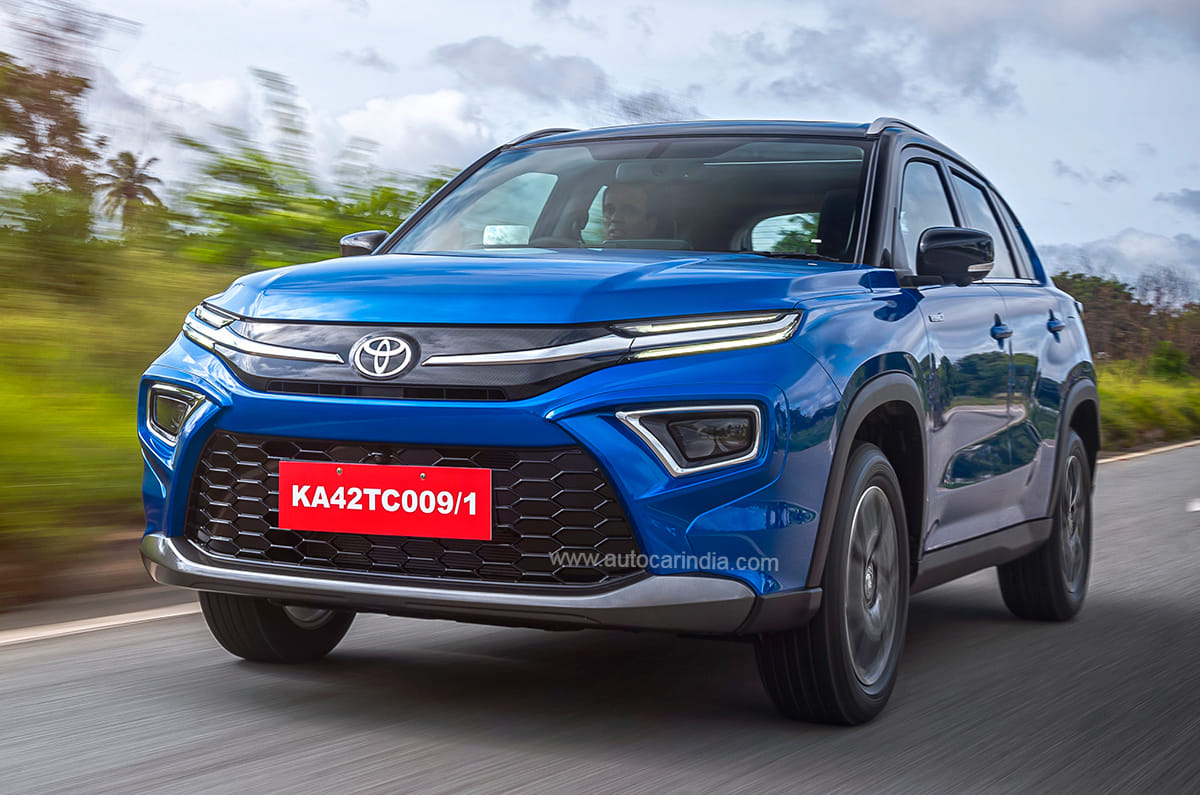
Strong-hybrid versions of the Hyryder are optimised for fuel efficiency over outright performance. Thus, drivers looking for a turbo-petrol-like exhilaration won’t be satisfied, as it lacks midrange punch. Apart from the strong hybrid, there’s also a mild hybrid version that utilises a 103hp, 139Nm 1.5-litre naturally aspirated petrol engine. Though it has enough pep in the city, as with the strong hybrid, you’ll find yourself longing for more power on the highway. Overtakes will require careful planning and working your way through the gears. At 14.01 seconds, the mild-hybrid’s 0-100kph time is slow by segment standards.

Limited boot space
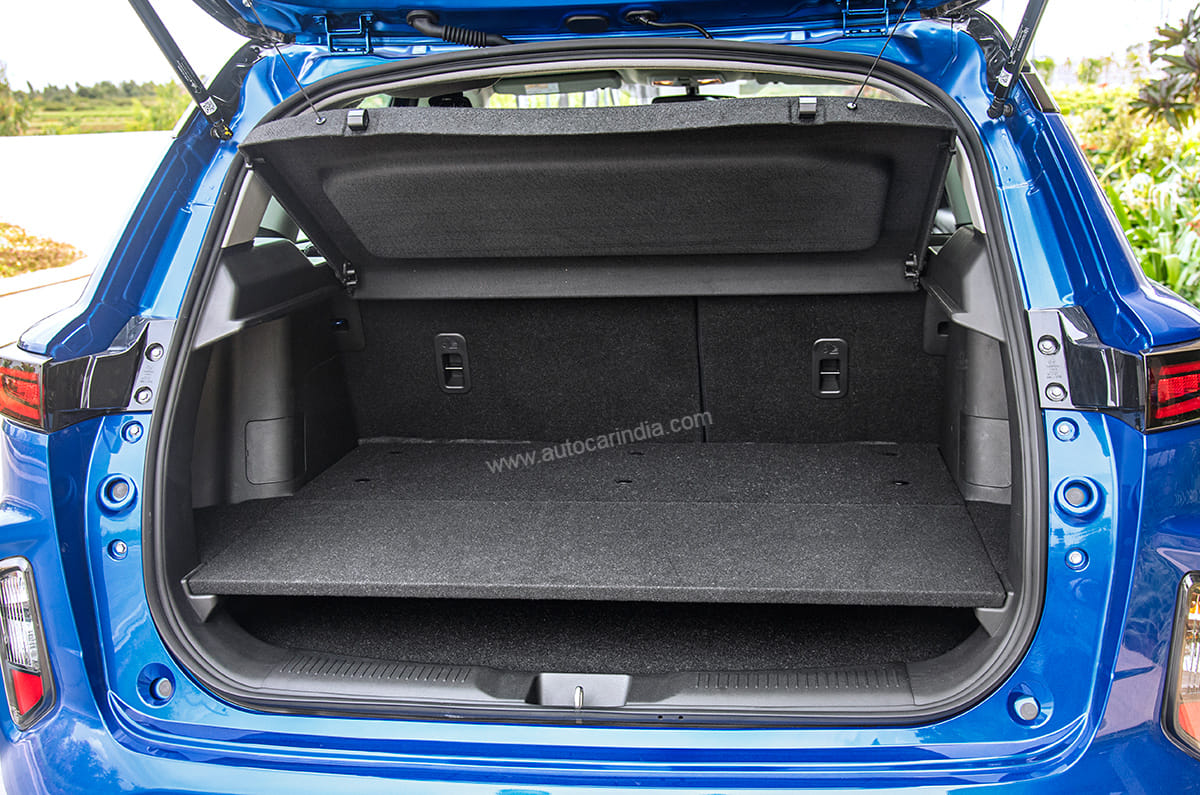
With a capacity of 355 litres, the mild hybrid-powered Toyota Hyryder has one of the smallest trunks in the segment. Additionally, the Hyryder strong hybrid’s high fuel efficiency comes at the cost of boot space, which is reduced further to 255 litres because of the lithium-ion battery pack placed beneath it. This could be a dealbreaker for those who carry large suitcases on road trips.
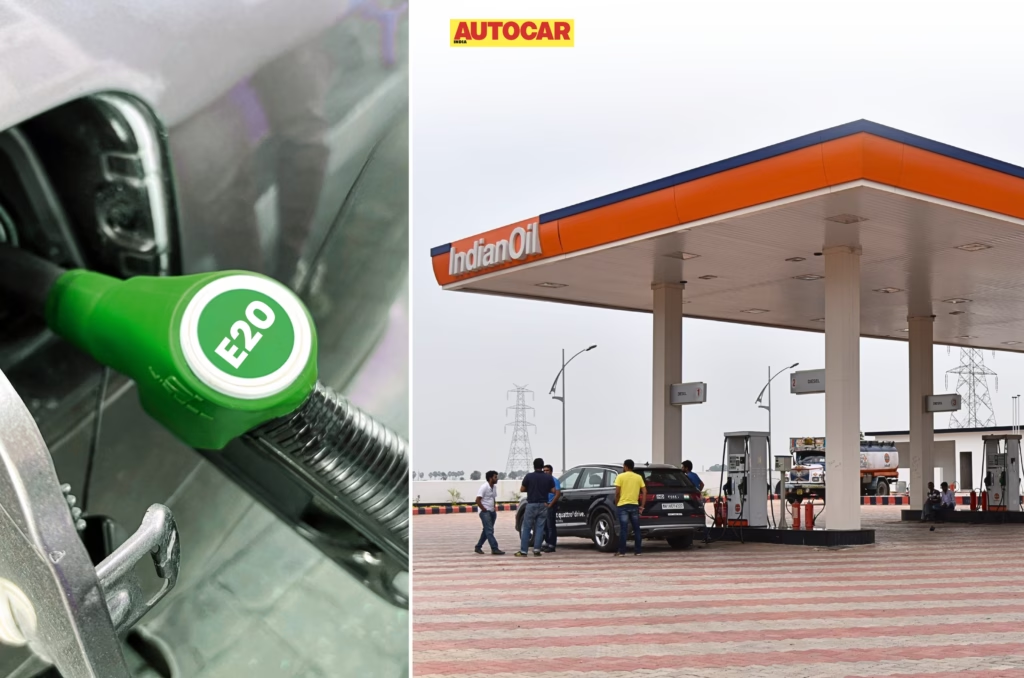
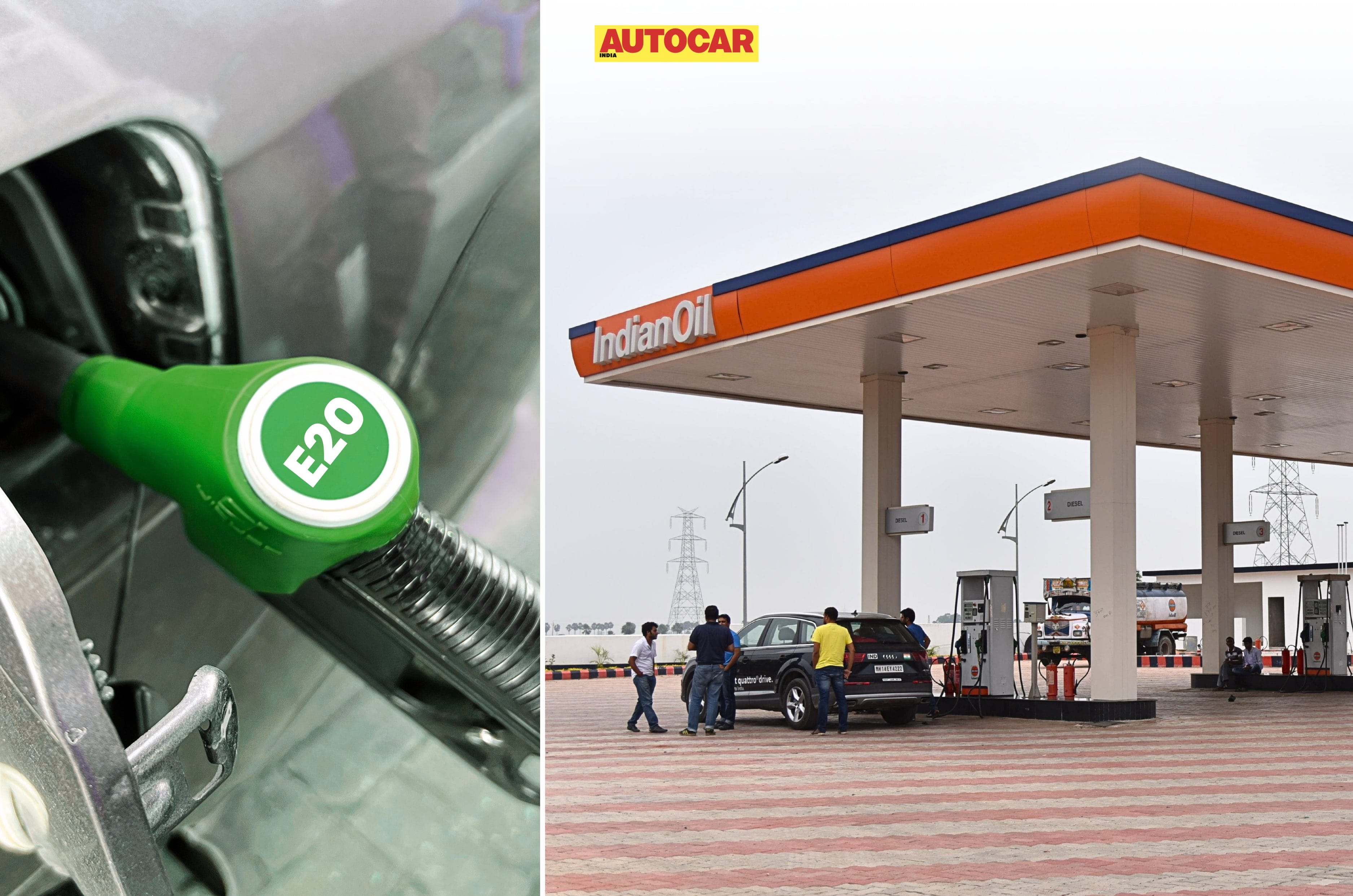
पुरानी गाड़ियों के लिए E10 पेट्रोल देने पर विचार, E20 को हटाने का कोई प्लान नहीं: BPCL

भारत में E20 पेट्रोल को लेकर बहस के बीच पुराने गाड़ियों के लिए E10 पेट्रोल उपलब्ध कराने पर विचार हो रहा है। सरकारी ऑयल मार्केटिंग कंपनी BPCL के चेयरमैन और मैनेजिंग डायरेक्टर संजय खन्ना ने गुरुवार को यह जानकारी दी। हालांकि, उन्होंने साफ कहा कि E20 को हटाकर दोबारा E10 लागू करने का कोई प्रस्ताव नहीं है।

E10 और E20 में क्या अंतर है?

E10 पेट्रोल में 10% इथेनॉल और 90% पेट्रोल होता है। वहीं E20 में 20% इथेनॉल और 80% पेट्रोल होता है। E20 को लेकर पुरानी गाड़ियों के मालिकों की चिंता रही है। इसमें माइलेज, फ्यूल सिस्टम के पार्ट्स और मरम्मत से जुड़े सवाल उठे हैं।

पुरानी गाड़ियों के लिए E10 पर विचार

ऑयल मार्केटिंग कंपनी BPCL के मुताबिक, पुरानी गाड़ियों के लिए अलग से E10 उपलब्ध कराने का विकल्प देखा जा रहा है। संजय खन्ना ने कहा कि मौजूदा इंफ्रास्ट्रक्चर से E10 की सप्लाई करना संभव है। हालांकि, E10 और E20 को एक साथ उपलब्ध कराने के तरीके पर अभी चर्चा चल रही है।

E10 की सप्लाई में क्या दिक्कत है?

ऑयल मार्केटिंग कंपनी BPCL को E10 की सप्लाई में कोई बड़ी लॉजिस्टिक दिक्कत नजर नहीं आती। लेकिन अगर E10 और E20 दोनों को एक साथ बेचना है, तो अलग ग्रेड के पेट्रोल की सप्लाई संभालनी होगी। इसी वजह से सरकार और कंपनियां इसके तौर-तरीकों पर काम कर रही हैं।

E20 को वापस लेने का प्लान नहीं

सरकार पहले ही कह चुकी है कि E20 से वापस E10 या E0 पर जाने का कोई प्रस्ताव नहीं है। पेट्रोलियम राज्य मंत्री सुरेश गोपी ने 10 अगस्त को राज्यसभा में कहा था कि देशभर के एक लाख से ज्यादा पेट्रोल पंपों पर E0, E10 और E20 की अलग-अलग सप्लाई रखने से लॉजिस्टिक्स और स्टोरेज की लागत बढ़ेगी।

हालांकि, BPCL के ताजा बयान से साफ है कि E10 को E20 के विकल्प के तौर पर नहीं, बल्कि पुरानी गाड़ियों के लिए एक अलग विकल्प के रूप में देखा जा रहा है।

E10 की मांग क्यों उठी?

E20 को लेकर पुरानी गाड़ियों के मालिकों की चिंता बढ़ी है। लोगों का कहना है कि ज्यादा इथेनॉल वाले पेट्रोल से माइलेज पर असर पड़ सकता है। कुछ पुरानी गाड़ियों में फ्यूल सिस्टम के पार्ट्स की अनुकूलता को लेकर भी सवाल हैं।

मुख्य आर्थिक सलाहकार वी. अनंत नागेश्वरन ने भी 17 अगस्त को एक लेख में सुझाव दिया था कि पुरानी गाड़ियों के मालिकों की परेशानी दूर करने के लिए पेट्रोल पंपों पर E10 के साथ E20 भी उपलब्ध कराया जा सकता है।

E20 की शुरुआत कैसे हुई?

केंद्र सरकार ने 1 अप्रैल से ऑयल कंपनियों को 20% तक इथेनॉल मिला पेट्रोल बेचने का निर्देश दिया था। इस पेट्रोल का न्यूनतम Research Octane Number यानी RON 95 होना भी जरूरी किया गया। इसके बाद पुरानी गाड़ियों के मालिकों में माइलेज और गाड़ी की सेहत को लेकर चिंता बढ़ी।

फिलहाल तस्वीर यही है कि E20 की व्यवस्था जारी रहेगी। पुरानी गाड़ियों के लिए E10 उपलब्ध कराने का विकल्प जरूर सरकार और ऑयल कंपनियों की चर्चा में है।

2030 तक ₹20 लाख करोड़ का हो सकता है EV मार्केट, 5 करोड़ नौकरियां पैदा होंगी: नितिन गडकरी

Disclaimer: यहां मुहैया जानकारी सिर्फ सूचना के लिए दी जा रही है। यहां बताना जरूरी है कि मार्केट में निवेश बाजार जोखिमों के अधीन है। निवेशक के तौर पर पैसा लगाने से पहले हमेशा एक्सपर्ट से सलाह लें। मनीकंट्रोल की तरफ से किसी को भी पैसा लगाने की यहां कभी भी सलाह नहीं दी जाती है।

Govt cracks down on E20 contamination: Petrol sales stopped at 2,573 pumps

Govt cracks down on E20 contamination: Petrol sales stopped at 2,573 pumps
E20 contamination crack down

The Ministry of Petroleum and Natural Gas has launched a massive quality-control campaign across India’s retail fuel network and, as of August 25, 2026, stopped petrol sales at 2,573 non-compliant outlets, according to highly placed ministry sources. Indian Oil Corporation (IOCL) leads with 1,257 halted pumps, followed by Hindustan Petroleum (HPCL) at 915 and Bharat Petroleum (BPCL) at 401.

The trigger was a letter from the Society of Indian Automobile Manufacturers (SIAM) to the ministry on July 28, leaked soon after, flagging alarmingly high levels of chloride contamination in E20 fuel samples tested across the country. SIAM withdrew the letter within days, saying the figures “needed further verification”, but the damage was done. A subsequent Reuters investigation into carmakers’ internal testing data kept the contamination question firmly in the public eye and has forced the government to react.

To restore consumer confidence and tackle contaminants and water in the supply chain, the government has mandated water-ingress testing of underground tanks 8 to 12 times a day, a rigorous regime already underway at 88,995 dealerships. A sweeping audit prioritising older retail outlets has covered 84,687 fuel stations; field teams are checking tank integrity during rainfall, and automation systems with monitoring probes are active at 85,649 outlets, with malfunctioning units being repaired on priority.

Oil-marketing companies (OMCs) have conducted 7,296 sulphur tests and 1,079 chloride tests on ethanol-carrying tankers, along with 151 chloride tests on their own storage tanks. 

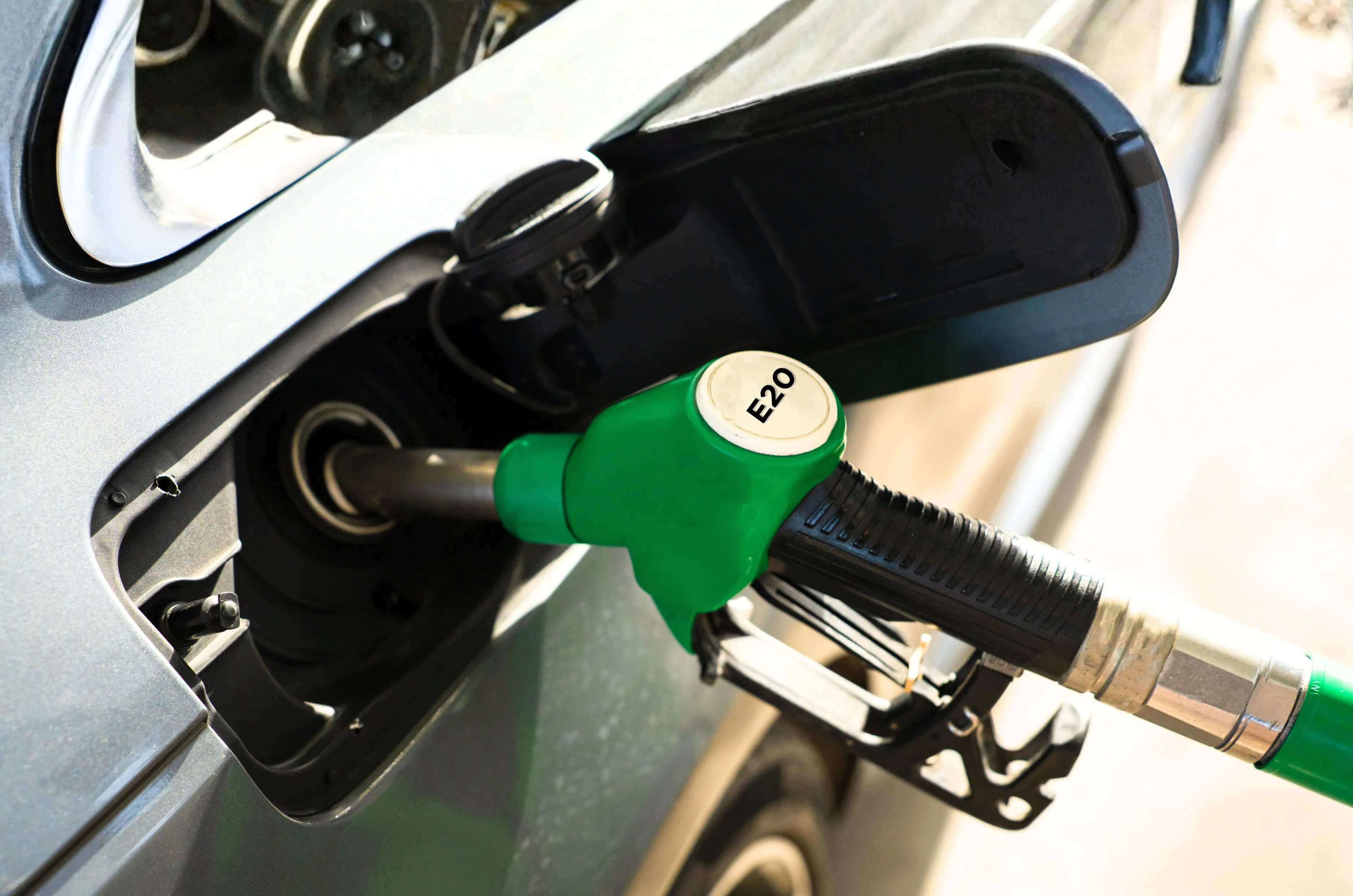
The intensity of the crackdown reflects a government under pressure to protect the integrity of its green-energy transition. The rollout of E20 (petrol blended with 20 percent ethanol) was accelerated ahead of its original schedule. Since April 1, E20 has been the only petrol available at Indian pumps, leaving motorists with no option of buying the earlier E10 blend.

Automakers’ extensive fuel-testing drive

The move to ensure that the prescribed standards are met at the forecourts is a direct response to growing opposition from motorists and anxiety among the country’s leading vehicle manufacturers.

For motorists, the transition to E20 has brought tangible financial losses arising from lower fuel efficiency and potential mechanical risks. In a widely publicised dispute, a consumer court in Raipur recently directed Maruti Suzuki to replace a Grand Vitara over an E20-related engine complaint, underlining the legal and warranty vulnerabilities facing carmakers. Concerns over mileage loss, accelerated component wear and the compatibility of pre-2023 vehicles have simmered for months.

Behind closed doors, the anxiety ran deeper. While brands like Toyota, Maruti Suzuki and Hero MotoCorp publicly backed the government’s green mandate, a Reuters review of leaked internal communications revealed that Maruti Suzuki, Tata Motors and Mahindra & Mahindra had privately flagged severe contamination in E20 petrol. Over the course of a year, the three carmakers quietly conducted the most extensive fuel-testing drive since the national rollout, collecting and analysing over 250 samples from petrol pumps across 21 states and Union territories.

Leaked report rings alarm bells 

The industry findings, compiled by SIAM and reviewed by Reuters, painted a starkly different picture from official compliance narratives. Against the government’s permissible chloride limit of 3 parts per million (ppm) or 3mg/kg, automaker testing found alarming levels across 18 states: Rajasthan recorded 6 to 570ppm — 190 times the limit; Delhi-NCR ranged from 1.4 to 420ppm and Madhya Pradesh from 4.1 to 550ppm. Karnataka and Kerala, by contrast, stayed well within the safe zone at 1 to 2.2ppm.

Water content spiked to 13,000ppm in Andhra Pradesh and 12,500ppm in Uttar Pradesh, which is more than four times the official permissible limit of 3,000ppm.

In modern engines, these deviations can be damaging. Organic chloride is highly corrosive, and modern precision fuel injectors are engineered to tolerate just 1-3ppm to align with international standards. In a leaked July email, a senior Mahindra executive warned that organic chloride was the root cause of rapid vehicle failures, capable of destroying fuel systems and engines in as little as 200km. Mahindra has since described interpretations drawn from the email as baseless, calling the industry data limited and preliminary. 

Skoda Auto India brand director Ashish Gupta, in a recent interaction with Autocar Professional, acknowledged a genuine issue with EPC (Electronic Power Control) and fuel pump failures in certain parts of the country, particularly in Punjab. He added that while fuel-sample testing has not shown a definitive chemical difference, engineers suspect high chloride or high sulphur levels, which can clog the fuel-pump filters.

The regulatory gap

To be fair, BIS standards currently lack a formally mandated statutory threshold for inorganic chlorides in finished ethanol-blended petrol (like E20). However, the petroleum ministry and OMCs enforce internal procurement guidelines, capping the limit at 3ppm for ethanol manufacturers. Setting BIS standards that make chloride limits mandatory is urgently needed, as the main culprit for vehicle damage is not E20 petrol but the chloride levels in it.

With inputs from Shahkar Abidi 

Skoda Kylaq long-term review, 3,800km report

Skoda Kylaq long-term review, 3,800km report
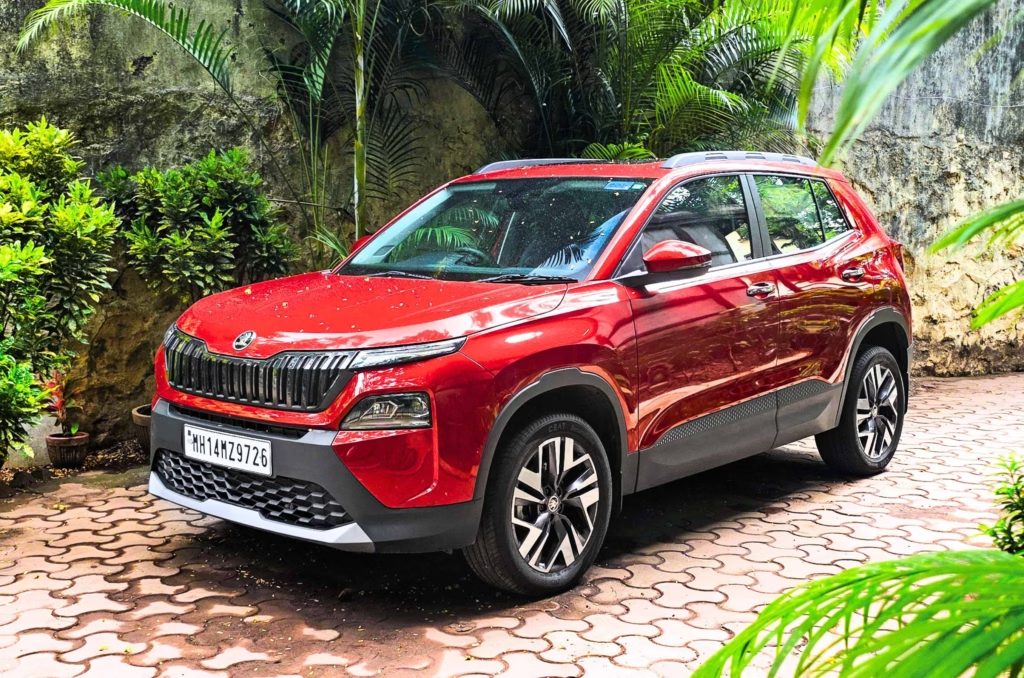
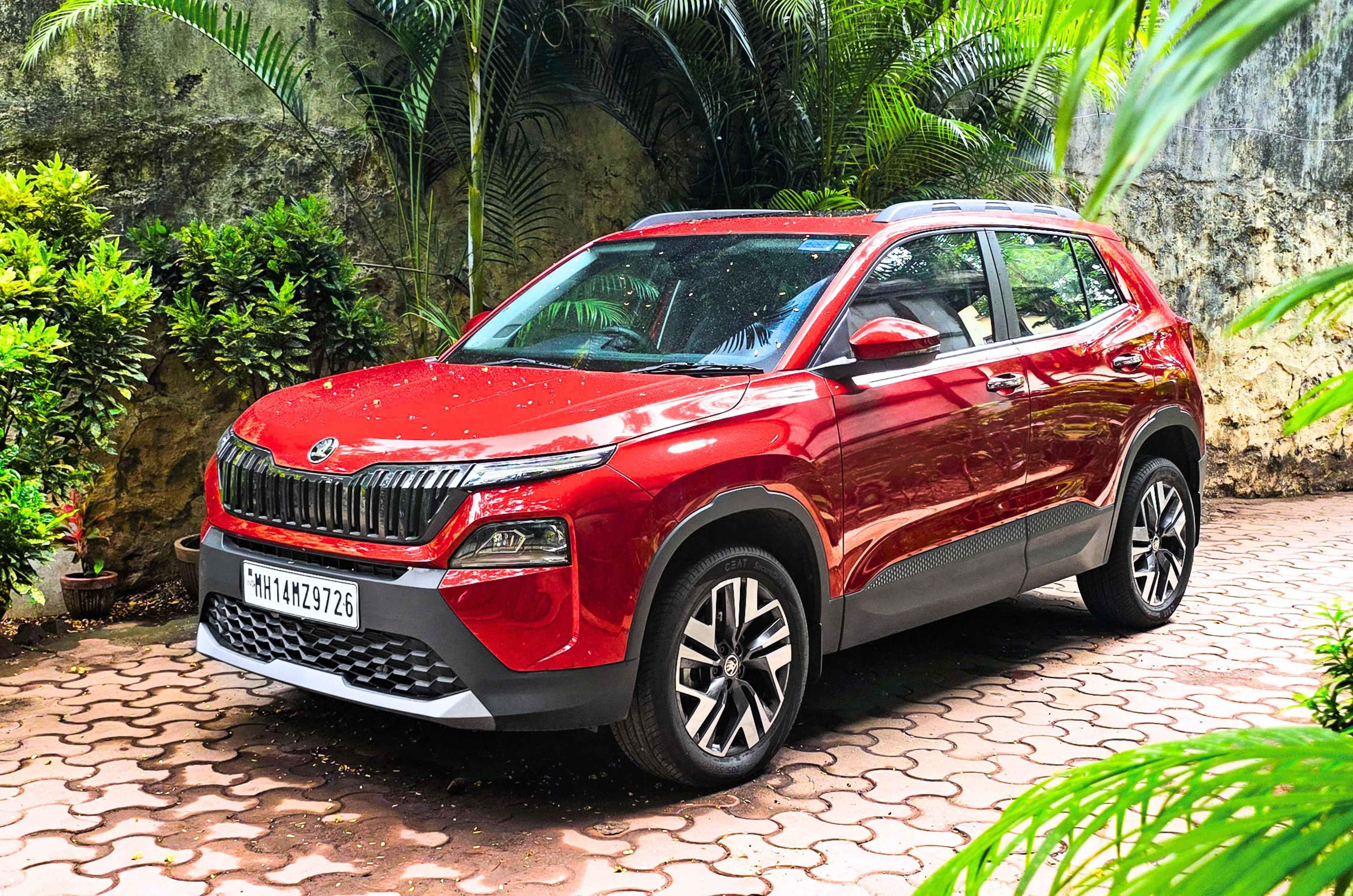
Skoda Kylaq in red colour

You could argue there was no better long-term test for the Skoda Kylaq than being driven 19,351 kilometres from India to Czechia. However, for those of us who can’t go on a two-month-long adventure full of culture, cuisine and continent-crossing, here’s what it’s been like trudging through Mumbai traffic for the last few weeks.

I’ve been fascinated by the Kylaq since its launch in early 2025, and apart from a few quick peeks at it when it came in for other shoots, I had never really driven one before this. So, now that it’s finally joined the Autocar India fleet, I’ve been more than happy to take it on for its first couple of weeks. And just as a proposition alone, I’m amazed that Group partner Volkswagen didn’t immediately jump on this idea and do a compact SUV in parallel. Guess we’ll just have to wait until 2027.

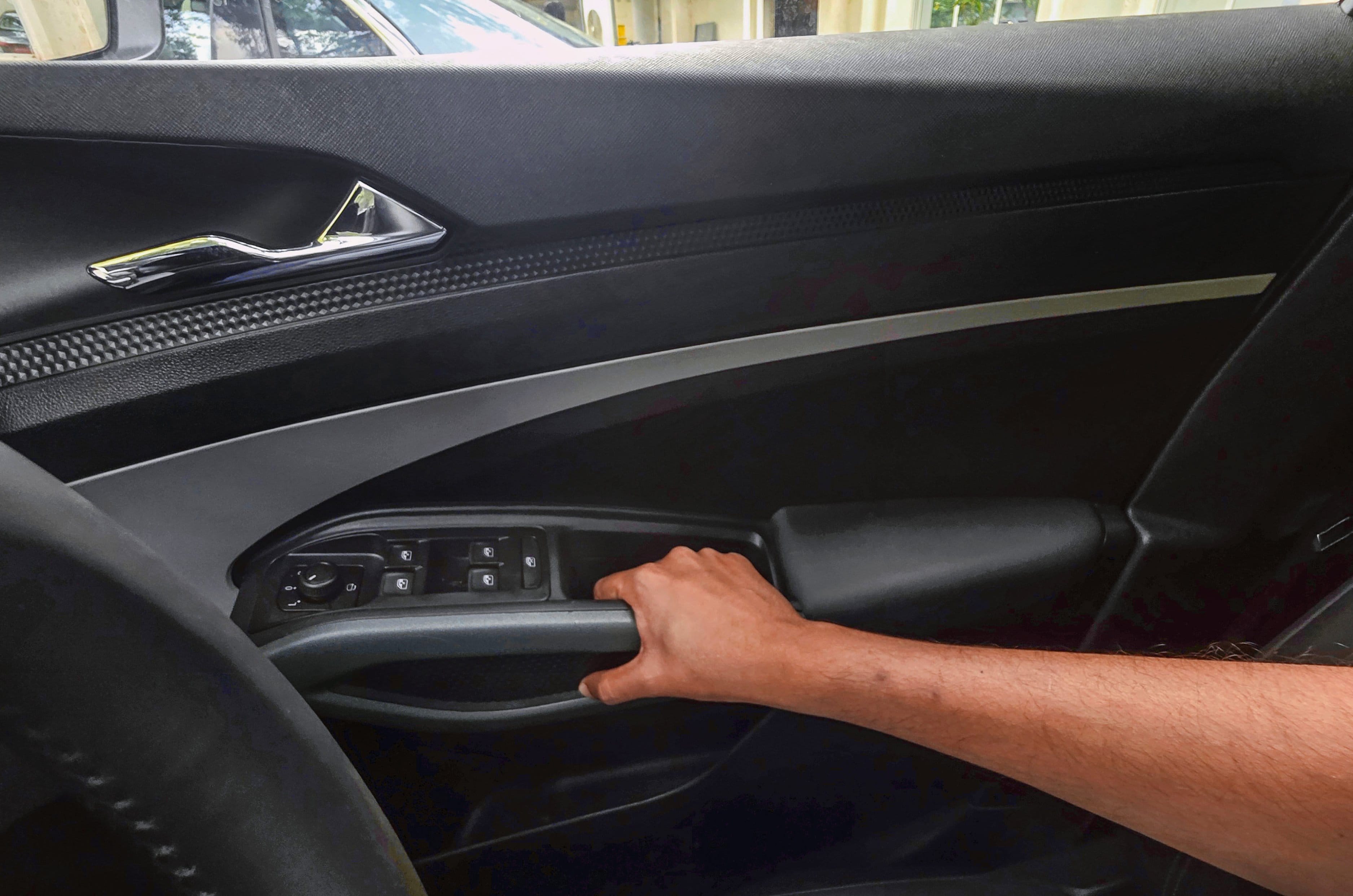
Skoda Kylaq interior door handle
Feels reassuringly solid, from the door shut to the driving dynamics.

The formula is simple enough – a Kushaq, but slightly smaller and using only the lesser 1.0-litre engine. But the more time I spend in here, the more I wonder if there’s any need for a Kushaq 1.0 TSI at all – this thing offers pretty much everything it does. At no moment does it feel lesser in any way – same step up into the cabin, same solid slam on door shut, same high-set driving position. And features? Apart from the Kushaq’s newly added panoramic sunroof, bigger driver’s display and rear massaging seats, it has everything else!

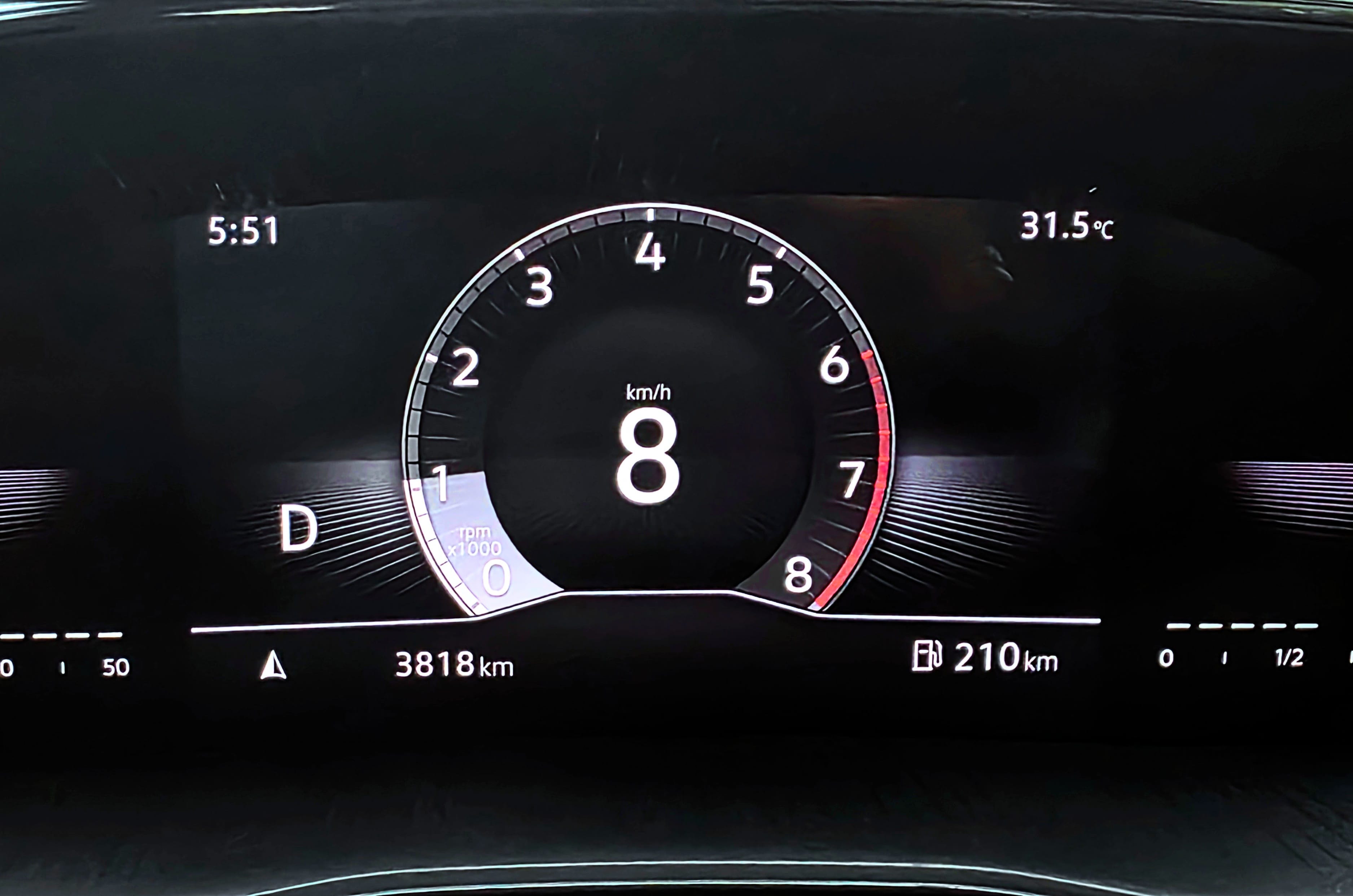
Skoda Kylaq driver's display
Severe turbo lag followed by sudden burst of power frustrating in stop-go traffic.

There are two mechanical changes that I hope make their way to the Kylaq soon, though. The first is the 8-speed gearbox, which should help mask one of this car’s shortcomings – turbo lag. The older 6-speed AT in our Kylaq may be smooth while you’re on the move, but at crawling speeds, where I spend most of my time, it can never figure out if it needs to be in first or second, and sometimes changes its mind at the worst possible moment. If it chooses first, it will lurch you forward aggressively, but if it chooses second, it traps you in the dreaded lag zone. Off boost, this 999cc engine feels overwhelmed by the Kylaq’s 1,255kg.

Skoda Kylaq touchscreen
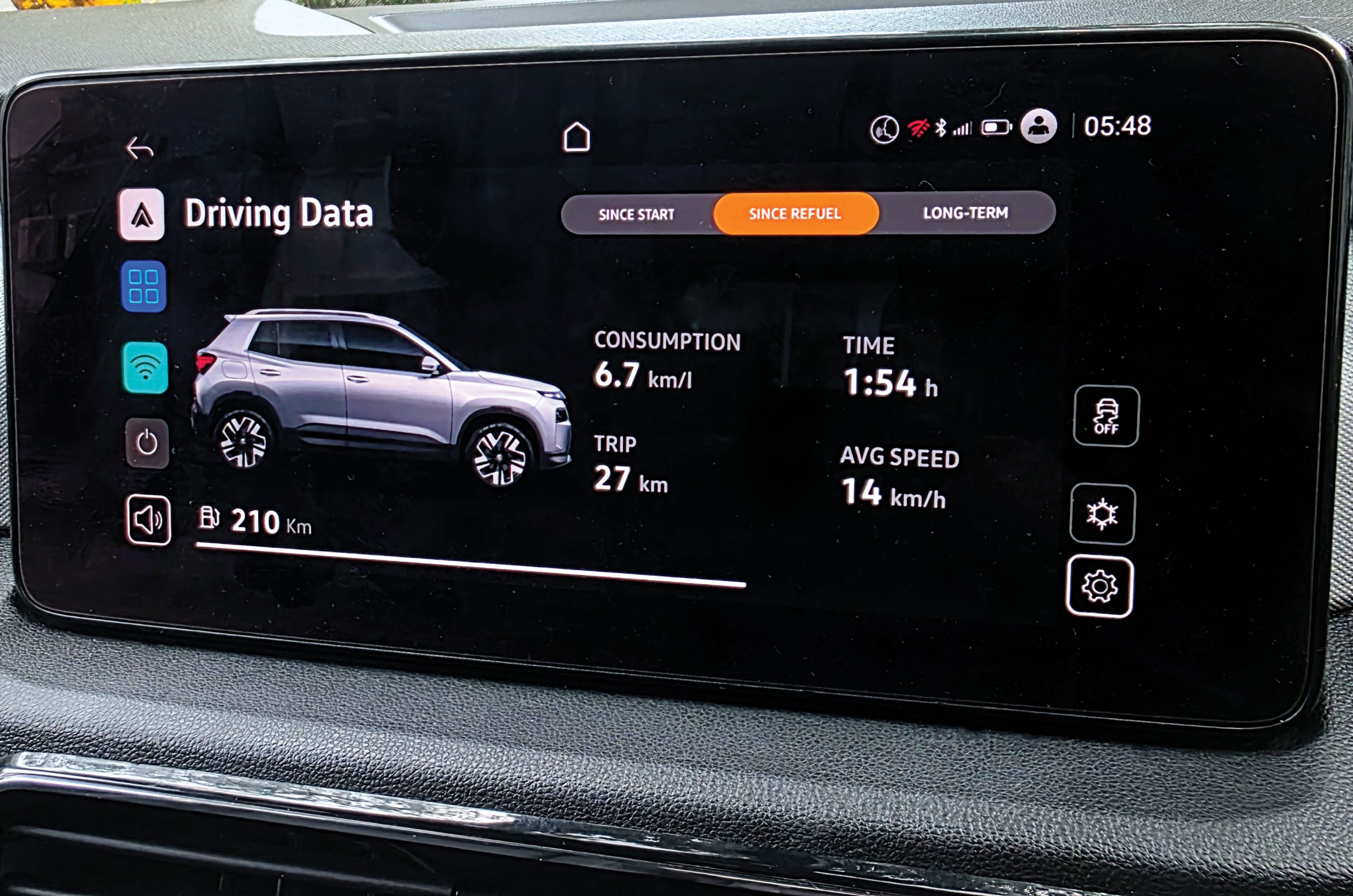
Single-digit fuel economy unexpected, unacceptable in a compact car.

Frustratingly jerky movement aside, where this indecisiveness has really hurt more is my wallet. The constant shifting, switching on and off boost and general inconsistent progress have hit the fuel economy very hard, and I struggle to get past 8kpl on my admittedly slow daily commute. Some of it might be down to the sudden advent of E20 fuel, but eight kilometres per litre in a compact car is criminal. I used to average 10kpl in our 1.5-litre TSI DSG Slavia a few years ago, and the team has been getting more out of our 2.0-litre TSI VW Tayron. So, it’s really down to an overstressed engine and a clumsy gearbox.

The other mechanical change is far less of a problem, and that’s the AC. While this still uses the fixed-geometry compressor from the original Kushaq, it’s a smaller car, so cooling the cabin is rarely an issue, and I drove it through at least one week of our awful heat wave. The thing is, you can feel it’s working overtime to keep the cabin cool, and when set to auto mode, the fan stays on full blast for most of my journey. I often find myself turning it down to have a conversation or enjoy my music.

Skoda Kylaq alloy wheel
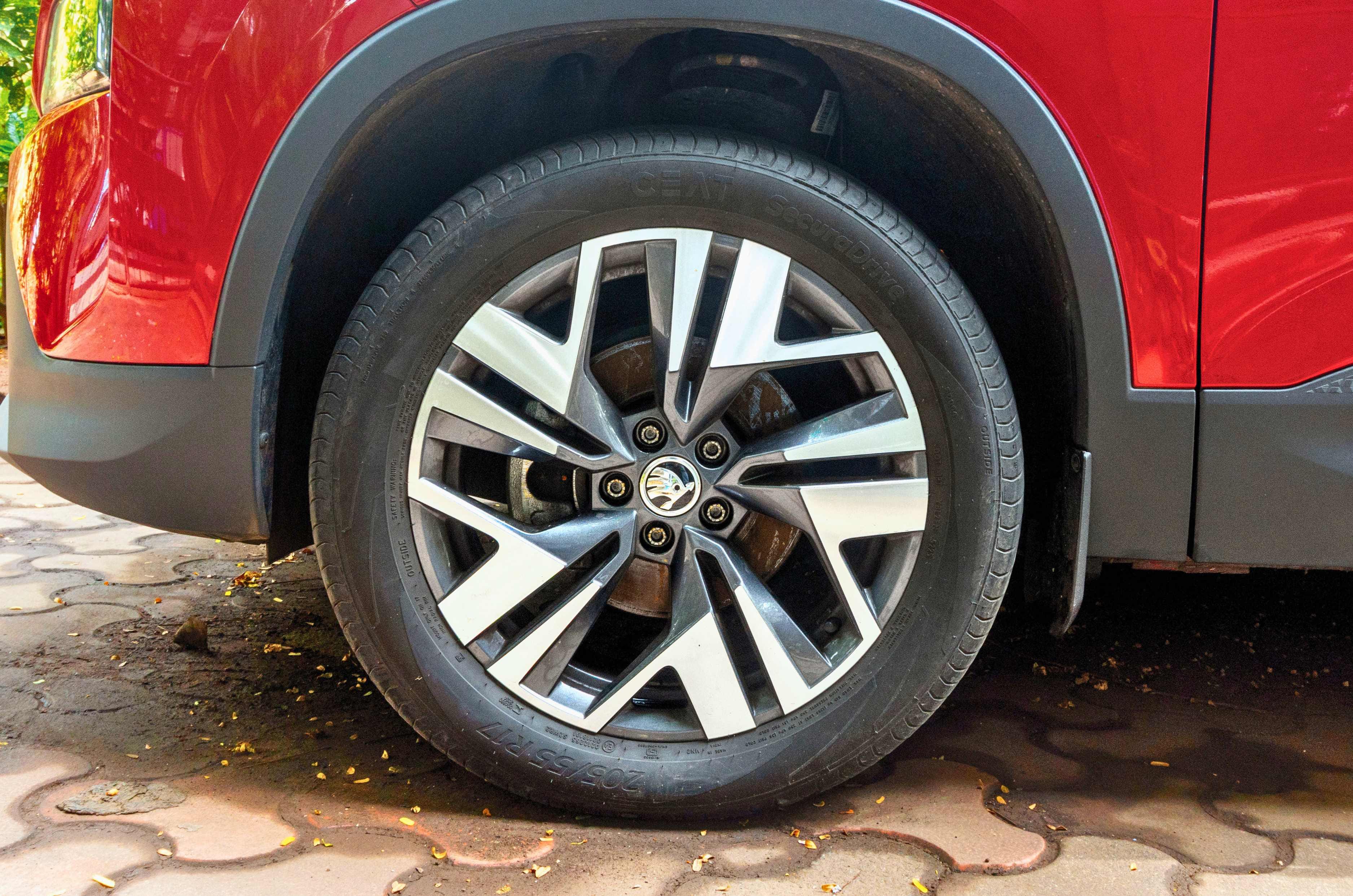
Large, shiny 17-inch alloy wheels do well to enhance Kylaq’s road presence.

These two niggles aside, it’s a very pleasing experience, as you might expect from a slightly smaller Kushaq. There’s a certain toughness to it you don’t find in cars from this segment that almost encourages you to seek out potholes and slam through them. There’s a similar firmness to the ride, but I actually like that; it suits my driving style better than something overly soft and rolly. And I’m also willing to forgive a lot for how good those 17-inch wheels look; a bold choice when most of the segment is still running 16s.

I’ll delve more into the interior, tech and other things in a future update, but in this short first experience, I can see how the Kylaq made it to Prague so comfortably and without incident. It’s compact only in size and is a uniquely European addition to the compact SUV segment.

Indian carmakers had flagged concerns about E20 fuel contamination: Reuters

Indian carmakers had flagged concerns about E20 fuel contamination: Reuters

Earlier this month, several media reports said the Society of Indian Automobile Manufacturers (SIAM) had urged the government to introduce mandatory chloride limits in fuel standards after high levels of chloride and moisture were found in E20 petrol. SIAM later withdrew the communication, saying some of the figures mentioned in it needed further verification.

The government has been trying to address growing concerns around E20 with support from the industry. Oil marketing companies (OMCs) have rejected claims of widespread E20 fuel contamination after conducting tests across the country. Brands such as Toyota, Maruti Suzuki and Hero MotoCorp have also publicly backed the E20 programme.

However, separate communications between industry executives investigated by Reuters show that earlier, Maruti Suzuki, Tata Motors and Mahindra had privately raised concerns about contamination in E20. The data compiled by these carmakers was the most extensive fuel testing since E20 was officially rolled out nationwide last year. Their emails reveal that the carmakers were concerned about contaminants such as chloride and moisture in the fuel, which they said were affecting vehicles, even as they publicly supported the government’s E20 rollout.

Data flags high chloride contamination, moisture content

The data reviewed by Reuters shows that the three automobile manufacturers had carried out detailed testing by collecting more than 250 fuel samples from petrol pumps across 21 states and Union Territories over a year. The tests found high chloride levels in many samples from 18 states, along with high moisture content. Interestingly, the emails reviewed by Reuters did not raise any concerns about the authenticity of the data. 

StateNumber of samplesChloride (ppm)
Uttar Pradesh361.2-175
Maharashtra3110-357
Delhi/NCR281.4-420
Tamil Nadu271.3-24.0
Kerala241.0-2.2
Punjab201.9-110
Karnataka151- 2.2
Rajasthan146.0-570
Madhya Pradesh114.1-550

Source: SIAM via Reuters.

The data showed chloride levels of 6 to 570 parts per million (ppm) in Rajasthan, 1.4 to 420ppm in New Delhi and 10 to 357ppm in Maharashtra. The government’s permissible limit is 3ppm.

High chloride levels in the fuel can corrode vehicle components, while high moisture content can cause a vehicle to stop working immediately after refuelling, SIAM had stated earlier. In group emails exchanged between Maruti, Tata, Mahindra and SIAM, a senior Maruti executive raised concerns about the high chloride readings and said the matter had even been privately discussed with the Ministry of Petroleum on July 26.

Moisture levels found 333 percent above limit

Additionally, the same data showed moisture levels of up to 13,000ppm in Andhra Pradesh and 12,500ppm in Uttar Pradesh, against the government’s permissible limit of 3,000ppm. The exact cause of the contamination is not known. However, SIAM said in its now-withdrawn letter that it had seen an increase in chloride levels since E20 was introduced and asked the government to direct OMCs to identify the root cause.

When asked about the private emails, SIAM told Reuters that the data was meant only for internal circulation, discussion and validation, and had been collected by a very small number of automakers. SIAM added that the communication was withdrawn because the testing basis and sample size were not enough to support firm conclusions and that it had been sent accidentally. The organisation stated further that it plans to conduct a proper scientific study.

As for the high moisture levels, SIAM’s letter said the cause could be poor maintenance of underground storage tanks and pipelines at petrol pumps.

Carmakers raise concerns over vehicle failures

In a July 26 email, a senior Maruti official said that current fuel injectors can tolerate a maximum chloride level of 1ppm, and keeping it below 1ppm in E20 would be in accordance with international standards and discussions with the petroleum ministry. Same is in line with discussion held with the petroleum ministry, he stated.

Meanwhile, a senior Mahindra official wrote that organic chloride was responsible for the rapid vehicle failures in recent times and could damage engines just within 200km. The executive said that most cases reported immediately after refuelling were due to organic chloride and added that Mahindra had “strong evidences” from fuel samples collected at retail outlets. Mahindra later said the conclusions drawn from its executive’s emails were “completely baseless and incorrect”. The company said the industry data was limited and preliminary and that it did not see any issues with E20. 

What does the government say?

The Ministry of Petroleum and Natural Gas did not respond to requests for comment made by Reuters. Petroleum Minister Hardeep Singh Puri said on Friday that OMCs had started “rigorous testing” at retail outlets to check for contamination two weeks before SIAM’s letter was received. According to Puri, only four cases of contamination had been found. OMCs, as mentioned earlier, said that their extensive testing had found no reason for alarm over fuel contamination.

OMCs reject E20 fuel contamination claims after nationwide testing

Fuel station

State-run oil marketing companies (OMCs) – Indian Oil, Bharat Petroleum (BPCL) and Hindustan Petroleum (HPCL), have rejected recent claims of widespread contamination in E20 petrol, saying a nationwide testing exercise found no evidence to support reports of elevated chloride and moisture levels. The companies said fuel samples collected across the supply chain recorded chloride levels within the prescribed limits, while enhanced checks have also found no signs of water ingress in underground fuel storage tanks.

  1. OMCs say chloride levels remained between 0-3ppm
  2. Testing covered refineries, ethanol plants, depots and retail outlets
  3. Two retail outlets temporarily suspended after isolated findings

This statement comes less than a week after reports citing an internal communication from the Society of Indian Automobile Manufacturers (SIAM) alleged elevated chloride and moisture contamination in E20 petrol, raising concerns over possible damage to fuel system components. SIAM, however, subsequently withdrew the communication, saying media reports had “selectively” quoted excerpts from the document and that some of the figures cited required further authentication through additional data collection and consultation with its member OEMs.

OMCs say testing found no widespread contamination

The oil companies said samples collected from refineries, ethanol distilleries, storage depots, tanker trucks and retail fuel stations recorded chloride levels between 0ppm and 3ppm, well below the several-hundred-ppm figures reported earlier. They added that claims of chloride contamination of up to 500ppm could not be validated.

According to the companies, testing included more than 100 petrol samples from refineries, ethanol supplied by 80 distilleries, more than 80 samples from terminals and over 160 samples from retail outlets, all of which returned chloride readings within the 0-3ppm range. The ethanol testing was carried out jointly by the OMCs and the Centre for High Technology, the petroleum ministry’s technical arm.

Two fuel stations flagged during testing

The OMCs said two retail outlets recorded elevated chloride levels during the exercise. Fuel supplies at both stations were suspended, investigated and restored only after corrective measures were implemented.

Moisture checks expanded across fuel stations

On the issue of moisture contamination, the companies said around 90,000 fuel stations have begun mandatory inspections of underground storage tanks, with checks carried out eight to twelve times a day. According to the OMCs, no water intrusion has been detected so far.

The companies added that mobile fuel testing laboratories have been deployed, with results independently verified by fuel laboratories. Test data is also being published on the Centre for High Technology’s website and will continue to be updated as additional samples are analysed.

SIAM withdraws E20 fuel contamination communication

E20

The Society of Indian Automobile Manufacturers (SIAM) has withdrawn its earlier communication to the Ministry of Petroleum and Natural Gas regarding E20 fuel contamination, stating that media reports had selectively quoted excerpts from the document and that some of the figures cited require further verification.

  1. Earlier communication withdrawn pending further verification
  2. SIAM reiterates support for the government’s E20 programme
  3. Petroleum Ministry says enhanced fuel quality checks are in place

The clarification follows media reports that cited portions of the communication relating to chloride and moisture contamination in E20 petrol and an increase in the replacement of certain vehicle components.

SIAM says figures require further verification

In a statement issued on Tuesday night, SIAM said, “SIAM has taken note of certain media reports that have cited excerpts from a SIAM communication, with specific and selective focus on chloride and sulphur content in fuel. SIAM wishes to clarify the matter and place it in its correct context for the benefit of the public and all stakeholders.”

It added that the communication formed part of routine technical discussions between industry bodies, automobile manufacturers, oil marketing companies (OMCs) and testing agencies.

“Some numbers quoted in the communication needs authentication through collection of elaborate data from various regions across the country followed by a comprehensive consultation with our member OEMs,” SIAM said.

The industry body added, “The referred numbers reported in the media need authentication and therefore SIAM is withdrawing its earlier communication.”

A news report published by a leading business channel on Tuesday, which has since been removed, had cited excerpts from the communication, claiming SIAM had flagged a rise in the replacement of fuel injectors, fuel pumps and other components, while also highlighting chloride contamination of up to 500mg/kg in some fuel samples.

Industry body reaffirms support for E20 rollout

SIAM said the Ministry of Petroleum and Natural Gas has already introduced a 3ppm guideline for chloride and sulphur in ethanol blended into petrol, while OMCs have strengthened quality checks across the fuel supply chain. According to the industry body, “all of these steps fully meet the needs of the automobile industry.” 

The industry body also reiterated its support for the nationwide rollout of E20 petrol, stating that there is “no cause for concern” for consumers and that such technical issues have routinely been addressed between automakers and OMCs.

Government reiterates fuel quality monitoring

Earlier on Tuesday, the Petroleum Ministry said fuel quality is monitored regularly by state-run OMCs and highlighted enhanced testing protocols following reports related to SIAM’s communication on E20 fuel quality.

E20 fuel contamination linked to rise in engine issue

E20

High chloride and moisture contamination in E20 petrol has emerged as a growing concern for the automotive industry, with vehicle manufacturers reporting a rise in failures of fuel system and exhaust-related components. Following discussions with automobile manufacturers and oil marketing companies (OMCs), the Centre has directed OMCs to strengthen fuel quality monitoring at retail outlets, while the industry has called for tighter fuel quality standards.

  1. High chloride and moisture levels found in E20 fuel samples
  2. Ageing fuel infrastructure identified as a likely source
  3. Industry calls for mandatory chloride limits in BIS standards

Contamination linked to rise in component failures

According to industry findings shared with the Ministry of Petroleum and Natural Gas, automakers have reported a significant increase in the replacement of fuel injectors, fuel pumps and other parts that come into direct contact with fuel. Field investigations have identified corrosion and wear caused by excessive chloride contamination as a key contributing factor.

Industry assessments indicate that chloride contamination, when combined with moisture, can form an acidic mixture that corrodes precision components such as fuel injectors, potentially leading to both immediate and long-term damage. 

Fuel samples collected from vehicle tanks have recorded chloride contamination levels of up to 500mg/kg, while samples collected from retail outlets have shown levels of up to 350mg/kg. Separate industry assessments have reported chloride levels of up to 300ppm at some fuel outlets, against a recommended limit of under 10ppm.

Moisture contamination adds to the problem

Industry assessments have also reported excessive moisture contamination in E20 petrol. Some samples recorded water content exceeding 10,000mg/kg, while separate investigations found levels of around 7,000mg/kg, against the permissible limit of 3,000mg/kg. Excess moisture can lead to phase separation, where the ethanol-water mixture settles at the bottom of the fuel tank and may be drawn into the engine during operation.

Chlorides and moisture enter the vehicle’s fuel tank via contaminated water and an unclean supply chain, made worse by ethanol’s hygroscopic nature. Industry assessments point to ageing storage tanks, pipelines, fuel tankers and other fuel handling infrastructure as likely sources of contamination.

Some petrol pump operators have also raised concerns that ageing underground storage tanks, particularly during the monsoon or in coastal regions, could be more susceptible to moisture ingress, increasing the risk of phase separation in ethanol-blended fuel. The contamination issue is cropping up in certain pockets of the country, especially in the north. 

The latest developments come weeks after Mercedes-Benz India also raised concerns over fuel contamination and urged tighter fuel quality checks after reporting contamination-related damage to vehicle components in some cases.

Industry seeks tighter fuel quality standards

According to report from CNBC TV18, the Society of Indian Automobile Manufacturers (SIAM) has urged the government to introduce mandatory chloride limits in BIS fuel specifications. It has proposed a chloride limit of less than 1mg/kg for commercial E20 and E85 fuels, and less than 3mg/kg for anhydrous ethanol used for blending. SIAM said it has been raising the issue with BIS for more than two years, but the proposal has not yet been implemented.

SIAM has also recommended regular audits of older fuel stations, stricter quality checks across the retail fuel network and mandatory chloride limits for diesel, where the parameter currently remains optional. The Centre has since asked OMCs to strengthen on-ground fuel quality monitoring while the root causes of contamination are investigated.

With inputs from Hormazd Sorabjee

Source: CNBC TV18, SIAM, OMCs and auto manufacturers.

E20 Fuel: क्या E20 पेट्रोल से इंजन खराब हुआ तो मिलेगा इंश्योरेंस क्लेम? समझिए नियम और एक्सपर्ट्स की राय

Motor Insurance Policy on E20 Fuel: भारत में 1 अप्रैल से E20 पेट्रोल यानी पेट्रोल में 20% एथेनॉल मिलाया हुआ पेट्रोल स्टैंडर्ड फ्यूल बन चुका है। इसके बाद से ही पुरानी पेट्रोल गाड़ियों के मालिकों के मन में एक बड़ा सवाल उठ रहा है कि, अगर E20 पेट्रोल के इस्तेमाल से गाड़ी का इंजन या फ्यूल सिस्टम खराब होता है, तो क्या कॉम्प्रिहेंसिव मोटर इंश्योरेंस पॉलिसी में इसका क्लेम मिलेगा?

इस मुद्दे पर सरकार, इंश्योरेंस कंपनियों और ऑटोमोटिव एक्सपर्ट्स का रुख बिल्कुल साफ है। आइए आपको बताते हैं कि E20 पेट्रोल और कार इंश्योरेंस से जुड़े नियम क्या कहते हैं।

क्या केवल E20 फ्यूल इस्तेमाल करने से इंश्योरेंस रद्द हो जाता है?

बिल्कुल नहीं, सरकार और इंश्योरेंस कंपनियों ने साफ कर दिया है कि गाड़ी में E20 पेट्रोल का इस्तेमाल करने से आपकी इंश्योरेंस पॉलिसी रद्द नहीं होती। आईसीआईसीआई लोम्बार्ड जनरल इंश्योरेंस ने विवाद के बाद साफ किया कि, ‘गाड़ी में E20 फ्यूल का इस्तेमाल करने से पॉलिसी अमान्य नहीं होती। क्लेम इस बात पर निर्भर करता है कि दुर्घटना या चोरी जैसी बीमित घटना हुई है या नहीं। पुरानी गाड़ियों में E20 के इस्तेमाल को लापरवाही नहीं माना जाएगा।’

पॉलिसीबाजार के मोटर इंश्योरेंस बिजनेस हेड पारस पसरीचा (Paras Pasricha) के मुताबिक, केवल E20 फ्यूल के इस्तेमाल से क्लेम रिजेक्ट नहीं होता। क्लेम इस बात पर तय होता है कि नुकसान की असली वजह क्या है।

क्या E20 से इंजन खराब होने पर क्लेम मिलेगा?

यहीं पर बीमा के नियमों का अंतर समझना जरूरी है:

क्या E20 से इंजन खराब होने पर क्लेम मिलेगा?

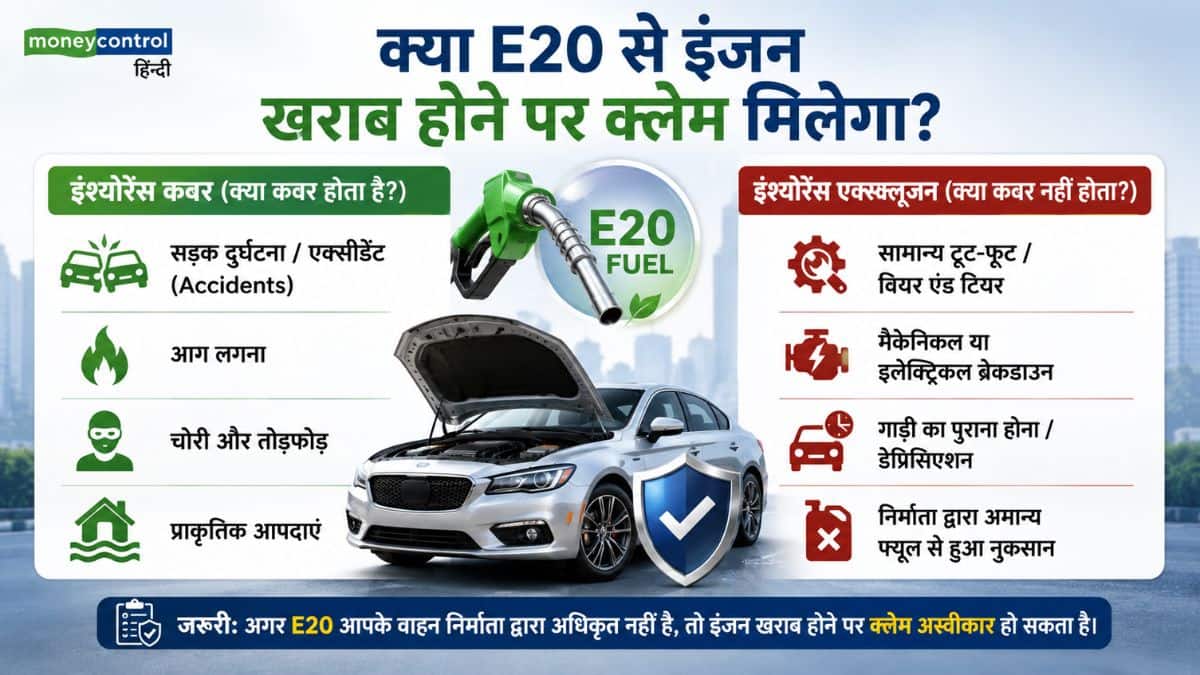
पारस पसरीचा के अनुसार, ‘अगर सर्वेयर की जांच में यह साबित होता है कि इंजन या फ्यूल सिस्टम का नुकसान सिर्फ और सिर्फ ऐसे फ्यूल (E20) का इस्तेमाल करने से हुआ है जो वाहन निर्माता द्वारा अनुशंसित नहीं था, तो इसे स्टैंडर्ड पॉलिसी के तहत मैकेनिकल ब्रेकडाउन या कन्सिक्वेंशियल डैमेज माना जाएगा। इस स्थिति में क्लासिकल कॉम्प्रिहेंसिव पॉलिसी में क्लेम मिलना मुश्किल होगा।’

किस बात पर फंस रहा पेंच?

ICICI Lombard का ब्लॉग पोस्ट: जून 2026 में ICICI लोम्बार्ड के एक ब्लॉग में कहा गया था कि पुरानी गैर-E20 कंपैटिबल गाड़ियों में E20 फ्यूल से हुए नुकसान को लापरवाही के दायरे में देखा जा सकता है। हालांकि, विवाद बढ़ता देख कंपनी ने तुरंत स्पष्टीकरण जारी कर स्थिति साफ की। अप्रैल 2023 के बाद बनी सभी BS6 Phase-2 गाड़ियां पूरी तरह से E20 फ्यूल फ्रेंडली हैं और उनमें ऐसी कोई समस्या नहीं आती।

सरकार और इंडस्ट्री का क्या रुख है?

सरकार और एथेनॉल इंडस्ट्री ने E20 से बड़े पैमाने पर इंजन खराब होने के दावों को पूरी तरह से खारिज किया है। संसद में केंद्रीय पेट्रोलियम और प्राकृतिक गैस राज्य मंत्री सुरेश गोपी ने लोकसभा में लिखित जवाब में कहा कि सरकार को वाहन निर्माताओं या कंज्यूमर ग्रुप्स से E20 के कारण माइलेज घटने या इंजन/टैंक खराब होने की कोई आधिकारिक शिकायत नहीं मिली है।

केंद्रीय पेट्रोलियम मंत्री हरदीप सिंह पुरी ने कहा कि इंश्योरेंस कंपनियों ने अपनी स्थिति स्पष्ट कर दी है और सोशल मीडिया पर फैल रही भ्रामक खबरों पर ध्यान न दें।

सरकार के मुताबिक पिछले 2.5 सालों से देश में 20 करोड़ से ज्यादा टू-व्हीलर्स और 3 करोड़ कारें एथेनॉल ब्लेंडेड पेट्रोल पर बिना किसी परेशानी के चल रही हैं।

भारत इंडिपेंडेंट एथेनॉल प्रोड्यूसर्स एसोसिएशन (BIEPA) के जॉइंट वाइस प्रेसिडेंट अक्षय मोदी ने कहा कि सोशल मीडिया पर चल रहा कैंपेन सिर्फ भ्रामक जानकारी पर आधारित है और एथेनॉल ब्लेंडिंग पूरी तरह से वैज्ञानिक जांच और OEM अप्रूवल के बाद ही लागू की गई है।

कार मालिकों के लिए निष्कर्ष और काम की सलाह

आपकी कार का इंश्योरेंस E20 पेट्रोल डालने से रद्द नहीं होता है, दुर्घटना या चोरी की स्थिति में क्लेम पहले की तरह ही मिलेगा। अगर E20 के कारण फ्यूल पाइप, इंजेक्टर या जंग लगने से मैकेनिकल ब्रेकडाउन होता है, तो सामान्य इंश्योरेंस इसे कवर नहीं करेगा। इसके लिए आपके पास Engine Protect Add-on या Extended Warranty होना जरूरी है। आप अपनी गाड़ी के यूजर मैनुअल में फ्यूल कंपैटिबिलिटी जरूर जांच लें।

Disclaimer: यहां मुहैया जानकारी सिर्फ सूचना के लिए दी जा रही है। यहां बताना जरूरी है कि मार्केट में निवेश बाजार जोखिमों के अधीन है। निवेशक के तौर पर पैसा लगाने से पहले हमेशा एक्सपर्ट से सलाह लें। मनीकंट्रोल की तरफ से किसी को भी पैसा लगाने की यहां कभी भी सलाह नहीं दी जाती है।

Government has no data on India’s E20-compatible vehicle fleet

E20

The central government has acknowledged that it has not formally assessed how many vehicles in India are compatible with E20 petrol, despite mandating E20 fuel nationwide and continuing to prepare for higher ethanol blends. The government, however, said laboratory studies and field trials have established the fuel’s safety under prescribed standards.

In a written reply in the Rajya Sabha, Minister of State for Petroleum and Natural Gas Suresh Gopi said the Ministry of Heavy Industries had not assessed the percentage of vehicles in the country that are compatible with E20 fuel.

  1. Government cites laboratory and field trials to support E20 rollout
  2. Mileage drop for E10-calibrated vehicles pegged at 3-5 percent
  3. No verified evidence of widespread E20-related engine failures, says Centre

However, the government’s latest response also raises questions over the rollout timeline. While the Centre formally announced nationwide availability of E20 petrol in mid 2025—five years ahead of its original 2030 target—it now says E19-E20 blends have been in widespread use for more than two-and-a-half years, while E15 and higher ethanol blends have been in active distribution for over three-and-a-half years, covering more than 20 crore two-wheelers and 3 crore petrol passenger vehicles. The response does not explain this apparent discrepancy.

Government reiterates mileage and reliability claims

Addressing concerns around fuel economy, the government said vehicles originally calibrated for E10 petrol could see a 3-5 percent reduction in mileage when running on E20, although actual fuel efficiency depends on driving conditions, driving style and vehicle maintenance.

The government also reiterated that there is no verified evidence of widespread engine failures or vehicle breakdowns linked to ethanol blending. 

Government cites laboratory and field testing

According to the government, the Ethanol Blended Petrol (EBP) programme was implemented through a phased process involving NITI Aayog, oil marketing companies, automobile manufacturers, the Automotive Research Association of India (ARAI), the Society of Indian Automobile Manufacturers (SIAM) and the Indian Institute of Petroleum (IIP).

The government said testing covered engine durability, drivability, startability, corrosion resistance, material compatibility, emissions and fuel efficiency. Based on these studies, it said legacy vehicles do not show any significant change in performance or abnormal component wear when operated on E20 petrol.

Government preparing for higher ethanol blends

The government said India’s ethanol production capacity has been planned to meet current E20 requirements while also supporting future petrol demand, higher ethanol blends, flex-fuel vehicles and other biofuel applications, subject to future government approvals. It added that ethanol production continues to follow a diversified feedstock strategy, with only surplus foodgrains being diverted after meeting food security and public distribution requirements.