All you need to know about Lexus ES

All you need to know about Lexus ES
Lexus ES

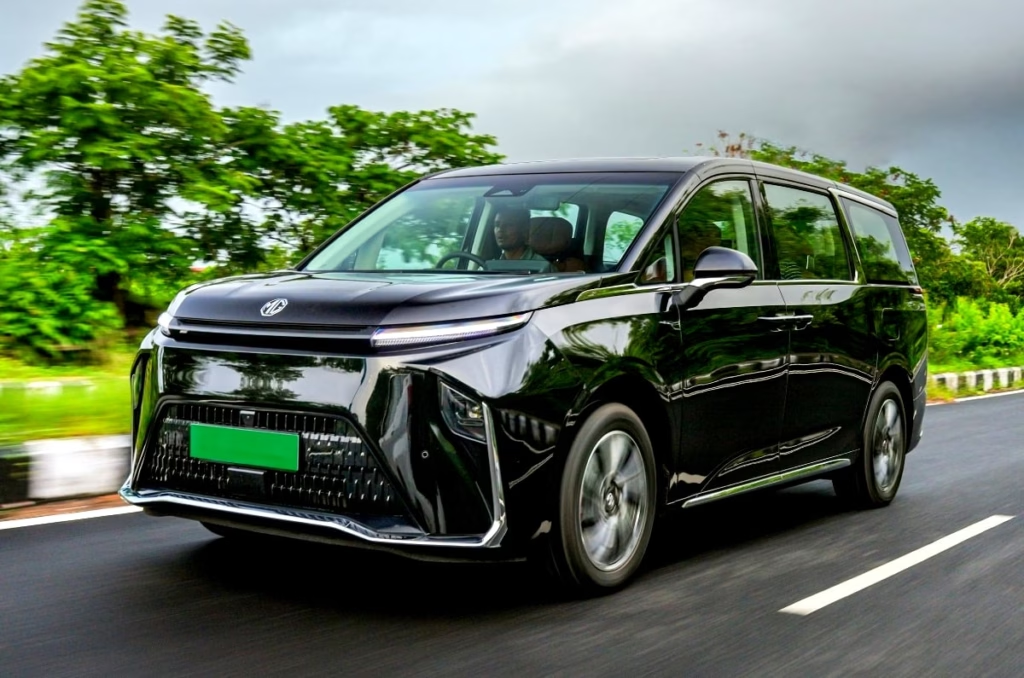
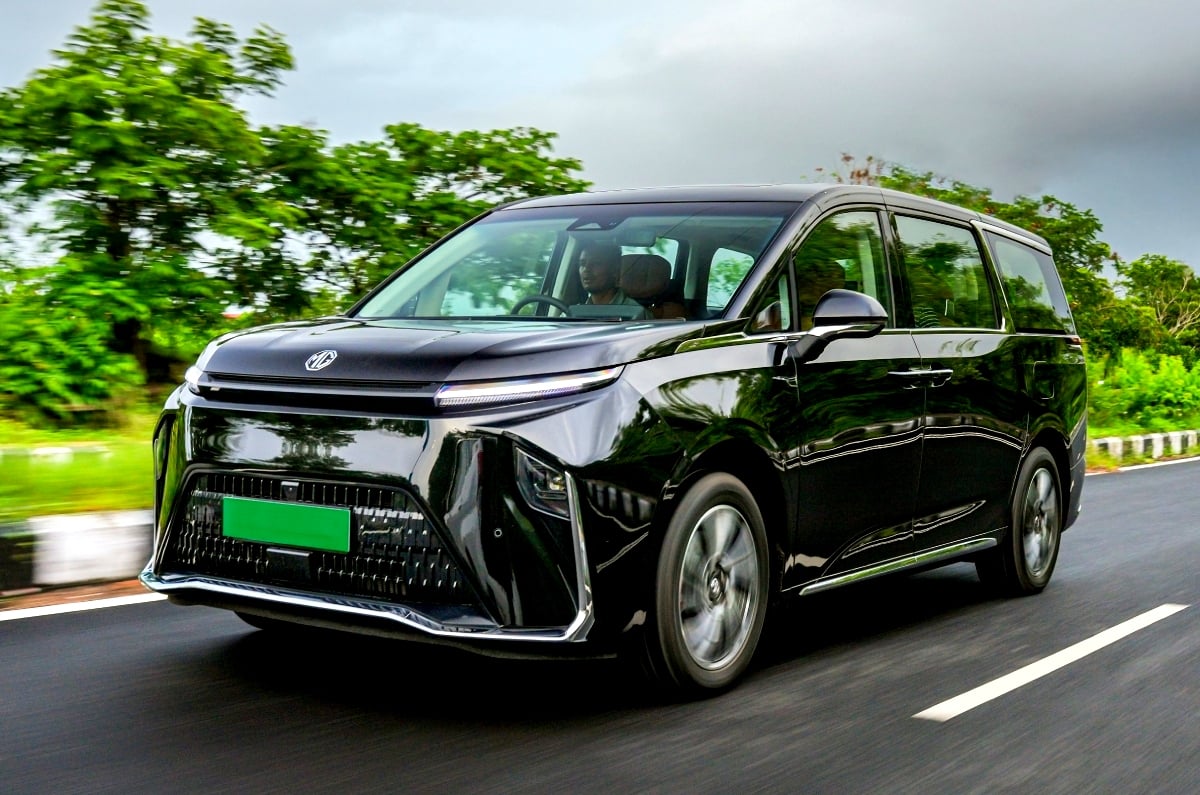
The Lexus ES is available in India in two forms: the ES 350h strong hybrid and the ES 500e EV. The 350h was added to the ES range in July, joining the 500e that launched earlier this year. Beyond the new powertrain options, the latest ES gets a larger footprint, a redesigned cabin and a host of new features. Here’s everything you need to know.

1. How much do the Lexus ES 350h and ES 500e cost in India

The Lexus ES 350h is priced at Rs 66.10 lakh for the Exquisite variant and Rs 71.80 lakh for the Luxury trim, whereas the ES 500e costs Rs 89.99 lakh (all prices are ex-showroom). Both versions get an eight-year/2,00,000km warranty, covering the vehicle and its battery.

2. What powertrain does the Lexus ES 350h get?

The ES 350h uses a 2.5-litre four-cylinder naturally aspirated petrol engine paired with an electric motor and lithium-ion battery. The petrol engine produces 186hp and 235Nm, while the electric motor develops 201hp and 270Nm in isolation. The combined system output is 244hp. Power is sent to the front wheels through an e-CVT gearbox. Lexus claims an ARAI-certified fuel efficiency of 25.22kpl.

3. What battery, motor and range does the Lexus ES 500e offer?

The ES 500e gets a 74.68kWh battery and two electric motors, one on each axle. The front motor produces 227hp and 267Nm, while the rear motor makes 120hp and 170Nm. The combined output is 343hp and 438Nm, with a claimed 0-100kph time of 5.5sec. Lexus claims a range of 580km on a full charge. The ES 500e supports 11kW AC charging, while a 150kW DC fast charger can charge the battery from 10 to 80 percent in 28 minutes. A 2.8kW portable charger is also offered.

4. What are the key features of the Lexus ES?

The new ES gets a dual-tone cabin with a 14-inch touchscreen and a 12.3-inch digital driver’s display. It also gets a Mark Levinson premium audio system, wireless Apple CarPlay and Android Auto, wireless phone charging and three-zone climate control. Other features include powered front seats with heating and ventilation, a head-up display, digital inside rearview mirror, ambient lighting, rear window sunshades and a power-operated boot lid.

One of the ES’s standout features is proximity-sensing controls. Physical controls are integrated into the dashboard and steering wheel and illuminate when they detect a hand approaching, combining touch controls with physical switches.

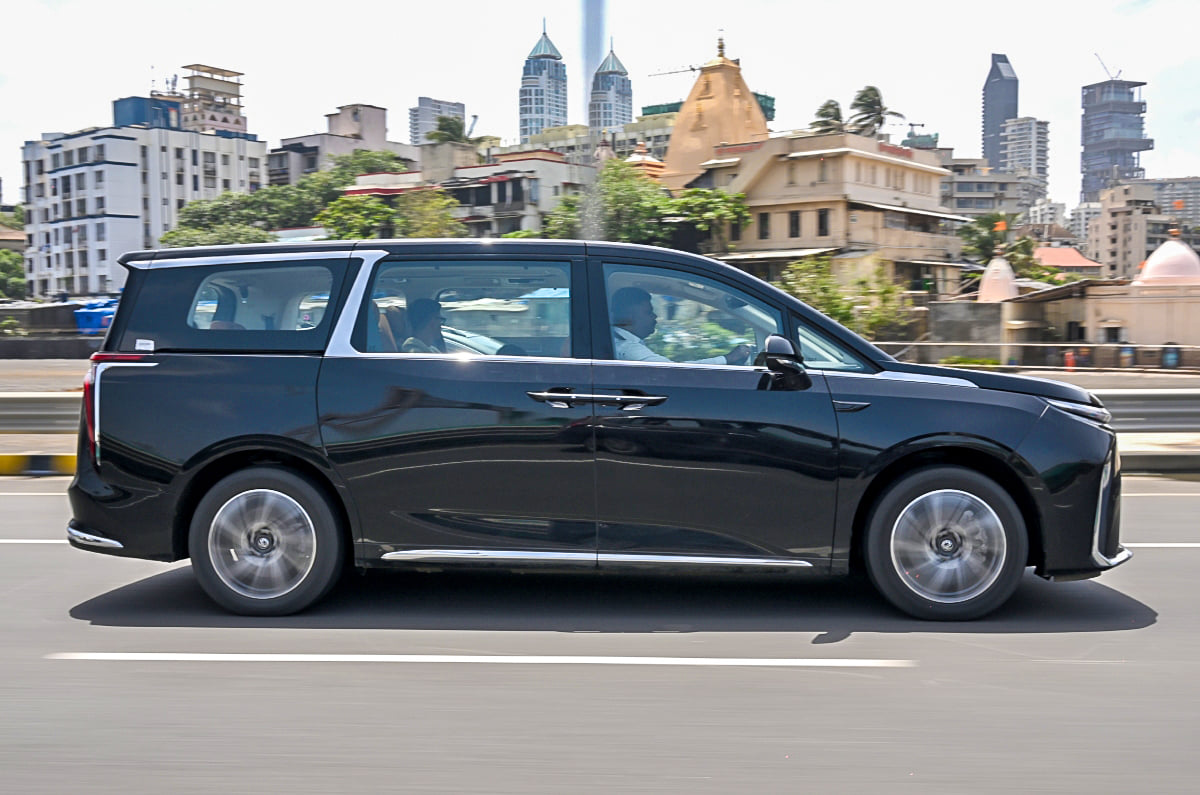
The exterior gets Lexus’s new design language, with a sealed-off front end, Twin L-signature lighting and a connected rear light bar. The new ES also has a coupe-like roofline and a rising beltline.

5. How spacious is the new Lexus ES?

The new ES measures 5,145mm long, 1,920mm wide and 1,575mm tall. It is 170mm longer, 55mm wider and 130mm taller than the previous-generation model, while the wheelbase has increased by 80mm to 2,950mm. Lexus has increased ground clearance for India by 20mm to 158mm. The larger dimensions are complemented by a lower window line and thinner seats and trim pieces, while the longer wheelbase frees up more space inside the cabin.

6. What safety and ADAS features does the Lexus ES get?

The ES 350h gets Lexus Safety System+, which includes a pre-collision system, adaptive cruise control, lane keep assist, lane departure alert, automatic emergency braking, a blind-spot monitor and automatic high beam. It also gets eight airbags, Isofix and top-tether mounts and an emergency brake signal. The Luxury variant additionally gets a drive monitor.

The ES 500e gets 10 airbags, a 360-degree camera setup, blind-spot monitoring, adaptive high-beam assist, radar-guided cruise control, lane-change assist and a driver drowsiness monitor. Electronic stability control and all-round parking sensors are also standard.

7. Where is the Lexus ES made, and which cars does it compete with?

The ES is locally assembled in India. The Lexus ES competes with luxury sedans such as the Mercedes-Benz E-Class, BMW 5 Series and Audi A6. The ES stands out in the segment by offering buyers a choice of hybrid and fully electric powertrains.

2026 Hyundai Ioniq 5 real world range tested, explained

2026 Hyundai Ioniq 5 real world range tested, explained
Hyundai Ioniq 5 real world range

The 2026 update for the Hyundai Ioniq 5 brought with it some cosmetic updates and a larger 84kWh battery. More significantly, its pricing and positioning have changed. While the previous model, with its 72.6kWh battery, was priced at Rs 45 lakh and was considered the value king of its segment, that claim is harder to justify for the new model, which now costs Rs 55.7 lakh.

Hyundai says the larger battery helps the 2026 Ioniq 5 deliver an ARAI-certified range of 690km. We put that claim to the test to determine its real-world efficiency.

  1. Weighs 2,165kg; 150kg more than before
  2. 0-80 percent took 22 minutes on a 150kW DC fast charger
  3. Max charging speed of 350kW

Hyundai Ioniq 5 real-world range and charging tested 

The 2026 Hyundai Ioniq 5 is powered by a rear-mounted PMSM motor producing 229hp and 350Nm. Paired with a larger 84kWh lithium-ion battery pack using Nickel Manganese Cobalt (NMC) cell chemistry, it now boasts a claimed ARAI range of 690km, up from 631km in the previous 72.6kWh version. The Ioniq 5 offers four drive modes — Eco, Normal, Sport and Snow. For our tests, we used Eco mode, with regenerative braking set to Level 2 in the city and Level 1 on the highway.

In city conditions, the Ioniq 5 returned an efficiency of 6.22km/kWh, translating to an estimated range of around 523km. On the highway, efficiency dropped slightly to 5.71km/kWh, resulting in an extrapolated range of 479km. With an overall efficiency of 5.96km/kWh, the Ioniq 5 can realistically deliver about 501km on a full charge.

Hyundai claims the Ioniq 5 can support DC fast-charging speeds of up to 350kW. We charged it using a 150kW DC fast charger and recorded a peak charging rate of 149kW. Impressively, the charging speed remained close to its peak from 30 percent to 70 percent state of charge, before tapering off rapidly. In terms of charging times, the Ioniq 5 took 22 minutes to charge from 20 to 80 percent, and a further 32 minutes to reach 100 percent.

Autocar India’s range testing

Before our real-world range tests, the battery of our test car was fully charged, and we maintained tyre pressures in accordance with the manufacturer’s recommendations. The car was driven on a weekday in Navi Mumbai city and on the adjoining state highway in a fixed loop, and we maintained the set average speeds. At the end of each cycle, we calculated the range based on the percentage charge consumed.

Throughout our tests, the climate control was set to 22deg C in a full-auto setting, and other electricals, such as the audio system, indicators and ventilated front seats, were used when required, just as a regular user would. We take pride in our testing data, which isn’t merely consistent but also gives users an accurate indication of what they can expect in the real world.

Skoda Kushaq 1.0 AT vs 1.5 DCT: Real-world efficiency compared

Skoda Kushaq 1.0 AT vs 1.5 DCT: Real-world efficiency compared
Skoda Kushaq side tracking

The Skoda Kushaq was updated earlier this year with much-needed improvements, and continues to offer 1.0-litre and 1.5-litre direct-injection turbo-petrol engines. In the interest of better fuel efficiency, the carmaker introduced a new automatic gearbox for the former engine option, replacing the older 6-speed unit. We’ve tested the updated Kushaq’s fuel efficiency with this new gearbox and compared it with the real-world fuel efficiency figures with the larger, more powerful 1.5 TSI engine.

Skoda Kushaq 1.0 AT vs 1.5 DCT: Specifications 

1.5 unit develops more power, while the 1.0 has a much lighter kerb weight

Skoda Kushaq 1.0 AT vs 1.5 DCT:


Kushaq 1.0

Kushaq 1.5

Engine

3 cyls, turbo-petrol 

4 cyls, turbo-petrol

Displacement (cc)

999

1,498

Power (hp)

115

150

Torque (Nm)

178

250

Gearbox

8AT

7DCT

Fuel tank capacity (litres)

50

50

Kerb weight (kg)

1,270 – 1,300 

1,321 – 1,322

While the smaller 1.0 TSI develops 115hp and 178Nm, the 1.5 TSI mill outputs 150hp and 250Nm. In automatic guise, the former is paired to an 8-speed torque converter gearbox while the latter is paired to a 7-speed DCT. Additionally, both come with an auto engine start/stop system, but only the 1.5 TSI comes with cylinder deactivation technology, a feature that shuts off operation of two of the four cylinders depending on throttle input and engine load to curb fuel consumption. Both come with identical 50-litre fuel tanks, but the smaller 1.0 TSI helps it have a lighter kerb weight than the 1.5 TSI.

Skoda Kushaq 1.0 AT vs 1.5 DCT: Real-world fuel efficiency 

1.0 AT delivers better efficiency, but the gap isn’t huge 

In our real-world fuel efficiency tests, the Kushaq 1.0 TSI AT averaged better than the 1.5 TSI DCT by 0.48kpl. In the city, the 1.0 TSI was more efficient than the 1.5 TSI by 1.15kpl. This is because of the 1.0’s lighter kerb weight and aggressive start/stop system. In contrast, the 1.5’s twin-cylinder deactivation tech helped it be more efficient on the highway than the 1.0 by 0.19kpl. Overall, the gap in real-world efficiency is slightly higher than their ARAI-claimed figures (0.48kpl vs 0.37kpl).   

Skoda Kushaq 1.0 AT vs 1.5 DCT: Price

Availability from lower trims makes the 1.0 AT much more affordable than the 1.5 DCT 

Skoda Kushaq 1.0 AT vs 1.5 DCT: Price


Kushaq 1.0 TSI

Kushaq 1.5 TSI

Petrol automatic price range (Rs lakh)

12.89 – 17.89

18.79 – 18.99

As the Kushaq’s 1.5 TSI automatic is limited to top-spec variants, it is Rs 5.9 lakh pricier than the 1.0 TSI automatic. In fact, even in top-spec guise, the latter powertrain combo is Rs 1 lakh cheaper than the former.

Autocar India’s fuel-efficiency testing

Before our real-world fuel-efficiency tests, we fill our test cars’ tanks to the brim and maintain tyre pressures based on the manufacturer’s recommendations. These cars are driven in fixed city and highway loops in and around Navi Mumbai, and we maintain certain average speeds. Throughout the tests, there is only one person in each car, operating the air conditioner and other electricals, such as the audio system, indicators and wipers, when required, just like a regular user would. Periodic driver swaps further neutralise variations in driver patterns. At the end of each cycle, we calculate efficiency by filling the tanks to full again.

All prices are ex-showroom, India.

Honda Activa 125 vs TVS Jupiter 125: कीमत, माइलेज और फीचर्स में कौन है बेस्ट?

Honda Activa 125 vs TVS Jupiter 125: भारत के 125cc स्कूटर सेगमेंट में Honda Activa 125 और TVS Jupiter 125 सबसे ज्यादा तुलना किए जाने वाले दो नाम हैं, लेकिन कीमत और फ्यूल एफिशिएंसी के मामले में दोनों का तरीका काफी अलग है। जो खरीदार इन दोनों के बीच फैसला कर रहे हैं, उनके लिए यह बात अहम है क्योंकि Jupiter 125 की शुरुआती कीमत काफी कम है और कागजों पर इसका माइलेज भी बेहतर बताया गया है, जबकि Activa 125 ज्यादा भरोसेमंद स्मार्ट-की सिस्टम पर आधारित है। आइए जानते हैं कि कीमत, माइलेज और फीचर्स के मामले में ये दोनों असल में कैसे एक-दूसरे से अलग हैं।

Honda Activa 125 vs TVS Jupiter 125: कीमत और माइलेज

Honda Activa 125 की कीमत दिल्ली में DLX वेरिएंट के लिए 91,178 रुपये से शुरू होती है और इसके टॉप मॉडल H-Smart की कीमत 95,622 रुपये (एक्स-शोरूम) है। वहीं, TVS Jupiter 125 की शुरुआती कीमत काफी कम है। इसका Drum Alloy वेरिएंट 81,700 रुपये से शुरू होता है, जबकि इसके टॉप SmartXonnect वेरिएंट की कीमत 89,935 रुपये (एक्स-शोरूम) है। ये कीमतें TVS की आधिकारिक प्राइसिंग के मुताबिक हैं।

माइलेज की बात करें तो, Activa 125 के सभी वेरिएंट्स के लिए ARAI-क्लेम्ड माइलेज 47 kmpl है, जबकि Jupiter 125 का क्लेम्ड माइलेज 50 kmpl से 57.27 kmpl के बीच बताया गया है।

दोनों स्कूटर में लगभग एक ही साइज के इंजन का इस्तेमाल किया गया है – Activa में 123.92cc और Jupiter में 124.8cc का इंजन है, और दोनों का टॉर्क आउटपुट भी लगभग एक जैसा (10.5 Nm) है।

Honda Activa 125 vs TVS Jupiter 125: तुलना करने लायक फीचर्स

Activa के टॉप वेरिएंट में H-Smart टेक्नोलॉजी वाली Honda Smart Key मिलती है, जिससे राइडर अपनी जेब से चाबी निकाले बिना ही स्कूटर को अनलॉक कर सकते हैं, सीट खोल सकते हैं और स्टार्ट कर सकते हैं। साथ ही, इसमें TFT डिस्प्ले और ब्लूटूथ नेविगेशन व कॉल अलर्ट के लिए Honda RoadSync भी दिया गया है।

इसके जवाब में Jupiter 125 में सेगमेंट का पहला ‘ऑल-इन-वन लॉक’ दिया गया है, जो एक ही मैकेनिज्म से फ्यूल कैप, सीट, हैंडलबार लॉक और इग्निशन को ऑपरेट करता है। साथ ही, इसमें असल ड्राइविंग में बेहतर माइलेज के लिए TVS IntelliGo ऑटो स्टार्ट-स्टॉप टेक्नोलॉजी भी मिलती है।

दोनों स्कूटर में फ्रंट डिस्क ब्रेक का ऑप्शन, ट्यूबलेस टायर, USB चार्जिंग पोर्ट और टेलीस्कोपिक फ्रंट सस्पेंशन मिलता है, यानी राइड का अनुभव लगभग एक जैसा ही है। मुख्य अंतर मैकेनिकल हार्डवेयर के बजाय सुविधा देने वाले फीचर्स में है।

अब अगर आपकी प्राथमिकता कम कीमत और बेहतर माइलेज है, तो TVS Jupiter 125 आपके लिए ज्यादा बेहतर विकल्प हो सकता है। वहीं, अगर आप Honda की स्मार्ट-की जैसी सुविधाएं और लंबे समय से मौजूद सर्विस नेटवर्क चाहते हैं, तो Activa 125 की ज्यादा कीमत भी आपको सही लग सकती है।

कुल मिलाकर, दोनों स्कूटर के इंजन और मैकेनिकल सेटअप में ज्यादा बड़ा अंतर नहीं है। इसलिए खरीदारी का फैसला इस बात पर ज्यादा निर्भर करता है कि रोजाना इस्तेमाल में आपके लिए कौन से फीचर्स ज्यादा जरूरी हैं।

यह भी पढ़ें: सितंबर से CSD कैंटीन में मिलेंगे Ather इलेक्ट्रिक स्कूटर के 8 वैरिएंट, जानिए कैसे मिलेगी इनपर बंपर छूट

Which variant of the Skoda Kylaq should you buy?

Which variant of the Skoda Kylaq should you buy?
Skoda Kylaq variants and features explained

The Kylaq, Skoda’s most affordable offering in India, was introduced in 2024 and marked the brand’s return to the sub-4m space after years. Currently, the Kylaq is Skoda’s best-selling model in our market and has sold over 50,000 units since its launch as of February 2026. Here’s a breakdown of the powertrain options, comfort and convenience features, safety kit and exterior colours available on each trim of the Skoda SUV.

Skoda Kylaq variant-wise price and powertrain options

The base Classic trim misses out on an automatic transmission option

Skoda Kylaq ex-showroom price as of August 21, 2026 (Rs lakh)

Trim

MT

AT

Classic

7.59

Classic+

8.25

9.25

Signature

9.43

10.43

Signature+

10.77

11.77

Sportline

11.32

12.32

Prestige

11.75

12.75

Prestige+

11.99

12.99

The Skoda Kylaq has an ex-showroom price ranging from Rs 7.59 lakh to Rs 12.99 lakh. Except for the base Classic trim, the remaining trim levels offer both manual and automatic gearboxes. Powering the Kylaq is a 115hp, 178Nm, 1.0-litre direct-injection turbo-petrol engine that also does duty in the Kushaq and the Slavia. Transmission duties are handled by either a -speed manual or a 6-speed automatic gearbox. Notably, in Classic+ guise, the Kylaq is the most accessible car with a torque converter gearbox. 

Skoda claims a top speed of 188kph and that the manual version is capable of a 0-100kph sprint in 10.5 seconds. In our Kylaq real-world performance tests, the automatic version achieved a 0-100kph time of 11.69 seconds. Skoda also claims an ARAI-rated fuel economy of 19.68kpl for the manual and 19.05kpl for the automatic; our Kylaq real-world mileage tests saw the manual average 12.86kpl, while the automatic went 11.03km on a litre of petrol.

Skoda Kylaq variant-wise colour options

Offered in seven colours on the outside, two on the inside 

The compact SUV is offered in seven colours, namely, Candy White, Brilliant Silver, Cherry Red, Carbon Steel, Deep Black, Lava Blue, and Steel Grey. While all trims come in a monotone finish, select paint jobs on the Sportline come with a black roof. Additionally, the Sportline trim exclusively gets the Steel Grey colour option. The interior of the Skoda Kylaq gets a black and grey colour scheme as standard, but the Sportline has an all-black theme. Here’s a table comprising the available exterior colours on the Skoda Kylaq depending on the trim level chosen:

Colour 

Classic

Classic+

Signature

Signature+

Sportline 

Prestige

Prestige+ 

Candy White

Yes

Yes

Yes

Yes

Dual-tone

Yes

Yes

Brilliant Silver

Yes

Yes

Yes

Yes

Dual-tone

Yes

Yes

Cherry Red

Yes

Yes

Yes

Yes

Dual-tone

Yes

Yes

Carbon Steel

Yes

Yes

Yes

Yes

Yes

Yes

Deep Black

Yes

Yes

Yes

Yes

Yes

Yes

Lava Blue

Yes

Yes

Yes

Yes

Yes

Yes

Steel Grey

Dual-tone

Skoda Kylaq standard safety kit 

Gets six airbags, ABS, EBD, traction control and more.

As standard, the Skoda Kylaq comes equipped with six airbags, ABS, EBD, ESC, traction control, brake disc wiping, roll-over protection, central locking, rear parking sensor, and ISOFIX mounts. 

Skoda Kylaq variant-wise features

Skoda Kylaq Classic: Rs 7.59 lakh

Gearbox option – 6MT

Skoda Kylaq Classic trim exterior
Skoda Kylaq Classic trim interior
 

Skoda Kylaq Classic trim

  • LED headlights with LED daytime running lamps (DRLs)
  • LED tail-lights
  • 16-inch steel wheels with covers
  • 15-inch spare wheel
  • Roof rails
  • Roof-mounted spoiler
  • Dual-tone dashboard
  • Manual day/night interior rearview mirror (IRVM)
  • Driver seat height adjust
  • Adjustable headrests for all passengers
  • Auto engine start-stop
  • Tilt and telescopic steering adjust
  • Powered wing mirrors
  • All power windows
  • Auto AC
  • Rear defogger
  • Analogue dials with a digital MID
  • Front centre armrest
  • 12V charging socket (front)
  • Fabric seats
  • Analogue dials with 3.5-inch MID
  • 2 tweeters
  • Front LED cabin lamps

Skoda Kylaq Classic+ – Rs 8.25 lakh-9.25 lakh

Gearbox options – 6MT, 6AT

Features over Classic

  • Single-pane sunroof
  • Cruise control
  • 4 speakers
  • Auto-dimming IRVM
  • Front and rear LED cabin lamps
  • Steering-mounted controls
  • Leatherette-wrapped gear lever (AT only)
  • Rear LED cabin lamps
  • One-touch up/down for driver-side window 

Skoda Kylaq Signature – Rs 9.43 lakh-10.43 lakh

Gearbox options – 6MT, 6AT

Skoda Kylaq Signature trim exterior
Skoda Kylaq Signature trim interior
 

Skoda Kylaq Signature trim

Features over Classic+
  • 16-inch silver alloy wheels
  • Black tailgate strip between the tail-lights
  • Tyre-pressure monitoring system (TPMS)
  • Paddle shifters (AT only)
  • 7-inch touchscreen infotainment system
  • Wired Android Auto and Apple CarPlay 
  • 2x USB Type-C ports (rear)
  • Auto-folding outside rearview mirrors (ORVMs)
  • Rear wiper and washer
  • Chrome garnish on AC vents and door handles
  • Rear AC vents
  • Sliding front centre armrest with storage space
  • Cooled glove box
  • Driver-side window one-touch up/down
  • Rain-sensing wipers (front)

Skoda Kylaq Signature+ – Rs 10.77 lakh-11.77 lakh

Gearbox options – 6MT, 6AT

Skoda Kylaq Signature+ trim exterior
Skoda Kylaq Signature+ trim interior
 

Skoda Kylaq Signature+ trim

Features over Signature
  • Shark-fin antenna
  • Chrome strip on outside door handles
  • Auto-folding ORVMs
  • Hill-hold assist
  • Rear parking camera with static guidelines
  • Auto headlights with follow-me-home function
  • Keyless entry and go
  • 10-inch touchscreen infotainment system
  • Wireless Android Auto and Apple CarPlay
  • 8-inch digital instrument cluster
  • Dash inserts
  • Leather-wrapped steering wheel
  • USB Type-C ports (front) 
  • 60:40 split-folding rear seats
  • Rear centre armrest with cup holders
  • Rear parcel tray
  • In-car connectivity suite

Skoda Kylaq Sportline – Rs 11.32 lakh to Rs 12.32 lakh

Gearbox options – 6MT, 6AT

Features over Signature+

Skoda Kylaq Sportline
Skoda Kylaq Sportline interior
 

Skoda Kylaq Sportline trim


  • Black 17-inch alloy wheels
  • Rear spoiler with finlets 
  • Black ORVMs and branding 
  • Sportline badge on tailgate
  • Leatherette front armrest and door pads
  • White ambient lighting
  • Aluminium pedals 
  • Leatherette seat upholstery with Sportline inscription
  • LED projector headlamps 
  • LED fog lamps with cornering function
  • Wireless phone charger

Skoda Kylaq Prestige – Rs 11.75 lakh-12.75 lakh

Gearbox options – 6MT, 6AT

Skoda Kylaq Prestige trim exterior
Skoda Kylaq Prestige trim interior
 

Skoda Kylaq Prestige trim

Features over Signature+
  • Dual-tone 17-inch alloys
  • LED projector headlights
  • LED rear turn indicator and reverse lamp
  • Front LED fog lamps with static bending function
  • White ambient lighting
  • Leatherette upholstery on seats, front armrest and doors
  • Chrome parking brake tip
  • Ventilated front seats
  • Wireless phone charger
  • Anti-theft alarm

Skoda Kylaq Prestige+ – Rs 11.99 lakh-12.99 lakh

Gearbox options – 6MT, 6AT

Feature over Prestige

  • 6-way powered front seats

Which Skoda Kylaq variant should you consider?

The mid-spec Signature+ trim offers good value for money

Starting at Rs 10.77 lakh, the mid-spec Signature+ trim offers dual digital screens, a single-pane sunroof, a rear parking camera with sensors, auto AC with rear vents, all-LED lighting and 16-inch silver alloy wheels, making it a value-for-money offering. While you do miss out on features such as a wireless phone charger and powered and ventilated front seats, the premium you have to pay for these is not justifiable. Moreover, this trim is available with both manual and automatic gearbox options.

However, if you are on a budget, you can consider the lower Signature trim, which offers a smaller touchscreen with wired Android Auto and Apple CarPlay, rear wiper and washer, rear AC vents and a sunroof. This trim also comes in both manual and automatic variants, and priced at Rs 9.43 lakh and Rs 10.43 lakh, respectively, they still offer a lot of value.

Although the Classic+ trim is also well-equipped for its price, the lack of an infotainment system makes recommending it a bit more challenging. However, the 7-inch OEM infotainment system with wired smartphone connectivity, offered with the higher Signature trim, is available in the online classifieds marketplace under Rs 10,000. If you are open to retrofitting it at your authorised dealership, the Classic+ trim becomes the most value-for-money option on a strict budget. 

Prices are ex-showroom, India.
What Brazil’s 50-year ethanol experiment tells us

What Brazil’s 50-year ethanol experiment tells us
E20 fuel in Brazil

The forced introduction of E20 has set social media ablaze, with outraged car and bike owners complaining bitterly of damage to their vehicles and a drop in fuel efficiency. The anger isn’t irrational. The efficiency drop is real and, going by Autocar India’s own tests, larger than the figures the government itself has acknowledged. 

But while there’s no debate over the mileage penalty, the bigger fear is long-term damage to the vast majority of cars on our roads that are not E20-compliant. It’s a worry fanned by social media and by the way the government has handled the concern. Field trials conducted by the Automotive Research Association of India (ARAI) before the rollout reportedly found no major compatibility issues even in legacy vehicles. 

However, that report has never been made public, which has only deepened suspicion among car and bike owners. Most damaging of all was the Society of Indian Automobile Manufacturers (SIAM) formally flagging alarming levels of contamination in a letter it was later forced to publicly withdraw. Crucially, SIAM’s concern was contaminated fuel carrying worrying levels of chlorine, not the blend itself. That distinction has been lost in the noise, and it sits at the heart of the confusion, even panic, among customers fearing the worst.

So, is E20 the menace it is being made out to be, or is fuel contamination the bigger issue? The fact is, there is no workshop epidemic yet, though sceptics will argue it’s only a matter of time before engines start giving trouble. What social media is amplifying right now is the theoretical damage of a higher blend. That doesn’t make the concerns baseless, since long-term effects take years to show, but the truth is that panic and outrage are currently running well ahead of the evidence. Which makes it worth studying the one country that actually has the evidence, gathered over 50 years: Brazil.

The Brazil experience

If you think India’s leap from E10 to E20 was abrupt, consider what happened there. In November 1975, squeezed by the oil crisis and desperate to protect its foreign currency reserves, the Brazilian government launched Proalcool and shoved its motorists in at the deep end. “The blends with gasoline started at 20 percent. It went very soon up to 30 percent, and it was imposed by the government,” says Peter Gilbert, head of Operational Marketing and Customer Tech Services at Infineum Brazil, a fuel and lubricant additive specialist company whose business, it should be said, depends on ethanol-blended fuels working well. 

The documented history broadly bears him out, with one point worth noting: there was a brief low-blend ramp-up with E10, but that lasted roughly two to three years against the five decades of E20 and above since. Compare that with India, which took nearly two decades from its 2003 blending programme to reach E10. And like India, Brazil never kept an escape hatch. “There was no E0 when E20 was introduced,” says Gilbert, and there is none today: the mandated blend has since climbed through 25, 27 and 30 percent, and since August this year, all pumps in Brazil, including the super-premium ones, dispense E32.

But what is telling is the kind of cars running around on E20 in the late 1970s. Back then, cars were mainly carburetted with no fuel injection, no closed-loop control and no lambda sensors – machinery far cruder than even the oldest E10-era car on Indian roads today. So what broke?

According to Gilbert, remarkably little that could be pinned on E20 itself. “There weren’t any major issues reported,” he says. “There were issues related to the materials of the fuel system, the gaskets and the rubbers used at that time, but that has changed.”

His colleague Leandro Benvenutti, Infineum’s product manager for Latin America, says the trouble in 1970s and 1980s Brazil came almost entirely from dedicated alcohol cars running pure hydrous ethanol (E100), not from petrol cars on E20. “Everything we can remember from that time is related to these alcohol vehicles, not to the gasoline vehicles using E20,” he says. Carburettor corrosion, clogged jets, perished hoses and O-rings: all of it, in their experience, traced back to E100. “If there were problems in the other [non-flex fuel] vehicles, they were really not important at all.”

A caveat both experts volunteer: 1970s Brazil is not 2020s India, and the comparison is not like-for-like. “It’s difficult to correlate to vehicles today,” Gilbert admits. What the Brazilian record offers is not proof that nothing will go wrong here, but a large, long-running natural experiment in which the E20-specific damage everyone feared did not show up.

So what about India’s E10 cars?

Asked what he’d tell a worried Indian owner running an E10-era car on E20, Benvenutti replies, “There is no reason for panic. We don’t expect any immediate impact.” Note the word immediate. The honest answer regarding the long term is unknown, and to their credit, neither of Infineum’s experts pretends otherwise. Over years, rubber components in cars whose materials weren’t specified for E20 may embrittle sooner, and Benvenutti concedes older cars and motorcycles “may see issues with time”. But complicating the issue is attribution – what is due to ethanol and what is not. Rubber parts perish with pure petrol, too. 

Benvenutti recalls his father’s flex-fuel car whose fuel hose dried out and leaked after years of use. “Was that really caused by the ethanol, or was that something going to happen anyway after five or ten years?” If there is a cost to owners, in other words, it is most likely a shortened life for cheap parts such as hoses, gaskets and O-rings rather than failures of expensive ones. “The risk for the metal components, the hard components like valves, injectors and pumps, is much lower if you maintain this product within spec,” explains Gilbert. That last clause matters, and we’ll revisit it.

On material margins, Benvenutti is careful not to overclaim. He believes manufacturers build in buffers. “If I am developing an engine, I would prefer to keep some buffer,” he remarks but adds that he is not a materials specialist and that the buffer may mean a component lasting eight years instead of 10. Whether every manufacturer selling in India engineered that headroom is a question only the manufacturers can answer.

Calibration is key

The more concrete near-term issue isn’t corrosion. It’s calibration. E20 carries less energy per litre, so the engine management system must inject more fuel to keep the mixture correct. Most closed-loop systems that have been around since the move to BS-II fuel-injection in 2000 should easily adapt, but if an older car’s injectors or fuel-trim maps run out of adjustment range, the mixture runs lean. The tell-tale? “Probably the most impactful result will be a light on your cluster. You will see the malfunction indication light on,” says Benvenutti. If your check engine light comes on after the switch to E20, that’s your car telling you it can’t fully compensate. Whether yours will is a manufacturer-by-manufacturer, even model-by-model chance.

Then there is Brazil’s import experience, which is genuinely striking and even reassuring. European and Japanese cars homologated for E10 markets are sold in Brazil and run on E30, now E32, every day. “I haven’t seen any report on issues with those engines,” says Gilbert. And there is no exemption at the top of the market. With no E0 sold anywhere in the country, every Ferrari, Lamborghini and Porsche in Brazil fills up on E32; even the super-premium pumps dispense it. Ask whether a supercar owner can escape the blend, and the answer is emphatic. “No way,” says Benvenutti. 

Low volumes are no excuse to offer a special blend, unlike in India, where supercars have the safety net of a high-priced E0 premium fuel. Benvenutti points out that even a manufacturer bringing in a handful of sports cars must ensure the car is fit for the market’s fuel. “I would not imagine any OEM bringing one unit and selling it if that’s not prepared for that market.” The one genuine weak spot he flags concerns independent, grey-market imports, which arrive exactly as built for the European or Japanese market with no local adaptation. Much of ethanol’s impact is based on anecdotal data rather than any controlled study, but it is decades of anecdotes across millions of cars, from hatchbacks to hypercars.

How much evidence of ethanol impact is there?

Enough of it to take seriously. Start with a fact that rarely features in the Indian debate: Brazil is not a country of new cars. Punishing taxes on new vehicles and tight credit mean Brazilians hold on to their cars for a long time, and the tax system actively rewards them for doing so. Most states have long exempted the oldest cars from the annual IPVA vehicle tax, and a constitutional amendment now makes that exemption national for anything 20 years or older. The result, as per the Brazilian auto components association Sindipeças, is a fleet averaging over 11 years old, with 7.3 million vehicles past 16 years and some 220,000 past 25. Every one of them fills up on E27-to-E32 petrol because nothing else is sold. No doubt, much of this ageing fleet is flex-fuel, engineered from birth to drink anything up to E100, so their survival may seem overplayed, but only up to a point. 

Flex-fuel technology arrived in Brazil only in 2003 with the Volkswagen Golf, which means the country’s first two and a half decades on E20-and-higher blends were served entirely by ordinary petrol cars, and the earliest of those were designed for no ethanol whatsoever; the blend was simply imposed on them, which is exactly what’s happening in India today. The cars that predate the flex era and the imported non-flex cars still running on E32 haven’t seen a trend of ethanol casualties. There is no scrapyard full of ethanol victims; the old cars are still on the road.

Then there’s the formal testing. Before Brazil raised its mandate from E27 to E30 in August 2025, a working group under the country’s Ministry of Mines and Energy ran durability tests on vehicles representative of the national fleet. ANFAVEA, Brazil’s association of vehicle manufacturers (the counterpart to our SIAM), reported that the tests showed no adverse effects on engine durability or performance, with one telling condition attached: provided fuel quality standards are met. Independently, a year-long University of Nebraska-Lincoln study ran E30 in ordinary non-flex-fuel state government vehicles in the US and found no adverse effects either. None of this is a guarantee for every ageing car in India, but it is consistent, multi-source evidence that corroborates Infineum’s findings.

The dangerous C word 

So is the all-clear justified? Only conditionally, and the condition is the same one ANFAVEA attached: clean fuel made and blended to specification. And this is where India’s real problem appears to lie. If genuine damage is occurring in Indian fuel systems, the evidence points not to the ethanol blend but to what’s riding along with it: chloride contamination picked up during the production process and from storage tanks. SIAM’s now-withdrawn letter reported chloride levels of up to 500 ppm in samples from vehicle tanks and 350 ppm at retail outlets, figures the petroleum ministry has vehemently contested. Ministry officials say their own testing found high chlorine levels at just two pumps and that plastic sample containers had corrupted some tests and thrown up false readings. Yet, even a fraction of SIAM’s figures would dwarf the 3 ppm the ministry itself treats as the acceptable ceiling. 

Also, 3 ppm is only a guideline. India has yet to mandate BIS limits for chloride in fuel ethanol – something Brazil has enforced by law at 1 ppm for years. Chlorides corrode fuel pumps, injectors and valves regardless of whether a car was designed for E10 or E20, which is precisely why blaming the blend misdiagnoses the disease. The Brazilian experience, in short, largely acquits ethanol. It says nothing to acquit the fuel quality actually coming out of Indian pumps, and fixing that is a question of standards and enforcement, not of retreating to E10. 

The E20 debate, now thoroughly political, will no doubt rage on: the government and its agencies on one side, and on the other, opposition parties and a swarm of influencers and social media experts riding the outrage for popularity and views, but few of them have bothered to put an independent expert on record. The good thing is that science and first-hand experience – Brazil’s, in this case – take no sides. And that’s the side we are on.

6 updates Mahindra BE 6 Sporteq gets over its predecessor

6 updates Mahindra BE 6 Sporteq gets over its predecessor
2026 Mahindra BE 6 Sporteq front quarter static

Mahindra launched the 2026 BE 6 recently, adding the ‘Sporteq’ moniker and pricing it from Rs 19.45 lakh to Rs 26.95 lakh (ex-showroom). Along with a new name, Mahindra has also introduced some updates to the midsize electric SUV to keep it modern in the segment. Here’s a detailed list of these updates:

New 70kWh battery pack

New battery pack offers 651km range and is mated to a 241hp rear motor

The 2026 Mahindra BE 6 Sporteq gets a new 70kWh battery pack in addition to the previously available 59kWh and 79kWh batteries. This new 70kWh battery offers an ARAI-claimed range of 651km and a rear-axle-mounted (RWD) electric motor that produces 241hp and 360Nm. It supports a 7.2kW AC, a 11.2kW AC and a 160kW DC charger. The DC fast charger recharges the battery pack from 20-80 percent in a claimed 20 minutes.

Mahindra is offering the 70kWh battery with the Three and Three+ trims, priced at Rs 22.95 lakh and Rs 23.95 lakh, respectively (ex-showroom). 

Battery-as-a-Service (BaaS) scheme

Battery rental scheme makes the 59kWh battery variants Rs 8 lakh more affordable

Along with a new battery, Mahindra is also offering the BE 6 with a battery-as-a-service (BaaS) scheme, which is also a first for the brand. However, the BaaS scheme is offered only with the 59kWh battery pack available in the One and Two trims. The battery rental scheme essentially lowers the BE 6’s initial price by Rs 8 lakh, but requires a monthly subscription fee for the battery. Here are the details:

Mahindra BE 6 battery-as-a-service (BaaS) price vs standard price


Standard price

BaaS price*

Difference^

One

Rs 19.45 lakh

Rs 11.45 lakh + Rs 3.75/km

– Rs 8 lakh

Two

Rs 20.95 lakh

Rs 12.95 lakh + Rs 3.75/km

– Rs 8 lakh

Notes: BaaS scheme requires a minimum monthly payment of Rs 6,750, calculated assuming usage of 60km per day and an 8-year battery loan, as per Mahindra’s terms and conditions. The price difference calculated above is on the initial price and does not include the BaaS scheme’s battery subscription charges.

Triple-screen setup on dashboard

Offers an additional third screen for the front passenger now

The 2026 update also brought a major redesign to the BE 6’s dashboard, now offered with an additional 12.30-inch screen for the front passenger, in addition to the similarly sized digital driver’s display and touchscreen infotainment system. The new front passenger display also removed the halo-like design element connecting the dashboard to the centre console, allowing the addition of two cupholders on the centre console, something that was sorely missing on the older model.

Mahindra is offering a triple-screen setup on all trims of the BE 6 Sporteq except the base-spec One and the sportier Formula E editions. 

Redesigned Formula E edition

The 2026 Formula E Freedom looks nothing like the older Formula E edition

2026 Mahindra BE 6 Formula E Freedom Edition
2026 Mahindra BE 6 Formula E Edition
 

With the 2026 update, Mahindra has also rejigged the exterior design of the Formula E edition. Unlike the previous model, which had a different fascia from the standard model with circular-shaped LED headlights and a revised bumper, the 2026 Formula E Freedom edition gets the same design as the standard BE 6 Sporteq, with some Formula E badges and FIA decals. Moreover, the Formula E edition is only offered with the older model’s dual-screen dashboard and a halo design element for a sporty appeal.

Mahindra is offering the 2026 Formula E edition at the Three and Four trim levels, priced at Rs 24.45 lakh and Rs 26.95 lakh, respectively (ex-showroom).

Fresh exterior and interior colours

Both the BE 6 Sporteq and Formula E edition get new colour themes

Mahindra BE 6 Sporteq Ruby Velvet exterior colour.

The 2026 Mahindra BE 6 Sporteq is being offered with fresh exterior and interior colour options. It is available in a new ‘Ruby Red’ exterior theme and new Racing Tan and Black interior hues for the Two, Three, Three+ and Four trims. The base-spec One is offered with the same Sage Green and Grey theme as before. A Sporteq Launch Edition, based on the fully loaded Four trim, is also available, which offers a new Graphite Storm exterior paint and Racing Tan interior theme. 

Mahindra BE 6 Formula E Freedom edition Rosso Impulso exterior colour.

While the 2026 BE 6 Formula E edition is offered with a new Rosso Impulso exterior hue, the all-black interior with orange elements for contrast is the same as the outgoing model.

New ‘TEQ’ suite

The suite enables Gemini-based interactions, unlocks additional drive modes and Revive functionalities

Another addition to the BE 6 Sporteq is the new ‘TEQ’ suite, which Mahindra says is designed to make the vehicle more intuitive, engaging, secure and responsive to individual customer needs. At its core is a Gemini-based AI conversation assistant that allows natural voice interactions for functions such as vehicle controls, navigation and music. The suite also introduces a Karaoke mode, along with support for Dolby Vision and Dolby Audio.

The TEQ suite also adds several performance and convenience features, including Custom Drive Mode, Drift Mode and an acceleration boost mode for the Formula E Freedom Edition, which enables a claimed 0-100 kph time of 6.44 seconds. It also includes Revive and Revive SOS, which can provide additional range even after the battery has run out. Another new feature is ‘TEQ_xting’, which lets owners display personalised messages on the vehicle’s tailgate.

The Mahindra BE 6 Sporteq is priced from Rs 19.45 lakh to Rs 26.95 lakh (ex-showroom), and it rivals the Hyundai Creta Electric, Tata Sierra EV, Tata Curvv EV, MG ZS EV, Maruti Suzuki e Vitara and Toyota Ebella.

Prices are ex-showroom, India, and do not include a wall charger or its installation cost.

BGauss OoWah MAX Plus launched at Rs 1.23 lakh

BGauss OoWah MAX Plus launched at Rs 1.23 lakh
OoWah MAX Plus

EV manufacturer BGauss has launched the new OoWah MAX Plus scooter as part of their EV Pop which will sit above the existing OoWah EX. The brand says the scooter’s design and features have been centered around making urban commutes easier and that the model is aimed at first-time and young EV buyers.

  1. Same motor as the OoWah EX, but a 0.7kWh bigger battery
  2. Comes bundled with a 750W charger

What’s new on the OoWah MAX Plus

Essentially, the removable battery and colourways

The MAX Plus continues with the brand’s PMSM hub motor with 2.4kWh peak power (1.5kWh continuous), but a larger 3kWH LFP battery. The battery is rated by ARAI for 145km range, and it’s removable for charging at home. Despite the increase in size, top speed remains capped at a claimed 60kph. The battery is also CAN-enabled (Controller Area Network) which the brand says will allow it to continuously communicate with the vehicle. Both the motor and the battery are rated for IP67. It’s worth mentioning that BGauss previously had a MAX scooter that had the same but non-removable 3kWh battery. Besides that, the MAX Plus gains a reverse assist and a distance to empty indicator into the instrument cluster.

Going back to the scooter, the brand is bundling a 750W charger at no extra cost. With it, the scooter is rated to charge from 0-80 percent in 3 hours and 30 minutes, with 0-100 percent taking 4 hours and 55 minutes. Note that according to the spec sheet on BGauss website, with a 1350W charger the scooter can charge to 100 percent in 2 hours and 50 minutes, although details on the charger’s cost or availability are unclear. Dimensions for the scooter remain the same, with an accessible 765mm seat height and 160mm ground clearance, but the kerb weight has gone up to 104kg (compared to 97kg for the EX). The under seat storage is 21 litres.

Elsewhere too things remain the same with all LED lighting, drum brakes, CBS, and convenience features like limp home mode, USB charging, and the same warranties (3 years/36,000km for the vehicle and charger; 3 years/50,000km for the battery). The warranties are extendable up to 5 years/75,000km.

BGauss has priced the OoWah MAX Plus at Rs 1.23 lakh (ex-showroom) and the scooter is available in Emerald Shadow, Jamun Punch, Tangy Toma, and Zesty Red colours. The OoWah EX also continues to be available at Rs 94,990 (ex-showroom) and now has the same four colour options.

Stephen Raj Antony

BYD Sealion 7 vs Kia EV6: Performance, Range, Regen Compared

BYD Sealion 7 vs Kia EV6 compared

The BYD Sealion 7 and Kia EV6 are premium EV offerings, roughly priced between Rs 50-70 lakh. They’ve both got modern designs, premium cabins and punchy performance. They are also fully imported as completely built units (CBU) and rival cars like the Hyundai Ioniq 5 and BMW iX1. In this story, we compare the performance, range and regen of the respective top-spec variants of both cars.

BYD Sealion 7 vs Kia EV6: Specifications, price

The Sealion 7 is bigger, has more performance and is less expensive

BYD Sealion 7 Performance AWD vs Kia EV6 GT Line AWD: Specifications, price


Sealion 7 Performance AWD

EV6 GT Line AWD

Battery Size (kWh)

82.56 

84

Power (hp)

530

325

Torque (Nm)

690

605

Claimed Range (km)

542 (NEDC)

663 (ARAI)

Kerb weight (kg)

2,340

NA

Power-to-weight*

226.49

NA

Torque-to-weight^

294.87

NA

Price (in Rs lakh)

Rs 55.9 lakh

Rs 65.97 lakh

*Power-to-weight is hp per tonne

^Torque-to-weight is Nm per tonne

The BYD Sealion 7 is bigger in every dimension – length, width, height and even wheelbase, but the Kia gets a bigger 84kWh NMC battery (versus an 82.56kWh LFP battery in the Sealion 7). In terms of performance, the Sealion 7 makes 205hp and 85Nm more than the EV6. And while the EV6 is available in an AWD setup only, the Sealion 7 is available in a RWD layout with less performance. The big difference is how they are priced, and the price difference between the top-spec trims of these cars is roughly Rs 10 lakh.

BYD Sealion 7 vs Kia EV6: Performance tests

With 205hp and 85Nm more, the Sealion 7 is quicker in all our tests

BYD Sealion 7 Performance AWD vs Kia EV6 GT Line AWD: Performance tests


BYD Sealion 7

Kia EV6

Winner

0-100kph (sec) 

4.43

5.16

Sealion 7

20-80kph (sec)

2.48

2.77

Sealion 7

40-100kph (sec) 

2.91

3.49

Sealion 7

With the difference in performance between these two, it was a little easier to predict the outcome. In all the performance tests, the Sealion 7 was faster. It completed the 0-100kph run in 4.43s and is 0.73s faster than the EV6. Again, 20-80kph and 40-100kph runs are 0.29s and 0.58s faster than the EV6, respectively.

BYD Sealion 7 vs Kia EV6: Regen and range tests

Kia EV6 has stronger regen modes and offers better range overall

BYD Sealion 7 Performance AWD vs Kia EV6 GT Line AWD: Regen and range

Regen mode

BYD Sealion 7

Kia EV6

Winner

One-pedal

NA

NA

High

236.44m / 18.13s

105.49m / 7.6s

Kia EV6

Medium

146.75m / 10.95s

Kia EV6

Low

421.22m / 32.16s 

365.88m / 26.85s

Kia EV6

The BYD gets two regen modes – Standard and High, whereas the EV6 gets four, including the option of a single pedal driving mode. In all the modes, the EV6 showed stronger regenerative braking than the Sealion 7. In their respective highest regen mode, the Sealion 7 takes more than twice as long to slow down from 80-20kph when compared to the Kia EV6.

In our real-world range tests, we found the Kia to be more efficient than the BYD. In the city, the EV6 delivered an efficiency of 5.18km/kWh versus 4.90km/kWh for the Sealion 7. Thanks to the stronger regen modes in the EV6, you can expect a real-world range of 435km in the city, whereas with the Sealion 7 you can expect 405km – about 30km less than the EV6.

On the highway, the difference is even wider – the EV6 becomes more efficient (6.67km/kWh), and the Sealion 7 becomes even less efficient (4.17km/kWh) than in the city. One can expect a real-world range of 344km with the Sealion 7, whereas the EV6 will go 216km further!

BYD Sealion 7 vs Kia EV6: Verdict

The BYD Sealion 7 is priced from Rs 49.9 lakh for the RWD variant to Rs 55.9 lakh for the top-spec AWD variant, and is the more affordable option here, while also being the more powerful EV. The Kia EV6 GT-Line AWD is the more expensive pick and costs Rs 65.97 lakh. If budget isn’t an issue, the Kia EV6 will be a better all-rounder. It has better range, faster charging speeds and multiple regenerative braking modes, including single-pedal driving that makes city driving that much easier.

Autocar India’s testing standards

Before we conduct our performance tests, we check and maintain tyre pressures per the manufacturer’s recommendations and ensure the car is charged to 100 percent. The car is then tested in a controlled environment with two people on board, and the data is collected via highly accurate GPS-based timing equipment.

For our real-world range test, we begin with each car’s battery fully charged and tyre pressures set as per the manufacturer’s recommendations. We drive the cars on a fixed loop covering both city and highway stretches while maintaining set average speeds. We then calculate the range based on the percentage of charge consumed. The AC is set to 22deg C in auto mode, and features such as the music system, lights and ventilated seats are used as needed, just as a regular user would. This approach ensures consistency and gives a clear idea of what to expect in daily use.

To test regenerative braking, we pre-select a level of regen braking, completely lift off the throttle pedal and allow the car to decelerate till under 20kph. This procedure is then repeated for as many levels of regenerative braking the EV packs in. The deceleration rate, distance covered and time taken to go from 80kph to 20kph are recorded on a GPS-based Vbox system.

E20 पेट्रोल पर नया विवाद, जयराम रमेश ने माइलेज और इंजन खराबी को लेकर सरकार से पूछे सवाल

jairam ramesh questions E-20 petrol

कांग्रेस नेता जयराम रमेश ने E20 पेट्रोल को लेकर मोदी सरकार पर सवाल उठाए हैं। उन्होंने दावा किया कि E20 लागू होने के बाद माइलेज में कमी, इंजन की समस्या और पुराने वाहनों में खराबी की शिकायतें बढ़ी हैं। ALSO READ: बांकीपुर में प्रंशात किशोर ने कर दिया 'खेला', भाजपा अध्यक्ष नितिन नबीन को झटका

जयराम रमेश ने एक्स पर अपनी पोस्ट में कहा कि 29 जुलाई 2026 को संसद में E20 पेट्रोल के देशभर में रोलआउट पर नितिन गडकरी के जवाब ने जितने सवालों के जवाब दिए, उससे कहीं अधिक नए सवाल खड़े कर दिए। उन्होंने दावा किया कि E20 को वर्षों तक वैज्ञानिक परीक्षणों के बाद लागू किया गया है और इससे वाहनों को व्यापक स्तर पर नुकसान पहुंचने का कोई प्रमाण नहीं है।


कांग्रेस नेता ने दावा किया कि लेकिन पिछले कई महीनों से देशभर के उपभोक्ता और मैकेनिक लगातार निम्नलिखित समस्याओं की शिकायत कर रहे हैं-


  • माइलेज में कमी
  • इंजन के प्रदर्शन में गिरावट
  • E20 ईंधन का वाहनों पर दीर्घकालिक प्रभाव को लेकर चिंता
  • 2023 से पहले के वाहनों में इंजन की कम्पैटिबिलिटी, कोल्ड-स्टार्ट की समस्या और इंजन के तेजी से घिसने की शिकायतें
  • पुराने वाहनों में फ्यूल इंजेक्टर जाम होना, फ्यूल लाइन में जंग लगना और रबर के पुर्जों में दरारें आने की बढ़ती घटनाएं
  • आम उपभोक्ताओं के पास E20 पेट्रोल के अलावा व्यावहारिक रूप से कोई दूसरा विकल्प नहीं छोड़ा गया।


उन्होंने कहा कि जून 2026 में 2023 से पहले के पेट्रोल वाहनों के 44,000 से अधिक मालिकों पर किए गए एक स्वतंत्र सर्वेक्षण में पाया गया कि E20 लागू होने के बाद बड़ी संख्या में लोगों ने अपने वाहनों पर प्रतिकूल प्रभाव महसूस किया। ALSO READ: Lovlina Borgohain ने ग्लास्गो के रेस्टोरेंट में पकड़ी बड़ी गलती, भारत के नक्शे पर जताई आपत्ति


सितंबर 2025 में पेट्रोलियम मंत्री हरदीप पुरी ने बायोफ्यूल के कारण वाहन या इंजन को नुकसान पहुंचने संबंधी शिकायतों को “BS” (bullshit) करार दिया था। इसके बावजूद मोदी सरकार लगातार इन दावों को खारिज करती रही है, जबकि जुलाई 2026 की ऑटोमोटिव रिसर्च एसोसिएशन ऑफ इंडिया (ARAI) की रिपोर्ट और नीति आयोग के 2021 एथेनॉल पॉलिसी रोडमैप-जिसका संसद में स्वयं नितिन गडकरी ने हवाला दिया था-स्पष्ट रूप से स्वीकार करते हैं कि-


  • E20, E10 ईंधन के लिए डिज़ाइन किए गए वाहनों में रबर के पुर्जों-जैसे होज़, सील, गैस्केट और O-rings-को अधिक तेजी से खराब करता है।
  • ड्यूरेबिलिटी परीक्षणों के दौरान यात्री वाहनों में इंजन की खराबी और फेलियर दर्ज किए गए।
  • E20 फ्यूल टैंक और अन्य आंतरिक धातु के पुर्जों में जंग लगने का जोखिम बढ़ाता है।
  • E20 के कारण पुराने चार पहिया वाहनों की फ्यूल एफिशिएंसी 6-7%, पुराने दो पहिया वाहनों की 3-4% और E20-अनुकूल चार पहिया वाहनों की भी 1-2% तक कम हो जाती है।


उन्होंने कहा कि लोगों में गुस्सा बढ़ रहा है। लोग जवाबदेही और पारदर्शिता की मांग कर रहे हैं। दूसरी ओर, मोदी सरकार के मंत्री किसी को भी यह भरोसा दिलाने में नाकाम रहे हैं कि E20 से कोई नुकसान नहीं होता- क्योंकि इसके बारे में कोई ठोस डेटा या रिपोर्ट मौजूद नहीं है।