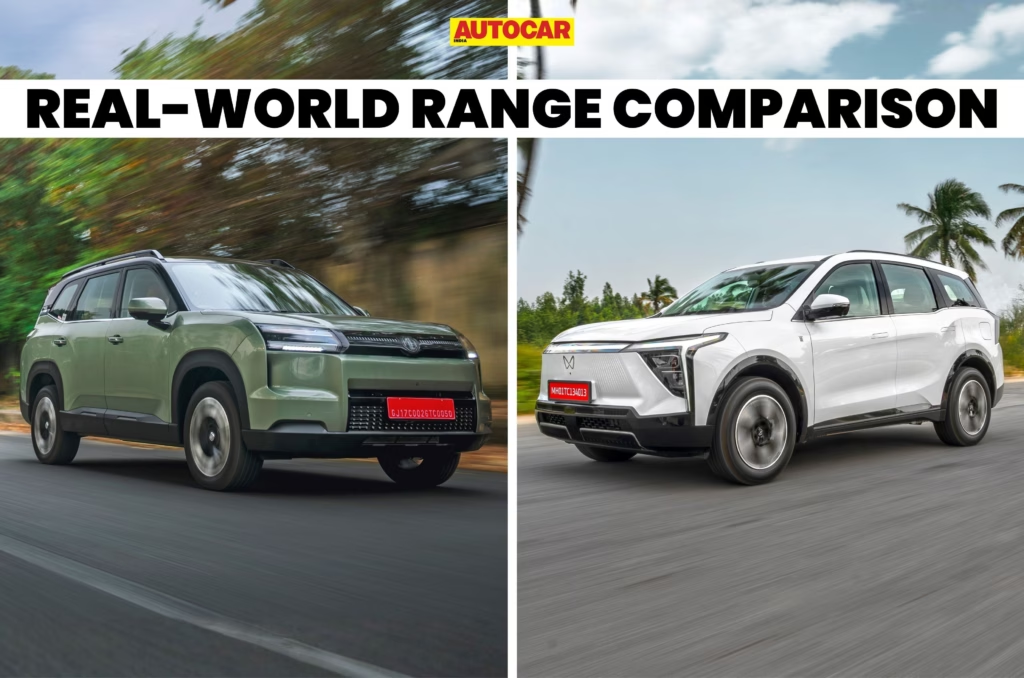
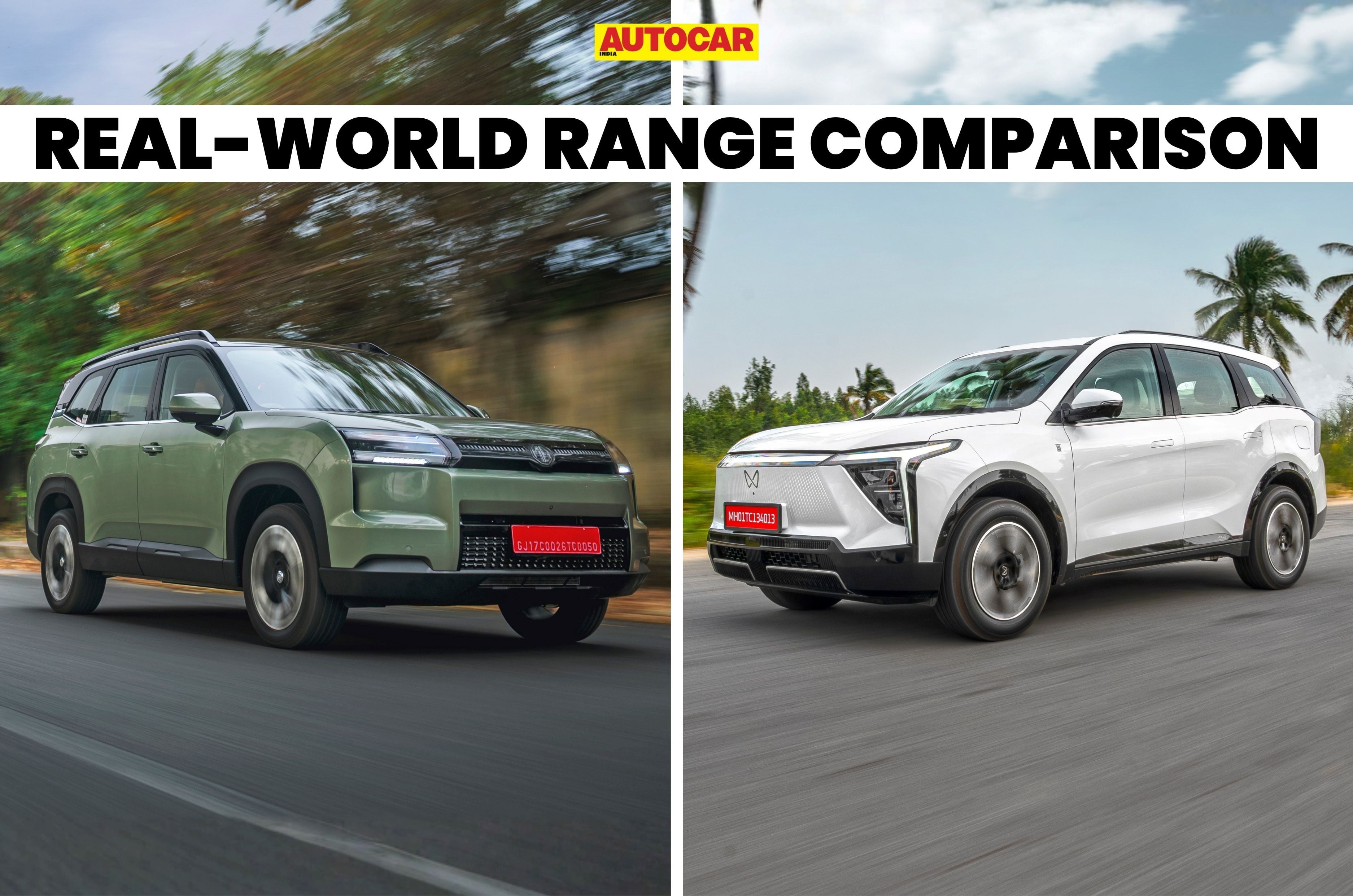
MG recently launched the Hector Tomahawk EV with a 69.2kWh battery, promising a claimed range of 517km. The 3-row electric SUV is positioned squarely against the Mahindra XEV 9S, which is one of the most popular EVs in its price range, and has a larger battery capacity and a higher claimed range of 679km. But in real-world conditions, does the Mahindra XEV 9S offer higher range than the MG Hector Tomahawk EV? We find out.
MG Hector Tomahawk EV vs Mahindra XEV 9S: Specifications, price
Tomahawk EV has a smaller battery, but weighs less than XEV 9S and is more affordable
MG Hector Tomahawk EV vs Mahindra XEV 9S: Specifications, price
MG Hector Tomahawk EV
Mahindra XEV 9S
Battery pack (kWh)
69.2
79
No. of motor(s)
1
1
Drivetrain
FWD
RWD
Power (hp)
204
286
Torque (Nm)
310
380
Kerb weight (kg)
1,908
Over 2,201*
Price (in Rs lakh)
19.50-23.50
22.65-30.15
*The XEV 9e has a kerb weight of 2201kg, so the XEV 9S, being a 3-row offering, will be heavier.
The MG Hector Tomahawk EV gets a smaller 69.2kWh battery compared to the XEV 9S’ 79kWh unit. It also gets a less powerful front motor that produces 82hp and 70Nm less than the XEV 9S’s rear-mounted motor. However, the Hector Tomahawk EV is the lighter electric SUV in this comparison, weighing over 250kg less than the Mahindra XEV 9S.
The MG Hector Tomahawk EV also asks a lower price, its base-spec variant costing Rs 3.15 lakh less and its top-spec variant costing Rs 6.65 lakh less than the XEV 9S’s 79kWh battery trims.
MG Hector Tomahawk EV vs Mahindra XEV 9S: Real-world range comparison
Although offering very different city and highway efficiencies, both eSUVs offer similar average range
MG Hector Tomahawk EV vs Mahindra XEV 9S: Real-world range comparison
MG Hector Tomahawk EV
Mahindra XEV 9S
Claimed range (ARAI)
517km
679km
Tested city range
495km
478km
Tested highway range
397km
477km
Tested average range
446km
477.5km
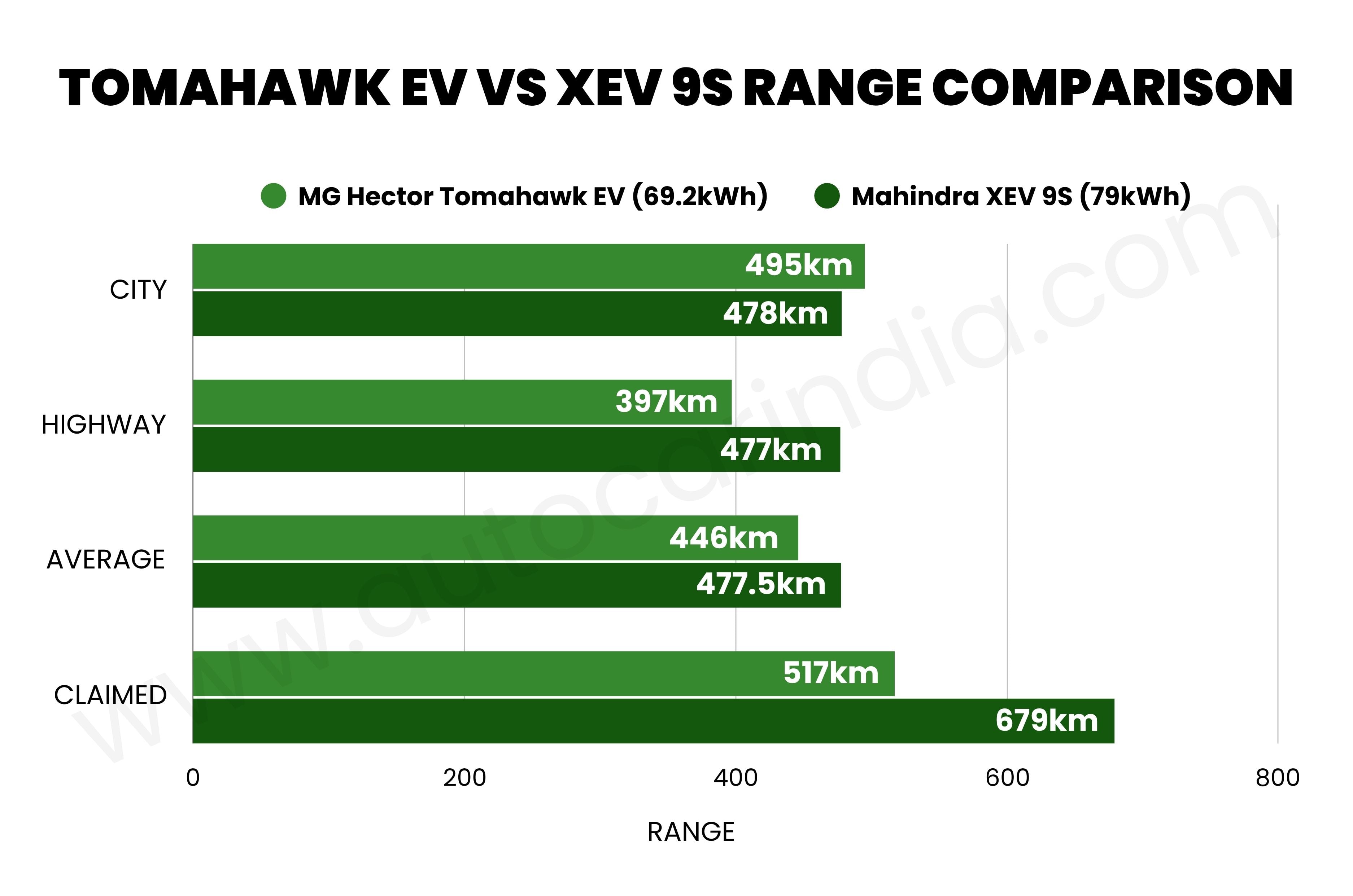
While the MG Hector Tomahawk EV has a claimed ARAI range of 517km, the Mahindra XEV 9S promises a higher range of 679km. However, in our real-world tests, the XEV 9S delivered a higher average range, despite the Hector Tomahawk EV performing better in city driving conditions.
In the city, the Tomahawk EV covered 495km on a full charge, which is 17km more than the XEV 9S. However, on the highway, the Mahindra managed 477km, going 80km further than the MG. As a result, the Mahindra achieved an average real-world range of 477.5km, which is 31.5km more than the Tomahawk EV’s 446km.
In our real-life tests, we found the Tomahawk EV’s relatively mild regenerative braking, even in its strongest setting, limits its potential for better city efficiency. Meanwhile, its bulky, upright design also works against it on the highway. The XEV 9S, on the other hand, weighs over 2.2 tonnes, which definitely affects its efficiency against the Hector Tomahawk EV.
Autocar India’s range testing
For our real-world range test, we begin with each car’s battery fully charged and tyre presures set as per the manufacturer’s recommendations. We drive the cars on a fixed loop covering both city and highway stretches while maintaining set average speeds. We then calculate the range based on the percentage of charge consumed. The AC is set to 22deg C in auto mode, and features such as the music system, lights and ventilated seats are used as needed, just as a regular user would. This approach ensures consistency and gives a clear idea of what to expect in daily use.
Stellantis India recently announced a new and much-needed product onslaught comprising seven Citroen and five Jeep models, all due within the next four years. While the conglomerate did not specify what these models would be, it did confirm there would be a premium pickup, which we understand would be the Jeep Gladiator.
The pickup would be one of the earlier arrivals, and the company is likely to bring it in as a CKD, just as it currently does with the Grand Cherokee and the Wrangler – with which the Gladiator shares its platform (JL).
Gladiator may mark Jeep India’s entry into the premium pickup segment
Currently the American pickup offers a single 3.6 litre V6 petrol and that could be the engine of choice for India too, and as is intrinsic to the brand, a 4×4 powertrain would also likely be offered. Alternatively, given that the Gladiator and Wrangler share a platform, Jeep India could consider utilizing the Wrangler’s 2.0-litre direct-injection four-cylinder turbo-petrol engine under the hood of the Gladiator in India.
In Jeep’s home market, the USA, the Gladiator and the four-door Wrangler are similarly priced, thus expect the Gladiator to be priced at around the Rs 70 lakh mark in India. This would be considerably higher than the Toyota Hilux. However, the Gladiator is larger than the Hilux; at over 5.5 meters in length, the Gladiator stretches the tape past the Hilux, which measures just over 5.3 meters.
The lifestyle pickup segment remains a niche market in India, although interest is gathering, with the new Toyota Hilux recently launched, the Isuzu D-Max V-Cross continuing to be sold here, and Mahindra announcing its Scorpio Lifestyler. Given the higher segment that the Gladiator would occupy however, expect modest sales numbers. Besides, the American auto giant also needs to upgrade its sales and service network, a process it says is already underway. The company says its Stellantis Brand House format would support its expansion into Tier 2 as well as Tier 3/4 markets, where it sees potential.
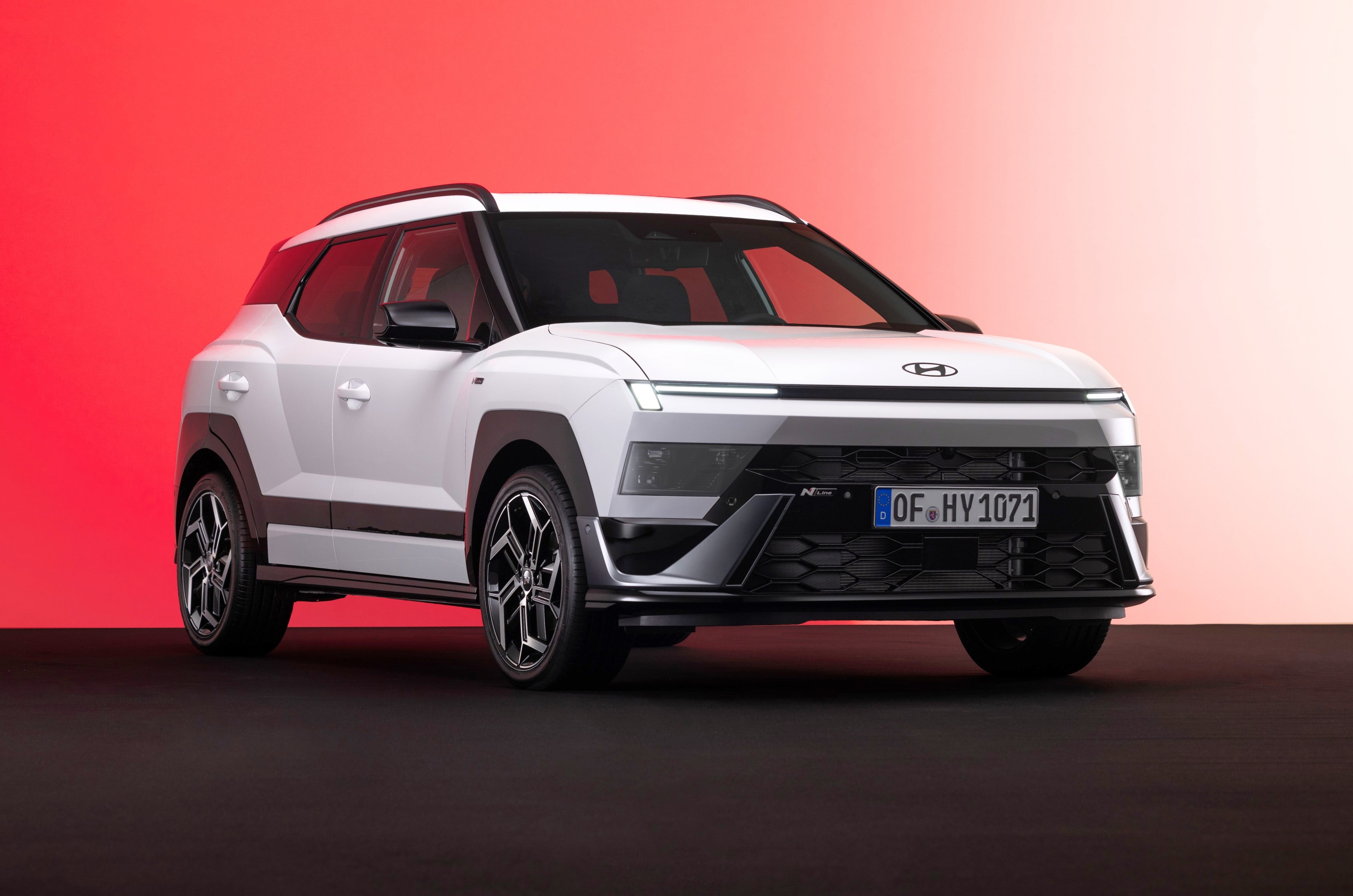
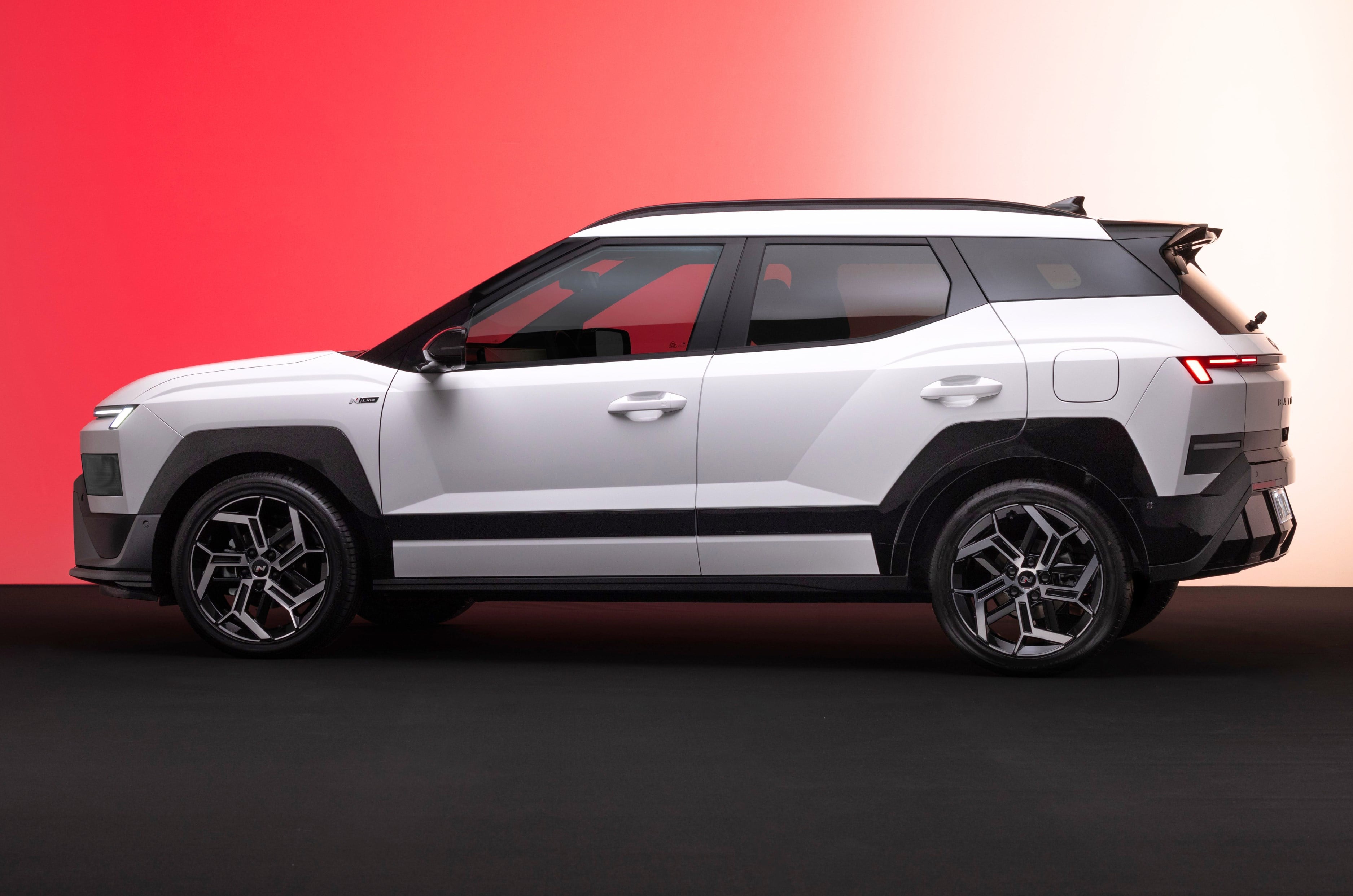
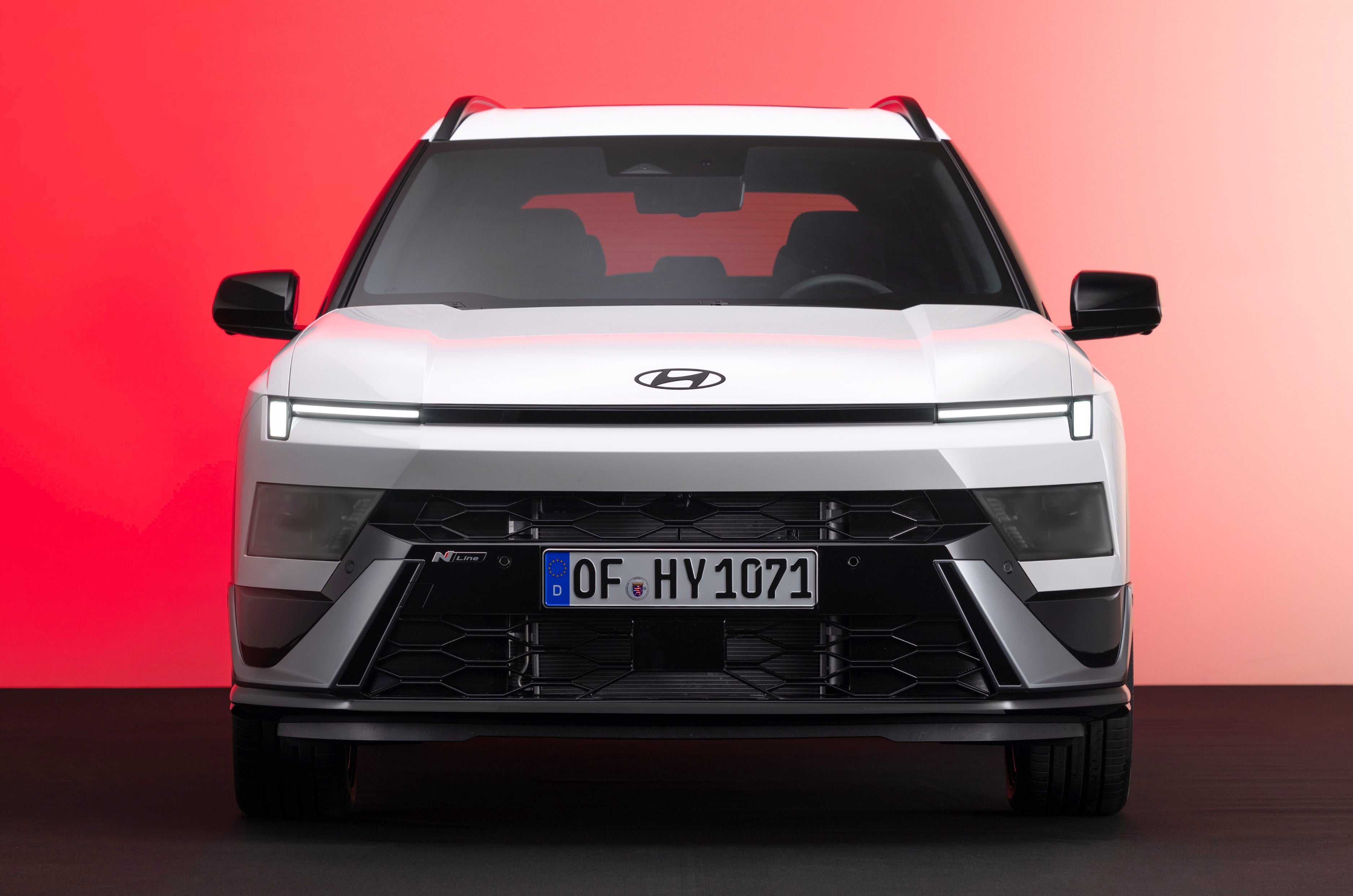
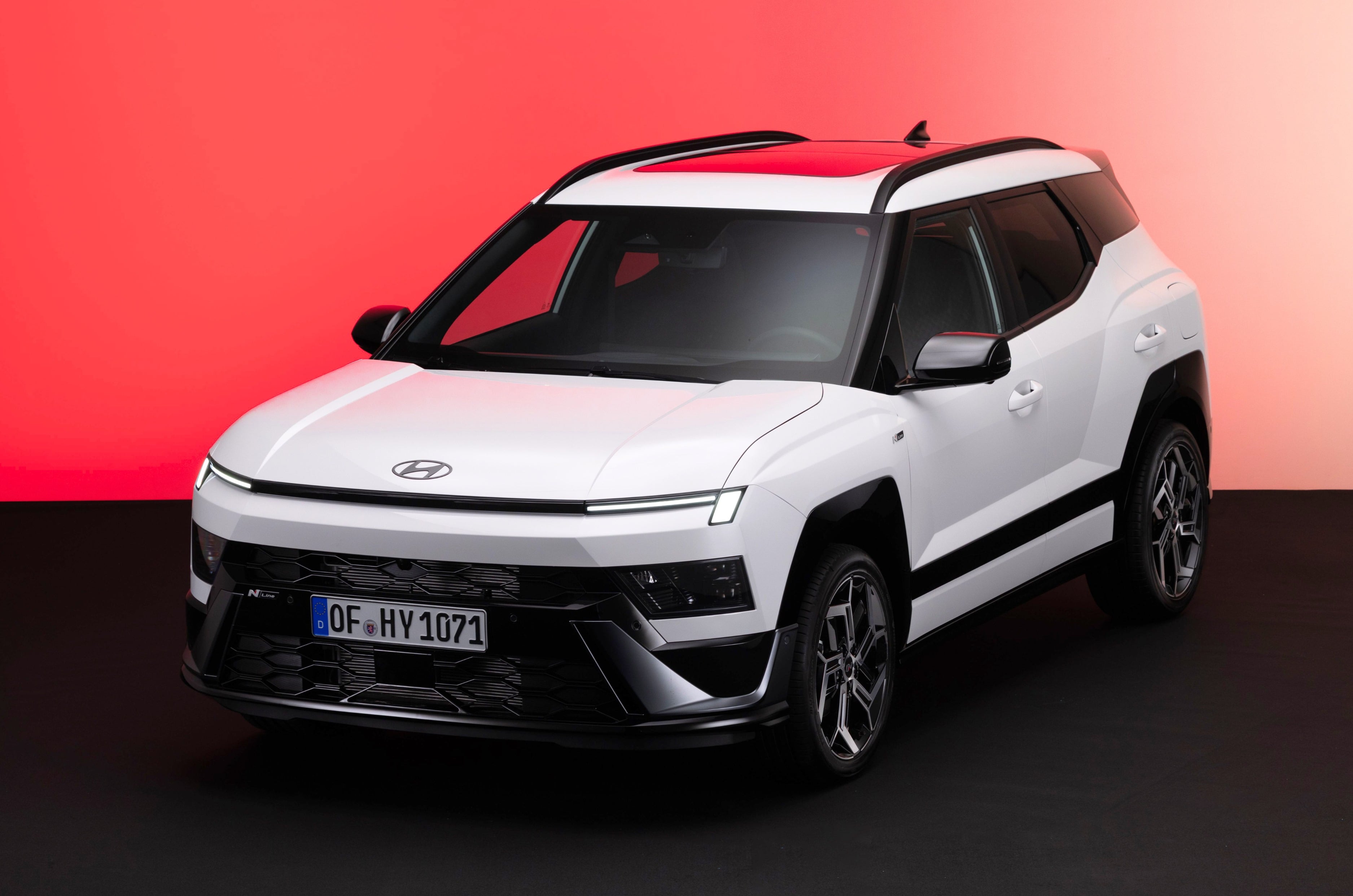
Alongside the recent reveal of the India-spec Bayon, Hyundai unveiled the SUV’s sporty N Line version at Paris Motor Show 2026. The Bayon N Line shares its top hat with the standard India-spec model, but has sportier touches all around and different engines.
2026 Hyundai Bayon N Line exterior design
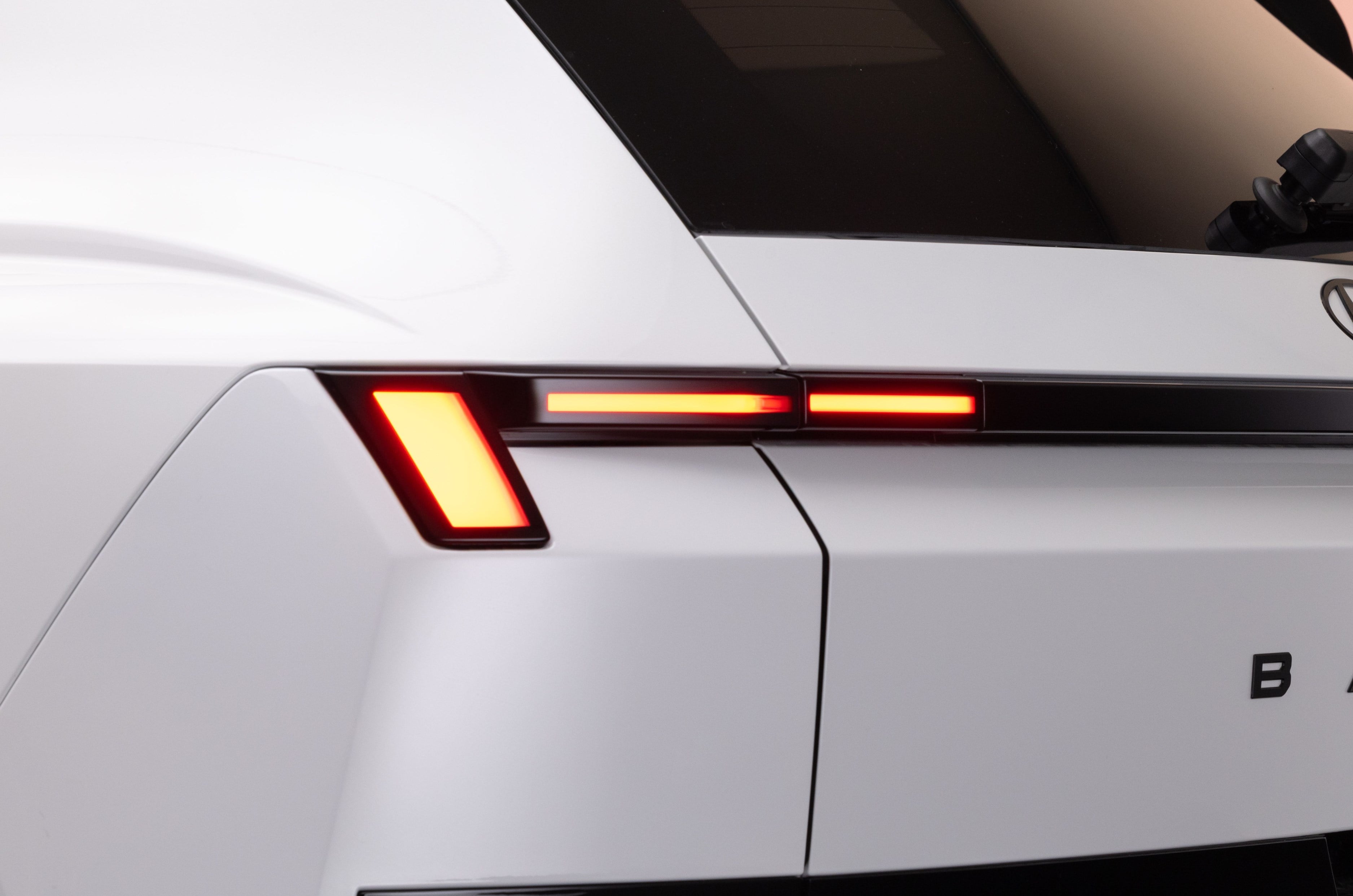
Much like the India-spec Bayon, the N Line features design cues like L-shaped front and rear lights, squared-off headlamp units, boxy wheel-arch cladding and flared fenders, a Bayon wordmark on the bootlid, and a heavily kinked windowline. However, the Bayon N Line differentiates itself with sportier styling elements.
Up front, the Bayon N Line has a different bumper with a more open design, blacked-out cladding, winglets, and a honeycomb pattern for the grille. An ‘N Line’ badge can also be seen on the left side of the bumper, and the headlamps look to have a smoked finish.
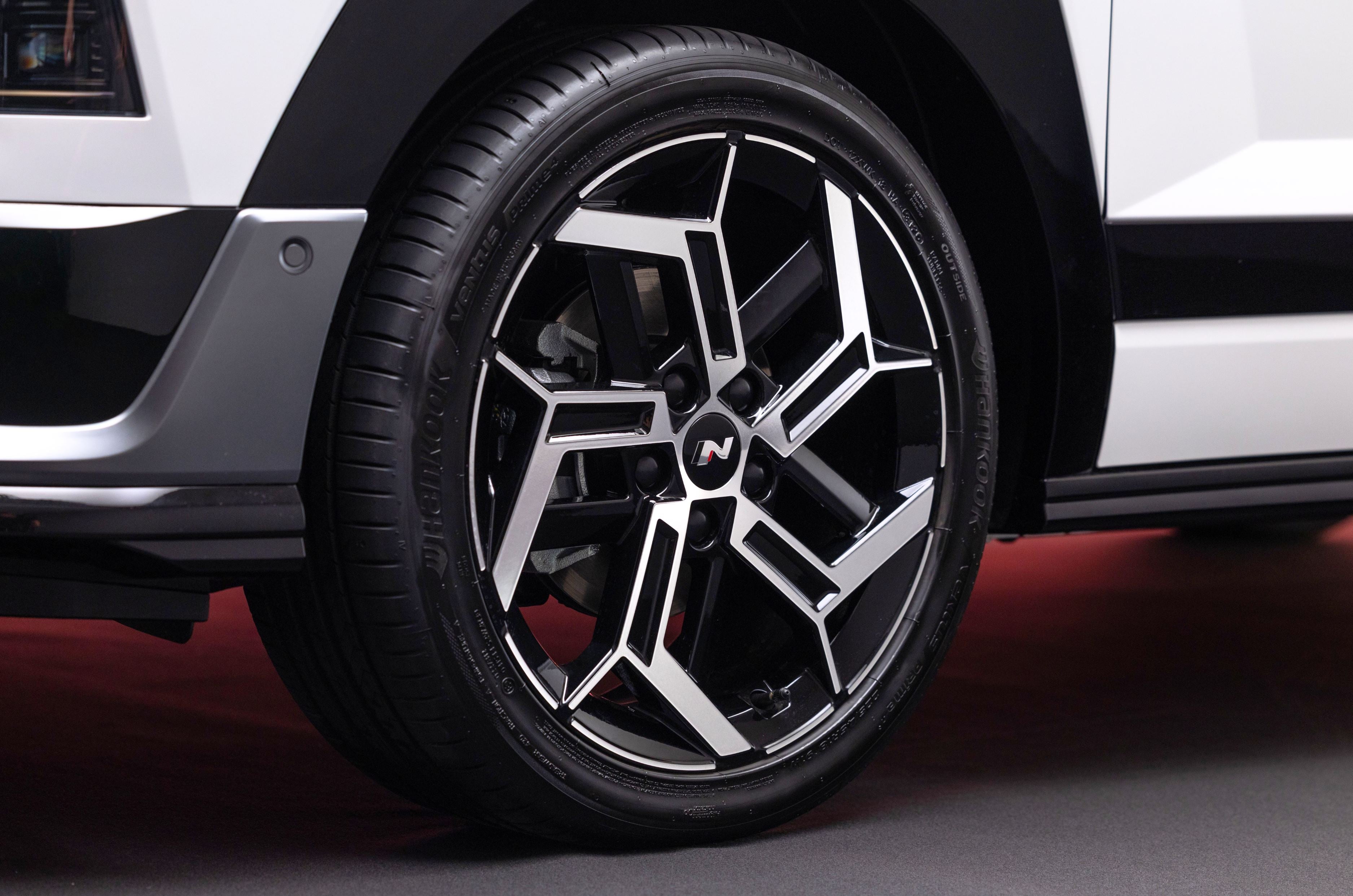
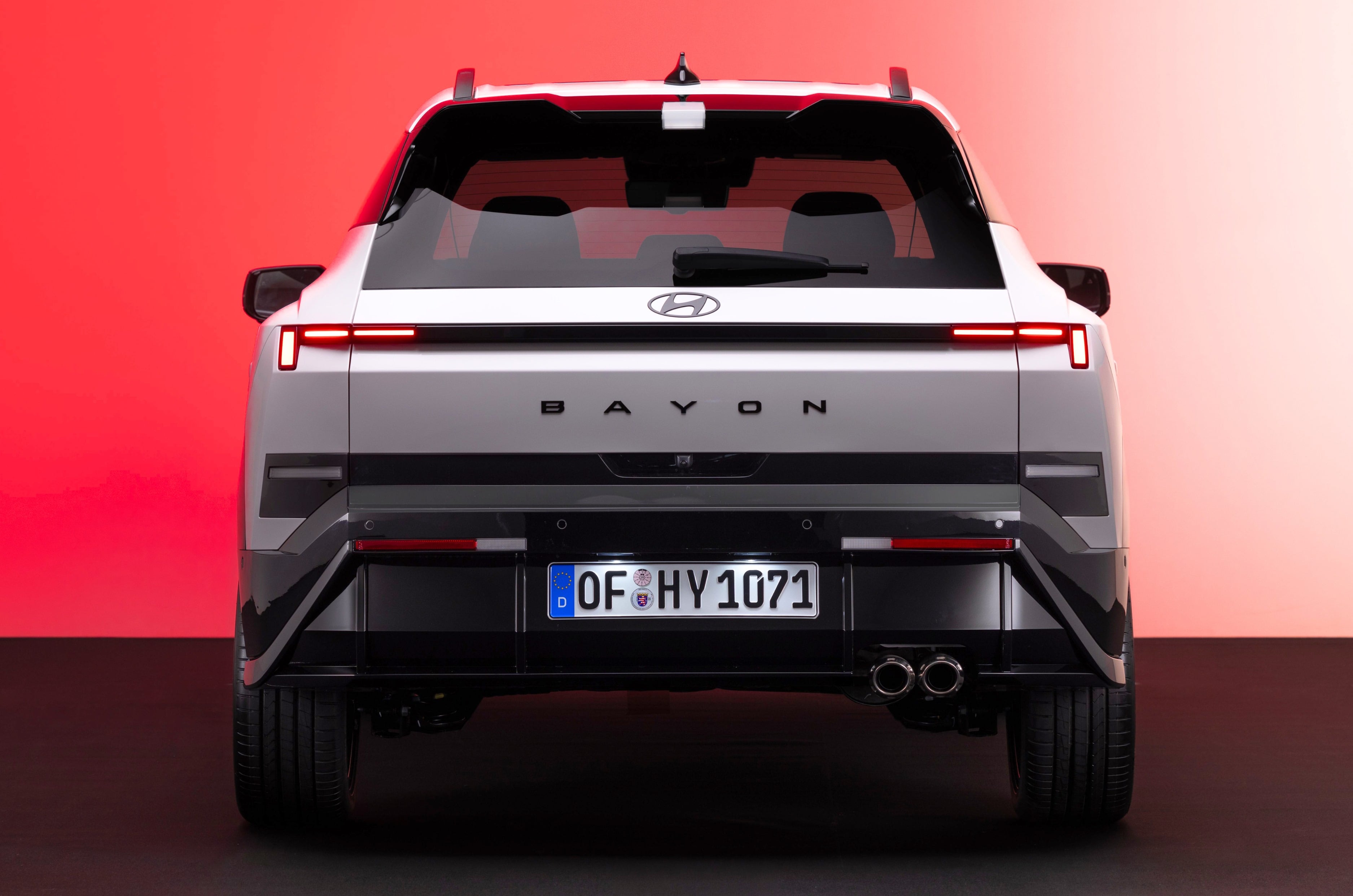
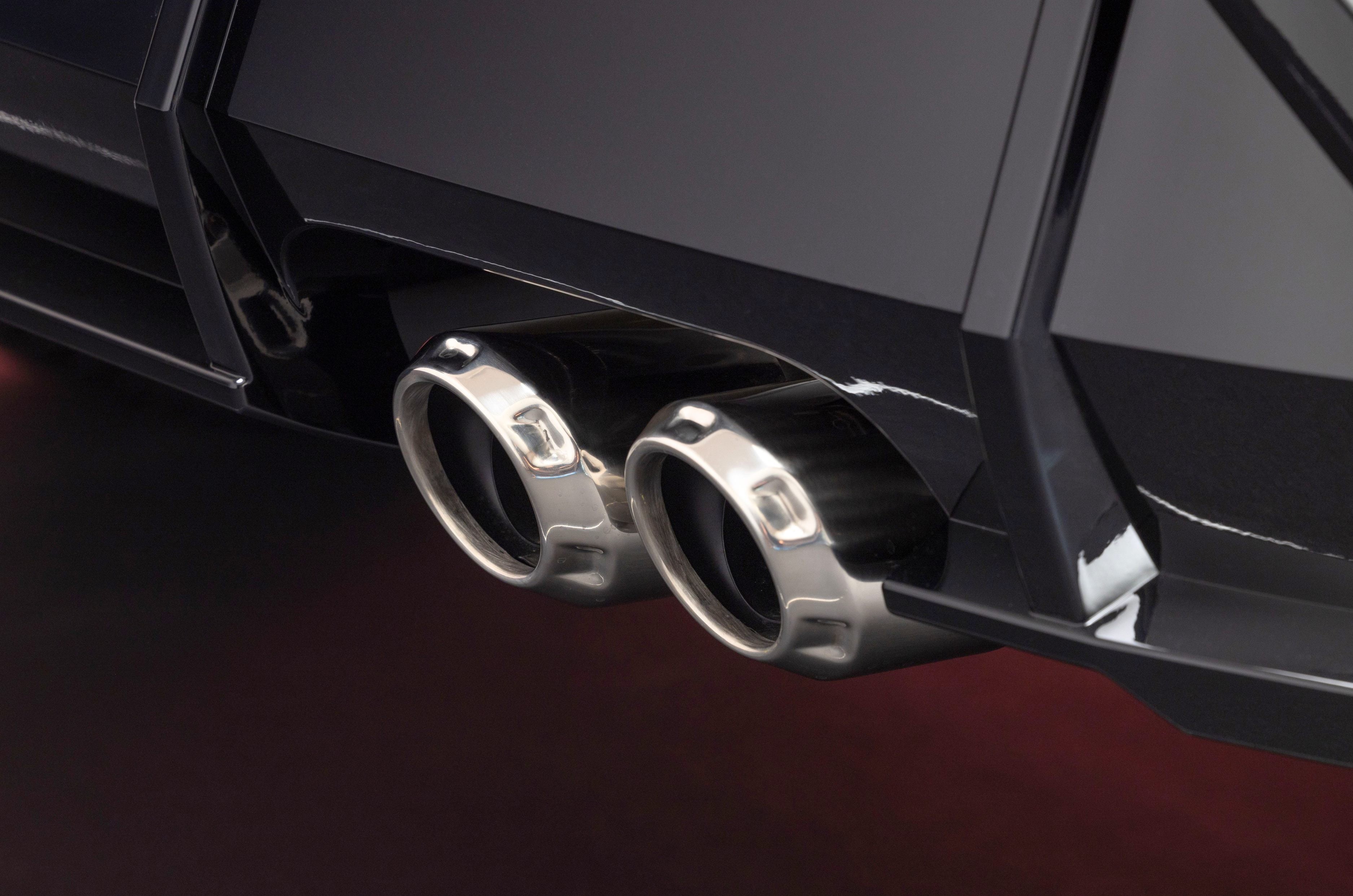
Over to the side, the N Line gets gloss-black finishes for the cladding and ORVMs, larger 18-inch alloy wheels, and N Line badging on the front fenders. The roof rails are also slimmer than the ones seen on the India-spec Bayon. At the back, the Bayon N Line sports a bigger twin-ridge roof spoiler, dual exhaust tips, a fully black bumper, and black finishes for the Hyundai emblem and Bayon wordmark on the bootlid.
The Europe-spec Bayon stretches the tape at 4,245mm long, 1,810mm wide, and 1,565mm tall, with a wheelbase of 2,600mm. These dimensions place it perfectly between the Venue and Creta in terms of size, and you can expect the India-spec Bayon to not stray that far off from them.
2026 Hyundai Bayon N Line interior and features
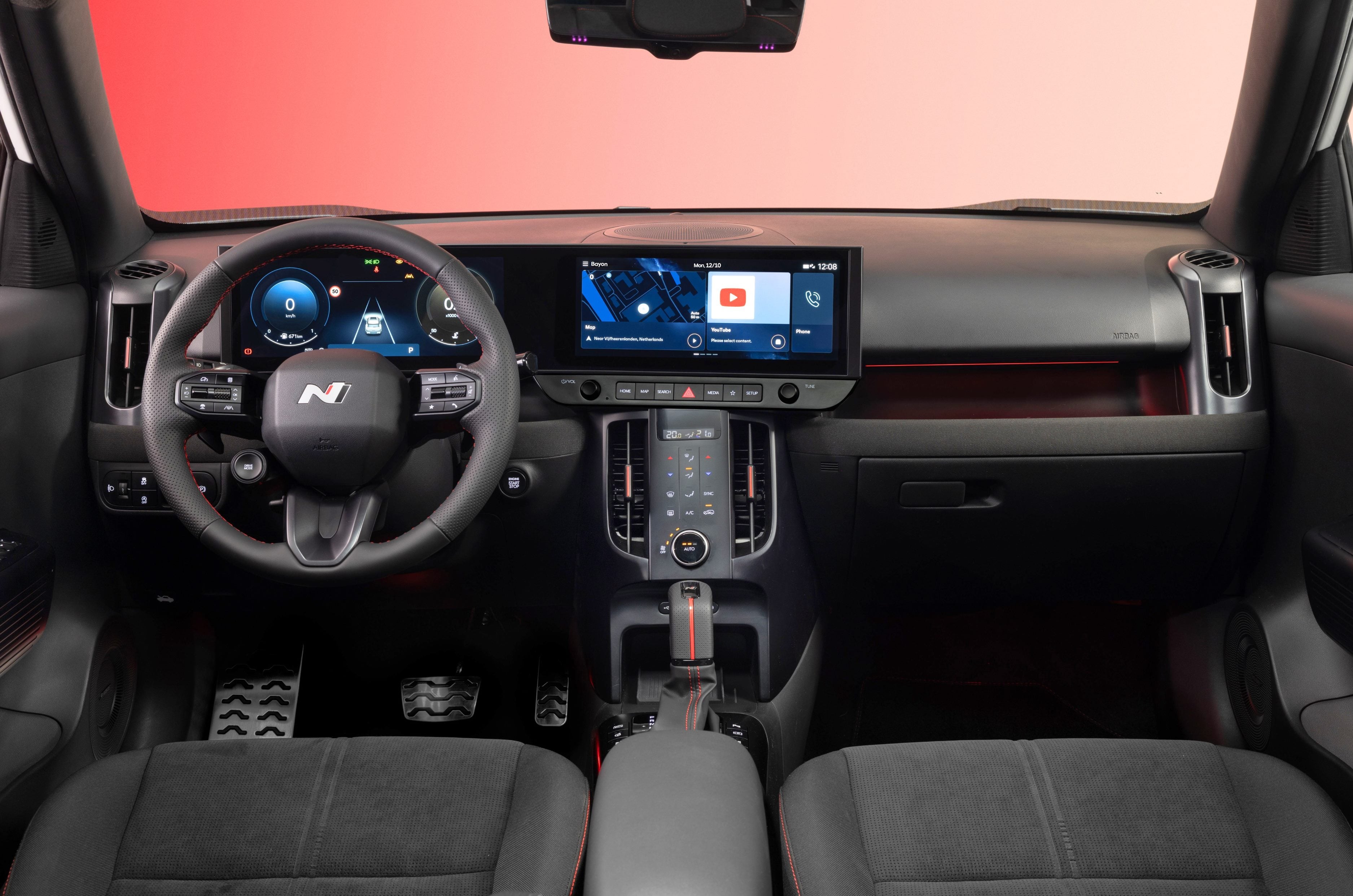
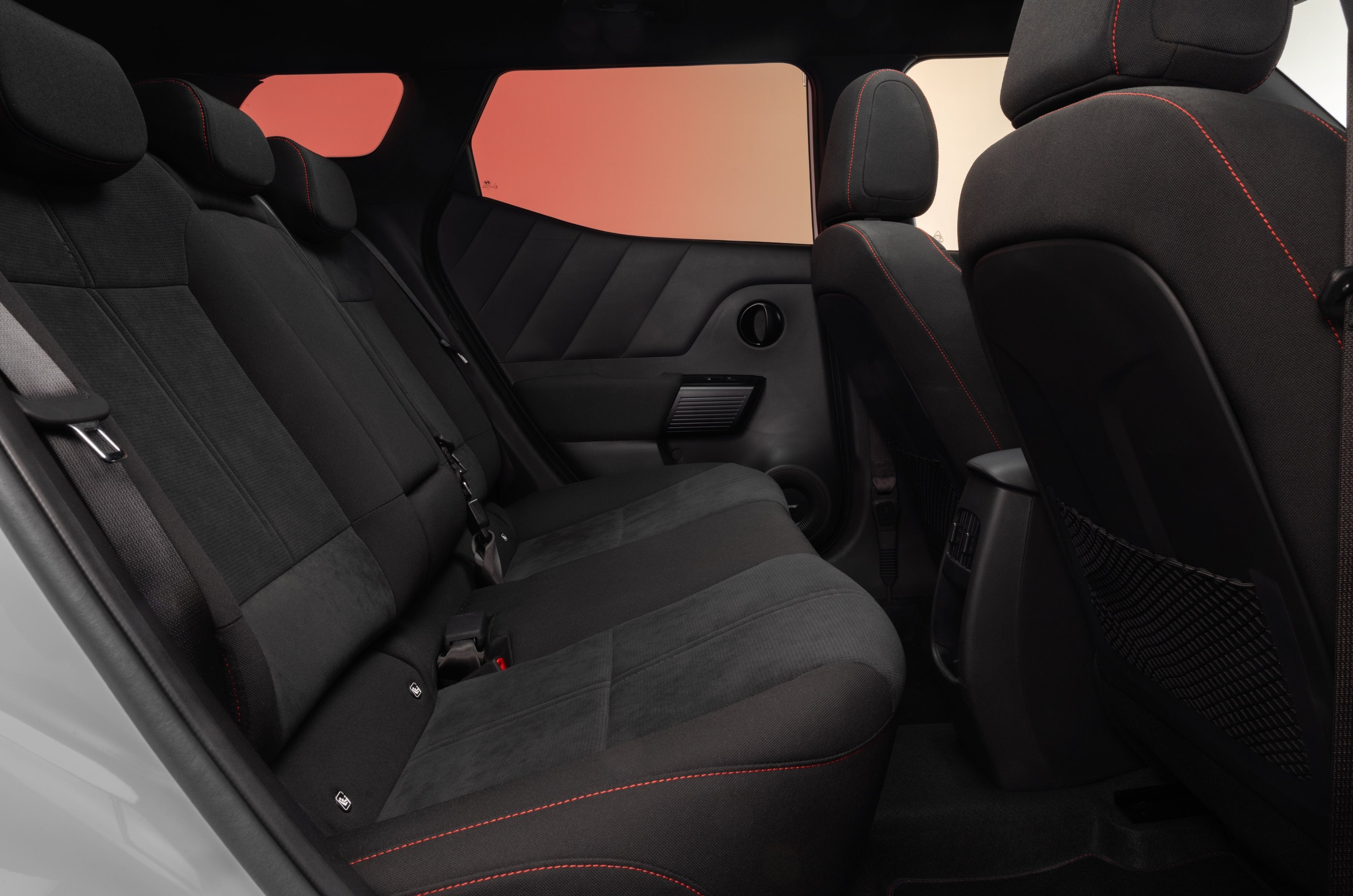
Similar to the outside, the core interior layouts of the India-spec Bayon and the N Line are identical, including a curved pair of 12.3-inch displays, a vertical design for the centre console (à la the fourth-gen i20), vertically oriented air vents, an open storage space on the co-driver side of the dashboard, among others. The Bayon N Line, however, brings in sportier touches like a black interior colour scheme with red accents and contrast stitching, Alcantara-esque seat upholstery, and an N-Line-specific steering wheel and gear lever.
As for features, the Bayon N Line offers wireless Apple CarPlay and Android Auto, ambient lighting, a panoramic sunroof, heated and ventilated front seats, reclining rear seats, a digital key, an 8-speaker Bose sound system, Level 2 ADAS, connected car tech, a wireless charging pad, dual-zone climate control, and more. Notably, Hyundai has not mentioned the inclusion of a generative AI voice assistant for the Bayon N Line, which the India-spec model will get. Coming to boot space, Hyundai claims 440 litres for non-hybrid versions of the Europe-spec Bayon.
2026 Hyundai Bayon N Line engine and gearbox
Where the India-spec Bayon will be powered solely by a 115hp 1.5-litre naturally aspirated four-cylinder petrol engine mated to either a 6-speed manual or CVT automatic, the N Line will be offered with Hyundai’s 1.0-litre three-pot direct-injection turbo-petrol motor in two states of tune – 90hp and 115hp – along with 6-speed manual and 7-speed dual-clutch automatic gearbox options.
Hyundai claims a 0-100kph time of as low as 10.8 seconds for the Bayon N Line – likely the 115hp DCT version – going up to 14.1 seconds for presumably the 90hp MT variant. Additionally, a strong-hybrid version will join the Europe-spec Bayon line-up at a later date, comprising a 1.6-litre direct-injection petrol engine, an electric motor, and a 6-speed DCT for a combined output of 138hp. It will also get adaptive regenerative braking that can be controlled by the steering-mounted paddle shifters.
Similarly, the India-spec Bayon is expected to receive a CNG version sometime after launch, which will strap an underbody tank to the SUV and allow it to directly rival the likes of the Maruti Suzuki Victoris, Maruti Suzuki Grand Vitara, and Toyota Hyryder.
Will the Hyundai Bayon N Line come to India
Hyundai is yet to confirm whether the Bayon N Line will be available in India, but given the positioning and target demographic of the model that will soon go on sale here, the prospect is unlikely (at least initially). The India-spec Bayon’s relatively sedate 1.5-litre engine, borrowed from the Creta, encourages smooth and relaxed driving over outright sportiness, and the incoming CNG version further reinforces the notion that this model will serve as Hyundai’s answer to the Victoris – a practical, no-nonsense midsize SUV that’s high on feel-good factor and low on running costs.
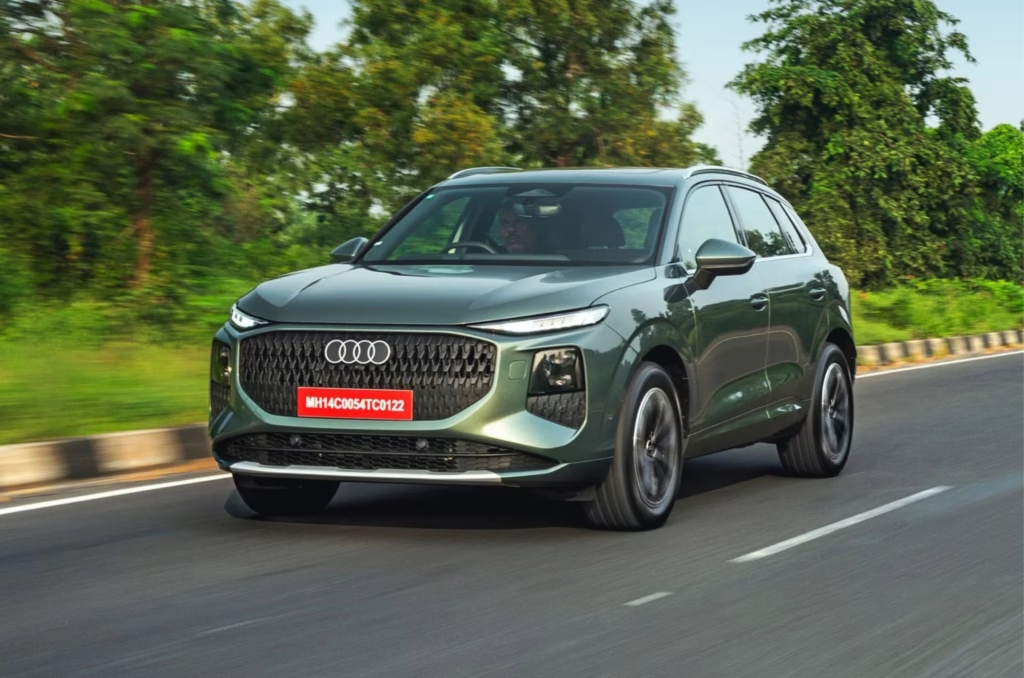
It would be easy to file the third-generation Q3 as just another new model but it isn’t. For Audi India, this is closer to a reset. The brand has spent the past few years soldiering on with ageing, outdated products and its showroom traffic has paid the price for this freeze in new products. But that’s all changed now. With fresh investment pouring in from its headquarters, Audi is on a new product offensive which has been kicked started with the Q3. This compact SUV is also the entry point into the brand, so it carries the burden of deliveringthe maximum sales. There’s a lot riding on the Q3’s gentle shoulders and Audi is hopeful that this will model will mark the turning point for the brand. But first, Audi has to convince customers. Is the new Q3 a quantum leap over the past Q3? We drove it in Goa to find out.
Audi Q3 Exterior Design and Engineering – 8/10
The crisp, edgy lines of the old car have made way for something more fluid and flamboyant. The new Q3 has grown marginally in every dimension, but the 2,681mm wheelbase is unchanged, so it keeps the compact footprint its urban buyers like.
A fluid and flamboyant new design language replaces the edgy styling of the old car
The face is split in two. Slim LED daytime running lights sit up top and double as dynamic indicators, while the main headlamps are stacked below. The wide honeycomb grille certainly makes a statement, and its flat 2D logo hides the ADAS radar. Up close, though, the grille’s finish looks a touch plasticky for a car wearing four rings.
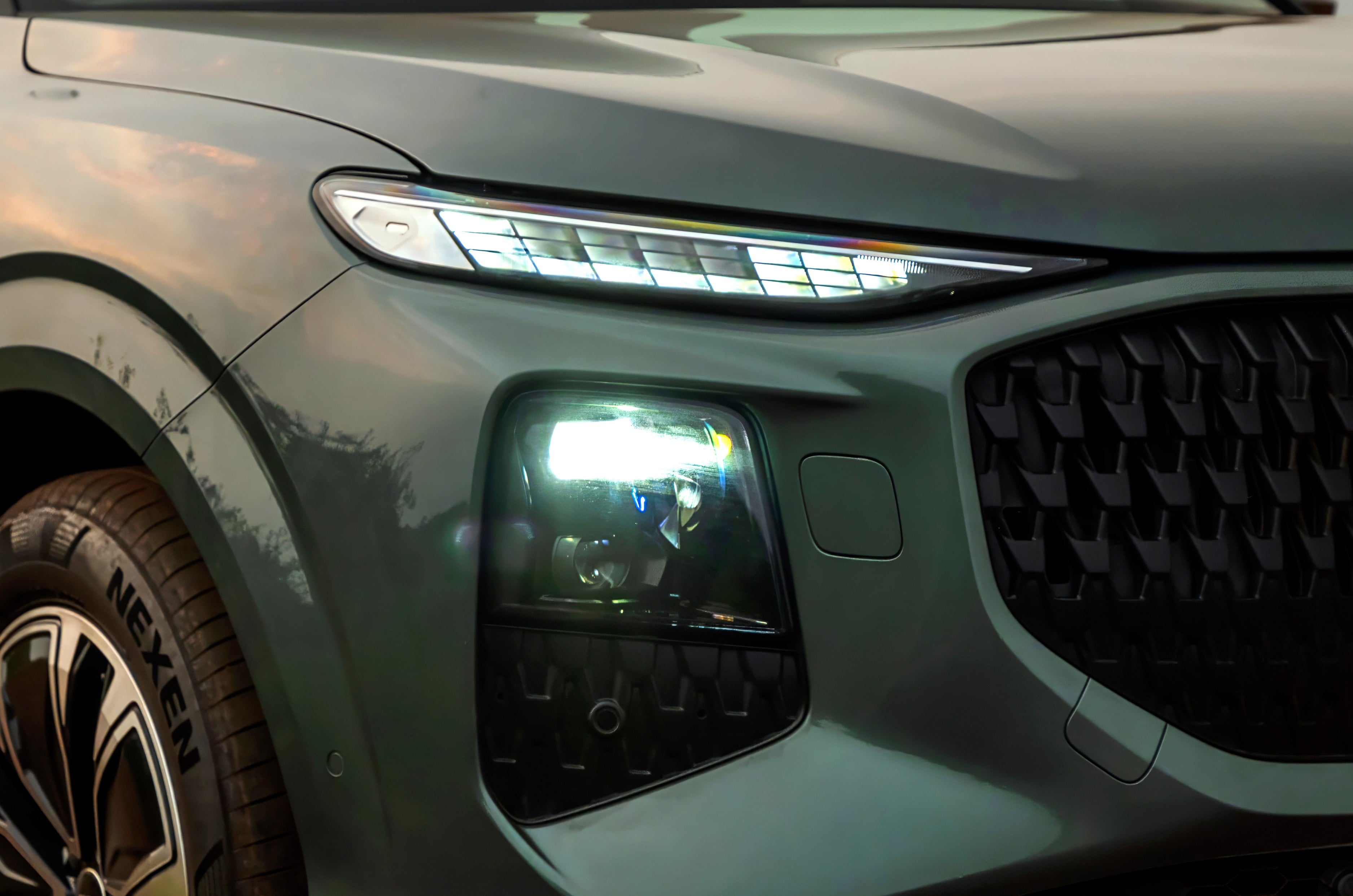
Lighting is the real party piece. The Digital Matrix LED units use micro-LED technology, with some 25,600 individually controlled pixels per headlamp. That lets them do far more than dip and glare-free high beam. They can project a carpet of light in your own lane, and when you flick the indicator, the beam stretches across to illuminate the lane you are moving into. It’s a clever way to flag your intent and place the car on dark, unlit roads. The DRLs also offer four selectable light signatures via the touchscreen. There is a caveat. The projection tricks are at their best on pitch-black roads; with streetlights around, the effect is largely lost.
Trick Digital Matrix LED headlights use 25,600 individually controlled pixels per side
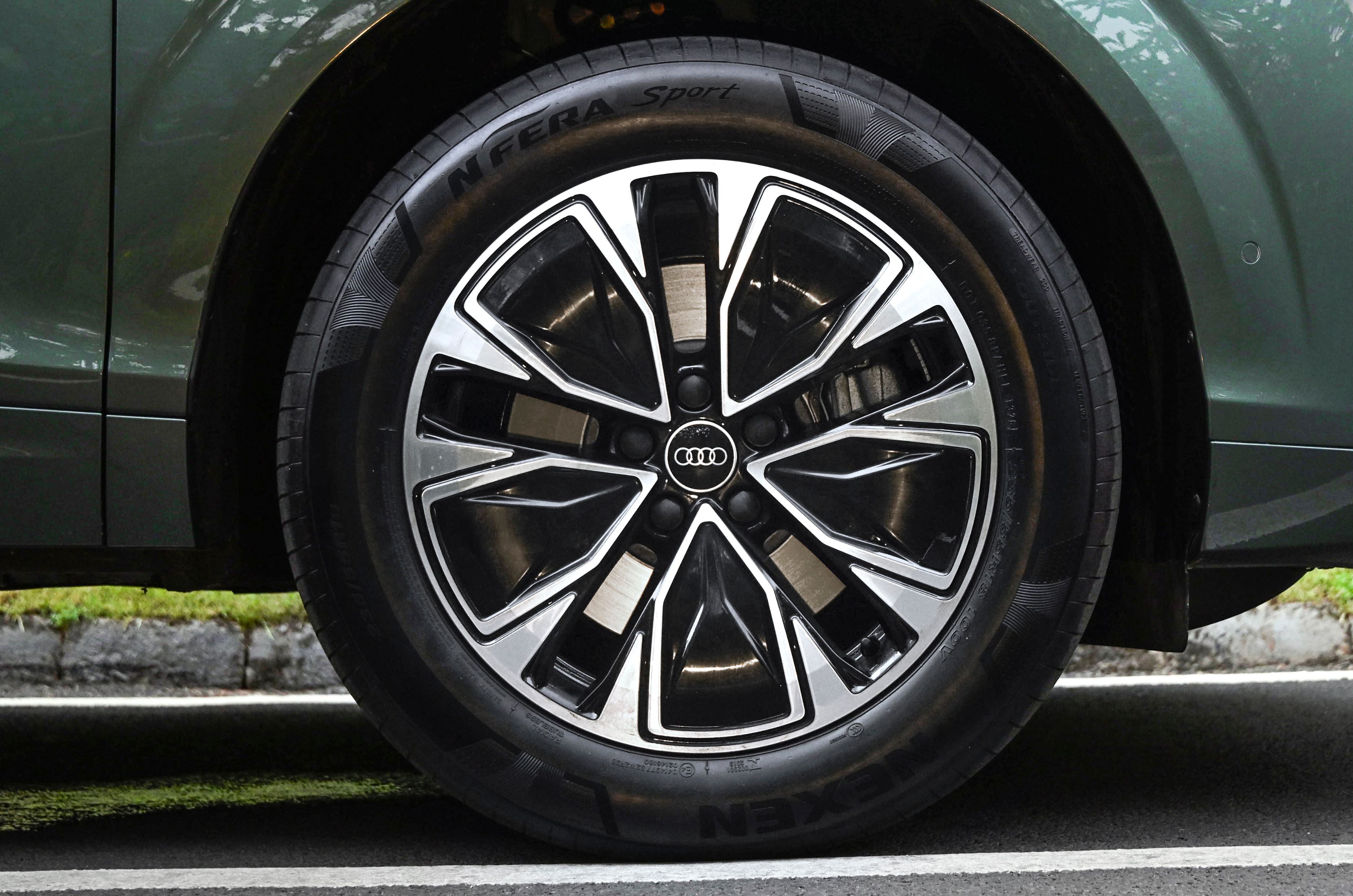
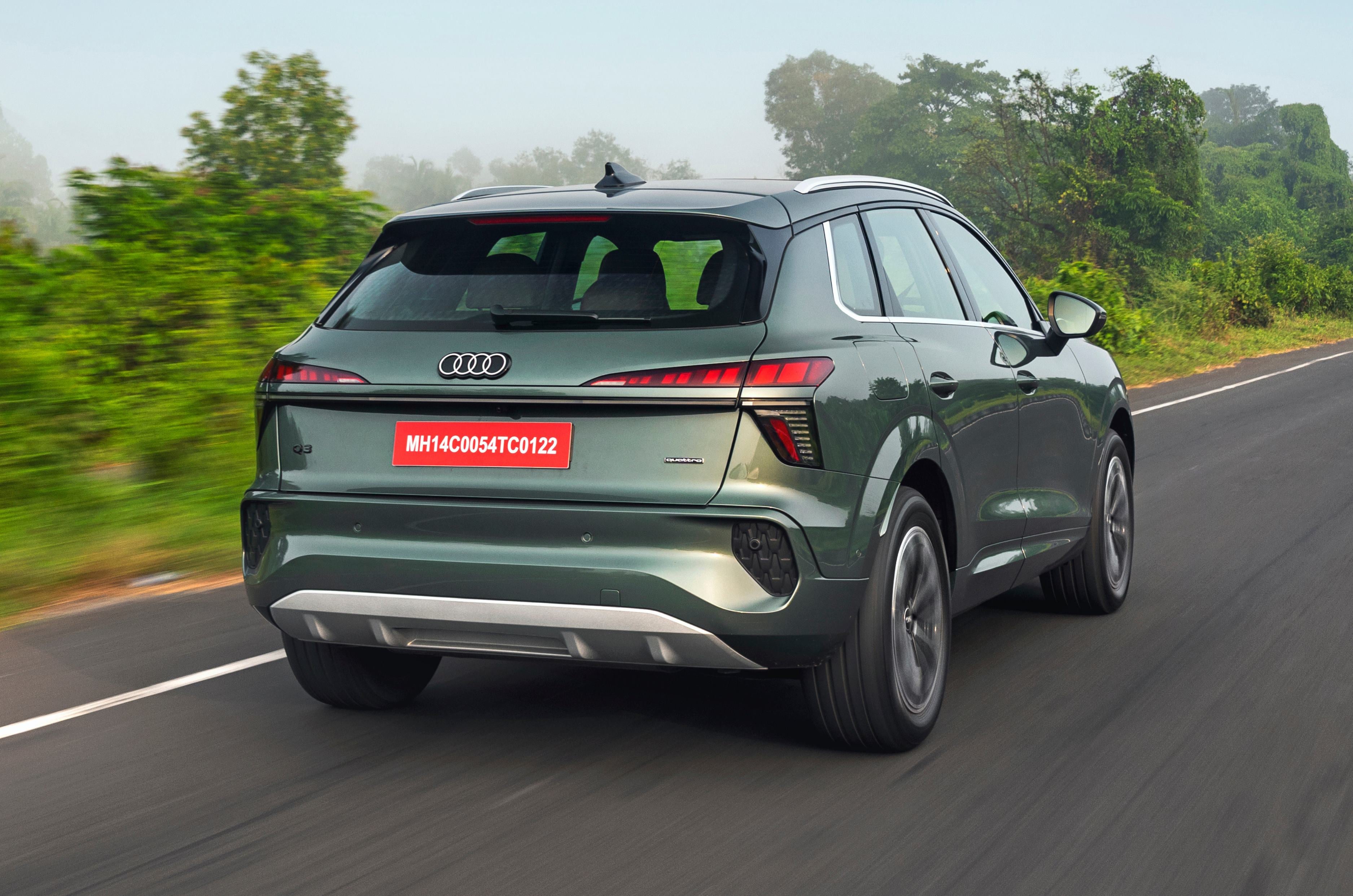
In profile, brushed aluminium below the windows and gloss black above create a floating-roof effect, and the rear haunches add a hint of muscle. For once, the wheels deserve a mention too. Audi has rarely nailed its alloy designs, but these are genuinely striking, wrapped in chunky, high-profile rubber. At the back, split LED tail-lamps are joined by a slim light bar and an illuminated Audi logo, and the tailgate is powered.
Stunning 18-inch alloys get self-leveling centre caps and are wrapped in high-profile tyres
Audi Q3 Interior Space and Comfort – 8/10
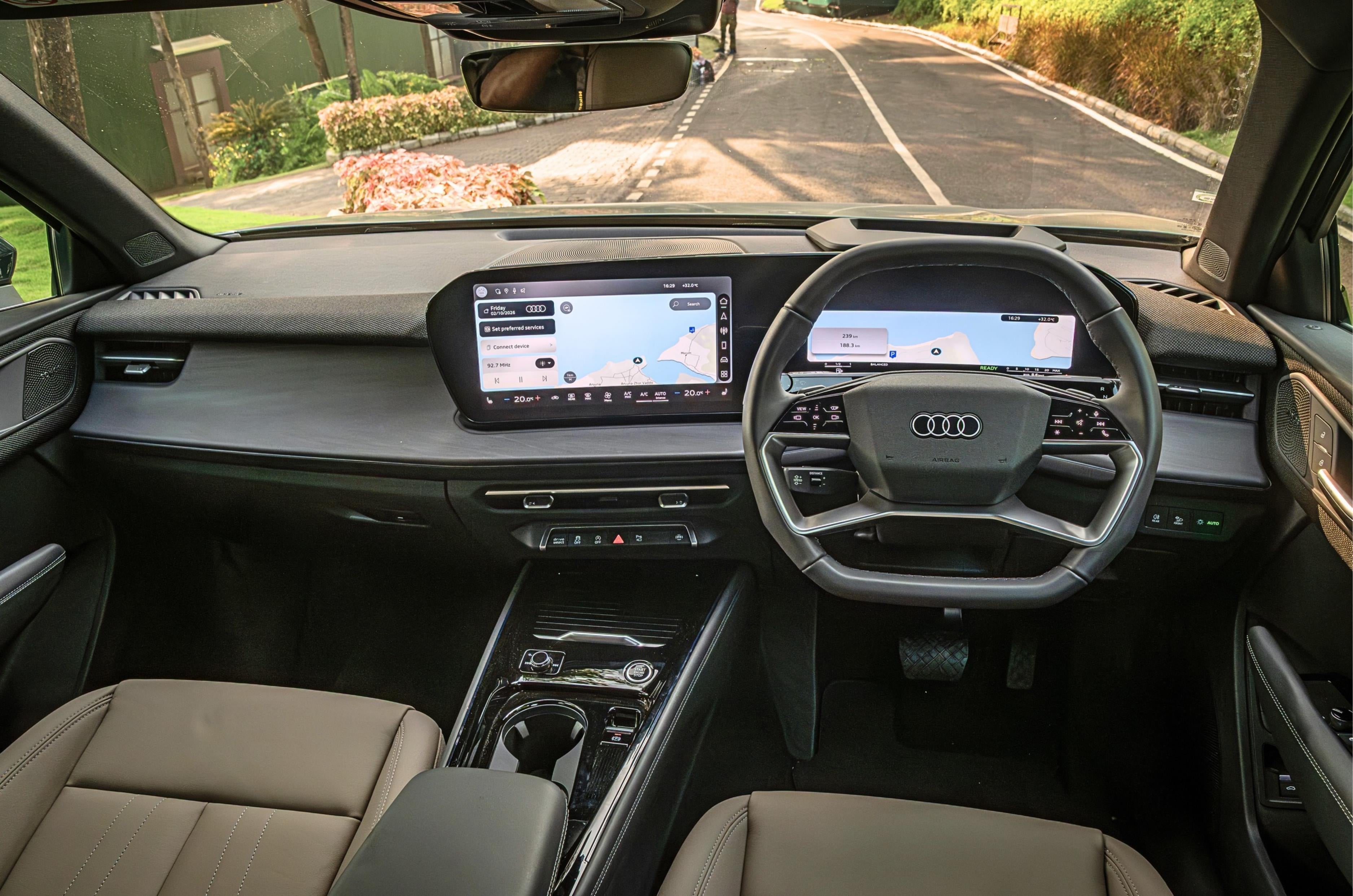
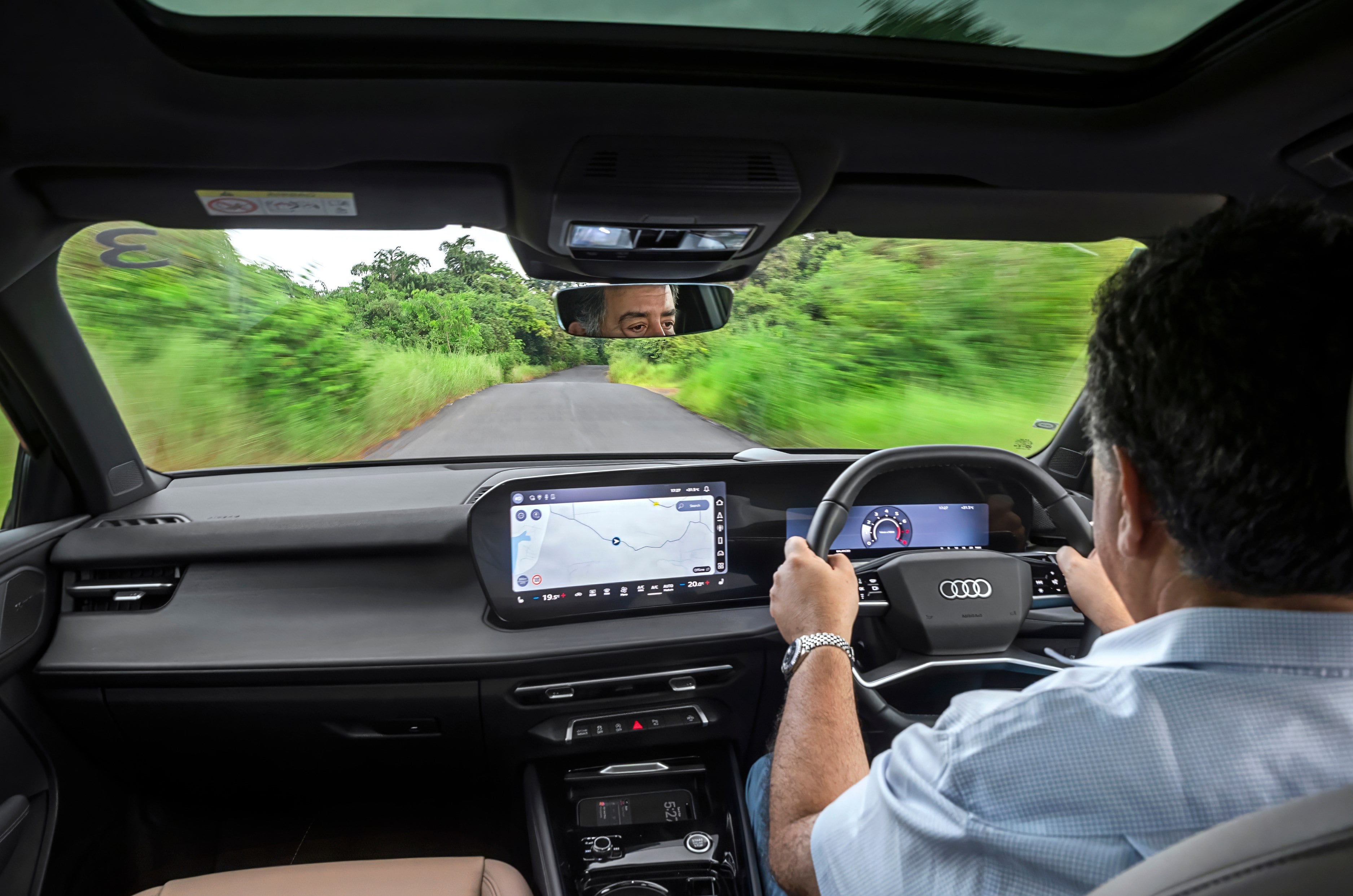
Step inside and the leap over the old Q3 is obvious. The dashboard is clean and contemporary, anchored by a curved panel that houses an 11.9-inch driver’s display and a 12.8-inch touchscreen. Fabric replaces leather across much of the cabin and the lower plastics are on the hard side. Yet the overall impression is of a cabin that’s solidly screwed together, and it feels more robust than its German rivals. Small details help: the fat tabs that adjust the air-con vents have a reassuringly substantial action.
New interior is a big leap over the last model and feels better built than its German rivals
The hexagonal steering wheel takes some getting used to. So does the new control stalk, which Audi has loaded with an astonishing number of jobs: indicators, front and rear wipers and headlamp controls all live on one chunky lever. The gear selector moves to a stalk of its own on the other side. It feels awkward at first, but within a day it becomes second nature.
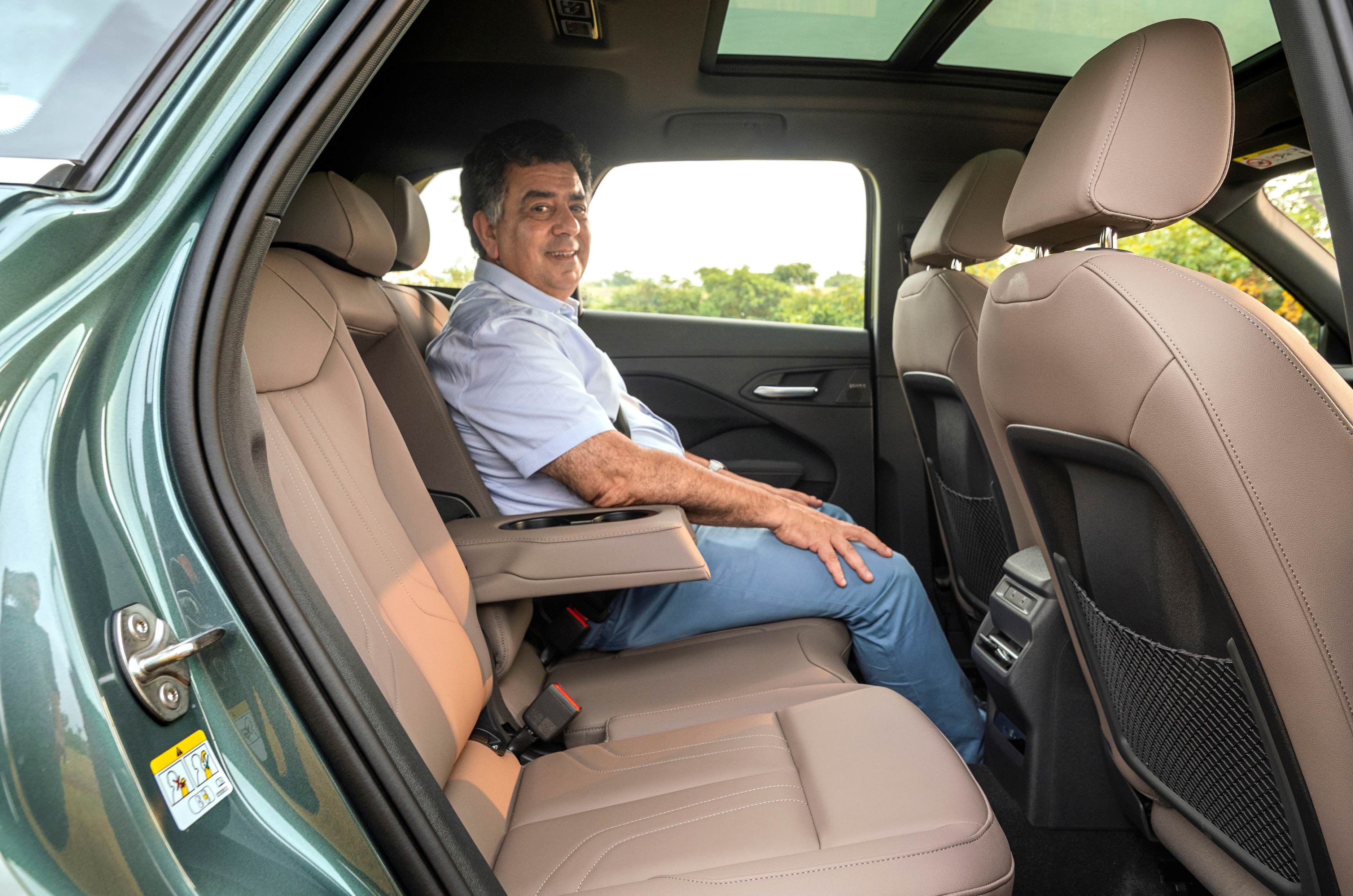
Two adults will be comfortable in the back seat, but a third will feel like a sqeeze
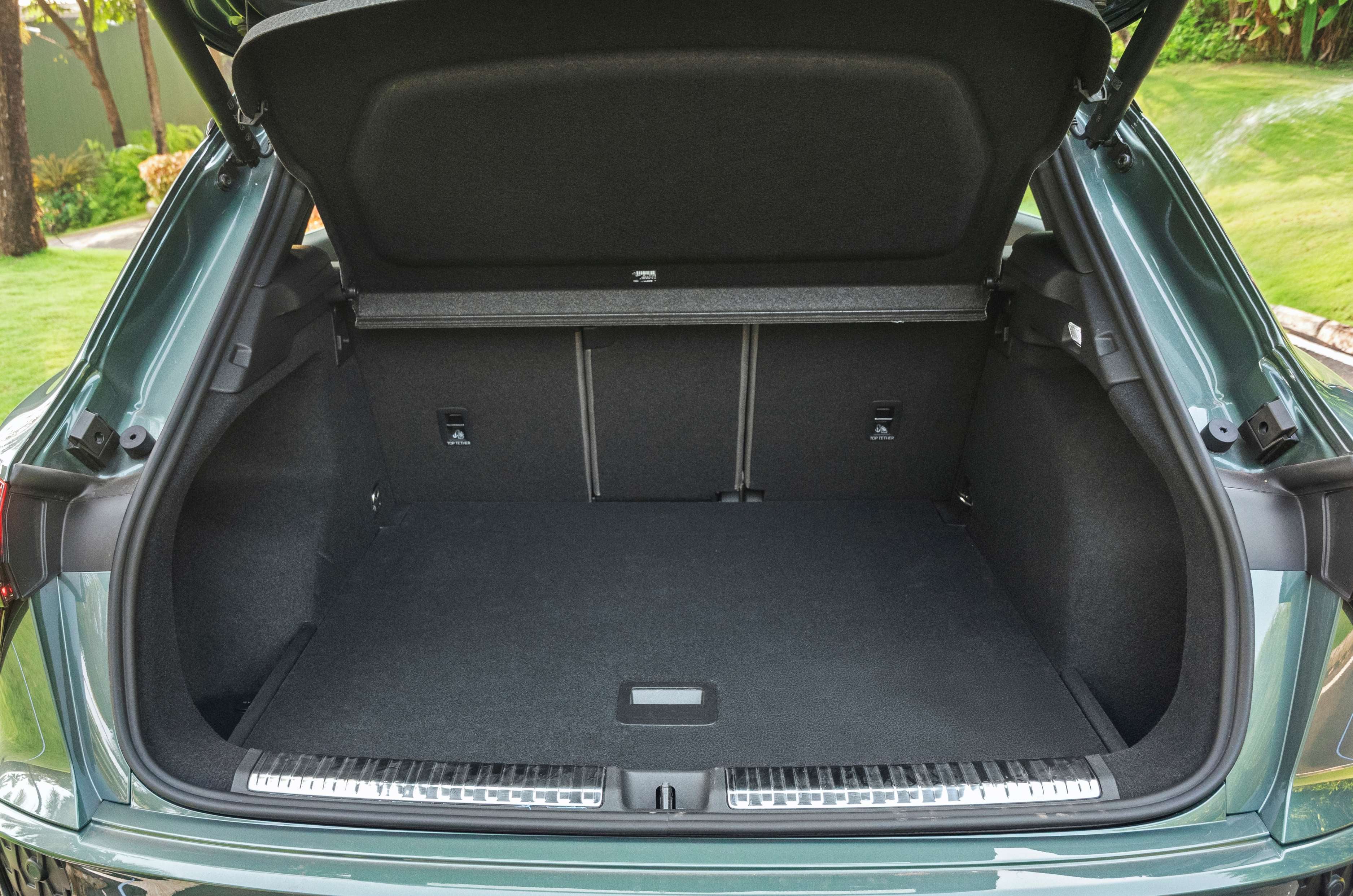
The front seats are generous, well bolstered and very comfortable over long stints. The rear hasn’t moved on much from the old car. Two large adults will be fine, but three is a squeeze; think of it as a four-seater with an occasional fifth. Rear passengers do get a third climate zone and two USB-C ports. The boot is spacious, and it’s good to find a space-saver spare under the floor.
Powered tailgate opens to a large 488-litre boot; seats split 40:20:40 for longer items
Audi Q3 Features and Safety – 7/10
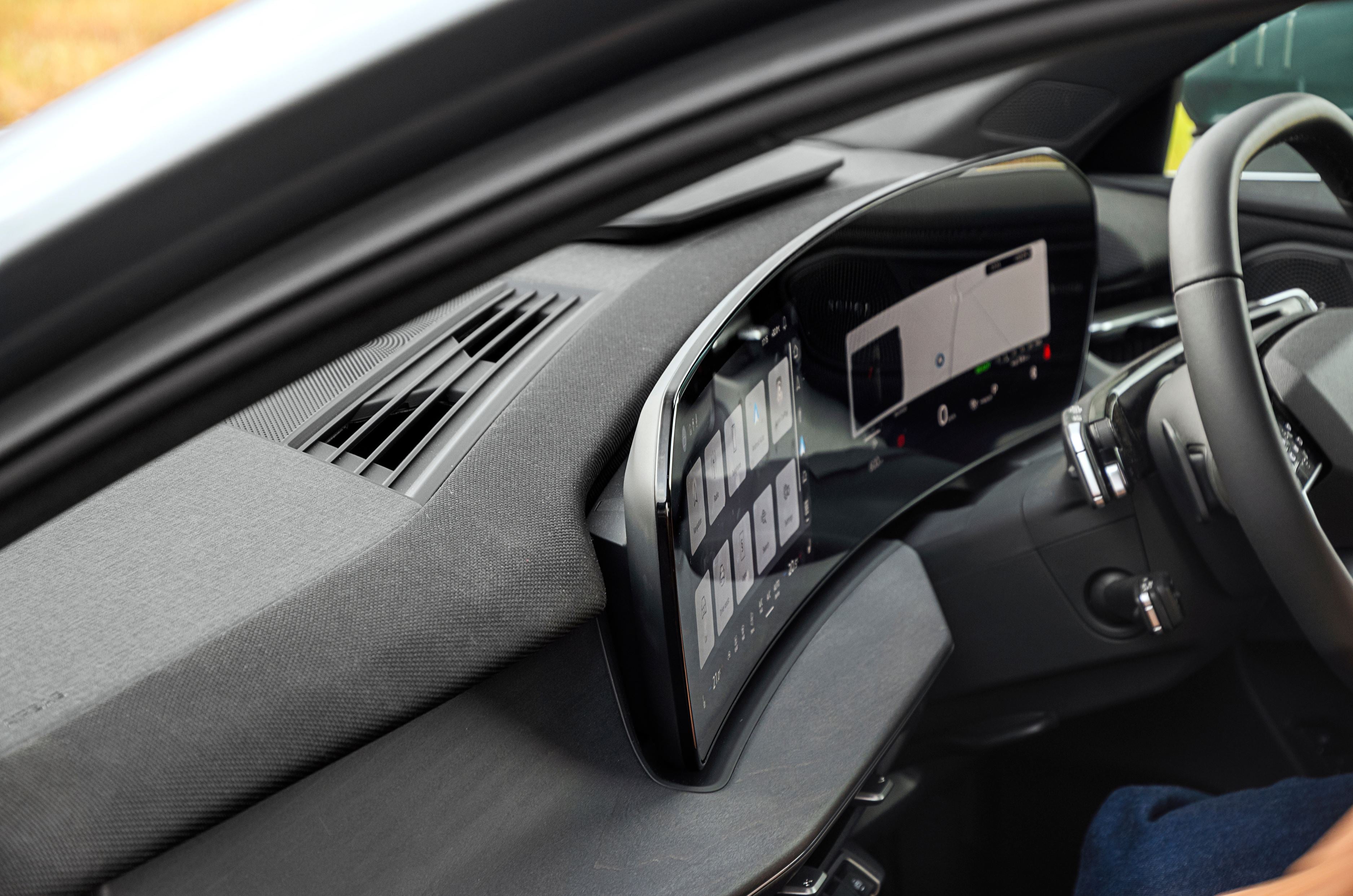
The curved touchscreen works well, and the curvature itself cuts out glare and reflections. Response is smooth and quick, though the icons are, in typical Audi fashion, a bit subdued and not instantly distinguishable. Physical buttons are fewer, but the climate controls sit permanently at the base of the screen, so you never dig through menus to change the temperature or blower speed.A head-up display brings key information into your line of sight and the fonts are crisp and sharp.
Curved display cuts out glare and reflections
Audi’s own navigation is good, but integrated Google Maps, increasingly the benchmark, is expensive to licence and hence missing. The instrument cluster is surprisingly basic too, with little configurability and minimal choice of layouts and that’s a let-down from the brand that pioneered the virtual cockpit.
We also hit a software glitch with our iPhones. Wireless phone mirroring connected initially, then dropped out and refused to reconnect, prompting a switch to USB. It’s the sort of bug an over-the-air update should fix.
Lighting and wiper controls are odd at first but easy to get used to
The equipment list isn’t thin. There’s a superb-sounding 12-speaker Sonos system, a large panoramic sunroof, powered and heated front seats with driver memory, nine airbags and adaptive cruise control. That cruise works well, too. But for a car costing over Rs 50 lakh and launching in 2026, there gaps that are hard to overlook.
There is no lane-keep assist, so the ADAS suite stops at adaptive cruise. A full Level 2+ package is now table stakes in this class, all the more so when far cheaper mass-market cars offer one. There are no ventilated seats either, near-essential in our climate. The biggest miss, though, is a 360-degree camera, something a great many buyers actively look for. The reversing camera’s resolution is disappointing, although there is an auto-park function.
ADAS kit limited to auto emergency braking and adaptive cruise control
None of this is unusual for its rivals. But as the newest kid on the block, the Q3 should have moved the game on, and here it hasn’t.
Audi Q3 Performance and Refinement – 9/10
The engine is the star of the show. Audi’s 2.0 TFSI makes 201bhp and 320Nm, and it is smooth, strong and refined. That alone hands the Q3 a massive edge over the underwhelming, smaller-capacity motors in the X1 and GLA.
Strong and refined 2.0 TFSI makes 204hp and 320Nm, enough for 0-100kph in 7.1 seconds
It isn’t flawless. At low revs there’s a brief hesitation before it gathers itself and pulls smartly, which is why we left it in Dynamic mode most of the time. Once on the boil, though, it is eager and free-revving, a reminder of why this is the best 2-litre turbo-petrol in the business. Around town it feels responsive; on the highway it builds pace effortlessly. Audi claims 0-100kph in 7.1sec, which puts the Q3 at the top of its class.
The 7-speed dual-clutch remains a fine partner, eager to drop a gear to keep the engine in its powerband. Flick it into Sport or reach for the paddles if you want to take charge. Quattro all-wheel drive is now standard on every Q3, not an option, and there’s a range of drive modes including an off-road setting to make the most of it. It’s good insurance on slippery surfaces and gives the Q3 an edge over rivals when conditions turn tricky. Whether many owners need it, or more importantly will pay extra for it, is another question.
Strikes a great balance of ride and handling; gets Quattro all-wheel drive as standard
Audi Q3 Ride Comfort and Handling – 9/10
The big surprise is the handling. The variable-ratio steering adjusts its response to both speed and lock, so its light and effortless at parking speeds, then quicker and more direct as you wind on more lock. Barring a touch of slack around the straight-ahead, it is accurate and weights up superbly.
Quick steering often makes a car nervous at speed. Not here. The Q3 stays stable and reassuring when the needle climbs, yet changes direction with an agility you simply don’t expect from an Audi SUV.
New Progressive Steering is light at parking speeds, but gets sharper and more direct as speeds rise
What you do expect from an Audi is a good ride, and the Q3 delivers. It is on the firm side but never uncomfortable, soaking up potholes and broken patches with real composure. A big help is the 55-profile tyres. Their roughly 130mm sidewall is the first line of defence, absorbing much of the shock before it reaches the suspension and, ultimately, the cabin.
Audi Q3 Value for Money – 8/10
The new Q3 is a superbly engineered car, and its mechanical package sits well ahead of its rivals. The cabin is a big step up too, but given its timing, the Q3 doesn’t quite leapfrog the competition here; it lands a little short on equipment.
What it does do is drive brilliantly. It is by far the nicest car to drive in its class, and that matters, because Audi says 84 percent of Q3 owners drive themselves.
Easily the nicest car to drive in its class, but doesn’t leapfrog the competition in terms of features
A lot now rides on price. At around Rs 65 lakh on-road, it is steep. Not because the car isn’t worth it, but because buyers may balk at paying so much more than the outgoing Q3, whose transaction price had slipped to around Rs 40 lakh.
On the product front, though, Audi has come back with a bang. A brilliant powertrain, a superb blend of ride and handling and a genuinely classy feel make the Q3 the enthusiast’s pick of the class. If this is the opening act, Audi’s reset is off to a promising start.
Delhi Police Traffic Advisory: कॉकरोच जनता पार्टी के प्रदर्शन और दिल्ली में कानून व्यवस्था को बनाए रखने के लिए दिल्ली पुलिस ने बड़ा कदम उठाया है। दिल्ली में 12 अक्टूबर को कई प्रमुख सड़कों पर ट्रैफिक व्यवस्था प्रभावित रह सकती है। ट्रैफिक पुलिस ने 12 अक्टूबर के लिए एक अहम ट्रैफिक एडवाइजरी जारी की है। कानून-व्यवस्था की स्थिति को देखते हुए ट्रैफिक पुलिस ने कई जगहों पर डायवर्जन की तैयारी की है, जो जरूरत के अनुसार सुबह 6 बजे से लागू होगें। ऐसे में एयरपोर्ट, रेलवे स्टेशन या ISBT जाने वाले लोगों को घर से निकलने से पहले ट्रैफिक अपडेट जरूर देख लेना चाहिए।
सुबह 6 बजे से होगा डायवर्जन
दिल्ली ट्रैफिक पुलिस के अनुसार, जरूरत पड़ने पर सुबह 6 बजे से कई रास्तों पर ट्रैफिक डायवर्ट किया जाएगा। पुलिस ने लोगों से अपील की है कि वे अगर जरूरी ना हो तो यात्रा से बचें और अगर रेलवे स्टेशन, ISBT या एयरपोर्ट जाना जरूरी है तो घर से थोड़ा जल्दी निकलें। खासकर नई दिल्ली और सेंट्रल दिल्ली से होकर जाने वाले लोगों को एक्स्ट्रा टाइम लेकर चलने की सलाह दी गई है। ऐसे में अगर आज आप ऑफिस, कॉलेज या बच्चों को स्कूल छोड़ने जा रहे हैं तो सबसे पहले ट्रैफिक एडवाजरी का अपडेट जरूर जान लें।
इन रास्तों पर होगा डावर्जन
ट्रैफिक प्रभावित होने वाले प्रमुख स्थानों में शंकर रोड-वंदे मातरम टी-पॉइंट, धौला कुआं फ्लाईओवर, झंडेवालान, पंचकुइयां, मंडी हाउस, डॉ. दिनेश नंदिनी डालमिया चौक, राम चरण अग्रवाल चौक, मिंटो रोड-डीडीयू मार्ग, गुरु नानक चौक, चेम्सफोर्ड रोड, कनॉट प्लेस, लोधी रोड फ्लाईओवर, नीला गुम्बद, मदरसा टी-पॉइंट, सम्राट होटल, सरदार पटेल मार्ग-पंचशील मार्ग, भीकाजी कामा प्लेस, मोती बाग फ्लाईओवर, रिंग रोड-सैन मार्टिन मार्ग, अशोका रोड-जंतर मंतर रोड, विंडसर पैलेस, टॉल्स्टॉय-जनपथ क्रॉसिंग, रेल भवन, जय सिंह रोड-संसद मार्ग, बाराखंबा रोड, गोल डाकखाना, पटेल चौक और आरएमएल अस्पताल के आसपास के रास्ते शामिल हैं।
पुलिस ने बताया कि ट्रैफिक की स्थिति के अनुसार इन डायवर्जन और प्रतिबंधों में बदलाव किया जा सकता है। इसलिए लोगों को सलाह दी गई है कि वे घर से निकलने से पहले ट्रैफिक का ताजा अपडेट जरूर देखें और जरूरत पड़ने पर दूसरे रास्ते का इस्तेमाल करें।
DELHI TRAFFIC POLICE ADVISORY
In view of the law and order situation, traffic may be impacted on following stretches in Delhi on 12.10.2026.
1. Diversions
Diversions will be enforced starting from 06:00 AM on 12.10.2026 depending upon prevailing situation. General public is informed that movement at following points and surrounding stretches might remain affected:-
1.Round About Shankar Road-Vande Matram ‘T’ Point towards New Delhi
2.Dhaula Kuan Flyover
3.Round About Jhandewalan
4.Round About Panchkuian
5.Round About Mandi House
6.Dr Dinesh Nandini Dalmia Chowk (W-Point)
7.Ram Charan Aggarwal Chowk (A-Point)
8.Minto Road/Deen Dayal Upadhyay Marg
https://t.co/hLq6pNQgBG Nanak Chowk
10.Chemsford Road – Outer Circle Connaught Place T-Point
11.Bharion Road- MGM (Ring Road) T-Point
12.Lodhi Road Flyover
13.Round About Neela Gumbad
14.Madarsa T- Point
15.Round About Samrat Hotel
16.Sardar Patel Marg- Panchsheel Marg Crossing
17.Under Bhikaji Kama Place
18.Under Moti Bagh Flyover
19.Ring Road-San Martin Marg T-Point
20.Round About Ashoka Road – Jantar Mantar Road
21.Round About Windsor Palace
22.Tolstoy-Janpath Crossing
23.Round About Rail Bhawan
24.Jai Singh Road – Sansad Marg Crossing
25.Outer Circle Connaught Place -Barakhamba Road T-Point
26.Round About Gol Dak Khana
27.Round About Patel Chowk
28.Jai Singh Road – Ashoka Road T-Point
29.Round About RML Hospital
30.Outer Circle Connaught Place – Sansad Marg T-Point
2.Commuters’ Advisory & Recommendations
•Plan in Advance: Please keep extra travel time in hand if heading towards railway stations, ISBTs, or the airport via New Delhi and Central Delhi.
•Avoid Non-Essential Travel: Commuters are requested not to undertake non essential travel.
•Dynamic Restrictions: Traffic management measures are dynamic and will be relaxed or regulated based on real-time ground assessment.
3.Stay Updated (Real-Time Information)
For live updates, alternate routes, and continuous traffic alerts, please keep referring to official Delhi Traffic Police platforms:
CJP ने जंतर-मंतर पर शांतिपूर्ण प्रदर्शन करने की तैयारी शुरू कर दी है। पार्टी के नेता आशुतोष रंका ने बताया कि सोमवार सुबह 10 बजे वह सौरव दास और संगठन के अन्य सदस्यों के साथ पार्लियामेंट स्ट्रीट पुलिस स्टेशन जाएंगे। वहां दिल्ली पुलिस से प्रदर्शन के लिए तारीख और अनुमति देने का अनुरोध किया जाएगा। रंका के मुताबिक, अगर पुलिस 24 घंटे के अंदर प्रदर्शन की तारीख नहीं देती है, तो संगठन अपने स्तर पर प्रदर्शन की घोषणा करेगा।
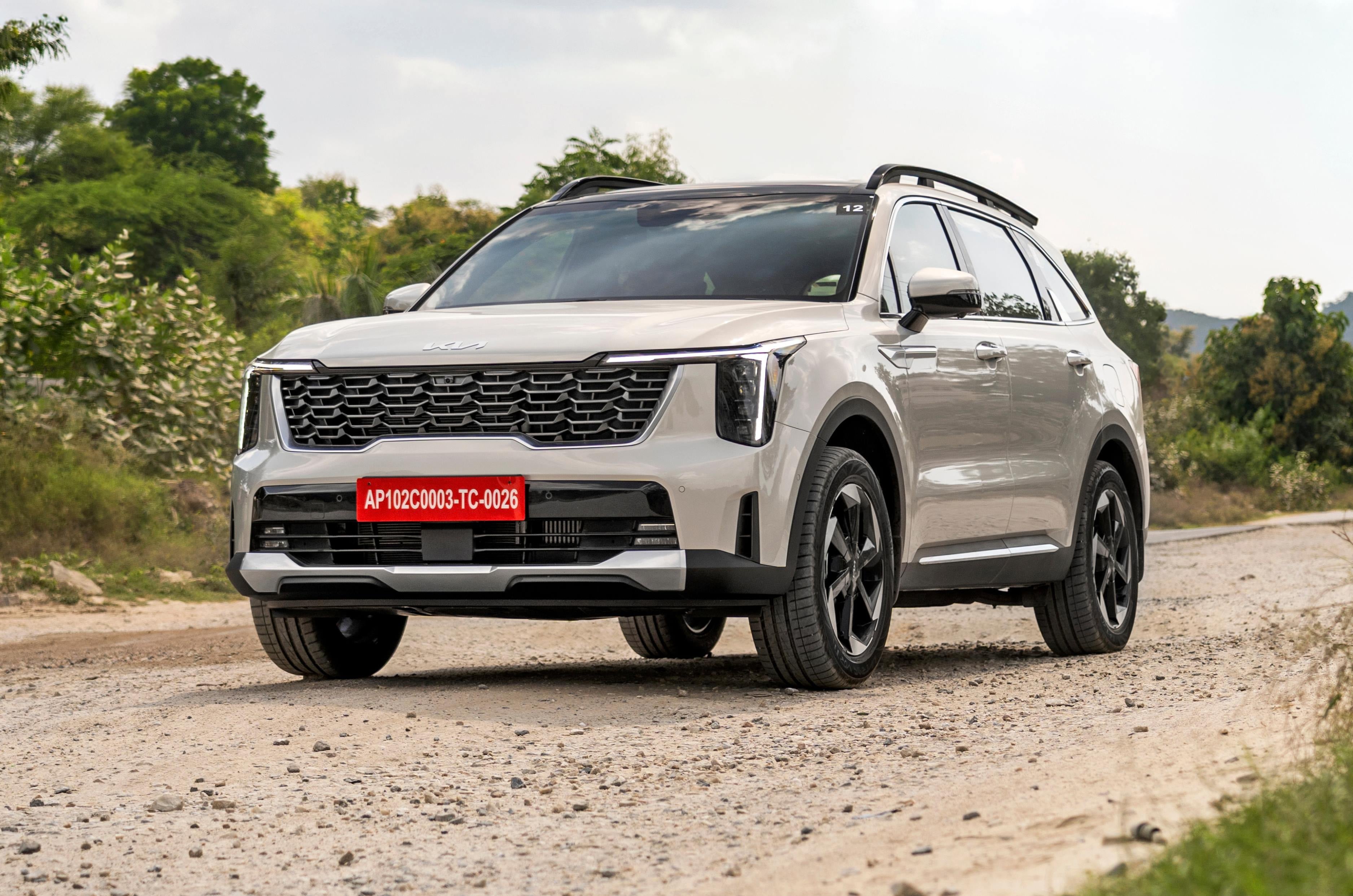
The Sorento is a big bet for Kia India, and you can tell. Six trims, two powertrains, front- and all-wheel drive, six or seven seats and 32 versions in all. This is not a toe in the water exercise but a full-blooded dive into the deep end of the executive SUV pool. More than that, it is a case study in how to launch a product in India, because Kia has got the basics right before it has even started talking about features.
Start with the powertrains, which for this class of SUV could hardly be better judged. There is a strong 2.2-litre diesel for diesel die-hards and there are still plenty of those. And then there is a 1.6-litre turbo-petrol strong hybrid whose timing couldn’t be more perfect. Petrol prices are climbing, E20 has quietly eaten into real-world efficiency, and buyers want diesel-like running costs from a smooth, quiet powertrain without lying awake worrying about diesel’s long-term future. The Sorento hybrid is pitched squarely at that anxiety.
The strategy behind the car is just as interesting. This fourth-generation (MQ4) Sorento arrives in India towards the end of its global life cycle. It is still a current product, but one due to be replaced internationally next year, while India will carry on with this one. That is actually a very smart move. A car this late in its life has its development costs largely amortised, and Kia India can bring some of the tooling here, which slashes the investment.
And this is a properly localised car, not a screwdriver job. The body is stamped and welded at Kia’s Anantapur plant, and the dashboard and seats are made here too. That is what makes the Rs 27.99 lakh starting price possible. The catch is that localisation on this scale only pays off with volume, and Kia wants to sell around 40,000 Sorentos a year. That is a big number for a Rs 30-40 lakh SUV. Can it get there?
Kia Sorento exterior design and engineering
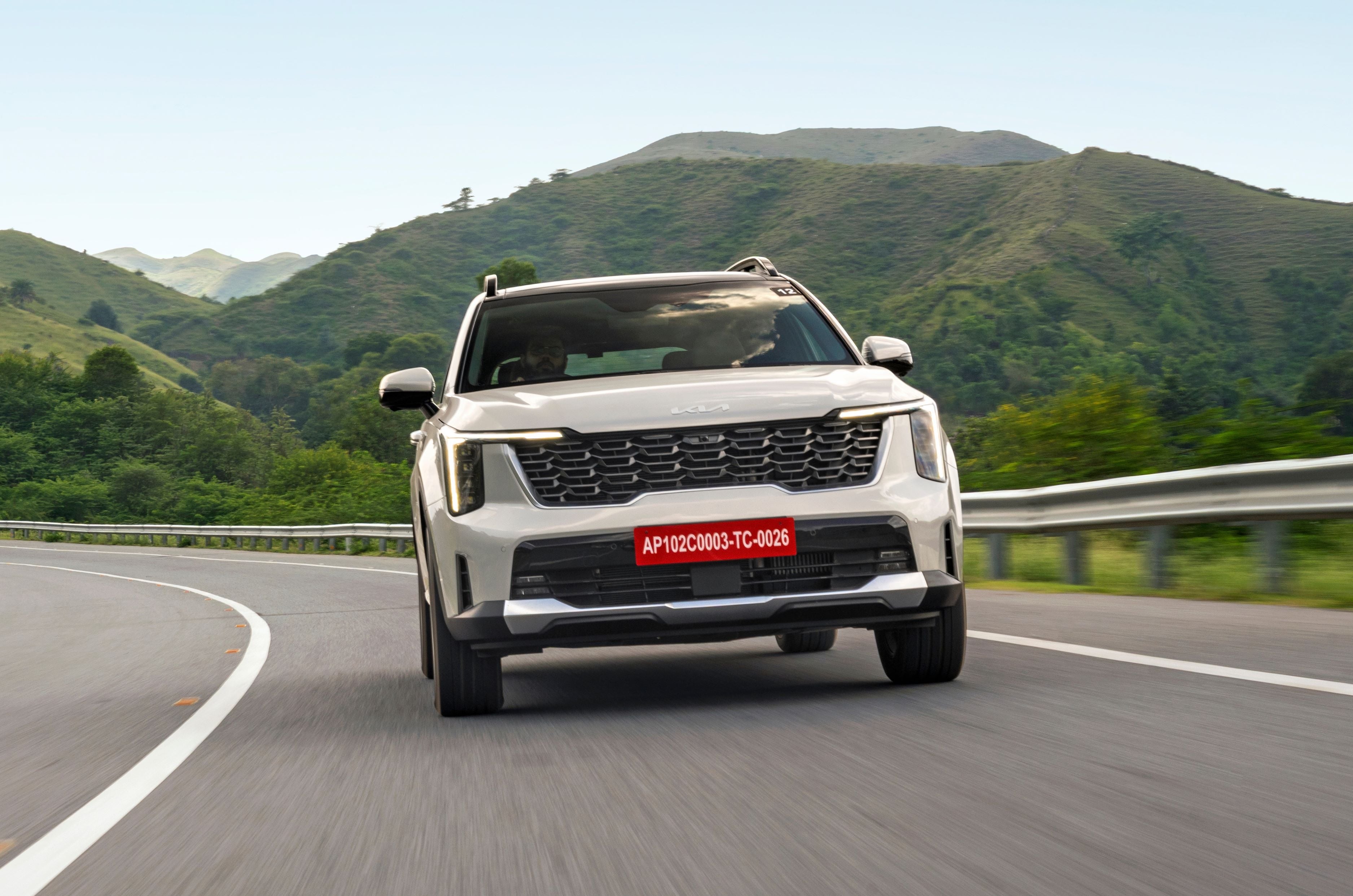
Based on the gen 4 Sorento, it carries over the older and more palatable design language.
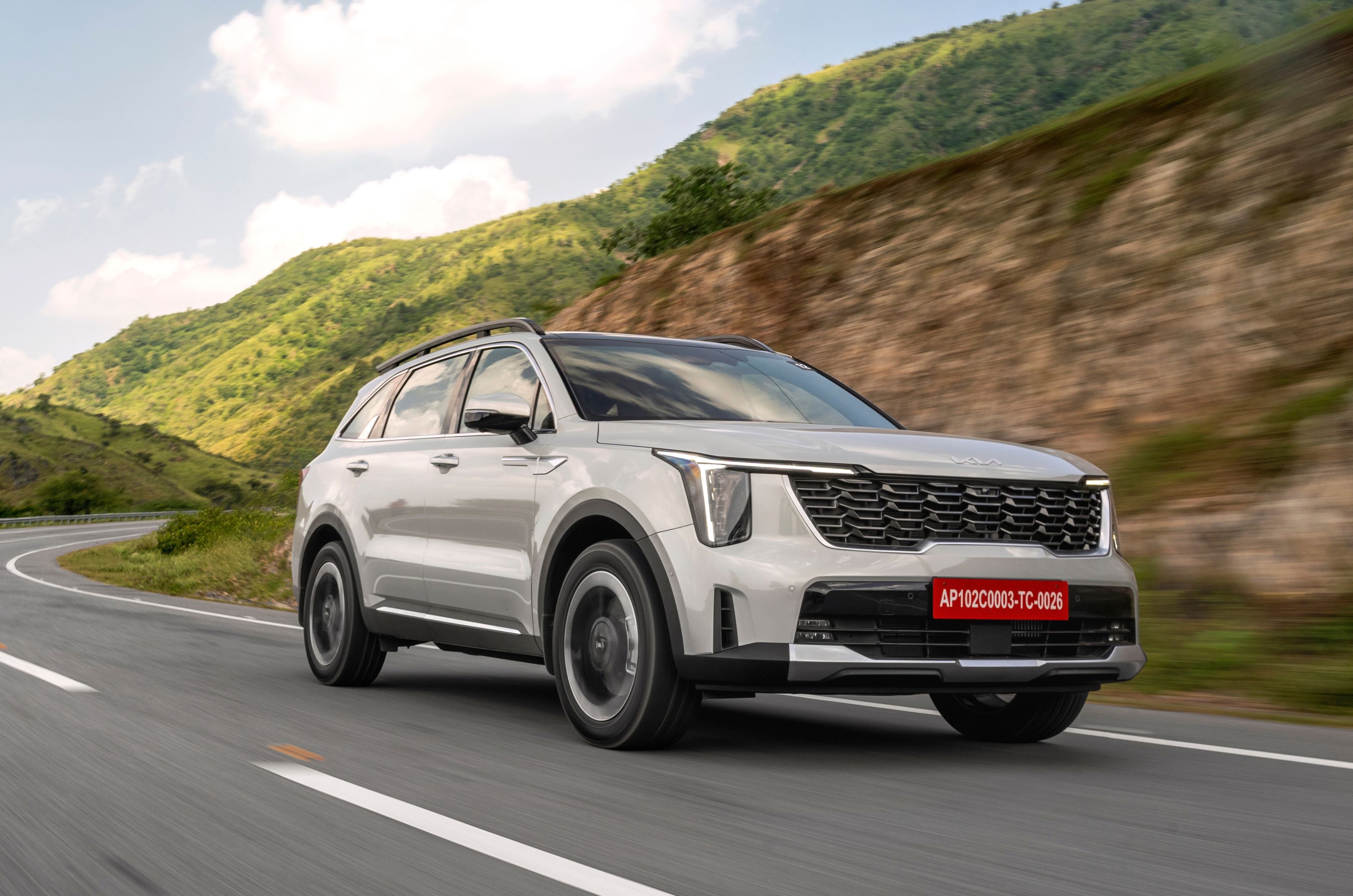
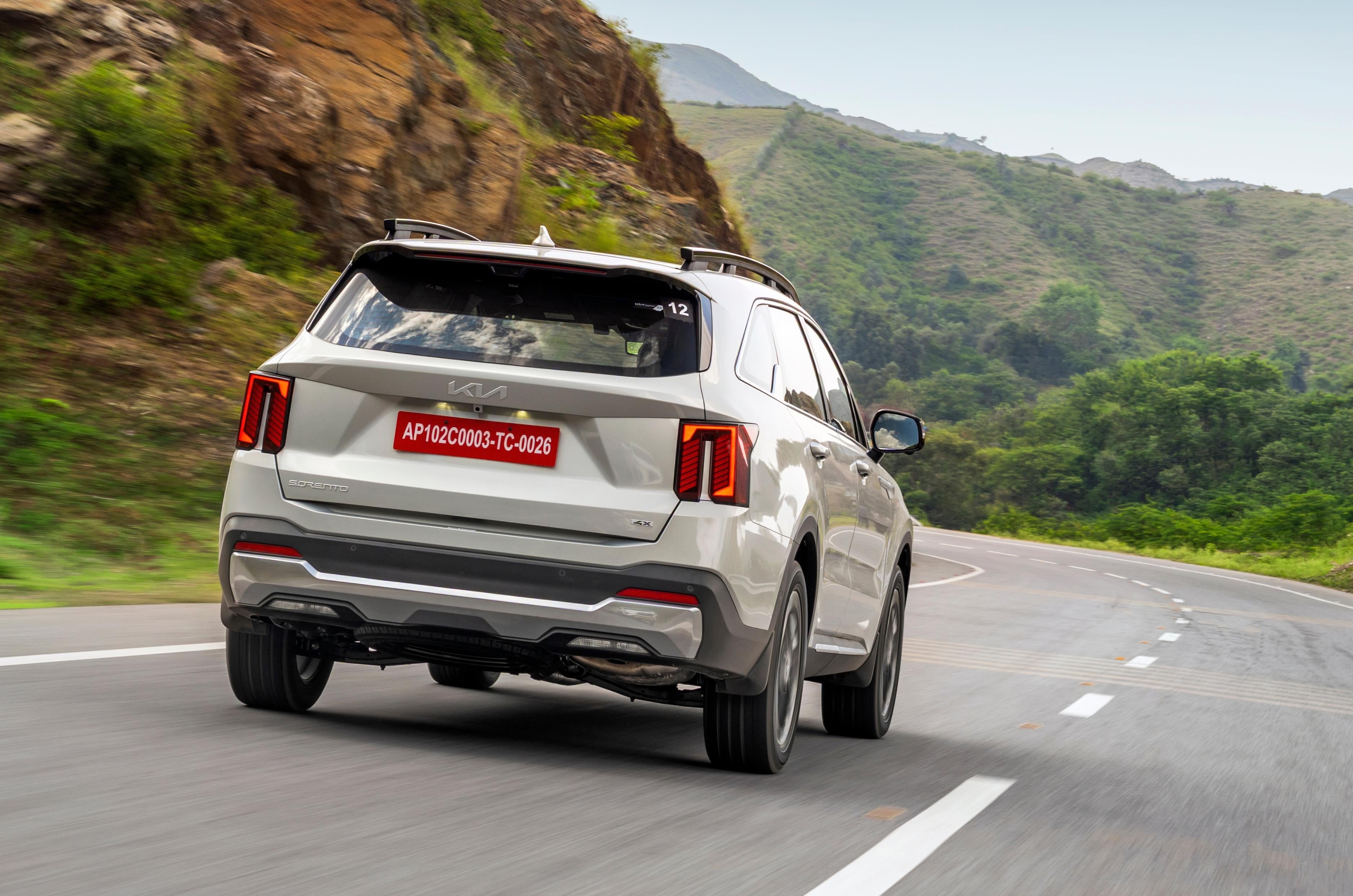
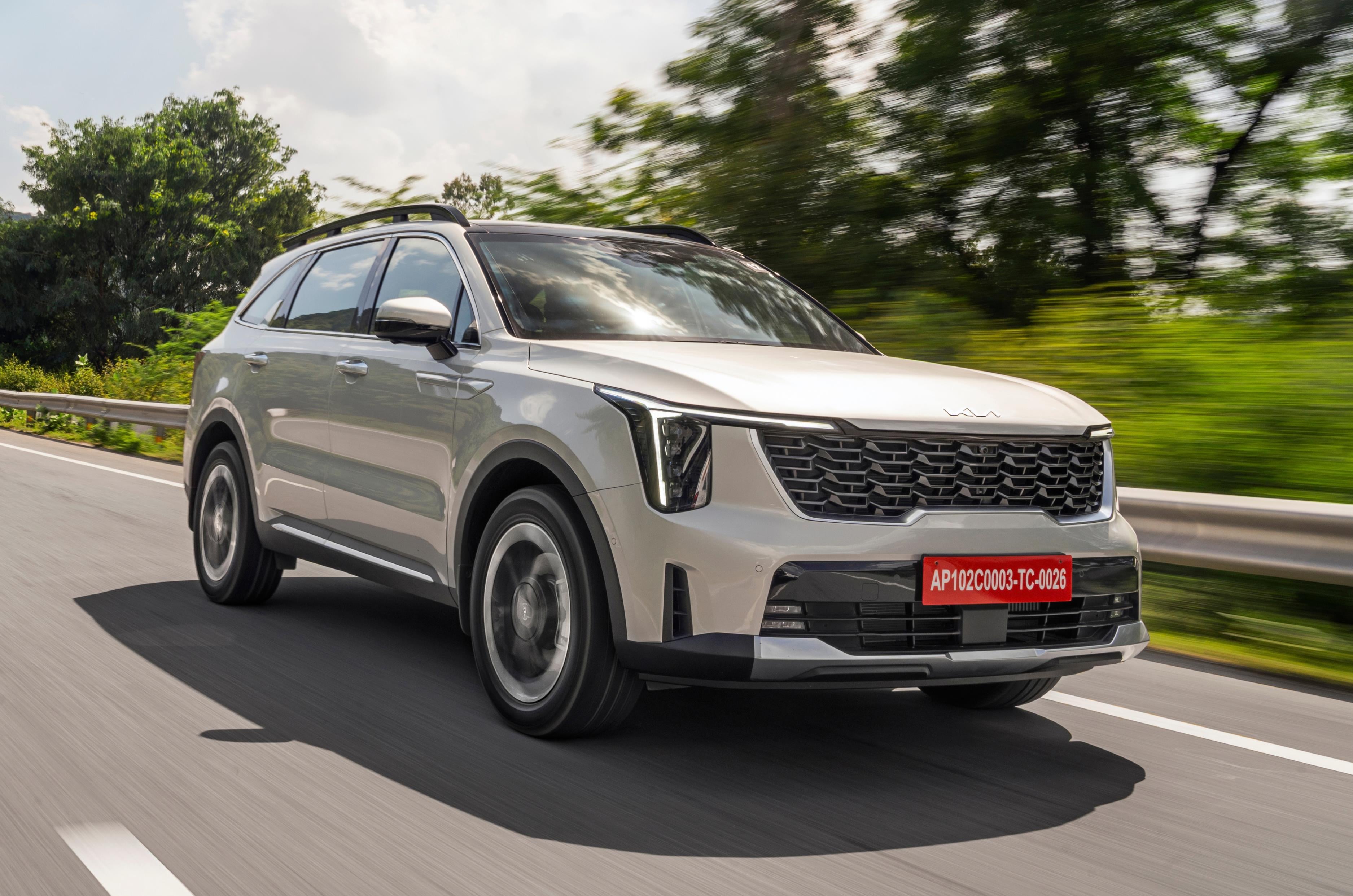
The Sorento sits on Hyundai-Kia’s MQ4 platform, the freshest architecture in its class, and it has already had a mid-life update to keep it looking current. The 2024 facelift brought the nose in line with the design language Kia kicked off with the EV9, so you get vertically stacked LED headlights, Y-shaped daytime running lamps and an aggressive looking bumper with wide intakes. At the back are L-shaped wraparound tail-lamps, and thankfully no light bar stretched across the tailgate.
Beats the rivals in length, width, and wheelbase.
Kia’s stated aim was a more technical, precise look, one meant to signal tight build quality and engineering sophistication. It is a trick the German premium brands have used for years, and Kia has clearly taken a leaf out of their book. The Sorento looks crisp and expensive rather than flashy, and is likely to age well too.
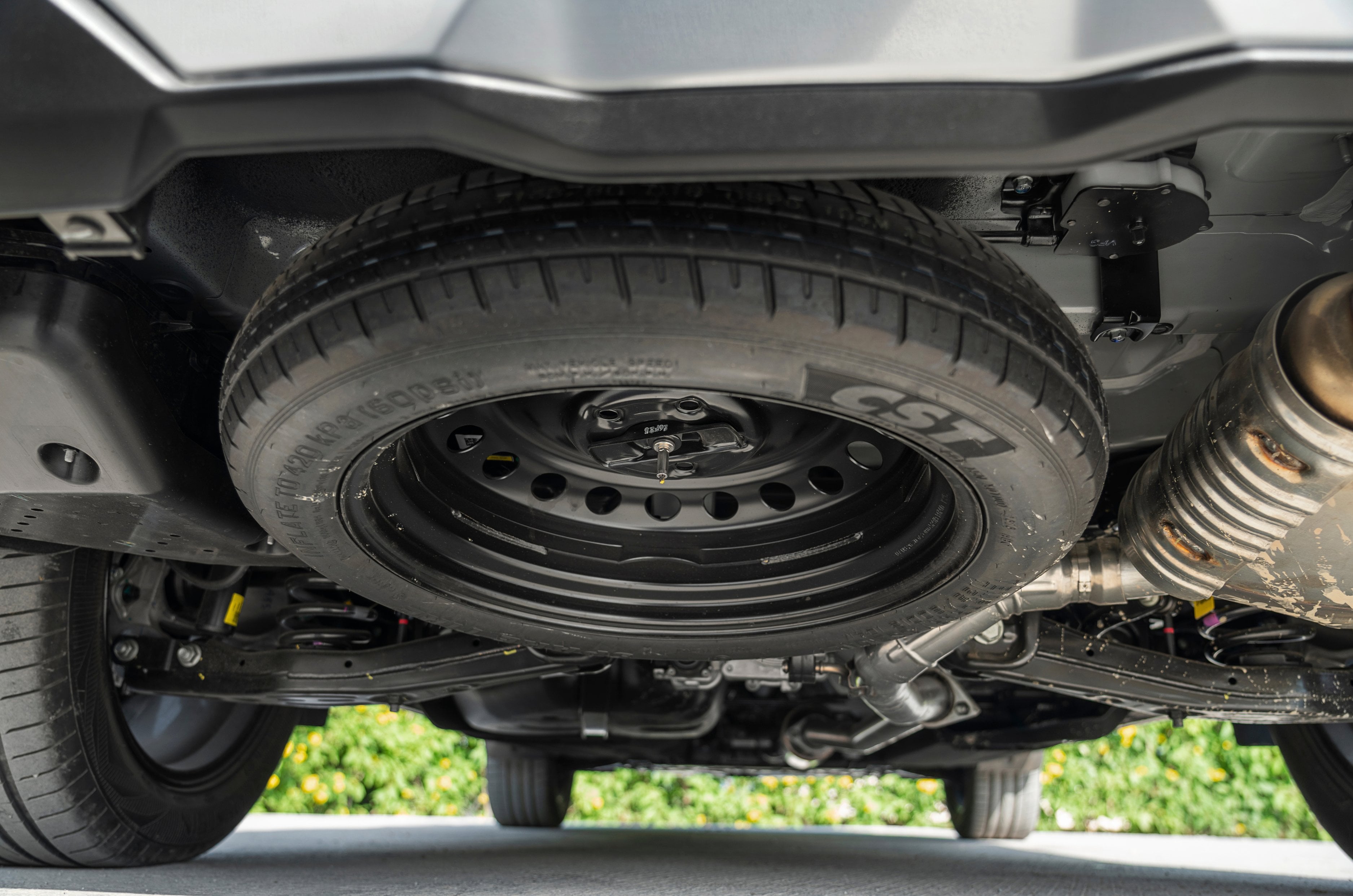
Spare wheel mounted under the floor frees up room in the boot.
What it does not have is brute presence. Despite being the longest, widest and tallest SUV in its segment, at 4,815mm long, 1,900mm wide and 1,785mm tall on a 2,815mm wheelbase, it does not loom in your mirrors the way a Fortuner does. The sloping roofline at the rear softens the silhouette and lends it a hint of crossover, and some will see it as a big Seltos rather than a junior Land Cruiser. Clearly this is not an SUV that looks like it can bully its way through traffic.
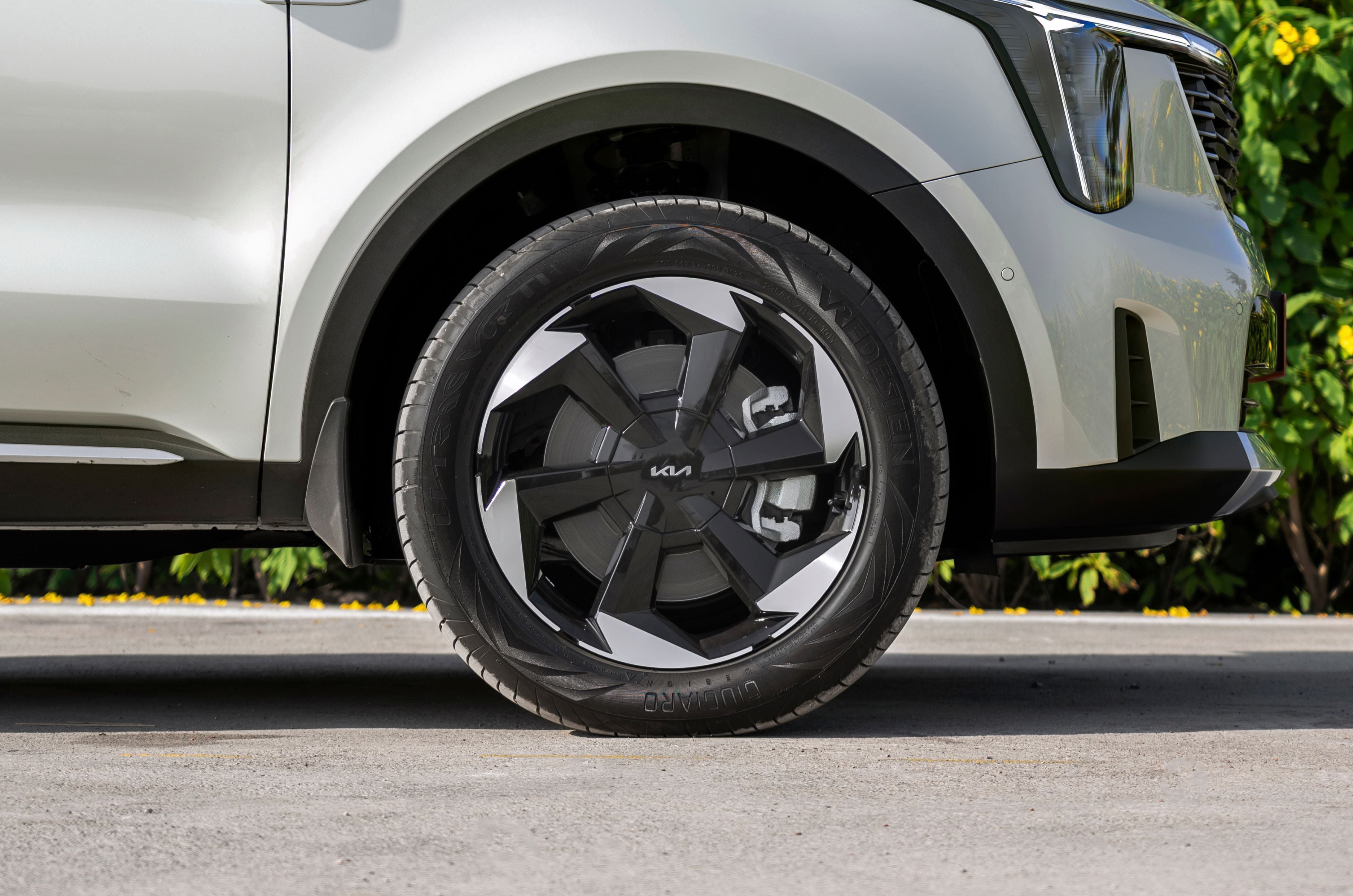
A more unique design could’ve been used for the 19-inch alloys.
The 19-inch dual-tone alloys could have been more distinctive, too an effect exaggerated by the chunky 235/55 R19 tyres. Those tall sidewalls, though, are not a styling misstep so much as an engineering choice, and they play a big part in how this car rides. More on that later.
Kia Sorento interior space and comfort
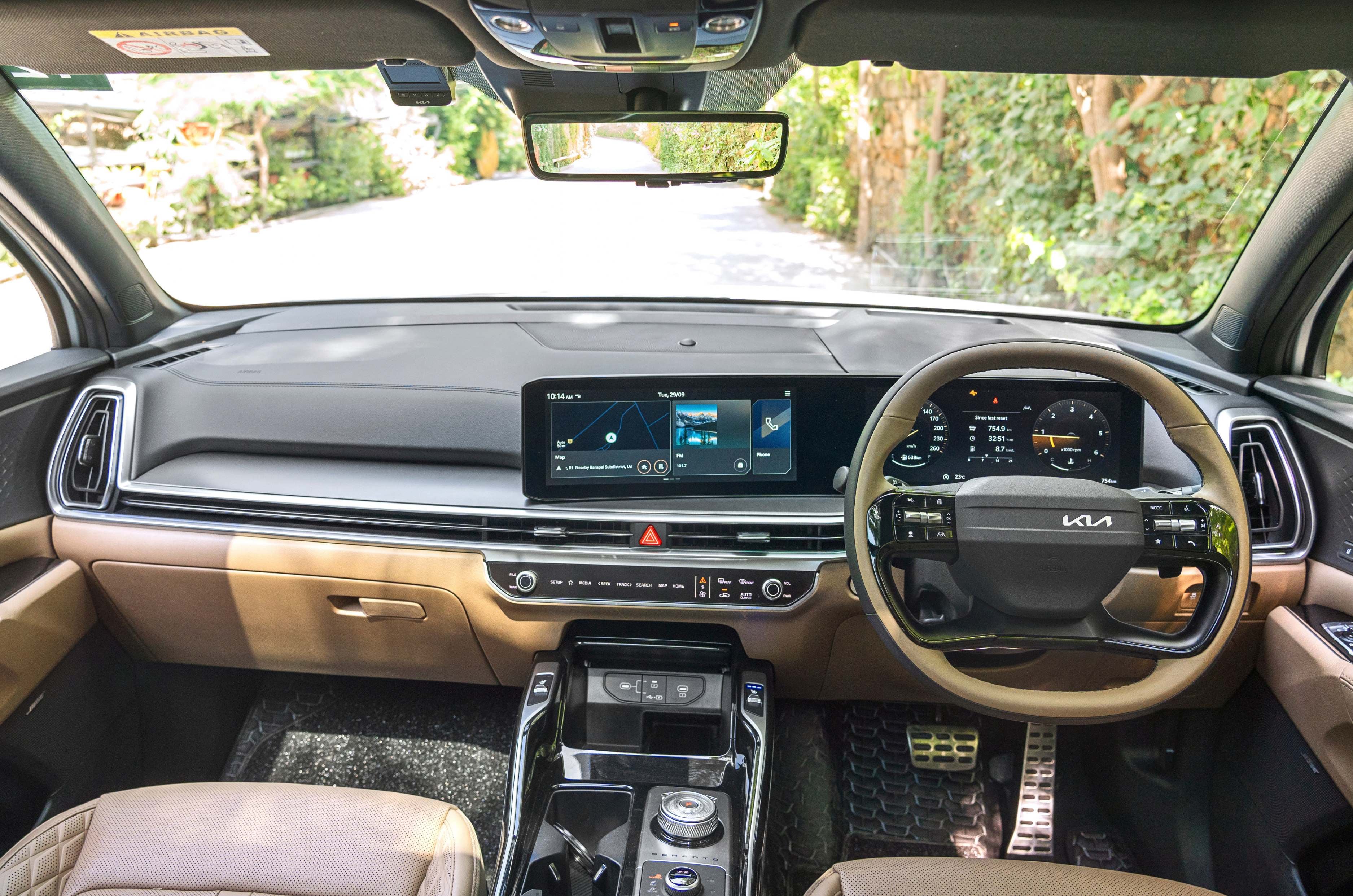
Clutter-free dashboard with solid build and plush feel.
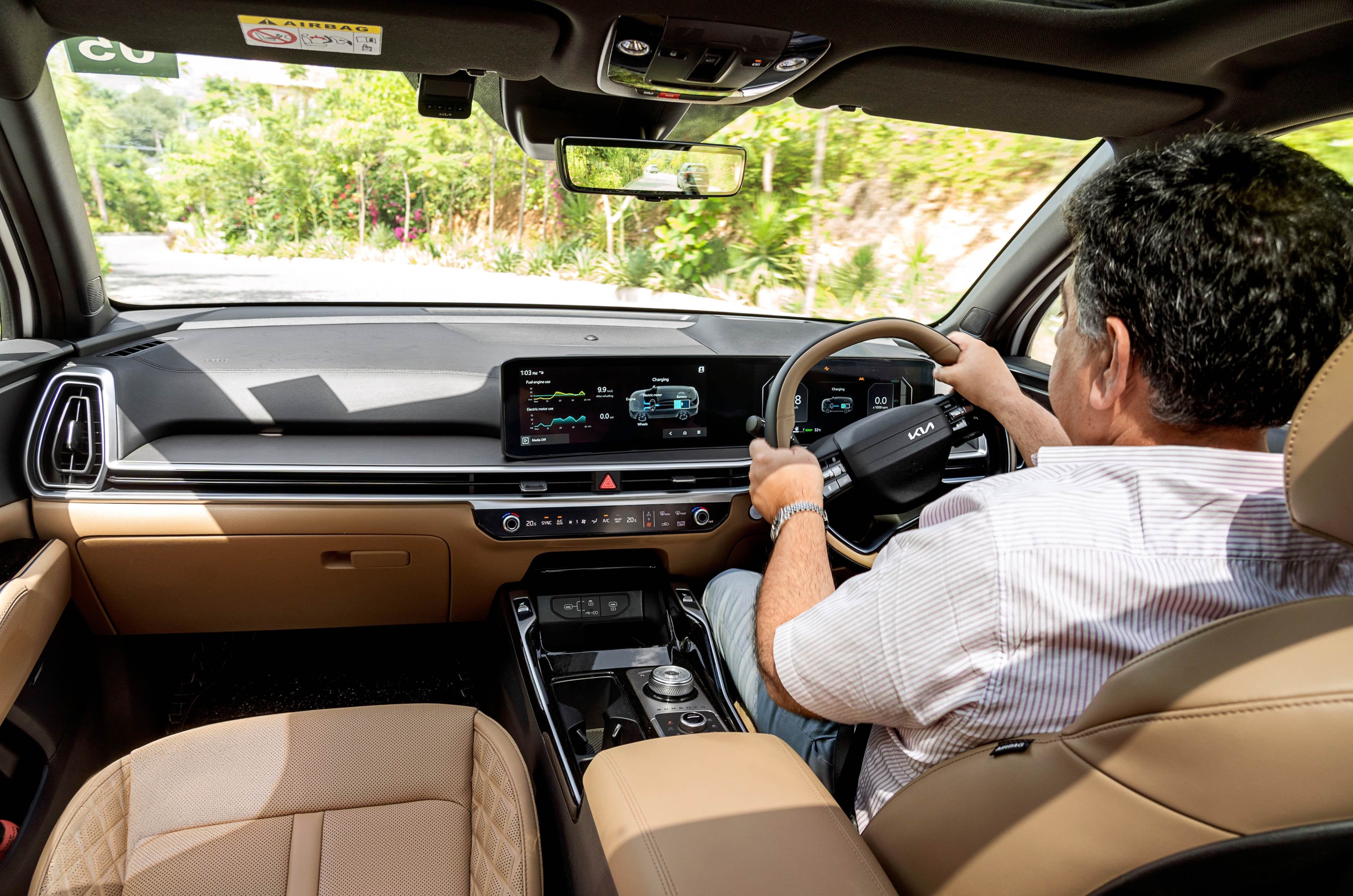
If the exterior is quietly effective, the cabin is where Kia has truly aced it. The Sorento offers a mix of quality, equipment and ergonomics that nothing at this price can match. Soft-touch materials cover everything you are likely to touch, including the spots where your knee rests against the centre console. There is a healthy count of physical buttons, and they click with a precision that feels engineered rather than sourced. The knurled finish on the rotary drive selector and the switchgear adds a tactile richness you normally pay German money for.
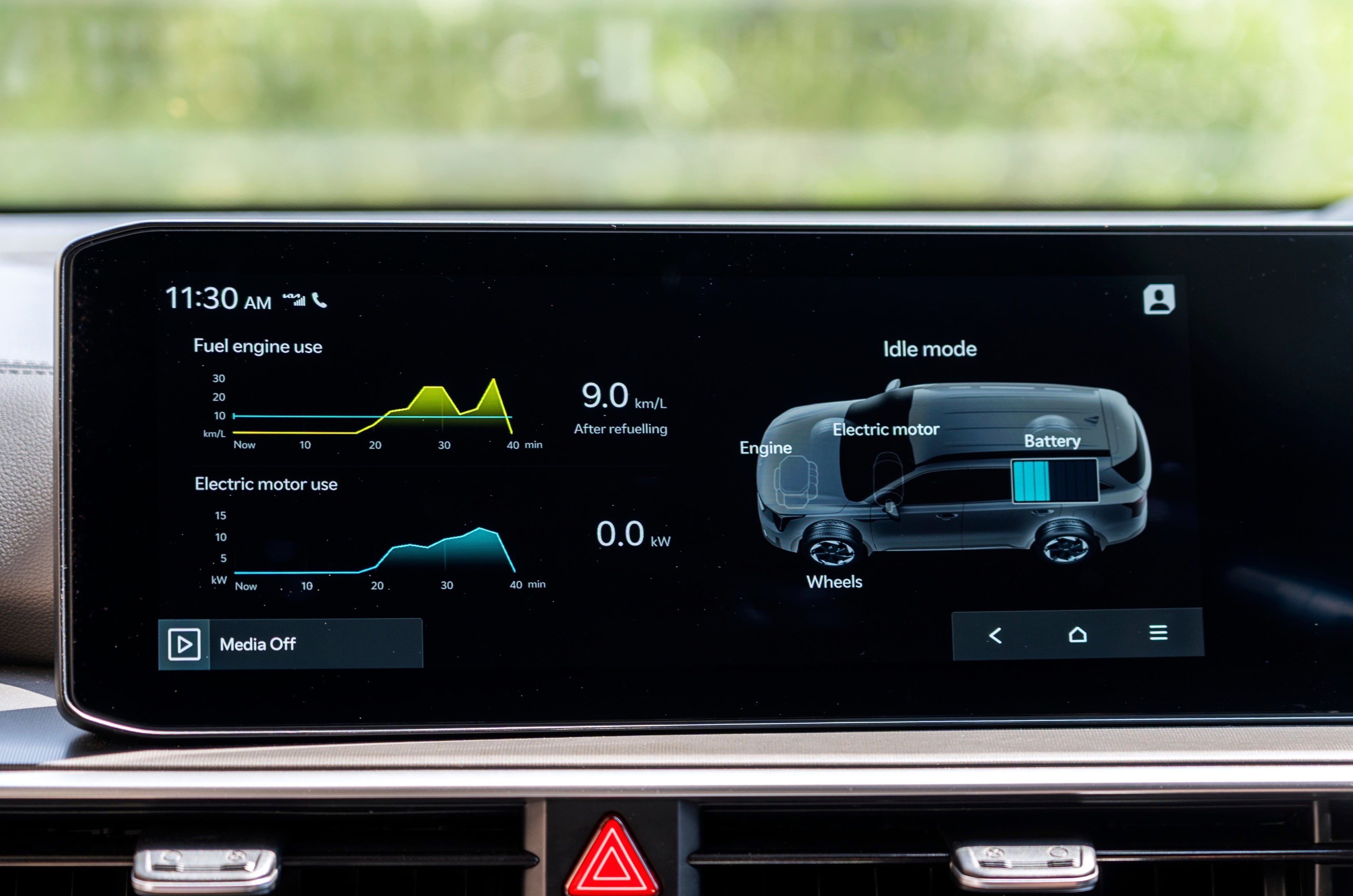
Hybrid variant gets exclusive data for power flow and efficiency.
As with its Hyundai cousins, the real ace is the software. The 12.3-inch infotainment system is logically laid out, menus are where you expect them to be, and getting to a feature takes a tap or two rather than a treasure hunt. Kia has also kept the climate controls off the main screen. They live on a touch-sensitive bar below it, with scrollers and a button that toggles the bar between air-con and infotainment shortcuts. It is a clever, space-saving solution, though you will occasionally find it in the wrong mode just when you need it.
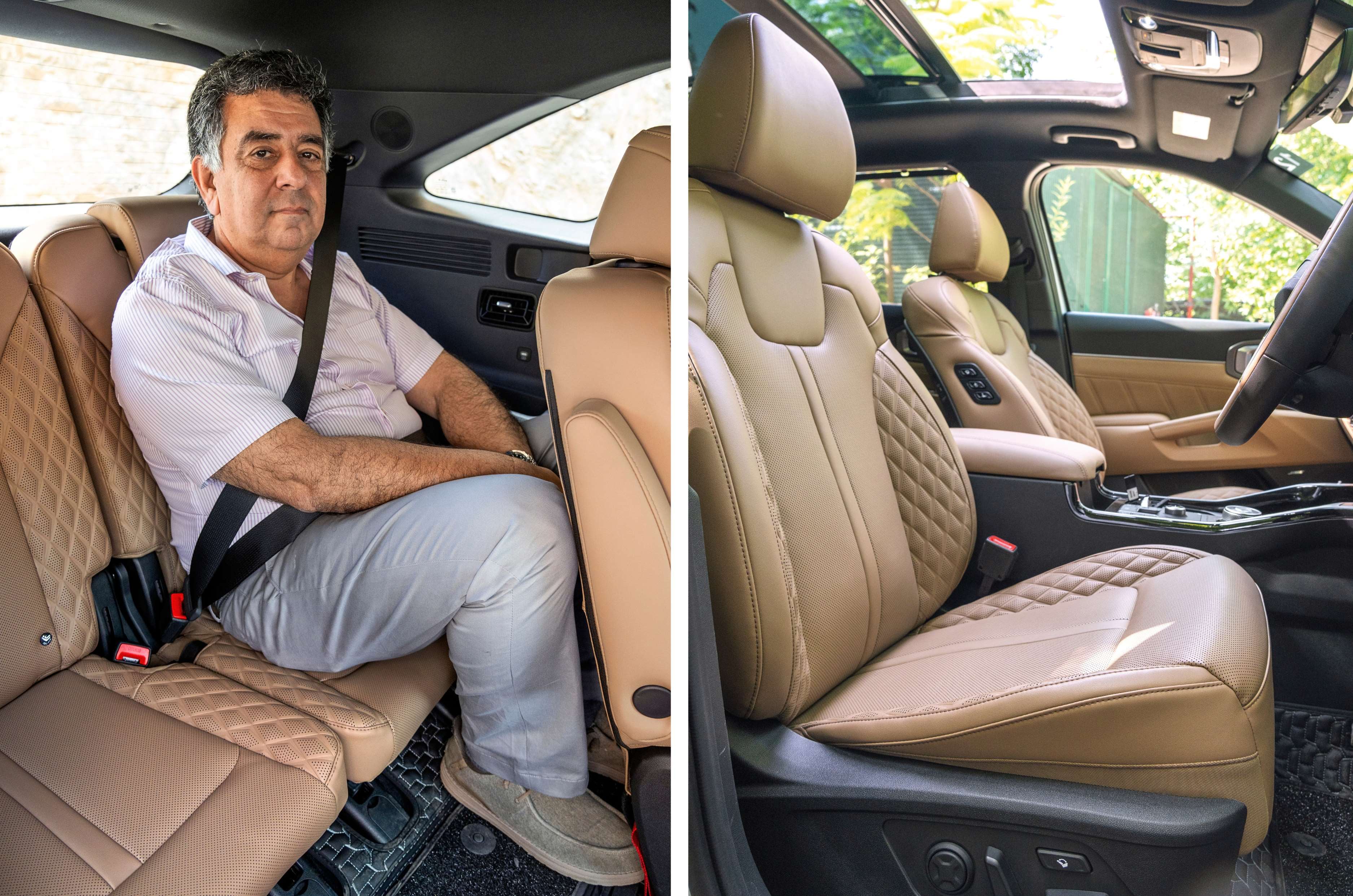
L: Third row seat placed on floor results in knees-up seating; best for children. R: Broad, supportive and well-cushioned front seats are electric and also get ventilation.
The front seats are fully powered, with 10-way adjustment, lumbar support and ventilation, and the passenger seat gets a boss mode so whoever sits behind can push it forward. Coming to the third row, access is easy. You can either walk through the gap between the captain chairs or press a button on the seat, which electrically slides and tilts it forward. Once there, the news is mixed. Legroom is better than you expect, but the seat base is mounted almost flat on the floor, so there is no under-thigh support and your knees point at the roof. Treat it as a space for children or short hops. At least the third row gets its own blower controls and USB ports.
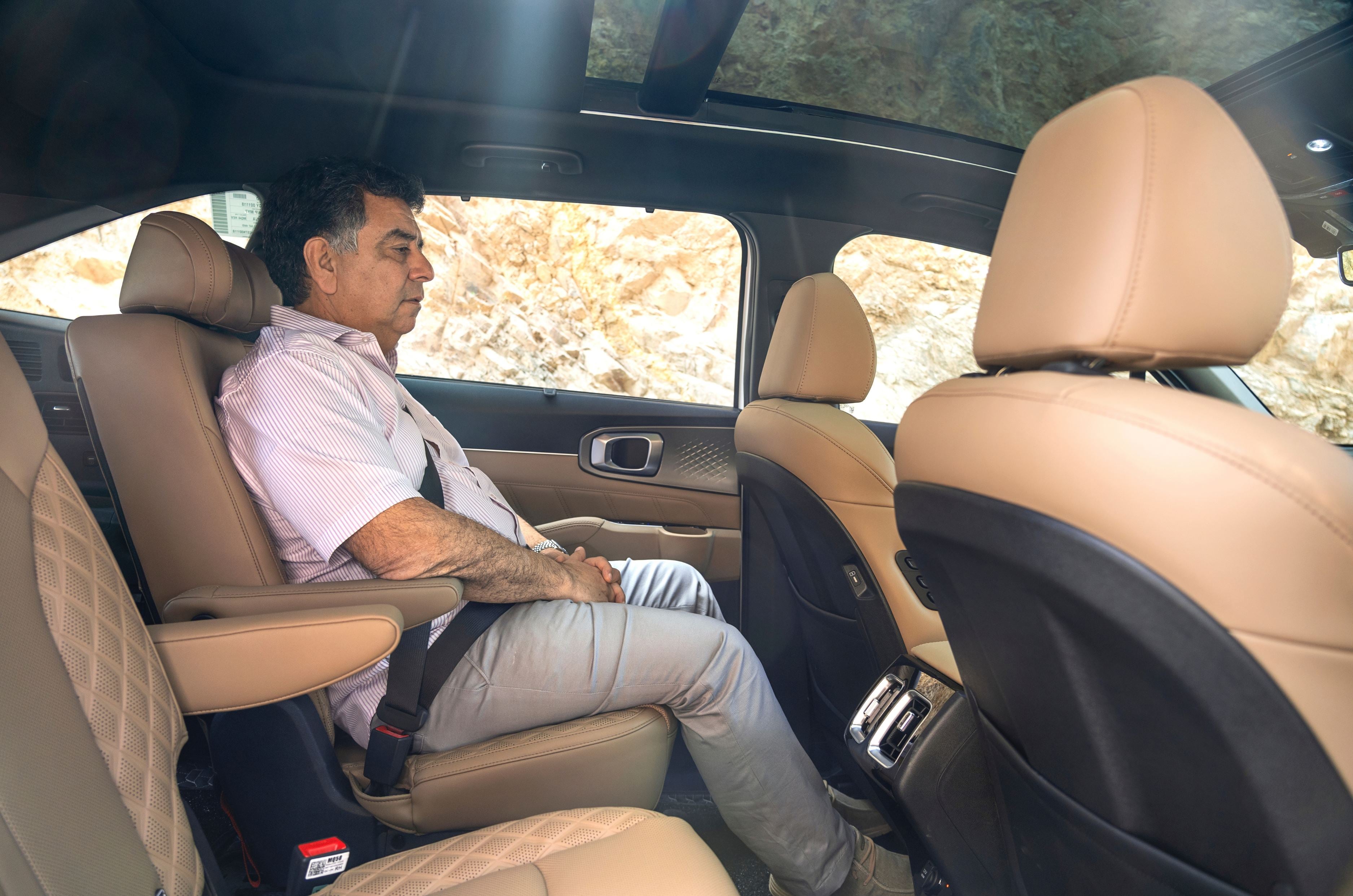
Spacious middle-row with ventilated and adjustable captain chairs; bench seat version also available.
One of the Sorento’s highlights, however, is the second-row experience. Our test car was the top HTX with six seats, and its second-row captain chairs are ventilated too, a rarity in this class. They are the best seats in the house. There is lots of legroom, a commanding view out and good under-thigh support, comparable to the Innova Hycross’s middle-row captain chairs, though the Toyota seats you a touch higher. A neat detail is the cupholder moulded into the door, up near the handle, where it is actually easy to reach.
With all three rows up, the boot is a modest 179 litres; fold the third row and that grows to 813 litres. A full-size spare is welcome, but it is slung under the body, which is not the most convenient place to reach. Overhead, the massive panoramic roof floods the cabin with light and adds to the sense of space.
Kia Sorento features and technology
Digital IRVM offers excellent resolution and can be adjusted for level and brightness.
The equipment list is huge. In addition to the aforementioned 12.3-inch touchscreen, powered front seats, ventilated captain’s chairs, and panoramic sunroof, the Sorento comes packed with a 12.3-inch digital driver’s display, a head-up display, a 12-speaker Bose system, dual-zone climate control, a powered tailgate, rear-window sunshades, 64-colour ambient lighting and a digital rear-view mirror that flips back to a conventional one at the turn of a knob. The driver’s seat even gets an ‘ergo-motion’ mode that simulates a massage function by shifting the contours around.
Ergo mode for driver seat acts like a massage by moving the contours to avoid a stiff back on a long trip.
Safety is just as thorough, with 10 airbags, a 360-degree camera, front and rear dashcams, remote parking assist, TPMS and Level 2+ ADAS on the (A) trims. There is even real-time generative AI, a first for any Sorento globally.
Kia Sorento performance and refinement
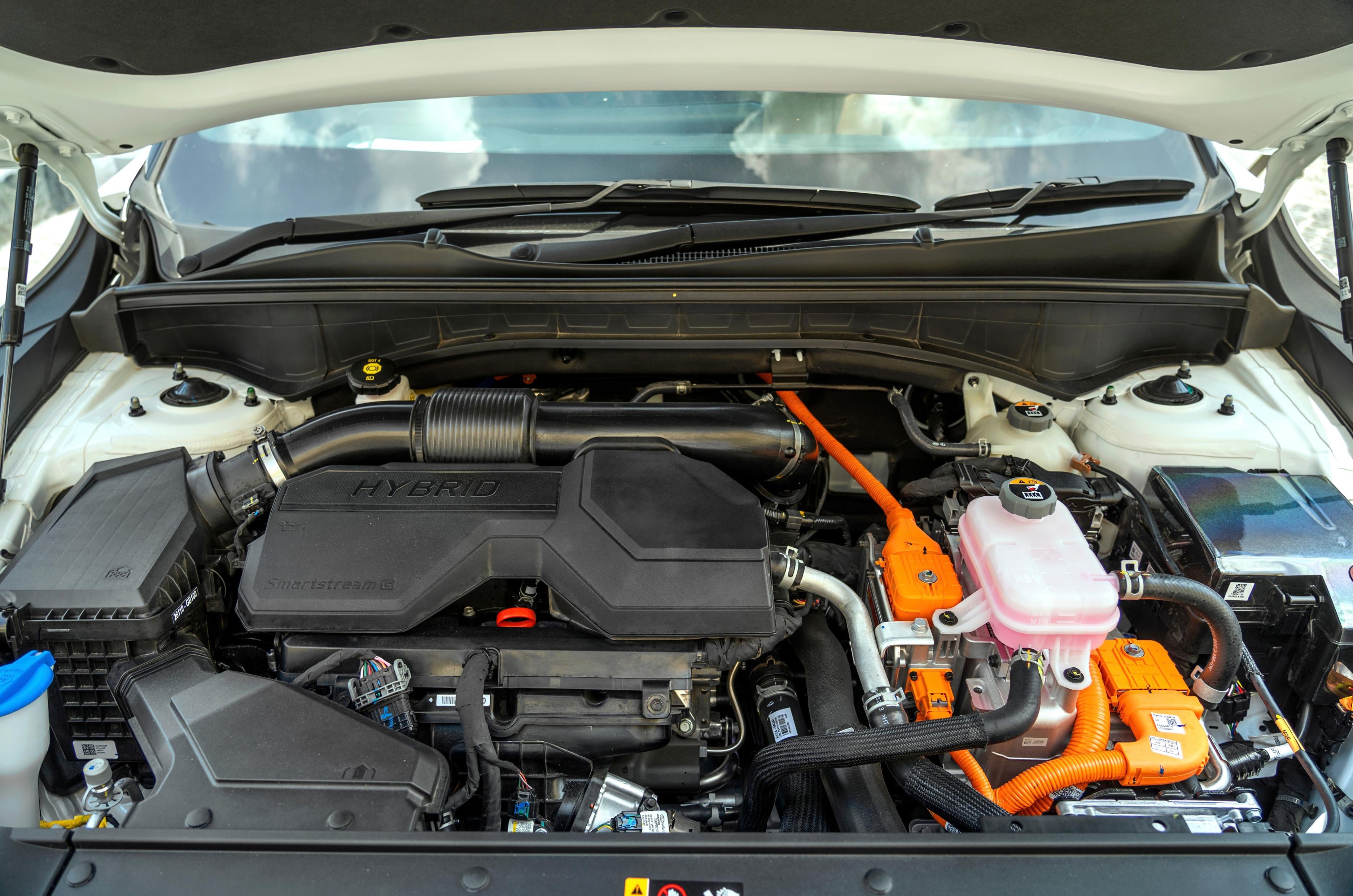
1.6-litre turbo-petrol engine paired with an electric motor and 6-speed torque converter automatic.
First up, the hybrid. Its 1.6-litre turbo-petrol makes 180hp and 265Nm, and the electric motor adds 65hp and 264Nm. The combined figure rating is 230hp and 380Nm of torque You can tell this the hybrid is the one for the city the moment you pull away, because the response is instant. It is well mated to the 6-speed torque-converter automatic, and the handover from electric to petrol power is close to seamless.
Hybrid variant is smooth in the city but gets noisy on the highway especially during overtakes.
The 1.49kWh battery lets it run in EV mode for a decent stretch at crawling speeds, and in stop-go traffic the hybrid makes eminent sense. Power delivery is refined, seamless and relaxing, and efficiency should be strong; The limitation is the motor itself. With only 65hp to shift a car weighing over two tonnes, it cannot do the heavy lifting on its own, so when you want to make quick progress the engine kicks in early. Push hard on the highway and the four-cylinder gets noisy and starts to run out of steam.
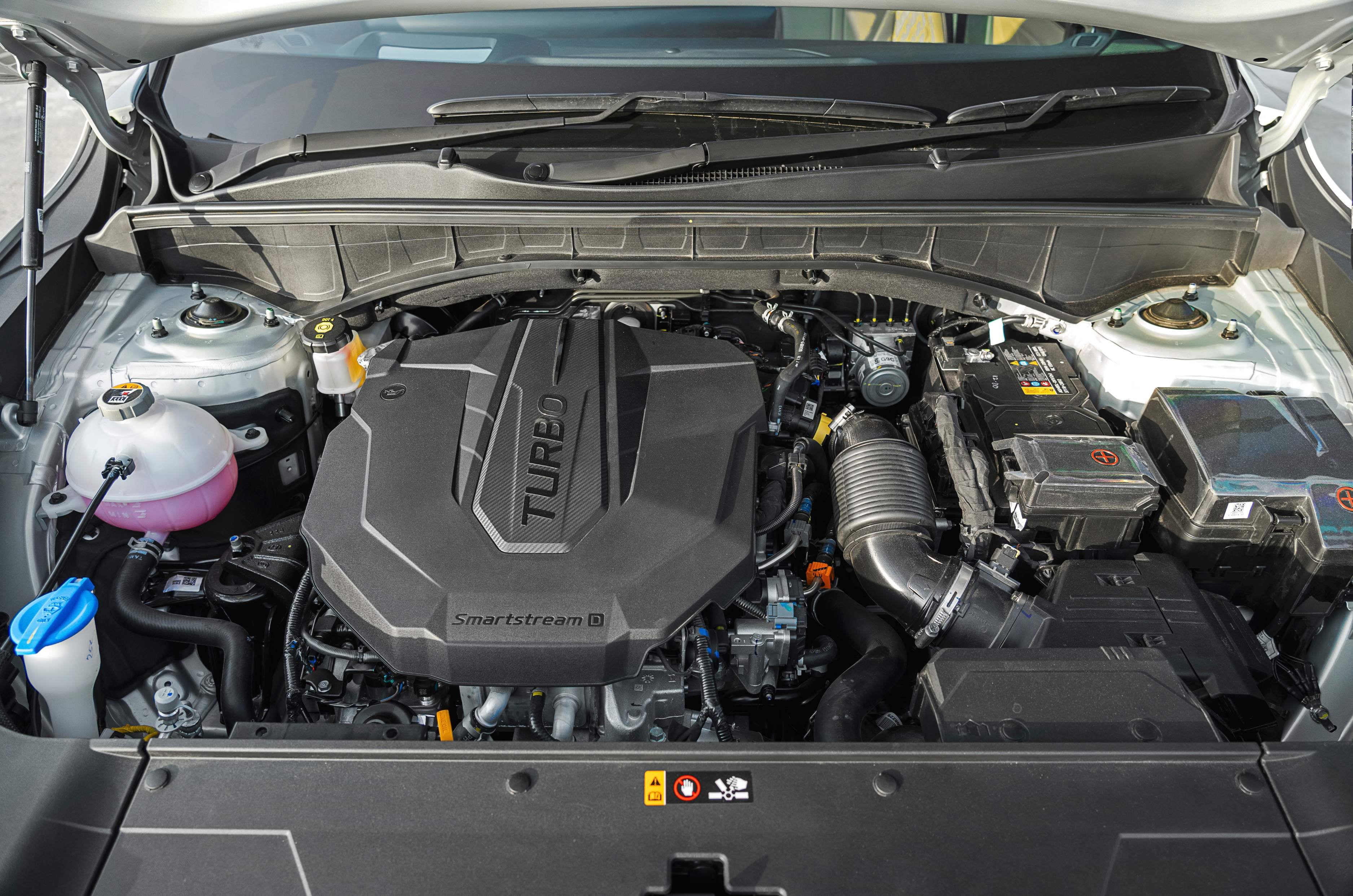
2.2-litre diesel engine makes 193hp mated to an 8-speed DCT and is the same unit seen on the Carnival.
Which is where the diesel comes in. The 2.2-litre is familiar from the Carnival, but it feels a lot sprightlier in the lighter Sorento. Its 193hp and 442Nm arrive in a strong, linear surge, and this is a fantastic, long-legged cruiser. Settle into eighth gear on an open highway and it simply lopes along, the engine barely working. It is also more tractable at low speeds than you might expect, pulling cleanly at part throttle from very low revs, so it can double as a city car, although its low-end response does not come close to the hybrid’s. It’s only when you floor it to dart through traffic that you experience a bit of hesitation, and its hear that you can use the paddle shifts to be in the right gear at the right time of the 8-speed DCT which comes as a pleasant surprise.
The diesel‘s strong torque and effortless cruising makes it perfect for long trips.
Rather than the snappy, slightly jerky shifts typical of dual-clutch boxes, this DCT slurs its changes almost like a torque converter, which adds to the smoothness of the whole package. The reason is that it is a wet-clutch unit, which also bodes well for durability in Indian traffic. The diesel is quite refined for the most part and its only when pushed hard that it gets audible and takes on a gruff note.
Both get drive modes; You can play with the Eco, Normal, Sport and Smart (or auto) modes in the diesel which alters the power delivery. In Sport, the throttle response is sharper and the default mode we liked whilst in Eco you can feel the response a bit dulled down. The Sorento Hybrid gets just Eco, Sport and Smart modes and in Eco mode EV running is prioritised. In addition, the AWD versions get Snow, Sand and Mud terrain modes which we didn’t a get chance to fully experience.
Kia Sorento mileage
In terms of fuel efficiency, the hybrid is rated at a highly frugal 19.60kpl with front-wheel drive and 17.70kpl with AWD, while the diesel returns 17.66kpl and 15.79kpl respectively on the Indian test cycle. In real-world city driving the gap between the hybrid and diesel could be bigger, depending on traffic. On long cross-country runs, though, with extended stints of cruising in high gears, the diesel could well be the more frugal of the two.
Kia Sorento ride and handling
The Sorento’s ride comfort is simply outstanding, and it comes as a pleasant surprise. That’s because Kias have traditionally been stiffer sprung than their Hyundai cousins, but here Kia has clearly prioritised comfort over sportiness, and the suspension is on the soft side. The way it smothers bad roads at speed is remarkable. Around Udaipur, where several stretches are properly broken, we never once had to lift off for a bad patch. The car just soaked it up and kept going.
Ride quality is segment best and it is unfazed over broken roads.
The isolation it gives its passengers is shockingly good, and those tall-sidewall tyres deserve part of the credit. They do a fine job of rounding off sharp jolts and filtering out the high-frequency shocks that a suspension alone cannot fully absorb. At highway speeds there is a bit of body movement on the undulating bits but its not disconcerting and both versions feel stable and planted at high speeds, which matters in a car this tall.
Our HTX test cars came with AWD as standard. We did not get a chance to test its off-road ability properly, but on dirt roads it felt sure-footed and secure. A proper off-road test will reveal how capable the all-wheel-drive system, though we doubt owners will really want to test the Sorento’s off-road capability.
Steering is light but lacks consistency and sharpness of European rivals.
The steering is less impressive. There is a dead zone around the straight-ahead position, and it does not feel as fluid or progressive as its European rivals’. The Volkswagen Tayron and Skoda Kodiaq are both dynamically sharper. One reason is because the Sorento rides taller too, as ground clearance has been raised from the global car’s 176mm to 208mm, and there is a touch of body roll when you push hard through corners.
But that misses the point. On balance, the Sorento’s ride and handling are superbly judged for the people who will buy it. Kia has done a fine job of understanding what a premium SUV buyer in India wants, and it has tailored the car accordingly.
Kia Sorento price and verdict
As a package, the Sorento hits it out of the park; rivals have a lot of catching up to do.
If the product does not win you over, the pricing certainly will. A starting price of Rs 27.99 lakh has set the cat amongst the pigeons, putting the Sorento within striking distance of the Mahindra XUV 7XO. And with its size, features and overall polish, the Sorento will not just nibble at the top end of the 7XO’s pie but with the Hybrid could also tempt a few Innova Hycross buyers. As for the Volkswagen Tayron and Skoda Kodiaq, the Sorento makes them look overpriced and underequipped.
The lower and mid variants are exceptional value. The top-end HTX, at Rs 37.49-40.19 lakh depending on fuel and seating, is pricey by comparison, around Rs 5 lakh more than an equivalent HTK, because it comes with AWD as standard. Here Kia has missed a trick. An HTX with two-wheel drive, a few lakh cheaper, would have been a far easier sell to the many buyers who want all the features and ventilated rear seats but will never leave the tarmac. That however is a small quibble that Kia can easily correct.
The lasting impression is that the Sorento feels premium, bordering on luxury. It is fantastically equipped, it rides beautifully, and it offers a choice of two powertrains that are each right for a distinct type of buyer. Most of all, it fits what the Indian SUV buyer actually wants with uncanny precision. Will Kia hit its target of 40,000 sales a year? That could be a tall order. But what there is no doubt about is that Kia has built another winner.
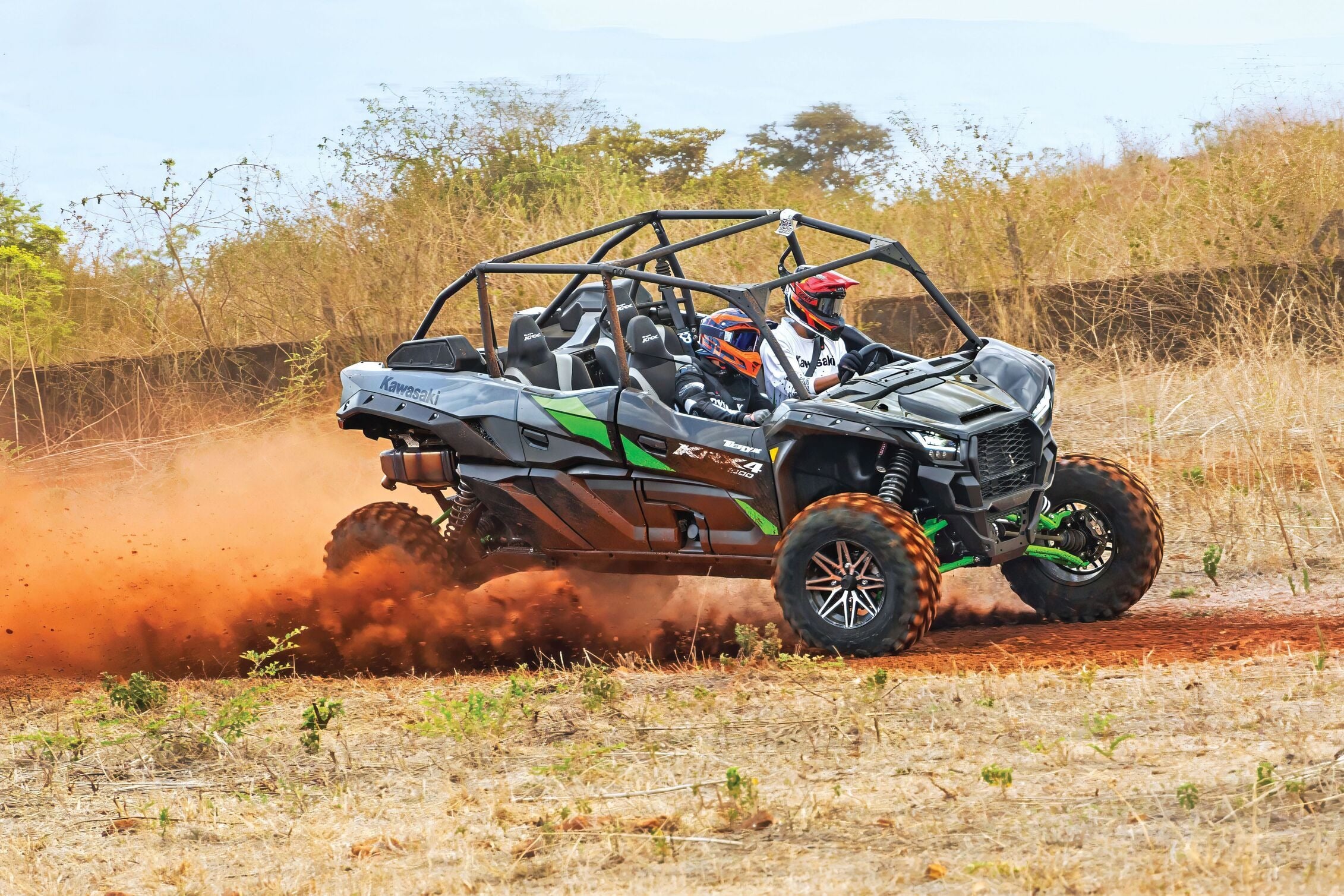
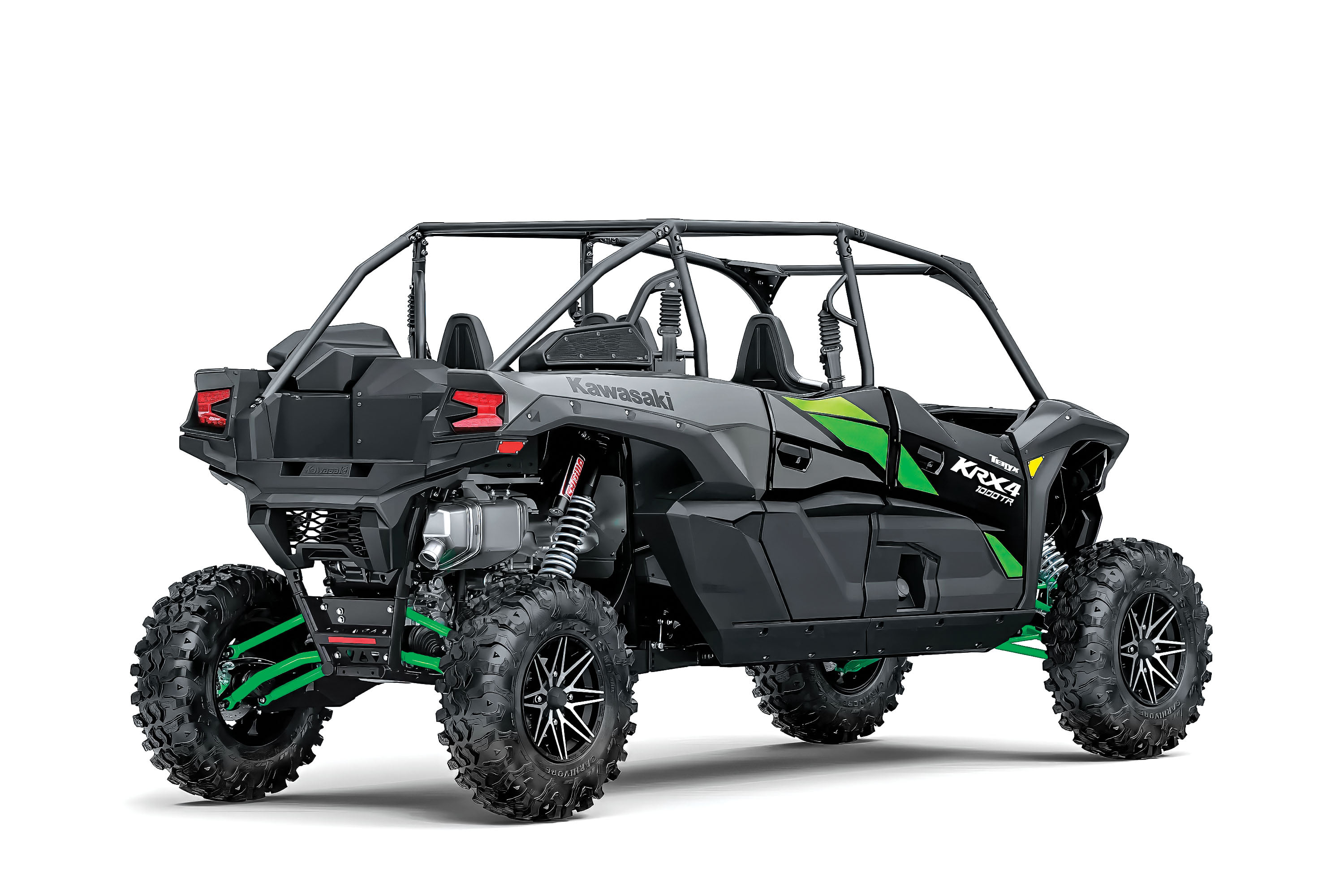
Kawasaki has officially brought its range of side-by-side vehicles (SxS) to India, and it’s a line-up that caters to vastly different applications. At one end are workhorses designed for agriculture, utility duties and passenger transport, while at the other are machines built purely for adventure. The range includes the Teryx 4 H2, Teryx KRX 1000, Teryx KRX4 1000, Ridge Crew and Mule Pro-FXT 1000 LE. We got the opportunity to spend a short time behind the wheel of the Teryx KRX4 1000, a four-seat performance-focused buggy designed to tackle the roughest of terrain.
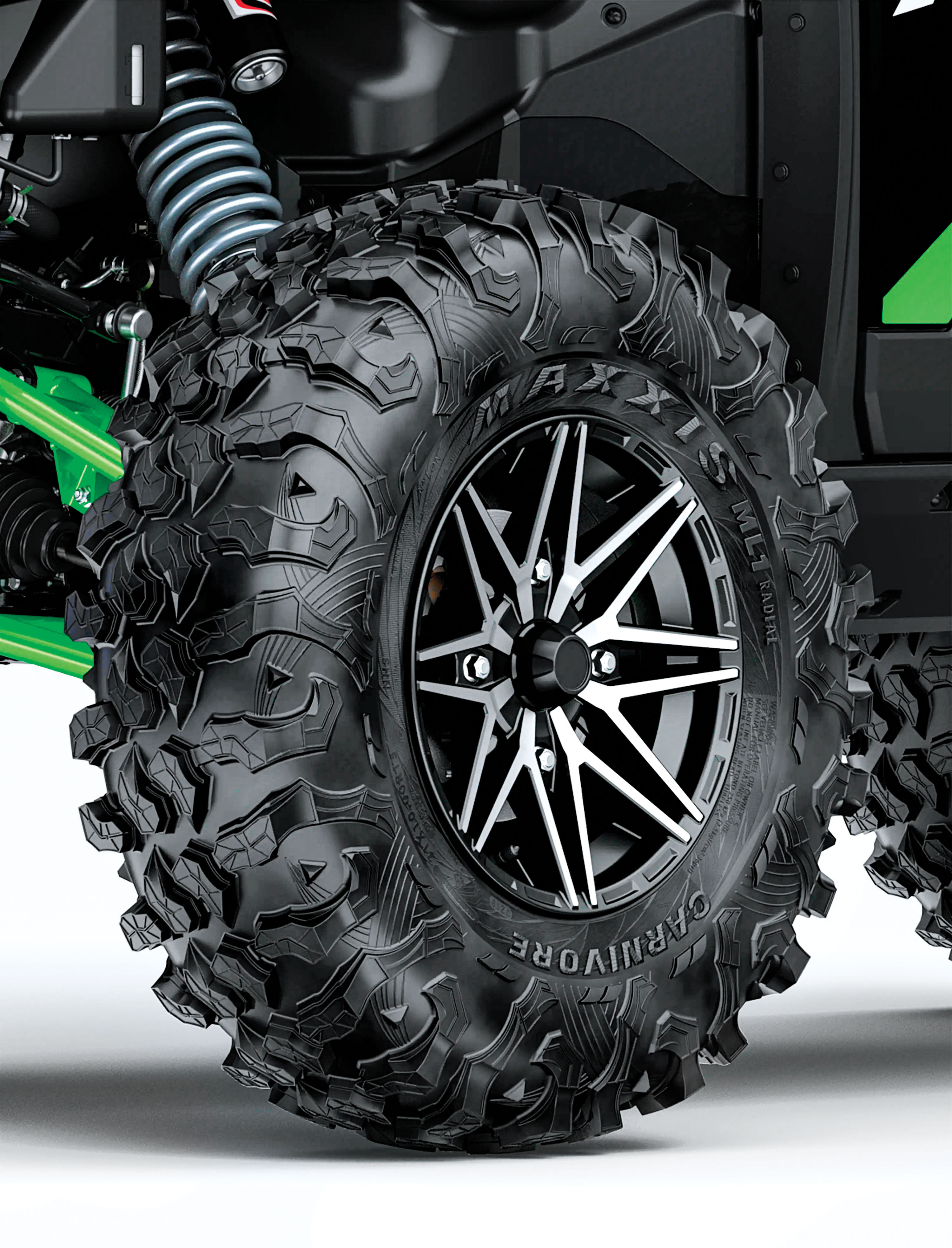
Think of it as an oversized, highly capable off-road buggy. Power comes from a 999cc parallel-twin engine producing 110hp at 8,300rpm and 102Nm at 7,000rpm. It rides on 15-inch wheels wrapped in chunky Maxxis Carnivore tyres, gets long-travel Showa suspension with adjustable damping, Electric Power Steering (EPS), selectable two- and four-wheel drive, and a CVT transmission. So, on paper, it has all the ingredients required for serious off-road exploration.
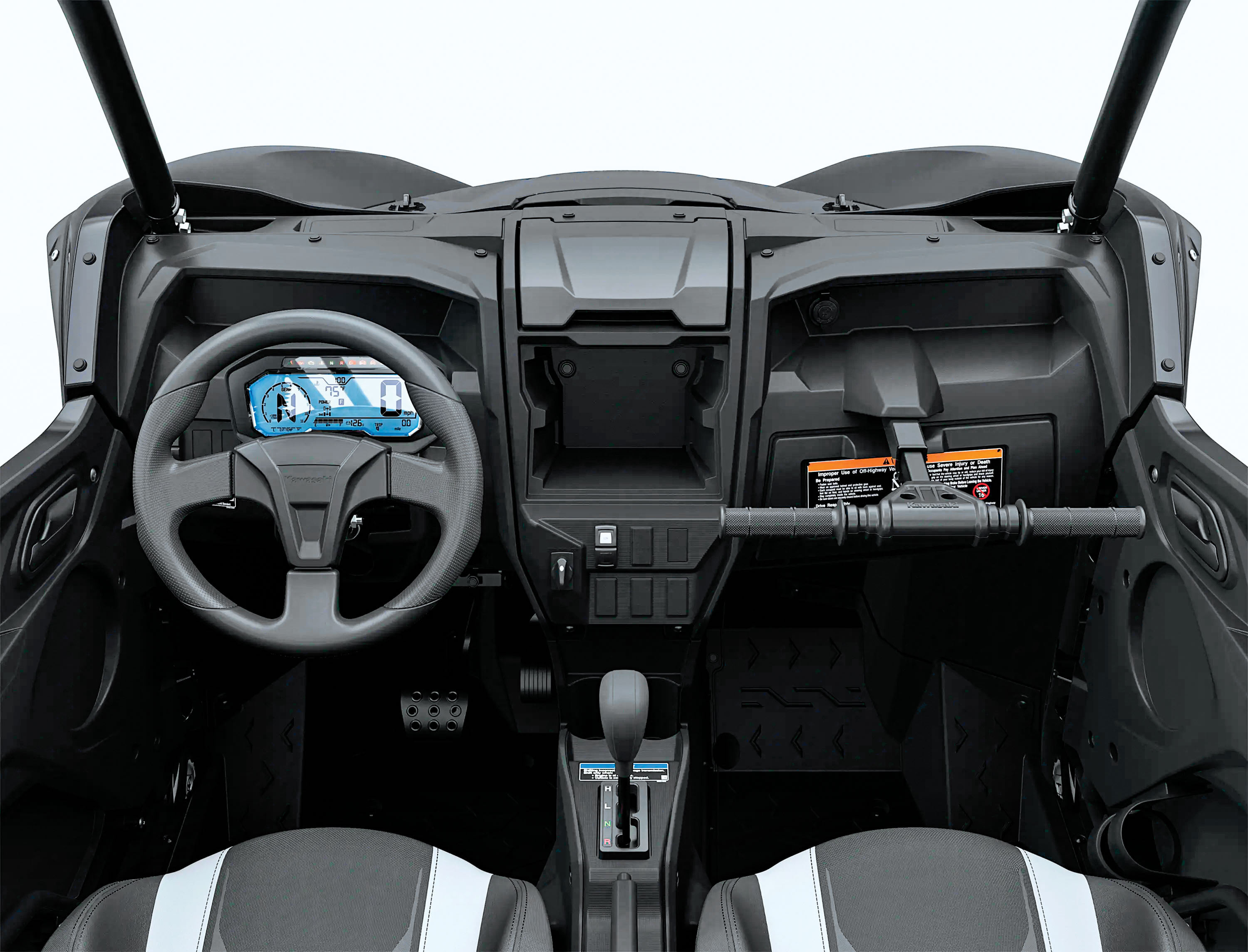
Hoseable interiors that don’t mind getting dirty.
Our short drive took place on the course at Pro Dirt Adventure, and my allocated two laps weren’t much, but they were enough to understand what makes the KRX4 such an interesting machine. The first thing to note is that it is a left-hand-drive vehicle, but it’s not street legal anyway, so on dirt trails and farms, this is ok. The CVT transmission keeps things simple, select High, Low or Reverse, choose between 2WD or 4WD, release the brake and you’re off. Given the steep climbs, descents and loose surfaces on the course, I kept it in 4WD throughout.
Initially, the KRX4 creeps forward gently, but push the throttle pedal harder and it suddenly comes alive once it hits the mid-range rpms. The acceleration isn’t neck-snapping, but it is strong enough to make the buggy feel lively. The CVT keeps the power flowing smoothly and removes the stress of gear changes or stalling, allowing you to focus entirely on picking your line.
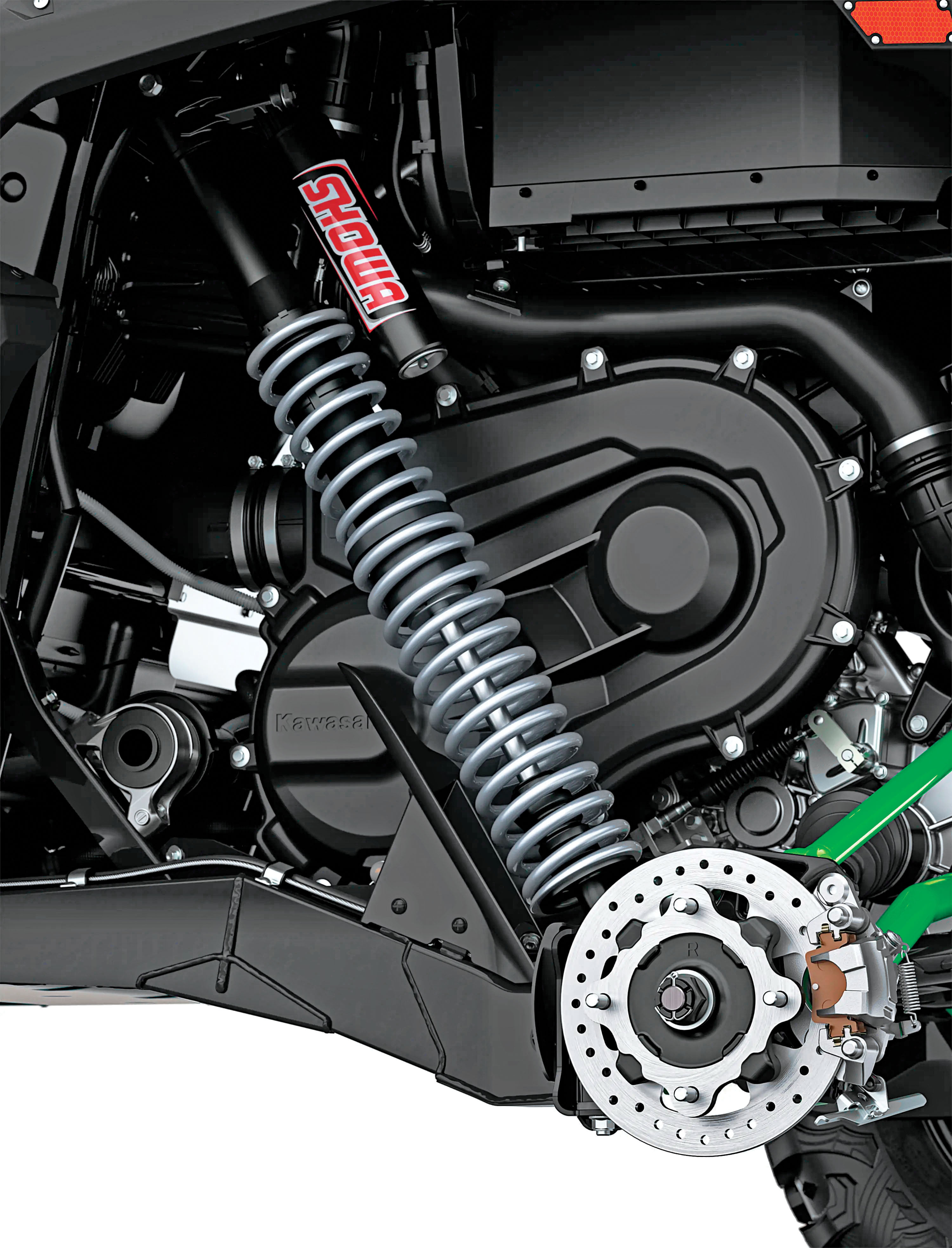
Showa long-travel suspension to tackle the roughest of terrain.
What impressed me the most, however, wasn’t the engine. It was the suspension. The amount of abuse this chassis can absorb is remarkable. Mounds that would stop a bona fide SUV are dismissed with ease. It simply plows through and carries on. I also got the chance to ride as a passenger while one of the lead drivers tackled a rocky section that looked completely impossible from the outside. Large boulders that would have most drivers second-guessing their route barely seemed to faze the buggy. It constantly gives you the impression that you’re nowhere near its limits. The Maxxis Carnivore tyres deserve equal credit. Designed specifically for aggressive off-road terrain, they claw into loose dirt with confidence. Of course, because the cabin is completely open, every burst of throttle also means mud, dirt and stones are being flung towards the occupants. It’s all part of the experience, and oddly enough, it adds to the fun.
One section of the course featured a small jump where you could really commit to the throttle. The KRX4 launched cleanly, landed with complete composure and simply carried on as if nothing had happened. It’s difficult not to come away impressed by just how confidence-inspiring the suspension package is.
15-inch wheels with chunky Maxxis tyres.
That said, the motorcycle-oriented track did expose one limitation. The hairpin corners were simply too tight for something this large. During my first lap, I actually had to reverse a couple of times just to negotiate the sharpest turns. With more seat time, experienced drivers would no doubt learn to slide it through these corners, but as a newcomer, there was always the thought of tipping it over if I got my steering or throttle inputs wrong. The learning curve, however, is surprisingly short. By the beginning of my second lap, I already felt significantly more comfortable. I carried more speed, trusted the suspension more and found myself driving much more naturally. It’s one of those machines that becomes less intimidating with every passing minute.
The Teryx KRX4 1000 has the raw, playful nature of riding an enduro motorcycle, but combines it with the ease, security and practicality of four wheels. You’re strapped into a proper roll cage, splashing through mud, climbing impossible-looking terrain and jumping over obstacles that would stop most vehicles in their tracks. It feels familiar to anyone who enjoys off-road motorcycles, while also offering an entirely different perspective on the same adventure.
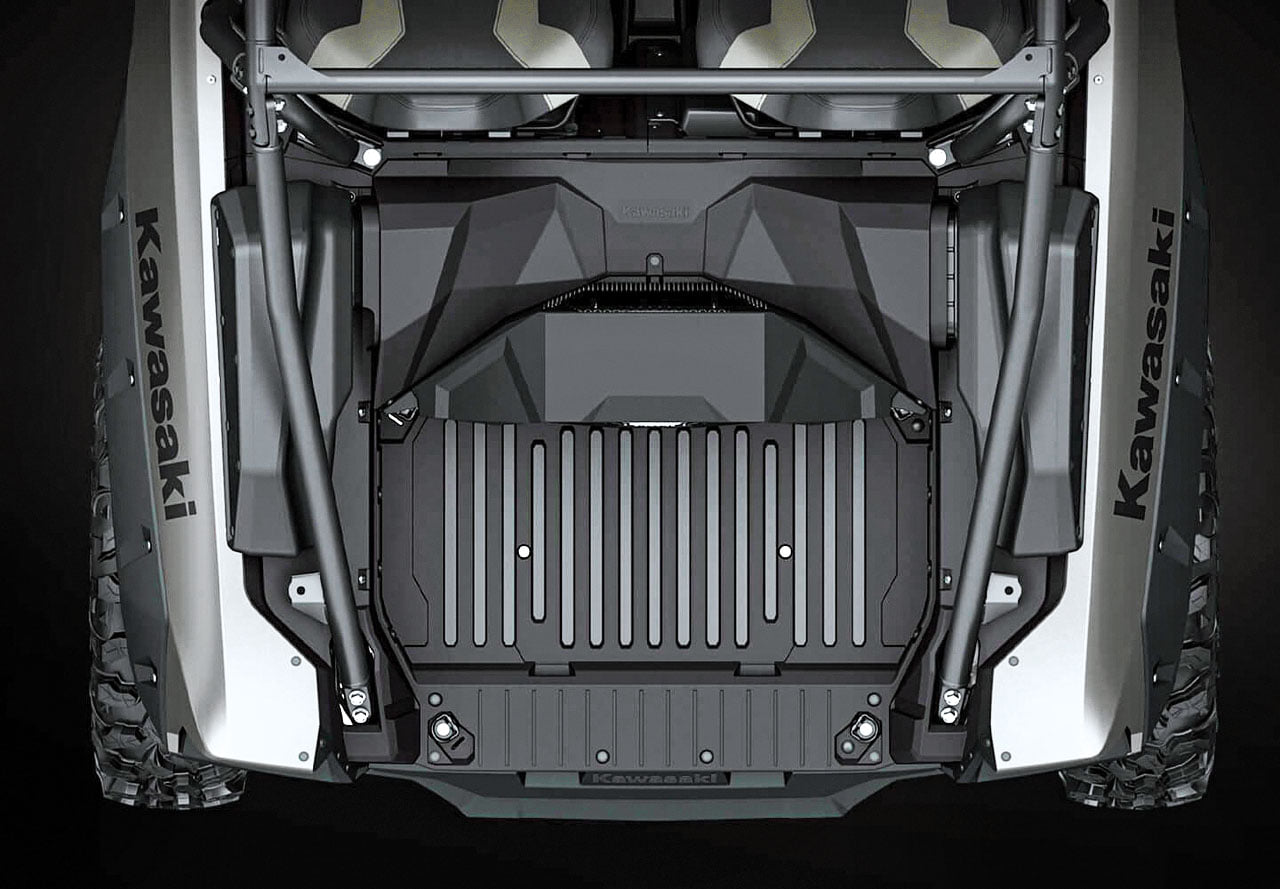
Storage space for when you aren’t going full send.
Of course, ownership in India won’t be entirely straightforward. These side-by-sides aren’t road legal, so they’ll largely live at private properties, farms or dedicated off-road parks. There’s also the issue of fuel. Since they aren’t E20-compatible, sourcing the right petrol in remote locations, exactly where owners are likely to use them, could require a bit of planning. Kawasaki says it will support customers with maintenance, but the logistics of ownership are certainly something prospective buyers will need to consider.
Then comes the price. Kawasaki’s side-by-side range starts at Rs 38 lakh and stretches all the way to Rs 78.90 lakh, firmly placing these machines in niche territory, with this model costing Rs 52.9 lakh. The Teryx KRX4 1000 isn’t something you buy because you need it. You buy it because it unlocks a type of adventure that few other machines can offer. After just two laps, I walked away wanting more, and after experiencing it, I can only imagine how wild the 250hp supercharged Teryx 4 H2 must feel like.
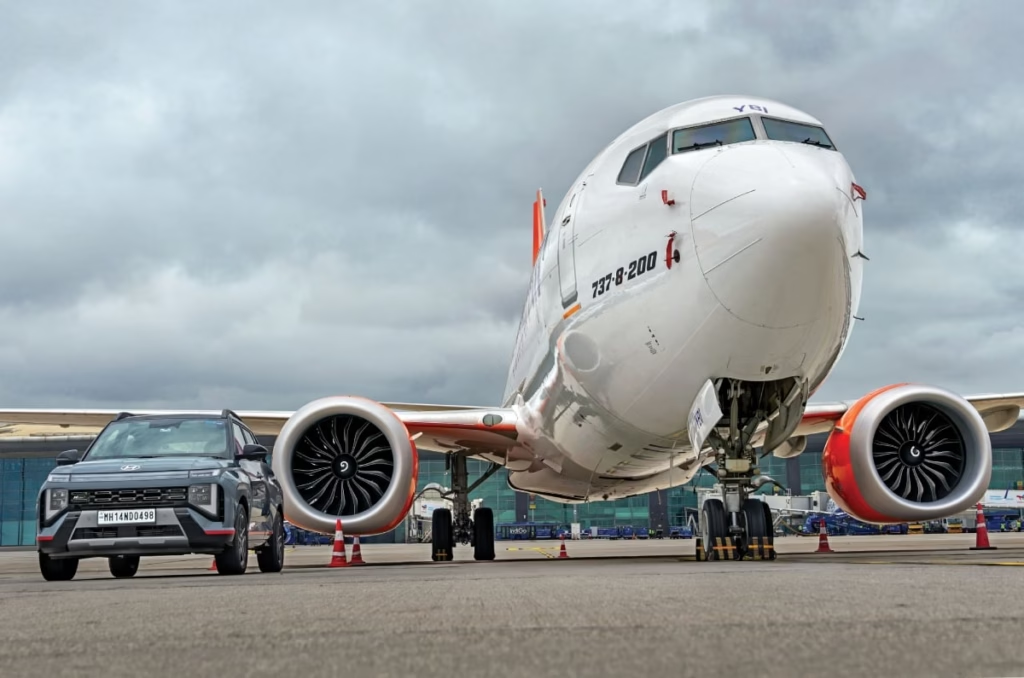
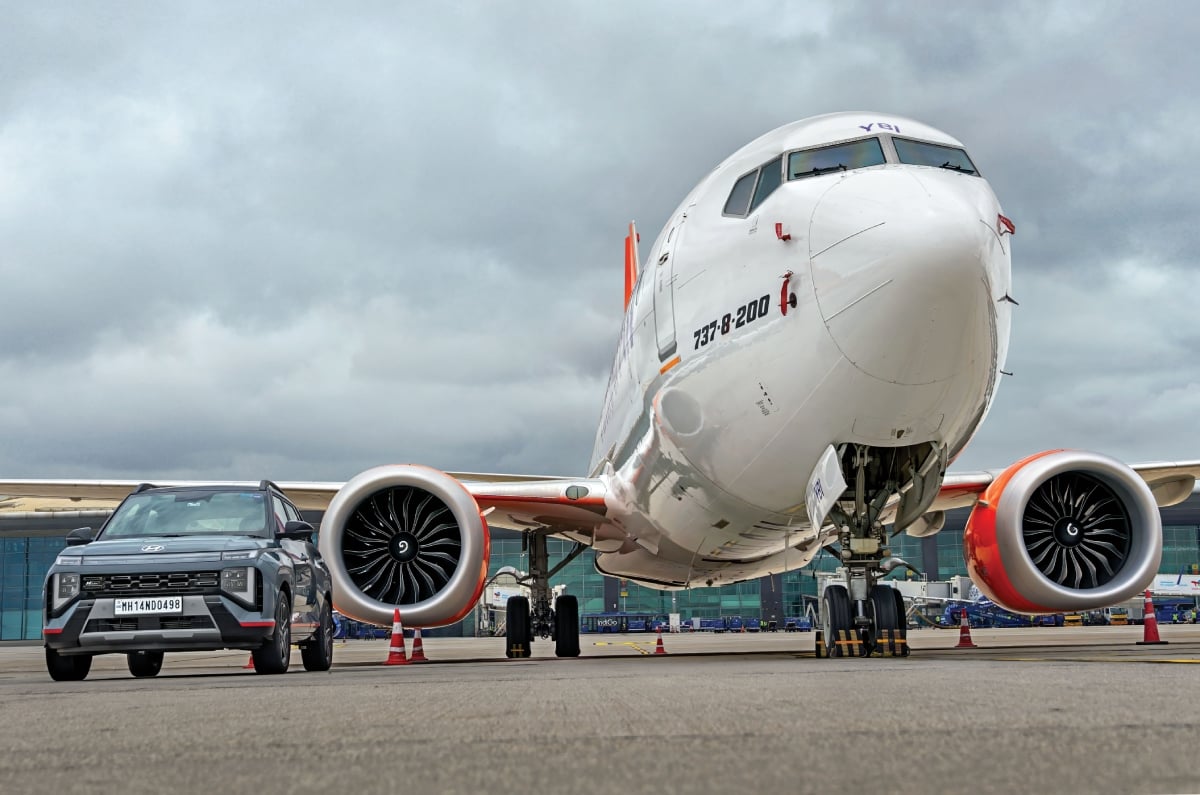
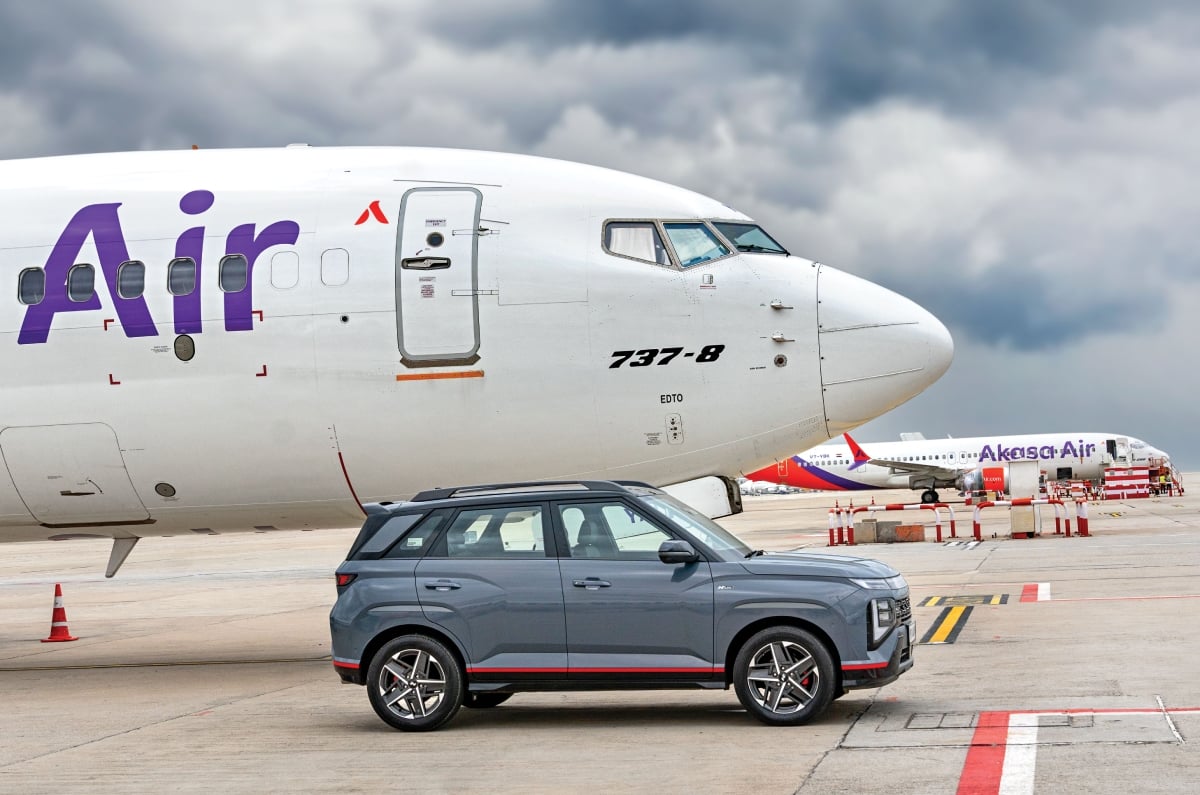
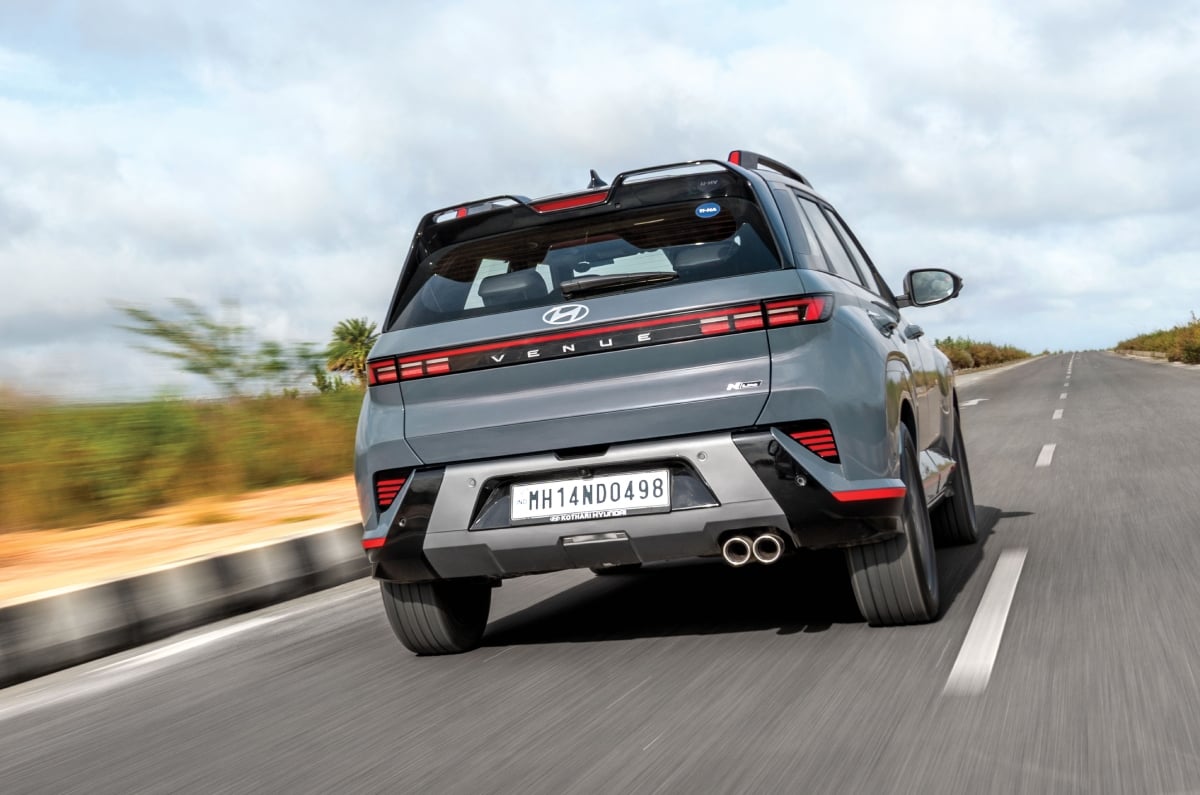
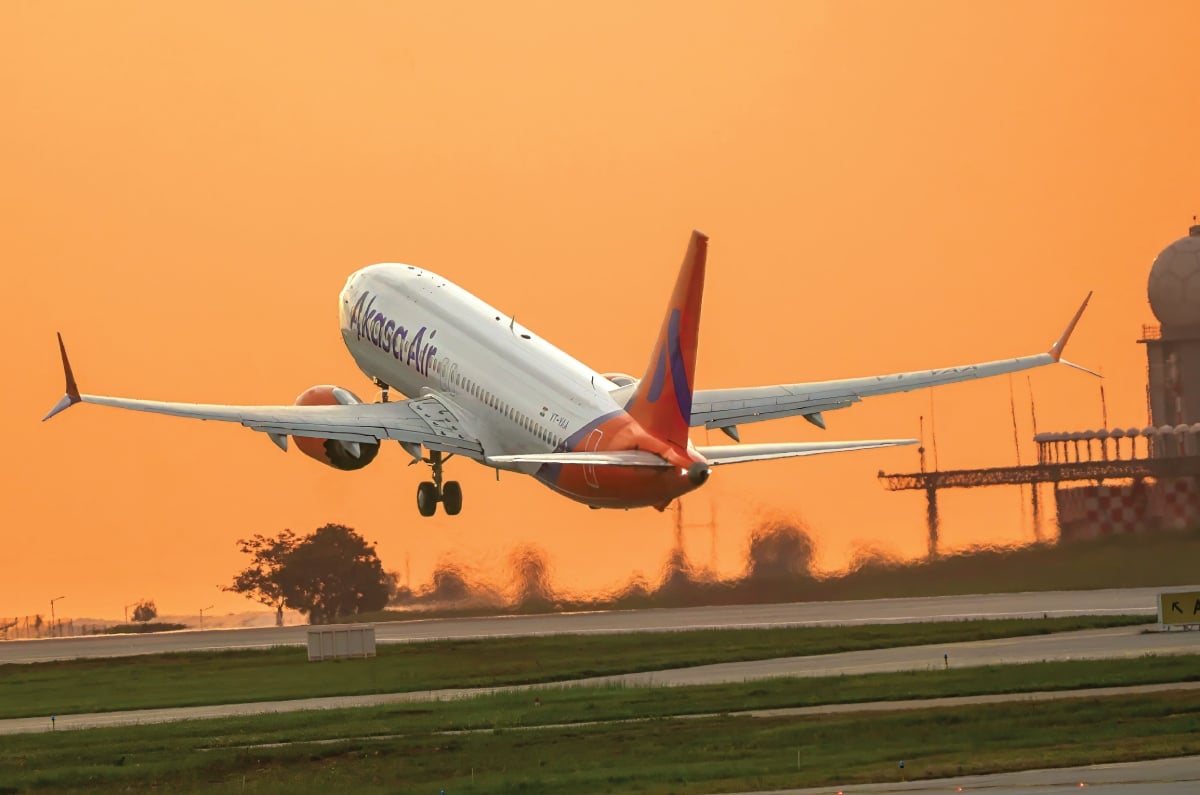
A Hyundai Venue N Line runs down a well-lined access road, its sensors alive. Off to the left overhead, an Akasa Boeing 737 Max makes its way down gracefully, flaps extended, ready to land. Both machines are bristling with technology that allows them to operate with a degree of independence once unthinkable. The car can keep itself within a lane, regulate speed in relation to the car ahead, and brake in emergencies. The aircraft can fly itself across continents, execute complex routes, and even land in zero visibility. Welcome to the new world where machines are self-aware and can operate for long stretches on their own.
Today, we dive deep into tech and compare how Advanced Driver Assistance Systems (ADAS), found in modern cars like the Hyundai Venue work, and juxtapose them against how advanced autopilot systems on airliners like the Boeing 737 Max function. Want to know how this Hyundai Venue senses lane markings, what it picks up, how it processes the data, makes a decision and executes a steering manoeuvre to keep the car within the lane, or how aircraft like the Boeing 737 Max are programmed to fly themselves and how they can even land automatically? Read on; there’s plenty of fascinating tech ahead.
Sensor fusion
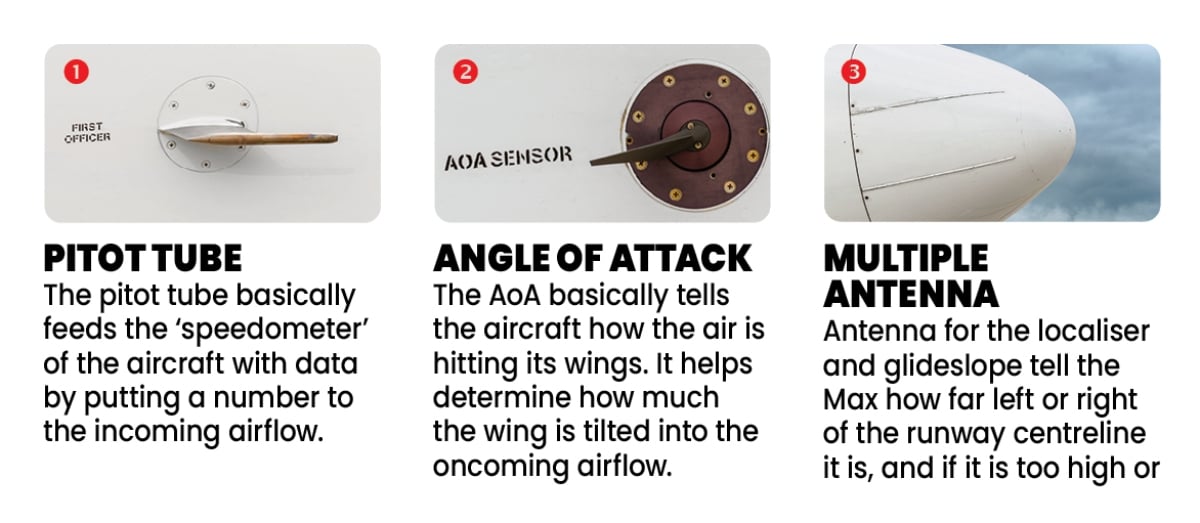
Walk around the attractive-looking Akasa 737 Max, now one of forty-three, and you notice the nose of the aircraft bristling with sensors. It’s from where a vast majority of the data for the Autopilot is collected. Showing me around and explaining things is Captain Svetlana from Akasa. First up, the speed sensors – elbow-shaped pitot tubes that stick out at an angle. This tube helps measure the airflow and, hence, the speed of the aircraft. For accuracy, this speed data is correlated with the static port, mounted flush on the side of the aircraft, which measures the real atmospheric pressure at the height the aircraft is flying.
Then there’s the AOA or Angle Of Attack sensor that basically tells you how the air is hitting the wings or how much the wing is tilted into the oncoming airflow. This is essential to know just how much lift the wing is making and how close the aircraft is to stall.
Then, inside the nose cone, apart from the weather radar, are antennas for the localiser and glideslope. Both pick up radio beams sent from transmitters positioned near the runway. The localiser tells the aircraft how far left or right of the runway centreline it is, and the glideslope tells if the aircraft is too high or too low. Together, they give the aircraft a complete three-dimensional picture of the ideal path to the runway. They feed data to the Instrument Landing System (ILS) and are what lets a 737 Max line up and descend precisely even when visibility is poor.
Further back are a pair of TCAS antennas, one on the belly and one on the top. They listen for nearby transponders (that also help flightradar24 funtion) to keep the aircraft clear of traffic.
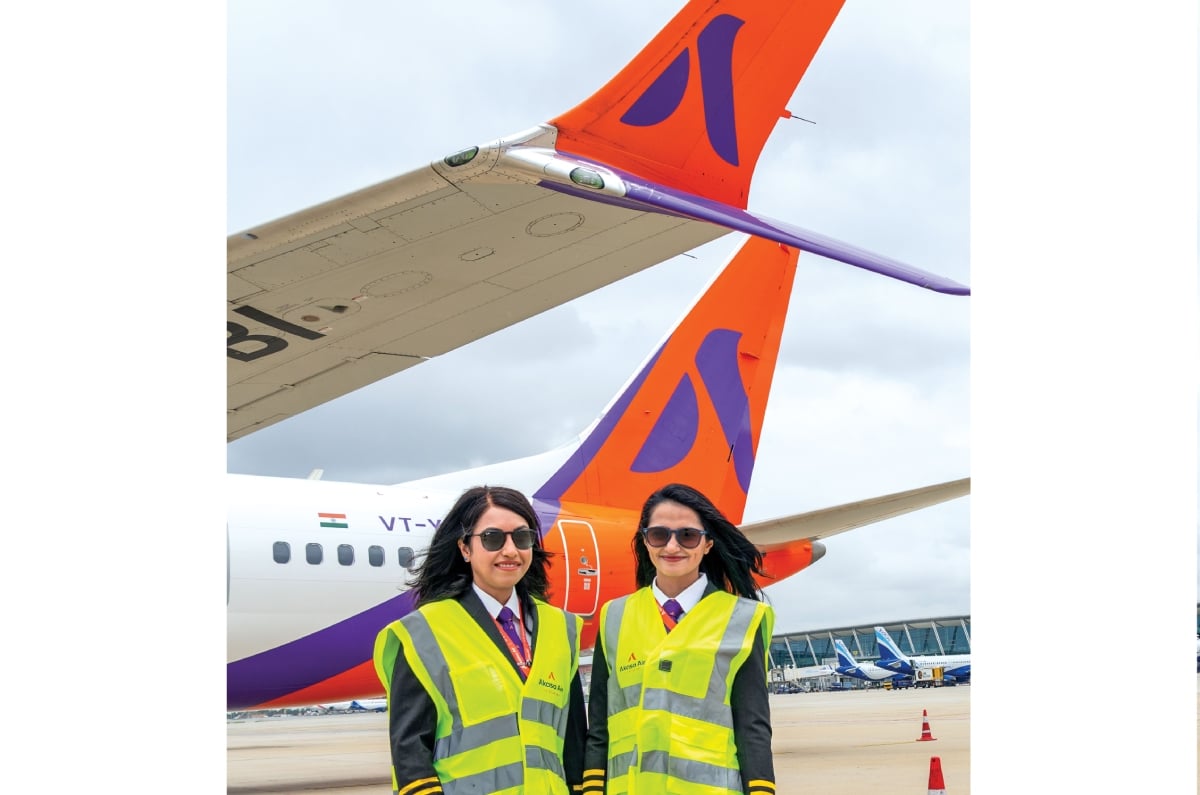
Capt. Svetlana and Capt. Sanaya help us get to grips with how the autopilot on the 737 Max functions.
Positioning is done with the help of a GPS antenna on the roof. Another system, known as the Inertial Reference System, uses laser gyroscopes bolted to the airframe to sense every turn the aircraft makes. It uses accelerometers that sense every change in speed. A computer fuses the two, continuously tracking exactly how far and in which direction it’s travelled from a known starting point, which is set by the pilots at the gate.
Road and track
Though this is a high-tech and complex system, functionality is slick and smooth.
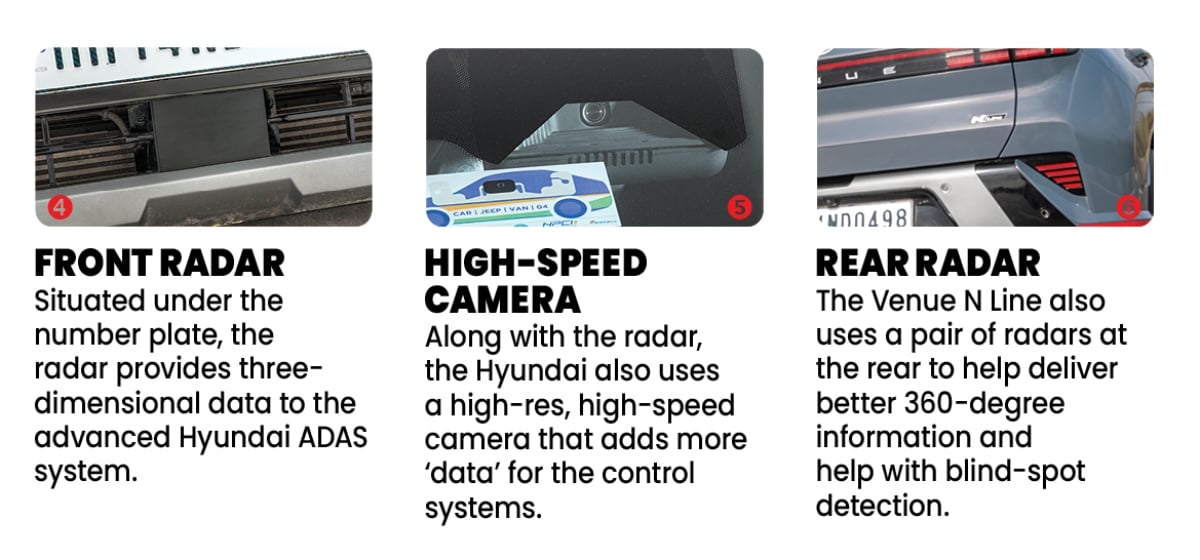
Now swap the open skies for chaotic tarmac. Here, the Venue N Line’s ADAS Level 2 suite runs off far fewer sensors or data points. The difference, however, is that the car actually ‘sees’ what is ahead, correlating data from the radar and the high-resolution camera into a single picture. Sensor fusion is essential on both the 737 and the Venue. What’s different is that the reactions of the car have to be immediate, and that means Smart Sense on the Venue not only has to process gigabytes of data every second, it also has to be ready with, say, a braking solution in milliseconds, just in case that petulant biker cuts across the Venue’s nose.
One of the primary sensors is the radar. Located behind the black square plastic panel under the number plate up front, it acts as a measuring tape, constantly tracking the exact distance and closing speed of the car ahead. Similar to a fruit bat, the radar sends out bursts of high-frequency radio waves (or chirps) that vary between 10,000-50,000 bursts per second. Just as important is how quickly the data is processed and passed on, which provides enough sharpness and resolution to differentiate between shapes ahead. This data is used by the Forward Collision-Avoidance Assist (FCA) to stop the Venue often before human reflexes can even respond to danger. In addition, the system uses a pair of rear-mounted radars, ultrasonic sensors and parking and proximity cameras for a more secure 360-degree ‘picture’.
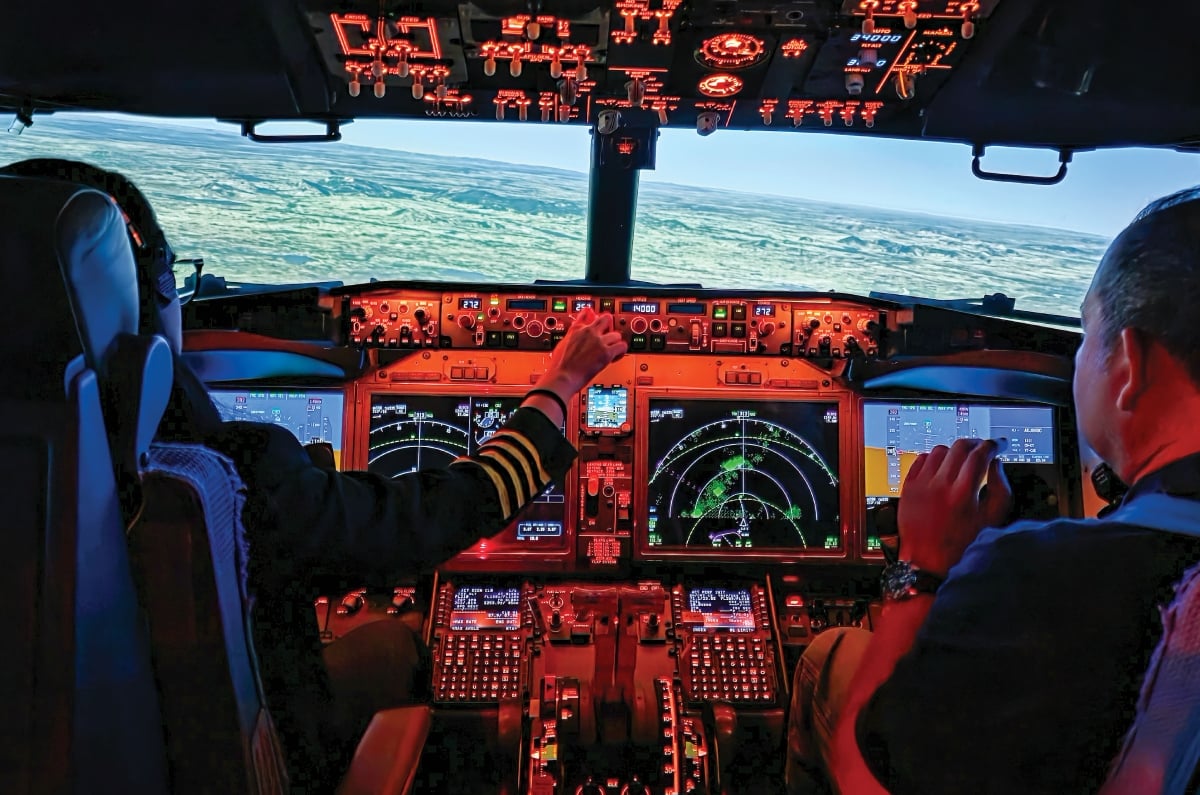
Captain Sanaya adjusts the heading knob in the sim, the aircraft reacts in real time without disengaging the system.
The other important data source is a high-resolution, high-speed camera at the top of the windshield. While its primary job is to look for lane markings and obstacles, it also works along with the radar up front, sharing the workload. The camera, for example, sees every detail but lacks depth perception (or 3D vision), and a radar tracks distance but cannot see the same amount of detail as the camera. The camera sends data via a special, automotive application-optimised CMOS sensor, similar to the one on your Sony mirrorless camera that also has a high dynamic range (for bright lights). Hyundai’s system can even detect faded lines with its edge-detection, texture-tracking, and colour-reading systems. Hyundai’s SmartSense also integrates Artificial Intelligence (AI) and Machine Learning. So, instead of using rigid “if-then” decision-making software, it uses embedded neural networking to interpret real-time sensor data.
Together, these systems form a nervous system that feeds into the car’s brain, which then nudges the steering, modulates throttle, or applies brakes. Unlike aviation, redundancy is limited. A sensor failure usually hands control back to the driver, who remains the ultimate fallback.
Steering wheels and yokes
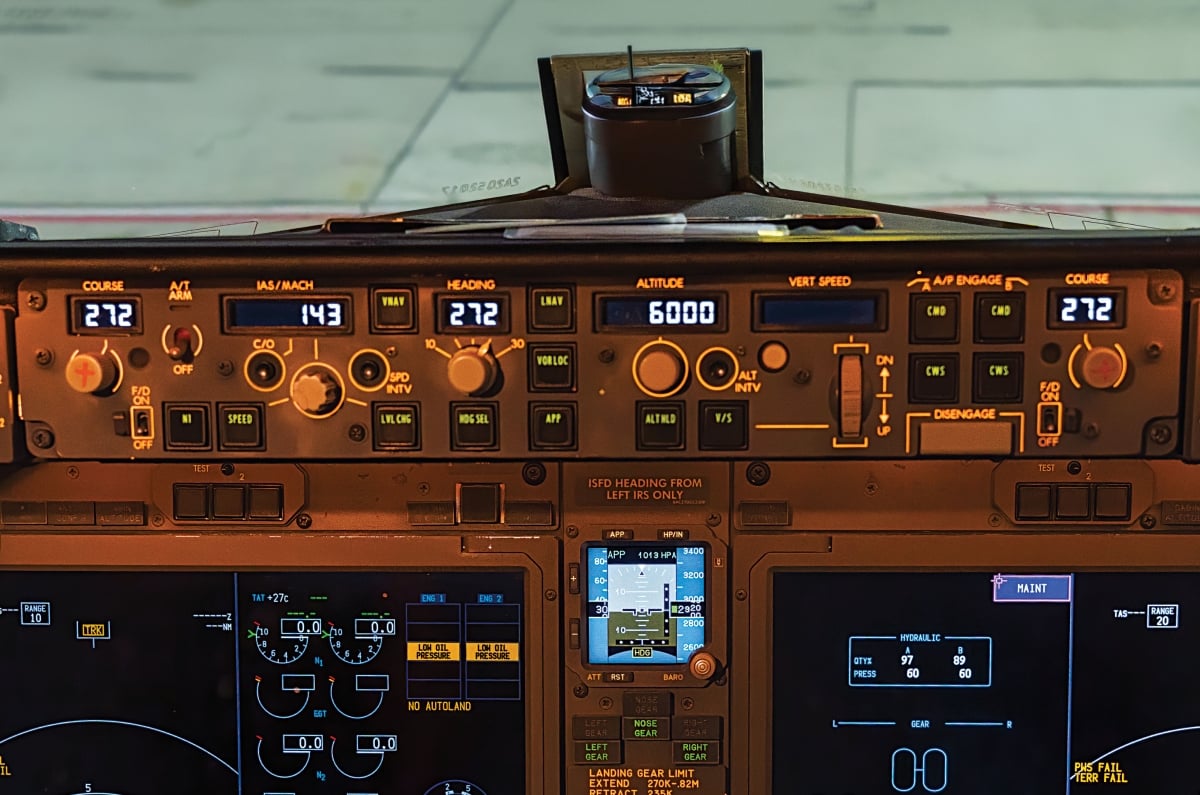
Hit ‘A/P Engage’ on mode control panel to activate autopilot; course, speed, heading and altitude are also adjustable here.
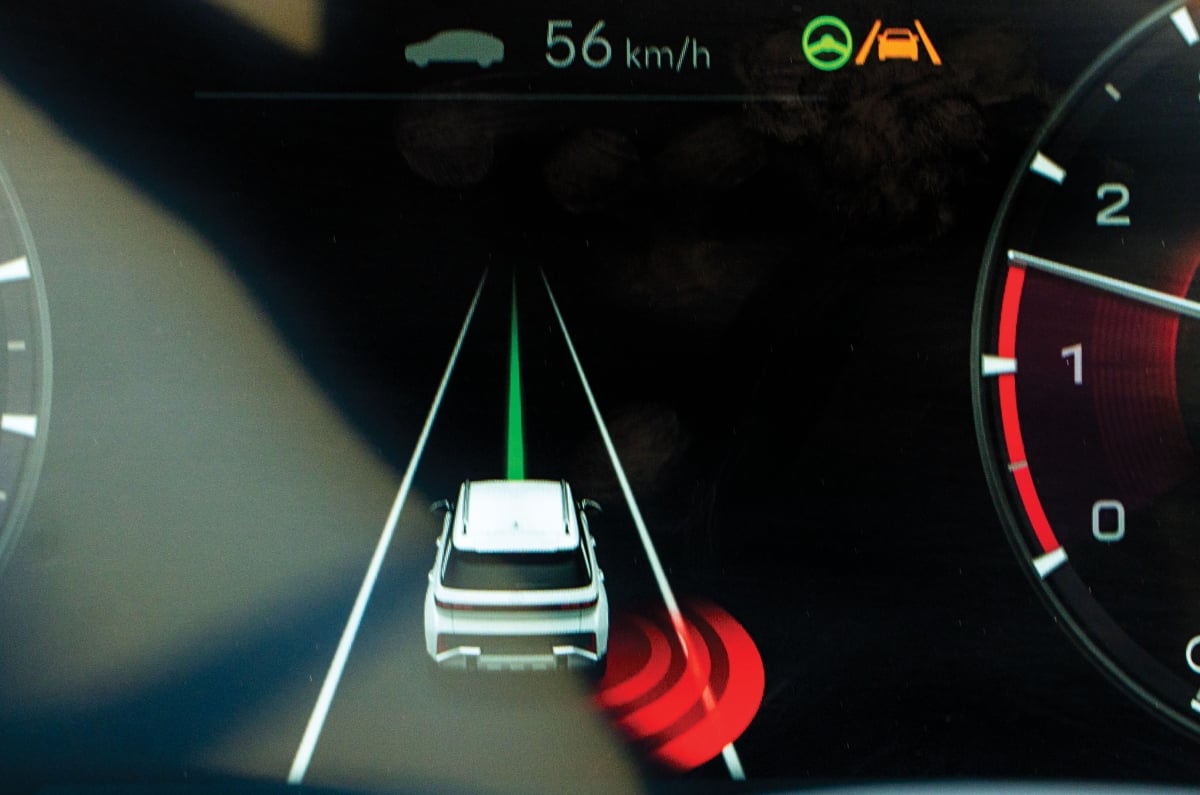
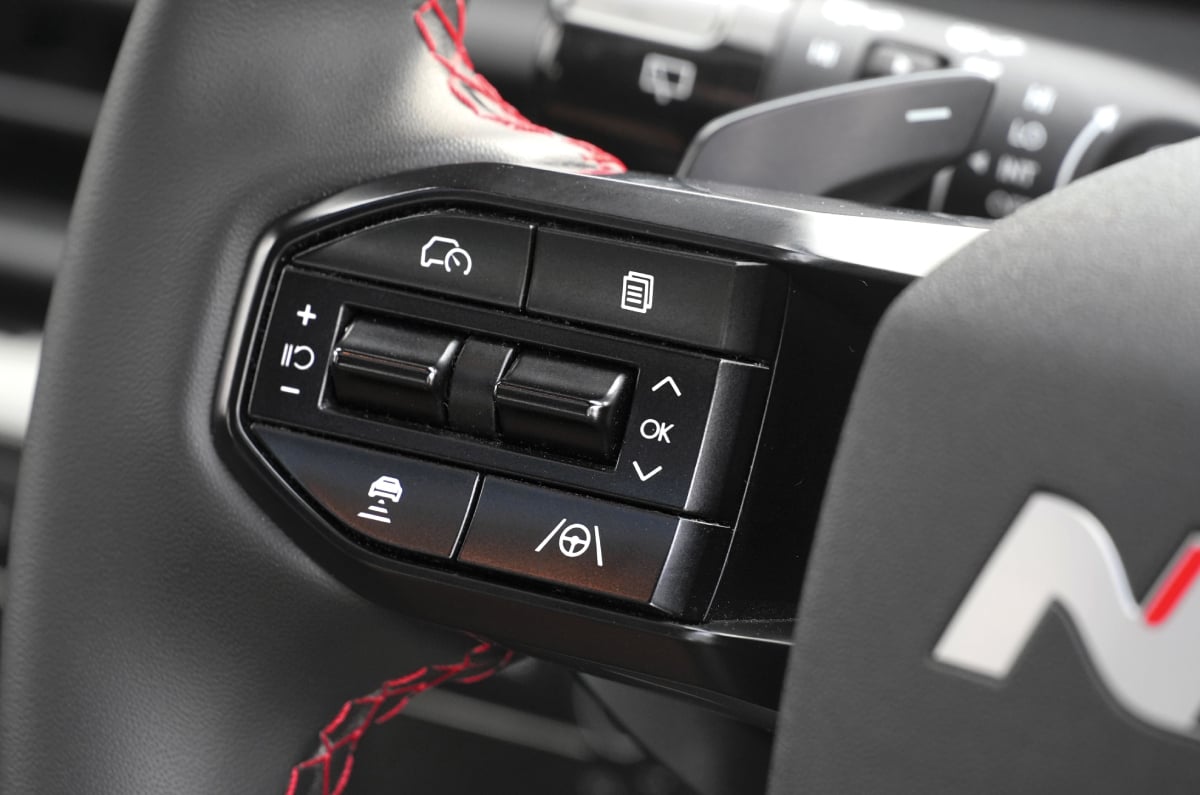
Once behind the wheel of the Venue, engaging the ADAS is seamless. You need to be above 30kph and on a well-lined road. To engage the system, you have to zoom into the left spoke of the steering wheel. Here you find the four buttons that help activate and operate the system. The first activates the Smart Cruise Control, the second allows you to increase or decrease the speed you want to run at, the third helps you set the desired safe distance to the car ahead and the fourth activates Lane Keep Assist (LKA).
Tyre pressure essential here too.
Activating LKA for me comes first, and you do this when you are running in a lane on a well-marked road. You know the system is engaged when the green steering icon lights up on the instrument panel and the car icon shows it running between the lines. Then you engage the smart cruise control and set the speed you want to run at, stepping off the accelerator simultaneously. The display on the instrument cluster lights up with the speed set, and you also get a horizontal bar showing the distance to the car ahead; which can be adjusted by the button with the distance icon.
Unseen by the driver and passengers in the car, the camera immediately begins scanning lane markings, and radar modules measure the distance to the vehicle ahead. The steering wheel then nudges itself gently to follow curves, while the throttle and brakes modulate to maintain speed and distance. The system makes split‑second decisions to help keep you out of harm’s way.
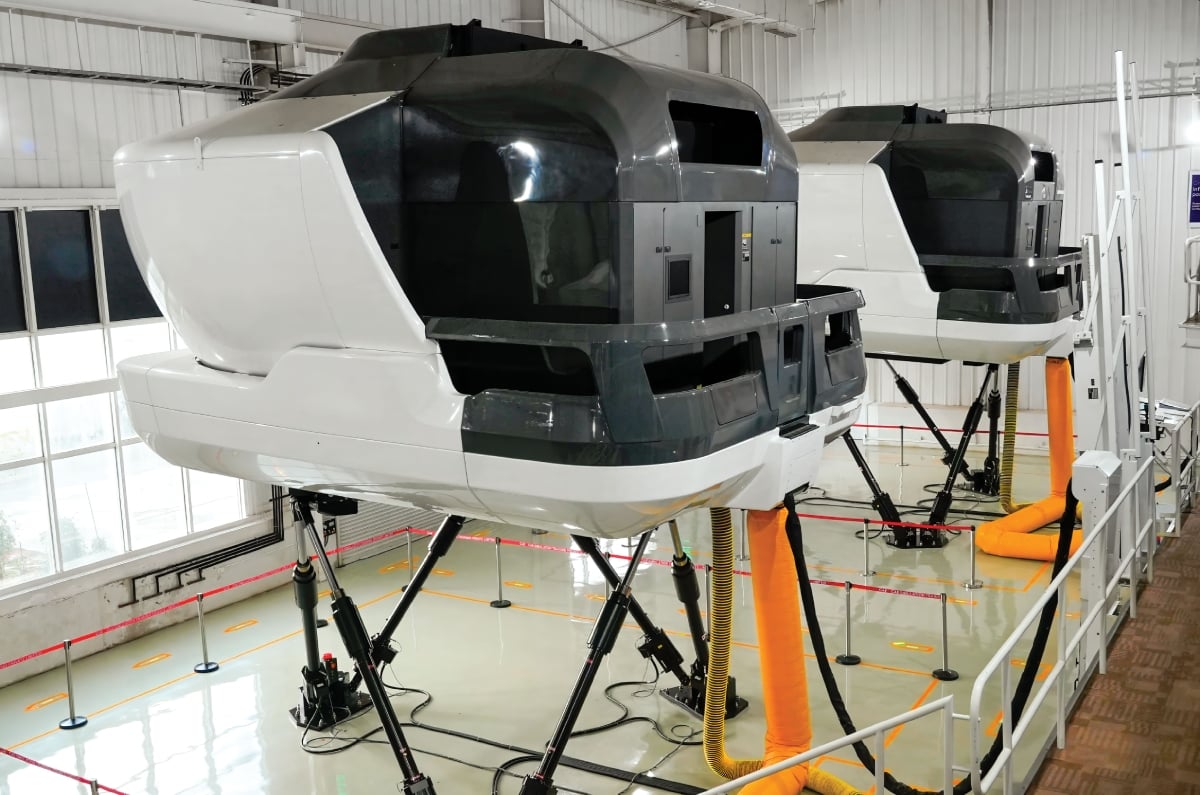
We took the assistance of the full-fledged 737 Max simulator that pilots train on to help us understand the systems better.
Climbing into the Akasa Boeing 737 Max cockpit is an immediate sensory overload. Hundreds of buttons, switches, levers and dials just overwhelm you. They are ahead of you, to your left, your right, and even above. There are, in fact, so many switches, buttons and dials above, I have to duck-walk in. And I’m not exactly Joel Garner or Kareem Abdul-Jabbar. Once seated, I slide the seat to the left and forward by depressing a lever, no powered seats here. And forget about comparing screen size, this is a proper ‘glass cockpit’ with wall-to-wall screens. My feet rest on the pedals that work the rudder in the tail, and ahead of me is Boeing’s famous yoke; unlike a regular joystick, you bank by turning the semi-circular bit of the ‘wheel’.
In contrast to our chaotic driving environment, the autopilot in the 737 Max operates on different principles. The environment is structured and regulated. There are no sudden jaywalkers or rogue bikers at thirty‑five thousand feet. So, unlike the Venue, the 737 doesn’t use optical cameras to see where it’s going. It doesn’t need to look for lanes or lines at 800kph. Instead, it relies on a combination of GPS, Inertial Reference Systems, antennas and sensors in the aircraft’s nose and cheek to get a fix on the exact heading, speed and altitude.
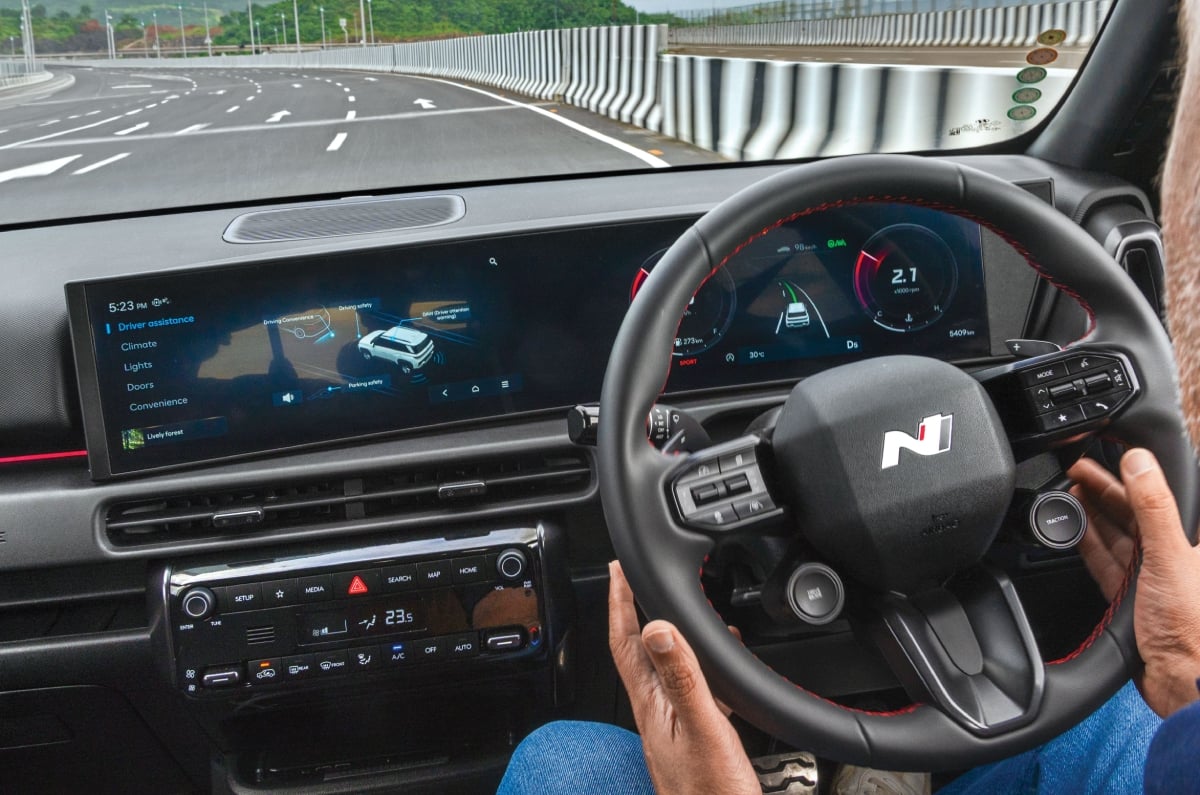
Driver’s display shows detailed ADAS information.
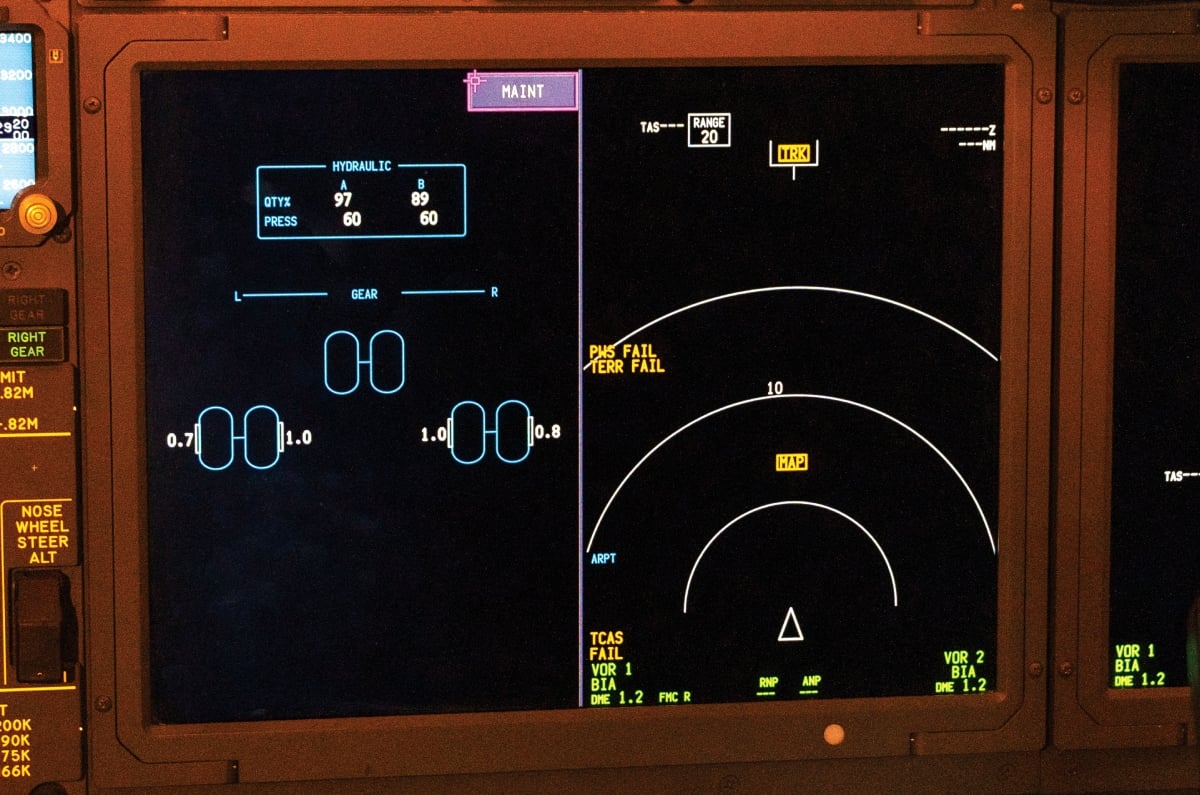
After taking a good look at the real cockpit and understanding some of the controls that help initiate the autopilot sequence, we shift to a full-scale moving platform simulator used to train airline pilots around the world. The cockpit is identical, down to the last detail, and here we have Captain Sanaya Chothia to help us conduct a simulated flight. Can’t help noticing, the 737 also has a tyre pressure monitor; of course, it does.
First up, a full-bore take off in the sim, Capt. Sanaya working the rudder pedals to keep the aircraft running down the centre line. Wow, this feels real, the sound, the visuals, the motion all combined. What a thing! After climbing out, we take a quick look at the sequence used to initiate the autopilot, most of the steps done on the long horizontal panel that sits between the pilots, directly in their line of vision. The first step involves checking if the auto throttle is engaged, and then all the pilot needs to do is press a single button on the autopilot panel. Unlike ADAS, the route the aircraft has to take is already pre-programmed into the navigation computer, a fairly long and detailed process. The speed, the height, the course, the heading, everything. And the autopilot just follows this.
The buttons that initiate ADAS are all placed here.
Once the system is initiated, the throttles move on their own, adjusting thrust; the yoke makes deliberate corrections and the screens display the aircraft banking smoothly along its GPS track. As the flight progresses, pilots can keep the aircraft on autopilot and make plenty of alterations to the route, either to avoid weather, get a more direct route or as directed by Air Traffic Control. There are knobs on the panel to alter course, speed, heading and altitude, with even the rate of descent and ascent adjustable.
We even execute an autoland, where the aircraft lands itself. The Instrument Landing System frequency is first inputted into the Multi-Mode navigation panel, the final approach course is set for the runway on the Mode Control or autopilot panel (272 for runway 27 in this case), and then the APP or approach mode is selected once the aircraft is positioned correctly. Doing this arms the localiser and glideslope systems that, as we’ve mentioned earlier, have their sensors in the nose cone. Seeing the aircraft adjust, manoeuvre, manage its path, height and distance, and land itself is an eye-opener. What an incredible piece of technology!
Level 2 ADAS on the Hyundai Venue N Line integrates data from all its sensors for a smooth, seamless drive.
What’s fascinating is that both systems have boundaries. In aviation, autopilot is trusted to fly for hours, even land. Pilots monitor, manage and intervene when necessary, but the system is designed to shoulder the bulk of the workload. Take offs, however, are always manual. In cars, ADAS is an assistant with a much narrower scope. It reduces fatigue, takes a load off the driver and adds a safety net, but ultimately the driver is always on call at short notice and is the one in control.
Sharing the workload
Modern aircraft like this Akasa 737 Max can get onto autopilot soon after take off.
Similar in execution but very different in how they function, ADAS and Autopilot both overlap but also exist in isolation. One is designed to keep you from bumping into a hatchback on the Western Express Highway, while the other is designed to guide an 80-tonne metal tube across oceans. Both are glimpses into a future where machines will shoulder more of the burden of control and blow us away with the technology on offer. But for now, if you step into an aircraft, know that while autopilot may be doing a bulk of the flying, a pilot is always watching, and when you engage ADAS to ease your commute, keep your eyes on the road, your hands on the wheel.
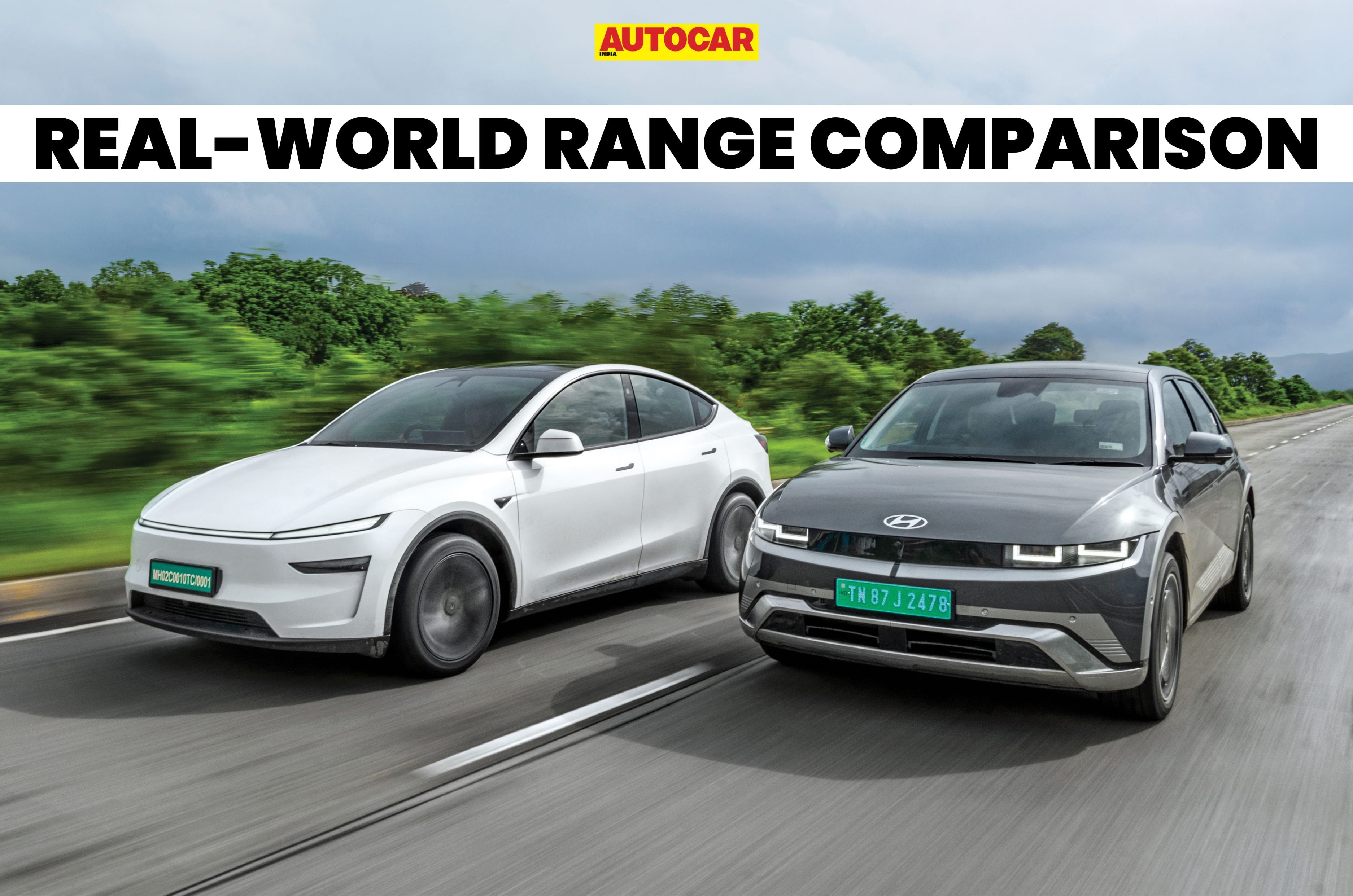
The Hyundai Ioniq 5 received a larger battery pack with its April 2026 update, resulting in a higher claimed single-charge range. In this feature, we compare the Hyundai EV with the Tesla Model Y, one of its direct rivals in India. Keep reading to see how the two performed in real world conditions. We also compare their prices, as the Ioniq 5 has become more expensive after the update, while Tesla has dropped the price of the Model Y.
Hyundai Ioniq 5 vs Tesla Model Y: Specifications, price
Ioniq 5
Model Y
Battery size (kWh)
84 (NMC)
60 (LFP)
Power (hp)
229
299
Torque (Nm)
350
420
Drive layout
RWD
RWD
Claimed range (km)
690 (ARAI)
500 (WLTP)
Kerb weight (kg)
2,165
2,003
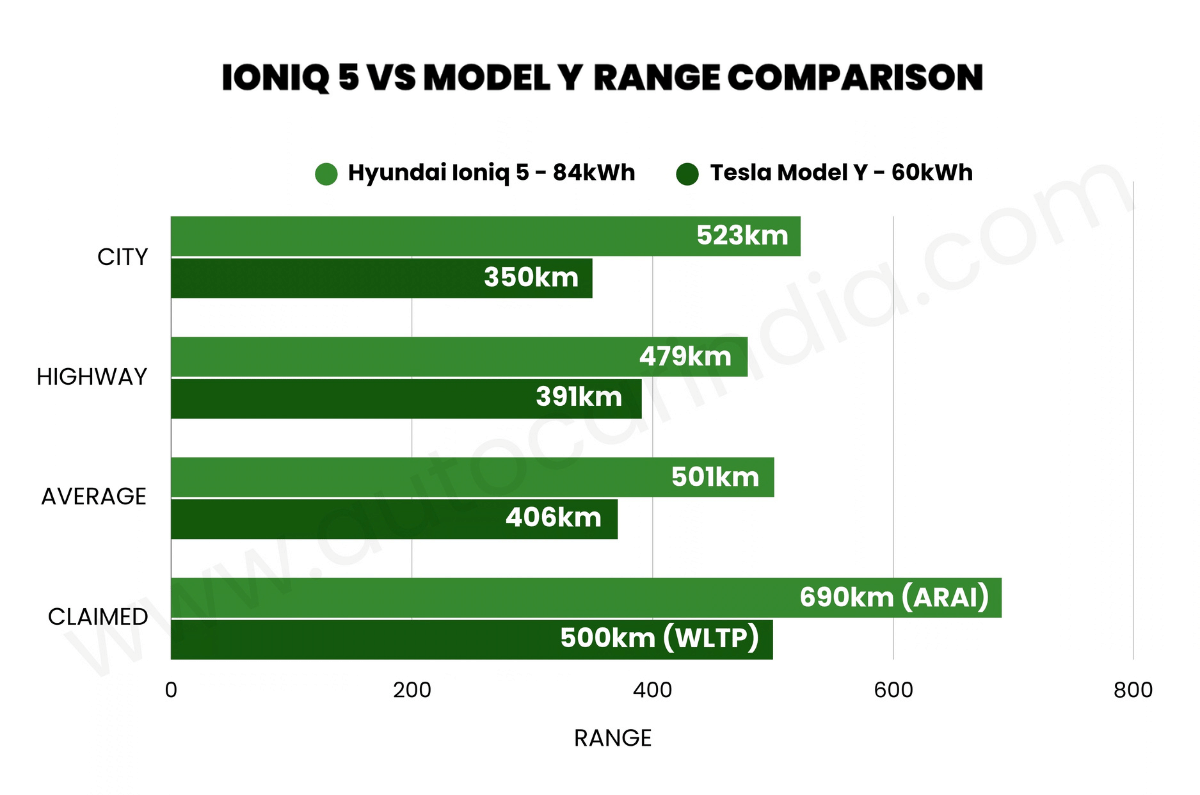
The Ioniq 5’s battery size has increased from 72.6kWh to 84kWh (gross capacity), though the nickel manganese cobalt (NMC) cell chemistry has been retained. The larger battery has increased the kerb weight to 2,165kg, up by 150kg from the outgoing version. In comparison, the Model Y uses a 64kWh (gross capacity) battery with lithium ferrous phosphate (LFP) cell chemistry; the smaller battery contributes to the Tesla EV being 162kg lighter in this comparison. Their claimed range figures are based on different test cycles – ARAI for the Ioniq 5 and WLTP for the Model Y – so they are not directly comparable.
Speaking of motor outputs, the Model Y makes 70hp and 70Nm more than the Ioniq 5; both use a rear-wheel-drive setup. The Model Y feels stronger to drive, with quicker acceleration and sharper throttle response than the Hyundai.
Hyundai Ioniq 5 vs Tesla Model Y: Real-world range
For our real-world range test, the Hyundai Ioniq 5 was driven in Eco mode and the Model Y in Chill mode (Eco in Tesla speak). The Ioniq 5 used Level 2 regenerative braking in the city and Level 1 on the highway, while the Model Y used Standard in the city and Reduced on the highway.
Ioniq 5
Model Y
Tested city efficiency (km/kWh)
6.22
5.84
Tested highway efficiency (km/kWh)
5.71
6.52
Tested average efficiency (km/kWh)
5.96
6.18
In the city, the Ioniq 5 returned 6.22km/kWh, compared to 5.84km/kWh for the Model Y. On the highway, however, the Tesla was more efficient at 6.52km/kWh, aided by its superior aerodynamics; the Ioniq 5 managed 5.71km/kWh. But overall range in our tests stood at 501km for the Ioniq 5, 130km more than the Model Y’s 371km figure.
Hyundai Ioniq 5 vs Tesla Model Y: Prices
Ioniq 5
Model Y
Price (Rs lakh)
55.71
50.89
At the time of writing, the Hyundai Ioniq 5 is pricier than the Tesla Model Y by Rs 4.82 lakh. But judged purely on its higher real-world range, the Hyundai Ioniq 5 gets our vote.
Autocar India’s range testing
For our real-world range comparisons, we begin with each car’s battery fully charged and tyre pressures set as per the manufacturer’s recommendations. We drive the cars on a fixed loop covering both city and highway stretches while maintaining set average speeds. We then calculate the range based on the percentage of charge consumed. The AC is set to 22deg C in auto mode, and we use features such as the music system, lights and ventilated seats as needed, just as a regular user would. This approach ensures consistency and gives a clear idea of what to expect in actual conditions.
Ex-showroom prices mentioned above are as of September 23, 2026.
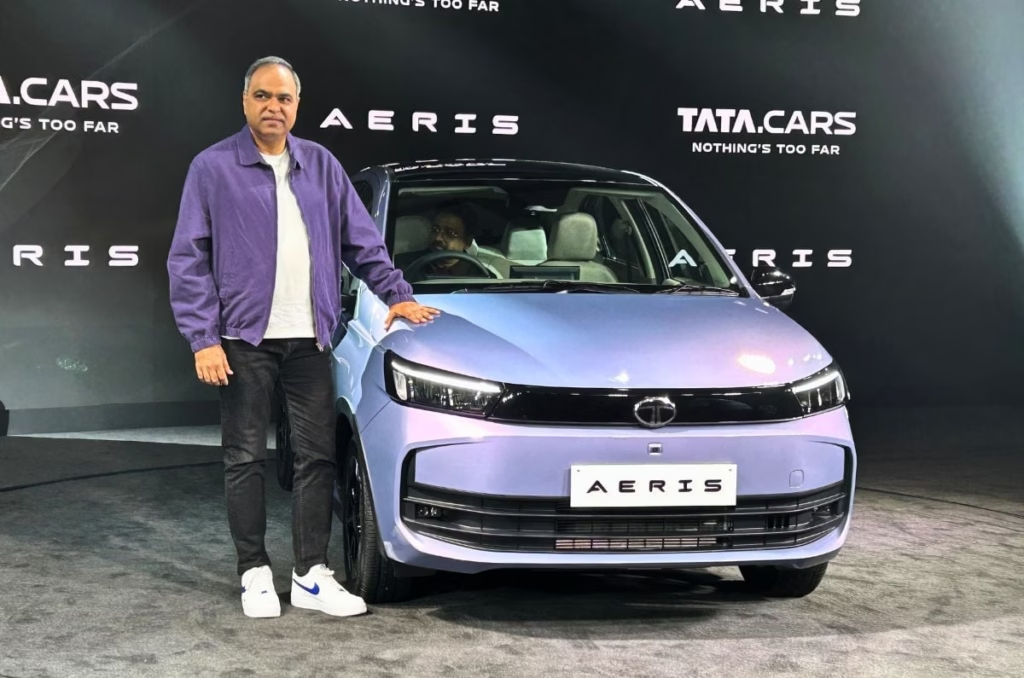
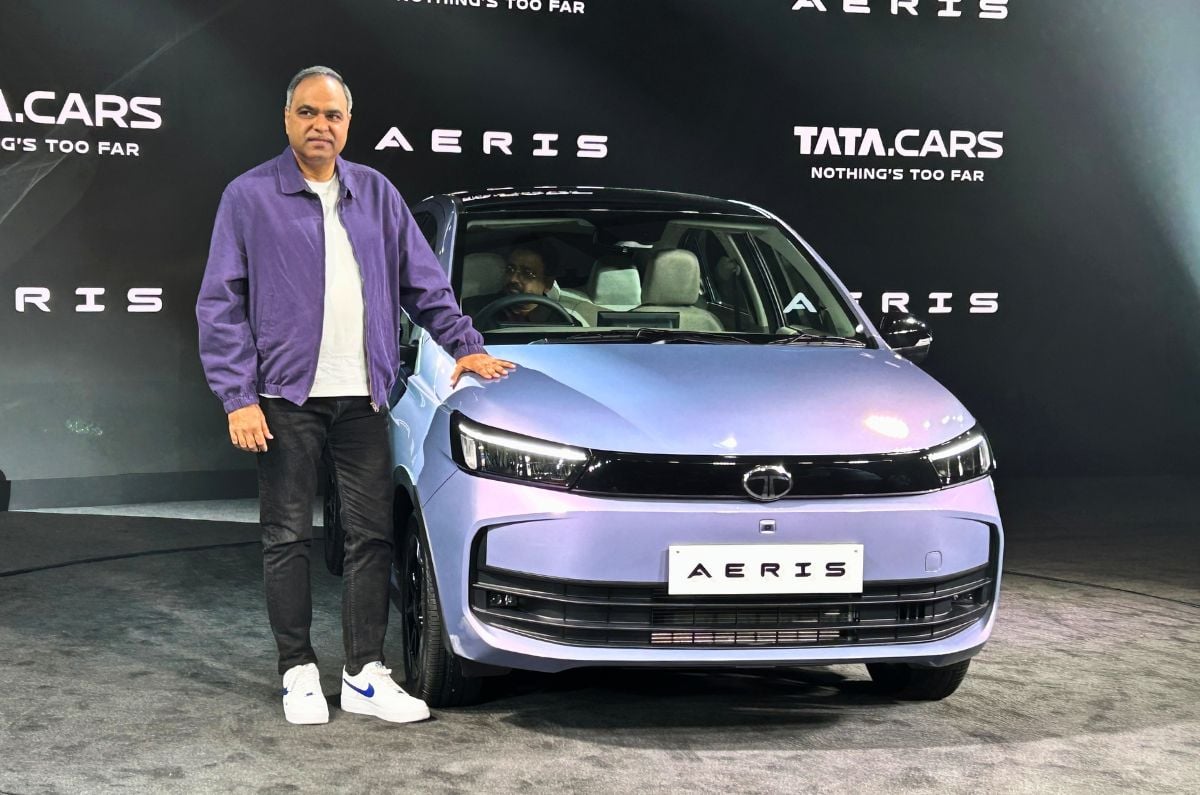
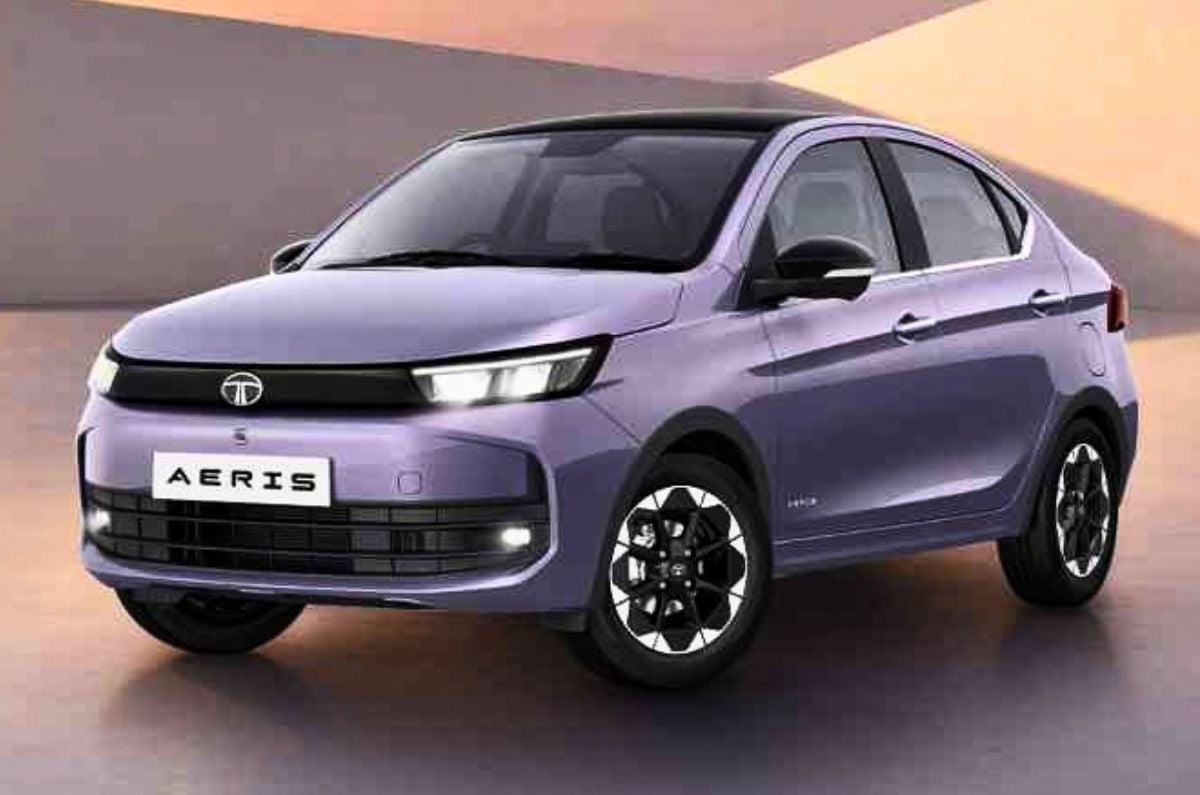
The Tata Aeris has been launched in India at Rs 5.29 lakh (introductory, ex-showroom). It is essentially a facelifted version of the outgoing Tigor compact sedan. It features a Tiago-like exterior and interior design while retaining the mechanicals. Tata is offering the Aeris in five trims: Smart, Pure, Pure+, Creative and Accomplished. Official bookings for the sedan have begun, and deliveries will commence from October 11.
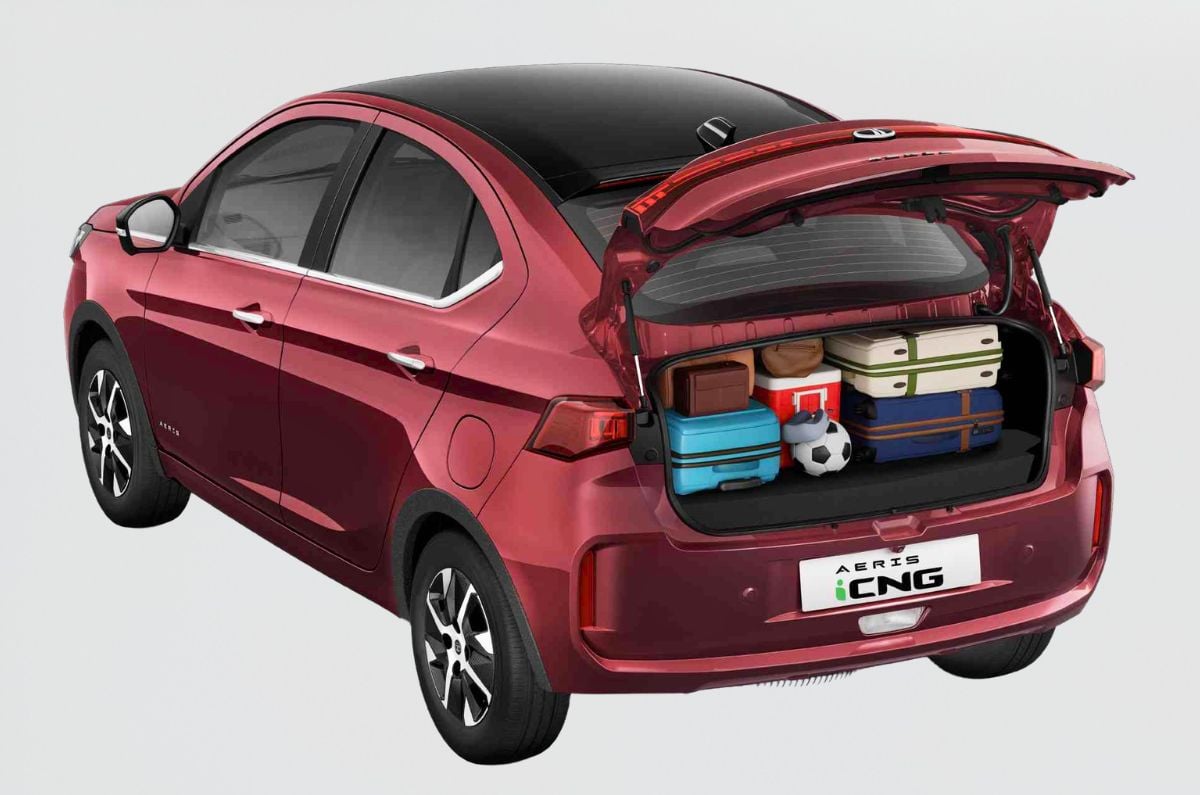
Both 86hp petrol and 76hp CNG are available with manual and AMT options.
Gets sleeker LED lighting elements, fresh bumpers and 15-inch alloy wheels.
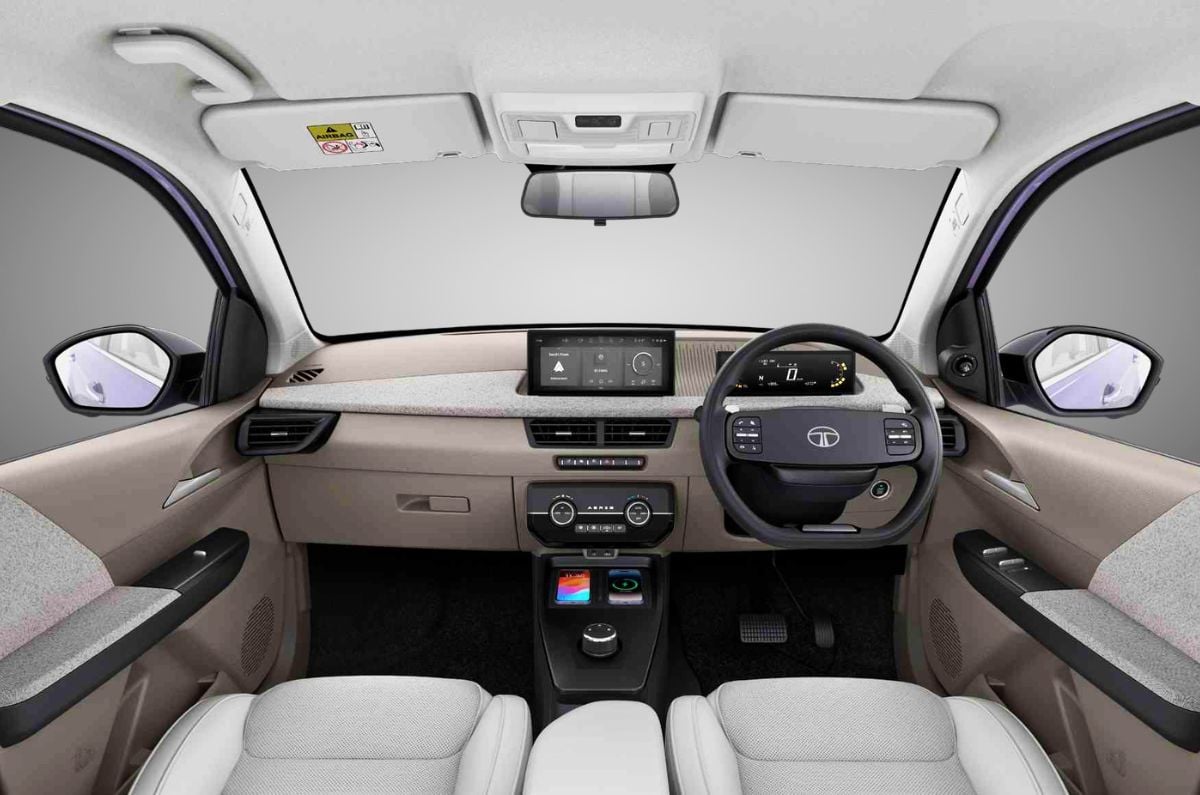
New features include a wireless charger and ventilated seats.
Tata Aeris variant-wise prices
Tata has yet to reveal AMT prices for both the petrol and CNG engines
Tata Aeris variant-wise price list (in Rs, lakh)
Petrol MT
CNG MT
Smart
5.29
6.29
Pure
6.14
7.14
Pure+
6.74
7.74
Creative
7.49
8.49
Accomplished
8.19
9.19
Prices for the petrol-AMT and CNG-AMT versions are expected to be announced soon. An AMT option will be available with both engines across all trims, except the base-spec Smart trim.
Tata Aeris exterior design
Borrows a lot of its design from the Tiago hatchback
The Tata Aeris gets a sharper look that borrows a lot from the smaller Tiago. It gets sleeker LED headlights with eyebrow-like LED DRLs, and a gloss black grille. The front bumper features black elements with pixel-shaped LED fog lamps.
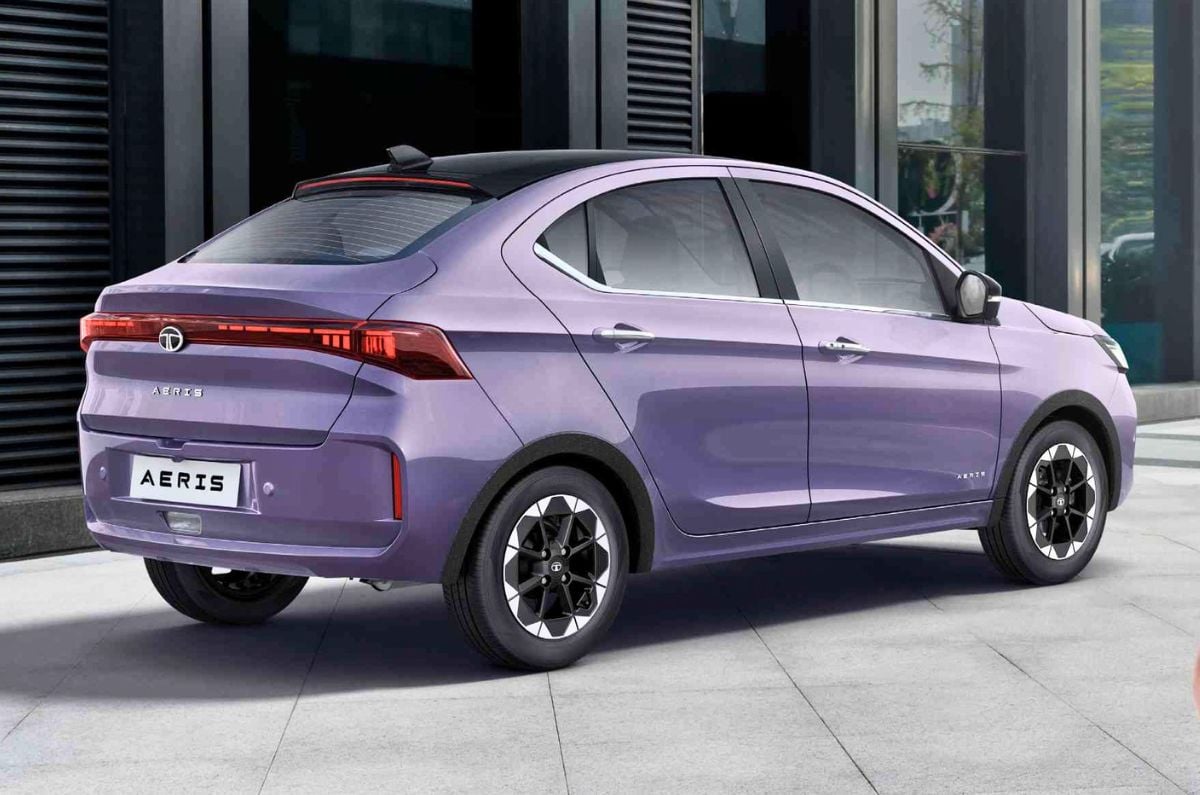
In profile, the Aeris gets 15-inch dual-tone alloy wheels. Lower-spec (Smart and Pure) and all CNG variants get smaller 14-inch wheels. Like the Tiago, the Aeris gets slim cladding on the wheel arches, chrome door handles and a chrome trim on the window line.
At the rear, it gets slimmer LED taillights connected via a red trim. Like the older Tigor, the high-mounted stop lamp stretches the length of the rear windscreen. The rear bumper is simpler now and features a reverse parking light in the centre.
The Aeris is being offered in six exterior shades: Nitro Crimson, Pure Grey, Dandeli Drizzle, Pristine White, Daytona Grey, and Dune Glow.
Here are the dimensions and other specifications of the Tata Aeris:
Tata Aeris dimensions and other specifications
Length
3,995mm
Width
1,684mm
Height
1,532mm
Wheelbase
2,450mm
Ground clearance
170mm
Boot space
419 litres (petrol)
The Tata Aeris CNG has dual cylinders, while all its rivals have a single CNG tank. This setup enabled a 227-litre boot space on the Tigor, which is expected to be the same on the Aeris, making it the largest for a CNG-powered sedan in the segment. The petrol version’s 419-litre boot space is similar to the Amaze (416 litres) but larger than the Dzire (382 litres) and Aura (402 litres).
Tata Aeris interior design and features
Gets a Tiago-like dashboard and is offered with more features
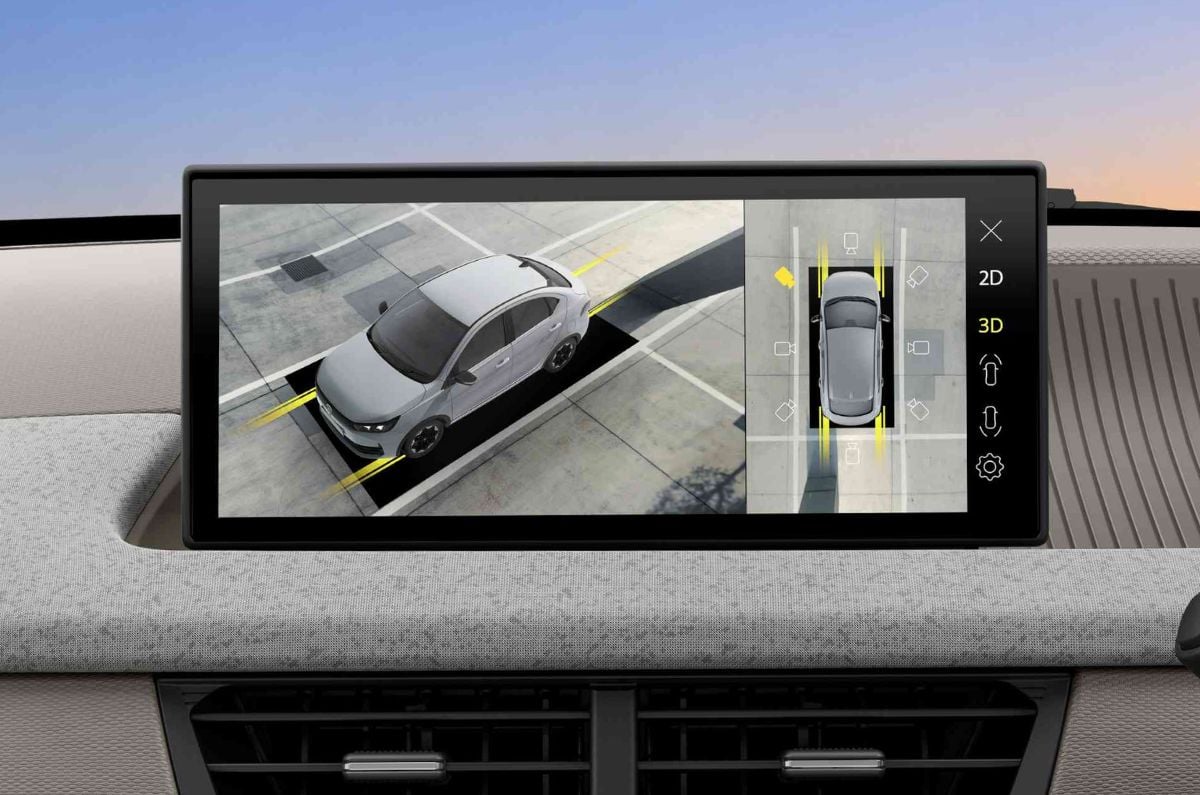
Like the exterior, the Aeris’ interior design is similar to the Tiago, but it gets a lighter cabin theme. The dashboard features a free-standing semi-digital driver’s display, a 10.25-inch infotainment touchscreen and a 2-spoke steering wheel with physical buttons. New features include a wireless phone charger, ventilated front seats and leatherette seat upholstery. The Aeris also gets a ‘DashCam Recorder’ function, which uses the surround view cameras as a dashcam. However, a 6-speaker sound system is a downgrade from the previous model’s 8-speaker audio system.
In terms of safety, the Aeris comes with 6 airbags as standard, a 360-degree camera with a blind-spot monitor, a tyre pressure monitoring system (TPMS), hill hold control and ISOFIX child seat anchorages.
Tata Aeris powertrain options
Gets petrol and CNG engine options with manual and AMT choice
The Tata Aeris is powered by a 1.2-litre 3-cylinder naturally aspirated petrol engine that produces 86hp and 113Nm. It is offered with either a 5-speed manual or a 5-speed automated manual transmission. This engine is also available with a CNG powertrain, with both manual and AMT options, producing a lower output of 76hp and 97Nm. These are the same powertrains offered with the pre-facelift Tigor and the current Tiago.
The Tata Aeris rivals the Maruti Dzire (Rs 6.31 lakh to Rs 9.54 lakh), Honda Amaze (Rs 7.65 lakh to Rs 10 lakh) and Hyundai Aura (Rs 6 lakh to Rs 8.67 lakh).