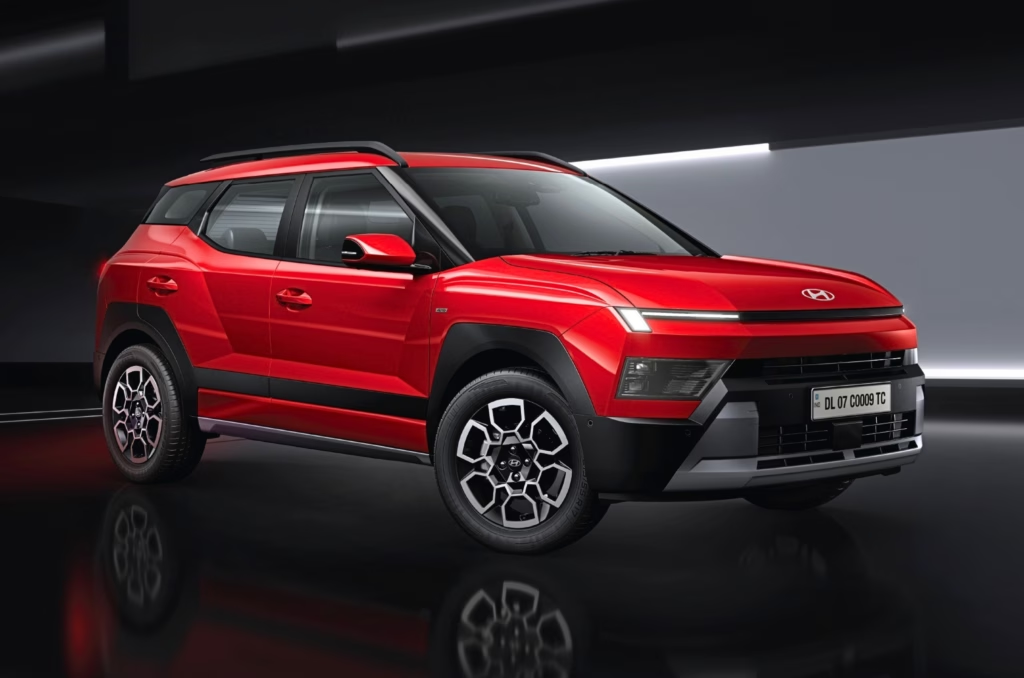
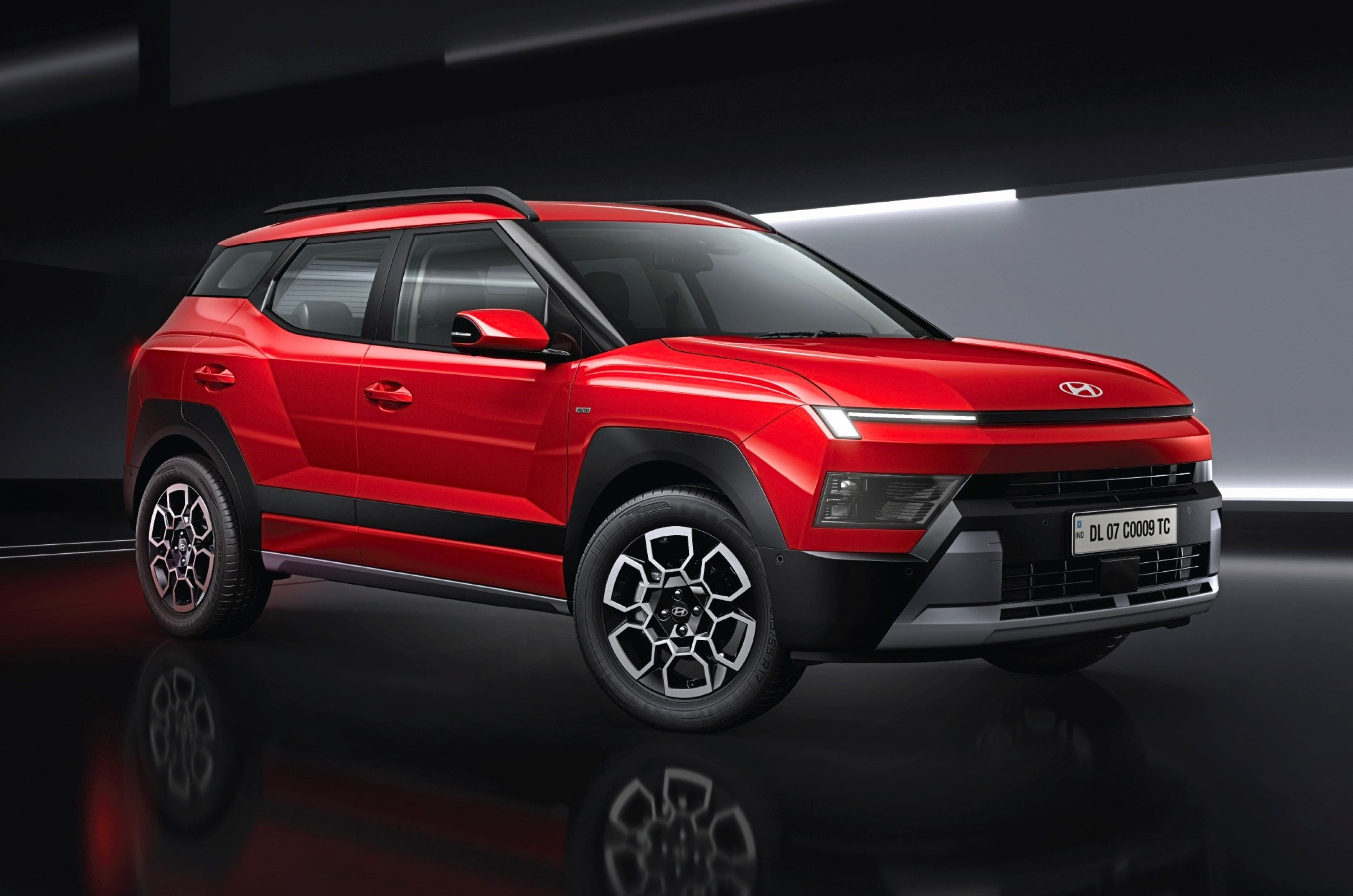
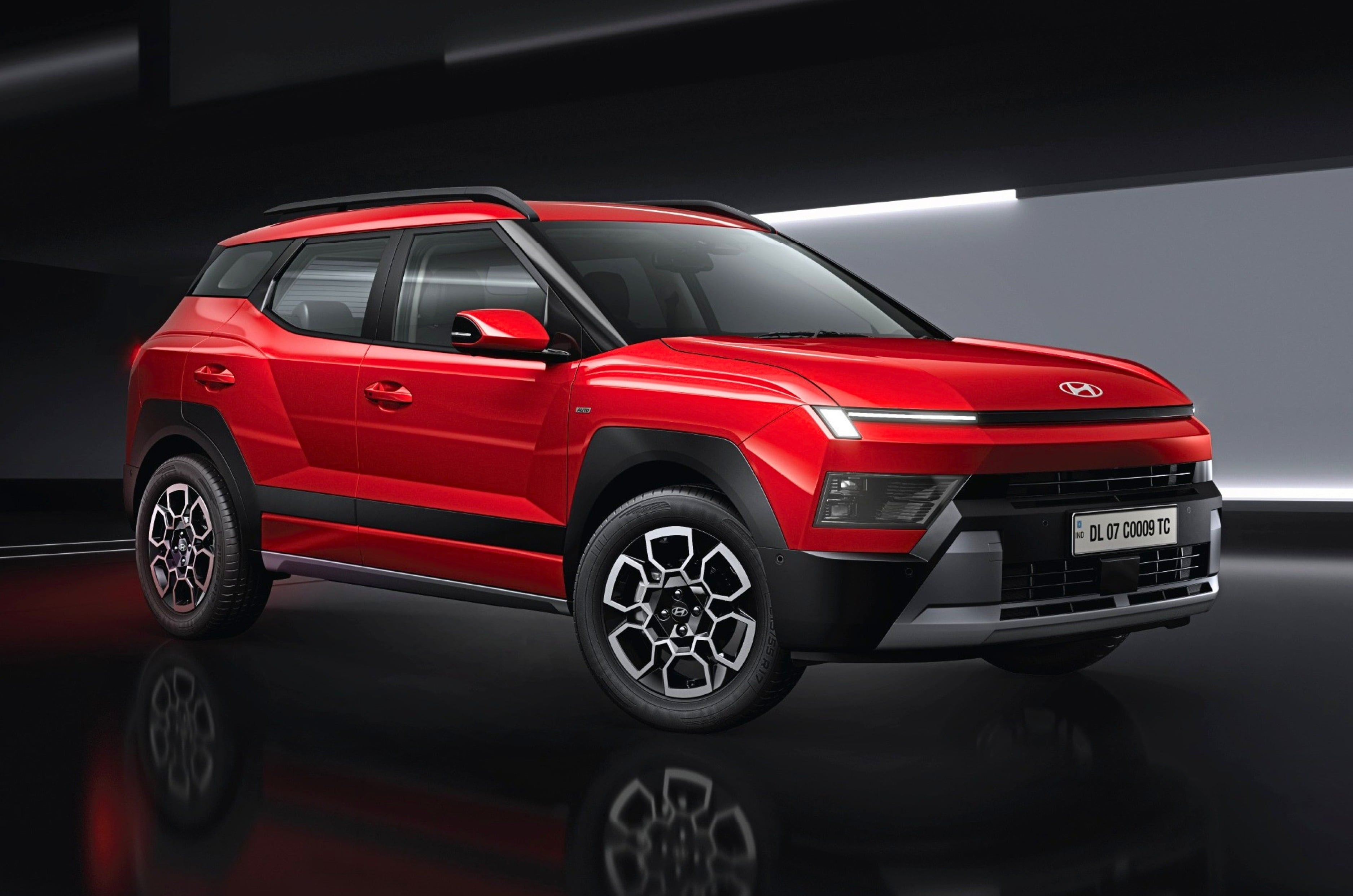
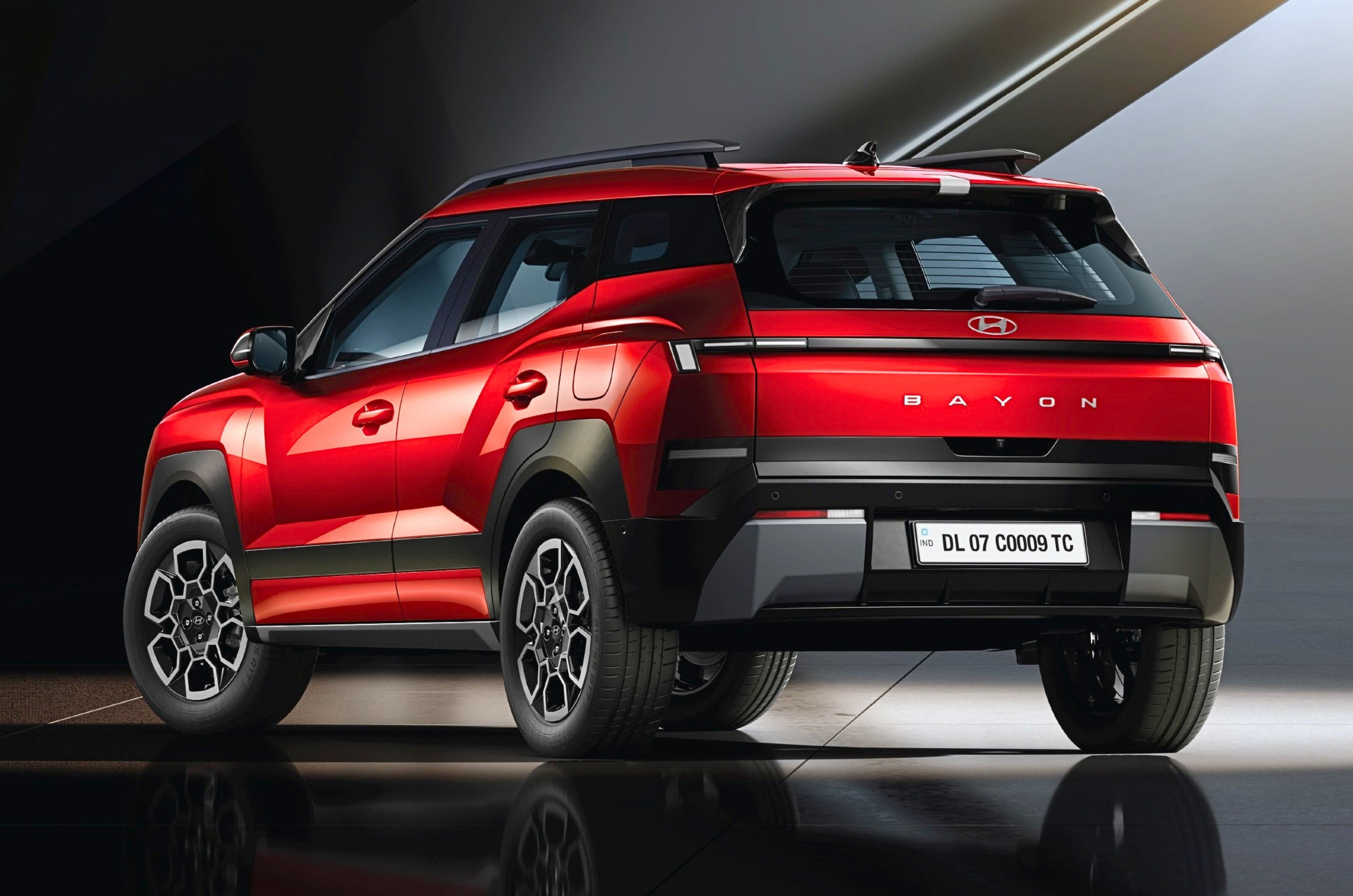
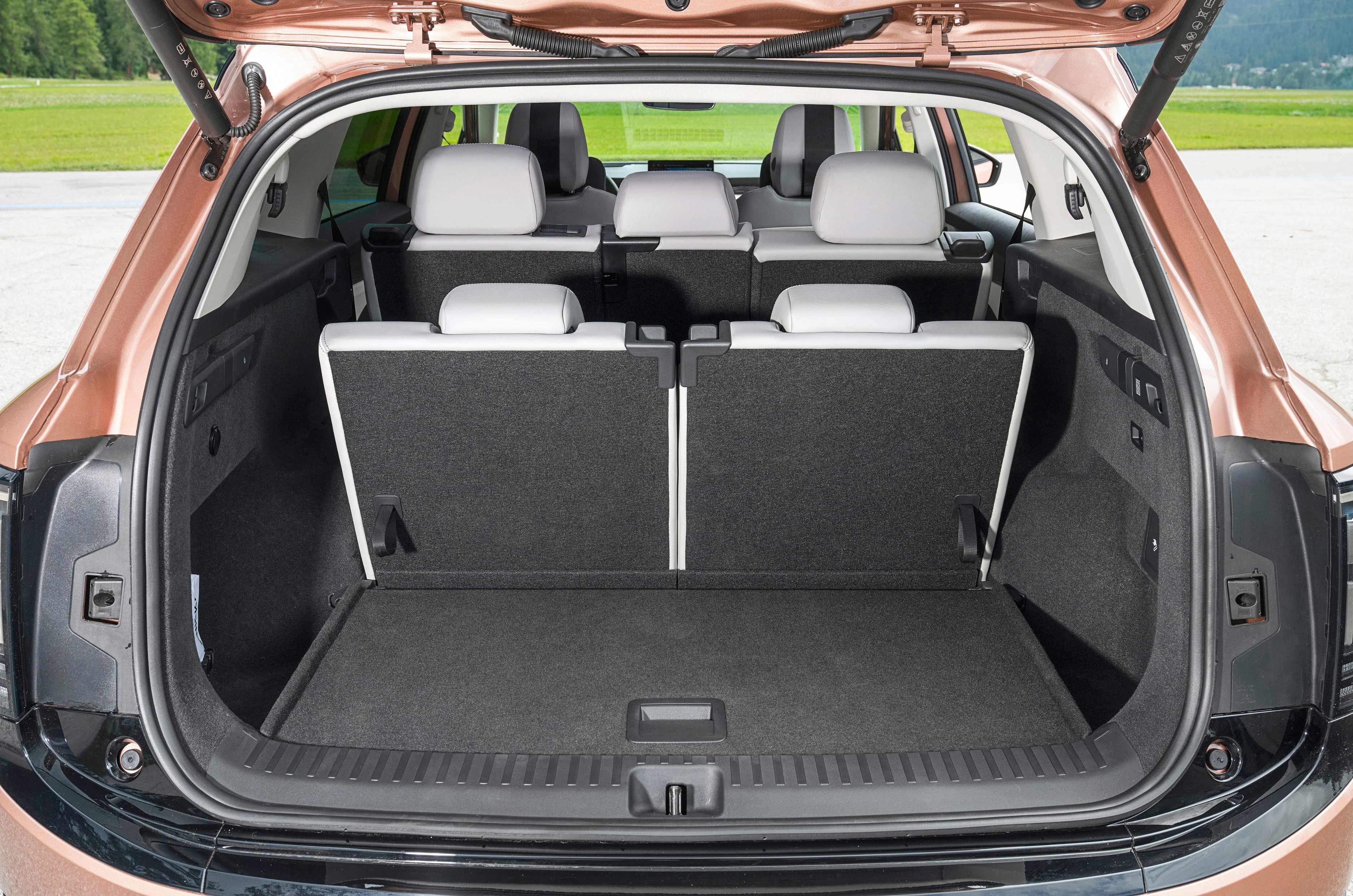
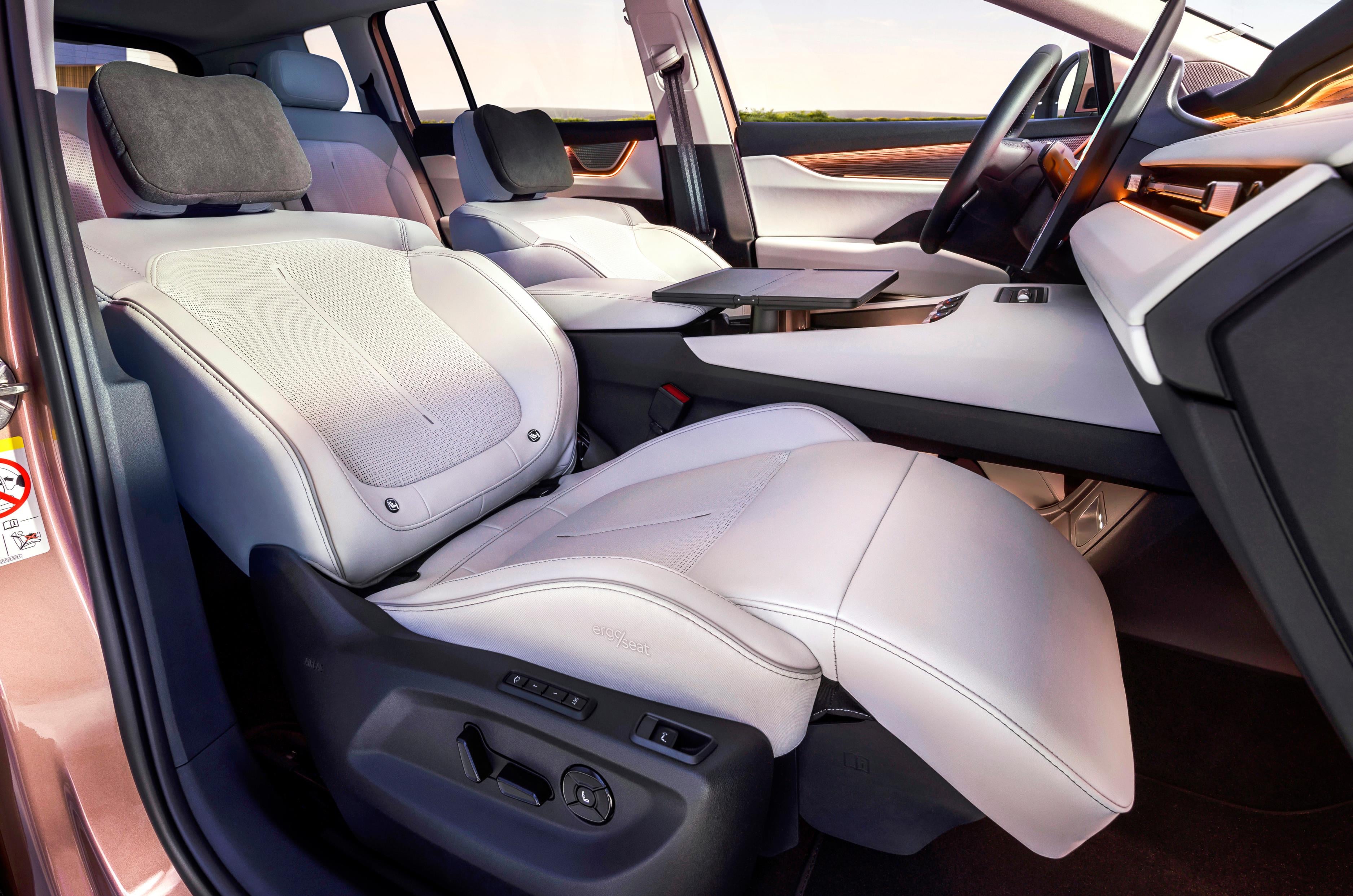
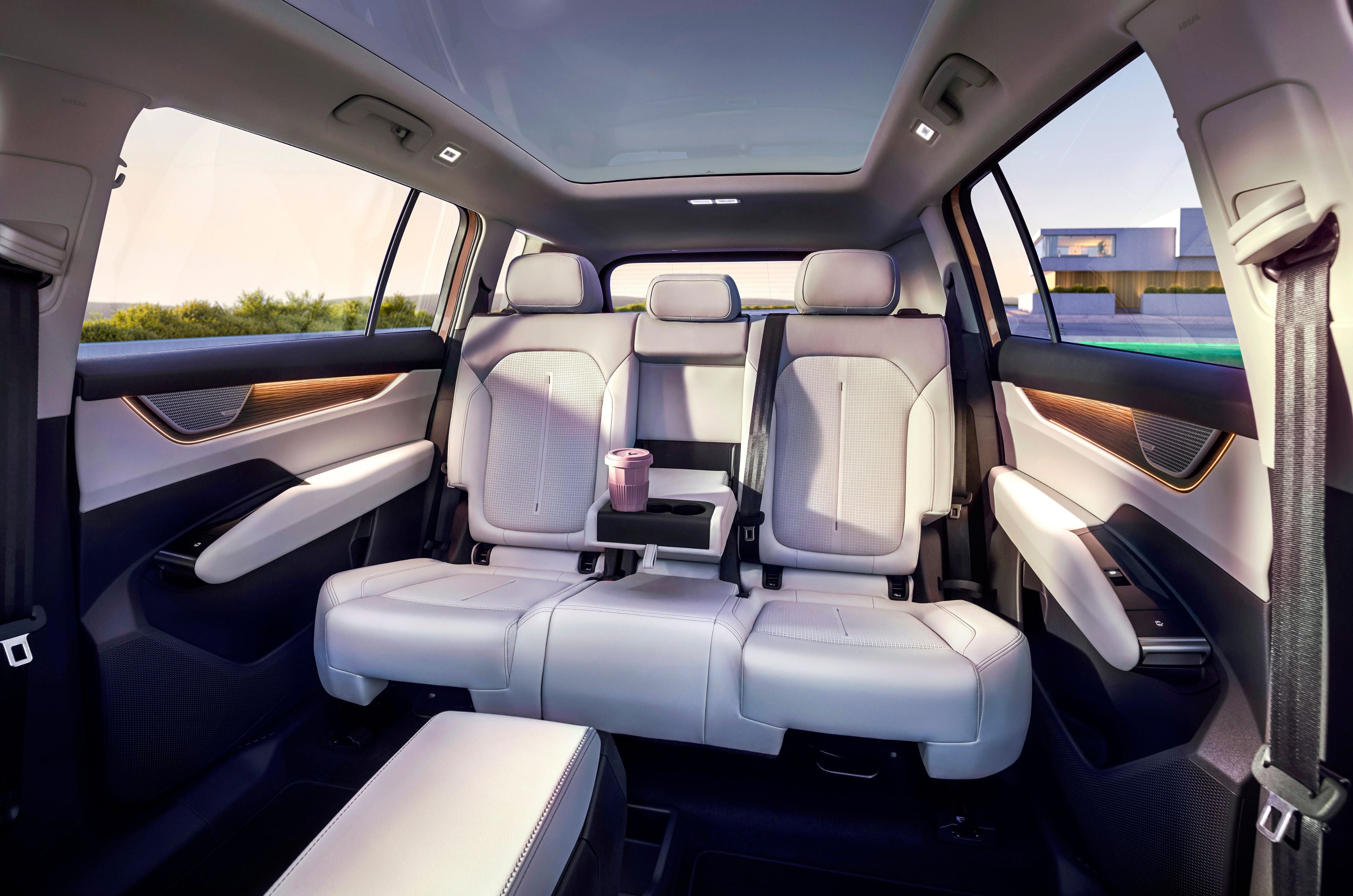
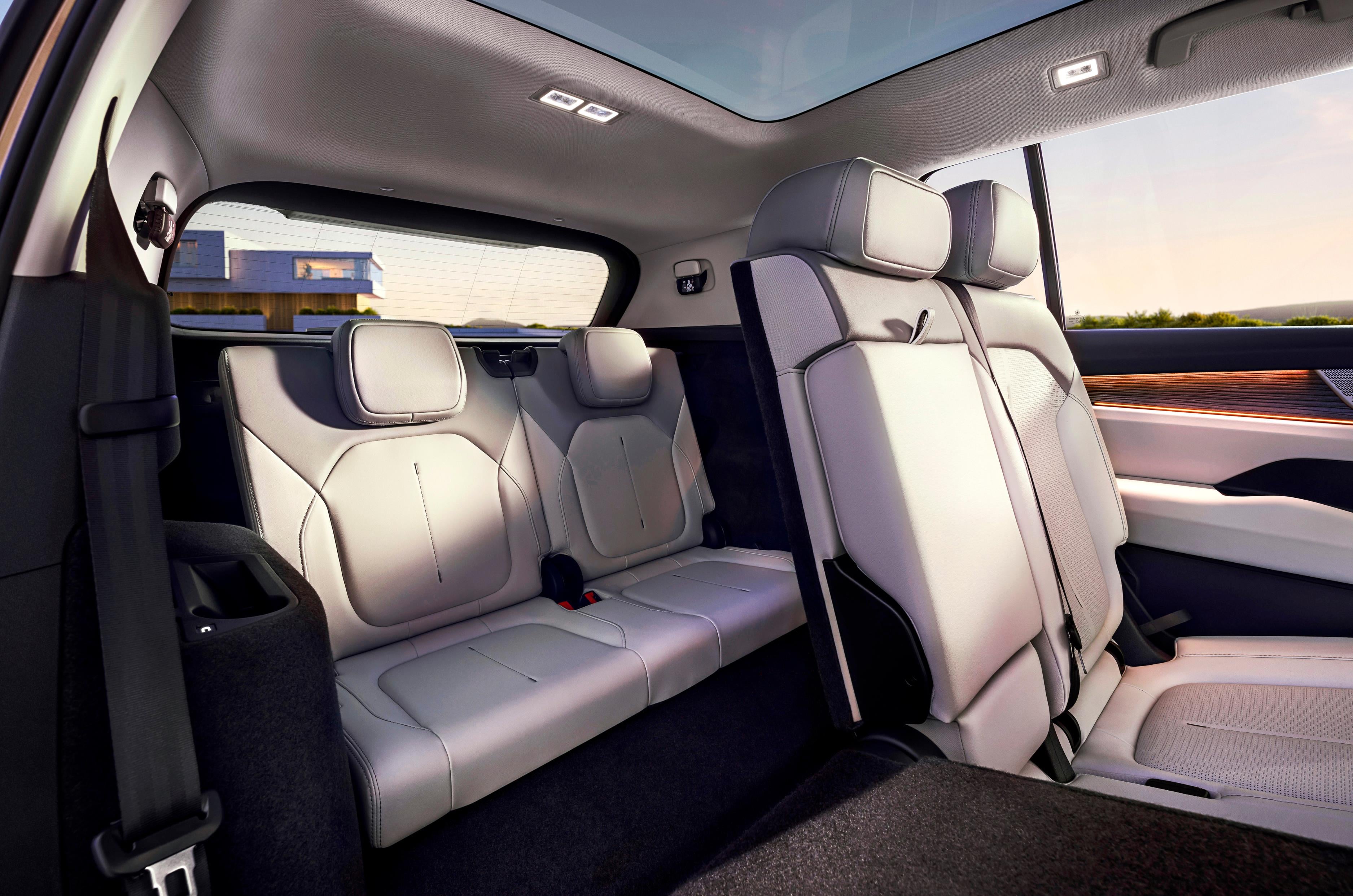
Hyundai has fully revealed the new Bayon midsize SUV ahead of its price announcement on October 26. The Bayon will be positioned between the Venue and Creta in Hyundai’s SUV lineup and is squarely meant to take on the Maruti Victoris. It gets Hyundai’s latest ‘Art of Steel’ design language, a new interior shared with the Brazil-spec i20 and will come powered by a 1.5-litre petrol engine at launch. Bookings for the new Hyundai Bayon have commenced today.
First Hyundai in India to get Generative AI voice assistance
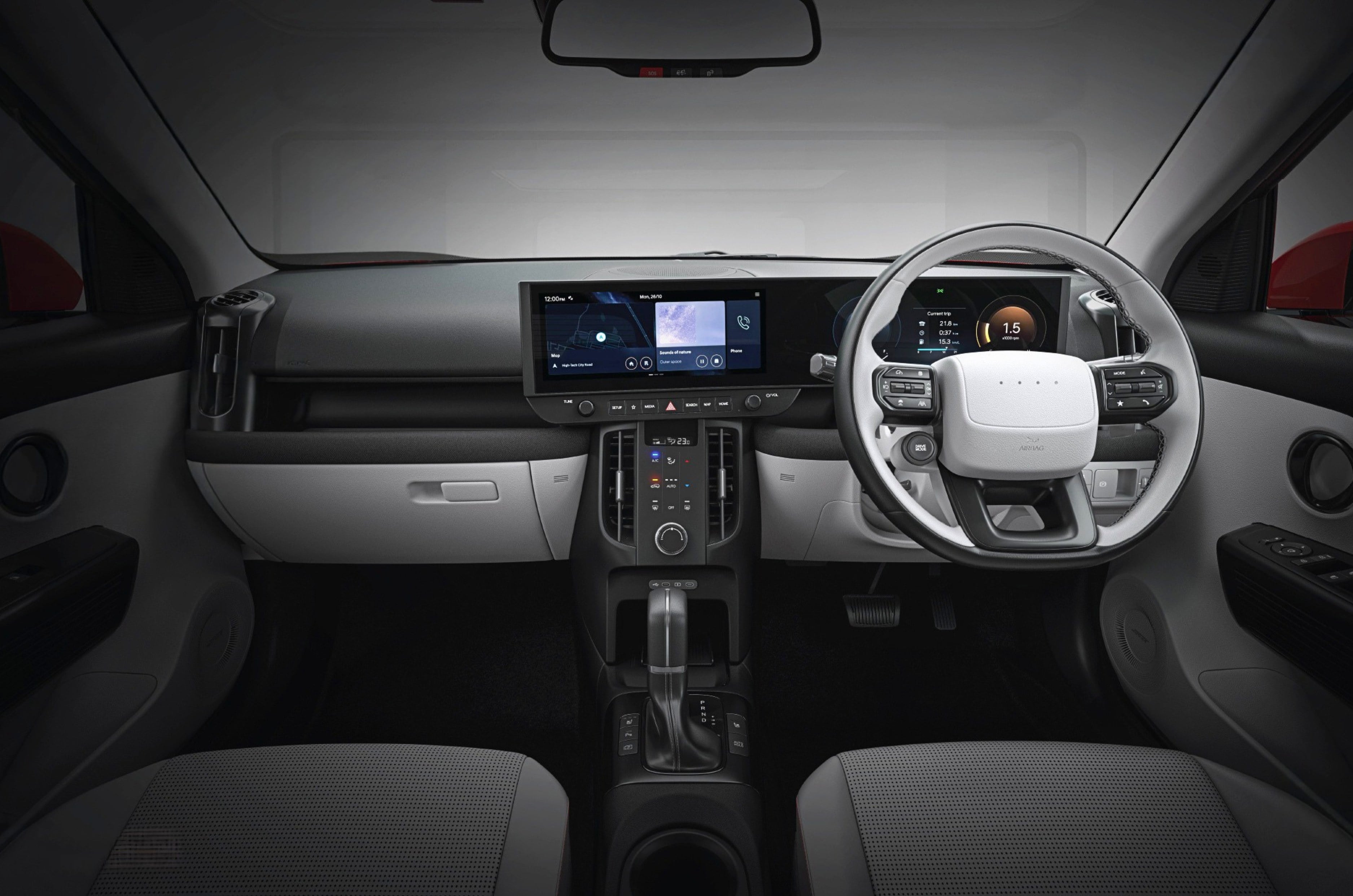
Interior gets dual 12.3-inch displays for instrumentation and infotainment
1.5-litre petrol engine gets 6-speed MT and CVT gearbox options
Hyundai Bayon exterior design
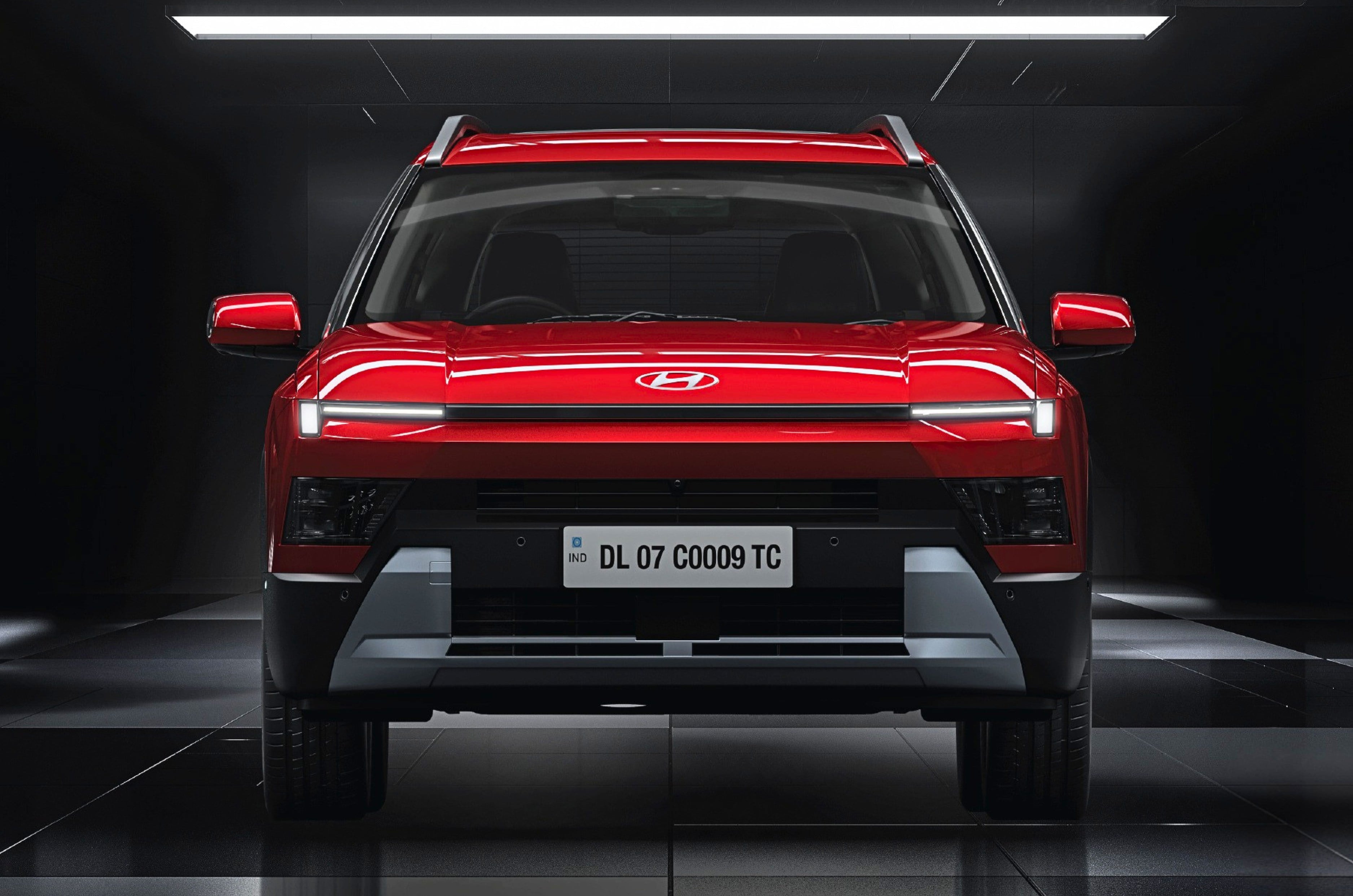
The Bayon gets Hyundai’s latest ‘Art of Steel’ design language, and from certain angles, looks very much like a scaled-down Tucson that was recently revealed for the North American market. Although Hyundai hasn’t revealed the exact dimensions yet, it’s expected to measure just a tad more than 4 meters, thereby slotting below the 4.3-meter Creta.
Up front, the layered fascia sports a split headlamp setup, with the LED DRLs positioned in a slim black trim on the leading edge of the bonnet. The DRLs also resemble Hyundai’s ‘H’ motif split in half – this one doesn’t get a full-width LED light band, as is very much the trend these days. Meanwhile, the bumper houses the main headlamp unit and chunky cladding finished in black and silver.
The Bayon perhaps looks the most distinctive in profile, with its flared wheel arches and sharp character lines adding quite a lot of visual muscle. There’s generous use of cladding over the wheel arches and the petal-style alloy wheels also look quite stylish. Hyundai has also opted for traditional pull-type door handles instead of flush-fitting units and the gloss-black treatment for the pillars creates a nice floating effect for the roof.
At the rear, the Bayon gets a slim black band housing very sleek tail lamps and there’s ‘Bayon’ spelt bold and centre on the tail gate. There’s also a pronounced roof spoiler, while the bumper gets a dual-tone black and silver treatment housing some more lighting elements. Overall, the Bayon has a crossover-ish look rather a boxy, upright SUV.
Hyundai Bayon interior and features
The layered dashboard sports a twin 12.3-inch connected screen setup and a central dropdown panel housing the HVAC controls – it also seems to have physical dials and knobs, which is always a welcome sight. We can also spot a wireless charging pad at the base of the vertically oriented centre console.
The steering wheel with Hyundai’s four-dot motif, the vertical AC vents flanking the centre panel and even the door pads look very similar to those on the new i20. It also gets steering-mounted paddle shifters, and like all Hyundais, expect it to be properly kitted out with convenience and safety features.
Hyundai Bayon expected powertrain options
At launch, Hyundai is offering the Bayon with the tried and tested 115hp/144Nm 1.5-litre, four-cylinder naturally aspirated petrol engine that powers the Creta. It will come with manual and CVT gearbox options. And while Hyundai hasn’t confirmed it yet, a CNG version is also expected to be added to the lineup at a later stage, likely with an underbody tank, making the Bayon the first Hyundai model over four metres long to be powered by CNG.
Sandpaper Gate यह 24 मार्च 2018 को हुआ क्रिकेट जगत का एक बड़ा विवाद साबित हुआ जब ऑस्ट्रेलियाई टीम के 3 खिलाड़ियों ने केपटाउन में दक्षिण अफ्रीका के खिलाफ तीसरे टेस्ट में गेंद से छेड़छाड़ की और कैमरे को धोखा ना दे सके। कल से शुरु हो रही टेस्ट सीरीज से पहले प्रसारणकर्ता ने इस पर चुटकी लेते हुए वीडियो अपलोड किया है कि इस बार हमारी निगाहें पहले से ज्यादा तेज रहेंगी।
Our cameras will be sharp for this 3-match Test series SA v Aus | 1st Test | 9 October | 9:30 CAT #SAvAUS #SSCricket https://t.co/BrUBZZWwUF
बॉल टैम्परिंग की इस हरकत को अंपायरों की नज़र से तो बचा लिया था, लेकिन कैमरे की नज़र में आने के बाद ऑस्ट्रेलियाई टीम की पूरी पोल पट्टी खुल गई थी। मैच के दौरान कैमरन बेनक्रॉफ्ट को जेब से किसी चीज़ को निकालते हुए देखा गया था, जिसके बाद अंपायरों को उन पर शक हुआ और उन्होंने बेनक्रॉफ्ट से पूछताछ की थी। बेनक्रॉफ्ट ने अंपायरों को जेब से निकालकर पाउच दिखाया, जो चश्मे के पैकेट जैसा दिख रहा था।
अंपायरों को यह मामूली चीज़ लगी और उन्होंने जारी रखा गया था। कुछ देर बाद स्टेडियम में लगे बड़े स्क्रीन पर बेनक्रॉफ्ट का वह वीडियो दिखाया गया था, जिसमें वे टैम्परिंग कर रहे थे। इसके बाद स्टेडियम में हंगामा शुरू हो गया था। कैमरे ने बेनक्रॉफ्ट की यह हरकत पकड़ ली और सार्वजनिक कर दी थी। इसके बाद ऑस्ट्रेलियाई टीम के पास छुपाने को कुछ नहीं था। इस पूरे मामले को उजागर करने में कैमरामैन की बड़ी भूमिका रही थी।
गेंद से छेड़खानी मामले में क्रिकेट आस्ट्रेलिया ने कड़ा रवैया अपनाते हुए आज टेस्ट टीम के कप्तान स्टीव स्मिथ, डेविड वार्नर और कैमरन बेनक्राफ्ट को आरोपी बनाते हुए दक्षिण अफ्रीका के खिलाफ चौथे टेस्ट की टीम से बाहर कर दिया था।
इसके बाद इन तीनों खिलाड़ियों पर ही एक साल का प्रतिबंध लगा था। डेविड वॉर्नर और स्टीव स्मिथ तो ऑस्ट्रेलिया के लिए खेल गए लेकिन कैमरून बैकरोफ्ट के करियर का अंत हो गया था। डेविड वॉर्नर और स्टीव स्मिथ ऑस्ट्रेलिया की विश्व टेस्ट चैंपियनशिप 2023 विजेता टीम का भी हिस्सा रहे थे।उस वक्त से अब तक सिर्फ स्टीव स्मिथ ही वह क्रिकेटर है जो वर्तमान में भी ऑस्ट्रेलियाई टेस्ट क्रिकेट का हिस्सा है उन पर इस सीरीज में पूरे समय नजर रहने वाली है।
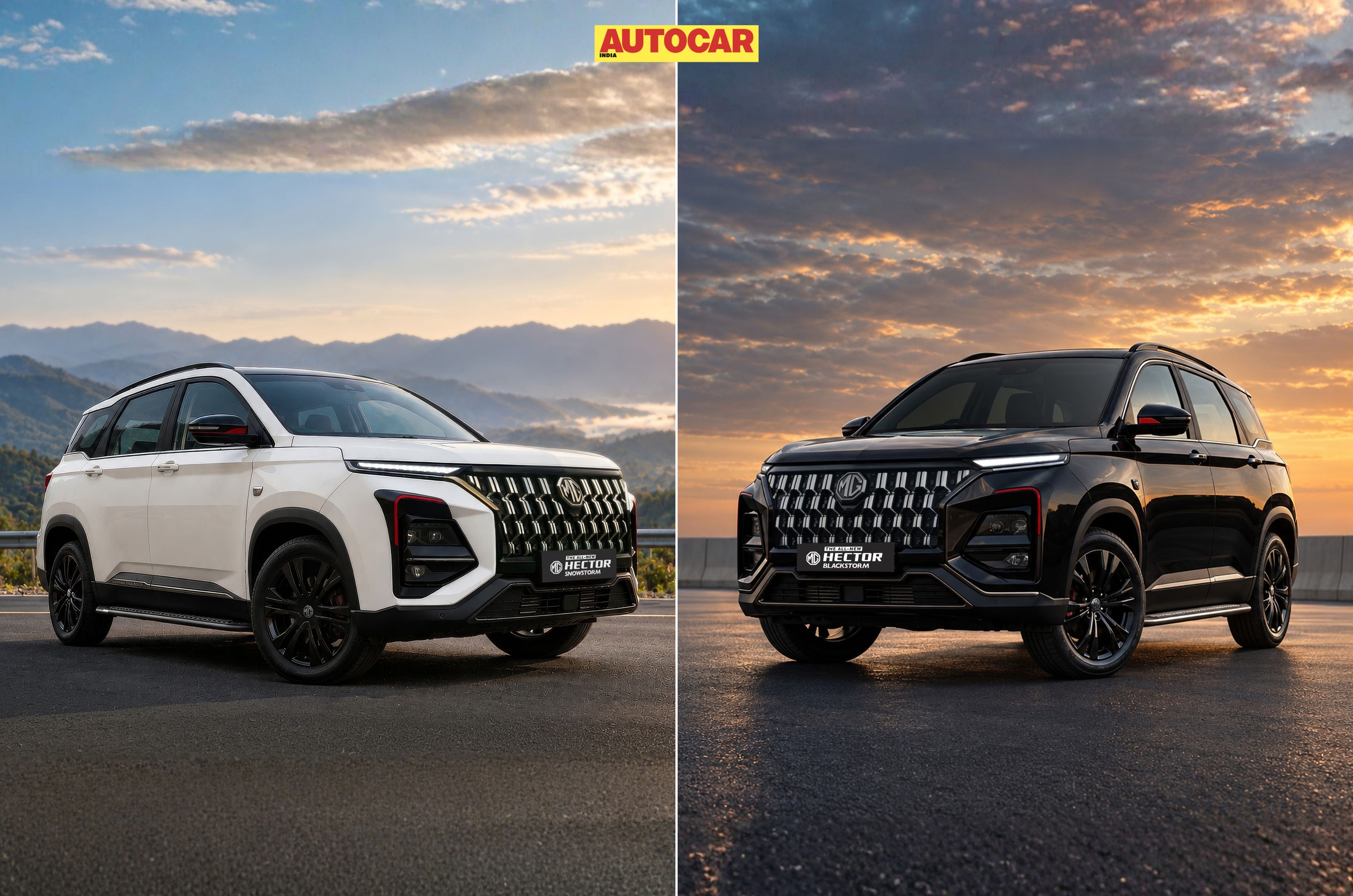
MG Motor India has launched new Hector Blackstorm and Snowstorm special edition SUVs, each priced at Rs 20 lakh (ex-showroom). These limited-run models get new exterior colour schemes, , dark-themed interiors, and edition-specific accessories. Both the Blackstorm and Snowstorm editions are only available with the 5-seater configuration and the 1.5-litre petrol-CVT powertrain. Compared to the top-spec Savvy Pro CVT variants, the Blackstorm and Snowstorm editions command a premium of Rs 35,000.
Hector Storm series carries a premium of 35,000 over the top-spec Savvy trim
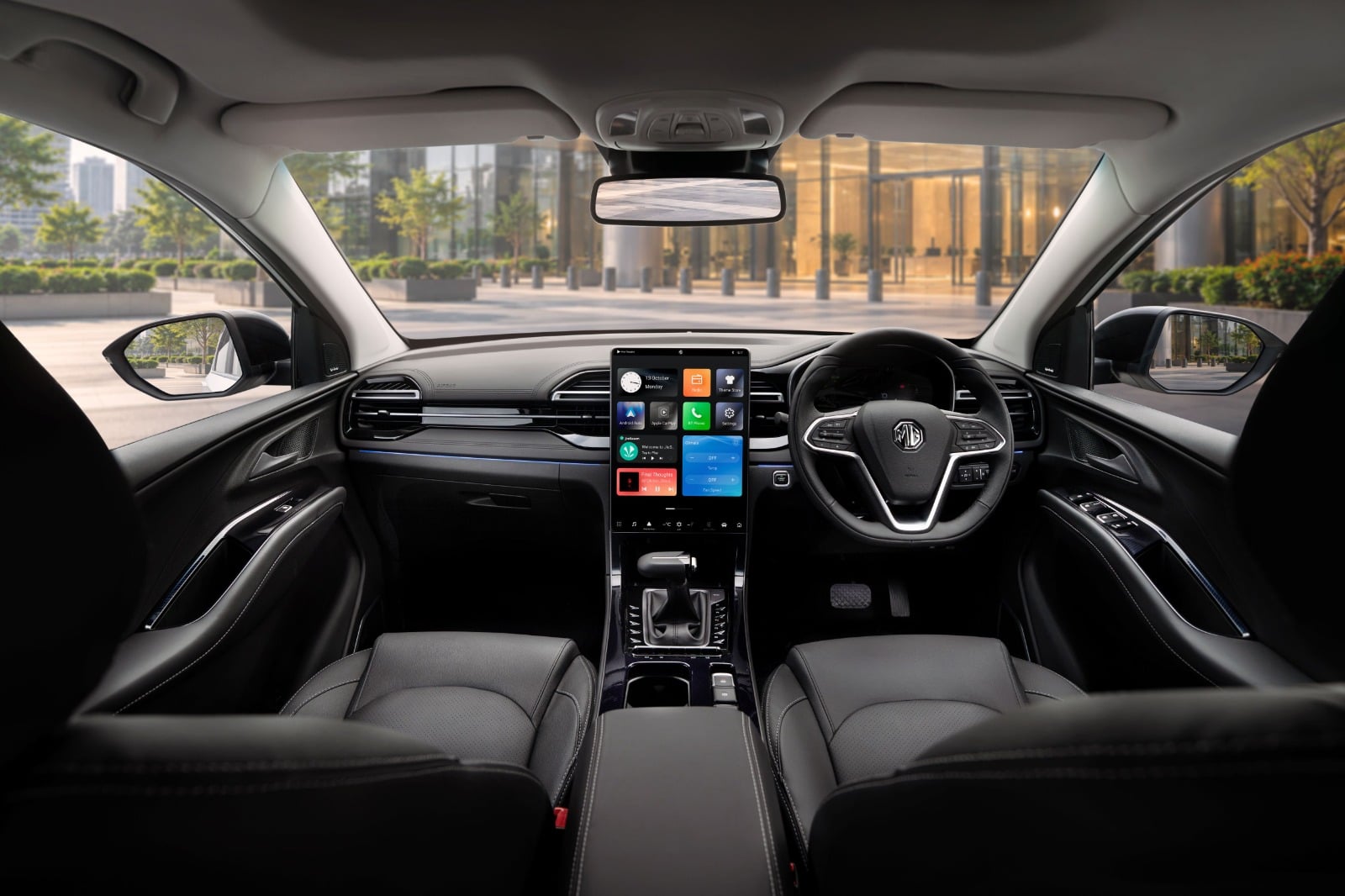
Interior gets an all-black finish with edition name embossed on front headrests
Available only in a 5-seat configuration and 1.5-litre petrol-CVT powertrain
MG Hector Storm Series: what’s new?
As the name suggests, the Blackstorm Edition gets an all-black exterior finish while the Snowstorm gets a Pearl White exterior with a contrasting Starry Night finish for the roof. Both versions also get blacked-out alloy wheels with red brake callipers, a blacked-out grille and roof rails, and dark chrome accents on the logos, skid plates, tailgate accents, and body-side cladding. The LED headlamp bezels have also been blacked-out and the tail gate gets a new smoked effect.
On the inside, the black theme continues for the dashboard and seat upholstery, and the edition name is also embossed on the front seat headrests. Customers can also avail for a Storm Series package comprising edition-specific logos, a red tailgate accent, fog lamp garnish and ORVM protectors with red accents and side step boards. Otherwise, the equipment suite remains unchanged from the top-spec Savvy trim.
MG Hector Storm Series: powertrain options
The Hector Blackstorm and Snowstorm editions are only available with the 1.5-litre, four-cylinder turbocharged petrol engine with the CVT gearbox; no manual gearbox option here. The engine produces 143hp and 250Nm. It is also only available in a 5-seater configuration, missing out on the 7-seat layout.
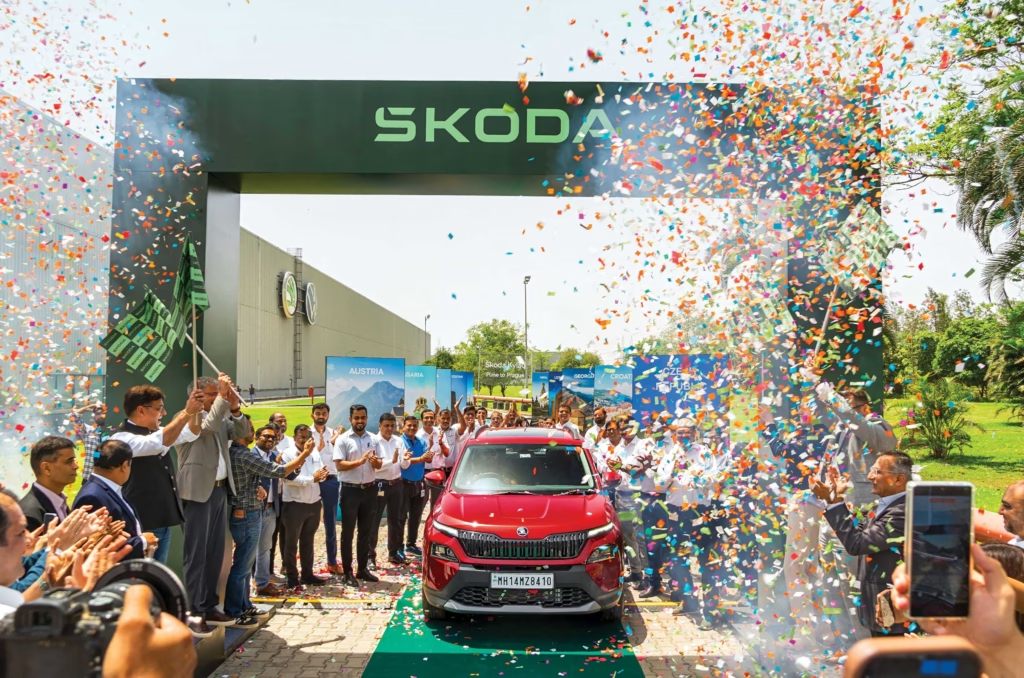
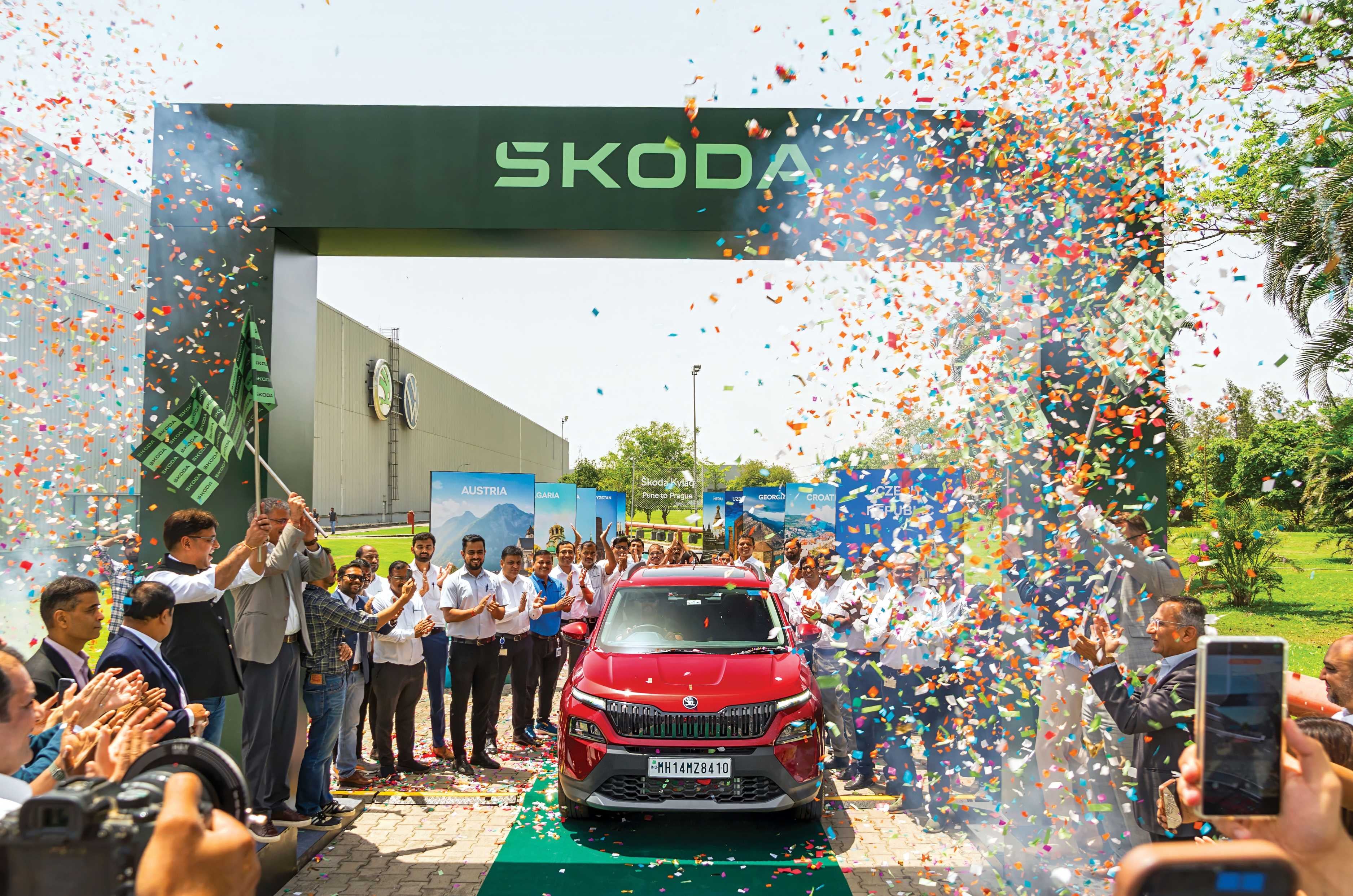
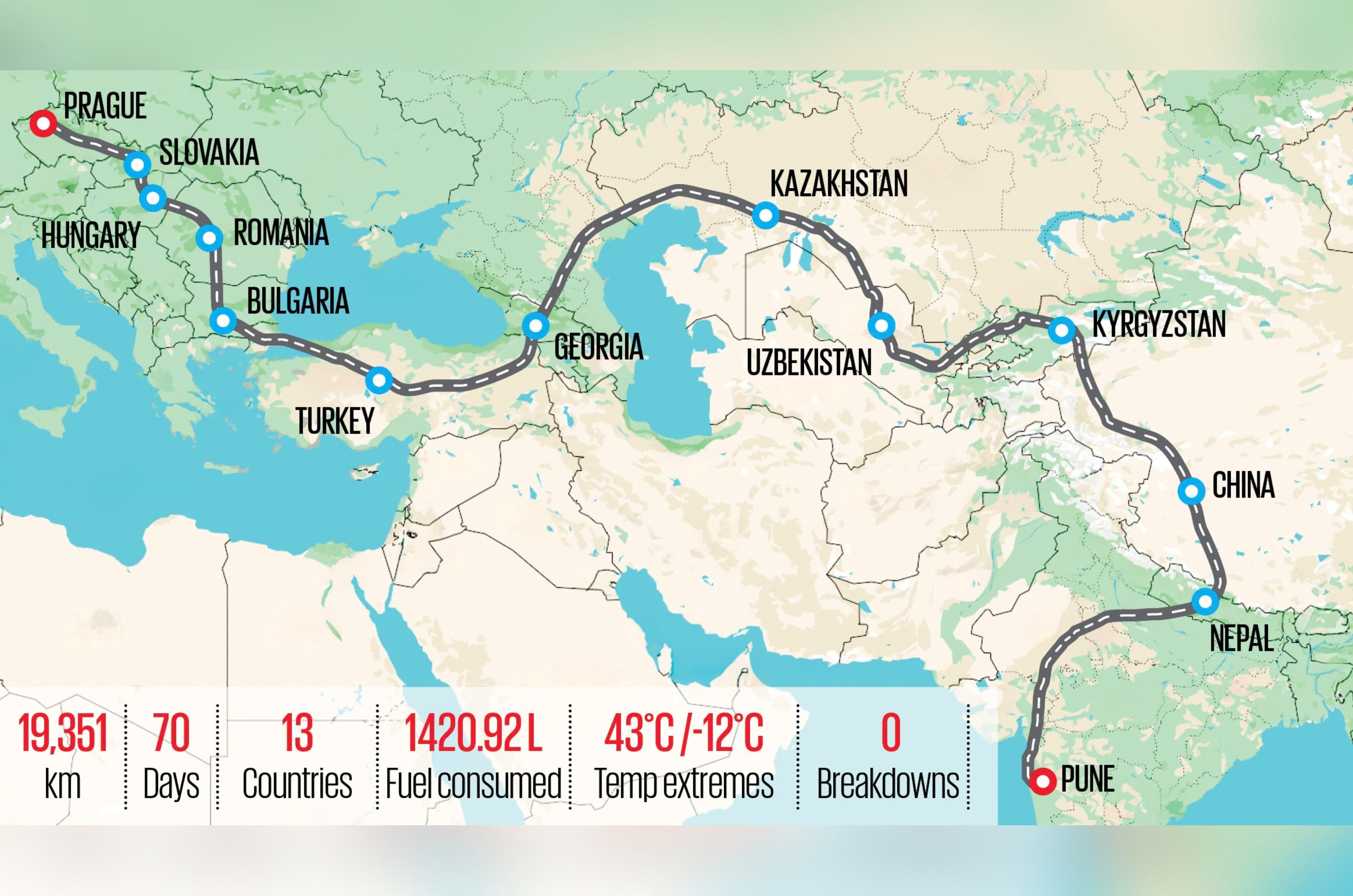
There are road trips, there are overland expeditions, and then there are journeys that become conversations with continents. This one starts in the industrial heart of Maharashtra, inside Skoda India’s sprawling Chakan facility. The end point lies nearly 20,000 kilometres away at Skoda Auto’s headquarters near Prague in Mladá Boleslav, Czech Republic, where bicycles evolved into automobiles and a 130-year-old story continues to be written.
Between these two factories lie thirteen countries, four major mountain ranges, countless cuisines, dozens of languages and enough history to fill libraries.
Our companion? Not a flagship SUV or a luxury grand tourer, but Skoda’s smallest SUV – the Kylaq, which recently celebrated its one-year anniversary. Driving it from Pune to Prague is a tall order, but surviving one year in India and being accepted with flying colours is enough cred one needs to take on the world.
India – Home Turf
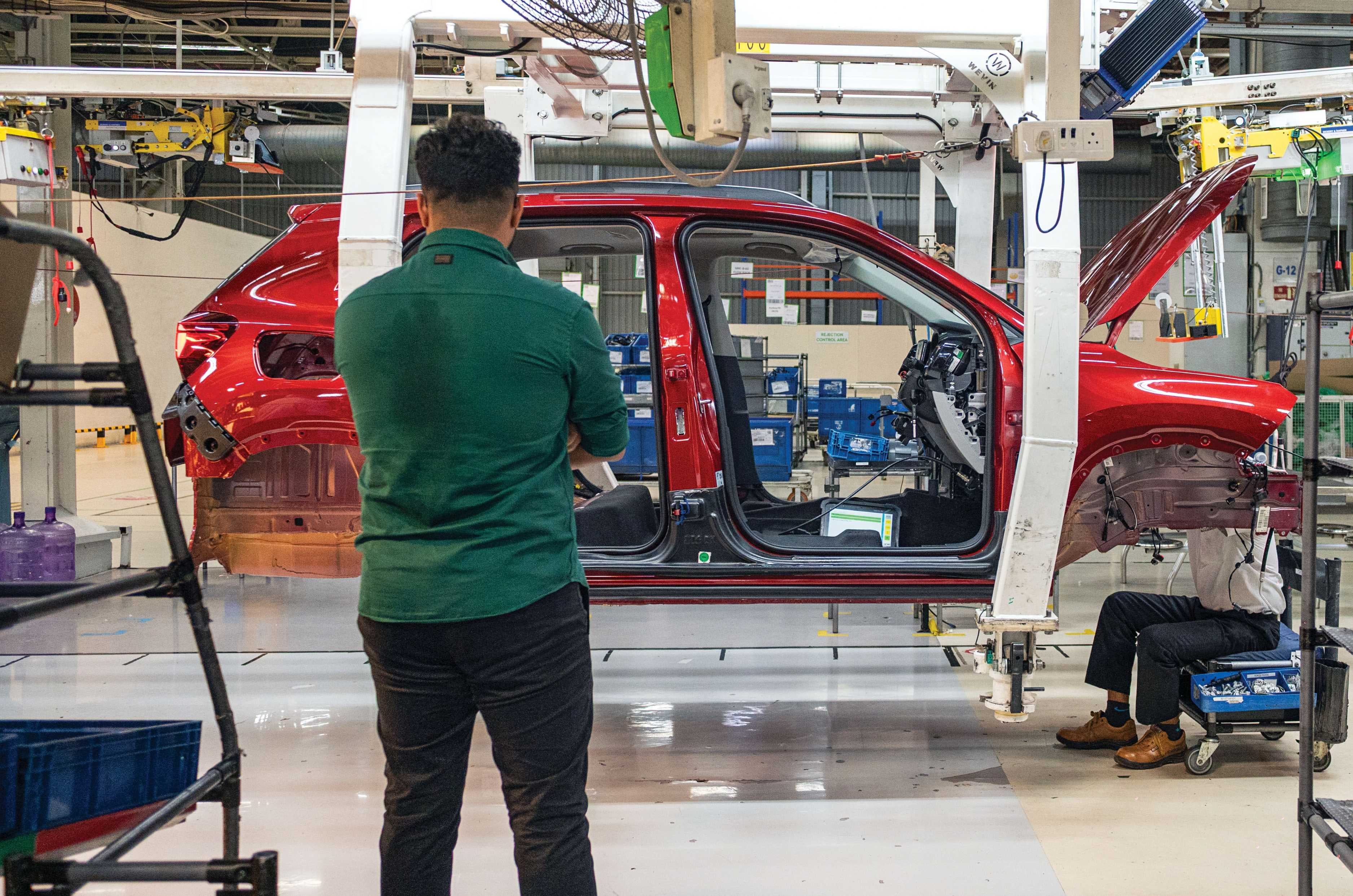
Witnessing the Kylaq’s birth added more responsibility.
On a cross-country road trip, you’d imagine the home country would be the easiest leg. With India, it was the opposite. To some, it’s organised chaos, but honestly, it’s anything but organised. Erratic traffic, erratic egos, and road conditions fit only for a Mars rover – India was the biggest challenge on the drive from Pune to Prague. As the odometer ticked over its first kilometre, right outside the gate of Skoda’s Chakan plant, a blood-red PMPML bus was ready to trade paint with the cherry-red Kylaq. A dinged-up Kylaq parked on the streets of Prague wouldn’t be a good look, so it was imperative that I babysit this compact SUV like a million-dollar supercar. Having watched the car being assembled on the factory floor, from bare bones to the finished package, only added to the emotion – driving it in traffic felt like walking a toddler across a football field. Eyes wide open, ready to block any attack.
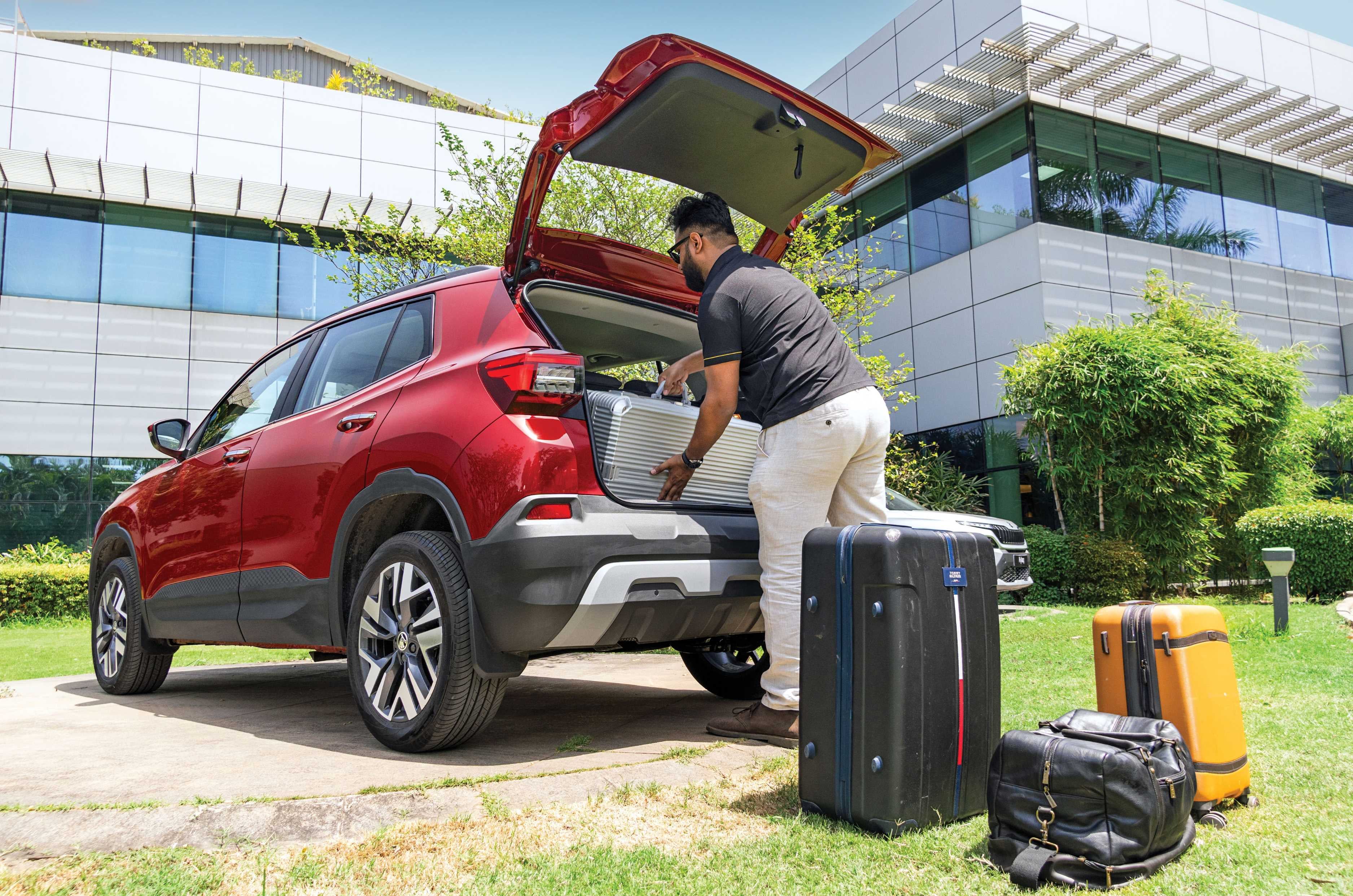
446-litre boot packed to the brim for 70 days on the road.
We got onto the Pune expressway and then crossed the Atal Setu in Mumbai, the longest sea bridge on the entire journey. Mumbai was home, both to me and to the Autocar India office, so after a few greetings from co-workers and the obligatory photos, we headed towards our first state crossing. The infamous Western Express Highway that leads out of Mumbai lived up to its reputation, but with a little anxiety, panic and a few expletives, we made it onto the national highway.
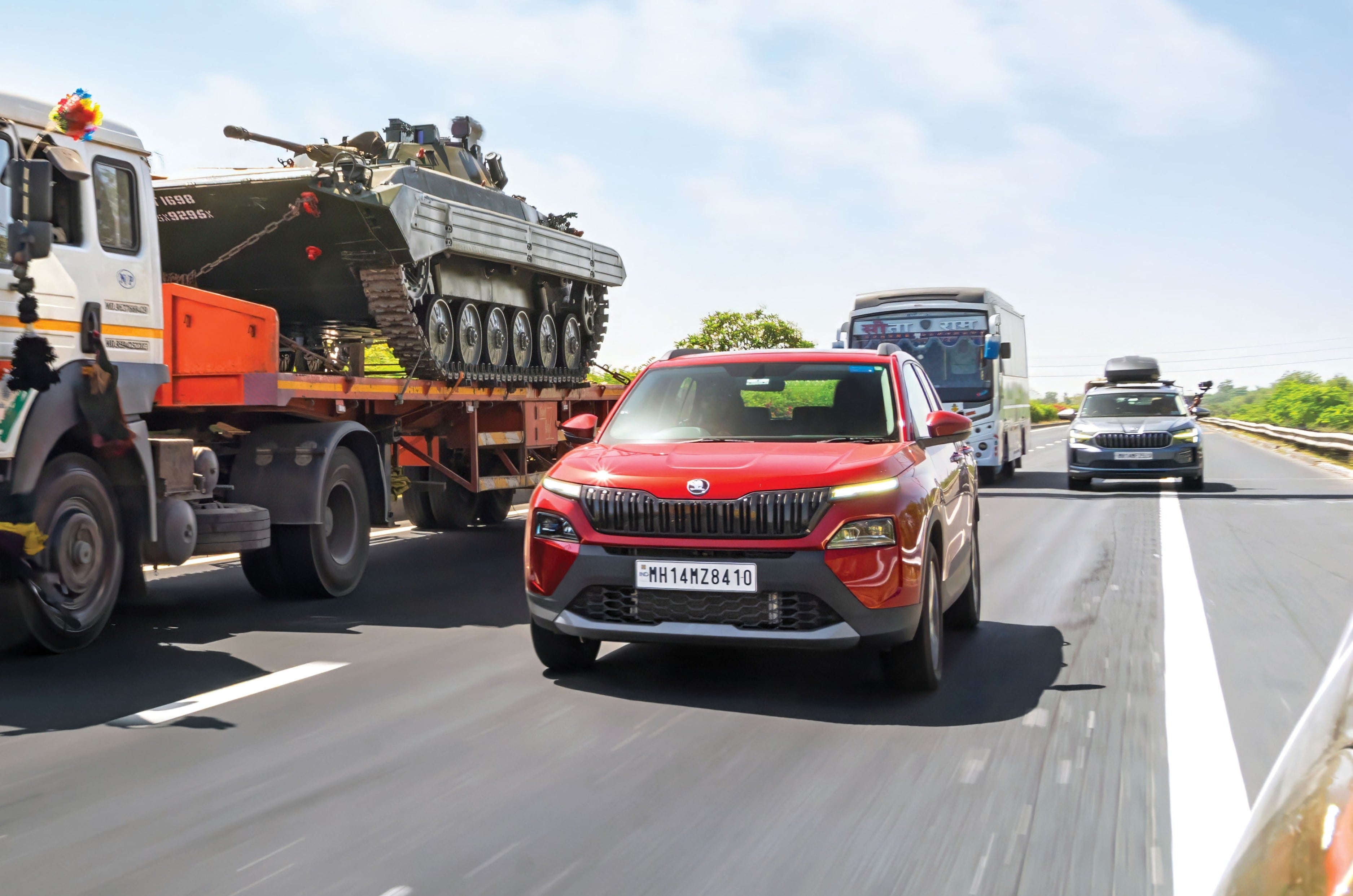
No telling what you’d spot on Indian highways.
The first of countless food stops was Hotel Ahura, renowned for its akuri and kheema. Needless to say, we carb-loaded to the max and made a beeline for Vadodara.
Pune-Birgunj in numbers
Distance covered
2,487km
Fuel consumed
234.46 litres
Average fuel economy
10.62kpl
Approximate fuel cost
Rs 23,629
Average per-litre fuel cost
Rs 100.87
Total time driven
55hrs 20min
Average speed
44.95kph
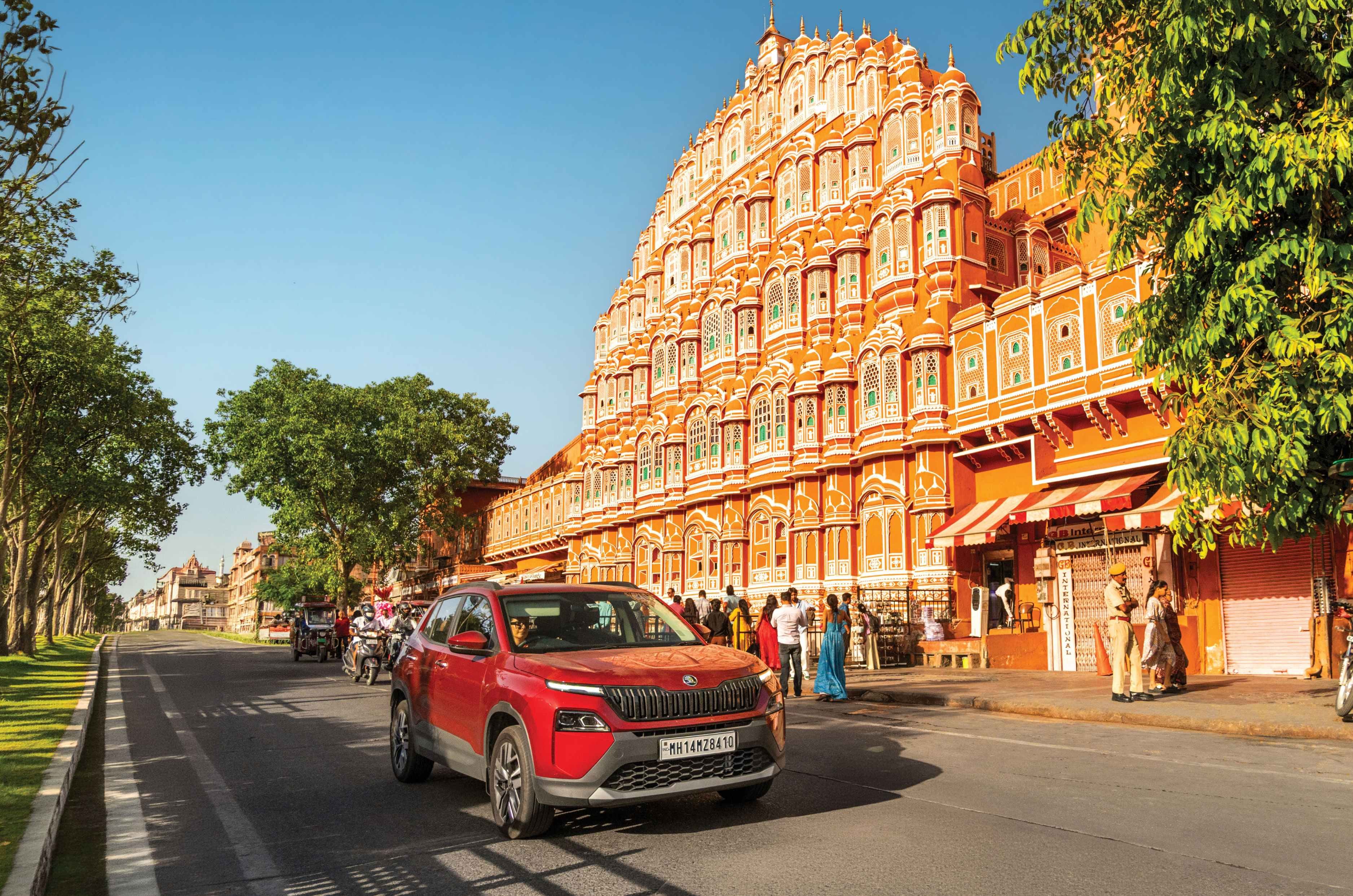
Crossing into Gujarat, the Kylaq could finally stretch its legs and spool up that turbo on the state’s spotless highways. The stability and effortless cruising were a welcome relief, since the bulk of the kilometres on this drive would be covered on long, open highways. Gujarat was a short stint – we made only an overnight halt in Vadodara before slipping out ahead of the morning traffic. The drive into Rajasthan was seamless, and Udaipur greeted us with a mix of heat and traffic. The City of Lakes is worth taking the time to explore, but a late arrival and early morning departure left us with just enough time to grab a traditional meal. All that driving had built up an appetite, so we put it to a vote between a massive vegetarian thali and laal maas – the latter won by a landslide. From the City of Lakes, we headed to Jaipur, the Pink City: just as picturesque as Udaipur, and just as colourful and chaotic. The sun setting over the beautiful Amer Fort made for a cracking backdrop, and a few glimpses of the Jal Mahal on the way back were a treat too. The iconic Hawa Mahal, with its 953 windows, never fails to amuse, but getting a photo of the five-storey icon without a chorus of honks is next to impossible. The next morning, after threading through Jaipur’s narrow lanes, we made it back onto the highway, heading for Agra.
Iconic Hawa Mahal ought to be seen first-hand.
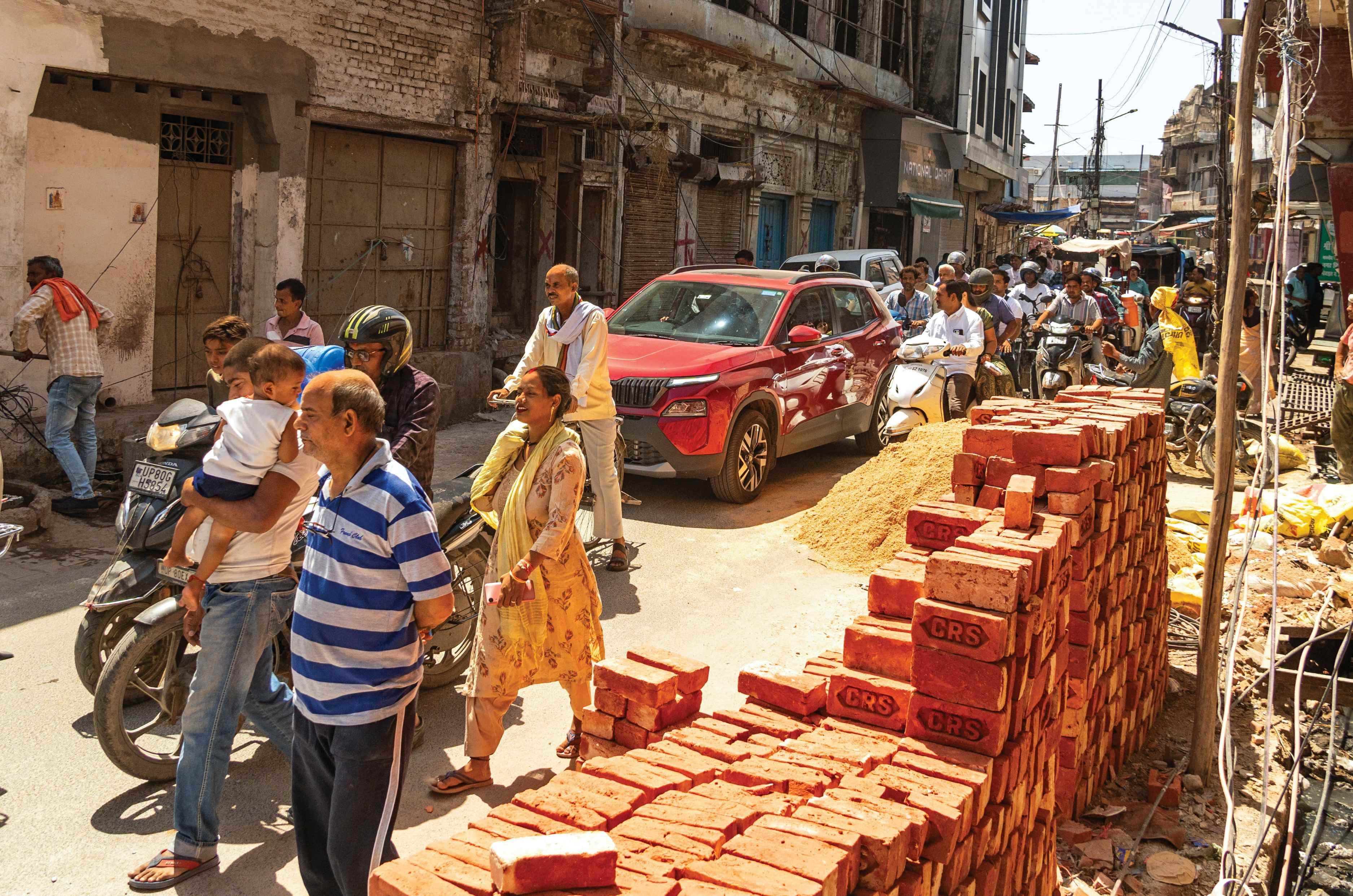
Agra is synonymous with the Taj Mahal, but the Agra Fort – from which you can see the Taj in the distance – is just as mesmerising. The detailing and architecture are second to none, and you could spend hours walking through its courtyards and passages, taking endless pictures. We, of course, also made it to the Taj itself, amid the hordes of tourists, if only to avoid the guilt of visiting Agra without a shot of the world-famous white dome. Tourism done, it was time for some petha – though the lanes near the petha shops seemed to be the exact width of the Kylaq, and that’s where peak anxiety set in. We got out of the mess, walked around the car to check for scratches and scribbles, and sighed in relief. India was adding to the tension, and we were barely halfway through it.
Agra’s narrow lanes were a nightmare to drive through.
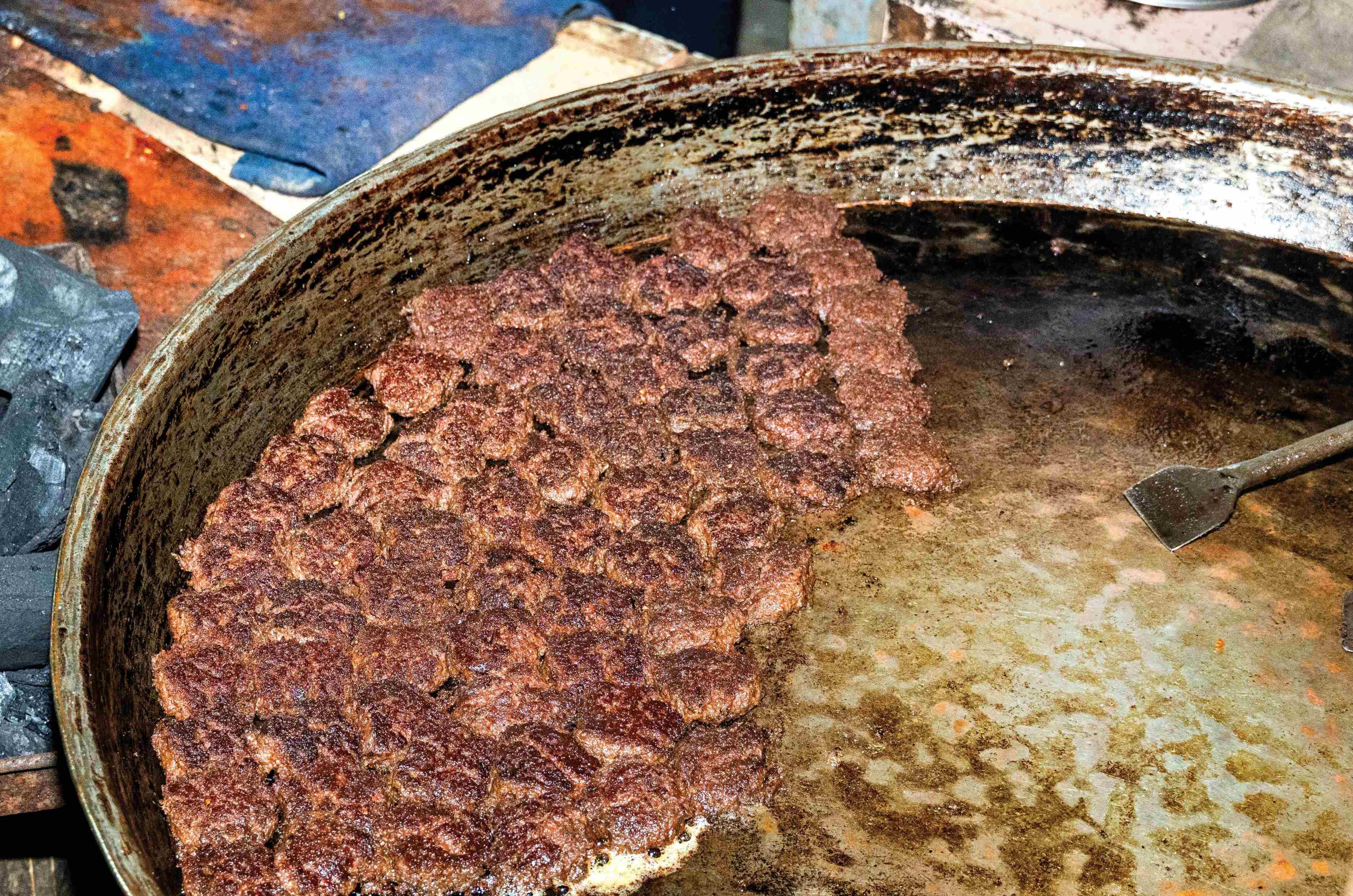
Our next stop from Agra was foodie heaven – Lucknow. The biryanis, kebabs, and tandoors were exactly what we expected, and exactly what Lucknow delivered. Finding your way here is easy – you could do it blindfolded, following the smoke and sizzle to wherever you need to be. Tunday Kababi is a must, and after a heap of biryani laced with kebabs, a long walk through the countless chikankari shops helps burn off some of the calories.
Lucknow’s Tunday Kababi still has us drooling over Galouti kebabs.
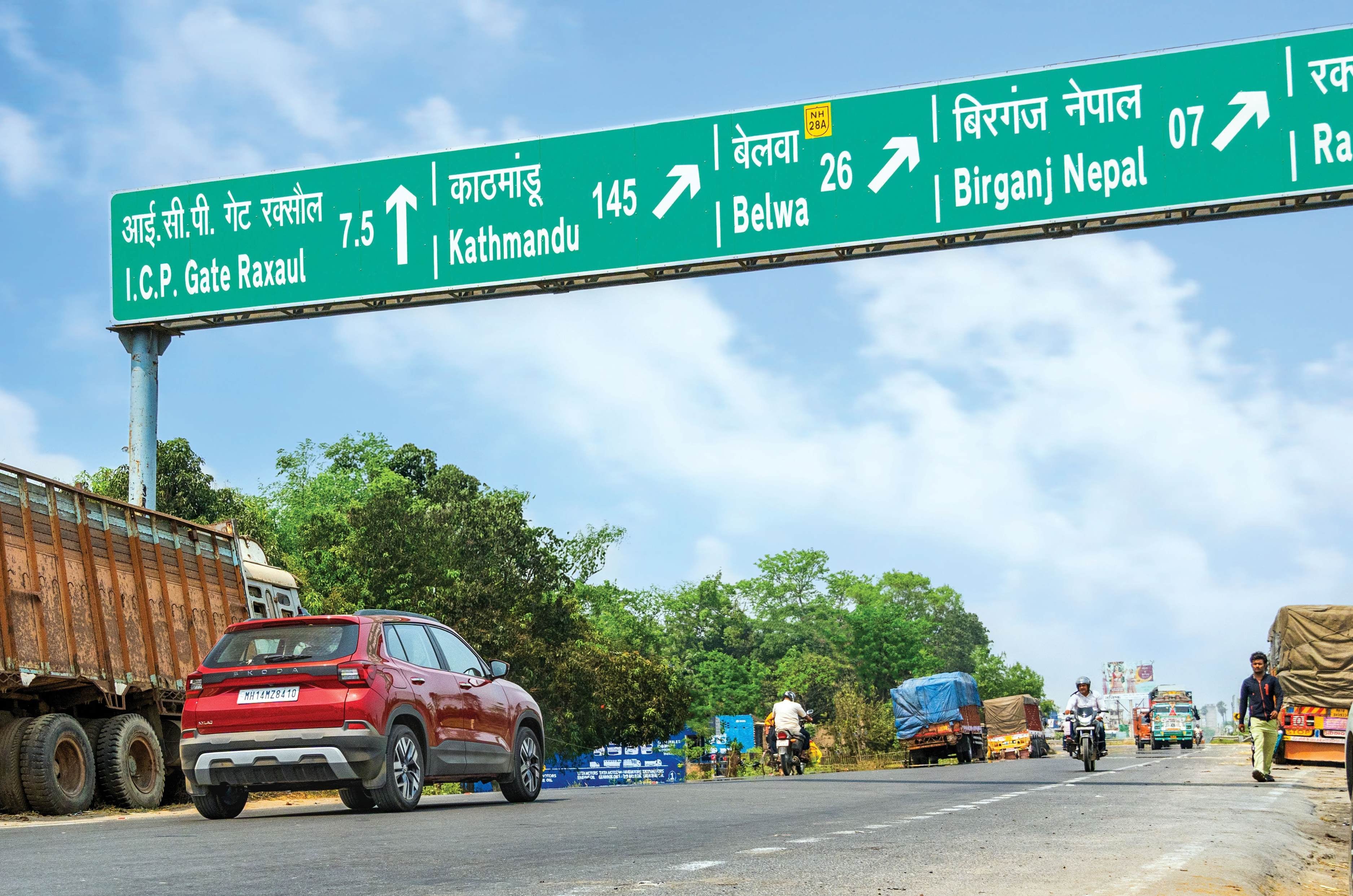
We were closing in on the end of the India leg, with one last stop in Gorakhpur before the Nepal border. To celebrate, a group of Skoda owners, officially known as the ‘Fans of Skoda’ joined us for a celebratory convoy as we drove out – everything from Octavia RS models to Kodiaqs and Kushaqs turned up as a send-off before we went international. The loud, chaotic border towns past Gorakhpur delivered one final challenge as we exited through Raxaul.
Final stretch before the Kylaq left India for the first time.
The India-Nepal border is still raw and basic, with none of the high-tech systems you might expect. A drive of this scale comes with a mountain of paperwork – visas, carnets, insurance, and more – and sifting through all of it manually takes a while. After a gruelling five hours, the Kylaq crossed out of India for the very first time.
Nepal – Old World Charm
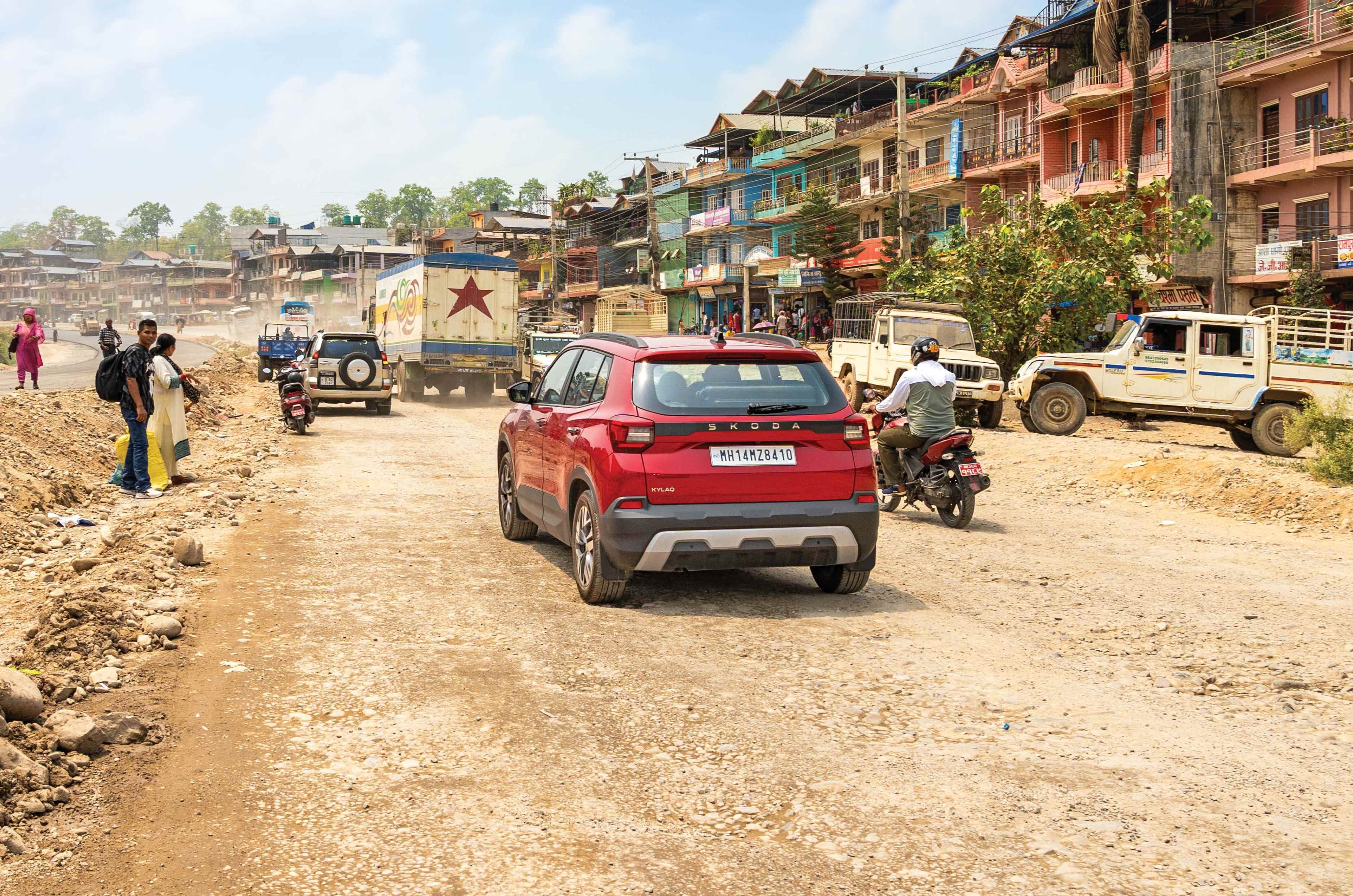
Nepal’s state highways give Indian roads a run for their money.
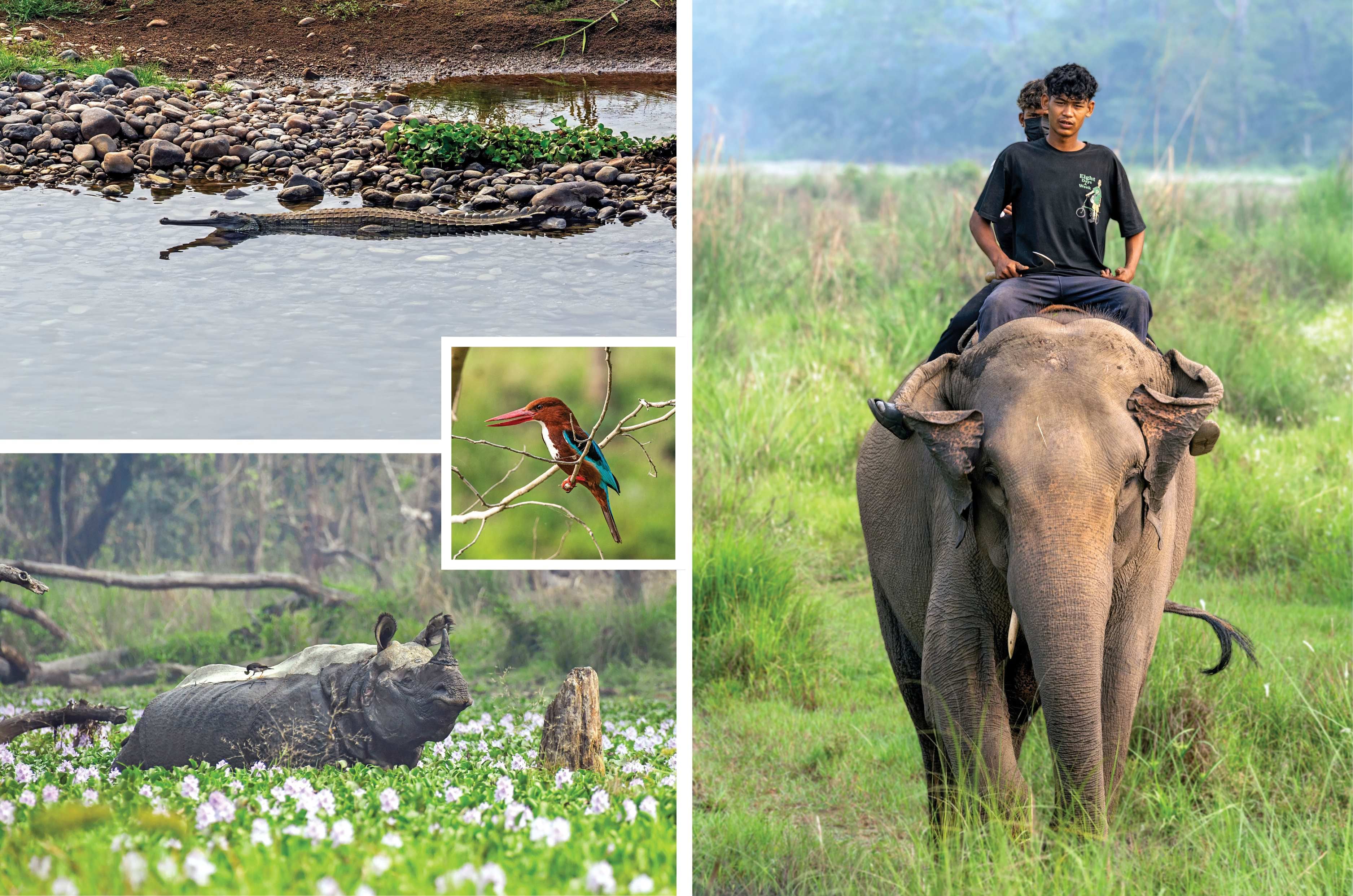
If the Indian side of the border was old-school, Nepal’s immigration post is almost antique. Drive past it, and you’d likely miss it altogether – the only tell-tale sign is a simple gate with ‘Immigration Office’ hand-painted on it. This humble-looking house is, in fact, the immigration office, where, just like on the Indian side, every check is done manually. Fine print, identity proofs, and everything in between were checked meticulously before we were welcomed into Birgunj. Our main draw in Nepal was the bustling capital, Kathmandu, but there were magnificent stops along the way, starting with Chitwan National Park. Home to nearly 700 one-horned rhinos, the park also shelters elephants, Bengal tigers, cobras, the elusive gharial, and abundant flora. The Kylaq would have been fun to explore it in, but we opted for the park’s safari vehicle to relax and take in the surroundings. Paddling a beaten-up wooden kayak past crocodiles and snakes adds a rush, but it’s nothing compared to a rhino staring you down in all its magnificence. The park gave us a welcome break from long hours behind the wheel.
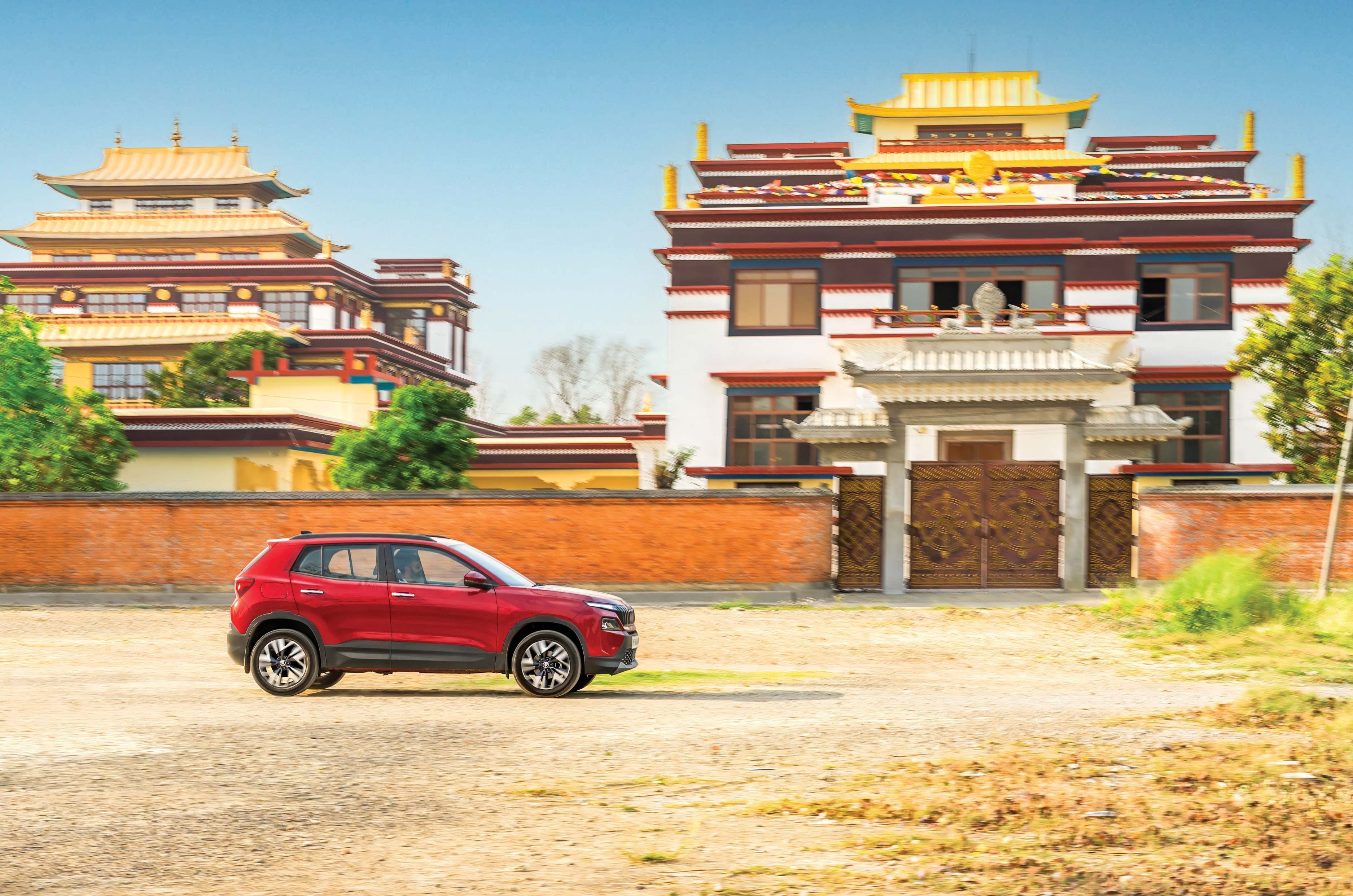
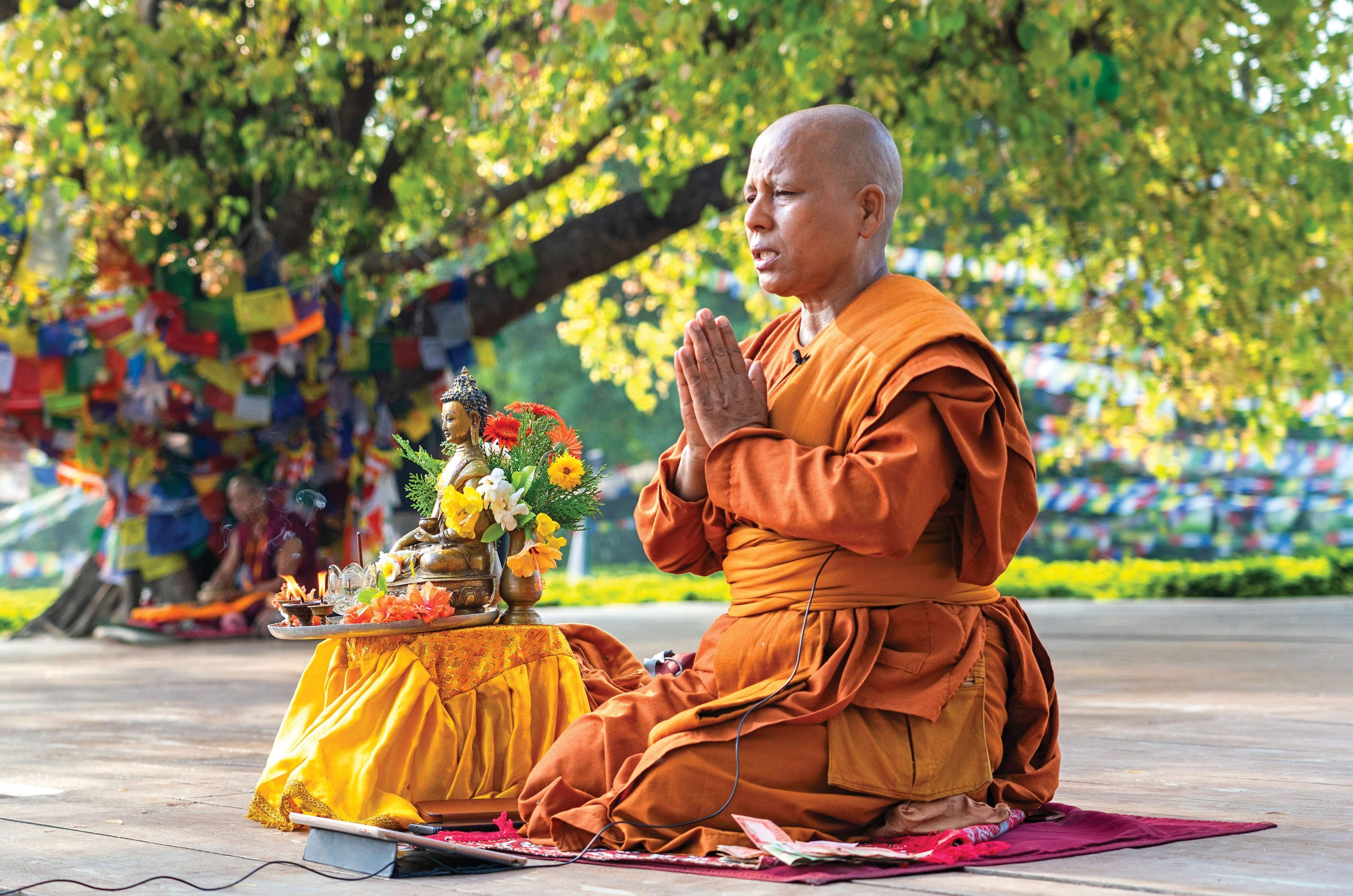
Lumbini is home to 32 unique styles of monasteries.
Next was Lumbini, a spiritual haven and, more importantly, the birthplace of Siddhartha Gautama (Lord Buddha) around 563 BC. Its fascinating monastic zone showcases monasteries built by Buddhist nations from around the world, each reflecting its own culture through design and architecture – a remarkable collection of temples spanning diverse traditions. The feeling of peace there was unlike anything I’d experienced, but it was soon disrupted by the road to Pokhara.
Lumbini provided a moment of calm through the chaos.
Mountain passes are notorious for destroying Google’s ETAs – landslides, breakdowns, and deteriorating roads mean a stretch that should take an hour could take five, depending on your luck. We braced for traffic and drove straight into a landslide clearing. A two-hour wait meant the sun was setting as we rolled into the quaint town of Pokhara. Bustling with cafés and pop culture, it felt like a mini Kathmandu, but with the stunning Phewa Lake turning orange at sunset. The calm that began in Chitwan came full circle on the shores of Phewa Lake.
Chitwan is home to the gharial and over 700 one-horned rhinos.
Kathmandu, though, was a different animal entirely – every bit a capital city, and a world away from the slow pace of Chitwan or Lumbini. The music is loud, the traffic is hectic, and the city is anything but quiet. Ironically, the only quiet things on the road are the cars – China’s dominance in Nepal is stark, with three in five cars on the road being Chinese EVs. Geely, BYD, and GWM rule the market, with only a handful of Hyundais and Kias as competition.
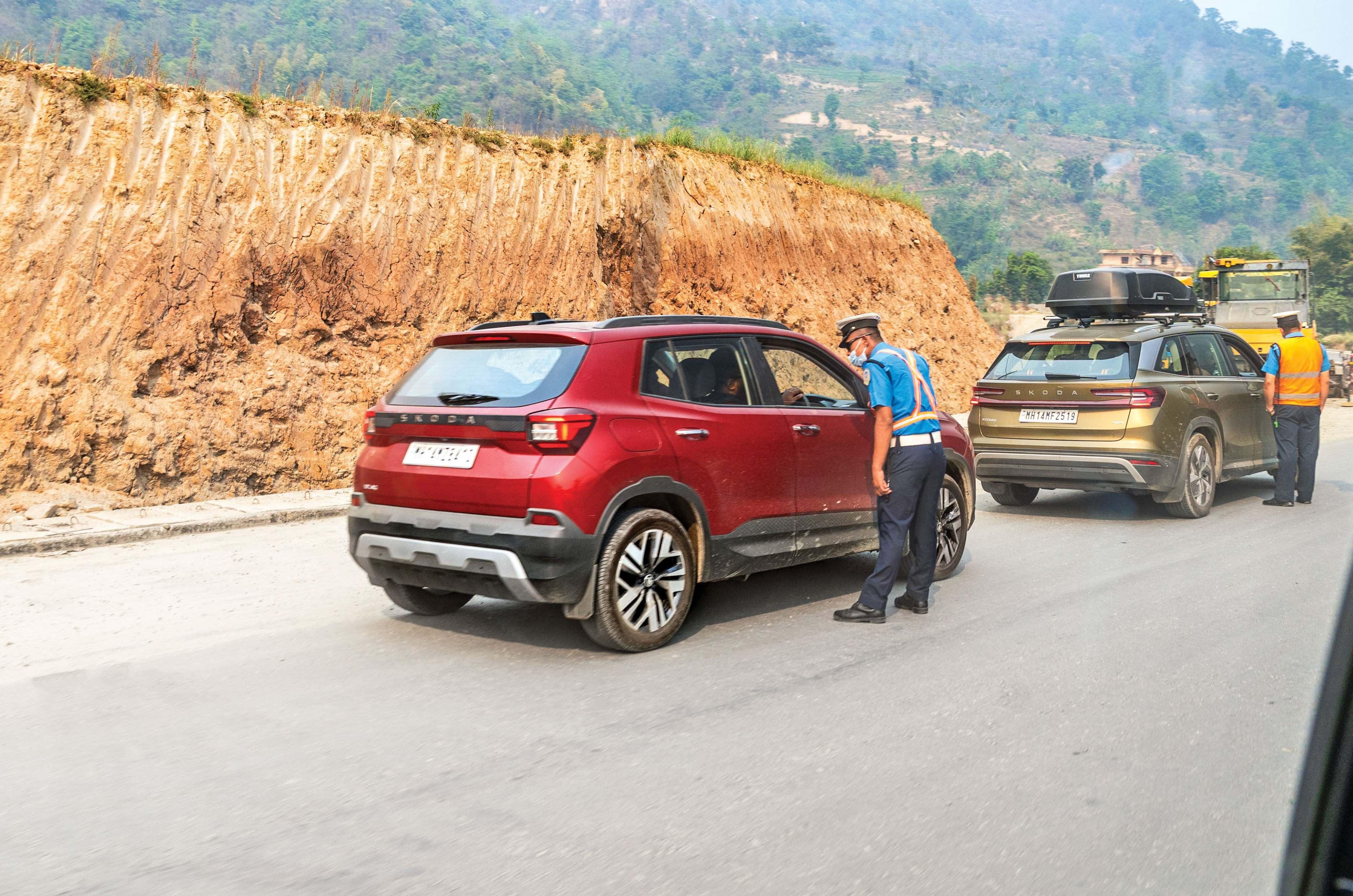
Authorities were always curious thanks to Indian number plates.
The party scene rules Kathmandu too. At night, the city comes alive as a hub for tourists from around the world. Hiking gear and North Face apparel go for a fraction of the price – and, often, a fraction of the quality – alongside quirky masks and fridge magnets at every tourist stop. Spend a little more time, though, and you’ll find excellent coffee shops and the famous Thakali thali: thick buckwheat porridge with salads, meat, and plenty of flavour. Good thing too, since walking through Durbar Square works up quite an appetite. Partly destroyed by the devastating 2015 earthquakes, the temples have since been restored to their former glory, though you can still spot the scars in a few bent pillars and roofs. It’s a culture and tradition worth preserving, and Nepal deserves credit for doing exactly that.
Birgunj-Sino-Nepal Border in numbers
Distance covered
922km
Fuel consumed
115.96 litres
Average fuel economy
7.13kpl
Approximate fuel cost
Rs 15,846
Average per-litre fuel cost
Rs 136.65
Total time driven
34hrs 25min
Average speed
27kph
With Kathmandu explored, we headed towards our second border crossing – and this one was far more intense. Once we left Kathmandu, we left the tarmac behind too. Muddy back roads, still wet from the previous night’s rain, meant slush and a constant need for 4WD. Even so, though packed to the brim with luggage, the Kylaq stayed light enough and had enough clearance to pick its way around the mud on the approach to the Rasuwa Bridge. From there, you can see the Chinese immigration building towering over everything around it. With the Kylaq thrumming with excitement, we crossed into Tibet – the roof of the world.
Tibet/China – Roof of the World
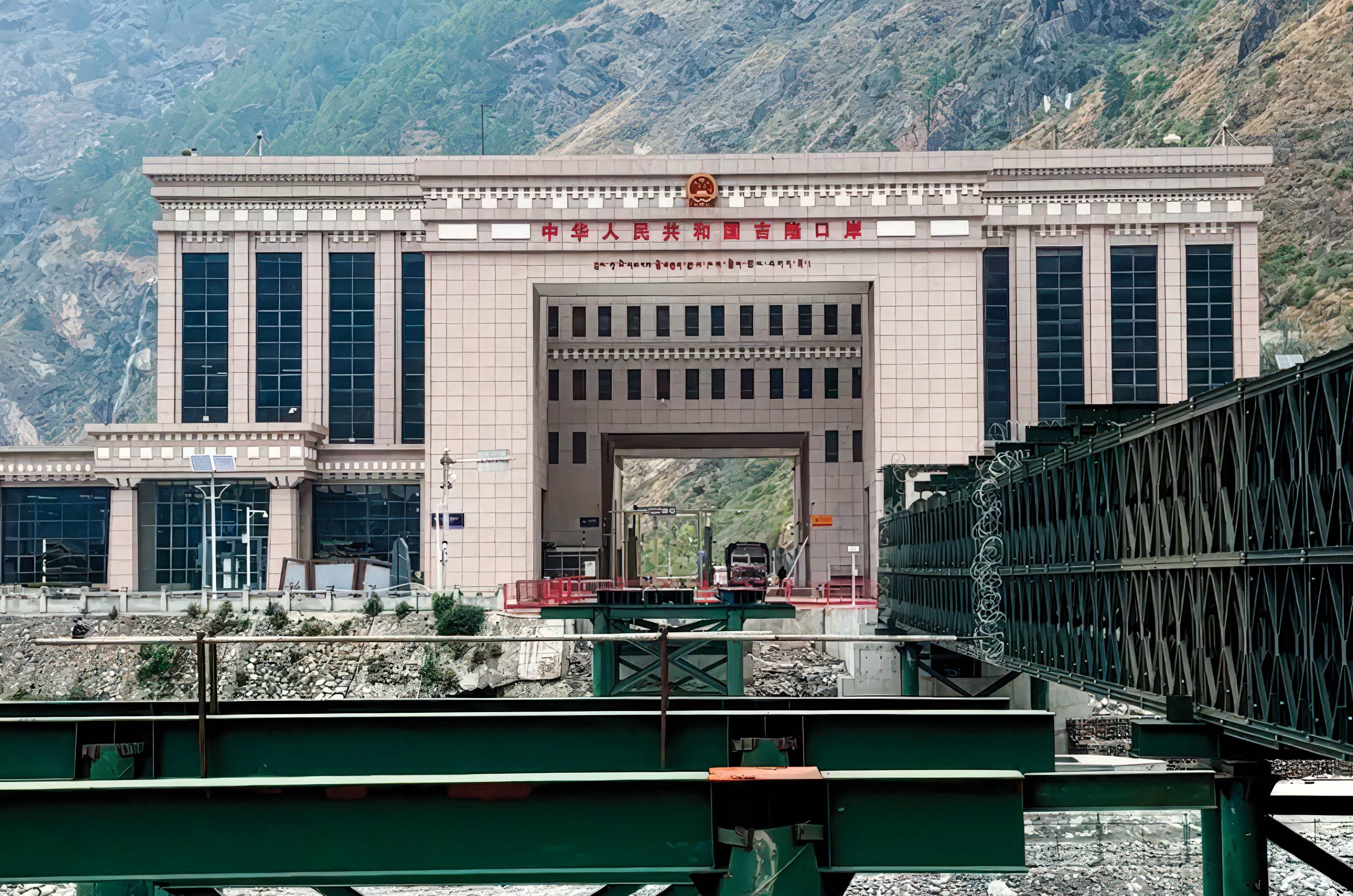
China’s border crossing is as imposing as it gets.
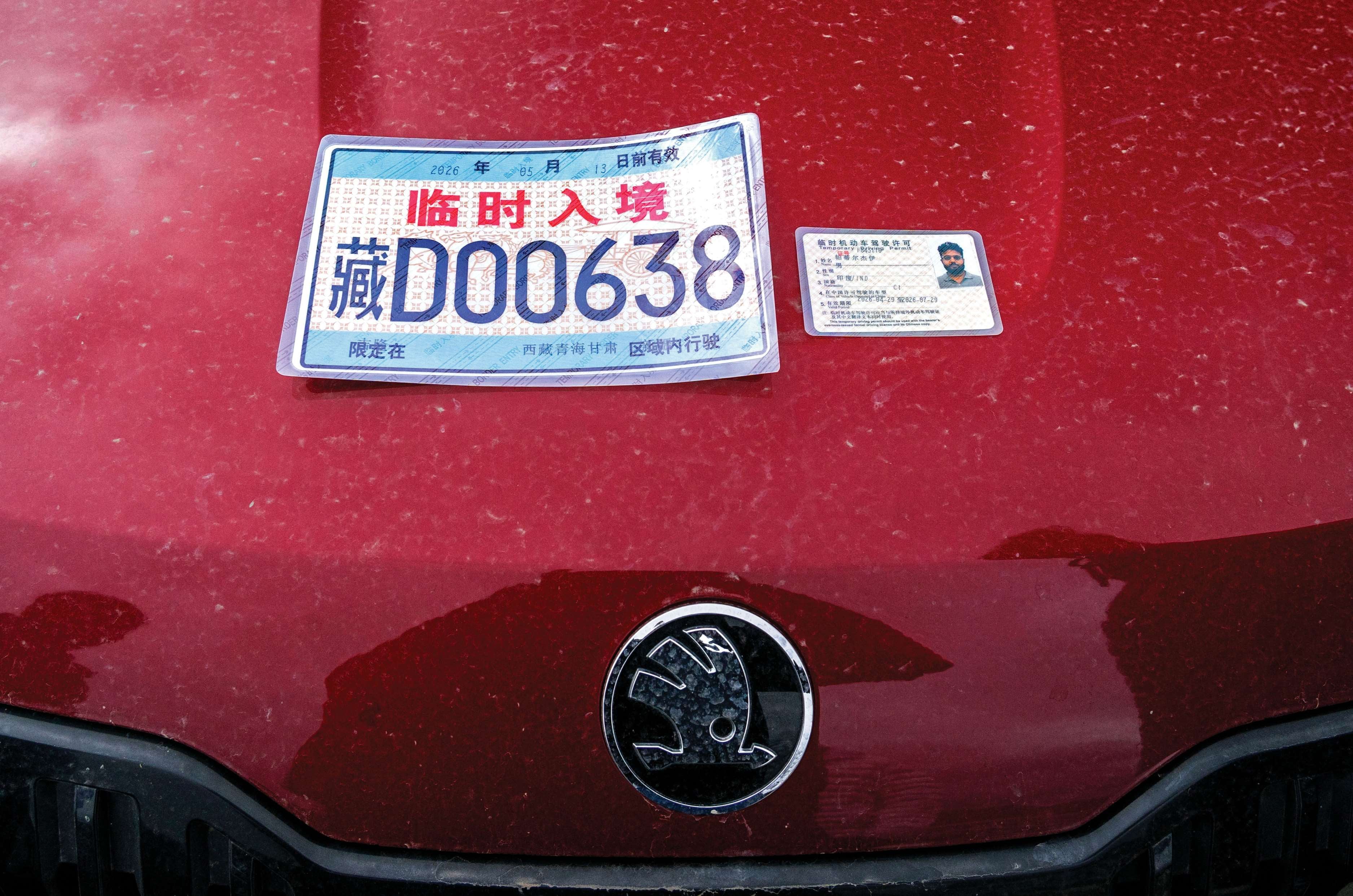
Crossing into Tibet felt like crossing into the future. For a region tucked deep into the mountains, it’s exceptionally developed – the roads are smooth and well-signed from the moment you cross the bridge, barely a hundred metres before the immigration office. In China, we weren’t taking any chances, knowing any misstep here could jeopardise the rest of the journey. After answering the customs officers honestly – and impressing them with the scale of the Kylaq’s challenge – we entered the lovely town of Gyirong. Old Chinese architecture, plenty of red, and signboards we couldn’t quite read were early signs that we really were in a different world now. Nepal had shared plenty with India – the cars, the food, the roads – but China felt entirely its own. We thought we’d seen our share of speed cameras, but China put us to shame – they appear every 50 metres or so, complete with flashes. There’s simply no room for error, and you’re monitored everywhere you go – aneerie feeling that takes some getting used to. Another non-negotiable is to obtain a special driving licence for every person that will be driving and a China-specific number plate, which you have to place on your dashboard so the cameras can pick up any infringements. A regular India-style RTO office with long queues and a lack of urgency got us homesick for a bit.
Local license and registration are non-negotiables in China.
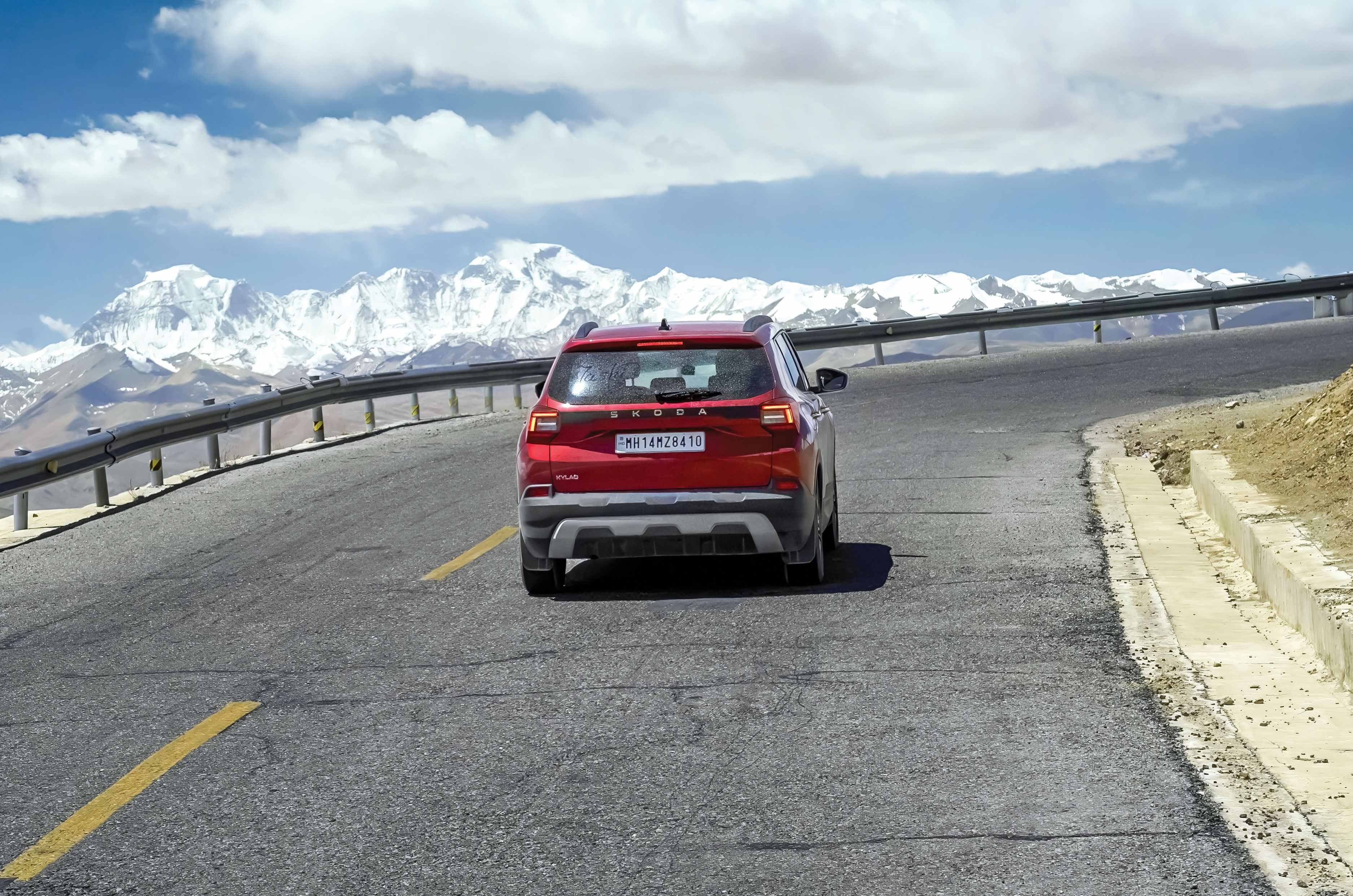
A few mugs of hot ginger-lemon tea eased us into the chill, and we set off for Mount Everest Base Camp. High altitudes are usually punishing for small-capacity engines, but thanks to its turbocharged engine, the Kylaq barely broke a sweat, buzzing through the passes. Its 6-speed automatic had been a great convenience through the chaos of India and Nepal, but the winding mountain roads and immaculate tarmac meant I could switch to manual and take control via the paddle shifters. Paddle-shift response is often sluggish, but not here – the shifts were quick, and the taut suspension held its ground even through tight hairpins.
Everest hove into view long before we made it to base camp.
It made for a great drive and great footage, right up until we spotted the peak in the distance. Even from afar, Everest is breathtaking, and mercifully the clouds stayed clear as we got closer. You can’t take a car near base camp itself – a one-hour bus ride covers that final stretch. It’s strange how you lose your breath as you approach Everest – partly the thin air and altitude, but you’d lose it all the same just from the view. Words don’t do it justice, and don’t be surprised if you shed a tear or two – it’s overwhelming.
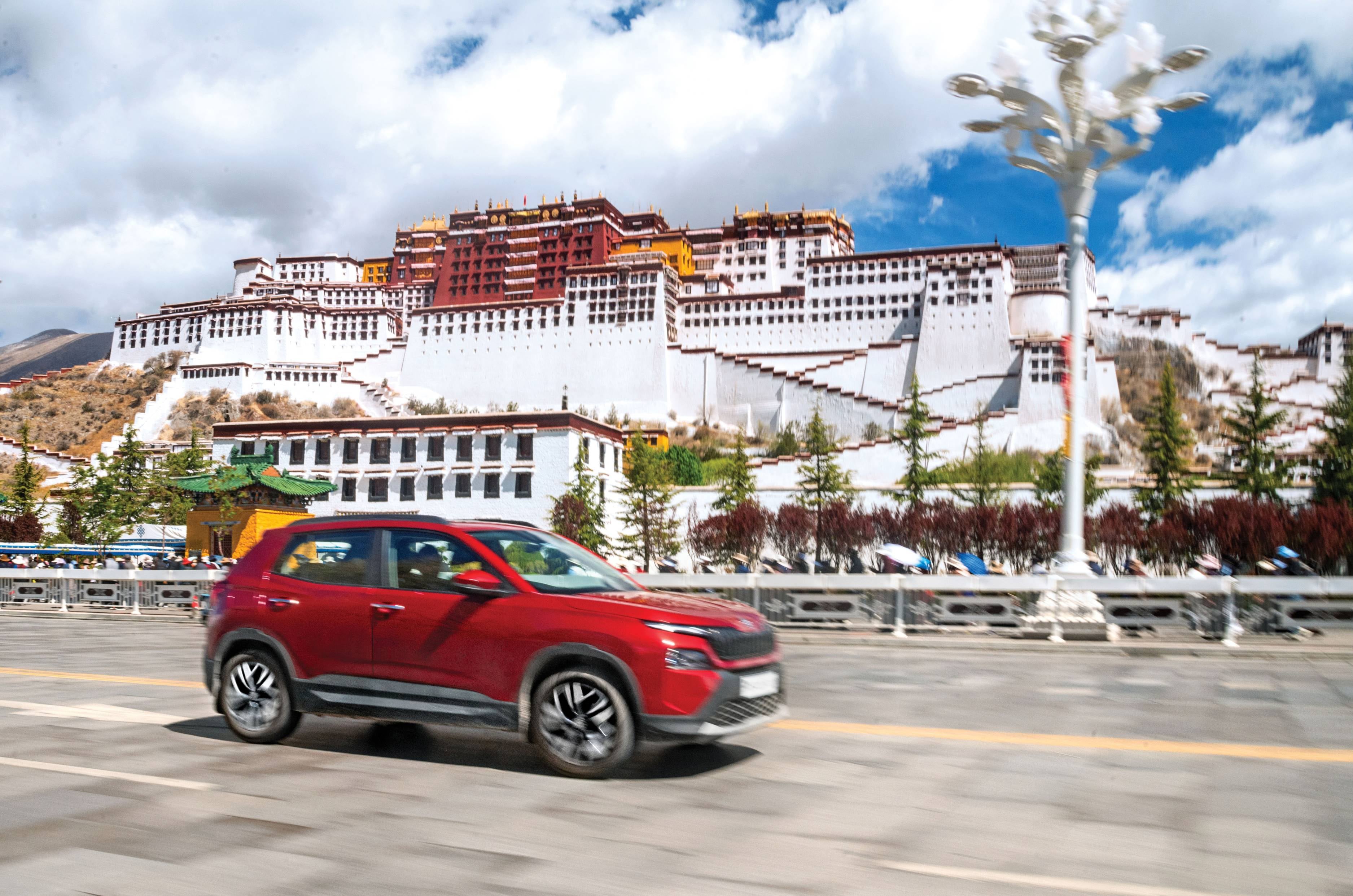
Stunning Potala Palace; once home to the Dalai Lamas.
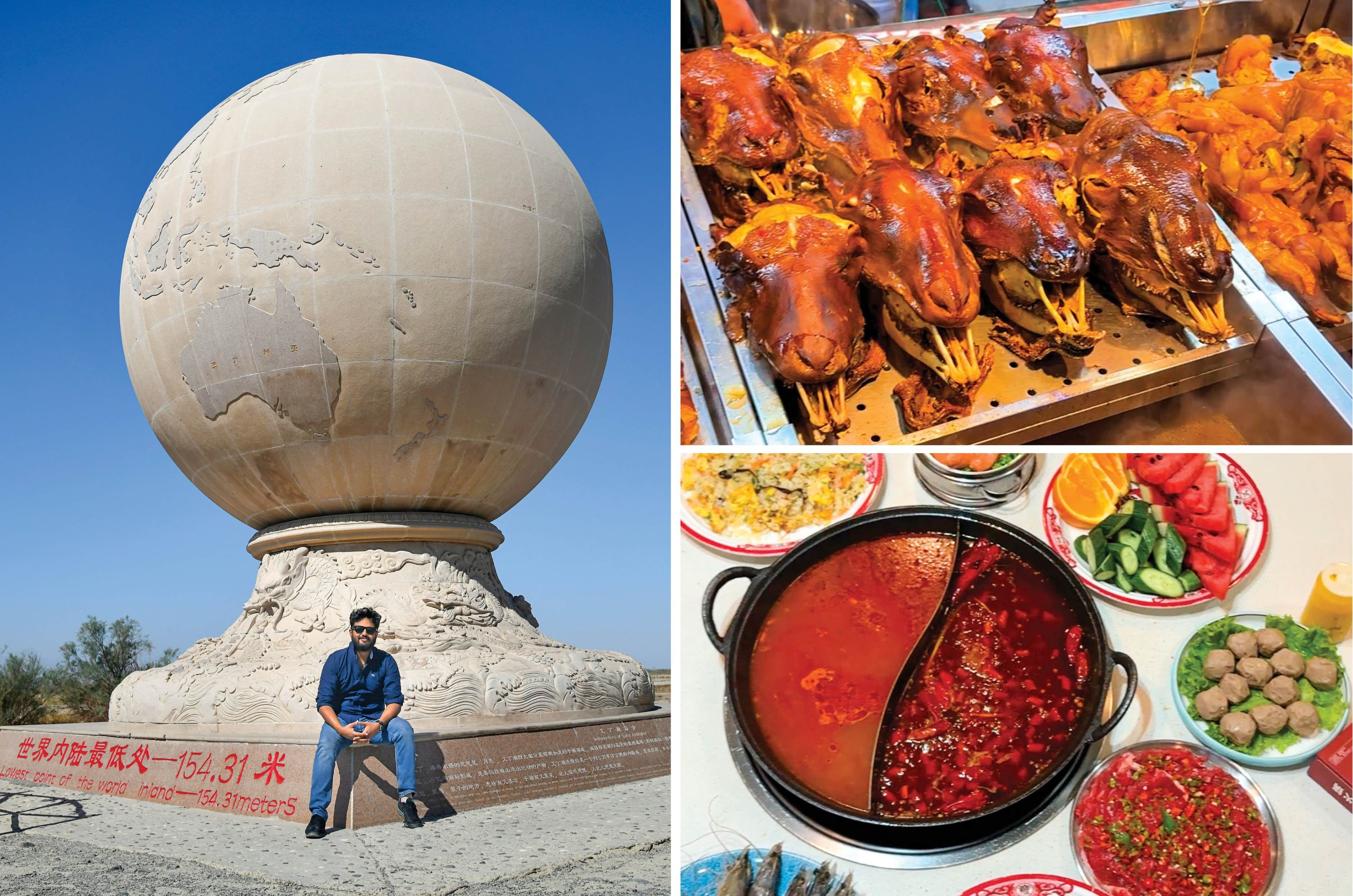
With Everest ticked off, it was time to take on China’s vastness. We headed to Lhasa, the spiritual capital of Tibet, home to the grand Potala Palace. Once home to monks and lamas, this stunning palace holds incredible history and artefacts – spiritual or not, its significance to the country’s history is unmistakable. The drive kept revealing itself through unique food, dialects, faces, and even geography. One day we were freezing thousands of feet above sea level; days later, in Turpan, we were below sea level in blistering heat. From boiling hotpots to grocery-store instant noodles, China pushed us well outside our comfort zone, and the Kylaq wasn’t spared either.
L: From EBC’s high to Turpan Depression’s low – Jay was at 154m below sea level here. R: Street food in China not for the faint-hearted.
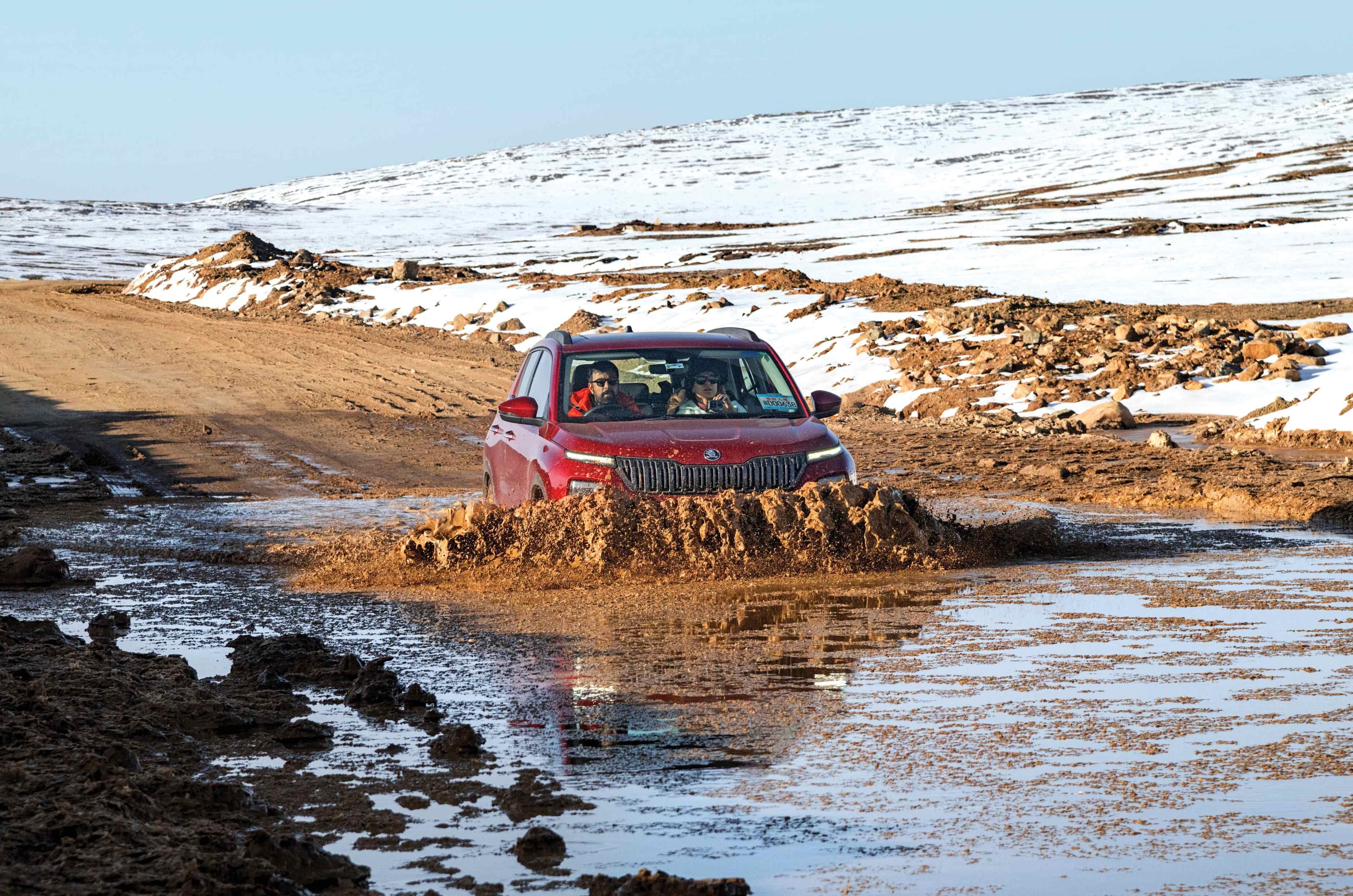
Two full days on the way to Golmud were entirely off-road, taking over 13 hours of driving, with our average speed dropping to 18kph as the Kylaq waded through water up to its bonnet and emerged without complaint.
In China, you get perfect roads or, simply, no roads.
A stretch that would have broken most cars left the Kylaq unscathed. China hit hard, but the Kylaq hit back harder. From day one, it had faced challenge after challenge, and from day one, it had come out on top. Three countries in, it still carried the same zeal it started with – and while we were rattled, it stood strong each night, ready for the next day.
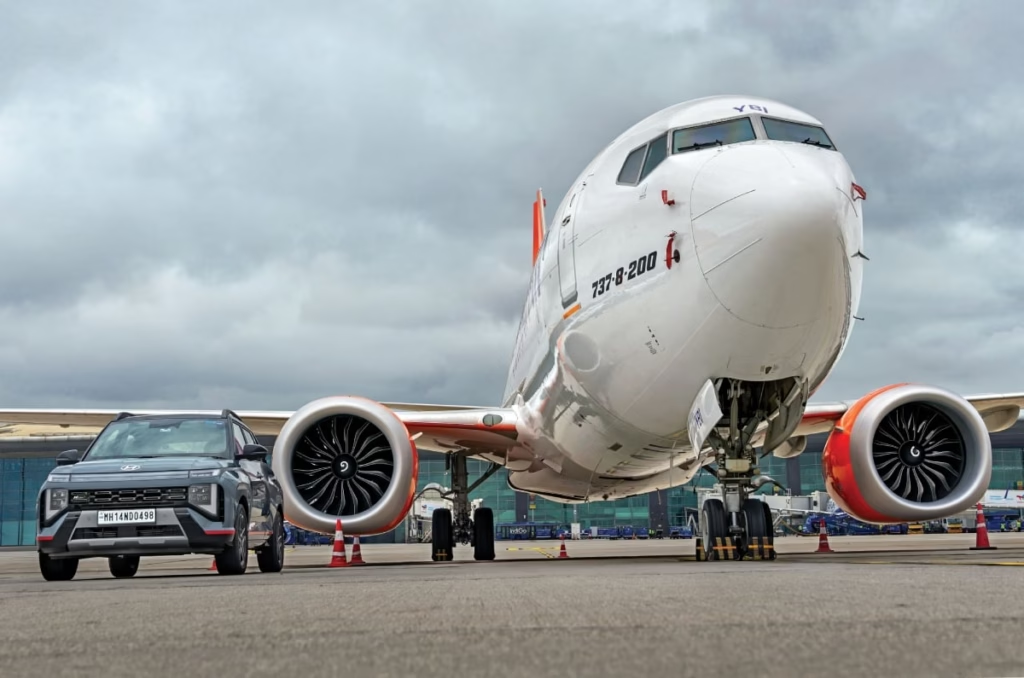
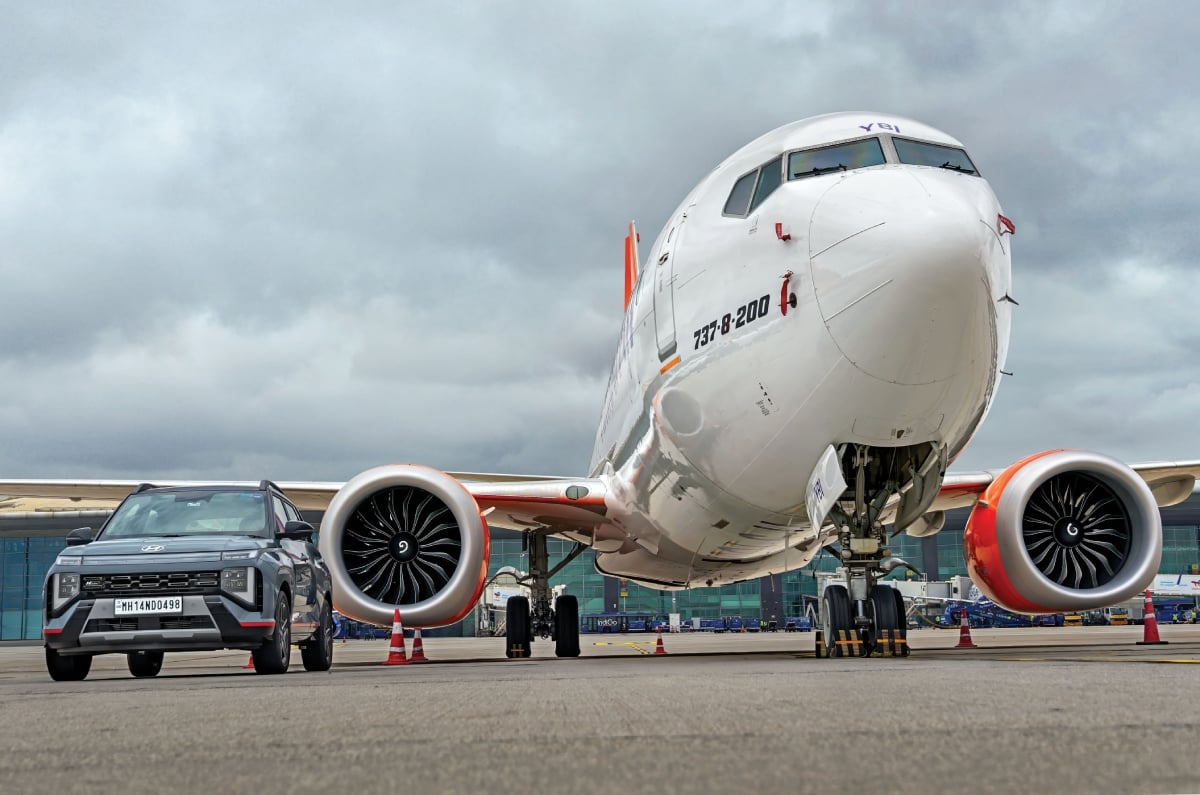
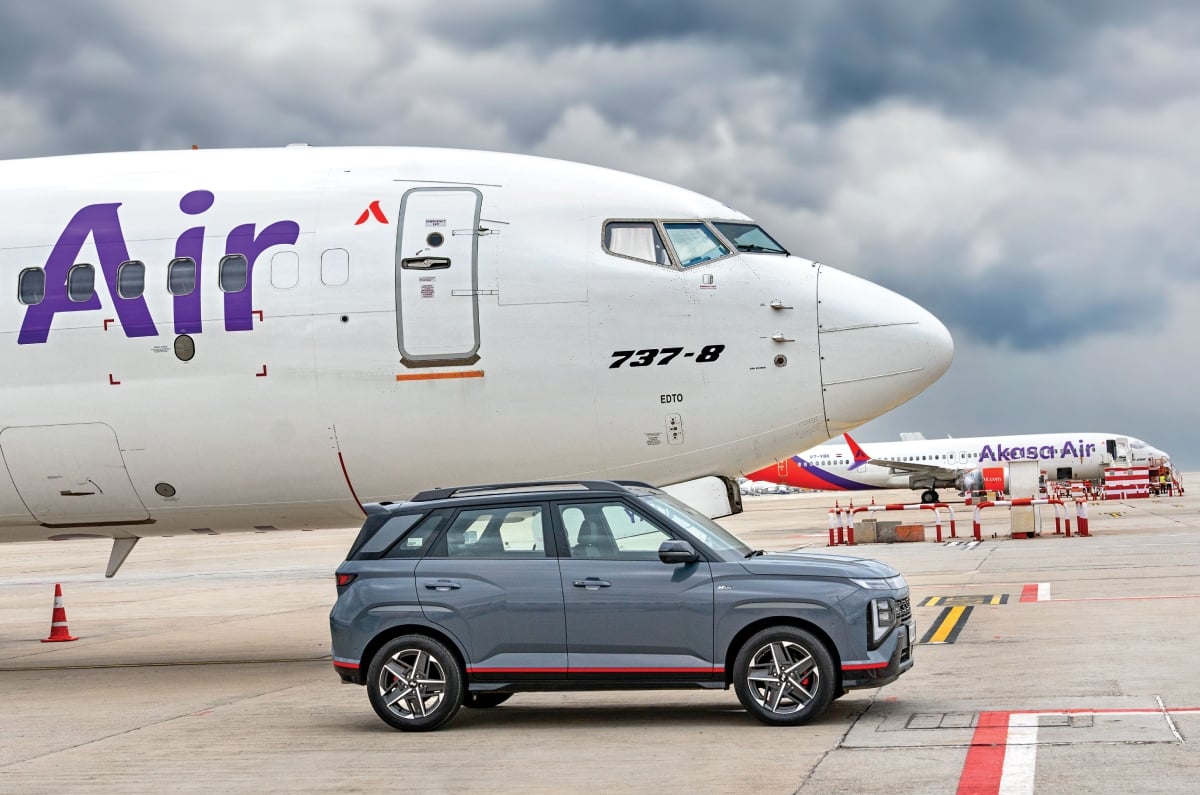
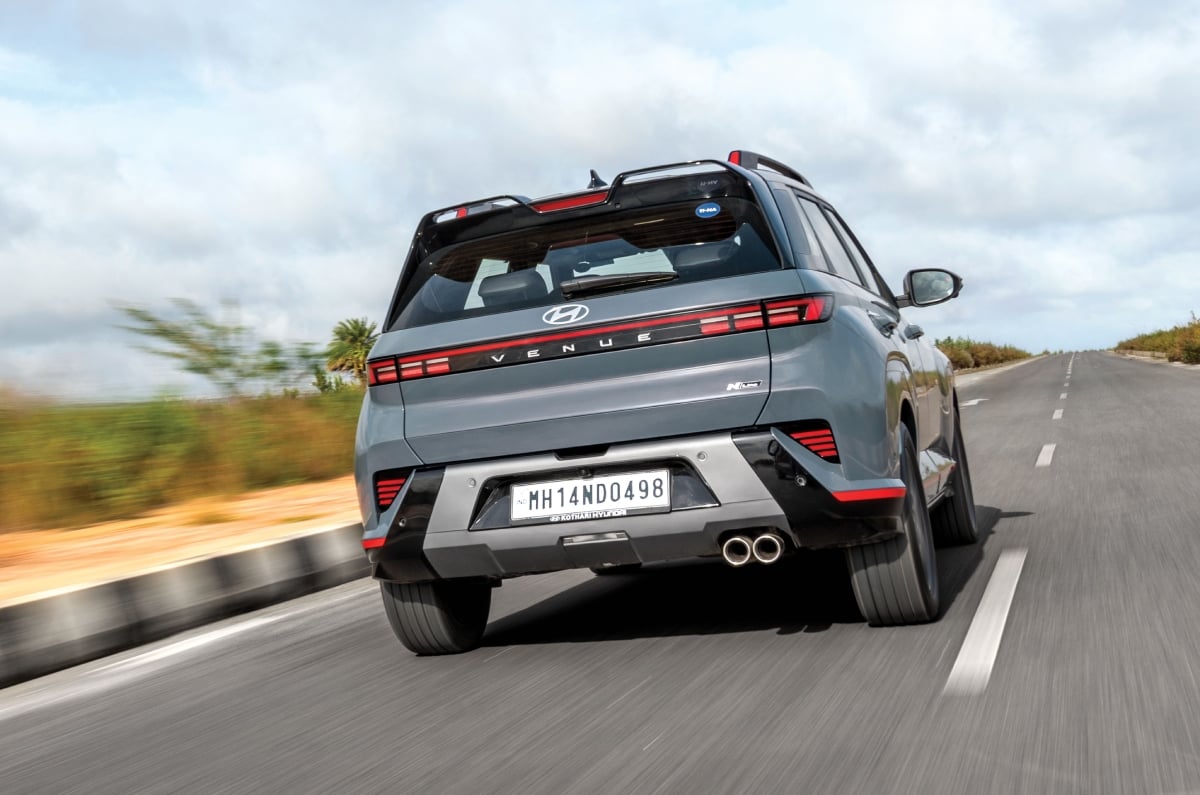
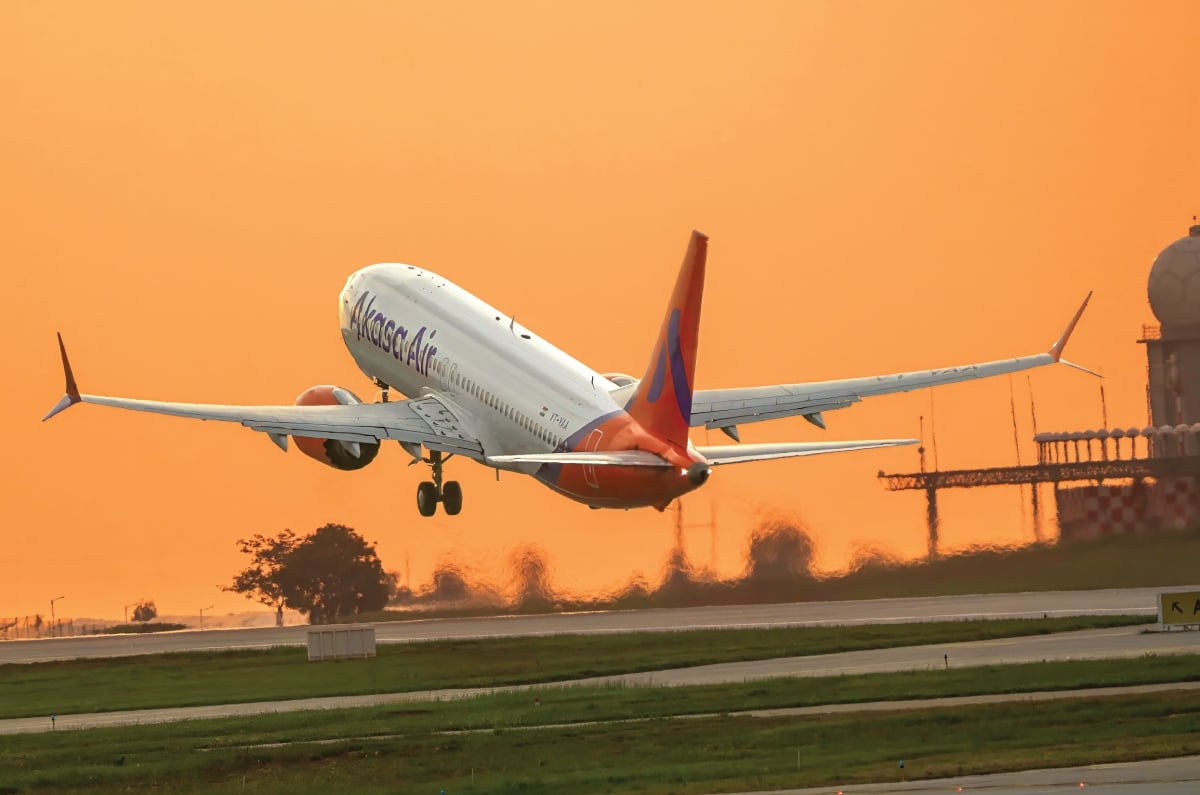
A Hyundai Venue N Line runs down a well-lined access road, its sensors alive. Off to the left overhead, an Akasa Boeing 737 Max makes its way down gracefully, flaps extended, ready to land. Both machines are bristling with technology that allows them to operate with a degree of independence once unthinkable. The car can keep itself within a lane, regulate speed in relation to the car ahead, and brake in emergencies. The aircraft can fly itself across continents, execute complex routes, and even land in zero visibility. Welcome to the new world where machines are self-aware and can operate for long stretches on their own.
Today, we dive deep into tech and compare how Advanced Driver Assistance Systems (ADAS), found in modern cars like the Hyundai Venue work, and juxtapose them against how advanced autopilot systems on airliners like the Boeing 737 Max function. Want to know how this Hyundai Venue senses lane markings, what it picks up, how it processes the data, makes a decision and executes a steering manoeuvre to keep the car within the lane, or how aircraft like the Boeing 737 Max are programmed to fly themselves and how they can even land automatically? Read on; there’s plenty of fascinating tech ahead.
Sensor fusion
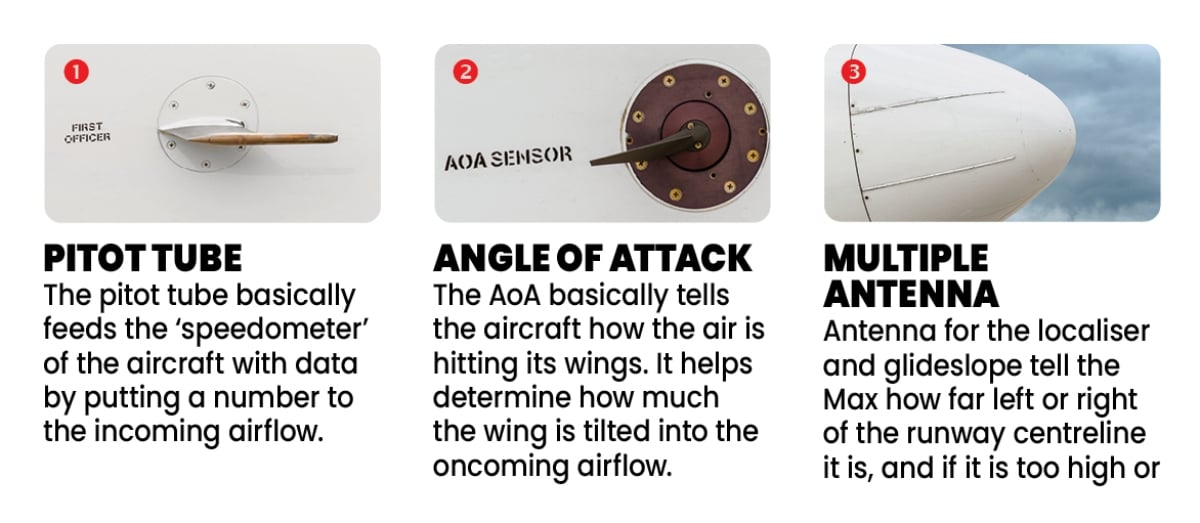
Walk around the attractive-looking Akasa 737 Max, now one of forty-three, and you notice the nose of the aircraft bristling with sensors. It’s from where a vast majority of the data for the Autopilot is collected. Showing me around and explaining things is Captain Svetlana from Akasa. First up, the speed sensors – elbow-shaped pitot tubes that stick out at an angle. This tube helps measure the airflow and, hence, the speed of the aircraft. For accuracy, this speed data is correlated with the static port, mounted flush on the side of the aircraft, which measures the real atmospheric pressure at the height the aircraft is flying.
Then there’s the AOA or Angle Of Attack sensor that basically tells you how the air is hitting the wings or how much the wing is tilted into the oncoming airflow. This is essential to know just how much lift the wing is making and how close the aircraft is to stall.
Then, inside the nose cone, apart from the weather radar, are antennas for the localiser and glideslope. Both pick up radio beams sent from transmitters positioned near the runway. The localiser tells the aircraft how far left or right of the runway centreline it is, and the glideslope tells if the aircraft is too high or too low. Together, they give the aircraft a complete three-dimensional picture of the ideal path to the runway. They feed data to the Instrument Landing System (ILS) and are what lets a 737 Max line up and descend precisely even when visibility is poor.
Further back are a pair of TCAS antennas, one on the belly and one on the top. They listen for nearby transponders (that also help flightradar24 funtion) to keep the aircraft clear of traffic.
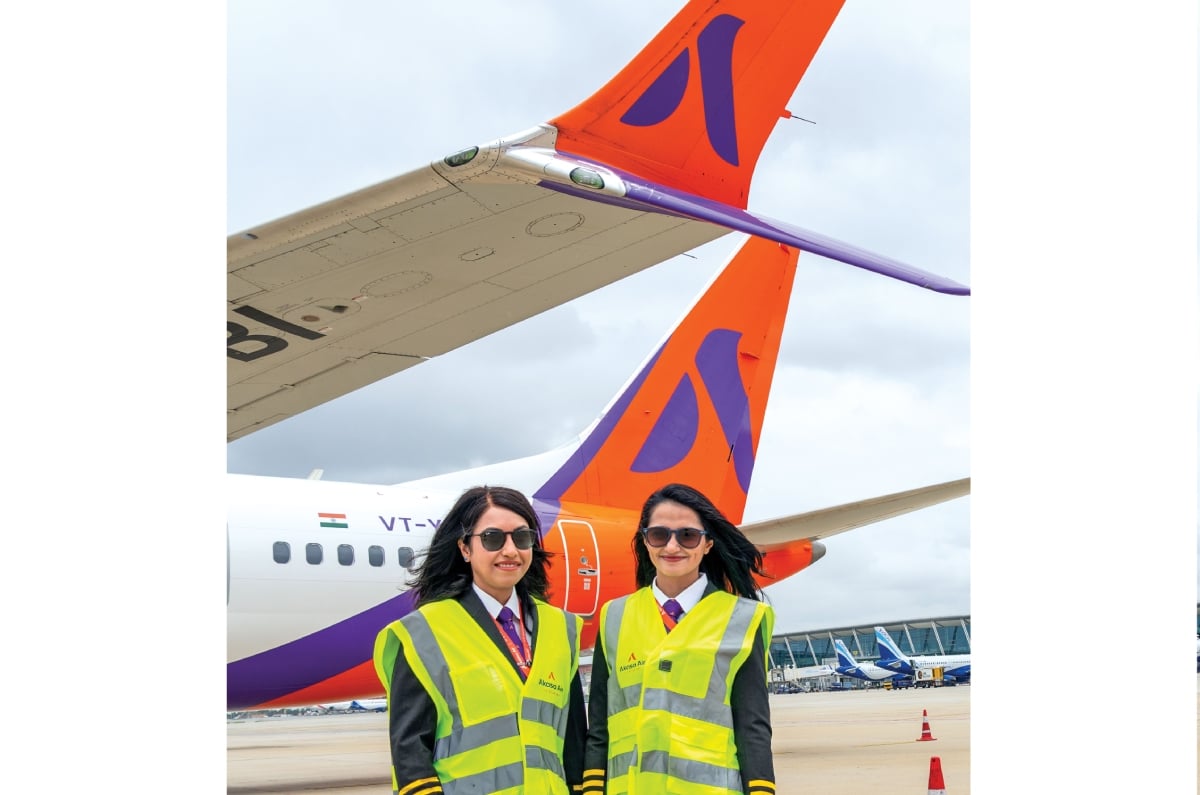
Capt. Svetlana and Capt. Sanaya help us get to grips with how the autopilot on the 737 Max functions.
Positioning is done with the help of a GPS antenna on the roof. Another system, known as the Inertial Reference System, uses laser gyroscopes bolted to the airframe to sense every turn the aircraft makes. It uses accelerometers that sense every change in speed. A computer fuses the two, continuously tracking exactly how far and in which direction it’s travelled from a known starting point, which is set by the pilots at the gate.
Road and track
Though this is a high-tech and complex system, functionality is slick and smooth.
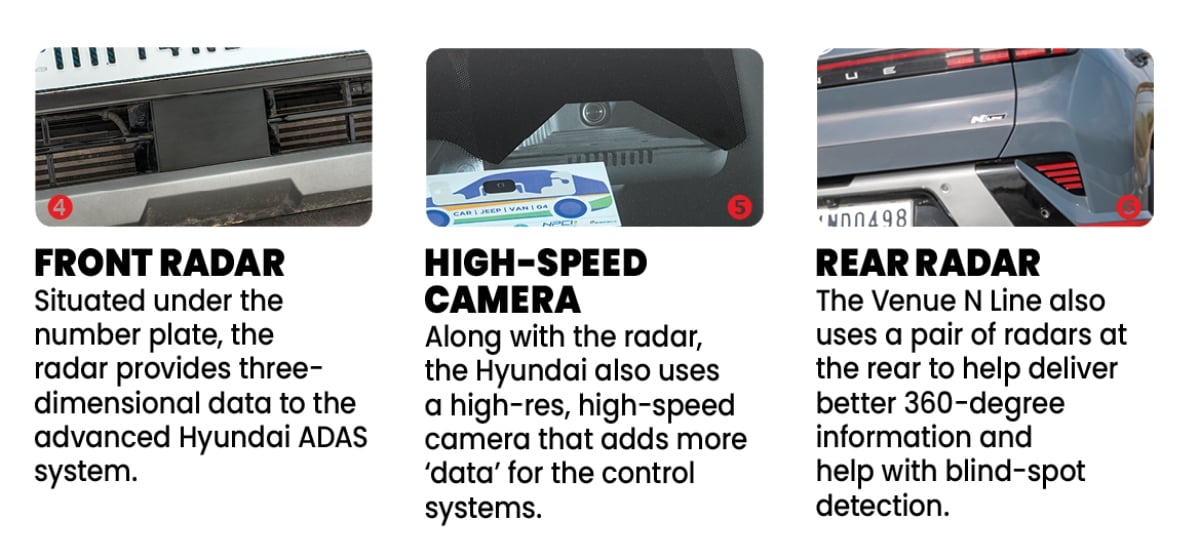
Now swap the open skies for chaotic tarmac. Here, the Venue N Line’s ADAS Level 2 suite runs off far fewer sensors or data points. The difference, however, is that the car actually ‘sees’ what is ahead, correlating data from the radar and the high-resolution camera into a single picture. Sensor fusion is essential on both the 737 and the Venue. What’s different is that the reactions of the car have to be immediate, and that means Smart Sense on the Venue not only has to process gigabytes of data every second, it also has to be ready with, say, a braking solution in milliseconds, just in case that petulant biker cuts across the Venue’s nose.
One of the primary sensors is the radar. Located behind the black square plastic panel under the number plate up front, it acts as a measuring tape, constantly tracking the exact distance and closing speed of the car ahead. Similar to a fruit bat, the radar sends out bursts of high-frequency radio waves (or chirps) that vary between 10,000-50,000 bursts per second. Just as important is how quickly the data is processed and passed on, which provides enough sharpness and resolution to differentiate between shapes ahead. This data is used by the Forward Collision-Avoidance Assist (FCA) to stop the Venue often before human reflexes can even respond to danger. In addition, the system uses a pair of rear-mounted radars, ultrasonic sensors and parking and proximity cameras for a more secure 360-degree ‘picture’.
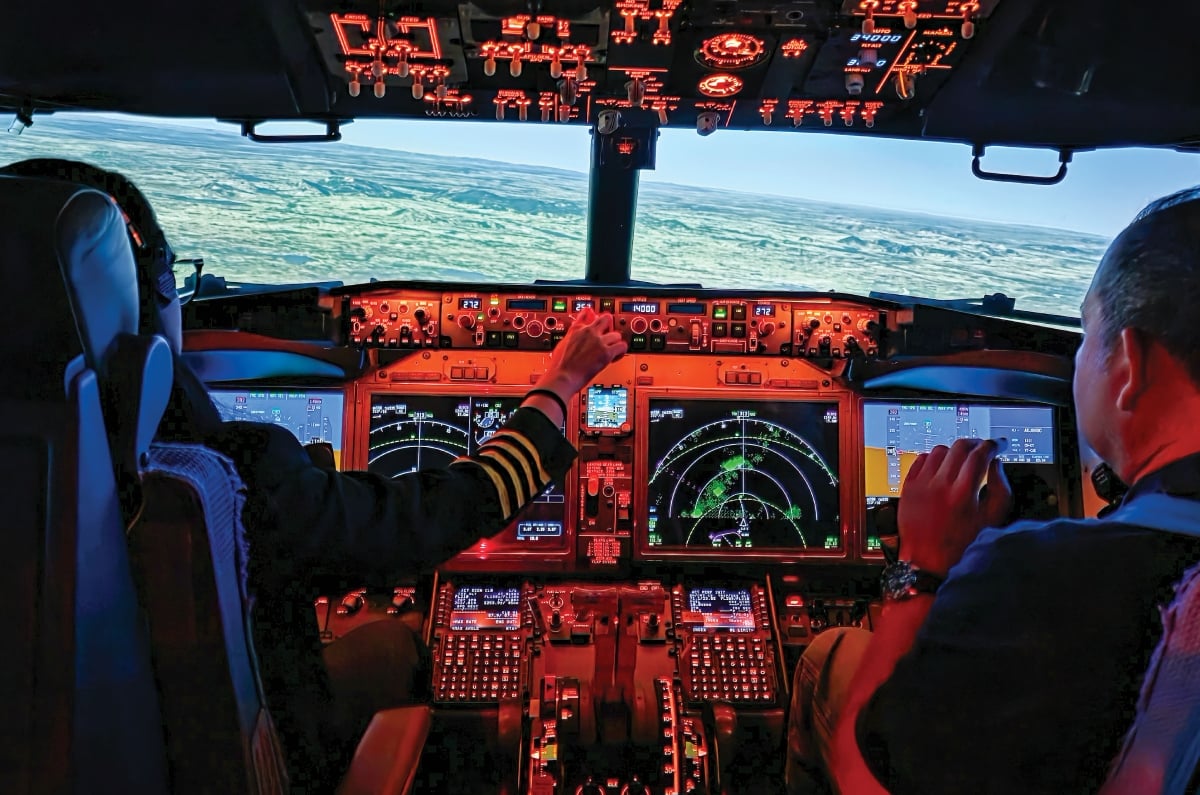
Captain Sanaya adjusts the heading knob in the sim, the aircraft reacts in real time without disengaging the system.
The other important data source is a high-resolution, high-speed camera at the top of the windshield. While its primary job is to look for lane markings and obstacles, it also works along with the radar up front, sharing the workload. The camera, for example, sees every detail but lacks depth perception (or 3D vision), and a radar tracks distance but cannot see the same amount of detail as the camera. The camera sends data via a special, automotive application-optimised CMOS sensor, similar to the one on your Sony mirrorless camera that also has a high dynamic range (for bright lights). Hyundai’s system can even detect faded lines with its edge-detection, texture-tracking, and colour-reading systems. Hyundai’s SmartSense also integrates Artificial Intelligence (AI) and Machine Learning. So, instead of using rigid “if-then” decision-making software, it uses embedded neural networking to interpret real-time sensor data.
Together, these systems form a nervous system that feeds into the car’s brain, which then nudges the steering, modulates throttle, or applies brakes. Unlike aviation, redundancy is limited. A sensor failure usually hands control back to the driver, who remains the ultimate fallback.
Steering wheels and yokes
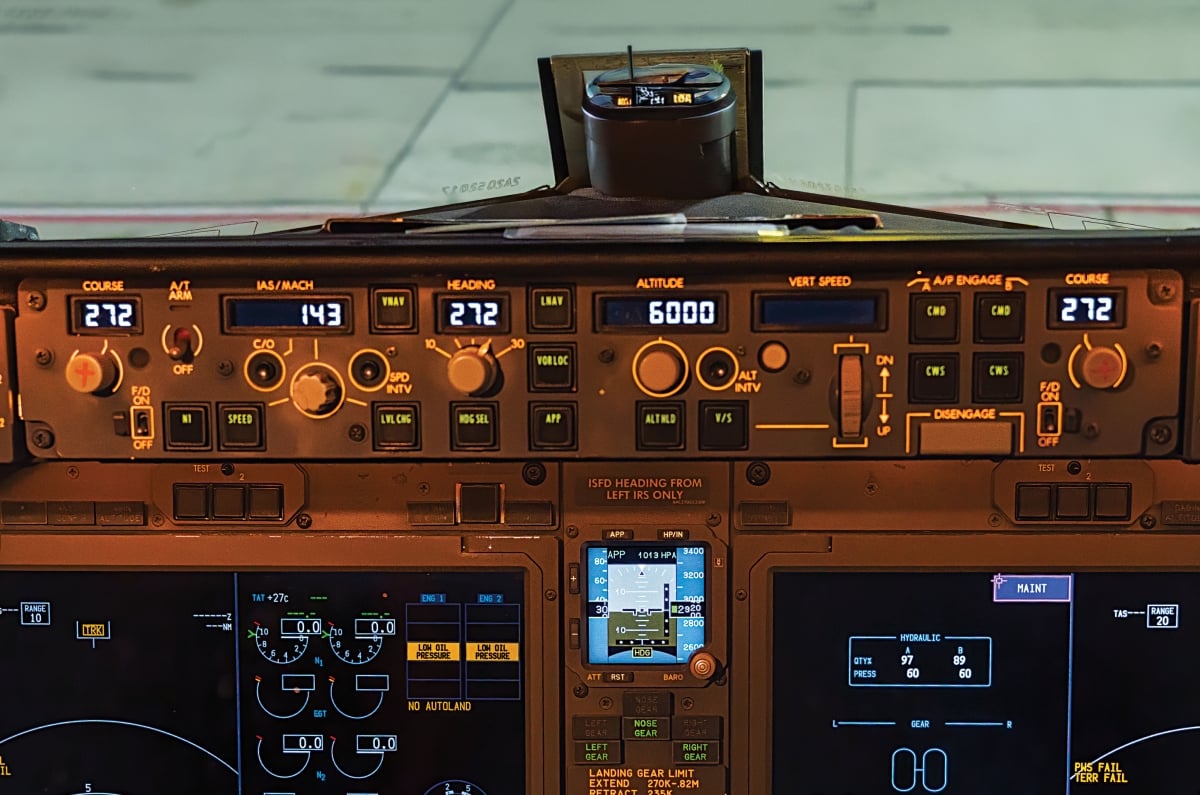
Hit ‘A/P Engage’ on mode control panel to activate autopilot; course, speed, heading and altitude are also adjustable here.
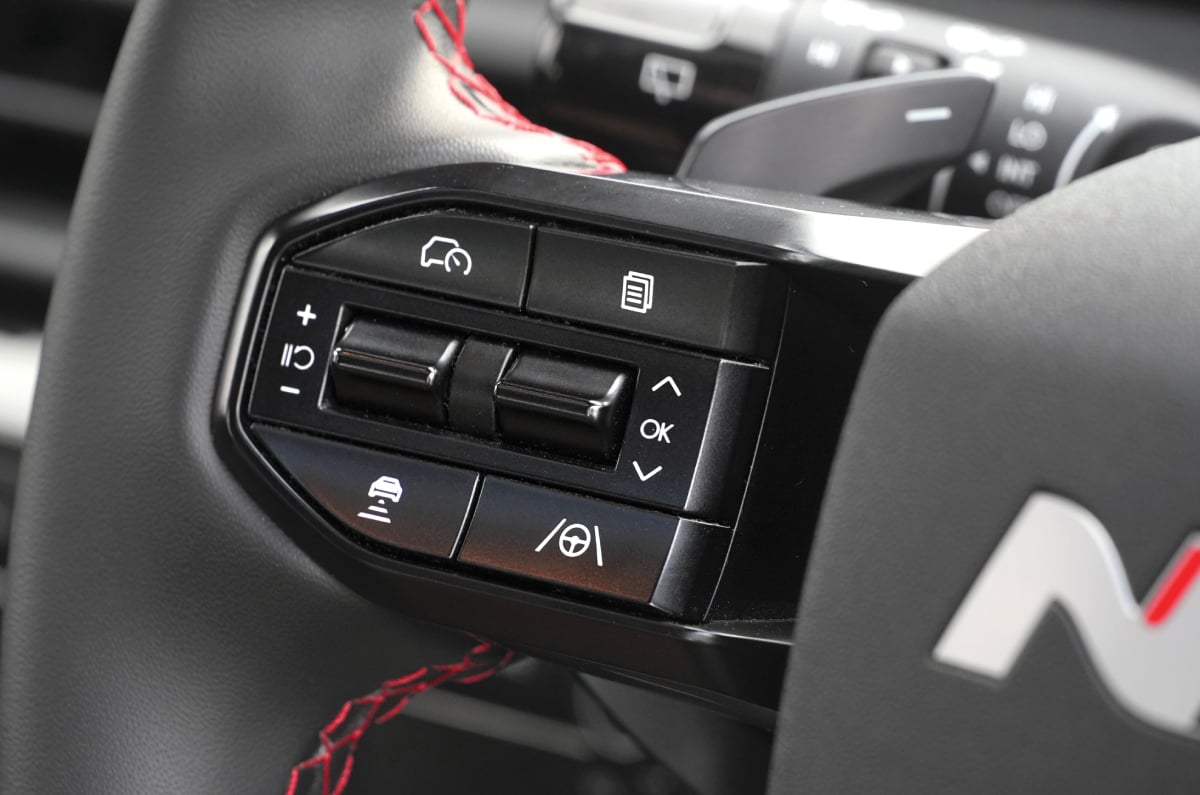
Once behind the wheel of the Venue, engaging the ADAS is seamless. You need to be above 30kph and on a well-lined road. To engage the system, you have to zoom into the left spoke of the steering wheel. Here you find the four buttons that help activate and operate the system. The first activates the Smart Cruise Control, the second allows you to increase or decrease the speed you want to run at, the third helps you set the desired safe distance to the car ahead and the fourth activates Lane Keep Assist (LKA).
Tyre pressure essential here too.
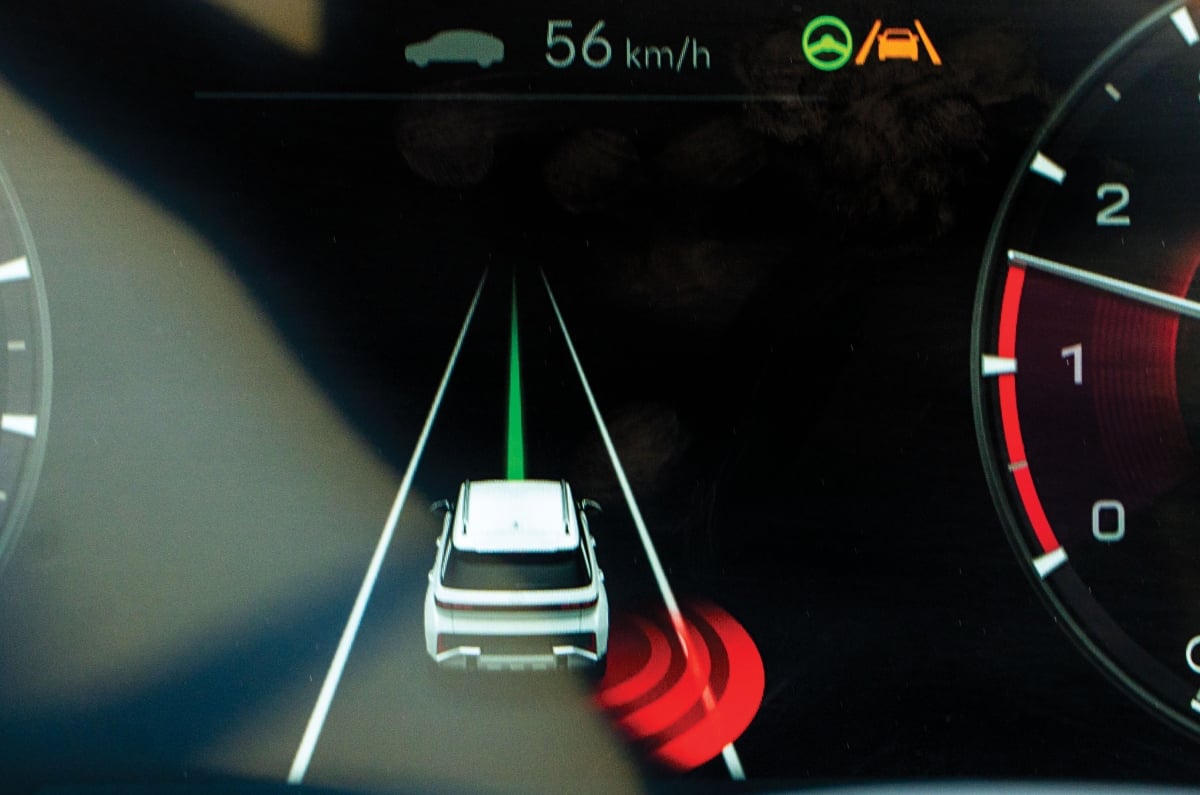
Activating LKA for me comes first, and you do this when you are running in a lane on a well-marked road. You know the system is engaged when the green steering icon lights up on the instrument panel and the car icon shows it running between the lines. Then you engage the smart cruise control and set the speed you want to run at, stepping off the accelerator simultaneously. The display on the instrument cluster lights up with the speed set, and you also get a horizontal bar showing the distance to the car ahead; which can be adjusted by the button with the distance icon.
Unseen by the driver and passengers in the car, the camera immediately begins scanning lane markings, and radar modules measure the distance to the vehicle ahead. The steering wheel then nudges itself gently to follow curves, while the throttle and brakes modulate to maintain speed and distance. The system makes split‑second decisions to help keep you out of harm’s way.
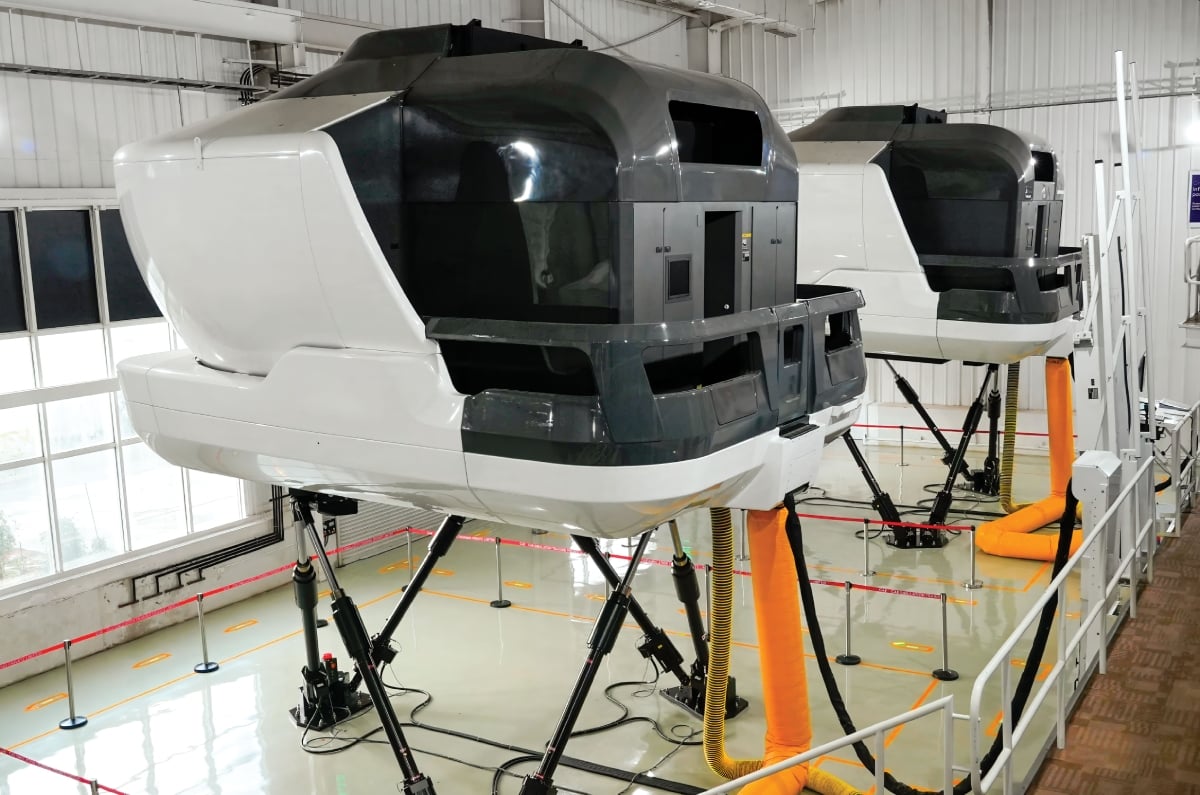
We took the assistance of the full-fledged 737 Max simulator that pilots train on to help us understand the systems better.
Climbing into the Akasa Boeing 737 Max cockpit is an immediate sensory overload. Hundreds of buttons, switches, levers and dials just overwhelm you. They are ahead of you, to your left, your right, and even above. There are, in fact, so many switches, buttons and dials above, I have to duck-walk in. And I’m not exactly Joel Garner or Kareem Abdul-Jabbar. Once seated, I slide the seat to the left and forward by depressing a lever, no powered seats here. And forget about comparing screen size, this is a proper ‘glass cockpit’ with wall-to-wall screens. My feet rest on the pedals that work the rudder in the tail, and ahead of me is Boeing’s famous yoke; unlike a regular joystick, you bank by turning the semi-circular bit of the ‘wheel’.
In contrast to our chaotic driving environment, the autopilot in the 737 Max operates on different principles. The environment is structured and regulated. There are no sudden jaywalkers or rogue bikers at thirty‑five thousand feet. So, unlike the Venue, the 737 doesn’t use optical cameras to see where it’s going. It doesn’t need to look for lanes or lines at 800kph. Instead, it relies on a combination of GPS, Inertial Reference Systems, antennas and sensors in the aircraft’s nose and cheek to get a fix on the exact heading, speed and altitude.
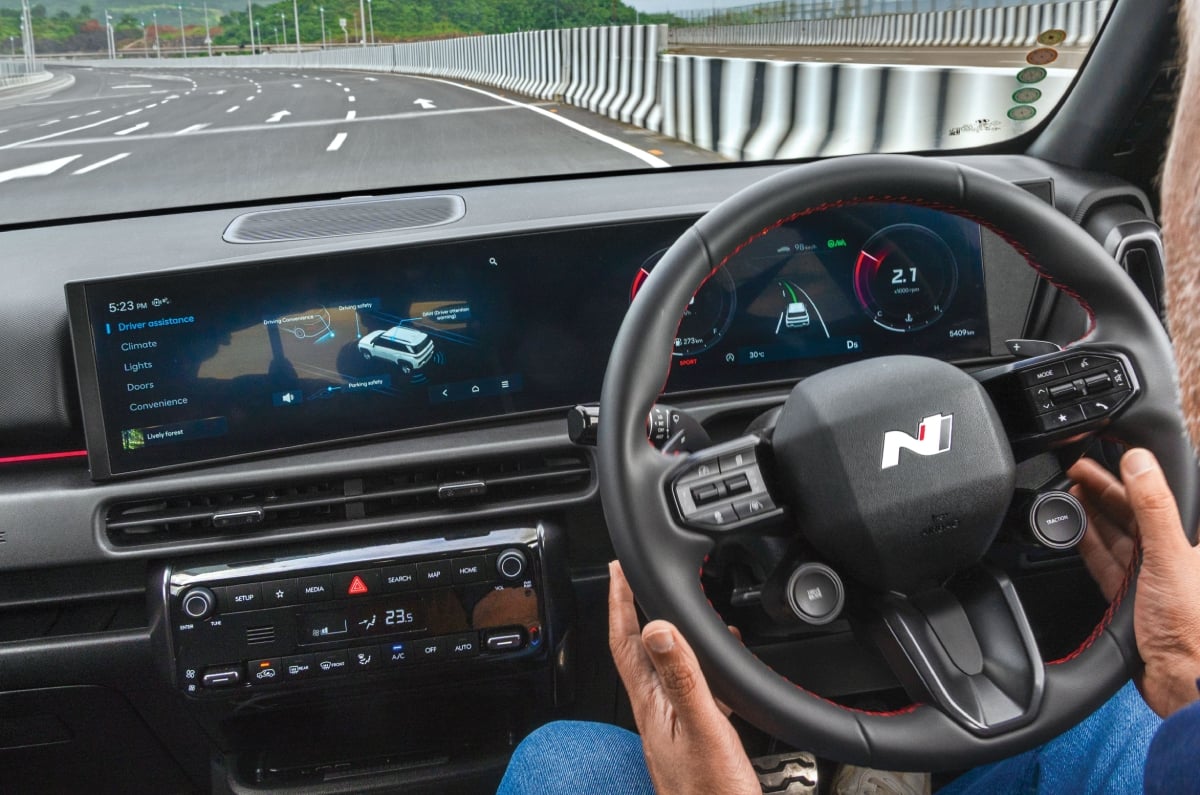
Driver’s display shows detailed ADAS information.
After taking a good look at the real cockpit and understanding some of the controls that help initiate the autopilot sequence, we shift to a full-scale moving platform simulator used to train airline pilots around the world. The cockpit is identical, down to the last detail, and here we have Captain Sanaya Chothia to help us conduct a simulated flight. Can’t help noticing, the 737 also has a tyre pressure monitor; of course, it does.
First up, a full-bore take off in the sim, Capt. Sanaya working the rudder pedals to keep the aircraft running down the centre line. Wow, this feels real, the sound, the visuals, the motion all combined. What a thing! After climbing out, we take a quick look at the sequence used to initiate the autopilot, most of the steps done on the long horizontal panel that sits between the pilots, directly in their line of vision. The first step involves checking if the auto throttle is engaged, and then all the pilot needs to do is press a single button on the autopilot panel. Unlike ADAS, the route the aircraft has to take is already pre-programmed into the navigation computer, a fairly long and detailed process. The speed, the height, the course, the heading, everything. And the autopilot just follows this.
The buttons that initiate ADAS are all placed here.
Once the system is initiated, the throttles move on their own, adjusting thrust; the yoke makes deliberate corrections and the screens display the aircraft banking smoothly along its GPS track. As the flight progresses, pilots can keep the aircraft on autopilot and make plenty of alterations to the route, either to avoid weather, get a more direct route or as directed by Air Traffic Control. There are knobs on the panel to alter course, speed, heading and altitude, with even the rate of descent and ascent adjustable.
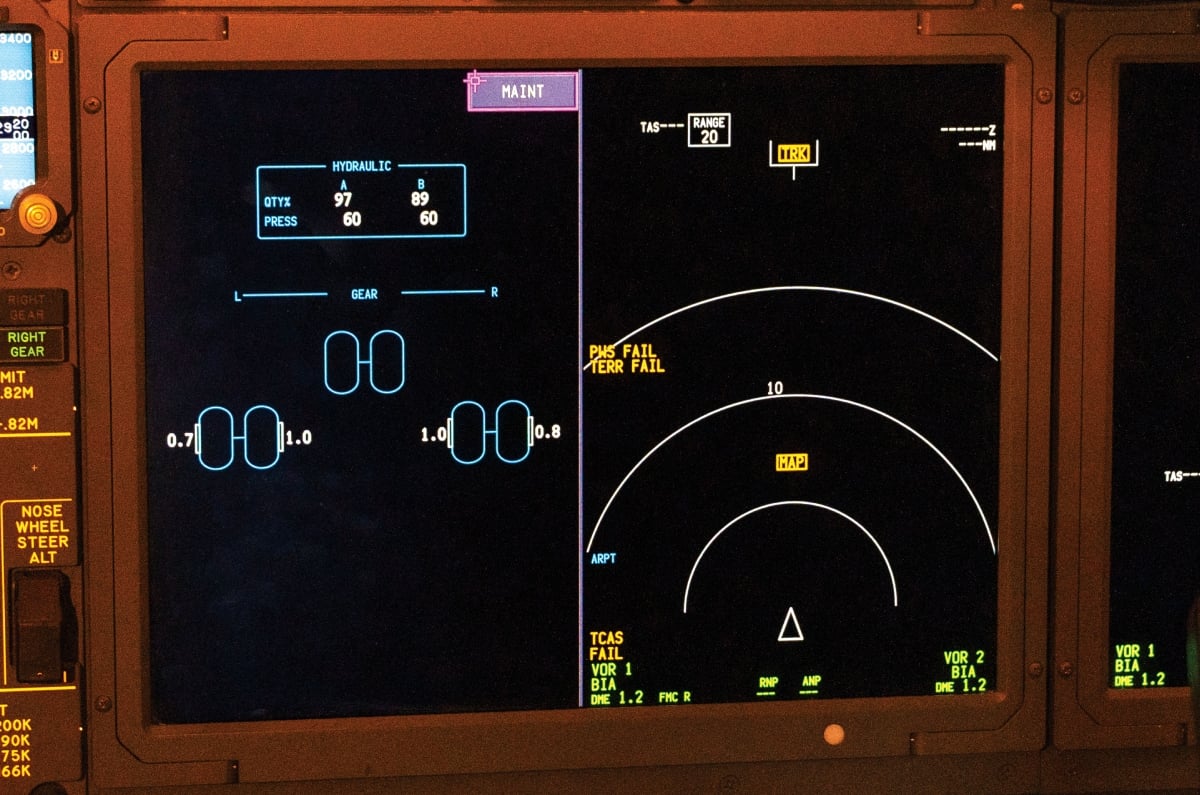
We even execute an autoland, where the aircraft lands itself. The Instrument Landing System frequency is first inputted into the Multi-Mode navigation panel, the final approach course is set for the runway on the Mode Control or autopilot panel (272 for runway 27 in this case), and then the APP or approach mode is selected once the aircraft is positioned correctly. Doing this arms the localiser and glideslope systems that, as we’ve mentioned earlier, have their sensors in the nose cone. Seeing the aircraft adjust, manoeuvre, manage its path, height and distance, and land itself is an eye-opener. What an incredible piece of technology!
Level 2 ADAS on the Hyundai Venue N Line integrates data from all its sensors for a smooth, seamless drive.
What’s fascinating is that both systems have boundaries. In aviation, autopilot is trusted to fly for hours, even land. Pilots monitor, manage and intervene when necessary, but the system is designed to shoulder the bulk of the workload. Take offs, however, are always manual. In cars, ADAS is an assistant with a much narrower scope. It reduces fatigue, takes a load off the driver and adds a safety net, but ultimately the driver is always on call at short notice and is the one in control.
Sharing the workload
Modern aircraft like this Akasa 737 Max can get onto autopilot soon after take off.
Similar in execution but very different in how they function, ADAS and Autopilot both overlap but also exist in isolation. One is designed to keep you from bumping into a hatchback on the Western Express Highway, while the other is designed to guide an 80-tonne metal tube across oceans. Both are glimpses into a future where machines will shoulder more of the burden of control and blow us away with the technology on offer. But for now, if you step into an aircraft, know that while autopilot may be doing a bulk of the flying, a pilot is always watching, and when you engage ADAS to ease your commute, keep your eyes on the road, your hands on the wheel.
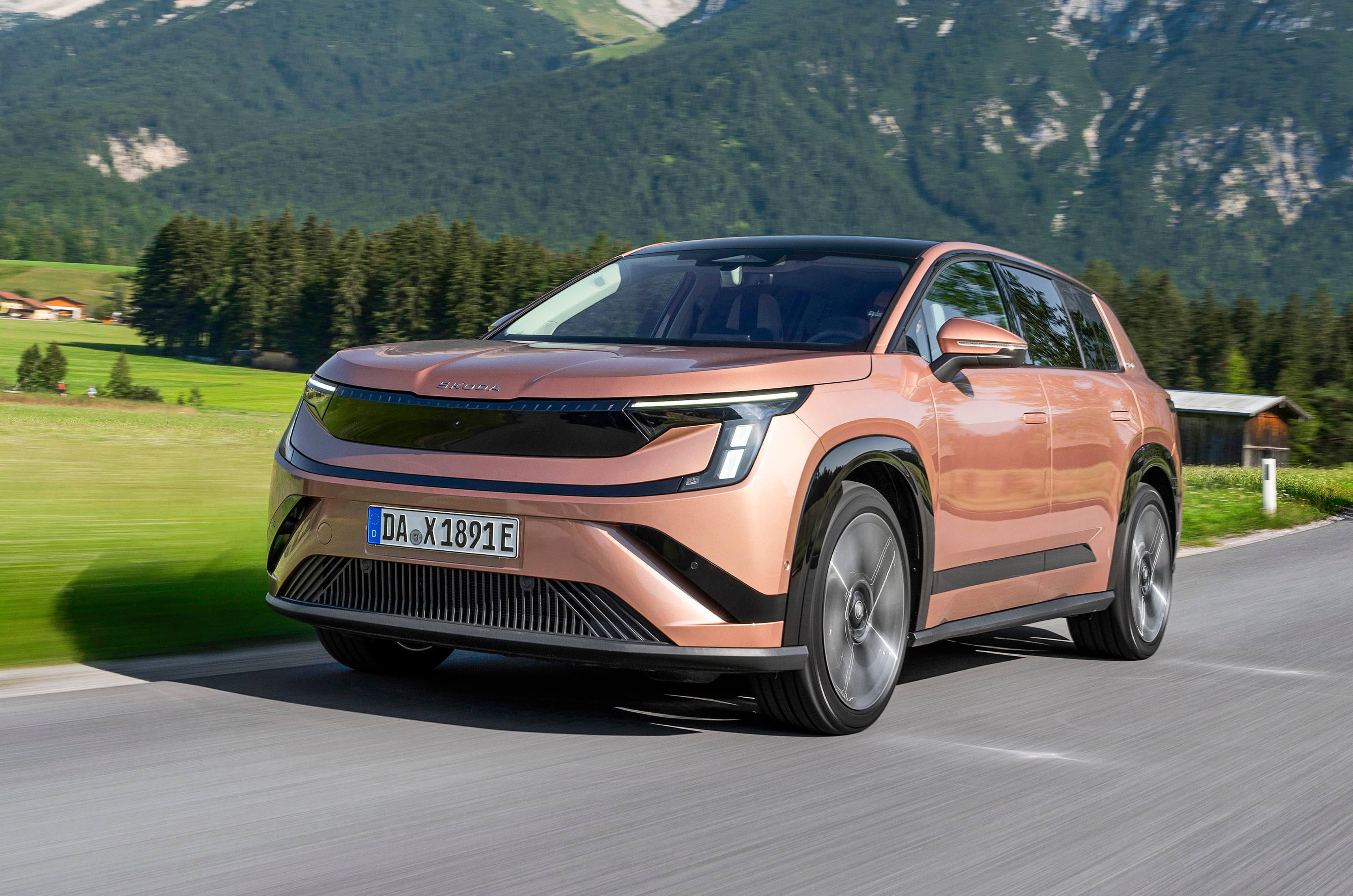
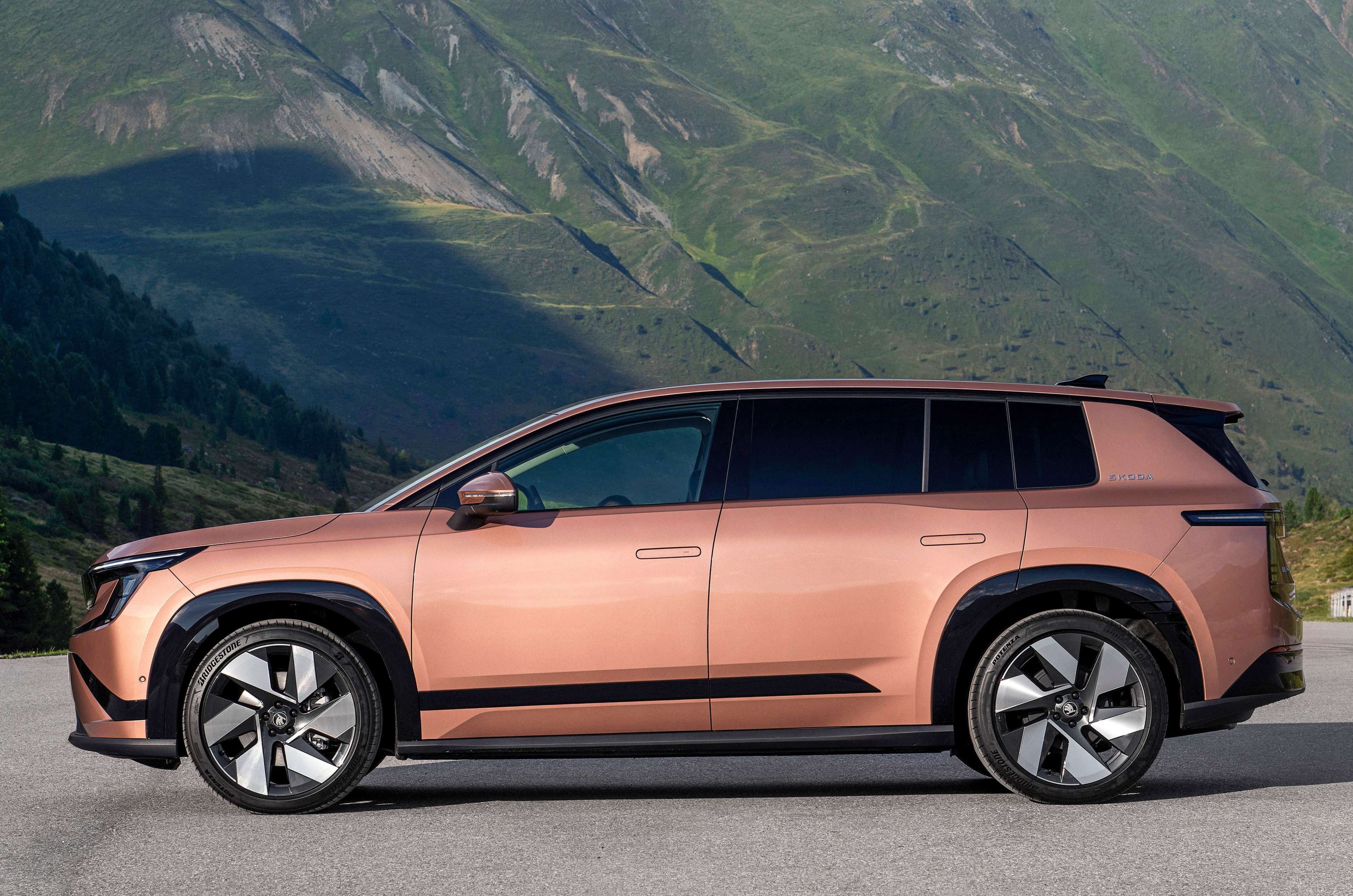
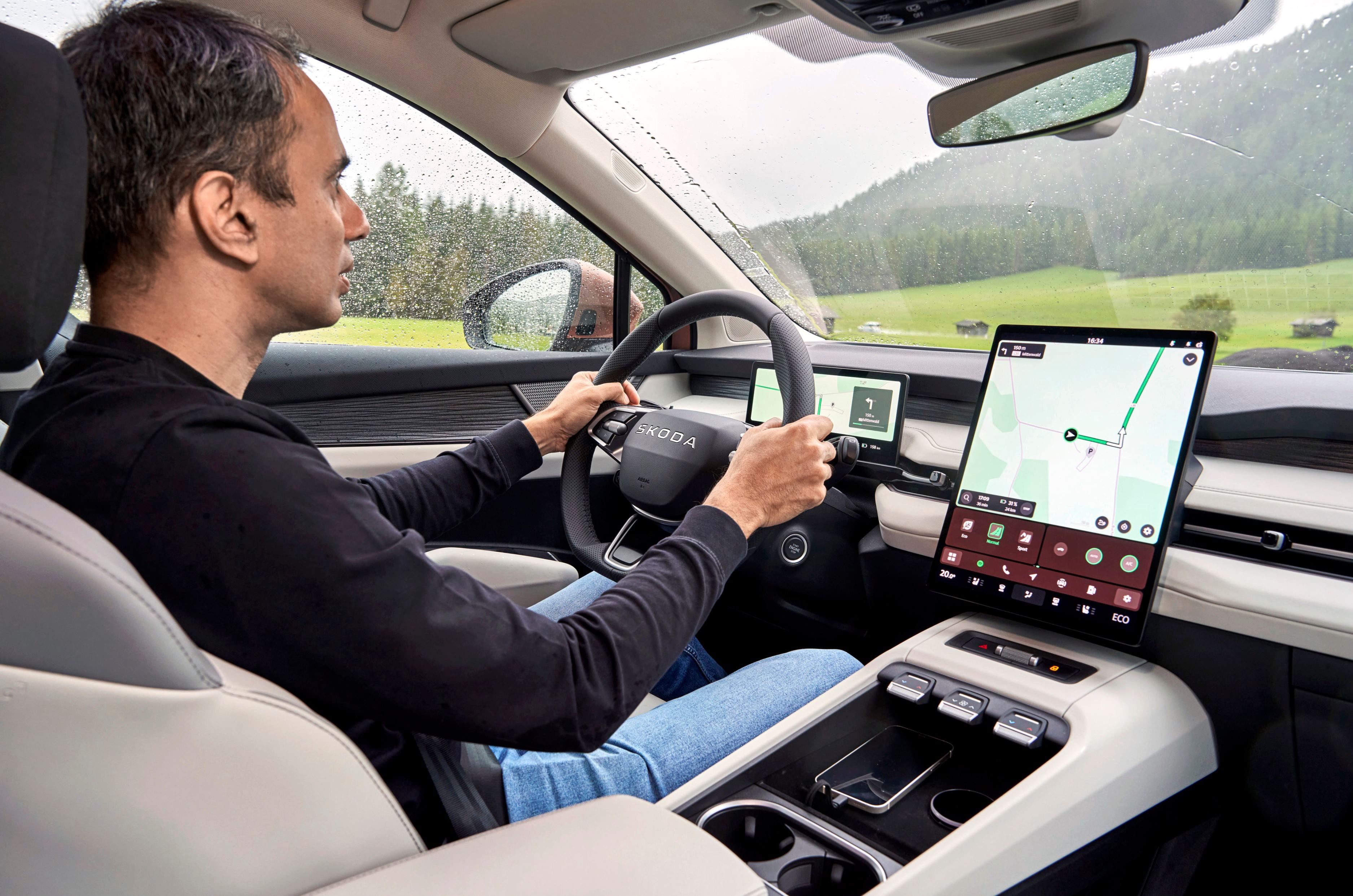
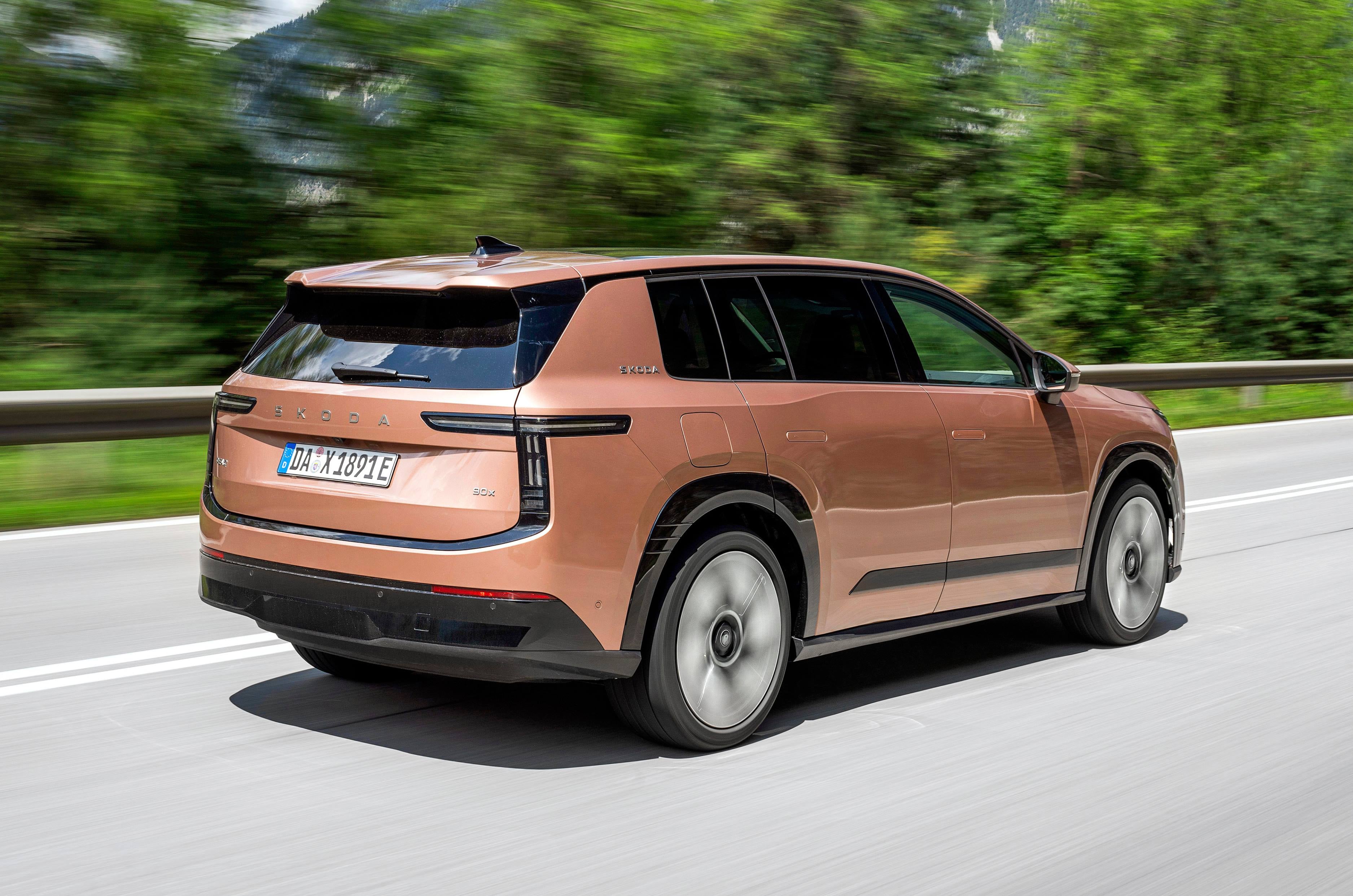
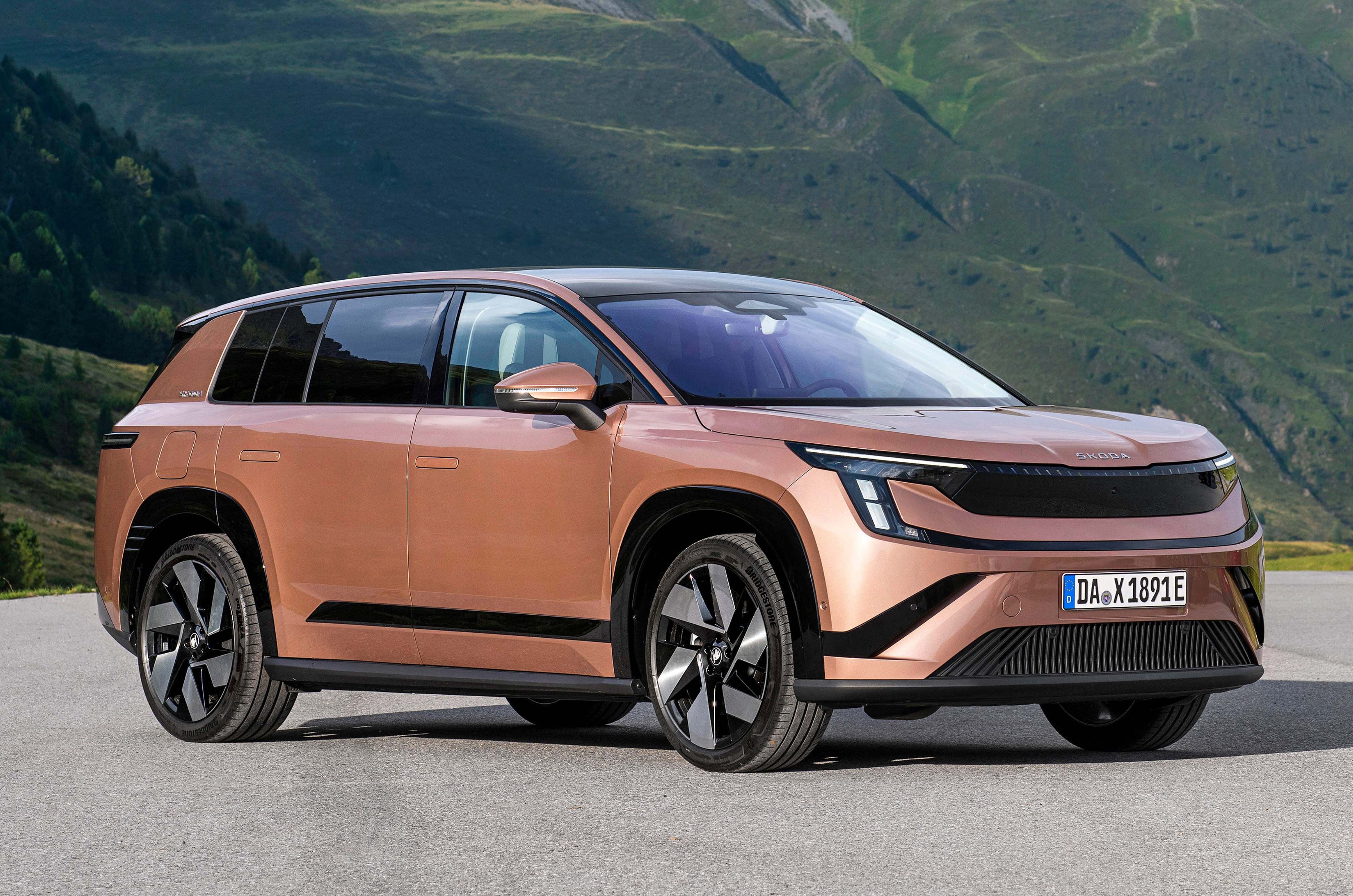
Epiq, Elroq, Enyaq, it’s pretty clear to see the nomenclature every electric Skoda SUVs follows, not so here though. You see this is Skoda’s new flagship or its peak as the company says, ergo we have the Peaq.
Skoda Peaq Exterior Design and Engineering – 9/10
Doubles down on minimalist style but looks premium, classy and has good presence.
At 4.87 meters, the Peaq is the largest Skoda SUV yet.
While the entry level model, the Epiq, utilizes the front wheel driven MEB+ platform, the Elroq, Enyaq and the Peaq are all built on the MEB platform which is primarily rear wheel driven with the option of AWD, which the Peaq does offer. At 4.87 meters the Peaq is the largest Skoda SUV and sports Skoda’s largest boot, battery and sunroof, too.
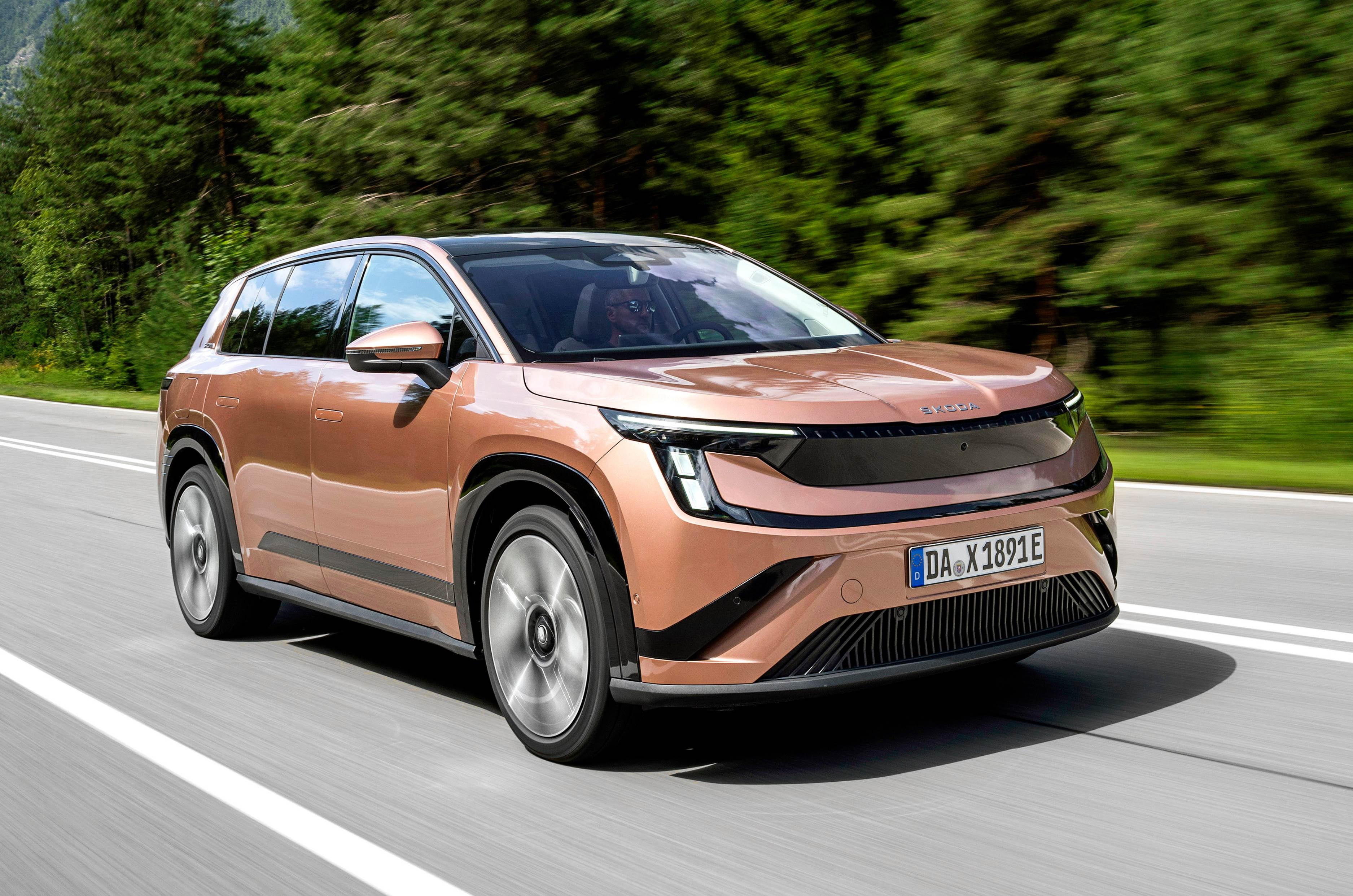
Despite its size it doesn’t look brutish like most large SUVs seem to be leaning towards these days. Thanks to Skoda’s new ‘Modern Solid’ design language, which is all about minimalism the Peaq looks premium and classy and the bodywork is quite aero efficient too with a 0.249 drag coefficient.
The black panel houses all the tech bits like the cameras, radars and lidar.
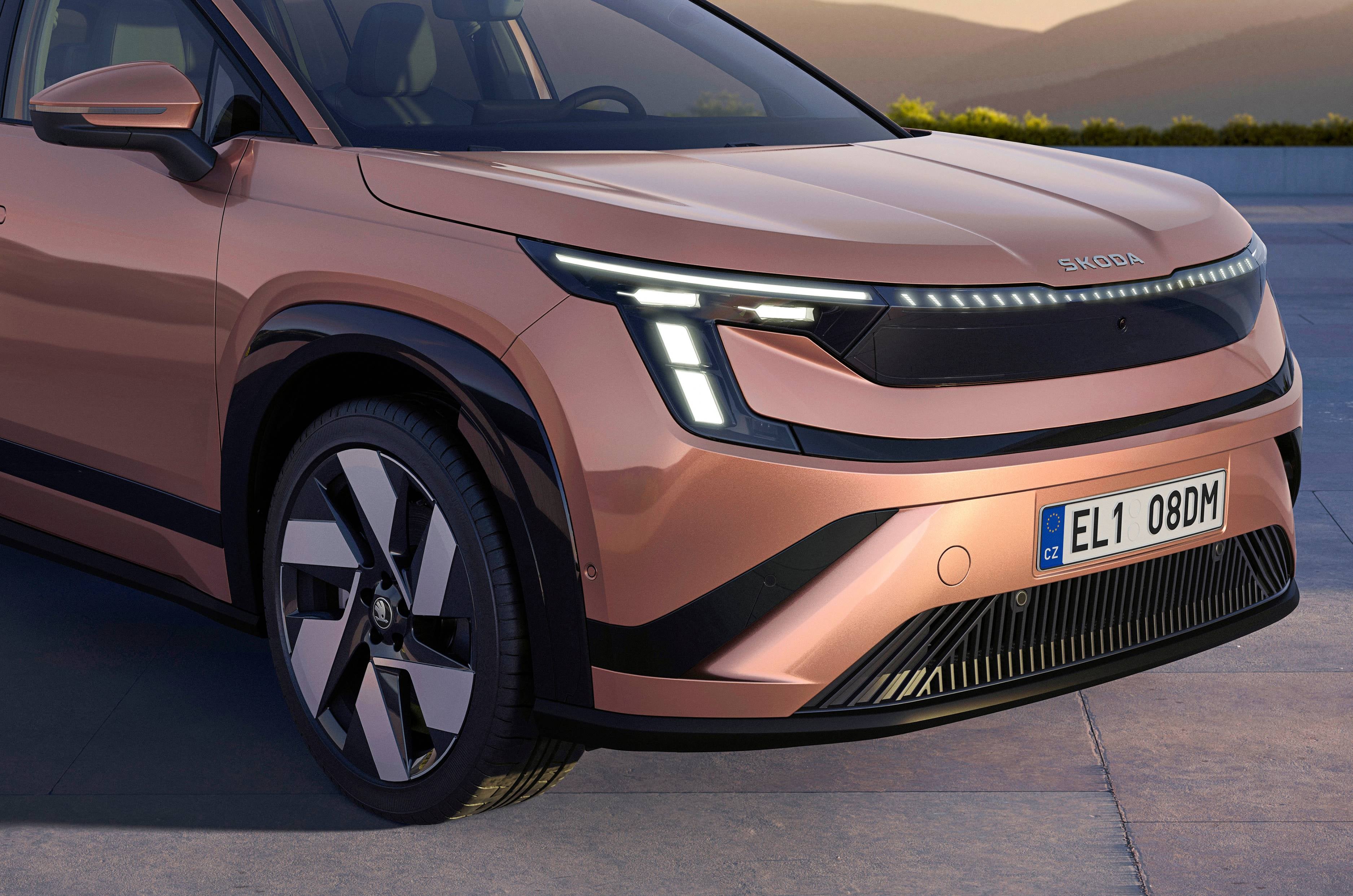
At the front the lines are simple and clean. The fascia sports the company’s T-shaped DRL and headlight signature and the rather clever Tech Deck; the black panel which hides all the tech bits like the cameras, radars and lidar and mimics a grille thus avoiding that faceless look many EVs sport. Skoda has even hidden LED lights behind it that – to a small extent – mimic grille slots. Notably the Skoda emblem is missing, the company is in the process of moving away from it and the Peaq carries the new Skoda letter mark instead.
Over at the sides the clean lines continue with flush door handles, these can also be pressed in at the edge to manually operate them. The alloy wheels on our car were the 21 inchers and have a neatly balanced sporty and classy look. A defining styling element in profile is the C pillar which is body coloured and looks like a reversed fin and carries the Skoda lettering.
T-shaped tail lights are connected by a stylistic loop running at the bottom of the tail gate.
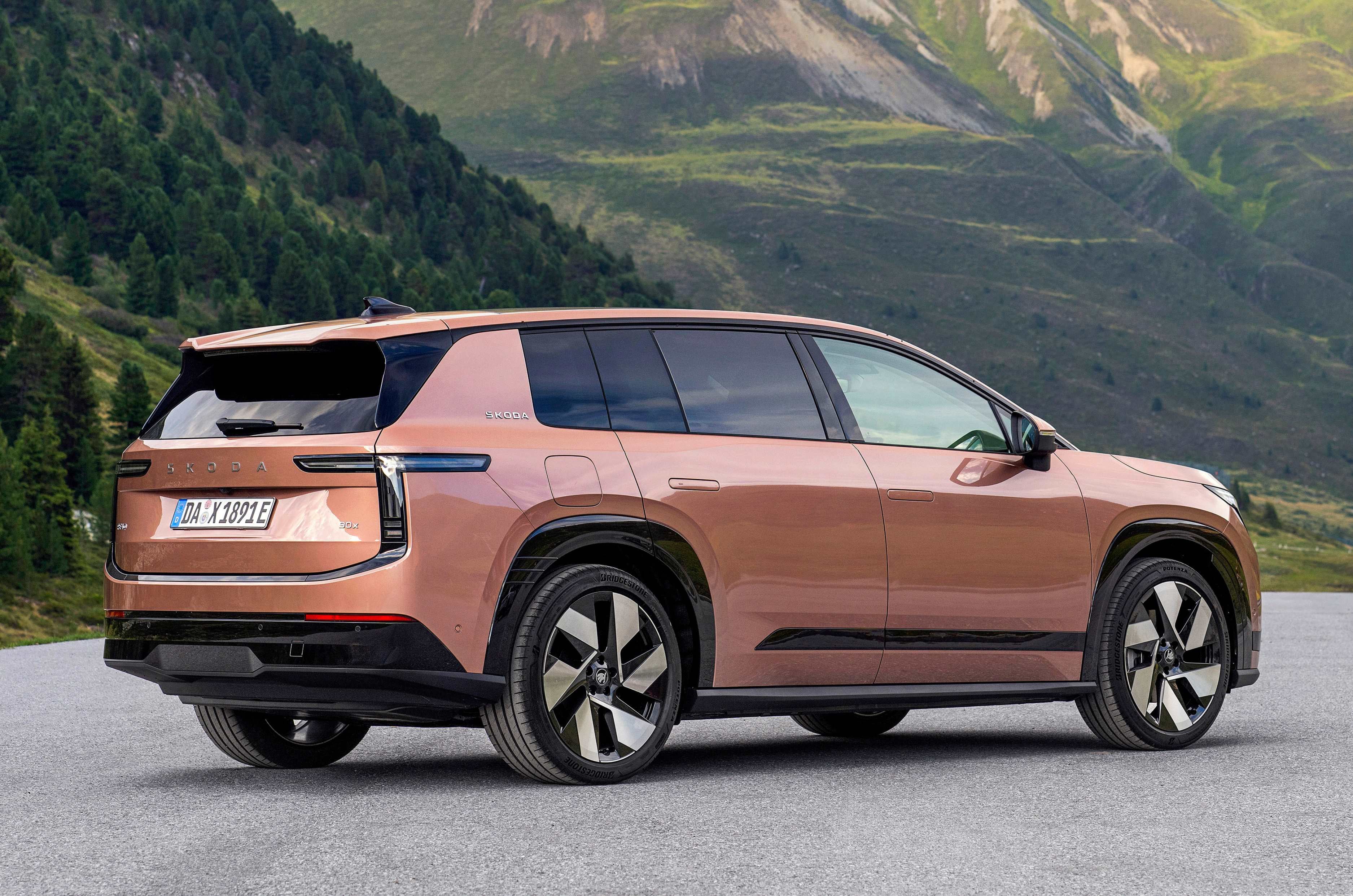
Like the headlights, the taillights too are T-shaped and are connected to each other via a stylistic loop running at the bottom of the tailgate. A roof integrated spoiler and a shark fin antenna complete the rear look and here too it’s just the Skoda lettering spelled out across the boot lid.
Skoda Peaq Interior Space and Comfort – 7/10
Minimalism carries on inside but cabin could do with a dash of flair.
Peaq’s boot is the largest on a Skoda so far; offers 299-litres of space with all rows up.
With a near three-meter wheelbase there’s plenty of space inside, beginning with the boot which is the largest on a Skoda so far; 935 litres without the third row, but even in the 3-row version and with the third-row seats in place, there’s 299 litres which is more than enough for a few small bags. A handy little bit is a motorised cargo cover that rolls open or close with the boot opening and closing. At the front there’s also a 37-litre frunk.
Front seats feature a ‘zero-gravity’ position allowing one to fully stretch out.
Passengers are well catered too, especially at the front two rows. The front seats offer plenty of space and will suit broader frames quite nicely. They also offer a ‘zero-gravity’ position wherein at the touch of a button the seat base dips, the seat back reclines and an ottoman style leg rest extends upward. They also offer heating, ventilation and a massage function. There’s an app too – which new EV does not have one these days – and that can configure the cabin lighting, seats, climate and other elements in six modes from a relaxing to an energizing ambience. On our drive in the cold Austrian mountains, we had a lot of rain and the ‘warm feet’ HVAC setting proved to be very handy and welcome.
Three people can sit abreast in the second row; one doesn’t sit in a knees-up position like in most EVs.
There’s plenty of space in the second row, legroom is good as is shoulder room. We did sit three abreast and didn’t have too much of shoulder overlap. Headroom is very generous and what’s nice is that you don’t sit in a knees-up position as is the case in some EVs. The third row is decent, there should have been more room given the length of the car, but on its own its quite useable and more than enough for kids or short journeys. Like the second row, headroom here is also good.
In terms of styling the cabin follows on with the exterior minimalist theme and all the lines are simple and clean, with very little flair about. A bit of panache would have been nice and in keeping with the flagship positioning of the Peaq.
Third row is decent enough for kids or for short journeys.
Skoda Peaq Features and Safety – 8/10
Well equipped and with a healthy does of Skoda’s ‘Simply Clever’ details.
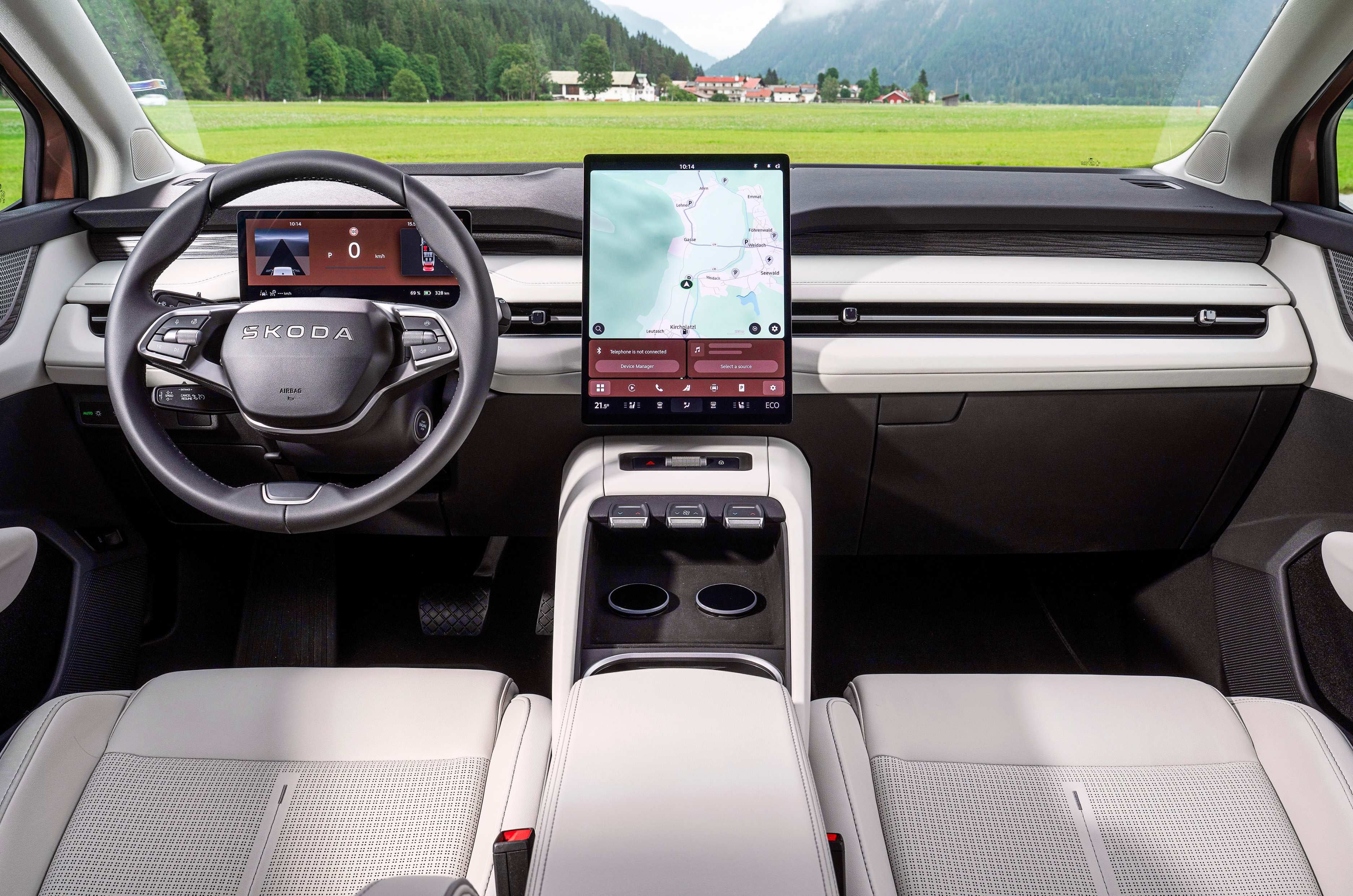
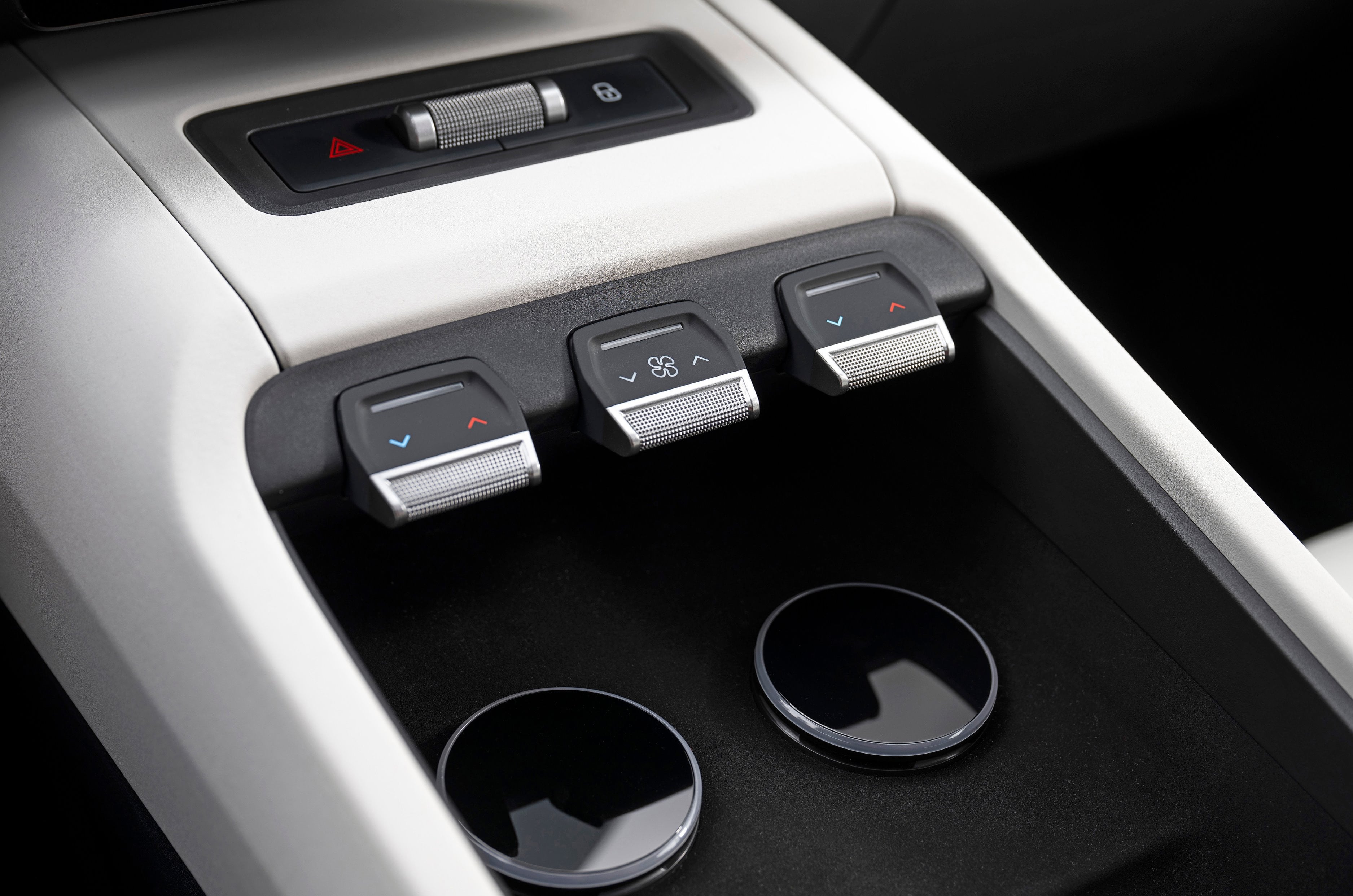
Sitting at the very top of the Skoda range the Peaq is well equipped. The dash carries a 13.6-inch, portrait-oriented touch screen – a first for Skoda – which runs a new UI. There’s a hard baked area for certain controls and thankfully physical controls are retained for main entertainment and HVAC functions, the latter being large toggle switches that are easy to use. These sit on top of an open charging box that has two illuminated magnetic Qi2 wireless charging disc with active cooling, and have a max speed of 25W. The rest of the center console is made up of many storage spaces and cubbies with a neat pass-through slot for charging cables from the lower to the upper console.
A portrait-oriented touchscreen is a first for a Skoda, and runs a brand-new UI.
Ahead of the driver is a 10-inch digital instrument panel which sounds large but has a slim aspect ratio, and there’s also an HUD. The steering wheel is the familiar Skoda unit with the letter mark on the boss and the buttons and scroll wheels on the two wings and as expected the operate with a satisfying click feel.
Thankfully, there are large toggle switches for HVAC controls which are easy to use.
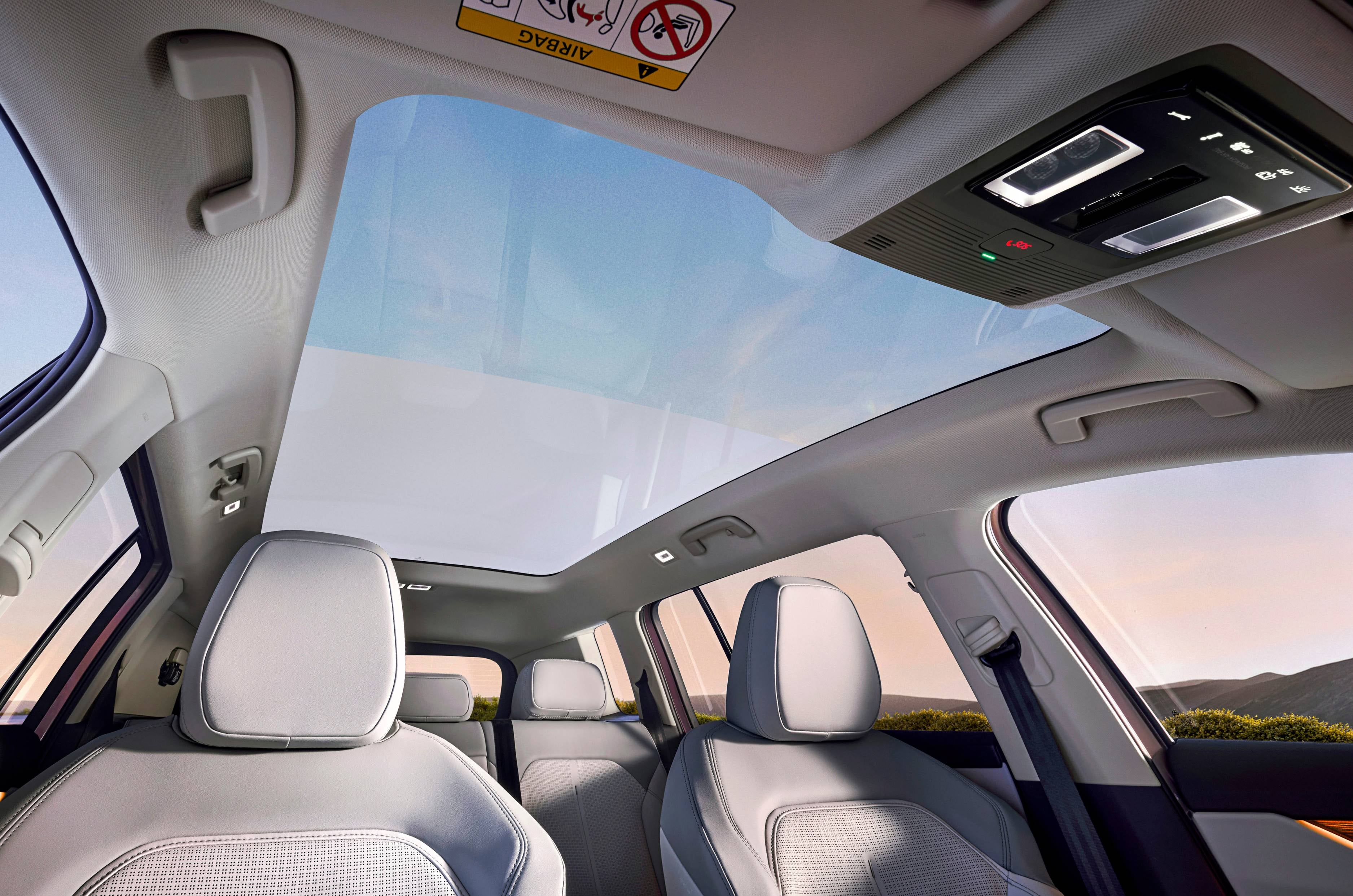
Other features include a 360-degree camera with a transparent 3D body on the display that helps in positioning the car, a 16-speaker SONOS sound system, park assist, a full connectivity suite, 10-airbags and ADAS and of course a healthy dose of Skoda’s ‘Simply Clever’ details like a fold out table for the front passengers that’s tucked away in the center console and umbrella holders in the doors. And topping things off is a large panoramic glass roof, which does not have a sunscreen, instead there’s 9 electrochromic panels that can be darkened to keep out the light and heat says Skoda. We’ll reserve that judgement for when we test it here in our hot climate though.
Panoramic glass roof doesn’t have a sunscreen but features 9 electrochromic panels to keep sun and heat out.
Skoda Peaq Performance and Refinement – 8/10
Strong performance that does not feel characterless like most EVs
There are three powertrain versions on offer starting with the 60-variant, power for which comes from a 63kWH (gross) NMC battery that drives a 204 hp rear motor. Next is the 90 trim which has a 91kWh (gross) NMC battery – the largest on a Skoda –power is courtesy a 286hp rear motor, and the range topper is the 90X which is also powered by the same battery as the 90 but driving a dual motor AWD set up that puts out a combined 300hp. Either of the 90 series cars is what Skoda will bring to India and for our drive today we had the 90X version.
Throtlle response feels quite ICE-like, building speed progressively.
As expected, power delivery is strong and acceleration is brisk, the claimed 0 – 100kph time stands at 6.7 seconds which is plenty quick for a large seven seat family SUV. What’s nice though is that the delivery isn’t typically EV like, which is to say power dumped in an instant and then linear all through. On the Peaq, throttle response feels quite ICE like, it’s fed in progressively and build nicely as you explore deeper regions of the throttle pedal. Top speed is limited to 180kph which is very easy to get too, on the unrestricted section of the German autobahns we hit an indicated 185kph. Wind and tyre noise is well controlled especially over the smooth tarmac sections and even at high triple digit speeds the cabin was silent enough.
Wind and tyre noise are well contained even at triple digit speeds.
Skoda Peaq Ride Comfort and Handling – 7/10
Very stable at speeds, but Normal mode sees some body float over undulations.
The 90X comes with Skoda’s dynamic chassis control and the adjustable dampers do alter the ride character noticeably. In Normal mode is very comfy and could do well over potholes and ruts, however at highway speeds and over undulations that we did see on some section there is some body float. A switch to the Sport setting however tides this up quite nicely and was the default setting I used for most of the drive. Being an AWD, there’s also a few off-road modes though we didn’t get to try these out and I suspect most owners won’t either.
Depending on the mode, adjustable dampers noticeably alter the ride quality.
In terms of handling this isn’t what you would call light on its feet, you do know you are driving a large SUV but its never cumbersome and through the mountain passes we did have a bit of fun, not sporty then but enjoyable enough if how I’d describe the handling character.
Skoda Peaq Range and Efficiency – 7/10
Charging speeds and range are par for course
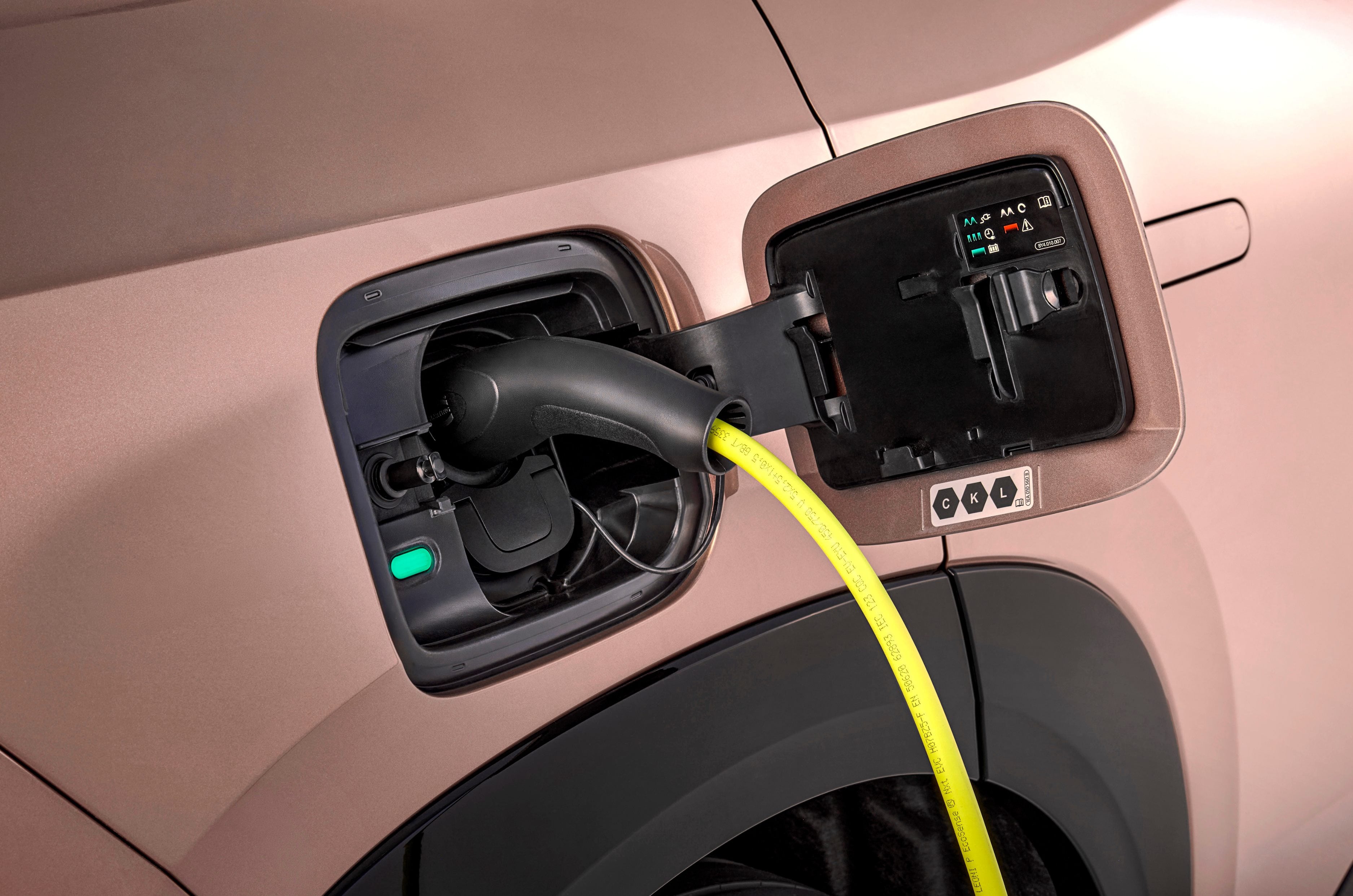
The Peaq 60 battery capacity stands at 63kWh (59kWh net) and that’s good for a range of 450kms says Skoda. Max charging speed is 160kW on a DC fast charger and that can take the battery from 10 to 80 percent in 27 minutes.
A 160kW DC fast charger can top up the battery from 10 to 80 percent in 27 minutes (claimed).
The 90 cars are powered by a larger 91kWh (86kWh net) battery, max charging speed stands at 199kW and a 10 to 80 percent charge on a DC fast charger takes 28 mins. On the 90X range stands at 610kms while the two wheel drive 90 version sees a slightly longer range at 640 kms. We’ll know the real-world range once we put it through our standard test cycle back home.
Skoda Peaq Expected price and Verdict – 8/10
Priced at Rs 60 lakh it would be a tempting option and it does more than enough to call this peak Skoda.
Skoda is really doing a fine job with its EVs, we liked the Enyaq, were superbly impressed with the Elroq and the flagship Peaq does not disappoint too. Yes, the ride does feel soft and the interiors do lack flair, something you would expect on a flagship and we’ll of course have to wait and see how Skoda price this when it comes to India some time mid next year. Skoda says it will arrive as a CBU and we expect it to be priced at around Rs 60 lakh ex-showroom where it will be able to compete with rivals like the Tesla Model Y L, above that though and Skoda will face some heat from premium brands like BMW and Mercedes that are also expanding their electric SUV portfolio.
The Peaq will arrive in India as a CBU and is expected to be priced around the Rs 60 lakh mark.
The Peaq though does provide a very well-turned-out product, it looks classy and premium and that’s important at this price point, there’s a good amount of space inside, especially for the front two rows, it’s well equipped with typically Skoda clever bits and the drive experience is mature and enjoyable. All typical highlights that we’ve come to expect of the brand. All in all, then, the Skoda Peaq does more than enough to safely call this, peak Skoda.
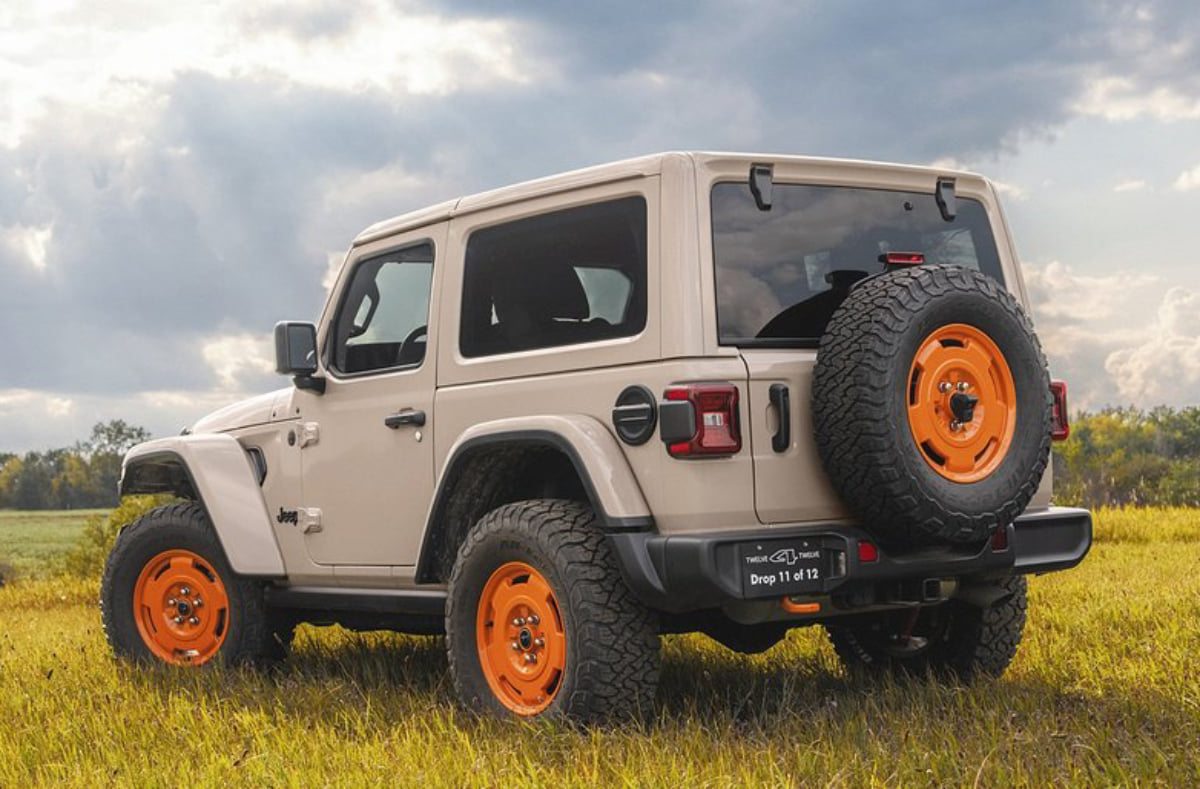
Jeep has revealed the 2027 Wrangler JL-2A, a special edition inspired by the 1945 Willys CJ-2A, the brand’s first vehicle designed specifically for civilian use. Based on the Wrangler Rubicon, the JL-2A gets a range of exterior and interior changes inspired by the original Jeep, while its off-road hardware remains unchanged. Orders are set to open in October.
Jeep Wrangler JL-2A: Exterior
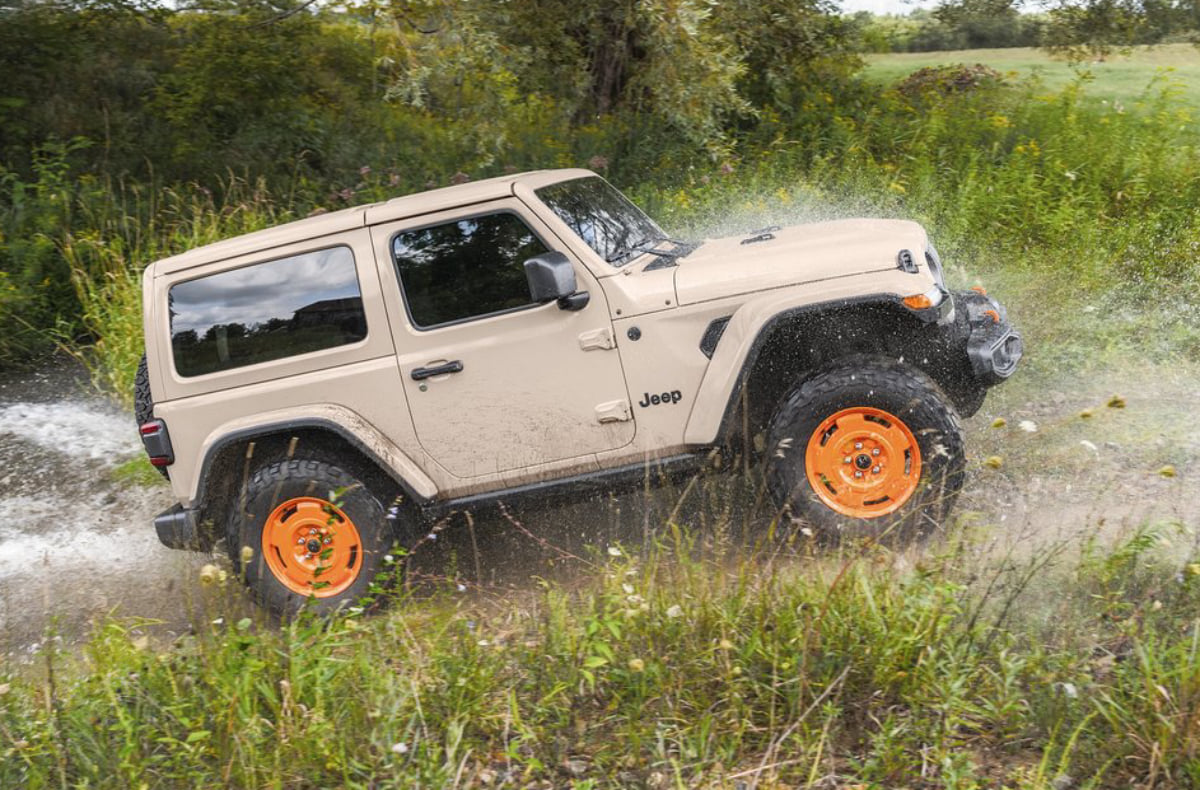
The JL-2A gets Gobi paint on the two-door version, inspired by the Harvest Tan finish offered on the original CJ-2A. The four-door version is available in ’41, an olive green shade. Both body styles can also be specified in Bright White, Sting Gray, Ghost and Joose. All versions get 17-inch Joose-painted retro wheels, paired with 33-inch BFGoodrich KO2 all-terrain tyres.
The exterior also gets orange tow hooks at the front and rear, Dark Metallic Grey accents on the seven-slot grille, body-colour fender flares and a three-piece hardtop.
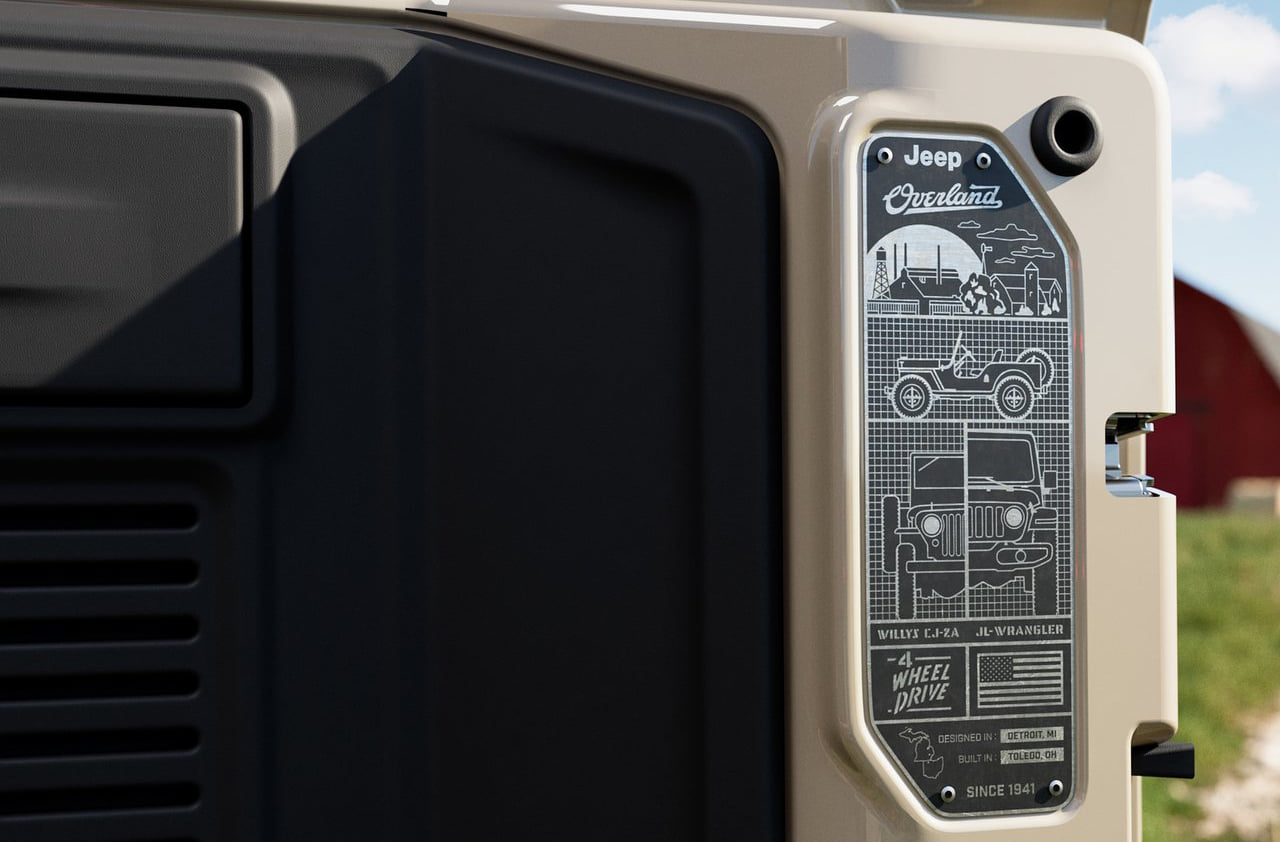
A plaque on the rear swing gate recreates the artwork from the original CJ-2A’s dashboard data plate, including farm and factory scenes.
Jeep Wrangler JL-2A: Interior
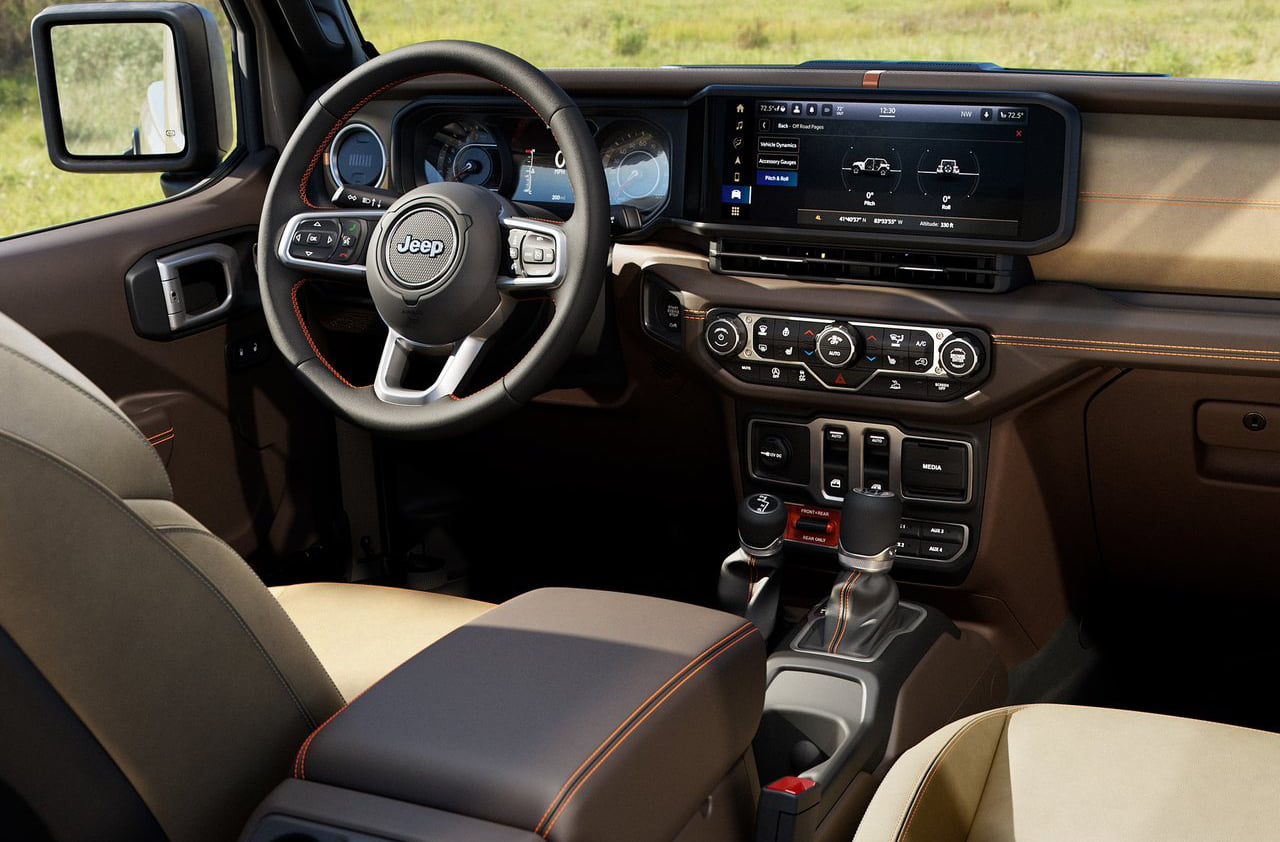
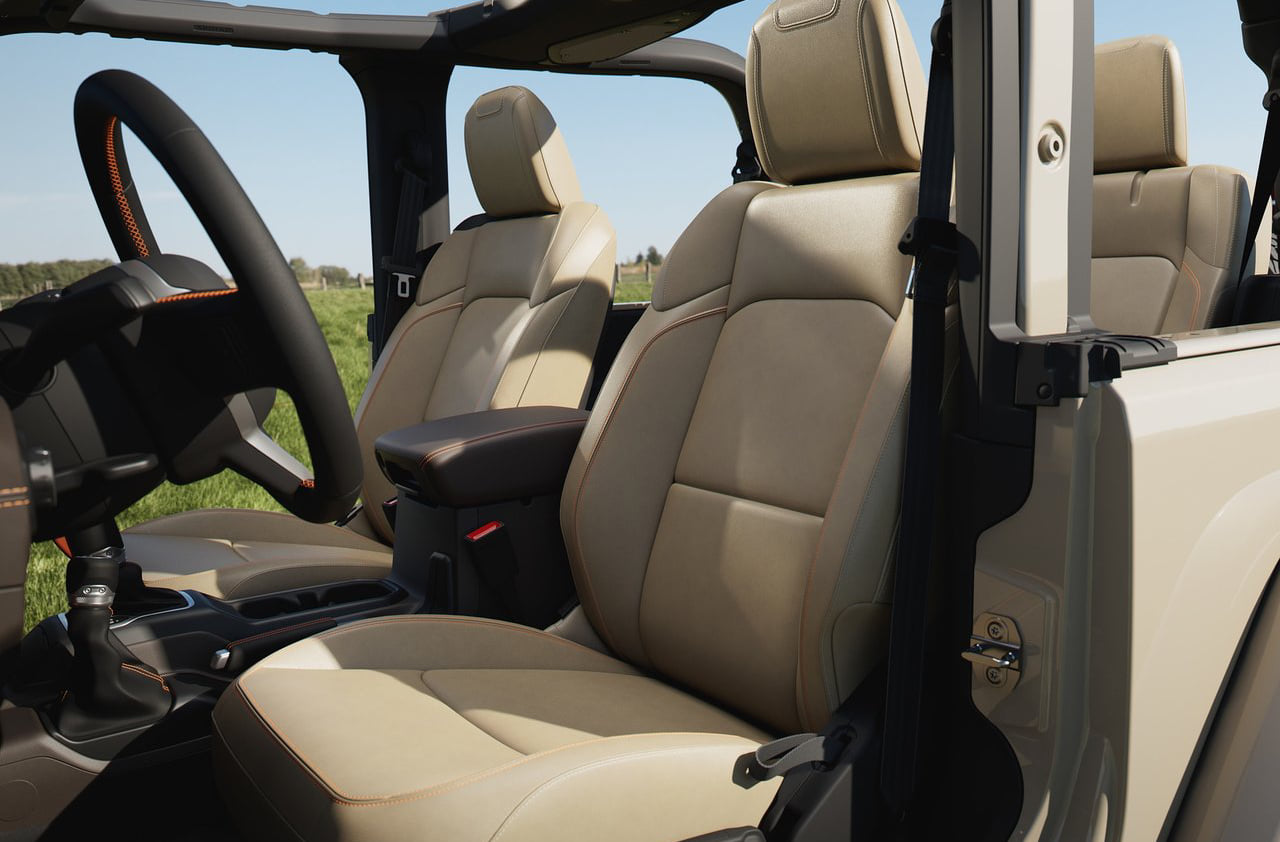
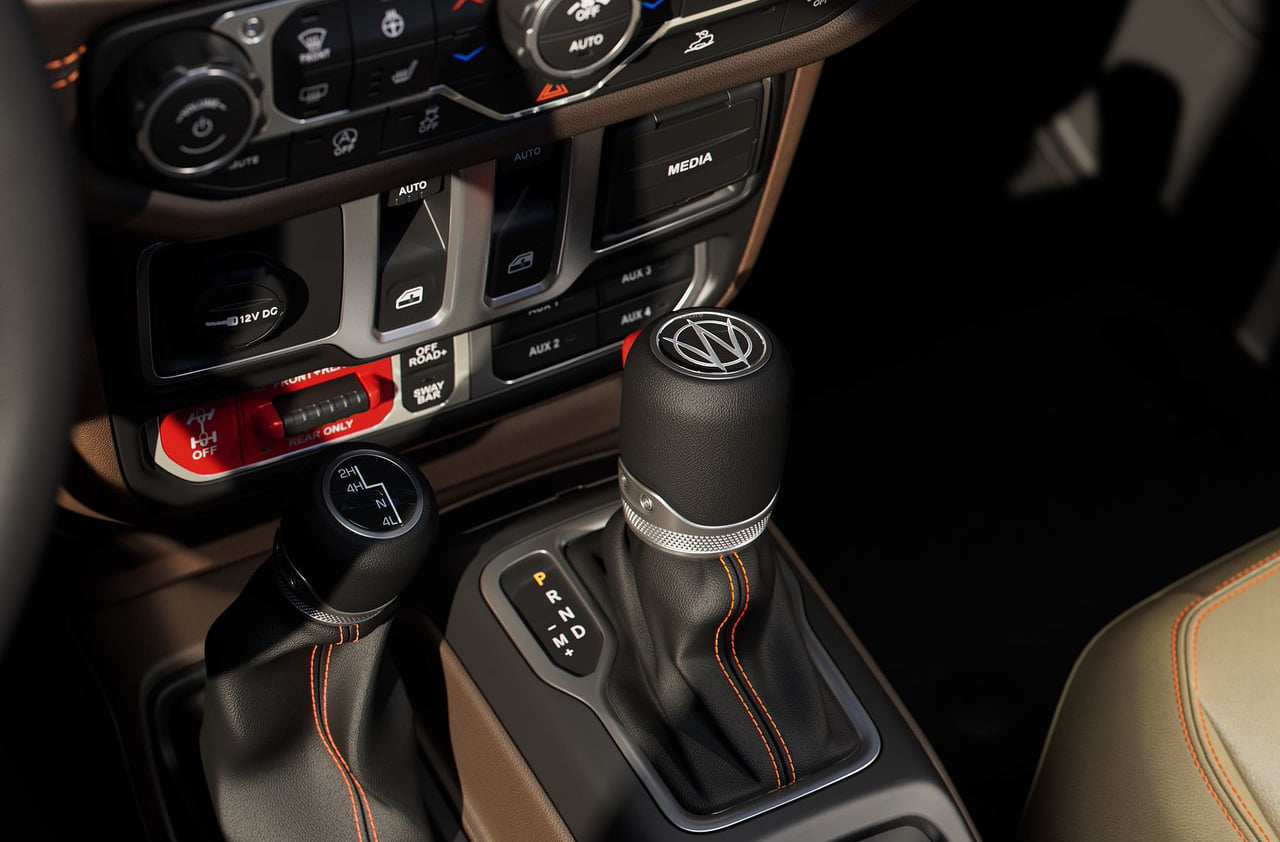
The cabin gets Nappa Heritage Tan leather seats,brown door panels, lower instrument panel and centre console, along with contrast orange contrast stitching. The gear shifter features a Willys-Overland badge, while the HVAC vents feature a seven-slot grille graphic on one side and a Willys silhouette on the other.
The Convenience Group is standard and includes remote start, an auto-dimming rear-view mirror and a universal garage door opener. A front TrailCam with an integrated washer is also standard.
Jeep Wrangler JL-2A: Powertrain and off-road hardware
Jeep has not announced any mechanical changes for the JL-2A. Based on the Wrangler Rubicon, the special edition retains electronic locking differentials at the front and rear, an electronic sway-bar disconnect and the Rock-Trac HD 4×4 system.
The Rubicon is offered with a 285hp, 353Nm 3.6-litre V6 and a 270hp,400Nm 2.0-litre turbo-petrol engine, paired with either a six-speed manual or eight-speed automatic gearbox. Jeep has not specified which of these powertrain options will be offered with the JL-2A.
The JL-2A is the 11th limited-edition Wrangler introduced as part of Jeep’s Twelve 4 Twelve programme. Under the programme, Jeep is introducing one limited-edition Wrangler each month for 12 months. The JL-2A will be offered as a package for the 2027 Wrangler Rubicon, priced at USD 4,995 (Rs 4.79 lakhs). Orders will open in October.
यह बात मान लेनी चाहिए कि हम अपने अतीत से कितना स्नेह रखते हैं। हम वहाँ सुखद अनुभूति करते हैं, सुरक्षित महसूस करते हैं। अतीत हमारे वर्तमान की ख़ाली जगहों को भरता है। वह बार-बार याद आता है, बावजूद इसके कि हमें सिखाया गया है कि भविष्य की योजनाएँ बनानी चाहिए और उसी पर फ़ोकस करना चाहिए।
लेकिन अतीत में लौटना, यादों में जीना या नॉस्टेल्जिक होना कई मर्तबा यह भी बताता है कि जिस भविष्य को हम अपने लिए गढ़ रहे हैं, उसमें कहीं न कहीं कुछ गड़बड़ है। यदि भविष्य हमें उतना ही आश्वस्त करता, तो शायद हम उसकी तरफ़ लौटते। मगर हम बार-बार पीछे जाते हैं। क्यों?
स्मृति और अतीत मनुष्य के जीवन का केंद्रीय आयाम हैं। नॉस्टेल्जिया महज़ ‘स्मृति-मोह’ नहीं है। यह आत्म-चेतना को टटोलने की एक प्रक्रिया है—समय के दो आयामों के बीच खड़े होकर यह देखने की कि हम कहाँ से कहाँ आ गए!
हम धीरे-धीरे एक सरल और सुंदर समय से निकलकर एक कठिन और भयावह दौर में प्रवेश करते हैं। शायद पीछे लौटना उसी यात्रा को एक बार फिर देखने की कोशिश है।
अतीत और भविष्य में एक बुनियादी फ़र्क़ है। अतीत में हमारे पास दृश्य हैं, आवाजें हैं, गंध हैं, चेहरे हैं। हमारे पास उसके साक्ष्य हैं। हम उसके साक्षी हैं। भविष्य के पास इसके बरअक्स सिर्फ़ अनुमान हैं—योजनाएँ हैं, आशंकाएँ हैं, उम्मीदें हैं। अतीत घट चुका है, भविष्य अभी घटा ही नहीं है। इसलिए अतीत निश्चित है और भविष्य काल्पनिक।
यह भी सच है कि कई लोगों के लिए अतीत एक बोझ रहा होगा। कुछ लोग अपनी स्मृतियों का वज़्न उठाकर भविष्य की ओर बढ़ते हैं। लेकिन यही स्मृतियाँ उन्हें यह समझने की क्षमता भी देती हैं कि आने वाले संकट से कैसे निपटना है। अतीत केवल बोझ नहीं है, वह अनुभव भी है।
हम अपने वर्तमान में अकेले नहीं होते। हम अपने पुरखों के देखे हुए सपनों के भोक्ता भी होते हैं। भविष्य के लिए उन्होंने जो किया, उसका फल हमें मिलता है और उसका भुगतान भी हमें ही करना पड़ता है। हमारे वर्तमान में बहुत सारा अतीत जमा होता है। इसलिए मैं अतीत को जीवन के लिए एक सहूलत मानता हूँ।
हम अतीत और उसकी स्मृतियों की मदद से अपनी दुनिया को टटोलते हैं। हमारा अतीत ही हमें सबसे बेहतर तरीक़े से बताता है कि हम वास्तव में कौन हैं। अगर हम अपनी स्मृतियों में लौटना छोड़ दें तो शायद यह सिर्फ़ अतीत को छोड़ना नहीं होगा, यह अपनी पहचान का एक हिस्सा खो देना होगा।
यह बात उस आदमी से पूछिए जिसने अपनी याददाश्त खो दी है। उसके लिए परिचित दृश्य और आवाज़ें अचानक अजनबी हो जाती हैं। दुनिया वही रहती है, लेकिन उसके भीतर उससे जुड़ने वाला आदमी बदल जाता है।
निर्मल वर्मा ने इसी अर्थ में पूछा था कि एक मनुष्य के भीतर से उसका सारा अतीत और स्मृतियाँ निकाल दी जाएँ तो उसके पास क्या बचेगा, जिसे वह दिखा सके?
स्मृति हमारे जीवन का नैसर्गिक अंग है। हम मनुष्य हैं तो याद करेंगे। लेकिन यहीं भारतीय दर्शन एक विचित्र विरोधाभास खड़ा करता है। हमारे संतों, योगियों और मनीषियों ने कहा कि अपने संचित विचारों और स्मृतियों से मुक्त होना ही मुक्ति है। तो क्या हम अपनी स्मृतियों से मुक्त होना चाहते हैं या अपने उस ‘मैं’ से, जो स्मृतियों से बना है? क्या विचार और जीवन एक ही चीज़ हैं? क्या स्मृति से मुक्ति वास्तव में जीवन से मुक्ति है?
इन सवालों का कोई आसान जवाब नहीं है। क्योंकि यादें जानलेवा भी हैं और पोषक भी। वे हमें वर्तमान के संकट और भविष्य के भय से कुछ देर के लिए बाहर निकालती हैं। वे एक exit gate हैं—जहाँ से हम थोड़ी देर पीछे जा सकते हैं और फिर आगे की ओर देख सकते हैं। शायद इसीलिए हमें पत्रों से प्रेम है। गंध से प्रेम है। पुराने गीतों से प्रेम है। तस्वीरों से प्रेम है। उन फ़िल्मों से प्रेम है जिन्हें हम बार-बार देखते हैं। उन स्वरों और दृश्यों से प्रेम है जो अब हमारे जीवन में नहीं हैं। हमें उन चीज़ों से प्रेम है जो खो चुकी हैं और उन चीजों से भी जो खो रही हैं।
अगर अतीत इतना ही ख़राब होता तो हम बार-बार उसकी तरफ़ लौटते क्यों? क्यों अपनी पुरानी तस्वीरें देखते? क्यों किसी पुराने गीत को सुनते ही किसी बीते हुए समय में पहुँच जाते? क्यों कोई गंध अचानक वर्षों पुराना दृश्य हमारे सामने ला खड़ा करती है? क्योंकि शायद अतीत में हम सिर्फ़ समय को नहीं खोजते। हम अपने उस रूप को खोजते हैं जो अब कहीं नहीं है।
मैंने अब तक कोई कविता ऐसी नहीं लिखी जिसमें भविष्य का ज़िक्र हो। मेरी सारी कविताएँ स्मृतियों से उपजी हैं। कोई समय रहा होगा जिसे मैं याद करता हूँ। उस समय में कोई शख़्स रहा होगा, जिसे मैंने प्रेम किया होगा या जिससे घृणा की होगी। कविता शायद उसी समय में लौटने का एक रास्ता है। यह सिर्फ़ व्यक्तिगत स्मृति नहीं है। इसका एक सामूहिक रूप भी है।
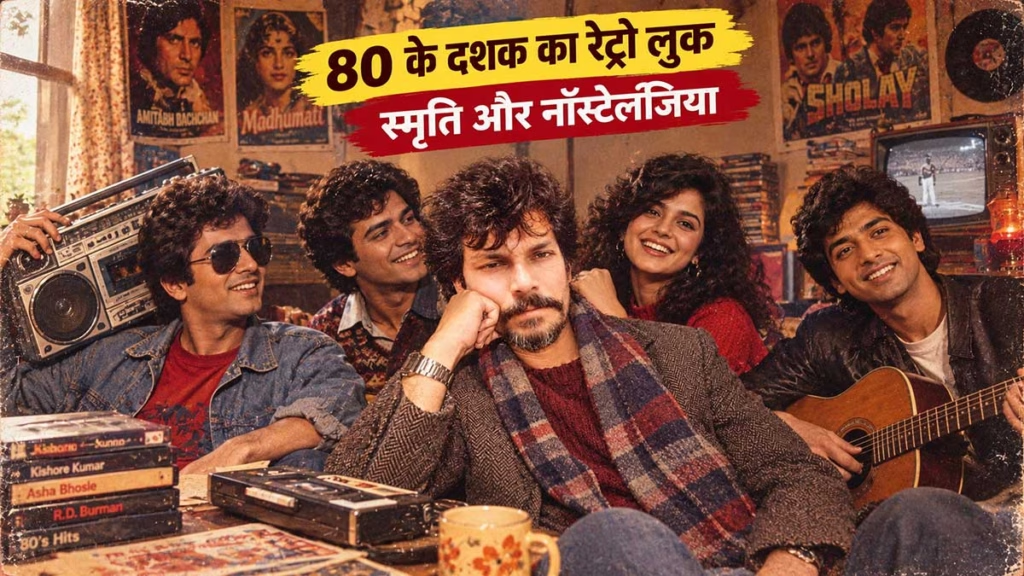
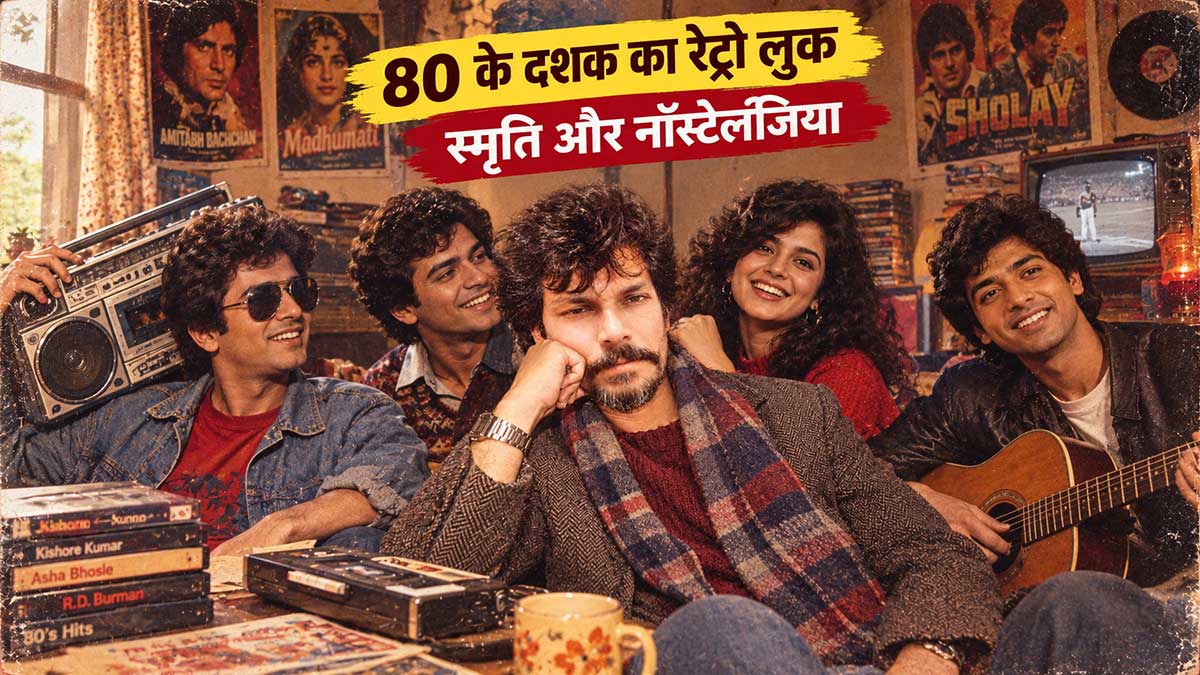
साल 2026 में हम तस्वीरों के जरिए 1980 के दशक में क्यों लौटना चाहते हैं? 80 के दशक की पॉप-संस्कृति—बड़े हेयरस्टाइल, नियॉन-ब्राइट और वार्म कलर्स, एनालॉग टेक्सचर, बेलबॉटम, रंग-बिरंगी बुशर्ट और मोटे फ़्रेम का चश्मा—हमें आज भी क्यों लुभाते हैं? जिस चीज को उसके समय में देखकर हमें थोड़ी शर्म आती थी, आज उसी को हम स्टाइल और सौंदर्य की तरह क्यों वापस ला रहे हैं? और जब हमारे पास भविष्य की अनंत तकनीकी संभावनाएँ हैं, तब हम एआई को रेट्रो ट्रेंड के प्रॉम्प्ट देकर बार-बार 80 के दशक में क्यों भेज रहे हैं? शायद इसलिए कि तकनीक हमें भविष्य दे सकती है, लेकिन स्मृति हमें वह दुनिया देती है जिसमें हम कभी रह चुके हैं।
भविष्य में संभावनाएँ हैं। अतीत में प्रमाण हैं।
शायद इसी वजह से मनुष्य वहाँ होता ही नहीं है, जहाँ वह है। उसका शरीर वर्तमान में होता है, लेकिन उसका मन एक साथ कई समयों में रहता है। वह उस जगह भी रहता है जहाँ कभी रहा था।
दरअस्ल, हम मनुष्य अपने अतीत के निशान हैं—गुज़र चुके जीवन के अवशेष। अतीत हमें वहाँ दुबारा पहुँचने की मोहलत देता है, जहाँ हम कभी जी चुके हैं। वह जगह भले ही लौटकर न मिले, लेकिन उसकी स्मृति मिल जाती है। भविष्य के पास ऐसा कोई आश्वासन नहीं।
भविष्य एक संभावना है। अतीत एक अनुभव।
मनुष्य शायद हमेशा उस चीज़ की तरफ़ अधिक आश्वस्त होकर लौटता है, जिसके बारे में वह कह सकता है—हाँ, मैं वहाँ था। भविष्य के बारे में हम कितना भी सोच लें, उसकी अंतिम निश्चितता शायद सिर्फ़ इतनी है—हम बूढ़े होंगे और एक दिन मर जाएँगे।
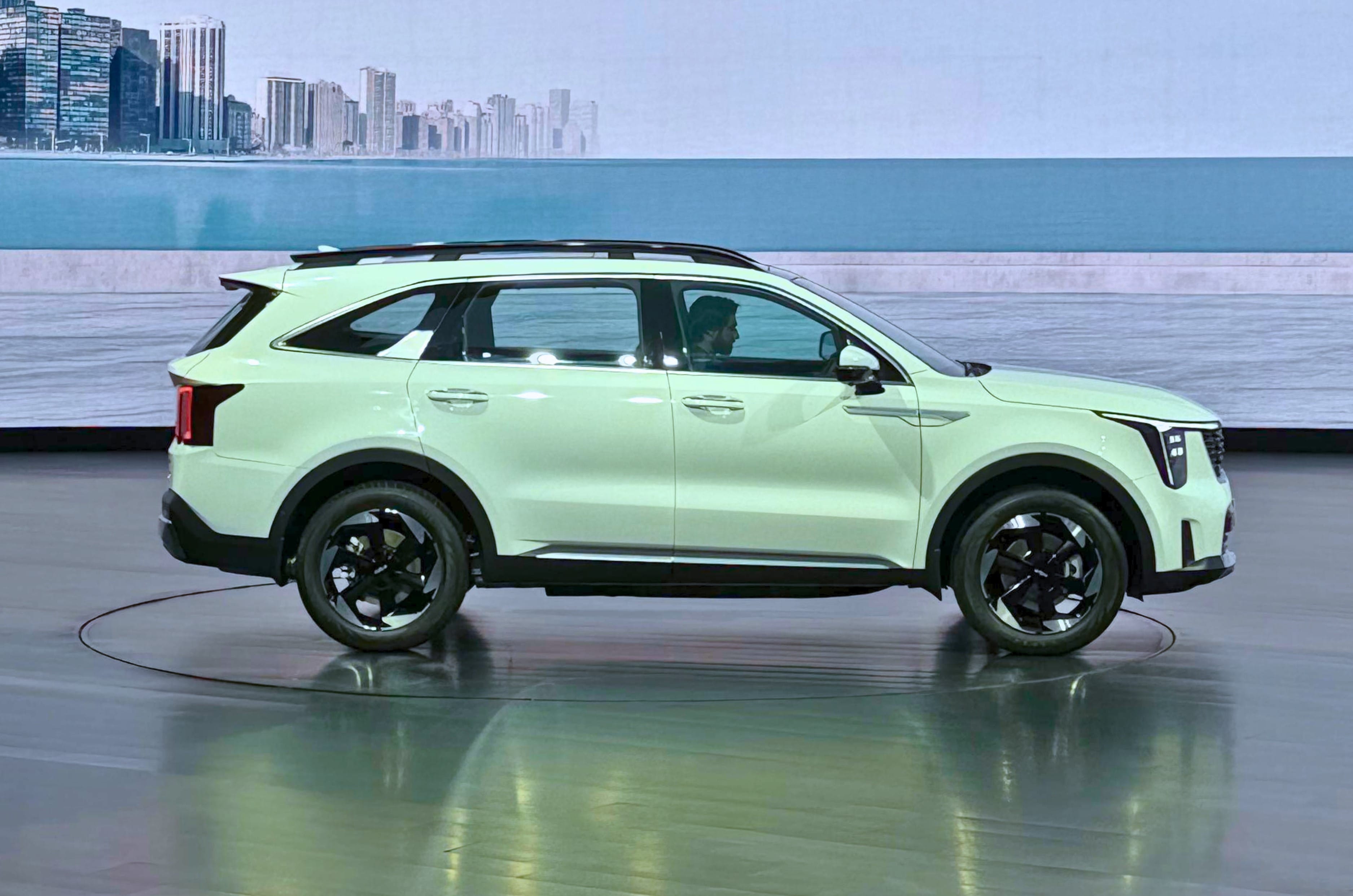
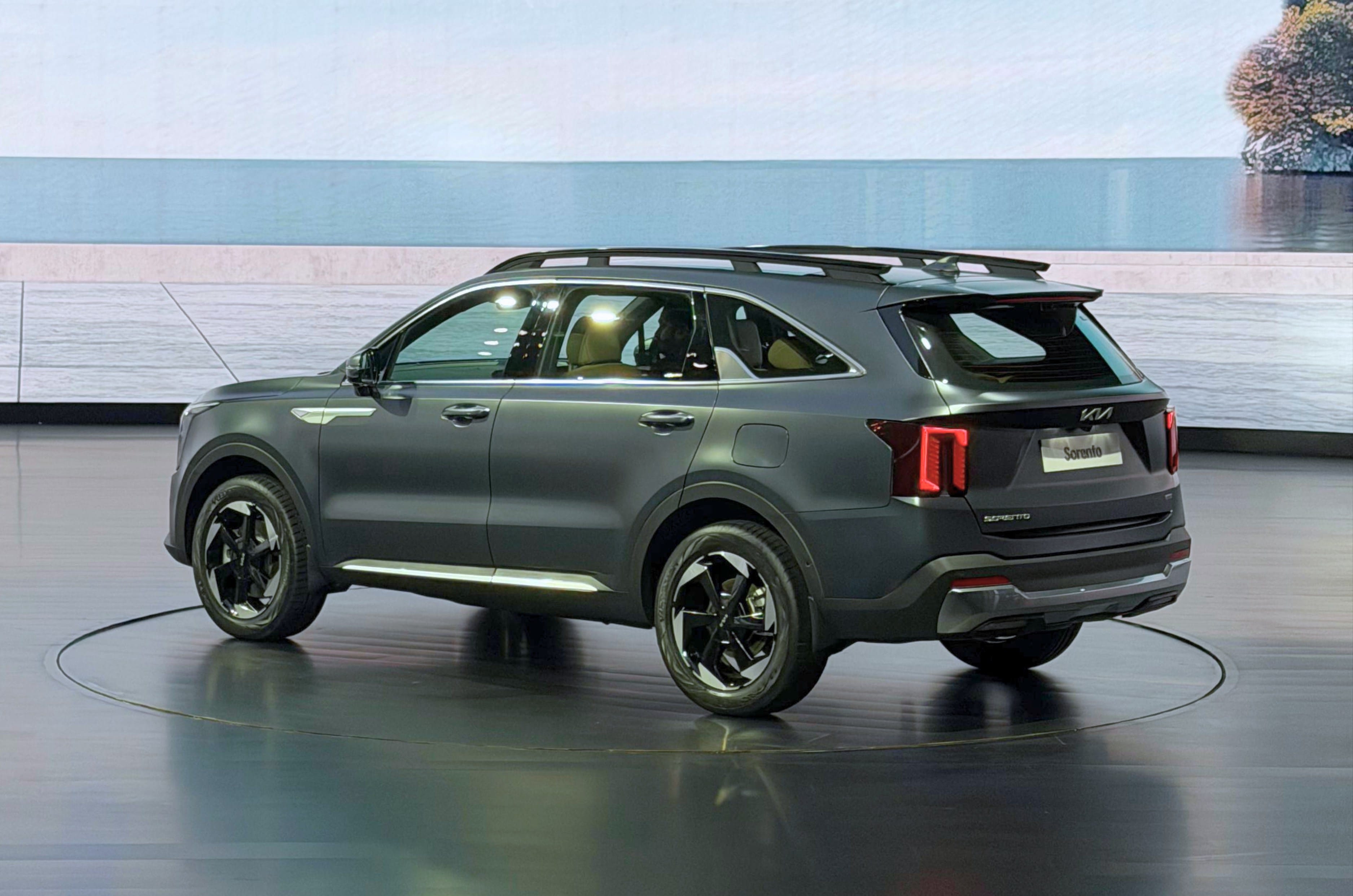
Kia has a new flagship ICE SUV in India in the form of the Sorento. The Korean carmaker has thrown quite a lot at it, offering it with a wide variant lineup with strong-hybrid and diesel engines, front wheel drive and all-wheel drive configurations, and both 6- and 7-seater configurations. In the executive SUV space, the Sorento finds itself in the company of the Skoda Kodiaq, Volkswagen Tayron and Jeep Meridian, and uniquely, it’s the only one to come with a strong-hybrid powertrain. If you have your eyes set on the Sorento, here’s everything you need to know about Kia’s latest three-row SUV.
1. What’s the price range of the Kia Sorento?
2026 Kia Sorento variant-wise prices (in Rs lakh, introductory, ex-showroom)
Diesel 7-str
Diesel 6-str
Strong-hybrid 7-str
Strong-hybrid 6-str
HTE
27.99
–
29.49
–
HTE(O)
29.49
–
30.99
–
HTK
32.49
32.69
33.99
34.19
HTK(A)
33.49
33.69
34.99
35.19
HTX (AWD)
37.49
37.69
38.99
39.19
HTX(A) (AWD)
38.49
38.69
39.99
40.19
The Kia Sorento is priced between Rs 27.99 lakh and Rs 40.19 lakh (ex-showroom), and is available in as many as 20 different variants. More specifically speaking, the diesel range starts at Rs 27.99 lakh and goes up to Rs 38.69 lakh for the top-spec AWD variant. Meanwhile, the strong-hybrid range is priced from Rs 29.49 lakh and Rs 40.19 lakh (ex-showroom).
On-road prices for the Sorento hybrid range between Rs 37.68 lakh and Rs 51.30 lakh in Delhi. Meanwhile, the diesel’s on-road price in Delhi ranges between Rs 35.81 lakh and Rs 49.42 lakh (ex-showroom). Do note on-road prices can vary depending on the city.
2. What powertrains are available with the Kia Sorento?
The Sorento is available with two powertrain options – a 1.6-litre turbo-petrol strong hybrid and a 2.2-litre diesel engine. In the turbo-petrol strong hybrid version, the combustion engine produces 180hp and 265Nm while an electric motor produces an additional 65hp and 264Nm. Kia has, however, not revealed the battery size or the combined total output for this powertrain. The diesel, meanwhile, produces 193hp and 442Nm. The Sorento is, in fact, just one of two SUVs in this segment to offer a diesel engine, while the strong-hybrid is its novelty.
Both powertrains are offered only with an automatic gearbox – 6-speed AT for the strong-hybrid and 8-speed DCT for the diesel. Both also get the option of front-wheel drive and all-wheel drive. Kia has, however, not revealed specific fuel efficiency figures for either powertrain yet.
3. How big is the Kia Sorento
Kia Sorento vs rivals: Powertrain options
Kia Sorento
Volkswagen Tayron
Skoda Kodiaq
Jeep Meridian
Length (mm)
4,815
4,792
4,758
4,769
Width (mm)
1,900
1,866
1,864
1,859
Height (mm)
1,785
1,665
1,679
1,698
Wheelbase (mm)
2,815
2,789
2,791
2,782
Ground clearance (mm)
TBC
TBC
192
214
Wheel size (inch)
18-19
19
18
18
The Sorento is the largest SUV in its segment in every parameter, which lends it quite an imposing stance on the road. It also has the longest wheelbase in its class, and offers the option 18-inch and 19-inch alloy wheels, depending on the trim. For
4. What are the exterior and interior colour options available on the Sorento?
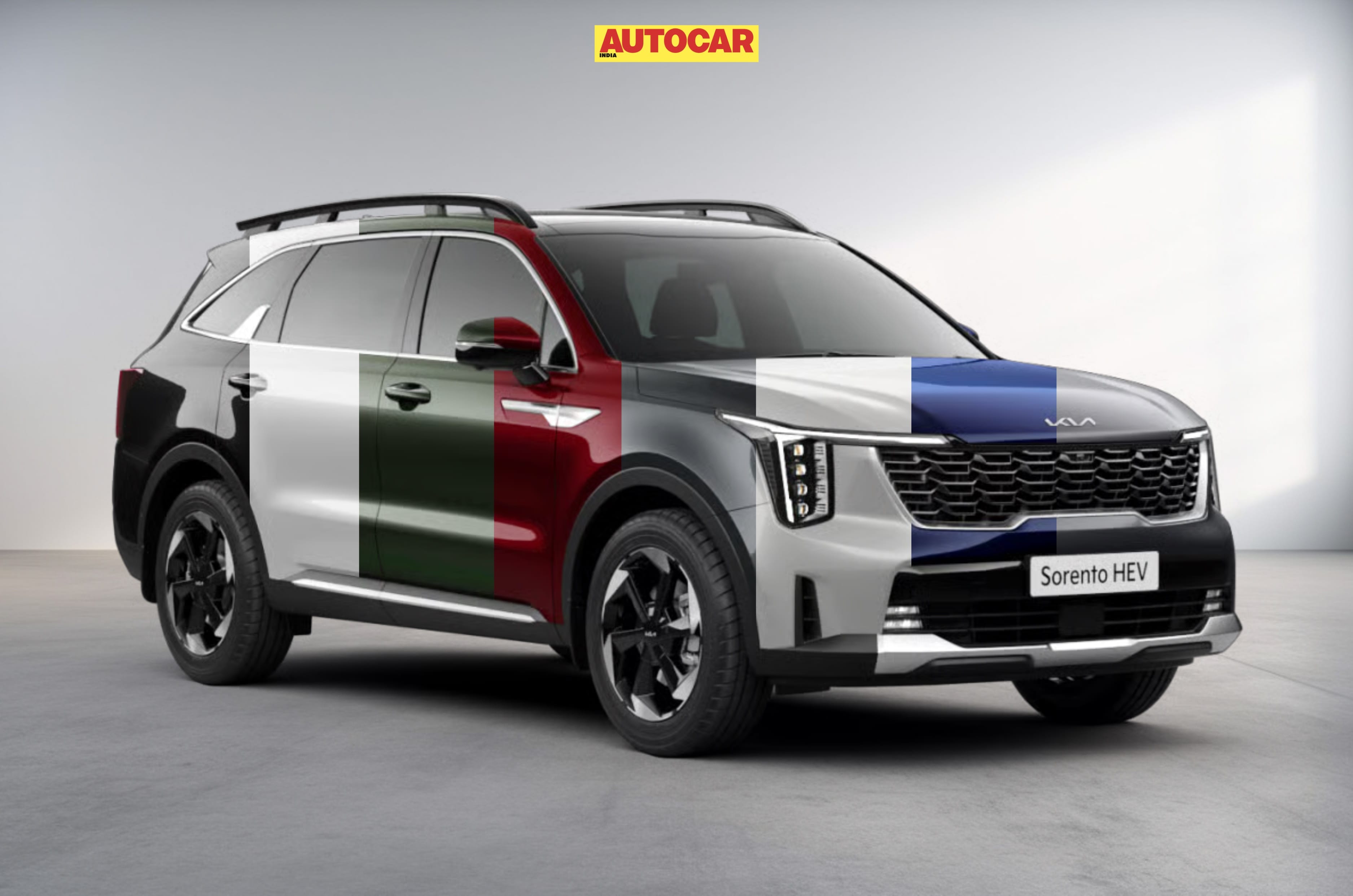
The Kia Sorento is offered with eight exterior colour options, including Aurora Black Pearl, Glacier White Pearl, Magma Red, Ivory Silver, Gravity Grey, Imperial Blue, Pewter Olive, and Dark Gun Metal. Among these, the Dark Gun Metal colour is offered on the top-spec HTX and HTX(A) trims, while all other options are available across the range.
On the inside, Kia is offering two colour schemes: Smoky Black and Grey, and Premium Black and Olive Brown. The former is offered with the lower-spec HTE, HTK, HTE (O), HTK(A) trims, while the latter is available with the higher-spec HTX and HTX(A) trims.
5. What are some of the standout features on the Sorento?
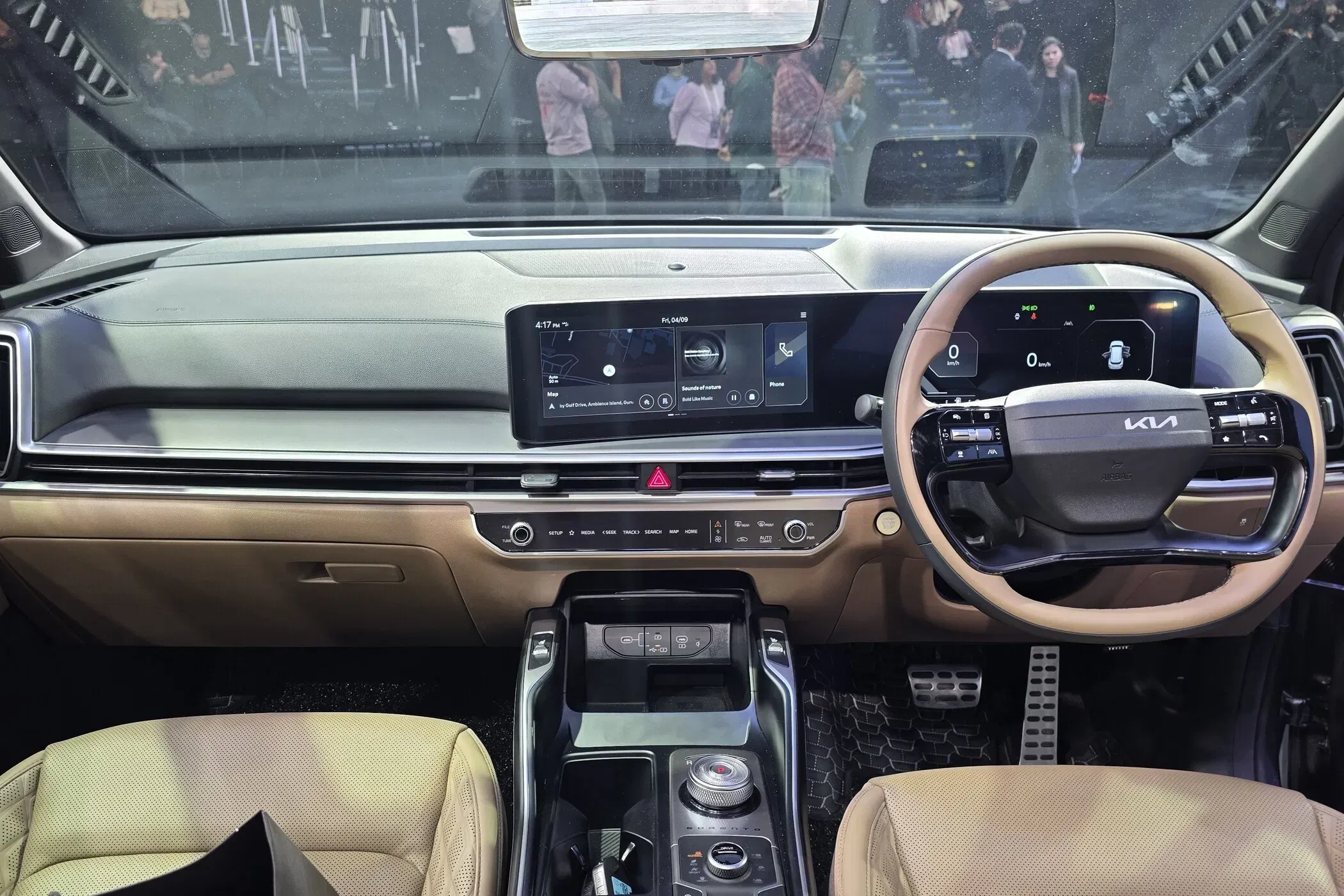
Like most Kia, the Sorento is absolutely loaded to gills, with the India-spec model even debut some features for the Sorento nameplate globally. There are two 12.3-inch screens for instrumentation and infotainment, the front seats are ventilated, have 10-way power adjustability and offer adjustable lumbar support. The co-driver’s seat has a boss mode to extend the middle-row space. The middle-row seats can be electronically folded, and the 6-seater version further offers middle-row seat ventilation.
Other features include a 12-speaker Bose sound system, a panoramic sunroof, dual-zone climate control, a head-up display (HUD) and a powered tailgate. Real-time generative AI is a first for any Sorento available globally. Safety features include 10 airbags, a digital inside rearview mirror (IRVM), a 360-degree camera, auto parking assistance, front and rear dashcams, a tyre-pressure monitoring system (TPMS) and Level 2+ advanced driver assistance systems (ADAS).
6. Which variant of the Kia Sorento should you buy?
With over 20 variants to choose from, the Sorento stretches a very wide price band across both its powertrain options. However, we’d recommend the mid-spec HTK variant which offers the most for your money. It misses out on the AWD system, but packs all the niceties such as the dual 12.3-inch screens, 12-speaker Bose sound system, 360-degree camera with blind-spot monitor, 64-colour ambient lighting, 19-inch alloys, leatherette upholstery, panoramic sunroof, powered tail gate, ventilated front seats and more.
It does miss out on a digital IRVM, HUD, more electronic adjustment levels for the front seats, ventilated second-row seats and boss mode but none of these is a deal breaker. However, if you are on a budget, the one-over-base HTE(O) is the best value-for-money variant, offering a decently equipped feature suite for its price.
NEET PG 2026 Re-Exam: नेशनल बोर्ड ऑफ एग्जामिनेशन इन मेडिकल साइंसेज (NBEMS) ने नीट पीजी 2026 री-एग्जामिनेशन के लिए एडमिट कार्ड जारी कर दिए हैं। नीट पीजी 2026 री-एग्जाम 5 सितंबर, 2026 को होंगे। इस परीक्षा में शामिल होने के लिए योग्य उम्मीदवार अब आधिकारिक वेबसाइट natboard.edu.in से अपने हॉल टिकट डाउनलोड कर सकते हैं।
यह री-एग्जामिनेशन उन उम्मीदवारों के लिए किया जा रहा है जिन्हें खास तौर पर इसमें शामिल होने के लिए योग्य माना गया है। परीक्षार्थियों को परीक्षा में शामिल होने से पहले अपने हॉल टिकट पर दिए गए विवरण को ध्यान से देख लेना चाहिए। बता दें, नीट पीजी 2026 री-एग्जाम iON डिजिटल जोन iDZ सीतापुरा सेंटर्स, जयपुर, राजस्थान (TC नंबर 41682 और 41683) में परीक्षा देने वाले 2,445 परीक्षार्थियों के लिए आयोजित किया जा रहा है। इस परीक्षा केंद्र की आंतरिक पावर सप्लाई बाधित होने की वजह से इस केंद्र पर परीक्षा पूरा नहीं हो सकी। इसलिए एनबीईएमएस ने इन परीक्षार्थियों के लिए नीट पीजी 2026 री-एग्जाम कराने की घोषणा की थी। इससे पहले नीट पीजी 2026 री-एग्जाम का आयोजन देश के 339 शहरों में बनाए गए 1111 परीक्षा केंद्रों पर 30 अगस्त, 2026 को किया था।
मेडिकल बोर्ड द्वारा यह परीक्षा 36 राज्य और केंद्र शासित प्रदेशों में हुई थी, जिसमें 2,65,980 परीक्षार्थियों ने हिस्सा लिया था। इनमें से लगभग 2,63,535 कैंडिडेट्स की परीक्षा सफलतापूर्वक पूरी हुई। इस परीक्षा के लिए 2,73,096 उम्मीदवारों ने पंजीकरण कराया था। हालांकि, 2,445 के लिए यह परीक्षा तकलीफदेह साबित हुई। यह परीक्षार्थी पहुंचे थे।
नीट पीजी 2026 री-एग्जाम एडमिट कार्ड स्क्रीन पर दिखेगा।
हॉल टिकट डाउनलोड करें और भविष्य के लिए एक कॉपी रख लें।
एडमिट कार्ड पर दी गई जानकारी
नीट पीजी 2026 री-एग्जाम एडमिट कार्ड में कैंडिडेट का नाम, नीट पीजी रोल नंबर, एप्लीकेशन नंबर, जन्म तिथि, कैटेगरी, फोटो और सिग्नेचर जैसी जरूरी जानकारी होगी।
इसमें परीक्षा की तारीख, एग्जाम सेंटर का नाम और पता, सेंटर कोड, रिपोर्टिंग टाइम और आखिरी एंट्री टाइम भी लिखा होगा। एडमिट कार्ड पर नीट पीजी 2026 एडवाइजरी और जरूरी निर्देश भी होंगे जिनका कैंडिडेट को परीक्षा के दिन पालन करना होगा।