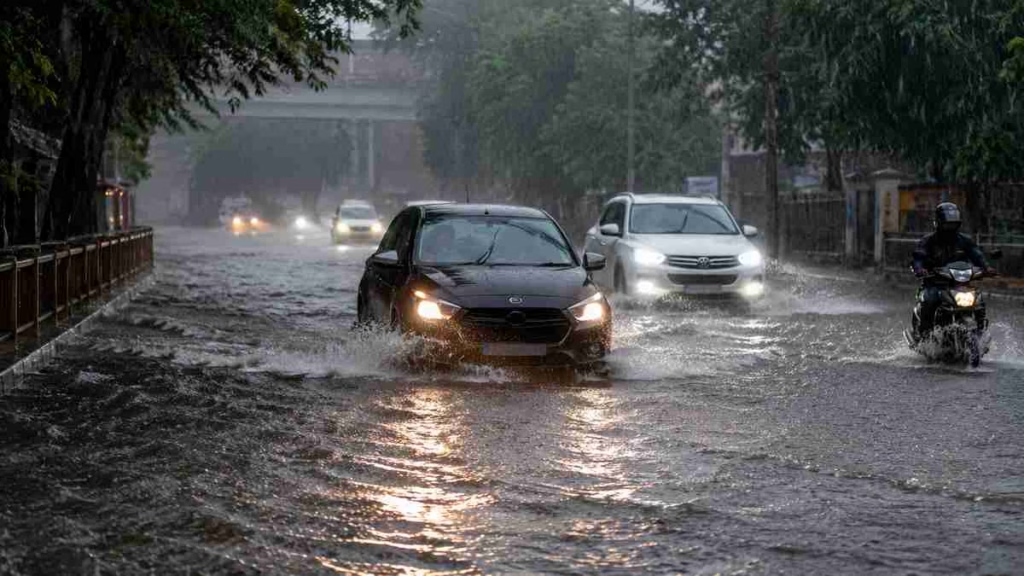
Nepal Flood alert: पड़ोसी देश नेपाल में एक बार फिर से बाढ़-लैंडस्लाइड से हाहाकार मच गया है। गोरखा जिले में रविवार (11 अक्टूबर) तड़के बूढ़ी गंडकी नदी में अचानक आई बाढ़ ने भारी तबाही मचाई। बाढ़ से 35 से अधिक मकान और पुल नदी में बह गए। घटना के बाद प्रशासन ने नदी के किनारे रहने वाले लोगों को सुरक्षित स्थानों पर जाने और ऊंचाई वाले इलाकों में शरण लेने की सलाह दी है। अधिकारियों के मुताबिक, फिलहाल इस घटना में किसी की मौत या घायल होने की सूचना नहीं है। गोरखा के मुख्य जिला अधिकारी धर्मेंद्र कुमार मिश्रा ने बताया कि उन्हें रविवार तड़के करीब 4:35 बजे बड़े पैमाने पर बाढ़ आने की सूचना मिली।
शुरुआती जानकारी के अनुसार, बाढ़ चुमनुब्री ग्रामीण नगरपालिका-6 क्षेत्र से नीचे की ओर आई और नदी के किनारे स्थित बस्तियों को अपनी चपेट में ले लिया। नेपाली सेना की एक टुकड़ी को खोज और बचाव अभियान के लिए हवाई और जमीनी रास्ते से भेजा गया है। इस टुकड़ी ने जगत इलाके से 6 लोगों को हवाई रास्ते से सुरक्षित बाहर निकाला। यह इलाका लैंडस्लाइड की चपेट में आ सकता है।
36 मकान और पुल बहे
‘काठमांडू पोस्ट’ की खबर के अनुसार, चुमनुब्री ग्रामीण नगरपालिका के वार्ड संख्या तीन के अध्यक्ष राम कुमार गुरुंग ने बताया कि बूढ़ी गंडकी नदी में आई बाढ़ से सल्लेरी, पायूका और जगत में नदी किनारे स्थित मकान बह गए। बाढ़ में वार्ड को जोड़ने वाला एक पुल भी बह गया। गोरखा के मुख्य जिला अधिकारी धर्मेंद्र कुमार मिश्रा ने बताया कि शुरुआती खबरों के अनुसार, सिउरीबास के ऊपरी इलाके में लैंडस्लाइड हुआ था।
उन्होंने कहा कि अब तक किसी के हताहत होने की खबर नहीं है। नदी में अचानक जलस्तर बढ़ने का कारण अभी स्पष्ट नहीं है। स्थानीय लोगों को संदेह है कि चुमनुब्री-6 में लोकपा और चुमलिंग के बीच बूढ़ी गंडकी की सहायक नदी स्यार का प्रवाह बाधित हो गया होगा, जिससे बाढ़ आई। अधिकारियों ने बताया कि अचानक आई बाढ़ से उत्तरी गोरखा के कई इलाकों में 35 से अधिक मकान बह गए।
लैंडस्लाइड से रास्ता बंद होने के बाद आई बाढ़
मुख्य जिला अधिकारी मिश्रा के मुताबिक, शुरुआती रिपोर्टों में सिउरीबास के ऊपर लैंडस्लाइड होने की बात सामने आई है। चुमनुब्री ग्रामीण नगरपालिका के अध्यक्ष नीमा लामा ने बताया कि भूस्खलन के कारण चुमके खोला नामक जलधारा का रास्ता बाधित हो गया था। इसके बाद पानी का बहाव बढ़ा और अचानक बाढ़ की स्थिति पैदा हो गई। इस घटना के कारण नदी के आसपास रहने वाले लोगों के लिए खतरा बढ़ गया। प्रशासन को आशंका है कि तेज बहाव से नदी के किनारे बसे अन्य इलाकों में भी नुकसान हुआ हो सकता है।
कई लोग लापता
नेपाली मीडिया रिपोर्ट्स के मुताबिक, बाढ़ में कई पुल बह गए हैं। फिलहाल, चार लोग लापता बताए जा रहे हैं। नेपाली सेना उनकी तलाश कर रही है। न्यूज पोर्टल ‘ऑनलाइन खबर’ के अनुसार, चुमनुब्री ग्रामीण नगरपालिका की उपाध्यक्ष लक्ष्मी गुरुंग ने कहा कि रविवार सुबह बूढ़ी गंडकी नदी में आई बाढ़ ने उन्हें रसुवा में भोटेकोशी नदी में आई बाढ़ की याद दिला दी। उन्होंने कहा, “बूढ़ी गंडकी में आई बाढ़ ने भोटेकोशी की बाढ़ की याद दिला दी। इसमें दर्जनों मकान बह गए हैं। फिलहाल नुकसान का सही आकलन करना संभव नहीं है।”
जगत में 5 से 7 मकान बहने की सूचना
गोरखा के मुख्य जिला अधिकारी धर्मेंद्र कुमार मिश्रा के अनुसार, जगत इलाके में नदी के तल के पास बने पांच से सात मकान बाढ़ के पानी में बह गए। उन्होंने यह भी आशंका जताई कि नदी के निचले हिस्सों में कुछ अन्य मकान भी बह गए हो सकते हैं। अधिकारियों के मुताबिक, अब तक किसी की मौत या घायल होने की सूचना नहीं मिली है। प्रभावित क्षेत्रों में नुकसान की वास्तविक स्थिति का पता लगाने के लिए आगे की जानकारी का इंतजार है।
नेपाल की सेना ने सोशल मीडिया प्लेटफॉर्म X पर एक पोस्ट में लिखा, “बुढ़ी गंडक नदी में बाढ़ आने के बाद नेपाली सेना की एक टुकड़ी को खोज और बचाव अभियान के लिए हवाई और ज़मीनी रास्ते से भेजा गया। इस टुकड़ी ने जगत इलाके से 6 लोगों को हवाई रास्ते से सुरक्षित बाहर निकाला। यह इलाका भूस्खलन की चपेट में आ सकता है। काठमांडू में तैनात कम्पोजिट क्विक रिएक्शन टीम को भी हवाई जहाज से इसी इलाके में भेजा गया है।”
बुढीगण्डकी नदीमा आएको बाढीपश्चात् खोज तथा उद्धार कार्यका लागि नेपाली सेनाको फौज हवाई तथा स्थल मार्गबाट खटिई पहिरोको जोखिममा रहेको जगत इलाकाबाट ६ जनाको हवाई उद्धार गरेको । काठमाडौँमा रहेको composite quick reaction team समेत हवाई साधनबाट उक्त इलाकामा तैनाथ भएको । https://t.co/nCCqo5zdCB
बाढ़ के बाद प्रशासन ने बूढ़ी गंडकी नदी के किनारे स्थित बस्तियों में रहने वाले लोगों को सतर्क रहने को कहा है। लोगों से नदी के करीब जाने से बचने और सुरक्षित ऊंचे स्थानों पर जाने की अपील की गई है। अचानक आई बाढ़ ने एक बार फिर नेपाल के पहाड़ी इलाकों में भूस्खलन और नदी के जलस्तर में तेज बदलाव से पैदा होने वाले खतरे को उजागर किया है।
ऐसे क्षेत्रों में भूस्खलन से जलधारा का रास्ता अवरुद्ध होने पर पानी जमा हो सकता है। बैरिकेट्स टूटने या पानी का रास्ता बदलने से अचानक तेज बहाव पैदा हो सकता है। फिलहाल, गोरखा जिले में बाढ़ से हुए नुकसान की पूरी तस्वीर सामने आना बाकी है। प्रशासन की प्राथमिकता नदी के किनारे बसे लोगों को सुरक्षित रखना और प्रभावित इलाकों की स्थिति का आकलन करना है।
Flash floods carrying mud, debris and huge boulders have struck Nepal’s Manaslu region after a dry landslide blocked the Budhi Gandaki River near Lokpa, Chumnubri-6. The river has repeatedly blocked and burst since around 04:00 this morning, 11.10.2026, threatening settlements downstream toward Jagat and Arughat. No casualties have been reported so far.
सुबह 6:40 बजे, नेपाल की नेशनल डिजास्टर रिस्क रिडक्शन एंड मैनेजमेंट अथॉरिटी (NDRRMA) ने अपने बाढ़ पूर्वानुमान विभाग से एक SMS अलर्ट भेजा। इसमें लोगों से कहा गया कि वे बाढ़ का पानी उतरने तक नदी के पास न जाएं। खासकर त्रिशूली दोभान तक के इलाके में बिल्कुल न जाएं। ऊंची जगहों पर ही रहें। अधिकारी अभी भी यह पता लगाने की कोशिश कर रहे हैं कि पानी का स्तर अचानक क्यों बढ़ा और उसमें मिट्टी और गाद क्यों बहकर आई।
स्थानीय अधिकारियों ने बताया कि सुबह करीब 4 बजे नदी का जलस्तर तेजी से बढ़ा और इसके बहाव की आवाज दूर से ही सुनी जा सकती थी। चुमनुबरी ग्रामीण नगरपालिका के मुख्य प्रशासनिक अधिकारी नारायण सपकोटा ने यह जानकारी दी। मिश्रा ने कहा कि जिला कार्यालय जमीनी स्तर से जानकारी जुटाने की कोशिश कर रहा है। उन्होंने बताया कि स्थिति का हवाई जायजा लेने के लिए नेपाली सेना का हेलीकॉप्टर भेजने की तैयारी चल रही है।
बिहार में भी बाढ़ का खतरा
बूढ़ी गंडकी नदी में भयानक बाढ़ आने से भारतीय राज्य बिहार में भी खतरा बढ़ गया है। अधिकारियों ने कहा कि यह नदी आगे चलकर त्रिशूली से मिलती है। फिर दोनों का पानी देवघाट के पास नारायणी नदी में पहुंचता है। यही नदी भारत में गंडक के नाम से बिहार में आती है। फिर आगे गंगा में मिल जाती है। ऐसे में अगर पानी का बहाव बढ़ता है, तो बिहार में गंडक किनारे बसे इलाकों पर असर पड़ सकता है। इनमें पश्चिम चंपारण, गोपालगंज और वैशाली जैसे जिले शामिल हैं। हालांकि, अभी यह साफ नहीं है कि नेपाल में आई बाढ़ से बिहार में जलस्तर बढ़ेगा या नहीं।
इससे पहले नेपाल में 26 अगस्त 2026 को भोटेकोशी और त्रिशूली नदी में विनाशकारी बाढ़ आई थी, जिसने कई जिलों में भारी तबाही मचाई थी। उस बाढ़ में बड़ी संख्या में लोग मारे गए और हजारों लोग लापता बताए गए थे। ताजा रिपोर्टों के मुताबिक, 26 अगस्त 2026 की बाढ़ में कम से कम 1,455 लोगों की मौत हुई थी और 5,285 लोग लापता थे।
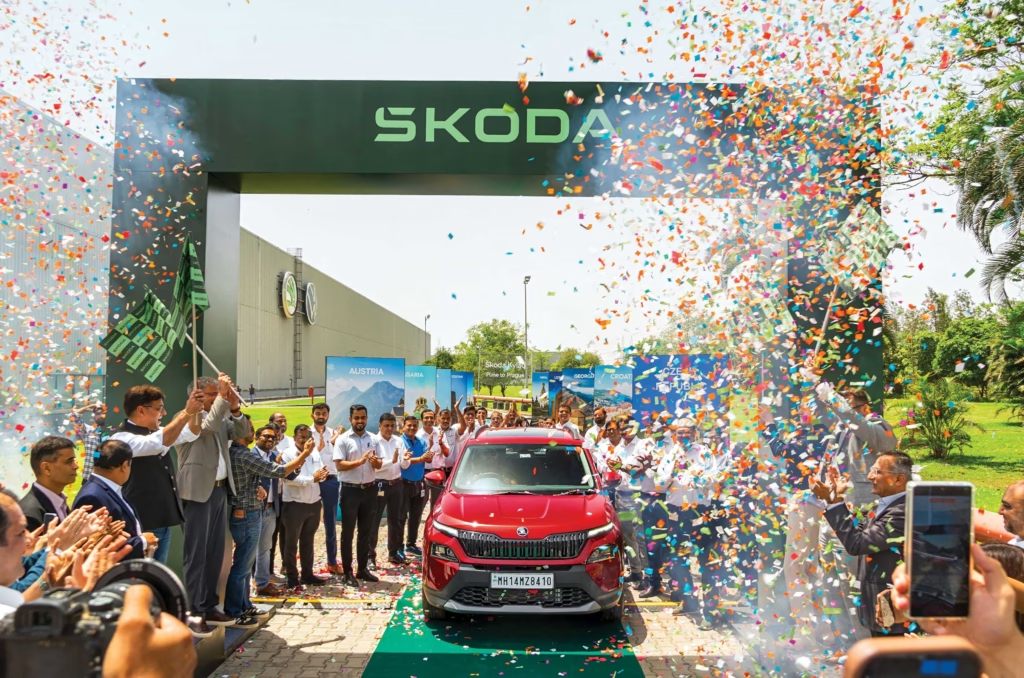
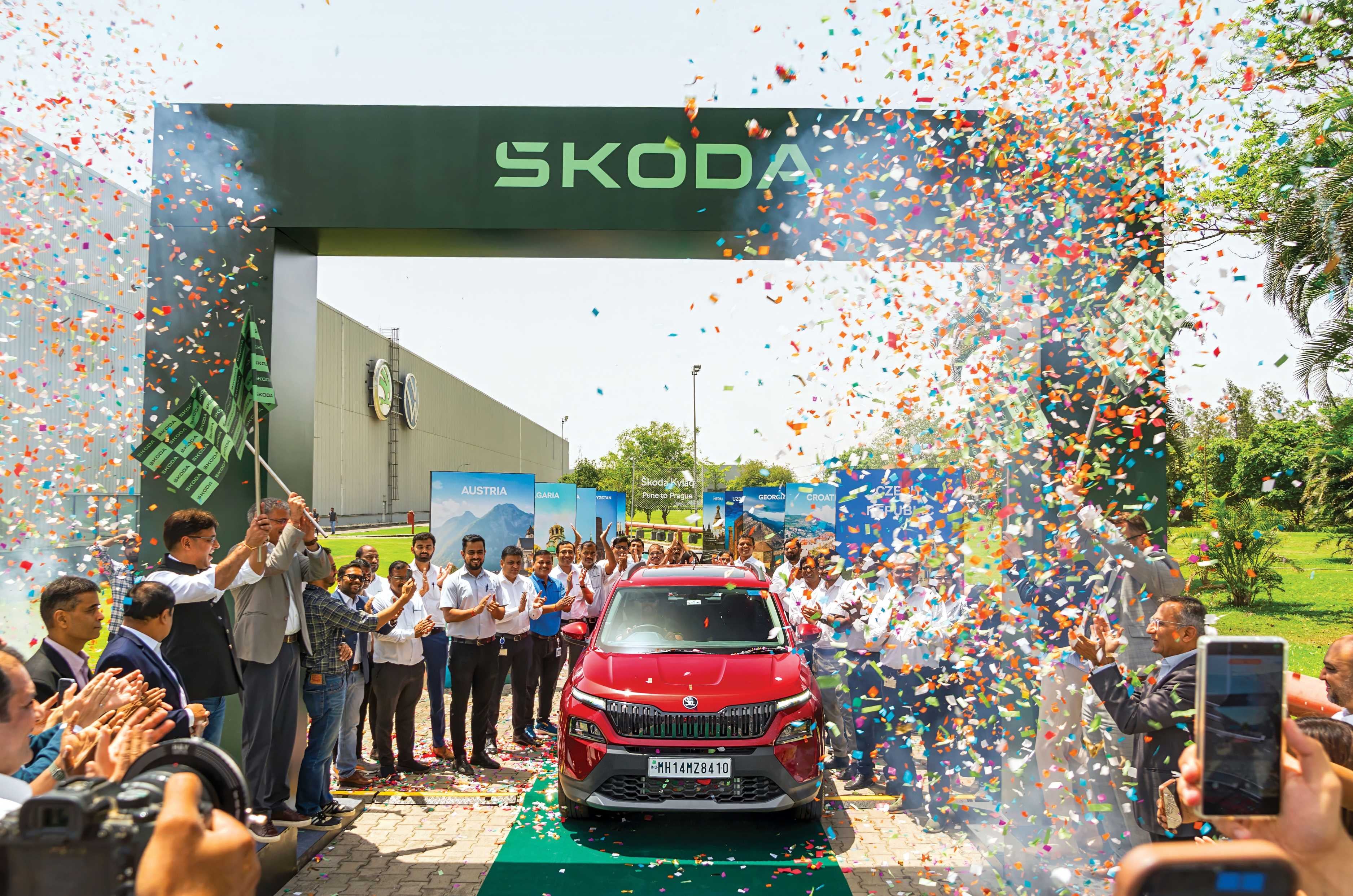
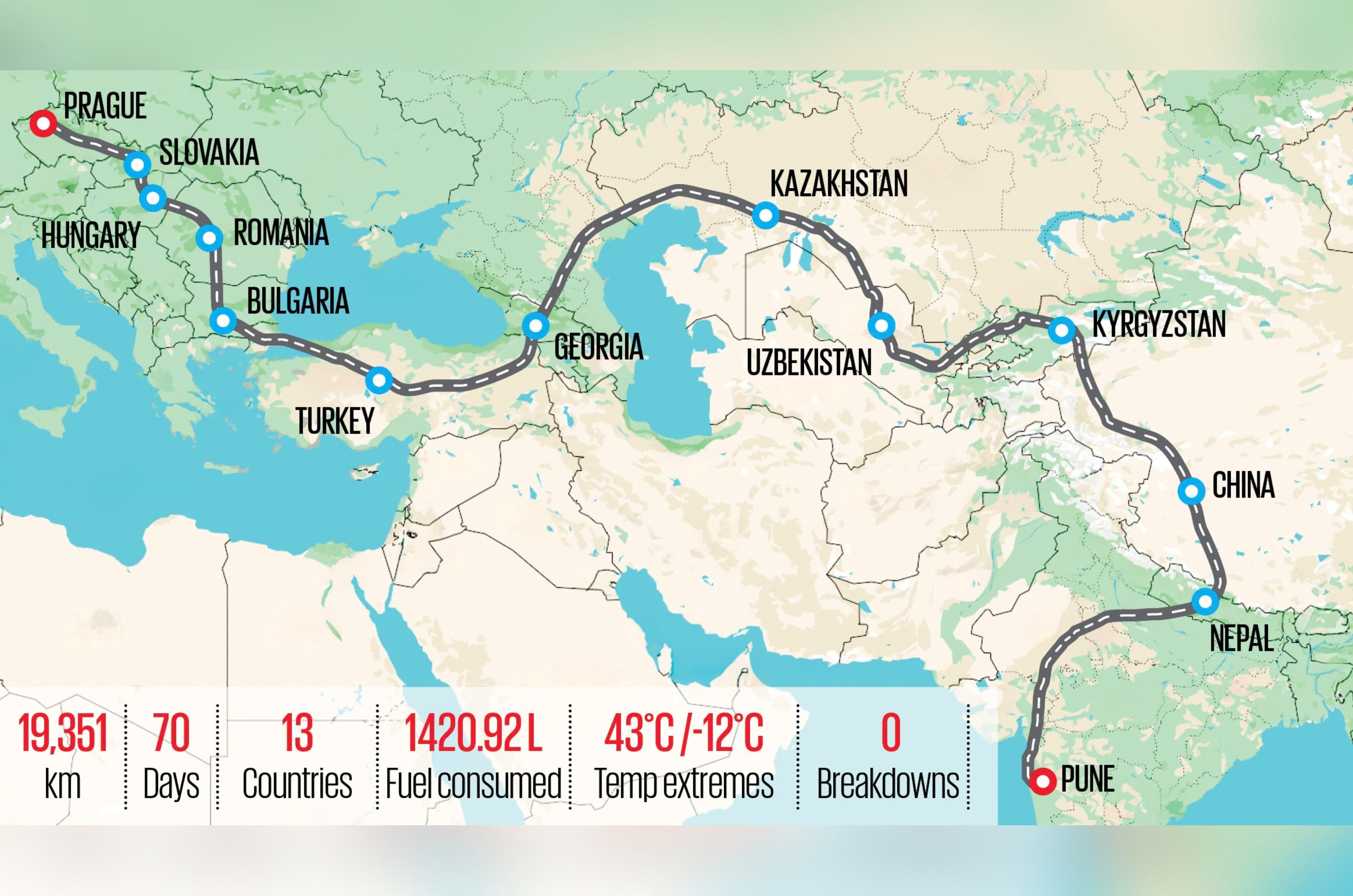
There are road trips, there are overland expeditions, and then there are journeys that become conversations with continents. This one starts in the industrial heart of Maharashtra, inside Skoda India’s sprawling Chakan facility. The end point lies nearly 20,000 kilometres away at Skoda Auto’s headquarters near Prague in Mladá Boleslav, Czech Republic, where bicycles evolved into automobiles and a 130-year-old story continues to be written.
Between these two factories lie thirteen countries, four major mountain ranges, countless cuisines, dozens of languages and enough history to fill libraries.
Our companion? Not a flagship SUV or a luxury grand tourer, but Skoda’s smallest SUV – the Kylaq, which recently celebrated its one-year anniversary. Driving it from Pune to Prague is a tall order, but surviving one year in India and being accepted with flying colours is enough cred one needs to take on the world.
India – Home Turf
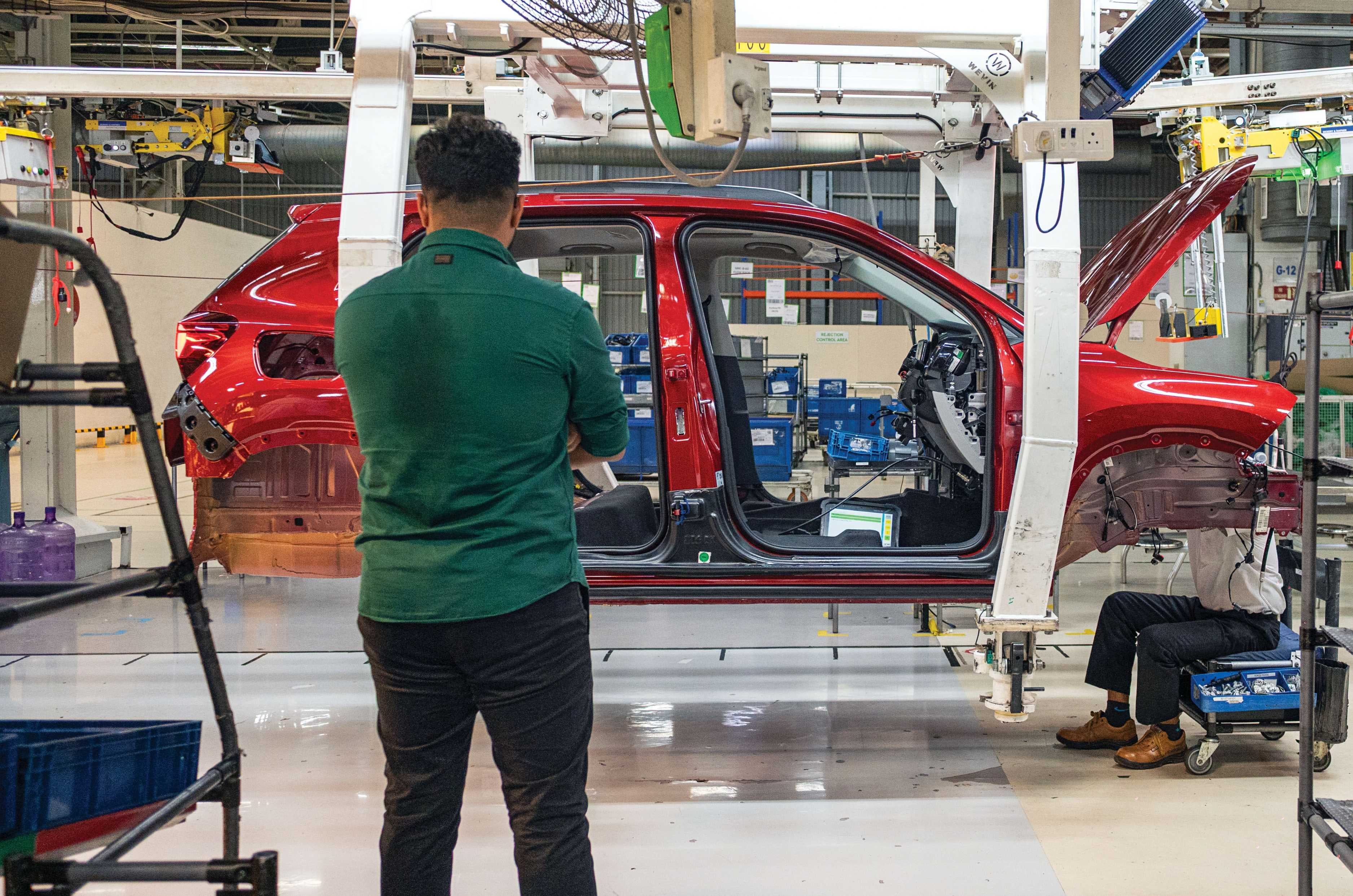
Witnessing the Kylaq’s birth added more responsibility.
On a cross-country road trip, you’d imagine the home country would be the easiest leg. With India, it was the opposite. To some, it’s organised chaos, but honestly, it’s anything but organised. Erratic traffic, erratic egos, and road conditions fit only for a Mars rover – India was the biggest challenge on the drive from Pune to Prague. As the odometer ticked over its first kilometre, right outside the gate of Skoda’s Chakan plant, a blood-red PMPML bus was ready to trade paint with the cherry-red Kylaq. A dinged-up Kylaq parked on the streets of Prague wouldn’t be a good look, so it was imperative that I babysit this compact SUV like a million-dollar supercar. Having watched the car being assembled on the factory floor, from bare bones to the finished package, only added to the emotion – driving it in traffic felt like walking a toddler across a football field. Eyes wide open, ready to block any attack.
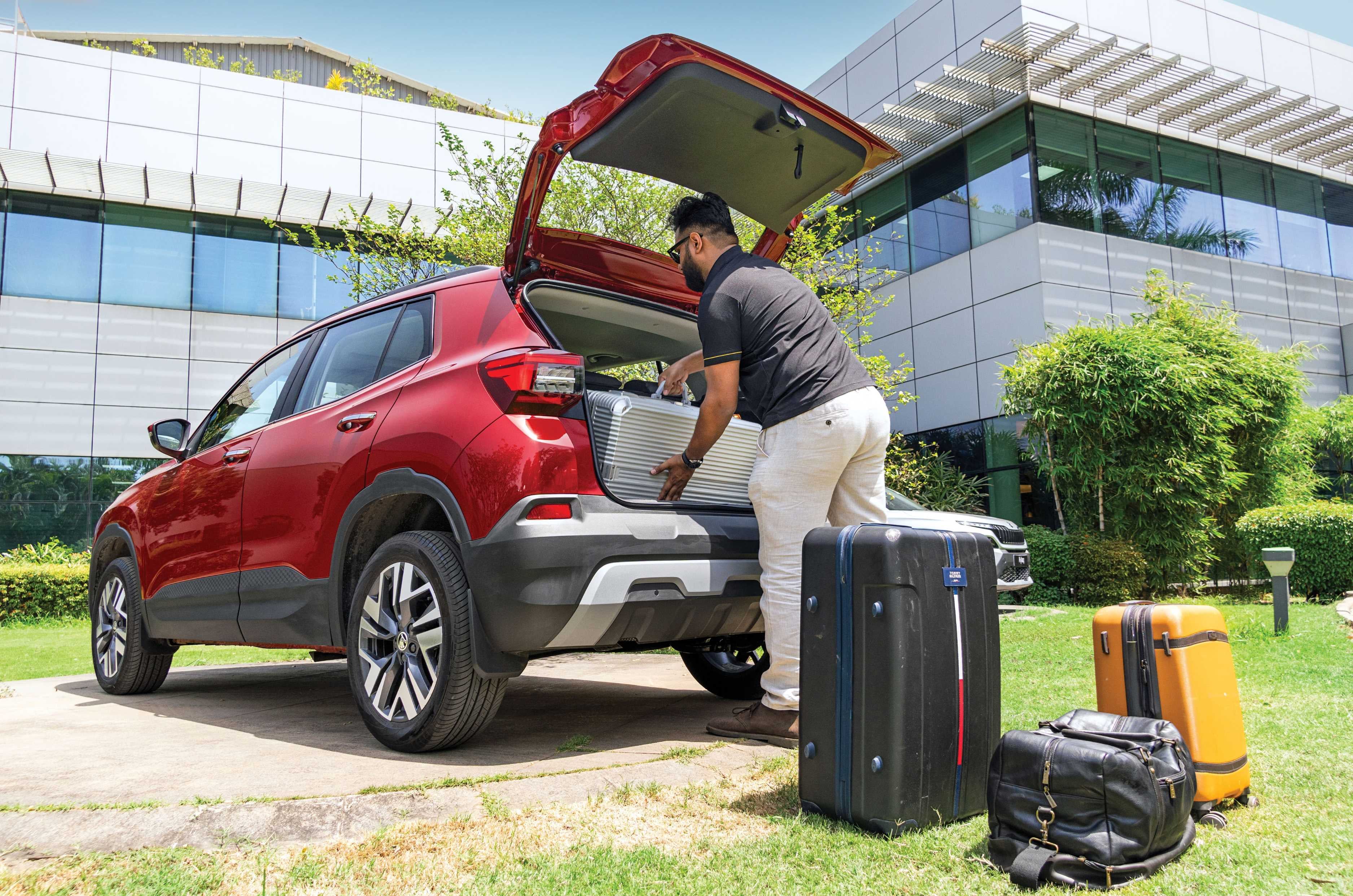
446-litre boot packed to the brim for 70 days on the road.
We got onto the Pune expressway and then crossed the Atal Setu in Mumbai, the longest sea bridge on the entire journey. Mumbai was home, both to me and to the Autocar India office, so after a few greetings from co-workers and the obligatory photos, we headed towards our first state crossing. The infamous Western Express Highway that leads out of Mumbai lived up to its reputation, but with a little anxiety, panic and a few expletives, we made it onto the national highway.
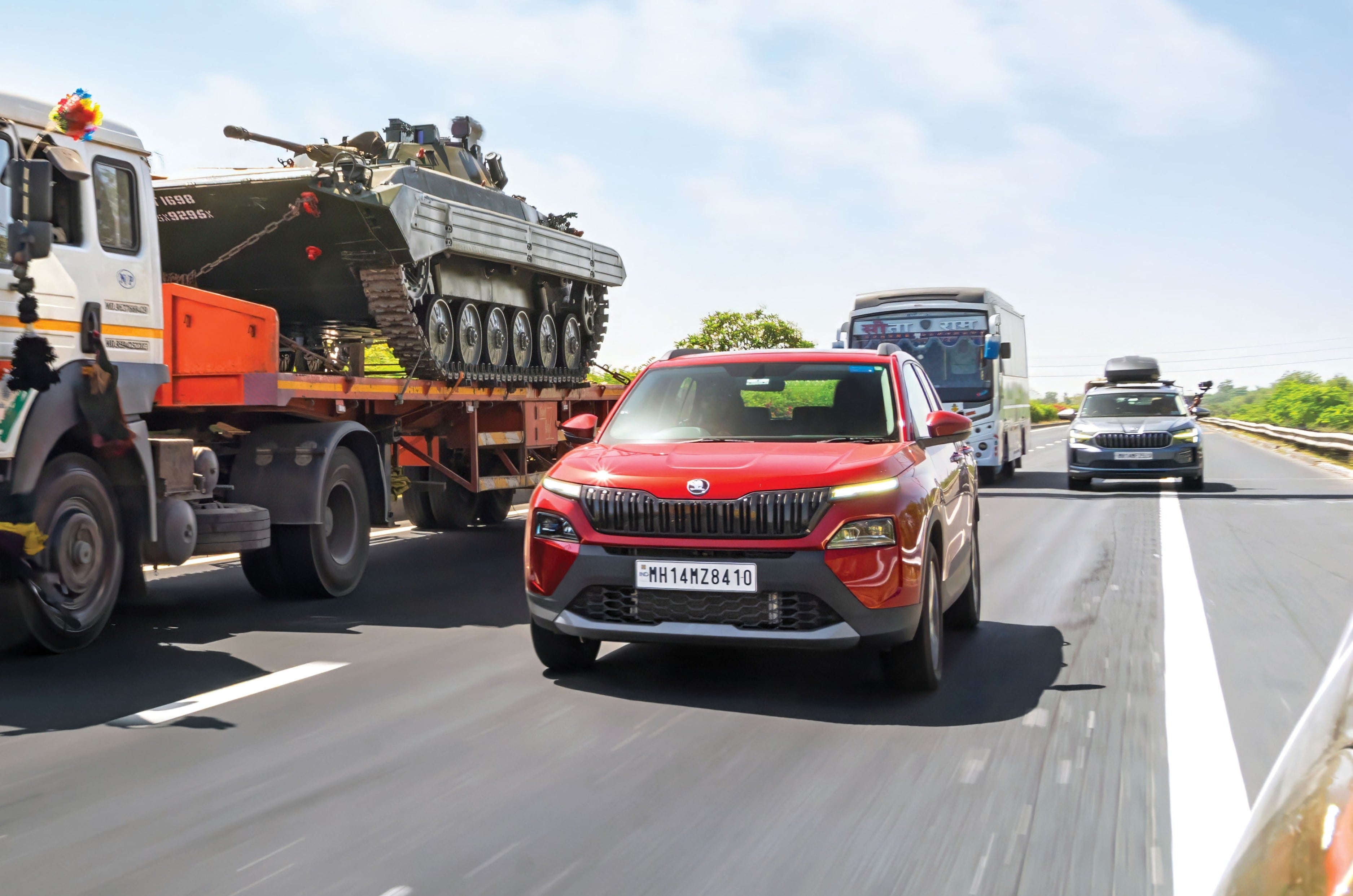
No telling what you’d spot on Indian highways.
The first of countless food stops was Hotel Ahura, renowned for its akuri and kheema. Needless to say, we carb-loaded to the max and made a beeline for Vadodara.
Pune-Birgunj in numbers
Distance covered
2,487km
Fuel consumed
234.46 litres
Average fuel economy
10.62kpl
Approximate fuel cost
Rs 23,629
Average per-litre fuel cost
Rs 100.87
Total time driven
55hrs 20min
Average speed
44.95kph
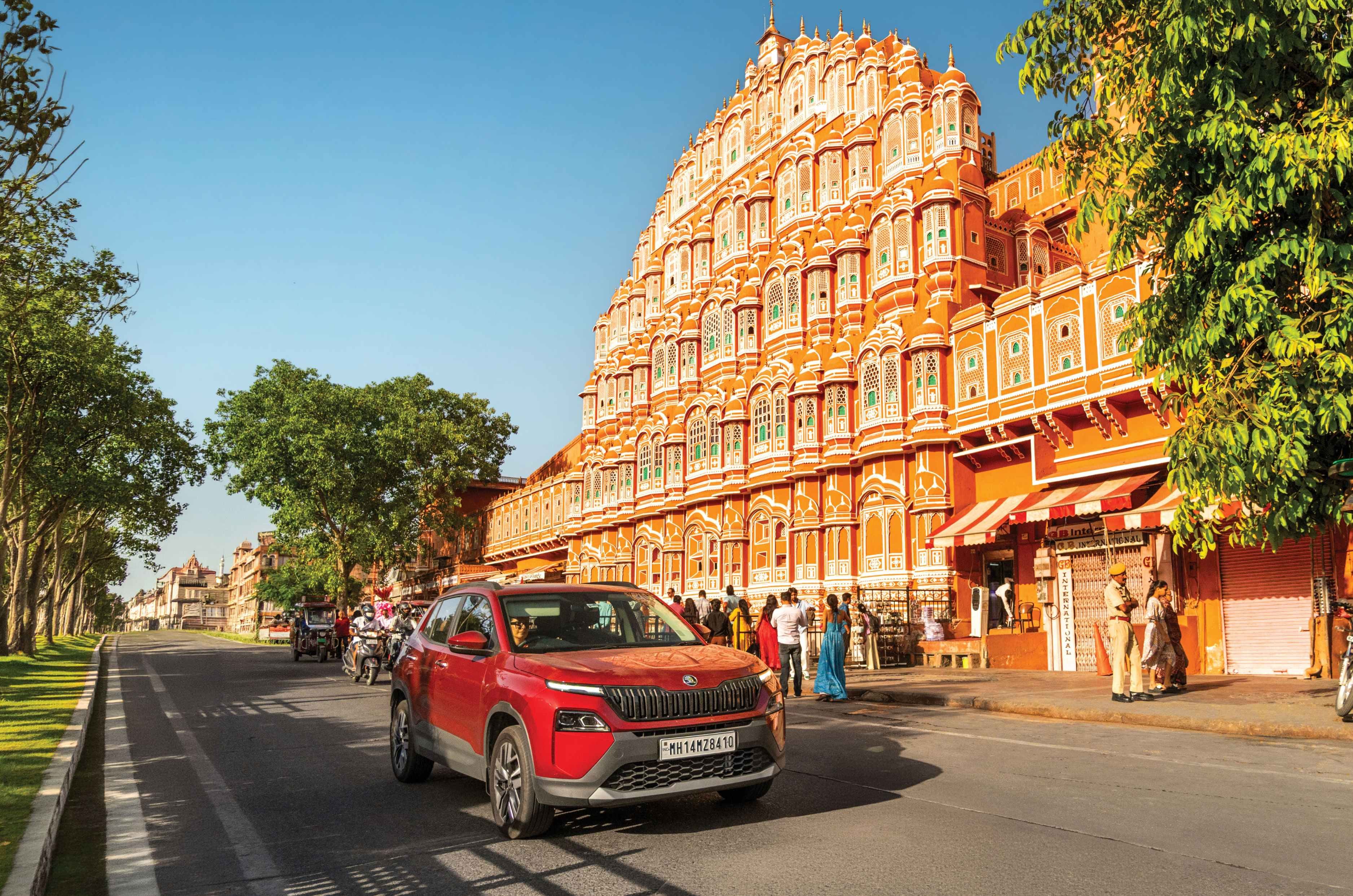
Crossing into Gujarat, the Kylaq could finally stretch its legs and spool up that turbo on the state’s spotless highways. The stability and effortless cruising were a welcome relief, since the bulk of the kilometres on this drive would be covered on long, open highways. Gujarat was a short stint – we made only an overnight halt in Vadodara before slipping out ahead of the morning traffic. The drive into Rajasthan was seamless, and Udaipur greeted us with a mix of heat and traffic. The City of Lakes is worth taking the time to explore, but a late arrival and early morning departure left us with just enough time to grab a traditional meal. All that driving had built up an appetite, so we put it to a vote between a massive vegetarian thali and laal maas – the latter won by a landslide. From the City of Lakes, we headed to Jaipur, the Pink City: just as picturesque as Udaipur, and just as colourful and chaotic. The sun setting over the beautiful Amer Fort made for a cracking backdrop, and a few glimpses of the Jal Mahal on the way back were a treat too. The iconic Hawa Mahal, with its 953 windows, never fails to amuse, but getting a photo of the five-storey icon without a chorus of honks is next to impossible. The next morning, after threading through Jaipur’s narrow lanes, we made it back onto the highway, heading for Agra.
Iconic Hawa Mahal ought to be seen first-hand.
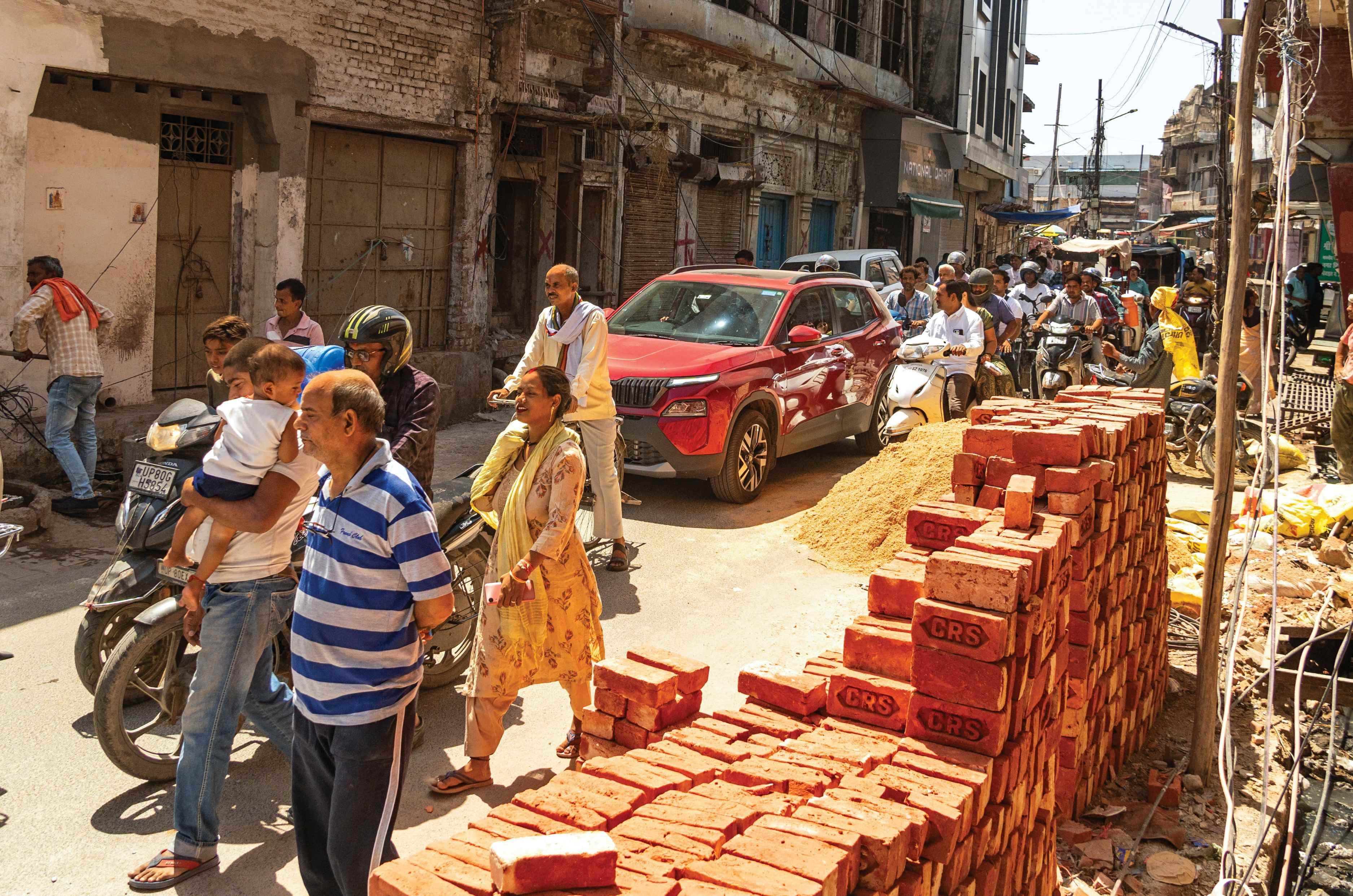
Agra is synonymous with the Taj Mahal, but the Agra Fort – from which you can see the Taj in the distance – is just as mesmerising. The detailing and architecture are second to none, and you could spend hours walking through its courtyards and passages, taking endless pictures. We, of course, also made it to the Taj itself, amid the hordes of tourists, if only to avoid the guilt of visiting Agra without a shot of the world-famous white dome. Tourism done, it was time for some petha – though the lanes near the petha shops seemed to be the exact width of the Kylaq, and that’s where peak anxiety set in. We got out of the mess, walked around the car to check for scratches and scribbles, and sighed in relief. India was adding to the tension, and we were barely halfway through it.
Agra’s narrow lanes were a nightmare to drive through.
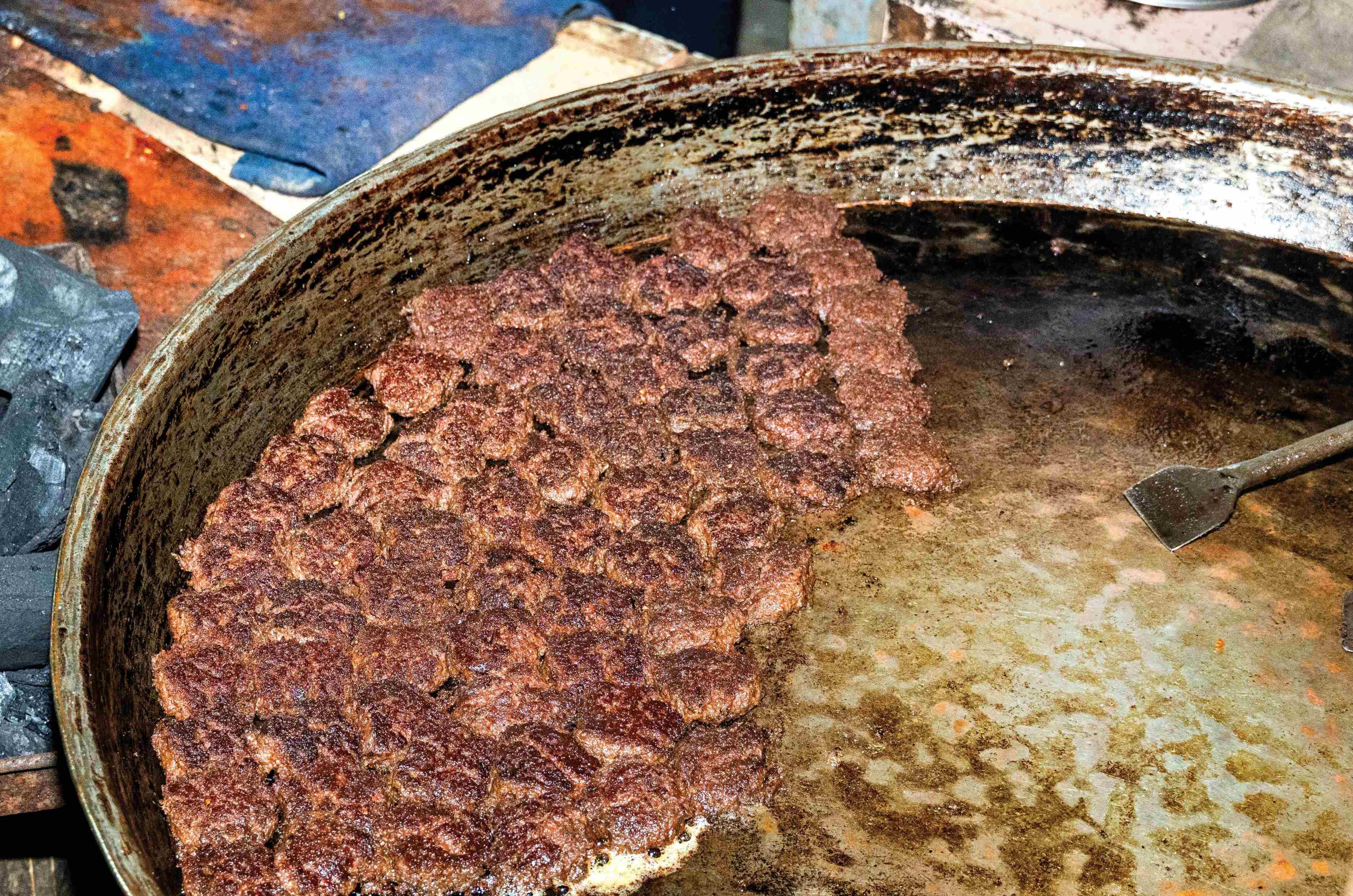
Our next stop from Agra was foodie heaven – Lucknow. The biryanis, kebabs, and tandoors were exactly what we expected, and exactly what Lucknow delivered. Finding your way here is easy – you could do it blindfolded, following the smoke and sizzle to wherever you need to be. Tunday Kababi is a must, and after a heap of biryani laced with kebabs, a long walk through the countless chikankari shops helps burn off some of the calories.
Lucknow’s Tunday Kababi still has us drooling over Galouti kebabs.
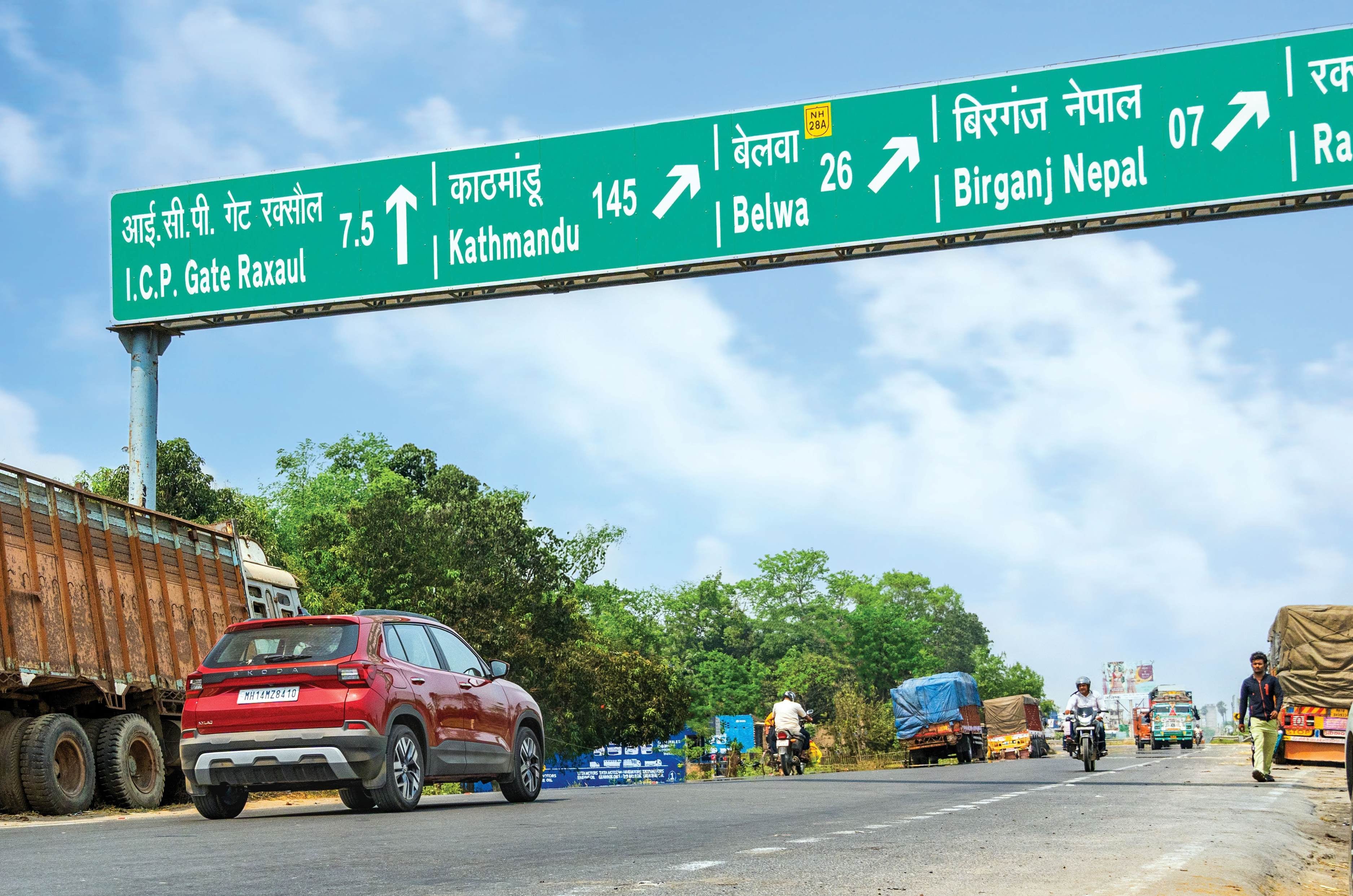
We were closing in on the end of the India leg, with one last stop in Gorakhpur before the Nepal border. To celebrate, a group of Skoda owners, officially known as the ‘Fans of Skoda’ joined us for a celebratory convoy as we drove out – everything from Octavia RS models to Kodiaqs and Kushaqs turned up as a send-off before we went international. The loud, chaotic border towns past Gorakhpur delivered one final challenge as we exited through Raxaul.
Final stretch before the Kylaq left India for the first time.
The India-Nepal border is still raw and basic, with none of the high-tech systems you might expect. A drive of this scale comes with a mountain of paperwork – visas, carnets, insurance, and more – and sifting through all of it manually takes a while. After a gruelling five hours, the Kylaq crossed out of India for the very first time.
Nepal – Old World Charm
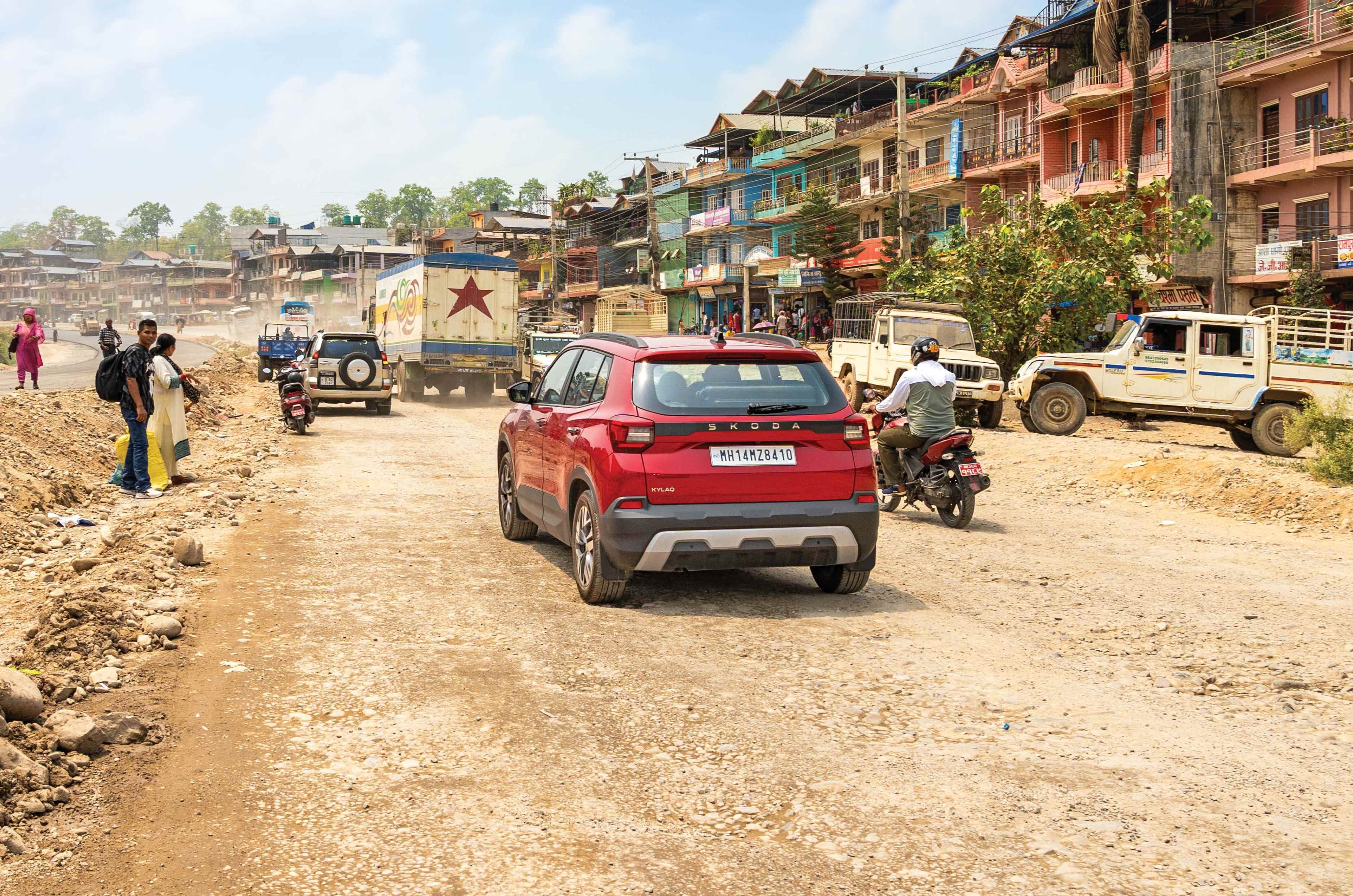
Nepal’s state highways give Indian roads a run for their money.
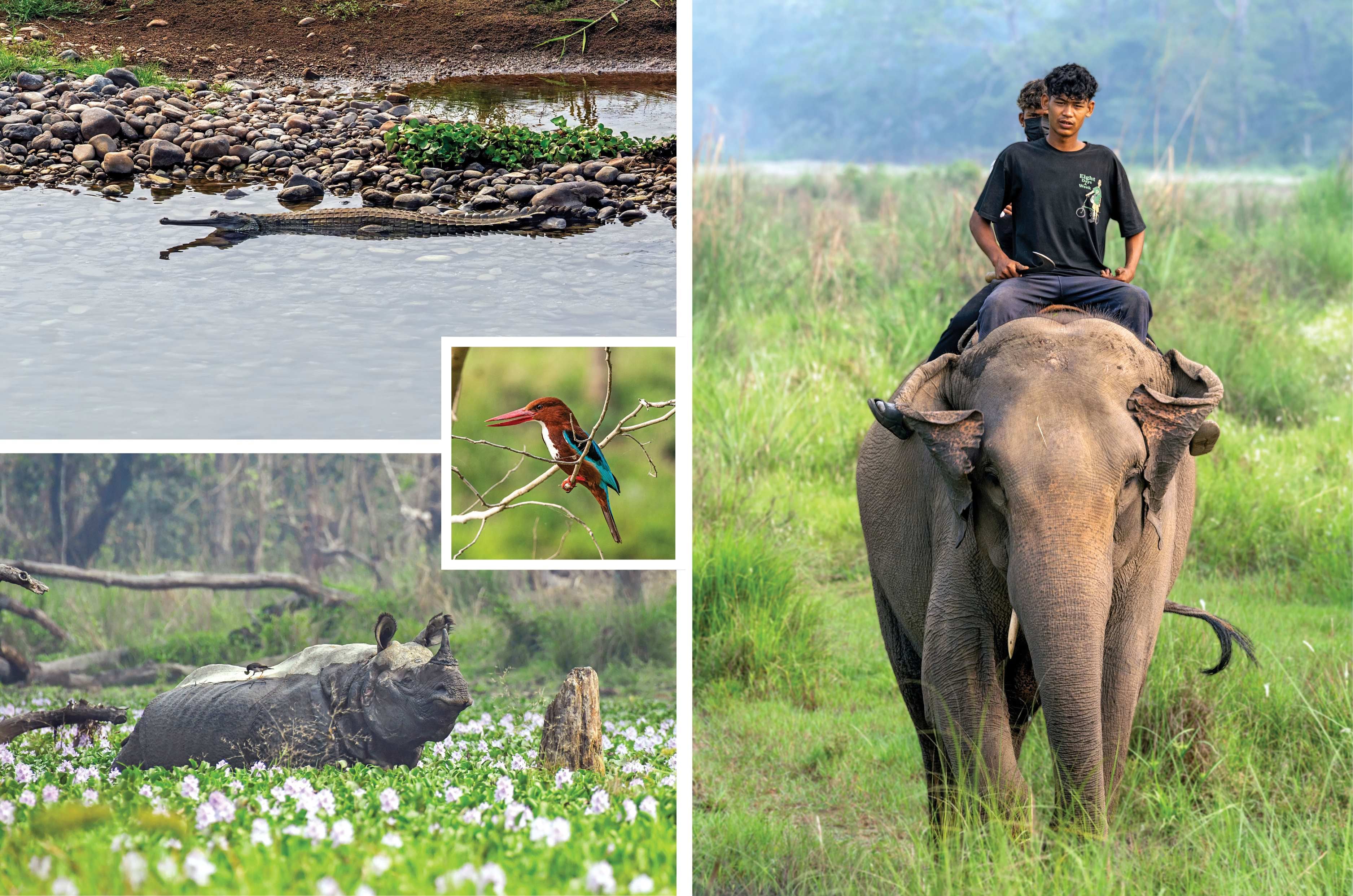
If the Indian side of the border was old-school, Nepal’s immigration post is almost antique. Drive past it, and you’d likely miss it altogether – the only tell-tale sign is a simple gate with ‘Immigration Office’ hand-painted on it. This humble-looking house is, in fact, the immigration office, where, just like on the Indian side, every check is done manually. Fine print, identity proofs, and everything in between were checked meticulously before we were welcomed into Birgunj. Our main draw in Nepal was the bustling capital, Kathmandu, but there were magnificent stops along the way, starting with Chitwan National Park. Home to nearly 700 one-horned rhinos, the park also shelters elephants, Bengal tigers, cobras, the elusive gharial, and abundant flora. The Kylaq would have been fun to explore it in, but we opted for the park’s safari vehicle to relax and take in the surroundings. Paddling a beaten-up wooden kayak past crocodiles and snakes adds a rush, but it’s nothing compared to a rhino staring you down in all its magnificence. The park gave us a welcome break from long hours behind the wheel.
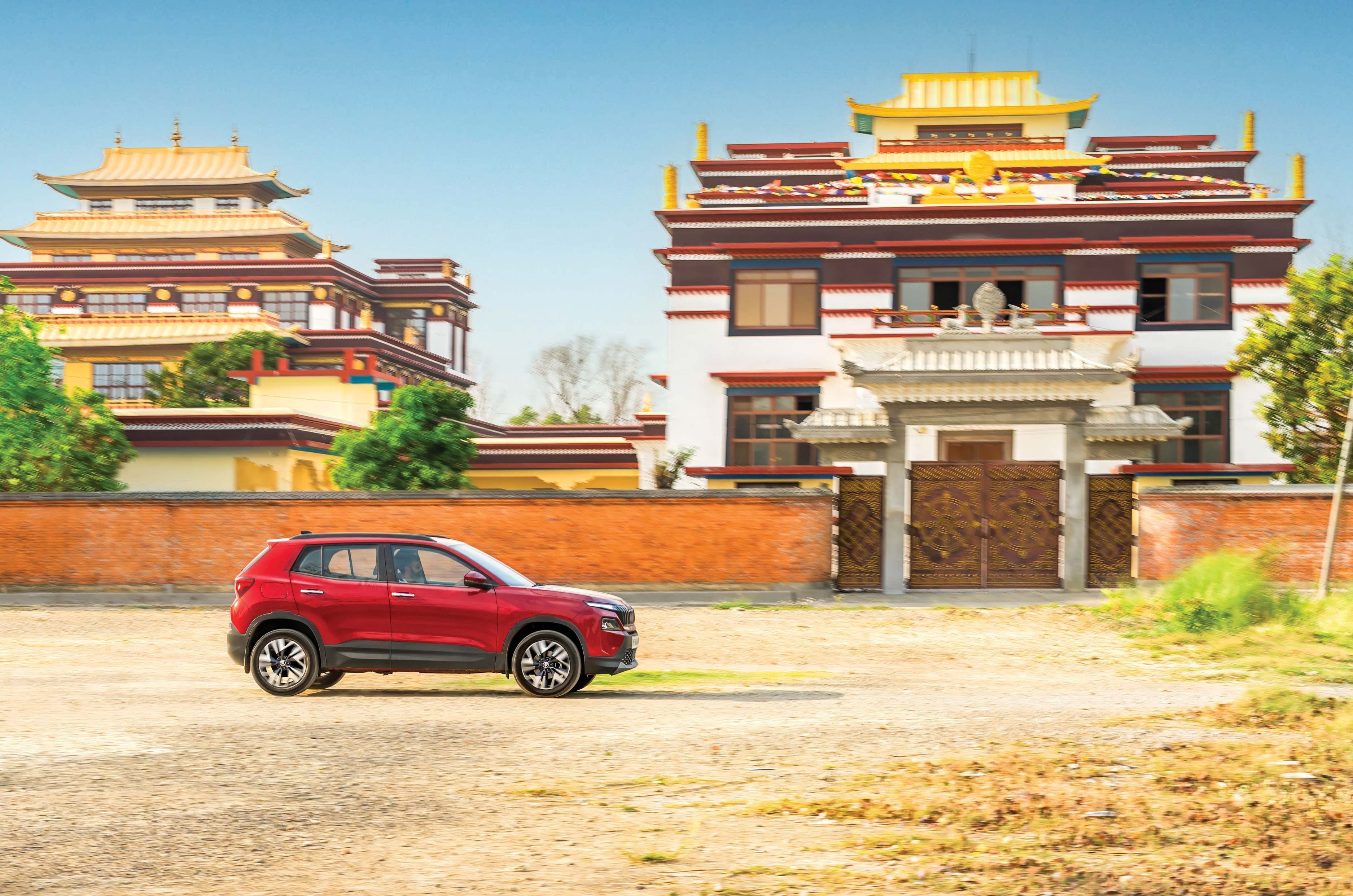
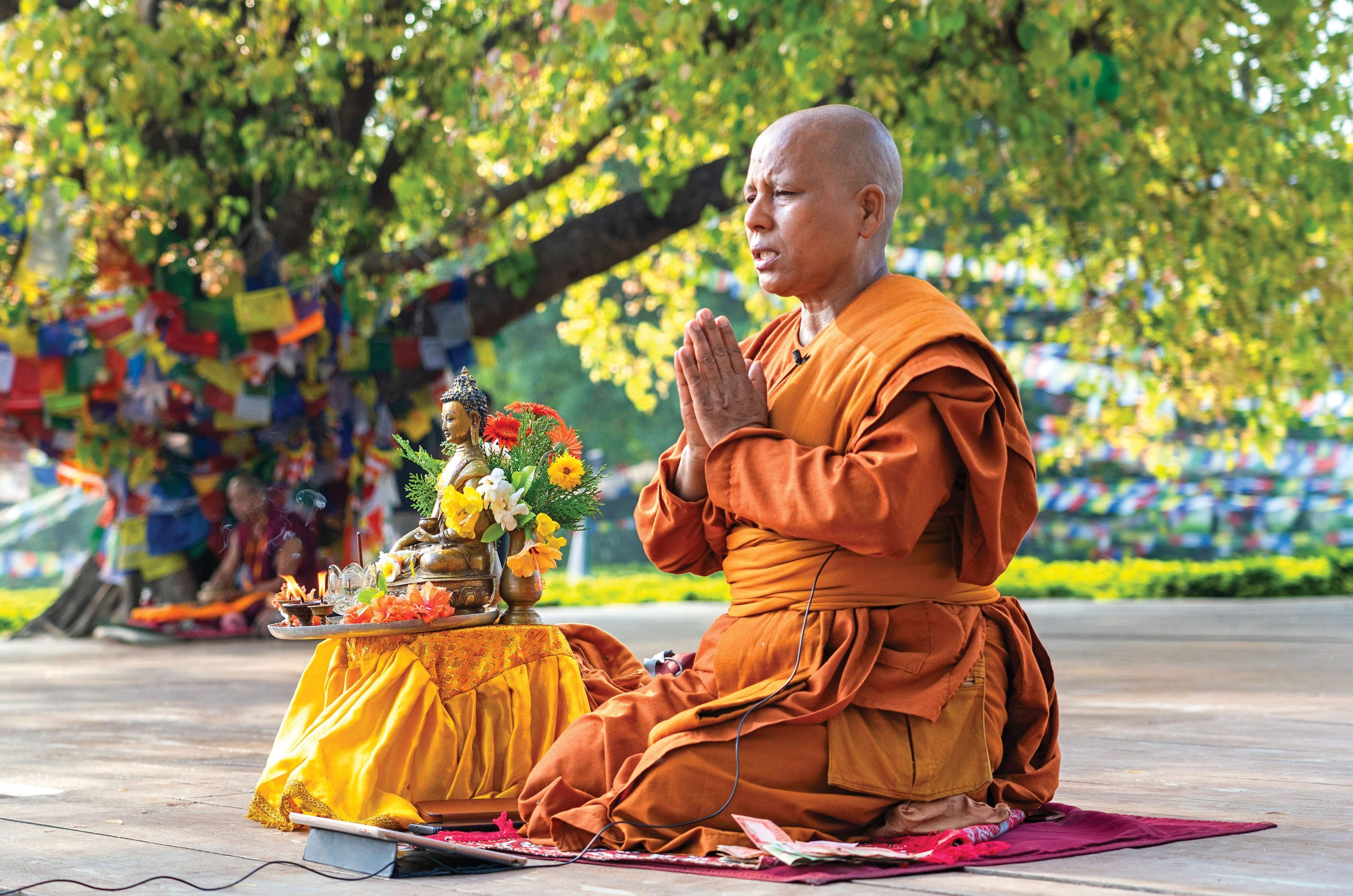
Lumbini is home to 32 unique styles of monasteries.
Next was Lumbini, a spiritual haven and, more importantly, the birthplace of Siddhartha Gautama (Lord Buddha) around 563 BC. Its fascinating monastic zone showcases monasteries built by Buddhist nations from around the world, each reflecting its own culture through design and architecture – a remarkable collection of temples spanning diverse traditions. The feeling of peace there was unlike anything I’d experienced, but it was soon disrupted by the road to Pokhara.
Lumbini provided a moment of calm through the chaos.
Mountain passes are notorious for destroying Google’s ETAs – landslides, breakdowns, and deteriorating roads mean a stretch that should take an hour could take five, depending on your luck. We braced for traffic and drove straight into a landslide clearing. A two-hour wait meant the sun was setting as we rolled into the quaint town of Pokhara. Bustling with cafés and pop culture, it felt like a mini Kathmandu, but with the stunning Phewa Lake turning orange at sunset. The calm that began in Chitwan came full circle on the shores of Phewa Lake.
Chitwan is home to the gharial and over 700 one-horned rhinos.
Kathmandu, though, was a different animal entirely – every bit a capital city, and a world away from the slow pace of Chitwan or Lumbini. The music is loud, the traffic is hectic, and the city is anything but quiet. Ironically, the only quiet things on the road are the cars – China’s dominance in Nepal is stark, with three in five cars on the road being Chinese EVs. Geely, BYD, and GWM rule the market, with only a handful of Hyundais and Kias as competition.
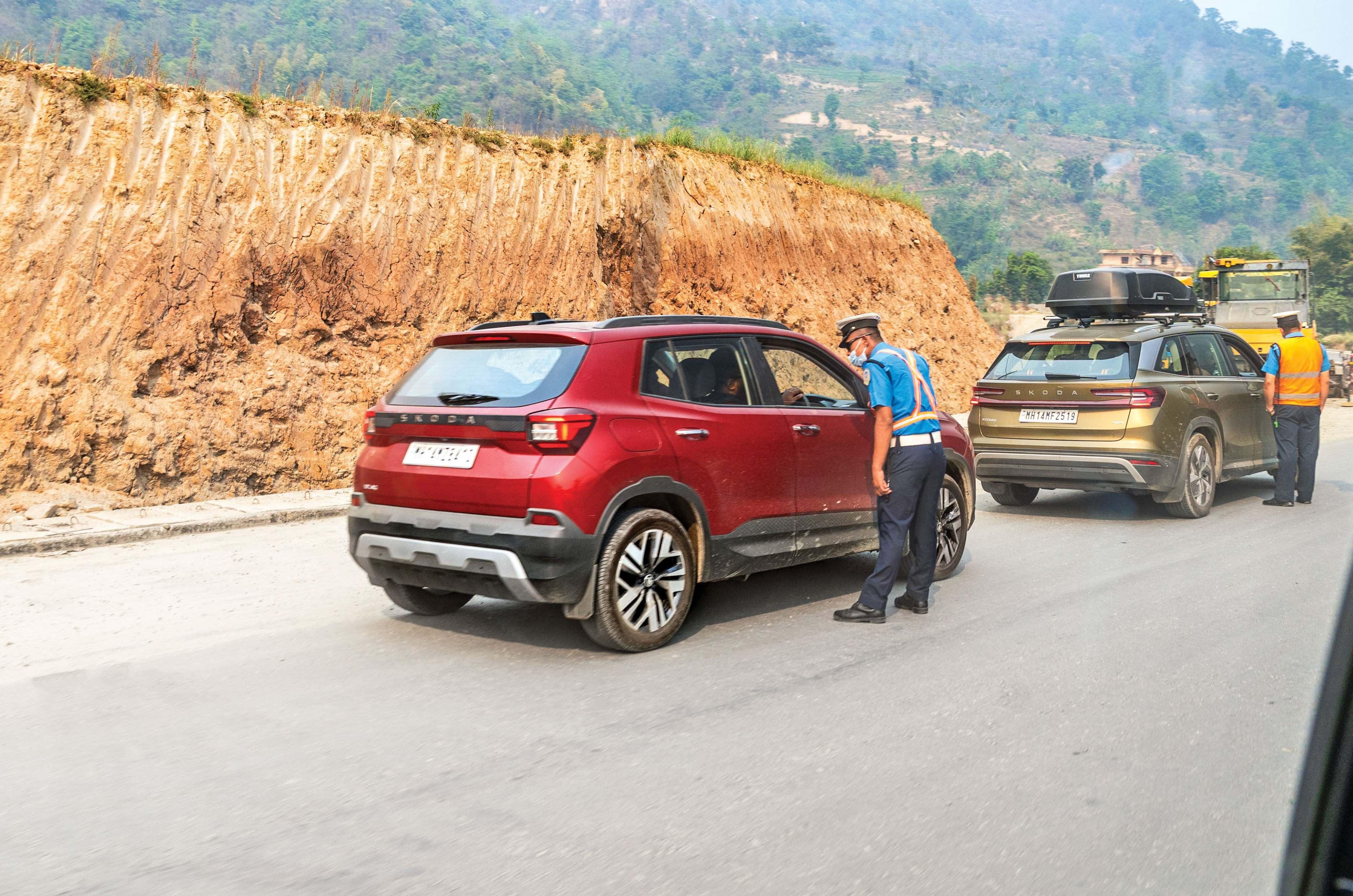
Authorities were always curious thanks to Indian number plates.
The party scene rules Kathmandu too. At night, the city comes alive as a hub for tourists from around the world. Hiking gear and North Face apparel go for a fraction of the price – and, often, a fraction of the quality – alongside quirky masks and fridge magnets at every tourist stop. Spend a little more time, though, and you’ll find excellent coffee shops and the famous Thakali thali: thick buckwheat porridge with salads, meat, and plenty of flavour. Good thing too, since walking through Durbar Square works up quite an appetite. Partly destroyed by the devastating 2015 earthquakes, the temples have since been restored to their former glory, though you can still spot the scars in a few bent pillars and roofs. It’s a culture and tradition worth preserving, and Nepal deserves credit for doing exactly that.
Birgunj-Sino-Nepal Border in numbers
Distance covered
922km
Fuel consumed
115.96 litres
Average fuel economy
7.13kpl
Approximate fuel cost
Rs 15,846
Average per-litre fuel cost
Rs 136.65
Total time driven
34hrs 25min
Average speed
27kph
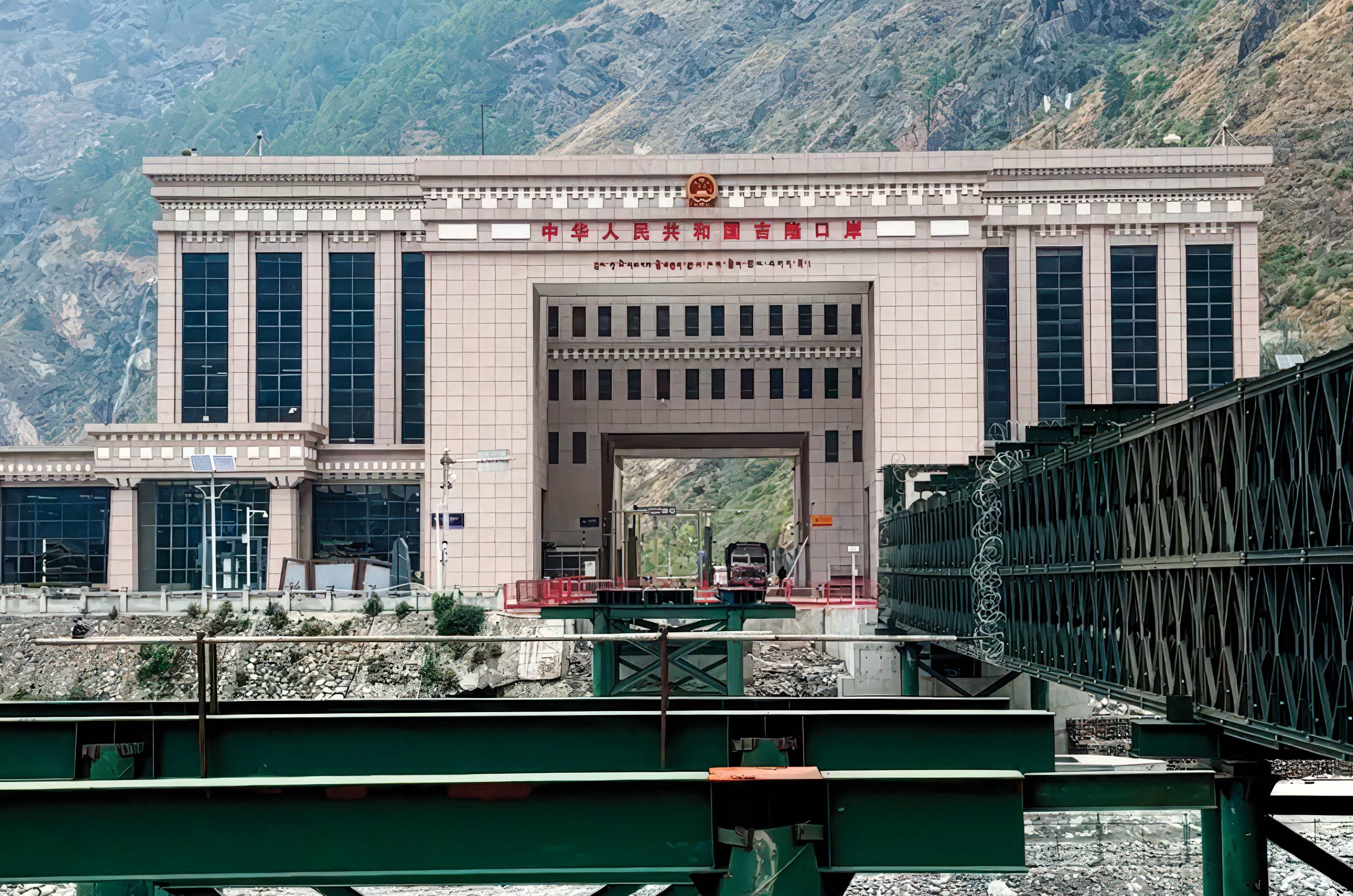
With Kathmandu explored, we headed towards our second border crossing – and this one was far more intense. Once we left Kathmandu, we left the tarmac behind too. Muddy back roads, still wet from the previous night’s rain, meant slush and a constant need for 4WD. Even so, though packed to the brim with luggage, the Kylaq stayed light enough and had enough clearance to pick its way around the mud on the approach to the Rasuwa Bridge. From there, you can see the Chinese immigration building towering over everything around it. With the Kylaq thrumming with excitement, we crossed into Tibet – the roof of the world.
Tibet/China – Roof of the World
China’s border crossing is as imposing as it gets.
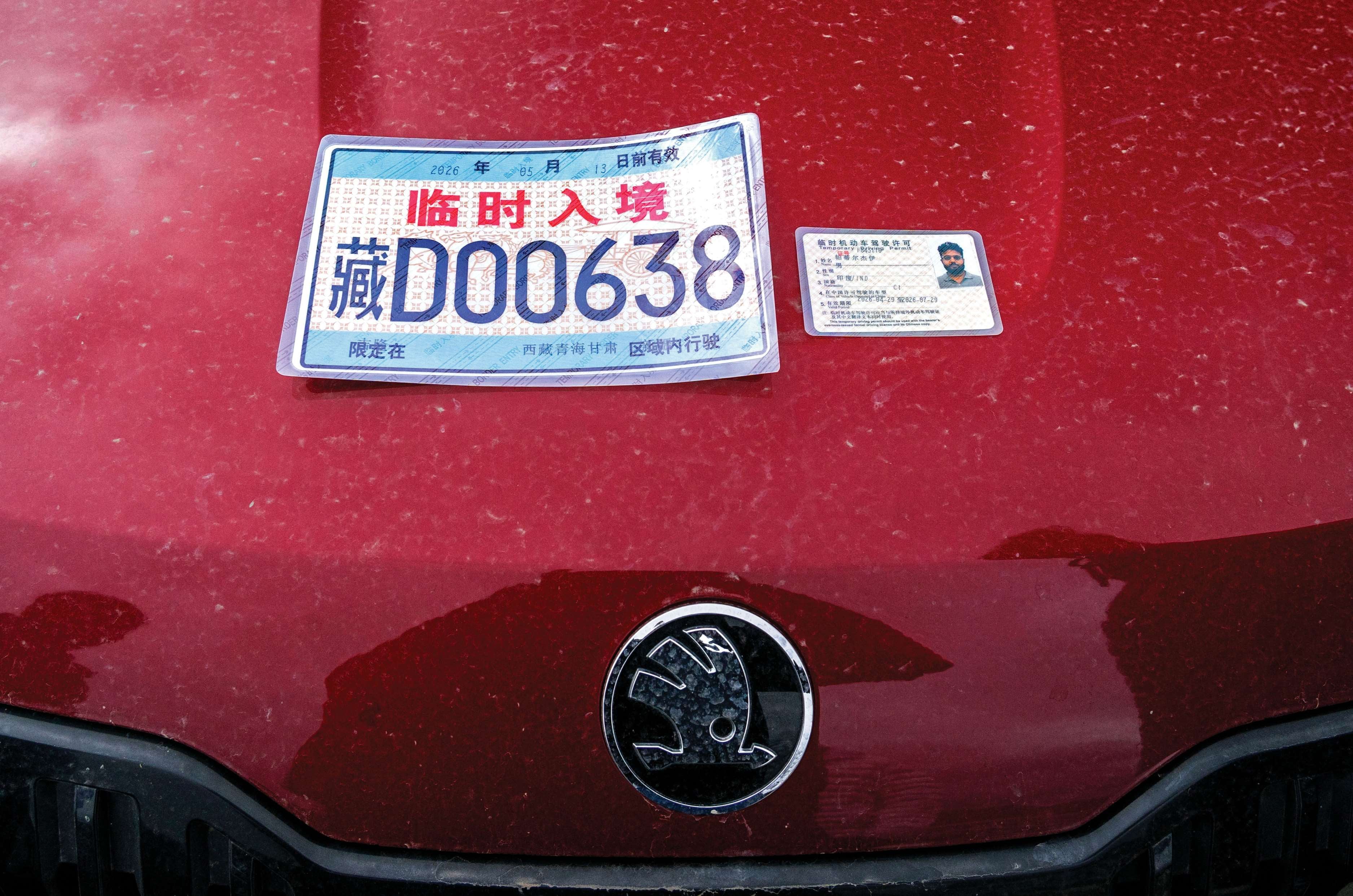
Crossing into Tibet felt like crossing into the future. For a region tucked deep into the mountains, it’s exceptionally developed – the roads are smooth and well-signed from the moment you cross the bridge, barely a hundred metres before the immigration office. In China, we weren’t taking any chances, knowing any misstep here could jeopardise the rest of the journey. After answering the customs officers honestly – and impressing them with the scale of the Kylaq’s challenge – we entered the lovely town of Gyirong. Old Chinese architecture, plenty of red, and signboards we couldn’t quite read were early signs that we really were in a different world now. Nepal had shared plenty with India – the cars, the food, the roads – but China felt entirely its own. We thought we’d seen our share of speed cameras, but China put us to shame – they appear every 50 metres or so, complete with flashes. There’s simply no room for error, and you’re monitored everywhere you go – aneerie feeling that takes some getting used to. Another non-negotiable is to obtain a special driving licence for every person that will be driving and a China-specific number plate, which you have to place on your dashboard so the cameras can pick up any infringements. A regular India-style RTO office with long queues and a lack of urgency got us homesick for a bit.
Local license and registration are non-negotiables in China.
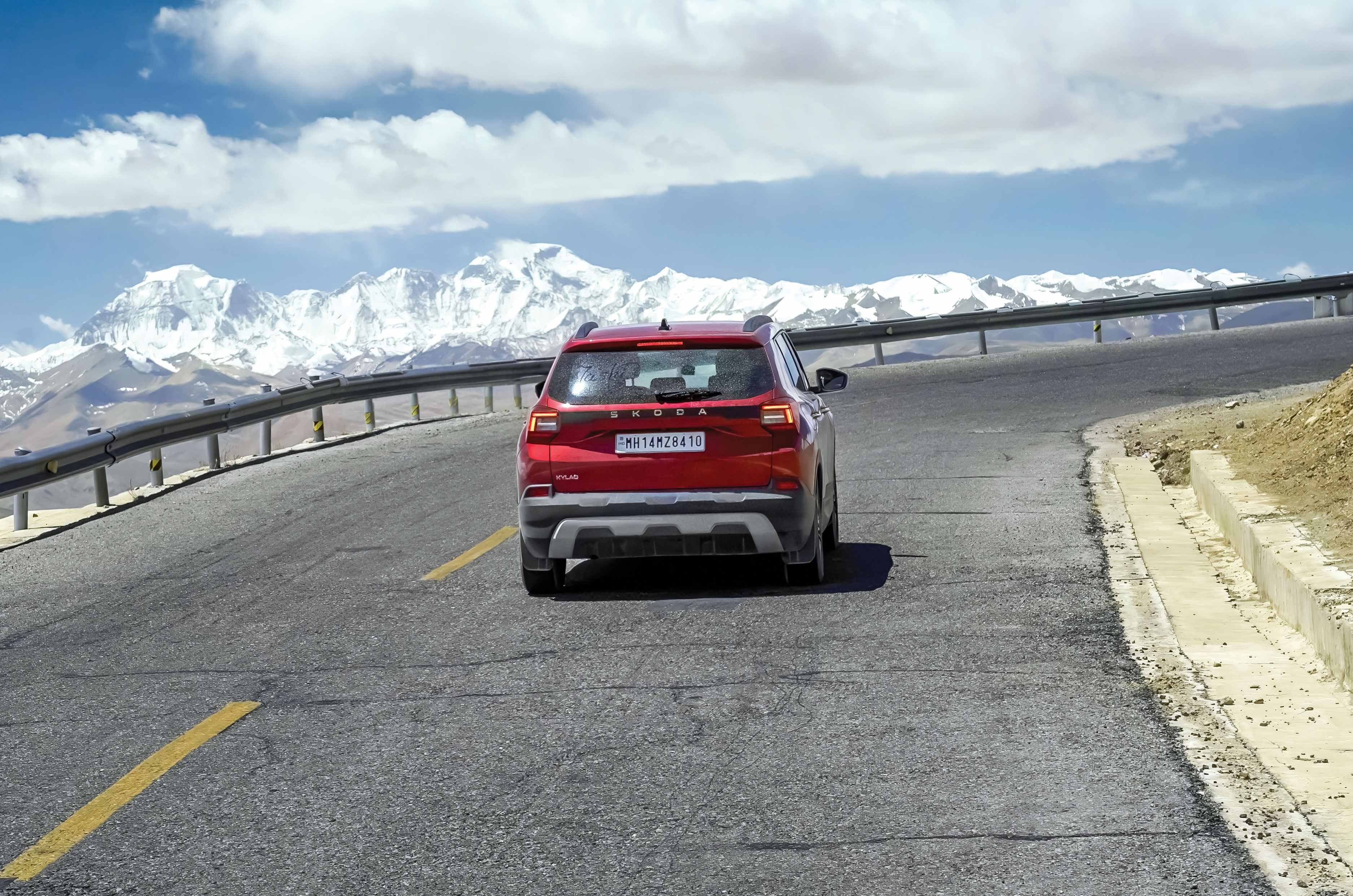
A few mugs of hot ginger-lemon tea eased us into the chill, and we set off for Mount Everest Base Camp. High altitudes are usually punishing for small-capacity engines, but thanks to its turbocharged engine, the Kylaq barely broke a sweat, buzzing through the passes. Its 6-speed automatic had been a great convenience through the chaos of India and Nepal, but the winding mountain roads and immaculate tarmac meant I could switch to manual and take control via the paddle shifters. Paddle-shift response is often sluggish, but not here – the shifts were quick, and the taut suspension held its ground even through tight hairpins.
Everest hove into view long before we made it to base camp.
It made for a great drive and great footage, right up until we spotted the peak in the distance. Even from afar, Everest is breathtaking, and mercifully the clouds stayed clear as we got closer. You can’t take a car near base camp itself – a one-hour bus ride covers that final stretch. It’s strange how you lose your breath as you approach Everest – partly the thin air and altitude, but you’d lose it all the same just from the view. Words don’t do it justice, and don’t be surprised if you shed a tear or two – it’s overwhelming.
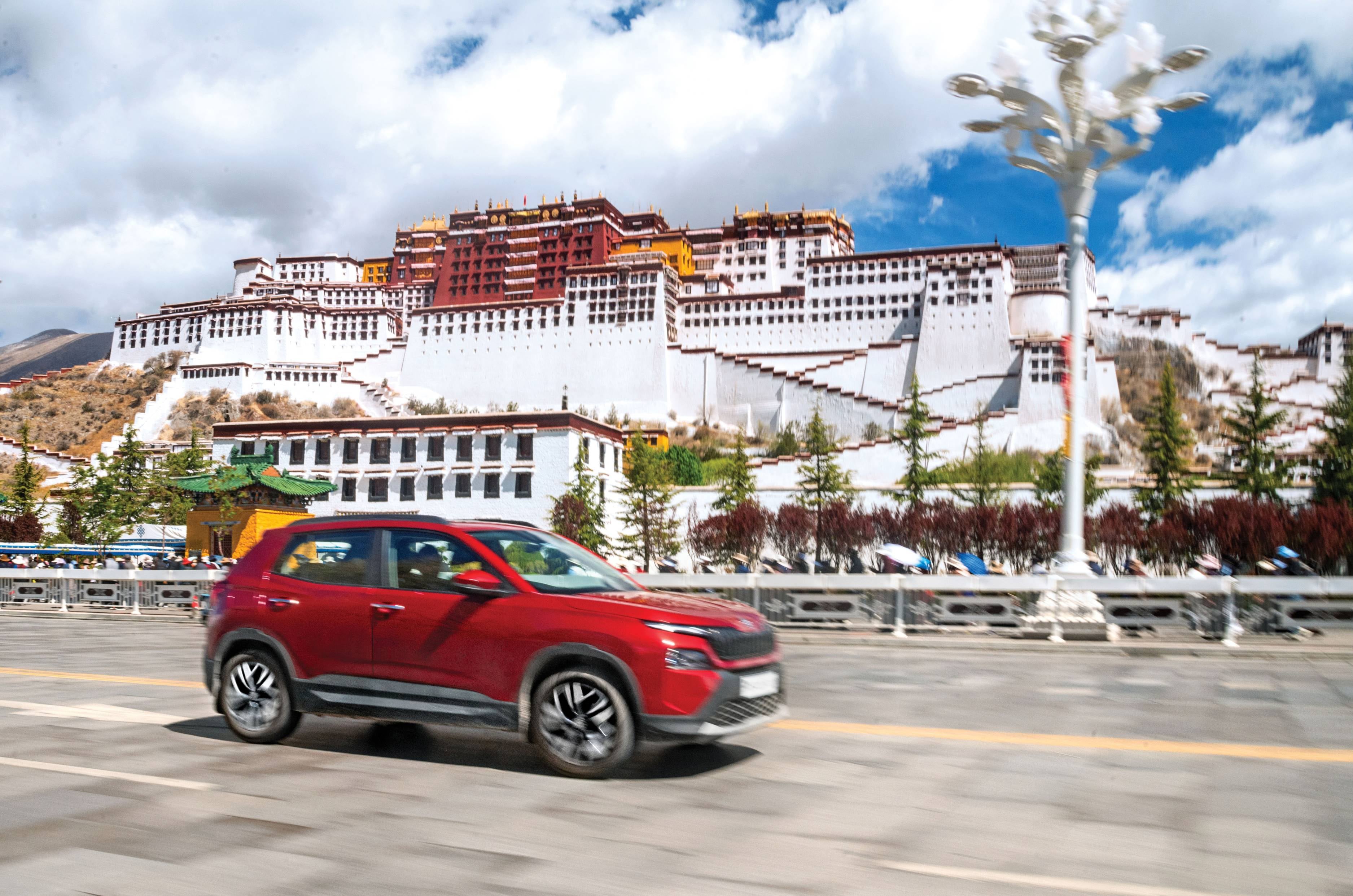
Stunning Potala Palace; once home to the Dalai Lamas.
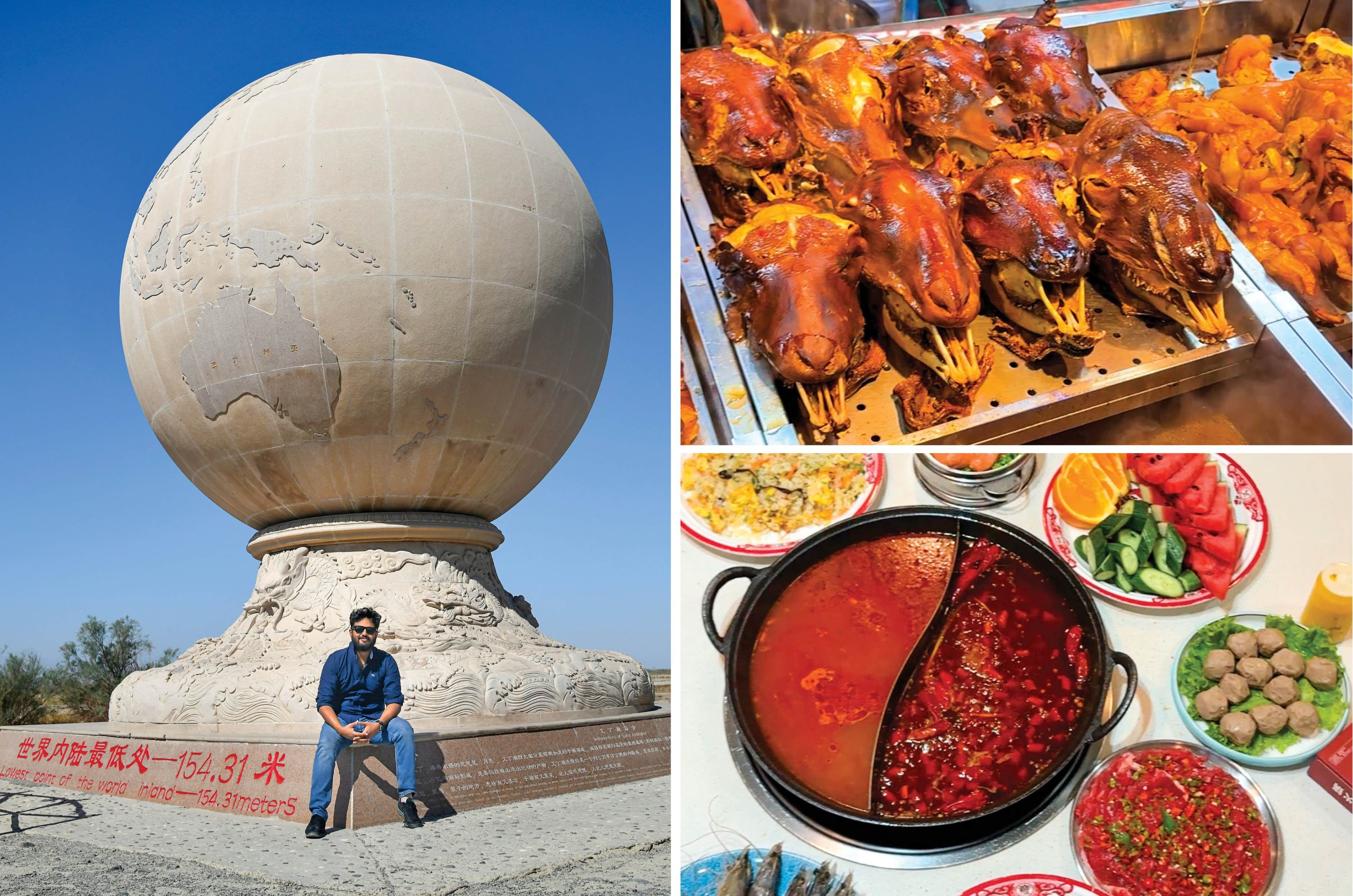
With Everest ticked off, it was time to take on China’s vastness. We headed to Lhasa, the spiritual capital of Tibet, home to the grand Potala Palace. Once home to monks and lamas, this stunning palace holds incredible history and artefacts – spiritual or not, its significance to the country’s history is unmistakable. The drive kept revealing itself through unique food, dialects, faces, and even geography. One day we were freezing thousands of feet above sea level; days later, in Turpan, we were below sea level in blistering heat. From boiling hotpots to grocery-store instant noodles, China pushed us well outside our comfort zone, and the Kylaq wasn’t spared either.
L: From EBC’s high to Turpan Depression’s low – Jay was at 154m below sea level here. R: Street food in China not for the faint-hearted.
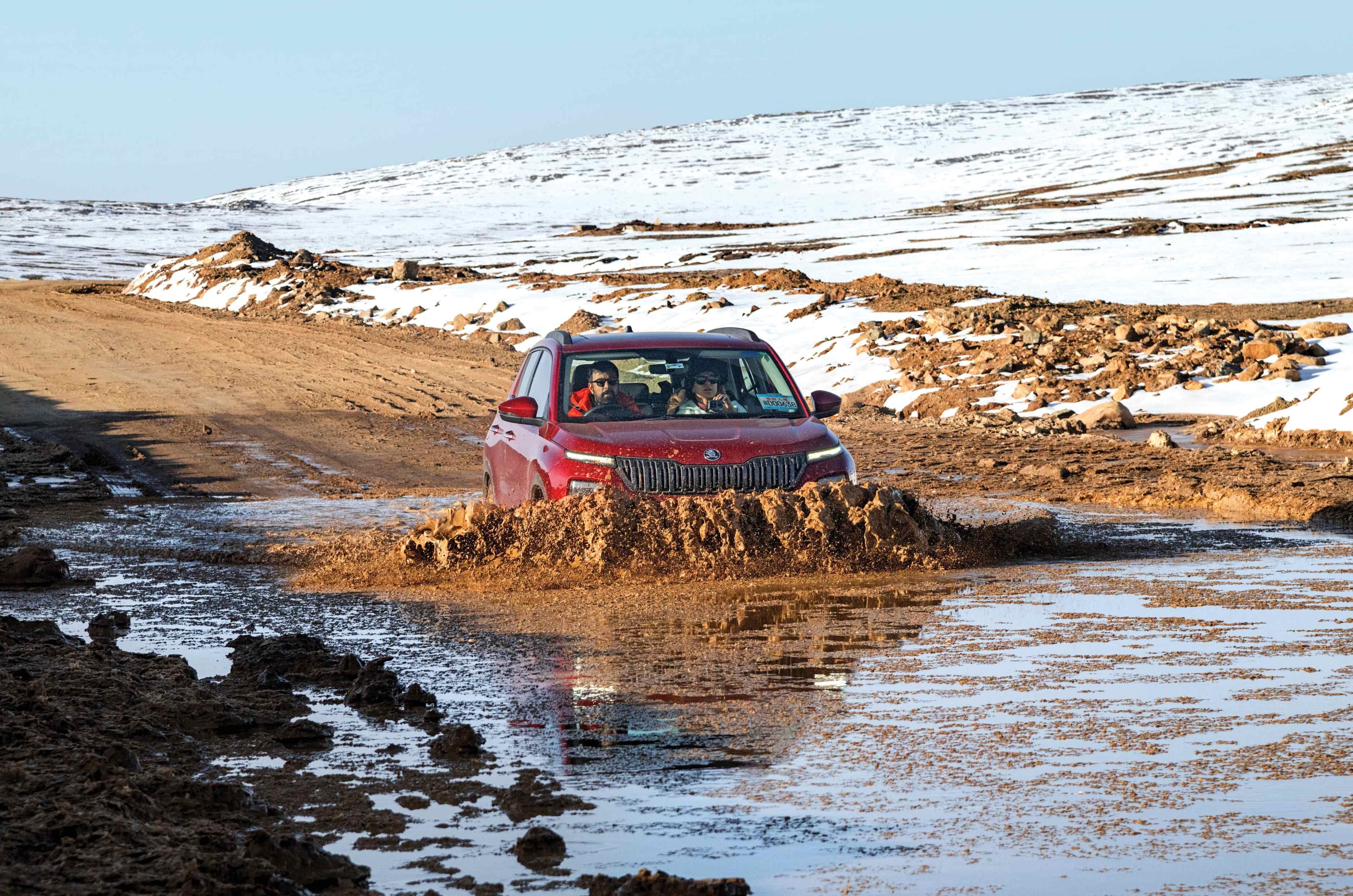
Two full days on the way to Golmud were entirely off-road, taking over 13 hours of driving, with our average speed dropping to 18kph as the Kylaq waded through water up to its bonnet and emerged without complaint.
In China, you get perfect roads or, simply, no roads.
A stretch that would have broken most cars left the Kylaq unscathed. China hit hard, but the Kylaq hit back harder. From day one, it had faced challenge after challenge, and from day one, it had come out on top. Three countries in, it still carried the same zeal it started with – and while we were rattled, it stood strong each night, ready for the next day.
नेपाल के मुस्तांग जिले में रविवार की शाम लोगों ने प्रकृति का ऐसा रौद्र रूप देखा, जिसने कुछ ही सेकंड में पूरे इलाके की तस्वीर बदल दी। लेते के पास अचानक पहाड़ का एक विशाल हिस्सा भरभराकर नीचे आ गिरा। चट्टानों और मिट्टी का भारी मलबा सीधे कालीगंडकी नदी के रास्ते में जा पहुंचा। पहाड़ के इस अचानक टूटने से नदी का सामान्य प्रवाह प्रभावित हो गया और पानी पुराने बहाव क्षेत्र की तरफ बढ़ने लगा।
यात्री के कैमरे में कैद हुआ डरावना पल
यह घटना शाम करीब 5:30 बजे हुई। संयोग से उस समय वहां से गुजर रहे एक यात्री का कैमरा चल रहा था। उसकी रिकॉर्डिंग में पहाड़ का बड़ा हिस्सा अचानक टूटकर नीचे गिरता दिखाई देता है। कुछ ही देर में सड़क और नदी के आसपास का इलाका मलबे से भर गया। स्थानीय लोगों के मुताबिक, मलबे ने कालीगंडकी की मुख्य धारा को रोक दिया। इसके बाद नदी ने अपना रास्ता बदलते हुए पुराने प्रवाह क्षेत्र की ओर कटान शुरू कर दिया। पानी के तेज बहाव से नदी के किनारों पर दबाव बढ़ा, जिससे आसपास रहने वाले लोगों की चिंता भी बढ़ गई है।
सड़क पर थमी रफ्तार, कई जगह आवाजाही प्रभावित
भूस्खलन का असर सिर्फ नदी तक सीमित नहीं रहा। पहाड़ से गिरे मलबे ने बेनी-जोमसोम सड़क मार्ग को भी कई जगह प्रभावित कर दिया। महत्वपूर्ण सड़कों पर वाहनों की आवाजाही बाधित होने से यात्रियों को परेशानी का सामना करना पड़ रहा है। हालांकि राहत की बात यह रही कि इस घटना में अभी तक किसी के हताहत होने की सूचना नहीं है। लेकिन नदी का बदला रुख और लगातार हो रहा कटान इलाके के लिए नई चिंता पैदा कर रहा है।
लगातार बारिश ने बढ़ाई पहाड़ों की बेचैनी
मुस्तांग समेत नेपाल के कई पहाड़ी इलाकों में पिछले कुछ दिनों से भारी बारिश का दौर जारी है। लगातार बरसात के कारण मिट्टी कमजोर होने से भूस्खलन, बाढ़ और नदी कटान का खतरा बढ़ गया है। ऐसे हालात में पहाड़ों से मलबा गिरने की घटनाएं सड़क संपर्क और स्थानीय बस्तियों दोनों के लिए चुनौती बन रही हैं।
नेपाल के मुस्तांग में
दरकी पूरी पहाड़ी
Nepal के मुस्तांग जिले में लगातार बारिश और बर्फबारी के बीच भूस्खलन की वीडियो सामने आई हैं. लातेख क्षेत्र में पहाड़ी का बड़ा हिस्सा दरककर नीचे आ गया.
ताजा घटना के बाद स्थानीय प्रशासन ने लोगों और यात्रियों से भूस्खलन तथा नदी कटान वाले इलाकों से दूरी बनाए रखने को कहा है। गैर-जरूरी यात्रा से बचने की सलाह भी दी गई है। नेपाल में पहले से ही बारिश और प्राकृतिक आपदाओं ने कई इलाकों में मुश्किलें बढ़ा रखी हैं। ऐसे में मुस्तांग में पहाड़ का अचानक टूटना सिर्फ एक सड़क हादसा नहीं, बल्कि बदलते पहाड़ी भूगोल और उफनती नदियों के बीच बढ़ते खतरे की एक और चेतावनी के तौर पर देखा जा रहा है।
(डिस्क्लेमर: यह रिपोर्ट सोशल मीडिया पर यूज़र द्वारा शेयर किए गए कंटेंट पर आधारित है। मनीकंट्रोल इन दावों की न तो स्वतंत्र रूप से पुष्टि नहीं करता है और न ही इनका समर्थन करता है।)
At Autocar India, we spend a lot of time talking about great driving roads. Smooth tarmac, flowing corners and fast highways are all very well, but some of the most memorable drives begin when the good roads run out. That’s the idea behind Terrible Roads to Terrific Places, a series in which we take the new Renault Duster to some of India’s most spectacular destinations, using the roads, and sometimes what passes for roads, to get there.
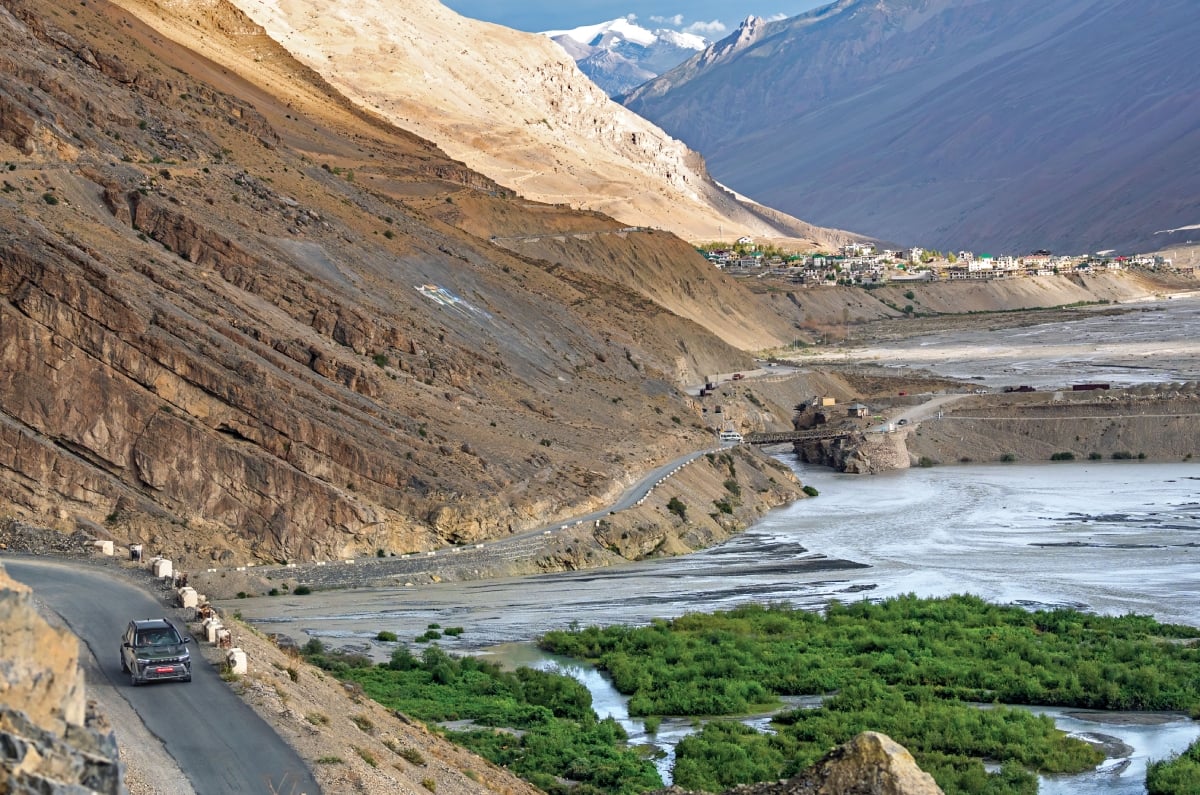
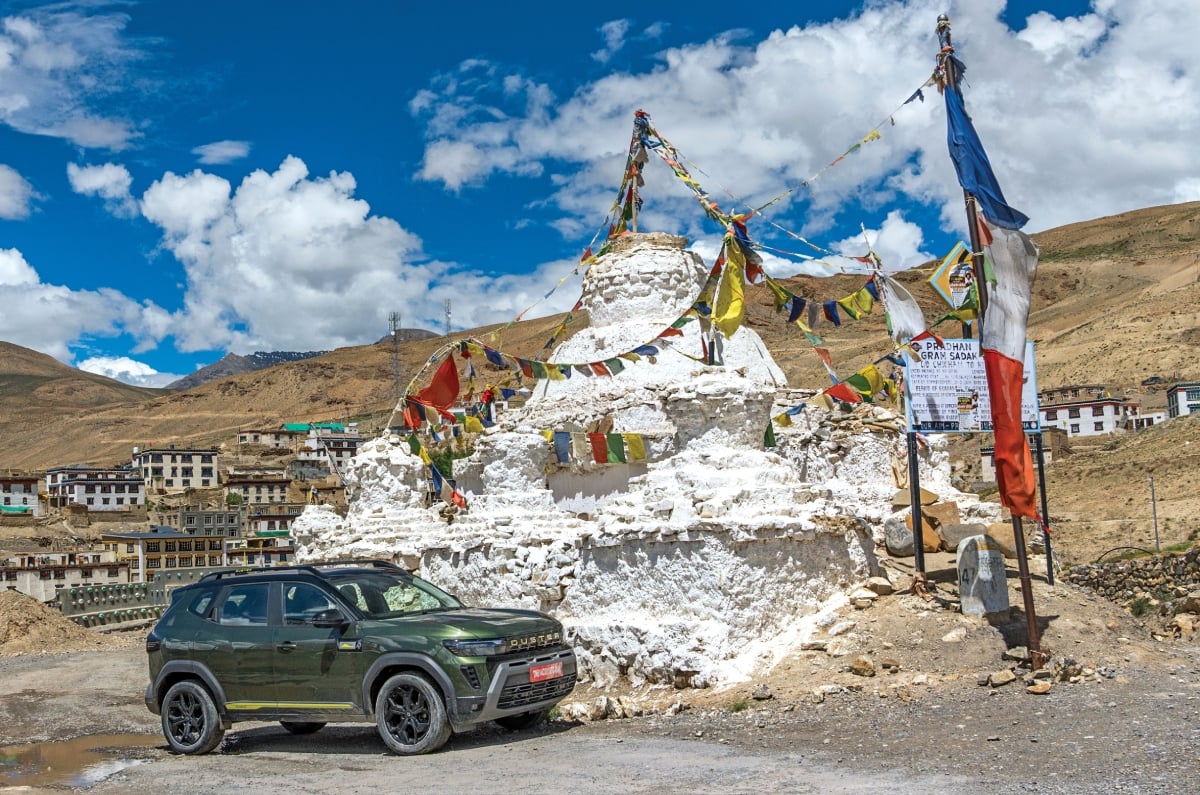
For the first drive, we picked Kibber, more than 4,200 metres above sea level in Himachal Pradesh’s Spiti Valley. Surrounded by enormous mountains and vast, stark landscapes, it’s the sort of place that looks almost too remote to be real. Getting there, however, is the tricky bit.
THE EASY PART
Our journey began in Chandigarh, with roughly 400km between us and Kibber. That might not sound like much, but distances on mountain roads aren’t like those on an expressway.
There was also the small matter of all the camera equipment and luggage that comes with a road-trip shoot. Thankfully, the Duster’s 700-litre boot (incidentally, that’s the largest in its segment) swallowed it all without complaint. With Kibber set in the navigation and Manali marked as our overnight stop, we headed out.
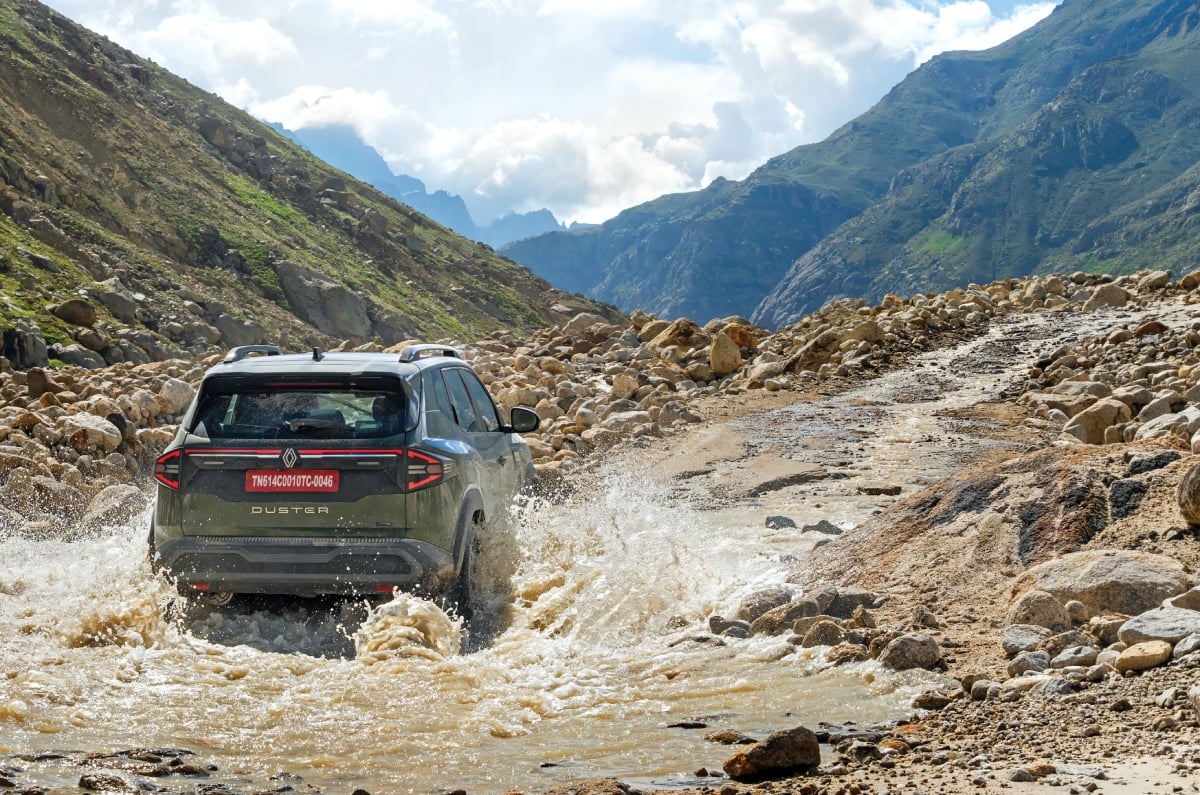
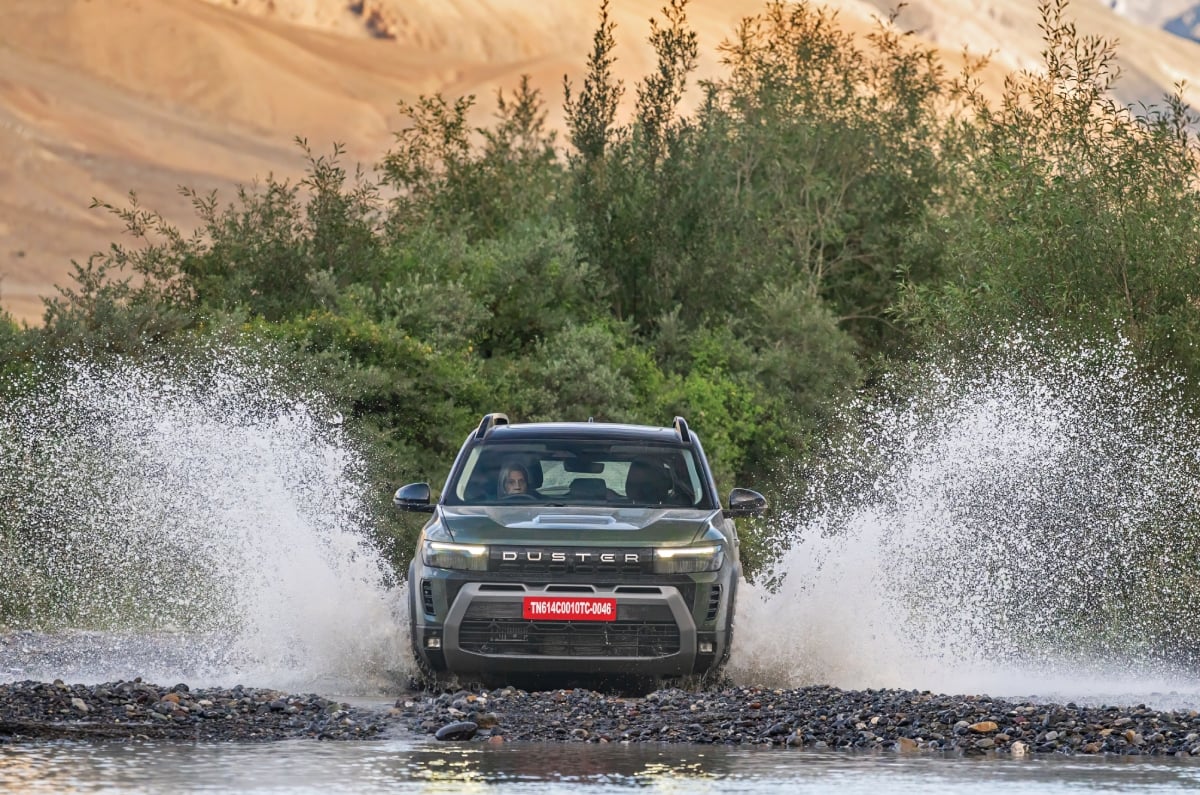
With 163hp on tap, making a splash is mandatory.
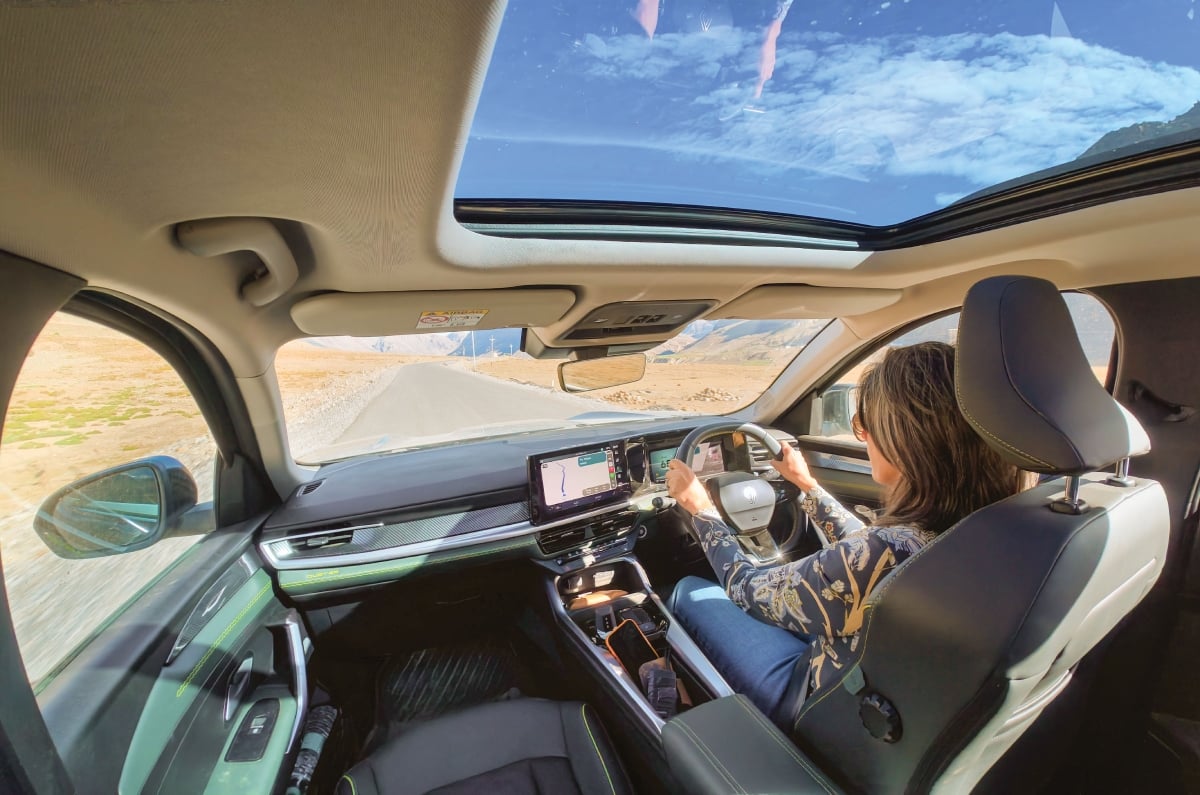
The first part of the drive was almost civilised. Chandigarh’s wide roads and smooth surfaces gave me time to settle into the Duster. The 10.1-inch infotainment screen, with Google services integration, handled navigation, calls and music, while directions also appeared on the 10.25-inch digital driver’s display, lowering the risk of distraction.
Once we left the city, the turbo-petrol engine had some room to stretch its legs. Paired with the six-speed dual-clutch automatic, it made light work of the highway, and then the foothills arrived; corners tightening, and I found myself reaching for the paddles. The scenery was getting better, and the driving was getting more interesting.
The Duster was ready for more, but we had earned a warm break.
By evening, we were in Manali. The Duster felt ready to carry on, but we weren’t. The real test was still ahead.
ROADWORKS AHEAD
The next morning was rainy and quiet, and for a moment, staying put seemed like a very good idea. Everyone we’d spoken to, though, had offered the same warning: enjoy the tarmac while it lasts. They were right.
The transition is gradual with smooth tarmac giving way to broken tarmac, then gravel, and eventually sections where you have to wonder if the road was ever there in the first place. Corners tighten even more, roadworks appear and the surface becomes increasingly unpredictable.
Not every delay is unwelcome, especially with a view like this.
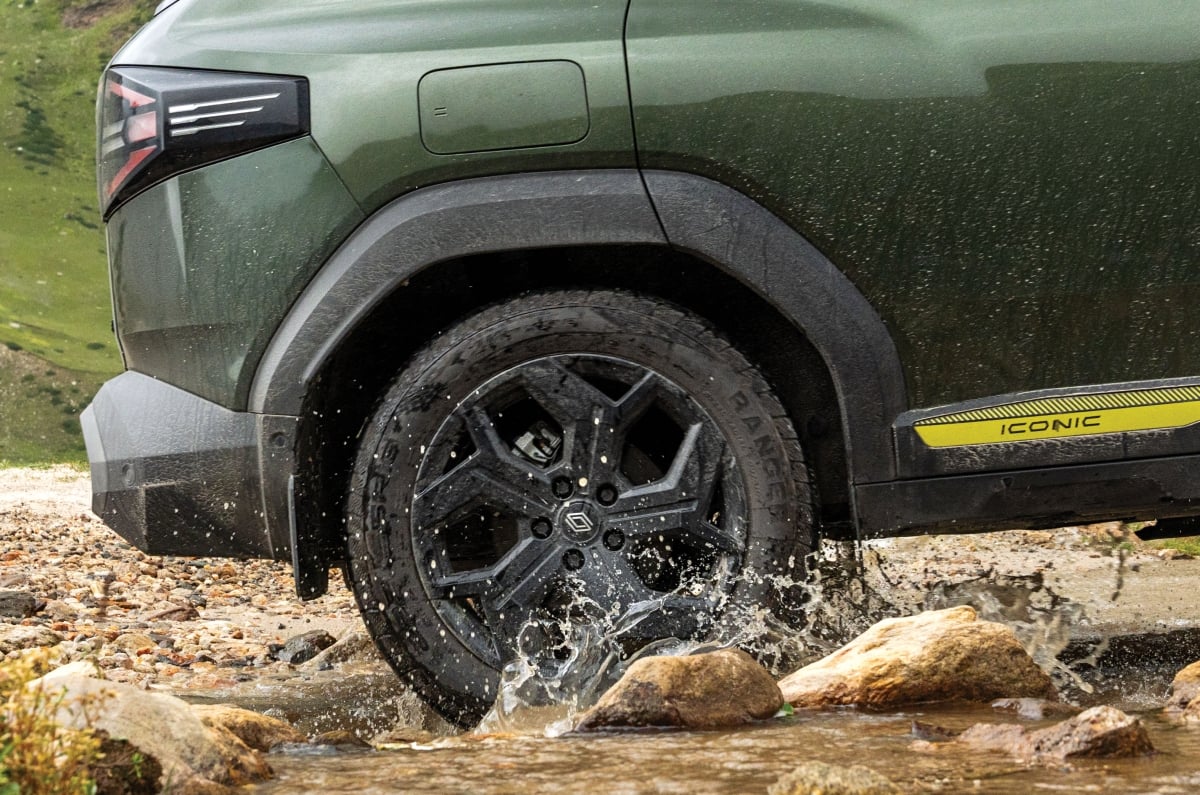
This is where the Duster started showing a different side. With 212mm of ground clearance, negotiating rocks and broken surfaces wasn’t especially worrying. More impressive was the suspension. On narrow sections with no guardrails, deep ruts and rough surfaces, remarkably little of the punishment made its way into the cabin. It’s the kind of terrain where you quickly appreciate a car that can take a beating without making every bump your problem.
As we climbed higher, the landscape changed dramatically. The forests disappeared, villages became smaller and the gaps between them longer. Spiti is enormous, empty and almost surreal. Here, a kilometre can feel like five, especially when you’re picking your way through dirt, potholes, loose rocks, washed-away sections and water crossings.
Spiti is best explored from behind the Duster’s wheel.
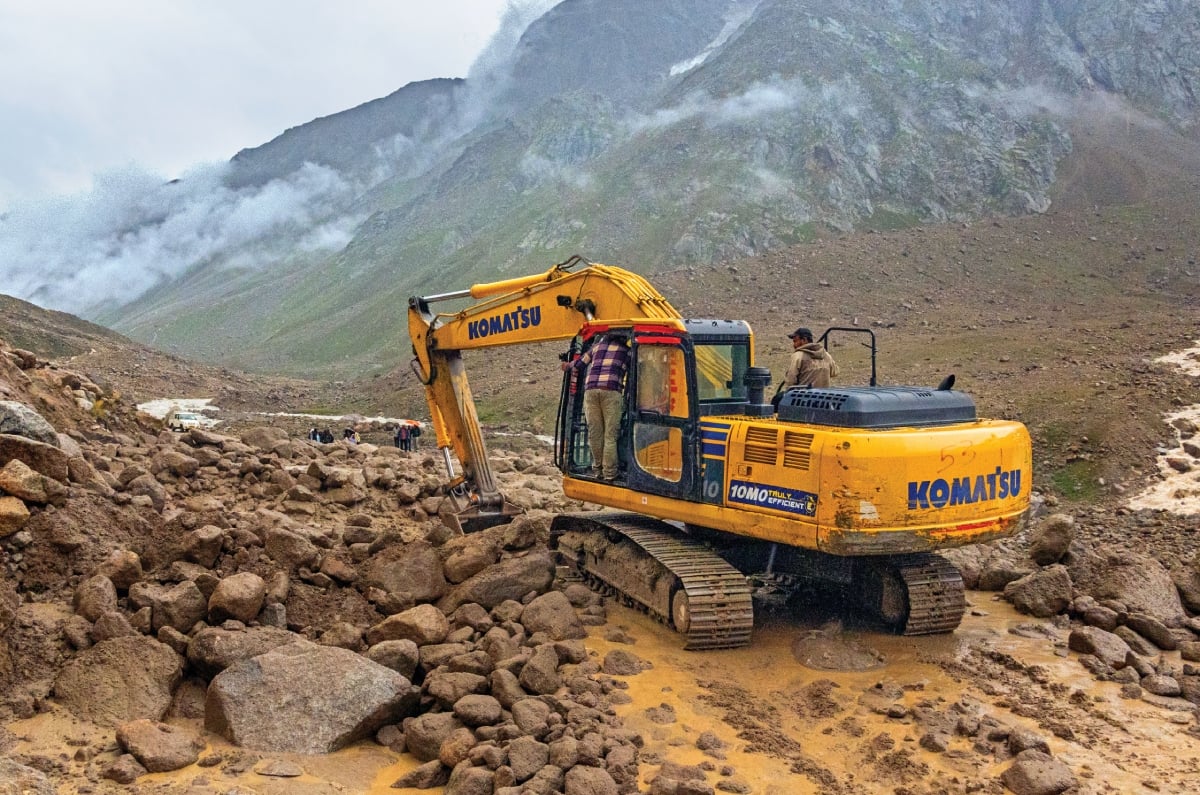
Then we hit a landslide.
An enormous pile of debris had blocked the road, so we joined the queue and waited while excavators cleared a path. That’s where we met two cyclists heading towards Kaza, one of whom happened to own a Duster back home in France. It was incredible that they were tackling these mountains on two wheels! Suddenly, our journey seemed rather comfortable. Two and a half hours later, we were moving again.
By now, dusk was setting in. The road continued to throw everything at us, from deep ruts and gravel to broken sections and water crossings. These are the moments when you want to have confidence in your car. Ground clearance helps, suspension strength matters and you need enough performance to keep moving when the going gets tough. Oncoming traffic and narrow sections also meant there was often no avoiding the worst of the potholes.
Thankfully, the final stretch to Kibber is paved to perfection.
Despite it all, I never really found myself wishing for all-wheel drive. The Duster just kept going.
PEAKING AT THE SUMMIT
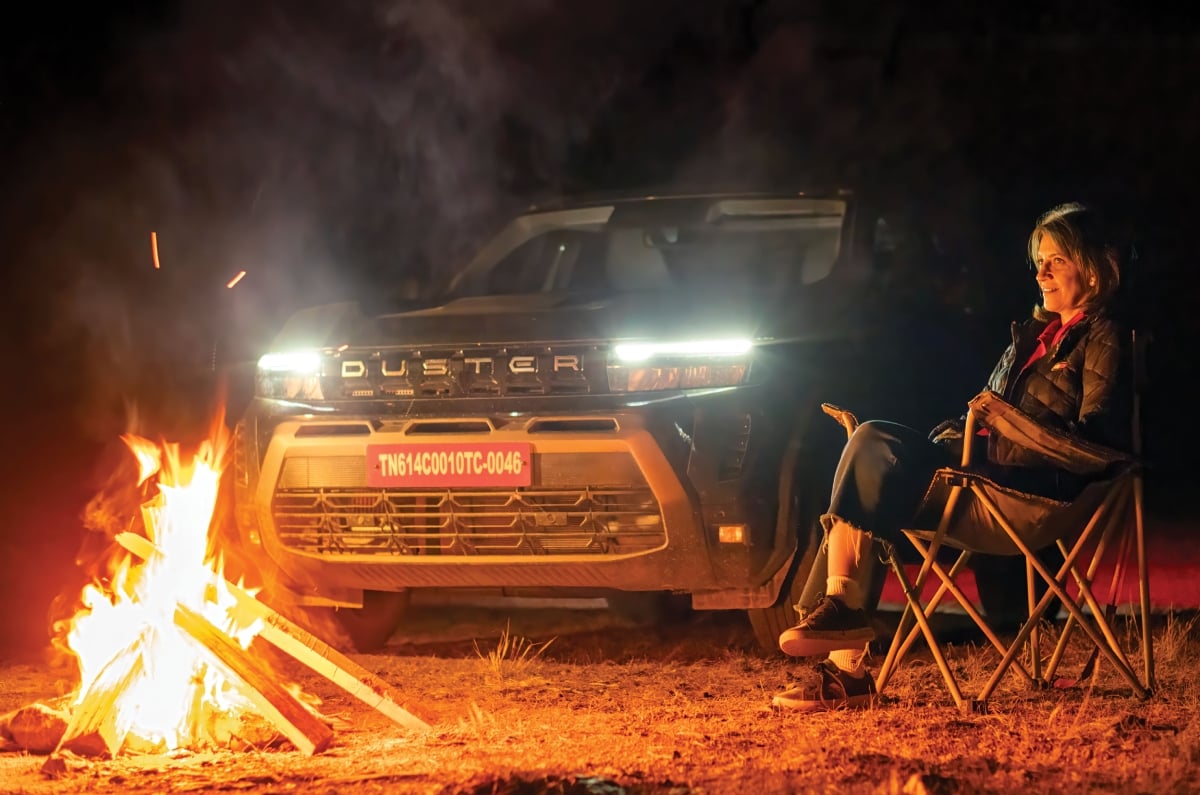
The landslide had delayed our arrival, and we eventually reached Kibber late at night, tired and with no idea what the place looked like. In hindsight, that may have made the next morning even better.
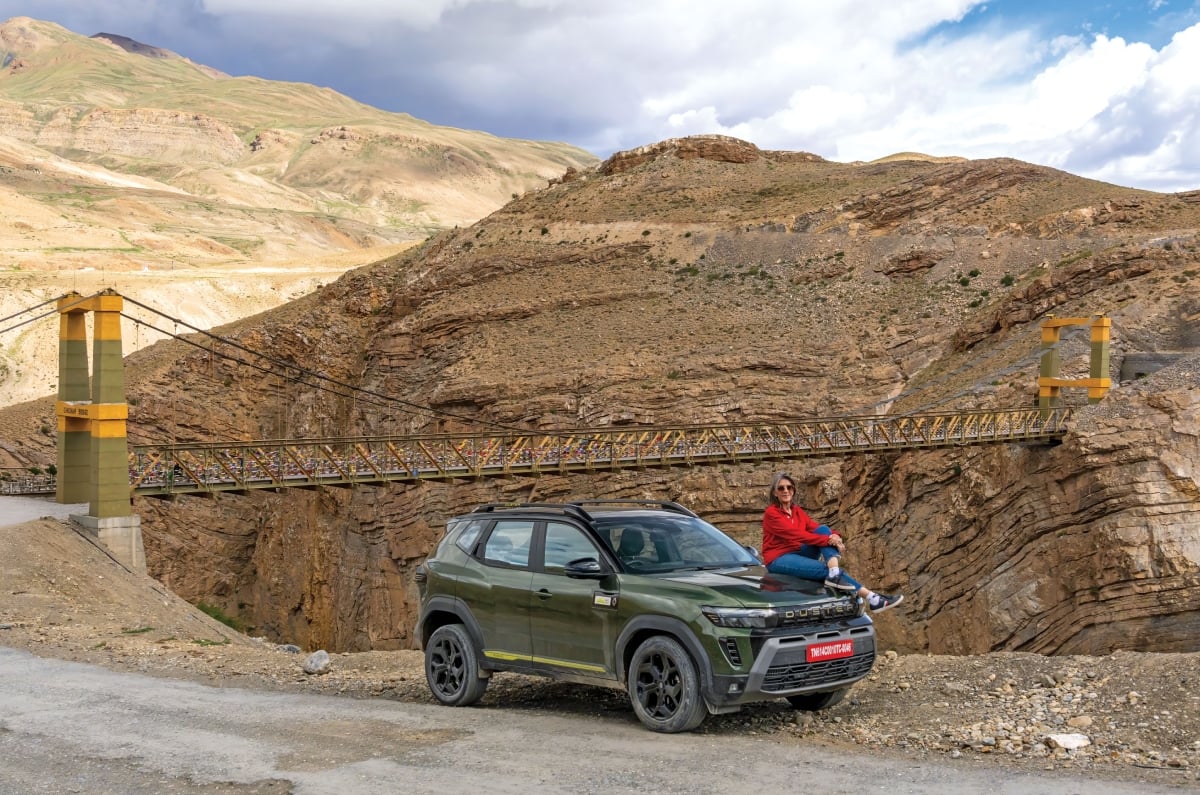
At 4,145m above sea level, Chicham Bridge is Asia’s highest suspension bridge and a sight to behold.
The first thing that struck me when I stepped outside wasn’t the view. It was the silence. There was no traffic, no rush and none of the constant background noise we’re so used to. Just a tiny village surrounded by mountains.
A short drive away, Chicham Bridge hangs dramatically over a vast gorge. Photos don’t quite prepare you for the scale of it. Standing there and looking down, you finally understand the landscape you’ve spent the past couple of days driving through.
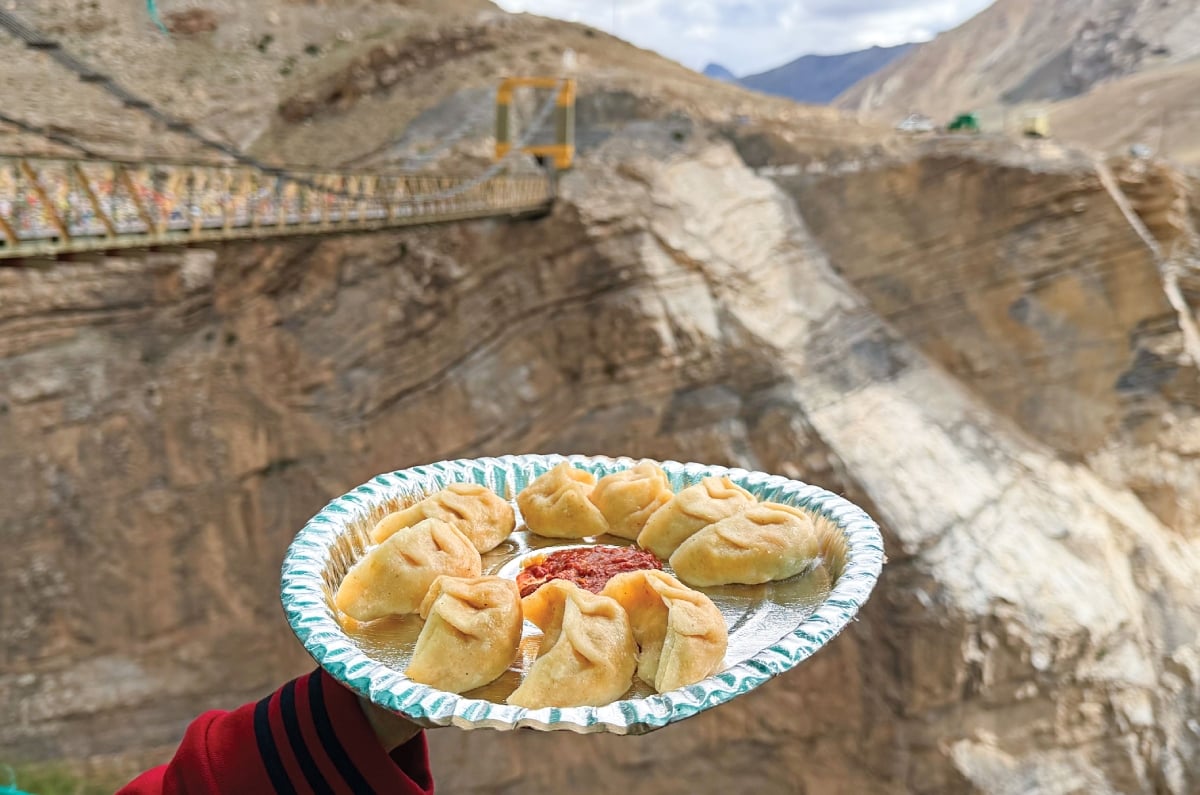
No trip to the mountains is complete without a steaming hot plate of momos.
Looking back, the difficult bits quickly become part of the story rather than something to complain about. The landslide, the weather, the slow progress and the hours behind the wheel all fade away, leaving the views, the unexpected encounters and the satisfaction of having made it.
You don’t simply arrive at Kibber. You earn it. And that is exactly what Terrible Roads to Terrific Places is about. Some of India’s most unforgettable destinations aren’t easy to reach, and the road is as much a part of the experience as the destination itself. It helps, of course, to have a capable companion along the way. On this journey, the Renault Duster proved to be exactly that.
Kibber is only the beginning, so imagine where the road, or lack of one, will take us next. In fact, if you stay tuned to this series, you’ll find out soon. But for now, I’ll leave you with a little hint: it’s a lot closer to Autocar India’s home than you think.
Nepal Flood: नेपाल 26 अगस्त को आई भीषण बाढ़ से हुए नुकसान से अभी पूरी तरह उबर भी नहीं पाया है कि अब एक और चिंता बढ़ाने वाली खबर सामने आई है। नेपाल के दारचुला जिले में बड़े लैंडस्लाइड के बाद चौलानी नदी का बहाव कुछ समय के लिए प्रभावित हुआ है। इसके चलते प्रशासन ने नदी के आसपास और निचले इलाकों में रहने वाले लोगों को सतर्क रहने की सलाह दी है। अधिकारियों ने अचानक पानी बढ़ने और बाढ़ जैसी स्थिति पैदा होने की आशंका को देखते हुए लोगों को सावधानी बरतने को कहा है। लोगों से कहा गया है कि वे नदी के पास जाने से बचें और किसी भी खतरे की स्थिति में सुरक्षित जगह पर चले जाएं।
भट्टर इलाके में हुआ लैंडस्लाइड
नेपाल के दारचुला जिले के अपी हिमाल रूरल म्युनिसिपैलिटी के भट्टर इलाके में लैंडस्लाइड की वजह से बड़ी मात्रा में मलबा चौलानी नदी में जा गिरा है। इससे नदी का पानी कुछ समय के लिए रुक गया है। प्रशासन को आशंका है कि अगर आगे और लैंडस्लाइड हुआ तो नदी का रास्ता पूरी तरह बंद हो सकता है। ऐसे में अचानक पानी का बहाव बढ़ने से निचले इलाकों में बाढ़ का खतरा पैदा हो सकता है। प्रशासन ने चौलानी नदी के आसपास रहने वाले लोगों को सतर्क रहने की सलाह दी है। सुरक्षा कर्मियों को भी संवेदनशील इलाकों में तैनात किया गया है, ताकि लोगों को समय पर जानकारी दी जा सके और जरूरत पड़ने पर तुरंत मदद पहुंचाई जा सके।
प्रशासन रखें है नजर
सुदूरपश्चिम के मुख्यमंत्री खगराज भट्ट ने अधिकारियों और सुरक्षा एजेंसियों को पूरी तरह सतर्क रहने के निर्देश दिए हैं। उन्होंने किसी भी आपात स्थिति से निपटने के लिए पहले से तैयारी रखने को कहा है। प्रशासन ने बाढ़ या किसी अन्य आपदा की स्थिति में लोगों की मदद के लिए इमरजेंसी फोन नंबर भी जारी किए हैं। आर्म्ड पुलिस फोर्स के मुताबिक, फिलहाल चौलानी नदी का पानी नॉर्मल लेवल पर बह रहा है। इसके बावजूद सुरक्षा टीम को बलांच इलाके में तैनात किया गया है, ताकि नदी की स्थिति पर लगातार नजर रखी जा सके और खतरा बढ़ने पर आसपास के लोगों को समय रहते जानकारी दी जा सके।
Fresh landslide in Nepal partially blocks a river
Water is already cutting through again
Reports say this is a localized event in far-western Nepal — unrelated to the much larger August 2026 flood disaster pic.twitter.com/e3Tte0Lgor
चौलानी नदी को चमेलिया नदी के नाम से भी जाना जाता है। यह अपी हिमाल क्षेत्र से निकलकर आगे महाकाली नदी में जाकर मिलती है, जो नेपाल और भारत की सीमा का हिस्सा है। नेपाल के कई हिस्से पहले से ही बाढ़ और अचानक आई बाढ़ से प्रभावित हैं। हाल की बारिश और बाढ़ के कारण कई लोगों को अपना घर छोड़ना पड़ा है और जान-माल का भी नुकसान हुआ है। प्रभावित इलाकों में राहत और बचाव का काम अभी जारी है। ऐसे में चौलानी नदी के बहाव में आई रुकावट ने चिंता बढ़ा दी है, क्योंकि अगर फिर से तेज बारिश होती है तो नदी का पानी अचानक बढ़ सकता है और स्थिति गंभीर हो सकती है।
Weather update 14 August 2026: स्वतंत्रता दिवस की पूर्व संध्या पर देश के अधिकांश हिस्सों में मानसून पूरी तरह मेहरबान और आक्रामक नजर आ रहा है। भारतीय मौसम विज्ञान विभाग (IMD) ने आज (14 अगस्त 2026, शुक्रवार) उत्तर, मध्य और पूर्वोत्तर भारत के कई राज्यों में व्यापक से काफी व्यापक बारिश की चेतावनी जारी की है। बंगाल की खाड़ी के ऊपर बने कम दबाव के क्षेत्र (Depression) के कारण मध्य और पूर्वी भारत में मानसून की रफ्तार बेहद तेज हो गई है। कई इलाकों में 70 से 80 किलोमीटर प्रति घंटे की रफ्तार से तेज हवाएं चलने, बिजली गिरने और भीषण आंधी-तूफान की आशंका जताई गई है।
दिल्ली-NCR में झमाझम, राजस्थान में आफत
राष्ट्रीय राजधानी दिल्ली और आसपास के क्षेत्रों (नोएडा, गाजियाबाद, गुरुग्राम, फरीदाबाद) में आज बादल छाए रहेंगे और कई दौर की तेज बारिश हो सकती है। दिल्ली में अधिकतम तापमान 34°C और न्यूनतम 26-27°C के आसपास रहने का अनुमान है।
पंजाब, हरियाणा और चंडीगढ़ में हल्की से मध्यम और कुछ स्थानों पर भारी बारिश के साथ आकाशीय बिजली चमकने का अलर्ट जारी किया गया है। पूर्वी उत्तर प्रदेश में व्यापक और भारी बारिश की संभावना है, जबकि पश्चिमी यूपी में मानसून सक्रिय रहेगा। पूर्वी राजस्थान के कई जिलों में भारी बारिश को लेकर सतर्क रहने की सलाह दी गई है।
पहाड़ी राज्यों में लैंडस्लाइड का खतरा, रेड/ऑरेंज अलर्ट
जम्मू-कश्मीर, हिमाचल प्रदेश और उत्तराखंड के पहाड़ी क्षेत्रों में लगातार हो रही बारिश से जनजीवन अस्त-व्यस्त है। हिमाचल प्रदेश और उत्तराखंड में कुछ स्थानों पर बहुत भारी से अत्यंत भारी बारिश हो सकती है। प्रशासन ने पहाड़ी रास्तों पर भूस्खलन (Landslide) और नदियों में उफान की चेतावनी जारी की है। पर्यटकों और स्थानीय निवासियों को अनावश्यक यात्रा से बचने की सलाह दी गई है।
छत्तीसगढ़ में हो सकती है भारी बारिश
बंगाल की खाड़ी में बने सिस्टम का सीधा असर मध्य भारत पर देखने को मिल रहा है। छत्तीसगढ़ में मौसम का सबसे भीषण रूप देखने को मिल सकता है। राज्य में अति-भारी बारिश (Extremely Heavy Rainfall) की आशंका को देखते हुए हाई अलर्ट जारी किया गया है। मध्य प्रदेश में भोपाल समेत राज्य के अधिकांश हिस्सों में झमाझम बारिश जारी रहेगी, जिससे निचले इलाकों में जलभराव की समस्या पैदा हो सकती है।
पूर्व और पूर्वोत्तर भारत में ओलावृष्टि
बिहार, झारखंड, पश्चिम बंगाल (गंगा के तटीय क्षेत्रों) और ओडिशा में अगले 24 घंटों के दौरान मूसलाधार बारिश का अनुमान है। इन क्षेत्रों में तेज हवाओं के साथ-साथ कुछ जगहों पर ओलावृष्टि (Hailstorm) की भी संभावना है। पूर्वोत्तर भारत के असम, मेघालय और अरुणाचल प्रदेश में भी मानसून के पूरी तरह सक्रिय रहने से भारी बारिश की चेतावनी दी गई है।
कोंकण, गोवा, मध्य महाराष्ट्र और विदर्भ में मध्यम से भारी बारिश हो सकती है। मुंबई में तापमान 30°C के आसपास रहेगा। तटीय कर्नाटक और केरल के कई जिलों में भारी बारिश को देखते हुए 'येलो अलर्ट' जारी किया गया है। तमिलनाडु में छिटपुट बारिश के आसार हैं।
Mumbai Ghatkopar Landslide: मुंबई के घाटकोपर इलाके में बुधवार तड़के भूस्खलन के कारण एक चॉल पर पहाड़ का हिस्सा गिरने से बड़ा हादसा हो गया। इस हादसे में करीब 5 लोगों की मौत हो गई है, जबकि कई अन्य लोगों के मलबे में फंसे होने की आशंका है। वहीं, इस घटना के बाद कई एजेंसियों ने बड़े पैमाने पर बचाव अभियान शुरू किया है।
बता दें कि यह भूस्खलन सुबह करीब 3:48 बजे कुर्ला के चिराग नगर में राठौड़ मेडिकल के पास स्थित गौसिया चॉल में हुआ। बताया जा रहा है कि पहाड़ी का एक हिस्सा अचानक नीचे ढह गया, और इसका मलबा पास की चॉल के दो से तीन कमरों पर जा गिरा।
हालांकि, मलबे से दो लोगों को बाहर निकाला गया, जिनकी पहचान 28 वर्षीय साहिल अंसारी और 14 वर्षीय मोहम्मद समीर के रूप में हुई है। उन्हें राजावाड़ी अस्पताल ले जाया गया, जहां डॉक्टरों ने उन्हें मृत घोषित कर दिया।
शुरुआत में खबर थी कि मलबे में 3 से 4 लोग फंसे हो सकते हैं, लेकिन बाद में स्थानीय लोगों ने बताया कि 6 से 8 लोग अभी भी मलबे के नीचे दबे हो सकते हैं।
वहीं, मुंबई फायर ब्रिगेड ने सुबह करीब 4:32 बजे इस घटना को लेवल-2 इमरजेंसी घोषित किया और तुरंत राहत-बचाव अभियान शुरू कर दिया। फिलहाल करीब 50 BMC कर्मचारी और राष्ट्रीय आपदा प्रतिक्रिया बल (NDRF) की टीमें मिलकर मलबे में फंसे लोगों को निकालने का काम कर रही हैं।
जानकारी के अनुसार, मलबे को हटाने और उसके नीचे फंसे लोगों को खोजने के लिए खास बचाव उपकरणों का इस्तेमाल किया जा रहा है।
DCP ने दी जानकारी
DCP गणेश शिंदे ने बताया कि अब तक दो शव बरामद किए जा चुके हैं और बचाव अभियान अभी भी जारी है।
अधिकारी ने कहा, “बारिश के कारण घाटकोपर पुलिस के अधिकार क्षेत्र में आने वाले अशोकनगर इलाके में भूस्खलन हुआ है। अब तक दो शव बरामद किए जा चुके हैं और बचाव अभियान चल रहा है।”
इस घटना में घायल हुए दो अन्य लोगों को अस्पताल में भर्ती कराया गया है और उनकी हालत स्थिर है। इनकी पहचान 18 वर्षीय सोहेल अंसारी (सिर में चोट) और 14 वर्षीय मोहम्मद अंसारी (पीठ में चोट) के तौर पर हुई है।
राहत और बचाव कार्य जारी
DCP शिंदे ने कहा, “बचाव कार्य जारी है और इमरजेंसी रिस्पॉन्स टीमें व स्थानीय अधिकारी घटनास्थल पर लगातार कोशिशें कर रहे हैं। हालांकि अभी सही संख्या की पुष्टि नहीं की जा सकती, लेकिन आशंका है कि मलबे के नीचे अभी भी तीन से चार लोग फंसे हो सकते हैं।”
बता दें कि हादसे में जान गंवाने वाले लोगों के शवों को आगे की प्रक्रिया के लिए अस्पताल भेज दिया गया है। पुलिस ने बताया कि मामले में कानूनी कार्रवाई और जांच आगे जारी रहेगी।
वहीं, मुंबई फायर ब्रिगेड, मुंबई पुलिस और NDRF की टीमें घटनास्थल पर तैनात की गई हैं, जबकि BMC के वार्ड कर्मचारी और अन्य इमरजेंसी कर्मी बचाव कार्य में मदद कर रहे हैं।
BMC मेयर ने किया घटनास्थल का दौरा
BMC की मेयर रितु तावड़े और एडिशनल म्युनिसिपल कमिश्नर (ईस्टर्न सबर्ब्स) अविनाश ढकने ने भी हालात का जायजा लेने के लिए घाटकोपर में प्रभावित जगह का दौरा किया।