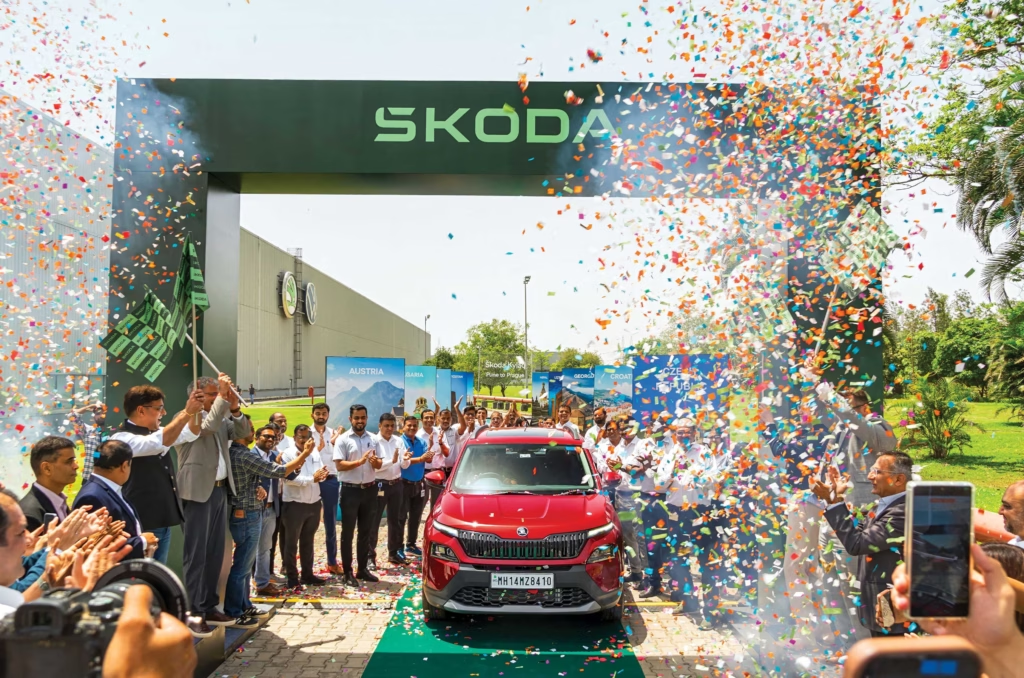
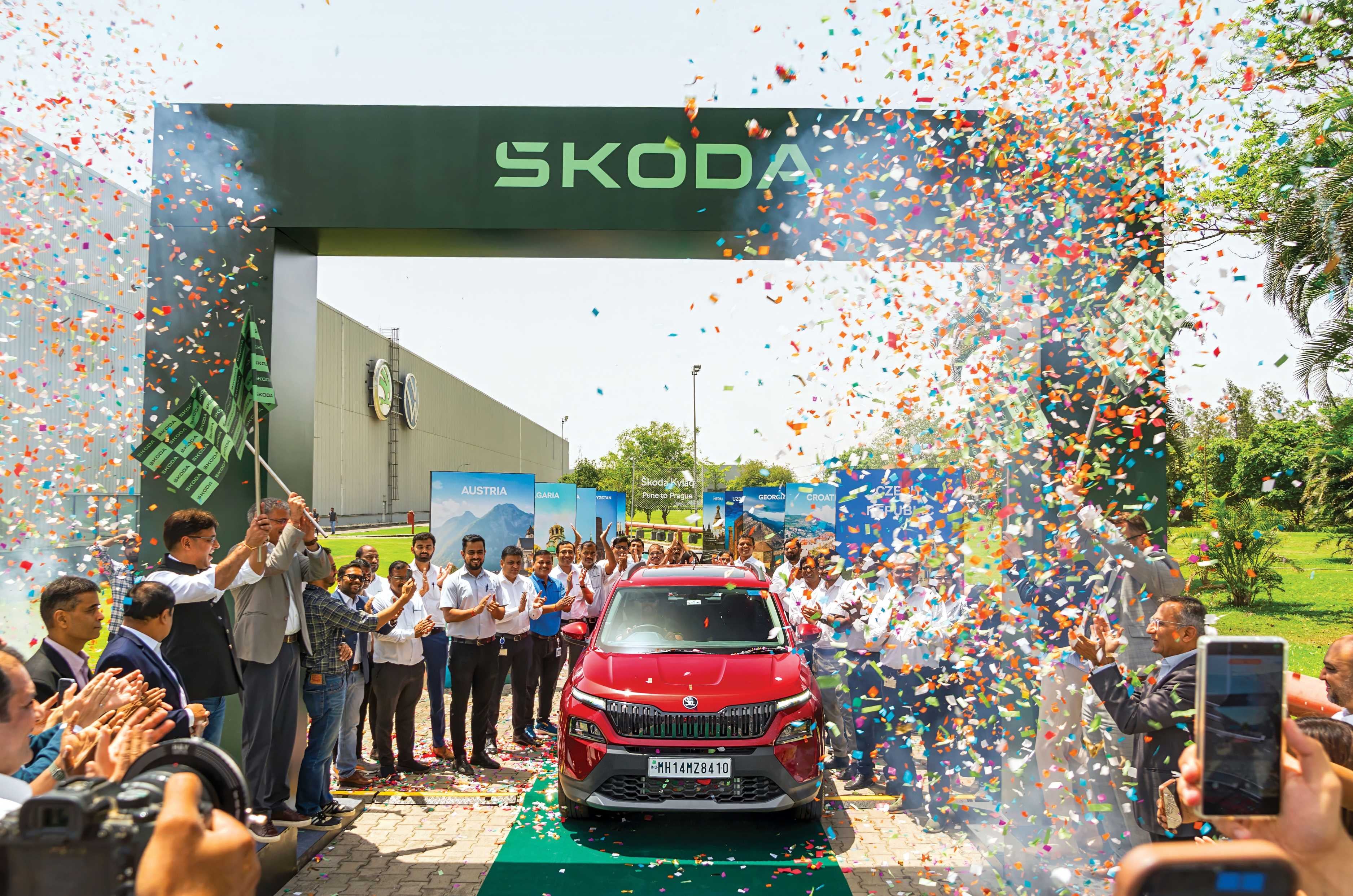
Skoda Kylaq Pune to Prague Leg 1: To the home away from home

Skoda Kylaq Pune to Prague Leg 1: To the home away from home
skoda kylaq p2p

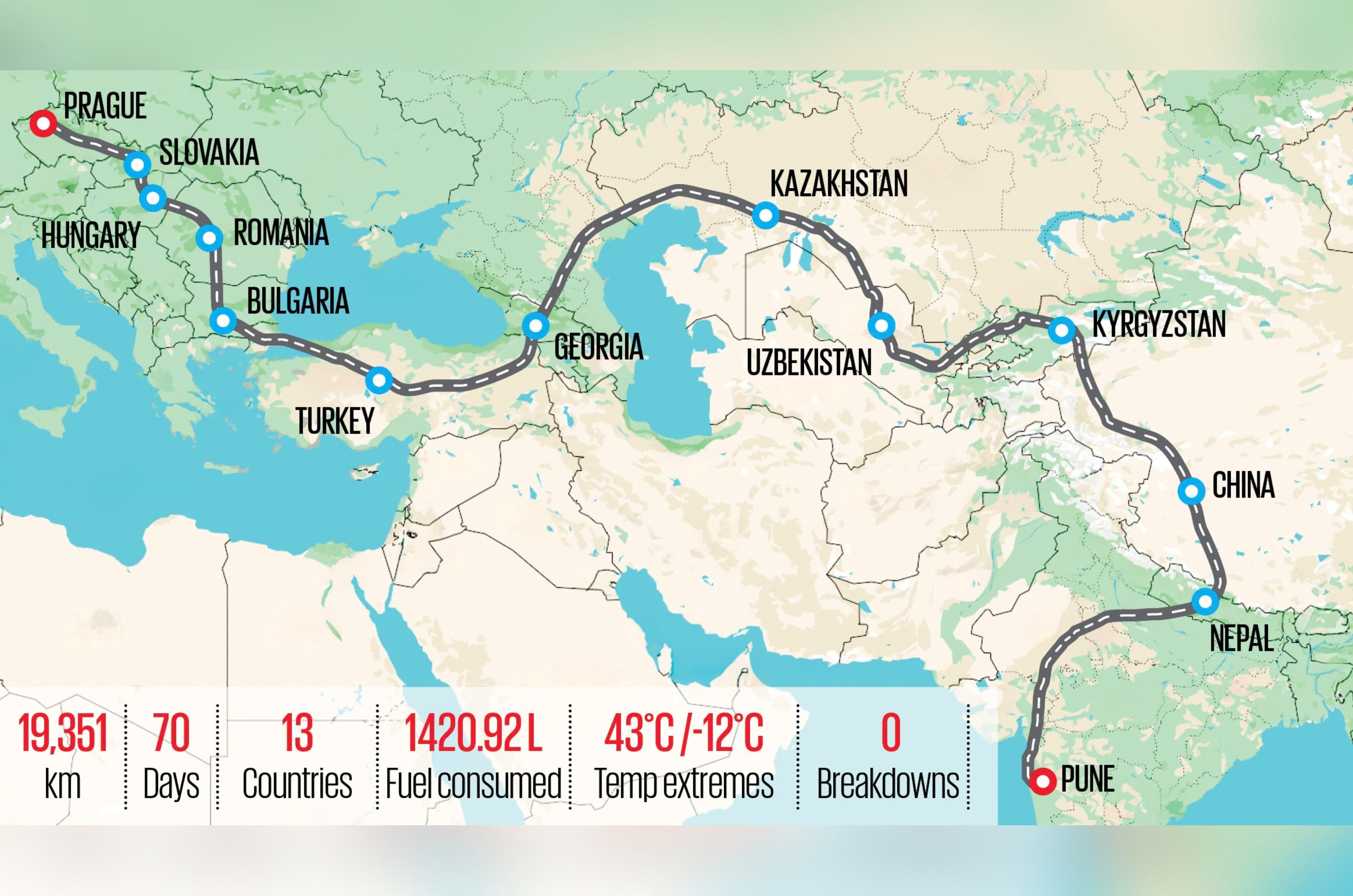
There are road trips, there are overland expeditions, and then there are journeys that become conversations with continents. This one starts in the industrial heart of Maharashtra, inside Skoda India’s sprawling Chakan facility. The end point lies nearly 20,000 kilometres away at Skoda Auto’s headquarters near Prague in Mladá Boleslav, Czech Republic, where bicycles evolved into automobiles and a 130-year-old story continues to be written.

Between these two factories lie thirteen countries, four major mountain ranges, countless cuisines, dozens of languages and enough history to fill libraries.
Our companion? Not a flagship SUV or a luxury grand tourer, but Skoda’s smallest SUV – the Kylaq, which recently celebrated its one-year anniversary. Driving it from Pune to Prague is a tall order, but surviving one year in India and being accepted with flying colours is enough cred one needs to take on the world.

India – Home Turf
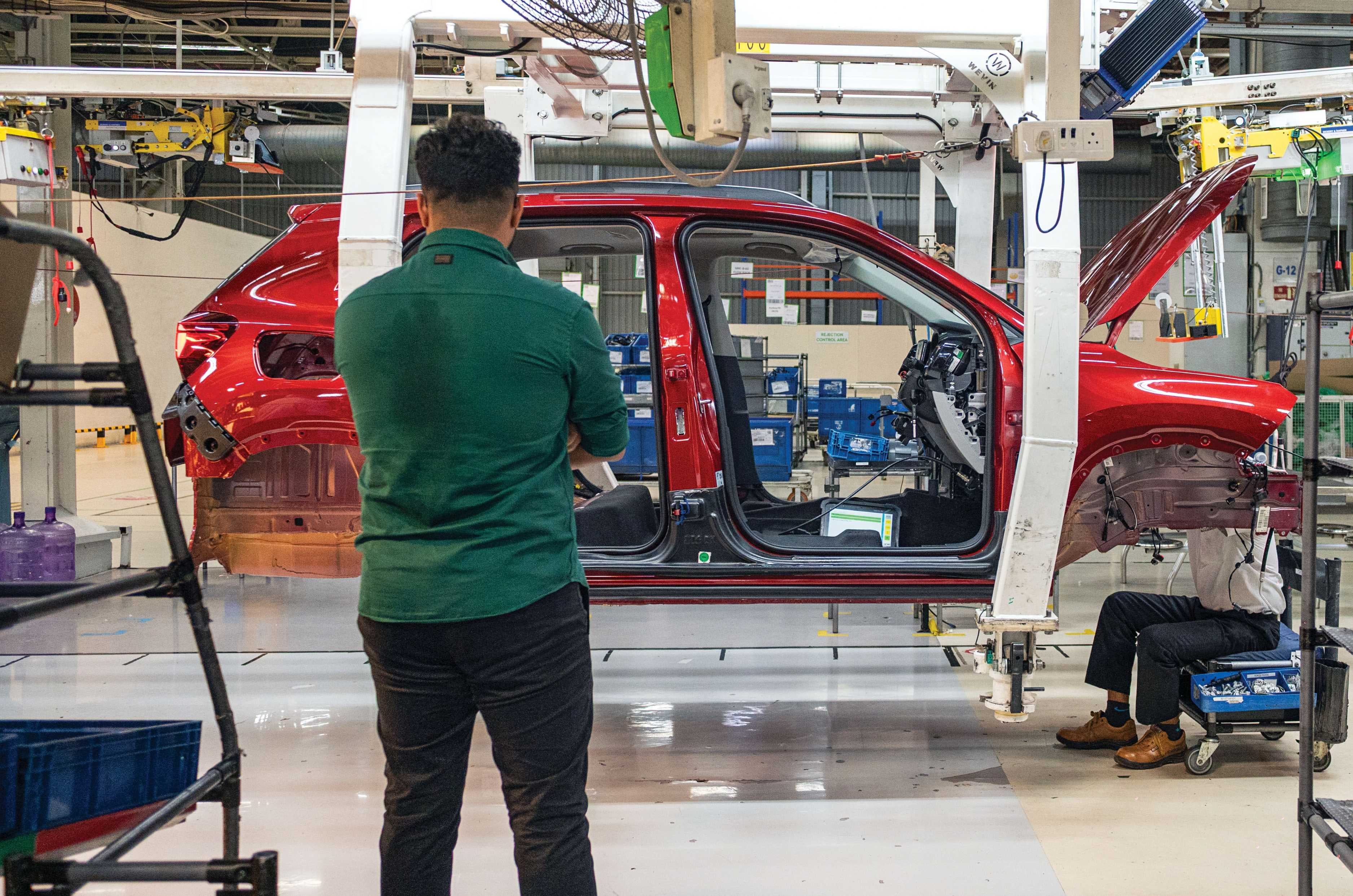
Witnessing the Kylaq’s birth added more responsibility.

On a cross-country road trip, you’d imagine the home country would be the easiest leg. With India, it was the opposite. To some, it’s organised chaos, but honestly, it’s anything but organised. Erratic traffic, erratic egos, and road conditions fit only for a Mars rover – India was the biggest challenge on the drive from Pune to Prague. As the odometer ticked over its first kilometre, right outside the gate of Skoda’s Chakan plant, a blood-red PMPML bus was ready to trade paint with the cherry-red Kylaq. A dinged-up Kylaq parked on the streets of Prague wouldn’t be a good look, so it was imperative that I babysit this compact SUV like a million-dollar supercar. Having watched the car being assembled on the factory floor, from bare bones to the finished package, only added to the emotion – driving it in traffic felt like walking a toddler across a football field. Eyes wide open, ready to block any attack.
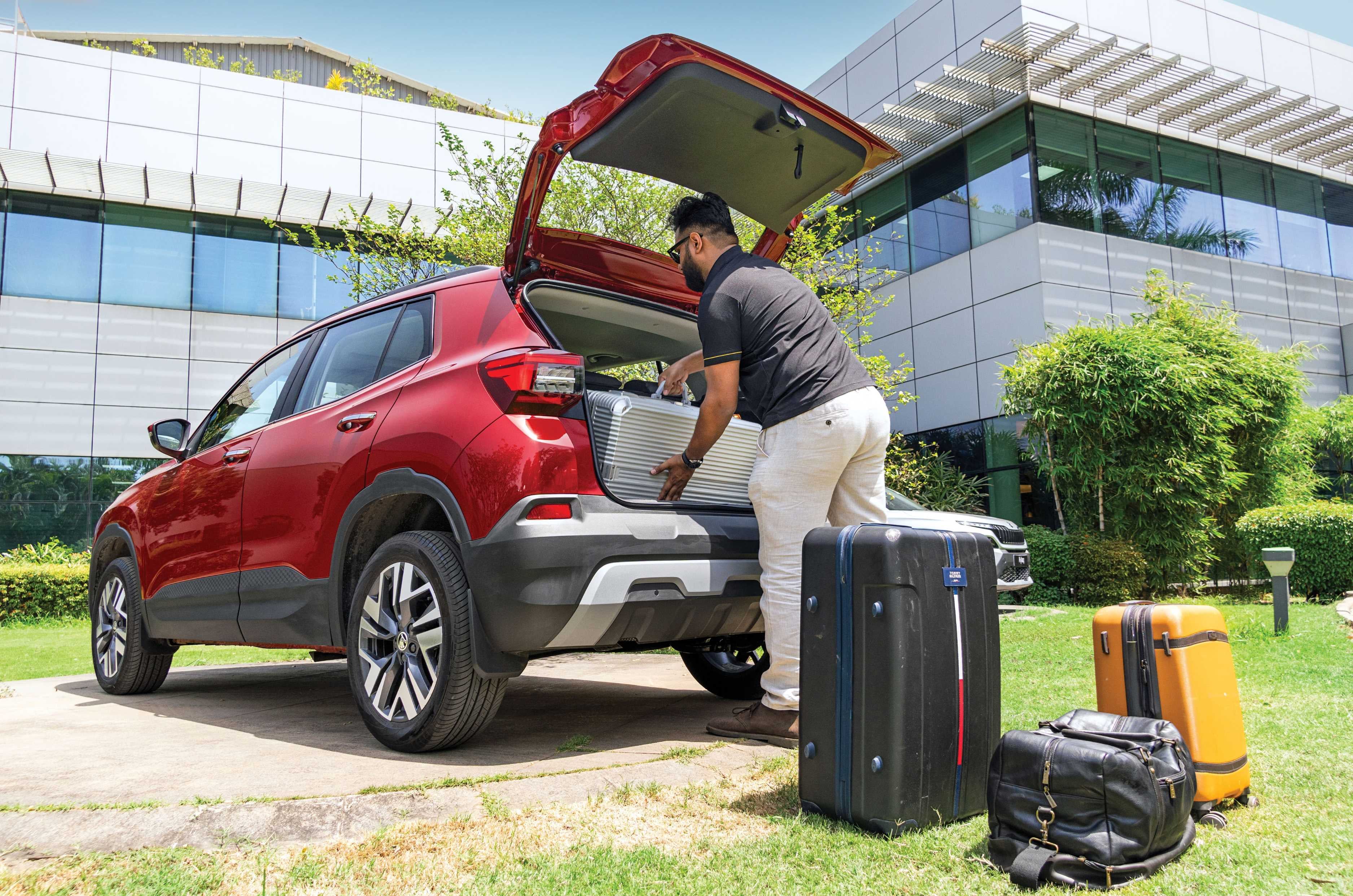
446-litre boot packed to the brim for 70 days on the road.

We got onto the Pune expressway and then crossed the Atal Setu in Mumbai, the longest sea bridge on the entire journey. Mumbai was home, both to me and to the Autocar India office, so after a few greetings from co-workers and the obligatory photos, we headed towards our first state crossing. The infamous Western Express Highway that leads out of Mumbai lived up to its reputation, but with a little anxiety, panic and a few expletives, we made it onto the national highway.
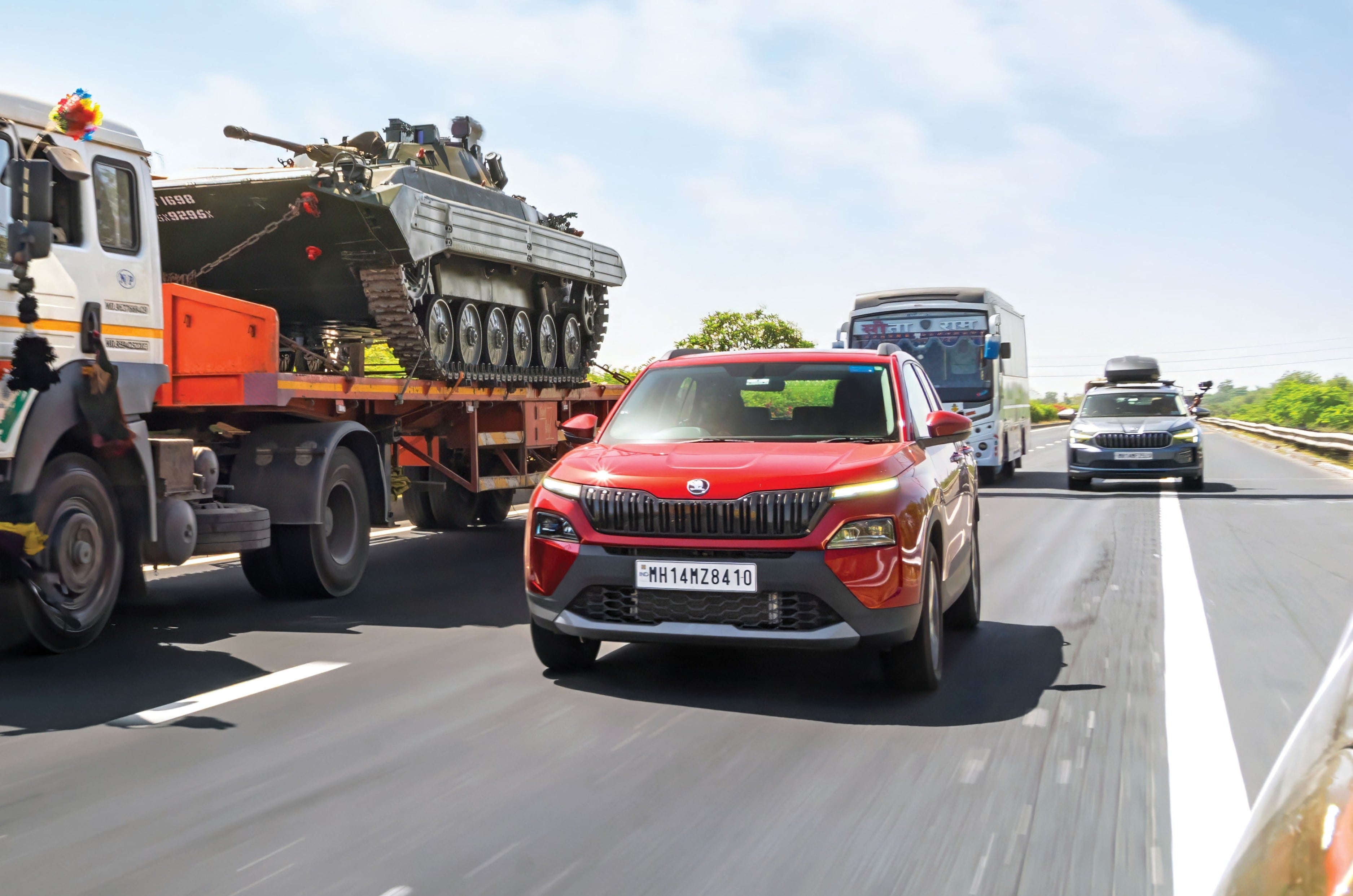
No telling what you’d spot on Indian highways.

The first of countless food stops was Hotel Ahura, renowned for its akuri and kheema. Needless to say, we carb-loaded to the max and made a beeline for Vadodara.

Pune-Birgunj in numbers

Distance covered2,487km
Fuel consumed234.46 litres
Average fuel economy10.62kpl
Approximate fuel costRs 23,629
Average per-litre fuel costRs 100.87
Total time driven55hrs 20min
Average speed44.95kph

Crossing into Gujarat, the Kylaq could finally stretch its legs and spool up that turbo on the state’s spotless highways. The stability and effortless cruising were a welcome relief, since the bulk of the kilometres on this drive would be covered on long, open highways. Gujarat was a short stint – we made only an overnight halt in Vadodara before slipping out ahead of the morning traffic. The drive into Rajasthan was seamless, and Udaipur greeted us with a mix of heat and traffic. The City of Lakes is worth taking the time to explore, but a late arrival and early morning departure left us with just enough time to grab a traditional meal. All that driving had built up an appetite, so we put it to a vote between a massive vegetarian thali and laal maas – the latter won by a landslide. From the City of Lakes, we headed to Jaipur, the Pink City: just as picturesque as Udaipur, and just as colourful and chaotic. The sun setting over the beautiful Amer Fort made for a cracking backdrop, and a few glimpses of the Jal Mahal on the way back were a treat too. The iconic Hawa Mahal, with its 953 windows, never fails to amuse, but getting a photo of the five-storey icon without a chorus of honks is next to impossible. The next morning, after threading through Jaipur’s narrow lanes, we made it back onto the highway, heading for Agra.
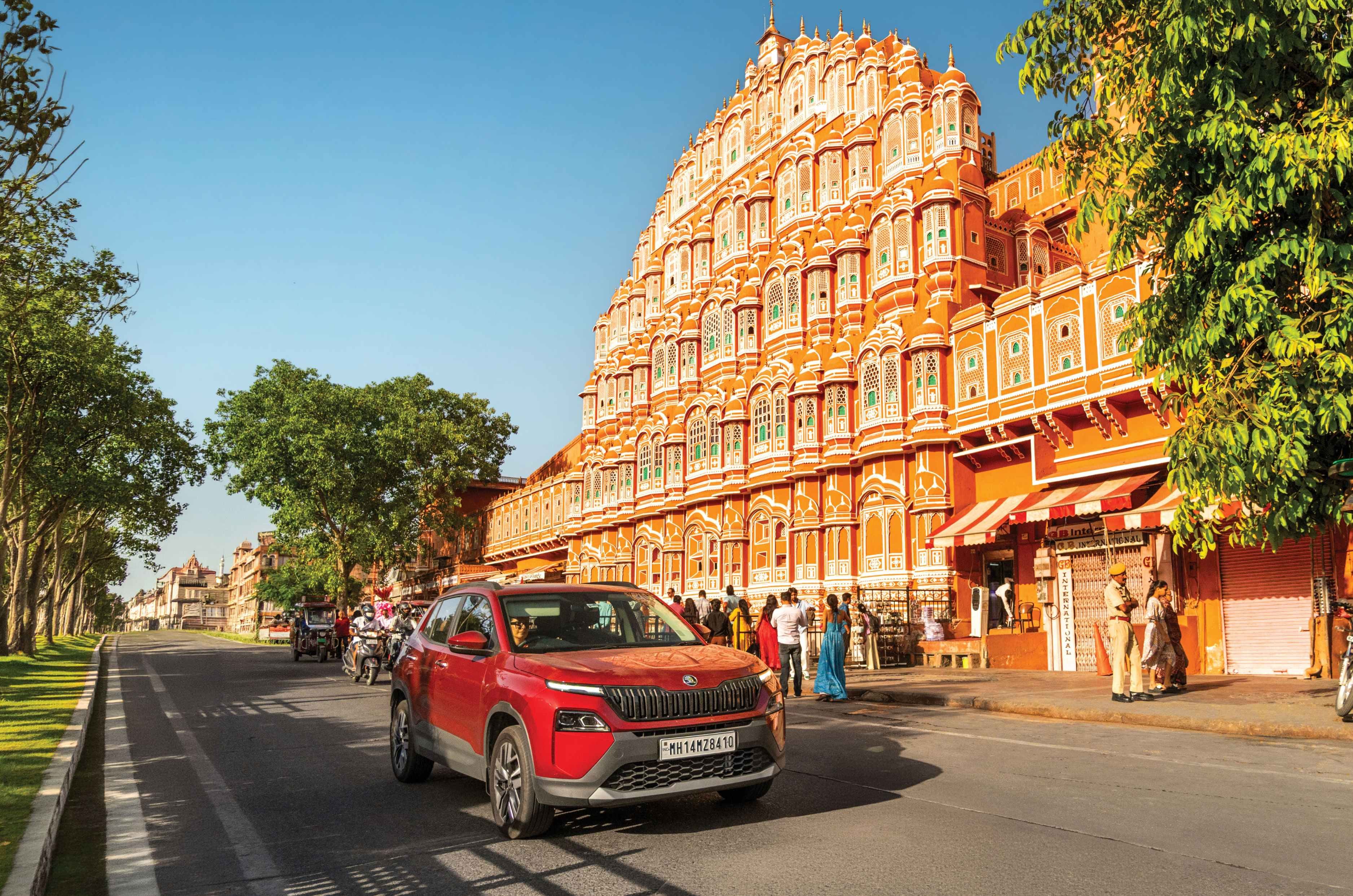
Iconic Hawa Mahal ought to be seen first-hand.

Agra is synonymous with the Taj Mahal, but the Agra Fort – from which you can see the Taj in the distance – is just as mesmerising. The detailing and architecture are second to none, and you could spend hours walking through its courtyards and passages, taking endless pictures. We, of course, also made it to the Taj itself, amid the hordes of tourists, if only to avoid the guilt of visiting Agra without a shot of the world-famous white dome. Tourism done, it was time for some petha – though the lanes near the petha shops seemed to be the exact width of the Kylaq, and that’s where peak anxiety set in. We got out of the mess, walked around the car to check for scratches and scribbles, and sighed in relief. India was adding to the tension, and we were barely halfway through it.
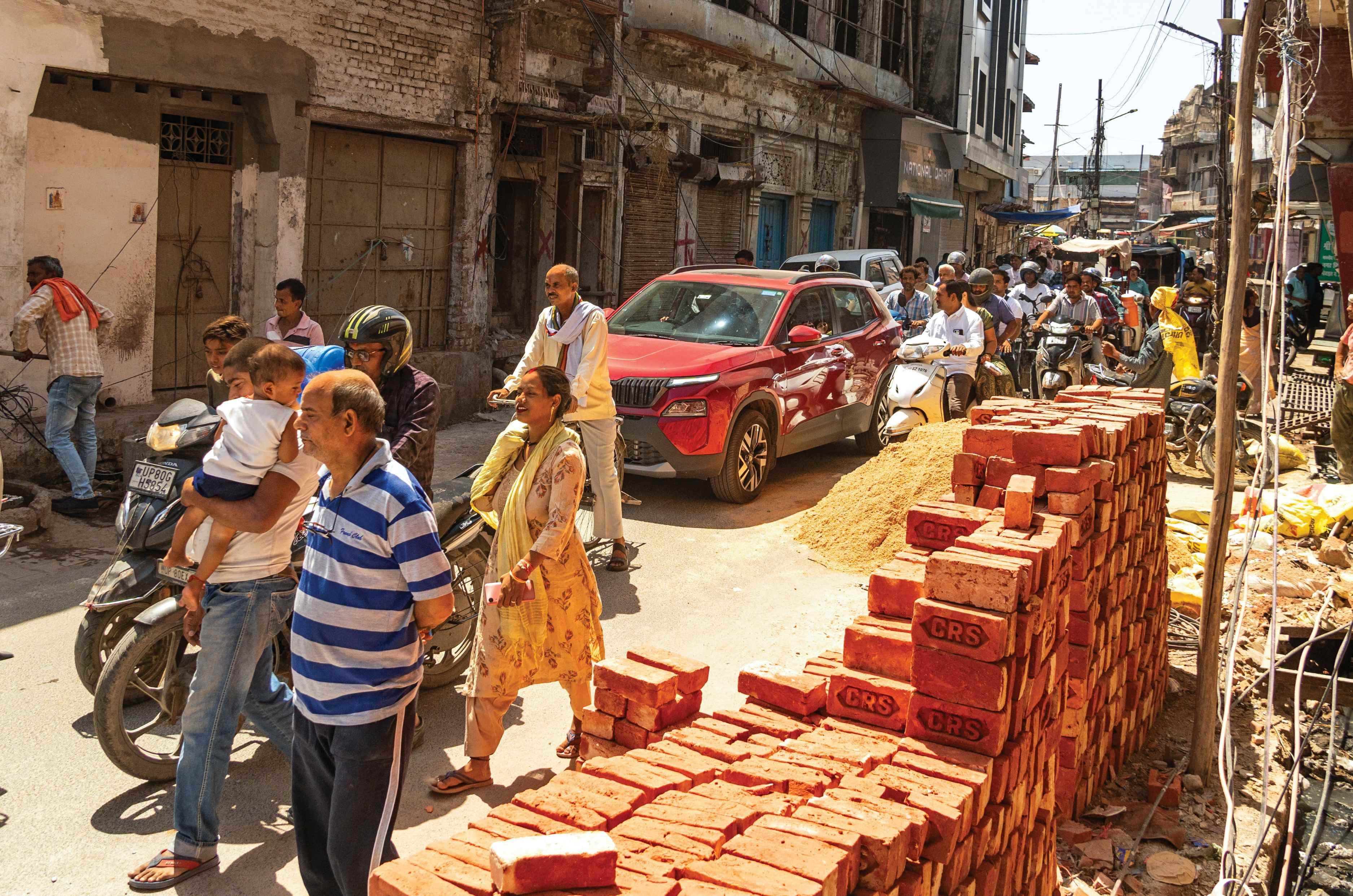
Agra’s narrow lanes were a nightmare to drive through.

Our next stop from Agra was foodie heaven – Lucknow. The biryanis, kebabs, and tandoors were exactly what we expected, and exactly what Lucknow delivered. Finding your way here is easy – you could do it blindfolded, following the smoke and sizzle to wherever you need to be. Tunday Kababi is a must, and after a heap of biryani laced with kebabs, a long walk through the countless chikankari shops helps burn off some of the calories.
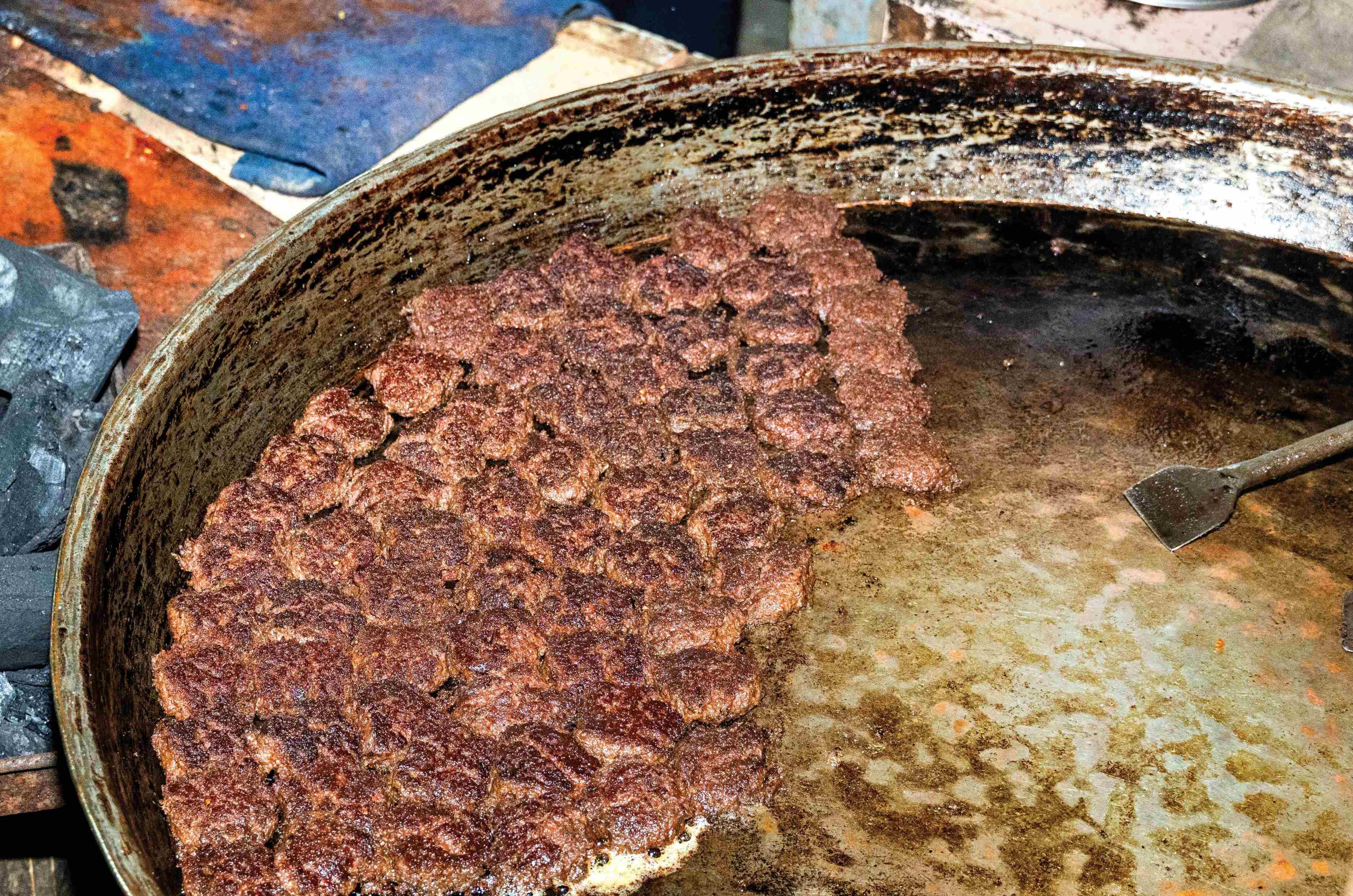
Lucknow’s Tunday Kababi still has us drooling over Galouti kebabs.

We were closing in on the end of the India leg, with one last stop in Gorakhpur before the Nepal border. To celebrate, a group of Skoda owners, officially known as the ‘Fans of Skoda’ joined us for a celebratory convoy as we drove out – everything from Octavia RS models to Kodiaqs and Kushaqs turned up as a send-off before we went international. The loud, chaotic border towns past Gorakhpur delivered one final challenge as we exited through Raxaul.
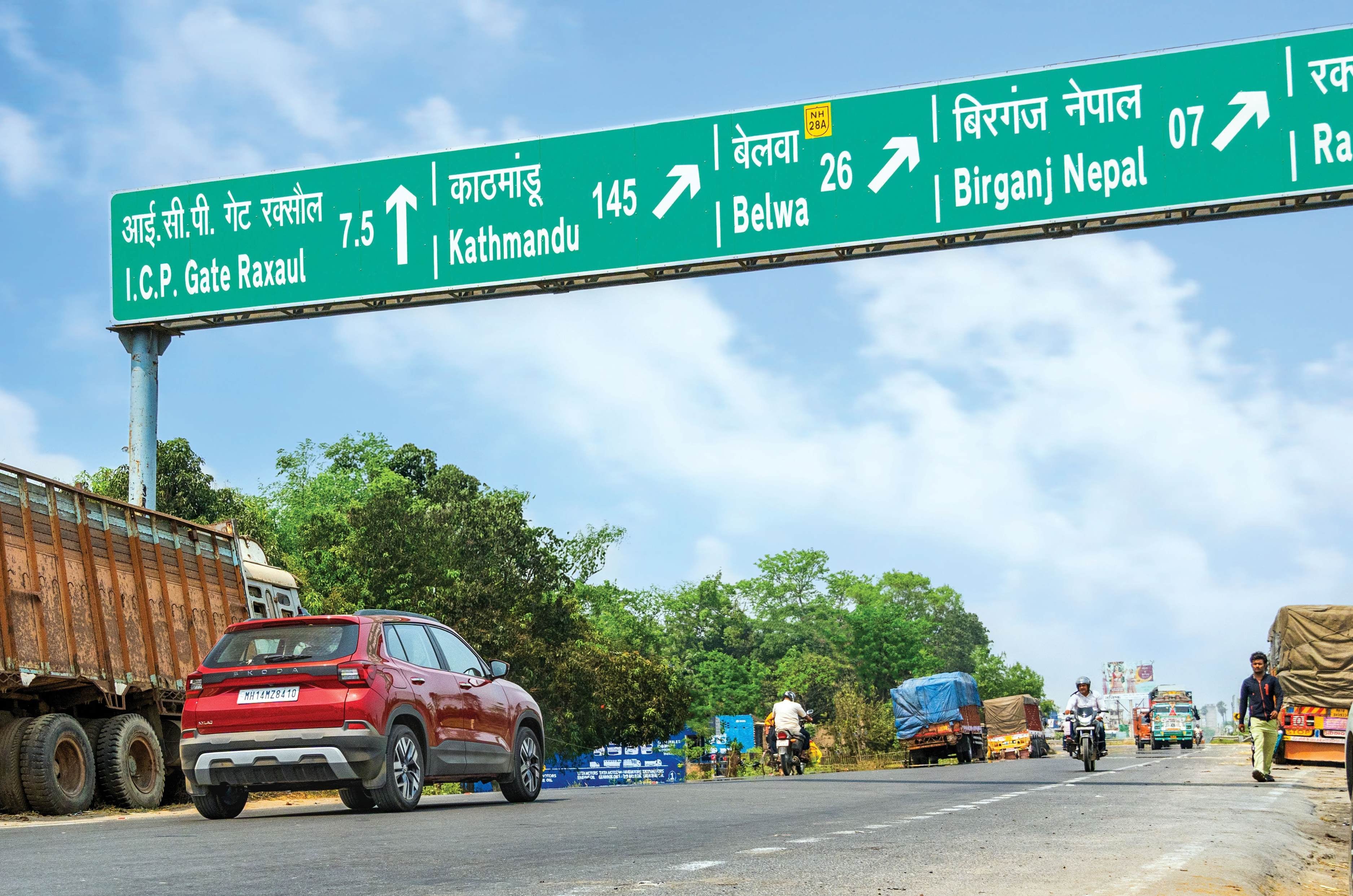
Final stretch before the Kylaq left India for the first time.

The India-Nepal border is still raw and basic, with none of the high-tech systems you might expect. A drive of this scale comes with a mountain of paperwork – visas, carnets, insurance, and more – and sifting through all of it manually takes a while. After a gruelling five hours, the Kylaq crossed out of India for the very first time.

Nepal – Old World Charm
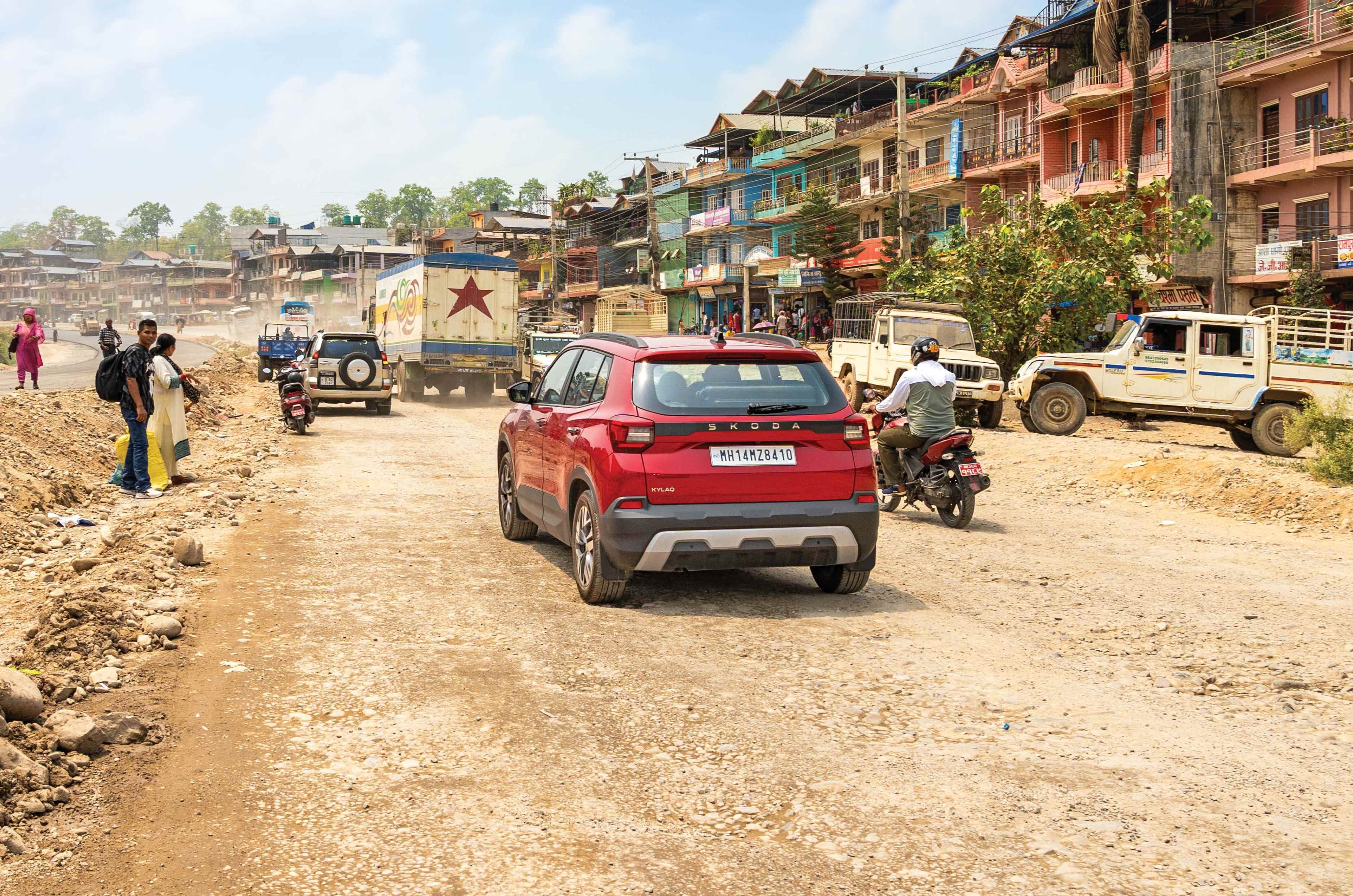
Nepal’s state highways give Indian roads a run for their money.

If the Indian side of the border was old-school, Nepal’s immigration post is almost antique. Drive past it, and you’d likely miss it altogether – the only tell-tale sign is a simple gate with ‘Immigration Office’ hand-painted on it. This humble-looking house is, in fact, the immigration office, where, just like on the Indian side, every check is done manually. Fine print, identity proofs, and everything in between were checked meticulously before we were welcomed into Birgunj. Our main draw in Nepal was the bustling capital, Kathmandu, but there were magnificent stops along the way, starting with Chitwan National Park.
Home to nearly 700 one-horned rhinos, the park also shelters elephants, Bengal tigers, cobras, the elusive gharial, and abundant flora. The Kylaq would have been fun to explore it in, but we opted for the park’s safari vehicle to relax and take in the surroundings. Paddling a beaten-up wooden kayak past crocodiles and snakes adds a rush, but it’s nothing compared to a rhino staring you down in all its magnificence. The park gave us a welcome break from long hours behind the wheel.
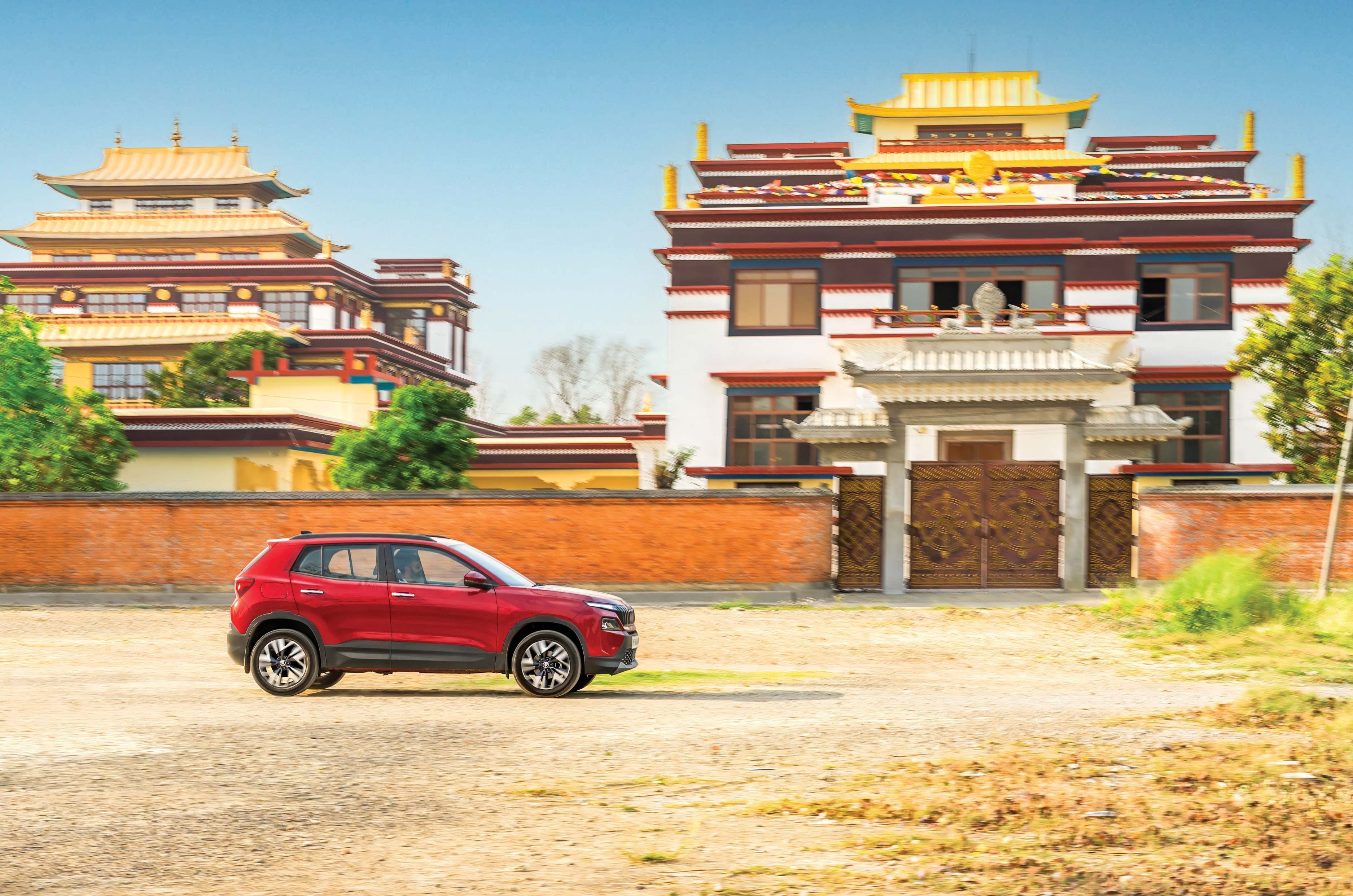
Lumbini is home to 32 unique styles of monasteries.

Next was Lumbini, a spiritual haven and, more importantly, the birthplace of Siddhartha Gautama (Lord Buddha) around 563 BC. Its fascinating monastic zone showcases monasteries built by Buddhist nations from around the world, each reflecting its own culture through design and architecture – a remarkable collection of temples spanning diverse traditions. The feeling of peace there was unlike anything I’d experienced, but it was soon disrupted by the road to Pokhara.
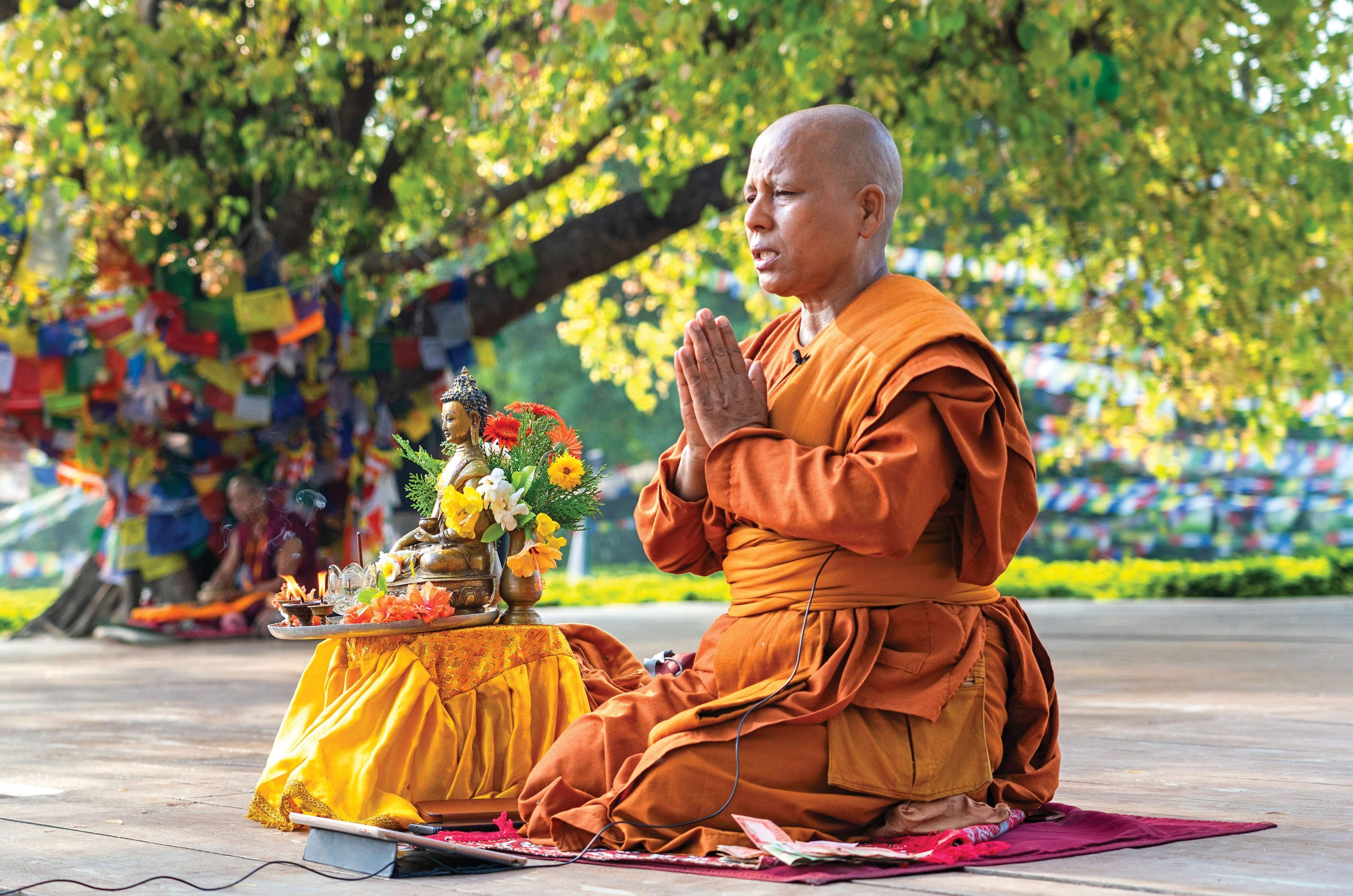
Lumbini provided a moment of calm through the chaos.

Mountain passes are notorious for destroying Google’s ETAs – landslides, breakdowns, and deteriorating roads mean a stretch that should take an hour could take five, depending on your luck. We braced for traffic and drove straight into a landslide clearing. A two-hour wait meant the sun was setting as we rolled into the quaint town of Pokhara. Bustling with cafés and pop culture, it felt like a mini Kathmandu, but with the stunning Phewa Lake turning orange at sunset. The calm that began in Chitwan came full circle on the shores of Phewa Lake.
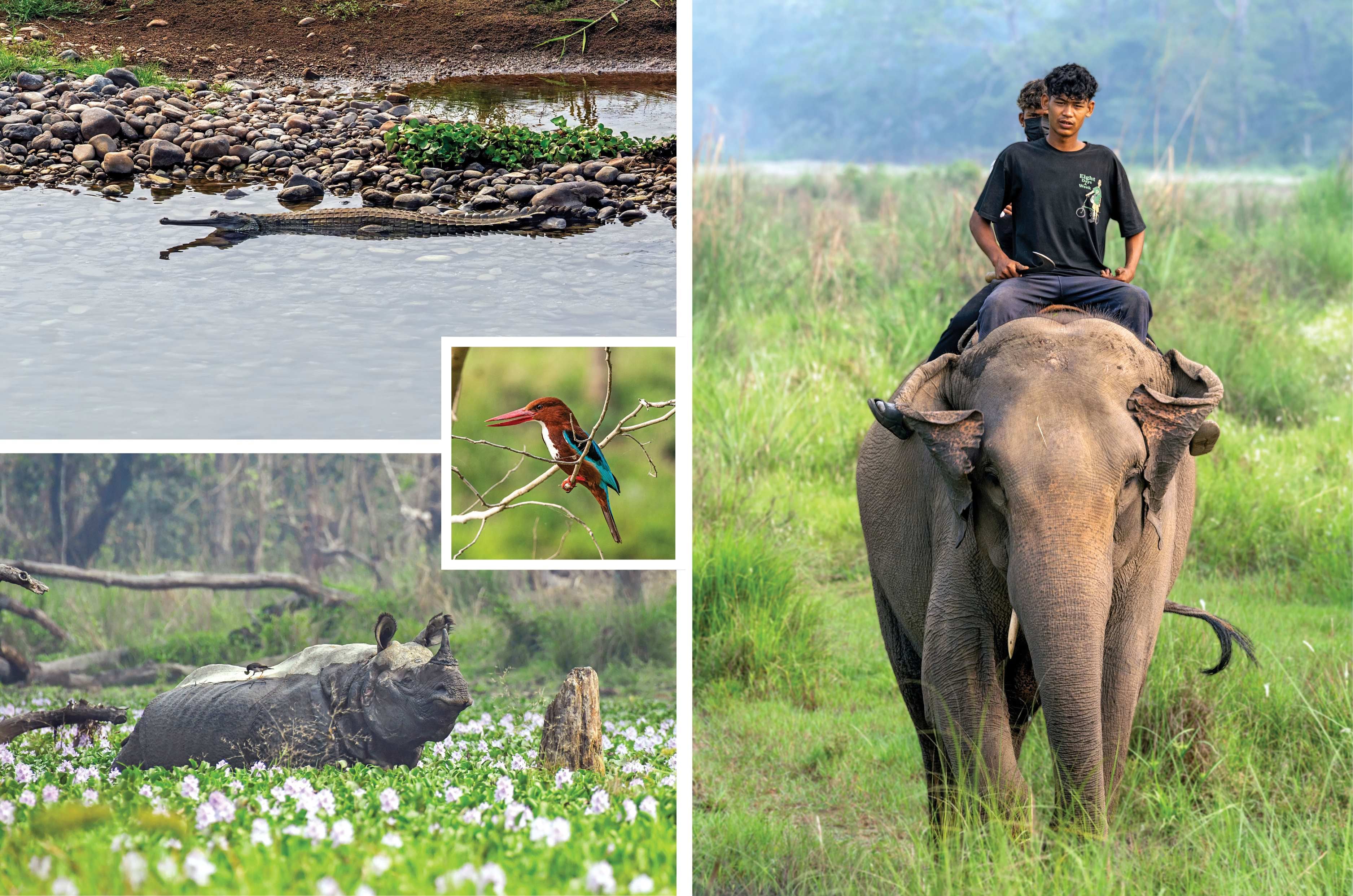
Chitwan is home to the gharial and over 700 one-horned rhinos.

Kathmandu, though, was a different animal entirely – every bit a capital city, and a world away from the slow pace of Chitwan or Lumbini. The music is loud, the traffic is hectic, and the city is anything but quiet. Ironically, the only quiet things on the road are the cars – China’s dominance in Nepal is stark, with three in five cars on the road being Chinese EVs. Geely, BYD, and GWM rule the market, with only a handful of Hyundais and Kias as competition.
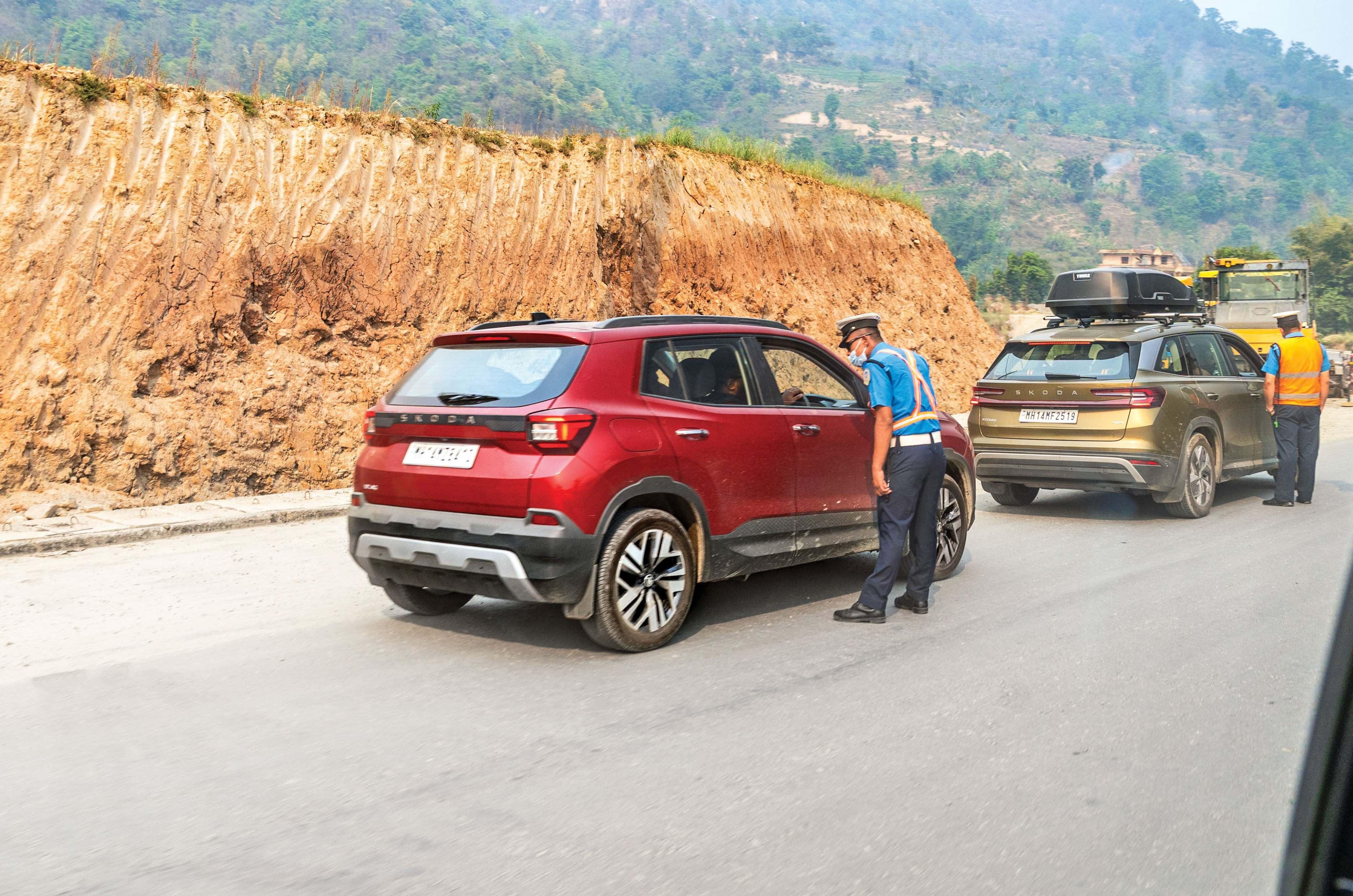
Authorities were always curious thanks to Indian number plates.

The party scene rules Kathmandu too. At night, the city comes alive as a hub for tourists from around the world. Hiking gear and North Face apparel go for a fraction of the price – and, often, a fraction of the quality – alongside quirky masks and fridge magnets at every tourist stop. Spend a little more time, though, and you’ll find excellent coffee shops and the famous Thakali thali: thick buckwheat porridge with salads, meat, and plenty of flavour. Good thing too, since walking through Durbar Square works up quite an appetite. Partly destroyed by the devastating 2015 earthquakes, the temples have since been restored to their former glory, though you can still spot the scars in a few bent pillars and roofs. It’s a culture and tradition worth preserving, and Nepal deserves credit for doing exactly that.

Birgunj-Sino-Nepal Border in numbers

Distance covered922km
Fuel consumed115.96 litres
Average fuel economy7.13kpl
Approximate fuel costRs 15,846
Average per-litre fuel costRs 136.65
Total time driven34hrs 25min
Average speed27kph

With Kathmandu explored, we headed towards our second border crossing – and this one was far more intense. Once we left Kathmandu, we left the tarmac behind too. Muddy back roads, still wet from the previous night’s rain, meant slush and a constant need for 4WD. Even so, though packed to the brim with luggage, the Kylaq stayed light enough and had enough clearance to pick its way around the mud on the approach to the Rasuwa Bridge. From there, you can see the Chinese immigration building towering over everything around it. With the Kylaq thrumming with excitement, we crossed into Tibet – the roof of the world.

Tibet/China – Roof of the World
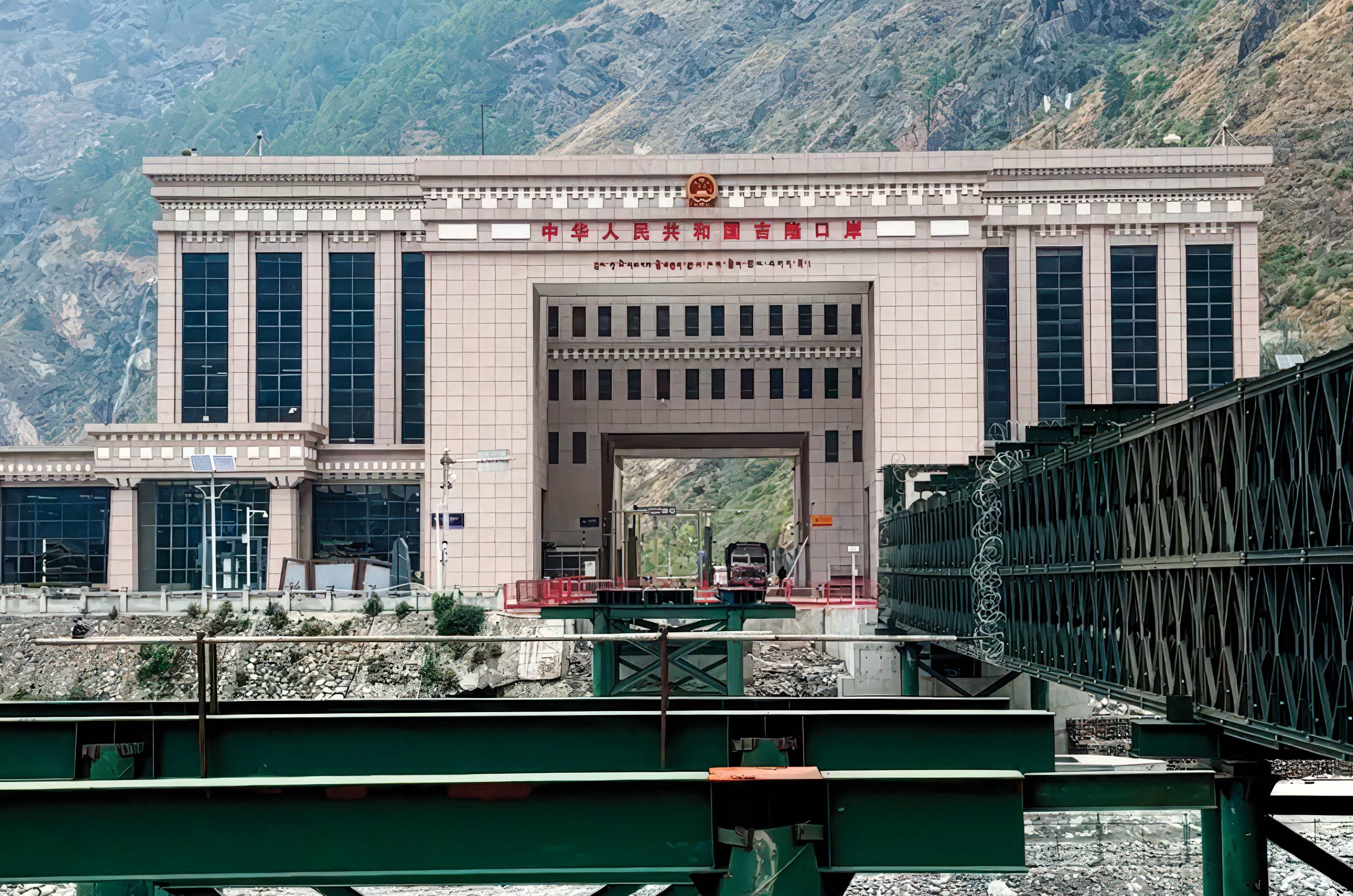
China’s border crossing is as imposing as it gets.

Crossing into Tibet felt like crossing into the future. For a region tucked deep into the mountains, it’s exceptionally developed – the roads are smooth and well-signed from the moment you cross the bridge, barely a hundred metres before the immigration office. In China, we weren’t taking any chances, knowing any misstep here could jeopardise the rest of the journey. After answering the customs officers honestly – and impressing them with the scale of the Kylaq’s challenge – we entered the lovely town of Gyirong. Old Chinese architecture, plenty of red, and signboards we couldn’t quite read were early signs that we really were in a different world now. Nepal had shared plenty with India – the cars, the food, the roads – but China felt entirely its own. We thought we’d seen our share of speed cameras, but China put us to shame – they appear every 50 metres or so, complete with flashes. There’s simply no room for error, and you’re monitored everywhere you go – aneerie feeling that takes some getting used to. Another non-negotiable is to obtain a special driving licence for every person that will be driving and a China-specific number plate, which you have to place on your dashboard so the cameras can pick up any infringements. A regular India-style RTO office with long queues and a lack of urgency got us homesick for a bit.
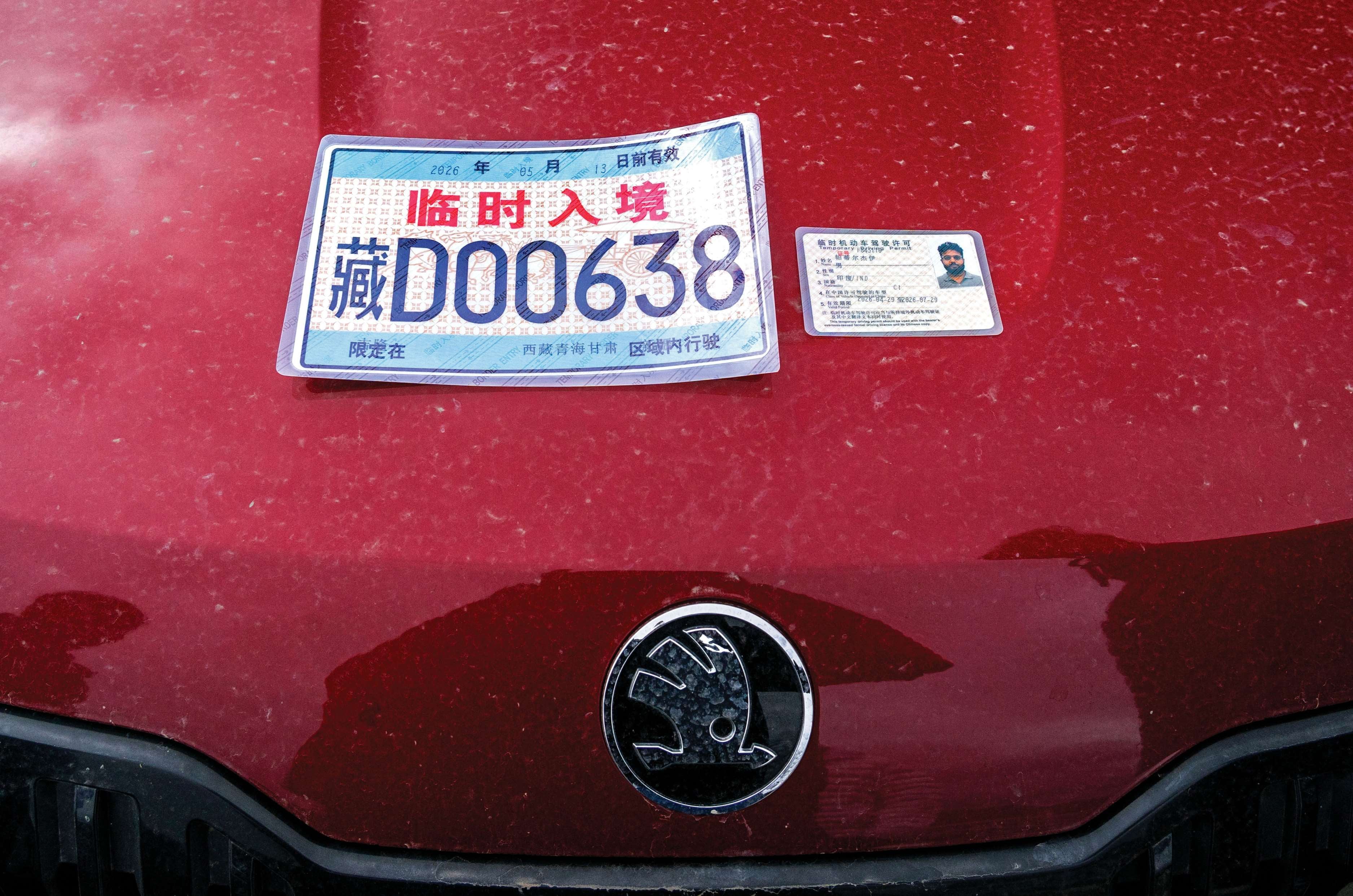
Local license and registration are non-negotiables in China.

A few mugs of hot ginger-lemon tea eased us into the chill, and we set off for Mount Everest Base Camp. High altitudes are usually punishing for small-capacity engines, but thanks to its turbocharged engine, the Kylaq barely broke a sweat, buzzing through the passes. Its 6-speed automatic had been a great convenience through the chaos of India and Nepal, but the winding mountain roads and immaculate tarmac meant I could switch to manual and take control via the paddle shifters. Paddle-shift response is often sluggish, but not here – the shifts were quick, and the taut suspension held its ground even through tight hairpins.
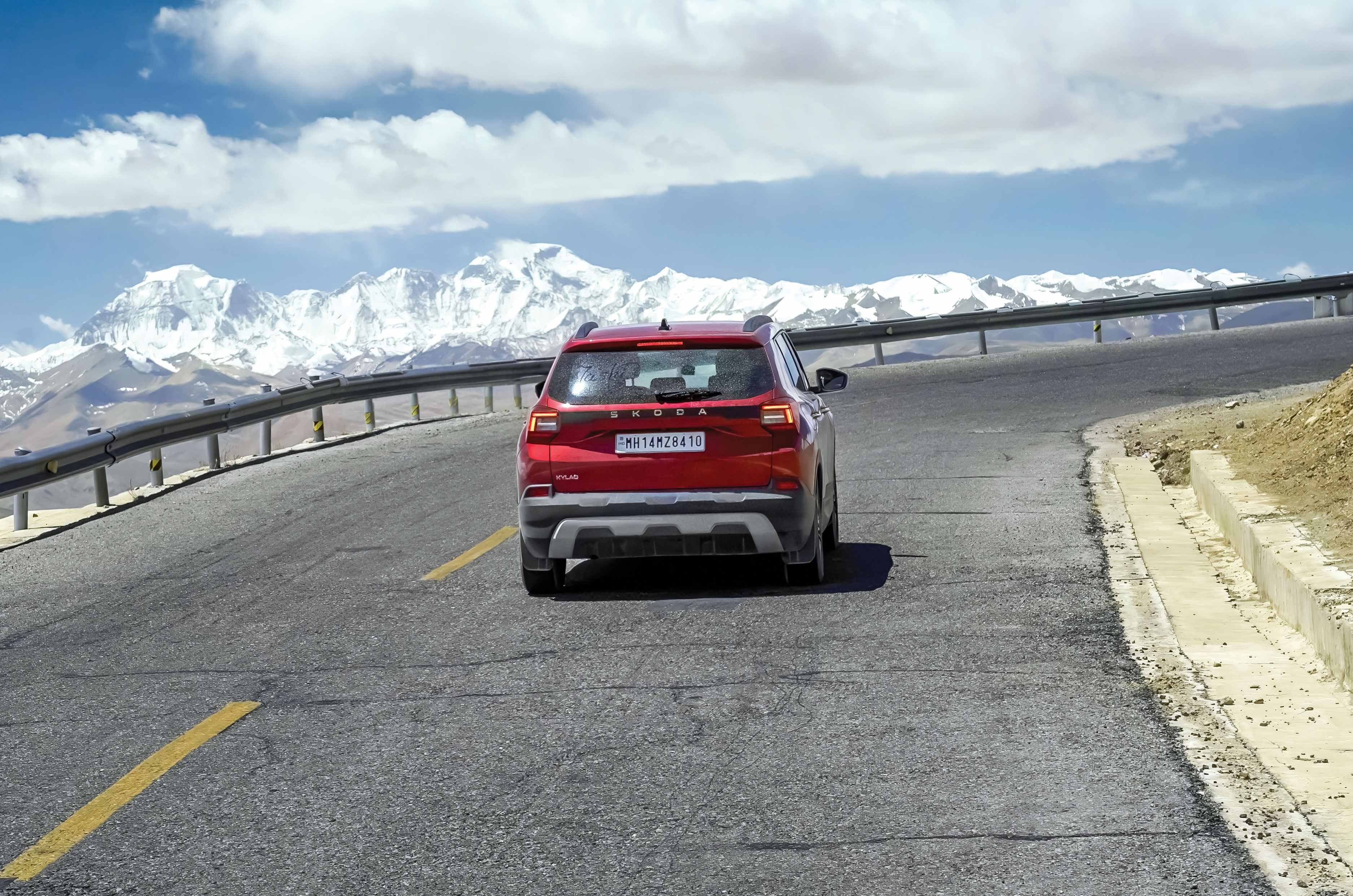
Everest hove into view long before we made it to base camp.

It made for a great drive and great footage, right up until we spotted the peak in the distance. Even from afar, Everest is breathtaking, and mercifully the clouds stayed clear as we got closer. You can’t take a car near base camp itself – a one-hour bus ride covers that final stretch. It’s strange how you lose your breath as you approach Everest – partly the thin air and altitude, but you’d lose it all the same just from the view. Words don’t do it justice, and don’t be surprised if you shed a tear or two – it’s overwhelming.
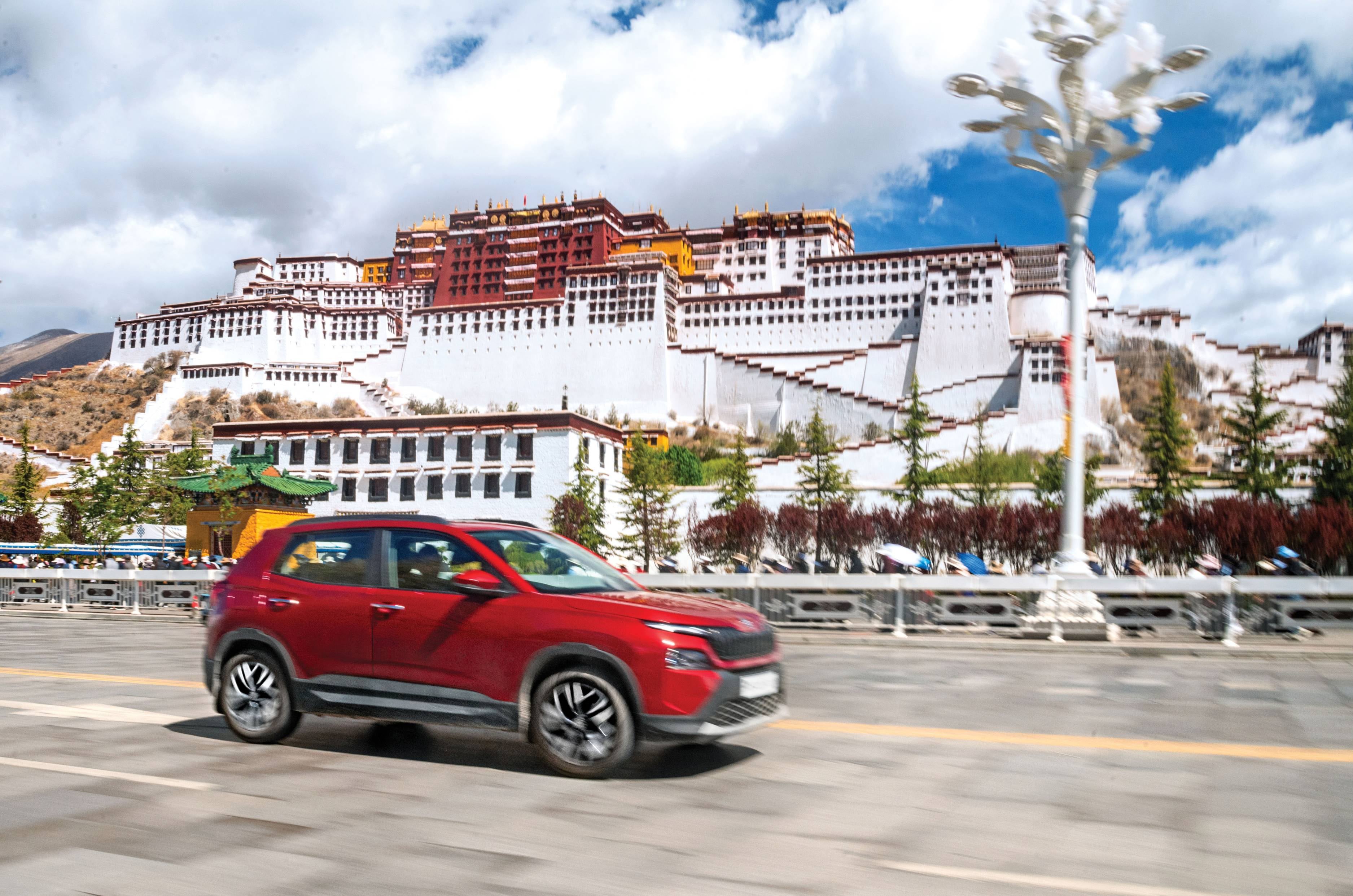
Stunning Potala Palace; once home to the Dalai Lamas.

With Everest ticked off, it was time to take on China’s vastness. We headed to Lhasa, the spiritual capital of Tibet, home to the grand Potala Palace. Once home to monks and lamas, this stunning palace holds incredible history and artefacts – spiritual or not, its significance to the country’s history is unmistakable. The drive kept revealing itself through unique food, dialects, faces, and even geography. One day we were freezing thousands of feet above sea level; days later, in Turpan, we were below sea level in blistering heat. From boiling hotpots to grocery-store instant noodles, China pushed us well outside our comfort zone, and the Kylaq wasn’t spared either.
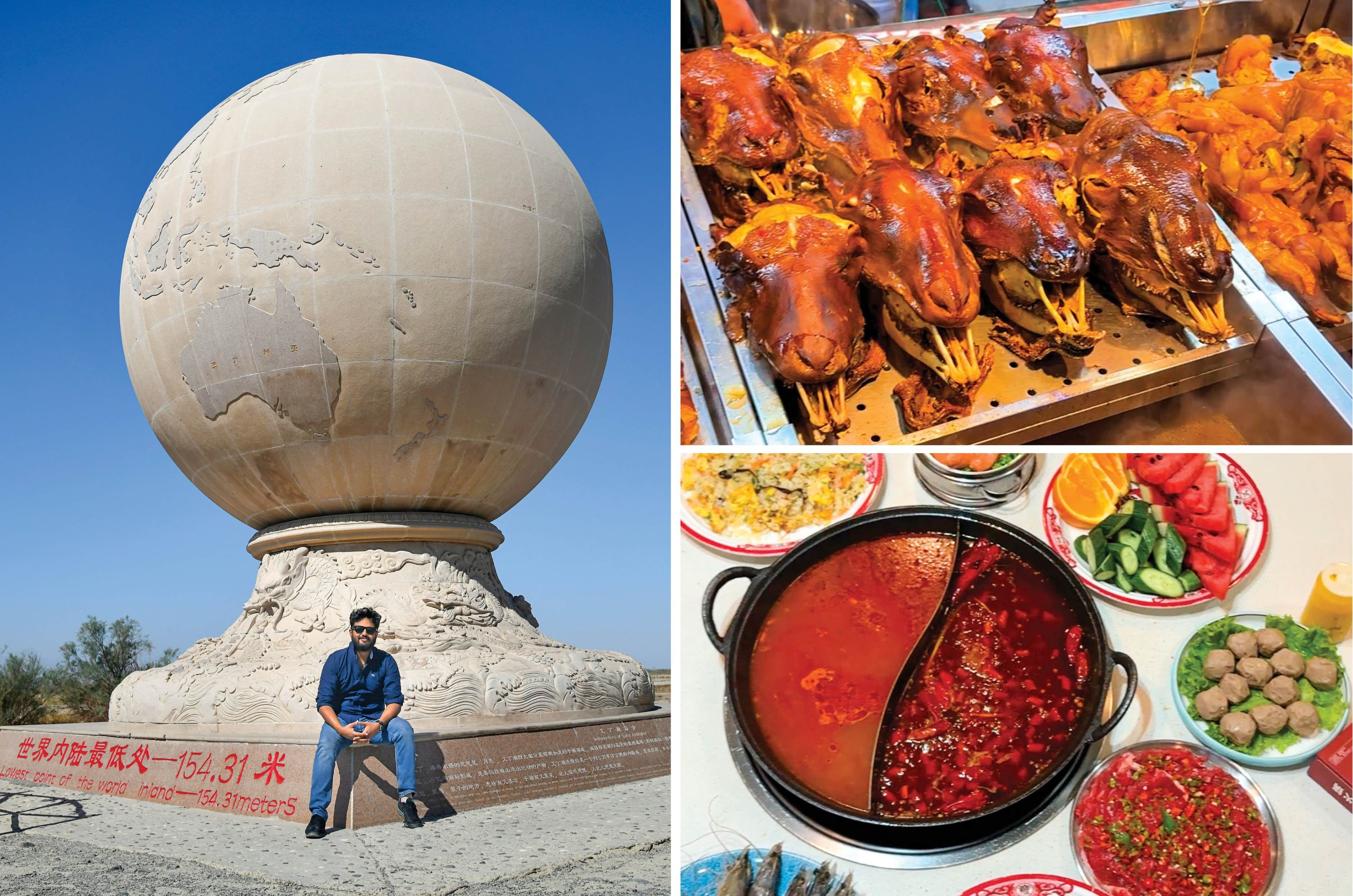
L: From EBC’s high to Turpan Depression’s low – Jay was at 154m below sea level here. R: Street food in China not
for the faint-hearted.

Two full days on the way to Golmud were entirely off-road, taking over 13 hours of driving, with our average speed dropping to 18kph as the Kylaq waded through water up to its bonnet and emerged without complaint.
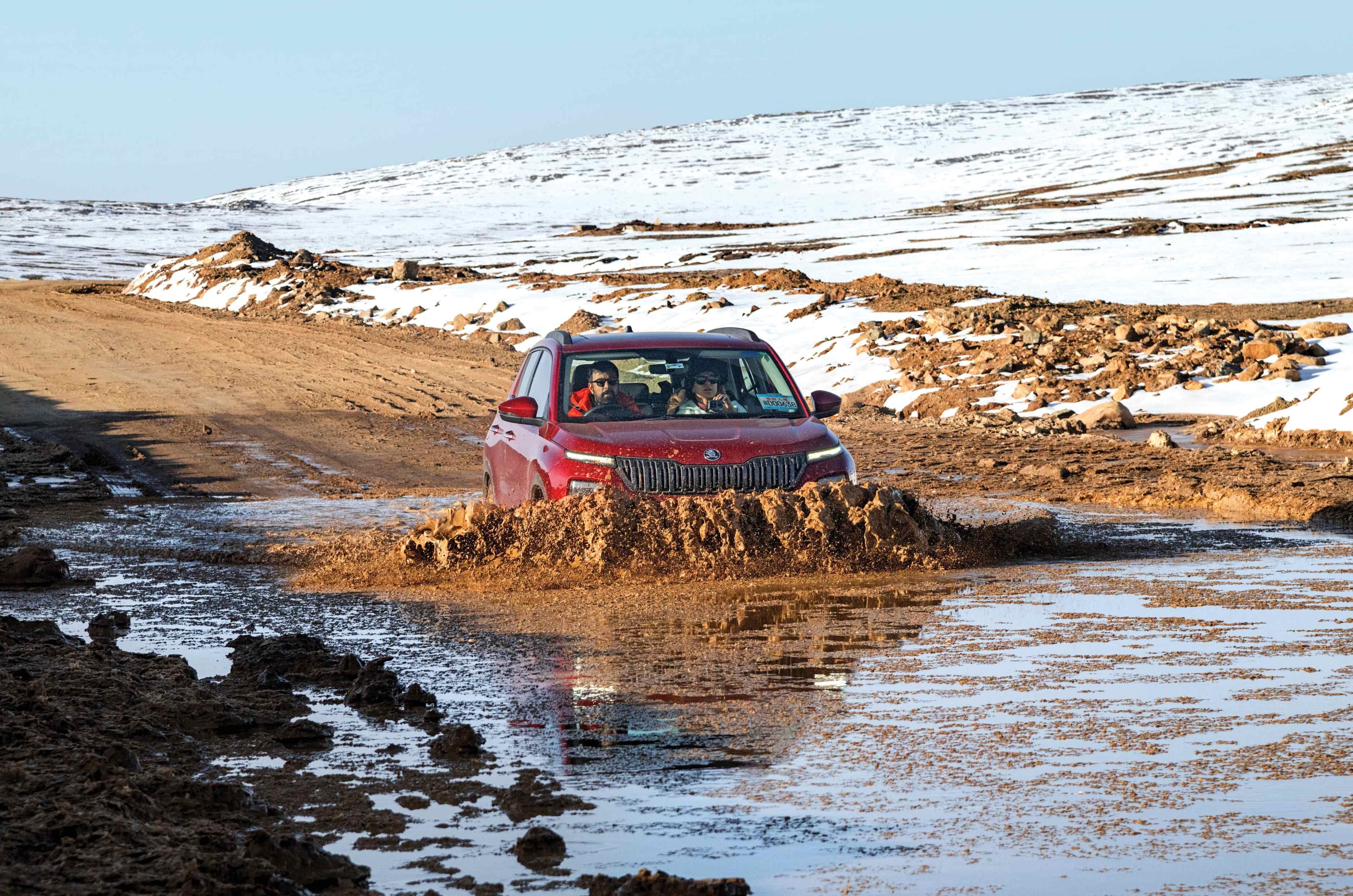
In China, you get perfect roads or, simply, no roads.

A stretch that would have broken most cars left the Kylaq unscathed. China hit hard, but the Kylaq hit back harder. From day one, it had faced challenge after challenge, and from day one, it had come out on top. Three countries in, it still carried the same zeal it started with – and while we were rattled, it stood strong each night, ready for the next day.

China-Kyrgyz Border in numbers

Distance covered5,133km
Fuel consumed330.88 litres
Average fuel economy15.51kpl
Approximate fuel cost3074 Yuan (Rs 42,764)
Average per-litre fuel cost9.2 Yuan (Rs 129)
Total time driven117hrs 21min
Average speed43.80kph

अकेले कचरे से भरी नदी साफ करने वाले ‘बिट्टू तबाही’ की बदली किस्मत, डच CEO ने दिया नौकरी का ऑफर

मध्य प्रदेश के राजगढ़ जिले के ब्यावरा के 20 वर्षीय सुरेंद्र सिंह चौधरी, जिन्हें सोशल मीडिया पर ‘Bittu Tabahi’ के नाम से पहचान मिली है, इन दिनों अपनी मेहनत के कारण सुर्खियों में हैं। सुरेंद्र ने कचरे से भरी अजनार नदी की सफाई का बीड़ा खुद उठाया और कई महीनों तक लगातार वहां से प्लास्टिक, गंदगी और जमा मलबा हटाते रहे। उनके इस काम के वीडियो सोशल मीडिया पर वायरल हुए, जिसके बाद उनकी कोशिशों की चर्चा दूर तक पहुंची। अब उनकी इसी पहल ने अंतरराष्ट्रीय स्तर पर भी ध्यान खींचा है।

नीदरलैंड की पर्यावरण संस्था The Ocean Cleanup के संस्थापक और CEO बॉयन स्लैट ने सोशल मीडिया पर सुरेंद्र के काम को देखते हुए उन्हें अपने साथ काम करने का सीधा ऑफर दिया है। इस खबर के सामने आने के बाद सुरेंद्र की कहानी को लेकर सोशल मीडिया पर लोग उत्साहित हैं। एक छोटे से शहर का यह युवा अब नदी सफाई के अपने जुनून के कारण वैश्विक मंच तक पहुंचने की ओर बढ़ रहा है।

सोशल मीडिया पोस्ट पर CEO ने कहा- ‘हमारे साथ काम करो’

अजनार नदी की सफाई के दौरान सुरेंद्र के काम का वीडियो सोशल मीडिया पर वायरल हुआ था। एक यूजर ने X पर उनकी तस्वीरों के साथ पोस्ट शेयर की, जिसमें नदी की सफाई से पहले और बाद की तस्वीरें दिखाई गई थीं।

पोस्ट पर बॉयन स्लैट की नजर पड़ी। उन्होंने बिना ज्यादा कुछ कहे सीधे लिखा, “Come work for us.”

डच के CEO का यह छोटा-सा जवाब सोशल मीडिया पर तेजी से चर्चा का विषय बन गया।

लोगों ने कहा- जिंदगी का सबसे बड़ा मौका

बॉयैन स्लैट के ऑफर के बाद यूजर्स ने सुरेंद्र को बधाई देना शुरू कर दिया। कई लोगों ने इसे उनके लिए शानदार अवसर बताया। एक यूजर ने लिखा कि उम्मीद है यह ऑफर गंभीर है और सुरेंद्र को यह मौका जरूर हासिल करना चाहिए।

दूसरे यूजर ने इसे ‘ऑफर ऑफ ए लाइफटाइम’ तक बता दिया।

कौन हैं Bittu Tabahi?

सुरेंद्र सिंह चौधरी ब्यावरा, राजगढ़, मध्य प्रदेश से आते हैं। उनके सोशल मीडिया वीडियो में उन्हें अजनार नदी से प्लास्टिक, कचरा, गंदगी और जमा हुआ मलबा खुद निकालते देखा जा सकता है।बताया जाता है कि उन्होंने इस सफाई अभियान की शुरुआत जनवरी में की थी। लगातार मेहनत के बाद नदी के एक हिस्से का पूरा रूप बदल गया और वहां जमा कचरा काफी हद तक साफ हो गया।

सफाई अभियान में अपनी जेब से लगाए पैसे

एक डिजिटल कंटेंट क्रिएटर के मुताबिक, सुरेंद्र अब तक इस सफाई अभियान पर करीब ₹30,000 खर्च कर चुके हैं। यानी सोशल मीडिया पर लोकप्रियता हासिल करने से पहले उन्होंने इस काम में अपना समय, मेहनत और पैसा लगाया।

आनंद महिंद्रा भी कर चुके हैं तारीफ

सुरेंद्र के काम की चर्चा इससे पहले उद्योगपति आनंद महिंद्रा तक भी पहुंच चुकी है। उन्होंने मार्च में सोशल मीडिया पर सुरेंद्र की तारीफ करते हुए कहा था कि अगर सोशल मीडिया पर मिलने वाले ‘लाइक्स’ किसी अच्छे काम की वजह बनते हैं, तो इसमें कोई बुराई नहीं है।

उन्होंने सुरेंद्र को अपनी #MondayMotivation पोस्ट का हिस्सा भी बनाया था।

कौन हैं बॉयन स्लैट?

बॉयैन स्लैट नीदरलैंड के इनोवेटर और उद्यमी हैं और The Ocean Cleanup के संस्थापक हैं। उनकी संस्था समुद्रों और नदियों में जमा प्लास्टिक को हटाने के लिए तकनीकी समाधान विकसित करती है।

संस्था का लक्ष्य 2040 तक समुद्र में मौजूद तैरते प्लास्टिक का 90 फीसदी हिस्सा हटाना है। ऐसे में नदी की सफाई में जुटे एक युवा भारतीय को खुद CEO की ओर से मिला ऑफर उसके काम की अंतरराष्ट्रीय पहचान के तौर पर देखा जा रहा है।

भारत से नॉर्वे पहुंचे भारतीय को Driving Licence के लिए करनी पड़ी इतनी मेहनत, खर्च जानकर उड़ जाएंगे होश

Gadkari proposes graded license points system for improper behaviour

Gadkari proposes graded license points system for improper behaviour
Nitin Gadkari

In a bid to address driver behavioral issues, the Government of India is planning to introduce a points system for driving licences and vehicle registration certificates. Under this system, repeat traffic offenders could face suspension or cancellation of their licences, according to Road Transport and Highways Minister Nitin Gadkari.

Habitual offenders to be penalised while benefits could be given to those with good records: Gadkari

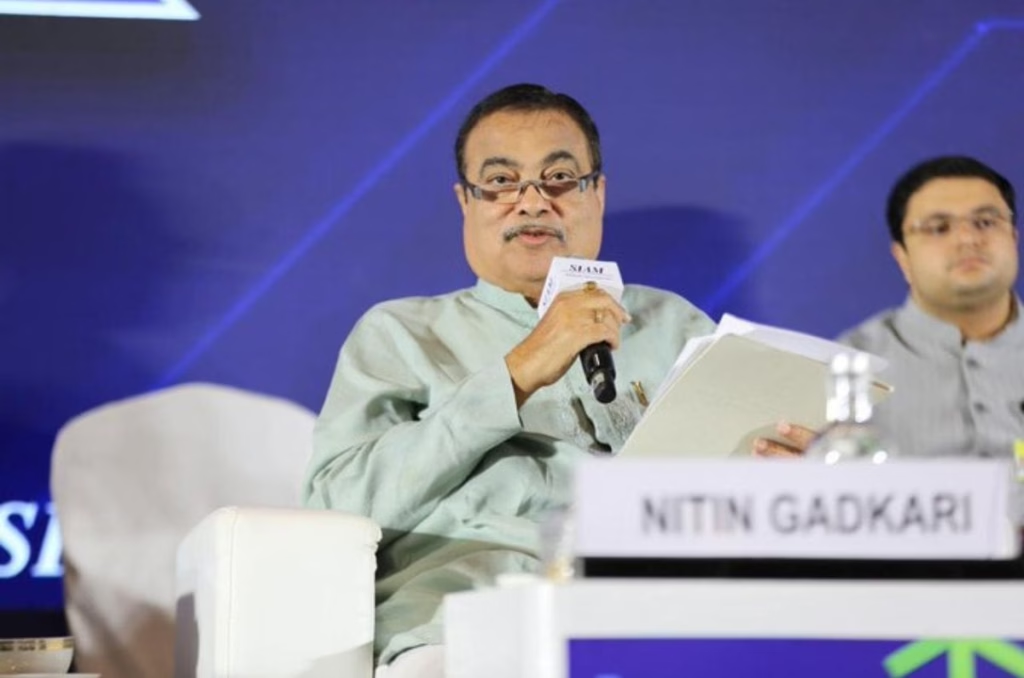
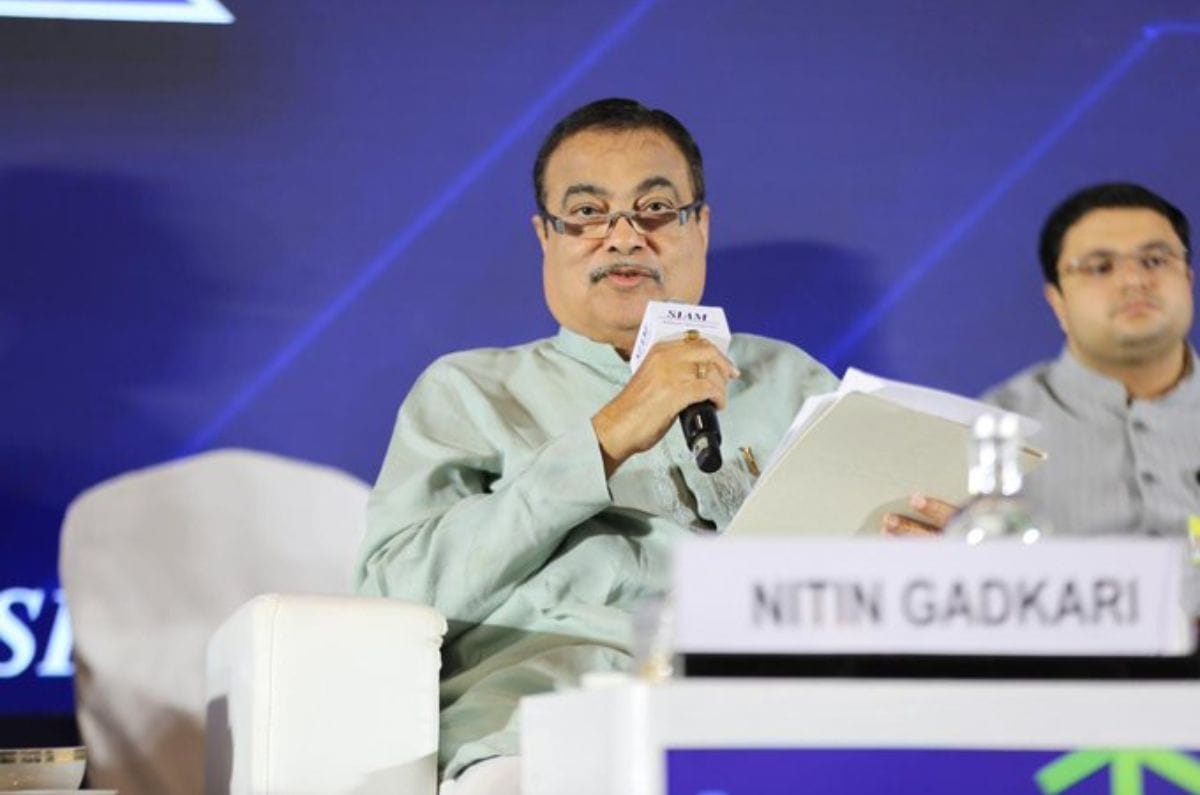
The proposed system aims to improve driving behaviour and hold habitual offenders accountable, Gadkari said while speaking at the Society of Indian Automobile Manufacturers’ (SIAM) 66th Annual Convention. “My ministry is planning to introduce a graded point system in driving licences and vehicle registration certificates,” Gadkari said. Under the proposed system, points would be deducted for offences committed by drivers, with action taken once the accumulated penalty points cross a specified limit.

“Every offense will cut points on the driving licence. And after a particular limit, the licence will get suspended or even cancelled,” Gadkari said. The minister said the policy would distinguish between responsible drivers and those who repeatedly violate rules. Drivers with good records could receive benefits, including possible incentives from insurance companies, while habitual offenders would face penalties.

“These are exactly the people who have good points; they will get incentives from insurance or companies or whatever benefits will be there. But for those who are habitually making mistakes, the penalty is there. That is the principle behind this policy,” Gadkari said. He said changing driver behaviour was an important challenge in efforts to improve road safety. “Driver behaviour is a big problem. We are now doing a lot of things for that,” Gadkari said.

The proposed points-based system is expected to encourage more responsible driving behaviour, the minister said. He did not specify a timeline for the implementation of the proposed system or provide further details on how the points mechanism would operate.

Car insurance explained: Everything you need to know

Car insurance explained: Everything you need to know
Car insurance

Car insurance is an essential part of vehicle ownership, yet it is often one of the least understood. While third-party insurance is mandatory for vehicles used on public roads in India, owners can choose from different types of cover depending on the protection they need. Here’s everything you need to know about car insurance, from coverage and claims to renewals and add-ons.

1. What is car insurance and why is it mandatory?

Car insurance protects vehicle owners against specified financial losses arising from accidents and other insured events. Depending on the policy, it can cover damage to your own vehicle, liability towards third parties, or both.

Third-party insurance is mandatory for vehicles used on public roads in India. It covers the owner’s legal liability for injury, death or property damage caused to a third party. Driving without valid third-party insurance is an offence.

2. What are the different types of car insurance?

Car insurance is broadly available as third-party liability insurance, comprehensive insurance and standalone own-damage insurance.

Third-party insurance covers liability towards others but not damage to your own vehicle. A comprehensive or package policy combines third-party liability with own-damage cover for the insured vehicle, subject to the policy’s terms and exclusions. A standalone own-damage policy covers damage to your own vehicle and is bought alongside a separate third-party policy.

New private cars are also sold with long-term third-party cover. A common bundled arrangement provides three years of third-party cover and one year of own-damage cover.

3. What does third-party insurance cover?

Third-party insurance covers the legal liability arising if your vehicle causes injury, death or property damage to another person. It does not cover damage to your own vehicle. Owners who want cover for their own car need an own-damage or comprehensive/package policy.

4. What does comprehensive insurance cover?

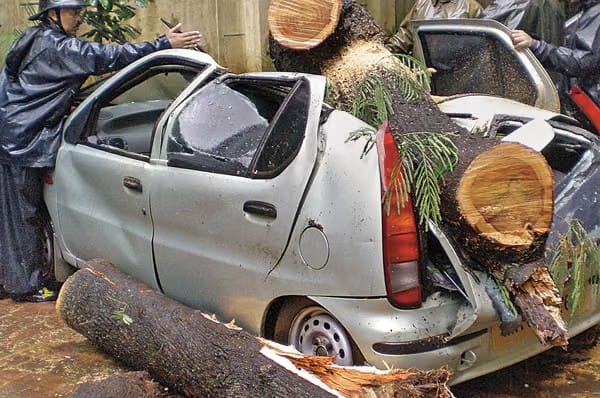
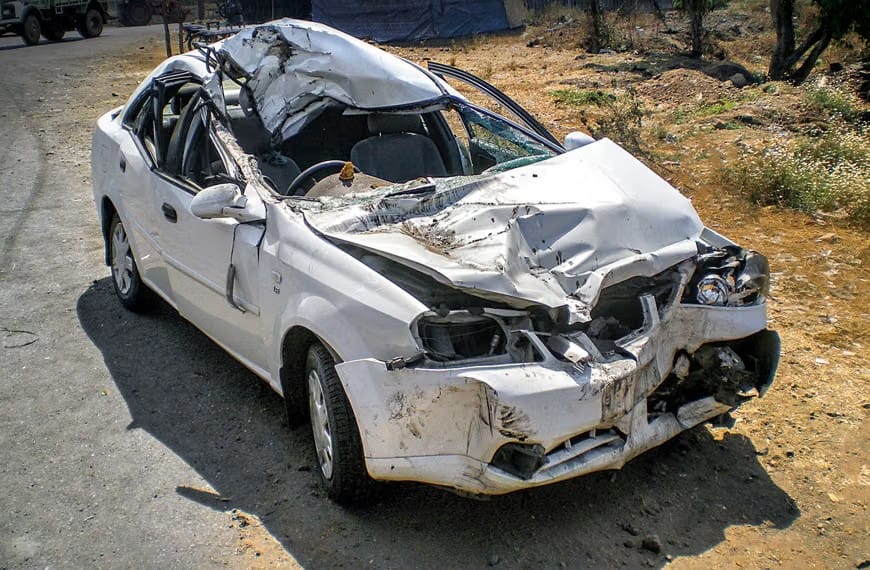
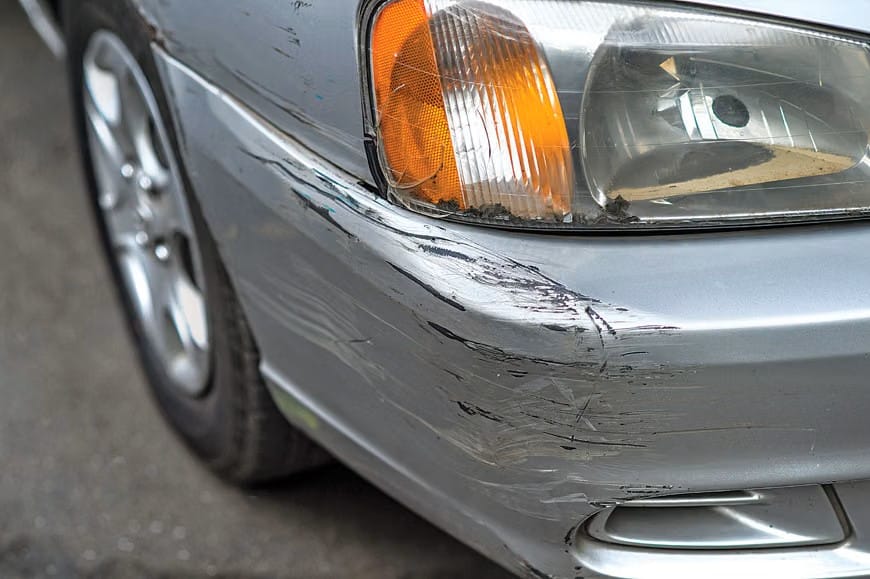
A comprehensive or package policy combines third-party liability cover with own-damage protection. Depending on the policy, own-damage cover can include losses caused by accidents, theft, fire, floods, earthquakes and other natural or man-made events.

The exact coverage and exclusions vary between policies. Optional add-ons can provide additional protection for specific risks.

5. How do you make a car insurance claim?

Inform your insurer as soon as possible after an accident, theft or other insured event. A police complaint may also be required, depending on the circumstances, particularly for theft.

The insurer may arrange a vehicle inspection or assess the claim using photographs and documents submitted digitally. Once the claim is approved, the repair process can proceed. The documents required vary by claim, but may include the policy, registration certificate, driving licence, claim form, repair estimate and invoices.

6. What is the difference between cashless and reimbursement claims?

With a cashless claim, the vehicle is repaired at an insurer’s network garage and the insurer settles the approved repair amount directly with the workshop. The owner pays applicable deductibles and any costs not covered by the policy.

With a reimbursement claim, the owner pays the repair bill first and then submits the required documents to the insurer for reimbursement of the eligible amount. The availability and process of cashless repairs depend on the insurer’s network and policy terms.

7. How is your car insurance premium calculated?

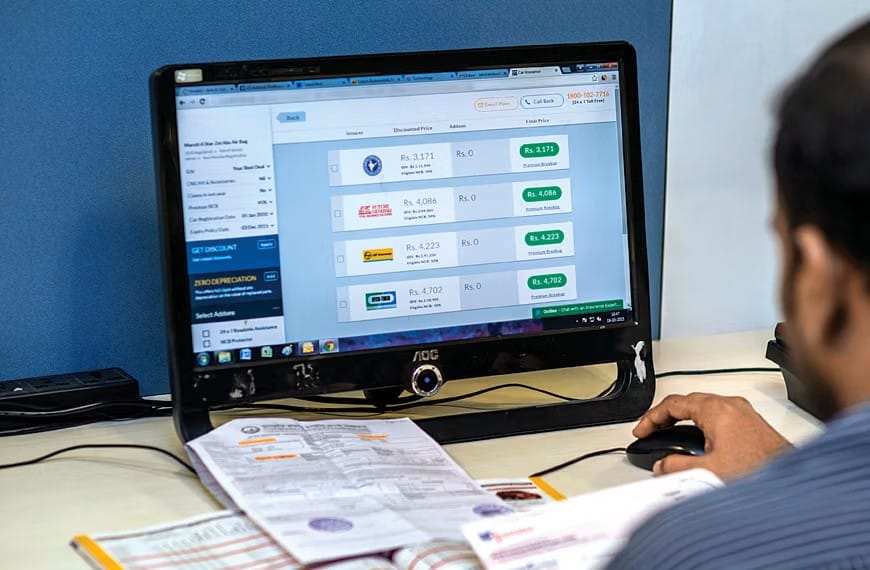
The premium depends on factors including the vehicle’s IDV, age, engine capacity, registration details, previous claims and the insurer’s own pricing. The cost of optional add-ons and applicable discounts can also affect the final premium.

Third-party liability premiums are set by IRDAI, while own-damage premiums are priced by individual insurers. This is why premiums for similar own-damage cover can differ between insurers.

8. What is a No Claim Bonus (NCB)?

A No Claim Bonus is a discount on the own-damage premium earned for claim-free policy periods. It applies to the policyholder, not the vehicle, and can generally be carried over when changing insurers or buying another car, subject to the applicable conditions.

An own-damage claim can affect the NCB at the next renewal, although an NCB-protection add-on may preserve it subject to its terms.

9. What is Insured Declared Value (IDV), and why does it matter?

The Insured Declared Value is the sum insured for the vehicle under the own-damage section of the policy. It represents the vehicle’s insured value and is used when settling a total-loss or theft claim, subject to the policy terms. IDV also affects the own-damage premium. As the vehicle depreciates, its IDV generally reduces.

10. What is a deductible in car insurance?

A deductible is the portion of an eligible claim that the policyholder has to bear. A compulsory deductible applies to the policy as prescribed, while a voluntary deductible is an additional amount the owner chooses to bear in return for a lower premium. A higher voluntary deductible means a larger share of the repair bill has to be paid by the owner when a claim is made.

11. Which car insurance add-ons are worth considering?

Add-ons provide cover beyond the standard policy for an additional premium. Common options include zero depreciation, engine protection, roadside assistance, return-to-invoice, consumables, tyre protection, key protection and NCB protection.

Their usefulness depends on the vehicle, its age and how it is used. Owners should compare the additional premium with the specific protection each add-on provides rather than buying every available option.

12. What is zero depreciation insurance, and is it worth buying?

Zero depreciation, also known as nil depreciation or bumper-to-bumper cover, reduces or removes the depreciation deduction applied to eligible parts when settling an own-damage claim. This can reduce the amount the owner has to pay towards a covered repair.

The add-on generally costs extra and may have eligibility conditions, claim limits or exclusions depending on the insurer. It is more commonly available for newer cars.

13. What is not covered by car insurance?

A comprehensive policy does not cover every type of loss. Common exclusions include normal wear and tear, damage from mechanical or electrical failure that is not caused by an insured event, and losses arising while the vehicle is being used in breach of the policy or applicable law.

Claims can also be affected if the driver does not have a valid licence or is driving under the influence of alcohol or drugs. Consequential damage may also be excluded unless specifically covered by an add-on. The exact exclusions are set out in the policy wording.

14. Can modifications affect your car insurance?

Yes. Modifications or changes to the vehicle should be disclosed to the insurer. This includes additions such as CNG or LPG kits, which also need to be recorded with the relevant registering authority.

If an approved modification changes the vehicle’s value or risk, the insurer may require an endorsement or additional premium. Failing to disclose relevant modifications can affect a claim.

15. What can cause a car insurance claim to be rejected?

A claim can be rejected or reduced if the loss falls outside the policy’s coverage or if policy conditions have not been met. Examples include driving without a valid licence, driving under the influence, using the vehicle for an excluded purpose, or making false or incomplete declarations.

Damage caused by an excluded event or normal wear and tear is also not payable under a standard comprehensive policy. The exact reasons for rejection depend on the policy wording and circumstances of the claim.

16. How does the age of your car affect insurance premiums?

A car’s IDV generally falls as it gets older because of depreciation. Since IDV is one of the factors used to determine the own-damage premium, this can reduce the own-damage portion of the premium over time. However, the final premium also depends on factors such as the insurer, claims history, vehicle details and selected add-ons.

17. What happens if your car insurance expires, and how do you renew it?

Owners should renew their policy before it expires to avoid a break in cover. A vehicle cannot legally be driven on public roads without valid third-party insurance. If a policy has lapsed, the insurer may require the vehicle to be inspected before issuing a new policy. IRDAI also states that a break in insurance can result in inspection and additional charges.

18. Can you switch insurance companies at renewal?

Yes. You can change insurers when renewing your own-damage or comprehensive policy. Compare the coverage, exclusions, IDV, deductibles, network garages, add-ons and premium rather than choosing solely on price. Your NCB can generally be carried over when you change insurers, provided you submit the required proof of entitlement.

19. Can you transfer your car insurance when selling your vehicle?

Yes. Insurance can be transferred to the buyer when a vehicle is sold, but the insurer must be informed and the required transfer process completed. The NCB belongs to the original policyholder and does not transfer with the vehicle. For comprehensive/package policies, IRDAI states that the transfer of ownership should be recorded within 14 days of the transfer of ownership.

20. What should you check before buying or renewing car insurance?

Don’t compare policies on premium alone. Check the coverage, exclusions, IDV, deductibles, add-ons, network garages and claims process. Also check when the third-party and own-damage portions expire, particularly if you have a bundled policy. A cheaper policy may offer a lower IDV, higher deductible or narrower coverage, so the lowest premium is not necessarily the best-value option.

अब लापरवाह ड्राइवरों की खैर नहीं, सरकार DL रिन्यूअल से जुड़े नियमों में लाने जा रही ये बदलाव

DL Renewal: केंद्र सरकार उन ड्राइवरों के लिए ड्राइविंग टेस्ट अनिवार्य करने जा रही है जो अपने ड्राइविंग लाइसेंस का रिन्यूअल करवाना चाहते हैं और जिनका ट्रैफिक नियमों के उल्लंघन का इतिहास रहा है। सड़क परिवहन मंत्रालय ने मोटर एक्सीडेंट क्लेम ट्रिब्यूनल (MACTs) को यह अधिकार देने का भी प्रस्ताव दिया है कि वे सड़क दुर्घटना के पीड़ितों और उनके परिवारों को अंतरिम मुआवजा दे सकें, ताकि उन्हें अपने क्लेम के अंतिम निपटारे तक इंतजार न करना पड़े।

वहीं, राज्यों और मंत्रालयों के साथ लगभग दो साल तक चली बातचीत के बाद, मोटर वाहन अधिनियम में प्रस्तावित संशोधनों को पिछले हफ्ते रक्षा मंत्री राजनाथ सिंह की अध्यक्षता वाले मंत्रियों के अनौपचारिक समूह (iGoM) के सामने रखा गया था।

टाइम्स ऑफ इंडिया के मुताबिक, पैनल ने मंत्रालय को बिल को अंतिम रूप देने की मंजूरी दे दी है, जिसे संसद के आगामी मानसून सत्र में पेश किया जा सकता है।

क्या है इस प्रस्ताव का उद्देश्य?

बता दें कि इन प्रस्तावों का मकसद लापरवाह ड्राइवरों और बिना बीमा वाले वाहनों के इस्तेमाल पर रोक लगाना है। साथ ही, इनमें बीमा नियामक IRDAI द्वारा वाहन की उम्र और चालान इतिहास के आधार पर थर्ड-पार्टी प्रीमियम तय करने की पुरानी व्यवस्था को फिर से लागू करने की भी बात कही गई है। साल 2019 के संशोधन में यह अधिकार सड़क परिवहन मंत्रालय के पास था। सड़क हादसों में मौत या गंभीर चोट लगने पर मुआवजे से जुड़े संशोधन बहुत ही महत्वपूर्ण है।

हालांकि, अभी MACT कोई अंतरिम राहत नहीं दे सकता है। लेकिन मंत्रालय ने प्रस्ताव दिया है कि क्लेम्स ट्रिब्यूनल “ऐसी अंतरिम राहत दे सकता है जो उसे सही लगे”। यह भी प्रस्ताव है कि अगर कोई बीमा कंपनी या दोषी पक्ष क्लेम्स ट्रिब्यूनल के आदेश को चुनौती देता है, तो उसे 10 लाख रुपये या तय मुआवजे का 50% (जो भी कम हो) पहले जमा करना होगा। अभी यह रकम 25,000 रुपये या तय मुआवजे का 50% (जो भी कम हो) है।

वहीं, मंत्रालय ने हाई कोर्ट में अपील करने की सीमा को मौजूदा 1 लाख रुपये से बढ़ाकर 5 लाख रुपये करने का भी प्रस्ताव दिया है। वकील और सड़क सुरक्षा विशेषज्ञ अमरजीत सिंह ने कहा, “MACT ट्रिब्यूनल द्वारा अंतरिम मुआवजा देने की इजाजत देने का कदम स्वागत योग्य है, क्योंकि ऐसे मामलों के अंतिम निपटारे में अक्सर देरी होती है।”

विशेषज्ञों ने उस प्रस्ताव की भी तारीफ की है जिसके तहत बार-बार ट्रैफिक नियमों को तोड़ने वाले ड्राइवरों के लिए नए सिरे से ड्राइविंग टेस्ट देना जरूरी होगा। साथ ही, नियमों का उल्लंघन करने वाले ड्राइवरों पर सख्ती करते हुए, मंत्रालय ने यह भी प्रस्ताव दिया है कि अगर किसी का पुराना ड्राइविंग लाइसेंस (DL) रद्द किया जाता है, तो उसे तीन साल तक नया DL जारी नहीं किया जाएगा।

इसके अलावा, मंत्रालय ने नए DL या लाइसेंस रिन्यूअल के लिए मेडिकल सर्टिफिकेट की जरूरत वाली उम्र की सीमा को मौजूदा 40 साल से बढ़ाकर 60 साल करने का प्रस्ताव भी दिया है। दिल्ली के पूर्व डिप्टी ट्रांसपोर्ट कमिश्नर अनिल छिकारा ने कहा, “आसानी से जीने और आसानी से बिजनेस करने के नाम पर, हमें सड़कों को सुरक्षित बनाने के लिए जरूरी बुनियादी पैमानों से समझौता नहीं करना चाहिए।”

जानकारों का यह भी कहना है कि 6 साल से कम उम्र के बच्चे को साथ में ले जाते समय ट्रैफिक नियमों का उल्लंघन करने पर दोगुना जुर्माना लगाने का प्रस्ताव है। हालांकि, उनका मानना है कि इससे ट्रैफिक पुलिस को मनमानी करने का मौका मिल सकता है।

यह भी पढ़ें: Monsoon Heat Explainer: मॉनसून आ गया फिर भी क्यों तप रहे दिल्ली NCR समेत देश के बड़े शहर?