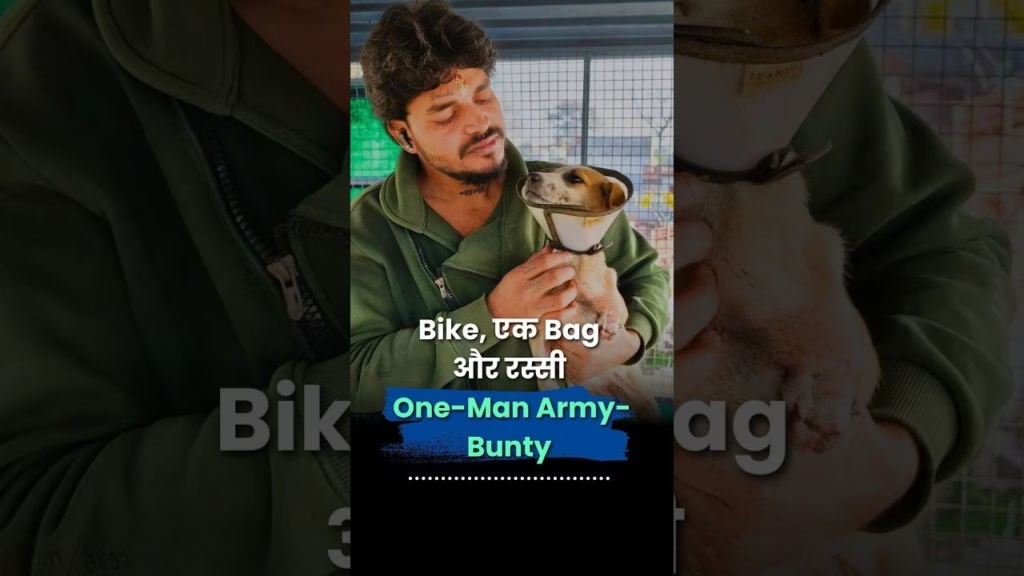
नाले में फंसा कोई कुत्ता या सड़क किनारे ज़िंदगी से लड़ रही कोई गाय… इनकी मदद के लिए कितने लोग आगे आते हैं? अगर बात उत्तराखंड, नैनीताल के हल्द्वानी शहर की हो तो ऐसी किसी भी परिस्थिति में बंटी ज़रूर आते हैं, चाहे दिन हो या आधी रात!
इन्हें One-man Army कहना गलत नहीं होगा, क्योंकि पशुओं को बचाने के लिए ये अकेले ही काम करते हैं। एक बाइक, एक फर्स्ट-ऐड बैग और एक रस्सी के दम पर करीब 2000 जानवरों की जान बचा चुके हैं।
इस काम की सीख उन्हें अपनी नानी से मिली थी, आज नानी दुनिया में नहीं, लेकिन बंटी ने इस काम को पूरी ज़िंदगी सौंप दी है।
अगर आप भी एक पशु-प्रेमी हैं, तो इनसे ज़रूर जुड़ें
[Animal Rescuer in Haldwani Uttarakhand, Man Who Rescued 2000 Animals in India, Stray Animal Rescue and Rehabilitation in India, Indian Animal Welfare Hero and Changemaker, Solo Animal Rescuer Saving Injured Street Animals]
तमिलनाडु के असनूर इलाके में एक सामान्य सफर उस वक्त डरावने अनुभव में बदल गया, जब जंगल की तरफ से निकला एक जंगली हाथी अचानक एक कार के सामने आ गया। बेंगलुरु-दिंडीगुल राष्ट्रीय राजमार्ग पर चल रही गाड़ी में बैठे यात्रियों ने शायद सोचा भी नहीं होगा कि अगले कुछ सेकंड में उन्हें इतने करीब से हाथी का सामना करना पड़ेगा।
कार मैसूर से कोयंबटूर की ओर जा रही थी। इसी दौरान हाथी सड़क के पास पहुंचा और वाहन के बेहद नजदीक आ गया। देखते ही देखते उसने कार पर अपना पैर रख दिया। विशाल जानवर को इतने करीब देखकर अंदर बैठे यात्रियों की घबराहट बढ़ गई।
कुछ सेकंड का खौफ
हाथी के वजन से कार का साइड मिरर टूट गया, लेकिन राहत की बात यह रही कि वाहन में सवार किसी भी व्यक्ति को चोट नहीं आई। घटना के बाद यात्रियों के लिए सबसे बड़ी राहत यही थी कि हाथी ने ज्यादा देर तक वाहन के आसपास रुकने के बजाय वहां से दूरी बना ली। इस पूरे घटनाक्रम ने एक बार फिर दिखा दिया कि जंगल से होकर गुजरने वाले हाईवे पर कुछ सेकंड की लापरवाही कितनी भारी पड़ सकती है।
सड़क नहीं, हाथियों का पुराना रास्ता भी है यह इलाका
असनूर का इलाका जंगलों से घिरा हुआ है और यहां से गुजरने वाले रास्तों पर वन्यजीवों की आवाजाही देखी जाती है। आसपास के जंगल चामराजनगर क्षेत्र और बांदीपुर टाइगर रिजर्व से जुड़े वनक्षेत्रों के करीब हैं।
हाथियों के लिए जंगल से जंगल तक आने-जाने के प्राकृतिक रास्ते मौजूद हैं। ऐसे में जब हाईवे इन इलाकों के बीच से गुजरता है, तो कई बार इंसानों और वन्यजीवों का रास्ता एक ही जगह पर आ मिलता है।
Wild Elephant Intercepts Vehicle Along Bengaluru–Dindigul Highway near Asanur
Karnataka-Tamilnadu Border
Motorists traveling along the national highway through the reserve forest area in Asanur, near the #TamilNadu–#Karnataka border, experienced moments of sheer terror after a lone #elephant blocked their path and approached an occupied car within arm’s reach.
The incident occurred during daylight hours along the #Bengaluru–Dindigul National Highway near Asanur. A car was forced to halt in the middle of the road as the pachyderm crossed over from the dense tree line.
Video footage captured by an occupant of a vehicle trailing behind showed the elephant walking directly up to the front passenger door of the stationary car. In a heart-stopping moment, the animal lifted its front leg onto the vehicle’s bodywork and extended its trunk toward the window, closely inspecting the occupants inside.
The driver and passengers remained completely still, resisting the urge to honk or make abrupt movements. After lingering by the door for several seconds, the elephant lowered its leg, brushed past the rear quarter panel, and continued ambling across the road into the adjoining thicket. No injuries or major structural damage were reported.The vehicle was travelling from #Mysuru to #Coimbatore.
Forest officials noted that elephants frequently cross this section of the corridor during seasonal movements.
वन विभाग लंबे समय से वाहन चालकों को आगाह करता रहा है कि जंगल वाले रास्तों पर जानवरों को देखकर रुकना या उन्हें खाना देना भारी पड़ सकता है। खासतौर पर सब्जियों, गन्ने या अन्य खाद्य सामग्री की मौजूदगी हाथियों को वाहनों के करीब ला सकती है।
एक बार अगर किसी हाथी को गाड़ियों से खाना मिलने लगे, तो वह वाहनों के पास आने का आदी हो सकता है। इससे अगली बार सामना होने पर स्थिति और ज्यादा खतरनाक बन सकती है।
ऐसे इलाकों में सफर करने वालों के लिए सबसे जरूरी बात है कि हाथी दिखाई देने पर वाहन से बाहर न निकलें और उसके करीब जाने की कोशिश न करें। हॉर्न बजाकर या रास्ता रोककर उसे परेशान करना भी जोखिम बढ़ा सकता है।
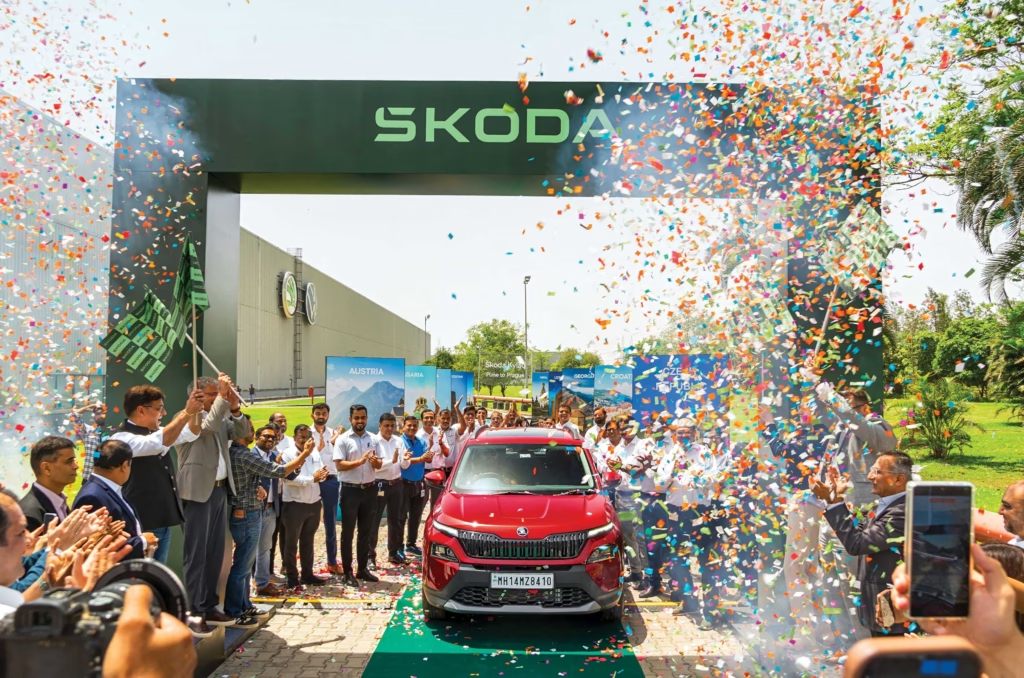
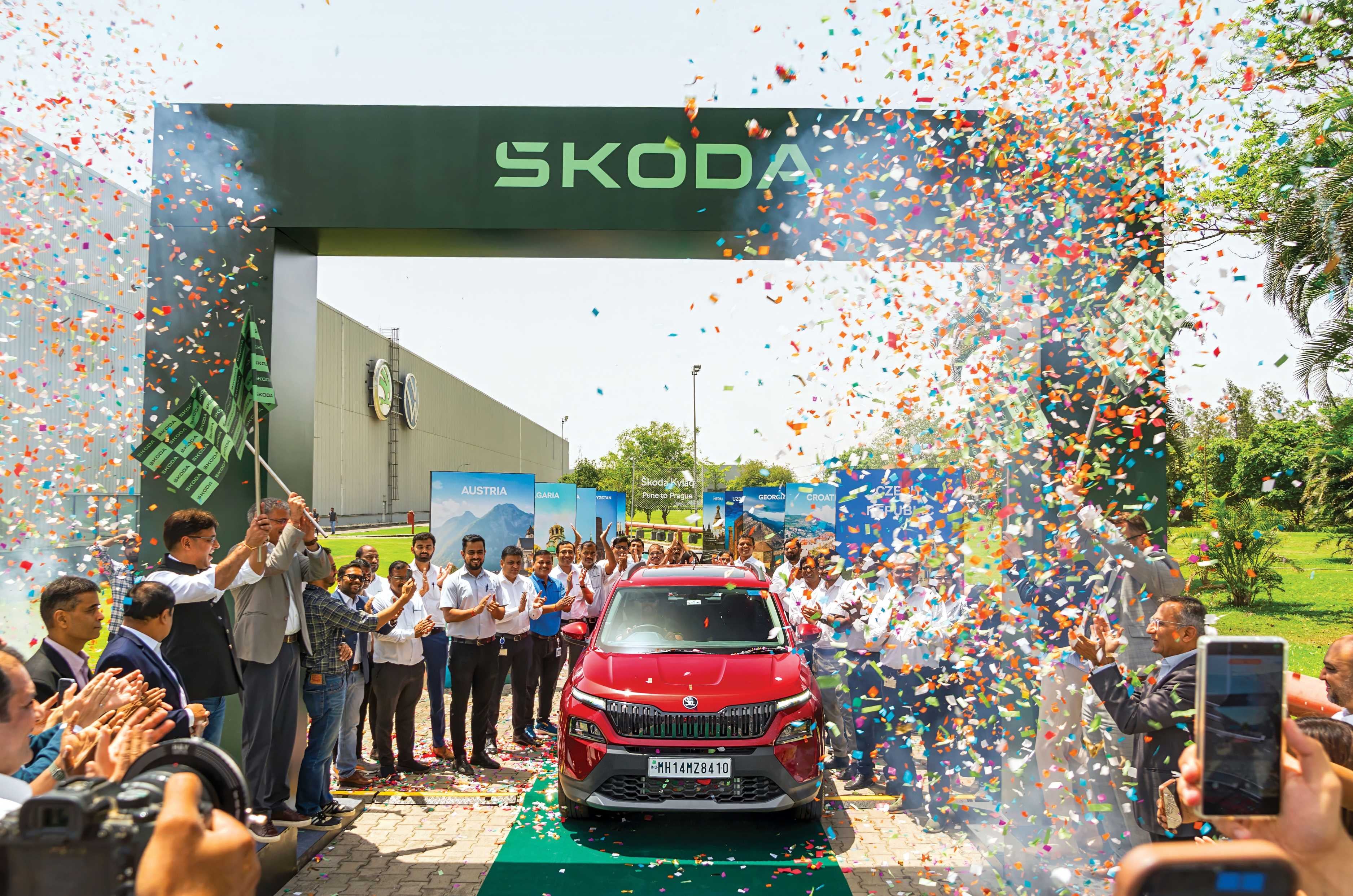
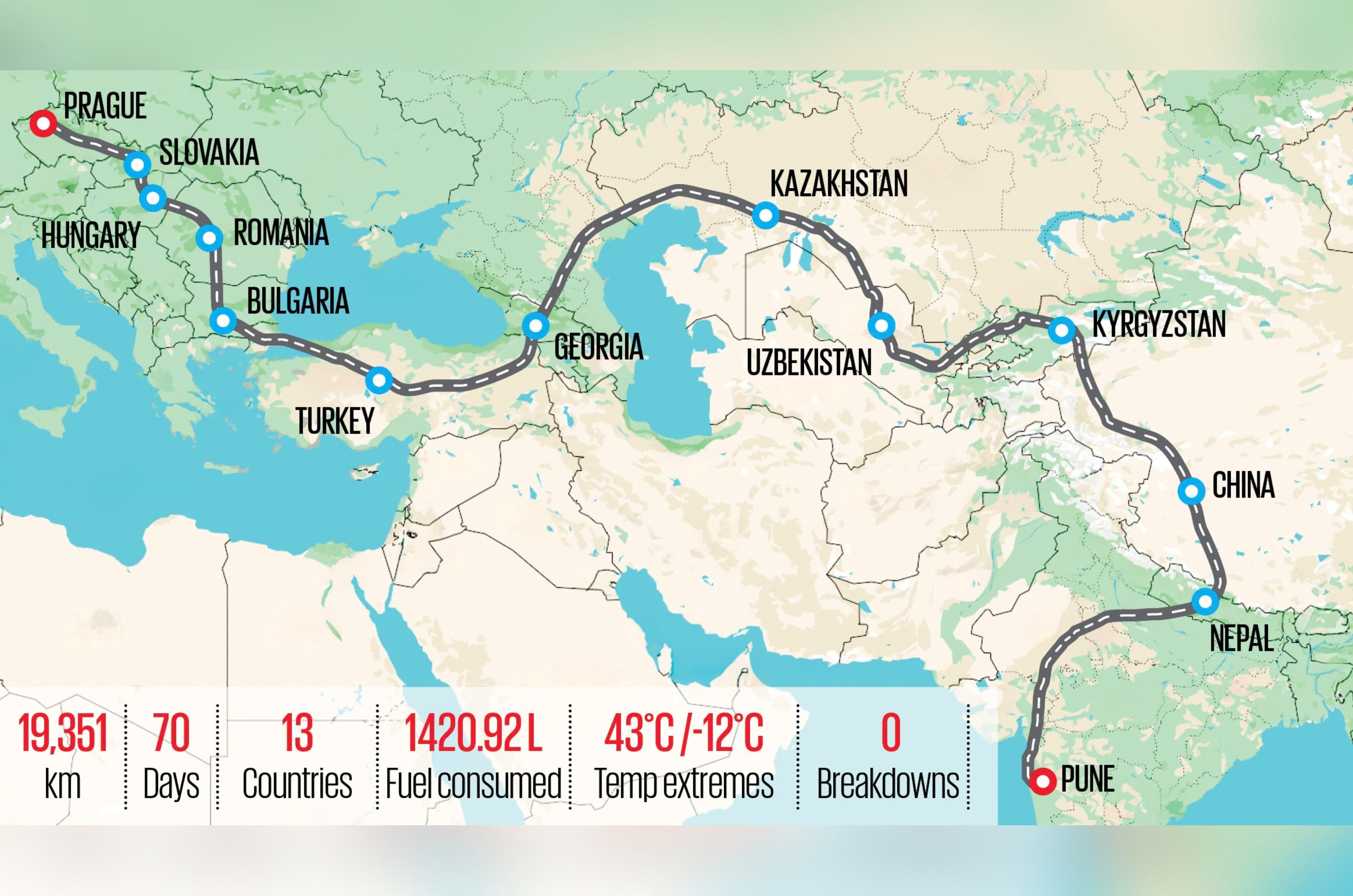
There are road trips, there are overland expeditions, and then there are journeys that become conversations with continents. This one starts in the industrial heart of Maharashtra, inside Skoda India’s sprawling Chakan facility. The end point lies nearly 20,000 kilometres away at Skoda Auto’s headquarters near Prague in Mladá Boleslav, Czech Republic, where bicycles evolved into automobiles and a 130-year-old story continues to be written.
Between these two factories lie thirteen countries, four major mountain ranges, countless cuisines, dozens of languages and enough history to fill libraries.
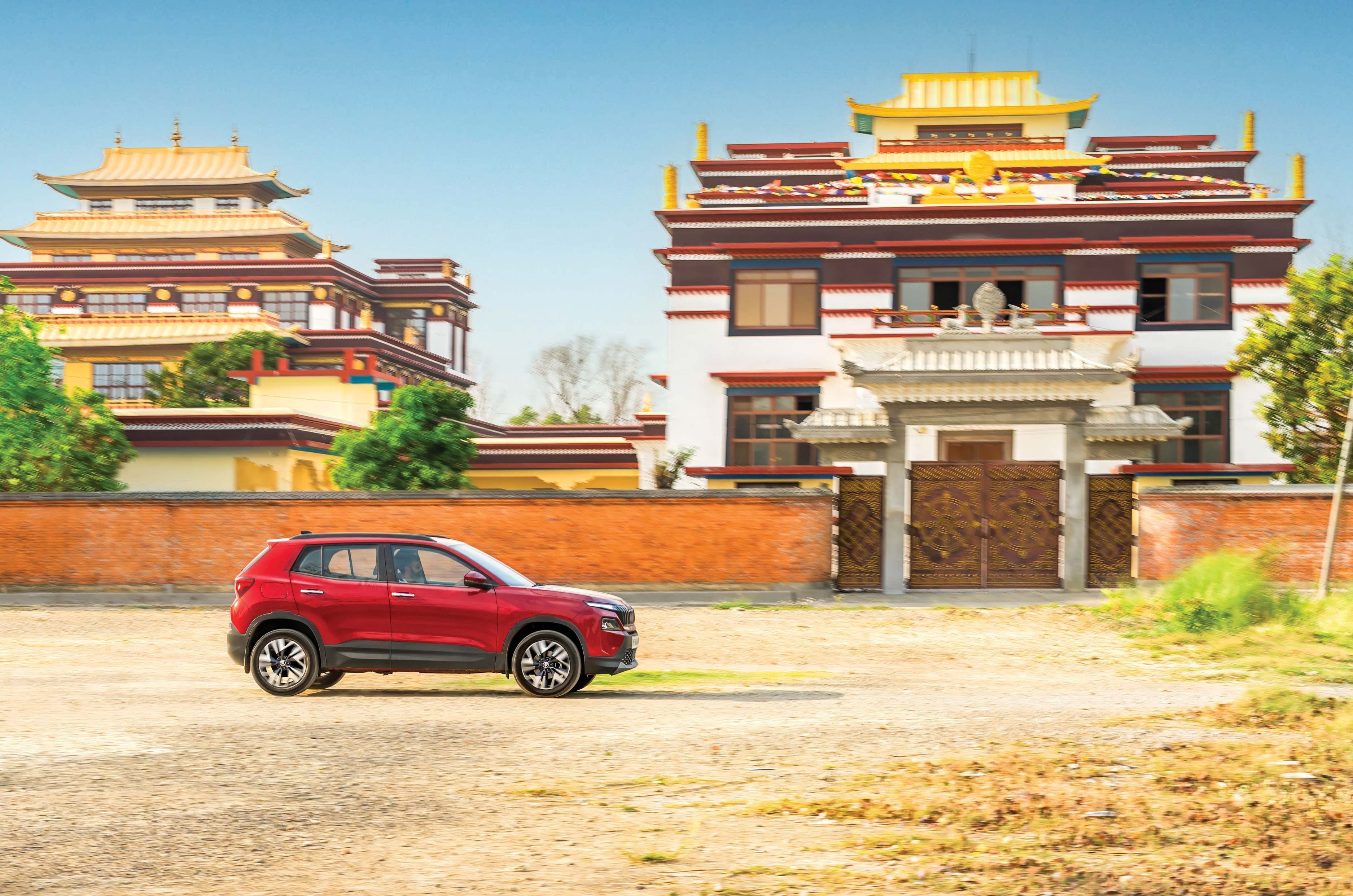
Our companion? Not a flagship SUV or a luxury grand tourer, but Skoda’s smallest SUV – the Kylaq, which recently celebrated its one-year anniversary. Driving it from Pune to Prague is a tall order, but surviving one year in India and being accepted with flying colours is enough cred one needs to take on the world.
India – Home Turf
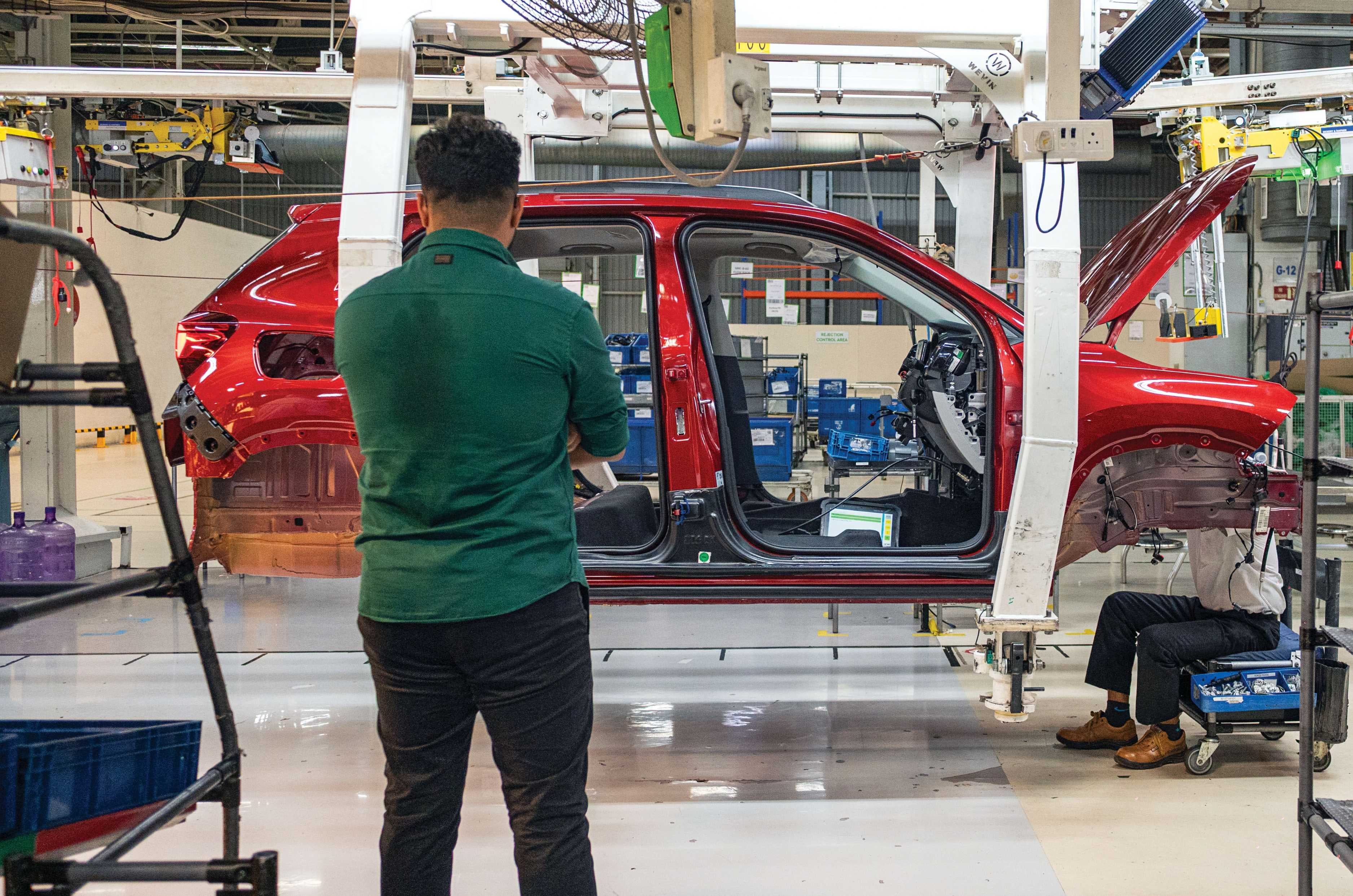
Witnessing the Kylaq’s birth added more responsibility.
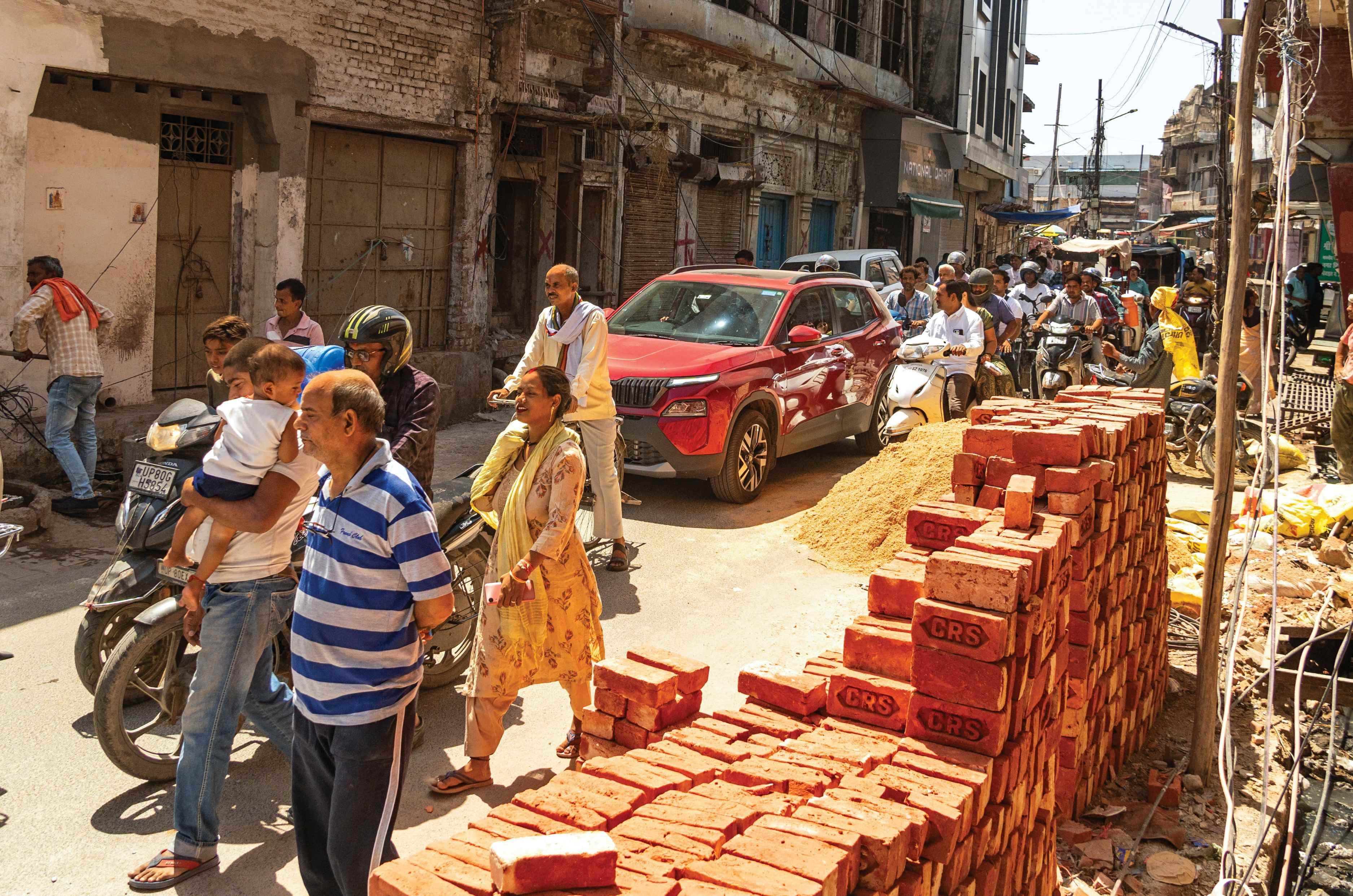
On a cross-country road trip, you’d imagine the home country would be the easiest leg. With India, it was the opposite. To some, it’s organised chaos, but honestly, it’s anything but organised. Erratic traffic, erratic egos, and road conditions fit only for a Mars rover – India was the biggest challenge on the drive from Pune to Prague. As the odometer ticked over its first kilometre, right outside the gate of Skoda’s Chakan plant, a blood-red PMPML bus was ready to trade paint with the cherry-red Kylaq. A dinged-up Kylaq parked on the streets of Prague wouldn’t be a good look, so it was imperative that I babysit this compact SUV like a million-dollar supercar. Having watched the car being assembled on the factory floor, from bare bones to the finished package, only added to the emotion – driving it in traffic felt like walking a toddler across a football field. Eyes wide open, ready to block any attack.
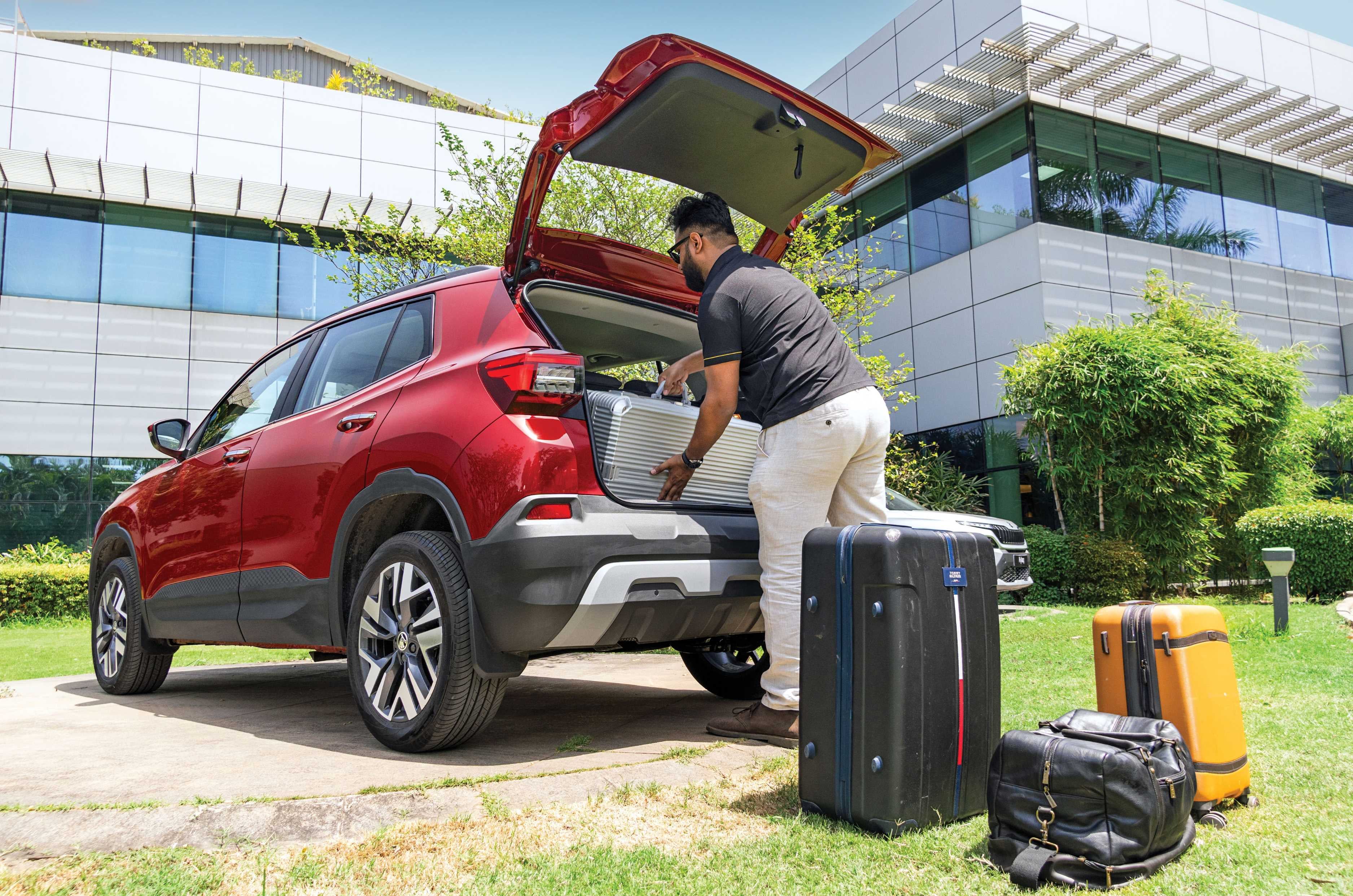
446-litre boot packed to the brim for 70 days on the road.
We got onto the Pune expressway and then crossed the Atal Setu in Mumbai, the longest sea bridge on the entire journey. Mumbai was home, both to me and to the Autocar India office, so after a few greetings from co-workers and the obligatory photos, we headed towards our first state crossing. The infamous Western Express Highway that leads out of Mumbai lived up to its reputation, but with a little anxiety, panic and a few expletives, we made it onto the national highway.
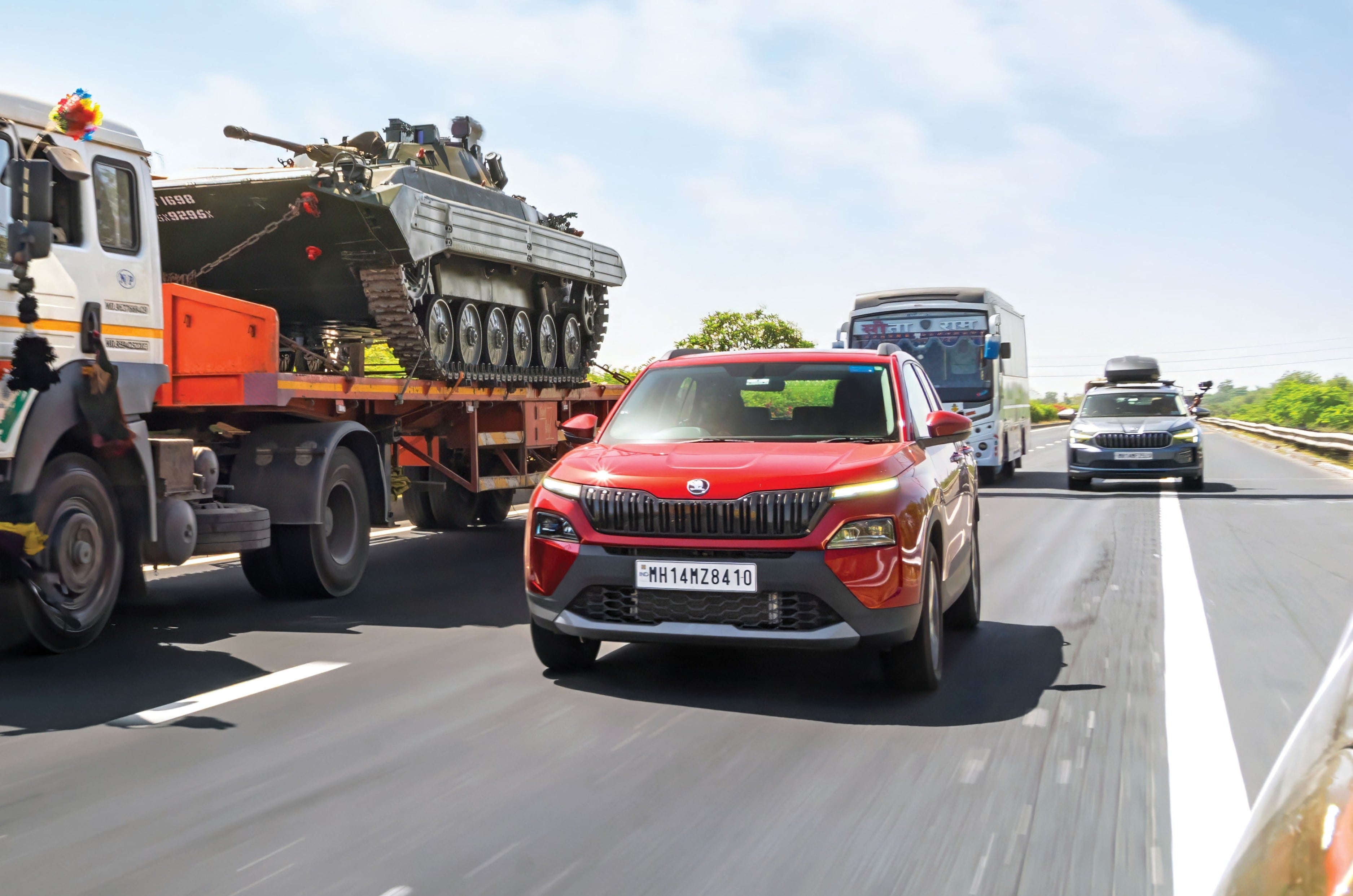
No telling what you’d spot on Indian highways.
The first of countless food stops was Hotel Ahura, renowned for its akuri and kheema. Needless to say, we carb-loaded to the max and made a beeline for Vadodara.
Pune-Birgunj in numbers
Distance covered
2,487km
Fuel consumed
234.46 litres
Average fuel economy
10.62kpl
Approximate fuel cost
Rs 23,629
Average per-litre fuel cost
Rs 100.87
Total time driven
55hrs 20min
Average speed
44.95kph
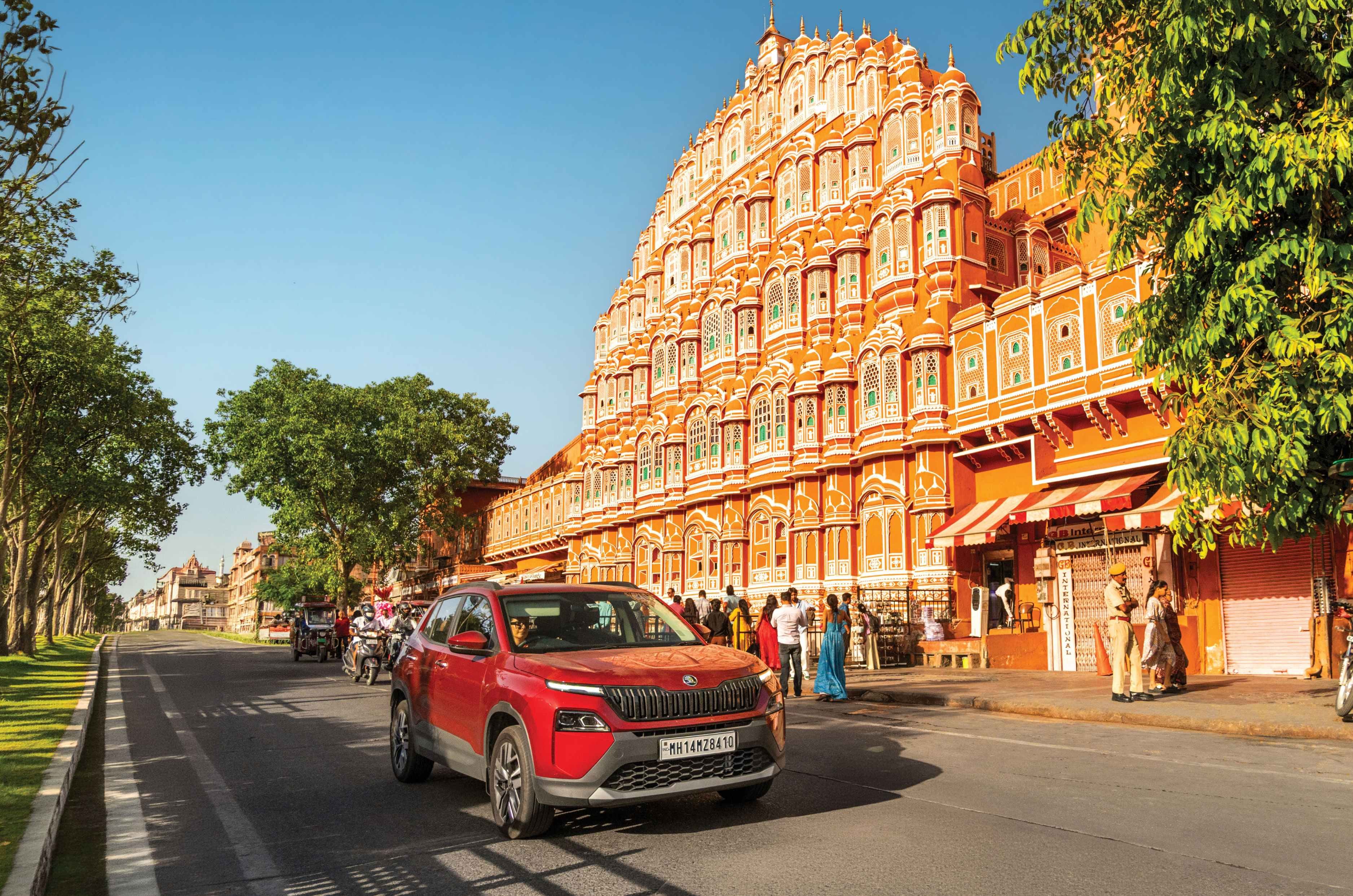
Crossing into Gujarat, the Kylaq could finally stretch its legs and spool up that turbo on the state’s spotless highways. The stability and effortless cruising were a welcome relief, since the bulk of the kilometres on this drive would be covered on long, open highways. Gujarat was a short stint – we made only an overnight halt in Vadodara before slipping out ahead of the morning traffic. The drive into Rajasthan was seamless, and Udaipur greeted us with a mix of heat and traffic. The City of Lakes is worth taking the time to explore, but a late arrival and early morning departure left us with just enough time to grab a traditional meal. All that driving had built up an appetite, so we put it to a vote between a massive vegetarian thali and laal maas – the latter won by a landslide. From the City of Lakes, we headed to Jaipur, the Pink City: just as picturesque as Udaipur, and just as colourful and chaotic. The sun setting over the beautiful Amer Fort made for a cracking backdrop, and a few glimpses of the Jal Mahal on the way back were a treat too. The iconic Hawa Mahal, with its 953 windows, never fails to amuse, but getting a photo of the five-storey icon without a chorus of honks is next to impossible. The next morning, after threading through Jaipur’s narrow lanes, we made it back onto the highway, heading for Agra.
Iconic Hawa Mahal ought to be seen first-hand.
Agra is synonymous with the Taj Mahal, but the Agra Fort – from which you can see the Taj in the distance – is just as mesmerising. The detailing and architecture are second to none, and you could spend hours walking through its courtyards and passages, taking endless pictures. We, of course, also made it to the Taj itself, amid the hordes of tourists, if only to avoid the guilt of visiting Agra without a shot of the world-famous white dome. Tourism done, it was time for some petha – though the lanes near the petha shops seemed to be the exact width of the Kylaq, and that’s where peak anxiety set in. We got out of the mess, walked around the car to check for scratches and scribbles, and sighed in relief. India was adding to the tension, and we were barely halfway through it.
Agra’s narrow lanes were a nightmare to drive through.
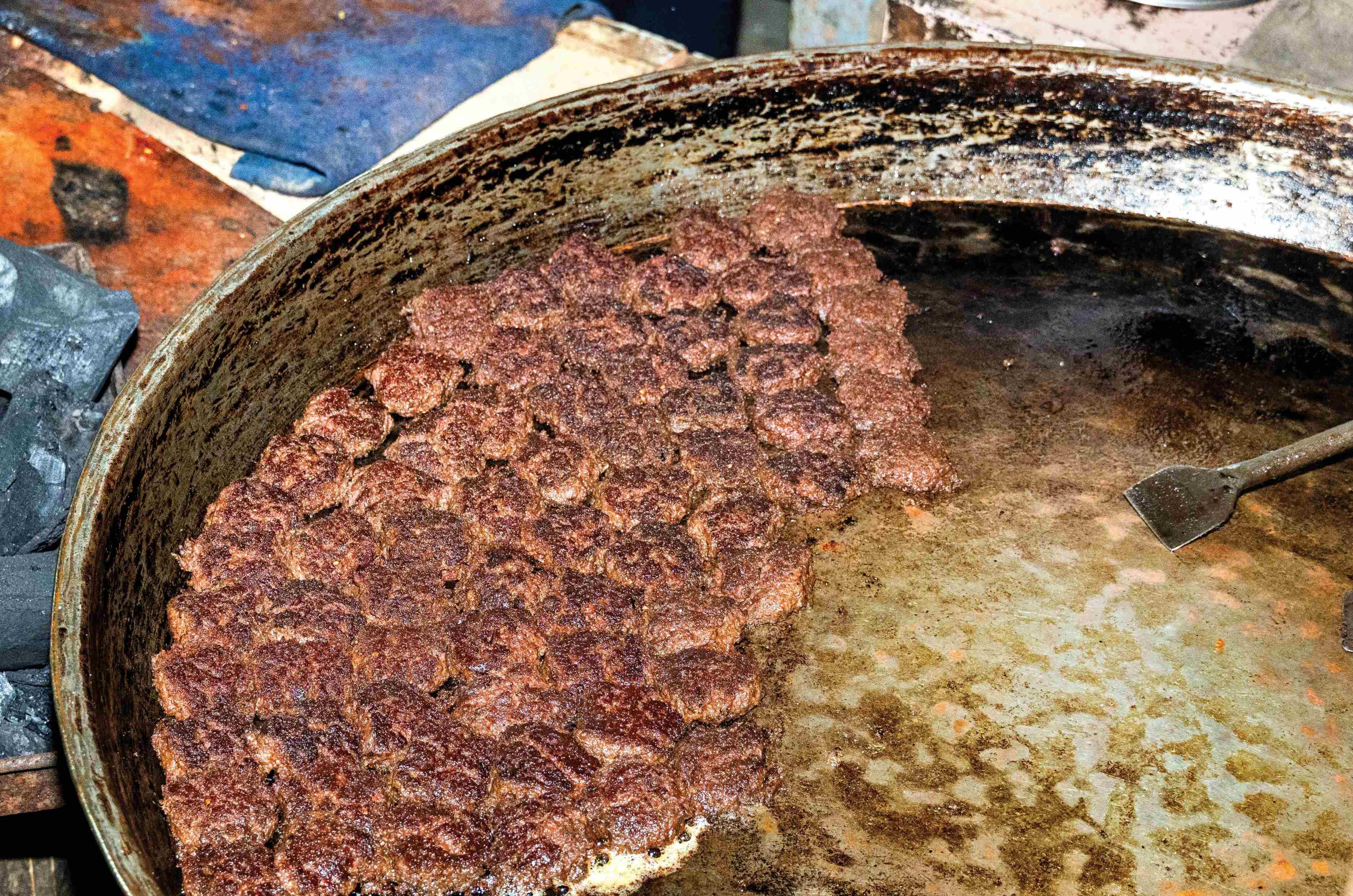
Our next stop from Agra was foodie heaven – Lucknow. The biryanis, kebabs, and tandoors were exactly what we expected, and exactly what Lucknow delivered. Finding your way here is easy – you could do it blindfolded, following the smoke and sizzle to wherever you need to be. Tunday Kababi is a must, and after a heap of biryani laced with kebabs, a long walk through the countless chikankari shops helps burn off some of the calories.
Lucknow’s Tunday Kababi still has us drooling over Galouti kebabs.
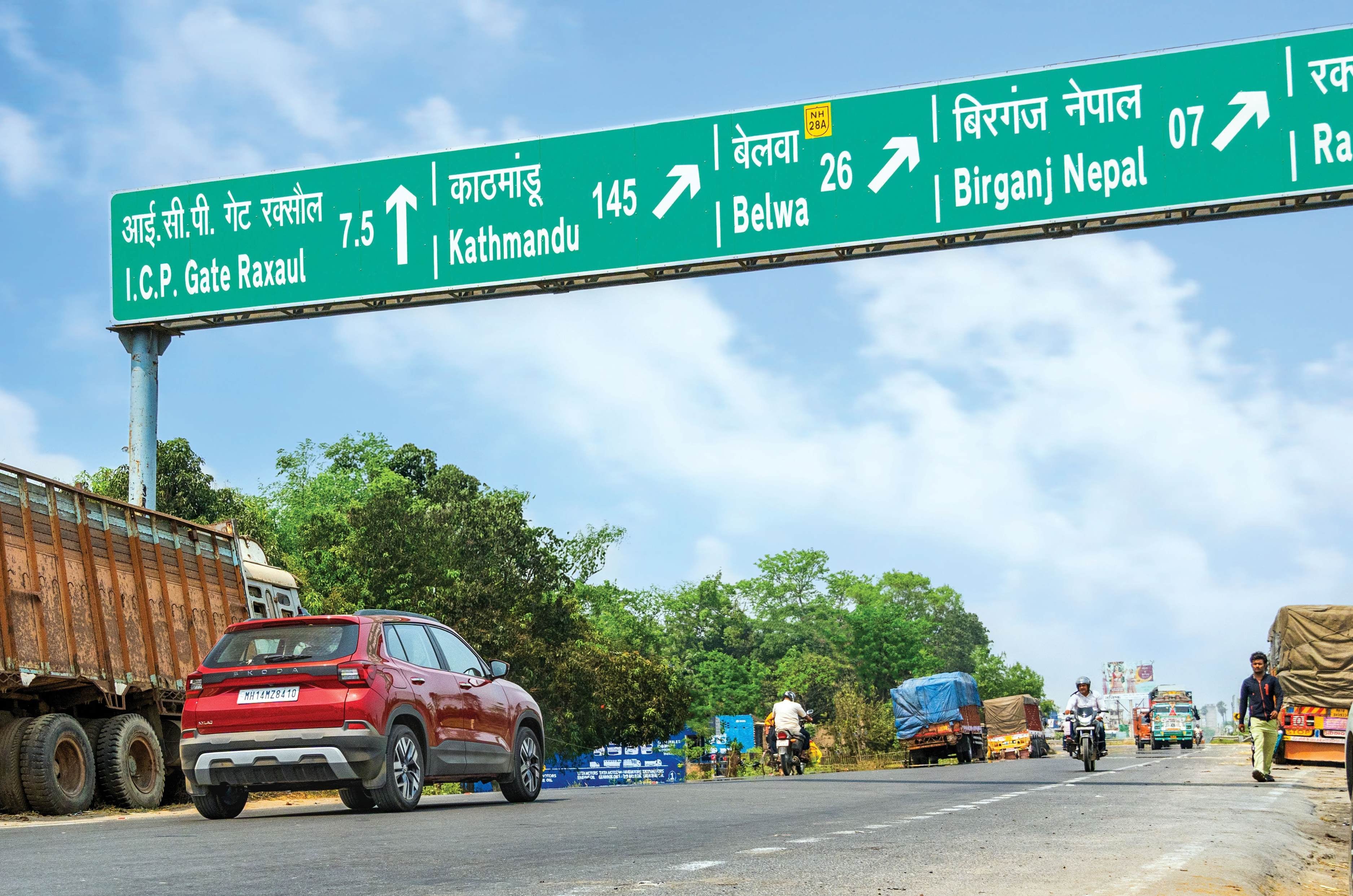
We were closing in on the end of the India leg, with one last stop in Gorakhpur before the Nepal border. To celebrate, a group of Skoda owners, officially known as the ‘Fans of Skoda’ joined us for a celebratory convoy as we drove out – everything from Octavia RS models to Kodiaqs and Kushaqs turned up as a send-off before we went international. The loud, chaotic border towns past Gorakhpur delivered one final challenge as we exited through Raxaul.
Final stretch before the Kylaq left India for the first time.
The India-Nepal border is still raw and basic, with none of the high-tech systems you might expect. A drive of this scale comes with a mountain of paperwork – visas, carnets, insurance, and more – and sifting through all of it manually takes a while. After a gruelling five hours, the Kylaq crossed out of India for the very first time.
Nepal – Old World Charm
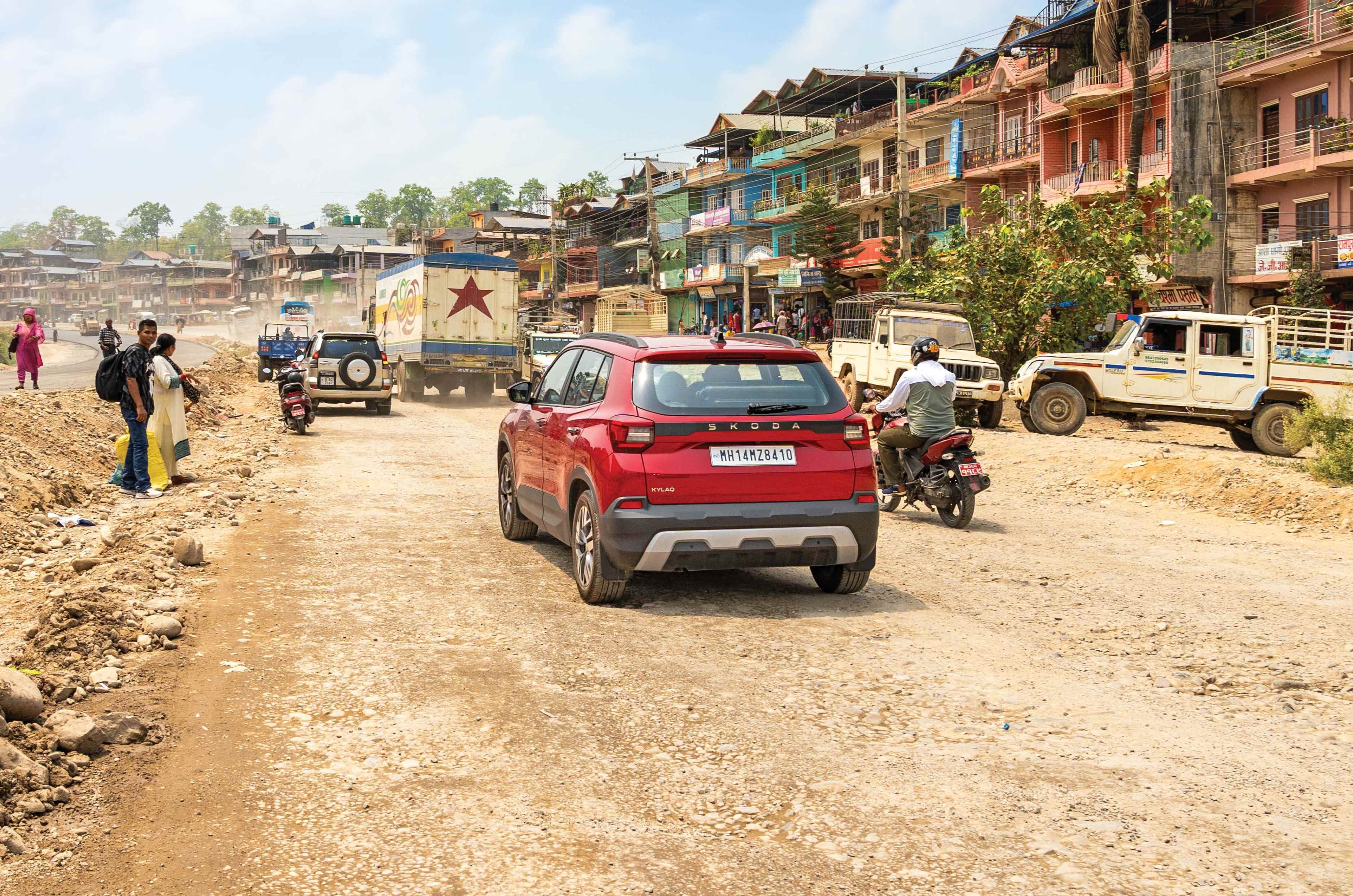
Nepal’s state highways give Indian roads a run for their money.
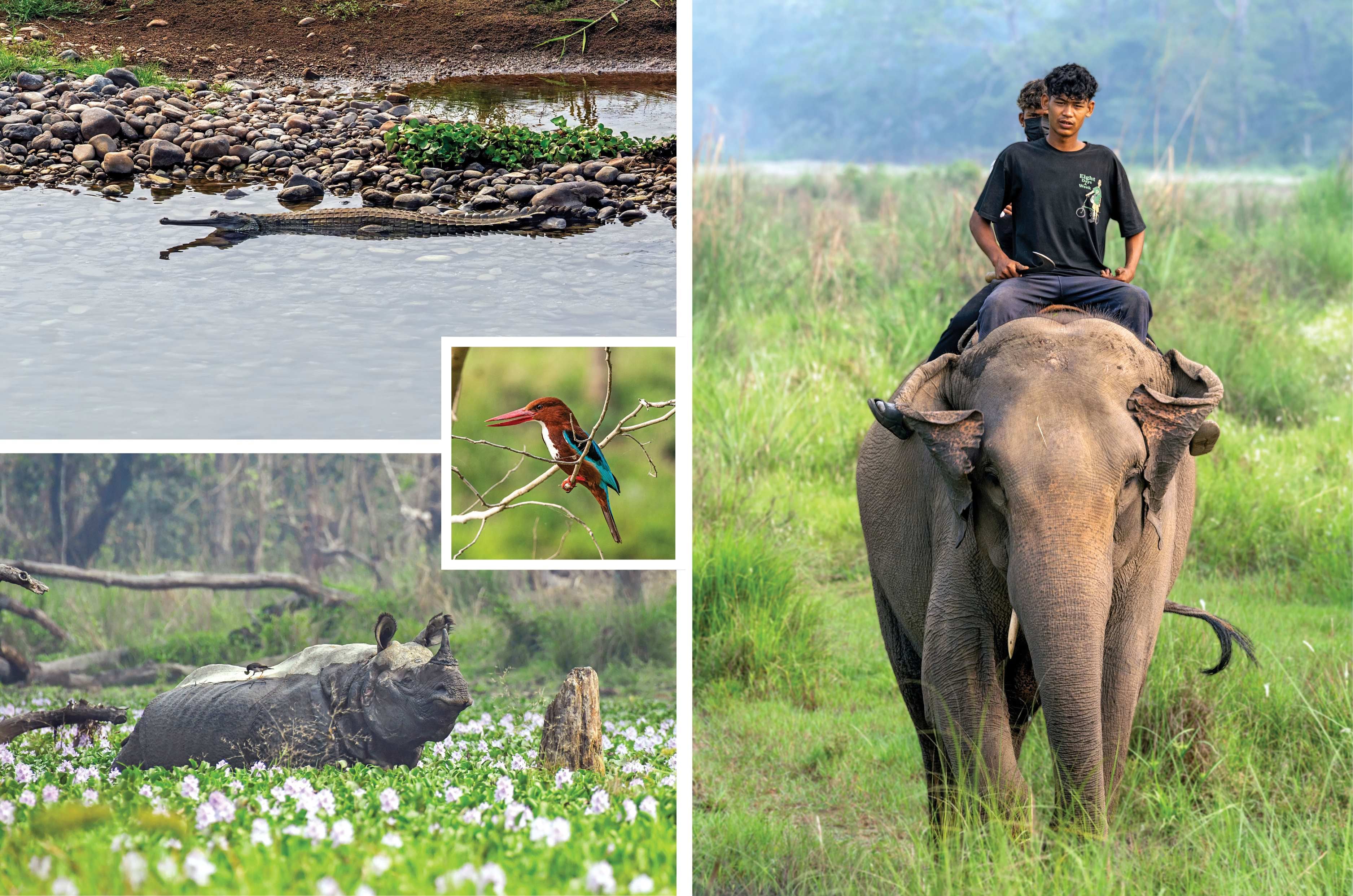
If the Indian side of the border was old-school, Nepal’s immigration post is almost antique. Drive past it, and you’d likely miss it altogether – the only tell-tale sign is a simple gate with ‘Immigration Office’ hand-painted on it. This humble-looking house is, in fact, the immigration office, where, just like on the Indian side, every check is done manually. Fine print, identity proofs, and everything in between were checked meticulously before we were welcomed into Birgunj. Our main draw in Nepal was the bustling capital, Kathmandu, but there were magnificent stops along the way, starting with Chitwan National Park. Home to nearly 700 one-horned rhinos, the park also shelters elephants, Bengal tigers, cobras, the elusive gharial, and abundant flora. The Kylaq would have been fun to explore it in, but we opted for the park’s safari vehicle to relax and take in the surroundings. Paddling a beaten-up wooden kayak past crocodiles and snakes adds a rush, but it’s nothing compared to a rhino staring you down in all its magnificence. The park gave us a welcome break from long hours behind the wheel.
Lumbini is home to 32 unique styles of monasteries.
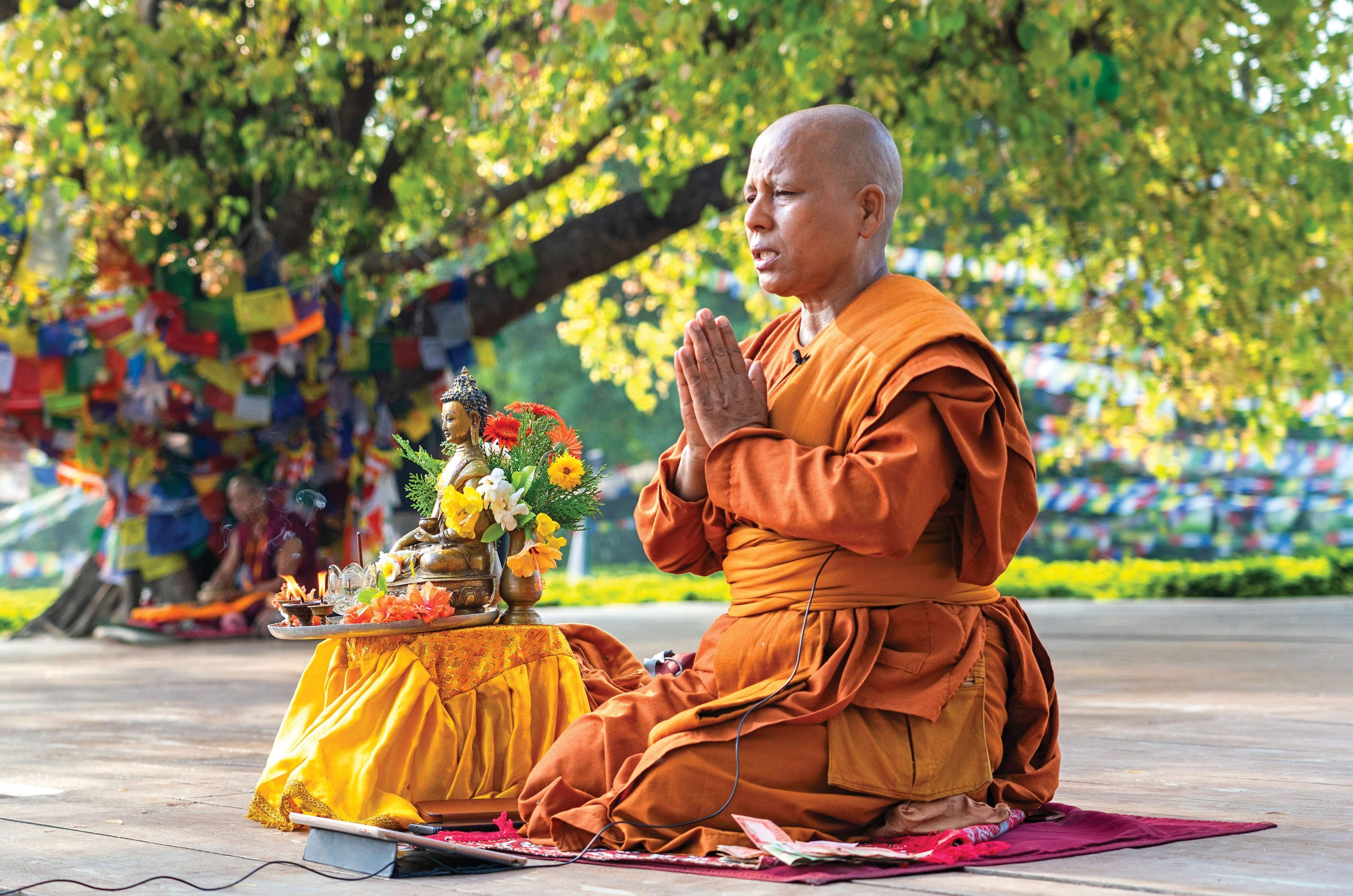
Next was Lumbini, a spiritual haven and, more importantly, the birthplace of Siddhartha Gautama (Lord Buddha) around 563 BC. Its fascinating monastic zone showcases monasteries built by Buddhist nations from around the world, each reflecting its own culture through design and architecture – a remarkable collection of temples spanning diverse traditions. The feeling of peace there was unlike anything I’d experienced, but it was soon disrupted by the road to Pokhara.
Lumbini provided a moment of calm through the chaos.
Mountain passes are notorious for destroying Google’s ETAs – landslides, breakdowns, and deteriorating roads mean a stretch that should take an hour could take five, depending on your luck. We braced for traffic and drove straight into a landslide clearing. A two-hour wait meant the sun was setting as we rolled into the quaint town of Pokhara. Bustling with cafés and pop culture, it felt like a mini Kathmandu, but with the stunning Phewa Lake turning orange at sunset. The calm that began in Chitwan came full circle on the shores of Phewa Lake.
Chitwan is home to the gharial and over 700 one-horned rhinos.
Kathmandu, though, was a different animal entirely – every bit a capital city, and a world away from the slow pace of Chitwan or Lumbini. The music is loud, the traffic is hectic, and the city is anything but quiet. Ironically, the only quiet things on the road are the cars – China’s dominance in Nepal is stark, with three in five cars on the road being Chinese EVs. Geely, BYD, and GWM rule the market, with only a handful of Hyundais and Kias as competition.
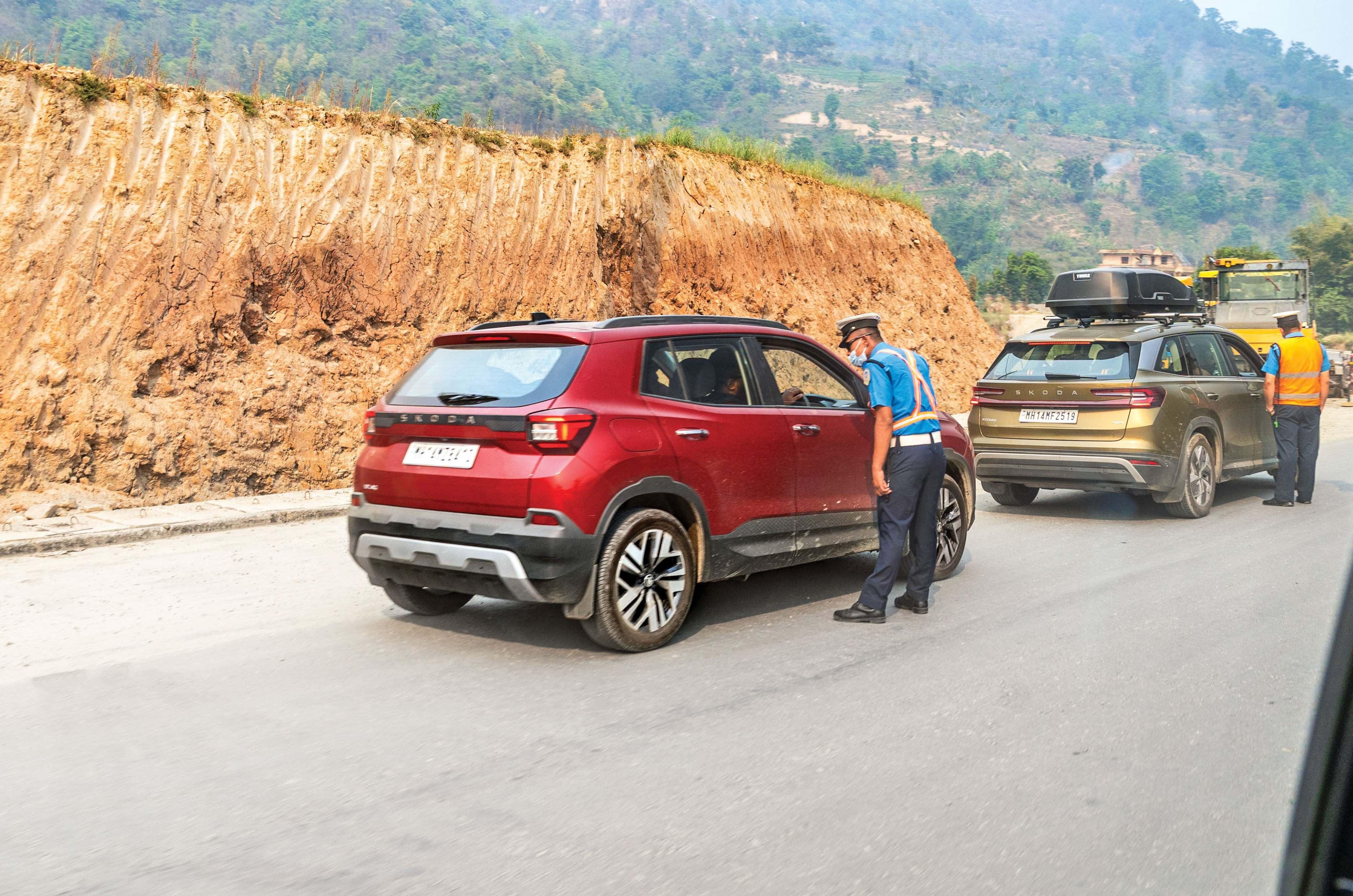
Authorities were always curious thanks to Indian number plates.
The party scene rules Kathmandu too. At night, the city comes alive as a hub for tourists from around the world. Hiking gear and North Face apparel go for a fraction of the price – and, often, a fraction of the quality – alongside quirky masks and fridge magnets at every tourist stop. Spend a little more time, though, and you’ll find excellent coffee shops and the famous Thakali thali: thick buckwheat porridge with salads, meat, and plenty of flavour. Good thing too, since walking through Durbar Square works up quite an appetite. Partly destroyed by the devastating 2015 earthquakes, the temples have since been restored to their former glory, though you can still spot the scars in a few bent pillars and roofs. It’s a culture and tradition worth preserving, and Nepal deserves credit for doing exactly that.
Birgunj-Sino-Nepal Border in numbers
Distance covered
922km
Fuel consumed
115.96 litres
Average fuel economy
7.13kpl
Approximate fuel cost
Rs 15,846
Average per-litre fuel cost
Rs 136.65
Total time driven
34hrs 25min
Average speed
27kph
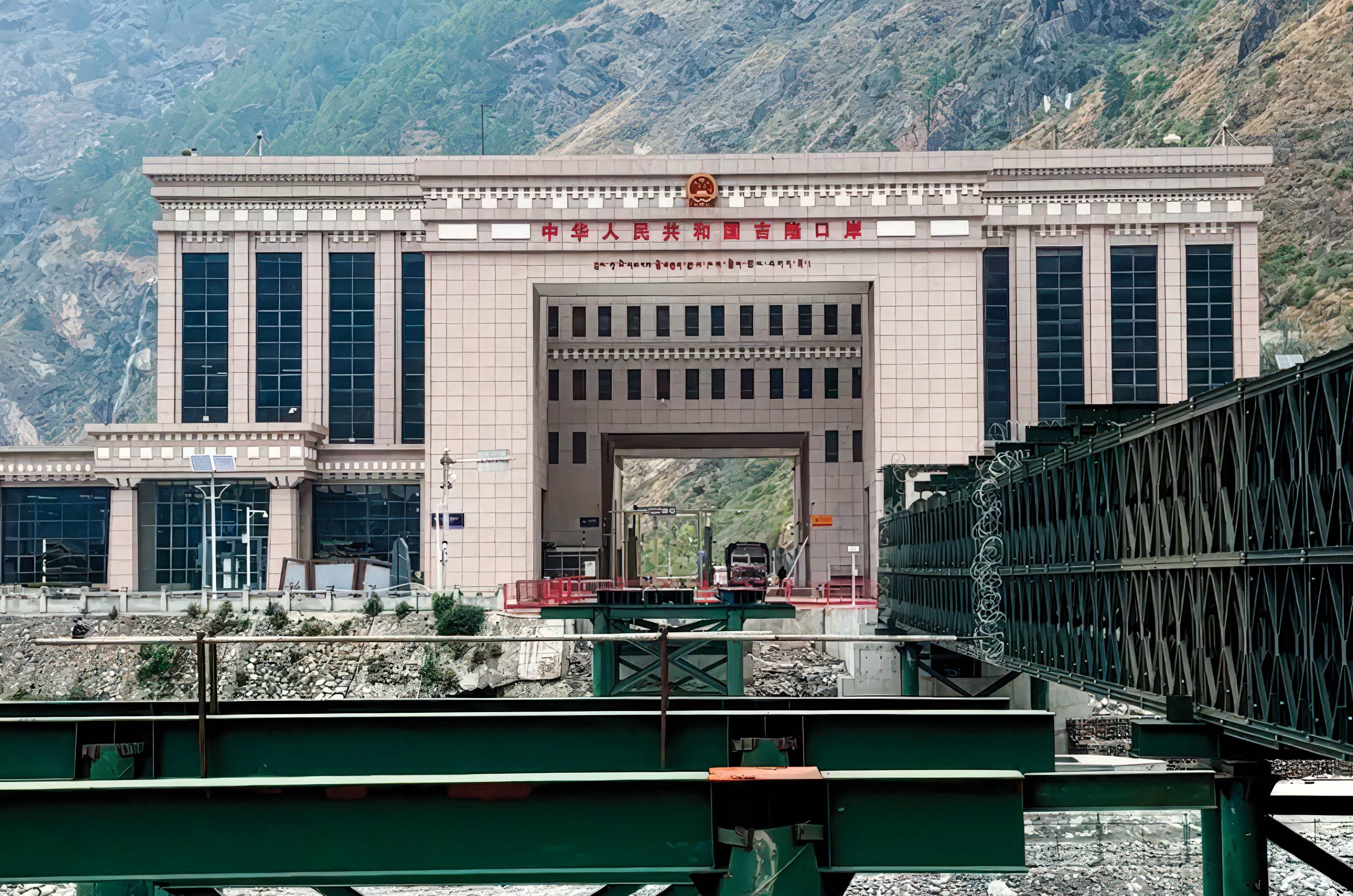
With Kathmandu explored, we headed towards our second border crossing – and this one was far more intense. Once we left Kathmandu, we left the tarmac behind too. Muddy back roads, still wet from the previous night’s rain, meant slush and a constant need for 4WD. Even so, though packed to the brim with luggage, the Kylaq stayed light enough and had enough clearance to pick its way around the mud on the approach to the Rasuwa Bridge. From there, you can see the Chinese immigration building towering over everything around it. With the Kylaq thrumming with excitement, we crossed into Tibet – the roof of the world.
Tibet/China – Roof of the World
China’s border crossing is as imposing as it gets.
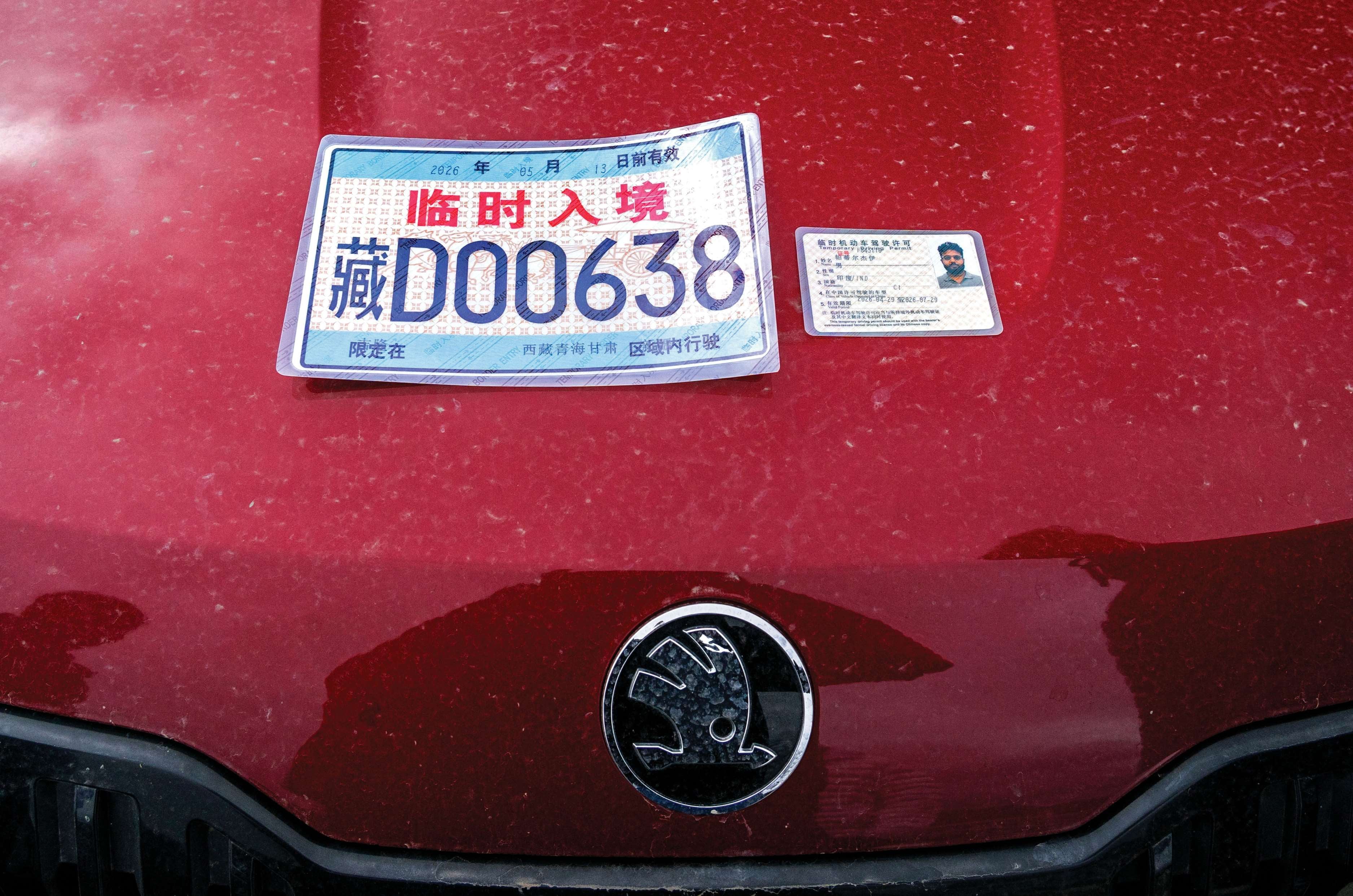
Crossing into Tibet felt like crossing into the future. For a region tucked deep into the mountains, it’s exceptionally developed – the roads are smooth and well-signed from the moment you cross the bridge, barely a hundred metres before the immigration office. In China, we weren’t taking any chances, knowing any misstep here could jeopardise the rest of the journey. After answering the customs officers honestly – and impressing them with the scale of the Kylaq’s challenge – we entered the lovely town of Gyirong. Old Chinese architecture, plenty of red, and signboards we couldn’t quite read were early signs that we really were in a different world now. Nepal had shared plenty with India – the cars, the food, the roads – but China felt entirely its own. We thought we’d seen our share of speed cameras, but China put us to shame – they appear every 50 metres or so, complete with flashes. There’s simply no room for error, and you’re monitored everywhere you go – aneerie feeling that takes some getting used to. Another non-negotiable is to obtain a special driving licence for every person that will be driving and a China-specific number plate, which you have to place on your dashboard so the cameras can pick up any infringements. A regular India-style RTO office with long queues and a lack of urgency got us homesick for a bit.
Local license and registration are non-negotiables in China.
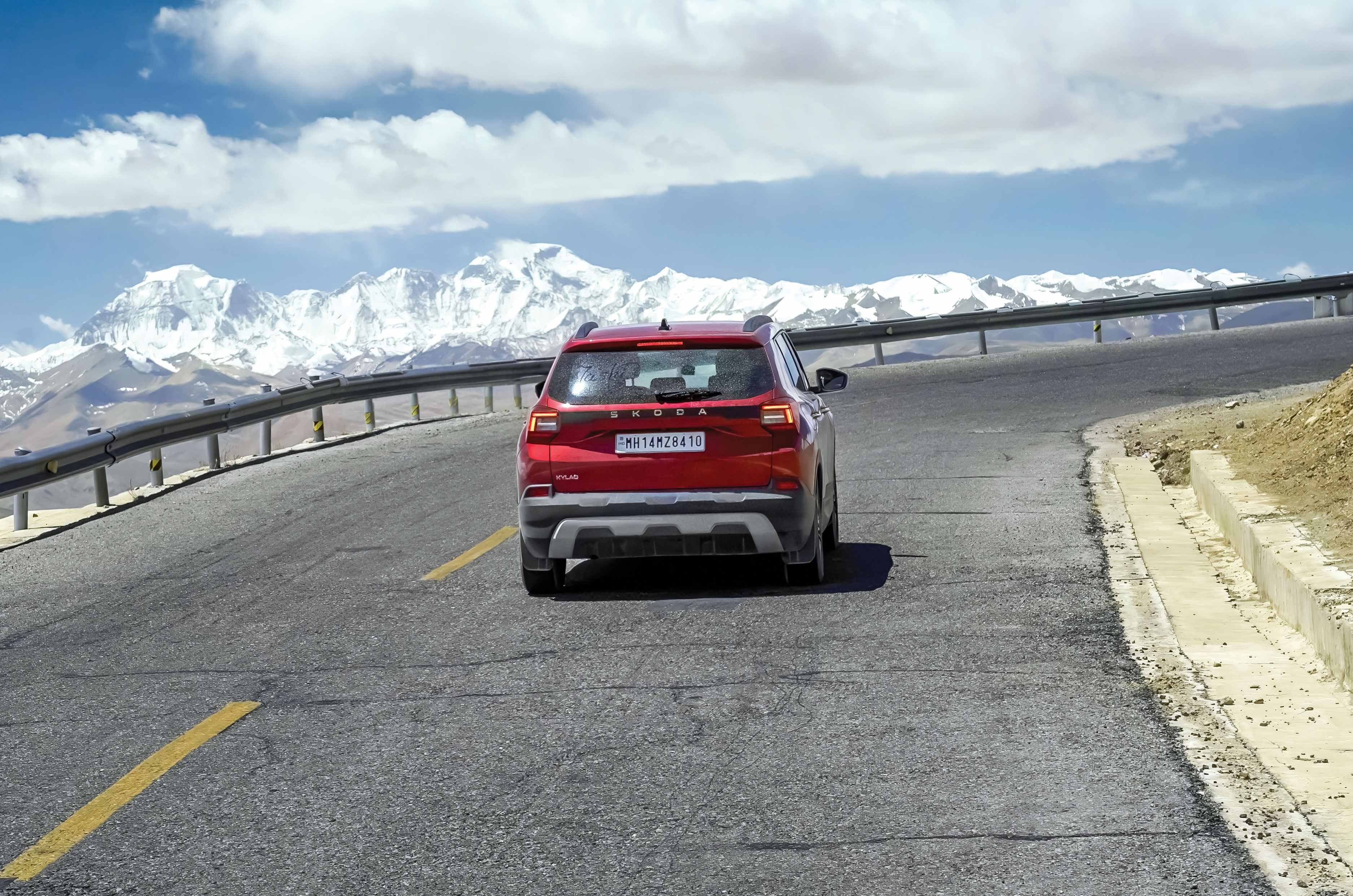
A few mugs of hot ginger-lemon tea eased us into the chill, and we set off for Mount Everest Base Camp. High altitudes are usually punishing for small-capacity engines, but thanks to its turbocharged engine, the Kylaq barely broke a sweat, buzzing through the passes. Its 6-speed automatic had been a great convenience through the chaos of India and Nepal, but the winding mountain roads and immaculate tarmac meant I could switch to manual and take control via the paddle shifters. Paddle-shift response is often sluggish, but not here – the shifts were quick, and the taut suspension held its ground even through tight hairpins.
Everest hove into view long before we made it to base camp.
It made for a great drive and great footage, right up until we spotted the peak in the distance. Even from afar, Everest is breathtaking, and mercifully the clouds stayed clear as we got closer. You can’t take a car near base camp itself – a one-hour bus ride covers that final stretch. It’s strange how you lose your breath as you approach Everest – partly the thin air and altitude, but you’d lose it all the same just from the view. Words don’t do it justice, and don’t be surprised if you shed a tear or two – it’s overwhelming.
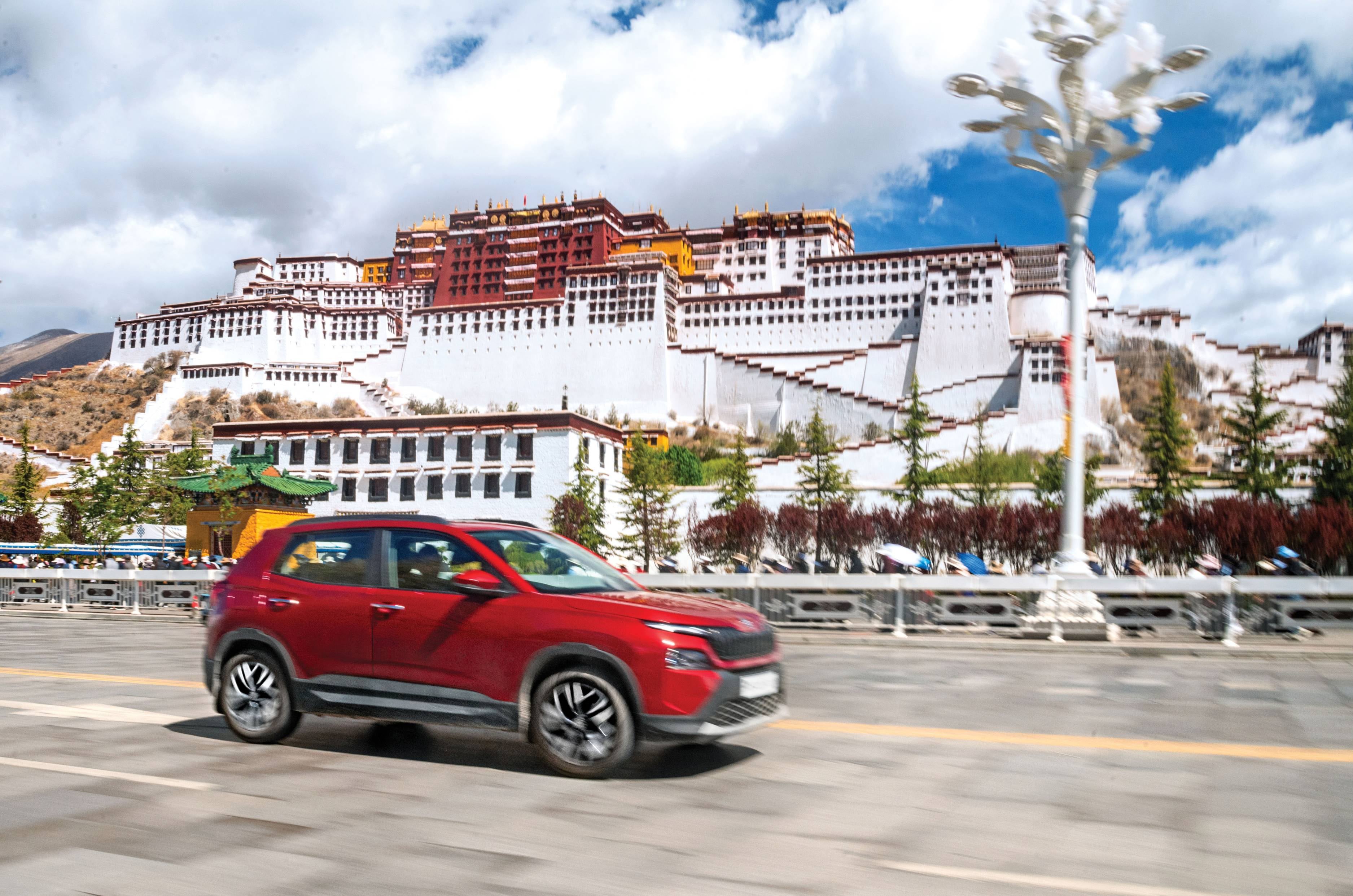
Stunning Potala Palace; once home to the Dalai Lamas.
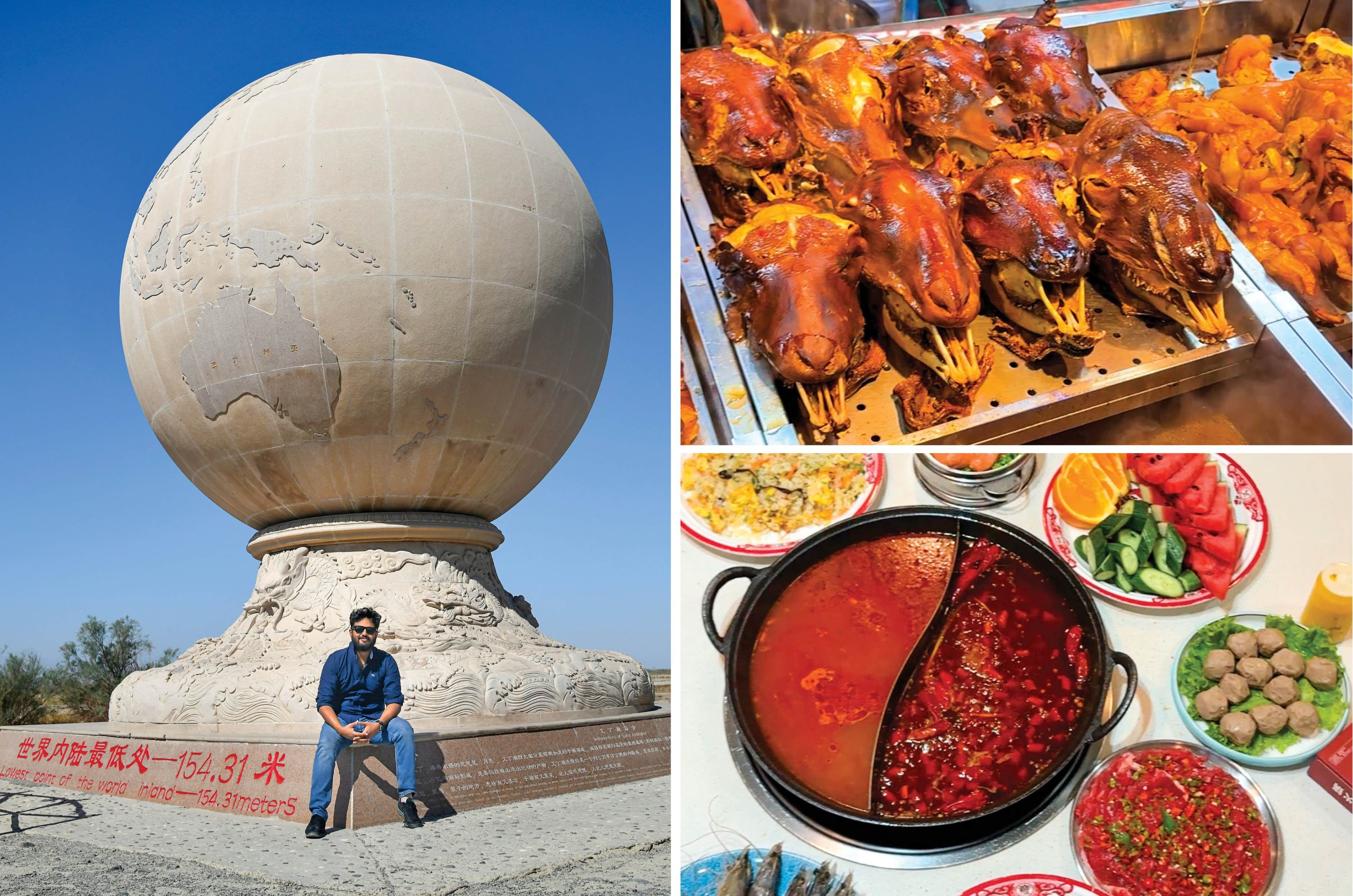
With Everest ticked off, it was time to take on China’s vastness. We headed to Lhasa, the spiritual capital of Tibet, home to the grand Potala Palace. Once home to monks and lamas, this stunning palace holds incredible history and artefacts – spiritual or not, its significance to the country’s history is unmistakable. The drive kept revealing itself through unique food, dialects, faces, and even geography. One day we were freezing thousands of feet above sea level; days later, in Turpan, we were below sea level in blistering heat. From boiling hotpots to grocery-store instant noodles, China pushed us well outside our comfort zone, and the Kylaq wasn’t spared either.
L: From EBC’s high to Turpan Depression’s low – Jay was at 154m below sea level here. R: Street food in China not for the faint-hearted.
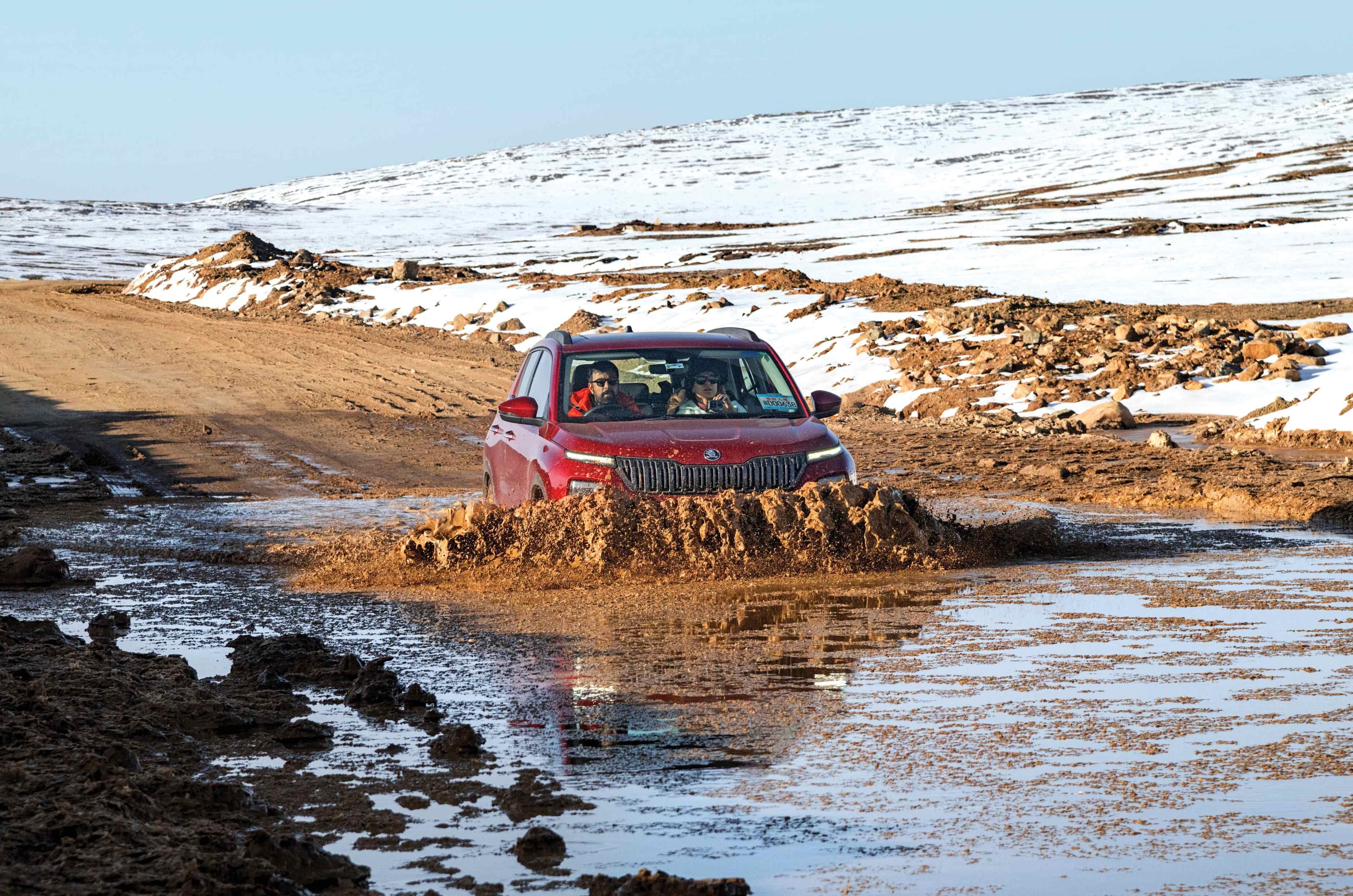
Two full days on the way to Golmud were entirely off-road, taking over 13 hours of driving, with our average speed dropping to 18kph as the Kylaq waded through water up to its bonnet and emerged without complaint.
In China, you get perfect roads or, simply, no roads.
A stretch that would have broken most cars left the Kylaq unscathed. China hit hard, but the Kylaq hit back harder. From day one, it had faced challenge after challenge, and from day one, it had come out on top. Three countries in, it still carried the same zeal it started with – and while we were rattled, it stood strong each night, ready for the next day.
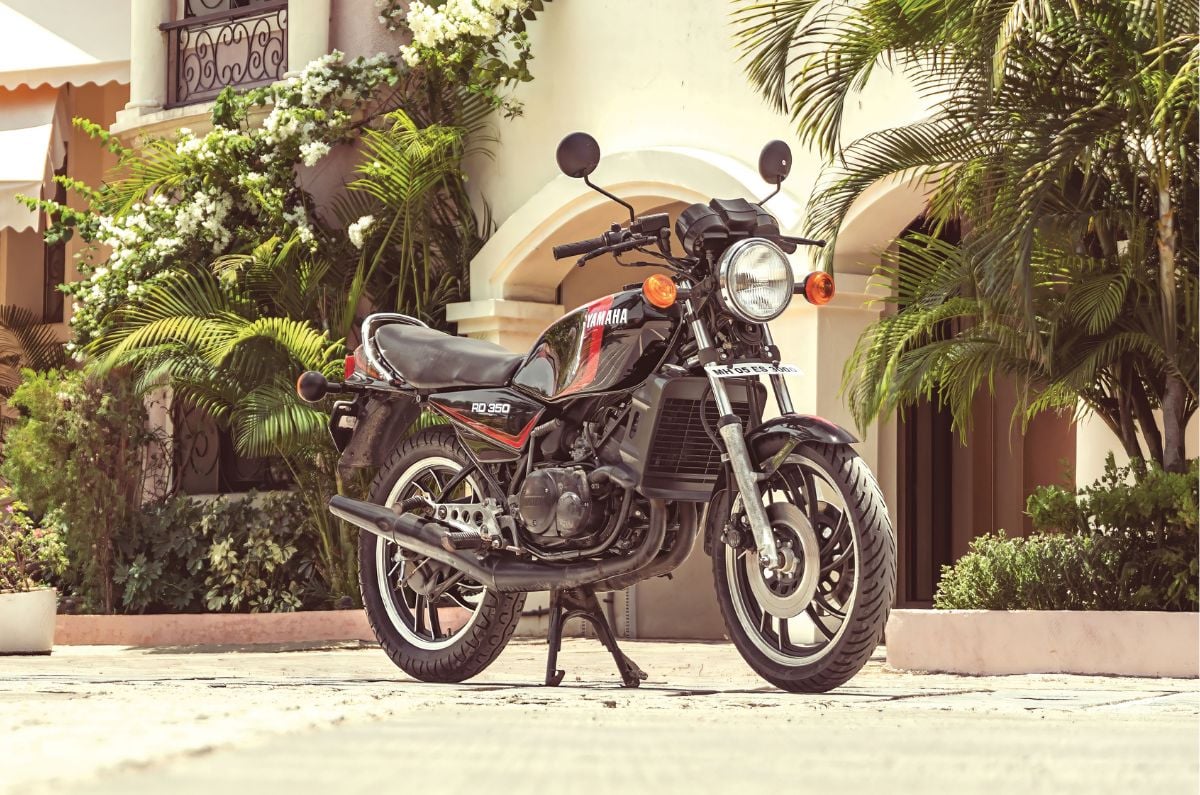
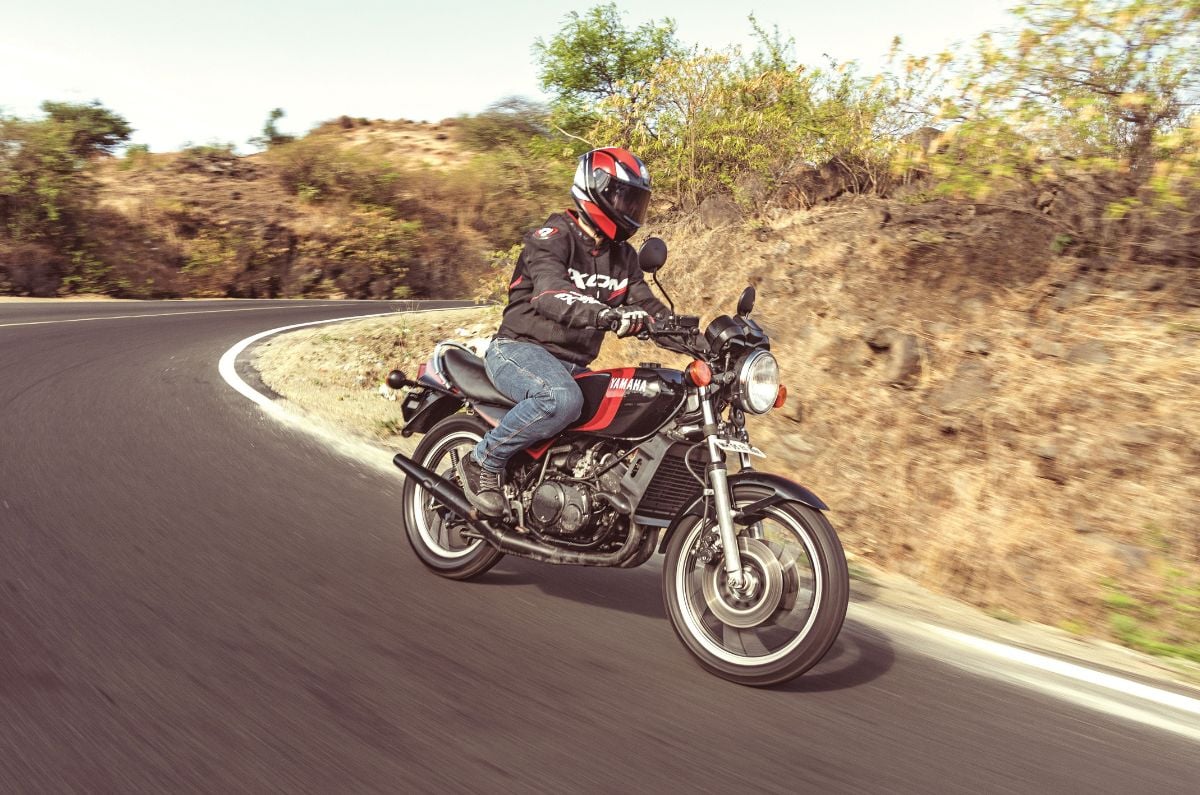
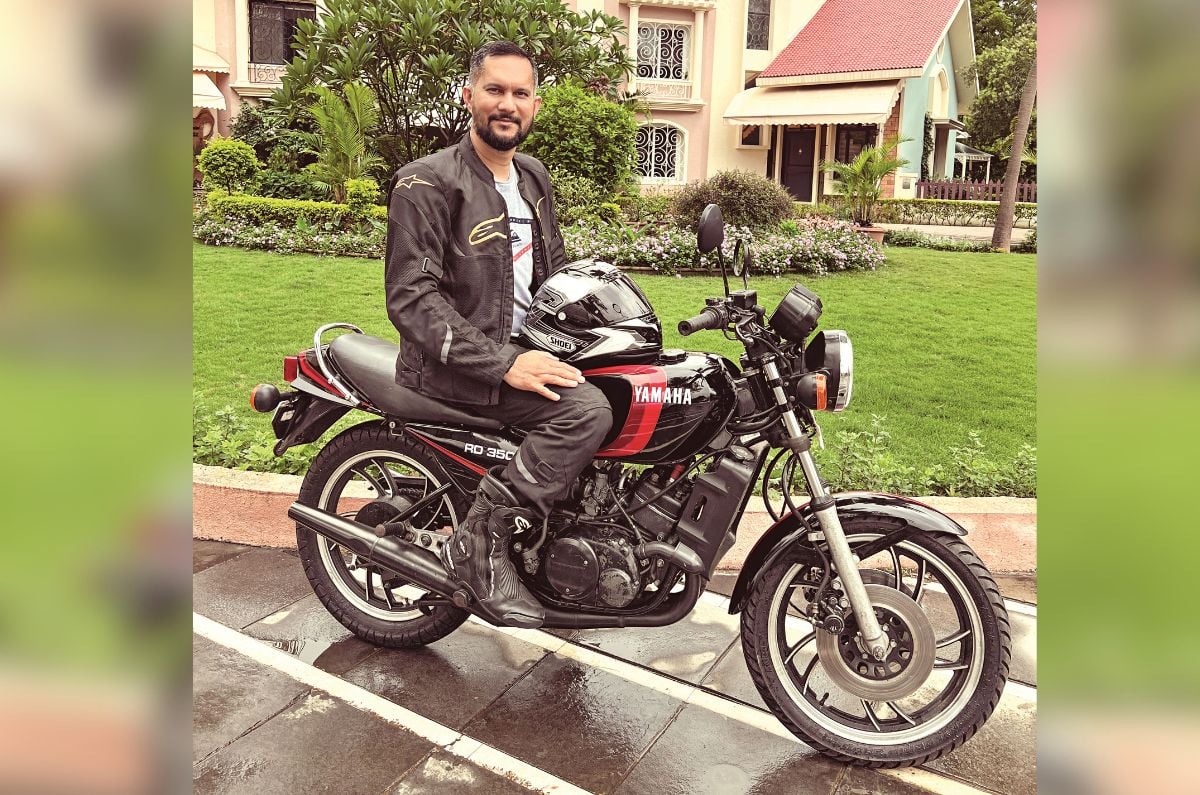
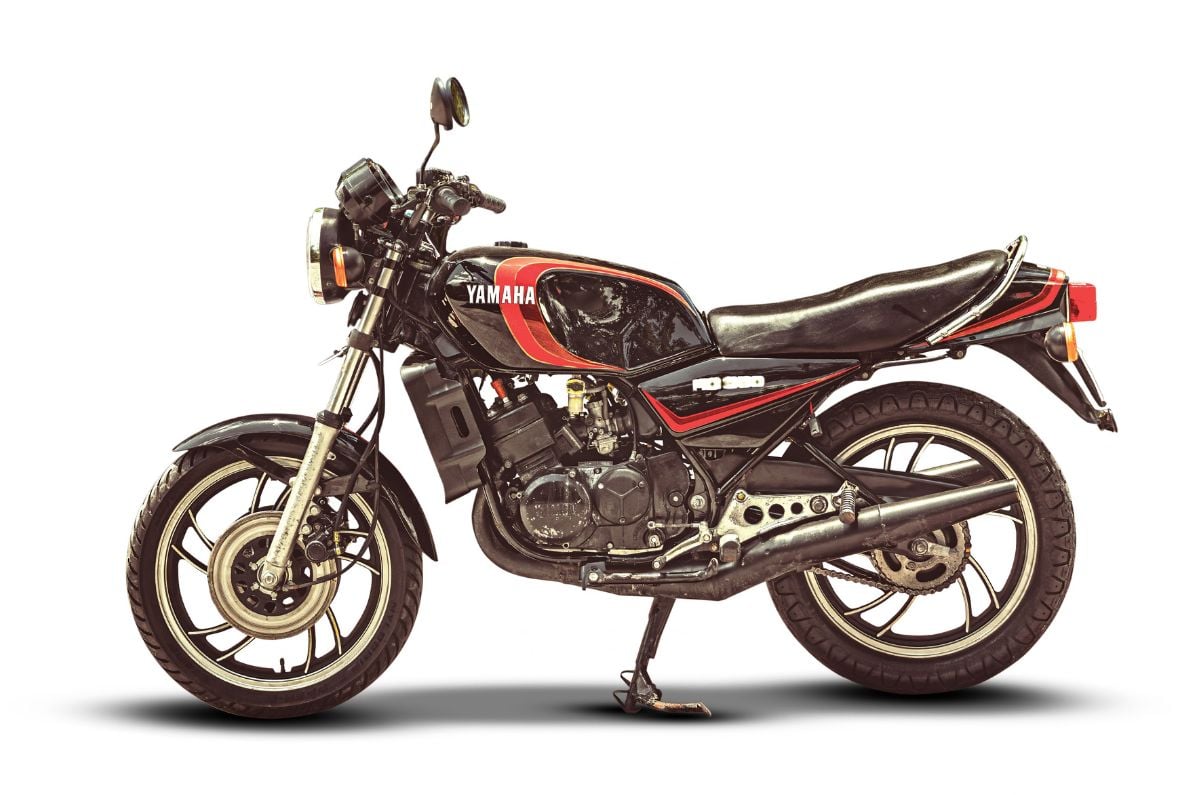
When most Indians picture a Yamaha RD350, a bike that looks like a UJM (Universal Japanese Motorcycle) with an air-cooled, twin-cylinder motor comes to mind. This was the bike on sale in India in the ‘80s via the Escorts licensing agreement, and it cemented Yamaha’s reputation as a maker of seriously fast motorcycles. However, during the same era, in global markets, there was a completely different bike being sold bearing the RD350 nameplate, crucially with an LC suffix (informally) attached to it. This version was never officially sold in India and packed a more powerful liquid-cooled motor, a sportier chassis and very different styling. What you see here is that very bike and, as you’ll read, this is quite a different animal to the air-cooled RD.
Genesis
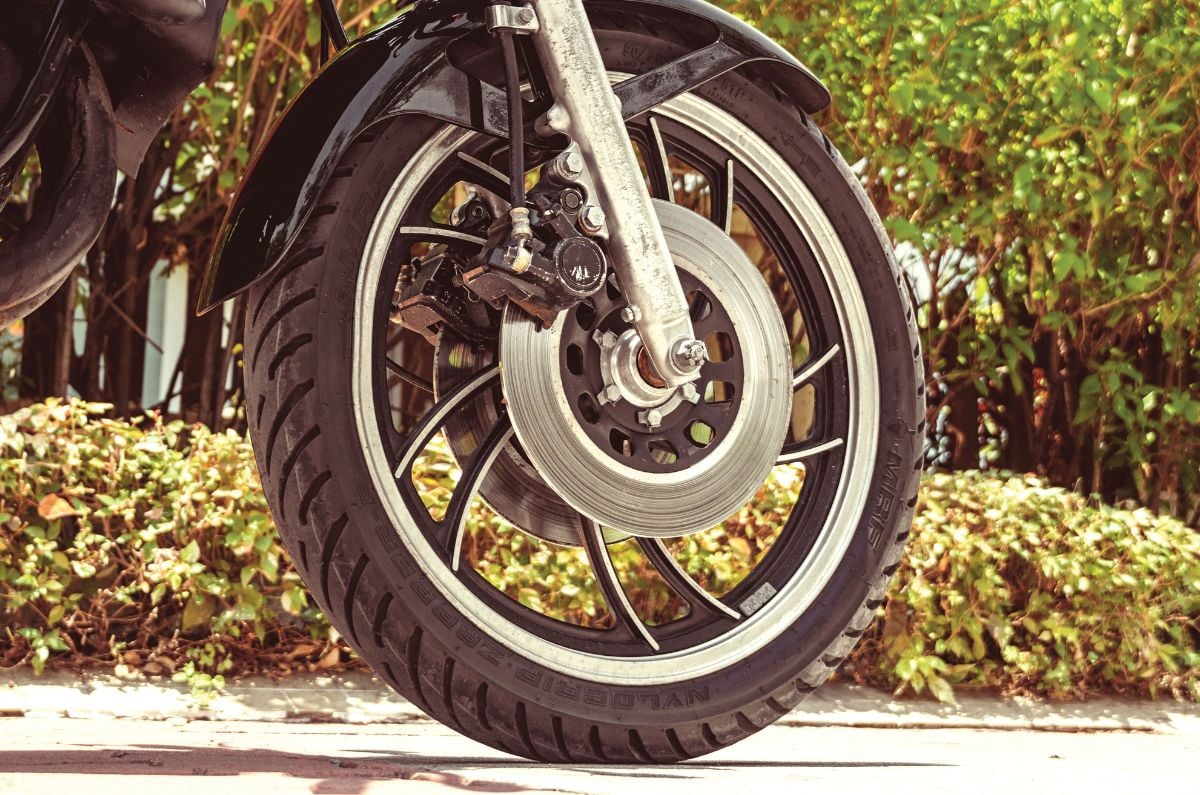
At the end of the air-cooled RD’s lifecycle, Yamaha must have realised that while it was undoubtedly violently quick, it was also like wielding a double-edged sword – the rider could get hurt when putting its power down. Taming such a ferocious engine would simply need more sophistication from the chassis. To achieve that, the LC moved from the air-cooled bike’s archaic chassis to a new one that was actually inspired by Yamaha’s TZ350 racer of the era. This was complete with monoshock rear suspension and lighter cast alloy wheels, which also brought in the convenience of tubeless tyres.
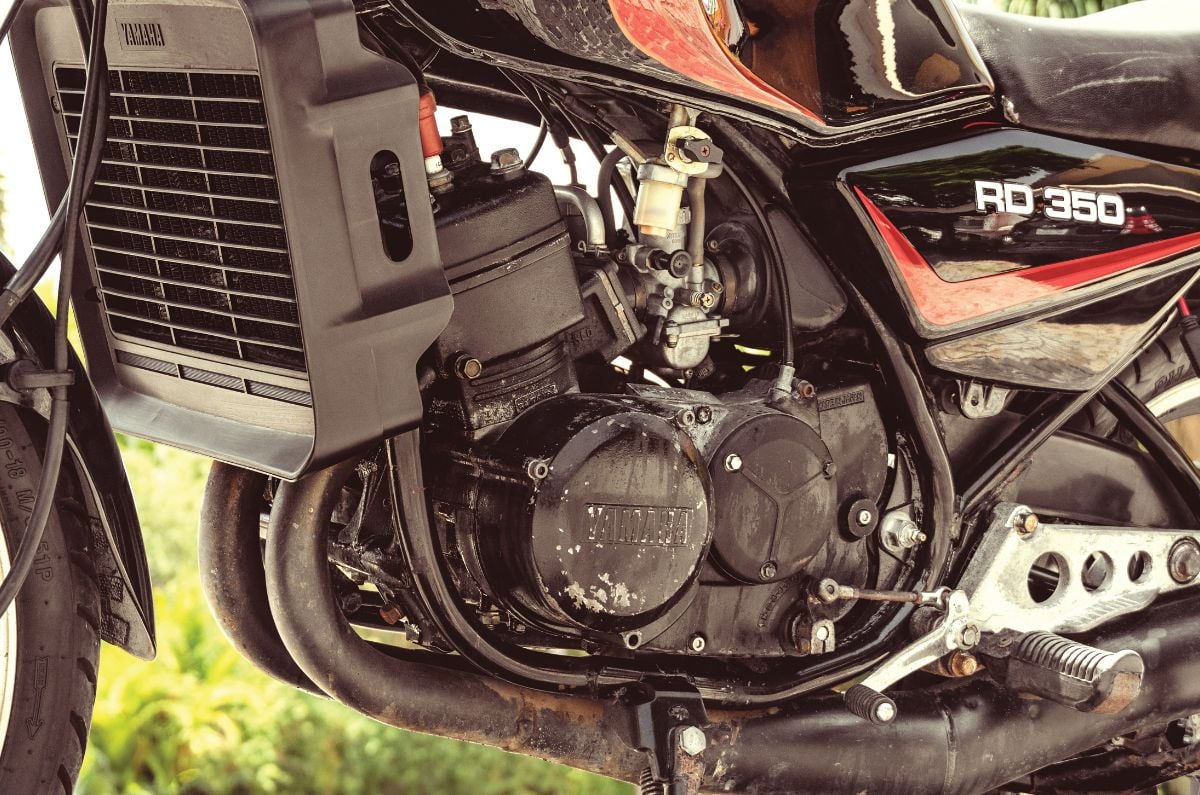
The LC suffix in its name stands for liquid cooling, and Yamaha moved to this more modern architecture to extract more output from the 347cc twin-cylinder motor. Plus, with liquid cooling, you have tighter tolerances and better reliability even when you keep pushing the performance envelope – which a lot of people back in the day did, because the LC was a common sight on racetracks overseas owing to its relative affordability.
Water-cooled twin needs revs to make power, but once you do so, you better hold on!
Over the years, there were subsequent versions that made more power courtesy of YPVS (Yamaha Power Valve System), and at one point, there was even a fully faired version. This very example is from 1980 and is one of the earliest ones from the LC’s lifecycle. Introductions made, now it’s time to get down to business – what is it like riding this nearly half-a-century-old bike?
Forward Progress
Today, this bike might be 46 years old, but it honestly doesn’t feel ancient like the air-cooled RD does in many respects. However, on both RDs, the star of the show is the vociferous and powerful engine. Once you find an empty road, it is monumental fun to chase the 9,500rpm redline, grab another gear and repeat this grin-inducing cycle. Blasting past 100-120kph is very easy and the performance that the ‘Elsie’ has to offer feels much stronger than the roughly 45-50hp output its engine can make at its peak in stock form.
Now, the three words “at its peak” are very important ones here because the bottom end is very dull and weak, and the engine vehemently protests being below 4,000rpm! Perhaps it was just this bike, but anything below 3,000rpm required constant clutch slipping, and the engine really didn’t like being there. Above that threshold, you’ll make quick progress, although the real fun is to be had between 6,000rpm and the 9,500rpm redline.
This is a trait demonstrated by pretty much every two-stroke machine, no matter its displacement, architecture or cylinder count, so this isn’t a criticism, more a personality trait you need to work your way around. In fact, I’d wager that the way the LC pulls in the top three and a half thousand revs is so hard that it feels like even some current-day 60hp machines will be left in the dust.
It is pleasantly well-behaved around a corner for a near 50 year old bike.
Another reason you’ll very much want to keep the revs up is the high-pitched banshee howl it has for an exhaust note. The sound emanating from its twin upswept pipes when the revs are high and you’ve got the throttle pinned is a thing of real beauty! It’s real childlike fun to listen to a 2-stroke motor roar its heart out, and this twin belts out an awesome soundtrack, one that – sadly – no longer exists today.
In the past, I have had the pleasure of riding an air-cooled RD350, and while the violent nature of the engine and its rather heavy clutch pull are also present here, the LC’s ride and handling are a pleasant surprise! Since the LC’s frame was inspired by the TZ350 racebike (but was unique and road-biased), you actually had decent handling to somewhat effectively wield the firepower on tap. It doesn’t feel as delightfully taut as a similarly sized modern machine, but it also doesn’t feel like a horse-drawn carriage when you take a corner at speed.
Another very welcome surprise was that the LC provided surprisingly good ride comfort. Over the few bad roads we encountered through the course of our shoot, it kept me reasonably comfortable. Truthfully, the one facet that feels woefully out of place here is the weak binders. The LC’s twin disc brakes are an upgrade on the air-cooled RD’s single disc (India-spec ones came with an even weaker front drum brake to cut costs), but the stopping force still feels more like a suggestion than a direct order.
Feeble brakes will instil the fear of God in you.
Intangible Special Sauce
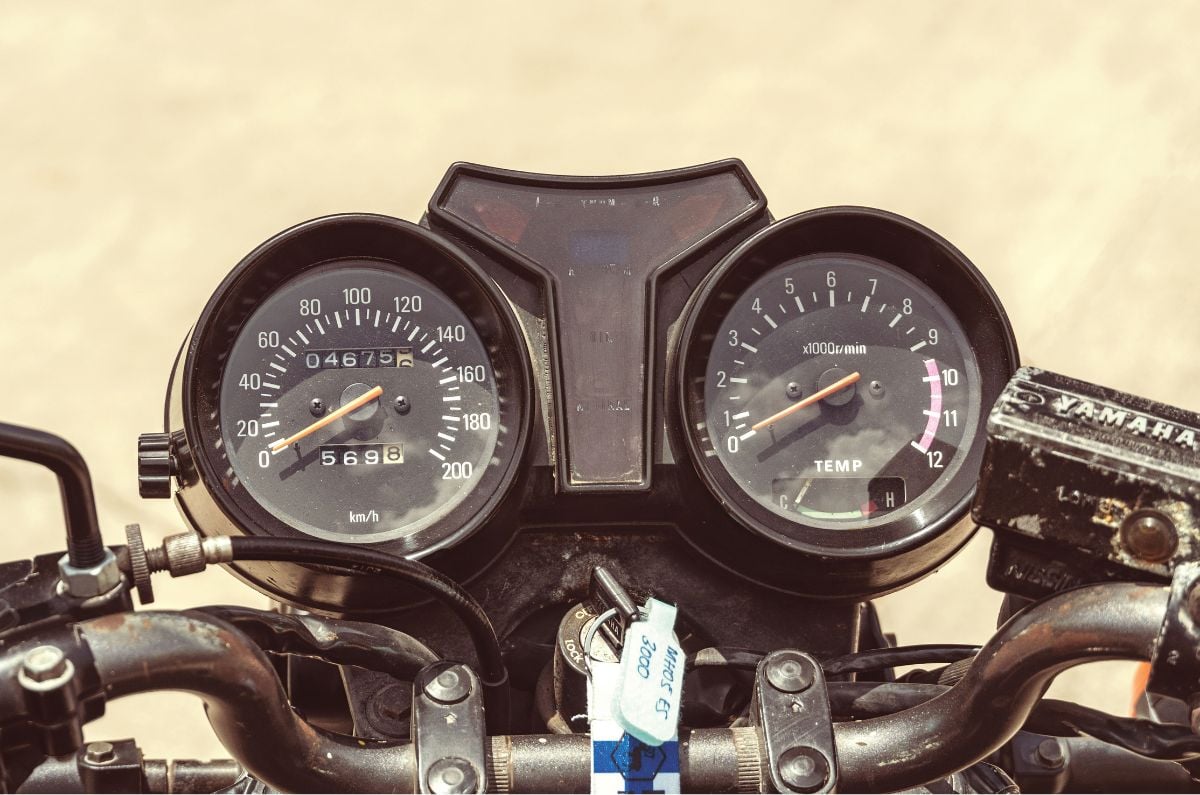
But this is not a review, and I’m not here to evaluate this bike – I’m here to experience it, and what an experience it has been! I’ve said this before and I’ll say it again, from the rider’s POV, it’s so refreshing and heartwarming to see two honest-to-goodness physical needles circling around in this day and age, and no TFT can come close to a set of analogue gauges.
Twin-pod analogue clocks a very refreshing sight today.
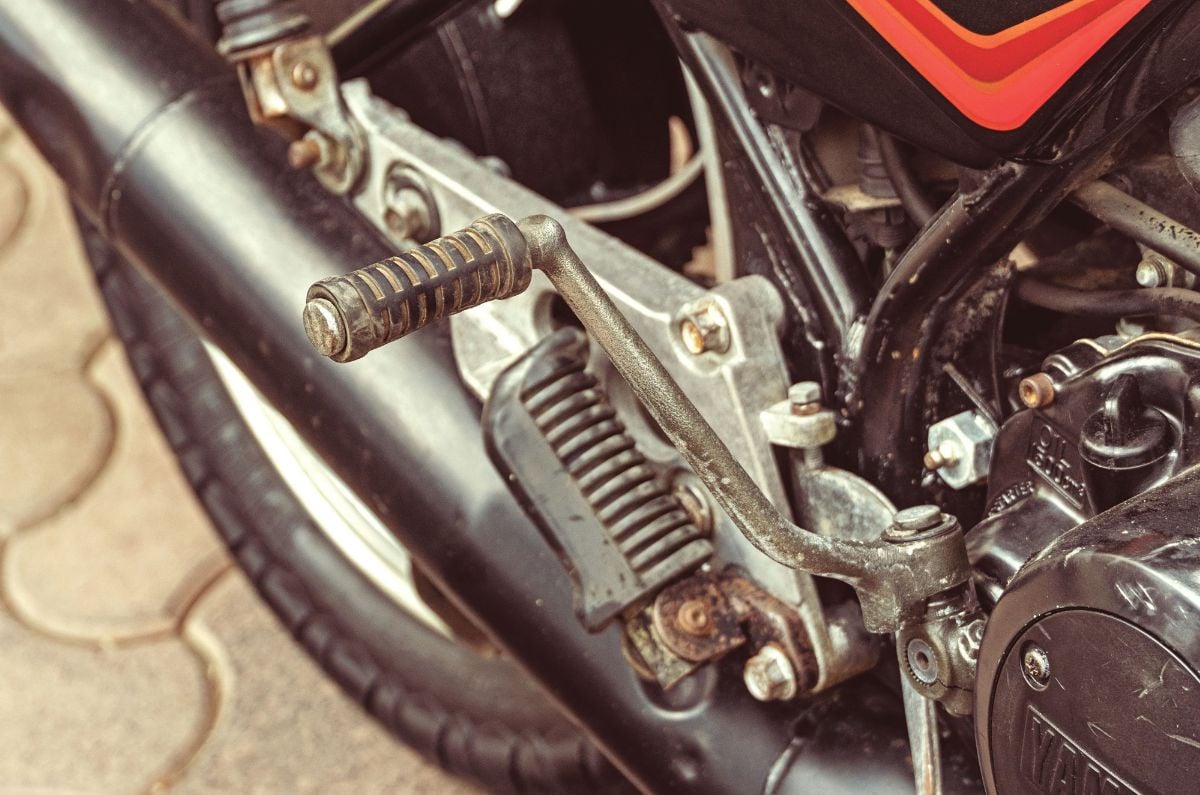
This was a raw, unadulterated machine before electronics and rider aids, so to keep yourself upright, you had to be both sensible and skilled. Of course, there’s no electric start here, and you’ll need to use your leg to start the motor, with a good old-fashioned swift kick! Speaking of, one quirk the LC had was that the rider’s footrest needed to be folded inward to make room for the kick lever to go down fully.
Rider footrest needs to be folded to kickstart the motor.
Yes, these are some areas where the LC very obviously feels its age, but today, even a single-cylinder 2-stroke machine is a rare sight, let alone a twin, and this liquid-cooled one is rarer than hen’s teeth because it was never officially sold in India. This bike was a private import back in the day (one of a single-digit handful), and currently it is in the custody of a very kind and gracious friend of mine who let us have it for a day!
Big props to the owner, Leo Noronha, for letting us have his ‘Elsie’ for a day.
One rather funny way the LC feels its age is that even though it was considered a properly sporty machine for its time, it’s actually not a hard-edged, uncompromising machine. The rider isn’t hunched over the ‘bar, there’s a flat seat, which will seat a pillion comfortably without them feeling like they’re perched precariously on the first floor, and it even has a centre stand!
I think somewhere along the way, racetrack performance, bragging rights for how much horsepower your machine has, and the latest gizmos and gadgets trumped rider involvement and real-world practicality, which seems like motorcycling may have veered off course.
Nevertheless, for one very happy morning, I got to tick off one of my bucket list riding dreams. This proverbial hero lived up to my expectations and how! Yes it’s old, yes it can be a bit cantankerous and temperamental at times, yes it pollutes the air a little too much and yes, it’s expensive to own and maintain, but all of those drawbacks pale in the face of the joy you’ll feel when you start riding!
This particular example is maintained at Kumar Auto Works in Andheri, Mumbai.
This isn’t a machine built to tick any boxes or fill a clearly demarcated role, and its only purpose is to put a smile on the rider’s face. All said and done, the RD350LC is an extinct breed in today’s ever-so-strict times, and as motorcyclists, we should ensure that bikes like these continue to survive and be enjoyed rather than just being relegated to a footnote in the history books.
महीने की कमाई भले ही सिर्फ़ ₹1500 थी, लेकिन उनका दिल हर दिन बेजुबानों के लिए धड़कता था। Tip में मिले थोड़े-से पैसों से भी वो इन बेजुबानों का ख्याल रखते थे— क्योंकि उनके लिए हर जान अनमोल थी।
आज वही जुनून 6000+ जानें बचा चुका है। शायद इसी को कहते हैं—कम साधनों में भी बड़ा दिल रखना।
बेजुबानों के इस फ़रिश्ते की कहानी ज़रूर देखें और शेयर करें, ताकि इनकी इंसानियत की मिसाल और लोगों तक पहुँच सके।
@manojgogoiwildlife
Assam flood 2026, Assam flood rescue operations, Manoj Gogoi Animal Rescuer, Kaziranga National Park, Kaziranga Animal Rescue during Flood
असम की बाढ़ से बचाई 6000+ बेजुबानों की जान | Manoj Gogoi | 6000+ Animals Rescued | Assam Kaziranga | Assam Flood
कर्नाटक के दावणगेरे में एक घायल तेंदुए को बचाने पहुंची वन विभाग की टीम के लिए रेस्क्यू ऑपरेशन उस वक्त मुश्किल हो गया, जब हालात अचानक उनके काबू से बाहर होते नजर आए। हाईवे पर कार की चपेट में आने के बाद तेंदुआ घायल मिला था और टीम उसे सुरक्षित तरीके से वहां से हटाने में जुटी थी। सब कुछ सामान्य लग रहा था, लेकिन अगले ही पल तेंदुए ने ऐसी हरकत कर दी, जिससे मौके पर मौजूद अधिकारियों में हड़कंप मच गया। इस घटना का वीडियो भी सामने आया है, जिसमें रेस्क्यू के दौरान हुआ पूरा वाकया देखा जा सकता है।
दवा का असर होने से पहले ही हुआ हमला
तेंदुए को काबू में करने के लिए टीम ने ट्रैंक्विलाइजर दिया, लेकिन दवा का असर पूरी तरह होने में अभी वक्त था। इसी दौरान जानवर अचानक सक्रिय हो गया और पास खड़े एक वन अधिकारी पर झपट पड़ा। तेंदुए के हमले से अधिकारी जमीन पर गिर गए। अचानक हुई इस घटना से वहां मौजूद टीम के सदस्य भी कुछ पल के लिए सकते में आ गए।
साथियों ने तुरंत संभाली स्थिति
इस घटना का वीडियो एक्स पर Nagarjun Dwarakanath नाम के यूजर ने शेयर किया है। फुटेज में तेंदुए को अधिकारी की ओर छलांग लगाते हुए देखा जा सकता है। अधिकारी के गिरते ही उनके साथी तुरंत मदद के लिए आगे बढ़े।
उन्होंने डंडे की मदद से जानवर का ध्यान दूसरी तरफ करने की कोशिश की। मौका मिलते ही अधिकारी उठकर सुरक्षित स्थान की ओर चले गए। इसके बाद तेंदुआ भी सड़क किनारे घास वाले हिस्से की ओर चला गया।
LEOPARD ATTACKS FOREST OFFICIAL DURING RESCUE OPERATION IN KARNATAKA
A leopard that was hit by a car on a highway in Davangere attacked a Forest Department official during a rescue operation.
Forest officials had reached the spot and tranquillised the animal. However, before… pic.twitter.com/fqqfC3uPVm
हमले के बाद भी वन विभाग के कर्मचारियों ने धैर्य बनाए रखा। स्थिति सामान्य होने पर उन्होंने दोबारा जानवर को सुरक्षित तरीके से संभाला और उसे इलाज के लिए अस्पताल भेजने की व्यवस्था की। तेंदुए को कार की टक्कर से चोटें आई थीं, इसलिए विशेषज्ञों की निगरानी में उसका उपचार किया जा रहा है।
कुछ सेकंड में बदल गया पूरा माहौल
यह घटना बताती है कि जंगली जानवरों के साथ काम करने वाली टीमों के लिए रेस्क्यू ऑपरेशन कितना चुनौतीपूर्ण हो सकता है। घायल होने के बावजूद तेंदुआ पूरी तरह शांत नहीं था और दवा का असर पूरा होने से पहले उसकी प्रतिक्रिया ने खतरा बढ़ा दिया।
Toxic worldwide box office collection day 1: गीतू मोहनदास की यश-स्टारर फिल्म ‘टॉक्सिक’ ने सभी उम्मीदों को पीछे छोड़ते हुए बॉक्स ऑफ़िस पर पहले दिन जबरदस्त कमाई की। ‘A’ रेटिंग वाली इस फ़िल्म ने उन सभी अनुमानों को गलत साबित कर दिया, जिनमें भारत में इसकी शुरुआती कमाई लगभग ₹80-85 करोड़ (नेट) और दुनिया भर में ₹110 करोड़ (ग्रॉस) रहने की बात कही गई थी। आखिरकार, ‘टॉक्सिक’ ने देश में ₹100 करोड़ और दुनिया भर में ₹140 करोड़ का आंकड़ा पार कर लिया।
‘Toxic’ बॉक्स ऑफ़िस अपडेट
‘Toxic’ से पूरे भारत में ज़बरदस्त शुरुआत की उम्मीद थी। लेकिन इतनी ज़्यादा उम्मीदों के बावजूद, ‘Toxic’ ने बहुत तेज़ी से कमाई की। Sacnilk की रिपोर्ट के मुताबिक, फ़िल्म ने रिलीज़ के दिन पूरे भारत में ₹101 करोड़ नेट (₹120 करोड़ ग्रॉस) की कमाई की। इसमें फ़िल्म के हिंदी वर्ज़न का बड़ा योगदान रहा, जिसने ₹55 करोड़ कमाए।
कन्नड़ वर्ज़न काफ़ी पीछे रहा और अच्छी ऑक्यूपेंसी के बावजूद ₹25 करोड़ का आंकड़ा भी पार नहीं कर पाया। तेलुगु डब्ड वर्ज़न ने भी अच्छा प्रदर्शन किया और उस दिन ₹11 करोड़ नेट कमाए। यह फ़िल्म इस साल घरेलू बाज़ार में किसी भारतीय फ़िल्म की दूसरी सबसे बड़ी ओपनिंग वाली फ़िल्म बनी। इससे आगे सिर्फ़ ‘Dhurandhar 2’ थी, जिसने ₹103 करोड़ की ऐतिहासिक शुरुआत की थी।
हालांकि, विदेशी बाज़ार में ‘Toxic’ को वैसी पकड़ नहीं मिली जैसी ‘Dhurandhar 2’ और ‘Pathaan’ को मिली थी। इसने विदेश में अपने पहले दिन $2 मिलियन से कुछ ज़्यादा की कमाई की। फिर भी, यह फ़िल्म को दुनिया भर में ₹140 करोड़ की ओपनिंग-डे ग्रॉस कमाई दिलाने के लिए काफ़ी था, जो कन्नड़ सिनेमा के इतिहास में दूसरी सबसे ज़्यादा कमाई है।
Toxic ने Jawan, Adipurush और Animal को पीछे छोड़ा
Toxic की पहले दिन की कमाई इसे अब तक की टॉप-15 भारतीय फ़िल्म ओपनिंग में जगह दिलाने के लिए काफ़ी थी। भारत में शानदार प्रदर्शन की बदौलत, गीतू मोहनदास की यह फ़िल्म Pathaan (₹104 करोड़), Animal (₹116 करोड़), Adipurush (₹127 करोड़) और Jawan (₹129 करोड़) जैसी बड़ी फ़िल्मों की ग्लोबल ओपनिंग कमाई को पीछे छोड़ने में कामयाब रही।
हालांकि, यह यश के ही ₹164 करोड़ के रिकॉर्ड से पीछे रह गई, जो चार साल पहले KGF Chapter 2 ने बनाया था। यह साल की सबसे बड़ी ओपनिंग – Dhurandhar 2 की ₹205 करोड़ – से भी काफ़ी पीछे रह गई।
Toxic के बारे में सब कुछ
गीतू मोहनदास की डायरेक्ट की गई फ़िल्म Toxic में नयनतारा, कियारा आडवाणी, हुमा कुरैशी, रुक्मिणी वसंत और तारा सुतारिया भी मुख्य भूमिकाओं में हैं। यह फ़िल्म 26 अगस्त को सिनेमाघरों में रिलीज़ हुई। Toxic अपने हॉट और इंटीमेट सीन और ऐसे सीक्वेंस की वजह से चर्चा में रही है, जिनमें इमेज और डायलॉग के ज़रिए महिलाओं को अच्छी छवि में नहीं दिखाया गया है। CBFC ने बिना किसी कट के और ‘A’ रेटिंग के साथ फ़िल्म को मंज़ूरी दी थी। फ़िल्म को ज़्यादातर नेगेटिव रिव्यू मिले हैं, जिसका असर आने वाले दिनों में इसके ‘वर्ड ऑफ़ माउथ’ (लोगों की राय) पर पड़ सकता है।
Bobby Deol: एक्टर बॉबी देओल अपने करियर की दूसरी पारी में हैं। 90 और 2000 के दशक में इस बॉलीवुड स्टार ने रोमांटिक हीरो समेत कई लीड रोल निभाए और खूब सफलता पाई। लेकिन पिछले दशक में उनकी वापसी के बाद से उन्हें ज्यादातर दमदार विलेन के रोल में देखा गया है। हाल ही में एक इंटरव्यू में बॉबी ने माना कि उन्हें एक ही तरह के रोल में बांध दिया गया है, लेकिन उन्होंने यह भी कहा कि वे इस छवि को तोड़ने के लिए कड़ी मेहनत कर रहे हैं।
बॉबी देओल ने विलेन के तौर पर अपनी छवि में बंधे रहने पर बात की
शनिवार को दिल्ली में जागरण फिल्म फेस्टिवल के दौरान बॉबी ने कहा कि उन्हें विलेन वाले रोल बहुत मिल रहे हैं, लेकिन वह इस छवि से बाहर निकलने की कोशिश कर रहे हैं। एक्टर ने कहा, “अगर कोई एक्टर किसी खास तरह के रोल में सफल हो जाता है, तो उसे वैसे ही रोल मिलते रहते हैं। इंडस्ट्री में ऐसा ही होता है।”
बॉबी ने प्रकाश झा की वेब सीरीज ‘आश्रम’ से वापसी की, जिसमें उन्होंने एक ठग और अपराधी का रोल निभाया, जो खुद को भगवान का दूत बताने वाला बाबा बनकर लोगों को धोखा देता था। इसके बाद उन्हें 2023 की ब्लॉकबस्टर फिल्म ‘एनिमल’ में विलेन का रोल मिला। तब से, बॉबी ‘हरि हर वीरा मल्लू’, ‘कंगुवा’, ‘डाकू महाराज’, ‘अल्फा’ और ‘जना नायकन’ जैसी फिल्मों में विलेन का रोल निभा चुके हैं।
‘मैं इसे तोड़ने की पूरी कोशिश करता हूं’
बॉबी ने कहा कि यह बहुत स्वाभाविक है कि जब कोई एक्टर किसी खास रोल में सफल हो जाता है, तो बाद में उसे उसी तरह के रोल मिलने लगते हैं, लेकिन उन्होंने कहा कि अब वह अलग-अलग तरह के प्रोजेक्ट्स करने की कोशिश कर रहे हैं। 57 साल के एक्टर ने PTI को बताया, “मैं उस छवि से बाहर निकलने की पूरी कोशिश करता हूं। मैंने हाल ही में ‘बंदर’ नाम की एक फिल्म की है, जो बहुत अलग थी। विलेन के रोल में भी अलग-अलग तरह के विलेन होते हैं, जिनके अलग-अलग शेड्स होते हैं। इसलिए मुझे ऐसे रोल निभाने में मज़ा आता है। मैं कुछ वेब सीरीज़ भी करने वाला हूँ जो अलग होंगी।”
अनुराग कश्यप की फिल्म ‘बंदर’ में उन्होंने एक उम्रदराज़ स्टार का रोल निभाया, जिस पर उसकी एक्स-गर्लफ्रेंड ने रेप का आरोप लगाया था। यह फिल्म जून में सिनेमाघरों में रिलीज़ हुई थी और क्रिटिक्स ने इसकी तारीफ़ की थी। इस साल बॉबी के दो और प्रोजेक्ट्स – ‘अल्फा’ और ‘जना नायकन’ – में भी उन्होंने विलेन का रोल निभाया।
बॉबी देओल की आने वाली फिल्में
बॉबी जल्द ही प्राइम वीडियो की सीरीज़ ‘तीन कौवे’ में नज़र आएंगे। इस स्पाई ड्रामा की शूटिंग अभी चल रही है और इसमें सिद्धांत गुप्ता, फातिमा सना शेख और पावेल गुलाटी भी अहम भूमिकाओं में होंगे।