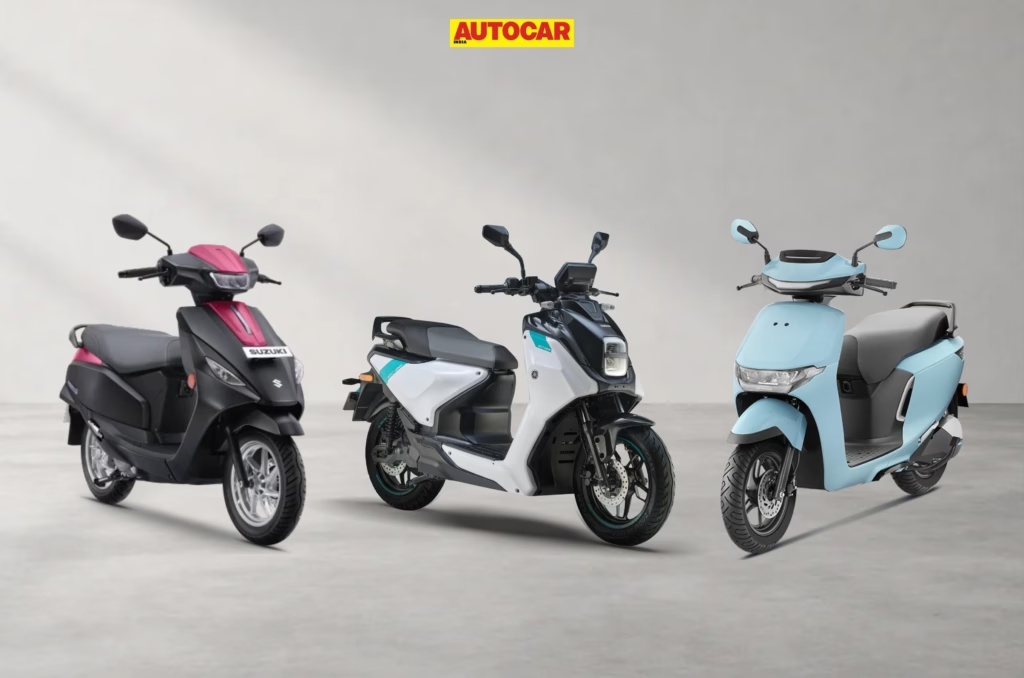
Cumulative retail sales of the three Japanese electric scooter manufacturers in India – Honda, Suzuki and Yamaha – have crossed the 10,000-units mark for the first time in a calendar year. As per the latest Vahan statistics, this triumvirate have delivered 10,735 units to their customers between January 1 and October 8 in 2026.
Last year, Honda, which was the sole e-2-wheeler OEM in India, had sold 7,730 units of the Activa-e and QC1, less of the former and more of the latter. While Suzuki entered the market in January 2026 with its e-Access, Yamaha plugged in two months later in March with its EC-O6. This makes 2026 the first year when all these three Japanese OEMs are part of the Indian electric scooter market.
A look at the OEMs’ monthly performance reveals that Honda Motorcycle & Scooter India has sold 5,536 units in this year to date, accounting for 51 percent of the total 10,735 Japanese e-scooters delivered. HMSI’s best monthly sales this year were in September (1,107 units), marking the first time the OEM has crossed 1,000 units. This number can only improve following the recent launch of its third e-scooter for India – the QC3.
The initial rollout of the QC3 will be limited to five cities across the country: Delhi, Agra, Cuttack, Surat and Kollam, with a nationwide rollout to follow in a phased manner..
Suzuki Motorcycle India, which entered the India e-2W market with its e-Access in January this year as an alternative to the popular petrol-engined Suzuki Access 125, has delivered 4,133 units till October 8. This gives the company a 39 percent share of the three Japanese OEM’s total e2W retail sales. The monthly sales chart reveals that monthly sales have crossed 600 units for three months running: July (606 units), August (674 units) and September (657 units). Rather creditable considering this is an expensive product, priced at Rs 1.88 lakh (ex-showroom) and the costliest amongst the Japanese EVs.
India Yamaha Motor, which plugged into the e-2W market this March, has retailed 1,066 units, which gives it a 10 percent share of the 10,735 units delivered by Honda, Suzuki and Yamaha. Yamaha’s vehicle of entry is the EC-06, its first electric scooter developed in collaboration with River Mobility. IYM’s highest monthly sales to date were in September (232 units)
Japanese OEMs have 0.66 percent share of e-2Ws sold in 2026 so far
As the monthly retail sales data table depicts, combined Honda-Suzuki-Yamaha sales were at their highest in September 2026 (1,996 units), which gives them a 1 percent share of the record 2,07,850 e-2Ws sold in India last month. Of the total 16,10,854 e-2Ws sold between January 1 and October 8, these three Japanese OEMs with 10,735 units have a meagre 0.66 percent share.
Among the reasons for their minimal presence in this booming segment of the Indian EV industry is that Honda, Suzuki and Yamaha entered the e-2W market late, as compared to their ICE legacy rivals TVS Motor Co (January 2020), Bajaj Auto (January 2020) or Hero MotoCorp Vida (November 2022).
While market leader TVS has sold 4,22,274 iQubes and Orbiters for a 26 percent market share of the e-2W sales in 2026 to date, Bajaj Auto has delivered 3,61,988 Chetaks (22 percent share), Ather Energy has sold 2,67,579 units (17 percent share) and Hero Vida 1,77,541 e-scooters (11 percent share).
There is also the issue of their stiff model pricing in a value-conscious market, which has a plethora of more affordable e-scooters which are also more tech-laden, as well as a limited sales network compared to the Indian legacy OEMs as well as a host of startups which are regulars in the monthly Top 10 e-2W OEM chart.
There are road trips, there are overland expeditions, and then there are journeys that become conversations with continents. This one starts in the industrial heart of Maharashtra, inside Skoda India’s sprawling Chakan facility. The end point lies nearly 20,000 kilometres away at Skoda Auto’s headquarters near Prague in Mladá Boleslav, Czech Republic, where bicycles evolved into automobiles and a 130-year-old story continues to be written.
Between these two factories lie thirteen countries, four major mountain ranges, countless cuisines, dozens of languages and enough history to fill libraries.
Our companion? Not a flagship SUV or a luxury grand tourer, but Skoda’s smallest SUV – the Kylaq, which recently celebrated its one-year anniversary. Driving it from Pune to Prague is a tall order, but surviving one year in India and being accepted with flying colours is enough cred one needs to take on the world.
India – Home Turf
Witnessing the Kylaq’s birth added more responsibility.
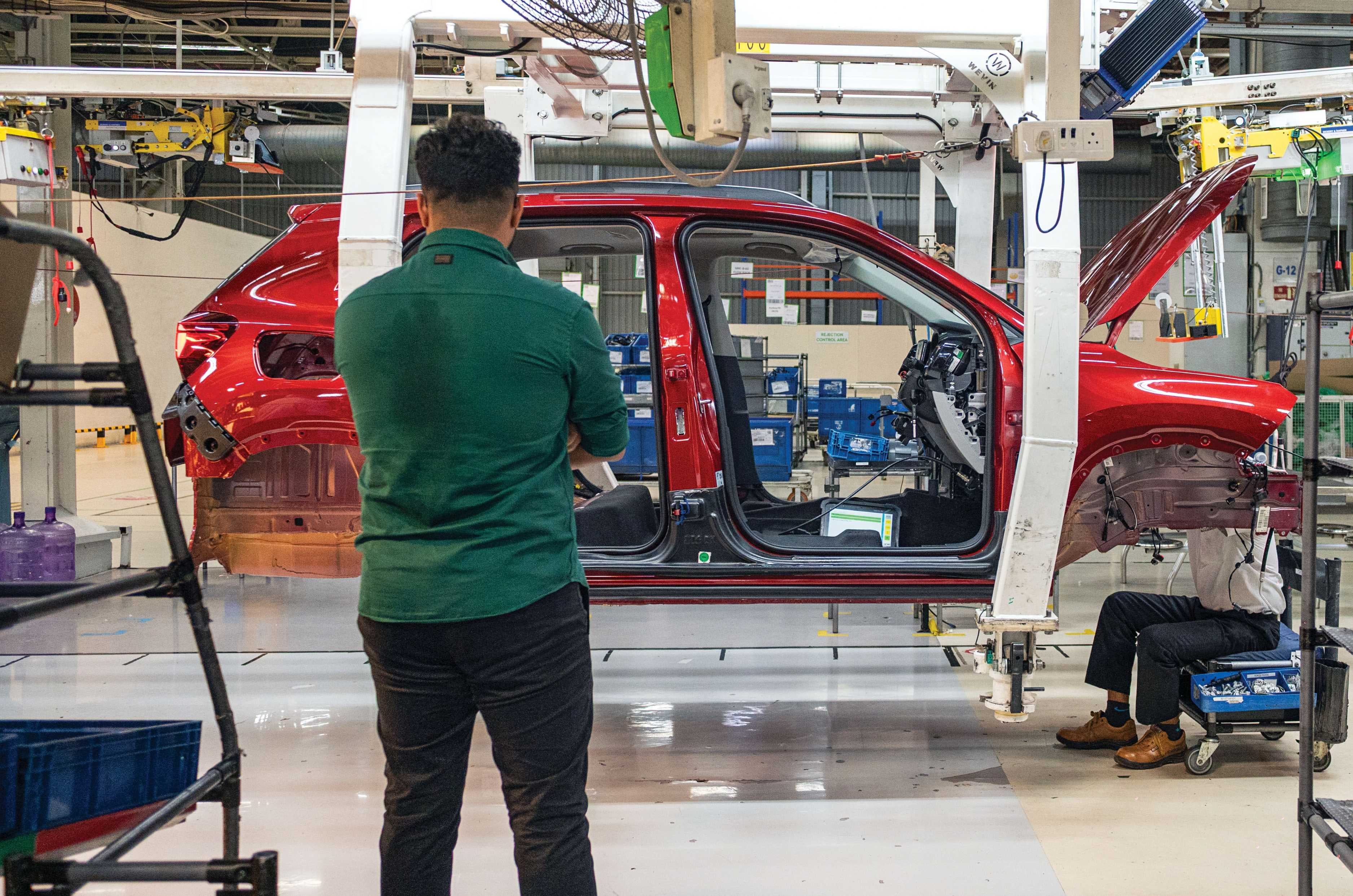
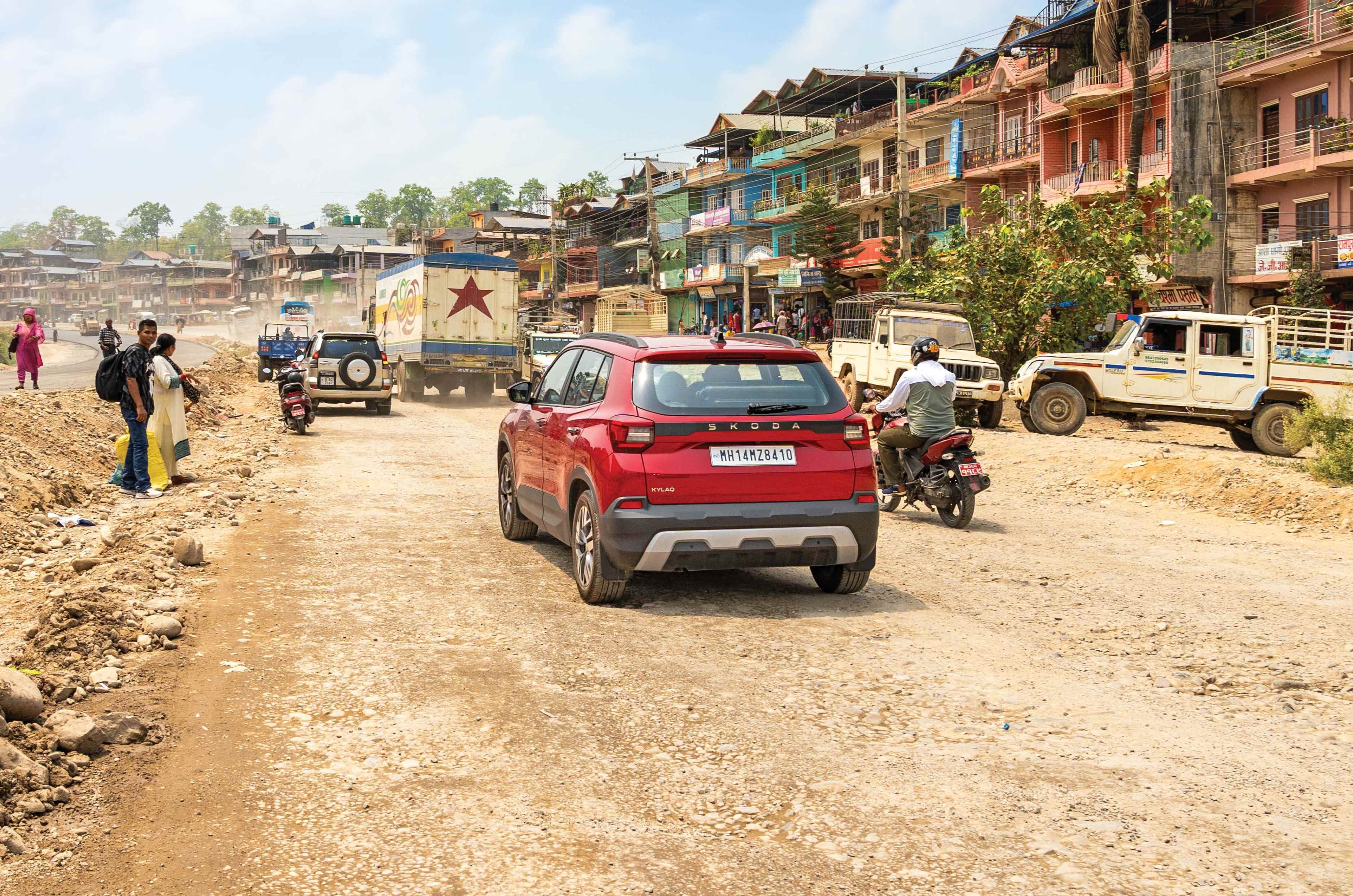
On a cross-country road trip, you’d imagine the home country would be the easiest leg. With India, it was the opposite. To some, it’s organised chaos, but honestly, it’s anything but organised. Erratic traffic, erratic egos, and road conditions fit only for a Mars rover – India was the biggest challenge on the drive from Pune to Prague. As the odometer ticked over its first kilometre, right outside the gate of Skoda’s Chakan plant, a blood-red PMPML bus was ready to trade paint with the cherry-red Kylaq. A dinged-up Kylaq parked on the streets of Prague wouldn’t be a good look, so it was imperative that I babysit this compact SUV like a million-dollar supercar. Having watched the car being assembled on the factory floor, from bare bones to the finished package, only added to the emotion – driving it in traffic felt like walking a toddler across a football field. Eyes wide open, ready to block any attack.
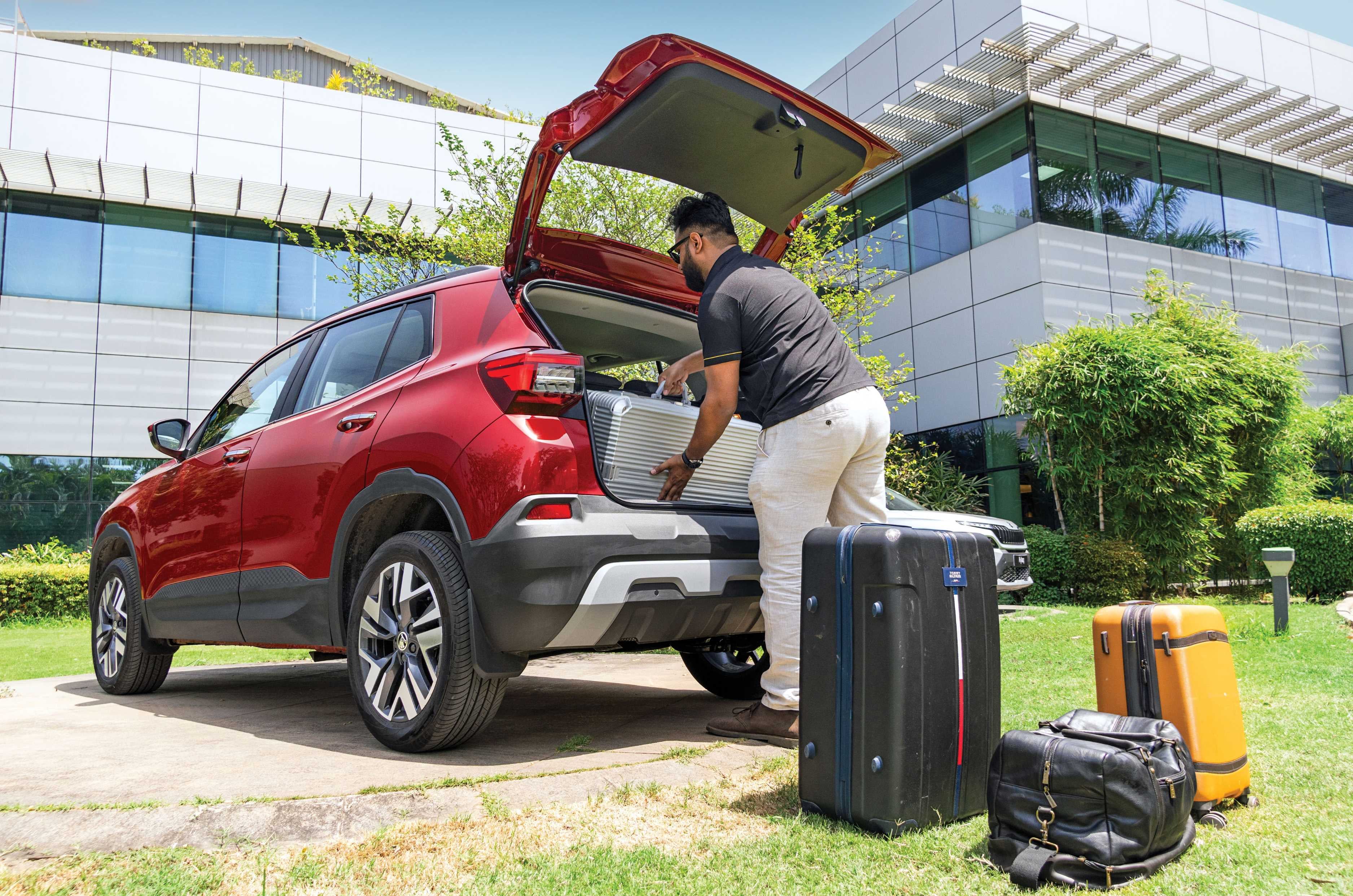
446-litre boot packed to the brim for 70 days on the road.
We got onto the Pune expressway and then crossed the Atal Setu in Mumbai, the longest sea bridge on the entire journey. Mumbai was home, both to me and to the Autocar India office, so after a few greetings from co-workers and the obligatory photos, we headed towards our first state crossing. The infamous Western Express Highway that leads out of Mumbai lived up to its reputation, but with a little anxiety, panic and a few expletives, we made it onto the national highway.
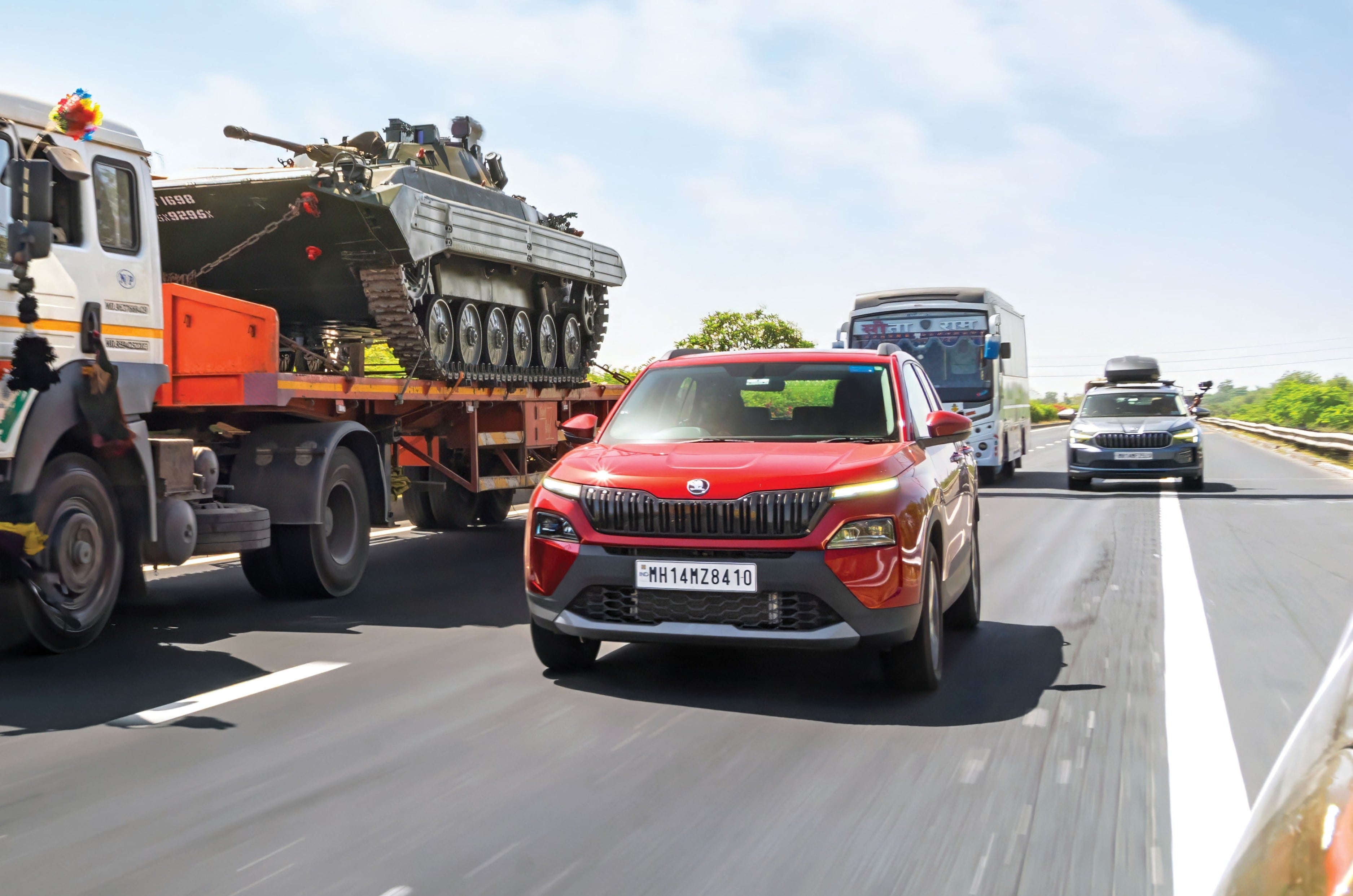
No telling what you’d spot on Indian highways.
The first of countless food stops was Hotel Ahura, renowned for its akuri and kheema. Needless to say, we carb-loaded to the max and made a beeline for Vadodara.
Pune-Birgunj in numbers
Distance covered
2,487km
Fuel consumed
234.46 litres
Average fuel economy
10.62kpl
Approximate fuel cost
Rs 23,629
Average per-litre fuel cost
Rs 100.87
Total time driven
55hrs 20min
Average speed
44.95kph
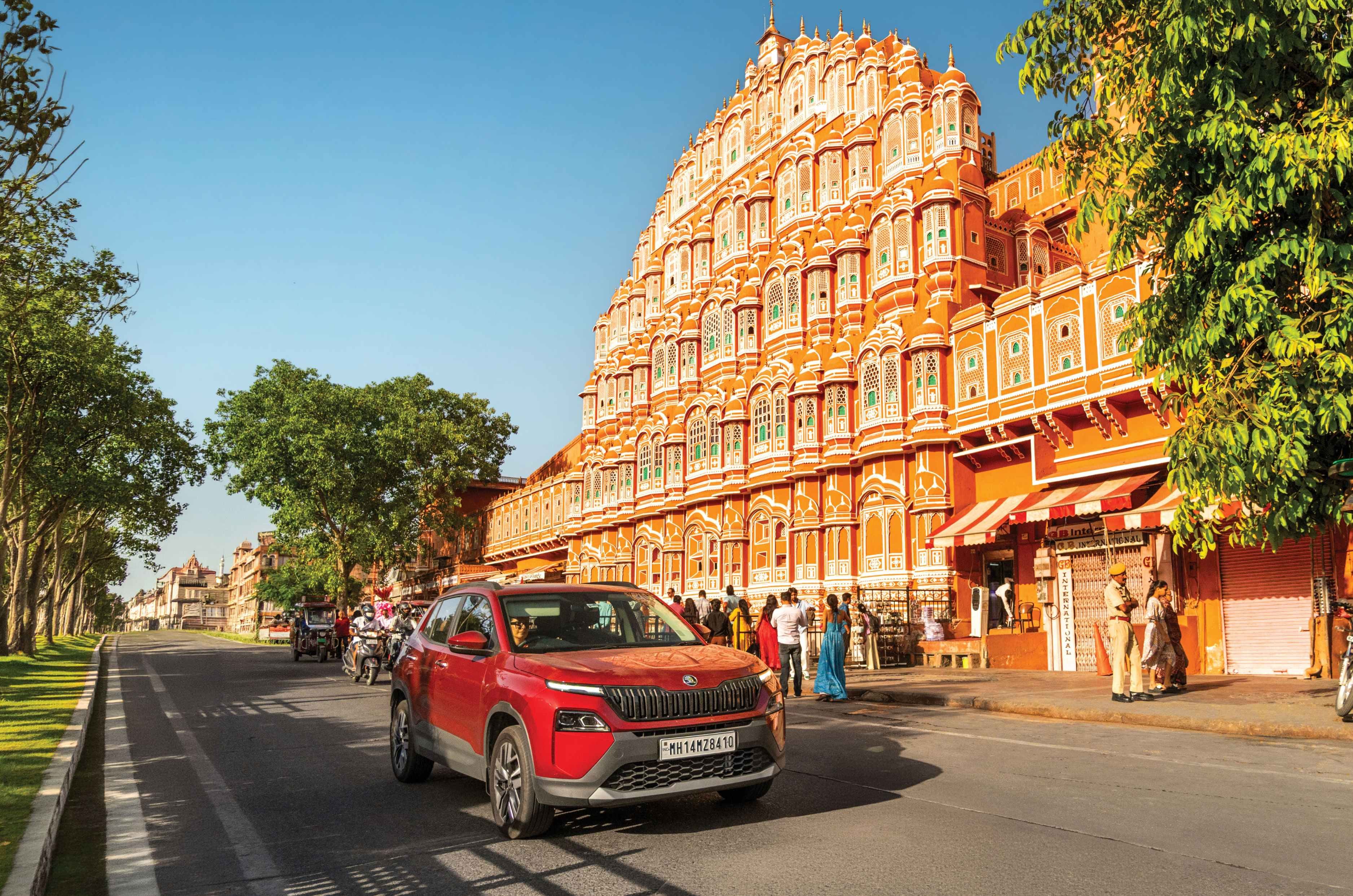
Crossing into Gujarat, the Kylaq could finally stretch its legs and spool up that turbo on the state’s spotless highways. The stability and effortless cruising were a welcome relief, since the bulk of the kilometres on this drive would be covered on long, open highways. Gujarat was a short stint – we made only an overnight halt in Vadodara before slipping out ahead of the morning traffic. The drive into Rajasthan was seamless, and Udaipur greeted us with a mix of heat and traffic. The City of Lakes is worth taking the time to explore, but a late arrival and early morning departure left us with just enough time to grab a traditional meal. All that driving had built up an appetite, so we put it to a vote between a massive vegetarian thali and laal maas – the latter won by a landslide. From the City of Lakes, we headed to Jaipur, the Pink City: just as picturesque as Udaipur, and just as colourful and chaotic. The sun setting over the beautiful Amer Fort made for a cracking backdrop, and a few glimpses of the Jal Mahal on the way back were a treat too. The iconic Hawa Mahal, with its 953 windows, never fails to amuse, but getting a photo of the five-storey icon without a chorus of honks is next to impossible. The next morning, after threading through Jaipur’s narrow lanes, we made it back onto the highway, heading for Agra.
Iconic Hawa Mahal ought to be seen first-hand.
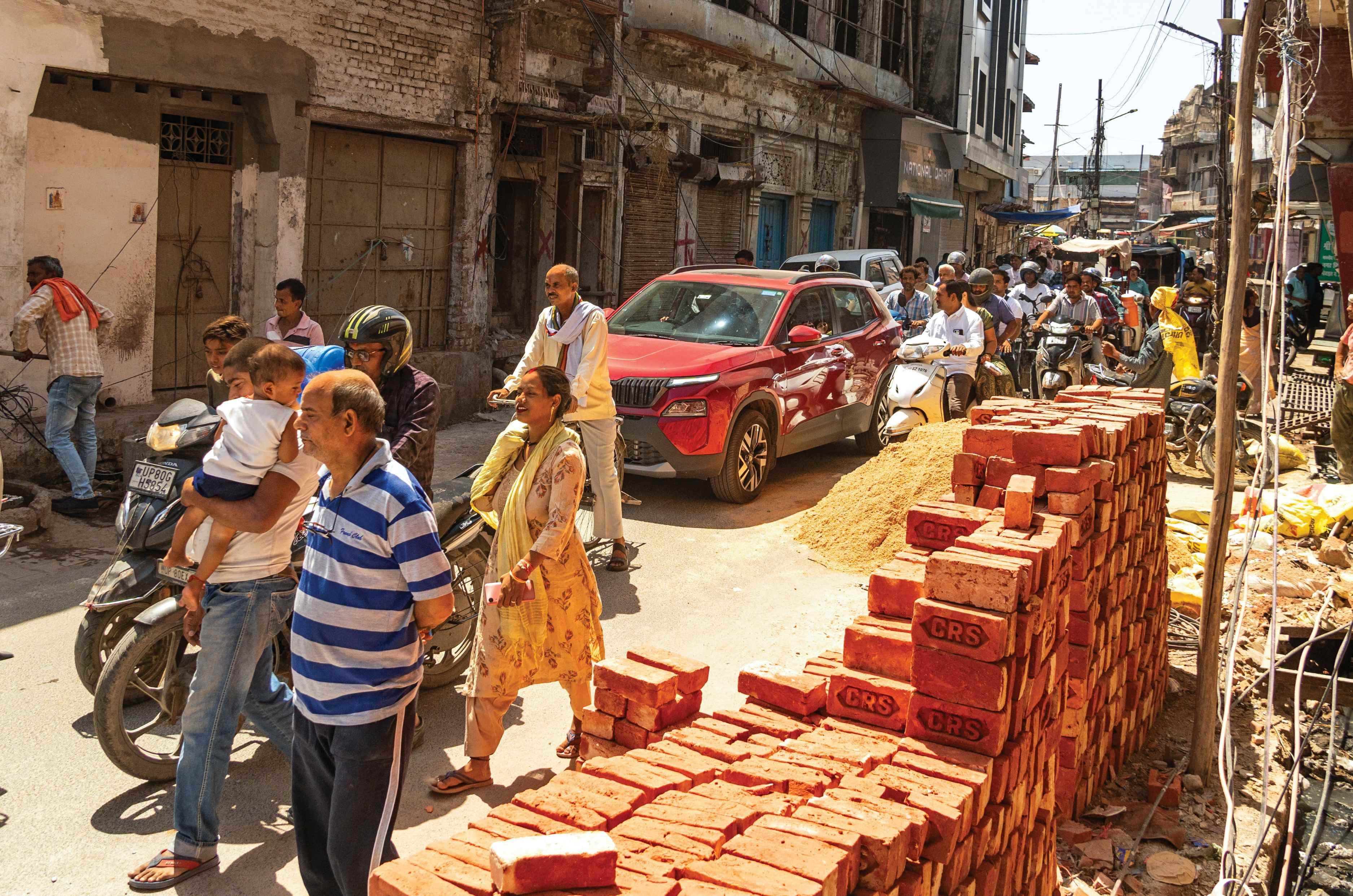
Agra is synonymous with the Taj Mahal, but the Agra Fort – from which you can see the Taj in the distance – is just as mesmerising. The detailing and architecture are second to none, and you could spend hours walking through its courtyards and passages, taking endless pictures. We, of course, also made it to the Taj itself, amid the hordes of tourists, if only to avoid the guilt of visiting Agra without a shot of the world-famous white dome. Tourism done, it was time for some petha – though the lanes near the petha shops seemed to be the exact width of the Kylaq, and that’s where peak anxiety set in. We got out of the mess, walked around the car to check for scratches and scribbles, and sighed in relief. India was adding to the tension, and we were barely halfway through it.
Agra’s narrow lanes were a nightmare to drive through.
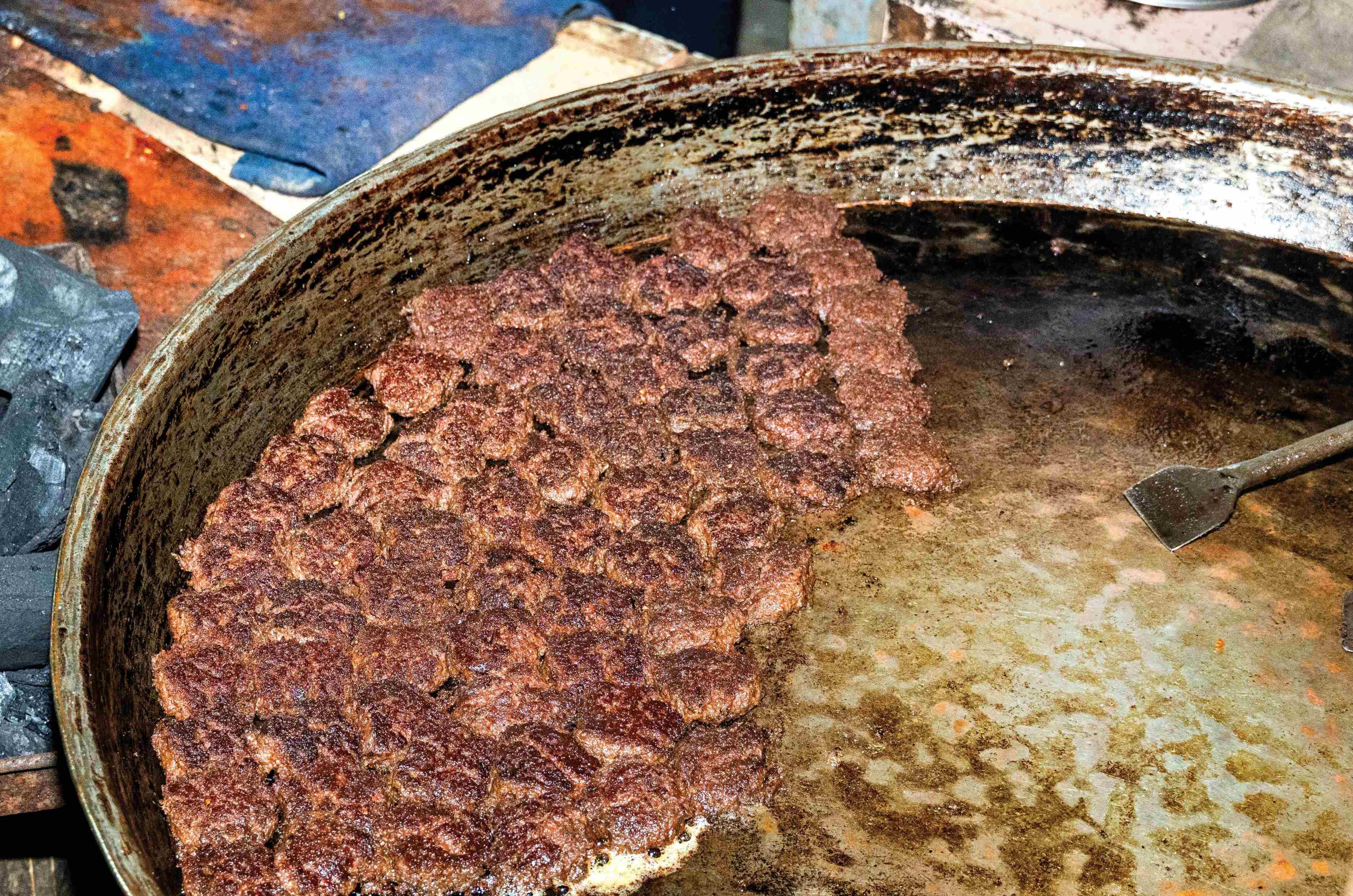
Our next stop from Agra was foodie heaven – Lucknow. The biryanis, kebabs, and tandoors were exactly what we expected, and exactly what Lucknow delivered. Finding your way here is easy – you could do it blindfolded, following the smoke and sizzle to wherever you need to be. Tunday Kababi is a must, and after a heap of biryani laced with kebabs, a long walk through the countless chikankari shops helps burn off some of the calories.
Lucknow’s Tunday Kababi still has us drooling over Galouti kebabs.
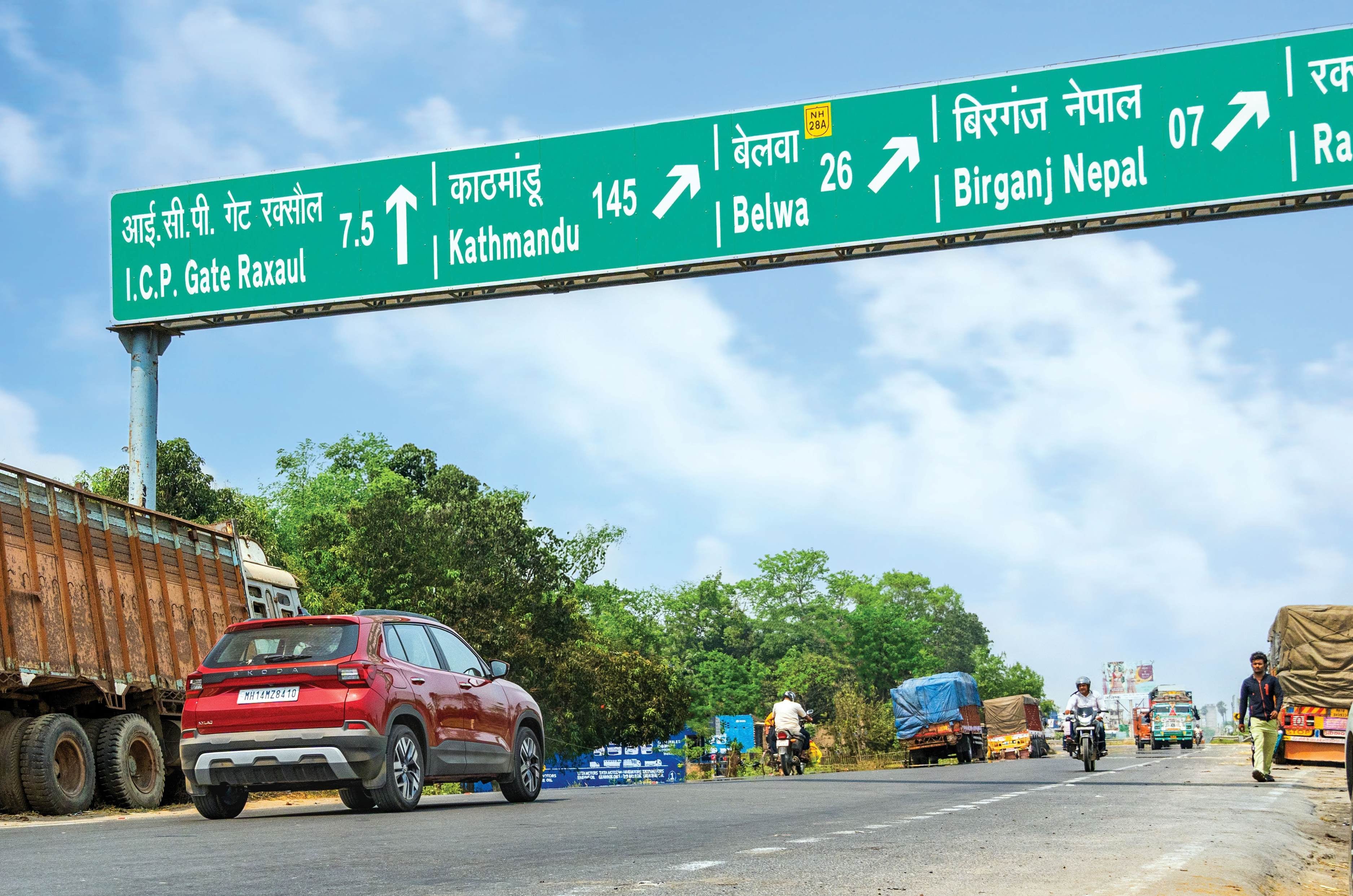
We were closing in on the end of the India leg, with one last stop in Gorakhpur before the Nepal border. To celebrate, a group of Skoda owners, officially known as the ‘Fans of Skoda’ joined us for a celebratory convoy as we drove out – everything from Octavia RS models to Kodiaqs and Kushaqs turned up as a send-off before we went international. The loud, chaotic border towns past Gorakhpur delivered one final challenge as we exited through Raxaul.
Final stretch before the Kylaq left India for the first time.
The India-Nepal border is still raw and basic, with none of the high-tech systems you might expect. A drive of this scale comes with a mountain of paperwork – visas, carnets, insurance, and more – and sifting through all of it manually takes a while. After a gruelling five hours, the Kylaq crossed out of India for the very first time.
Nepal – Old World Charm
Nepal’s state highways give Indian roads a run for their money.
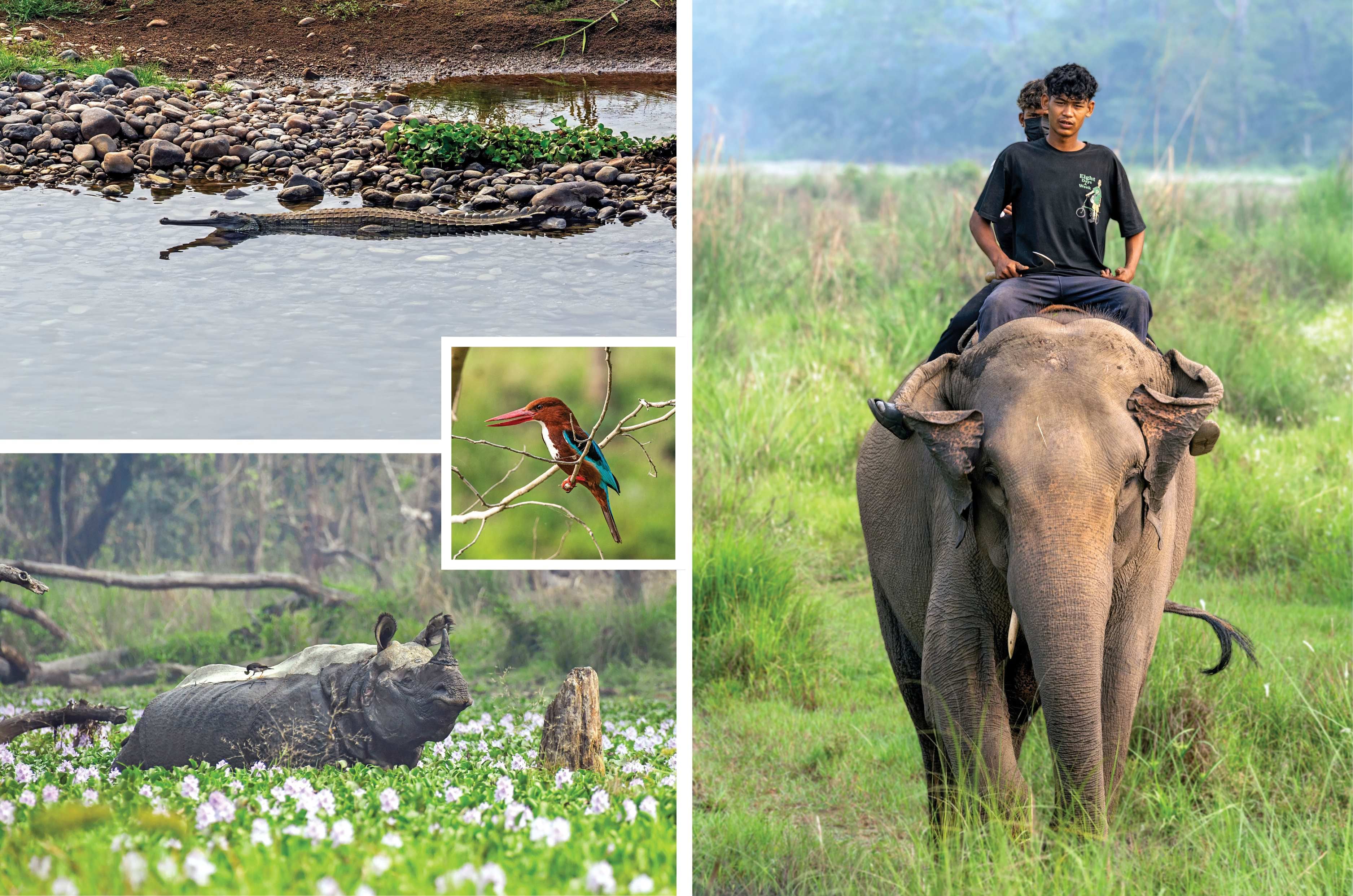
If the Indian side of the border was old-school, Nepal’s immigration post is almost antique. Drive past it, and you’d likely miss it altogether – the only tell-tale sign is a simple gate with ‘Immigration Office’ hand-painted on it. This humble-looking house is, in fact, the immigration office, where, just like on the Indian side, every check is done manually. Fine print, identity proofs, and everything in between were checked meticulously before we were welcomed into Birgunj. Our main draw in Nepal was the bustling capital, Kathmandu, but there were magnificent stops along the way, starting with Chitwan National Park. Home to nearly 700 one-horned rhinos, the park also shelters elephants, Bengal tigers, cobras, the elusive gharial, and abundant flora. The Kylaq would have been fun to explore it in, but we opted for the park’s safari vehicle to relax and take in the surroundings. Paddling a beaten-up wooden kayak past crocodiles and snakes adds a rush, but it’s nothing compared to a rhino staring you down in all its magnificence. The park gave us a welcome break from long hours behind the wheel.
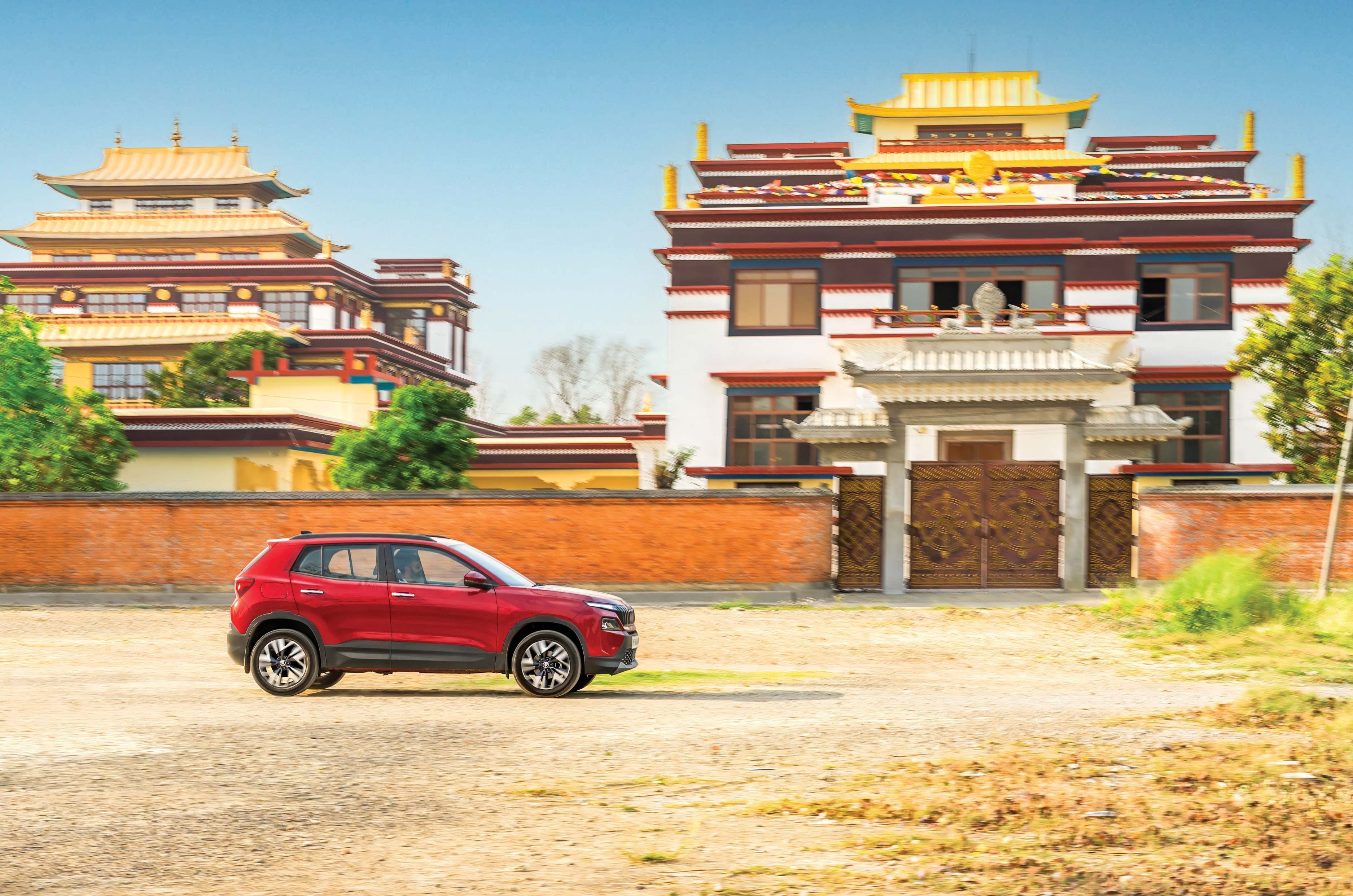
Lumbini is home to 32 unique styles of monasteries.
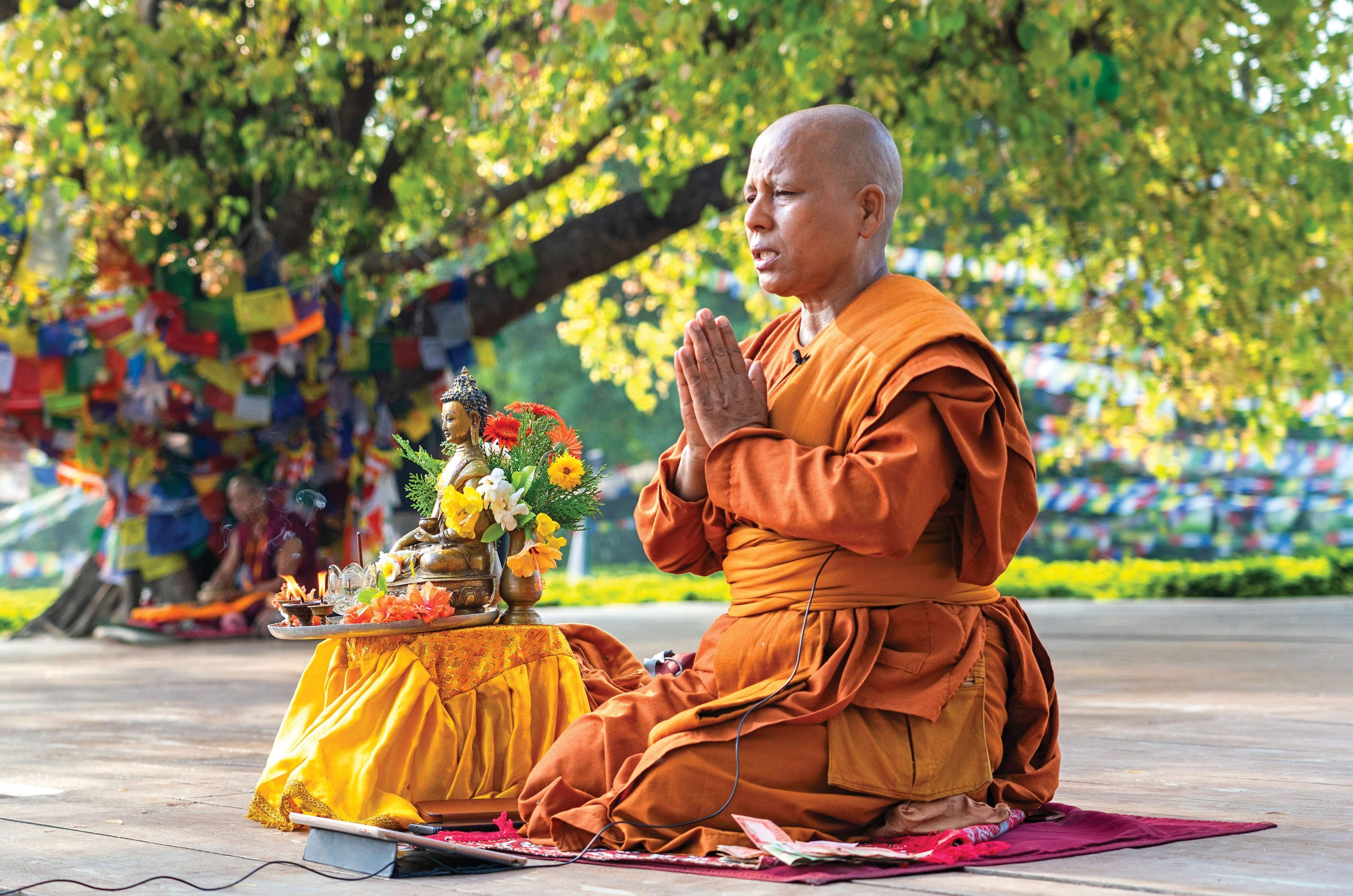
Next was Lumbini, a spiritual haven and, more importantly, the birthplace of Siddhartha Gautama (Lord Buddha) around 563 BC. Its fascinating monastic zone showcases monasteries built by Buddhist nations from around the world, each reflecting its own culture through design and architecture – a remarkable collection of temples spanning diverse traditions. The feeling of peace there was unlike anything I’d experienced, but it was soon disrupted by the road to Pokhara.
Lumbini provided a moment of calm through the chaos.
Mountain passes are notorious for destroying Google’s ETAs – landslides, breakdowns, and deteriorating roads mean a stretch that should take an hour could take five, depending on your luck. We braced for traffic and drove straight into a landslide clearing. A two-hour wait meant the sun was setting as we rolled into the quaint town of Pokhara. Bustling with cafés and pop culture, it felt like a mini Kathmandu, but with the stunning Phewa Lake turning orange at sunset. The calm that began in Chitwan came full circle on the shores of Phewa Lake.
Chitwan is home to the gharial and over 700 one-horned rhinos.
Kathmandu, though, was a different animal entirely – every bit a capital city, and a world away from the slow pace of Chitwan or Lumbini. The music is loud, the traffic is hectic, and the city is anything but quiet. Ironically, the only quiet things on the road are the cars – China’s dominance in Nepal is stark, with three in five cars on the road being Chinese EVs. Geely, BYD, and GWM rule the market, with only a handful of Hyundais and Kias as competition.
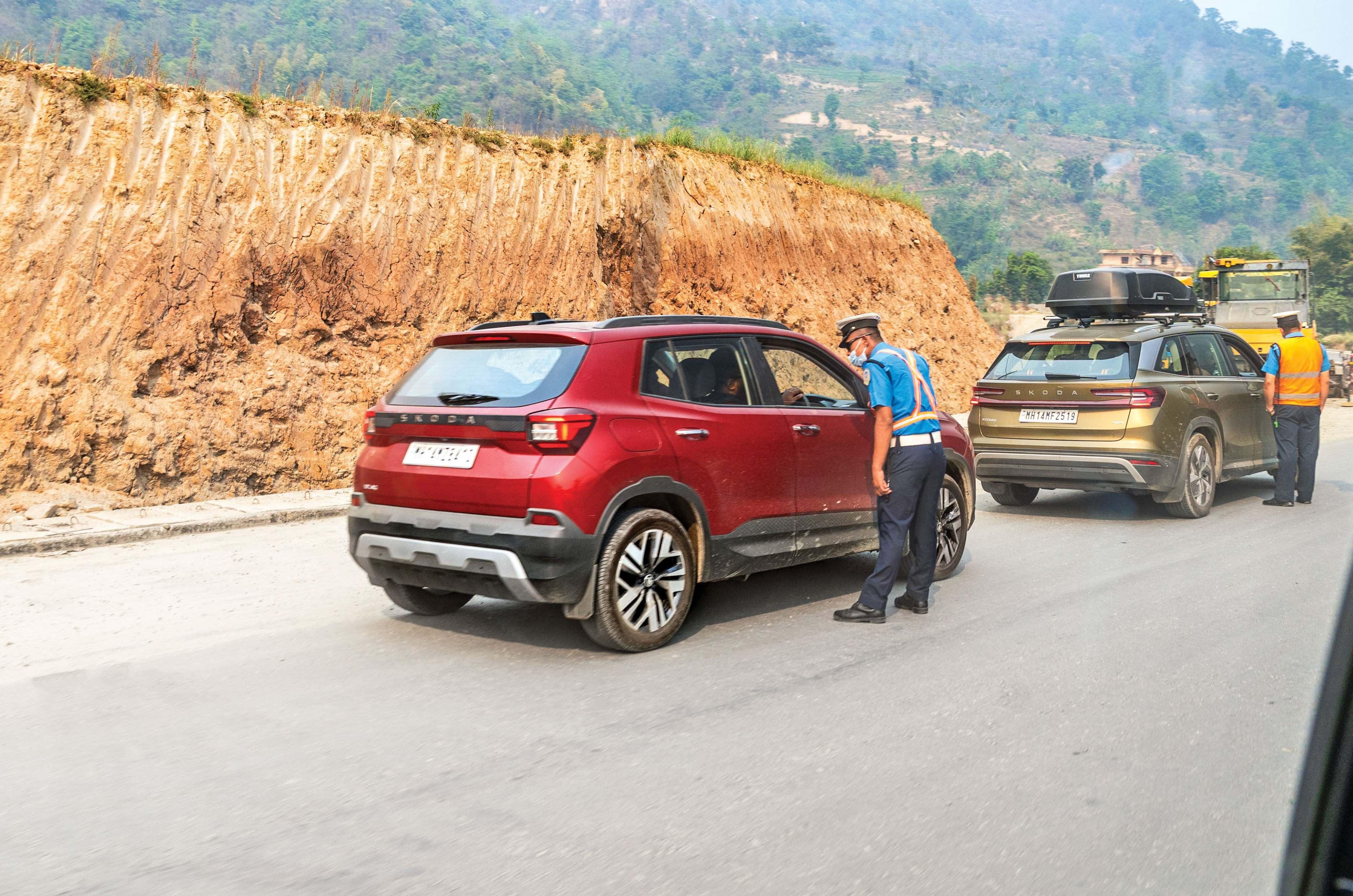
Authorities were always curious thanks to Indian number plates.
The party scene rules Kathmandu too. At night, the city comes alive as a hub for tourists from around the world. Hiking gear and North Face apparel go for a fraction of the price – and, often, a fraction of the quality – alongside quirky masks and fridge magnets at every tourist stop. Spend a little more time, though, and you’ll find excellent coffee shops and the famous Thakali thali: thick buckwheat porridge with salads, meat, and plenty of flavour. Good thing too, since walking through Durbar Square works up quite an appetite. Partly destroyed by the devastating 2015 earthquakes, the temples have since been restored to their former glory, though you can still spot the scars in a few bent pillars and roofs. It’s a culture and tradition worth preserving, and Nepal deserves credit for doing exactly that.
Birgunj-Sino-Nepal Border in numbers
Distance covered
922km
Fuel consumed
115.96 litres
Average fuel economy
7.13kpl
Approximate fuel cost
Rs 15,846
Average per-litre fuel cost
Rs 136.65
Total time driven
34hrs 25min
Average speed
27kph
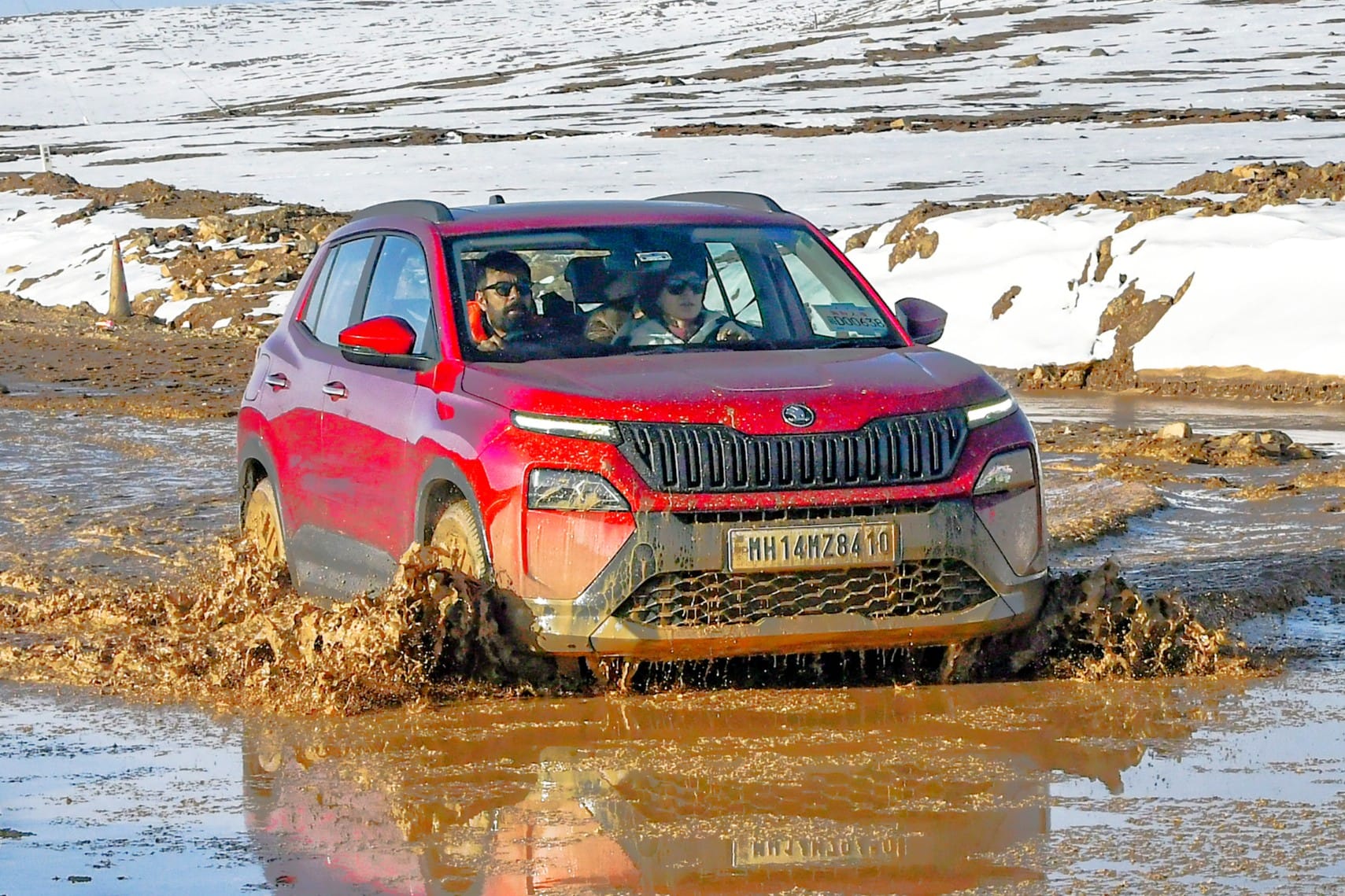
With Kathmandu explored, we headed towards our second border crossing – and this one was far more intense. Once we left Kathmandu, we left the tarmac behind too. Muddy back roads, still wet from the previous night’s rain, meant slush and a constant need for 4WD. Even so, though packed to the brim with luggage, the Kylaq stayed light enough and had enough clearance to pick its way around the mud on the approach to the Rasuwa Bridge. From there, you can see the Chinese immigration building towering over everything around it. With the Kylaq thrumming with excitement, we crossed into Tibet – the roof of the world.
Tibet/China – Roof of the World
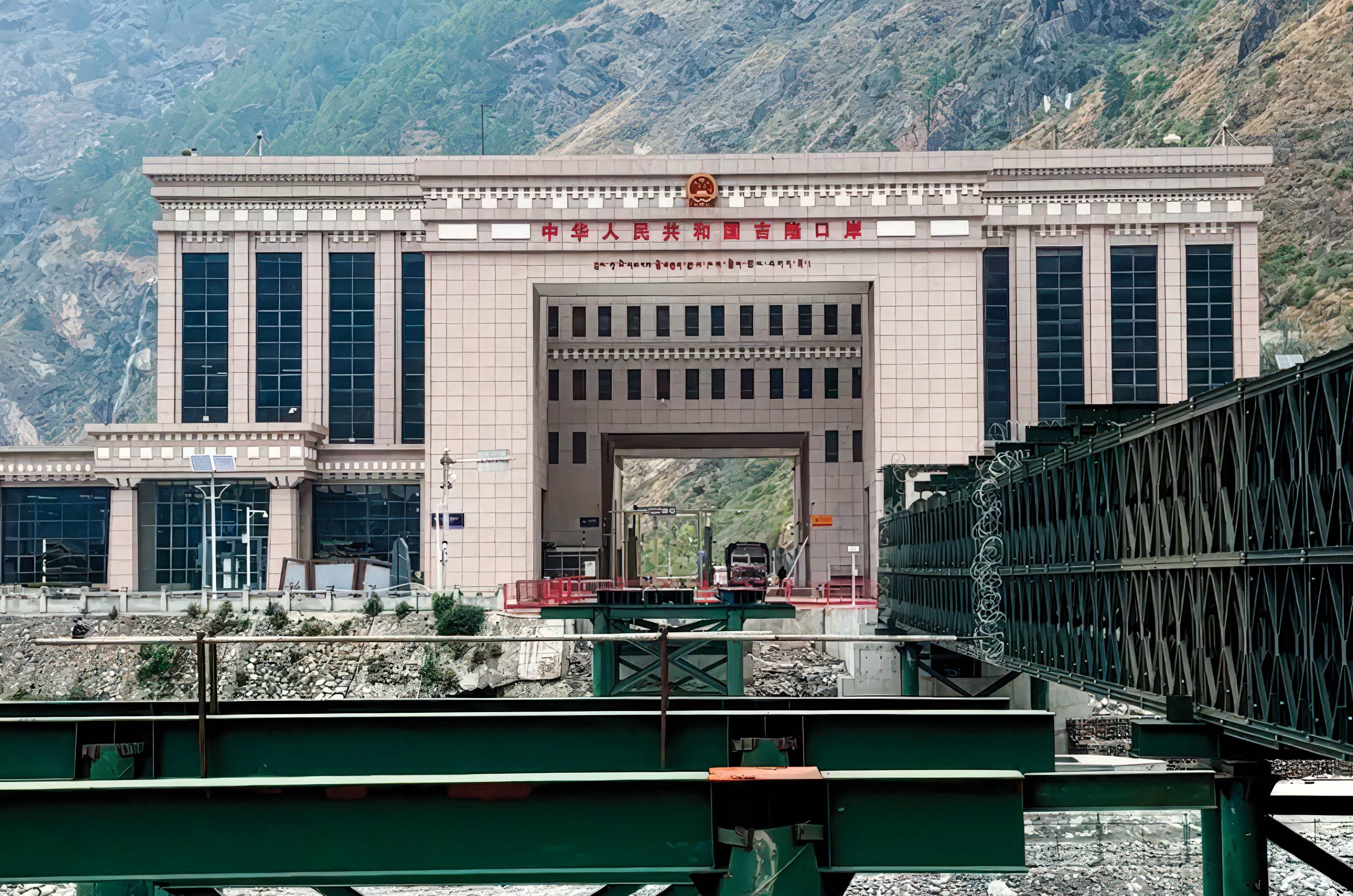
China’s border crossing is as imposing as it gets.
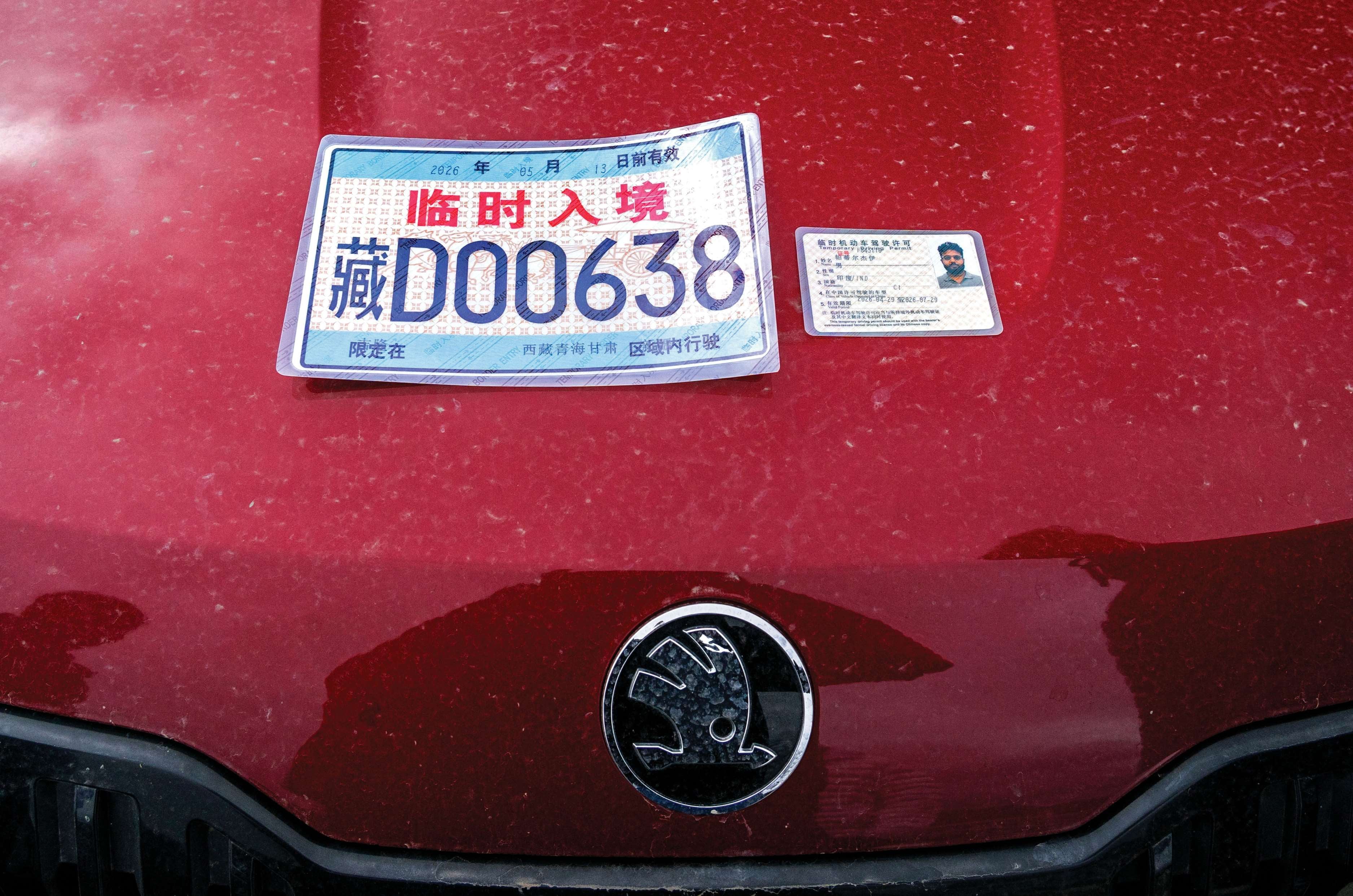
Crossing into Tibet felt like crossing into the future. For a region tucked deep into the mountains, it’s exceptionally developed – the roads are smooth and well-signed from the moment you cross the bridge, barely a hundred metres before the immigration office. In China, we weren’t taking any chances, knowing any misstep here could jeopardise the rest of the journey. After answering the customs officers honestly – and impressing them with the scale of the Kylaq’s challenge – we entered the lovely town of Gyirong. Old Chinese architecture, plenty of red, and signboards we couldn’t quite read were early signs that we really were in a different world now. Nepal had shared plenty with India – the cars, the food, the roads – but China felt entirely its own. We thought we’d seen our share of speed cameras, but China put us to shame – they appear every 50 metres or so, complete with flashes. There’s simply no room for error, and you’re monitored everywhere you go – aneerie feeling that takes some getting used to. Another non-negotiable is to obtain a special driving licence for every person that will be driving and a China-specific number plate, which you have to place on your dashboard so the cameras can pick up any infringements. A regular India-style RTO office with long queues and a lack of urgency got us homesick for a bit.
Local license and registration are non-negotiables in China.
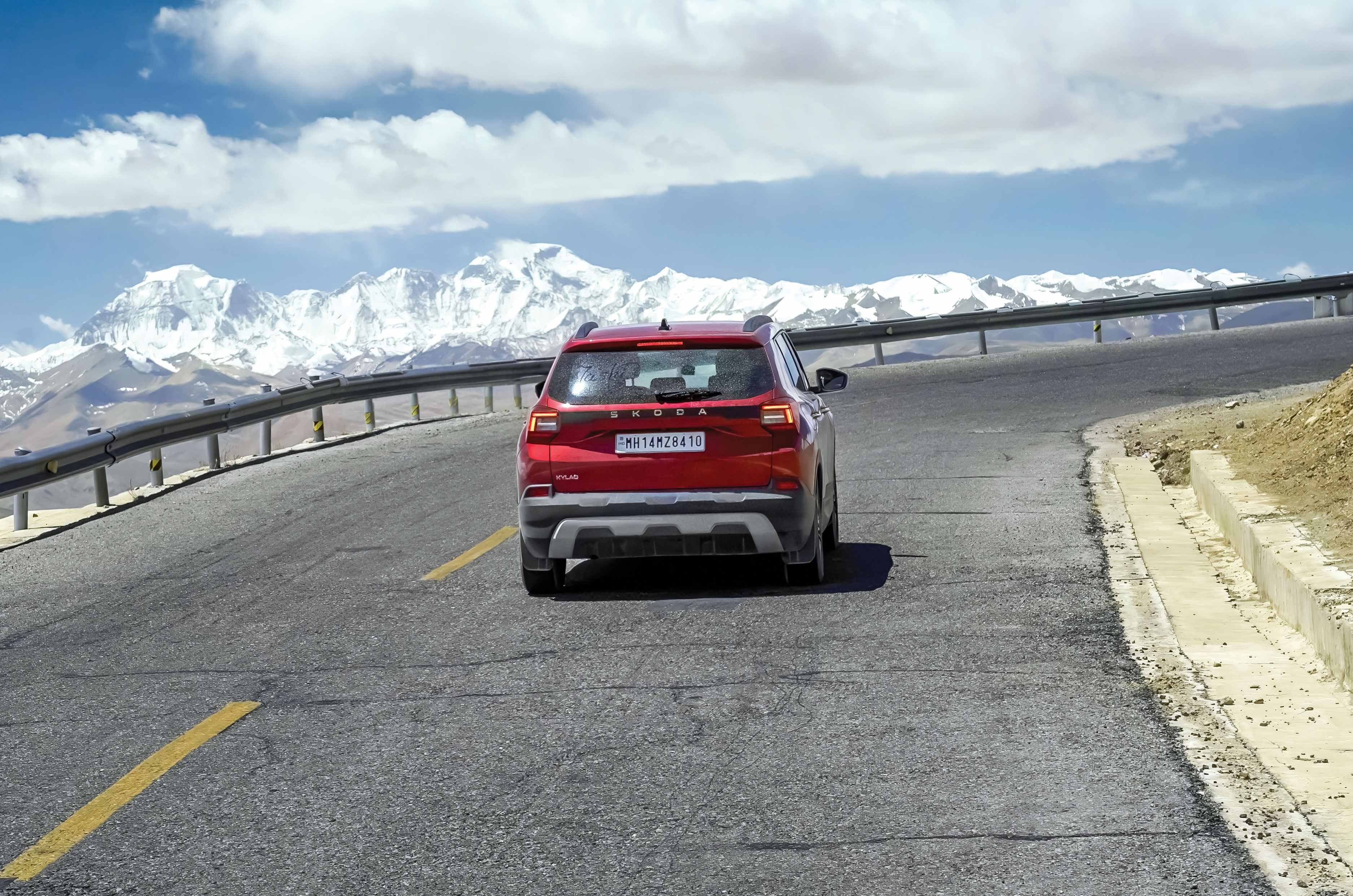
A few mugs of hot ginger-lemon tea eased us into the chill, and we set off for Mount Everest Base Camp. High altitudes are usually punishing for small-capacity engines, but thanks to its turbocharged engine, the Kylaq barely broke a sweat, buzzing through the passes. Its 6-speed automatic had been a great convenience through the chaos of India and Nepal, but the winding mountain roads and immaculate tarmac meant I could switch to manual and take control via the paddle shifters. Paddle-shift response is often sluggish, but not here – the shifts were quick, and the taut suspension held its ground even through tight hairpins.
Everest hove into view long before we made it to base camp.
It made for a great drive and great footage, right up until we spotted the peak in the distance. Even from afar, Everest is breathtaking, and mercifully the clouds stayed clear as we got closer. You can’t take a car near base camp itself – a one-hour bus ride covers that final stretch. It’s strange how you lose your breath as you approach Everest – partly the thin air and altitude, but you’d lose it all the same just from the view. Words don’t do it justice, and don’t be surprised if you shed a tear or two – it’s overwhelming.
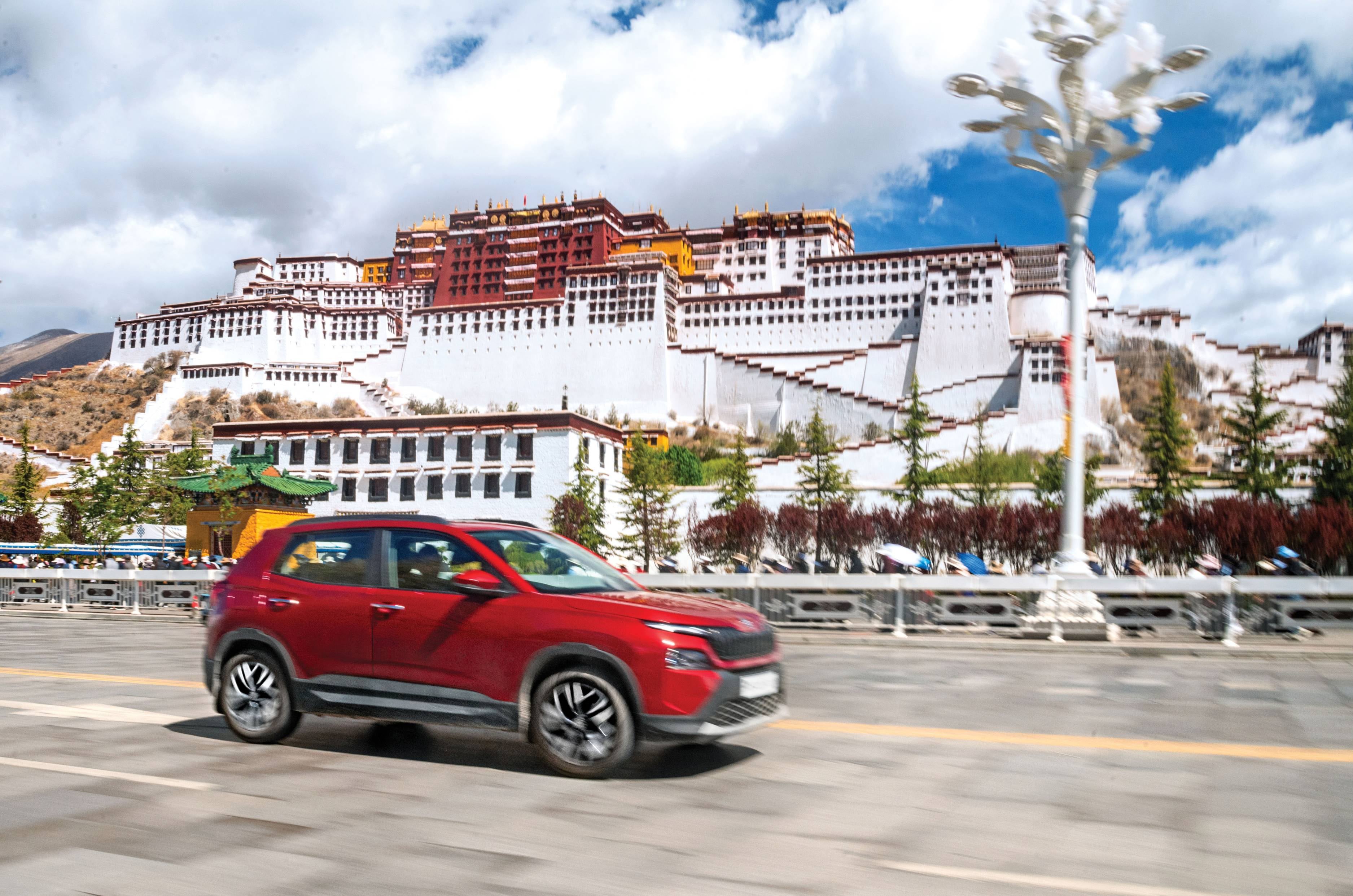
Stunning Potala Palace; once home to the Dalai Lamas.
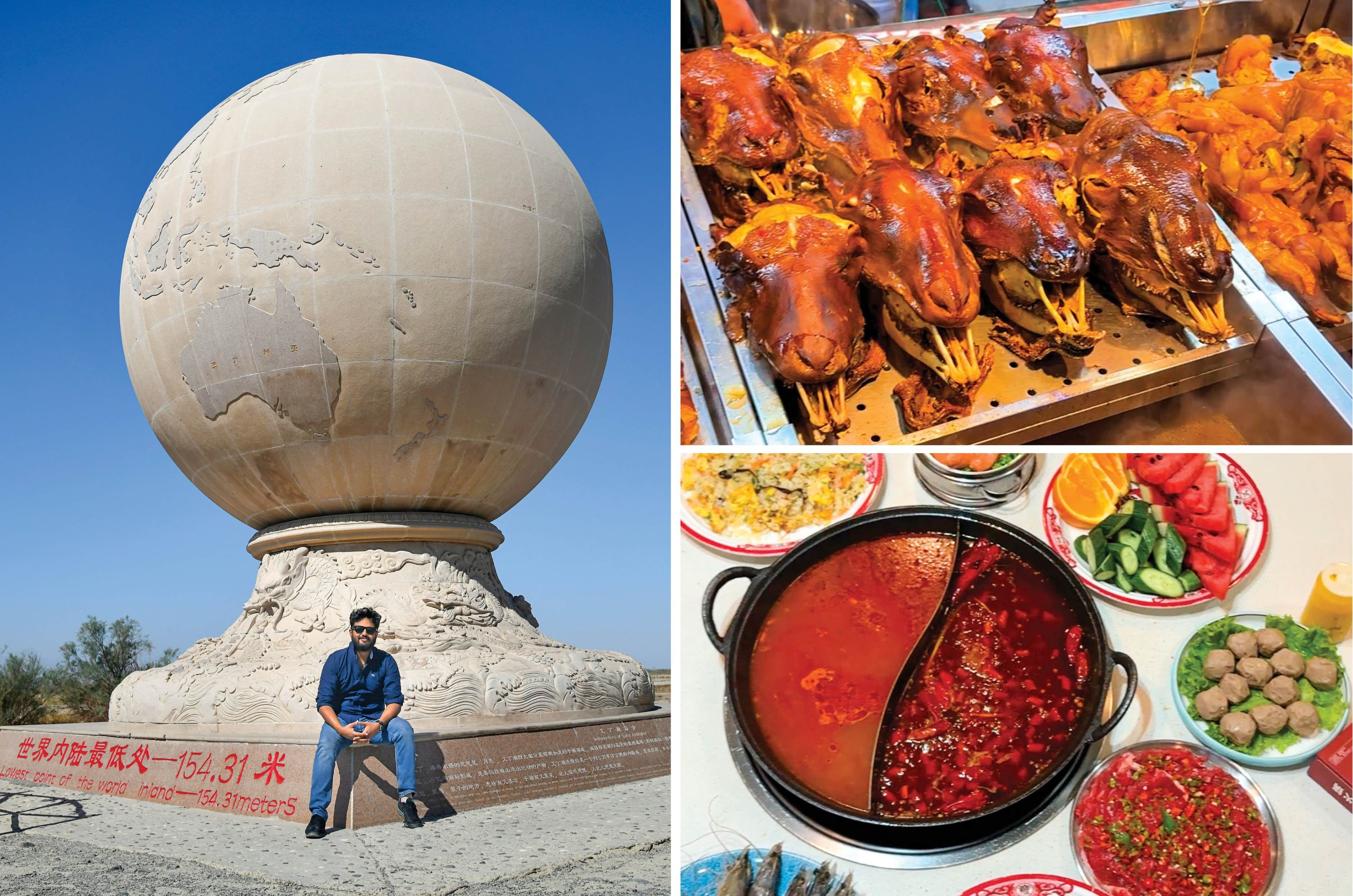
With Everest ticked off, it was time to take on China’s vastness. We headed to Lhasa, the spiritual capital of Tibet, home to the grand Potala Palace. Once home to monks and lamas, this stunning palace holds incredible history and artefacts – spiritual or not, its significance to the country’s history is unmistakable. The drive kept revealing itself through unique food, dialects, faces, and even geography. One day we were freezing thousands of feet above sea level; days later, in Turpan, we were below sea level in blistering heat. From boiling hotpots to grocery-store instant noodles, China pushed us well outside our comfort zone, and the Kylaq wasn’t spared either.
L: From EBC’s high to Turpan Depression’s low – Jay was at 154m below sea level here. R: Street food in China not for the faint-hearted.
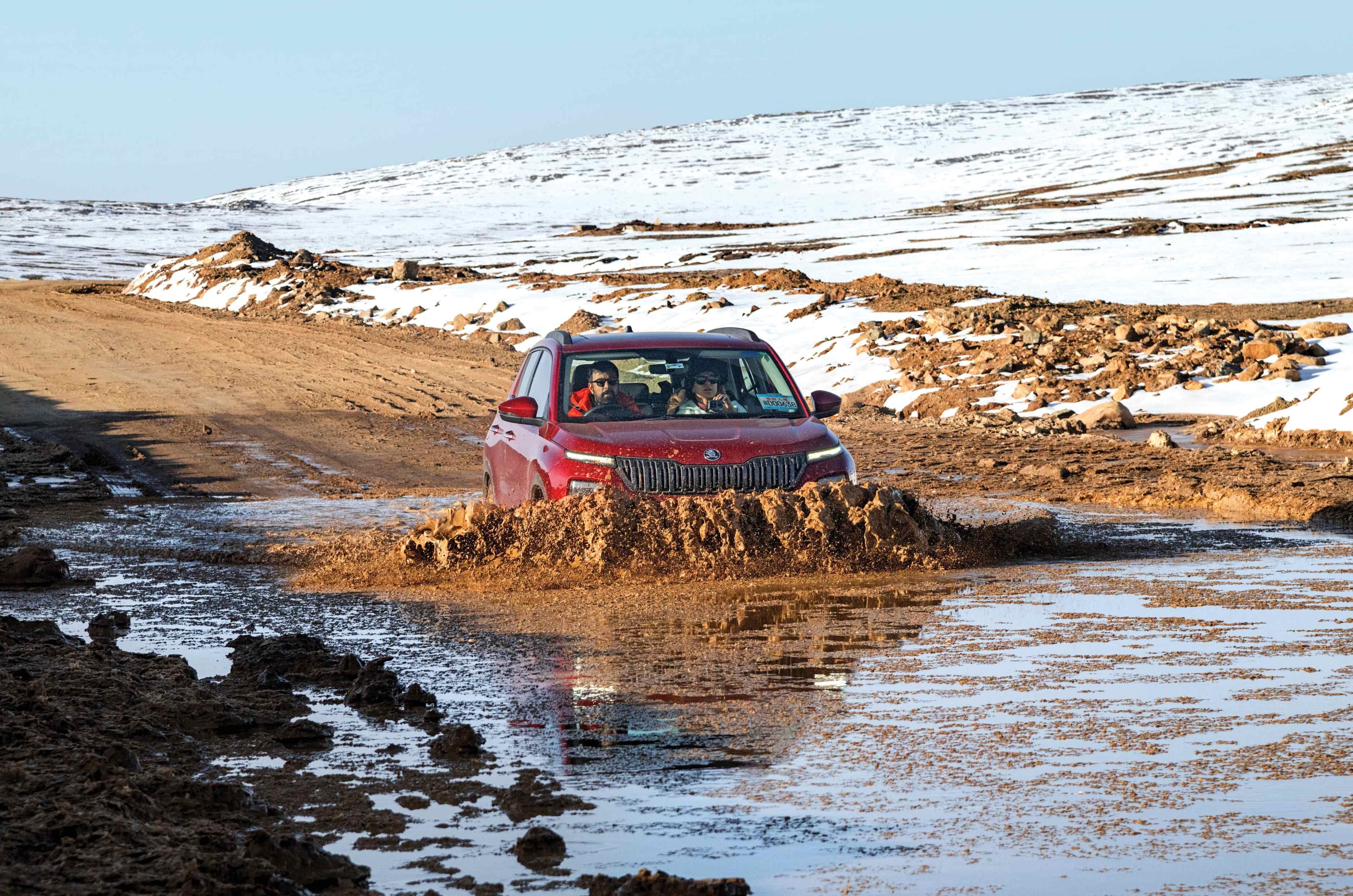
Two full days on the way to Golmud were entirely off-road, taking over 13 hours of driving, with our average speed dropping to 18kph as the Kylaq waded through water up to its bonnet and emerged without complaint.
In China, you get perfect roads or, simply, no roads.
A stretch that would have broken most cars left the Kylaq unscathed. China hit hard, but the Kylaq hit back harder. From day one, it had faced challenge after challenge, and from day one, it had come out on top. Three countries in, it still carried the same zeal it started with – and while we were rattled, it stood strong each night, ready for the next day.
26 सितम्बर, आगरा: आदित्य मुदगल की रिपोर्ट की मुताबिक, आगरा में मेट्रो सेवा का विस्तार होने जा रहा है। पहले कॉरिडोर के तहत मनकामेश्वर स्टेशन से ISBT तक पांच नए स्टेशन तैयार हो चुके हैं। इनमें SN मेडिकल कॉलेज, आगरा कॉलेज, राजा की मंडी, RBS कॉलेज और ISBT स्टेशन शामिल हैं। इन सभी स्टेशनों पर ट्रैक, सिग्नल और पैसेंजर से जुड़ी सभी सुविधाओं की जांच भी पूरी हो चुकी है।
यूपी मेट्रो रेल कॉरपोरेशन के पब्लिक रिलेशन ऑफिसर पंचानन मिश्रा ने बताया कि पांचों स्टेशनों पर मेट्रो चलाने की तैयारी पूरी है। इसकी रिपोर्ट शासन को भेज दी गई है। अब सेवा शुरू करने की तारीख का इंतजार है। ISBT तक मेट्रो चलाने के लिए 10 अक्टूबर 2026 की तारीख प्रस्तावित की गई है।
लोगों को मेट्रो शुरू होने का इंतजार
शहरवासियों को इन पांच नए स्टेशनों पर मेट्रो चलने का बेसब्री से इंतजार है क्योंकि मेट्रो शुरू होने से रोज सफर करने वाले लोगों को आसानी होगी। कंस्ट्रक्शन में कई जगह जाम की परेशानी होती थी, लेकिन मेट्रो सेवा शुरू होने से रोड ट्रैफिक कम हो सकता है। इससे पॉल्यूशन भी कम होगा। मेट्रो शुरू होने से लोग बिना जाम में फंसे अपने ऑफिस, कॉलेज के साथ और भी जगह आसानी से पहुंच सकेंगे।
नए स्टेशनों से बढ़ेगी कनेक्टिविटी, टूरिस्ट और स्टूडेंट्स को भी फायदा
पांचों स्टेशनों के शुरू होने से शहर के कई इलाके मेट्रो से कनेक्ट हो जायेंगे। SN मेडिकल कॉलेज, राजा की मंडी रेलवे स्टेशन और ISBT जाने वाले लोगों को सफर में आसानी होगी। आगरा मेट्रो का पहला कॉरिडोर ताज पूर्वी गेट से सिकंदरा तक करीब 14 किलोमीटर लंबा है, जिसमें 13 स्टेशन बनाए जाने हैं।
ISBT से शहर के बड़े इलाकों तक मेट्रो चलने से आगरा आने वाले टूरिस्ट का सफर भी आसान होगा है और रोड पर जाम की वजह से होने वाली परेशानी भी कम हो सकती है। SN मेडिकल कॉलेज आने वाले पेशेंट के लिए भी मेट्रो एक आसान सफर बन सकती है। वहीं RBS कॉलेज आने-जाने वाले स्टूडेंट्स और फैकल्टी को भी सफर में आसानी होगी।
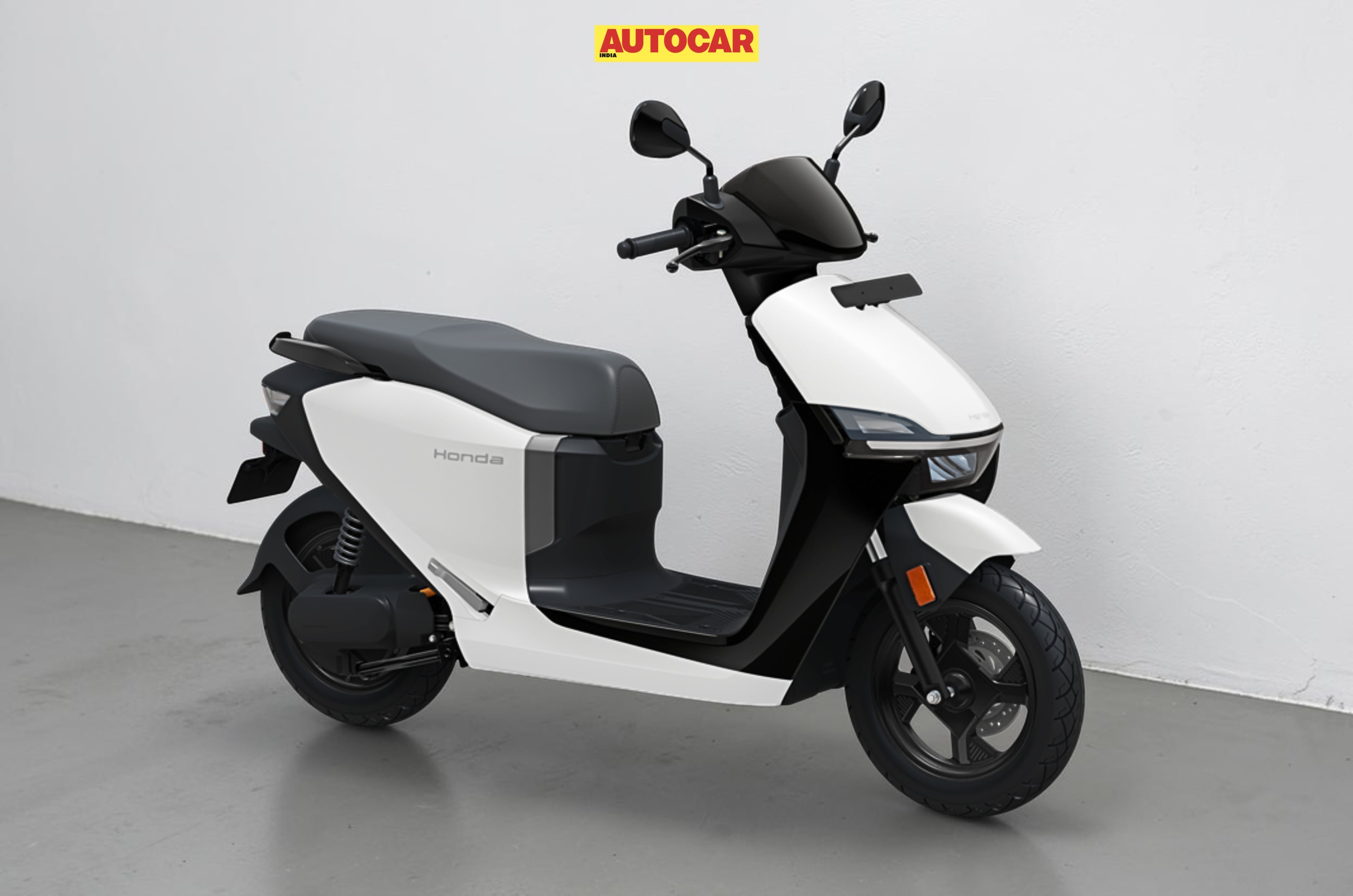
Honda has launched the QC3 at Rs 1.35 lakh, its third electric scooter for India after the QC1 and the Activa e:. The family EV scooter will have a 3kWh battery that can charge to full in approximately four hours, with a zero to 80 percent fill up taking 2 hours and 40 minutes. Honda has announced that the initial roll out of the QC3 will be limited to five cities across the country: Delhi, Agra, Cuttack, Surat, and Kollam with a nationwide rollout to follow in a phased manner.
Gets 32 litres of under seat storage
Has a hub-mounted motor, front disc brake
Honda QC3: What do we know so far?
QC3 will have the most range on any Honda e-scooter in India
Like we mentioned earlier, the QC3 will be Honda’s third EV product for India. Both the QC1 and the Activa e: were thought to be too under-equipped for their asking prices of Rs 90,408 and Rs 1.2 lakh, respectively. The QC3 aims to fix that with a bigger battery than the QC1’s 1.5kWh unit, and markedly more range than the Activa e:’s 102km (claimed, IDC).
Besides the charging times, we reported earlier that the QC3 will get a 5-inch TFT display capable of turn-by-turn navigation, via Honda Roadsync connectivity system. Honda has now revealed the under seat storage to be a respectable 32 litres, markedly higher than the QC1’s 26 litres. The Activa e:’s boot was almost completely occupied by its removable battery.
Thanks to local manufacturing, the QC3 is priced more competitively than Honda’s earlier EVs, at Rs 1.35 lakh, with four colours on offer: Matt Photon Gray Metallic, Pearl Precious White, Pearl Shallow Blue and Pearl Siren Blue. The price makes it a direct rival to the TVS iQube 3.1kWh at Rs 1.30 lakh, the Chetak C3502 at Rs 1.44 lakh, the Vida VX2 Plus 3.1 at Rs 1.03 lakh, and the newly launched Ather Konarc S 161 at Rs 1.45 lakh. All prices are ex-showroom, Delhi.
Honda hasn’t specified when deliveries will start at the time of writing. However, if you live in one of the five cities, bookings can be made at Honda’s website, or at your nearest RedWing dealership for Rs 5,000. With this, we now have prices for seven of the ten products Honda had announced in July, leaving the XR300L, XR300 Rally and the twin-cyl Rebel 500 as the only ones pending to be launched.
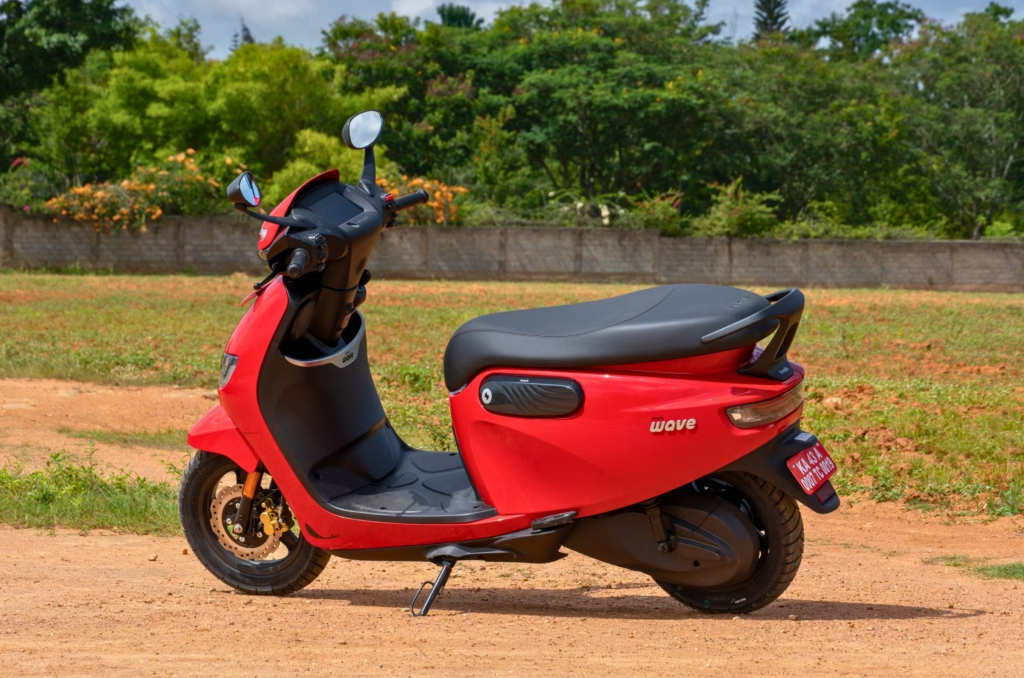
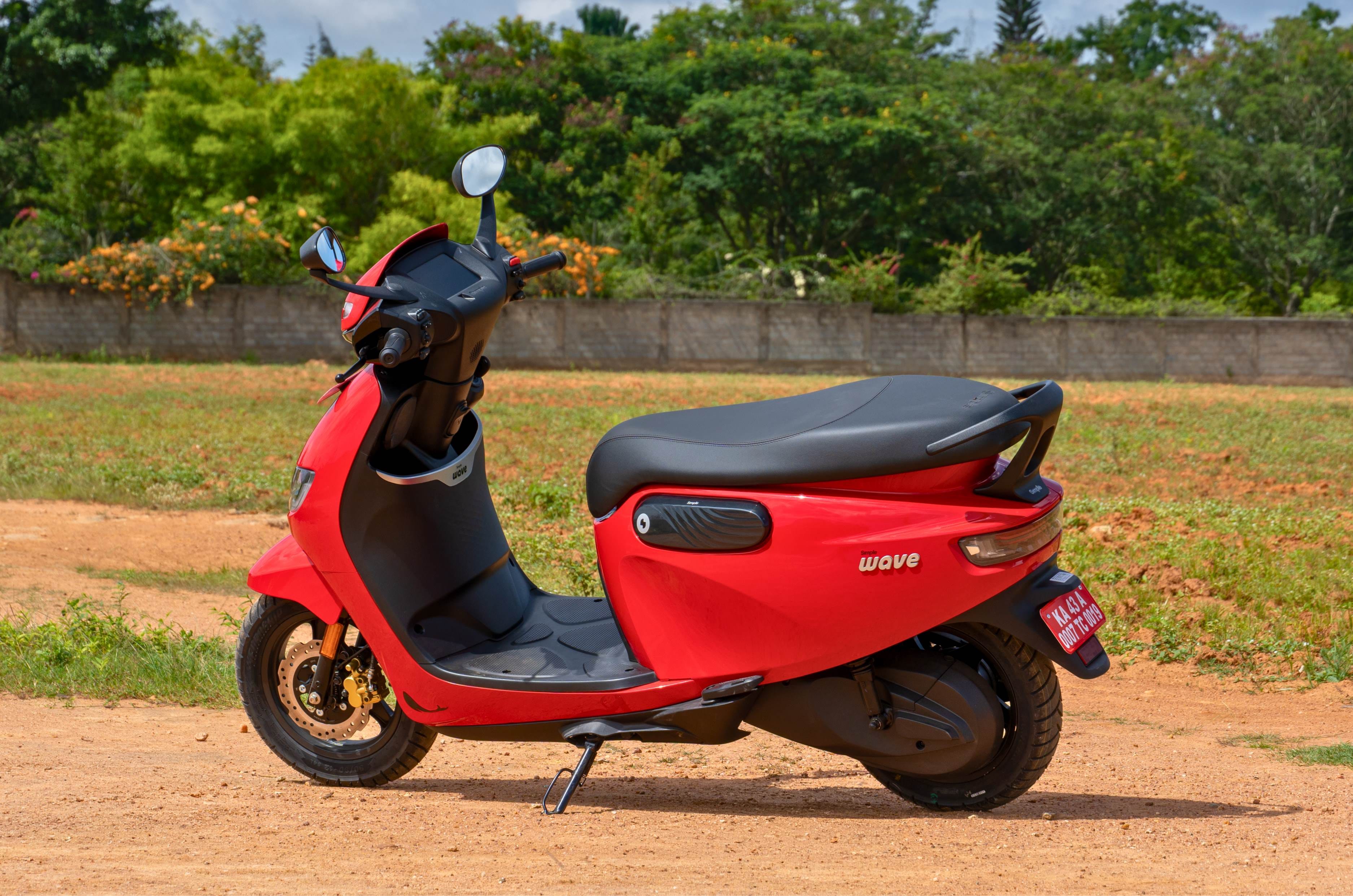
Simple Energy, which has been a regular in the monthly top 10 electric 2W OEM listing since February 2026 with its Simple One performance EV scooter, has clocked cumulative sales of over 10,000 units in the first eight months of this year. As per Vahan, between January and August 2026, the Bengaluru-based EV startup registered deliveries of 10,429 units, which is 203 percent more compared to last year’s 3,436 units for the same period. This momentum comes just as Simple launched its most affordable scooter yet, Wave, priced at Rs 1.10 lakh (ex-showroom, Bengaluru) and its entry into the family scooter segment.
Wave makes the brand more accessible with a lower Rs 1.10 lakh ex-showroom price
Brand has consistently averaged as the top nine EV seller in India since February 2026
Wave is expected to be the sales topper for Simple
The family EV scooter is based on One, but more practical
With the Wave, Simple Energy is hoping to make, well, waves in the family e-scooter segment, which has been dominated by the TVS iQube, Bajaj Chetak and Hero Vida for the past couple of years. Add Ather Rizta with its steadily growing sales, and the new Konarc to that list of rivals as well. Compared to the more performance-based One, Wave targets a much wider customer with its base S 2.2 variant pricing (Rs 1.10 lakh, ex-showroom) as also the focus around everyday practicality, ride comfort, and usability across different rider demographics.
The scooter has four variants as per the battery capacity. The base Wave S is offered in two battery capacities: 2.2kWh (110km IDC range) and 2.7kWh (132Km IDC range). While the middle variant, Wave, has a 3.7kWh battery and 171km of IDC range, and the top Wave + variant has a 5kWh battery and has a 243km IDC range, the highest in its segment. Simple has announced that deliveries will commence on September 25.
Production capacity and showrooms are being increased
The increased presence is expected to improve the brand’s sales
In tandem with the Wave’s launch and expected market demand, the company states that it is scaling its manufacturing and retail footprint. The company currently has a production capacity of 3,000 units per month, and has over 75 outlets across 63 cities in India including Bengaluru, Delhi, Patna, Nagpur, Bhopal, Agra, Goa, Vijayawada, Hyderabad, Kochi, and Chennai.
Simple Energy Sales
Year
Units
YoY percentage change
CY2023
66
CY2024
1,433
CY2025
6,628
362
CY2026
10,429
203
Cumulative total
18,556
As per Vahan’s data, From January 1 till August 31, 2026
For Simple, whose highest monthly retails were in March 2026 (1,780 units), the new Wave gives it an opportunity to target the highest-selling sub-category in e-2Ws: the family scooter. Simple ranked 13 in CY2025 sales and entered the top 10 for the first time in February 2026 and has consistently averaged ninth position since. The brand has cumulatively sold 18,556 units since sales began in 2023. It remains to be seen if the Wave turns out to be the much needed boost for the brand to climb up higher on that list.
आगरा में हुई तेज बारिश के बाद सड़क धंसने से एक बड़ा गड्ढा बन गया। इस गड्ढे में समाजवादी पार्टी (सपा) के नेता नितिन कोहली लकड़ी की सीढ़ी के सहारे नीचे उतर गए। इस दौरान वहां मौजूद लोगों की भीड़ जुट गई और पूरा घटनाक्रम चर्चा का विषय बन गया। इस घटना का वीडियो सोशल मीडिया पर तेजी से वायरल हो रहा है। नितिन कोहली ने इस मौके का इस्तेमाल करते हुए खुद को ‘स्मार्ट सिटी’ कहे जाने वाले आगरा में विकास को लेकर सरकार के दावों पर सवाल उठाए।
यह घटना आगरा के कमला नगर क्षेत्र की कर्मयोगी कॉलोनी की है। लगातार हुई भारी बारिश के बाद सड़क अचानक धंस गई, जिससे गहरा गड्ढा बन गया। इस घटना के बाद सड़क निर्माण की गुणवत्ता और प्रशासन की तैयारियों पर भी सवाल उठने लगे हैं।
बीच सड़क इतना बड़ा गड्ढा
सपा नेता नितिन कोहली का यह अनोखा विरोध प्रदर्शन सोशल मीडिया पर तेजी से वायरल हो गया। वायरल वीडियो में वह लकड़ी की सीढ़ी के सहारे गड्ढे में उतरते नजर आ रहे हैं, जबकि उनके समर्थक सीढ़ी को पकड़े हुए हैं। गड्ढे के अंदर खड़े होकर कोहली ने बीजेपी सरकार के विकास के दावों पर सवाल उठाए और आगरा की सड़कों की हालत पर तंज कसा। वीडियो में नितिन कोहली कहते सुनाई दे रहे हैं, “हम एक बार फिर विकास की तलाश में निकले हैं। पूरे आगरा की यही हालत हो गई है। मैं विधायक से पूछना चाहता हूं कि क्या यही विकास है? जहां भी सड़क बनती है, वहां कुछ ही समय बाद इतने गहरे गड्ढे हो जाते हैं कि लगता है जैसे पाताल लोक में नया शहर बसाया जा रहा हो। आगरा को स्मार्ट सिटी कहने के बजाय अब ऐसा लग रहा है कि पाताल लोक में नया स्मार्ट सिटी बन रहा है।”
सीढ़ी डालकर गहराई नापने उतरे सपा नेता
गनीमत रही कि इस हादसे में कोई घायल नहीं हुआ, क्योंकि जिस समय सड़क धंसी उस वक्त वहां से कोई वाहन नहीं गुजर रहा था। घटना के बाद इलाके में अफरा-तफरी मच गई। सूचना मिलते ही अधिकारी मौके पर पहुंचे, हालात का जायजा लिया और सुरक्षा के लिए धंसी हुई जगह के आसपास बैरिकेडिंग कर दी। इसके बाद सड़क की मरम्मत का काम भी शुरू कर दिया गया। यह मामला ऐसे समय सामने आया है, जब उत्तर प्रदेश में सड़कों और अन्य सार्वजनिक निर्माण कार्यों की गुणवत्ता पर लगातार सवाल उठ रहे हैं। हाल ही में कानपुर-लखनऊ एक्सप्रेसवे को लेकर भी विवाद हुआ था। उद्घाटन के कुछ ही हफ्तों बाद सड़क पर दरारें पड़ने और कुछ जगहों पर धंसने की खबरें सामने आई थीं, जिसके बाद निर्माण की गुणवत्ता को लेकर कई सवाल खड़े हुए थे।
कानपुर-लखनऊ एक्सप्रेसवे करीब 4,200 करोड़ रुपये की लागत से बनाया गया है। लेकिन ट्रैफिक के लिए खोले जाने के एक महीने के भीतर ही एक्सप्रेसवे के कई हिस्सों में दरारें, सड़क धंसने और सतह खराब होने की शिकायतें सामने आने लगीं। इन शिकायतों के बाद राष्ट्रीय राजमार्ग प्राधिकरण (एनएचएआई) ने सख्त कदम उठाए। प्राधिकरण ने परियोजना से जुड़े तीन इंजीनियरों को हटा दिया और निर्माण कंपनी पीएनसी इंफ्राटेक के खिलाफ भी कार्रवाई की। साथ ही मरम्मत का काम पूरा होने तक पूरे एक्सप्रेसवे पर टोल वसूली भी रोक दी गई।
बारिश का मौसम आते ही दिल्ली (Delhi) और आसपास का नजारा पूरी तरह बदल जाता है। सूखी सड़कें हरियाली से भर जाती हैं, झीलें (lakes) और पार्क (parks) ताजगी से खिल उठते हैं और ठंडी हवाएं सफर का मजा दोगुना कर देती हैं। ऐसे मौसम में घर पर बैठने के बजाय छोटी-सी रोड ट्रिप (short road trip) का प्लान बनाना एक बेहतरीन आइडिया हो सकता है।
अगर आपके पास लंबी छुट्टी नहीं है, तो भी चिंता की बात नहीं। दिल्ली से करीब 4 घंटे या उससे कम दूरी पर कई ऐसी शानदार जगहें हैं, जहां आप दोस्तों या परिवार के साथ आराम से वीकेंड (weekend) बिता सकते हैं। यहां आपको नेचर, इतिहास, झीलें, किले, बर्ड वॉचिंग और शानदार खाने का मजा एक साथ मिलेगा:
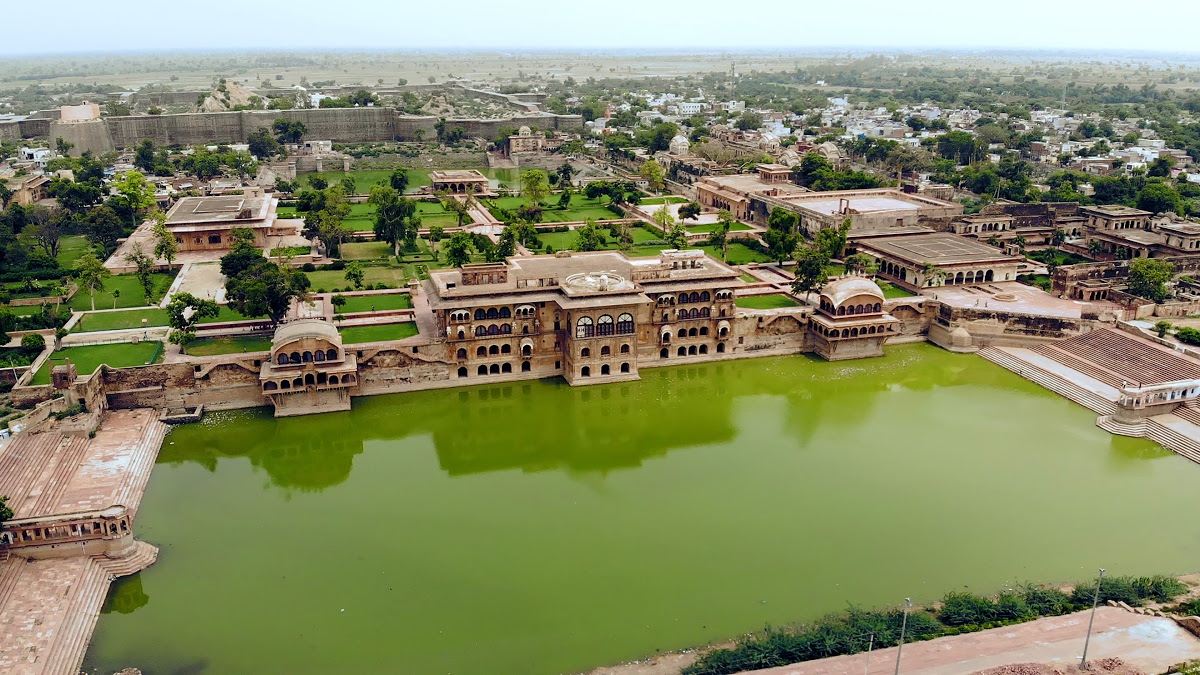
Agra, आगरा: बारिश में और भी खूबसूरत लगता है ताजमहल
दिल्ली (Delhi) से लगभग 3 से 4 घंटे की दूरी पर स्थित आगरा (Agra) सिर्फ ताजमहल (Agra) के लिए ही नहीं, बल्कि अपने स्वादिष्ट स्ट्रीट फूड और ऐतिहासिक इमारतों के लिए भी मशहूर है। मानसून के दौरान बादलों के बीच ताजमहल का नजारा और भी अट्रैक्टिव लगता है। यहां आगरा किला (Agra Fort) देखने के साथ लोकल मार्केट और मशहूर पेठा का स्वाद भी जरूर लें।
Sohna, सोहना: कम समय में शानदार वीकेंड
अगर ज्यादा दूर नहीं जाना चाहते, तो सोहना बेहतरीन ऑप्शन है। यह दिल्ली से केवल 1.5 से 2 घंटे की दूरी पर है। अरावली की पहाड़ियों (Aravalli hills) के बीच बसा यह इलाका अपने रिजॉर्ट, हरियाली और प्राकृतिक गर्म पानी के झरनों के लिए जाना जाता है। फैमिली के साथ एक दिन की छोटी और आरामदायक ट्रिप के लिए यह जगह परफेक्ट है।
Sultanpur National Park, सुल्तानपुर नेशनल पार्क: नेचर लवर के लिए खास
दिल्ली (Delhi) से करीब 1 से 1.5 घंटे की दूरी पर सुल्तानपुर नेशनल पार्क बर्ड वॉचिंग (birdwatching) के लिए मशहूर है। बारिश के मौसम में यहां कई तरह के पक्षी देखने को मिलते हैं। सुबह या शाम के समय पार्क घूमना सबसे अच्छा माना जाता है। यहां बैटरी से चलने वाली गाड़ियां भी अवेलेबल हैं, जिससे बुजुर्ग और बच्चों के साथ घूमना आसान हो जाता है।
Rewari, रेवाड़ी: हिस्ट्री और लोकल फ्लेवर का यूनिक एक्सपीरियंस
दिल्ली से लगभग 2 से 2.5 घंटे की दूरी पर रेवाड़ी (Rewari) उन लोगों के लिए खास है जो कुछ अलग देखना चाहते हैं। यहां मौजूद रेवाड़ी स्टीम लोकोमोटिव शेड भारत के सबसे पुराने स्टीम इंजन शेड में से एक है। इसके अलावा आप शहर के लोकल बाजार (local market) घूम सकते हैं और हरियाणा के पारंपरिक खाने (Haryanvi cuisine) का स्वाद भी ले सकते हैं।
Alwar, अलवर: हिस्ट्री और नेचर का शानदार ब्लेंड
राजस्थान (Rajasthan) का अलवर दिल्ली से लगभग 3 से 4 घंटे की दूरी पर है। बारिश के मौसम में अरावली की पहाड़ियां (Aravalli hills) हरी-भरी हो जाती हैं और यहां का मौसम काफी सुहावना रहता है। यहां आप बाला किला (Bala Quila), सिटी पैलेस (City Palace)और सिलीसेढ़ झील (Siliserh Lake)घूम सकते हैं। अगर भीड़ से दूर शांत जगह पर समय बिताना चाहते हैं, तो अलवर अच्छा ऑप्शन है।
Neemrana Fort Palace, नीमराना फोर्ट पैलेस: शाही अंदाज में बिताएं वीकेंड
दिल्ली से करीब 2.5 से 3 घंटे की दूरी पर बना नीमराना फोर्ट पैलेस इतिहास और लग्जरी का शानदार ब्लेंड है। कई सौ साल पुराने इस किले को अब हेरिटेज होटल (heritage hotel) में बदल दिया गया है। यहां की छतों, बगीचों और पुराने आंगनों से बारिश के बाद का नजारा बेहद खूबसूरत दिखाई देता है। यहां एक दिन बिताकर भी रॉयल फील का एक्सपीरियंस लिया जा सकता है।
Bharatpur, भरतपुर: पक्षियों और हरियाली के बीच सुकून भरा दिन
दिल्ली से करीब 3.5 से 4 घंटे की दूरी पर भरतपुर (Bharatpur) मानसून (monsoon) में बेहद खूबसूरत हो जाता है। यहां का केवलादेव नेशनल पार्क (Keoladeo National Park) बारिश के बाद हरियाली से भर जाता है और देश-विदेश के कई पक्षी यहां दिखाई देते हैं। पार्क को देखने के लिए साइकिल या साइकिल रिक्शा सबसे अच्छा ऑप्शन’है। अगर आपको फोटोग्राफी या नेचर पसंद है, तो यह जगह आपको जरूर पसंद आएगी।
सफर पर निकलने से पहले रखें इन बातों का ध्यान
मानसून ट्रिप (monsoon trip) पर निकलने से पहले कुछ छोटी-छोटी तैयारियां आपकी जर्नी को और आसान बना सकती हैं। कोशिश करें कि सुबह जल्दी निकलें ताकि ट्रैफिक से बच सकें और दिनभर घूमने का पूरा समय मिले। घर से निकलने से पहले मौसम का अपडेट जरूर देख लें। अपने साथ छाता या हल्की रेन जैकेट, आरामदायक वॉटरप्रूफ जूते, पानी की बोतल, हल्के स्नैक्स और जरूरी दवाइयां जरूर रखें। बारिश के दौरान गाड़ी सावधानी से चलाएं और जल्दबाजी करने के बजाय रास्ते की हरियाली, ठंडी हवाओं और खूबसूरत नजारों का भी भरपूर आनंद लें।
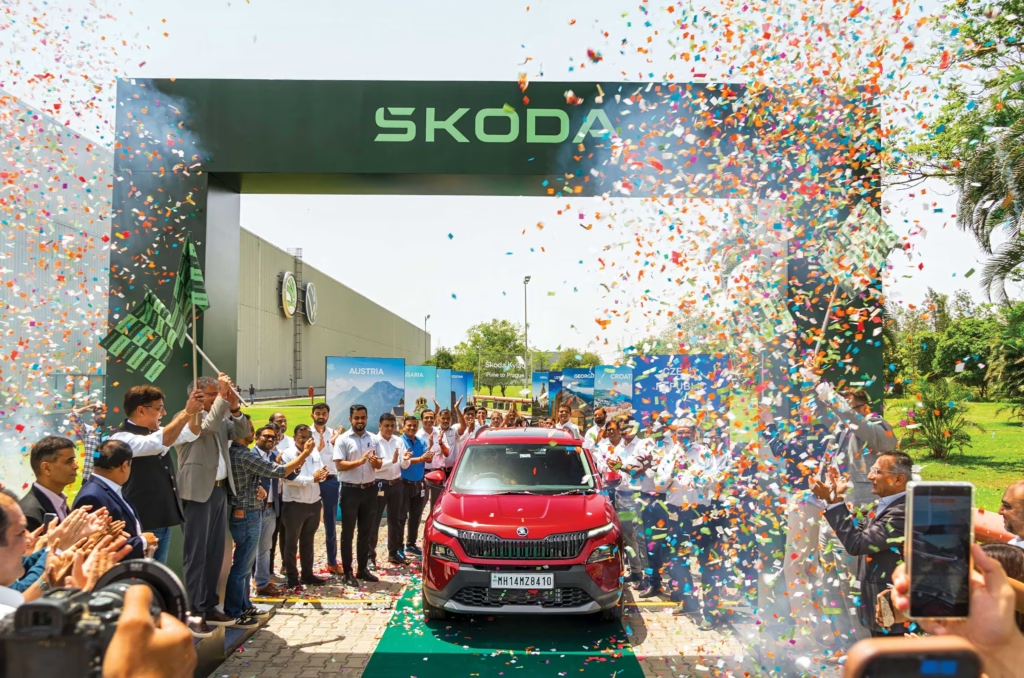
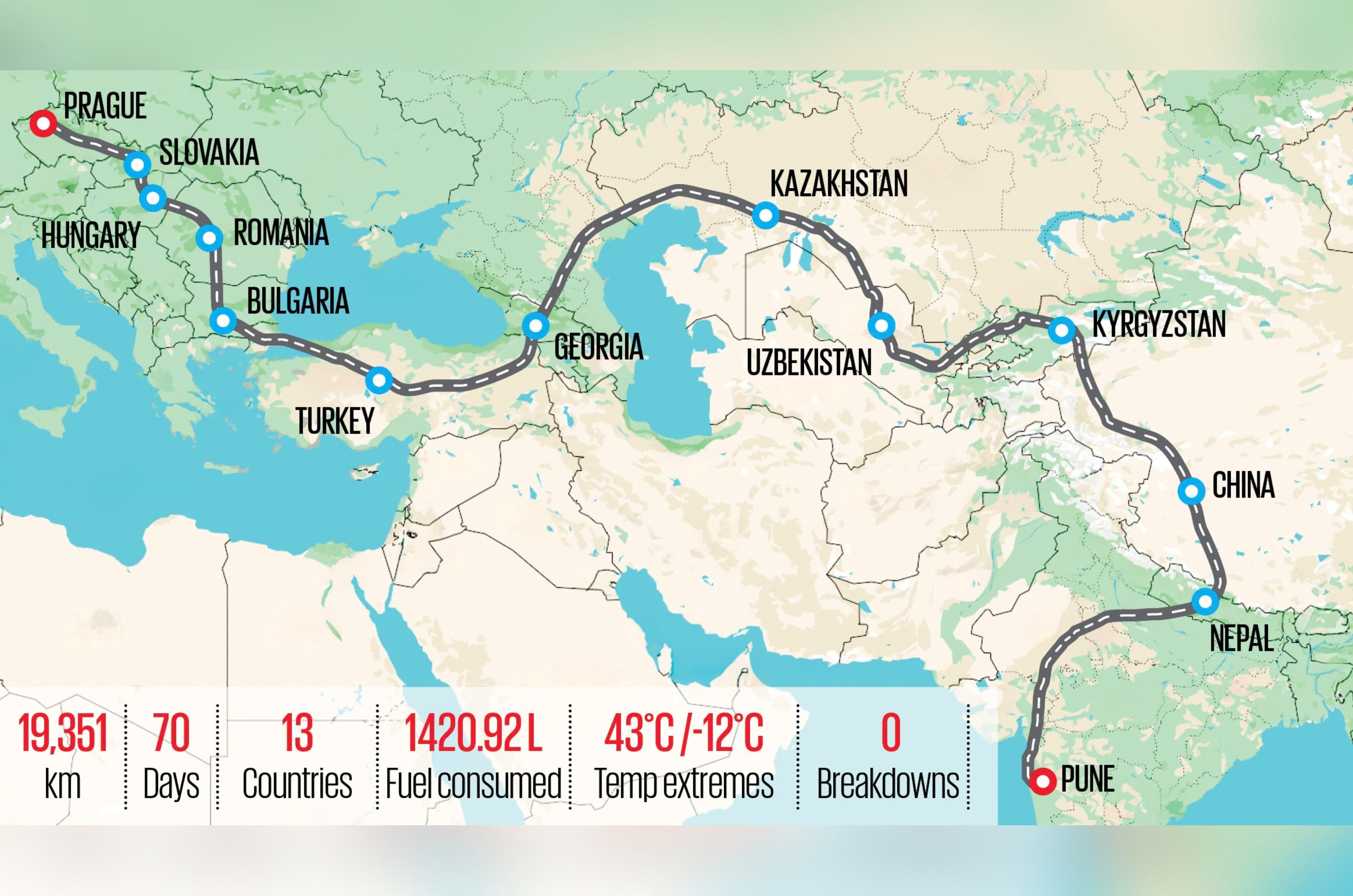
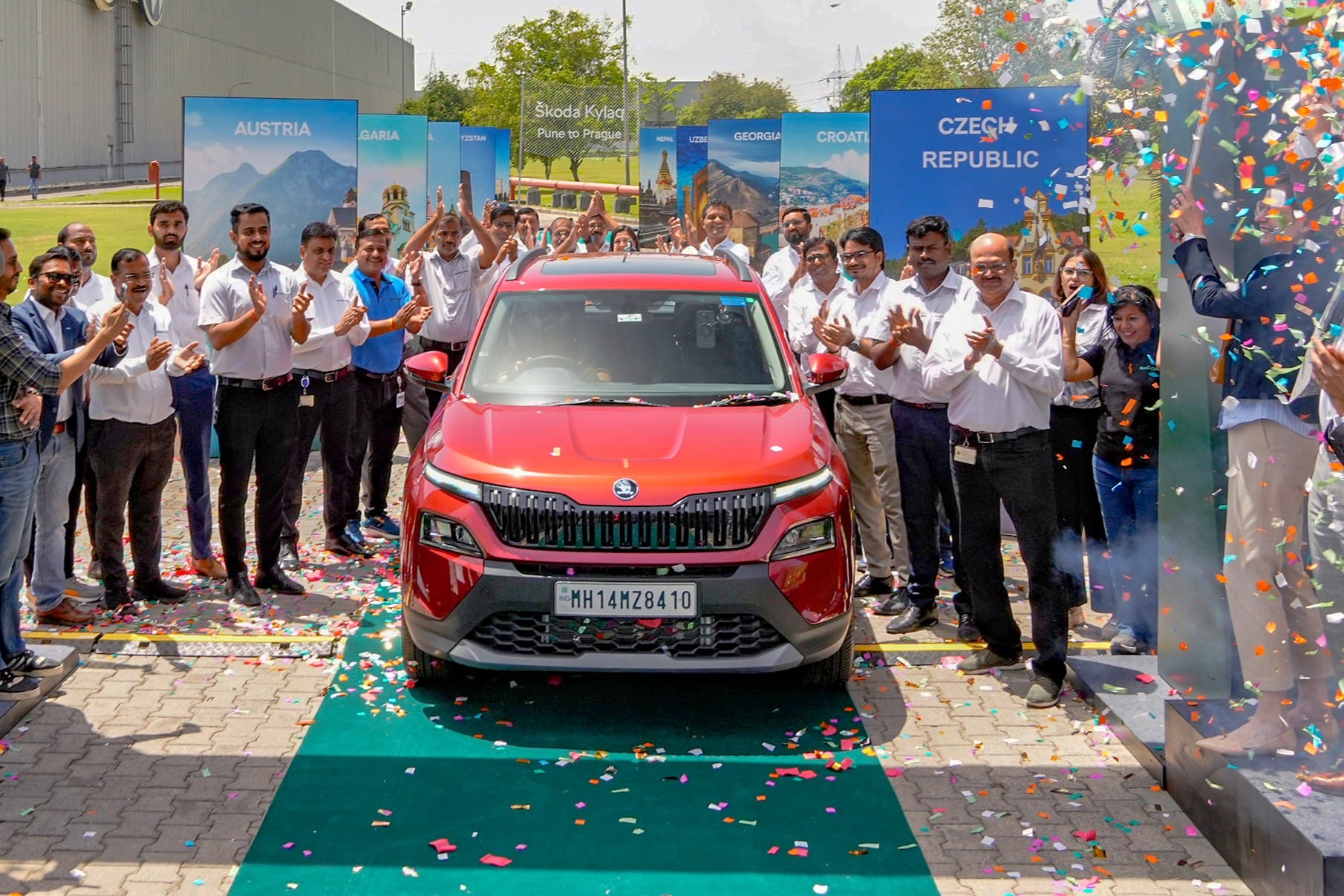
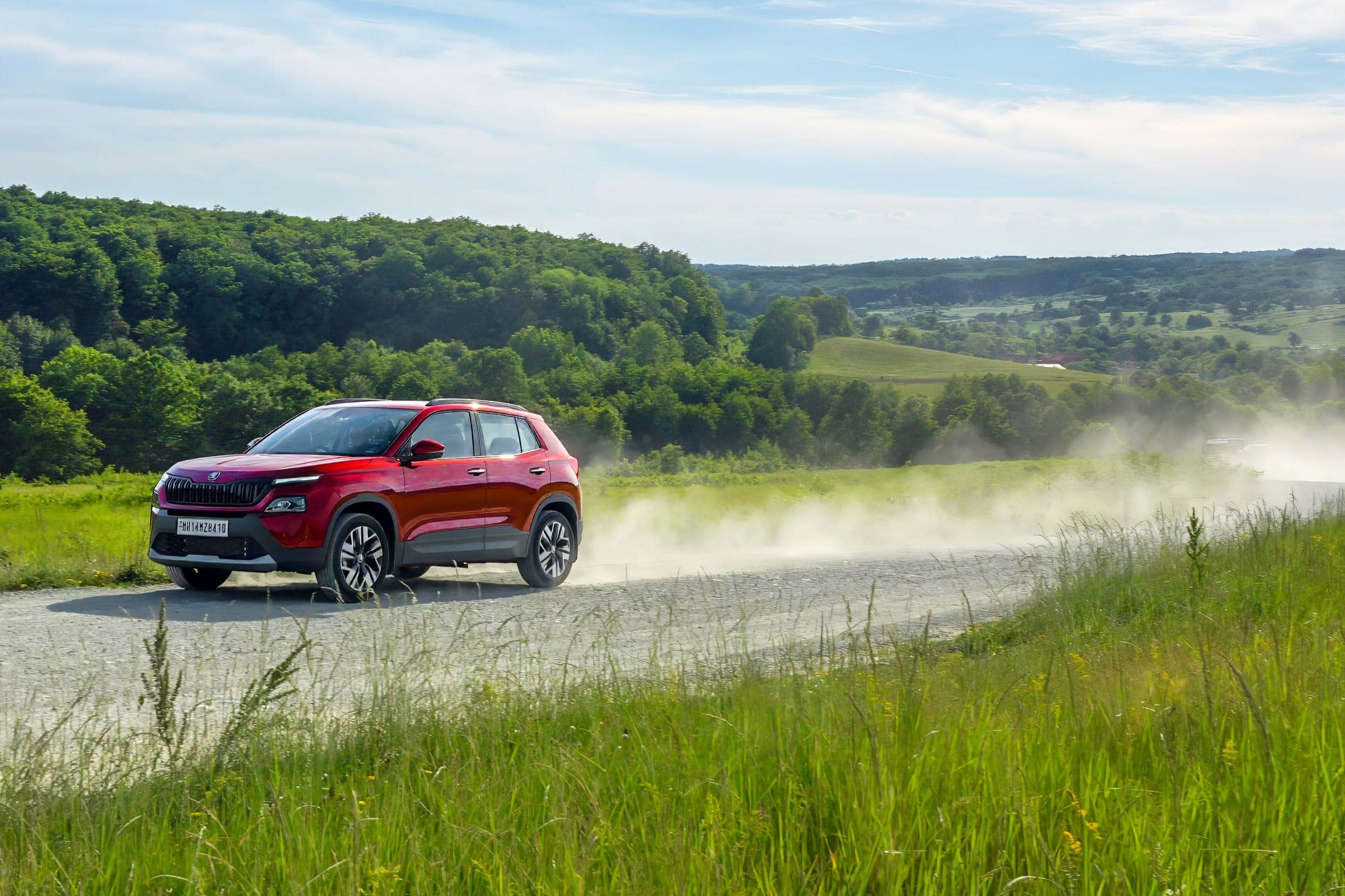
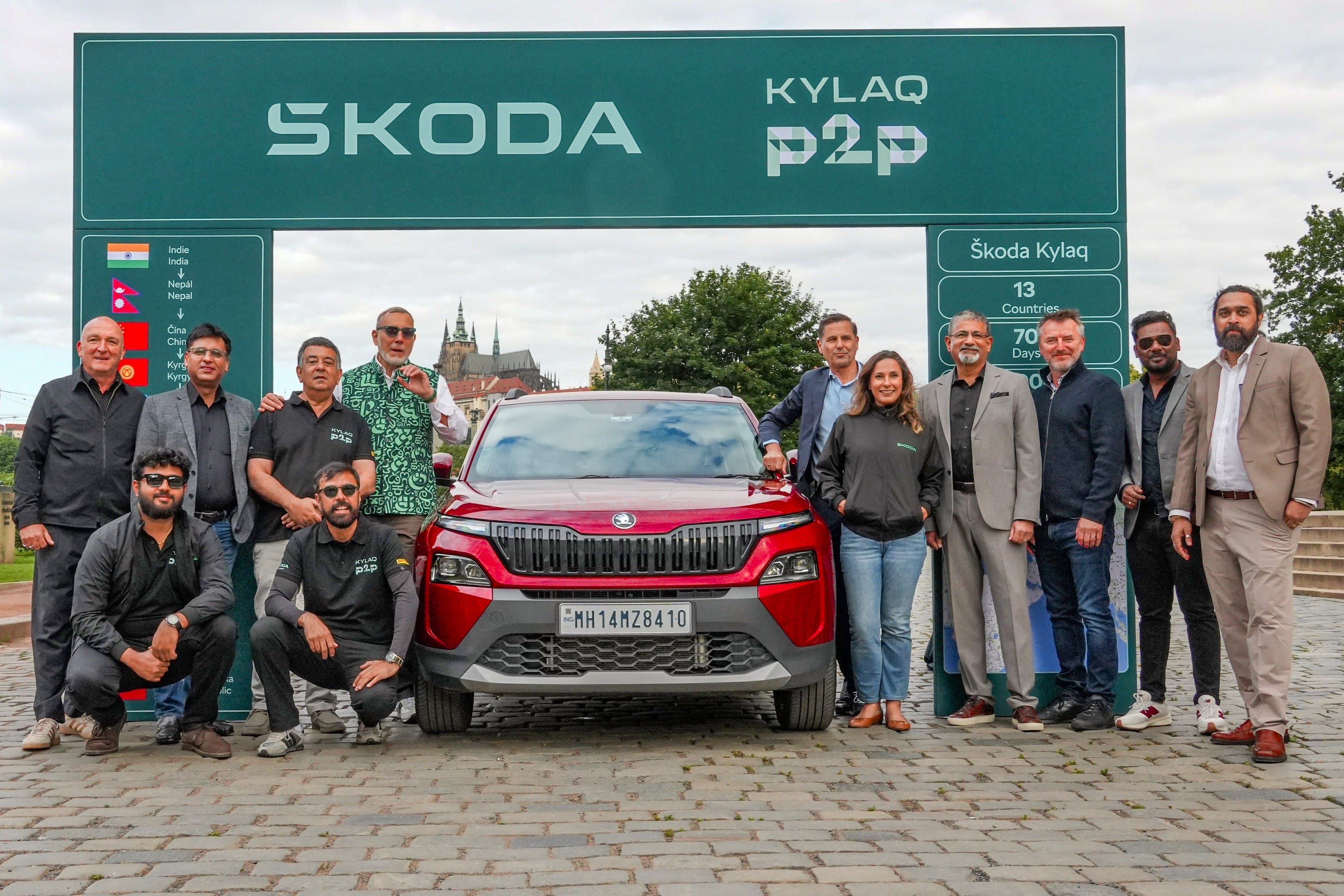
Autocar India, in collaboration with Skoda India, has completed the Pune-to-Prague (P2P) road trip in the Kylaq compact SUV. This is one of the longest overland expeditions ever undertaken in a made-in-India passenger vehicle, with the Kylaq covering 19,351km over a span of 70 days.
As the name suggests, P2P began at the Skoda Auto Volkswagen India manufacturing facility in Pune, and concluded in Prague – the home of the Czech carmaker – spanning two continents and 13 countries along the way.
Skoda Kylaq proves its engineering mettle in P2P
During the P2P road trip, the Kylaq experienced a smorgasbord of terrains and climates. Starting in Pune, the compact SUV travelled through Mumbai, Vadodara, Udaipur, Jaipur, Agra, Lucknow, and Gorakhpur, before crossing into Nepal. The journey then continued across the Tibetan Plateau in China, the ancient Silk Road through Kyrgyzstan, Uzbekistan, and Kazakhstan, before heading into Georgia, Türkiye, Bulgaria, Romania, Hungary, and Slovakia, eventually concluding in Prague.
Throughout the drive, the Kylaq encountered altitudes ranging from -154 metres to 5,364 metres above sea level, while temperatures varied between -12 deg-C and 43 deg-C. The Kylaq also tackled mountain passes, high-altitude plateaus, sweeping long-distance highways, and historic trade routes, exposing the compact SUV to diverse road, weather, and driving conditions. At the end, the Kylaq finished the journey with no issues – not even a puncture or a scratch.
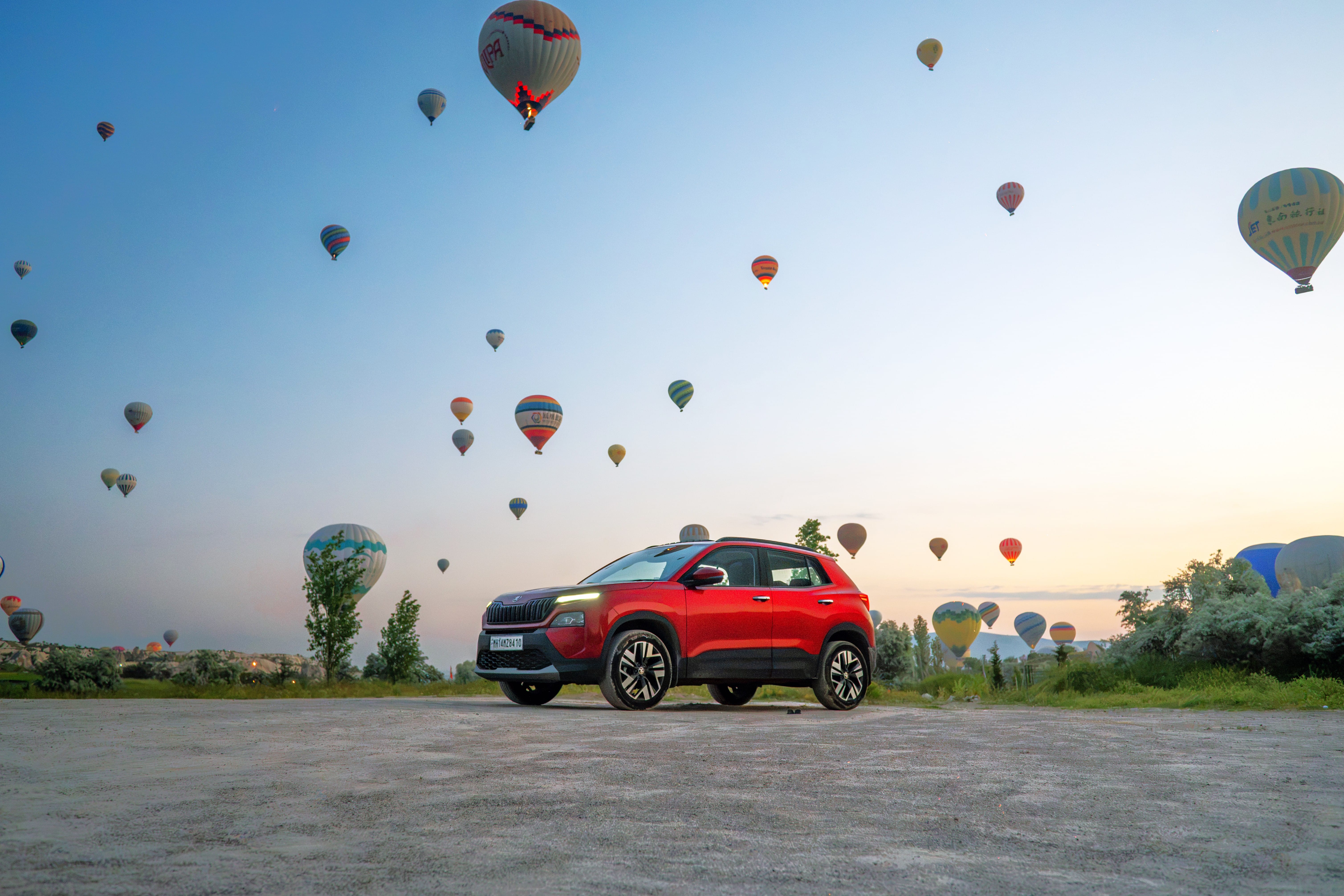
Highlights during the Kylaq P2P trip included stumbling upon a classic car rally in Bratislava, checking out the Transylvanian Bran Castle in Bucharest, witnessing glowing hot air balloons at the crack of dawn in Cappadocia, crossing the Bosphorus bridge that connects Asia and Europe, barrelling down the arrow-straight roads of Kazakhstan, visiting the 17th-century Potala Palace in China, and so much more.
Commenting on the achievement, Ashish Gupta, brand director of Skoda India, said that the Kylaq P2P was a “powerful demonstration of what Indian engineering and manufacturing can achieve on the global stage.”
Ketan Agarwal Murder Case: रियल एस्टेट कारोबारी केतन अग्रवाल की कथित हत्या की जांच में एक नया मोड़ आया है। पुलिस ने आरोपी सिया गोयल के मोबाइल फोन से डिलीट किए गए चैट्स को रिकवर किया है, जिन्हें अब जांच में शामिल किया जा रहा है। जांचकर्ताओं के अनुसार, एक चैट में सिया ने अपनी एक दोस्त से उसके आधार कार्ड के दोनों तरफ की फोटो भेजने को कहा था, ताकि शादी के टिकट बुक किए जा सकें।
चैट में लिखा था: “आधार कार्ड का आगे और पीछे का हिस्सा भेज दो। शादी के टिकट के लिए, जो होने वाली नहीं है, फिर भी भेज दो।” बाद में दोस्त जवाब देता है कि दस्तावेज पहले ही व्हाट्सएप पर भेज दिया था।
फिलहाल, पुलिस अब इन चैट्स की जांच कर रही है ताकि बातचीत का संदर्भ समझा जा सके और यह पता लगाया जा सके कि क्या इनसे आरोपी की कथित हत्या से पहले या बाद की योजनाओं के बारे में कोई सुराग मिलता है।
बता दें कि बरामद किए गए चैट्स उन डिलीट किए गए डेटा का हिस्सा हैं, जिन्हें जांचकर्ताओं ने हाल ही में जांच के दौरान जब्त किए गए मोबाइल फोन से रिकवर किया है।
वहीं, पुलिस ने पहले ही अदालत को सूचित किया था कि उन्हें सांकेतिक (कोड) भाषा में हुई बातचीत मिली है और वे यह पता लगाने के लिए उनकी जांच कर रहे हैं कि क्या कथित साजिश में कोई और भी शामिल था।
सिया गोयल और चेतन चौधरी को न्यायिक हिरासत में भेजा गया
दूसरी तरफ, सिया गोयल और उसके साथी चेतन चौधरी को पॉलीग्राफ टेस्ट कराने से इनकार करने के बाद 14 दिन की न्यायिक हिरासत में भेज दिया गया है। फिलहाल, केतन अग्रवाल की हत्या की जांच चल रही है और पुलिस आरोपियों के डिवाइस से मिले डिजिटल सबूतों की जांच कर रही है।
तीसरे व्यक्ति की भूमिका की जांच
पुणे पुलिस ने अदालत को बताया कि उन्हें आरोपियों के फोन से डिलीट किया गया डेटा मिला है, जिसमें कोड वर्ड्स, निकनेम और इमोजी में लिखी गई कथित चैट शामिल हैं। जांचकर्ता यह पता लगाने की कोशिश कर रहे हैं कि क्या ये बातचीत कथित साजिश में किसी तीसरे व्यक्ति की भूमिका की ओर इशारा करती हैं।
बीड के युवक से पूछताछ
पुलिस ने बीड जिले से एक युवक को हिरासत में लिया है। जांच में सामने आया है कि सिया गोयल और चेतन चौधरी ने कथित तौर पर उसे हत्या की योजना के बारे में बताया था। अब पुलिस यह पता लगा रही है कि क्या इस कथित साजिश में उसकी कोई भूमिका थी। हालांकि, युवक ने पुलिस को बताया कि उसने दोनों को ऐसा कदम न उठाने की सलाह दी थी।
दूसरा मोबाइल फोन बरामद
जांच के दौरान पुलिस ने सिया गोयल का एक दूसरा मोबाइल फोन भी बरामद किया है, जिसे कथित तौर पर छिपाकर रखा गया था। फिलहाल, पुलिस डिजिटल सबूतों की जांच कर रही है और उम्मीद है कि इस फोन का फोरेंसिक विश्लेषण भी किया जाएगा।
Agra Murder Case: उत्तर प्रदेश के आगरा जिले से हैरान कर देने वाला मामला सामने आया है। यहां एक महिला को अपने पति की कथित तौर पर हत्या करने और उसके शव को घर के बाथरूम में दफनाने के आरोप में गिरफ्तार किया गया है। पुलिस का कहना है कि वे इस बात की जांच कर रहे हैं कि हत्या और सबूत छिपाने में और भी लोग शामिल थे या नहीं।
पुलिस ने बताया कि शव को निकालने के लिए उन्होंने कुछ कर्मचारियों के साथ मिलकर बाथरूम के फर्श पर लगी प्लास्टर की परत को तोड़ा। बता दें कि यह पूरा मामला पिछले 45 दिनों से चल रही जांच के बाद सामने आया, जब पति को लापता बताया गया था।
बाथरूम के फर्श के नीचे मिली लाश
जांच के दौरान आरोपी महिला, जिसकी पहचान रूबी के रूप में हुई है, पुलिस के साथ अपने पति सुरेंद्र शर्मा की तलाश में सहयोग करने का नाटक करती रही। साथ ही खुद को दुखी दिखाने के लिए पड़ोसियों के सामने रोती रहती थी, ताकि लोगों को लगे कि वह बहुत टूट चुकी है।
लेकिन इस मामले में बड़ा सुराग तब मिला जब मृतक के भाई ने रूबी पर शक जताया और पुलिस को जानकारी दी। इसके बाद पुलिस ने गहराई से तफ्तीश शुरू की। पुलिस की टीम जब मजदूरों के साथ सुरेंद्र के घर की तलाशी लेने पहुंची, तो उन्हें बाथरूम के फर्श पर प्लास्टर की एक नई परत दिखाई दी। संदेह होने पर जब पुलिस ने उस प्लास्टर को तुड़वाया, तो उसके नीचे से सुरेंद्र का शव बरामद हुआ।
शव को पोस्टमॉर्टम के लिए भेजा गया
फिलहाल, शव को पोस्टमॉर्टम के लिए भेज दिया गया है। वहीं पुलिस अब यह जांच कर रही है कि क्या इस मामले में और लोग शामिल थे, या क्या किसी और ने रूबी की मदद शव को दफनाने में की थी।
क्या है पूरा मामला?
अधिकारियों के अनुसार, सुरेंद्र बेरोजगार था और उसे शराब की लत थी। पुलिस ने बताया कि वह अक्सर शराब पीकर घर आता था और कथित तौर पर रूबी के साथ मारपीट करता था। खबरों के मुताबिक, परिवार घर का खर्च चलाने के लिए सुरेंद्र की मां को मिलने वाली पेंशन पर निर्भर था।
पूछताछ के दौरान, रूबी ने कथित तौर पर पुलिस को बताया कि वह लंबे समय से घरेलू हिंसा का शिकार हो रही थी। उसने दावा किया कि 26 मई को पति द्वारा एक और हिंसक हमले के बाद, उसने उसे मारने का फैसला किया।
पुलिस ने बताया कि अपराध को छिपाने की कोशिश में उसने कथित तौर पर शव को घर के बाथरूम में खोदे गए एक गड्ढे में दफना दिया।
2025 के ‘ब्लू ड्रम’ जैसा हत्याकांड
इन सबके अलावा, यह मामला फरवरी 2025 के ‘ब्लू ड्रम’ हत्याकांड से मिलता-जुलता बताया जा रहा है, जिसमें मर्चेंट नेवी के अधिकारी सौरभ राजपूत की हत्या कर दी गई थी। उस मामले में उसकी पत्नी मुस्कान राजपूत और उसके प्रेमी साहिल ने मिलकर शव के टुकड़े किए और उसे एक नीले ड्रम में सीमेंट भरकर छिपा दिया था।








 फिलहाल, पुलिस अब इन चैट्स की जांच कर रही है ताकि बातचीत का संदर्भ समझा जा सके और यह पता लगाया जा सके कि क्या इनसे आरोपी की कथित हत्या से पहले या बाद की योजनाओं के बारे में कोई सुराग मिलता है।