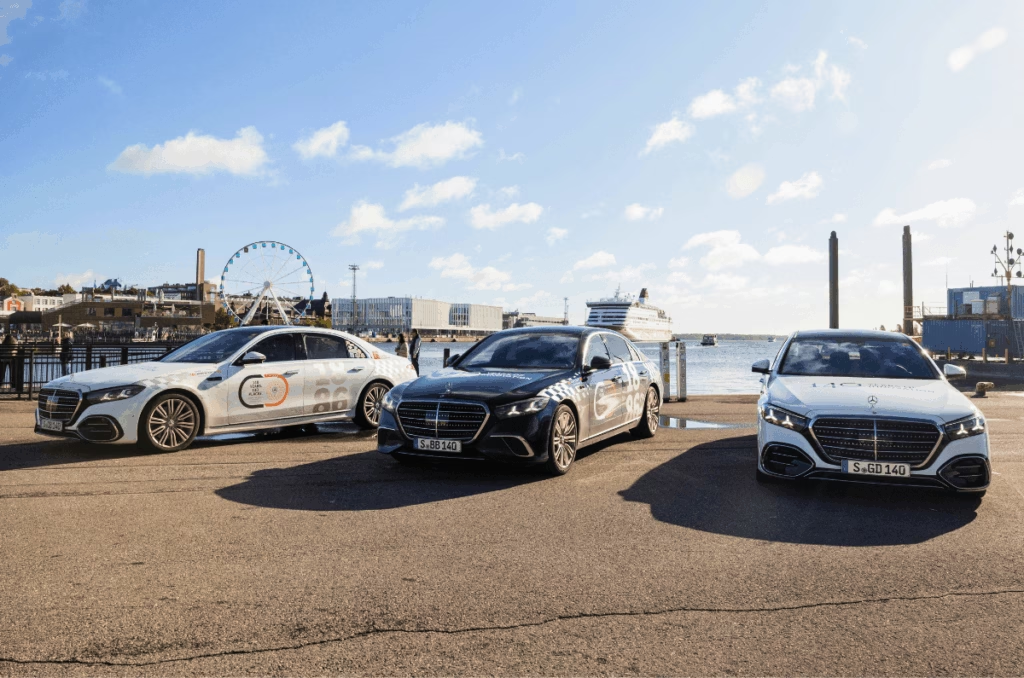
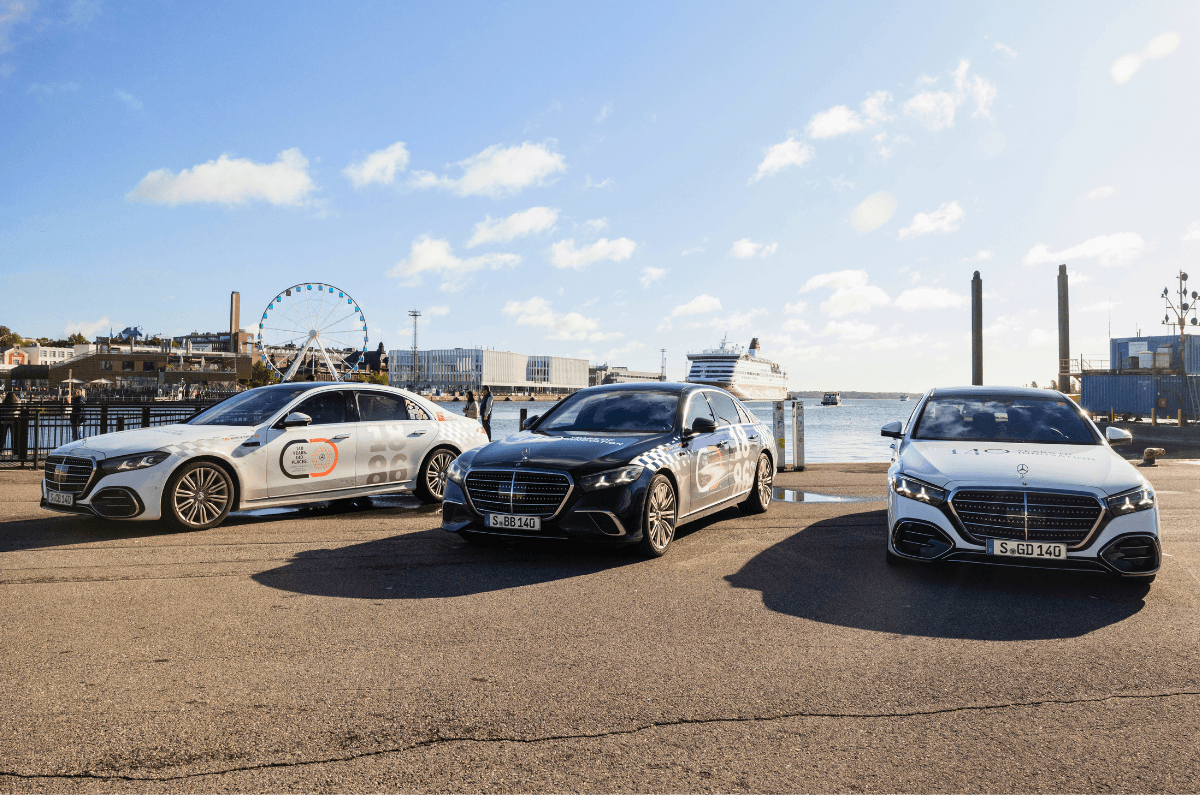
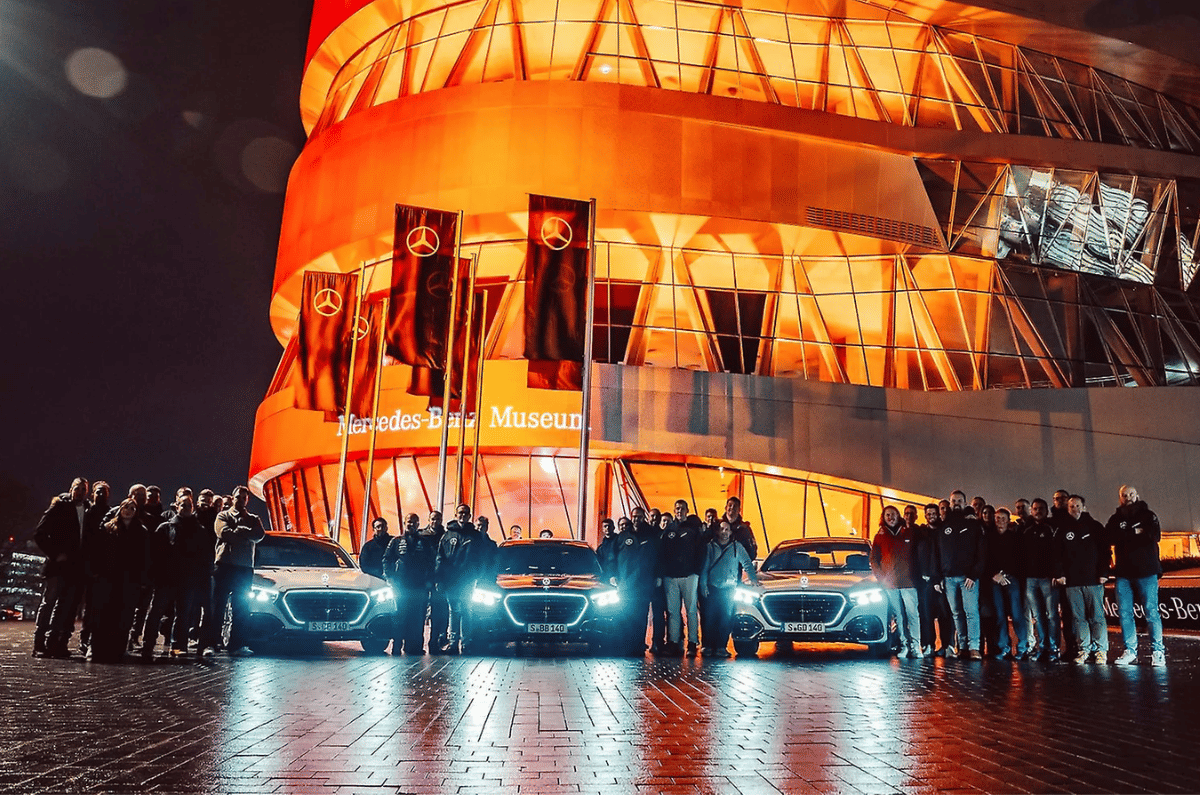
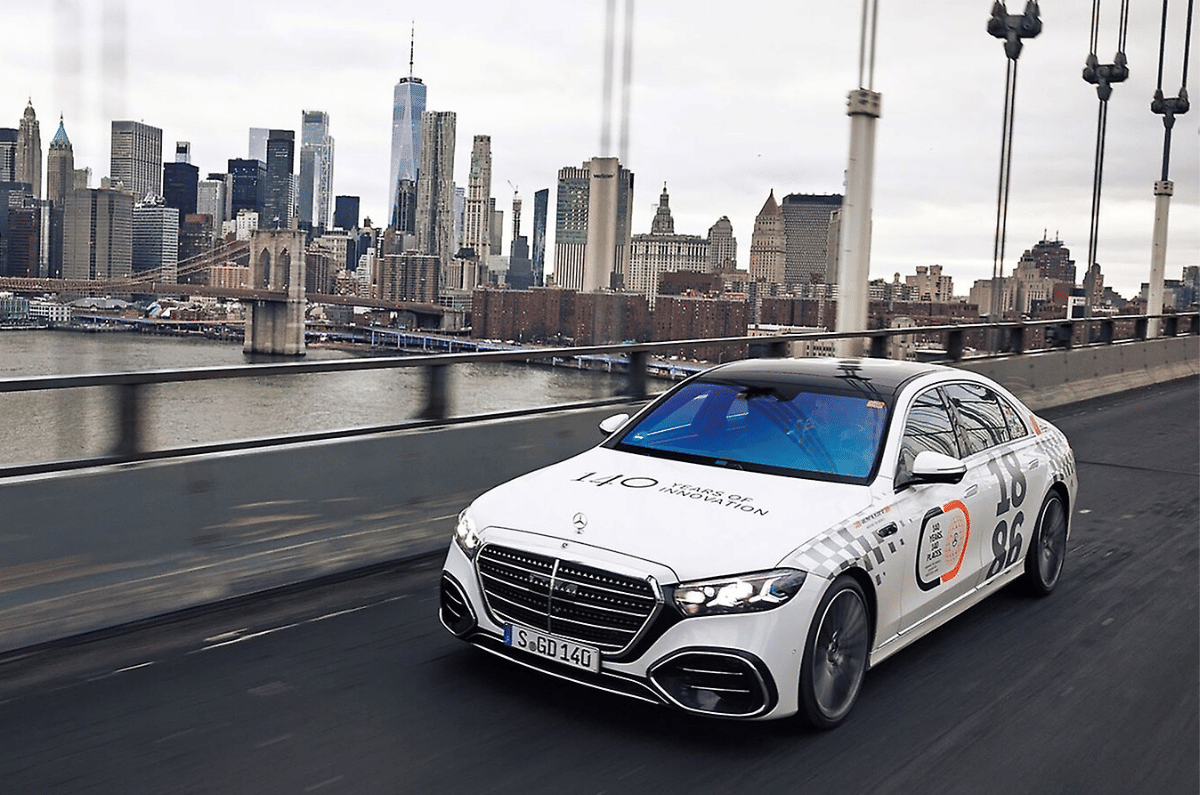
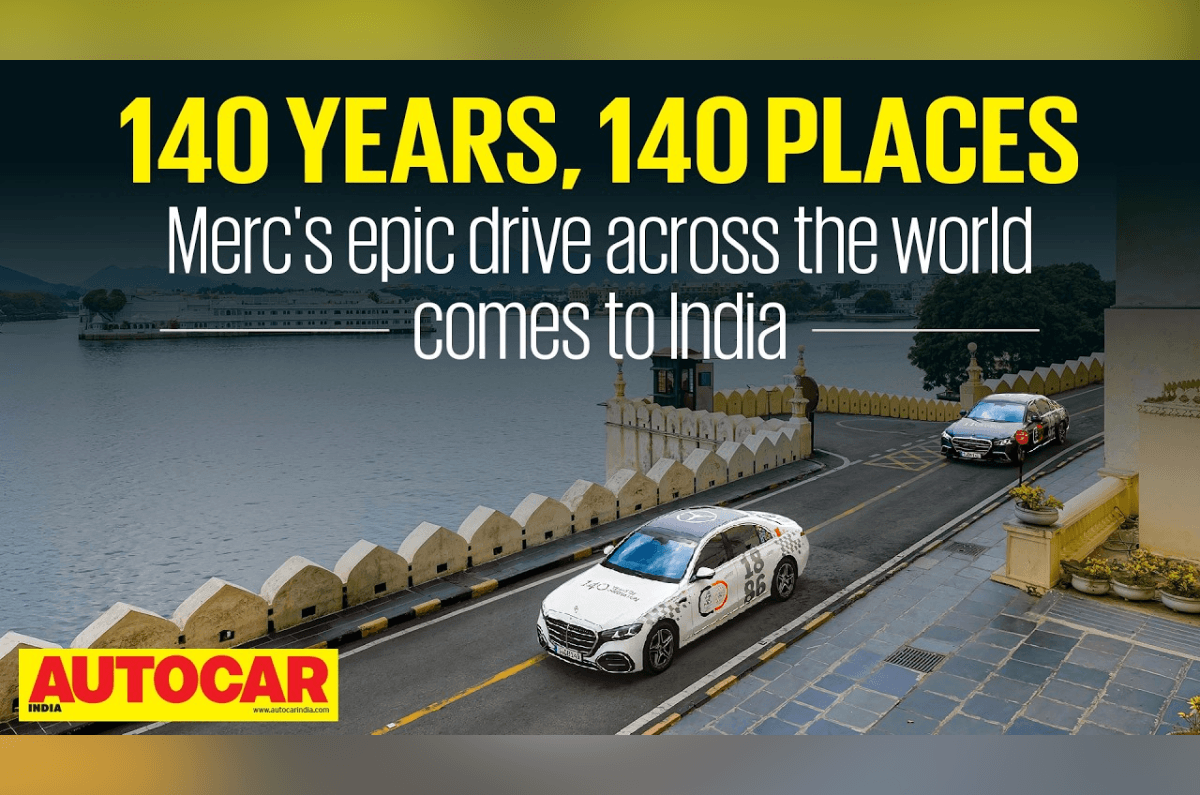
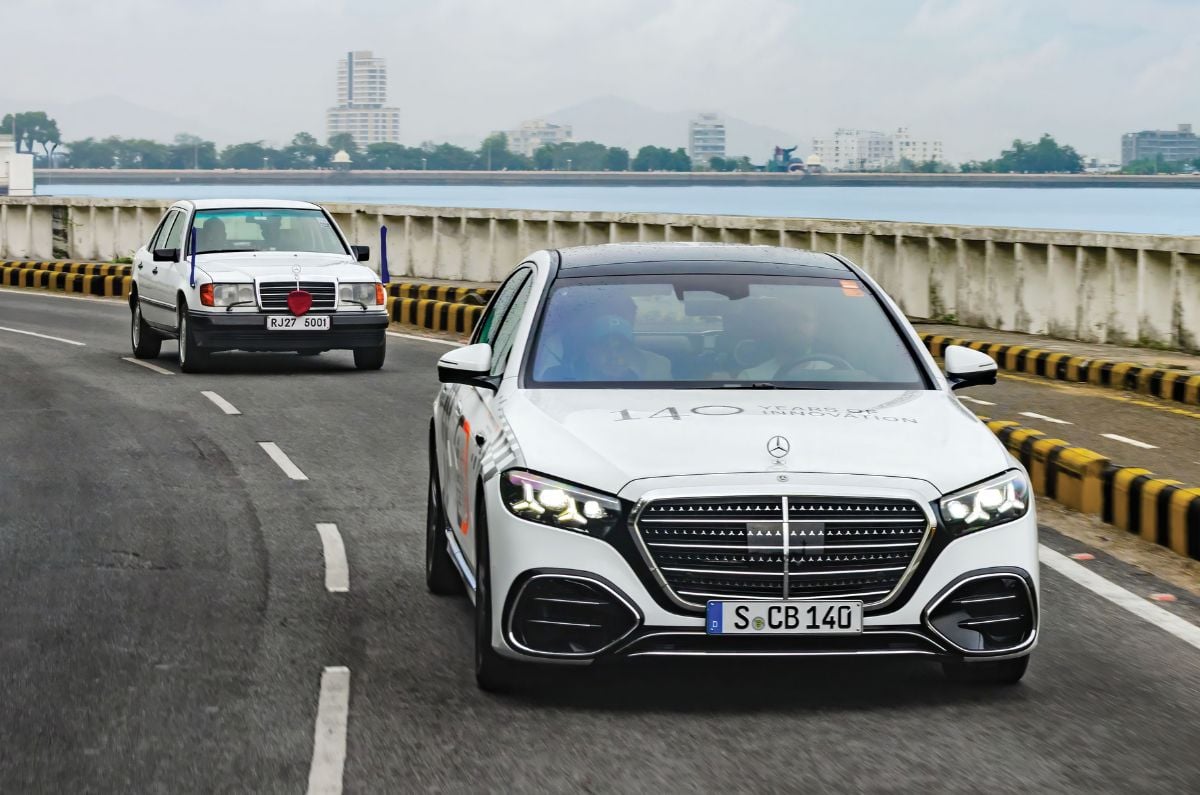
Mercedes-Benz has concluded its ‘140 Years. 140 Places.’ global tour, organised to commemorate 140 years since Carl Benz filed the patent for his Motorwagen in 1886. Three S-Class sedans returned to the Mercedes-Benz Museum in Stuttgart, Germany, on October 17, after covering more than 65,000km across 55 countries and six continents over nearly nine months. Approximately 20,000 guests attended the homecoming event, which also featured the global debut of the new Mercedes-AMG GT SUV.
Mercedes-Benz 140 Years, 140 Places: All you need to know
Tour marks 140 years since Carl Benz’s Patent-Motorwagen
The expedition began in Stuttgart on January 29, 2026, with three S-Class sedans named Bertha, Carl and Gottlieb. The tour visited more than 140 locations across six continents, crossing 67 national borders and 13 climate zones.
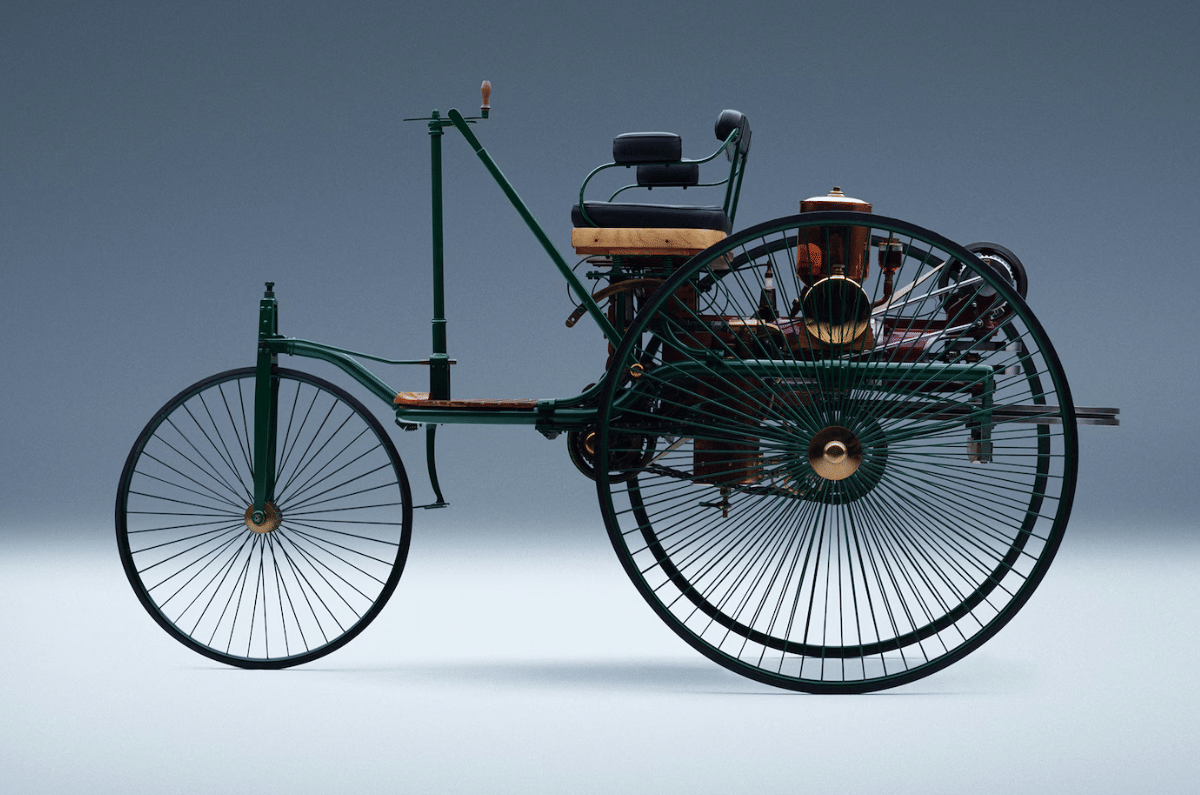
The route covered cities including New York, Tokyo, Mumbai, Nairobi and Sao Paulo. The cars returned to Stuttgart in a convoy of 140 historic and current vehicles, including a replica of the 1886 Benz Patent-Motorwagen, the Mercedes-Benz 300 SLR Uhlenhaut Coupé, a Ponton 220 S, the C 111 experimental vehicle, and the electric G-Class and C-Class.
Mercedes-Benz says tour tested S-Class under challenging conditions
Mercedes-Benz said the expedition provided insights into the S-Class under real-world conditions beyond those covered by its regular development testing in extreme temperatures and simulation chambers.
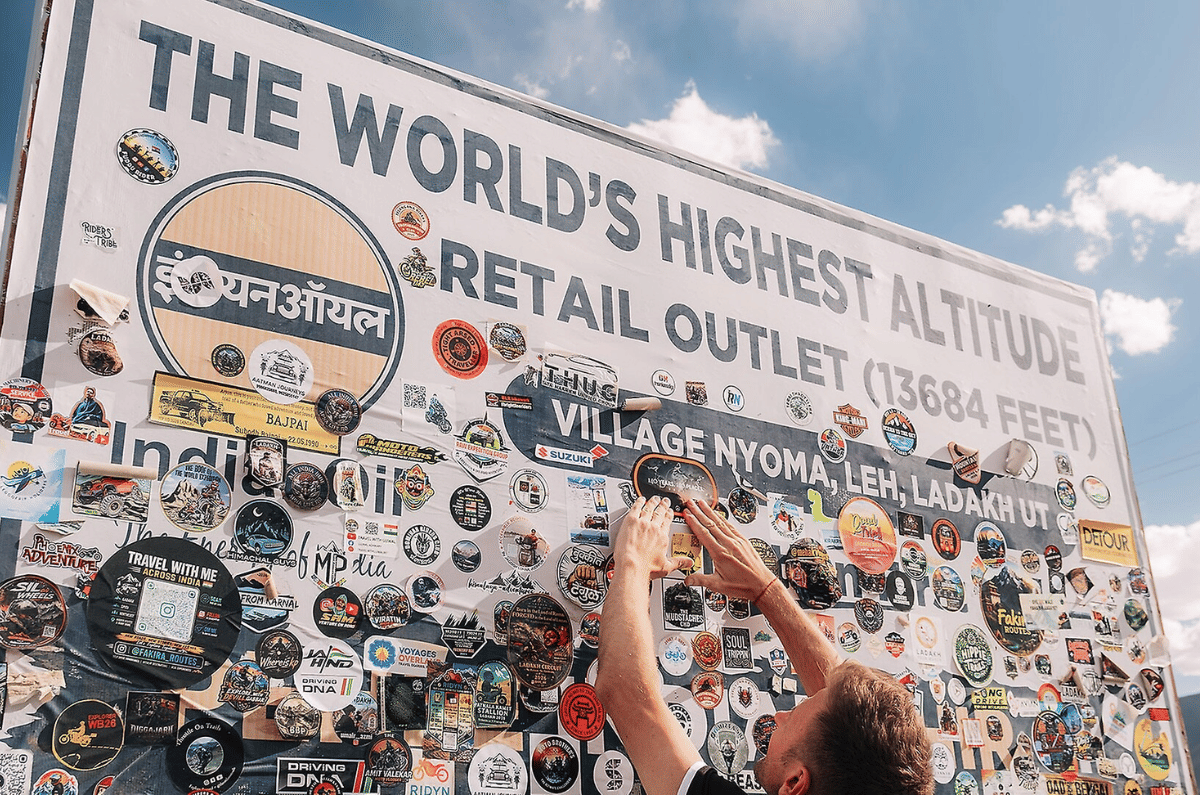
During the India leg, the cars travelled to Umling La, at approximately 5,800 metres above sea level, and encountered monsoon conditions and flooded roads. In Kenya, Tanzania and Zambia, the route included unpaved and uneven surfaces. Mercedes-Benz said the journey also exposed the cars to temperatures varying by more than 50deg C across desert and tropical climates.
Autocar India participated in the India Leg
We also participated in the India leg of the expedition, driving the pre-production S-Class sedans through Udaipur and Ahmedabad. The drive provided an opportunity to experience the updated luxury sedan’s performance, ride comfort and technology.
Anniversary activities continue through December
Mercedes-Benz will continue its ‘140 Years of Innovation’ anniversary programme through the end of 2026. Mercedes-Benz plans further studios in international cities following launches in Copenhagen, Los Angeles, Sydney and Delhi.
In December, the company will convert the approximately 145-metre-long glass facade of its dealership at Donnersbergerbrucke in Munich into an oversized Advent calendar. Mercedes-Benz is also planning a coffee-table book documenting the expedition, its stops, and its encounters along the route.
The Sorento is a big bet for Kia India, and you can tell. Six trims, two powertrains, front- and all-wheel drive, six or seven seats and 32 versions in all. This is not a toe in the water exercise but a full-blooded dive into the deep end of the executive SUV pool. More than that, it is a case study in how to launch a product in India, because Kia has got the basics right before it has even started talking about features.
Start with the powertrains, which for this class of SUV could hardly be better judged. There is a strong 2.2-litre diesel for diesel die-hards and there are still plenty of those. And then there is a 1.6-litre turbo-petrol strong hybrid whose timing couldn’t be more perfect. Petrol prices are climbing, E20 has quietly eaten into real-world efficiency, and buyers want diesel-like running costs from a smooth, quiet powertrain without lying awake worrying about diesel’s long-term future. The Sorento hybrid is pitched squarely at that anxiety.
The strategy behind the car is just as interesting. This fourth-generation (MQ4) Sorento arrives in India towards the end of its global life cycle. It is still a current product, but one due to be replaced internationally next year, while India will carry on with this one. That is actually a very smart move. A car this late in its life has its development costs largely amortised, and Kia India can bring some of the tooling here, which slashes the investment.
And this is a properly localised car, not a screwdriver job. The body is stamped and welded at Kia’s Anantapur plant, and the dashboard and seats are made here too. That is what makes the Rs 27.99 lakh starting price possible. The catch is that localisation on this scale only pays off with volume, and Kia wants to sell around 40,000 Sorentos a year. That is a big number for a Rs 30-40 lakh SUV. Can it get there?
Kia Sorento exterior design and engineering
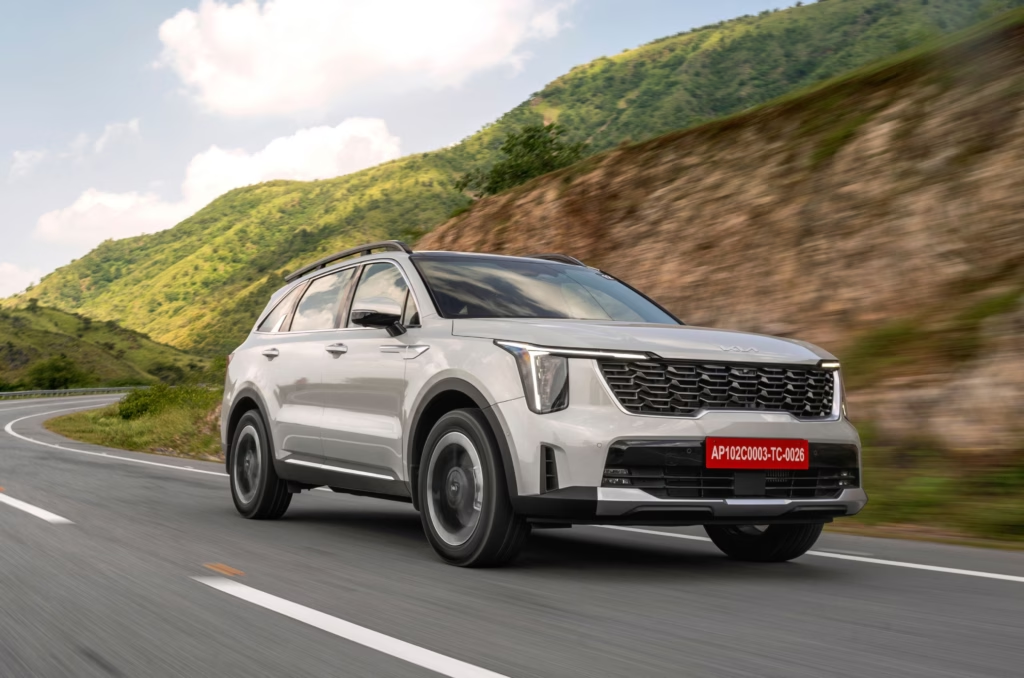
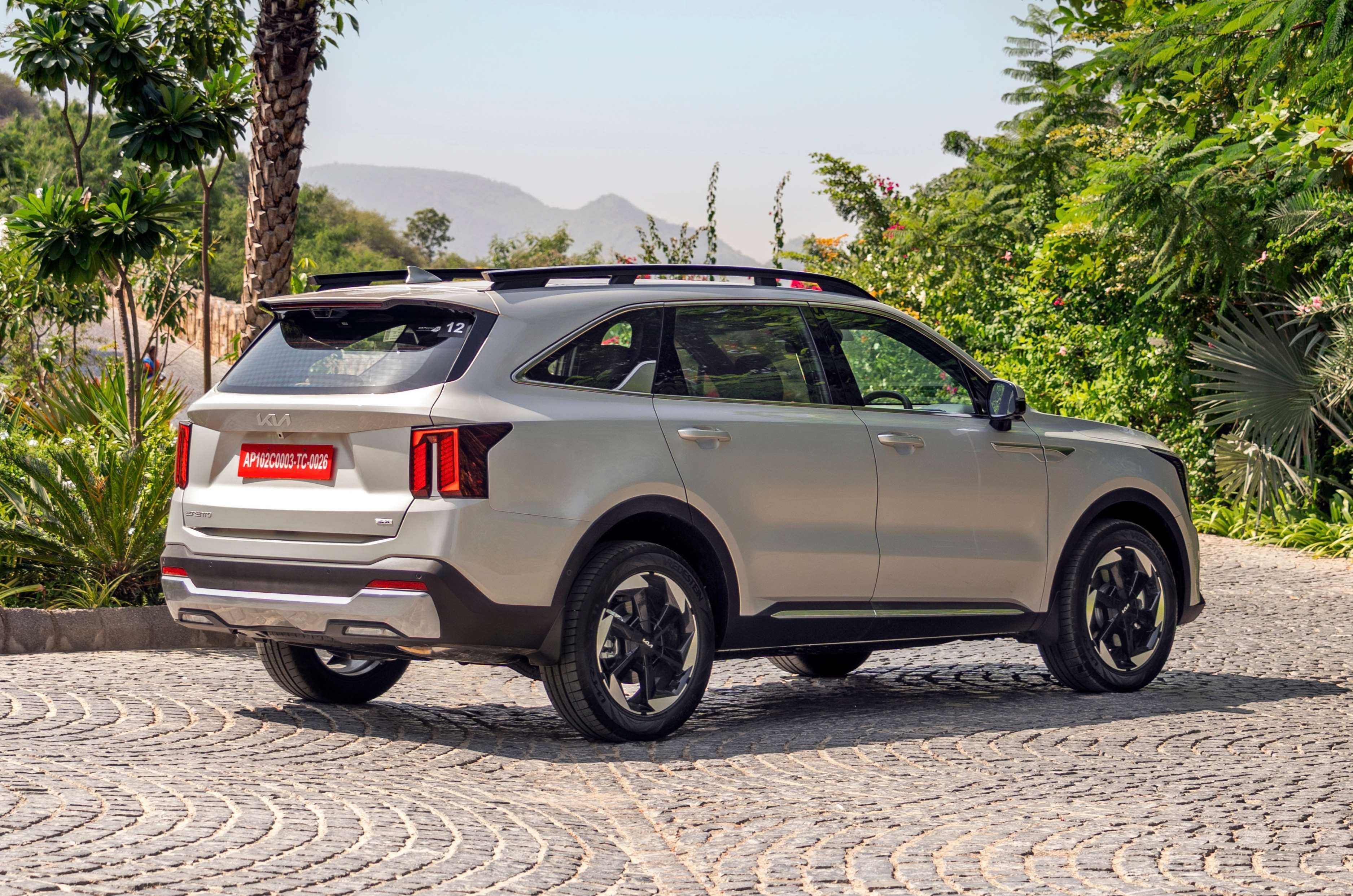
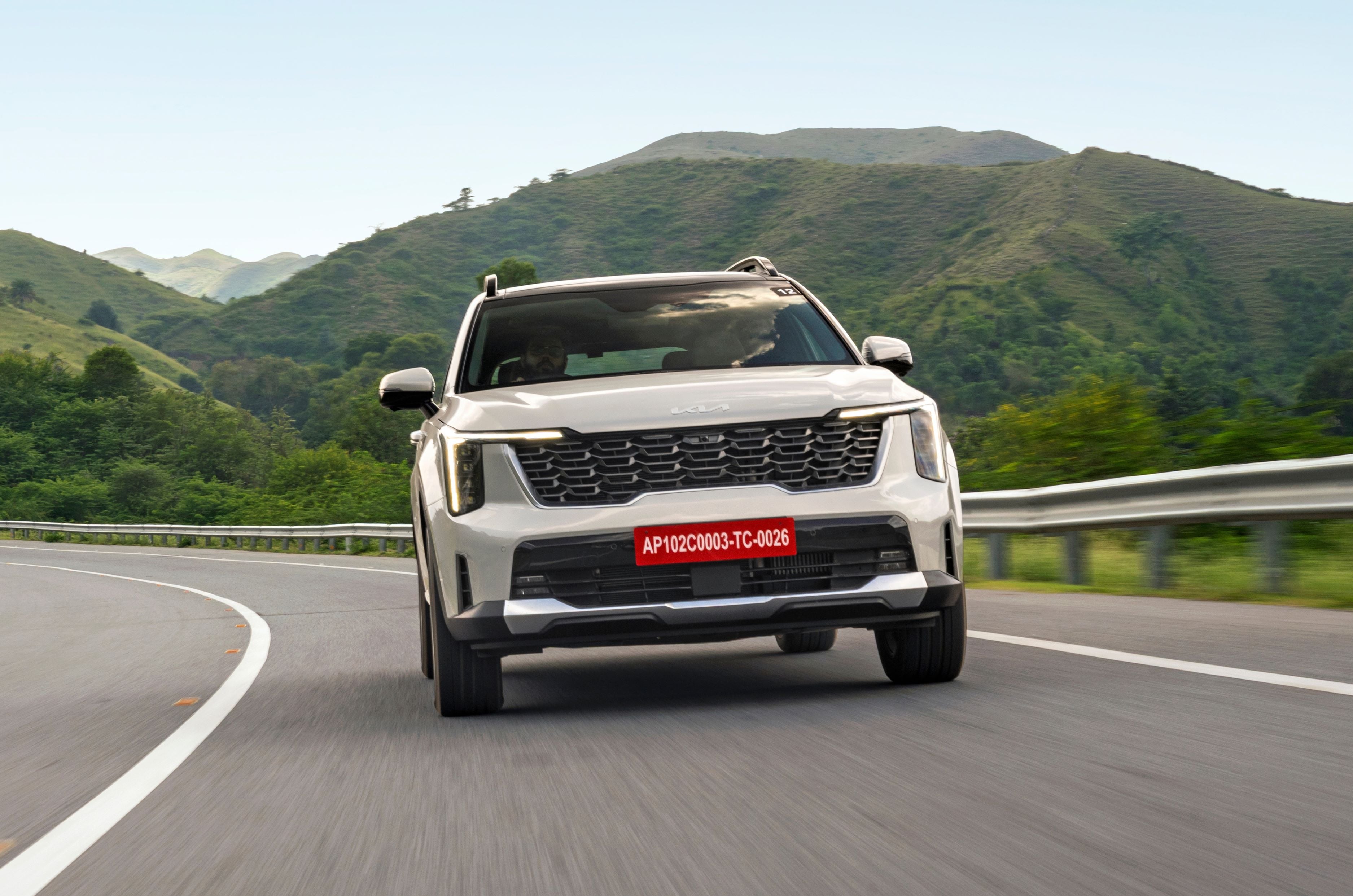
Based on the gen 4 Sorento, it carries over the older and more palatable design language.
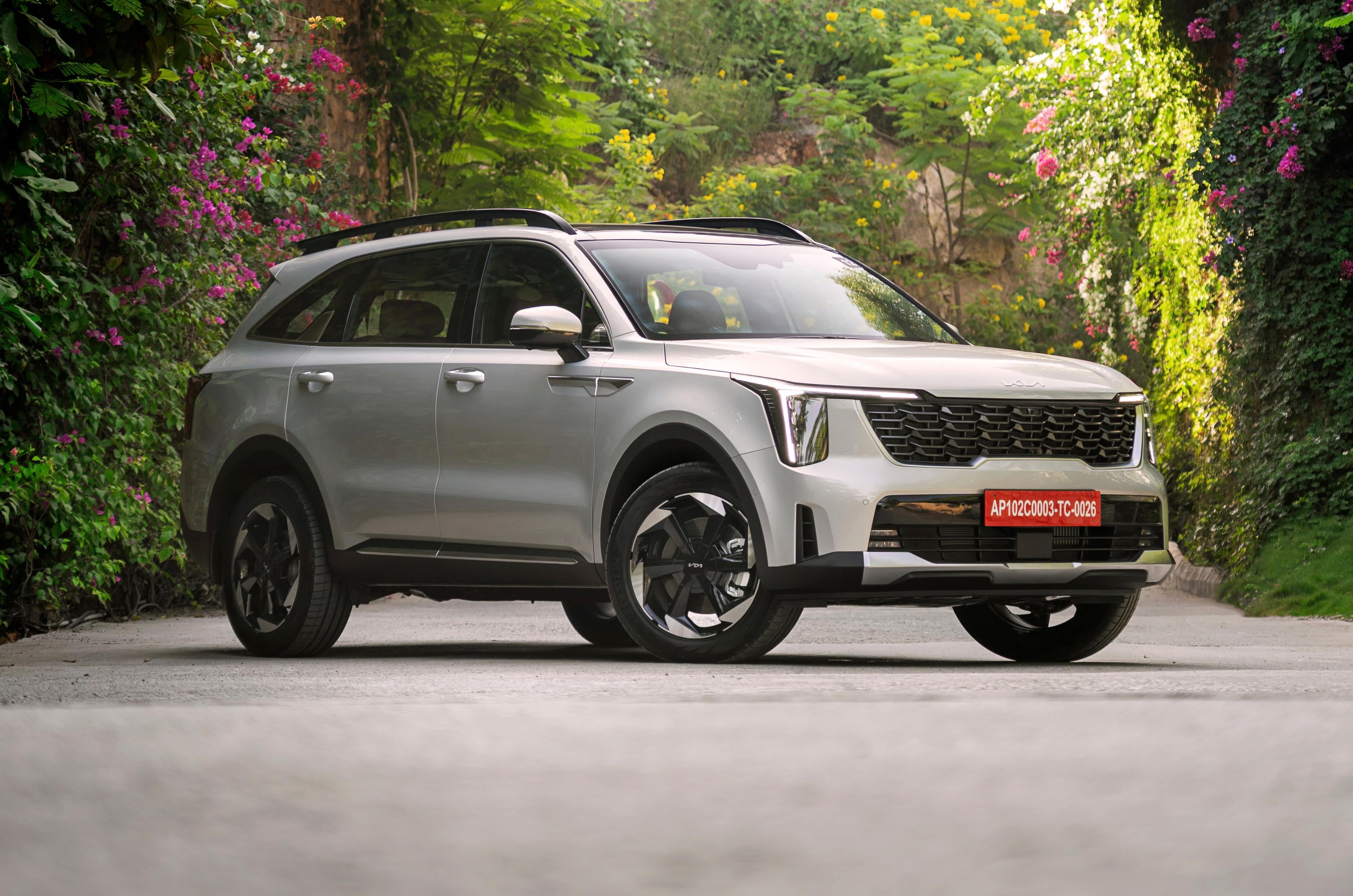
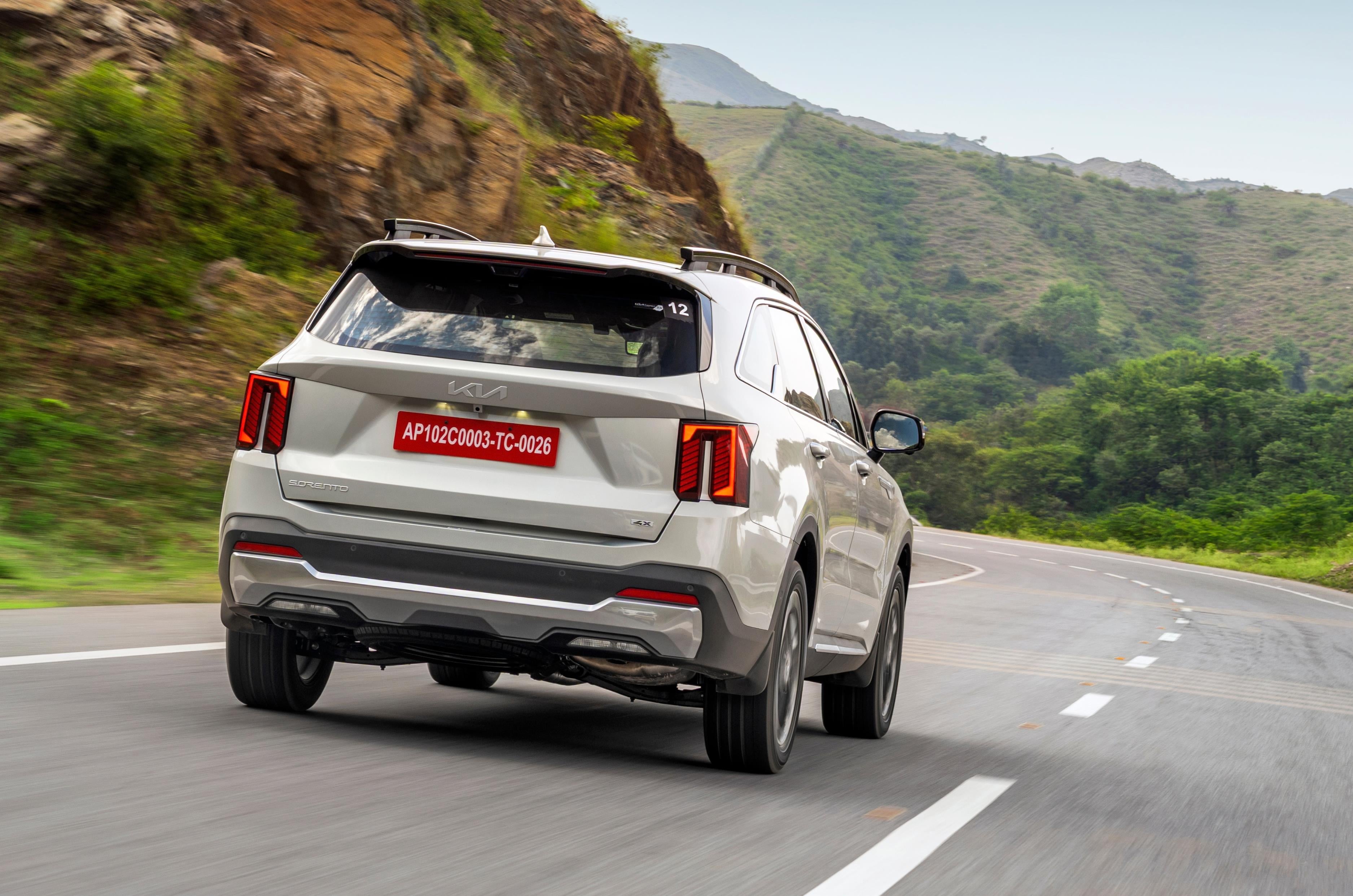
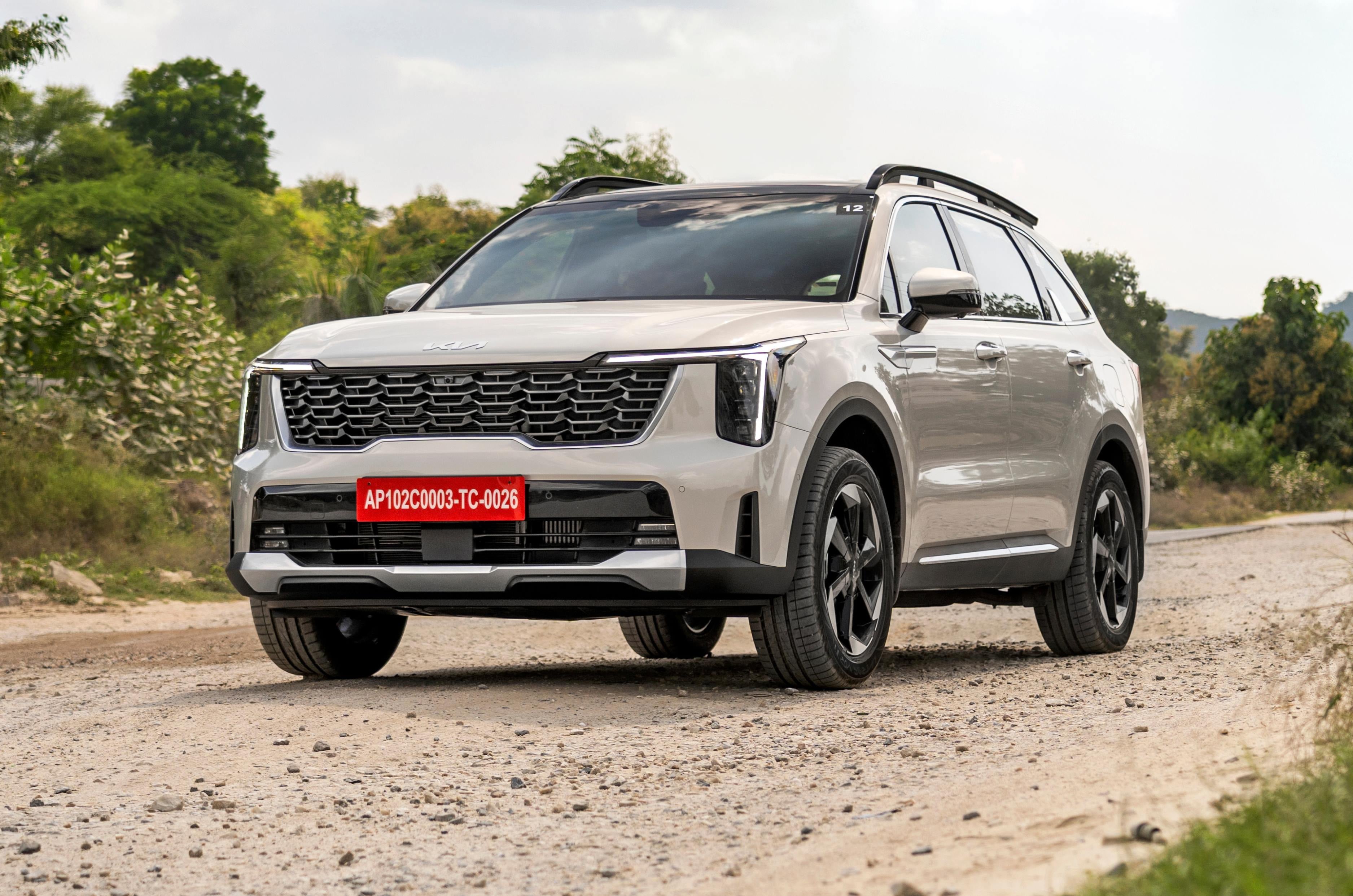
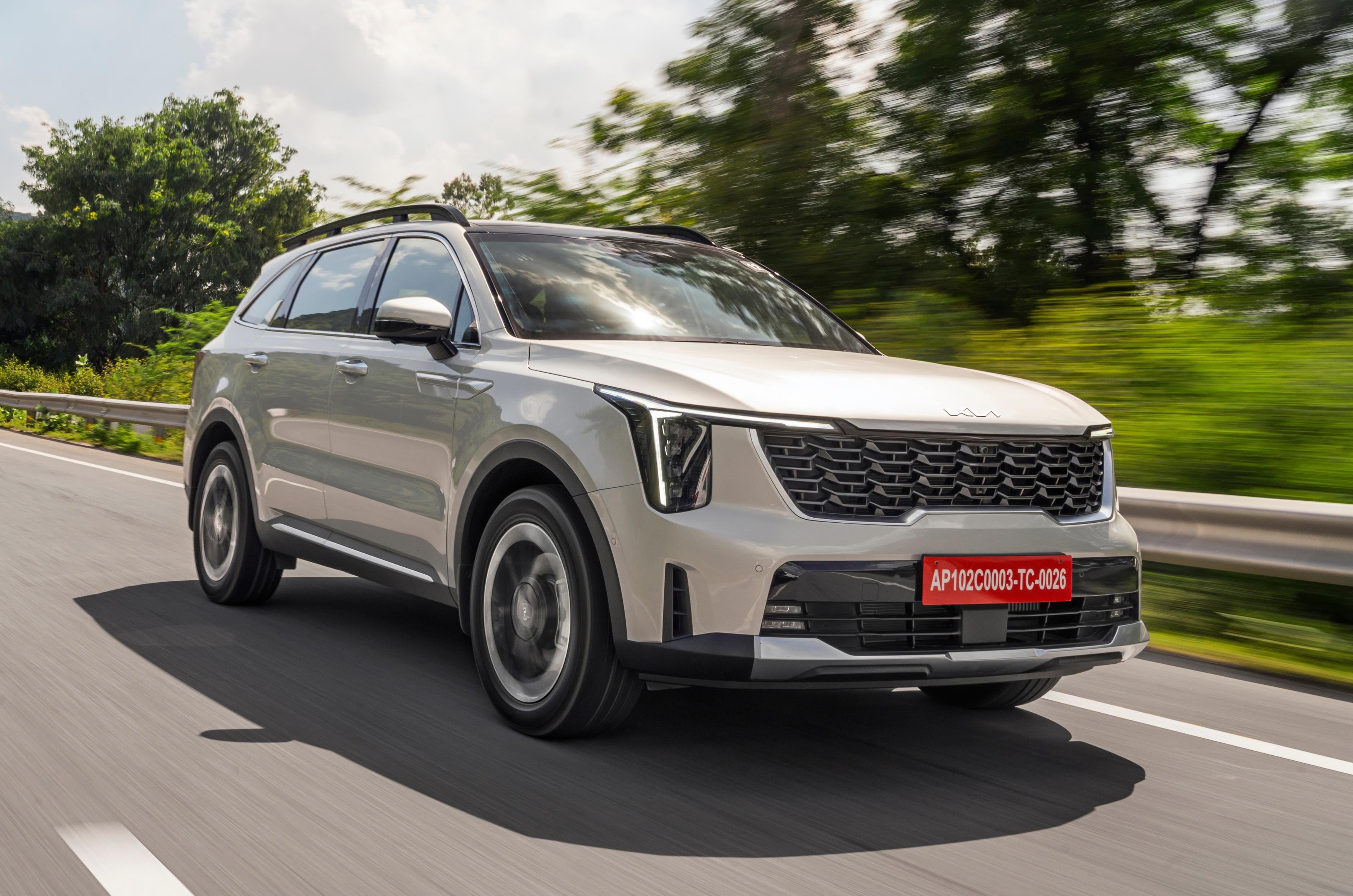
The Sorento sits on Hyundai-Kia’s MQ4 platform, the freshest architecture in its class, and it has already had a mid-life update to keep it looking current. The 2024 facelift brought the nose in line with the design language Kia kicked off with the EV9, so you get vertically stacked LED headlights, Y-shaped daytime running lamps and an aggressive looking bumper with wide intakes. At the back are L-shaped wraparound tail-lamps, and thankfully no light bar stretched across the tailgate.
Beats the rivals in length, width, and wheelbase.
Kia’s stated aim was a more technical, precise look, one meant to signal tight build quality and engineering sophistication. It is a trick the German premium brands have used for years, and Kia has clearly taken a leaf out of their book. The Sorento looks crisp and expensive rather than flashy, and is likely to age well too.
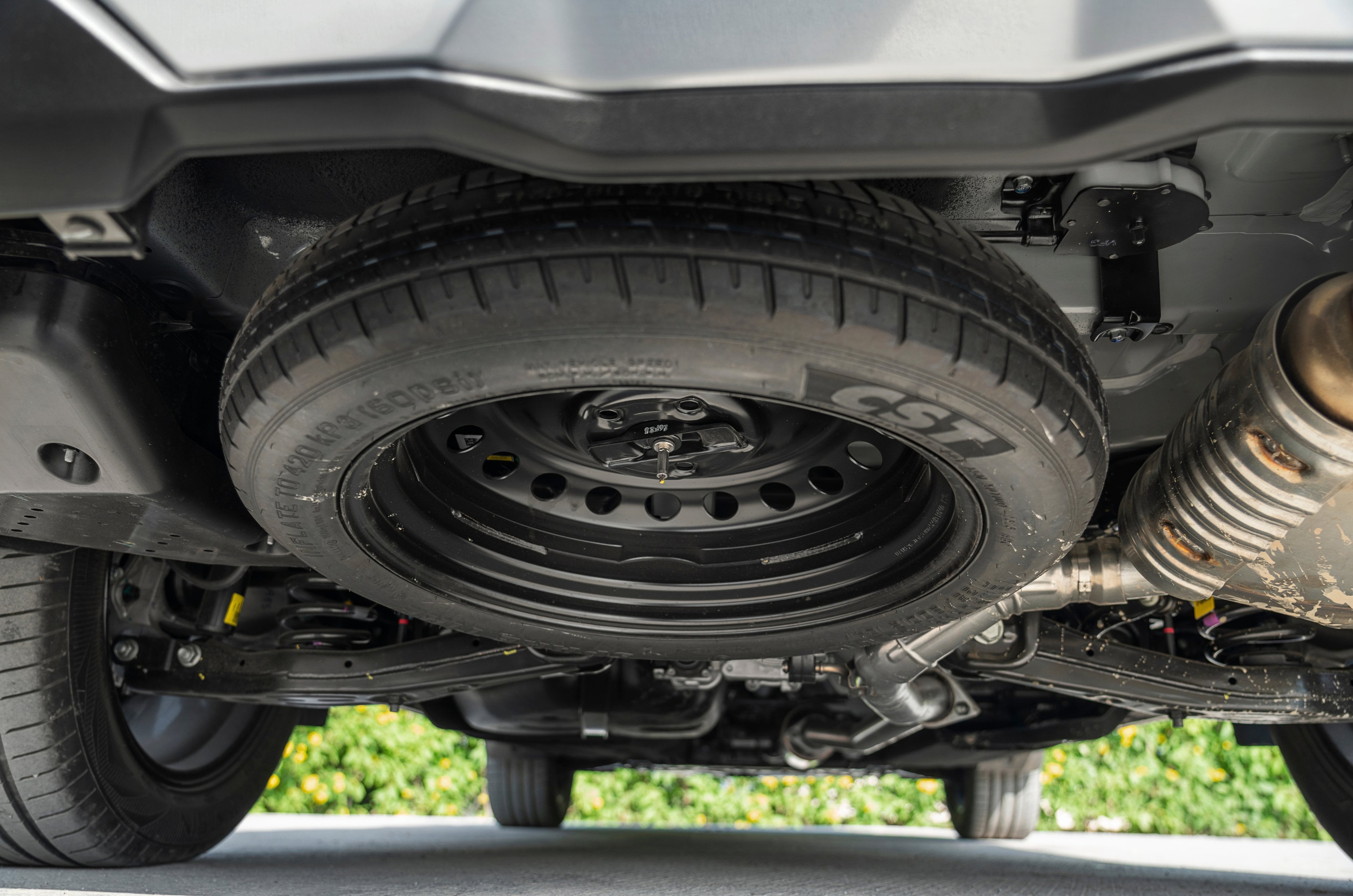
Spare wheel mounted under the floor frees up room in the boot.
What it does not have is brute presence. Despite being the longest, widest and tallest SUV in its segment, at 4,815mm long, 1,900mm wide and 1,785mm tall on a 2,815mm wheelbase, it does not loom in your mirrors the way a Fortuner does. The sloping roofline at the rear softens the silhouette and lends it a hint of crossover, and some will see it as a big Seltos rather than a junior Land Cruiser. Clearly this is not an SUV that looks like it can bully its way through traffic.
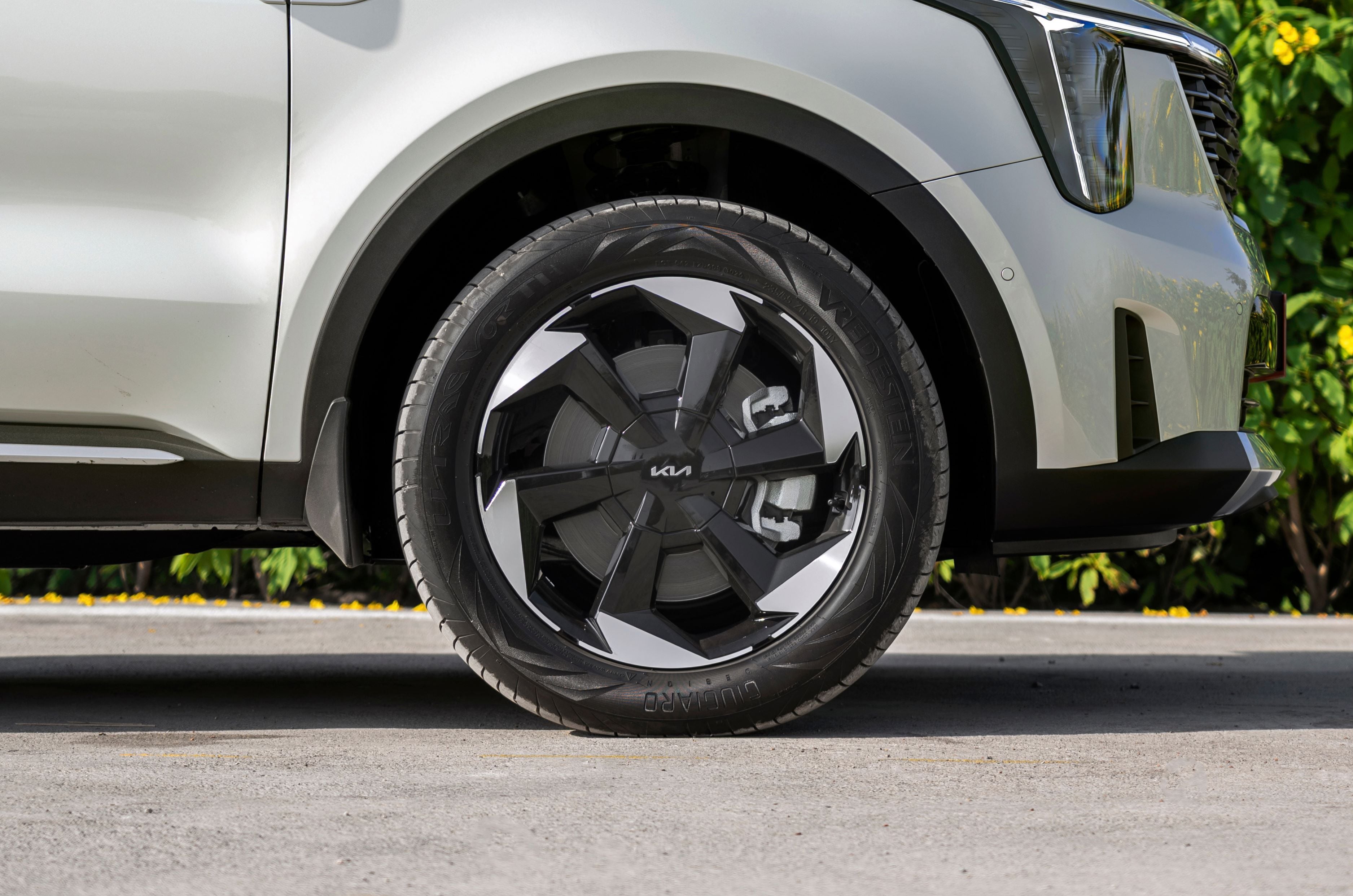
A more unique design could’ve been used for the 19-inch alloys.
The 19-inch dual-tone alloys could have been more distinctive, too an effect exaggerated by the chunky 235/55 R19 tyres. Those tall sidewalls, though, are not a styling misstep so much as an engineering choice, and they play a big part in how this car rides. More on that later.
Kia Sorento interior space and comfort
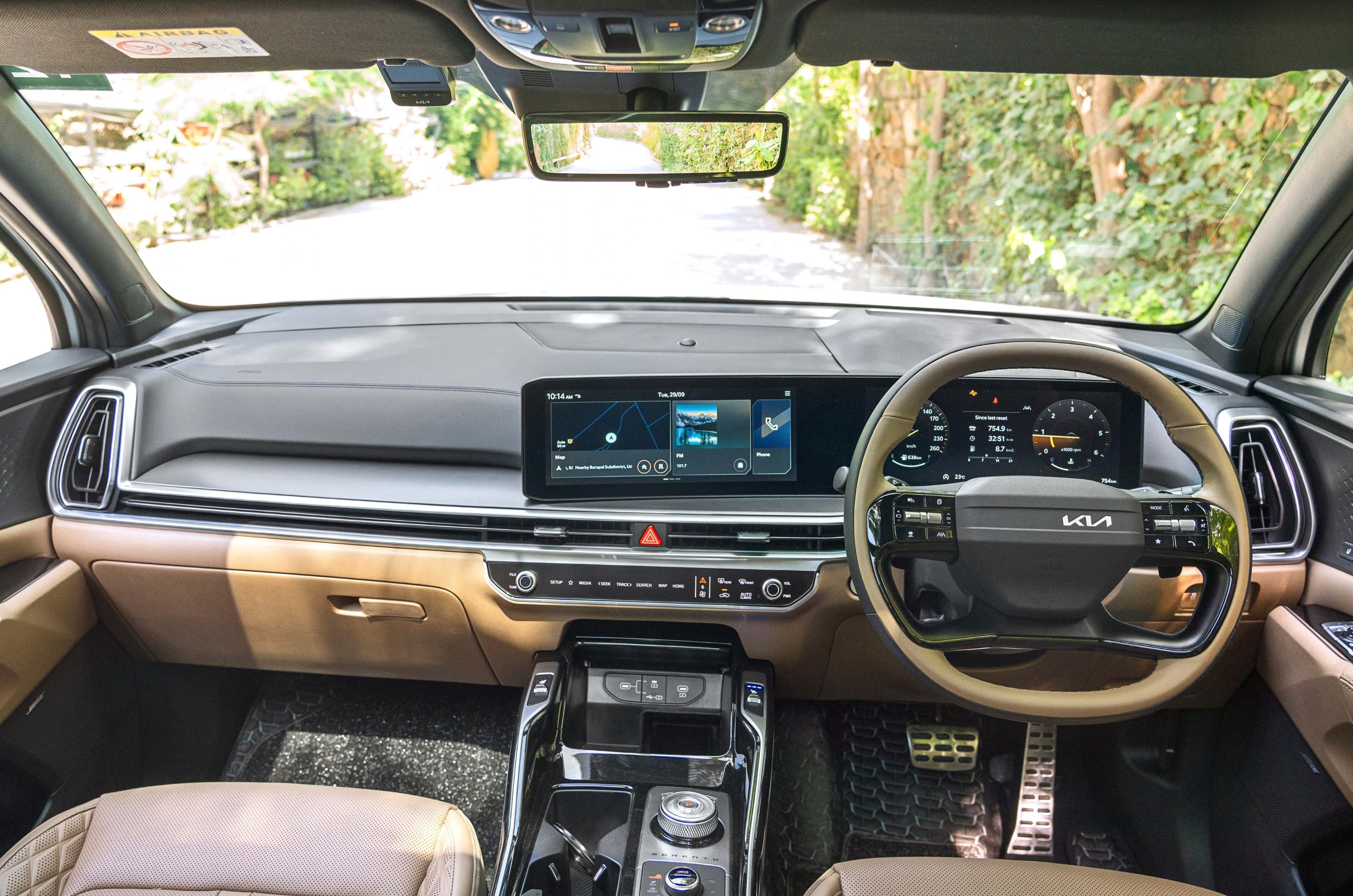
Clutter-free dashboard with solid build and plush feel.
If the exterior is quietly effective, the cabin is where Kia has truly aced it. The Sorento offers a mix of quality, equipment and ergonomics that nothing at this price can match. Soft-touch materials cover everything you are likely to touch, including the spots where your knee rests against the centre console. There is a healthy count of physical buttons, and they click with a precision that feels engineered rather than sourced. The knurled finish on the rotary drive selector and the switchgear adds a tactile richness you normally pay German money for.
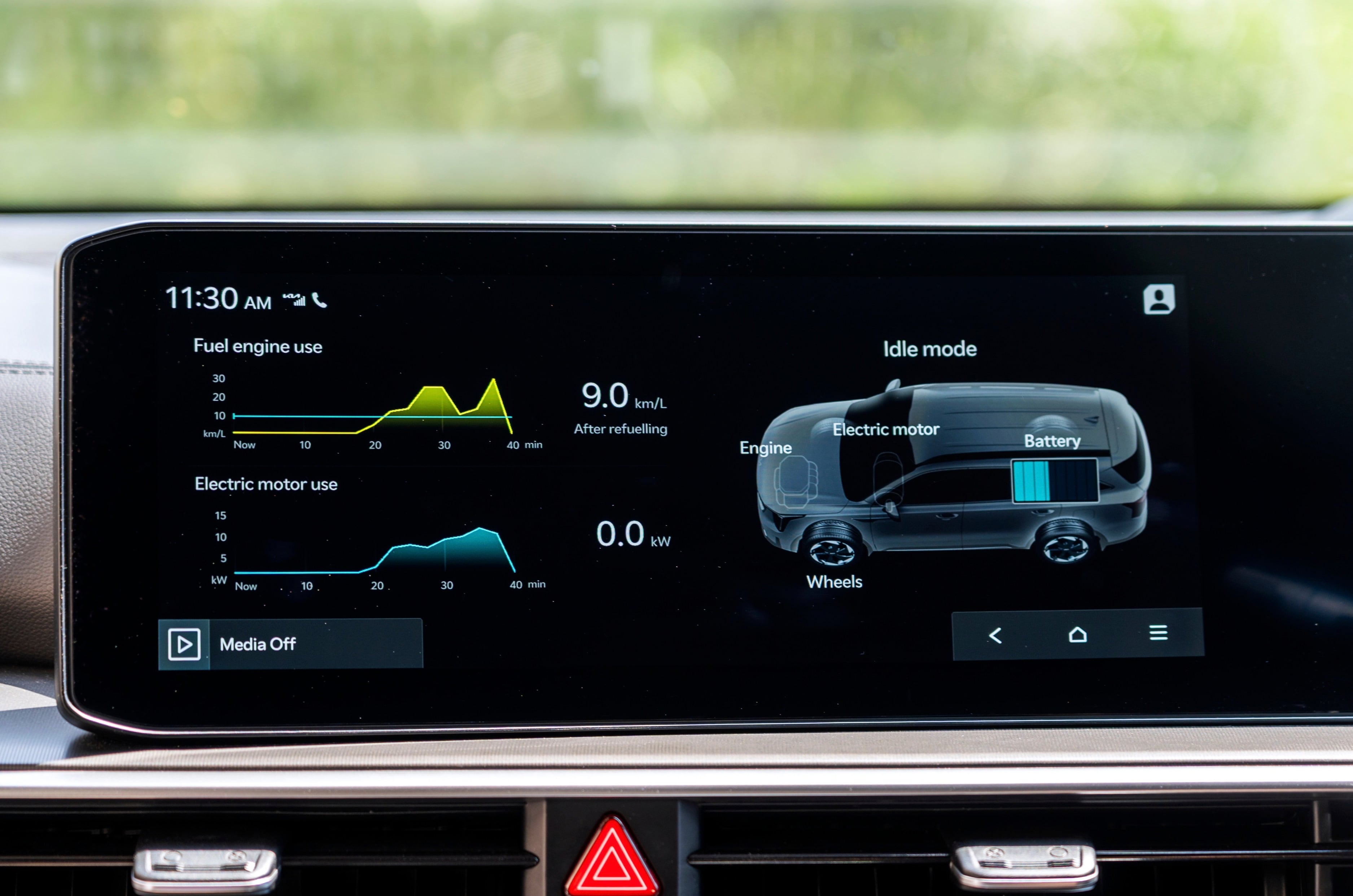
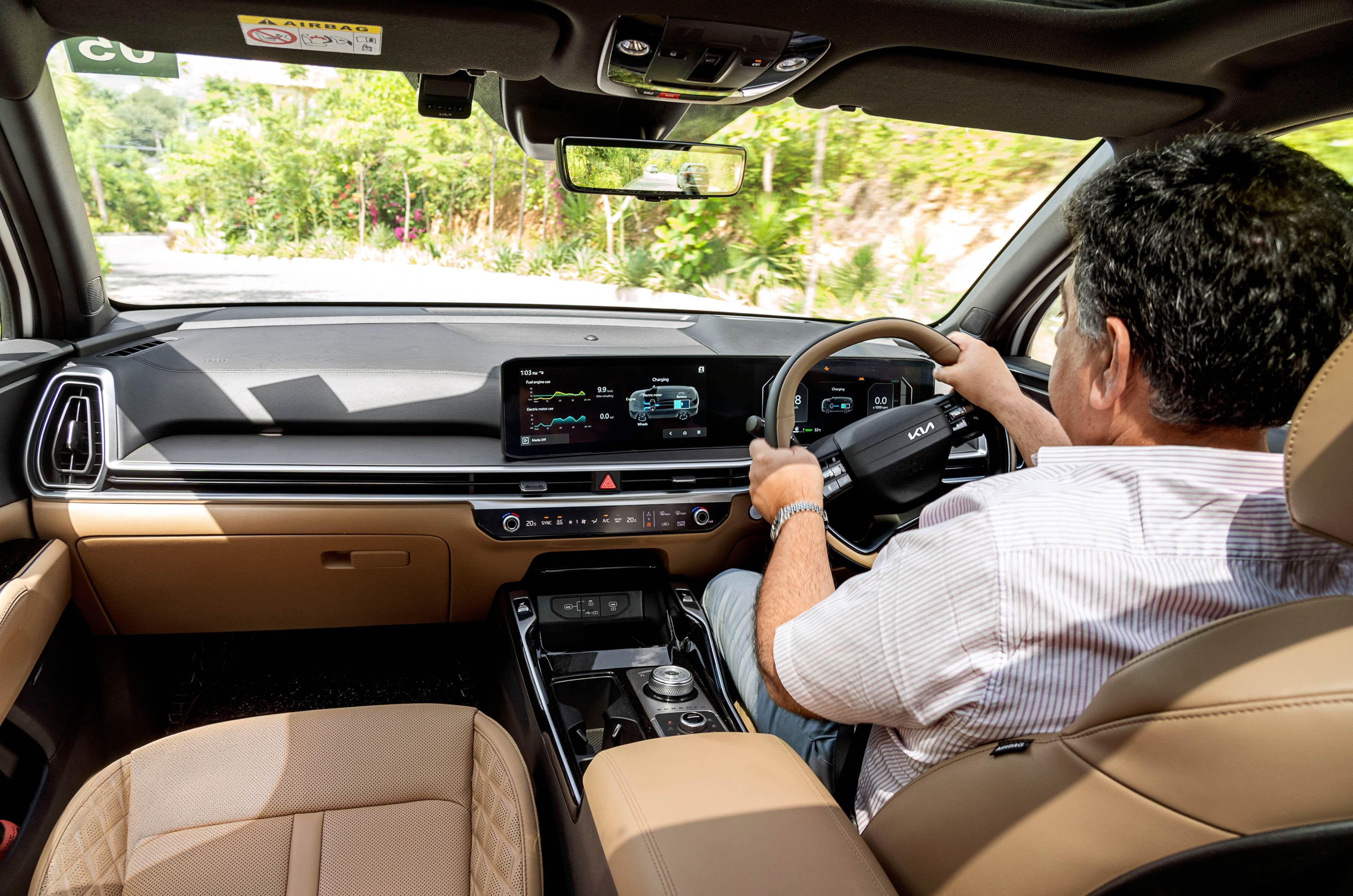
Hybrid variant gets exclusive data for power flow and efficiency.
As with its Hyundai cousins, the real ace is the software. The 12.3-inch infotainment system is logically laid out, menus are where you expect them to be, and getting to a feature takes a tap or two rather than a treasure hunt. Kia has also kept the climate controls off the main screen. They live on a touch-sensitive bar below it, with scrollers and a button that toggles the bar between air-con and infotainment shortcuts. It is a clever, space-saving solution, though you will occasionally find it in the wrong mode just when you need it.
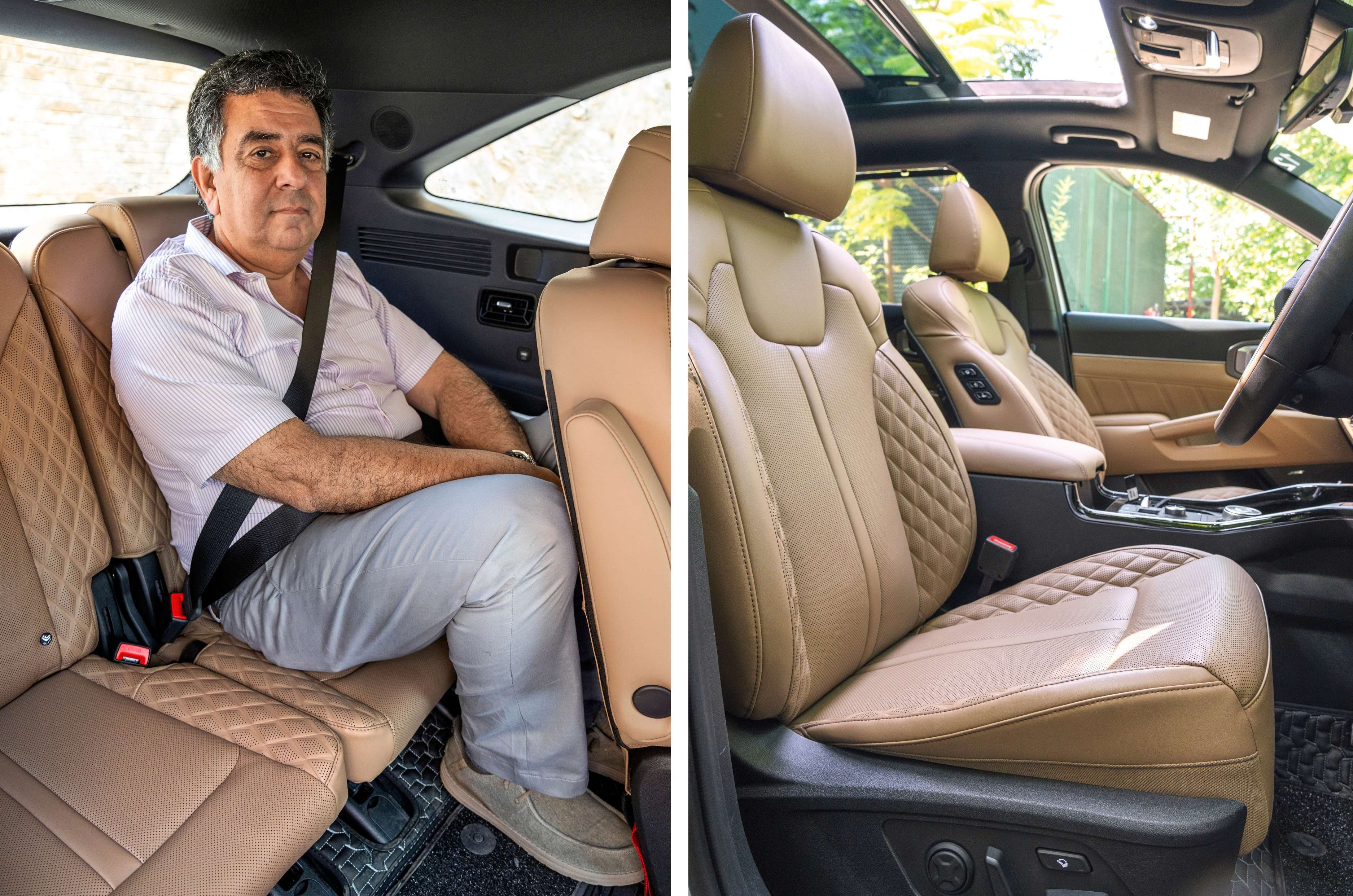
L: Third row seat placed on floor results in knees-up seating; best for children. R: Broad, supportive and well-cushioned front seats are electric and also get ventilation.
The front seats are fully powered, with 10-way adjustment, lumbar support and ventilation, and the passenger seat gets a boss mode so whoever sits behind can push it forward. Coming to the third row, access is easy. You can either walk through the gap between the captain chairs or press a button on the seat, which electrically slides and tilts it forward. Once there, the news is mixed. Legroom is better than you expect, but the seat base is mounted almost flat on the floor, so there is no under-thigh support and your knees point at the roof. Treat it as a space for children or short hops. At least the third row gets its own blower controls and USB ports.
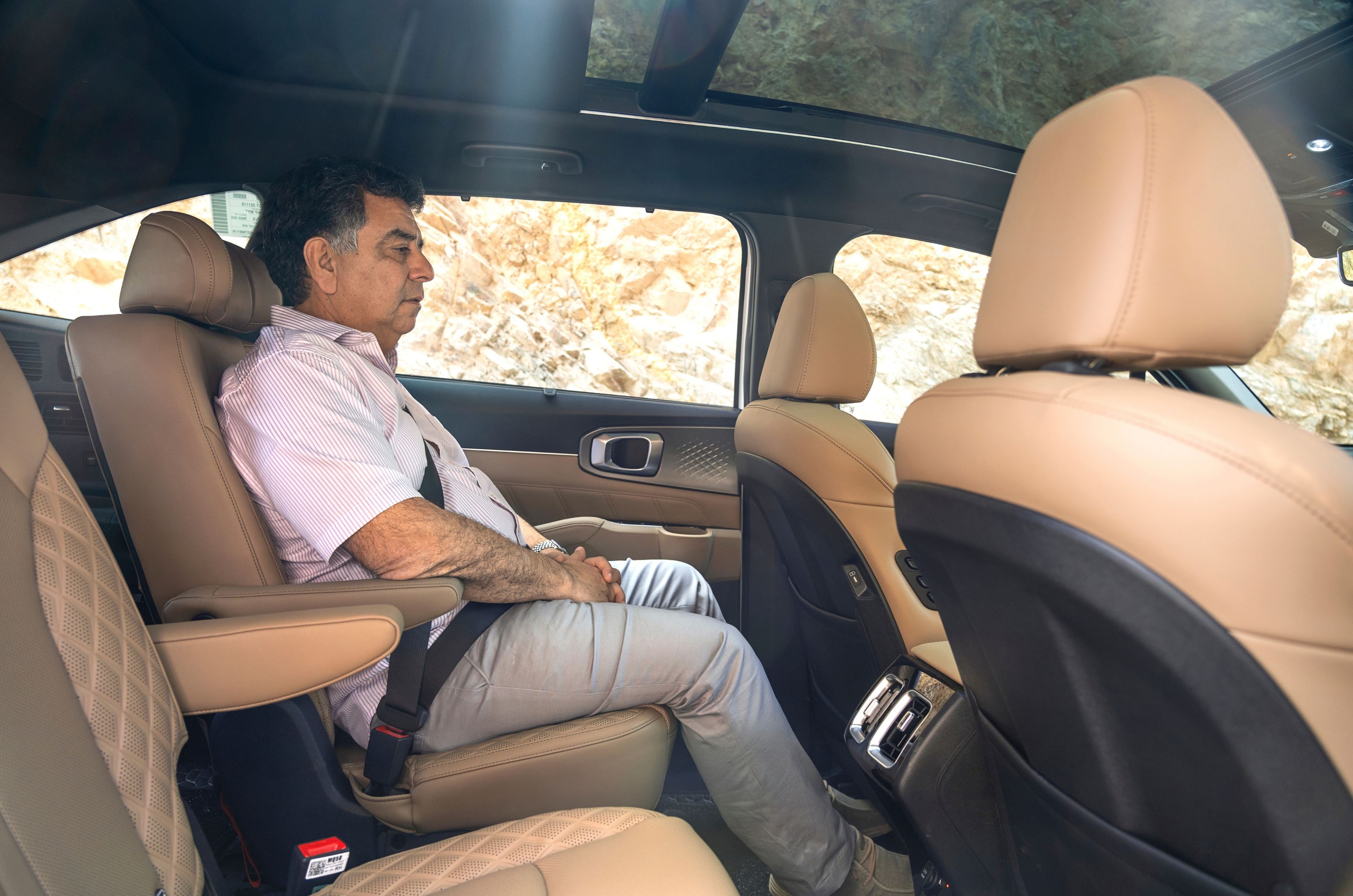
Spacious middle-row with ventilated and adjustable captain chairs; bench seat version also available.
One of the Sorento’s highlights, however, is the second-row experience. Our test car was the top HTX with six seats, and its second-row captain chairs are ventilated too, a rarity in this class. They are the best seats in the house. There is lots of legroom, a commanding view out and good under-thigh support, comparable to the Innova Hycross’s middle-row captain chairs, though the Toyota seats you a touch higher. A neat detail is the cupholder moulded into the door, up near the handle, where it is actually easy to reach.
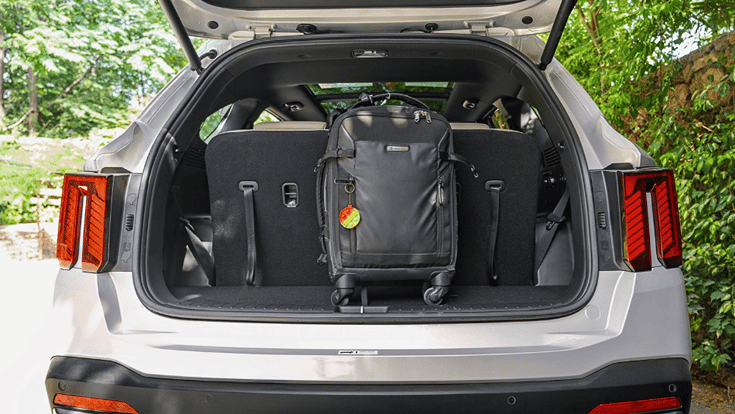
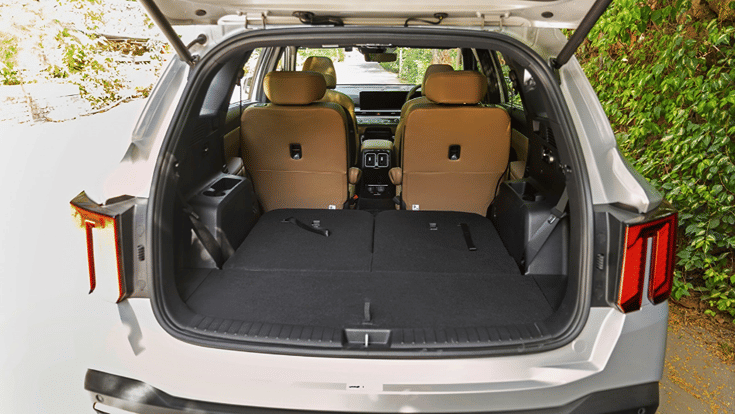
With all three rows up, the boot is a modest 179 litres; fold the third row and that grows to 813 litres. A full-size spare is welcome, but it is slung under the body, which is not the most convenient place to reach. Overhead, the massive panoramic roof floods the cabin with light and adds to the sense of space.
Kia Sorento features and technology
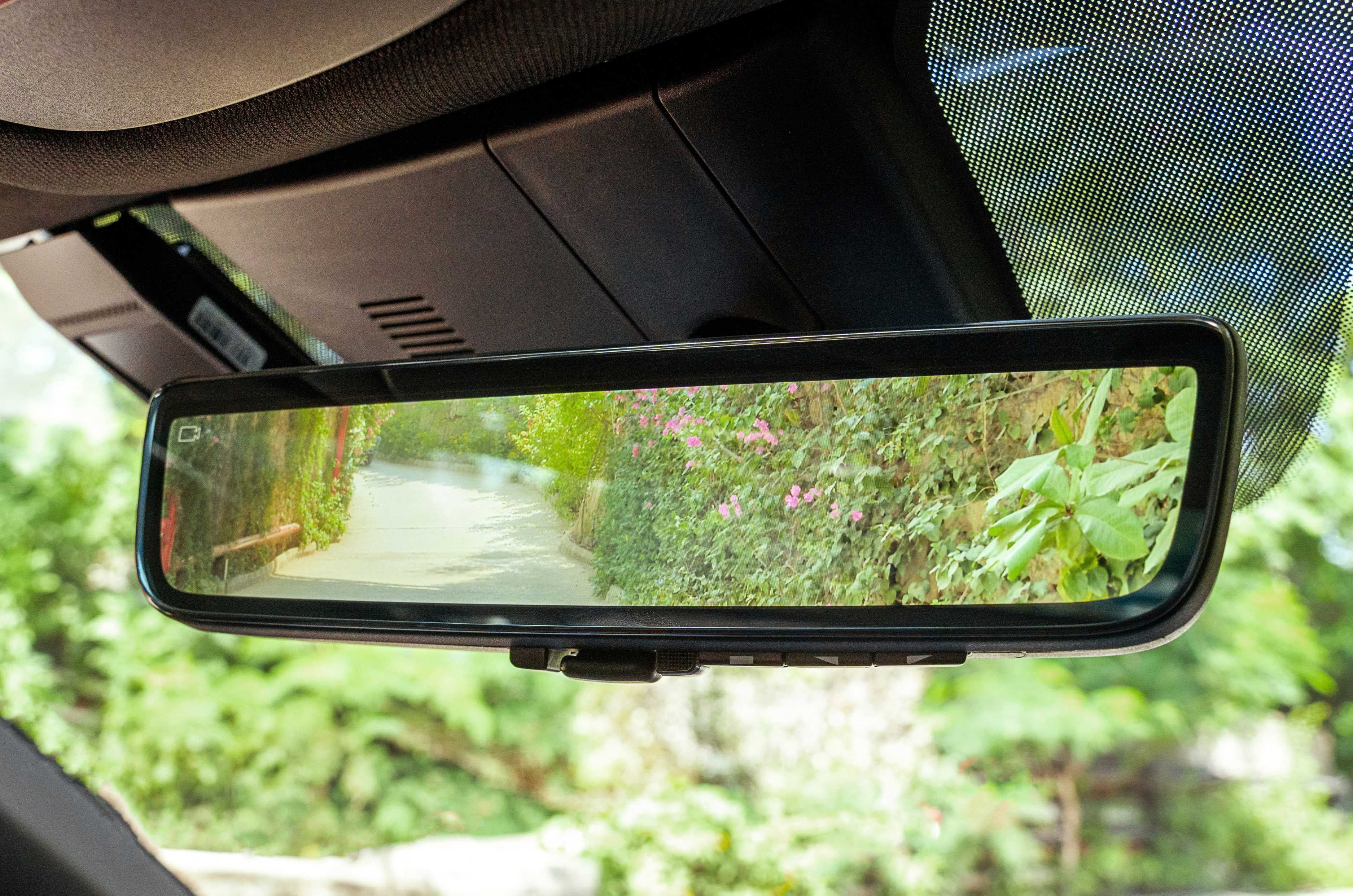
Digital IRVM offers excellent resolution and can be adjusted for level and brightness.
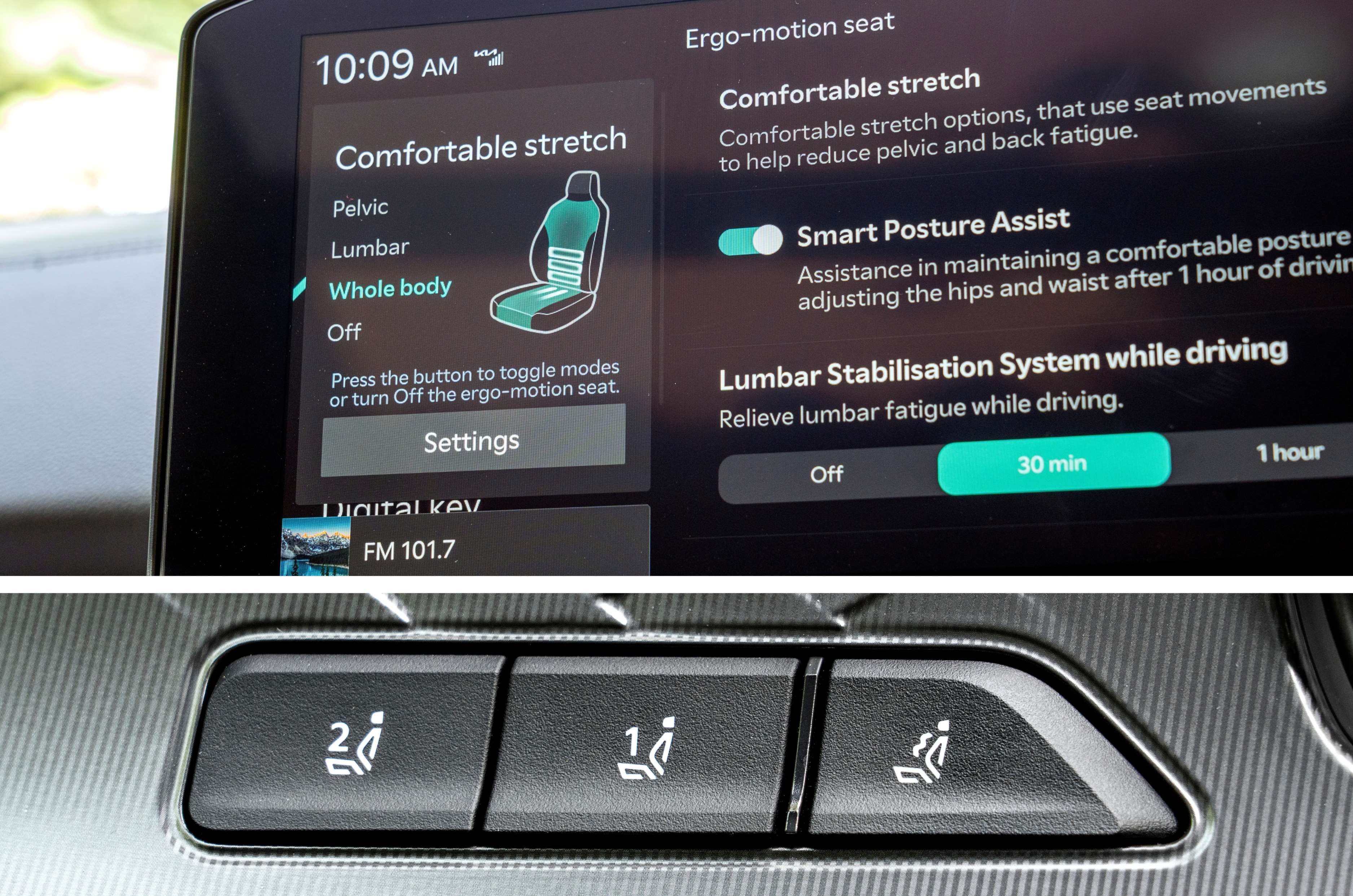
The equipment list is huge. In addition to the aforementioned 12.3-inch touchscreen, powered front seats, ventilated captain’s chairs, and panoramic sunroof, the Sorento comes packed with a 12.3-inch digital driver’s display, a head-up display, a 12-speaker Bose system, dual-zone climate control, a powered tailgate, rear-window sunshades, 64-colour ambient lighting and a digital rear-view mirror that flips back to a conventional one at the turn of a knob. The driver’s seat even gets an ‘ergo-motion’ mode that simulates a massage function by shifting the contours around.
Ergo mode for driver seat acts like a massage by moving the contours to avoid a stiff back on a long trip.
Safety is just as thorough, with 10 airbags, a 360-degree camera, front and rear dashcams, remote parking assist, TPMS and Level 2+ ADAS on the (A) trims. There is even real-time generative AI, a first for any Sorento globally.
Kia Sorento performance and refinement
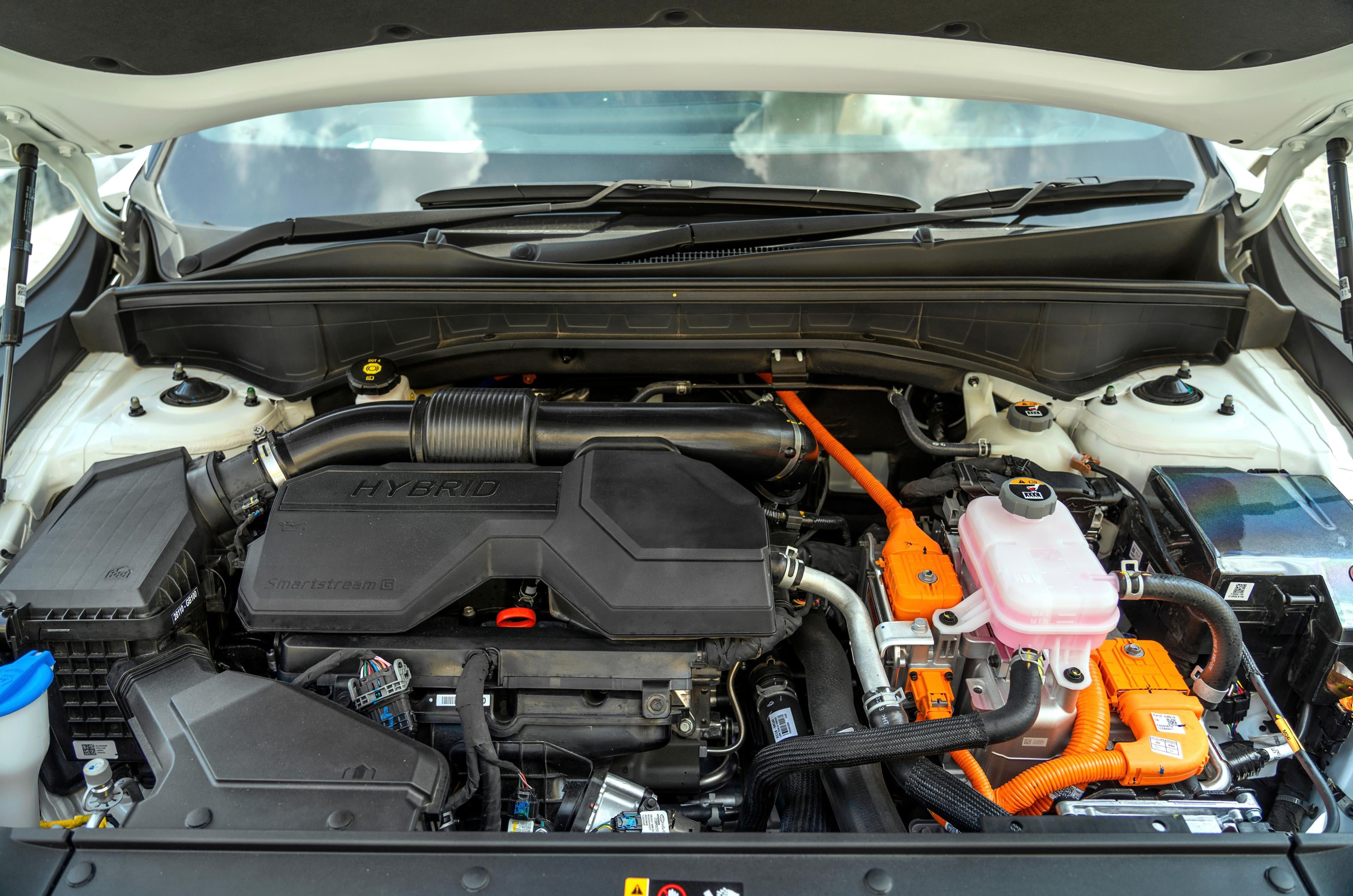
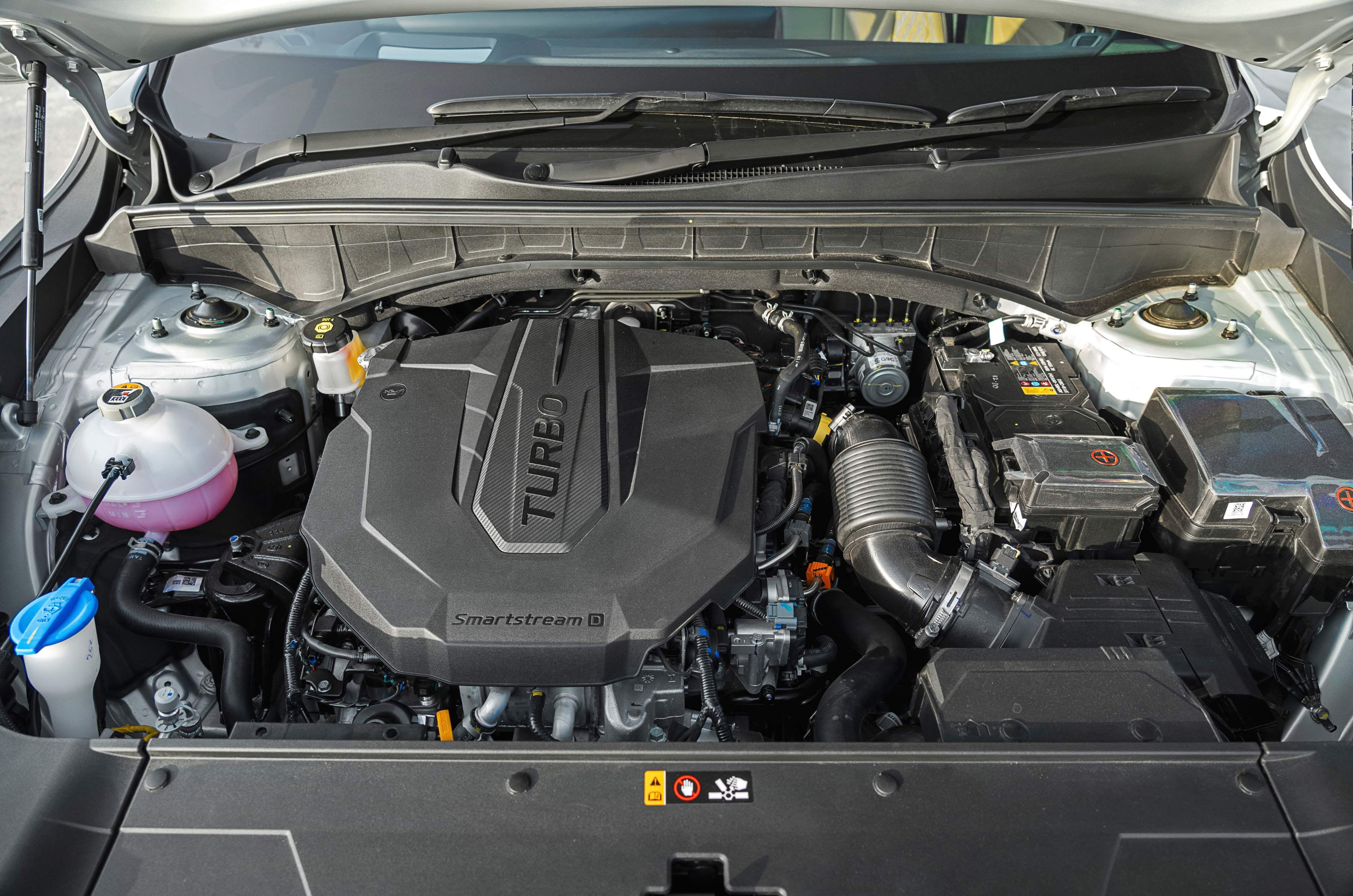
1.6-litre turbo-petrol engine paired with an electric motor and 6-speed torque converter automatic.
First up, the hybrid. Its 1.6-litre turbo-petrol makes 180hp and 265Nm, and the electric motor adds 65hp and 264Nm. The combined figure rating is 230hp and 380Nm of torque You can tell this the hybrid is the one for the city the moment you pull away, because the response is instant. It is well mated to the 6-speed torque-converter automatic, and the handover from electric to petrol power is close to seamless.
Hybrid variant is smooth in the city but gets noisy on the highway especially during overtakes.
The 1.49kWh battery lets it run in EV mode for a decent stretch at crawling speeds, and in stop-go traffic the hybrid makes eminent sense. Power delivery is refined, seamless and relaxing, and efficiency should be strong; The limitation is the motor itself. With only 65hp to shift a car weighing over two tonnes, it cannot do the heavy lifting on its own, so when you want to make quick progress the engine kicks in early. Push hard on the highway and the four-cylinder gets noisy and starts to run out of steam.
2.2-litre diesel engine makes 193hp mated to an 8-speed DCT and is the same unit seen on the Carnival.
Which is where the diesel comes in. The 2.2-litre is familiar from the Carnival, but it feels a lot sprightlier in the lighter Sorento. Its 193hp and 442Nm arrive in a strong, linear surge, and this is a fantastic, long-legged cruiser. Settle into eighth gear on an open highway and it simply lopes along, the engine barely working. It is also more tractable at low speeds than you might expect, pulling cleanly at part throttle from very low revs, so it can double as a city car, although its low-end response does not come close to the hybrid’s. It’s only when you floor it to dart through traffic that you experience a bit of hesitation, and its hear that you can use the paddle shifts to be in the right gear at the right time of the 8-speed DCT which comes as a pleasant surprise.
The diesel‘s strong torque and effortless cruising makes it perfect for long trips.
Rather than the snappy, slightly jerky shifts typical of dual-clutch boxes, this DCT slurs its changes almost like a torque converter, which adds to the smoothness of the whole package. The reason is that it is a wet-clutch unit, which also bodes well for durability in Indian traffic. The diesel is quite refined for the most part and its only when pushed hard that it gets audible and takes on a gruff note.
Both get drive modes; You can play with the Eco, Normal, Sport and Smart (or auto) modes in the diesel which alters the power delivery. In Sport, the throttle response is sharper and the default mode we liked whilst in Eco you can feel the response a bit dulled down. The Sorento Hybrid gets just Eco, Sport and Smart modes and in Eco mode EV running is prioritised. In addition, the AWD versions get Snow, Sand and Mud terrain modes which we didn’t a get chance to fully experience.
Kia Sorento mileage
In terms of fuel efficiency, the hybrid is rated at a highly frugal 19.60kpl with front-wheel drive and 17.70kpl with AWD, while the diesel returns 17.66kpl and 15.79kpl respectively on the Indian test cycle. In real-world city driving the gap between the hybrid and diesel could be bigger, depending on traffic. On long cross-country runs, though, with extended stints of cruising in high gears, the diesel could well be the more frugal of the two.
Kia Sorento ride and handling
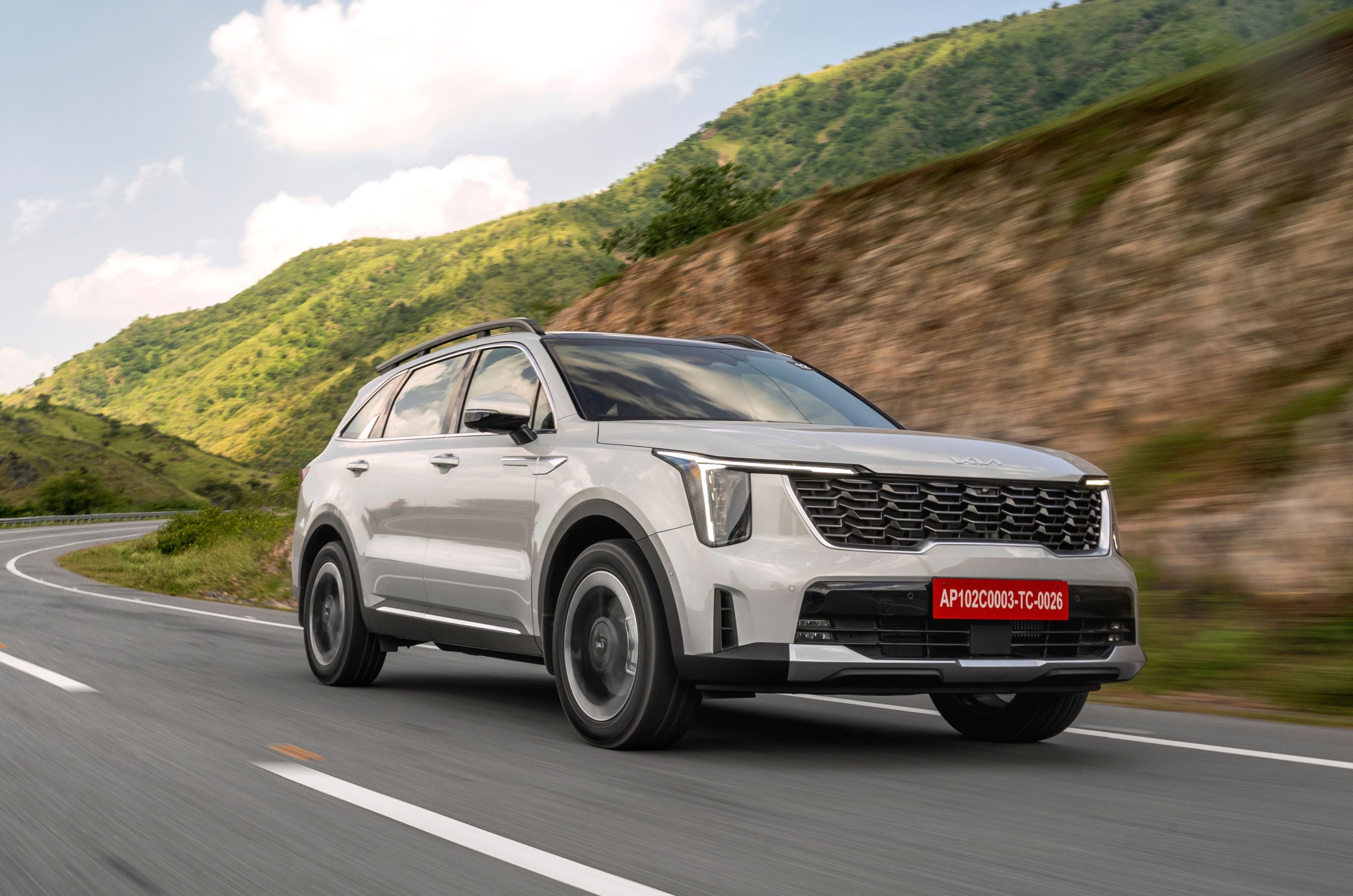
The Sorento’s ride comfort is simply outstanding, and it comes as a pleasant surprise. That’s because Kias have traditionally been stiffer sprung than their Hyundai cousins, but here Kia has clearly prioritised comfort over sportiness, and the suspension is on the soft side. The way it smothers bad roads at speed is remarkable. Around Udaipur, where several stretches are properly broken, we never once had to lift off for a bad patch. The car just soaked it up and kept going.
Ride quality is segment best and it is unfazed over broken roads.
The isolation it gives its passengers is shockingly good, and those tall-sidewall tyres deserve part of the credit. They do a fine job of rounding off sharp jolts and filtering out the high-frequency shocks that a suspension alone cannot fully absorb. At highway speeds there is a bit of body movement on the undulating bits but its not disconcerting and both versions feel stable and planted at high speeds, which matters in a car this tall.
Our HTX test cars came with AWD as standard. We did not get a chance to test its off-road ability properly, but on dirt roads it felt sure-footed and secure. A proper off-road test will reveal how capable the all-wheel-drive system, though we doubt owners will really want to test the Sorento’s off-road capability.
Steering is light but lacks consistency and sharpness of European rivals.
The steering is less impressive. There is a dead zone around the straight-ahead position, and it does not feel as fluid or progressive as its European rivals’. The Volkswagen Tayron and Skoda Kodiaq are both dynamically sharper. One reason is because the Sorento rides taller too, as ground clearance has been raised from the global car’s 176mm to 208mm, and there is a touch of body roll when you push hard through corners.
But that misses the point. On balance, the Sorento’s ride and handling are superbly judged for the people who will buy it. Kia has done a fine job of understanding what a premium SUV buyer in India wants, and it has tailored the car accordingly.
Kia Sorento price and verdict
As a package, the Sorento hits it out of the park; rivals have a lot of catching up to do.
If the product does not win you over, the pricing certainly will. A starting price of Rs 27.99 lakh has set the cat amongst the pigeons, putting the Sorento within striking distance of the Mahindra XUV 7XO. And with its size, features and overall polish, the Sorento will not just nibble at the top end of the 7XO’s pie but with the Hybrid could also tempt a few Innova Hycross buyers. As for the Volkswagen Tayron and Skoda Kodiaq, the Sorento makes them look overpriced and underequipped.
The lower and mid variants are exceptional value. The top-end HTX, at Rs 37.49-40.19 lakh depending on fuel and seating, is pricey by comparison, around Rs 5 lakh more than an equivalent HTK, because it comes with AWD as standard. Here Kia has missed a trick. An HTX with two-wheel drive, a few lakh cheaper, would have been a far easier sell to the many buyers who want all the features and ventilated rear seats but will never leave the tarmac. That however is a small quibble that Kia can easily correct.
The lasting impression is that the Sorento feels premium, bordering on luxury. It is fantastically equipped, it rides beautifully, and it offers a choice of two powertrains that are each right for a distinct type of buyer. Most of all, it fits what the Indian SUV buyer actually wants with uncanny precision. Will Kia hit its target of 40,000 sales a year? That could be a tall order. But what there is no doubt about is that Kia has built another winner.
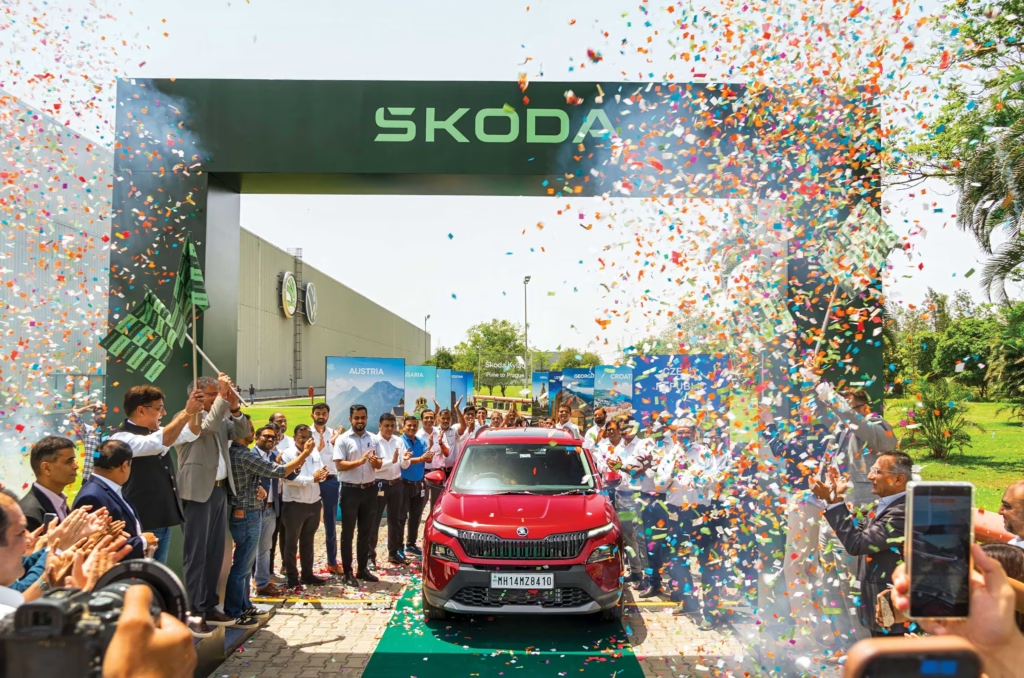
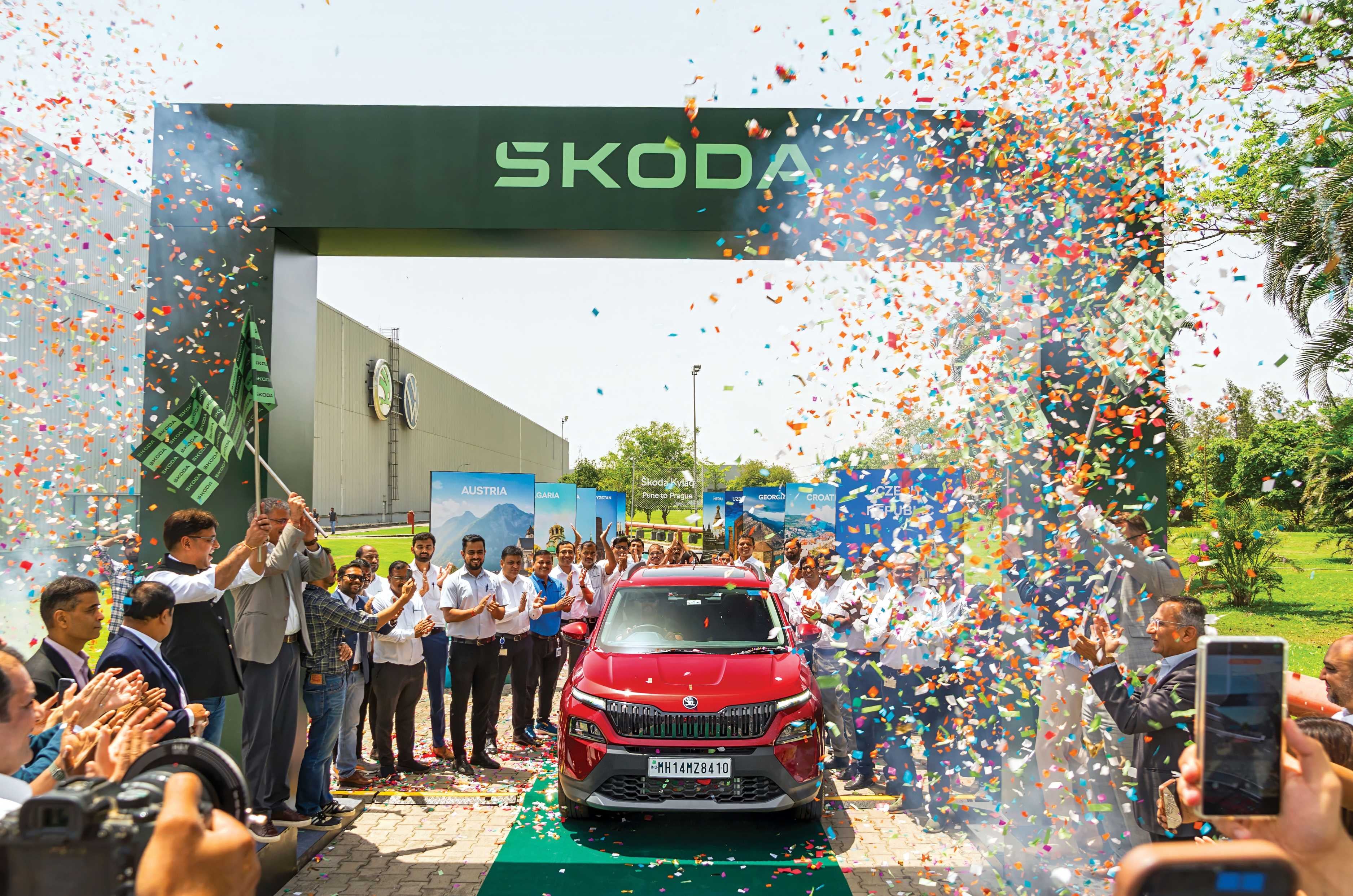
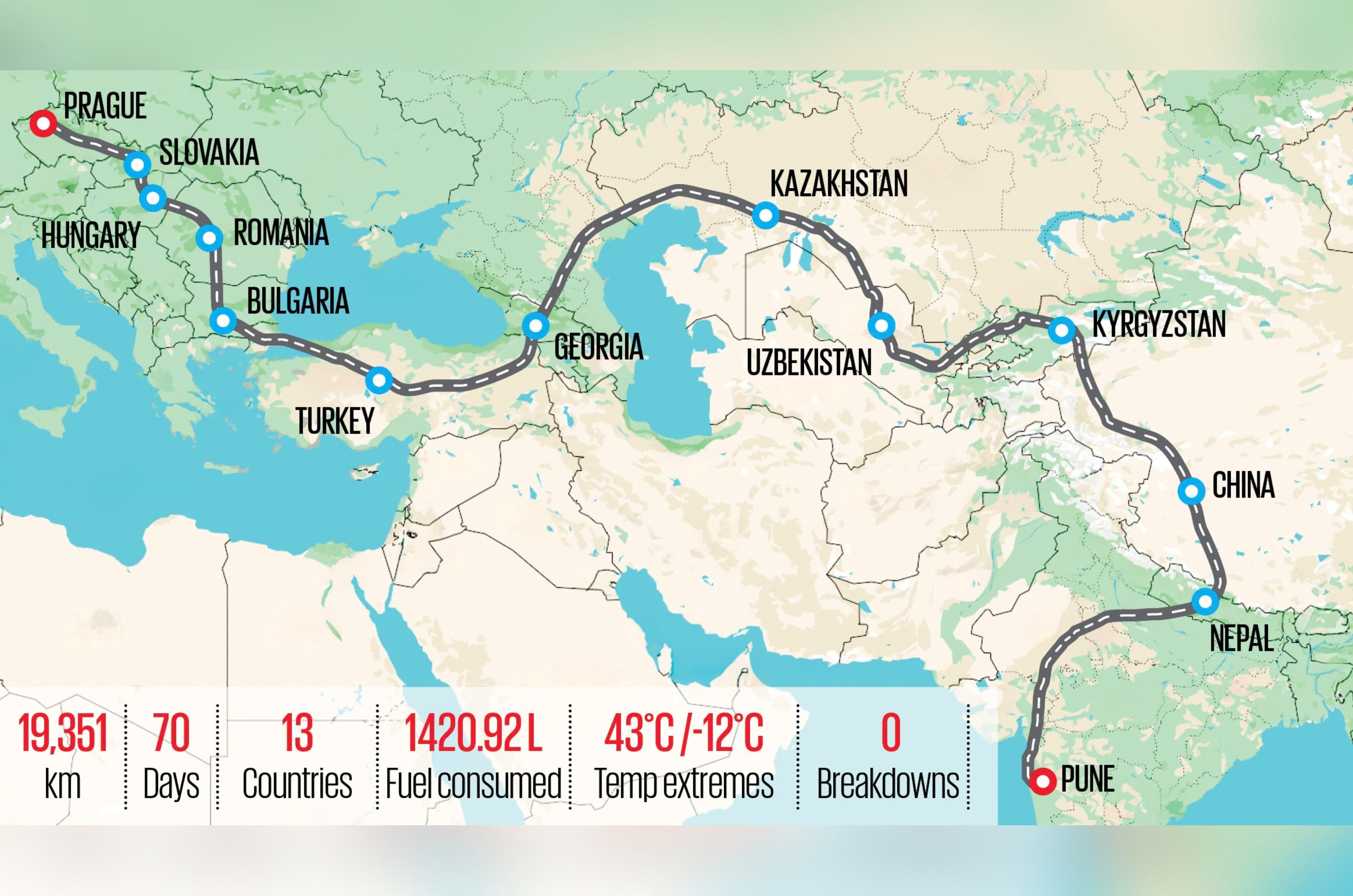
There are road trips, there are overland expeditions, and then there are journeys that become conversations with continents. This one starts in the industrial heart of Maharashtra, inside Skoda India’s sprawling Chakan facility. The end point lies nearly 20,000 kilometres away at Skoda Auto’s headquarters near Prague in Mladá Boleslav, Czech Republic, where bicycles evolved into automobiles and a 130-year-old story continues to be written.
Between these two factories lie thirteen countries, four major mountain ranges, countless cuisines, dozens of languages and enough history to fill libraries.
Our companion? Not a flagship SUV or a luxury grand tourer, but Skoda’s smallest SUV – the Kylaq, which recently celebrated its one-year anniversary. Driving it from Pune to Prague is a tall order, but surviving one year in India and being accepted with flying colours is enough cred one needs to take on the world.
India – Home Turf
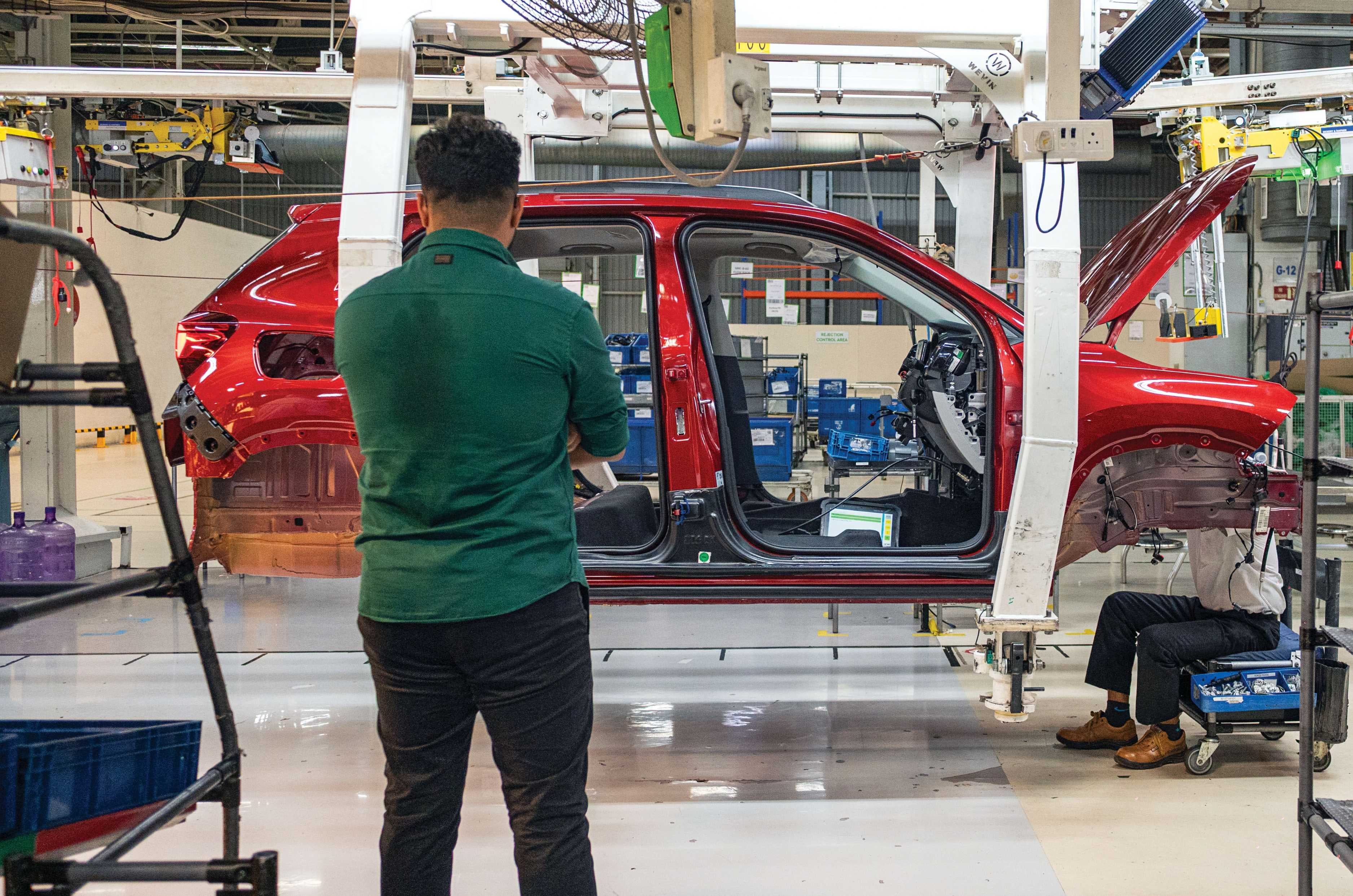
Witnessing the Kylaq’s birth added more responsibility.
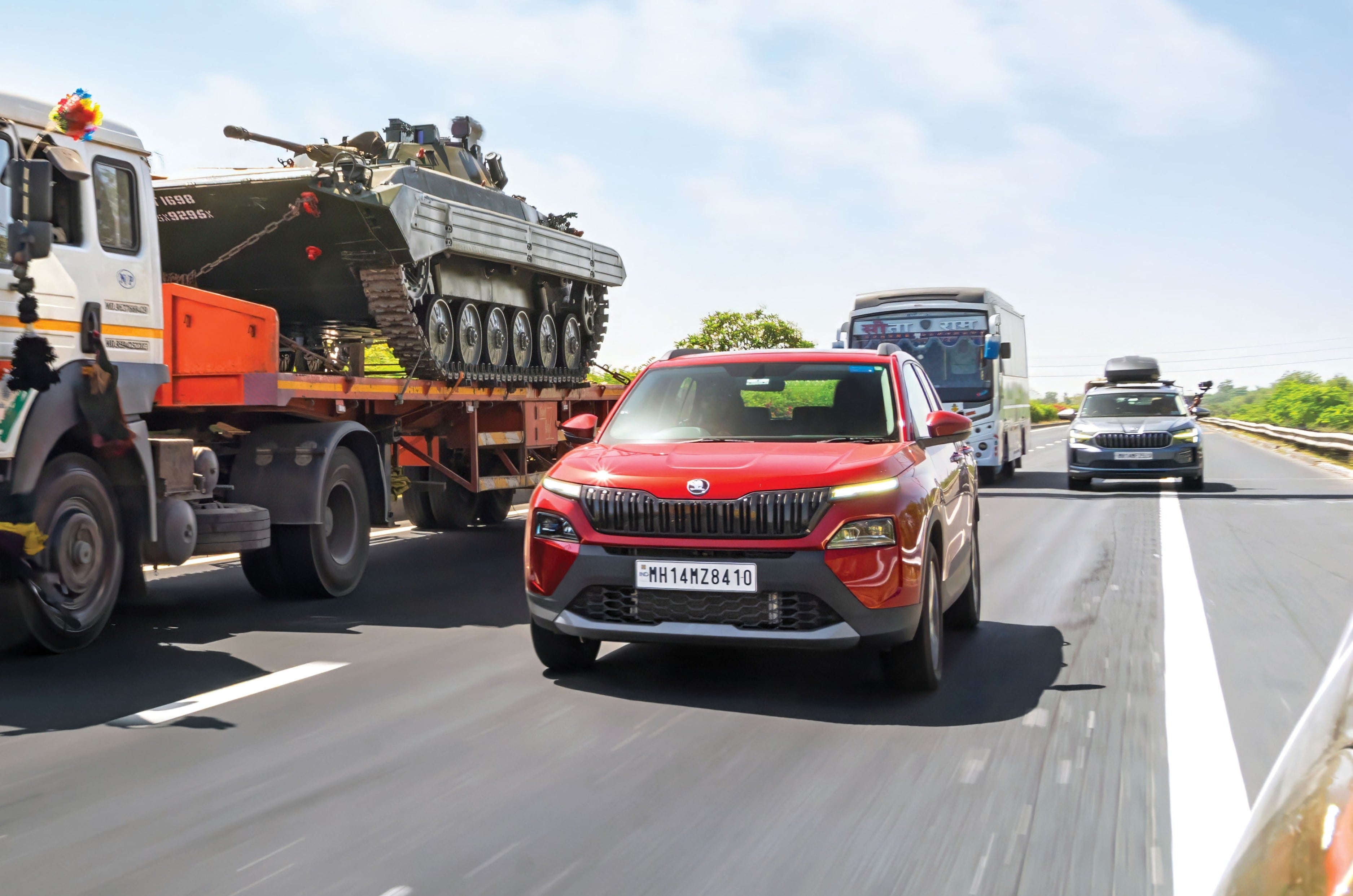
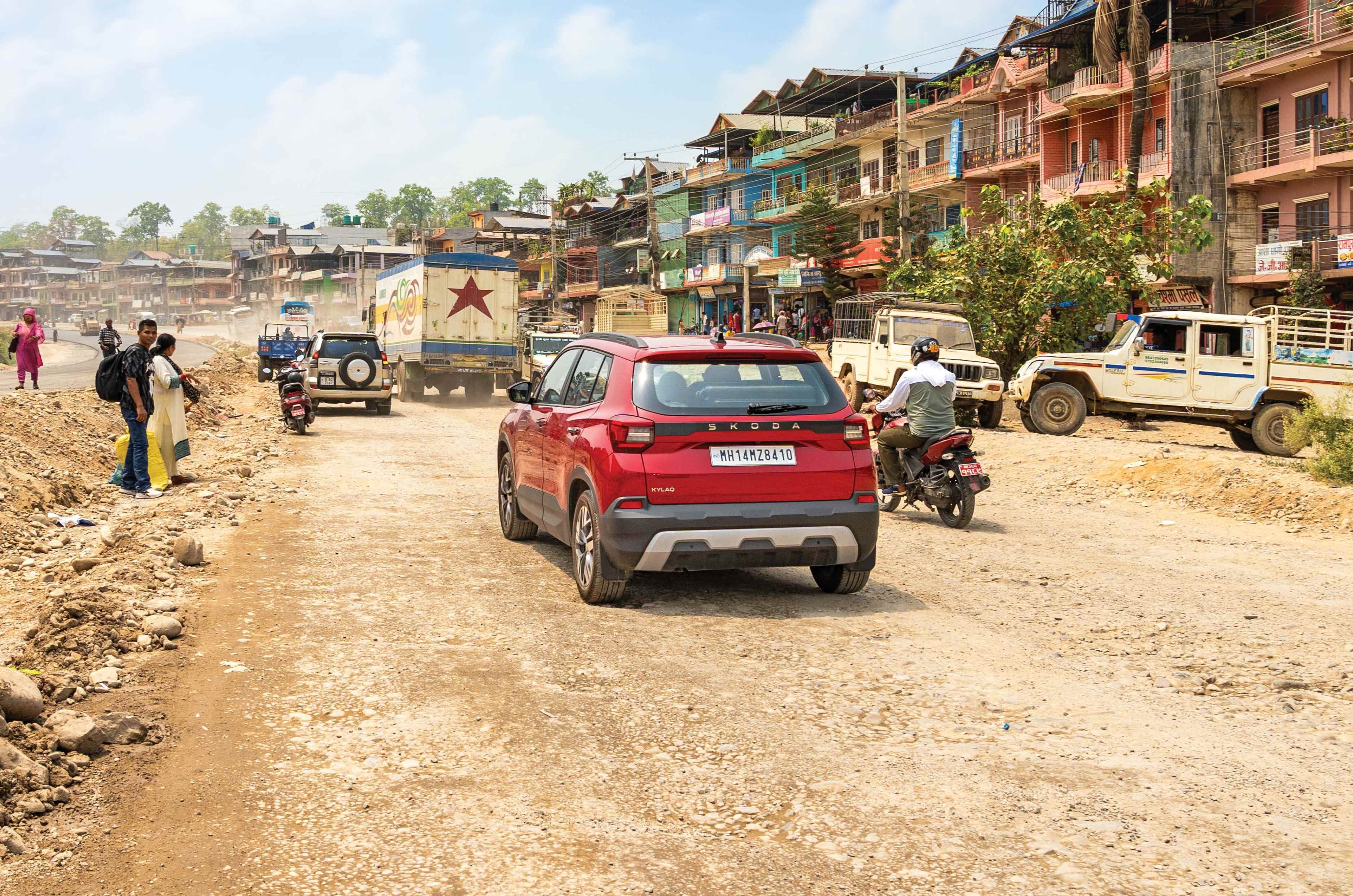
On a cross-country road trip, you’d imagine the home country would be the easiest leg. With India, it was the opposite. To some, it’s organised chaos, but honestly, it’s anything but organised. Erratic traffic, erratic egos, and road conditions fit only for a Mars rover – India was the biggest challenge on the drive from Pune to Prague. As the odometer ticked over its first kilometre, right outside the gate of Skoda’s Chakan plant, a blood-red PMPML bus was ready to trade paint with the cherry-red Kylaq. A dinged-up Kylaq parked on the streets of Prague wouldn’t be a good look, so it was imperative that I babysit this compact SUV like a million-dollar supercar. Having watched the car being assembled on the factory floor, from bare bones to the finished package, only added to the emotion – driving it in traffic felt like walking a toddler across a football field. Eyes wide open, ready to block any attack.
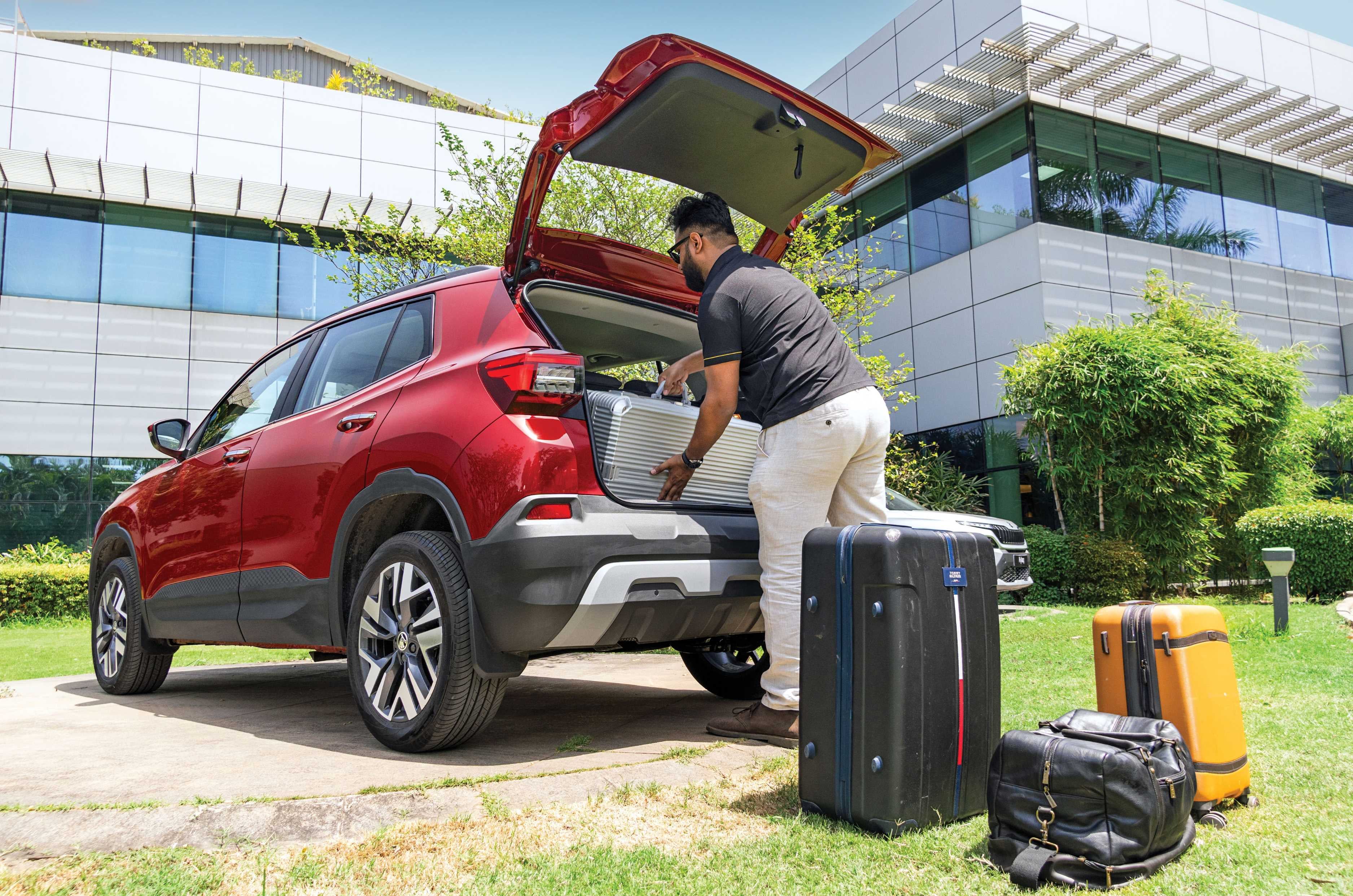
446-litre boot packed to the brim for 70 days on the road.
We got onto the Pune expressway and then crossed the Atal Setu in Mumbai, the longest sea bridge on the entire journey. Mumbai was home, both to me and to the Autocar India office, so after a few greetings from co-workers and the obligatory photos, we headed towards our first state crossing. The infamous Western Express Highway that leads out of Mumbai lived up to its reputation, but with a little anxiety, panic and a few expletives, we made it onto the national highway.
No telling what you’d spot on Indian highways.
The first of countless food stops was Hotel Ahura, renowned for its akuri and kheema. Needless to say, we carb-loaded to the max and made a beeline for Vadodara.
Pune-Birgunj in numbers
Distance covered
2,487km
Fuel consumed
234.46 litres
Average fuel economy
10.62kpl
Approximate fuel cost
Rs 23,629
Average per-litre fuel cost
Rs 100.87
Total time driven
55hrs 20min
Average speed
44.95kph
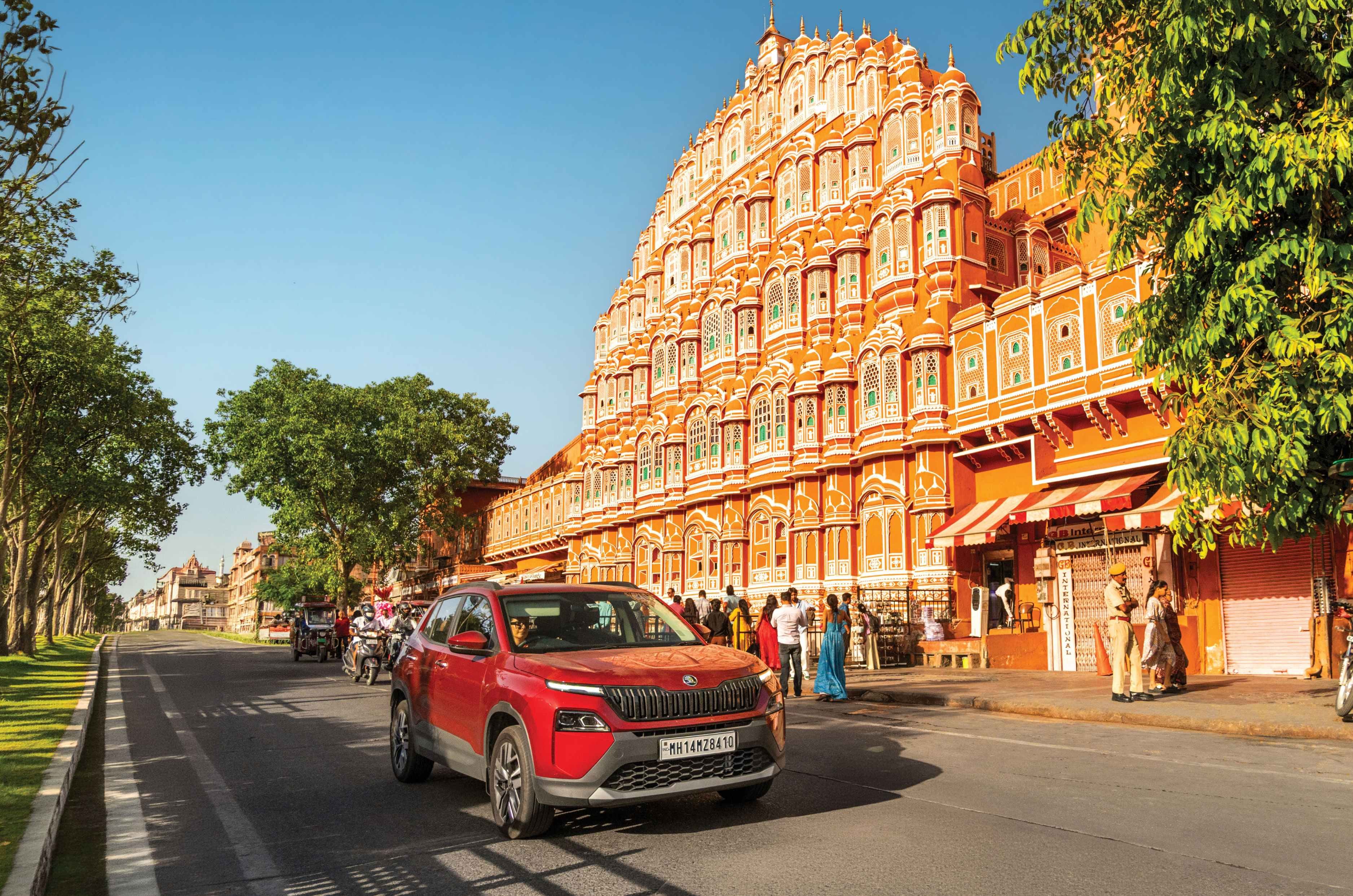
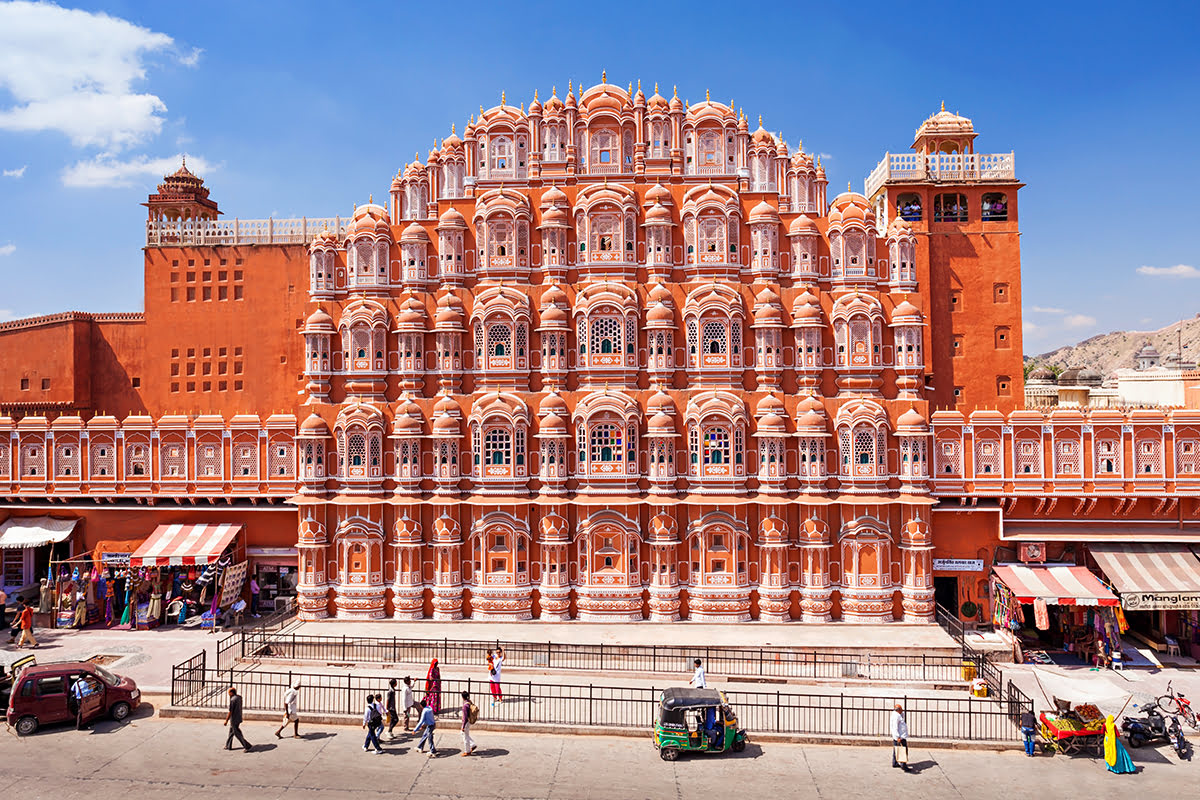
Crossing into Gujarat, the Kylaq could finally stretch its legs and spool up that turbo on the state’s spotless highways. The stability and effortless cruising were a welcome relief, since the bulk of the kilometres on this drive would be covered on long, open highways. Gujarat was a short stint – we made only an overnight halt in Vadodara before slipping out ahead of the morning traffic. The drive into Rajasthan was seamless, and Udaipur greeted us with a mix of heat and traffic. The City of Lakes is worth taking the time to explore, but a late arrival and early morning departure left us with just enough time to grab a traditional meal. All that driving had built up an appetite, so we put it to a vote between a massive vegetarian thali and laal maas – the latter won by a landslide. From the City of Lakes, we headed to Jaipur, the Pink City: just as picturesque as Udaipur, and just as colourful and chaotic. The sun setting over the beautiful Amer Fort made for a cracking backdrop, and a few glimpses of the Jal Mahal on the way back were a treat too. The iconic Hawa Mahal, with its 953 windows, never fails to amuse, but getting a photo of the five-storey icon without a chorus of honks is next to impossible. The next morning, after threading through Jaipur’s narrow lanes, we made it back onto the highway, heading for Agra.
Iconic Hawa Mahal ought to be seen first-hand.
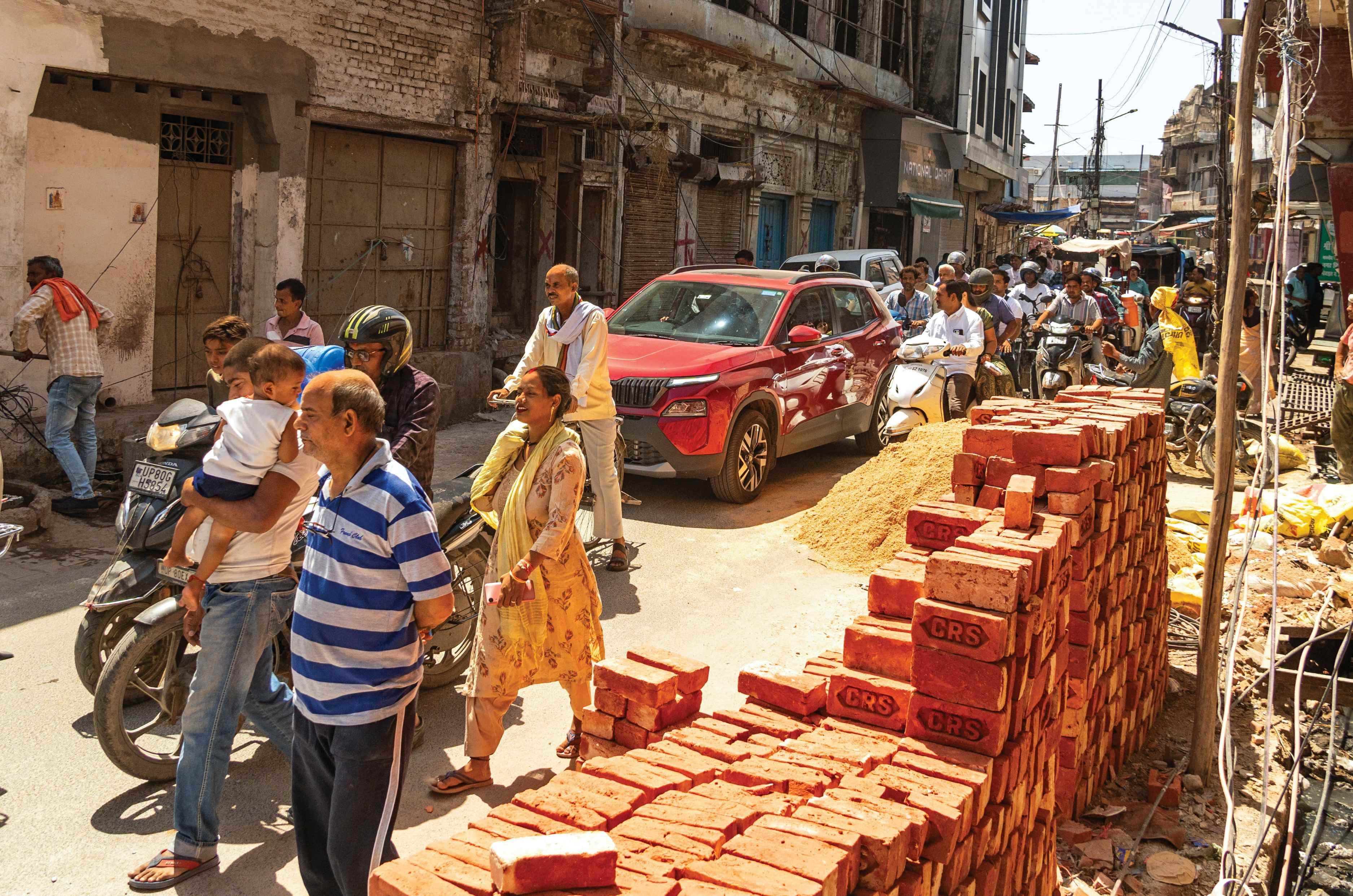
Agra is synonymous with the Taj Mahal, but the Agra Fort – from which you can see the Taj in the distance – is just as mesmerising. The detailing and architecture are second to none, and you could spend hours walking through its courtyards and passages, taking endless pictures. We, of course, also made it to the Taj itself, amid the hordes of tourists, if only to avoid the guilt of visiting Agra without a shot of the world-famous white dome. Tourism done, it was time for some petha – though the lanes near the petha shops seemed to be the exact width of the Kylaq, and that’s where peak anxiety set in. We got out of the mess, walked around the car to check for scratches and scribbles, and sighed in relief. India was adding to the tension, and we were barely halfway through it.
Agra’s narrow lanes were a nightmare to drive through.
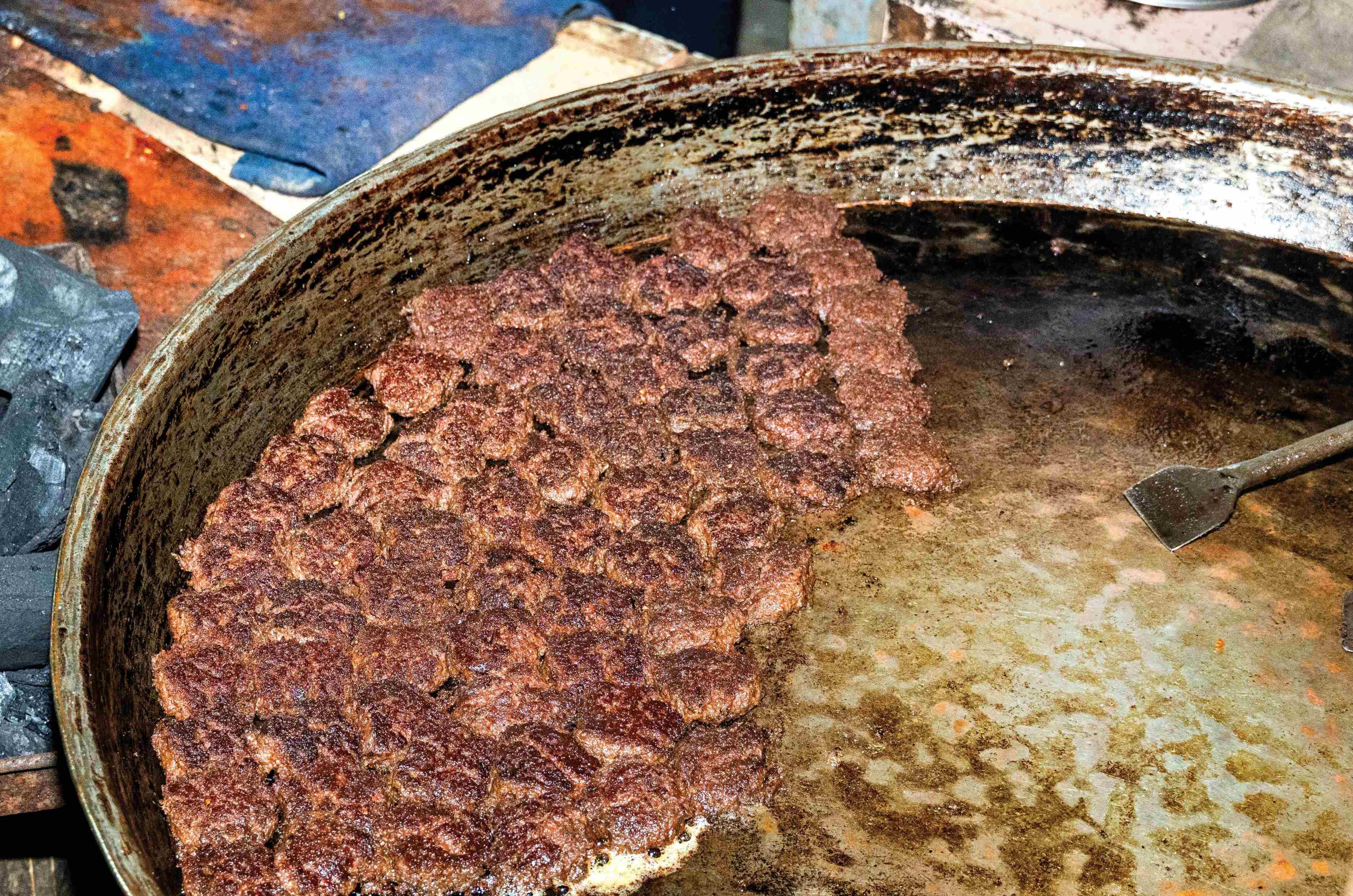
Our next stop from Agra was foodie heaven – Lucknow. The biryanis, kebabs, and tandoors were exactly what we expected, and exactly what Lucknow delivered. Finding your way here is easy – you could do it blindfolded, following the smoke and sizzle to wherever you need to be. Tunday Kababi is a must, and after a heap of biryani laced with kebabs, a long walk through the countless chikankari shops helps burn off some of the calories.
Lucknow’s Tunday Kababi still has us drooling over Galouti kebabs.
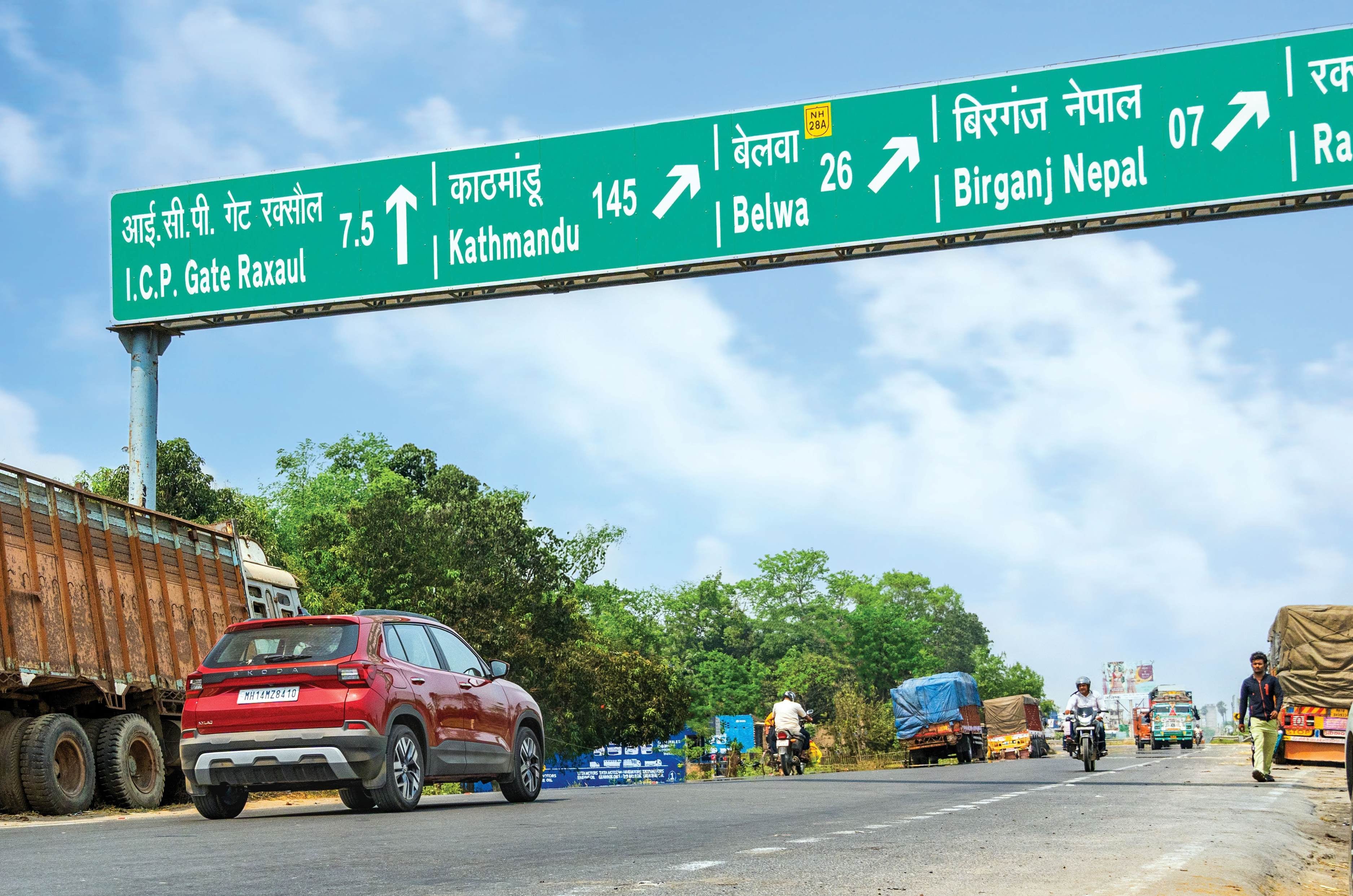
We were closing in on the end of the India leg, with one last stop in Gorakhpur before the Nepal border. To celebrate, a group of Skoda owners, officially known as the ‘Fans of Skoda’ joined us for a celebratory convoy as we drove out – everything from Octavia RS models to Kodiaqs and Kushaqs turned up as a send-off before we went international. The loud, chaotic border towns past Gorakhpur delivered one final challenge as we exited through Raxaul.
Final stretch before the Kylaq left India for the first time.
The India-Nepal border is still raw and basic, with none of the high-tech systems you might expect. A drive of this scale comes with a mountain of paperwork – visas, carnets, insurance, and more – and sifting through all of it manually takes a while. After a gruelling five hours, the Kylaq crossed out of India for the very first time.
Nepal – Old World Charm
Nepal’s state highways give Indian roads a run for their money.
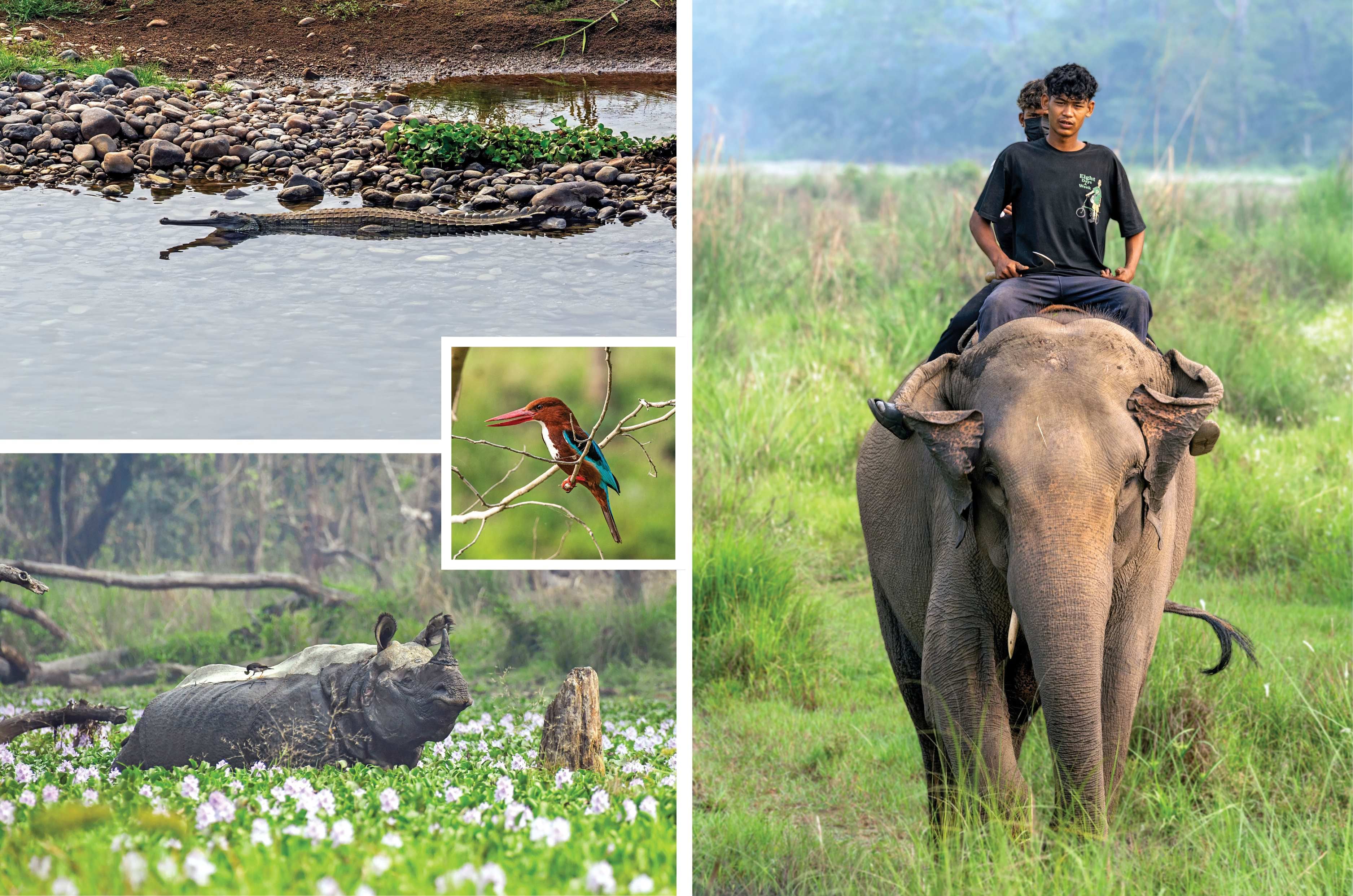
If the Indian side of the border was old-school, Nepal’s immigration post is almost antique. Drive past it, and you’d likely miss it altogether – the only tell-tale sign is a simple gate with ‘Immigration Office’ hand-painted on it. This humble-looking house is, in fact, the immigration office, where, just like on the Indian side, every check is done manually. Fine print, identity proofs, and everything in between were checked meticulously before we were welcomed into Birgunj. Our main draw in Nepal was the bustling capital, Kathmandu, but there were magnificent stops along the way, starting with Chitwan National Park. Home to nearly 700 one-horned rhinos, the park also shelters elephants, Bengal tigers, cobras, the elusive gharial, and abundant flora. The Kylaq would have been fun to explore it in, but we opted for the park’s safari vehicle to relax and take in the surroundings. Paddling a beaten-up wooden kayak past crocodiles and snakes adds a rush, but it’s nothing compared to a rhino staring you down in all its magnificence. The park gave us a welcome break from long hours behind the wheel.
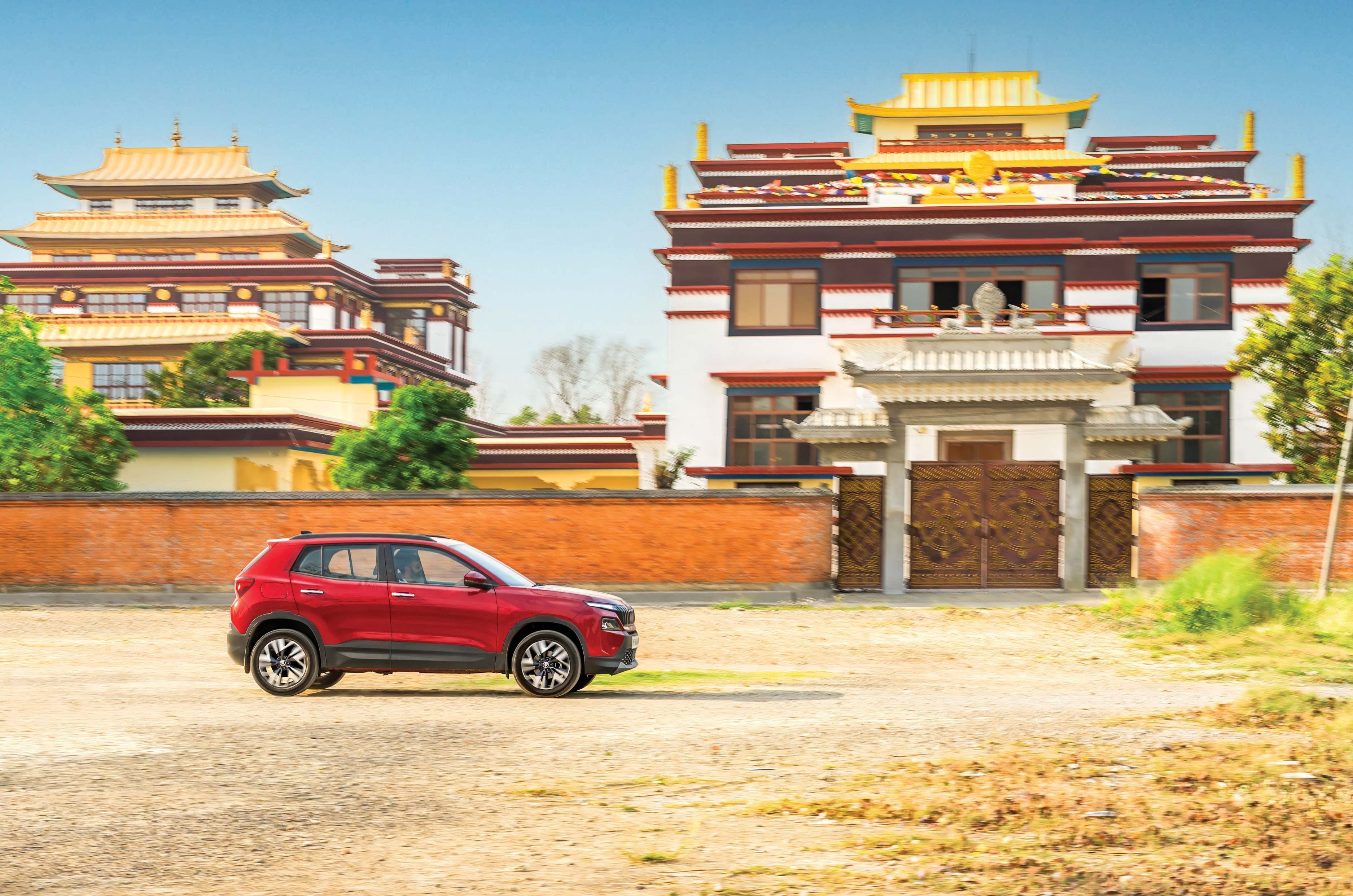
Lumbini is home to 32 unique styles of monasteries.
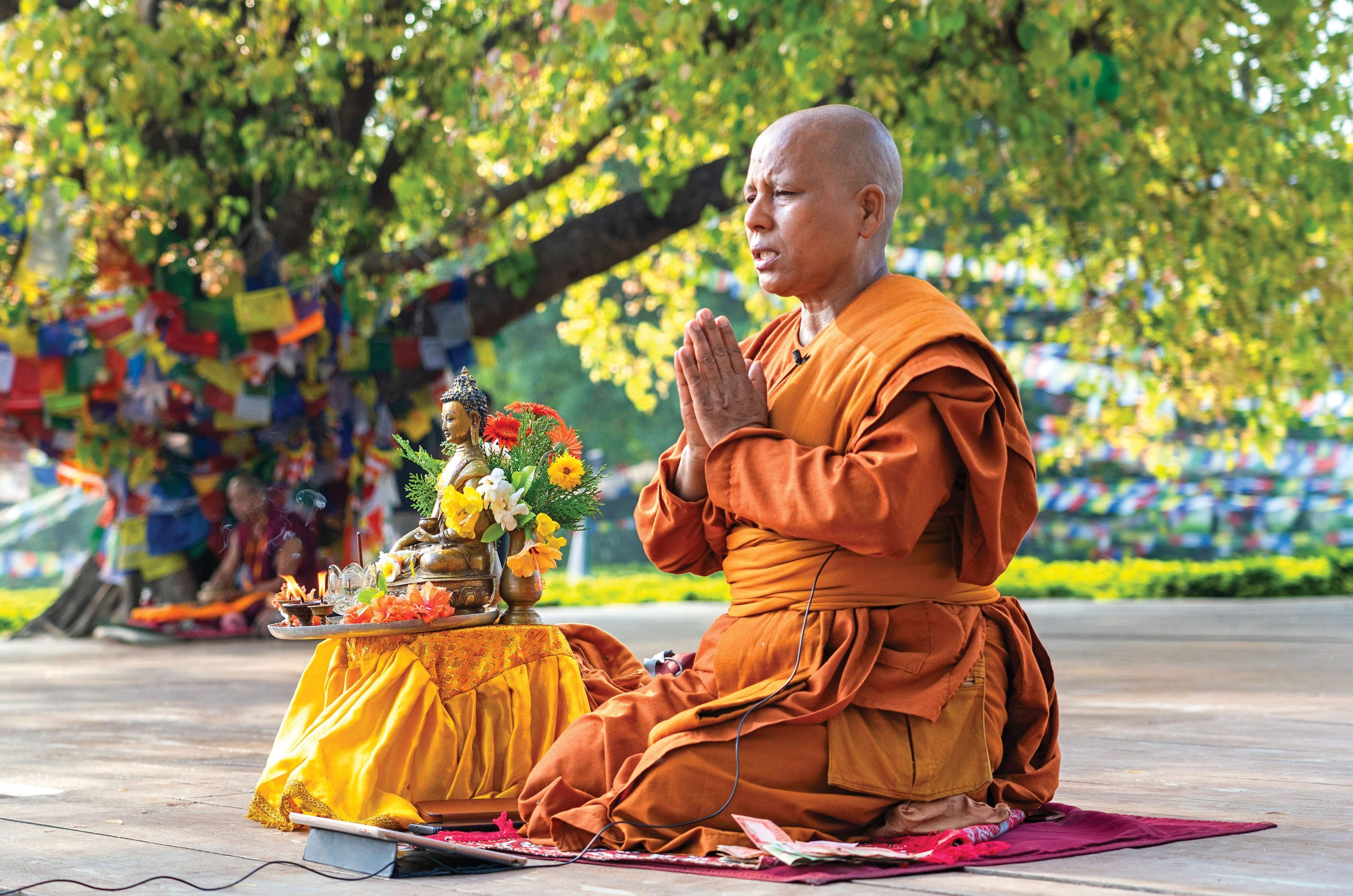
Next was Lumbini, a spiritual haven and, more importantly, the birthplace of Siddhartha Gautama (Lord Buddha) around 563 BC. Its fascinating monastic zone showcases monasteries built by Buddhist nations from around the world, each reflecting its own culture through design and architecture – a remarkable collection of temples spanning diverse traditions. The feeling of peace there was unlike anything I’d experienced, but it was soon disrupted by the road to Pokhara.
Lumbini provided a moment of calm through the chaos.
Mountain passes are notorious for destroying Google’s ETAs – landslides, breakdowns, and deteriorating roads mean a stretch that should take an hour could take five, depending on your luck. We braced for traffic and drove straight into a landslide clearing. A two-hour wait meant the sun was setting as we rolled into the quaint town of Pokhara. Bustling with cafés and pop culture, it felt like a mini Kathmandu, but with the stunning Phewa Lake turning orange at sunset. The calm that began in Chitwan came full circle on the shores of Phewa Lake.
Chitwan is home to the gharial and over 700 one-horned rhinos.
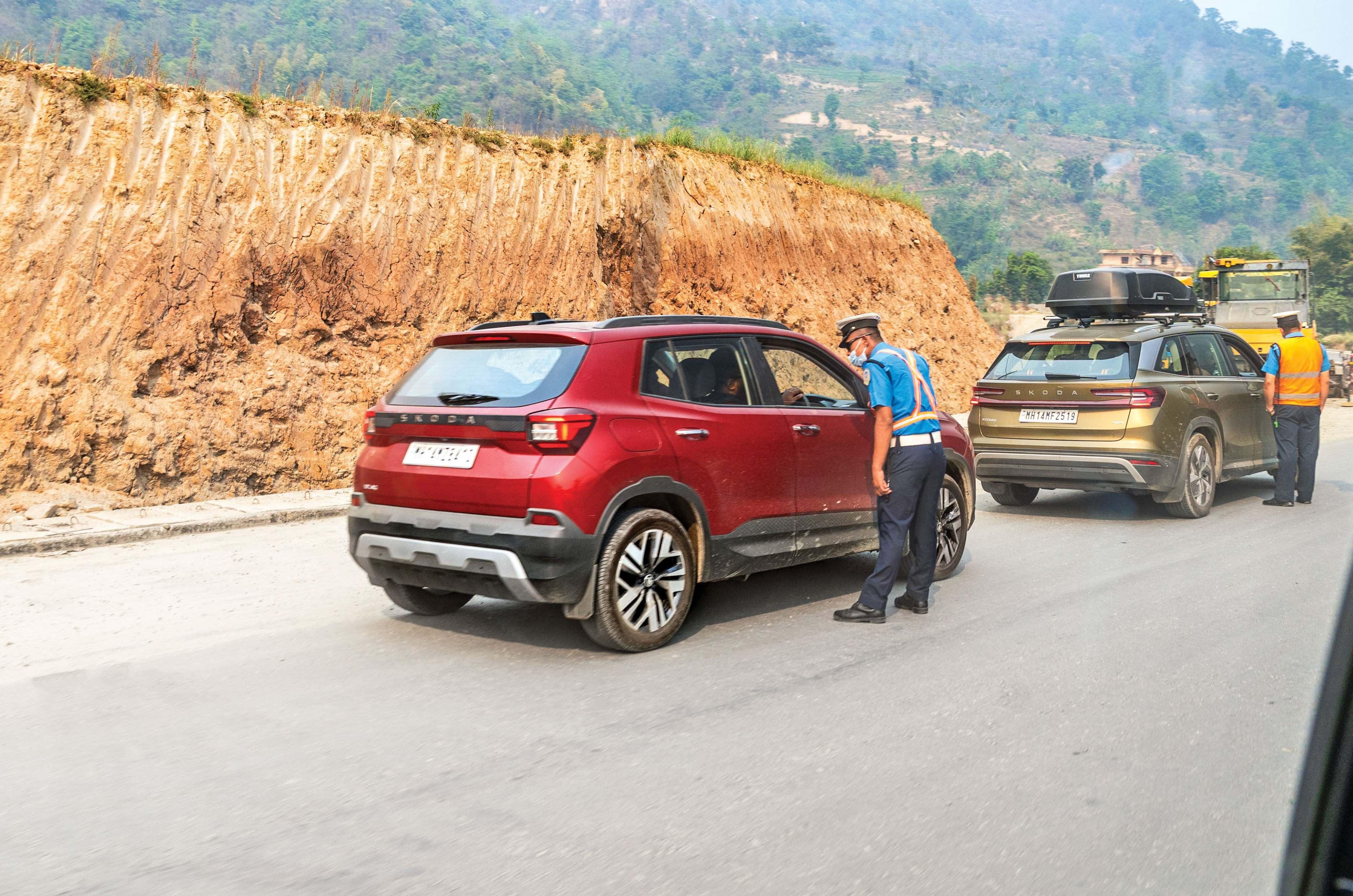
Kathmandu, though, was a different animal entirely – every bit a capital city, and a world away from the slow pace of Chitwan or Lumbini. The music is loud, the traffic is hectic, and the city is anything but quiet. Ironically, the only quiet things on the road are the cars – China’s dominance in Nepal is stark, with three in five cars on the road being Chinese EVs. Geely, BYD, and GWM rule the market, with only a handful of Hyundais and Kias as competition.
Authorities were always curious thanks to Indian number plates.
The party scene rules Kathmandu too. At night, the city comes alive as a hub for tourists from around the world. Hiking gear and North Face apparel go for a fraction of the price – and, often, a fraction of the quality – alongside quirky masks and fridge magnets at every tourist stop. Spend a little more time, though, and you’ll find excellent coffee shops and the famous Thakali thali: thick buckwheat porridge with salads, meat, and plenty of flavour. Good thing too, since walking through Durbar Square works up quite an appetite. Partly destroyed by the devastating 2015 earthquakes, the temples have since been restored to their former glory, though you can still spot the scars in a few bent pillars and roofs. It’s a culture and tradition worth preserving, and Nepal deserves credit for doing exactly that.
Birgunj-Sino-Nepal Border in numbers
Distance covered
922km
Fuel consumed
115.96 litres
Average fuel economy
7.13kpl
Approximate fuel cost
Rs 15,846
Average per-litre fuel cost
Rs 136.65
Total time driven
34hrs 25min
Average speed
27kph
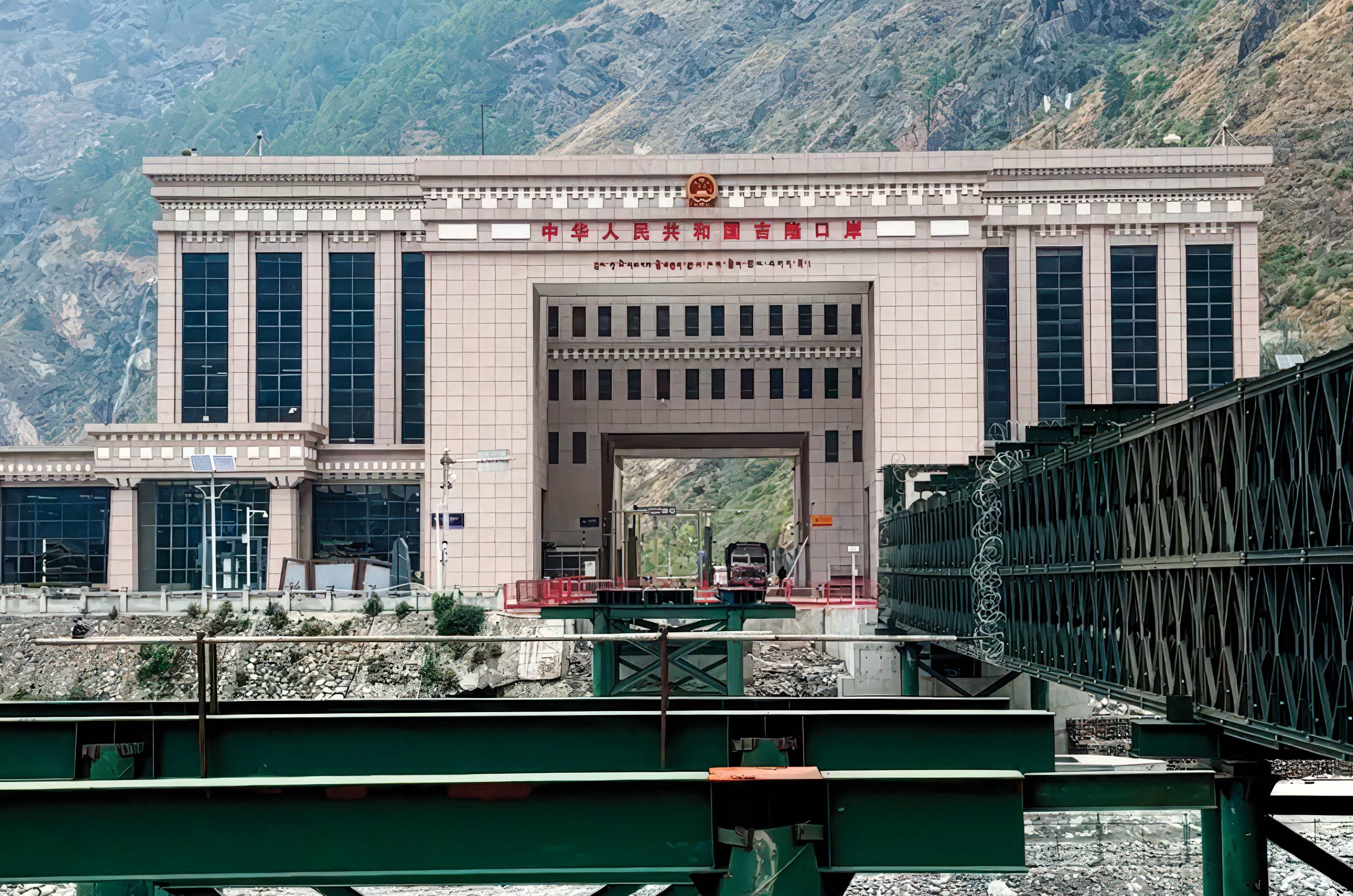
With Kathmandu explored, we headed towards our second border crossing – and this one was far more intense. Once we left Kathmandu, we left the tarmac behind too. Muddy back roads, still wet from the previous night’s rain, meant slush and a constant need for 4WD. Even so, though packed to the brim with luggage, the Kylaq stayed light enough and had enough clearance to pick its way around the mud on the approach to the Rasuwa Bridge. From there, you can see the Chinese immigration building towering over everything around it. With the Kylaq thrumming with excitement, we crossed into Tibet – the roof of the world.
Tibet/China – Roof of the World
China’s border crossing is as imposing as it gets.
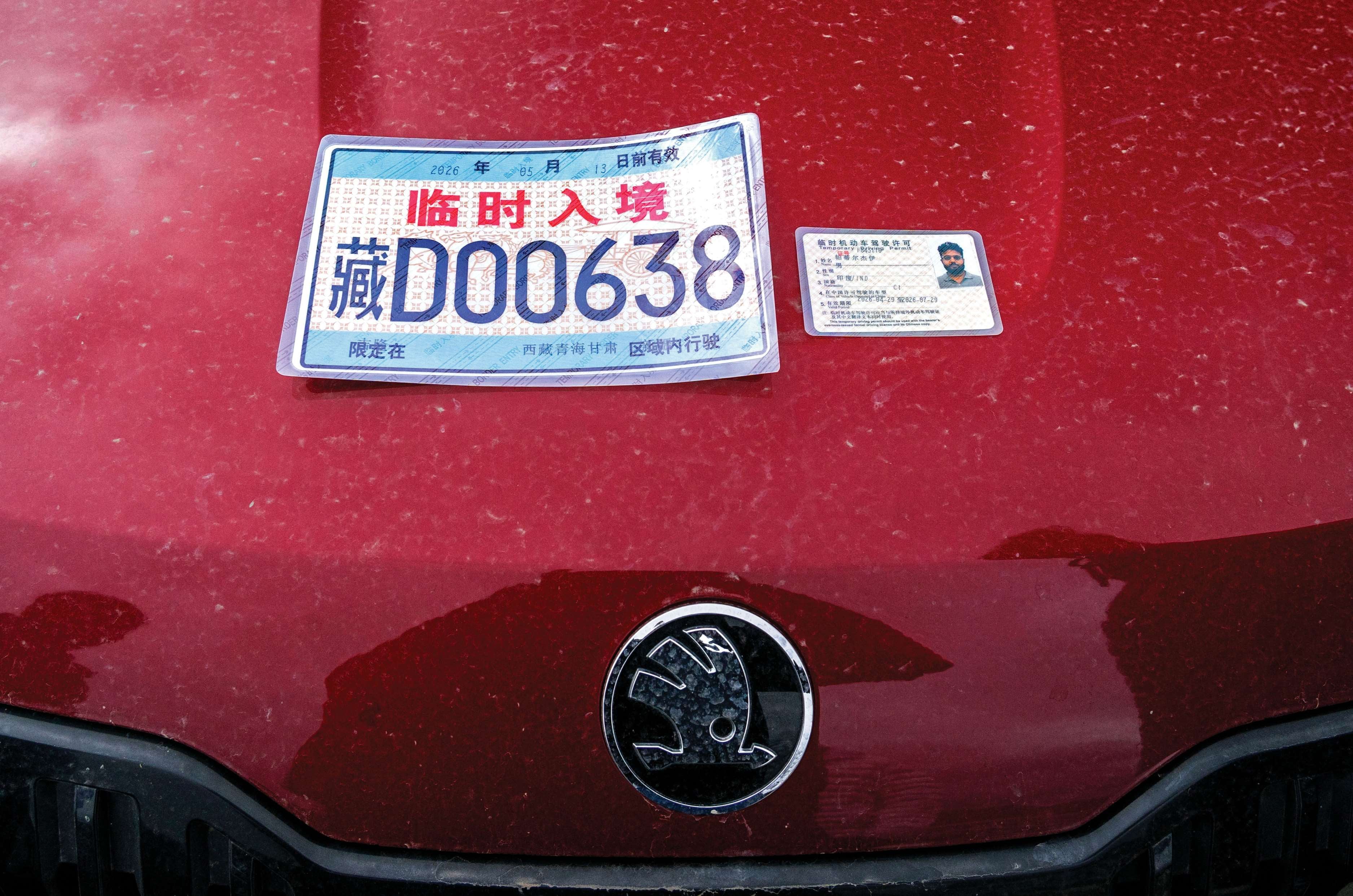
Crossing into Tibet felt like crossing into the future. For a region tucked deep into the mountains, it’s exceptionally developed – the roads are smooth and well-signed from the moment you cross the bridge, barely a hundred metres before the immigration office. In China, we weren’t taking any chances, knowing any misstep here could jeopardise the rest of the journey. After answering the customs officers honestly – and impressing them with the scale of the Kylaq’s challenge – we entered the lovely town of Gyirong. Old Chinese architecture, plenty of red, and signboards we couldn’t quite read were early signs that we really were in a different world now. Nepal had shared plenty with India – the cars, the food, the roads – but China felt entirely its own. We thought we’d seen our share of speed cameras, but China put us to shame – they appear every 50 metres or so, complete with flashes. There’s simply no room for error, and you’re monitored everywhere you go – aneerie feeling that takes some getting used to. Another non-negotiable is to obtain a special driving licence for every person that will be driving and a China-specific number plate, which you have to place on your dashboard so the cameras can pick up any infringements. A regular India-style RTO office with long queues and a lack of urgency got us homesick for a bit.
Local license and registration are non-negotiables in China.
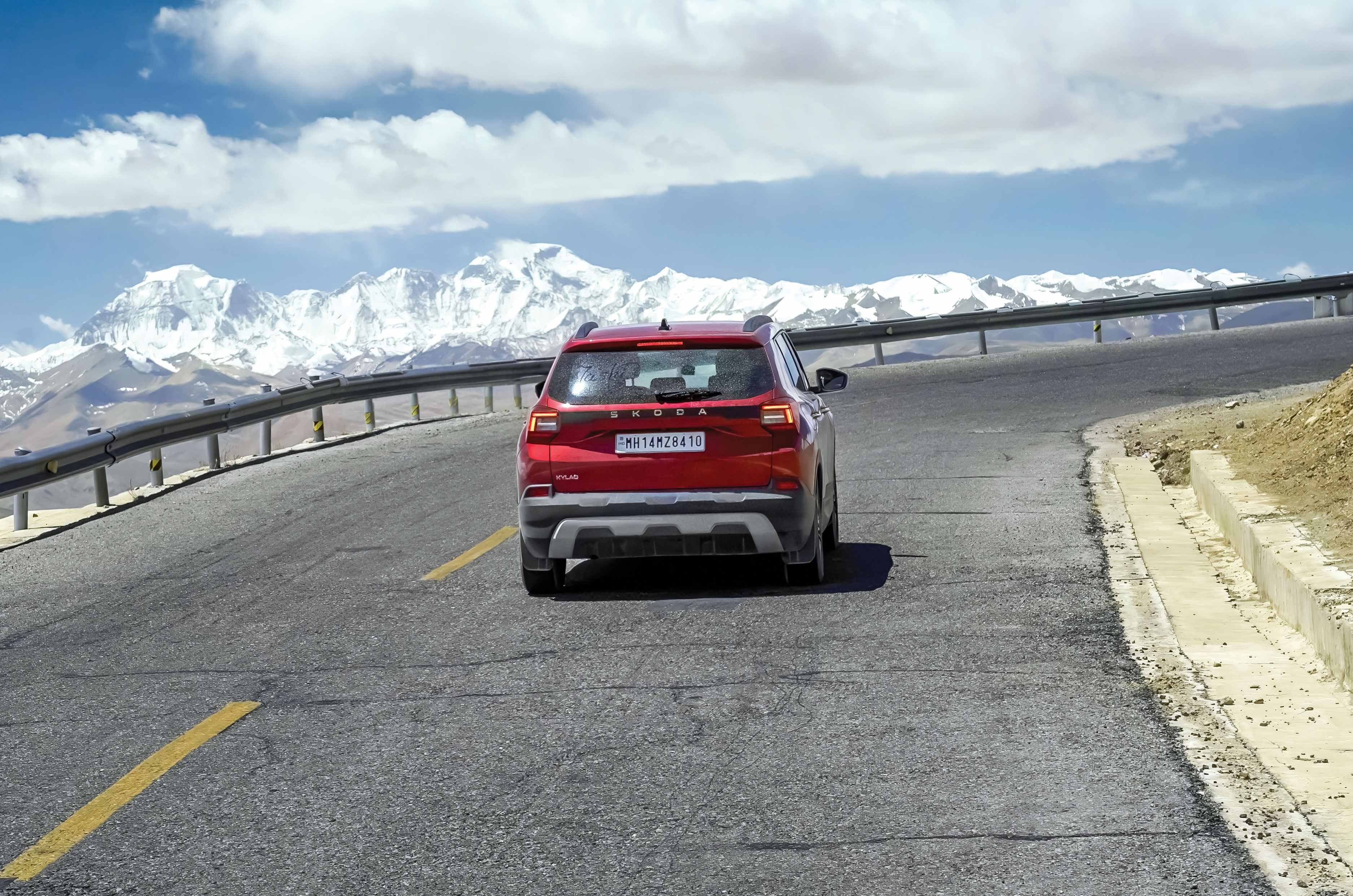
A few mugs of hot ginger-lemon tea eased us into the chill, and we set off for Mount Everest Base Camp. High altitudes are usually punishing for small-capacity engines, but thanks to its turbocharged engine, the Kylaq barely broke a sweat, buzzing through the passes. Its 6-speed automatic had been a great convenience through the chaos of India and Nepal, but the winding mountain roads and immaculate tarmac meant I could switch to manual and take control via the paddle shifters. Paddle-shift response is often sluggish, but not here – the shifts were quick, and the taut suspension held its ground even through tight hairpins.
Everest hove into view long before we made it to base camp.
It made for a great drive and great footage, right up until we spotted the peak in the distance. Even from afar, Everest is breathtaking, and mercifully the clouds stayed clear as we got closer. You can’t take a car near base camp itself – a one-hour bus ride covers that final stretch. It’s strange how you lose your breath as you approach Everest – partly the thin air and altitude, but you’d lose it all the same just from the view. Words don’t do it justice, and don’t be surprised if you shed a tear or two – it’s overwhelming.
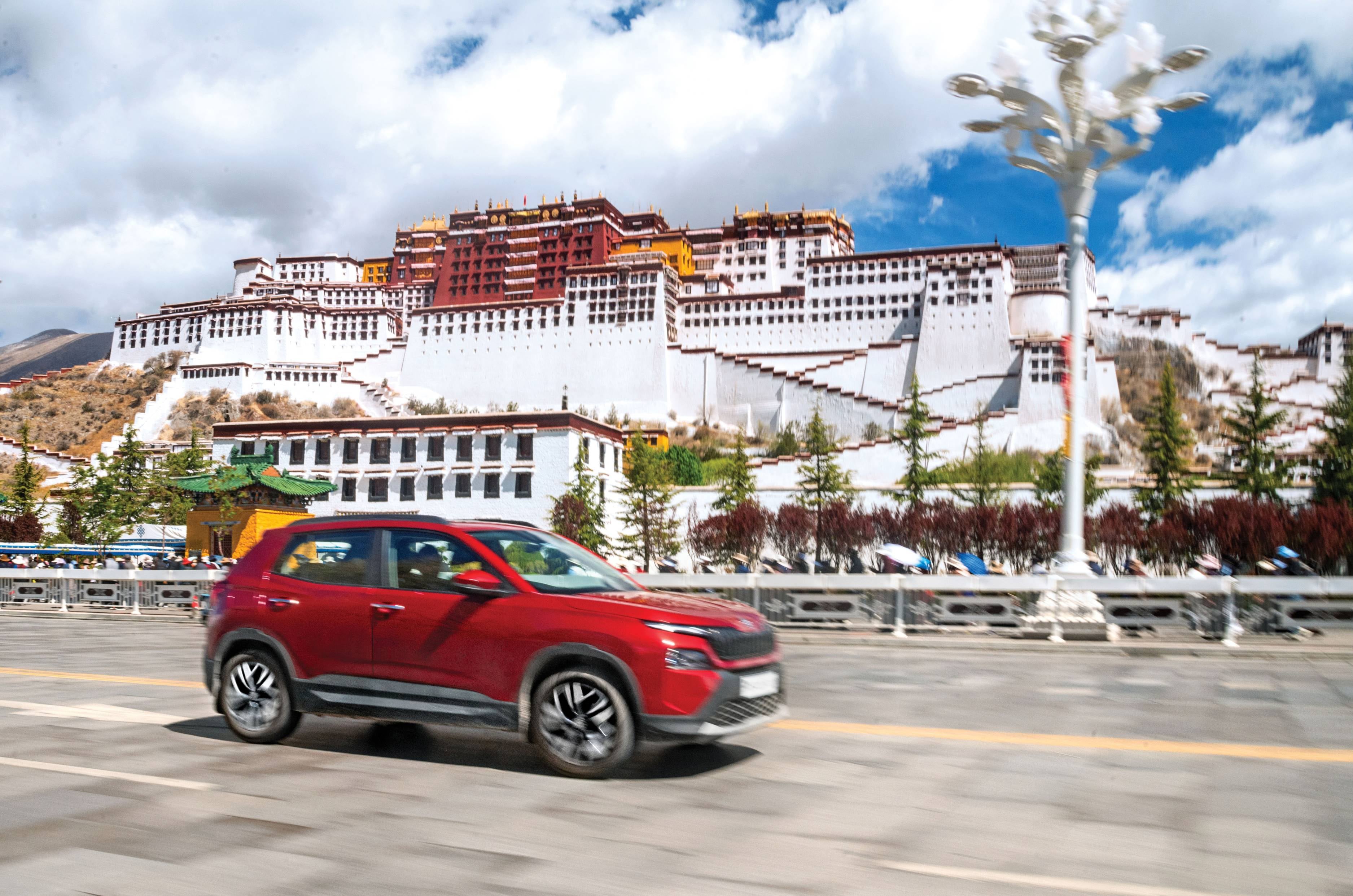
Stunning Potala Palace; once home to the Dalai Lamas.
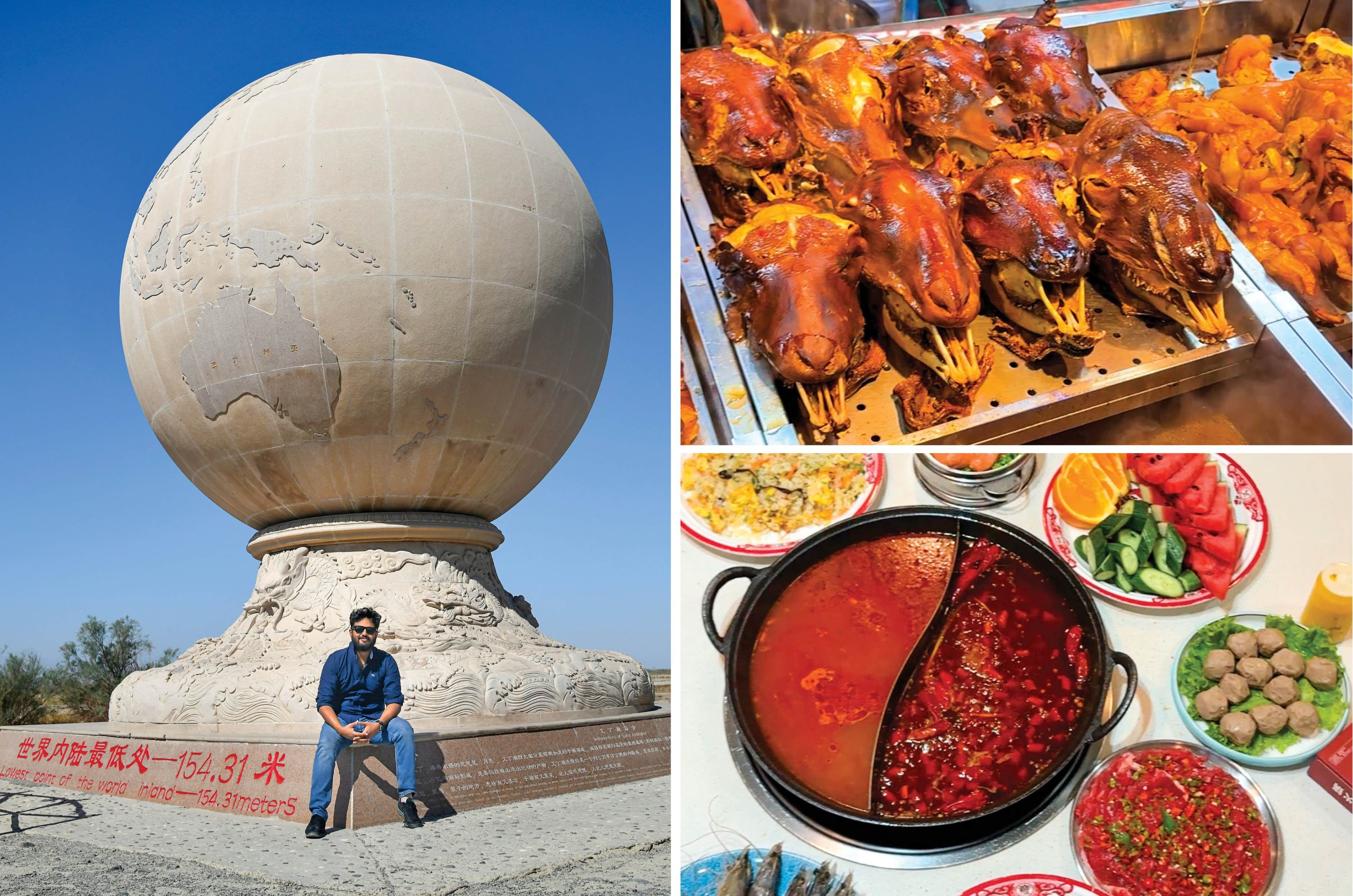
With Everest ticked off, it was time to take on China’s vastness. We headed to Lhasa, the spiritual capital of Tibet, home to the grand Potala Palace. Once home to monks and lamas, this stunning palace holds incredible history and artefacts – spiritual or not, its significance to the country’s history is unmistakable. The drive kept revealing itself through unique food, dialects, faces, and even geography. One day we were freezing thousands of feet above sea level; days later, in Turpan, we were below sea level in blistering heat. From boiling hotpots to grocery-store instant noodles, China pushed us well outside our comfort zone, and the Kylaq wasn’t spared either.
L: From EBC’s high to Turpan Depression’s low – Jay was at 154m below sea level here. R: Street food in China not for the faint-hearted.
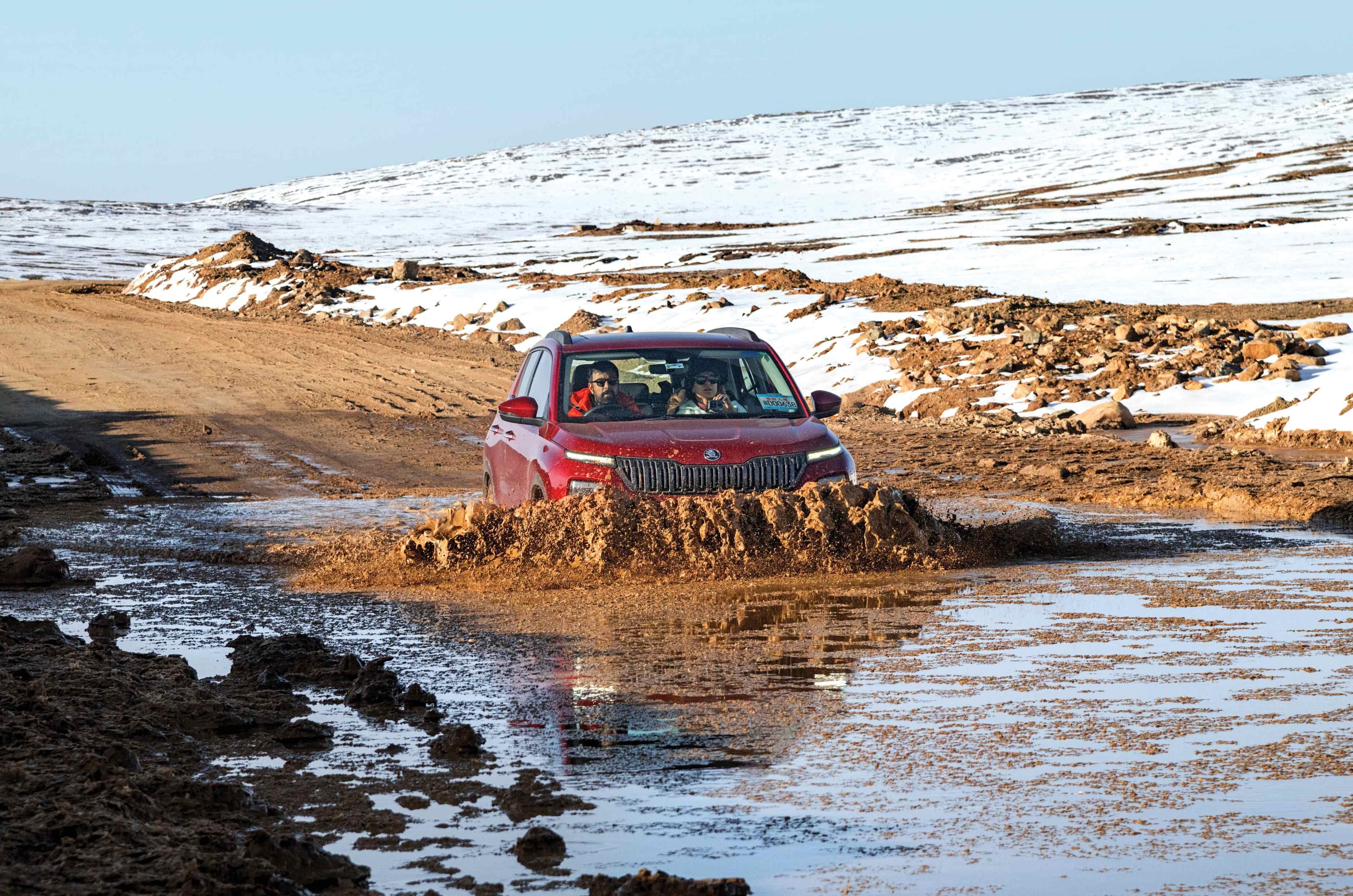
Two full days on the way to Golmud were entirely off-road, taking over 13 hours of driving, with our average speed dropping to 18kph as the Kylaq waded through water up to its bonnet and emerged without complaint.
In China, you get perfect roads or, simply, no roads.
A stretch that would have broken most cars left the Kylaq unscathed. China hit hard, but the Kylaq hit back harder. From day one, it had faced challenge after challenge, and from day one, it had come out on top. Three countries in, it still carried the same zeal it started with – and while we were rattled, it stood strong each night, ready for the next day.
Surat-Udaipur Vande Bharat Express: नई वंदे भारत ट्रेन सूरत और उदयपुर के बीच चलेगी। इस ट्रेन में यात्रा करने का इंतजार कर रहे यात्रियों के लिए खुशखबरी है। सूरत और उदयपुर के बीच प्रस्तावित नई वंदे भारत एक्सप्रेस के लिए बुकिंग गुरुवार, 1 अक्टूबर को शुरू हो गई है। इससे यात्रियों को दक्षिण गुजरात और राजस्थान के बीच तेज सेमी-हाई-स्पीड रेल कनेक्शन मिलेगा।
पश्चिमी रेलवे के मुंबई सेंट्रल डिवीजन ने बताया कि ट्रेन संख्या 26903/26904 के लिए पैसेंजर रिजर्वेशन सिस्टम (PRS) काउंटर और IRCTC वेबसाइट के जरिए रिजर्वेशन शुरू हो गए हैं। नई वंदे भारत सेवा मंगलवार को छोड़कर, हफ्ते में सीभी छह दिन चलेगी। रेलवे अधिकारियों ने कहा कि यह ट्रेन सूरत और उदयपुर के बीच कनेक्टिविटी को बेहतर बनाएगी और बिजनेस, टूरिज्म और दूसरे कामों के लिए यात्रा करने वाले यात्रियों को फायदा पहुंचाएगी।
कब शुरू होगी सूरत-उदयपुर वंदे भारत?
सूरत-उदयपुर वंदे भारत एक्सप्रेस इस वीकेंड से चलना शुरू होगी। सूरत-उदयपुर ट्रेन (26903) रविवार, 4 अक्टूबर को सूरत से अपनी पहली यात्रा शुरू करेगी, जबकि वापसी उदयपुर-सूरत सर्विस (26904) शनिवार, 3 अक्टूबर से शुरू होगी।
वंदे भारत ट्रेन का समय क्या है?
सूरत-उदयपुर वंदे भारत एक्सप्रेस करीब 690 km का सफर करीब साढ़े सात घंटे में पूरा करेगी।
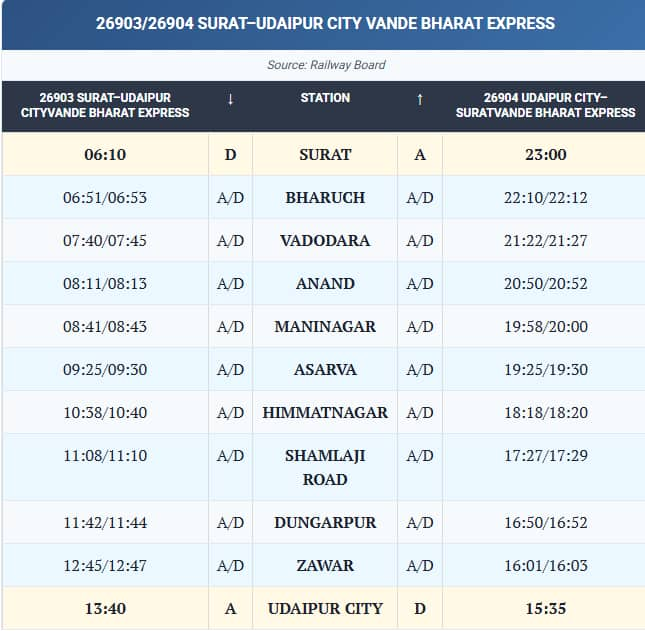
ट्रेन (26903) सूरत से सुबह 6:10 बजे निकलेगी और उसी दिन दोपहर 1:40 बजे उदयपुर पहुंचेगी।
वापसी वाली ट्रेन (26904) उदयपुर से दोपहर 3:35 बजे निकलेगी और रात 11 बजे सूरत पहुंचेगी।
सूरत से यात्रा करने वाले यात्री दोपहर तक उदयपुर पहुंच सकेंगे, जबकि राजस्थान से लौटने वाले यात्री देर रात सूरत पहुंच सकते हैं।
स्टेशन जहां ट्रेन रुकेगी
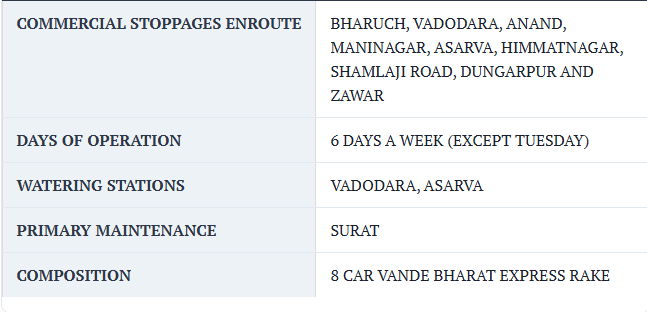
वंदे भारत एक्सप्रेस दोनों दिशाओं में नौ स्टेशनों पर रुकेगी।
स्टॉपेज में भरूच, वडोदरा, आनंद, मणिनगर, असरवा (अहमदाबाद), हिम्मतनगर, शामलाजी रोड, डूंगरपुर और जावर शामिल हैं।
यह सेवा वडोदरा, आणंद और अहमदाबाद सहित गुजरात के बड़े शहरों से यात्रियों को सीधी कनेक्टिविटी देगी, साथ ही उदयपुर और राजस्थान के दूसरे हिस्सों तक पहुंच को बेहतर बनाएगी।
Mercedes-Benz’s 140 Years, 140 Places odyssey is a celebration of the carmaker’s origins in 1886. Spanning six continents, covering over 60,000 kilometres, it is as massive in significance as it is in scale. The tour kicked off at the Mercedes-Benz Museum in Stuttgart on the 29th of January, the same day Carl Benz received the patent for his first car 140 years ago! The cars then went to the Daimler house in Bad Cannstatt, they tracked the original route of Bertha Benz’s historic 1888 drive and drove the iconic Spa-Francorchamps racetrack in Belgium in wheel tracks of the W109 ‘Red Pig’ that made such a splash in 1971. The cars then went to the US, visiting the first plant in the US started by William Steinway (of Steinway & Sons, the famous German Piano makers), South America, Australia, Japan, Korea and Japan.
Legacy and history
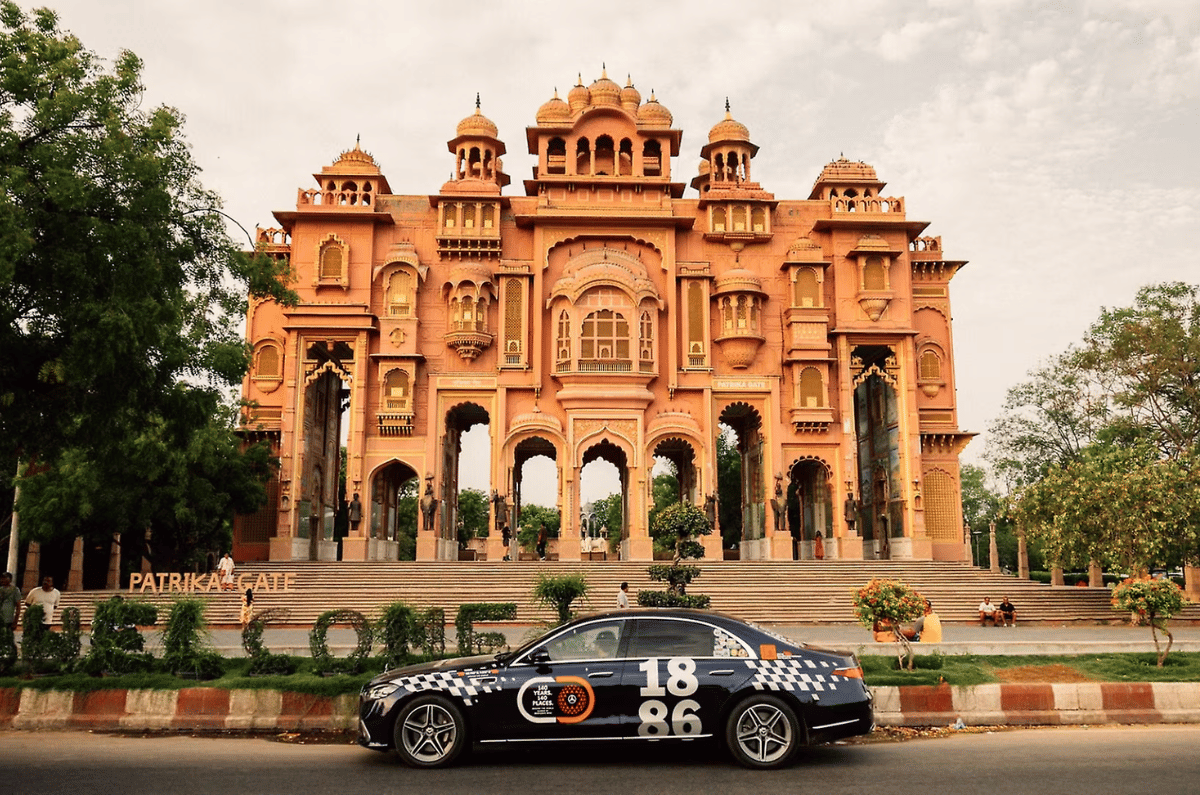
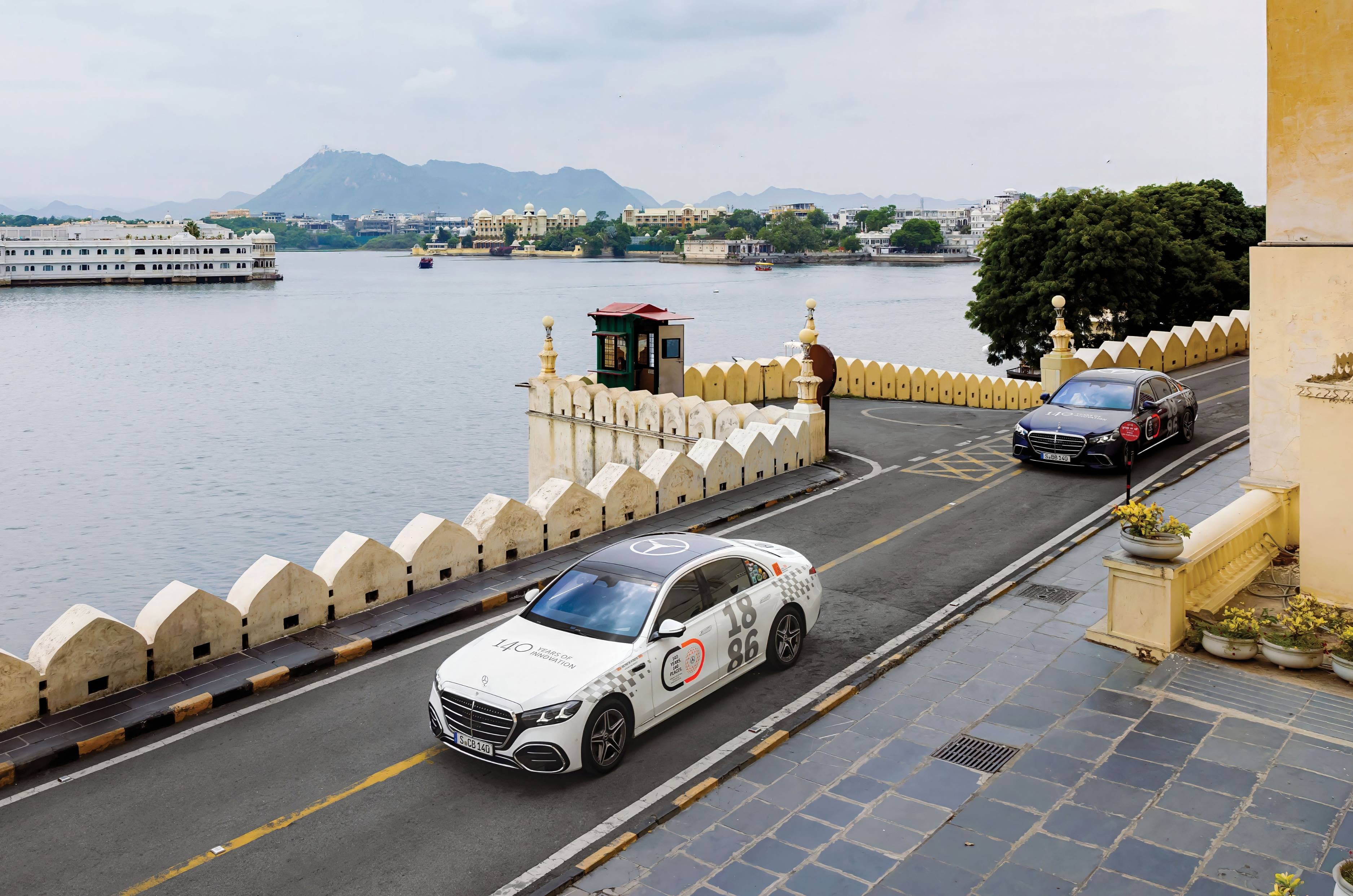
With their royal and regal air, the S-Classes feel right at home in Udaipur.
Part of the 140 Years, 140 Places expedition, Udaipur is one of the more stunning locations the Mercedes drive will visit on this India leg, and what’s incredible is that we have been chosen to be a part of it. What a privilege. The lake city of Udaipur also has tremendous historical significance. Home to one of the longest-serving dynasties, one that spans 1,500 years, this leg sees a coming together of the world’s oldest carmaker and one of the oldest dynasties. And while this trans-continental excursion is called 140 Years, 140 Places, it could also easily have been called 140 Years of Automotive Technology. With these S-Class pre-production cars dripping with both mechanical and electronic tech, what we are also celebrating is the journey of the car from a three-wheeler with a single-cylinder engine to this technological marvel. The company that invented the motorcar is still widely regarded as the one that makes ‘the best car in the world’.
Luxe Supreme
Everything is perfectly still. Not a gauge in the car is moving, and there’s no real sensation of speed. I must have dozed off. Blame it on the incredibly comfortable back seats and the sensory isolation. This car just shuts you off from the rest of the world. Then I discover we are cruising at 100kph, and not just 30 or 40. Up ahead is the lake city of Udaipur. Ahh.
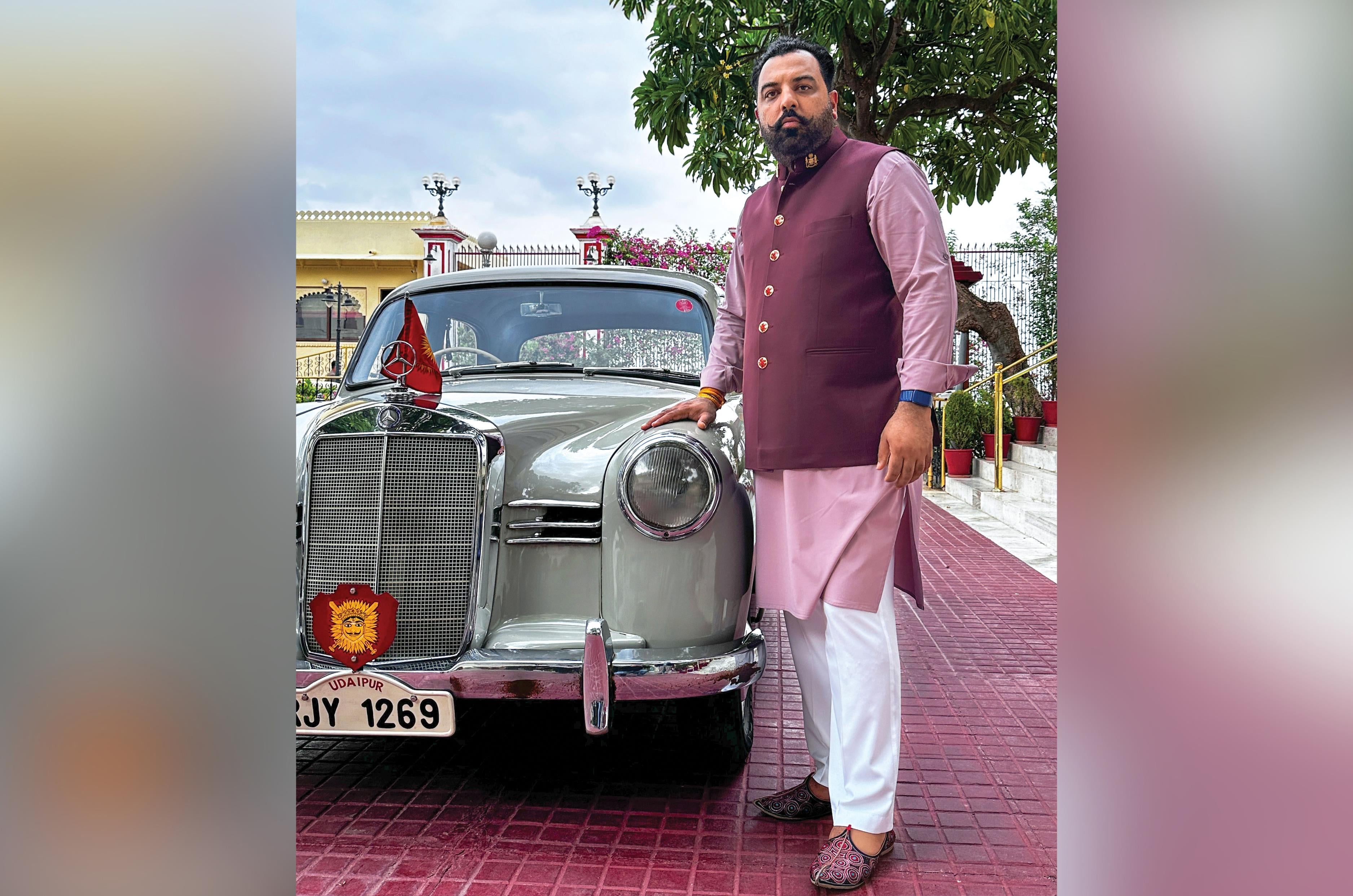
The Maharana of Udaipur with a car that has been in his family for three generations.
We start our journey on this leg from a very significant place, the palace situated on the lakeside at Udaipur. And not only does Lakhsyaraj, the 77th Custodian of the House of Mewar (formally Shriji Huzoor Dr Lakshyaraj Singh of Udaipur), play the perfect host, but he also parks an olive-green 180D in the foyer, a car that has been used by three generations of his family. The symbolism is rich; two legacies converging in a place that embodies the spirit of grandeur and continuity.
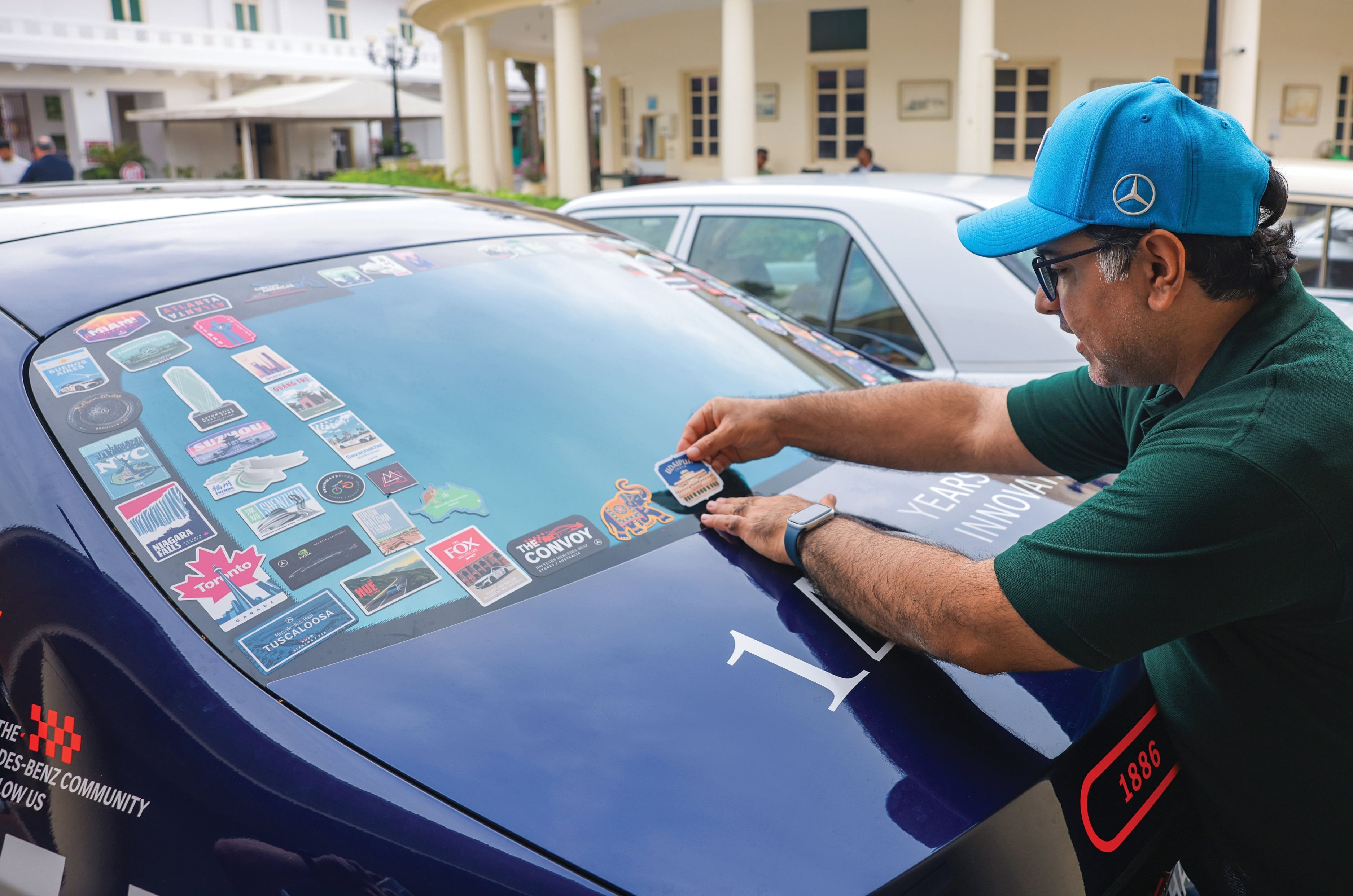
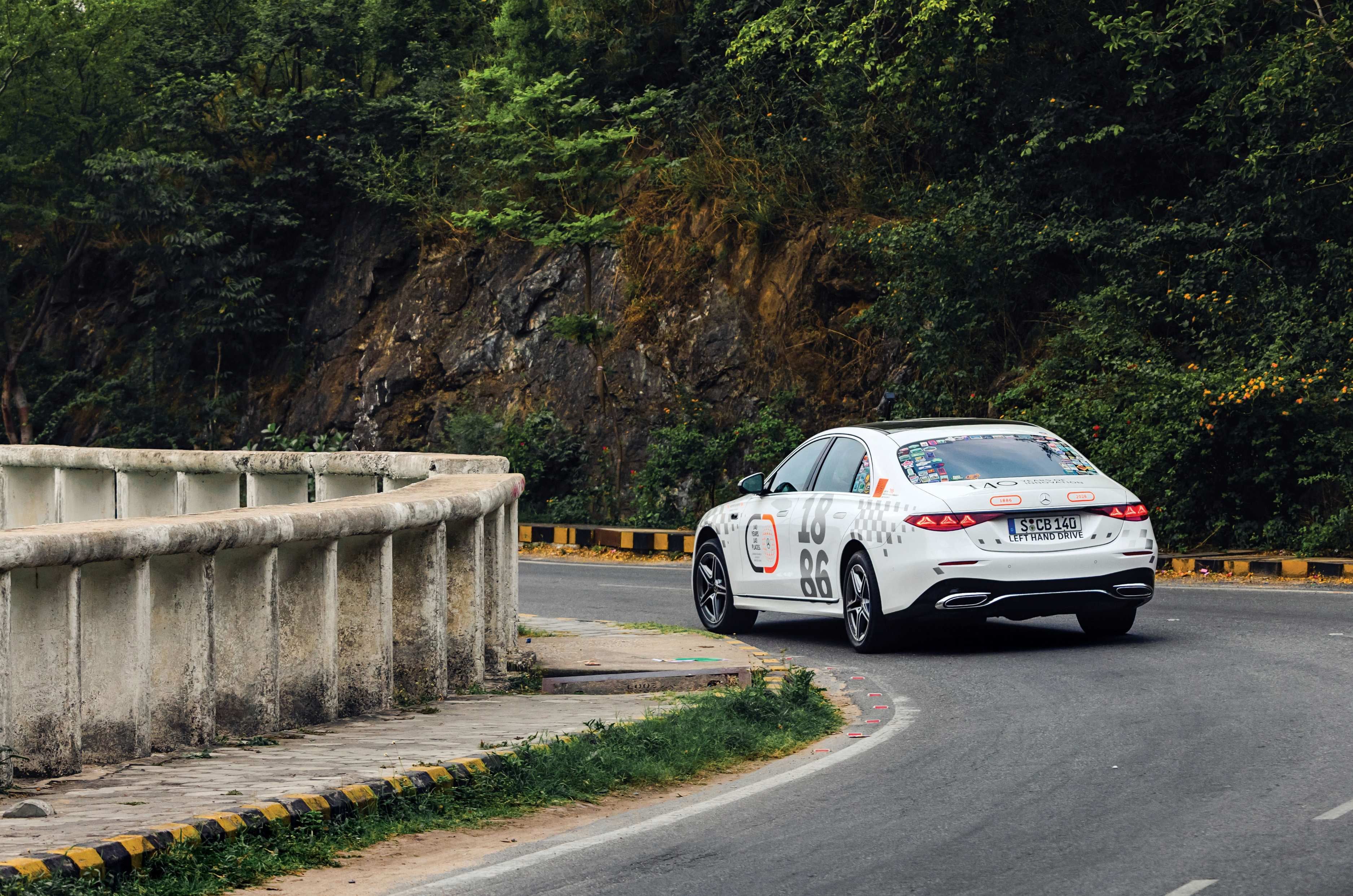
Perseus places the sticker on ‘Bertha’ in Udaipur.
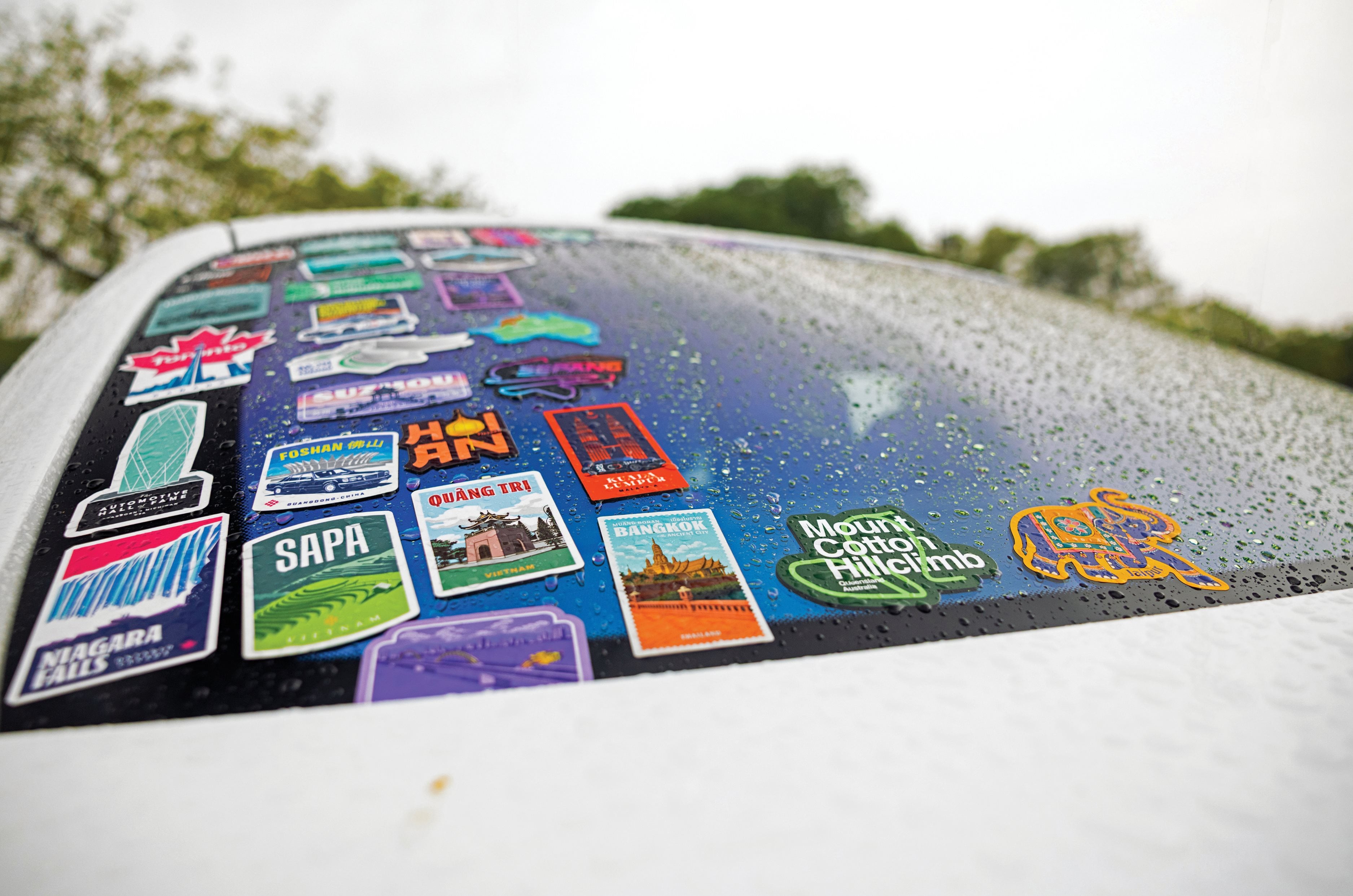
Since Udaipur is one of the 140 iconic destinations on the drive, Mercedes asks him to place an Udaipur sticker on the rear of the car; fitting. These cars, all three (the third is on another leg elsewhere in India), will eventually be housed in the Mercedes museum in Stuttgart, and what’s cool is that you can trace their journey via the stickers. Lakshyaraj then takes one of the cars for a brief drive. He wants to see just how much better this new version, with all its 2,700 new bits, is over his pre-facelifted car. And yes, he loves driving. I’d bumped into him earlier in the day at the airport, where his S-Class had come to pick him up, flags flying and uniformed driver and assistant in tow. But instead of climbing into the rear, he’d gotten straight behind the wheel. Tells you a lot.
Still at the top
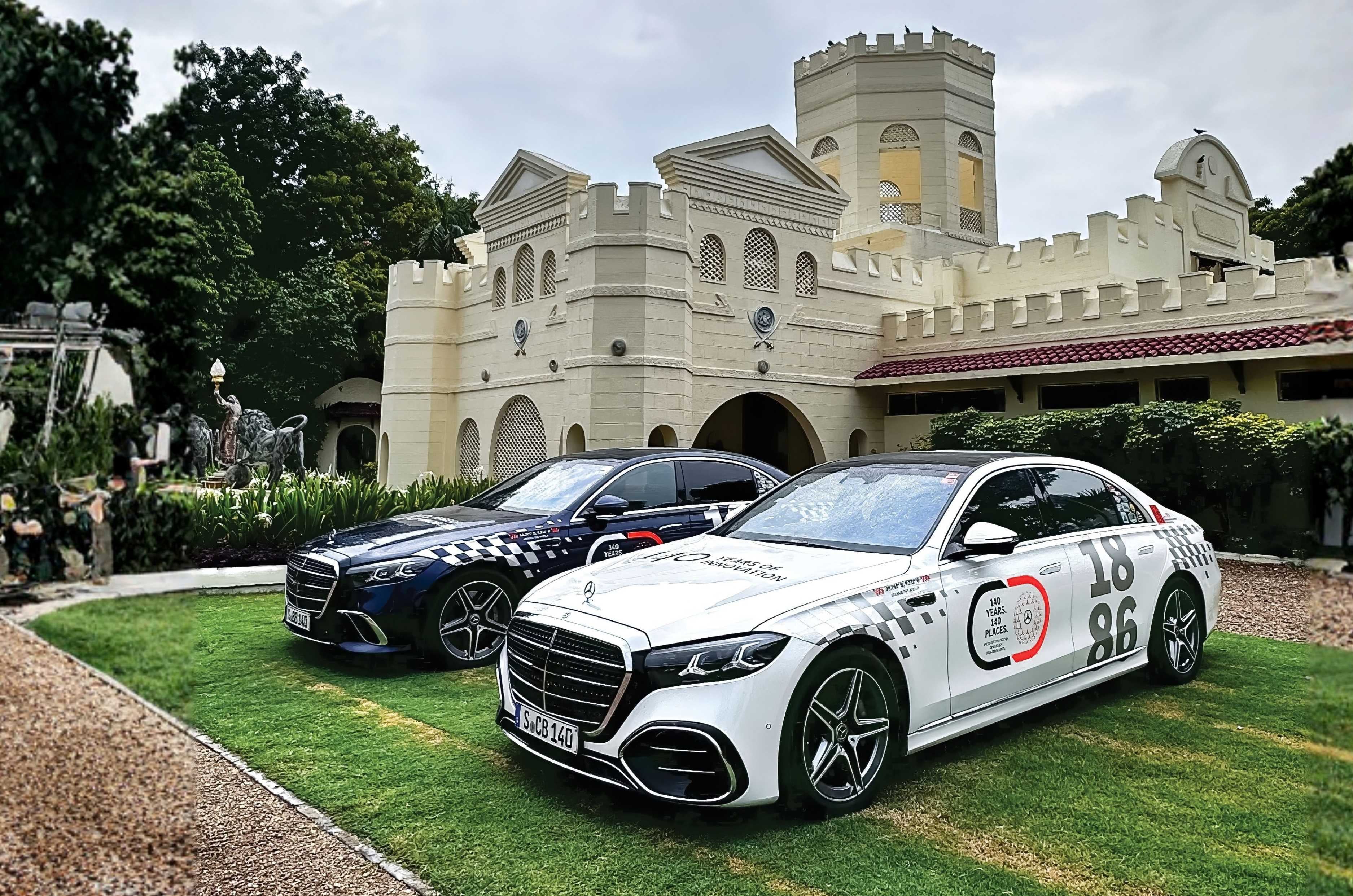
Late prototypes of the New S-Class made the journey.
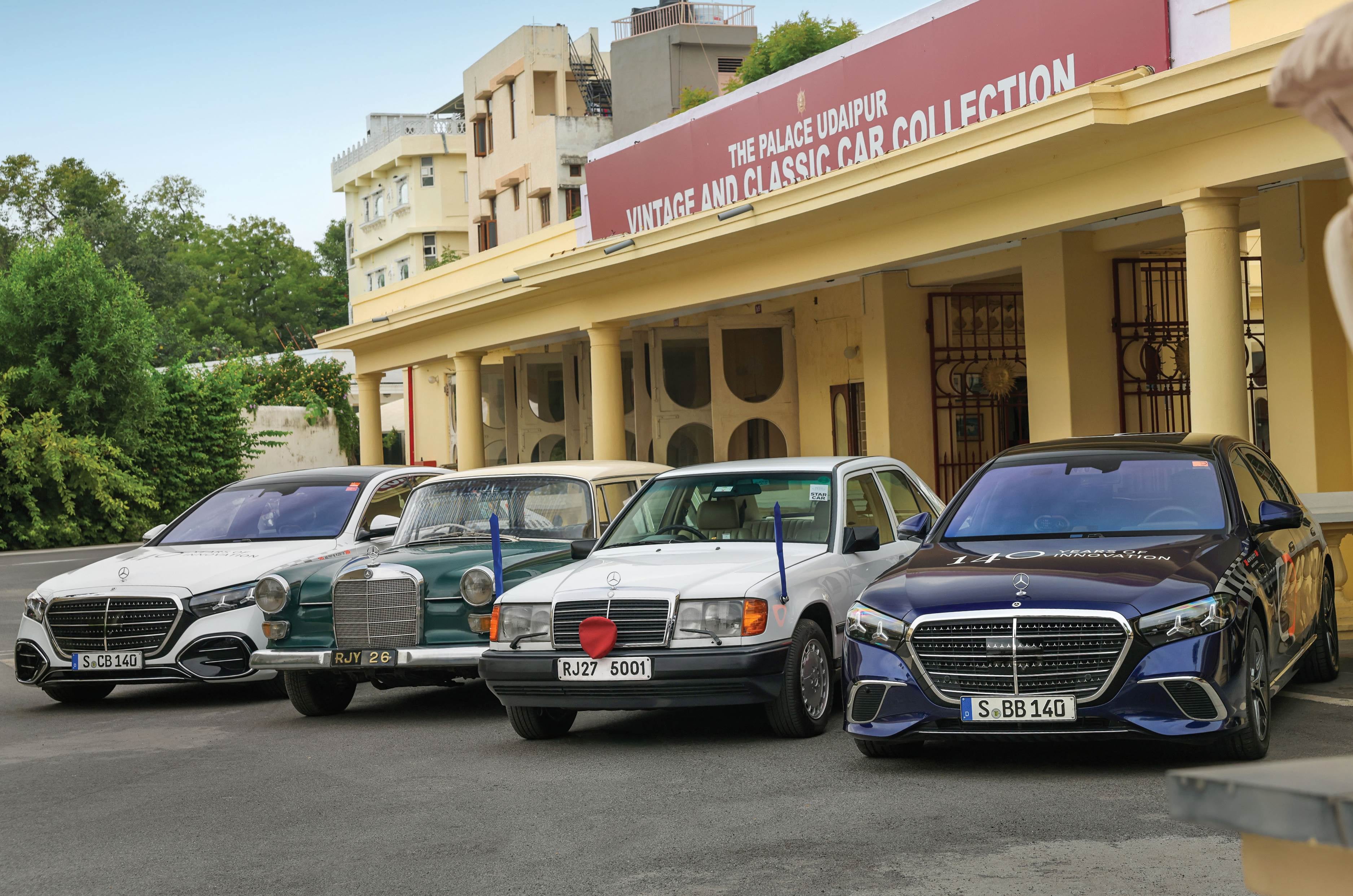
Later in the day, I get another demonstration of why the S-Class is so special. We decide to drive around the lake for the cameras, the orange glow of the setting sun adding to the drama of this once James Bond film set. Sitting in the back feels almost magical, as the S-Class slips forward effortlessly, the sun glistening off the lake. It skips over cratered roads, glides silently through noisy bazaars and intersections and then, as the road around the lake opens out, I barely hear it even though Mercedes’ test driver is pulling the torque-y straight-six hard. This car is named Bertha, after Carl Benz’s wife, the one who undertook the world’s first long-distance drive; quite a story that. And the other, the white one, is Carl; BB and CB, both on Stuttgart number plates.
Hello Grandpa
The S-Classes, along with the fin-tail and the 300D.
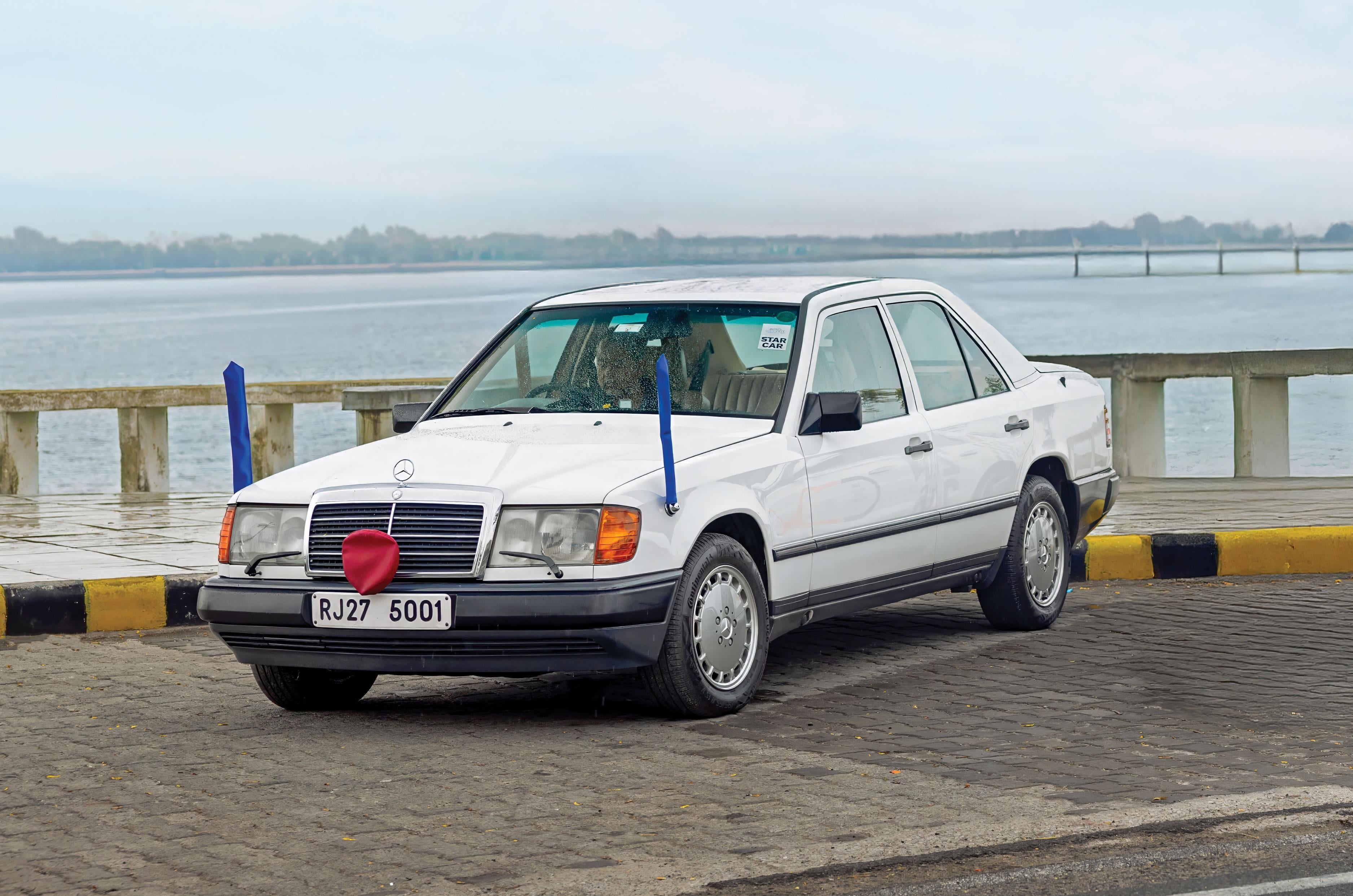
The next day, we set off to see the Udaipur Royal Garage, where we are met by other Mercedes cars. There’s a fin-tail that was used to pick up and drop off guests of the Royal family from neighbouring ‘states’ and a very special W124 300D. The latter, an import rather than a locally assembled W124, stands out from Indian-assembled cars with its black bumpers, headlamp wipers and amber indicators. This six-cylinder diesel with more than 2,00,000km on the clock was used by Shri Arvind Singh Mewar, the earlier Maharana, to cover long distances like Ahmedabad or Jodhpur. Recently restored, it was presented at the Mercedes-Benz Classic Car Rally in Mumbai. The 300D is in such fine nick, I can’t resist a quick spin around another of Udaipur’s stunning lakes, Fateh Sagar.
Why the 300D is such a legend
The W124 300D is an import.
On the outside, the 300D looks sort of underwhelming. Starting up the straight-six diesel is relatively straightforward, although I have to wait for the glow plug to heat up (remember those?). While the roughly 110hp engine doesn’t feel responsive, it feels smooth and refined for a diesel, especially after 2,500rpm. And though it is slow by today’s standards, it doesn’t feel like you’re dragging anchor either. The chunky 300D also feels as tough as a Godrej safe.
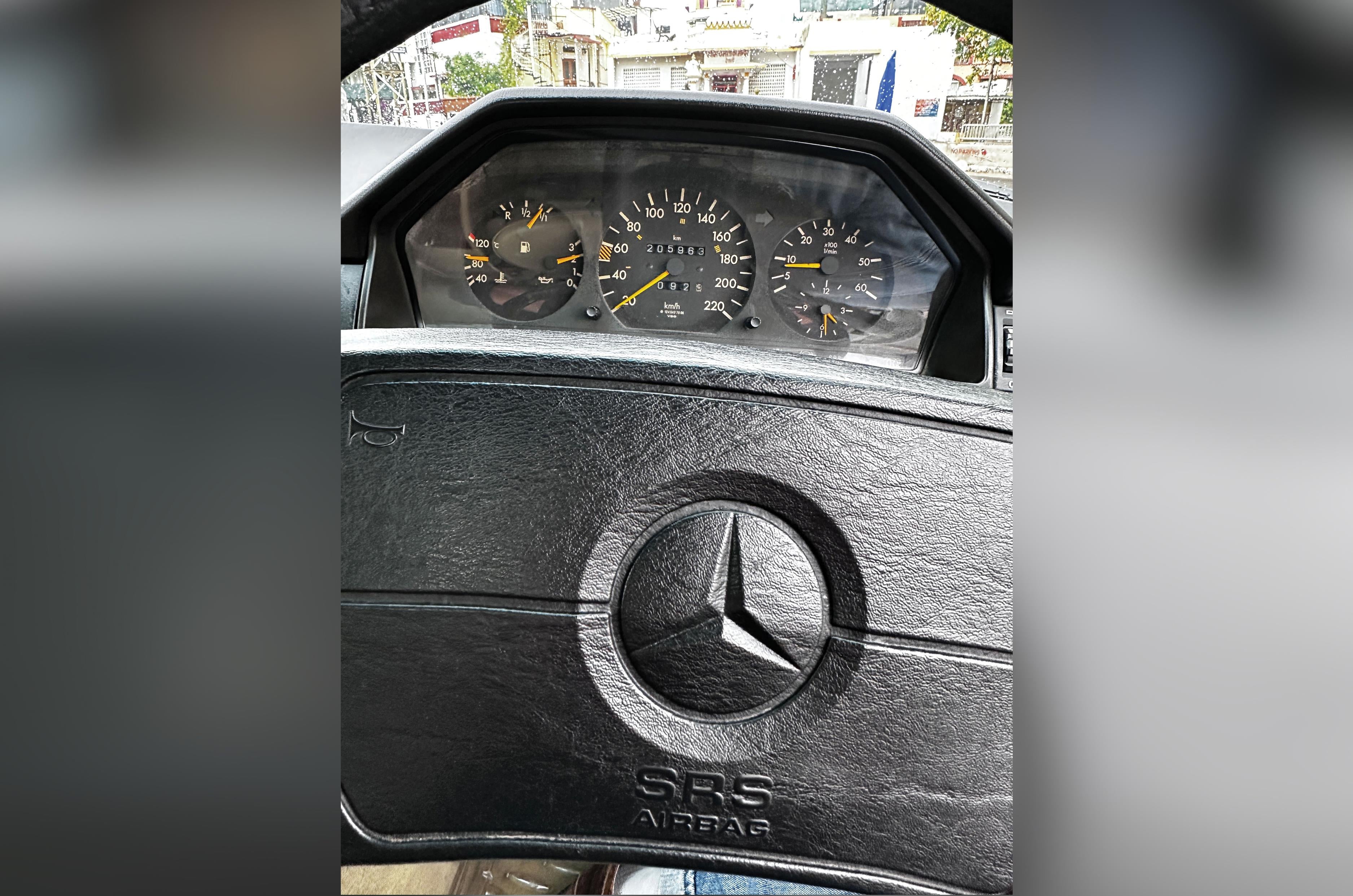
It has 2,00,000km on the odo, but hardly feels like it.
Then I catch a glimpse of the odometer; it reads in excess of 2,00,000 kilometres! Surely my eyes are playing tricks on me. Yes, this car has been recently refurbished, and the suspension has been tightened up, but this thing feels like it has just rolled out of the showroom only recently. It tracks straight, the steering is well weighted and, when I plonk my foot down, it even generates a reasonable amount of torque. This ‘OM603’ straight-six uses indirect injection and a pre-chamber, and has a simple two-valve-per-cylinder setup. Legend has it, it can do a million miles with only basic care. And what of turbo lag, you ask? It doesn’t have one.
Performance tech
The next morning, I get straight behind the wheel of CB or Carl Benz. I’m particularly excited because Carl has a V8 under the hood. What makes this V8 different is that it has some unique tech. This new S-Class is fitted with the ‘M177 Evo’ V8 engine that uses a flat-plane crankshaft! Made popular by Ferrari, a flat-plane crank is used on sportscars to help bunch up the firing order of the cylinders, so you get more of a kick from overlapping strokes. These engines, however, are not as smooth. So why has Mercedes used it in the S-Class, an out-and-out luxury car? Simple: it delivers better efficiency and lower emissions, as the crankshaft is lighter and there’s less reciprocating mass. And what of the vibrations? Mercedes says it has thrown tech at the problem.
V8-equipped S-Class feels effortlessly quick.
Initially, the going is slow as we exit the city. But once we get onto the wide highway, a small tap on the throttle releases a swell of torque just off 2,000rpm. And with 537hp propelling the limousine forward, it just shrinks the long straights on the highway. What’s cool is that the engine never feels brutish or AMG-like; the V8 soundtrack and rumble are superbly muted. The tech works. The new engine, in fact, is so well behaved that I have to check if it is indeed the one with the flat plane crank. At the next stop, I turn around and ask Mario Schneider, head of development for all Mercedes-Benz sedans, who just happens to be in the rear seat.
Also along for the drive is Perseus Bandrawalla, Autocar India’s curator of classic and modern classic events. Five minutes behind the wheel and he is waxing lyrical about the Mercedes V8 engines of days gone past – the M100, the M119 that powered the SL and others. It brings into perspective just how many great V8s Mercedes has had over the years, the 6.3 AMG V8, of course, included.
Cruise control
The three screens and updated cabin created a futuristic setup in a traditional environment.
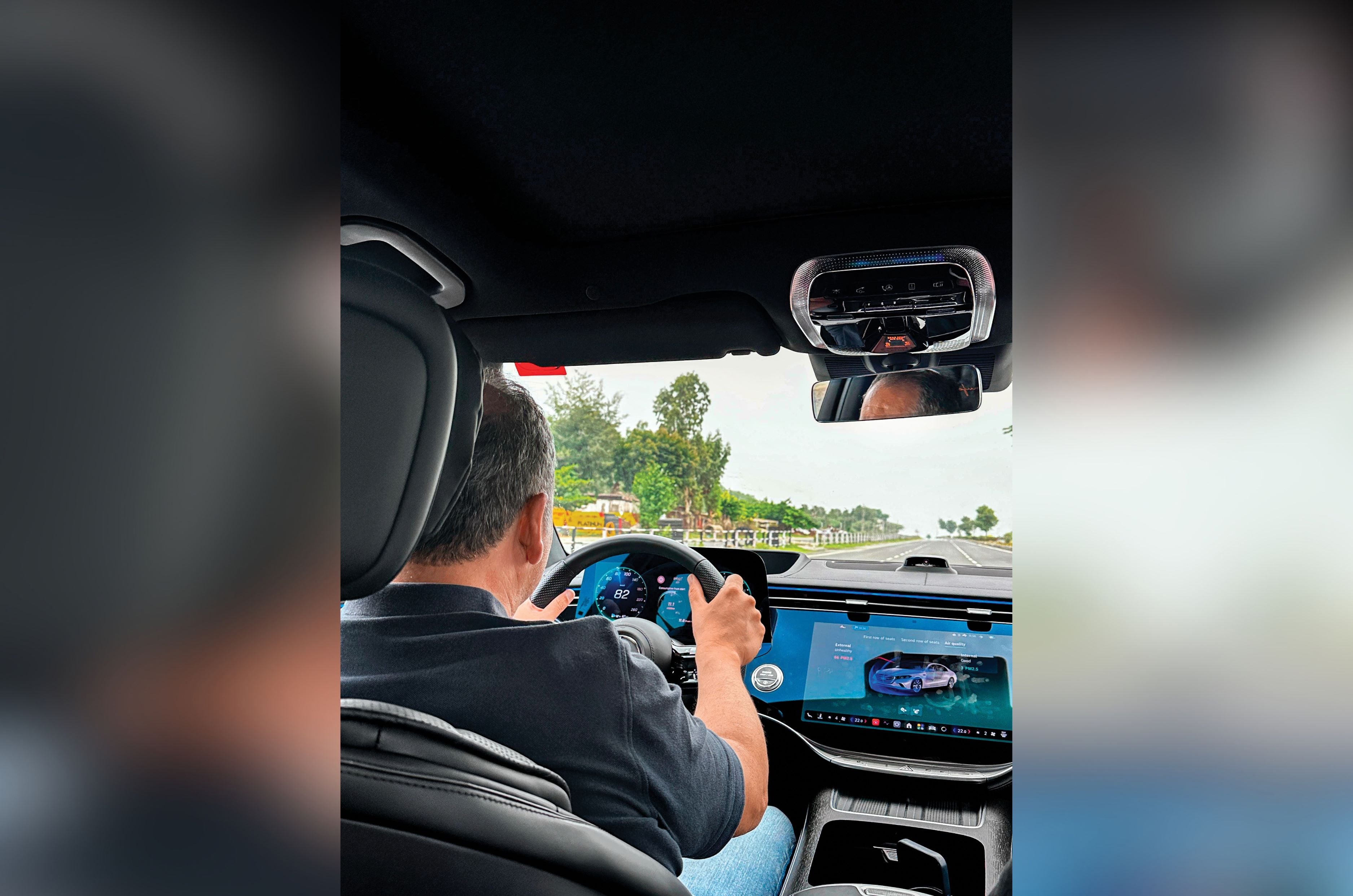
Further up, we get to a ghat section. Not only does the ride on this updated air suspension and adaptive dampers feel a bit more supple, it also feels at home on the winding road, the rear-wheel steering helps it into corners neatly. Even cooler, despite all the tech, it retains a natural fluidity and a sense of mechanical harmony, which make long drives feel just effortless. Are city-bound S-Class owners missing what’s best about this car? Absolutely! Talking about tech, this car also gets Level 3 autonomous driving (in places where it’s allowed), where the driver can be hands off, and even eyes off, with Mercedes Drive Pilot taking responsibility for safety. It is only one of two cars to get this globally.
As we get into traffic, what I notice is that the updated cabin, with its three screens and ambient lighting, creates an environment that is both futuristic and traditional. The seats, with massage and cooling functions, are thrones in their own right. And it’s not just the size, specifications and features it has; it’s how well everything is executed, from the solid build of the cabin to the new phone-like remote controls in the rear.
Collector’s edition
Streamlined Maybach SW38 four door could do 160kph
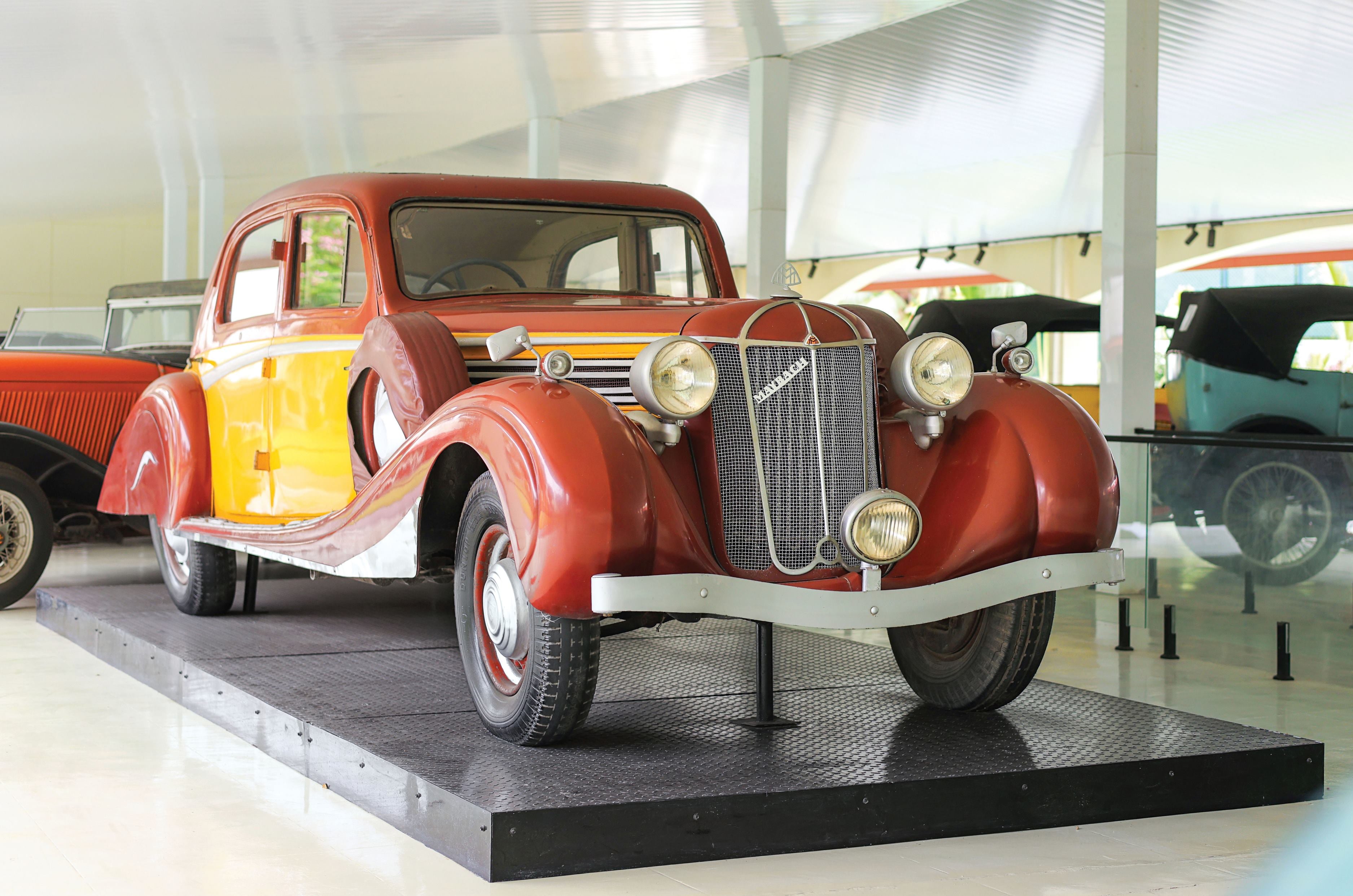
As we get to Ahmedabad, we turn into another historical location, Dastan Auto World – collector extraordinaire Pranlal Bhogilal’s collection, where the modern S-Classes met some more of their ancestors. A Maybach SW38, ordered by Maharaja Umaid Singh of Kota, draws admiring stares from the German members of the Mercedes crew, especially its aerodynamic profile. Capable of nearly 160kph, it was one of the fastest four-doors of its time. Equally captivating are Mercedes’ post-war comeback cars – the 300S ‘Adenauers’. Named after Germany’s first Chancellor, who famously rode in one with his hat on, this limousine is what eventually evolved into the S-Class.
Heritage and high tech
You can trace the journey via the stickers on the cars.
The 140 Years, 140 Places drive captured the duality of Mercedes perfectly; the brand embodies both heritage and innovation in equal measure, both streams converging seamlessly. As the convoy continues its odyssey, what’s clear is that this is a celebration not only of Mercedes’ past, but also the brand’s ability to connect eras, cultures and people through the universal language of the automobile.
IRB Infrastructure: टोल और हाईवे इंफ्रास्ट्रक्चर डेवलपर कंपनी IRB Infrastructure Developers Ltd ने अगस्त 2026 के टोल रेवेन्यू के आंकड़े जारी किए हैं। कंपनी का ग्रॉस टोल रेवेन्यू सालाना आधार पर करीब 25% बढ़कर ₹807 करोड़ पहुंच गया। अगस्त 2025 में यह ₹646 करोड़ था।
प्रमुख टोल एसेट्स का प्रदर्शन
IRB MP Expressway का टोल रेवेन्यू अगस्त 2026 में बढ़कर ₹172.1 करोड़ हो गया। एक साल पहले यह ₹144.7 करोड़ था। वहीं, IRB Golconda Expressway का रेवेन्यू ₹73.7 करोड़ से बढ़कर ₹87.9 करोड़ हो गया।
IRB Ahmedabad Vadodara Super Express Tollway ने अगस्त में ₹80.3 करोड़ का टोल रेवेन्यू दर्ज किया। पिछले साल इसी महीने यह ₹69.1 करोड़ था। IRB Lalitpur Tollway का रेवेन्यू भी ₹36.1 करोड़ से बढ़कर ₹43.5 करोड़ हो गया।
इसके अलावा, IRB Tumkur Chitradurga Tollway का टोल रेवेन्यू ₹34.9 करोड़ से बढ़कर ₹38.4 करोड़ रहा। Udaipur Tollway का रेवेन्यू ₹26.3 करोड़ से बढ़कर ₹28.8 करोड़ हो गया।
नए एसेट्स से भी मिला योगदान
अगस्त 2026 में तीन ऐसे एसेट्स रहे, जिनका पिछले साल का तुलनात्मक आंकड़ा उपलब्ध नहीं था। IRB Harihara Corridors Tollway ने ₹41.7 करोड़, IRB Chandibhadra Tollway ने ₹20 करोड़ और Meerut Budaun Expressway ने ₹22.6 करोड़ का टोल रेवेन्यू दर्ज किया।
कुछ एसेट्स में रेवेन्यू घटा
सभी प्रोजेक्ट्स का प्रदर्शन एक जैसा नहीं रहा। IRB Kota Tollway का टोल रेवेन्यू ₹7.1 करोड़ से घटकर ₹6.3 करोड़ रह गया। Hapur Moradabad Tollway का रेवेन्यू ₹28.9 करोड़ से घटकर ₹22.3 करोड़ रहा।
वहीं, Kishangarh Gulabpura Tollway का टोल रेवेन्यू मामूली गिरावट के साथ ₹23 करोड़ से ₹22.5 करोड़ रह गया।
28 हाईवे एसेट्स का पोर्टफोलियो
कंपनी के मुताबिक, IRB Group के पास 13 राज्यों में 28 रेवेन्यू जेनरेटिंग हाईवे एसेट्स हैं। इन एसेट्स की कुल वैल्यू करीब ₹94,000 करोड़ है। रोजाना करीब 15 लाख व्हीकल इन हाईवे एसेट्स से गुजरते हैं।
कंपनी अपनी एसेट चर्न स्ट्रैटेजी के जरिए FY2029 तक एसेट बेस को बढ़ाकर करीब ₹1.4 लाख करोड़ करने की योजना बना रही है।
कंपनी ने क्या कहा?
IRB Infrastructure Developers के डिप्टी CEO अमिताभ मुराका ने कहा कि अगस्त में मजबूत टोल रेवेन्यू कंपनी के एसेट्स पर लगातार ट्रैफिक ग्रोथ को दिखाता है। ट्रैफिक बढ़ने के साथ FY27 की शुरुआत में लागू किए गए टैरिफ रिविजन से भी रेवेन्यू को सपोर्ट मिला है।
उन्होंने कहा कि मजबूत GDP ग्रोथ से आर्थिक गतिविधियों में मजबूती बनी हुई है। गणेश फेस्टिवल के साथ फेस्टिव सीजन भी शुरू हो चुका है। ऐसे में आने वाले महीनों में ट्रैफिक का पॉजिटिव मोमेंटम जारी रहने की उम्मीद है।
शेयर का हाल
IRB Infrastructure Developers का शेयर बुधवार को BSE पर 0.94% की गिरावट के साथ ₹19.07 पर बंद हुआ। पिछले 1 साल में स्टॉक 9.84% गिरा है। इसका मार्केट कैप 11.50 हजार करोड़ रुपये है।
Disclaimer: यहां मुहैया जानकारी सिर्फ सूचना के लिए दी जा रही है। यहां बताना जरूरी है कि मार्केट में निवेश बाजार जोखिमों के अधीन है। निवेशक के तौर पर पैसा लगाने से पहले हमेशा एक्सपर्ट से सलाह लें। मनीकंट्रोल की तरफ से किसी को भी पैसा लगाने की यहां कभी भी सलाह नहीं दी जाती है।
Surat-Udaipur Vande Bharat Express: रेल मंत्रालय ने गुजरात को राजस्थान से जोड़ने वाली एक नई वंदे भारत एक्सप्रेस ट्रेन सेवा को मंज़ूरी दे दी है। यह नई सेमी-हाई स्पीड ट्रेन सूरत और उदयपुर के बीच चलेगी। इस ट्रेन का रखरखाव और संचालन वेस्टर्न रेलवे (WR) जोन करेगा।
वेस्टर्न रेलवे और नॉर्थ वेस्टर्न रेलवे के जनरल मैनेजर (ऑपरेटिंग) को 31 अगस्त को लिखे एक पत्र में, रेलवे बोर्ड ने बताया कि उसने 26903/26904 सूरत-उदयपुर सिटी वंदे भारत एक्सप्रेस शुरू करने को मंजूरी दे दी है।
इंडियन रेलवे एक वंदे भारत ट्रेन बंद करेगा
रेलवे बोर्ड ने ट्रेन नंबर 26963/26964 उदयपुर सिटी-असारवा वंदे भारत एक्सप्रेस को बंद करने की भी मंजूरी दी है। उदयपुर सिटी-असारवा (अहमदाबाद) वंदे भारत एक्सप्रेस फरवरी 2026 में शुरू की गई थी। अभी यह ट्रेन मंगलवार को छोड़कर हफ्ते में छह दिन चलती है।
सूरत-उदयपुर वंदे भारत ट्रेन: दूरी और यात्रा का समय
सूरत-उदयपुर वंदे भारत एक्सप्रेस ट्रेन लगभग 690 किलोमीटर की दूरी 7 घंटे 30 मिनट में तय करती है। यह अधिकतम 160 किलोमीटर प्रति घंटे की रफ्तार से चल सकती है।
सूरत-उदयपुर वंदे भारत एक्सप्रेस: स्टॉपेज और फ्रीक्वेंसी
सूरत-उदयपुर वंदे भारत एक्सप्रेस ट्रेन मंगलवार को छोड़कर हफ्ते में 6 दिन चलेगी। सूरत और उदयपुर सिटी के बीच अपनी यात्रा के दौरान, यह ट्रेन 9 रेलवे स्टेशनों पर रुकेगी। ये स्टेशन हैं: भरूच, वडोदरा, आणंद, मणिनगर, असरवा, हिम्मतनगर, शामलाजी रोड, डूंगरपुर और जावर।
सूरत-उदयपुर सिटी वंदे भारत: कोच की संख्या और समय
सूरत-उदयपुर सिटी वंदे भारत एक्सप्रेस में 8 कोच होंगे। ट्रेन नंबर 26903 सूरत से सुबह 06:10 बजे चलेगी और दोपहर 13:40 बजे उदयपुर सिटी पहुंचेगी। वापसी में, ट्रेन नंबर 26904 उदयपुर सिटी से दोपहर 15:35 बजे चलेगी और रात 23:00 बजे सूरत पहुंचेगी।
बारिश का मौसम सिर्फ ठंडी हवाएं और सुकून ही नहीं लाता, बल्कि कई जगहों की खूबसूरती भी कई गुना बढ़ा देता है। एशिया में ऐसे कई ट्रैवल डेस्टिनेशन (travel destination) हैं, जो मानसून (monsoon)के दौरान धुंध से ढकी पहाड़ियों, झरनों, हरियाली और खूबसूरत नजारों से किसी फिल्मी सीन जैसे लगते हैं। अगर आपको बारिश में घूमना पसंद है, तो ये जगहें आपकी अगली ट्रिप (trip) के लिए बेहतरीन साबित हो सकती हैं:
Udaipur, India (उदयपुर, भारत)
राजस्थान का उदयपुर बारिश के मौसम में और भी खूबसूरत दिखने लगता है। दिल्ली, मुंबई और जयपुर जैसे शहरों से यहां ट्रेन, फ्लाइट और सड़क मार्ग से आसानी से पहुंचा जा सकता है। मानसून में पिछोला झील (Lake Pichola) पानी से भर जाती है और सिटी पैलेस का नजारा देखने लायक होता है। आप मानसून पैलेस (Monsoon Palace) , फतेह सागर झील (Fateh Sagar Lake)और बोट राइड का भी आनंद ले सकते हैं।
Munnar, India (मुन्नार, भारत)
केरल का मुन्नार मानसून में किसी हरे स्वर्ग जैसा नजर आता है। कोच्चि एयरपोर्ट से लगभग 4 घंटे की रोड ट्रिप करके यहां पहुंचा जा सकता है। बारिश के दौरान चाय के बागान, अट्टुकल वॉटरफॉल (Attukal Waterfalls) और धुंध से ढकी पहाड़ियां पर्यटकों (tourists) को खूब आकर्षित करती हैं। यहां बैठकर गर्म चाय के साथ बारिश का आनंद लेना एक अलग ही एक्सपीरियंस है।
Baguio, Philippines (बगियो, फ़िलीपींस)
अगर आप बारिश के मौसम में ठंडी हवा और पहाड़ों का मजा लेना चाहते हैं, तो फिलीपींस का बगियो शहर बेहतरीन जगह है। मनीला (Manila) से करीब 4 से 6 घंटे की सड़क यात्रा (road trip) करके यहां पहुंचा जा सकता है। में यहां की पहाड़ियां धुंध से ढक जाती हैं और मौसम काफी ठंडा हो जाता है। बरनहम पार्क (Burnham Park) में घूमना, लोकल कैफे में गर्म कॉफी पीना और आसपास के व्यू पॉइंट्स से नजारे देखना यहां का खास एक्सपीरियंस है।
Ubud, Indonesia (उबुद, इंडोनेशिया)
उबुद बाली द्वीप ( island ) पर है। भारत से पहले बाली (Denpasar) की फ्लाइट लें और वहां से करीब डेढ़ घंटे की टैक्सी राइड करके उबुद पहुंच सकते हैं। बारिश के मौसम में यहां के धान के खेत, झरने और जंगल बेहद हरे-भरे हो जाते हैं। सुबह की सैर, योग सेशन और तेगालालंग राइस टैरेस (Tegalallang Rice Terrace) की खूबसूरती इस मौसम में और बढ़ जाती है।
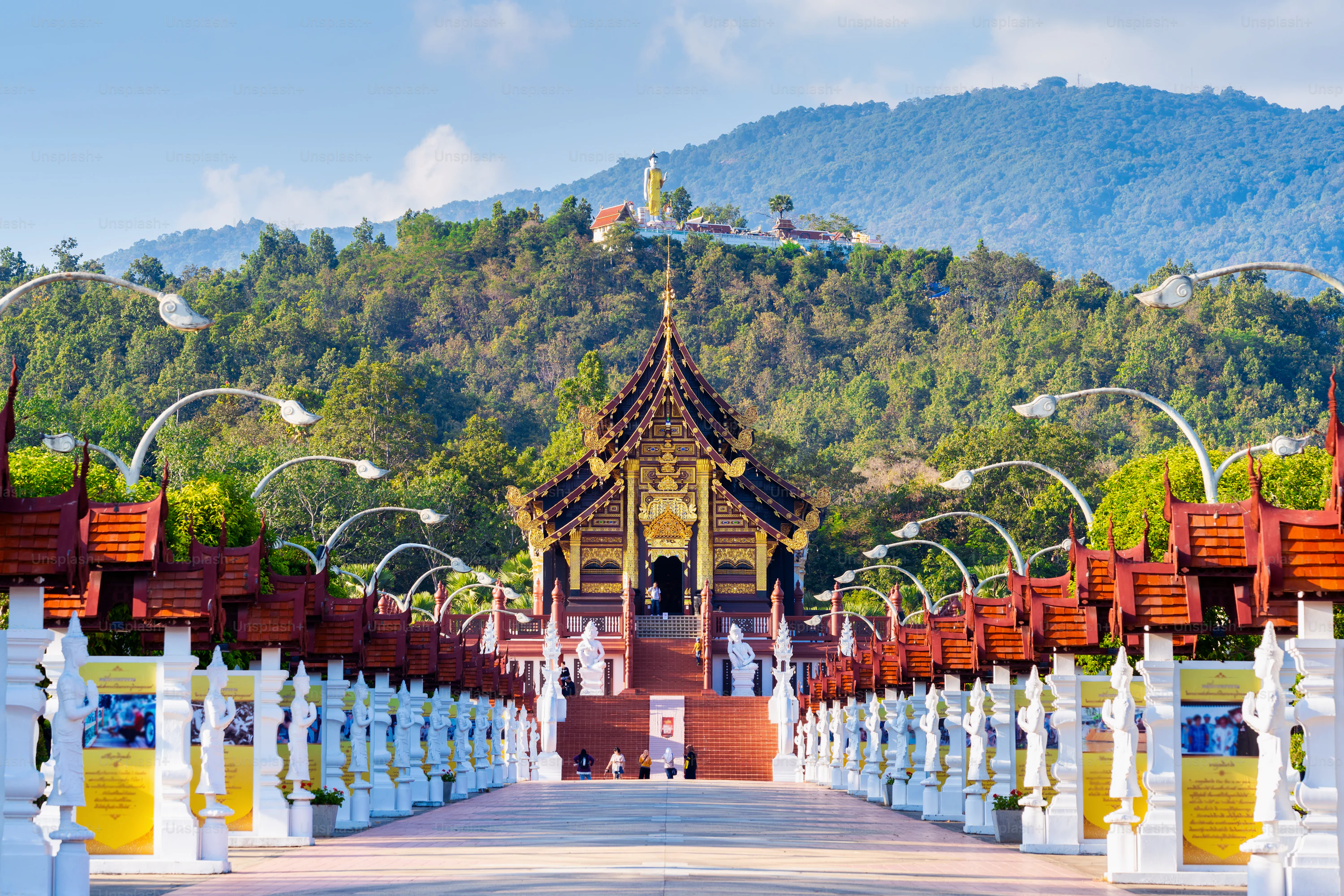
Chiang Mai, Thailand (चियांग माई, थाईलैंड)
थाईलैंड (Thailand )का चियांग माई मानसून में हरियाली से भर जाता है। बैंकॉक (Bangkok) से फ्लाइट या ट्रेन के जरिए यहां आसानी से पहुंच सकते हैं। बारिश के बाद यहां की पहाड़ियां, धान के खेत और दोई इनथानोन नेशनल पार्क (Doi Inthanon National Park) बेहद खूबसूरत दिखते हैं। सुबह मंदिर घूमने और शाम को नाइट मार्केट का मजा लेने का यह अच्छा समय माना जाता है।
Hoi An, Vietnam (होई आन, वियतनाम)
होई आन अपने पुराने शहर और रंग-बिरंगी लालटेनों के लिए मशहूर है। दा नांग एयरपोर्ट से करीब 45 मिनट की रोड ट्रिप करके यहां पहुंचा जा सकता है। बारिश के मौसम में यहां की गलियां और नदी किनारा और भी अट्रेक्टिव दिखते हैं। आप लालटेन बनाने की वर्कशॉप, लोकल फूड और नदी किनारे शाम बिताने का आनंद ले सकते हैं।
Luang Prabang, Laos (लुआंग प्रबांग, लाओस)
लाओस का यह शांत शहर मानसून में हरियाली से भर जाता है। यहां फ्लाइट से पहुंचना सबसे आसान तरीका है। बारिश के दौरान कुआंग सी वॉटरफॉल (Kuang Si Waterfall) पूरे वेग से बहता है और देखने लायक नजारा पेश करता है। मंदिरों की सैर, मेकांग नदी में बोट राइड और नाइट मार्केट घूमना यहां की खास एक्टिविटी हैं।
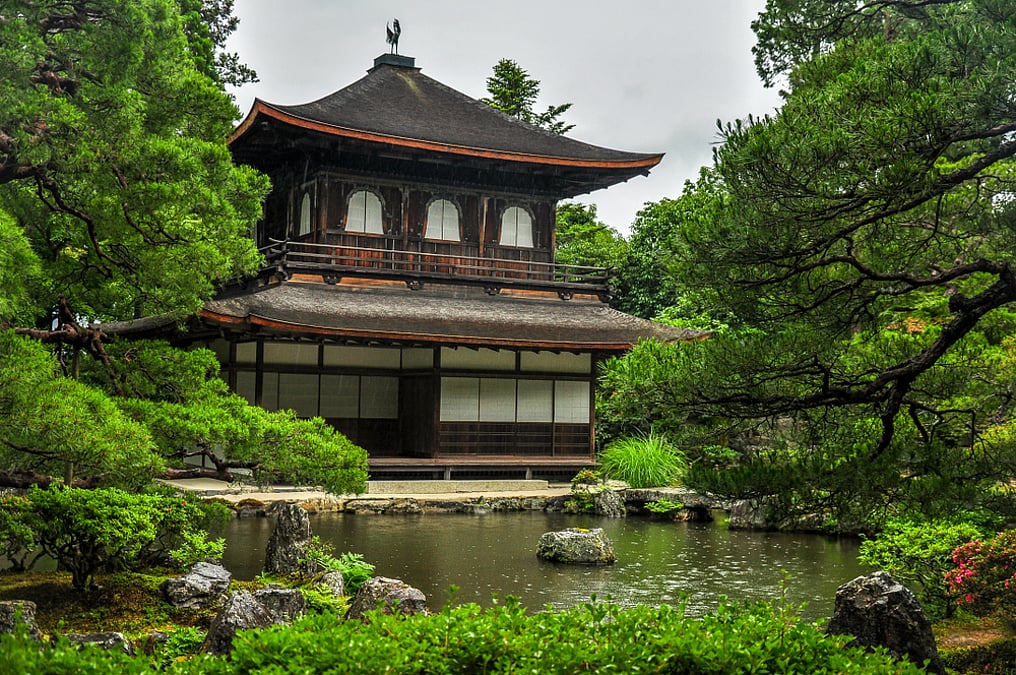
Kyoto, Japan (क्योटो, जापान)
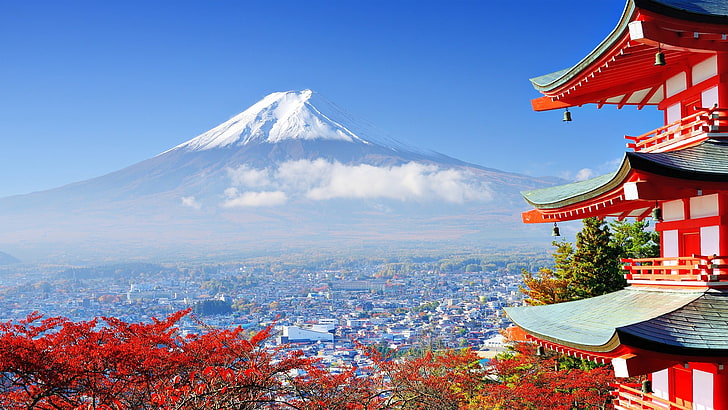
जापान का क्योटो बारिश के मौसम में बेहद शांत और खूबसूरत लगता है। टोक्यो या ओसाका से बुलेट ट्रेन के जरिए आसानी से यहां पहुंचा जा सकता है। मानसून में यहां के मंदिर, मॉस गार्डन (moss garden) और हाइड्रेंजिया (hydrangea) के फूल बेहद सुंदर नजर आते हैं। इस मौसम में टूरिस्ट की भीड़ भी कम रहती है, जिससे आराम से घूमने का मौका मिलता है।
George Town, Malaysia (जॉर्ज टाउन, मलेशिया)
मलेशिया के पेनांग द्वीप (Penang Island) पर जॉर्ज टाउन अपने हेरिटेज (street food) और स्ट्रीट फूड (street food) के लिए जाना जाता है। पेनांग एयरपोर्ट (Penang Airport) से कुछ ही देर में यहां पहुंच सकते हैं। बारिश के मौसम में पुरानी इमारतें और सड़कें अलग ही खूबसूरती बिखेरती हैं। यहां का लोकल खाना, कैफे और स्ट्रीट आर्ट टूरिस्ट को खूब पसंद आते हैं।
Arugam Bay, Sri Lanka (अरुगम बे, श्रीलंका)
अगर आपको सर्फिंग पसंद है, तो श्रीलंका का अरुगम बे (Arugam Bay) बारिश के मौसम में शानदार जगह है। कोलंबो (Colombo) से डोमेस्टिक फ्लाइट या रोड के जरिए यहां पहुंचा जा सकता है। मानसून के दौरान यहां समुद्र की ऊंची लहरें सर्फिंग के लिए बेहतरीन मानी जाती हैं। इसके अलावा शांत बीच, ताजा सी-फूड और खूबसूरत सूर्योदय भी यहां की खास पहचान हैं।
भारत के तीन खूबसूरत शहरों ने दुनिया के सबसे पसंदीदा टूरिस्ट डेस्टिनेशन में अपनी जगह बनाई है। ‘ट्रैवल + लेज़र’ के ‘वर्ल्ड्स बेस्ट अवार्ड्स 2026’ में उदयपुर, जयपुर और मुंबई को दुनिया के टॉप 25 शहरों में शामिल किया गया है। यह रैंकिंग दुनियाभर के 6.61 लाख से ज्यादा रीडर्स के वोट और उनके ट्रेवल एक्सपीरियंस के बेस पर तैयार की गई है, आइए जानते हैं आखिर ये तीनों भारतीय शहर दुनिया के बेस्ट टूरिस्ट डेस्टिनेशन की लिस्ट में क्यों शामिल हुए और यहां घूमने की क्या खास वजह है:
दुनिया की टॉप 25 लिस्ट में तीन भारतीय शहर
‘ट्रैवल + लेजर’ के ‘वर्ल्ड्स बेस्ट अवार्ड्स 2026’ में भारत के उदयपुर, जयपुर और मुंबई ने दुनिया के टॉप 25 शहरों में जगह बनाई। यह लिस्ट लाख से भी ज्यादा लोगों के ग्लोबल रीडर सर्वे के बेस पर तैयार की गई है, जिसमें शहरों को उनके टूरिस्ट एक्सपीरियंस, संस्कृति और मेहमाननवाजी के लिए आंका गया।
उदयपुर बना सबसे ऊंची रैंक वाला भारतीय शहर
उदयपुर दुनिया में 12वें और एशिया में 8वें स्थान पर रहा। इसे ‘झीलों का शहर’ कहा जाता है। यहां की पिछोला झील, सिटी पैलेस, फतेह सागर झील, हेरिटेज होटल और राजस्थानी संस्कृति पर्यटकों को बेहद पसंद आती है।
अगर आप शाही माहौल, शांत झीलों में बोट राइड और खूबसूरत सूर्यास्त का आनंद लेना चाहते हैं, तो उदयपुर जरूर जाएं। यहां घूमने का सबसे अच्छा समय अक्टूबर से मार्च है।
जयपुर ने भी बनाई खास पहचान
जयपुर ने दुनिया में 16वीं और एशिया में 10वीं रैंक हासिल की। ‘पिंक सिटी’ अपने ऐतिहासिक किलों, हवेलियों, महलों और रंग-बिरंगे बाजारों के लिए मशहूर है।
यहां आमेर किला, हवा महल, सिटी पैलेस और लोकल मार्केट घूमने लायक हैं। हिस्ट्री, आर्किटेक्टर, शॉपिंग और राजस्थानी खाने का मजा लेना चाहते हैं, तो जयपुर एक बेहतरीन डेस्टिनेशन है।
मुंबई की संस्कृति और लाइफस्टाइल को मिली पहचान
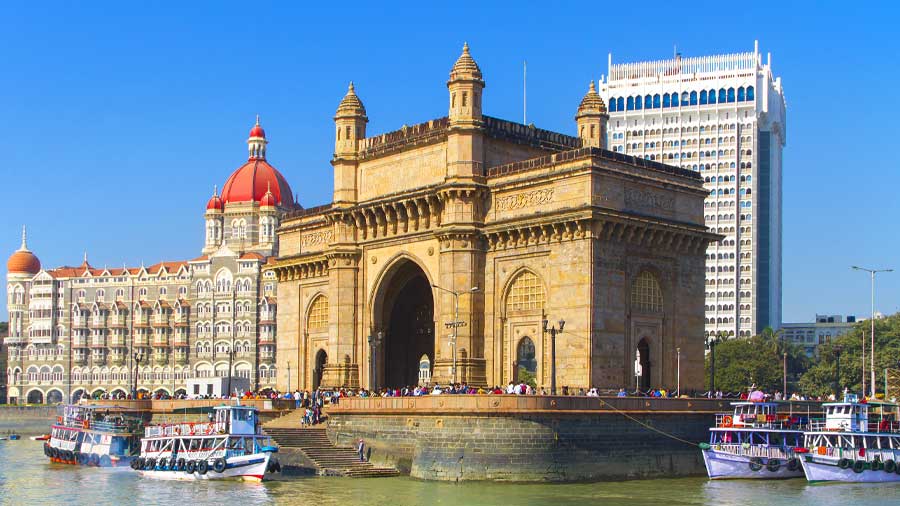
मुंबई दुनिया में 21वें और एशिया में 12वें स्थान पर रही। यह शहर मॉडर्न लाइफस्टाइल और ट्रेडिशन का शानदार ब्लेंड है। यहां गेटवे ऑफ इंडिया, मरीन ड्राइव, जुहू चौपाटी, बॉलीवुड, स्ट्रीट फूड और नाइटलाइफ टूरिस्ट को अट्रैक्ट करते हैं।
अगर आप समुद्र किनारे घूमना, अलग-अलग तरह का खाना चखना और शहर की तेज रफ्तार जिंदगी का एक्सपीरियंस लेना चाहते हैं, तो मुंबई जरूर जाएं। यहां घूमने का सबसे अच्छा समय नवंबर से फरवरी है।
दुनिया के टॉप 5 शहर कौन-से हैं?
इस साल की ग्लोबल रैंकिंग में सैन मिगुएल डी एलेंडे (मेक्सिको) पहले स्थान पर रहा। इसके बाद क्योटो (जापान), चियांग माई (थाईलैंड), होई आन (वियतनाम) और ओआक्साका (मेक्सिको) ने टॉप 5 में जगह बनाई।
भारत के तीन शहरों का इस लिस्ट में शामिल होना देश के टूरिस्म के लिए बड़ा अचीवमेंट माना जा रहा है।