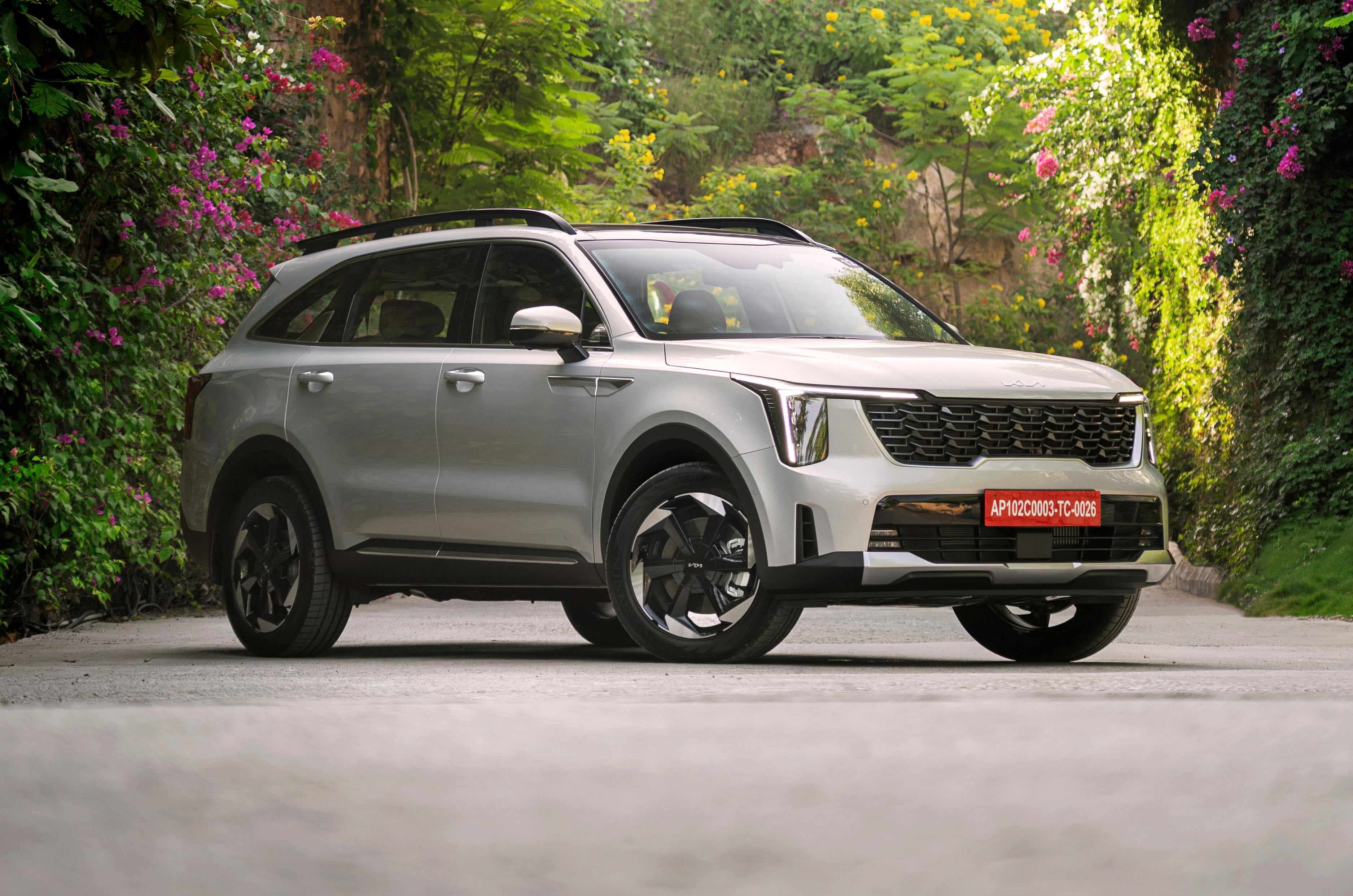
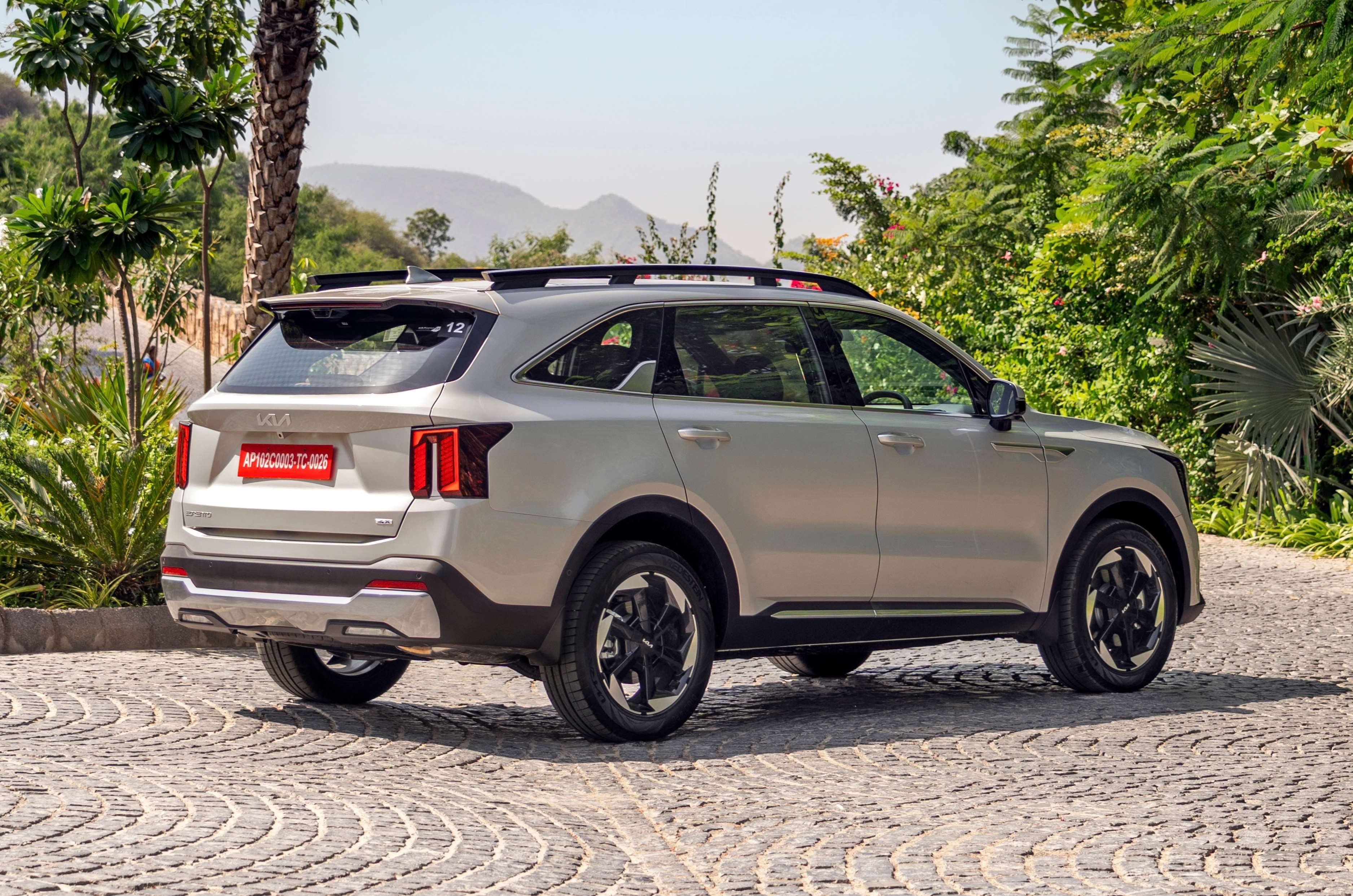
The Kia Sorento recorded 1,739 units in domestic wholesales in September 2026, its first month on sale after launching on September 4. It was Kia India’s fifth best-selling model that month. Including 365 units dispatched to dealers in August ahead of the launch, the Sorento’s total wholesales stood at 2,104 units.
Kia India recorded its highest-ever monthly wholesales of 32,017 units in September, up 41 percent year on year. This was the first time the company had crossed 30,000 units in a month, surpassing its previous record of 29,556 units in October 2025, which was the first month after the GST 2.0 rate cuts kicked in.
Kia Sorento: All you need to know
The Sorento is priced between Rs 27.99 lakh and Rs 40.39 lakh (ex-showroom). It is offered with a 1.6-litre turbo-petrol strong-hybrid powertrain or a 2.2-litre turbo-diesel engine. The hybrid setup pairs a 180hp, 265Nm petrol engine with a 65hp, 264Nm electric motor, while the diesel mill produces 193hp and 442Nm.
The SUV is available in six- and seven-seat configurations. Key features include dual 12.3-inch displays, a head-up display, ventilated front seats, a powered tailgate, a panoramic sunroof and second-row captain seats with ventilation. Safety equipment includes 10 airbags, a 360-degree camera, dual dashcams and Level 2+ ADAS.
The Kia Sorento rivals the Jeep Meridian, Skoda Kodiaq and Volkswagen Tayron.
Kia India sales up 29 percent in H1 FY2027
Kia India recorded wholesales of 1,68,683 units between April and September 2026, a 29 percent year-on-year increase. September wholesales stood at 32,017 units, up 41 percent year on year and the company’s highest monthly total since it entered India in 2019. In Q2 FY2027 (July-September 2026), sales grew 39 percent year on year to 89,259 units and were 12 percent higher than in Q1 FY2027.
The Seltos was Kia’s best-selling model in the first half of FY2027, with 67,667 units, up 99 percent year on year. It accounted for 40 percent of the company’s total wholesales during the period. The Sonet ranked second with 56,929 units, up 21 percent, contributing 34 percent of sales. The Carens range, including the Carens, Carens Clavis and Clavis EV, recorded 34,284 units, down 18 percent year on year.
Petrol Diesel Price Today: हर दिन की शुरुआत सिर्फ सूरज की किरणों से नहीं होती, बल्कि पेट्रोल और डीजल की नई कीमतों से भी होती है, जो आम आदमी की जेब पर सीधा असर डालती हैं। सुबह 6 बजे देश की तेल विपणन कंपनियां (OMCs) ताजा दरें जारी करती हैं, जो अंतरराष्ट्रीय बाजार में कच्चे तेल की कीमतों और डॉलर-रुपए की विनिमय दर में आए बदलावों पर आधारित होती हैं। ये बदलाव रोजमर्रा की जिंदगी को प्रभावित करते हैं, चाहे वो ऑफिस जाने वाला व्यक्ति हो या फल-सब्जी बेचने वाला व्यापारी।
ऐसे में हर दिन की कीमतों की जानकारी रखना सिर्फ जरूरी ही नहीं, बल्कि समझदारी भी है। सरकार की यह प्रणाली पारदर्शिता सुनिश्चित करती है ताकि उपभोक्ताओं को किसी तरह की भ्रमित जानकारी न मिले।
आपके शहर में आज का पेट्रोल-डीजल का भाव
ये रहे 19 अक्टूबर 2026 के प्रमुख शहरों के पेट्रोल-डीजल के ताजा रेट
नई दिल्ली: पेट्रोल ₹102.12 प्रति लीटर और डीजल ₹95.20 प्रति लीटर।
मुंबई: पेट्रोल ₹111.18 और डीजल ₹97.83 प्रति लीटर।
कोलकाता: पेट्रोल ₹113.47 जबकि डीजल ₹99.82 प्रति लीटर।
चेन्नई: पेट्रोल ₹107.77 और डीजल ₹99.55 प्रति लीटर।
गुरुग्राम: पेट्रोल ₹102.77 तथा डीजल ₹95.44 प्रति लीटर।
नोएडा: पेट्रोल ₹102.12 और डीजल ₹95.56 प्रति लीटर।
बेंगलुरु: पेट्रोल ₹110.93 जबकि डीजल ₹98.80 प्रति लीटर।
भुवनेश्वर: पेट्रोल ₹109.92 और डीजल ₹100.92 प्रति लीटर।
चंडीगढ़: पेट्रोल ₹98.10 तथा डीजल ₹86.09 प्रति लीटर।
हैदराबाद: पेट्रोल ₹115.69 और डीजल ₹103.82 प्रति लीटर।
जयपुर: पेट्रोल ₹112.66 जबकि डीजल ₹97.78 प्रति लीटर।
लखनऊ: पेट्रोल ₹102.05 और डीजल ₹95.55 प्रति लीटर।
पटना: पेट्रोल ₹113.35 तथा डीजल ₹99.36 प्रति लीटर।
तिरुवनंतपुरम: पेट्रोल ₹115.49 और डीजल ₹104.40 प्रति लीटर।
पिछले दो साल से स्थिर क्यों हैं कीमतें?
मई 2022 के बाद से केंद्र और कई राज्यों द्वारा टैक्स में कटौती की गई, जिसके बाद पेट्रोल-डीजल की कीमतों में स्थिरता देखी जा रही है। हालांकि अंतरराष्ट्रीय बाजार में उतार-चढ़ाव होता रहता है, फिर भी भारतीय उपभोक्ताओं के लिए कीमतें तुलनात्मक रूप से स्थिर बनी हुई हैं।
किन कारणों से तय होती हैं ईंधन की कीमतें?
कच्चे तेल की कीमतें:
पेट्रोल और डीजल का उत्पादन मुख्य रूप से कच्चे तेल से होता है। जब अंतरराष्ट्रीय स्तर पर कच्चे तेल की कीमतें बढ़ती हैं, तो इसका असर सीधे भारतीय बाजार पर पड़ता है।
डॉलर के मुकाबले रुपया:
भारत अधिकतर कच्चा तेल आयात करता है, और यह डॉलर में खरीदा जाता है। यदि रुपया कमजोर होता है, तो ईंधन महंगा हो जाता है।
सरकारी टैक्स और शुल्क:
केंद्र और राज्य सरकारें पेट्रोल-डीजल पर भारी टैक्स लगाती हैं, जो खुदरा मूल्य का बड़ा हिस्सा होते हैं। यही कारण है कि राज्यों में कीमतों में अंतर होता है।
रिफाइनिंग की लागत:
कच्चे तेल को इस्तेमाल लायक बनाने की प्रक्रिया (रिफाइनिंग) में भी खर्च होता है। ये लागत कच्चे तेल की गुणवत्ता और रिफाइनरी की क्षमता पर निर्भर करती है।
मांग और आपूर्ति का संतुलन:
बाजार में ईंधन की मांग अगर बढ़ जाती है, तो कीमतें भी ऊपर जाने लगती हैं। खासकर त्योहारों, गर्मी या सर्दी के मौसम में ईंधन की खपत ज्यादा होती है।
कैसे करें अपने शहर की कीमतें SMS से चेक?
अगर आप मोबाइल से ईंधन की कीमत जानना चाहते हैं, तो ये प्रक्रिया आसान है:
Indian Oil ग्राहक: अपने शहर का कोड टाइप करें और उसे “RSP” के साथ 9224992249 पर भेजें।
BPCL ग्राहक: “RSP” लिखकर 9223112222 पर भेजें।
HPCL ग्राहक: “HP Price” लिखकर 9222201122 पर भेजें।
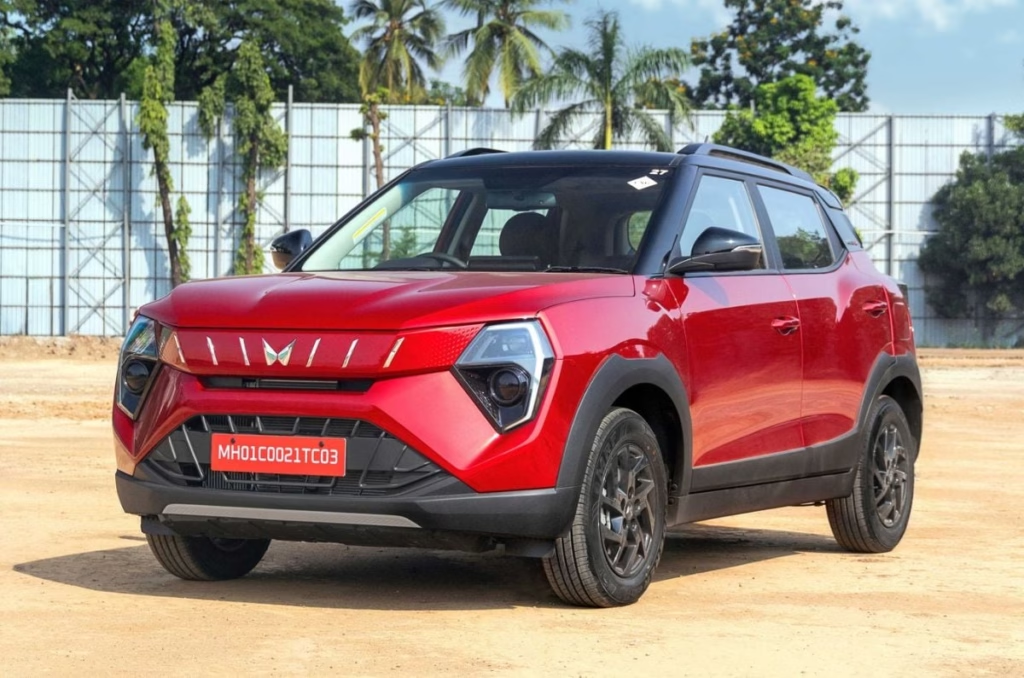
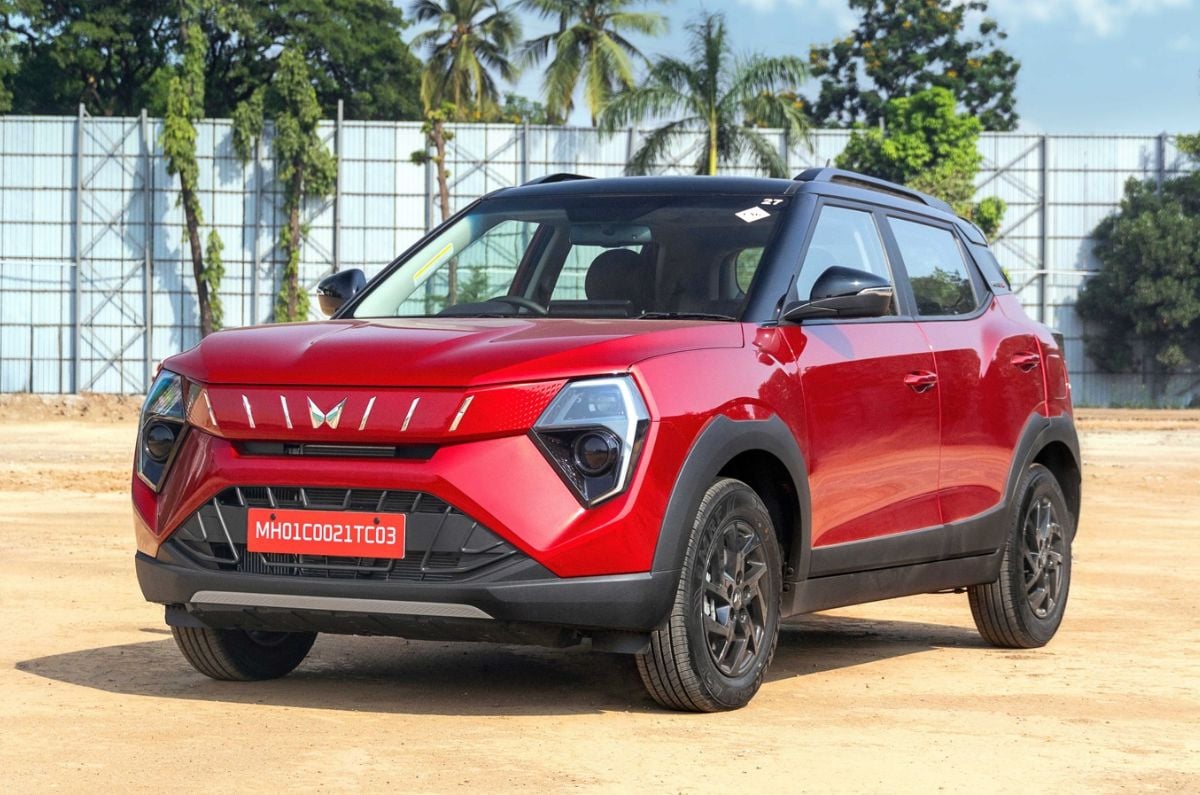
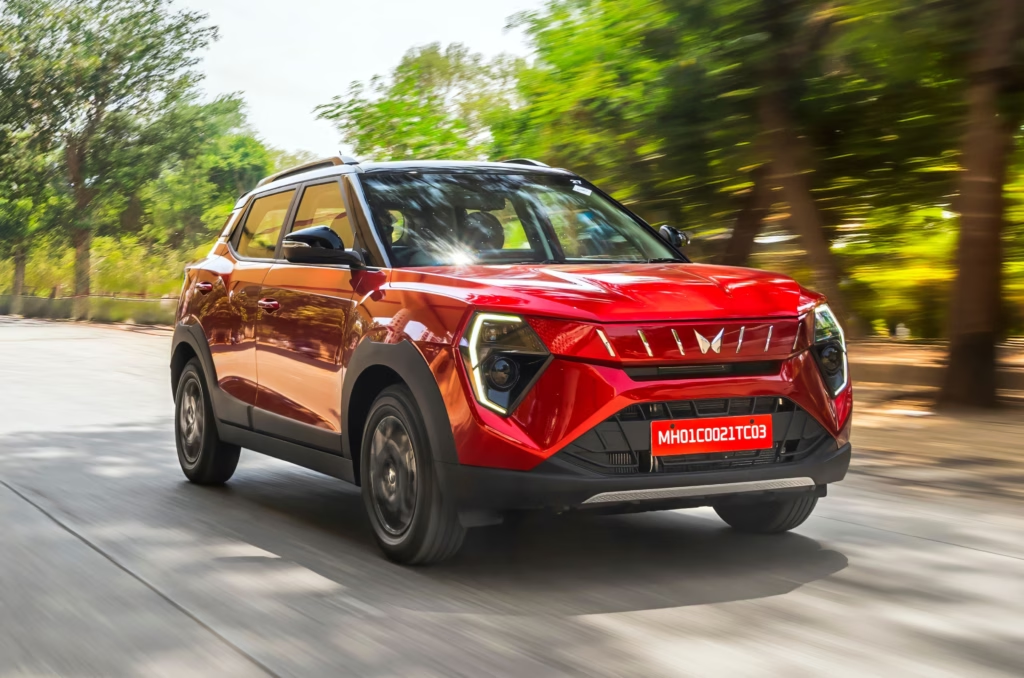
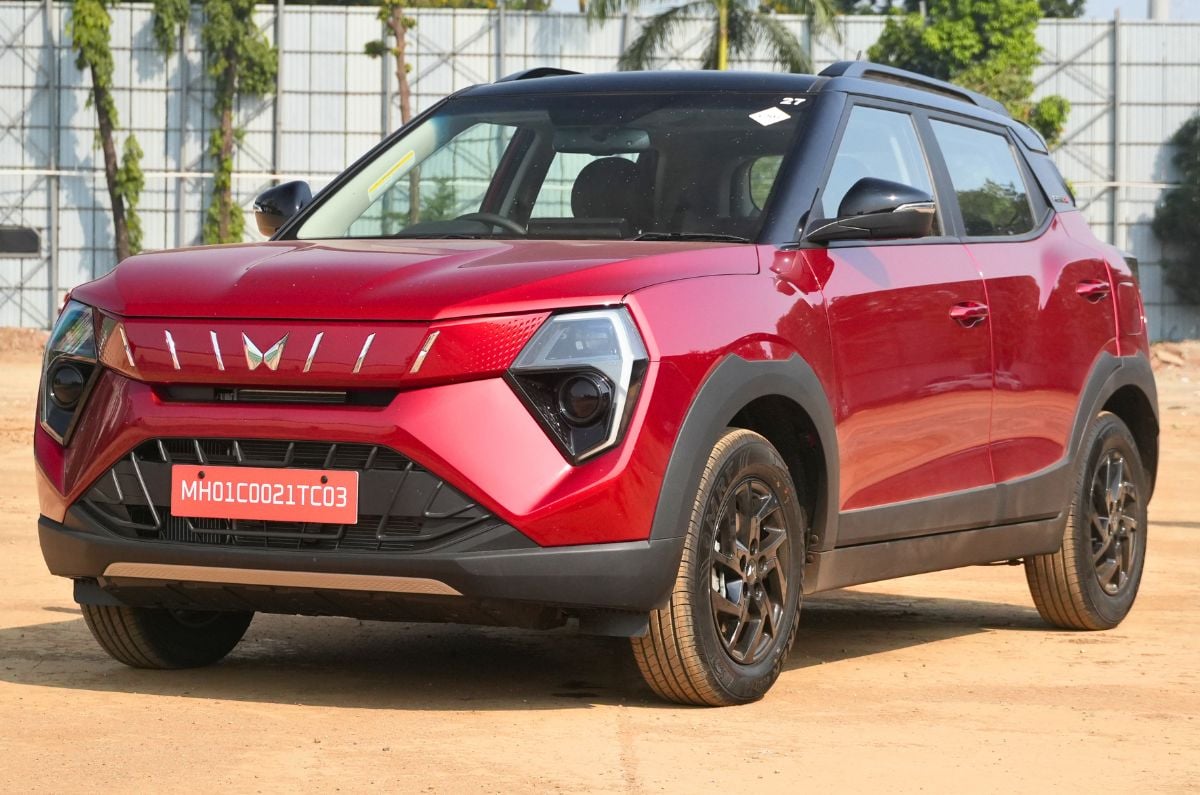
The Mahindra XUV 3XO ZNG takes on the Tata Nexon iCNG and the Maruti Brezza CNG in the CNG compact SUV space. Priced from Rs 9.99 lakh to Rs 12.27 lakh (ex-showroom), it carries a premium of Rs 1 lakh to Rs 1.2 lakh over the corresponding petrol versions. Before signing on the dotted line, here are the key strengths and weaknesses of this Mahindra SUV.
Reasons to buy the Mahindra XUV 3XO CNG
Strong performance on CNG
The XUV 3XO CNG loses none of its power when running on gas
The 1.2-litre MPFI (multi-point fuel-injected) turbo-petrol engine of the XUV 3XO CNG is the same unit found in the lower and mid-spec petrol trims. Here it develops 111hp and 200Nm in both petrol and CNG modes. While there’s some turbo lag below 2,000rpm, the engine pulls eagerly once it crosses that mark. This unit is also notable for its refinement and tractability, rarely requiring one to drop down to first gear, for going over speed breakers, for example.
Switching between petrol and CNG is seamless as well, and few would be able to tell which fuel the XUV 3XO ZNG is running on. While we’re yet to test it, Mahindra claims a mileage of 24.7km/kg for this compact SUV, translating to a theoretical range of 247km on CNG.
Comfy ride and tidy handling
Mahindra has retuned the suspension to accommodate the extra heft of the CNG kit
The CNG hardware adds around 100kg to the XUV 3XO’s kerb weight, with the majority of it being over the rear axle. Mahindra has reworked the suspension to compensate for this heft. The result is a slightly firm ride but one that deals with bad roads quite well.
Adding to the overall comfort here are the 16-inch wheels wrapped with high-profile tyres. These manage to cushion the cabin from sharp bumps. The XUV 3XO CNG rides better than most cars in its segment. What’s good is that this ride comfort doesn’t come at the cost of sloppy handling. In fact, this Mahindra SUV feels tight and planted around corners. The steering is direct and doesn’t require much effort, with drivers being offered three steering modes for flexibility.
Upmarket cabin
This cabin is just as plush as that of the petrol and diesel versions
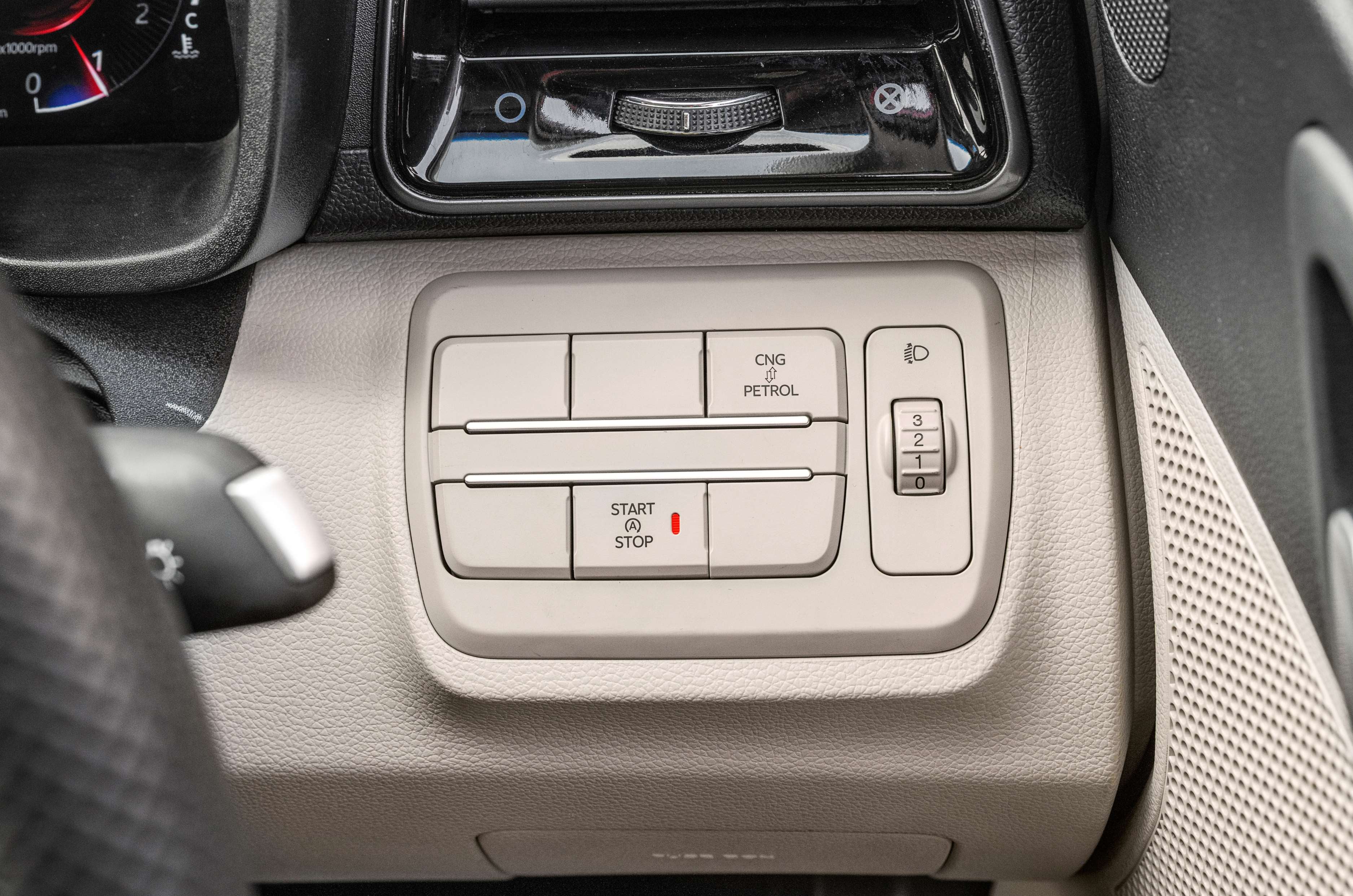
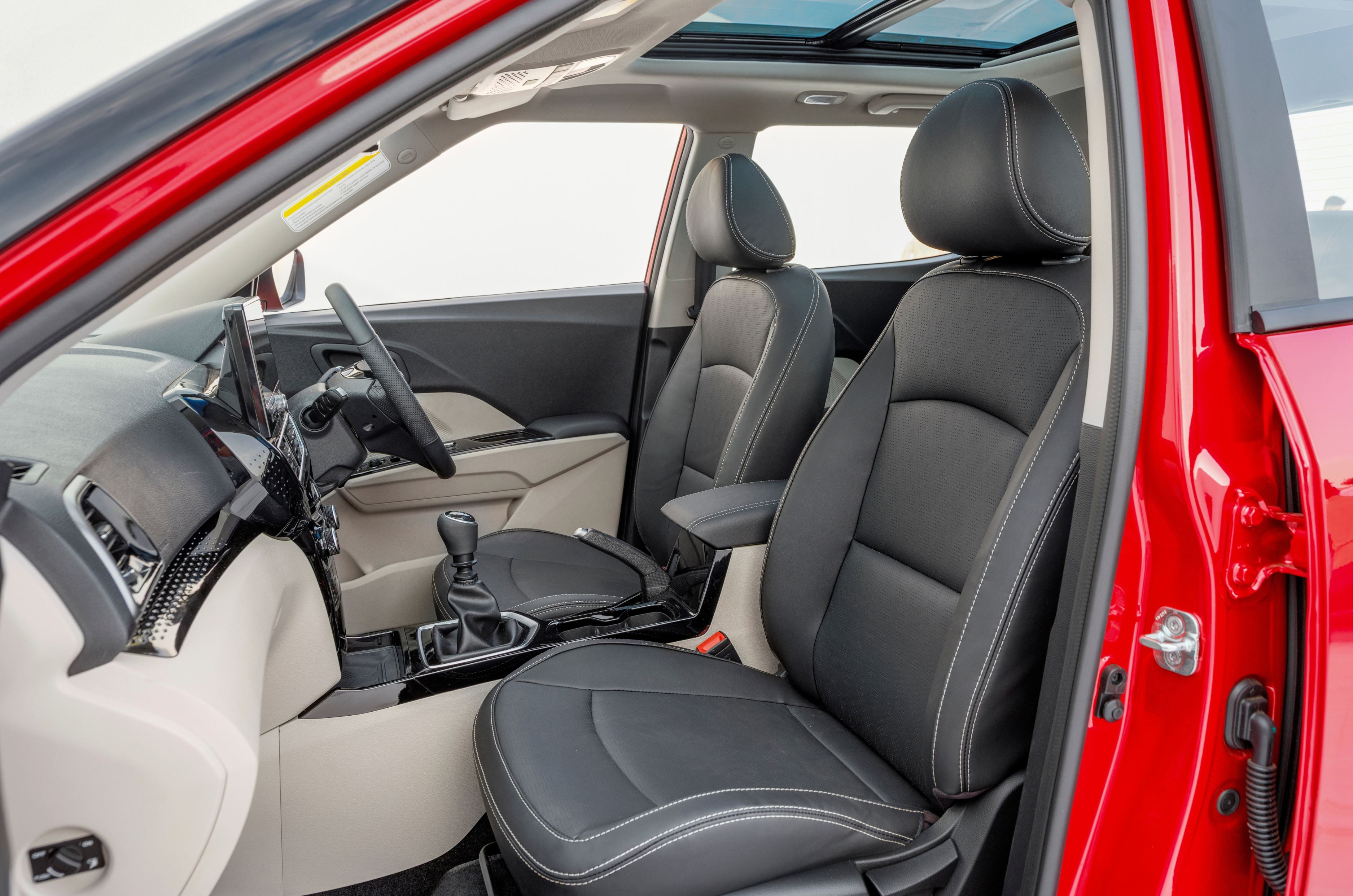
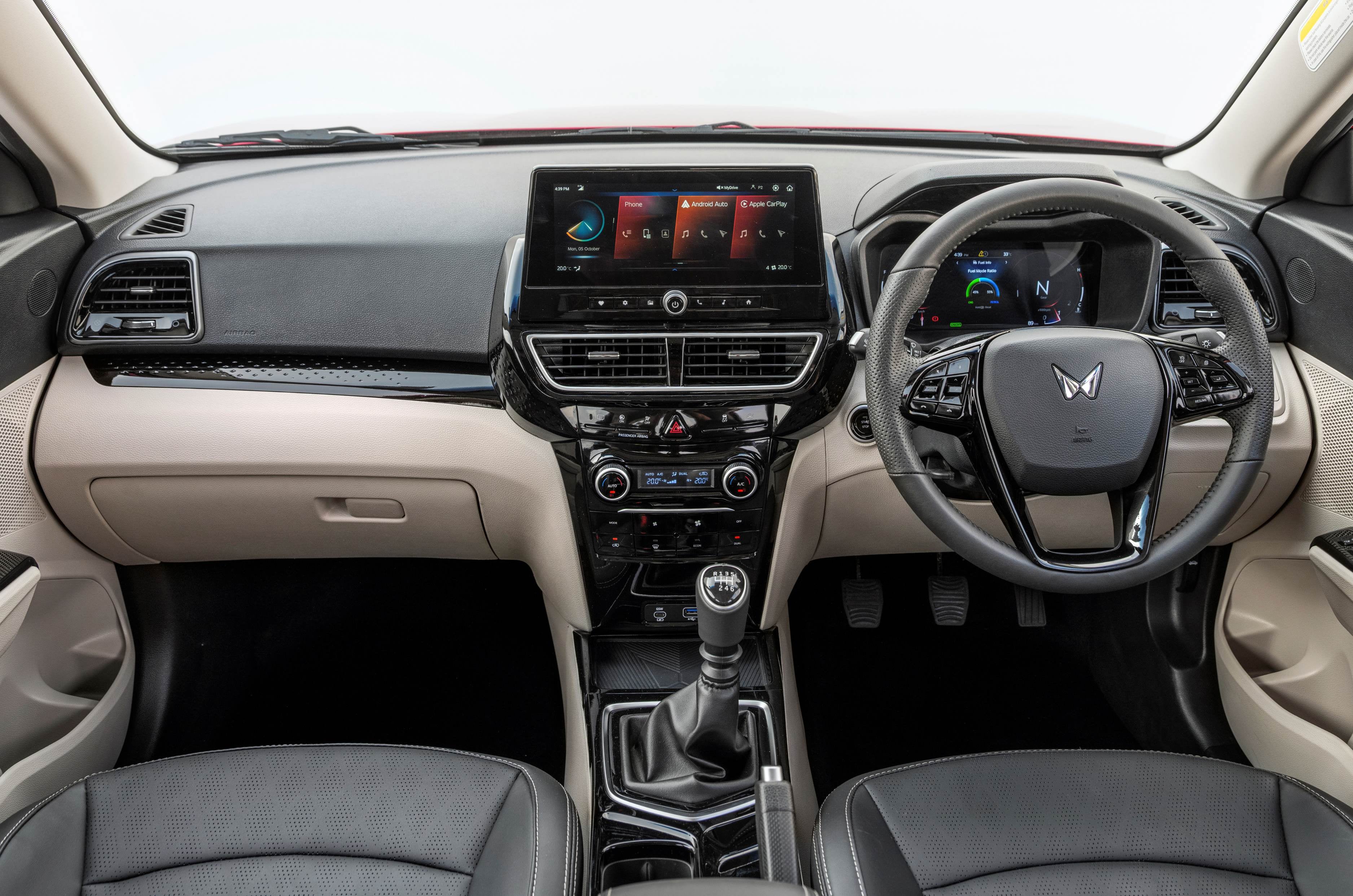
A CNG switch next to the steering wheel aside, the cabin of the XUV 3XO CNG is identical to that of non-CNG versions. While it can’t be had in equally top-end trim levels, the CNG version is available with a dual-tone dashboard, gloss black accents and leatherette upholstery. Overall, there’s a feeling of good build that’s backed by a sense of premiumness. Meanwhile, the rear seat is quite roomy for the class and can accommodate three adults without much fuss.
The top-spec RevX A trim gets twin 10.25-inch screens, a panoramic sunroof and a 6-speaker audio system with Dolby Atmos. Mahindra says the CNG version is engineered to match the five-star Bharat NCAP safety rating of other combustion-powered XUV 3XO versions. Standard safety features here include 6 airbags, stability control, ISOFIX anchors and a reversing camera.
Reasons not to buy the Mahindra XUV 3XO CNG
Small boot
The twin-tank setup eats into what was already a small boot
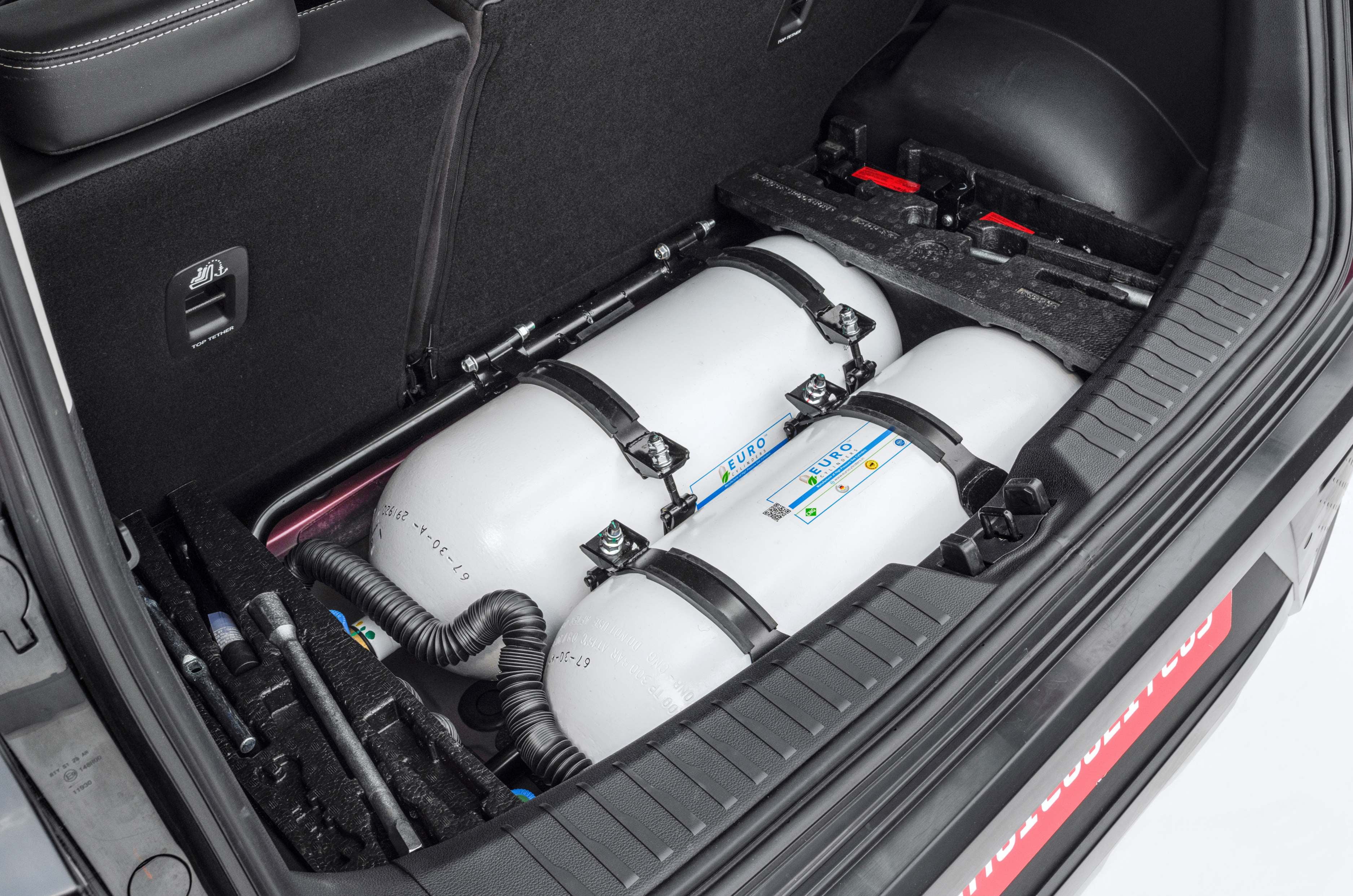
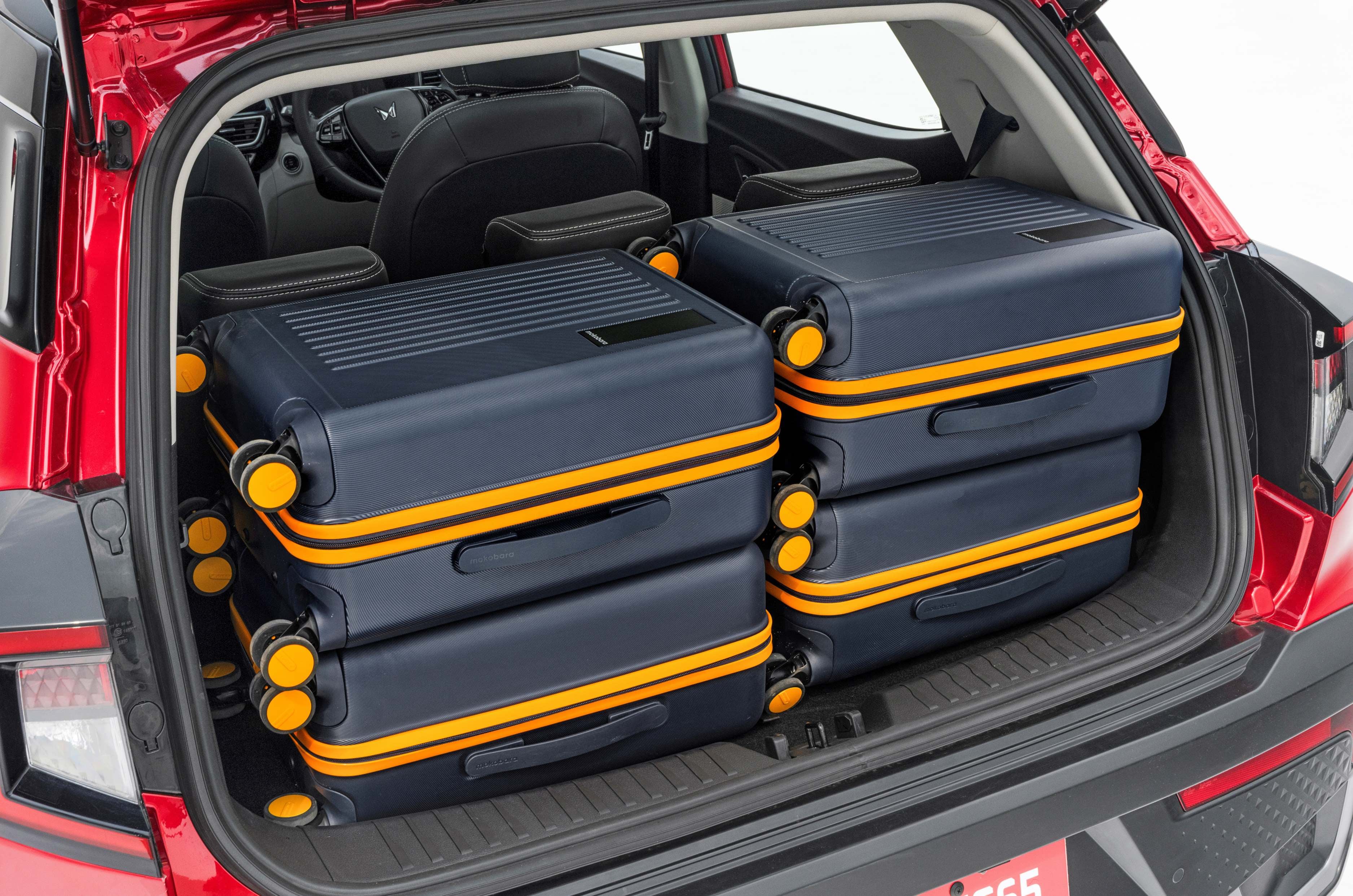
The 295-litre boot of the XUV 3XO was already the most compact in the segment. Despite moving the spare wheel under the car’s body and fitting the twin cylinders beneath the boot floor, the XUV 3XO CNG’s boot is even more compromised – offering just 270 litres of cargo space. It’s only its width that allows up to four cabin-sized bags to be stored.
Cabin niggles
The XUV 3XO CNG’s interior isn’t devoid of ergonomic flaws
While the black leatherette seats look sporty, they don’t get a ventilation function. This means that, on a bright sunny day, they will heat up quite quickly. If you’ve a larger build, the front seats of the XUV 3XO CNG will feel lacking in space. Adding to the ergonomic niggles is the steering wheel, which cannot be adjusted for reach, making it harder to find a comfortable driving position. Lastly, not only is the XUV 3XO CNG’s driver footwell cramped, there’s also no dead pedal.
Limited options
Customers get only mid-spec trim levels with the CNG version
The CNG version of the Mahindra XUV 3XO is sold in just four trim levels, all of which are mid-spec options within the broader line-up. This limitation becomes obvious given the lack of a 360-degree camera, ventilated front seats, or a wireless charging pad – these are available in the Nexon iCNG. There are no fog lamps, either. Another limitation is that the CNG version only comes with a 6-speed manual, which has long throws and a fair amount of clutch pedal travel.
LPG Price 18 October 2026: हर महीने की तरह अक्टूबर में भी एलपीजी गैस सिलेंडर की कीमतों को लेकर लोगों की दिलचस्पी बनी हुई है। त्योहारों के सीजन में रसोई का खर्च पहले से ही बढ़ जाता है, ऐसे में गैस सिलेंडर के दाम आम परिवारों के बजट को प्रभावित कर सकते हैं। वहीं, होटल और रेस्टोरेंट संचालकों के लिए कमर्शियल सिलेंडर की कीमतें कारोबार के खर्च से सीधे जुड़ी होती हैं। 18 अक्टूबर 2026 को घरेलू गैस सिलेंडर बुक कराने की तैयारी कर रहे हैं, तो अपने शहर का ताजा रेट जानना आपके लिए जरूरी है।
इस महीने घरेलू एलपीजी सिलेंडर की कीमतों में फिलहाल कोई नया बदलाव नहीं हुआ है, जबकि कमर्शियल सिलेंडर के दाम बढ़ाए गए हैं। ऐसे में सवाल है कि दिल्ली, मुंबई, लखनऊ और पटना समेत दूसरे शहरों में आज गैस सिलेंडर किस कीमत पर मिल रहा है? आइए, शहरवार रेट पर नजर डालते हैं।
दिल्ली में घरेलू और कमर्शियल सिलेंडर की कीमत कितनी है?
राजधानी दिल्ली में 14.2 किलोग्राम वाले घरेलू एलपीजी सिलेंडर के लिए 942 रुपये देने पड़ रहे हैं। दूसरी ओर, 19 किलोग्राम वाले कमर्शियल सिलेंडर की कीमत 2,810 रुपये है। यानी घरेलू उपभोक्ताओं को फिलहाल राहत मिली हुई है, लेकिन कमर्शियल गैस का इस्तेमाल करने वाले कारोबारियों को बढ़ी हुई कीमतों के हिसाब से अपना बजट तैयार करना पड़ सकता है।
आपके शहर में कितने रुपये का मिल रहा LPG सिलेंडर?
गैस सिलेंडर की कीमत हर शहर में एक जैसी नहीं होती। स्थानीय टैक्स और अन्य खर्चों के कारण इनके दाम में अंतर देखने को मिलता है। नीचे प्रमुख शहरों में 14.2 किलो वाले घरेलू एलपीजी सिलेंडर की कीमतें दी गई हैं।
दिल्ली: 942 रुपये
मुंबई: 941.50 रुपये
कोलकाता: 968 रुपये
चेन्नई: 957.50 रुपये
नोएडा: 939.50 रुपये
गुरुग्राम: 950.50 रुपये
लखनऊ: 979.50 रुपये
जयपुर: 945.50 रुपये
पटना: 1,031.50 रुपये
हैदराबाद: 994 रुपये
इन आंकड़ों पर नजर डालें तो सूची में पटना में घरेलू सिलेंडर की कीमत सबसे ज्यादा, जबकि नोएडा में सबसे कम है। हालांकि, बुकिंग से पहले अपने स्थानीय गैस वितरक से मौजूदा कीमत की पुष्टि करना बेहतर रहेगा।
आखिर क्यों अलग-अलग होते हैं गैस सिलेंडर के दाम?
एलपीजी की कीमतें केवल घरेलू मांग और आपूर्ति से तय नहीं होतीं। अंतरराष्ट्रीय बाजार में गैस की कीमतों में उतार-चढ़ाव और अमेरिकी डॉलर के मुकाबले रुपये की स्थिति भी इन पर असर डालती है। इसके अलावा, स्थानीय करों और वितरण से जुड़े खर्चों के कारण अलग-अलग शहरों में अंतिम कीमत अलग हो सकती है।
तेल विपणन कंपनियां घरेलू और कमर्शियल सिलेंडर की कीमतों की समय-समय पर समीक्षा करती हैं। आम तौर पर हर महीने की शुरुआत में कीमतों में बदलाव की घोषणा पर नजर रहती है, लेकिन इसका मतलब यह नहीं कि हर महीने दाम बदलना जरूरी है।
घरेलू ग्राहकों को राहत
घरेलू सिलेंडर की कीमत स्थिर रहने से फिलहाल परिवारों के रसोई बजट पर कोई नया सीधा असर नहीं पड़ा है। दूसरी तरफ, कमर्शियल सिलेंडर महंगा होने से होटल, ढाबे और रेस्टोरेंट संचालकों की लागत बढ़ सकती है। इसका असर कारोबार के मुनाफे और आगे चलकर कुछ खाद्य पदार्थों की कीमतों पर भी पड़ सकता है।
इसलिए गैस सिलेंडर बुक कराने से पहले अपने शहर का ताजा रेट जरूर जांचें। खासकर कारोबारियों के लिए कमर्शियल सिलेंडर की कीमतों पर नजर रखना जरूरी है, ताकि महीने के खर्च का सही हिसाब रखा जा सके।
Petrol Diesel Price Today: हर दिन की शुरुआत सिर्फ सूरज की किरणों से नहीं होती, बल्कि पेट्रोल और डीजल की नई कीमतों से भी होती है, जो आम आदमी की जेब पर सीधा असर डालती हैं। सुबह 6 बजे देश की तेल विपणन कंपनियां (OMCs) ताजा दरें जारी करती हैं, जो अंतरराष्ट्रीय बाजार में कच्चे तेल की कीमतों और डॉलर-रुपए की विनिमय दर में आए बदलावों पर आधारित होती हैं। ये बदलाव रोजमर्रा की जिंदगी को प्रभावित करते हैं, चाहे वो ऑफिस जाने वाला व्यक्ति हो या फल-सब्जी बेचने वाला व्यापारी।
ऐसे में हर दिन की कीमतों की जानकारी रखना सिर्फ जरूरी ही नहीं, बल्कि समझदारी भी है। सरकार की यह प्रणाली पारदर्शिता सुनिश्चित करती है ताकि उपभोक्ताओं को किसी तरह की भ्रमित जानकारी न मिले।
आपके शहर में आज का पेट्रोल-डीजल का भाव
ये रहे 18 अक्टूबर 2026 के प्रमुख शहरों के पेट्रोल-डीजल के ताजा रेट
नई दिल्ली: पेट्रोल ₹102.12 प्रति लीटर और डीजल ₹95.20 प्रति लीटर।
मुंबई: पेट्रोल ₹111.18 और डीजल ₹97.83 प्रति लीटर।
कोलकाता: पेट्रोल ₹113.47 जबकि डीजल ₹99.82 प्रति लीटर।
चेन्नई: पेट्रोल ₹107.77 और डीजल ₹99.55 प्रति लीटर।
गुरुग्राम: पेट्रोल ₹102.77 तथा डीजल ₹95.44 प्रति लीटर।
नोएडा: पेट्रोल ₹102.12 और डीजल ₹95.56 प्रति लीटर।
बेंगलुरु: पेट्रोल ₹110.93 जबकि डीजल ₹98.80 प्रति लीटर।
भुवनेश्वर: पेट्रोल ₹109.92 और डीजल ₹100.92 प्रति लीटर।
चंडीगढ़: पेट्रोल ₹98.10 तथा डीजल ₹86.09 प्रति लीटर।
हैदराबाद: पेट्रोल ₹115.69 और डीजल ₹103.82 प्रति लीटर।
जयपुर: पेट्रोल ₹112.66 जबकि डीजल ₹97.78 प्रति लीटर।
लखनऊ: पेट्रोल ₹102.05 और डीजल ₹95.55 प्रति लीटर।
पटना: पेट्रोल ₹113.35 तथा डीजल ₹99.36 प्रति लीटर।
तिरुवनंतपुरम: पेट्रोल ₹115.49 और डीजल ₹104.40 प्रति लीटर।
पिछले दो साल से स्थिर क्यों हैं कीमतें?
मई 2022 के बाद से केंद्र और कई राज्यों द्वारा टैक्स में कटौती की गई, जिसके बाद पेट्रोल-डीजल की कीमतों में स्थिरता देखी जा रही है। हालांकि अंतरराष्ट्रीय बाजार में उतार-चढ़ाव होता रहता है, फिर भी भारतीय उपभोक्ताओं के लिए कीमतें तुलनात्मक रूप से स्थिर बनी हुई हैं।
किन कारणों से तय होती हैं ईंधन की कीमतें?
कच्चे तेल की कीमतें:
पेट्रोल और डीजल का उत्पादन मुख्य रूप से कच्चे तेल से होता है। जब अंतरराष्ट्रीय स्तर पर कच्चे तेल की कीमतें बढ़ती हैं, तो इसका असर सीधे भारतीय बाजार पर पड़ता है।
डॉलर के मुकाबले रुपया:
भारत अधिकतर कच्चा तेल आयात करता है, और यह डॉलर में खरीदा जाता है। यदि रुपया कमजोर होता है, तो ईंधन महंगा हो जाता है।
सरकारी टैक्स और शुल्क:
केंद्र और राज्य सरकारें पेट्रोल-डीजल पर भारी टैक्स लगाती हैं, जो खुदरा मूल्य का बड़ा हिस्सा होते हैं। यही कारण है कि राज्यों में कीमतों में अंतर होता है।
रिफाइनिंग की लागत:
कच्चे तेल को इस्तेमाल लायक बनाने की प्रक्रिया (रिफाइनिंग) में भी खर्च होता है। ये लागत कच्चे तेल की गुणवत्ता और रिफाइनरी की क्षमता पर निर्भर करती है।
मांग और आपूर्ति का संतुलन:
बाजार में ईंधन की मांग अगर बढ़ जाती है, तो कीमतें भी ऊपर जाने लगती हैं। खासकर त्योहारों, गर्मी या सर्दी के मौसम में ईंधन की खपत ज्यादा होती है।
कैसे करें अपने शहर की कीमतें SMS से चेक?
अगर आप मोबाइल से ईंधन की कीमत जानना चाहते हैं, तो ये प्रक्रिया आसान है:
Indian Oil ग्राहक: अपने शहर का कोड टाइप करें और उसे “RSP” के साथ 9224992249 पर भेजें।
BPCL ग्राहक: “RSP” लिखकर 9223112222 पर भेजें।
HPCL ग्राहक: “HP Price” लिखकर 9222201122 पर भेजें।
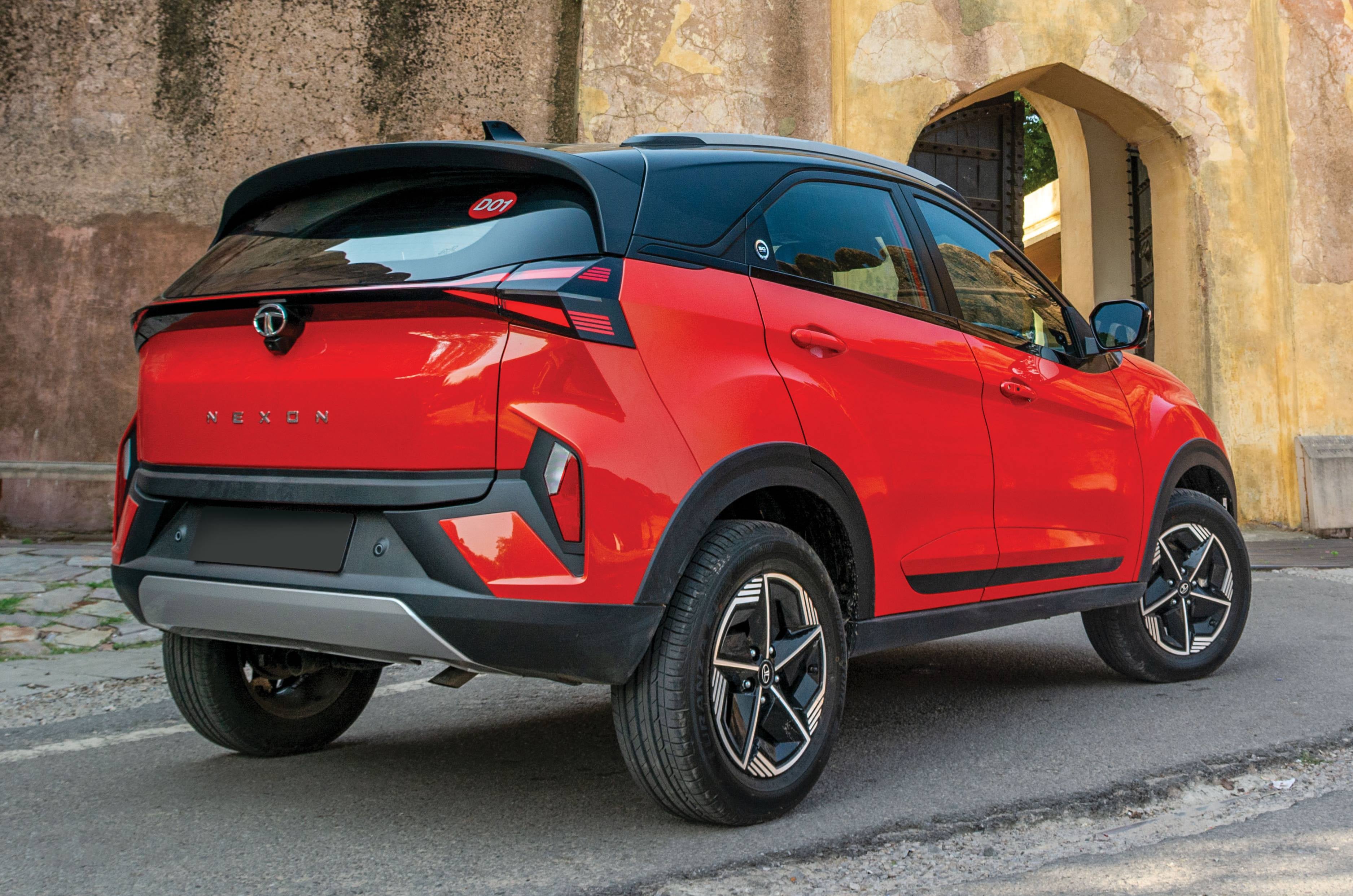
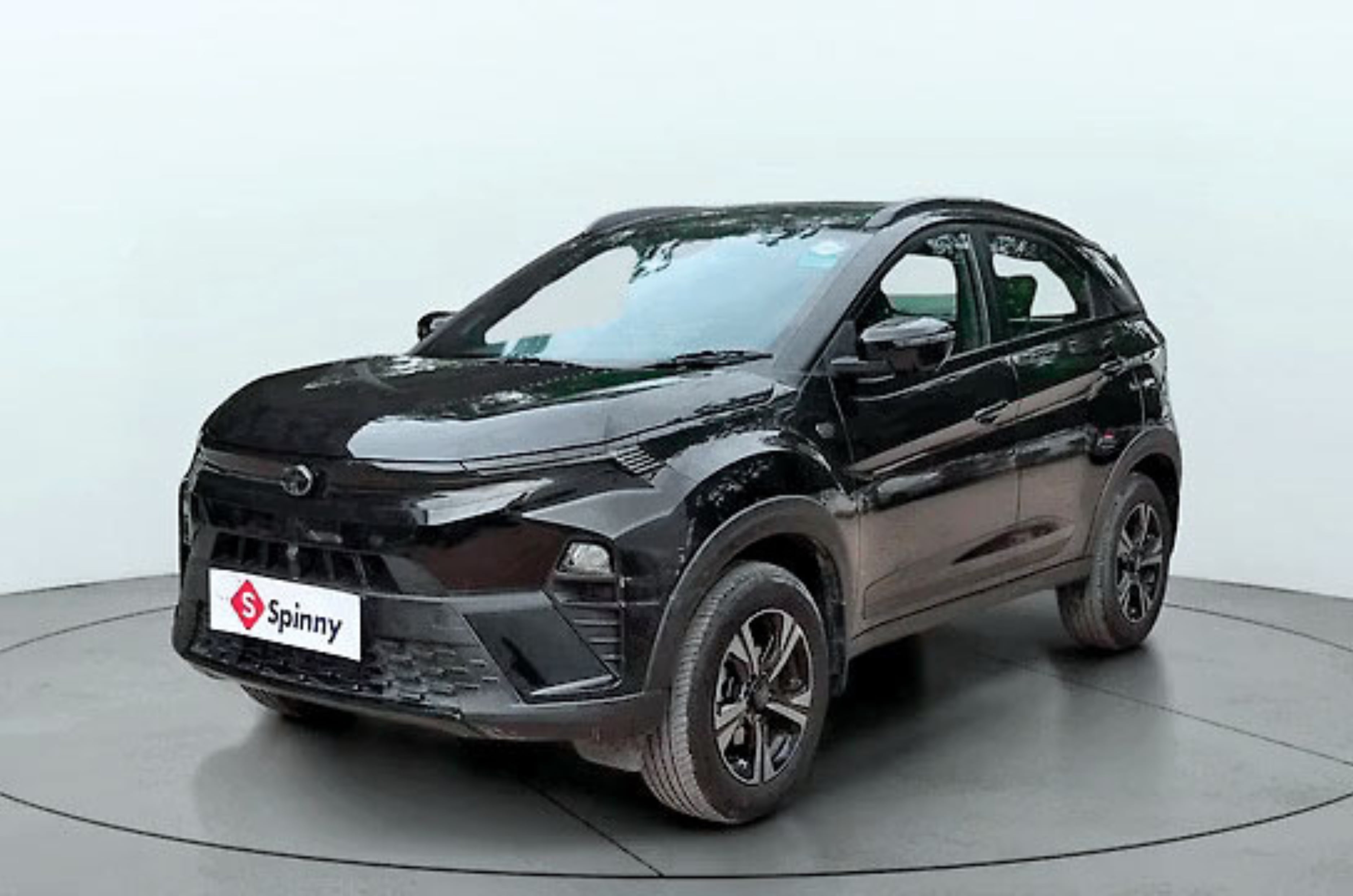
The Tata Nexon received a comprehensive facelift in September 2023, bringing a sharper exterior, a redesigned interior and more technology. It retained its compact SUV dimensions while offering a wide powertrain choice, along with manual and automatic gearbox options for both petrol and diesel. With its generous equipment, practical cabin and SUV-like stance, the facelifted Nexon makes a compelling case as a used buy.
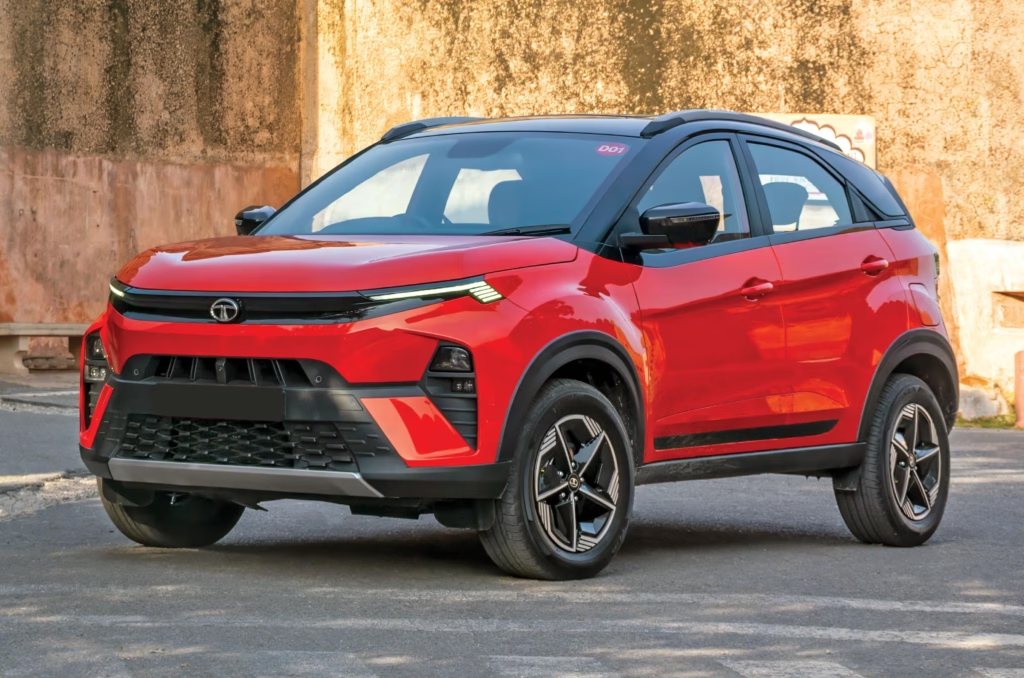
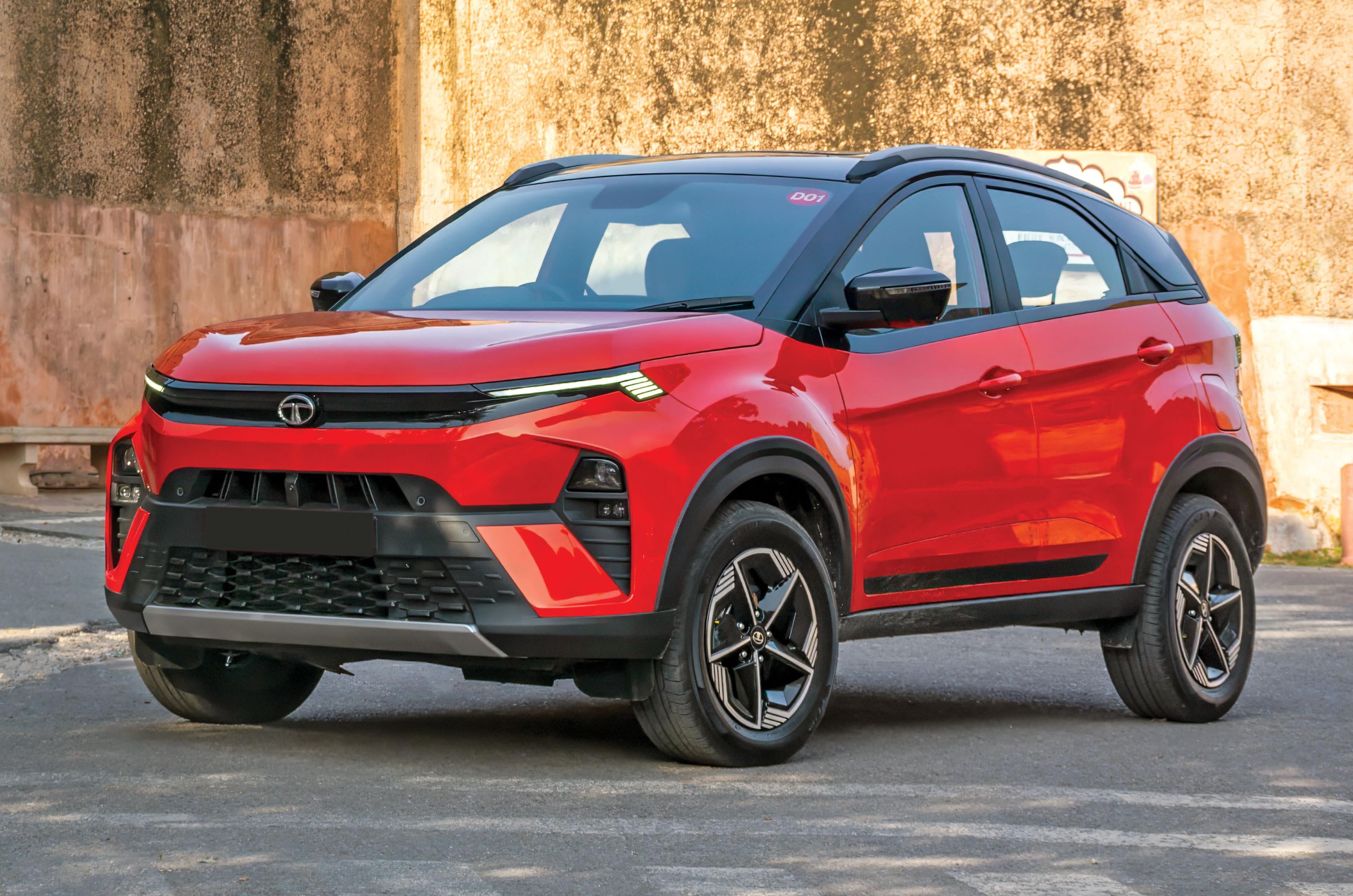
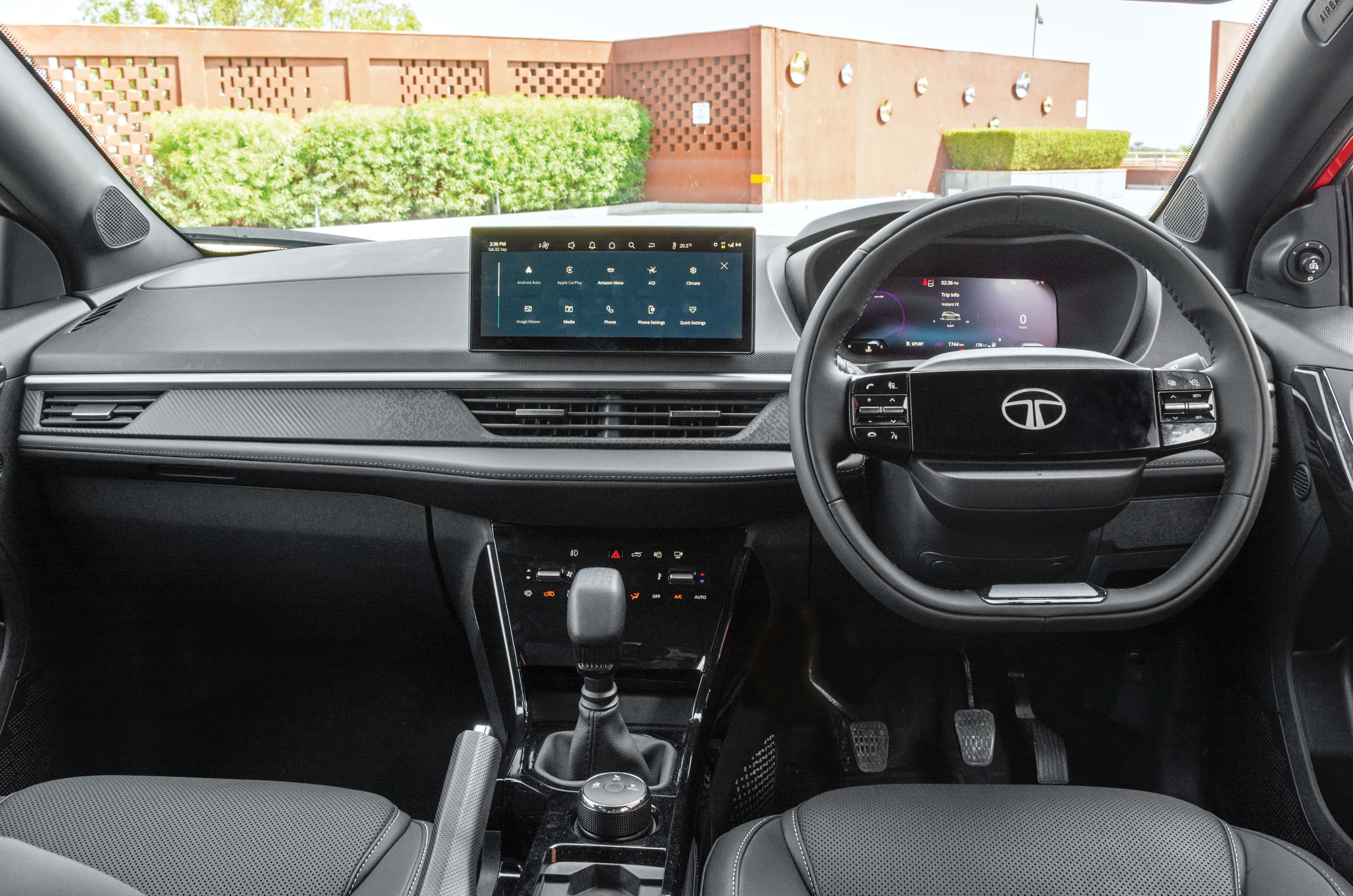
The 2023 Nexon was a significant styling departure from its predecessor, featuring slim sequential LED DRLs and headlamps positioned lower in the bumper. Revised bumpers, a new grille, connected LED tail-lights and redesigned alloy wheels gave it a more modern appearance. The cabin also received a thorough redesign, including a two-spoke steering wheel, a digital instrument cluster and a new touch panel for the HVAC controls. But, it retained its strengths of a spacious and practical cabin, a solid feature set and well-sorted ride and handling.
Petrol, diesel and CNG options; MT, AMT and DCT gearboxes
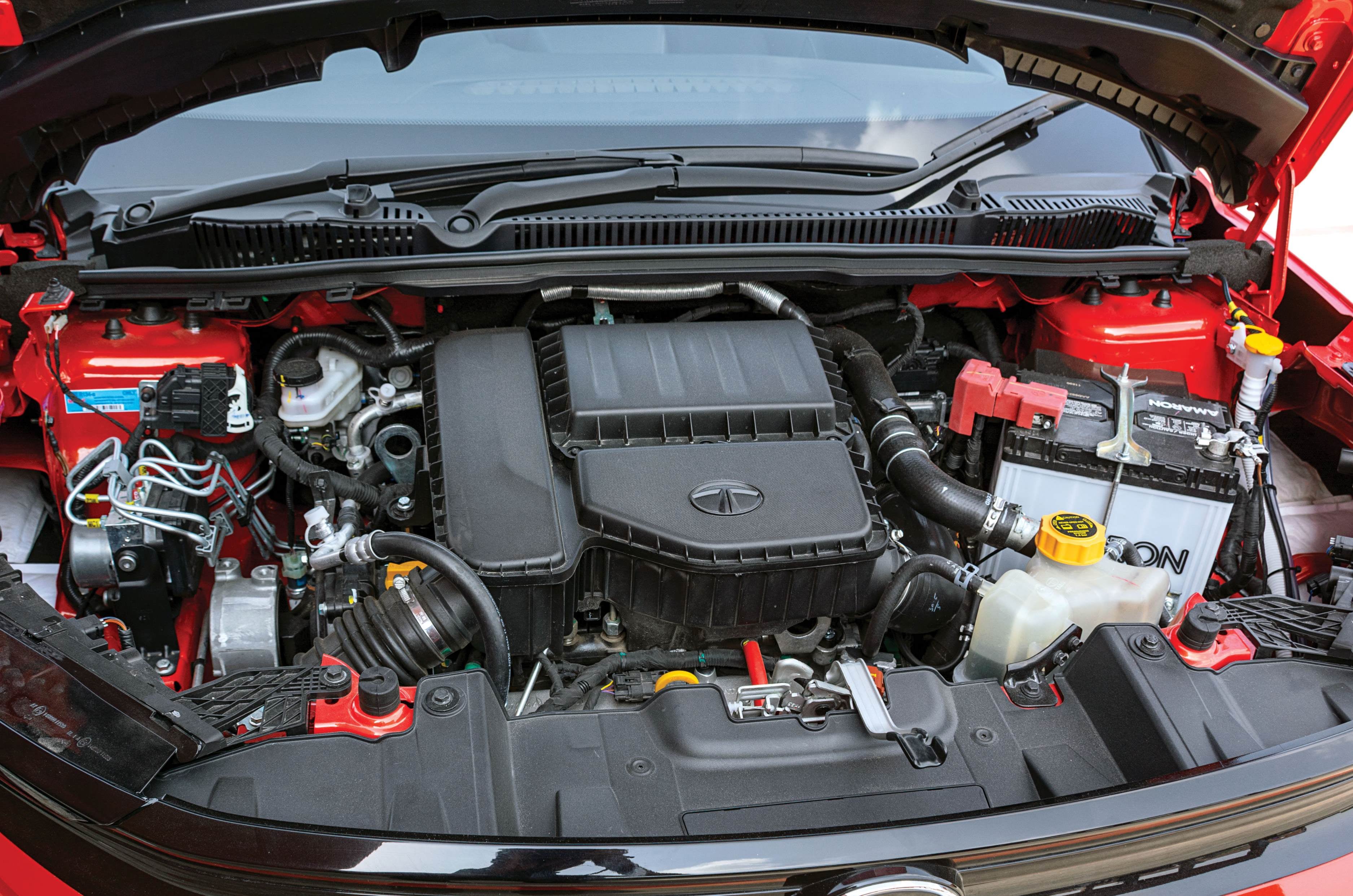
Under the bonnet, the Nexon continued with its 1.2-litre turbo-petrol and 1.5-litre diesel engines. The petrol engine produces 120hp and 170Nm, while the diesel makes 115hp and 260Nm. Gearbox options included a 5-speed manual, 6-speed manual, 6-speed AMT and 7-speed dual-clutch automatic, depending on the engine and variant. A CNG version was added to the line-up later, which featured the same 1.2-litre petrol engine and came with a 6-speed manual only. The CNG came with Tata’s innovative twin tank setup under the boot floor, which meant a usable cargo space and spare tyre were retained.
The petrol engine is suitable for everyday urban driving, while the diesel’s higher torque makes it better suited to buyers for highway use. The automatics, of course, are the choice for someone looking for an easier driving experience. The CNG makes sense for high running.
Tata Nexon variants and features
10.25-inch touchscreen, 360-degree camera, ventilated seats and more
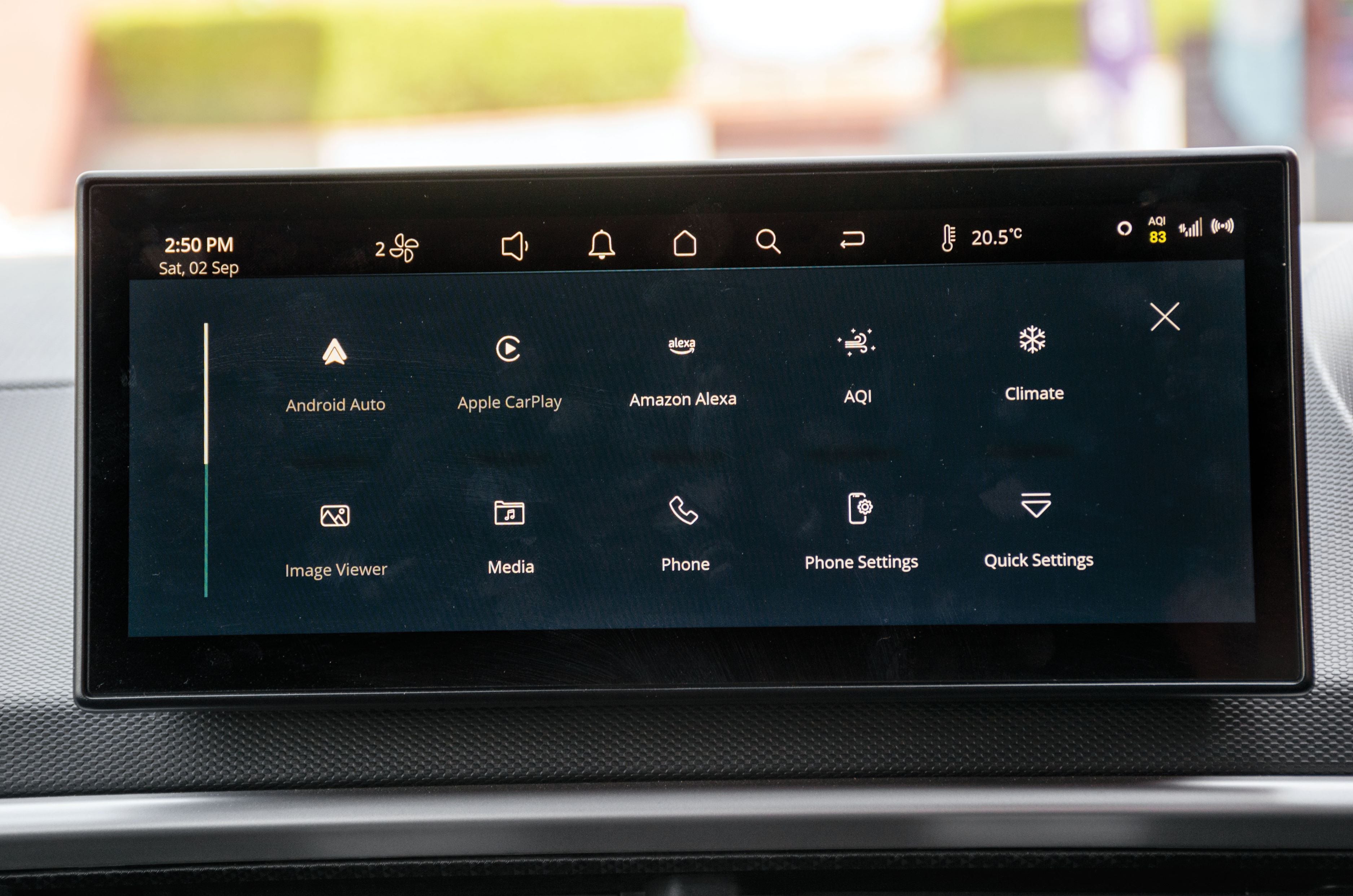
The 2023 Nexon was offered in Smart, Pure, Creative and Fearless trim levels at launch, with equipment varying by variant. Top-spec versions featured a 10.25-inch touchscreen infotainment, a 10.25-inch digital cluster, wireless Android Auto and Apple CarPlay, connected-car tech, a 360-degree parking camera, ventilated front seats, cruise control, leatherette upholstery and a sunroof. Safety equipment included six airbags, electronic stability control and ISOFIX child-seat mounts. The Nexon has also received a five-star Global NCAP crash safety rating under the enhanced 2022 protocol.
As is always the case with Tata products, the Nexon line-up has been regularly updated with the addition/deletion of certain variants, special editions and new features like a panoramic sunroof and Level 2 ADAS tech. With such a widespread line-up, choosing the right one can be tricky. Pick based on your budget and the non-negotiable features you’d want. As it is, even the mid-spec trims come well equipped and have more than the basics covered.
Tata Nexon reliability and aftersales
Tatas are not known to be very reliable, but with the Nexon’s long run, bugs have been ironed out, and these Nexons have proven to be a generally reliable package. Spare parts are easily available, and you’re backed up by Tata’s wide service network throughout the country, though their service quality varies.
What to look out for in a used Tata Nexon
Electronic glitches
The 2023 Nexon introduced a larger touchscreen, a digital cluster, a 360-degree camera and LED lights. Before buying, test the touchscreen thoroughly, connect your phone and check that the 360-degree camera works as intended. Make sure the cluster has no warning messages or glitches and that the LED lights work correctly. Some owners have faced issues with these.
Suspension wear
Nexons that have spent considerable time on poor roads can develop wear in suspension components. Drive it over speed breakers and uneven surfaces, listening for knocking sounds or excessive crashing, as these are signs of worn-out suspension components.
Auto gearbox health
During a test drive, check for excessive juddering, hesitation, delayed engagement or unusual noises, particularly in slow-moving traffic, as these could be signs of potential trouble with the auto gearboxes.
Used Tata Nexon service history and warranty check
Look for a Nexon that comes with a detailed service history or one that has an extended warranty package, as that will give you additional peace of mind since you are buying a pre-owned example.
Second-hand Tata Nexon price and resale value
Rs 7 lakh-11 lakh
The price of a used 2023 Tata Nexon will depend on its engine, gearbox, variant, kilometres driven, ownership history and condition. Petrol manual examples will be the most affordable, while the diesel and CNG versions tend to be the more expensive ones. However, refrain from spending too much more than Rs 11 lakh, as you’d rather be better off buying a brand-new one.
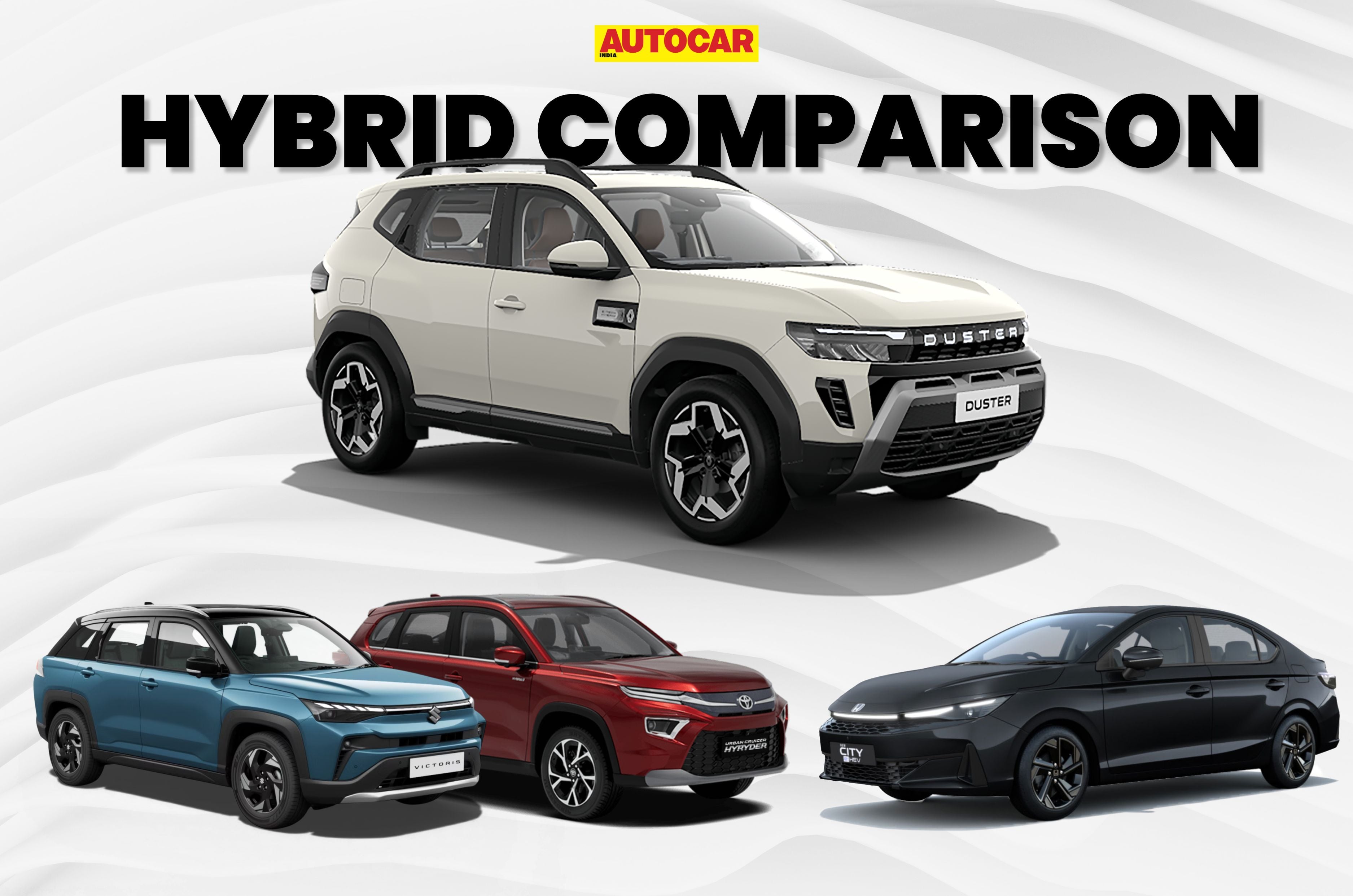
The new Renault Duster has been launched with a strong hybrid powertrain option, a first for the nameplate in India. The latest from Renault competes in the midsize SUV space, where only the Maruti Grand Vitara, Maruti Victoris and Toyota Hyryder currently offer a hybrid choice. Honda does not offer a hybrid setup with the Elevate at the moment, though the City midsize sedan has been equipped with one. But how do these vehicles stack up on paper when it comes to specifications? Let’s find out.
Renault Duster hybrid spec comparison
Duster has the highest power output
Renault Duster hybrid specs vs Grand Vitara, Victoris, Hyryder and City e:HEV
Hybrid system
Combined power
Combined torque
Transmission
Mileage
Battery size | Voltage
Duster
1.8L 4cyl + 2 e-motors
160hp
–
Multi-mode automatic
29kpl
1.4kWh | 247V
Grand Vitara
1.5L 3cyl + e-motor
116hp
141Nm
eCVT
27.97kpl
0.60kWh | 177.6V
Victoris
1.5L 3cyl + e-motor
116hp
141Nm
eCVT
28.65kpl
0.60kWh | 177.6V
Hyryder
1.5L 3cyl + e-motor
116hp
141Nm
eCVT
27.97kpl
0.60kWh | 177.6V
City e:HEV
1.5L 4cyl + e-motor
126hp
253Nm
eCVT
27.13kpl
Not available | 172.8V
While we are yet to sample the Duster hybrid in real-world conditions, the above specs table suggests it takes a more performance-led approach than the rest. Its four-cylinder naturally aspirated petrol engine is the largest by cubic capacity here, and paired with two electric motors, this hybrid setup delivers the highest peak power output. Renault claims a 0-100kph time of 9.61 seconds, which it says makes the Duster hybrid the quickest in the segment. The brand has not revealed a combined torque figure yet, though the Duster’s traction motor produces 208Nm on its own.
Renault SUV’s multi-mode gearbox stands out
The Duster’s multi-mode automatic gearbox has two gears for the motor and four gears for the engine. Renault claims that this setup creates an 8-speed combination in hybrid mode, and it stands out as the others use an eCVT unit, which is known for a smooth driving experience. Moreover, the Duster hybrid’s larger, higher-voltage battery further points to more electric assistance than the rest. The French brand claims that 80 percent of city drives are possible in EV mode alone, while the Duster hybrid’s ARAI-certified mileage of 29kpl is the highest of all the cars here.
Midsize SUVs offer most powertrains
Only PHEV is missing
Save for plug-in hybrid, midsize SUVs offer almost every major powertrain choice, including petrol, CNG, diesel and electric. Hyundai Creta is expected to adopt a hybrid powertrain in its next generation, due in 2027, and its Kia Seltos sibling is also set to follow suit. The new Tata Sierra’s ARGOS platform is hybrid-ready, giving the homegrown carmaker the flexibility to introduce a hybrid version in the future. Volkswagen and Skoda are also working on hybrid midsize SUVs for the Indian market.
CNG is shaping up to be the new diesel. For the second year running, CNG passenger vehicles outsold diesels, accounting for 21.98 percent of the market compared to 18.08 percent for oil burners in FY2026. That is a very big deal. Big enough for Mahindra – traditionally a diesel-first brand – to sit up, take notice and want a piece of the action. Its first attempt – if you don’t count the fleet-only KUV100 CNG – is the Mahindra XUV 3XO ZNG. Read as Zee-NG and pronounced Zing. The headline is that it makes the same amount of power as the pure-petrol 3XO TCMPFi. We experienced it in Mumbai to see if it really has zing.
Mahindra XUV 3XO ZNG Exterior Design and Engineering – 7/10
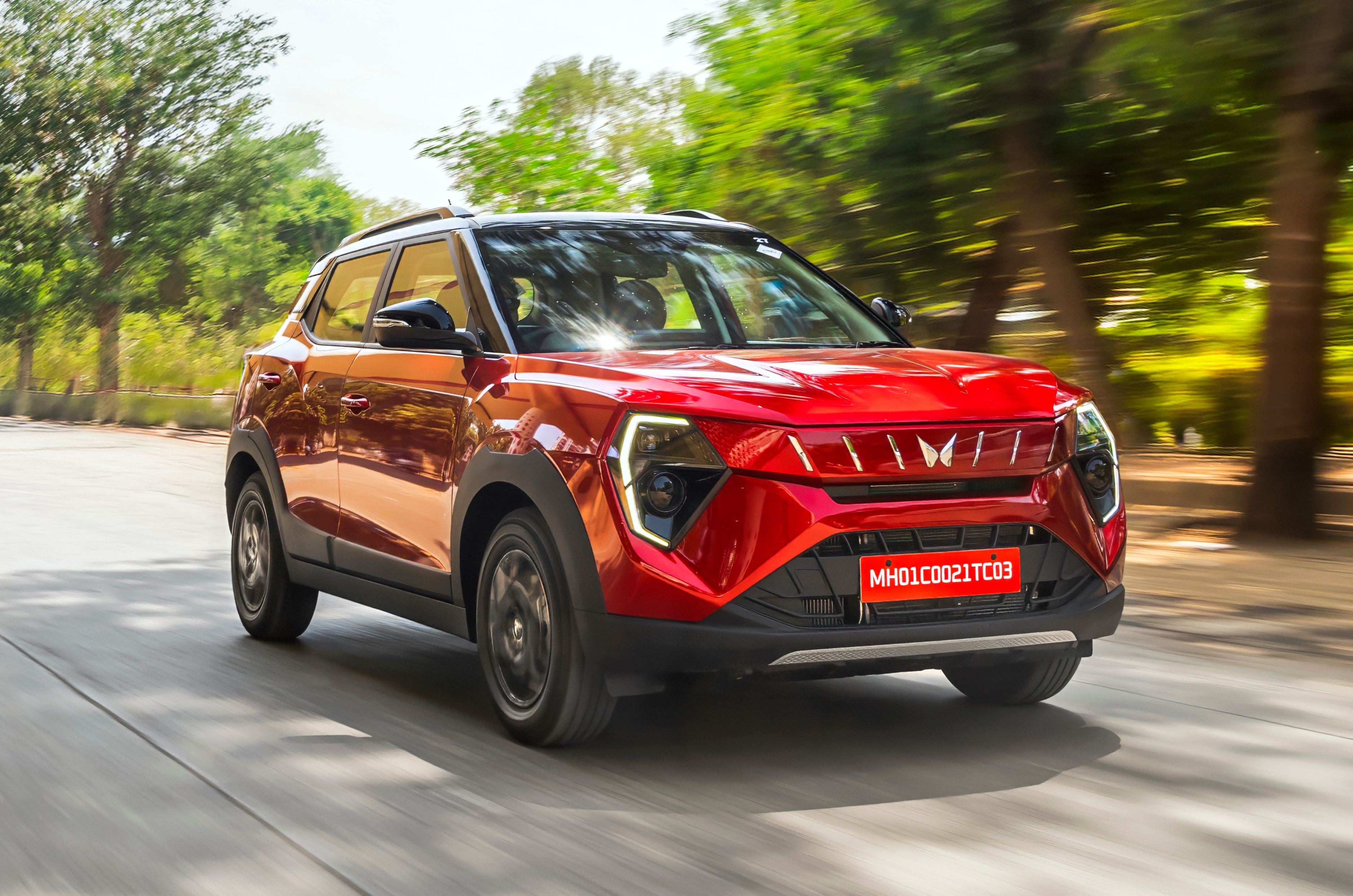
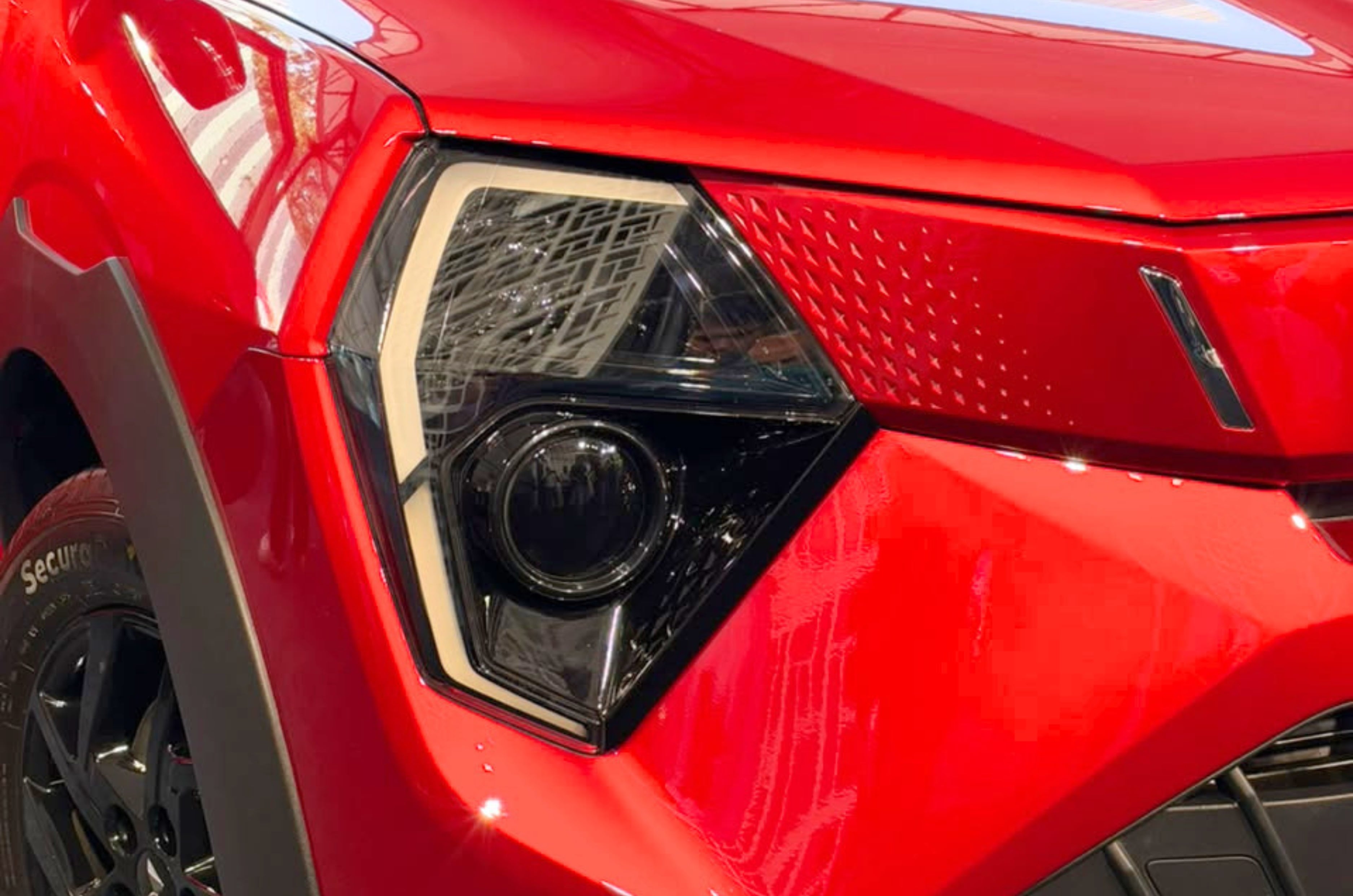
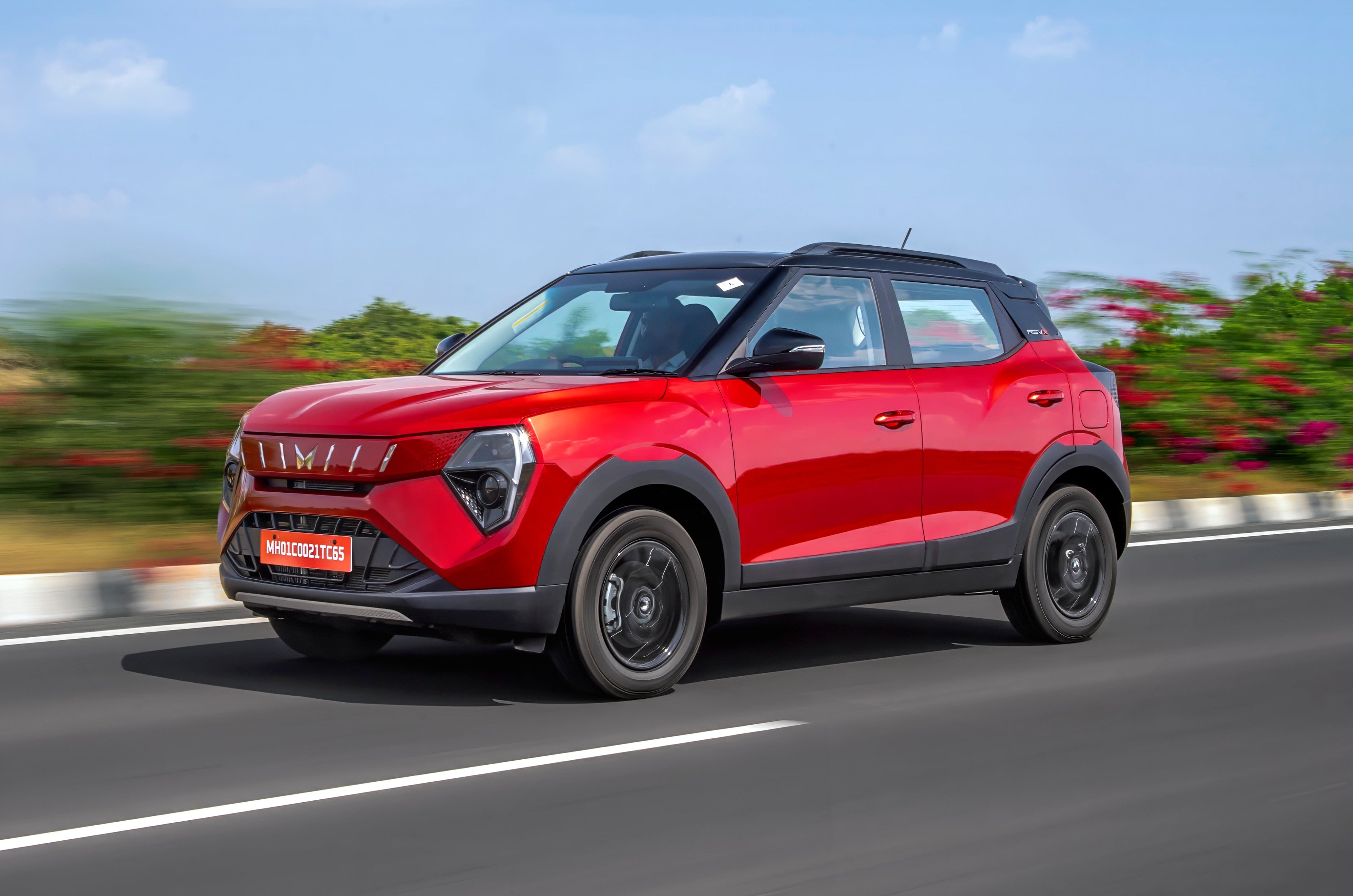
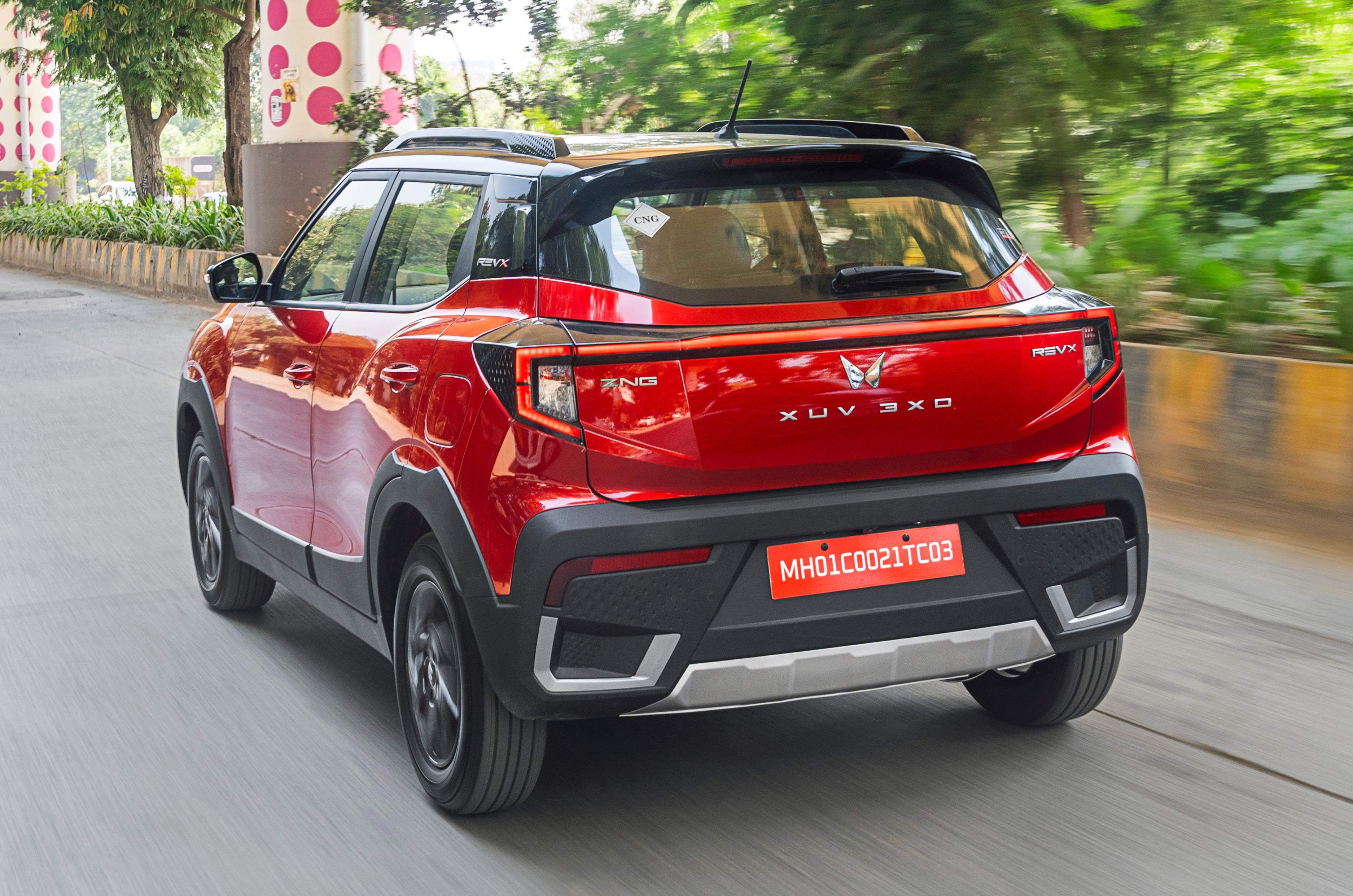
Outside, there isn’t much to tell the ZNG apart from the regular XUV 3XO. Our test car is based on the REVX trim and gets a body-coloured grille, while other trims gloss black. LED lighting is present, though fog lamps are missing even on the top REVX A CNG trim.
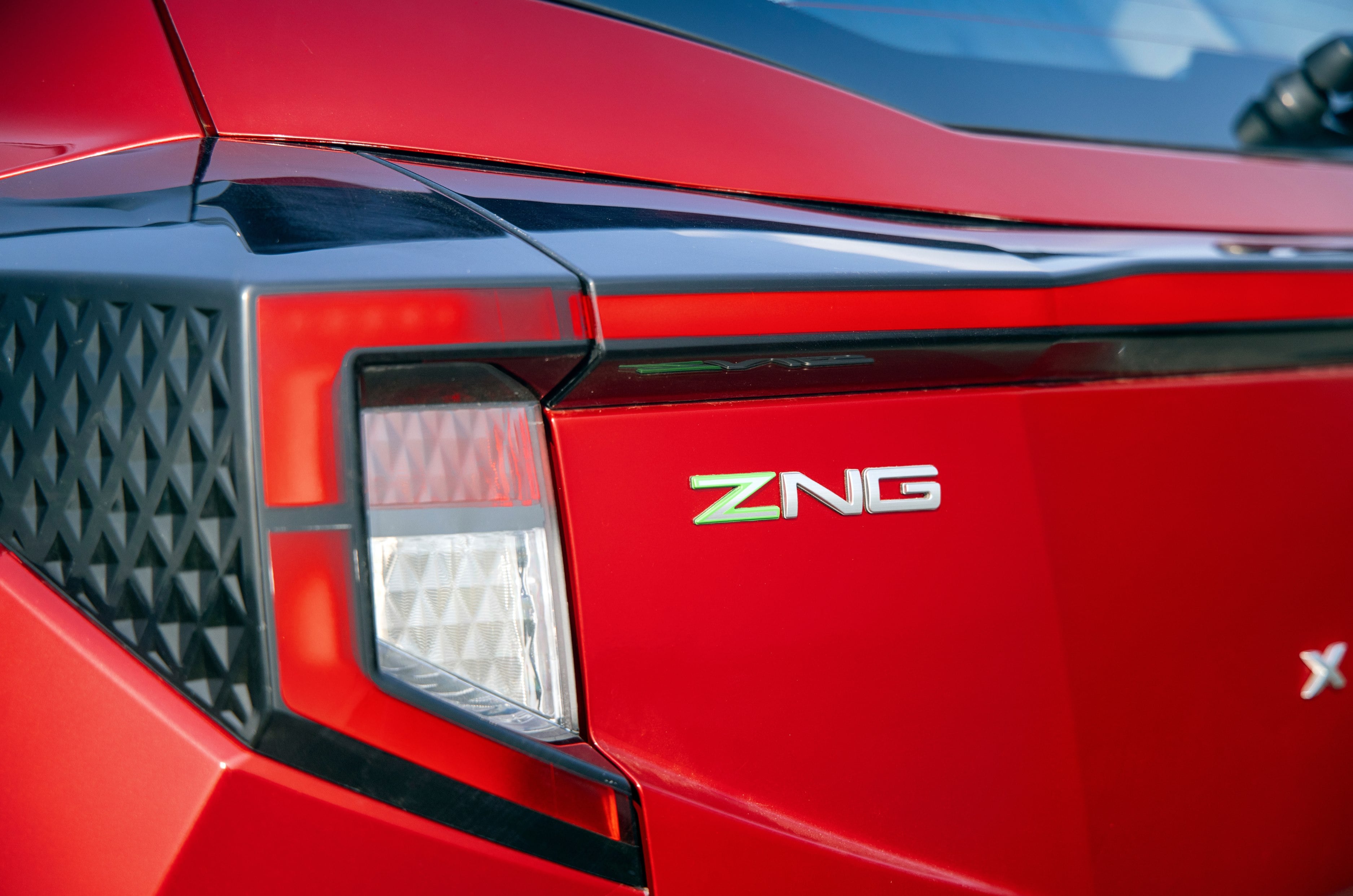
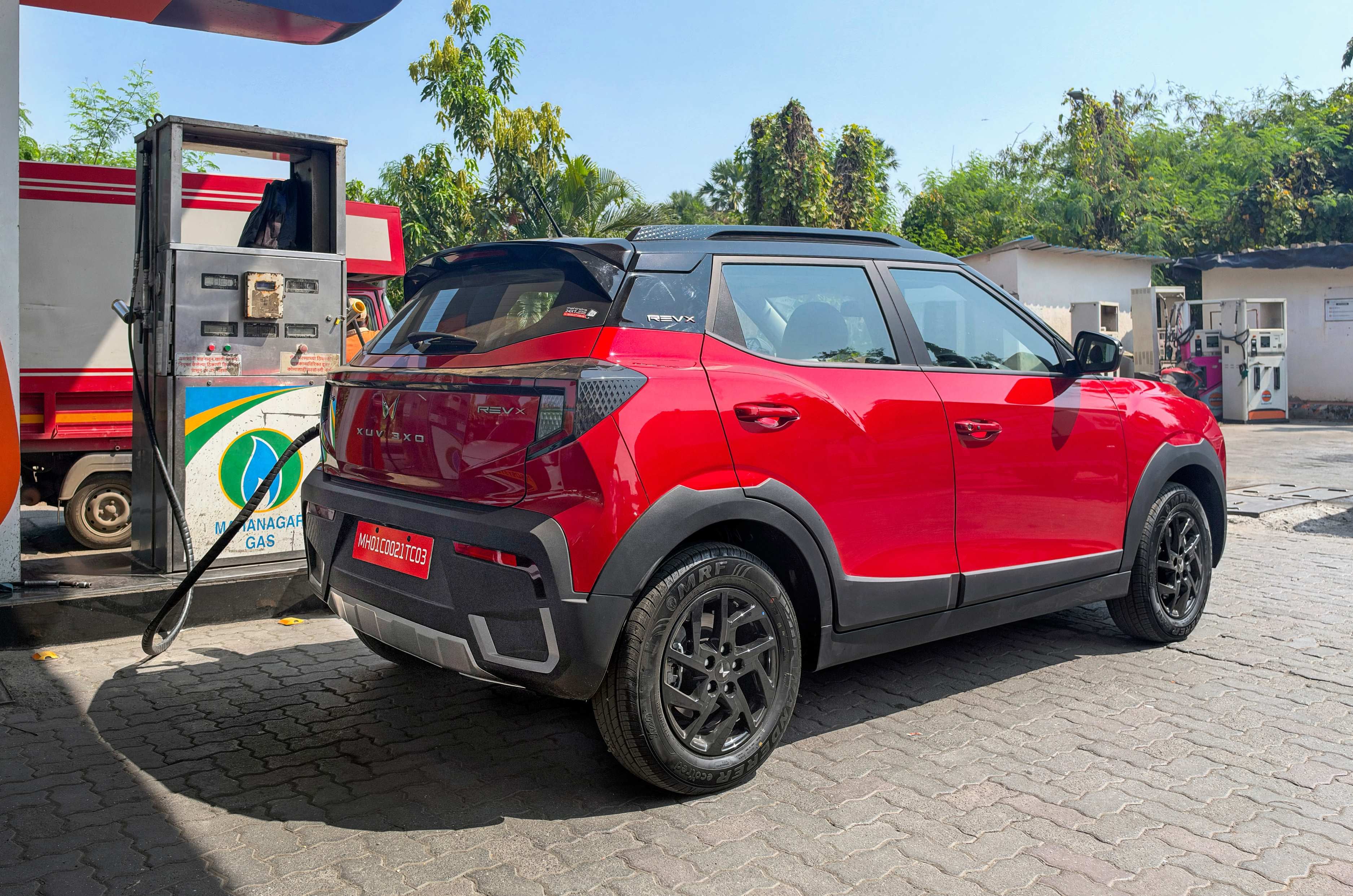
ZNG badge on the tailgate is the only exterior telltale of the CNG powertrain.
In profile, you’ll notice the gloss black 16-inch wheels – the largest size available on the ZNG, with 17s reserved for the pure-petrol TGDi. At the rear is the clearest giveaway of its CNG powertrain: a ZNG badge on the tailgate.
XUV 3XO ZNG Interior Space and Comfort – 8/10
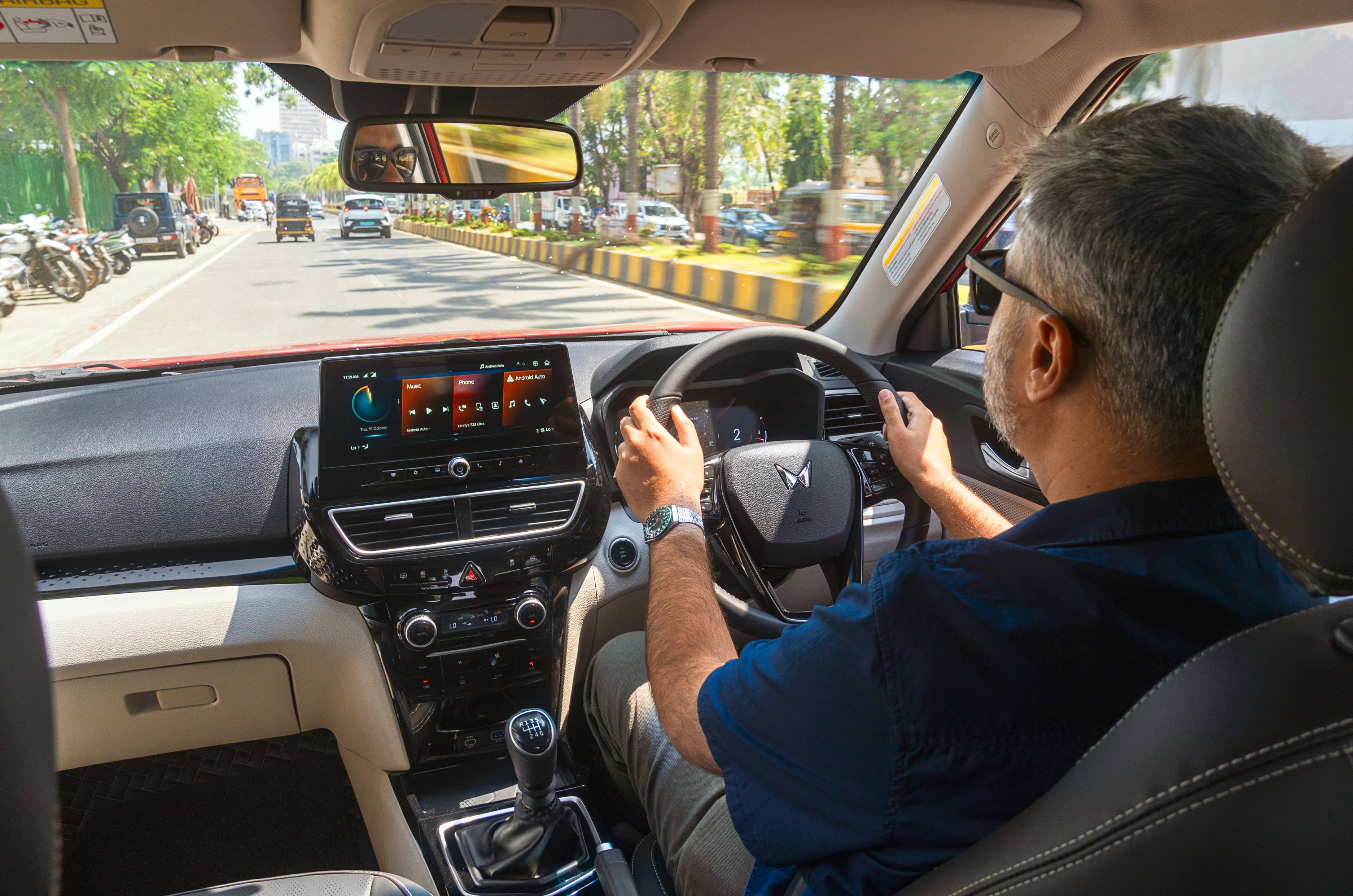
Inside, too, the ZNG is largely identical to its petrol and diesel counterparts, with a CNG switch to the right of the steering wheel being the only real giveaway. The dual-tone dashboard with lots of gloss black trim is otherwise carried over unchanged. Despite not being the top of the line variant, the cabin has an upmarket and well-trimmed air to it.
Our REVX A test car gets black leatherette seats, which can get quite hot, and they lack ventilation, just like the regular 3XO. The front seats are also a bit tight for larger frames, and the lack of a telescoping steering makes it hard to get comfy. Another ergonomic gripe is the tight driver’s footwell, with no dead pedal – pertinent as a six-speed manual is your only gearbox option.
The rear seat remains spacious and comfortable for its segment, and accommodating three abreast is not an issue. One area where the 3XO fell short was boot space, measuring just 295 litres – the smallest in the segment. To keep as much of the boot intact as possible, Mahindra has moved the space-saver spare under the body and placed a dual-tank setup under the boot floor. The combined liquid capacity of the tanks is 60 litres, which translates to 10kg of CNG capacity.
Boot capacity has dropped to 270 litres, which is smallest amongst immediate rivals, however it remains fairly wide and can accommodate up to four cabin bags.
Mahindra XUV 3XO ZNG Features and Safety – 8/10
The 3XO ZNG is available in four trims, which offer the same features as their petrol and diesel counterparts. The highlights are a pair of sharp 10.25-inch screens for infotainment and instrumentation, a panoramic sunroof and a six-speaker audio system with Dolby Atmos.
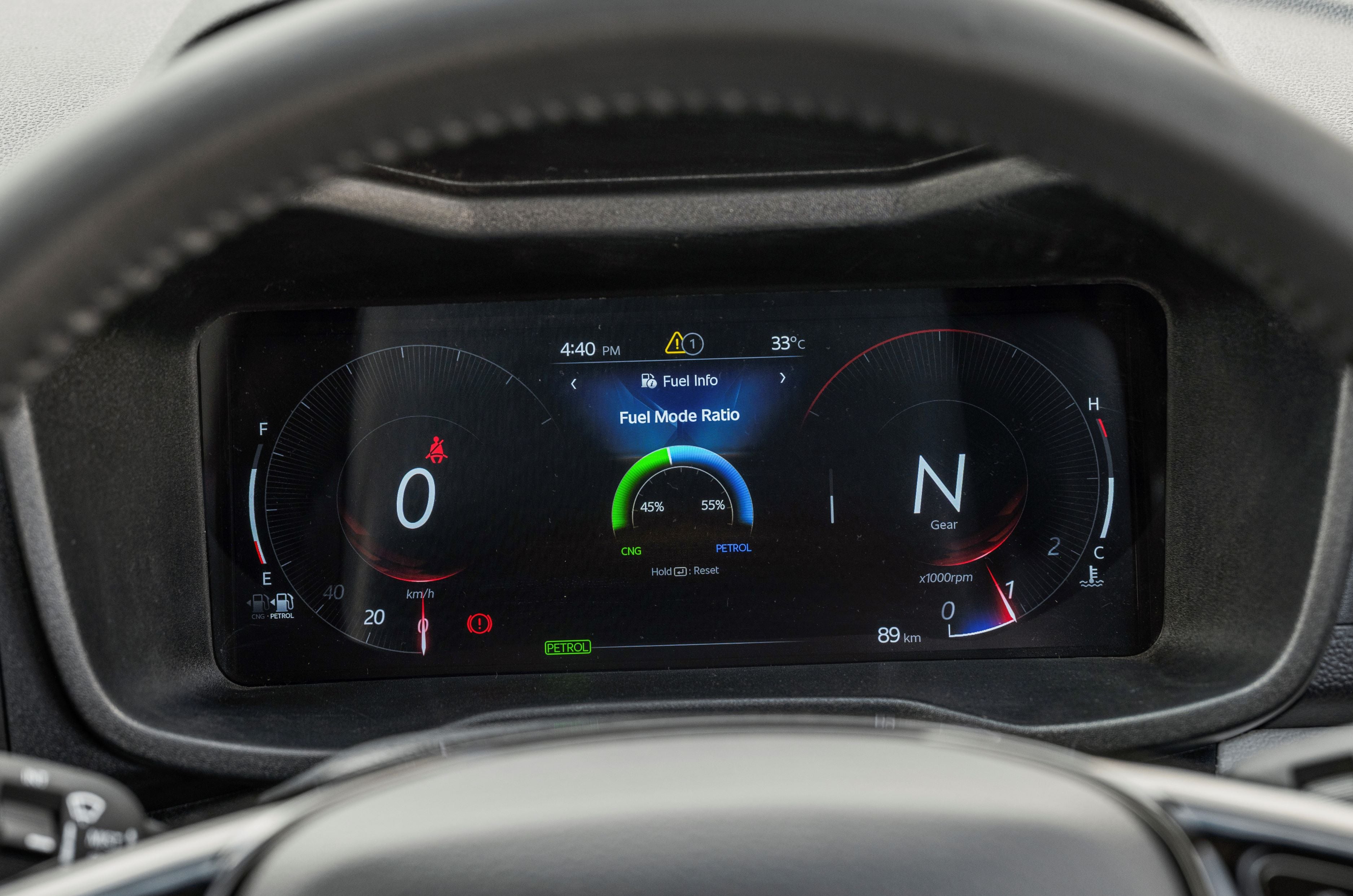
The digital instrument cluster has a few more CNG-related functions. Hit the CNG switch, and an indicator on the digital instrument cluster confirms the fuel you are using, while the fuel gauge changes to display the fuel level. The cluster can also show the ratio of time spent in each fuel mode and the corresponding fuel efficiency.
As such, the 3XO ZNG is reasonably well equipped compared to equivalent variants of its main rival, the Tata Nexon iCNG. However, the Nexon offers a wider choice of CNG variants, with top-spec versions getting features such as a 360-degree camera, ventilated front seats and a wireless charger, all of which the Mahindra misses out on.
The safety kit is quite comprehensive, featuring six airbags, ESC, ISOFIX mounts, a tyre pressure monitoring system and a reversing camera. The regular XUV 3XO is also a five-star Bharat NCAP safety-rated car, and Mahindra says the ZNG has been engineered to meet the same standards.
Mahindra XUV 3XO ZNG Performance and Refinement – 8/10
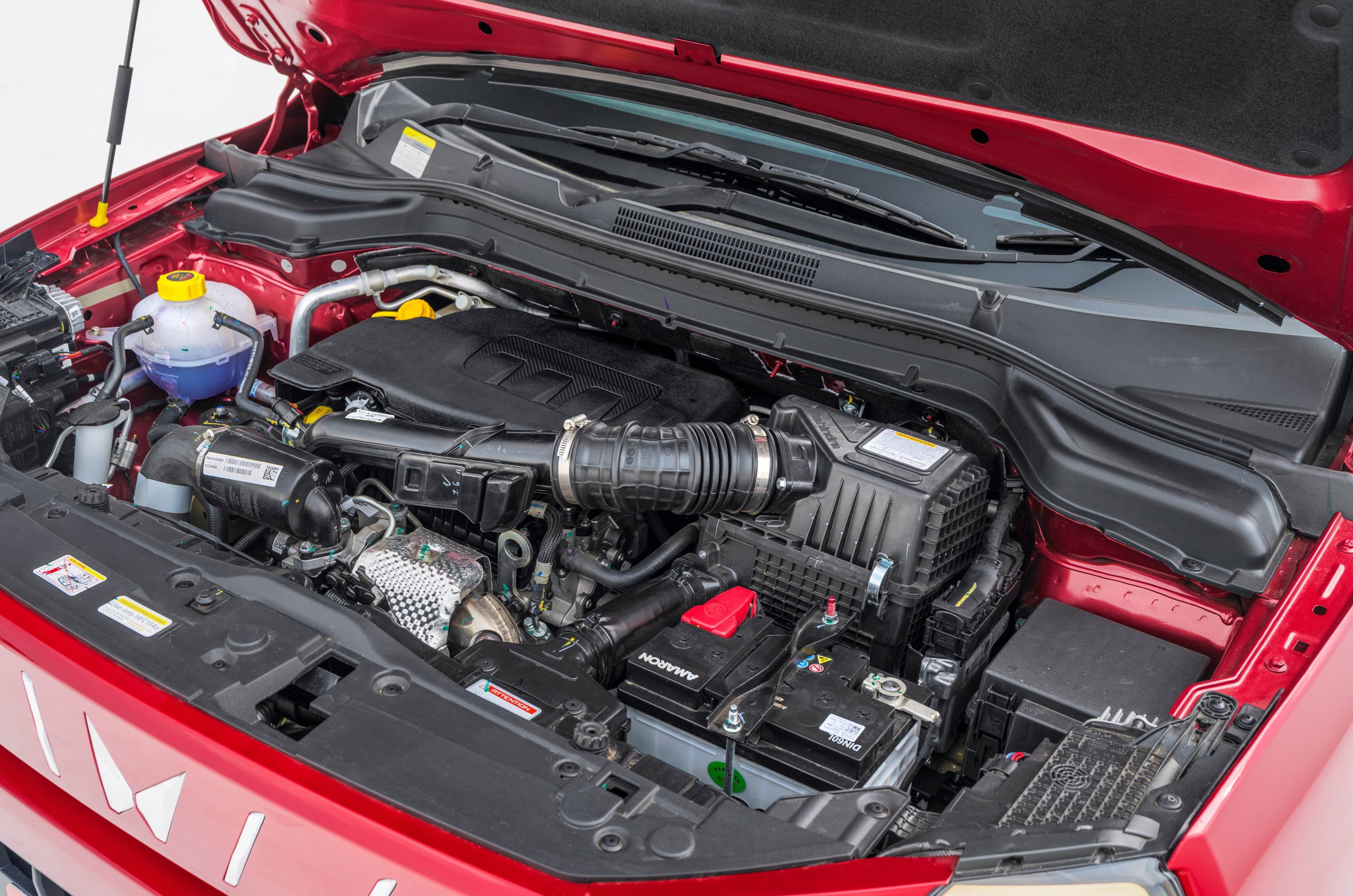
Powering the ZNG is the same 1.2-litre multi-point fuel injection (MPFi) turbo-petrol engine that does duty on the lower and mid-level trims of the 3XO. The kicker is that Mahindra quotes the exact same power and torque figures for CNG as for the pure-petrol version – 111hp and 200Nm. That is highly unusual, as a 10 to 15 percent drop in power figures is the norm. For comparison, its direct rival, the Tata Nexon iCNG, loses 20hp when switching from petrol to CNG. Mahindra says it has managed this with the use of a 10-bar CNG injection system. It also says the turbocharger and ECU calibration have been optimised to run on CNG, and initial impressions seem to back this up.
1.2-litre TCMPFI engine uses a 10-bar CNG injection system; Mahindra claims identical 111hp and 200Nm figures for petrol and CNG.
In everyday driving, the difference between CNG and petrol modes is barely noticeable. The engine feels smooth and refined in both, only becoming audible when extended. Performance, too, is very similar. Throttle response is good and the motor feels tractable, rarely requiring a shift into first when negotiating a speed breaker. There is a bit of turbo lag below 2,000rpm, but get past this and performance feels brisk.
The switch between modes is also quite seamless, with no apparent jerkiness or change in engine note. However, switch back and forth a few times, and you’ll notice the throttle response is ever so slightly duller in CNG mode, and there are times when it will hesitate on sudden throttle inputs. Overall, though, calibration in CNG mode is very good, and in everyday driving, there is very little to fault.
Performance feels brisk once you get past 2000rpm.
While the pure-petrol version of this engine can be had with a six-speed torque-converter automatic, the ZNG is only available with the six-speed manual. While its immediate rivals don’t offer an automatic with CNG either, Mahindra would have done well to offer at least an AMT. As it is, the manual is a smooth and easy-to-use unit, but not quite at the level of its Japanese or Korean competition. Its throws are a bit too long, and the clutch, while light, has a long travel.
In terms of outright performance, Mahindra claims an 11.8sec 0-100kph time for the ZNG. We conducted a quick performance test (not to Autocar India standards), which resulted in a 0-100kph time of 12.98s on petrol and 12.64s on CNG – a difference we put down to the launch. In-gear acceleration figures paint a clearer picture, where the ZNG was quicker in petrol mode by about 0.7 seconds in both 20-80kph and 40-100kph runs. Nevertheless, performance in either CNG or petrol is so close that most drivers would be hard-pressed to tell the difference.
Mahindra XUV 3XO ZNG Mileage and Efficiency – 8/10
Mahindra claims an efficiency figure of 24.7km/kg for the XUV 3XO ZNG, which translates to a theoretical range of 247km from its 10kg CNG capacity.
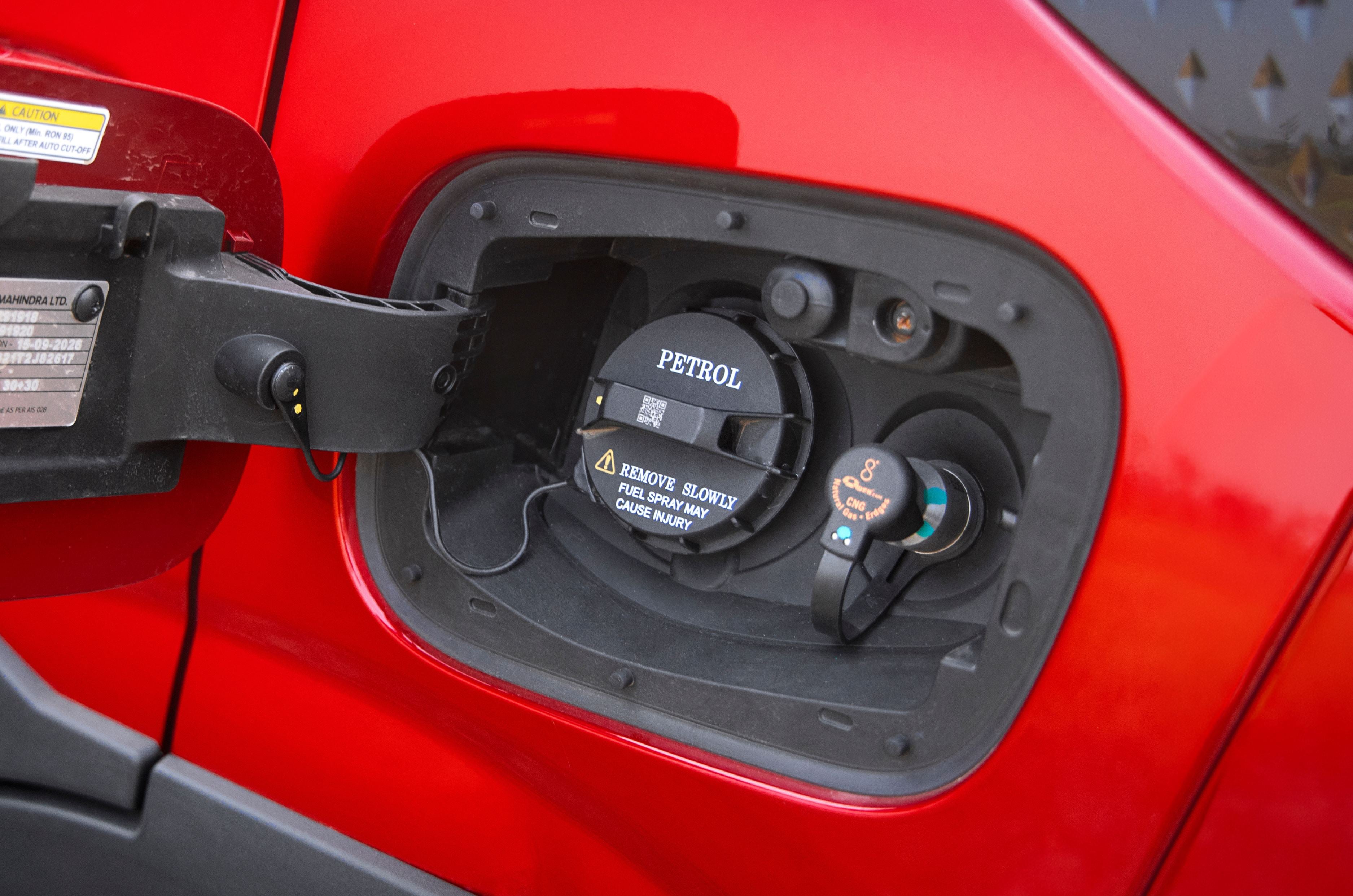
CNG filler neatly positioned beside the fuel filler; fuel filler door still has a manual release in the cabin.
It also gets an idle-stop/start function, which should help efficiency. We will verify these claims with a real-world test soon.
Mahindra XUV 3XO ZNG Ride Comfort and Handling – 9/10
Light steering works well in town; steering modes dial up resistance but don’t offer better feel.
The switch to CNG adds around 100kg to the 3XO, most of it concentrated at the rear. To ensure this doesn’t affect ride or handling, Mahindra has tweaked the suspension to cope with the extra weight. The ZNG’s ride has a slightly firm edge, but overall it deals with bad roads very well.
16-inch wheels and tall tyres are better at absorbing sharper bumps than the 17s on higher petrol trims.
The smaller 16-inch wheels also play an important part here, as their taller-sidewall tyres absorb sharp edges before they make their way to the cabin. Overall, the ride remains amongst the best in the class.
Handling, too, remains tight and engaging, with a planted feel around the bends. The steering is light and direct, and while you can dial up the resistance using the three steering modes, this adds little in terms of feel or feedback.
Mahindra XUV 3XO ZNG Value for Money – 8/10
Overall, the Mahindra XUV 3XO offers good value for money and makes for a compelling entrant into the CNG compact SUV space. Prices for the Mahindra XUV 3XO ZNG start at Rs 9.99 lakh and go up to Rs 12.27 lakh, which is between Rs 1 lakh and Rs 1.2 lakh more than the equivalent petrol trims. Pricing is on par with comparable variants of the Tata Nexon iCNG. However, the Nexon has a wider range and also offers more features on the higher trims.
Mahindra has packaged the CNG tanks cleverly, minimising the impact on boot space. That said, the 3XO’s boot wasn’t particularly large to begin with, and that remains a drawback. What sets it apart is the driving experience. CNG calibration is very good, and performance in CNG mode is close enough to petrol for most people not to notice a real difference. For a first attempt, the XUV 3XO ZNG certainly ticks a lot of boxes.
LPG Price 17 October 2026: रसोई का बजट बनाते समय गैस सिलेंडर की कीमत को नजरअंदाज करना आसान नहीं है। महीने में एक बार सिलेंडर भरवाने वाले परिवारों से लेकर रोजाना बड़ी मात्रा में गैस इस्तेमाल करने वाले कारोबारियों तक, एलपीजी के दाम सभी के खर्च को प्रभावित करते हैं। ऐसे में सिलेंडर बुक कराने से पहले ताजा कीमतों की जानकारी होना जरूरी है। घरेलू और कमर्शियल गैस सिलेंडर के रेट अलग-अलग होते हैं और शहर के हिसाब से भी इनमें अंतर देखने को मिलता है।
उपलब्ध जानकारी के मुताबिक, दिल्ली में 14.2 किलोग्राम वाले घरेलू एलपीजी सिलेंडर की कीमत 942 रुपये है, जबकि 19 किलोग्राम के कमर्शियल सिलेंडर के लिए 2,810 रुपये देने पड़ रहे हैं। अक्टूबर की शुरुआत में घरेलू सिलेंडर के दाम स्थिर रहे, लेकिन कमर्शियल गैस की कीमतों में बढ़ोतरी दर्ज की गई। इसका असर होटल, रेस्तरां और अन्य खाद्य कारोबारों के खर्च पर पड़ सकता है। आइए, जानते हैं प्रमुख शहरों में घरेलू और कमर्शियल सिलेंडर के ताजा बताए गए रेट।
घरेलू गैस सिलेंडर के ताजा रेट
घरेलू एलपीजी सिलेंडर हर घर की जरूरत है। इसकी कीमत में बदलाव का असर सीधे परिवारों के मासिक खर्च पर पड़ता है। अलग-अलग शहरों में स्थानीय करों और अन्य कारणों से कीमतों में अंतर देखने को मिल सकता है।
आपके शहर में घरेलू और कमर्शियल सिलेंडर कितने का है?
अगर आप घरेलू या कमर्शियल गैस सिलेंडर बुक कराने जा रहे हैं, तो नीचे दी गई सूची में अपने शहर का रेट देख सकते हैं। इसमें 14.2 किलोग्राम वाले घरेलू और 19 किलोग्राम वाले कमर्शियल सिलेंडर की कीमतें एक साथ दी गई हैं।
शहर
घरेलू सिलेंडर (14.2 KG)
कमर्शियल सिलेंडर (19 KG)
दिल्ली
₹942
₹2,810
मुंबई
₹941.50
₹2,764.50
कोलकाता
₹968
₹2,954
चेन्नई
₹957.50
₹2,983
नोएडा
₹939.50
₹2,810
गुरुग्राम
₹950.50
₹2,828
लखनऊ
₹979.50
₹2,932.50
जयपुर
₹945.50
₹2,839
पटना
₹1,031.50
₹3,100.50
हैदराबाद
₹994
₹3,065
कमर्शियल गैस सिलेंडर के दाम में कितनी बढ़ोतरी हुई?
घरेलू सिलेंडर के मुकाबले कमर्शियल एलपीजी का इस्तेमाल मुख्य रूप से होटल, रेस्तरां, ढाबों और मिठाई की दुकानों में किया जाता है। उपलब्ध जानकारी के मुताबिक, 1 अक्टूबर 2026 को 19 किलोग्राम वाले कमर्शियल सिलेंडर की कीमतों में शहर के अनुसार करीब 62.50 रुपये से 70 रुपये तक की बढ़ोतरी की गई थी।
कमर्शियल गैस महंगी होने से होटल और रेस्तरां संचालकों का खर्च बढ़ सकता है। इसका असर आगे चलकर खाने-पीने की कुछ चीजों की कीमतों पर भी पड़ने की आशंका रहती है।
गैस सिलेंडर बुक करने से पहले इन बातों का रखें ध्यान
एलपीजी सिलेंडर की बुकिंग करते समय कुछ जरूरी बातों का ध्यान रखना चाहिए, ताकि बाद में किसी तरह की परेशानी न हो।
ताजा रेट जांचें: बुकिंग से पहले अपनी गैस कंपनी की आधिकारिक वेबसाइट या ऐप पर शहर के अनुसार लागू कीमत देखें।
डिलीवरी का बिल लें: सिलेंडर मिलने पर बिल जरूर लें और उसमें दर्ज कीमत की जांच करें।
सब्सिडी का स्टेटस देखें: यदि आप सब्सिडी के पात्र हैं, तो अपने बैंक खाते में इसकी स्थिति जांच लें।
शिकायत के लिए आधिकारिक माध्यम अपनाएं: कीमत, डिलीवरी या सिलेंडर से जुड़ी समस्या होने पर गैस कंपनी की ग्राहक सेवा से संपर्क करें।
गौरतलब है कि एलपीजी सिलेंडर के दाम शहर और लागू शुल्क के अनुसार अलग हो सकते हैं। इसलिए बुकिंग करने से पहले अपनी गैस कंपनी के आधिकारिक माध्यम से ताजा कीमत की पुष्टि जरूर कर लें।