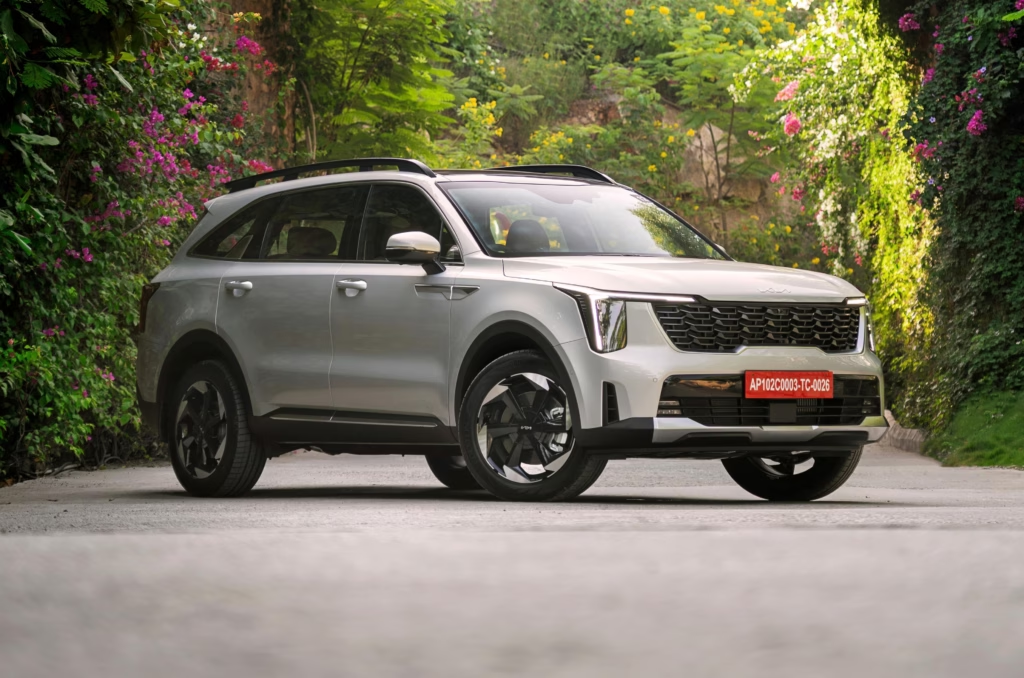
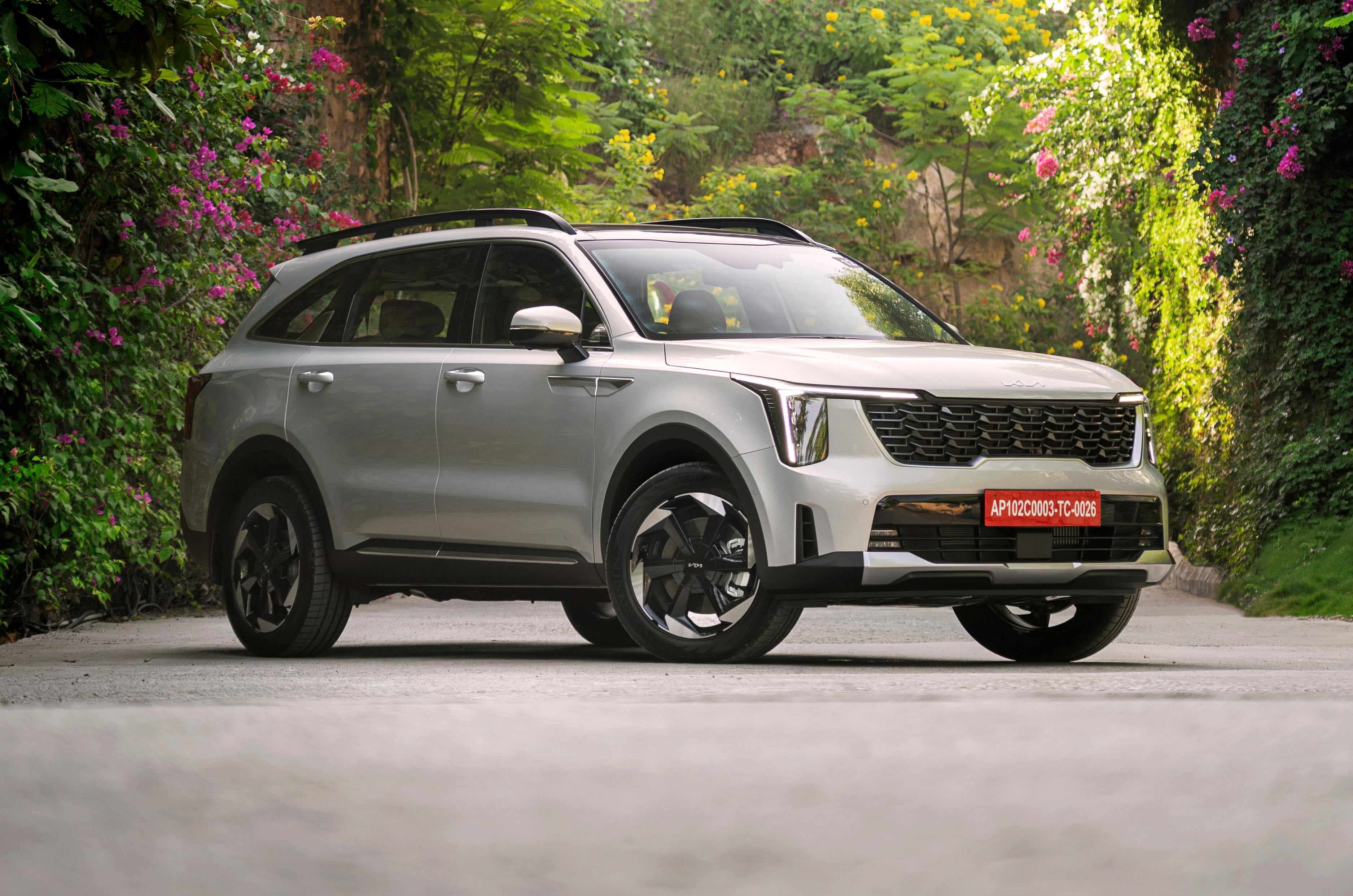
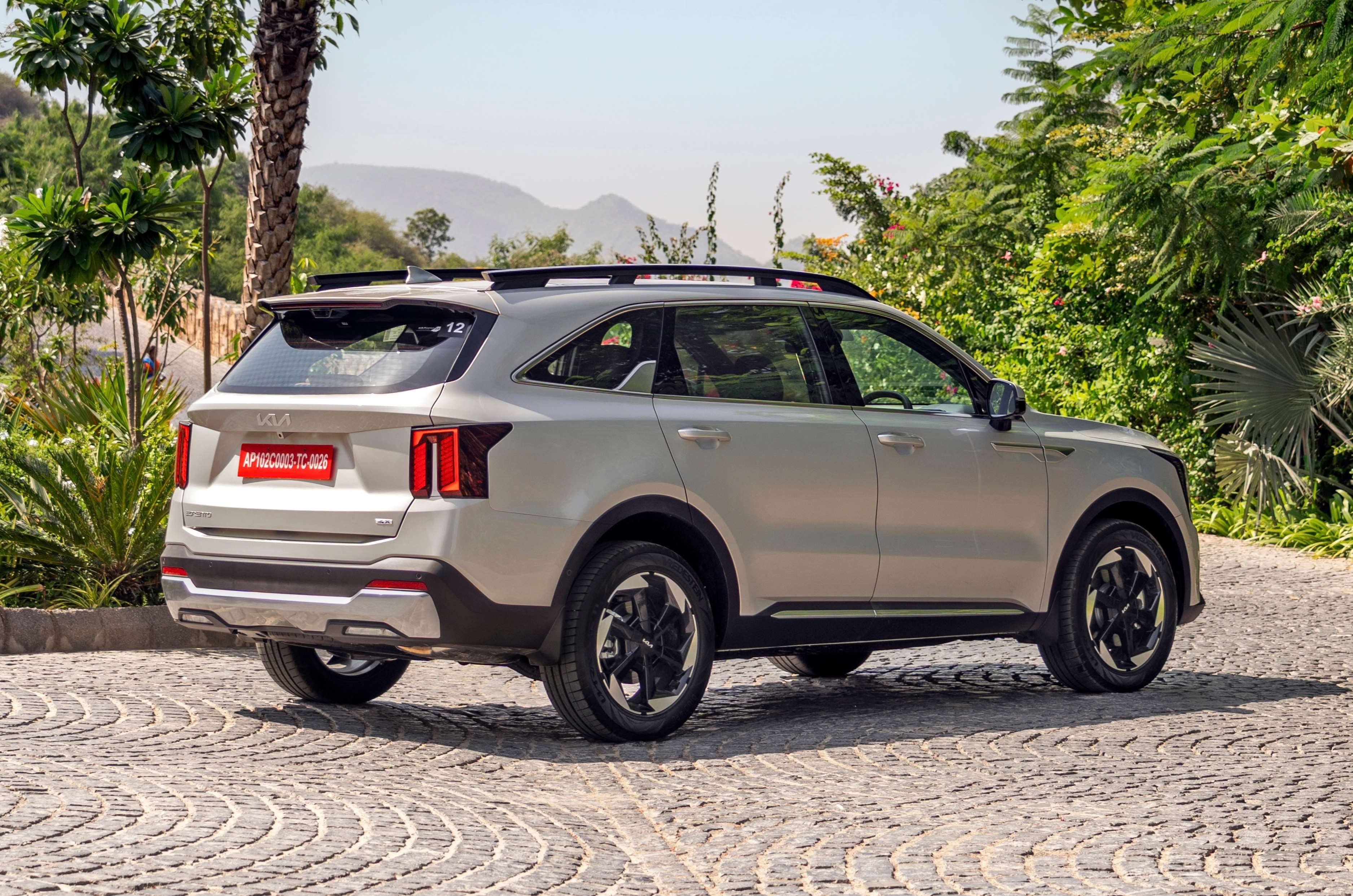
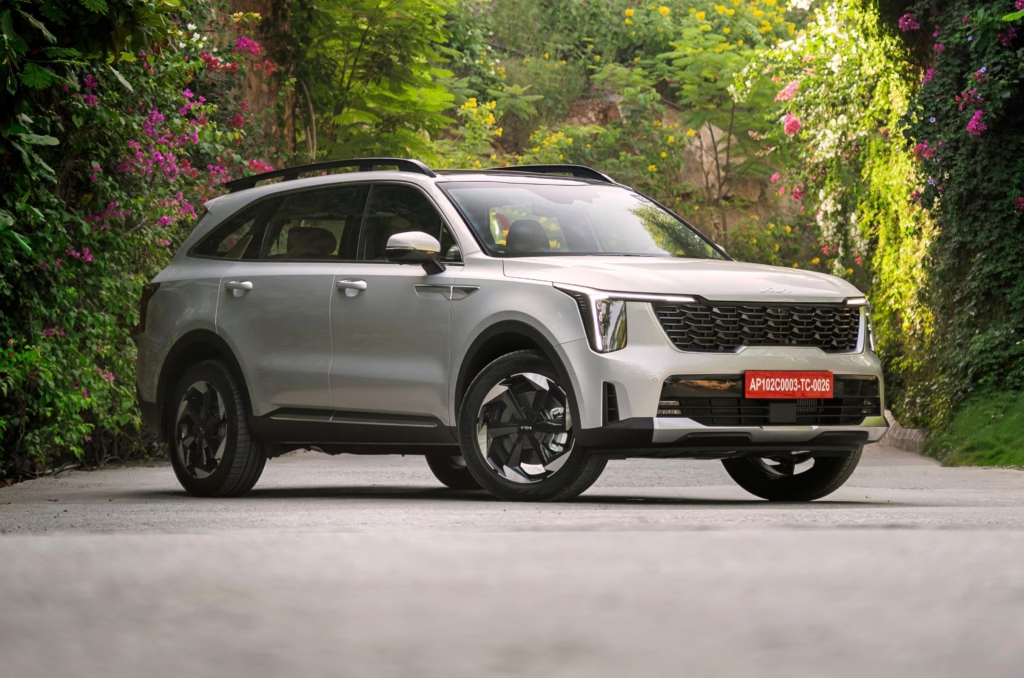
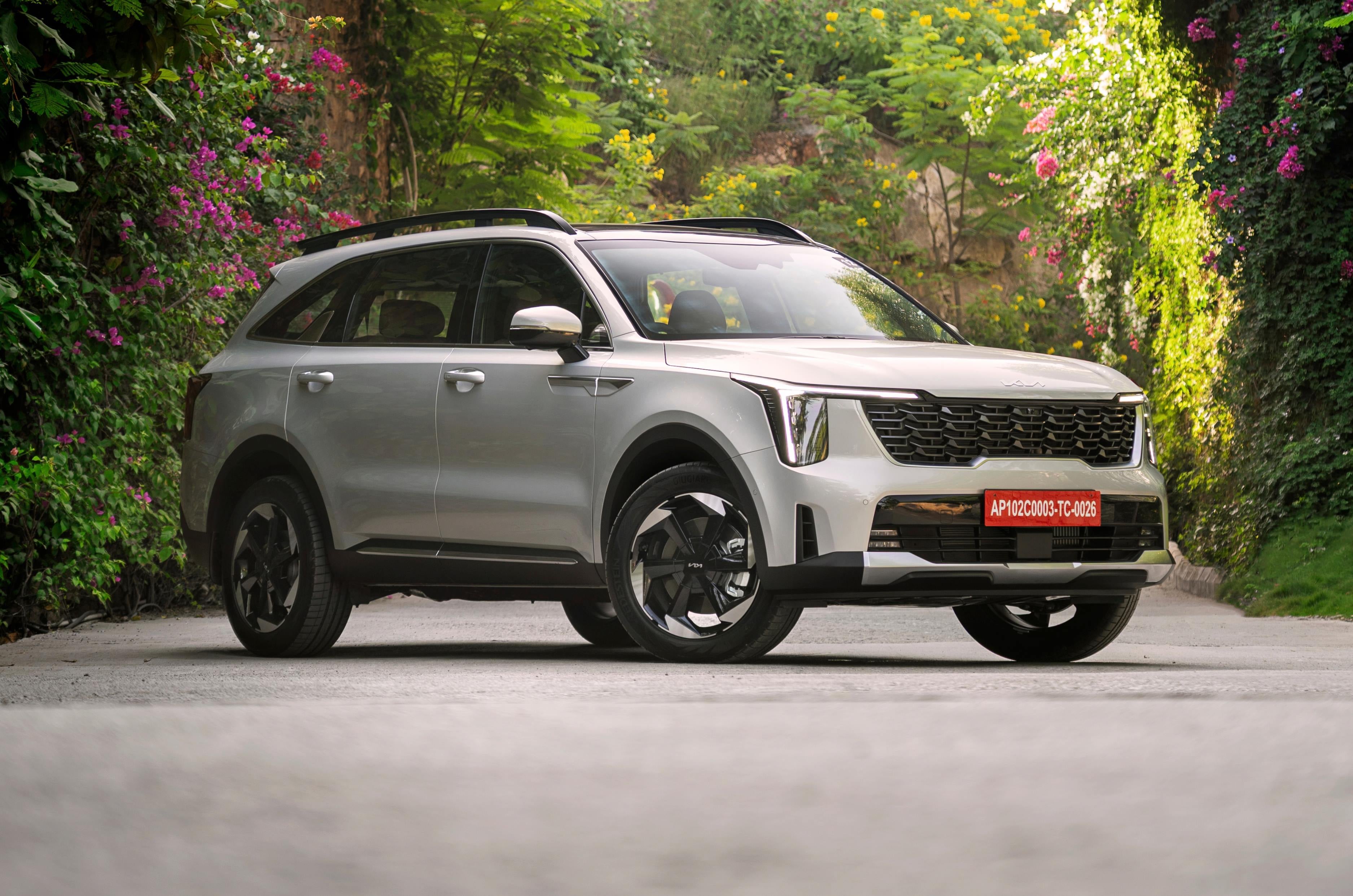
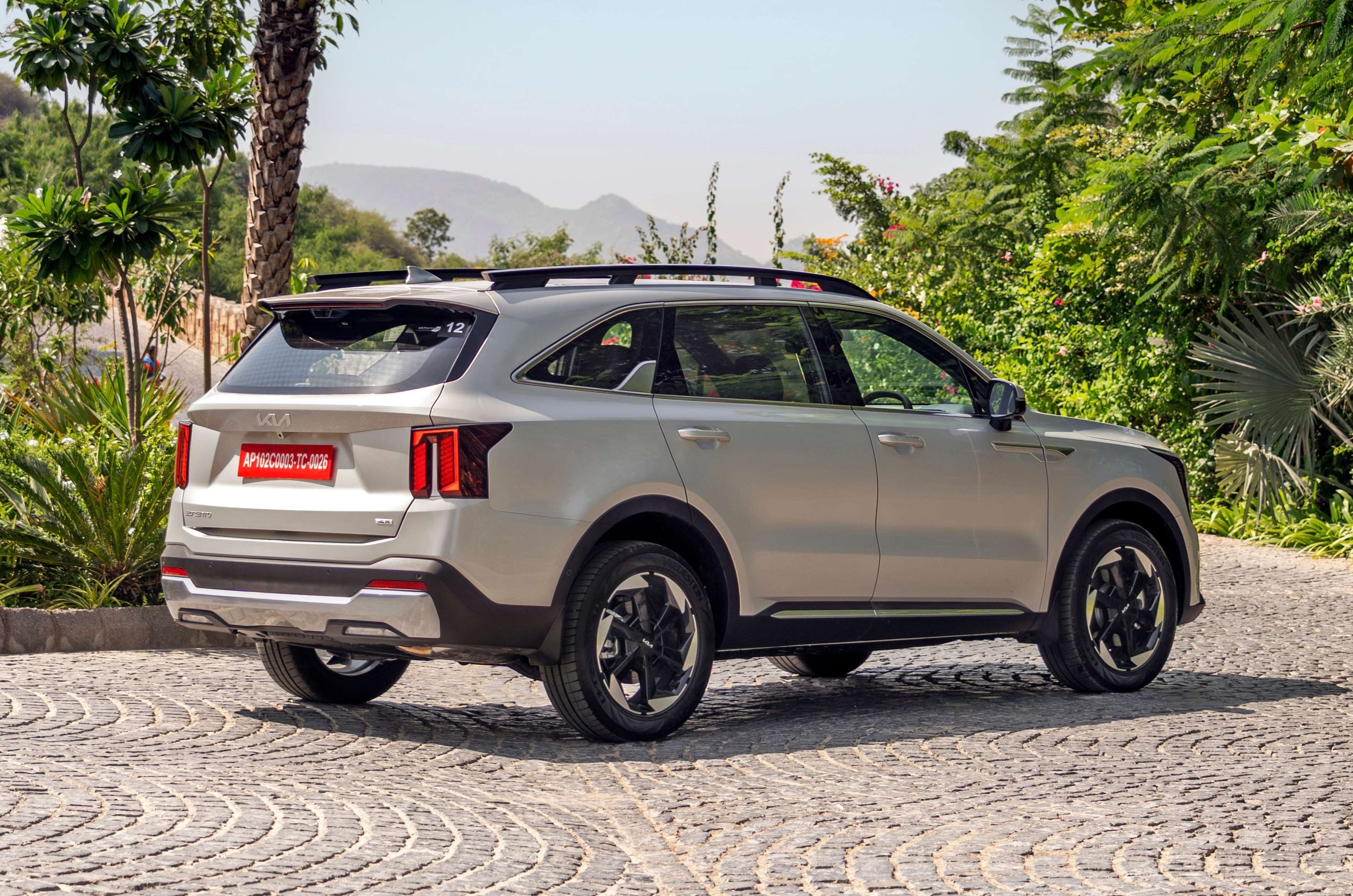
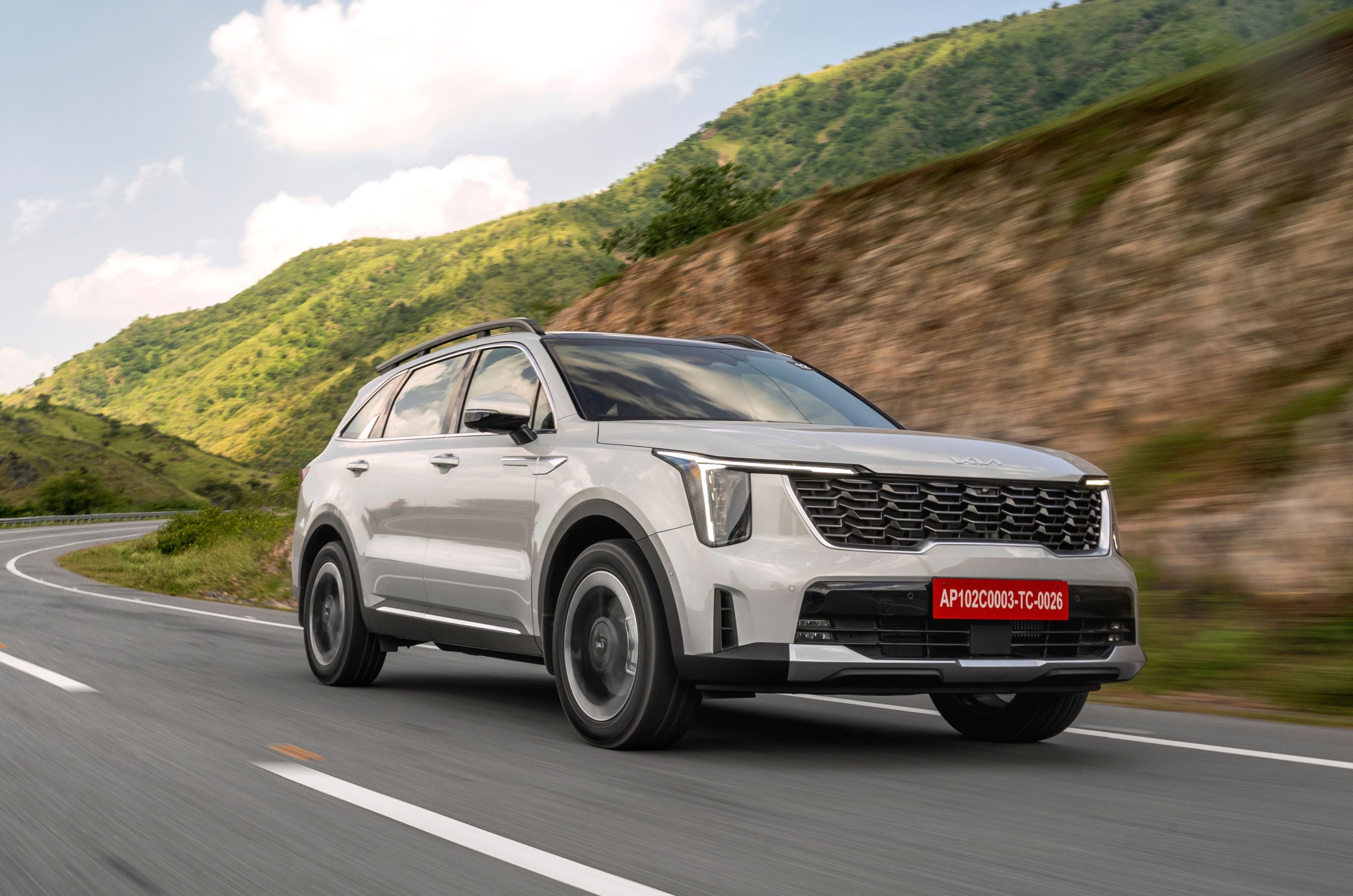
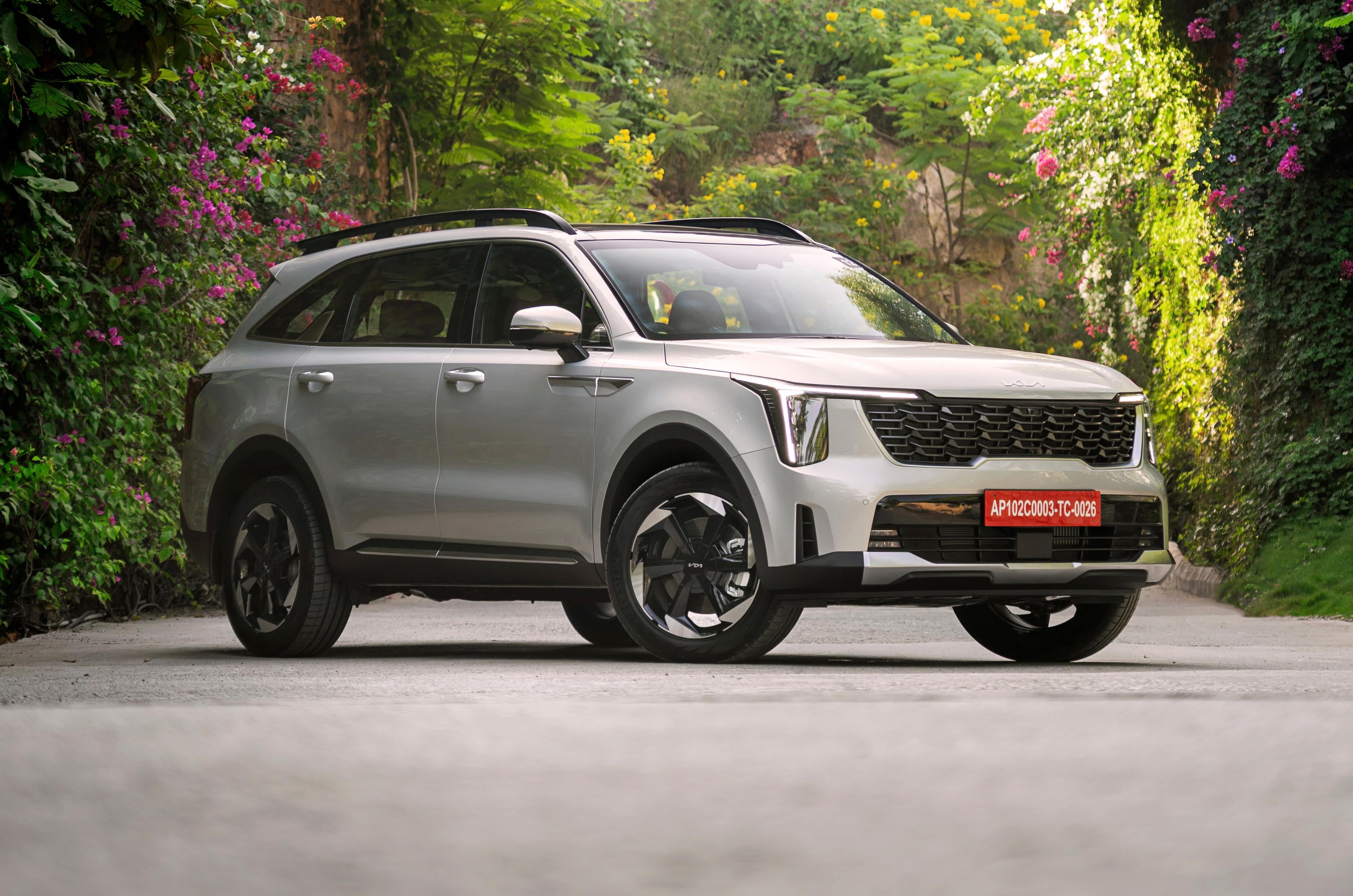
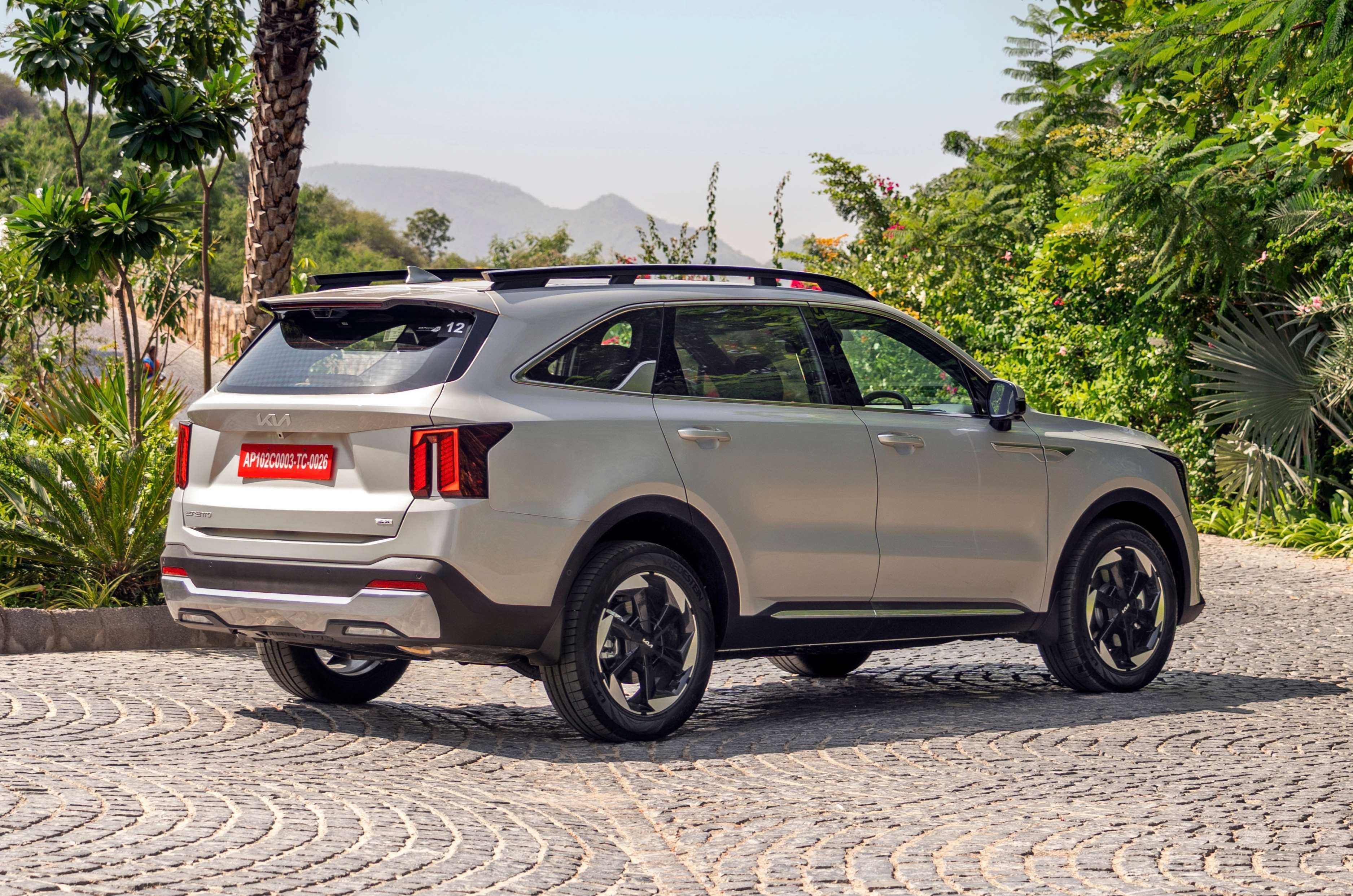
The Kia Sorento recorded 1,739 units in domestic wholesales in September 2026, its first month on sale after launching on September 4. It was Kia India’s fifth best-selling model that month. Including 365 units dispatched to dealers in August ahead of the launch, the Sorento’s total wholesales stood at 2,104 units.
Kia India recorded its highest-ever monthly wholesales of 32,017 units in September, up 41 percent year on year. This was the first time the company had crossed 30,000 units in a month, surpassing its previous record of 29,556 units in October 2025, which was the first month after the GST 2.0 rate cuts kicked in.
Kia Sorento: All you need to know
The Sorento is priced between Rs 27.99 lakh and Rs 40.39 lakh (ex-showroom). It is offered with a 1.6-litre turbo-petrol strong-hybrid powertrain or a 2.2-litre turbo-diesel engine. The hybrid setup pairs a 180hp, 265Nm petrol engine with a 65hp, 264Nm electric motor, while the diesel mill produces 193hp and 442Nm.
The SUV is available in six- and seven-seat configurations. Key features include dual 12.3-inch displays, a head-up display, ventilated front seats, a powered tailgate, a panoramic sunroof and second-row captain seats with ventilation. Safety equipment includes 10 airbags, a 360-degree camera, dual dashcams and Level 2+ ADAS.
The Kia Sorento rivals the Jeep Meridian, Skoda Kodiaq and Volkswagen Tayron.
Kia India sales up 29 percent in H1 FY2027
Kia India recorded wholesales of 1,68,683 units between April and September 2026, a 29 percent year-on-year increase. September wholesales stood at 32,017 units, up 41 percent year on year and the company’s highest monthly total since it entered India in 2019. In Q2 FY2027 (July-September 2026), sales grew 39 percent year on year to 89,259 units and were 12 percent higher than in Q1 FY2027.
The Seltos was Kia’s best-selling model in the first half of FY2027, with 67,667 units, up 99 percent year on year. It accounted for 40 percent of the company’s total wholesales during the period. The Sonet ranked second with 56,929 units, up 21 percent, contributing 34 percent of sales. The Carens range, including the Carens, Carens Clavis and Clavis EV, recorded 34,284 units, down 18 percent year on year.
Stocks to Watch: बुधवार 14 अक्टूबर को शेयर बाजार में कई कंपनियों के शेयर खबरों के दम पर एक्शन दिखा सकते हैं। इन कंपनियों ने तिमाही नतीजे और नए ऑर्डर जैसे अहम अपडेट दिए हैं। ऐसे में ट्रेडिंग से पहले इन 11 शेयरों पर निवेशकों की खास नजर रहेगी।
Tata Elxsi
टाटा ग्रुप की कंपनी टाटा एलेक्सी का सितंबर तिमाही में नेट प्रॉफिट ₹170.3 करोड़ रहा। पिछली तिमाही में यह ₹170.6 करोड़ था। रेवेन्यू 3.4% बढ़कर ₹1,055.7 करोड़ हो गया। EBIT 7.2% बढ़कर ₹207.7 करोड़ पहुंच गया। EBIT मार्जिन भी 18.97% से बढ़कर 19.68% हो गया।
Hyundai Motor India
ऑटोमोबाइल कंपनी Hyundai Motor Group ने 2032 तक भारत में 15.5 अरब डॉलर निवेश करने की योजना बनाई है। यह निवेश मैन्युफैक्चरिंग, रिसर्च एंड डेवलपमेंट (R&D) और स्थानीय सप्लाई चेन को मजबूत करने पर खर्च होगा। कंपनी भारत में R&D सेंटर के लिए 70 करोड़ डॉलर लगाने की भी योजना बना रही है। Hyundai Motor India और Kia India की उत्पादन क्षमता बढ़ाने पर भी निवेश किया जाएगा।
Bharat Electronics
सरकारी डिफेंस भारत इलेक्ट्रॉनिक्स (BEL) को ₹533 करोड़ के नए ऑर्डर मिले हैं। ये ऑर्डर 17 सितंबर 2026 के बाद मिले हैं। इनमें कम्युनिकेशन इक्विपमेंट, एवियोनिक्स, साइबर सिक्योरिटी, ड्रोन, जैमर और सॉफ्टवेयर से जुड़े काम शामिल हैं। कंपनी को अपग्रेड, स्पेयर पार्ट्स और सर्विस के ऑर्डर भी मिले हैं।
Transformers and Rectifiers
ट्रांसफॉर्मर बनाने वाली कंपनी Transformers and Rectifiers का सितंबर तिमाही में नेट प्रॉफिट बढ़कर ₹79.8 करोड़ हो गया। पिछले साल इसी तिमाही में यह ₹33.9 करोड़ था। रेवेन्यू 60.7% बढ़कर ₹739.4 करोड़ पहुंच गया। EBITDA ₹128.8 करोड़ रहा और मार्जिन 11.2% से बढ़कर 17.4% हो गया। तिमाही में कंपनी को ₹131.4 करोड़ का एक्सेप्शनल गेन भी हुआ।
GRT Jewellers
ज्वेलरी कारोबार करने वाली GRT Jewellers को लिस्टेड ज्वेलरी कंपनी Tribhovandas Bhimji Zaveri (TBZ) में 74.12% हिस्सेदारी खरीदने के लिए CCI की मंजूरी मिल गई है। GRT Jewellers ने 4.95 करोड़ शेयर खरीदने के लिए TBZ के प्रमोटर्स के साथ ₹1,033.71 करोड़ तक का सौदा किया है। हालांकि, डील पूरी होने के लिए अभी बाकी शर्तें पूरी करनी होंगी।
Adani Enterprises
अदाणी ग्रुप की फ्लैगशिप कंपनी अदाणी एंटरप्राइजेज ने अमेरिकी कंपनी Jabil Inc. के साथ 50:50 जॉइंट वेंचर बनाने के लिए MoU किया है। इसका मकसद भारत में AI और डेटा सेंटर के उपकरण बनाना है। प्रस्तावित JV में AI रैक, सर्वर, स्टोरेज, नेटवर्किंग उपकरण, पावर डिस्ट्रीब्यूशन यूनिट और लिक्विड कूलिंग सिस्टम बनाए जाएंगे।
Anand Rathi Shares
शेयर ब्रोकिंग कंपनी आनंद राठी शेयर्स एंड स्टॉक ब्रोकर्स का नेट प्रॉफिट सितंबर तिमाही में 48.4% बढ़कर ₹42.3 करोड़ हो गया। पिछले साल इसी तिमाही में यह ₹28.5 करोड़ था। कंपनी का रेवेन्यू भी 20.1% बढ़कर ₹273 करोड़ पहुंच गया। पिछले साल यह ₹227 करोड़ था।
Hindustan Oil Exploration
तेल और गैस की खोज करने वाली कंपनी हिंदुस्तान ऑयल एक्सप्लोरेशन ने देबब्रत दास को नया चीफ फाइनेंशियल ऑफिसर (CFO) नियुक्त किया है। उनकी नियुक्ति 16 अक्टूबर से लागू होगी। कंपनी के मुताबिक, एलन एंड्रेड 15 अक्टूबर से CFO का पद छोड़ देंगे।
Polycab India
वायर और केबल बनाने वाली कंपनी पॉलीकैब इंडिया को कॉरपोरेट इन्सॉल्वेंसी मामले में राहत मिली है। नेशनल कंपनी लॉ अपीलेट ट्रिब्यूनल (NCLAT) ने कंपनी के खिलाफ इन्सॉल्वेंसी प्रोसेस शुरू करने के NCLT के आदेश पर रोक लगा दी है।
RailTel Corporation of India
सरकारी टेलीकॉम और ICT सेवा देने वाली कंपनी रेलटेल को ओडिशा सरकार के उच्च शिक्षा विभाग से ₹48.98 करोड़ का वर्क ऑर्डर मिला है। इसमें टैक्स भी शामिल हैं। कंपनी 83 डिजिटल एप्लिकेशन मॉड्यूल तैयार करेगी और उन्हें मौजूदा ERP सिस्टम से जोड़ेगी। इस प्रोजेक्ट को 10 मई 2027 तक पूरा करना है।
GTPL Hathway
केबल टीवी और ब्रॉडबैंड सर्विस देने वाली GTPL Hathway दूसरी तिमाही में मुनाफे से घाटे में आ गई। कंपनी को ₹9.2 करोड़ के मुनाफे के मुकाबले ₹93 लाख का कंसोलिडेटेड घाटा हुआ। हालांकि, कंपनी की इनकम बढ़कर ₹1,143 करोड़ हो गई, जो पिछले साल इसी तिमाही में ₹959 करोड़ थी।
Q2 Results
बुधवार को कई कंपनियां सितंबर तिमाही के नतीजे घोषित करेंगी। इनमें केनरा बैंक, CEAT, भारत हेवी इलेक्ट्रिकल्स (BHEL), ICICI लोम्बार्ड जनरल इंश्योरेंस, टाटा टेक्नोलॉजीज और HDB फाइनेंशियल सर्विसेज शामिल हैं। इनके अलावा बजाज कंज्यूमर केयर, एलेकॉन इंजीनियरिंग, लॉयड्स मेटल्स एंड एनर्जी, मैंगलोर रिफाइनरी एंड पेट्रोकेमिकल्स और लीला पैलेसेज होटल्स एंड रिसॉर्ट्स के नतीजे भी आने हैं।
Disclaimer: यहां मुहैया जानकारी सिर्फ सूचना के लिए दी जा रही है। यहां बताना जरूरी है कि मार्केट में निवेश बाजार जोखिमों के अधीन है। निवेशक के तौर पर पैसा लगाने से पहले हमेशा एक्सपर्ट से सलाह लें। मनीकंट्रोल की तरफ से किसी को भी पैसा लगाने की यहां कभी भी सलाह नहीं दी जाती है।
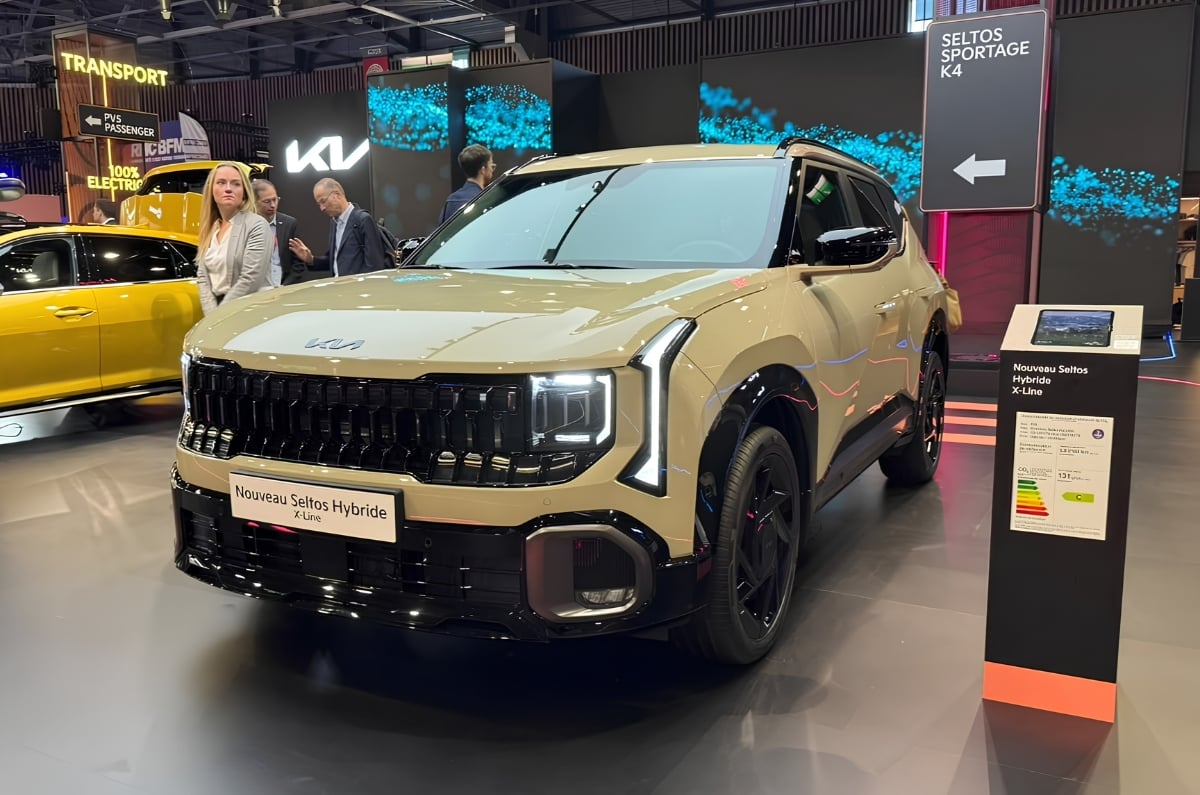
Kia has showcased the Seltos hybrid at the 2026 Paris Motor Show. In India, the Seltos hybrid is scheduled to arrive in 2027. During the unveiling of the second-gen Seltos in 2025, Atul Sood, senior vice president of Sales & Marketing at Kia India, told our sister publication, Autocar Professional, that “there is a clear direction that we will introduce a hybrid in the Seltos.”
Kia India has now expanded its assured buyback programme to more locally produced cars, including the Sorento, Seltos, Sonet, Carens Clavis, Carens and Syros; the locally-assembled Carnival is not covered under this programme. Notably, the Syros EV has been available with such a programme since its July launch. The buyback programme covers all powertrain options offered by these vehicles, including petrol, CNG, diesel, hybrid and electric. Those opting for the programme can avail an assured residual value of up to 75 percent for ICE and up to 70 percent for EV models in three years, subject to terms and conditions.
Kia assured buyback programme details
Model
Price range (Rs lakh)
Sonet
7.45-13.89
Syros
8.42-15
Carens
11.12-12.12
Seltos
11.25-21.57
Carens Clavis
11.39-21.79
Syros EV
13.5-20
Carens Clavis EV
18.04-25
Sorento
27.99-38.49
The programme offers tenure options of three, four and five years for ICE models, and three and four years for EVs. Depending on the tenure, annual running limits like 10,000km, 15,000km and 20,000km are available, with the maximum capped at up to 1,00,000km over the ownership period.
It will be offered through authorised Kia dealers and customers may enroll at the time of vehicle purchase. At the end of the selected tenure, customers may avail the assured buyback value in accordance with the programme agreement and relevant terms and conditions.
Ex-showroom prices mentioned above are as on October 9, 2026.
The Sorento is Kia’s flagship combustion-powered SUV for the Indian market. It’s also Kia India’s first hybrid offering, but if that doesn’t strike your fancy, a diesel is also on offer. The Sorento contends in the premium three-row SUV segment, locking horns with the Volkswagen Tayron, Jeep Meridian, and Skoda Kodiaq. Now that we’ve reviewed the Kia Sorento, here are three reasons why you should bring one home, and three reasons why you may want to consider one of its rivals.
Pros
Well-judged powertrain offerings
The Sorento can be had with either a 1.6-litre direct-injection turbo-petrol strong hybrid powertrain (230hp, 380Nm) mated to a 6-speed torque converter, or a 2.2-litre diesel engine (193hp, 442Nm) coupled to an 8-speed dual-clutch automatic. Both are available with front-wheel drive and all-wheel drive too. Of these, the hybrid is our pick for city driving because it’s smooth, instantly responds to throttle inputs, and the 1.49kWh battery pack allows it to run in pure-electric mode for better fuel efficiency – speaking of which, the Sorento hybrid claims 19.6kpl with FWD and 17.7kpl with AWD. On the highway, though, the turbo-petrol gets vocal and starts to run out of breath if pushed hard.
Highway frequenters, then, should look towards the diesel-powered Sorento. The low-end response is good, but not as immediate as the hybrid’s, and torque is delivered in a strong, linear surge, making it an excellent highway cruiser. Another highlight is the wet-clutch DCT, which slurs its gear changes like a torque converter and adds to the smoothness of the driving experience. Refinement is also good for the most part, with the diesel engine emitting a gruff note only under hard acceleration.
Feature-packed cabin with a premium feel
Inside, the Sorento offers a blend of quality, technology, and ergonomics that majorly outclasses rivals. The dashboard is decked out in soft-touch materials, there’s a healthy amount of physical controls, and overall quality levels are fabulous for the price.
As for features, the Sorento is absolutely loaded, especially in higher variants. You get goodies like dual 12.3-inch screens, a heads-up display, a panoramic sunroof, powered and ventilated front seats, ventilated second-row captain’s chairs (6-seat), Level 2 ADAS, a 12-speaker Bose sound system, dual-zone climate control, 64-colour ambient lighting, a camera-based IRVM, rear-window sunshades, a powered tailgate, connected car tech, and more.
Outstanding ride quality
Kia has tuned the Sorento’s suspension exceptionally well, with a clear prioritisation of comfort over sportiness. It glides along bad roads at high speeds with ease, almost never needing you to lift off. Part of the credit here goes to the tall-sidewall tyres, which round off sharp jolts and filter high-frequency shocks. While there is a bit of body movement at highway speeds, the Sorento never feels unsettled or busy.
Cons
Knees-up seating in third row
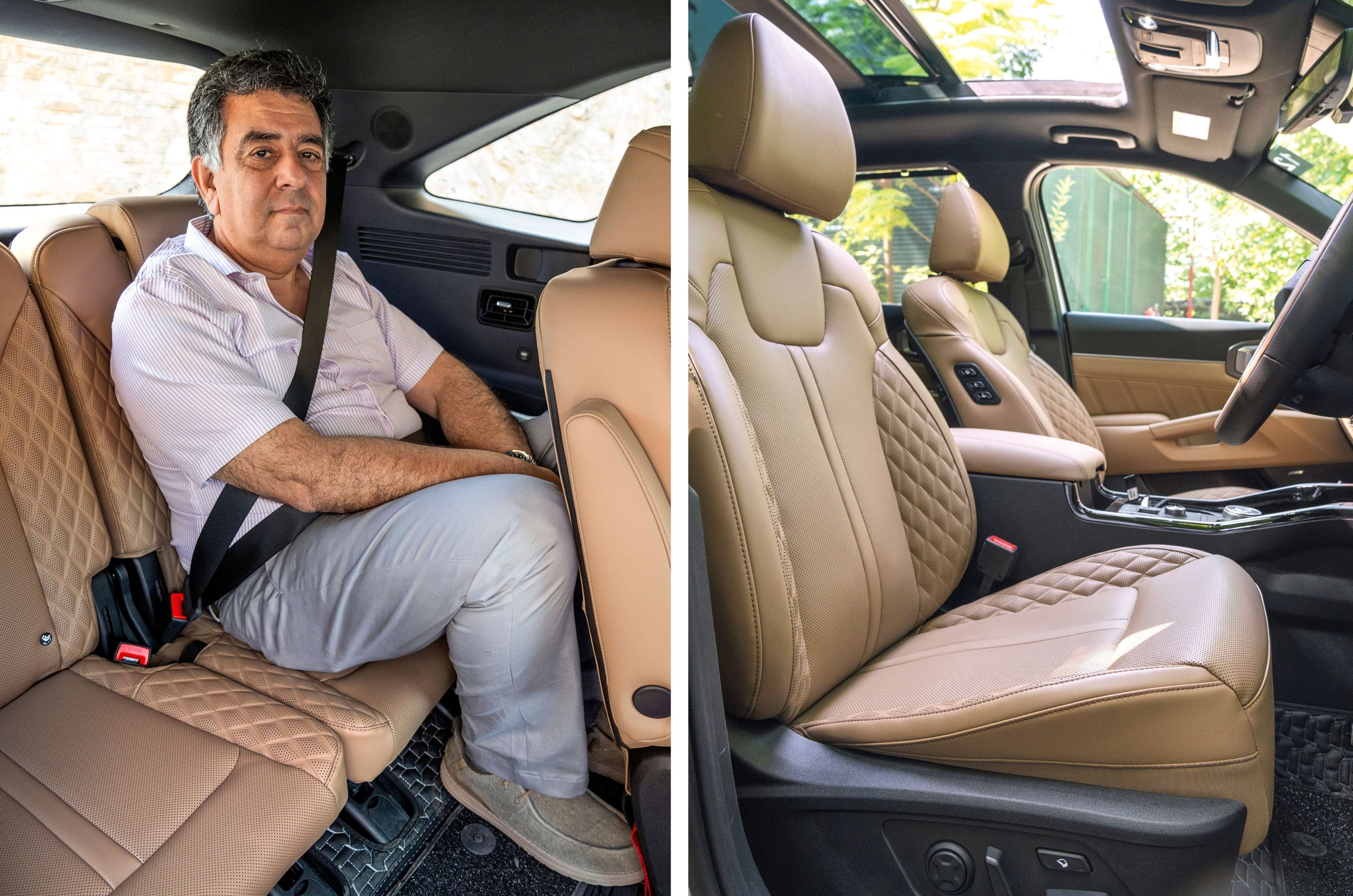
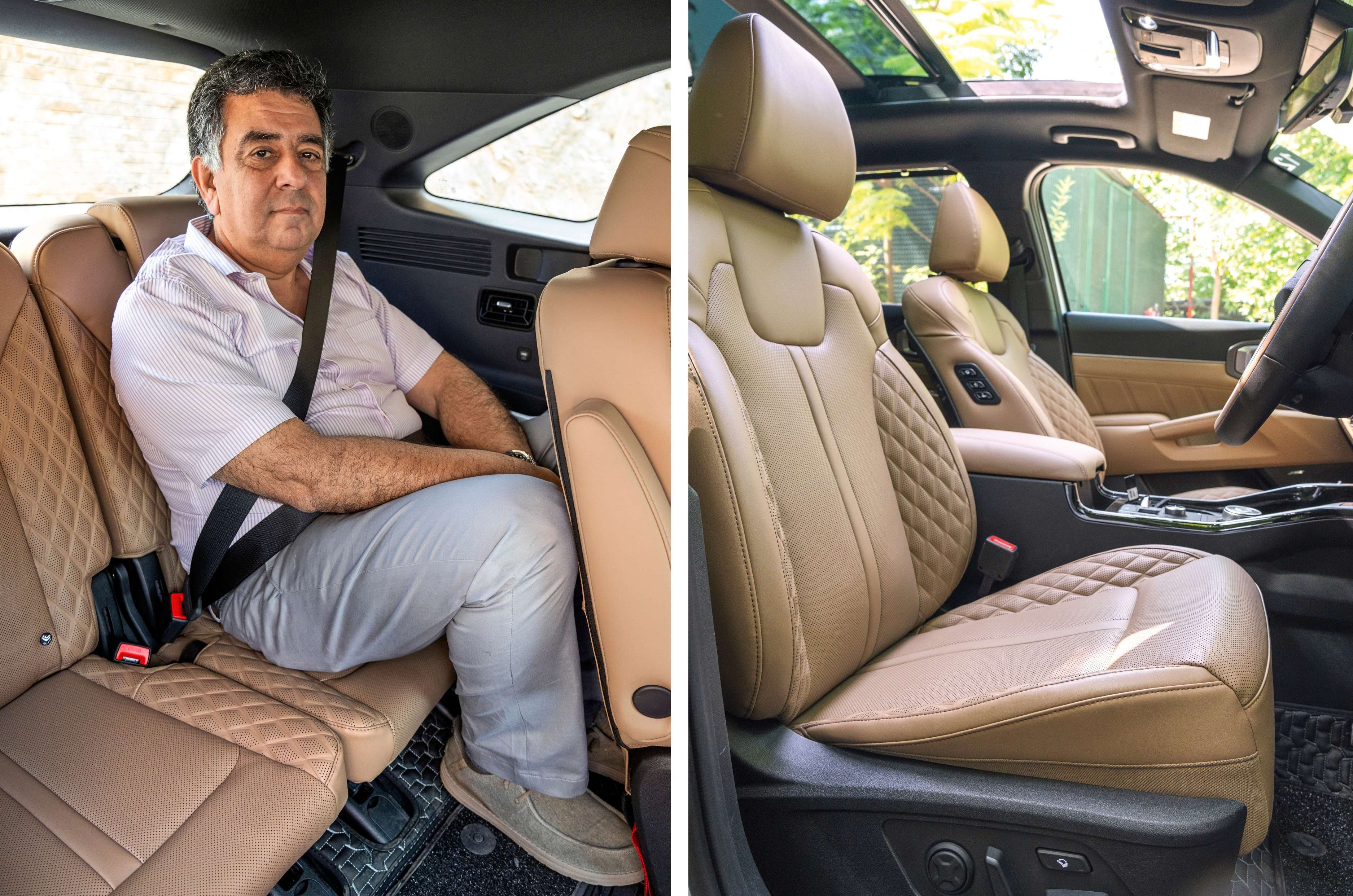
While the first and second rows of the Sorento are very spacious and comfortable, the outlook on the third row (left image) is mixed. Legroom is decent, but the seat base is mounted nearly flat on the floor, which means there’s no under-thigh support and you’re sat knees-up. The Sorento’s third row, then, is best-suited to small children.
Not as engaging to drive as European rivals
Since the Sorento is softly-sprung and has a higher 208mm ground clearance, it isn’t quite as dynamically sharp as the Tayron and Kodiaq – a bit of body roll rears its head during hard cornering. The steering feel is light, but not as fluid or progressive as those of the Sorento’s European rivals, and there’s a dead zone around the straight-ahead position too.
Top-end variants are expensive
Pricing for the Sorento is very broad and competitive, starting at Rs 27.99 lakh for the base-spec diesel-FWD variant. However, prices for the top-spec HTX and HTX(A) trims range from Rs 37.49 lakh to Rs 40.19 lakh, which is rather steep. It doesn’t help that these trims are offered solely with AWD – FWD versions could’ve helped bring the HTX’s price down.
The Sorento is a big bet for Kia India, and you can tell. Six trims, two powertrains, front- and all-wheel drive, six or seven seats and 32 versions in all. This is not a toe in the water exercise but a full-blooded dive into the deep end of the executive SUV pool. More than that, it is a case study in how to launch a product in India, because Kia has got the basics right before it has even started talking about features.
Start with the powertrains, which for this class of SUV could hardly be better judged. There is a strong 2.2-litre diesel for diesel die-hards and there are still plenty of those. And then there is a 1.6-litre turbo-petrol strong hybrid whose timing couldn’t be more perfect. Petrol prices are climbing, E20 has quietly eaten into real-world efficiency, and buyers want diesel-like running costs from a smooth, quiet powertrain without lying awake worrying about diesel’s long-term future. The Sorento hybrid is pitched squarely at that anxiety.
The strategy behind the car is just as interesting. This fourth-generation (MQ4) Sorento arrives in India towards the end of its global life cycle. It is still a current product, but one due to be replaced internationally next year, while India will carry on with this one. That is actually a very smart move. A car this late in its life has its development costs largely amortised, and Kia India can bring some of the tooling here, which slashes the investment.
And this is a properly localised car, not a screwdriver job. The body is stamped and welded at Kia’s Anantapur plant, and the dashboard and seats are made here too. That is what makes the Rs 27.99 lakh starting price possible. The catch is that localisation on this scale only pays off with volume, and Kia wants to sell around 40,000 Sorentos a year. That is a big number for a Rs 30-40 lakh SUV. Can it get there?
Kia Sorento exterior design and engineering
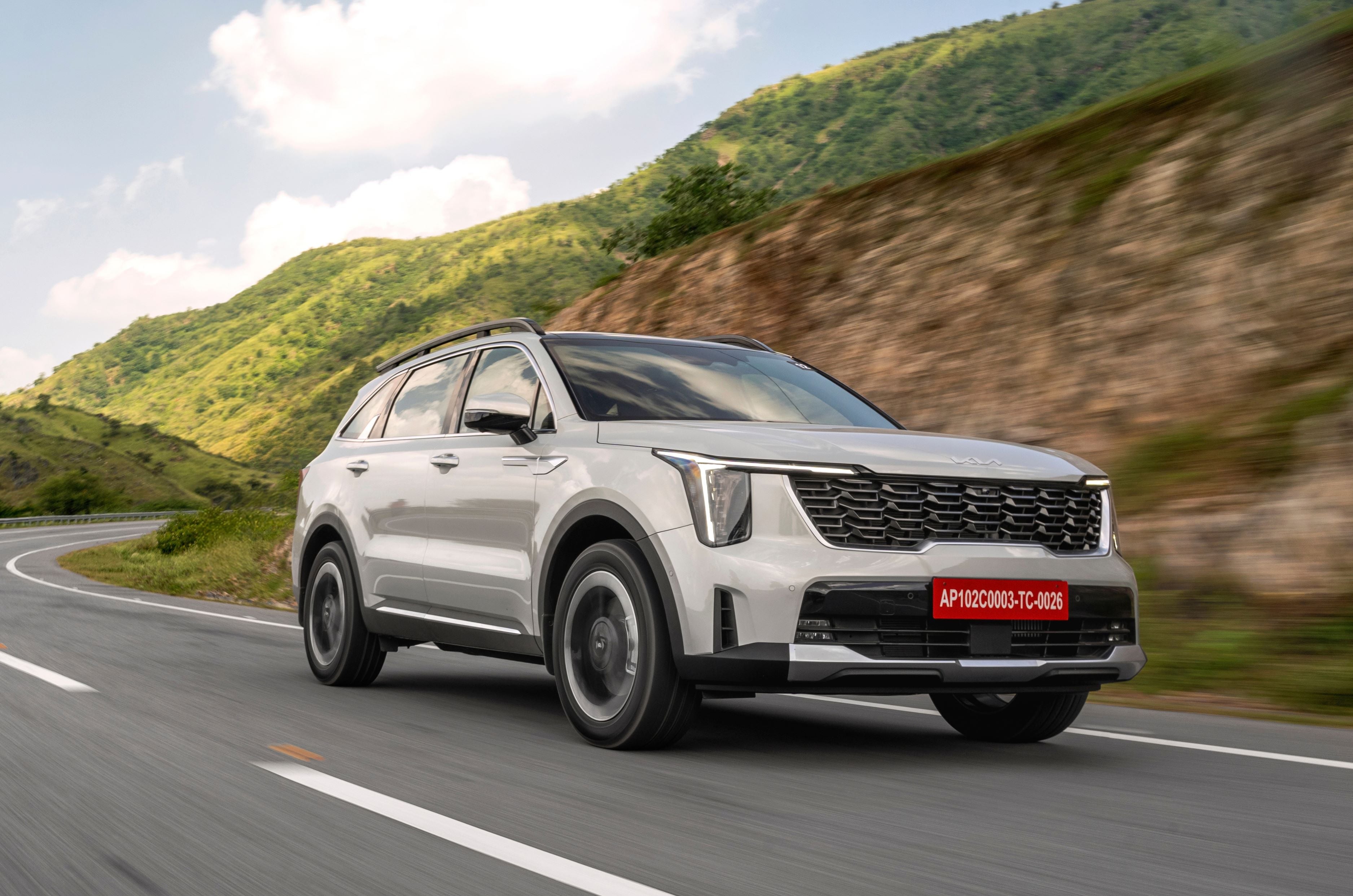
Based on the gen 4 Sorento, it carries over the older and more palatable design language.
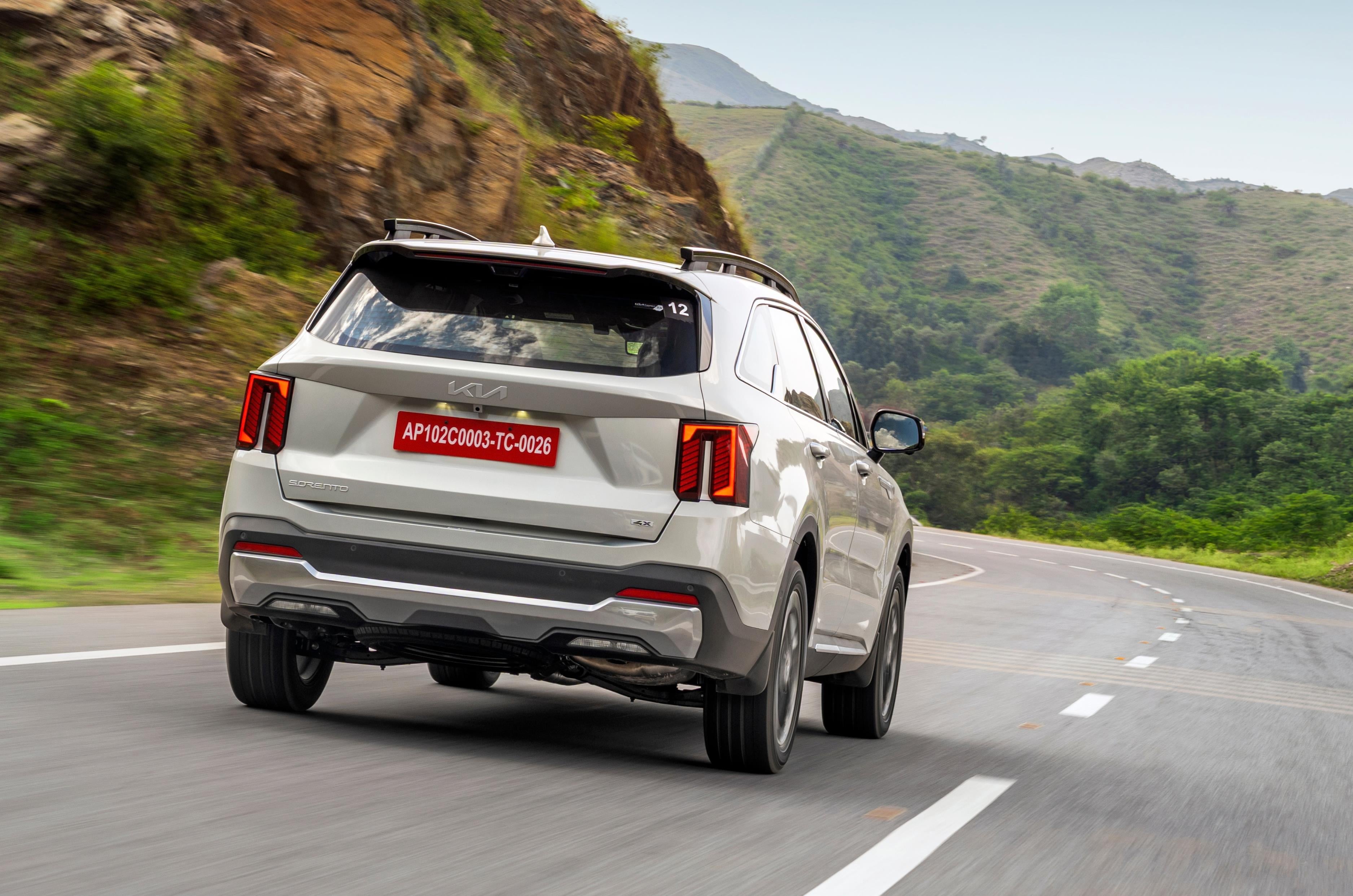
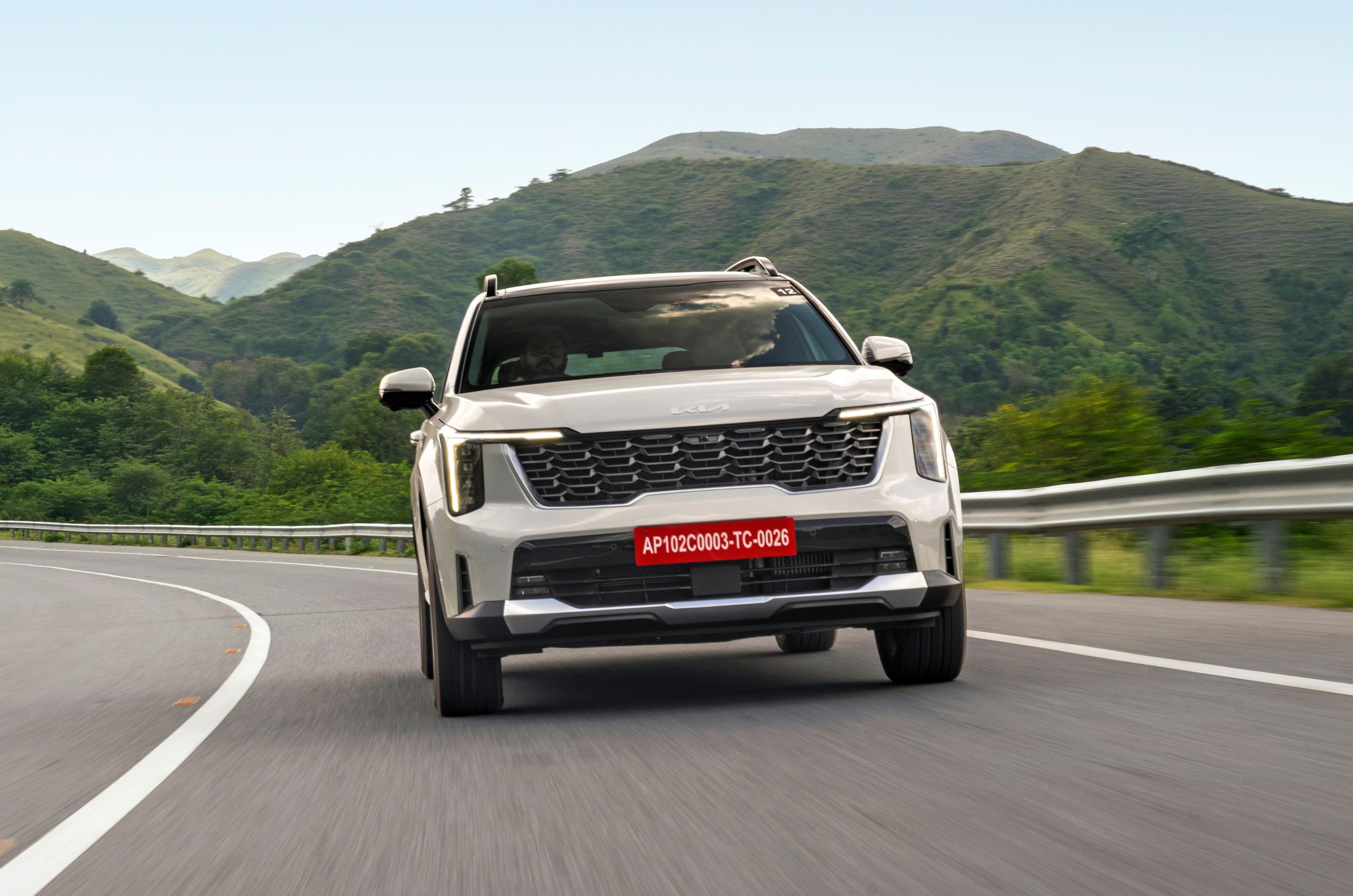
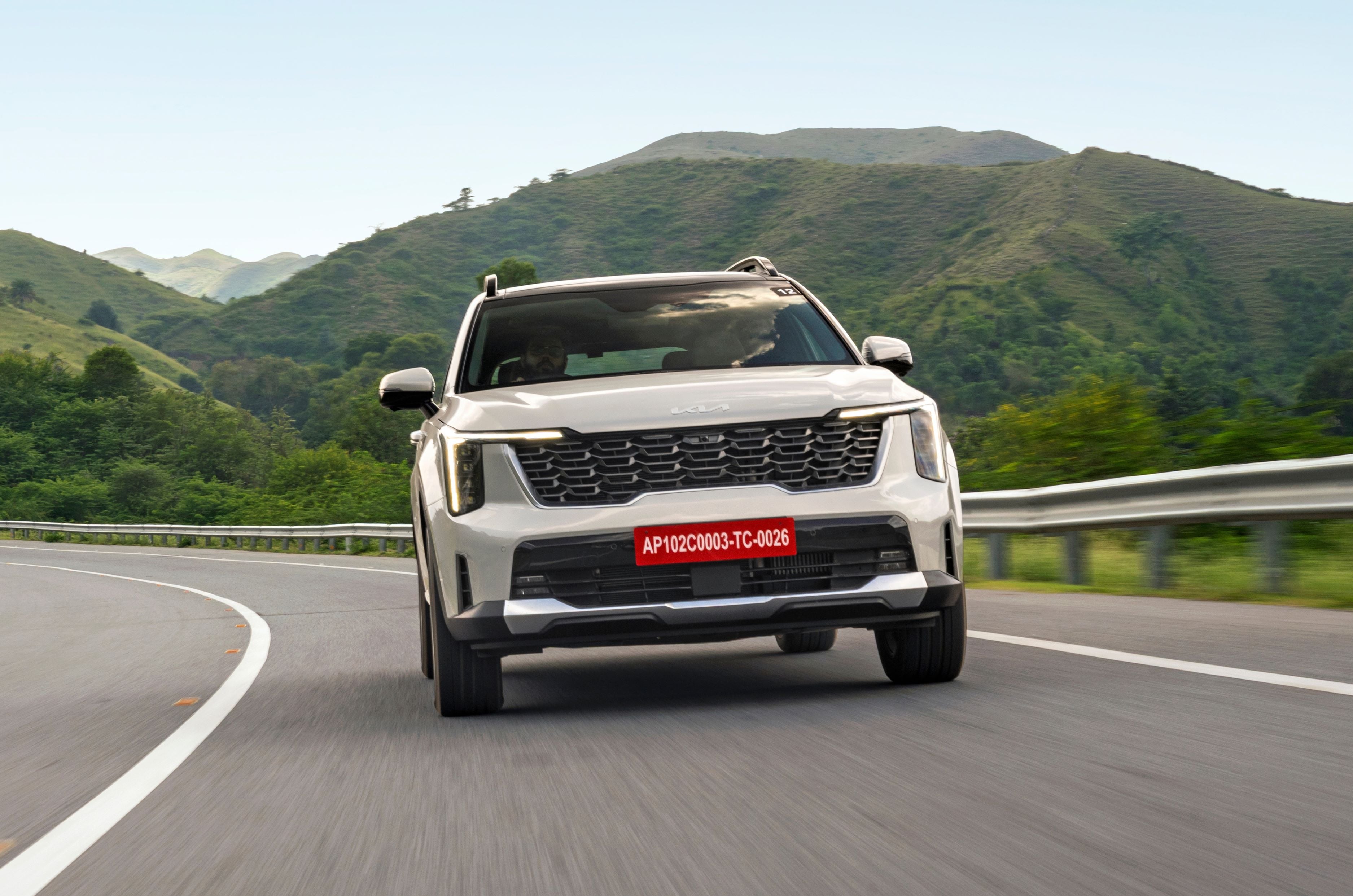
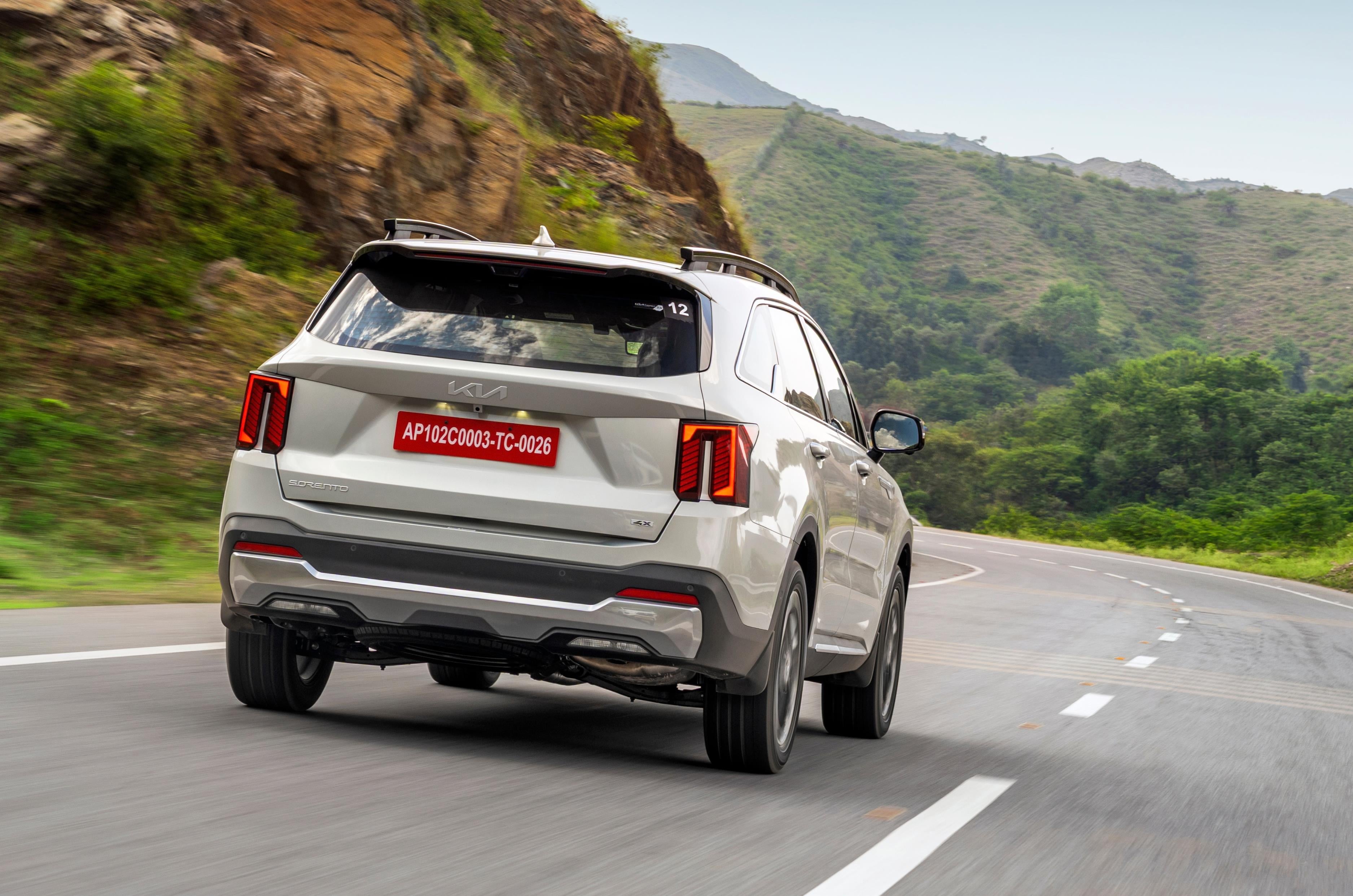
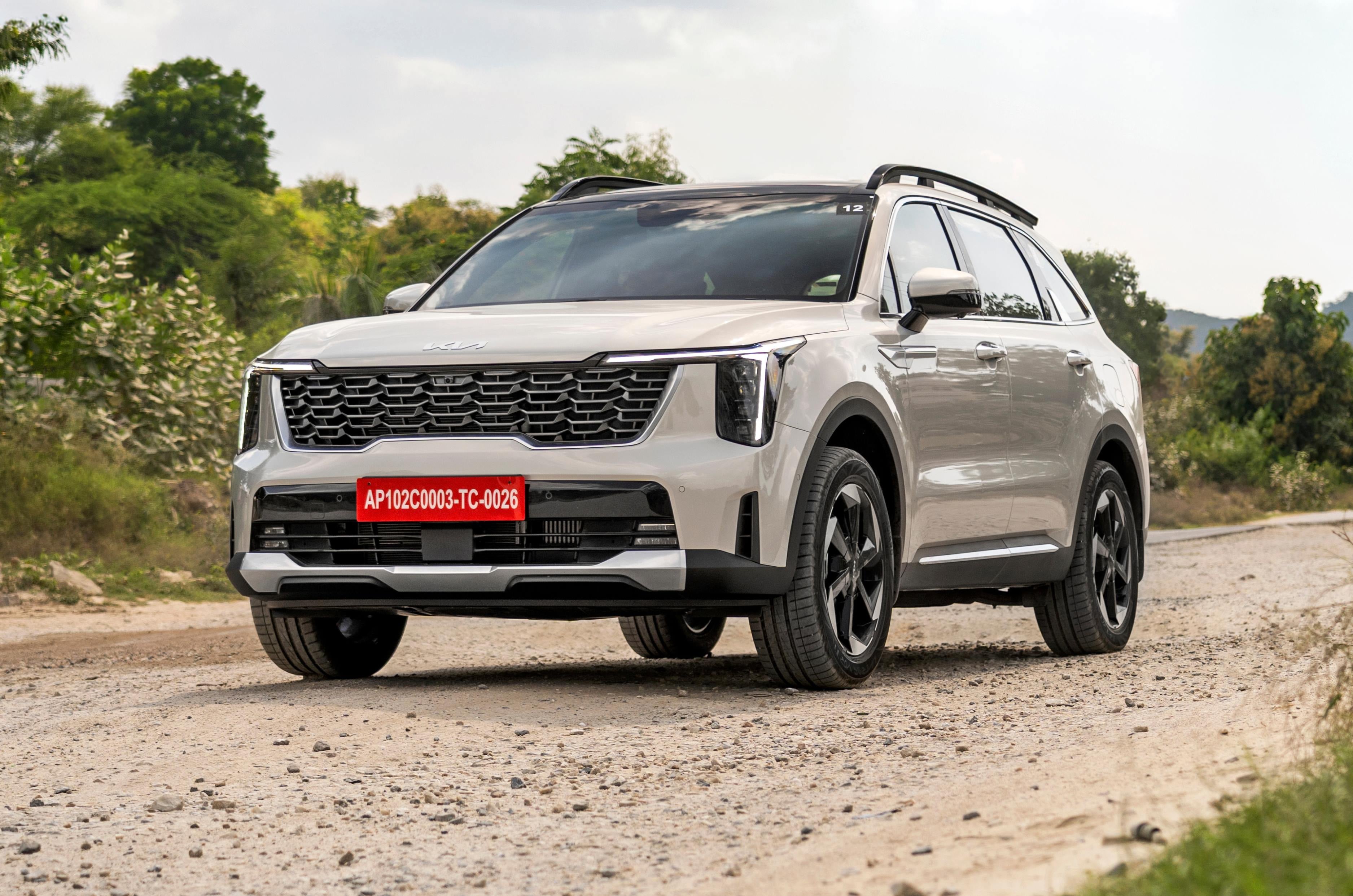
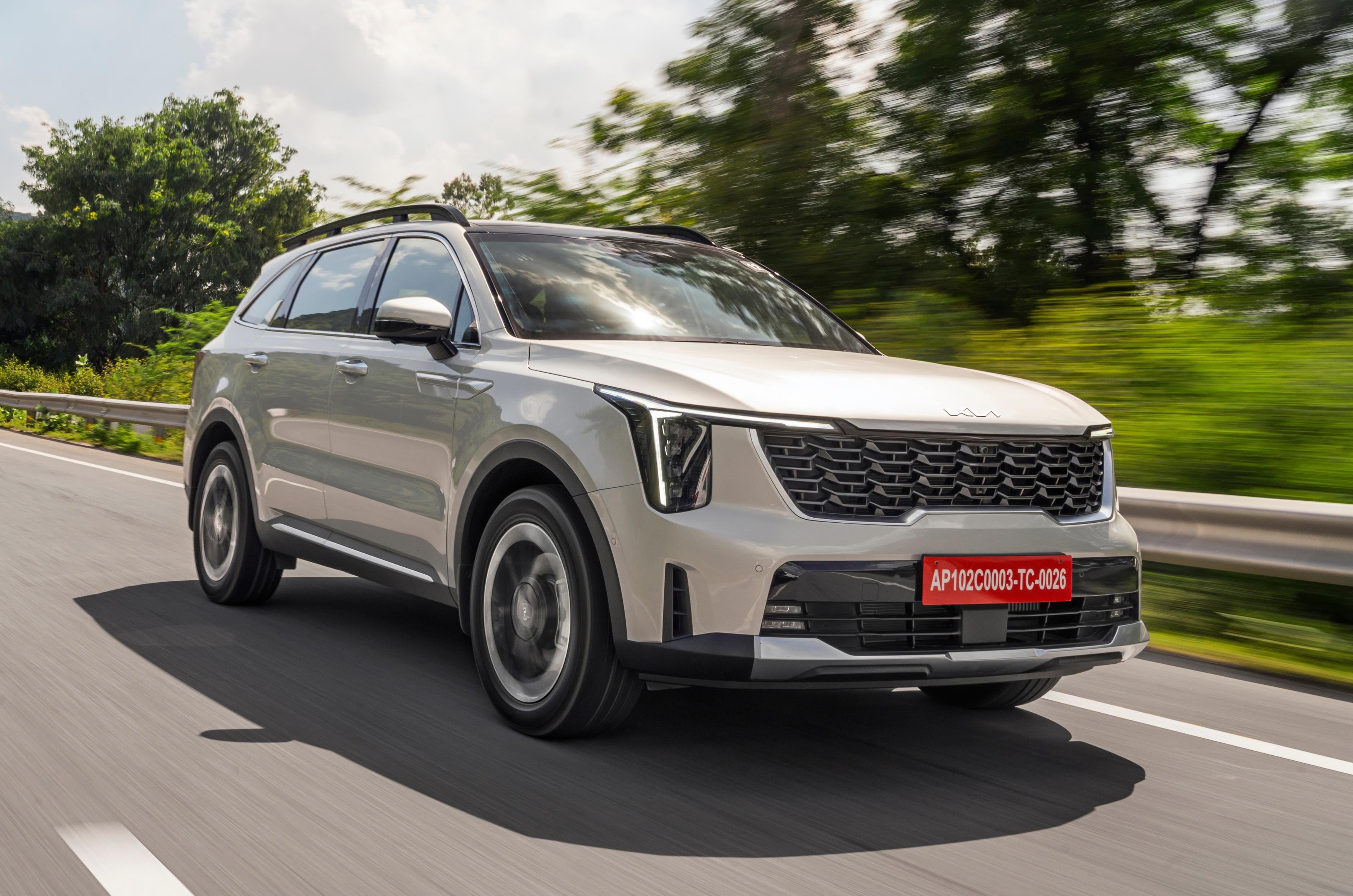
The Sorento sits on Hyundai-Kia’s MQ4 platform, the freshest architecture in its class, and it has already had a mid-life update to keep it looking current. The 2024 facelift brought the nose in line with the design language Kia kicked off with the EV9, so you get vertically stacked LED headlights, Y-shaped daytime running lamps and an aggressive looking bumper with wide intakes. At the back are L-shaped wraparound tail-lamps, and thankfully no light bar stretched across the tailgate.
Beats the rivals in length, width, and wheelbase.
Kia’s stated aim was a more technical, precise look, one meant to signal tight build quality and engineering sophistication. It is a trick the German premium brands have used for years, and Kia has clearly taken a leaf out of their book. The Sorento looks crisp and expensive rather than flashy, and is likely to age well too.
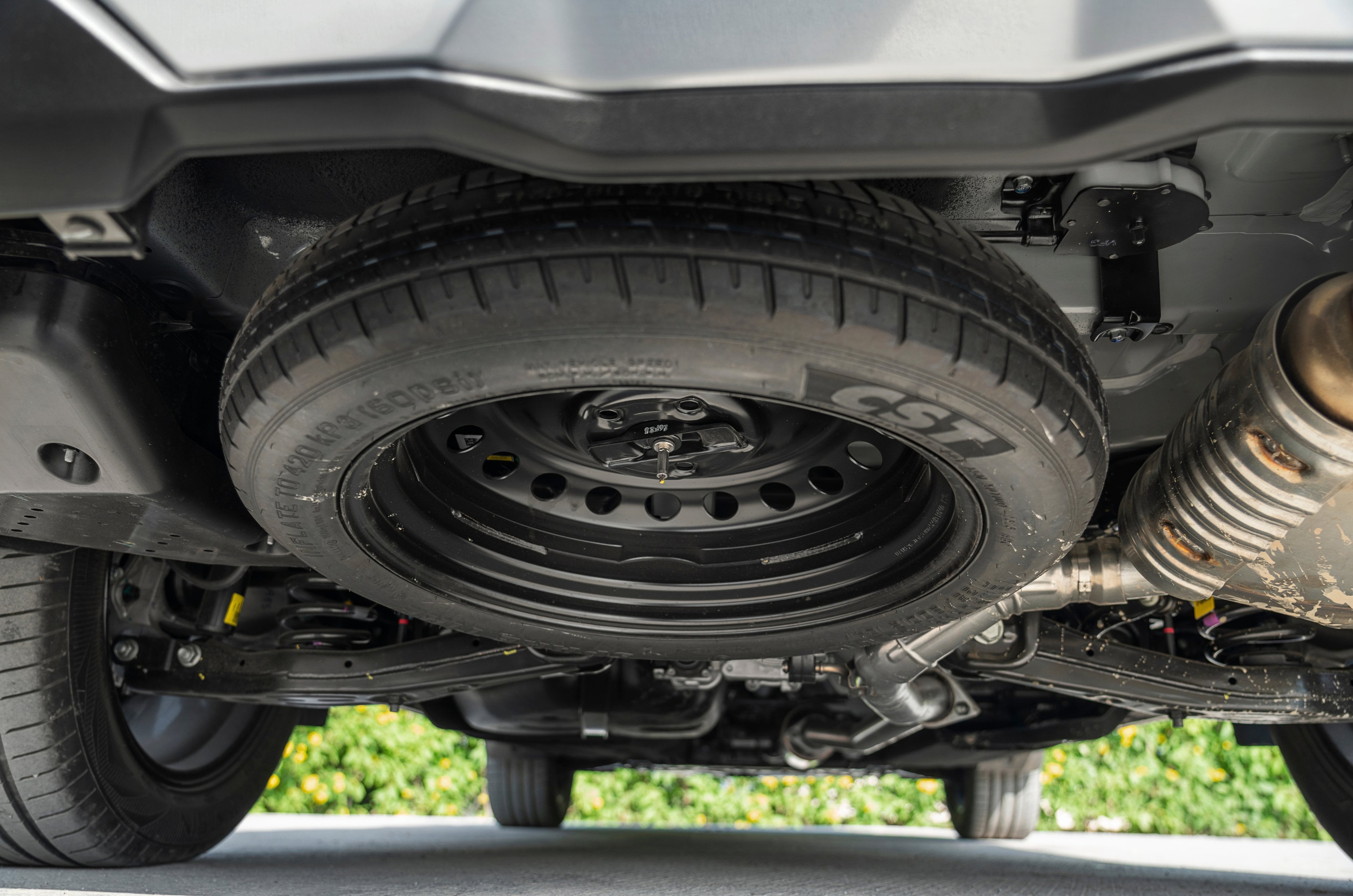
Spare wheel mounted under the floor frees up room in the boot.
What it does not have is brute presence. Despite being the longest, widest and tallest SUV in its segment, at 4,815mm long, 1,900mm wide and 1,785mm tall on a 2,815mm wheelbase, it does not loom in your mirrors the way a Fortuner does. The sloping roofline at the rear softens the silhouette and lends it a hint of crossover, and some will see it as a big Seltos rather than a junior Land Cruiser. Clearly this is not an SUV that looks like it can bully its way through traffic.
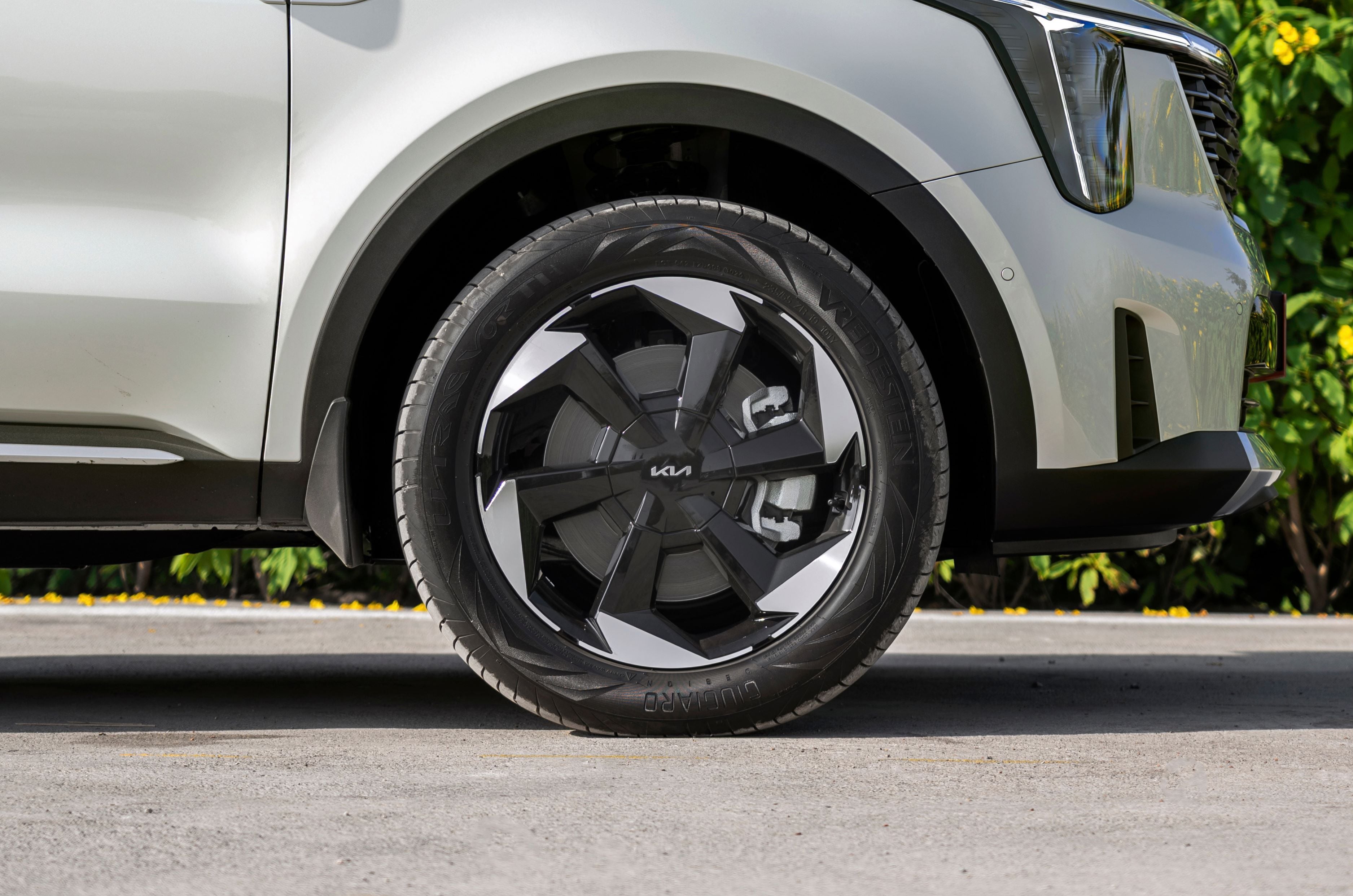
A more unique design could’ve been used for the 19-inch alloys.
The 19-inch dual-tone alloys could have been more distinctive, too an effect exaggerated by the chunky 235/55 R19 tyres. Those tall sidewalls, though, are not a styling misstep so much as an engineering choice, and they play a big part in how this car rides. More on that later.
Kia Sorento interior space and comfort
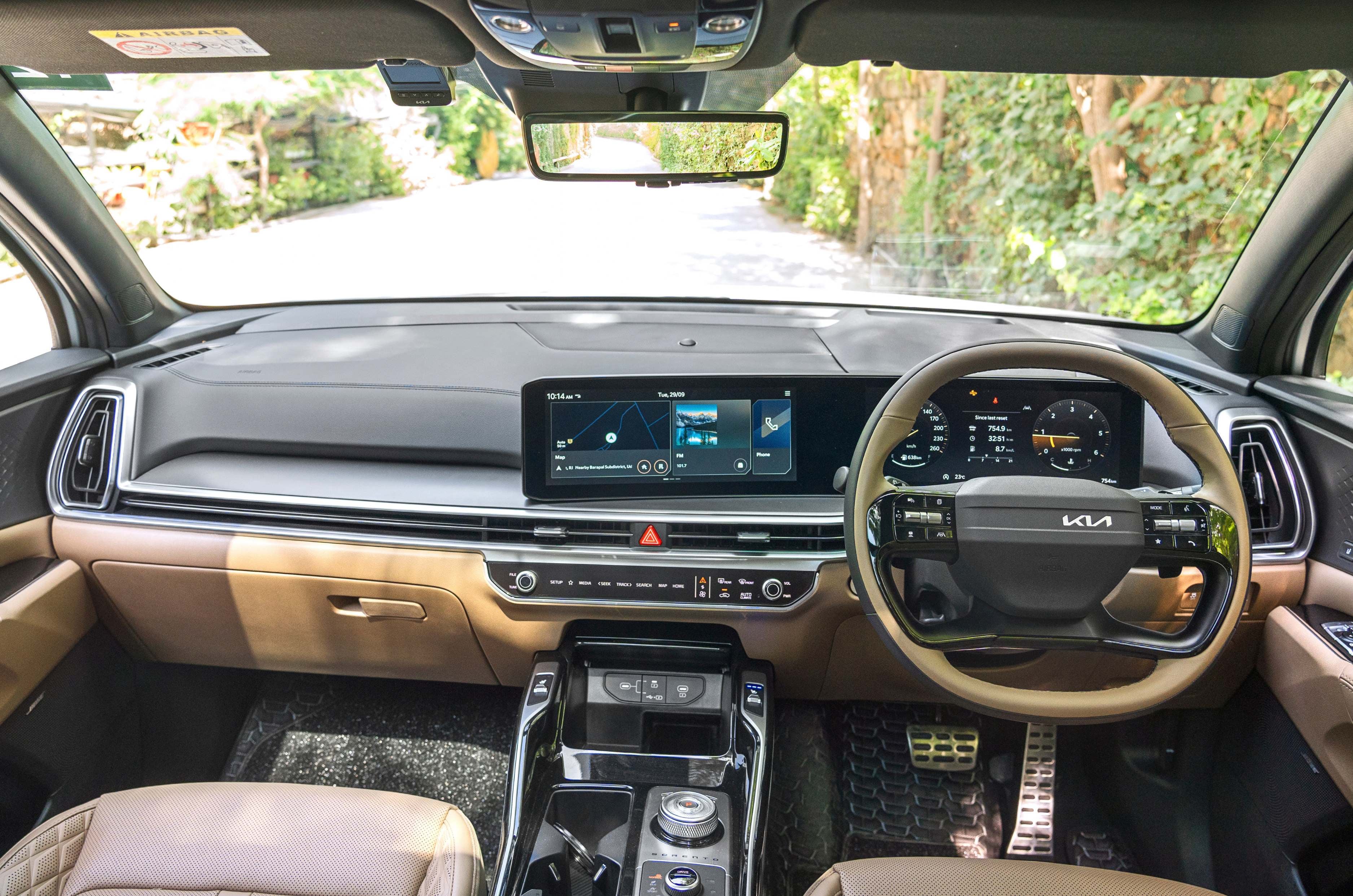
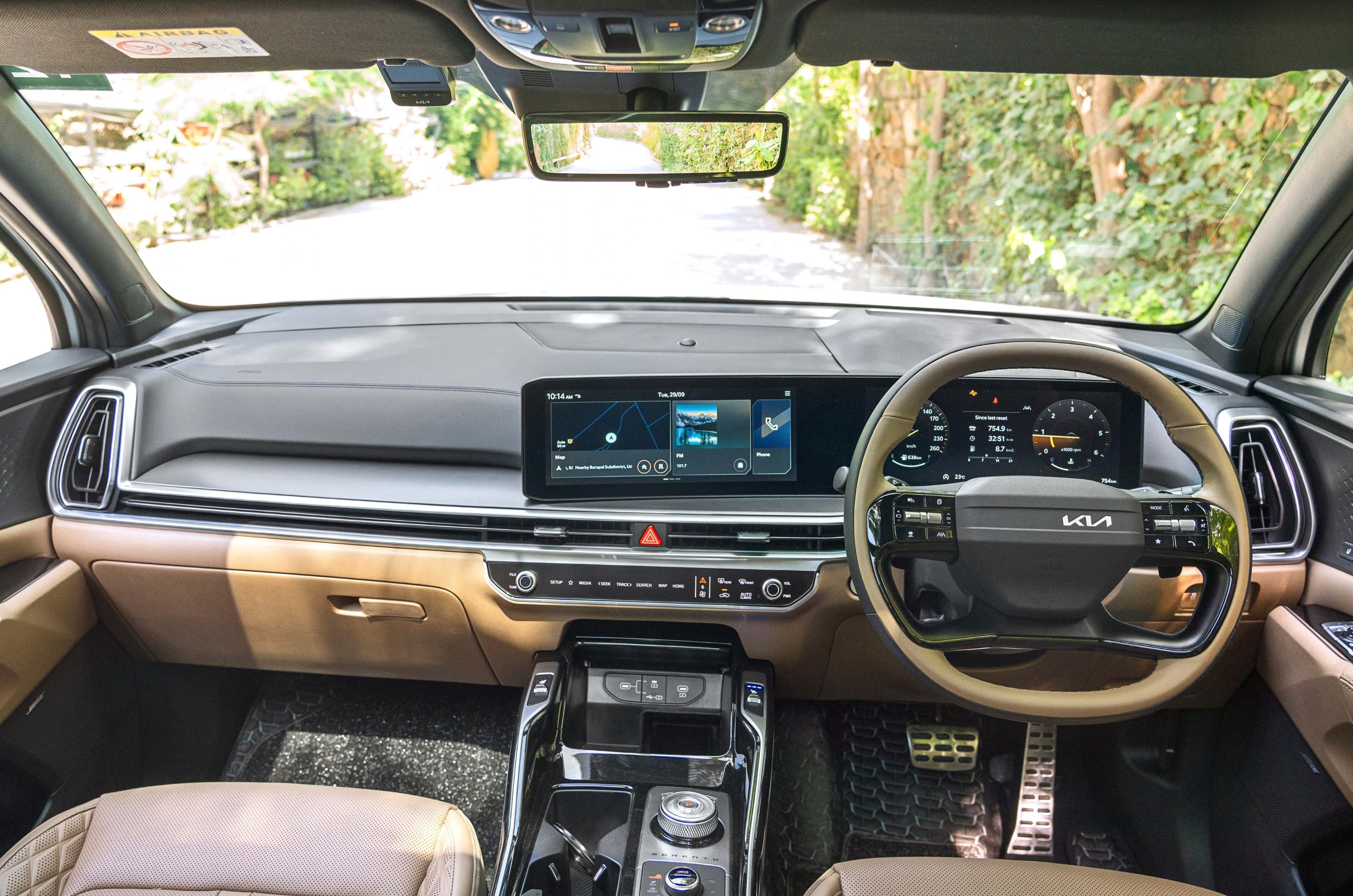
Clutter-free dashboard with solid build and plush feel.
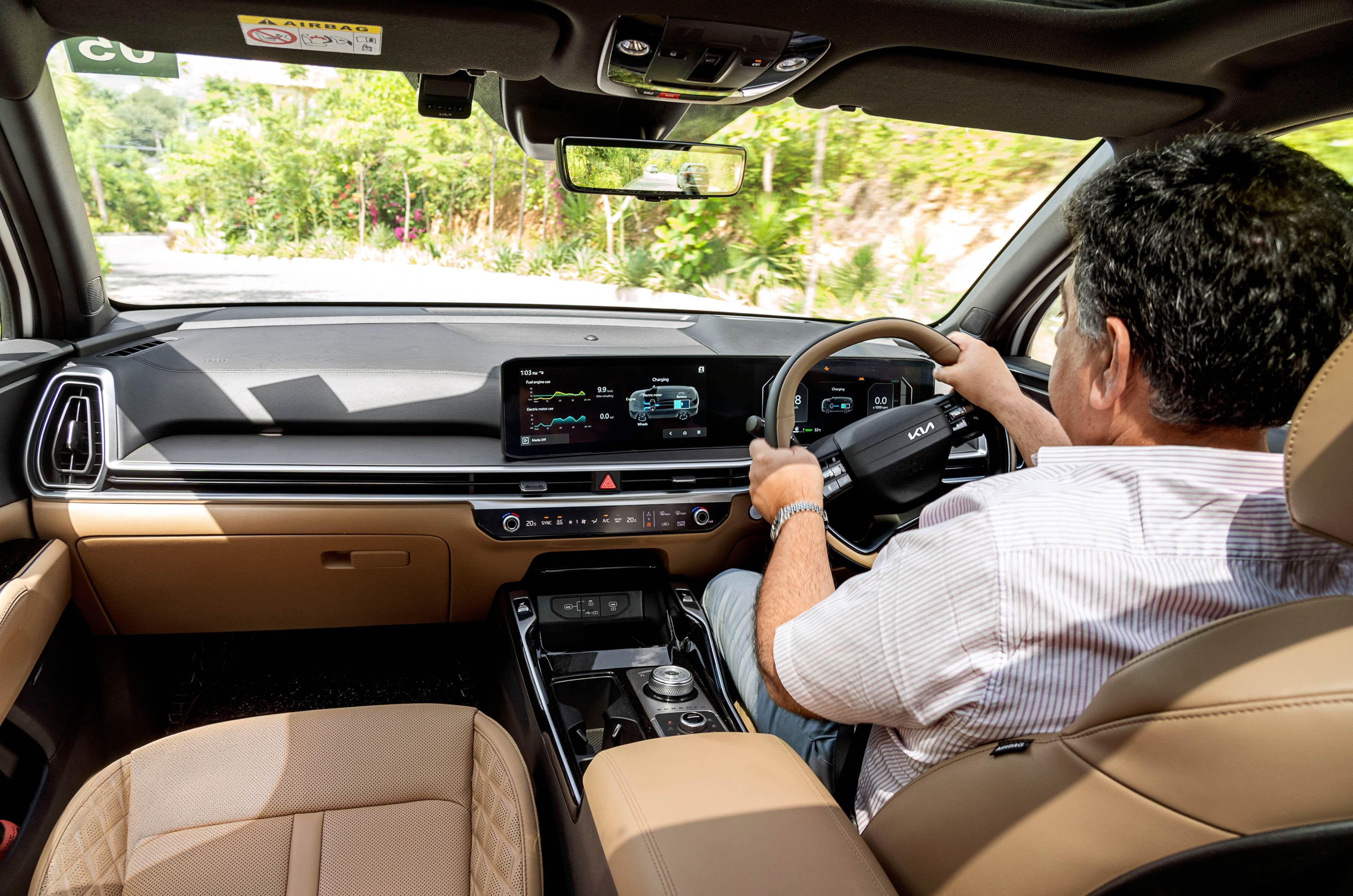
If the exterior is quietly effective, the cabin is where Kia has truly aced it. The Sorento offers a mix of quality, equipment and ergonomics that nothing at this price can match. Soft-touch materials cover everything you are likely to touch, including the spots where your knee rests against the centre console. There is a healthy count of physical buttons, and they click with a precision that feels engineered rather than sourced. The knurled finish on the rotary drive selector and the switchgear adds a tactile richness you normally pay German money for.
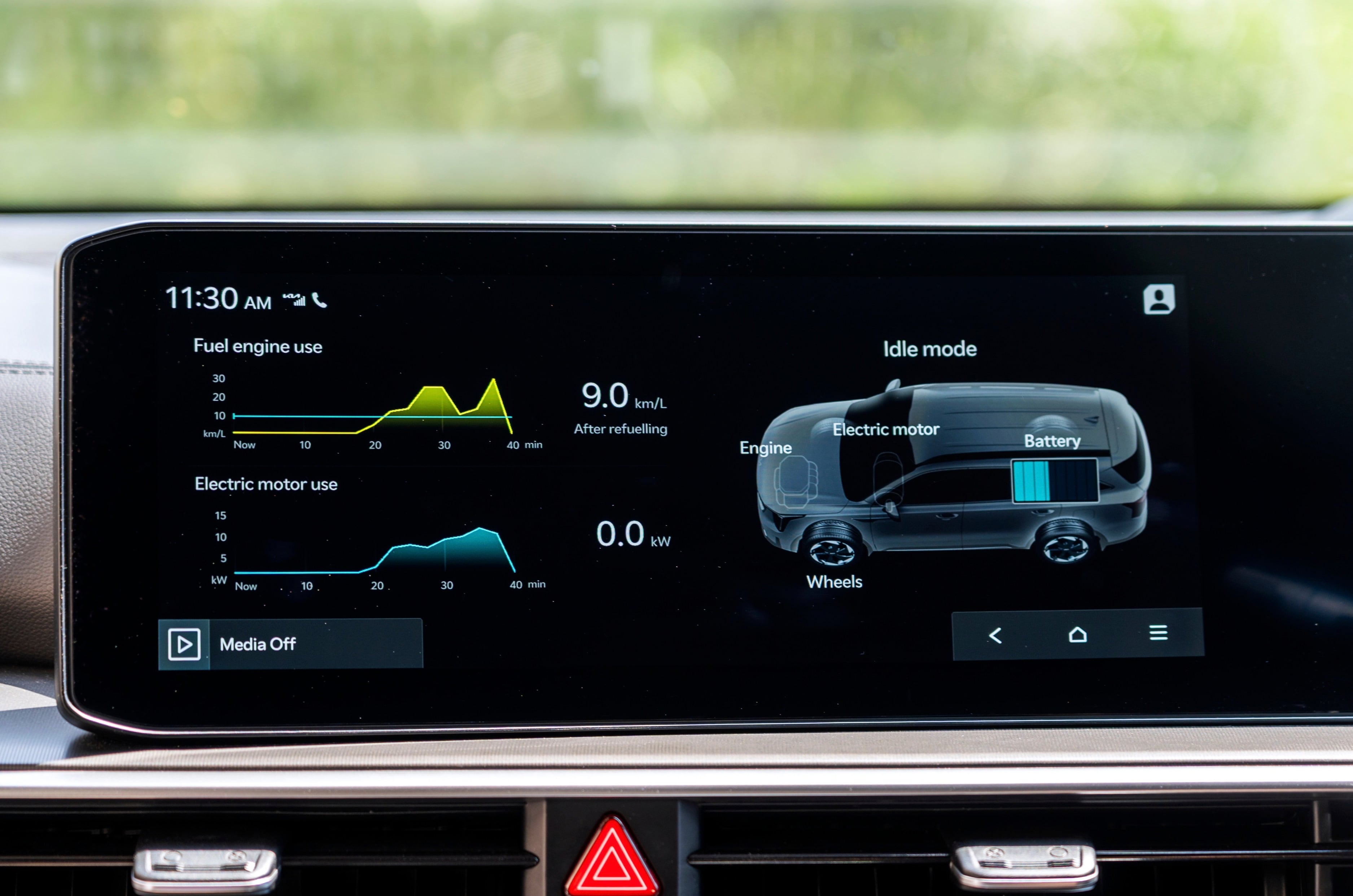
Hybrid variant gets exclusive data for power flow and efficiency.
As with its Hyundai cousins, the real ace is the software. The 12.3-inch infotainment system is logically laid out, menus are where you expect them to be, and getting to a feature takes a tap or two rather than a treasure hunt. Kia has also kept the climate controls off the main screen. They live on a touch-sensitive bar below it, with scrollers and a button that toggles the bar between air-con and infotainment shortcuts. It is a clever, space-saving solution, though you will occasionally find it in the wrong mode just when you need it.
L: Third row seat placed on floor results in knees-up seating; best for children. R: Broad, supportive and well-cushioned front seats are electric and also get ventilation.
The front seats are fully powered, with 10-way adjustment, lumbar support and ventilation, and the passenger seat gets a boss mode so whoever sits behind can push it forward. Coming to the third row, access is easy. You can either walk through the gap between the captain chairs or press a button on the seat, which electrically slides and tilts it forward. Once there, the news is mixed. Legroom is better than you expect, but the seat base is mounted almost flat on the floor, so there is no under-thigh support and your knees point at the roof. Treat it as a space for children or short hops. At least the third row gets its own blower controls and USB ports.
Spacious middle-row with ventilated and adjustable captain chairs; bench seat version also available.
One of the Sorento’s highlights, however, is the second-row experience. Our test car was the top HTX with six seats, and its second-row captain chairs are ventilated too, a rarity in this class. They are the best seats in the house. There is lots of legroom, a commanding view out and good under-thigh support, comparable to the Innova Hycross’s middle-row captain chairs, though the Toyota seats you a touch higher. A neat detail is the cupholder moulded into the door, up near the handle, where it is actually easy to reach.
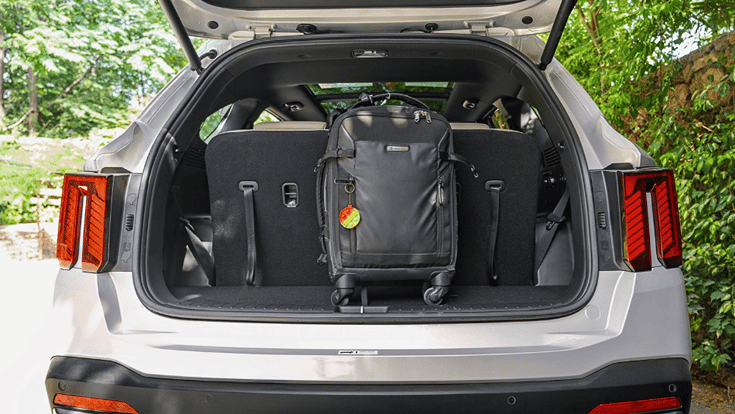
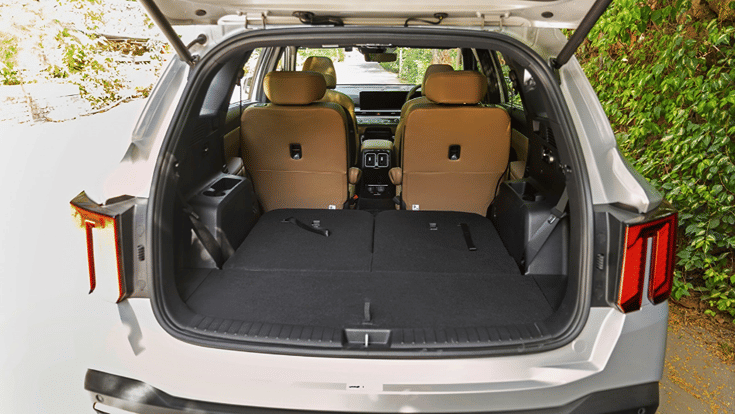
With all three rows up, the boot is a modest 179 litres; fold the third row and that grows to 813 litres. A full-size spare is welcome, but it is slung under the body, which is not the most convenient place to reach. Overhead, the massive panoramic roof floods the cabin with light and adds to the sense of space.
Kia Sorento features and technology
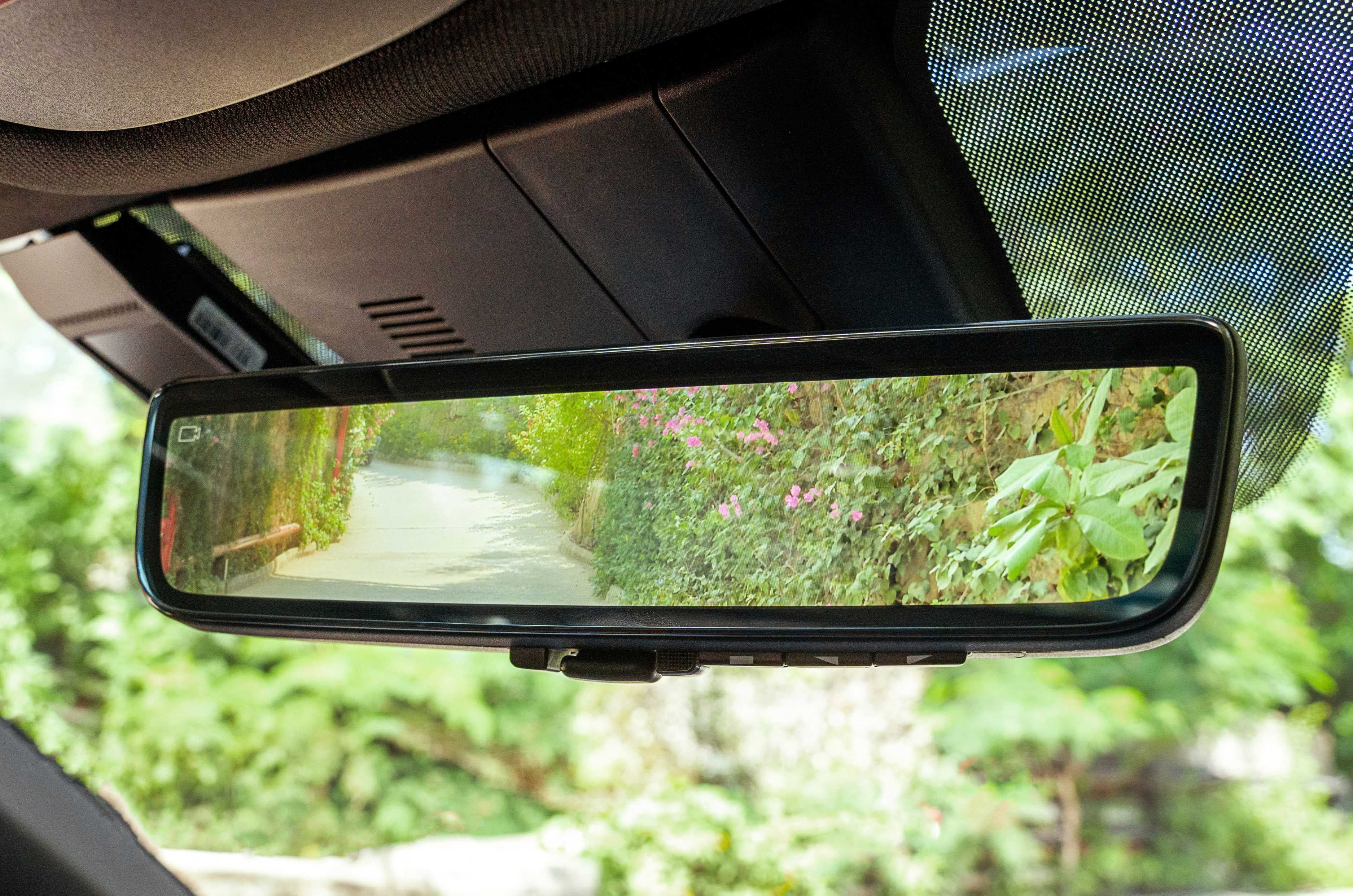
Digital IRVM offers excellent resolution and can be adjusted for level and brightness.
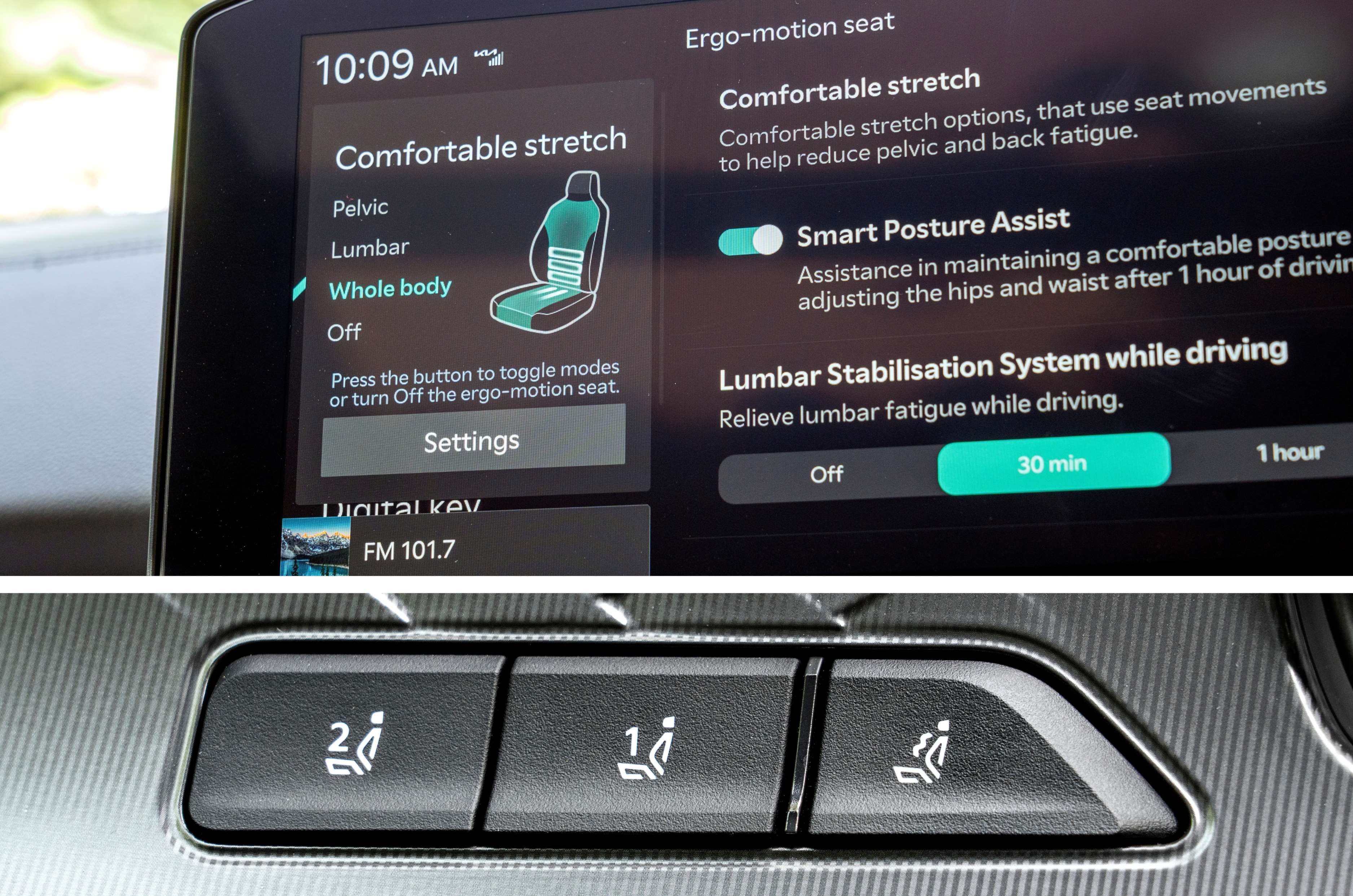
The equipment list is huge. In addition to the aforementioned 12.3-inch touchscreen, powered front seats, ventilated captain’s chairs, and panoramic sunroof, the Sorento comes packed with a 12.3-inch digital driver’s display, a head-up display, a 12-speaker Bose system, dual-zone climate control, a powered tailgate, rear-window sunshades, 64-colour ambient lighting and a digital rear-view mirror that flips back to a conventional one at the turn of a knob. The driver’s seat even gets an ‘ergo-motion’ mode that simulates a massage function by shifting the contours around.
Ergo mode for driver seat acts like a massage by moving the contours to avoid a stiff back on a long trip.
Safety is just as thorough, with 10 airbags, a 360-degree camera, front and rear dashcams, remote parking assist, TPMS and Level 2+ ADAS on the (A) trims. There is even real-time generative AI, a first for any Sorento globally.
Kia Sorento performance and refinement
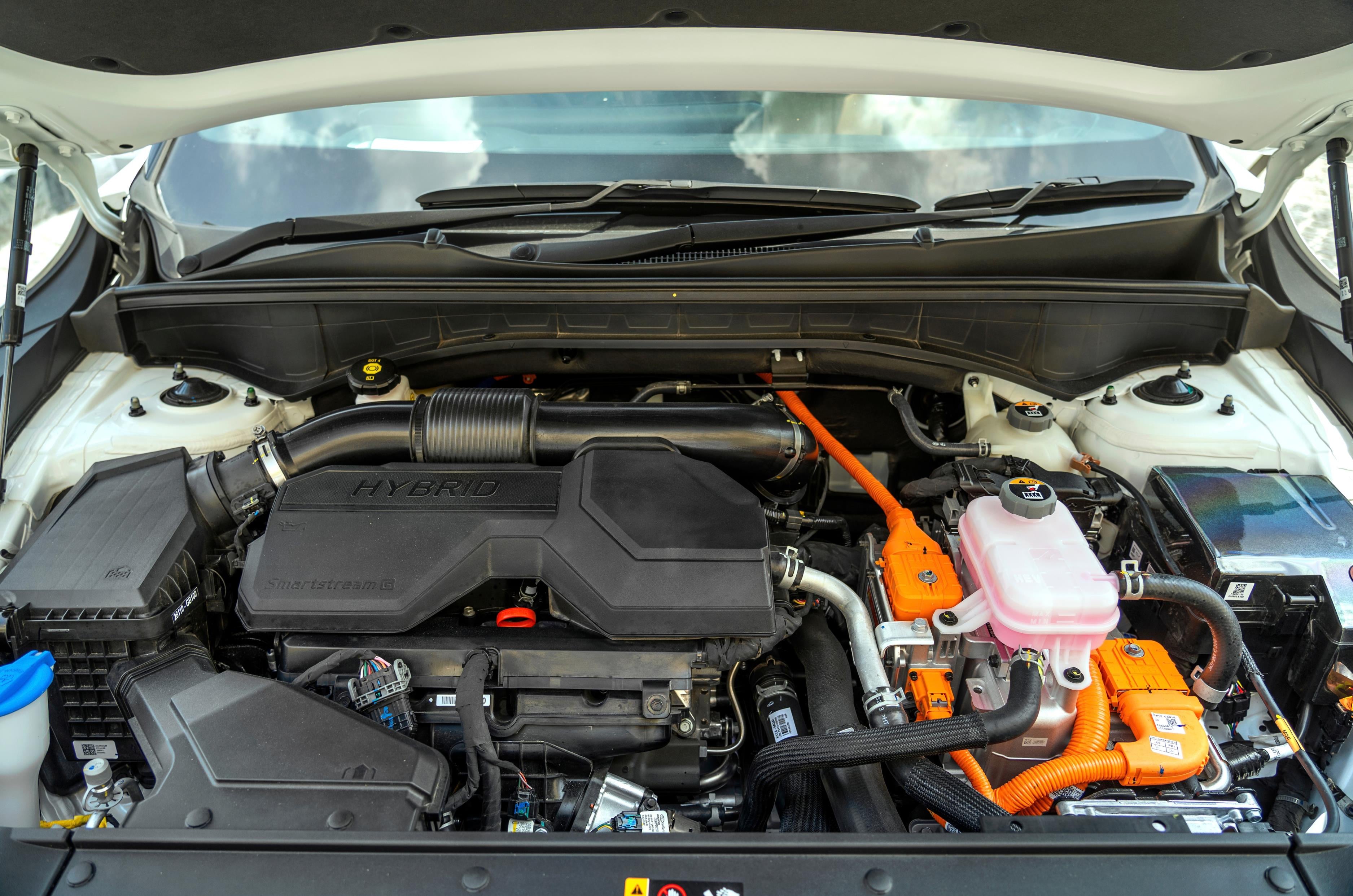
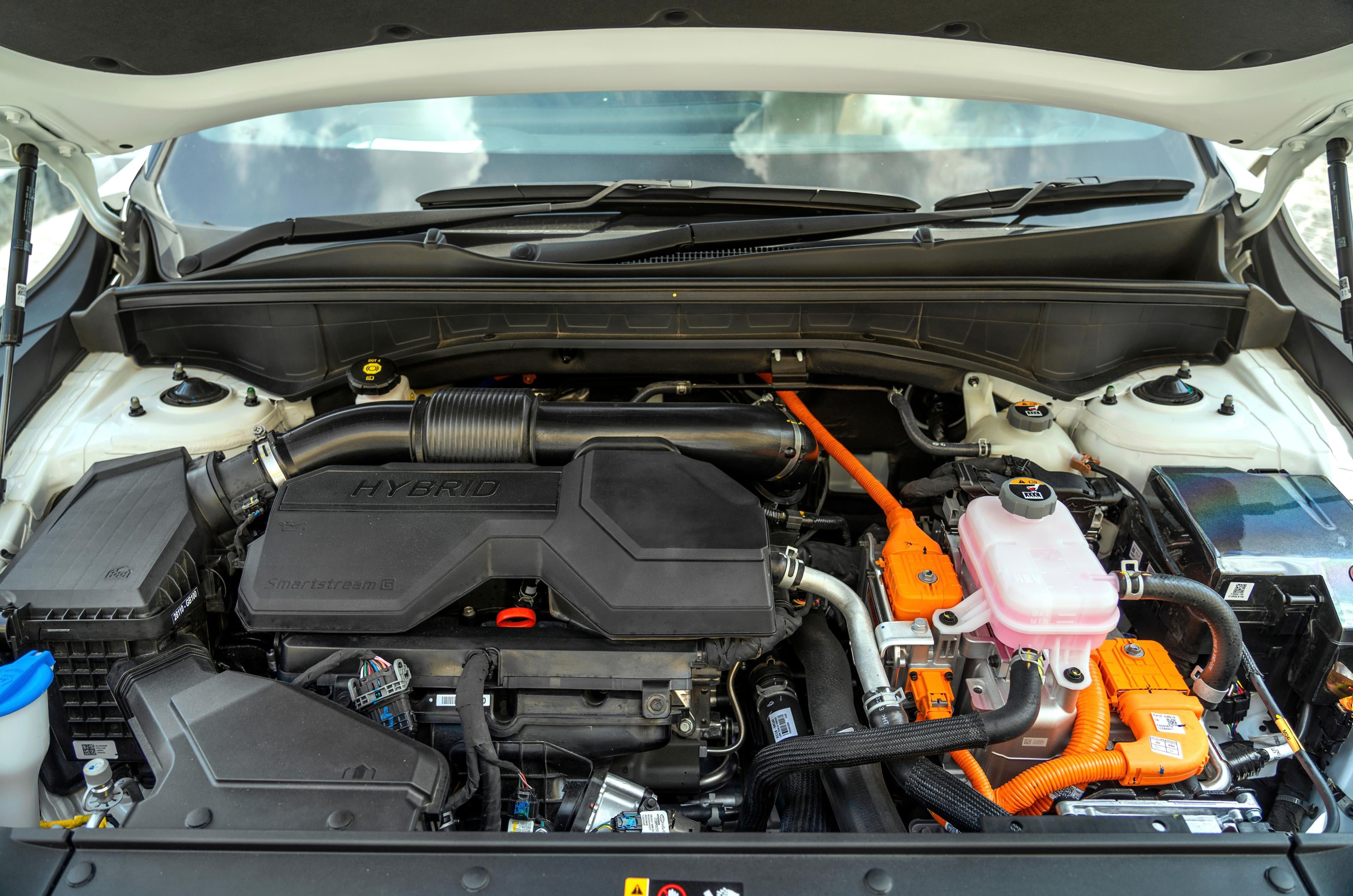
1.6-litre turbo-petrol engine paired with an electric motor and 6-speed torque converter automatic.
First up, the hybrid. Its 1.6-litre turbo-petrol makes 180hp and 265Nm, and the electric motor adds 65hp and 264Nm. The combined figure rating is 230hp and 380Nm of torque You can tell this the hybrid is the one for the city the moment you pull away, because the response is instant. It is well mated to the 6-speed torque-converter automatic, and the handover from electric to petrol power is close to seamless.
Hybrid variant is smooth in the city but gets noisy on the highway especially during overtakes.
The 1.49kWh battery lets it run in EV mode for a decent stretch at crawling speeds, and in stop-go traffic the hybrid makes eminent sense. Power delivery is refined, seamless and relaxing, and efficiency should be strong; The limitation is the motor itself. With only 65hp to shift a car weighing over two tonnes, it cannot do the heavy lifting on its own, so when you want to make quick progress the engine kicks in early. Push hard on the highway and the four-cylinder gets noisy and starts to run out of steam.
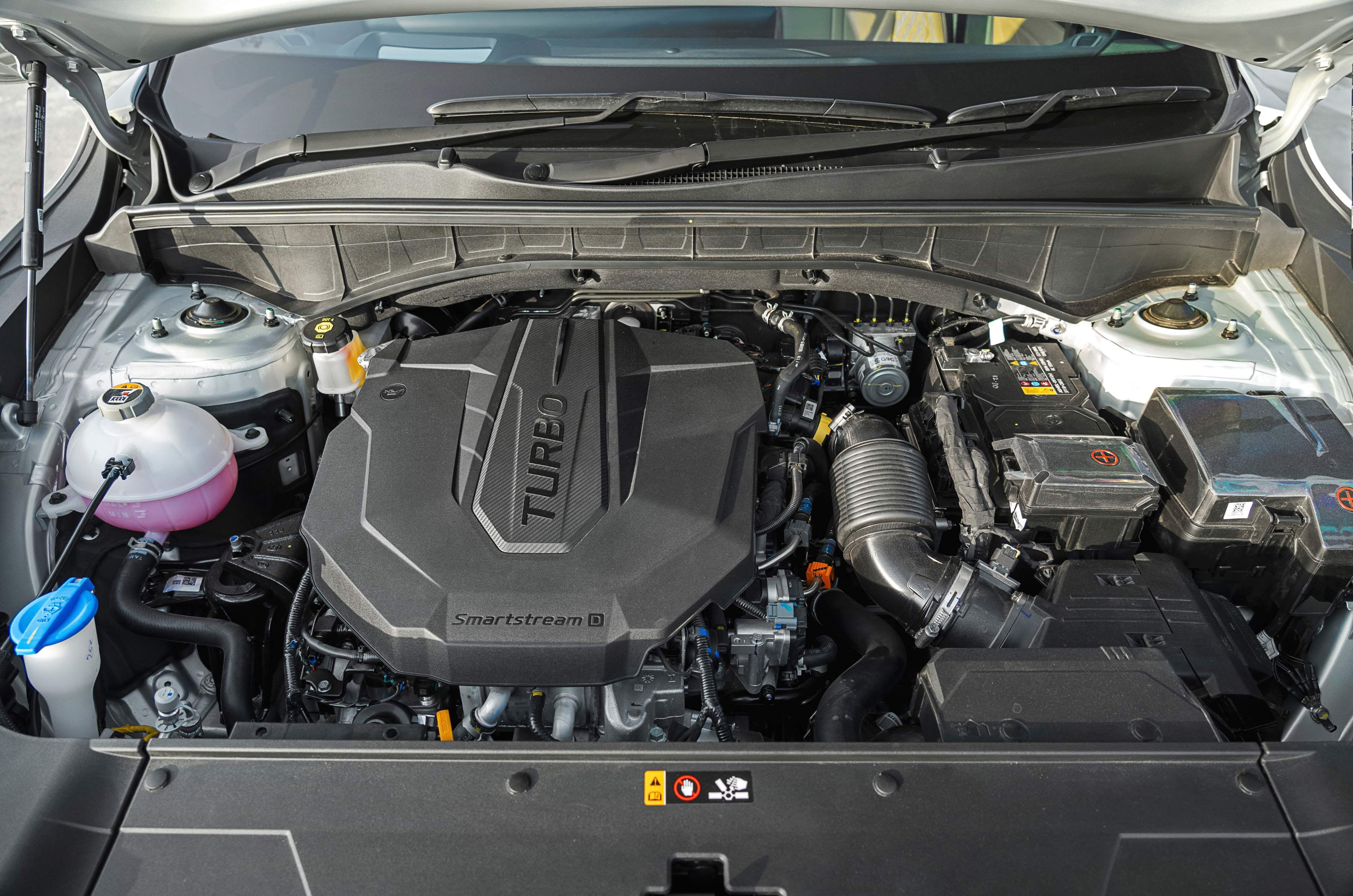
2.2-litre diesel engine makes 193hp mated to an 8-speed DCT and is the same unit seen on the Carnival.
Which is where the diesel comes in. The 2.2-litre is familiar from the Carnival, but it feels a lot sprightlier in the lighter Sorento. Its 193hp and 442Nm arrive in a strong, linear surge, and this is a fantastic, long-legged cruiser. Settle into eighth gear on an open highway and it simply lopes along, the engine barely working. It is also more tractable at low speeds than you might expect, pulling cleanly at part throttle from very low revs, so it can double as a city car, although its low-end response does not come close to the hybrid’s. It’s only when you floor it to dart through traffic that you experience a bit of hesitation, and its hear that you can use the paddle shifts to be in the right gear at the right time of the 8-speed DCT which comes as a pleasant surprise.
The diesel‘s strong torque and effortless cruising makes it perfect for long trips.
Rather than the snappy, slightly jerky shifts typical of dual-clutch boxes, this DCT slurs its changes almost like a torque converter, which adds to the smoothness of the whole package. The reason is that it is a wet-clutch unit, which also bodes well for durability in Indian traffic. The diesel is quite refined for the most part and its only when pushed hard that it gets audible and takes on a gruff note.
Both get drive modes; You can play with the Eco, Normal, Sport and Smart (or auto) modes in the diesel which alters the power delivery. In Sport, the throttle response is sharper and the default mode we liked whilst in Eco you can feel the response a bit dulled down. The Sorento Hybrid gets just Eco, Sport and Smart modes and in Eco mode EV running is prioritised. In addition, the AWD versions get Snow, Sand and Mud terrain modes which we didn’t a get chance to fully experience.
Kia Sorento mileage
In terms of fuel efficiency, the hybrid is rated at a highly frugal 19.60kpl with front-wheel drive and 17.70kpl with AWD, while the diesel returns 17.66kpl and 15.79kpl respectively on the Indian test cycle. In real-world city driving the gap between the hybrid and diesel could be bigger, depending on traffic. On long cross-country runs, though, with extended stints of cruising in high gears, the diesel could well be the more frugal of the two.
Kia Sorento ride and handling
The Sorento’s ride comfort is simply outstanding, and it comes as a pleasant surprise. That’s because Kias have traditionally been stiffer sprung than their Hyundai cousins, but here Kia has clearly prioritised comfort over sportiness, and the suspension is on the soft side. The way it smothers bad roads at speed is remarkable. Around Udaipur, where several stretches are properly broken, we never once had to lift off for a bad patch. The car just soaked it up and kept going.
Ride quality is segment best and it is unfazed over broken roads.
The isolation it gives its passengers is shockingly good, and those tall-sidewall tyres deserve part of the credit. They do a fine job of rounding off sharp jolts and filtering out the high-frequency shocks that a suspension alone cannot fully absorb. At highway speeds there is a bit of body movement on the undulating bits but its not disconcerting and both versions feel stable and planted at high speeds, which matters in a car this tall.
Our HTX test cars came with AWD as standard. We did not get a chance to test its off-road ability properly, but on dirt roads it felt sure-footed and secure. A proper off-road test will reveal how capable the all-wheel-drive system, though we doubt owners will really want to test the Sorento’s off-road capability.
Steering is light but lacks consistency and sharpness of European rivals.
The steering is less impressive. There is a dead zone around the straight-ahead position, and it does not feel as fluid or progressive as its European rivals’. The Volkswagen Tayron and Skoda Kodiaq are both dynamically sharper. One reason is because the Sorento rides taller too, as ground clearance has been raised from the global car’s 176mm to 208mm, and there is a touch of body roll when you push hard through corners.
But that misses the point. On balance, the Sorento’s ride and handling are superbly judged for the people who will buy it. Kia has done a fine job of understanding what a premium SUV buyer in India wants, and it has tailored the car accordingly.
Kia Sorento price and verdict
As a package, the Sorento hits it out of the park; rivals have a lot of catching up to do.
If the product does not win you over, the pricing certainly will. A starting price of Rs 27.99 lakh has set the cat amongst the pigeons, putting the Sorento within striking distance of the Mahindra XUV 7XO. And with its size, features and overall polish, the Sorento will not just nibble at the top end of the 7XO’s pie but with the Hybrid could also tempt a few Innova Hycross buyers. As for the Volkswagen Tayron and Skoda Kodiaq, the Sorento makes them look overpriced and underequipped.
The lower and mid variants are exceptional value. The top-end HTX, at Rs 37.49-40.19 lakh depending on fuel and seating, is pricey by comparison, around Rs 5 lakh more than an equivalent HTK, because it comes with AWD as standard. Here Kia has missed a trick. An HTX with two-wheel drive, a few lakh cheaper, would have been a far easier sell to the many buyers who want all the features and ventilated rear seats but will never leave the tarmac. That however is a small quibble that Kia can easily correct.
The lasting impression is that the Sorento feels premium, bordering on luxury. It is fantastically equipped, it rides beautifully, and it offers a choice of two powertrains that are each right for a distinct type of buyer. Most of all, it fits what the Indian SUV buyer actually wants with uncanny precision. Will Kia hit its target of 40,000 sales a year? That could be a tall order. But what there is no doubt about is that Kia has built another winner.
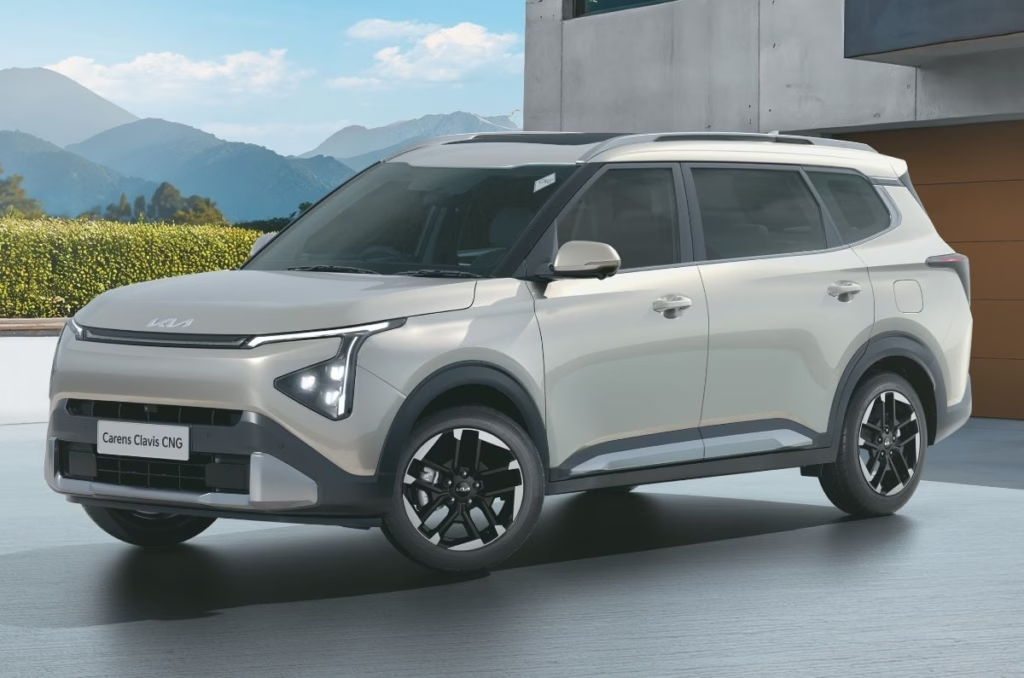
अगर आप CNG गाड़ियों के शौकिन है और कार खरीदने का मना रहे हैं, तो यह आर्टिकल आपके लिए काम की हो सकती है। दरअसल, Kia ने भारत में Carens और Carens Clavis MPV के फैक्ट्री-फिटेड CNG वैरिएंट लॉन्च किए हैं, जिनकी कीमत क्रमशः ₹12.12 लाख और ₹12.39 लाख (एक्स-शोरूम) है। Sorento के भारत में लॉन्च के साथ ही घोषित किए गए ये CNG मॉडल किया के पावरट्रेन पोर्टफोलियो को बढ़ाते हैं और उन खरीदारों को टारगेट करते हैं जो 7-सीटर सेगमेंट में कम रनिंग कॉस्ट वाली गाड़ियां चाहते हैं।
वेरिएंट, कीमत और पोजिशनिंग
Carens CNG को सिर्फ Premium (O) वेरिएंट में पेश किया गया है, जिसकी कीमत 12.12 लाख रुपये है। वहीं, Carens Clavis CNG दो वेरिएंट HTE और HTE (O) में उपलब्ध है। इनकी कीमत क्रमशः 12.39 लाख रुपये और 13.35 लाख रुपये है।
दोनों CNG मॉडल की कीमत उनके पेट्रोल-मैनुअल वर्जन से 1 लाख रुपये ज्यादा है। तुलना करें तो Maruti Ertiga CNG की कीमत 10.94 लाख रुपये से 12 लाख रुपये के बीच है। वहीं, Toyota Rumion CNG की कीमत 11.69 लाख रुपये और Maruti XL6 CNG की कीमत 12.61 लाख रुपये से शुरू होती है।
इंजन, ट्रांसमिशन और अनुमानित माइलेज
दोनों CNG मॉडल में Kia का 1.5-लीटर स्मार्टस्ट्रीम नैचुरली एस्पिरेटेड पेट्रोल इंजन इस्तेमाल किया गया है, जिसे CNG पर चलने के लिए ट्यून किया गया है। CNG मोड में, इंजन 96 hp की पावर और 123 Nm का टॉर्क देता है, जो पेट्रोल वर्जन के मुकाबले 19 hp और 21 Nm कम है। पावर 6-स्पीड मैनुअल गियरबॉक्स के ज़रिए मिलती है; पेट्रोल वैरिएंट में क्लचलेस मैनुअल (iMT) और डुअल-क्लच ऑटोमैटिक (DCT) के ऑप्शन भी मिलते हैं, जो CNG के साथ उपलब्ध नहीं हैं।
दोनों CNG मॉडल में Kia का 1.5-लीटर Smartstream नैचुरली एस्पिरेटेड पेट्रोल इंजन दिया गया है, जिसे CNG पर चलने के हिसाब से ट्यून किया गया है। CNG मोड में यह इंजन 96 hp की पावर और 123 Nm का टॉर्क देता है। जो पेट्रोल वर्जन के मुकाबले 19 hp और 21 Nm कम है। इंजन को 6-स्पीड मैनुअल गियरबॉक्स से जोड़ा गया है। वहीं, पेट्रोल वेरिएंट में क्लचलेस मैनुअल (iMT) और डुअल-क्लच ऑटोमैटिक (DCT) का ऑप्शन भी मिलता है, लेकिन CNG मॉडल में ये दोनों विकल्प नहीं दिए गए हैं।
हालांकि, Kia ने अभी तक CNG वैरिएंट के लिए आधिकारिक सर्टिफाइड माइलेज का आंकड़ा नहीं बताया है। CNG सिस्टम में मौजूदा पेट्रोल फ्यूल सिस्टम के साथ 60-लीटर का टैंक लगा है, जिसमें फ्यूल बदलने के लिए एक स्विच और 4.2-इंच कलर TFT MID पर CNG-स्पेसिफिक ‘Distance-to-Empty’ (गाड़ी कितनी दूर चलेगी) की जानकारी मिलती है।
पैकेजिंग, सस्पेंशन और ब्रेक्स
दोनों मॉडल में फैक्ट्री-फिटेड CNG टैंक को बूट फ्लोर के नीचे लगाया गया है। इसकी वजह से जब तीनों रो इस्तेमाल की जाती हैं, तो बूट स्पेस 216 लीटर से घटकर 116 लीटर रह जाता है। हालांकि, कार के नीचे दिया गया स्पेयर व्हील पहले की तरह ही मिलता है। वहीं, ज्यादा वजन और बदली हुई डायनामिक्स को संभालने के लिए, Kia का कहना है कि उसने सस्पेंशन को री-ट्यून किया है, फ्रंट डिस्क ब्रेक्स को 16-इंच यूनिट्स में अपग्रेड किया है और R16 व्हील्स लगाए हैं। ड्राइविंग में कोई खास फर्क न पड़े, इसके लिए इंजन को भी CNG के हिसाब से री-कैलिब्रेट किया गया है।
CNG से जुड़े इन बदलावों के अलावा, बाकी फीचर्स और इक्विपमेंट काफी हद तक पेट्रोल वाले मॉडल्स जैसे ही हैं। इस लॉन्च के साथ, Kia भी Maruti Suzuki और Toyota की तरह 7-सीटर MPV सेगमेंट में फैक्ट्री-फिटेड CNG पावरट्रेन देने वाली कंपनियों में शामिल हो गई है। इसका मकसद एफिशिएंसी, प्रैक्टिकैलिटी और ब्रांड पोजिशनिंग के बीच संतुलन बनाना है।
Kia India has commenced pre-bookings for the Carens CNG and Carens Clavis CNG. It marks the first time that the Korean carmaker is offering factory-fitted CNG kits in its lineup. The older Carens was previously available with a CNG kit, but it was sold as a dealer-level fitment. Prices for the Kia MPVs will be announced by the end of September or early October this year.
Kia Carens, Carens Clavis CNG: Specifications
Powering the CNG versions of the Carens and Carens Clavis is a 1.5-litre naturally aspirated engine. In CNG mode, it produces 93hp and 123Nm of torque, which is 22hp and 21Nm less than the petrol-powered counterpart. Kia says the MPVs have CNG-specific engine calibration, a fuel-change switch, and tweaks to the suspension and front disc brakes. A 60-litre CNG tank is placed under the boot floor, thus reducing boot space to 116 litres with all rows up. Additionally, the carmaker says it has modified the third row’s back seat frame to improve the recline angle for better comfort.
Kia India has commenced pre-bookings for the Carens CNG and Carens Clavis CNG. This marks the first time offering factory-fitted CNG kits in its lineup. The older Carens was previously available with a CNG kit, but it was sold as a dealer-level fitment. Prices for the Kia MPVs will be announced by the end of September or early October this year.
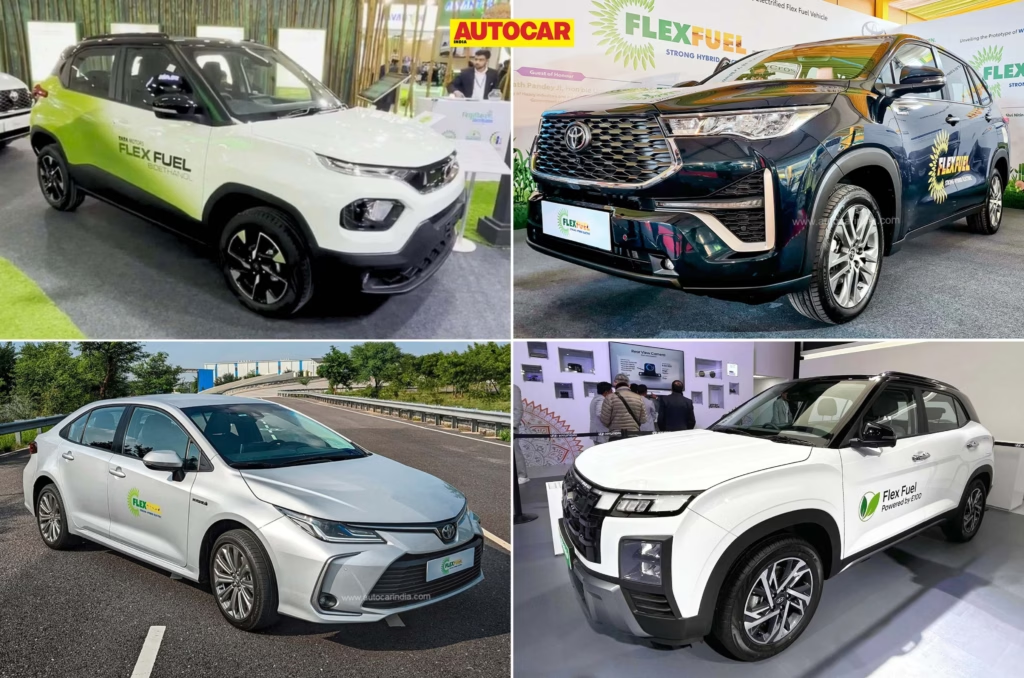
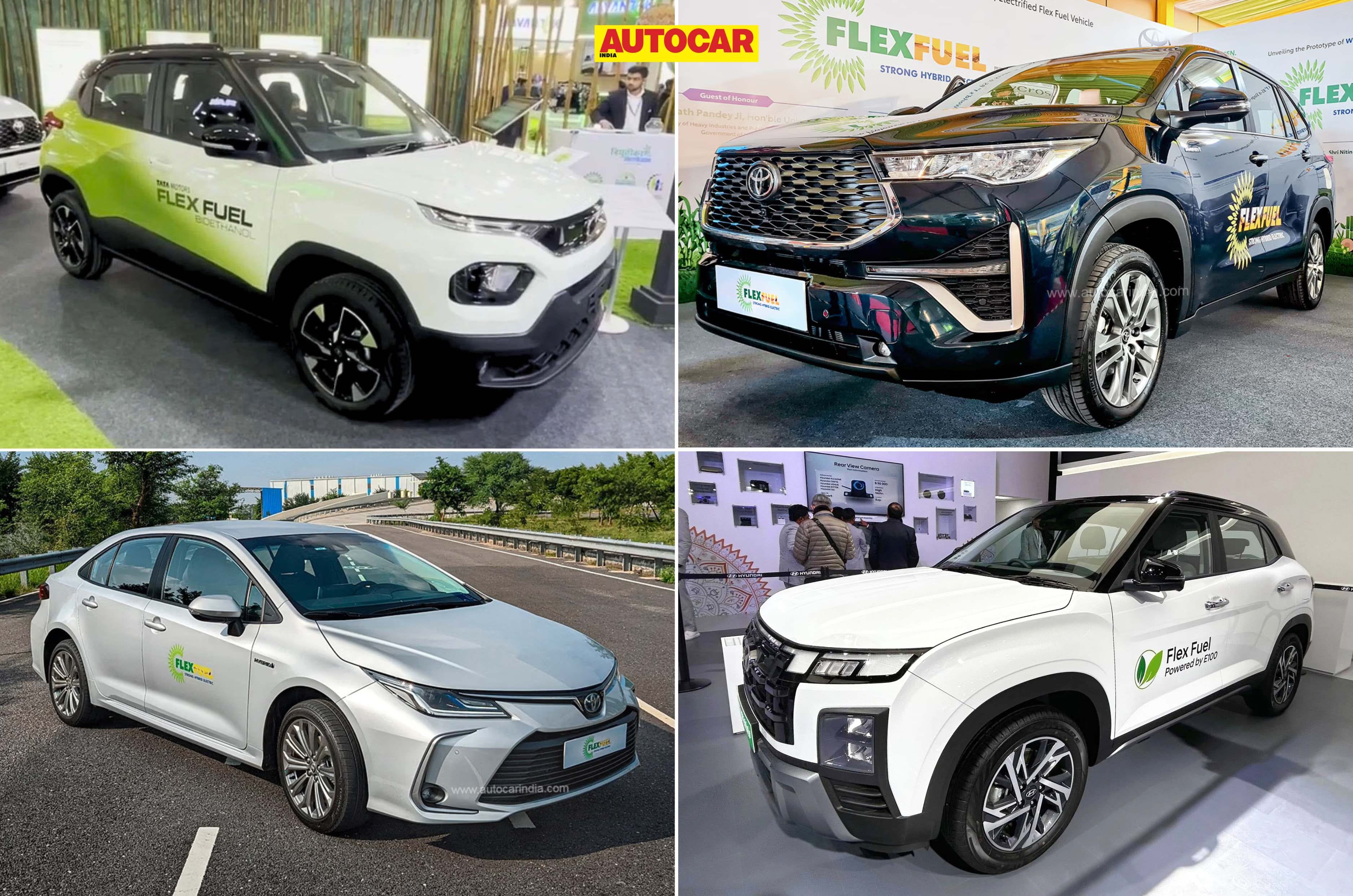
With authorities pushing for higher ethanol-blended petrol, mass-market carmakers have been working toward bringing flex-fuel vehicles to our market. Infact, Maruti Suzuki was the first carmaker to begin production and launch a flex -fuel vehicle with the Wagon R Bioflex. Other carmakers such as Toyota, Hyundai, Tata, and Kia have also showcased flex-fuel models that show readiness for higher blends of ethanol-blended petrol. With E85 fuel dispensing stations being established across the nation, more carmakers could join the flex-fuel bandwagon in the future. Below is a list of all the flex-fuel cars showcased in India, with some capable of running purely on ethanol as well.
Toyota Corolla flex fuel
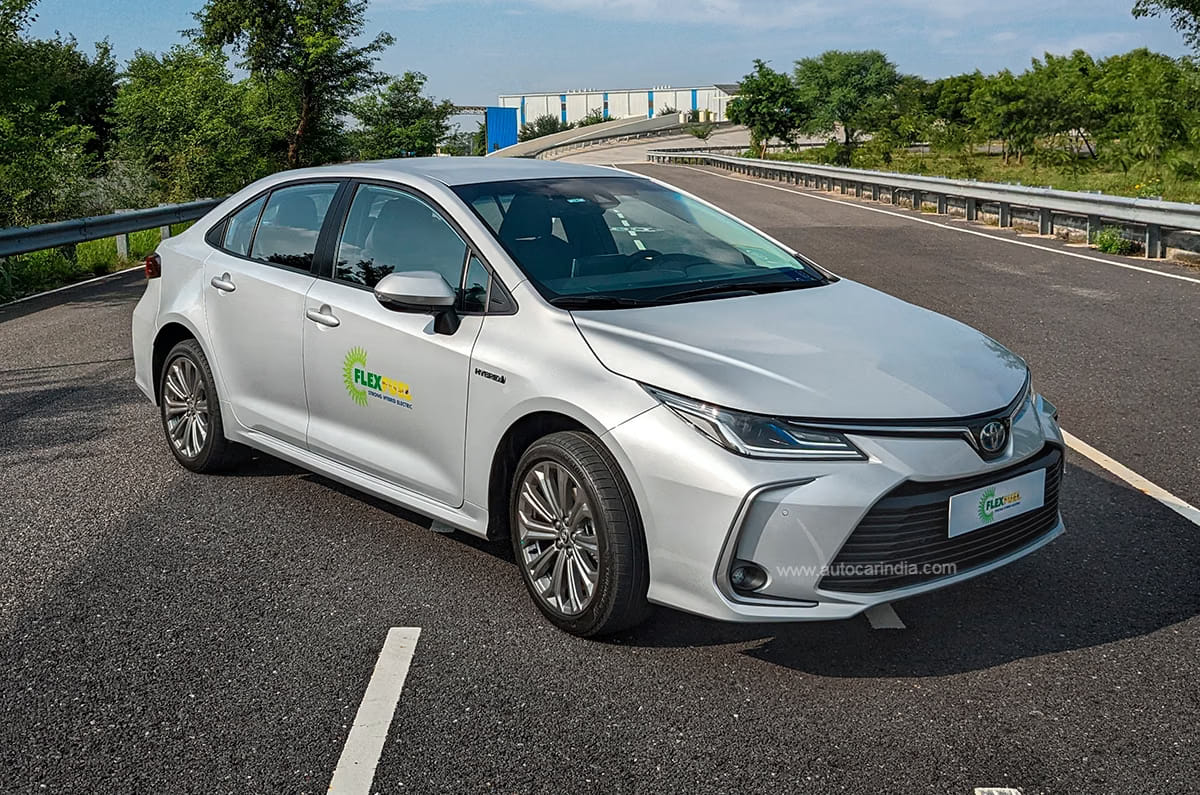
Toyota showcased its flex-fuel technology capabilities with the Corolla hybrid. Revealed in October 2022, the sedan uses a 102hp, 142Nm 1.8-litre petrol engine mated to a strong hybrid system and is capable of running on E100 fuel. It is unlikely to make it to our market, but at the time, Toyota said that its flex-fuel vehicle could arrive here if E85 or pure ethanol can be supplied across India, given that the technology is ready. We even had the opportunity to experience the flex-fuel Corolla on a test track.
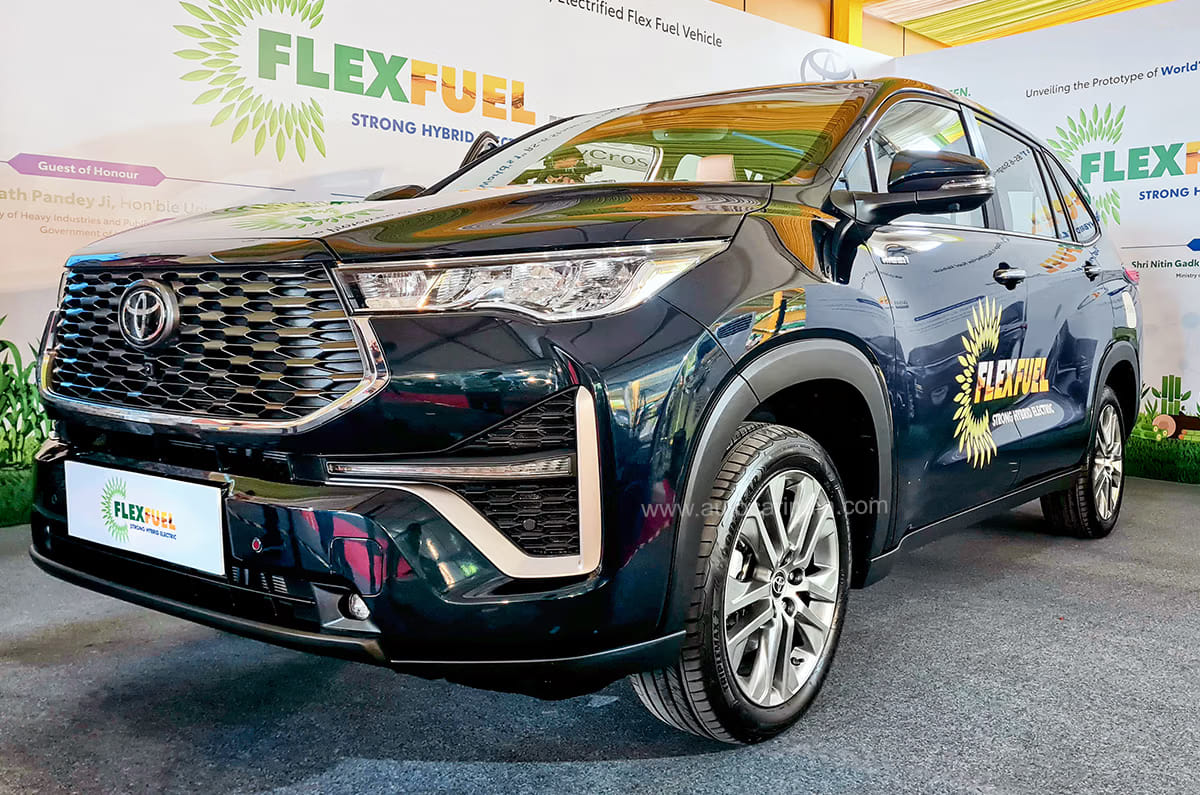
Toyota Innova Hycross flex fuel prototype
In August 2023, Toyota revealed a prototype of the Innova Hycross flex fuel. Like the standard Hycross, it utilises the same 2.0-litre Atkinson-cycle petrol engine paired to an electric motor. Engine tweaks include different spark plugs and piston ring tops, as well as valves and valve seals designed to be water-resistant and prevent corrosion. It also gets a three-way catalyst in the exhaust system to reduce hydrocarbon emissions. Ethanol-compatibility modifications have been done to the vehicle’s fuel filter, fuel pump and fuel lines.
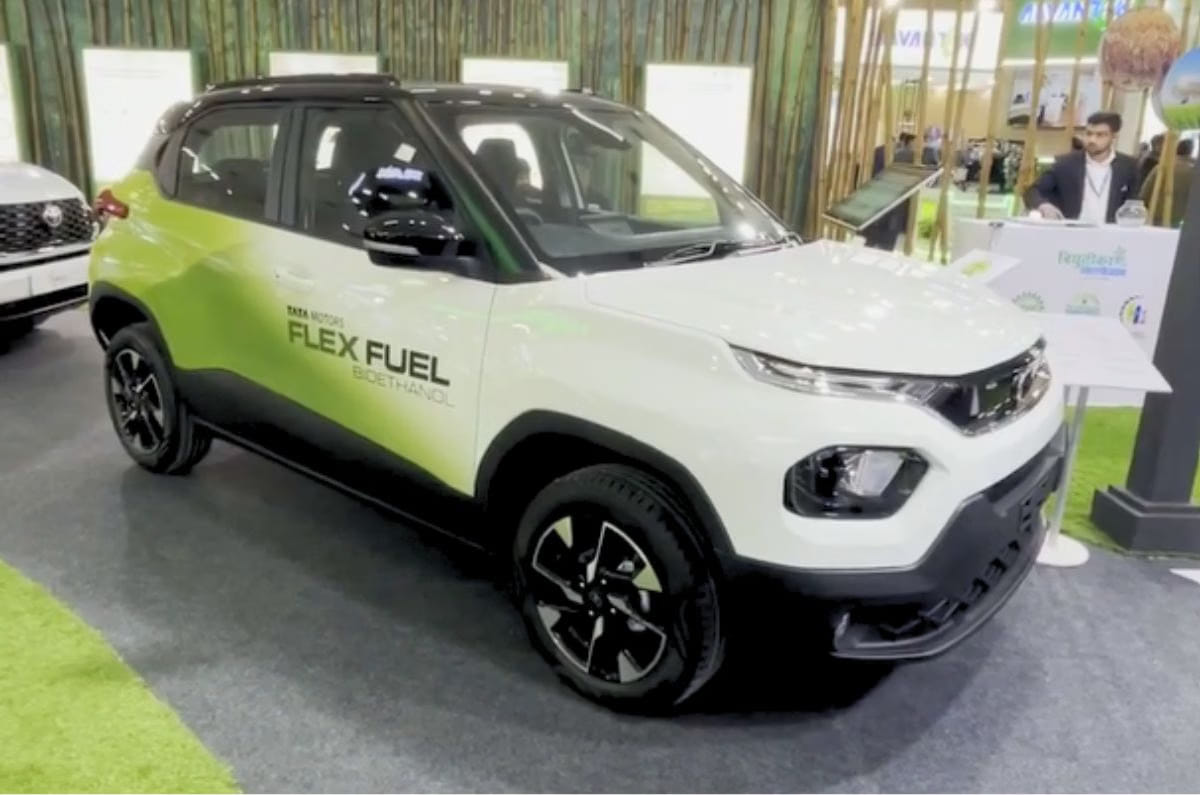
Tata Punch flex fuel
Tata showcased its first flex-fuel model in the form of the Punch SUV, though in pre-facelift guise. It has the 88hp, 115Nm 1.2-litre petrol engine that also powers the current model. The engine is capable of running on blends of up to E85 and has modified ECU software, fuel injector systems and an exhaust after-treatment system to adapt to different ethanol blends.
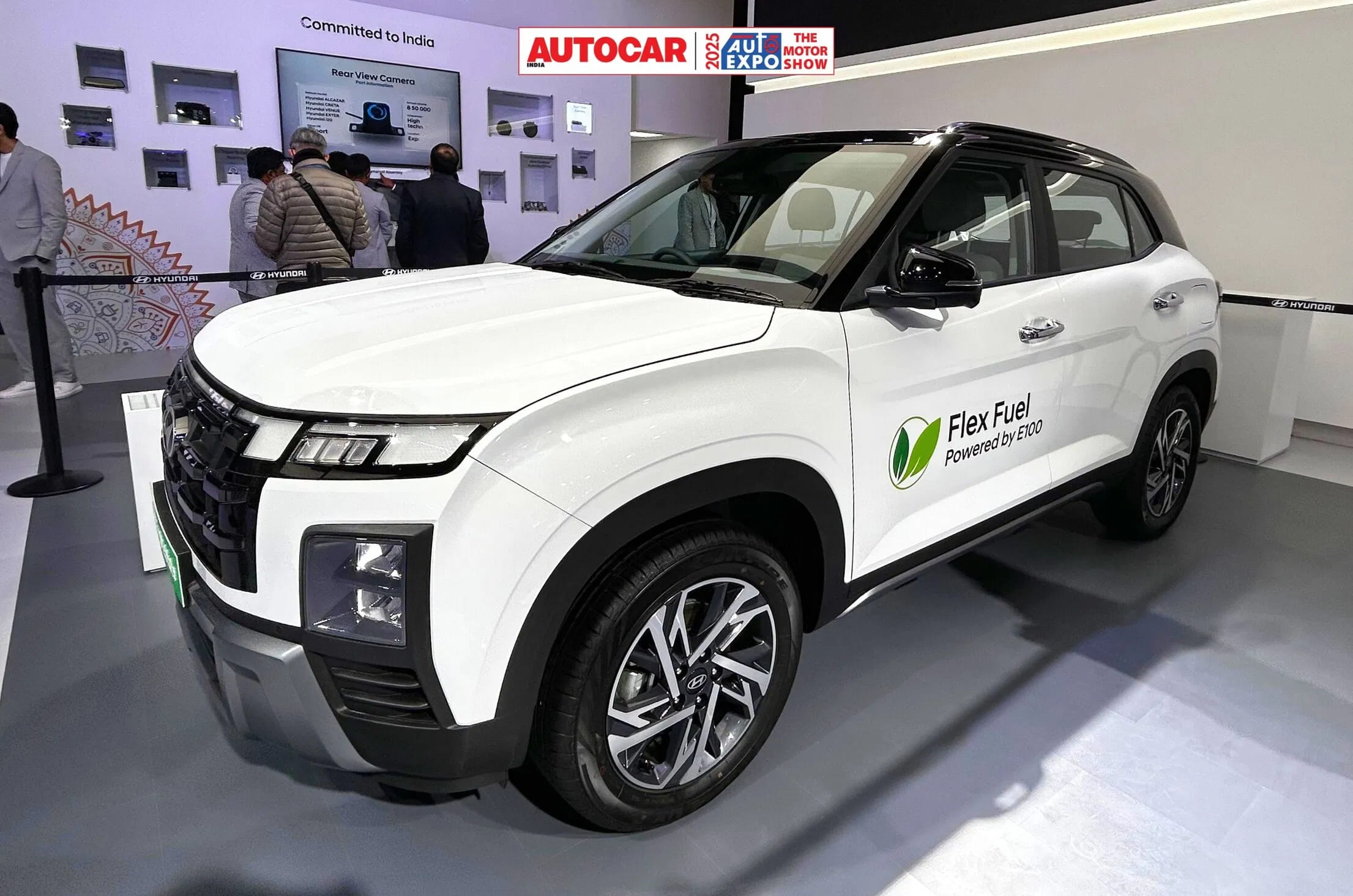
Hyundai Creta flex fuel
Hyundai revealed the Creta flex fuel at the Auto Expo 2025 to highlight its readiness for flex-fuel technology. The SUV’s engine has been modified to run on E100 ethanol. But instead of using the 1.5-litre naturally aspirated petrol or turbo-petrol that’s available on the India-spec model, it gets a 1.0-litre turbo-petrol engine that does duty in the Venue and i20 N Line. It develops 120hp and 172Nm, and is paired to a 6-speed torque converter automatic, unlike the 7-speed DCT on the Venue and i20.
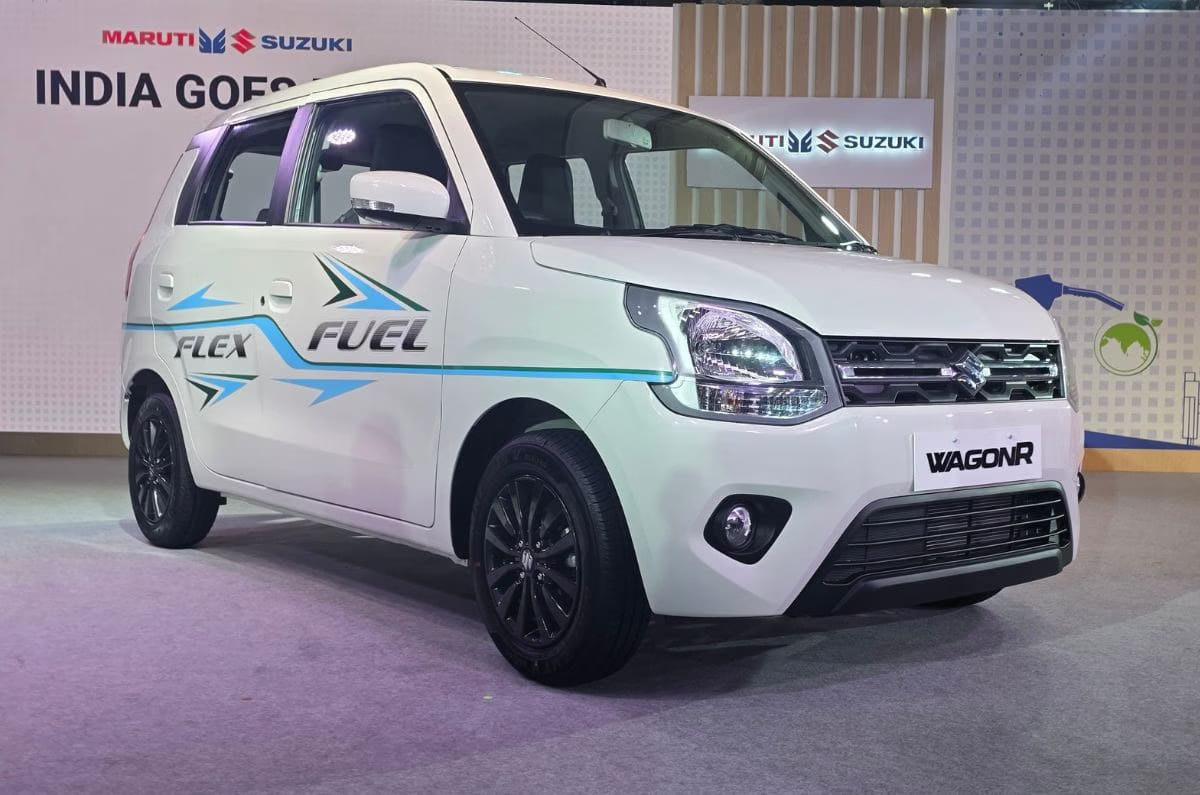
Maruti Suzuki Wagon R flex fuel
The Maruti Wagon R Bioflex is the first flex-fuel car that went on sale in the country. Maruti unveiled the production-spec Wagon R flex fuel years after unveiling its prototype in 2022. It is powered by the 1.2-litre petrol engine that also does duty in the standard model. While the Wagon R is compatible with running on E100 fuel, it has been homologated to only run on E85 fuel. Like the rest of the cars here, it gets upgraded fuel injectors and fuel pumps, new fuel lines, a newly calibrated ECU, and an ethanol sensor for ethanol compliance.
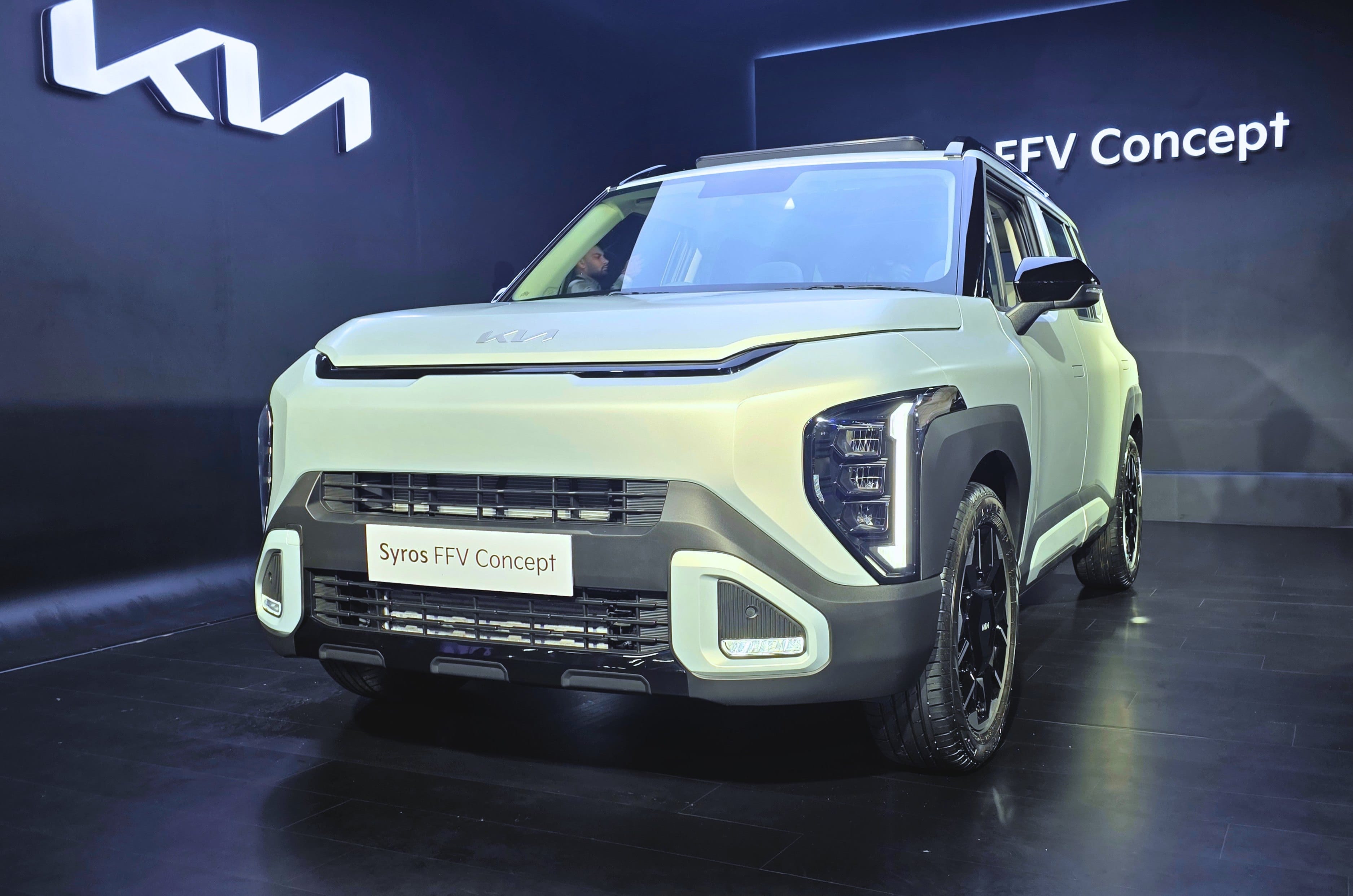
Kia Syros FFV Concept
Kia India showcased its commitment to bringing flex-fuel cars to India with the Syros flex fuel vehicle (FFV) concept. According to Kia, the Syros FFV is capable of running on pure petrol, pure ethanol, and varying ethanol-petrol blends. It looks identical to the standard Syros, but under the bonnet is a 1.0-litre three-cylinder direct-injection turbocharged engine which has tweaked components for compatibility with ethanol and is paired with a 6-speed torque converter automatic. The arrival of a production-spec version is yet to be confirmed by Kia.