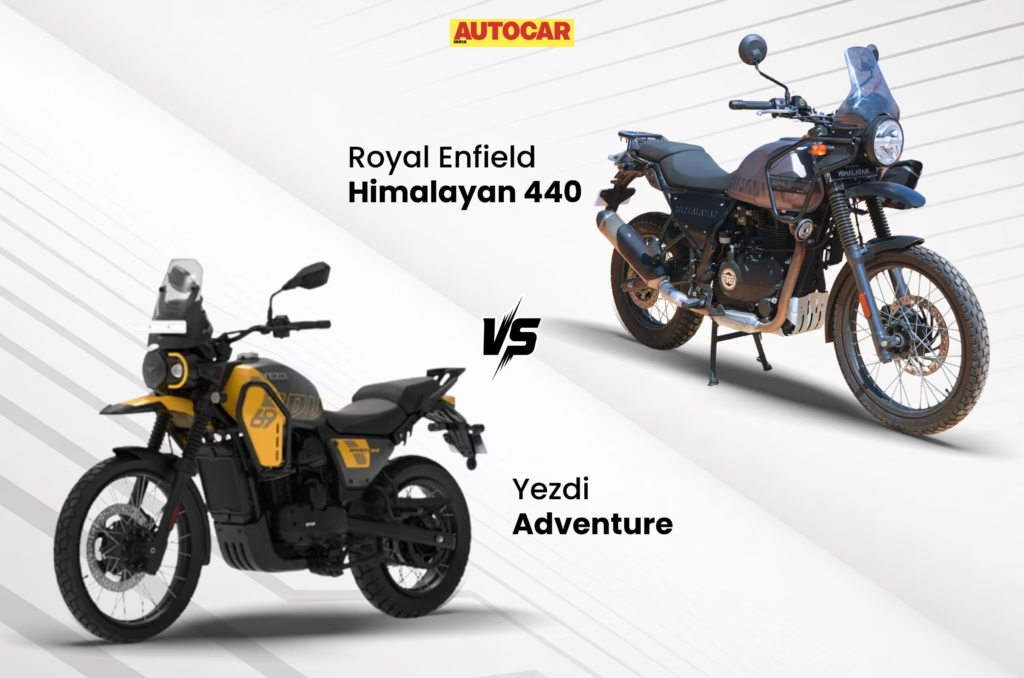
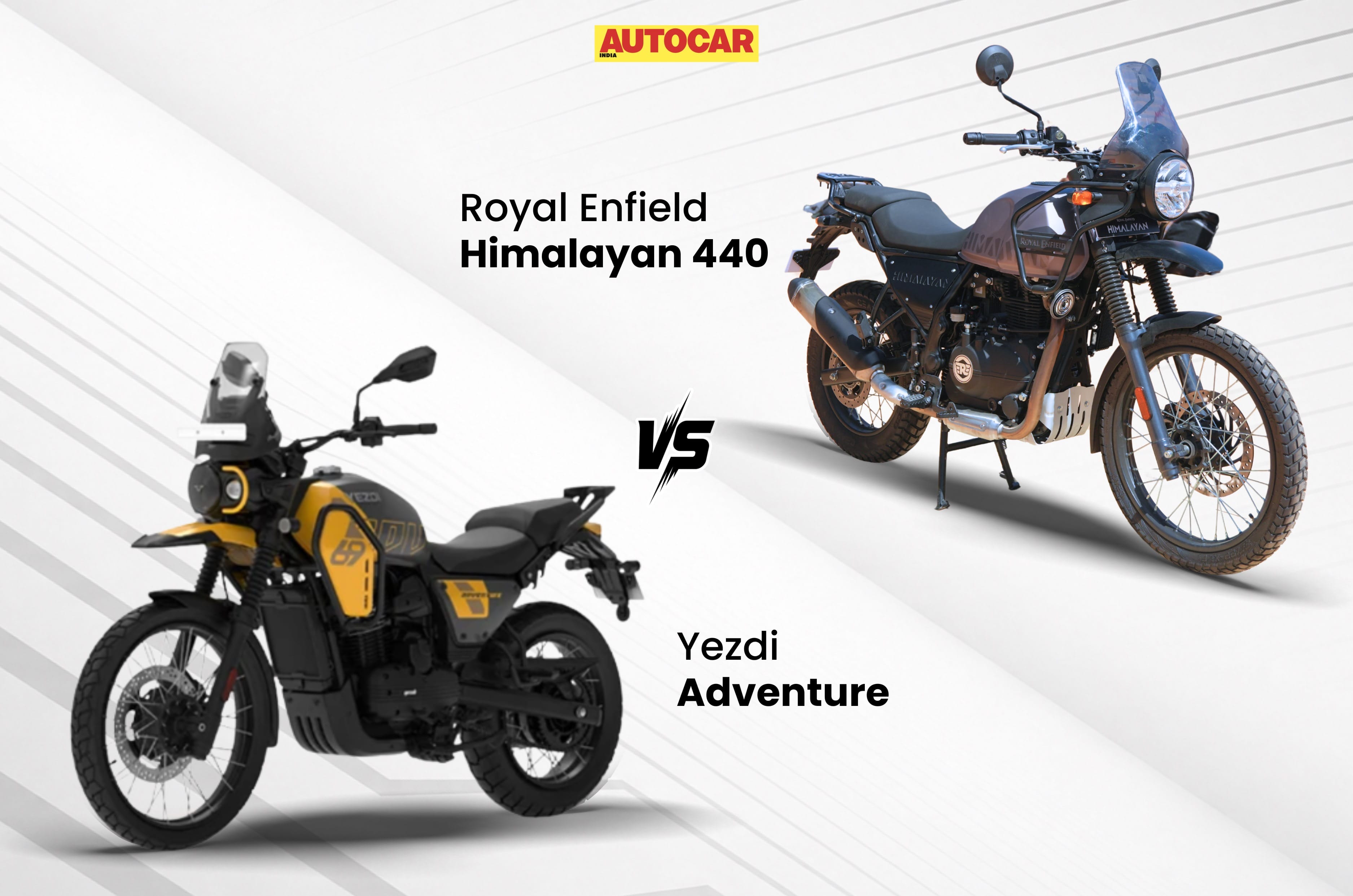
The Royal Enfield Himalayan 440 is back, wearing familiar clothes but a new, improved heart. Debuted first on the Scram 440, the upsized 443cc engine now makes 1.4hp more power and 2Nm of torque over the erstwhile Himalayan 411. Throw in an additional sixth gear and the Himalayan should now be a better tourer than before. But wait, how does this revived ADV compare to its direct rival, the Yezdi Adventure? Let’s find out.
Royal Enfield Himalayan 440 vs Yezdi Adventure: Engine and output
Yezdi makes more power with a liquid-cooled engine
Royal Enfield Himalayan 440
Yezdi Adventure
Engine
443cc single-cylinder, air- and oil-cooled
334cc single-cylinder, liquid-cooled
Power
25.4hp at 6,250rpm
29.6hp at 8,000rpm
Torque
34Nm at 4,000rpm
29.8Nm at 5,800rpm
Transmission
6-speed
6-speed
Power-to-weight ratio
127.64hp/tonne
158.29hp/tonne
On paper, the Yezdi Adventure displaces 109cc less than the Himalayan 440, but the Yezdi starts off strong—quite literally—with more power at a higher redline than the Himalayan 440. Its engine is also liquid-cooled compared to the Himalayan’s air- and oil-cooled mill. Both the motorcycles have six gears, so highway travel shouldn’t be a chore on either.
Royal Enfield Himalayan 440 vs Yezdi Adventure: Dimensions and weight
Himalayan 440 is more accessible
Royal Enfield Himalayan 440
Yezdi Adventure
Fuel tank
15 litres
15.5 litres
Ground clearance
220mm
220mm
Seat height
800mm
815mm
Kerb weight
199kg
187kg
Wheelbase
1460mm
1465mm
Things become a bit more even in this section. Both motorcycles share similar ground clearance numbers, but the Himalayan is more accessible with a 15mm lower saddle height. Yezdi reports 187kg for the Adventure but that’s dry weight. So, with 90 percent fuel, it should weigh just as much, if not more than the Himalayan’s 199kg.
Royal Enfield Himalayan 440 vs Yezdi Adventure: Tyres, brakes and suspension
Both models are (almost) on par
Royal Enfield Himalayan 440
Yezdi Adventure
Tyres (F,R)
90/90-21, 120/90-17
90/90-21, 130/80-17
Brakes (F,R)
300mm front disc, 240mm rear disc
320mm front disc, 240mm rear disc
Suspension (F,R)
Telescopic fork, linkage monoshock
Telescopic fork, linkage monoshock
Once again, the numbers look real similar on this front. The Yezdi Adventure has a slightly larger rear tyre and a slightly larger front disc brake. Speaking of tyres, although both models come with wire spoked rims as standard, the Yezdi Adventure offers cross spoke, tubeless rims as an optional Rs 20,000 add-on; available to the middle and top variants. Over on the Royal Enfield side though, such an upgrade isn’t possible at the moment. Royal Enfield doesn’t offer tubeless rims to the Himalayan 440, even as an accessory; they haven’t confirmed if the Himalayan 450’s tubeless rims can be retrofitted to it either. Suspension is another area where both motorcycles are neck-and-neck with them sharing the same kind of setups on paper, down to the travel.
Royal Enfield Himalayan 440 vs Yezdi Adventure: Features
Yezdi gets more rider aids
The Yezdi offers a more comprehensive feature package compared to the Royal Enfield. The Adventure gives you traction control, adjustable wind shield and instrument cluster, three ride modes (Road, Rain, Off-road); all of which are missing on the Himalayan 440. On the other hand, the Royal Enfield comes with a tripper pod as standard for turn-by-turn navigation, a USB type-C port, and LED headlight and taillight. But if rider aids are what you’re after, the Yezdi has more of them.
Royal Enfield Himalayan 440 vs Yezdi Adventure: Price
Yezdi offers more value for money
Royal Enfield Himalayan 440
Yezdi Adventure
Price (ex-showroom, Tamilnadu)
Rs 2.29 lakh
Rs 2.09 – 2.16 lakh
Royal Enfield has kept things straightforward with the Himalayan 440 just offering one variant in three colours. All of them share the same price as well. Yezdi offers three variants of the Adventure in four total colours, separated only by the colour choices. Like we had mentioned earlier, you can add cross spoked tubeless wheels to its middle and top variants for Rs 20,000 extra. To conclude, on paper, the Yezdi Adventure puts up quite the fight to the Royal Enfield Himalayan 440 but real-world experiences may vary. It would be prudent to decide between the two after taking test rides.
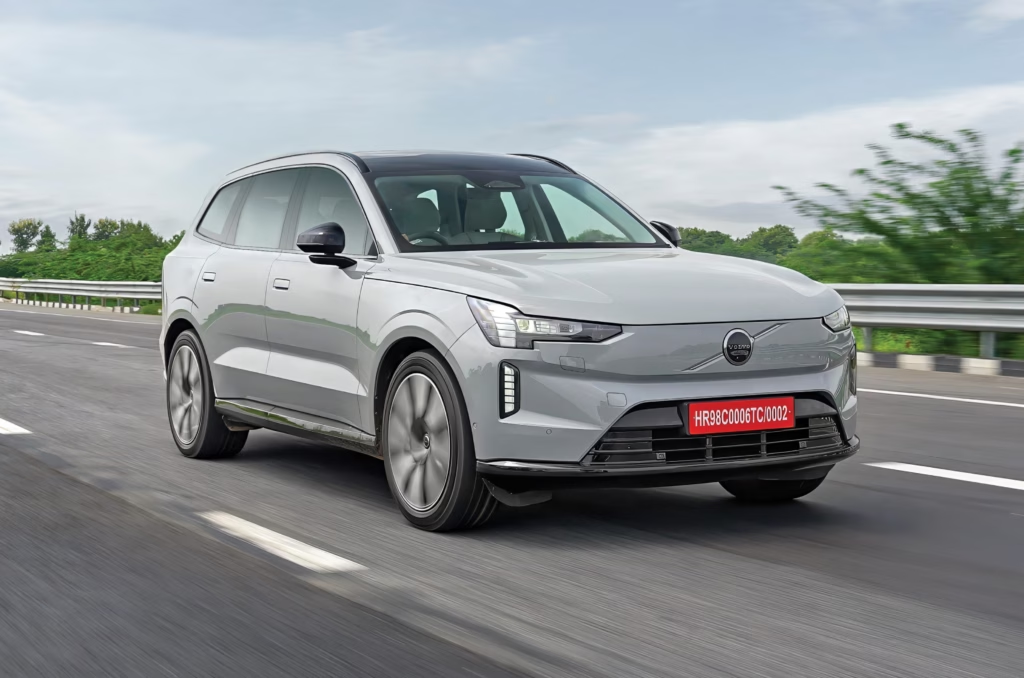
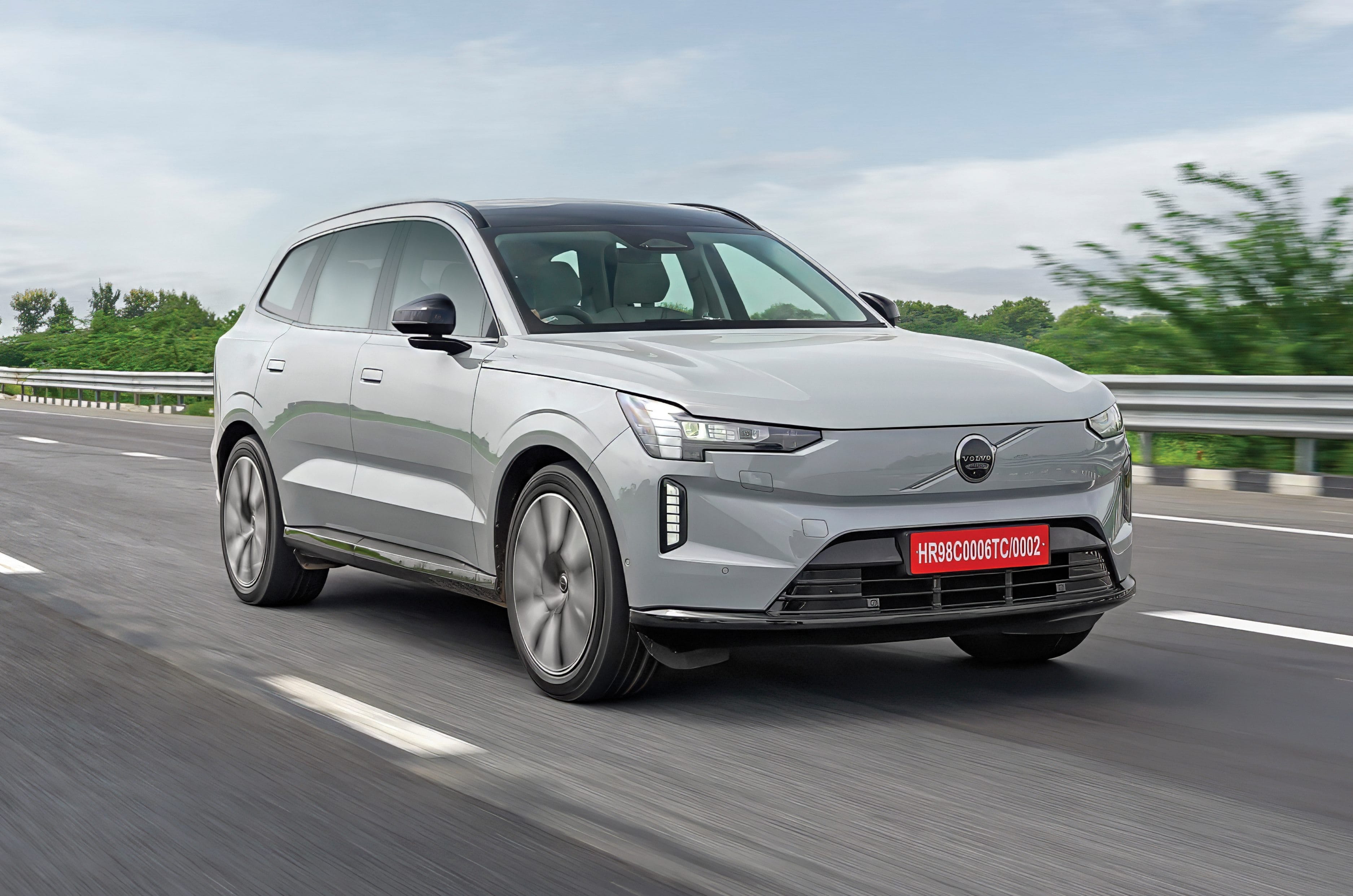
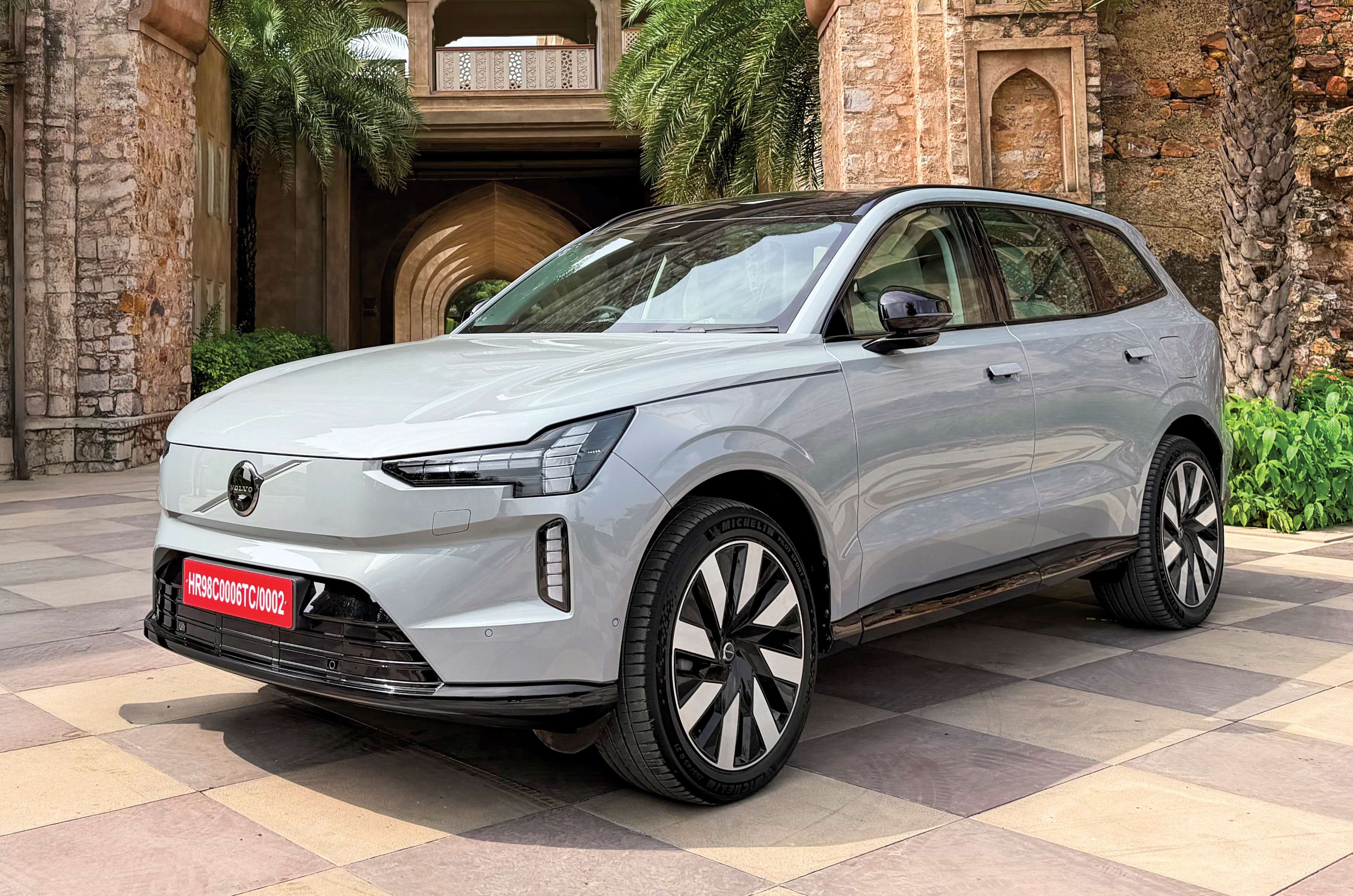
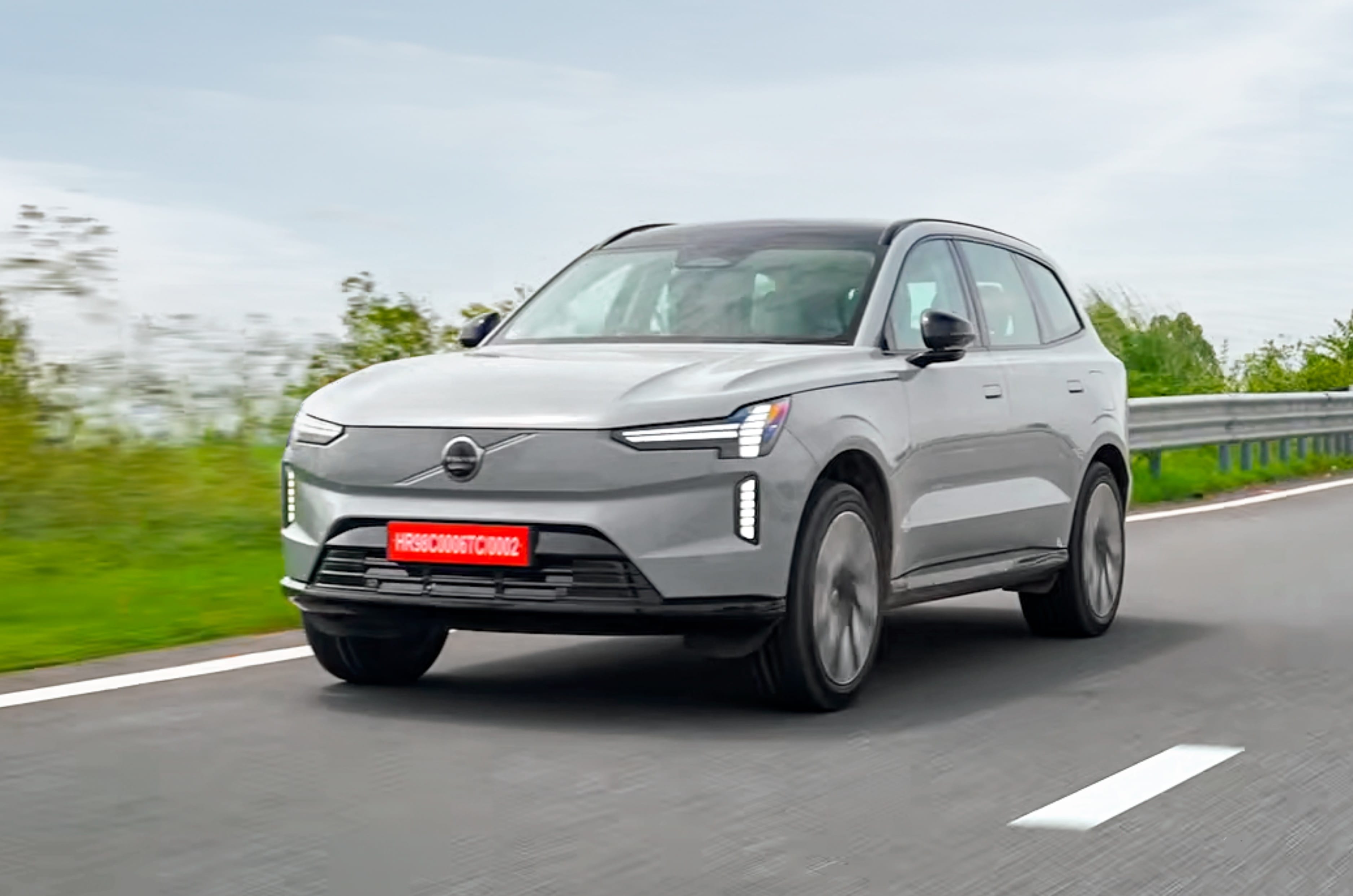
The EX90 is Volvo’s latest offering in India and also its most premium one. The EX30 and EC40 compete in the entry-level luxury EV segment, but the EX90 is the brand’s flagship electric SUV. It comes in a single, fully loaded variant with all the bells and whistles, along with a dual-motor setup and a claimed range of over 600km. Can it bring in a new audience or convert some XC90 customers? It certainly has the traits to do both.
EX90 Exterior Design and Engineering – 9/10
Built on Volvo’s SPA2 dedicated EV platform that has hints of the XC90.
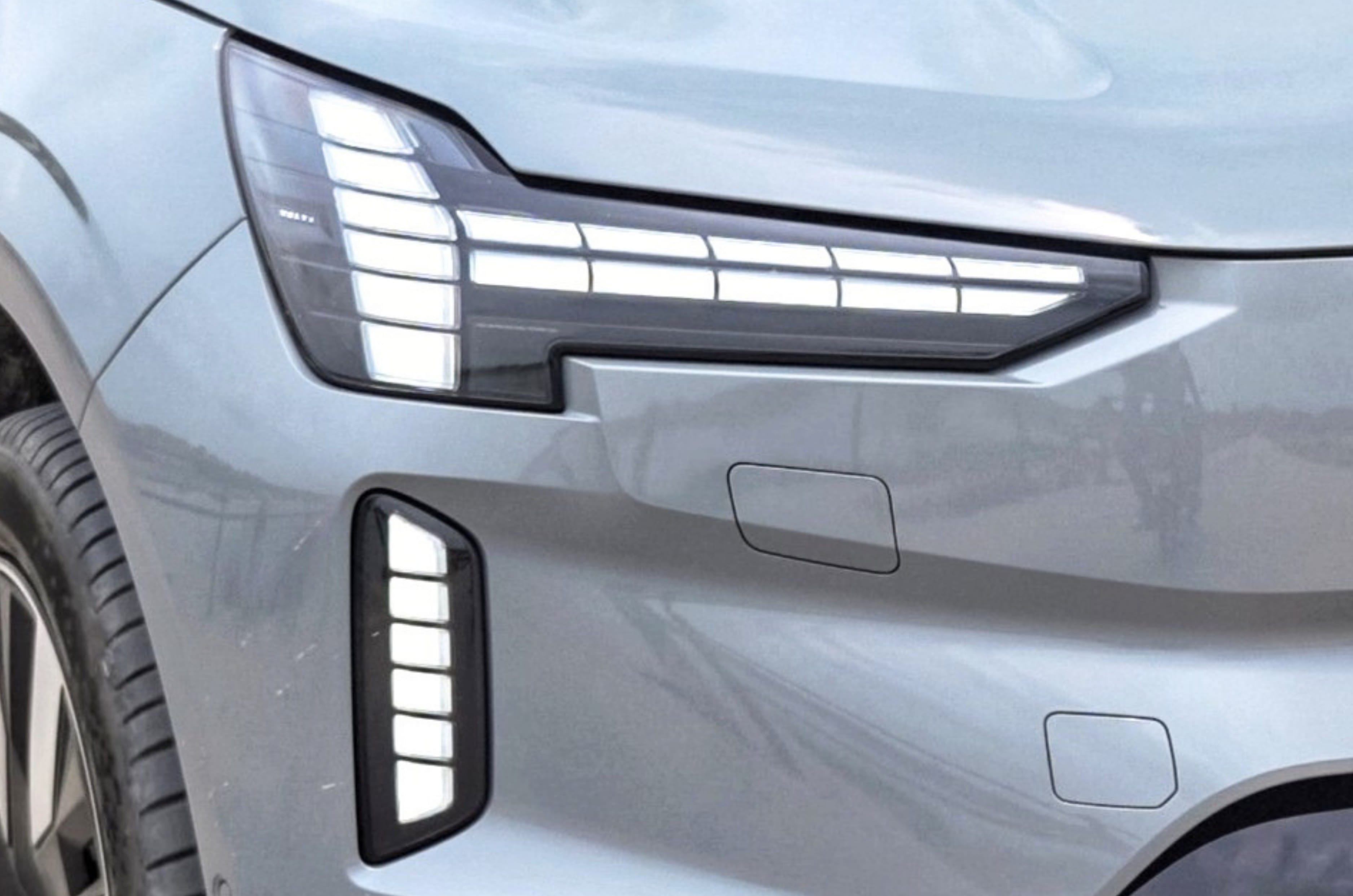
Based on the new SPA2 architecture, which has its roots in the previous SPA platform but is built specifically for EVs, the EX90 does share some resemblance to the XC90 in its shape and form factor. However, the details are different. As expected, the overall design is simple and far from outlandish or attention-seeking. This is in keeping with the brand’s image, and the restraint actually works. The flat, closed-off front end dismisses any chances of a blingy chrome grille, and what adds drama instead are the LED lights that split open to reveal the main headlamps behind. These, too, have an impressive party trick; with over a million pixels, they can individually light up or switch off and constantly shape a light beam to avoid dazzling oncoming traffic. Further down, you get some more DRL strips, one on each side, and a rather simple, fuss-free bumper.
DRLs that spilt open to reveal headlamps add drama.
Over to the side, the EX90 is slightly longer than the XC90, while the rest of its dimensions see a marginal bump. 21-inch wheels are standard, and the 210mm of ground clearance at its lowest setting is plenty. The air suspension also allows you to raise the car up to 250mm for off-road use. The door handles are pop-up, flip-up-style units, and you no longer get a key. Instead, you get a card that you need to tap at the right spot, with the Volvo logo facing the right way, for the handle to pop up. Alternatively, you can simply link your phone to the car and use it as a key. It seems convenient on paper, but the card system needs to be a lot more seamless to be hassle-free.
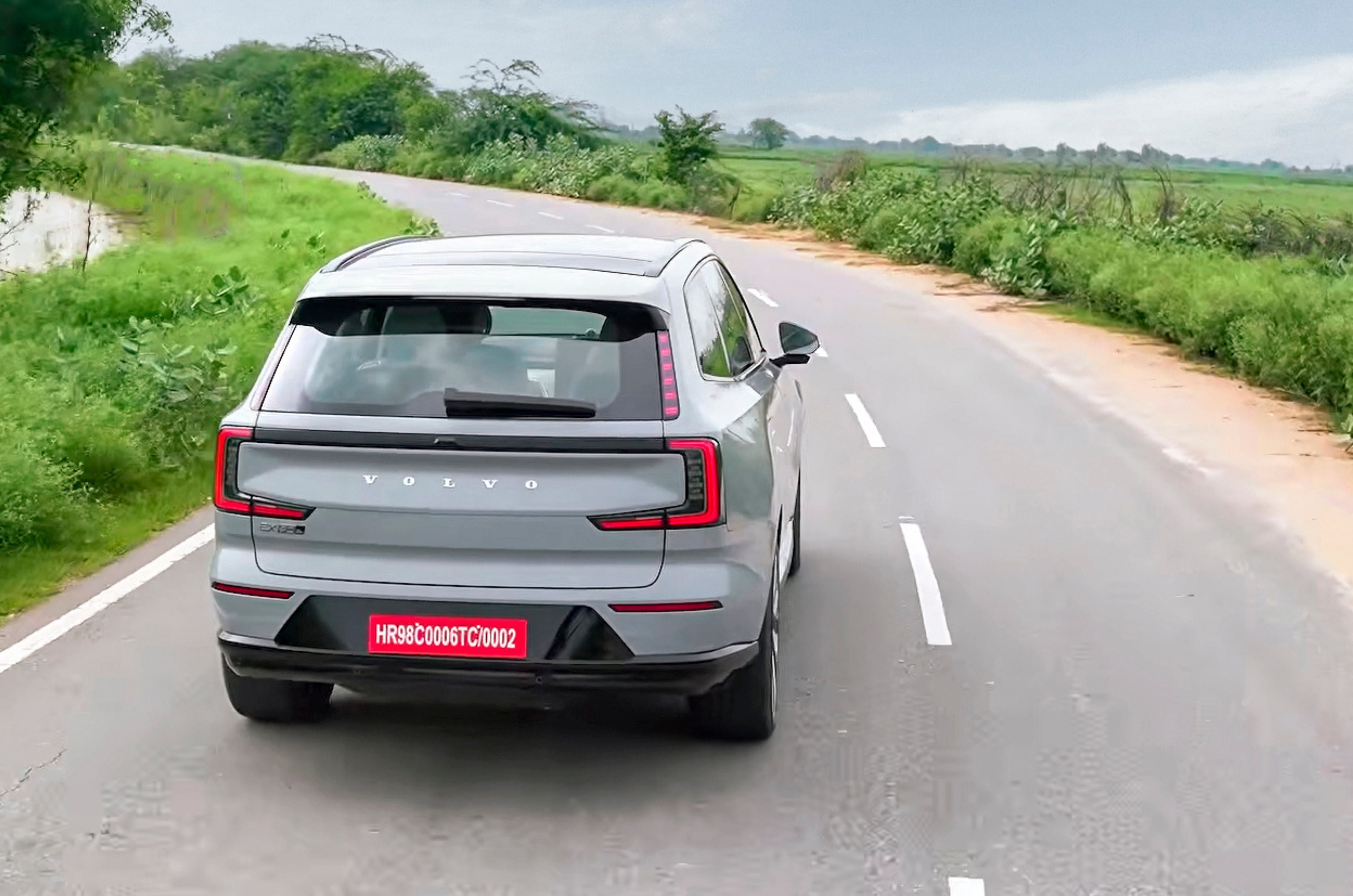
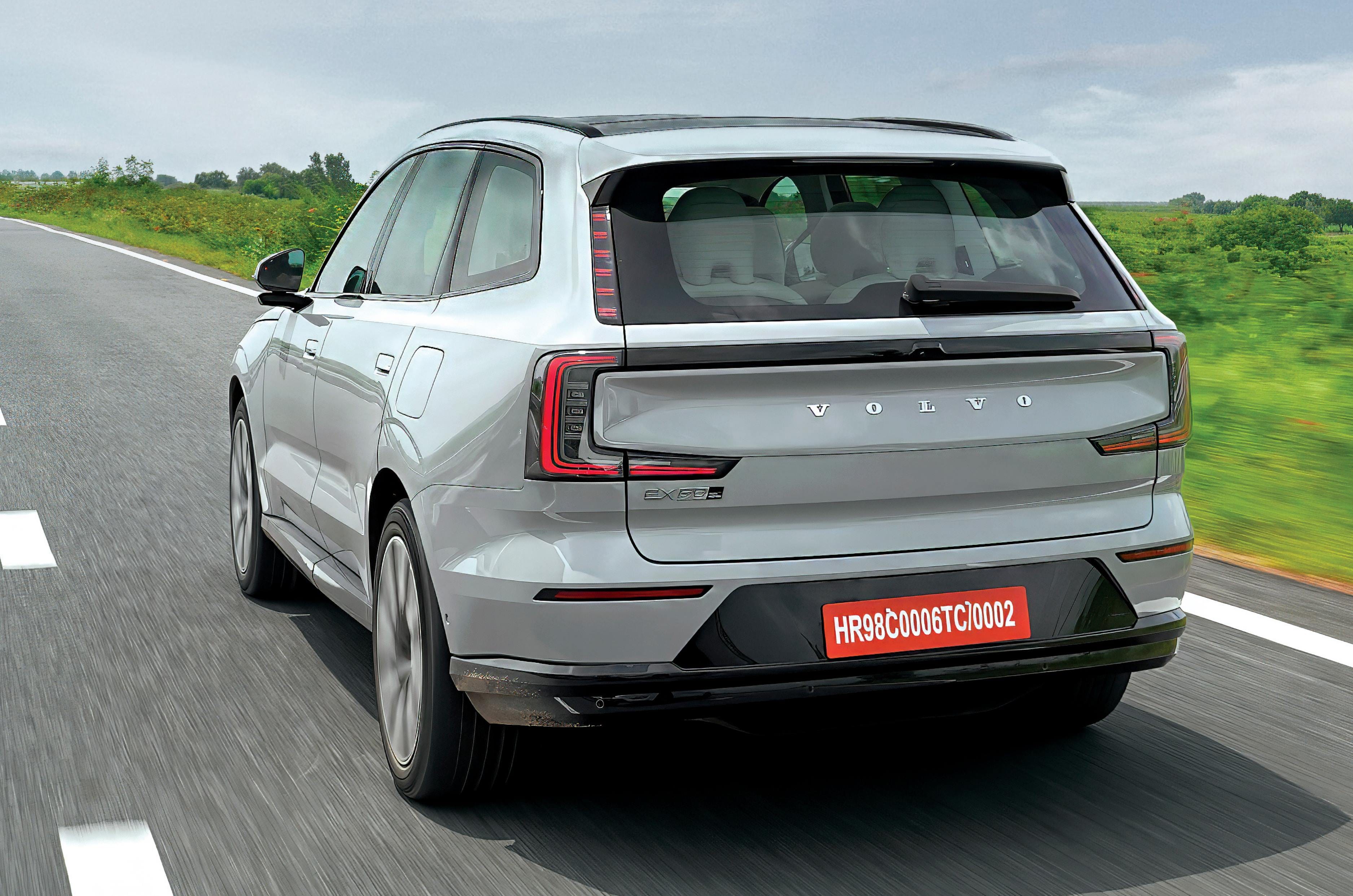
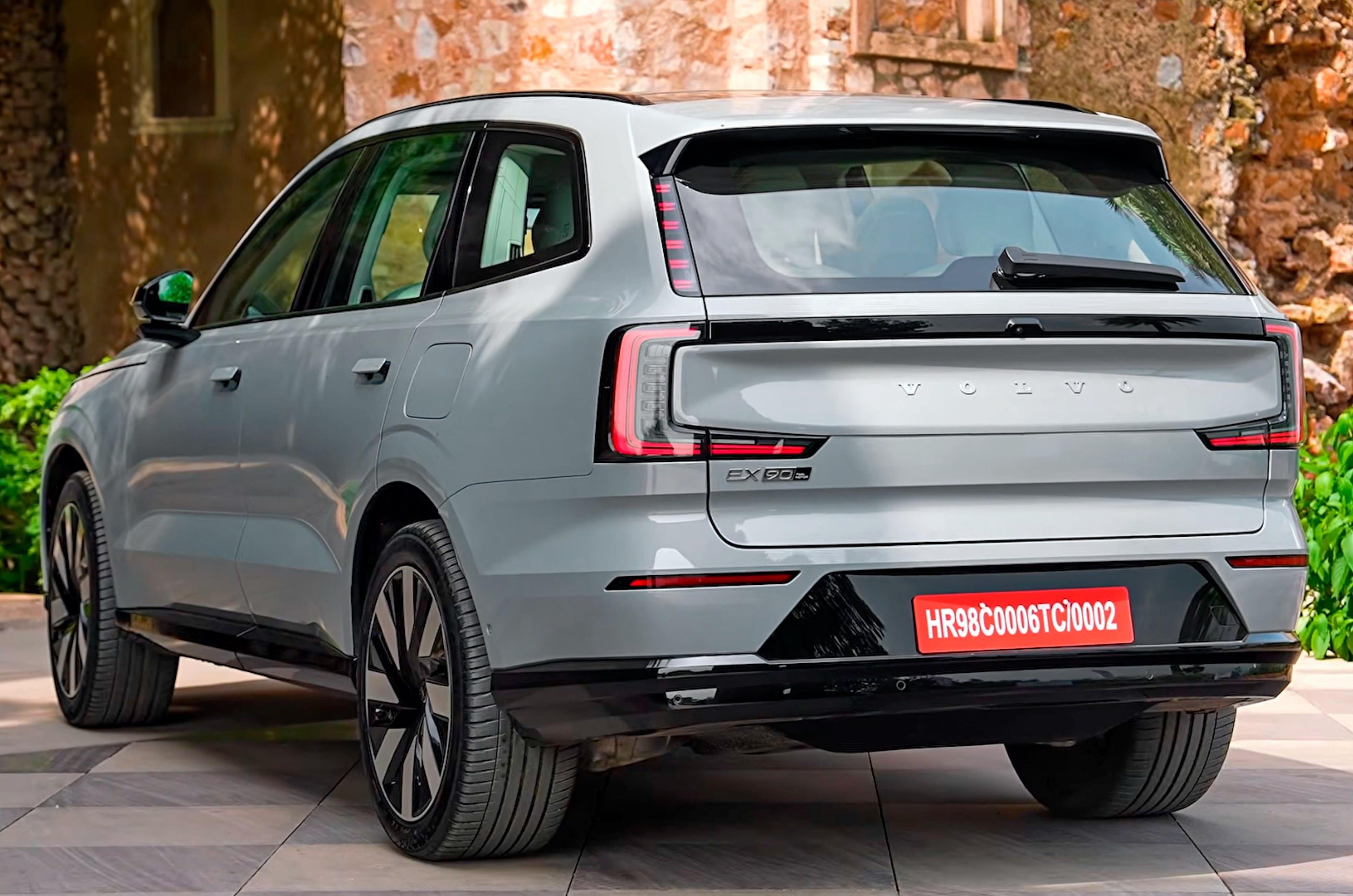
At the rear, it gets a split setup for the LED tail-lamps, with C-shaped LEDs on the lower half and vertically stacked LEDs in the D-pillar. There isn’t a single strip of chrome, and even the cladding is minimal. Subtlety is what Volvo aims for with its design, and the EX90 offers just that.
EX90 Interior Space and Comfort – 8/10
Two-tone upholstery looks rich and materials feel plush.
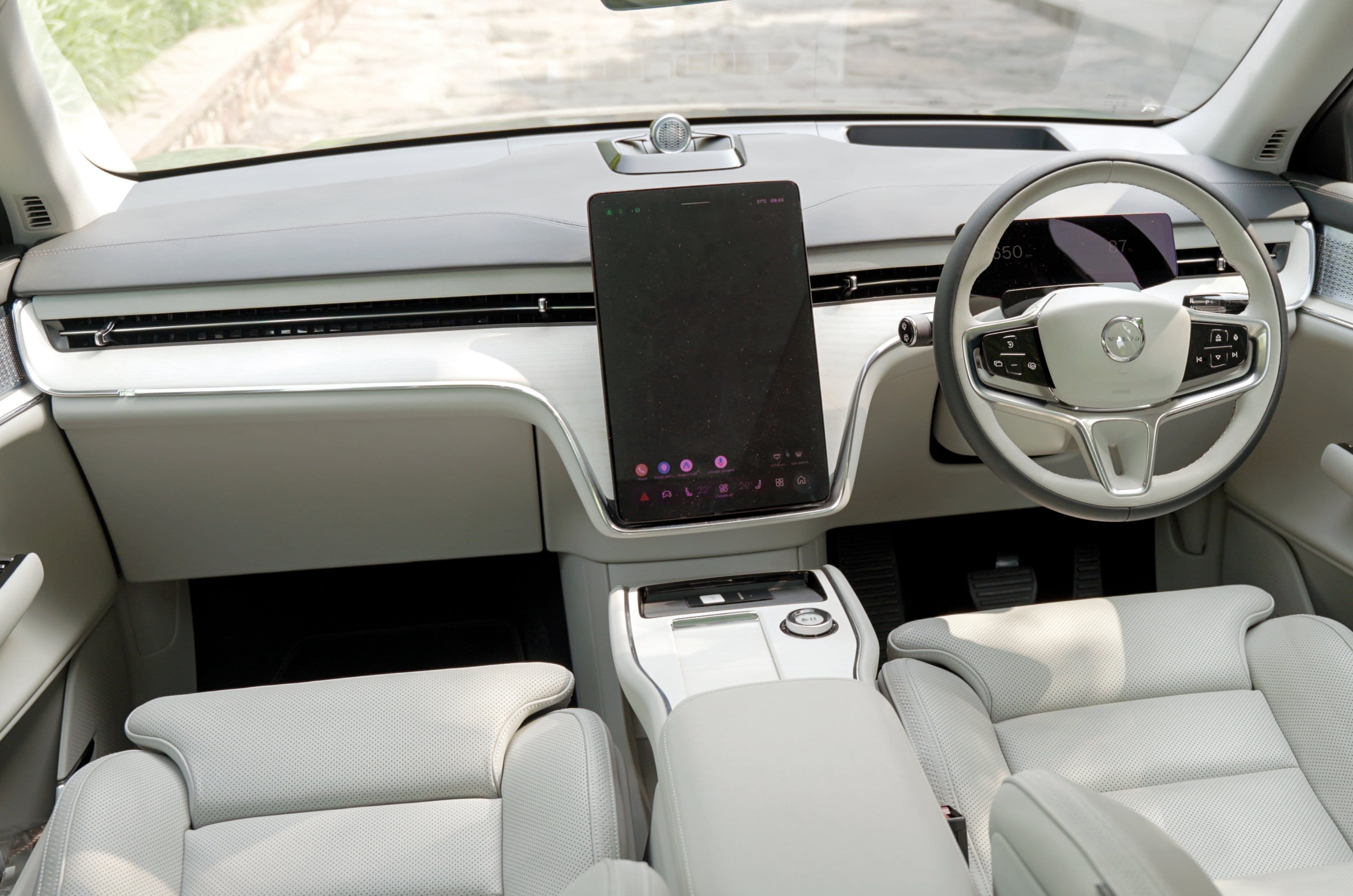
Inside, the minimalist approach continues and even takes precedence. The dashboard is devoid of any buttons whatsoever, and the majority of the real estate is taken up by the 14.5-inch touchscreen. However, the bright seats and upholstery, along with the bright open-pore wood, lift the cabin ambience significantly. There is generous use of brushed aluminium as well, and the Nappa leather is fantastic to the touch. The centre console also features wireless charging and a rotary knob for media control.
There is plenty in the front seats to pamper you. They offer excellent support, and feature heating, ventilation and a whole host of massage options. Plenty of electric adjustment also means finding an accurate driving position is easy, and all-round visibility is very good.
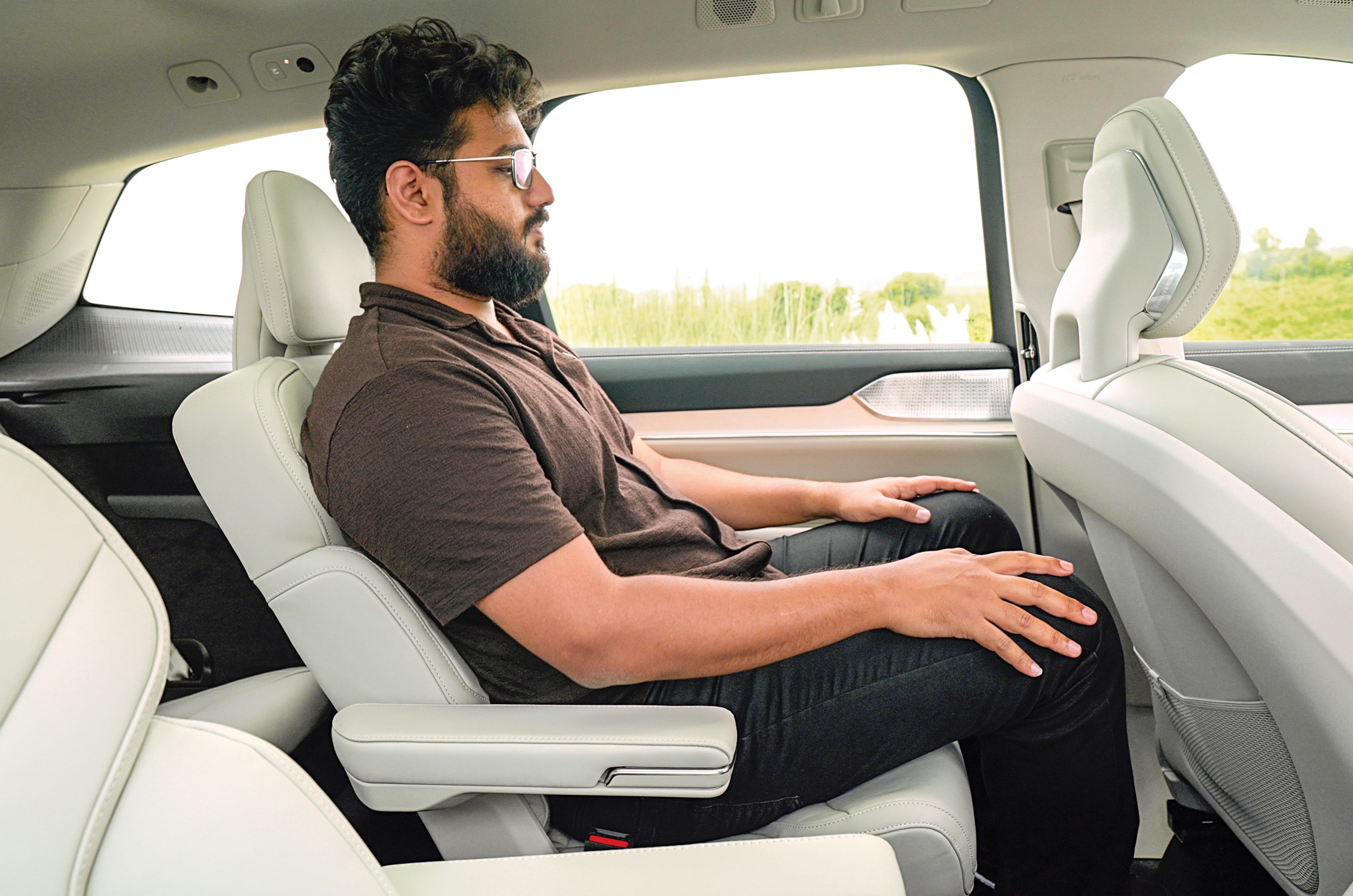
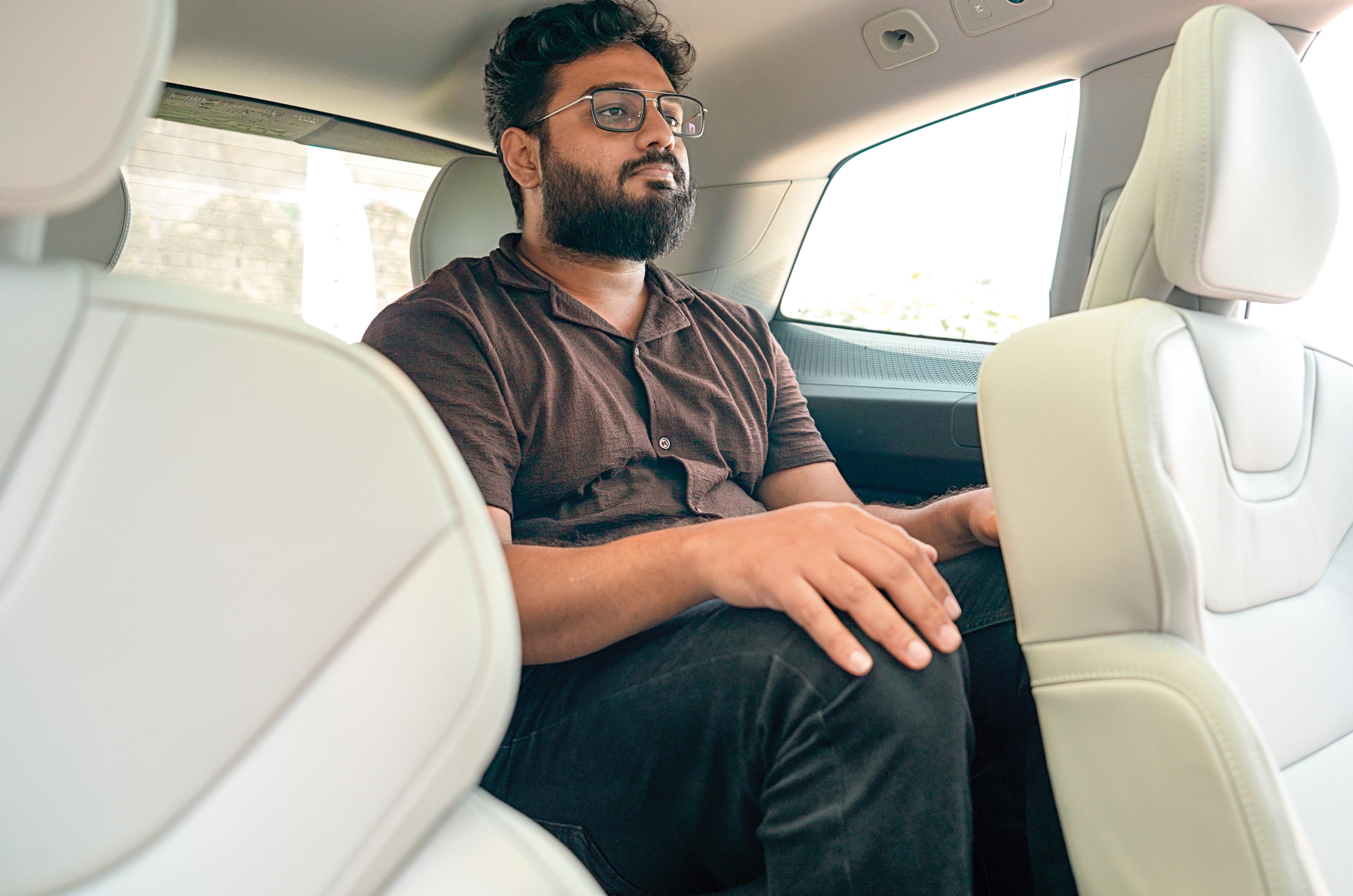
Exclusively a six-seater with good space and comfort.
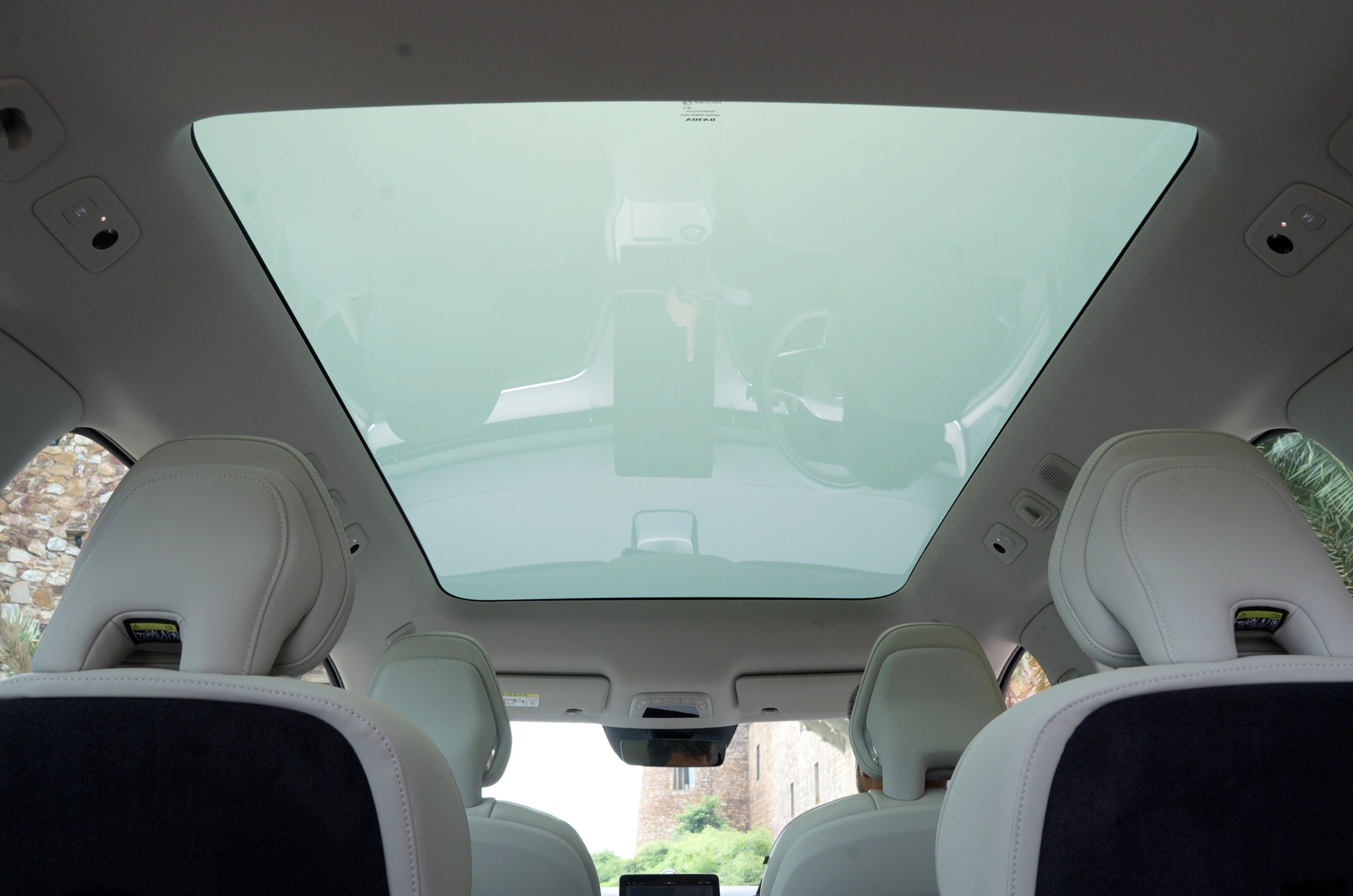
The EX90 is only available as a six-seater, so in the middle row you get captain’s chairs, but these would feel snug for some, and for a luxury car that would be chauffeur-driven, you don’t get the same level of pampering as in the front seats. There is no electric adjustment, heating, ventilation or massage either. There aren’t any sunblinds for the windows too, and even though the huge panoramic sunroof is electrochromic, at the tap of a button you get a bit of tint in the glass, on a hot day with the sun overhead, you will need more.
Massive panoramic glassroof gets electrochromic shade. Physical sunshade is an accessory.
The accessories list has a proper roof shade to protect you from that, and it is an extra we recommend you select. On the plus side, space is good, and the seats can be adjusted for legroom and recline too. You get four-zone climate control, with AC vents in the pillars that are a lot more effective, and cupholders stowed within the armrests. Also, being a modified platform, the floor is raised, and you notice this while getting in and out of the car.
Access to the third row is easy from between the captain’s chairs, thanks to the flat floor, but there is no tumble feature for the seats. Instead, they only slide forward, opening a cavity to get in. Room in the last row is at a premium for tall adults, but kids or shorter adults will do just fine with a little adjustment to the middle row.
Third row best suited for kids or short adults over quick drives.
With all three rows up, boot space stands at a healthy 324 litres, and with the third row folded away, it is a sufficient 690 litres. There is a 46-litre frunk too for stowing charging cables. Impressively, there is a full-size spare wheel as standard, which will eat up some boot space but is a huge relief given the low-profile tyres and our roads.
EX90 Features and Safety – 8/10
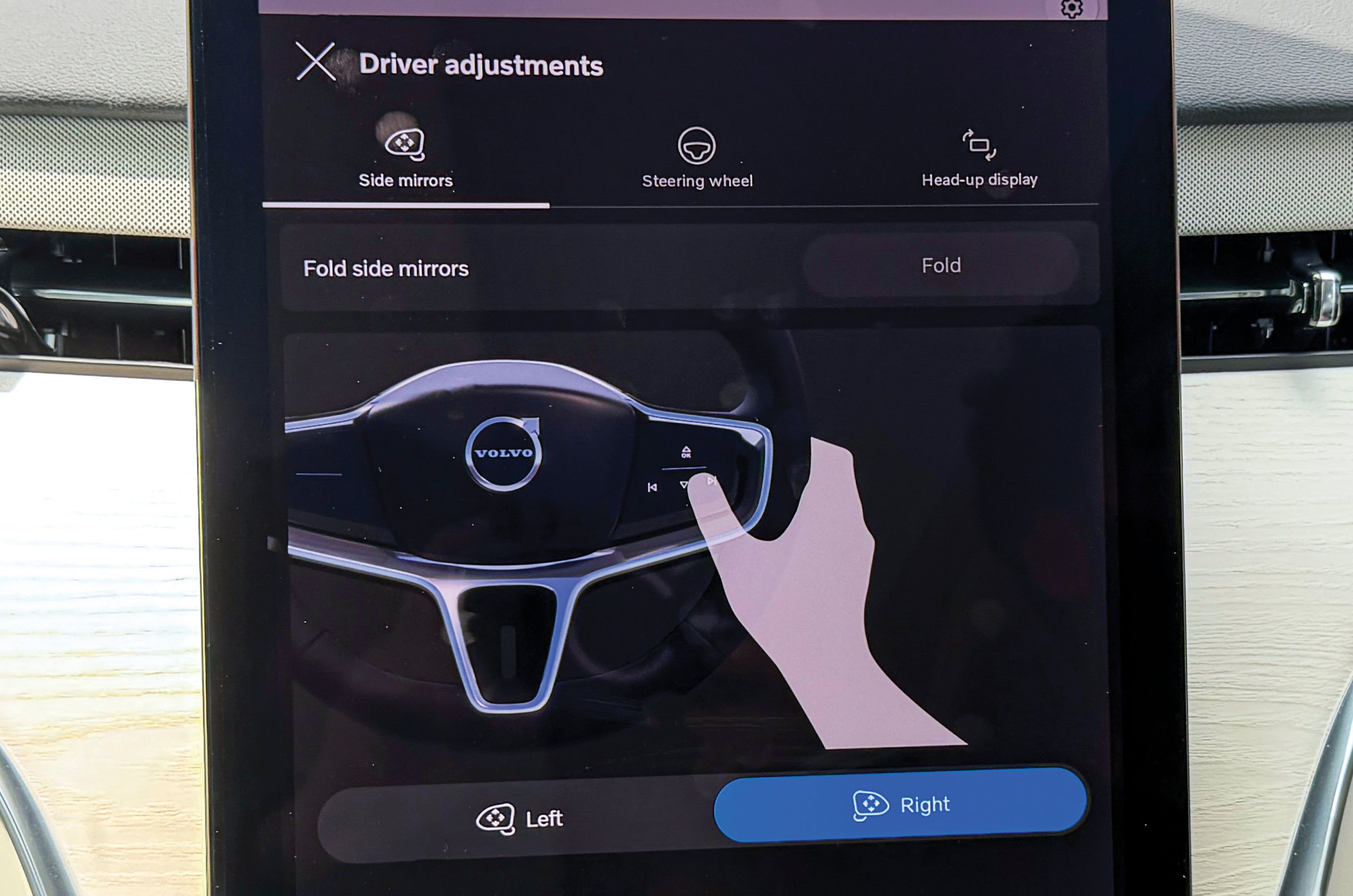
Annoyingly every control is within the 14.5-inch Google-powered screen.
Most of the EX90’s features are accessed through the massive, vertically oriented touchscreen. Being Google-powered, it runs a smooth OS, but simple tasks like adjusting the ORVMs require multiple inputs and navigation through the menus, which isn’t easy while on the move. There are some hard-coded functions at the bottom of the touchscreen, such as climate control, but you still need to focus on the screen and cannot operate them easily while driving. There is also a 9-inch driver display with nothing but the absolute necessary figures, such as range, speed and battery percentage. You can also load up the maps there, and it displays the traffic around you too. However, don’t expect multiple dials and a loaded, fighter-jet-like cockpit experience, the instrumentation is all minimal but feels sparse too.
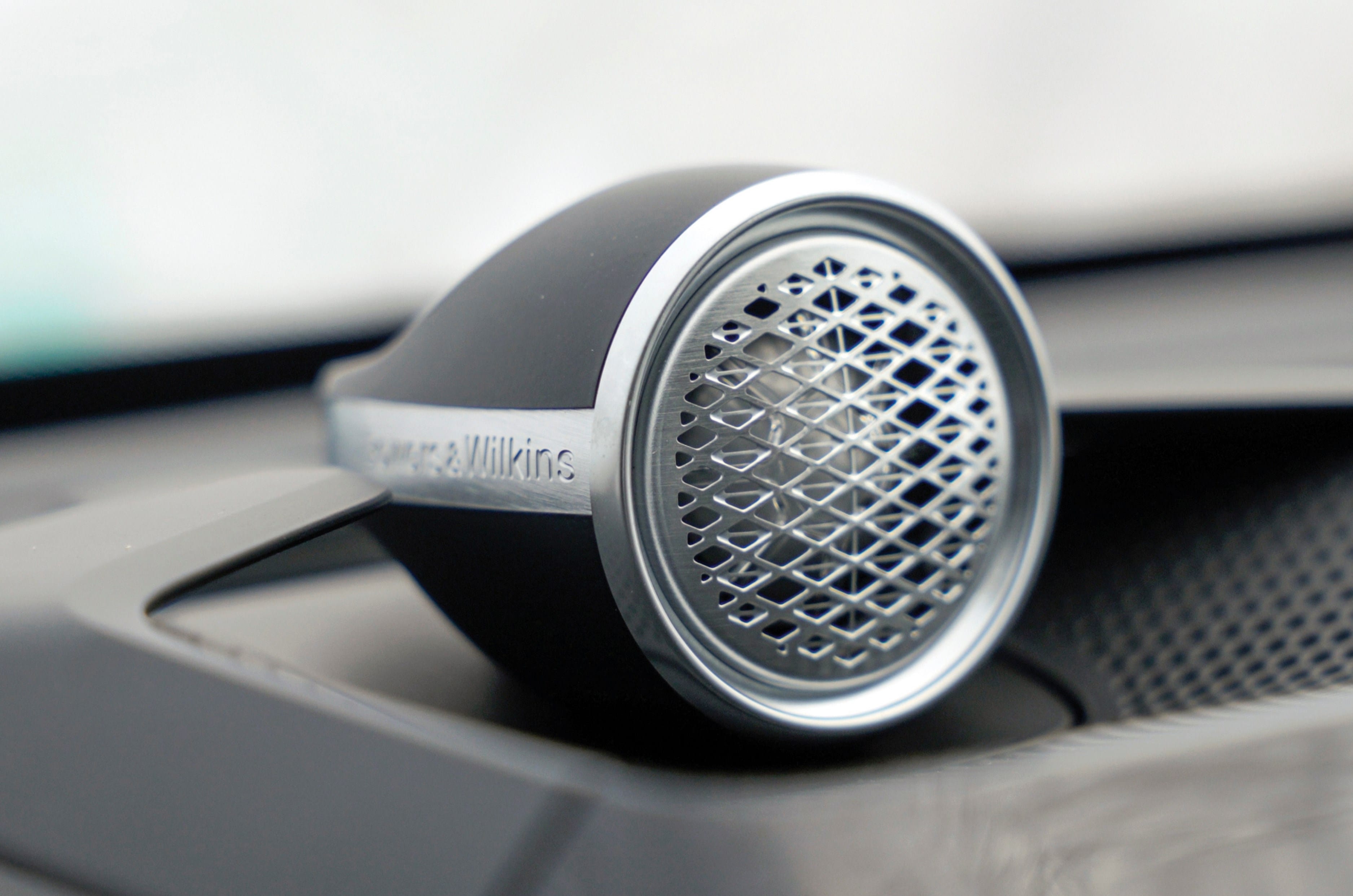
Bowers & Wilkins Hi-Fi audio system is epic.
What is excellent, however, is the music system: a 1,610W, 25-speaker Bowers & Wilkins Hi-Fi audio system with custom presets and modes that truly transform the cabin. If you enjoy your music, there are few cars in the world that offer something at this level or better. Safety is where Volvo excels, and the EX90, being the flagship, has all the bells and whistles – active and passive. Nine airbags, five cameras, five radars and 12 ultrasonic sensors, powering a full ADAS suite including door-opening alert and post-impact braking, make it exceptionally well equipped. Essentials like a 360-degree camera and auto-parking further make it easy to live with.
EX90 Performance and Refinement – 9/10
It is just as nice to drive as it is to be chauffeured in.
The EX90 comes in a single variant in India, with a dual-motor setup and a 106kWh battery pack. It develops 456hp and 670Nm, making it quick off the line. 0-100kph takes just 5.5sec, which, given its size and type, is pretty impressive. However, from behind the wheel, the experience aligns with its laid back character. You can alter the dynamics using the four drive modes. ‘Range’ prioritises efficiency, and power and torque are heavily restrained, although in bumper-to-bumper traffic, you will not notice the dip. There is a creep function too for peak-hour jams. ‘Standard’ is a balance that suits the car well for the most part, while ‘Performance’ is for that rare time when you want to add some enthusiasm.
Despite its strong power figures, performance feels more like an airliner than a fighter jet.
Don’t expect fighter-jet levels of reactions, though. Even in ‘Performance’ and with a heavy right foot, the EX90 builds pace gradually. It is almost like taking off in an aeroplane, where the speed rises in a strong and linear manner. This mode zaps power swiftly, so it is best to use the ‘Standard’ mode and get the best of all worlds. If you end up venturing off the tarmac, the ‘Off-road’ mode allows for more ground clearance (250mm), and it alters traction control and ESP settings to allow for more traction on loose surfaces.
Once on the move, what is extremely impressive is cabin refinement. With no engine sound to distract you, EV cabins amplify ambient sounds like wind and road noise, especially with large tyres, but the EX90 is a different story. Cabin insulation is top-notch, and it is near-silent on the inside. It also has a neat trick, microphones all around the car can relay conversations via the speakers clearly no matter where you are seated. You only have to talk in your natural tone for your voice to clearly go through the microphone and speakers. So passengers sitting at the first and third row can have a conversation without having to speak loudly.
EX90 Mileage / Range and Efficiency – 9/10
The 106kWh battery can eke out 625km according to the WLTP cycle. In our short test drive, we saw an efficiency of 5km/kWh in mixed driving conditions, resulting in a range of 530km. That is rather respectable, and considering a majority of our drive was on the highway, this number should only get better in the city.
The EX90 also has regenerative braking, and you can go from having it completely off to low or high, or just leave it in Auto, where it does all the thinking for you. Feel, though, leaves a lot to be desired, the pedal never feels consistent in its bite point. You get an 11kW AC charger for your home or office, which takes 11 hours for 0-100 percent. But being an 800V system, it can charge at up to 350kW on a DC charger, taking just 23 minutes for 10-80 percent. The car will also pre-condition the battery, meaning it gets the battery up to its optimum temperature to charge as quickly as possible.
EX90 Ride Comfort and Handling – 8/10
The EX90 rides on air suspension, which, over broken roads at medium or high speeds, is excellent. The car adjusts within microseconds, and you barely feel bumps inside. You can firm it up for the highway, so there is none of the wallowy feel associated with a softly sprung setup. Three modes to choose from give you flexibility depending on the road surface. ‘Standard’ offers the best balance, as it has the softness without feeling overly soft in the corners, while ‘Firm’ adds a layer of stability at speed and on fast bends. ‘Soft’ is a bit too soft, and the car ends up diving or rolling a tad more than necessary. In the city, there is none of the harshness over low-speed bumps, and the composed nature of the suspension is its highlight.
EX90 Value for Money – 8/10
The EX90 offers just about everything you need in a luxury EV
Prices for the EX90 will be out in October, and it will be the brand’s flagship SUV, sitting above the XC90. If you are looking for a chauffeur-driven luxury EV, it will tick the right boxes. That said, sunblinds would have been nice, and as a driver, it will frustrate you with an over-reliance on the touchscreen and a fiddly key card. On the whole, though, it does a lot to impress and allows you to forgive these shortcomings. You get everything you expect from a luxury EV, the cabin is plush and comfortable, the materials and feel are excellent, the design is subtle but svelte, and the ride comfort is truly impressive. It rivals the Mercedes-Benz EQS and BMW iX, and while it may not be as feature-loaded in the rear seat as the EQS or as powerful and fun to drive as the iX, it does find a very nice middle ground and would be top of the list for those looking for minimalist class and luxury.
HDFC Bank के MD और CEO शशिधर जगदीशन के पद छोड़ने के फैसले के बाद अब नए CEO की तलाश शुरू हो गई है। यह सिर्फ नेतृत्व में बदलाव नहीं है। बैंक के सामने निवेशकों का भरोसा लौटाने और गवर्नेंस से जुड़े सवालों को पीछे छोड़ने की भी बड़ी चुनौती है।
बैंक ने शनिवार को बताया कि शशिधर जगदीशन दोबारा नियुक्ति नहीं लेंगे। उनके पद छोड़ने का फैसला इसलिए भी अहम है, क्योंकि पिछले कई महीनों से उनके कार्यकाल को बढ़ाने की अटकलें चल रही थीं। उनका आखिरी वर्किंग डे 26 अक्टूबर होगा। अब बैंक का बोर्ड नए CEO की नियुक्ति के लिए RBI से मंजूरी मांगेगा। नया CEO बैंक के भीतर से भी हो सकता है और बाहर से भी।
2020 में संभाली थी बैंक की कमान
शशिधर जगदीशन HDFC Bank में करीब तीन दशक से जुड़े रहे हैं। उन्होंने 2020 में आदित्य पुरी के बाद बैंक की कमान संभाली थी। आदित्य पुरी ने 20 साल से ज्यादा समय तक बैंक का नेतृत्व किया था।
ब्लूमबर्ग के मुताबिक, जगदीशन के कार्यकाल में बैंक की बैलेंस शीट तेजी से बढ़ी। उनके नेतृत्व में 2023 में HDFC Bank का देश की सबसे बड़ी हाउसिंग फाइनेंस कंपनी HDFC Ltd के साथ मर्जर भी हुआ। हालांकि, उनके कार्यकाल के आखिरी दौर में बैंक के नेतृत्व और गवर्नेंस को लेकर कई सवाल खड़े हुए।
IIFL Capital ने क्या कहा?
IIFL Capital के सीनियर वाइस प्रेसिडेंट रिकिन शाह का कहना है कि जगदीशन का दोबारा नियुक्ति नहीं लेना शेयर के लिए बनी बड़ी अनिश्चितता को खत्म कर सकता है। उनका मानना है कि अगर RBI छोटा कार्यकाल मंजूर करता, तो शेयर पर दबाव और लंबे समय तक बना रह सकता था।
शाह के मुताबिक, अगर बैंक किसी भरोसेमंद बाहरी उम्मीदवार को CEO बनाता है, तो इससे नेतृत्व में नया बदलाव देखने को मिल सकता है। नए CEO को बैंक का नेतृत्व करने के लिए लंबा समय भी मिल सकता है।
शेयर ने इंडेक्स से कमजोर प्रदर्शन किया
HDFC Bank भारत का सबसे मूल्यवान बैंक है। इसका मार्केट कैप करीब 116 अरब डॉलर है। इसके बावजूद इस साल बैंक का शेयर दबाव में रहा है।
इस साल शेयर में करीब 27% की गिरावट आई है। इसके मुकाबले Nifty Bank में सिर्फ 3.5% की गिरावट रही है। HDFC Bank का यह प्रदर्शन अपने बैंकिंग इंडेक्स और बड़े प्रतिद्वंद्वियों के मुकाबले काफी कमजोर रहा है। 2003 के बाद यह बैंक के शेयर का सबसे खराब रिलेटिव प्रदर्शन है।
गवर्नेंस को लेकर क्यों उठे सवाल?
पिछले कुछ समय में बैंक को कई विवादों का सामना करना पड़ा है। पिछले साल दुबई के स्थानीय रेगुलेटर ने प्रोसेस में खामियां मिलने के बाद HDFC Bank की दुबई ब्रांच को नए ग्राहक जोड़ने से रोक दिया था।
मार्च में बैंक के चेयरमैन अतनु चक्रवर्ती ने अचानक इस्तीफा दे दिया था। उन्होंने नैतिक मतभेदों का हवाला दिया था। बाद में उन्होंने कहा कि दुबई रेगुलेटर से जुड़े मुद्दों को बैंक ने जिस तरह संभाला, उससे उन्हें चिंता हुई थी। हालांकि, HDFC Bank ने किसी भी गलत काम से इनकार किया है। RBI ने भी सार्वजनिक तौर पर कहा है कि बैंक में गवर्नेंस से जुड़ी कोई समस्या नहीं है।
बड़े डिपॉजिट की प्राइसिंग पर कार्रवाई
बैंक पर सवाल तब और बढ़े, जब एक मीडिया रिपोर्ट में आरोप लगाया गया कि बैंक ने एक सरकारी कंपनी को ज्यादा ब्याज दिया। इसे कथित तौर पर मार्केटिंग खर्च के रूप में दिखाया गया।
जुलाई में बैंक के बोर्ड ने इस मामले में जगदीशन समेत तीन बड़े अधिकारियों पर कार्रवाई की। बोर्ड ने कहा कि डिपॉजिट रेट तय करने से जुड़े कुछ कर्मचारियों ने अपनी व्यावसायिक सीमा से आगे जाकर फैसले लिए थे।
बैंक के सामने अमेरिका में शेयरधारकों की संभावित कानूनी कार्रवाई का भी जोखिम है। निवेशकों ने मिस-सेलिंग के आरोप भी लगाए हैं। बैंक ने कहा है कि वह इन आरोपों का मजबूती से बचाव करेगा।
नए CEO का जल्दी चयन जरूरी
नए CEO की नियुक्ति में ज्यादा देरी बैंक के लिए नई अनिश्चितता पैदा कर सकती है। मार्च में चेयरमैन के इस्तीफे के बाद यह दबाव पहले ही बढ़ चुका है।
अब निवेशक यह देखेंगे कि नया CEO कौन बनता है। बाजार इस बात पर भी नजर रखेगा कि नेतृत्व परिवर्तन कितनी आसानी से होता है। नए CEO को निवेशकों को भरोसा दिलाना होगा कि बैंक की गवर्नेंस व्यवस्था मजबूत है और बैंक की ग्रोथ पर पूरा फोकस रहेगा।
HDFC Ltd के मर्जर की चुनौतियां
2023 में HDFC Ltd के साथ हुए मर्जर के बाद बैंक को कुछ चुनौतियों का सामना करना पड़ा है। मर्जर के बाद बैंक के पास लंबी अवधि वाले होम लोन का बड़ा पोर्टफोलियो आ गया। इससे बैंक की लिक्विडिटी और मार्जिन पर दबाव पड़ा है।
नए CEO के सामने इन चुनौतियों को संभालना भी बड़ी जिम्मेदारी होगी। बैंक को मर्जर का पूरा फायदा निकालने के साथ अपनी ग्रोथ और मुनाफे में सुधार करना होगा।
बाजार के लिए क्यों अहम है HDFC Bank?
HDFC Bank की Nifty 50 में करीब 10% हिस्सेदारी है। इसलिए इस शेयर की बड़ी चाल का असर पूरे इंडेक्स पर पड़ सकता है। बैंक के शेयर में गिरावट ने हाल के समय में Nifty पर भी दबाव बनाया है।
Nifty 50 में इस साल करीब 7.5% की गिरावट आई है। इसके मुकाबले MSCI Asia Pacific Index करीब 22% चढ़ा है। ऐसे में HDFC Bank के शेयर का कमजोर प्रदर्शन भारतीय बाजार के लिए भी एक अहम मुद्दा बन गया है।
Enrich Money के CEO पोनमुडी आर का कहना है कि बाजार की नजर इस बात पर रहेगी कि बैंक की कमान कौन संभालता है। निवेशक नेतृत्व परिवर्तन की प्रक्रिया, नए CEO के आने के बाद बैंक की ग्रोथ और गवर्नेंस मानकों को भी करीब से देखेंगे। अब नया नेतृत्व ही तय करेगा कि HDFC Bank आगे कितनी जल्दी निवेशकों का भरोसा वापस जीत पाता है।
Disclaimer: यहां मुहैया जानकारी सिर्फ सूचना के लिए दी जा रही है। यहां बताना जरूरी है कि मार्केट में निवेश बाजार जोखिमों के अधीन है। निवेशक के तौर पर पैसा लगाने से पहले हमेशा एक्सपर्ट से सलाह लें। मनीकंट्रोल की तरफ से किसी को भी पैसा लगाने की यहां कभी भी सलाह नहीं दी जाती है।
Step-Up SIP Wealth Creation: शेयर बाजार के उतार-चढ़ाव के बीच हर नौकरीपेशा व्यक्ति का सपना होता है कि वह अपने और अपने परिवार के भविष्य के लिए एक बड़ा फंड तैयार करे। लेकिन अक्सर लोग यह सोचकर कदम पीछे खींच लेते हैं कि शुरुआत में उनके पास बड़ा पैसा निवेश करने के लिए नहीं है।
अगर आप भी ऐसा ही सोचते हैं, तो अमित की कहानी आपकी इस सोच को पूरी तरह बदल देगी। अमित ने कोई बहुत बड़ा निवेश नहीं किया, बल्कि सिर्फ ‘स्टेप-अप SIP’ की एक छोटी सी तरकीब अपनाकर ₹1 करोड़ का बड़ा फंड तैयार कर लिया। आइए आपको बताते हैं कम पैसों के इनवेस्टमेंट से भी इस फॉर्मूले से मोटा फंड तैयार किया जा सकता है।
₹5,000 की SIP से शुरू की इन्वेस्टमेट जर्नी की शुरूआत
बात लगभग 20 साल पुरानी है। अमित ने जब अपने करियर की शुरुआत की, तो उसकी सैलरी बहुत कम थी। बचत के नाम पर उसके पास ज्यादा पैसे नहीं बचते थे। हालांकि, उसके बावजूद उसने म्यूचुअल फंड में हर महीने ₹5000 की एक छोटी मंथली SIP से शुरुआत करने का फैसला किया। उसी के साथ काम करने वाले विकास ने भी ₹5,000 महीने की ही SIP शुरू की। लेकिन दोनों के निवेश करने के अंदाज में एक बड़ा अंतर था जिसका असर उसके वेल्थ क्रिएशन पर भी देखने को मिला।
विकास ने तय किया कि वह अगले 20 सालों तक बिना किसी फेरबदल के हर महीने ₹5,000 जमा करता रहेगा। अमित ने एक स्मार्ट फॉर्मूला अपनाया। वो जानता था कि हर साल उसकी सैलरी में कम से कम 10% से 12% का इंक्रीमेंट होगा। इसलिए उसने फैसला किया कि वह हर साल अपनी SIP में भी 10% की बढ़ोतरी करेगा।
साल-दर-साल कैसे बढ़ा अमित का निवेश?
अमित ने अपनी जेब पर बिना कोई एक्स्ट्रा दबाव डाले इस प्रक्रिया को बेहद आसान रखा:
पहला साल: हर महीने ₹5,000 जमा किए (साल में कुल ₹60,000 निवेश)।
दूसरा साल (10% बढ़ोतरी): इंक्रीमेंट होते ही SIP ₹500 बढ़ा दी। अब हर महीने ₹5,500 जाने लगे।
तीसरा साल (10% बढ़ोतरी): अब हर महीने ₹6,050 की SIP होने लगी।
चौथा साल: हर महीने ₹6,655 जमा होने लगे… और इसी तरह हर साल 10% का स्टेप-अप अपने आप लागू होता गया।
एक जैसी शुरुआत, लेकिन 20 साल बाद नतीजों में जमीन-आसमान का अंतर!
जब 20 साल पूरे हुए और औसतन 12% का वार्षिक रिटर्न मिला, तो दोनों के खातों का रिपोर्ट कार्ड कुछ इस तरह था:
मापदंड
विकास (साधारण SIP)
अमित (स्टेप-अप SIP)
शुरुआती मंथली SIP
₹5,000
₹5,000
सालाना बढ़ोतरी
0% (फिक्स्ड)
10% प्रति वर्ष
20 साल में कुल निवेश
₹12 लाख
₹34.36 लाख
20 साल बाद मिला कुल फंड
₹49.95 लाख (करीब ₹50 लाख)
₹98.71 लाख (करीब ₹1 करोड़)
बड़ा टेकअवे: साधारण SIP से विकास केवल ₹50 लाख बना पाया, जबकि अमित ने सिर्फ हर साल थोड़ा-थोड़ा निवेश बढ़ाकर लगभग ₹1 करोड़ का फंड बना लिया।
कंपाउंडिंग का जादू: अमित कैसे बना विजेता?
अमित की सफलता के पीछे 3 मुख्य कारण रहे:
1- जेब पर बोझ नहीं पड़ा: उसने एक साथ ₹15,000-₹20,000 की बड़ी SIP शुरू नहीं की। सैलरी बढ़ने के साथ-साथ निवेश बढ़ा, जिससे उसकी दिनचर्या और खर्चों पर कोई असर नहीं पड़ा।
2- कंपाउंडिंग की ताकत: जो एक्स्ट्रा पैसा अमित ने दूसरे, तीसरे और चौथे साल से बढ़ाया, उस बढ़ी हुई रकम पर भी उसे अगले 15-18 सालों तक ब्याज पर ब्याज मिलता रहा।
3- अनुशासन: ऑटो-डेबिट और टॉप-अप ऑप्शन की मदद से उसका निवेश हर साल अपने आप बढ़ता गया।
आप अपने लिए इसे कैसे शुरू कर सकते हैं?
अगर आप भी अमित की तरह कम समय या छोटी शुरुआत से बड़ा फंड बनाना चाहते हैं, तो जब भी किसी म्यूचुअल फंड ऐप (Groww, Zerodha, PayTM Money आदि) से नई SIP शुरू करें, वहां ‘Step-Up SIP’ या ‘Top-Up’ का विकल्प जरूर चुनें।
वहां अपनी सुविधा के अनुसार 10% सालाना या ₹500/₹1,000 सालाना की बढ़ोतरी सेट कर दें। आज लिया गया यह छोटा सा फैसला आपके भविष्य को आर्थिक रूप से पूरी तरह चिंतामुक्त बना सकता है।
Disclaimer: यहां मुहैया जानकारी सिर्फ सूचना के लिए दी जा रही है। यहां बताना जरूरी है कि मार्केट में निवेश बाजार जोखिमों के अधीन है। निवेशक के तौर पर पैसा लगाने से पहले हमेशा एक्सपर्ट से सलाह लें। मनीकंट्रोल की तरफ से किसी को भी पैसा लगाने की यहां कभी भी सलाह नहीं दी जाती है।
When introduced originally, the Lamborghini Urus rewrote the playbook of what an SUV could be. Sharp to look at, ferociously fast and with a mighty V8 soundtrack, the Urus has become the benchmark of performance SUVs. Now though, thanks to ever tightening regulations, the Urus has had to pivot to hybridisation. But has that diluted the experience? We got behind the wheel of the Lamborghini Urus SE to answer that question.
Lamborghini Urus SE Exterior Design and Engineering – 9/10
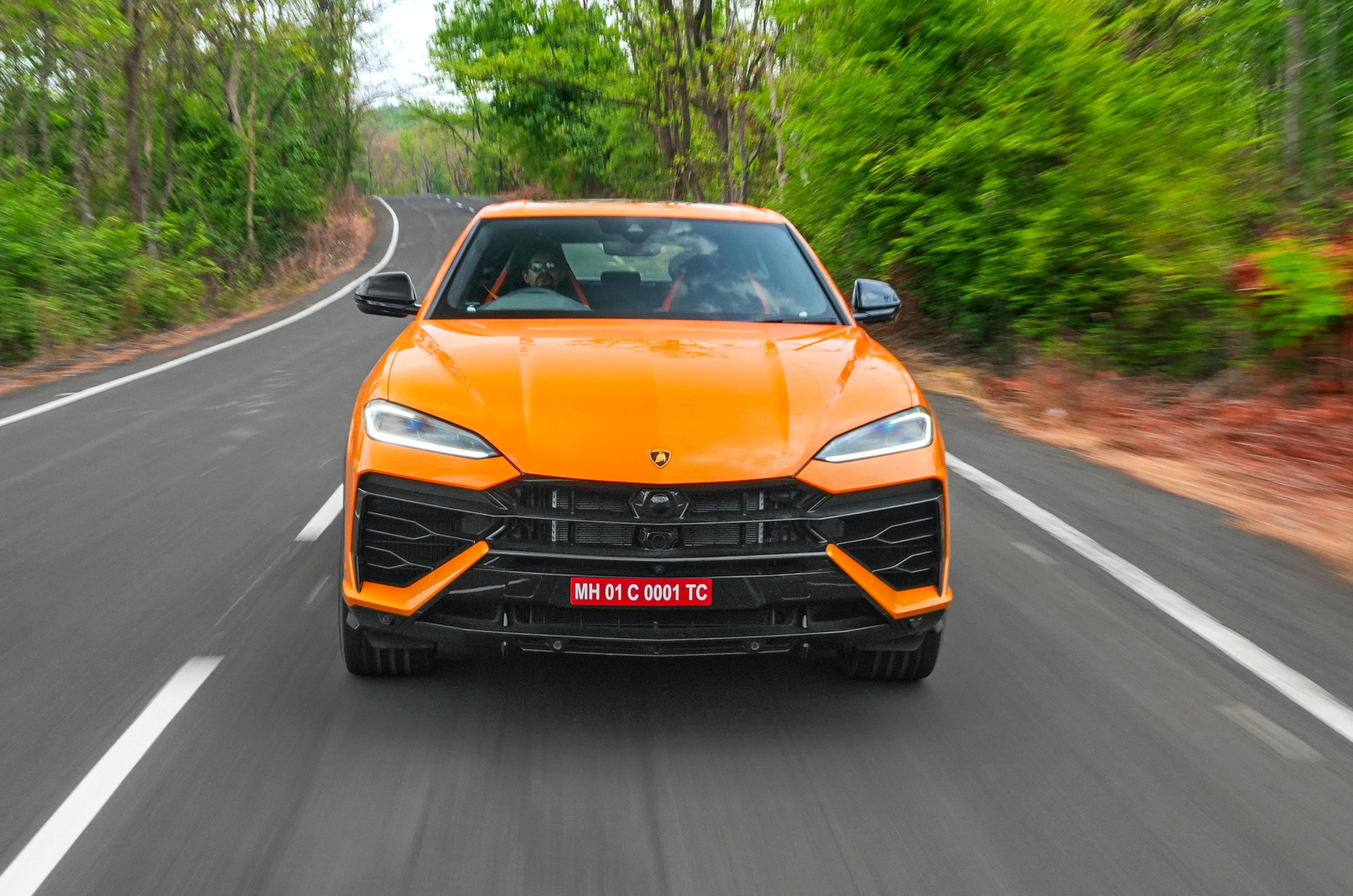
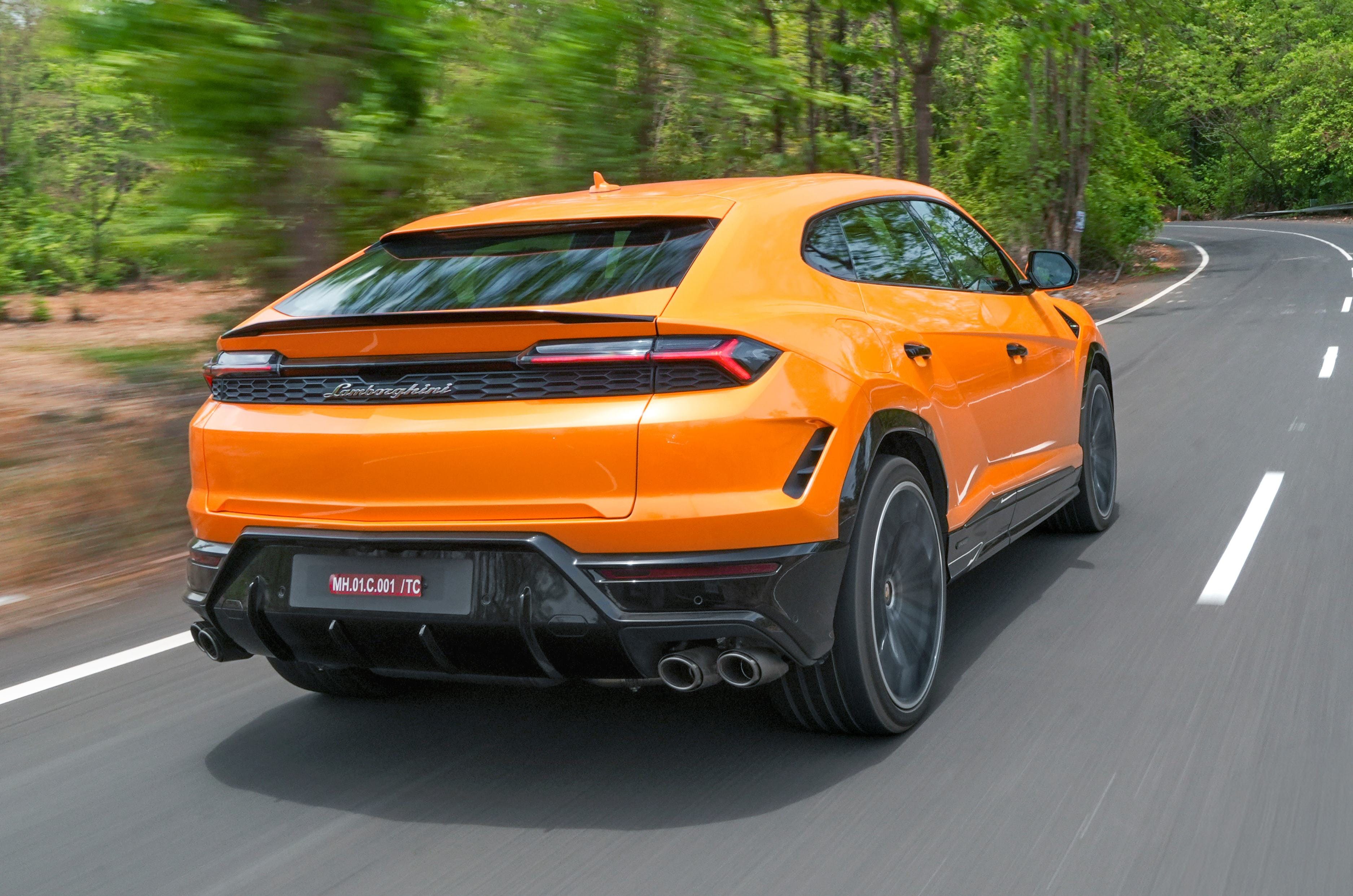
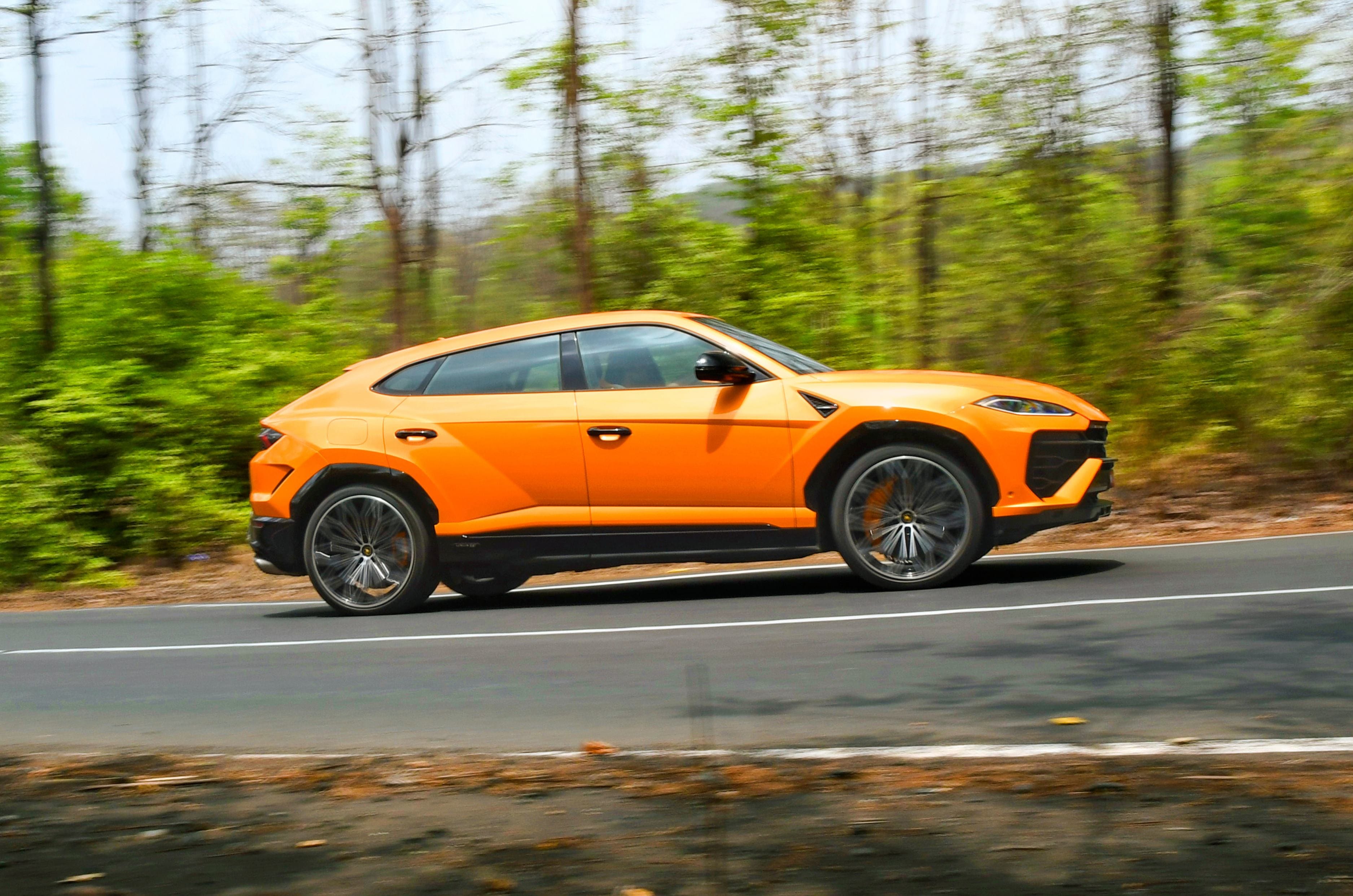
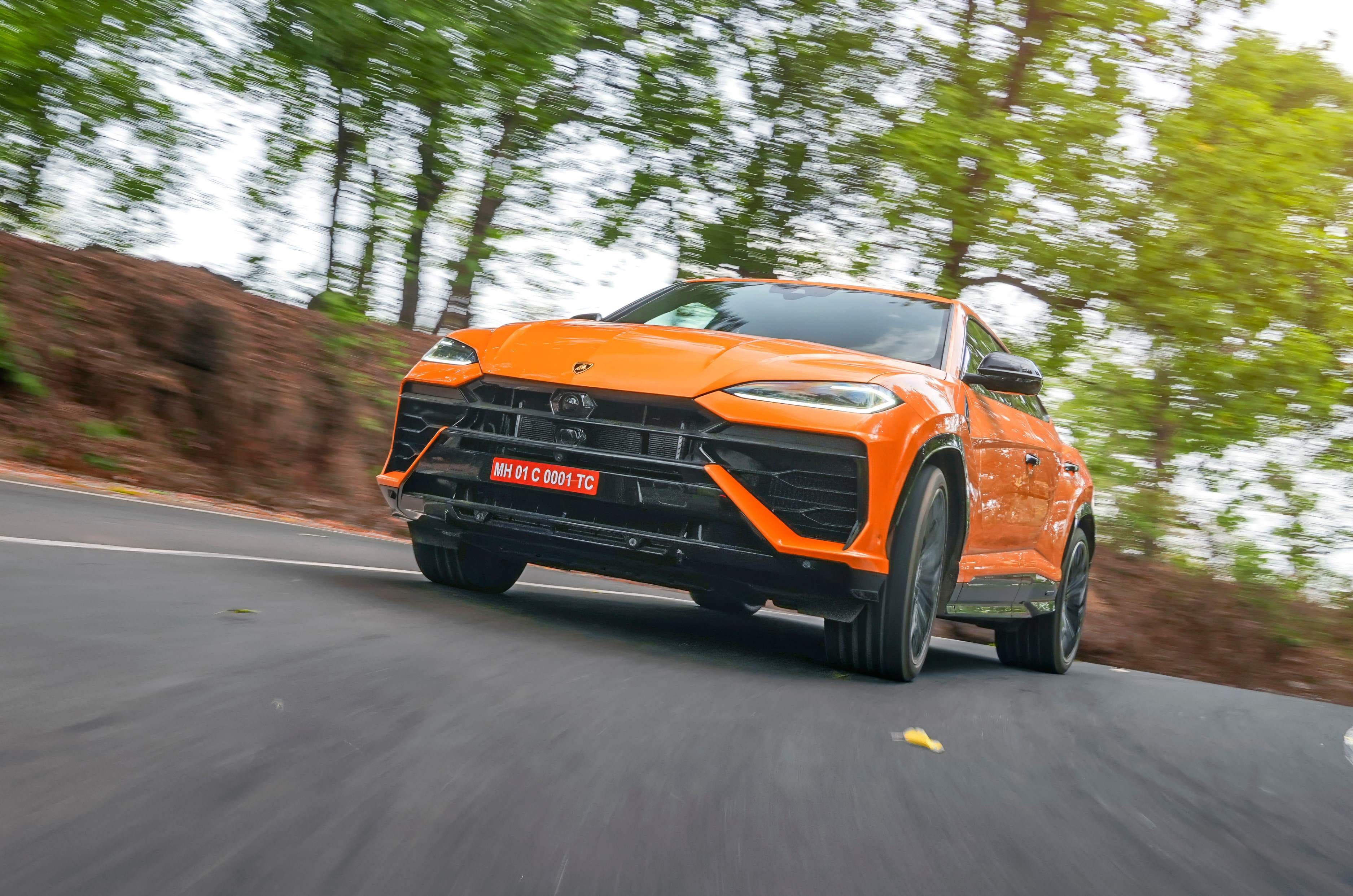
Urus SE has a more rounded-off design than its predecessor, but it’s no less menacing.
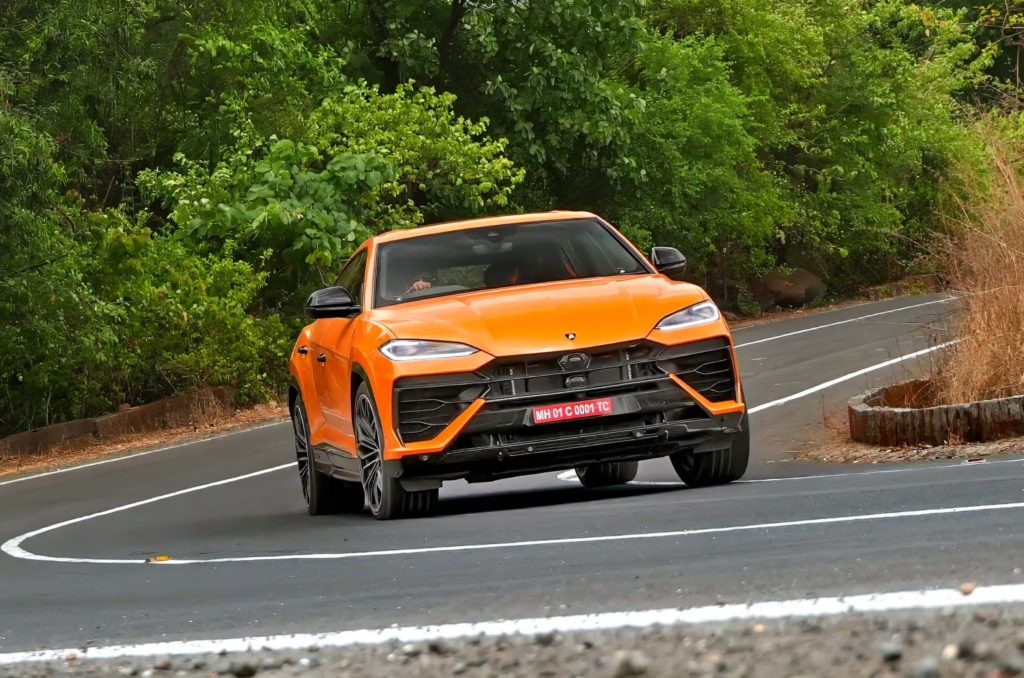
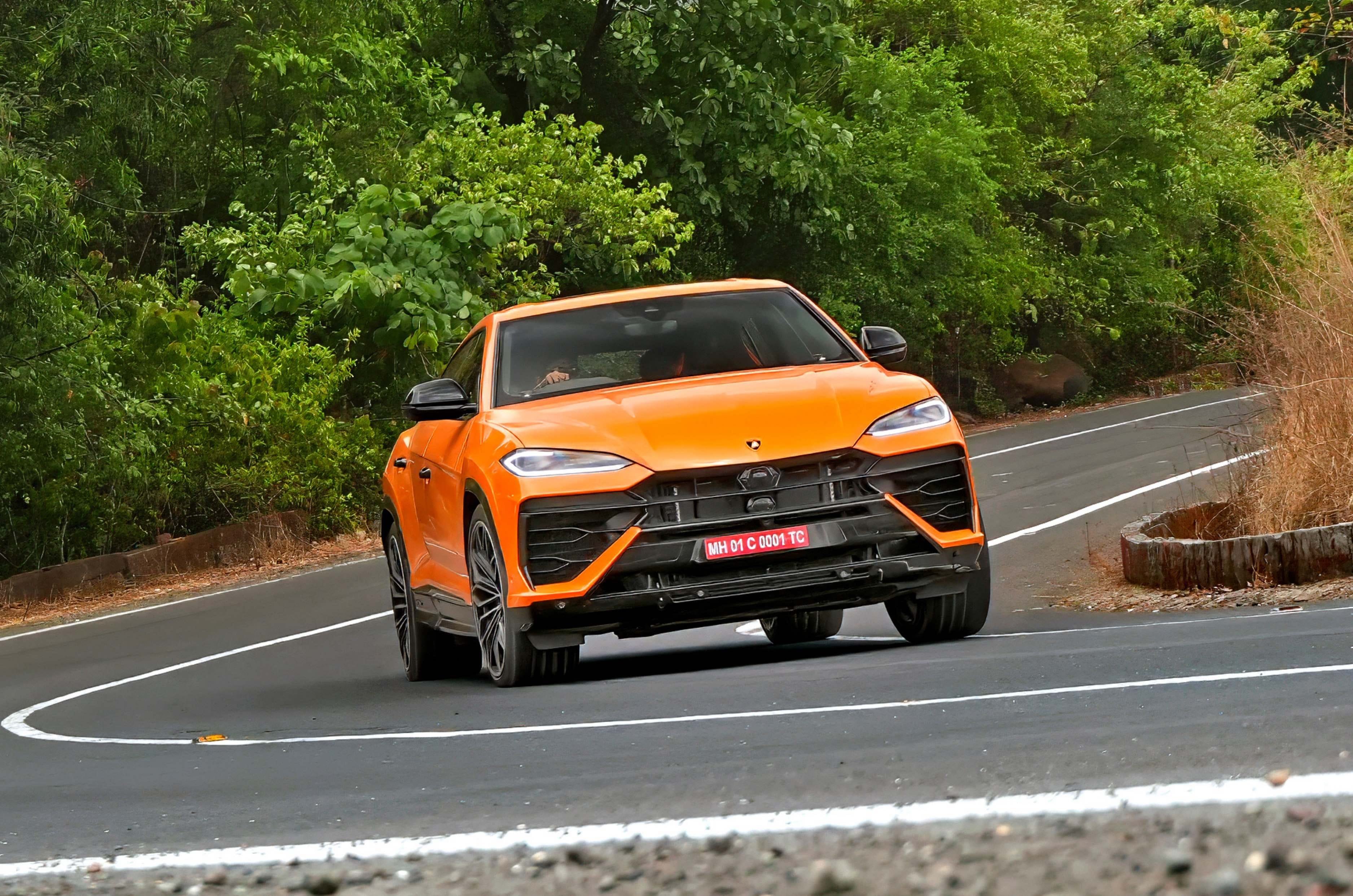
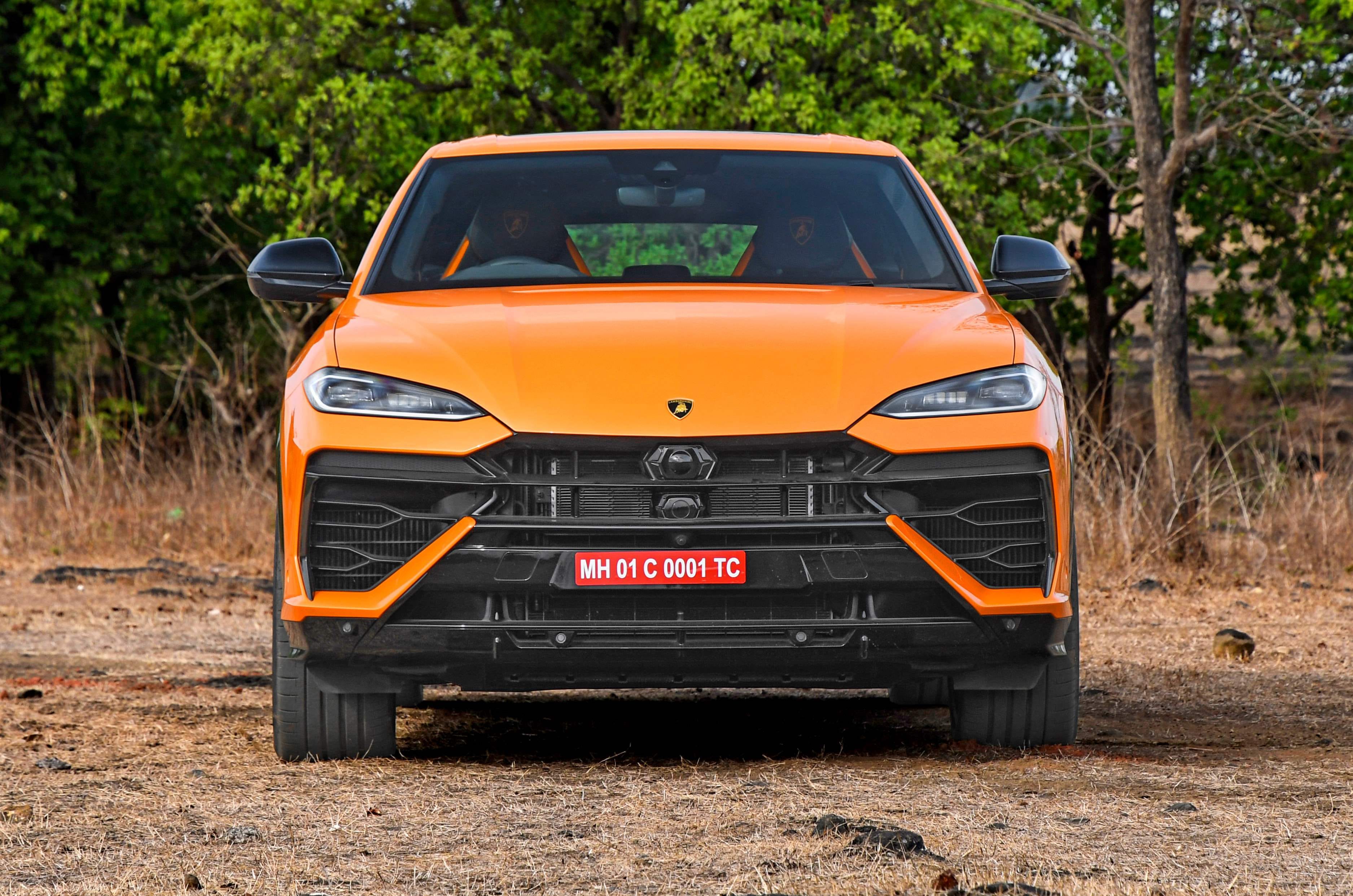
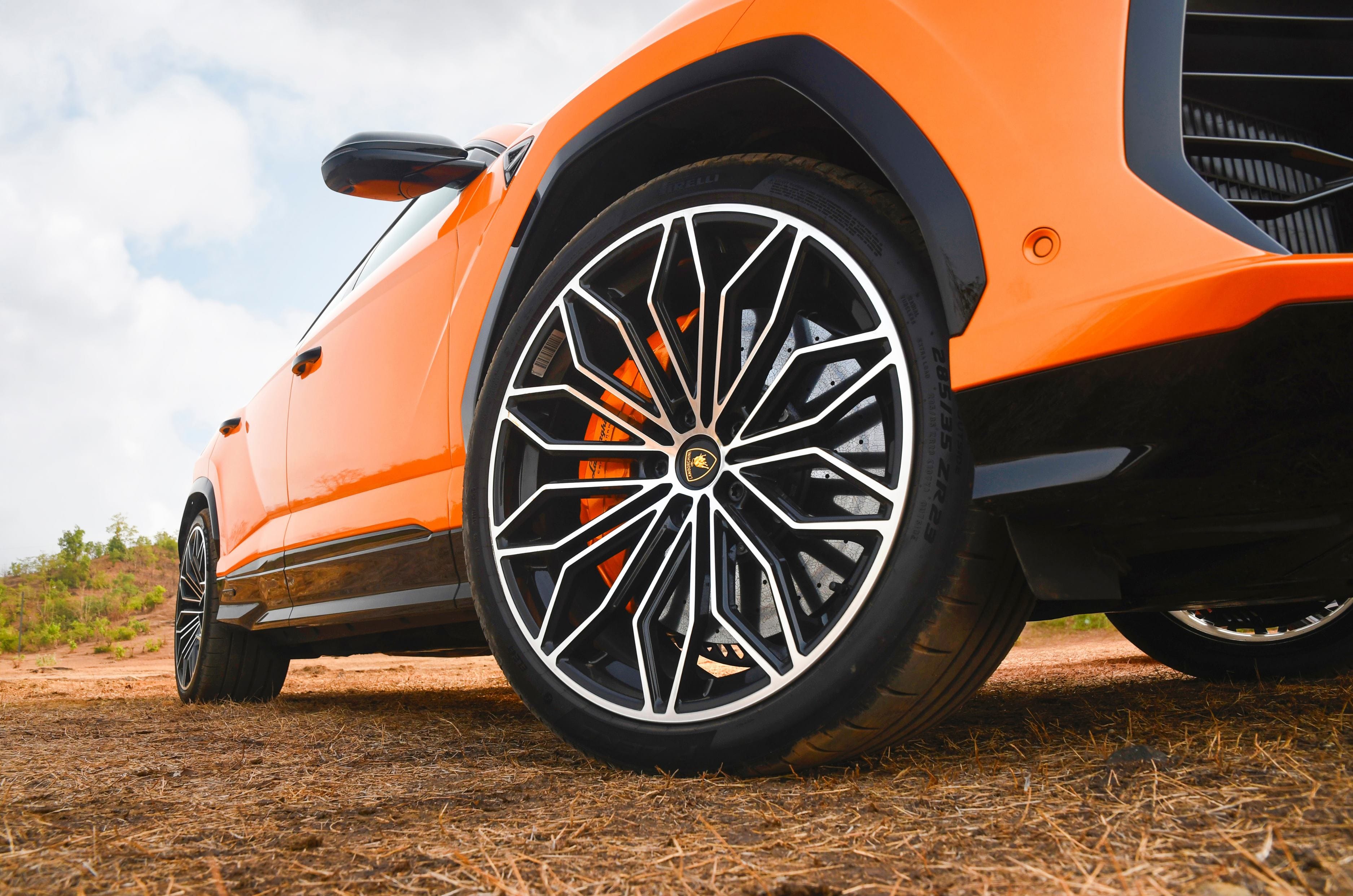
In comparison to the older Urus and the mad Urus Performante, the Urus SE does appear a bit softer and more rounded off. But that’s not to say it lacks presence by any means. It’s still full of sharp angles and surfaces, the Arancio Borealis optional paint on our test car looked stunning as did the diamond-cut, multi-spoke 23-inch alloy wheels. Up front, there’s a new bonnet, redesigned bumper and a larger front grille, while the slimmer headlights are now matrix LED units and a different DRL signature.
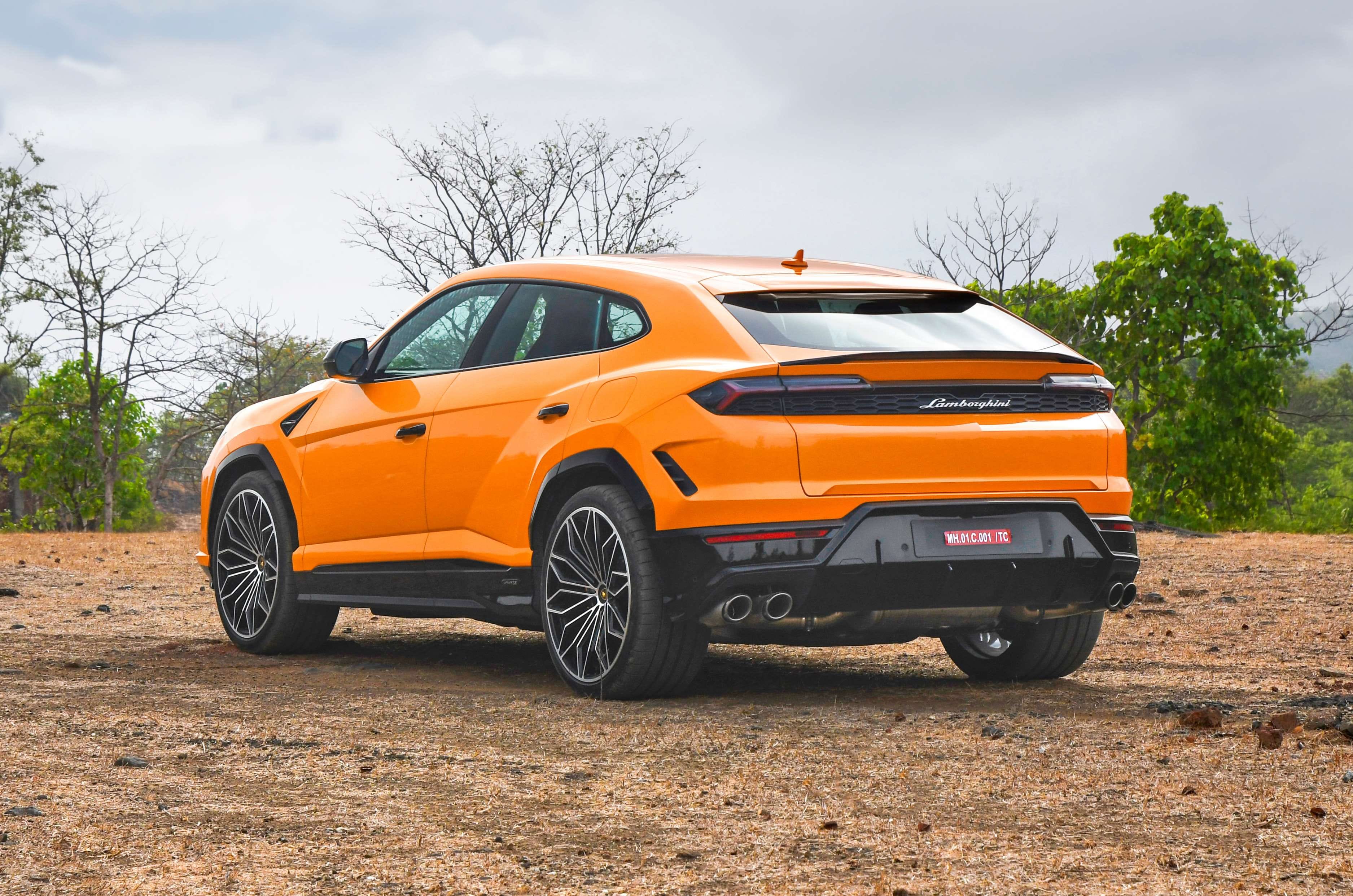
Rear end features quad-exhaust setup, sporty raked roofline, and a hexagon-patterned grille connecting the tail-lights.
The differences are immediately apparent at the rear too, with a new tailgate, rear bumper and a connecting tail-light grille. As always, Lamborghini’s Ad Personam personalisation programme offers an enormous scope for customisation, so buyers can tailor the Urus SE as per their needs. It remains a substantial machine, measuring 5.12m long and 2.02m wide, with a 3m wheelbase. Kerb weight is a hefty 2,505kg, which makes the fact that it can sprint from 0-100kph in just 3.4sec all the more impressive.
Lamborghini Urus SE Interior Space and Comfort – 8/10
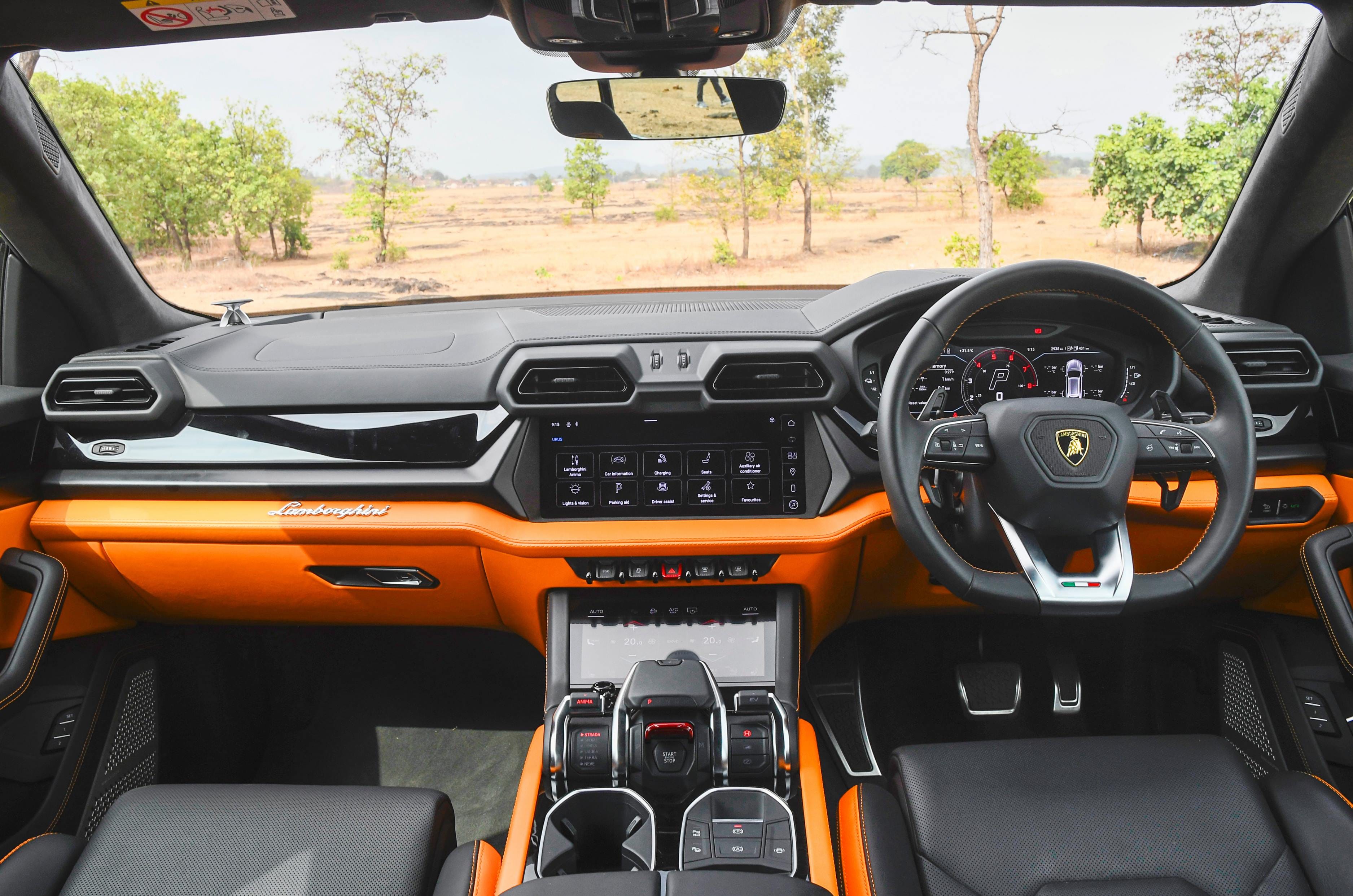
Dashboard layout is premium and feature-loaded, and gets a lot of Lamborghini theatrics.
Inside, the Urus SE retains the familiar Lamborghini approach of combining the ambience of a supercar with the practicality expected of an SUV. However, the changes here are less apparent than those on the outside. The centre console is ever so slightly redesigned with a new array of toggle switches under the touchscreen. The touchscreen itself is larger than the earlier Urus, with updated graphics and a slicker user interface.
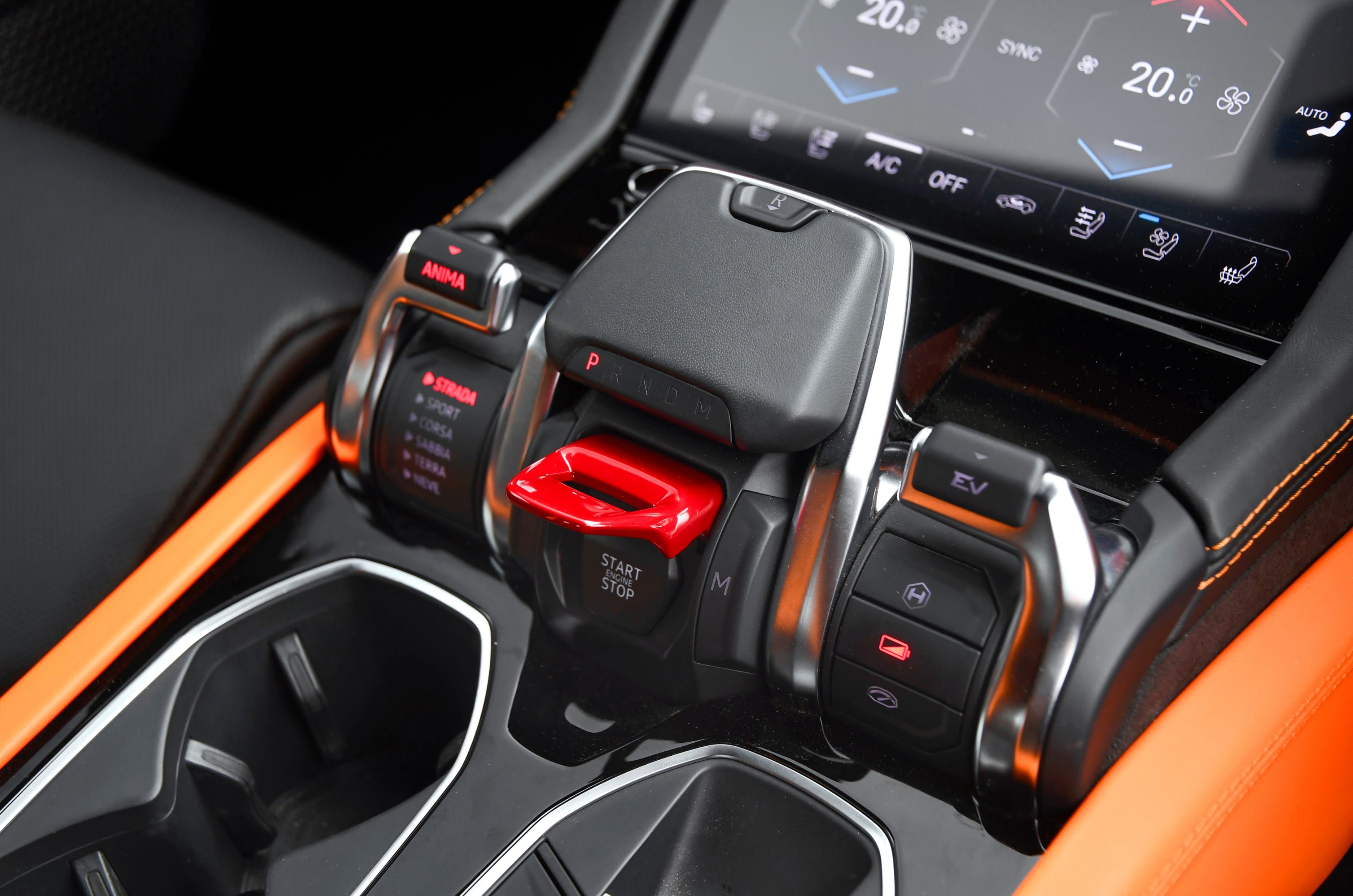
Lamborghini’s signature flip-up engine start/stop button is inspired by those of fighter jets.
There’s plenty of visual theatre, too, and it looks just as extroverted as the outside. Standout elements include the hexagonal AC vents, the Lamborghini badging on the dashboard, the aircraft-style levers for the drive modes and of course, the fighter-jet inspired flap-up engine start/stop button. Lamborghini has also introduced new colour and trim combinations with the SE, with our test car featuring the same predominantly orange theme as on the outside.
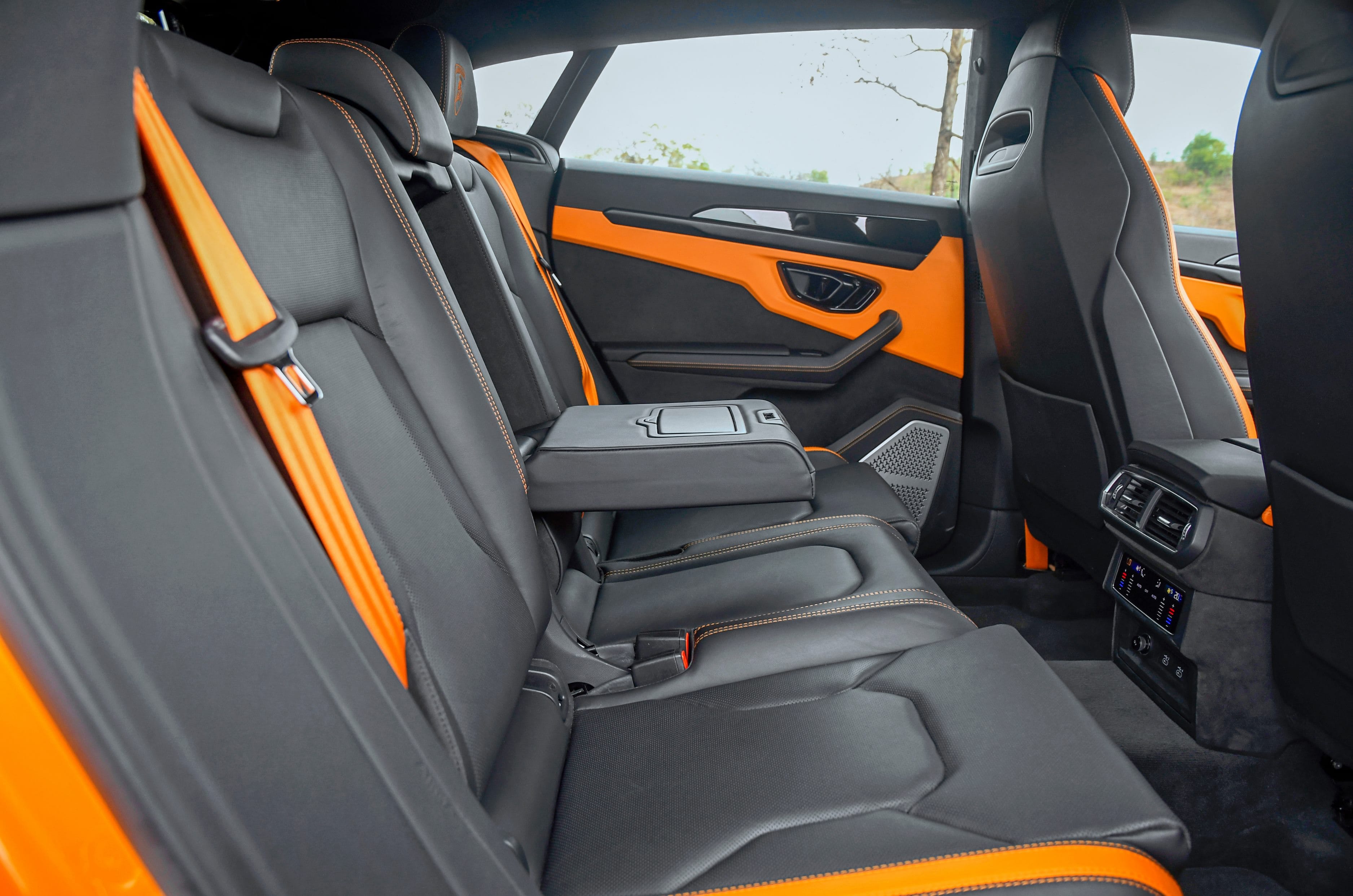
Rear space is surprisingly plentiful given the Urus SE’s sporty proclivities.
Despite all the drama, this remains a practical SUV. The long wheelbase means there’s plenty of legroom at the rear and it’s wide enough for three too, though taller passengers may find headroom a bit tight thanks to the tapering roofline. The front seats are large, well padded and the optional Lamborghini crest on the headrests just adds to the ambience. The glovebox is decent sized, there’s cupholders and the boot offers 454 litres of capacity.
Lamborghini Urus SE Features and Safety – 8/10
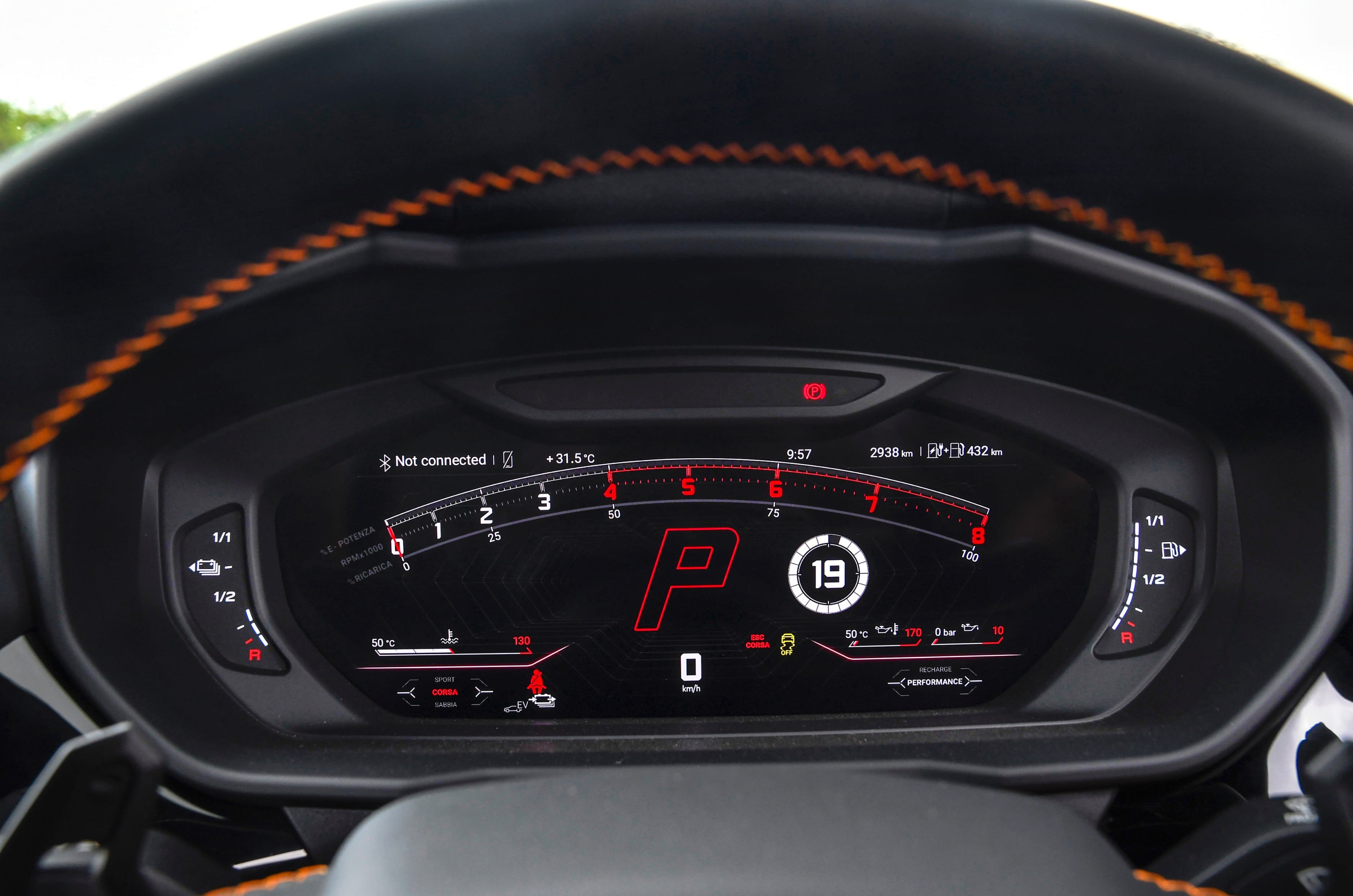
Info-packed driver’s display interface can get confusing at times.
As standard, the Urus SE gets plenty of features like the three screen setup – for the infotainment, AC system and driver’s display – wireless Android Auto and Apple CarPlay, LED matrix headlamps, four-zone auto climate control, leather upholstery, 360-degree camera, connected car tech and so much more.
The SE also gets a comprehensive technology upgrade, with the new user interface being one of the more significant updates. It features a carousel-style layout on the touchscreen to access the numerous sub-menus it packs in, while the driver’s display shows all sorts of data pertaining to the hybrid system, navigation, media and other car-related info. Navigating all the sub-menus can get confusing, however.
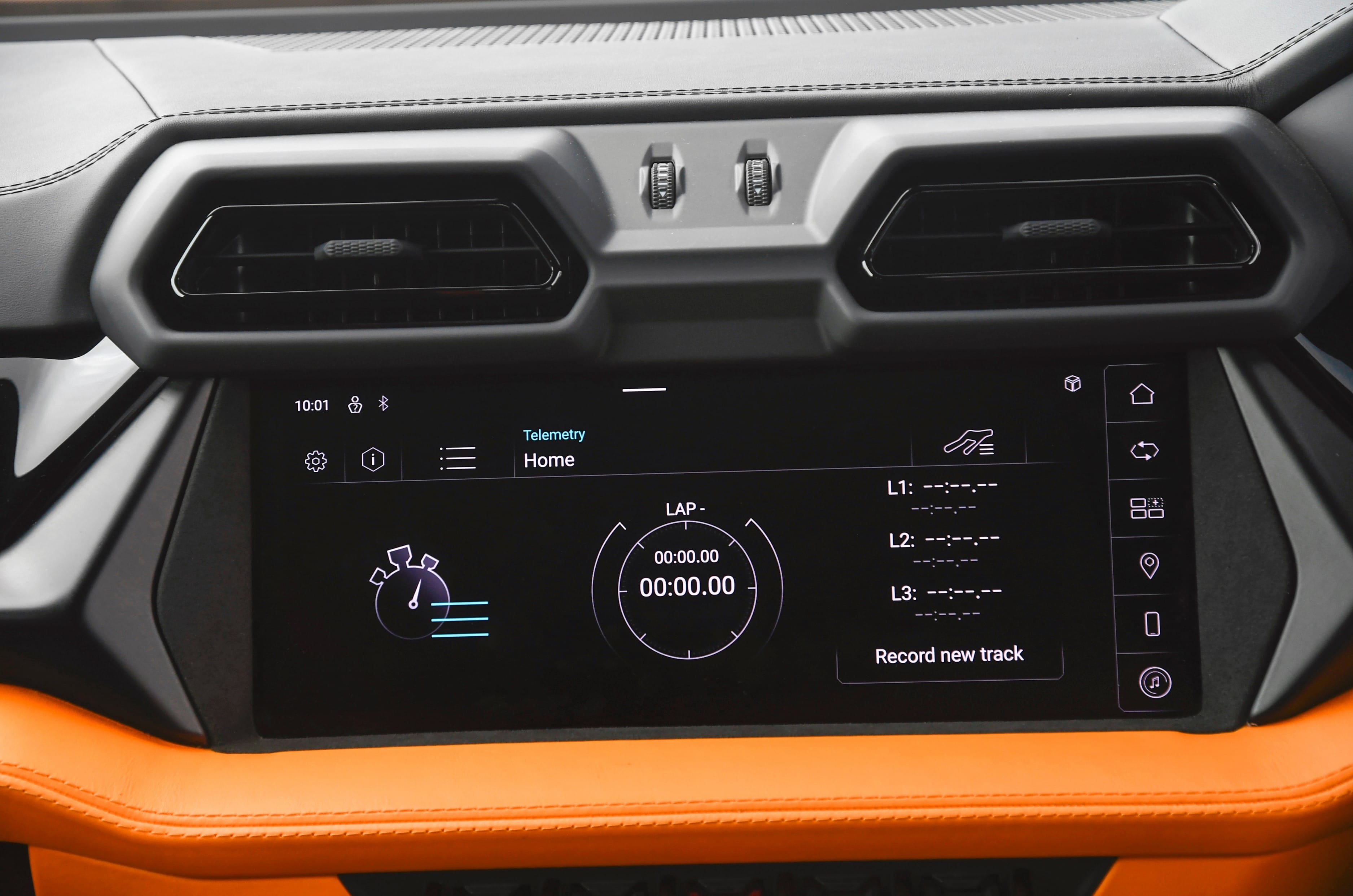
New Lamborghini Telemetry function comes with over 300 pre-loaded racetracks to record lap times on.
There’s also ‘Lamborghini Telemetry’ that can display lap times and sector information for more than 300 preloaded circuits, as well as record new tracks. Connected services extend to navigation, real-time traffic, remote locking, vehicle-status information, remote charging, remote cooling of the cabin and various safety and security alerts.
Also part of the package is ADAS tech like autonomous emergency braking, lane keep assist, adaptive cruise control and more. But there’s a lot that’s optional too, like a large panoramic sunroof, a Bang and Olufsen 3D audio system and a whole lot more, apart from the usual trim, material and stitching options. On the whole, the Urus SE is well-equipped but some of the optional extras really could have been standard fitment given the asking price.
Lamborghini Urus SE Performance and Refinement – 9/10
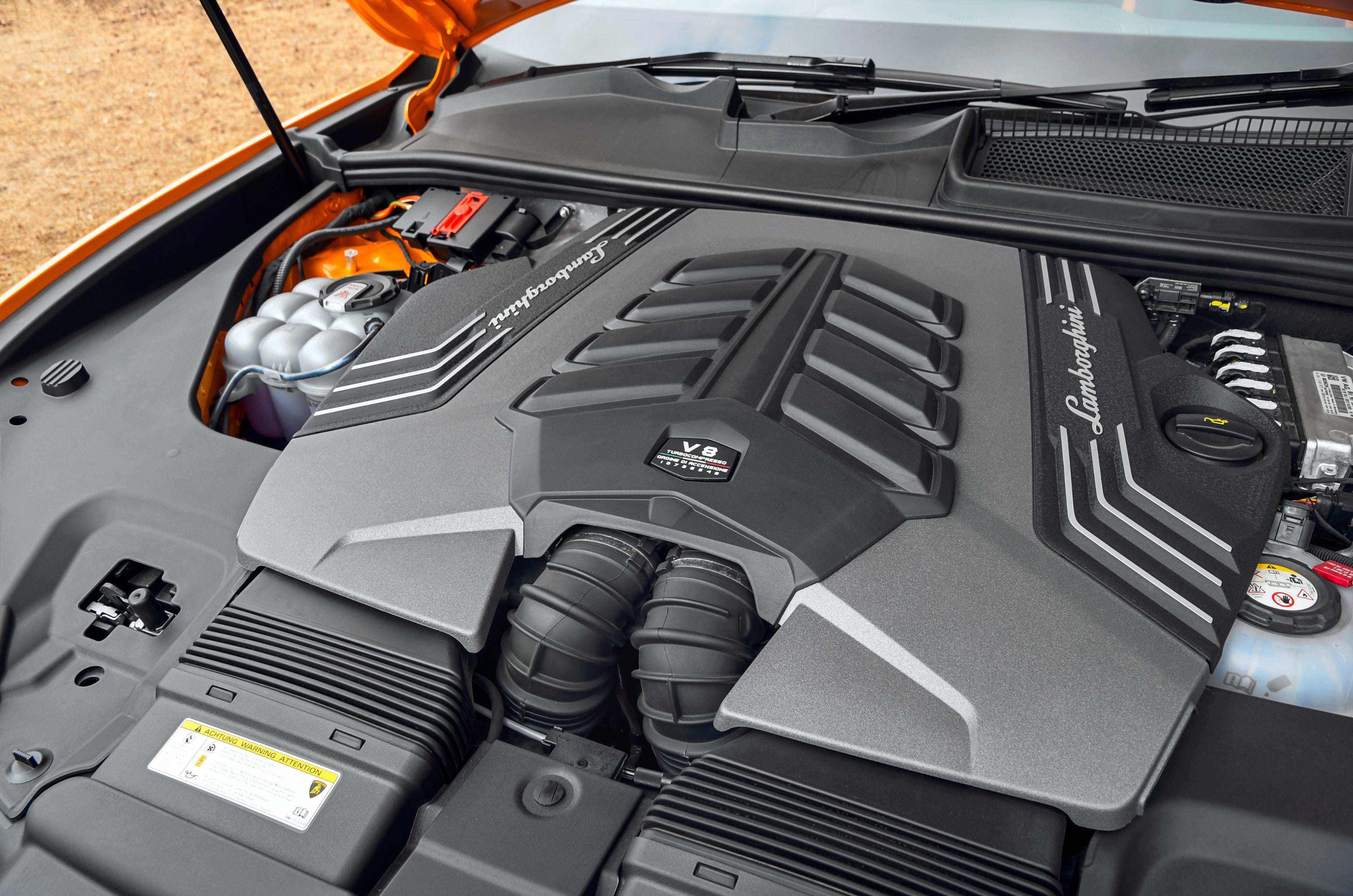
Twin-turbo V8 and electric motor develop a combined 800hp and 950Nm.
As for the numbers, they are, predictably, staggering. The Urus SE combines the familiar 4.0-litre twin-turbo V8 with a 25.9kWh lithium-ion battery and a permanent-magnet synchronous electric motor for an eye-watering combined output of 800hp and 950Nm. The result is 0-100kph in 3.4sec and 0-200kph in 11.2sec, with a claimed top speed of 312kph. Those figures put the Urus SE firmly in supercar territory, despite its size and weight.
And it does feel like one from behind the wheel too, especially in a straight line. Acceleration is relentless and it feels borderline scary on narrow, two-lane roads. The Urus SE always feels like it has power in reserve, especially when you’ve got the powertrain fully dialled up. There’s Strada mode for everyday driving, Sport for when you want to have a bit more fun and of course, Corsa for when you want a proper scare. Couple that with the hybrid system in its full performance mode, and the SE can really feel overwhelming. But if you don’t drive with a heavy foot, it’s surprisingly cordial and sedate. The SE really has a Jekyll and Hyde character about it.
Unrelenting acceleration can get scary on public roads.
What makes the SE more interesting than simply being a faster Urus is the way the electric motor has been integrated. Of course, it’s to help with emissions and meet regulations, but it’s also to boost performance. In EV mode, it can reach up to 135kph and go as far as 66km. But with a flick of a switch, it can turn from silent to violent.
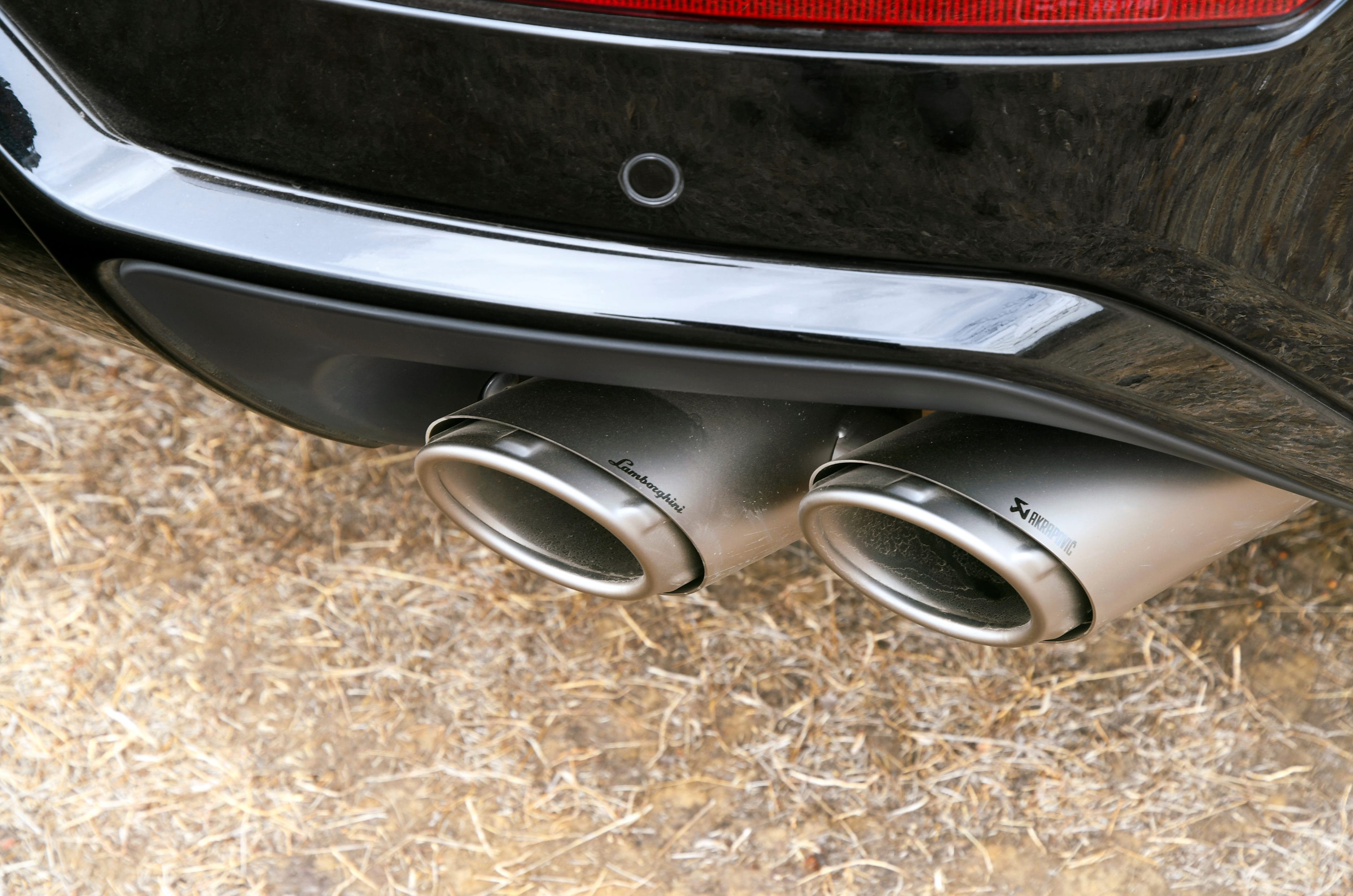
The V8 also hasn’t become anonymous with the hybridisation. It still makes its presence felt, especially through the optional Akrapovic exhaust our car came fitted with, but it does feel a bit subdued. It’s also piped through the speakers, which doesn’t feel entirely ethical but it does help its case.
Optional Akrapovic exhaust system helps enhance the V8’s aural character.
Lamborghini has also paid considerable attention to keeping performance consistent, with additional cooling for the powertrain and brakes. Not that we ever managed to push it so hard to test out that claim. And apart from the aforementioned drive modes, there’s even some off-road modes baked in, but how many buyers actually take their prized possession off the grippy stuff remains to be seen.
Lamborghini Urus SE Mileage and Efficiency – 7/10
This is where the Urus SE’s plug-in hybrid system makes a big difference. Lamborghini quotes a WLTP combined energy consumption of 4.67km/kWh plus 17.54kpl. With a discharged battery, however, combined claimed fuel efficiency falls to 7.75kpl.
Thanks to the 25.9kWh battery, the Urus SE claims a 66km all-electric range.
The headline figure therefore needs some context. The SE’s efficiency advantage is greatest when the battery is regularly topped up. With a claimed 66km of EV range, many shorter daily journeys can theoretically be completed without the V8 needing to fire up at all.
For longer journeys, the hybrid system allows the electric motor and V8 to share the workload. But once the battery is depleted, this remains a 2.5-tonne SUV with a twin-turbo V8, so expectations of conventional-SUV fuel economy would be unrealistic.
Lamborghini Urus SE Ride Comfort and Handling – 8/10
Ride isn’t all that absorbent due to the low-profile Pirelli P Zero tyres.
The Urus SE uses a multilink suspension setup front and rear with semi-active dampers, all of which make this large SUV feel engaging around corners without sacrificing comfort. There is a sense of pliancy at low speeds with the ride firming up as speeds rise. Of course, riding on 23-inch wheels means you can feel potholes and road imperfections, but still it isn’t uncomfortable by any means.
Rear-wheel steering, semi-active dampers, e-diff, and torque vectoring help make the Urus SE a keen handler.
It also gets rear-wheel steering, which helps make it more manageable at lower speeds while contributing to agility at higher speeds. The SE feels eager to change direction and the e-diff and clever torque vectoring system do their best to keep things tidy around bends. You also get a good sensation from the steering which has good heft to it and the Pirelli P Zero tyres it comes with are grippy too. Lamborghini has also worked on the aerodynamics, with a new rear aero lip and diffuser increasing rear downforce by 35 percent over the Urus S. Overall though, the SE feels agile enough but there’s no escaping its heavy kerb weight.
Giant carbon-ceramic brakes peek out from behind the 23-inch alloys.
You’re also backed by massive carbon-ceramic brakes, measuring 440mm at the front and 410mm at the rear, and they do take some time getting used to. They may not have the initial bite like with conventional steel brakes, but the stopping power is immense and they stay consistent despite repeated hard braking, which is essential in something as big and powerful as the Urus SE.
Lamborghini Urus SE Value for Money – 7/10
The Urus SE is arguably the most convincing expression yet of Lamborghini’s super-SUV. More importantly, it hasn’t sacrificed the characteristics that make a Lamborghini feel special in the pursuit of meeting ever tightening restrictions. There’s still a V8, it’s still outlandish inside and out, and it still delivers a driving experience that goes well beyond what you’d expect from something this large. All of that while adding the benefit of the plug-in hybrid system for performance and efficiency, as well as properly usable EV range.
The Urus SE is the all-in-one Lamborghini.
At Rs 4.47 crore (ex-showroom, before options), of course, the Urus SE is expensive. But that’s almost beside the point. The Urus SE isn’t for those who expect rational value; it is for those who want a vehicle that can combine supercar pace, SUV practicality, luxury, all-electric driving and aspirational brand value all in one package. As a technological statement and a performance SUV then, the Urus SE makes a compelling case for Lamborghini’s hybrid future.
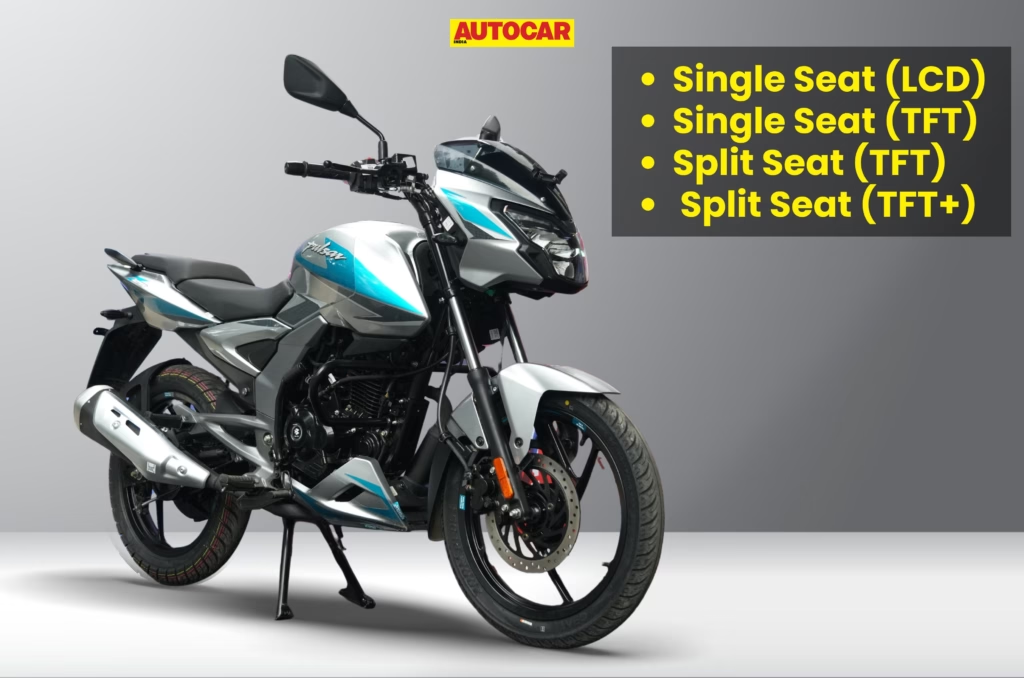
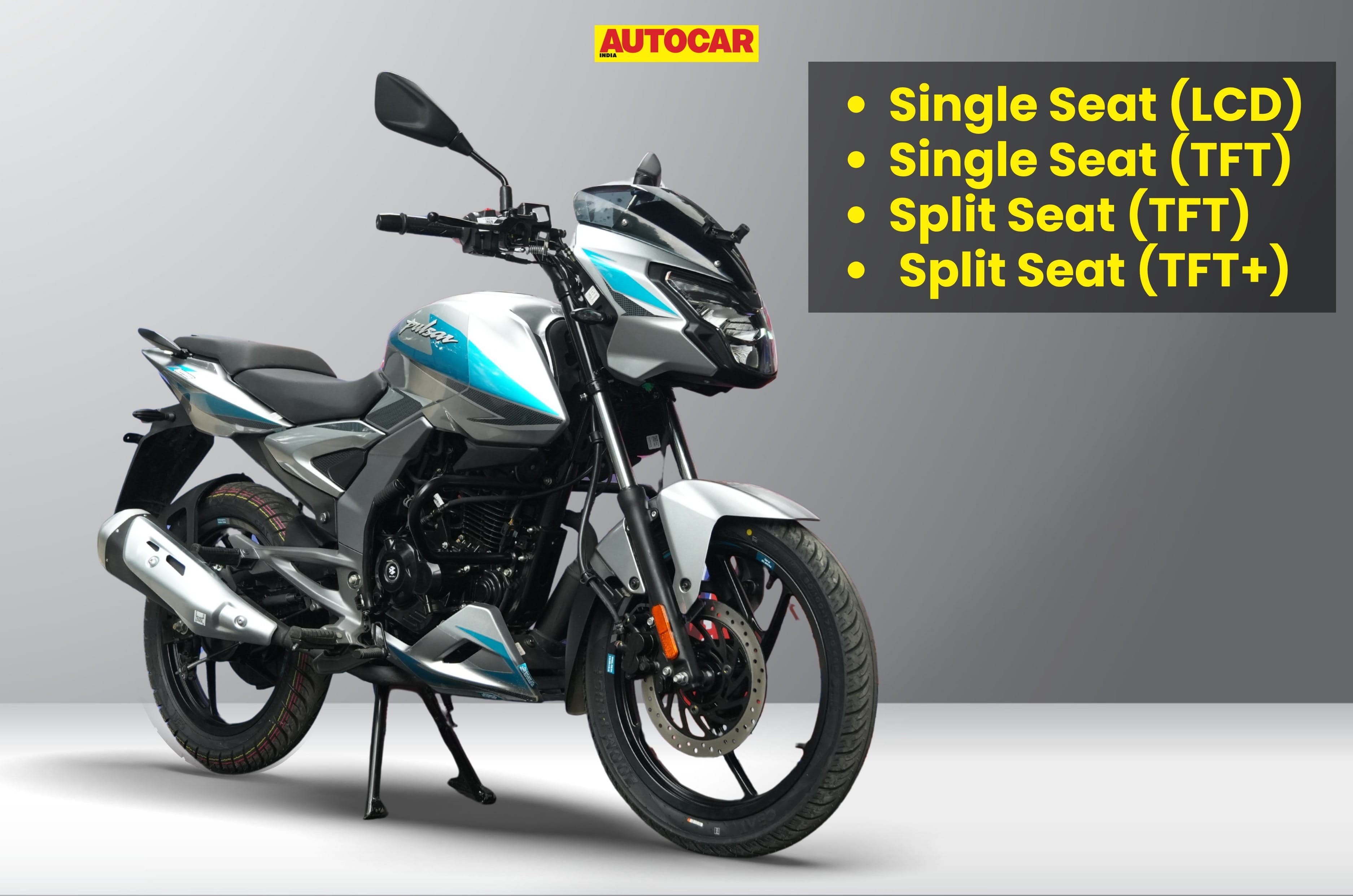
Bajaj has updated the Pulsar 125 comprehensively with the new version having four variants, compared to two on the previous iteration. Similar to the Pulsar 150, the aim is to offer value for money and to wit, Bajaj has packed in a sizable set of features into each variant, but how do they differ from each other? Fret not, let us help.
All prices mentioned are ex-showroom, Delhi.
Bajaj Pulsar 125 variant breakdown
Pulsar 125 Single Seat (LCD)
All four variants share the new single-cradle chassis and the 124.58cc engine making 12.1hp at 8,500rpm and 11.4Nm torque at 6,500 rpm, a marginal bump of 0.3hp and 0.6Nm over the 124.38cc engine on the previous gen. All four variants share the same LED headlight and taillight, tyres, and front and rear suspensions. Bluetooth and turn-by-turn navigation is also common to all of them.
The base Single Seat (LCD) variant, like the name implies, gets a single seat piece and an LCD instrument cluster. It gets a 240mm front disc with a 130mm rear drum brake as well as Combined Braking System (CBS) as standard. It uses bulb indicators and offers a USB type-C port as an optional extra accessory. This variant is priced at Rs 92,900.
Pulsar 125 Single Seat (TFT)
The second variant, once again mentioned in the name, replaces the LCD instrument cluster with a 5-inch TFT display. Other areas in the ride package see upgrades as well. This variant adds three ride modes, an integrated starter generator (ISG), and gets the USB Type-C port as standard fitment. There’s also a larger 260mm front disc and the indicators are LED as well, with hazard lights function. Bajaj has priced this variant at Rs 99,291, Rs 6,391 step up over the base variant.
Pulsar 125 Split Seat (TFT)
The next variant swaps the single seat pad for a split rider and pillion pads for just over a lakh of rupees. It’s otherwise identical to the previous variant.
Pulsar 125 Split Seat (TFT+)
Don’t let the + mislead you into thinking that this top variant is another small step up. There are three upgrades on this one. Starting with the cluster itself, the TFT display on this one exclusively gets WiFi support, enabling Google Maps mirroring for navigation. It’s also the only one getting a belly pan as standard for added protection to the engine sump and it gets a dual-horn, compared to the single-horn on the rest. For these three features, this variant’s asking price is Rs 1.04 lakh, roughly Rs 4,000 over the last variant.
Purchasing an automobile is one of life’s special moments in India. After all, you are not only paying a lot of money but also laying significant faith into a manufacturer’s ability to have properly engineered a safe, reliable and enjoyable product. There’s also the fact that you are entering a long-term relationship with that manufacturer when it comes to service. With three-year warranties becoming common and extended warranties being sold for just a few thousand rupees, the duration of said relationship is now longer than ever. Unfortunately, a lot of customers these days don’t feel like they are being given the treatment they deserve in this ‘relationship’.
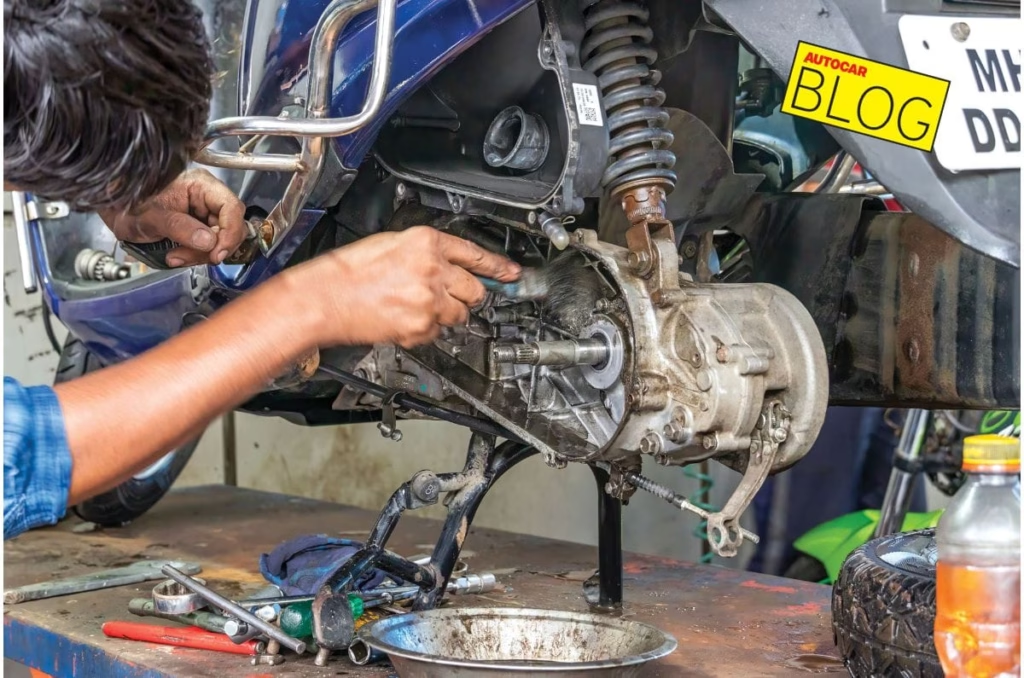
While the quality of products coming from domestic two-wheeler manufacturers has grown tremendously in recent years, the same can’t be said for the service support. While some manufacturers fare worse than others, you will find plenty of reports of shoddy work or general ineptness when it comes to authorised service centres. The reasons behind this are multifold.
The first is that motorcycles today are far more complicated than they used to be. Electronics are everywhere, and even the simplest of commuters now have ECUs, electronic fuel pumps and fuel injectors. 150cc bikes and above are constantly increasing the amount of performance, tech and gadgets on offer, and all of this brings in more complication. Caring for more advanced motorcycles requires a more technical approach.
The “chalta hai/chalega sir” attitude that is a universal truth in India presents a challenge when the job gets more technical. Another cultural aspect at play is that people are far more proud of how quickly a job gets done (or with how much ‘jugaad’) rather than how well the job gets done. Case in point, I once insisted on a torque wrench being used on my KTM 790 Duke at an official service centre a couple of years ago. This led to a stool being brought out to reach an overhead cabinet, from which a dusty torque wrench was liberated. Clearly, that tool was almost never used, and the fact is, most mechanics in India simply use their biceps to decide how much force needs to go into tightening a bolt.
Money is the other big challenge. Time is money, so the more vehicles that are serviced, the better. More so, most junior mechanic salaries are very low, which results in high job attrition. It’s also difficult for dealerships to have enough trained staff and sufficient workshop space for the amount of money that is earned per service. With automobile sales records being broken every other month, there is a big strain on the system.
The ideal scenario is that big cities need more workshops, staff should be trained better and workshop managers need to be more diligent about implementing proper operating procedures. At the end of the day, quality work can only be provided by someone who has been trained well and is remunerated fairly for the job. And that will increase the cost of service for the customer, primarily in terms of the labour cost.
It is inevitable that service costs in India will rise, as does the constantly improving standard of our motorcycles and the ever increasing cost of living. The big challenge for manufacturers is to ensure that customers get their money’s worth for these increasing costs.
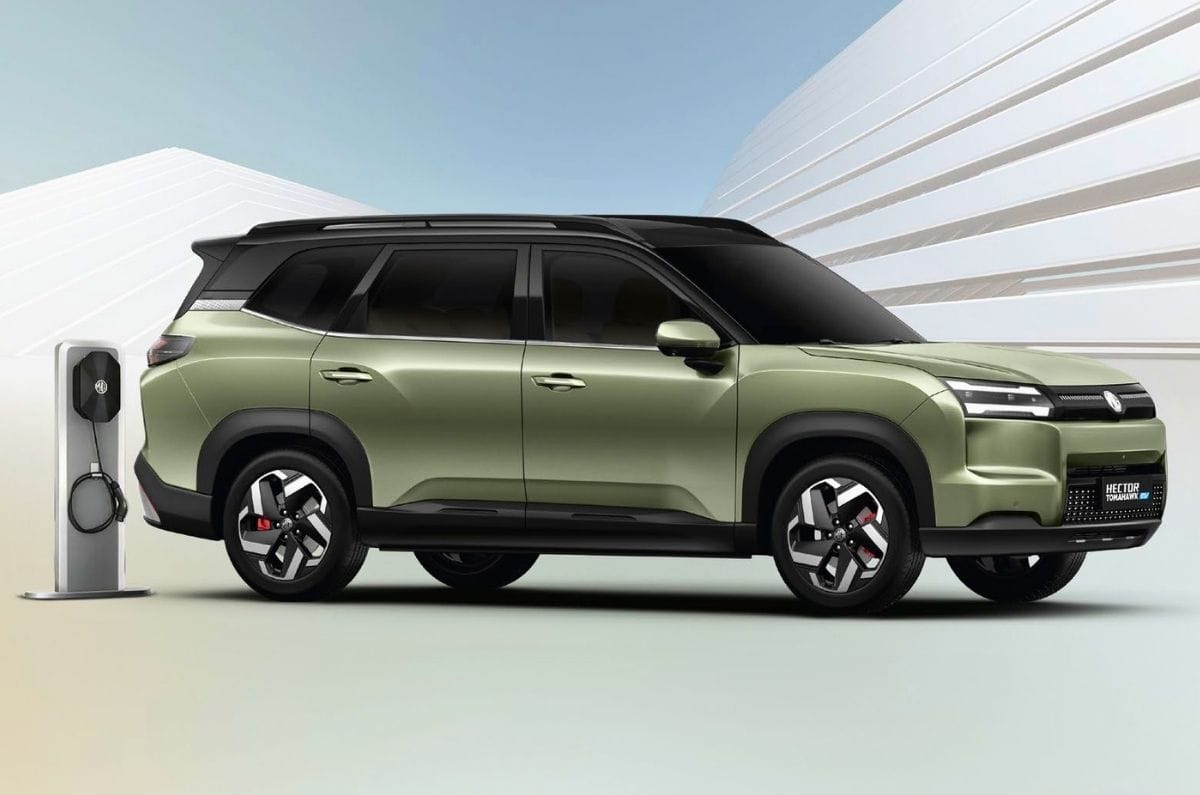
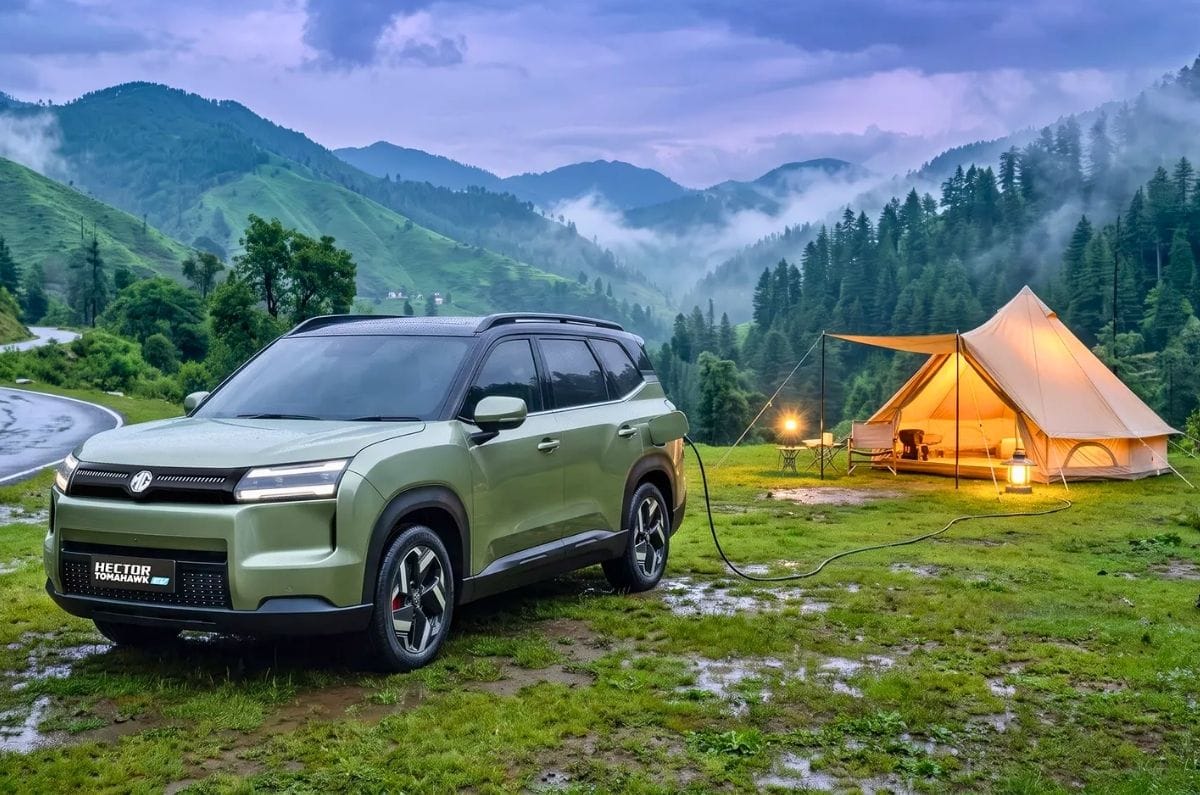
MG launched the Hector Tomahawk in India in both all-electric (EV) and plug-in hybrid (PHEV) versions, with prices starting from Rs 19.50 lakh and Rs 25.70 lakh, respectively. Both models are offered with a lot of new-age technology and have piqued the interest of enthusiasts. Here’s everything you need to know about the MG Hector Tomahawk EV and Hector Tomahawk PHEV.
1. What are the exterior differences between the EV and PHEV?
Both versions get different grilles, front bumpers, and alloy wheels
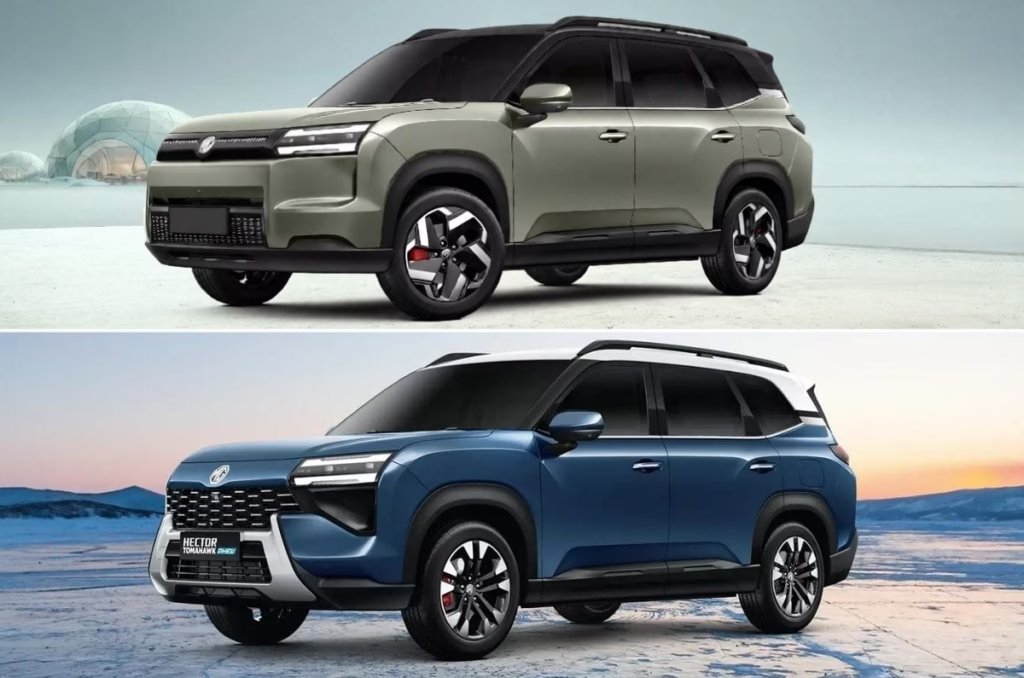
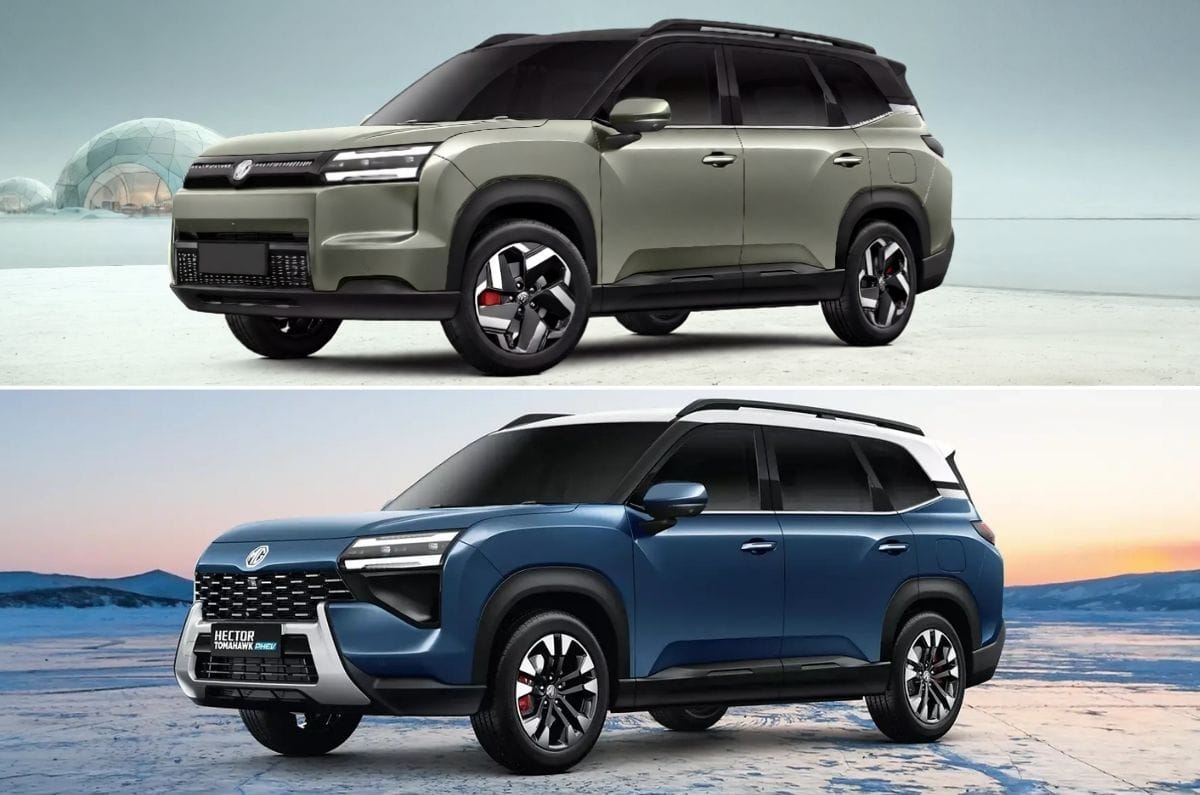
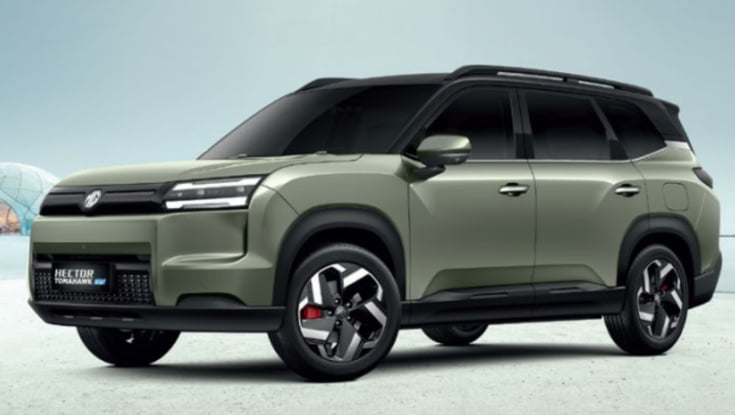
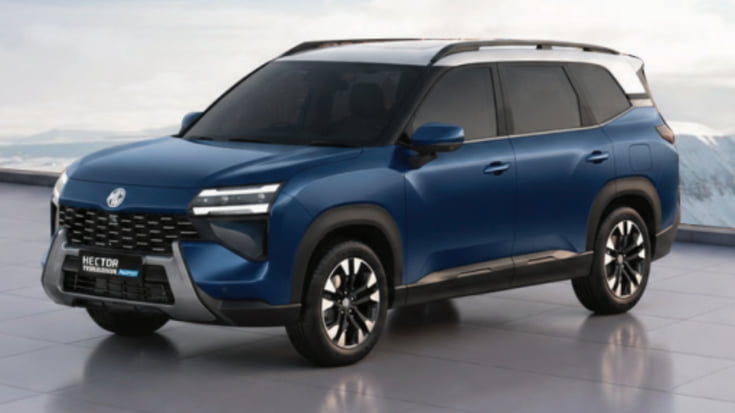
Both the Hector Tomahawk’s EV and PHEV versions have some design differences. While the EV gets a blanked-off gloss-black grille, the PHEV gets a functional grille with chrome inserts and black trims underneath the headlights. The front bumper design is also different, with the PHEV getting a silver bullbar-like element in the centre that the EV misses. The headlights and illuminated MG logo are, however, shared.
Not much is different in the side profile, except for the 18-inch alloy designs and red callipers on the top-spec Hector Tomahawk PHEV. If you opt for a dual-tone shade, the EV will have a black roof, while the PHEV will have a white roof. The rear design, however, is identical for both versions of the SUV.
2. What are the interior differences between the EV and PHEV?
Save for a luggage cover and different cabin themes, everything else is the same
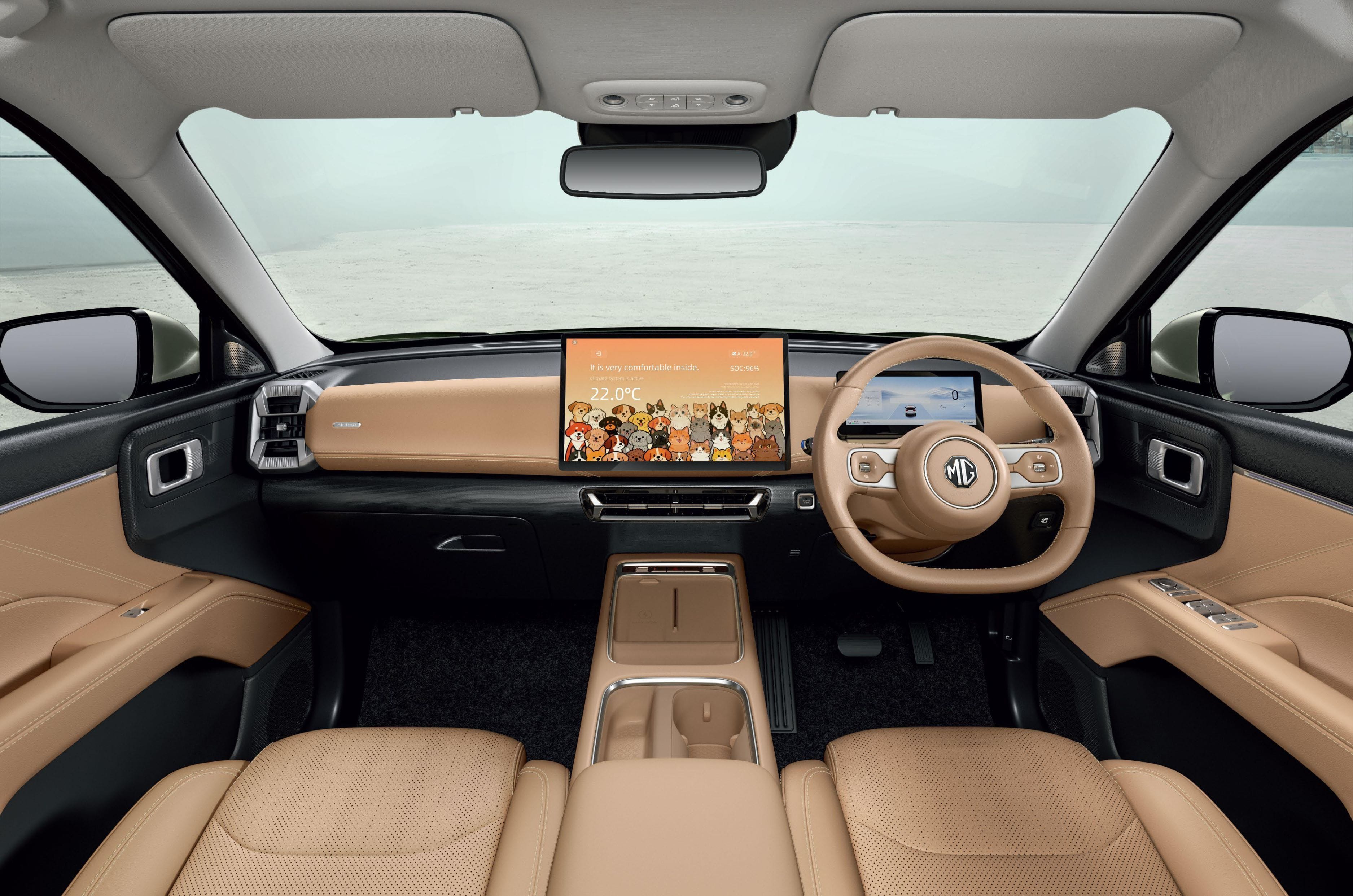
MG Hector Tomahawk EV gets a beige and black cabin theme.
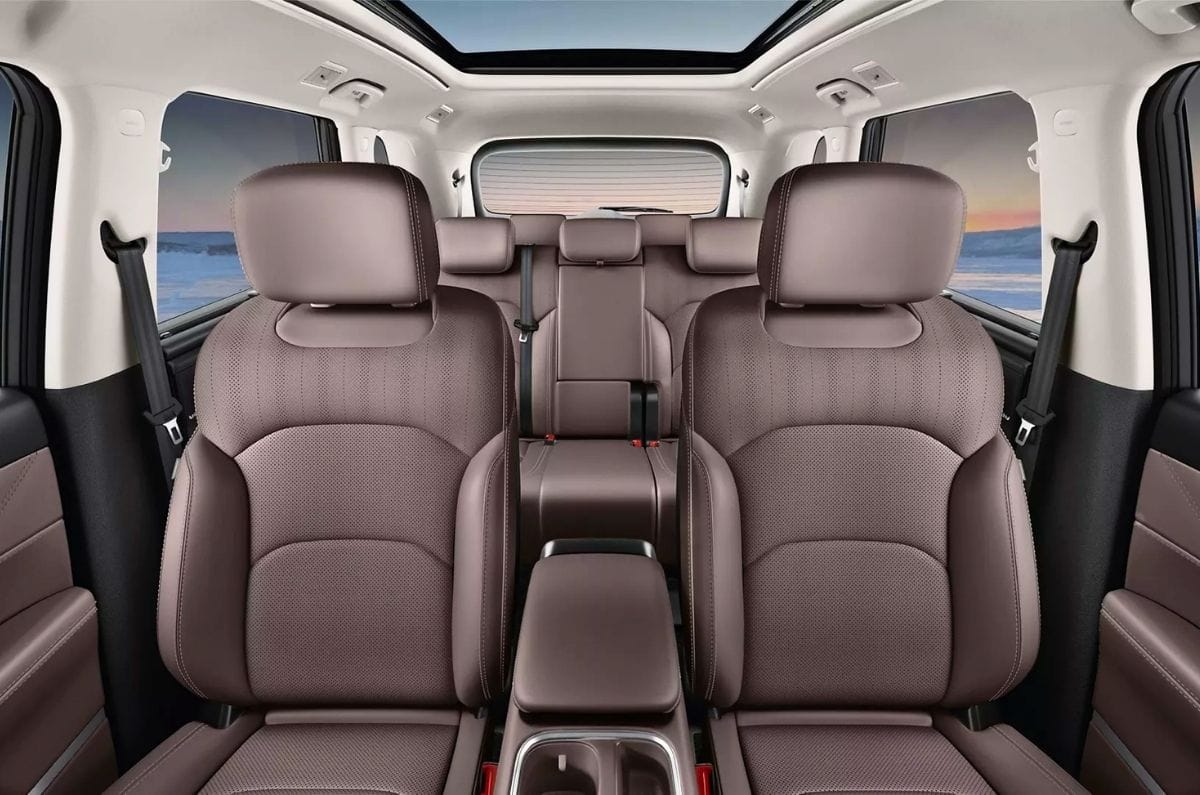
Save for a rolling luggage shade on the 5-seater variants of the EV, and a different cabin theme – brown and black on the EV and a darker brown and black on the PHEV – there is no visible difference. Everything else is the same, including the feature suite: a 15.6-inch touchscreen infotainment system, an 8.8-inch digital driver’s display, a 10-speaker Infinity sound system, a panoramic sunroof, powered and ventilated front seats with memory function for the driver’s seat, and a 50W fast wireless charger.
MG Hector Tomahawk PHEV gets a brown and black cabin theme.
The safety suite is also identical in both Hector Tomahawk versions, which includes 6 airbags, a 360-degree camera with an under-bonnet view, Level 2 advanced driver assistance systems (ADAS) and a tyre pressure monitoring system (TPMS).
3. What is the boot space on the MG Hector Tomahawk EV and PHEV?
EV and PHEV versions offer up to 610 litres and 192 litres of boot space, respectively
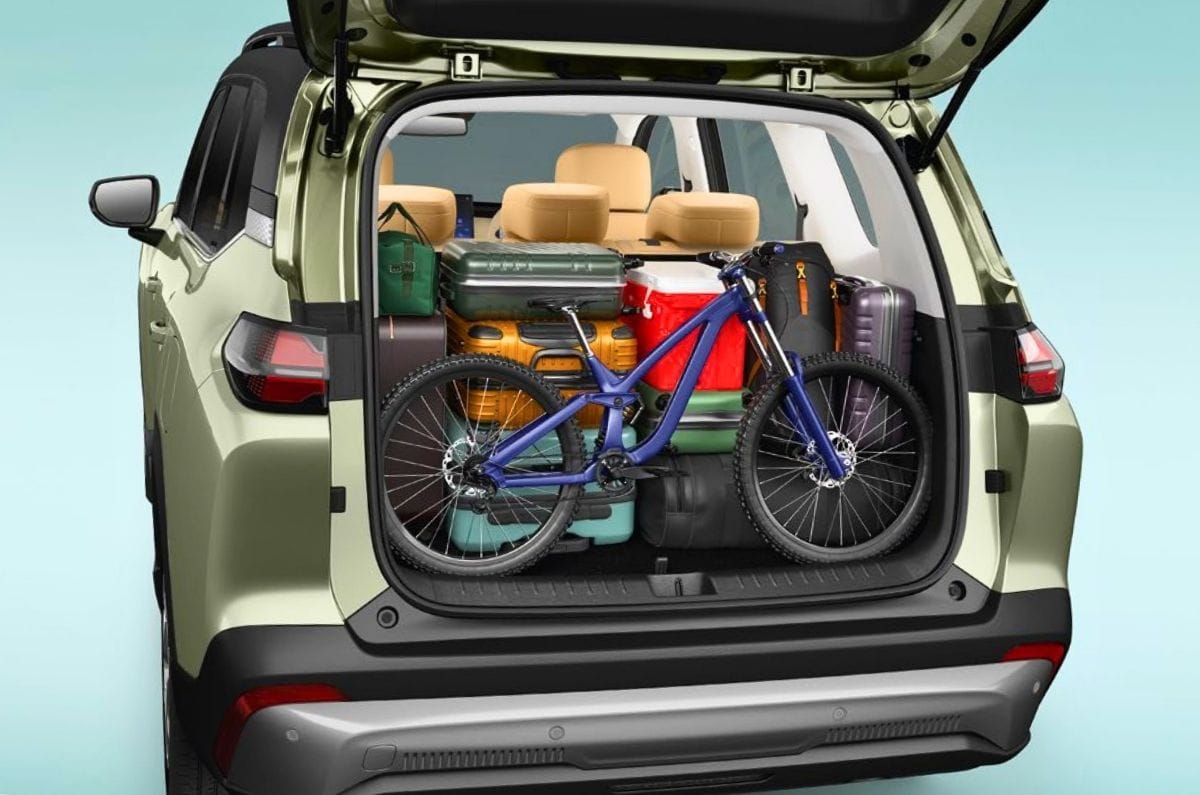
5-seater MG Hector Tomahawk EV’s boot space.
The MG Hector Tomahawk EV is offered in either a 5-seater or a 7-seater version. The 5-seater offers 610-litre boot space, with all rows up, which can be expanded to 1,053 litres by folding down the rear row. The 7-seater version offers a 192-litre boot space with all rows up, and 528 litres when the third row is folded.
The PHEV, offered only as a 7-seater, offers 192-litre boot space like the EV’s 7-seater version, expandable to 528 litres by folding the third row. Neither the EV nor the PHEV version of the Hector Tomahawk are offered with a frunk (storage space under the bonnet).
4. What are the powertrain specifications of the MG Hector Tomahawk PHEV and EV?
PHEV gets a 1.5L engine and 20.5kWh battery; EV offers a 69.2kWh battery pack
The MG Hector Tomahawk PHEV gets a 1.5-litre naturally aspirated petrol engine and a 20.5kWh battery pack, offering a combined output of 198hp and 230Nm. The front-wheel-drive (FWD) SUV has an all-electric range of around 115km and a total range including the petrol engine of around 1,100km.
The MG Hector Tomahawk EV, on the other hand, gets a 69.2kWh battery pack, mated to a front-axle-mounted electric motor producing 204hp and 310Nm. It has a claimed range of 517km.
5. Can the Hector Tomahawk PHEV be charged at a public EV charging station?
It supports 25kW DC fast charging
Yes, being a plug-in hybrid (PHEV), the MG Hector Tomahawk PHEV supports 25kW DC fast charging. This can replenish the battery from 30 to 80 percent in 35 minutes, like a typical EV. MG is also offering it with a 3.3kW home charger, which can recharge the battery pack from 10 to 100 percent in 7.5 hours.
6. Are the MG Tomahawk EV and PHEV more affordable with BaaS?
BaaS reduces the EV’s and PHEV’s initial prices by up to Rs 6.01 lakh and 3.91 lakh, respectively
MG Hector Tomahawk EV, PHEV BaaS vs non-BaaS prices (in Rs, lakh)
Without BaaS
With BaaS
Initial cost difference
EV
19.50 to 23.50
13.99 to 17.49*
Up to 6.01
PHEV
25.70 to 27.80
21.79 to 23.89^
3.91
*Battery subscription fee is Rs 4.9 per km per month
^Asks for a battery subscription fee of Rs 3.2 per km per month
The BaaS (Battery-as-a-Service) option reduces the upfront price of the MG Hector Tomahawk EV by Rs 6.01 lakh and the PHEV by Rs 3.91 lakh. However, you then pay a battery rental fee for every kilometre you drive: Rs 4.90 per km for the EV and Rs 3.20 per km for the PHEV. At these rates, the upfront savings from BaaS are effectively used up after around 1.22 lakh km. The break-even point is 1,22,653 km for the EV and 1,22,187 km for the PHEV.
In simple terms, if you expect to drive less than 1.22 lakh km over the entire ownership period, BaaS could be the more affordable option because of its lower initial cost. However, if you plan to drive more than 1.22 lakh km, buying the Hector Tomahawk with the battery included is likely to save you more money in the long run.
There is also another factor to consider. Under the BaaS plan, you do not own the battery, so your long-term costs depend on the rental agreement. If MG increases the per-kilometre fee or changes the contract in the future, your running costs could also increase. So, while BaaS would be more affordable for most buyers, purchasing the vehicle with the battery included may offer greater certainty in running cost calculations.
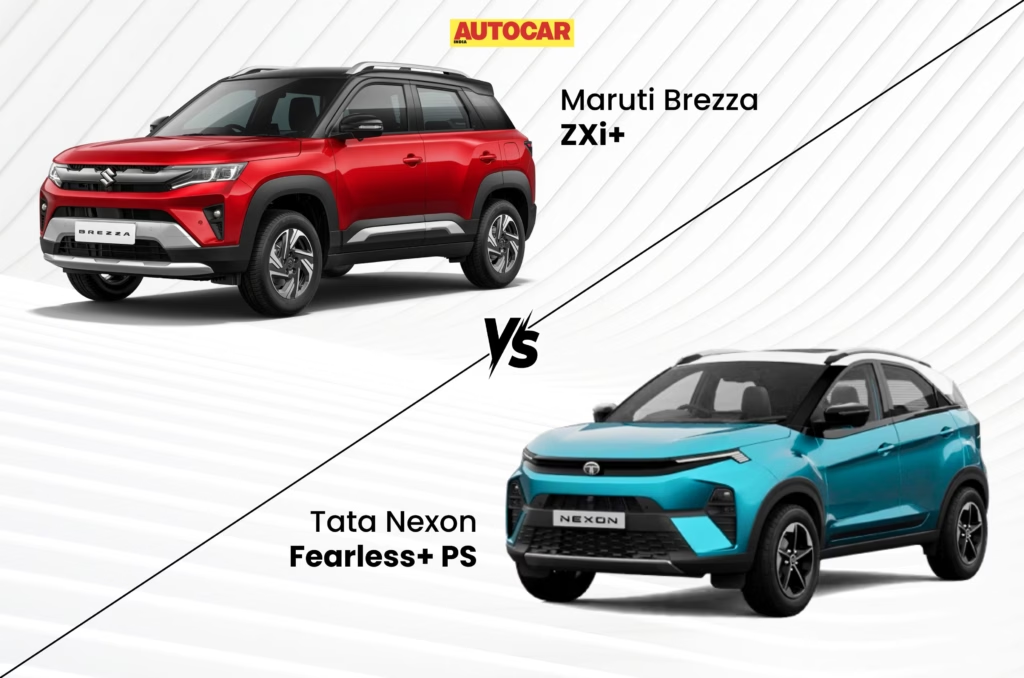
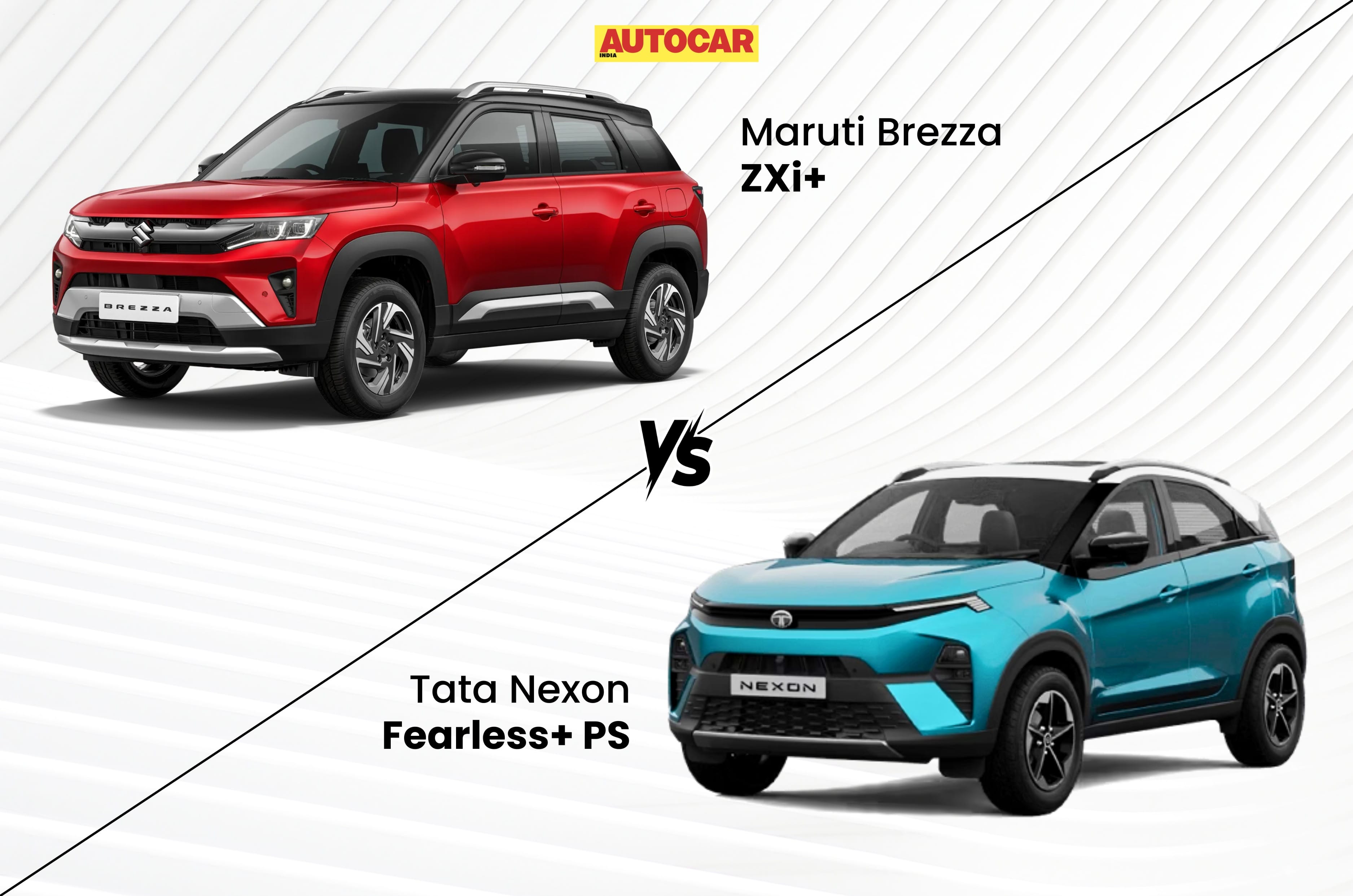
The Maruti Brezza and Tata Nexon are among the bestselling compact SUVs in the Indian market. While the former received a comprehensive update that introduced cosmetic changes, more features and a powerful new turbo-petrol engine, the latter continues to attract consumers with a wide choice of powertrains. If you are looking to buy a compact SUV, we compare the Brezza’s top-spec ZXi+ trim and the Nexon Fearless+ PS to find out which offers better value for money.
Explore full specs, features and a price breakdown in our Brezza vs Nexon comparison.
Maruti Brezza vs Tata Nexon: Dimensions
Brezza is taller, while Nexon has a bigger boot
Maruti Brezza vs Tata Nexon: Dimensions
Maruti Brezza
Tata Nexon
Difference
Length (mm)
3,995
3,995
–
Width (mm)
1,790
1,804
-14
Height (mm)
1,685
1,620
+65
Wheelbase (mm)
2,500
2,498
+2
Ground clearance (mm)
198
208
-10
Boot space (litres)
328
382
-54
Only the length of both models is identical. Beyond that, the Brezza is taller and has a slightly longer wheelbase than the Nexon. On the other hand, the Nexon is wider, rides higher off the ground and has a larger boot.
The Brezza ZXi+ is available only with the naturally aspirated petrol automatic and turbo-petrol manual powertrains. On the other hand, the Nexon Fearless+ PS offers a wide range of options: a turbo-petrol manual and automatic, a diesel manual and automatic, and a CNG manual. As for their turbo-petrol engines, the torque is identical, but the Nexon’s larger mill delivers more power.
Maruti Brezza vs Tata Nexon: Exterior features
Nexon offers some feel-good features like welcome/goodbye animations
Maruti Brezza vs Tata Nexon: Exterior features
Maruti Brezza
Tata Nexon
Headlights
LED projector
LED projector
Tail-lights
LED
Connected LED
Welcome/goodbye animations
No
Yes
Sequential turn indicators
No
Yes
Daytime running lamps (DRLs)
Yes
Yes
Fog lamps
LED
LED
Wheels
16-inch
16-inch
Outside rearview mirrors (ORVMs)
Electrically adjustable, auto-folding
Electrically adjustable, auto-folding
Roof rails
Yes
Yes
Rear wiper, washer
Yes
Yes
Colour options
Monotone and dual-tone
Dual-tone
Both the Brezza and Nexon are similarly equipped on the exterior, with LED light setups, DRLs, fog lamps, electrically adjustable and auto-folding ORVMs and 16-inch alloy wheels. However, the Nexon gets some fancier features such as welcome/goodbye animations for the light setups, along with sequential turn indicators. As for colour options, the Nexon is limited to dual-tone schemes, whereas the Brezza offers monotone options as well.
Maruti Brezza vs Tata Nexon: Interior features
Brezza not as well equipped as Nexon
Maruti Brezza vs Tata Nexon: Interior features
Maruti Brezza
Tata Nexon
Instrument cluster
Analogue dials with MID
10.25-inch display
Infotainment screen
10.1-inch
10.25-inch
Head-up display
Yes
No
Android Auto, Apple CarPlay
Wireless
Wireless
Sunroof
Single-pane
Panoramic
Audio system
6-speaker Arkamys Surround Sense
9-speaker JBL
Climate control
Automatic
Automatic
Rear AC vents
Yes
Yes
Driver seat adjustment
Manual
Manual
Front seat ventilation
Yes
Yes
Seat upholstery
Leatherette
Leatherette
Wireless phone charger
Yes
Yes
Air purifier
Yes
Yes
Connected car tech
Yes
Yes
Rear centre armrest
Yes
Yes
Rear sunshade
No
Yes
Ambient lighting
64-colour
No
60:40 split folding seat
Yes
Yes
Apart from multi-colour ambient lighting and a head-up display, the Brezza’s overall interior equipment falls short of the Nexon’s. The latter comes packed with features such as a digital driver’s display as opposed to analogue dials on the former, a panoramic sunroof, a slightly larger infotainment screen, more speakers and rear window sunshades.
Maruti Brezza vs Tata Nexon: Driving tech
Brezza misses out on drive modes
Maruti Brezza vs Tata Nexon: Driving tech
Maruti Brezza
Tata Nexon
Drive modes
No
Eco, City and Sport
Paddleshifters
Yes
Yes
Cruise control
Yes
Yes
While paddleshifters and cruise control are available on both models, drive modes are offered only with the Nexon.
Maruti Brezza vs Tata Nexon: Safety features
Brezza comes equipped with more advanced safety tech
Maruti Brezza vs Tata Nexon: Safety features
Maruti Brezza
Tata Nexon
BNCAP rating
5 stars
5 stars
Blind-spot warning
Yes
No
Safe-exit warning
Yes
No
Rear cross-traffic alert
Yes
No
Airbags
6
6
Camera setup
360-degree
360-degree
Parking sensors
Front and rear
Front and rear
Disc brakes
Front only
Front only
Tyre-pressure monitoring system
Yes
Yes
Interior rearview mirror (IRVM)
Auto-dimming
Auto-dimming
Hill-hold assist
Yes
Yes
ESC
Yes
Yes
Both the Brezza and Nexon have achieved a 5-star BNCAP crash-safety rating and are equally matched in terms of offering a basic safety kit, along with features such as a 360-degree camera and front parking sensor. But only the former comes with advanced safety systems such as rear cross-traffic alert and blind-spot and safe-exit warnings.
Maruti Brezza vs Tata Nexon: Price and verdict
Brezza’s more affordable, but Nexon’s powertrain range is hard to ignore
Maruti Brezza vs Tata Nexon: Prices
Maruti Brezza
Tata Nexon
NA petrol AT
13.54
–
Turbo petrol MT
11.16
12.34
Turbo petrol AT
–
12.55
Turbo diesel MT
–
13.45
Turbo diesel AMT
–
14.10
CNG MT
–
13.30
Comparing only the turbo-petrol manual powertrain, which is common to both, the Brezza is Rs 1.18 lakh more affordable than the Nexon. Notably, the Brezza ZXi+ NA petrol automatic costs almost a lakh rupees more than the Nexon Fearless+ PS turbo-petrol automatic. This is due to the higher tax on the 1.5-litre unit powering the Brezza. Moreover, the Nexon has a Fearless+ A PS trim that sits above the Fearless+ PS trim and brings Level 2 ADAS, but it is limited to the turbo-petrol automatic.
When it comes to choosing between the two, we’d recommend the Tata Nexon. Though the Brezza’s ZXi+ trim starts at a more affordable price point and is backed by Maruti’s widespread and hassle-free service experience, the Nexon’s multiple powertrain options are simply hard to ignore. Additionally, the Tata comes with more bells and whistles than the Maruti, and that’s why it’s our pick.
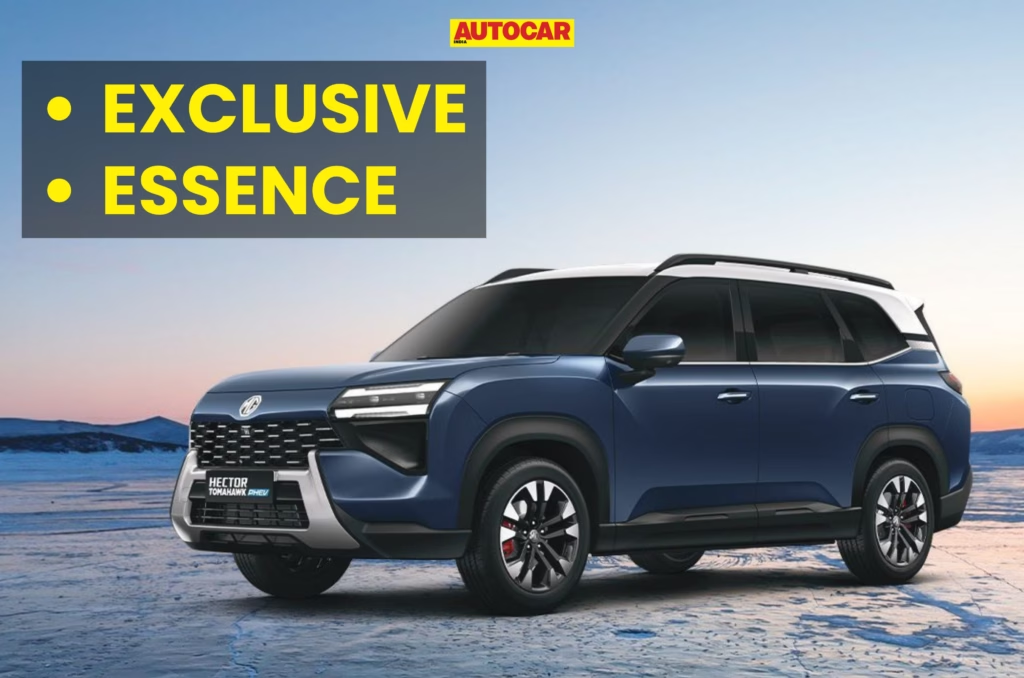
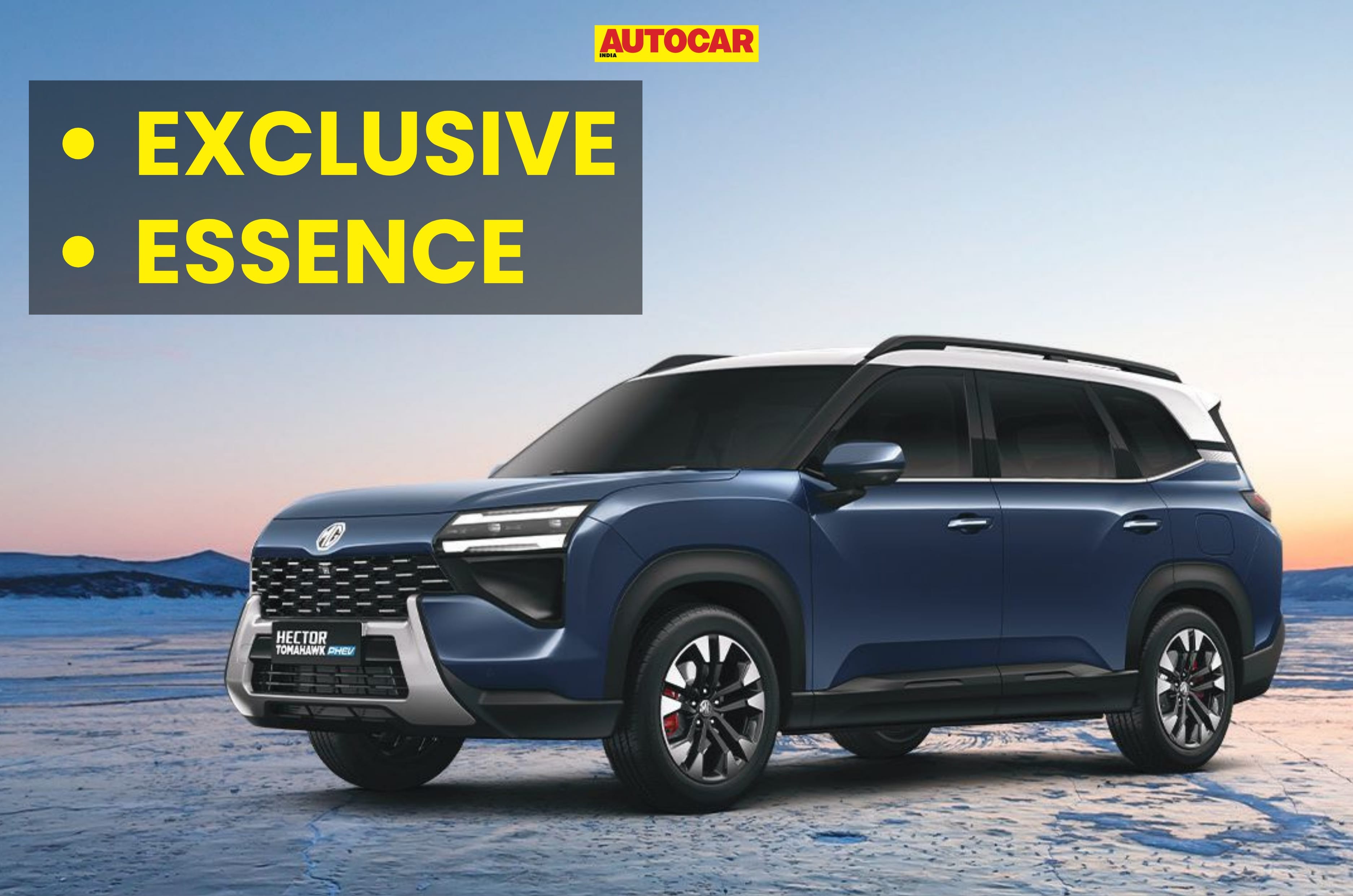
MG has launched the Hector Tomahawk PHEV as the first mass-market plug-in-hybrid (PHEV) car in India, priced from Rs 25.70 lakh (ex-showroom). It is offered in two trims: Exclusive and Essence, and like other MG cars, it is equipped with a plethora of modern-day features. If you are interested in the MG Hector Tomahawk PHEV, which variant should you choose? Let us find out.
MG Hector Tomahawk PHEV powertrain options and prices
Both Hector Tomahawk PHEV variants get the same 1.5L engine and 20.5kWh battery
The MG Hector Tomahawk PHEV is offered with a 1.5-litre naturally aspirated petrol engine producing 102hp and 125Nm. It gets a 20.5kWh battery pack powering an electric motor producing 201hp and 237Nm. The battery pack has an indicative claimed range of 115km, and combined with the petrol engine, it could have a total range of around 1,100km. Both the Exclusive and Essence variants are offered with the same powertrain.
*Rs 3.2 per km is charged as the battery rental fee for the battery-as-a-service (BaaS) scheme.
MG Hector Tomahawk PHEV variant-wise features
Exclusive
Price: Rs 25.70 lakh (or Rs 21.79 lakh + Rs 3.2 per km with BaaS)
Automatic LED projector headlights
LED taillights
LED DRLs
Rear LED fog lamps
Illuminated MG logo at the front
18-inch alloy wheels
ORVM-mounted turn indicators
Glass antenna
Roof rails
Rear spoiler
Chrome finish on window beltline and door handles
Black body cladding on side and wheel arches
Brown and grey interior
Blue ambient lighting
12.8-inch touchscreen infotainment system
6-speaker sound system
Wireless Android Auto and Apple CarPlay support
8.8-inch digital driver’s display
Panoramic sunroof
6-way powered driver’s seat
4-way powered co-driver’s seat
Ventilated front seats
Powered tailgate
50W wireless phone charger
Leatherette seat upholstery
Leatherette materials on steering wheel and door pads
Drive modes: Eco, Normal, Sports, Custom
Rain-sensing wipers
PM2.5 air filter
Push-button start/stop
Powered ORVMs
Steering-mounted audio controls
Tilt and telescopic adjustable steering column
Cruise control
2nd row features: 60:40 split, seat recline, one-touch tumble, centre armrest with cupholders
3rd row features: 50:50 split
USB Type-A and Type-C chargers in 1st and 2nd rows
All four power windows with one-touch up/down and anti-pinch functions
Rear wiper and washer
Pet mode, Nap mode and Camp mode
Connected car technology
6 airbags
360-degree camera with under-bonnet and wheel views
Digital rearview monitor
Reverse parking sensors
All four disc brakes
Electronic parking brake with auto hold
TPMS
Front and rear defogger
ISOFIX child seat anchors
Hill hold control
Traction control
ESP
ABS+EBD
Essence (features over Exclusive)
Price: Rs 27.80 lakh (or Rs 23.89 lakh + Rs 3.2 per km with BaaS)
15.6-inch touchscreen infotainment system
10-speaker Infinity sound system
Rear window sunshades
Driver’s seat memory and welcome/exit retract functions
V2L, V2V and V2H charging support
Level-2 ADAS
Auto-dimming IRVM
Front parking sensors
256-colour ambient lighting
Red brake callipers
Sequential turn indicators
Which MG Hector Tomahawk PHEV variant should you buy?
We recommend the entry-spec Essence variant, as it is offered with a lot of modern-day features like a 12.8-inch touchscreen infotainment system, a panoramic sunroof, a powered tailgate and a 360-degree camera. It also costs Rs 2.10 lakh less than the top-spec Essence, making it the more value-for-money Hector Tomahawk PHEV variant.