IMF के आंकड़ों के मुताबिक तेज विकास दर के बावजूद रुपये की कमजोरी के कारण भारत के 5 लाख करोड़ डॉलर की अर्थव्यवस्था बनने का लक्ष्य 2029 तक टल सकता है। इसके पहले अनुमान थी कि 2027 में भारत जापान और UK को पीछे छोड़कर दुनिया की चौथी सबसे बड़ी अर्थव्यवस्था बन जाएगा। लेकिन IMF के पूर्वानुमानों के ‘मनीकंट्रोल’ द्वारा किए गए विश्लेषण से पता चलता है कि रुपये की गिरावट ने 5 लाख करोड़ डॉलर के टारगेट को एक साल और आगे के लिए टाल दिया है।
भारत 2027 में जापान और यूके को पीछे छोड़कर दुनिया की चौथी सबसे बड़ी अर्थव्यवस्था बन सकता है, लेकिन 5 ट्रिलियन डॉलर की अर्थव्यवस्था बनने का देश का यह लक्ष्य एक साल के लिए पिछड़ सकता है। इस टारगेट को रुपये की गिरती कीमत की वजह से झटका लग सकता है। जानकारों का कहना है कि रुपए के वैल्यू में कमी आने से डॉलर के हिसाब से देश के आर्थिक उत्पादन की वैल्यू में कमी आ रही है।
मनीकंट्रोल द्वारा इंटरनेशनल मॉनेटरी फंड (IMF) के नवीनतम ‘वर्ल्ड इकोनॉमिक आउटलुक’ (WEO) डेटाबेस के विश्लेषण से पता चलता है कि भारत की अर्थव्यवस्था के 2029 में 5 लाख करोड़ डॉलर के स्तर को पार करने का अनुमान है, जबकि अप्रैल में इसके 2028 तक इस स्तर को पार करने का अनुमान लगाया गया था।
IMF ने रुपये के संदर्भ में भारत के आर्थिक आउटपुट के अनुमान को तो बढ़ाया है, लेकिन 2028 के लिए भारत की नॉमिनल GDP के अपने अनुमान को 5.1 लाख करोड़ डॉलर से घटाकर 4.996 लाख करोड़ डॉलर कर दिया है।
5 लाख करोड़ डॉलर का टारगेट खिसका दूर
यह अंतर भारत की डॉलर-मूल्य वाली जीडीपी पर मुद्रा के अवमूल्यन (मूल्य में गिरावट) के बढ़ते प्रभाव को दिखाता है, जो ग्लोबल इकोनॉमिक रैंकिंग में देश की स्थिति तय करता है।
आईएमएफ (IMF) के अक्टूबर के अनुमानों के अनुसार, 2026 में भारत की अर्थव्यवस्था 4.06 लाख करोड़ डॉलर की होगी, जो 2027 में बढ़कर 4.52 लाख करोड़ डॉलर और 2029 में 5.54 लाख करोड़ डॉलर तक पहुंच जाएगी।
रुपये की गिरावट ने मजबूत घरेलू विकास के असर को किया बेअसर
ताजा अनुमान बताते हैं कि 5 लाख डॉलर के लक्ष्य तक पहुंचने में हो रही देरी की मुख्य वजह भारत की नॉमिनल आर्थिक ग्रोथ में आई गिरावट नहीं, बल्कि विनिमय दर (एक्सचेंज रेट) से जुड़े अनुमान में हुआ बदलाव है।
IMF का अब अनुमान है कि 2028 में रुपया प्रति डॉलर औसतन 95.5 के स्तर पर रहेगा, जबकि अप्रैल के अनुमानों में यह आंकड़ा 93.3 था। 2027 के लिए, एक्सचेंज रेट का अनुमान 93 से बदलकर 95 हो गया है।
साल की शुरुआत से अब तक भारतीय रुपया 5 प्रतिशत से ज्यादा कमजोर हो चुका है। शुक्रवार को रुपया 96.73 के स्तर पर बंद हुआ, जिसके बाद RBI ने इसमें और गिरावट को रोकने के लिए कदम उठाए।
इस बीच, घरेलू मुद्रा में भारत की नॉमिनल GDP के 2028 में 477.1 लाख करोड़ रुपये तक पहुंचने का अनुमान है। अप्रैल में यह अनुमान 471.9 लाख करोड़ रुपये था, यानी इस अनुमान में 1.1 प्रतिशत की बढ़ोतरी की गई है। लेकिन, जब इसे डॉलर में बदला जाता है तो आर्थिक आउटपुट का यह अनुमान लगभग 63 अरब डॉलर कम हो जाता है।
मनीकंट्रोल की गणना से पता चलता है कि अप्रैल के 93.3 रुपए प्रति डॉलर के एक्सचेंज रेट अनुमान के आधार पर, 2028 के लिए भारत की रुपये में मापी गई GDP का IMF का ताजा अनुमान लगभग 5.11 लाख करोड़ डॉलर बैठता है, जो 5 लाख करोड़ डॉलर के आंकड़े से काफी ऊपर है। हालांकि, एक्सचेंज रेट के संशोधित अनुमान के आधार पर यह आंकड़ा घटकर लगभग 4.996 लाख करोड़ डॉलर रह जाता है।
इससे पता चलता है कि रुपये की कमजोरी, घरेलू नॉमिनल आउटपुट में हुई बढ़ोतरी के असर को पूरी तरह खत्म कर देती है। इससे यह भी साफ होता है कि भारत कब इस डॉलर-बेस्ड अहम इकोनॉमिक माइल स्टोन को हासिल करेगा, यह तय करने में विनिमय दर (एक्सचेंज रेट) में होने वाले बदलाव कितने अहम होते हैं।
2027 में भारत, जापान और UK को छोड़ सकता है पीछे
इस देरी के बावजूद, 2027 में भारत के ग्लोबल आर्थिक रैंकिंग में चौथे स्थान पर पहुंचने का अनुमान है। इस सूची में भारत अमेरिका, चीन और जर्मनी के बाद आएगा।
IMF के अक्टूबर के अनुमानों के अनुसार, 2027 में भारत की GDP 4.52 लाख करोड़ डॉलर तक पहुंच जाएगी। यह यूनाइटेड किंगडम की 4.49 लाख करोड़ डॉलर और जापान की अनुमानित 4.47 लाख करोड़ डॉलर की GDP से थोड़ी अधिक होगी। हालांकि, इन तीनों अर्थव्यवस्थाओं के बीच का अंतर काफी कम है, जिसका मतलब है कि विनिमय दरों (exchange rates) में उतार-चढ़ाव अंतिम नतीजों को बदल सकते हैं।
IMF के ताजा अनुमानों के अनुसार, भारत की अर्थव्यवस्था के और विस्तार करने की उम्मीद है। 2030 में यह 6.13 लाख करोड़ डॉलर और 2031 में 6.74 लाख करोड़ डॉलर तक पहुंच सकती है। इस स्तर पर भारत जर्मनी को पीछे छोड़कर दुनिया की तीसरी सबसे बड़ी अर्थव्यवस्था बन जाएगा।
Volvo is currently not considering plug-in-hybrid vehicles (PHEVs) in its India portfolio anytime soon, as it sees the current tax structure and uncertain customer interest as hurdles to their introduction. “The regulations are not conducive to plug-in hybrids,” Jyoti Malhotra, MD of Volvo Car India, told our sister publication Autocar Professional on the sidelines of the recent EX90 launch. He also added that Volvo’s India plans remain focused on mild hybrids and EVs for now.
GST on PHEVs is 40 percent, making them less competitive than BEVs with 5 percent GST
Volvo’s India strategy focuses on mild hybrids and BEVs for the foreseeable future
PHEVs could be introduced if customer demand, economics support their future viability
India’s tax structure makes PHEVs less competitive
In India, PHEVs attract a 40 percent GST rate (plus applicable cesses bringing total taxes even higher, up to 43 percent). In contrast, pure battery EVs (BEVs) face a 5 percent GST rate and no compensation cess.
Malhotra said current tax treatment favours BEVs and makes PHEVs less competitive. PHEVs combine an internal combustion engine (ICE) with an electric drivetrain comprising an electric motor and a rechargeable battery that can be charged externally. This dual-powertrain setup adds to the vehicle’s cost. The higher tax burden further affects the final price, making PHEVs less competitive against conventional ICE models and battery electric vehicles (BEVs).
Higher costs, customer willingness to pay remain key hurdles
Beyond taxation, customer willingness to pay remains a key factor in Volvo’s assessment. Malhotra said PHEVs would be more expensive than conventional ICE vehicles because they combine two powertrains and face a higher tax burden. “Are our customers ready to pay that cost is something we are watching very closely,” he added.
He also believes incentives under the third phase of Corporate Average Fuel Economy (CAFE) norms, slated to go into effect from April 2027, would not by themselves change the commercial case or the final purchase price. “I don’t think CAFE will bring much change to that. It is basically the tax structure,” he said.
Volvo’s India strategy remains focused on EVs, mild hybrids
Malhotra maintained that Volvo’s broader direction remained towards battery electric vehicles, even as the company adjusted the pace of its transition to reflect conditions in individual markets. “Our end goal is still the same, globally as well as in India, that we want to become an electric car company,” he said.
In India, Volvo offers mild-hybrid SUVs alongside BEVs, with electric cars accounting for nearly one in four vehicles it sells. The BEV portfolio includes EX30, EC40 and EX90 models, while the ICE models include the XC60 and XC90 SUVs, which come in a mild-hybrid avatar. Internationally, though, Volvo offers the XC60 and XC90 as PHEVs as well.
Malhotra said that mix also left the company well placed on CAFE compliance, allowing its powertrain decisions to be guided by market demand. Plug-in hybrids remain an option if customer demand and the economics support their introduction. “It’s not that we will bring it, but we can bring it if all things fall in place,” he added.
Indian Economy News: भारतीय इकॉनमी की रफ्तार पहले की उम्मीद से अधिक रहने वाली है। ऐसा IMF (इंटरनेशनल मॉनीटरी फंड) का मानना है। आईएमएफ ने अपनी अक्टूबर की वर्ल्ड इकनॉमिक आउटलुक में अनुमान लगाया है कि इस वित्त वर्ष 2027 में भारतीय अर्थव्यवस्था 6.4% की बजाय 7% की रफ्तार से बढ़ेगी। आईएमएफ का कहना है कि मजबूत घरेलू मांग और सर्विसेज एक्टिविटी से इसे वैश्विक स्तर पर आर्थिक उथल-पुथल से संभलने में मदद मिली। आईएमएफ में कच्चे तेल के भाव में उछाल और जियो-पॉलिटिकल टेंशन के बावजूद जुलाई में लगाए गए अपने अनुमान में अब बढ़ोतरी की है। सिर्फ यही नहीं, आईएमएफ ने वित्त वर्ष 2028 की ग्रोथ के अनुमान को 6.7% से बढ़ाकर 7% कर दिया है। जून 2026 तिमाही की शानदार आर्थिक रफ्तार के बाद वैश्विक एजेंसियां भारतीय इकॉनमी के अपने आउटलुक को अपग्रेड कर रही हैं।
घरेलू मांग से तेज हो रही रफ्तार
आईएमएफ का कहना है कि महंगे तेल के बावजूद मजबूत घरेलू मांग और सर्विसेज एक्टिविटी ने आर्थिक रफ्तार को सहारा दिया। वित्त वर्ष 2026 में भारतीय अर्थव्यवस्था 7.8% की रफ्तार से बढ़ी और अब WEO में वित्त वर्ष 2027 और वित्त वर्ष 2028 में इसके 7% रहने का अनुमान लगाया गया है। वित्त वर्ष 2026 के मुकाबले रफ्तार सुस्त होती दिख रही है लेकिन पहले के अनुमान के मुकाबले यह अधिक है और खास वजह से है।
आईएमएफ का कहना है कि अलग-अलग देशों में ग्रोथ की संभावनाएं अलग-अलग हो सकती हैं, जो इस बार पर निर्भत करती है कि वे हाई एनर्जी प्राइसेज से कितना प्रभावित हैं और बढ़ती ग्लोबल टेक्नोलॉजी में उनकी कितनी हिस्सेदारी है। इसके अलावा भारतीय अर्थव्यवस्था को फेवरेबल डेमोग्राफिक डाइनेमिक्स, बड़े और बढ़ते घरेलू बाजार, और लगातार हो रहे स्ट्रक्चरल रिफॉर्म्स से मीडियम-टर्म ग्रोथ को सपोर्ट मिल रहा है
वैश्विक सुस्ती के बीच चमक रहा भारत
आईएमएफ का अनुमान है कि ग्लोबल इकोनॉमिक ग्रोथ 2025 में 3.5% से घटकर 2026 में 3.1% रह जाएगी और फिर 2027 में बढ़कर 3.4% हो जाएगी। वहीं चीन की ग्रोथ 2025 में 5% से घटकर 2026 में 4.5% और 2027 में 4% होने का अनुमान है। इसे तेल के ऊंचे भाव, घरेलू मांग में कमी और लगातार बनी हुई स्ट्रक्चरल चुनौतियों से जूझना पड़ रहा है। वहीं भारतीय अर्थव्यवस्था को लेकर आईएफएफ थोड़ा बुलिश हुआ है। यह अंतर इसलिए भी अहम है क्योंकि एनर्जी इंपोर्ट करने वाले उभरते देशों की ग्रोथ का अनुमान घटाया जा रहा है।
बने हुए हैं ये रिस्क
आईएमएफ ने भारतीय अर्थव्यवस्था की ग्रोथ के अनुमान में बढ़ोतरी तो की है लेकिन महंगी कमोडिटी जैसे कुछ रिस्क भी हैं। आईएमएफ का अनुमान है कि भारत में कंज्यूमर इनफ्लेशन वित्त वर्ष 2026 में 2% के मुकाबले वित्त वर्ष 2027 में 5% रहेगी और फिर FY28 में घटकर 4.4% रहेगी। सितंबर में भारत की महंगाई दर बढ़कर 5.5% हो गई, जो नई सीरीज में सबसे हाई लेवल है। आईएमएफ ने महंगाई को लेकर जो अनुमान लगाया है, वह वित्त वर्ष 2027 में RBI के 5.2% के अनुमान से थोड़ा कम है। जीडीपी के मुकाबले देश के चालू खाते का घाटा वित्त वर्ष 2026 में 0.7% से वित्त वर्ष 2027 में 1.5% और फिर वित्त वर्ष 2028 में 1.3% हो सकता है। आईएमएफ के मुताबिक भारत में ग्रोथ की रफ्तार काफी अच्छी बनी हुई है, लेकिन तेल की सप्लाई में रुकावट, नए सिरे से ट्रेड टेंशन और सख्त फाइनेंशियल स्थितियों के कारण ग्लोबल आउटलुक पर रिस्क बना हुआ है।
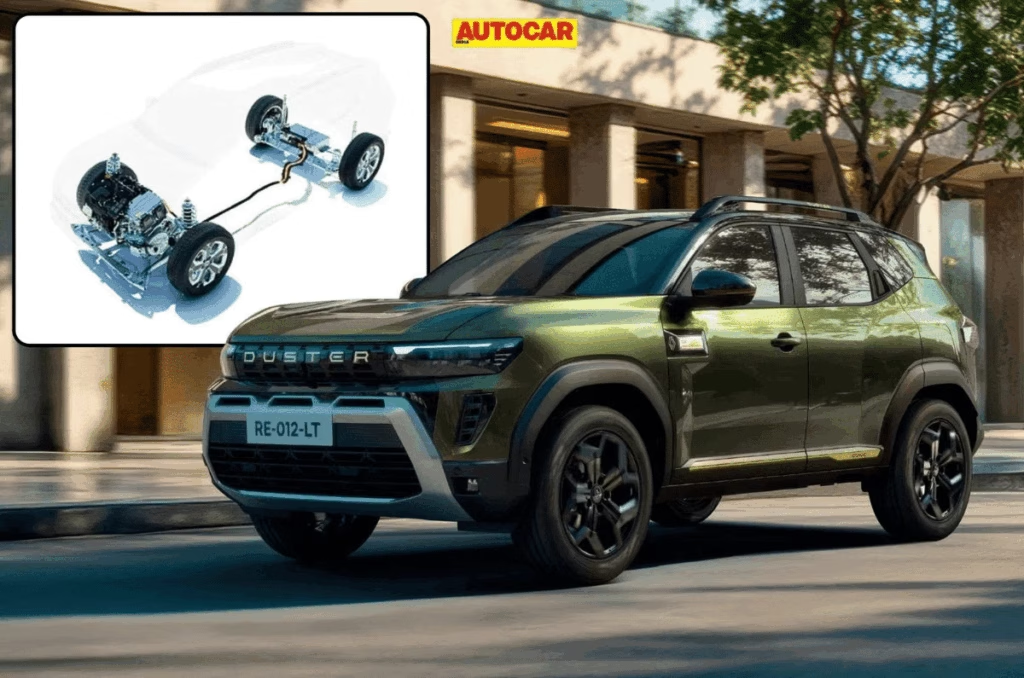
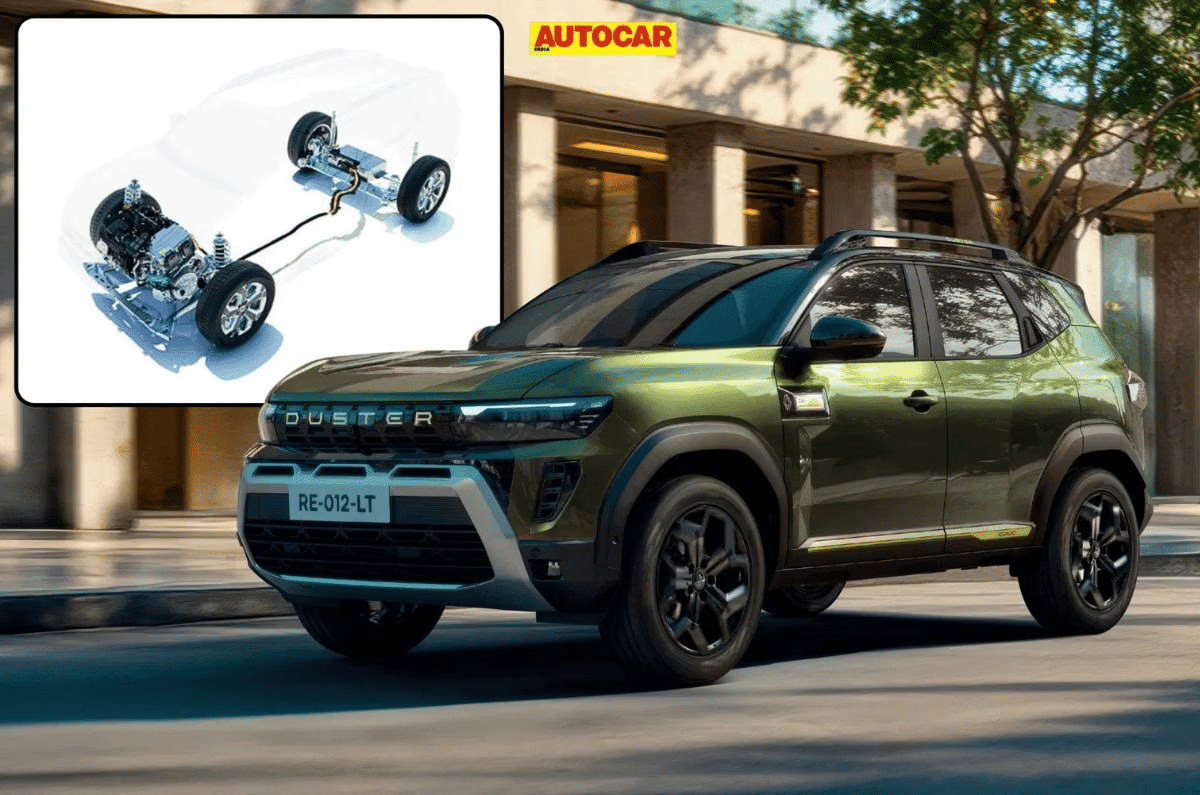
Renault India has opened the Duster hybrid’s bookings for Rs 21,000, ahead of its launch on October 17. This will be the third powertrain option for the Renault Duster, adding to the existing 1.0-litre and 1.3-litre turbo-petrol engines. Called the E-Tech system, it draws from the carmaker’s experience and expertise in Formula 1. Renault has also revealed that the Duster hybrid has an ARAI-rated fuel efficiency figure of 29kpl.
Renault Duster hybrid powertrain details
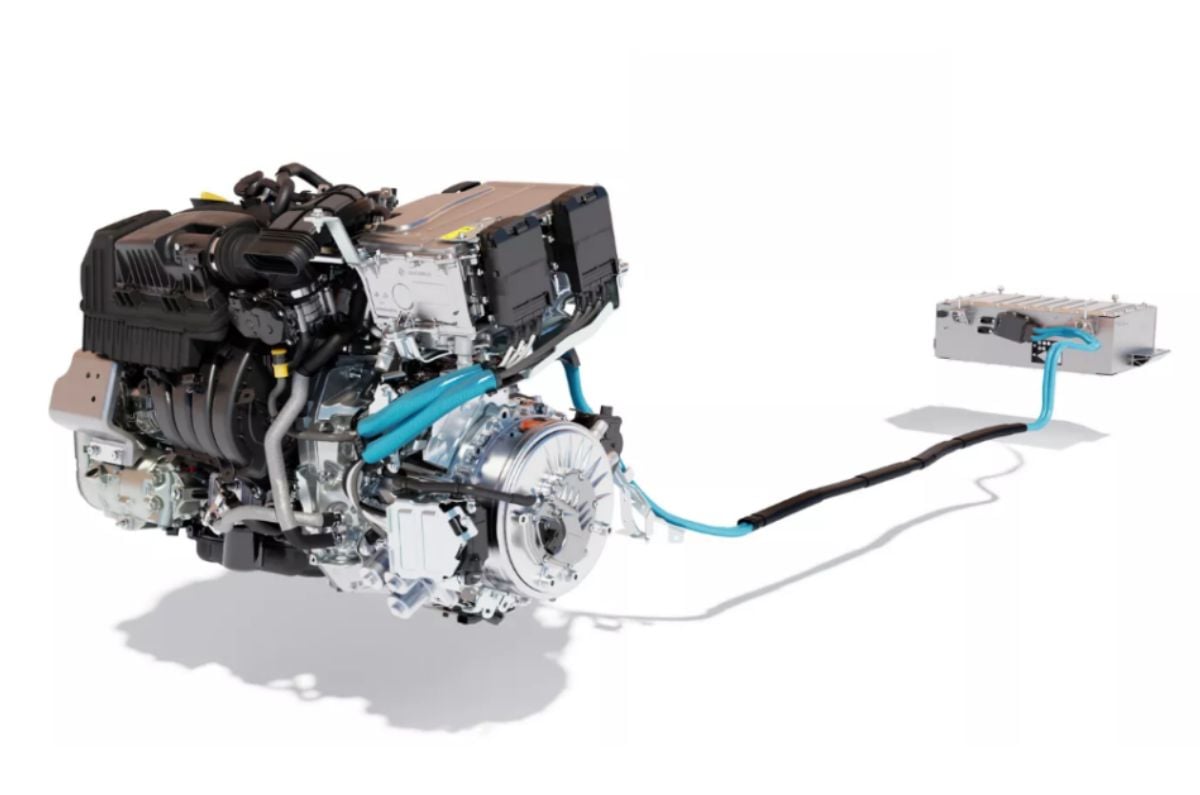
The Duster hybrid combines a naturally aspirated 1,789cc four-cylinder petrol engine with two electric motors, a 20hp unit acting as a generator and a 49hp motor powering the wheels. Combined, the system produces 160hp and 172Nm, and it is supported by a 1.4kWh battery pack. The Duster’s hybrid combines a petrol engine with electric drive and a battery, and it sends power to the wheels through a multi-mode automatic gearbox. The transmission uses fixed gear ratios and can shift between them. This means engine rpm is expected to rise and fall more like a conventional automatic, and you may notice gear engagements as it switches between electric drive, engine drive and a combination of both.
Renault’s 160hp E-Tech hybrid powertrain.
As with any full hybrid, the efficiency gains come from low-speed electric running, regenerative braking and the ability to keep the petrol engine off when it is not needed. However, real-world fuel economy will still depend on traffic conditions, speed, ambient temperature and driving style. That said, Renault claims the engine will enable 80 percent of city drives to be done in EV mode.
The choice of a hybrid powertrain is expected to help make up for the absence of a diesel option on the new Duster. This will also directly compete with the Maruti Grand Vitara, Victoris and Toyota Hyryder, all of which currently offer a hybrid powertrain option.
Indian Stock Market Crash Reasons: भारतीय अर्थव्यवस्था जहां एक तरफ मजबूत जीडीपी ग्रोथ और बेहतरीन फंडामेंटल्स के साथ दुनिया में चमक रही है, वहीं दूसरी ओर घरेलू शेयर बाजार में लगातार बिकवाली और गिरावट का दौर जारी है। निवेशक इस बात से हैरान हैं कि जब देश की इकोनॉमी मजबूत है, तो शेयर बाजार लाल निशान में क्यों कारोबार कर रहा है?
इस बड़े विरोधाभास पर मशहूर उद्योगपति और आरपीजी एंटरप्राइजेज के चेयरमैन हर्ष गोयनका ने सोशल मीडिया प्लेटफॉर्म ‘X’ पर अपनी प्रतिक्रिया दी है। उन्होंने साफ शब्दों में कहा कि भले ही हमारी अर्थव्यवस्था तेजी से बढ़ रही है, लेकिन अफसोस की बात यह है कि ग्लोबल लिक्विडिटी भारत से निकलकर दूसरे बाजारों की ओर बह रही है। गोयनका ने भारतीय शेयर बाजार में आ रही इस गिरावट के पीछे ये 7 प्रमुख कारण गिनाए हैं।
1. विदेशी संस्थागत निवेशकों (FIIs) की ताबड़तोड़ बिकवाली
भारतीय शेयर बाजार से विदेशी निवेशक लगातार अपना पैसा बाहर निकाल रहे हैं। एशियाई और वैश्विक भू-राजनीतिक तनाव और अन्य उभरते बाजारों में बेहतर अवसरों के कारण FIIs भारतीय इक्विटी से लगातार बिकवाली कर रहे हैं, जिससे बाजार पर भारी दबाव बन रहा है।
2. अमेरिकी बॉन्ड यील्ड में बढ़ोतरी
अमेरिका में 10-वर्षीय सरकारी बॉन्ड यील्ड में लगातार इजाफा हो रहा है। जब अमेरिकी बॉन्ड यील्ड बढ़ता है, तो विदेशी निवेशकों के लिए बिना जोखिम के अमेरिका में ही बेहतर रिटर्न मिलने लगता है। इसी वजह से वे भारत जैसे उभरते जोखिम भरे बाजारों से पैसा निकालकर सुरक्षित अमेरिकी बॉन्ड में निवेश करने लगते हैं।
3. क्रूड ऑयल की कीमतें $100 के पार
अंतरराष्ट्रीय बाजार में कच्चे तेल की कीमतें 100 डॉलर प्रति बैरल के स्तर को पार कर चुकी हैं। भारत अपनी जरूरत का 80% से ज्यादा क्रूड ऑयल इंपोर्ट करता है। महंगे तेल से भारत का ट्रेड डेफिसिट बढ़ता है और कॉर्पोरेट मार्जिन पर सीधा असर पड़ता है।
4. भारतीय रुपये में रिकॉर्ड कमजोरी
कच्चे तेल की बढ़ती कीमतों और विदेशी निवेशकों की फंड निकासी के कारण अमेरिकी डॉलर के मुकाबले भारतीय रुपया लगातार कमजोर हो रहा है। रुपये में गिरावट के कारण विदेशी निवेशकों को अपने निवेश पर करेंसी लॉस का डर रहता है, जिससे वे बिकवाली तेज कर देते हैं।
5. इंफ्लेशन और रेट-हाइक का डर
महंगे क्रूड ऑयल और सप्लाई चेन में रुकावटों की वजह से वैश्विक और घरेलू स्तर पर महंगाई दोबारा बढ़ने की आशंका गहरा गई है। इससे केंद्रीय बैंकों (जैसे- अमेरिकी फेडरल रिजर्व और RBI) द्वारा ब्याज दरों में कटौती टलने या दोबारा दरें बढ़ाने का डर बाजार में बैठ गया है।
6. भारतीय शेयरों का वैल्यूएशन अभी भी ऊंचा
दुनिया के अन्य बाजारों की तुलना में भारतीय शेयर बाजार का वैल्यूएशन (P/E रेशियो) अब भी काफी प्रीमियम या महंगा बना हुआ है। जब बाजारों में अनिश्चितता होती है, तो निवेशक महंगे वैल्यूएशन वाले शेयरों से मुनाफा वसूलकर सस्ते बाजारों (जैसे- चीन या ब्राजील) की ओर रुख करते हैं।
7. वैश्विक स्तर पर रिस्क-ऑफ सेंटीमेंट
वैश्विक स्तर पर युद्ध के हालात, भू-राजनीतिक तनाव और बड़े आर्थिक संकटों के चलते ग्लोबल इन्वेस्टर्स जोखिम भरे संपत्तियों से दूर भाग रहे हैं। वे इक्विटी के बजाय सोना, कैश और अमेरिकी बॉन्ड जैसी सुरक्षित जगह पर अपनी पूंजी ट्रांसफर कर रहे हैं।
Disclaimer: यहां मुहैया जानकारी सिर्फ सूचना के लिए दी जा रही है। यहां बताना जरूरी है कि मार्केट में निवेश बाजार जोखिमों के अधीन है। निवेशक के तौर पर पैसा लगाने से पहले हमेशा एक्सपर्ट से सलाह लें। मनीकंट्रोल की तरफ से किसी को भी पैसा लगाने की यहां कभी भी सलाह नहीं दी जाती है।
The government has notified the third phase of its Corporate Average Fuel Economy norms, setting progressively tighter fuel-efficiency requirements for passenger vehicle manufacturers from April 2027 while giving them several routes to comply, including higher weightage for electric and hybrid vehicles, benefits for alternative fuels, efficiency-technology credits and trading of compliance credits.
The final CAFE III framework will apply to M1 category passenger vehicles manufactured or imported for sale in India from April 1, 2027 to March 31, 2032, according to a Ministry of Power notification. The standards will continue to be calculated at the manufacturer level using the sales-weighted average fuel consumption of its vehicle portfolio.
CAFE III targets tighten through FY2032
Year
Permitted fleetwide fuel economy average*
FY28
3.996 litres/100kms
FY29
3.860 litres/100kms
FY30
3.7585 litres/100kms
FY31
3.5313 litres/100kms
FY32
3.3273 litres/100kms
*For a manufacturer with a reference fleet weight of 1,229kg
The permitted fleet-average fuel consumption will become progressively lower each year. The standard will be calculated using the formula a×(W−1,229)+c, where W represents the weighted average unladen mass of all eligible vehicles manufactured or imported for sale by an OEM.
For a manufacturer with a reference fleet weight of 1,229kg, the target falls from 3.996 litres of petrol equivalent per 100km in FY2028 to 3.3273 litres per 100km in FY2032. This corresponds to about 94.8g CO2/km in FY2028 and 78.9g/km in FY2032.
The targets are calculated across the manufacturer’s eligible fleet, meaning sales of more efficient vehicles can offset higher-consuming models within the same portfolio. Small-volume manufacturers with annual eligible vehicle volumes below 1,000 units are exempt from meeting the specific CAFE target, although they will still have to report their average fuel-consumption performance.
EVs gain biggest advantage
EVs get the biggest compliance boost
Battery electric vehicles and range-extended electric vehicles will receive a 3.0 super credit multiplier under CAFE III. Plug-in hybrids and flex-fuel strong hybrids get 2.5 super credit multiplier, strong hybrids get 1.6 and flex-fuel ethanol vehicles get 1.1 super credit multiplier.
Vehicle type
Multiplier
Battery electric
3.0
Range-extended electric
3.0
Plug-in hybrids
2.5
Flex-fuel strong hybrids
2.5
Strong hybrids
1.6
Flex-fuel ethanol
1.1
The final rules do not include the additional 3g CO2/km benefit for certain sub-four-metre petrol cars that had been proposed in an earlier draft of CAFE III.
CNG and ethanol also get benefits
CAFE III also gives carmakers another route through what the government calls a Carbon Neutrality Factor for alternative-fuel vehicles. Cars running on E20 or higher notified ethanol-petrol blends, including strong and plug-in hybrids, get an 8 percent carbon-neutrality factor on tailpipe CO2.
Flex-fuel ethanol vehicles get a 22.3 percent carbon-neutrality factor, while CNG vehicles get 5 percent or the notified CBG blending percentage, whichever is higher. Diesel vehicles receive a benefit linked to the notified biofuel blending level.
The provision gives manufacturers another compliance route alongside electrification, with the benefits extending to CNG, ethanol and other alternative-fuel vehicles.
Carmakers can trade fuel-efficiency credits
One of the bigger structural changes under CAFE III is the formalisation of a credit-and-debit system that allows compliance performance to carry financial value. Manufacturers whose fleet performs better than their prescribed target will generate credits, while those exceeding their permitted fuel-consumption level will accumulate debits. These will be maintained in a manufacturer-specific compliance “passbook”.
Surplus credits can be traded between manufacturers on mutually agreed terms. Carmakers can also buy credits from the Bureau of Energy Efficiency (BEE) to offset outstanding debits. The price rises from Rs 2,500 per g CO2/km in FY2028 to Rs 4,500 per g CO2/km in FY2032. The escalating price increases the incentive for companies to improve their underlying fleet performance.
The five-year CAFE III period will be split into two compliance blocks: FY2028-FY2030 and FY2031-FY2032. Credits and debits can be carried forward within each block, while unused credits will lapse at the end of the block.
Efficiency technologies also carry benefits
CAFE III allows manufacturers to claim a 1g CO2/km reduction for each eligible efficiency technology, subject to a maximum benefit of 9g CO2/km. The 12 eligible technologies include start-stop systems, tyre-pressure monitoring, regenerative braking, six-speed or higher transmissions, efficient alternators, motor-generators, LED exterior lighting, advanced glazing, electric water pumps and high-efficiency air-conditioning systems.
CAFE III introduces WLTP reporting
CAFE III also begins India’s transition towards using the Worldwide Harmonised Light Vehicles Test Procedure (WLTP) for corporate efficiency calculations. Manufacturers will have to declare the CO2 performance of models sold from April 1, 2027 under both the existing Modified Indian Driving Cycle (MIDC) and WLTP.
The conversion factor for translating the CAFE target from MIDC to WLTP will be notified separately by the Ministry of Power in consultation with the BEE. That leaves an important part of the implementation framework to be finalised despite the five-year CAFE III regime now being notified.
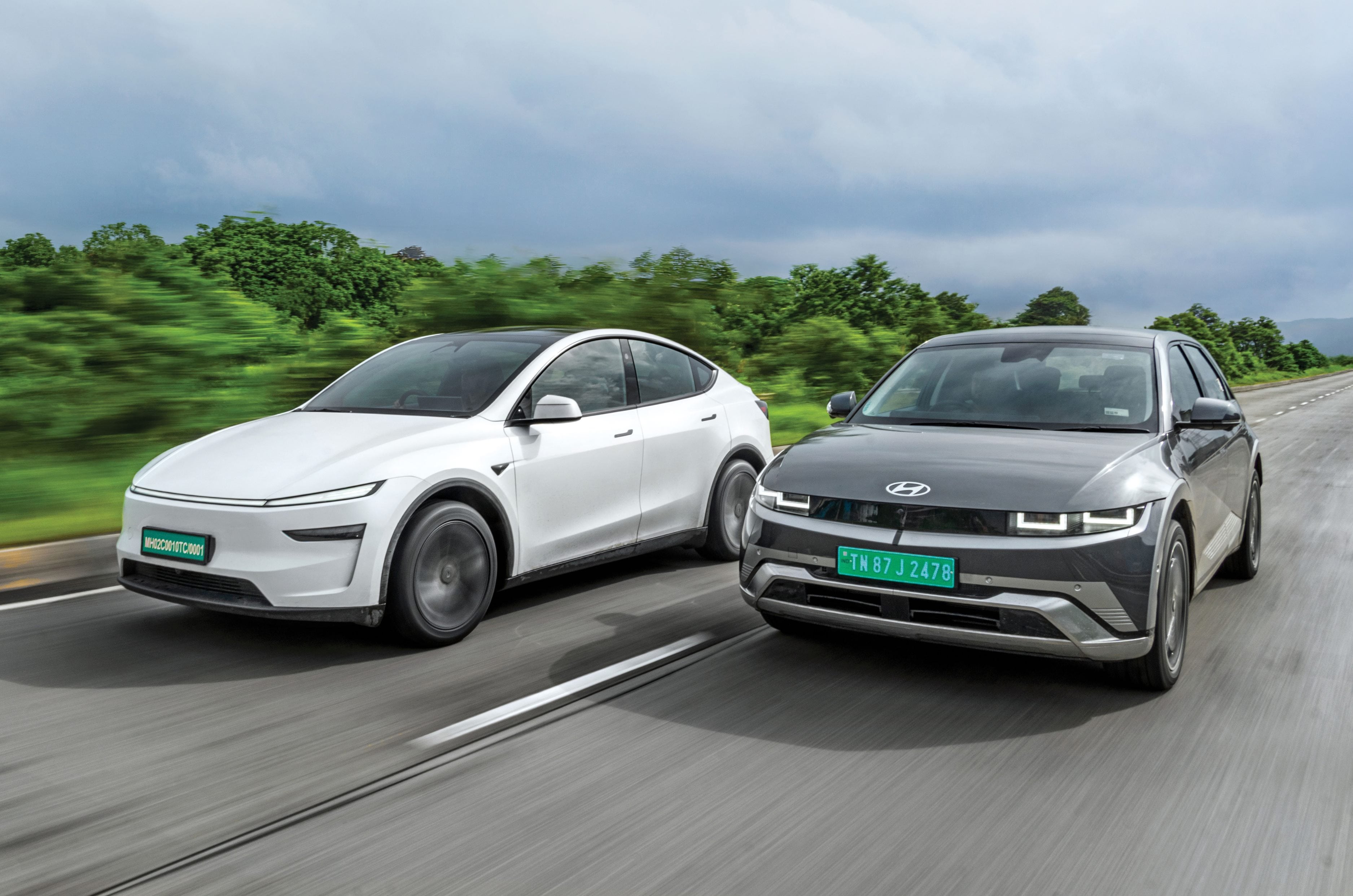
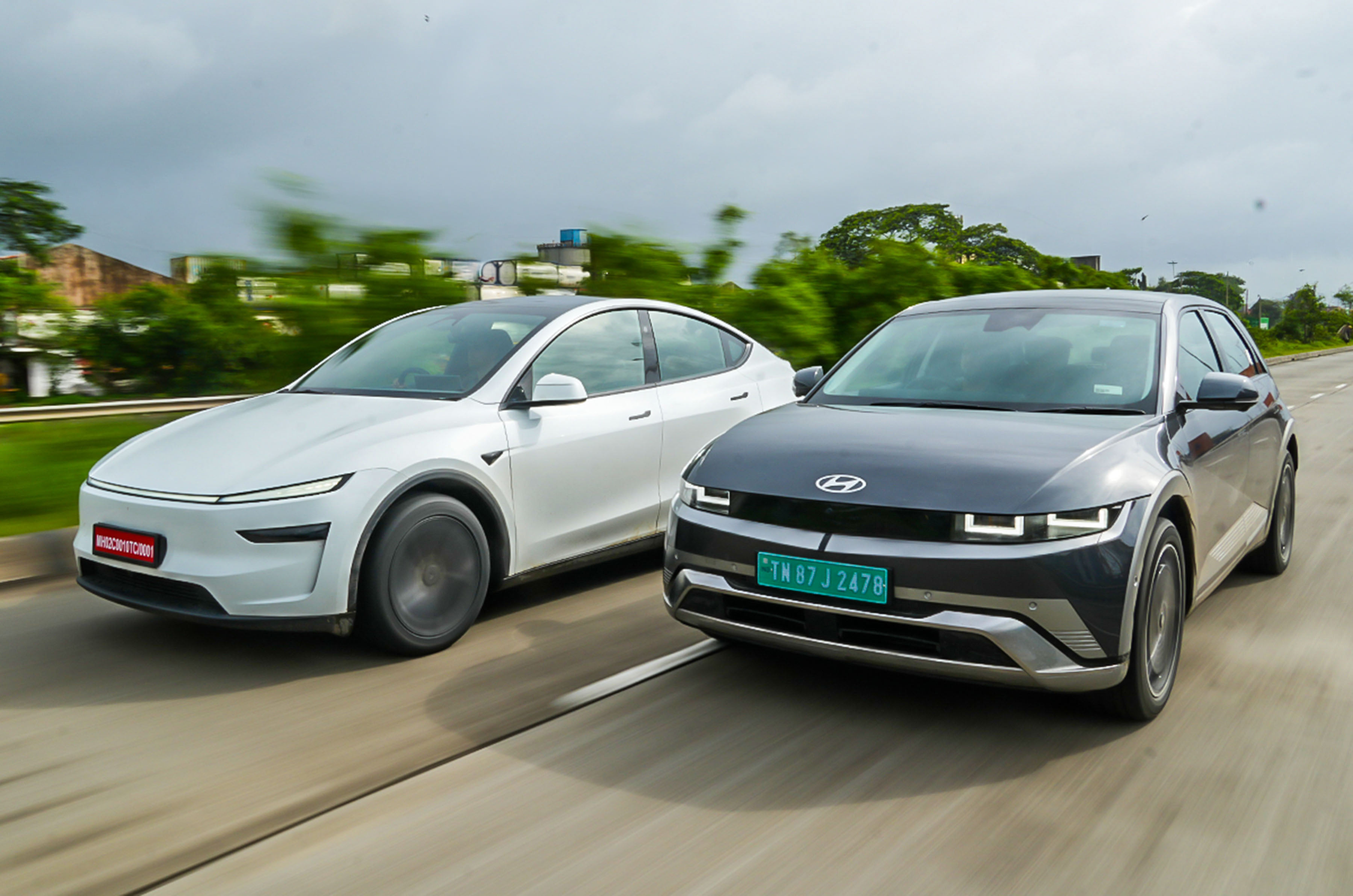
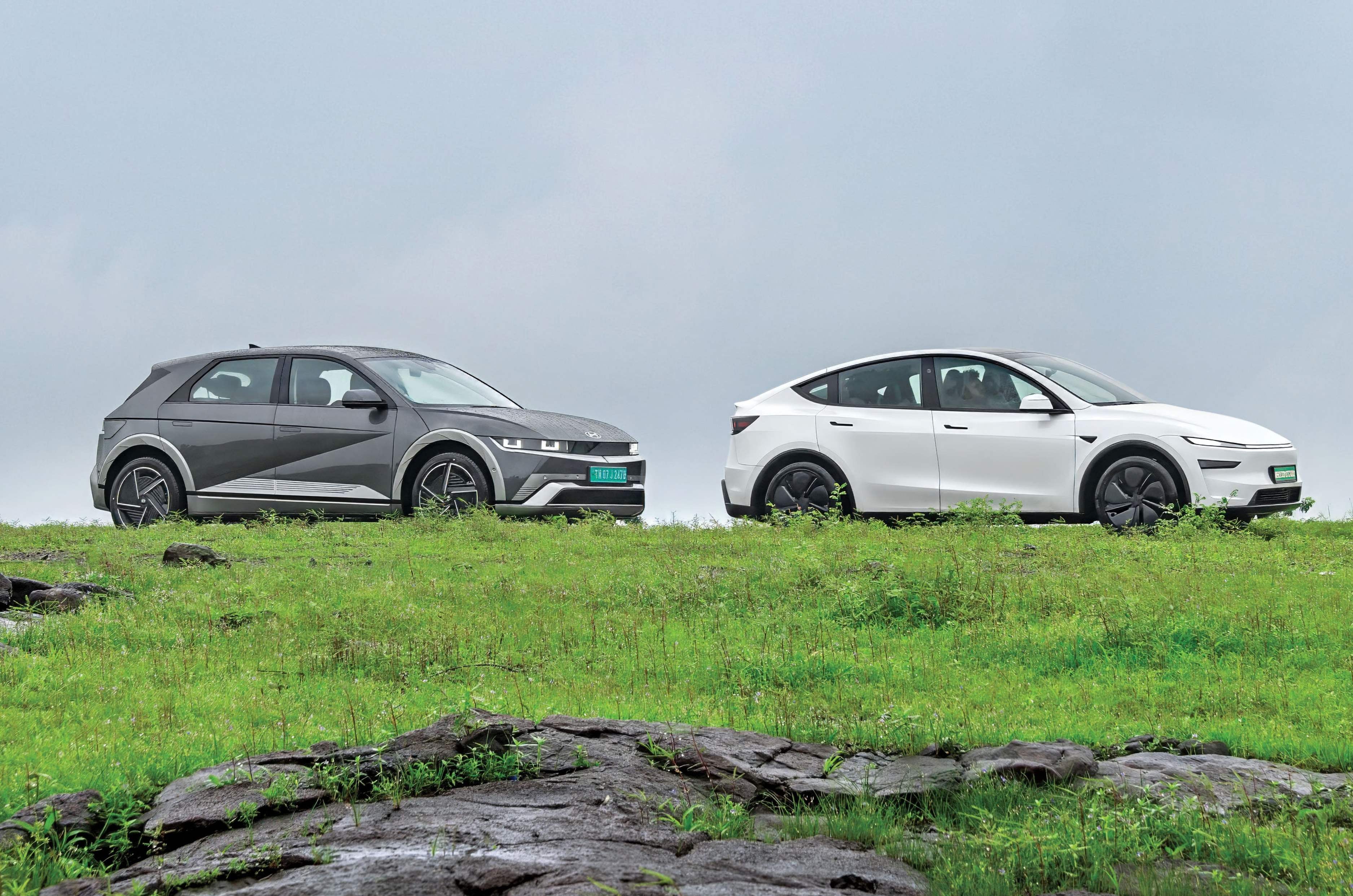
The Hyundai Ioniq 5 has been one of the standout EVs of recent years, so much so that we crowned it our 2024 Car of the Year. Back then, besides being one of the most impressive electric cars on sale, it was also among the most affordable in its segment. And when compared with rivals like the BYD Sealion 7 and BMW iX1, the Ioniq 5 came out on top thanks to its comfort, practicality and value.
Fast forward to 2026, and the landscape has changed. Hyundai has updated the Ioniq 5, and the biggest talking point is its larger 84kWh battery. But in the process, this value-focused EV has become one of the most expensive options available.
Tesla, meanwhile, has dropped prices. The Model Y now starts at just under Rs 51 lakh, undercutting the Ioniq 5 and transforming itself from one of the pricier alternatives into the more affordable option. With the pricing hierarchy flipped, this comparison has become more interesting than ever.
Tesla Model Y vs Hyundai Ioniq 5: Exterior design
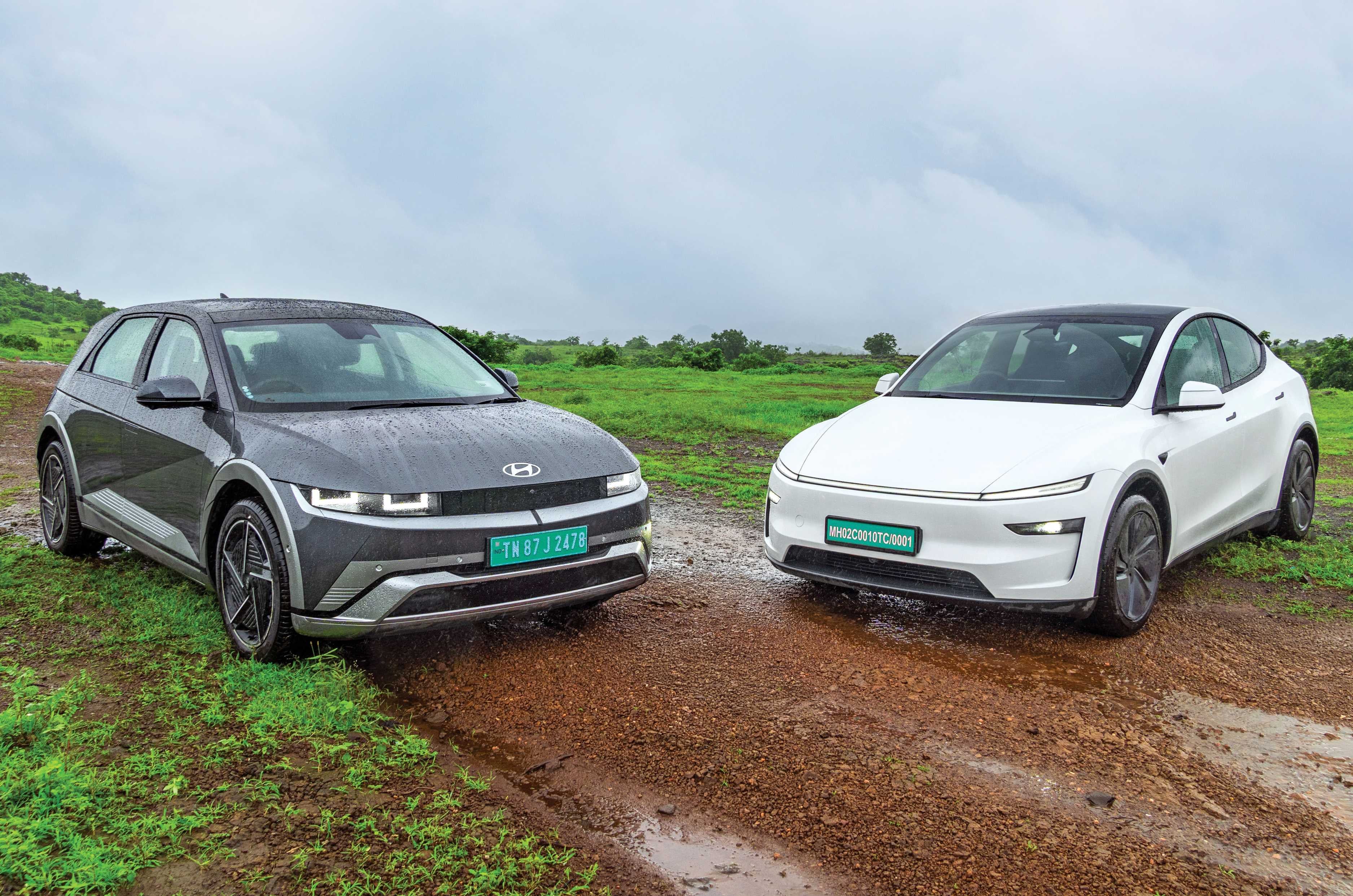
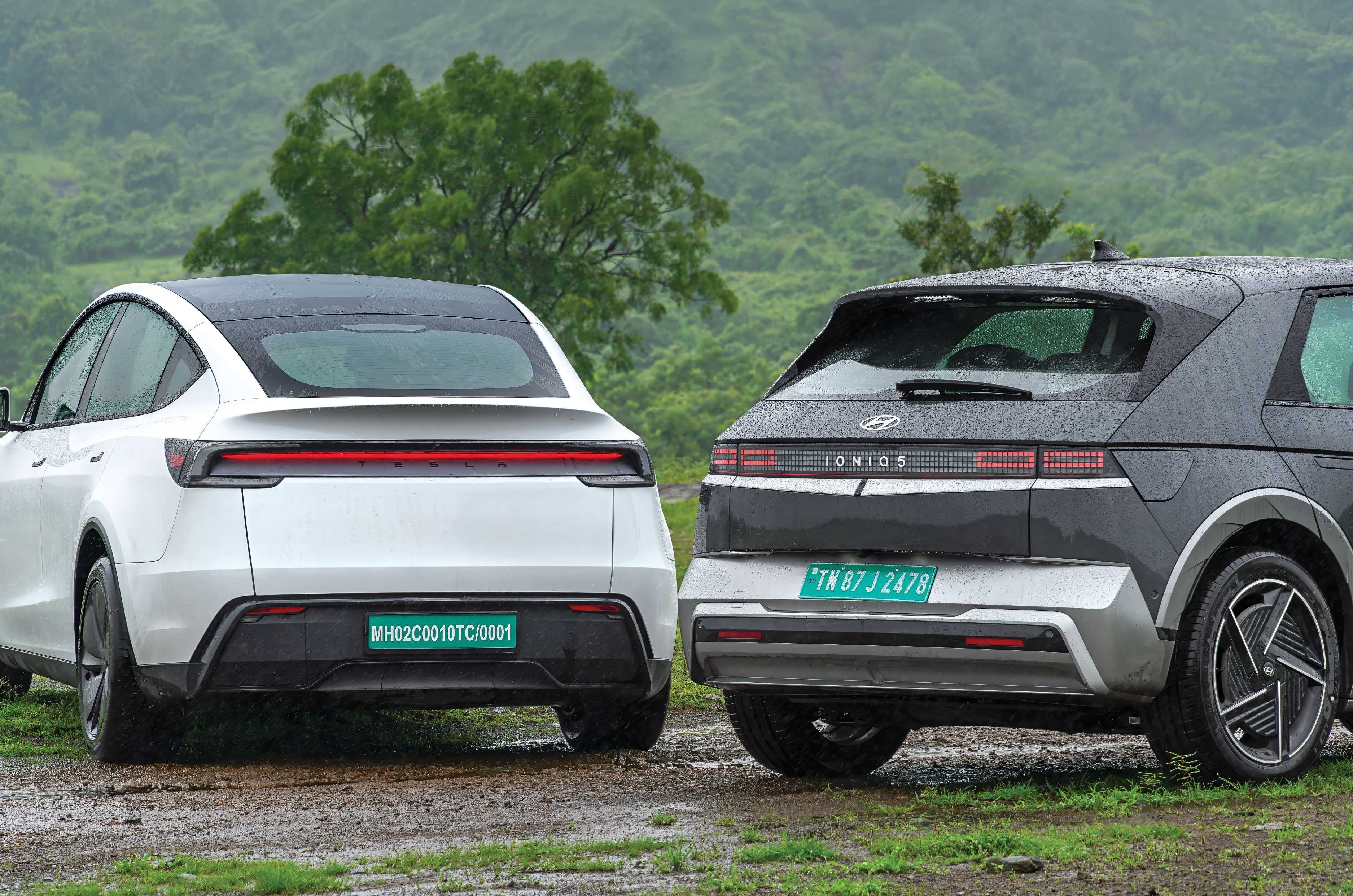
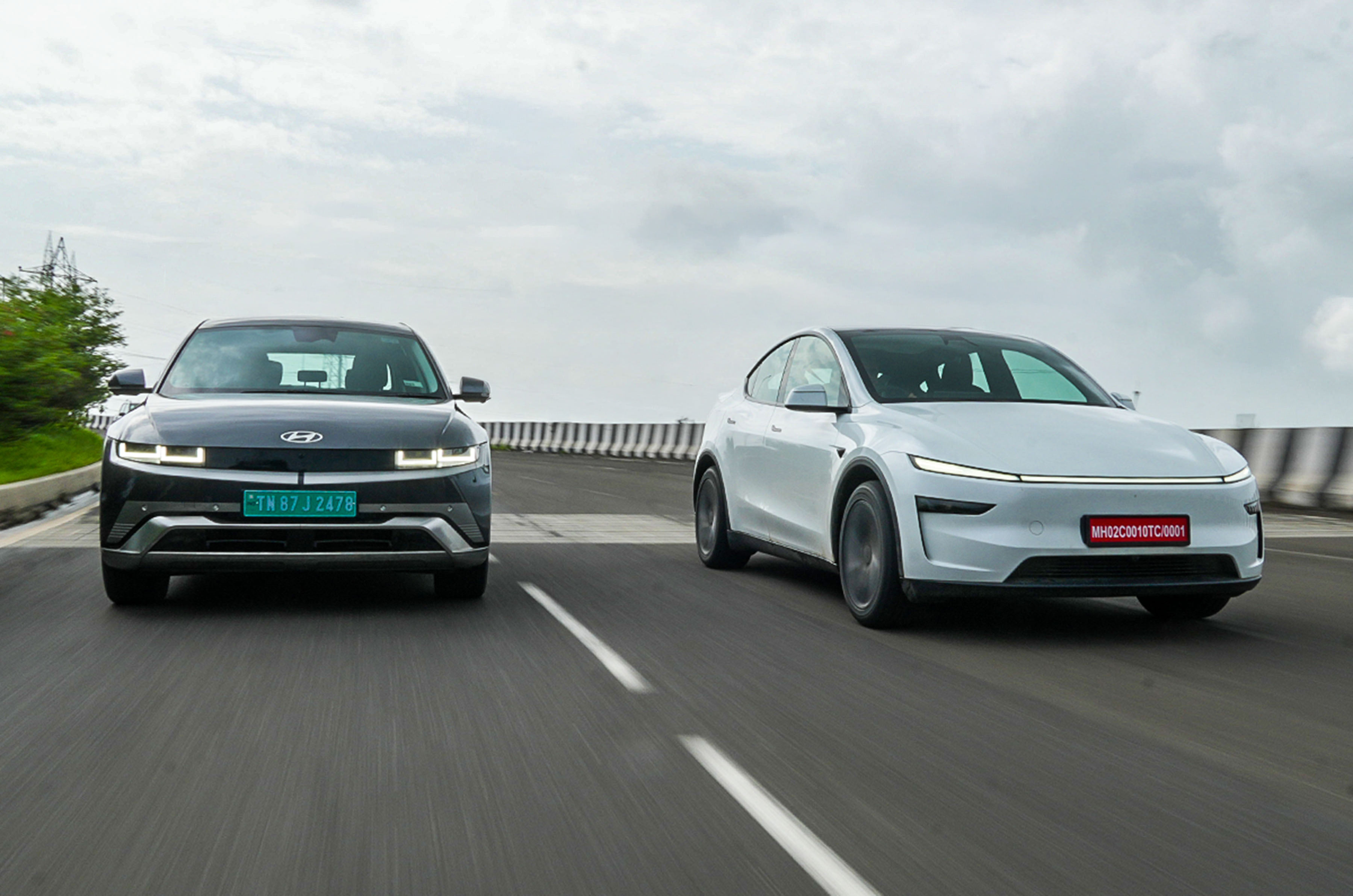
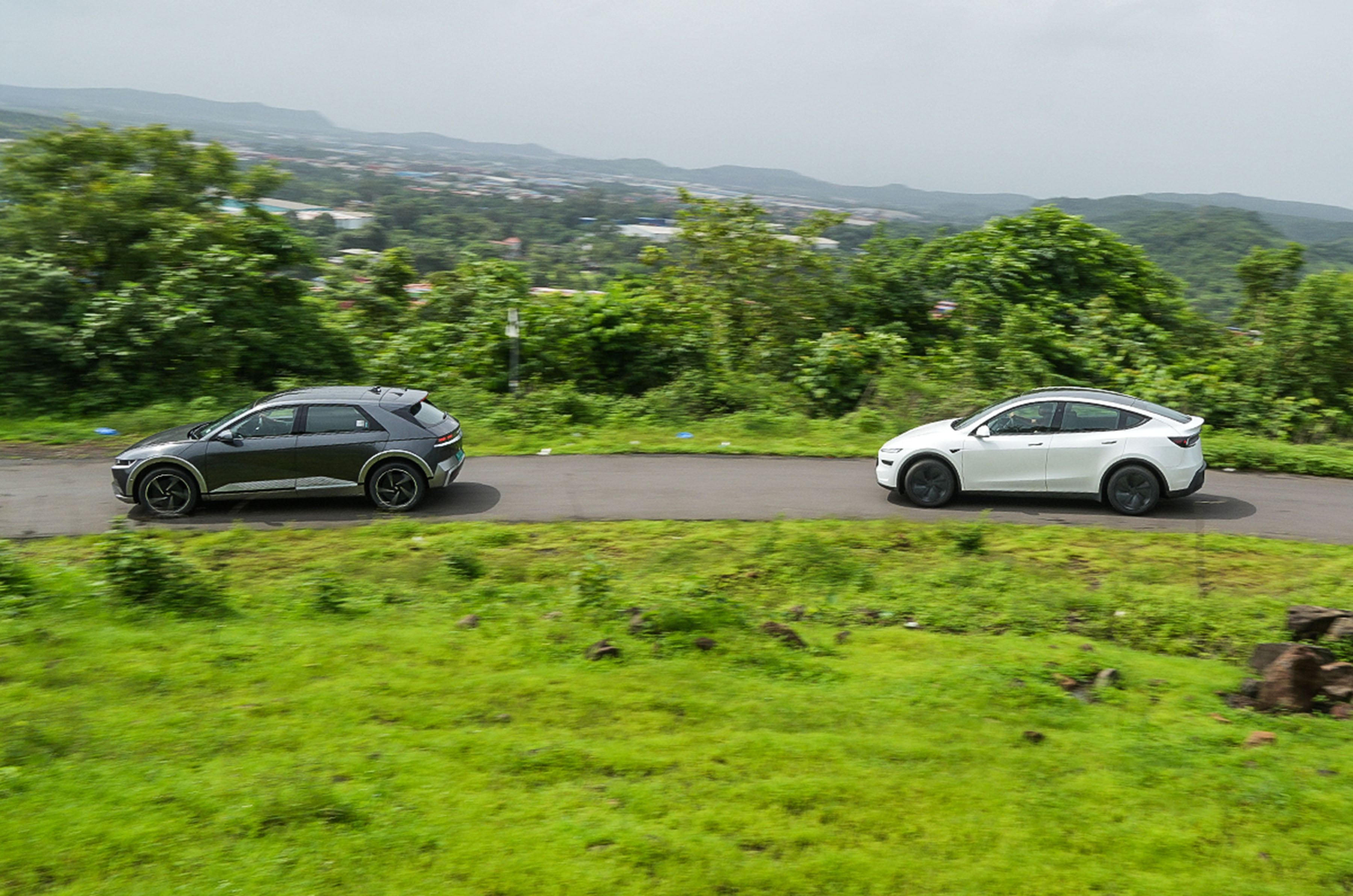
The Tesla Model Y is the larger vehicle overall, although the Hyundai counters with a longer wheelbase. Neither car follows a traditional SUV or sedan template, with muscular proportions and aggressive styling, but the Ioniq 5 stands out with its retro-futuristic design language, blending hatchback and crossover cues into a shape that is both distinctive and characterful. That said, its styling will continue to divide opinion.
The Tesla, by comparison, plays it a little safer. It too wears a crossover body style, but with a minimalist design that is unlikely to offend anyone. Frameless windows and a unique tail-lamp treatment with a hidden light bar add some flair to its otherwise fuss-free styling.
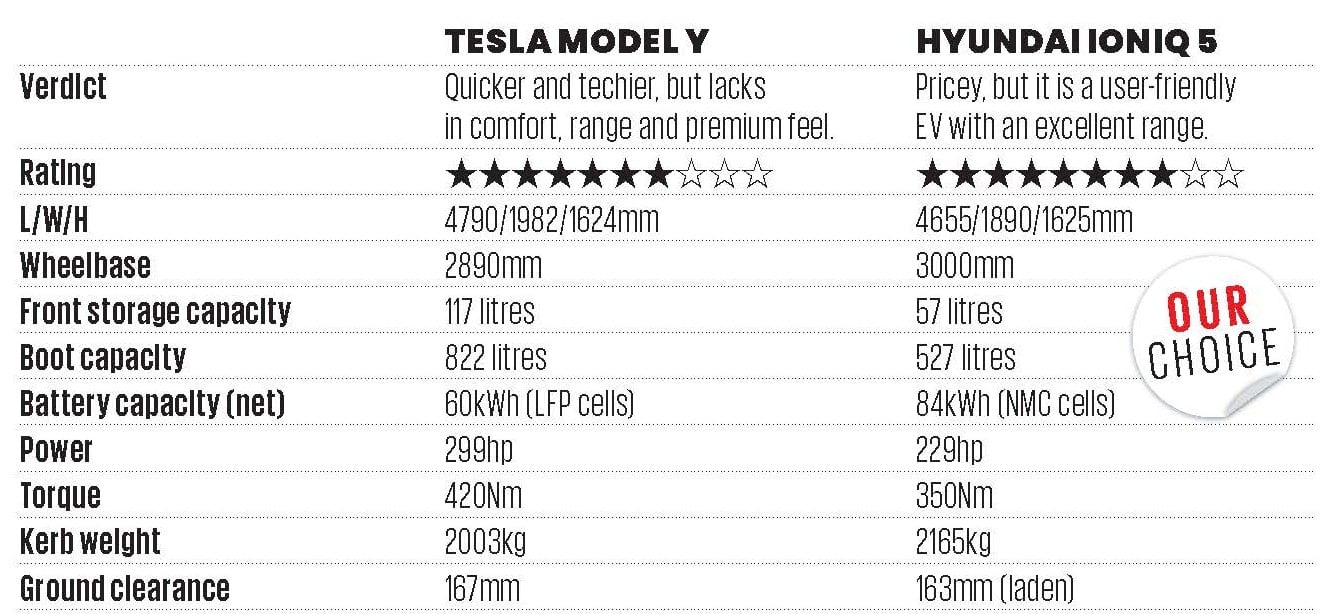
It’s worth noting that Tesla lists ground clearance at 167mm (unladen), while the Ioniq’s figure is specified as laden, coming in at 163mm. In the real world, the Tesla occasionally scrapes over unusually large speed breakers, while the Hyundai clears most of them despite its longer wheelbase.
Tesla Model Y vs Hyundai Ioniq 5: Interior and features
Takes minimalism to a whole different level, with merely a handful of physical controls. Lack of design elements, vegan materials don’t feel special.
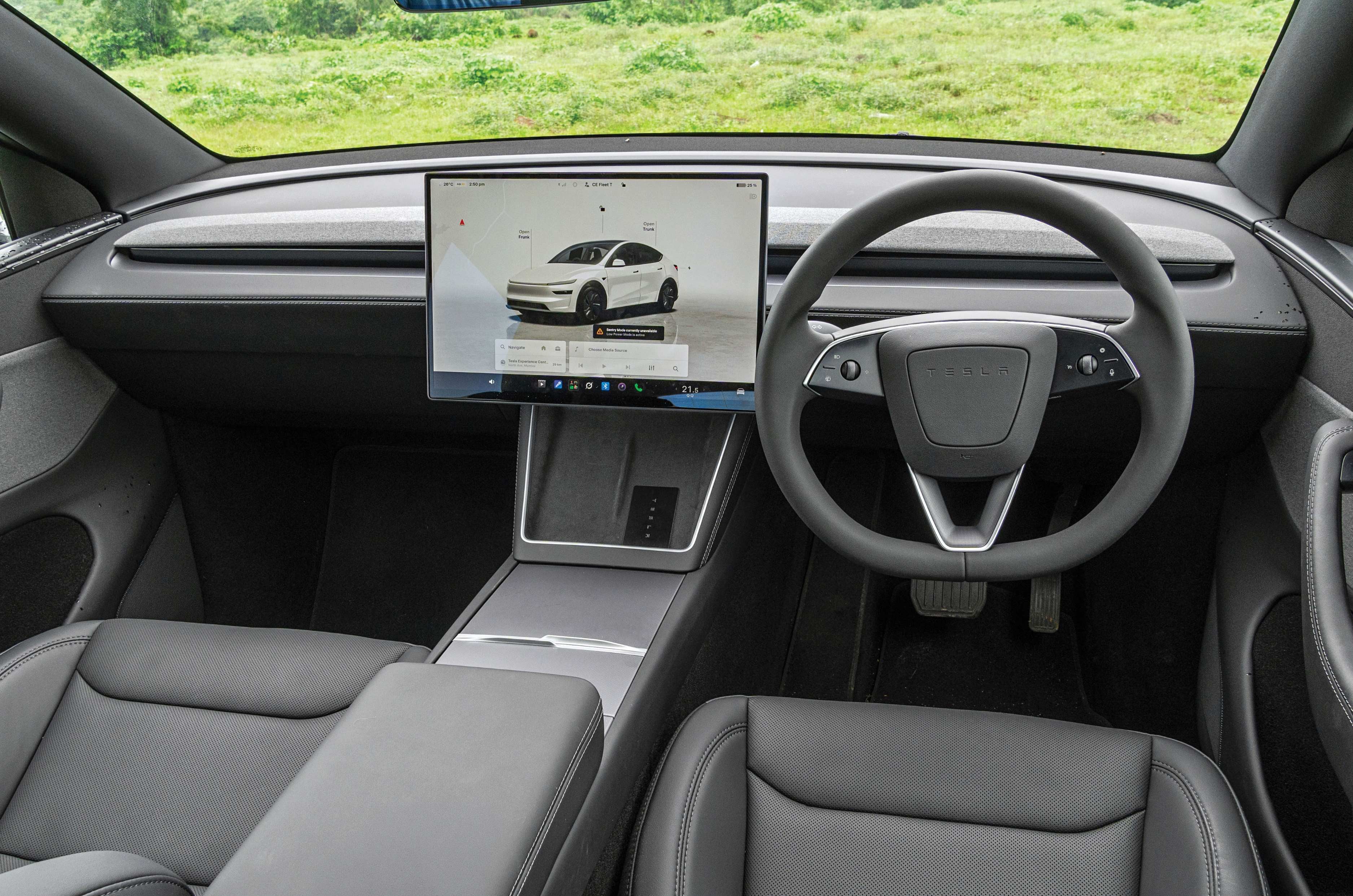
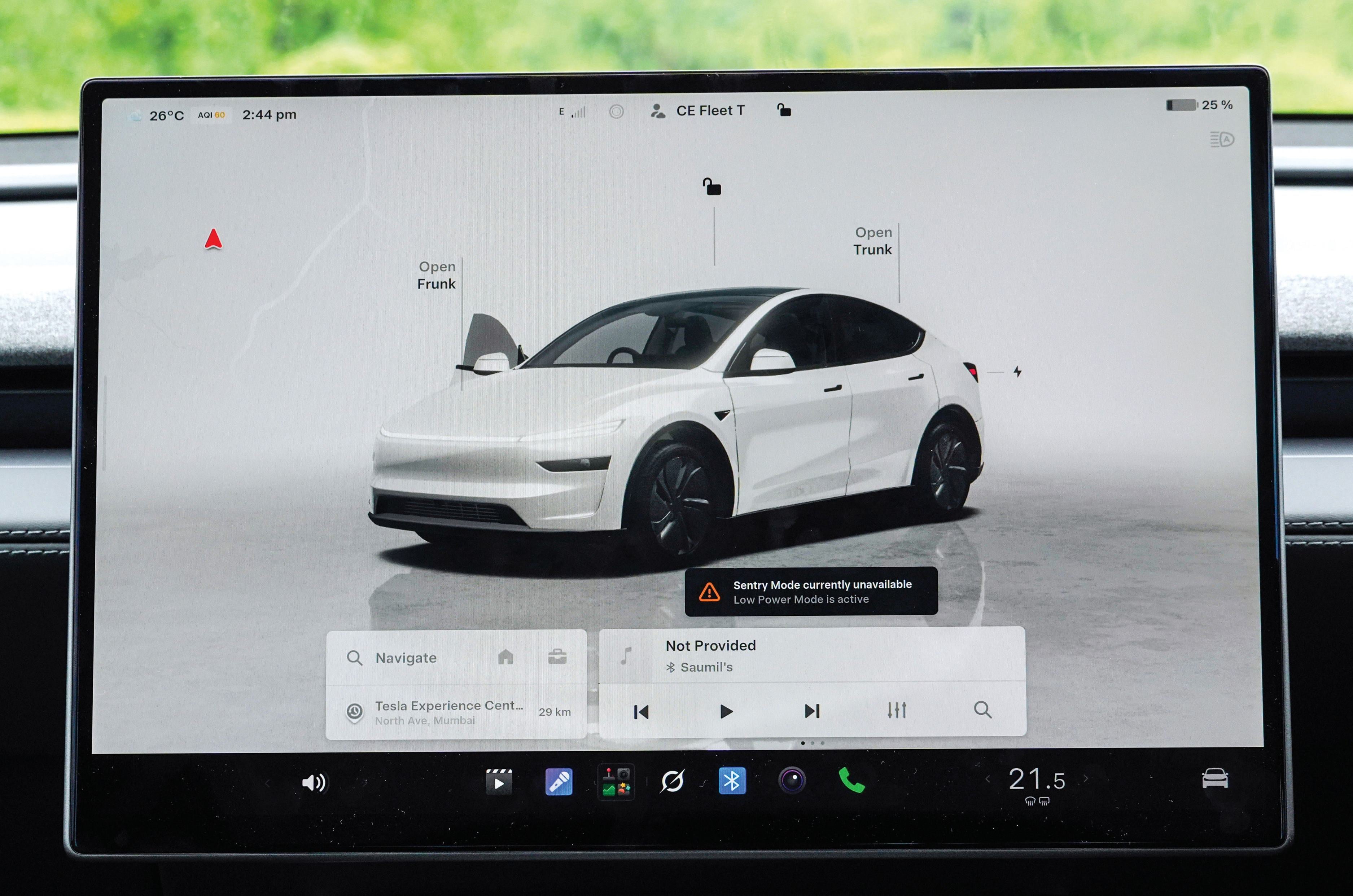
Tesla’s non-motorised flush door handles remain a usability frustration, requiring an awkward push-and-pull action to operate. On the inside, the Model Y’s cabin embraces minimalism to an even greater extent. Even the air vents are hidden. The lack of design elements looks clean, but this and the choice of materials diminish the sense of occasion one expects at this price point.
All functions are relegated to its slick screen.
Taking centre stage, quite literally, is a massive touchscreen. Nearly every function is controlled via the screen, including controls for the frunk, tailgate, glovebox, climate control, seats and steering, and mirror adjustments, among many others. This over-reliance on the touchscreen is daunting at first, but Tesla’s software experience is exceptional. The interface remains the benchmark for responsiveness, fluidity and overall usability.
The steering wheel features multi-function controls that take some time to get accustomed to. The high-beam flasher is integrated into the steering wheel too. Thankfully, the indicators and power-window switches remain physical controls. The lack of buttons might seem futuristic, but it often feels as though technology has taken precedence over usability. There are two charging pads, and below them sits an unusually bulky centre console that robs the cabin of some of its sense of space. Hampering usability further is the exceptionally deep storage area, which requires you to stretch to reach items placed inside.
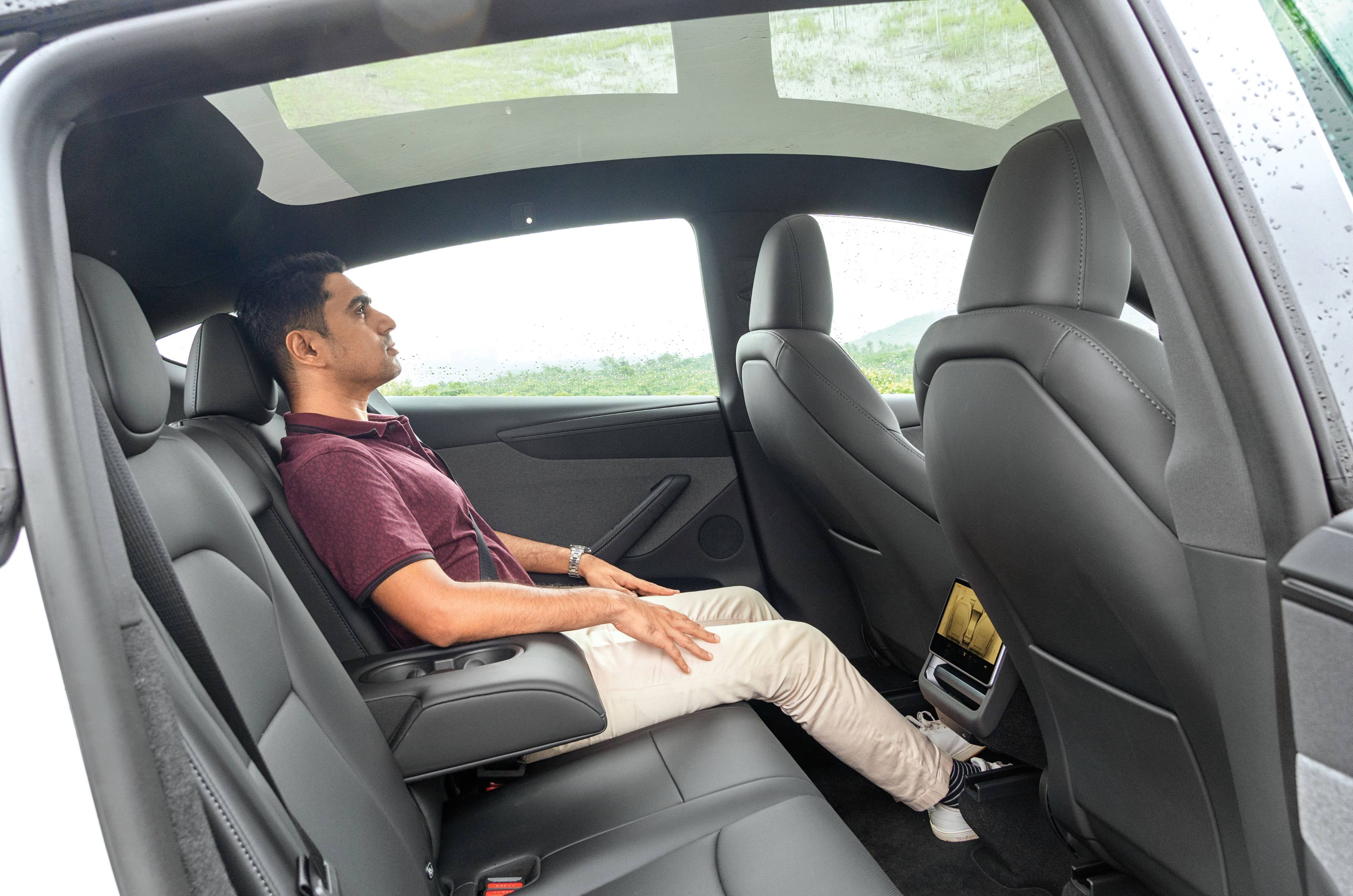
Albeit a bit low-set, this space feels airy thanks to its low window line.
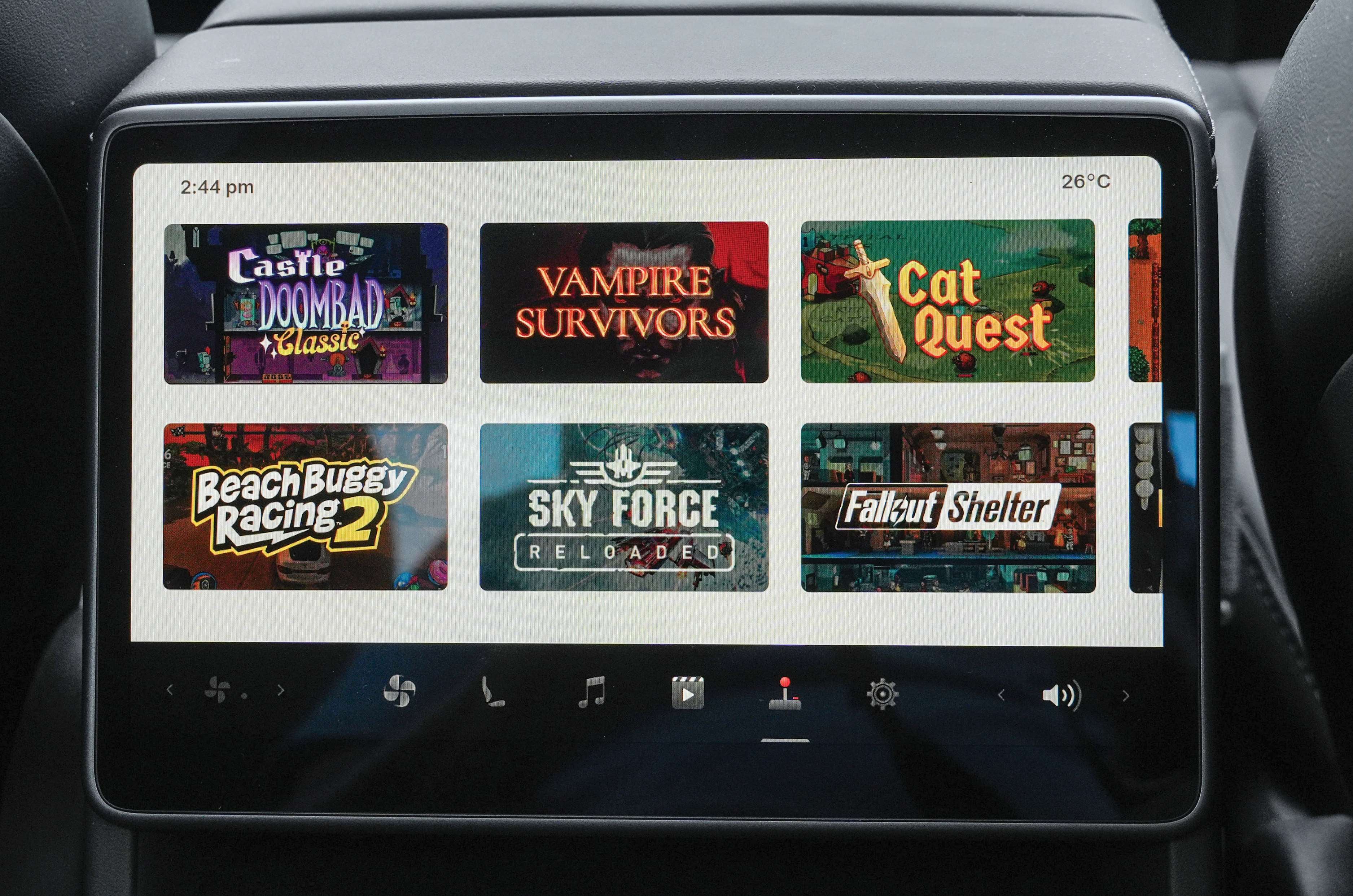
The front seats look simple and are surprisingly comfortable, with heating and ventilation functions. The rear seat is equally comfortable, although the seating position is somewhat low, resulting in a knees-up posture. What’s nice is that the backrest reclines to a comfortable angle. Rear-seat passengers are also treated to a dedicated touchscreen capable of controlling climate functions, streaming content and even gaming.
Rear screen for controls, games and videos.
One major drawback is that the sunroof still lacks a dedicated sunshade, causing the cabin to heat up considerably under the afternoon sun. The rear windows also miss out on sunshades.
More suited to our conditions, the black interiors are well-finished. It gets full marks as far as storage, ergonomics and usability goes.
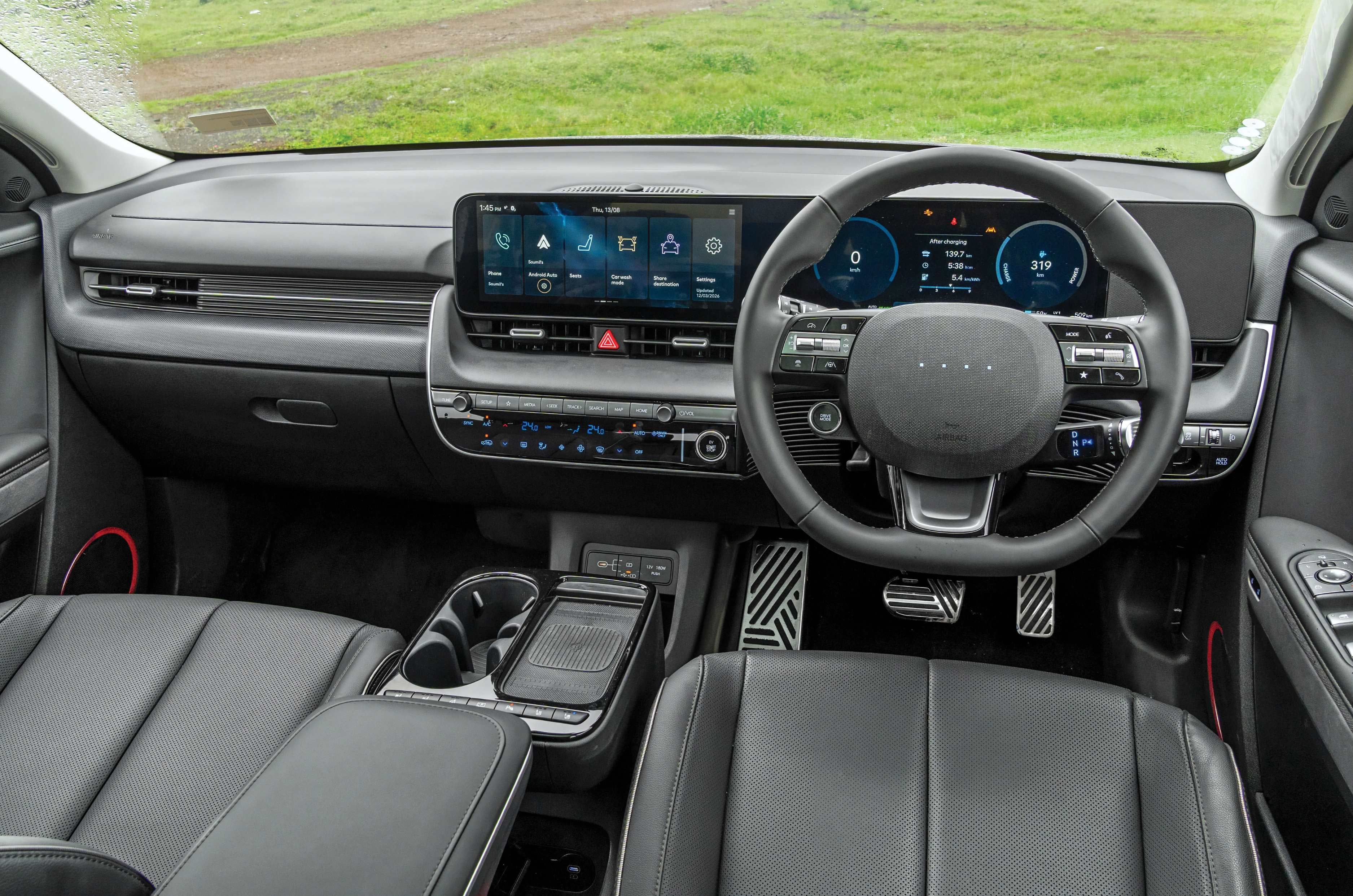
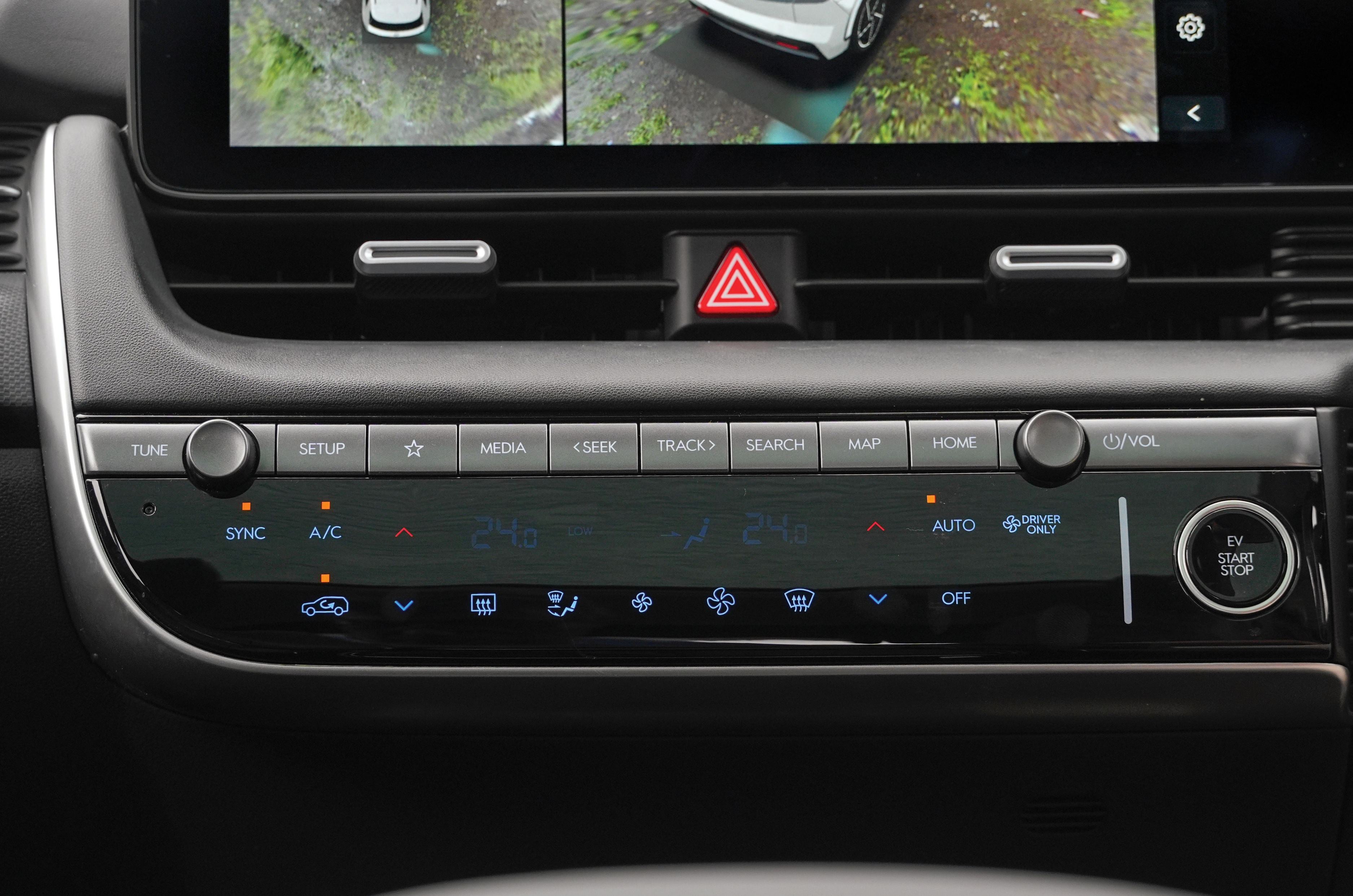
The Ioniq 5’s interior takes a more balanced, user-friendly approach. Not only does it get motorised pop-out door handles, but its cabin also combines touch-sensitive controls with physical buttons and knobs, creating an environment that feels intuitive from the moment you step in.
Thankfully, it retains physical controls.
Material quality is impressive, and where the Hyundai truly excels is in comfort and practicality. Storage areas are thoughtfully integrated throughout the cabin, and the sense of space is outstanding, making the Ioniq 5 particularly easy to live with.
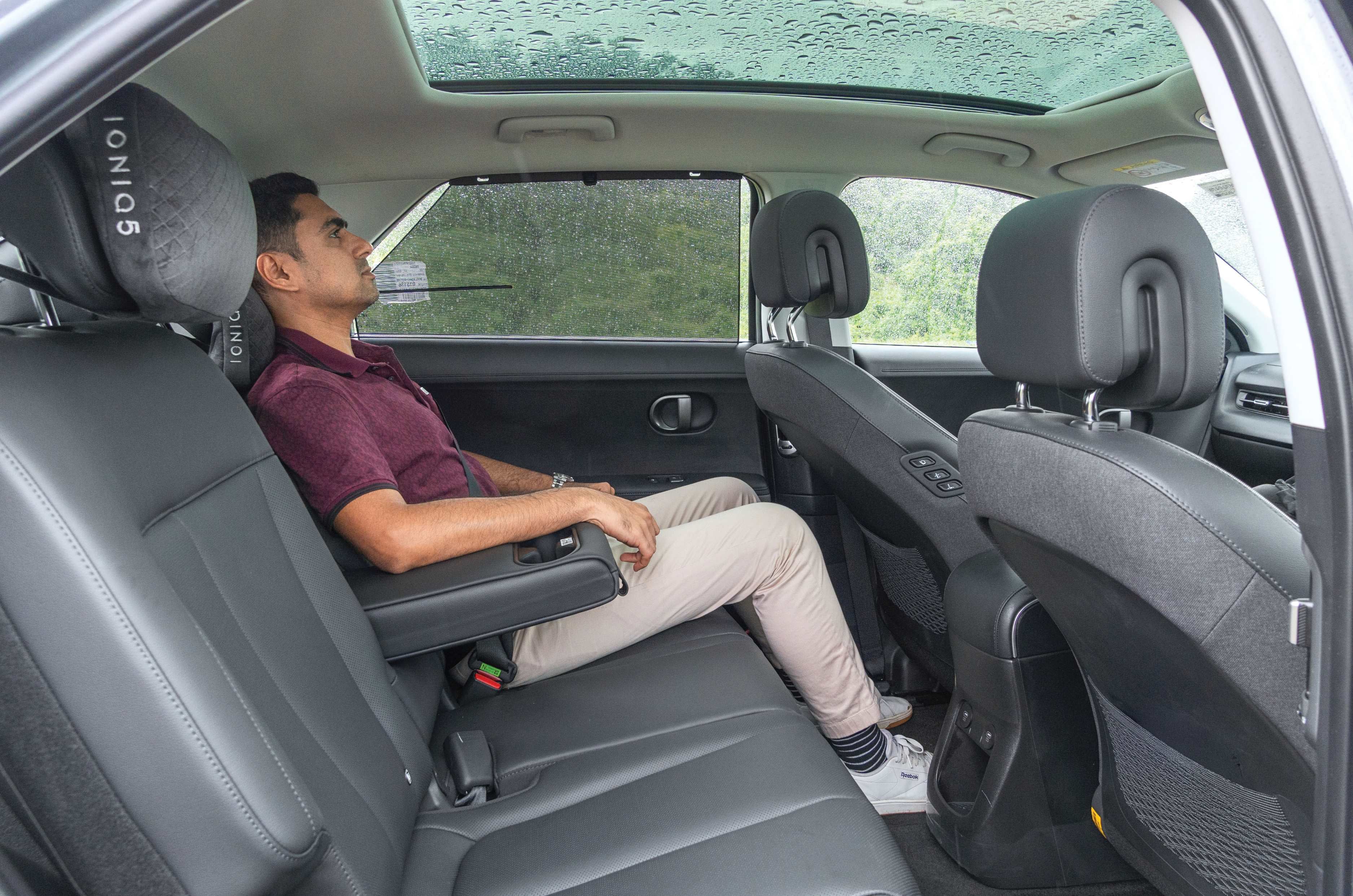
Slide, recline, boss function and sunshades mean a better rear experience.
The front seats are broader and more comfortable, with extensive adjustment, including an ottoman-style leg support. Both front seats can be set up in a ‘zero-gravity’ position, where your back is reclined and legs lifted on the ottoman, making it very comfy. Plus, you can have the seats cooled or heated too, which adds to the relaxing experience. Rear-seat comfort is equally impressive, thanks to a bench that both slides and reclines. While it doesn’t get a dedicated rear screen like the Tesla, it does offer window sunshades and a 3-pin socket to power larger electronic devices.
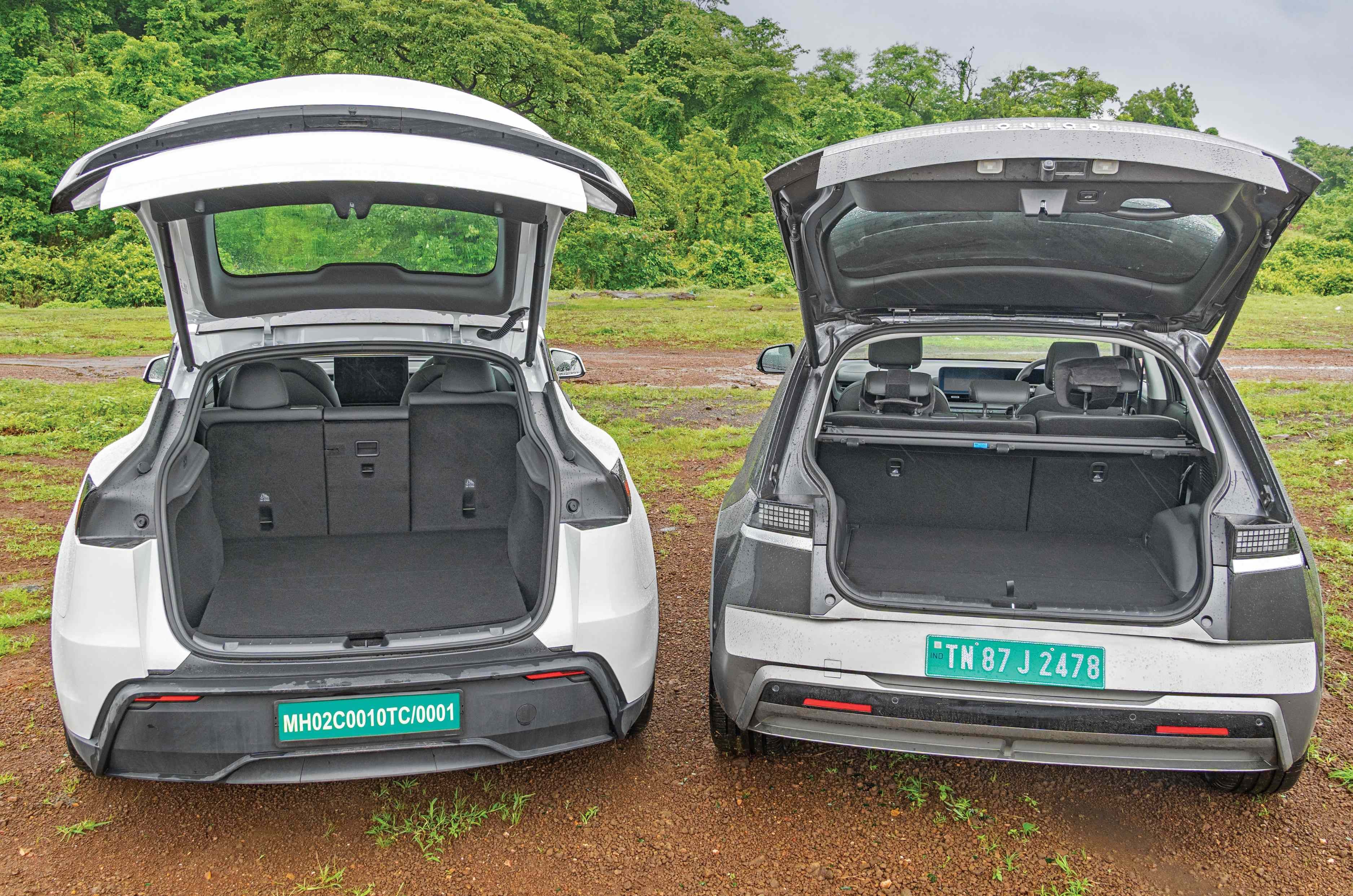
Along with a larger boot, the Tesla gets substantial underfloor storage.
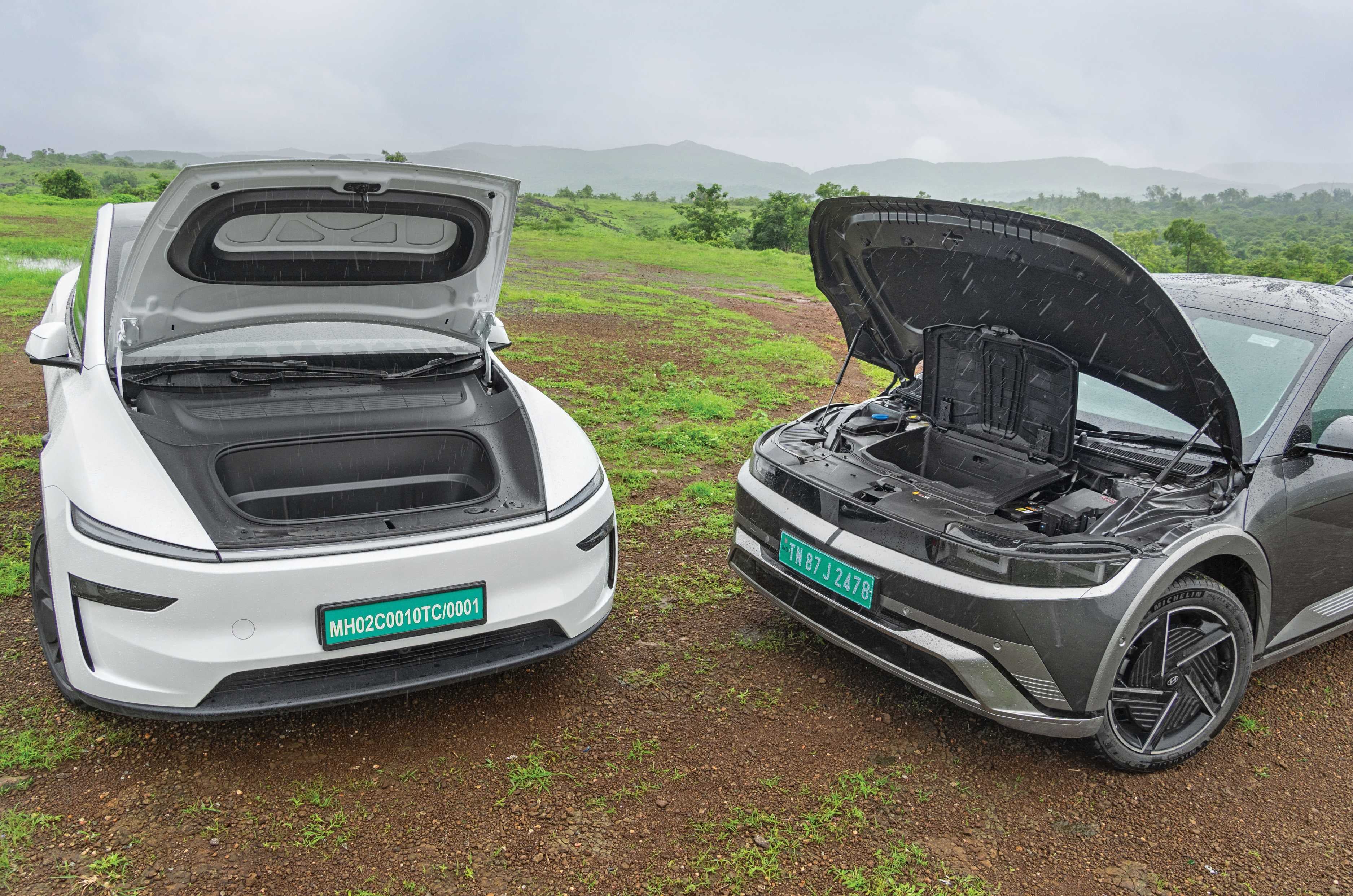
The Tesla regains some lost ground when it comes to luggage-carrying capacity. Its front luggage compartment is broader and deeper than the Ioniq’s, and its boot is more spacious too. Additionally, it offers even more storage space beneath the boot floor. The Ioniq 5, on the other hand, not only falls a bit short in outright boot capacity, but also has a relatively higher loading lip, making it slightly more challenging to load heavy luggage.
The Model Y has a deeper and wider front-loading area than the Hyundai.
Tesla Model Y vs Hyundai Ioniq 5: Powertrain and performance
Hyundai has increased the battery size from 72.6kWh to 84kWh (gross capacity) while continuing to use Nickel Manganese Cobalt (NMC) cell chemistry. This feeds a 229hp/350Nm rear-mounted motor, which is 12hp more than before. However, the larger battery has pushed kerb weight up to 2,165kg, which is 150kg more than the outgoing version.
In contrast, the Model Y uses a 64kWh (gross capacity) battery with Lithium Ferrous Phosphate (LFP) cell chemistry, powering a 299hp/420Nm rear-mounted electric motor. While it is significantly more powerful, the Tesla is also 162kg lighter. As a result, its performance feels considerably stronger. It feels quicker off the line, accelerates harder and responds more eagerly to throttle inputs than the Hyundai.
Tesla keeps things simple with just two drive modes: Standard and Chill, the latter serving as an economy setting. Impressively, Chill mode remains highly usable and, despite being toned down, still accelerates as strongly as the Hyundai in its sportiest setting.
Tesla Model Y vs Hyundai Ioniq 5: Acceleration test (in seconds)
Tesla Model Y
Hyundai Ioniq 5
20kph
1.29
1.31
40kph
2.33
2.66
60kph
3.48
4.05
80kph
4.69
5.71
100kph
6.19
7.97
120kph
8.23
10.83
140kph
10.78
14.63
160kph
14
20.27
To put its performance into perspective, the Model Y accelerates from 0-100kph in just 6.19 seconds in Standard mode and reaches its 203kph top speed in roughly 25 seconds. Even in Chill mode, it completes the 0-100kph run in a respectable 8.25 seconds, just 0.28 seconds slower than the Ioniq 5. More interestingly, the Tesla reaches 160kph in 18.58 seconds, making it 1.6 seconds quicker to the mark.
Tesla Model Y vs Hyundai Ioniq 5: Regenerative braking distance (80-20kph)
Tesla Model Y
Hyundai Ioniq 5
Strongest
116.71m (Standard)
136.45m (i-Pedal)
Weakest
223.55m (Reduced)
391.50m (Level 1)
In the Model Y, regenerative braking has just two modes – Standard and Reduced – and the retardation is seamless, though quite strong when you lift off the accelerator. Notably, Standard mode generates stronger deceleration than the Ioniq 5 in its most aggressive single-pedal setting. And while both cars support true one-pedal driving, the Tesla’s implementation feels more natural and intuitive. The Ioniq, though, with its multiple levels, can be set up to have retardation feel more ICE-like and thus very familiar.
Turning our attention to the Hyundai Ioniq 5, it may not dominate traffic-light drag races, but the good news is that power delivery is exceptionally smooth, and the overall driving experience feels highly refined. It offers multiple drive modes that alter part-throttle responses, steering feel and brake-pedal feel, although outright acceleration remains largely unchanged between them.
In general, the Ioniq 5’s cabin feels slightly more hushed than the Model Y’s, with a quieter motor and lower levels of road and tyre noise. Notably, though, the Tesla’s frontal sound insulation is exceptional – from inside the cabin, you would swear its horn is rather meek, but we assure you, that isn’t the case.
Tesla Model Y vs Hyundai Ioniq 5: Ride and handling
The Model Y is quicker, but the Ioniq 5 betters it on range and fast-charging speed.
On the move, the Model Y inspires confidence. High-speed stability is excellent, and it changes direction with greater eagerness compared to the Ioniq. The small-diameter steering wheel offers different weight settings, but even its lightest mode feels substantial; it isn’t that light, one-finger-twirl setup and does come across as heavy. Ride comfort also doesn’t feel particularly plush. The suspension is quite firm and thuds noticeably over potholes and broken surfaces, making it less suited to rough Indian roads.
The Ioniq 5 takes a different approach. It feels far more comfortable and user-friendly, thanks to lighter steering and a softer suspension that, despite its 20-inch alloy wheels, absorbs road imperfections with much greater composure than the Tesla. The result is a more relaxed and comfortable driving experience. Sure, it doesn’t feel as sporty while changing direction and can feel a touch floaty at higher speeds, but that is a compromise many buyers will gladly accept for its low-speed pliancy and overall comfort.
Tesla Model Y vs Hyundai Ioniq 5: Range and efficiency
For our real-world range test, we ran the Hyundai Ioniq 5 in Eco mode and the Model Y in Chill mode, with the former’s regenerative braking set to Level 2 in the city and Level 1 on the highway, and the latter’s set to Standard in the city and Reduced on the highway.
As far as efficiency goes, the Ioniq 5 was more efficient in the city, delivering 6.22km/kWh, while the Model Y managed 5.84km/kWh. On the highway, the Tesla’s superior aerodynamics yielded 6.52km/kWh, whereas the Ioniq 5 managed 5.71km/kWh. However, thanks to Hyundai’s substantially larger battery, its overall average range extrapolates to 501km, comfortably ahead of the Tesla’s 371km.
Tesla Model Y vs Hyundai Ioniq 5: Real-world range and efficiency
Tesla Model Y
Hyundai Ioniq 5
Claimed range
500km
690km
City range
350km
523km
City efficiency
5.84km/kWh
6.22km/kWh
Highway range
391km
479km
Highway efficiency
6.52km/kWh
5.71km/kWh
Average range
371km
501km
Average efficiency
6.18km/kWh
5.96km/kWh
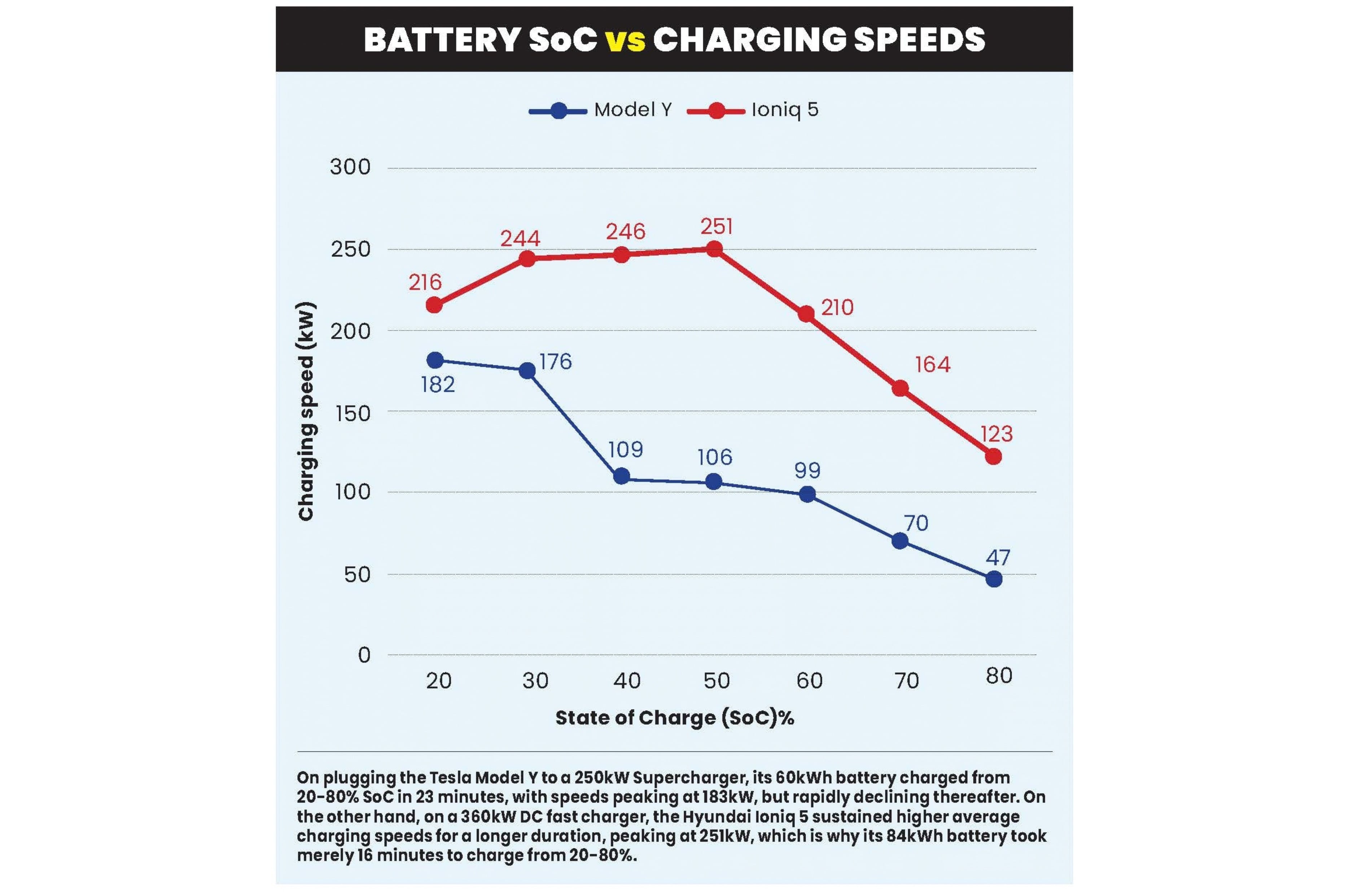
As for charging performance, we plugged the Model Y into a 250kW Tesla Supercharger, where it achieved peak charging speeds of 183kW. However, the Model Y does not sustain such high speeds for long, and its 60kWh battery is charged from 20-80 percent SoC in 23 minutes. From there, it took an additional 30 minutes to reach a full charge.
The Hyundai Ioniq 5 performs even better. Connected to a 360kW DC fast charger, its 800V electrical architecture enabled it to consistently maintain higher average charging speeds, peaking at 251kW. As a result, its 84kWh battery charged from 20-80 percent SoC in just 16 minutes. Like the Tesla, however, it required an additional 33 minutes to charge from 80 percent to full.
Tesla Model Y vs Hyundai Ioniq 5: Verdict
The Ioniq 5 no longer offers the value it once did. The Model Y, however, does.
The Tesla Model Y makes a compelling case for itself. It is quicker, more technologically advanced and backed by software that remains among the best in the automotive world. Crucially, it is now the more affordable option, making it a very tempting proposition. However, its over-reliance on the touchscreen, heavy steering, a firm low-speed ride and limited range due to the smaller battery count against it.
In comparison, the Hyundai Ioniq 5 remains the more rounded package. Its superior ride comfort, more intuitive cabin, significantly longer real-world range and impressive charging performance give it a clear edge where it matters most. More importantly, it feels better adapted to Indian roads and daily usage, thanks to its lighter steering and more comfortable ride.
At current prices, though, the Hyundai no longer holds the value card, nor does the brand command the same equity or snob value as some similarly priced rivals. But judged purely on its merits, the Hyundai Ioniq 5 continues to be the best all-round EV at this price point and thus gets our vote.
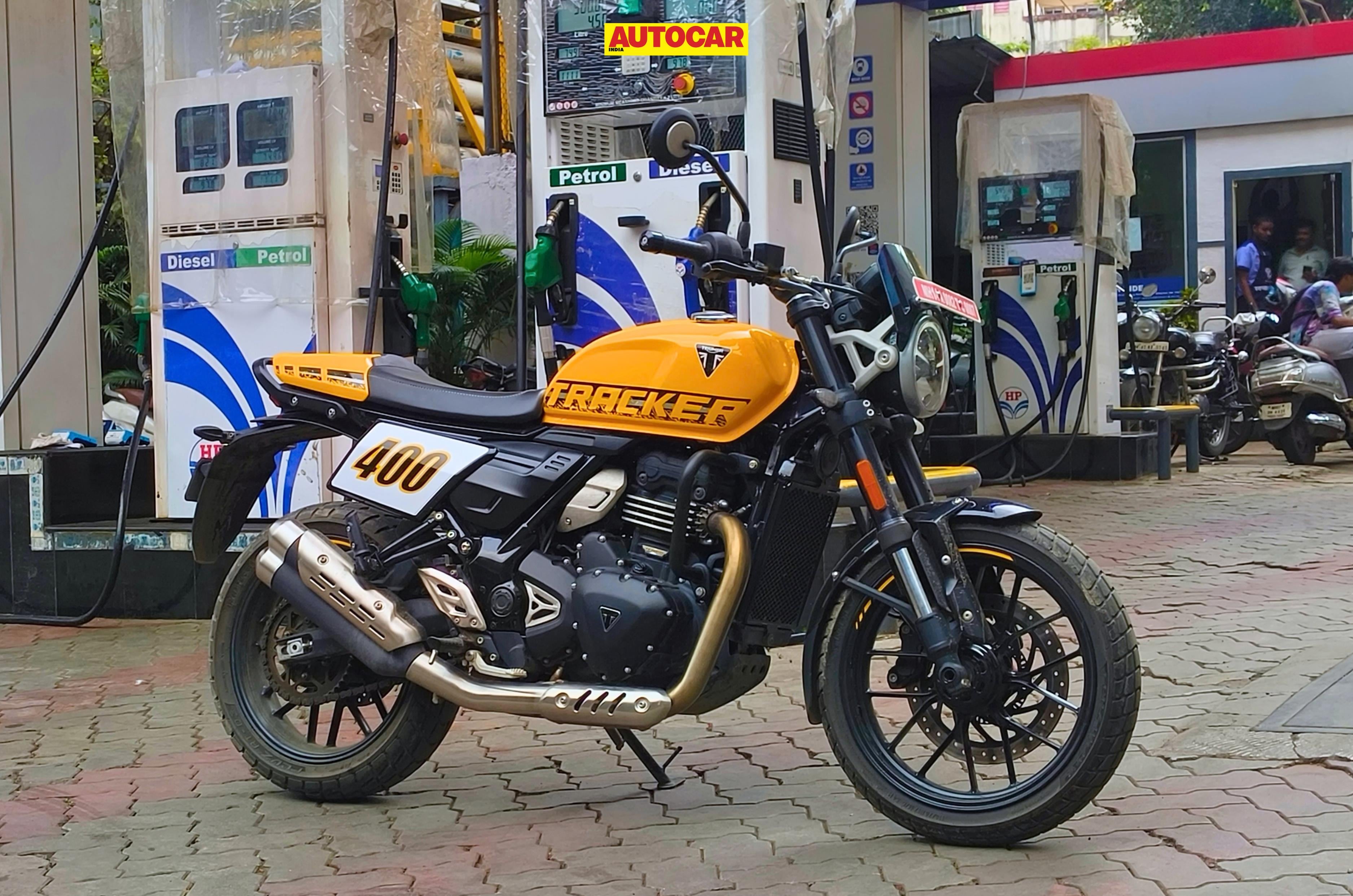
The Triumph Tracker 400 is the most recent launch from the brand in their 400 line-up. It uses the down-sized 349cc liquid-cooled single-cylinder engine in its higher state of tune, like the Thruxton 400. We’ve been able to spend some extensive time on the saddle and here’s how much fuel economy it returned in our standard test.
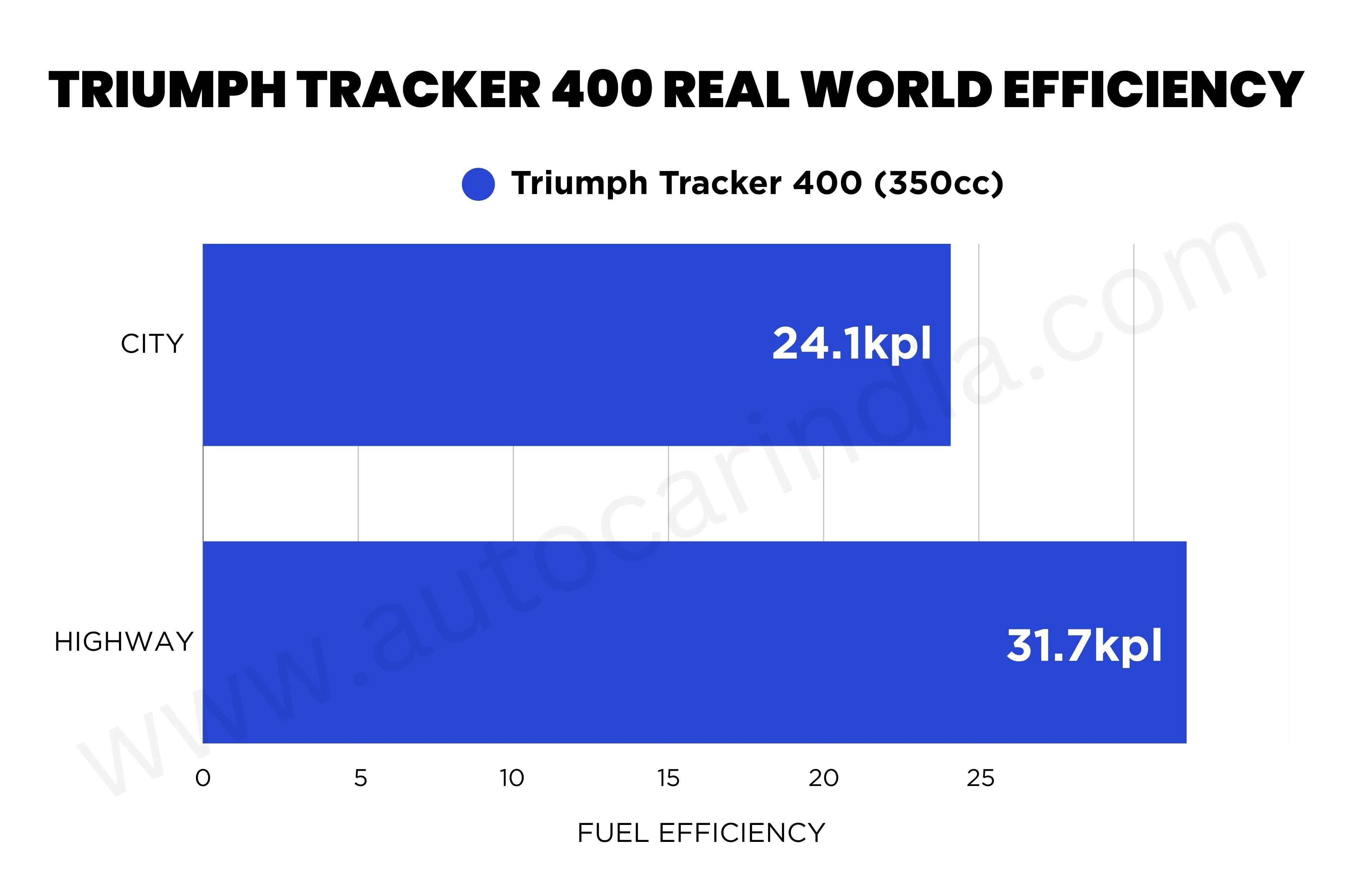
Tracker 400 returned 24.1kpl in the city, 31.7kpl on the highway
As is our testing procedure, we first ran the Tracker 400 on the highway for a little over 44km at steady speeds of 75-80kph. At the end of it, the Tracker 400 required 1.4 litres of petrol to brim the fuel tank, thus achieving a fuel efficiency figure of 31.7kpl.
After this, we ran the Tracker for just over 44km in the city confines of South Mumbai, keeping pace with usual city traffic. After this, it took another 1.83 litres of petrol to fully fill the tank, resulting in a city fuel economy of 24.1kpl.
Triumph Tracker 400 fuel economy analysis
The Tracker 400 isn’t as effortless to ride in the city compared to the Speed 400
As mentioned above, the Tracker 400 has a slightly more powerful engine compared to the other 400s from Triumph other than the Thruxton. It achieved a decent 24.1kpl in the city and 31.7kpl on the highway, resulting in an average fuel economy of 27.9kph. This gives the Tracker a tank range of 360km before you need to fill up again. The engine of the Tracker 400 feels tractable enough to cruise at lower speeds in higher gears. However, since its downsizing, the 349cc Bajaj-made Triumph engine does need to be revved higher to make quick progress, which does impact fuel economy.
Out on the highway, the bike felt relaxed cruising at 80kph (the legal speed limit on our testing patch), without the engine showing any signs of strain and there was enough power in reserve to make quick overtakes, although a downshift or two would help make quicker progress.
Autocar India’s fuel-efficiency testing
Our fuel-efficiency testing routine starts by first brimming the tank and ensuring the bike is running the manufacturer’s recommended tyre pressures. The bike is then ridden on fixed city and highway routes, where we maintain average speeds that best mimic real-world scenarios as well as keeping speed limits in mind. The payload on the bikes is kept constant by balancing rider weights and ballast, ensuring consistency across different vehicles and riders. At the end of the test cycle, the fuel tank is once again filled to the brim, giving us an accurate figure of how much fuel has been consumed against the trip meter reading.
Renault is finally gearing up launch the Duster hybrid in India on October 17. This will be the third powertrain option on the Duster, adding to the existing 1.0-litre and 1.3-litre turbo-petrol engines. Called the E Tech system, Renault says it draws from its experience and expertise in Formula 1.
New strong hybrid unit will be third powertrain for the Duster
It combines a 1.8-litre petrol engine with two electric motors
To rival hybrid variants of Grand Vitara, Victoris and Hyryder
Renault Duster strong-hybrid details
The strong-hybrid Duster combines a naturally aspirated 1,789cc four-cylinder petrol engine with two electric motors, a 20hp unit acting as a generator and a 49hp motor powering the wheels. Combined, the system produces 160hp and 172Nm, and it is supported by a 1.4kWh battery pack.
Unlike the Toyota hybrid system seen on the Hyryder, Grand Vitara and Victoris, Renault’s E Tech setup works differently. The Duster’s hybrid combines a petrol engine with electric drive and a battery, and it sends power to the wheels through a multi-mode automatic gearbox. While Toyota’s full hybrid uses an e-CVT and a power split device for a largely step-free driving feel, Renault’s hybrid transmission uses fixed gear ratios and can shift between them. This means engine rpm is expected to rise and fall more like a conventional automatic, and you may notice gear engagements as it switches between electric drive, engine drive, and a combination of both. It also uses a larger 1.4kWh battery pack compared to Toyota’s 0.76kWh unit.
Renault strong-hybrid E-Tech 160 hp powertrain
As with any full hybrid, the efficiency gains come from low-speed electric running, regenerative braking and the ability to keep the petrol engine off when it is not needed. However, real-world fuel economy will still depend on traffic conditions, speed, ambient temperature and driving style. That said, Renault claims the engine will enable 80 percent of city drives to be done in EV mode.
The strong hybrid is expected to help make up for the absence of a diesel engine option on the new Duster. This will also directly compete with the likes of the Maruti Grand Vitara, Victoris and Toyota Hyryder strong-hybrids in the midsize SUV segment.
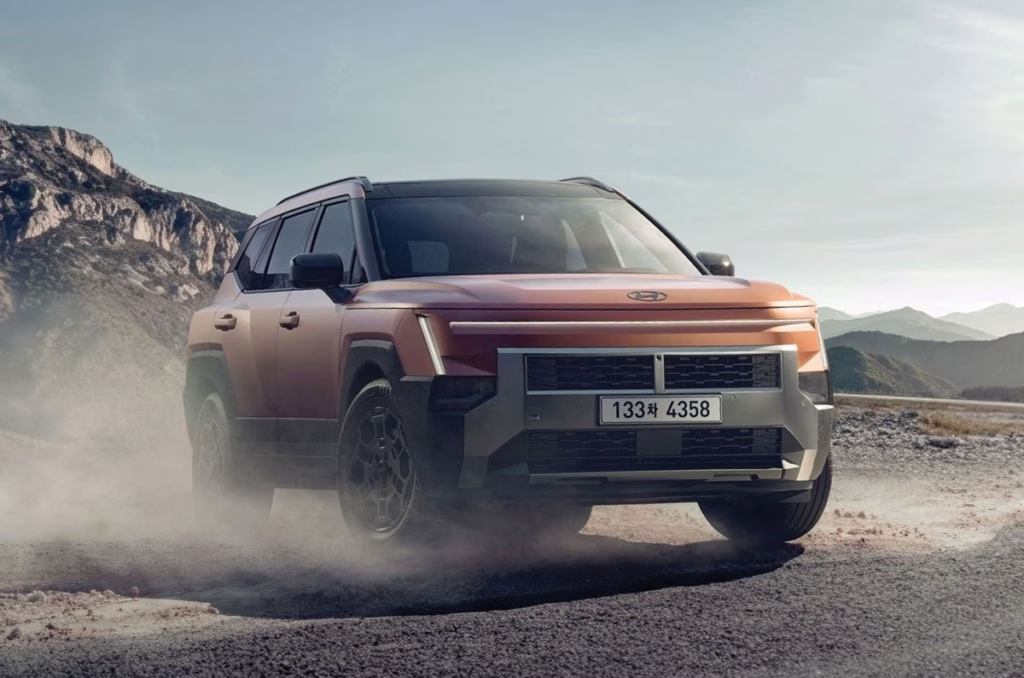
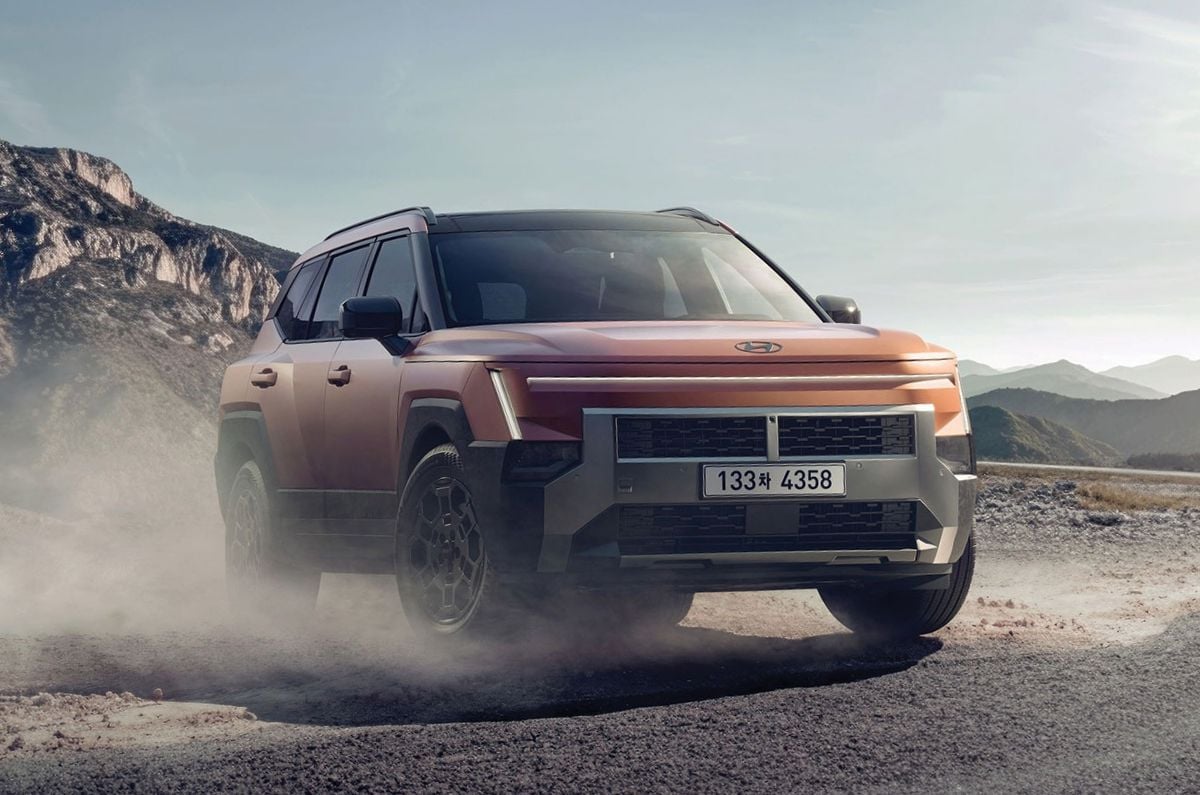
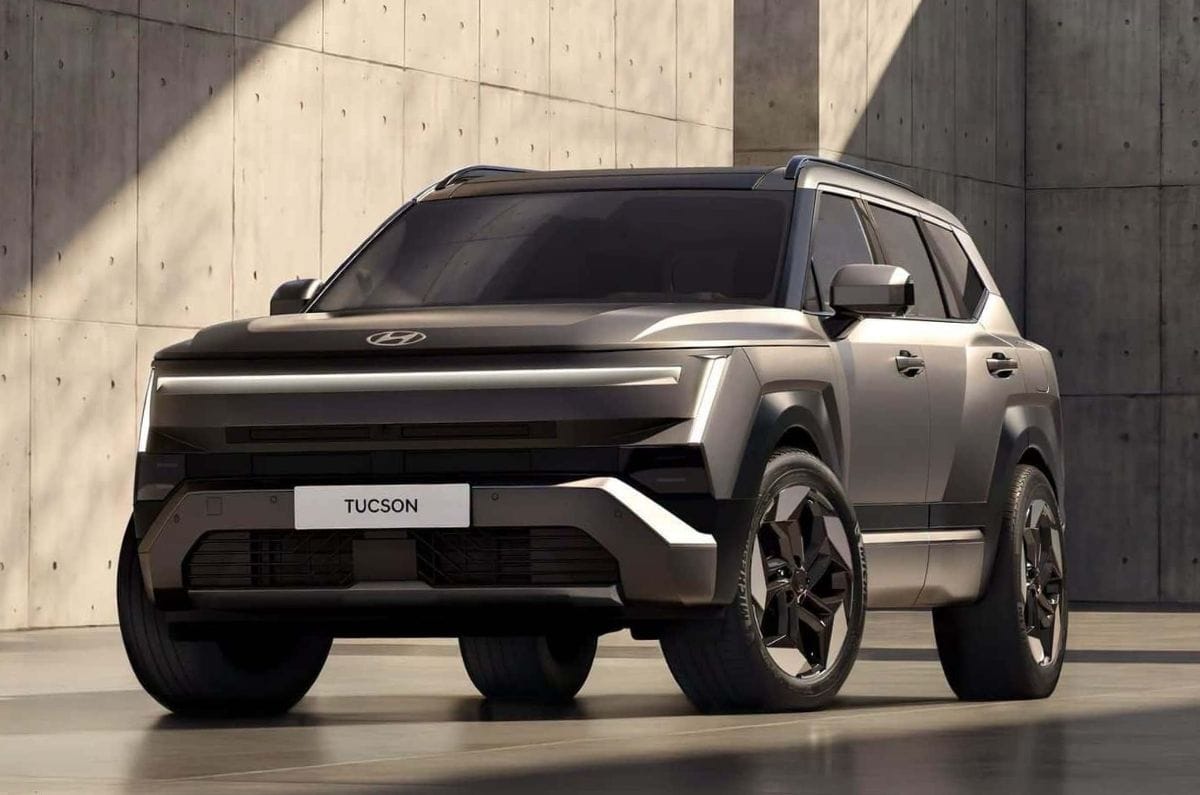
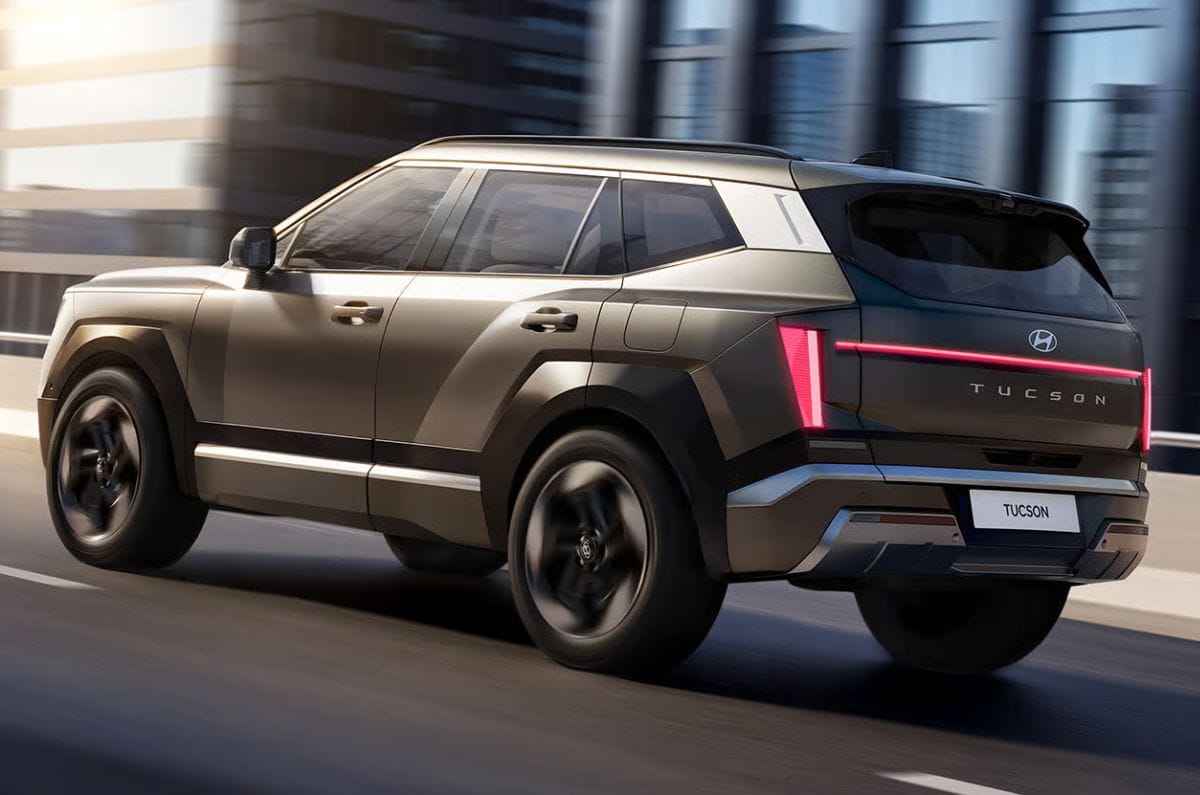
Hyundai has officially revealed several technical details of its upcoming 2027 Tucson at a media event in South Korea, ahead of the SUV’s domestic launch in October 2026. This generational update brings larger dimensions over the old model, along with two powertrain options and a long list of safety and connectivity tech. Hyundai has not detailed any plans of bringing the fifth-gen Tucson to India yet.
Gets active air flaps, a rear bumper spoiler and more for better aero
1.6 turbo-petrol and 1.6 turbo-hybrid powertrains offered
Tucson hybrid has a claimed mileage of 17.4kpl
2027 Hyundai Tucson dimensions
The next-gen model has grown in terms of length, width and wheelbase
Compared to the outgoing model, the next-gen Hyundai Tucson is 60mm longer and 40mm wider – the wheelbase has grown by 30mm. Hyundai claims that the larger dimensions have resulted in the second-row headroom increasing by 29mm (to 1,031mm), while the rear doors can now open to 83 degrees (up from the previous model’s 73 degrees).
2027 Hyundai Tucson suspension and chassis
The Tucson now gets new suspension and increased sound insulation measures
Hyundai has reinforced the mounting points for the front suspension, along with strengthening the underbody structure that supports the rear suspension. The 2027 Tucson also features a new suspension valve, whilst the overall setup has been tuned to better control body movement and reduce road shocks.
The E-Traction feature of the hybrid version utilises a drive motor to minimise its body movements, while Hyundai says that the larger dimensions of the 2027 Tucson hasn’t come at the cost of body roll even when executing corners at high speeds. The next-gen Tucson also comes with refinement improvements over the previous-gen model. Revised engine mounts, plus additional sound-deadening for the dashboard and thicker glass for the doors, mean engine and wind noise should be better controlled.
The drag coefficient of the 2027 Tucson petrol and 2027 Tucson hybrid have both gone down from 0.33 to 0.30. Hyundai claims that this has been achieved with the help of active air flaps, a roof spoiler, a dedicated rear bumper spoiler and the new 17-inch wheel design.
2027 Hyundai Tucson engine and gearbox details
Both non-hybrid and hybrid powertrains use a turbo-petrol engine
The 2027 Hyundai Tucson gets a 1.6-litre turbo-petrol engine rated at 193hp and 265Nm, and mated to an 8-speed automatic gearbox. Compared to the equivalent unit powering the outgoing model, this unit’s output is higher by 13hp. The 2027 Tucson hybrid clubs a 1.6-litre turbo-petrol engine with what Hyundai calls its next-generation hybrid system. The combined output of this hybrid setup is 245hp, while the claimed mileage figure is 17.4kpl. A ‘Inertial Driving Guidance’ feature even prompts the driver to get off the accelerator pedal to improve fuel economy.
2027 Hyundai Tucson feature set
The next-gen Tucson isn’t short on modern technology or safety measures
The 2027 Hyundai Tucson comes with 9 airbags as standard, plus a navigation-based adaptive cruise control feature with front & rear collision-avoidance assist. The next-gen Tucson gets a memory-based reverse assist function, which Hyundai says is capable of automatically steering the car by retracing its path.
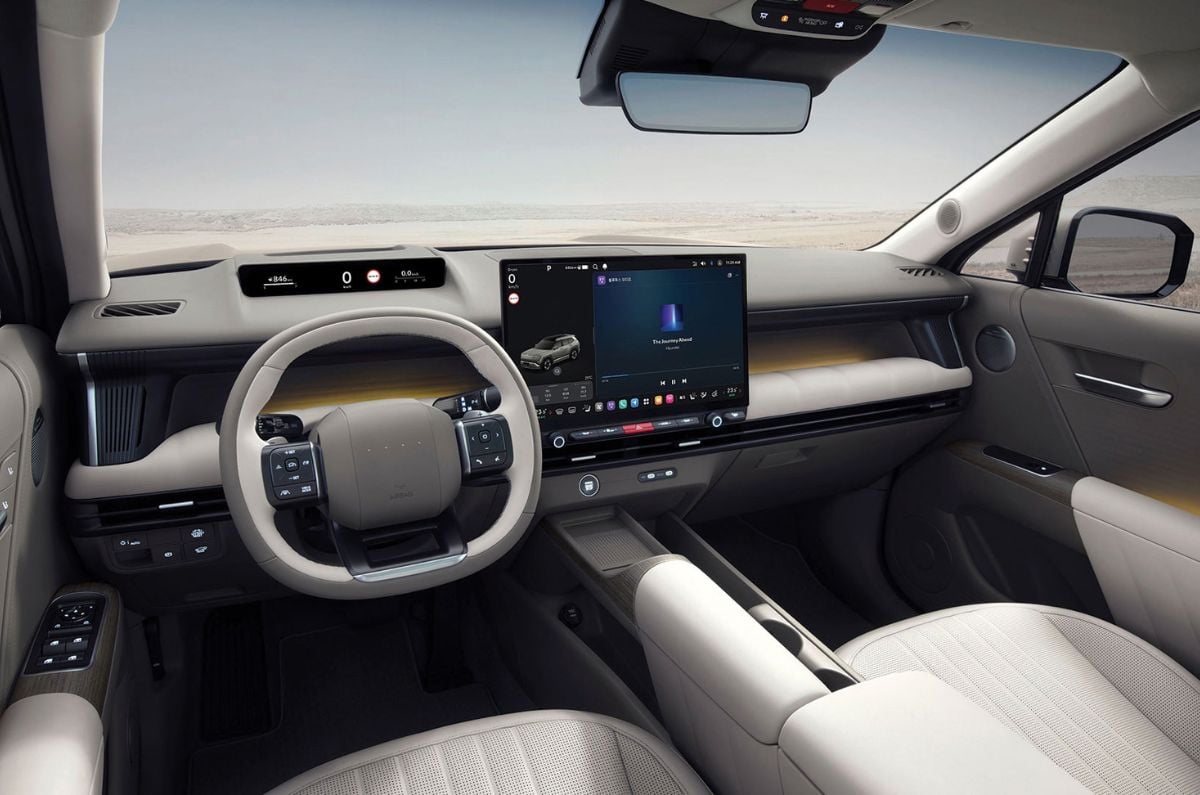
Meanwhile, the ‘Ground View’ function displays the surface beneath the car on the infotainment screen. The next-gen Hyundai Tucson also features the brand’s Pleos Connect system with built-in Gleo AI, along with third-party app support via the Pleos App Market. The interior has a floating-style dashboard, D-cut steering wheel, a slim digital driver’s display and a large touchscreen (either 12.9-inch or 17-inch). There will be four mono-tone and three dual-tone interior themes, which include Mud Grey & Dove Grey, Black & Sand Beige, and a Black & Inlay Soil Brown colours.
2027 Hyundai Tucson design
The next-gen model uses the brand’s ‘Art of Steel’ design language
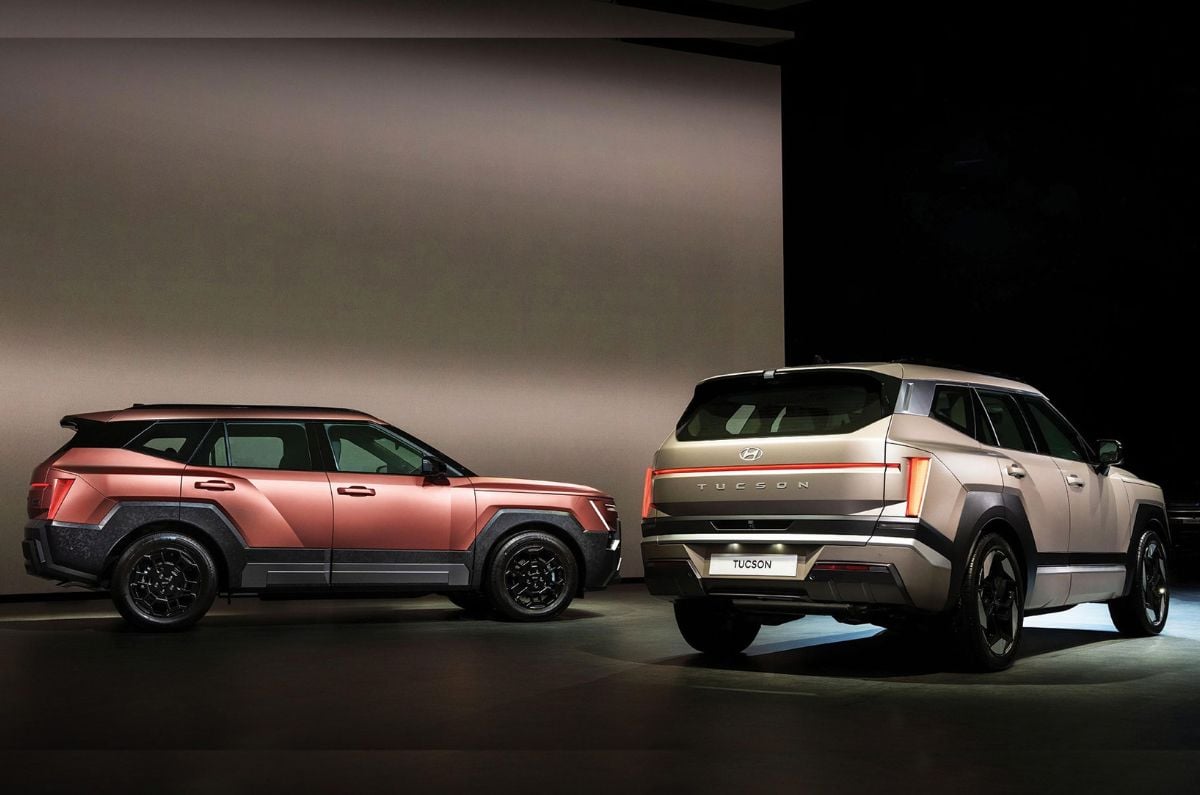
The 2027 Hyundai Tucson sports the brand’s ‘Art of Steel’ design language. There are vertical H-shaped LED daytime running lights up front, a slim horizontal centre light strip, and a prism-effect rear light design. The next-gen Tucson gets roof rails, flared wheel arches and conventional pull-type door handles, while the more rugged-looking XRT trim gets a different grille, wheel-arch garnish and skid plate. The 2027 Hyundai Tucson will be sold in 8 colour options – Serenity White Pearl, Driftwood Grey Matte, Driftwood Grey Metallic, Redrock Orange Matte and Goyo Copper Pearl.