RE Himalayan 440 vs Yezdi Adventure: Price and specifications compared

RE Himalayan 440 vs Yezdi Adventure: Price and specifications compared
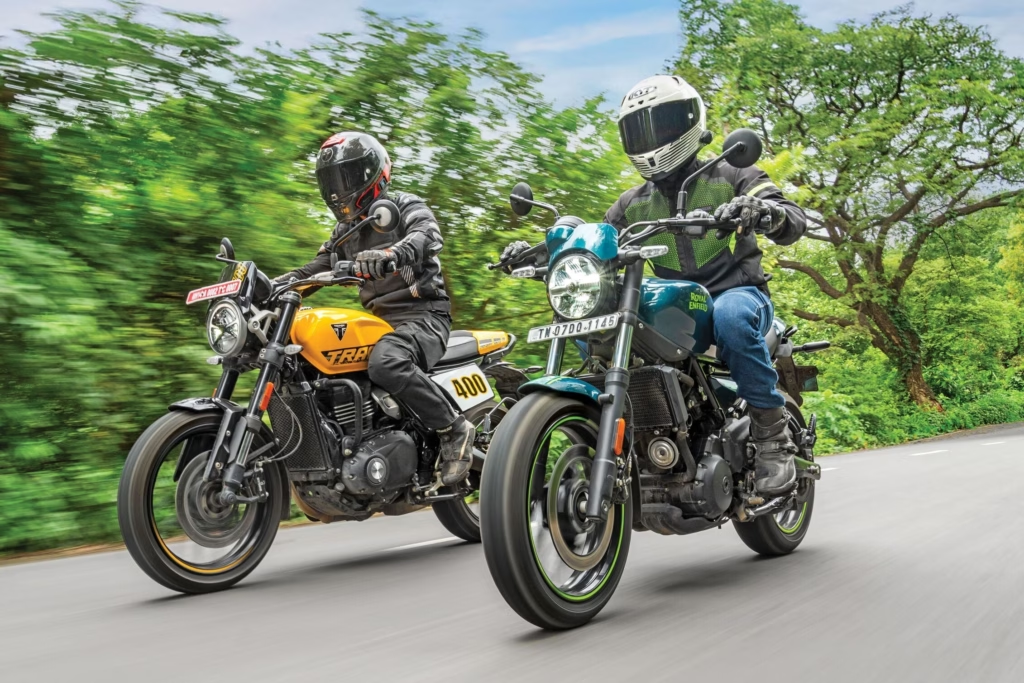
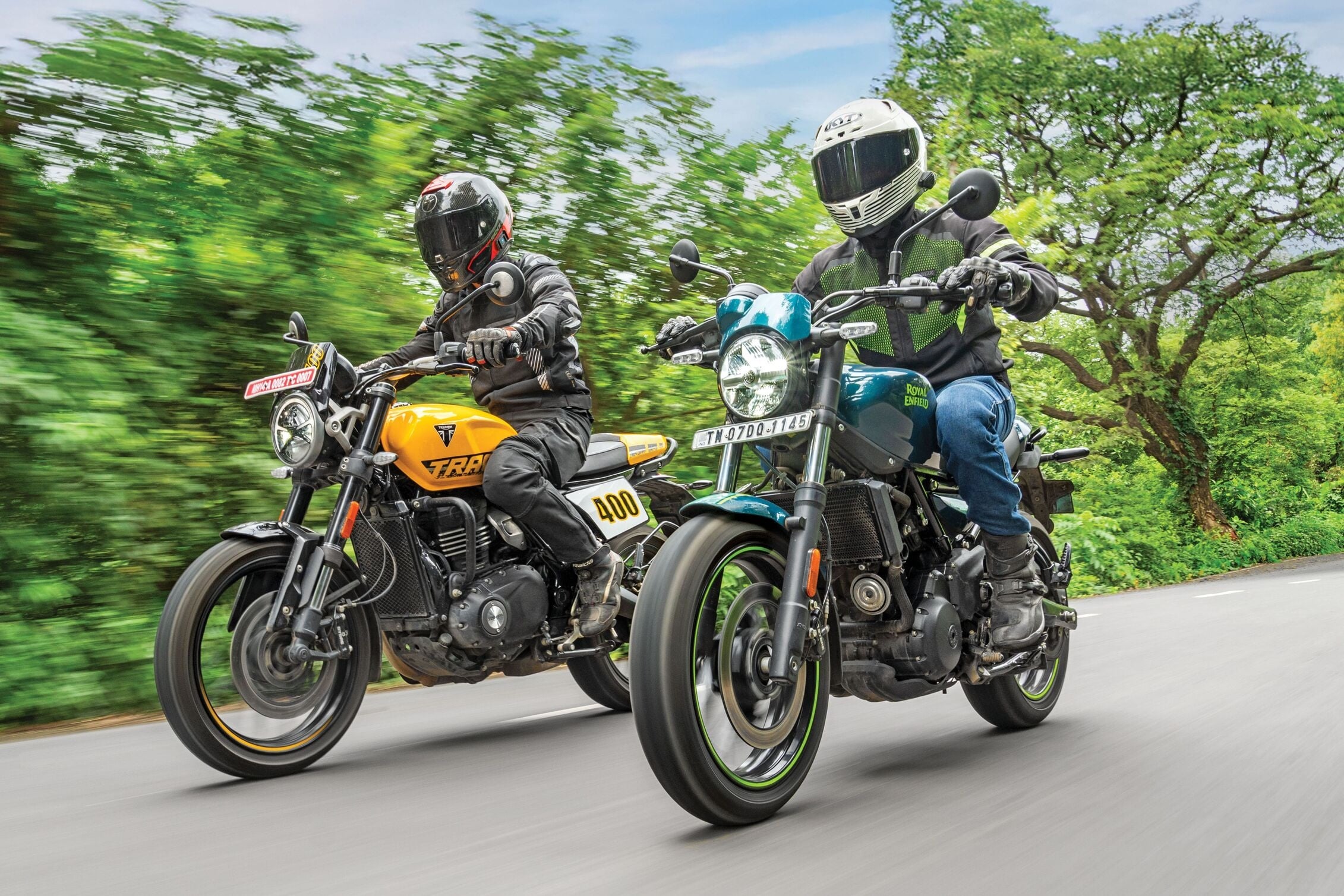
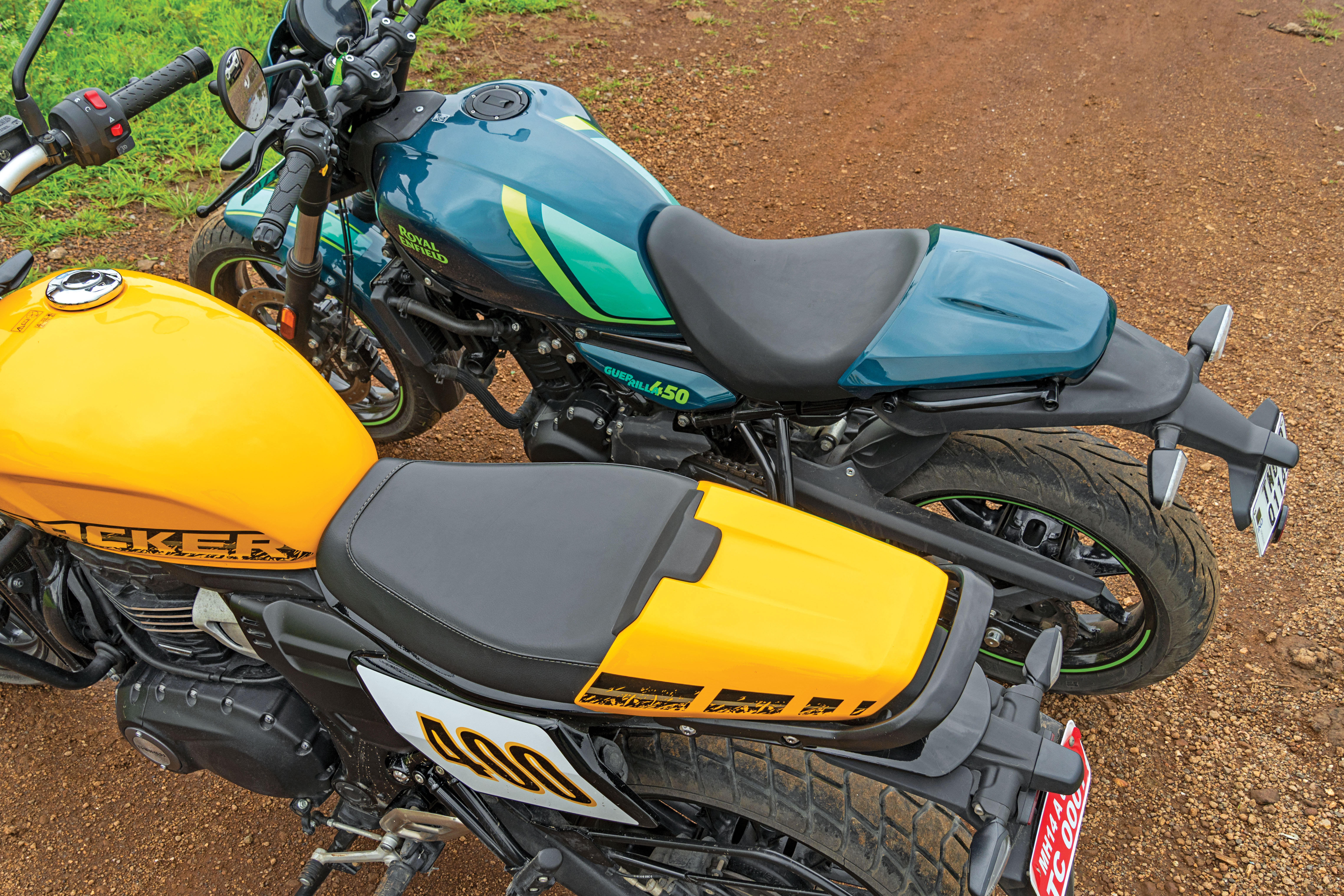
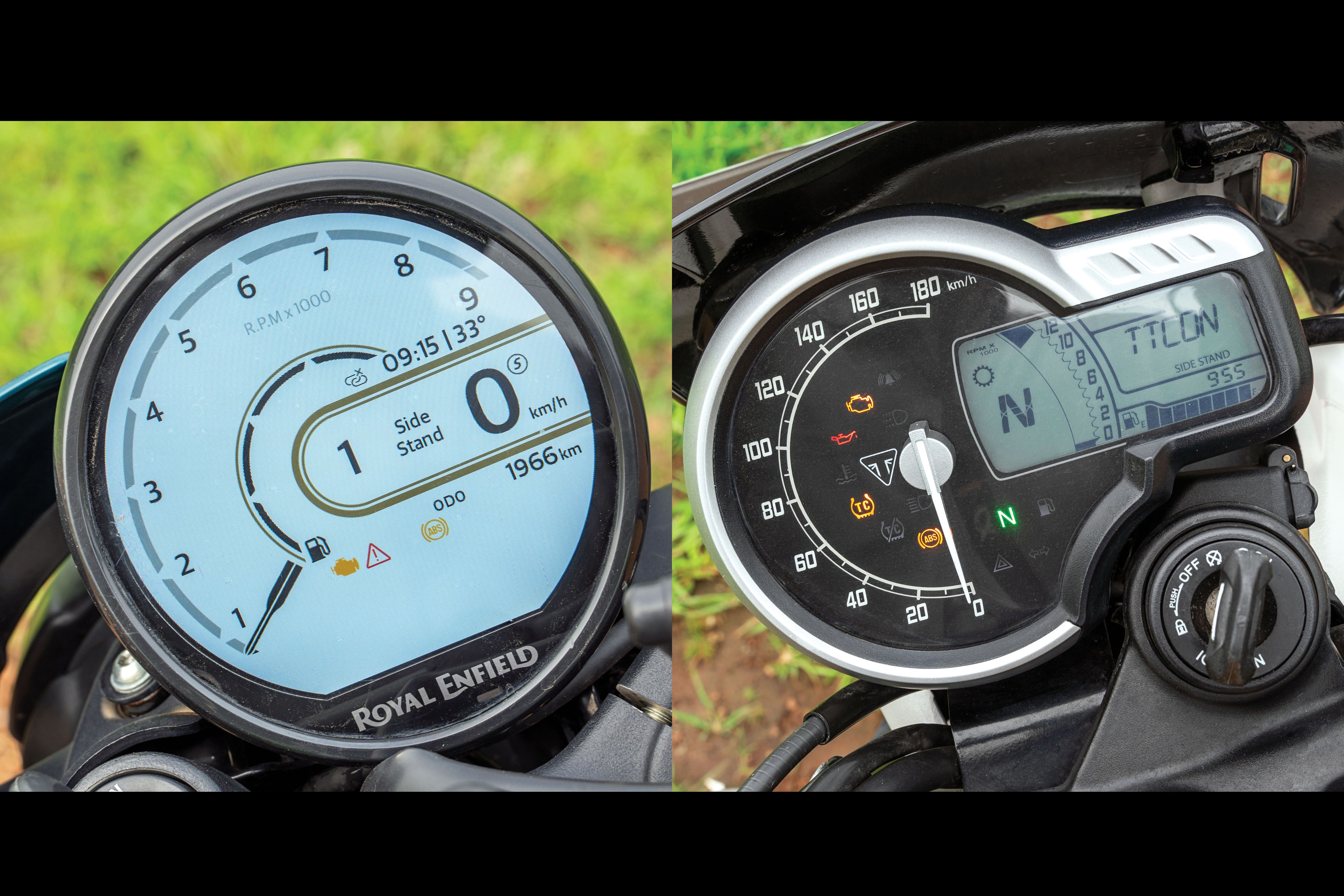
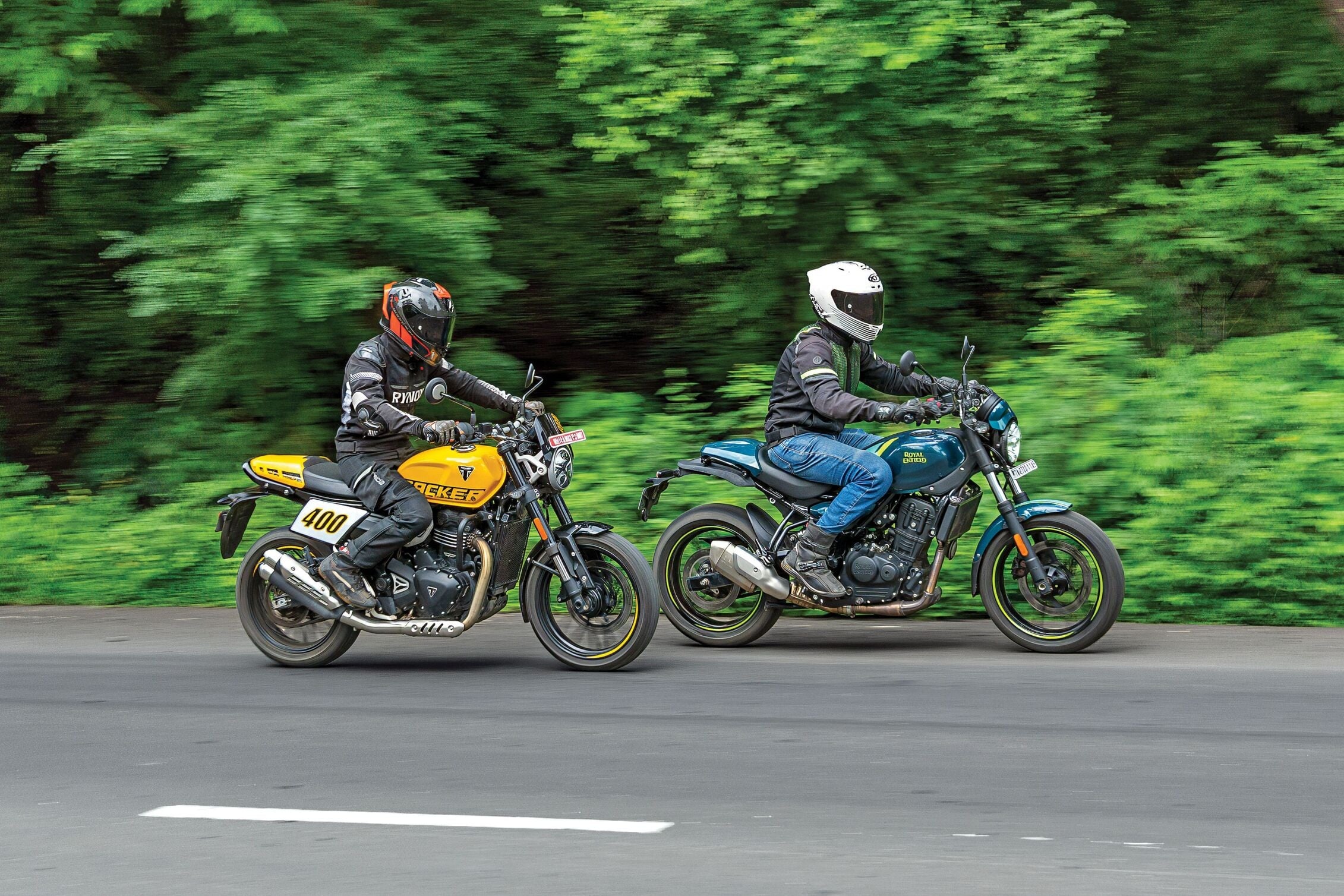
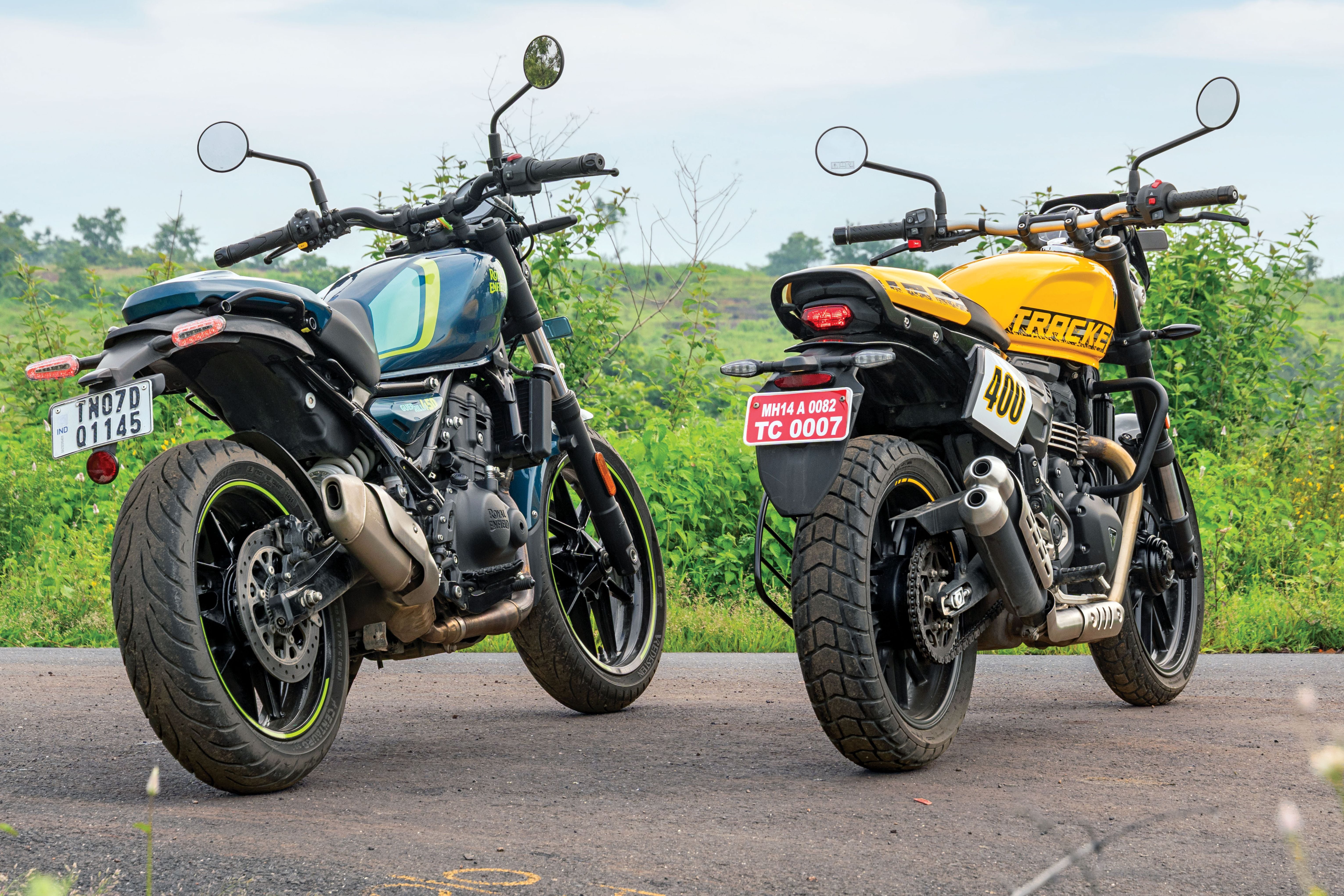
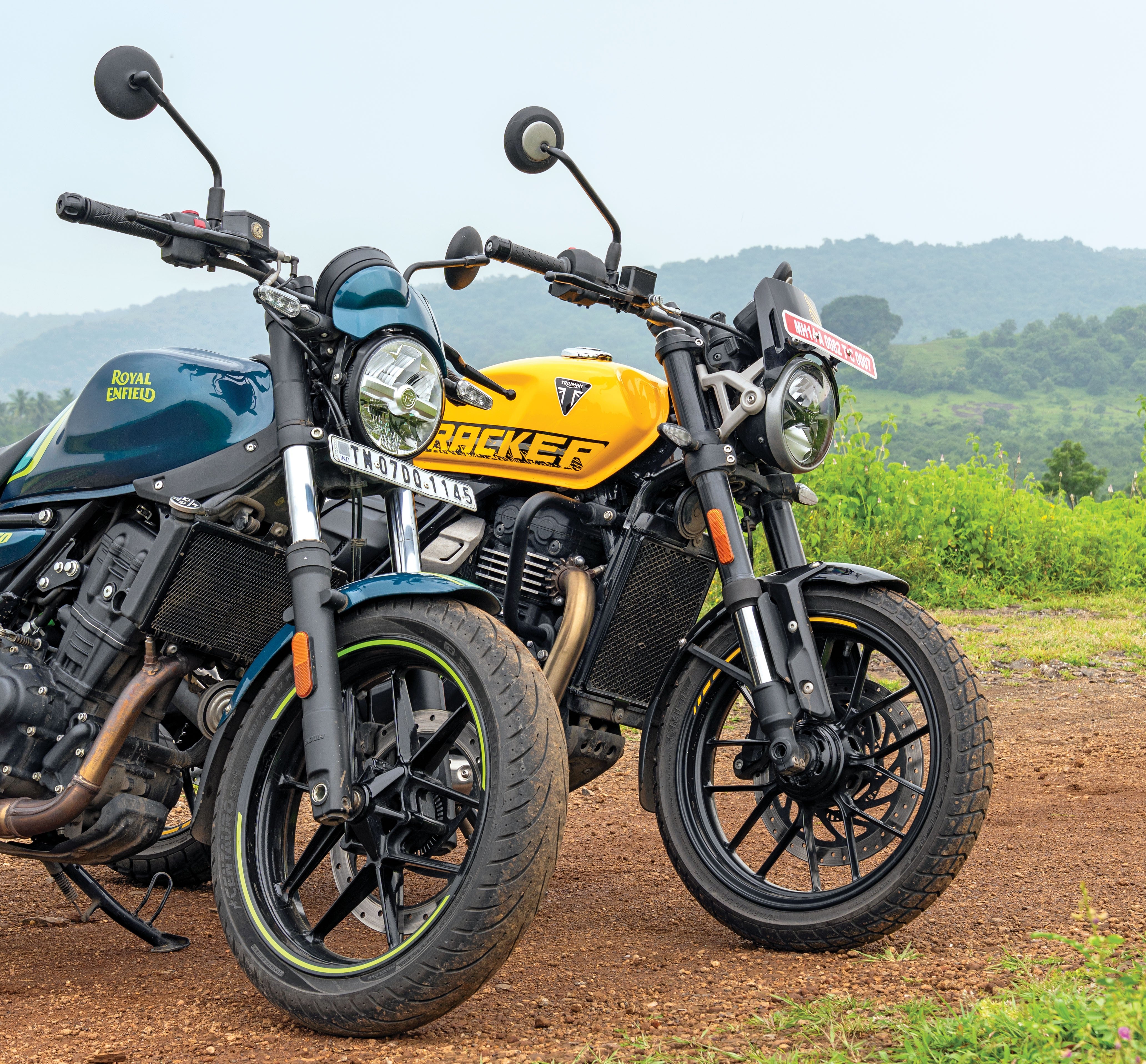
Image showing the Royal Enfield Himalayan 440 in Mustang Brown colour and the Yezdi Adventure in Yellow Falcon colour.

The Royal Enfield Himalayan 440 is back, wearing familiar clothes but a new, improved heart. Debuted first on the Scram 440, the upsized 443cc engine now makes 1.4hp more power and 2Nm of torque over the erstwhile Himalayan 411. Throw in an additional sixth gear and the Himalayan should now be a better tourer than before. But wait, how does this revived ADV compare to its direct rival, the Yezdi Adventure? Let’s find out.

Royal Enfield Himalayan 440 vs Yezdi Adventure: Engine and output

Yezdi makes more power with a liquid-cooled engine


Royal Enfield Himalayan 440

Yezdi Adventure

Engine

443cc single-cylinder, air- and oil-cooled

334cc single-cylinder, liquid-cooled

Power

25.4hp at 6,250rpm

29.6hp at 8,000rpm

Torque

34Nm at 4,000rpm

29.8Nm at 5,800rpm

Transmission

6-speed

6-speed

Power-to-weight ratio

127.64hp/tonne

158.29hp/tonne

On paper, the Yezdi Adventure displaces 109cc less than the Himalayan 440, but the Yezdi starts off strong—quite literally—with more power at a higher redline than the Himalayan 440. Its engine is also liquid-cooled compared to the Himalayan’s air- and oil-cooled mill. Both the motorcycles have six gears, so highway travel shouldn’t be a chore on either.

Royal Enfield Himalayan 440 vs Yezdi Adventure: Dimensions and weight

Himalayan 440 is more accessible


Royal Enfield Himalayan 440

Yezdi Adventure

Fuel tank

15 litres

15.5 litres

Ground clearance

220mm

220mm

Seat height

800mm

815mm

Kerb weight

199kg

187kg

Wheelbase

1460mm

1465mm

Things become a bit more even in this section. Both motorcycles share similar ground clearance numbers, but the Himalayan is more accessible with a 15mm lower saddle height. Yezdi reports 187kg for the Adventure but that’s dry weight. So, with 90 percent fuel, it should weigh just as much, if not more than the Himalayan’s 199kg.

Royal Enfield Himalayan 440 vs Yezdi Adventure: Tyres, brakes and suspension

Both models are (almost) on par


Royal Enfield Himalayan 440

Yezdi Adventure

Tyres (F,R)

90/90-21, 120/90-17

90/90-21, 130/80-17

Brakes (F,R)

300mm front disc, 240mm rear disc

320mm front disc, 240mm rear disc

Suspension (F,R)

Telescopic fork, linkage monoshock

Telescopic fork, linkage monoshock

Once again, the numbers look real similar on this front. The Yezdi Adventure has a slightly larger rear tyre and a slightly larger front disc brake. Speaking of tyres, although both models come with wire spoked rims as standard, the Yezdi Adventure offers cross spoke, tubeless rims as an optional Rs 20,000 add-on; available to the middle and top variants. Over on the Royal Enfield side though, such an upgrade isn’t possible at the moment. Royal Enfield doesn’t offer tubeless rims to the Himalayan 440, even as an accessory; they haven’t confirmed if the Himalayan 450’s tubeless rims can be retrofitted to it either. Suspension is another area where both motorcycles are neck-and-neck with them sharing the same kind of setups on paper, down to the travel.

Royal Enfield Himalayan 440 vs Yezdi Adventure: Features

Yezdi gets more rider aids

The Yezdi offers a more comprehensive feature package compared to the Royal Enfield. The Adventure gives you traction control, adjustable wind shield and instrument cluster, three ride modes (Road, Rain, Off-road); all of which are missing on the Himalayan 440. On the other hand, the Royal Enfield comes with a tripper pod as standard for turn-by-turn navigation, a USB type-C port, and LED headlight and taillight. But if rider aids are what you’re after, the Yezdi has more of them.

Royal Enfield Himalayan 440 vs Yezdi Adventure: Price

Yezdi offers more value for money


Royal Enfield Himalayan 440

Yezdi Adventure

Price (ex-showroom, Tamilnadu)

Rs 2.29 lakh

Rs 2.09 – 2.16 lakh 

Royal Enfield has kept things straightforward with the Himalayan 440 just offering one variant in three colours. All of them share the same price as well. Yezdi offers three variants of the Adventure in four total colours, separated only by the colour choices. Like we had mentioned earlier, you can add cross spoked tubeless wheels to its middle and top variants for Rs 20,000 extra. To conclude, on paper, the Yezdi Adventure puts up quite the fight to the Royal Enfield Himalayan 440 but real-world experiences may vary. It would be prudent to decide between the two after taking test rides.
 

Kia Sorento hybrid vs MG Tomahawk PHEV: Specifications comparison

Kia Sorento hybrid vs MG Tomahawk PHEV: Specifications comparison
MG Hector Tomahawk PHEV and Kia Sorento PHEV quick comparison

Kia’s ICE (internal combustion engine) flagship SUV offering in India, the Sorento, is based on the Hyundai Motor Group’s N3 platform. While the Kia SUV is also available with a diesel powertrain, our focus will be on the strong hybrid version for this comparison. As its segment rival, the MG Hector Tomahawk PHEV (plug-in hybrid) is also a three-row SUV, and is built around the brand’s new ADAPT platform. Let’s have a quick look on how these SUVs compare in terms of their dimensions, powertrain specifications and prices.

Explore full specs, features and a price breakdown in our Kia Sorento hybrid vs MG Hector Tomahawk PHEV comparison.

Kia Sorento hybrid vs MG Hector Tomahawk PHEV: Dimensions

The Sorento has the overall size advantage over the Hector Tomahawk

Kia Sorento hybrid vs MG Hector Tomahawk PHEV dimensions


Kia Sorento hybrid

MG Hector Tomahawk PHEV

Length (mm)

4,815

4,745

Width (mm)

1,900

1,850

Height (mm)

1,785

1,770

Wheelbase (mm)

2,815

2,810

Boot space (litres)

179

192

Wheel size (inches)

18-19

18

Neither of these are small SUVs. However, the Kia Sorento hybrid is longer, wider and taller (and has a larger wheelbase) than the MG Hector Tomahawk PHEV. The Sorento hybrid can be had with 19-inch alloy wheels at the top end, while the Hector Tomahawk PHEV only gets 18-inch wheels. However, the MG SUV’s boot can accommodate an additional 13 litres worth of cargo behind its third row of seats.

Kia Sorento hybrid vs MG Hector Tomahawk PHEV: Powertrain

The MG comes with a plug-in hybrid system compared to the Kia’s strong-hybrid setup

Kia Sorento hybrid vs MG Hector Tomahawk PHEV powertrain options


Kia Sorento hybrid

MG Hector Tomahawk PHEV

Engine

1.6-litre turbocharged petrol

1.5-litre naturally aspirated petrol

Battery size

TBA

20.5kWh

Electric motor type

Permanent magnet synchronous motor

Permanent magnet synchronous motor

Drive configuration

FWD / AWD

FWD

Total system output

TBA

198hp, 230Nm

Transmission

6AT

DHT

0-100kph

TBA

9.0 seconds

Claimed mileage

TBA

50kpl

Fuel tank

67 litres

52 litres

AC charging

7.5 hrs at 3.3kW (10-100%)

DC fast charging

35 mins at 25kW (30-80%)

Unlike the Sorento’s strong-hybrid setup, where the battery can only be charged by the internal combustion engine, the battery pack of the Hector Tomahawk PHEV can also be topped up by plugging it into either a DC fast charger or a slower AC charger. The Hector Tomahawk’s plug-in hybrid system allows the car to be driven in pure-electric mode over a distance of up to 115km (claimed), with Kia yet to disclose the Sorento hybrid’s EV-only range. Depending on the state of charge (SoC) of its battery pack, the MG SUV can also be driven using different powertrain modes.

In series-hybrid mode, the engine charges the battery while the electric motor drives the wheels. Then there’s the parallel-hybrid mode, where the engine and electric motor both power the driven wheels. Finally, the Hector Tomahawk PHEV can also be driven in engine-only mode with no assistance from the electric motor. The Hector Tomahawk PHEV employs a naturally aspirated petrol engine running the Atkinson cycle, plus a relatively high-capacity battery pack and a single electric motor.
Under the bonnet of the India-spec Kia Sorento hybrid sits a punchier 1.6-litre four-cylinder turbo-petrol engine with direct injection, developing 180hp and 265Nm. There’s a compact battery pack and an electric motor whose output is rated at 65hp and 264Nm. Kia is yet to specify the combined output of this hybrid powertrain, alongside its mileage and performance figures. The Hector Tomahawk PHEV gets what MG calls a  “Dedicated Hybrid Transmission (DHT)”, while the Sorento hybrid is equipped with a conventional 6-speed automatic gearbox (AT). Furthermore, the Kia’s fuel tank can carry an additional 13 litres of petrol. The Kia Sorento hybrid gets Eco, Sport and Smart drive modes, along with Snow, Mud and Sand terrain modes. While the Sorento hybrid is available in both front-wheel drive (FWD) and all-wheel drive (AWD) configurations, the Hector Tomahawk PHEV is exclusively FWD.
Kia Sorento hybrid vs MG Hector Tomahawk PHEV: Prices

Where the pricier Sorento is available in four different trims, the MG is limited to just two

Kia Sorento hybrid vs MG Hector Tomahawk PHEV prices


Kia Sorento hybrid

MG Hector Tomahawk PHEV

Price range (In Rs, lakh)

29.49-40.19

25.70-27.79

Even the base-spec trim of the Kia Sorento hybrid costs Rs 3.79 lakh more than the entry-level MG Hector Tomahawk PHEV. On the higher end of the line-up, the Sorento hybrid with all-wheel drive costs a staggering Rs 12.40 lakh more than the fully loaded Hector Tomahawk PHEV (which is front-wheel drive only). While the Hector Tomahawk PHEV has a 7-seat configuration, the Sorento hybrid is also available in a 6-seat format with individual captain seats in the second row. The Kia also offers more power and also has a larger physical footprint. However, if you want the flexibility offered by a plug-in hybrid system and a long list of standard equipment at a lower asking price, then the MG Hector Tomahawk PHEV could be the right three-row mass-market hybrid SUV for you.

Kia unveils Syros flex-fuel concept

Kia unveils Syros flex-fuel concept
Kia Syros front quarter static

In a bid to join the flex–fuel race in India, Kia has unveiled the Syros FFV concept, its first flex-fuel car in India. The carmaker says that the Syros flex-fuel can run on pure petrol, pure ethanol, and varying ethanol-petrol blends. Kia is yet to confirm when a production-spec version will come to our market.

  1. Utilises a 1.0-litre direct-injection turbo-petrol engine.
  2. The engine comes with an upgraded ECU, TCU, and fuel system.
  3.  Transmission duties handled by a 6-speed automatic gearbox.

Kia Syros flex-fuel concept: Powertrain details

Powering the Syros flex-fuel is a 1.0-litre, three-cylinder, direct-injection turbo-petrol engine. However, the carmaker has not confirmed the power outputs of this engine. For compatibility with varying ethanol blends, Kia has tweaked components like its ECU, TCU, and fuel system. Unlike the standard Syros turbo-petrol that’s paired to a 7-speed DCT, the Syros flex fuel is mated with a 6-speed torque converter automatic.

Kia Syros flex-fuel concept: Exterior and interior

Apart from E85 compatibility, the Syros flex-fuel’s exterior remains unchanged from the standard model. You continue to get the familiar boxy, ‘tall-boy’ silhouette, ice-cube LED headlamps with DRLs, 17-inch dual-tone alloy wheels, roof rails, dual-tone bumpers, and high-mounted L-shaped LED signatures at the back.

Like the exterior, the interior of the Syros flex-fuel is quite similar to the standard model. The dashboard is dominated by a triple-screen display for the digital instrument cluster, infotainment system, and HVAC controls, while you get an array of physical buttons at the centre. Lower down is a wireless phone charger, the same gear lever, and storage spaces as seen on the standard Syros.

With the debut, Kia is India’s second manufacturer to debut a flex-fuel car. Earlier this year, Maruti Suzuki was the first to unveil the Wagon R flex fuel, which currently retails at Rs 7.24 lakh. Kia joins the list of carmakers who are working on bringing flex fuel cars to India, as the government pushes for higher ethanol-blended petrol in an effort to reduce crude oil imports.

Kia Carens, Carens Clavis CNG specifications announced

Kia Carens, Carens Clavis CNG specifications announced
Kia Carens Clavis

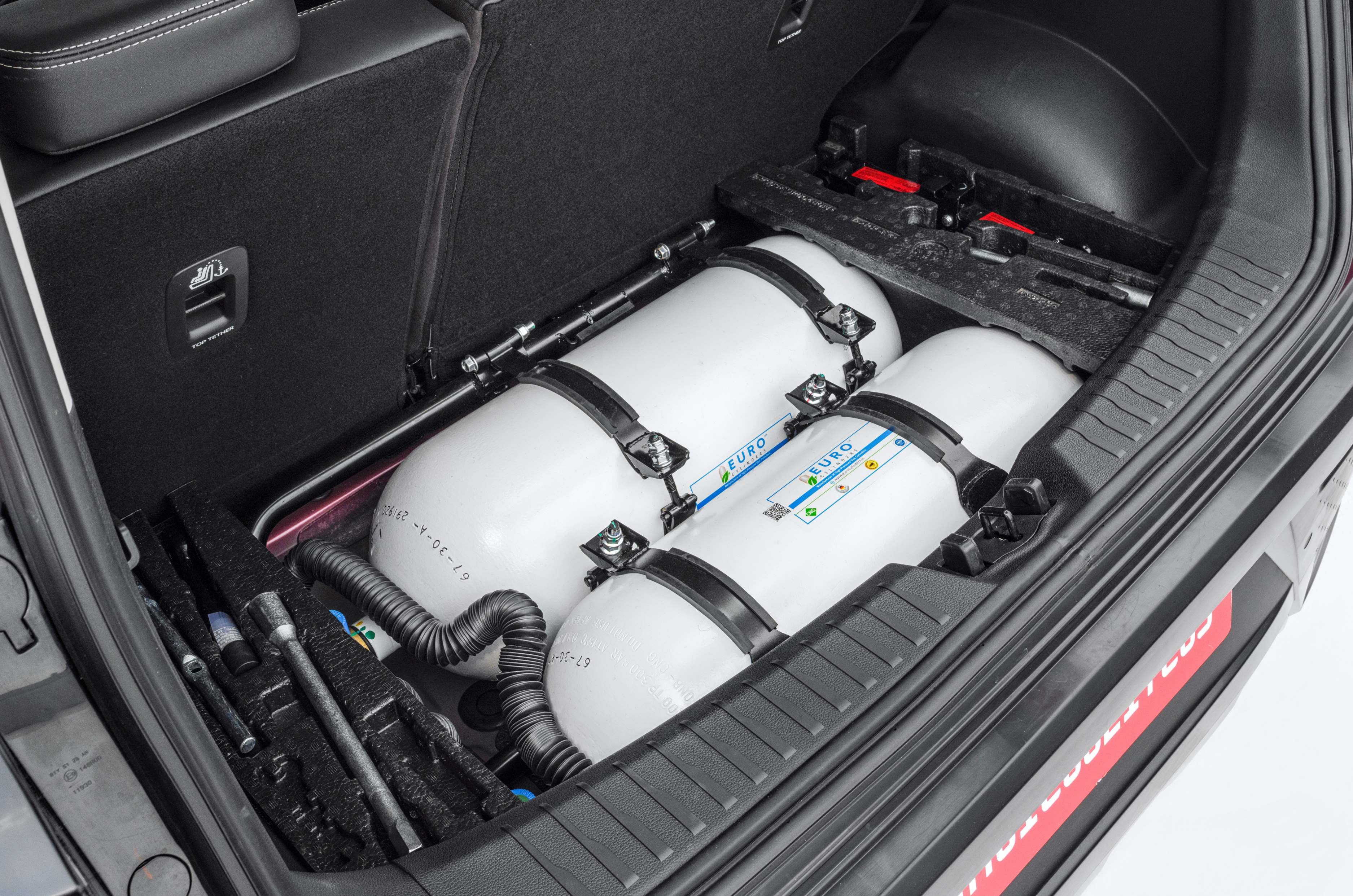
Kia has officially announced specifications for the CNG-powered Carens and Carens Clavis MPVs on the sidelines of the Sorento launch. Both MPVs will be available with a factory-fitted CNG kit with the 1.5-litre, naturally aspirated engine, and will be offered with a 60-litre CNG tank positioned in the boot. Kia has long expressed its intent to enter India’s growing CNG segment, and this officially marks their entry into this space. So far, the Carens was offered with a CNG kit, but as a dealer-level fitment. Prices for the Carens and Carens Clavis with factory-fitted CNG kit can be expected to be announced in the coming weeks. 

In CNG spec, the 1.5-litre, four-cylinder engine will produce 93hp and 123Nm of torque – that’s 22hp and 21Nm less than the petrol-powered counterpart. Kia hasn’t revealed a fuel-efficiency figure yet, but says the engine has been calibrated to not compromise on performance. Kia has also retuned the suspension and upgraded the front disc brakes to account for the additional tank weight. Kia has also managed to retain the spare wheel positioned under the car. 

Ducati Monster V2 Review: Playful but pricey

Ducati Monster V2 Review: Playful but pricey
Ducati Monster V2 outside shot showing the front right quarter

The Monster was perhaps the world’s first ‘parts bin special’, created using a smattering of different parts from various Ducatis of the late ‘80s and early ‘90s. It was a resounding success for the company and remains one of its strongest sellers in India. Today, the Monster is in its fifth generation and is now powered by the company’s new 890cc spring valve V-twin.

Design and Quality – 9/10

Hey, good lookin

Inside shot of Ducati Monster V2 showing the right side

Traditionally, the Monster was known for its butch stance, clean lines and round headlight and the fifth-gen V2 has two of those three attributes. The earlier 937 drew some flak for being too thin so for the V2, Ducati has reverted to a big tank look albeit, at 14L, the capacity is quite small for an engine of this size and the same as before. In an era where most sporty bikes have sprouted winglets and sharp edges galore, the Monster’s textbook, elemental lines are a breath of fresh air. However, it’s definitely not as chunky-looking as the older trellis-frame Monsters – not a complaint to our eyes but purists could be put off.

A close up, outside shot showing the gap between the Ducati Monster V2's pillion seat and the subframe
Too big a gap between seat and subframe

Typical of Ducati, quality is high all around and just about everything in sight and touch is well put together. I say ‘just about’ because the mirror housings & stalks feel very budget for a bike of its price and also, the gap between the seat and the subframe is a bit much. On a rainy day, a lot of filth gets kicked into this crevice and to clean it, you need to remove the seat. These are nitpicks but on a bike at this price, something to bear in mind.

Performance and fuel economy – 9/10

Unique and playful heart

SpecificationsValues
Max Engine Power111 hp @ 9000 rpm
Max Engine Torque91.1 Nm @ 7250 rpm
Transmission TypeManual
Fuel Type/ PropulsionPetrol
Engine Type2 cylinder

Expensive it might be, but the Monster is still the most attainable way to get your hands on Ducati’s new 890cc V-Twin. In a world increasingly populated with parallel-twin engines, Ducati has commendably stuck to its guns and is giving you an authentic V-Twin experience.

In this application, the V2 is tuned to make 111hp (it’s lowest yet) and this number is on the lower side for the segment, but the 91.1Nm of torque it makes, is conversely, one of the higher numbers in the class. Not just that, Ducati claims that from 3,000rpm you have 70 percent of that available and it definitely charges forward with gusto above that threshold. It’s enthralling fun to chase the rather high – for a big twin – 11,750rpm redline and the butter smooth quickshifter ensures you have to wait but a few milliseconds before the next gear brings you the next wave of adrenaline. The exhaust note is a bit muted (Euro5+ will do that) but there’s an enticing intake roar and even lovelier pops and bangs on the overrun, which all add to the theatricity of it.

An outside shot of Ducati Monster V2 showing the rear left

Yet, for all its zest and verve, Ducati’s latest V2 benefits from the company’s learnings over the years. No longer do you have to fear exorbitant Desmo services or overheating in traffic. Valve clearance checks are now at 45,000km and the cooling system works superbly to ensure the engine never boils over.

However, while the engine doesn’t overheat, being stuck in traffic does result in the rider’s legs slowly being done medium rare. Since you’re sitting right on the top of the rear cylinder, there’s not much that can be done but to build your tolerance and wear motorcycle-appropriate clothing. Its hydraulic clutch too is properly weighty but what annoys more is its grabby nature causing you to lurch forward in traffic.

Ride and Handling – 8/10

On a dime

SpecificationsValues
Seat height815 mm
Front Suspension TypeShowa Ø 43 mm usd fork
Rear Suspension TypeShowa monoshock with adjustable preload. Aluminum double-sided swingarm
Fuel Tank Size14 L
Chassis typeAluminum monocoque frame
Front Tyre Size120/70 – ZR17
Rear Tyre Size180/55 – ZR17
Kerb Weight186 kg

Happily, once you find some nicely laid tarmac roads, these quibbles fade away and the Monster makes up for it with its surefooted and energetic handling. On paper, the chassis components may feel a bit budget (for an 18L rupee machine) but in practice, they work very well. The non-adjustable Showa fork and Sachs monoshock have good poise when you want to attack corners but simultaneously also provide an air of suppleness over bumps, striking a nice balance. Brembo’s M4.32 calipers may have been around for well over a decade now but they bring the Monster to a halt seriously quickly and the radial master cylinder too is bristling with feedback.

What also helps the Monster tip into corners and come to a halt exceedingly well is its weighs just 186kg fully fueled – similar to a RE Guerrilla 450, which has half the displacement! Not only is the Monster one of the lightest bikes in the class, it also has a friendly 815mm perch (in the context of big, sporty machines). The rider’s triangle too is not overly committed and strikes a nice balance between being engaging yet comfortable. These attributes mean that the Monster is one of the friendliest big bikes you can buy.

A close up, outside shot of the Ducati Monster V2's rear suspension
Suspension has a decent level of pliancy to it

Features and safety – 8/10

There when you need them, mostly

A close up outside shot of the Ducati Monster V2's front M4.32 brake calipers
Brembo M4.32s have great stopping power and good feel at the lever

What further reinforces the Monster’s approachability (especially to someone who’s buying their first big bike) is its array of electronic rider aids. There are four riding modes (Sport, Road, Urban and Wet) with dedicated settings for power levels, traction control, wheelie control, engine brake control and ABS intervention. These work exceptionally well when you need them to and fade into the background when having fun – just the way it should be! Typical of Ducati, you can go into each mode and adjust everything to your preference, giving you complete control over the electronics – an appreciable touch.

SpecificationsValues
Anti-Lock Brakes (ABS)Dual channel
Front Disc/Drum Size320 mm
Rear Disc/Drum Size245 mm
Calliper TypeFront – 4 Piston, Rear – 2 Piston
Traction controlYes
Riding ModesYes
Cruise ControlNo
QuickshifterYes
TFT colour Instrument clusterYes

However, what I certainly don’t appreciate is the fact that Ducati has provided you the switchgear and wiring for the cruise control and heated grips on the bike but is deliberately gatekeeping the software in lieu of princely sums of Rs 40,009 and Rs 41,013, respectively. This trend of locking valuable features already present on the expensive machine you buy until you pay an additional sum needs to be abdicated promptly before it becomes commonplace.

A close up shot of the Ducati Monster V2's 5-inch TFT instrument cluster
5-inch TFTs shared with other Ducati V2s and has intuitive functions
A close up shot showing the cruise control buttons on the Ducati Monster V2's left side
Activating the existing Cruise Control functionality costs Rs 40,009 extra!
A close up shot showing the heat grips button on the Ducati Monster V2's front right switch cube
Activating heated grips will set you back by Rs 41,013

Price and verdict – 7/10

Pretty penny

An outside riding shot showing the Ducati Monster V2's left side

The words above are apt to describe the new Monster V2, which starts at Rs 13.99 lakh (ex-showroom, India) and the price only goes northward for different colours and if you opt for the Plus variant, with the flyscreen and pillion seat cowl. There’s no justifying the very large price delta to its European and Japanese counterparts, which are accomplished machines in their own right.

What are strong points on the Monster are that it is a desirable, good-looking and exciting machine that gives you access to the alluring world of Ducati. Plus, today’s V2 Ducatis now have ownership costs that are more or less in line with their peers and the company’s aftersales is a particularly strong highlight for customers. If all that sounds like something you are looking for, the Monster V2 should be on your radar.

BS7 draft likely in couple of months: MoRTH

BS7 draft likely in couple of months: MoRTH

“We are ready with the next level of Bharat Stage [emission] standards and the final consultations are underway. We hopefully should be in a position to bring out the draft in a couple of months’ time for the BS 7 introduction,” Ministry of Road Transport and Highways (MoRTH) Secretary V Umashankar said at the 2026 SIAM Annual Convention in Delhi. 

Bharat Stage norms limit the emissions of pollutants like hydrocarbons, sulphur and oxides of nitrogen from vehicles. India currently follows BS6 Phase 2 (or BS6.2) norms, which came into effect on April 1, 2023. “I think the industry is also preparing itself for it. The key challenge there would be the timelines,” Umashankar added.

What changes with BS7?

BS7 will put a greater focus on pollution levels from vehicles in real-world driving conditions rather than laboratory testing. Unlike the dramatic transition from BS4 to BS6, the move to BS7 is a natural progression from BS6. This should put relatively less pressure on manufacturers to upgrade their vehicles. Prices may also go up slightly due to the upgrades. Some models could even be discontinued if upgrading them to meet BS7 norms is not financially viable, something that we saw during the move from BS4 to BS6 in 2020.

Bharat Stage emission norms so far

Bharat Stage emission norms were introduced in India in the year 2000 with the implementation of BS1 standards, while also rolling out BS2 across major cities in a phased manner. BS2 was based on European emission regulations, with the main difference being the test cycle’s top speed – 90kph versus 120kph in Europe.

India remained one stage behind Europe until 2010, after which the oil industry could not supply the low-sulphur fuel needed to progress to BS5 before eventually leapfrogging from BS4 to BS6 in 2020.

How are CAFE norms different from BS standards?

Corporate Average Fuel Economy (CAFE) norms deal with overall fuel consumption, specifically the quantity of fuel consumed. Imposed on a carmaker’s entire fleet, and not on an individual model, it’s a limit set on the total emission of carbon dioxide produced. These norms force manufacturers to make more fuel efficient cars, which impacts many other things. Whereas, Bharat Stage norms measure emissions at a vehicular level.

3 reasons to buy the Maruti Celerio and 3 reasons to avoid it

3 reasons to buy the Maruti Celerio and 3 reasons to avoid it
Maruti Celerio side static

The Celerio is positioned between the cheaper Alto K10 and the even more popular Wagon R in Maruti Suzuki’s line-up. Priced between Rs 4.70 lakh and Rs 6.75 lakh (ex-showroom), the Celerio is available in petrol and CNG versions with manual and AMT gearbox options, just like its rivals. While the second-gen model arrived on the entry-level hatchback scene in 2021, it hasn’t received a single facelift in the following five years, placing it at a disadvantage over some of its competitors. This Heartect platform-based hatchback goes up against the likes of the new-gen Tata Tiago and its own stablemate, the Wagon R.

Reasons to buy the Maruti Celerio

City slicker

The Celerio’s urban-friendly demeanour is great for regular commutes

Maruti Celerio engine

One of the factors making the Maruti Celerio a great urban runabout is its 1.0-litre three-cylinder engine. It builds power smoothly right from lower RPMs which, along with a slick 5-speed manual gearbox and a light clutch, make pottering around town an easy affair. Those seeking an even easier time commuting can pick the AMT (automated manual transmission), whose shifts are relatively smooth as far as AMTs go.

Maruti Celerio front tracking

Helping matters further in the city is the plaint suspension, which soaks up bumps at lower speeds without much fuss. The light steering, tight turning radius and good front visibility also go a long way in helping you navigate compact parking spots and bustling city traffic. And despite its cost-friendly design, the height-adjustment feature for the driver’s seat means finding a suitable position isn’t too much of an issue.

Efficiency champ

This is Maruti Suzuki’s most frugal offering in the country

Maruti Celerio AMT gearbox

Not only is it easy to drive, but the Maruti Celerio will not have you complaining about fuel economy either. The petrol version with the 5-speed manual transmission has a claimed mileage of up to 25.24kpl, while the AMT option is rated at 26kpl – making the Celerio AMT the most fuel-efficient petrol car in the market. All variants of the Celerio come with an automatic engine stop-start function, further reducing fuel consumption. While this feature isn’t enabled when running on CNG (in VXi MT only), the claimed mileage of 34.43km/kg is better than that of the Maruti Wagon R CNG and the Renault Kwid CNG.

Roomy boot

The Celerio’s boot affords more space than some rivals

Maruti Celerio boot space

At 292 litres, the boot of the Maruti Celerio is bigger than those rivals such as the Tata Tiago and Renault Kwid. This is enough to accommodate two large suitcases and a couple of carry-on-sized bags, with still some room to spare. If you need even more space, the 60:40 split-folding rear seats will come in handy. On the other hand, the loading lip is high and relatively narrow, making loading or unloading heavier items cumbersome.

Reasons to avoid the Maruti Celerio

Ergonomic niggles

This interior has a few sore points that’ll take getting used to

Maruti Celerio infotainment

Compared to most of its adversaries, the power window switches of the Maruti Celerio aren’t placed on the doors. The front ones are positioned on the dashboard, whilst the rear switches are found on the rear centre pedestal between the front seats. Buttons to operate the door and power-window locks are also on the dashboard. Then there are the thick A-pillars, which can obstruct your view at junctions and roundabouts.

Maruti Celerio rear seats

The well-cushioned rear seats of the Celerio offer plenty of kneeroom for even taller occupants. However, headroom isn’t all that good, and the fixed headrests are positioned way too low to be effective. The angled design of these headrests also means that they poke into your back, which can be uncomfortable.

Unimpressive material quality and feature set

The Celerio’s cabin isn’t the most up-to-date in this segment

When compared to the new-gen Tata Tiago, the interior of the Maruti Celerio looks and feels a touch dated. There’s plenty of hard plastics which, even though are accompanied by shiny trim and a sculpted dashboard, feel pretty basic. The relatively simple design is backed by an equipment list that isn’t particularly competitive either.

Maruti Celerio interior

For instance, even the top trim level of the Celerio doesn’t come with a rearview camera. There’s also no automatic climate control system, while Apple CarPlay and Android Auto both require a wired connection. The touch-infotainment screen is a 7-inch unit, whereas a similarly priced Tata Tiago offers an 8-inch setup. On the outside, the Maruti Celerio gets the old-school ‘flip-up’ door handles.

Imperfect on a highway

This hatchback isn’t particularly meant to be driven hard or fast

Maruti Celerio side tracking

While it’s perfectly at home in the city, the Maruti Suzuki Celerio isn’t as good out on the open road. The lifeless steering aside, the body moves around enough – both of which robs you of confidence required to push the car any harder.

Also read

3 reasons to buy the Toyota Hyryder and 2 reasons not to

Mitsubishi Pajero: What’s changed from fourth to fifth-generation model

3 reasons to buy the Toyota Hyryder and 2 reasons not to

3 reasons to buy the Toyota Hyryder and 2 reasons not to
Toyota Urban Cruiser Hyryder

Introduced in 2022, the Urban Cruiser Hyryder and Maruti Grand Vitara were the first products co-developed through the partnership between Toyota and Maruti Suzuki. Currently, the Hyryder is Toyota’s bestselling SUV in India, averaging 7,000-9,000 units a month. If you are considering the Hyryder, we will help you decide whether this midsize SUV is suitable for you or whether you should look elsewhere.  

Reasons to buy the Toyota Hyryder

Efficient strong hybrid engine

The petrol engine in the strong hybrid version runs on the Atkinson cycle that prioritises efficiency. Coupled with the battery and motor, the Hyryder can run temporarily on pure electric power, which helps curb fuel consumption. In our real-world fuel efficiency tests, the Hyryder strong hybrid delivered much higher efficiencies than the mild hybrid petrol automatic version: 20.28kpl in the city and 22.85kpl on the highway compared to 10.83kpl and 15.67kpl, respectively. Do note that this test was done before the rollout of E20 fuel.

Well-judged ride and handling

A combination of tough underpinnings and well-judged suspension helps the Hyryder have a balanced ride and handling setup. It handles tough roads with ease, and even the sharp surfaces are absorbed quite well. At higher speeds, the Hyryder remains glued to the road and composed, while direction changes and cornering abilities are predictable. Even when cornering, body roll is kept to a minimum despite its high 210mm ground clearance, which is remarkable.

AWD availability

The Hyryder is among the few models in the very crowded midsize SUV space to offer AWD. Available solely with an automatic gearbox, it comes with Suzuki’s AllGrip Select all-wheel-drive system, bringing decent off-road capability for the Hyryder, especially for those who regularly drive in snowy or slushy conditions. With the help of terrain modes and the ability to send 50 percent of its power to the rear wheels, it can tackle challenging roads.

Reasons not to buy the Toyota Hyryder

Engines lack outright performance

Strong-hybrid versions of the Hyryder are optimised for fuel efficiency over outright performance. Thus, drivers looking for a turbo-petrol-like exhilaration won’t be satisfied, as it lacks midrange punch. Apart from the strong hybrid, there’s also a mild hybrid version that utilises a 103hp, 139Nm 1.5-litre naturally aspirated petrol engine. Though it has enough pep in the city, as with the strong hybrid, you’ll find yourself longing for more power on the highway. Overtakes will require careful planning and working your way through the gears. At 14.01 seconds, the mild-hybrid’s 0-100kph time is slow by segment standards.

Limited boot space

With a capacity of 355 litres, the mild hybrid-powered Toyota Hyryder has one of the smallest trunks in the segment. Additionally, the Hyryder strong hybrid’s high fuel efficiency comes at the cost of boot space, which is reduced further to 255 litres because of the lithium-ion battery pack placed beneath it. This could be a dealbreaker for those who carry large suitcases on road trips.

All you need to know about Lexus ES

All you need to know about Lexus ES
Lexus ES

The Lexus ES is available in India in two forms: the ES 350h strong hybrid and the ES 500e EV. The 350h was added to the ES range in July, joining the 500e that launched earlier this year. Beyond the new powertrain options, the latest ES gets a larger footprint, a redesigned cabin and a host of new features. Here’s everything you need to know.

1. How much do the Lexus ES 350h and ES 500e cost in India

The Lexus ES 350h is priced at Rs 66.10 lakh for the Exquisite variant and Rs 71.80 lakh for the Luxury trim, whereas the ES 500e costs Rs 89.99 lakh (all prices are ex-showroom). Both versions get an eight-year/2,00,000km warranty, covering the vehicle and its battery.

2. What powertrain does the Lexus ES 350h get?

The ES 350h uses a 2.5-litre four-cylinder naturally aspirated petrol engine paired with an electric motor and lithium-ion battery. The petrol engine produces 186hp and 235Nm, while the electric motor develops 201hp and 270Nm in isolation. The combined system output is 244hp. Power is sent to the front wheels through an e-CVT gearbox. Lexus claims an ARAI-certified fuel efficiency of 25.22kpl.

3. What battery, motor and range does the Lexus ES 500e offer?

The ES 500e gets a 74.68kWh battery and two electric motors, one on each axle. The front motor produces 227hp and 267Nm, while the rear motor makes 120hp and 170Nm. The combined output is 343hp and 438Nm, with a claimed 0-100kph time of 5.5sec. Lexus claims a range of 580km on a full charge. The ES 500e supports 11kW AC charging, while a 150kW DC fast charger can charge the battery from 10 to 80 percent in 28 minutes. A 2.8kW portable charger is also offered.

4. What are the key features of the Lexus ES?

The new ES gets a dual-tone cabin with a 14-inch touchscreen and a 12.3-inch digital driver’s display. It also gets a Mark Levinson premium audio system, wireless Apple CarPlay and Android Auto, wireless phone charging and three-zone climate control. Other features include powered front seats with heating and ventilation, a head-up display, digital inside rearview mirror, ambient lighting, rear window sunshades and a power-operated boot lid.

One of the ES’s standout features is proximity-sensing controls. Physical controls are integrated into the dashboard and steering wheel and illuminate when they detect a hand approaching, combining touch controls with physical switches.

The exterior gets Lexus’s new design language, with a sealed-off front end, Twin L-signature lighting and a connected rear light bar. The new ES also has a coupe-like roofline and a rising beltline.

5. How spacious is the new Lexus ES?

The new ES measures 5,145mm long, 1,920mm wide and 1,575mm tall. It is 170mm longer, 55mm wider and 130mm taller than the previous-generation model, while the wheelbase has increased by 80mm to 2,950mm. Lexus has increased ground clearance for India by 20mm to 158mm. The larger dimensions are complemented by a lower window line and thinner seats and trim pieces, while the longer wheelbase frees up more space inside the cabin.

6. What safety and ADAS features does the Lexus ES get?

The ES 350h gets Lexus Safety System+, which includes a pre-collision system, adaptive cruise control, lane keep assist, lane departure alert, automatic emergency braking, a blind-spot monitor and automatic high beam. It also gets eight airbags, Isofix and top-tether mounts and an emergency brake signal. The Luxury variant additionally gets a drive monitor.

The ES 500e gets 10 airbags, a 360-degree camera setup, blind-spot monitoring, adaptive high-beam assist, radar-guided cruise control, lane-change assist and a driver drowsiness monitor. Electronic stability control and all-round parking sensors are also standard.

7. Where is the Lexus ES made, and which cars does it compete with?

The ES is locally assembled in India. The Lexus ES competes with luxury sedans such as the Mercedes-Benz E-Class, BMW 5 Series and Audi A6. The ES stands out in the segment by offering buyers a choice of hybrid and fully electric powertrains.

MG Hector Tomahawk PHEV powertrain explained

MG Hector Tomahawk PHEV powertrain explained

MG has introduced the Hector Tomahawk PHEV as India’s first mass-market plug-in hybrid, with prices ranging from Rs 25.70 lakh to Rs 27.80 lakh (ex-showroom). It combines a 1.5-litre petrol engine with a 20.5kWh battery and electric motor, allowing it to offer electric-only driving as well as the longer range of a petrol engine. But how does the Hector Tomahawk PHEV’s hybrid system work, and how does it differ from the strong-hybrid systems already offered by Maruti Suzuki, Toyota and Honda Let’s take a closer look. 

MG Hector Tomahawk PHEV powertrain: All you need to know

Gets an electric motor powered by a 20.5kWh battery and a 1.5-litre petrol engine

The Hector Tomahawk PHEV combines a 1.5-litre naturally aspirated petrol engine with a 20.5kWh battery and an electric motor. The petrol engine uses the Atkinson cycle and produces 102hp and 125Nm, while the permanent-magnet synchronous motor develops 201hp and 237Nm. The system sends a combined 198hp and 230Nm to the front wheels.

The petrol engine is paired with a Dedicated Hybrid Transmission (DHT) with an e-clutch, while the battery uses lithium iron phosphate (LFP) chemistry. Unlike a conventional hybrid, the Hector Tomahawk PHEV’s battery can be charged externally, allowing it to operate as an EV for more than 115km, according to MG, before the petrol engine kicks in.

How is the Hector Tomahawk PHEV different from a strong-hybrid powertrain?

Honda, Toyota and Maruti Suzuki offer strong-hybrid powertrains in models such as the City Hybrid, Urban Cruiser Hyryder, Innova Hycross, Grand Vitara, Victoris and Invicto. These systems also use an electric motor and battery, but their battery packs are charged through regenerative braking and the combustion engine rather than an external power source. They can drive the wheels on electric power for short periods but do not offer the extended electric driving capability of a plug-in hybrid.

The Hector Tomahawk PHEV’s 20.5kWh battery can be charged from the grid, giving it a greater electric driving capability. It supports 25kW DC charging, which MG claims takes 35 minutes for a 30-80 percent charge. A 3.3kW AC charger is said to take 7.5 hours for a 10-100 percent charge.

MG claims a 43.2 percent thermal efficiency for the petrol engine and around 50kpl combined fuel efficiency. The company pegs the combined range with a fully charged battery and the 52-litre fuel tank brimmed at over 1,100km.

MG offers it with four primary drive modes

The MG Hector Tomahawk PHEV can operate in four primary drive modes: EV, Series Hybrid, Parallel Hybrid and Engine Direct. Each mode uses the petrol engine, electric motor and battery differently. Here is how each one works.

  • EV mode: The battery alone powers the electric motor, which drives the wheels. The petrol engine remains switched off, making this the mode used for electric-only driving.
  • Series Hybrid mode: The petrol engine runs as a generator to produce electricity. It recharges the battery pack, which powers the electric motor driving the front wheels. The engine therefore does not directly power the wheels in this mode.
  • Parallel Hybrid mode: Both the petrol engine and electric motor drive the wheels. This allows the powertrain to combine the engine’s output with electric assistance when higher performance is required.
  • Engine Direct drive mode: The petrol engine drives the wheels directly through the hybrid transmission, reducing energy conversion losses associated with generating electricity and then using the motor to drive the wheels. This mode is primarily suited for high-speed cruising.

However, MG is offering no way to change these drive modes manually. The automaker claims the system shuffles between the modes in just 0.1 seconds, depending on the Hector Tomahawk PHEV’s state of charge, speed, throttle input and road conditions.

MG Hector Tomahawk PHEV prices

Although it’s a plug-in hybrid, the Hector Tomahawk PHEV comes with a BaaS option

MG Hector Tomahawk PHEV prices (ex-showroom)

Trim

Non-BaaS prices

BaaS prices

Upfront cost saving

Exclusive

Rs 25.70 lakh

Rs 21.79 lakh + 3.2 per km

Rs 3.91 lakh

Essence

Rs 27.80 lakh 

Rs 23.89 lakh + 3.2 per km

Rs 3.91 lakh

Both the Exclusive and Essence trims get the same powertrain, but certain features differ. Interestingly, the Hector Tomahawk PHEV is being offered with a Battery-as-a-Service (BaaS) scheme, just like the manufacturer’s EVs. This scheme reduces the upfront cost by a significant Rs 3.91 lakh.

As mentioned earlier, the MG Hector Tomahawk PHEV is the sole plug-in hybrid in India, offering a more fuel-efficient alternative to three-row SUVs such as the Tata Safari and Mahindra XUV 7XO.

Prices are ex-showroom, India.