Duster turbo petrol vs hybrid: Similarities and differences explained

Duster turbo petrol vs hybrid: Similarities and differences explained
Duster

Renault has expanded the new Duster line-up with a strong-hybrid option, joining the existing 1.0-litre and 1.3-litre turbo-petrol engines. While the hybrid shares much of its design and cabin layout with the petrol versions, there are differences in styling, equipment and, most importantly, how the two powertrains deliver performance and efficiency. Here’s a closer look at what sets them apart.

Renault Duster turbo petrol vs hybrid: Exterior

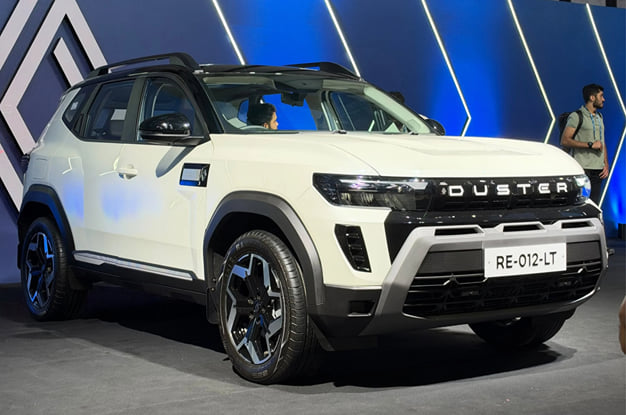
The illuminated grille and badges are the main styling difference
Duster turbo petrol
Duster hybrid
 

Duster turbo petrol vs hybrid

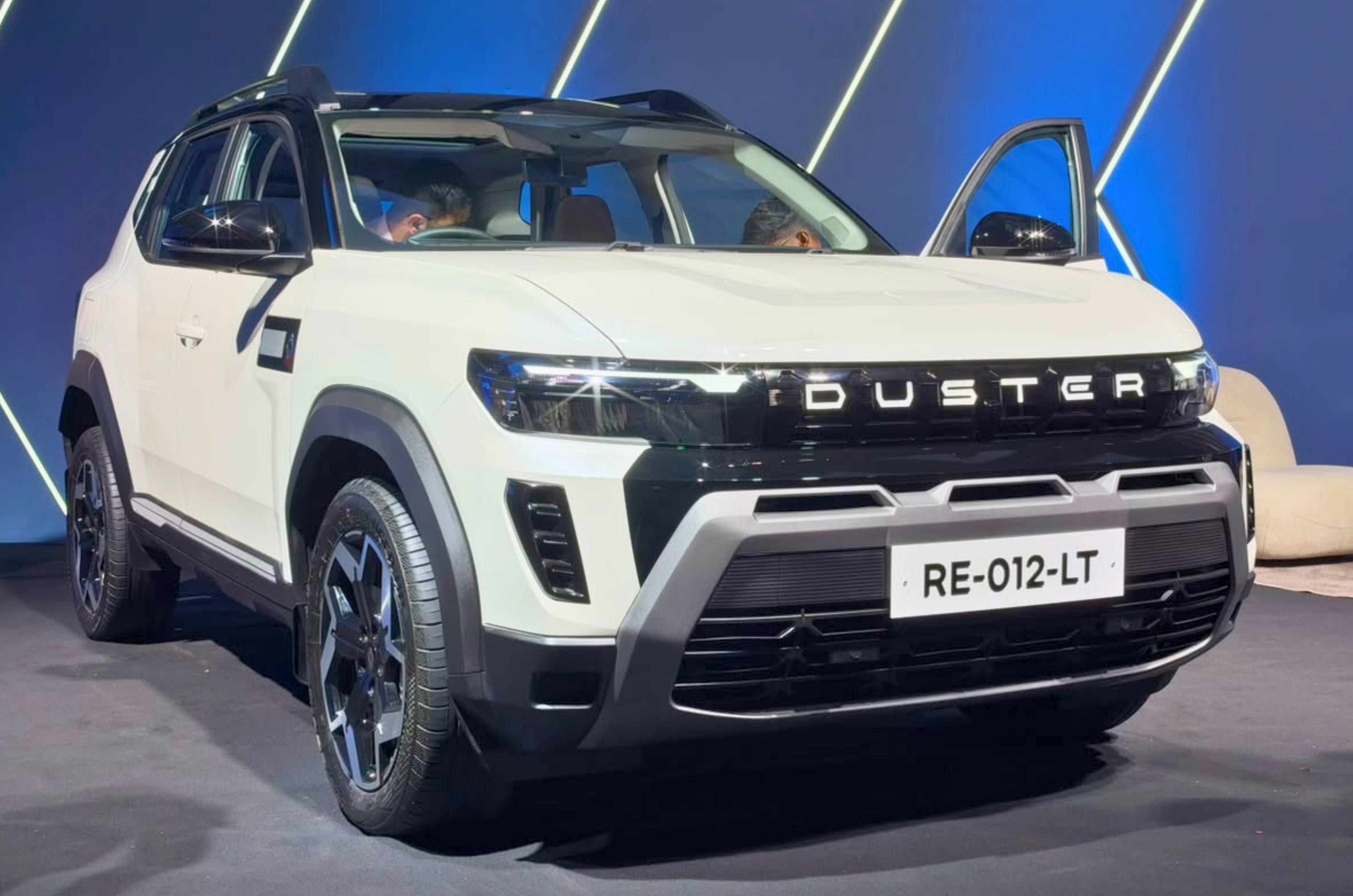
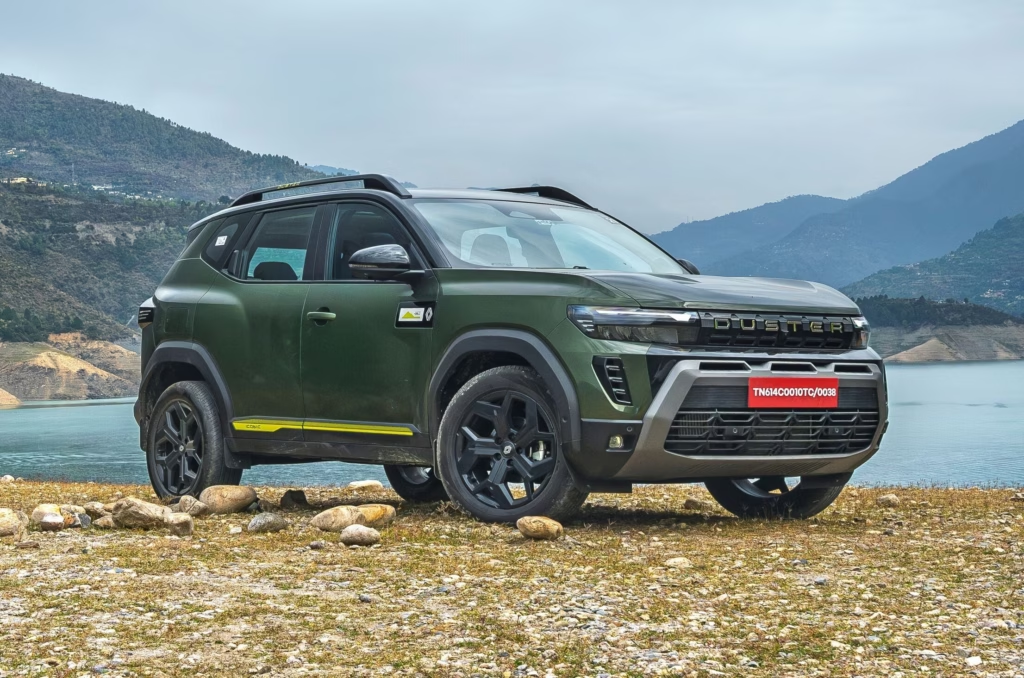
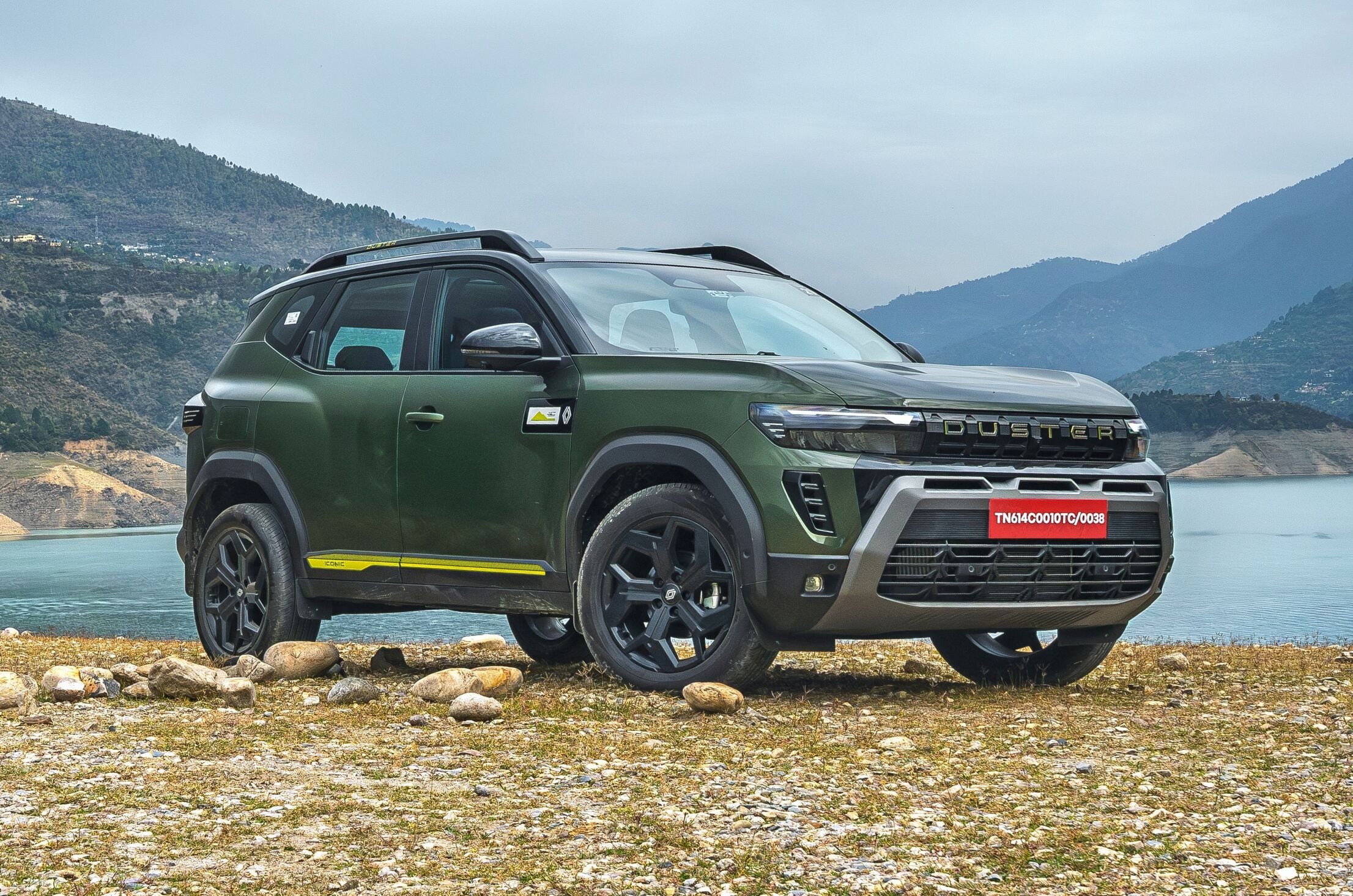
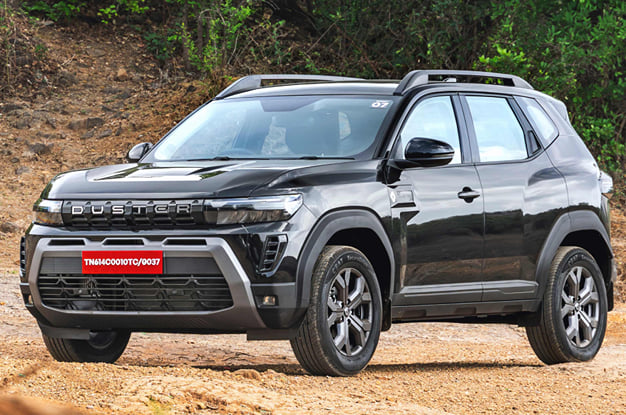
The Duster hybrid retains the turbo-petrol model’s overall design, including its eyebrow-shaped LED daytime running lamps, chunky body cladding, roof rails and C-pillar-mounted rear door handles.  It also has the same 212mm ground clearance.

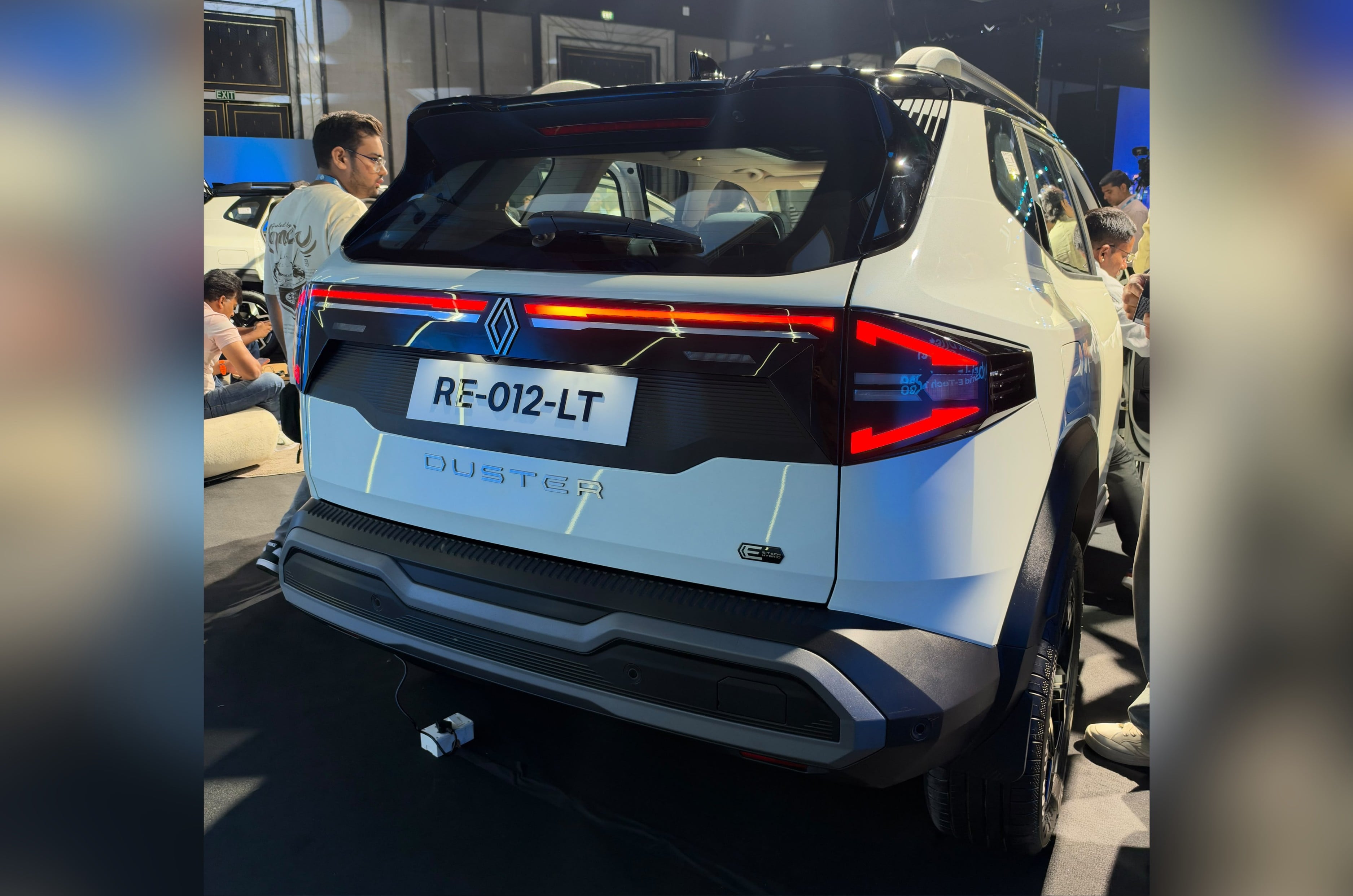
The main styling changes are an illuminated ‘Duster’ grille emblem and ‘E-Tech Hybrid’ badges on the front doors and tailgate. The Hybrid version also gets frequency-dependent dampers. Boot capacity is lower than in the turbo-petrol versions, although the overall exterior design remains largely unchanged.

Renault Duster turbo petrol vs hybrid: Interior and features

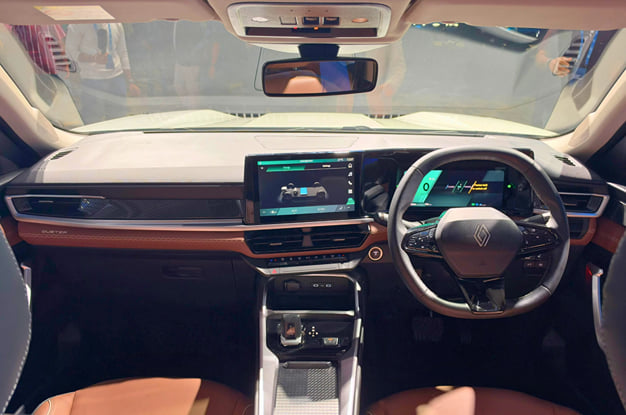
The cabin layout is similar, but the upholstery and equipment differ
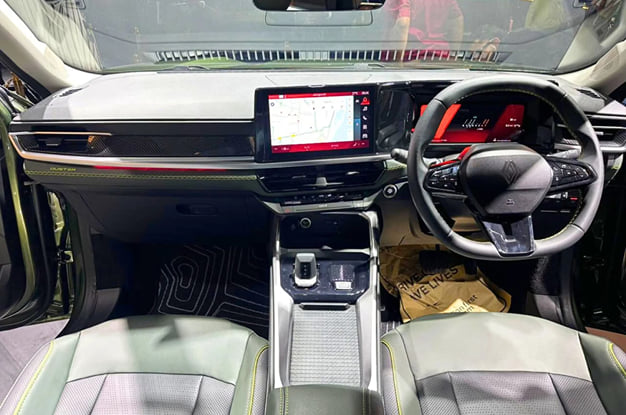
Duster turbo petrol
Duster turbo hybrid
 

Duster turbo petrol vs hybrid

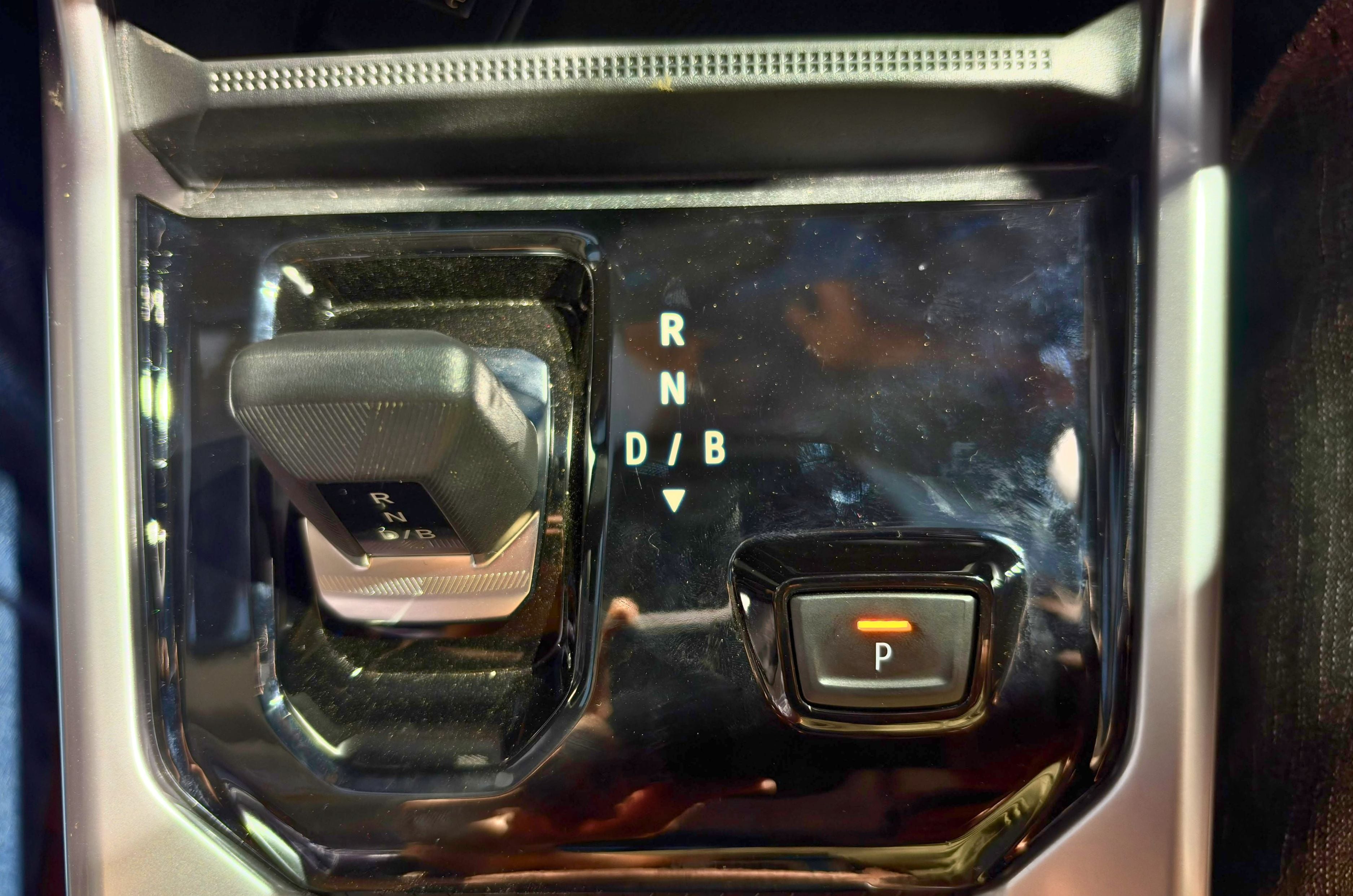
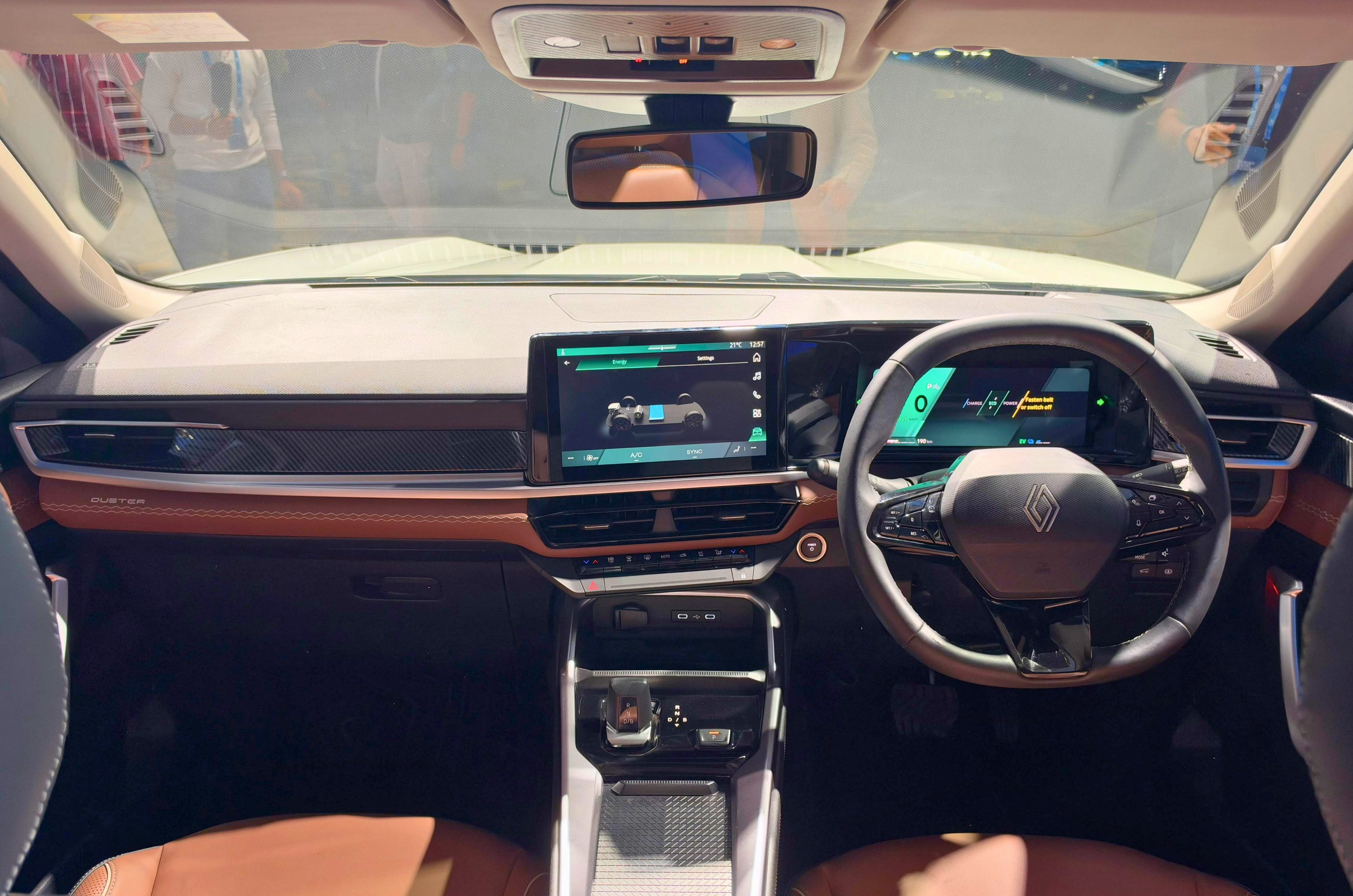
The hybrid follows the turbo-petrol Duster’s dashboard layout, with a dual-screen setup and an e-shifter on the centre console. The hybrid gets a different upholstery scheme from the turbo-petrol Duster, with black upholstery and grey stitching on the Evolution, Desert Beige semi-leatherette on the Techno and Dune Brown leatherette on the Emotion. The hybrid also gets a smaller headrest.

The Duster hybrid is offered in Evolution, Techno and Emotion trims, while the turbo-petrol range gets Evolution, Techno, Techno+, Iconic and Iconic Launch Edition variants. 

The hybrid and turbo-petrol Duster share some equipment across their respective trims, but there are differences. The hybrid Evolution gets a 7-inch digital driver’s display, a 10.1-inch touchscreen and dual-zone automatic climate control. The turbo-petrol Evolution has the same touchscreen and driver’s display, but gets single-zone manual air conditioning. Both the hybrid and turbo-petrol Techno trims get a panoramic sunroof.

At the top of the range, the hybrid Emotion gets a 10.25-inch digital driver’s display, ventilated and electrically adjustable front seats, and a powered tailgate. The turbo-petrol Iconic offers these features too, but additionally gets a 360-degree camera and Level 2 ADAS, which are not available on the hybrid.

Renault Duster turbo petrol vs hybrid: Engine and Performance

The 1.3-litre turbo-petrol makes more torque
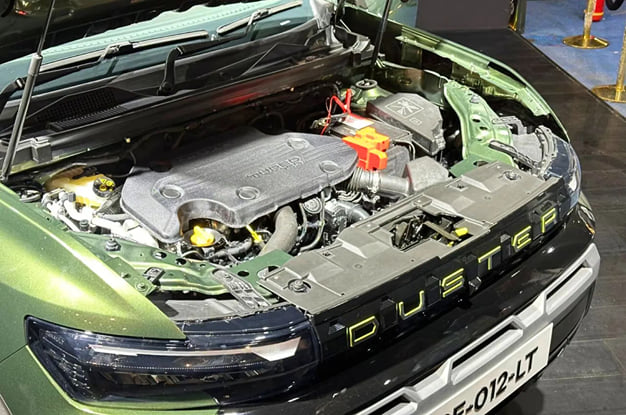
Duster turbo petrol
Duster hybrid
 

Duster turbo petrol vs hybrid

The Duster turbo-petrol is available with two engine options. The 1.0-litre, three-cylinder unit produces 100hp and 166Nm and is paired with a 6-speed manual gearbox. The larger 1.3-litre, four-cylinder engine develops 163hp and 280Nm, and is available with a 6-speed manual or a 6-speed dual-clutch automatic gearbox.

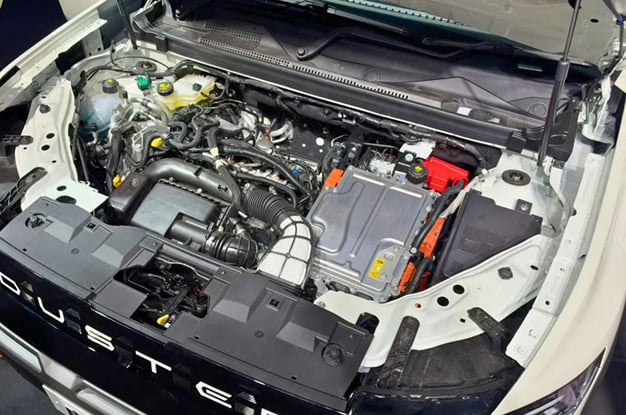
The hybrid uses a naturally aspirated 1.8-litre, four-cylinder petrol engine paired with two electric motors: a 20hp generator and a 49hp motor that drives the wheels. The system produces a combined 160hp and 172Nm, with a 1.4kWh battery supporting the setup. It uses a ‘multi-mode’ automatic gearbox with two electric gears and four petrol gears.

The hybrid system automatically switches between six operating modes, including all-electric, petrol-only and series and series-parallel hybrid modes. Renault claims the Duster hybrid can cover up to 80 percent of city driving in pure electric mode and accelerate from 0-100kph in a claimed 9.61 seconds.

While the hybrid’s combined output of 160hp is close to the 1.3-litre turbo-petrol’s 163hp, its claimed torque figure of 172Nm is lower than the turbo-petrol’s 280Nm.

Renault Duster turbo petrol vs hybrid: mileage 

Duster hybrid mileage is 10.55kpl higher than turbo-petrol DCT

PowertrainTransmissionARAI-claimed mileage
1.0-litre turbo-petrol6-speed manual19.41kpl
1.3-litre turbo-petrol6-speed manual17.75kpl
1.3-litre turbo-petrol6-speed DCT automatic18.45kpl
1.8-litre strong hybridMulti-mode automatic29kpl

The hybrid’s claimed mileage is significantly higher than that of either turbo-petrol engine. The difference is 9.59kpl over the 1.0-litre turbo-petrol manual, 11.25kpl over the 1.3-litre turbo-petrol manual and 10.55kpl over the 1.3-litre turbo-petrol DCT. At 29kpl, the hybrid’s claimed mileage is around 57 percent higher than that of the DCT version. 

The hybrid has a 50-litre fuel tank, the same capacity as the turbo-petrol versions. Renault claims a driving range of more than 1,400km on a full tank of the Hybrid variant.

Duster turbo petrol vs hybrid: Price

The hybrid costs more, even though it misses some features available on the top-spec turbo-petrol

TrimDuster hybridDuster turbo-petrol
Authentic–10.49 (1.0 MT)
Evolution16.9911.69 (1.0 MT); 12.99 (1.3 MT); 14.49 (1.3 DCT)
Techno18.9913.49 (1.0 MT); 14.49 (1.3 MT); 15.89 (1.3 DCT)
Techno+–15.29 (1.3 MT); 16.69 (1.3 DCT)
Emotion / Iconic19.49 (Emotion)16.99 (Iconic MT); 18.49 (Iconic DCT)

MT = manual; DCT = dual-clutch automatic

The hybrid’s introductory prices apply to deliveries until December 31, 2026. In Evolution trim, the hybrid costs Rs 2.50 lakh more than the 1.3-litre turbo-petrol DCT, while the top-spec Emotion hybrid is Rs 1 lakh more than the Iconic DCT. The hybrid offers higher claimed mileage but misses out on the 360-degree camera and Level 2 ADAS available on the turbo-petrol Iconic.

The hybrid version suits buyers who cover long distances and prioritize fuel efficiency, while the 1.3-litre turbo-petrol is worth considering for its higher torque and additional driver-assistance features.

All prices are ex-showroom, India.
On Cloud M9

On Cloud M9
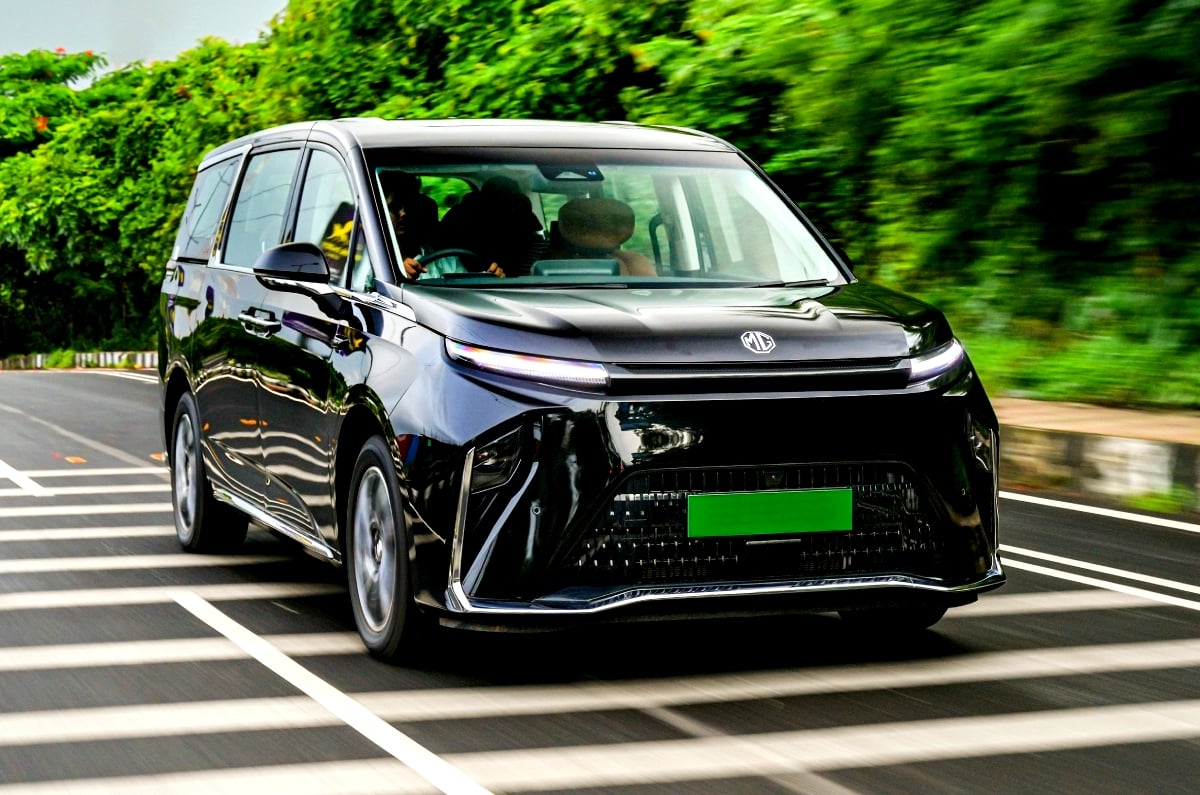
MG M9 front left tracking

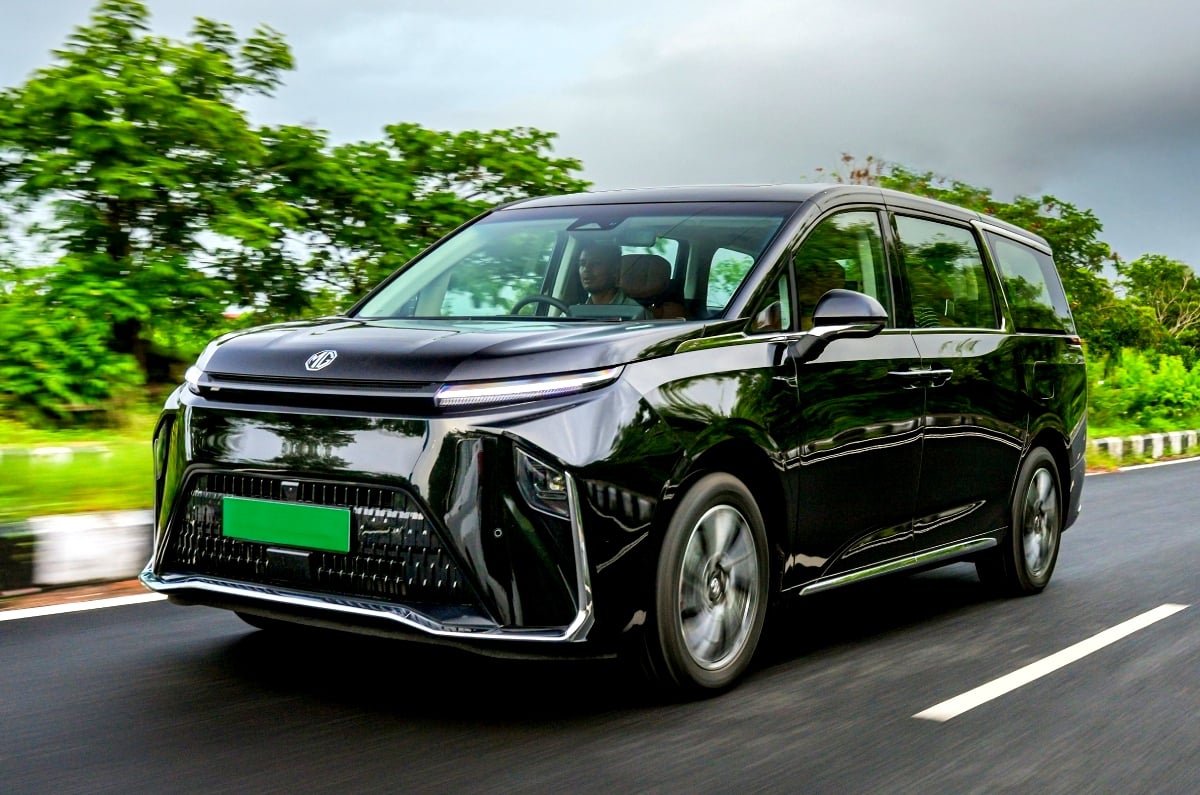
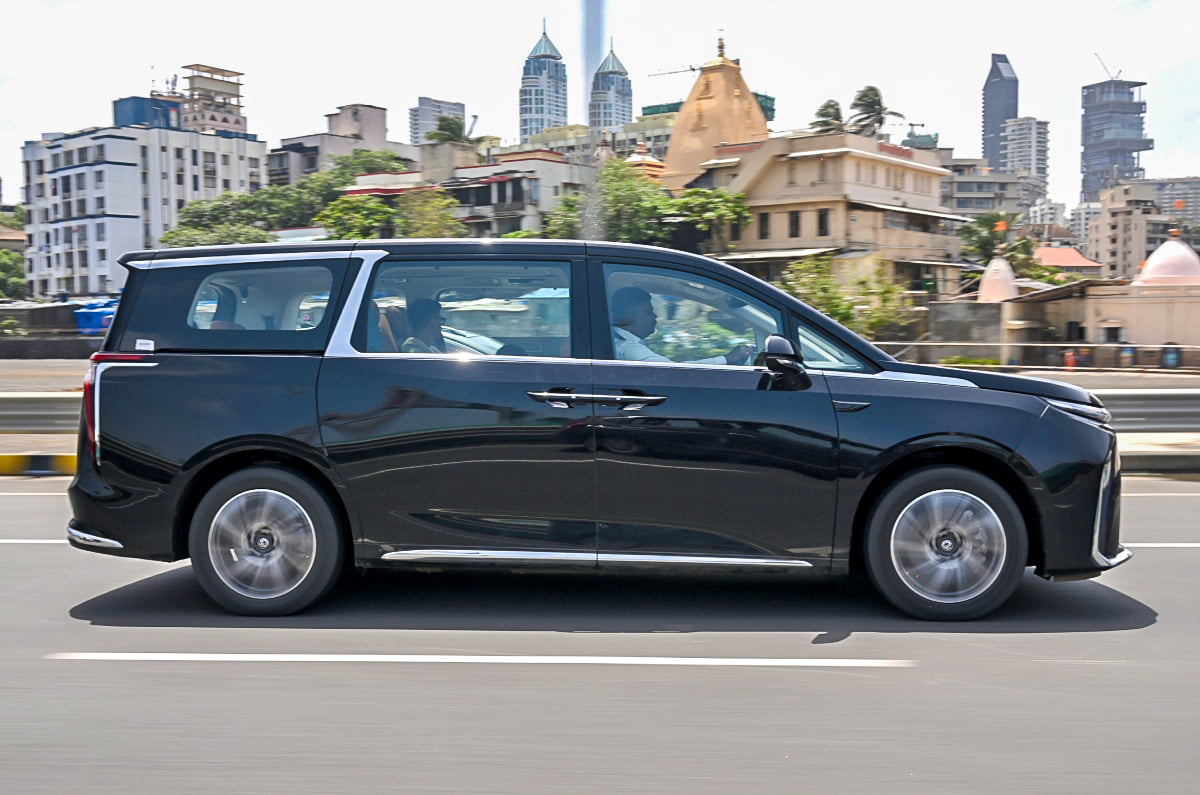
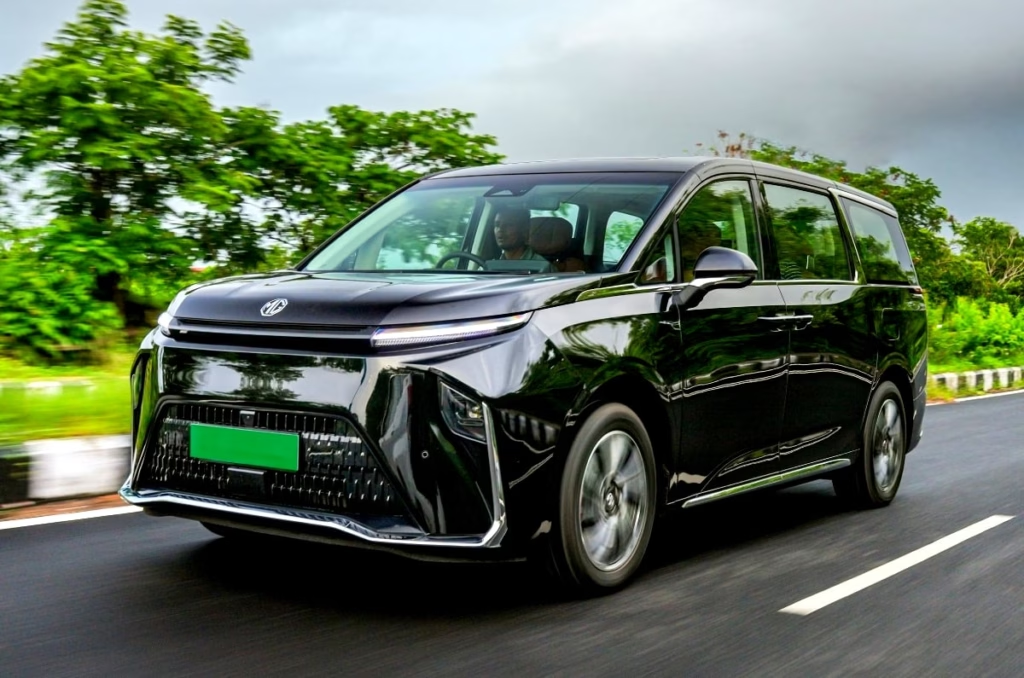
Luxury in an MPV is about more than having room for seven. It is about how that space is used, how effortlessly the occupants can settle in, and how much the car does to make every journey comfortable. The MG M9 brings together the practicality of a three-row MPV and the refinement of an electric powertrain, with a host of features that make time spent on the move feel a little more indulgent. Here are six highlights that make it stand out.

Lounge On Wheels

MG M9 side tracking
Massive wheelbase gives the M9 an imposing presence and liberates room in the cabin.

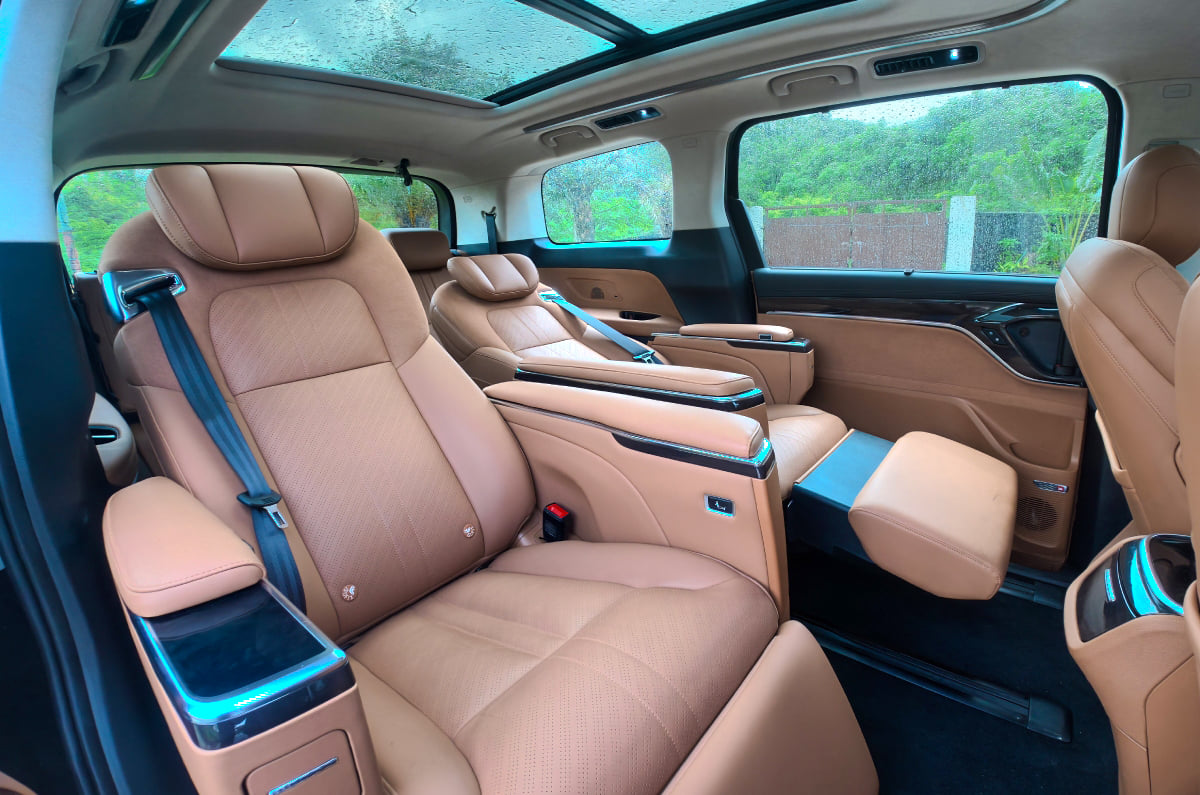
The M9’s 5.2-metre length, 2-metre width and 3.2-metre wheelbase give it the proportions to create a spacious, airy cabin. But it is the second row that makes the biggest impression. Two individual Presidential captain’s chairs offer 16-way electric adjustment, heating, ventilation, massage functions and extendable leg rests. The Boss Mode function moves the front passenger seat forward to create additional legroom, letting rear occupants stretch out and recline. It is a space designed for unwinding, not just getting from one place to another.

Space For Everyone

MG M9 second row seats
The aptly called Presidential captain’s chairs are even fit for a king.

While the second row gets the headline features, the M9 is designed to make all three rows usable. Its long wheelbase allows generous room for occupants, while second-row climate control, rear window sunshades and a panoramic dual sunroof enhance the feeling of comfort. The third row gets dedicated AC vents and USB connectivity, too. A premium Cognac Brown interior and 64-colour ambient lighting add to the cabin’s upmarket appeal, with the latter allowing occupants to tailor the atmosphere to their mood.

Electric Serenity

MG M9 right tracking
No matter the road surface, the M9 insulates its passengers from the outside world. 

The M9’s 90kWh battery powers a front-mounted electric motor, producing 245hp and 350Nm, with an ARAI-claimed range of 548km. Beyond the performance and range figures, the electric powertrain brings a quality that matters particularly in a luxury MPV: refinement. With no engine noise and smooth, linear power delivery, the M9 makes for a more relaxed experience on the move. An acoustic windshield further helps keep the outside world at bay.

Quality Entertainment

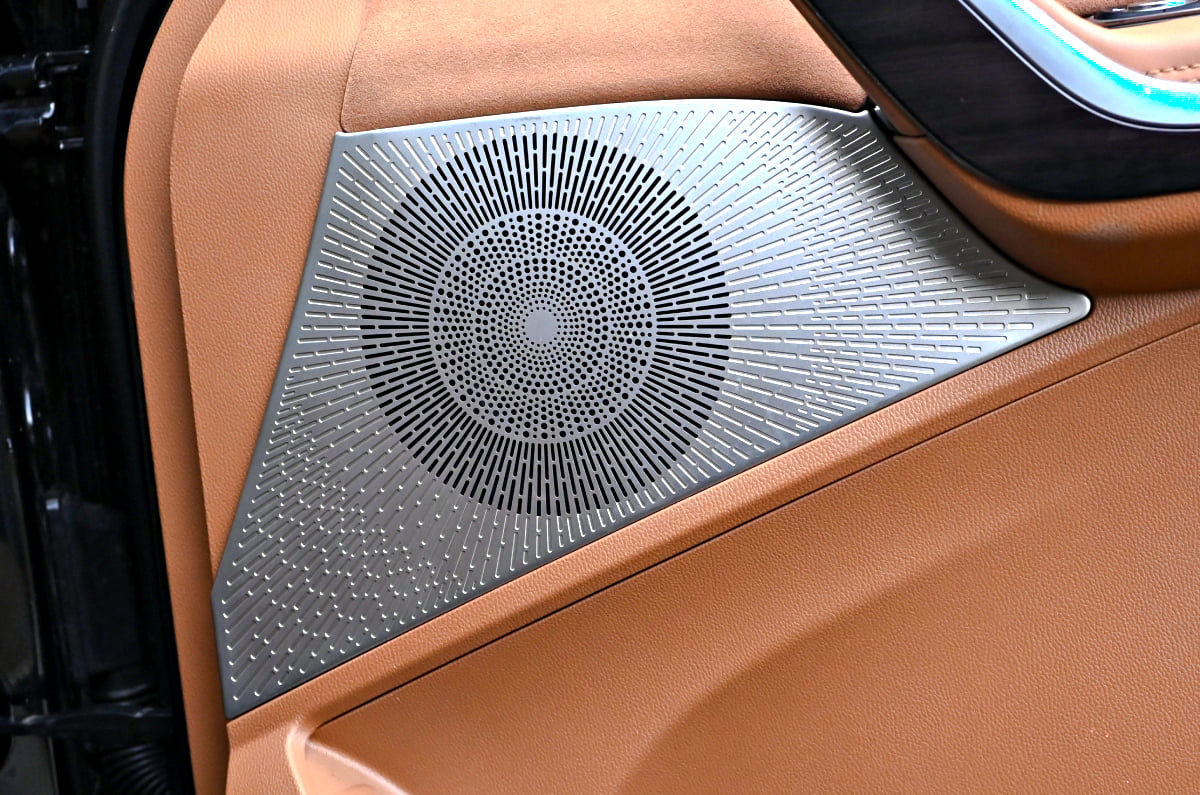
MG M9 speaker
Superb 13-speaker JBL system enhances the cabin’s ambience.

A quiet cabin makes for a better listening environment, and the M9 builds on this with a 13-speaker JBL sound system, complete with an amplifier and subwoofer. Whether it is music on a long drive or a podcast during the daily commute, the system makes entertainment an integral part of the experience. The panoramic sunroof and ambient lighting add to the sense of being in a space designed around the occupants.

Tech-Suave

MG M9 infotainment touchscreen
12.3-inch central touchscreen has all the controls you’ll need within easy access.

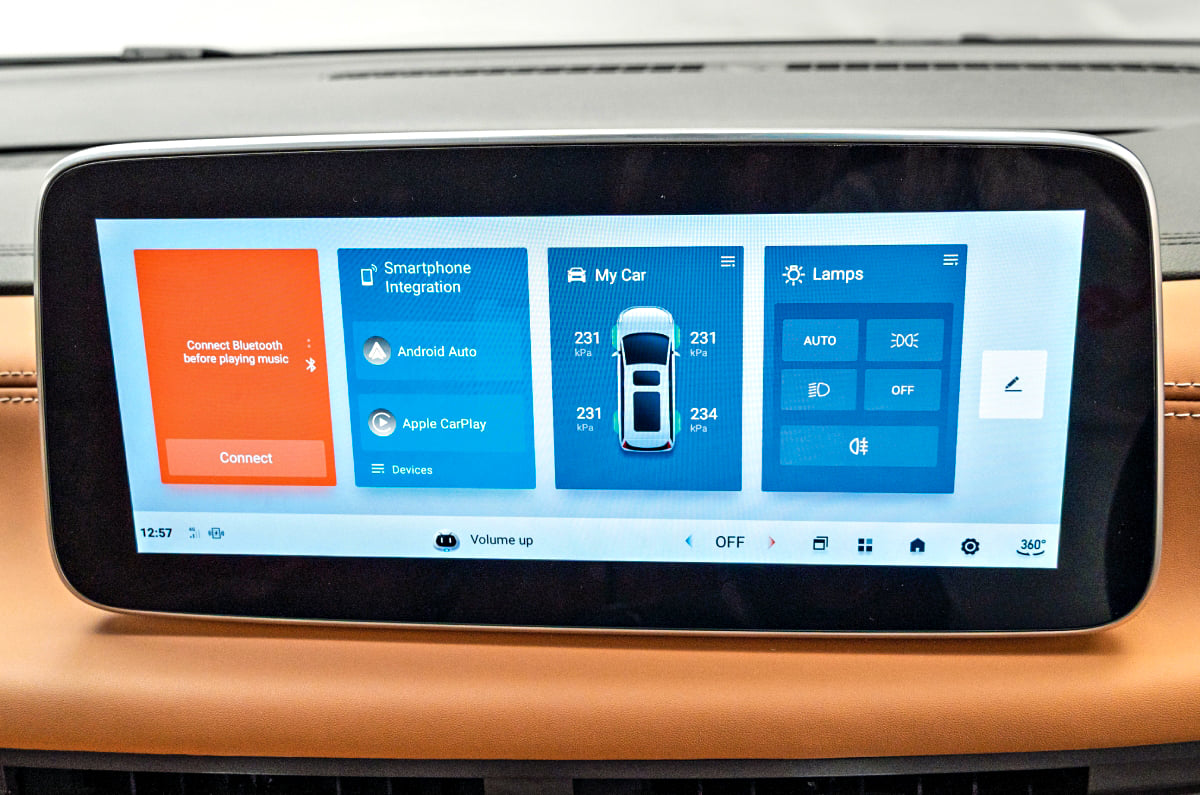
A 12.3-inch central touchscreen, digital instrument cluster, wireless smartphone connectivity and wireless charging bring everyday convenience within easy reach. The 360-degree camera is particularly useful when manoeuvring a vehicle of the M9’s size, helping the driver negotiate tight spaces with greater confidence. These features complement the M9’s focus on passenger comfort with technology that makes the car easier to live with.

Safety Assured

MG M9 front splash
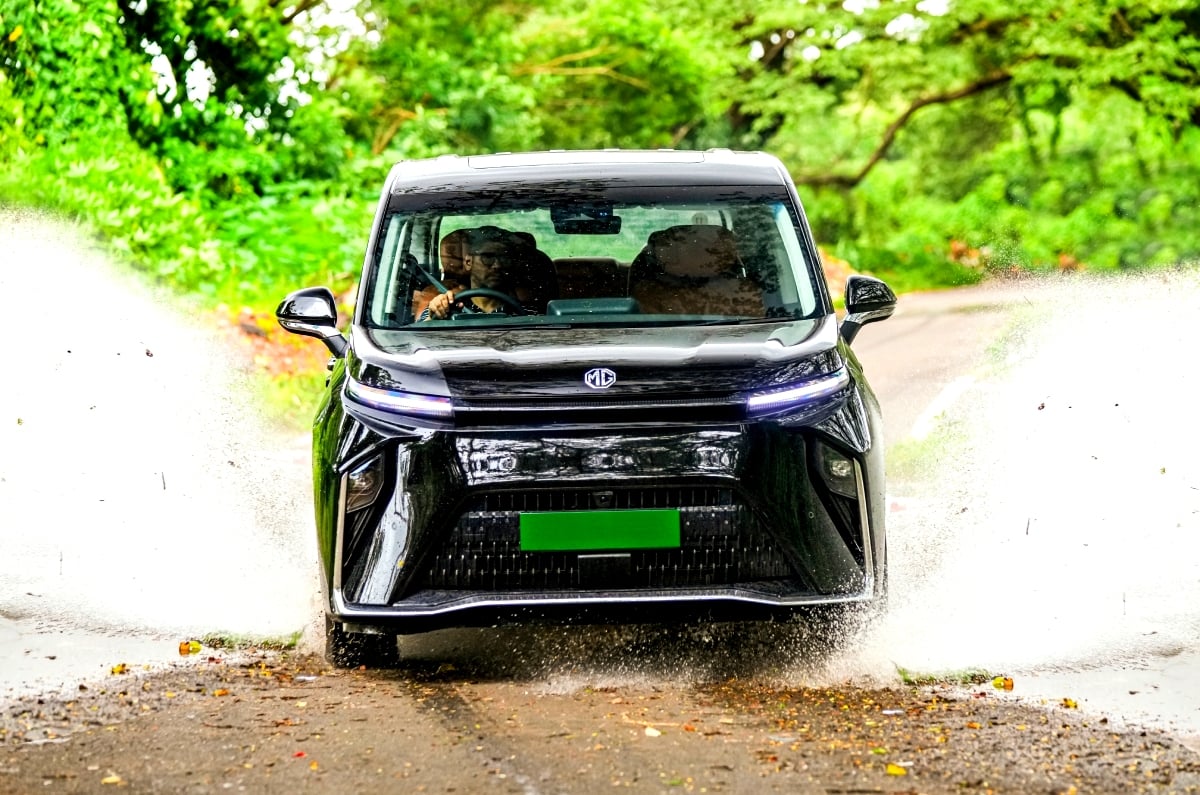
The M9 has received a 5-star Euro NCAP rating.

Luxury also means being able to travel with peace of mind. The M9 gets seven airbags and Level 2 advanced driver assistance systems, adding an extra layer of protection and driver support. Its five-star Euro NCAP safety rating provides further reassurance.

The MG M9’s appeal lies in how these elements come together. Generous space, thoughtful comfort features, electric refinement and modern safety technology give it a distinct identity in the luxury MPV segment. It’s no wonder that the M9 is the best-selling MPV in its class, with over 3,000 units sold since its launch last year. This is a vehicle that makes the journey itself something to look forward to, and that is what being on Cloud M9 is all about.

Renault Duster vs Maruti Victoris: Top-spec strong-hybrid SUVs compared

Renault Duster vs Maruti Victoris: Top-spec strong-hybrid SUVs compared
Renault Duster vs Maruti Victoris

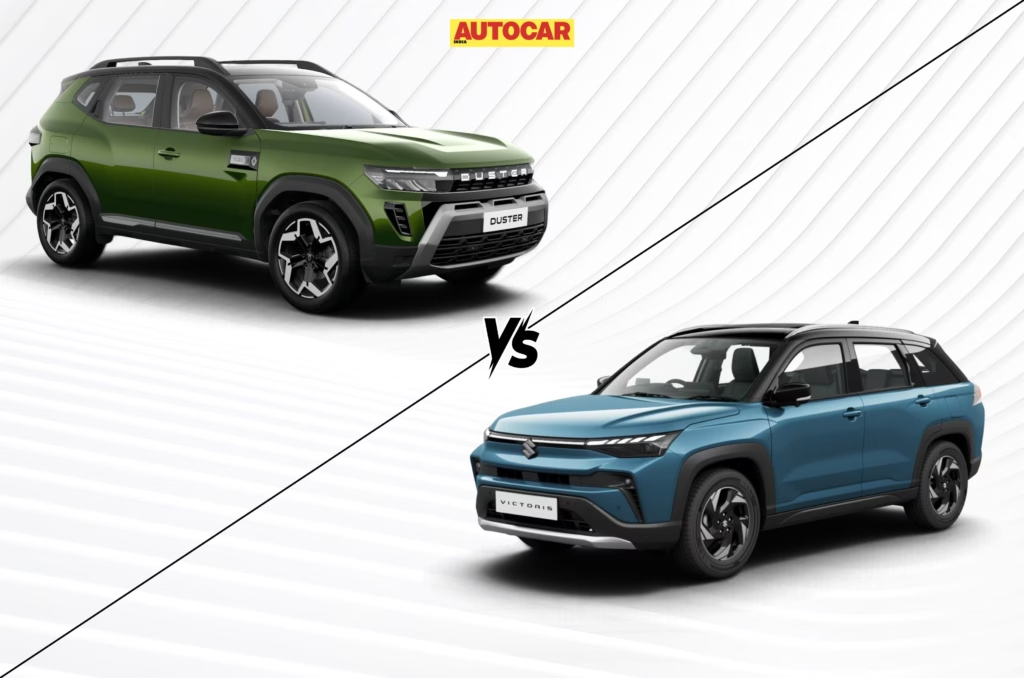
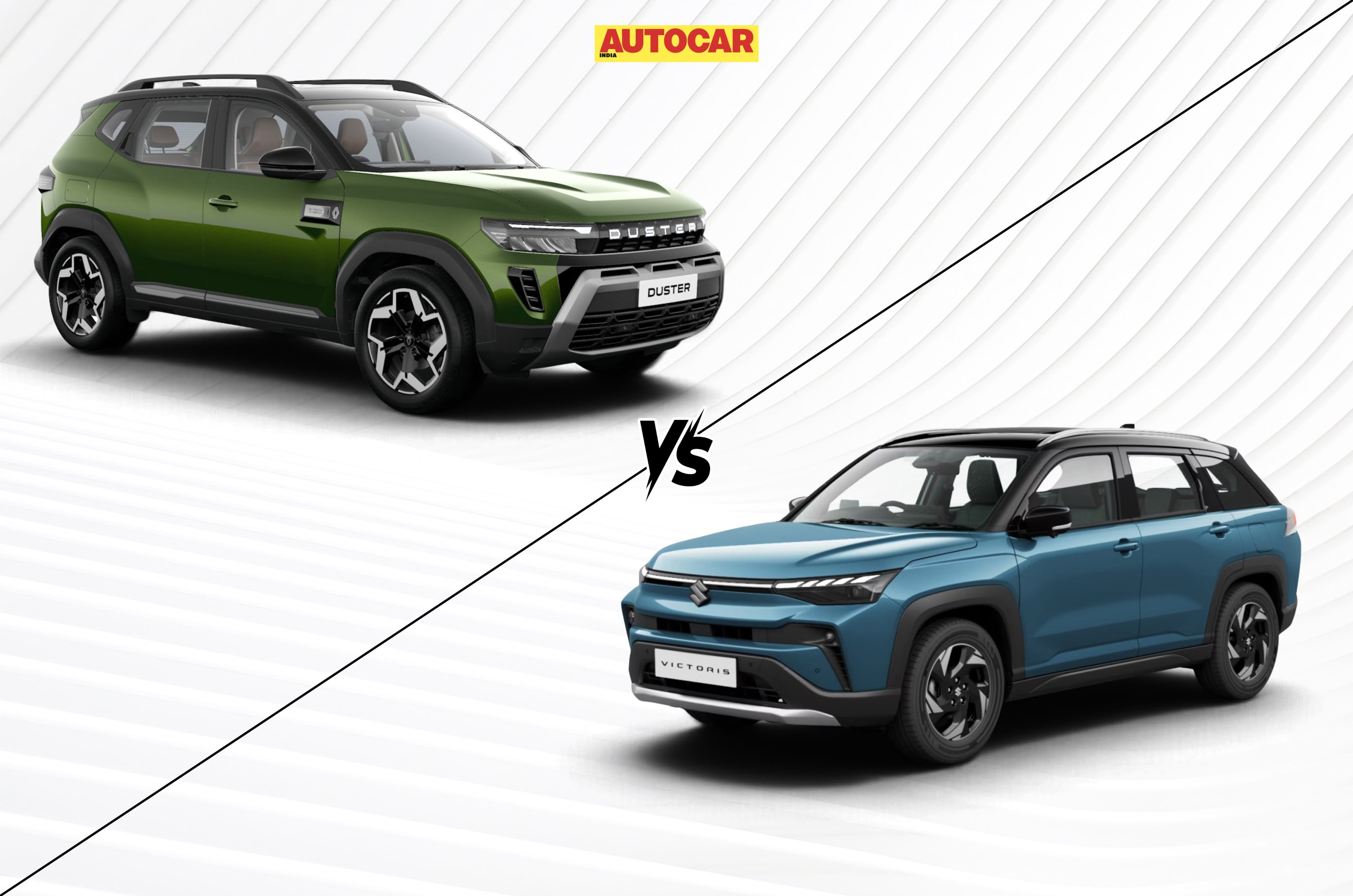
With the Duster strong-hybrid E-Tech 160, Renault is the latest brand to jump on the strong-hybrid bandwagon. The Duster strong-hybrid is positioned as an economical alternative powertrain and adds to its existing turbo-petrol options. On the other hand, the Maruti Victoris has been in the market for a year, offering a strong-hybrid powertrain since launch. But which strong-hybrid mid–size SUV in top-spec guise offers more bang for buck? We compare their respective on-paper specifications to find out. For this comparison, we’ve chosen the top-spec Emotion and ZXi+ (O) versions of the strong-hybrid Renault Duster and Maruti Victoris, respectively.

Renault Duster vs Maruti Victoris: Dimensions

Renault Duster vs Maruti Victoris: Dimensions


Renault Duster

Maruti Victoris

Difference

Length (mm)

4,346

4,360

-14

Width (mm)

1,815

1,795

+20

Height (mm)

1,694

1,655

+39

Wheelbase (mm)

2,657

2,600

+57

Ground clearance (mm)

212

210

+2

Boot space (litres)

372

Under 300 (est.)

–

Est. – Estimated

Apart from length, the Duster outranks the Victoris in every other dimension. It is 20mm wider, 39mm taller, has a 57mm longer wheelbase, and rides 2mm higher off the ground. 

Renault Duster vs Maruti Victoris: Powertrain specifications

Renault Duster vs Maruti Victoris: Powertrain specifications


Renault Duster

Maruti Victoris

Engine 

Naturally aspirated petrol, Atkinson cycle

Naturally aspirated petrol, Atkinson cycle

Displacement (cc)

1,789

1,490

Power (hp)

110

92

Torque (Nm)

175

122

Transmission

multi-mode automatic gearbox with 2 electric gears & 4 petrol gears

e-CVT

Battery capacity (kWh)

1.4

0.76

E-motor power (hp)

50

80

E-motor torque (Nm)

208

141

Maximum power output (hp)

160

116

Maximum torque output (Nm)

NA

NA

Claimed efficiency (kpl)

29

28.65

In strong-hybrid guise, both SUVs utilise a naturally aspirated petrol engine running on the more efficient Atkinson cycle. However, the Duster’s larger unit delivers more power and torque figures. The Duster also uses a larger battery pack.  Both SUVs also use e-motors, wherein the one on the Maruti produces more power, but the Duster’s e-motor outputs more torque. With a combined power output of 160hp, the Duster strong-hybrid is much more powerful than the Victoris strong-hybrid. 

Both SUVs also differ in the gearboxes utilised here. The Duster uses a multi-mode automatic gearbox with 2 electric and 4 petrol gears, whereas the Victoris uses an e-CVT. Renault says that the Duster drives 80 percent on EV power in the city, which likely contributes to its higher claimed mileage. But real-world tests are awaited for the Renault.

Renault Duster vs Maruti Victoris: Exterior features

Renault Duster vs Maruti Victoris: Exterior features


Renault Duster

Maruti Victoris

Headlamps

LED

LED projector

LED DRLs

Yes

Connected

Puddle lamps

Yes

No

Tail lamps

Connected LED

Connected LED

Fog lamps

Optional

Yes

Welcome/goodbye animation

Yes

No

Wheel sizes

18-inch

17-inch

Rear spoiler

Yes

Yes

Electric adjust/fold ORVMs

Yes

Yes

Sharkfin antenna

Yes

Yes

Roof rails

Yes

Yes

Powered tailgate

Yes

Yes

Colour

Monotone and dual-tone

Monotone and dual-tone 

On the outside, LED light setups, DRLs, roof rails, a shark fin antenna, and a powered tailgate are found on both SUVs.  However, larger 18-inch alloy wheels, puddle lamps, and welcome/goodbye animations for the light setups are unique to the Duster.

Renault Duster vs Maruti Victoris: Interior features

Renault Duster vs Maruti Victoris: Interior features


Renault Duster

Maruti Victoris

Ventilated seats

Yes

Yes

Sunroof

Panoramic

Panoramic

Infotainment screen size

10.1-inch

10.1-inch

Digital driver’s display

10.25-inch

10.25-inch

Head-up display

Optional

Yes

Wireless Apple CarPlay, Android Auto

Yes

Yes

On-board navigation

No

Yes

Powered driver seat

6-way

8-way

Powered co-driver seat

6-way

No

Reclining rear seats

No

No

Air Purifier

Optional

Yes

Auto AC

Dual-zone

Single zone

Rear AC vents

Yes

Yes

Seat upholstery

Leatherette

Leatherette

Wireless phone charger

Yes

Yes

Audio system

6-speaker Arkamys

8-speaker Infinity

60:40 split rear seat folding

Yes

Yes

USB Type-C ports 

2x front, 2x rear

2x front, 2x rear

Rear armrest

No

Yes

Connected car tech

Yes

Yes

Rear window sunshade

No

No

Ambient lighting

Optional

Yes

Leatherette inserts on the dashboard

Yes

Yes

Push-button start

Yes

Yes

Keyless entry

Yes

Yes

Steering adjust

Tilt and Telescopic

Tilt and Telescopic

The Renault offers features such as a powered co-driver seat and dual-zone automatic climate control that the Maruti lacks. In contrast, the latter gets further adjustment for the driver seat, two additional speakers, and on-board navigation, while features like a head-up display and ambient lighting are factory-fitted on the former.

Renault Duster vs Maruti Victoris: Driving features 

Renault Duster vs Maruti Victoris: Driving features 


Renault Duster

Maruti Victoris

Drive modes

No

Eco, Normal, Sport

Cruise control

Regular

Regular

As far as driving features are concerned, both models come with regular cruise control, but drive modes are found only on the Victoris.

Renault Duster vs Maruti Victoris: Safety features 

Renault Duster vs Maruti Victoris: Safety features 

Safety features

Renault Duster

Maruti Victoris

Airbags

Six

Sx

Parking sensors

Rear

Front and rear 

Camera setup

Rear view

360-degree

Dash cam

Optional

Optional

Electronic parking brake with auto hold

Yes

Yes

ADAS

No

No

TPMS

Yes

Yes

Hill start assist

Yes

Yes

Disc brakes (Front/Rear)

Yes

Yes

ESC

Yes

Yes

Auto-dimming IRVM

Yes

Yes

On the safety front, both SUVs are well-equipped with features such as 6 airbags, rear parking sensors, auto-dimming IRVM, electronic parking brake with auto-hold, all-wheel disc brakes, and TPMS. However, the Victoris pips the Duster here by offering a 360-degree camera and front parking sensors. Notably, both miss out on a Level 2 ADAS suite.

Renault Duster vs Maruti Victoris: Prices and verdict 

Renault Duster vs Maruti Victoris: Prices (Rs lakh)


Renault Duster

Maruti Victoris

Price 

19.49

19.98

Comparing top-spec versions side by side, the Duster strong-hybrid is more affordable by Rs 41,000. Between the two, it’s the Duster we’d recommend. Apart from being the more affordable option, it offers slightly more kit and delivers more power without sacrificing much in terms of efficiency.

Tiger Shroff Firing: एक्टर टाइगर श्रॉफ की कार पर फायरिंग का पहला वीडियो आया सामने, गोलियों की आवाज से मायानगरी में मची अफरा-तफरी

Tiger Shroff Firing: बॉलीवुड अभिनेता टाइगर श्रॉफ को निशाना बनाकर की गई कथित फायरिंग की घटना से जुड़ा पहला वीडियो सामने आया है। मुंबई के जुहू इलाके में हुई इस फायरिंग के वीडियो में गोली चलने की आवाजें सुनाई देने और मौके पर अफरा-तफरी का माहौल दिखाई दे रहा है। शुरुआती जानकारी के मुताबिक, बाइक सवार अज्ञात हमलावरों ने टाइगर श्रॉफ की गाड़ी पर गोलियां चलाई थीं। सामने आए वीडियो में टोपी पहने दो संदिग्ध टाइगर श्रॉफ की ओर फायरिंग करते नजर आ रहे हैं। एक आरोपी ने सामने से, जबकि दूसरे ने भीड़ के बीच से गोली चलाई। वारदात के बाद दोनों फरार हो गए, जिनमें से एक मोटरसाइकिल के जरिए मौके से भाग निकला। इस घटना में अभिनेता को कोई चोट नहीं आई। जबकि उनके ड्राइवर और एक ऑटो रिक्शा चालक के घायल होने की खबर है।

वीडियो सामने आने के बाद पुलिस की जांच में अब हमलावरों की पहचान करने और घटनाक्रम की कड़ियां जोड़ने के लिए सीसीटीवी फुटेज अहम भूमिका निभा सकते हैं। हालांकि, मामले में हमलावरों की पहचान और फायरिंग के पीछे की वजह की आधिकारिक पुष्टि जांच पूरी होने के बाद ही हो सकेगी। सोशल मीडिया पर वायरल एक पोस्ट के अनुसार, लॉरेंस बिश्नोई गिरोह ने हमले की जिम्मेदारी ली है।

मौके पर मची अफरा-तफरी

सामने आए कथित वीडियो में फायरिंग के दौरान का तनावपूर्ण माहौल दिखाई देता है। फुटेज में गोलियों की आवाजें सुनाई देने का दावा किया गया है। घटना के दौरान लोग अचानक हुई गोलीबारी से घबराते नजर आते हैं और मौके पर अफरा-तफरी मच जाती है। वीडियो के एक हिस्से में एक व्यक्ति को ‘टाइगर भाई’ कहते हुए भी सुना जा सकता है। इस फुटेज को जांच के लिहाज से महत्वपूर्ण माना जा रहा है, क्योंकि इससे हमलावरों की गतिविधियों और घटना के दौरान मौके पर मौजूद लोगों की प्रतिक्रिया को समझने में मदद मिल सकती है।

हमले के बाद एक्टर ने खुद दौड़ाई कार

एक वायरल वीडियो में ड्राइवर को चोट लगने के बाद टाइगर खुद कार चलाते हुए दिखाई दे रहे हैं। वारदात के ठीक बाद टाइगर ने बहुत सूझबूझ दिखाई। गोलीबारी की घटना के बाद वह खुद कार से बाहर नहीं निकले, बल्कि अंदर ही ड्राइवर सीट बदल ली। वह जानते थे कि कार के बाहर अभी खतरा हो सकता है, इसलिए यही जगह उन्हें सबसे सुरक्षित दिखी।

जुहू के पुष्पा पार्क के पास हुई थी फायरिंग

जानकारी के मुताबिक, रविवार शाम मुंबई के जुहू इलाके में पुष्पा पार्क के पास यह घटना हुई। आरोप है कि बाइक पर आए अज्ञात लोगों ने टाइगर श्रॉफ की गाड़ी को निशाना बनाकर फायरिंग की।

घटना के समय टाइगर श्रॉफ सुरक्षित थे। हालांकि, उनके ड्राइवर और एक ऑटो रिक्शा चालक के घायल होने की सूचना सामने आई है।

घायलों की स्थिति को लेकर विस्तृत आधिकारिक जानकारी उपलब्ध नहीं है। फायरिंग की सूचना मिलने के बाद मुंबई पुलिस ने जांच शुरू कर दी है। पुलिस की कई टीमें हमलावरों की पहचान करने, उनके आने-जाने के रास्ते का पता लगाने और वारदात के पीछे की वजह समझने में जुटी हैं। घटनास्थल और आसपास के इलाकों में लगे सीसीटीवी कैमरों की फुटेज भी खंगाली जा रही है।

लॉरेंस बिश्नोई गैंग के नाम से कथित ऑडियो वायरल

फायरिंग की घटना के बाद एक कथित ऑडियो संदेश भी सामने आया। इस मैसेज में अनिल पंडित नाम से अपनी पहचान बताने वाले एक व्यक्ति और हरमन संधू ने लॉरेंस बिश्नोई गैंग की ओर से घटना की जिम्मेदारी लेने का दावा किया। संदेश में सलमान खान से जुड़े फिल्म उद्योग के लोगों को भी धमकी दिए जाने की बात कही गई है।

हालांकि, इस ऑडियो की प्रामाणिकता और फायरिंग में कथित गैंग की भूमिका की पुलिस की ओर से स्वतंत्र पुष्टि नहीं हुई है। जांच एजेंसियां यह पता लगाने की कोशिश कर रही हैं कि फायरिंग के पीछे व्यक्तिगत रंजिश, धमकी या कोई अन्य वजह थी। कथित ऑडियो और घटना के बीच संबंध स्थापित करने के लिए भी जांच जरूरी है।

मुख्यमंत्री देवेंद्र फडणवीस ने पुलिस कमिश्नर से की बात

घटना के बाद महाराष्ट्र के मुख्यमंत्री देवेंद्र फडणवीस ने मुंबई पुलिस कमिश्नर देवेन भारती से बातचीत की। उन्होंने मामले की गहन जांच करने और वारदात के लिए जिम्मेदार लोगों के खिलाफ जल्द कार्रवाई सुनिश्चित करने के निर्देश दिए। वहीं, महाराष्ट्र के उपमुख्यमंत्री एकनाथ शिंदे ने भी टाइगर श्रॉफ और उनके परिवार से मुलाकात। उन्होंने कानून-व्यवस्था बिगाड़ने वालों के खिलाफ कार्रवाई का भरोसा दिया और अभिनेता को सुरक्षा का आश्वासन दिया।

ये भी पढ़ें- Tiger Shroff : एक्टर टाइगर श्रॉफ पर हमला, 3 लोगों ने की फायरिंग, लॉरेंस बिश्‍नोई गैंग ने ली जिम्‍मेदारी

अब हमलावरों की पहचान पर पुलिस की नजर

फायरिंग का कथित वीडियो सामने आने के बाद पुलिस के लिए हमलावरों की पहचान करना जांच का प्रमुख हिस्सा बन गया है। सीसीटीवी फुटेज, घटनास्थल से जुटाए गए साक्ष्य और दूसरे तकनीकी इनपुट के आधार पर वारदात की कड़ियां जोड़ी जा रही हैं। फिलहाल सबसे अहम सवाल यही हैं कि हमलावर कौन थे, उन्होंने टाइगर श्रॉफ की गाड़ी को ही निशाना क्यों बनाया और क्या इस घटना का कथित धमकी भरे ऑडियो से कोई संबंध है। इन सवालों के जवाब पुलिस जांच के बाद ही सामने आ पाएंगे।

3 reasons to buy the Mahindra XUV 3XO CNG and 3 reasons not to

3 reasons to buy the Mahindra XUV 3XO CNG and 3 reasons not to
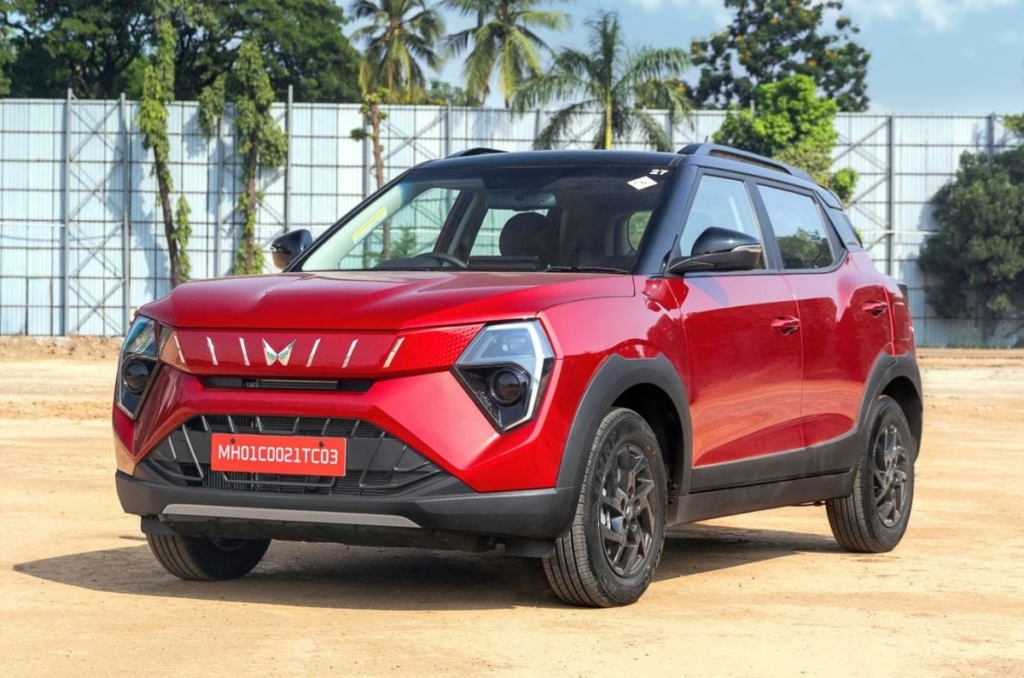
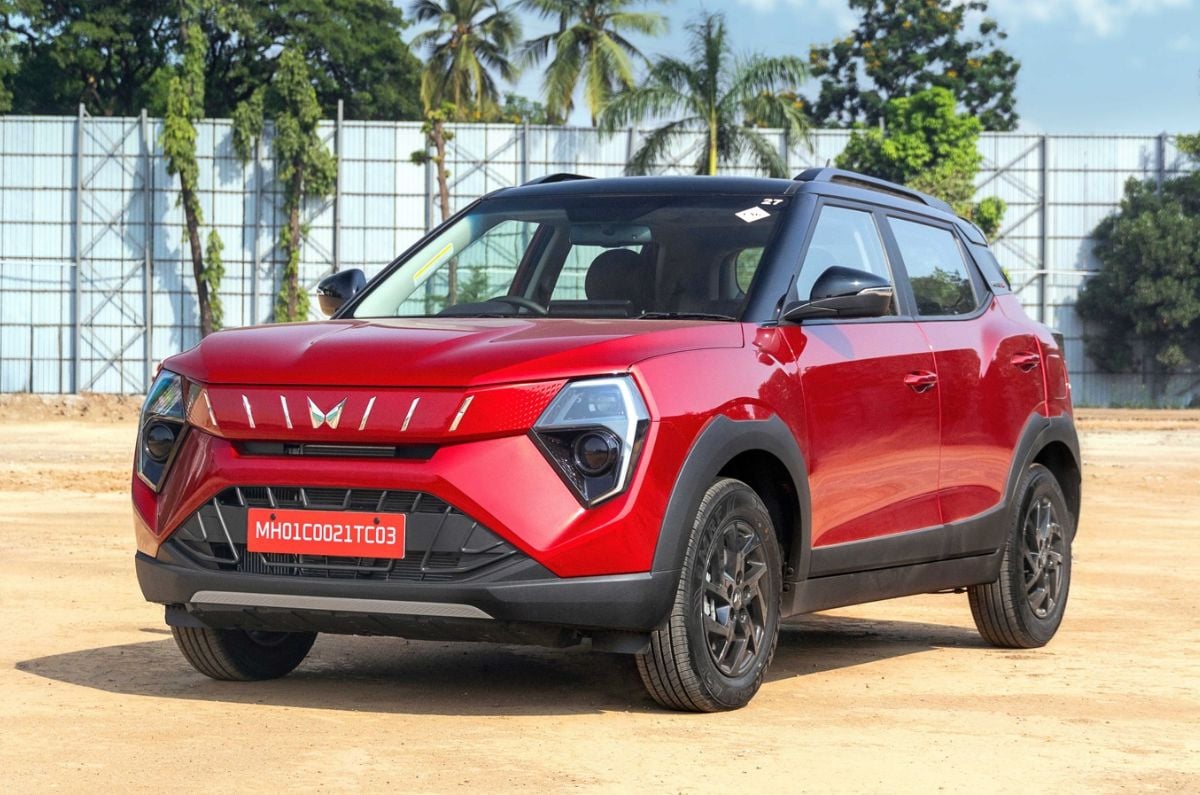
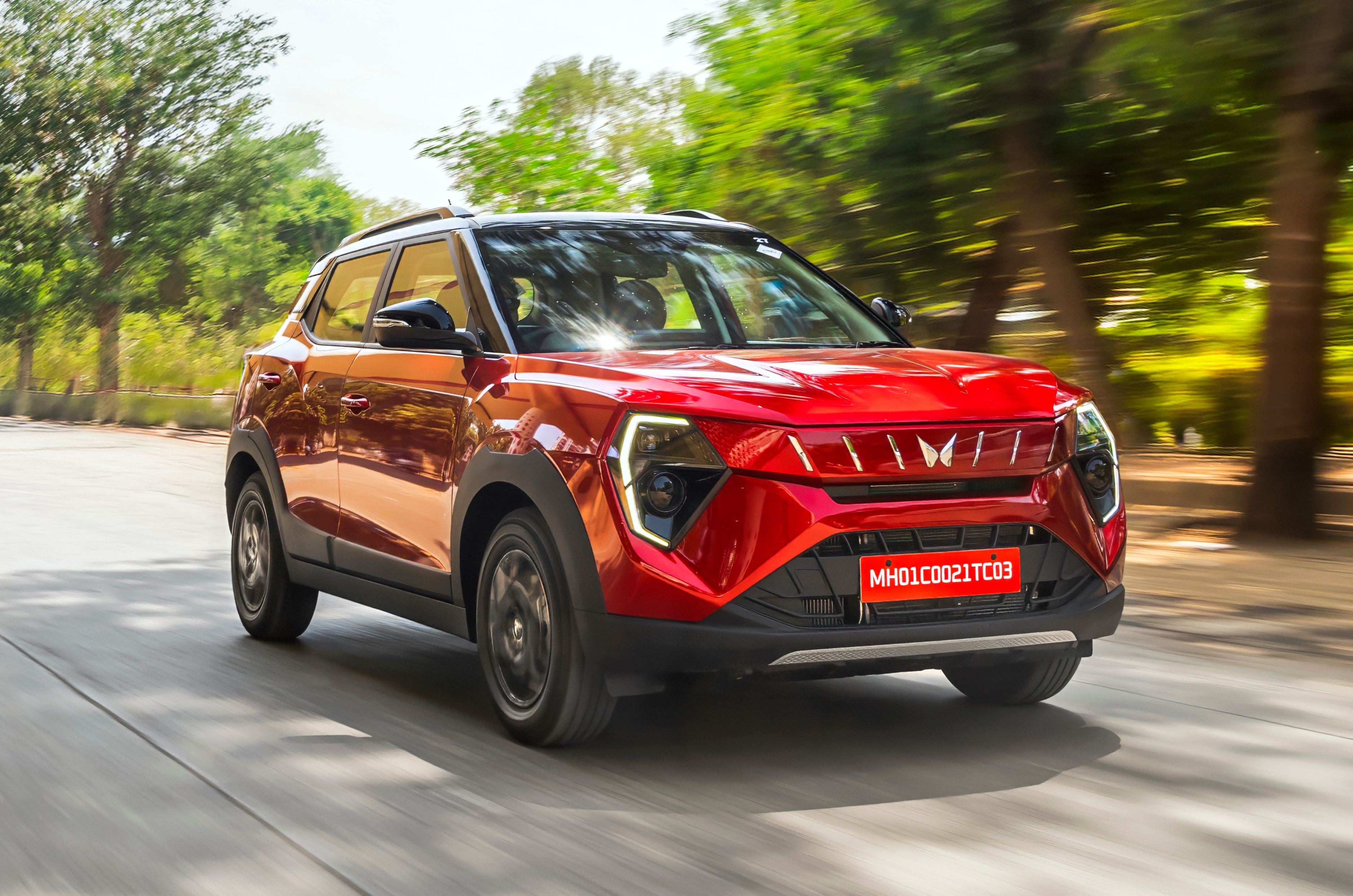
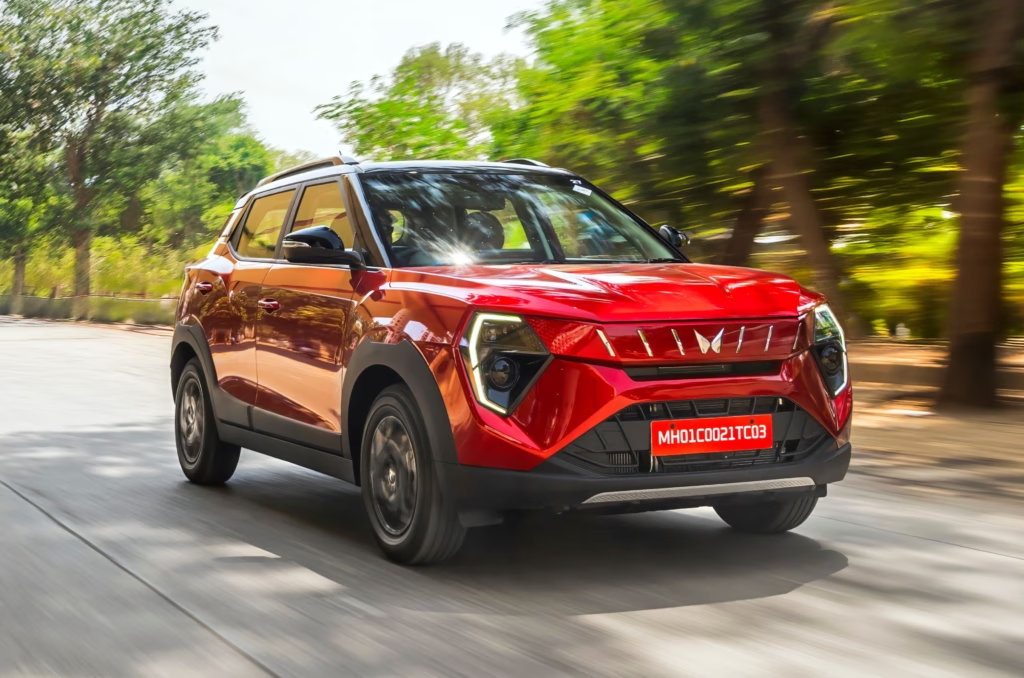
Mahindra XUV 3XO CNG front quarter

The Mahindra XUV 3XO ZNG takes on the Tata Nexon iCNG and the Maruti Brezza CNG in the CNG compact SUV space. Priced from Rs 9.99 lakh to Rs 12.27 lakh (ex-showroom), it carries a premium of Rs 1 lakh to Rs 1.2 lakh over the corresponding petrol versions. Before signing on the dotted line, here are the key strengths and weaknesses of this Mahindra SUV.

Reasons to buy the Mahindra XUV 3XO CNG

Strong performance on CNG

The XUV 3XO CNG loses none of its power when running on gas

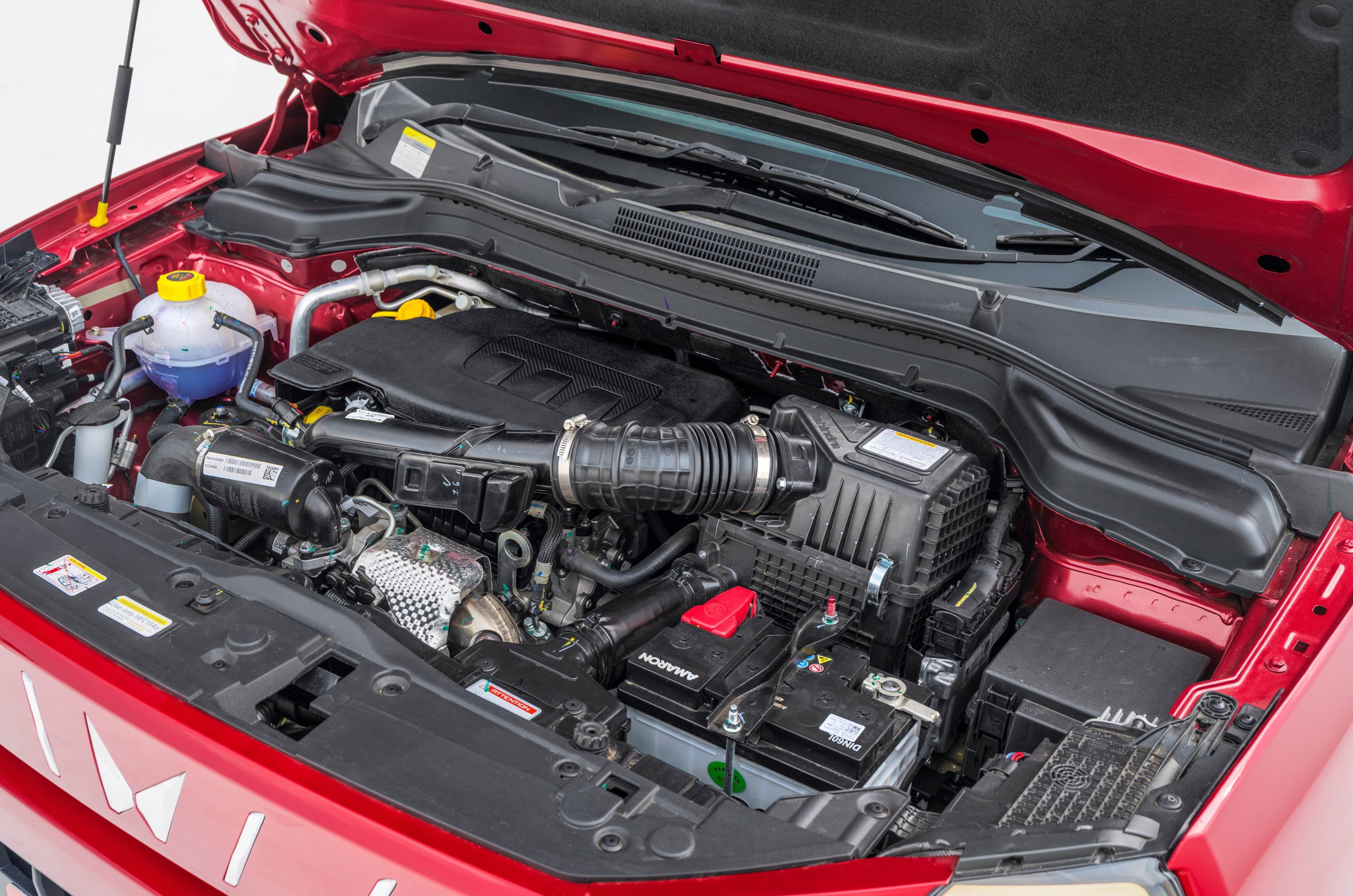
Mahindra XUV 3XO CNG engine

The 1.2-litre MPFI (multi-point fuel-injected) turbo-petrol engine of the XUV 3XO CNG is the same unit found in the lower and mid-spec petrol trims. Here it develops 111hp and 200Nm in both petrol and CNG modes. While there’s some turbo lag below 2,000rpm, the engine pulls eagerly once it crosses that mark. This unit is also notable for its refinement and tractability, rarely requiring one to drop down to first gear, for going over speed breakers, for example.

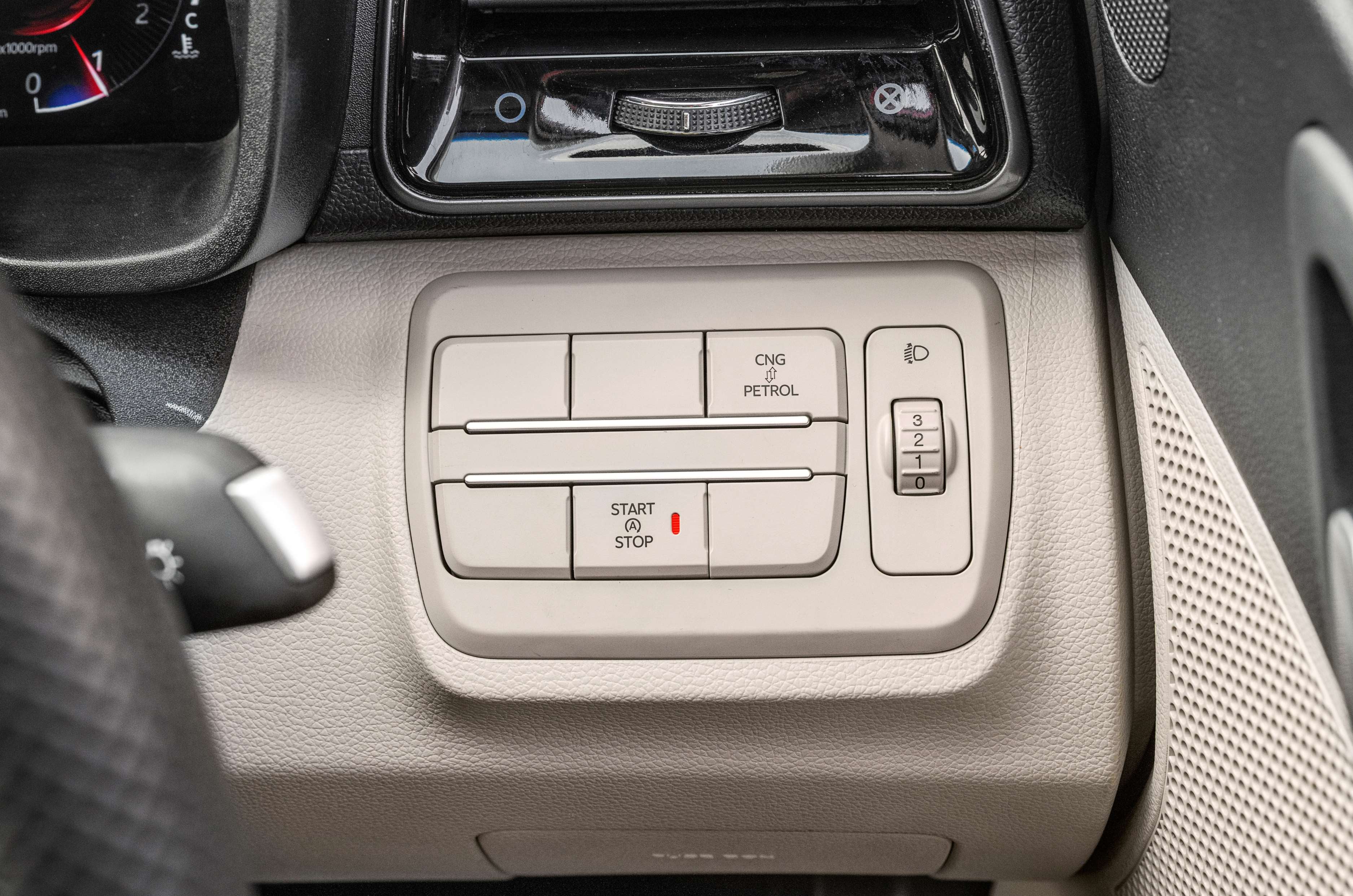
Mahindra XUV 3XO CNG mode switch

Switching between petrol and CNG is seamless as well, and few would be able to tell which fuel the XUV 3XO ZNG is running on. While we’re yet to test it, Mahindra claims a mileage of 24.7km/kg for this compact SUV, translating to a theoretical range of 247km on CNG.

Comfy ride and tidy handling

Mahindra has retuned the suspension to accommodate the extra heft of the CNG kit

Mahindra XUV 3XO CNG front quarter tracking

The CNG hardware adds around 100kg to the XUV 3XO’s kerb weight, with the majority of it being over the rear axle. Mahindra has reworked the suspension to compensate for this heft. The result is a slightly firm ride but one that deals with bad roads quite well.

Mahindra XUV 3XO CNG steering modes

Adding to the overall comfort here are the 16-inch wheels wrapped with high-profile tyres. These manage to cushion the cabin from sharp bumps. The XUV 3XO CNG rides better than most cars in its segment. What’s good is that this ride comfort doesn’t come at the cost of sloppy handling. In fact, this Mahindra SUV feels tight and planted around corners. The steering is direct and doesn’t require much effort, with drivers being offered three steering modes for flexibility.

Upmarket cabin

This cabin is just as plush as that of the petrol and diesel versions

Mahindra XUV 3XO CNG seats

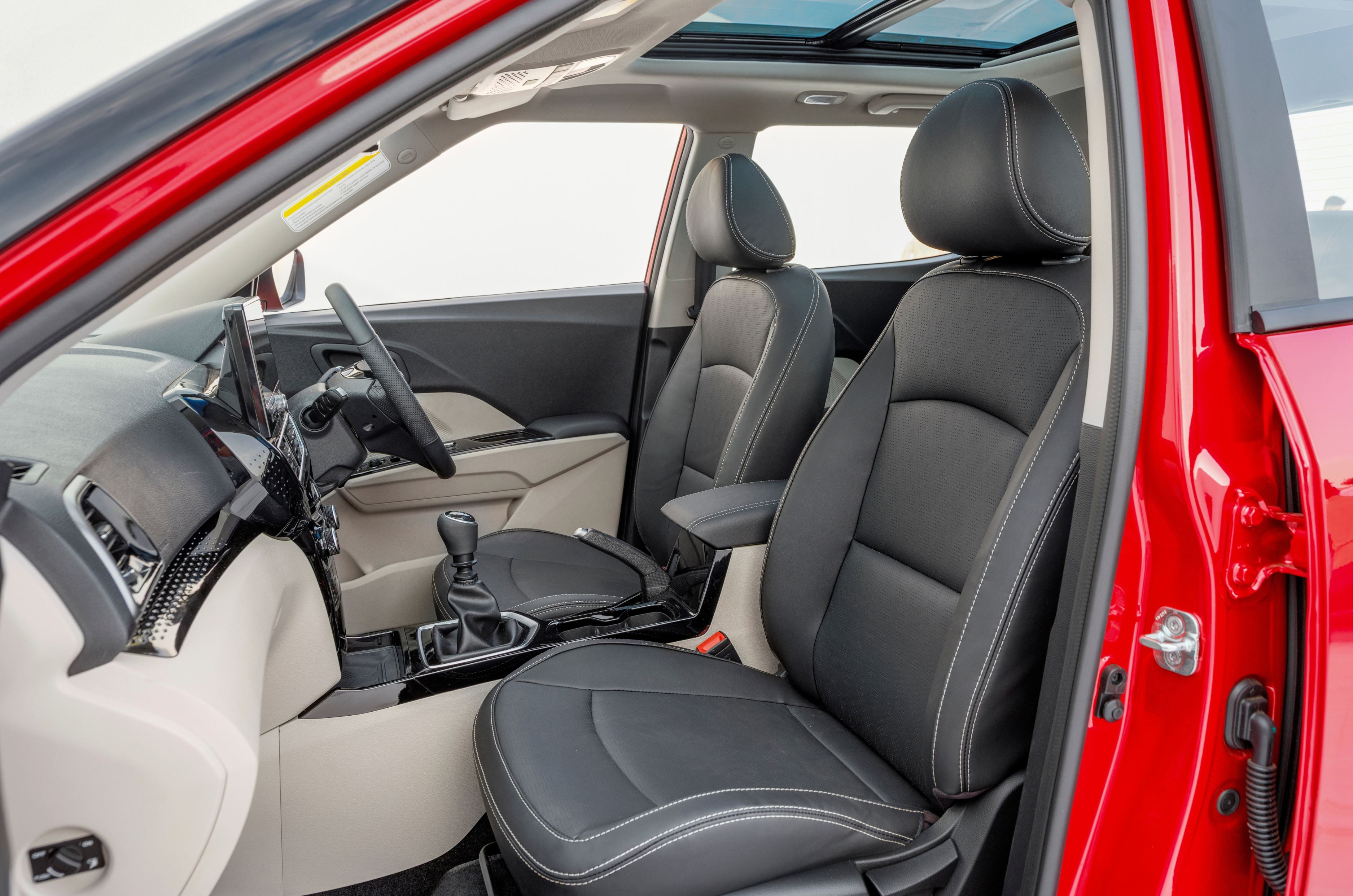
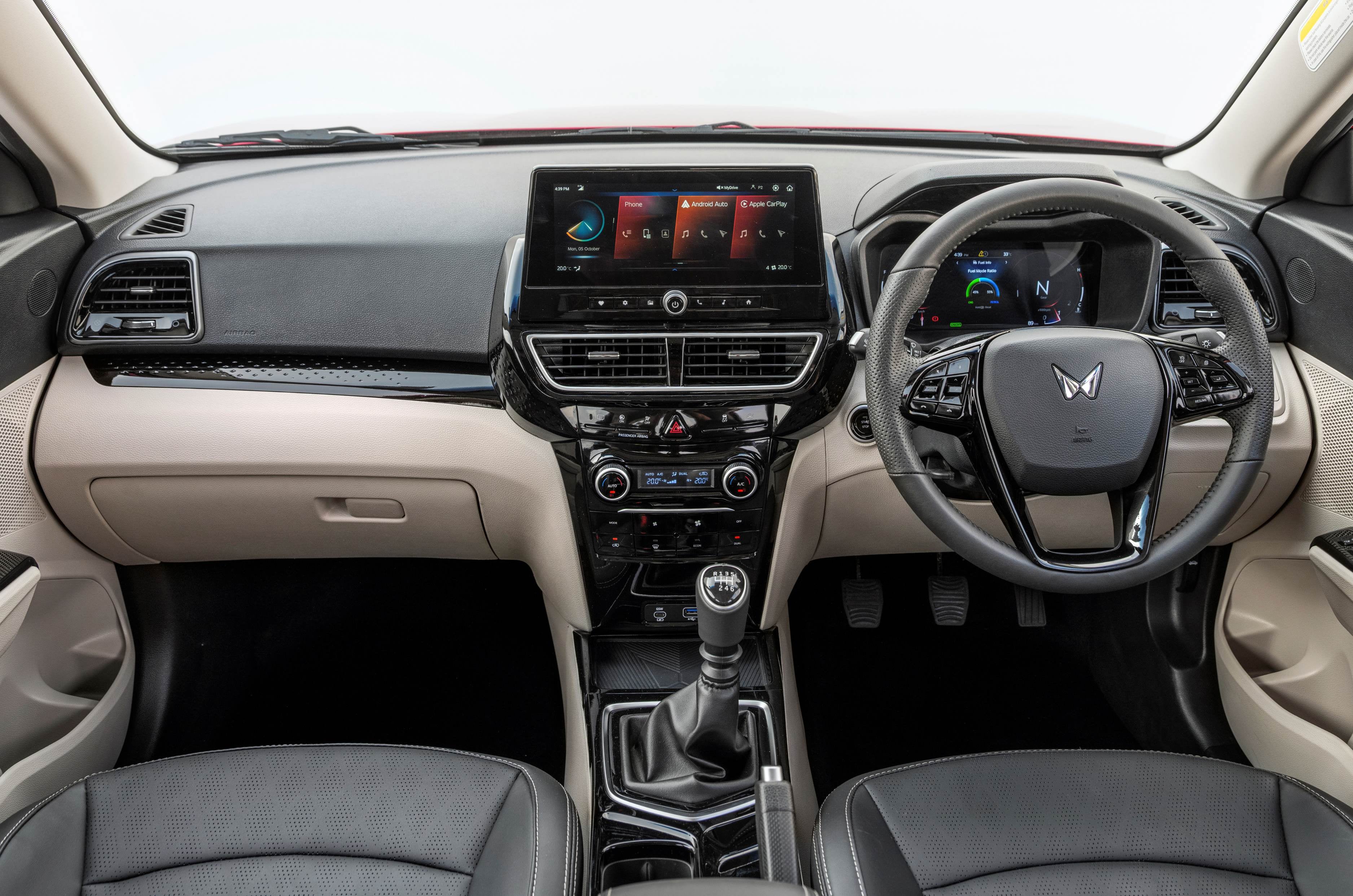
A CNG switch next to the steering wheel aside, the cabin of the XUV 3XO CNG is identical to that of non-CNG versions. While it can’t be had in equally top-end trim levels, the CNG version is available with a dual-tone dashboard, gloss black accents and leatherette upholstery. Overall, there’s a feeling of good build that’s backed by a sense of premiumness. Meanwhile, the rear seat is quite roomy for the class and can accommodate three adults without much fuss.

Mahindra XUV 3XO CNG digital instrument panel

The top-spec RevX A trim gets twin 10.25-inch screens, a panoramic sunroof and a 6-speaker audio system with Dolby Atmos. Mahindra says the CNG version is engineered to match the five-star Bharat NCAP safety rating of other combustion-powered XUV 3XO versions. Standard safety features here include 6 airbags, stability control, ISOFIX anchors and a reversing camera.

Reasons not to buy the Mahindra XUV 3XO CNG

Small boot

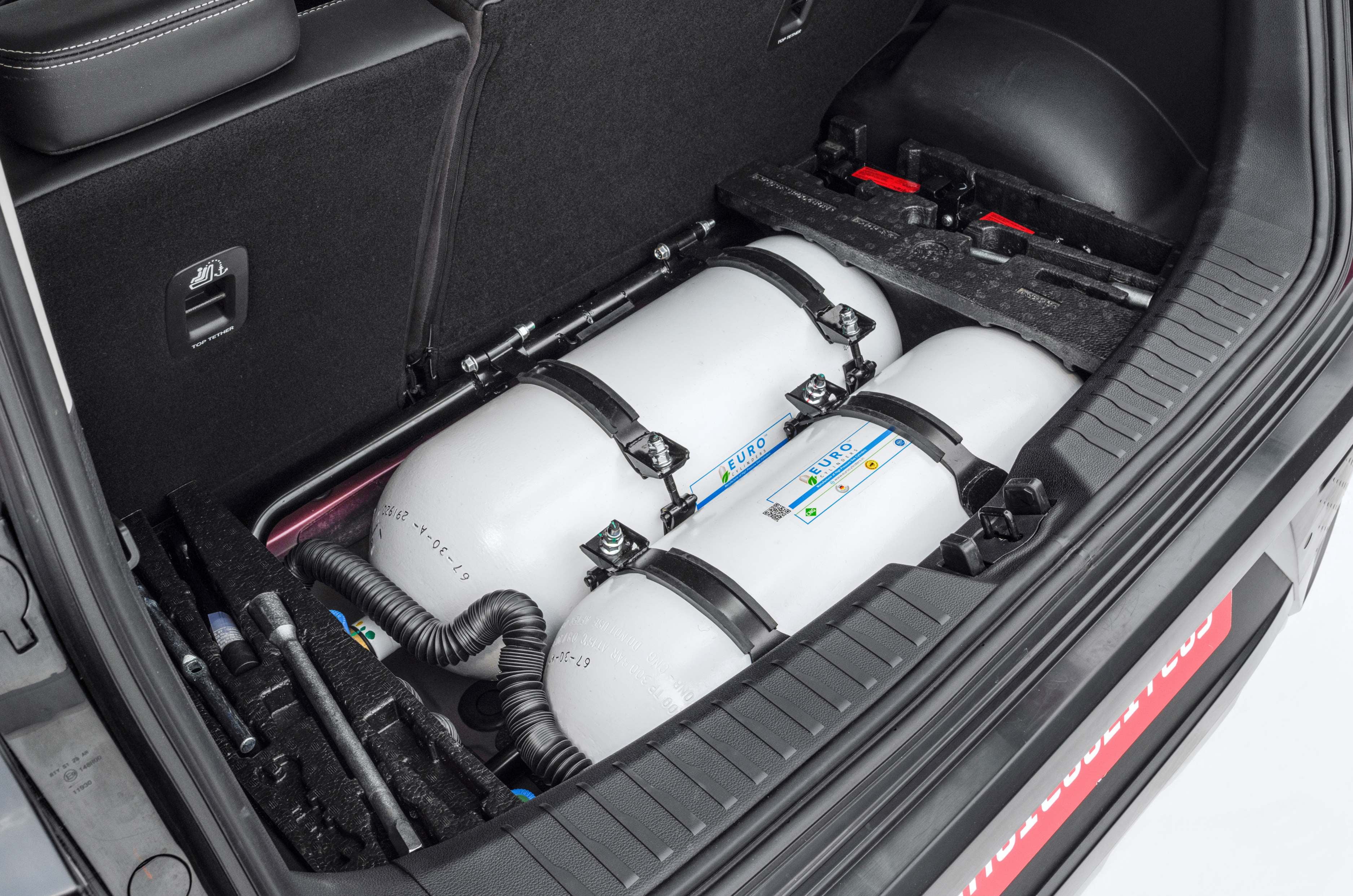
The twin-tank setup eats into what was already a small boot

Mahindra XUV 3XO CNG tanks

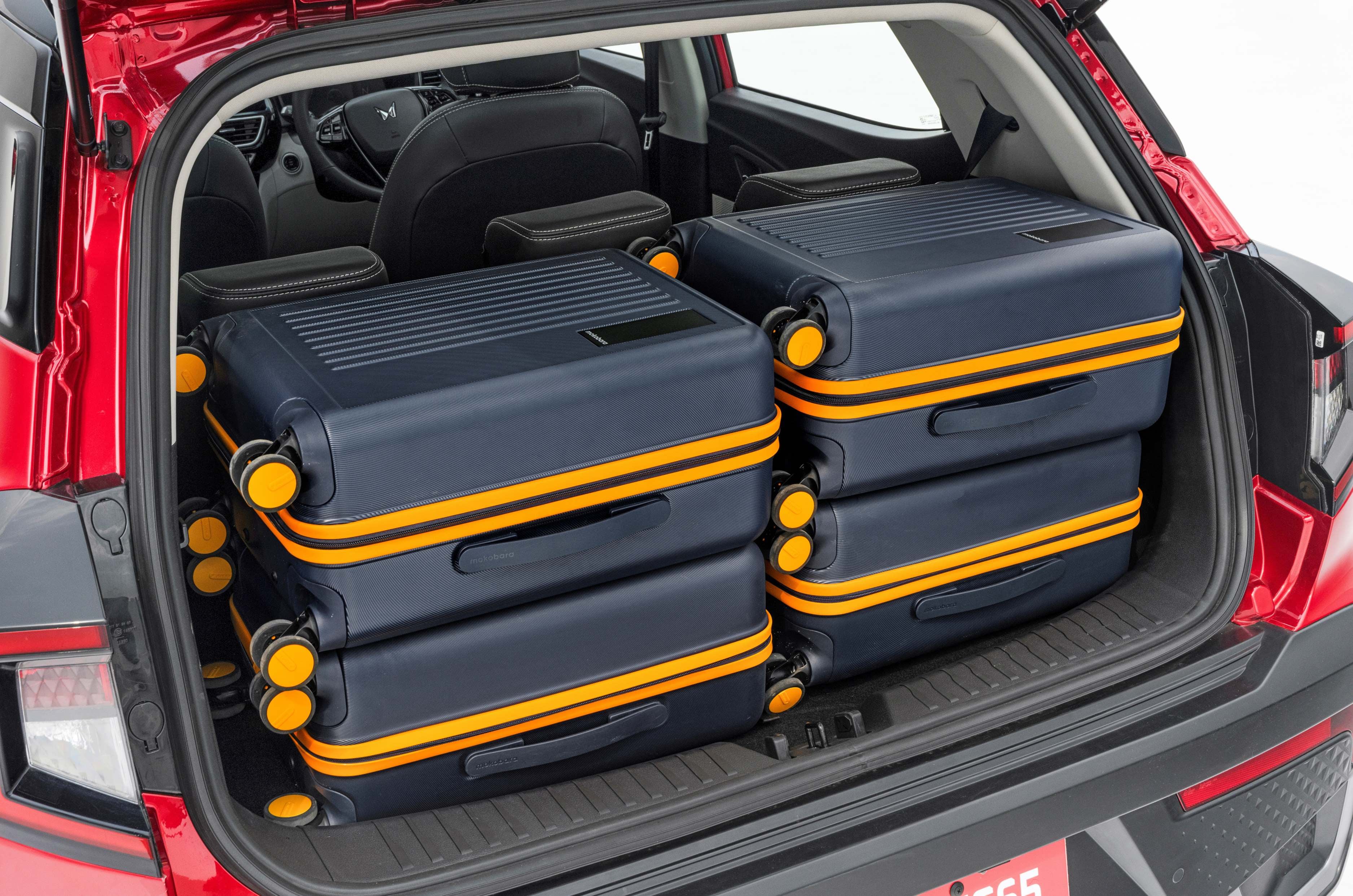
The 295-litre boot of the XUV 3XO was already the most compact in the segment. Despite moving the spare wheel under the car’s body and fitting the twin cylinders beneath the boot floor, the XUV 3XO CNG’s boot is even more compromised – offering just 270 litres of cargo space. It’s only its width that allows up to four cabin-sized bags to be stored.

Cabin niggles

The XUV 3XO CNG’s interior isn’t devoid of ergonomic flaws

Mahindra XUV 3XO CNG interior

While the black leatherette seats look sporty, they don’t get a ventilation function. This means that, on a bright sunny day, they will heat up quite quickly. If you’ve a larger build, the front seats of the XUV 3XO CNG will feel lacking in space. Adding to the ergonomic niggles is the steering wheel, which cannot be adjusted for reach, making it harder to find a comfortable driving position. Lastly, not only is the XUV 3XO CNG’s driver footwell cramped, there’s also no dead pedal.

Limited options

Customers get only mid-spec trim levels with the CNG version

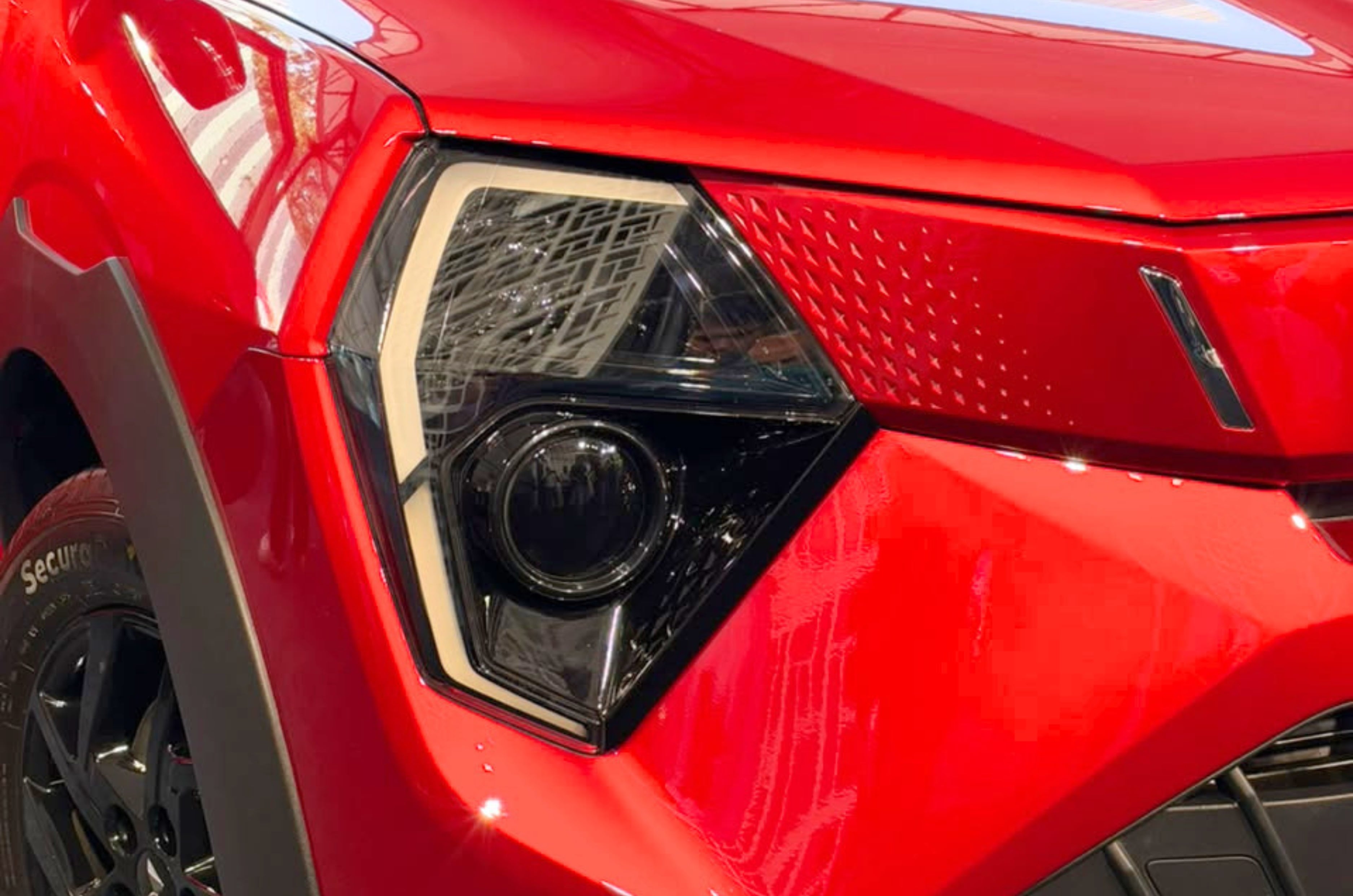
Mahindra XUV 3XO CNG headlamps

The CNG version of the Mahindra XUV 3XO is sold in just four trim levels, all of which are mid-spec options within the broader line-up. This limitation becomes obvious given the lack of a 360-degree camera, ventilated front seats, or a wireless charging pad – these are available in the Nexon iCNG. There are no fog lamps, either. Another limitation is that the CNG version only comes with a 6-speed manual, which has long throws and a fair amount of clutch pedal travel.

Mercedes-AMG GT SUV revealed, makes up to 1,169hp

Mercedes-AMG GT SUV revealed, makes up to 1,169hp
Mercedes-AMG GT SUV revealed

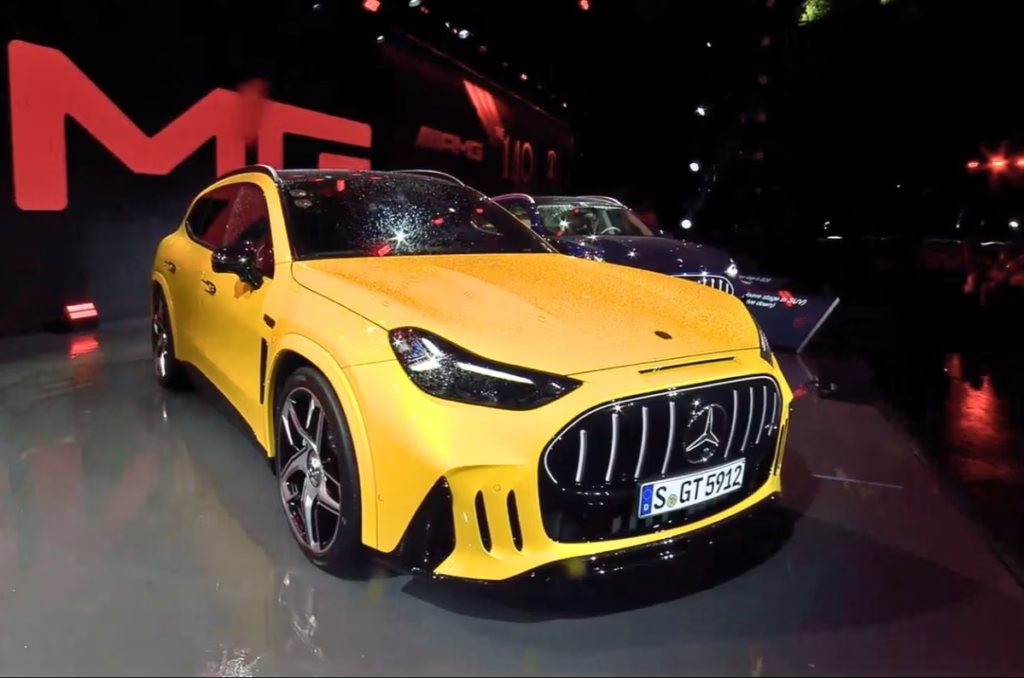
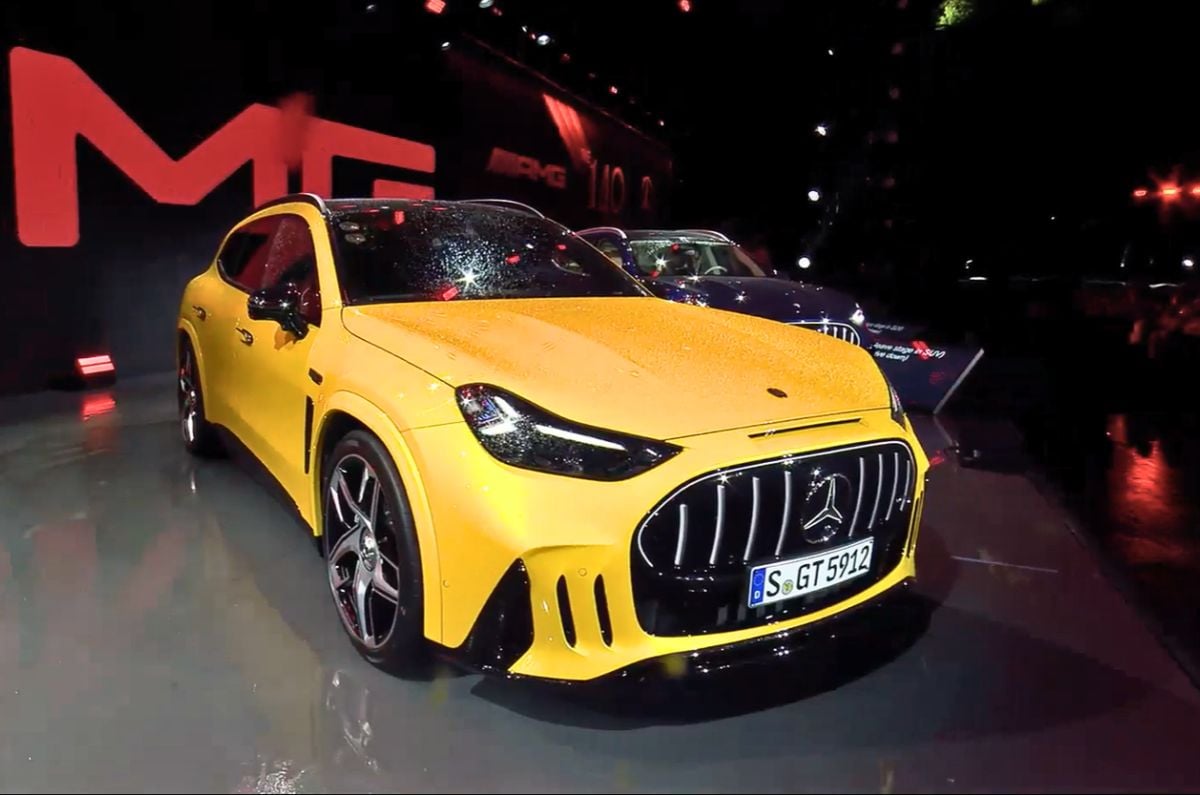
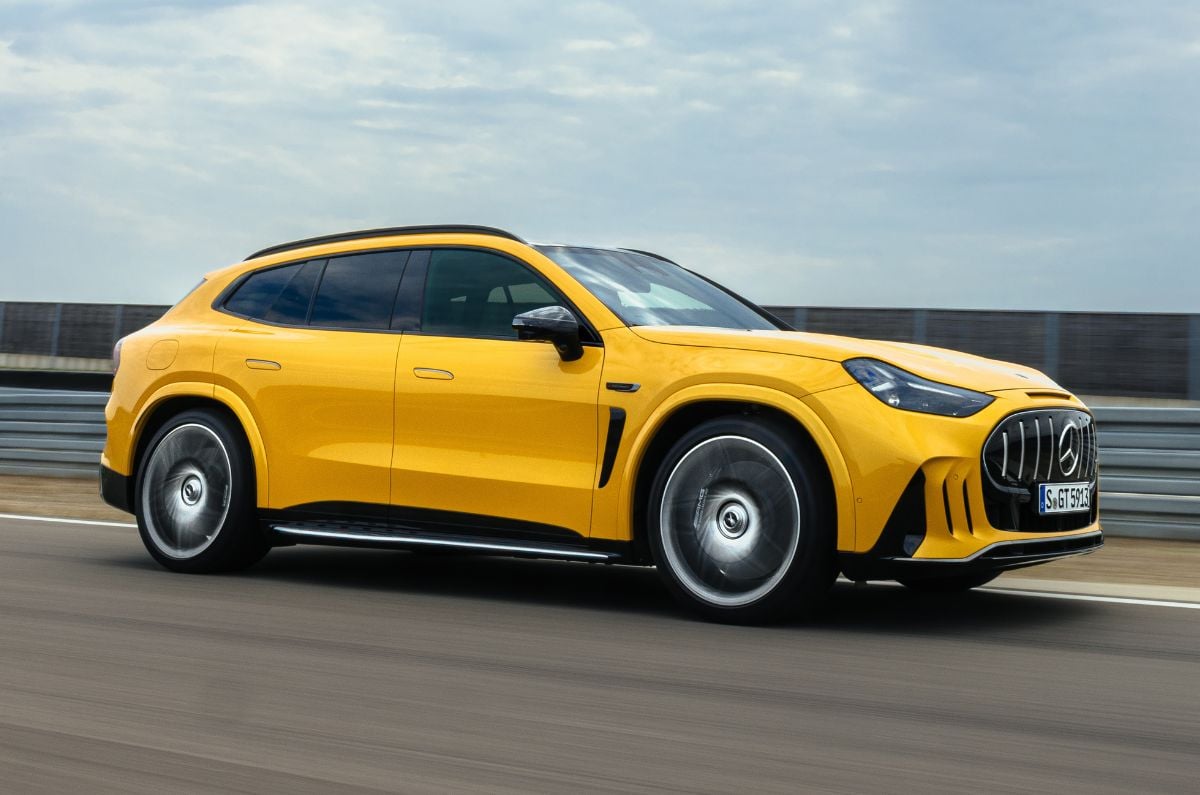
Mercedes has taken the wraps off the AMG GT SUV which, according to the German marque, is the first full-size SUV it has developed completely in-house. The five-seat performance EV shares its underpinnings with the fully electric GT 4-Door Coupe, and will be available in GT 53, GT 55 and GT 63 guises, the last of which makes up to 1,169hp. The GT 53 will be the first to go on sale, with the more powerful variants joining the line-up in spring 2027.

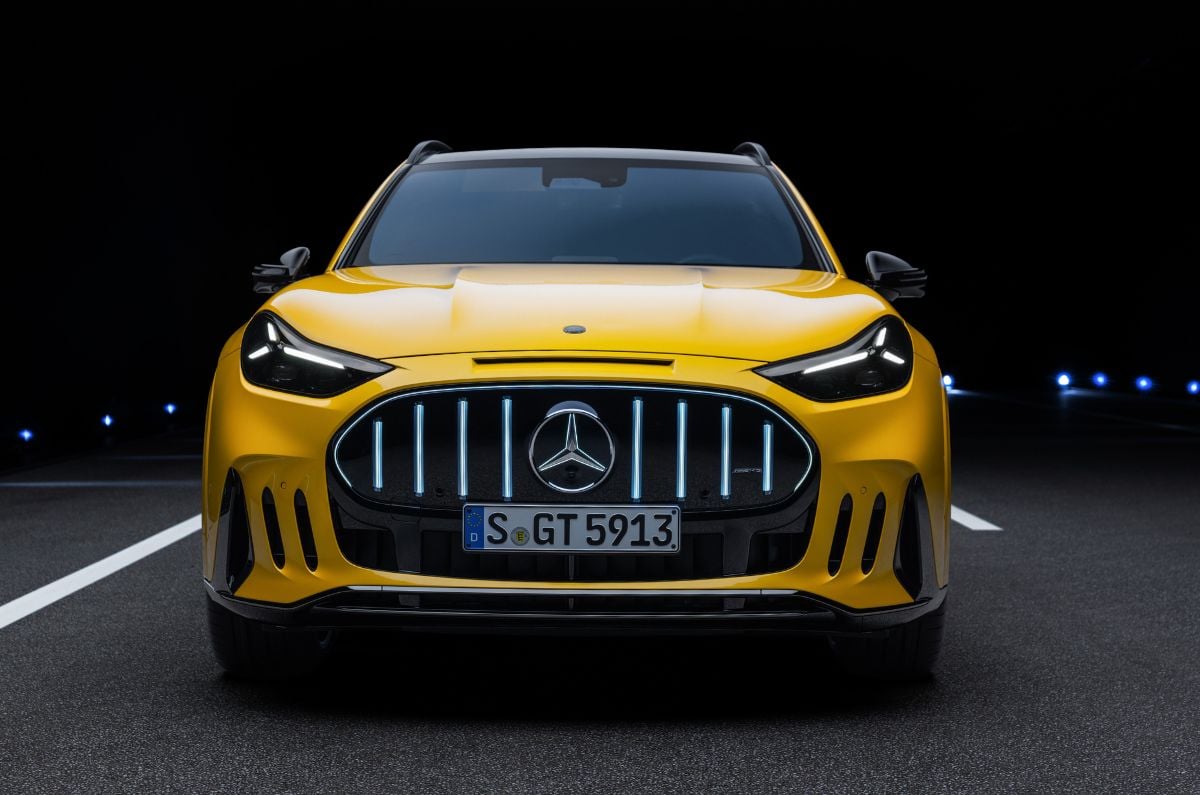
  1. Star-shaped DRLs, illuminated badging, active aero and more.
  2. Personalisation options from the Manufaktur programme.
  3. Three digital displays, built-in AI assistants, AMG-specific apps and more.
  4. Claimed WLTP range of up to 700km, with DC fast charging of up to 710kW.

Mercedes-AMG GT SUV exterior

Illuminated badging, sloping roofline, active aerodynamics, Manufaktur paint options and more

Mercedes-AMG GT SUV front

The Mercedes-AMG GT SUV comes in at 5,084mm long, 2,001mm wide and 1,656mm tall, and it has a wheelbase of 3,040mm. The front fascia sports AMG’s vertical-slat grille and Mercedes star, both of which can be optionally illuminated, flanking which are LED headlamps with star-shaped DRLs (daytime running lights). The front bumper features active slats, which only open when components need extra cooling.

Mercedes-AMG GT SUV side

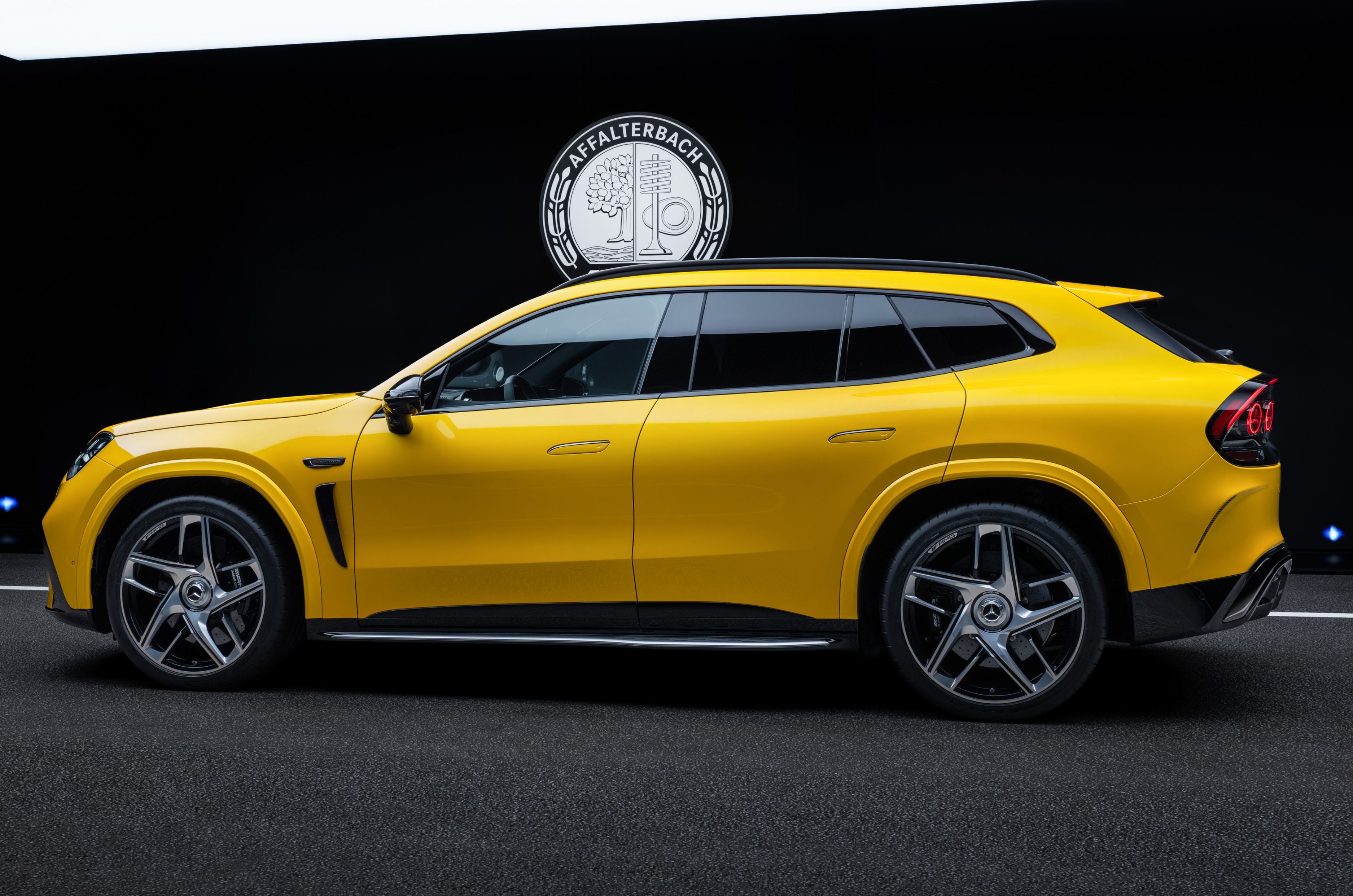
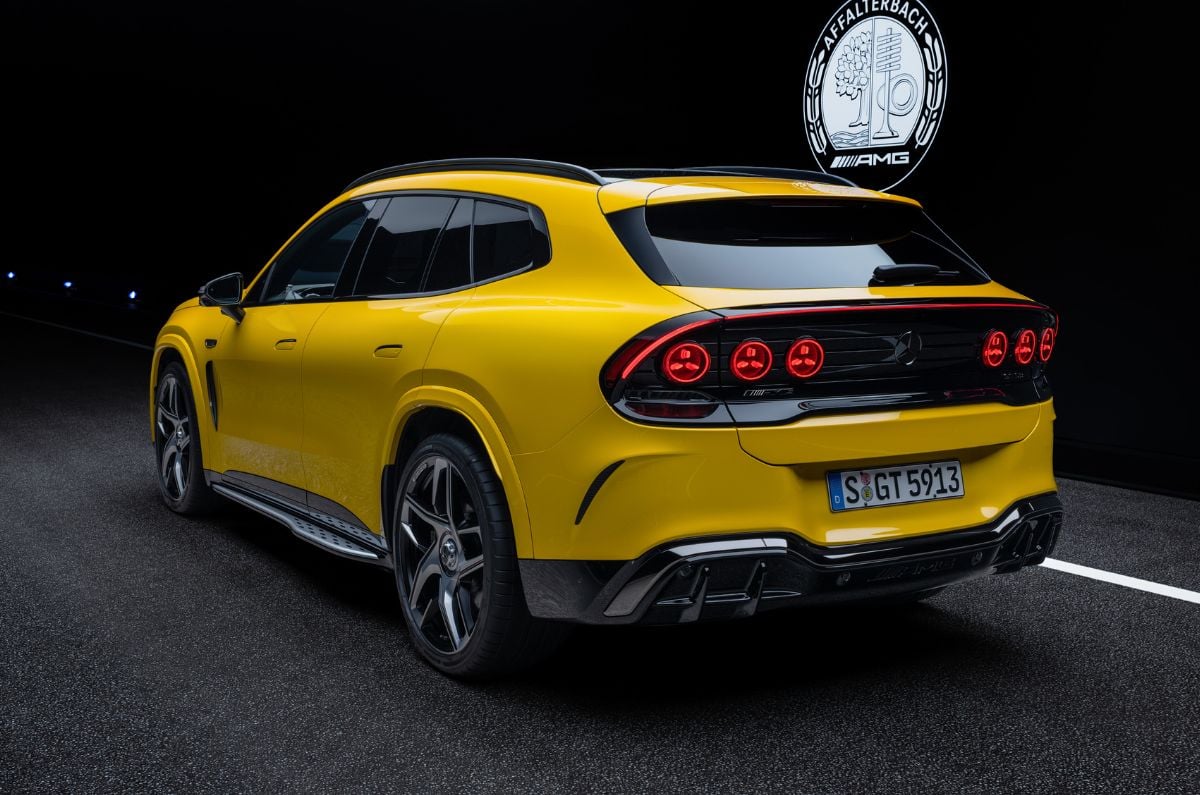
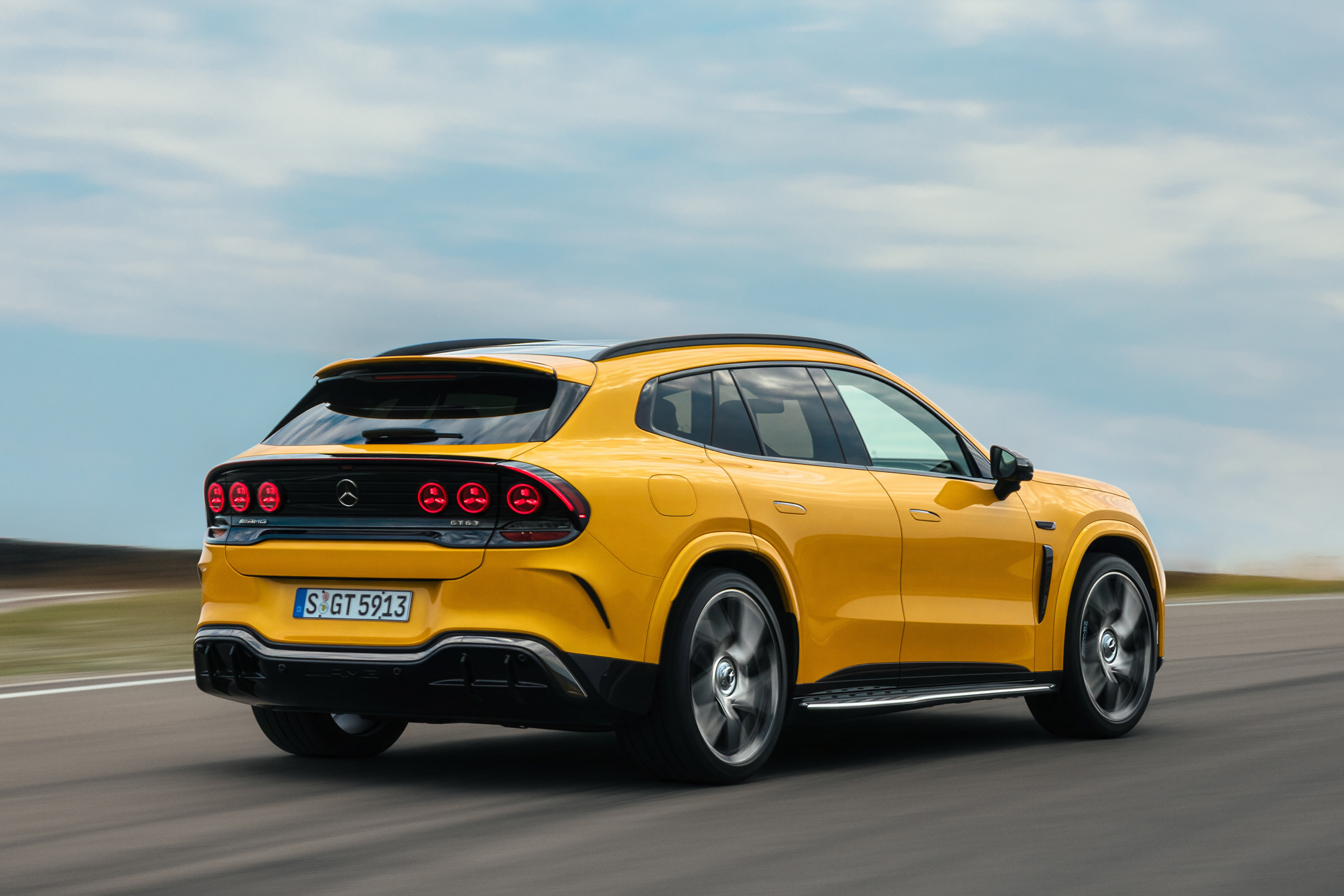
The profile showcases a low-slung roofline that slopes towards the rear along with pronounced wheel arches. Other details here include frameless side windows and compact wing mirrors. Moving to the rear of the AMG GT SUV reveals six circular tail-lamps as seen on the GT 4-Door Coupe, and customers can also opt for a full-width light strip.

Mercedes-AMG GT SUV rear quarter

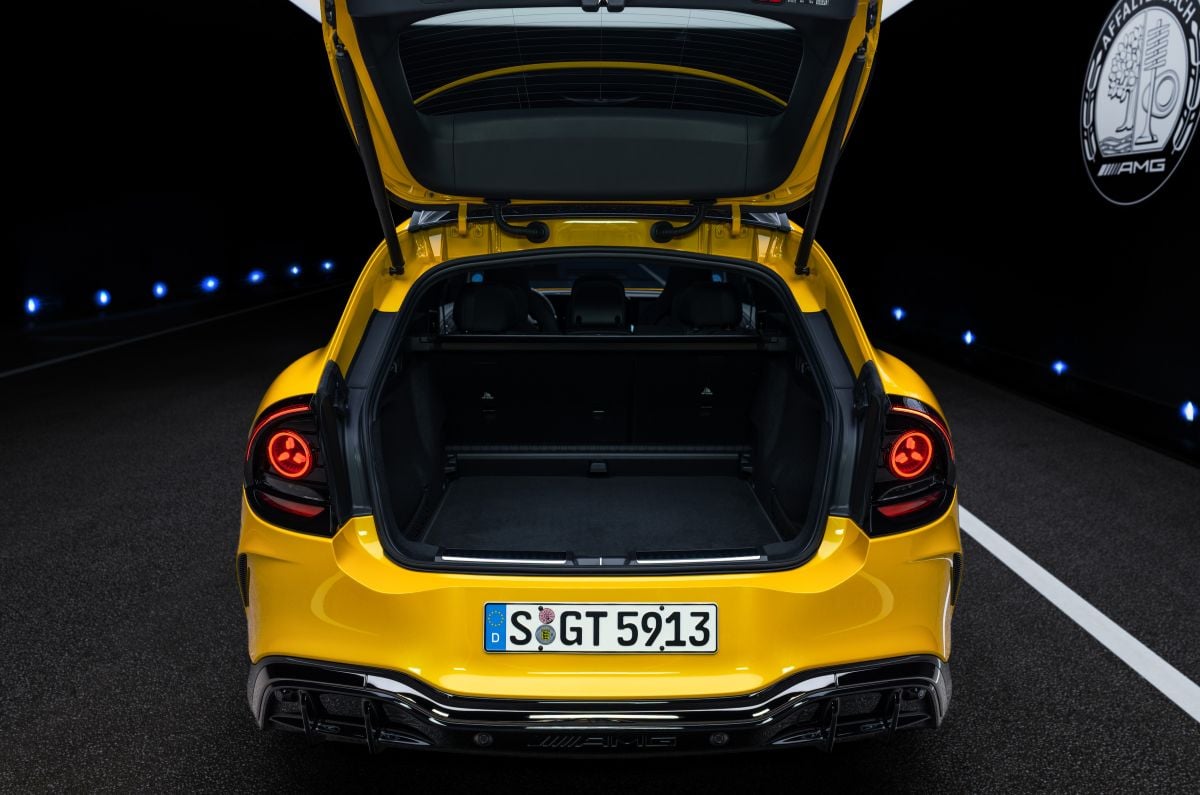
Stepping up to the GT 55 and GT 63 means an active rear spoiler that remains flush with the roof until 150kph, changing its angle depending on the driving scenario. Mercedes-AMG also claims a drag coefficient of 0.28 for the GT 53, while the other two are rated at 0.27. The main boot has a claimed capacity of 607 litres, with the frunk capable of accommodating 78 litres worth of luggage.

Mercedes-AMG GT SUV boot

Buyers can personalise the GT SUV through the brand’s Manufaktur programme, which presents over 60 paint options. Customers can also opt for AMG’s forged wheels in colour accents, which includes Matt Vanadium Silver and Matt Copper, Matt Black with a rim flange in Angel Blue, Sunny Lime, or Orange Flame.

Mercedes-AMG GT SUV interior and features

Stand-out tech includes dual 14-inch screens, AI assistants and AMG-specific apps

Mercedes-AMG GT SUV front seats

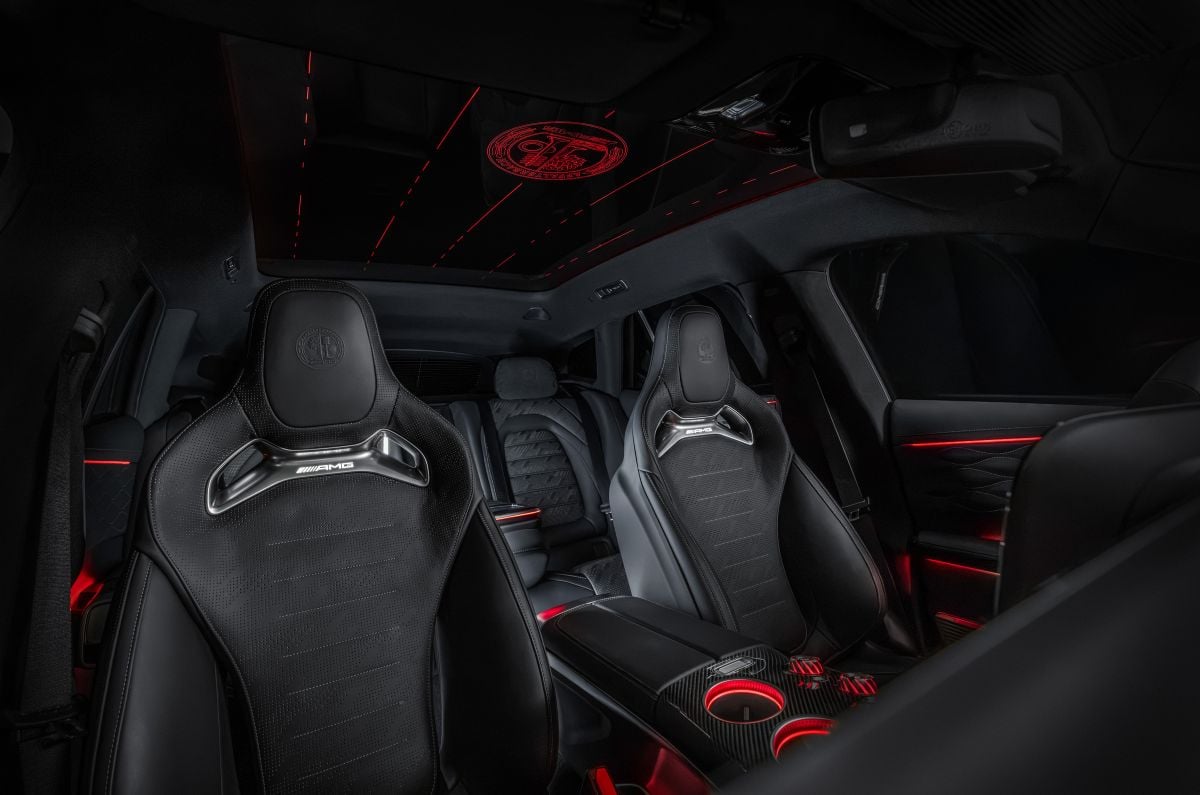
Just like the exterior, the interior of the Mercedes-AMG GT SUV can be personalised using the Manufaktur catalogue. Some of the options that will be offered to customers include accent colours and seatbelts trimmed in Fjord Blue, Green Hell or Orange Flame. The automaker claims that the seating position here is akin to that of a sports car rather than an SUV. Providing comfort up front are multi-way power-adjustable seats, while the three-seat rear bench gets power-folding headrests.

Mercedes-AMG GT SUV interior

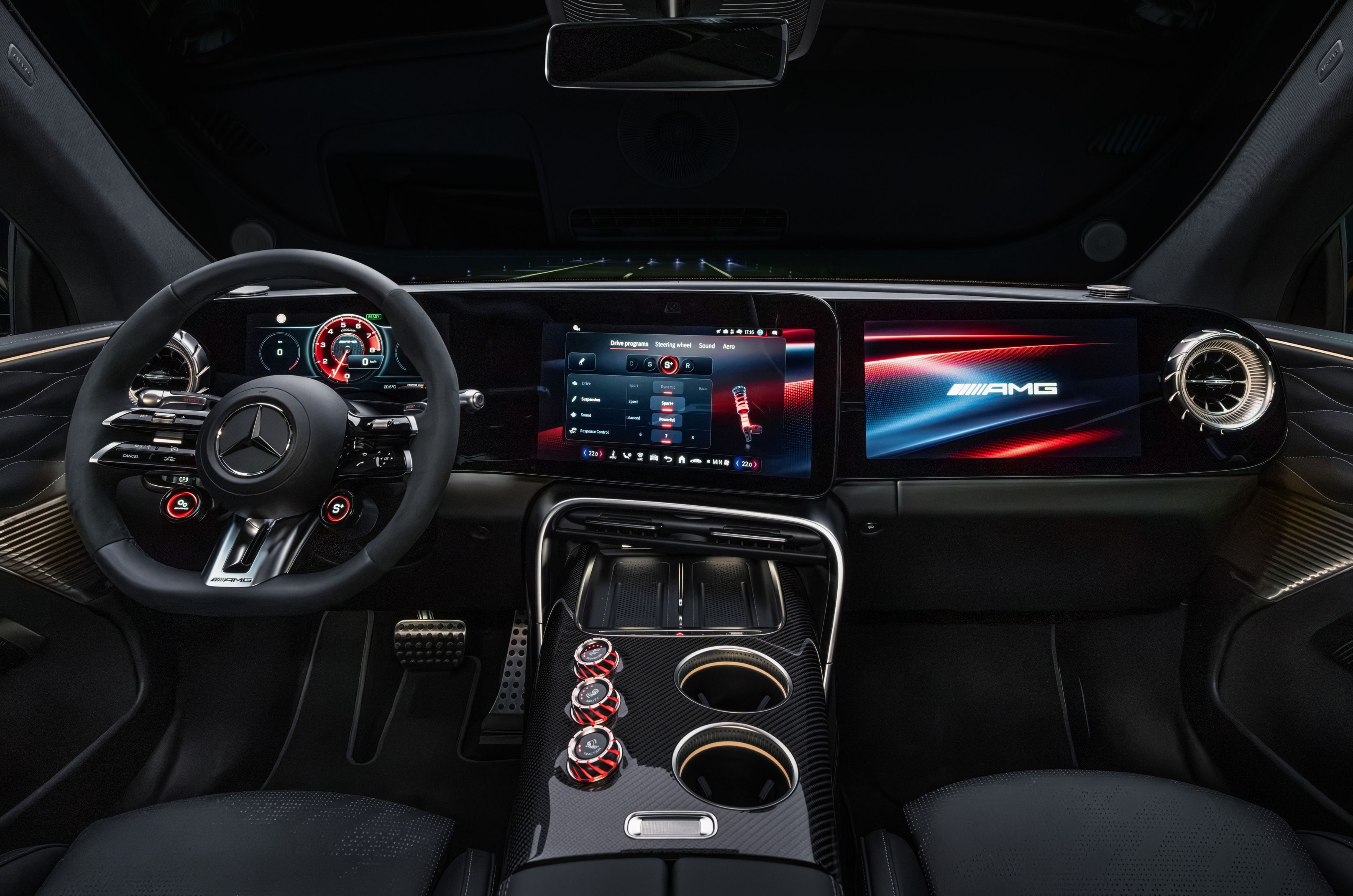
The dashboard pairs a 10.2-inch digital instrument cluster with a 14-inch touchscreen that’s angled towards the driver, while a 14-inch screen is optional for the front occupant. The AMG Performance steering wheel is equipped with paddles to adjust brake-regen levels, while adding to the design are door panels with floating armrests and diamond-pattern stitching. There’s also multi-colour ambient lighting whose colours can be matched to the bevy of displays and controls.

The infotainment system features the German brand’s latest MBUX software, which is based on the MB.OS (Mercedes-Benz Operating System). It integrates AI agents such as ChatGPT, Microsoft Bing and Google Gemini. This luxury SUV also comes with three AMG-specific apps. Firstly, there’s ‘AMG Performance Menu’, which displays real-time data on power, tyre temperatures and active aero status.

Mercedes-AMG GT SUV Burmester audio system

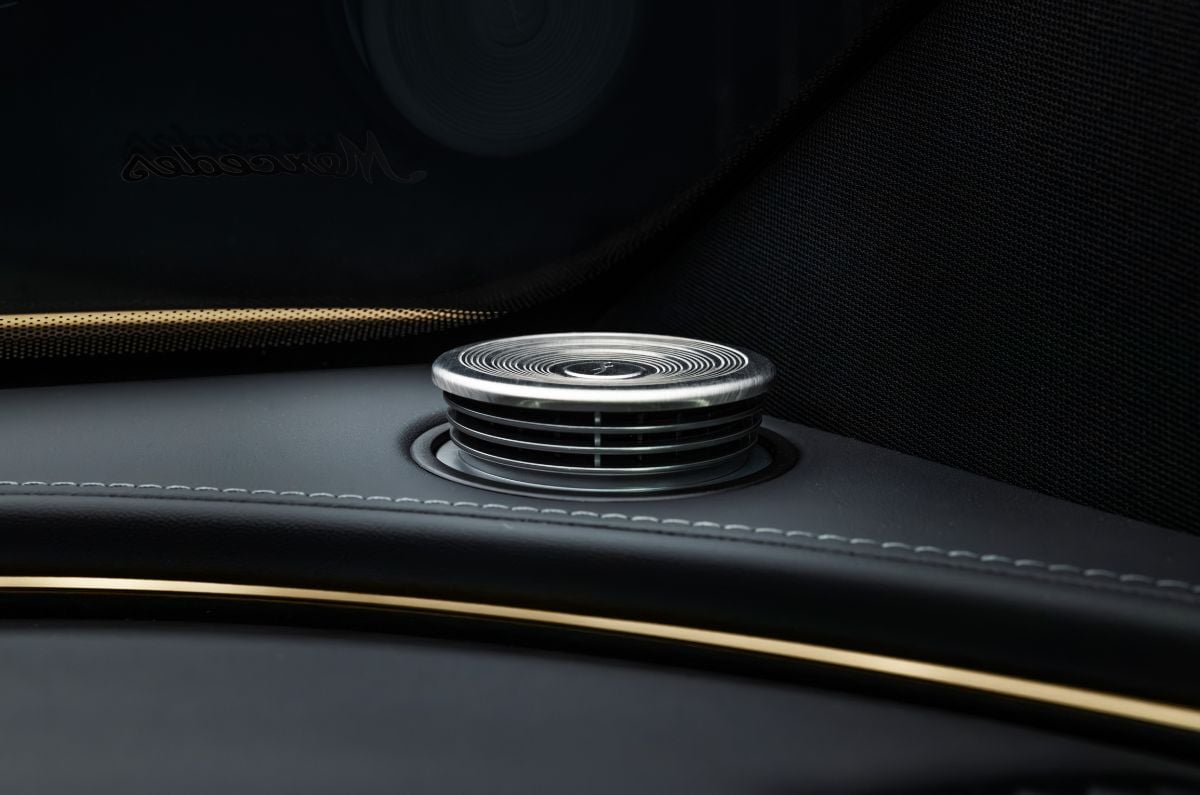
Second is ‘AMG Set-up’ – this lets the driver customise the buttons on the steering wheel as well as aero settings. Finally, there’s ‘AMG Track Pace’, which records lap times and telemetry. Drivers can also use it to show optimal braking points and the ideal racing line in the head-up display. Meanwhile, the optional dashcam allows laps to be recorded with data overlays. The AMG GT SUV is also available with an electrically dimming panoramic glass roof, AMG lighting effects, AMG Performance seats and a Burmester 4D audio system, among many optional features.

Mercedes-AMG GT SUV powertrain and performance

The EV gets up to three electric motors and a WLTP range of up to 700km

The entry-level GT 53 variant of the Mercedes-AMG GT SUV uses two synchronous motors – one on each axle – with a two-speed gearbox located at the rear. Its output is rated at 544hp and 800Nm, with Mercedes-AMG claiming a 0-100kph time of 4.2 seconds and a top speed of 250kph. Then there are the mid-spec GT 55 and the top-spec GT 63. These come with two axial flux motors at the rear and one at the front, the latter disengaging when not needed to save energy.

Mercedes-AMG GT SUV side tracking

The tri-motor setup of the GT 55 outputs 816hp and 1,860Nm, allowing for a claimed 0-100kph time of 3.1 seconds. Sitting at the top of the Mercedes-AMG GT SUV line-up is the GT 63, which is rated at 1,169hp and 2,000Nm and does 0-100kph in 2.7 seconds. Regardless, the all-wheel-drive GT 55 and GT 63 have a claimed top speed of 270kph with the optional Driver’s Package.

The GT 53’s 106kWh battery pack offers a claimed WLTP range of up to 668km, while the 128kWh battery of the GT 55 and GT 63 is rated at up to 700km. These 800V packs offer DC fast charging of 600kW and 710kW, respectively. Mercedes-AMG claims that charging these batteries from 10-80 percent takes 11-12 minutes, though it also says that these figures are preliminary.

Mercedes-AMG GT SUV rear quarter tracking

The GT SUV gets rear-wheel steering as standard while also debuting AMG’s new ‘Active Ride Control+’ suspension. The latter, which is standard on the top-spec GT 63, replaces traditional anti-roll bars with hydraulic units that, according to the automaker, curb body roll and pitch. The top-spec variant also gets carbon-ceramic brakes as standard.

Mercedes-AMG GT SUV centre console

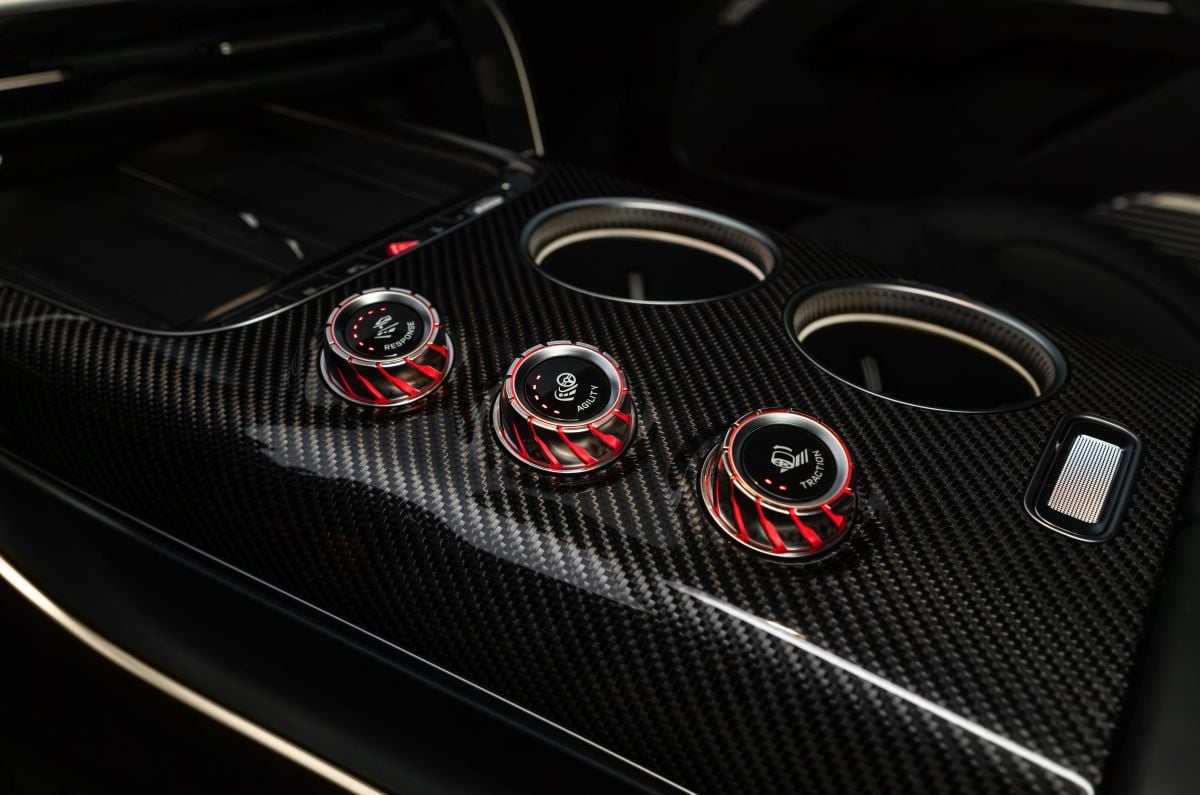
In the tri-motor variants, drivers can adjust the throttle response, cornering behaviour and traction control using dials on the centre console. Mercedes-AMG also said that the ‘AMGForce Sport+’ mode recreates the sound of an AMG V8 (or a six-cylinder in the GT 53) along with simulated gearshifts. As for India, the German marque is yet to reveal its plans for the AMG GT SUV.

Tesla, Knight Rider, Ferrari and the air thrusted car

Tesla, Knight Rider, Ferrari and the air thrusted car

Pretty much the entire world is all agog, watching the new Tesla Roadster take flight.

To be clear, these stunts were performed by a specially prepped Roadster and without a driver. Tesla chief Elon Musk even went on to say that he was not sure that this would be legal.

But flight booster-aided model (Rocket) aside, Tesla is promising a regular ‘Performance’ Roadster with a ground effects fan, a la McMurtry, as well as a ‘Thrust’ version with air thrusters for acceleration and a claimed spine-crushing 0 to 100kph acceleration time of under 1 second.

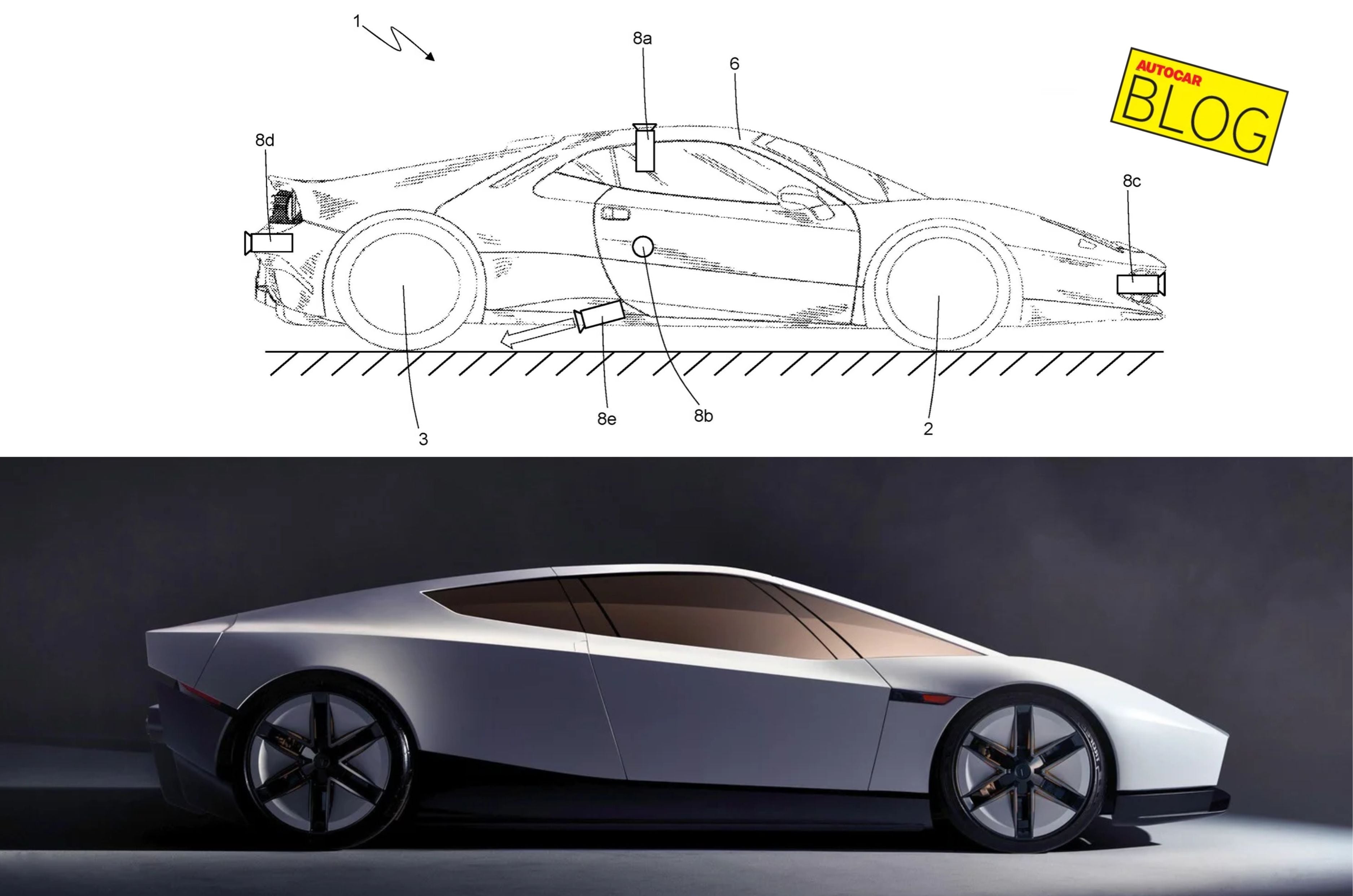
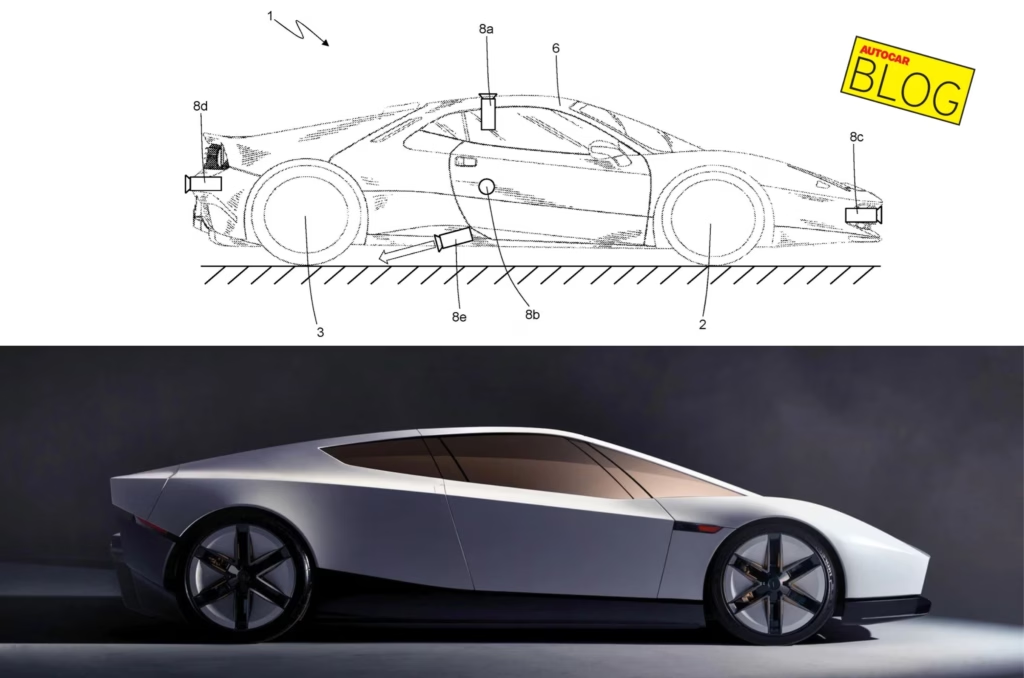
Interestingly, this isn’t the first time this idea has been thought of. Hollywood’s Knight Rider had his Turbo Boost jump and Super Pursuit mode, but closer to the real world, carmaker Ferrari toyed with the idea of gas thrust boosters and even had a patent issued back in 2018.

While the Tesla Roadster is all-electric, the Italian carmaker’s patent describes an internal combustion-powered car with an additional system comprising a compressed air tank and multiple horizontally as well as vertically oriented nozzles.

The patent says these can generate air jets for massively quick acceleration thrust, beyond what the engine and the limits of the tyres’ grip would provide.

The vertically oriented pushers can also generate a downward force to enhance road grip and downforce, while the horizontal pushers can be deployed to increase steering turn-in ability. Interestingly, the patent says its system would also generate correctional forces; for example, if the car is losing grip, an opposing thrust can be generated to correct the car’s line or even slow it down in extreme risk situations.

The patent also describes the use of the system on a motorcycle, Street Hawk style. Ferrari has clearly not put the system into production, and it’s not known if the Italian car maker is pursuing its development. So it would be interesting to see if Ferrari would hold rights or a claim over the Tesla Roadster system and how the two car makers would respond.

Universo Ferrari exhibition debuts F80, Luce, 12Cilindri Manuale in India

Universo Ferrari exhibition debuts F80, Luce, 12Cilindri Manuale in India
Universo Ferrari exhibition

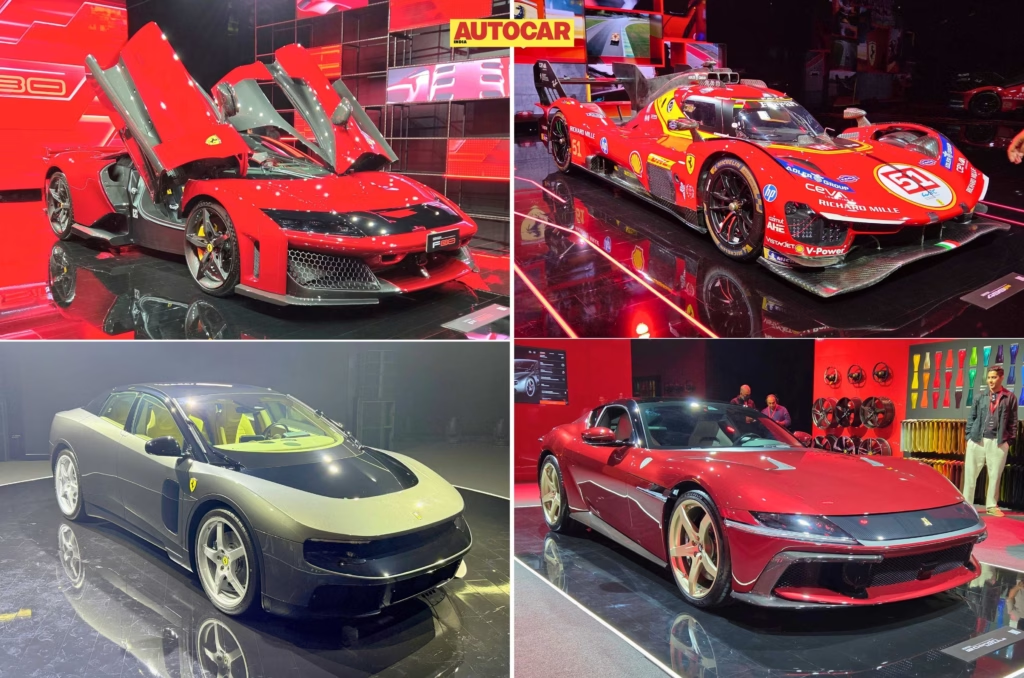
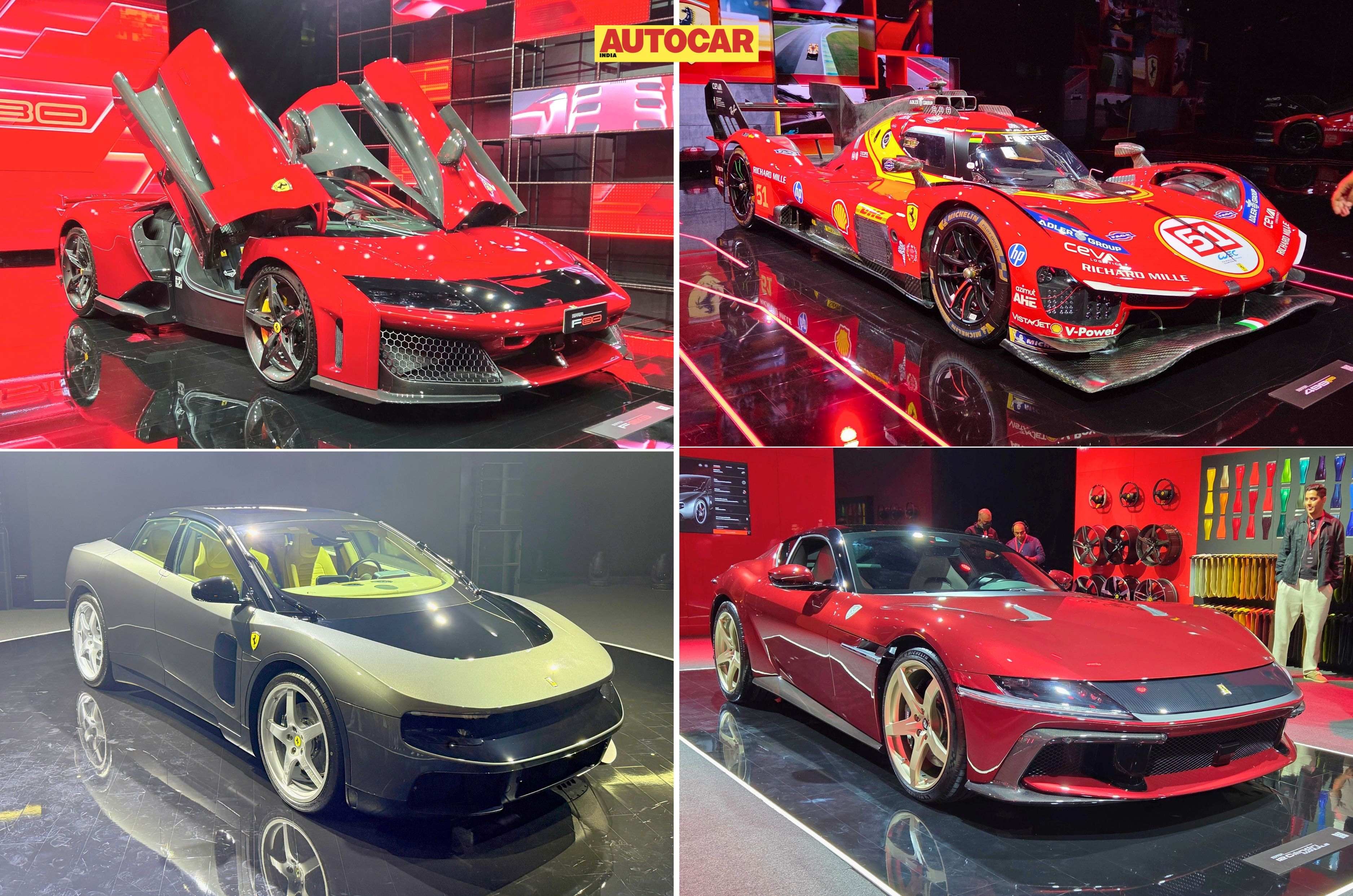
Ferrari has officially opened the doors to its first-ever Universo Ferrari exhibition in India. Held at Yashobhoomi, Dwarka in New Delhi from 17 October to 1 November, Universo Ferrari offers a comprehensive look at the Italian marque’s heritage, motorsport pedigree, technology, and craftsmanship. More pertinently, several exciting Ferraris are also on display at Universo Ferrari, some of them for the first time in India. Let’s have a look at the Ferrari cars that have debuted in India as part of Universo Ferrari.
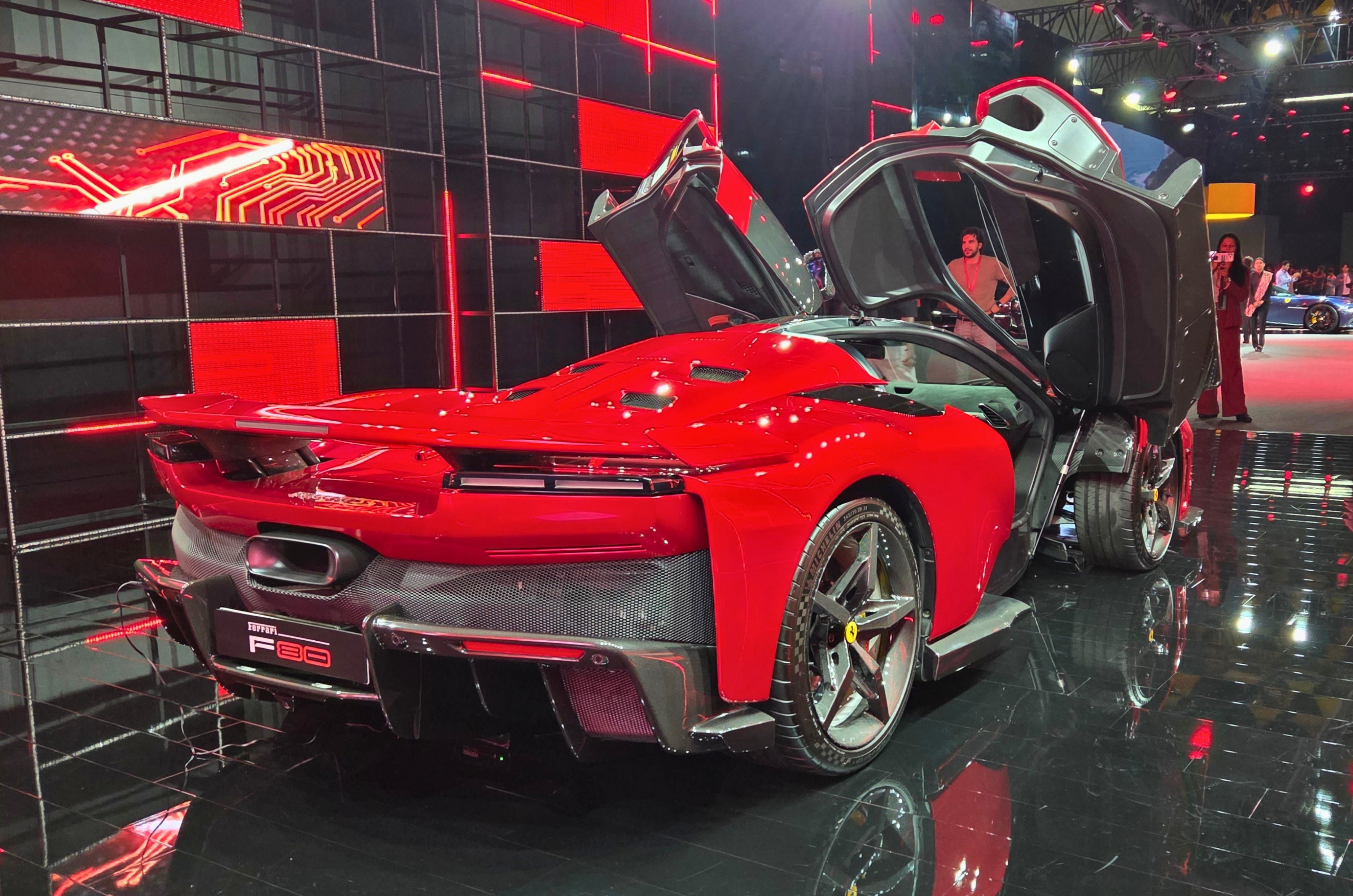
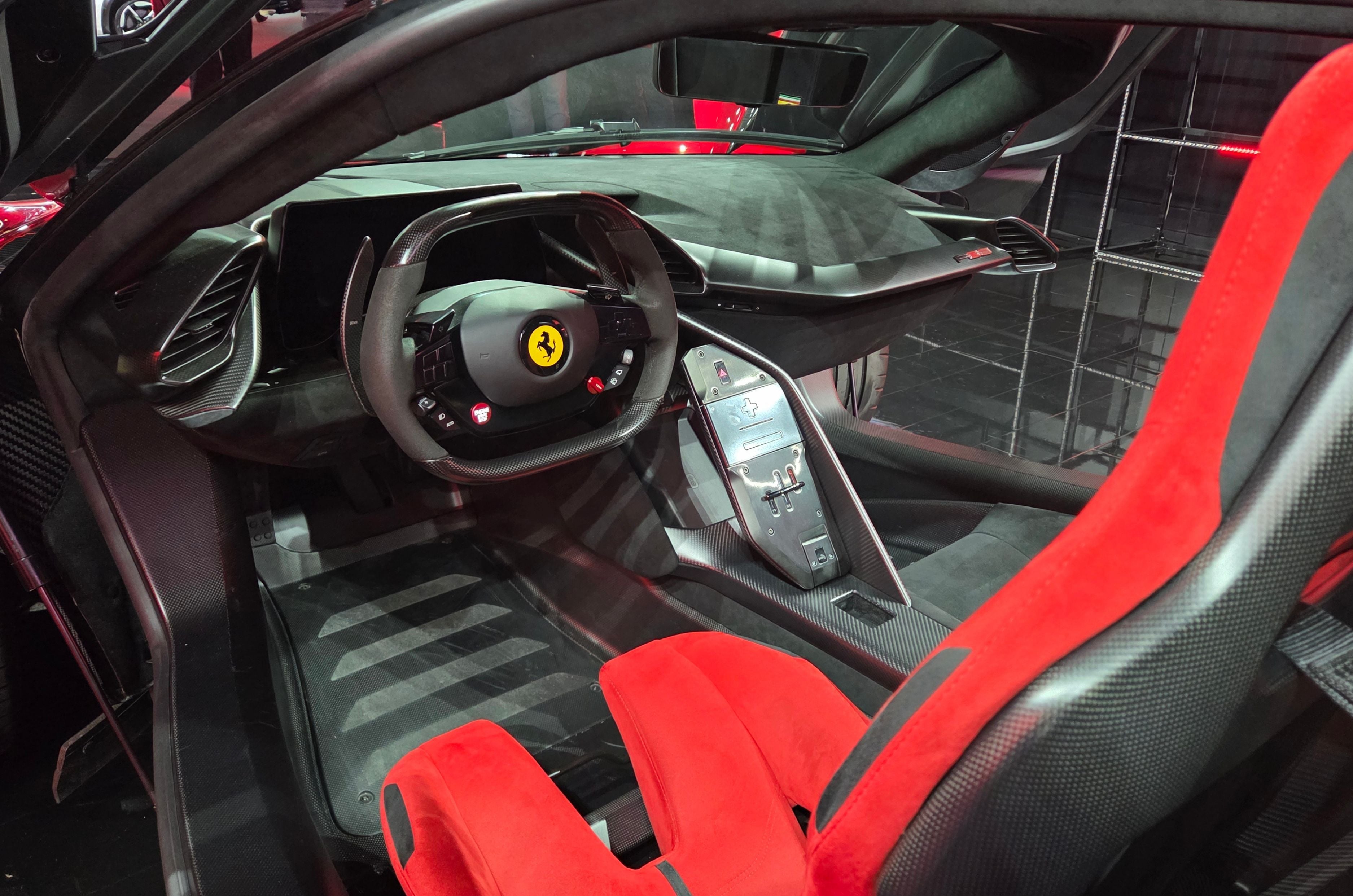
Ferrari F80

Revealed in 2024 as a successor to the LaFerrari, and to commemorate Ferrari’s 80th anniversary, the F80 is the brand’s most powerful road-going offering yet. Producing a combined 1,200hp from its 3.0-litre twin-turbo V6 hybrid powertrain, the F80 claims a ridiculous 0-100kph time of 2.15 seconds and a 0-200kph time of 5.75 seconds. All-wheel drive is fitted as standard, along with a slew of motorsport-derived tech like an MGU-K energy recovery system and electric turbos.

On the outside, the F80 matches the wildness of its powertrain with design elements like a slew of air ducts across the body, a black strip between the headlamps, an active rear wing, a central exhaust, and a massive rear diffuser. Inside, things are quite minimalistic and driver-focused – highlights include a motorsport-style ovoid steering wheel, a large digital driver’s display, an angled centre console, and bucket seats. Ferrari has sold through all 799 units of the F80, each retailing for €3 million (Rs 32 crore), before options.

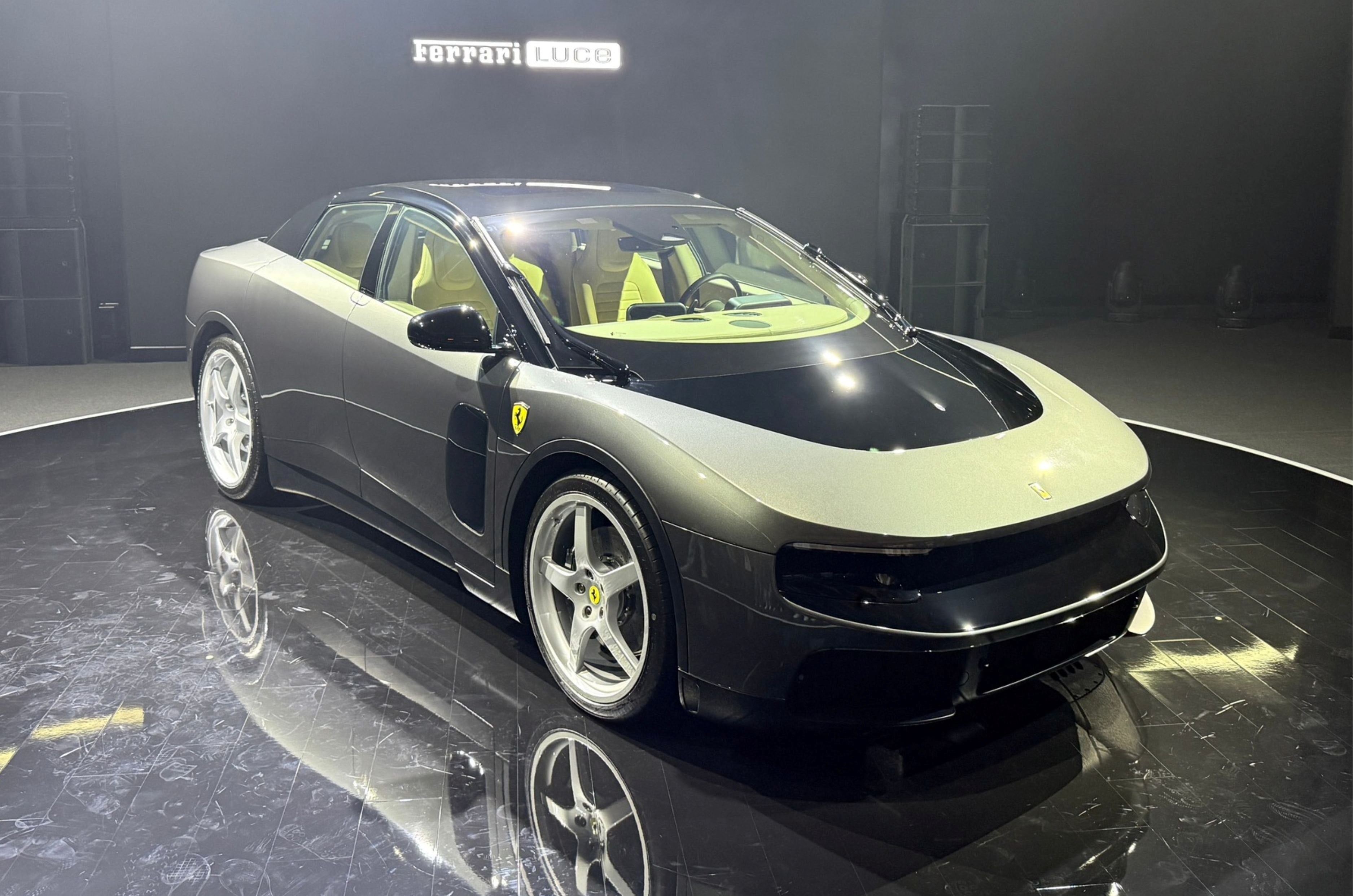
Ferrari Luce

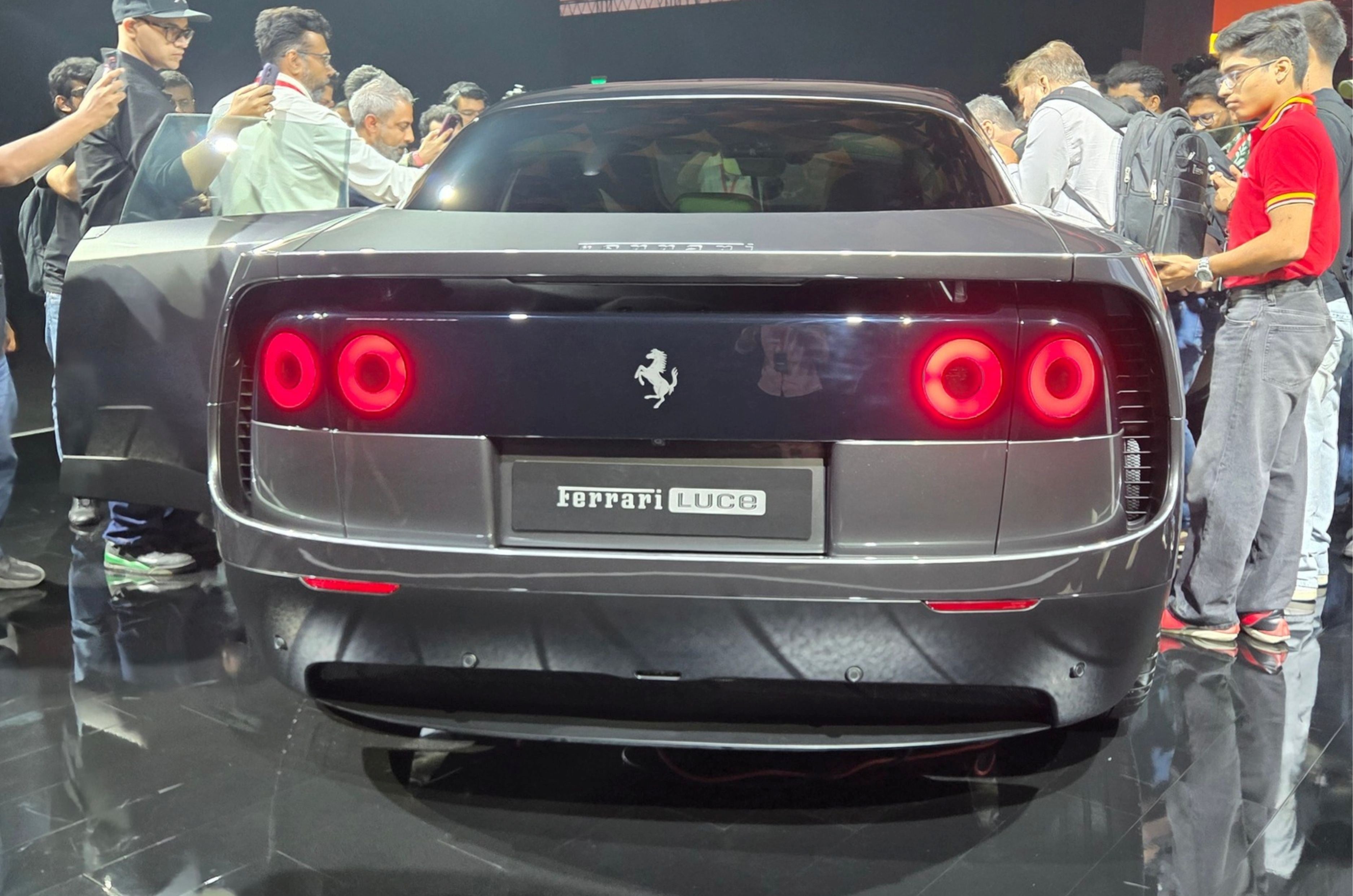
The Luce is Ferrari’s first EV, and perhaps its most controversial offering. Based on an all-new 800-volt architecture, the Luce features a 122kWh battery and four electric motors producing a combined 1,050hp and 990Nm. Ferrari claims a 0-100kph time of 2.5 seconds, a top speed of 310kph, and a range of up to 530km. Unlike other EVs, the Luce doesn’t pump artificial engine noises into the cabin via speakers – instead, the electric motors are tuned to emit a distinct, high-pitched sound.

Styled by LoveFrom, a firm co-founded by former Apple designer Jony Ive, the Luce features a distinctive two-piece body structure, with a gloss-black passenger cell enclosed within a coloured aluminium shell. It gets recessed LED headlamps, quad LED tail-lamps, suicide doors, and staggered 23-inch front and 24-inch rear wheels. At 5,026mm long, the Luce is the largest Ferrari yet, and its 0.254 drag coefficient is the lowest among road-legal Ferraris. The interior sports a retro-inspired design, with a 10-inch touchscreen, a 12.5-inch OLED driver’s display, and seating for five – a first for a Ferrari. Order books are open for the Luce in overseas markets, with prices starting at 550,000 euros (approximately Rs 6.1 crore) before options.

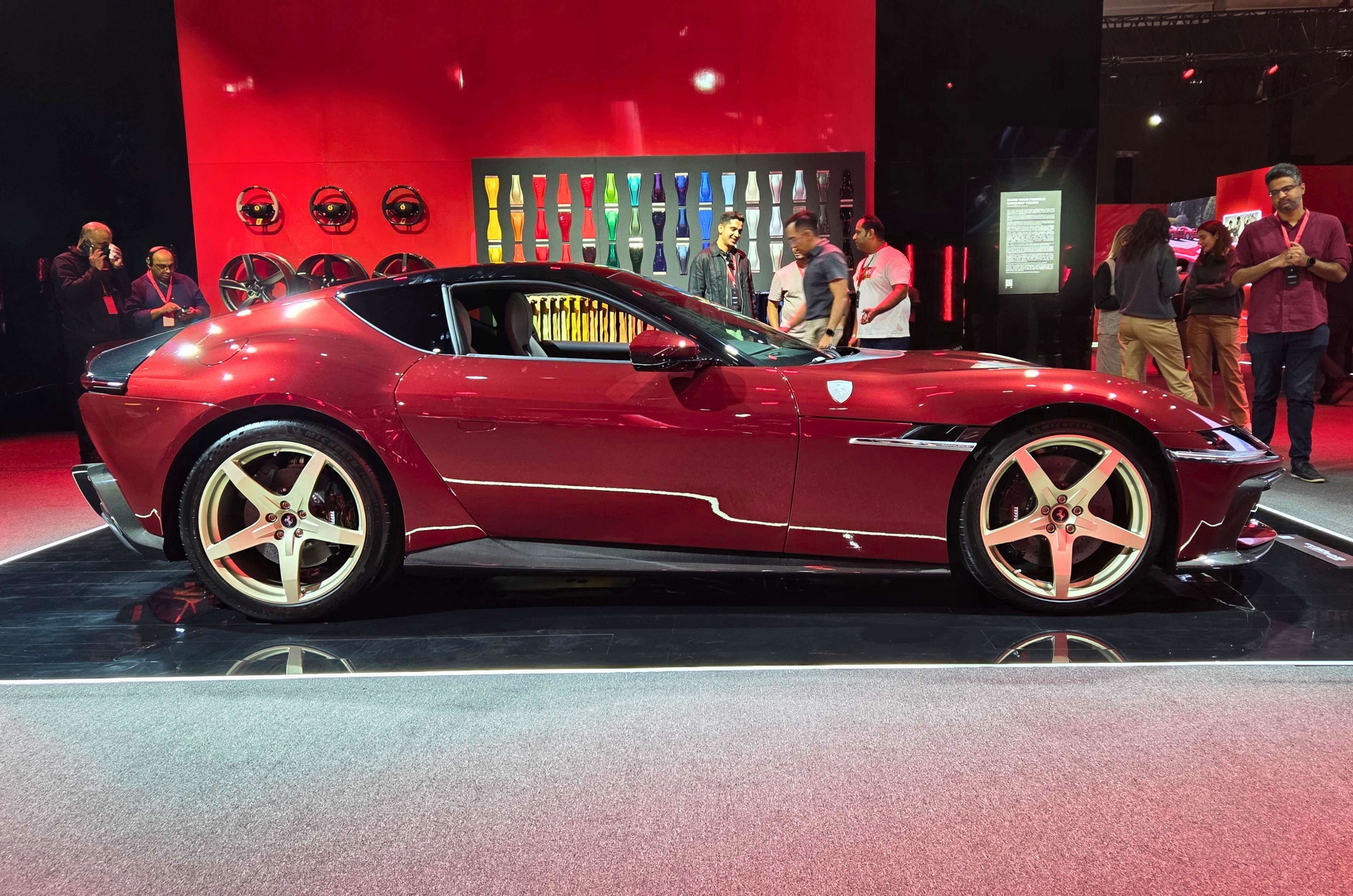
Ferrari 12Cilindri Manuale

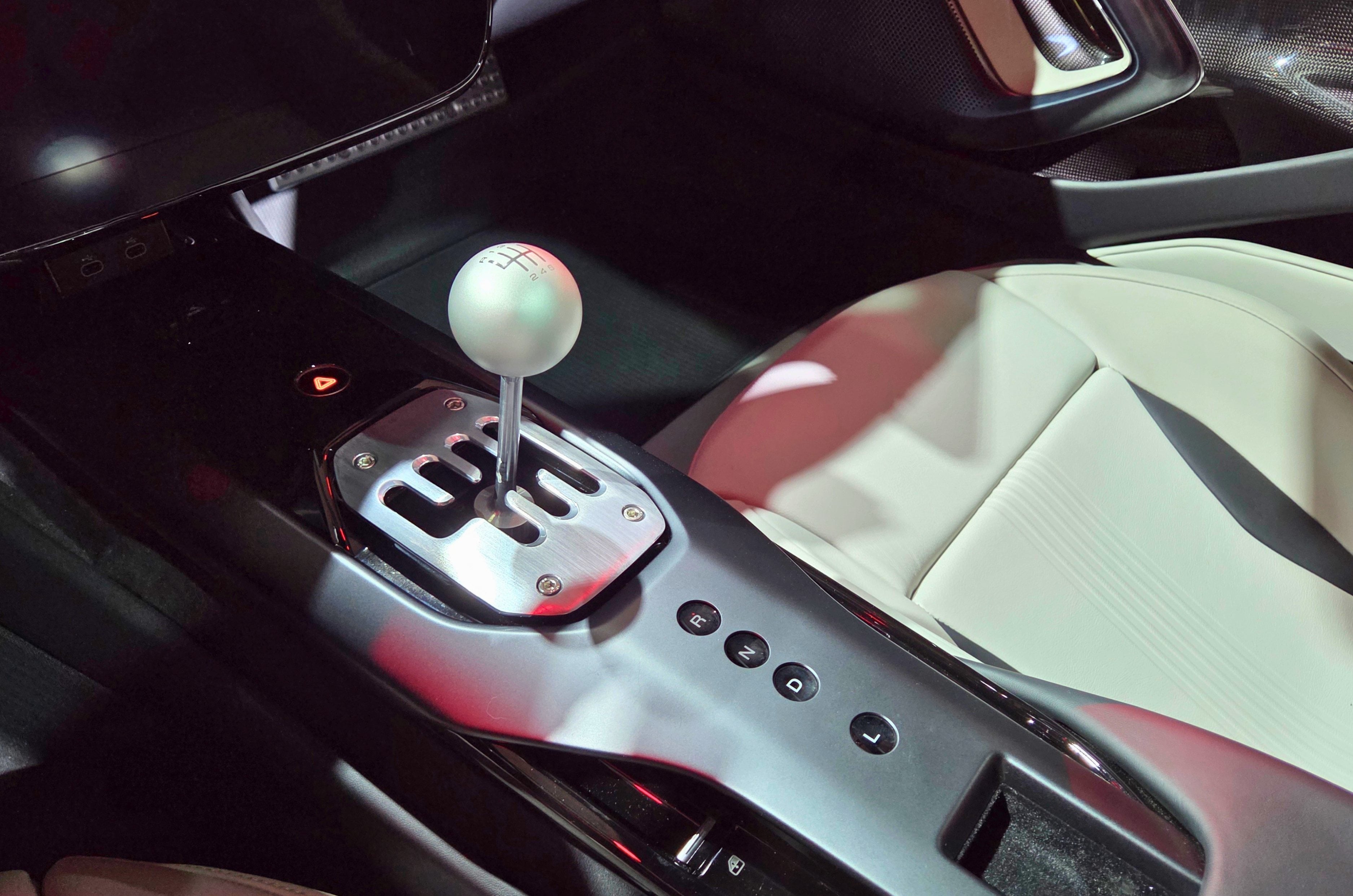
Unveiled a few months ago, the 12Cilindri Manuale is a limited-run special and the first Ferrari in 14 years to offer a manual gearbox. Only, this gearbox isn’t a true manual, but a simulated ‘Manuale By-Wire’ system based on the 12Cilindri’s 8-speed dual-clutch automatic. The experience is intact, however, with a clutch pedal, 6 speeds, a gated shifter, and the ability to stall and clutch-dump the car. If needed, you can even switch to automatic mode and let the DCT take over. Elsewhere, the Manuale retains the 12Cilindri’s 830hp 6.5-litre naturally aspirated V12, claiming a 0-100kph time of 2.9 seconds and a top speed of 340kph.

The exterior largely mirrors that of the standard 12Cilindri but gets exclusive Manuale badges, silver-finished Ferrari side logos, pinstripes on the front splitter and rear winglets, and bespoke five-spoke forged alloy wheels available in four finishes. Inside, the centre console has been redesigned to accommodate a rounded aluminium gear lever inspired by classic Ferrari gated shifters, available in silver or black. Buyers can also choose comfort or racing seats with six vertical grooves. Limited to 1,499 units, the 12Cilindri Manuale is priced from €590,000 (approximately Rs 6.42 crore), before options.

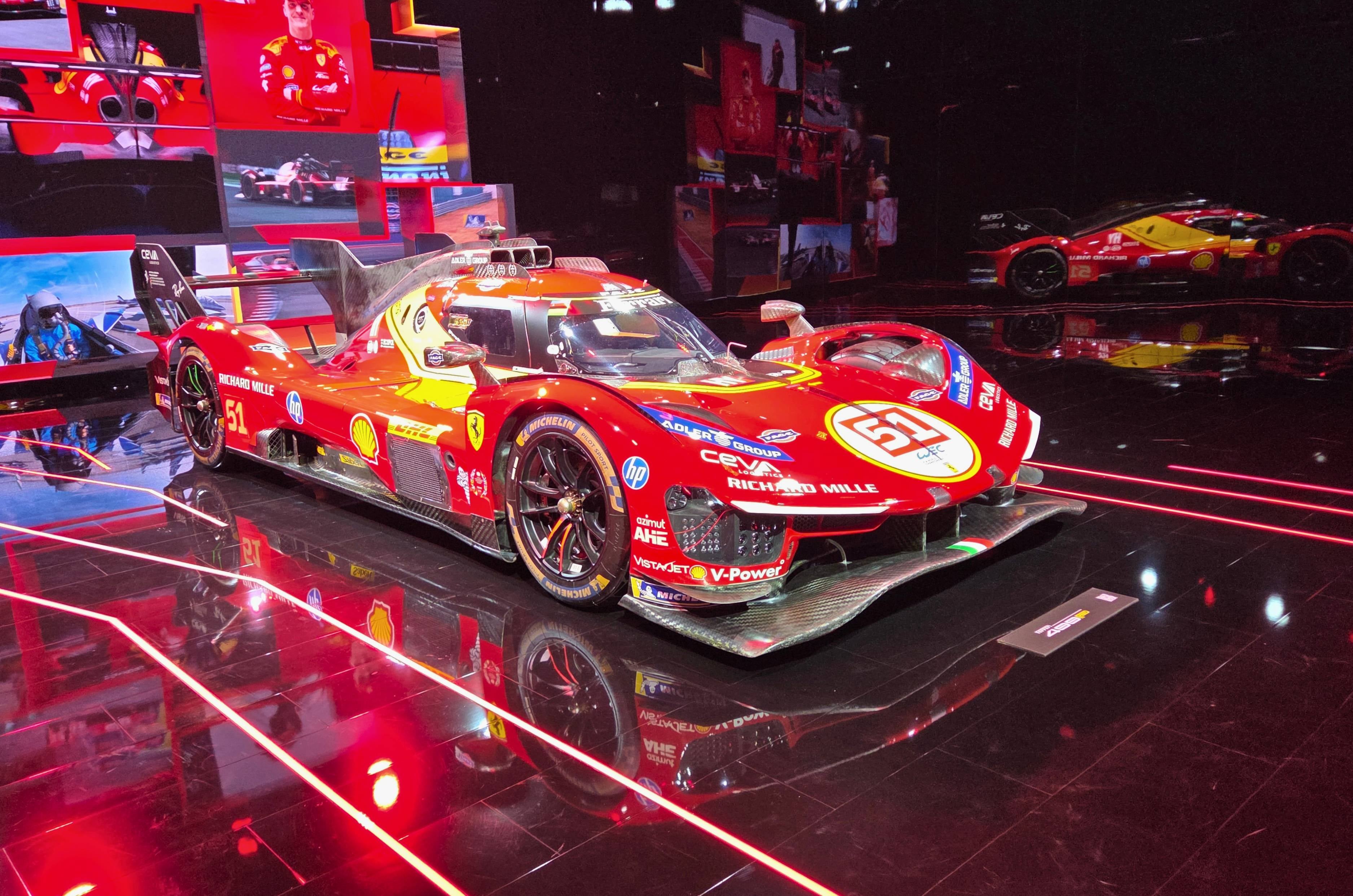
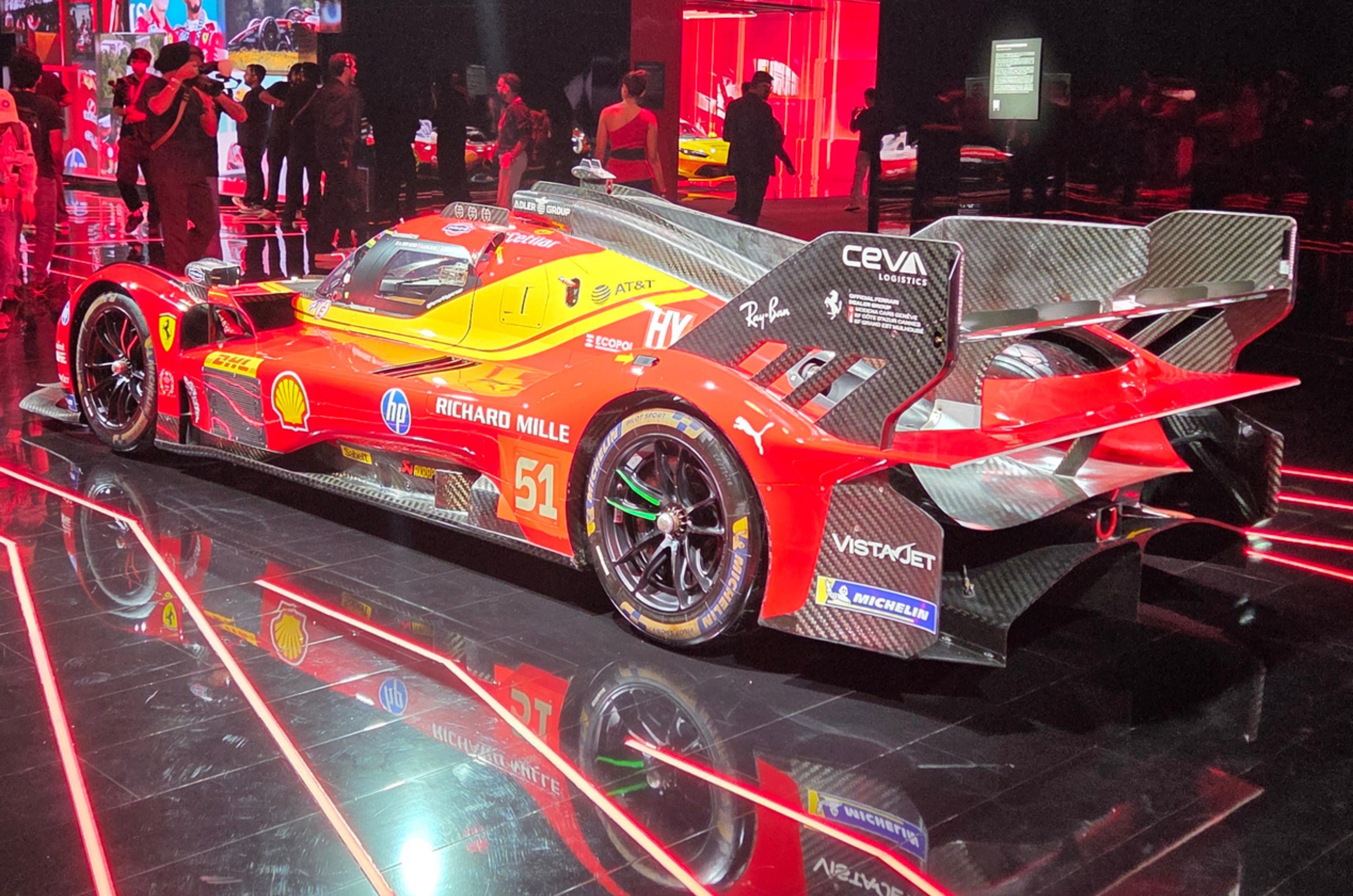
Ferrari 499P

The 499P Le Mans Hypercar was revealed in 2022 as Ferrari’s return to the top class of endurance racing after 50 years. It’s powered by a twin-turbo V6 based on the architecture of the engine used in the 296 GT3, itself derived from the road-going 296 GTB. Developed specifically for racing, the 499P’s V6 works with a bespoke 900-volt, 200kW energy recovery system (ERS) connected to the front axle, forming a hybrid all-wheel drive layout. A brake-by-wire system recovers kinetic energy, while power is delivered through a 7-speed sequential gearbox. Balance of Performance regulations limit the 499P’s total output to 680hp.

The 499P’s design pays tribute to Ferrari’s endurance racing heritage, particularly the 312P prototype from 1973 – Ferrari’s last factory entry in the top class. Its name refers to the 499cc displacement of each cylinder, while ‘P’ stands for Prototype. A yellow stripe runs through the livery – another nod to the 312P – while carbonfibre construction allows for a 1,030kg baseline weight. The 499P brought home several accolades for Ferrari, such as three consecutive Le Mans victories (2023, 2024, and 2025), a complete sweep at the 2025 FIA World Endurance Championship, and more.

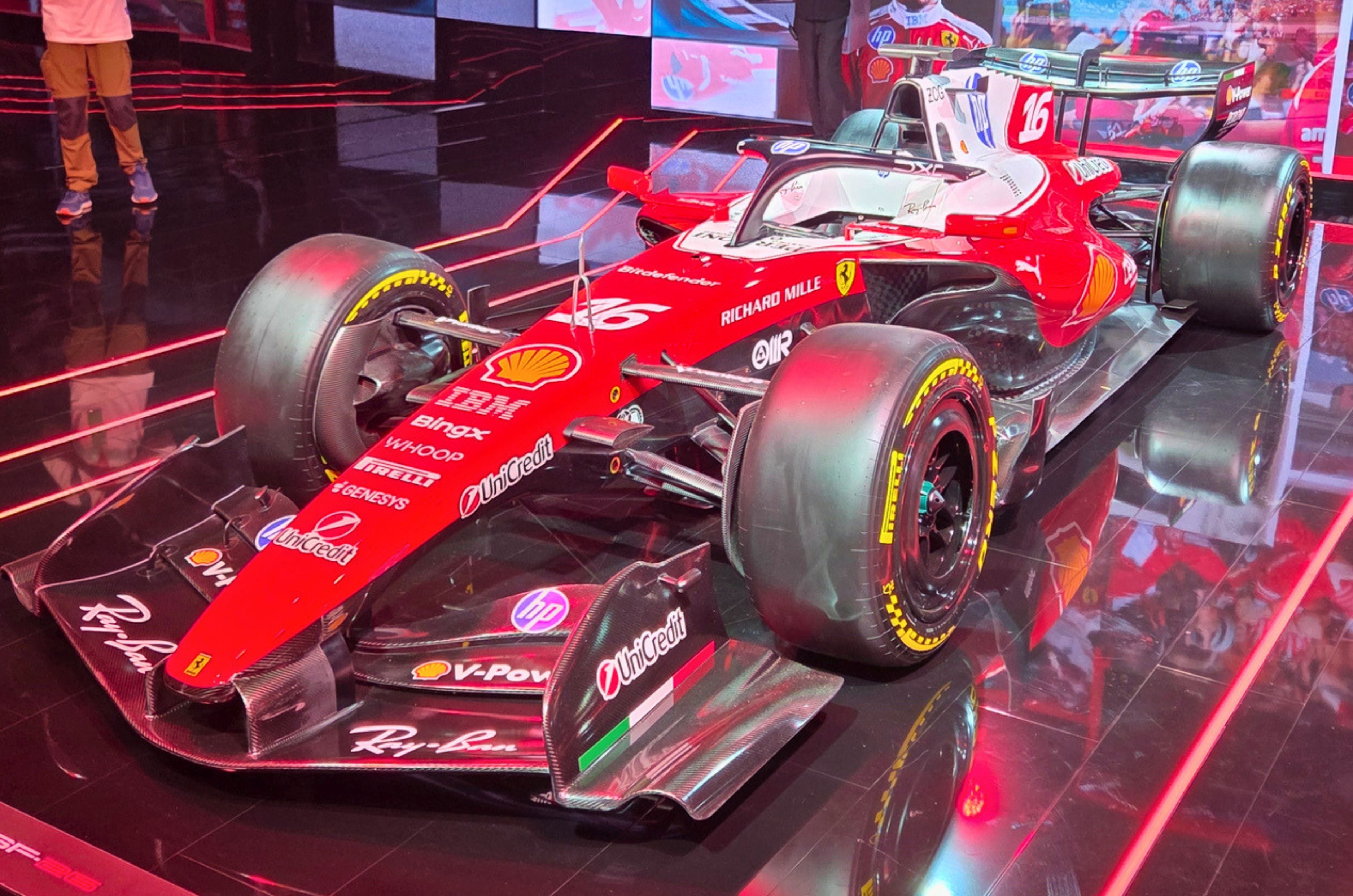
Ferrari SF-26

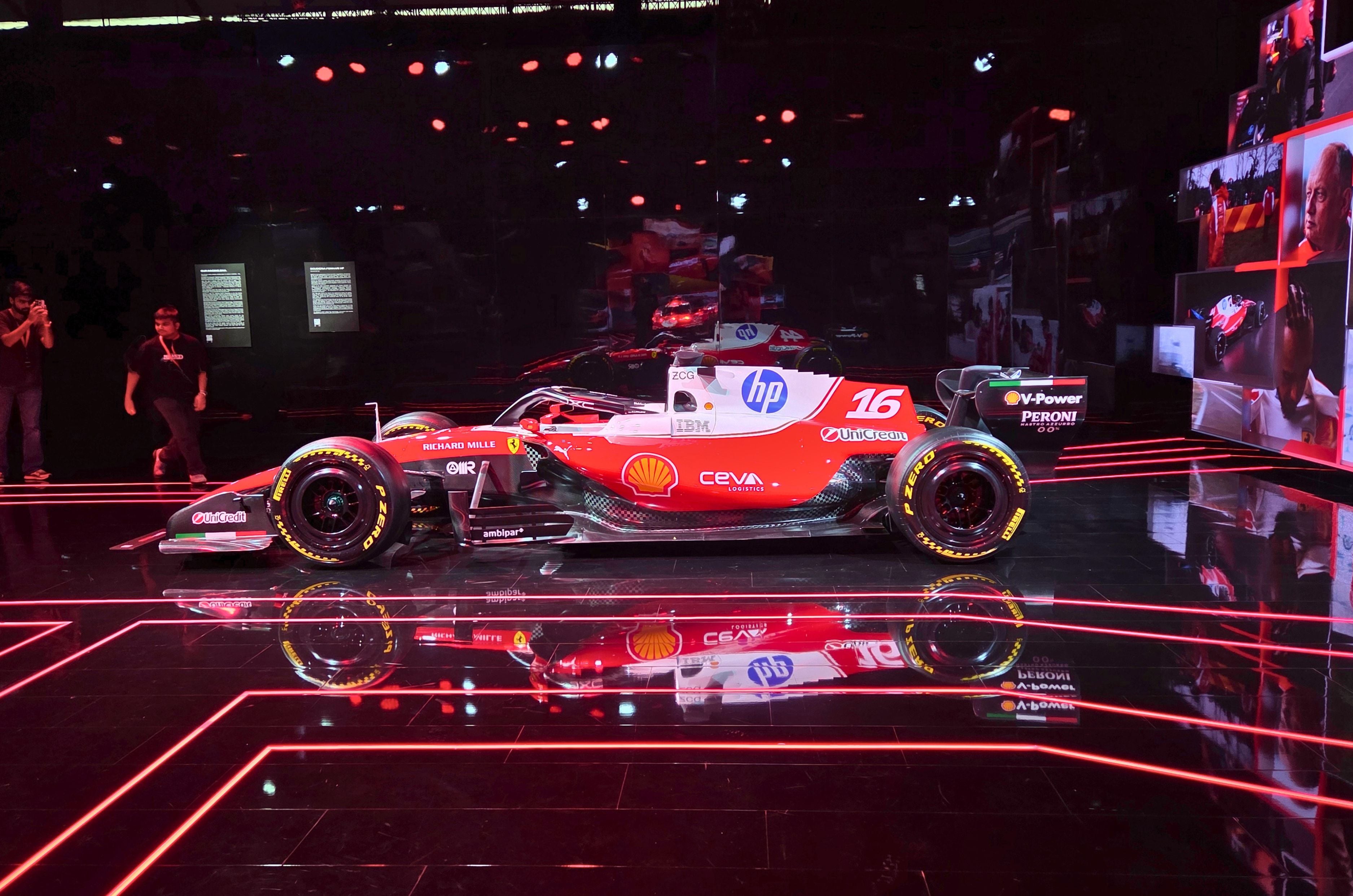
Ferrari pulled the wraps off the SF-26 racer back in January 2026. Built for F1’s 2026 technical regulations overhaul, the SF-26 is powering by Ferrari’s 067/6 power unit – a 1.6-litre turbocharged V6 that can run on sustainable fuel blends and is paired with a heavily bolstered 350kW MGU-K system, creating a near 50-50 performance split between combustion and electric power. 
Driven by Charles Leclerc and Lewis Hamilton, the SF-26 has compiled 11 Grand Prix podiums and 2 victories, with dramatic wins at the Spanish Grand Prix with Hamilton and the British Grand Prix with Leclerc.

The SF-26’s bodywork shifts away from the previous ground-effect era toward a lighter, more agile 770kg carbon-composite structure. It features advanced active aerodynamics with movable front and rear wings to minimise drag on straights while maximising cornering downforce. Visually, the SF-26 incorporates push-rod suspension on both axles and debuts a gloss Rosso Scuderia livery accented with white.

Renault Duster hybrid launched at Rs 16.99 lakh

Renault Duster hybrid launched at Rs 16.99 lakh
Renault Duster hybrid launched

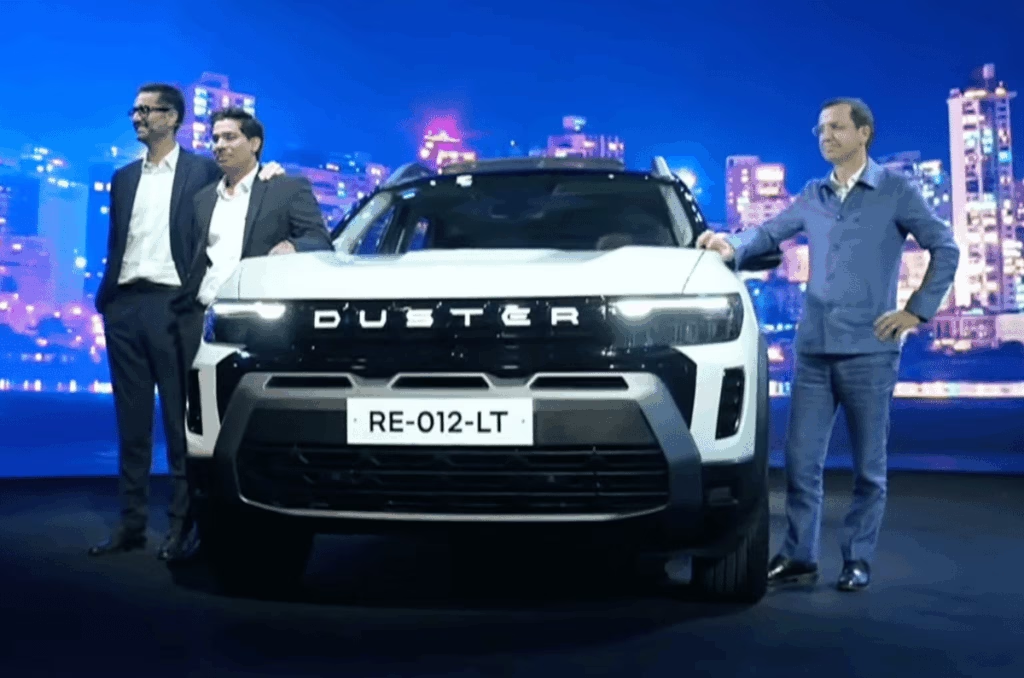
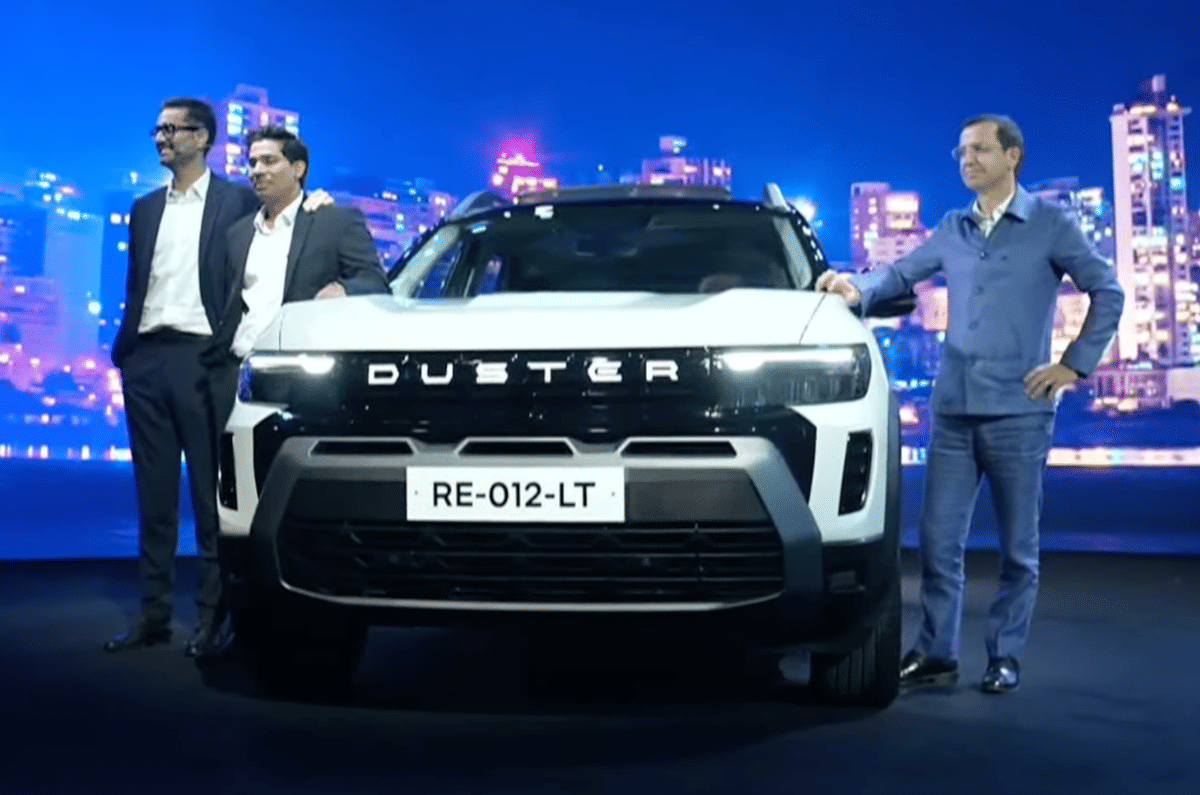
Renault has launched the Duster hybrid in India at an introductory price of Rs 16.99 lakh for the entry-level Evolution trim, with prices going up to Rs 19.49 lakh for the top-end Emotion trim. Customer bookings are underway at Rs 21,000, with deliveries scheduled to begin in November. The Duster hybrid takes on the strong-hybrid versions of the Maruti Grand Vitara, Maruti Victoris and Toyota Urban Cruiser Hyryder.

  1. 1.8-litre petrol and two electric motors make a combined 160hp, with 0-100kph in a claimed 9.61sec.
  2. 1.4kWh battery pack, multi-mode automatic gearbox and a claimed 29kpl.
  3. Features include ventilated seats, panoramic sunroof, dual-zone climate control and more.

Renault Duster hybrid prices

The Duster hybrid range is available in three trim levels

Renault Duster hybrid price list (Rs, lakh)

Trims

Prices (ex-showroom)

Evolution

16.99

Techno

18.99

Emotion

19.49

Renault is offering the Duster hybrid in three trims: Evolution, Techno and Emotion. These introductory prices apply to all deliveries until December 31, 2026, and R-Pass owners will get priority deliveries. Buyers can also opt for the Renault Protect 360 ownership package, priced from Rs 89,900, which bundles three years of comprehensive insurance, three years of scheduled maintenance and a three-year assured resale value.

Renault Duster hybrid powertrain and mileage

The E-Tech hybrid features a 1.4kWh battery pack and a multi-mode automatic transmission

Renault Duster hybrid engine

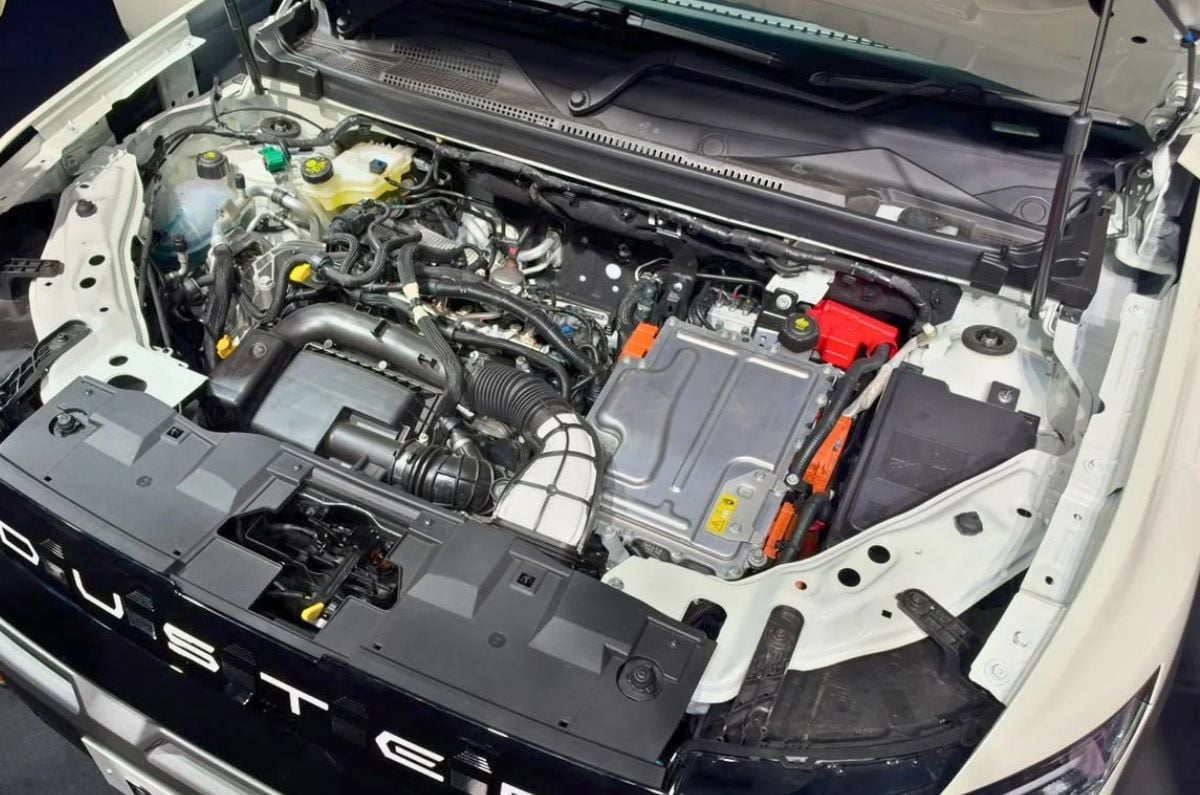
The Duster is based on Renault’s RGMP platform, which the brand says can accommodate petrol, hybrid and CNG powertrains. The hybrid is equipped with the brand’s ‘E-Tech 160’ system, which pairs a 1.8-litre four-cylinder petrol engine with two electric motors. The Atkinson-cycle engine makes 110hp and 175Nm, and Renault claims it is the biggest engine in the segment, with a thermal efficiency of up to 41 percent. A high-voltage starter-generator mounted on the engine handles engine starts, smooths out gearshifts and charges the battery, including through regenerative braking. A separate 50hp traction motor, connected directly to the driveline, drives the front wheels and produces 208Nm. The combined system output stands at 160hp, which Renault says is the highest in the segment.

Renault Duster Hybrid Drive Selector

The hybrid system runs on a 1.4kWh, 247V NMC battery pack with direct refrigerant cooling. Transmission duties are handled by what Renault calls a “multi-mode automatic” gearbox, with two electric gears and four petrol gears. The system switches automatically between six operating modes, including all-electric, petrol-only, and series and series-parallel hybrid. The French automaker claims the hybrid can manage up to 80 percent of city driving in pure electric mode, and a 0-100kph time of 9.61sec, which it says is the quickest in the segment. The Duster hybrid also gets frequency-dependent dampers.

The ARAI-certified mileage of the Renault Duster hybrid is 29kpl, which the brand says makes it the most fuel-efficient hybrid in India, ahead of rivals such as the Maruti Victoris hybrid, Maruti Grand Vitara hybrid and Toyota Urban Cruiser Hyryder hybrid. Combined with a 50-litre fuel tank, Renault claims a total driving range of over 1,400km.

Renault Duster hybrid exterior design

Overall styling is largely similar to the turbo-petrol Duster

Renault Duster Hybrid Front Quarter

The Duster hybrid looks largely the same as the turbo-petrol versions, with chunky body cladding, C-pillar-mounted rear door handles, roof rails and eyebrow-style DRLs (daytime running lights). Up front, the signature grille gets an illuminated ‘Duster’ emblem, and full-LED headlamps are offered from the Techno trim onwards.

Renault Duster Hybrid Rear Quarter

The base Evolution trim rides on 18-inch flex wheels, while the top-spec Emotion gets 18-inch diamond-cut alloys. At the rear is an LED horizontal light bar, while there are ‘E-Tech’ badges on the front doors and the tailgate. The Duster hybrid’s ground clearance stands at 212mm.

Renault Duster hybrid interior and features

Feature highlights include a pano sunroof, ventilated seats and a 10.25-inch digital cluster

Renault Duster Hybrid Interior

The Duster hybrid’s cabin follows the general design of the turbo-petrol versions, with a dual-screen layout. The mid-spec Techno gets Desert Beige semi-leatherette upholstery, while the top-spec Emotion gets Dune Brown leatherette upholstery.

Standard features on the base Evolution trim include a 10.1-inch touchscreen, a 7-inch digital driver’s display and dual-zone automatic climate control. The Techno adds an electric panoramic sunroof, keyless entry with push-button start and connected car tech via the ‘MyRenault’ (MYR) app. The range-topping Emotion trim gets a larger 10.25-inch digital driver’s display, 6-way electrically adjustable and ventilated front seats, and a powered tailgate.

Renault Duster hybrid safety features

A wide array of safety tech is on offer

Renault claims that the Duster hybrid’s entry-level Evolution trim gets 38 safety features as standard. These come in the form of 6 airbags, hill-start assist, cruise control, rear parking sensors and a rearview camera.
Mahindra XUV 3XO ZNG: CNG efficiency, petrol performance

Mahindra XUV 3XO ZNG: CNG efficiency, petrol performance
Mahindra XUV 3XO CNG review

CNG is shaping up to be the new diesel. For the second year running, CNG passenger vehicles outsold diesels, accounting for 21.98 percent of the market compared to 18.08 percent for oil burners in FY2026. That is a very big deal. Big enough for Mahindra – traditionally a diesel-first brand – to sit up, take notice and want a piece of the action. Its first attempt – if you don’t count the fleet-only KUV100 CNG – is the Mahindra XUV 3XO ZNG. Read as Zee-NG and pronounced Zing. The headline is that it makes the same amount of power as the pure-petrol 3XO TCMPFi. We experienced it in Mumbai to see if it really has zing.
Mahindra XUV 3XO ZNG Exterior Design and Engineering – 7/10

Mahindra XUV 3XO ZNG

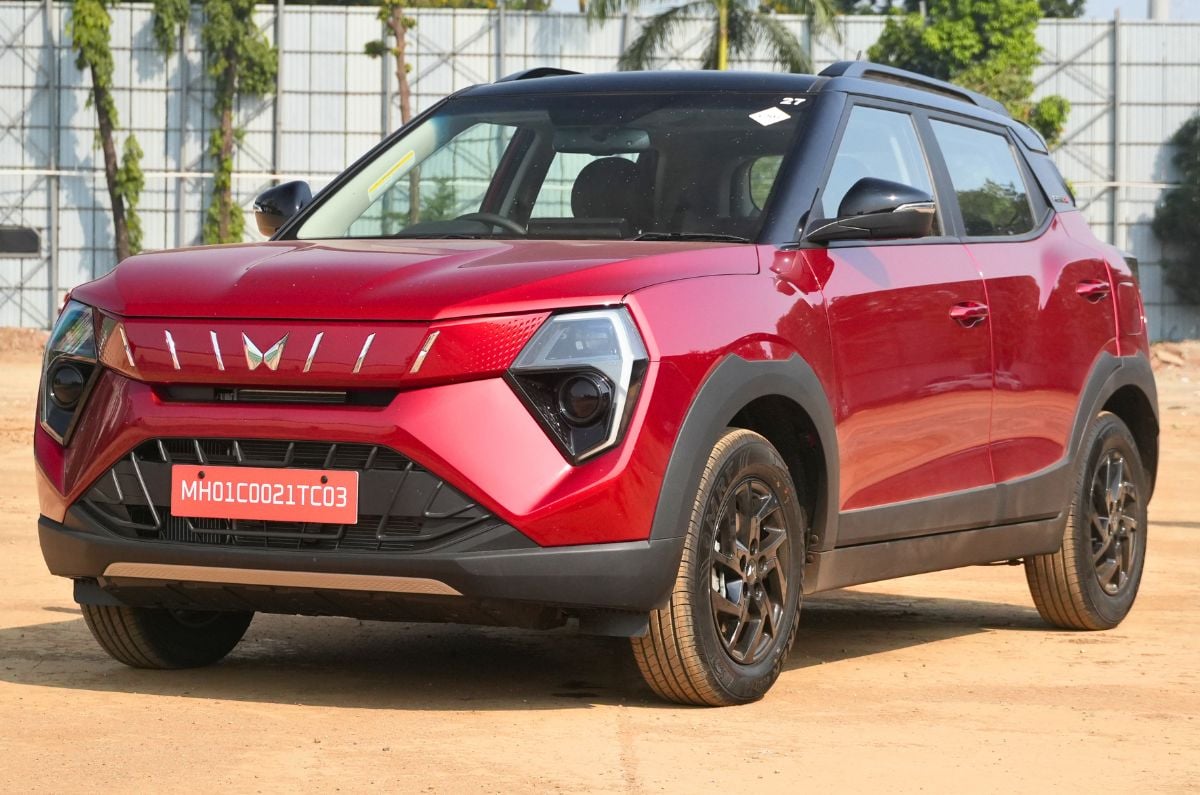
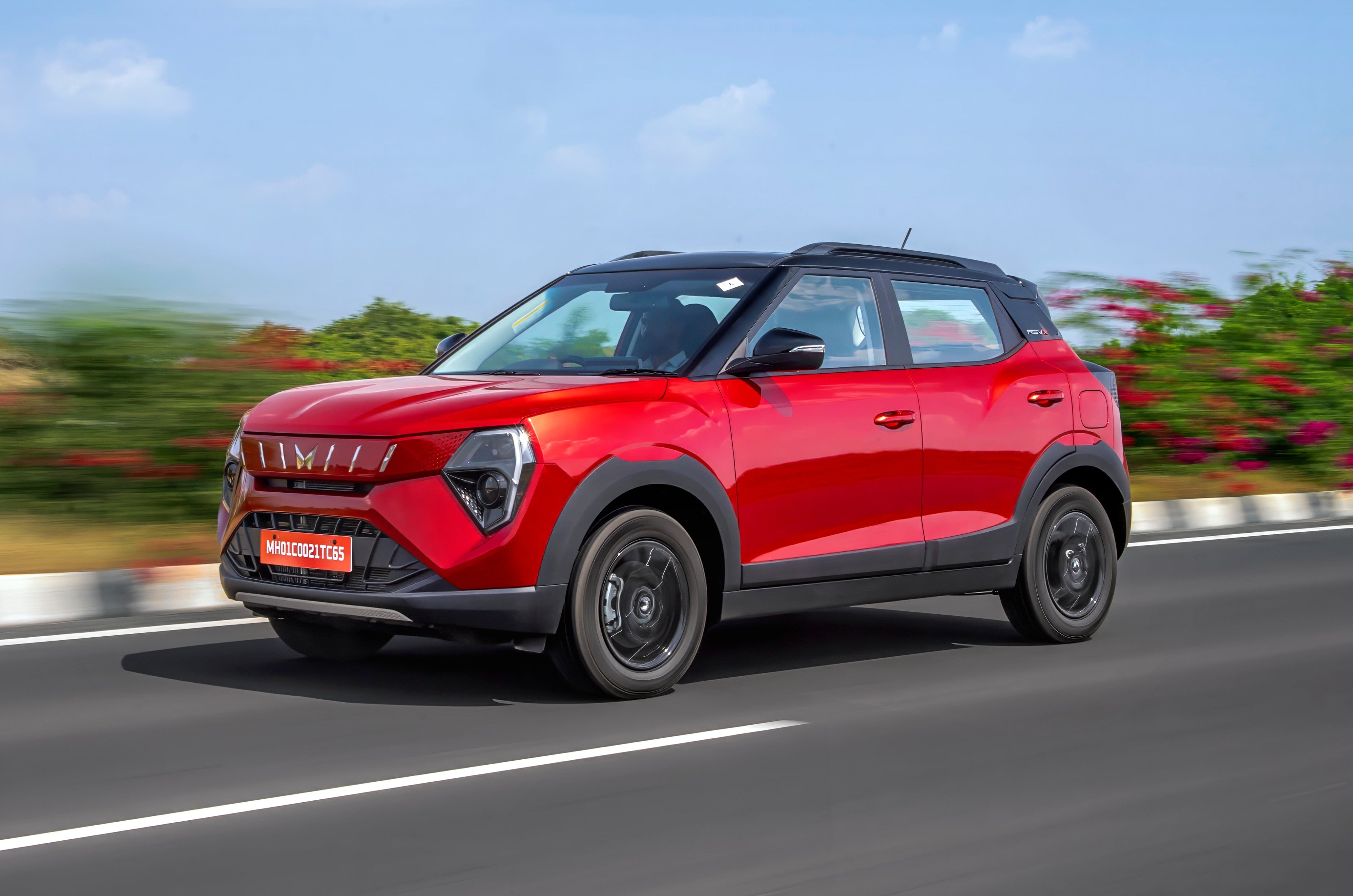
Outside, there isn’t much to tell the ZNG apart from the regular XUV 3XO. Our test car is based on the REVX trim and gets a body-coloured grille, while other trims gloss black. LED lighting is present, though fog lamps are missing even on the top REVX A CNG trim. 

Mahindra XUV 3XO ZNG
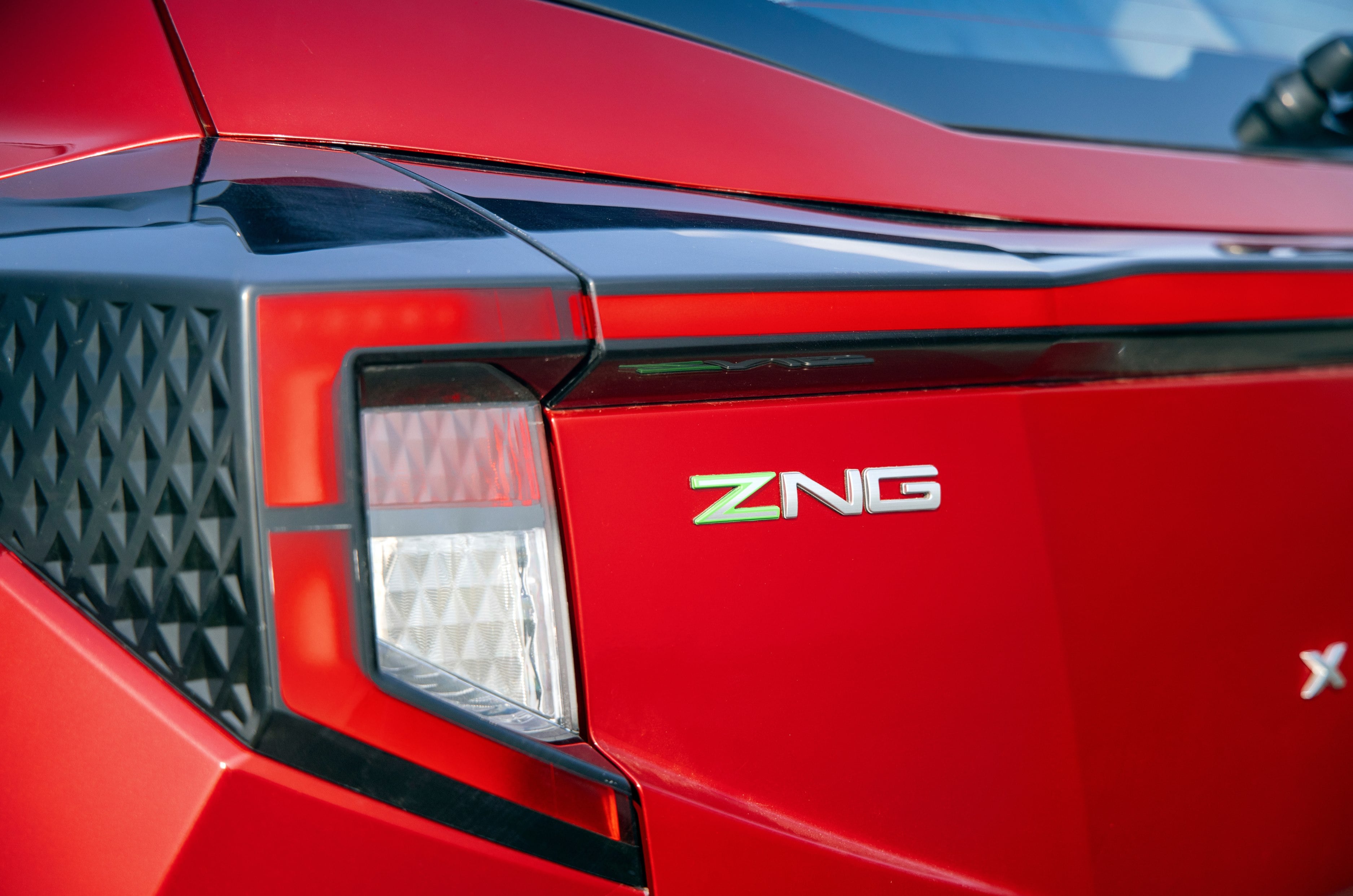
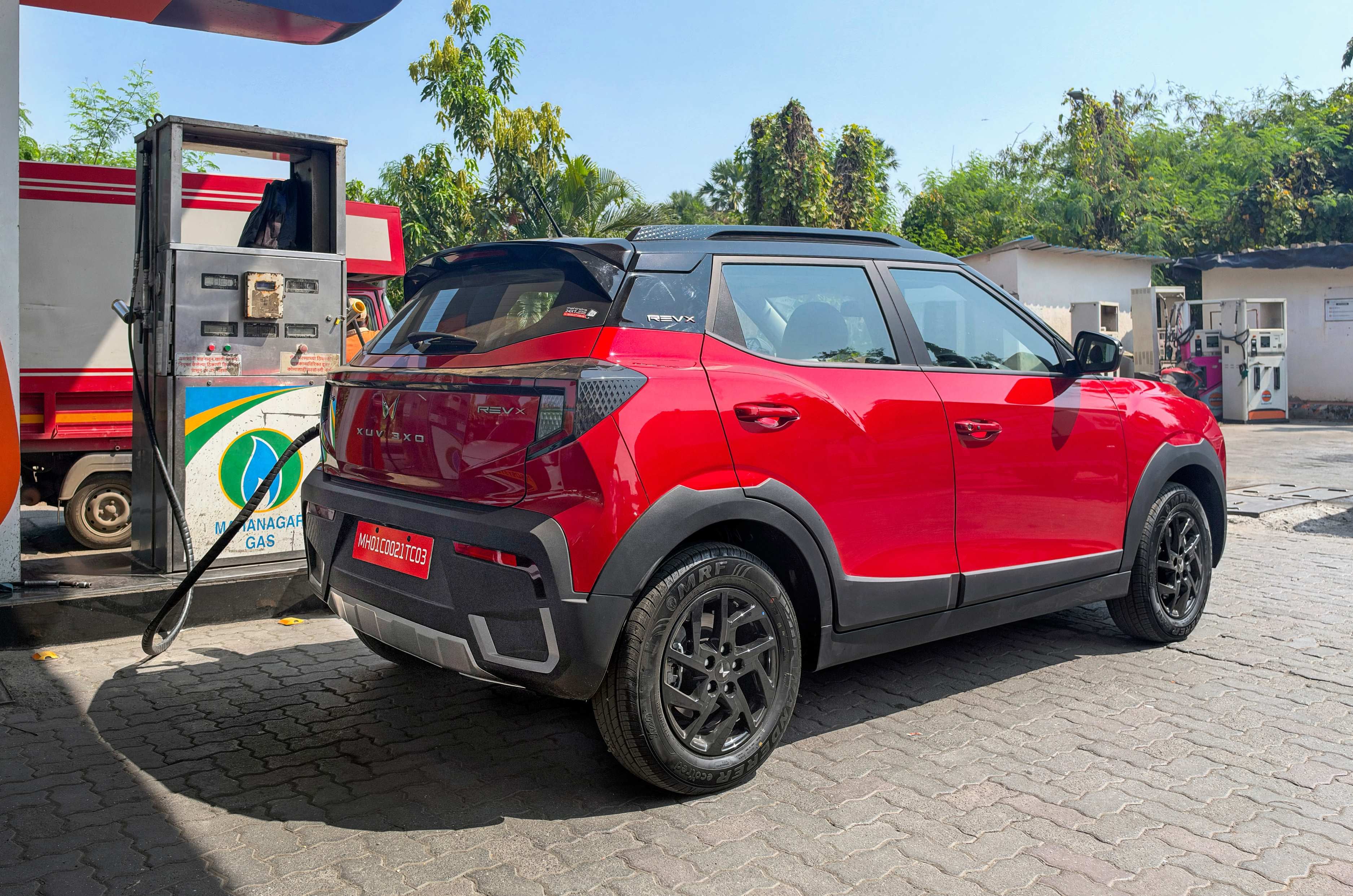
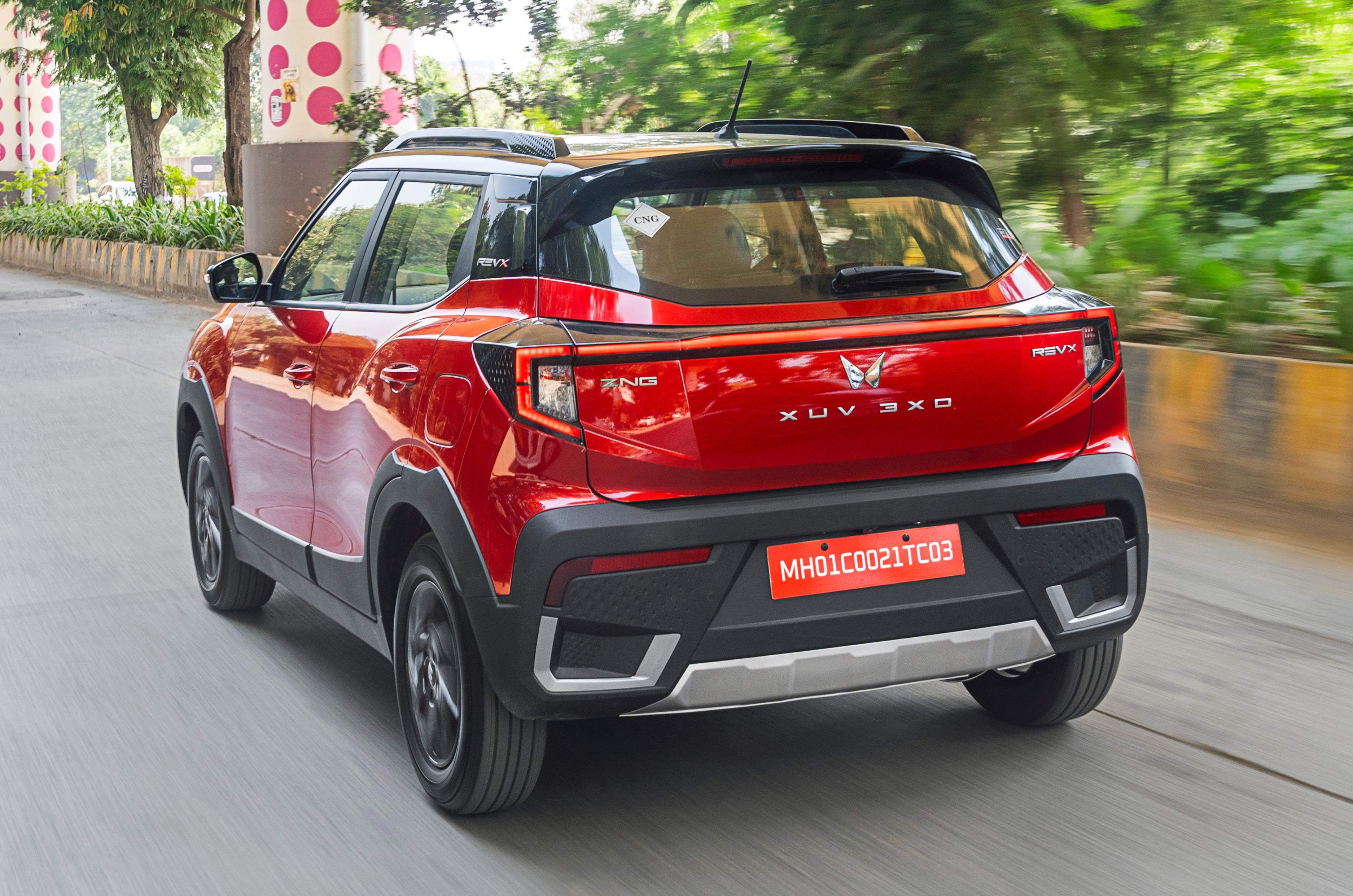
ZNG badge on the tailgate is the only exterior telltale of the CNG powertrain.

In profile, you’ll notice the gloss black 16-inch wheels – the largest size available on the ZNG, with 17s reserved for the pure-petrol TGDi. At the rear is the clearest giveaway of its CNG powertrain: a ZNG badge on the tailgate.

XUV 3XO ZNG Interior Space and Comfort – 8/10

Mahindra XUV 3XO ZNG

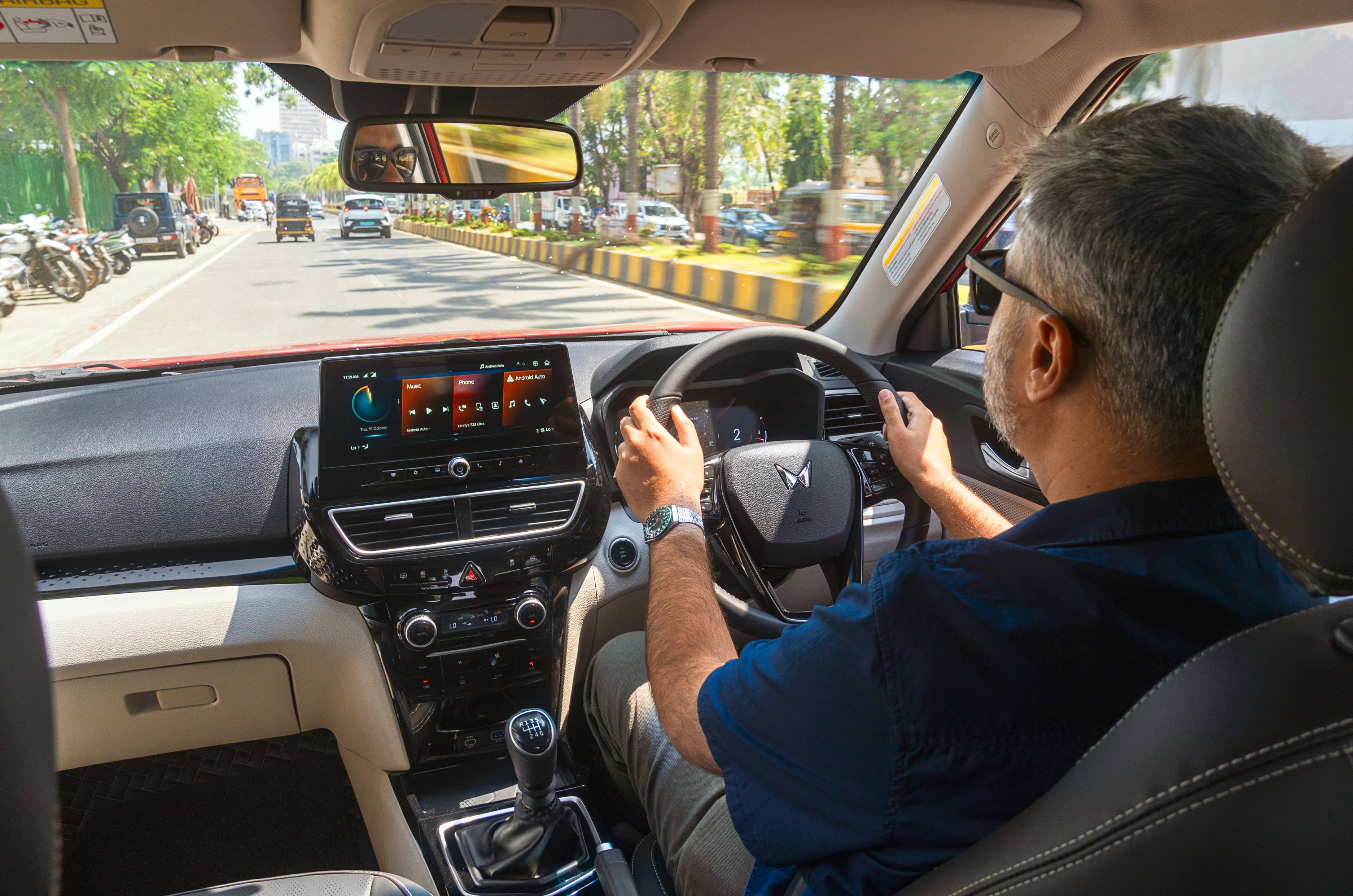
Inside, too, the ZNG is largely identical to its petrol and diesel counterparts, with a CNG switch to the right of the steering wheel being the only real giveaway. The dual-tone dashboard with lots of gloss black trim is otherwise carried over unchanged. Despite not being the top of the line variant, the cabin has an upmarket and well-trimmed air to it. 

Mahindra XUV 3XO ZNG

Our REVX A test car gets black leatherette seats, which can get quite hot, and they lack ventilation, just like the regular 3XO. The front seats are also a bit tight for larger frames, and the lack of a telescoping steering makes it hard to get comfy. Another ergonomic gripe is the tight driver’s footwell, with no dead pedal – pertinent as a six-speed manual is your only gearbox option.

Mahindra XUV 3XO ZNG

The rear seat remains spacious and comfortable for its segment, and accommodating three abreast is not an issue. One area where the 3XO fell short was boot space, measuring just 295 litres – the smallest in the segment. To keep as much of the boot intact as possible, Mahindra has moved the space-saver spare under the body and placed a dual-tank setup under the boot floor. The combined liquid capacity of the tanks is 60 litres, which translates to 10kg of CNG capacity. 

Mahindra XUV 3XO ZNG

Boot capacity has dropped to 270 litres, which is smallest amongst immediate rivals, however it remains fairly wide and can accommodate up to four cabin bags.

Mahindra XUV 3XO ZNG Features and Safety – 8/10

The 3XO ZNG is available in four trims, which offer the same features as their petrol and diesel counterparts. The highlights are a pair of sharp 10.25-inch screens for infotainment and instrumentation, a panoramic sunroof and a six-speaker audio system with Dolby Atmos. 

Mahindra XUV 3XO ZNG

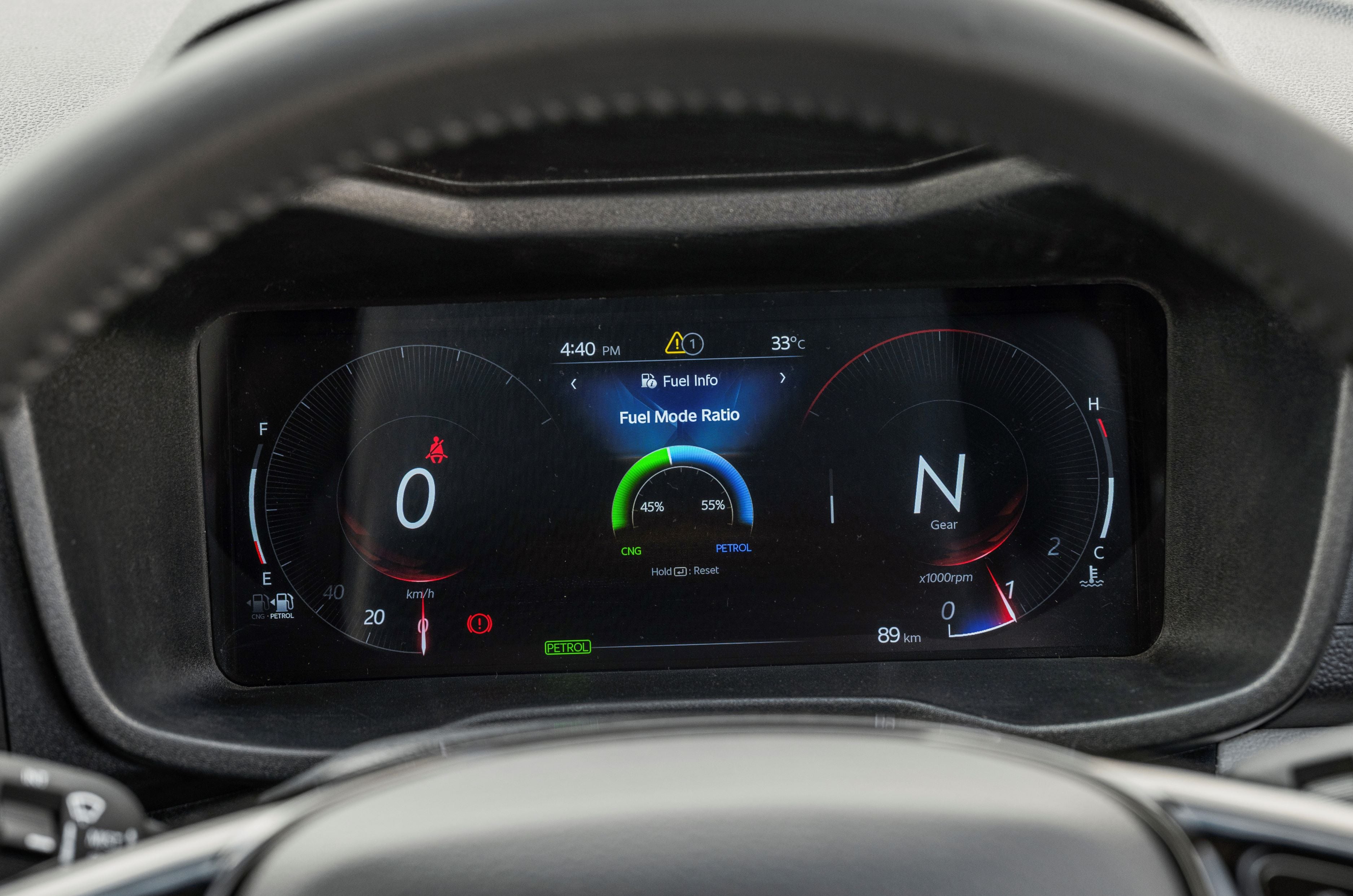
The digital instrument cluster has a few more CNG-related functions. Hit the CNG switch, and an indicator on the digital instrument cluster confirms the fuel you are using, while the fuel gauge changes to display the fuel level. The cluster can also show the ratio of time spent in each fuel mode and the corresponding fuel efficiency.

Mahindra XUV 3XO ZNG

As such, the 3XO ZNG is reasonably well equipped compared to equivalent variants of its main rival, the Tata Nexon iCNG. However, the Nexon offers a wider choice of CNG variants, with top-spec versions getting features such as a 360-degree camera, ventilated front seats and a wireless charger, all of which the Mahindra misses out on.

The safety kit is quite comprehensive, featuring six airbags, ESC, ISOFIX mounts, a tyre pressure monitoring system and a reversing camera. The regular XUV 3XO is also a five-star Bharat NCAP safety-rated car, and Mahindra says the ZNG has been engineered to meet the same standards.

Mahindra XUV 3XO ZNG Performance and Refinement – 8/10

Powering the ZNG is the same 1.2-litre multi-point fuel injection (MPFi) turbo-petrol engine that does duty on the lower and mid-level trims of the 3XO. The kicker is that Mahindra quotes the exact same power and torque figures for CNG as for the pure-petrol version – 111hp and 200Nm. That is highly unusual, as a 10 to 15 percent drop in power figures is the norm. For comparison, its direct rival, the Tata Nexon iCNG, loses 20hp when switching from petrol to CNG. Mahindra says it has managed this with the use of a 10-bar CNG injection system. It also says the turbocharger and ECU calibration have been optimised to run on CNG, and initial impressions seem to back this up.

Mahindra XUV 3XO ZNG
1.2-litre TCMPFI engine uses a 10-bar CNG injection system; Mahindra claims identical 111hp and 200Nm figures for petrol and CNG.

In everyday driving, the difference between CNG and petrol modes is barely noticeable. The engine feels smooth and refined in both, only becoming audible when extended. Performance, too, is very similar. Throttle response is good and the motor feels tractable, rarely requiring a shift into first when negotiating a speed breaker. There is a bit of turbo lag below 2,000rpm, but get past this and performance feels brisk.

The switch between modes is also quite seamless, with no apparent jerkiness or change in engine note. However, switch back and forth a few times, and you’ll notice the throttle response is ever so slightly duller in CNG mode, and there are times when it will hesitate on sudden throttle inputs. Overall, though, calibration in CNG mode is very good, and in everyday driving, there is very little to fault.

Mahindra XUV 3XO ZNG
Performance feels brisk once you get past 2000rpm.

While the pure-petrol version of this engine can be had with a six-speed torque-converter automatic, the ZNG is only available with the six-speed manual. While its immediate rivals don’t offer an automatic with CNG either, Mahindra would have done well to offer at least an AMT. As it is, the manual is a smooth and easy-to-use unit, but not quite at the level of its Japanese or Korean competition. Its throws are a bit too long, and the clutch, while light, has a long travel.

In terms of outright performance, Mahindra claims an 11.8sec 0-100kph time for the ZNG. We conducted a quick performance test (not to Autocar India standards), which resulted in a 0-100kph time of 12.98s on petrol and 12.64s on CNG – a difference we put down to the launch. In-gear acceleration figures paint a clearer picture, where the ZNG was quicker in petrol mode by about 0.7 seconds in both 20-80kph and 40-100kph runs. Nevertheless, performance in either CNG or petrol is so close that most drivers would be hard-pressed to tell the difference.

Mahindra XUV 3XO ZNG Mileage and Efficiency – 8/10

Mahindra XUV 3XO ZNG

Mahindra claims an efficiency figure of 24.7km/kg for the XUV 3XO ZNG, which translates to a theoretical range of 247km from its 10kg CNG capacity. 

Mahindra XUV 3XO ZNG
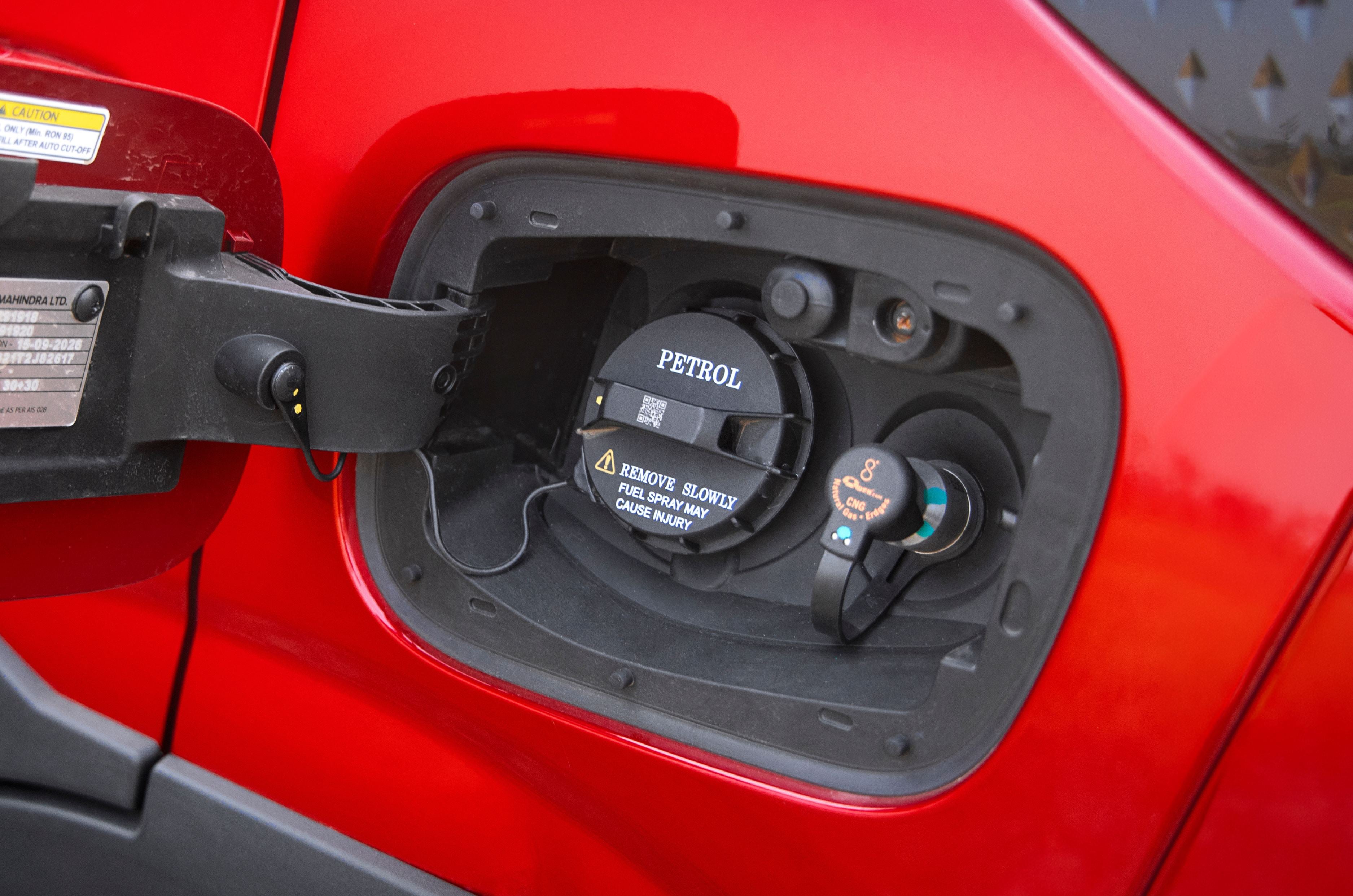
CNG filler neatly positioned beside the fuel filler; fuel filler door still has a manual release in the cabin.

It also gets an idle-stop/start function, which should help efficiency. We will verify these claims with a real-world test soon.

Mahindra XUV 3XO ZNG Ride Comfort and Handling – 9/10

Mahindra XUV 3XO ZNG
Light steering works well in town; steering modes dial up resistance but don’t offer better feel.

The switch to CNG adds around 100kg to the 3XO, most of it concentrated at the rear. To ensure this doesn’t affect ride or handling, Mahindra has tweaked the suspension to cope with the extra weight. The ZNG’s ride has a slightly firm edge, but overall it deals with bad roads very well.

Mahindra XUV 3XO ZNG
16-inch wheels and tall tyres are better at absorbing sharper bumps than the 17s on higher petrol trims.

The smaller 16-inch wheels also play an important part here, as their taller-sidewall tyres absorb sharp edges before they make their way to the cabin. Overall, the ride remains amongst the best in the class.

Mahindra XUV 3XO ZNG

Handling, too, remains tight and engaging, with a planted feel around the bends. The steering is light and direct, and while you can dial up the resistance using the three steering modes, this adds little in terms of feel or feedback.

Mahindra XUV 3XO ZNG Value for Money – 8/10

Overall, the Mahindra XUV 3XO offers good value for money and makes for a compelling entrant into the CNG compact SUV space. Prices for the Mahindra XUV 3XO ZNG start at Rs 9.99 lakh and go up to Rs 12.27 lakh, which is between Rs 1 lakh and Rs 1.2 lakh more than the equivalent petrol trims. Pricing is on par with comparable variants of the Tata Nexon iCNG. However, the Nexon has a wider range and also offers more features on the higher trims.

Mahindra has packaged the CNG tanks cleverly, minimising the impact on boot space. That said, the 3XO’s boot wasn’t particularly large to begin with, and that remains a drawback. What sets it apart is the driving experience. CNG calibration is very good, and performance in CNG mode is close enough to petrol for most people not to notice a real difference. For a first attempt, the XUV 3XO ZNG certainly ticks a lot of boxes.