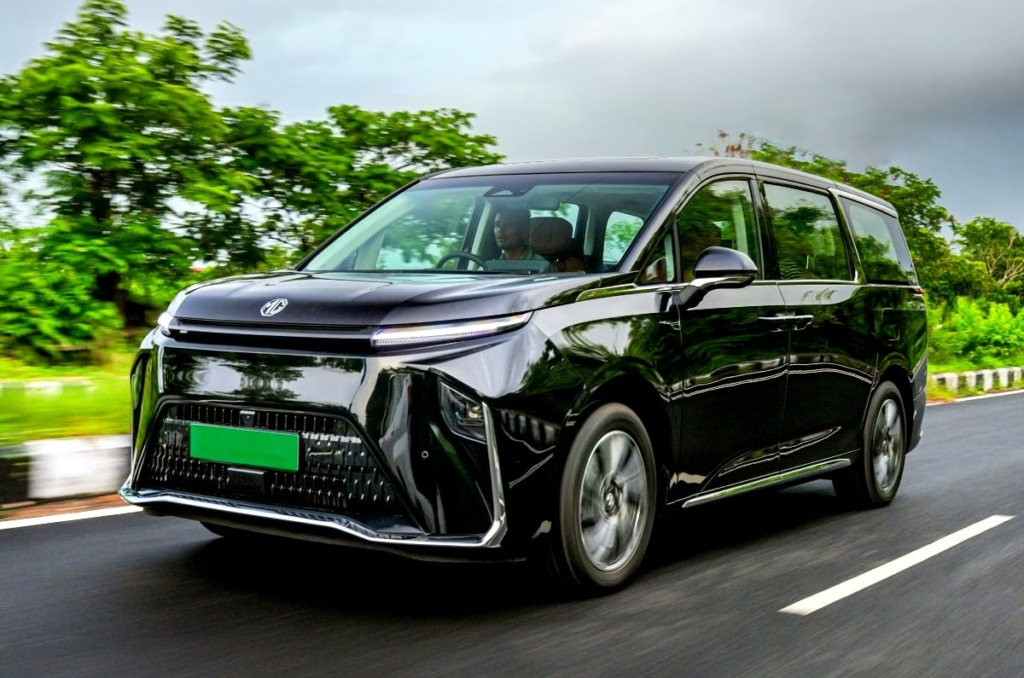
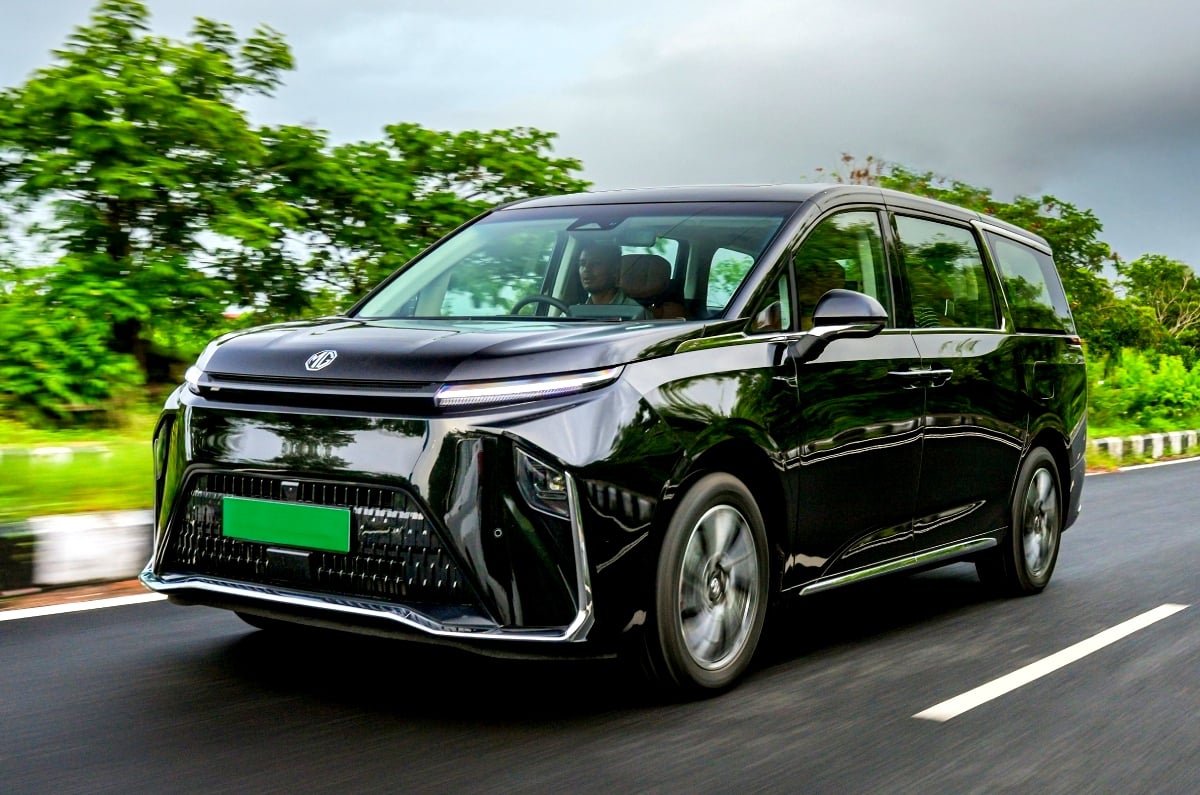
Luxury in an MPV is about more than having room for seven. It is about how that space is used, how effortlessly the occupants can settle in, and how much the car does to make every journey comfortable. The MG M9 brings together the practicality of a three-row MPV and the refinement of an electric powertrain, with a host of features that make time spent on the move feel a little more indulgent. Here are six highlights that make it stand out.
Lounge On Wheels
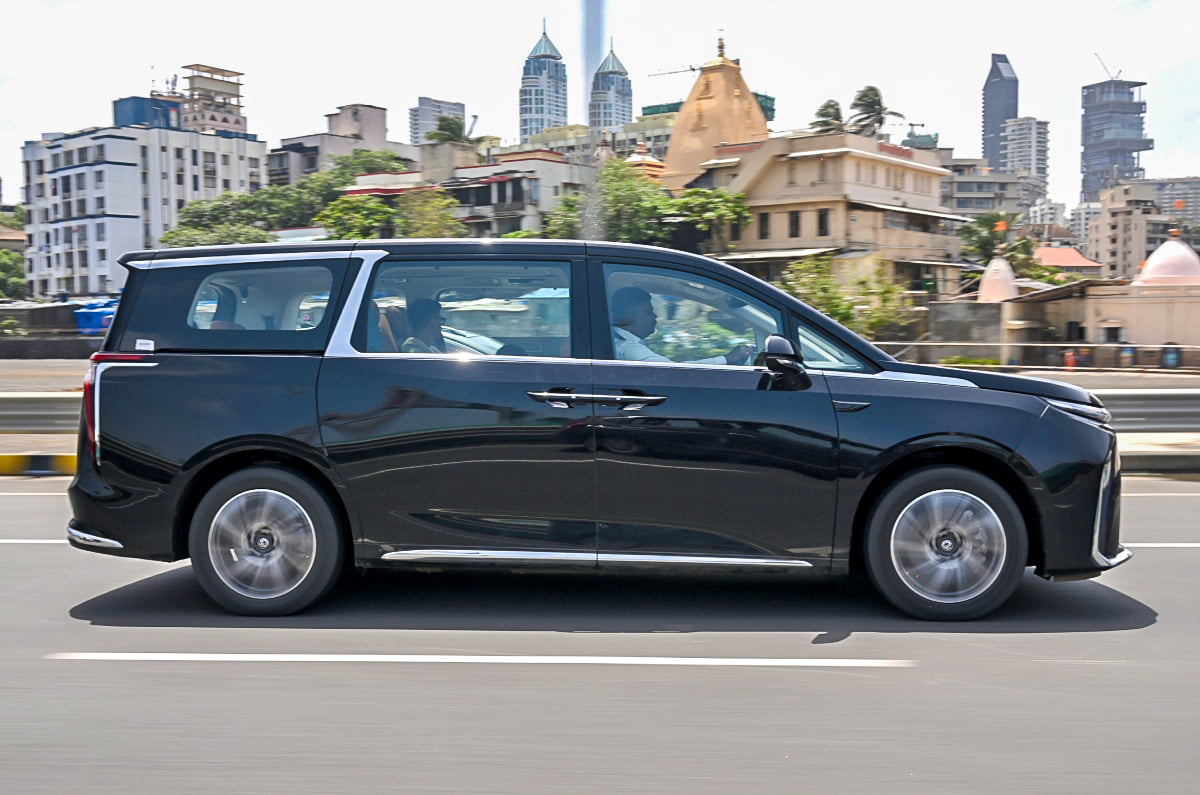
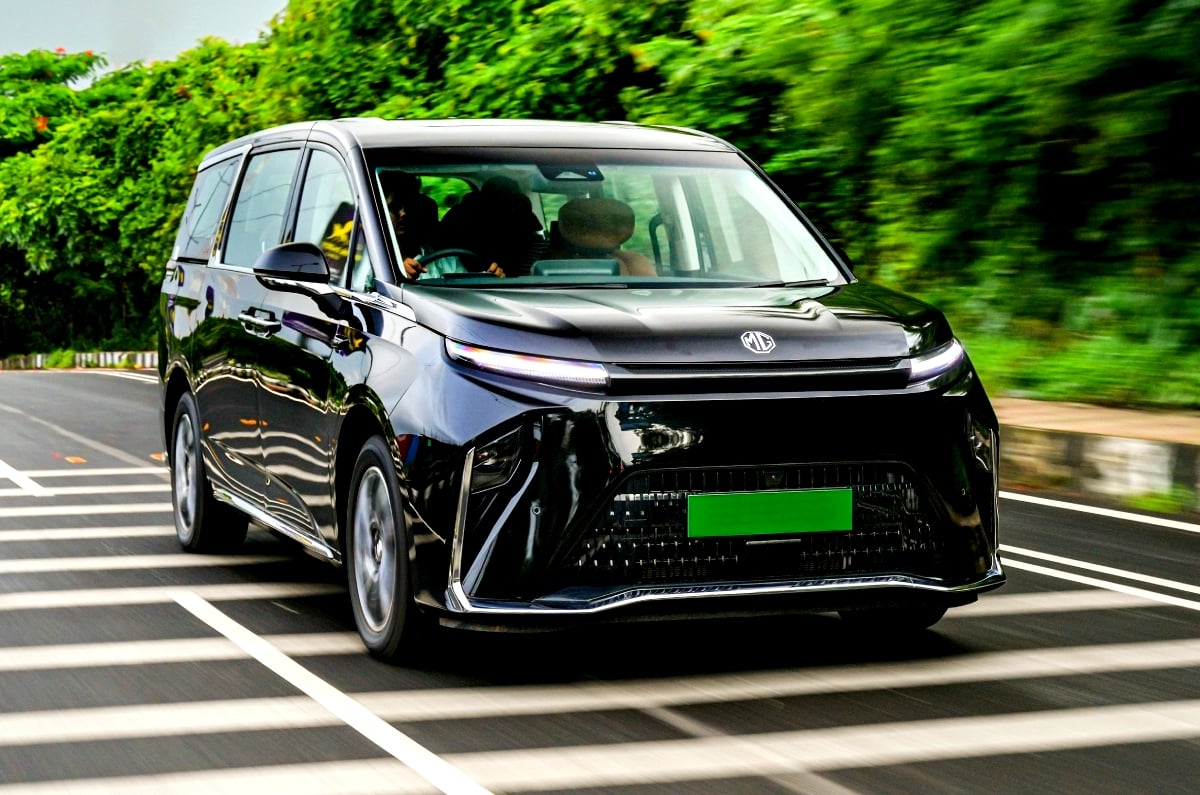
Massive wheelbase gives the M9 an imposing presence and liberates room in the cabin.
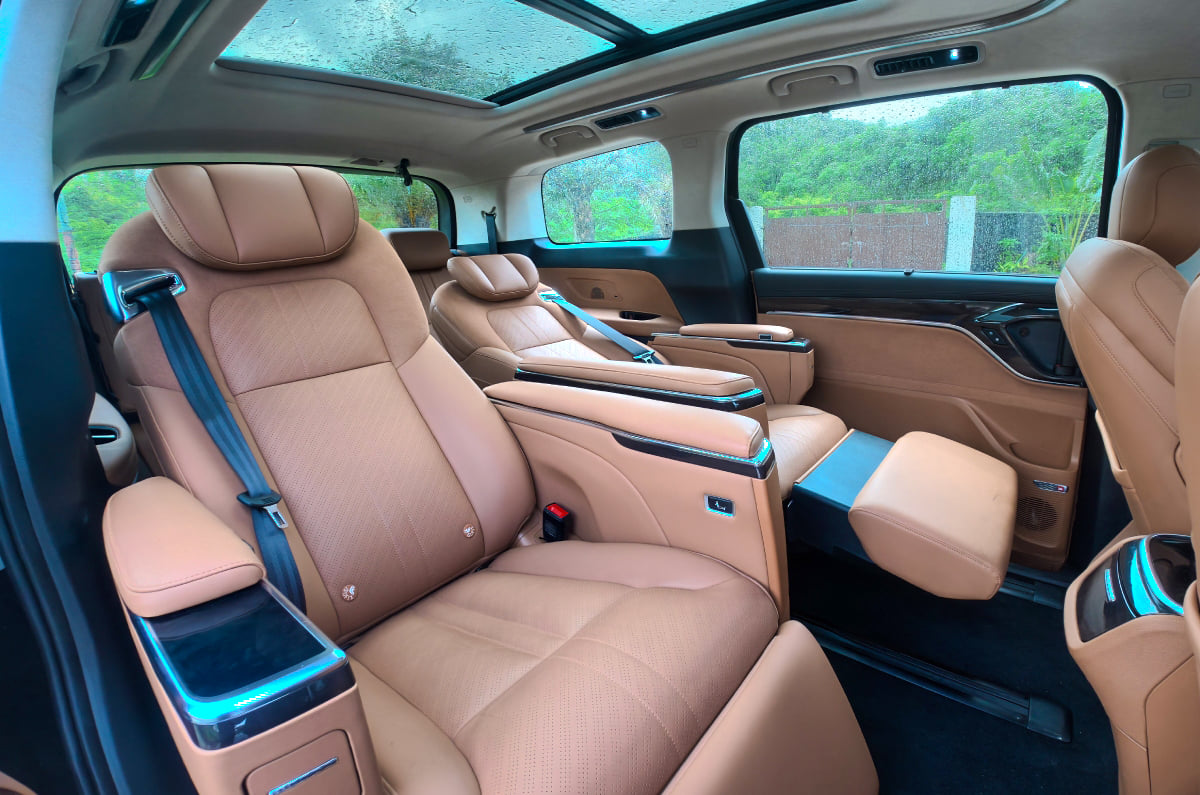
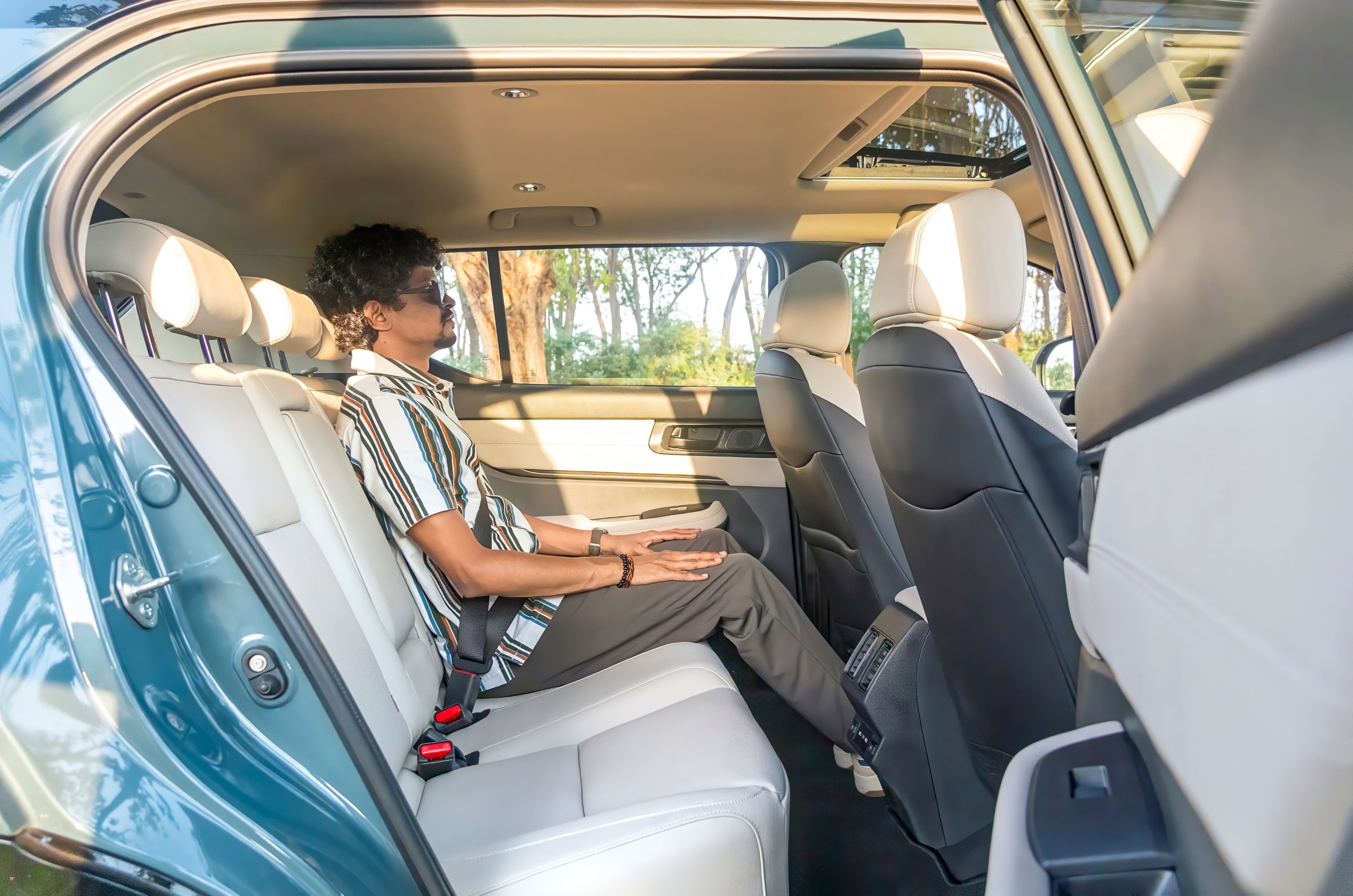
The M9’s 5.2-metre length, 2-metre width and 3.2-metre wheelbase give it the proportions to create a spacious, airy cabin. But it is the second row that makes the biggest impression. Two individual Presidential captain’s chairs offer 16-way electric adjustment, heating, ventilation, massage functions and extendable leg rests. The Boss Mode function moves the front passenger seat forward to create additional legroom, letting rear occupants stretch out and recline. It is a space designed for unwinding, not just getting from one place to another.
Space For Everyone
The aptly called Presidential captain’s chairs are even fit for a king.
While the second row gets the headline features, the M9 is designed to make all three rows usable. Its long wheelbase allows generous room for occupants, while second-row climate control, rear window sunshades and a panoramic dual sunroof enhance the feeling of comfort. The third row gets dedicated AC vents and USB connectivity, too. A premium Cognac Brown interior and 64-colour ambient lighting add to the cabin’s upmarket appeal, with the latter allowing occupants to tailor the atmosphere to their mood.
Electric Serenity
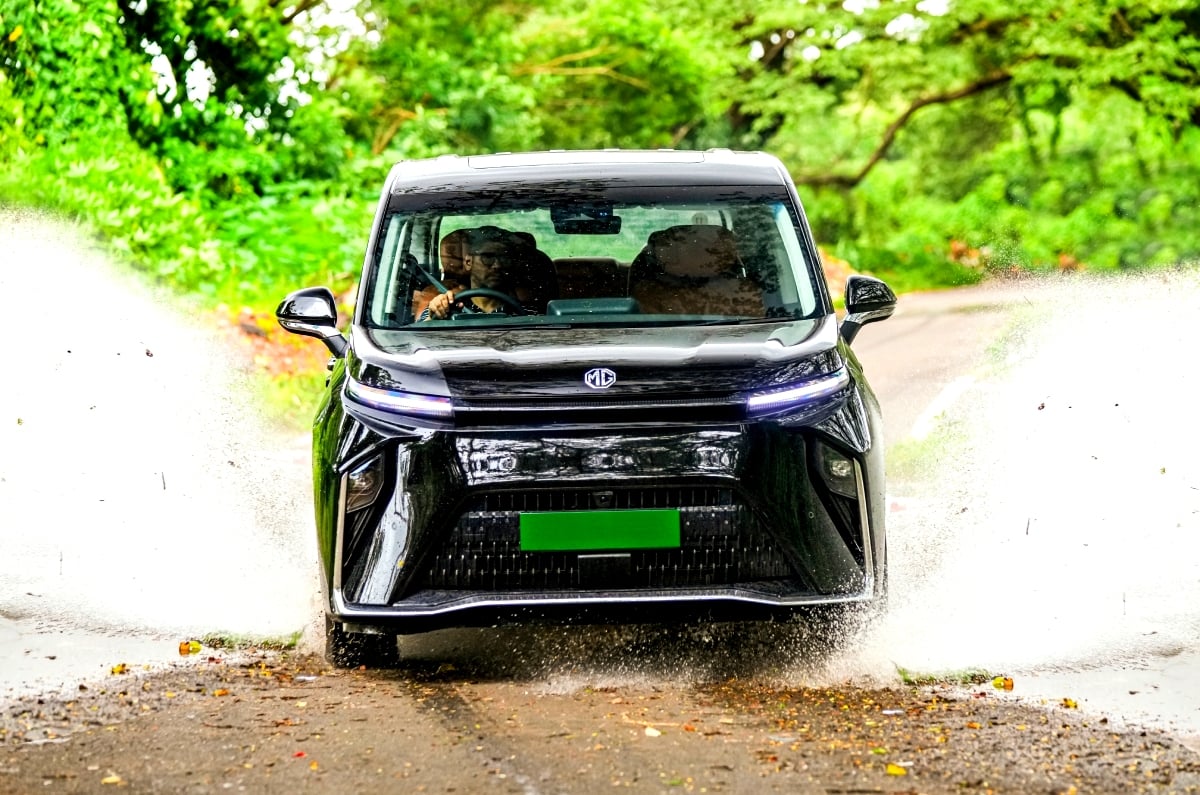
No matter the road surface, the M9 insulates its passengers from the outside world.
The M9’s 90kWh battery powers a front-mounted electric motor, producing 245hp and 350Nm, with an ARAI-claimed range of 548km. Beyond the performance and range figures, the electric powertrain brings a quality that matters particularly in a luxury MPV: refinement. With no engine noise and smooth, linear power delivery, the M9 makes for a more relaxed experience on the move. An acoustic windshield further helps keep the outside world at bay.
Quality Entertainment
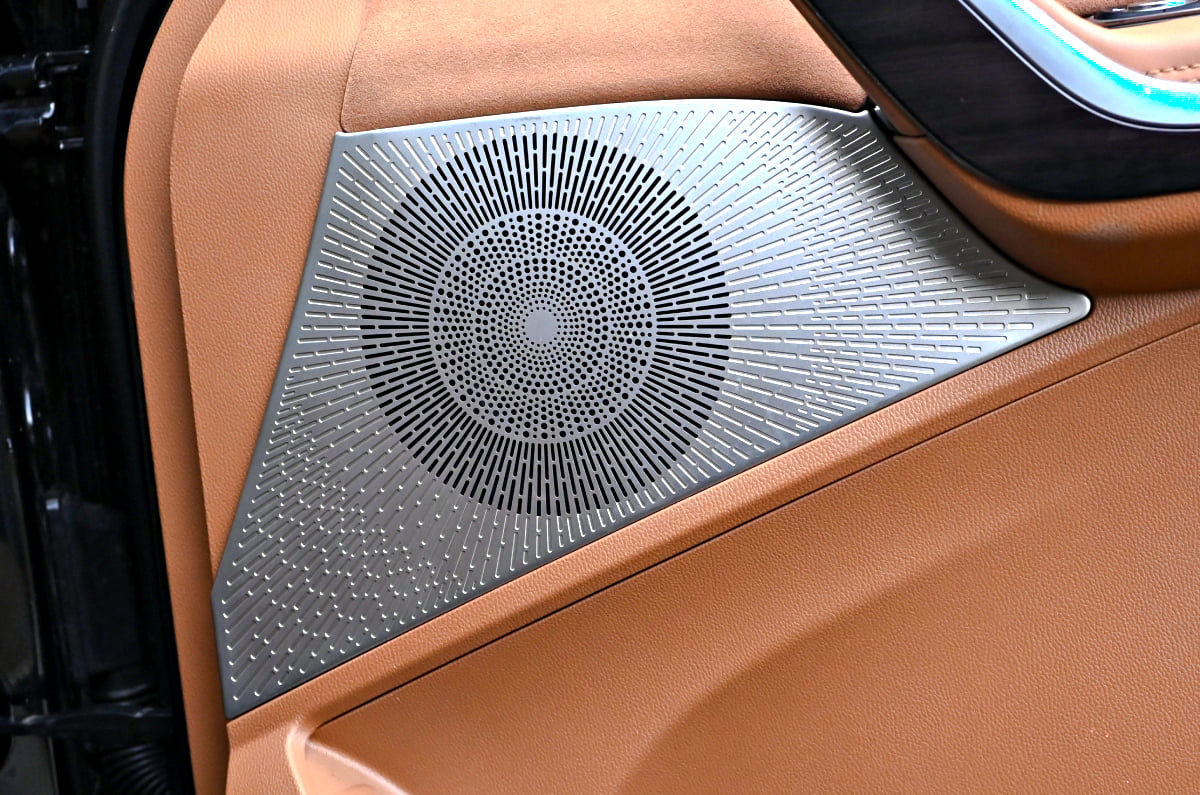
Superb 13-speaker JBL system enhances the cabin’s ambience.
A quiet cabin makes for a better listening environment, and the M9 builds on this with a 13-speaker JBL sound system, complete with an amplifier and subwoofer. Whether it is music on a long drive or a podcast during the daily commute, the system makes entertainment an integral part of the experience. The panoramic sunroof and ambient lighting add to the sense of being in a space designed around the occupants.
Tech-Suave
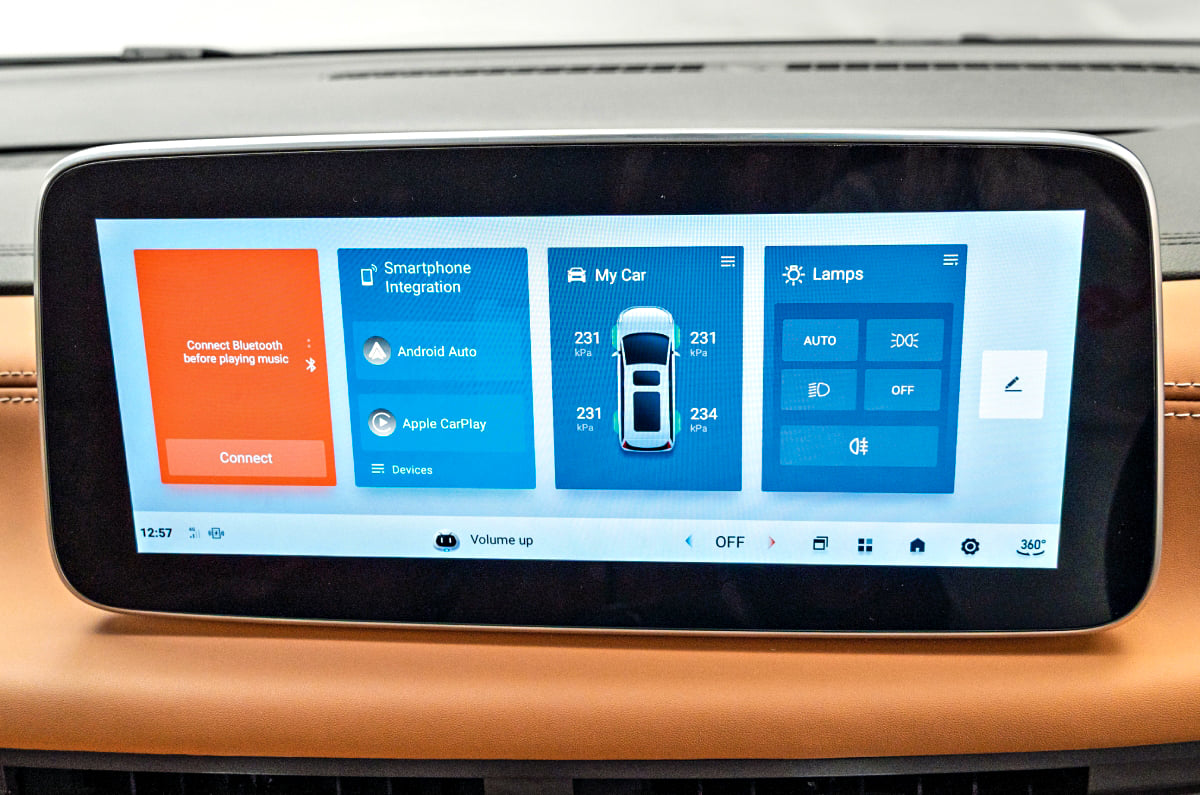
12.3-inch central touchscreen has all the controls you’ll need within easy access.
A 12.3-inch central touchscreen, digital instrument cluster, wireless smartphone connectivity and wireless charging bring everyday convenience within easy reach. The 360-degree camera is particularly useful when manoeuvring a vehicle of the M9’s size, helping the driver negotiate tight spaces with greater confidence. These features complement the M9’s focus on passenger comfort with technology that makes the car easier to live with.
Safety Assured
The M9 has received a 5-star Euro NCAP rating.
Luxury also means being able to travel with peace of mind. The M9 gets seven airbags and Level 2 advanced driver assistance systems, adding an extra layer of protection and driver support. Its five-star Euro NCAP safety rating provides further reassurance.
The MG M9’s appeal lies in how these elements come together. Generous space, thoughtful comfort features, electric refinement and modern safety technology give it a distinct identity in the luxury MPV segment. It’s no wonder that the M9 is the best-selling MPV in its class, with over 3,000 units sold since its launch last year. This is a vehicle that makes the journey itself something to look forward to, and that is what being on Cloud M9 is all about.
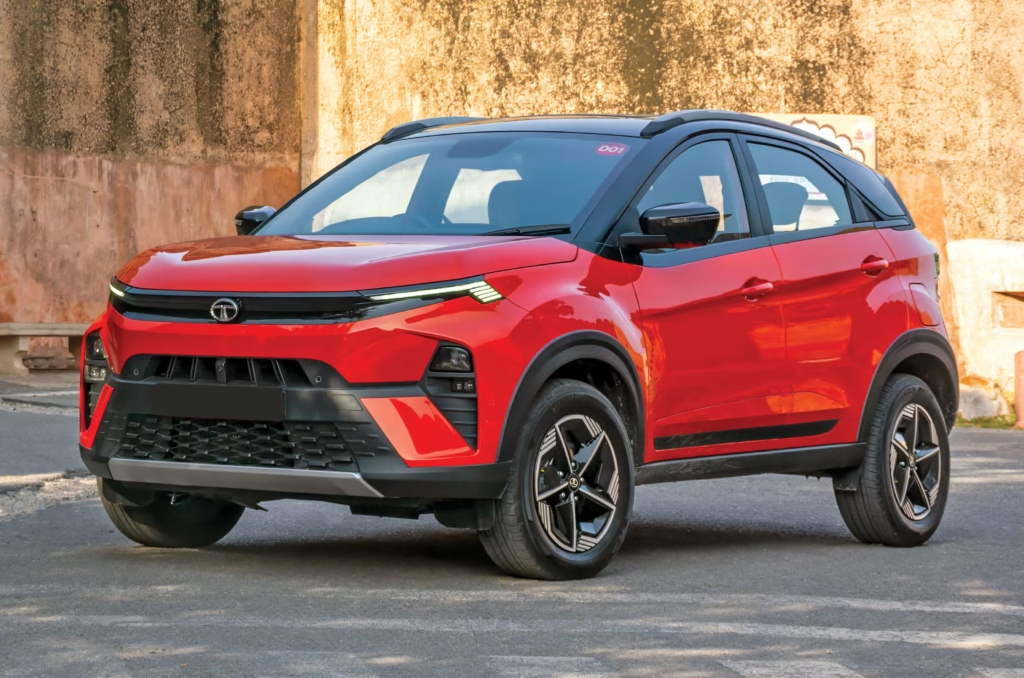
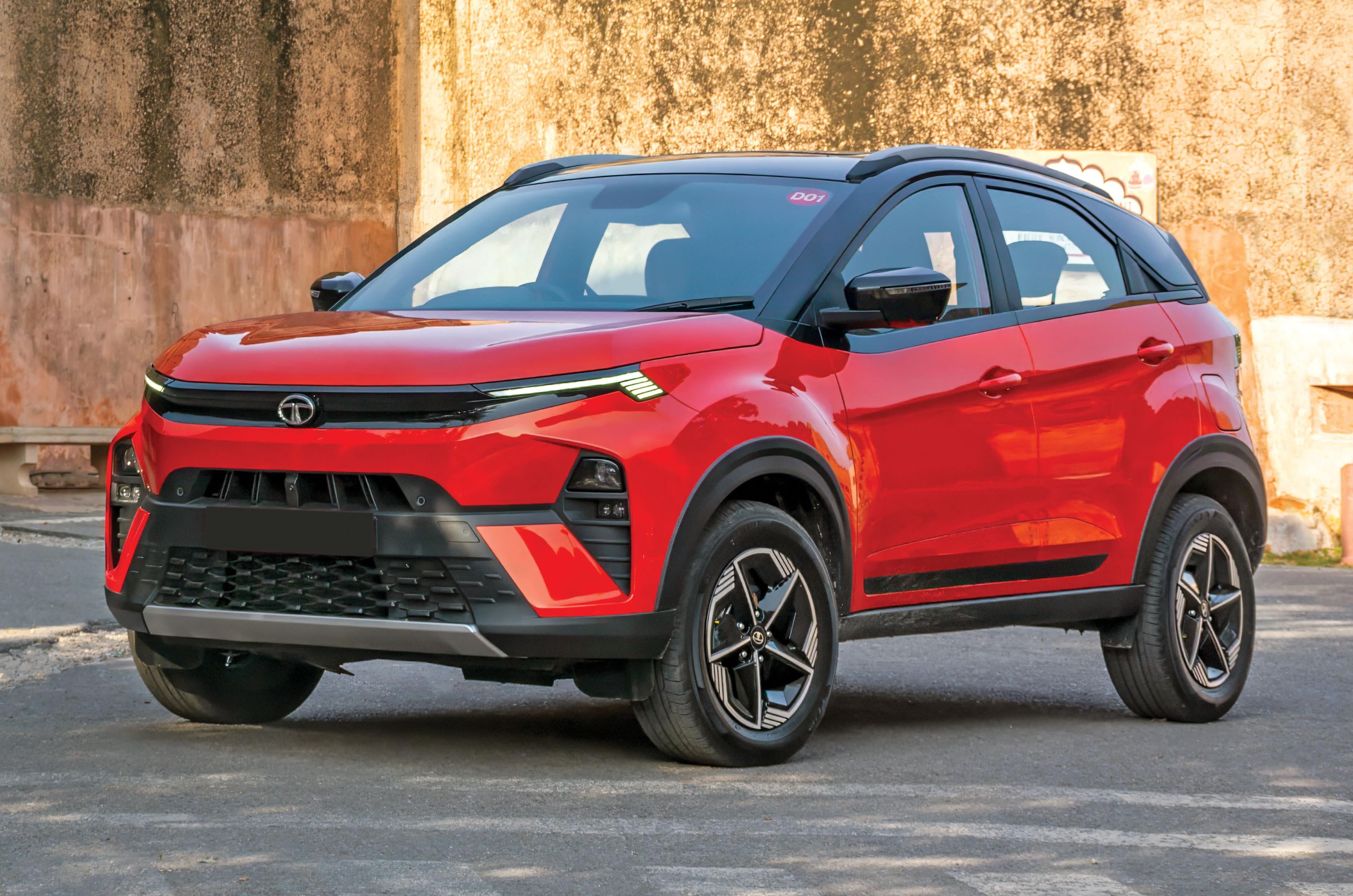
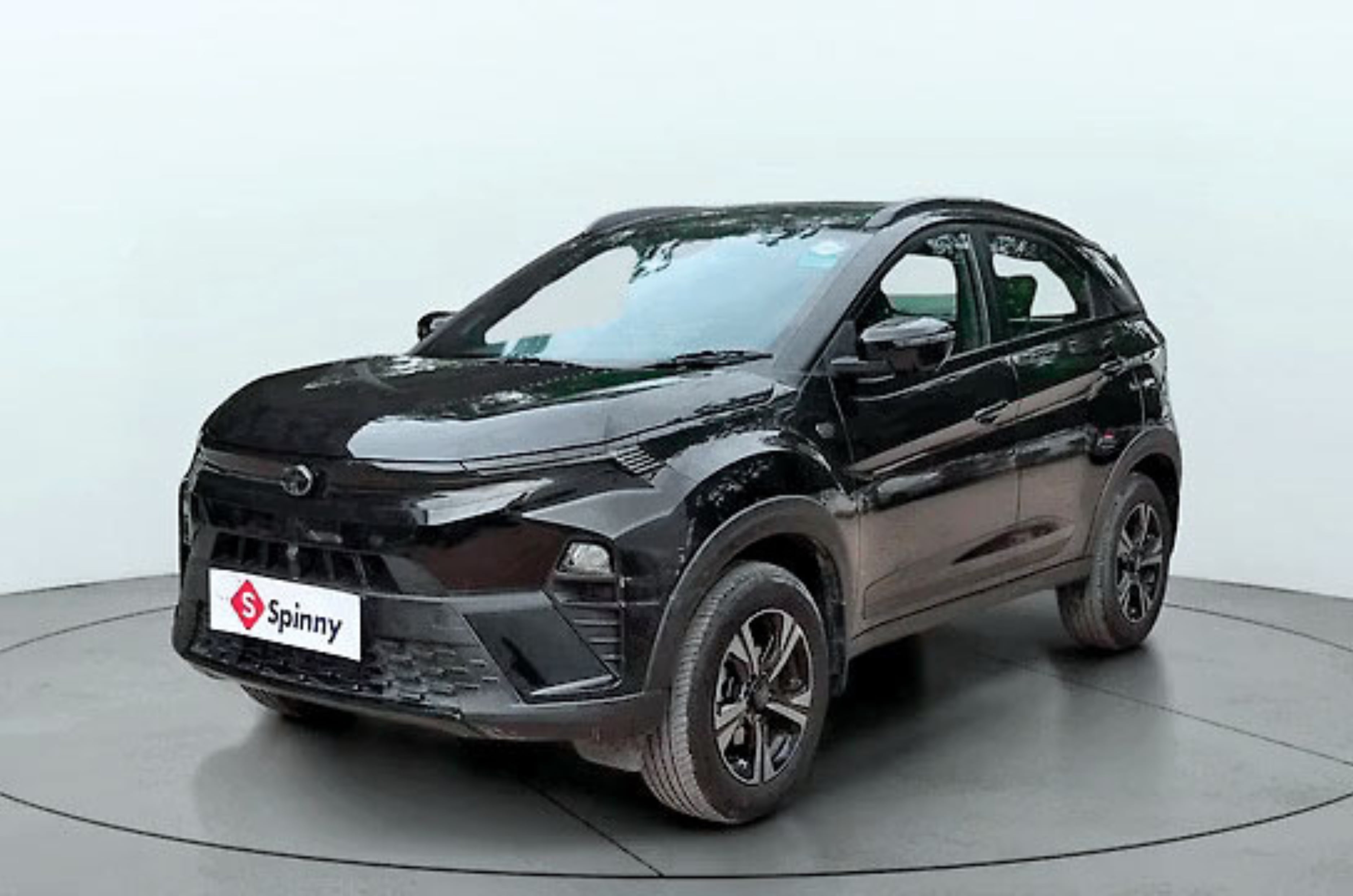
The Tata Nexon received a comprehensive facelift in September 2023, bringing a sharper exterior, a redesigned interior and more technology. It retained its compact SUV dimensions while offering a wide powertrain choice, along with manual and automatic gearbox options for both petrol and diesel. With its generous equipment, practical cabin and SUV-like stance, the facelifted Nexon makes a compelling case as a used buy.
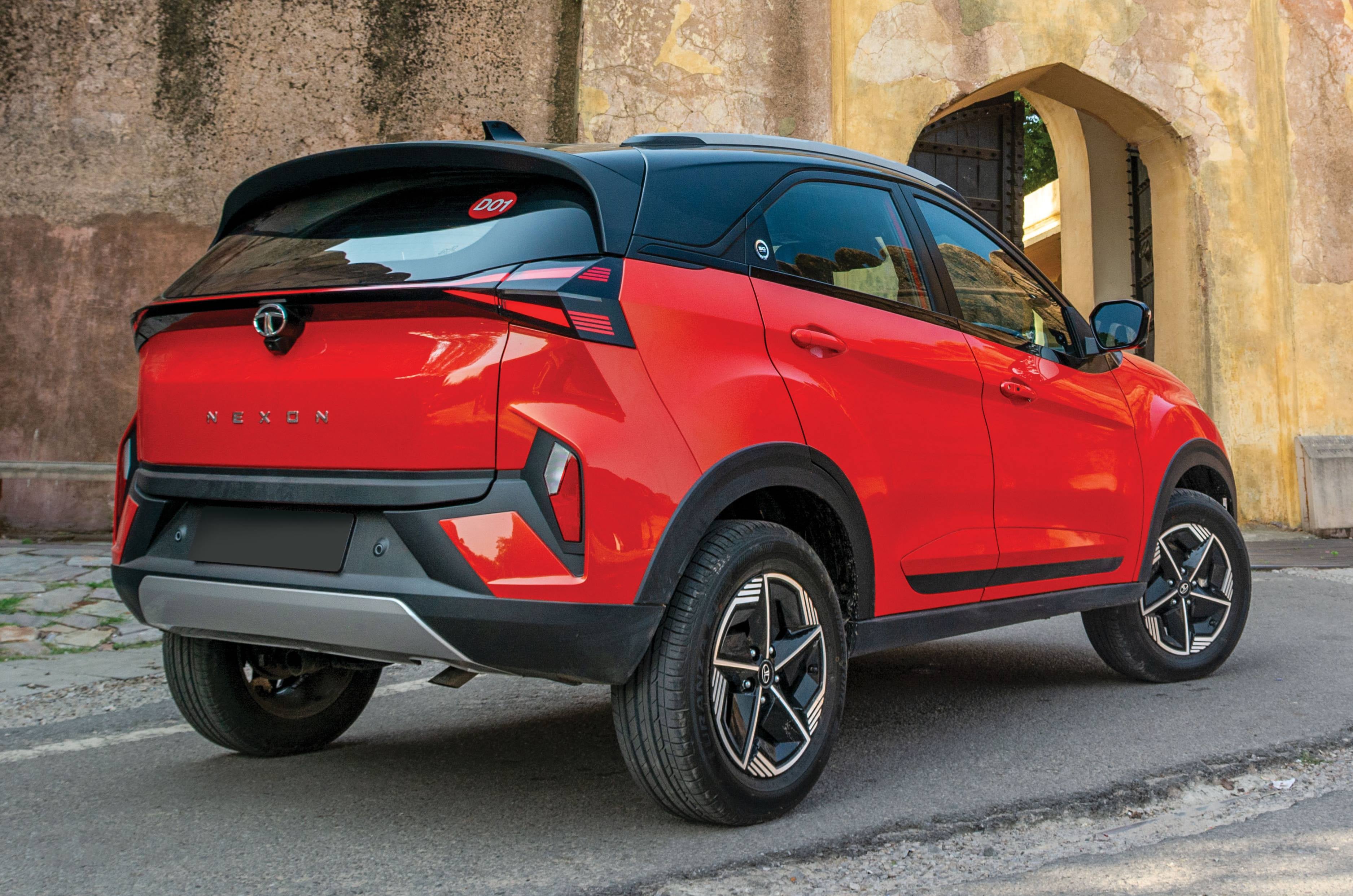
The 2023 Nexon was a significant styling departure from its predecessor, featuring slim sequential LED DRLs and headlamps positioned lower in the bumper. Revised bumpers, a new grille, connected LED tail-lights and redesigned alloy wheels gave it a more modern appearance. The cabin also received a thorough redesign, including a two-spoke steering wheel, a digital instrument cluster and a new touch panel for the HVAC controls. But, it retained its strengths of a spacious and practical cabin, a solid feature set and well-sorted ride and handling.
Petrol, diesel and CNG options; MT, AMT and DCT gearboxes
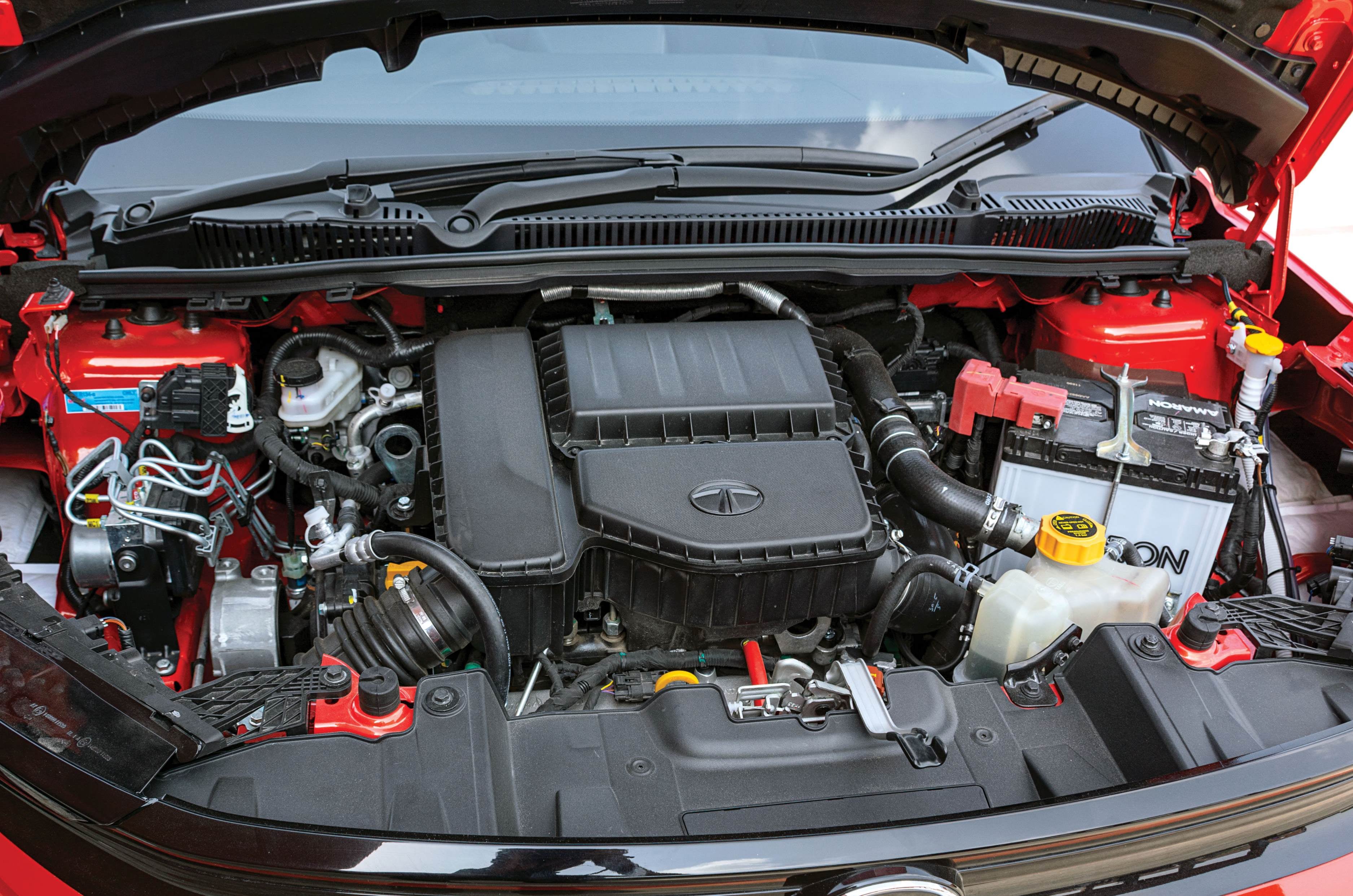
Under the bonnet, the Nexon continued with its 1.2-litre turbo-petrol and 1.5-litre diesel engines. The petrol engine produces 120hp and 170Nm, while the diesel makes 115hp and 260Nm. Gearbox options included a 5-speed manual, 6-speed manual, 6-speed AMT and 7-speed dual-clutch automatic, depending on the engine and variant. A CNG version was added to the line-up later, which featured the same 1.2-litre petrol engine and came with a 6-speed manual only. The CNG came with Tata’s innovative twin tank setup under the boot floor, which meant a usable cargo space and spare tyre were retained.
The petrol engine is suitable for everyday urban driving, while the diesel’s higher torque makes it better suited to buyers for highway use. The automatics, of course, are the choice for someone looking for an easier driving experience. The CNG makes sense for high running.
Tata Nexon variants and features
10.25-inch touchscreen, 360-degree camera, ventilated seats and more
The 2023 Nexon was offered in Smart, Pure, Creative and Fearless trim levels at launch, with equipment varying by variant. Top-spec versions featured a 10.25-inch touchscreen infotainment, a 10.25-inch digital cluster, wireless Android Auto and Apple CarPlay, connected-car tech, a 360-degree parking camera, ventilated front seats, cruise control, leatherette upholstery and a sunroof. Safety equipment included six airbags, electronic stability control and ISOFIX child-seat mounts. The Nexon has also received a five-star Global NCAP crash safety rating under the enhanced 2022 protocol.
As is always the case with Tata products, the Nexon line-up has been regularly updated with the addition/deletion of certain variants, special editions and new features like a panoramic sunroof and Level 2 ADAS tech. With such a widespread line-up, choosing the right one can be tricky. Pick based on your budget and the non-negotiable features you’d want. As it is, even the mid-spec trims come well equipped and have more than the basics covered.
Tata Nexon reliability and aftersales
Tatas are not known to be very reliable, but with the Nexon’s long run, bugs have been ironed out, and these Nexons have proven to be a generally reliable package. Spare parts are easily available, and you’re backed up by Tata’s wide service network throughout the country, though their service quality varies.
What to look out for in a used Tata Nexon
Electronic glitches
The 2023 Nexon introduced a larger touchscreen, a digital cluster, a 360-degree camera and LED lights. Before buying, test the touchscreen thoroughly, connect your phone and check that the 360-degree camera works as intended. Make sure the cluster has no warning messages or glitches and that the LED lights work correctly. Some owners have faced issues with these.
Suspension wear
Nexons that have spent considerable time on poor roads can develop wear in suspension components. Drive it over speed breakers and uneven surfaces, listening for knocking sounds or excessive crashing, as these are signs of worn-out suspension components.
Auto gearbox health
During a test drive, check for excessive juddering, hesitation, delayed engagement or unusual noises, particularly in slow-moving traffic, as these could be signs of potential trouble with the auto gearboxes.
Used Tata Nexon service history and warranty check
Look for a Nexon that comes with a detailed service history or one that has an extended warranty package, as that will give you additional peace of mind since you are buying a pre-owned example.
Second-hand Tata Nexon price and resale value
Rs 7 lakh-11 lakh
The price of a used 2023 Tata Nexon will depend on its engine, gearbox, variant, kilometres driven, ownership history and condition. Petrol manual examples will be the most affordable, while the diesel and CNG versions tend to be the more expensive ones. However, refrain from spending too much more than Rs 11 lakh, as you’d rather be better off buying a brand-new one.
The midsize SUV space is now more competitive than ever. Just the last few months have seen new launches in the form of the Tata Sierra, Renault Duster, Nissan Tekton and the facelifts of the Volkswagen Taigun and Skoda Kushaq. Then there are the venerable Kia Seltos and the Hyundai Creta, the latter of which is set to receive a new-gen model next year, and an all-new entrant, the Hyundai Bayon, is about to join the ranks.Powertrain choices have been expanding too; diesel continues to be popular, turbo petrols add a dose of excitement, CNG is fast becoming the high-mileage option and there’s electrification in the form of hybrids and full EVs.So in a bid to keep it relevant, Honda has updated its midsize SUV contender, the Elevate, and here’s how it all comes together.
Design and engineering – 8/10
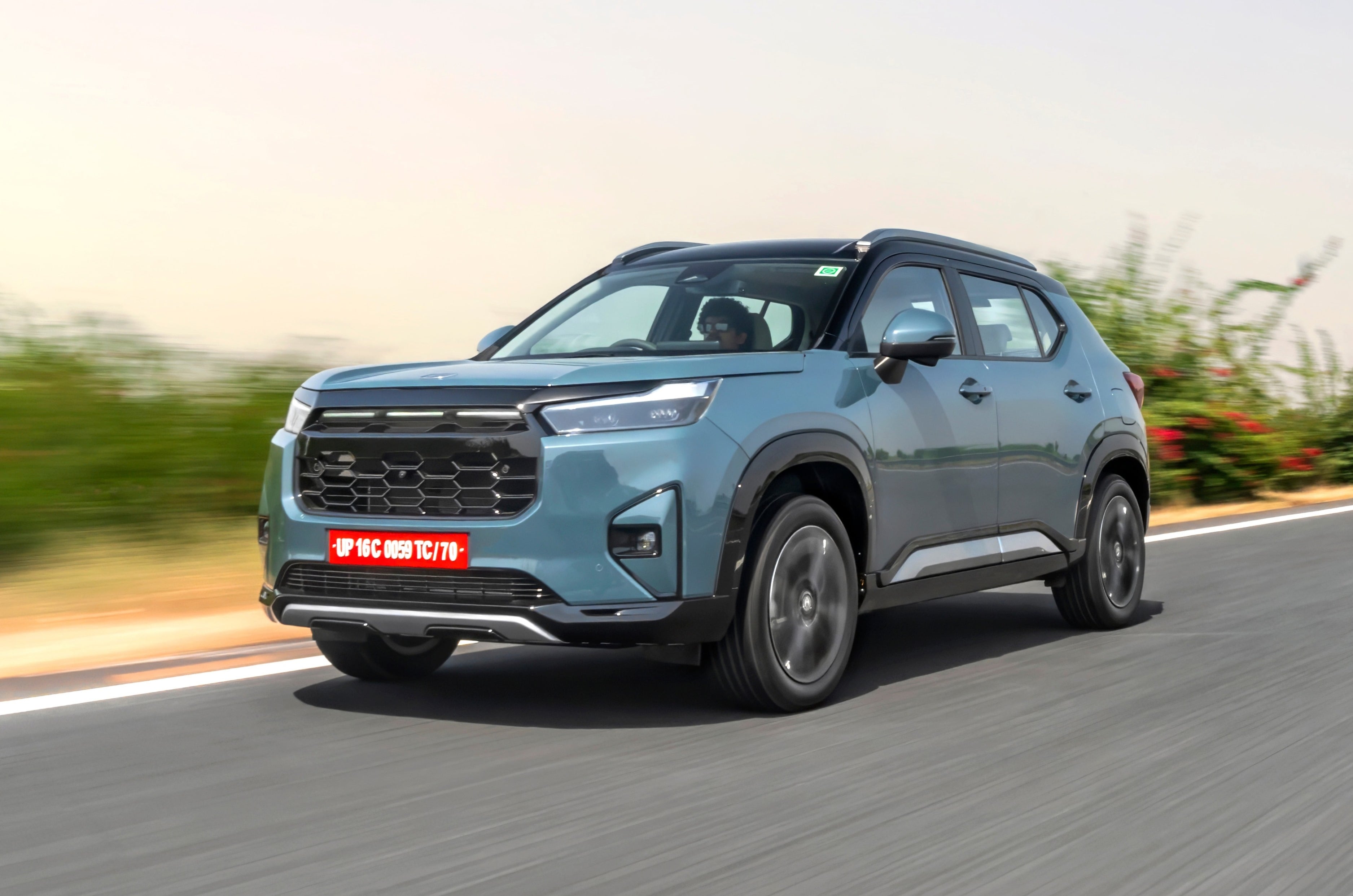
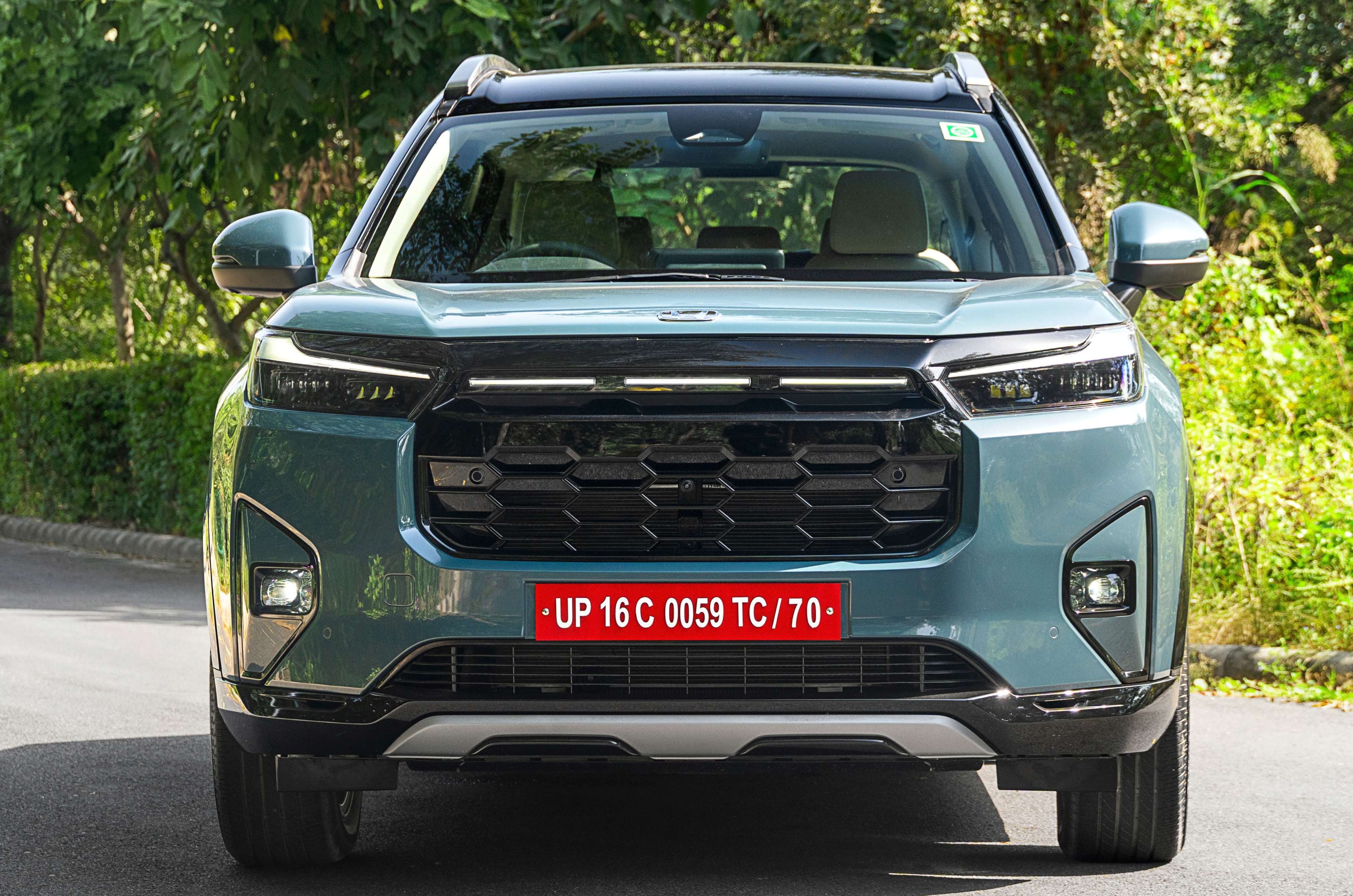
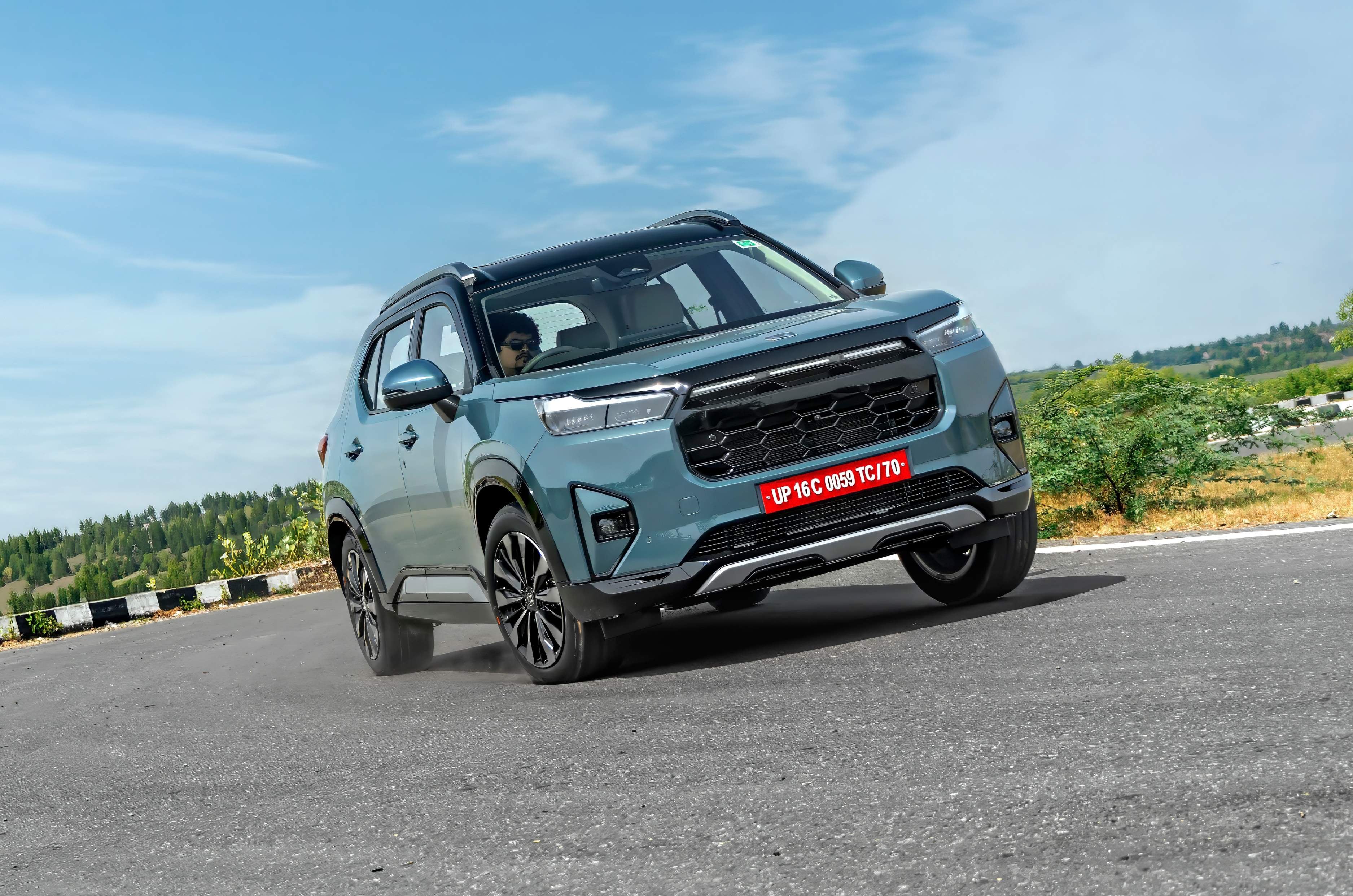
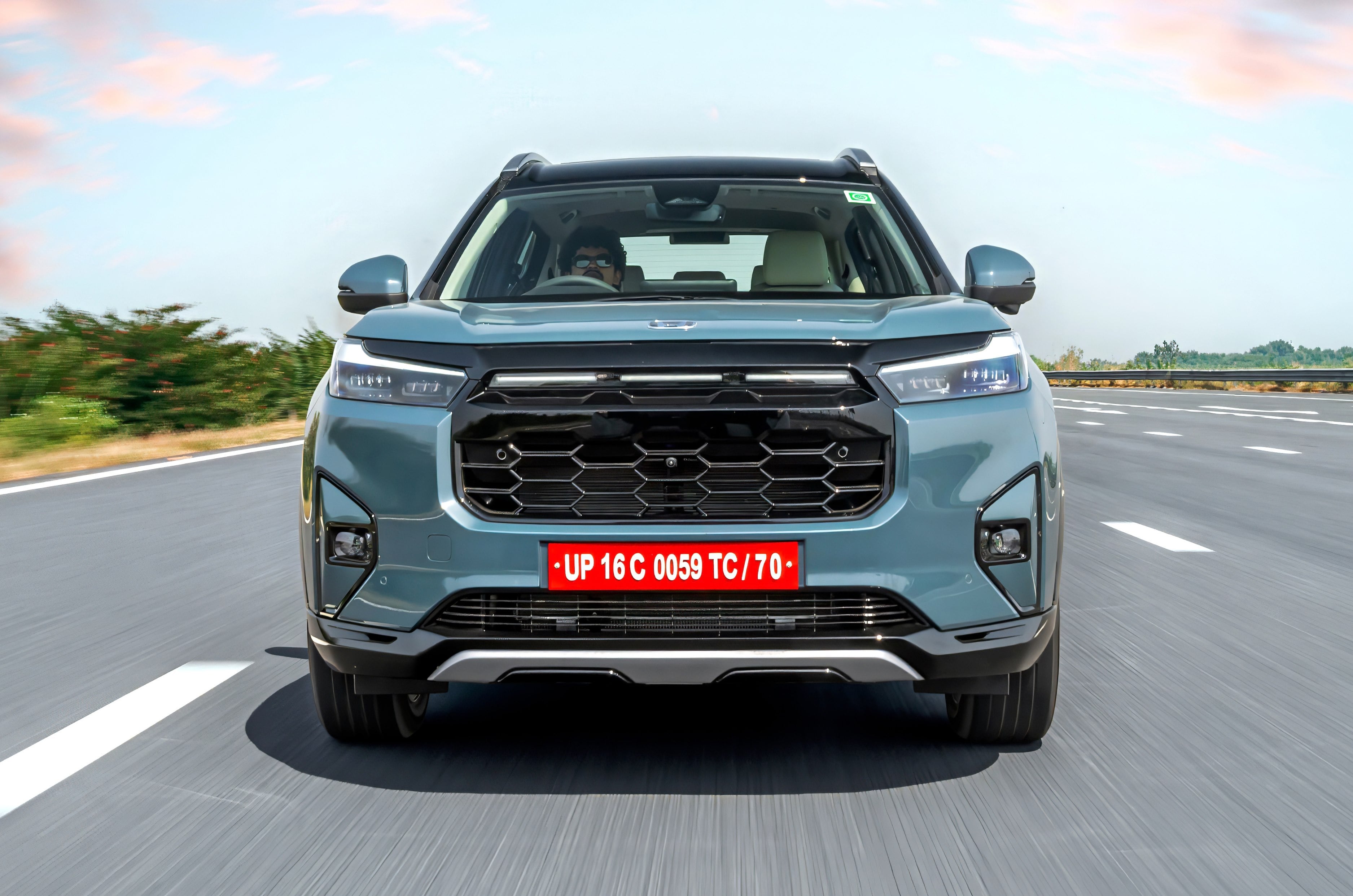
Features a new gloss black grille with a honeycomb pattern and a segmented LED light bar.
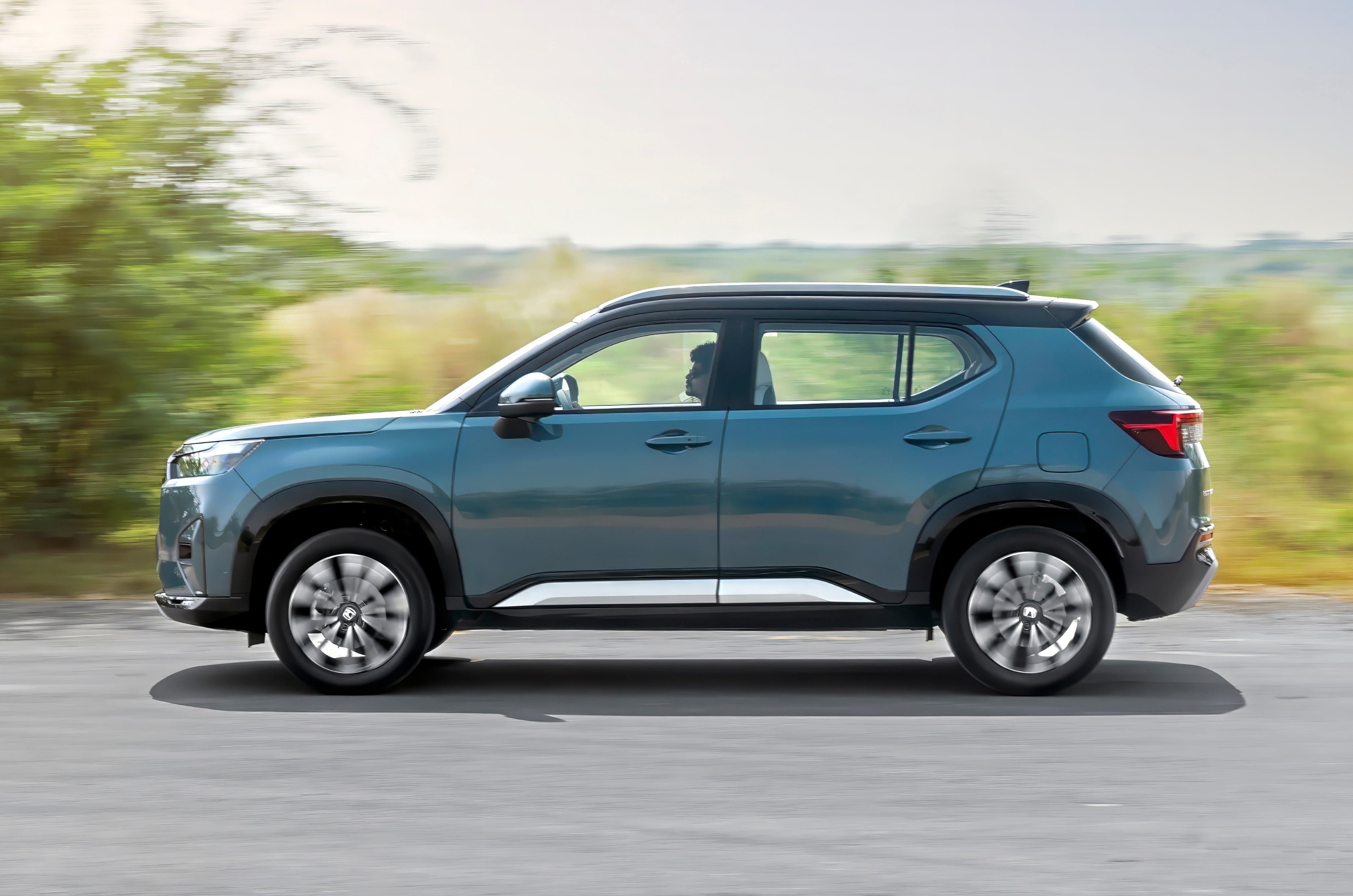
Honda has given the Elevate a subtle design update, but the changes are effective enough to give the SUV a fresher, more contemporary look without straying far from the original design. The biggest revisions are concentrated at the front end, where a new segmented LED light strip links the LED headlamps and the thick chrome band above them has been replaced with gloss black trim. The front grille gets a revised mesh pattern and a gloss-black finish, lending the front end a slightly sportier, more butch appearance. The Honda badge now sits on the bonnet rather than within the grille, while the fog-lamp housings are now finished in body colour instead of black for a cleaner look.
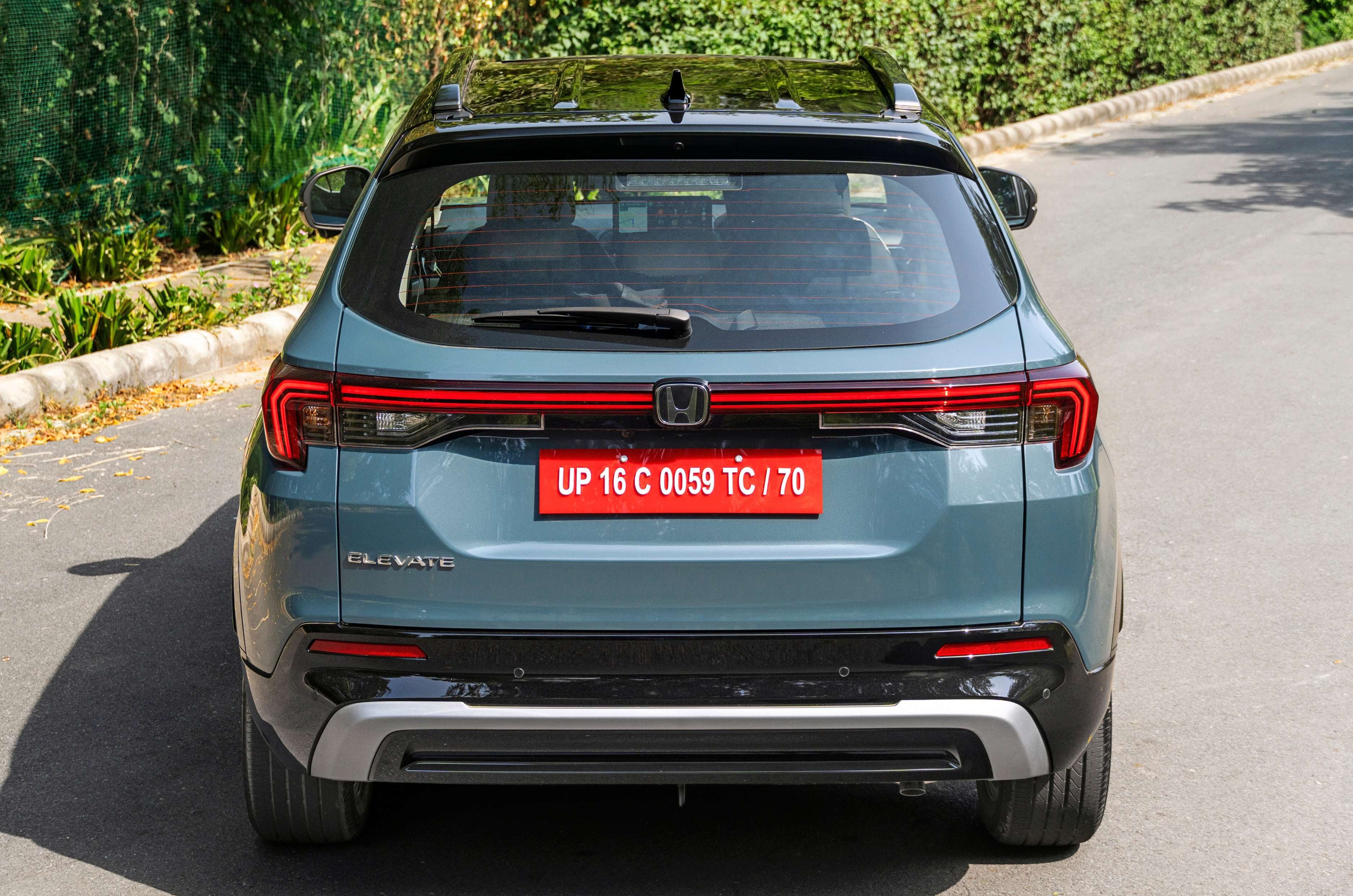
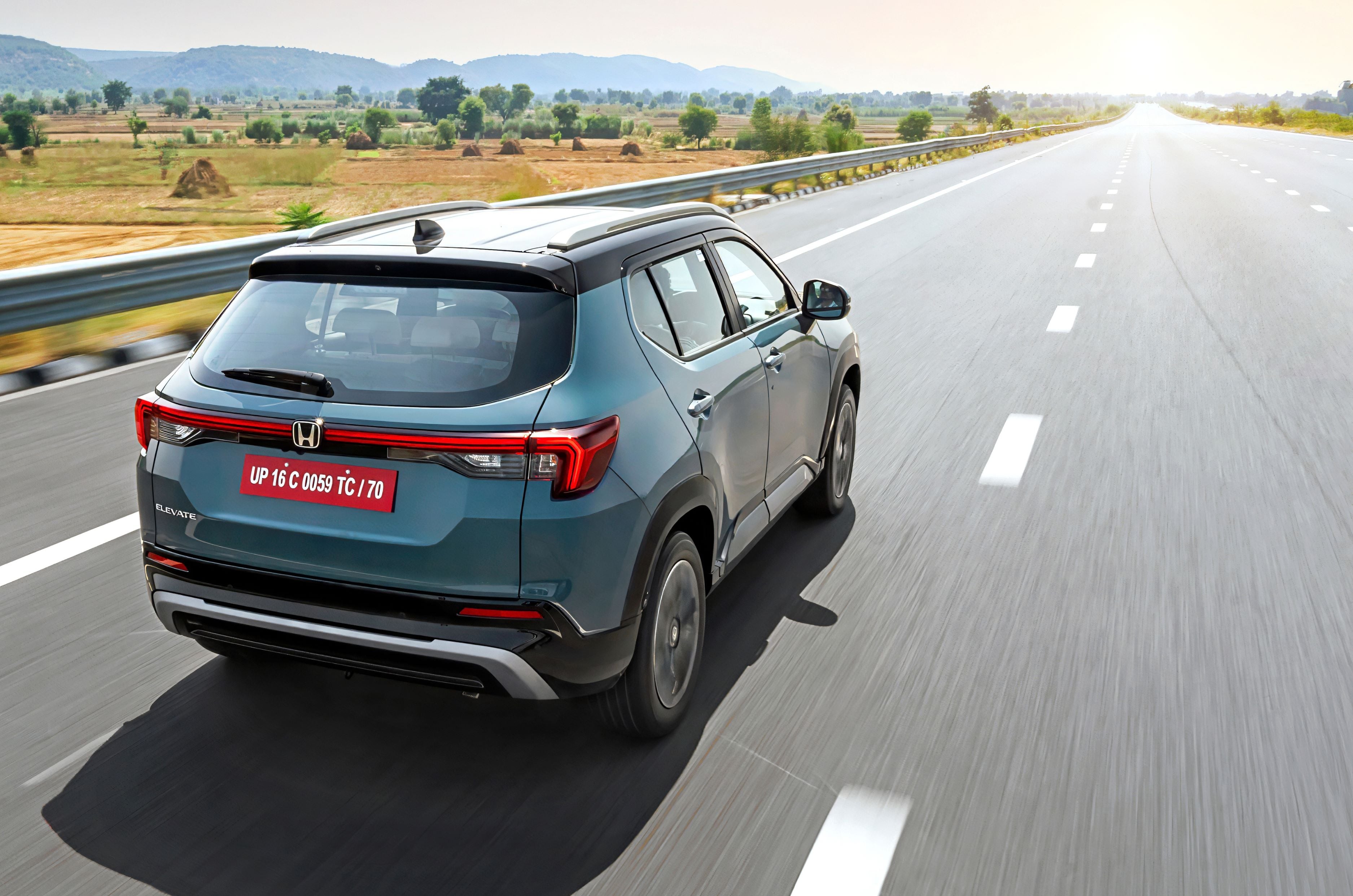
New LED light bar now connects the tail-lamps, giving it a more cohesive appearance.
It’ll take a keen eye to spot the changes along the sides as they’re limited to a new gloss black body cladding instead of a matte finish, silver coloured inserts in the cladding on the doors instead of body colour and a darker finish for the 17-inch alloy wheels which continue with the same design. At the rear, the facelift introduces a new LED light bar that connects the tail-lamps, giving the tailgate a wider, more cohesive appearance, particularly after dark. Rounding off the updates is a new Nordic Forest Pearl paint shade, as you can see in the pictures here.
As for dimensions, it continues to measure 4.3 metres in length, nearly 1.8 metres in width and just over 1.6 metres in height. It’s based on the City platform, but gets a stretched 2650mm wheelbase, wider tracks front and rear and a substantial 220mm of ground clearance.
Interior space and comfort – 8/10
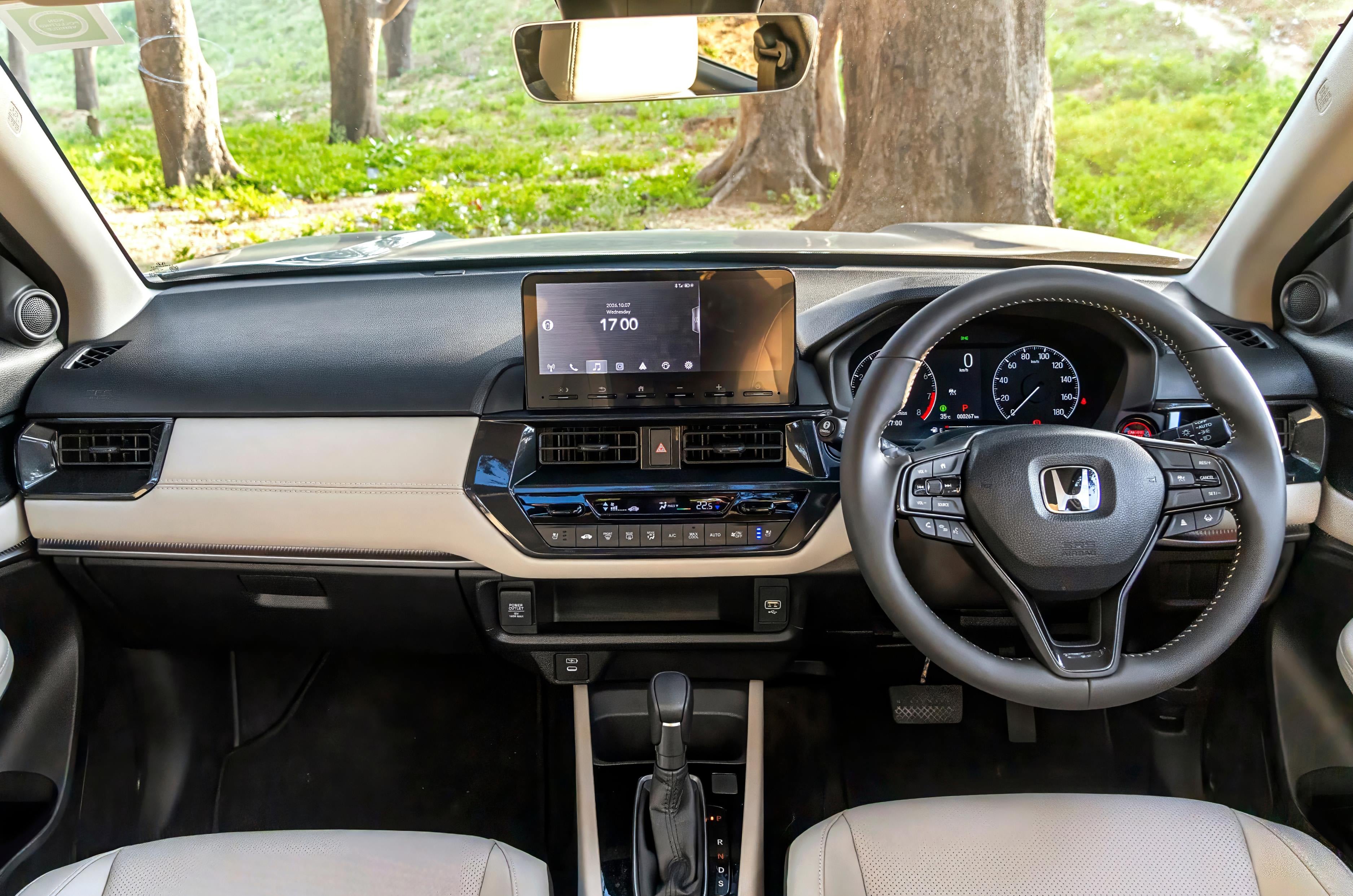
The cabin gets more substantial updates than the exterior, with the changes aimed at improving comfort and perceived quality. To start off, there’s a new ivory and black dual-tone upholstery theme that enhances the sense of space inside and is perhaps more neutral than the tan upholstery earlier. It will be tough to clean though, thankfully there is the option of all-black upholstery with the ‘Black’ edition Elevate.
Upholstery is now ivory and black with a new leatherette panel on the dash; cabin remains practical and feels well-built.
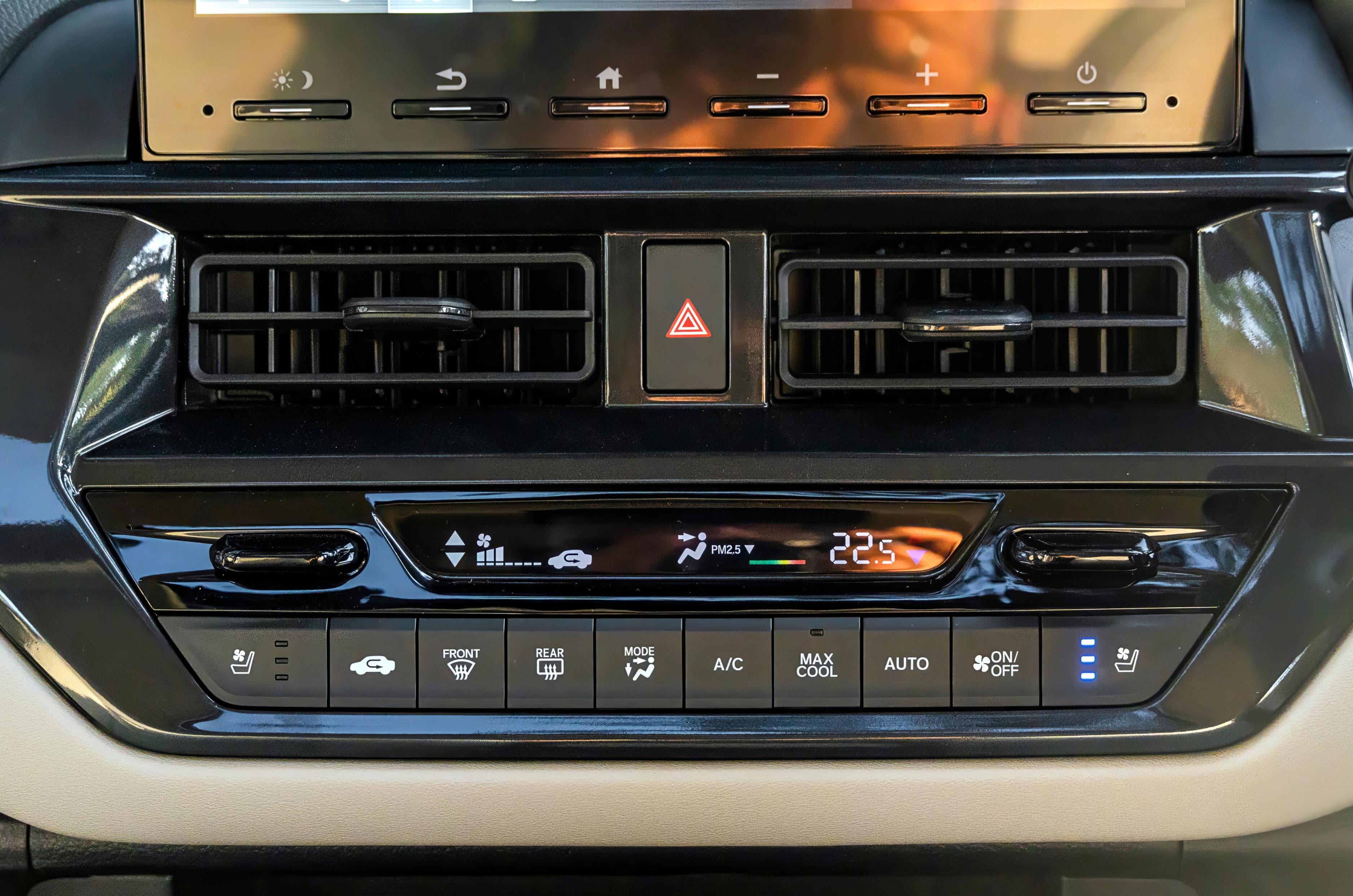
The dashboard has been revised too, with more white leatherette padding and stitching replacing the outgoing model’s faux wood trim, and the AC controls have been revised, now housing the seat ventilation buttons. Honda has even updated the roofliner fabric which looks and feels much nicer than the older woven roofliner. All of this gives the cabin a fresher look, although the overall layout remains familiar.
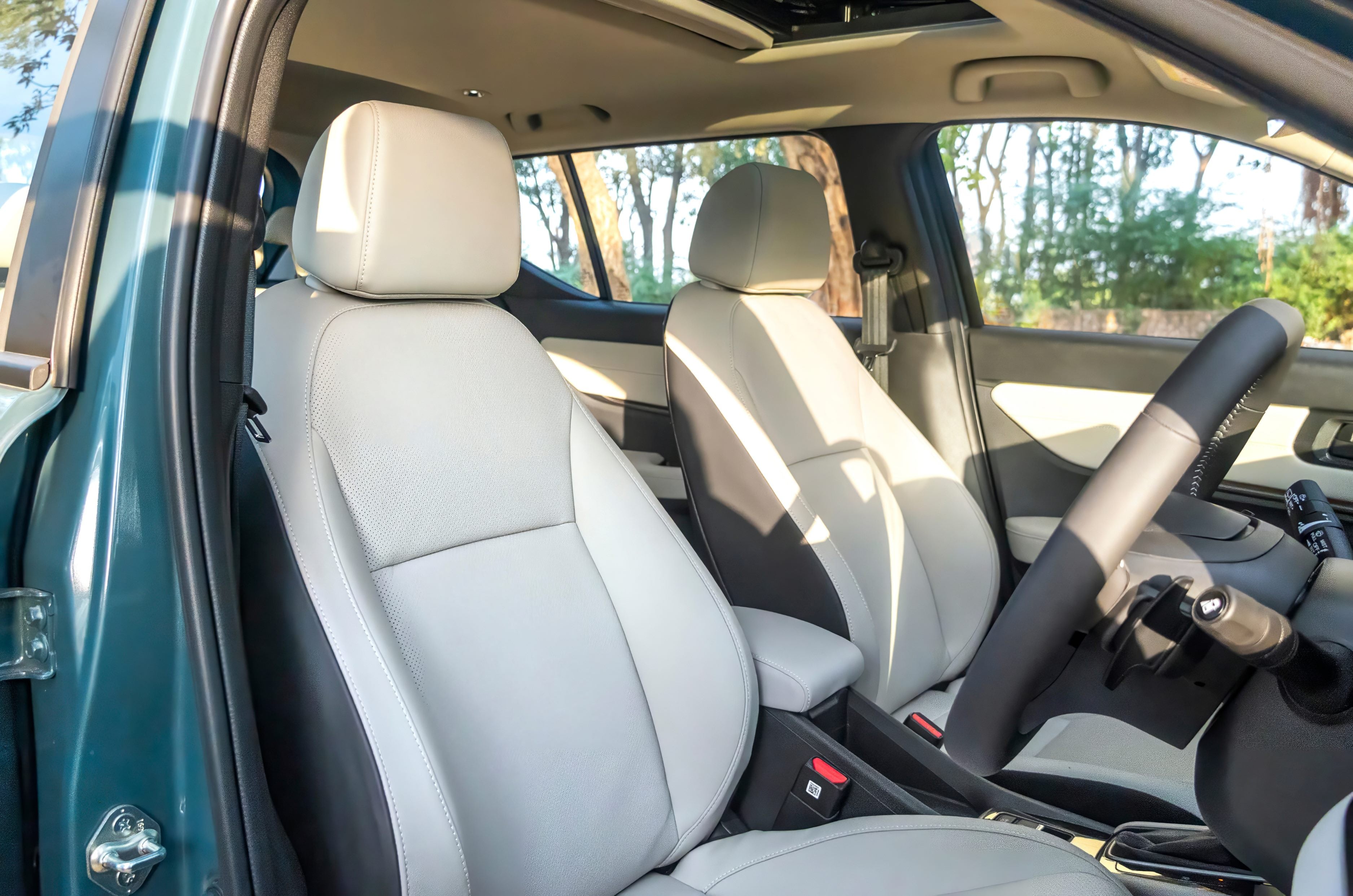
Front seats remain comfortable and now feature ventilation and power adjustment.
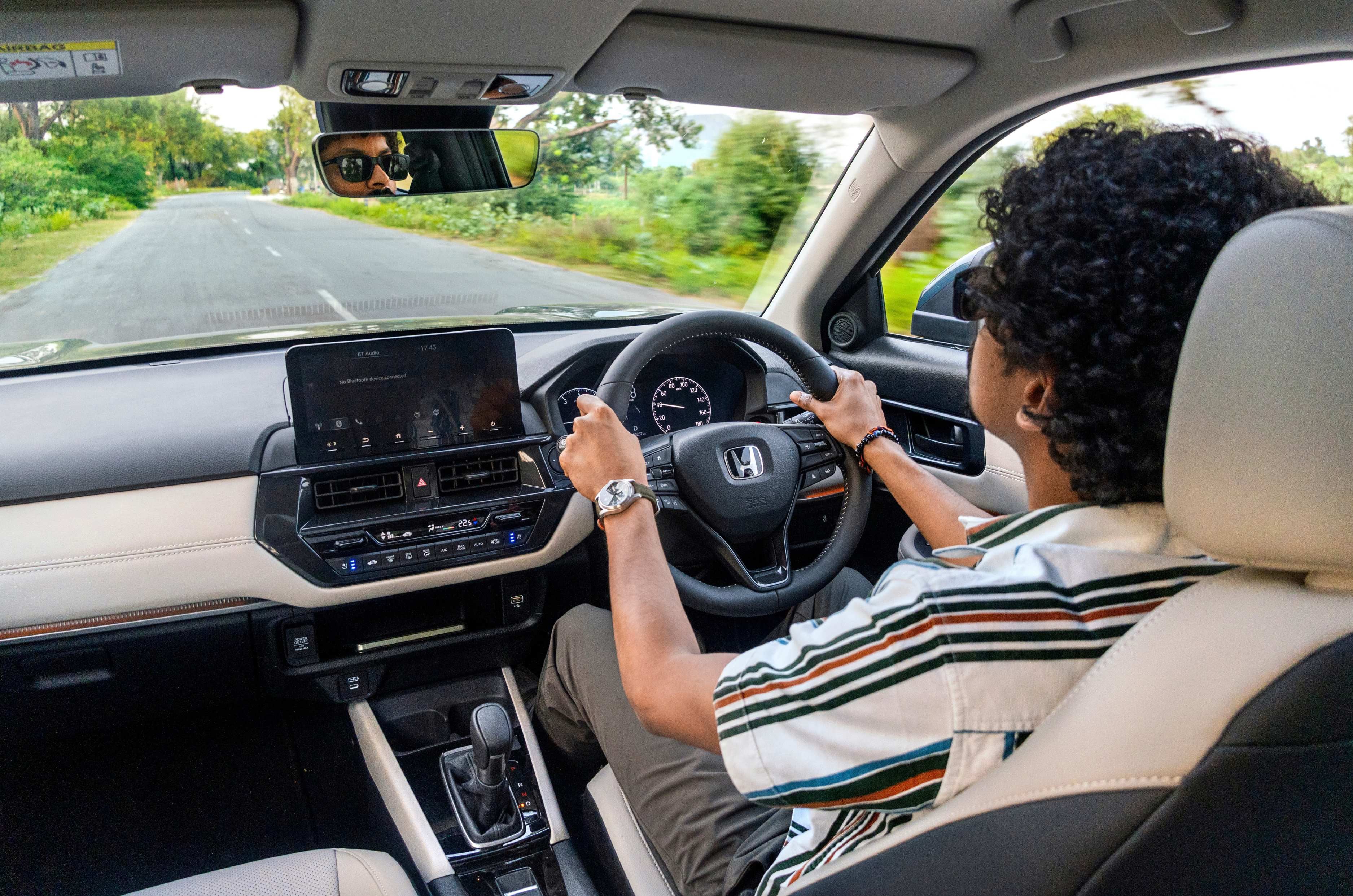
Ergonomics remain a strong point, with the Elevate offering a commanding driving position and supportive front seats that make it easy to get comfortable behind the wheel. The lumbar support, however, might feel excessive for some and taller people may find underthigh support a bit lacking.
Ample headroom and kneeroom but best for two adults thanks to the narrow width and raised centre seat.
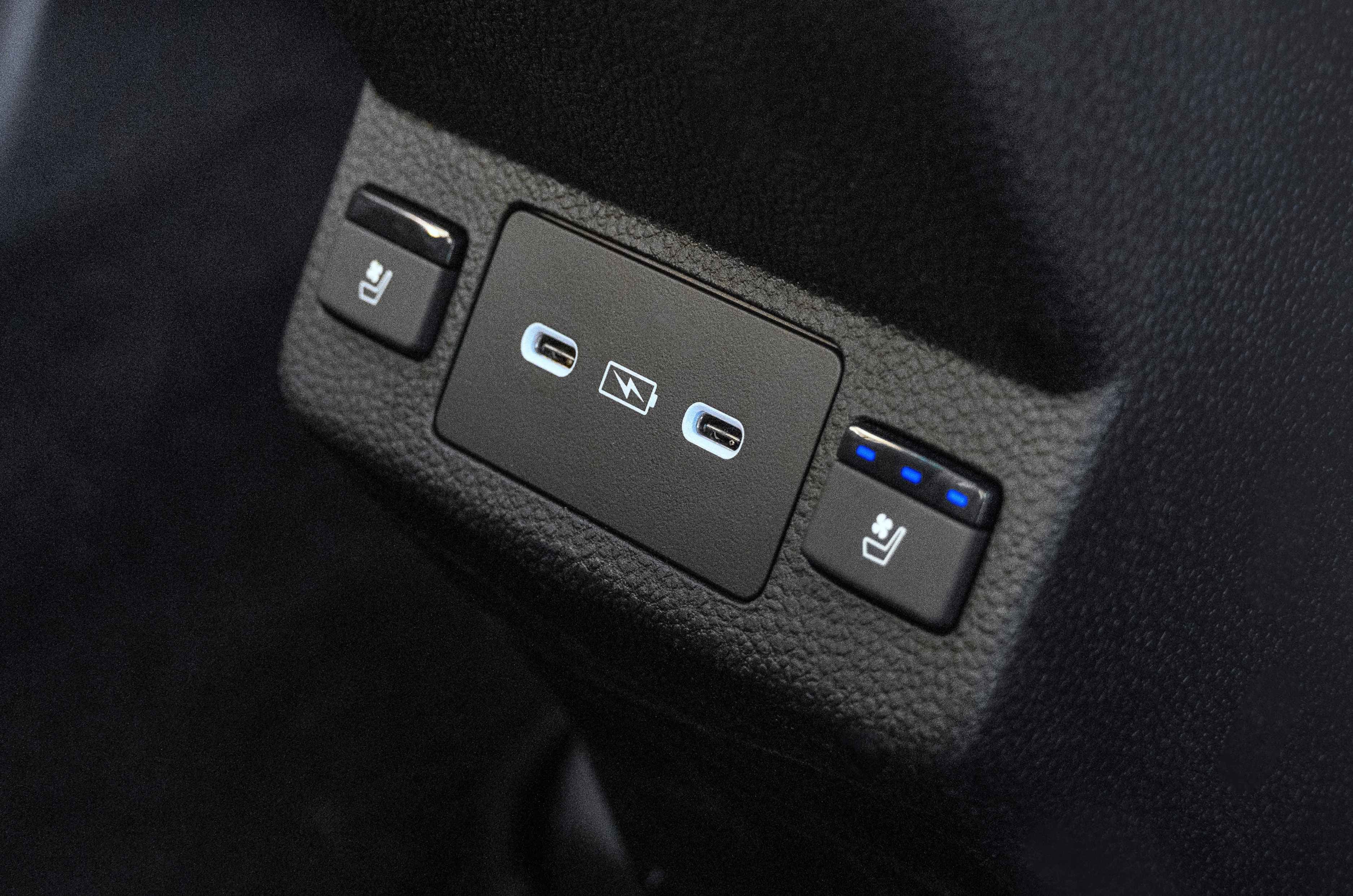
At the rear, space is generous, with plenty of kneeroom and headroom making it a very comfy place for two adults. However, fitting a third passenger will be tight thanks to the cabin’s limited width and raised centre seat. There are no sunblinds either, but Honda has added an adjustable headrest and a three-point seatbelt for the centre passenger, which was an omission earlier. Features back here include dedicated AC vents, USB charging ports, a fold down centre armrest with cupholders, new capacitive-touch LED reading lamps and the most prominent, seat ventilation.
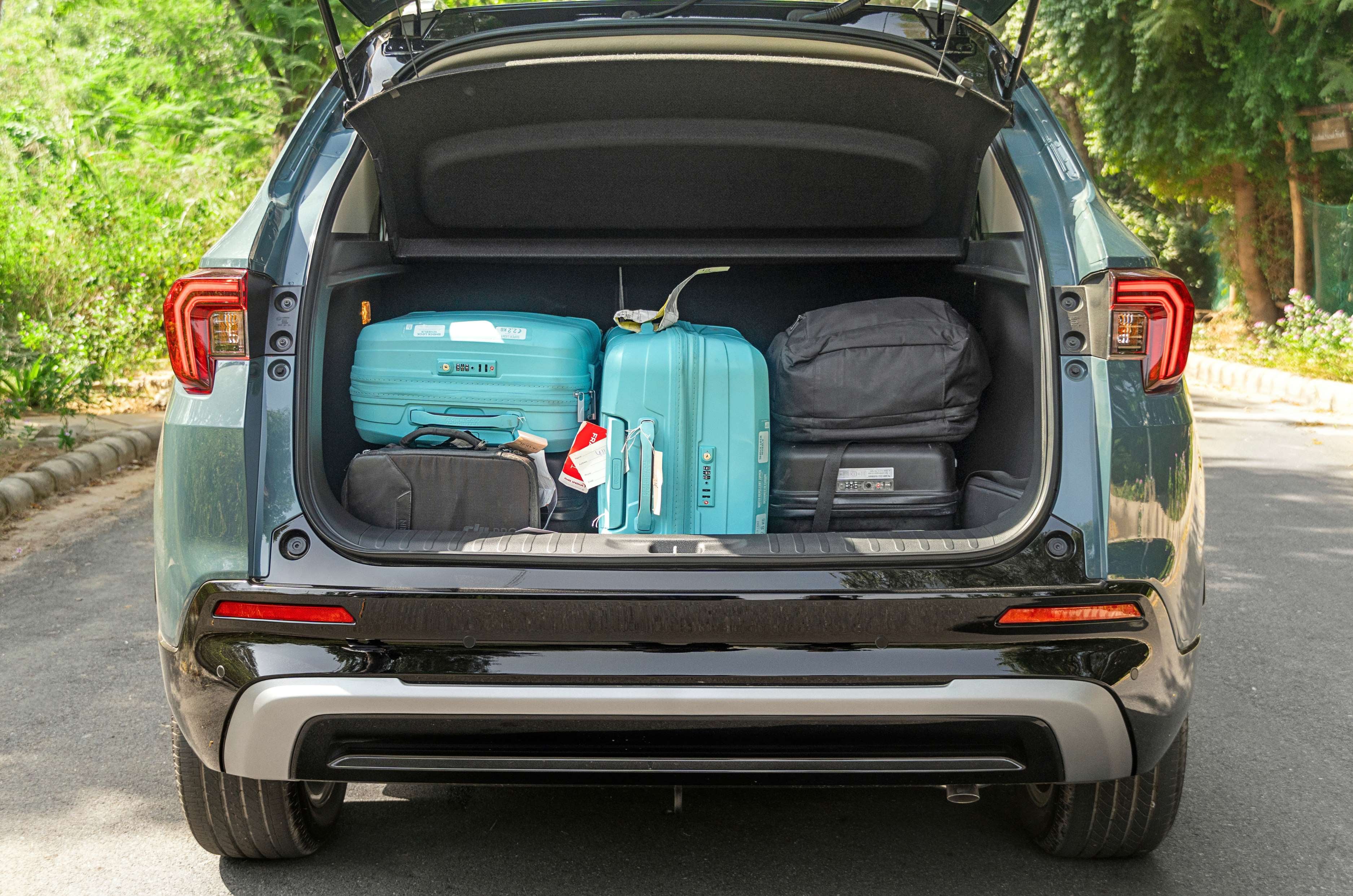
428-litre boot can fit in more than the number suggests; continues to feature a spare tyre under the boot floor.
Practicality, meanwhile, remains a strength, with the Elevate offering ample storage spaces throughout the cabin. The boot is also a substantial 458-litres and can pack in much more than the number would suggest. What’s also nice is that it continues to get a spare tyre under the boot floor.
Features and safety – 8/10
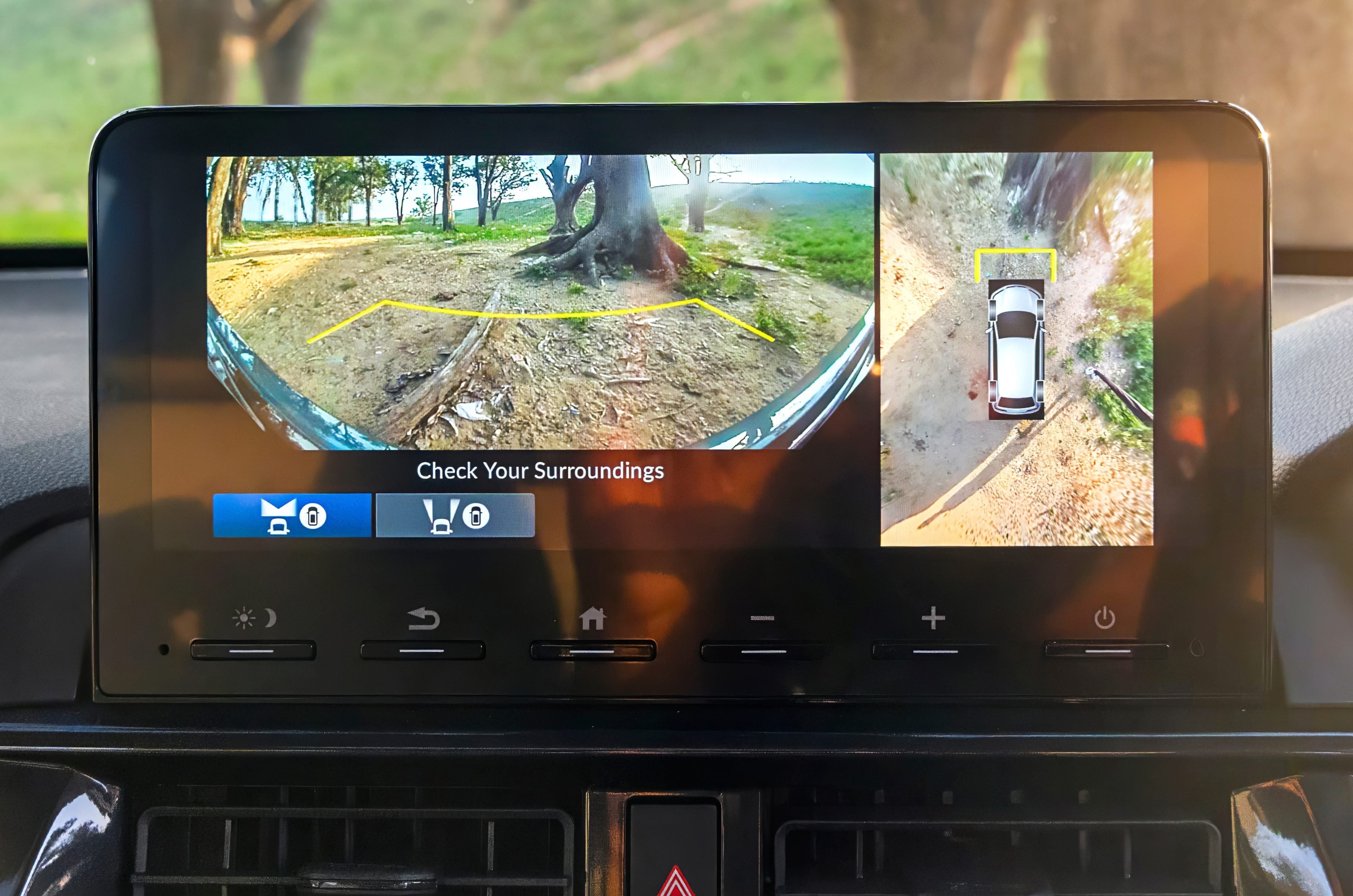
360-degree parking camera is a helpful addition but has limited angles of view and a small display on the screen.
The Elevate facelift addresses some of the key equipment gaps in the outgoing model, bringing a more comprehensive feature set to the table. In terms of safety features, there’s now a 360-degree camera (its display on the screen is quite small though, with limited angles of view), which works alongside the existing ‘LaneWatch’ camera, though curiously this feature is still only for the left hand side.
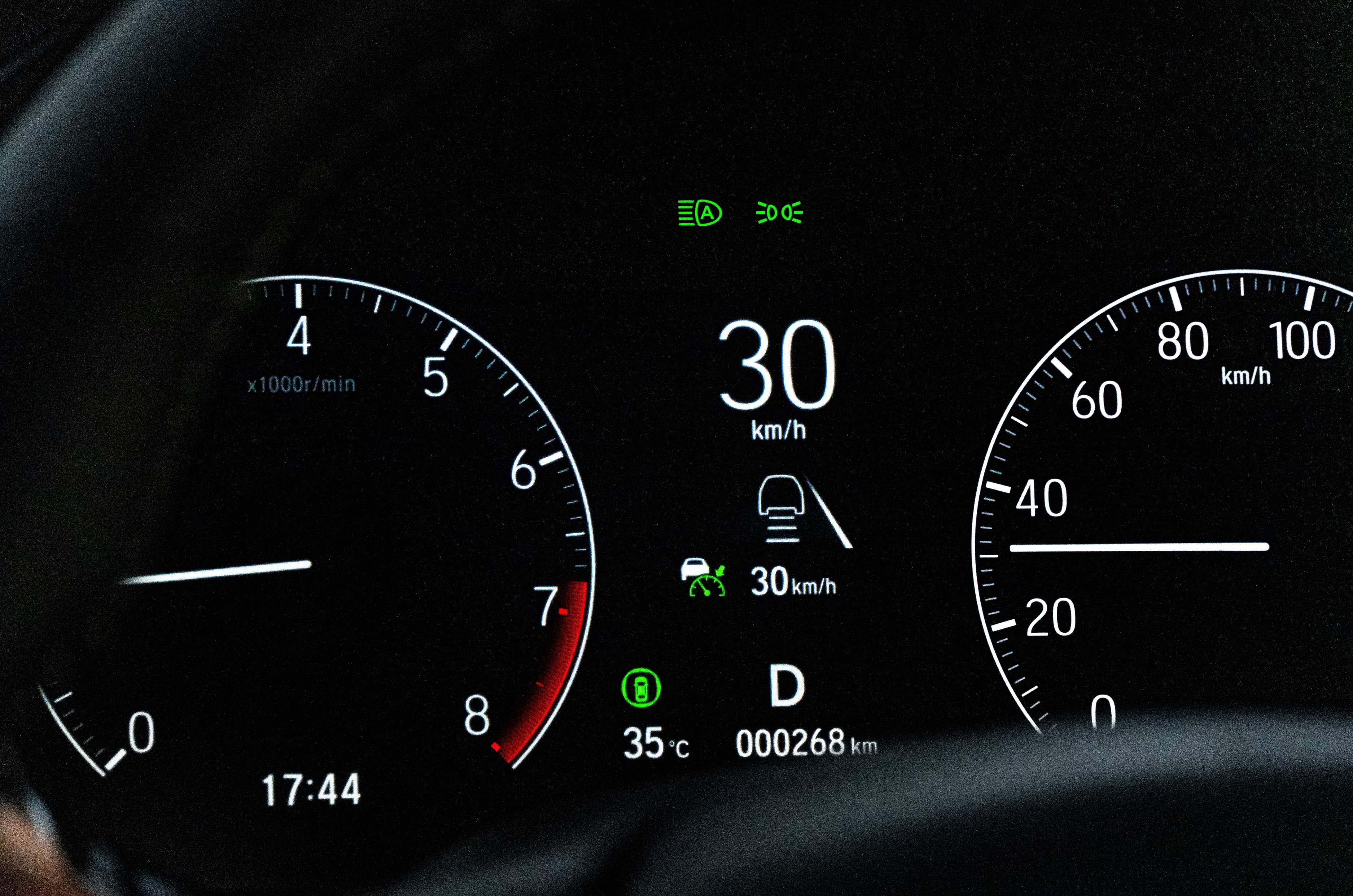
ADAS suite now packs in a useful low-speed follow function for the adaptive cruise control.
Front parking sensors have also been added to make parking and manoeuvring in tight gaps easier. However, the CVT variants get even more safety kit in the form of an electronic parking brake with auto hold function, rear disc brakes and the addition of a low-speed follow function for the adaptive cruise control, which is useful in stop-and-go traffic.
Rear-seat ventilation is a first-in-segment, but it’s only available in the top-spec ZX+ trim.
As for comfort and convenience features, the most important additions are the ventilated front and rear seats, the latter which is a segment-first. Though they take some time to cool effectively, it has enhanced the Elevate’s cabin comfort. Then there’s powered front seats – 8-way for the driver and 4-way for the passenger – ambient lighting and a PM2.5 air purifier. Other than that, much of the existing equipment has been carried over unchanged.
AC controls have been revised with new buttons for seat ventilation; now features an air purifier too.
There’s a 10.25-inch infotainment touchscreen with wireless smartphone integration (though its software and feature set still feel basic at best), semi-digital instrument cluster, a single-pane sunroof, wireless phone charger, six airbags, ESC, traction control, camera-based ADAS tech including auto emergency braking, lane keep assist and more. Still however, there are some features missing that rivals offer like a dual-zone for the auto climate control, panoramic sunroof and powered tailgate.
Powertrain and refinement – 8/10
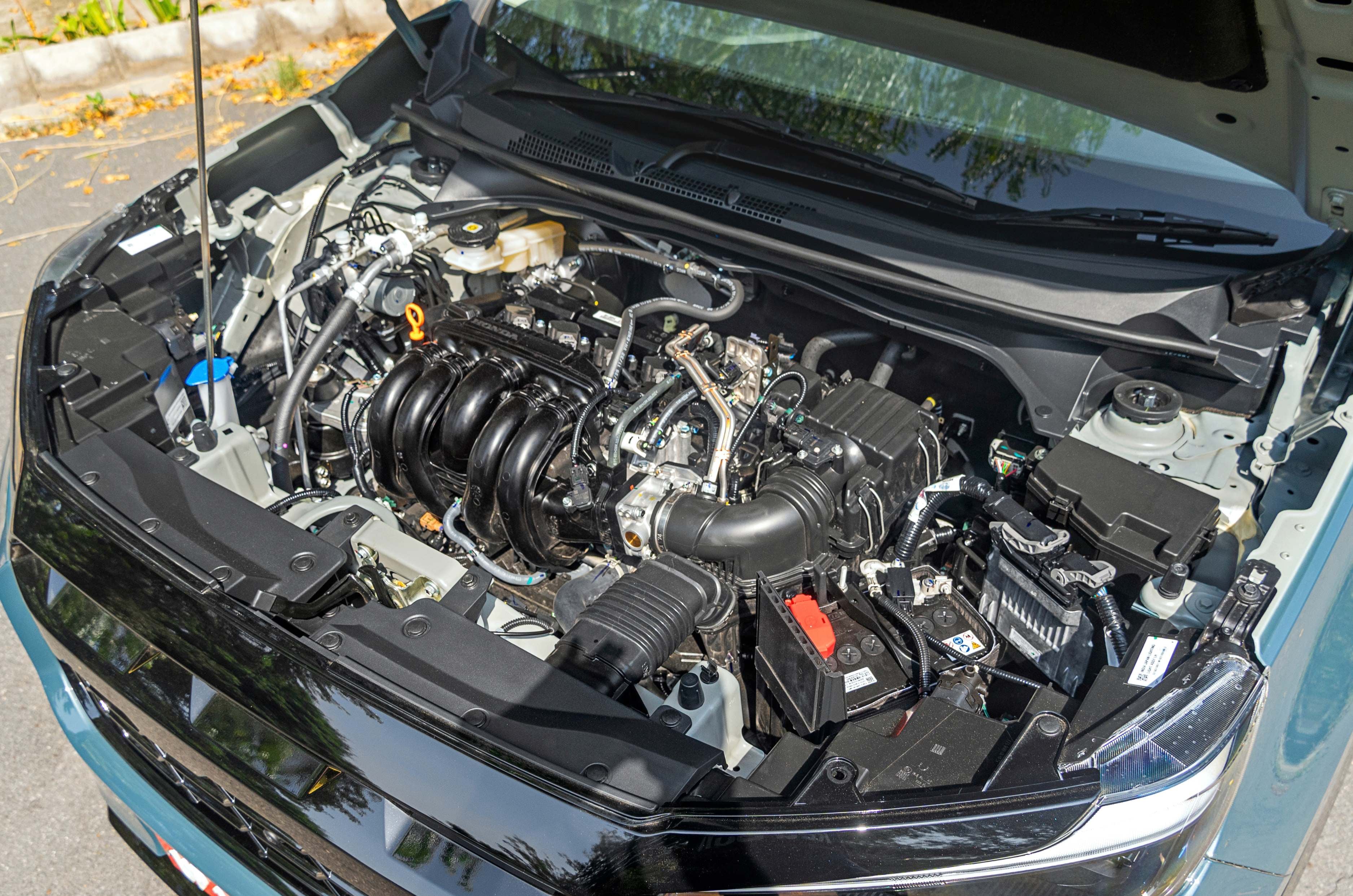
121hp, free-revving, naturally aspirated 1.5 petrol remains the only engine option with the Elevate.
There have been no changes under the hood of the Honda Elevate. It still continues to be powered by a 1.5-litre, four-cylinder, naturally aspirated petrol engine that produces 121hp and 145Nm. Gearbox options remain unchanged too, with a 6-speed manual and a 7-step CVT automatic, and we got to sample the latter. However, the engine has been future-proofed and is now WLTP emissions norms compliant while already being E20 fuel compatible.
This i-VTEC engine still impresses however. Throttle response is immediate, with no noticeable delay, making the engine feel sharp and eager. As before, the naturally aspirated motor pulls cleanly from idle all the way to the redline, in a smooth and progressive manner. However, it feels most energetic higher up the rev range, where it feels at its most potent too.
The 7-step CVT works well as an automatic, making light work of everyday commuting with its smooth operation. Paddle shifters with pre-set ratio points also give it some resemblance to a conventional automatic, allowing you to have greater control. However, push the throttle hard and the familiar ‘rubber band’ effect becomes apparent, with the engine holding on to high revs for extended periods, which doesn’t make for a relaxed driving experience. In this respect, Hyundai and Kia’s chain-driven CVT feels a bit smoother and more responsive than this belt-driven one.
As for performance, we managed a 0-100kph time of 11.89sec with the pre-facelift Elevate CVT and you can expect this facelifted model to be in the same ballpark. Expectedly, the manual does a quicker 10.82sec time to 100kph.
However, like before the lack of powertrain options is disappointing. In a time when rivals are offering diesels, turbo petrols, strong hybrids and CNGs, the Elevate has to soldier on with a solitary, naturally-aspirated petrol engine which restricts its appeal.
It feels quieter than before but there’s still prominent engine and road noise filtering into the cabin, especially on highways.
Honda has also worked on improving the Elevate’s noise insulation, an area where the existing model lacked. The company claims better isolation from both engine and road noise, but that has worked only to a small extent, in our experience. It feels quieter than before but there’s still prominent engine and road noise filtering into the cabin, especially at highway speeds, and there’s definitely more room for improvement here.
Fuel efficiency – 7/10
Given our short test drive, we didn’t subject the Elevate facelift to our real-world mileage tests. For reference though, the pre-facelift Elevate CVT did 8.60kpl in the city and 13.10kpl on the highway while the Elevate MT managed 8.7kpl in the city and 13.30kpl out on the highway. The Elevate CVT misses out on an Eco drive mode and auto start/stop, which certainly affects its fuel efficiency.
Ride comfort and handling – 8/10
Despite being a high-riding SUV, the Elevate feels remarkably composed on the move.
As before, the Honda Elevate continues to impress with its ride and handling balance. Despite being a tall riding SUV, it feels remarkably composed on the move. Suspension damping, though on the firmer side, is well judged and does a good job of ironing out road imperfections. It’s only when you’re travelling at triple digit speeds on an undulating highway is where you’ll notice quite a bit of vertical movement in the rear seat. But apart from that, the Elevate feels planted on the road.
Body roll is also well contained for a tall SUV, making it predictable around bends.
The steering is accurate and light at slow speeds, which helps with manoeuvrability, but it picks up weight progressively which is reassuring. Body roll is also well contained for a tall SUV and as such, it’s predictable around bends. As for the brakes, the CVT has gained rear discs but that hasn’t made a noticeable difference. Braking performance, like before, remains strong with a nice, progressive feel.
Value for money and verdict – 7/10
With this facelift, Honda has addressed some of the Elevate’s earlier shortcomings with some much-needed features and the updated look and feel inside the cabin. However, some drawbacks still remain like the lack of powertrain options and the below-par sound insulation.
It remains a sensible, practical midsize SUV that continues to prioritise the essentials over outright novelty.
What the Elevate continues to get right, though, are the fundamentals. It continues to offer a comfortable and practical cabin, a responsive engine and a well-sorted ride and handling package. Add to that the design refresh and the fairly expansive features list, and the Elevate facelift feels more rounded than before. Priced from Rs 11.80 lakh to Rs 18.40 lakh (ex-showroom), it’s still very competitively priced, though the new top ZX+ variant is up there with the heavy hitters.
Ultimately, the Elevate remains a sensible, practical midsize SUV that continues to prioritise the essentials over outright novelty. As a result, the Elevate facelift represents a great option for buyers who value comfort, everyday usability, reliability and the peace of mind associated with the Honda badge.
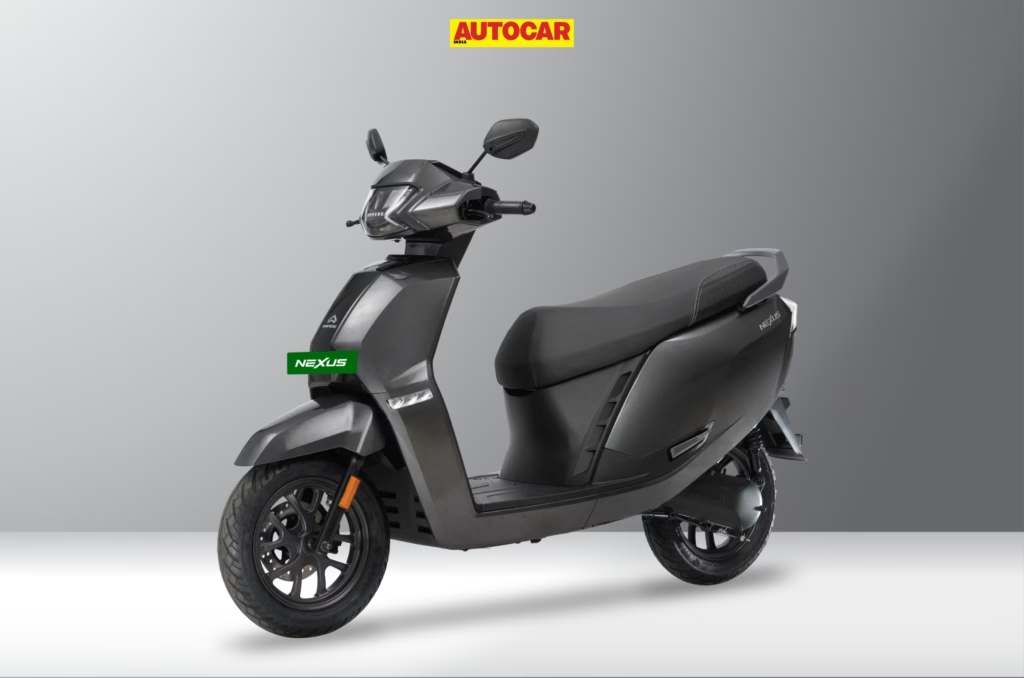
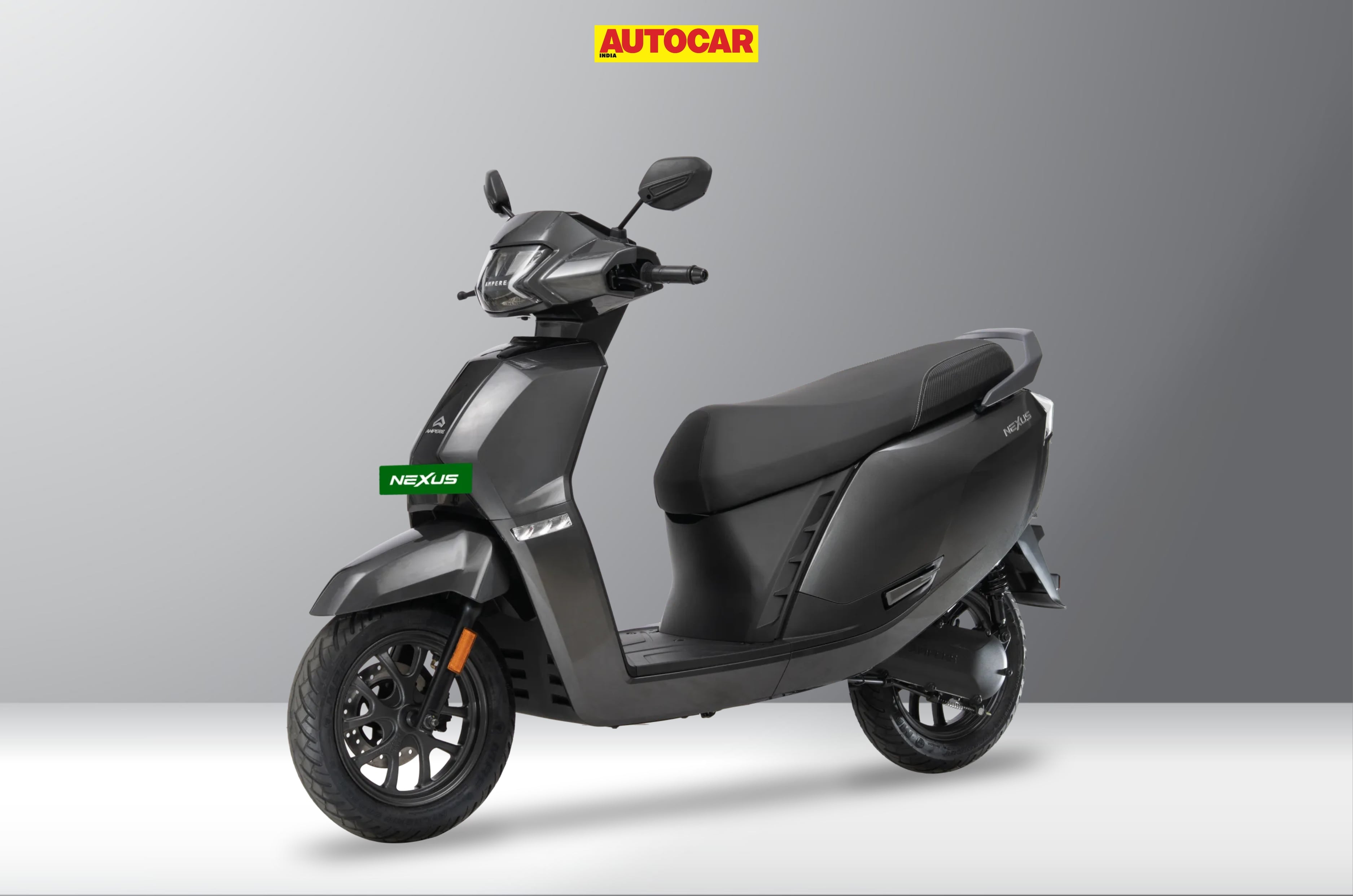
Ampere has launched the Nexus EX+ at Rs 1.30 lakh, the electric scooter’s updated version, featuring a more powerful 5kW motor and an IP65-rated water-resistant charger. The e-scooter is available in two variants, with the higher-spec variant adding Ampere’s Intellipack connected technology, which brings features such as turn-by-turn navigation, geofencing, call alerts and more.
EX+ gets a 5kW motor compared to the previous 4kW motor
Now comes with an IP65-rated 750W charger
Intellipack-equipped variant costs Rs 6,000 more
Ampere Nexus EX+: What’s new?
Now gets a powerful motor, IP65-rated charger and an optional Intellipack
The 5kW motor now produces 202Nm of peak torque at the wheel (bear in mind, the multiplication factor of the gearing on EVs always exaggerates torque numbers), which allows the scooter to accelerate from 0-40kph in 4.5 seconds (claimed). It is also claimed to improve the gradeability on steep climbs, flyovers and hilly roads. The scooter also gets an IP65-rated water-resistant 750W charger, which should give some peace of mind when charging out in open spaces or for those who don’t have shaded parking.
The Intellipack equipped version uses Ampere’s Connect App to provide more than 30 connected features. These include turn-by-turn navigation, geo fencing, call alerts, live location sharing, real-time charging status, find my scooter and many more. The standard Nexus EX+ is priced at Rs 1.30 lakh, while the Nexus EX+ with Intellipack costs Rs 1.36 lakh.
The scooter uses a 3kWh LFP battery with a claimed IDC range of 136km. The Nexus EX+ also gets a five-year/75,000km warranty for the battery and three-year/30,000km warranty for the rest of the scooter. The new Nexus EX+ and Nexus EX+ with Intellipack are available through Ampere dealerships across India.
Earlier, the Nexus was available in two variants EX and ST with their primary differences being the instrument clusters, connected features, and price points. Now, Ampere seems to have streamlined the portfolio and the two EX+ variants are the only way to buy a Nexus.
The Nexus EX+ is positioned in the mid-to-high segment of family electric scooters, where it competes with other major players like the TVS iQube 3.1kWh, Ather Konarc, Vida VX2 and the Chetak C3001, making it one of the compelling option for buyer prioritizing range and features.
शेयर बाजार में जल्दी पैसा कमाने का सपना कई लोगों को ट्रेडिंग की ओर खींचता है। शुरुआत में अगर कुछ मुनाफा मिल जाए, तो बाजार से कमाई का भरोसा और बढ़ जाता है। लेकिन कई बार यही उत्साह धीरे-धीरे ऐसी आदत में बदल जाता है, जिससे बाहर निकलना मुश्किल हो जाता है। सोशल मीडिया यूजर Hemdharpan ने अपने 35 वर्षीय दोस्त की ऐसी ही कहानी साझा की है।
2 लाख की सैलरी और 14 लाख की बचत
Hemdharpan के मुताबिक, उनका दोस्त एक IT प्रोफेशनल था और करीब 2 लाख रुपये महीने कमाता था। उसके पास 14 लाख रुपये की बचत थी। शादीशुदा होने के साथ उसका एक बच्चा भी था। यानी नौकरी, कमाई और सेविंग के मामले में उसकी जिंदगी काफी स्थिर थी।
करीब दो साल पहले एक सहकर्मी ने उसे शेयर बाजार में ट्रेडिंग के बारे में बताया। यहीं से उसकी जिंदगी का एक नया दौर शुरू हुआ।
45 मिनट में 12 हजार का मुनाफा
कहानी के मुताबिक, सहकर्मी ने लंच के दौरान अपना Zerodha अकाउंट दिखाया। उसने Nifty options की इंट्राडे ट्रेडिंग से करीब 45 मिनट में 12 हजार रुपये कमाए थे। यह देखकर टेकie को भी लगा कि बाजार में कम समय देकर अच्छी कमाई की जा सकती है।
शुरुआत में उसे सफलता भी मिली। उसने करीब दो घंटे में 18 हजार रुपये कमाए। इस कमाई ने उसका उत्साह और बढ़ा दिया।
फिर शुरू हुआ नुकसान का सिलसिला
दूसरे महीने बाजार ने उसे बड़ा झटका दिया। उसने कुछ ही मिनटों में करीब 50 हजार रुपये गंवा दिए। पोस्ट के मुताबिक, उसने समय पर stop-loss नहीं लगाया और नुकसान को स्वीकार करने के बजाय उसे वापस पाने की कोशिश शुरू कर दी।
उसने परिवार की बचत से 1 लाख रुपये बाजार में लगा दिए। इसके बाद वह नुकसान की भरपाई के लिए लगातार ट्रेड करने लगा। बताया गया कि वह एक दिन में 30-40 ट्रेड तक करने लगा था।
बचत खत्म हुई तो लिया कर्ज
2024 में शुरू हुई ट्रेडिंग का असर 2025 के मध्य तक दिखने लगा। उसकी करीब 14 लाख रुपये की बचत खत्म हो गई, लेकिन ट्रेडिंग नहीं रुकी। पोस्ट के अनुसार, वह परिवार से ट्रेडिंग छिपाने लगा और काम के बीच भी बाजार पर नजर रखता था।
बचत खत्म होने के बाद उसने तीन बैंकों से पर्सनल लोन लिया। कथित तौर पर उसने इन पैसों के लिए घर की मरम्मत का कारण बताया। बाद में इंस्टेंट लोन ऐप्स से भी पैसे लिए।
My friend H is 35, married, and a father. Two years ago, he had ₹14 Lakhs in FDs & MFs,a stable IT job paying ₹2 Lakhs a month, and complete peace of mind.
Today,he is down ₹38 Lakhs, his salary is garnished by debt recovery, & his wife is staying at her parents’ house. 1/n
2025 के आखिर में जब रिकवरी एजेंट घर पहुंचने लगे, तब परिवार को पूरी स्थिति का पता चला। पोस्ट के मुताबिक, 14 लाख रुपये की बचत खत्म होने के अलावा उस पर करीब 24 लाख रुपये का कर्ज भी था। यानी कुल नुकसान करीब 38 लाख रुपये बताया गया।
इसका असर परिवार पर भी पड़ा। बच्चे की स्कूल फीस बाउंस होने की बात सामने आई और उसकी पत्नी बच्चे को लेकर मायके चली गई।
अब कर्ज से निकलने की कोशिश
Hemdharpan के अनुसार, अब वह अपनी आर्थिक स्थिति सुधारने में जुटा है। उसने कार बेच दी है और लोन को संभालने के लिए restructuring plan अपनाया है। यह कहानी सोशल मीडिया पर साझा किए गए एक व्यक्ति के अनुभव पर आधारित है। इससे यह जरूर सामने आता है कि ट्रेडिंग में लगातार नुकसान की भरपाई करने की कोशिश आर्थिक जोखिम को तेजी से बढ़ा सकती है।
While aftermarket CNG conversions are not new, with the rise in fuel prices, there has been a noticeable spike in interest surrounding them. Although there are more factory-fitted CNG cars on the market than ever before, several models still do not give you the option. Not to mention, existing car owners are increasingly looking to convert their cars to CNG to reduce running costs.
Naturally, this increased interest brings up several questions about the technology, the installation, the legalities and more. We thus teamed up with Lovato CNG’s authorised distributor in Maharashtra, Blue Drive Traders, as well as Lets Go CNG and its authorised installer in Mumbai, M.S Motors, to answer questions about CNG conversions.
Know your CNG kit
There are three broad types of kits available on the market today. The oldest is the Venturi type, typically used for cars that are Bharat Stage 3-compatible and older. These use a Venturi mixer, similar to a carburettor, that mixes CNG with air before it is injected into the intake manifold. They are the most affordable, usually costing between Rs 30,000 and Rs 40,000, including installation and registration, but they are not the most efficient and bring a significant drop in performance. Since the cars they are compatible with are also reaching the end of their lifecycle, these kits are gradually being phased out.
Modern naturally aspirated MPFI cars require a sequential type kit. These use individual injectors that inject CNG directly into the intake manifold and feature their own ECU that controls timing, volume and other parameters based on RPM and driver inputs. These are much more fuel-efficient, and the drop in performance is nominal in everyday driving conditions. Like the older Venturi kits, these too require the car to be started on petrol before switching over to CNG. However, they automate the process by making the switch once a certain engine temperature is reached. Prices vary depending on the manufacturer and the specifications of each kit, ranging from Rs 40,000-Rs 50,000 for older BS4 cars, to Rs 50,000-Rs 65,000 for smaller BS6 cars, stretching to Rs 70,000-Rs 75,000 for larger cars that require an eight-injector kit.
The newest type of kit to hit the market is the direct-injection kit, used for cars with direct petrol injection. Like sequential kits, these too inject CNG into the intake manifold. However, direct-injection engines cannot run purely on CNG. The fuel injectors in a DI engine sit within the combustion chamber, so to prevent them from overheating, a small amount of petrol still needs to be injected through them even when running on CNG. Therefore, a turbocharged direct-injection engine can only run on a maximum 80:20 ratio of CNG and petrol. As a result, fuel efficiency gains are not quite as high as with a naturally aspirated engine, and kit prices range from Rs 1 lakh to Rs 1.5 lakh, thus pushing the breakeven point further away.
What’s in the box?
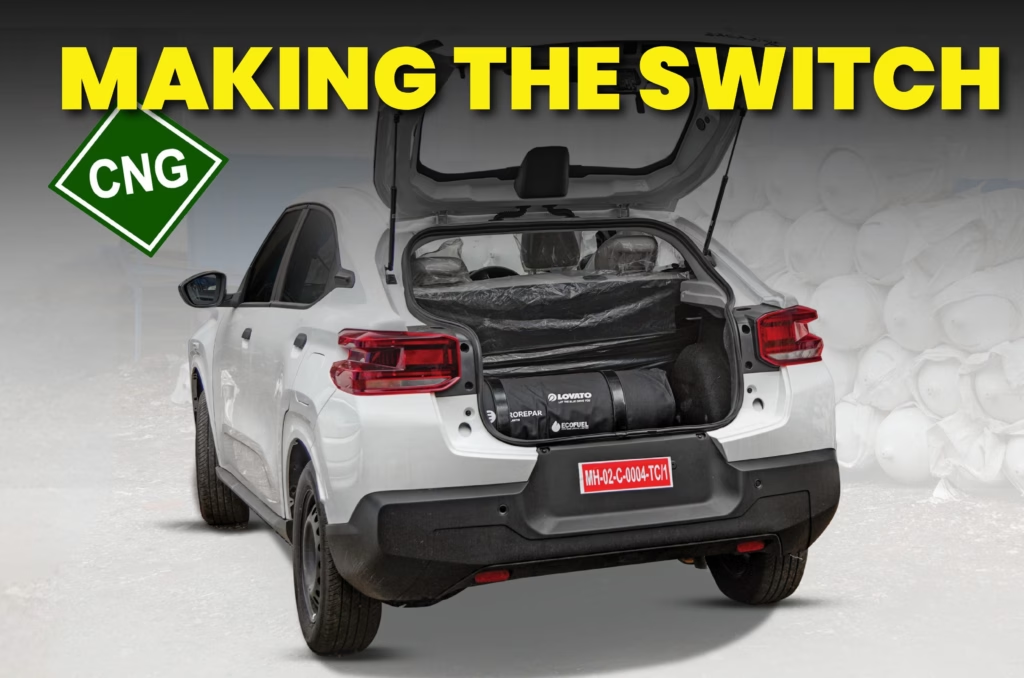
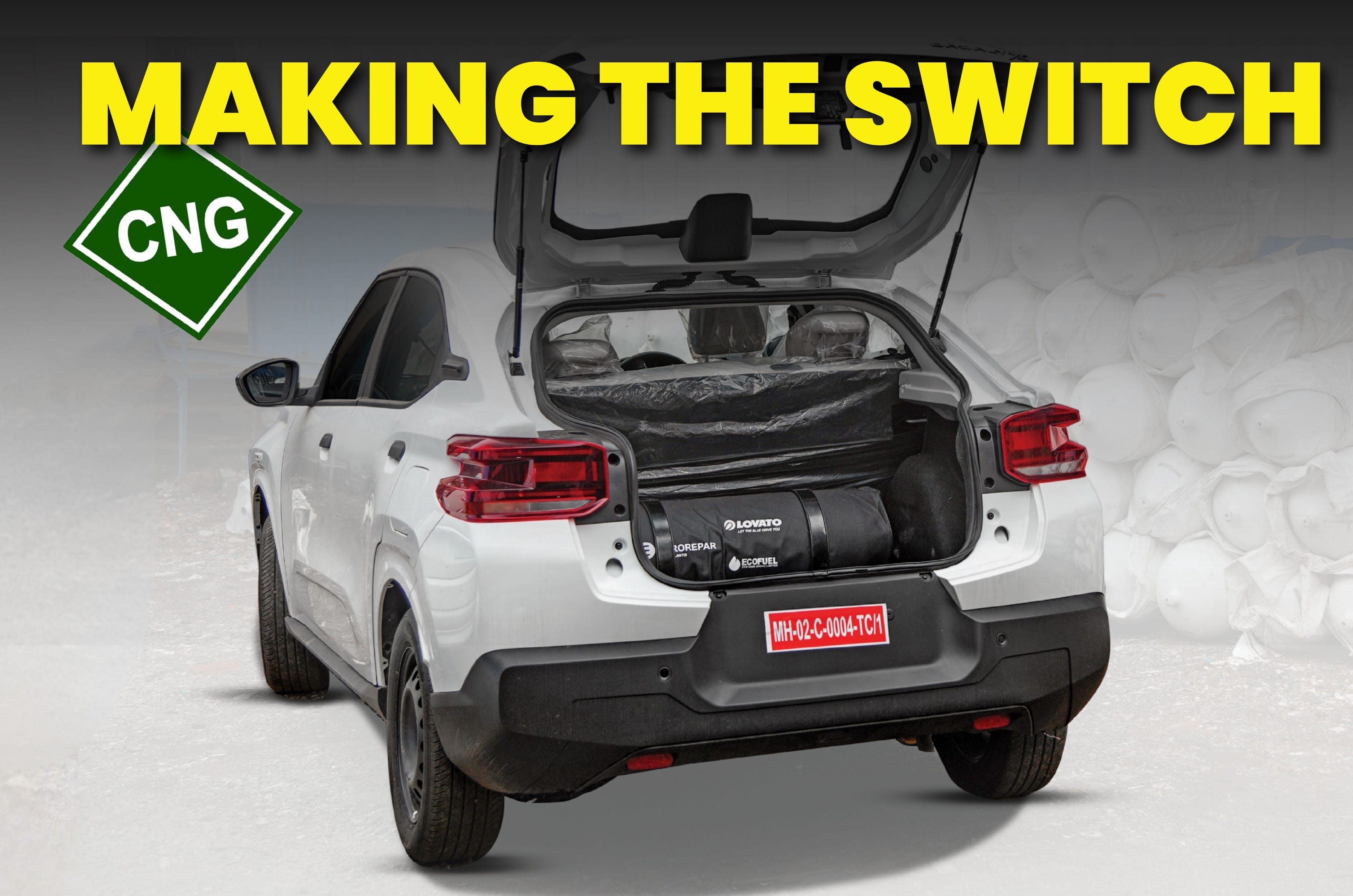
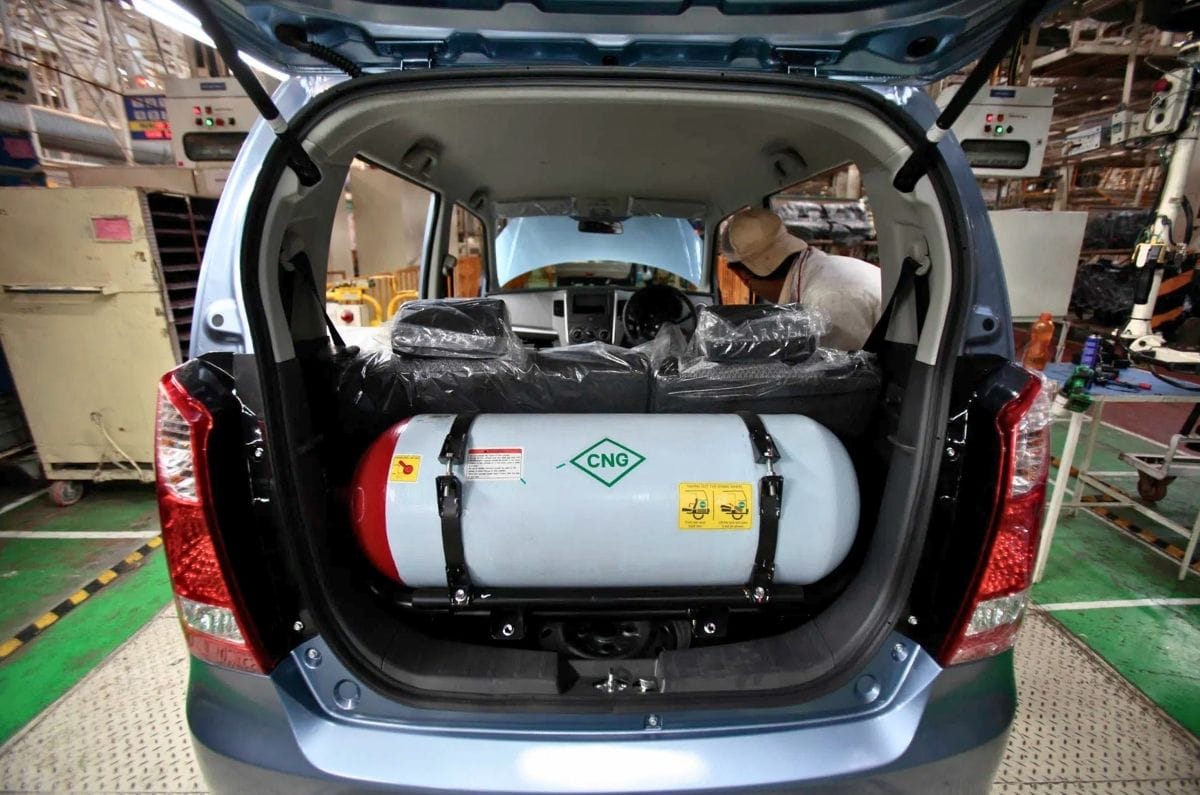
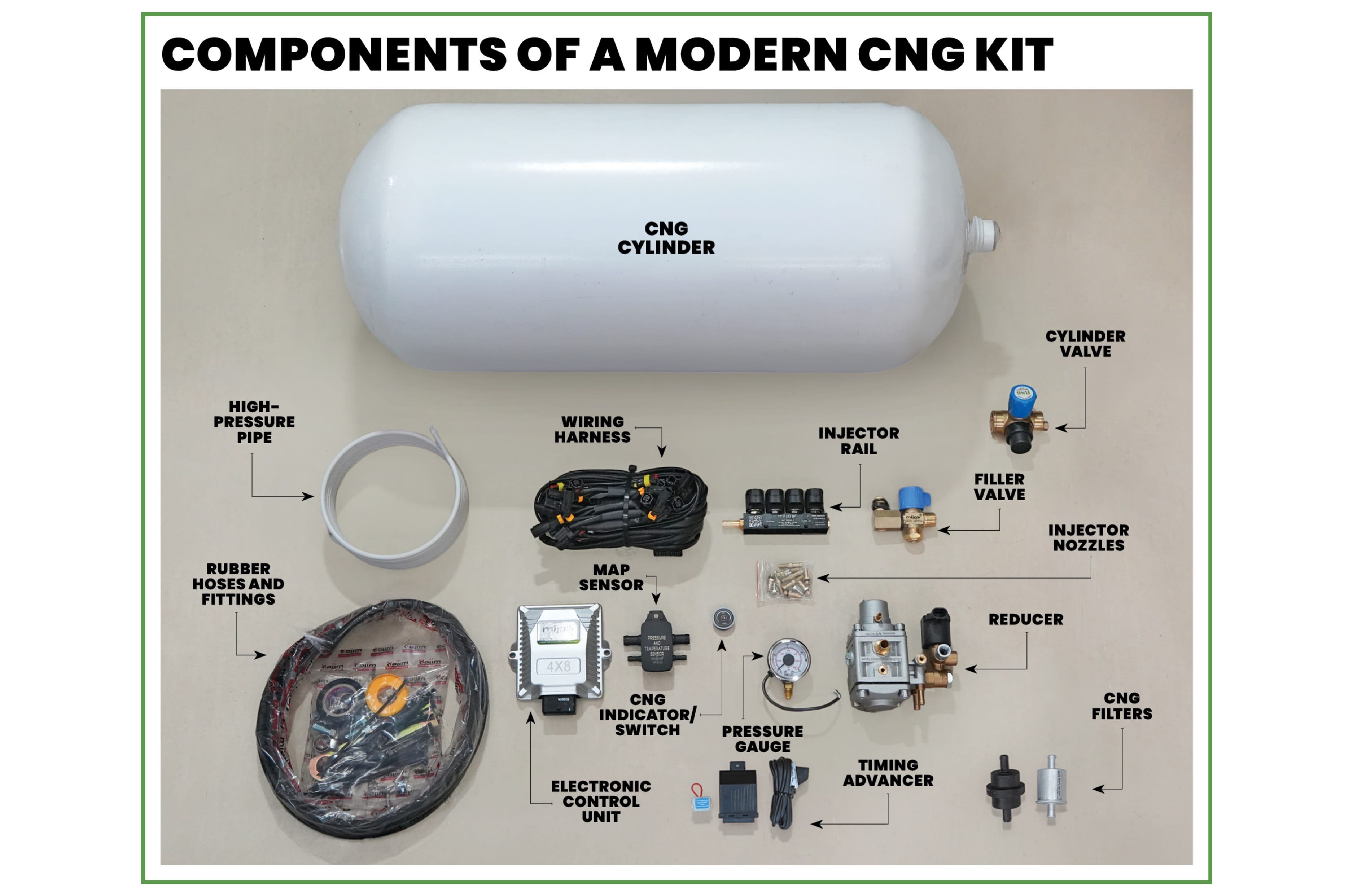
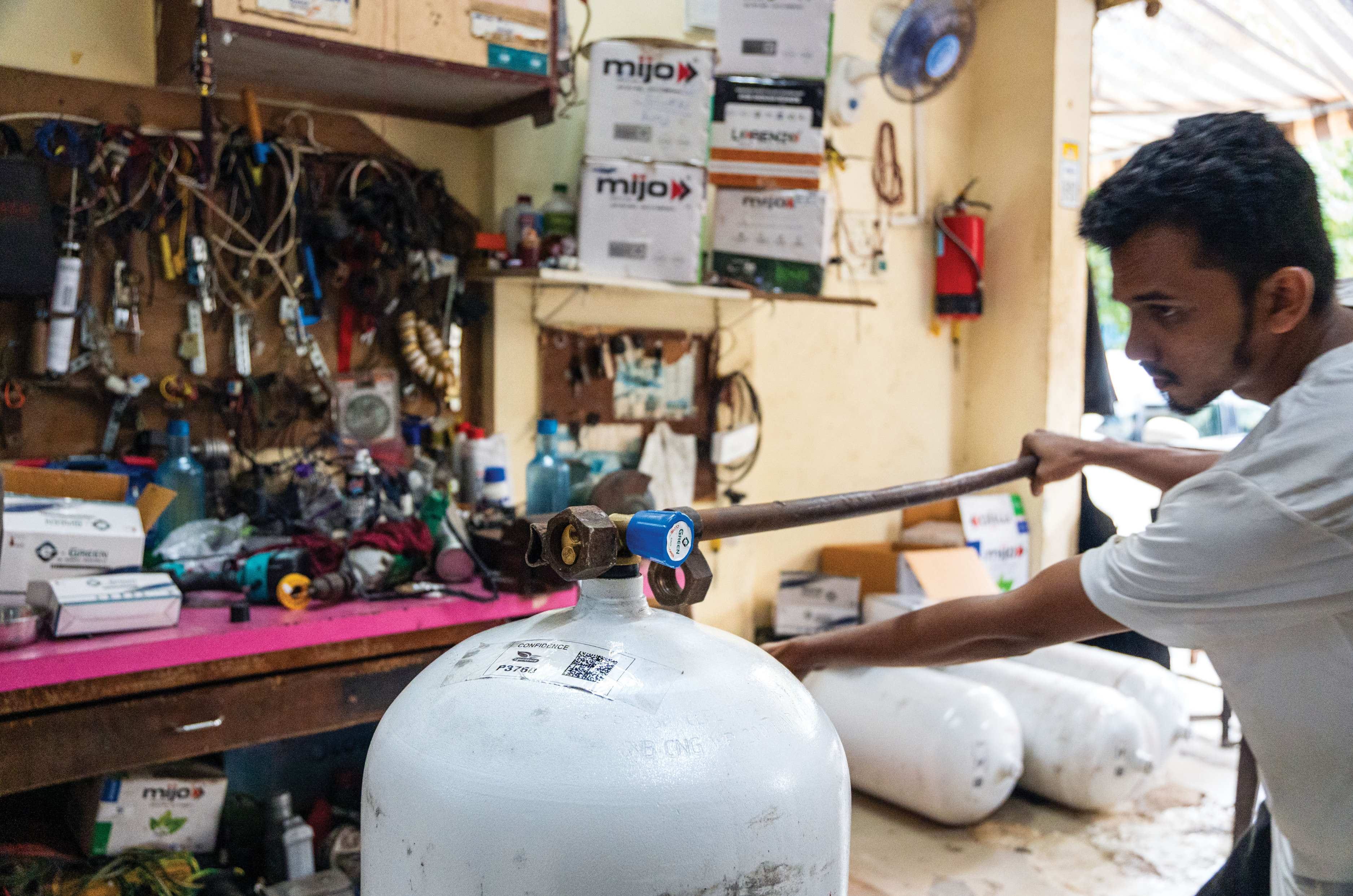
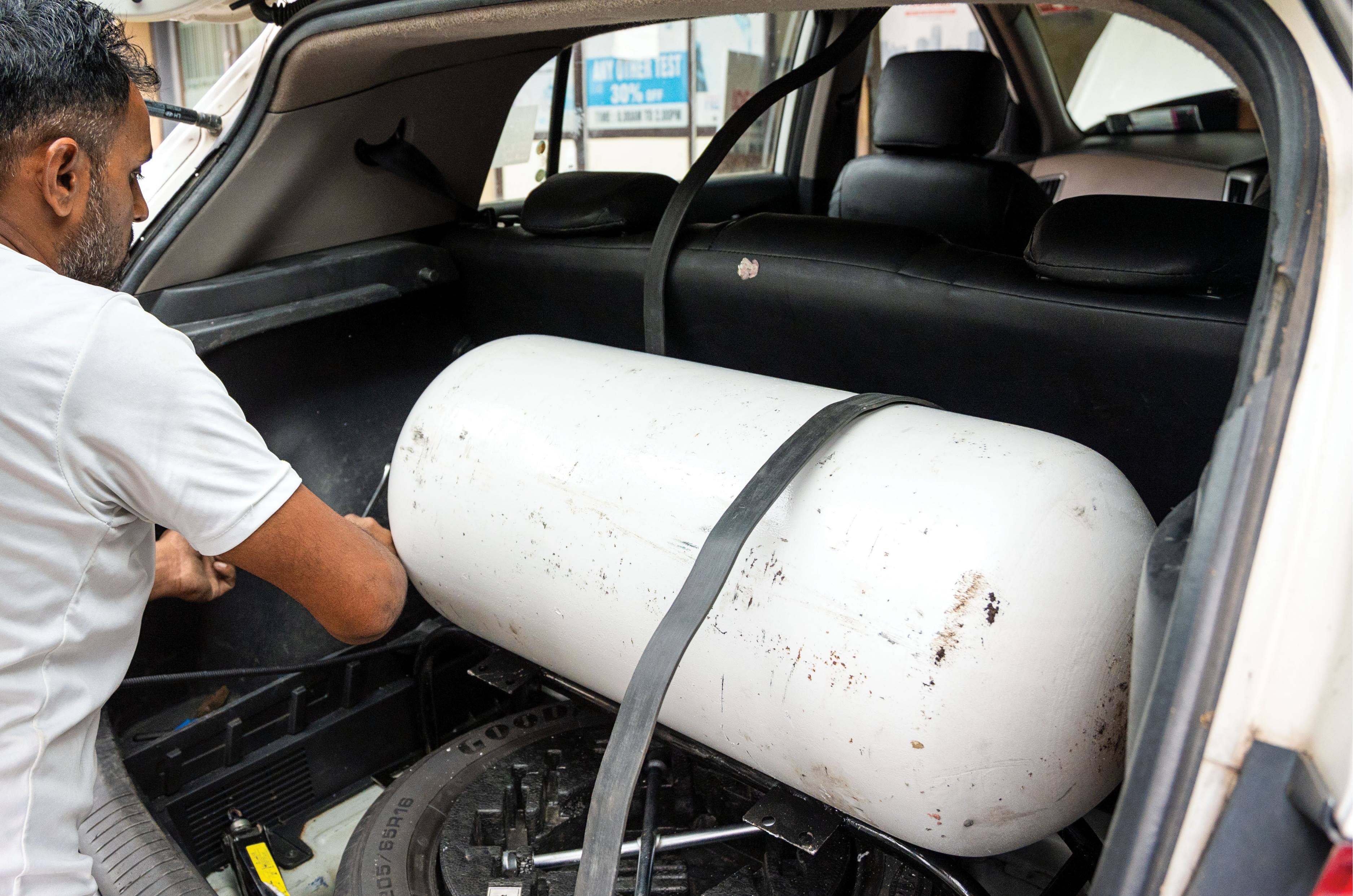
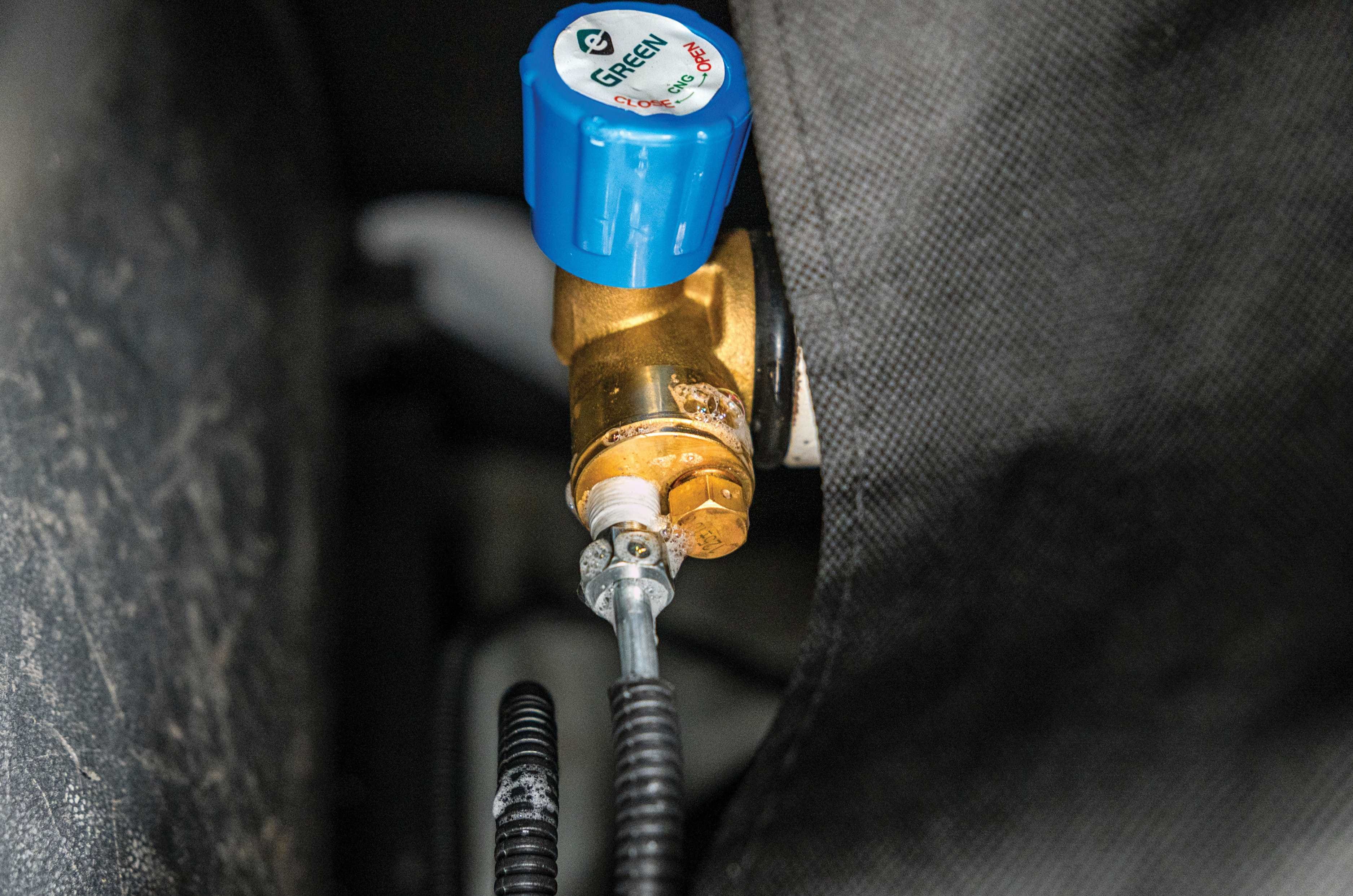
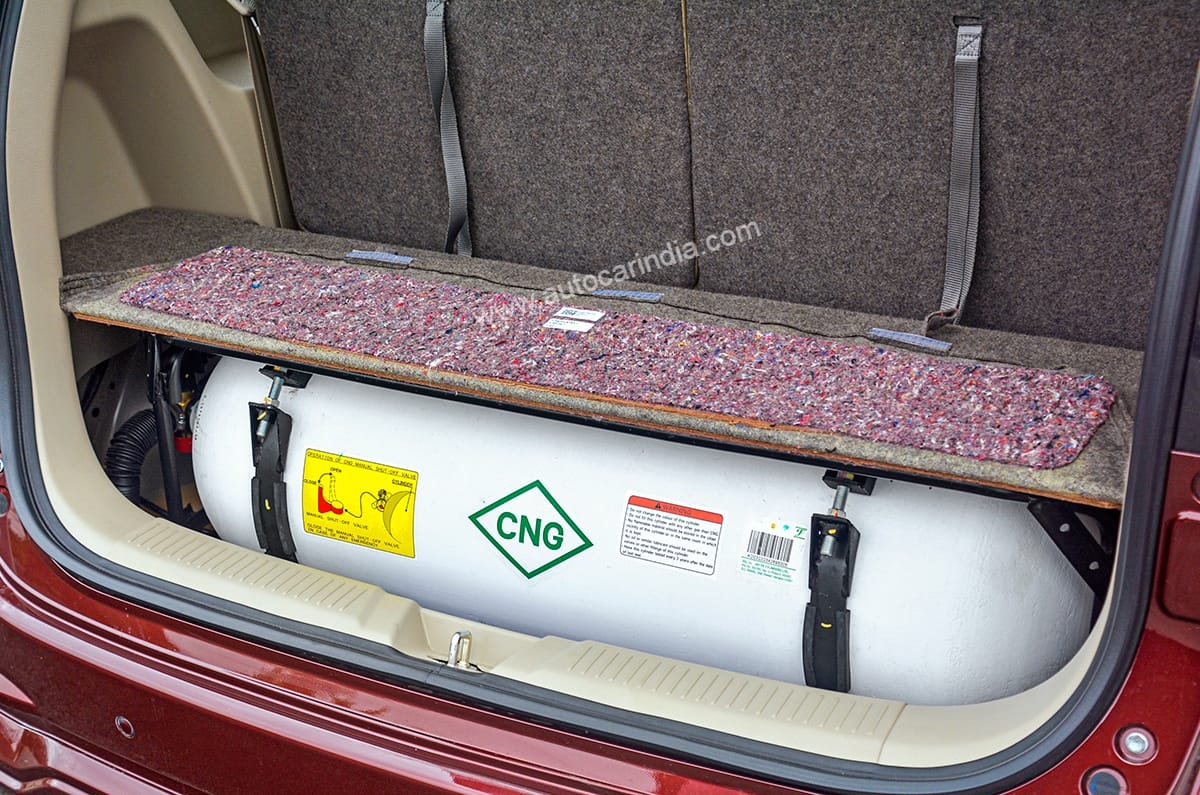
The largest and heaviest component of a typical CNG kit is the tank itself. Made from seamless steel, these can weigh close to 70kg empty, with volumetric capacities ranging from 60 to 65 litres. Metal-lined composite cylinders and carbon fibre-reinforced plastic cylinders are also now available, and while they are significantly lighter, they usually cost two or three times more. Attached to the tank is a valve with a manual shut-off.
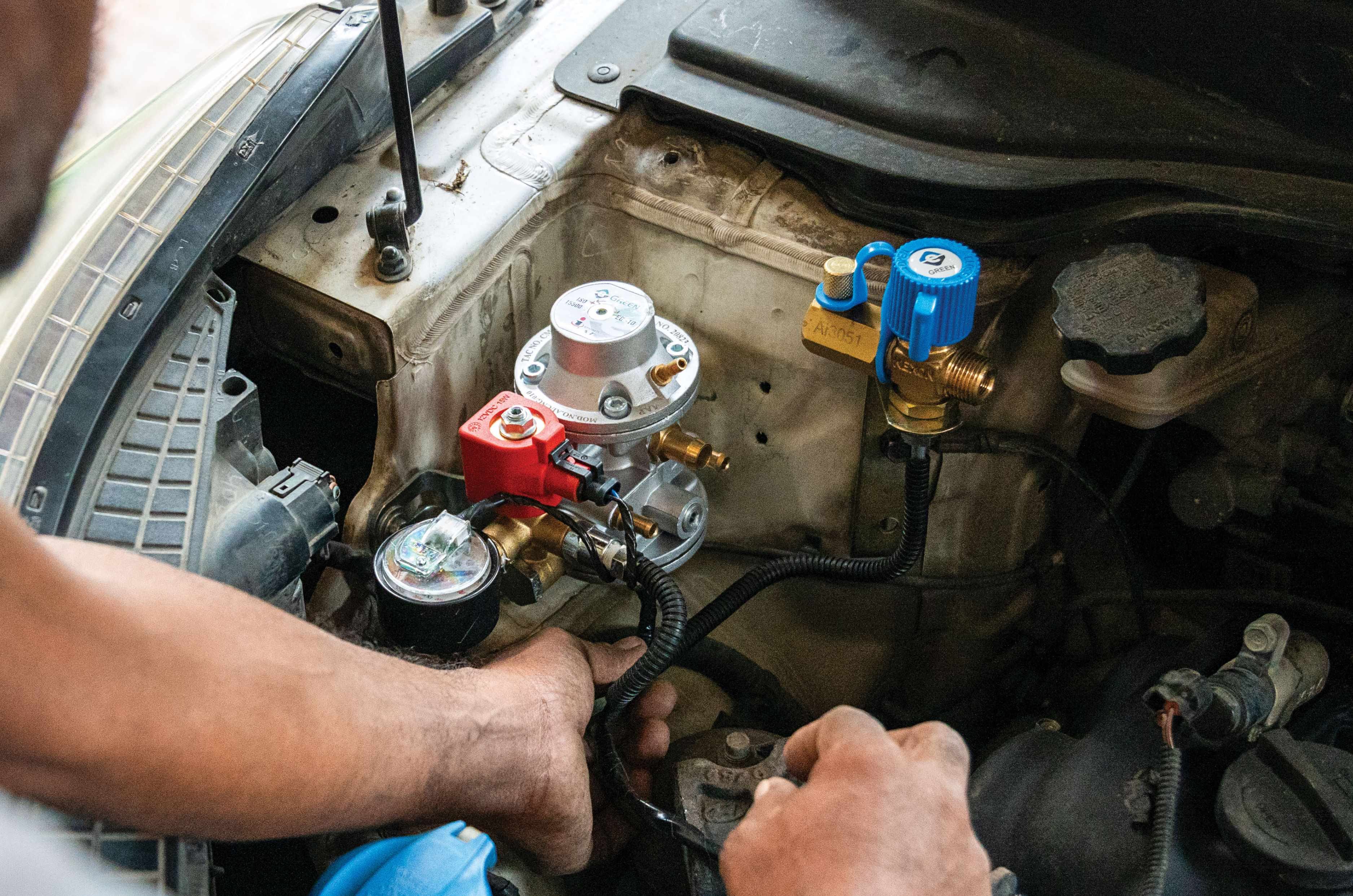
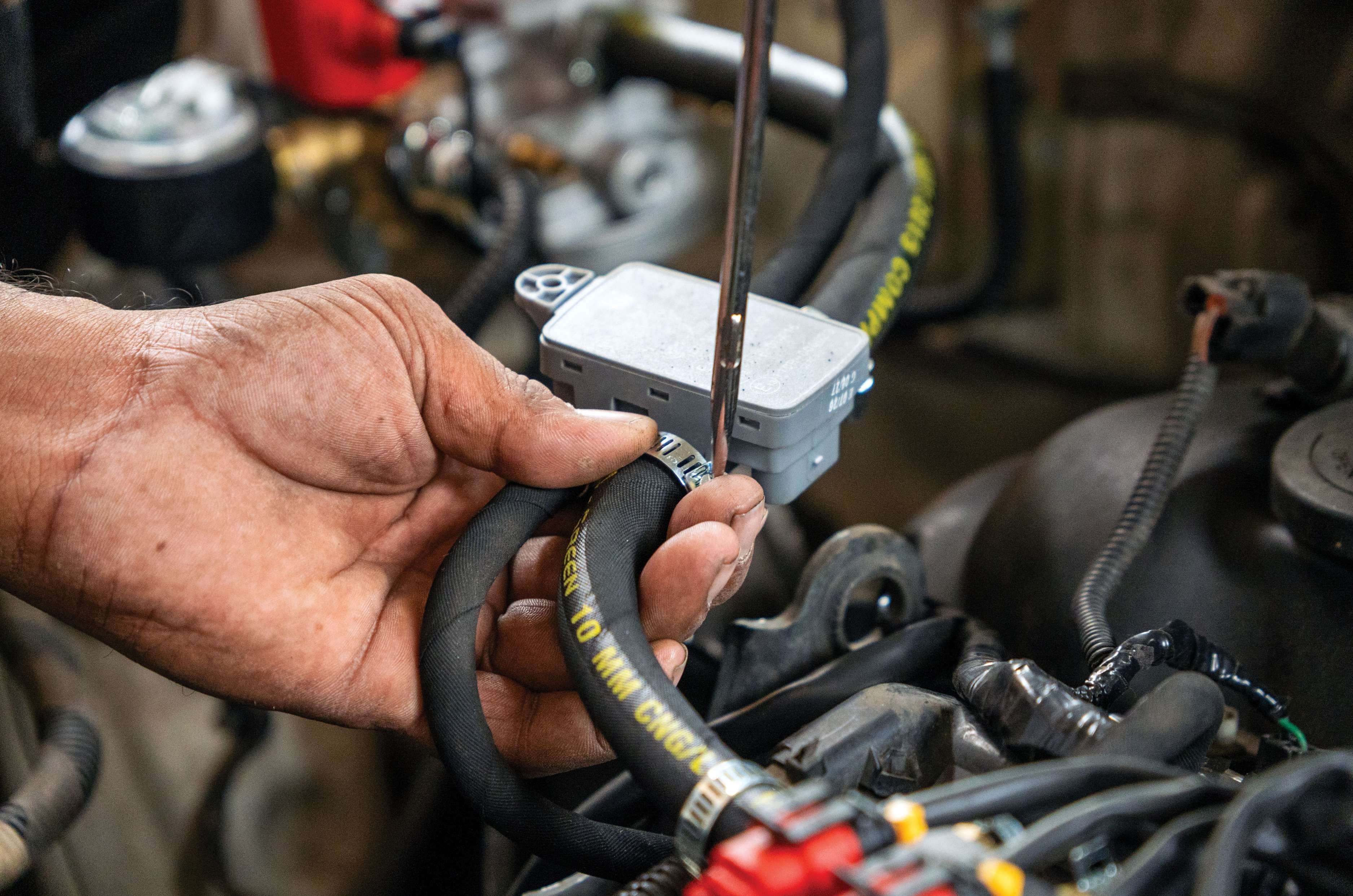
The filling valve, through which CNG is filled, can either be placed under the bonnet or beside the petrol filler cap, depending on the vehicle. Transporting the gas from the tank to the pressure reducer under the bonnet is high-pressure tubing made from carbon steel and coated in polymers. The reducer has a pressure gauge and lowers gas pressure from about 200bar in the tank to a manageable 2-3 bar. From here, the gas is routed to the injector rail that sits atop the engine, which further distributes it to nozzles drilled into the intake manifold via reinforced rubber hoses. Between the reducer and the injector rail sits a Manifold Absolute Pressure (MAP) sensor to measure the pressure as well as the temperature of the gas. There is also an optional filter to remove any impurities in the line.
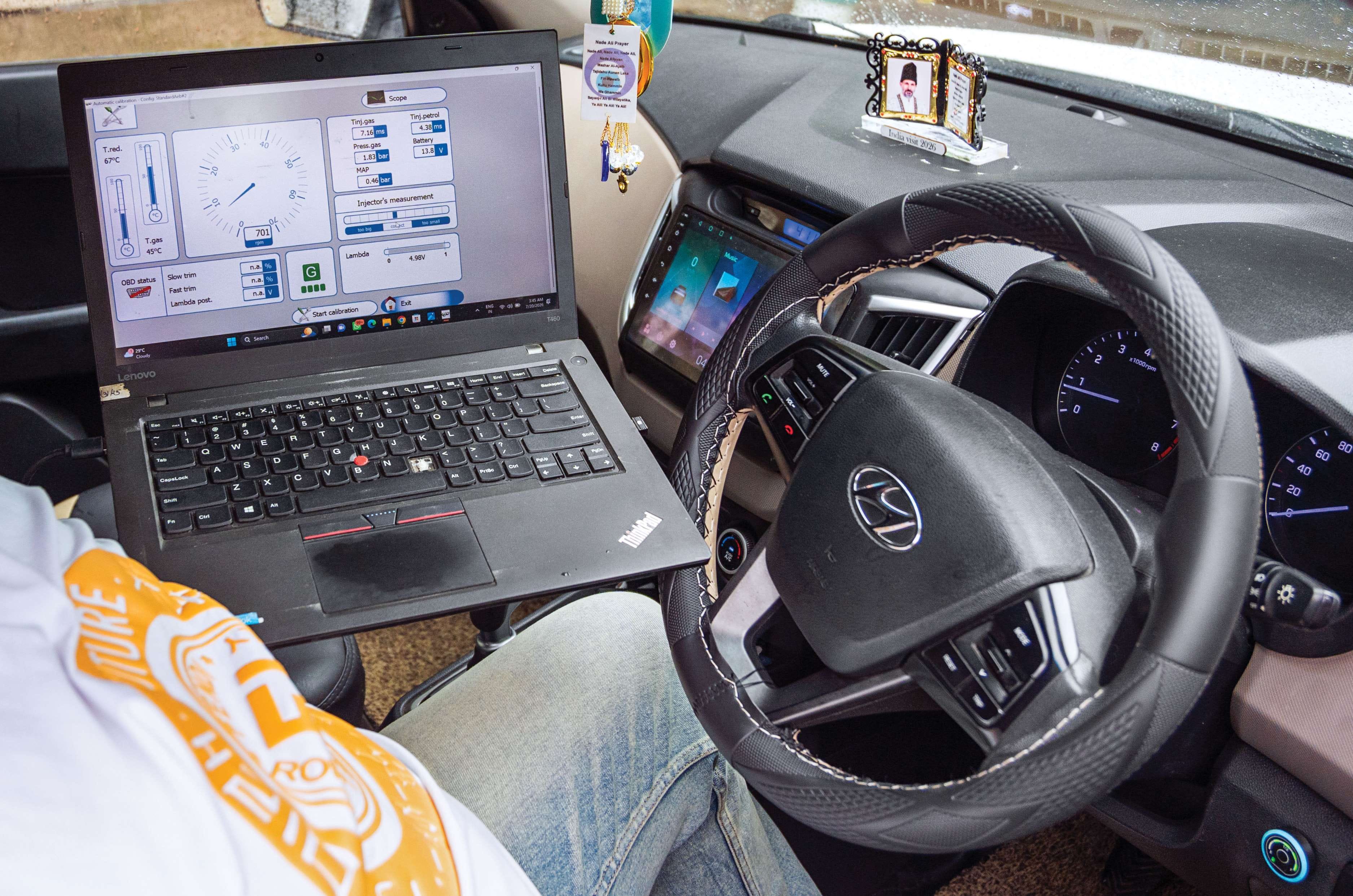
Controlling the injector rail is an Electronic Control Unit (ECU) that uses signals from the MAP sensor and communicates with the car’s original ECU to dictate the amount of CNG being injected and the timing. Modern kits also come with a comprehensive wiring harness that can plug into the car’s original wiring via OBD connectors. Older pre-BS6 cars, however, may require some wire splicing. Optionally available is an Advancer, which advances ignition timing when running on CNG and negates some of the power loss, particularly on smaller-capacity engines. Some sedans and hatchbacks also require a rear coil spring spacer to compensate for the added weight of the tank in the boot.
How a CNG kit is installed
A professional CNG installation takes around 4 to 5 hours to complete. Here’s what happens behind the workshop doors.
Health check
The engine is inspected to ensure it’s suitable for CNG conversion. A basic service is performed if required, with spark plugs and ignition coils replaced as needed and the throttle body cleaned.
Components positioned
The reducer and its pressure gauge are mocked up in the engine bay before mounting points are marked and drilled. The filler valve may be located alongside them or next to the petrol filler cap, depending on the vehicle.
Injectors installed
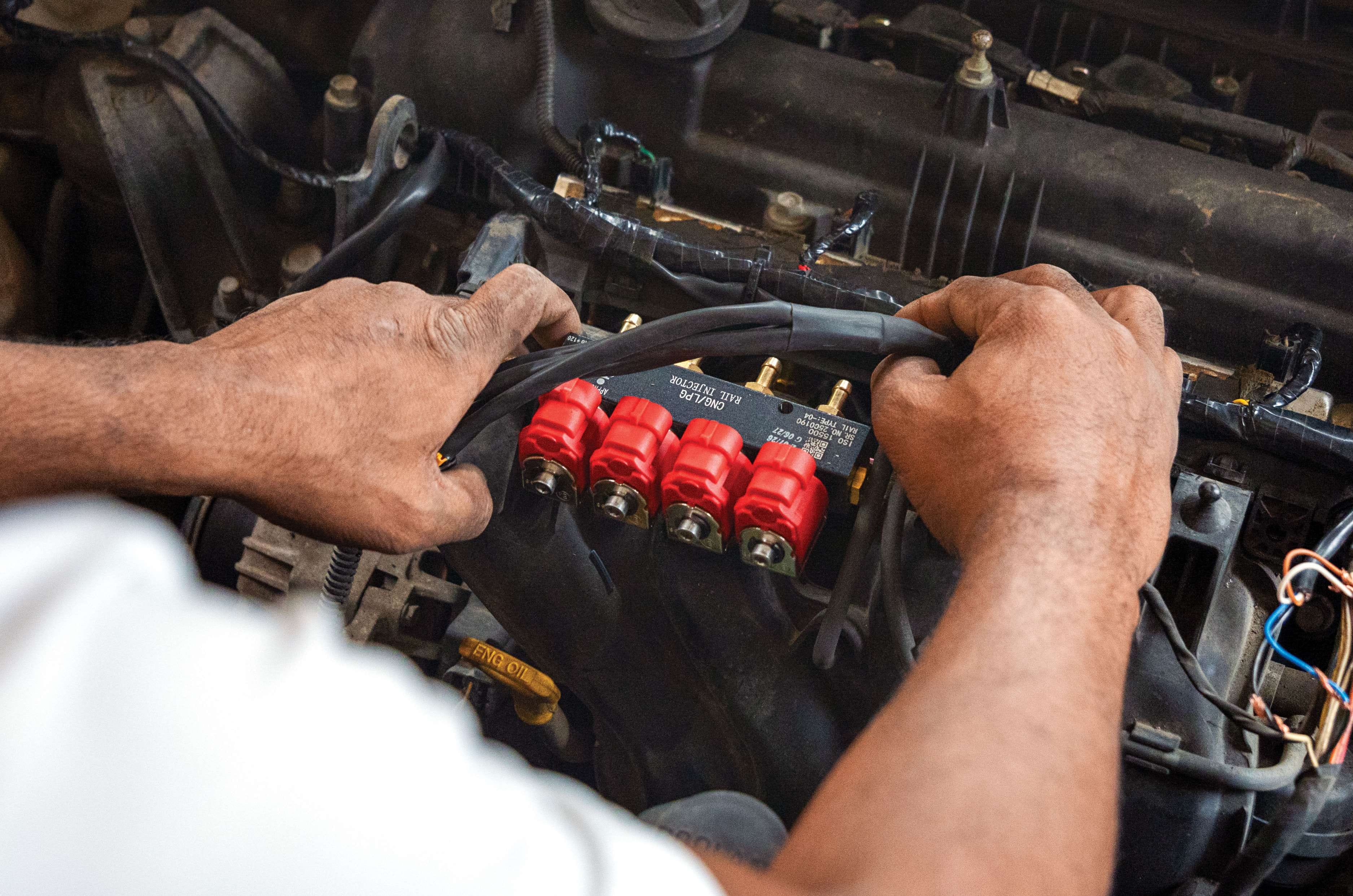
The CNG injector rail is mounted on its dedicated bracket close to the petrol injectors. This will send CNG to corresponding nozzles that are drilled and fitted into the vehicle’s plastic intake manifold.
ECU wired in
The CNG ECU is mounted alongside the factory ECU and connected to the vehicle’s wiring loom. The harness is neatly routed and secured away from heat and moving parts.
Plumbing completed
Reinforced rubber gas hoses are cut to length and connected between the reducer, injector rail and the intake manifold. A MAP sensor and a filter are also installed as part of the system.
Tank prepared
The CNG tank is temporarily mounted to a rig that holds it in place while the shut-off valve and associated fittings are installed before everything is torqued down.
Tank frame installed
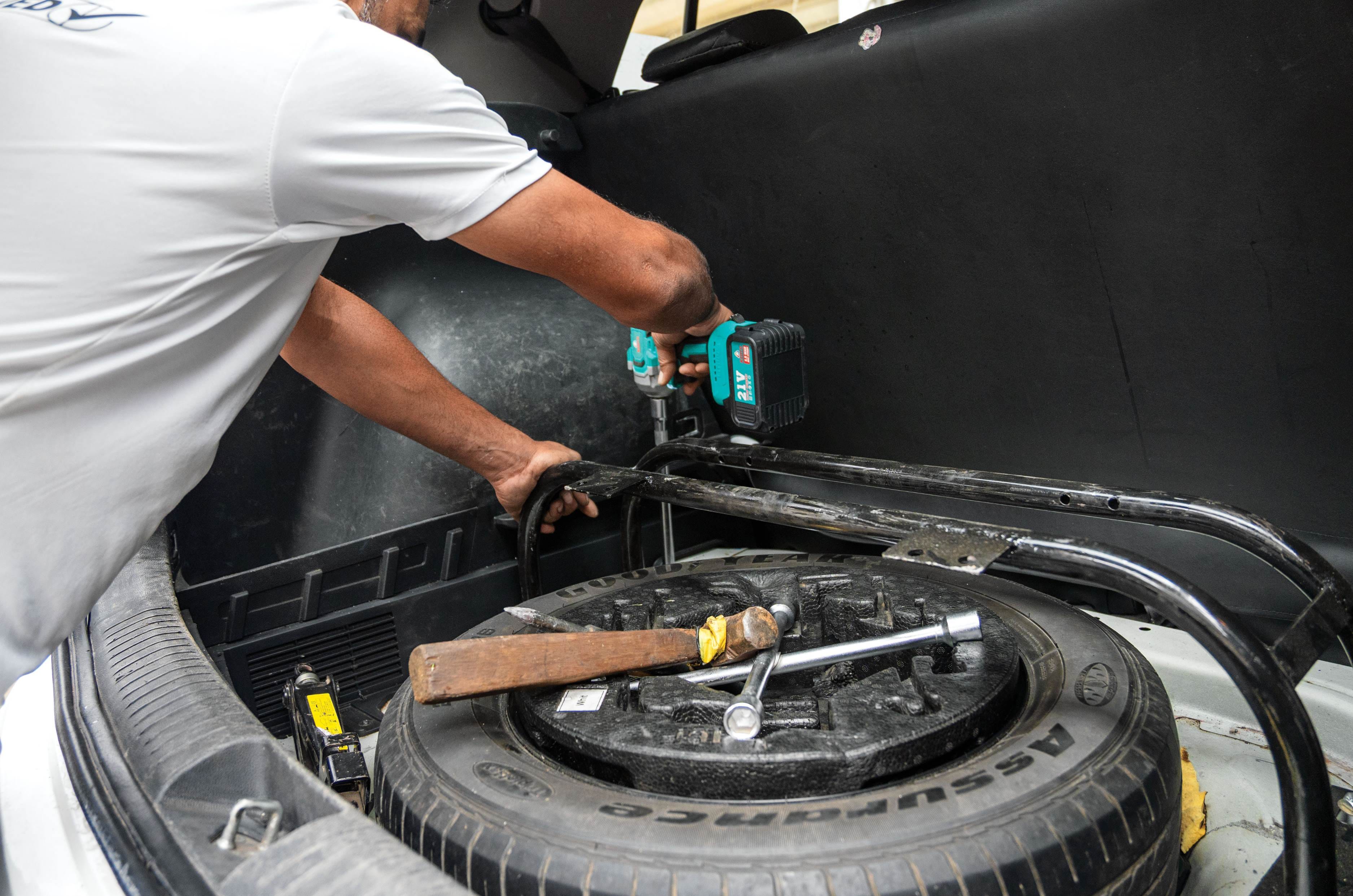
The mounting frame is positioned inside the boot, holes are drilled through the floor, and reinforced brackets securely bolt it to the vehicle’s structure.
Tank fitted
The CNG cylinder is secured to the frame using heavy-duty metal straps and bolts before being covered with a carpeted shroud for a neat factory-like finish.
High-pressure line routed
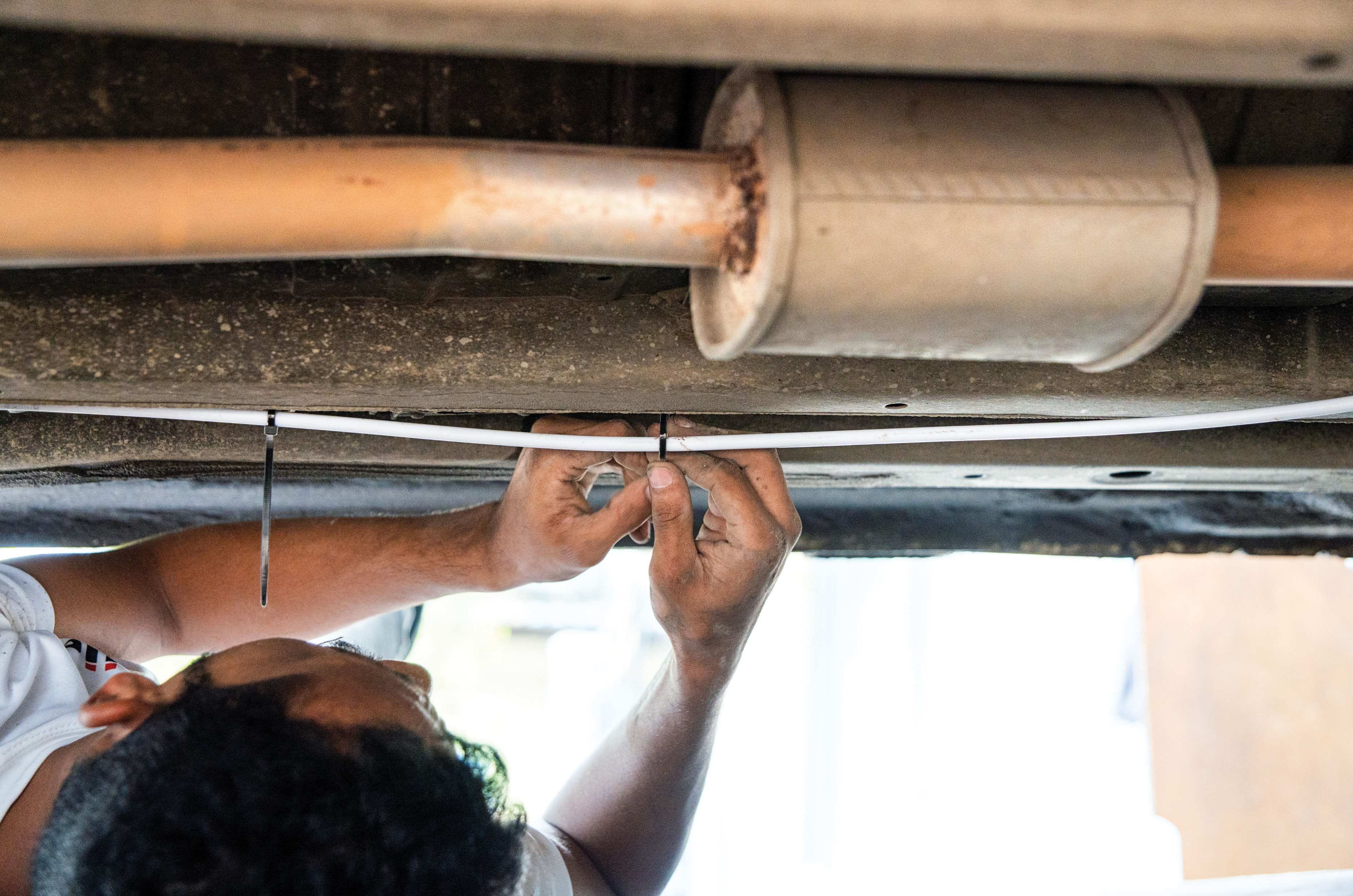
Polymer-coated steel high-pressure pipes are routed beneath the car, connecting the CNG filler valve, the tank and the reducer under the bonnet.
Electrical connections
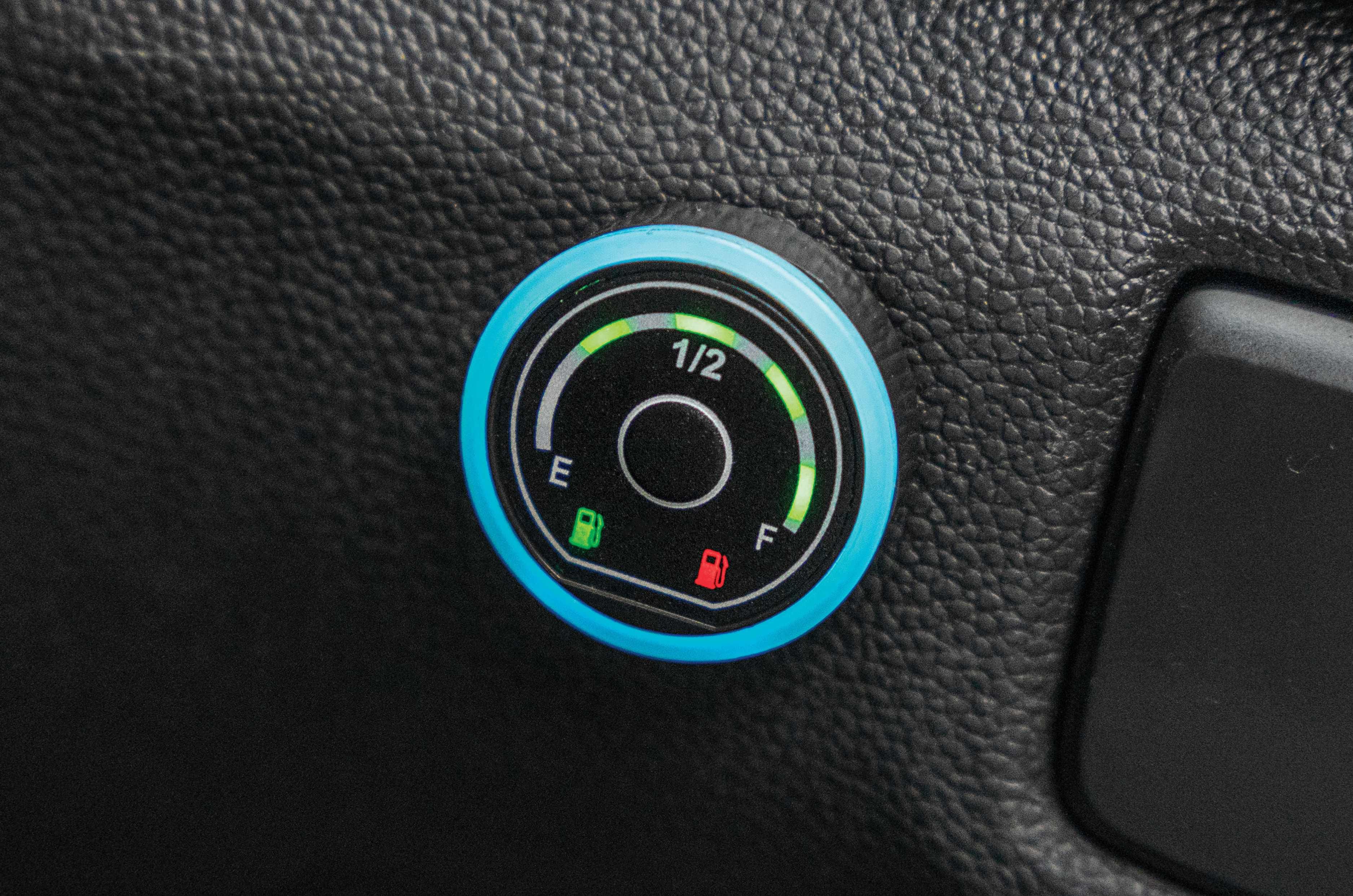
The remaining wiring is completed and a dashboard-mounted CNG switch is installed, allowing the driver to monitor fuel level and switch between petrol and CNG.
Leak test
Around 2kg of CNG is added and every connection is checked using an electronic gas detector and good old-fashioned soap solution to ensure the entire system is leak-free.
Calibration and road test
The system is calibrated using dedicated software to optimise fuel delivery and switchover settings. A final road test confirms performance before the vehicle is delivered to the customer.
Why go aftermarket?
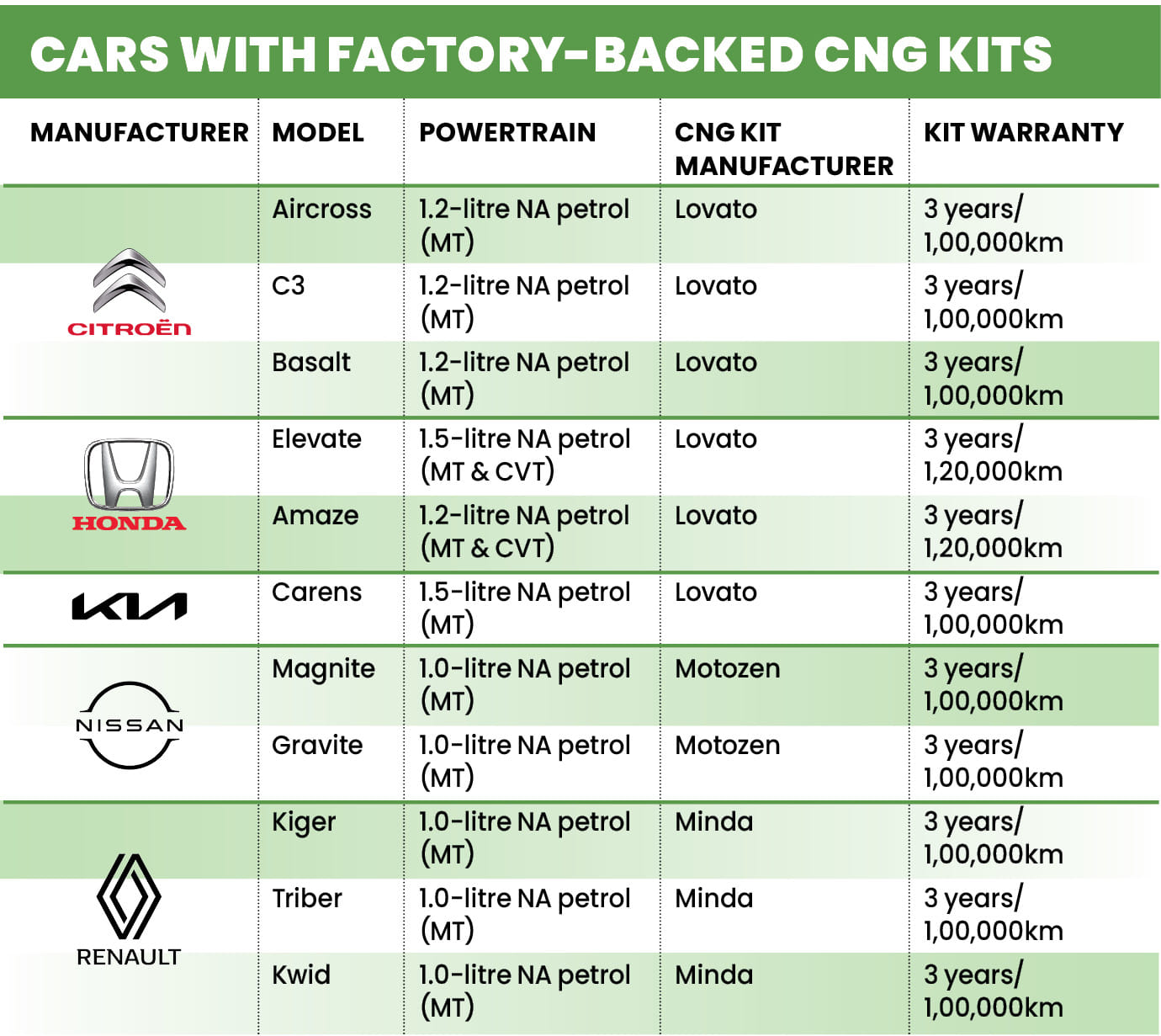
On average, an aftermarket CNG installation costs around 25 to 30 percent less than the premium a factory-fitted CNG variant commands over its petrol counterpart. However, this alone is not enough to swing the scales in favour of the aftermarket due to the disadvantages we will get into later. The bigger advantage the aftermarket holds is the ability to convert models or variants that do not come with a CNG option. For instance, Maruti Suzuki only offers its factory-fitted CNG cars with a manual transmission, so if you want one with an automatic, an aftermarket CNG kit is your only option.
Similarly, popular SUVs like the Hyundai Creta and Kia Seltos are not available in CNG guise, which leads many owners to turn to the aftermarket. Owners of older cars, or those buying used cars, can also convert them to CNG for a fairly affordable price and enjoy significantly lower running costs. CNG is spark-ignited, thus only petrol cars can be converted to run on the gas. Since diesel cars use compression-ignition, they would need far too many modifications to make this possible. Strong hybrids are also not recommended for conversions, as here, the engine keeps switching on and off too often, which makes CNG calibration complex. Cars that are not in good mechanical shape should also not be converted to CNG, as the conversion can take a toll on the overall engine health.
For a car in generally good shape, aftermarket kits are proving to be reliable in the long run, provided they are well maintained. Most modern sequential kits from brands like Lovato and Mijo are also comparable in quality to OEM systems, and reputed, authorised installers are able to achieve near-OEM levels of fitment.
The catch
Fitting an aftermarket CNG kit – even if it is government-approved and fitted by an authorised installer – is grounds for the manufacturer warranty to be voided. While some brands may still honour warranty claims that are unrelated to the powertrain, it remains a grey area. Some dealer-fitted CNG kits do retain the factory warranty, while others provide a third-party warranty in its place.
Aftermarket installers have also begun offering third-party warranties in collaboration with insurance companies to provide coverage in place of the factory warranty. This, however, is in addition to the cost of the CNG kit. The kits themselves generally come with a warranty ranging from one to two years.
Packaging is also one area where the aftermarket trails OEMs. While Maruti, Tata and Hyundai are now offering underbody and dual-tank setups to retain a usable boot, the aftermarket still largely uses larger single tanks that take up more space.
Staying fit
As per law, any CNG tank – aftermarket or OEM fit – must be hydrotested every three years. For this, the tank must be removed from the vehicle and sent to a dedicated facility. While the process itself takes only a couple of hours, hydrotesting facilities are usually located outside major cities, adding transport time to the process. A hydrotest typically costs around Rs 3,000 per tank.
The CNG filter should also be replaced at the same three-year or 10,000km interval, whichever comes first. This typically costs under Rs 1,000 and is fairly straightforward. It is also recommended to drive on petrol at least 10 percent of the time to keep the fuel system healthy. Finally, it is important that the engine’s service schedule is strictly followed.
The legal bit
Aftermarket CNG installations are legal as long as the kit is government-approved, fitted by an approved installer and the registration certificate (RC) is updated accordingly. Most approved installers will handle the RC update at the Regional Transport Office (RTO) as part of the service. Once this is complete, the owner must also update the insurance provider.
The verdict
Maruti Ertiga’s factory-fitted CNG tank shown for representative purposes only.
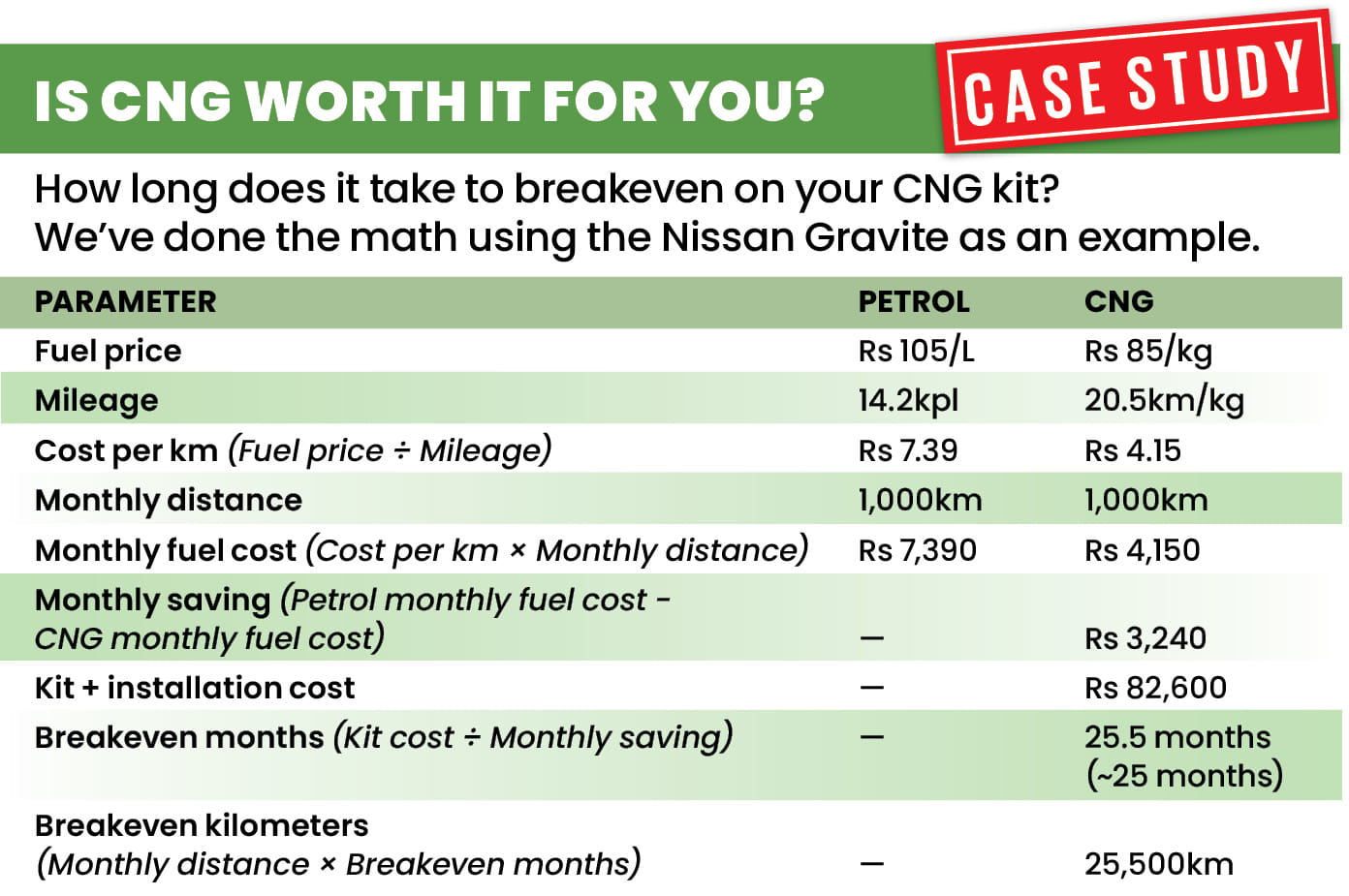
There is no denying the running cost advantage that CNG provides. However, when buying a brand-new car, a factory-fitted CNG version is still preferable to an aftermarket conversion simply because of the peace of mind. Once a car is out of warranty, though, a CNG conversion makes a great deal of sense. In most cases, the cost of the kit can be recouped within a couple of years, even with an average monthly running of around 1,500km.
However, the installer is just as important as the kit. Always opt for government-approved kits installed by approved installers with a strong reputation. Wherever possible, insist the installation is carried out without splicing into the original wiring and follow the recommended service schedule to ensure your car stays reliable.
आज के दौर में लोग किसी के कुछ कहने पर तुरंत जवाब देने लगते है, लेकिन हर बात पर रियेक्ट देना जरूरी नहीं होता। कई बार चुप रहना, लोगों की बातों को नजरअंदाज करना और अपनी सोच पर कायम रहना ही सबसे बड़ी ताकत होती है। ऐश्वर्या राय बच्चन का एक पुराना विचार भी इसी बात को सामने रखता है कि शोर मचाना और अपनी बात साबित करने की कोशिश करना आसान है, लेकिन बिना कुछ कहे शांत रहना और खुद पर भरोसा रखना असली हिम्मत है।
उनका यह विचार सिर्फ सेलिब्रिटी की लाइफ में ही नहीं, बल्कि आम जिंदगी में भी काफी काम आ सकता है। हर बहस का जवाब देना, हर अफवाह पर सफाई देना मानसिक रूप से थका सकता है। कई बार समय के साथ सच खुद सामने आ जाता है और ऐसे में शांत रहना उसकी कमजोरी नहीं, बल्कि समझदारी और सेल्फ-कॉन्फिडेंस को दिखाता है।
1. खुद पर भरोसा रखें
इस विचार की सबसे बड़ी सीख यही है कि हर किसी की राय को अपने ऊपर हावी नहीं होने देना चाहिए। यदि आपको अपने डिसीजन और अपनी सच्चाई पर भरोसा है, तो हर व्यक्ति को समझाने की जरूरत नहीं होती। ऐश्वर्या की बात यह संदेश देती है कि छोटी-छोटी बातों में उलझने के बजाय अपने काम पर ध्यान देना अच्छा है।
2. खामोशी को बनाये ताकत
ऐश्वर्या राय बच्चन ने एक पुराने इंटरव्यू में कहा था कि चुप रहने में बहुत ताकत होती है। उनका मानना था कि गुस्से में तुरंत बोल देना या अपनी बात जोर-जोर से रखना आसान है, लेकिन किसी सिचुएशन में शांत रहना ज्यादा मुश्किल होता है। जब कोई दूसरों की बातों के बावजूद खुद पर भरोसा रखता है, तो उसे बार-बार सफाई देने की जरूरत महसूस नहीं होती।
3. हर बात पर रियेक्ट न करें
लोगों की राय, अफवाहों या आलोचना का सामना हर किसी को करना पड़ सकता है। ऐसी सिचुएशन में तुरंत प्रतिक्रिया देने से बात और बढ़ सकती है। ऐश्वर्या की कही बात यह समझाती है कि हर आरोप या चर्चा का जवाब देना जरूरी नहीं होता। कभी-कभी चुप रहकर समय को अपना काम करने देना बेहतर होता है। इससे बेवजह का स्ट्रेस कम होता है।
4. समय खुद देगा जवाब
हर बात का जवाब शब्दों से देना जरूरी नहीं होता। कई बार शांत रहकर अपने काम पर ध्यान देना ही सबसे बेहतर जवाब बन जाता है।बेवजह की बहस या लोगों को समझाने में अपनी एनर्जी खर्च करने के बजाय धैर्य रखना और अपने काम से खुद को साबित करना ज्यादा बेहतर हो सकता है।
5. पर्सनल लाइफ प्राइवेट रखें
फिल्म इंडस्ट्री में रहने के कारण ऐश्वर्या राय बच्चन लंबे समय से लोगों और मीडिया की नजरों में रही हैं। उनकी प्राइवेट लाइफ और करियर को लेकर भी कई तरह की बातें होती रही हैं। उनकी सोच यह बताती है कि अपनी प्राइवेट लाइफ को हर किसी के सामने साबित करने या समझाने की जरूरत नहीं है। कई बार अपने तक रखना ही सही होता है।
ऐश्वर्या राय बच्चन की इस बात की सीख यही है कि हर सिचुएशन में बोलना या खुद को सही साबित करना जरूरी नहीं होता। कई बार शांत रहना और कम बोलना ज्यादा बेहतर होता है। इसलिए अगली बार जब कोई बात आपको परेशान करे, तो तुरंत रियेक्ट देने के बजाय थोड़ा रुकें, सोचें और जरूरत हो तो चुप रहना चुनें।
अच्छी नौकरी, बड़ा पैकेज और तेजी से बढ़ती सैलरी आज के दौर में इन्हें सफलता की पहचान माना जाता है। लेकिन सोशल मीडिया पर वायरल हुई एक कहानी ने इस सोच पर सवाल खड़ा कर दिया है। कहानी एक ऐसे सॉफ्टवेयर इंजीनियर की है, जिसकी सालाना कमाई करीब ₹5-6 लाख है, लेकिन उसकी जिंदगी में वह चीज मौजूद है जिसे कई ज्यादा कमाने वाले लोग अब भी तलाश रहे हैं सुकून और अपने समय पर नियंत्रण।
कॉलेज के दोस्त से मॉल में हुई अचानक मुलाकात
X पर पूजा नाम की यूजर ने अपने पुराने कॉलेज क्लासमेट की कहानी साझा की। ग्रेजुएशन के करीब 4-5 साल बाद दोनों की अचानक एक मॉल में मुलाकात हुई। बातचीत के बाद पूजा को उसके दोस्त की जिंदगी के बारे में कई ऐसी बातें पता चलीं, जिन्होंने उसे अपनी ही जिंदगी पर दोबारा सोचने के लिए मजबूर कर दिया।
वह एक छोटी कंपनी में सॉफ्टवेयर इंजीनियर के तौर पर काम करता है और करीब ₹5-6 लाख सालाना कमाता है। कागज पर उसका करियर शायद बहुत चमकदार न लगे, लेकिन उसकी जिंदगी काफी व्यवस्थित और संतुलित नजर आती है।
कम कमाई में पहले घर का सपना पूरा किया
उस दोस्त ने कम आय के दौर में ही सरकारी आवास योजना के जरिए अपना घर खरीद लिया था। अब उसका होम लोन अगले साल तक खत्म होने की उम्मीद है। परिवार की आर्थिक स्थिति को मजबूत बनाने में उसकी पत्नी की नौकरी भी अहम भूमिका निभाती है, जो सरकारी स्कूल में शिक्षिका हैं। यानी बड़े पैकेज की दौड़ में शामिल होने के बजाय उसने कम जरूरतों के साथ स्थिर जिंदगी बनाने पर ध्यान दिया।
न महंगी कार, न दिखावे की जिंदगी
इस कहानी का सबसे दिलचस्प पहलू उसका लाइफस्टाइल है। वह रोजमर्रा के सफर के लिए मुख्य रूप से सार्वजनिक परिवहन का इस्तेमाल करता है। पढ़ने के लिए स्थानीय लाइब्रेरी की सदस्यता ले रखी है और परिवार के इलाज के लिए सरकारी अस्पतालों की किफायती स्वास्थ्य सेवाओं का लाभ उठाता है। जहां आज कई लोग अपनी कमाई बढ़ने के साथ खर्च और इच्छाएं भी बढ़ाते जाते हैं, वहीं उसने अपनी जरूरतों को सीमित रखना चुना।
होम लोन खत्म होते ही नौकरी छोड़ने का प्लान
कहानी का सबसे चौंकाने वाला हिस्सा उसका भविष्य का प्लान है। होम लोन खत्म होने के बाद वह एक छोटी सी स्थानीय किराना दुकान खोलना चाहता है और सॉफ्टवेयर की नौकरी छोड़ने का मन बना चुका है। उसका सपना करोड़ों की संपत्ति बनाना या बड़ी कॉर्पोरेट पोस्ट हासिल करना नहीं है। वह ऐसी जिंदगी चाहता है, जिसमें उसके पास अपने समय पर ज्यादा अधिकार हो।
ज्यादा कमाने के बावजूद पूजा को क्यों हुआ पछतावा?
अपने दोस्त की जिंदगी देखकर पूजा ने अपनी स्थिति की भी तुलना की। उसने बताया कि वह उससे ज्यादा कमाती है, लेकिन कॉर्पोरेट नौकरी के साथ ऑफिस पॉलिटिक्स, मैनेजर, लगातार डेडलाइन और काम के दबाव जैसी परेशानियां भी जुड़ी हैं। यहीं से सवाल उठता है अगर ज्यादा कमाई के बदले लगातार तनाव और समय की कमी मिल रही हो, तो क्या वह जिंदगी वास्तव में ज्यादा समृद्ध है?
असली अमीरी शायद बैंक बैलेंस से आगे है
इस वायरल कहानी ने सोशल मीडिया पर वित्तीय स्वतंत्रता की एक अलग तस्वीर सामने रखी है। जरूरी नहीं कि आर्थिक आजादी का मतलब करोड़ों रुपये की संपत्ति या बड़ा निवेश पोर्टफोलियो ही हो। कई बार कम खर्च, सीमित जरूरतें, कर्ज से मुक्ति और अपने समय पर नियंत्रण भी किसी व्यक्ति को ऐसी आजादी दे सकते हैं, जिसे बड़ी सैलरी के बावजूद हासिल करना मुश्किल होता है।
My friend earns just ₹5-₹6 LPA,
yet he has achieved what people keep chasing even after making crores,
“Peace of Mind.”
We were just classmates in college. Around 4-5 years later,
I randomly ran into him at a mall.
Later, I found out that he lives just a few kilometres from…
सोशल मीडिया पर लोगों ने कहा- ‘सुकून भी तो दौलत है’
कहानी सामने आने के बाद कई यूजर्स ने माना कि सफलता का पैमाना हर व्यक्ति के लिए अलग हो सकता है। कुछ लोगों ने इसे इस बात की याद दिलाने वाला उदाहरण बताया कि बड़ा वेतन हमेशा बड़ी खुशी की गारंटी नहीं देता। आखिरकार, शायद असली सवाल यह नहीं है कि आप कितना कमाते हैं, बल्कि यह है कि अपनी कमाई के बदले आप कितना सुकून, समय और आजादी बचा पाते हैं।