Scooter sales hit record high in first half of FY2027

Scooter sales hit record high in first half of FY2027
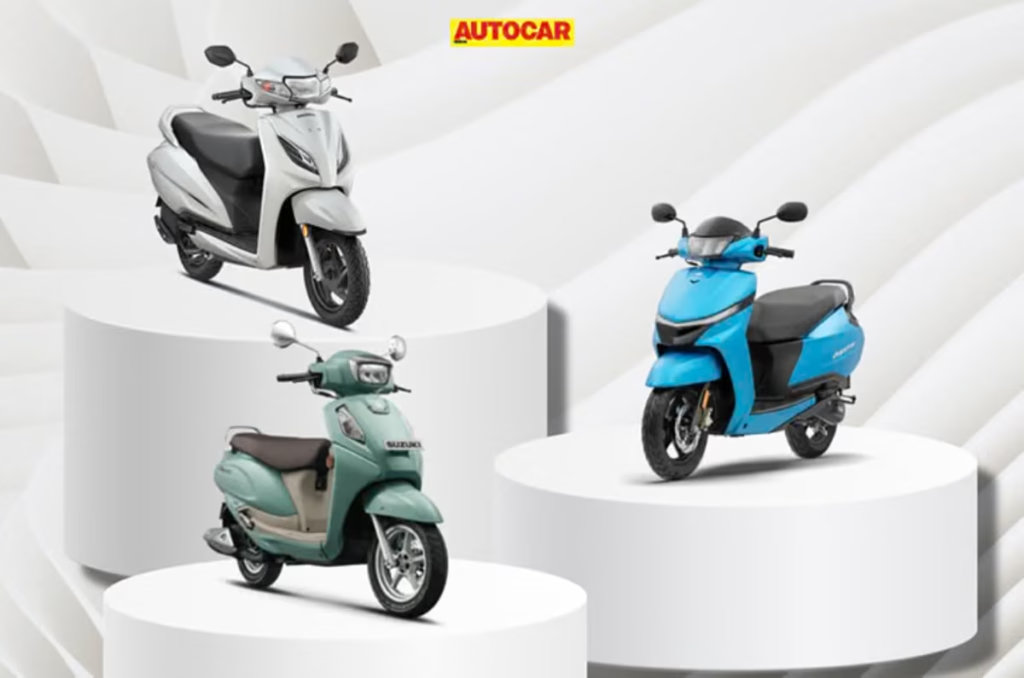
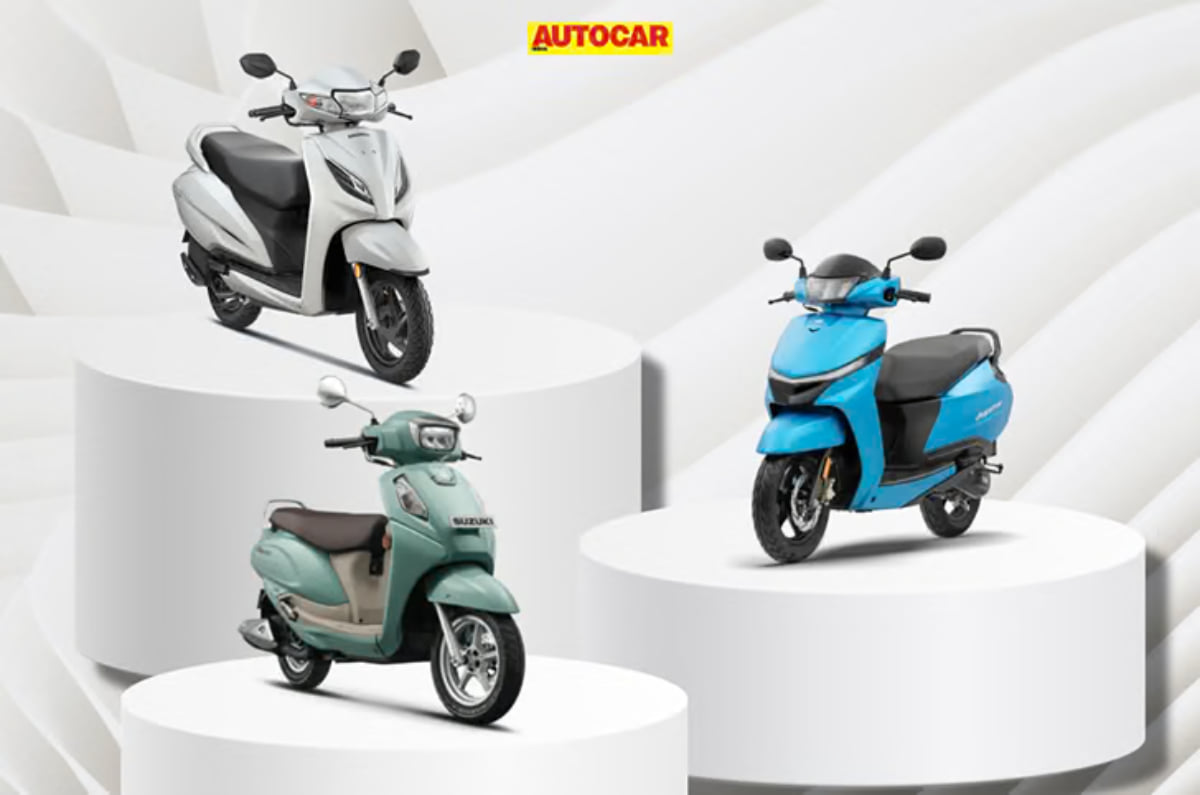
Graphic with Activa, Jupiter, and Access on a podium

Two-wheeler manufacturers have dispatched a record 48,65,192 scooters in the domestic market in the first half (H1) of FY2027. That’s an additional 10.8 lakh units over the same period last year, representing a 29 percent increase. The six-month period included two monthly records: April 2026 opened as the best-ever April, with 6,91,993 units, while September registered 9,95,576 units – the highest monthly total ever for the category and just 4,424 units short of the million-unit (10 lakh) milestone.

Zooming out, the scale of the growth becomes clearer. Scooter sales have more than doubled over 12 years. In H1 FY2016, the total was 2.4 million units, whereas FY2027’s first half has already reached about 60 percent of FY2026’s full-year record of 8.11 million units.

Electric scooters double, claim a 20 percent share

Honda leads overall, TVS grows faster

The fastest-growing part of the segment is electric. E-scooter wholesales hit 9,78,017 units in H1 FY2027, up 103 percent year-on-year from 4,81,199 units in H1 FY2026. This surge has pushed EVs’ share of total scooter sales from 13 percent to 20 percent in a single year.

TVS Motor Company leads the e-scooter market, with 3,05,972 iQube and Orbiter units dispatched, up 107 percent year-on-year, giving it a 31 percent share. Bajaj Auto is second, with 2,60,982 Chetak and Yulu units – a 116 percent jump – and a 27 percent share. Together, the two account for 58 percent of all e-scooters sold in the first half. Ather Energy, with 1,71,611 units and 56 percent growth, held third place, though its share dipped from 23 percent to 18 percent as the market expanded. Hero MotoCorp’s Vida dispatched 1,33,964 units, up 118 percent, for a 14 percent share.

The three Japanese players – Honda, Suzuki and Yamaha – collectively sold 12,523 e-scooters, accounting for a combined 1 percent share. Honda led the group with 7,010 units, up 176 percent.
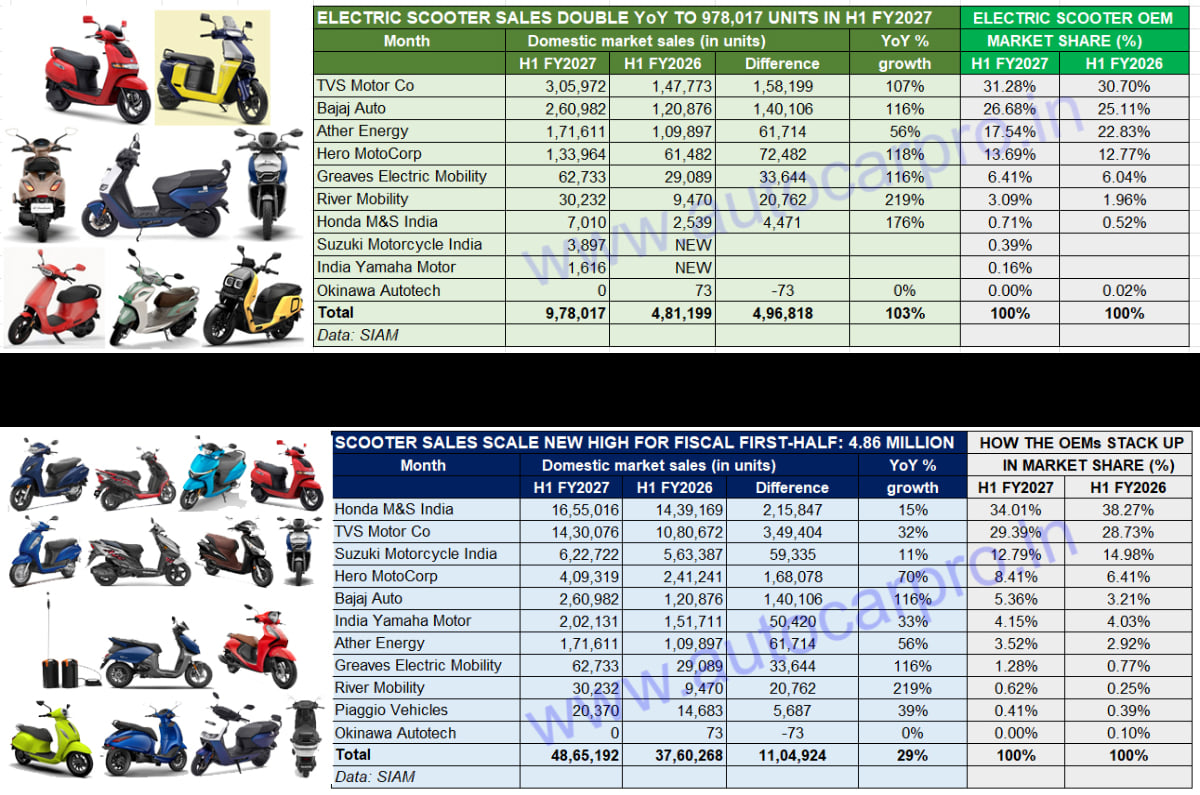
Across ICE and EV models combined, Honda Motorcycle & Scooter India remains the category leader with 1.65 million units, up 15 percent, although its market share has dipped from 38 percent to 34 percent. TVS Motor Company is in second place with 1.43 million units and 32 percent growth, adding 3,49,404 units year-on-year. Nearly half of that incremental volume came from its electric lineup.

Suzuki, with 6,22,722 units and 11 percent growth, and Hero MotoCorp, with 4,09,319 units and 70 percent growth, hold third and fourth place, respectively. Bajaj Auto has climbed to fifth with 2,60,982 units and 116 percent growth, displacing Yamaha, which recorded 2,02,131 units, up 33 percent. Ather Energy is seventh with 1,71,611 units, while River Mobility has entered the top 10, overtaking Piaggio with 30,232 units of the Indie scooter.

With the festive season now underway, the industry will be looking to convert the strong H1 momentum into retail sales. Whether Q3 and Q4 can sustain the near-30 percent growth rate needed to push scooter sales past 10 million units for the first time remains to be seen, but the trajectory points firmly in that direction.
 

Scooter industry records highest-ever monthly sales in September 2026

Scooter industry records highest-ever monthly sales in September 2026
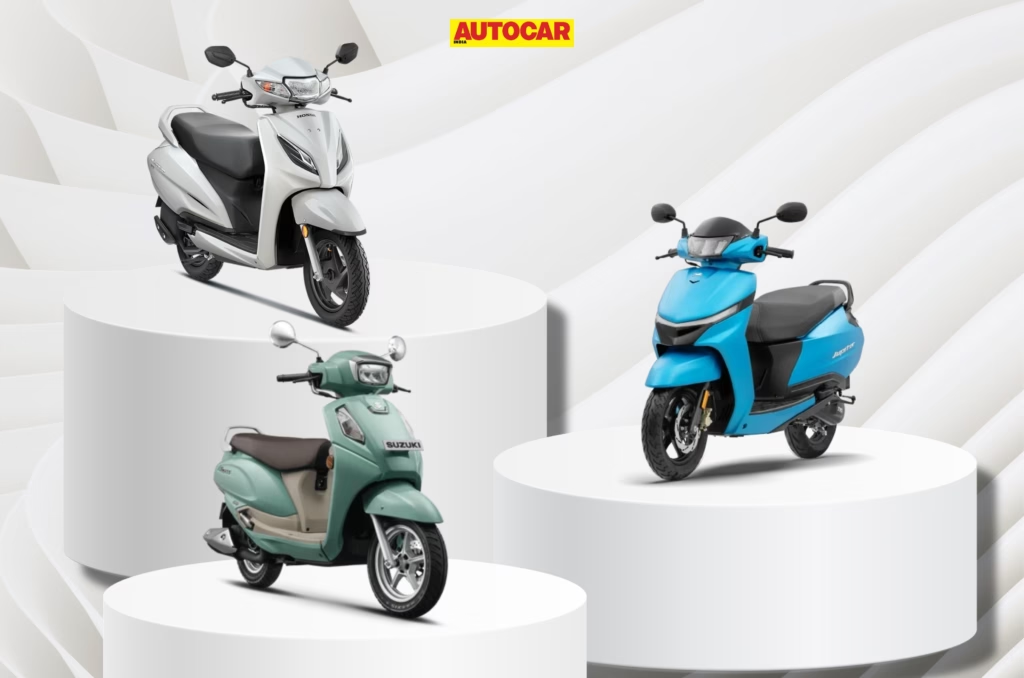
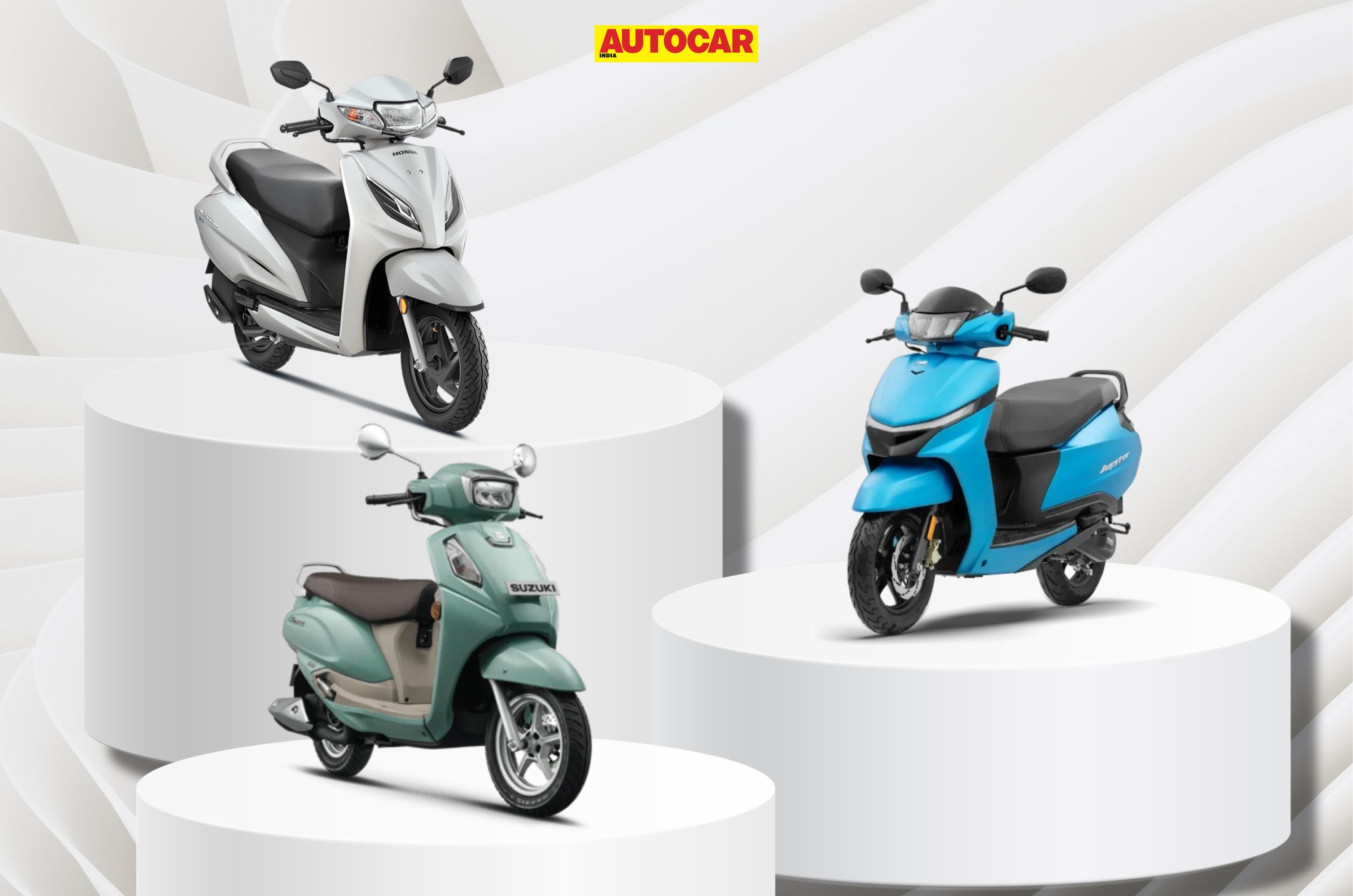
Graphic with the three highest selling scooter models - Activa, Jupiter, and Access

The Indian scooter industry has hit a new milestone, recording its highest-ever monthly dispatches in September 2026. A total of 9,95,576 scooters were dispatched during the month, marking a substantial 34 percent jump over the 7,42,602 units sold in September 2025 and comfortably surpassing the previous monthly record of 8,55,715 units set just a month earlier, in August 2026.

  1. Highest monthly total in the segment’s history, falling just 4,424 units short of the 10 lakh mark
  2. Honda led with 3,83,035 units, followed by TVS at 2,77,115 units
  3. Electric scooter dispatches reached 1,86,692 units

September 2026 scooter sales

Honda and TVS dominate sales

Honda Motorcycle and Scooter India led the segment by a wide margin, dispatching 3,83,035 units – a 46 percent year-on-year increase – to claim roughly 38 percent of the market. TVS Motor Company was second with 2,77,115 units, up 29 percent, accounting for around 28 percent of the market. Together, the two OEMs accounted for approximately two-thirds of all scooter dispatches during the month.

Suzuki and Hero MotoCorp rounded out the top four, with 1,06,274 units (+1 percent) and 96,254 units (+67 percent), respectively.

Electric scooters continue their climb

The electric segment had another strong showing, with 1,86,692 scooters dispatched in September – a 68 percent year-on-year increase. This was the second-highest month on record for electric scooters, behind only August 2026, when dispatches reached 1,88,714 units.

TVS led the charge in terms of EV volumes, with its iQube and Orbiter models together clocking 62,347 units – more than double the year-ago figure. Hero MotoCorp’s Vida range sold 28,962 units, up 88 percent, while Bajaj’s Chetak posted 28,862 units, also up 88 percent. Ather Energy dispatched 30,121 units, a 20 percent increase, with its recently launched mass-market Konarc expected to add further momentum.

For the April-September period, scooter dispatches totalled 48.2 lakh units, up 29 percent year-on-year, underlining the segment’s consistent growth trajectory heading into the festive second half of the fiscal year.

VLF Strada launched from Rs 1.20 lakh

VLF Strada launched from Rs 1.20 lakh
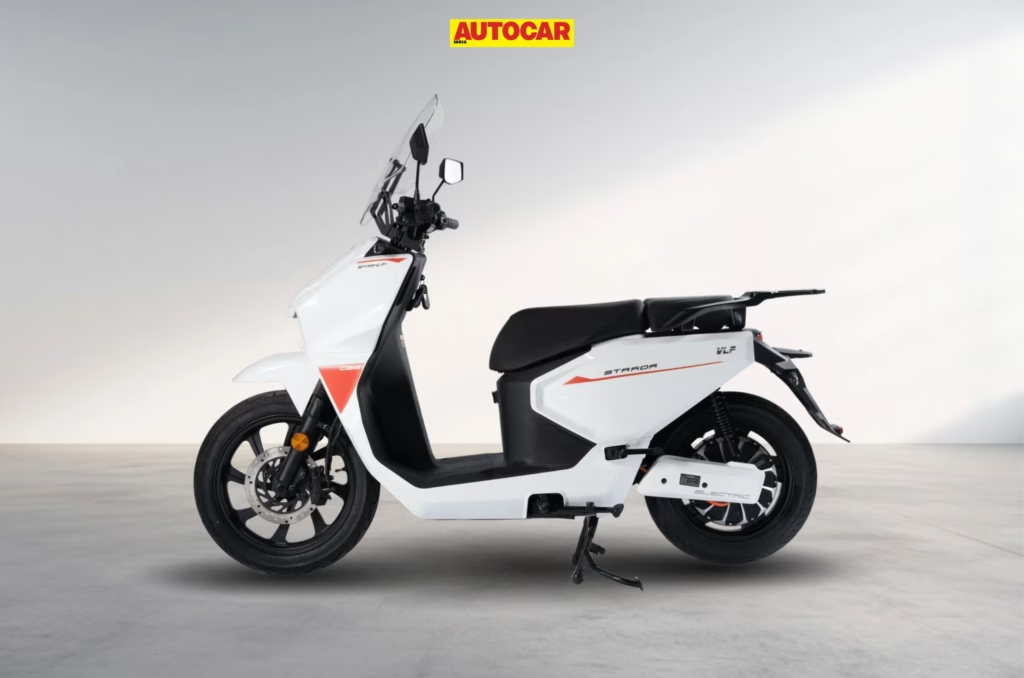
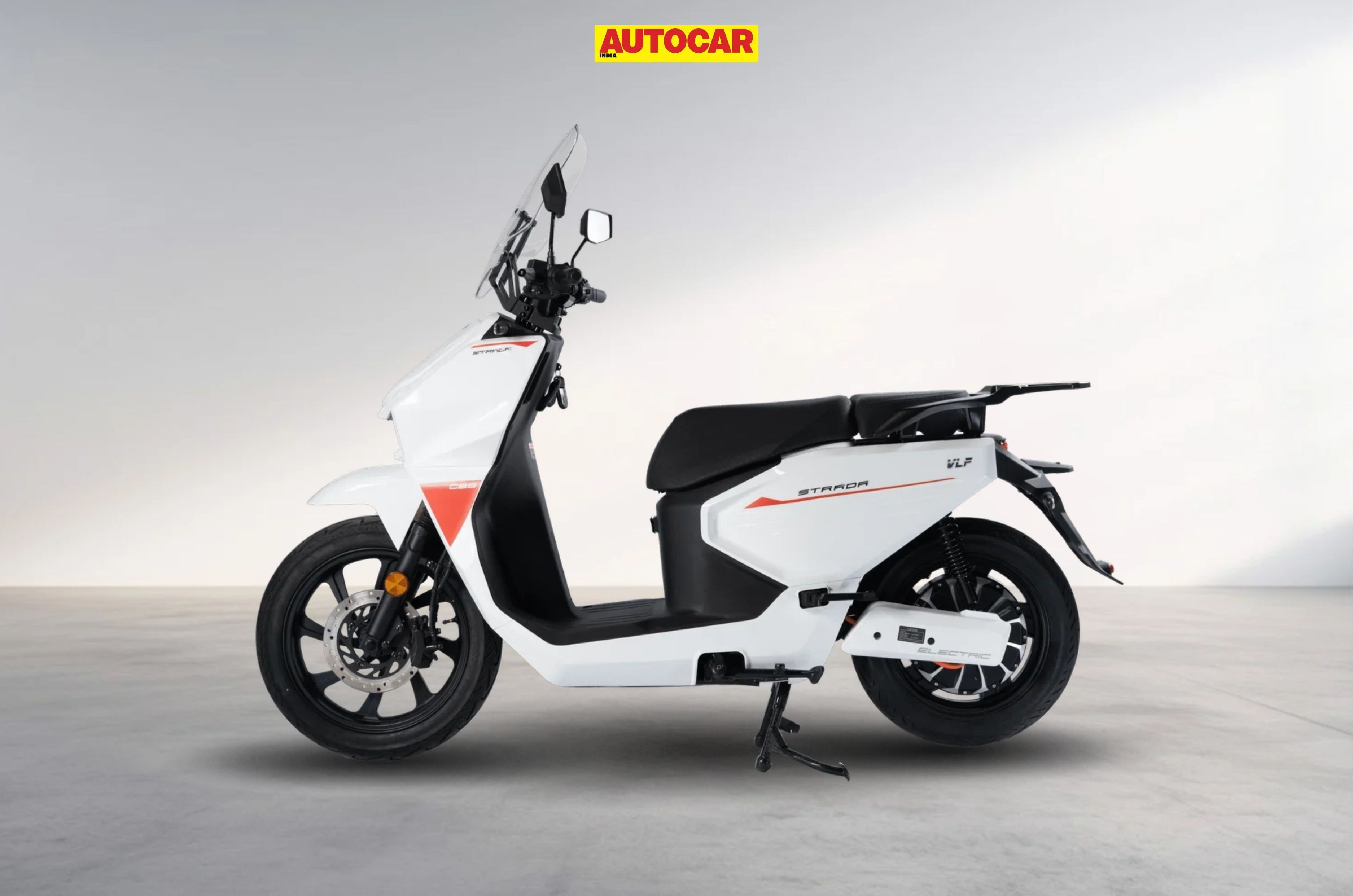
VLF Strada's left profile in Luna White colour.

VLF (or Velocifero) is a brand with Italian heritage but manufactures its scooters in Zhejiang, China. Kolhapur-based Motohaus brought VLF to India in 2024 and manages sales and service in the country. The company has introduced a new electric scooter named Strada in two variants, priced at Rs 1.20 lakh and Rs 1.55 lakh, meant to replace the Tennis, its first launch in India.

  1. City variant has a 2.16kWh removable battery
  2. Max variant has two removable units with 4.32kWh total capacity
  3. Rated top speed is 85kph in the top Sport ride mode
  4. Bookings are open for Rs 999 for the City and for Rs 1,999 for the Max

VLF Strada details

Two variants and a shared 4.8kW BLDC motor

The Strada has two variants, City and Max, both of which share a BLDC, hub-mounted motor with 4.8kW peak power and 34Nm of peak torque; rated power is 3kW. The base City variant has a single 2.16kWh removable LFP battery, and the Max variant doubles that to two batteries with a total capacity of 4.32kWh. Both the motor and the battery units are rated for IP67 ingress protection. There are three ride modes on offer: Eco, City and Sport. Depending on the ride mode, the top speed varies as well. Eco tops out at 45kph, City at 65kph and Sport at 85kph.

The IDC range is 130km for City and 250km for Max. VLF claims the single battery system can charge from 20-100 percent in three hours, and the same takes six hours for both batteries. The company hasn’t specified the charging speed to achieve these times, nor has it mentioned the wattage of the bundled charger. We’re currently awaiting clarifications on the same.

VLF has designed the Strada with a sporty look, but the scooter’s dimensions should make it accessible to most people. It has a split-seat configuration with a seat height of 780mm without compromising on the ground clearance, which is a healthy 175mm. VLF has listed the kerb weight of the scooter at a surprisingly light 98kg, and this is likely for the City variant with the smaller battery pack. The Max variant should weigh notably more. Front and rear suspension units are par for the course, with a 31mm telescopic fork and a preload-adjustable twin shock.

Tyre size is an area where the Strada stands out, quite literally, with a 16-inch front wheel and a 14-inch rear. In the scooter segment, most options tend to stick to 10-14-inch tyres, and therefore this is certainly an interesting move from VLF. Larger tyre sizes are associated with more stable rides as well, so it remains to be seen how the Strada does on that front. Stopping the scooter are a 240mm front disc and a 220mm rear disc. There’s no ABS, but a combined braking system (CBS) is standard.

Features include a 5-inch TFT display, all-LED lighting with dual-projector headlights, an integrated windshield, a keyless ignition system and an integrated luggage rack. There are four colour options on offer: Carbonio Black, Luna White, Titanio Grey and Urbano Silver. VLF also showcases pictures of a pannier mounted on the rack, so it’s likely that an accessory line-up is on the cards.

Priced at Rs 1.20 lakh for the City variant and Rs 1.55 lakh for the Max variant, the VLF Strada is a rival to established models such as the TVS iQube 2.2 (Rs 1.16 lakh), TVS Orbiter V1 (Rs 1.01 lakh), Chetak C2501 (Rs 99,802), Ather Konarc (Rs 99,999) and Vida VX2 Go 2.2 (Rs 99,999). VLF Strada is already available on Motohaus’s Indian website, with bookings open for Rs 999 for City and Rs 1,999 for Max.

All prices mentioned are ex-showroom.

Opinion: The Japanese are finally taking India more seriously

Opinion: The Japanese are finally taking India more seriously
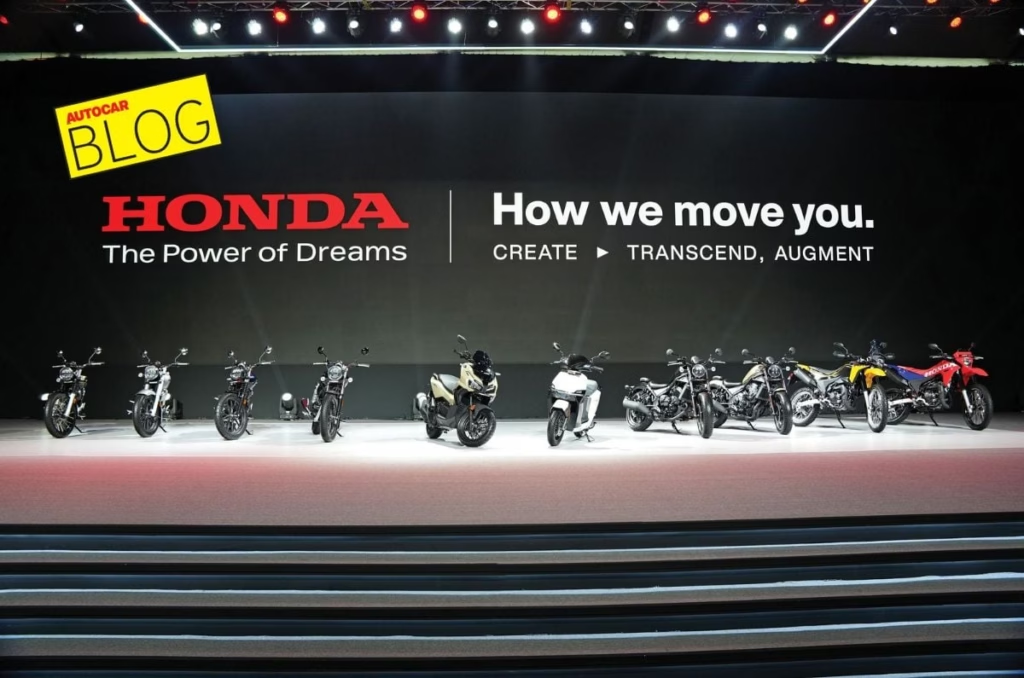
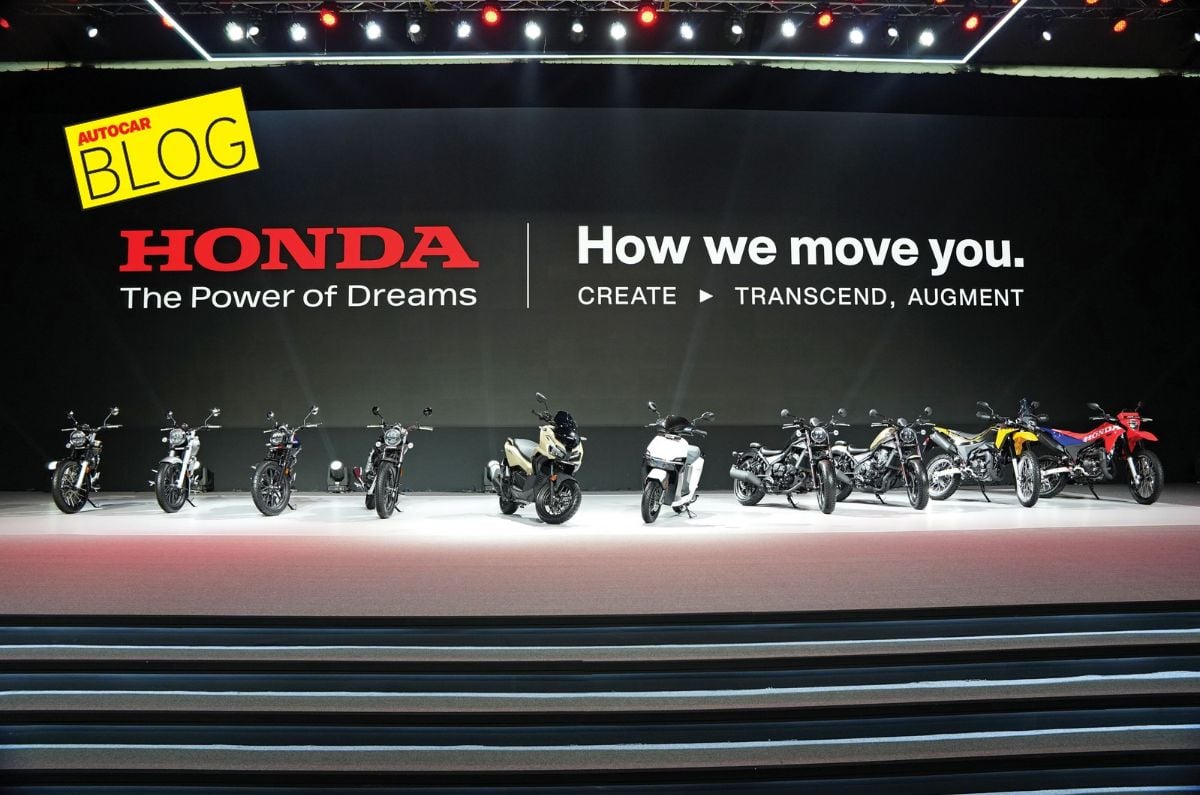
Honda bikes onstage at a big press event

2026 has revealed a change in how the Japanese treat our market. After years of being content to watch Indian competitors moving forward into more premium segments, the Japanese have finally realised that this is a space they can no longer ignore. 

The world’s biggest two-wheeler manufacturer is leading this charge. Honda recently held a huge event in Delhi in July, where they revealed ten new premium two-wheelers for India. That event on its own was a good sign, but there was still the very real concern of what these products would be priced at. After all, Indian enthusiasts have been burned by unrealistic pricing from the Japanese far too many times in the past.

Thankfully, things seem different this time around. So far, Honda has already released prices for the Rebel 300 (Rs 2.22 lakh-2.62 lakh), ADV160 (Rs 1.7 lakh), the QC3 electric scooter (Rs 1.35 lakh), XR300L and XR300 Rally (Rs 1.83 lakh & Rs 2.08 lakh, respectively) and the CB500 (Rs 2.75 lakh-3.02 lakh). All these prices are very reasonable and are either directly comparable with rivals or are at a small but justifiable premium. 

The best way to highlight this shift within Honda’s pricing strategy is to examine its own prices from a few years ago. The far superior Rebel 300 costs less today than the Rs 2.29 lakh price in 2022 for the now-discontinued CB300F. 

Sure, the Rebel now benefits from a lower GST structure, but the opposite holds true for the Honda CB1000 Hornet SP, which is priced at Rs 13.29 lakh. In comparison, the older CB1000R cost Rs 14.46 lakh in 2019, and it had far less fancy equipment. With Honda’s big bikes, the main issue is no longer the price but the fact that many of them aren’t available half the time. 

These new Hondas hold their own when compared with rivals as well. The new QC3 electric scooter is priced bang on par with equivalent rivals from Ather, Bajaj and TVS, and it will finally get Honda taken seriously in the EV space. The new CB500 is also priced Rs 10,000 lower than the top-spec Harley-Davidson X440 T, which is its closest rival. 

Yamaha is another manufacturer that has started to take crucial steps ahead. The awfully overdue XSR155 was finally introduced to India late last year, the R2 was just launched, and the NMax 155 will be coming in next year as well. These are good moves, but Yamaha needs to do more to cater to Indian riders who want more than just 150-200cc products. Kawasaki has localised a handful of its small bikes and we hear Suzuki is in the process of improving localisation on some of its big bikes as well, which is welcome news. 

None of these companies are taking these calls because they suddenly feel for the poor Indian motorcycle enthusiast who is crying out for more options. Those calls have gone unheeded for the better part of a decade.

The fact is that the Japanese (particularly Honda) are now seriously feeling the heat from local competition. Indian manufacturers (particularly TVS) have made massive gains over the last 5-10 years in all segments from scooters to EVs to premium motorcycles. Competition always benefits the customer, and it’s competition that we have to thank for this new enthusiasm shown by the Japanese towards the Indian market.

EV two-wheeler sales crosses 11 lakh units in FY2027

EV two-wheeler sales crosses 11 lakh units in FY2027
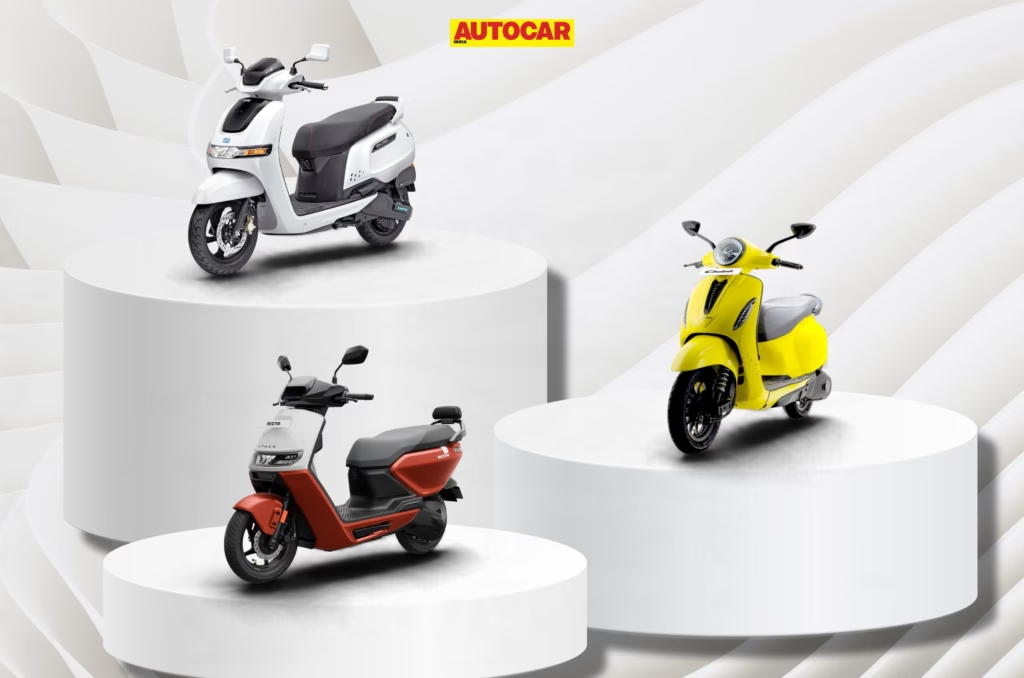
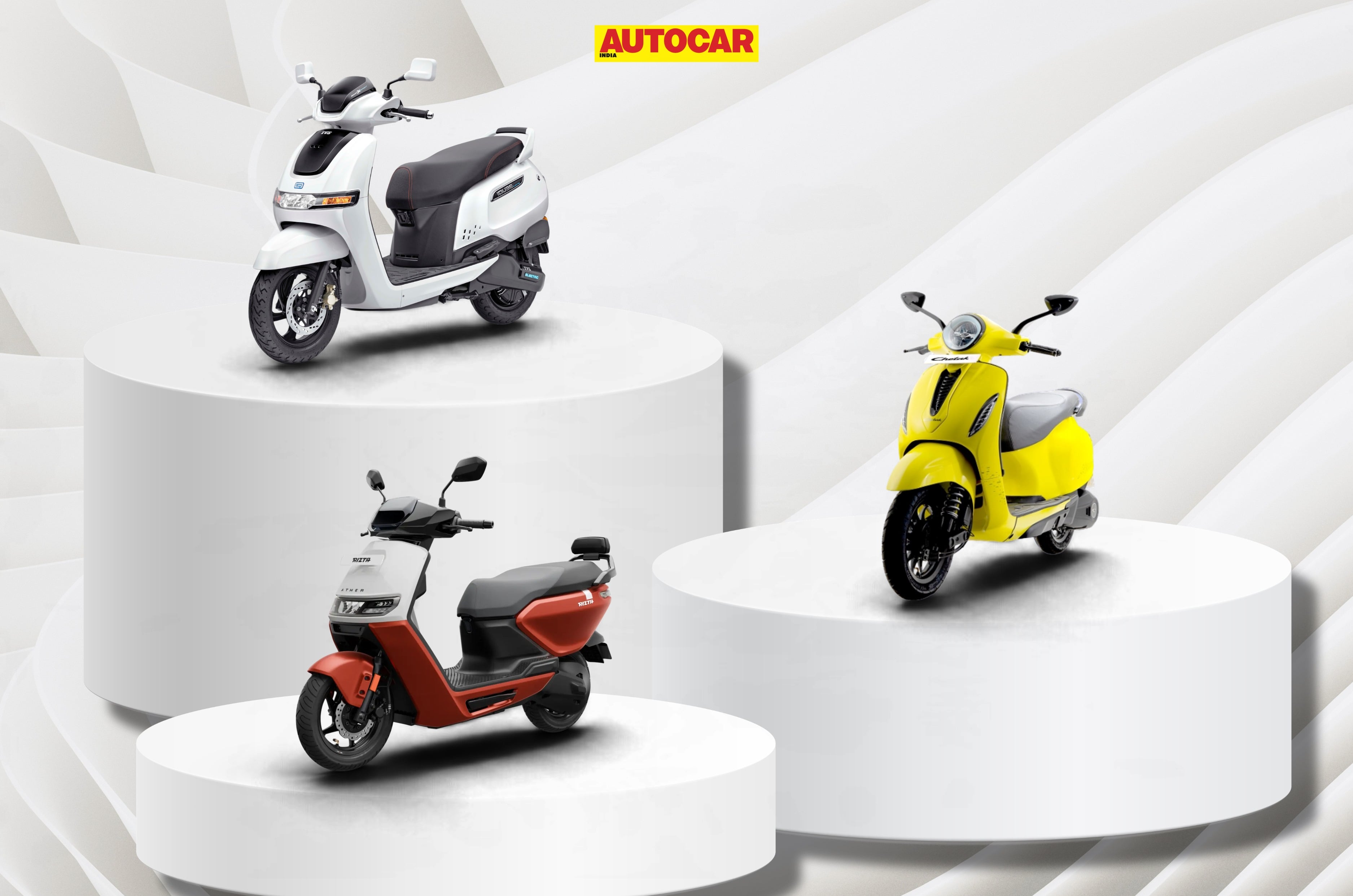
TVS iQube, Bajaj Chetak, and Ather Rizta listed in a podium as the first, second, and third respectively.

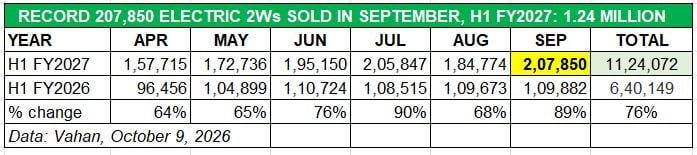
India’s electric two-wheeler market is on a roll and how. While January-September 2026 retail sales have already crossed 1.61 million units, e-2-wheeler customer deliveries in April-September 2026 increased 76 percent to 11.2 lakh units (versus 6.40 lakh units same time last year). The rapid pace of demand means that the industry is predicted to end the financial year with 22.6 lakh total sales. September 2026 was also the first time the industry sold 2.07 lakh units (highest yet), which is an 89 percent increase compared to 2025.

  1. Besides the top-three, Bounce and River have improved the most
  2. Ola has held on to fifth place, but lost 9 percent of its market share
  3. September’s high sales numbers will likely be surpassed by the upcoming festive season

Indian e-2-wheeler industry sales: The trend so far

TVS and Bajaj continue to lead, with Vida steadily improving

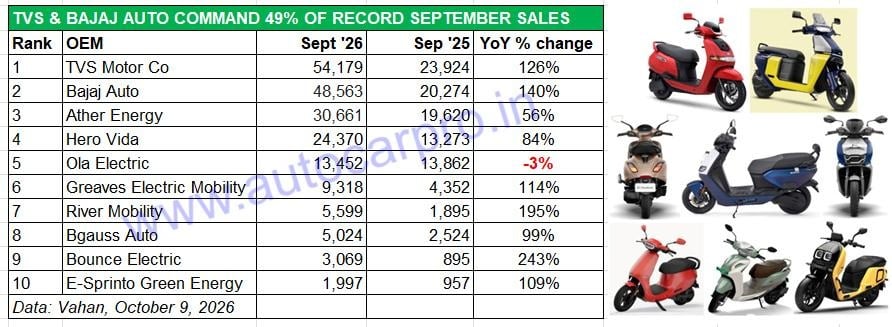
TVS and Bajaj, which have been the top two brands since Ola moved out of the top spot in April 2025, continue to register handsome gains. In September, both companies registered triple-digit growth, which ensured that they make up a 49 percent share of the record monthly retails. This is the highest monthly sales for Bajaj, beating March 2026 (47,755 units). Ather, in the third position, sold 30,661 units and marked 56 percent YoY growth. March 2026 continues to be Ather’s best month, sales-wise (36,634 units) with the Konarc expected to contribute to that number substantially soon. Vida, backed by Hero, sold its highest ever 24,370 units in September, crossing July’s number (22,996).

Brand-wise performance and market share in H1 FY2027

Besides the top two, River and Bounce improved the most

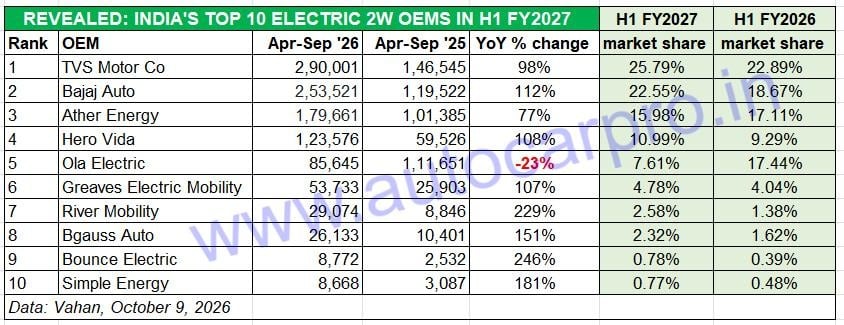
Electric 2W market leader TVS nearly doubled its first-half retail sales YoY to 2.90 lakh units, giving it a 26 percent market share. For TVS, EVs are now a key growth driver and every fifth scooter the company sells is now a zero-emission model. Bajaj, which sells multiple variants of the Chetak, has retailed 2.53 lakh units in the past six months. The strong performance gives it a current market share of 23 percent. Ather, in third position, has clocked retail sales of 1.79 lakh units in H1 FY2027. Ather crossed the 30,000 mark in three of the past six months, June, July and September. Its H1 FY2027 market share is 16 percent, one percentage less than H1 FY2026. A few days ago, cumulative Ather sales surpassed 8 lakh units, making it the fourth company after Ola, TVS and Bajaj to achieve that milestone.

Fourth-ranked Vida registered retail sales of 1.23 lakh units in first-half FY2027, up 107 percent YoY. Ola remains glued to the fifth rank with an 8 percent market share, considerably down from the 17 percent it had in H1 FY2026. Greaves Electric Mobility (GEM), manufacturer of Ampere e-scooters, has sold 53,733 units, comes in at sixth with a 107 percent YoY growth.

The Bengaluru-based River, which continues to impress month on month, has sold 29,074 units in H1 FY2027. The stellar performance sees River’s market share rise to 3 percent from 1 percent in H1 FY2026. The startup’s highest monthly sales came in July (6,044 units). In eighth place, the Mumbai-based BGauss has sold 26,133 units in H1 FY2027, registering a 107 percent growth compared to H1 FY2026. Bounce ranks ninth with 8,772 units, up 246 percent YoY. Simple, which has been a regular in the monthly top 10 e-2-wheeler sales listing since February 2026, has clocked cumulative six-month sales of 8,668 units, up 181 percent YoY. This momentum comes just as Simple launched its most affordable scooter yet, the Wave, starting at Rs 1.10 lakh.

India’s e-2-wheeler market with 200 players, is the largest contributor to India’s EV sales numbers with a 62 percent share of the total EVs sold in the April-September 2026 period. The market is currently led by TVS, Bajaj, Ather, Vida, Ola and GEM – who account for 88 percent share of the e-2-wheeler sales in H1 FY2027. Given its robust 76 percent growth so far, and the festive season having just begun, one can expect September’s record 2.07 lakh unit sales to be surpassed soon.

With inputs from Stephen Raj Antony.

Honda, Suzuki and Yamaha e-scooter sales cross 10,000 units in 2026

Honda, Suzuki and Yamaha e-scooter sales cross 10,000 units in 2026
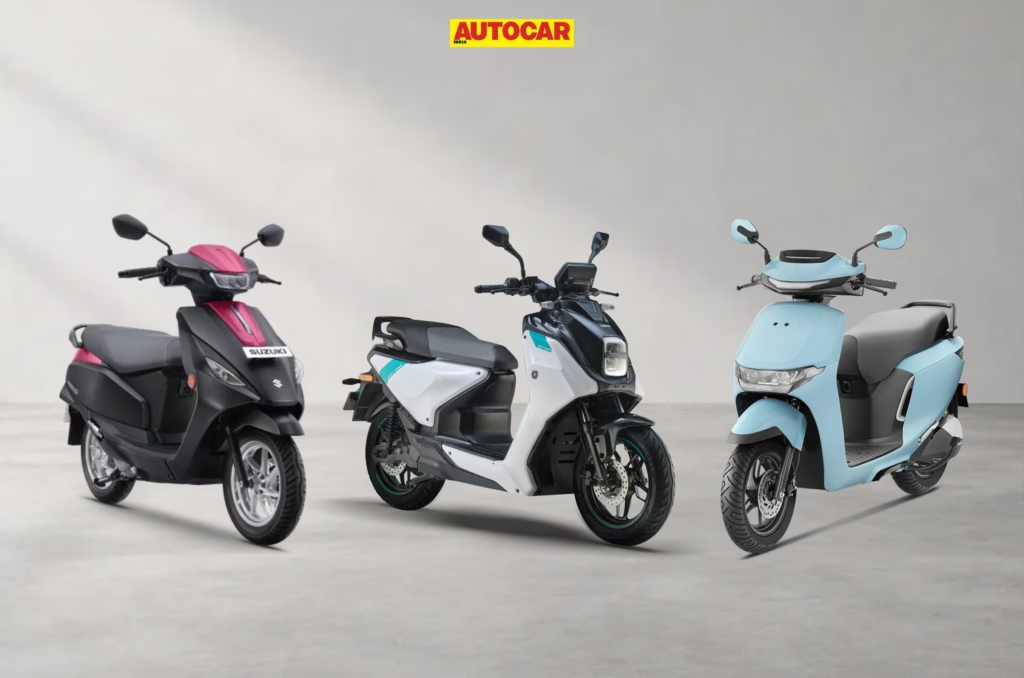
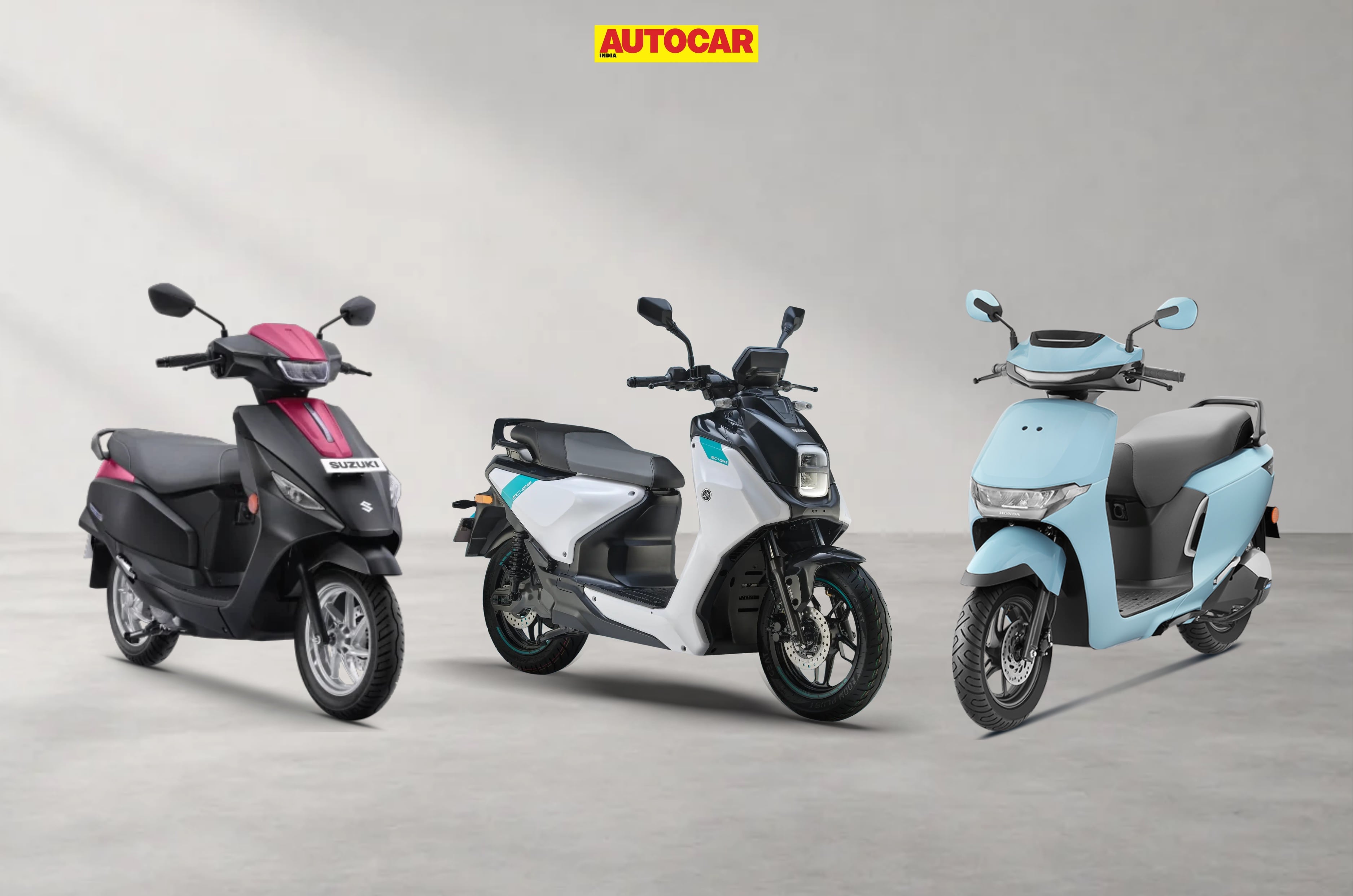
Graphic with Honda, Suzuki and Yamaha e-scooters

Cumulative retail sales of the three Japanese electric scooter manufacturers in India – Honda, Suzuki and Yamaha – have crossed the 10,000-units mark for the first time in a calendar year. As per the latest Vahan statistics, this triumvirate have delivered 10,735 units to their customers between January 1 and October 8 in 2026. 

Last year, Honda, which was the sole e-2-wheeler OEM in India, had sold 7,730 units of the Activa-e and QC1, less of the former and more of the latter. While Suzuki entered the market in January 2026 with its e-Access, Yamaha plugged in two months later in March with its EC-O6. This makes 2026 the first year when all these three Japanese OEMs are part of the Indian electric scooter market.

A look at the OEMs’ monthly performance reveals that Honda Motorcycle & Scooter India has sold 5,536 units in this year to date, accounting for 51 percent of the total 10,735 Japanese e-scooters delivered. HMSI’s best monthly sales this year were in September (1,107 units), marking the first time the OEM has crossed 1,000 units. This number can only improve following the recent launch of its third e-scooter for India – the QC3. 

The initial rollout of the QC3 will be limited to five cities across the country: Delhi, Agra, Cuttack, Surat and Kollam, with a nationwide rollout to follow in a phased manner.. 

Suzuki Motorcycle India, which entered the India e-2W market with its e-Access in January this year as an alternative to the popular petrol-engined Suzuki Access 125, has delivered 4,133 units till October 8. This gives the company a 39 percent share of the three Japanese OEM’s total e2W retail sales. The monthly sales chart reveals that monthly sales have crossed 600 units for three months running: July (606 units), August (674 units) and September (657 units). Rather creditable considering this is an expensive product, priced at Rs 1.88 lakh (ex-showroom) and the costliest amongst the Japanese EVs. 

India Yamaha Motor, which plugged into the e-2W market this March, has retailed 1,066 units, which gives it a 10 percent share of the 10,735 units delivered by Honda, Suzuki and Yamaha. Yamaha’s vehicle of entry is the EC-06, its first electric scooter developed in collaboration with River Mobility. IYM’s highest monthly sales to date were in September (232 units)

Japanese OEMs have 0.66 percent share of e-2Ws sold in 2026 so far

As the monthly retail sales data table depicts, combined Honda-Suzuki-Yamaha sales were at their highest in September 2026 (1,996 units), which gives them a 1 percent share of the record 2,07,850 e-2Ws sold in India last month. Of the total 16,10,854 e-2Ws sold between January 1 and October 8, these three Japanese OEMs with 10,735 units have a meagre 0.66 percent share. 

Among the reasons for their minimal presence in this booming segment of the Indian EV industry is that Honda, Suzuki and Yamaha entered the e-2W market late, as compared to their ICE legacy rivals TVS Motor Co (January 2020), Bajaj Auto (January 2020) or Hero MotoCorp Vida (November 2022).

While market leader TVS has sold 4,22,274 iQubes and Orbiters for a 26 percent market share of the e-2W sales in 2026 to date, Bajaj Auto has delivered 3,61,988 Chetaks (22 percent share), Ather Energy has sold 2,67,579 units (17 percent share) and Hero Vida 1,77,541 e-scooters (11 percent share). 

There is also the issue of their stiff model pricing in a value-conscious market, which has a plethora of more affordable e-scooters which are also more tech-laden, as well as a limited sales network compared to the Indian legacy OEMs as well as a host of startups which are regulars in the monthly Top 10 e-2W OEM chart. 

VinFast takes first step toward entering Indian two-wheeler market

VinFast takes first step toward entering Indian two-wheeler market
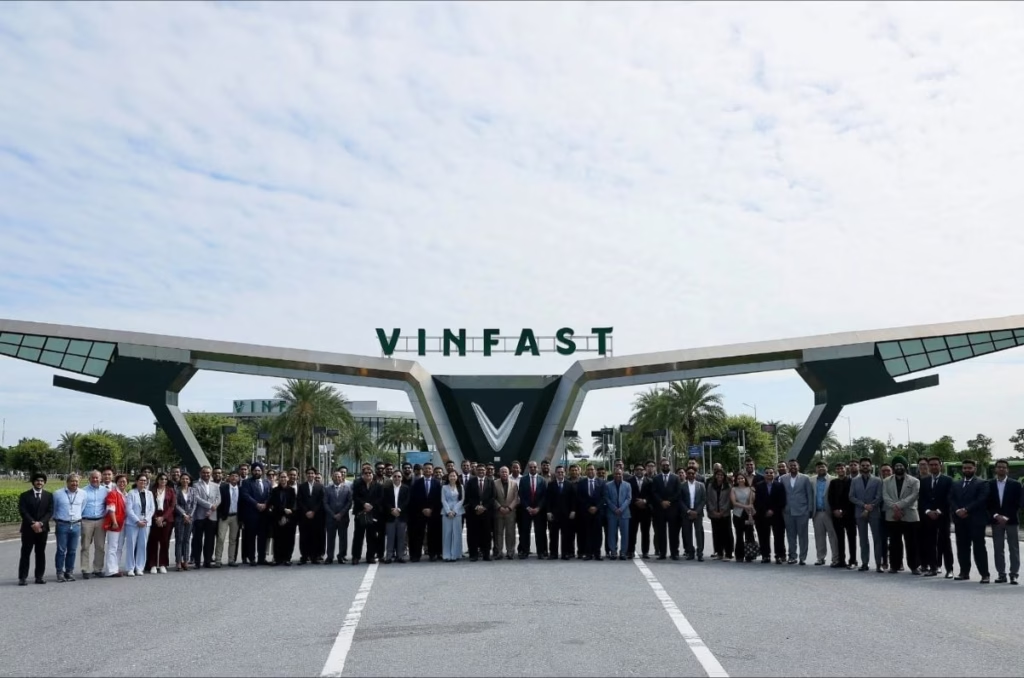
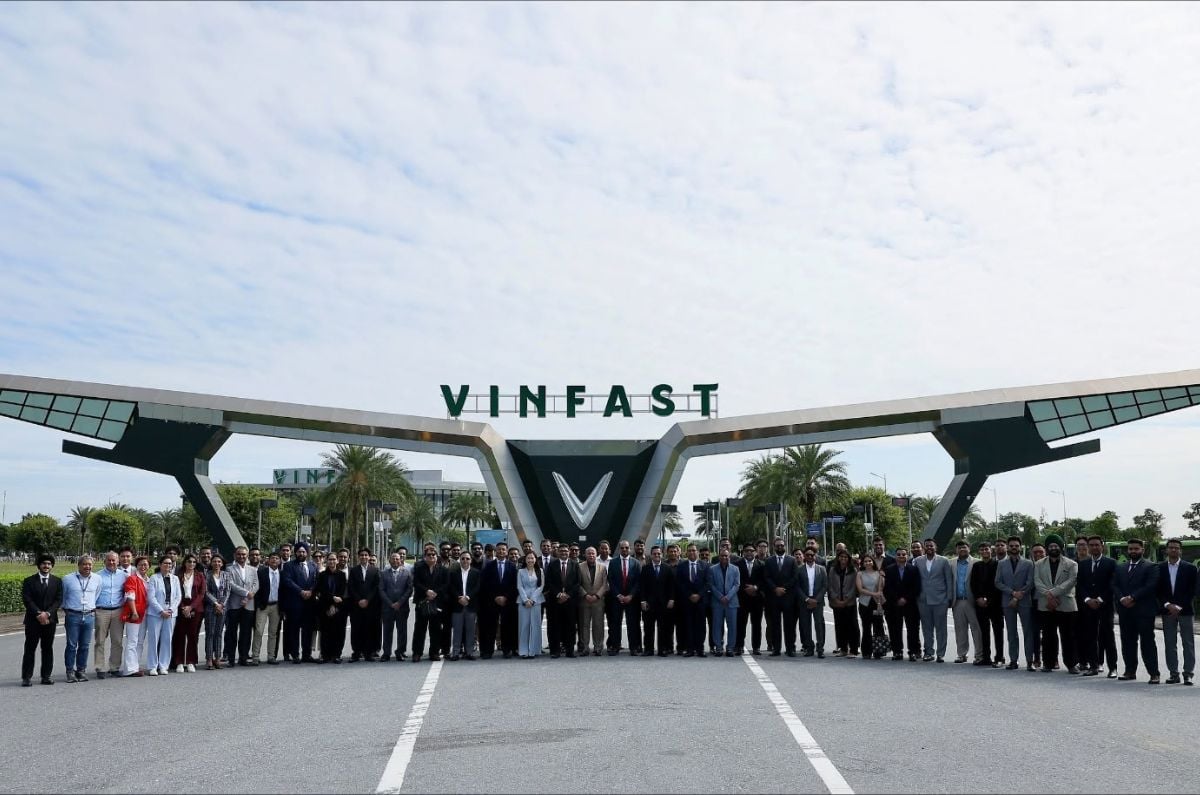
An outdoor image showing large group of people standing together in front of the Vinfast headquarter

VinFast entered the Indian market in 2025, with activities spanning from the distribution, manufacturing and assembly of electric cars. Following this, the brand also showed some e-scooters at Auto Expo and then subsequently patented designs of some of them in our market, all hinting at plans to enter the huge Indian two-wheeler market. The signing of these letters of intent (LOIs) and partnering with numerous electric two-wheeler dealers now marks a new phase in the brand’s expansion in the Indian market.

  1. Partnered with 50+ electric two-wheeler dealers across 15 states
  2. Plans to establish showrooms across 34 cities
  3. Line-up likely to feature the recently patented Viper and Rasad e-scooters

Retail network expansion details   

Over 50 showrooms panned 15 states

Vinfast and its dealer partners will work together to establish 50+ electric two-wheeler showrooms across 34 cities in 15 states and territories. The locations that the company is targeting to establish a presence in first include Delhi, Rajasthan, Punjab, Madhya Pradesh, Chhattisgarh, Uttar Pradesh, Maharashtra, Gujarat, Karnataka, Telangana, Tamil Nadu, Kerala, Andhra Pradesh, West Bengal and Odisha. Through these partnerships VinFast plans to bring its electric scooter line-up to the country, though it hasn’t shared any timelines so far. Initial line-up expected to feature the Viper and Rasad electric scooters, following design patents filed in India earlier this year.

These selected cities and regions have large two-wheeler markets, providing significant room for the brand’s expansion. VinFast says in fiscal year 2025-2026 there were 21.41 million two-wheelers registered, of which electric vehicles accounted for only 6.54 percent. When VinFast does officially launch some of its models in our country, it will have to ward off stiff competition from both established legacy players as well as mould-breaking start-ups like Bajaj, TVS, Hero, Suzuki, Yamaha, Ather and River.

River Indie now also available on Flipkart

River Indie now also available on Flipkart
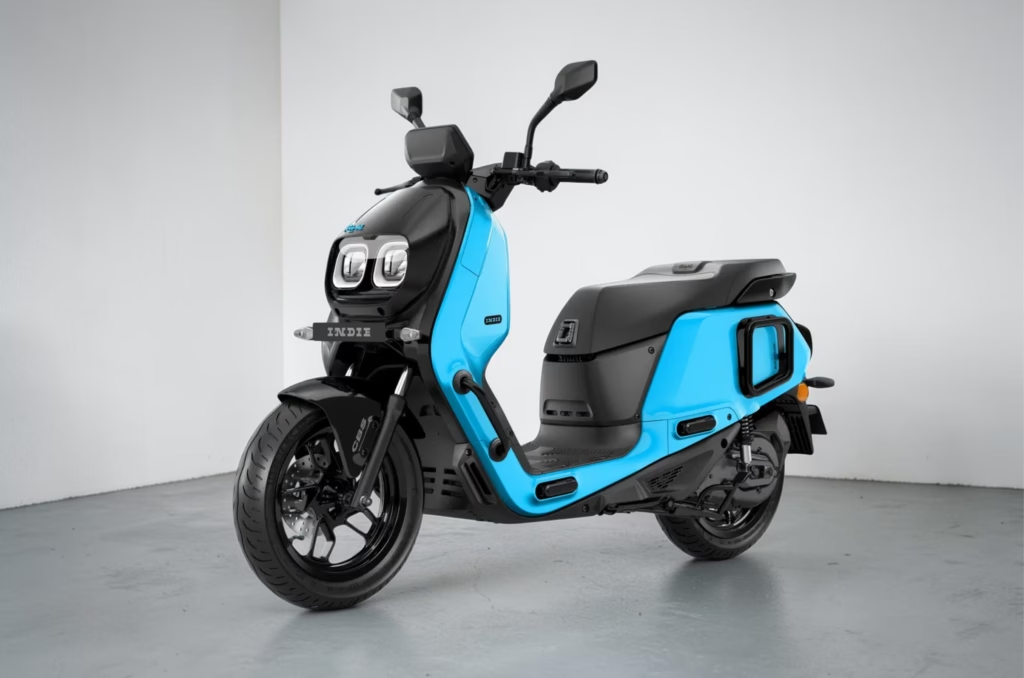
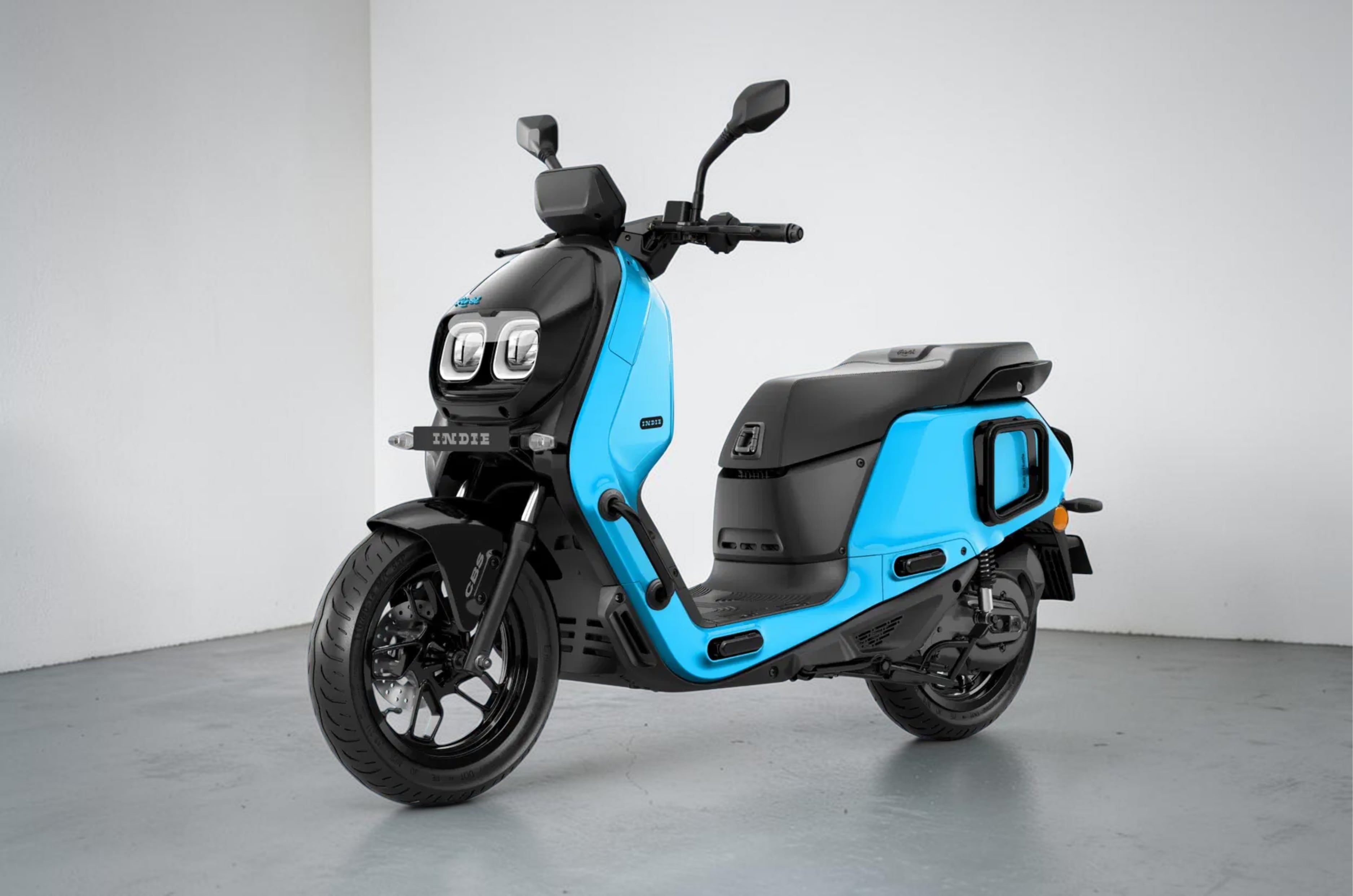
River Indie in Monsoon Blue colour.

Bengaluru-based EV manufacturer River sells just one product so far, the Indie e-scooter. The company also manufactures the EC-06 for Yamaha, which is based on the Indie. Availability has been a limiting factor, and they’re now looking to make it a bit easier for customers to book an Indie.

  1. River currently has over 80 stores across 48 cities in India
  2. The e-scooter is sold in one variant, with a 4kWh battery and 163km IDC range

River Indie on Flipkart: How does the process work?

Living near a River showroom is a requirement

At the time of writing, River has over 80 stores in 48 cities across India, with more in the works. Assuming you live near one of them, you no longer have to visit one in person to book an Indie. The company has listed the Indie on Flipkart, where you can check out and make your booking. Vehicles being sold via e-commerce websites isn’t new, and brands like Royal Enfield, Yezdi, Ather, and Vida are already sold online. . Like with these other manufacturers, once a booking is made, it gets transferred to the nearest dealership, who will fulfill it. After purchase, they’ll take care of the service as well.

To give a brief recap, the River Indie is an e-scooter with a 4kWh battery and a claimed range of 163km with a claimed 90kph top speed. However, the scooter distinguishes itself from the others by prioritising utility over technology. Its 55-litre under seat storage, “the SUV of scooters” tagline, and design all signal that the Indie means business, literally and figuratively. River currently sells the Indie in one variant for Rs 1.57 lakh (ex-showroom, Bengaluru); a price that’s reflected on Flipkart too.

E3 Trion deliveries begin

E3 Trion deliveries begin
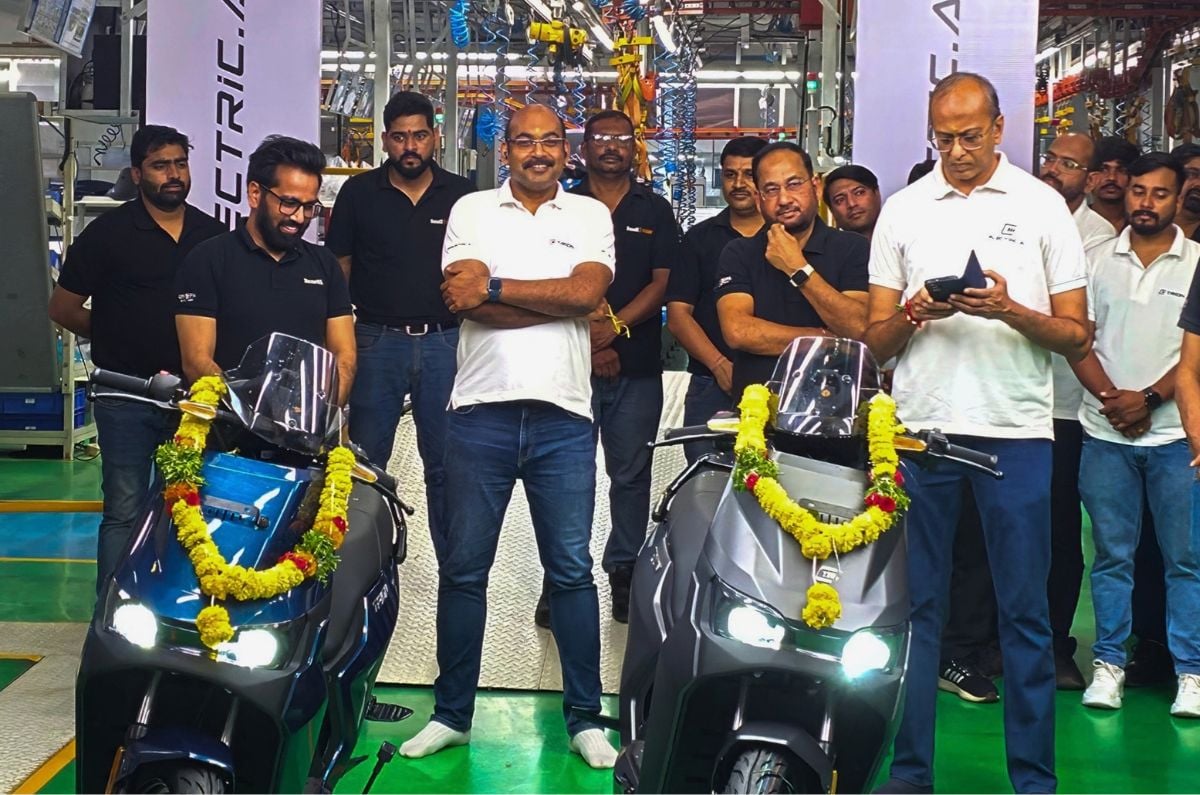
An indoor image showing the roll-out of E3 Trion from factory-line

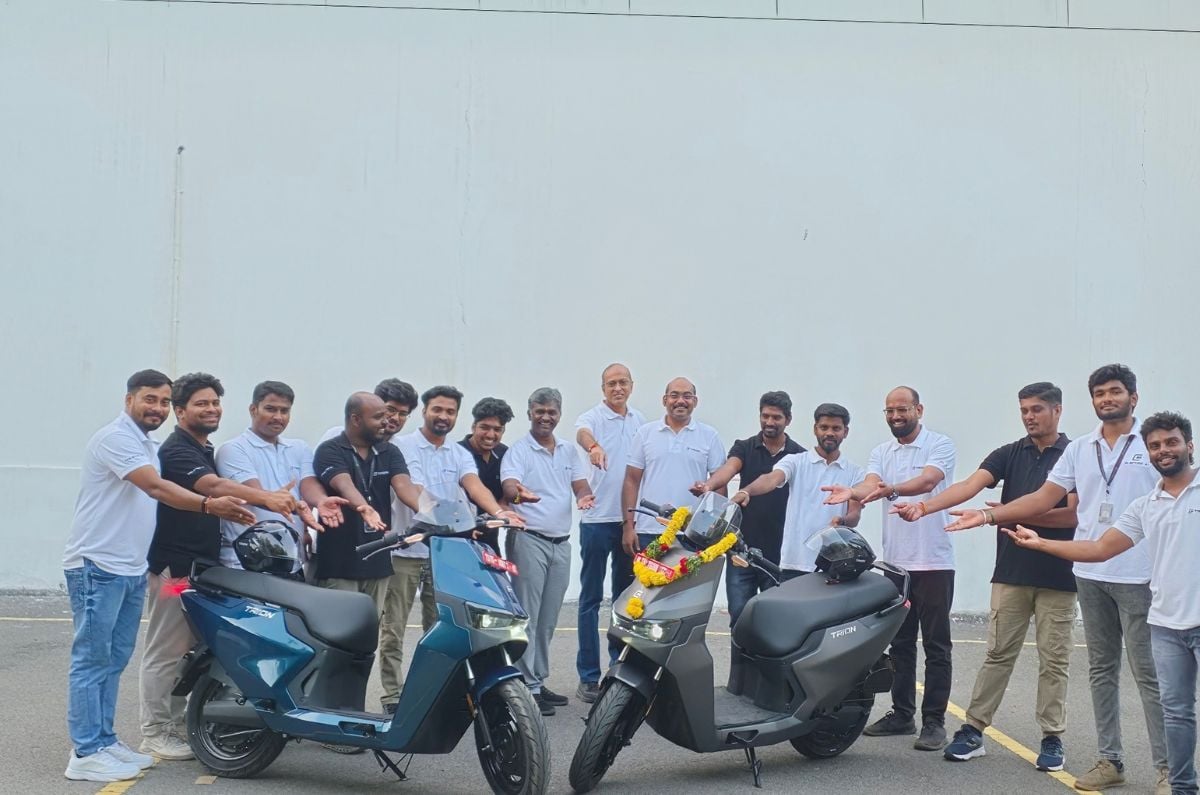
Bengaluru-based electric mobility startup E3 Electric.Ai has started production of the E3 Trion electric scooter at its Hyderabad manufacturing plant and it will begin deliveries from today onwards.

  1. Available in two battery pack options across three variants
  2. The first 100 customers will receive optional extended warranty at an additional cost
  3. Prices start at Rs 1 lakh and go up to Rs 1.20 lakh (ex-showroom Bengaluru)

E3 Trion details  

Offered in 2.3kWh and 3kWh battery packs, with up to 165km IDC range

The E3 Trion is offered in three variants: C1, C1X and C2 and deliveries for the variants will begin in a phased manner. Across the three variants, the scooter will be available in two battery pack options 2.3kWh and 3kWh. The base C1 is offered in the 2.3kWh battery pack which is removable, whereas the C1X and C2 will comprise the 3kWh fixed battery pack. The C1, C1X and C2 have a claimed IDC range of 108km, 165km and 128km respectively. The scooters will feature 14-inch wheels at both ends

The first 100 E3 Trion customers will receive an extended warranty covering the battery pack and specified key parts for eight years or 1 lakh kilometres, whichever comes first. They will also receive one year of E3 Wingman roadside assistance as well. The combined offering is valued at Rs 6,500 for the C1 with its 2.3kWh battery and Rs 8,500 for the C1X and C2, which uses a 3kWh battery.

With pricing starting at Rs 1 lakh for the base C1, Rs 1.10 lakh for the C1X, and Rs 1.20 lakh for the top-spec C2 variant, the E3 Trion goes head-to-head with established family scooters like the Bajaj Chetak, TVS Orbiter V2, TVS iQube 3.1kWh, Ampere Nexus EX+, and Ather Konarc. 

Ampere Nexus EX+ launched at Rs 1.30 lakh

Ampere Nexus EX+ launched at Rs 1.30 lakh
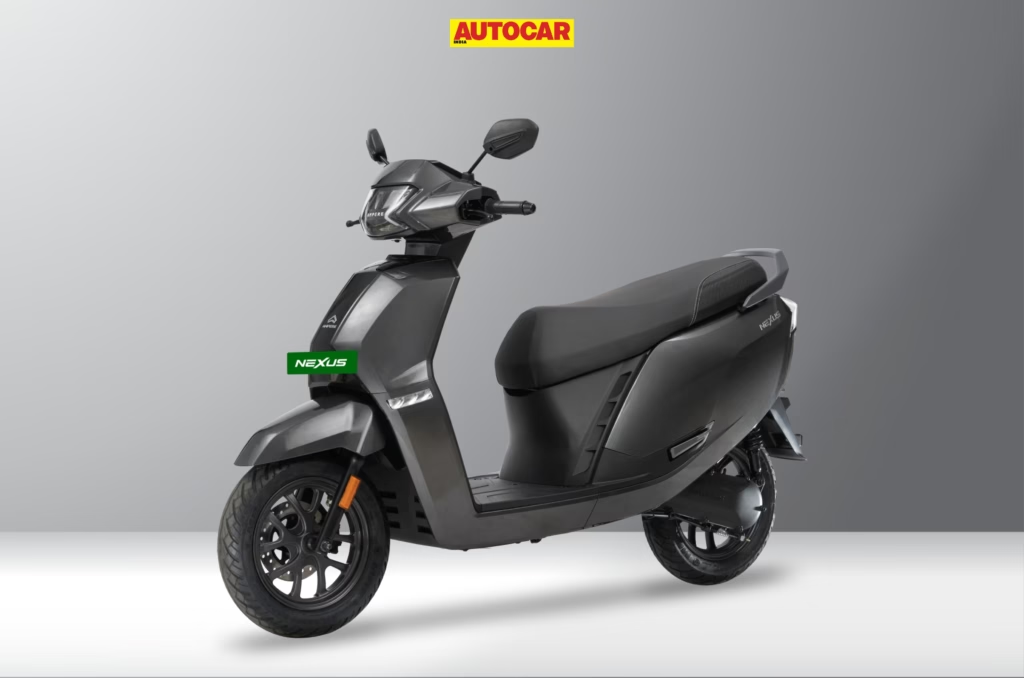
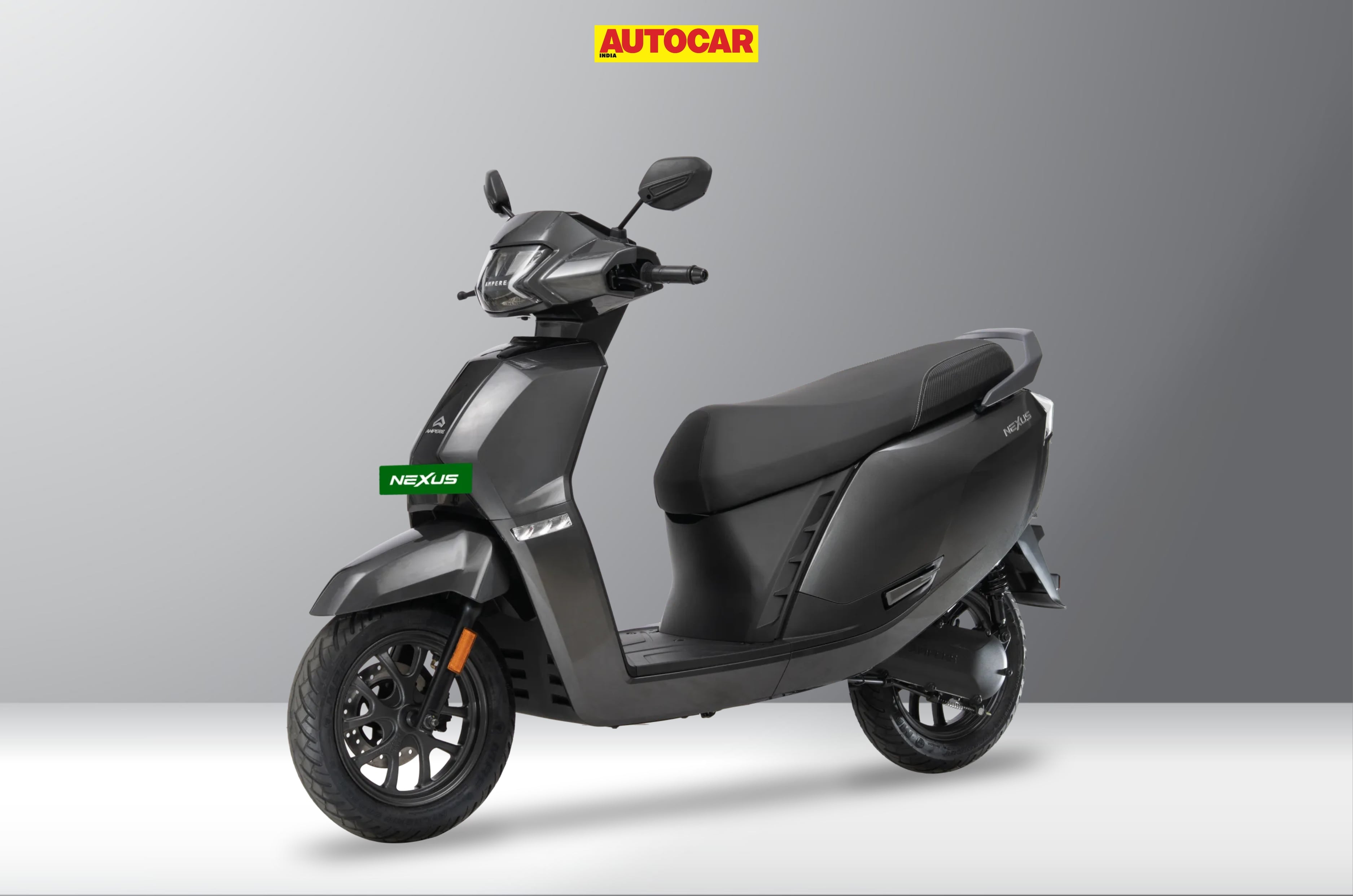
Studio render showing the front left quarter of Ampere Nexus EX+

Ampere has launched the Nexus EX+ at Rs 1.30 lakh, the electric scooter’s updated version, featuring a more powerful 5kW motor and an IP65-rated water-resistant charger. The e-scooter is available in two variants, with the higher-spec variant adding Ampere’s Intellipack connected technology, which brings features such as turn-by-turn navigation, geofencing, call alerts and more.

  1. EX+ gets a 5kW motor compared to the previous 4kW motor
  2. Now comes with an IP65-rated 750W charger
  3. Intellipack-equipped variant costs Rs 6,000 more

Ampere Nexus EX+: What’s new?

Now gets a powerful motor, IP65-rated charger and an optional Intellipack

The 5kW motor now produces 202Nm of peak torque at the wheel (bear in mind, the multiplication factor of the gearing on EVs always exaggerates torque numbers), which allows the scooter to accelerate from 0-40kph in 4.5 seconds (claimed). It is also claimed to improve the gradeability on steep climbs, flyovers and hilly roads. The scooter also gets an IP65-rated water-resistant 750W charger, which should give some peace of mind when charging out in open spaces or for those who don’t have shaded parking.

The Intellipack equipped version uses Ampere’s Connect App to provide more than 30 connected features. These include turn-by-turn navigation, geo fencing, call alerts, live location sharing, real-time charging status, find my scooter and many more. The standard Nexus EX+ is priced at Rs 1.30 lakh, while the Nexus EX+ with Intellipack costs Rs 1.36 lakh.

The scooter uses a 3kWh LFP battery with a claimed IDC range of 136km. The Nexus EX+ also gets a five-year/75,000km warranty for the battery and three-year/30,000km warranty for the rest of the scooter. The new Nexus EX+ and Nexus EX+ with Intellipack are available through Ampere dealerships across India.

Earlier, the Nexus was available in two variants EX and ST with their primary differences being the instrument clusters, connected features, and price points. Now, Ampere seems to have streamlined the portfolio and the two EX+ variants are the only way to buy a Nexus.

The Nexus EX+ is positioned in the mid-to-high segment of family electric scooters, where it competes with other major players like the TVS iQube 3.1kWh, Ather Konarc, Vida VX2 and the Chetak C3001, making it one of the compelling option for buyer prioritizing range and features.