Two-wheeler retail sales in India rose 19.69 percent year on year to 17,14,610 units in August 2026, according to the Federation of Automobile Dealers Associations (FADA). The segment recorded its highest-ever August sales, although volumes declined 5.70 percent from July, when dealers retailed 18,18,289 two-wheelers. August 2025 sales stood at 14,32,537 units.
Retail sales reach 17.15 lakh units, highest for an August
Share of EVs in two-wheeler sales crosses 10 percent in a non-festive month
Honda leads the market as dealers turn optimistic ahead of the festive season
FADA attributed the strong year-on-year growth to healthy rural demand and improved affordability following the GST 2.0 rollout. The month-on-month decline was attributed to the seasonal monsoon slowdown, rainfall in some regions and the inauspicious Shravan/Aadi period.
Rural two-wheeler retail grew 20.25 percent year on year in August, slightly ahead of the 19.07 percent growth recorded in urban markets. Compared with July, however, two-wheeler sales fell 6.85 percent in rural areas and 4.38 percent in urban centres.
EVs accounted for 10.68 percent of total two-wheeler retail sales in August, up from 7.66 percent a year ago. The share of electric models was 11.24 percent in July. FADA noted that August was the first non-festive month in which EVs comprised over 10 percent of two-wheeler sales.
As for fuel type, petrol continued to dominate the two-wheeler market with an 89.23 percent share, while CNG and LPG models together accounted for 0.08 percent.
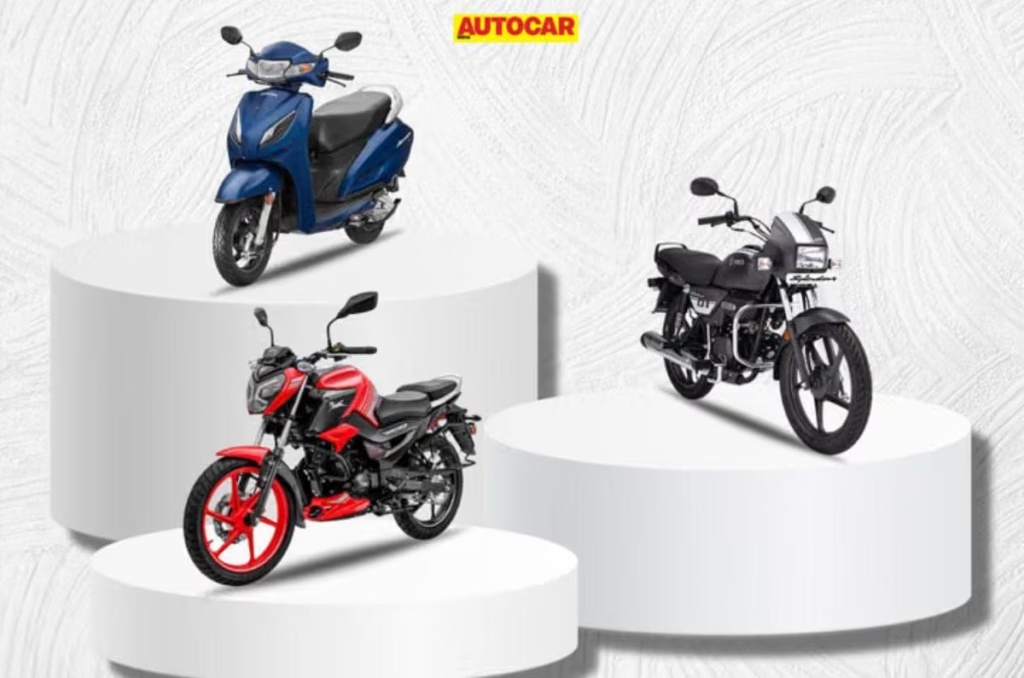
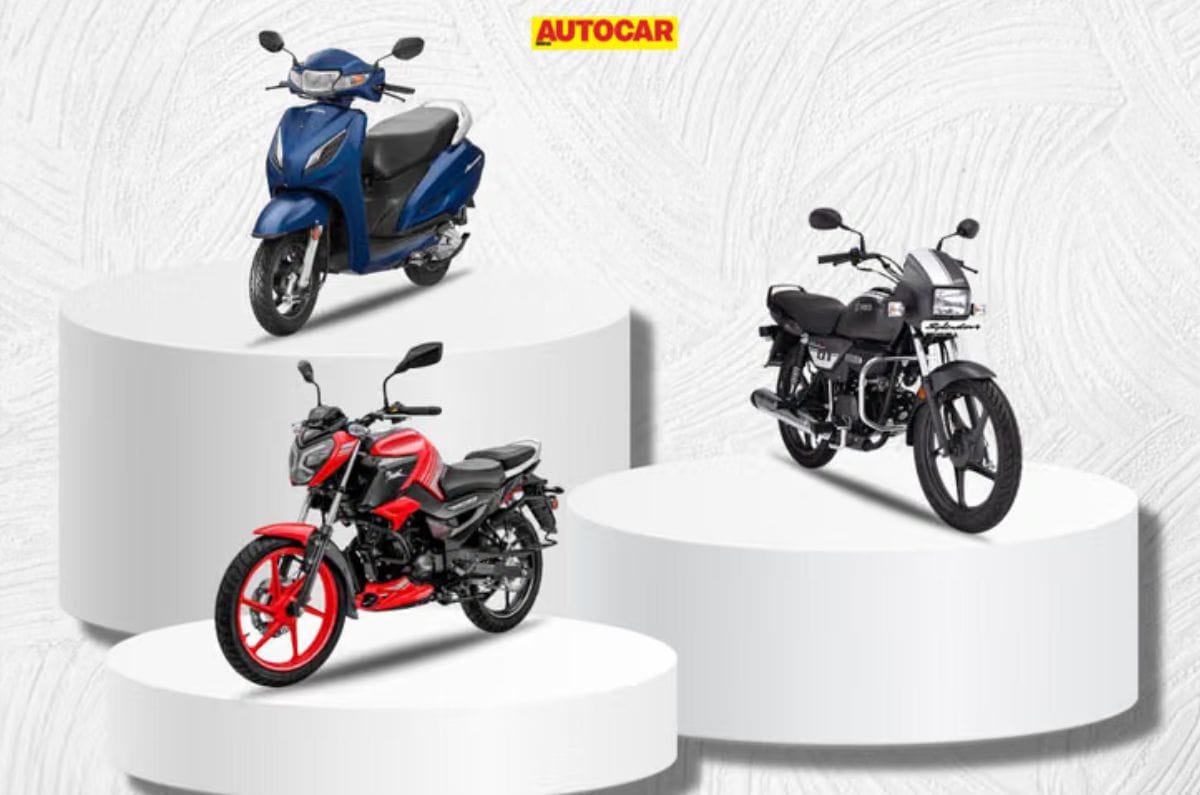
Honda Motorcycle and Scooter India remained the largest two-wheeler OEM in August with a 26.09 percent market share, retailing 4,47,342 units. Hero MotoCorp was second with 4,13,996 units and a 24.15 percent share, while TVS Motor Company sold 3,53,746 units and had a 20.63 percent share.
Bajaj Auto retailed 1,57,149 two-wheelers, giving it a 9.17 percent share, followed by Suzuki Motorcycle India with 1,04,217 units and a 6.08 percent share. Royal Enfield recorded 94,448 units and a 5.51 percent share.
Among the electric-focused manufacturers listed separately by FADA, Ather Energy sold 28,757 units and had a 1.68 percent share, while Ola Electric registered 13,852 units and a 0.81 percent share. Greaves Electric Mobility, River Mobility and BGauss recorded 8,613, 5,141 and 4,845 units, respectively.
With the festive season approaching, FADA expects two-wheeler demand to strengthen in September. Rural cash flows and late-season rainfall remain key factors that could influence sales, while the continued shift towards alternative powertrains is expected to support the market.
Dealer sentiment for September remains positive, with 67.09 percent of dealers expecting growth, 27.35 percent expecting a flat market and 5.56 percent anticipating de-growth. For the September-November period, 81.62 percent of dealers expect the market to grow.
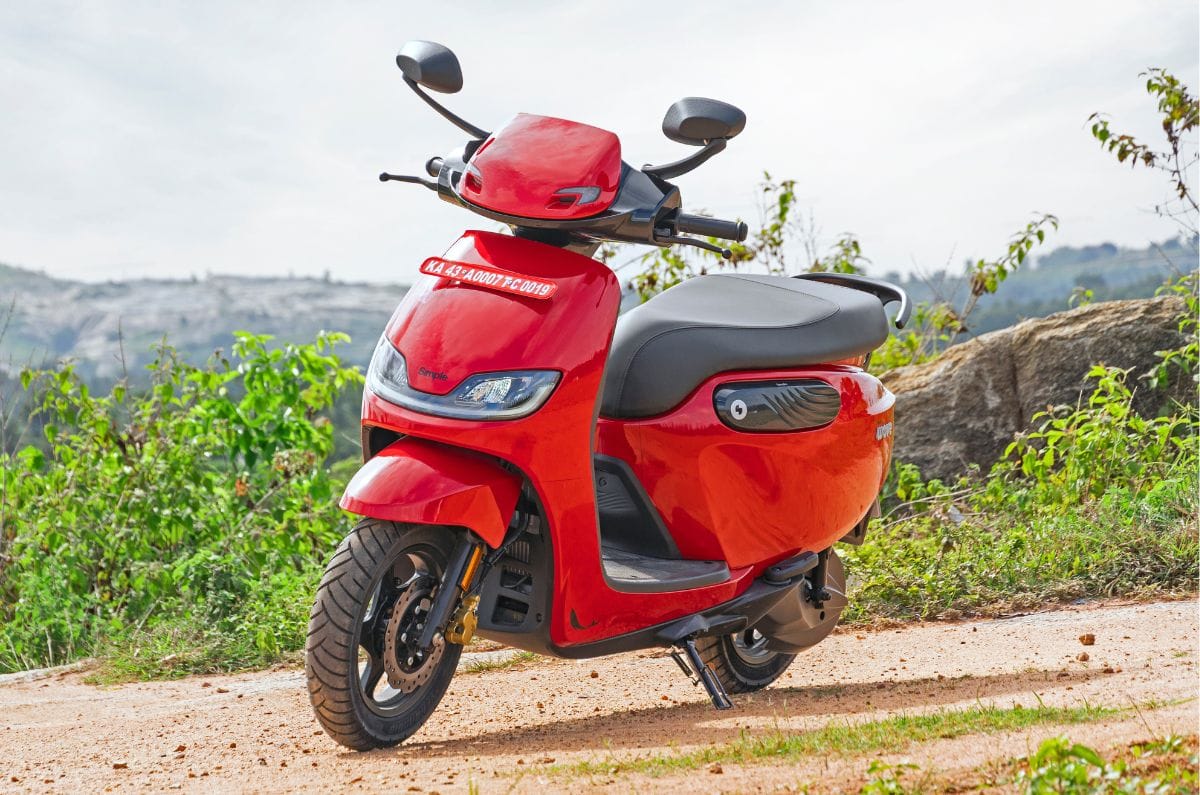
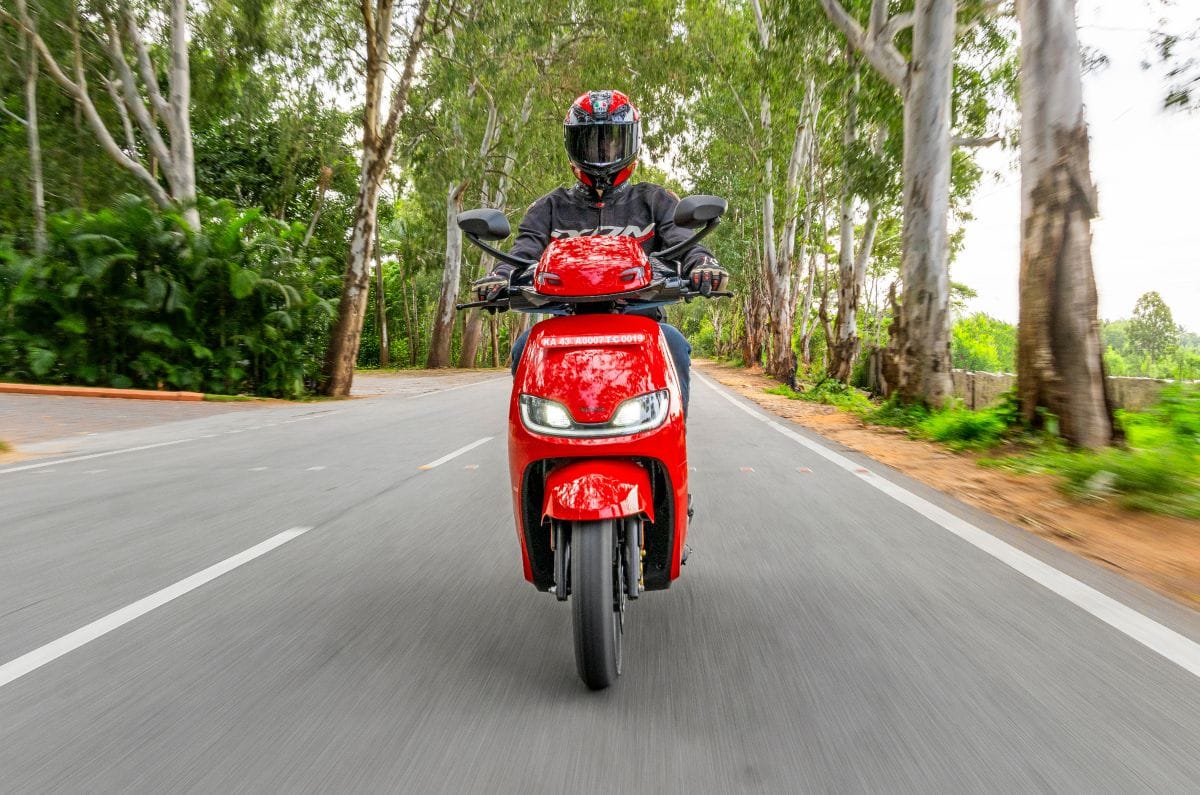
The Simple Wave is an interesting proposition in the increasingly crowded electric scooter space. Its rounded, smooth looks certainly grab attention and, as we found out, it is comfortable, spacious and offers brisk performance. There’s plenty to like here, so let’s dive right in.
Simple Wave Design and quality – 8/10
Looks unique and features many chassis changes over the One
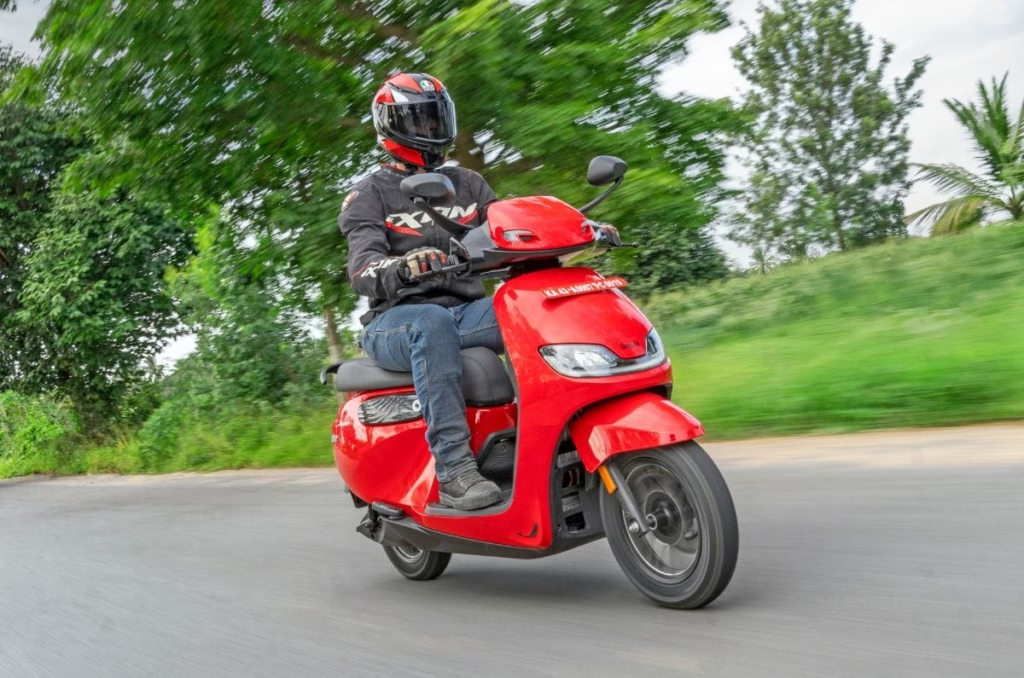
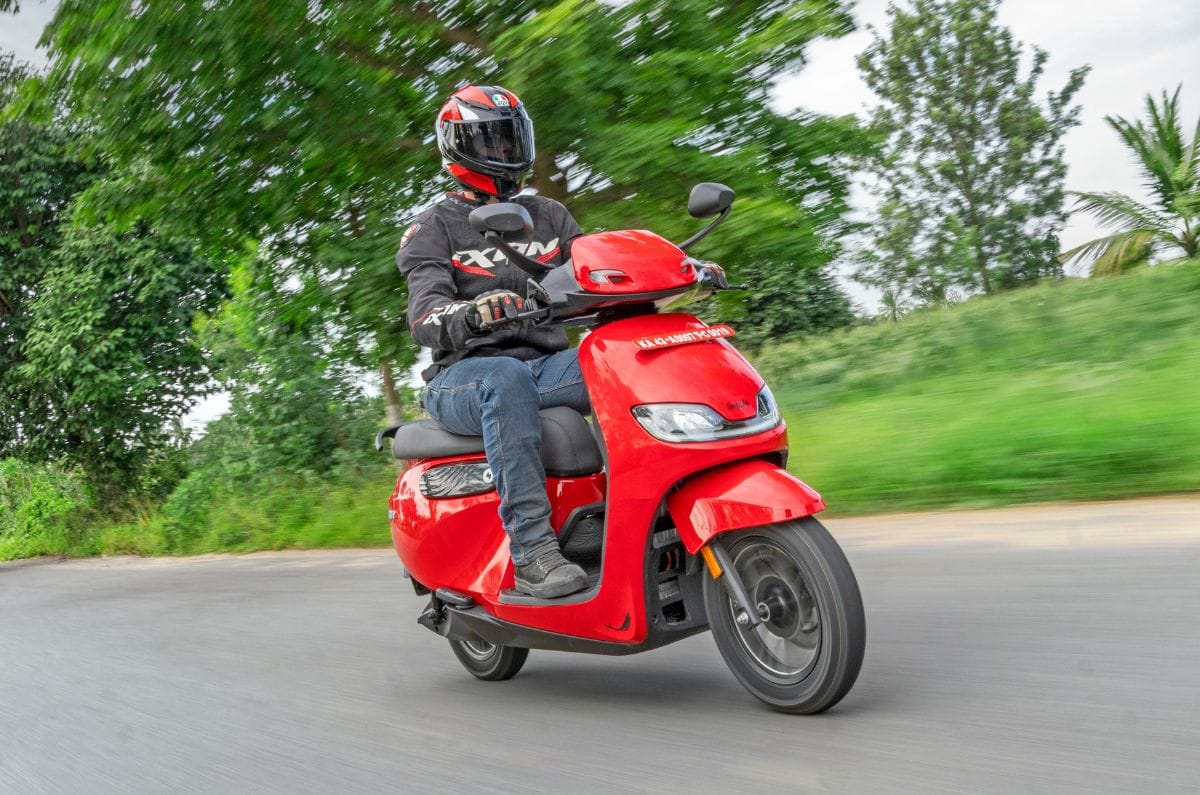
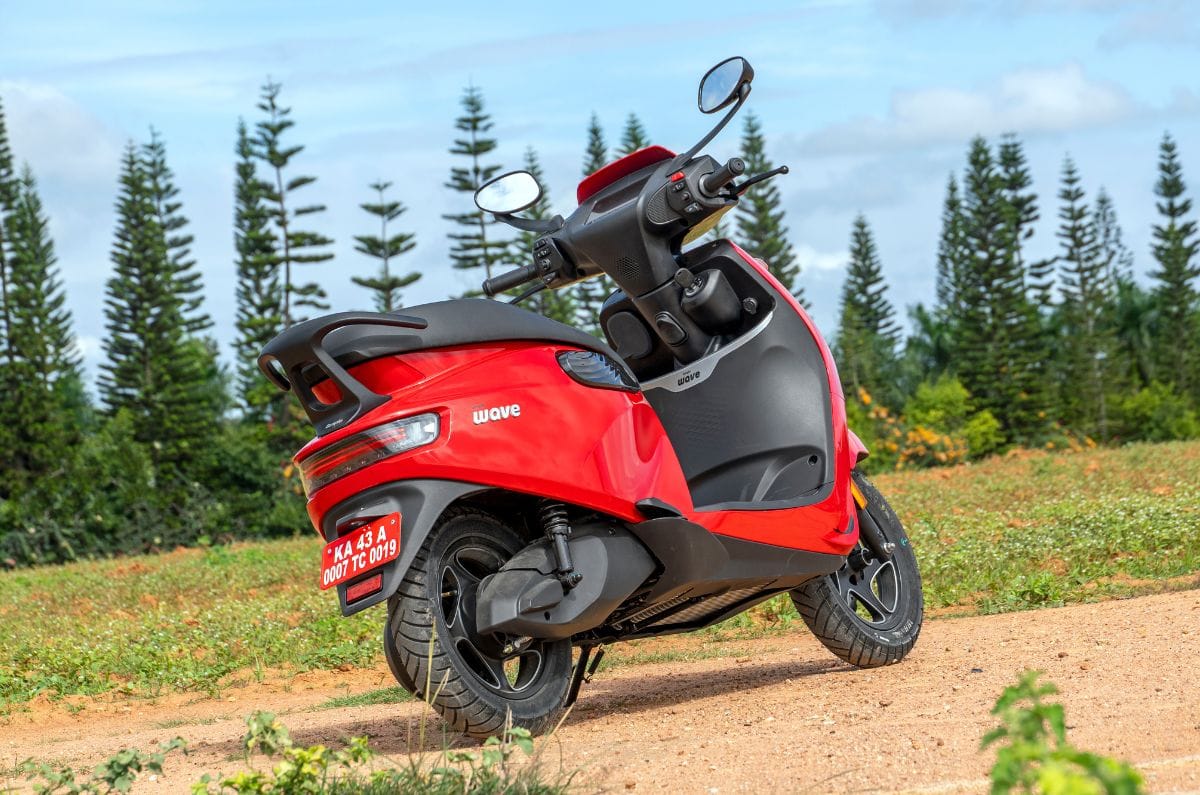
Design is subjective, of course, but the Wave looks good to my eyes with its smooth, rounded edges and distinctive silhouette. It’s got a good level of finish too, and the brighter colour options – red and blue – help it stand out. Simple has designed the Wave as a more accessible, family-oriented scooter, without making it look or feel built down to a cost.
It has a quirky design and surely stands out, especially in the brighter colour options.
Compared to the sporty Simple One, the Wave’s chassis is quite different. The rear subframe has been reworked to accommodate the bigger boot and twin shocks (which replace the One’s monoshock). The Wave also uses a simpler, more cost-effective tubular swingarm instead of the cast unit on the One.
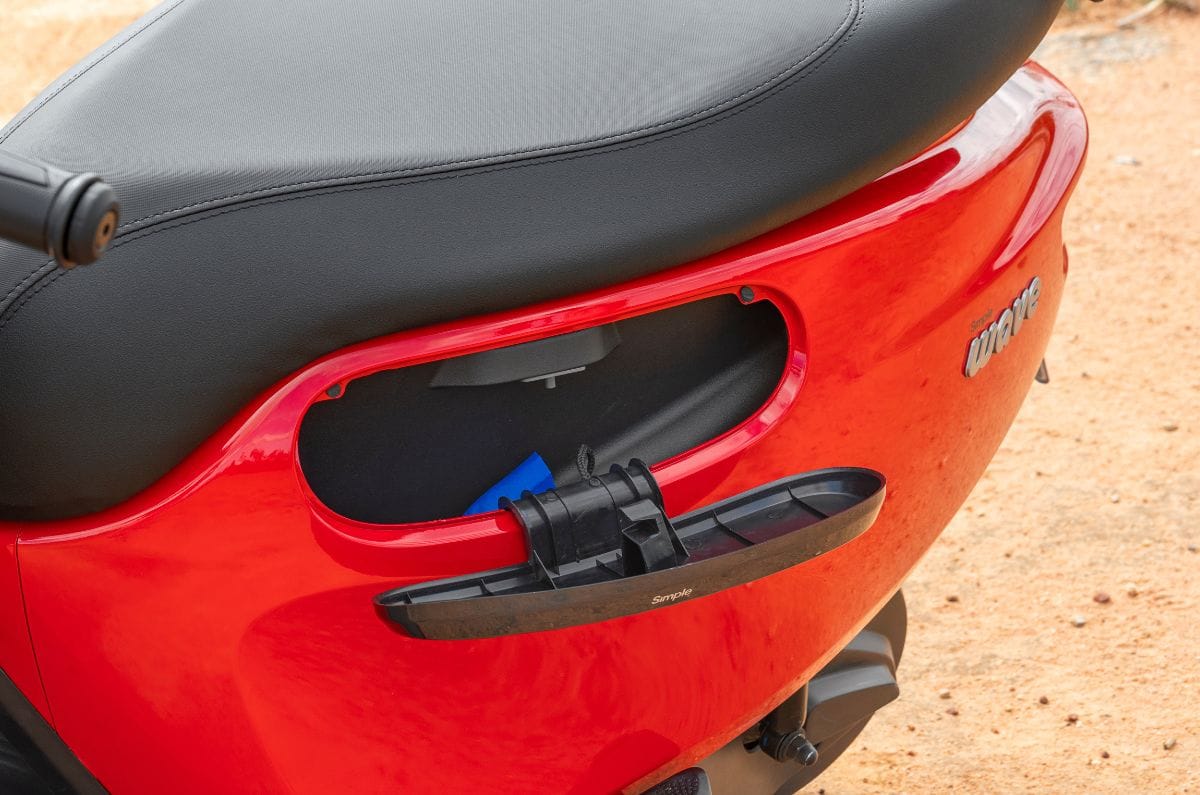
Lockable and weatherproof 4L“Pill” storage cubbies are a thoughtful touch, RH cubby is an accessory.
Simple Wave Ergonomics and comfort – 9/10
Offers a supple ride and ample space for two people
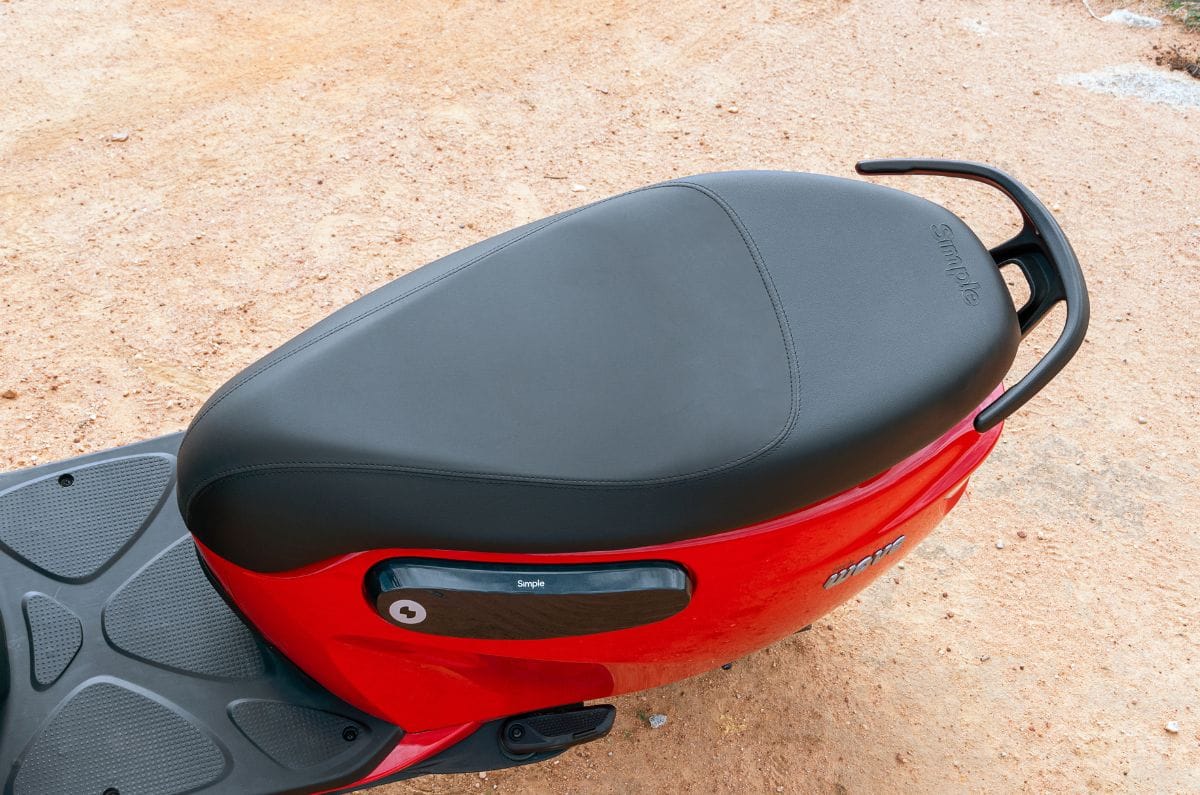
The differences only get more pronounced once you sit on the Wave. Its seat is long, wide and will easily accommodate two full-size adults, while its relatively low 775mm seat height makes it friendly for shorter riders.
That low seat height is no accident either; Simple took feedback from customers who had the One and incorporated it into the Wave. This is why the Wave also has a lower handlebar to make it more approachable for shorter and female riders. This has a trade-off, however. Taller riders will find the handlebar fouls their knees during tight, lock-to-lock U-turns.
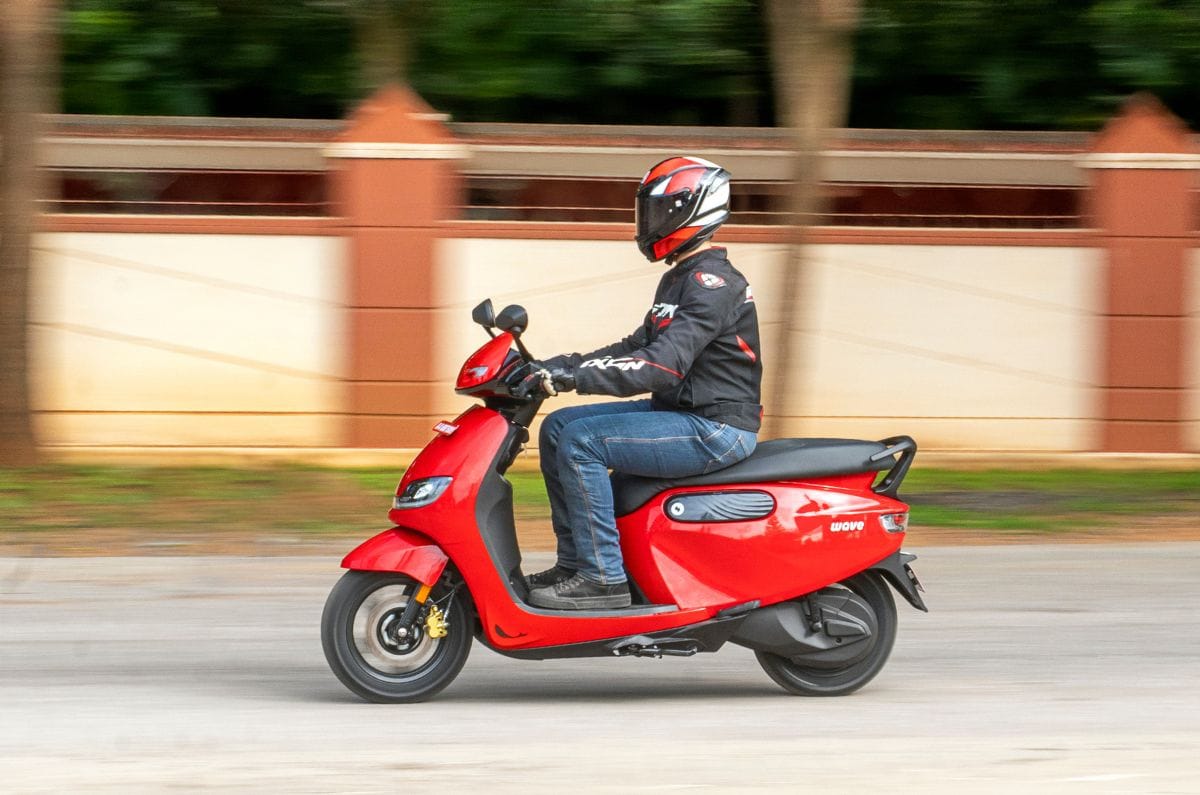
Riding position is spot-on and ride comfort too is excellent.
Other than that, the Wave is rather sorted ergonomically. Ride comfort is excellent for a scooter, and that isn’t a surprise given that the Simple One itself was quite comfortable. The Wave builds on that with a composed and plush ride that suits its intended role.
Depending on the variant, the Wave weighs between 121-128kg with the 3.7kWh TFT variant provided to us sitting roughly in the middle of that range (124.5kg). We found the Wave handled predictably, without any unwelcome surprises, feeling stable and sure-footed without compromising agility expected of a scooter.
Spacious, well-paded seat can comfortably seat 2 full-size adults.
Simple Wave Performance and range – 9/10
Performance is more than sufficient, Eco mode truly usable
Like the One, the Wave offers really brisk performance, but still feels approachable enough for everyday use. The 3.7 version gets three riding modes – Eco, Ride and Sport – and both Ride and Sport offer more than enough performance for everyday use, which isn’t really a surprise. In Ride the top speed is 75kph, whereas Sport takes it up to 90kph (speedo-indicated, not actual).
The real surprise, however, is Eco mode. Yes, it feels duller than the other two modes, but it isn’t crippled in the way Eco modes on other EVs. The Wave can still get up to around 50-55kph quite respectably and overtake traffic, making Eco genuinely usable even on faster roads or in a big city.
It handles predictably and surefootedly in all scenarios.
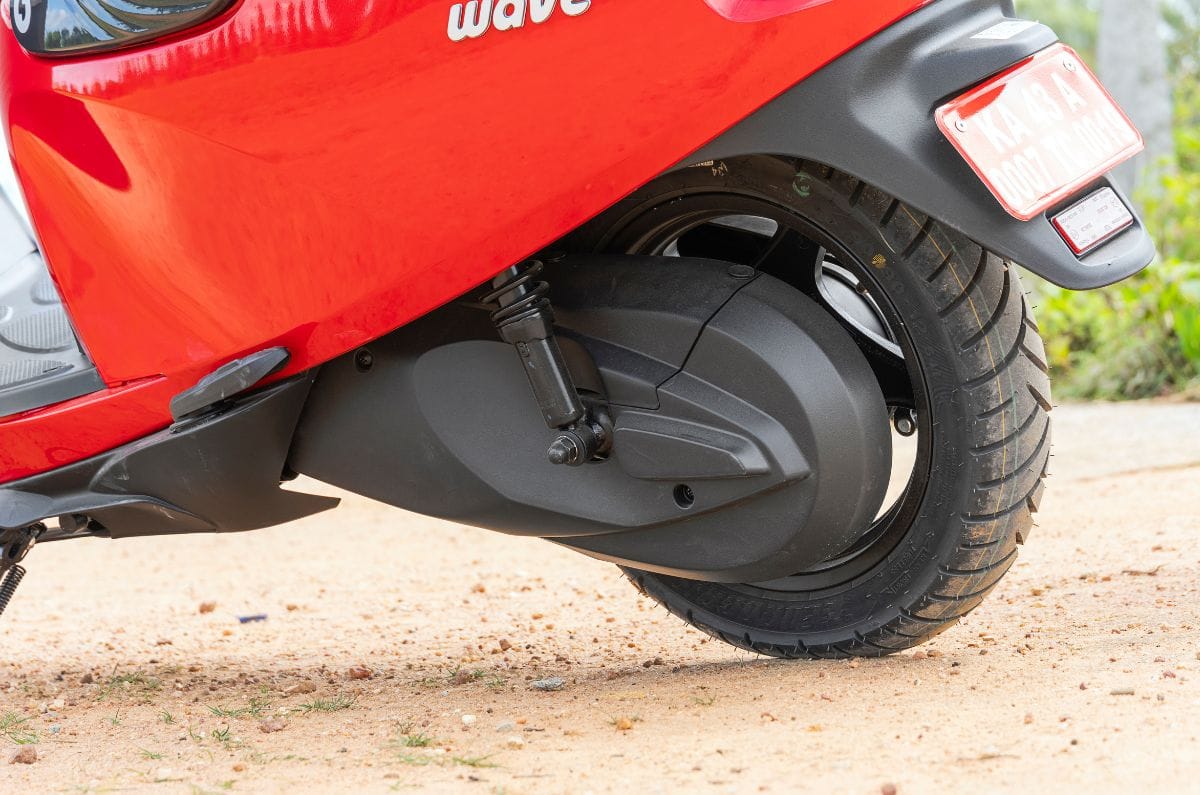
Given that the Wave uses the same motor as the OneS making 6.4kW and 52Nm, this performance is no surprise. However, on the Wave, the motor drives the rear wheel via a chain drive, not a belt as seen on the One models.. While a chain will be more maintenance-intensive than a belt, replacing it should be more affordable. Simple has worked to reduce powertrain noise with measures such as a rubber-damped sprocket, but there is still some motor noise. However, it’s much quieter than an Ather Rizta or 450, although far from dead silent like an Ather Konarc or TVS iQube.
Another welcome change to the One is the throttle response. Unlike the older One models we tested, where the scooter could continue accelerating briefly after the throttle was closed, the Wave’s accelerator behaves much more intuitively. It also gets traction control, although the throttle calibration is so smooth, you’re unlikely to need it in dry conditions but it will be a useful safety net in the wet.
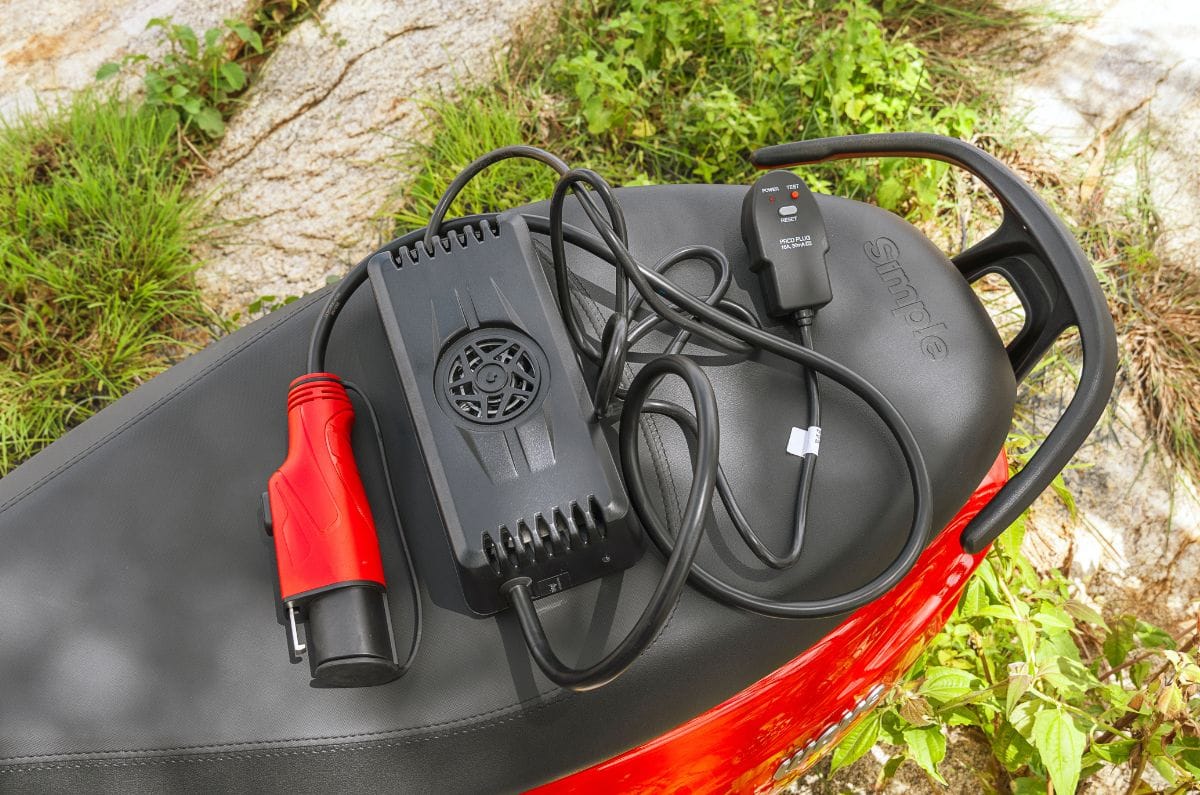
Fast 750W charger is standard on all variants.
Powering the Wave are four battery packs, depending on the variant you choose: 2.2kWh, 2.7kWh, 3.7kWh and 5kWh. The IDC ranges Simple claims are 110km, 132km, 171km and 243km, respectively. The first two use LFP (Lithium Ferrous Phosphate) chemistry, while the larger batteries use NCA (Nickel Cobalt Aluminium) cells.
The range indicator also appears to be quite trustworthy although we’ll reserve final judgement on real-world range until we can conduct a full test back in Mumbai. What is also nice is that all variants of the Wave come with a fast 750W charger which enables a pretty quick 0-80 percent claimed charging time of 3hr30min on the 3.7kWh version we were riding.
The standard warranty on the Wave is three years/30,000km, with five years/50,000km and 15 years/2 lakh km extended options also available. The price of these optional longer warranties has not been shared with us.
The Wave’s motor feeds power to the rear wheel via a chain, not a belt like on the One.
Simple Wave Features – 9/10
Massive 63L boot and Pill storage cubbies are very useful
While range without sacrificing usable performance is surely valuable on an EV, practicality is an important consideration as well. Storage is one of the Wave’s big strengths. There’s a useful front cubby, while the two “Pill” storage boxes on either side of the body panels are particularly nifty allowing you quick access to essentials you may need to reach for without having to get off the scooter. Each offers 4 litres of lockable weatherproof storage; the left one is standard, while the right is an accessory.
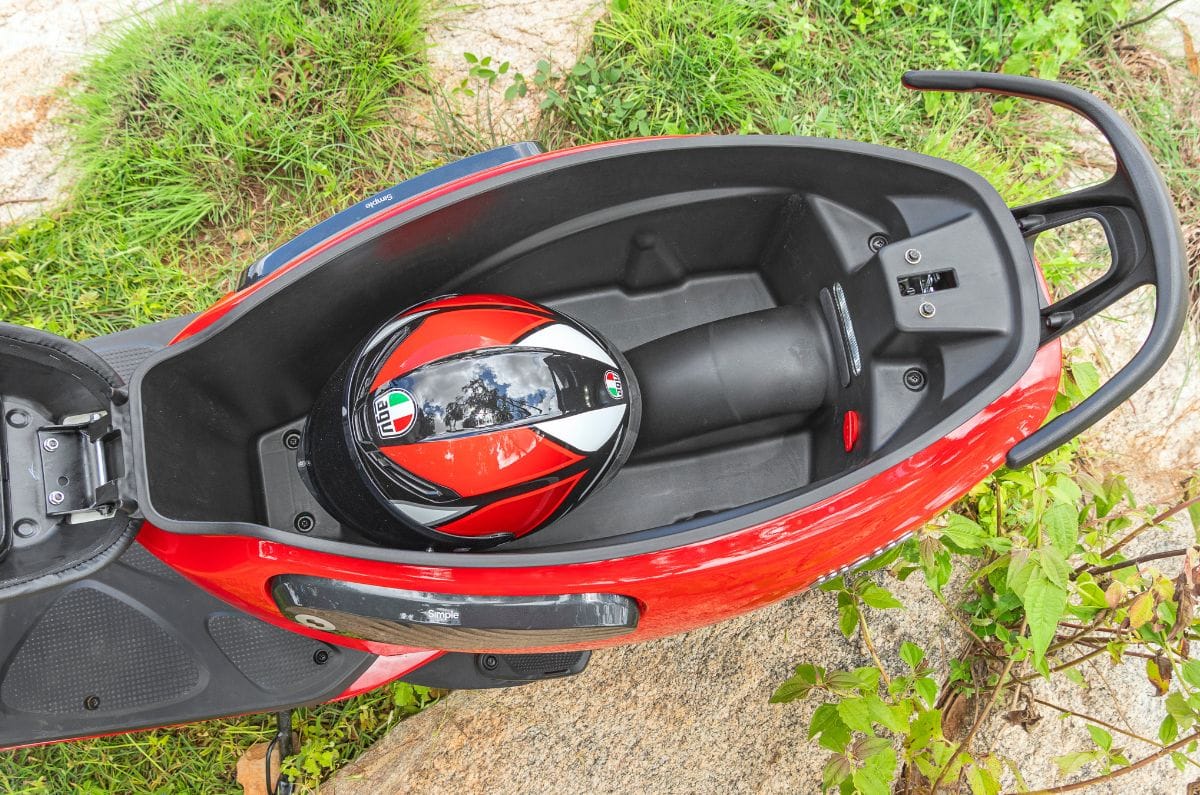
An undoubtedly big USP on the Wave is its cavernous 63L boot, the largest on any Indian scooter to date.
What is also an undoubtedly big USP on the Wave is its cavernous 63 litre boot, which is the largest on any Indian scooter to date. This should prove to be more than enough for everyone in the family! That being said, 63 litres is an enormous number and while this boot is undoubtedly big, I’m do find myself struggling to comprehend how it is nearly 50 percent bigger than the already cavernous 43 litre boot in the River Indie.
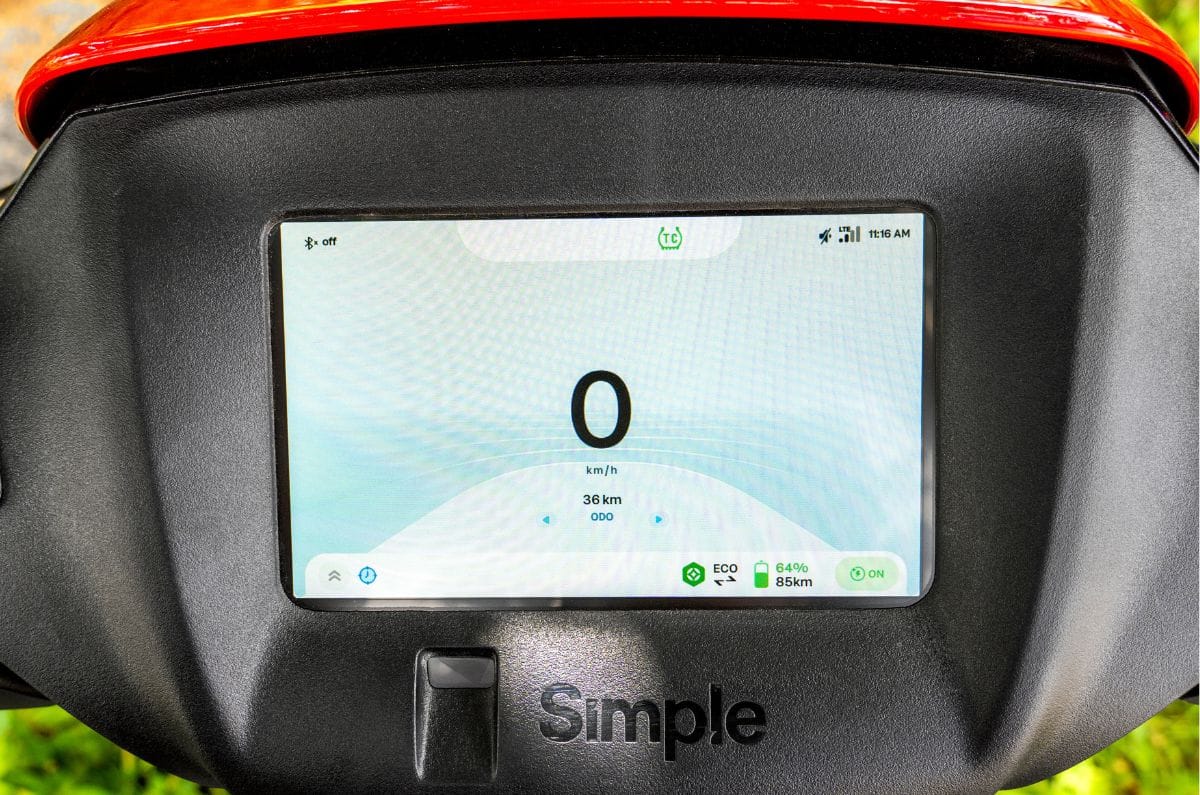
There’s plenty of technology too, including hill hold, drop-safe functionality, theft alerts and Bluetooth connectivity to your phone via the app. The TFT-equipped versions bring even more tech, while the brake-lock clasp is a small but useful touch.
TFT display is well laid-out and has a lot of tech but misses touch functionality.
Simple Wave Price and verdict – 8/10
Scooter has a lot of strengths but is pricey; company yet to prove itself
There isn’t a lot to dislike about the Wave as a scooter. It’s comfortable, spacious, well finished and quick enough to serve its intended purpose very well. However, for all its accomplishments, the Wave doesn’t come cheap. Sure, the Rs 1.10 lakh starting price is tempting, but as you climb the variants ladder, the Wave gets seriously expensive, topping out at Rs 1.90 lakh (ex-showroom, Bengaluru). That said, Simple is one of the few brands offering the option of a 5kWh battery in the family e-scooter space, which is commendable.
However, more than pricing, the bigger issue is that the company is yet to properly scale up its dealer network and establish an aftersales network that delivers the premium experience a buyer will expect after shelling out the money Simple is asking for. The Wave is a good product, but customers paying a premium for an electric scooter will expect not just a solid product but also dependable after-sales support.
The Wave has a lot of strengths but Simple is yet to prove itself in the market.
Ultimately, the Wave’s biggest challenge is that it comes from a start-up that has made plenty of big promises and statements over the past five years but still has a lot to prove. Its dealer network remains minuscule compared with the big players, and long-term reliability still remains unknown.
There’s a lot for Simple to do, but the good news is that the Wave is a genuinely likeable product. If the company can iron out the business side of things, the Wave has the potential to catapult Simple from just another niche start up to a much bigger player. Of course, doing so is a huge challenge and not an overnight process. Simple has a long road ahead of it, but the good news is that it finally has a convincing product to aid in that journey.
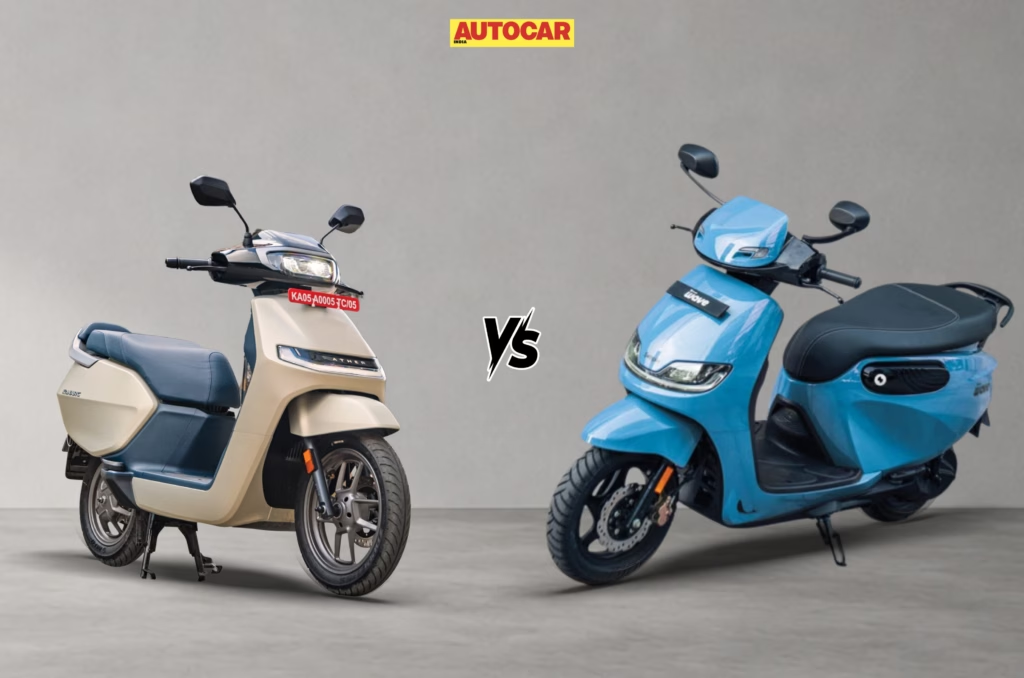
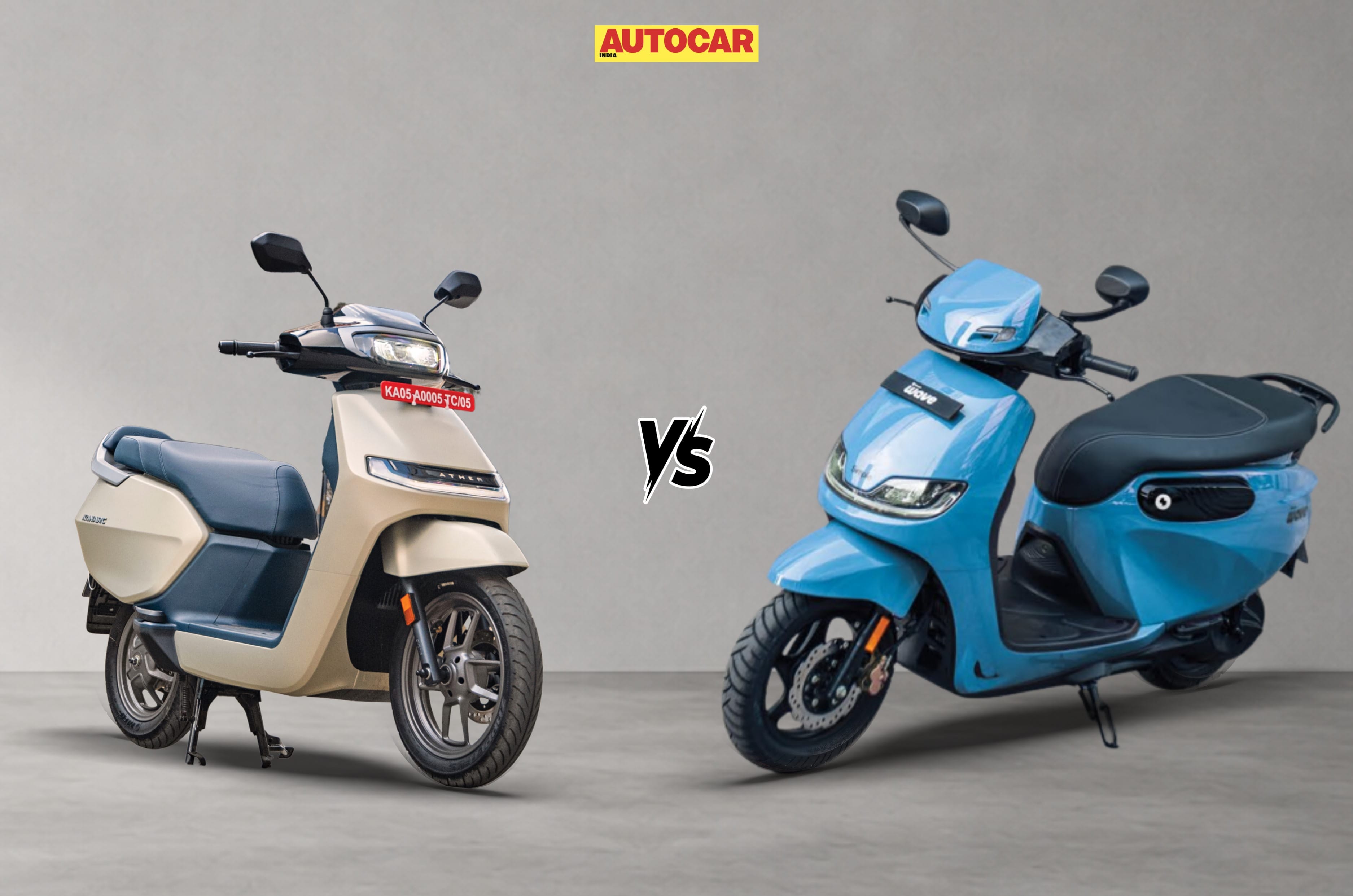
The Indian two-wheeler EV market is gaining momentum with legacy manufacturers expected to sell close to 10 lakh units by the end of the year. But the EV start-ups look to put up a tough fight to the sales numbers with Ather and Simple, both Bengaluru based EV makers, launching new EV family scooters. The Ather Konarc S 161 will be available from later this month and Simple has announced that deliveries for the Wave also start this month. Let’s see how both of them compare on paper.
Simple Wave vs Ather Konarc S 161: Motor, battery, and charging
Simple offers more power, battery, and faster standard charger
Simple Wave
Ather Konarc S 161
Peak motor power
6.4kW
4.7kW
Rated torque
NA
16Nm
Claimed top speed
90kph
70kph
Battery capacity
3.7kWh
3.5kWh
Claimed charging time (0-80 percent)
4hr
5h40m
IDC range
171km
161km
Simple’s scooter brings in a strong first punch with a higher powered motor and a marginally bigger battery than the Ather Konarc S. It also has a notably higher top speed as compared to the Konarc. The Wave comes bundled with a faster 750W off-board charger which enables it to charge to 80 percent almost two hours faster than the Konarc, which gets a 450W on-board charger as standard. However, Ather gives the option to add another 450W off-board charger to enable faster 900W charging. Simple currently doesn’t offer such an option for the Wave.
Simple Wave vs Ather Konarc S 161: Dimensions and underpinnings
Konarc gets a lower seat, but weighs more
Simple Wave
Ather Konarc S 161
Wheelbase
1347mm
1352mm
Seat height
775mm
770mm
Ground clearance
175mm
NA
Kerb weight
124.5kg
129kg
On paper, the Konarc has a marginally longer wheelbase than the Wave, but do note that the Wave boasts the longest seat in the country at 920mm, a title earlier held by Ather’s Rizta. For what it’s worth, we did not face any issues with the Konarc, space-wise or comfort-wise. Ather’s scooter also has a slightly lower seat height but it’s a negligible difference to most users. What’s not negligible is its 4.5kg additional weight over the Simple Wave, but it’s explained by the Konarc using metal body panels.
Simple Wave vs Ather Konarc S 161: Brakes, tyres, and suspension
Konarc gets larger tyres
Simple Wave
Ather Konarc S 161
Tyres (F,R)
90/90-12, 90/90-12
90/90-14, 100/90-12
Brakes (F,R)
220mm disc, drum
220mm disc, 130mm drum
Suspension (F,R)
Telescopic, twin shock
Telescopic, monoshock
The Ather Konarc is the first Ather to get a 14-inch tyre, even if it’s just at the front; and its rear tyre is larger than the Wave, which sticks to a 12-inch at both ends. Both scooters have a front disc brake and a rear drum brake although Simple hasn’t clarified the size of the Wave’s rear drum. On the suspension side of things, the major difference is that the Wave uses a twin shock rear suspension, whereas the Konarc gets a monoshock unit.
Simple Wave vs Ather Konarc S 161: Features
Features filled to the brim, for an added price
Features have been the trump card for almost all EVs from their inception and Ather has led that charge from the front. Simple appears to have caught up to Ather with both the scooters matching each other on features like fall safe, hill-hold, smartphone connectivity, and a TFT cluster on the top variants and a LCD cluster on the lower variants. Simple does offer you a choice between the TFT and the LCD cluster on the Wave (TFT costs Rs 15,000 extra), whereas Ather has reserved the TFT cluster for the Z line, due to launch next year. Features-wise, both companies offer turn-by-turn navigation, call and SMS alerts, GPS tracking, etc., Ather Konarc S’ gets most of those features in its LCD cluster, but Simple has reserved all of these for the TFT cluster variants.
A majority of these features do require additional subscriptions. Ather’s is a one-time cost of Rs 17,000 (Ather StackPro) for the Konarc S 161 variant. Simple, on the other hand, offers two kinds of subscription plans. The first plan is a one-time purchase to add Tyre Pressure Monitoring System (TPMS) and Connectivity modules. The second plan is a yearly subscription that enables all the smart features the company has to offer. At the time of writing, Simple hasn’t revealed the prices for the Wave line-up yet. Just for perspective, for the One scooter with a 5kWh battery, you have to pay a Rs 3,687 one-time payment for the first plan and Rs 2,999 per year for the second plan. To be clear, it’s possible to buy and use either scooter without subscribing to these add-ons, but the experience will feel a lot like a typical ICE scooter.
Simple Wave vs Ather Konarc S 161: Price
Ather gets the better starting price
Simple Wave
Ather Konarc S 161
Price (ex-showroom, Bengaluru)
Rs 1.60-1.75 lakh
Rs 1.45 lakh
For all that it offers and the longest seat in the scooter industry and 63L boot space and and additional 7 litres of cubby storage, spread across the scooter with innovative spots like Pill-storage, the Simple Wave costs Rs 1.60 lakh for the LCD cluster variant and Rs 15,000 extra for the TFT variant. The Ather Konarc without Ather StackPro comes in at Rs 1.45 lakh and with it would go up to Rs 1.60 lakh. While Ather has officially announced that the Konarc S 161 variant will be available from later this month, Simple hasn’t clarified if their “deliveries in September” claim applies to all six of their variants. If you’re interested in either scooter, we’d suggest that you check out and test ride them before deciding.
Ather has a wonderful problem on its hands. The company says that it is now raking in a monthly demand of around 50,000 units from its dealer base, but is struggling to supply much more than half that figure. Fortunately, the solution is just a few months away, and the upcoming manufacturing facility in Chhatrapati Sambhajinagar will begin to scale up in the first half of next year.
The Konarc plays a key role in Ather’s growth ambitions. This scooter is based on a new steel platform that’s designed to be cheaper and faster – not only to build, but also to service. With this cost-effective new platform in place, the expectation was that the Konarc would occupy a new space for Ather, one that slots in comfortably below the Rizta and 450 models. As it turns out, that is not entirely the case.
The base Konarc is priced at Rs 99,999, which is a good Rs 22,000 less than the base Rizta. Ather is excited about the new market space that this scooter will unlock for them, and it surely will bring in a new client base. However, a closer examination of the spec sheet suggests that the base Konarc variant is a bit too stripped down, and we’d suggest you pick from the next variant onwards.
When you do that, you’ll realise that the Konarc is effectively priced on par with the Rizta for a similar battery pack size, and this took me by surprise. Conversations with company officials unearthed the very sound rationale that manufacturing input costs have risen by a massive 30-40 percent over the past year. However, I still can’t shake the feeling that the Konarc is not as affordable as expected.
To be fair, most EVs have gotten quite a bit more expensive in the recent past, and the iQube range is priced at a similar level to the Konarc. However, that’s before you pay the extra amount for Ather’s optional StackPro features, which is something you’d want to do because they add valuable appeal and functionality. What I find disappointing is that none of the Konarc S models come with a full colour TFT display, and that means it’s not compatible with a lot of Ather’s more uniquely clever features like pothole alerts, WhatsApp alerts, voice control and more.
While the Konarc is not as affordable as expected, there is no doubt that it lives up to Ather’s premium image. Quality and finish are excellent, and more importantly, it is genuinely comfortable to ride, which isn’t something you could say about previous Athers. The fundamentals are in place with this scooter, and that is a solid win for the company.
The fact remains that Ather is already experiencing such big demand for its existing scooters, which don’t come cheap. The customer’s appetite to spend appears to be in place, and the new Konarc will certainly widen it, although I’m sure it will also eat into the Rizta’s market share. With its superior comfort, practical on-board charger and promise of lower running costs, I’m convinced it’s a better scooter than the more flashy looking Rizta. Whether customers feel the same way remains to be seen, but Ather appears well on course to reach new heights in 2027.
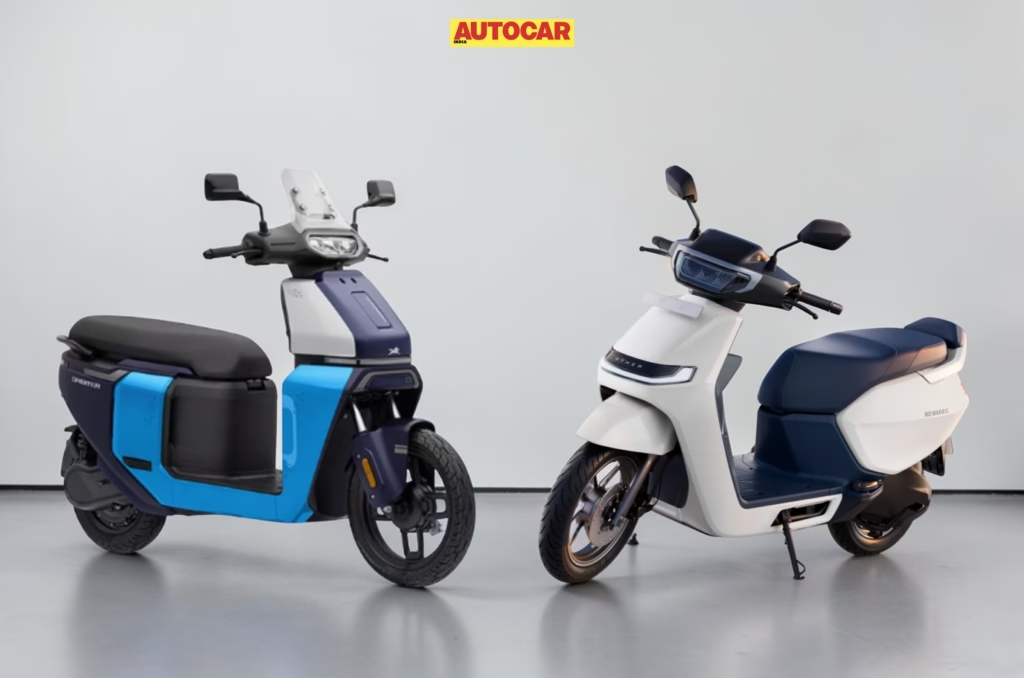
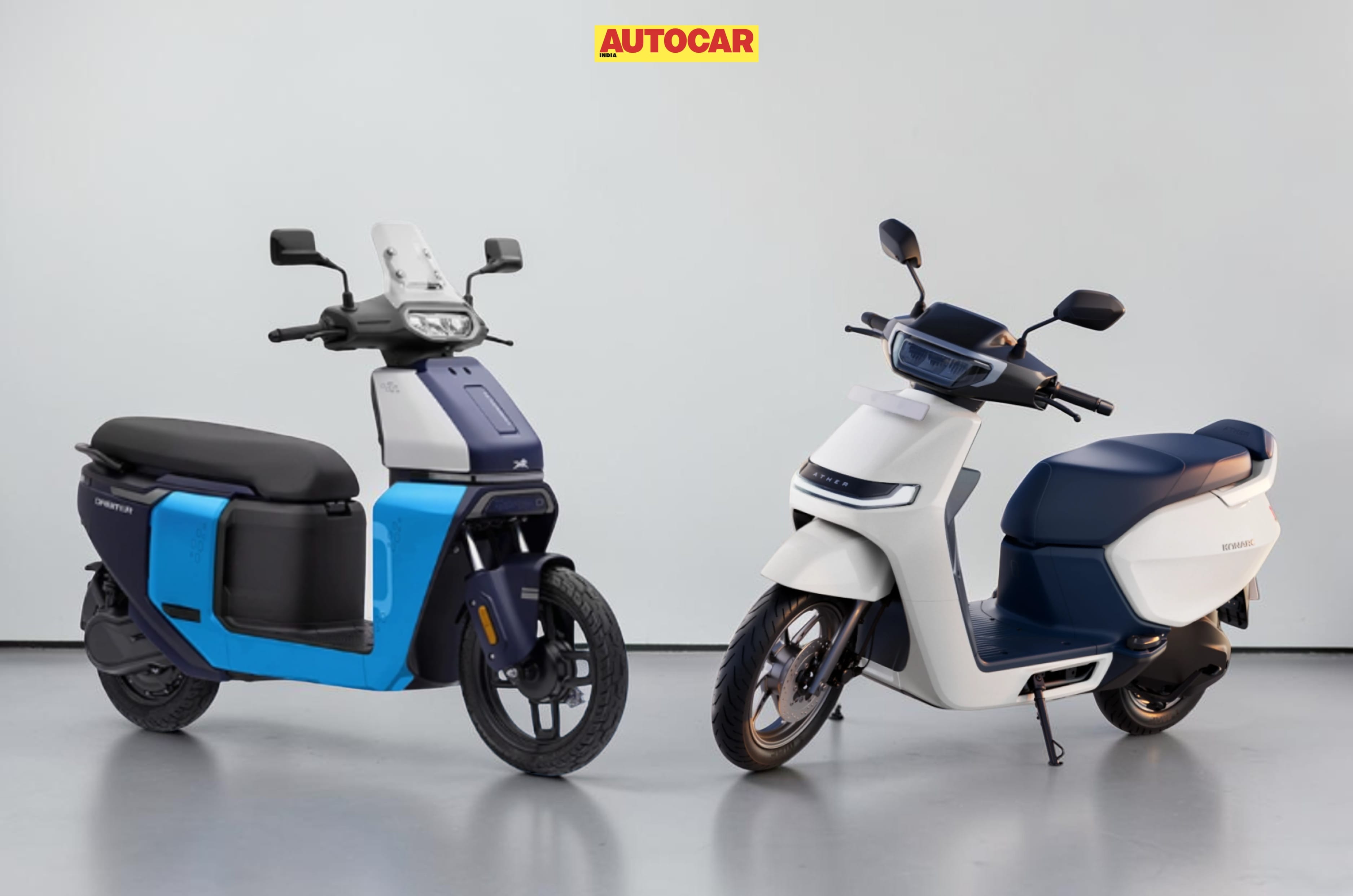
Ather has launched the Konarc with a brand-new EL platform at prices starting as low as Rs 99,999. This makes the scooter an obvious rival to the TVS Orbiter, which was revealed last year to target the urban scooter market. Since the Ather Konarc’s entry-level variant isn’t due for release until late next year, let’s see how the Konarc S 125, available later this month, compares to the TVS Orbiter V2.
Ather Konarc S 125 vs TVS Orbiter V2: Motor, battery and charging
Orbiter has more battery capacity and range
Ather Konarc S 125
TVS Orbiter V2
Peak motor power
4kW
2.9kW
Rated torque
16Nm
NA
Claimed top speed
70kph
69kph
Battery capacity
2.7kWh
3.1kWh
Claimed charge time (0-80 percent)
4h30m
4h10m
IDC range
125km
158km
Starting with the motor, the TVS Orbiter falls short of the Ather in terms of peak power. TVS has not mentioned a peak torque output for the Orbiter. However, the Orbiter bounces back with a higher battery capacity and range, as well as a quicker 0-80 charge time with a faster 650W bundled charger.
That said, both scooters offer optional hardware to speed up charging times. The Ather Konarc comes with a built-in 450W charger as standard, and it can be bundled with an external 450W charger for a faster 900W total charging speed, cutting the time down to 2 hours and 25 minutes. The Orbiter also offers a faster 950W charger as an add-on accessory, but it takes a longer 2 hours and 38 minutes to get to 80 percent from nil.
Ather Konarc S 125 vs TVS Orbiter V2: Dimensions and underpinnings
Orbiter is more accessible
Ather Konarc S 125
TVS Orbiter V2
Wheelbase
1,352mm
NA
Seat height
770mm
760mm
Ground clearance
NA
165mm
Kerb weight
126.5kg
112kg
The Orbiter starts strong with an advantage in two important areas for a practical scooter: seat height and ground clearance. The Konarc is also the heavier scooter, with a 14.5kg higher kerb weight than the Orbiter. TVS hasn’t shared the wheelbase figure for the Orbiter.
Ather Konarc S 125 vs TVS Orbiter V2: Brakes, tyres and suspension
Konarc has the better ride package
Ather Konarc S 125
TVS Orbiter V2
Brakes (F, R)
220mm disc, 130mm drum
Drum, drum
Tyres (F, R)
90/90-14, 100/90-12
90/80-14, 90/90-12
Suspension (F, R)
Telescopic, monoshock
Telescopic, twin shock
The hardware package is where the Konarc gains significant ground. It gets a front disc brake compared to the Orbiter’s drum brake, along with wider front and rear tyres. Suspension setups are more evenly matched between the two, although the real-world experience could tip the scales towards one.
Ather Konarc S 125 vs TVS Orbiter V2: Features
TVS remains in (surprising) lockstep
Ather has reserved most of the headlining new features, such as the TFT instrument cluster, auto (boot) pop, smart key, and so on, for the Z line. The Konarc S gets a DeepView LCD instrument cluster and comes with AirWalk, which takes the motor’s assistance to make manually moving the scooter easier. Considering Ather’s tech-savviness, this is unsurprising. Some other tech-powered features include turn-by-turn navigation, AutoHold (hill hold), Vehicle FallSafe, TrueRange, and Find my Scooter, among others. The catch, however, is that all of them require you to pay for Ather StackPro, a one-time Rs 16,000 add-on to the Konarc S 125’s ex-showroom price.
The Orbiter, on the other hand, has a much smaller LCD cluster but matches almost all of Konarc’s features, such as turn-by-turn navigation, hill-hold, smartphone connectivity, theft and tow alerts, crash and fall alerts and motor cut-off on fall. TVS also offers cruise control, which is currently only on the Ather 450 series of scooters. Right now, you get access to all the features mentioned above at no extra cost on the Orbiter, but it remains to be seen if that will change, as the TVS iQube charges an annual subscription of Rs 999 for some advanced features.
Ather Konarc S 125 vs TVS Orbiter V2: Price
Konarc starts higher, and it only gets more expensive
Ather Konarc S 125
TVS Orbiter V2
Price (ex-showroom, Bengaluru)
Rs 1.23 lakh
Rs 1.15 lakh
The two variants in comparison here make the Ather about Rs 8,000 more expensive than the Orbiter. If you prefer access to all the smart features offered by Ather StackPro, that will increase the gap even further. Even though the two e-scooters are aimed at bringing in more mainstream users to the brands, both have been designed with different demographics in mind. If you happen to be in the common demographic, though, you should definitely take a test ride before picking one over the other because the on-paper specs don’t tell the whole story.
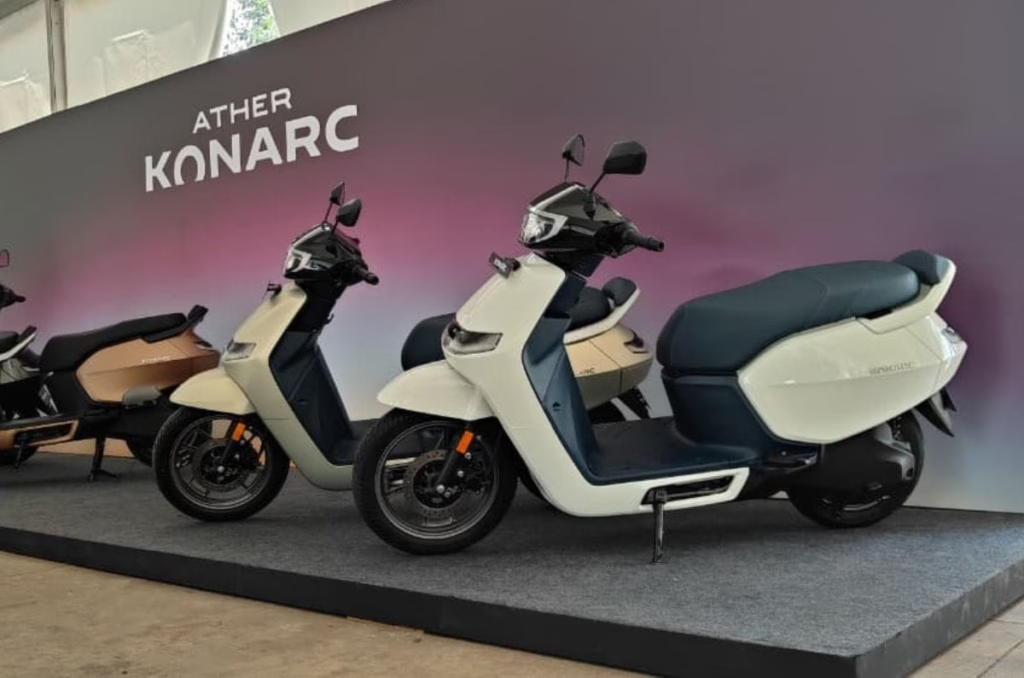
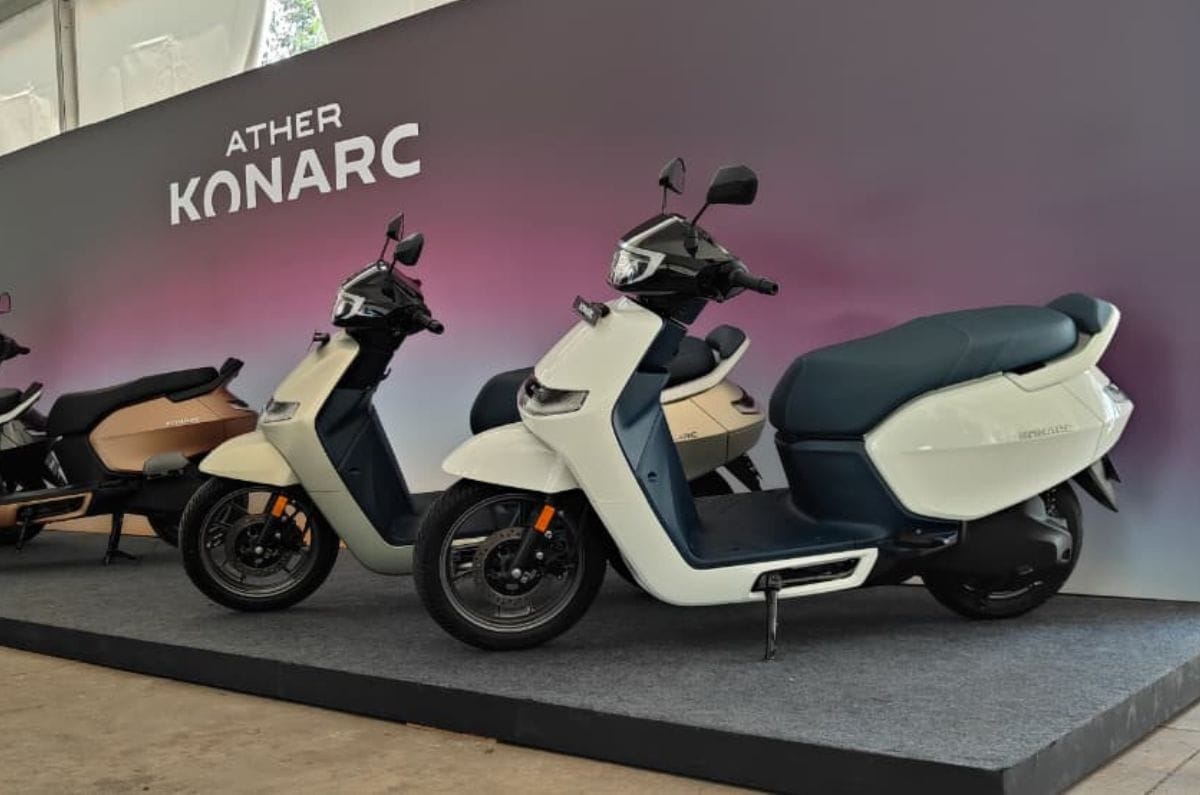
The Ather Konarc is based on an all new platform and promises to deliver customers new levels of comfort with the same Ather promise of tech and quality.
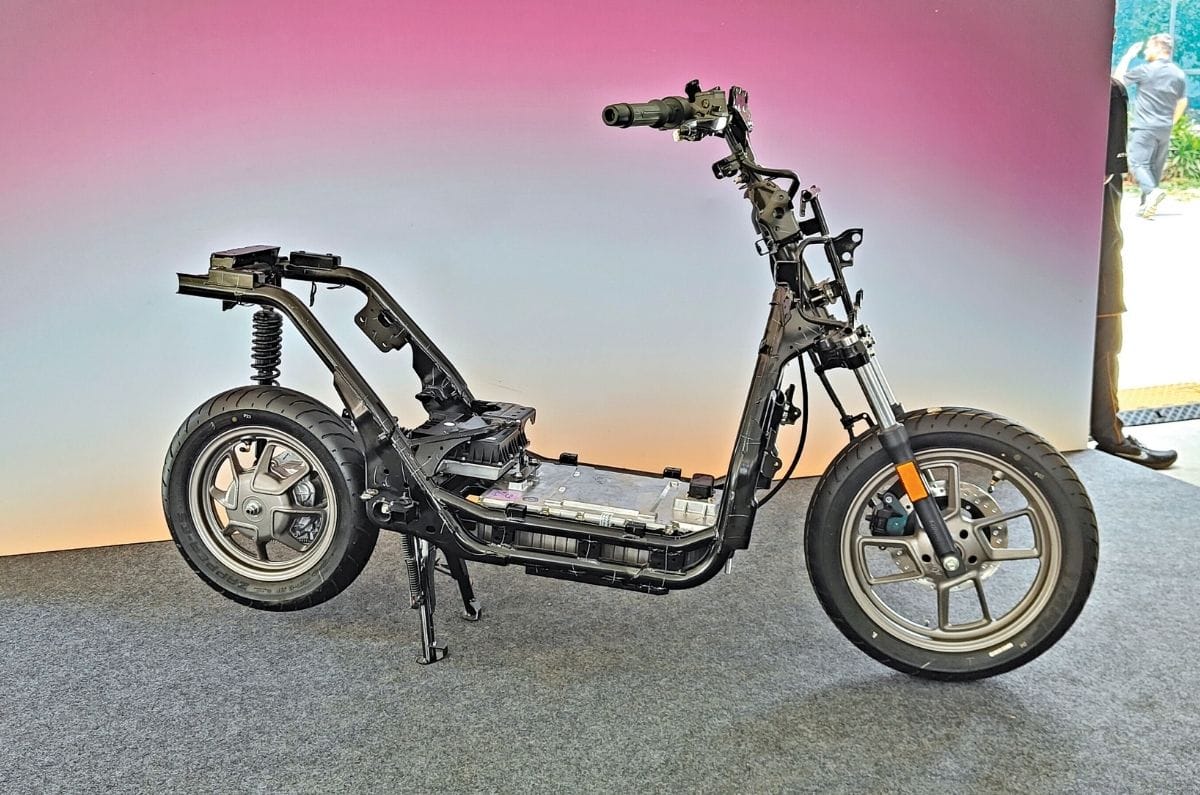
Ather‘s new scooter Konarc is a broader bet for the electric two-wheeler maker to move beyond the relatively narrow customer base it has built around its technology-led products and compete for a larger share of India’s mainstream electric scooter market. Konarc is the first product on Ather’s new EL platform, which the company says was developed with safety, serviceability and scale in mind.
Six different Konarcs with two available starting September
Konarc doubles the service interval compared to a typical scooter
AtherNode and True Health to help with charging and resale, respectively
Konarc is built to be serviced faster and less frequent
Ather says EV priorities have changed with times
The Konarc will be offered across S and Z lines. The 100km Konarc S is priced at Rs 99,999, while the 125km and 161km versions cost Rs 1.22 lakh and Rs 1.45 lakh respectively. Prices for the 200km S and the two Z variants have not been announced. The rollout will start with the S 125 and S 161 variants from September 21, followed by the 100km version in the first quarter of 2027. The Z line is scheduled for the second quarter of 2027, and the 200km S will follow in the third quarter. Once all Konarc variants are rolled out over the next year, Ather expects to have an option for 80-90 percent of the scooter market.
Ather’s own assessment is that the questions surrounding EVs have changed. Ather co-founder and CEO Tarun Mehta said that when the company started, customers asked whether an electric scooter was powerful enough, reliable enough, or even practical. As adoption has grown, the questions have become more conventional: where to charge, how safe is the battery, how long it will last, how the vehicle will be serviced and what happens when it has to be eventually sold. The company wants to solve for the three main concerns: service, charging, and resale value for its EV scooters.
Serviceability is one of the areas where Ather says the EL platform is intended to deliver an advantage. The Konarc’s service interval is 10,000 km (vs 5,000 km for most other scooters), while the number of service checkpoints has also been reduced. In a demonstration during the launch, the motor and transmission assembly was removed in 38 seconds and put back in 1 minute 33 seconds. Mehta acknowledged that service centres would not necessarily replicate these times, but said the architecture was designed to make servicing simpler.
Charging network has also been improved
Ather is solving for public and residential charging
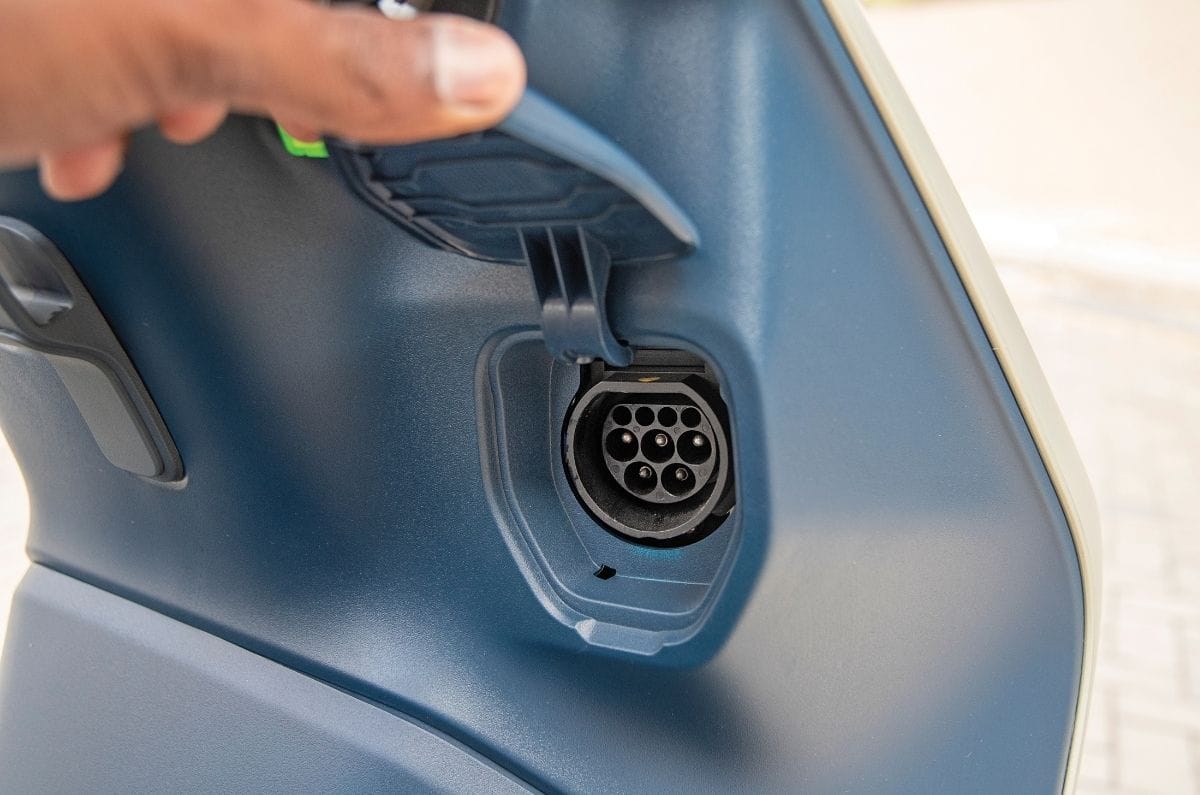
Konarc owners will of course have access to Ather’s existing network of about 6,000 public fast chargers known as Ather Grid. The company, however, sees apartment complexes as the next charging bottleneck. To solve that, it has built AtherNode, a new residential charging system, which uses a building’s common electricity supply to serve individual parking spaces. It manages the available load, queues vehicles, and generates separate bills for residents. This could allow housing societies to add more charging points without immediately upgrading their transformers. Ather plans to introduce the system in six cities from December, beginning with Bengaluru. The Konarc itself gets a 450W onboard charger and supports combined charging; which means that it can be paired with an external 450W charger to refill the battery at 900W.
Ather True Health to help with resale value
The company remains committed to its software first approach
With the Konarc, Ather has attempted to put more conventional attributes of a mass-market scooter alongside the technology it has developed over several years. The company is wanting to solve not only the product problem, but also some of the ownership concerns that could prevent customers from switching from petrol scooters. As the third prong on that front, Ather has introduced True Health on its app, a digital report covering the battery, motor, charger, dashboard, service history and wear components for eligible scooters more than three years old. Owners can view the condition of major components, the battery’s state of health and an estimated resale value. Such a company-verified report could give buyers and sellers a better basis for arriving at a price.
Finally, the company expects software adoption to remain strong even as it moves into a more mainstream segment. For example, in Madhya Pradesh, the adoption rate for AtherStack Pro initially stood at about 40 percent, but eventually crossed 88 percent with the number of stores increasing. The Konarc is Ather’s aim at a much broader part of the market, but that means competing not only with other electric scooter makers, but also with established petrol scooter brands. It remains to be seen whether the company’s push to improve serviceability, charging, and resale value will ease that challenge.
With inputs from Nayan Jain and Stephen Raj Antony.
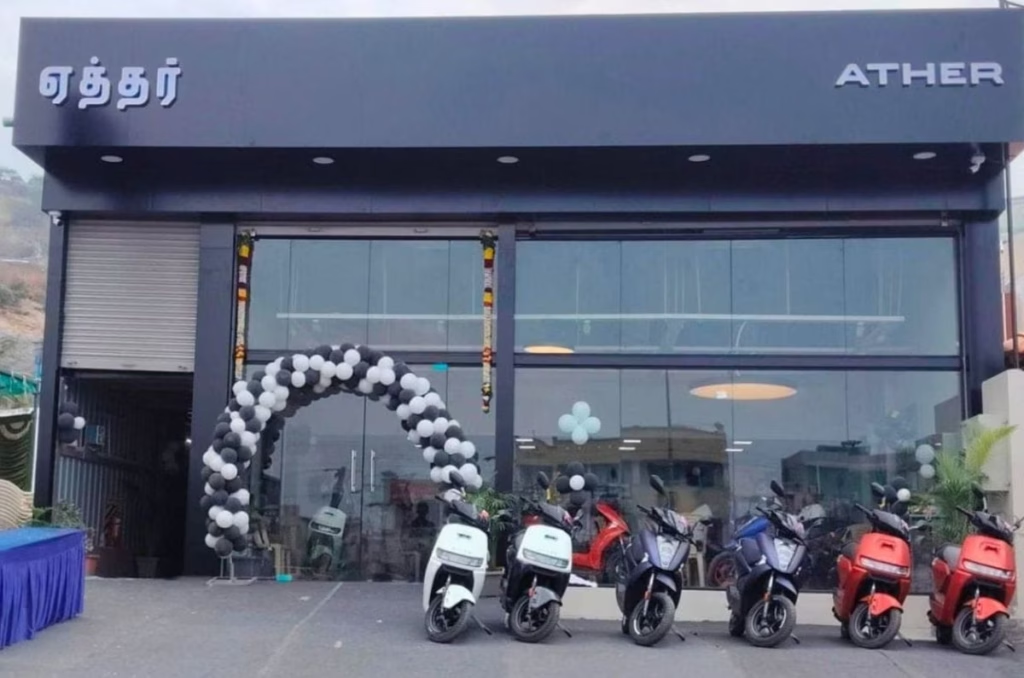
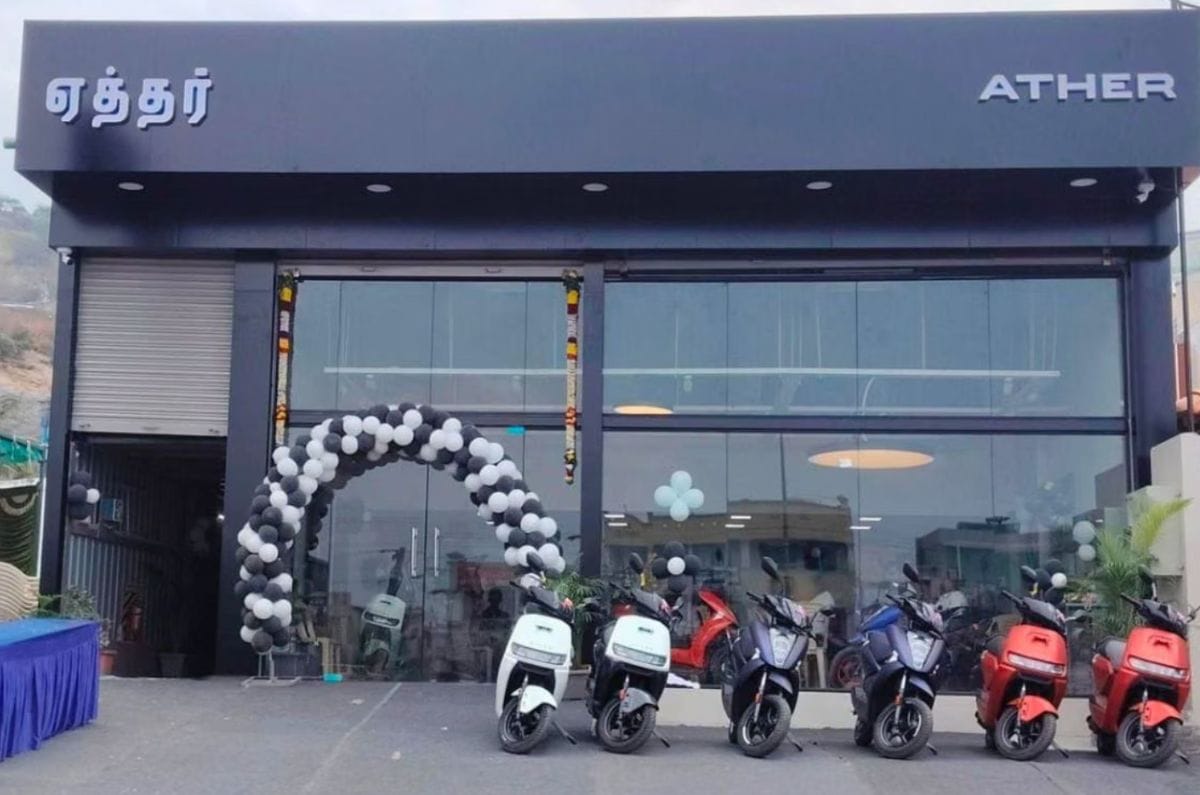
Ather is targeting to more than double its retail footprint to between 1,800 and 2,000 stores over the next two years as the EV maker rolls out its new family scooter Konarc and expands production capacity, according to a senior company official. The company currently sells the 450X and Rizta electric scooters, which are positioned in the premium and mass premium segments of the market across some 750 stores. The company plans to use its new EL platform to broaden its product range into the more affordable segment.
More scooters of different battery sizes expected from the EL platform
Ather EV motorcycle at least two years away
Production capacity to increase with the Aurangabad plant becoming operational
Number of retail stores and production to increase
More products expected from the Konarc’s EL platform
The newly unveiled Konarc will be available in two variants and six battery options at a starting ex-showroom price of Rs 99,999. The delivery of the first two battery options (S 125 and S 161) is set to commence in September 2026. “We are targeting 1,800 to 2,000 stores in the next 24 months,” Ather Energy’s Chief Business Officer Ravneet Phokela said. Phokela said the company expects the domestic market to remain its main focus for now, with exports only becoming important after a few years.
The EL platform, on which the Konarc is based, can produce different types of scooters, and it can also accommodate different battery sizes, wheel dimensions and dashboard designs. The company boasts that the platform helps launch more products while also reducing costs through changes like lower use of aluminium and simpler engineering. Ather has said it plans to launch multiple scooter products based on the platform first; and added that an Ather electric motorcycle is more than two years away.
Ather’s push into a wider range of scooters comes as the company looks to increase production capacity. Ather currently manufactures electric scooters at its Hosur plant, which has an annual production capacity of 4.20 lakh units. Its upcoming Aurangabad facility is expected to add another 5 lakh units of annual capacity when its first phase becomes operational later this year. The company said that it’s also considering whether to accelerate the second phase of the Aurangabad facility if demand continues to grow at its current pace.
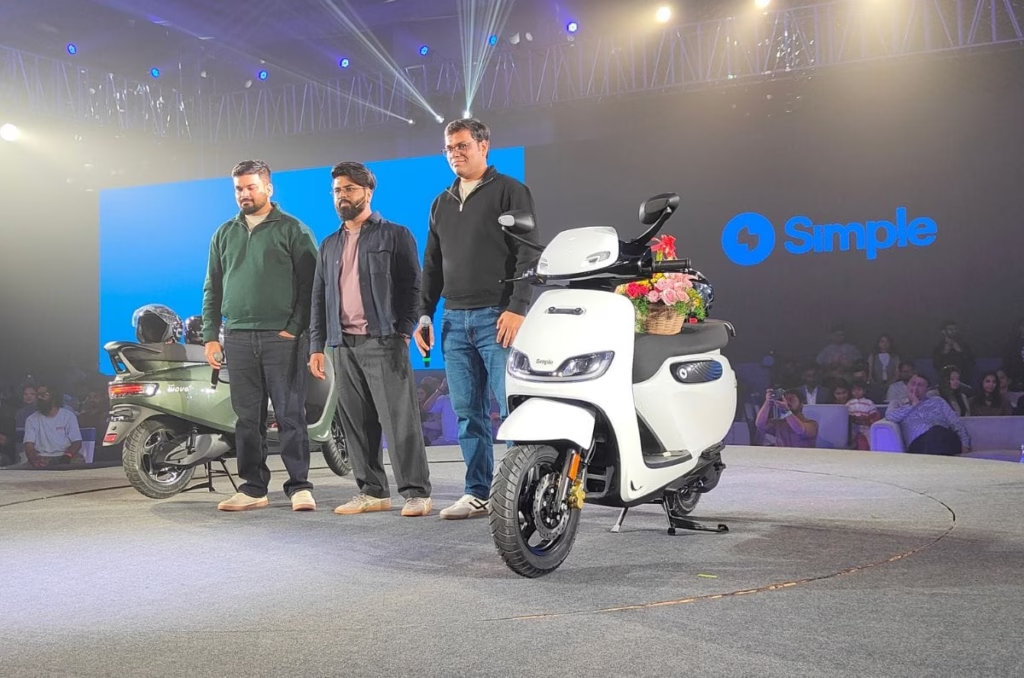
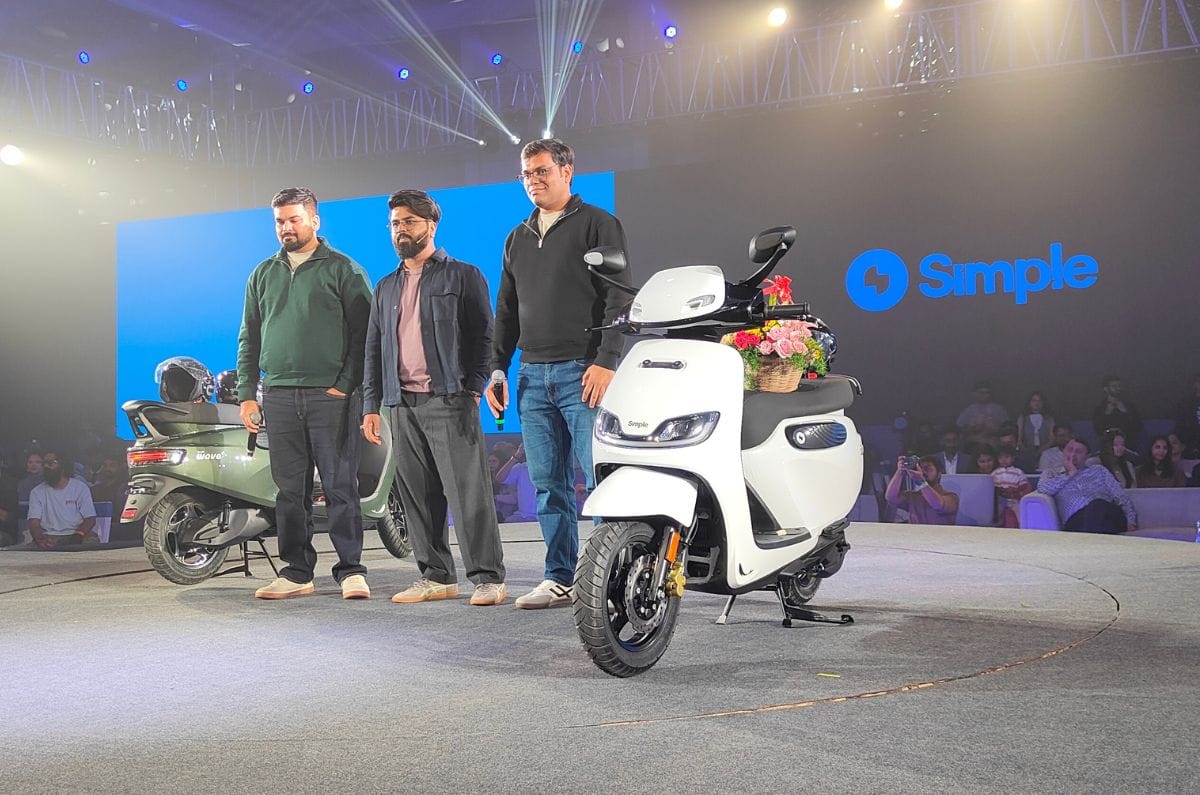
Simple, the Bengaluru based EV startup, has finally launched their family scooter Wave today. The scooter was first spotted testing back in March this year and was earlier referred to as Arrive during development. Simple is looking to position this as a mass market scooter compared to their sharp, performance focussed One and One S.
Simple Wave has four variants; six, if you count instrument cluster options
Lowest variant has a 2.2kWh battery, top variant has a 5kWh battery
Delivery starts from 25 September 2026
Simple Wave: What you should know
New and improved motor, battery, and design
The Wave is based on an updated platform of the brand’s One scooter range. The first update is to the suspension, with the Wave using a twin shock rear suspension (compared to the One’s monoshock) and a much longer seat. Speaking of which, the Wave has a whopping 920mm long seat, claimed to be the longest scooter seat in the country. The other headline is the 70L storage in the Wave. Of which, 63 litres come from the under seat compartment, three litres on the front apron cubby, and four litres from a quick access pocket on the left side of the rider’s seat (called Pill Storage). An identical pocket for the right side is offered as an accessory.
The Wave has four variants by battery capacity. The base WaveS is offered in two battery capacities, 2.2kWh and 2.7kWh with 110km and 132km of IDC range, respectively. The middle variant, Wave, has a 3.7kWh battery and 171km of IDC range, and the top Wave+ variant has a 5kWh battery and 243km of IDC range. Wave+ currently has the highest range in its segment. Compared to the One range, the powertrain has seen updates all over. The 6.4kW motor has been updated to third generation and so has the Battery Management System, with the overall size of the motor reduced by 15 percent.
For context, the One uses a 5kWh battery and an 8.8kW motor; the One S has a 3.7kWh battery and a 6.4kW motor. They offer up to 265km and 190km of claimed range, respectively. Do note that there’s also a One Ultra with a 6.5kWh battery and a motor with 8.8kW of power with a claimed 400km range, but the delivery dates for that have not been announced so far. The One Ultra is currently the most expensive scooter from Simple, priced at Rs 2.35 lakh (ex-showroom, Bengaluru).
The scooter’s design has also shifted to a sleeker silhouette, letting go of the One’s sharp and aggressive lines. Simple claims it’s inspired by water, as opposed to air for the One range. However, the Wave retains the 7-inch TFT instrument cluster. The Wave+ gets it as standard, whereas the lower variants offer an option between the TFT or an InfinityBlack LCD cluster. The WaveS variants get three ride modes (EcoX, Eco, and Ride) with a claimed top speed of 75kph. Wave and Wave+ variants add an additional Sports mode and increases the top speed to 90kph. The 2.2kWh variant is available in two colours, 2.7kWh variants in four, and the 3.7kWh and 5kWh variants in six colours.
First spotted on the test mule, the Wave swaps the rear disc from the One range for a more cost-effective rear drum brake but retains the Combined Braking System (CBS) across all four variants. However, the One scooters offer traction control as standard rider aid, with the Wave limiting it to — called GripSense now — on the higher variants. Dimensions-wise, compared to the One range, seat height has been lowered by 5mm to 775mm and ground clearance has been increased by 3mm to 175mm.
The Simple Wave has been priced starting at Rs 1.10 lakh (ex-showroom, Bengaluru). Simple has announced that deliveries commence from September 25. Prices for the higher variants hasn’t been revealed, and Simple hasn’t clarified if the delivery date applies to all the variants. With its pricing, the Simple Wave directly rivals other EV scooters like the new Ather Konarc, Bajaj Chetak, Hero Vida, and TVS iQube, with range as its biggest trump card over all of them.
It’s not a stretch to say that the Konarc is the most important product from Ather yet, because the company hopes this new EV will help it unlock segments and markets hitherto untouched by it. The question then is, will the Konarc live up to the lofty expectations placed on its shoulders?
Konarc Design and Quality – 9/10
Straightforward design with high quality finish
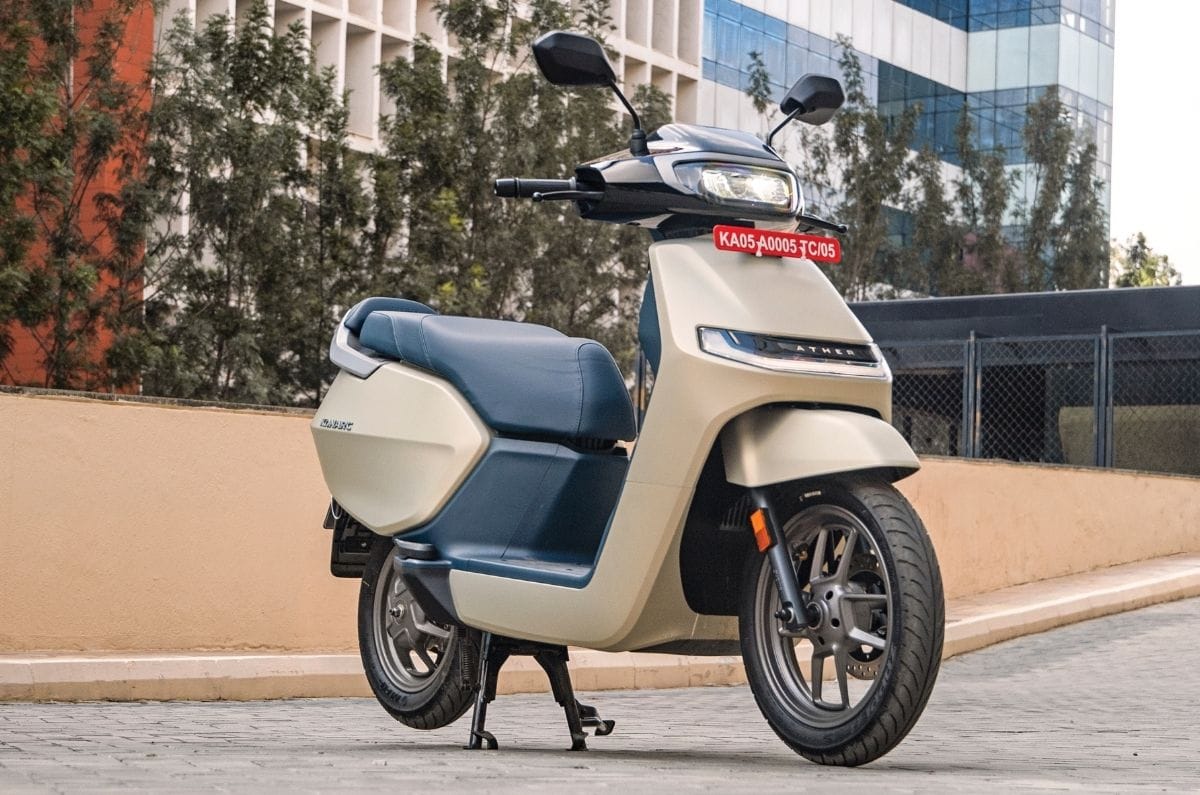
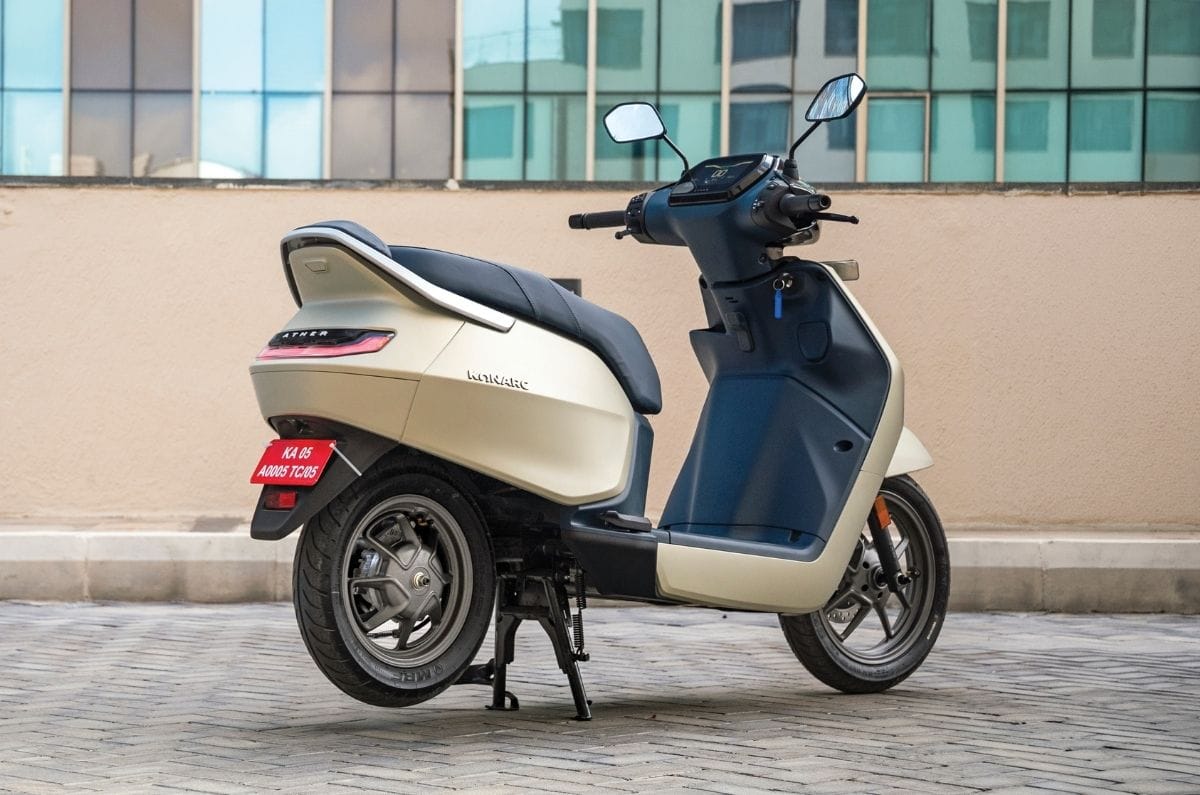
The Konarc S is offered in four classy yet inoffensive colours
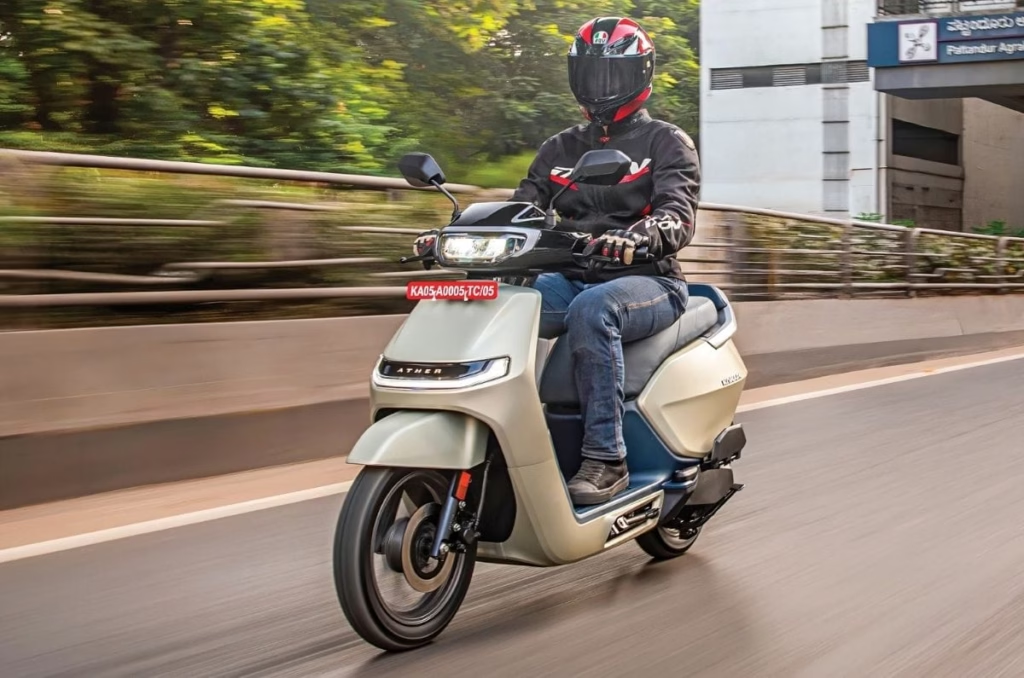
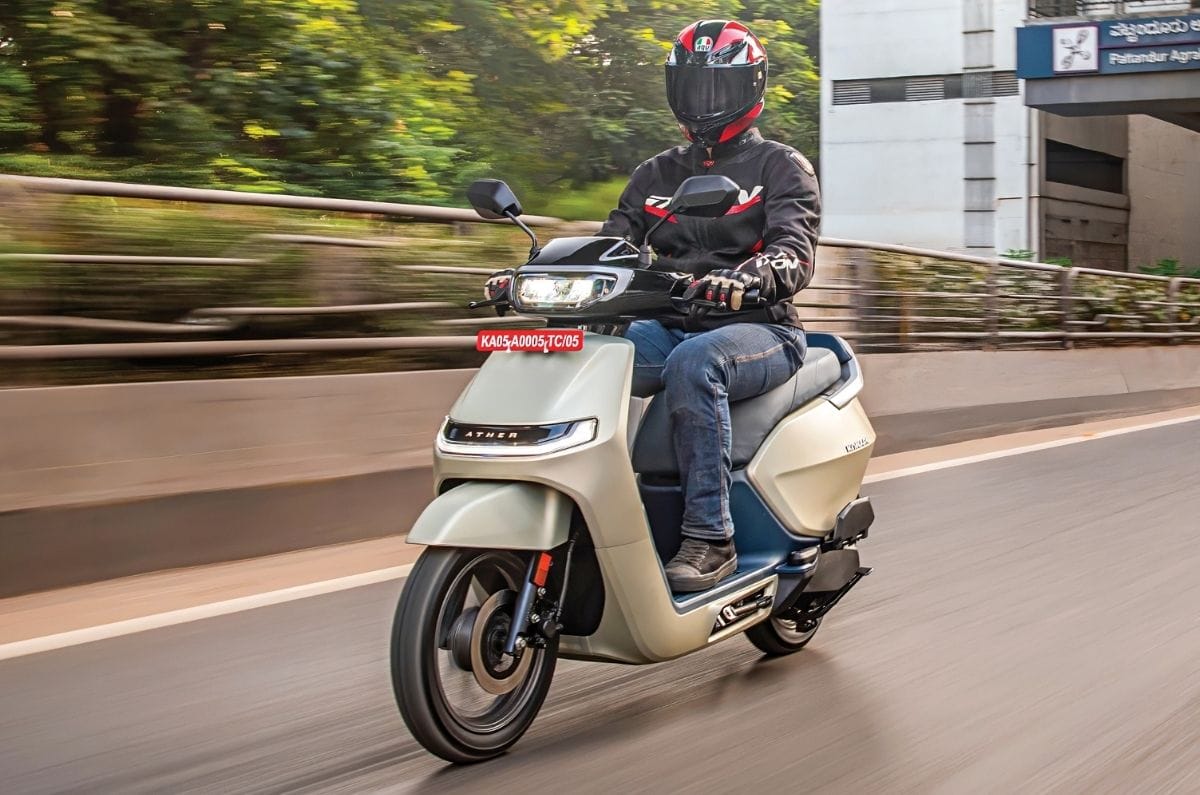
Striking looks aren’t a trait family scooters are known for and Ather wanted to play it very safe with the Konarc to bring in buyers that typically shop for ‘decent-looking’ scooters. While it does look a bit plain, it will still not completely meld into the ocean of humdrum two-wheelers on the road. Further reinforcing its family scooter aspirations are a quartet of very classy, yet inoffensive colours.
Another aspect that the Konarc’s prospective customers will appreciate is its excellent finish and quality levels all across – a typical Ather trait.
Konarc Ride and Handling – 9/10
Excellent ride and seating comfort, planted and surefooted handler
One big reason Ather moved to the new EL platform is that its earlier platform was never built for outright comfort and practicality. In this application, the main focus was to maximise comfort for both rider and pillion. The use of a 14-in front wheel and suspension with 90mm/100mm (F/R) of travel are two key factors in providing lovely ride comfort here.
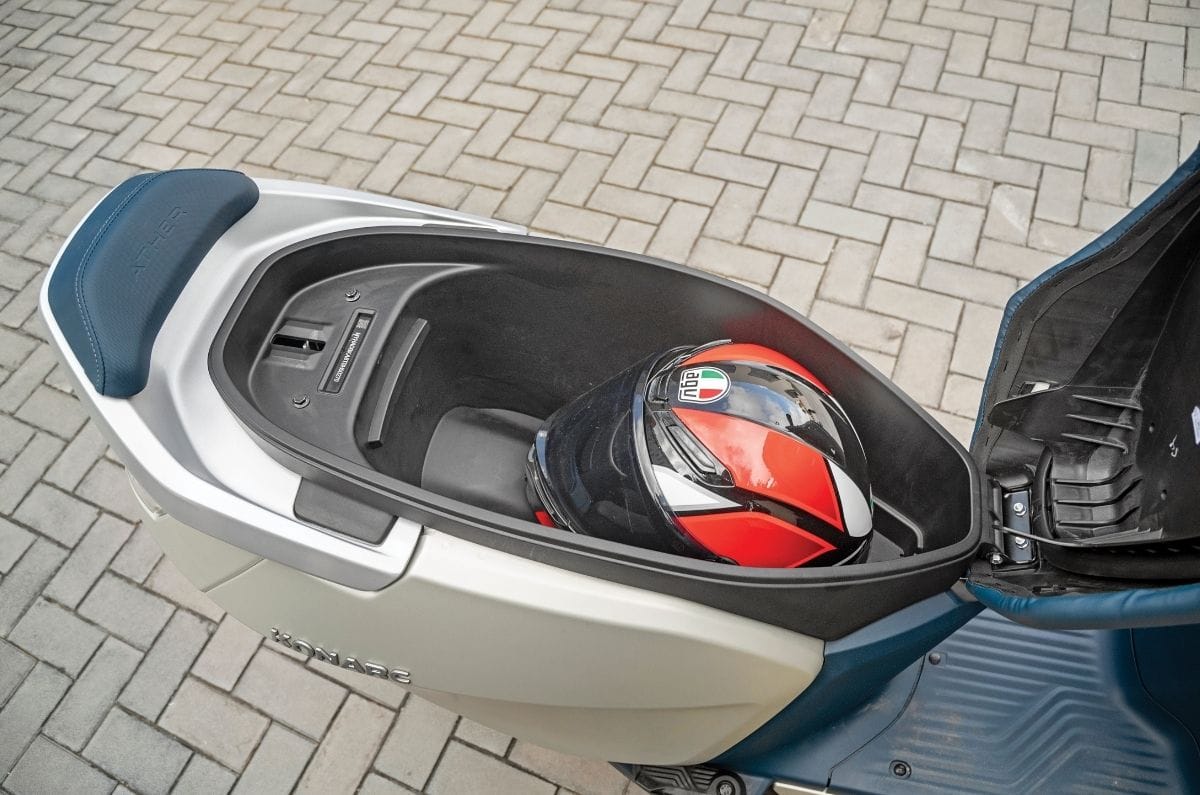
31L boot is deep enough to fit a premium helmet
Point the Konarc towards most bumps and it will round them off without getting unsettled while isolating you from the shock to a great extent. In the scooter space, this is one of the most comfortable options available. Ofcourse, this is still a scooter and really big bumps will filter through – don’t expect motorcycle-like comfort.
Specifications
Values
Wheelbase
1352 mm
Kerb Weight
126.5 kg
Chassis type
Monocoque Full – Steel Body Construction
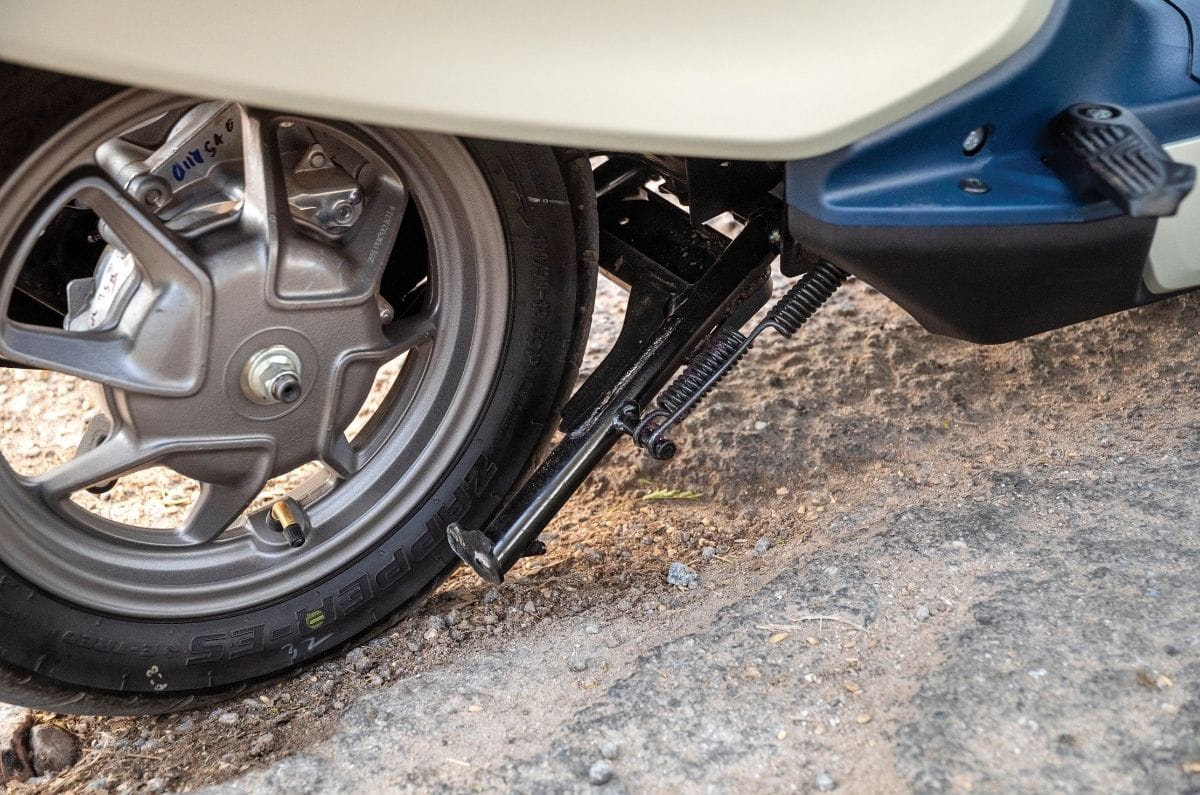
Something that a typical family scooter buyer values is a centre stand and the Konarc becomes the first Ather to offer it. Like other family scooters, the Konarc’s chassis is geared towards stability and ease of use. Despite the larger 14-in wheel and long 1352mm wheelbase, it felt very straightforward to ride. Its low 770mm seat height will help shorter folks get their feet down comfortably although its wide floorboard will have an impact here.
Main stand can touch down in deep ruts
A spacious seat with a padded backrest means two full-size riders will fit comfortably on the Konarc. Another nice feature is that the front end doesn’t get flighty even with a heavy pillion onboard, despite no preload adjustability on the monoshock. The only ergonomic miss is that riders taller than 5’10 will find their knees touching the handlebar during full-lock turns.
Specifications
Values
Wheel Size
Front – 14 inch, Rear – 12 inch
Front Tyre Size
90/90-14
Rear Tyre Size
100/90-12
Brake type
Front – Disc, Rear – Drum
Front Brake Size
220 mm
Rear Brake Size
130 mm
Front Suspension Type
Telescopic Fork, 90mm travel
Rear Suspension Type
Dual Hydraulic Coil Spring, 100mm travel
Konarc Performance – 8/10
Has enough performance, new motor has very silent running
Not only is the Konarc a big leap ahead in terms of comfort, its riding experience is also well-suited to city commuting. A big part of that is down to the comfort but its new swingarm-mounted motor also contributes here. Unlike the Rizta and 450 which used a rather noisy and relatively more maintenance intensive belt final drive, this motor is whisper quiet. It also directly powers the rear wheel without a chain or belt, reducing the number of components in the powertrain.
Specifications
Values
Fuel Type/ Propulsion
Electric
Motor Type
PMSM
Max Motor Power
4.7 kW
Max Motor Torque
16 Nm
EV Battery Capacity
2.7 kWh
With 4.7kW and 16Nm of torque on tap, the Konarc’s performance is best described as sufficient, but only in the top Power mode. Here, the scooter is capable of negotiating its way through big city traffic reasonably quickly. Switching to Eco / SmartEco dulls acceleration significantly and unless you’re running out of juice or you live in a small town, this level of performance will feel out of place.
450W onboard charger integrated into motor controller means you only need to carry a small cable around
Except for the bottom 2.1, all S variants come with a front disc brake, a rear drum and CBS. This setup is capable of bringing the Konarc to a halt quickly and safely with almost no hiccups. The one concern with the combined braking system was that the front could lock up when braking on sandy, gravelly loose surfaces using the rear brake lever exclusively. Only the Z variants launching next year come with Ather’s AeBS (Advanced Electronic Braking System) which uses the regen system to shorten braking distances.
Konarc Features – 8/10
S variants are decently equipped but Z gets all the feel-good ones
And that is a good segue into the way Ather has distributed features across the S and Z. The keyless ignition system, automatic seat opening, AeBS, Magic Twist regen braking, traction control, the colour TFT display and all the smart functions enabled by it are reserved only for the Z. Common to all Konarcs is the 31L underseat storage area, which can easily swallow an imported full-face helmet with room to spare.
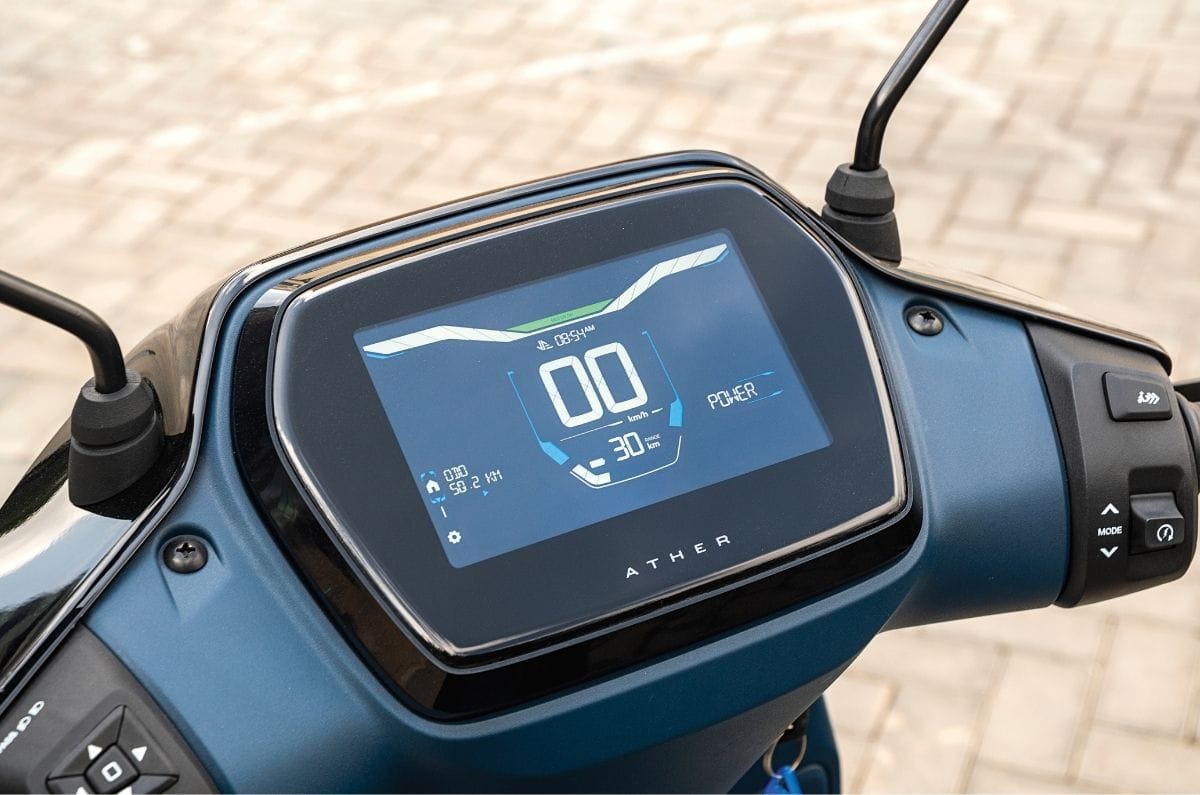
7-inch dash informative and legible but not full colour
What three S variants (except the most affordable one) get is the 7-in simple TFT dash with Bluetooth connectivity, hill hold assist, reverse, several app-based functions, a 450W onboard charger and Airwalk. Airwalk is basically the Konarc’s motor sending a tiny amount of power to the rear wheel when you’re pushing it around to help make your life easier – this is truly effective and makes the 129kg Konarc feel far lighter than it is when moving it around. While the S has a good number of features, when you bring pricing into the equation, it stings a little.
Same charging port for both onboard & portable chargers
Konarc Price and Verdict – 8/10
Not a cutthroat price but this is still a polished and competitive scooter
The two S variants which are on sale right now, S 125 and S 161, are priced at Rs 1.22 lakh and Rs 1.45 lakh, respectively – near identical pricing to the Rizta S. Like the Rizta, you have to pay extra for the Ather StackPro which unlocks many of the smart electronic features.
The base S 2.1 (Rs 99,999) misses out on niceties like the disc brake and backrest and comes with rudimentary tech and a basic 4.2-in display. In that sense, the Konarc isn’t really pushing the envelope when it comes to an alluring price.
Variant
Price (ex-showroom)
Konarc S 100
Rs 1 lakh
Konarc S 125
Rs 1.22 lakh
Konarc S 161
Rs 1.45 lakh
However, as a scooter, the Konarc is a well-thought out product that nails comfort, promises enough performance, predictable range and lower maintenance costs. Ather claims a 10,000km / 1 year service interval and lower service charges owing to fewer parts and quicker turnaround times.
It may not have made as stellar an impression as it could have with more aggressive pricing, but nonetheless the Konarc definitely has what it takes to elevate Ather to a higher echelon in the market.