Tata Motors adopts Tata.cars as new identity for PV business

Tata Motors adopts Tata.cars as new identity for PV business
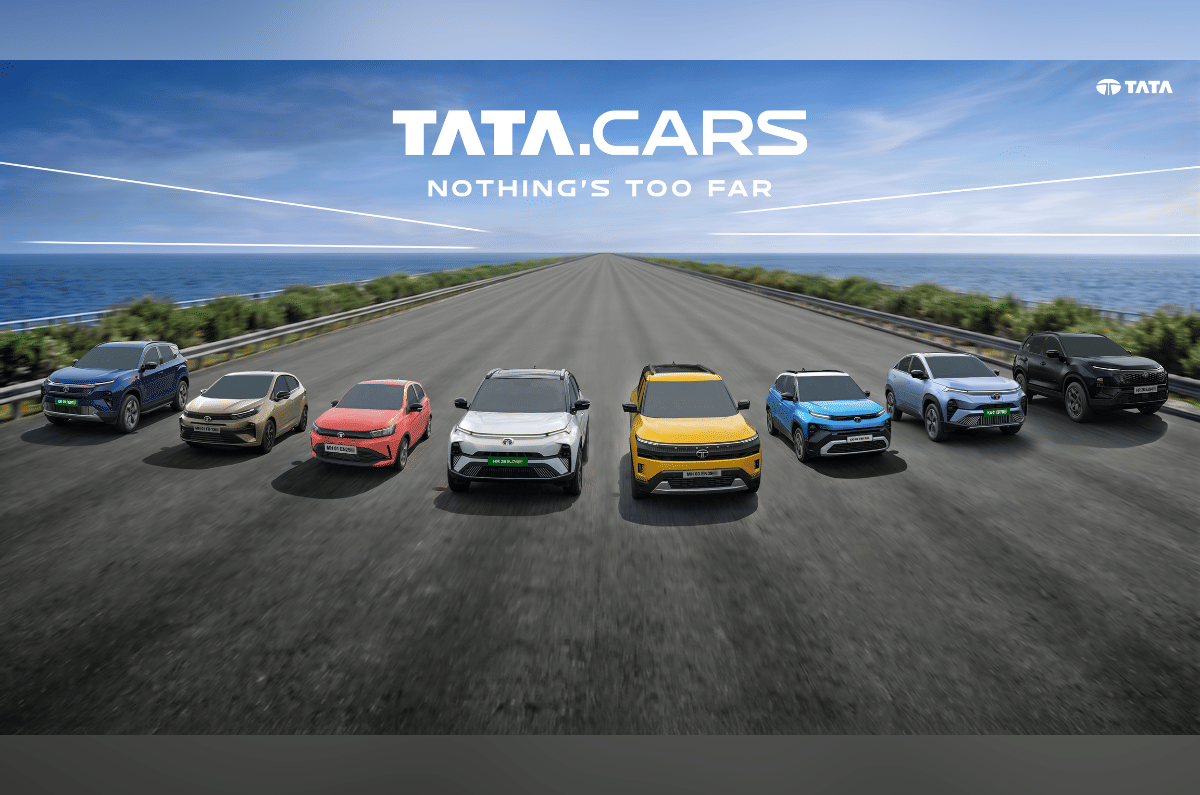
Tata Motors adopts Tata.cars identity for passenger vehicle business

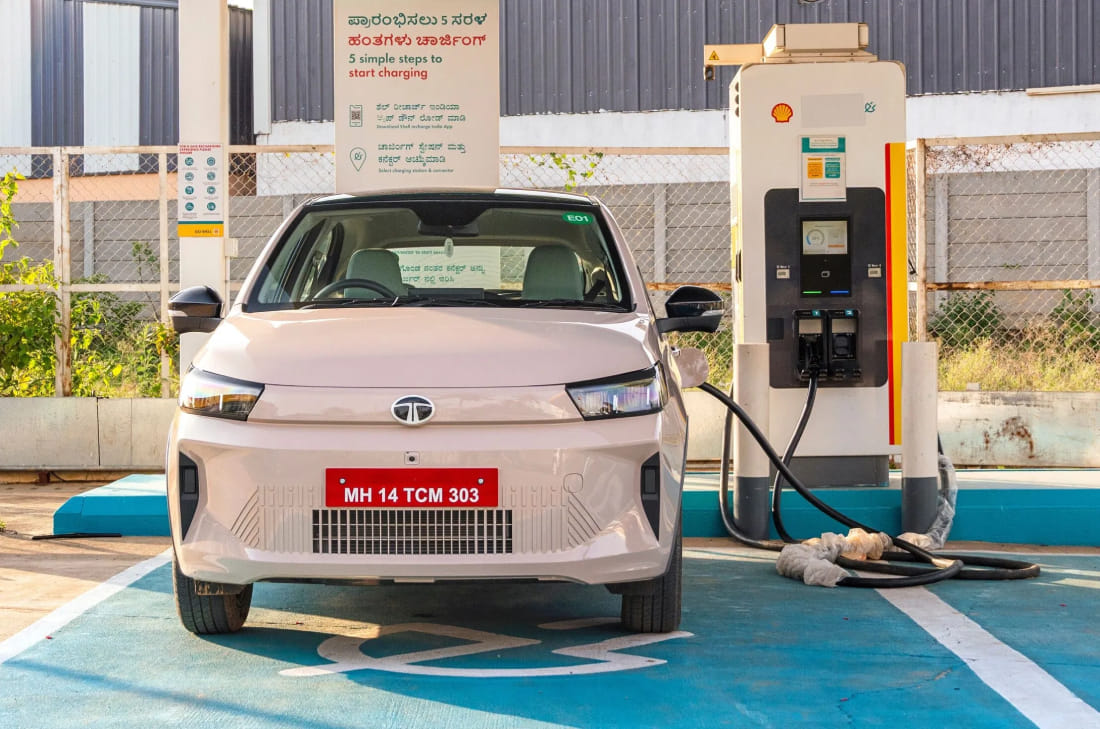
Tata Motors announced Tata.cars as the new retail name for its passenger vehicle (PV) division on Thursday. Both internal combustion engine (ICE) and electric vehicle (EV) models will now come under Tata.cars umbrella brand. Tata.ev will continue as a sub-brand under the wider Tata.cars brand. This new identity will progressively appear across showrooms, digital touch points, after-sales and service operations, and marketing communications.

  1. Tata.ev to continue as a sub-brand under Tata.cars
  2. Tata Motors Passenger Vehicles to remain as the registered legal entity
  3. New principal colour and typeface are a part of the new identity

That said, the company’s legal identity and corporate structure remain unchanged. Tata Motors Passenger Vehicles will continue to be the registered legal entity for statutory filings, manufacturing plants, official contracts and regulatory obligations. 

Tata Motors adopts Tata.cars as new identity for PV business

Tata Motors said the new identity formalises how Indian customers already refer to its passenger vehicles as “Tata cars”. “In many ways, Tata.cars is an identity that India has given us. Today, we formally embrace it,” said Shailesh Chandra, Managing Director, Tata Motors Passenger Vehicles and Tata Passenger Electric Mobility. “The Tata name carries our heritage, our values and the trust earned over generations, while Tata.cars gives our passenger vehicle business a distinct, modern and future-facing expression,” he added.

Vivek Srivatsa, Chief Commercial Officer, Tata Passenger Electric Mobility, said the transition would also introduce a new visual and sensory system built around a design philosophy called Parallel Pathways. It includes Ambition Blue as the principal colour, a bespoke typeface called Parallel Display and a new sonic identity. Tata Motors will also begin updating its dealerships over the next few months with redesigned interiors and a new stainless-steel facade featuring louvred panels.

The new brand system has been designed to work across products, technologies, customer experiences and markets. While customers will increasingly encounter Tata.cars across sales and service channels, corporate and regulatory references will continue under Tata Motors Passenger Vehicles.

With inputs from Ketan Thakkar.

E3 Trion electric scooter launched at Rs 1 lakh

E3 Trion electric scooter launched at Rs 1 lakh

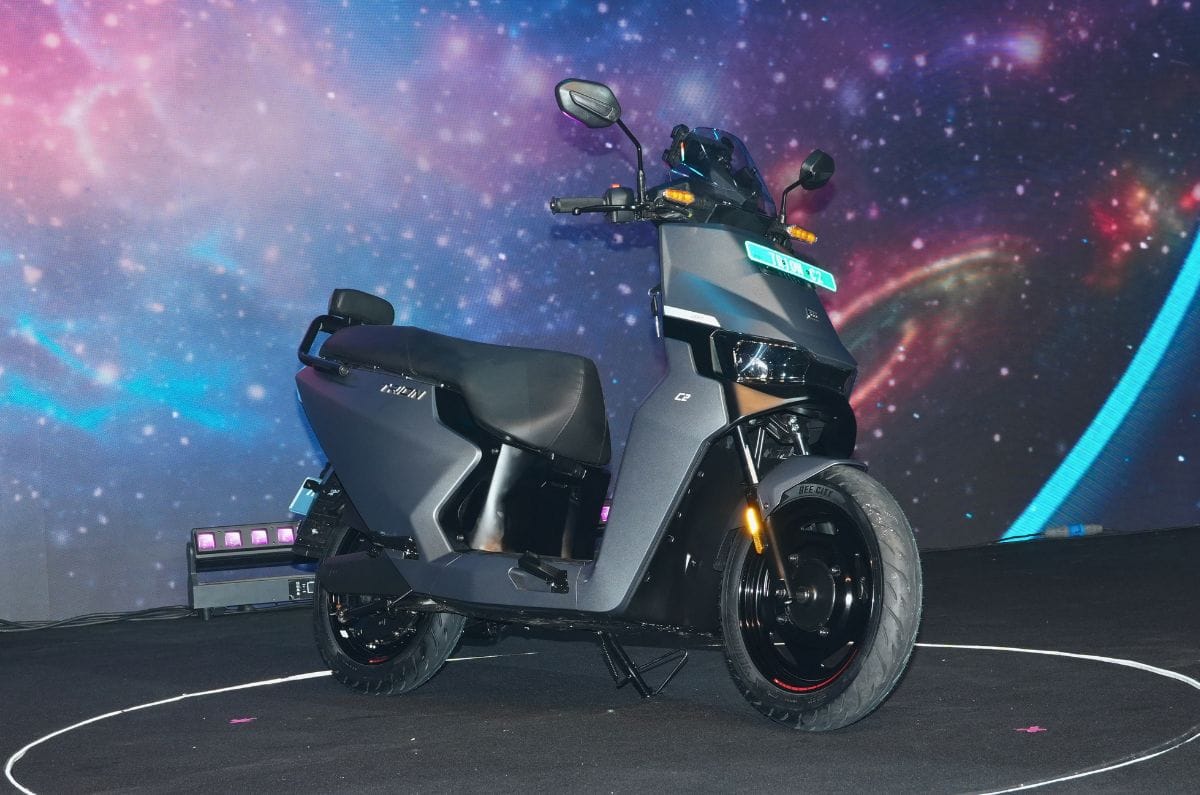
Bengaluru-based electric mobility startup E3 Electric.AI has launched its first electric scooter, the Trion, at an introductory price of Rs 1 lakh (ex-showroom, Bengaluru). The new electric scooter is available in three variants – C1, C1x and C2 – and the company is positioning AI-based predictive features and a modular platform as its key differentiators.

  1. Trion range starts at Rs 1 lakh
  2. Available with 2.3kWh and 3kWh LFP batteries
  3. Top-spec C2 has an 82kph claimed top speed

E3 Trion battery, range and performance

The C1x has a claimed IDC range of 165km

The entry-level Trion C1 uses a removable 2.3kWh LFP battery, while the C1x and C2 get larger, fixed 3kWh LFP units. All three variants use a PMSM hub motor, although E3 has yet to disclose detailed motor output figures.

E3 claims an IDC range of 165km for the C1x. The range figure for the C1 hasn’t been revealed yet. Meanwhile, the range-topping C2 has a claimed top speed of 82kph and can accelerate from 0-40kph in 6 seconds. The C1 and C1x have Eco and Power riding modes, while the C2 adds a Sport mode.

The Trion rides on 14-inch wheels, which are larger than those on most electric scooters currently on sale in India. E3 also says the scooter offers up to 52 litres of combined storage across its underseat compartment, floorboard and glovebox. However, just the underseat storage hasn’t been disclosed. 

E3 Trion features

Its connected suite includes predictive diagnostics, navigation and remote vehicle functions

E3 describes the Trion as India’s first AI-powered intelligent electric scooter. Central to this is what the company calls the E3 CommandCenter, which uses vehicle and cloud data to monitor the scooter and provide predictive diagnostics and service alerts.

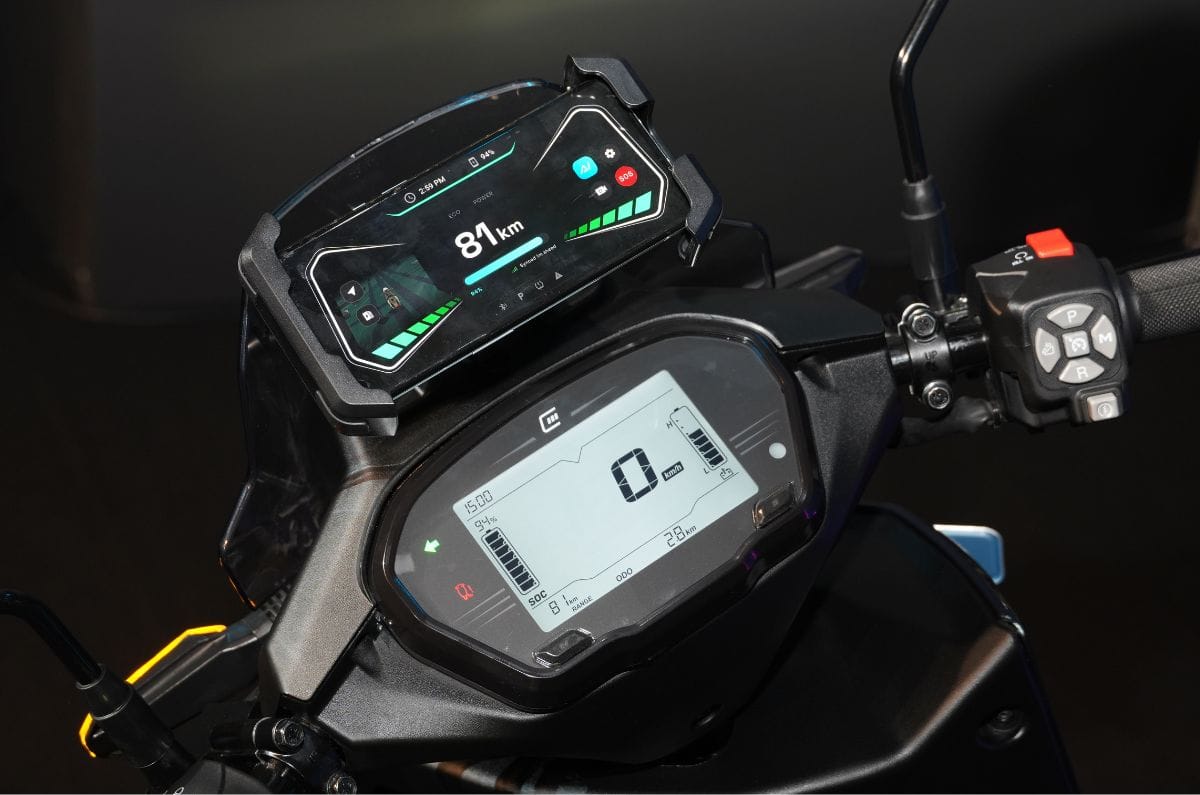
The scooter gets a 5-inch LCD display and connected functionality through the company’s TripSense system, which essentially uses the Rider’s smartphone as a secondary display to provide additional information. Features include navigation, a trip planner with charger locations, remote battery monitoring, vehicle controls, geofencing, SOS assistance and a dashcam. E3 also claims that its AI HealthScan feature can perform vehicle diagnostics in 10 seconds.

The battery system incorporates what E3 calls an AI Digital Twin, which is claimed to provide real-time diagnostics and predictive information about the battery. Both battery options use LFP chemistry.

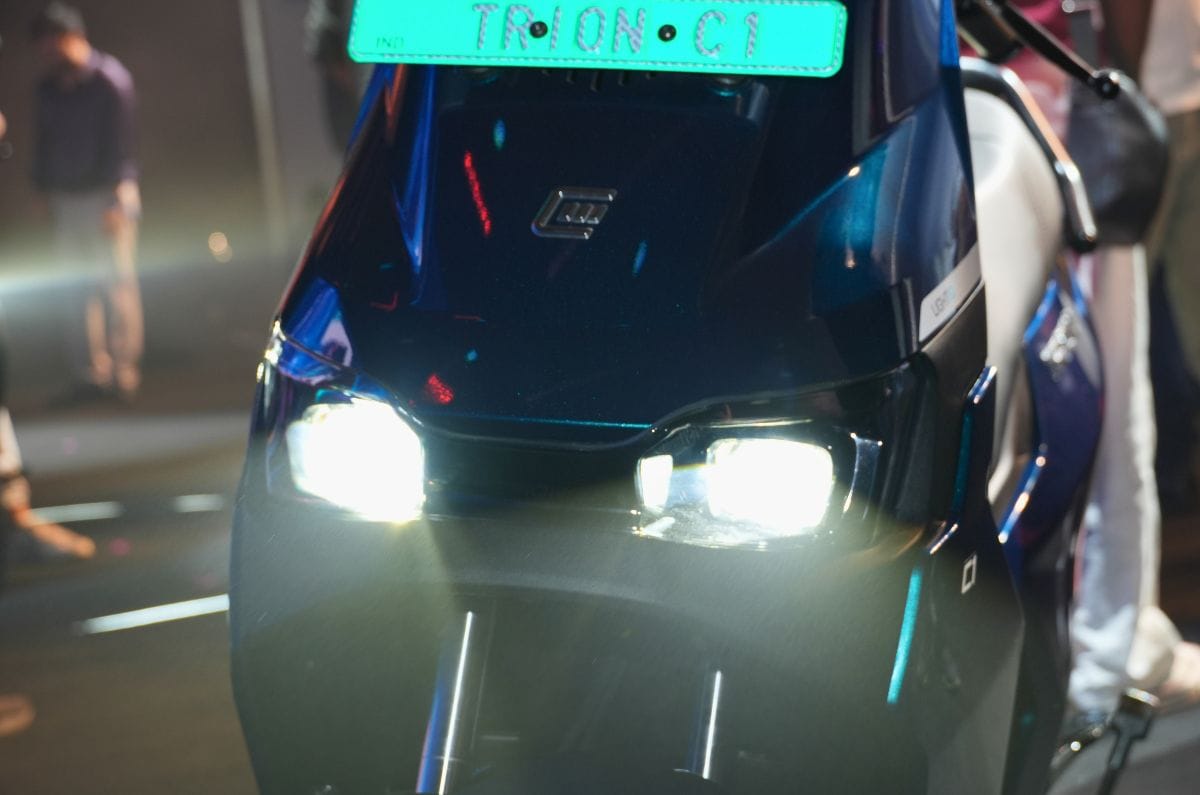
Other equipment includes dual-projector LED headlights, LED tail-lights and IP67-rated weather protection. The Trion is based on E3’s Triaxisframe modular architecture, which has been designed to accommodate different battery configurations and future derivatives.

E3 Trion price, variants and availability

Pre-bookings have opened in Bengaluru, with more markets to follow

The Trion is available in six colours: Solar Red, Misty Green, Graphite Grey, Nova Blue, Teal Blue and Luna White. Accessories include a backrest, helmet, phone holder and pillion footrest.

The E3 Trion C1 has been introduced at Rs 99,999, while the C1x costs Rs 1.10 lakh and the range-topping C2 is priced at Rs 1.20 lakh. All prices are introductory and ex-showroom, Bengaluru.

Pre-bookings have opened in Bengaluru, and E3 says other markets will follow. The company is also offering an extended warranty of up to eight years or 1 lakh kilometres.

TVS electric scooter sales cross 3 lakh units in January-July 2026

TVS electric scooter sales cross 3 lakh units in January-July 2026

TVS Motor Company has crossed the 3 lakh-unit electric scooter sales milestone in the first seven months of CY2026, with retail volumes of over 3.07 lakh units between January and July. The company has already achieved around 97 percent of its CY2025 electric two-wheeler sales of 3.15 lakh units.

  1. TVS sells over 3.07 lakh electric scooters in January-July 2026
  2. July sales hit a record 55,465 units
  3. CY2026 sales could cross the 5 lakh-unit mark

July delivers record monthly volumes for TVS

TVS’ January-July performance makes the Hosur-based brand the fastest electric two-wheeler manufacturer in India to cross 3 lakh retail sales in a calendar year.

For comparison, Ola Electric, then the market leader, took a little over eight months to cross the 3 lakh-unit mark in CY2024. Ola finished that year with over 4.29 lakh units, currently the highest calendar-year retail volume recorded by an Indian electric two-wheeler manufacturer.

TVS recorded its highest monthly electric scooter sales in July 2026 at 55,465 units. March was the other month in which the company crossed the 50,000-unit mark, with sales of 51,632 units.

The company has averaged 43,898 units per month during the January-July period. Maintaining a similar run rate over the remaining five months would take TVS beyond the 5 lakh-unit mark in CY2026.

The upcoming festive season, which begins around mid-September, could provide a further boost to volumes. At its current pace, TVS could add around 2.20 lakh – 2.40 lakh units between August and December, potentially taking its full-year tally to an estimated 5.27 lakh – 5.47 lakh units.

TVS leads Bajaj and Ather

TVS continues to lead India’s electric two-wheeler market after the first seven months of CY2026, ahead of Bajaj Auto and Ather Energy.

Bajaj retailed just under 2.64 lakh electric two-wheelers between January and July, around 43,400 units fewer than TVS. The company’s seven-month volume is equivalent to around 94 percent of the over 2.79 lakh units it sold in CY2025.

Ather Energy ranks third with just over 2 lakh units during the same period, around 93 percent of its CY2025 volume of 2.15 lakh units. TVS currently leads Ather by over 1.07 lakh units.

Hero Vida gains; Ola ranks fifth

Vida – Hero MotoCorp’s electric subsidiary – ranks fourth with just under 1.29 lakh units sold during January-July 2026. This is already around 14 percent higher than its full-year CY2025 volume of 1.13 lakh units.

Ola Electric, meanwhile, has retailed 80,282 units in the first seven months of CY2026, equivalent to around 39 percent of the over 2.04 lakh units it sold last year.

Greaves Electric Mobility ranks sixth with 53,938 units, representing around 93 percent of its CY2025 volume of 57,699 units.

With TVS approaching its entire CY2025 volume after only seven months and both Bajaj Auto and Ather Energy also nearing their respective previous full-year totals, CY2026 is shaping up to be another year of strong volume growth for India’s leading electric two-wheeler manufacturers.

Vida surpasses 3 lakh sales milestone

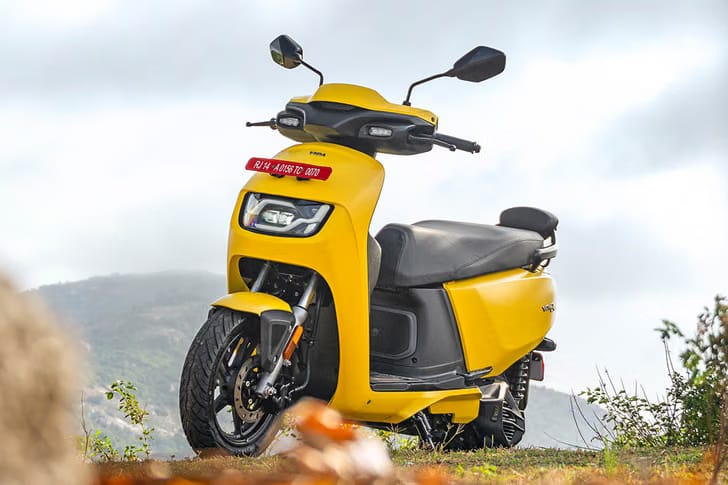
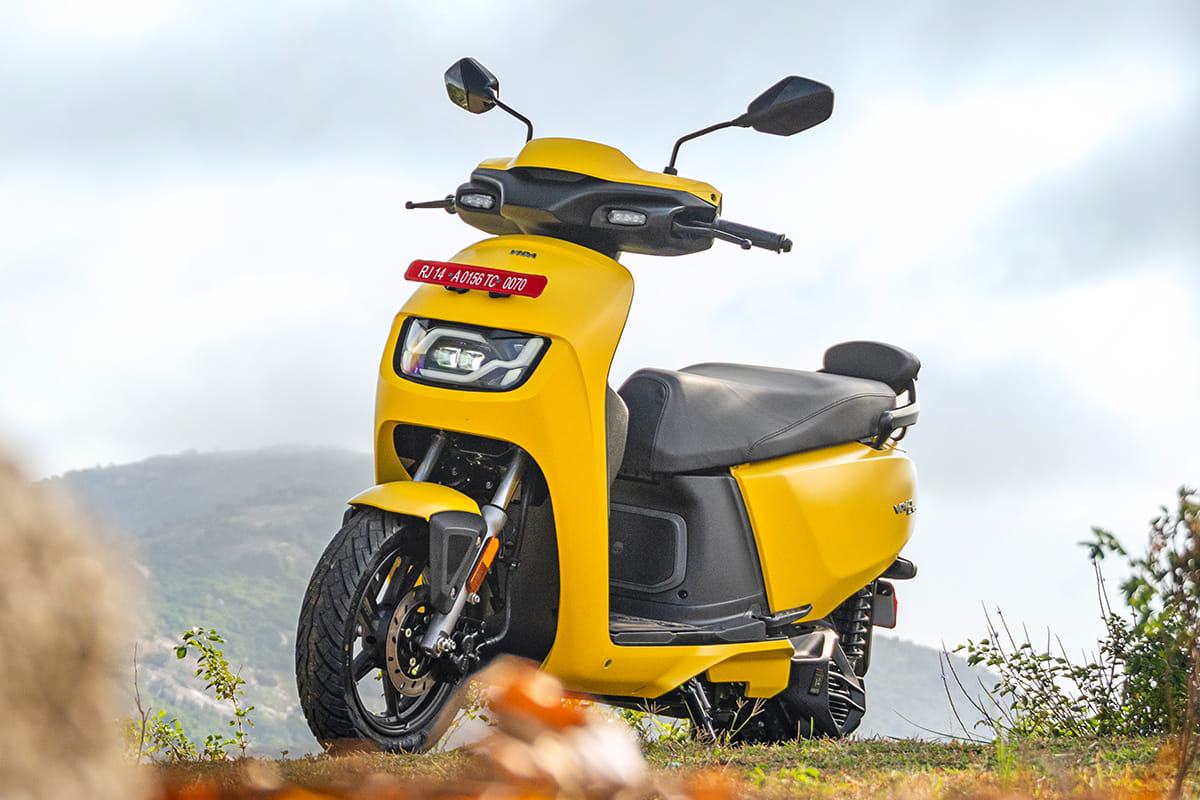
Vida VX2 static

Vida, Hero MotoCorp’s electric two-wheeler brand, has surpassed the 3 lakh retail sales milestone in the Indian market. As per the latest Vahan numbers, cumulative retail sales from November 2022 till August 1, 2026 are 300,458 units.

  1. Vida sold its first 1 lakh units in around 33 months
  2. Whereas, the 2 lakh to 3 lakh sales milestone took just 5 months
  3. With its strong growth trajectory, Vida could garner over 2-lakh sales in a single year for the first time.

Vida’s BaaS has been a key sales driver

Vida currently has coverage across India with over 900 touchpoints

The surge in demand for the Vida e-scooters is seen in the strong growth, particularly over the past year. While the first 1 lakh units were sold in around 33 months, the run from 1 lakh to 2 lakh units took a little over seven months. Now the last 1 lakh units – from 2 lakh to 3 lakh – have taken just five months, reflecting the surging demand for Vida e-scooters this year. With July (22,883 units) being the new monthly high, beating the previous best of June (21,893 units) this year.

From 4 percent in CY2024 to 11 percent in CY2026 Year-to-date, Hero Vida has reaped strong gains in India’s booming e-2W market. Expect it to achieve total retail sales of around 2.25 lakh units this calendar year.

It’s been a noteworthy run for the world’s largest two-wheeler company in the EV space. Vida now stands at No. 4 in the e-2W market share after TVS Motor Co, Bajaj Auto and Ather Energy and is ahead of Ola Electric and Greaves Electric Mobility.

With strong sales tailwinds emanating from a growing number of ICE buyers transitioning to e-mobility due to the multiple price hikes in petrol in May 2026 as well as the upcoming festive season, it can be expected that Vida will maintain the same strong growth trajectory. This would mean Hero MotoCorp’s annual e-2W sales will cross the 2-lakh units milestone in a single calendar year for the first time in CY2026. Estimate them to be in the region of 2.25 lakh to 2.35 lakh units.

Another strategic sales driver for Vida has been the introduction of the Battery-As-a-Service (BaaS) ownership model which significantly reduces the upfront ownership cost, making electric mobility more affordable and accessible to a wider customer base, and has since been adopted by Ather Energy and TVS Motor among a host of other OEMs.

The company, which opened its first Experience Centre in November 2022, currently has coverage across India with over 900 touchpoints spanning 415 cities and 700-plus dealers. Hero MotoCorp enables Vida users to access charging at over 5,900 locations including the Ather Grid network owned by Ather Energy in which Hero MotoCorp is an early investor (with a 29.48 percent stake at present) and has recently invested an additional Rs 1,000 crore.

Manufacturing capacity expansion is also on the cards for Vida. In May this year, Hero MotoCorp revealed details of its planned capital expenditure of over Rs 1,500 crore in FY2027. Cognisant of the strong growth potential in its e-2W business, the company has outlined a strategic manufacturing expansion for its Vida brand. Having already ramped up capacity by 66 percent from 15,000 units per month to 25,000 units, the company has outlined plans for further expansion by doubling monthly capacity to 50,000 units at its plant in Chittoor in Andhra Pradesh to cater to growing demand.
 

TVS posts record monthly EV sales as electric 2W segment hits new peak

July 2026 electric two-wheeler sales

India’s electric two-wheeler segment crossed the 2 lakh monthly sales mark for the first time, with retail figures of 2,04,266 units in July 2026 – beating the previous best of 1,99,411 units set in March this year. Cumulative sales for the first seven months of 2026 now stand at 11.7 lakh units, up 56 percent year-on-year, while the first four months of FY27 have delivered 7,29,573 units – a 73 percent jump over the same period last year.

  1. Electric two-wheeler sales cross 2 lakh units in a month for the first time
  2. TVS posts best-ever monthly sales of 55,477 units; market share rises to 27 percent
  3. Ola Electric is the only top-10 OEM to register a year-on-year decline

July 2026 electric two-wheeler sales: OEM breakdown

TVS Motor Co: 55,477 units

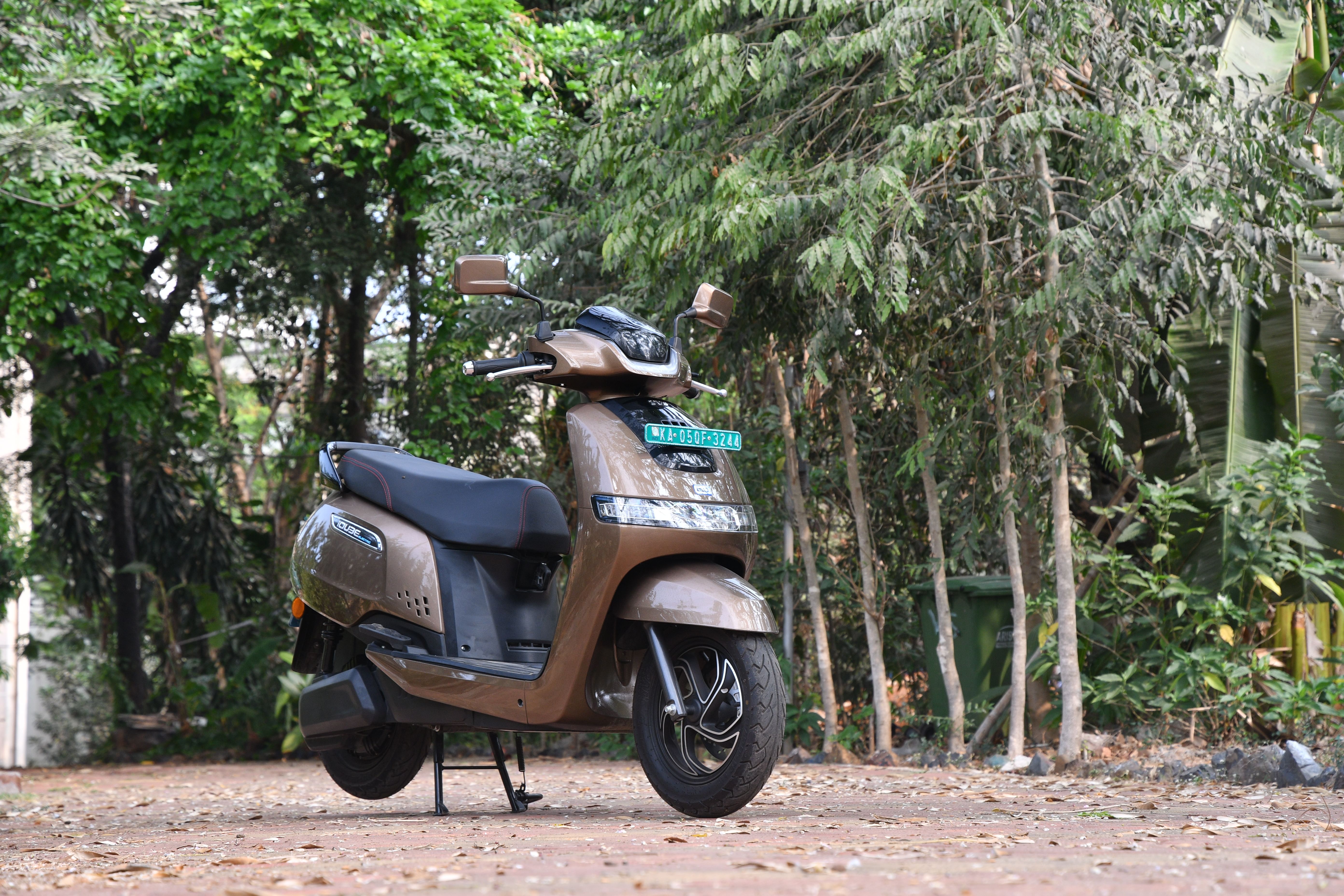
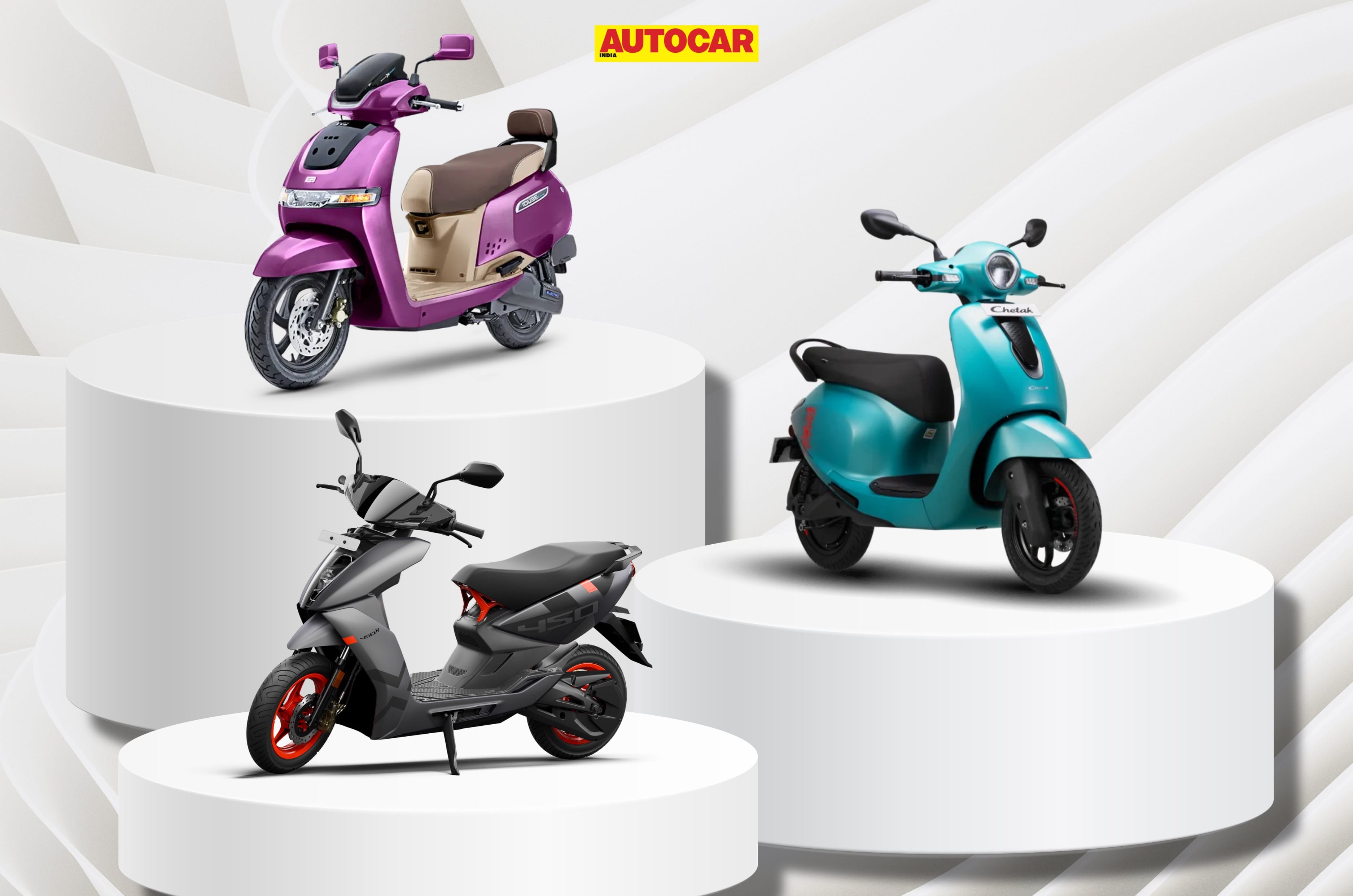
TVS Motor Company delivered a record 55,477 electric scooters in July – a 135 percent year-on-year increase and the brand’s highest-ever monthly figure, surpassing the previous best of 51,632 units in March. The result gives TVS a 27 percent market share, up from 22 percent a year ago. Cumulative FY27 sales of 1,86,034 units are already 52 percent of its full-year FY26 tally, putting it on course to cross 5.5 lakh annual sales for the first time. The iQube remains TVS’s highest-selling model, with the Orbiter seeing growing demand alongside it.

Bajaj Auto: 45,592 units

Bajaj Auto sold 45,592 Chetak scooters in July, marking a 122 percent year-on-year increase, and giving it a 22 percent market share, up from 19 percent a year ago. This was Bajaj’s second-highest monthly figure after March’s 47,751 units. Cumulative FY27 sales of 1,63,236 units are 54 percent of its full-year FY26 total. Bajaj Auto’s Joint MD Rakesh Sharma noted that the newly launched Chetak 2501 now accounts for approximately 12 percent of the Chetak portfolio.

Ather Energy: 30,323 units

Ather Energy delivered 30,323 units in July, up 70 percent year-on-year, consolidating its position as the third-largest electric two-wheeler maker in India. Cumulative FY27 sales of 1,18,983 units are already 47 percent of its FY26 total. 

In July, Ather also updated the battery chemistry of the 450 and Rizta ranges, with the Rizta now available in both LFP and NMC configurations. The brand will launch its first EL platform-based scooter – expected to be priced between Rs 1 lakh and Rs 1.25 lakh – at Ather Community Day on August 29.

Vida: 22,887 units

Vida posted its best-ever monthly sales of 22,887 units in July – a 111 percent year-on-year increase – surpassing its previous highs of 22,201 units in March and 21,893 units in June. Cumulative FY27 sales of 79,940 units are already 53 percent of its full-year FY26 total. The brand expanded its lineup in July with the VX2 Plus 4.4kWh at Rs 1.43 lakh and the new VX2 Go FB – a fixed-battery variant with a 3.1kWh pack priced at Rs 1.13 lakh.

Ola Electric: 14,105 units

Ola Electric was the only top-10 OEM to register a year-on-year decline in July, selling 14,105 units – down 24 percent from 18,449 units in July 2025. After three months of sequential growth through April, May and June, July also saw a 13 percent month-on-month drop. Ola’s market share has fallen sharply to 7 percent from 17 percent a year ago, when it ranked third overall.

Other notable performers

Greaves Electric Mobility delivered 10,125 units – up 137 percent year-on-year. River Mobility hit its highest-ever monthly sales with 5,951 units of the Indie, up 254 percent year-on-year, following the rollout of its 50,000th unit from its Hoskote plant. Bgauss Auto sold 5,518 units, up 213 percent year-on-year. Simple Energy sold 1,648 units, with the brand’s upcoming Simple Arrive family scooter set to launch on September 2. Lectrix Vehicles rounded out the top 10 with 1,397 units.

The top 10 OEMs combined accounted for 94 percent of all electric two-wheeler sales in July, with the remaining 6 percent approximately 180 other manufacturers.

Vida VX2 Go with 3.1kWh fixed battery launched at Rs 1.13 lakh

Vida VX2 Go with 3.1kWh fixed battery launched at Rs 1.13 lakh

Hero MotoCorp’s electric mobility brand Vida has expanded its VX2 electric scooter range with the launch of the new Vida VX2 Go FB. Priced at Rs 1.13 lakh (ex-showroom, Delhi), the new variant sits alongside the existing removable-battery versions but instead uses a 3.1kWh fixed battery with direct-plug charging.

  1. Vida VX2 range now comprises of five battery pack options
  2. Comes with a 3.1kWh fixed battery pack
  3. Features a swingarm mounted motor with 6kW of peak output

Vida VX2 Go 3.1 FB : What’s new?

It has a claimed top-speed of 70kph

According to Vida, the addition is aimed at offering buyers more flexibility by allowing them to choose between fixed-battery and removable-battery charging solutions depending on their usage and home charging requirements.

The VX2 Go FB is powered by a 3.1kWh fixed battery that delivers an IDC-certified range of 128km. It uses the same 6kW swingarm-mounted electric motor, which gives the scooter a claimed top speed of 70kph. The scooter also supports DC fast charging, with Hero claiming a 0-80 percent charge time of 65 minutes.

Feature highlights include a 4.3-inch LCD instrument cluster with smartphone connectivity and turn-by-turn navigation, 27.2 litres of under-seat storage, and a long single-piece seat. 

With the introduction of this fixed-battery variant at a price of Rs 1.13 lakh, the VX2 now spans across five variants with four battery pack options. The smallest battery is the 2.2kWh pack that has an IDC range of 93km, whereas the largest battery pack is the 4.4kWh one that delivers a claimed IDC range of 187km.

Haryana waives road tax on EVs priced up to Rs 30 lakh

EV

The Haryana Cabinet has approved a 100 percent exemption on motor vehicle tax for new battery electric vehicles (BEVs) priced up to Rs 30 lakh (ex-showroom). EVs priced above Rs 30 lakh will now be eligible for a 50 percent exemption on motor vehicle tax, while the existing concession for CNG vehicles remains unchanged.

  1. 100 percent tax waiver for EVs priced up to Rs 30 lakh
  2. EVs above Rs 30 lakh to get a 50 percent tax exemption
  3. Existing 20 percent tax concession for CNG vehicles retained

Haryana EV tax waiver: what’s changed?

The revised policy marks a significant expansion of Haryana’s incentives for electric vehicles. Under the previous policy, battery electric vehicles were eligible for a 20 percent one-time exemption on motor vehicle tax. The latest decision increases this benefit to a full tax exemption for EVs priced up to Rs 30 lakh, while introducing a 50 percent exemption for models priced above the threshold.

The decision was approved by the Haryana Cabinet chaired by Chief Minister Nayab Singh Saini, and implements announcements made in the state’s 2026-27 Budget.

Most mass-market EVs to benefit

The revised tax structure is expected to cover the majority of mass-market electric cars sold in India, while extending a partial tax concession to premium EVs priced above Rs 30 lakh. The state government said the move is aimed at accelerating EV adoption and strengthening Haryana’s electric mobility policy.

CNG benefits unchanged; women buyers get additional rebate

Haryana will continue to offer the existing 20 percent one-time motor vehicle tax exemption for CNG vehicles, with no changes to the current policy.

Separately, the Cabinet has approved a 1 percent rebate on motor vehicle tax for new private vehicles priced up to Rs 20 lakh (ex-showroom) that are registered in the name of a woman.

Royal Enfield to Keep ICE at the Core as Flying Flea Starts EV Journey

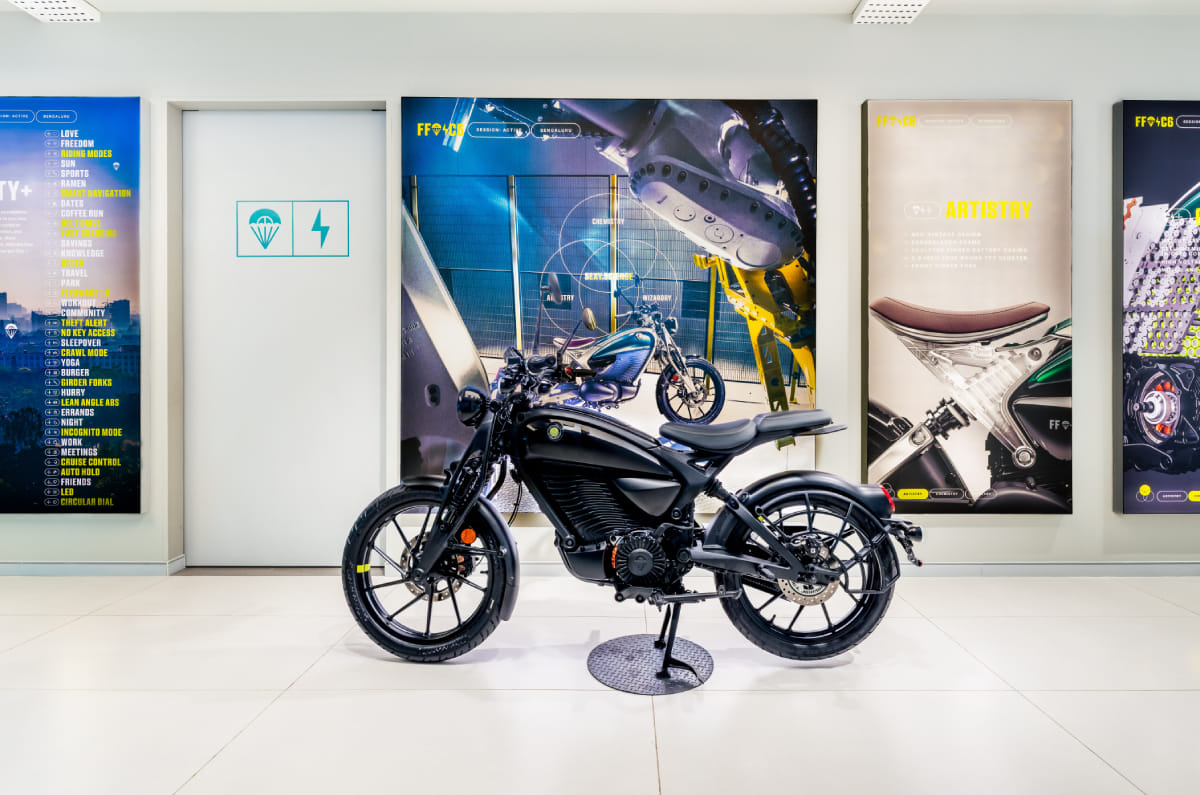
FF C6 inside a showroom

Royal Enfield has said that internal combustion engine (ICE) motorcycles will remain central to its business even after the launch of its first Flying Flea electric motorcycle. The company detailed its long-term strategy in its latest annual report under a new framework called RE-BALANCE.

  1. Royal Enfield will continue investing in new ICE motorcycles alongside EVs.
  2. Brazil is now the company’s largest and fastest-growing international market.

In the company’s annual report, Eicher Motors Executive Chairman Siddhartha Lal said Royal Enfield is committed to building its electric future but will continue investing in petrol-powered motorcycles for as long as possible. The RE-BALANCE strategy focuses on balancing investments in ICE and EVs, improving customer experiences, driving profitable growth and advancing sustainability. 

While the company acknowledged that changing consumer preferences and dependence on ICE motorcycles pose long-term business risks, it said it will address these through product innovation, stronger brand relevance and deeper engagement with younger customers.

Royal Enfield said the RE-BALANCE strategy will guide its gradual expansion into electric mobility while continuing to invest in its established ICE portfolio. Its EV ambitions will be led by the Flying Flea brand, and Royal Enfield says that Flying Flea is designed to complement, rather than replace, its existing ICE lineup.

The C6, which is the first model under the brand, was showcased across several cities before its launch in India alongside the opening of the first Flying Flea store in Bengaluru. The motorcycle is priced at Rs 2.79 lakh (ex-showroom Bengaluru) and with Battery as a service (BaaS), the price comes down to Rs 1.99 lakh.

The annual report also highlighted Royal Enfield’s continued global expansion. Brazil emerged as its largest and fastest-growing international market, while the company further strengthened its overseas manufacturing footprint with new assembly facilities in Bangladesh and Thailand.