Best OnlyFans Ranking: A Practical Guide to Choosing the Top Creators
1. Understanding the OnlyFans Landscape
OnlyFans has grown from a niche subscription service into a global marketplace where creators of all types can monetize exclusive content. The platform is open to artists, fitness coaches, chefs, and many other professionals, each leveraging a personalized fan base for recurring income. Because the ecosystem is so diverse, newcomers often wonder how to identify the most successful creators and whether those rankings matter for their own strategy.
In practice, the best onlyfans ranking reflects a blend of audience size, earnings consistency, engagement rates, and niche relevance. By studying these factors, you can gauge which creators set realistic standards and which tactics are worth emulating. This understanding forms the foundation for any decision‑making process on the platform.
2. How Rankings Are Determined
Rankings typically aggregate public metrics such as subscriber count, monthly earnings, post frequency, and interaction levels (likes, comments, direct messages). Some third‑party tools also factor in growth trends and audience demographics to provide a more nuanced picture. While raw numbers are important, qualitative aspects like brand consistency and content quality heavily influence long‑term ranking stability.
Most reputable rankings use algorithms that assign weighted scores to each metric. For example, subscriber count might carry a 30 % weight, while engagement averages account for 25 %. Understanding this methodology helps you interpret a ranking position beyond just a headline number.
3. Top Criteria for Evaluating OnlyFans Creators
When you compare creators, focus on the following criteria:
Audience size and growth rate: A large, steadily expanding subscriber base indicates market demand.
Engagement quality: High comment and message volumes show a loyal, interactive community.
Content diversity: Regularly varied media (photos, videos, live streams) keeps fans interested.
Monetization tactics: Use of paid messages, tip menus, and subscription tiers indicates revenue optimization.
Brand consistency: Cohesive visual style and messaging help maintain fan trust.
By scoring each creator against these benchmarks, you can build a personalized ranking that aligns with your business needs.
4. The Current Best OnlyFans Ranking – Who Leads the Pack
Based on publicly available data from the last quarter, the following creators consistently appear at the top of the best onlyfans ranking. They excel across the criteria discussed above and set industry standards for content strategy, pricing, and fan interaction.
Creator
Monthly Subscribers
Average Earnings (USD)
Primary Niche
Key Strength
Alice Blaze
125,000
$780,000
Fitness & Lifestyle
High‑volume live workouts
Nova Noir
98,000
$620,000
Adult Entertainment
Personalized video requests
Chef Marco
47,000
$210,000
Culinary Arts
Exclusive recipe bundles
These creators illustrate how different niches can dominate the ranking when they master the fundamental metrics of subscriber growth and fan engagement.
5. Features and Benefits of High‑Performing OnlyFans Accounts
Top‑ranked creators typically leverage a robust set of platform features. Automated subscription reminders, drip‑feed content schedules, and integrated payment processing reduce administrative overhead while maximizing revenue.
Benefits include predictable cash flow, deeper fan relationships, and the ability to scale content production without sacrificing quality. By using the dashboard analytics, successful creators can identify peak posting times and adjust pricing tiers to capture maximum willingness to pay.
6. Pricing, Payouts, and Monetization Strategies
Pricing is a delicate balance between perceived value and market competition. Most top creators set a base subscription between $15‑$30, then offer premium bundles, pay‑per‑view content, and tip incentives. Seasonal promotions—such as limited‑time discounts or exclusive holiday bundles—can boost subscriber acquisition without long‑term price erosion.
Payouts on OnlyFans are processed weekly, with a standard 20 % platform fee. Creators should plan for tax obligations and reserve a portion of earnings for reinvestment in equipment, marketing, or content upgrades.
7. Setting Up for Success – Step‑by‑Step Guide
Getting started on OnlyFans doesn’t require a degree in digital marketing, but a systematic approach helps you replicate the practices of the best onlyfans ranking leaders.
Create a professional profile: Use high‑resolution photos, a concise bio, and clear content categories.
Define pricing tiers: Start with a modest base price, then add premium options as your library grows.
Develop a content calendar: Plan at least three posts per week, mixing photos, videos, and live streams.
Engage daily: Respond to messages, run polls, and thank top fans to boost loyalty.
Analyze performance: Use the built‑in dashboard to track subscriber growth and adjust strategies.
Following these steps positions you to climb the ranking ladder while maintaining a sustainable workflow.
8. Common Pitfalls and How to Avoid Them
Even the most dedicated creators encounter obstacles. Below are frequent mistakes and practical solutions:
Inconsistent posting: Set automated reminders or batch‑create content to maintain a steady flow.
Over‑pricing early on: Test lower price points first; you can increase rates once you have proven value.
Neglecting fan feedback: Conduct regular surveys and adjust content based on direct requests.
Ignoring platform policies: Review OnlyFans terms to avoid content removals or account suspensions.
By proactively addressing these issues, you minimize churn and protect your position in the best onlyfans ranking.
9. Frequently Asked Questions
Is the best onlyfans ranking reliable for newcomers?
While rankings provide a useful snapshot of top performers, they should be combined with your own niche analysis. Use them as benchmarks, not absolute rules.
How long does it take to appear in the ranking?
Most creators see measurable movement within three to six months of consistent effort, provided they follow best practices for content and engagement.
Can I improve my ranking without increasing prices?
Yes. Enhancing engagement, offering exclusive experiences, and optimizing posting times can boost your score even with stable pricing.
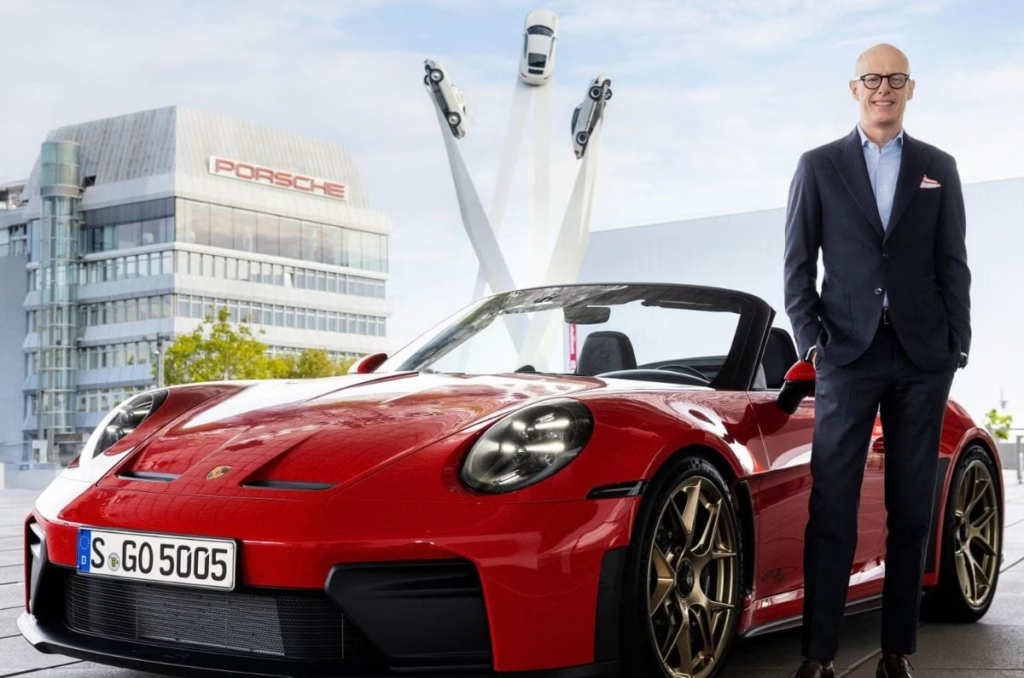
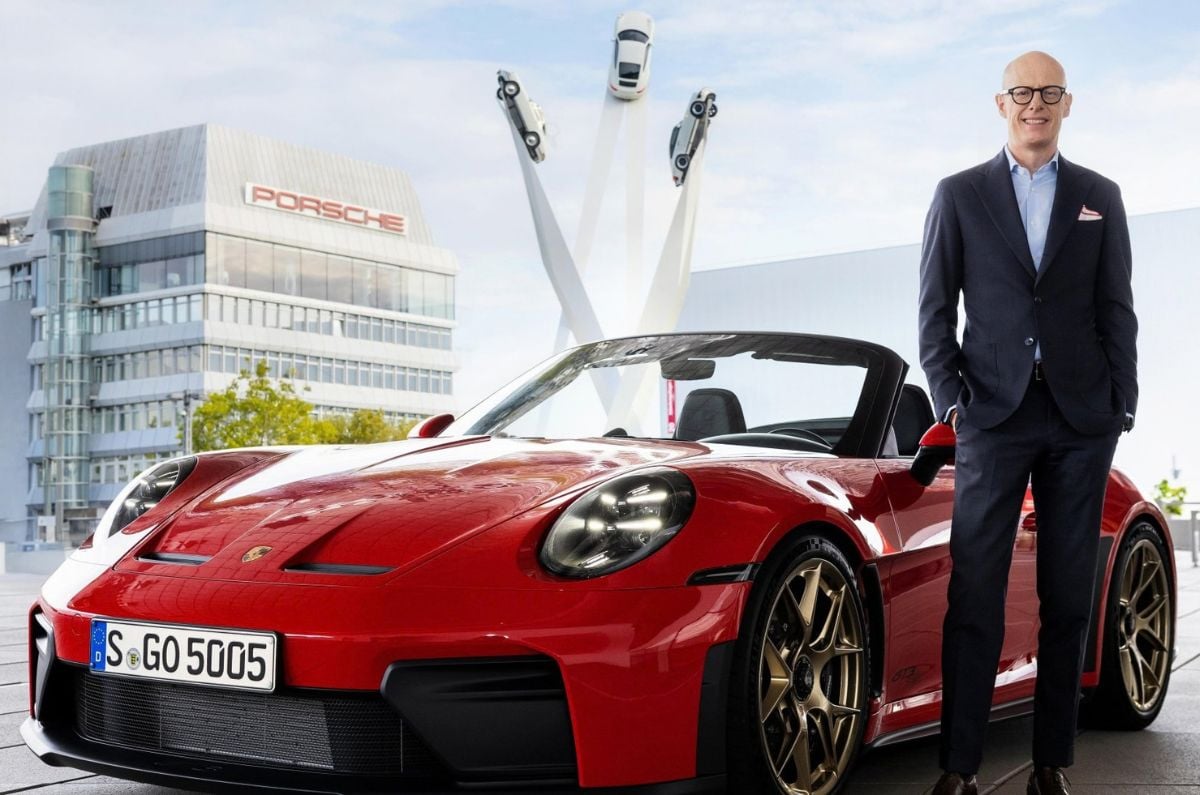
Porsche has outlined a new line-up of models under its Sportwagenschmiede ‘35 strategy, which was presented by the German luxury marque at the Capital Markets Day in Weissach. The strategy, which means ‘sports car forge’ in German, includes a new halo supercar positioned above the 911, a new internal combustion-powered (ICE) SUV and an all-electric 718 line-up. Porsche stated that it will also be expanding its ‘special request’ offerings.
Mission S concept to preview the new supercar on October 15.
New ICE and PHEV SUV to join the Macan Electric in 2028.
Next-gen 718 Boxster and Cayman to be all-electric.
New Porsche halo supercar
This upcoming model is to be previewed as the Mission S concept on October 15
Under its new Sportwagenschmiede ‘35 strategy, Porsche has announced plans for a new mid-engined super sports car platform that will underpin a model above the 911. “We are developing a super sports car platform,” Porsche CEO Michael Leiters told the media present at the Capital Markets Day event.
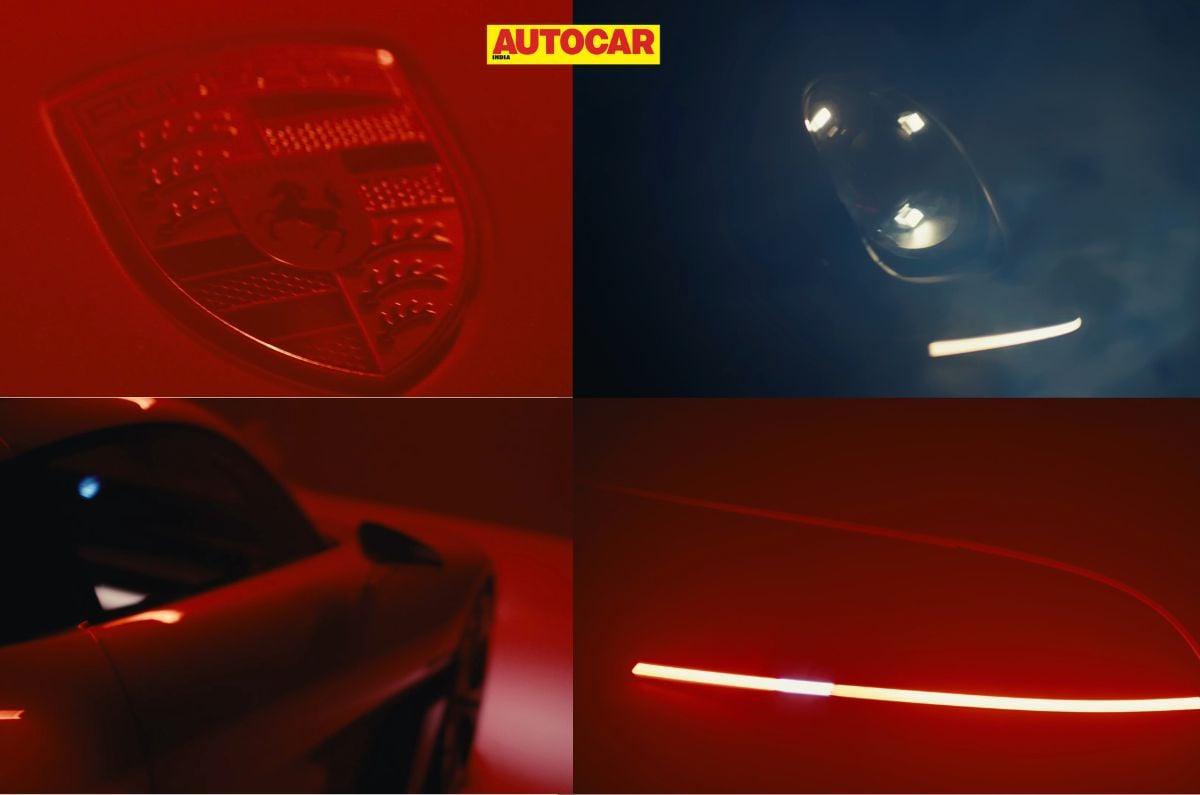
Porsche Mission S official teaser
The brand said that it will be previewing this new model on October 15 by way of a concept called ‘Mission S’. This would be Porsche’s first range-topping supercar since the 918 Spyder and could serve as its spiritual successor. This upcoming mid-engined supercar, along with the other upcoming models announced by Porsche, could share parts with Volkswagen Group models, the company stated.
New Porsche SUVs in the works
This new combustion-powered SUV is set to join the Macan Electric in 2028
Joining the all-electric Macan in 2028 will be a similarly sized SUV, the brand confirmed. It also said that this new SUV will be offered with a range of combustion and plug-in hybrid (PHEV) powertrain options. Autocar UK previously reported that this SUV will be based on the PPC platform and be twinned with the Audi Q5.
Porsche is also exploring a new flagship SUV, which would be placed above the Cayenne. Codenamed the ‘K1’, it is reportedly set to launch with combustion power first, with an all-electric version expected at a later stage. The brand has committed to deepening its collaboration with Audi on the PPE and PPC platforms, which it hopes will lower development costs and improve efficiency. Porsche added that the unique character of each brand will be maintained through brand-specific technology and features.
Porsche confirms all-electric 718 models
Boxster and Cayman to move away from combustion power
Porsche 718 Boxster EV image by Autocar UK
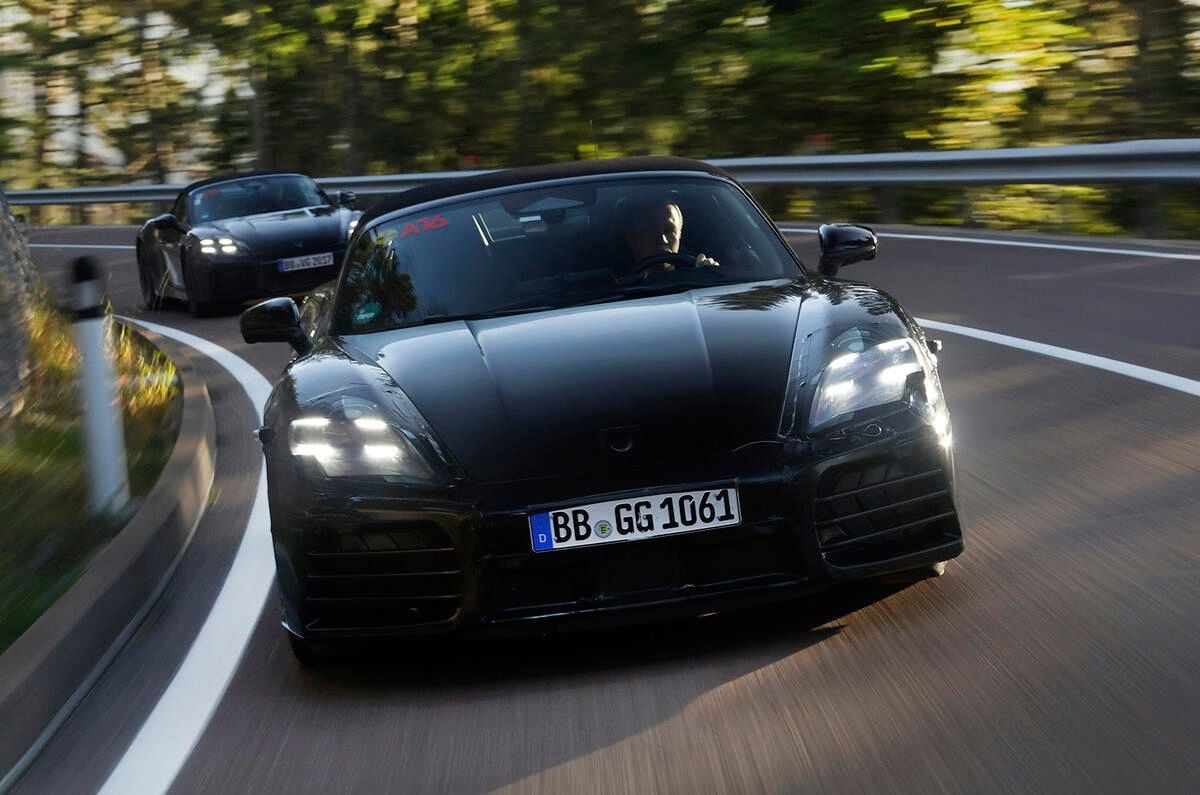
The next-gen 718 duo will be moving to an all-electric platform, with 2028 set to be their first full year of production, Porsche confirmed. This is in contrast to what the luxury marque was earlier expected to do, with plans to equip the next-gen 718 range with a platform compatible with both combustion and pure-electric powertrains.
Porsche to ramp up its exclusive offerings
Focus on individualised examples from Sonderwunsch, Exclusive Manufaktur and Manthey to strengthen
Porsche has showcased several one-off models in recent months. These include the Flachbau RS, which is a road-legal one-off based on the 911 GT2 RS, and three one-of-one 911s that were displayed at the Monterey Car Week in August 2026.
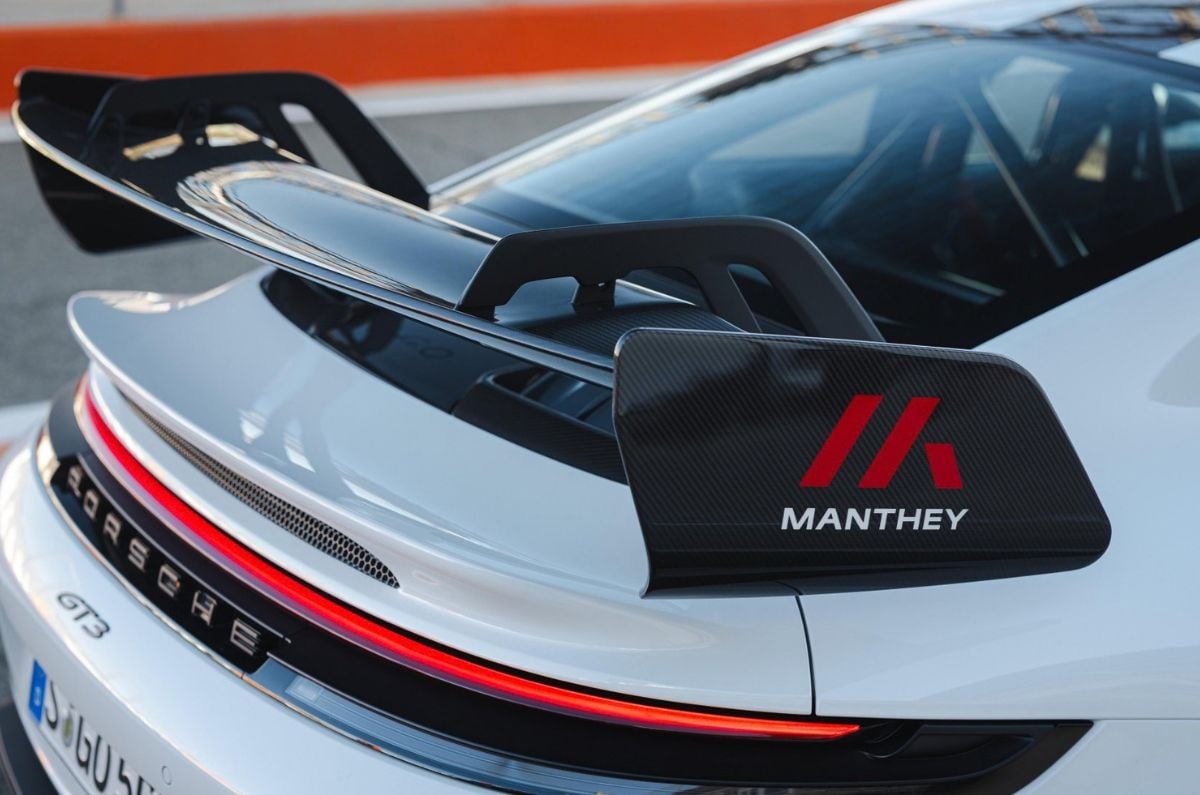
Porsche Manthey 911 GT3
Porsche is now aiming to grow the sales from its Sonderwunsch personalisation division sixfold in the medium term. It has also increased its stake in Manthey Racing to 67 percent, with the aim to offer customers performance kits, exclusive track-side experiences and complete few-off concepts. These individualised examples are likely to carry much higher profit margins than regular series-production models. Porsche revealed that the highest price ever paid for a fully bespoke Sonderwunsch example was north of EUR 13 million.
Measures to boost profitability
Porsche is working on increasing profitability after profits fell by over 90 percent in 2025
Porsche saw its operating profit fall from EUR 5.64 billion to EUR 413 million in 2025, a drop of over 90 percent compared to 2024. Porsche expects the upcoming 718 electric range to support sales in 2028, with the new Macan-sized ICE SUV contributing from 2029. More models in the higher-margin D and E segments will follow, as per Porsche.
Porsche is also cutting model variants by about 20 percent to reduce complexity, and expects sales per variant to rise by about 30 percent as a result. As reported earlier, Porsche may also merge the Panamera and Taycan nameplates into a single model to curb unprofitable expenses. By implementing its new Sportwagenschmiede ‘35 strategy, Porsche is aiming for a net cash flow margin of 9 to 12 percent in the medium term, and wants its break-even point to drop below 2 lakh units. The company is also set to reduce material costs by around 10 percent by way of parts sharing with the rest of the Group.
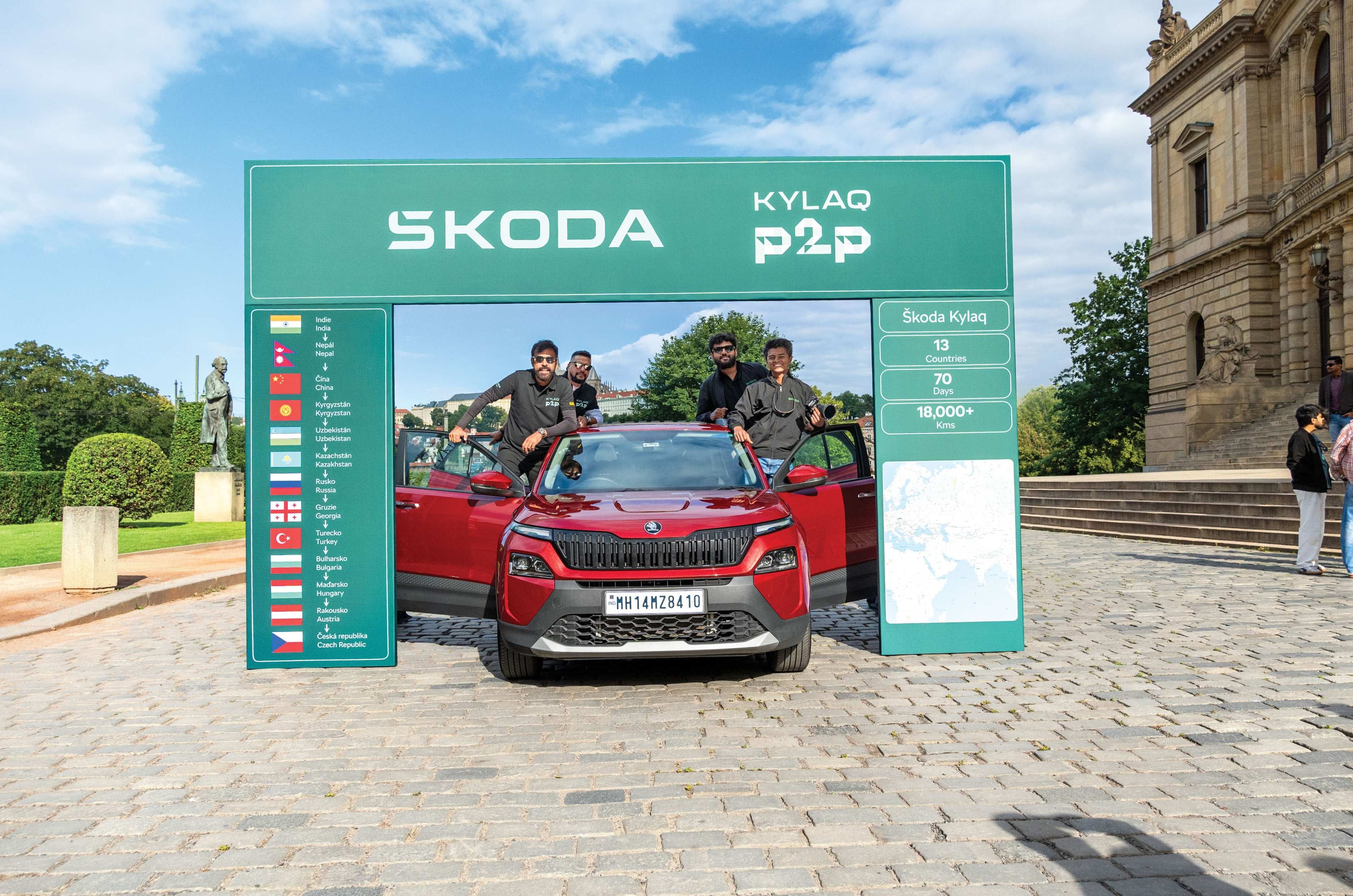
In the previous issue (August 2026), you saw the Skoda Kylaq take on the familiarity of India, the hills and traditions of Nepal, and the variety of China through Tibet’s gorgeous but bone-shaking terrain, followed by the sensory overload of food and culture. Now, it was time for a fresh experience through Central Asia on the ancient Silk Route, subsequently entering Europe towards our final destination.
Kyrgyzstan – Uzbekistan – Kazakhstan
Kyrgyzstan
The Kylaq had everyone turning heads.
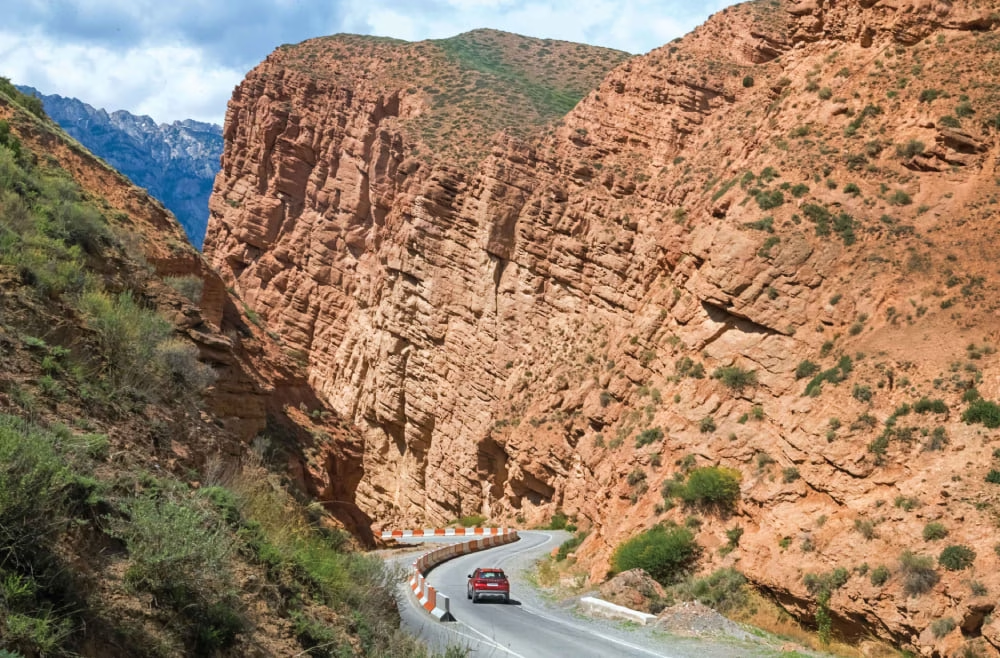
Crossing the Chinese border into Kyrgyzstan was like crossing into a different world. The differences are immediate, right from the signage, fonts and faces to the sights, terrain and traffic. Being a landlocked country peppered with alpine mountains, one doesn’t need to go far to experience what Kyrgyzstan has to offer. As you drive through the ribbon of tarmac between the peaks, you realise why it is called the “Switzerland of Asia”.
A roughly 400km drive to our first halt in Naryn was smooth sailing. However, the chilly weather was a far cry from the piercing heat of China. We pulled out our jackets that were buried deep in our bags and made a beeline the next day for the capital city of Bishkek. The roads are a driver’s delight, and while there aren’t many sights to stop and admire, the Orto-Tokoy Reservoir made for a stunning photo-op.
Kyrgyzstan in numbers
Torgart – Uzbek border
Distance covered
1,321km
Fuel consumed
126.49 litres
Average fuel economy
10.44kpl
Approx. fuel cost
Rs 11,727
Avg. per-litre fuel cost
Rs 92.58
Total time driven
34hrs 23min
Average speed
38.4kph
From Bishkek, we headed to Osh, which is also known as the capital of the south and is the oldest city in Kyrgyzstan. Walking through the Jayma Bazaar in the city centre, you may get a bit of celebrity treatment, as the locals aren’t used to having many tourists just walking through. Some playful heckling and wide smiles add to the overall experience.
Chorsu Bazaar is a one-stop shop for everything in Tashkent.
What the market offers is mounds of kurut, a snack made from curdled milk or oghurt, salted and then hardened. The best part is its extended shelf life without needing a refrigerator. We packed some with the hope of eating it at home, knowing fully well that it would vanish by the next town.
From Osh, we would be exiting the stunning valleys and terrain of Kyrgyzstan and entering the city of Fergana in Uzbekistan.
Uzbekistan
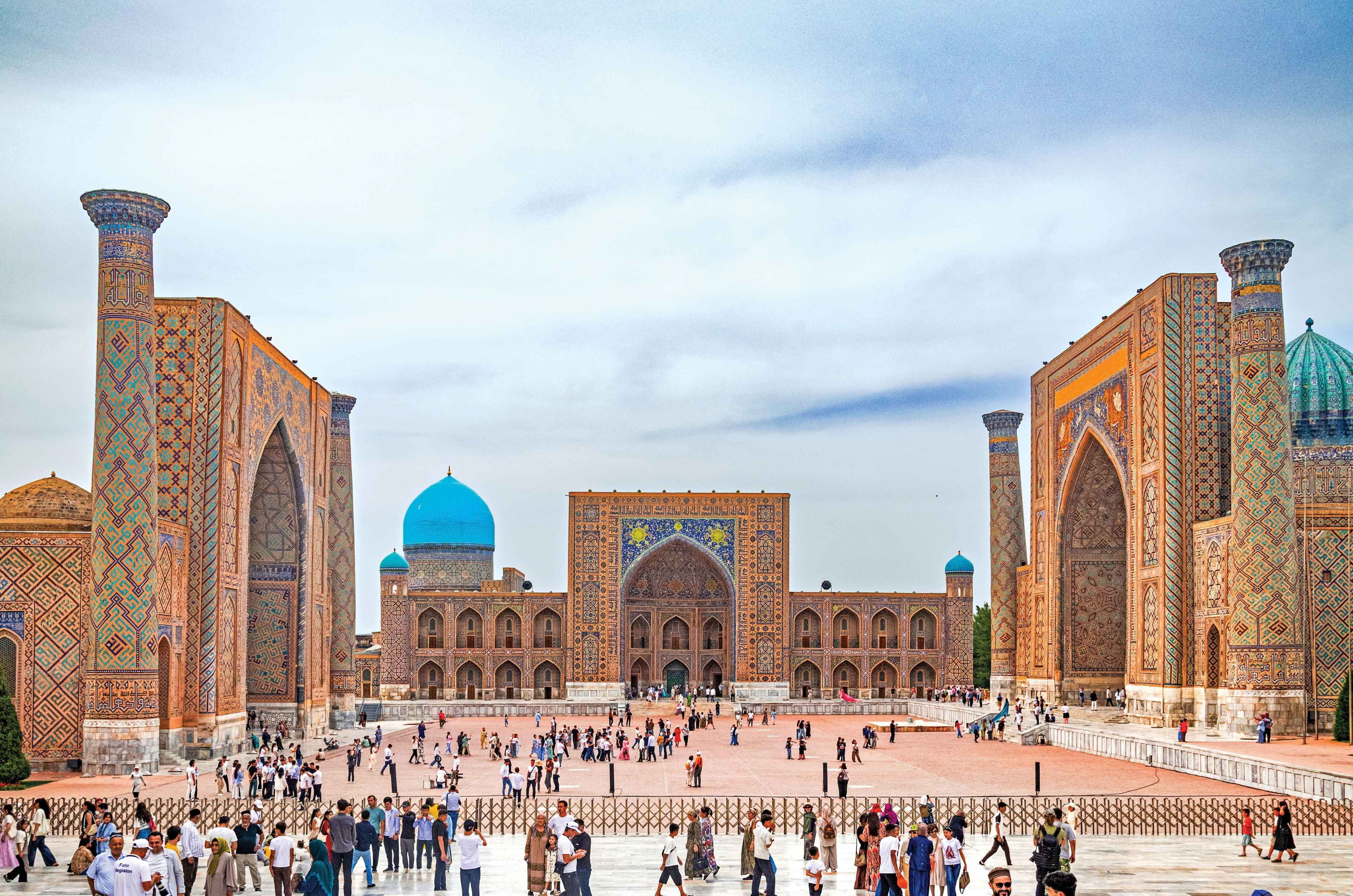
Registan Square in Samarkand is breathtaking from every angle.
Like Kyrgyzstan, Uzbekistan also has its own personality. While there are similarities in the faces and fashion, the city of Fergana has a tinge of European infrastructure. Roads are lined with trees and patir shops – flatbread made from butter or lamb fat, with intricate detailing and some sesame seeds sprinkled on top. It’s pretty enough to dissuade you from eating it, but tastes like something that would go extremely well with a cup of chai.
Uzbekistan in numbers
Kyrgyz-Uzbek border – Turkistan
Distance covered
1,257km
Fuel consumed
81.74 litres
Average fuel economy
15.37kpl
Approx. fuel cost
Rs 9,800
Avg. per-litre fuel cost
Rs 120
Total time driven
27hrs 5mins
Average speed
46.4kph
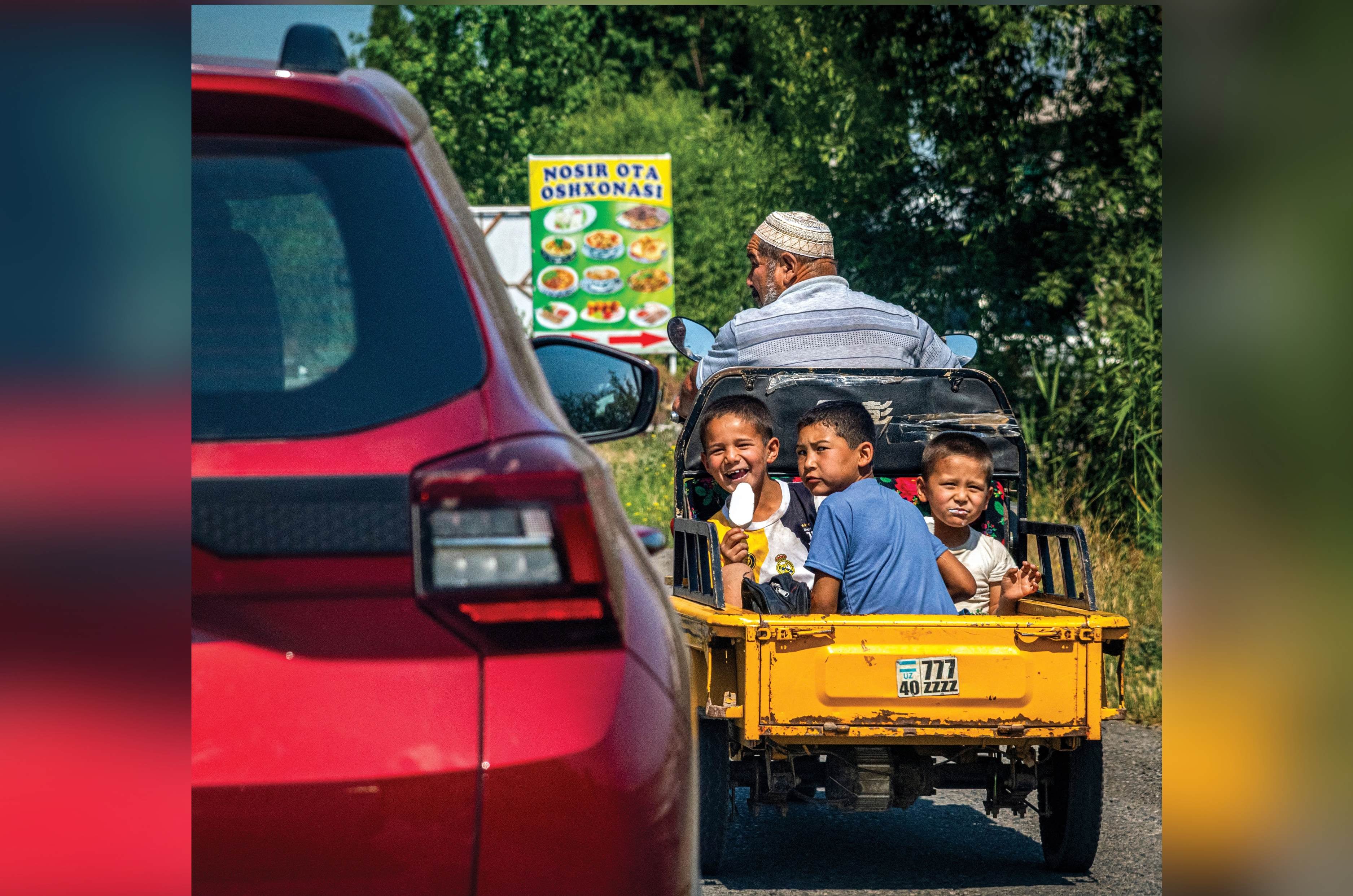
What is also fascinating is the number of old Soviet-era cars still running on the highways with no fuss. We shared road space with old Ladas crammed with luggage inside and on the roof. Over the smooth highways of Uzbekistan, the Kylaq had an easy run, allowing us to focus on the sights around us.
From Fergana, we headed to the capital city of Tashkent. A properly modern metropolis with high-end malls and low-slung supercars, parks, walkways and everything you expect from a big city. So, to get a taste of age-old tradition, we ventured towards Samarkand, which used to be a major trading hub on the Silk Route.
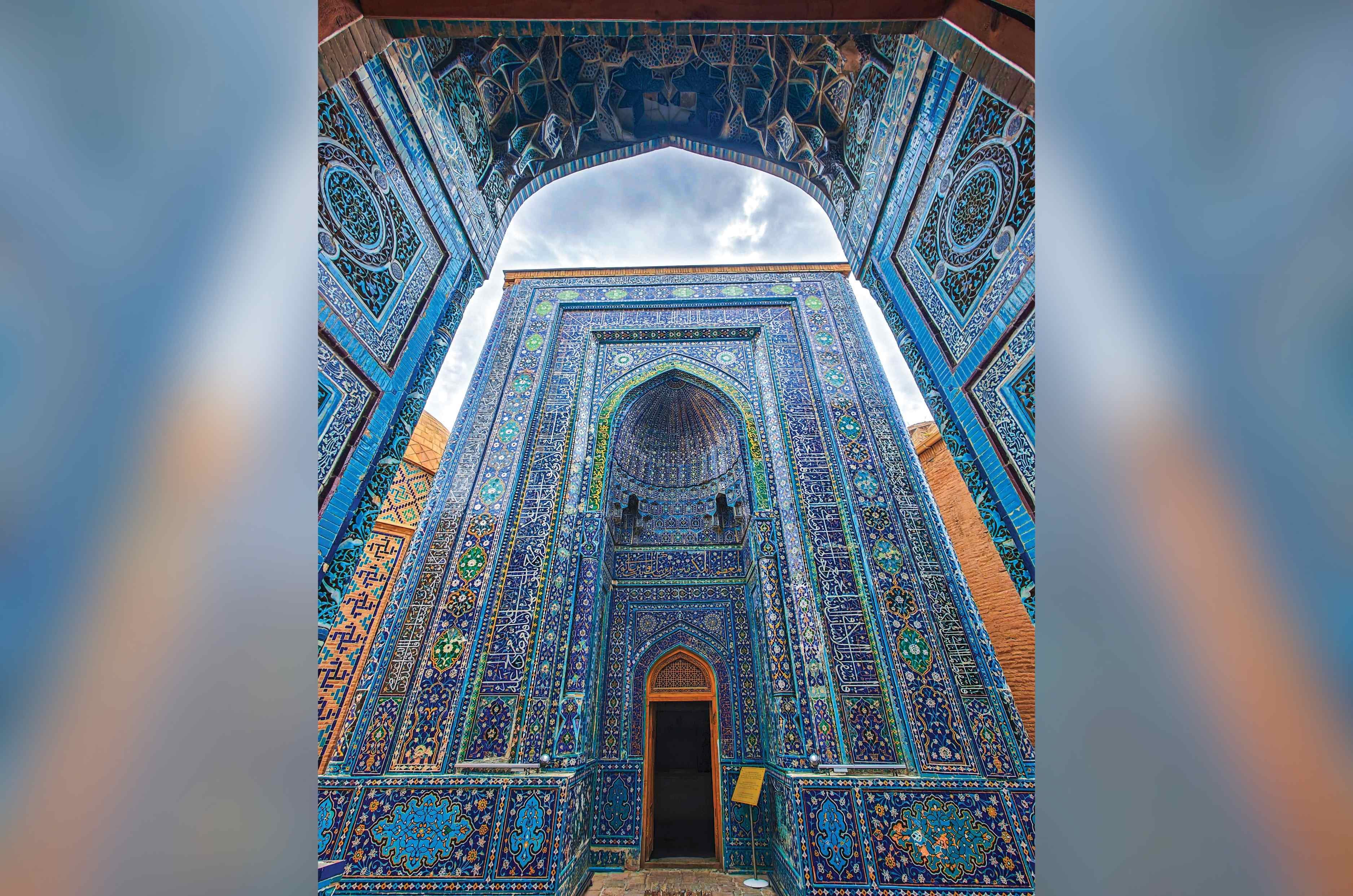
The Shah-i-Zinda ensemble has 11 mausoleums with incredibly detailed azure and turquoise tiles.
Entering Samarkand, you almost feel the tradition in the air. Years of cross-cultural civilisation have made it a stunning destination to get a glimpse of history, and it is unlike any other Western or Eastern city. The highlight here, of course, is the Bibi-Khanym Mosque in the Registan ensemble. Turquoise domes kissing the sky, with walls adorned with hand-carved artistry, are nothing short of breathtaking.
You can walk through the corridors and the square innumerable times, and each time, you will gasp at the sheer detail and effort. And to think it was built as far back as the 15th century. Magnificent is an understatement.
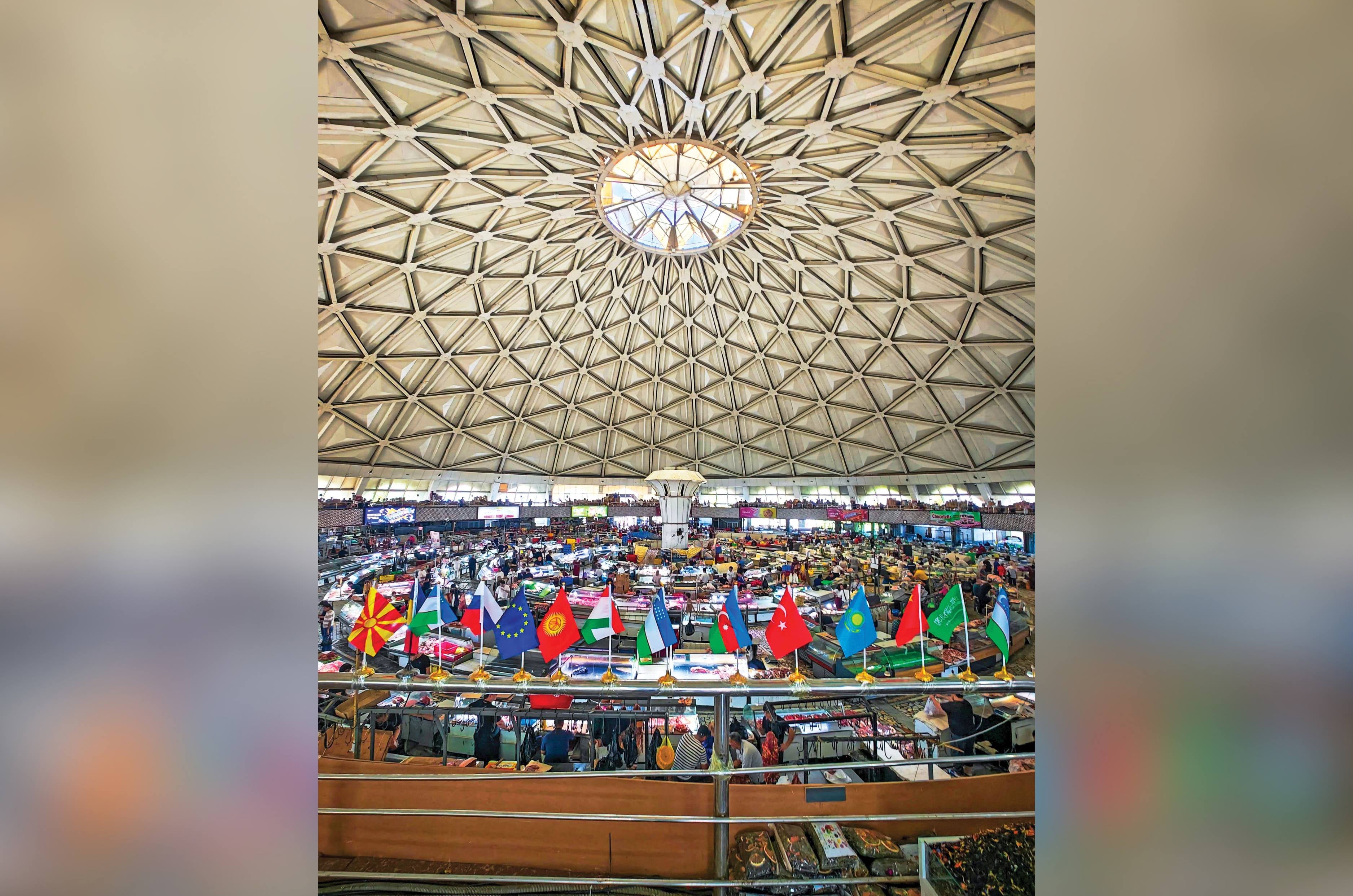
After soaking in the stunning detail, we headed back to Tashkent and straight to the equally fascinating Chorsu Bazaar. What looks like an IMAX dome on the outside is a full-fledged one-stop shop on the inside. Teas, dry fruits or even a leg of lamb, you can get it all here.
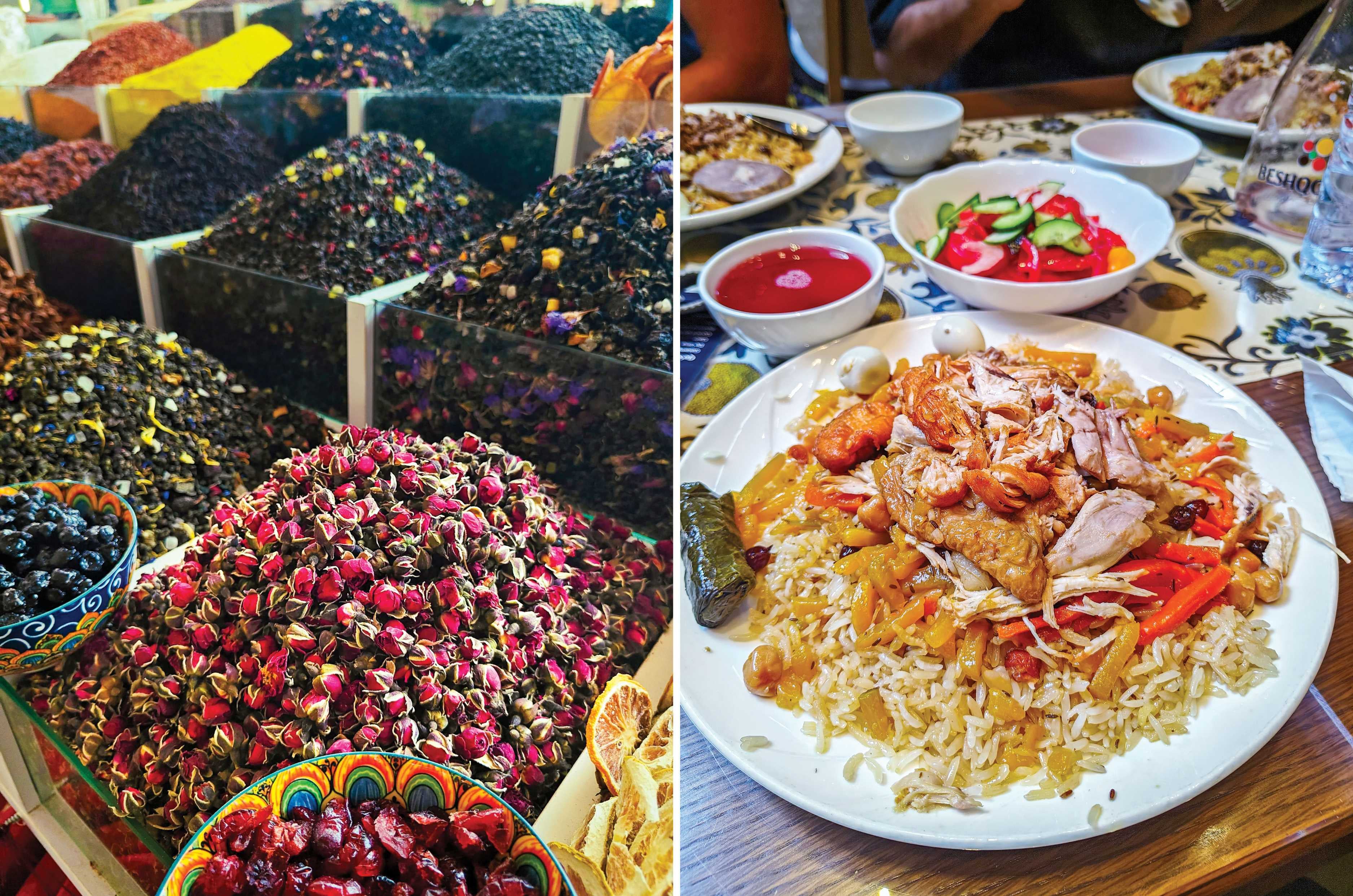
Uzbekistan’s market is nothing short of paradise for tea lovers.
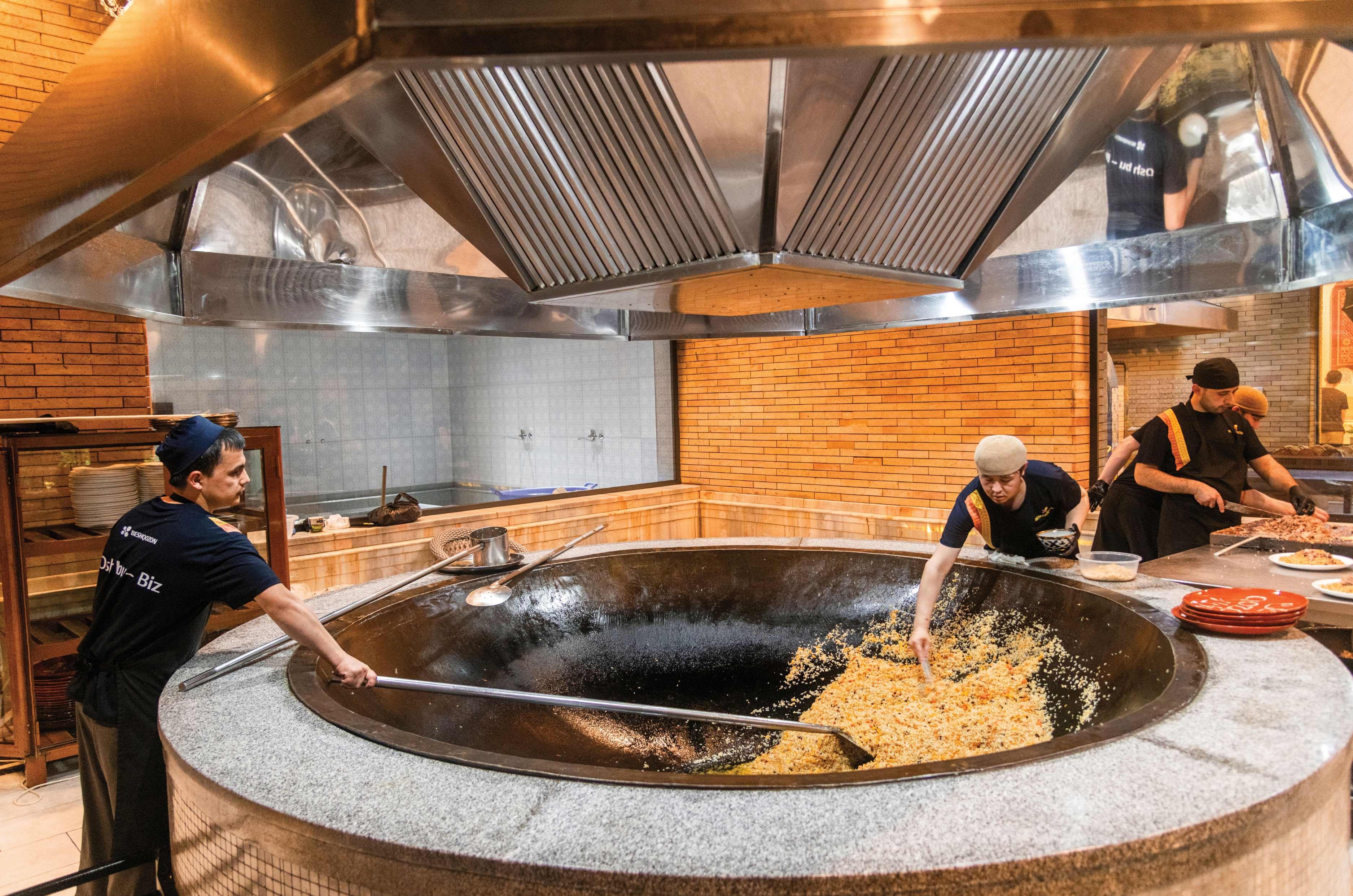
After a long walk that ended with bags of tea and dehydrated kiwis, we headed for Uzbekistan’s pièce de résistance: the famous plov. Like a biryani, but made with different spices, and if you want to go heavy on culture, you can have one with horse meat, too. Some bravehearts did try it and resorted to chicken or lamb, but it did offer the lost taste of biryani and got us homesick in the first bite.
Massive dome known as a kazan used to make the famous Uzbek plov.
After days of driving through mountains and around lakes, and walking through corridors that were once at the peak of world trade, our next adventure would take us to the Great Steppe of Kazakhstan.
Kazakhstan
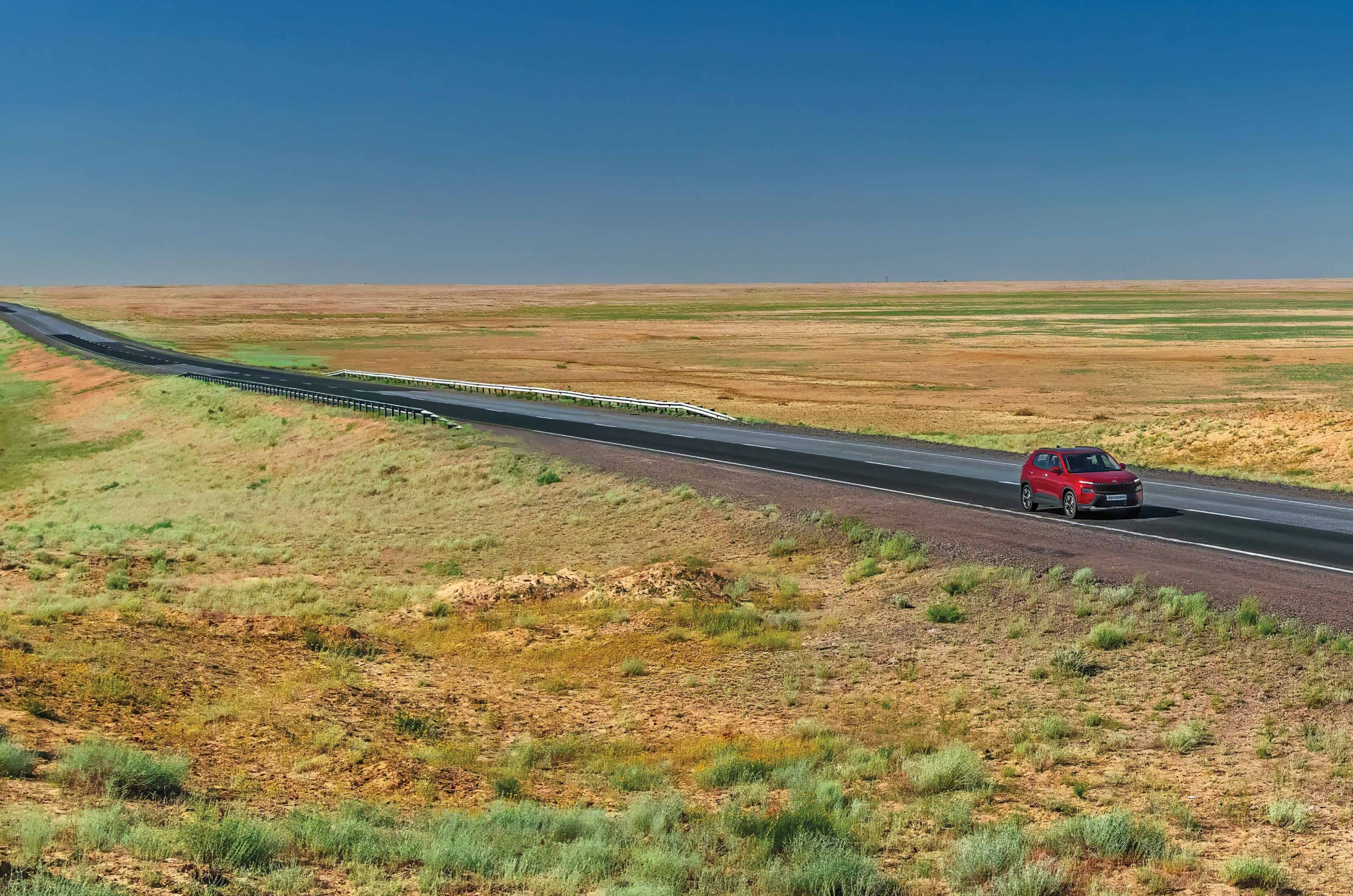
The Great Steppe in Kazakhstan feels like driving on an endless treadmill.
Crossing from Turkmenistan after vigorous checks, Kazakhstan feels almost desolate. Arrow-straight highways for kilometres, between acres of flat land with nothing on the horizon. We were driving through green pastures that would turn into brown, dried patches before turning green again, kilometre after kilometre.
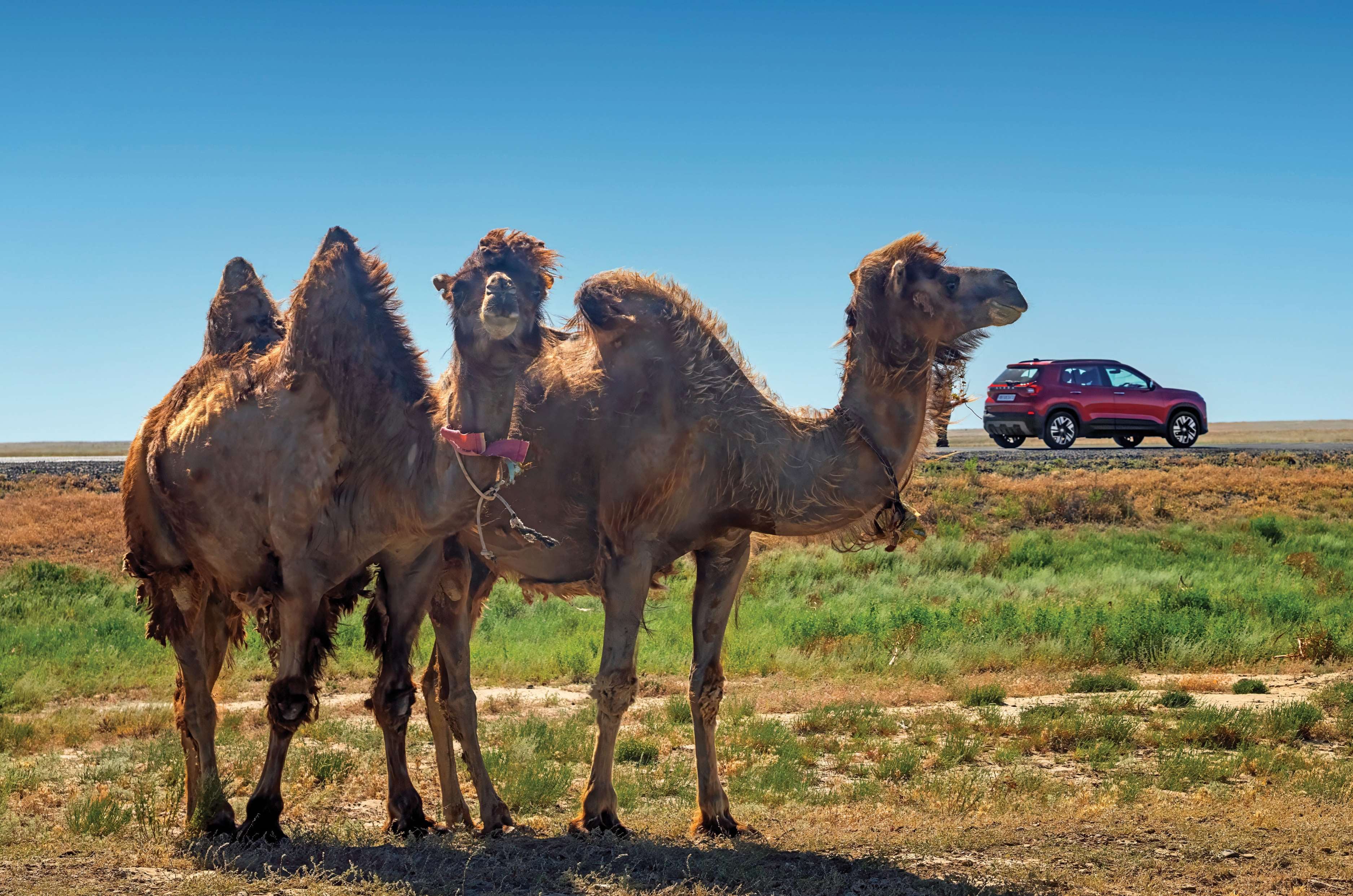
The Great Steppe, while stunning in size, is also a bit monotonous when you’re driving through it for days. The only respite would be a herd of double-humped Bactrian camels, cooling off at a nearby pond and often curious to know what a cherry-red Kylaq was doing in the middle of Kazakhstan.
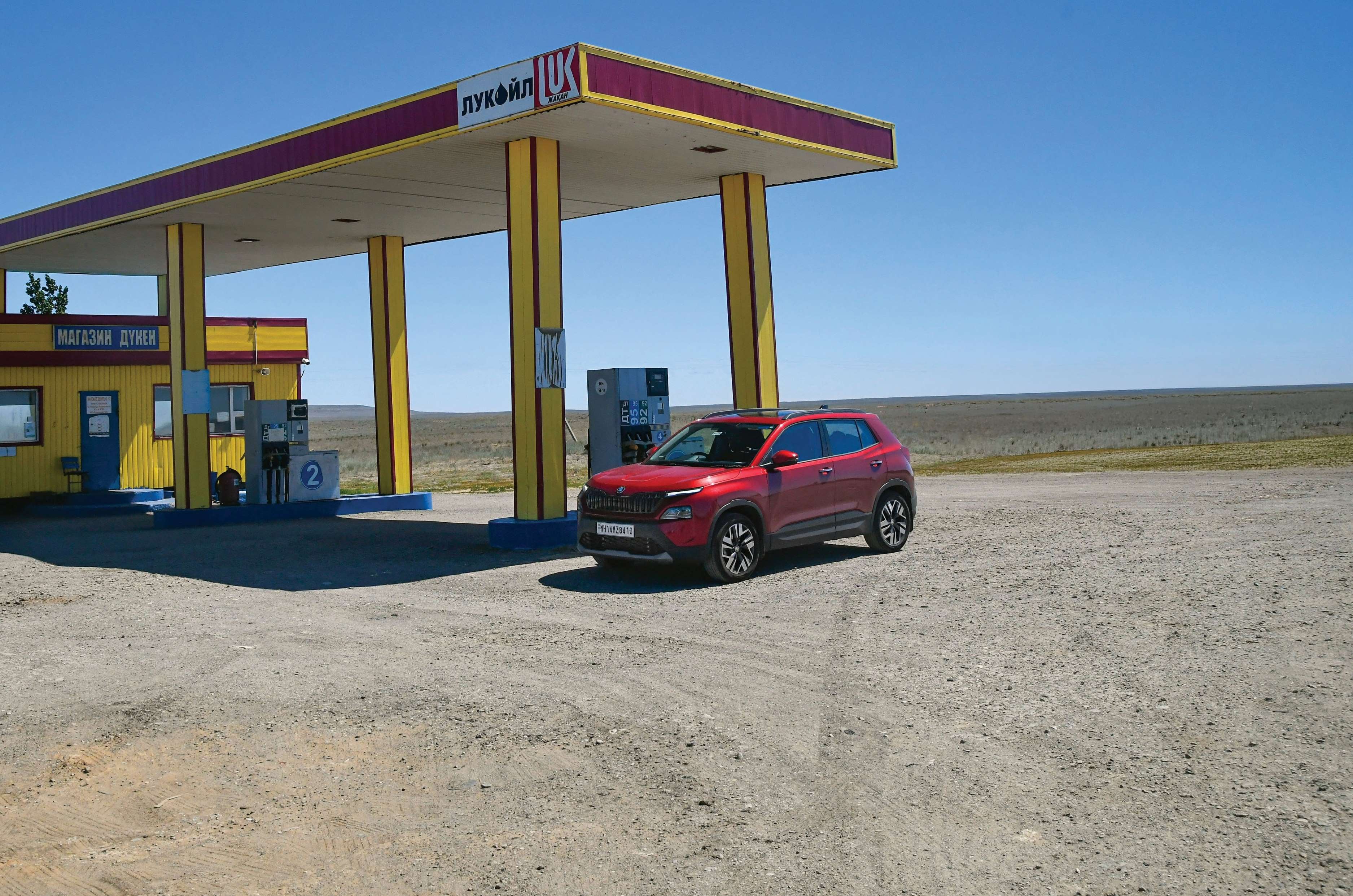
At Rs 58.17 per litre, Kazakhstan offered the lowest fuel price of the entire drive.
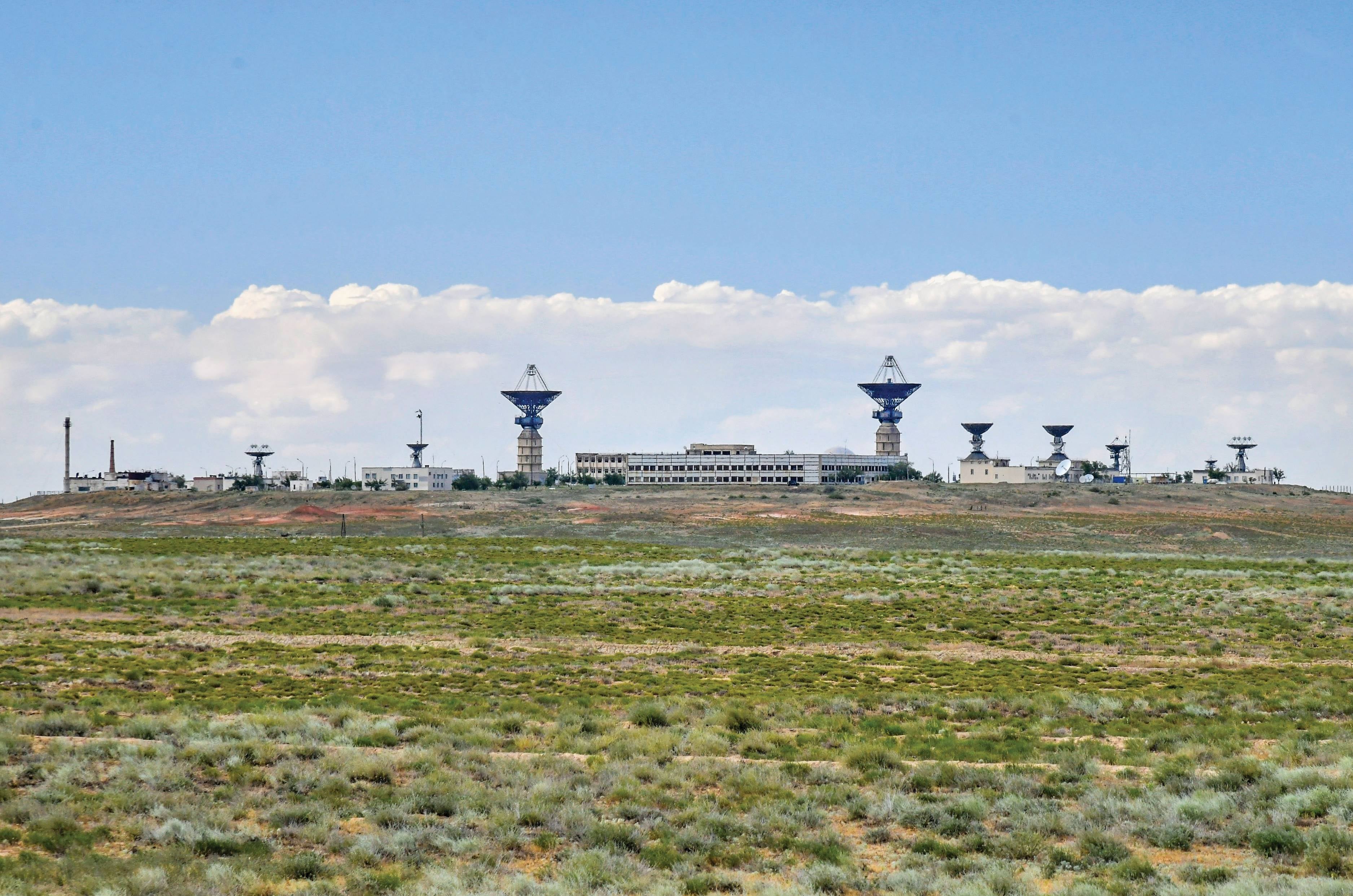
An interesting stop between Turkistan and Aral is the Baikonur Cosmodrome, which is the world’s first and largest operational space launch facility. However, thanks to the endless highways through Aral, Aktobe and Atyrau, we only got to test the Kylaq’s wheel alignment and its highway stability more than we would have liked.
Baikonur Cosmodrome – the world’s first, largest and operational space launch facility.
The mighty Stans were all about breathtaking sights, warm people and mouth-watering cuisine. The region still feels unadulterated, and that itself is what makes it special.
Kazakhstan in numbers
Turkistan – Kazakh-Russia border
Distance covered
3,237km
Fuel consumed
229.52 litres
Average fuel economy
14.10kpl
Approx. fuel cost
Rs 13,325
Avg. per-litre fuel cost
Rs 58.17
Total time driven
42 hrs
Average speed
77.1kph
Georgia – The Birthplace of Wine
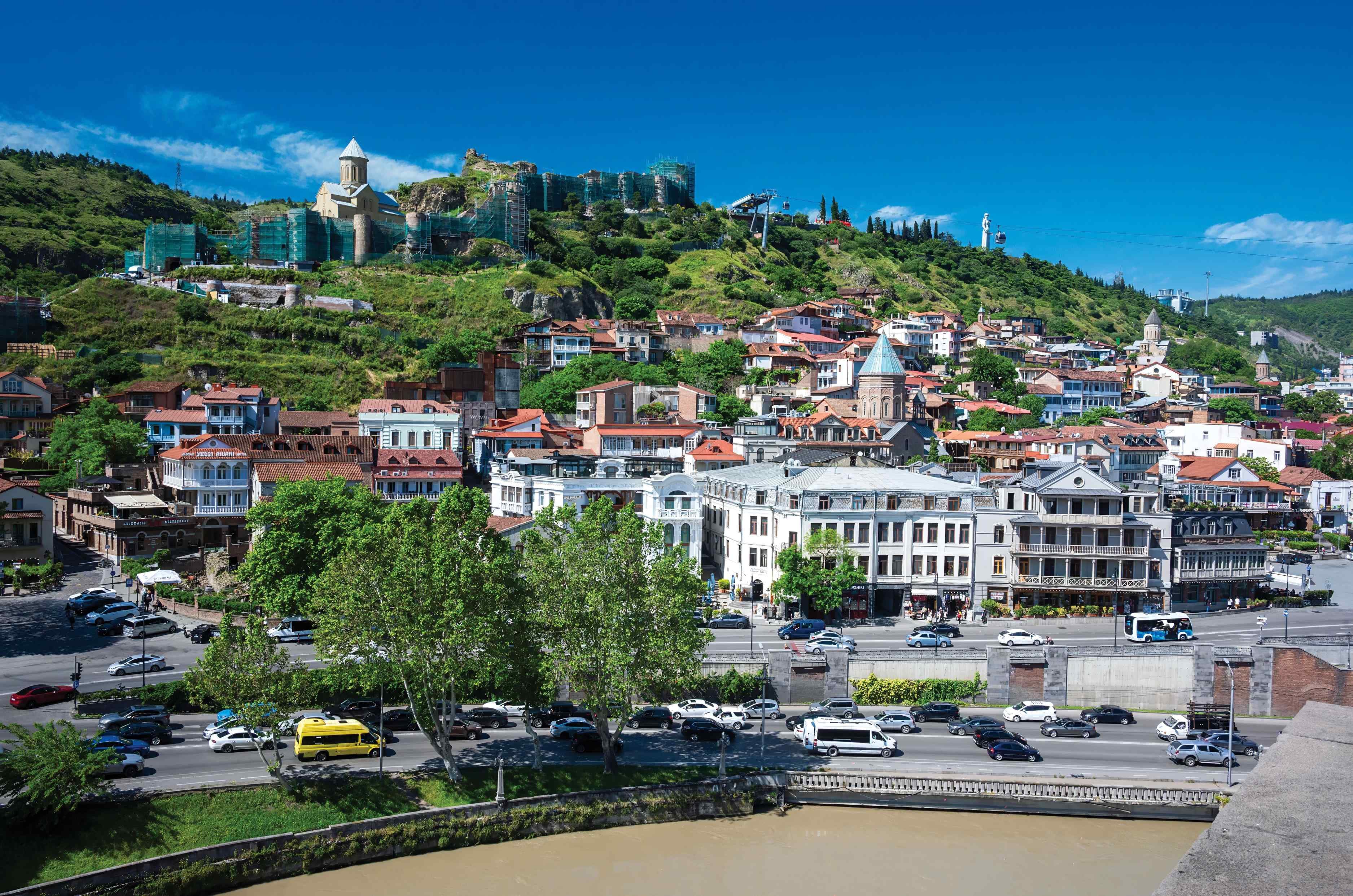
Compared to the vast landscapes and long highways of the Stans, Georgia was a contradiction. Based within the Caucasus Mountains, it has its share of twisties, which the Kylaq enjoyed. But the capital, Tbilisi, is the largest city and thereby pretty chaotic to drive in. Peak-hour traffic is just like what you would have in India, so we parked the car in a worryingly narrow alleyway and, for the most part, made our way on foot.
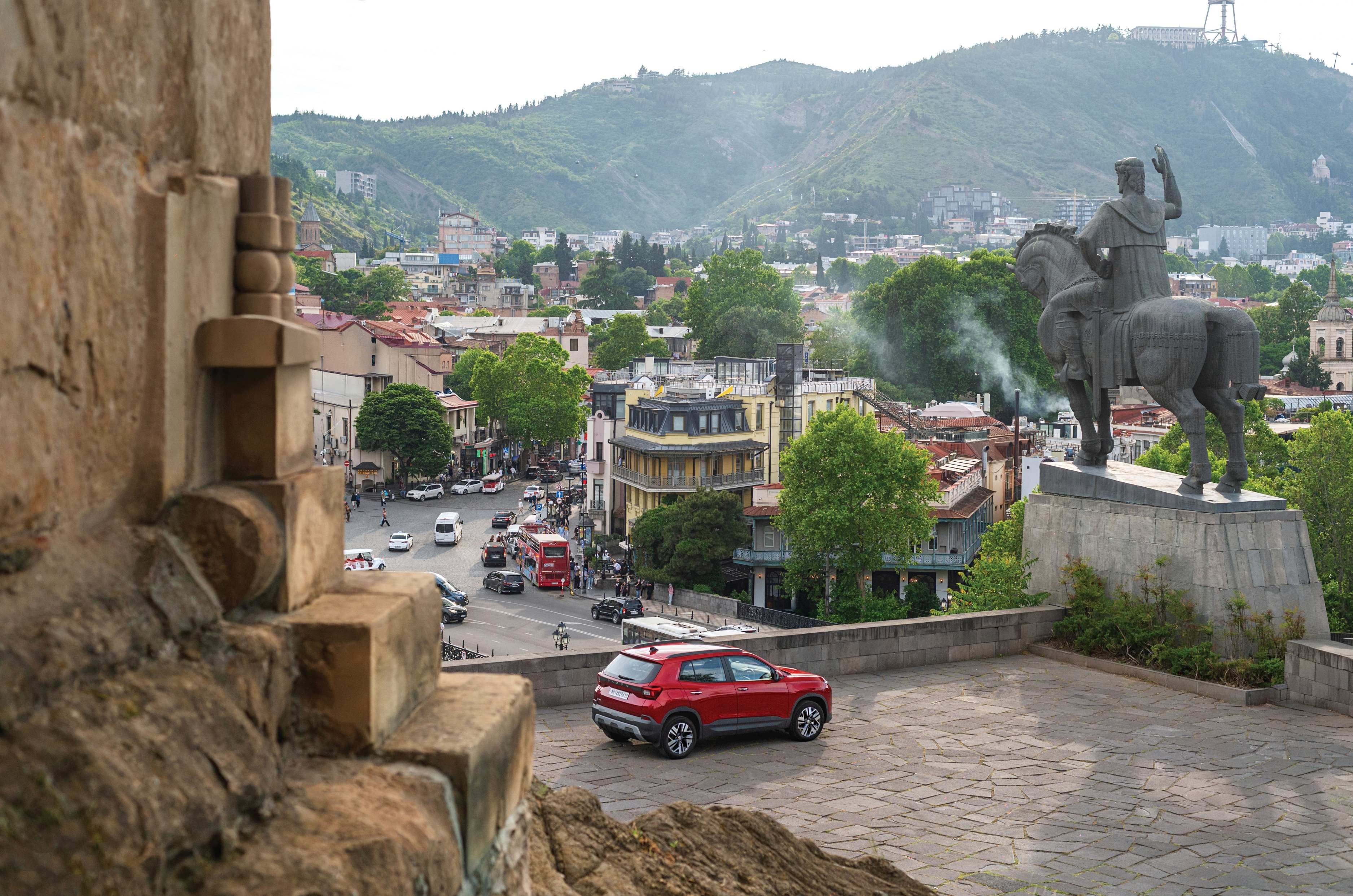
Huge statue of the founder of Tbilisi King Vakhtang I Gorgasali.
Like any big city, Tbilisi has its modern side, with glass buildings and modern restaurants, but there is still a large section that is rooted in tradition. Cobblestone streets with wooden houses and sulphur baths are a fascinating experience, as is the fantastic view from near the monument of King Vakhtang Gorgasali, the founder of Tbilisi.
The monument itself is a striking bronze equestrian statue located on a rocky cliff above the Mtkvari River, next to the historic Metekhi Church in Tbilisi, Georgia. But Georgia is known to be the birthplace of wine, and on our drive to Tbilisi, we spotted several vineyards sprawling for acres. We had to get a closer look, and thankfully, our guide’s friend owned one of them.
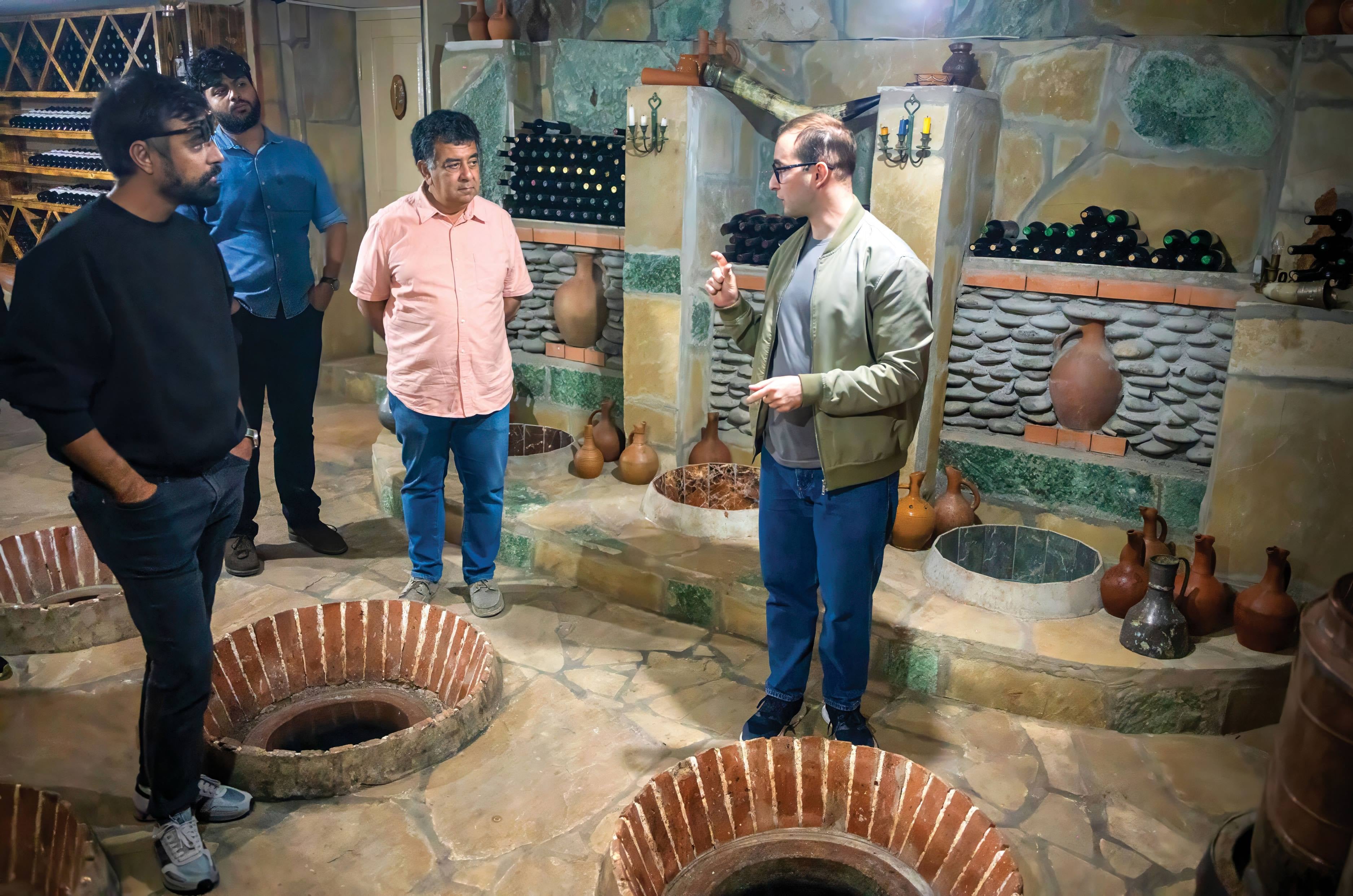
Georgian wine fermented in clay jars buried in the ground.
The Georgians still use the ancient process of fermenting wine in barrels under the floor, but have now blended it with modern technology that allows them to control the temperature and get a more consistent batch each time. Wine connoisseur or not, the experience is enthralling.
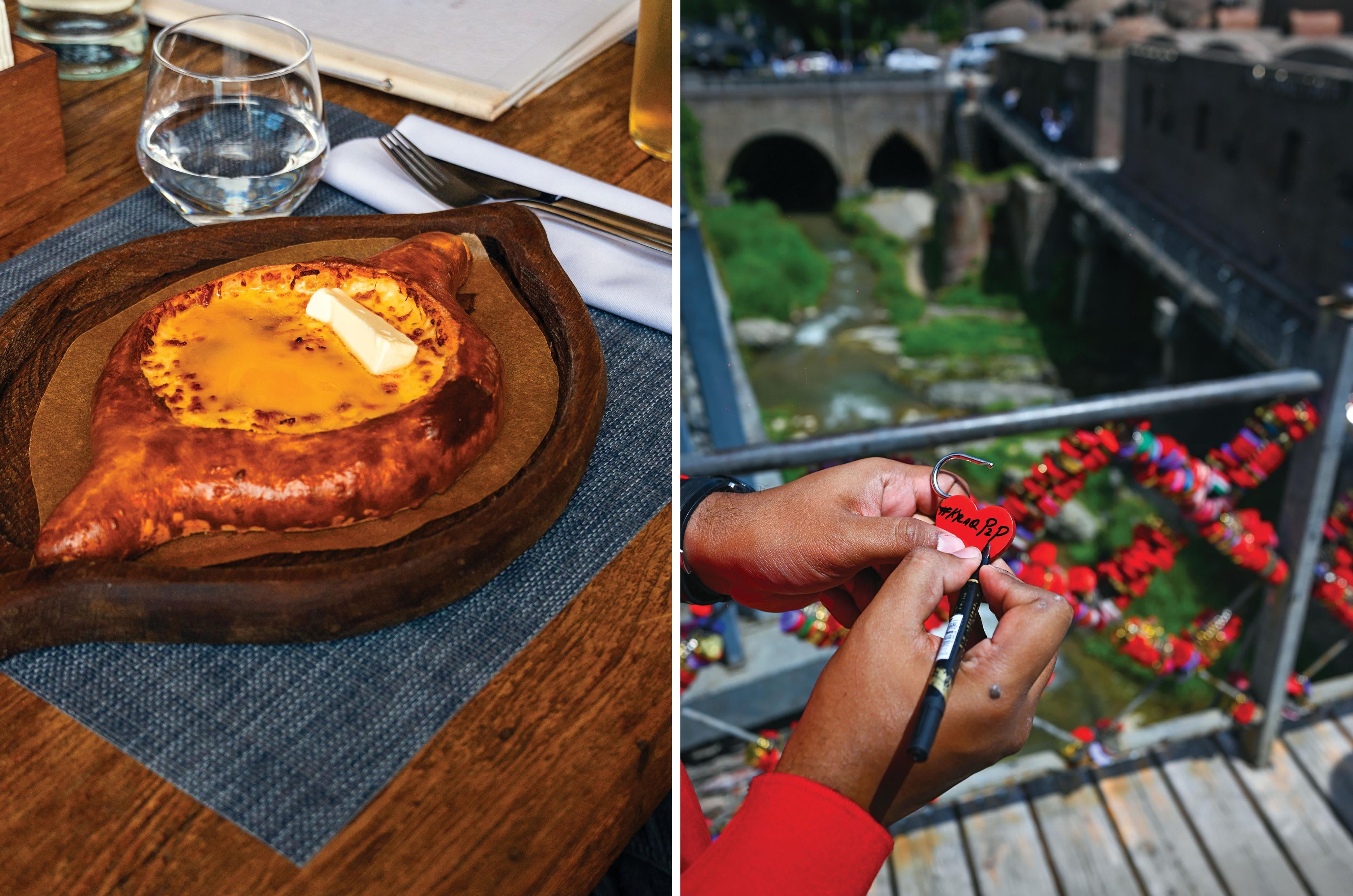
Khachapuri (flatbread with cheese and egg) is Georgia’s national snack.
The city tour built up an appetite, and we followed the scent of fresh bread for some authentic khachapuri. A Georgian flatbread that is hollowed out in the centre and filled with cheese, khachapuri varies depending on the region you’re in. You can have it with an egg cracked into it or with meat, too.
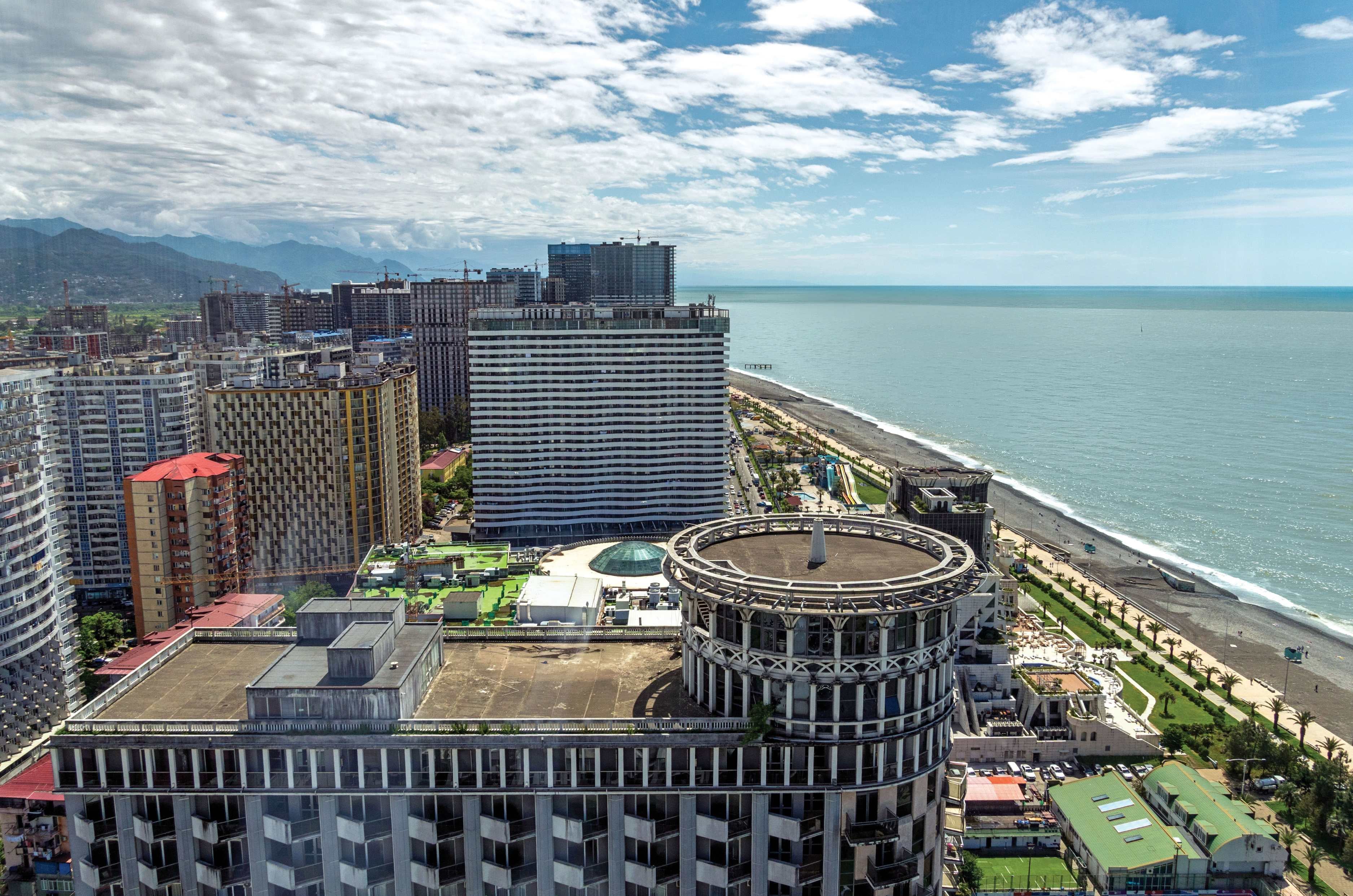
Coastal city of Batumi is a stark contrast of Tbilisi.
With sightseeing done, we drove the next day to the coastal city of Batumi. A vibrant, modern city with a lot more European influence. However, if the roads in Tbilisi were narrow, Batumi was on another level. Despite the compact dimensions of the Kylaq, our hotel parking was a sidewalk cordoned off by the hotel manager, as there simply was no space to park.
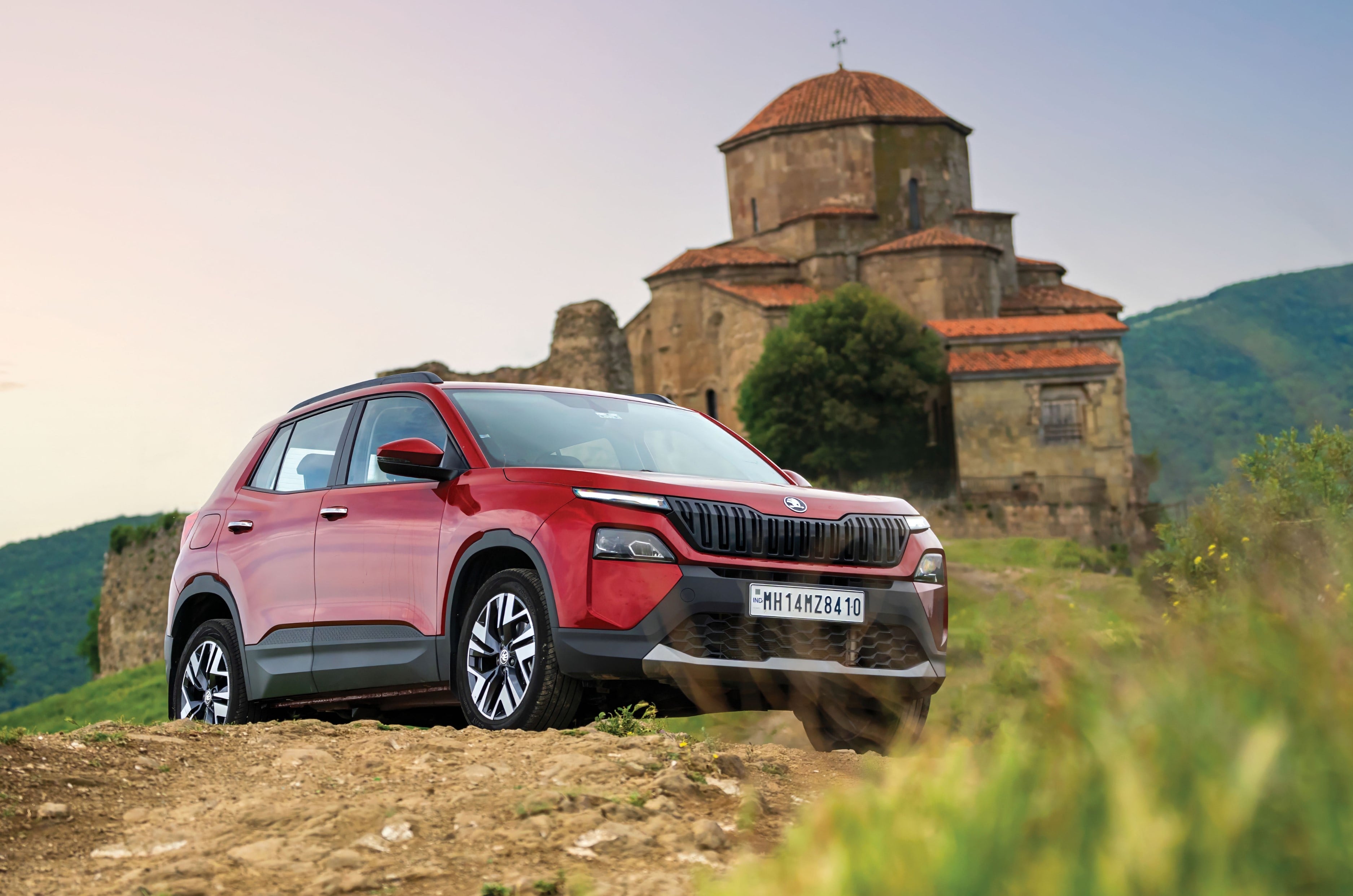
14th-century Gergeti Trinity Church has stunning views of the Caucasus Mountains.
Still, we made the most of it by strolling by the shore of the Black Sea, watching the locals angling for fish. Georgia, just like the Stans, offered a unique glimpse into this part of the world and its diverse culture. For our final stretch before Europe, we had one last country to drive through – the colourful Türkiye.
Georgia in numbers
Tbilisi – Türkiye border
Distance covered
624km
Fuel consumed
58.62 litres
Average fuel economy
10.64kpl
Approx. fuel cost
Rs 7,607
Avg. per-litre fuel cost
Rs 129.78
Total time driven
17.5hrs
Average speed
58.5kph
Türkiye – Gateway to Europe
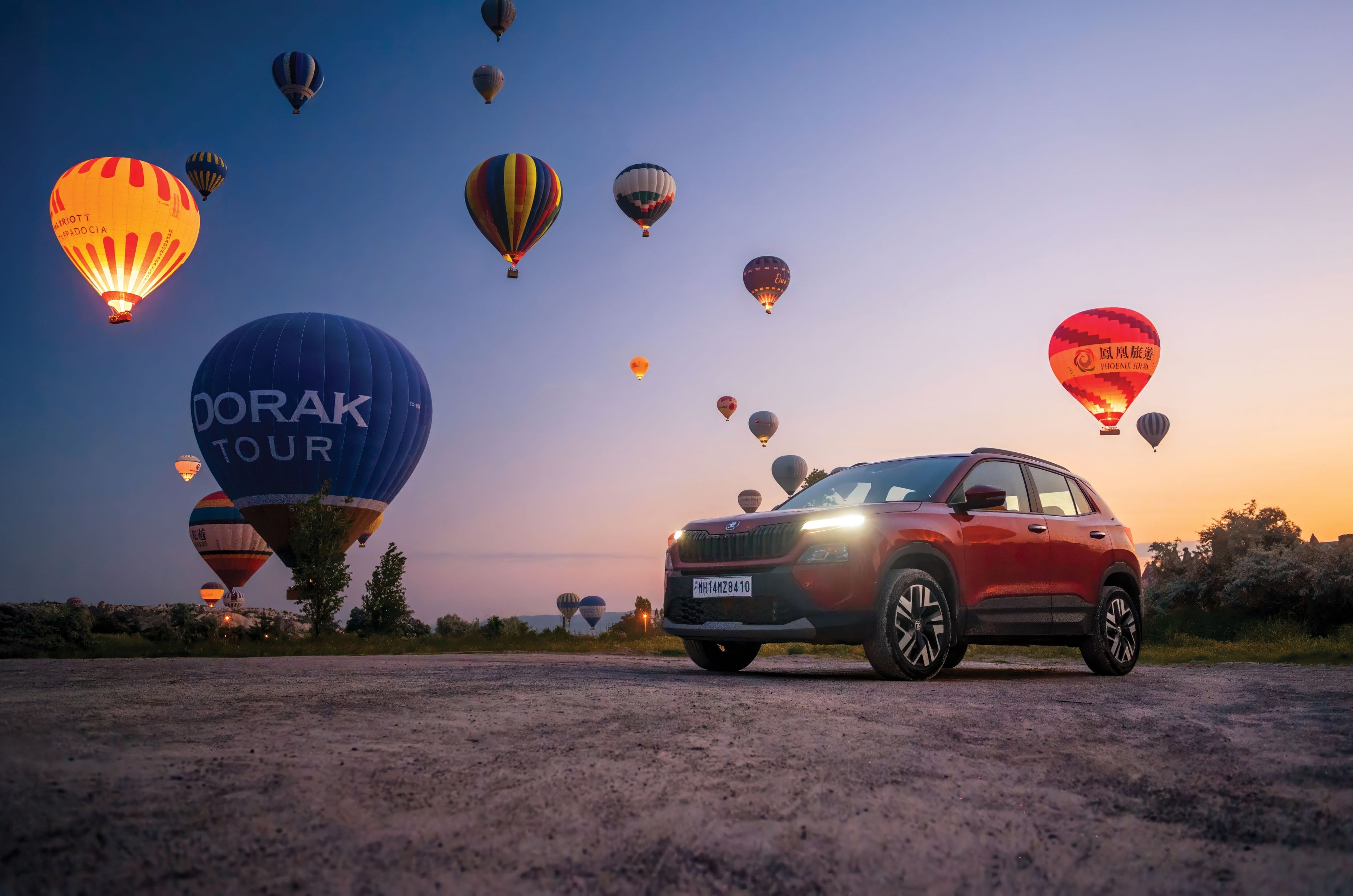
Cappadocia’s claim to fame is well worth the hype.
As the Kylaq crossed into Türkiye, our first stop was in Erzurum. A major winter sports town, but thanks to the time of year, our ski resort was bright, sunny and without an ounce of snow. A quick stroll through the small town and we hit the sack in preparation for a 700km-plus drive to the tourist haven that is Cappadocia.
The next morning, the plan was to do what you must do in Türkiye – take a hot-air-balloon ride. A pre-dawn wake-up call is never comfortable, but the peace was soon shattered by the sound of a group of old diesel Land Rover Defenders revving to keep themselves warm while they waited to transfer tourists to the balloon launch site. The balloon ride is arguably the largest tourist attraction in Türkiye, so there was quite the rush.
We, too, loaded up the Kylaq and hit the road to get the perfect shot of the sun coming up over the hills while the sky was filled with balloons. And boy, did we get it. As the orange tinge hit the fairy chimneys, we saw what the hype was about. The visual is nothing like you have ever seen: watching one colourful hot-air balloon is rare, and here there were over a hundred. We shot GBs worth of images and videos and got back to catch up on the broken sleep from earlier.
Türkiye in numbers
Erzurum – Bulgaria border
Distance covered
1,436km
Fuel consumed
98.1 litres
Average fuel economy
14.63kpl
Approx. fuel cost
17,187
Avg. per-litre fuel cost
Rs 134.19
Total time driven
19.5 hrs
Average speed
73.64kph
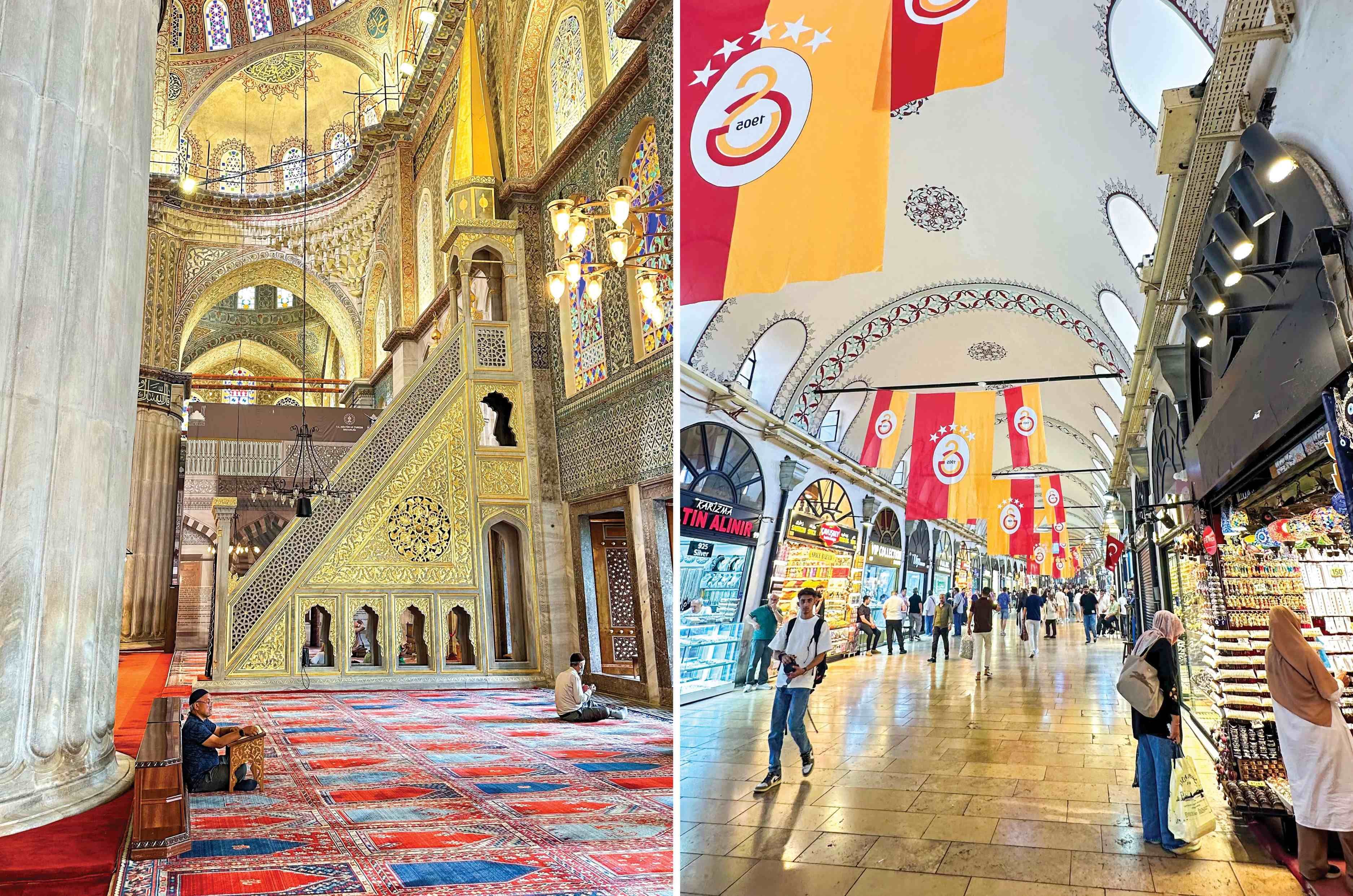
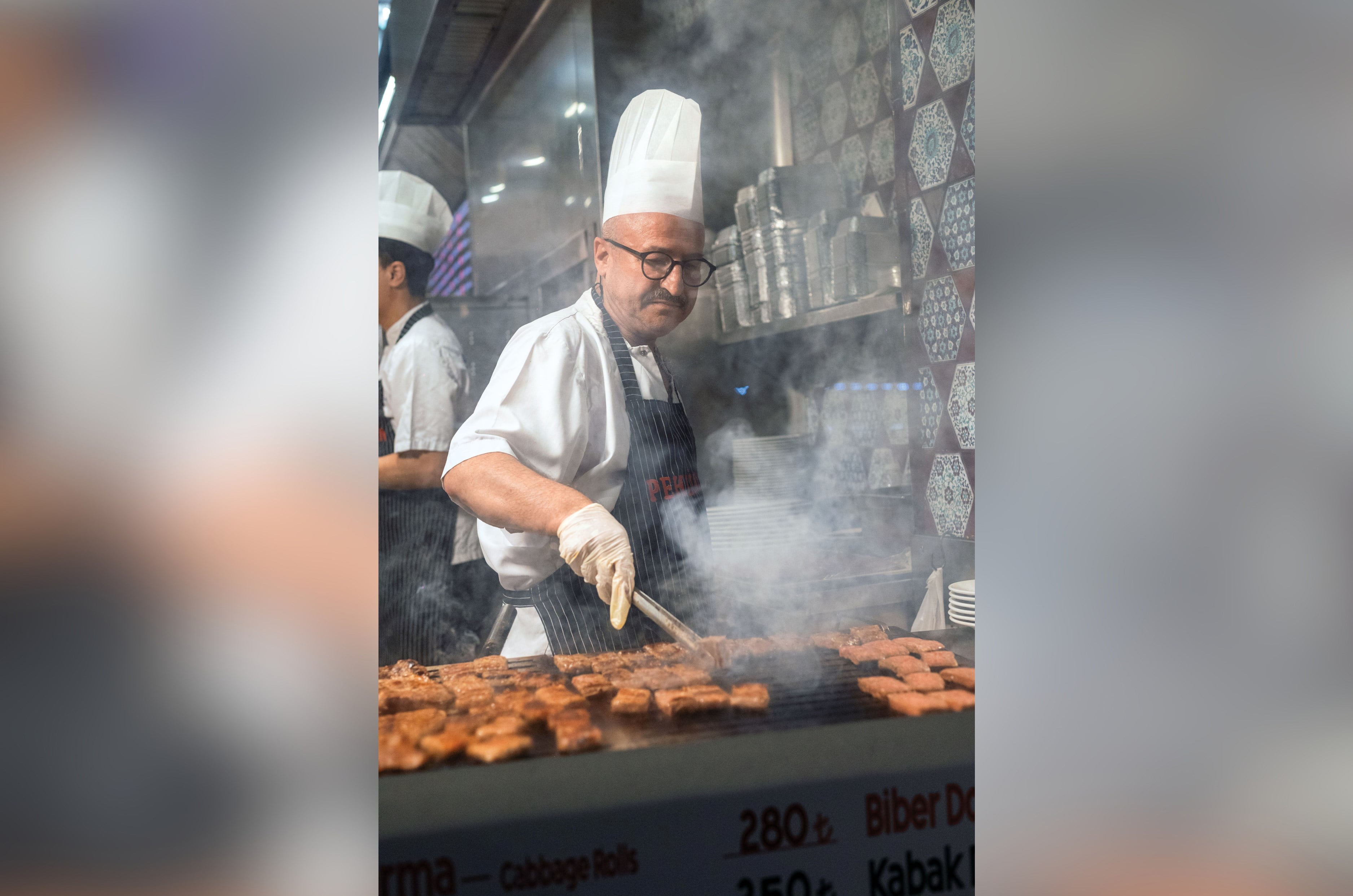
A relaxing drive the next day got us to Istanbul, which, to some, might seem like the capital thanks to its bustling character – a glimpse of which we got as we got closer. A traffic jam stretching for more than a couple of kilometres brought the Kylaq to crawling speeds. To avoid the repercussions of driving next to hasty cab drivers, we parked the Kylaq and headed to check out the nightlife, but more importantly, the döner kebab.
Exceptional interiors and an unbelievable calm in Istanbul.
Similar to a shawarma, the döner kebab consists of a pile of meat that is cooked on a rotisserie over a flame. The dripping fat is mopped up by pita bread, which is then loaded with the sliced meat and seasonings. After a long walk through the Grand Bazaar, haggling for a fake Rolex, the döner becomes almost a necessity.
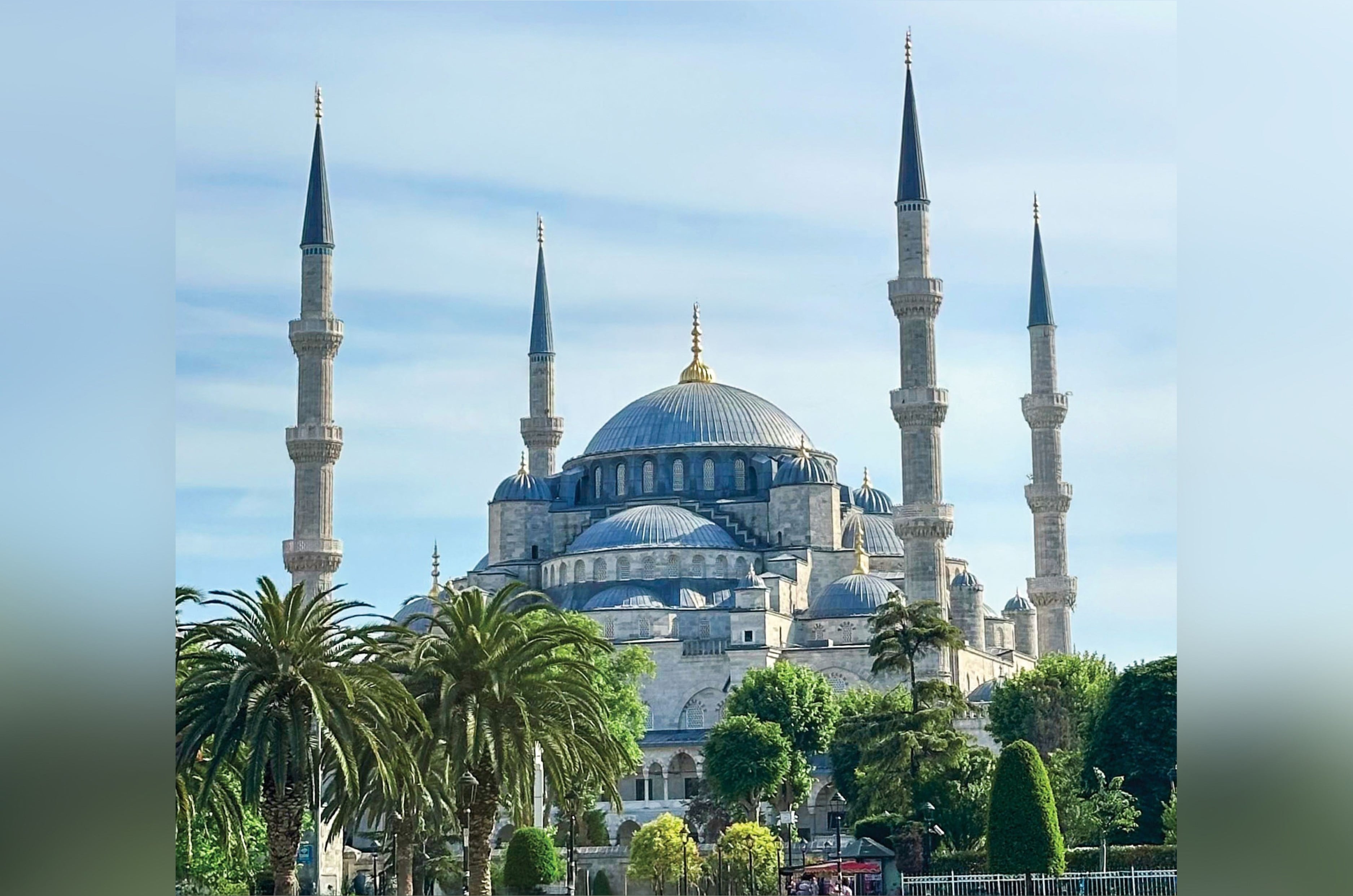
What’s also equally stunning is the Blue Mosque. Known formally as the Sultan Ahmed Mosque, it was constructed between 1609 and 1617 in the Ottoman era by Ahmed I. To get the entire mosque in frame, you need to fall back to the Hagia Sophia Mosque, which is in the same vicinity. Both equally grand, equally detailed and equally important.
The Blue Mosque, built in the Ottoman era, is majestic.
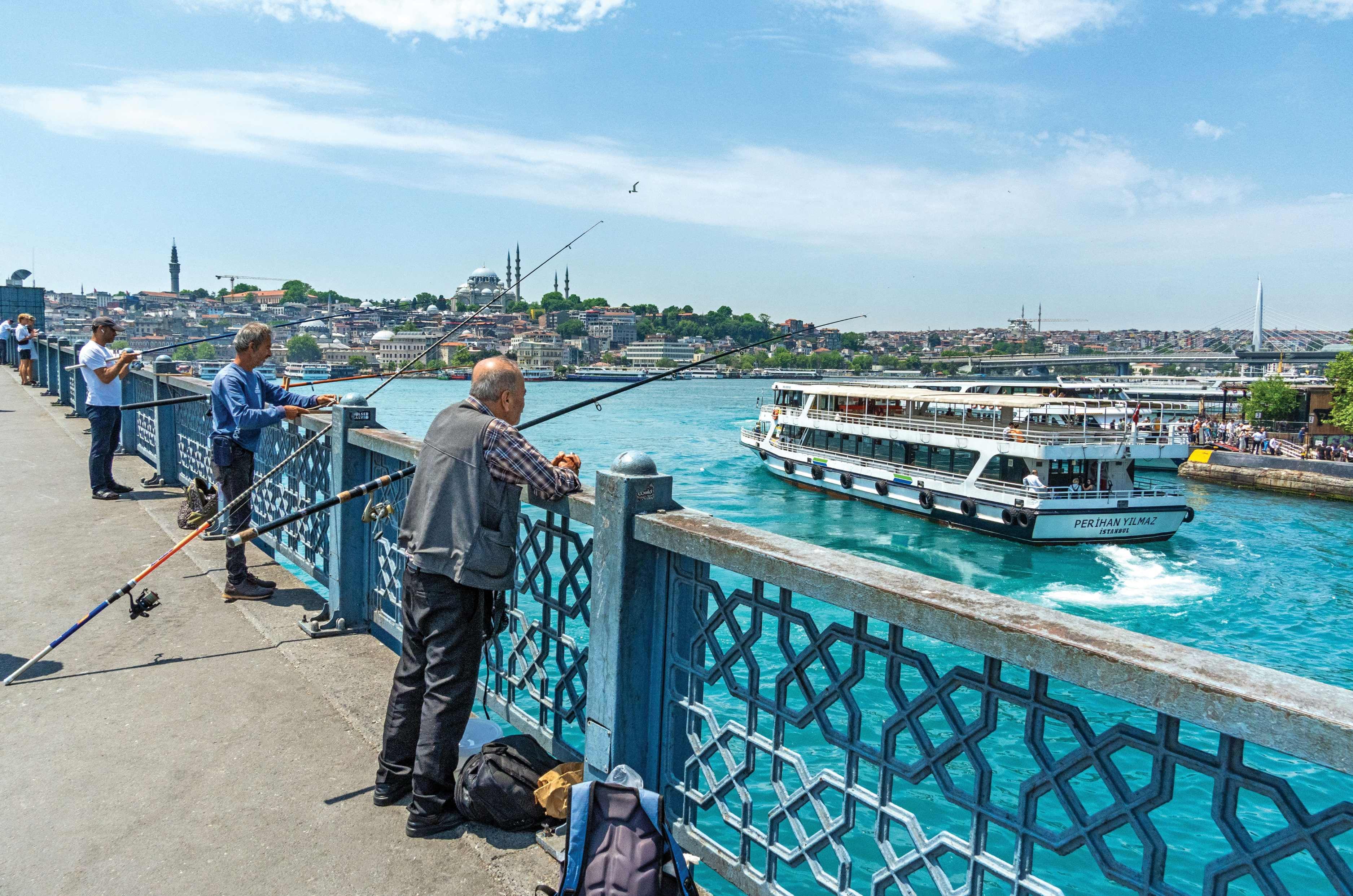
To explore more of Türkiye, we got back into the Kylaq and realised there was a bridge that is unlike any other in the world. The Bosphorus Bridge is located over the Bosphorus Strait, but its claim to fame is that it, quite literally, has one end in Asia and one end in Europe. You can cross the bridge in about two minutes, depending on traffic, but the sense that you can practically drive over from Asia into Europe before you can finish watching a reel is unreal.
Angling over the Bosphorus strait is a common hobby.
Europe – Home Stretch
Bulgaria – Romania – Hungary – Slovakia – Prague
The end of our incredible Pune-to-Prague drive was now a matter of days away. After over two months on the road, we were a couple of thousand kilometres away from the finish line. The excitement that had tapered off midway was back in full force.
We would be entering Europe through Bulgaria, and the border, as expected, was busy. Documentation, carnets, passports, stringent car checks and some explaining later, we were finally in.
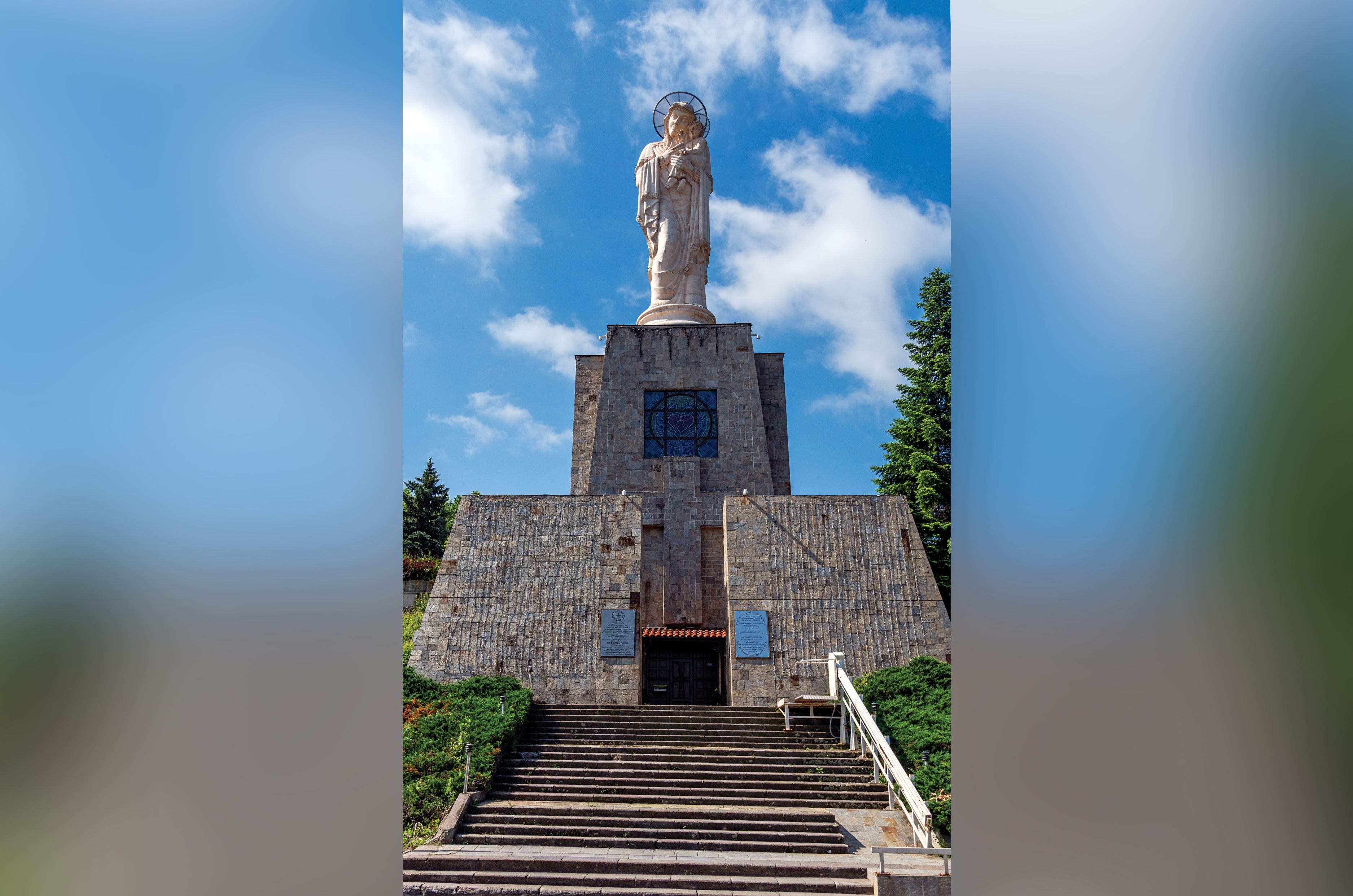
Monument of the Holy Mother of God in Haskovo.
Haskovo is a quaint town with a slow pace and none of the bustle of a European city, but it boasts a Guinness record for having the towering Monument of the Holy Mother of God, the tallest statue of the Virgin Mary and Baby Jesus in the world. Naturally, we had to check it out before we headed further.
Crossing countries in Europe is the equivalent of crossing states in India. There are no significant border checks or passport-control booths. A board with the blue EU flag and the name of the country is all you will see.
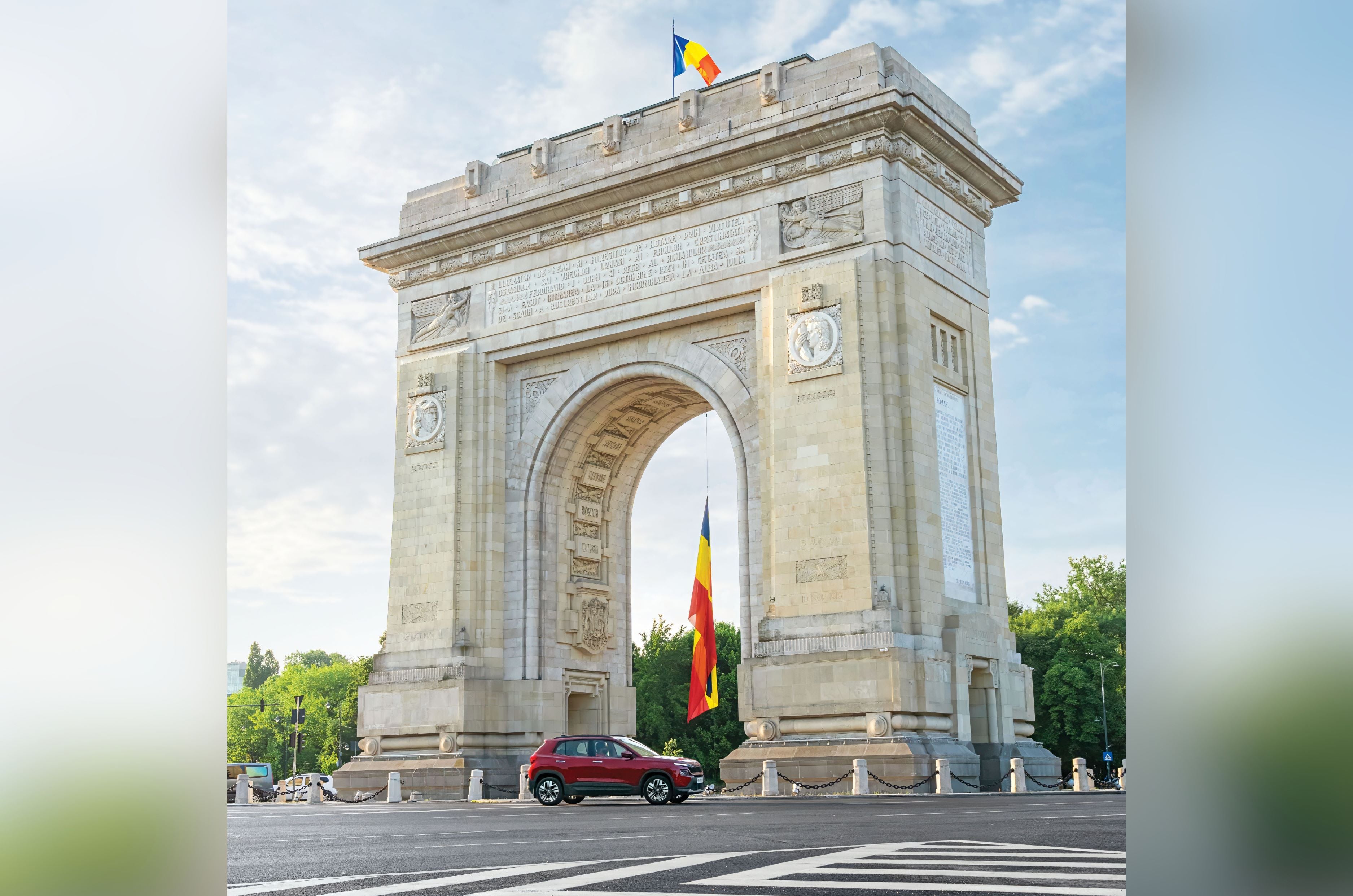
Romania’s Arcul de Triumf an ode to the one in Paris.
We crossed into Romania rather unassumingly and headed for Bucharest. The capital is picturesque and is also colloquially known as “Little Paris”. Like the Arc de Triomphe in Paris, Romania too has its own version. A tad smaller in comparison, but just as iconic.
However, what takes the cake is the Parliament Building, formally known as the Palace of the Parliament, which is also the heaviest building in the world, standing at approximately a ridiculous 4,098,500 tonnes. We couldn’t verify that, but since the Kylaq looked like a mere speck in front of it, it was all the proof we needed.
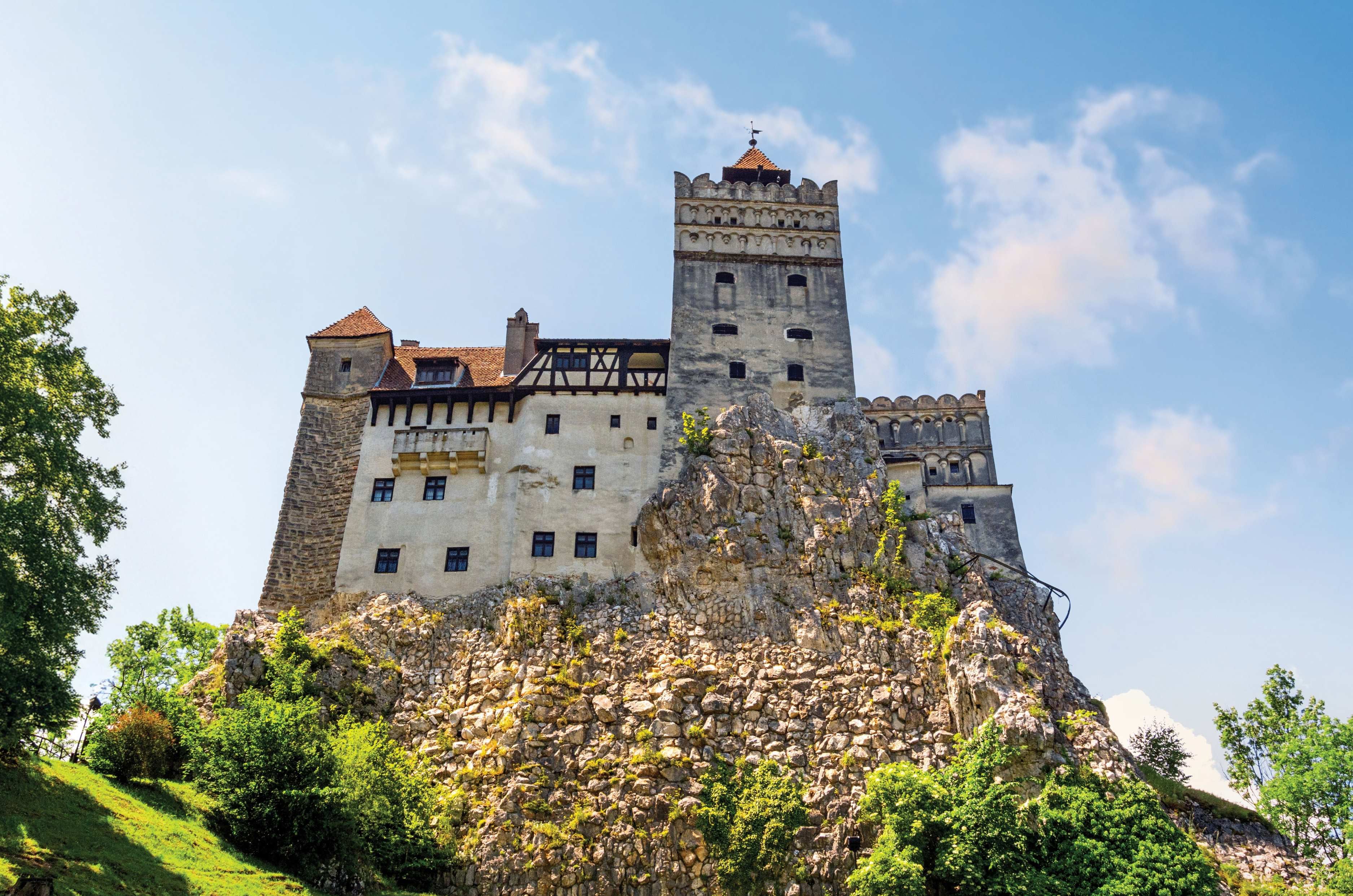
Bran Castle is widely marketed as Dracula’s home.
Bucharest also has a thriving nightlife, with the quiet cobbled streets turning into party hubs post-sunset. As we headed towards Hungary, we couldn’t help but make a stop at Bran Castle. Despite the myth that it was once home to the famous Dracula, there is nothing but merchandise at the foot of the castle to prove that claim. Historians have dismissed the claim and, while it is fascinating, there is plenty of evidence against it. Still, that did not stop us from buying some fake vampire teeth and Dracula magnets.
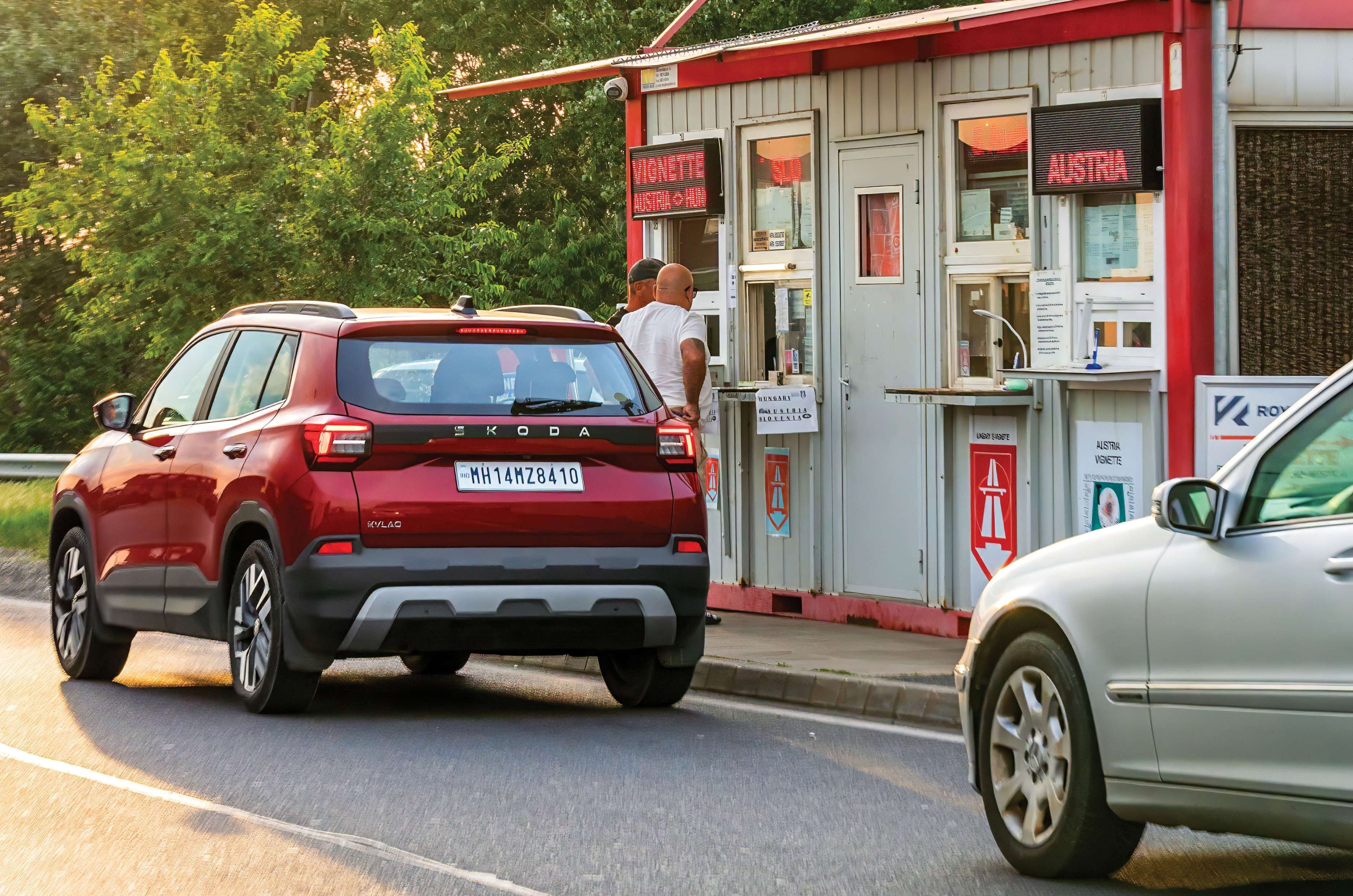
Vignette is Europe’s FASTag and is essential on the freeways.
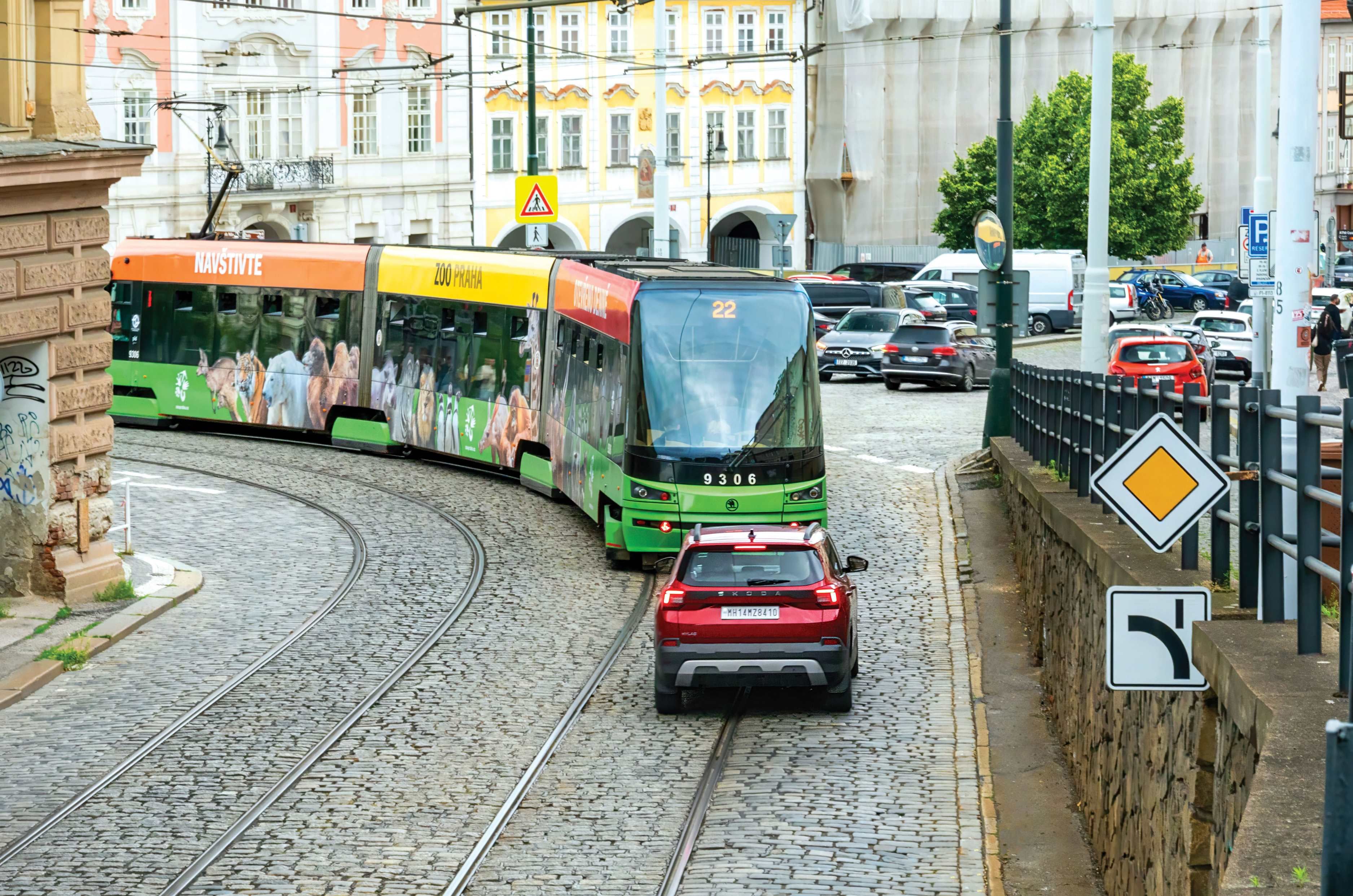
From the shores of the Black Sea, we drove into landlocked Hungary. The drive to Budapest was long, but thanks to Europe’s seamless highways, it was light work for the Kylaq. In Europe, it just blended in with the other cars, and at no point did it feel out of place. It might have been built in India, but it felt every bit as European as it got closer to Prague.
Budapest’s Parliament Building sits by the banks of the Danube River.
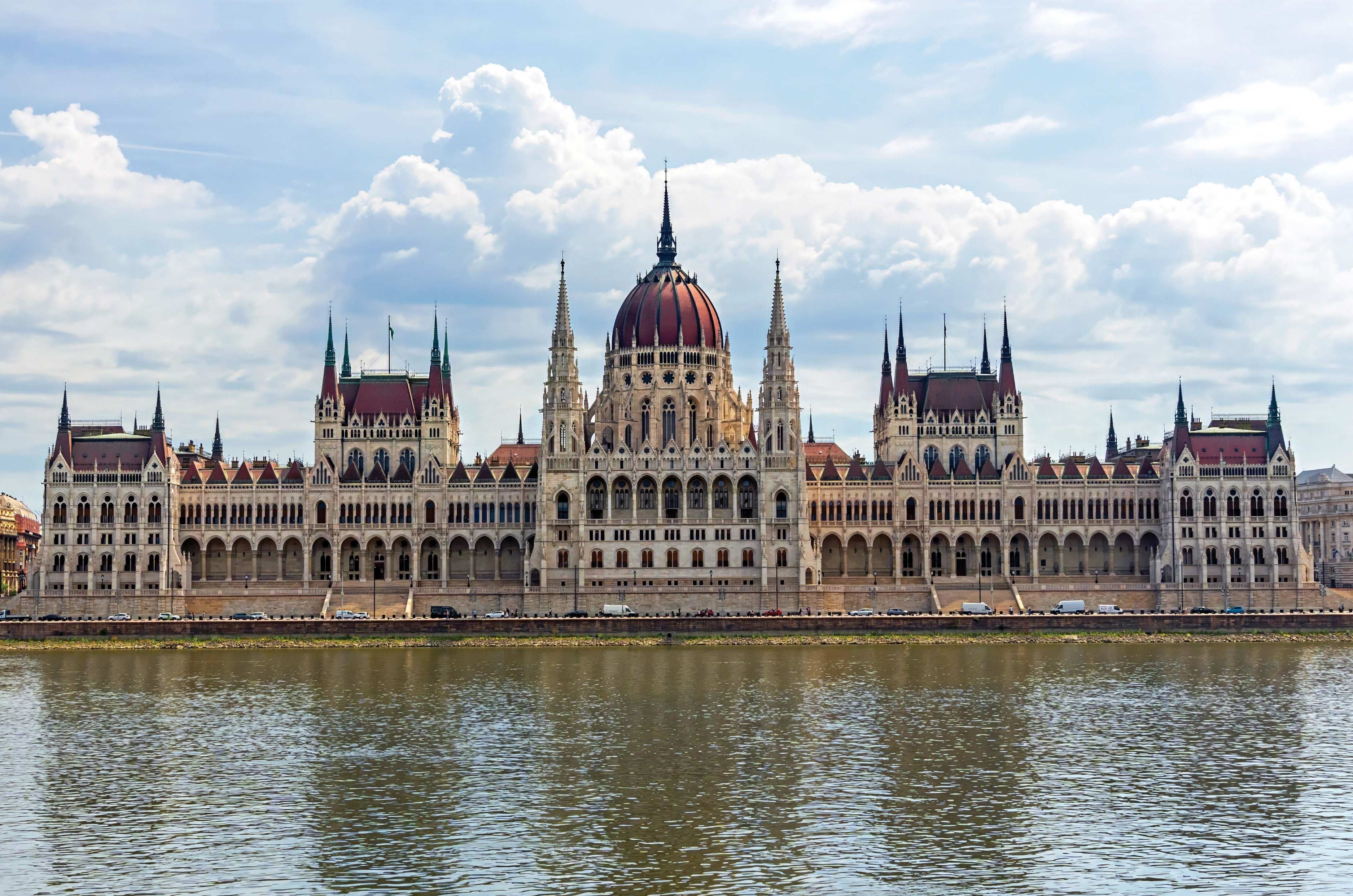
As we drove by the banks of the Danube, we were in awe of the stunning Hungarian Parliament Building. Budapest is also known for its bridges, with as many as 13 iconic ones, each with its own identity.
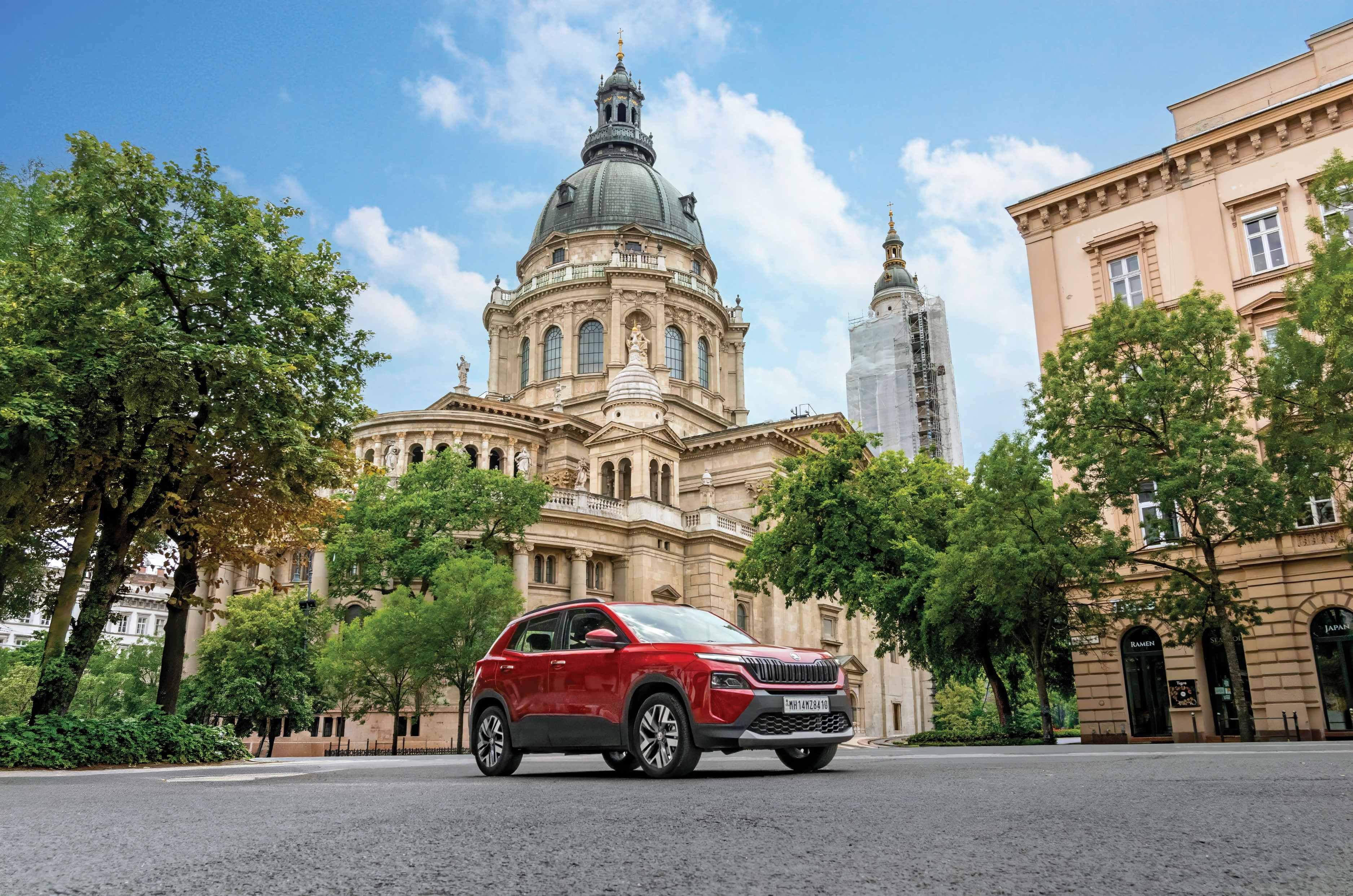
St. Stephen’s Basilica is the largest church in Budapest.
The last country before we entered the Czech Republic was Slovakia. The small country, with a quarter of the population of Mumbai, has a rather interesting Indian connection, as we found out in the pedestrian-only zone of its capital, Bratislava. Bratislava was visited by Pt. Jawaharlal Nehru in 1938, along with a young Indira Gandhi, regarding the freedom movement under British rule.
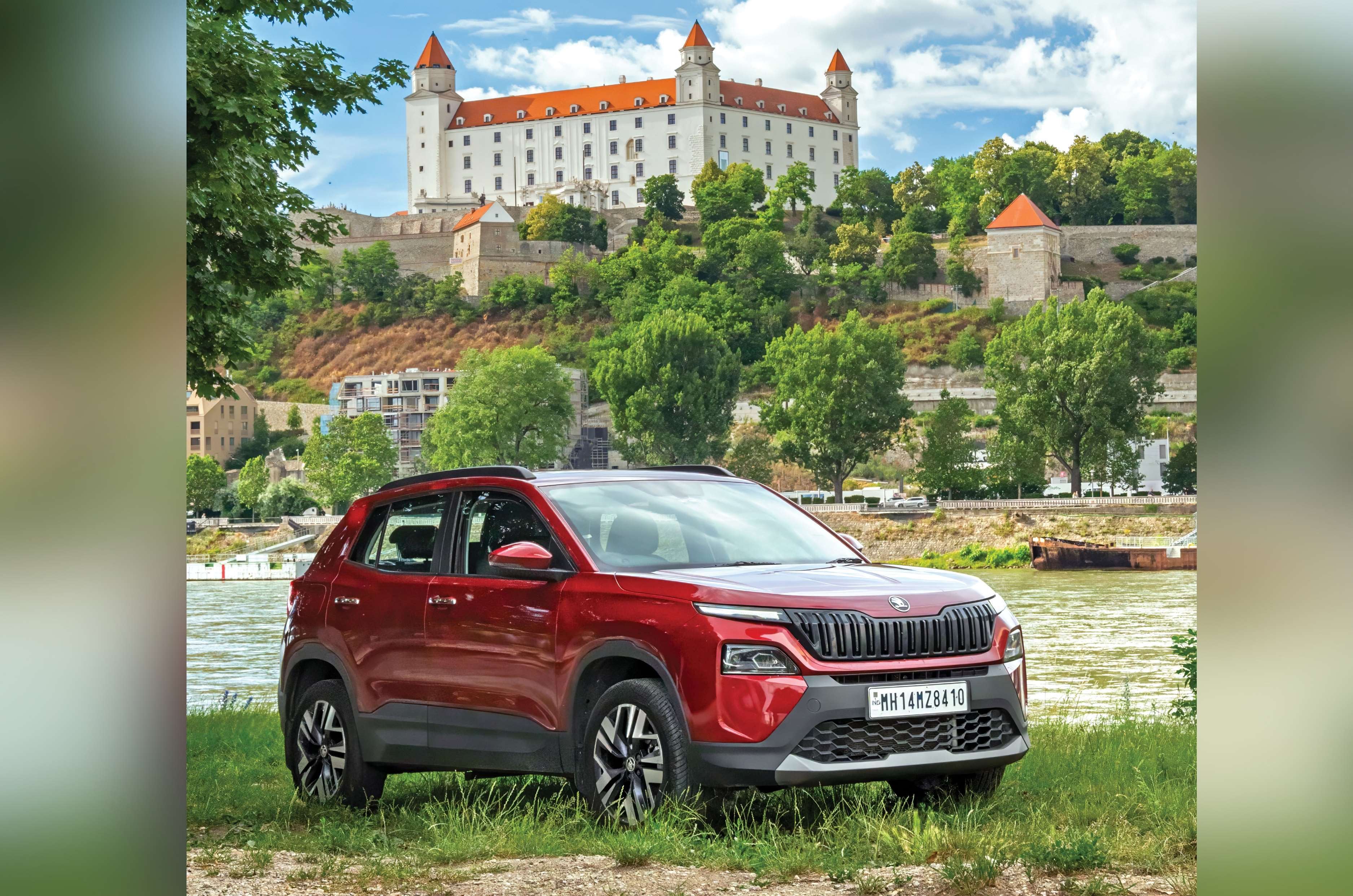
Bratislava Castle, built in the 13th century on the banks of the Danube, is now a museum.
The town square is also an open market with rich produce, handmade jewellery and a lot more. After buying the last few souvenirs before our bags exploded, we were set for the home stretch.
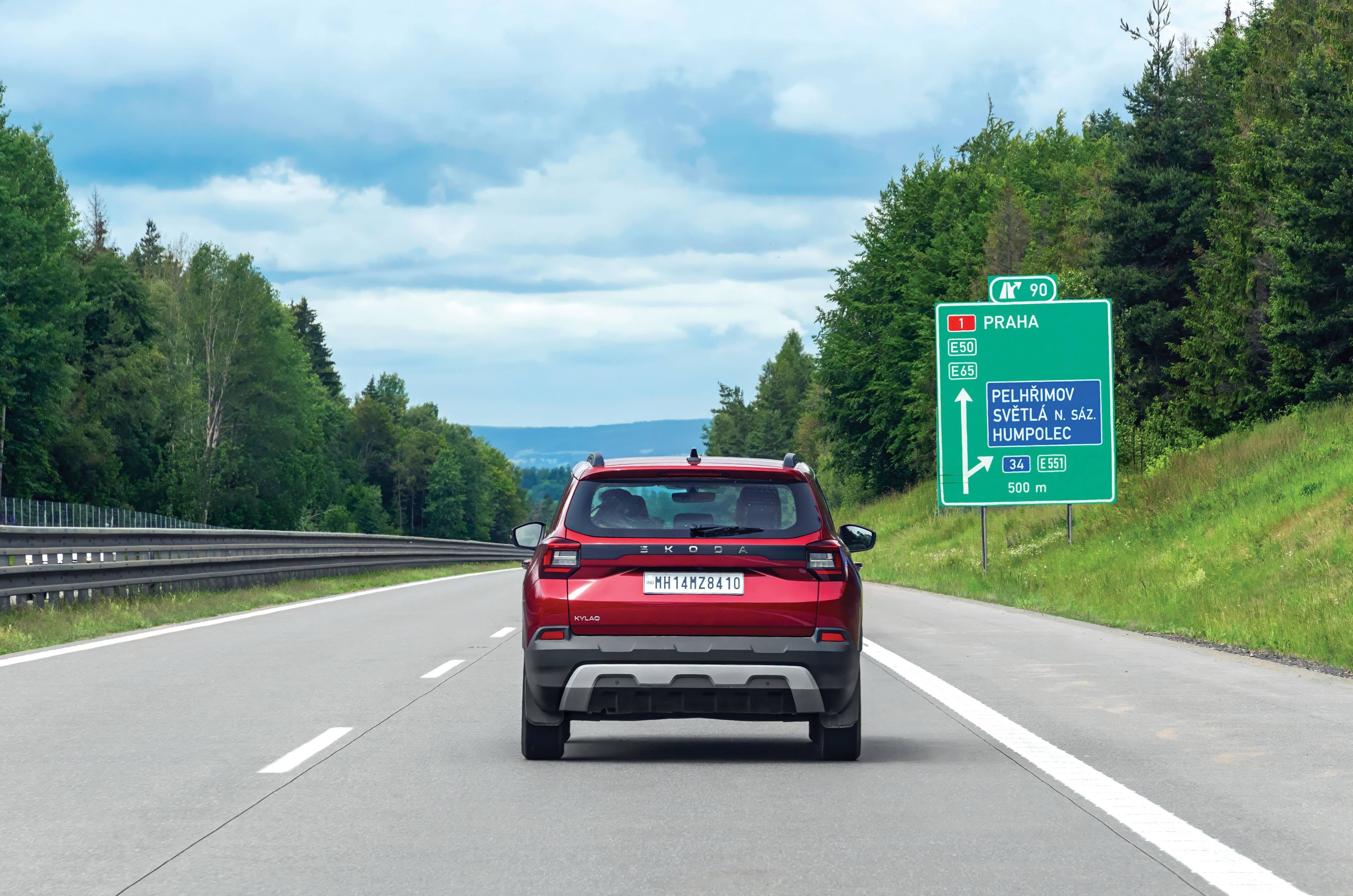
Prague boards were the beginning of a bittersweet end.
Prague was no more than 200-odd kilometres away, and the bittersweet feeling of it all coming to an end loomed over each and every one of us. As we crossed Brno and got closer to Mlada Boleslav (Skoda’s headquarters), we all reminisced about how gigantic this drive had been. Seventy days, almost 20,000km and not a single fault with the car, not even a puncture.
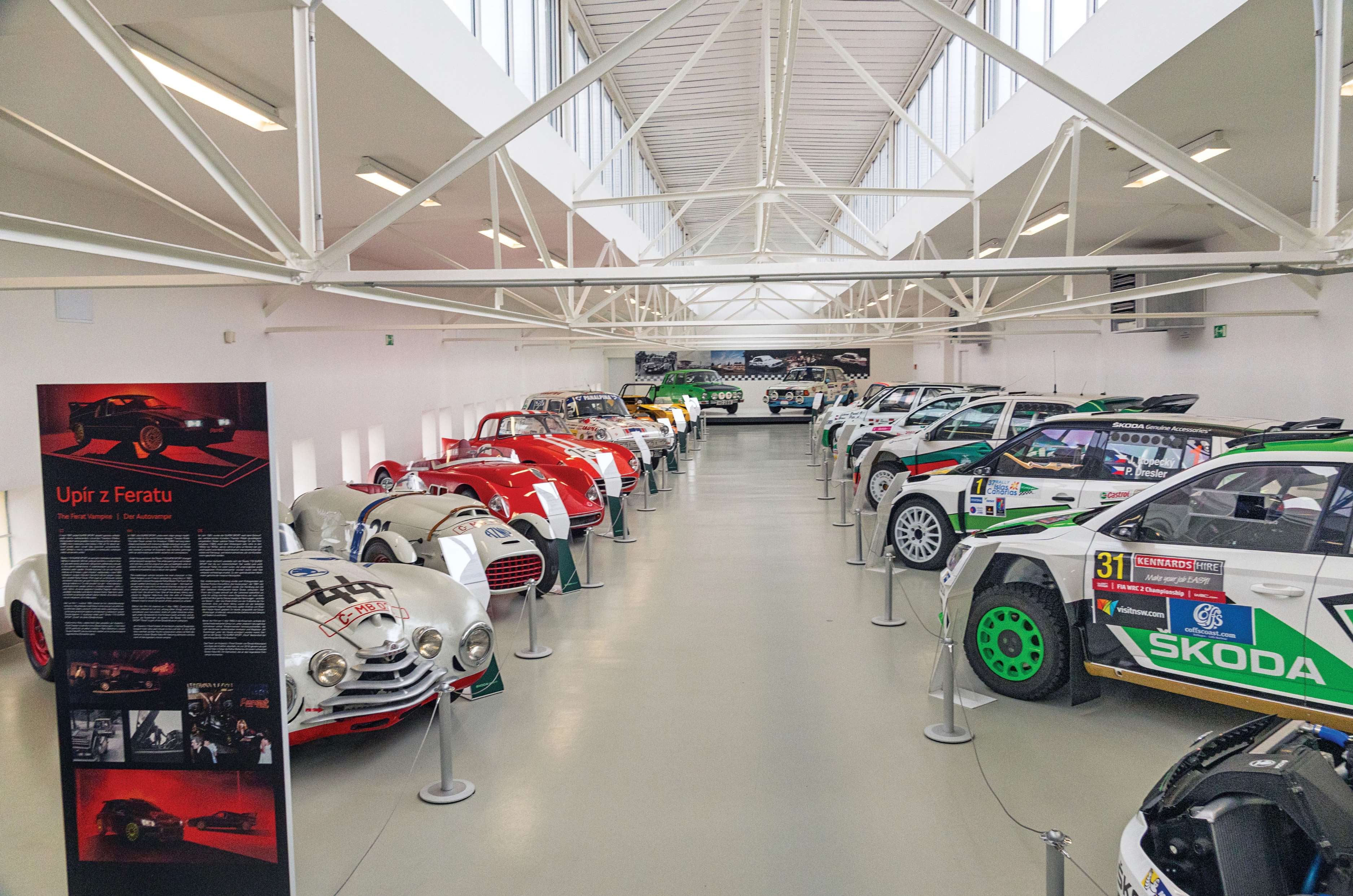
Rich history of rally and motorsport at the Skoda museum.
We crossed the Skoda factory gates with employees gazing in amusement and confusion. They had never seen this car, but strangely, it had a Skoda logo. As we parked the car near the iconic museum that preserves over 130 years of history, we had to peek in and see where it all started.
The fact that a simple bicycle gave birth to one of the largest auto manufacturers in the world is pretty astonishing. Road cars, racing cars and rally legends, Skoda has done it all. A reputation built over a century for being tough, resilient and deeply desirable.
Watching the Indian-made Kylaq sitting proud and faultless in the gleaming sunlight against the backdrop of Prague Castle, looking exactly like it did on the factory floor in Chakan, only proves that the 130-year-old ethos is still the same, no matter where Skoda builds a car.
The final picture in the camera that will always take us back in time
In a world rapidly shifting towards more screens and fewer experiences, a drive like P2P isn’t just a rarity; it’s a statement of defiance: as long as there’s a world to explore, we will find a way to drive across it.
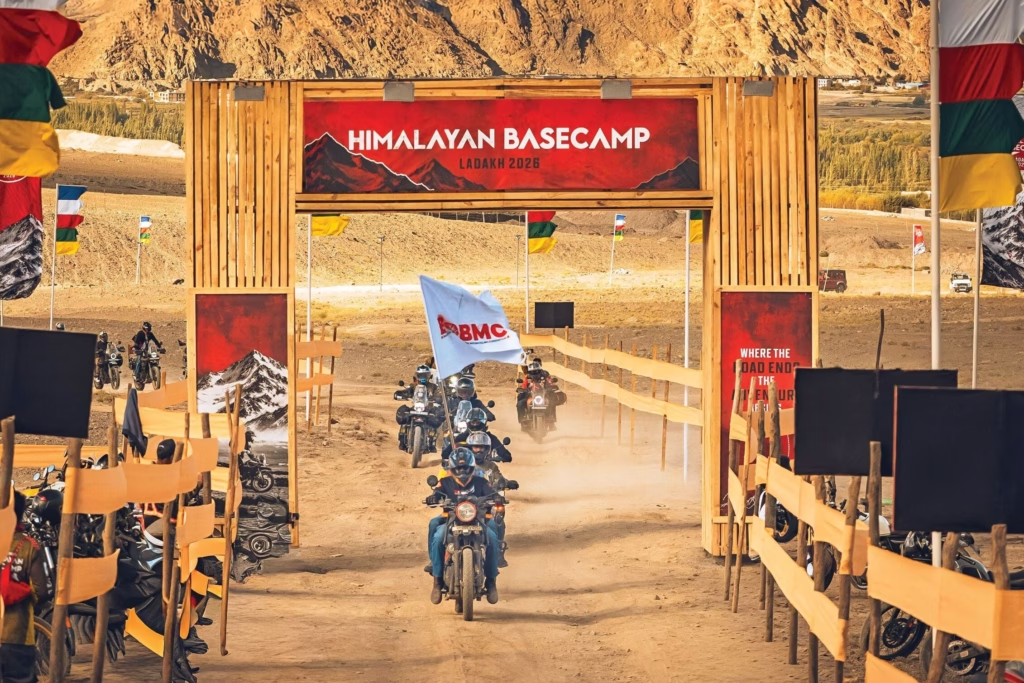
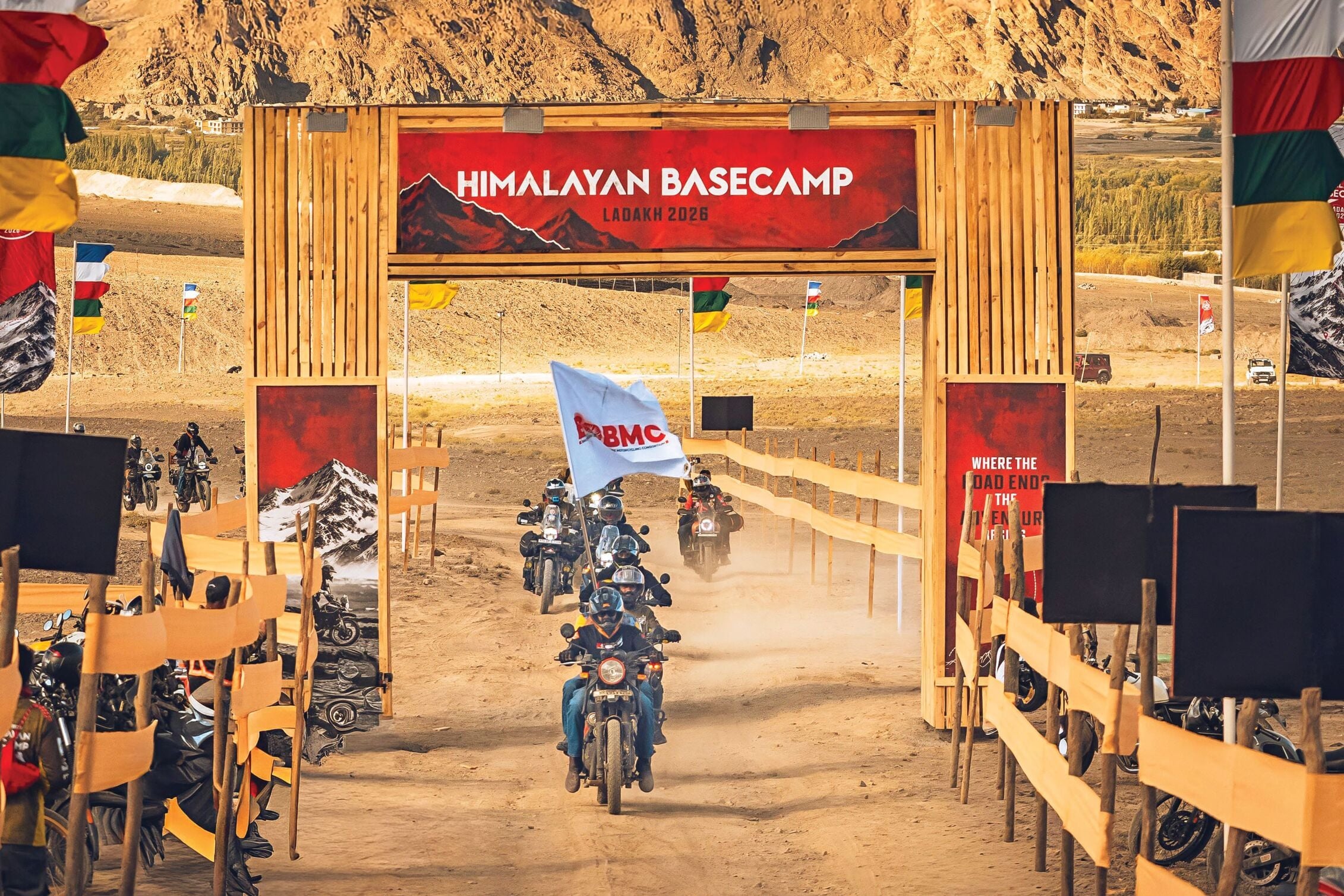
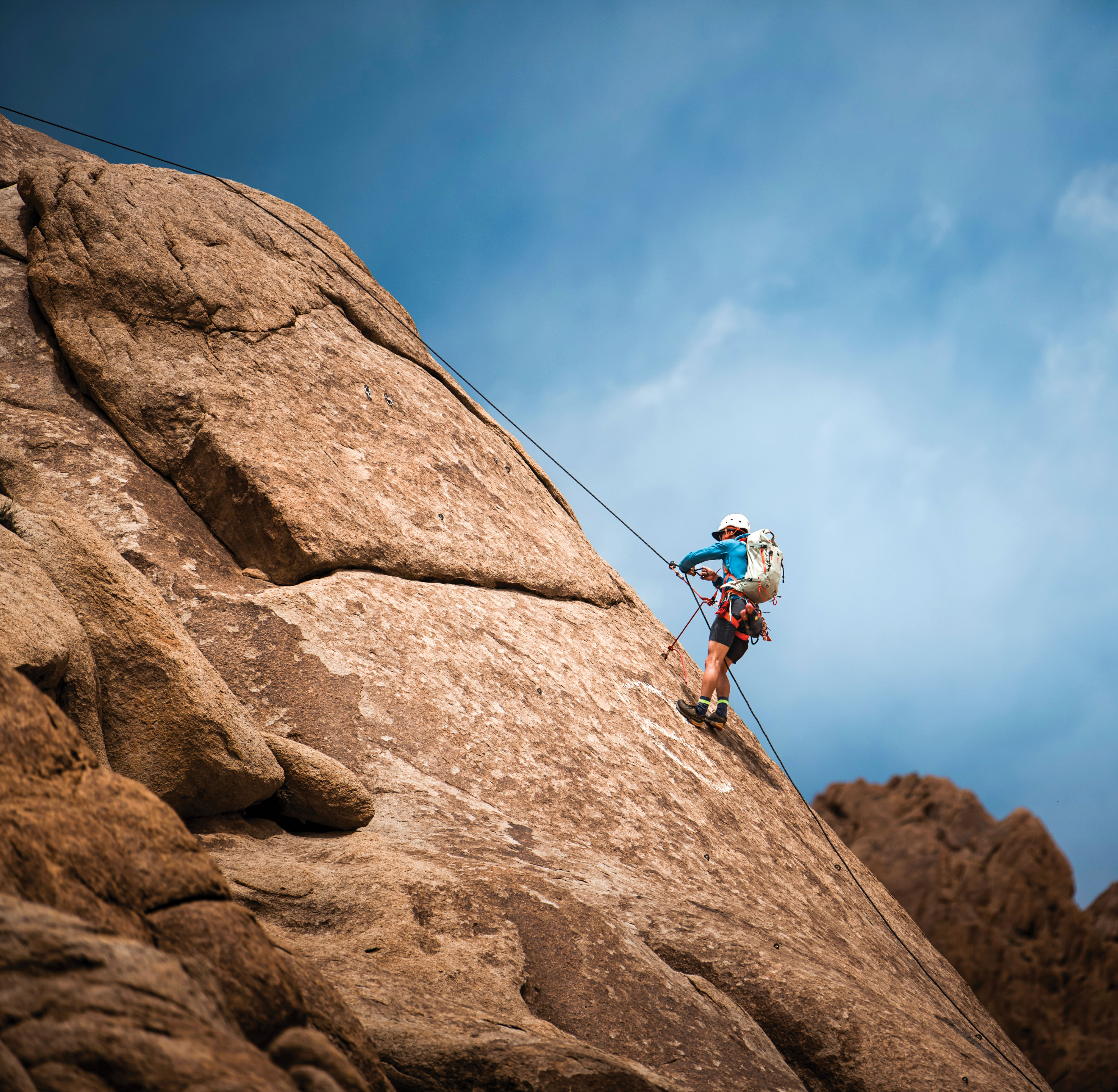
At 11,480 feet above sea level, Royal Enfield has created a new kind of adventure gathering. Called Himalayan Basecamp, the three-day festival took place in Leh, Ladakh, from September 4-6, 2026. Rather than being a conventional motorcycle event, it aimed to bring together people from across the adventure world, including motorcyclists, climbers, kayakers and mountain bikers.
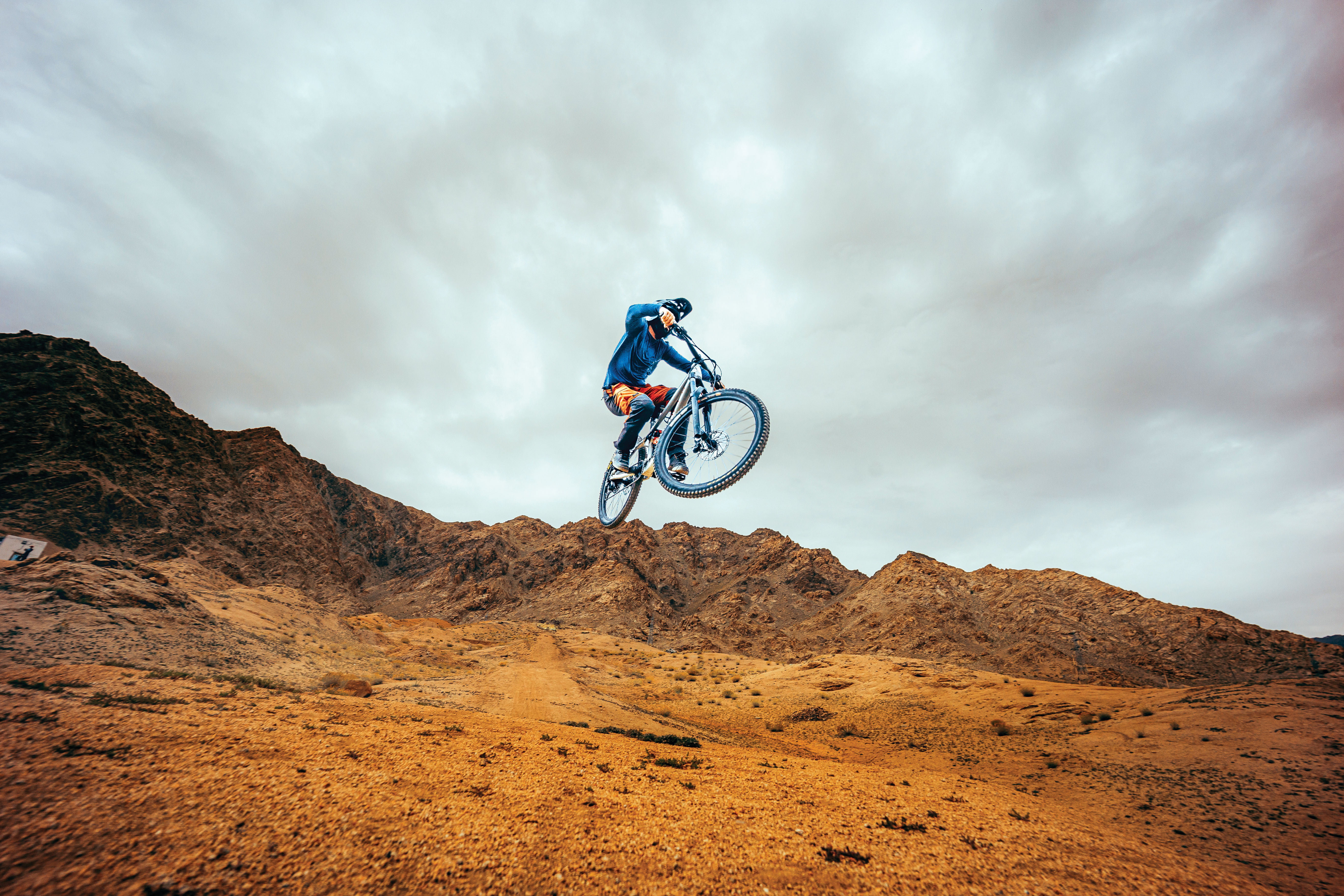
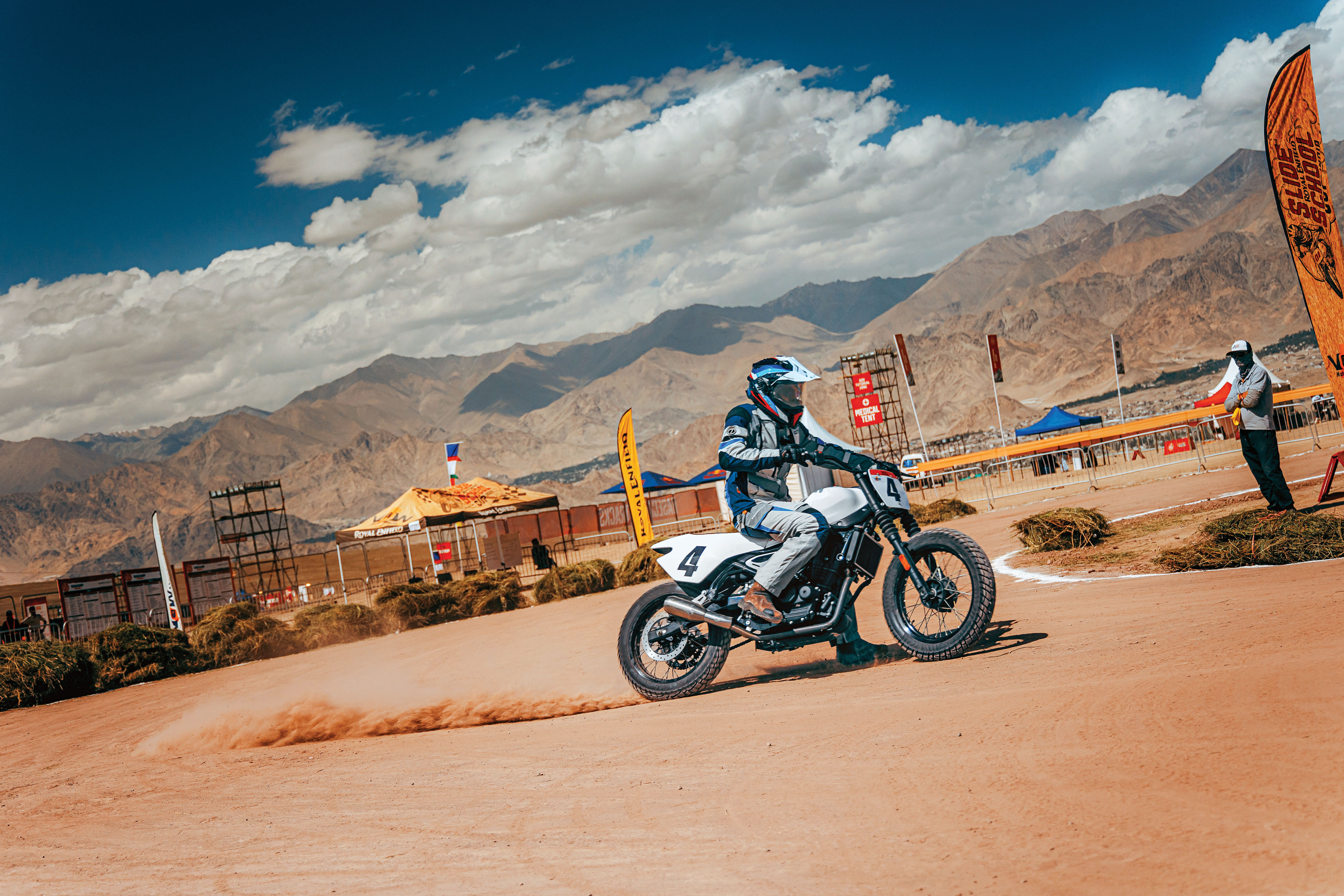
The idea was that everyone has some kind of adventure to experience. The festival combined guided expeditions, skill-based challenges, expert-led masterclasses and cultural experiences. Motorcycles remained a central part of Himalayan Basecamp, but the event was designed to appeal to a much wider adventure community. Riders could take on different challenges, while those looking for a different kind of adventure could try rock climbing, kayaking, hiking or mountain biking.
What I really liked about the festival was how conveniently it was located for anyone looking to explore Ladakh on a motorcycle. The main highlight was the guided expeditions through some of the region’s beautiful routes. The Ladakh Uncharted rides took participants through remote villages, hidden passes and roads curated by local riders. Another one was the Triple Pass Expedition, which covered Khardung La, Wari La and Tanglang La over three days.
Since I have already been to many of these passes, I opted for the Wari La ride, as it was a new route for me to explore. The ride was a memorable one, with great weather, stunning views and, of course, the chance to experience it with friends. The route also included a stop at a scenic spot where we brewed pour-over coffee, making for a rather enjoyable and refreshing break.
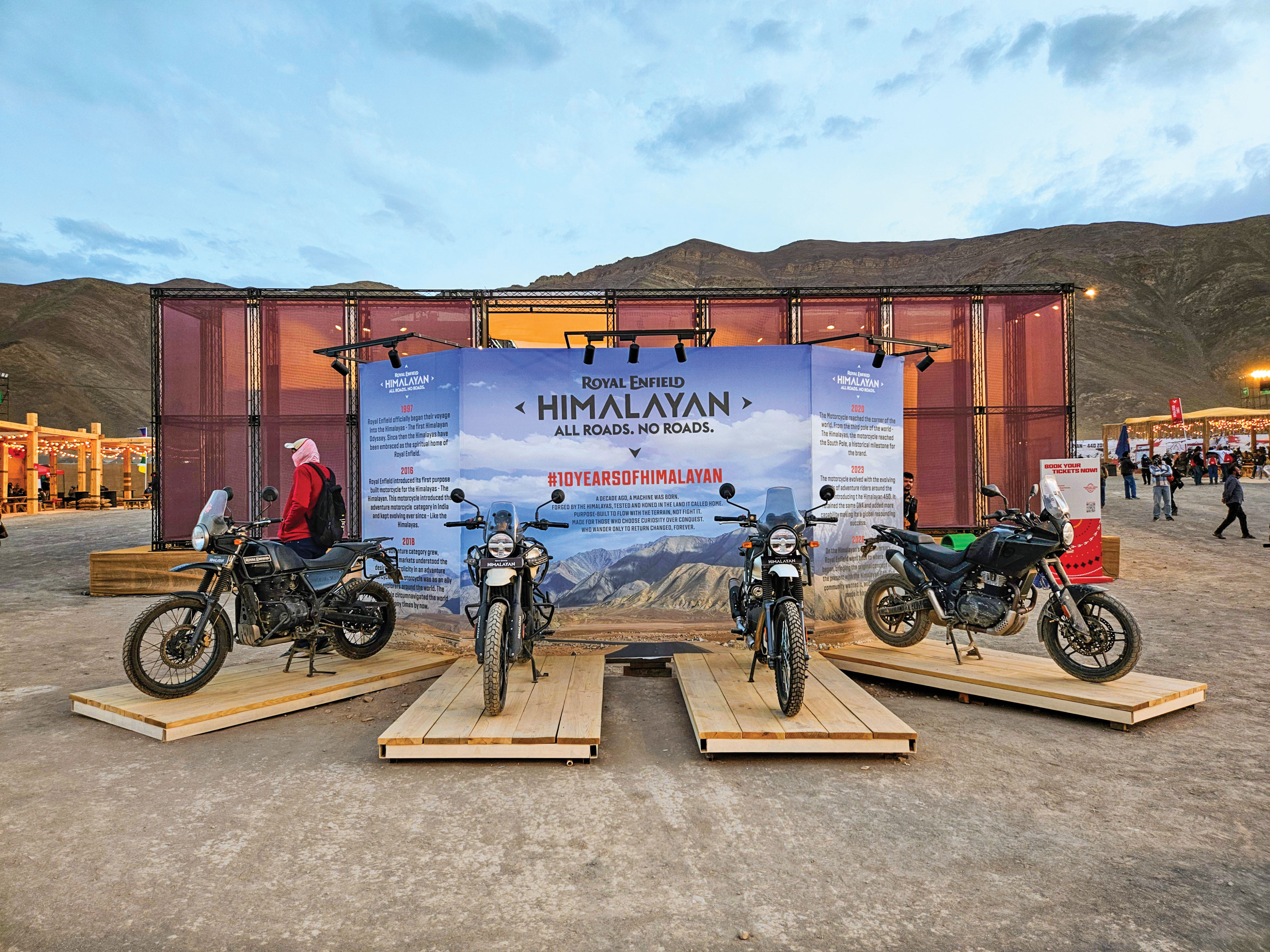
The festival also saw the launch of the Himalayan 440, which felt particularly fitting given the setting. On the second day, Royal Enfield brought out the prototype of the Himalayan 750, which naturally caught a lot of attention. It was displayed alongside the Himalayan 411, 440 and 450, showcasing the evolution of the Himalayan platform over the years.
Once the day’s activities were over, Himalayan Basecamp took on a calmer pace. The festival featured wellness sessions, Ladakhi food and acoustic music, giving participants a chance to unwind and share experiences after a day spent riding and exploring.
The evening music programme included independent artists such as Anuv Jain, Ankur Tewari and the Ghalat Family, and Taba Chake, alongside musicians from Ladakh. Local bands including Dashugs, Rolyang Band and Luyangs Band also performed at the venue.
While the festival itself was based in Leh, the adventure could begin well before reaching Ladakh. Royal Enfield had organised guided rides departing from 24 cities across India, allowing participants to make the journey to Basecamp part of the experience.
With its mix of riding, outdoor activities, workshops and music, Himalayan Basecamp brought together different kinds of adventurers in one place. It certainly cannot be compared to an event like Motoverse in terms of scale, but that is also where its charm lies. The mountains are famous for their sparse population, peaceful surroundings and sense of isolation, and Himalayan Basecamp seemed to embrace exactly that. It was less about being surrounded by thousands of people and more about being surrounded by the beauty of the mountains.
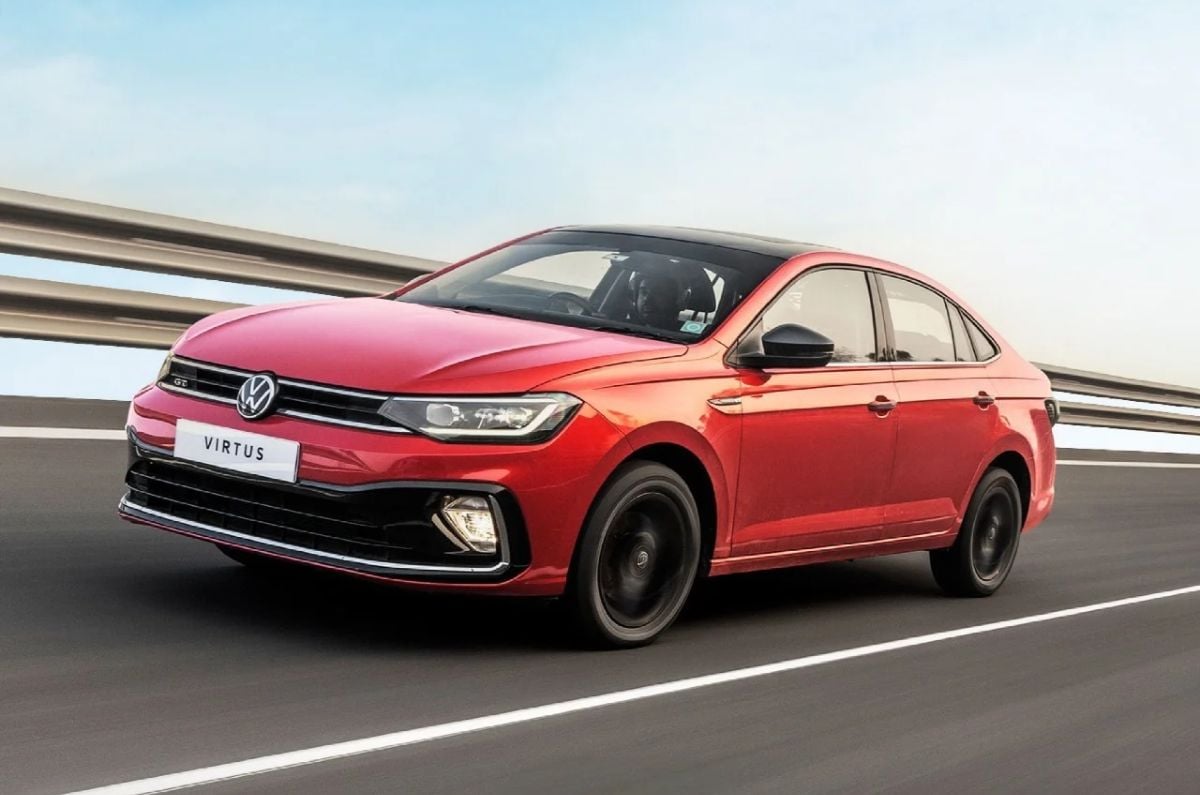
Volkswagen India has launched Track Day Experiences, also known as VWe (or Volkswagen Experiences). The German automaker is calling this an experiential platform aimed at bringing owners and enthusiasts closer to VW by way of structured driving programmes, driver development activities and community events. The inaugural edition will be held at Coimbatore’s CoASTT facility over a period of two days (October 10-11, 2026).
First edition will be held on October 10-11 at Coimbator’s CoASTT facility.
Open to owners of the Golf GTI, Tiguan R-Line, Tayron R-Line, Virtus GT and Taigun GT.
Cost of registration is Rs 2,500 per participant.
What will the Volkswagen Track Day Experiences offer?
Attendees can participate in autocross, slalom, off-roading and go-karting sessions
The two days will see participants being able to partake in a mix of on-track and off-track activities, designed for drivers of varying skill levels. The Volkswagen Track Day Experiences will include lead-and-follow sessions, autocross challenges, slalom exercises, a dedicated off-road obstacle course, go-karting and also vehicle handling demonstrations – all carefully under instructions from experts. The main circuit measures 3.8km and has 14 turns, while the registration cost per participant is Rs 2,500.
More than a showcase of performance, Volkswagen says that the format is designed to let owners build confidence and get an in-depth understanding of their car’s dynamics. VWe will also have owners participating in technical masterclasses, networking sessions with other participants and various lifestyle activities. The event will offer attendees dedicated hospitality areas and family-friendly experiences, apart from interactive brand engagement zones and a recognition segment celebrating individual owner stories and achievements.
Who can participate for the Volkswagen Track Day Experiences?
The inaugural event will welcome multiple VW models and will be open to owners and media
The inaugural edition of the Volkswagen Track Day Experiences is meant to bring together owners of the brand’s performance-focused models sold in India. This not includes everyday performance variants such as the Virtus GT and Taigun GT, but also the more serious performance offerings like the Tiguan R-Line, Tayron R-Line and Golf GTI.
This event is meant to act as an opening chapter for Volkswagen’s larger experiential strategy in India. According to VW India, this exercise is intended to keep customers engaged with the brand beyond the point of purchase by way of curated driving programmes and various other ownership experiences.
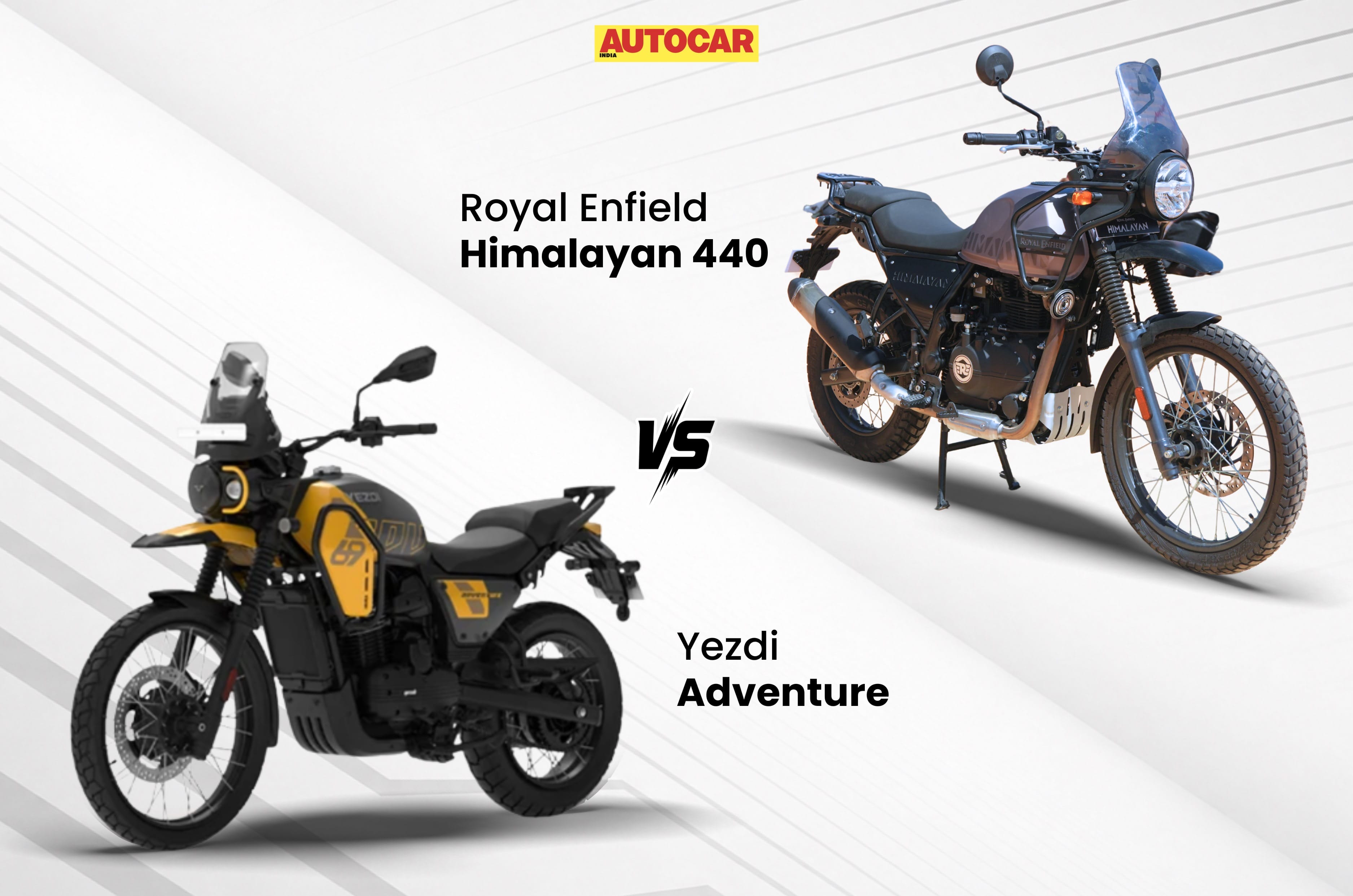
The Royal Enfield Himalayan 440 is back, wearing familiar clothes but a new, improved heart. Debuted first on the Scram 440, the upsized 443cc engine now makes 1.4hp more power and 2Nm of torque over the erstwhile Himalayan 411. Throw in an additional sixth gear and the Himalayan should now be a better tourer than before. But wait, how does this revived ADV compare to its direct rival, the Yezdi Adventure? Let’s find out.
Royal Enfield Himalayan 440 vs Yezdi Adventure: Engine and output
Yezdi makes more power with a liquid-cooled engine
Royal Enfield Himalayan 440
Yezdi Adventure
Engine
443cc single-cylinder, air- and oil-cooled
334cc single-cylinder, liquid-cooled
Power
25.4hp at 6,250rpm
29.6hp at 8,000rpm
Torque
34Nm at 4,000rpm
29.8Nm at 5,800rpm
Transmission
6-speed
6-speed
Power-to-weight ratio
127.64hp/tonne
158.29hp/tonne
On paper, the Yezdi Adventure displaces 109cc less than the Himalayan 440, but the Yezdi starts off strong—quite literally—with more power at a higher redline than the Himalayan 440. Its engine is also liquid-cooled compared to the Himalayan’s air- and oil-cooled mill. Both the motorcycles have six gears, so highway travel shouldn’t be a chore on either.
Royal Enfield Himalayan 440 vs Yezdi Adventure: Dimensions and weight
Himalayan 440 is more accessible
Royal Enfield Himalayan 440
Yezdi Adventure
Fuel tank
15 litres
15.5 litres
Ground clearance
220mm
220mm
Seat height
800mm
815mm
Kerb weight
199kg
187kg
Wheelbase
1460mm
1465mm
Things become a bit more even in this section. Both motorcycles share similar ground clearance numbers, but the Himalayan is more accessible with a 15mm lower saddle height. Yezdi reports 187kg for the Adventure but that’s dry weight. So, with 90 percent fuel, it should weigh just as much, if not more than the Himalayan’s 199kg.
Royal Enfield Himalayan 440 vs Yezdi Adventure: Tyres, brakes and suspension
Both models are (almost) on par
Royal Enfield Himalayan 440
Yezdi Adventure
Tyres (F,R)
90/90-21, 120/90-17
90/90-21, 130/80-17
Brakes (F,R)
300mm front disc, 240mm rear disc
320mm front disc, 240mm rear disc
Suspension (F,R)
Telescopic fork, linkage monoshock
Telescopic fork, linkage monoshock
Once again, the numbers look real similar on this front. The Yezdi Adventure has a slightly larger rear tyre and a slightly larger front disc brake. Speaking of tyres, although both models come with wire spoked rims as standard, the Yezdi Adventure offers cross spoke, tubeless rims as an optional Rs 20,000 add-on; available to the middle and top variants. Over on the Royal Enfield side though, such an upgrade isn’t possible at the moment. Royal Enfield doesn’t offer tubeless rims to the Himalayan 440, even as an accessory; they haven’t confirmed if the Himalayan 450’s tubeless rims can be retrofitted to it either. Suspension is another area where both motorcycles are neck-and-neck with them sharing the same kind of setups on paper, down to the travel.
Royal Enfield Himalayan 440 vs Yezdi Adventure: Features
Yezdi gets more rider aids
The Yezdi offers a more comprehensive feature package compared to the Royal Enfield. The Adventure gives you traction control, adjustable wind shield and instrument cluster, three ride modes (Road, Rain, Off-road); all of which are missing on the Himalayan 440. On the other hand, the Royal Enfield comes with a tripper pod as standard for turn-by-turn navigation, a USB type-C port, and LED headlight and taillight. But if rider aids are what you’re after, the Yezdi has more of them.
Royal Enfield Himalayan 440 vs Yezdi Adventure: Price
Yezdi offers more value for money
Royal Enfield Himalayan 440
Yezdi Adventure
Price (ex-showroom, Tamilnadu)
Rs 2.29 lakh
Rs 2.09 – 2.16 lakh
Royal Enfield has kept things straightforward with the Himalayan 440 just offering one variant in three colours. All of them share the same price as well. Yezdi offers three variants of the Adventure in four total colours, separated only by the colour choices. Like we had mentioned earlier, you can add cross spoked tubeless wheels to its middle and top variants for Rs 20,000 extra. To conclude, on paper, the Yezdi Adventure puts up quite the fight to the Royal Enfield Himalayan 440 but real-world experiences may vary. It would be prudent to decide between the two after taking test rides.
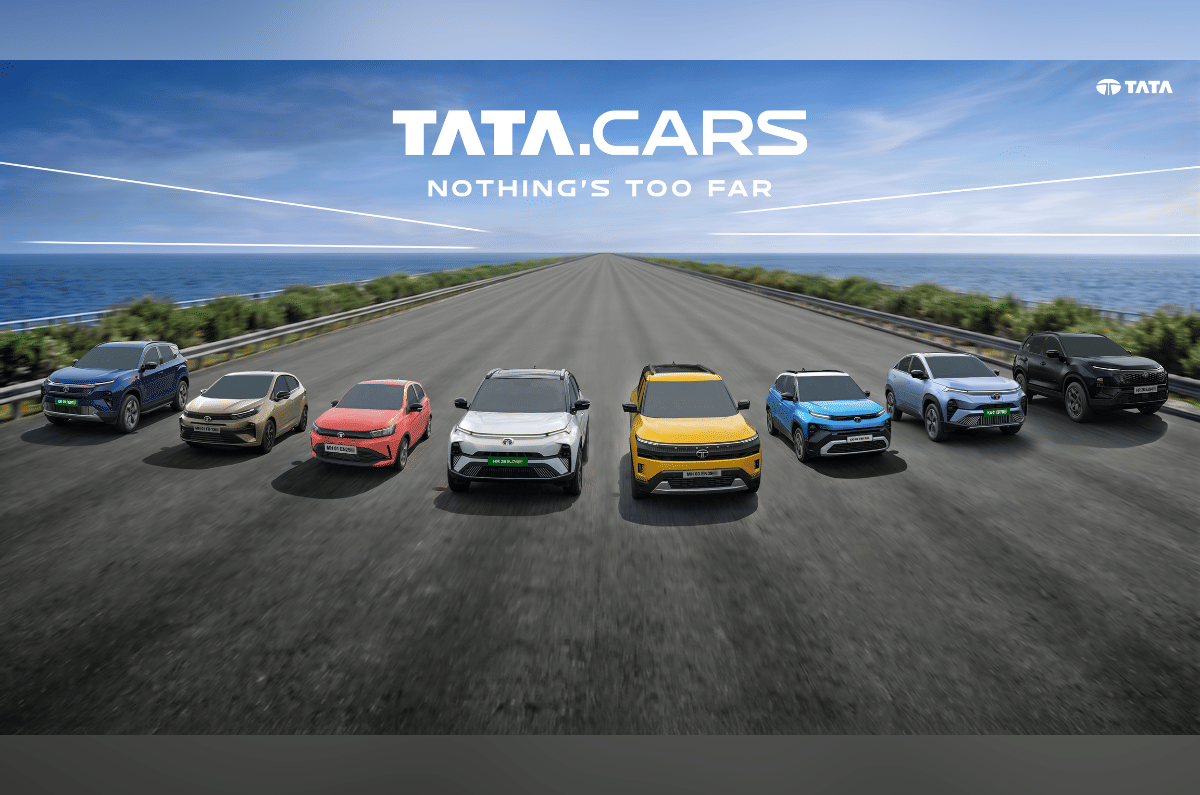
Tata Motors announced Tata.cars as the new retail name for its passenger vehicle (PV) division on Thursday. Both internal combustion engine (ICE) and electric vehicle (EV) models will now come under Tata.cars umbrella brand. Tata.ev will continue as a sub-brand under the wider Tata.cars brand. This new identity will progressively appear across showrooms, digital touch points, after-sales and service operations, and marketing communications.
Tata.ev to continue as a sub-brand under Tata.cars
Tata Motors Passenger Vehicles to remain as the registered legal entity
New principal colour and typeface are a part of the new identity
That said, the company’s legal identity and corporate structure remain unchanged. Tata Motors Passenger Vehicles will continue to be the registered legal entity for statutory filings, manufacturing plants, official contracts and regulatory obligations.
Tata Motors said the new identity formalises how Indian customers already refer to its passenger vehicles as “Tata cars”. “In many ways, Tata.cars is an identity that India has given us. Today, we formally embrace it,” said Shailesh Chandra, Managing Director, Tata Motors Passenger Vehicles and Tata Passenger Electric Mobility. “The Tata name carries our heritage, our values and the trust earned over generations, while Tata.cars gives our passenger vehicle business a distinct, modern and future-facing expression,” he added.
Vivek Srivatsa, Chief Commercial Officer, Tata Passenger Electric Mobility, said the transition would also introduce a new visual and sensory system built around a design philosophy called Parallel Pathways. It includes Ambition Blue as the principal colour, a bespoke typeface called Parallel Display and a new sonic identity. Tata Motors will also begin updating its dealerships over the next few months with redesigned interiors and a new stainless-steel facade featuring louvred panels.
The new brand system has been designed to work across products, technologies, customer experiences and markets. While customers will increasingly encounter Tata.cars across sales and service channels, corporate and regulatory references will continue under Tata Motors Passenger Vehicles.
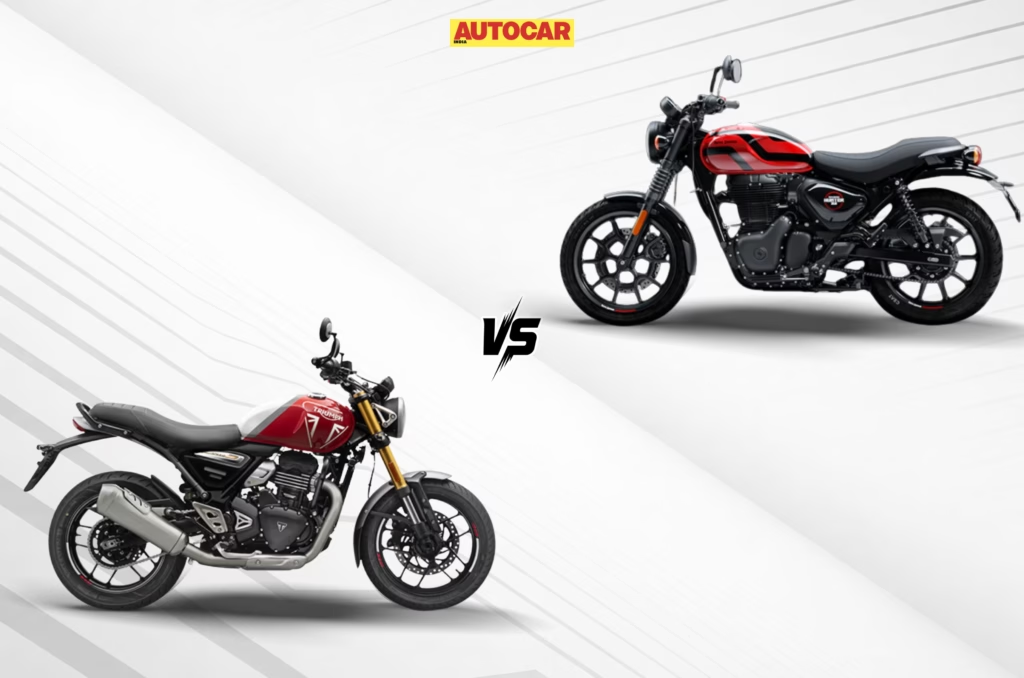
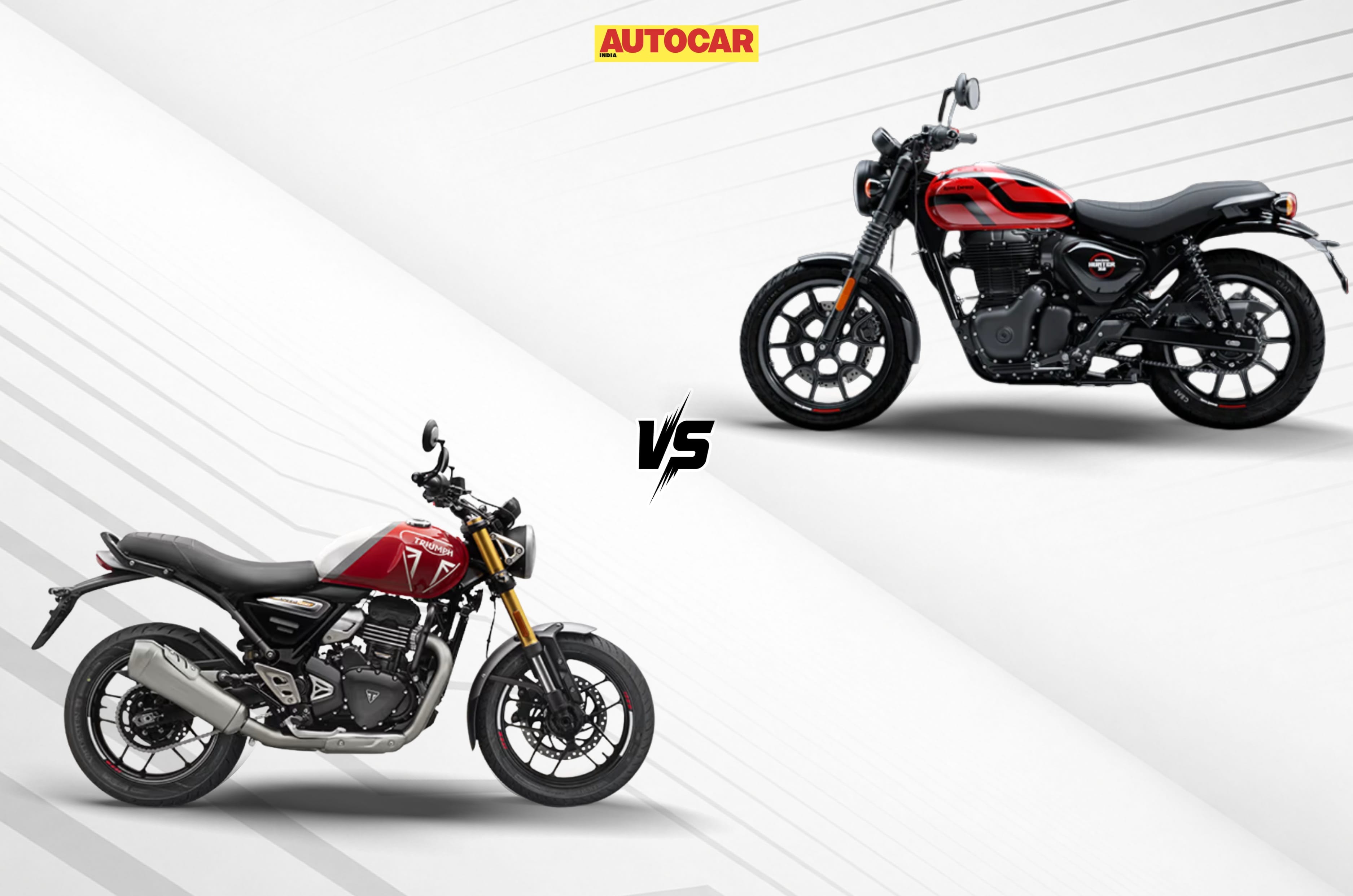
The last time we compared the Hunter 350 to the Speed 400, things were a lot more straightforward, but things have since changed. Royal Enfield has fixed the Hunter’s biggest deterrent, comfort and has positioned it squarely as a stylish and relaxed street naked; completely different from its retro siblings. Bajaj, on the other hand, had to downsize the Triumph Speed 400’s 398cc engine to a 349cc one, to meet the 18 percent GST slab. So, is picking one from these two, very good motorcycles still difficult? Let’s see.
Royal Enfield Hunter 350 vs Triumph Speed 400: Engine and output
Triumph has more power and torque, but RE delivers both earlier
Royal Enfield Hunter 350
Triumph Speed 400
Engine
349cc single-cylinder, air-cooled
349cc single-cylinder, liquid-cooled
Power
20.2hp at 6,100rpm
37hp at 8500rpm
Torque
27Nm at 4,000rpm
32Nm at 7,000rpm
Transmission
6-speed
5-speed
Power-to-weight ratio
111.6hp/tonne
206.7hp/tonne
Bajaj’s downsizing of the 398cc engine has reduced torque more than horsepower, making the Speed 400 a relatively weaker proposition compared to before, at least on paper. Royal Enfield, however, has not had to do anything and continues with its likable J-series engine making the same power and torque as before. It’s hard not to miss that the Hunter delivers both of it much earlier in the rev range than the Speed which reinforces the status quo that these still aren’t meant to be substitutes for each other. The Speed does have one extra gear, making it more capable at highway speeds of the two.
Royal Enfield Hunter 350 vs Triumph Speed 400: Dimensions and weight
Both remain in lockstep with each other
Royal Enfield Hunter 350
Triumph Speed 400
Fuel tank capacity
13 litres
13 litres
Ground clearance
160mm
164mm
Kerb weight
181kg
179kg
Seat height
790mm
803mm
Wheelbase
1370mm
1386mm
Had this been the Bullet/Classic 350, this section would’ve been an onslaught on them but perhaps that’s exactly why the Hunter 350 exists. Being the lightest Royal Enfield, the Hunter puts up a tough fight to the Speed 400 on every front. Even though it is 2kg heavier than the Speed, it’s more accessible with a lower seat height. Both are very approachable and friendly machines, for both newer and shorter riders.
Royal Enfield Hunter 350 vs Triumph Speed 400: Tyres, brakes, and suspension
Speed 400 gets a fatter fork and better brakes
Royal Enfield Hunter 350
Triumph Speed 400
Tyres (F, R)
110/70-17, 140/70-17
110/80R17, 150/70R17
Brakes (F, R)
300mm disc, 270mm disc; dual-channel ABS
300mm disc, 230mm disc; dual-channel ABS
Suspension (F, R)
41mm RSU fork, twin-shock
43mm USD fork, monoshock
On paper, the numbers once again continue to be really close. However, the Speed 400 gains on the Hunter 350 in a few areas. It has a wider rear tyre, gets radial tyres at both ends and a slightly fatter USD fork. The Triumph also gets better brakes with a far more effective four-piston, radial caliper at the front, whereas the Hunter 350 sticks to a more conventional two-piston, floating caliper.
Royal Enfield Hunter 350 vs Triumph Speed 400: Features
Par for the (retro) course for both
Packing in the most features for the money isn’t what this segment is known for, and neither motorcycle attempts to change that. The Hunter 350 offers dual-channel ABS, an assist and slipper clutch, a type-C USB port, and a TFT navigation tripper pod on higher variants. The Speed 400, gets everything except the navigation feature, offering traction control instead.
Royal Enfield Hunter 350 vs Triumph Speed 400: Price
Hunter is far more affordable
Royal Enfield Hunter 350
Triumph Speed 400
Price
Rs 1.37 lakh – Rs 1.71 lakh
Rs 2.34 lakh
Last but not least, how much do you pay to buy one of these? And this is an area where the Hunter 350 has a huge advantage. The top-most variant of the Hunter 350 will set you back by Rs 1.71 lakh, with the base variant starting at as low as Rs 1.37 lakh (both prices ex-showroom, Chennai). On the other hand, the Speed 400 costs Rs 2.34 lakh (ex-showroom, Delhi). On paper, this can look like a difficult choice considering how close these are, but that confusion will go away as soon as you take test rides considering the vastly different riding experiences of both.
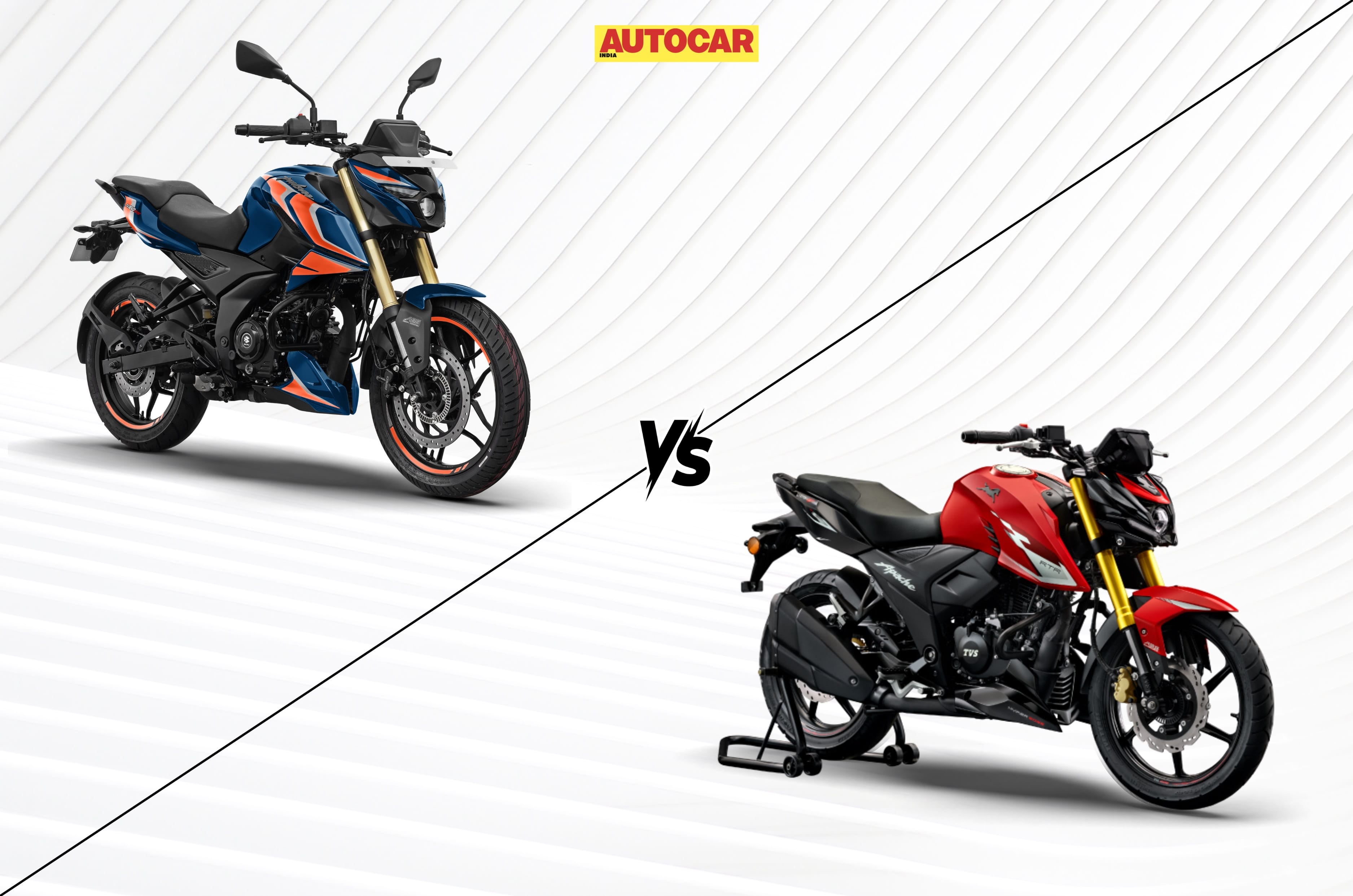
Bajaj has revealed the updated Pulsar N160, celebrating 25 years of the Pulsar brand’s legacy, and a simplified variant nomenclature. The motorcycle now gets a brand-new four valve engine that has more power than before. The higher variant gets a host of new features including a TFT instrument cluster with Google Maps mirroring, traction control, and four ride modes. This is perhaps the biggest challenger yet to the current segment leader, the TVS Apache RTR 160 4V, upgraded last year. Let’s see how the popular street-nakeds compare, on paper.
Bajaj Pulsar N160 (4V) vs TVS Apache RTR 160 4V: Engine and output
Similar peak power and torque figures
Bajaj Pulsar N160 (4V)
TVS Apache RTR 160 4V
Engine
164.5cc, single-cylinder, oil-cooled
159.9cc, single-cylinder, oil-cooled
Power
18.5hp at 9,500rpm
17.55hp at 9,250rpm
Torque
14.4Nm at 8,000rpm
14.73Nm at 7,500rpm
Gearbox
5-speed
5-speed
Power-to-weight ratio
122.52hp/tonne
120.21hp/tonne
Bajaj has given the N160 an all new 4V engine that’s more powerful than the existing 2V engine. You get more power and 0.25Nmslightly loweress torque although both are delivered later in the rev range than on the Pulsar N160 (2V). The 4V engine is also oil-cooled now, an upgrade from the 2V’s air-cooled engine. On the Apache both peak power and torque come in earlier in the rev range.
Bajaj Pulsar N160 (4V) vs TVS Apache RTR 160 4V: Dimensions and weight
Point to Bajaj, mostly
Bajaj Pulsar N160 (4V)
TVS Apache RTR 160 4V
Fuel tank capacity
14 litres
12 litres
Ground clearance
165mm
180mm
Kerb weight
151kg
146kg
Seat height
795mm
790mm
Wheelbase
1,348mm
1,357mm
The new Bajaj Pulsar N160 (4V) weighs 151kg which at first glance looks heavier compared to the Apache’s 146kg. However, the TVS gets a smaller 12-litre fuel tank and for motorcycles of this segment that translates to roughly 100km lesser range which isn’t a small number. As for seat height, the Apache has the upper hand with a 5mm lower seat height. The Apache also touts 15mm more ground clearance over the Pulsar, and a 9mm longer wheelbase.
Bajaj Pulsar N160 (4V) vs TVS Apache RTR 160 4V: Tyres, brakes, and suspension
Level ground
Bajaj Pulsar N160 (4V)
TVS Apache RTR 160 4V
Tyres (F,R)
100/80-17, 130/70R17
90/90-17, 130/70R17
Brakes (F,R)
300mm disc, 230mm disc, dual-channel ABS
270mm disc, 240mm disc, dual-channel ABS
Suspension (F,R)
USD fork, monoshock
USD fork, monoshock
Things start getting a bit more equal in this area, but please note that we are comparing the top variants of both bikes. On paper, the Bajaj gets a larger front tyre but it’s a minor difference. As for brakes, Bajaj has the superior numbers there with a larger front disc rotor. The suspension specifications on both are extremely similar, but real-world experiences may vary. It’s worth mentioning here that until a year or two ago, TVS was the only manufacturer in this segment offering adjustability on both front and rear suspensions, but unfortunately that’s not the case anymore as the brand doesn’t offer that adjustability anymore.
Bajaj Pulsar N160 (4V) vs TVS Apache RTR 160 4V: Features
The Pulsar N160 is the first Bajaj model to offer a TFT dash
Offering segment first features has been a TVS specialty for a while now, but Bajaj is now looking to beat them at their own game with the new Pulsar N160. Bajaj offers features like an electronic throttle body and Google Maps mirroring on the top variant of the N160. To get the Google Maps mirroring on a TVS Apache, one currently has to look at the RTX 300. They remain in lockstep with respect to other features like traction control, ride modes, TFT cluster, and a crawl mode to make navigating traffic easier.
The new Pulsar N160 has two variants, S and SS, and they cost Rs 1.33 lakh and Rs 1.42 lakh respectively (ex-showroom, Delhi). The Apache RTR 160 4V, on the other hand, has four different variants at the time of writing and starts at Rs 1.19 lakh and goes all the way up to Rs 1.39 lakh for the fully loaded top variant. The differences between the two motorcycles are minor, but thankfully clear enough which should make picking one easier.
Royal Enfield has said that internal combustion engine (ICE) motorcycles will remain central to its business even after the launch of its first Flying Flea electric motorcycle. The company detailed its long-term strategy in its latest annual report under a new framework called RE-BALANCE.
Royal Enfield will continue investing in new ICE motorcycles alongside EVs.
Brazil is now the company’s largest and fastest-growing international market.
In the company’s annual report, Eicher Motors Executive Chairman Siddhartha Lal said Royal Enfield is committed to building its electric future but will continue investing in petrol-powered motorcycles for as long as possible. The RE-BALANCE strategy focuses on balancing investments in ICE and EVs, improving customer experiences, driving profitable growth and advancing sustainability.
While the company acknowledged that changing consumer preferences and dependence on ICE motorcycles pose long-term business risks, it said it will address these through product innovation, stronger brand relevance and deeper engagement with younger customers.
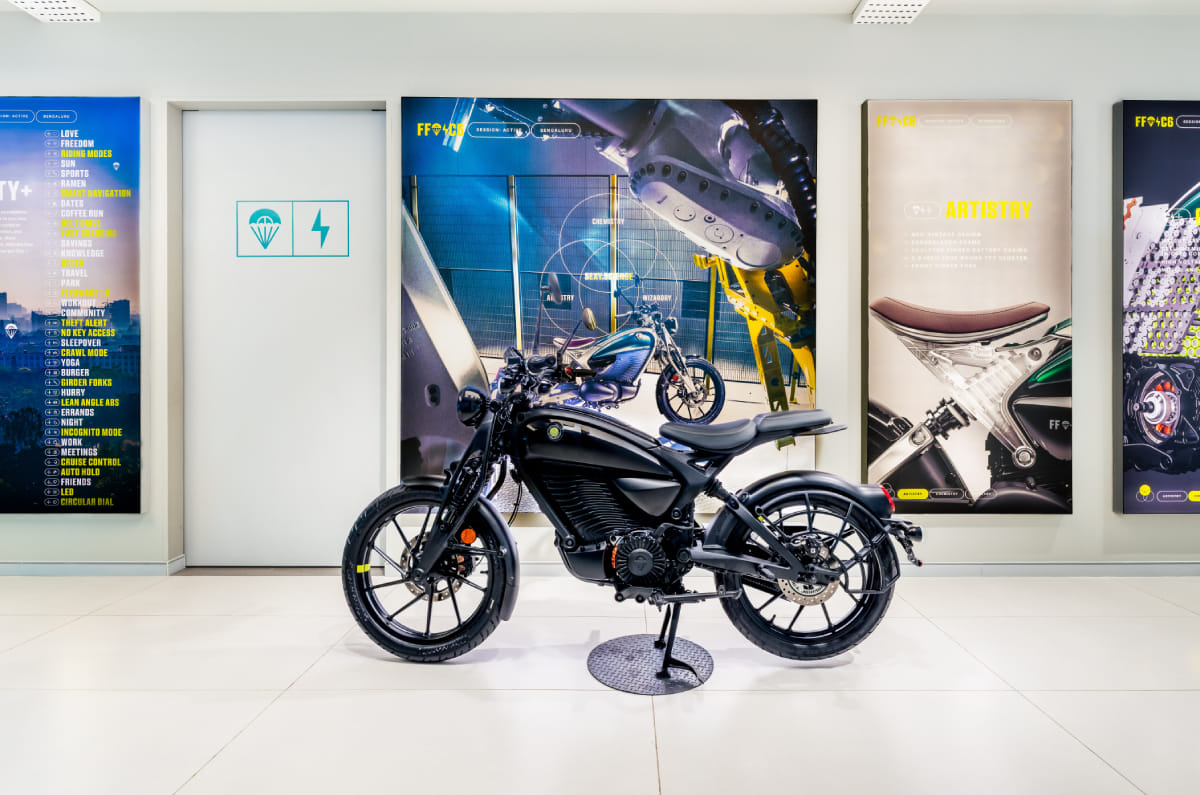
Royal Enfield said the RE-BALANCE strategy will guide its gradual expansion into electric mobility while continuing to invest in its established ICE portfolio. Its EV ambitions will be led by the Flying Flea brand, and Royal Enfield says that Flying Flea is designed to complement, rather than replace, its existing ICE lineup.
The C6, which is the first model under the brand, was showcased across several cities before its launch in India alongside the opening of the first Flying Flea store in Bengaluru. The motorcycle is priced at Rs 2.79 lakh (ex-showroom Bengaluru) and with Battery as a service (BaaS), the price comes down to Rs 1.99 lakh.
The annual report also highlighted Royal Enfield’s continued global expansion. Brazil emerged as its largest and fastest-growing international market, while the company further strengthened its overseas manufacturing footprint with new assembly facilities in Bangladesh and Thailand.