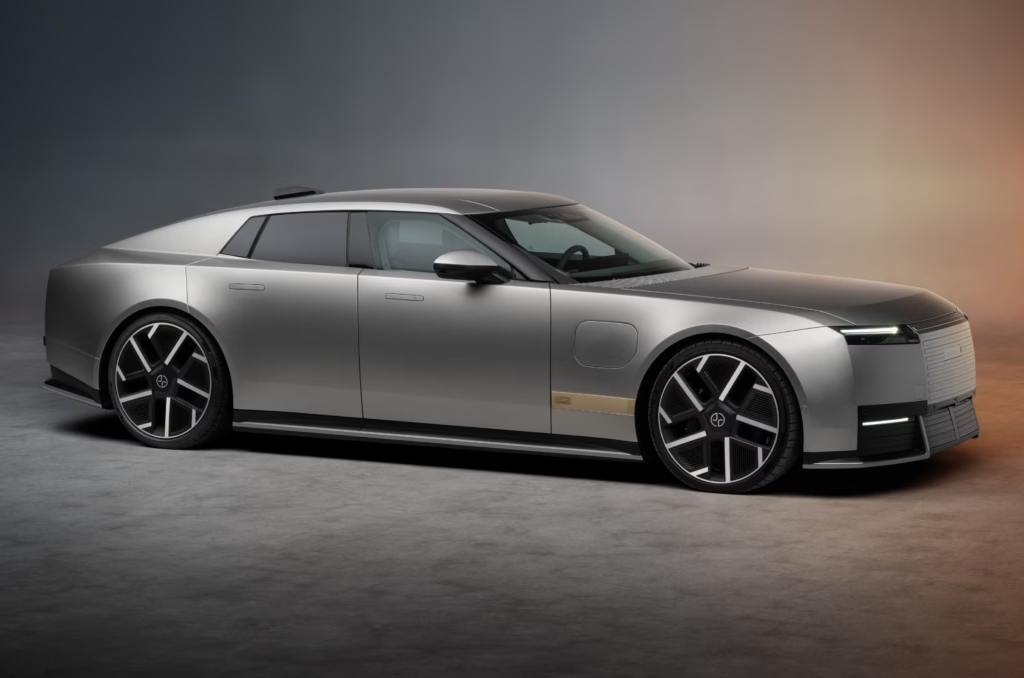
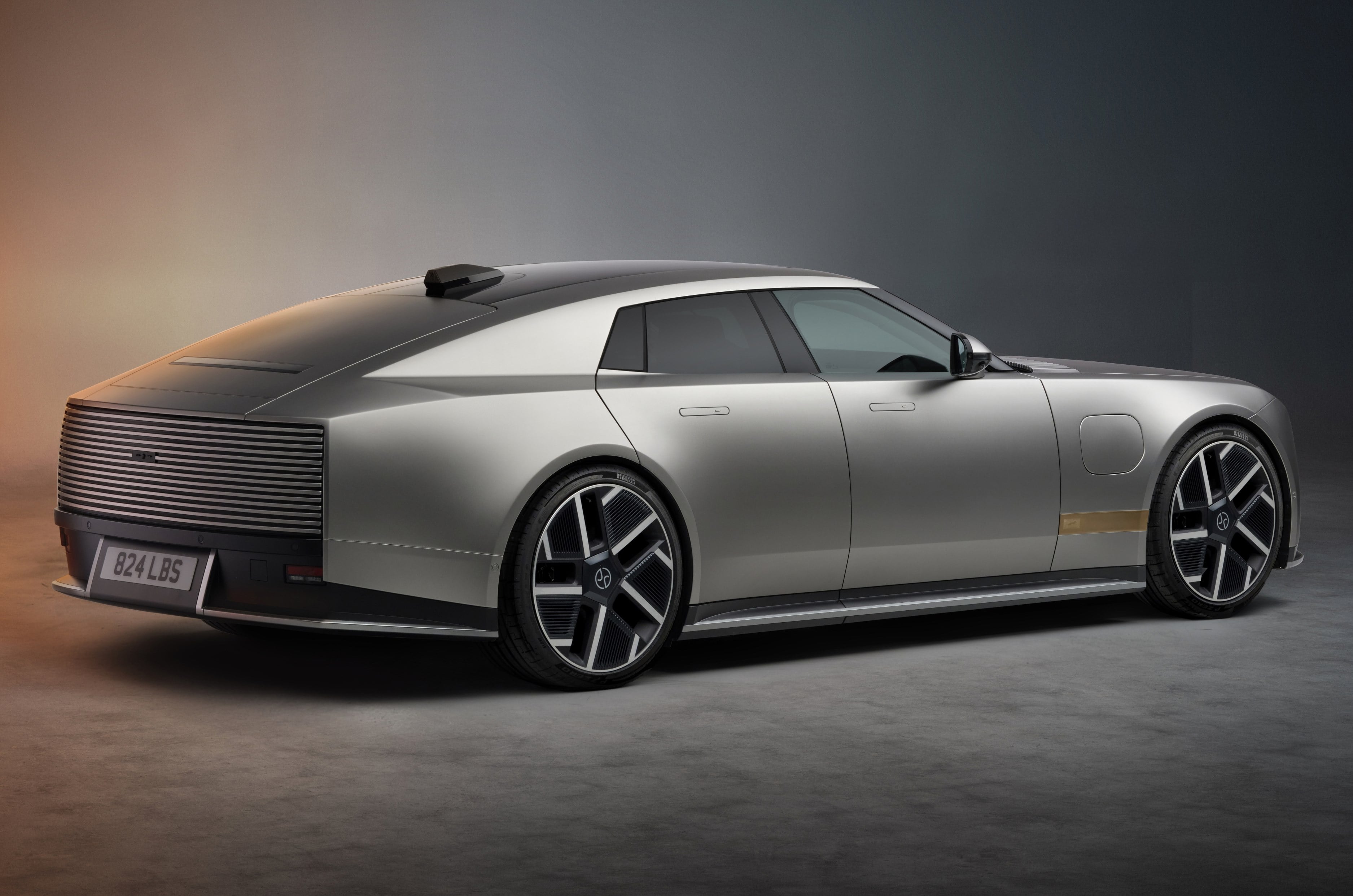
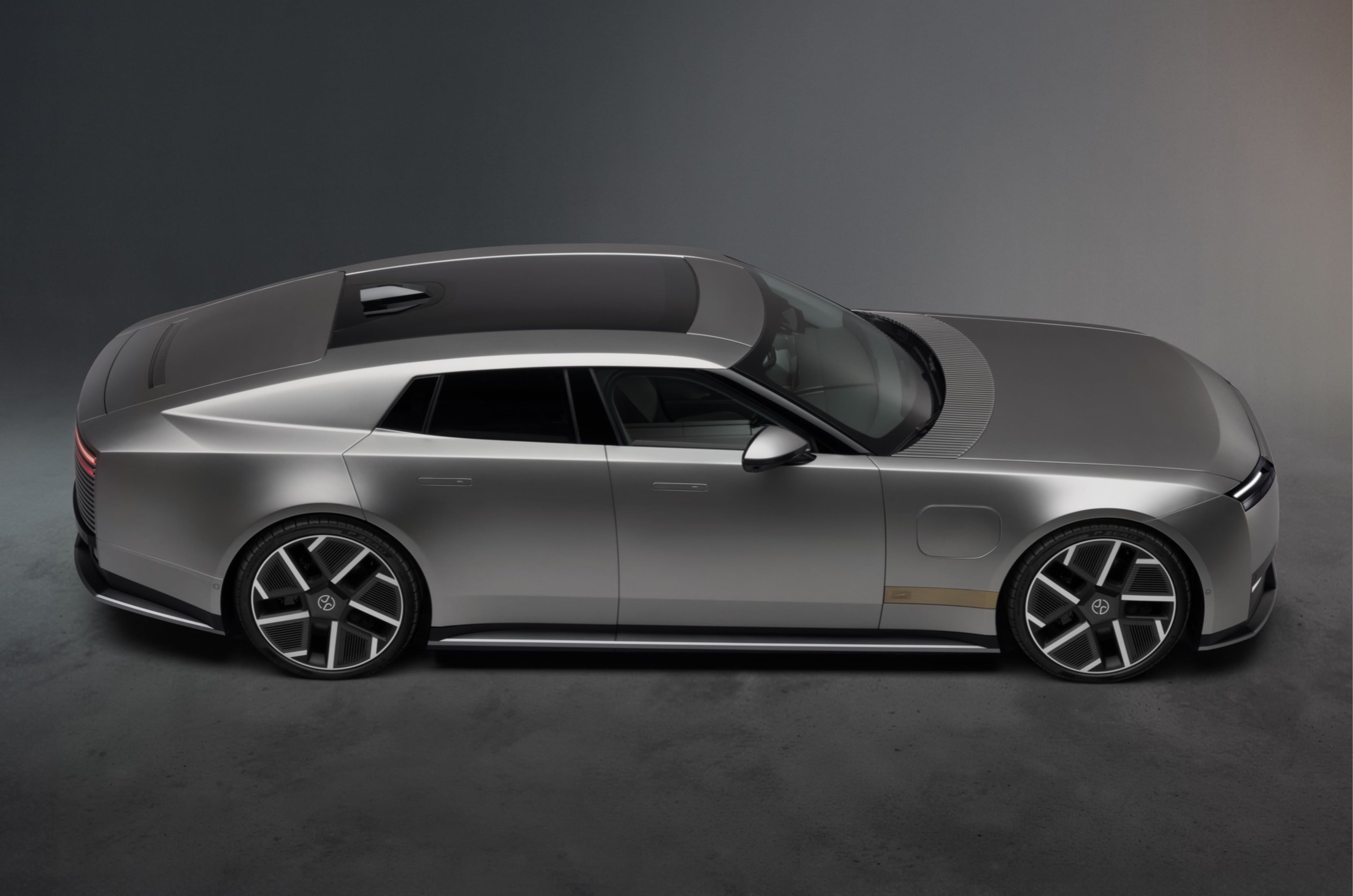
Grace, Space, Pace. That’s been a long-held Jaguar maxim, clearly no more the case, though, at least not that first part. Jaguar’s new Type 01 ditches grace for a design that’s very much in your face, or, styled with exuberant modernism, as the brand more eloquently puts it.
Yes, exuberant it most certainly is; the sheer size and presence of the car are unapologetically bold, and we knew this would be the case when we saw the Type 00 concept. At the time, Jaguar said it would greatly influence the actual production car. Love it or hate it, you have to applaud Jaguar for keeping a majority of the concept’s far-out ideas to the point where a lot of time was spent engineering the new Jaguar Electric Architecture (JEA) to make the design possible.
Strike a chord
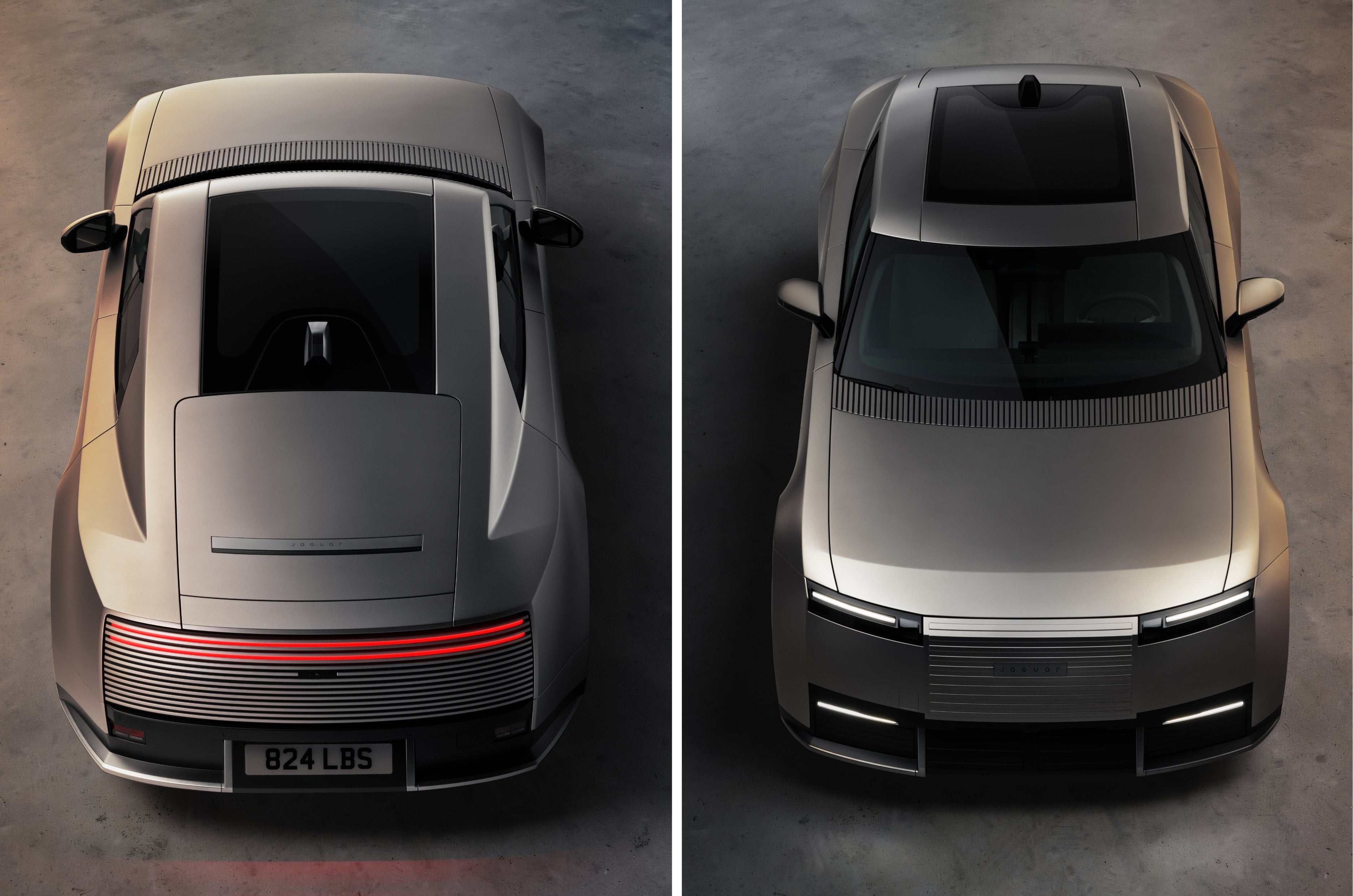
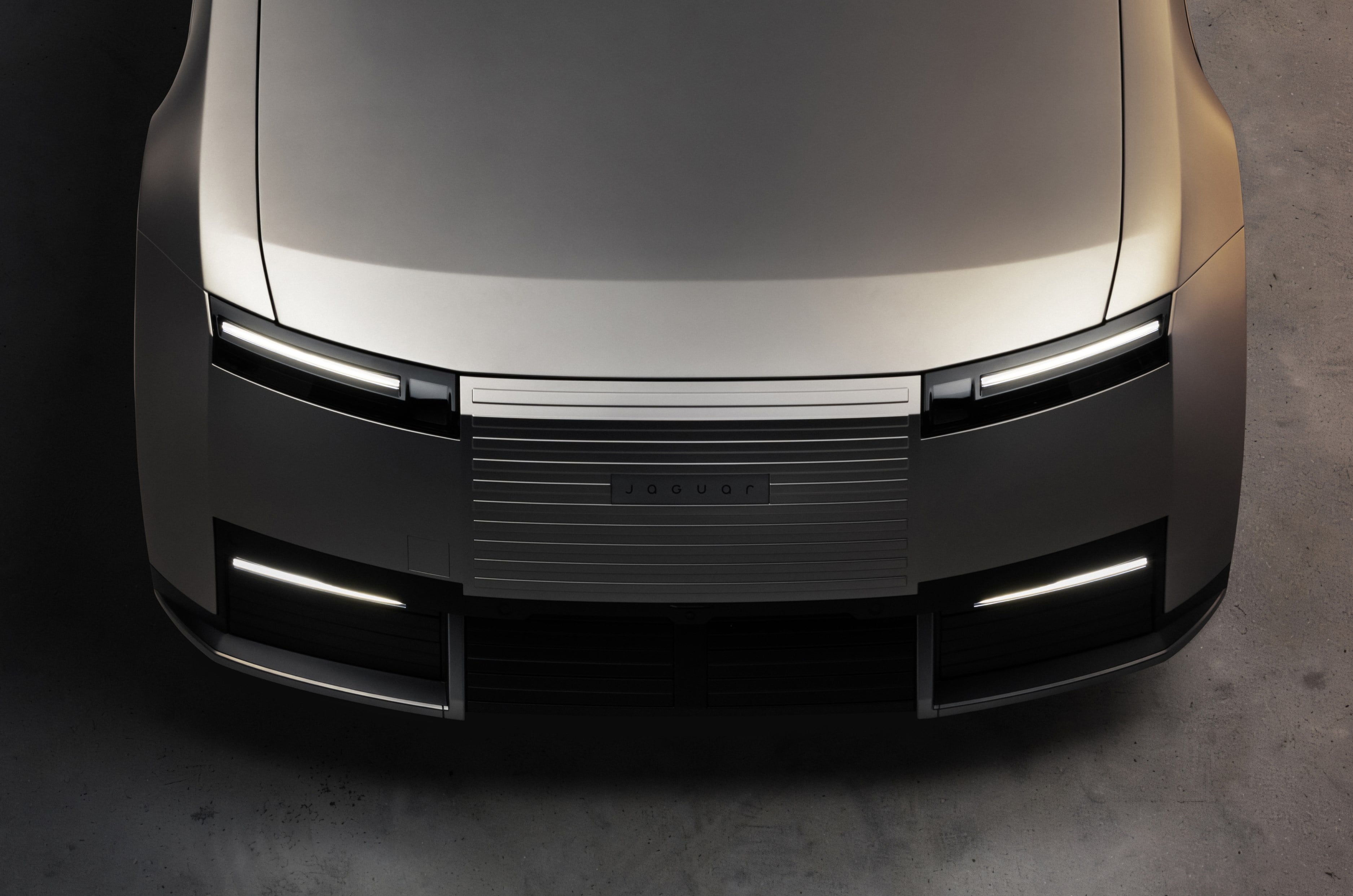
The front is dominated by Jaguar’s new ‘strikethrough’ design element, which gives the bluff nose some character. Unlike most EVs that have a blanked-off front, the strikethrough simulates a grille, retaining some of the visual character of a conventional car. There is, of course, cooling required, and this is handled by active shutters lower down, which open and close depending on cooling requirements.
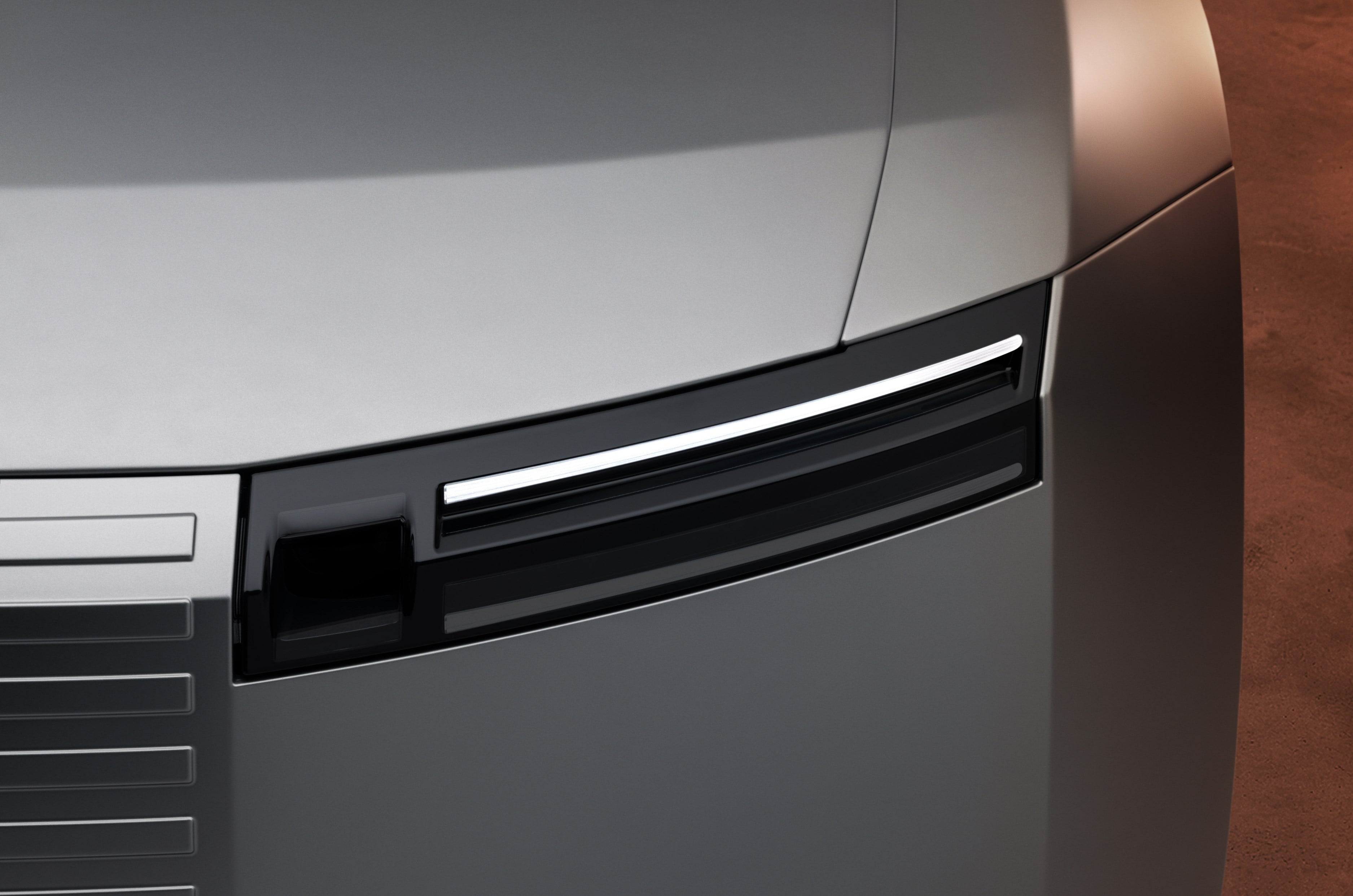
The four ‘line’ daytime running lights are another distinctive element and could become a signature for future Jaguars. The headlights, meanwhile, are the slimmest ever fitted to a Jaguar.
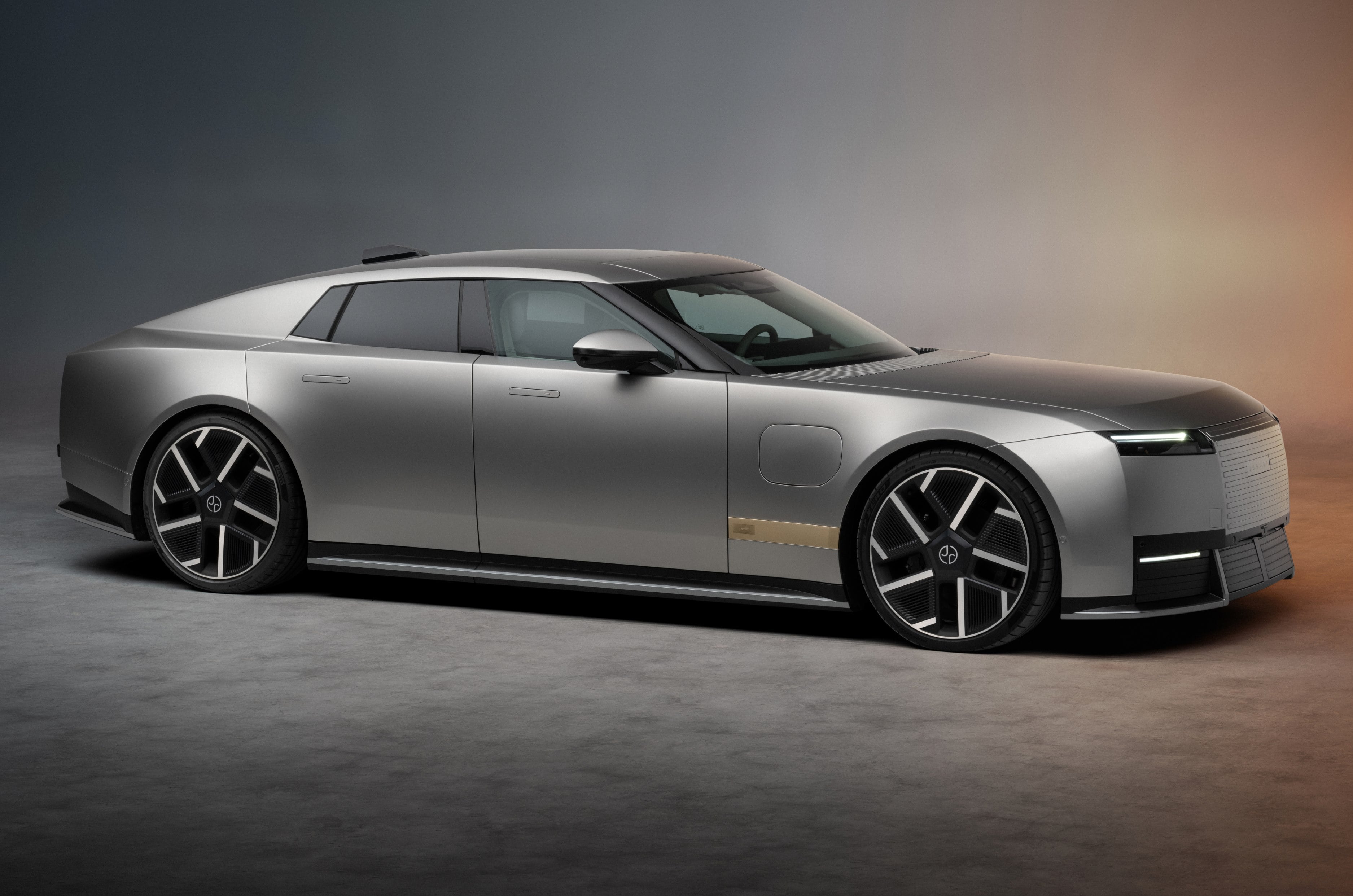
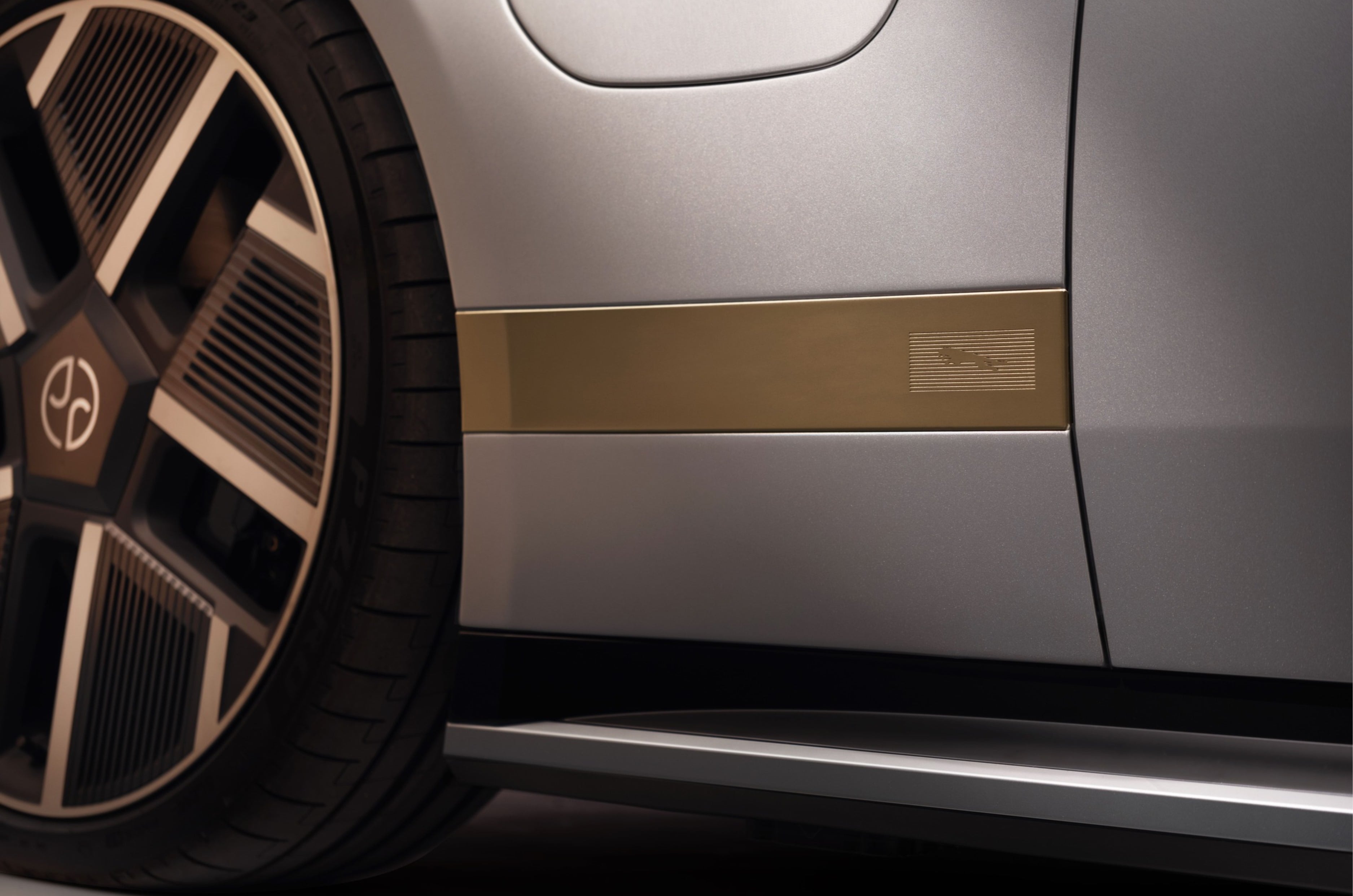
Despite its almost upright front end, the Type 01 is the most aerodynamic Jaguar yet, with a drag coefficient of just 0.23. This has been achieved through extensive aerodynamic work, including active aero elements and clean, uninterrupted body surfaces. The traditional leaping Jaguar mascot is absent from the bonnet, but fear not, it’s not entirely gone, surfacing on a brass-like panel on the front fenders, which also highlights what Jaguar calls the ‘luxury gap’ — the distance between the front axle and the A-pillar. This massive length gives the car its distinctive bonnet-forward proportions and a very regal stance; there is also a functional purpose.
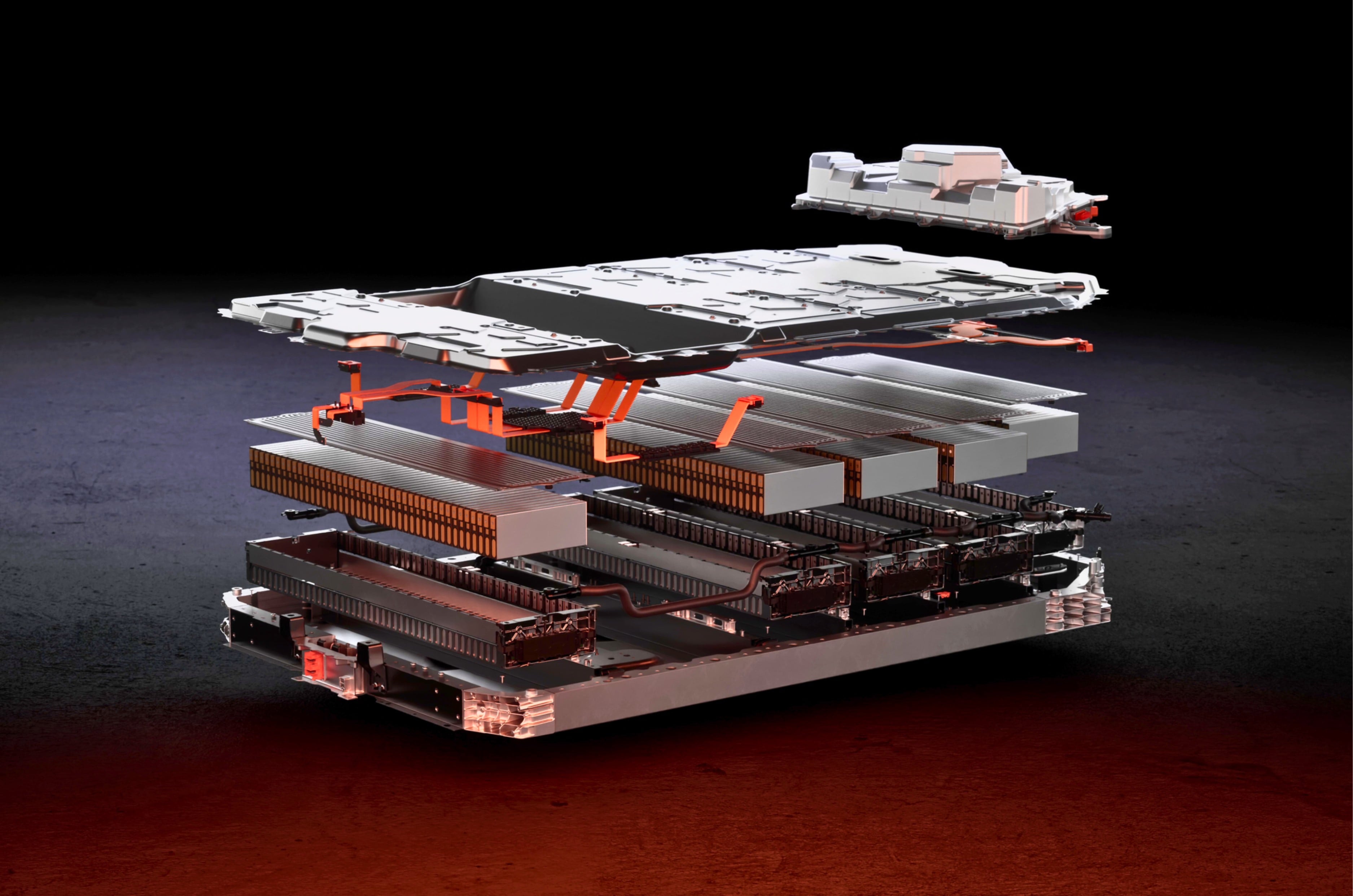
The Type 01 has a split battery pack, comprising five separate modules: one positioned ahead of the A-pillar – in this gap – necessitating a re-engineered front crash structure; then there are three modules behind the A-pillar, a gap around the B-pillar area and then the final module near the C-pillar. Typically, EVs use a single battery pack contained between the A and C pillar line; however, the low roof meant Jaguar needed that gap to create a footwell for rear passengers.
The long 3.2-metre wheelbase and low 1,400mm overall height give the Type 01 its dramatic slammed-down stance, a hallmark of the concept. In fact, the massive 23-inch wheels make up more than half the height of the entire car. Charging ports are provided on both sides, making it convenient to plug in regardless of which side the charging station is on.
One of the most interesting elements of the Type 01’s is what Jaguar calls the ‘impossible panel’. This is essentially the rear fender panel that extends all the way to the A-pillar at the top and has an extremely deep draw forming massive shoulders over the rear wheels. Jaguar says computer simulations initially suggested that the required depth could not be created with a single piece of aluminium, but it worked with the tooling and made it a reality. The resulting panel features a sharp crease that rises from the window line and creates a striking visual effect, which stands out nicely in the silver finish of the car we see here.
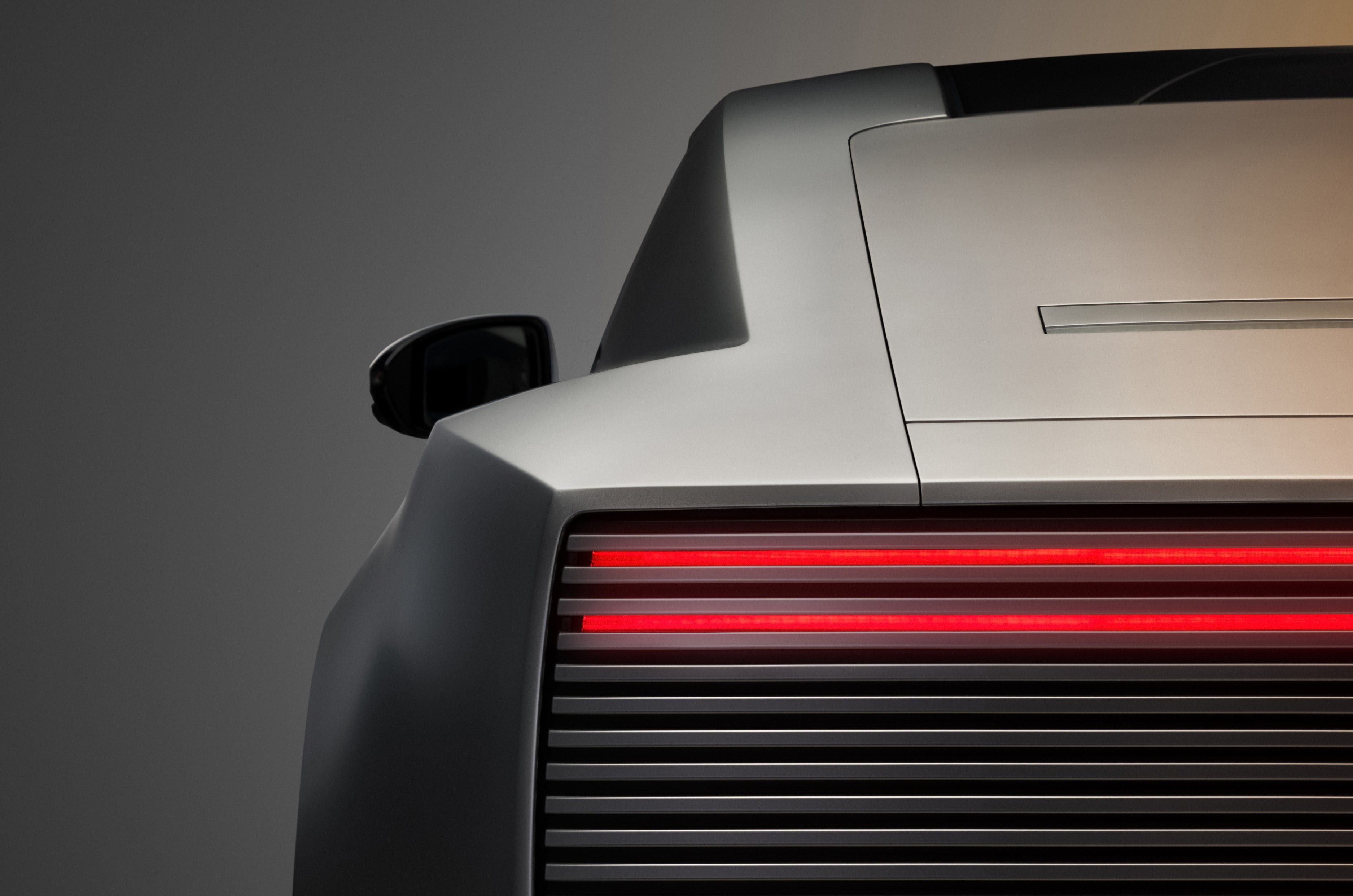
The rear is another striking area and will be the one with the most polarised views. The strikethrough design continues, but it pretty much dominates the entire width of the car; even the taillights are hidden within. When the car is switched off, the lights are invisible, leaving just the grille-like surface, and it does look excessively lined, though unique.
Then there’s the complete absence of a rear windscreen. Jaguar says a conventional rear windscreen would offer very limited visibility with a short vertical height, given the car’s long sloping roofline, so it opted for a clean monolithic panel while a camera feeds a digital rear-view mirror. There’s also a rear spoiler that can be deployed; there are three positions in all, adjusting according to speed to aid aerodynamic efficiency and stability. Beneath the tailgate is 450 litres of boot space in a relatively shallow bay, with some additional storage beneath a panel.
Give and take
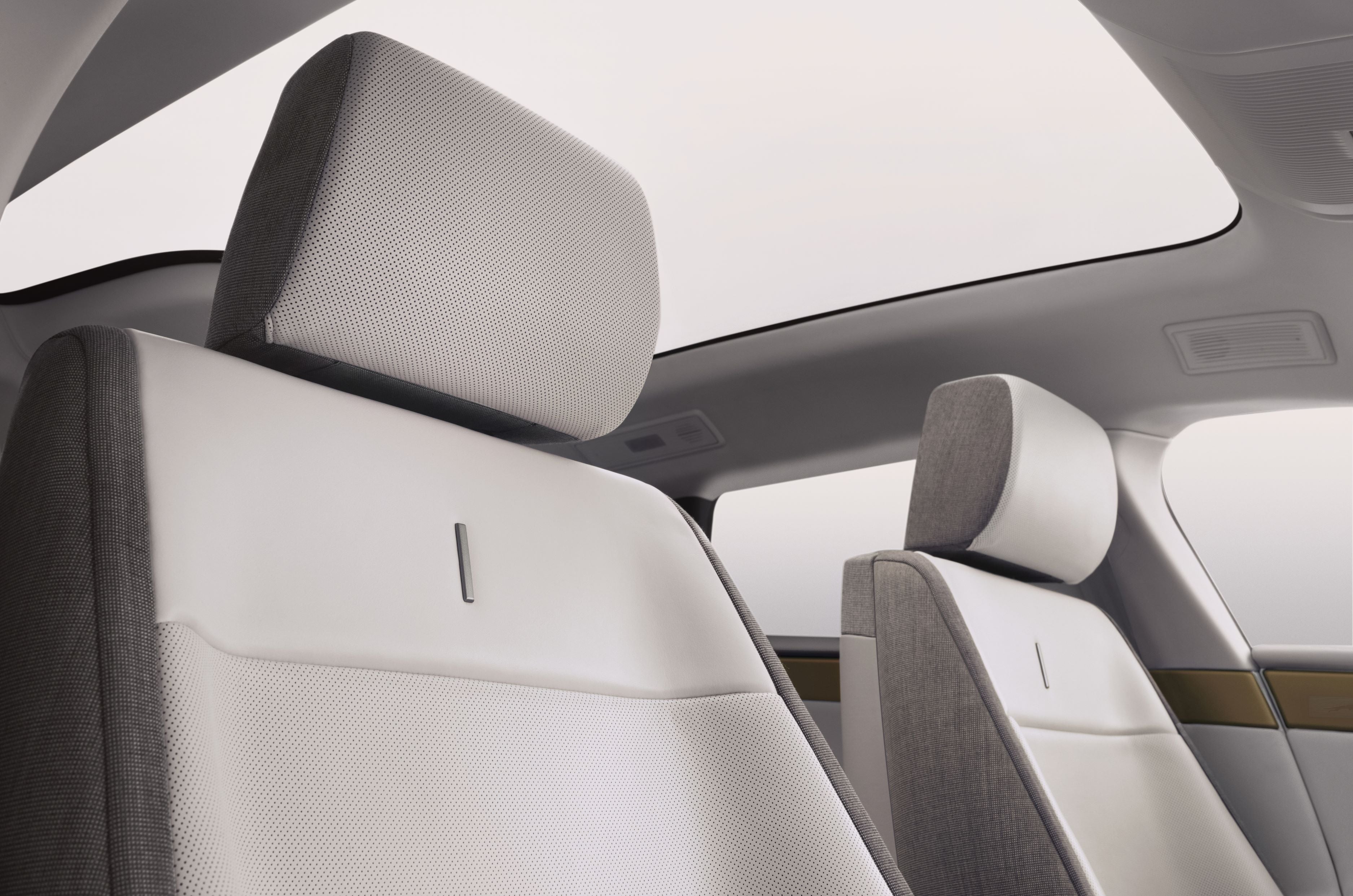
The Type 01’s concept car design and proportions do come with some compromises, and that’s immediately apparent stepping into the rear. You have to move around a protruding rear panel and sink into the seats. Once there, the space is cosy or claustrophobic depending on how you see small spaces. The trouble is the low roof is very close to your head, and the window panes are extremely small; there’s a glass roof, but it only does so much to alleviate the lack of cabin volume. Furthermore, you sit behind the pillar, so you get some privacy, but not an open view outside.
The seats are comfy enough, and at the rear the split battery arrangement reduces the knees-up seating position; while it isn’t comfortable like a conventional car, the arrangement makes a meaningful difference.
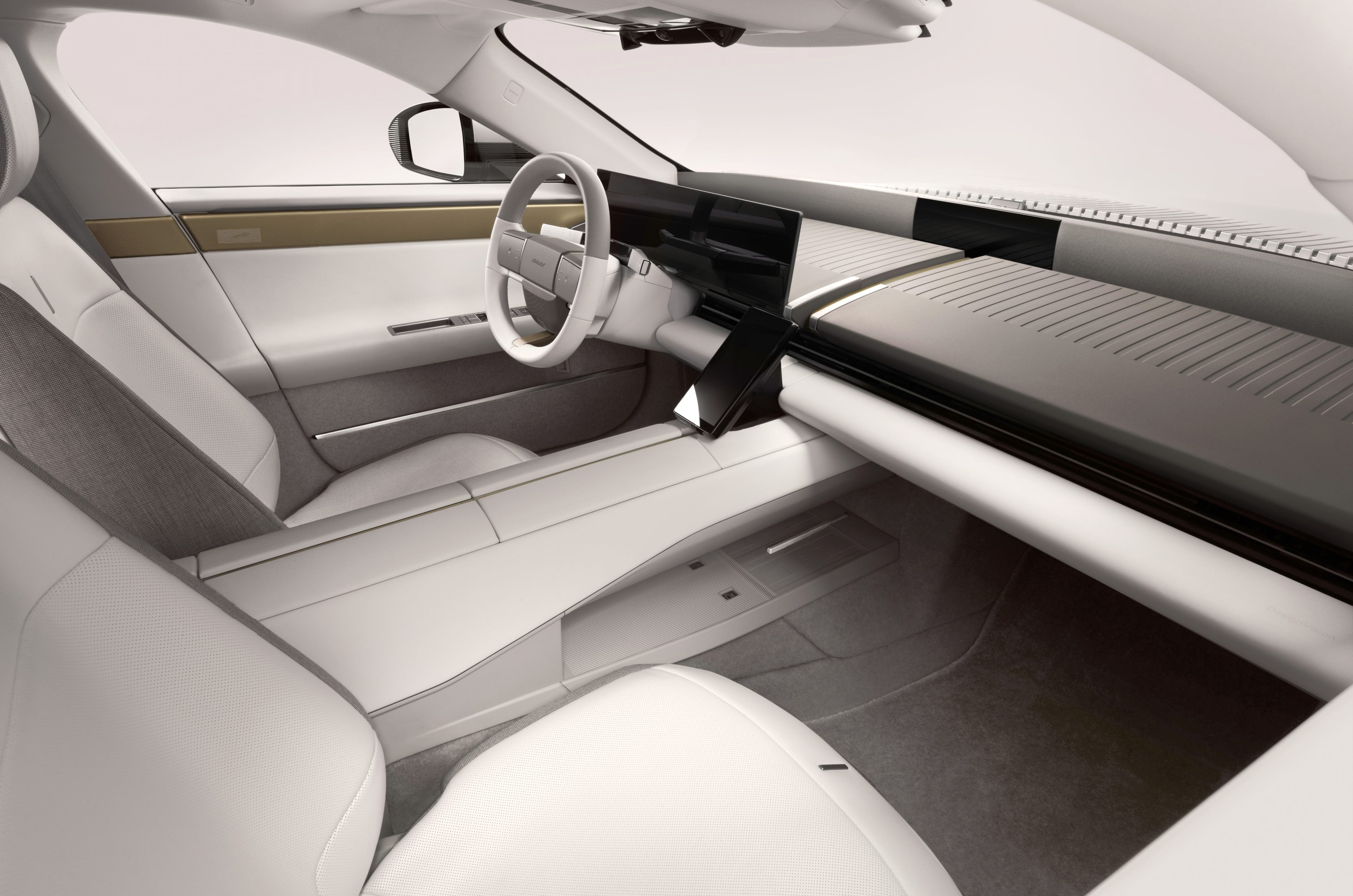
At the front too, the low roof means a low-set driving position; the windscreen is shallow in height, and headroom is just about sufficient for taller occupants. Also, the rear-view mirror – or display, more accurately – is positioned at the base of the windscreen rather than atop. The front seats feature heating, cooling and massage functions.
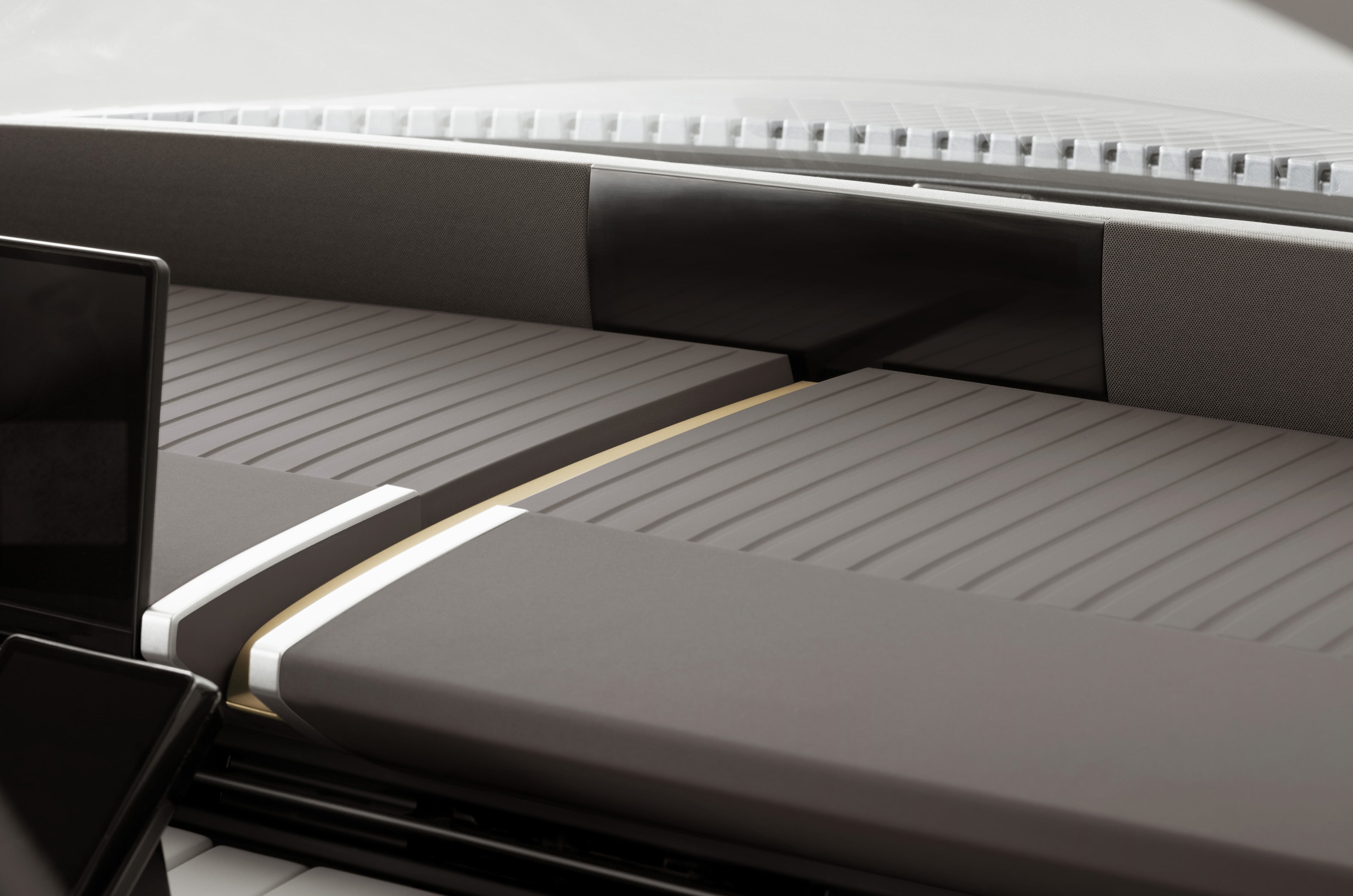
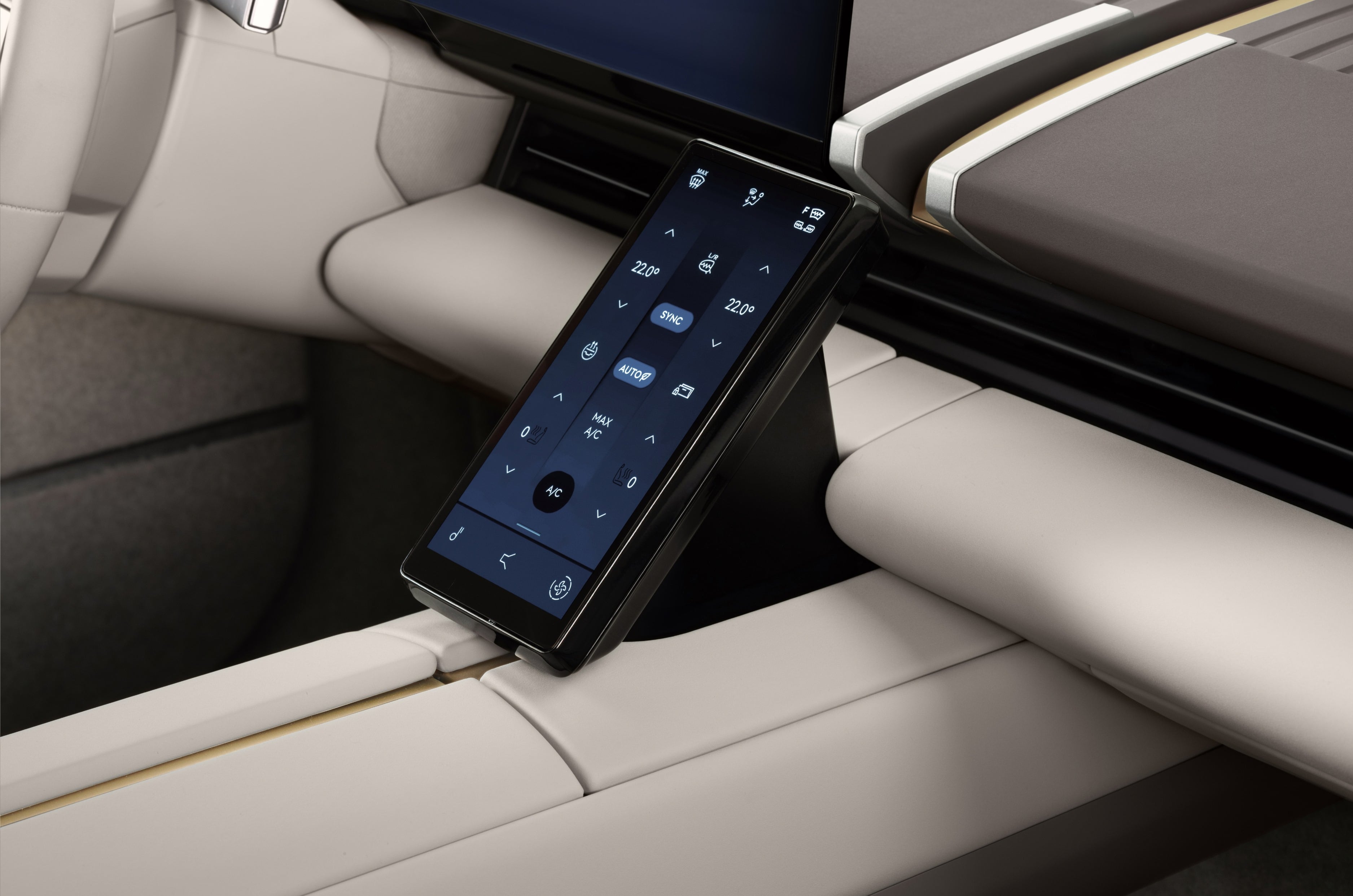
The cabin is divided into four distinct zones by a prominent central spine that houses storage spaces and a rear touchscreen controller. The dashboard carries the strikethrough pattern from the bonnet outside, and the doors carry prominent brass-finished panels. The absence of physical buttons is disappointing; thankfully, the central touchscreen, which handles climate control, is positioned in a manner that allows the driver to rest a hand on the central spine to make operations a bit easier.
There’s a single large 24-inch display combining the instrument cluster and central infotainment screen; driver-focused information is to the right, and functions accessible to the front passenger are on the left.
Number crunching
Underneath its dramatic styling, the Type 01 packs in some serious performance hardware and is the latest to join the 1,000hp+ club. Power comes from a three-motor setup, two at the rear and one at the front. Combined, these produce a massive 1,030hp and 1,365Nm of torque, and despite it weighing in at about 2.7 tonnes, the Type 01 does the 0 to 100kph sprint in 3.2 seconds. This isn’t the 2-second territory that others of this high horsepower club claim, but it’s still extremely quick for what is essentially a four-door GT. Jaguar has often talked of ‘power in reserve’ and highlights its strong 100kph to 180kph of 4.0 seconds as evidence.
Feeding this power is the split module battery; it utilises NMC chemistry and has a 120kWh capacity (118kWh usable) and promises a WLTP range of up to 720km. Jaguar says thanks to the 850-volt architecture, on a 350kW DC charger you can add 321km of range in 13 minutes and 10-80 per cent in around 22 minutes with the split pack set-up to maximise 400-volt chargers. The Type 01 also features twin AC charging ports, one on each side, so it’s easy to charge no matter how you park.
The powertrain has drive modes, torque vectoring and ride is courtesy of switchable air springs and twin-valve active dampers. Rear-wheel steering keeps a tight 11.5m wall-to-wall turning circle diameter.
Shock! And awe?
The Type 01 is unlike Jaguars of the past, which were the target. Jaguar sales were drying up, and it needs to bring in new customers, and that’s where this entirely new design direction comes in. It has traces of its heritage but, on the whole, is unique, and there’s no denying it’s striking to look at with its wild concept car looks. This, however, means interior space is at a premium, and there are ingress and egress challenges. Making amends in some way is the minimal and classy interior styling and, of course, a powertrain with all the right numbers and ingredients that promises a thrilling drive experience.
Asking prices for all this will be going up, not to the levels of a Rolls or Bentley but above what the brand’s previous flagships like the XJ were at. Expect prices to start at £120,000 in international markets where deliveries are scheduled to begin by mid-2027. India will follow a few months on with prices around the Rs 2 crore mark, give or take.
Sitting between Mercedes and BMWs at the lower end and Rolls and Bentleys above, the Type 01 has found a gap and a differentiation in its style and appeal too. But can Jaguar transform from elegance and heritage to exuberant modernism? It’s a big leap for sure, and one that the company needs the big cat to make.
In the previous issue (August 2026), you saw the Skoda Kylaq take on the familiarity of India, the hills and traditions of Nepal, and the variety of China through Tibet’s gorgeous but bone-shaking terrain, followed by the sensory overload of food and culture. Now, it was time for a fresh experience through Central Asia on the ancient Silk Route, subsequently entering Europe towards our final destination.
Kyrgyzstan – Uzbekistan – Kazakhstan
Kyrgyzstan
The Kylaq had everyone turning heads.
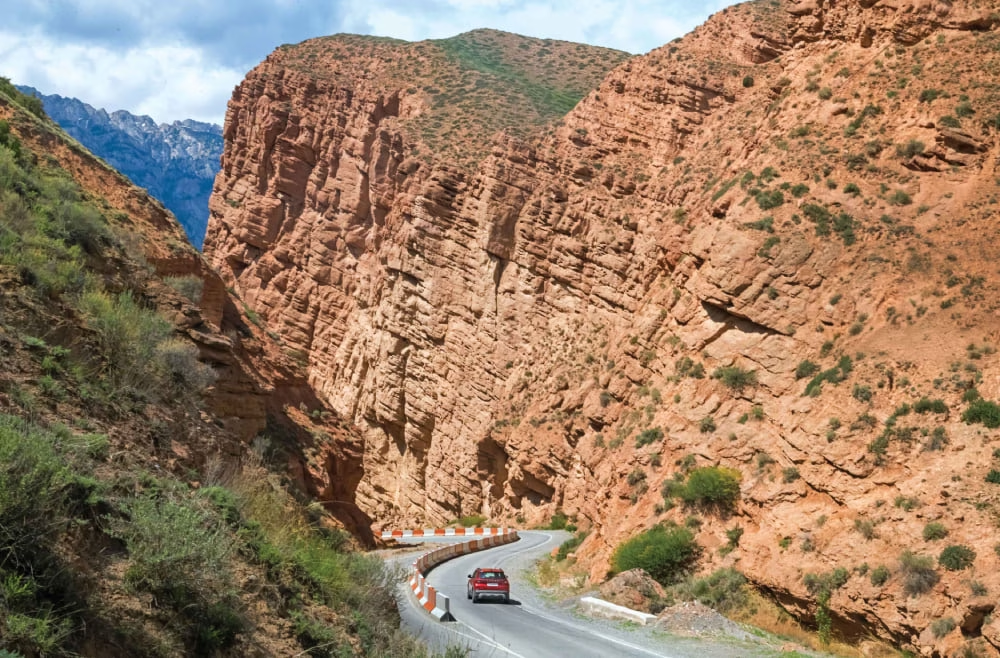
Crossing the Chinese border into Kyrgyzstan was like crossing into a different world. The differences are immediate, right from the signage, fonts and faces to the sights, terrain and traffic. Being a landlocked country peppered with alpine mountains, one doesn’t need to go far to experience what Kyrgyzstan has to offer. As you drive through the ribbon of tarmac between the peaks, you realise why it is called the “Switzerland of Asia”.
A roughly 400km drive to our first halt in Naryn was smooth sailing. However, the chilly weather was a far cry from the piercing heat of China. We pulled out our jackets that were buried deep in our bags and made a beeline the next day for the capital city of Bishkek. The roads are a driver’s delight, and while there aren’t many sights to stop and admire, the Orto-Tokoy Reservoir made for a stunning photo-op.
Kyrgyzstan in numbers
Torgart – Uzbek border
Distance covered
1,321km
Fuel consumed
126.49 litres
Average fuel economy
10.44kpl
Approx. fuel cost
Rs 11,727
Avg. per-litre fuel cost
Rs 92.58
Total time driven
34hrs 23min
Average speed
38.4kph
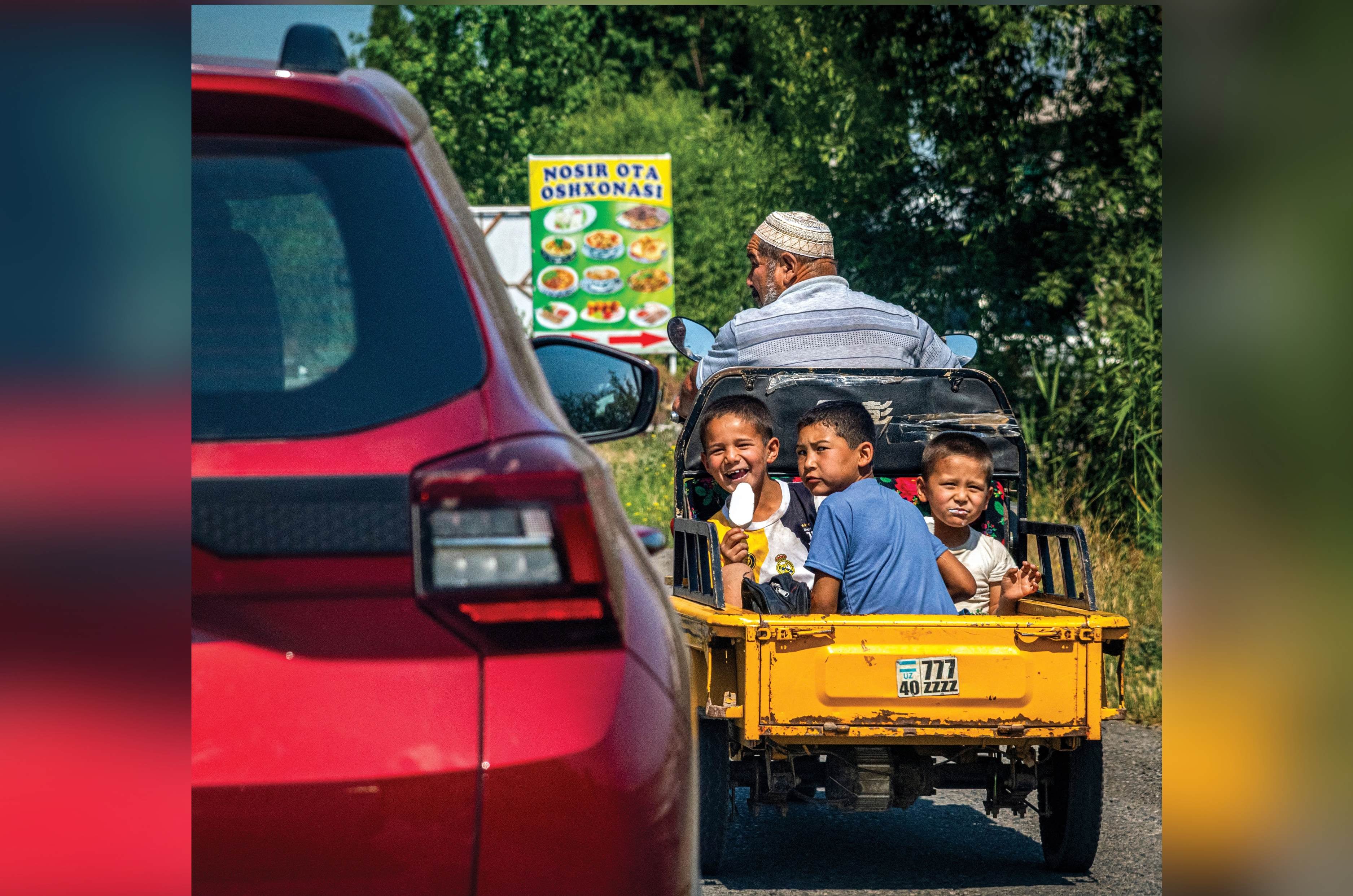
From Bishkek, we headed to Osh, which is also known as the capital of the south and is the oldest city in Kyrgyzstan. Walking through the Jayma Bazaar in the city centre, you may get a bit of celebrity treatment, as the locals aren’t used to having many tourists just walking through. Some playful heckling and wide smiles add to the overall experience.
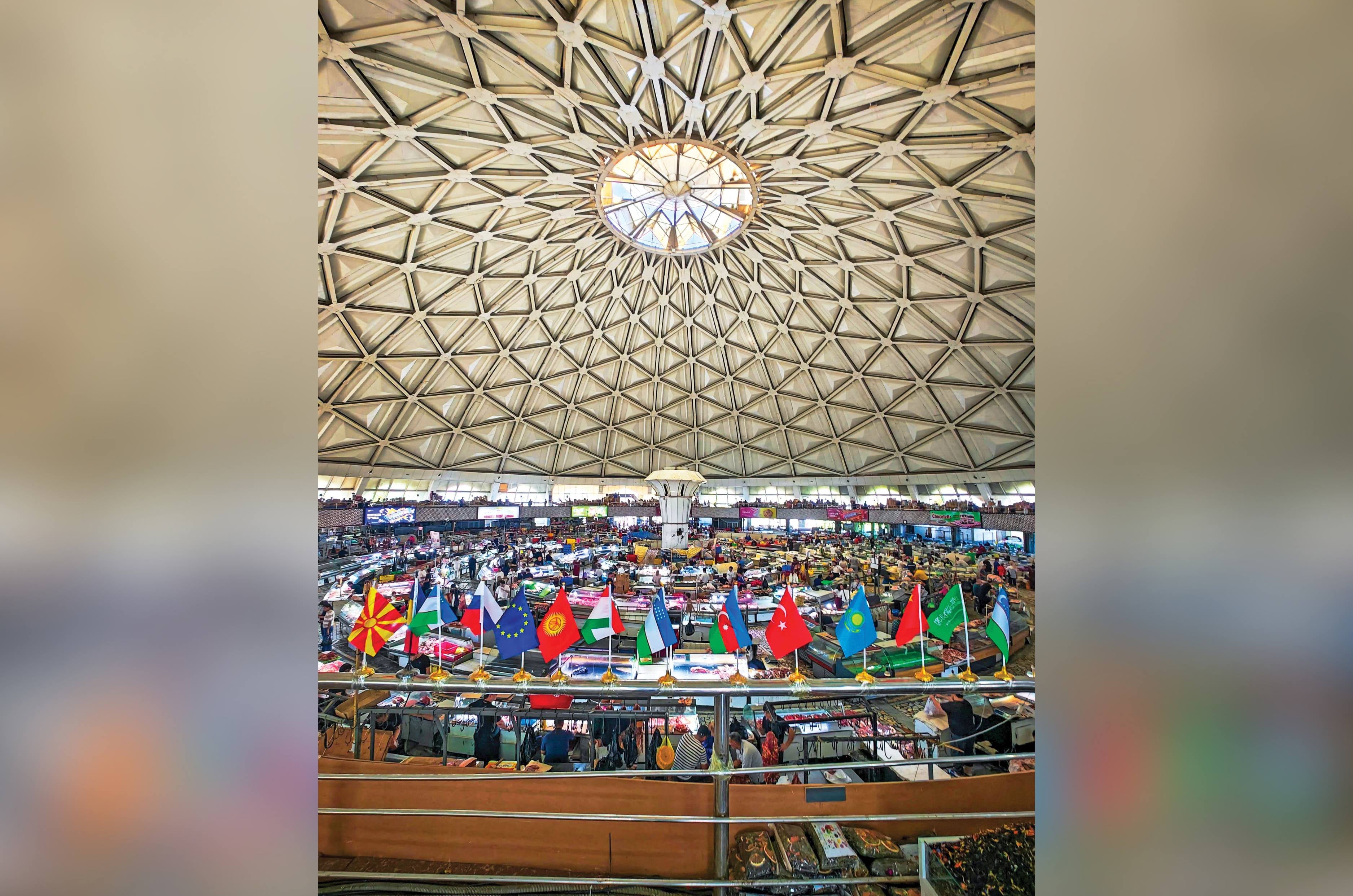
Chorsu Bazaar is a one-stop shop for everything in Tashkent.
What the market offers is mounds of kurut, a snack made from curdled milk or oghurt, salted and then hardened. The best part is its extended shelf life without needing a refrigerator. We packed some with the hope of eating it at home, knowing fully well that it would vanish by the next town.
From Osh, we would be exiting the stunning valleys and terrain of Kyrgyzstan and entering the city of Fergana in Uzbekistan.
Uzbekistan
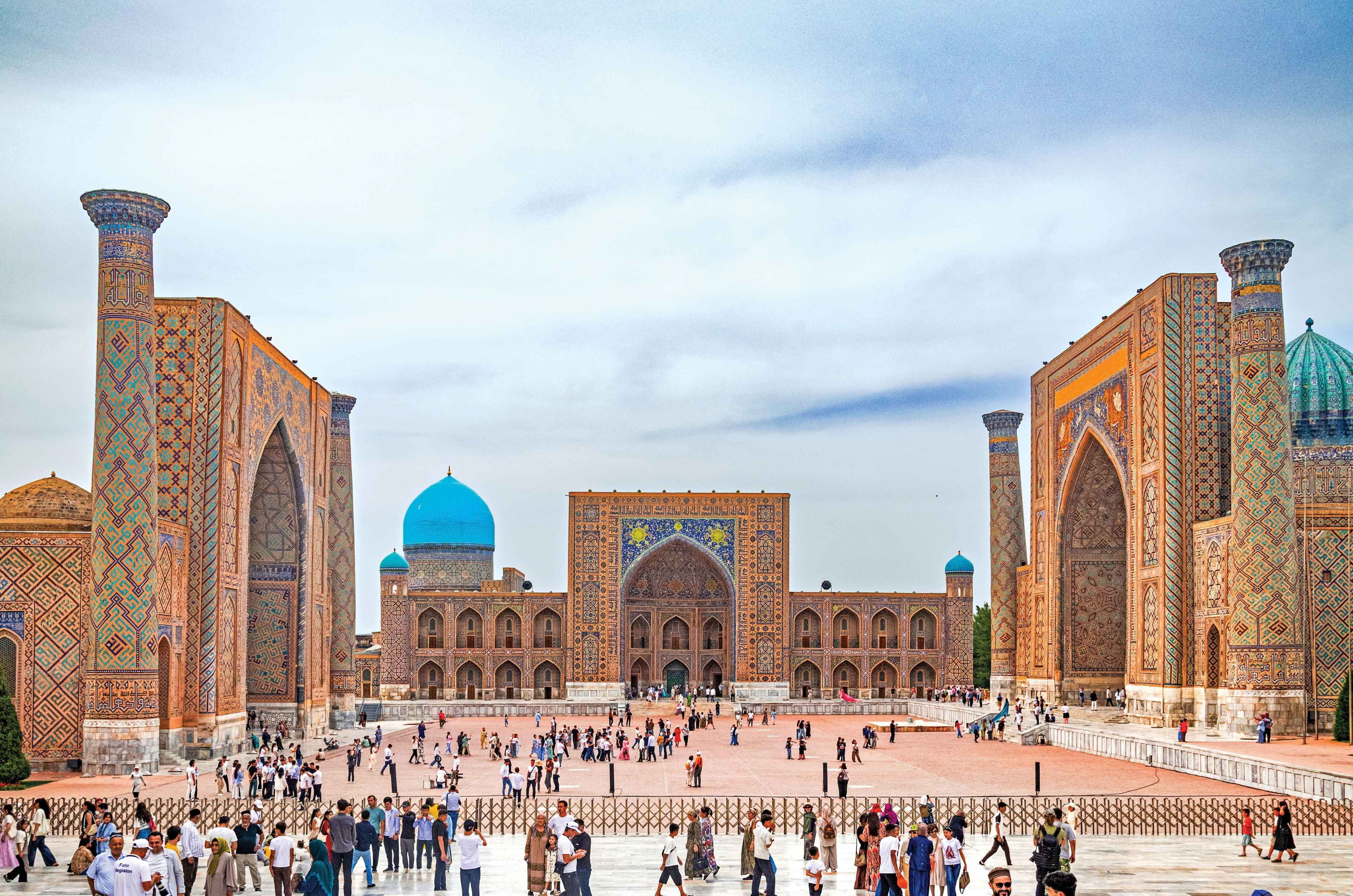
Registan Square in Samarkand is breathtaking from every angle.
Like Kyrgyzstan, Uzbekistan also has its own personality. While there are similarities in the faces and fashion, the city of Fergana has a tinge of European infrastructure. Roads are lined with trees and patir shops – flatbread made from butter or lamb fat, with intricate detailing and some sesame seeds sprinkled on top. It’s pretty enough to dissuade you from eating it, but tastes like something that would go extremely well with a cup of chai.
Uzbekistan in numbers
Kyrgyz-Uzbek border – Turkistan
Distance covered
1,257km
Fuel consumed
81.74 litres
Average fuel economy
15.37kpl
Approx. fuel cost
Rs 9,800
Avg. per-litre fuel cost
Rs 120
Total time driven
27hrs 5mins
Average speed
46.4kph
What is also fascinating is the number of old Soviet-era cars still running on the highways with no fuss. We shared road space with old Ladas crammed with luggage inside and on the roof. Over the smooth highways of Uzbekistan, the Kylaq had an easy run, allowing us to focus on the sights around us.
From Fergana, we headed to the capital city of Tashkent. A properly modern metropolis with high-end malls and low-slung supercars, parks, walkways and everything you expect from a big city. So, to get a taste of age-old tradition, we ventured towards Samarkand, which used to be a major trading hub on the Silk Route.
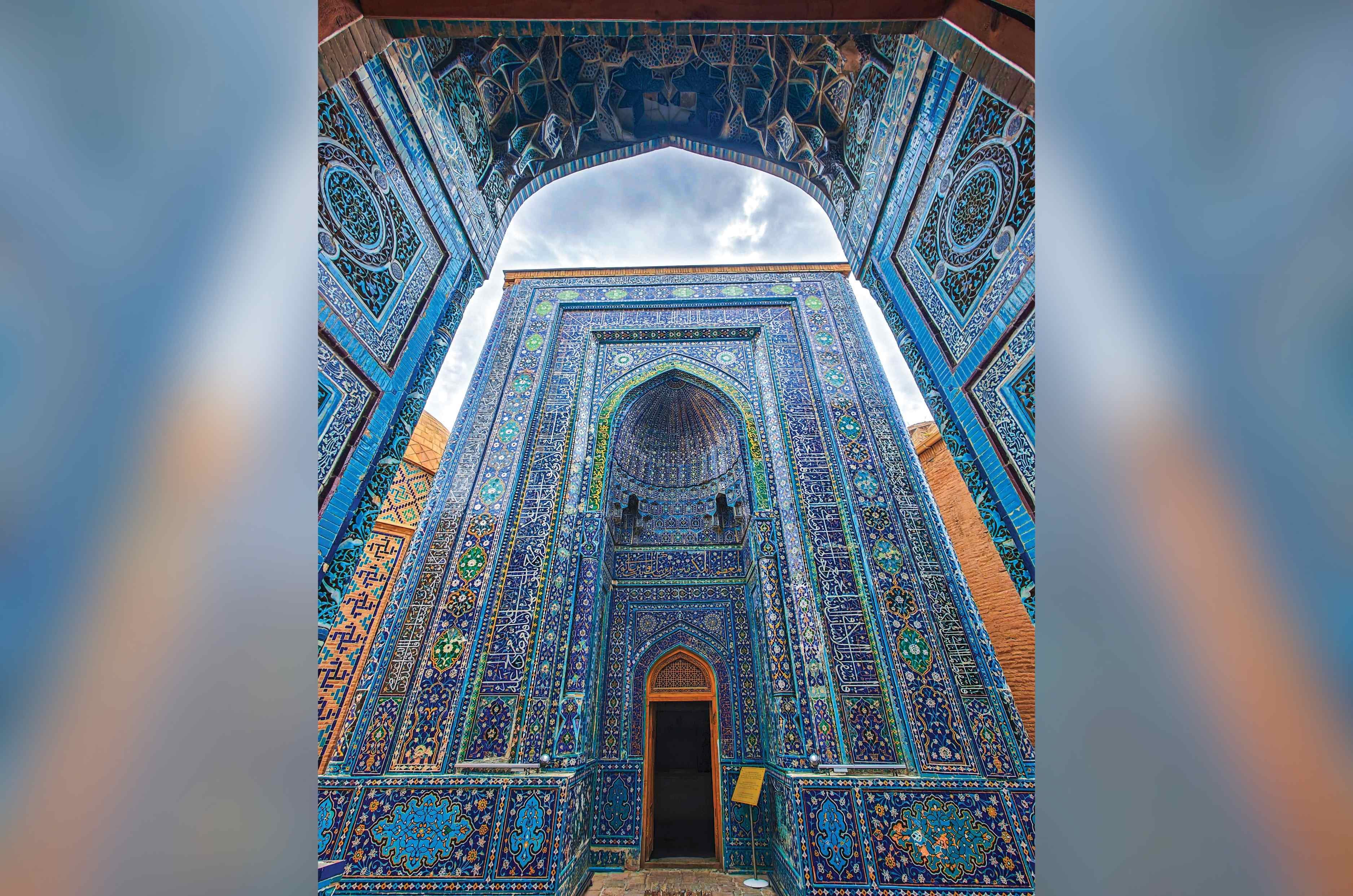
The Shah-i-Zinda ensemble has 11 mausoleums with incredibly detailed azure and turquoise tiles.
Entering Samarkand, you almost feel the tradition in the air. Years of cross-cultural civilisation have made it a stunning destination to get a glimpse of history, and it is unlike any other Western or Eastern city. The highlight here, of course, is the Bibi-Khanym Mosque in the Registan ensemble. Turquoise domes kissing the sky, with walls adorned with hand-carved artistry, are nothing short of breathtaking.
You can walk through the corridors and the square innumerable times, and each time, you will gasp at the sheer detail and effort. And to think it was built as far back as the 15th century. Magnificent is an understatement.
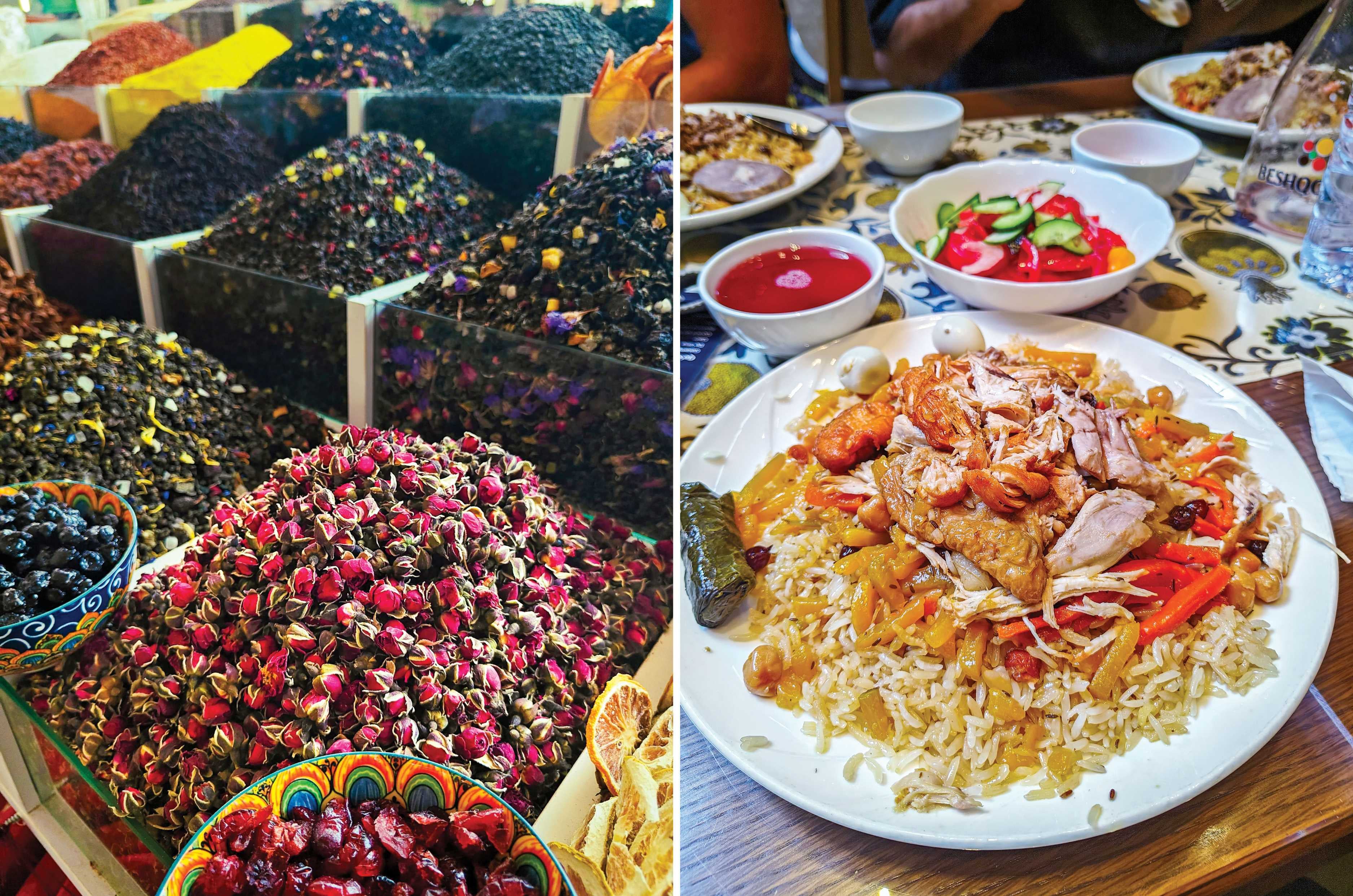
After soaking in the stunning detail, we headed back to Tashkent and straight to the equally fascinating Chorsu Bazaar. What looks like an IMAX dome on the outside is a full-fledged one-stop shop on the inside. Teas, dry fruits or even a leg of lamb, you can get it all here.
Uzbekistan’s market is nothing short of paradise for tea lovers.
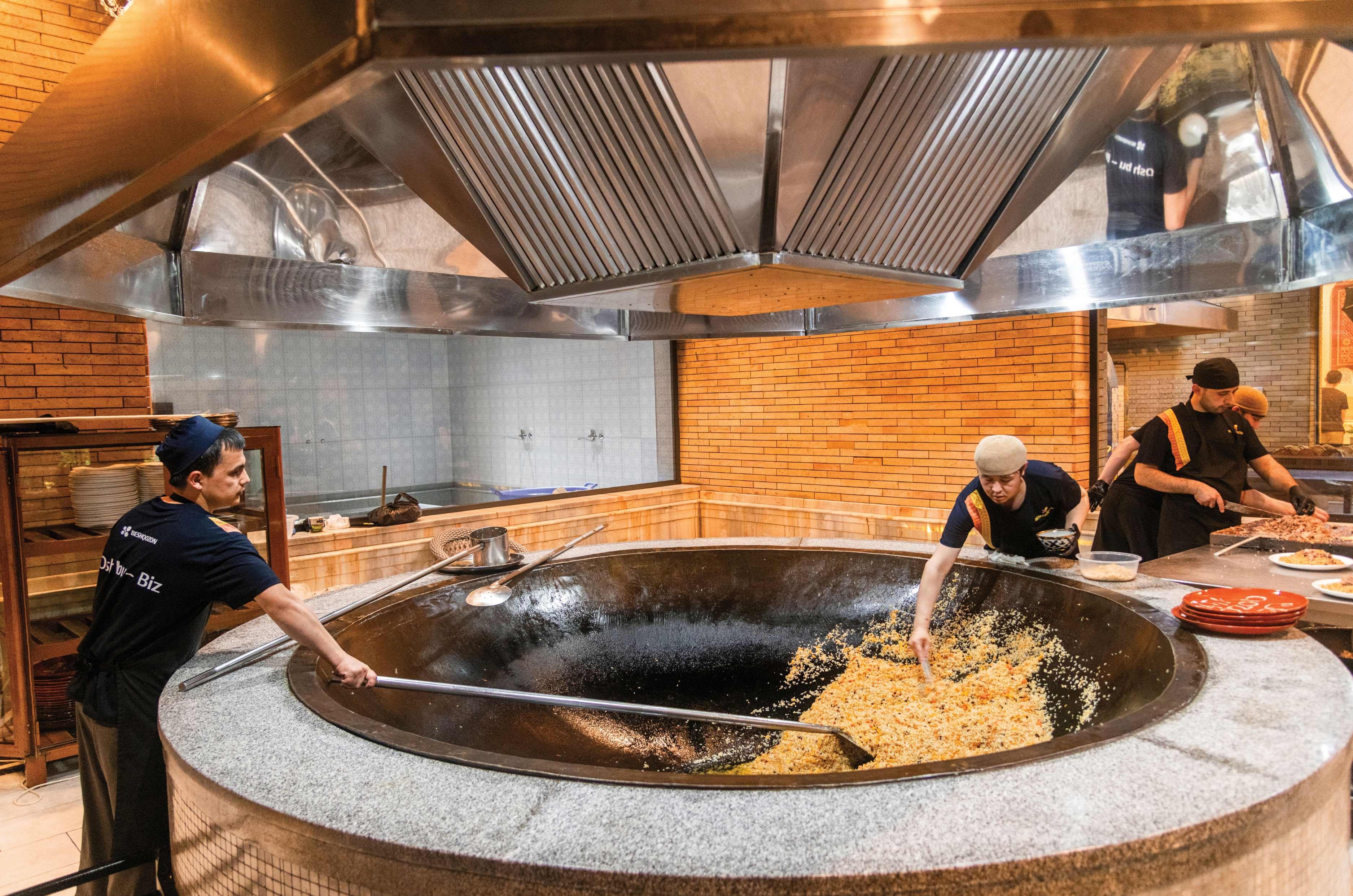
After a long walk that ended with bags of tea and dehydrated kiwis, we headed for Uzbekistan’s pièce de résistance: the famous plov. Like a biryani, but made with different spices, and if you want to go heavy on culture, you can have one with horse meat, too. Some bravehearts did try it and resorted to chicken or lamb, but it did offer the lost taste of biryani and got us homesick in the first bite.
Massive dome known as a kazan used to make the famous Uzbek plov.
After days of driving through mountains and around lakes, and walking through corridors that were once at the peak of world trade, our next adventure would take us to the Great Steppe of Kazakhstan.
Kazakhstan
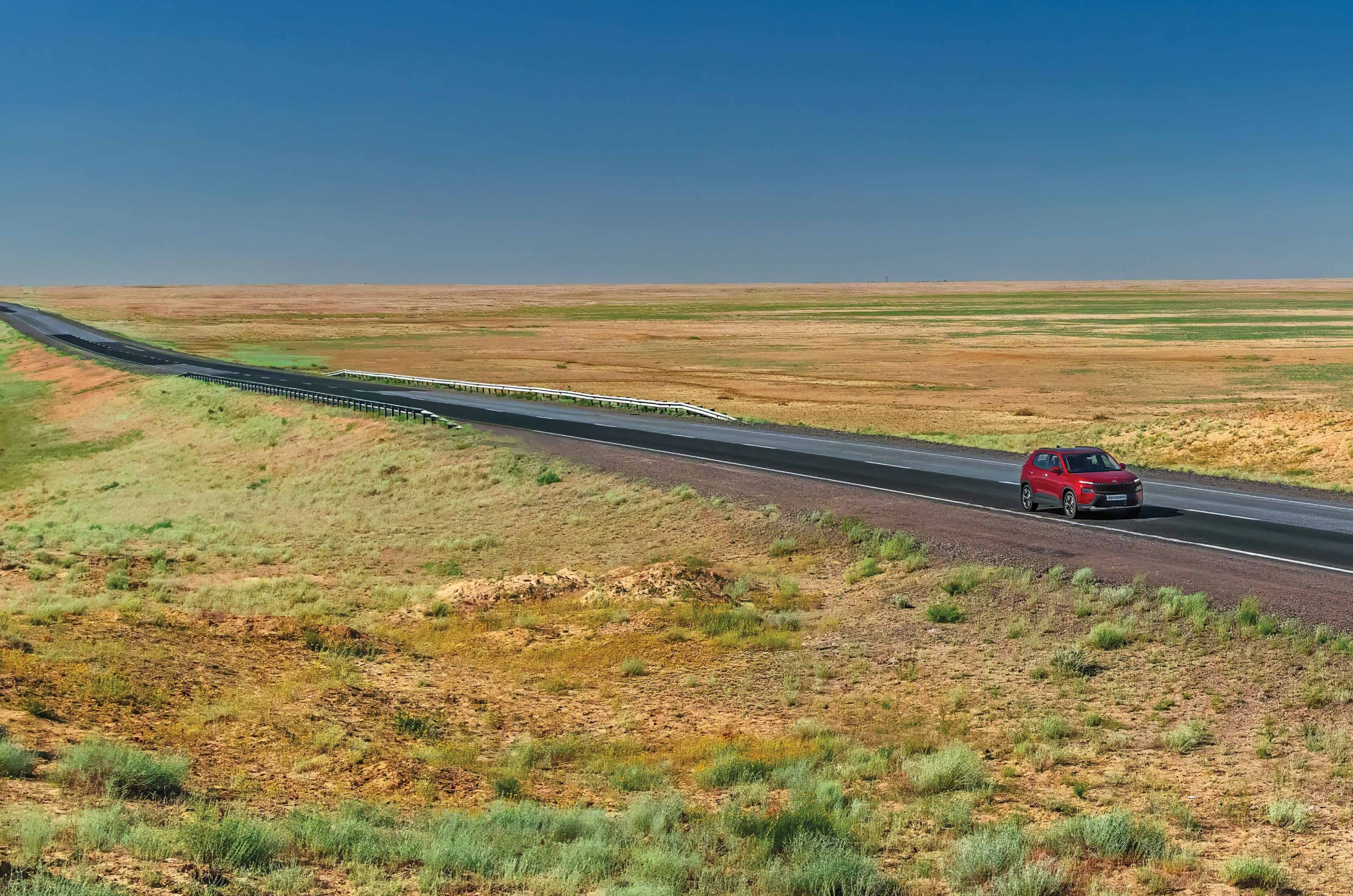
The Great Steppe in Kazakhstan feels like driving on an endless treadmill.
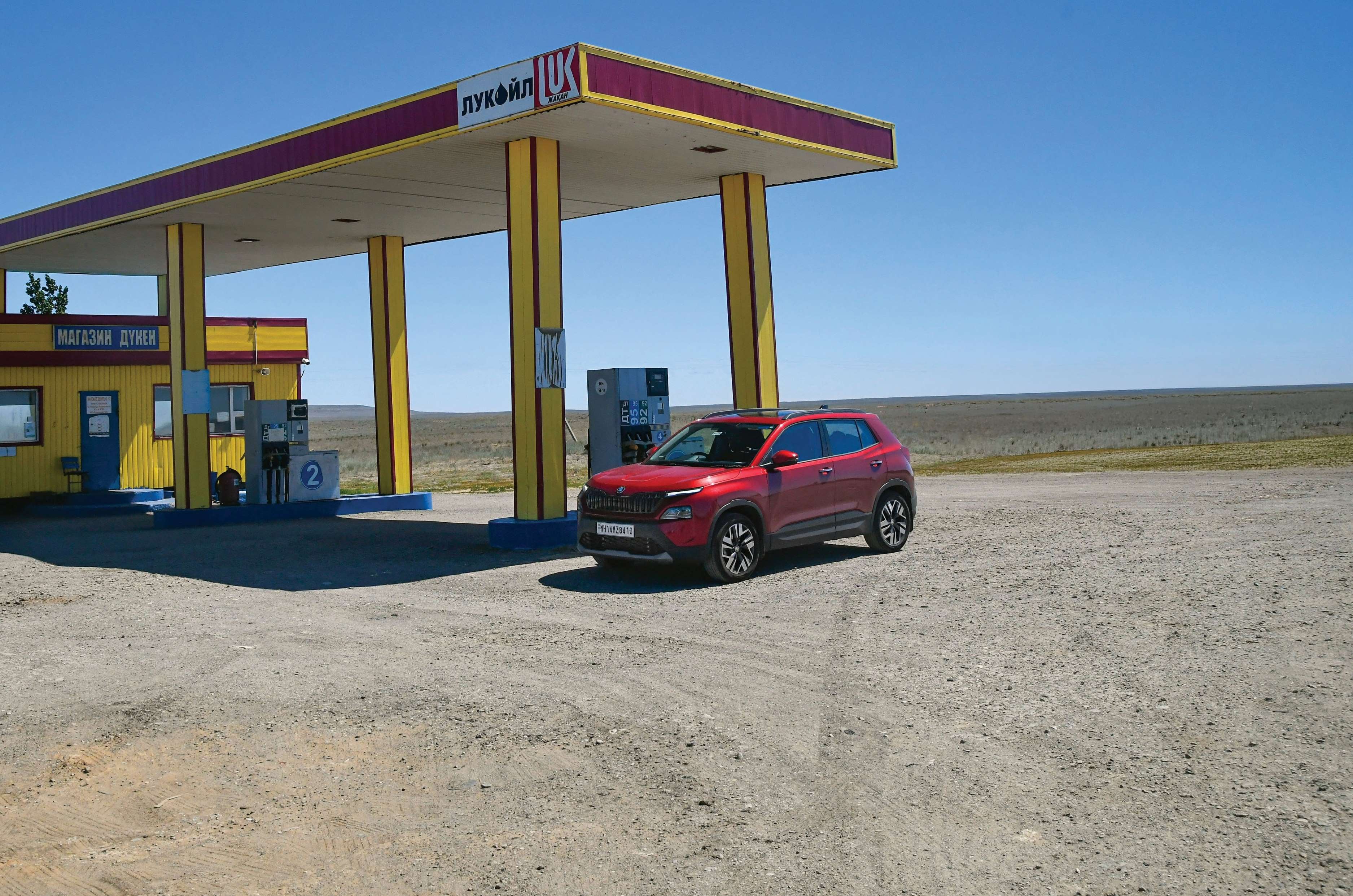
Crossing from Turkmenistan after vigorous checks, Kazakhstan feels almost desolate. Arrow-straight highways for kilometres, between acres of flat land with nothing on the horizon. We were driving through green pastures that would turn into brown, dried patches before turning green again, kilometre after kilometre.
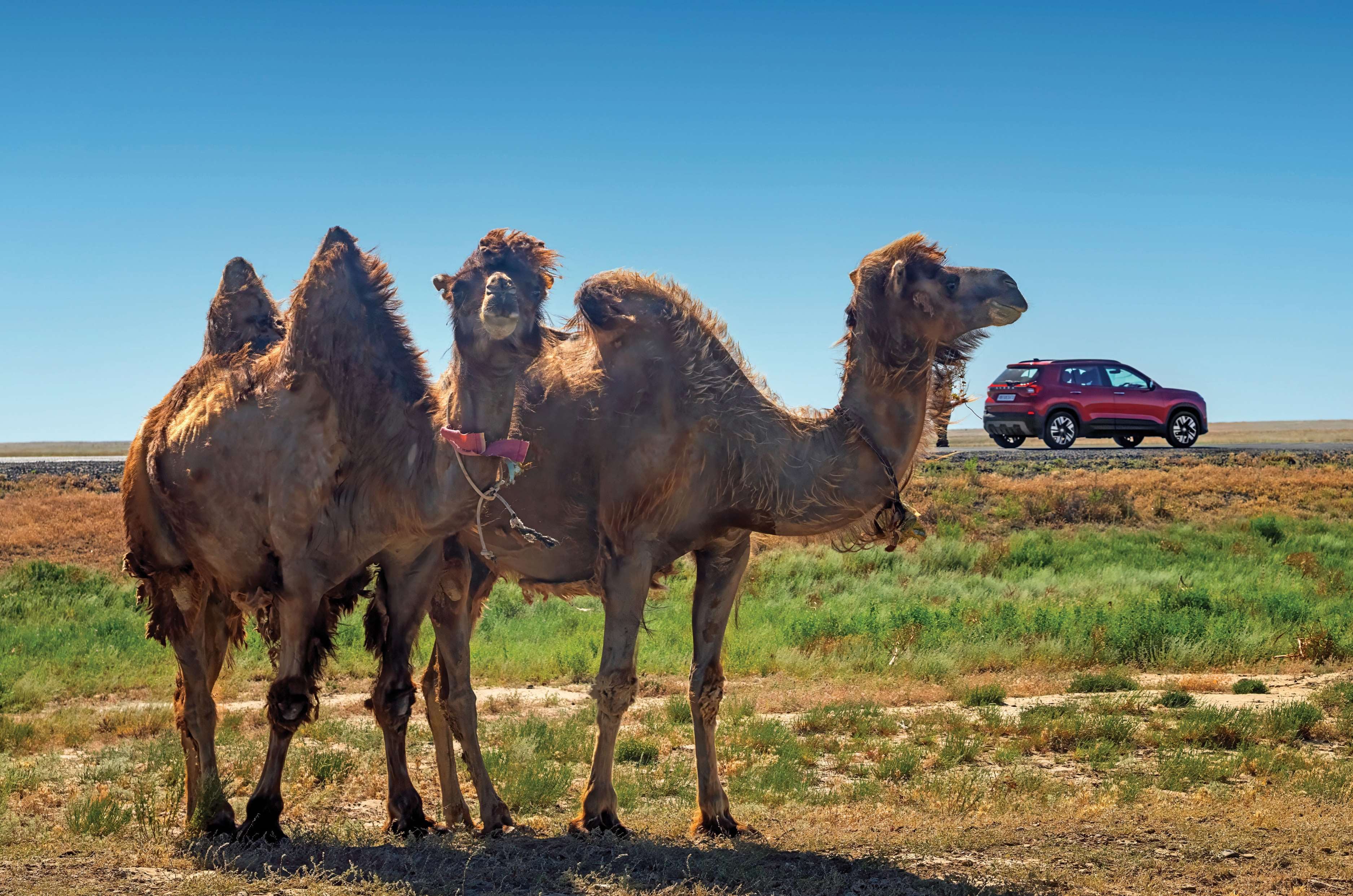
The Great Steppe, while stunning in size, is also a bit monotonous when you’re driving through it for days. The only respite would be a herd of double-humped Bactrian camels, cooling off at a nearby pond and often curious to know what a cherry-red Kylaq was doing in the middle of Kazakhstan.
At Rs 58.17 per litre, Kazakhstan offered the lowest fuel price of the entire drive.
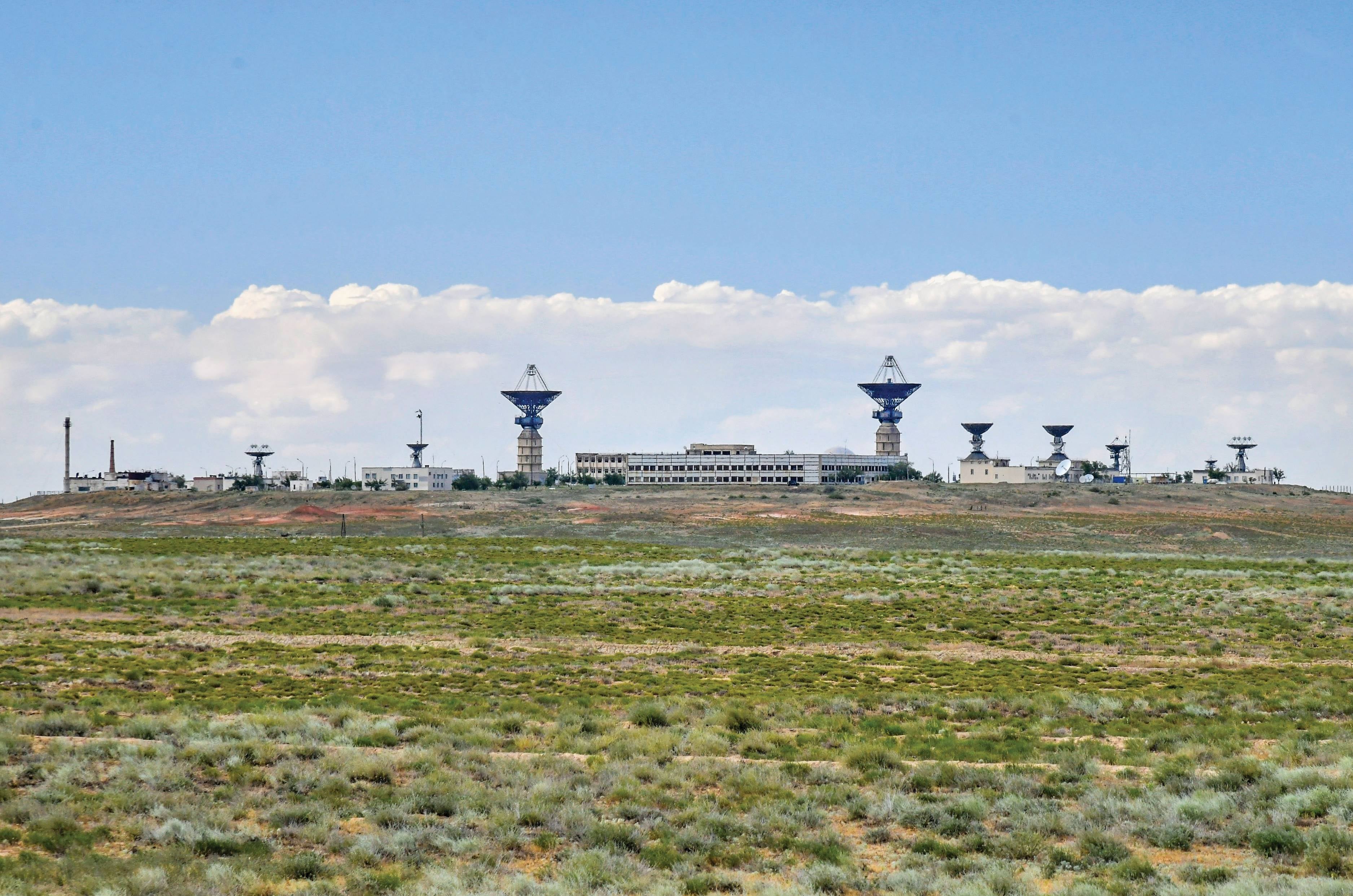
An interesting stop between Turkistan and Aral is the Baikonur Cosmodrome, which is the world’s first and largest operational space launch facility. However, thanks to the endless highways through Aral, Aktobe and Atyrau, we only got to test the Kylaq’s wheel alignment and its highway stability more than we would have liked.
Baikonur Cosmodrome – the world’s first, largest and operational space launch facility.
The mighty Stans were all about breathtaking sights, warm people and mouth-watering cuisine. The region still feels unadulterated, and that itself is what makes it special.
Kazakhstan in numbers
Turkistan – Kazakh-Russia border
Distance covered
3,237km
Fuel consumed
229.52 litres
Average fuel economy
14.10kpl
Approx. fuel cost
Rs 13,325
Avg. per-litre fuel cost
Rs 58.17
Total time driven
42 hrs
Average speed
77.1kph
Georgia – The Birthplace of Wine
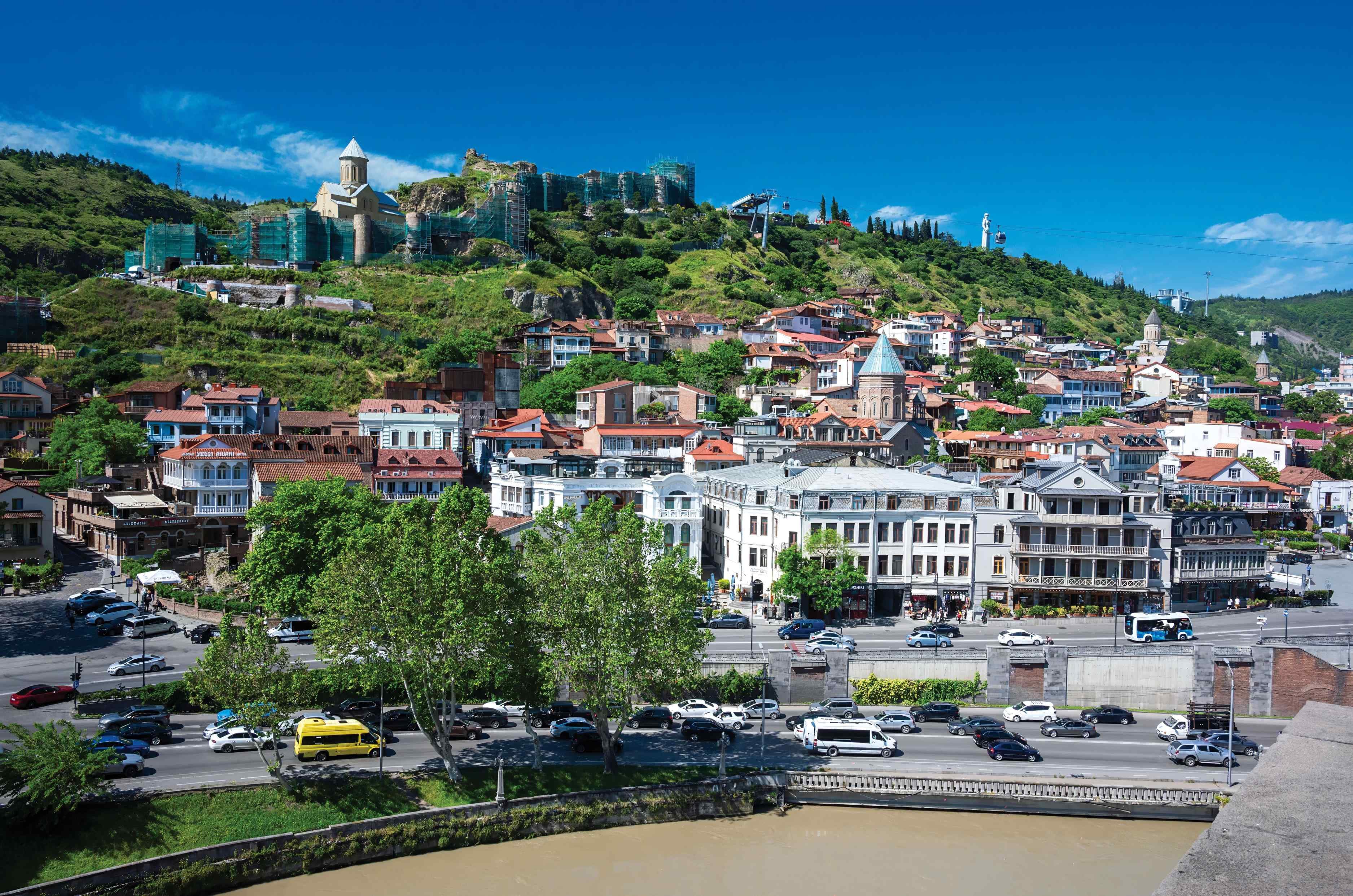
Compared to the vast landscapes and long highways of the Stans, Georgia was a contradiction. Based within the Caucasus Mountains, it has its share of twisties, which the Kylaq enjoyed. But the capital, Tbilisi, is the largest city and thereby pretty chaotic to drive in. Peak-hour traffic is just like what you would have in India, so we parked the car in a worryingly narrow alleyway and, for the most part, made our way on foot.
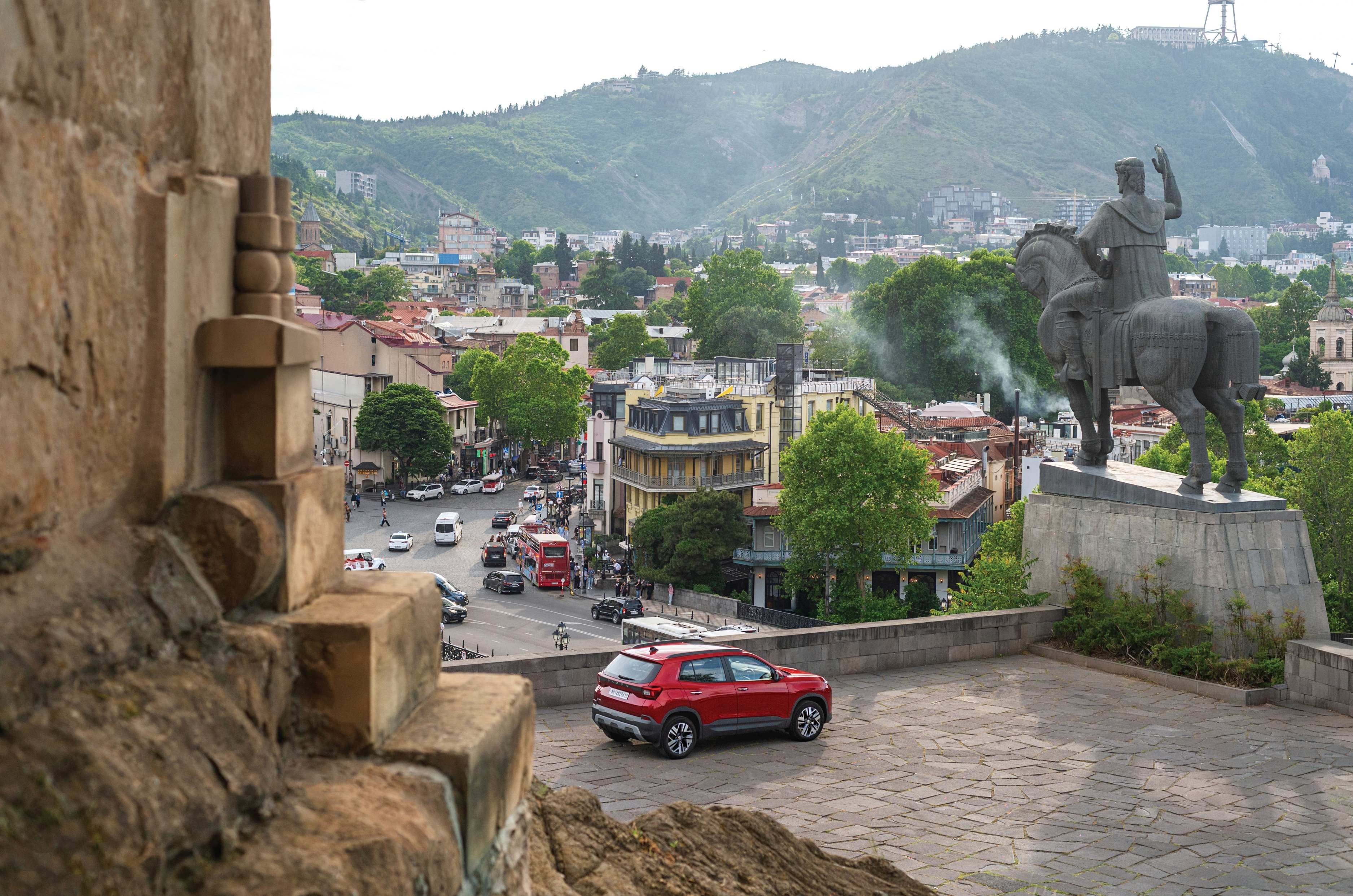
Huge statue of the founder of Tbilisi King Vakhtang I Gorgasali.
Like any big city, Tbilisi has its modern side, with glass buildings and modern restaurants, but there is still a large section that is rooted in tradition. Cobblestone streets with wooden houses and sulphur baths are a fascinating experience, as is the fantastic view from near the monument of King Vakhtang Gorgasali, the founder of Tbilisi.
The monument itself is a striking bronze equestrian statue located on a rocky cliff above the Mtkvari River, next to the historic Metekhi Church in Tbilisi, Georgia. But Georgia is known to be the birthplace of wine, and on our drive to Tbilisi, we spotted several vineyards sprawling for acres. We had to get a closer look, and thankfully, our guide’s friend owned one of them.
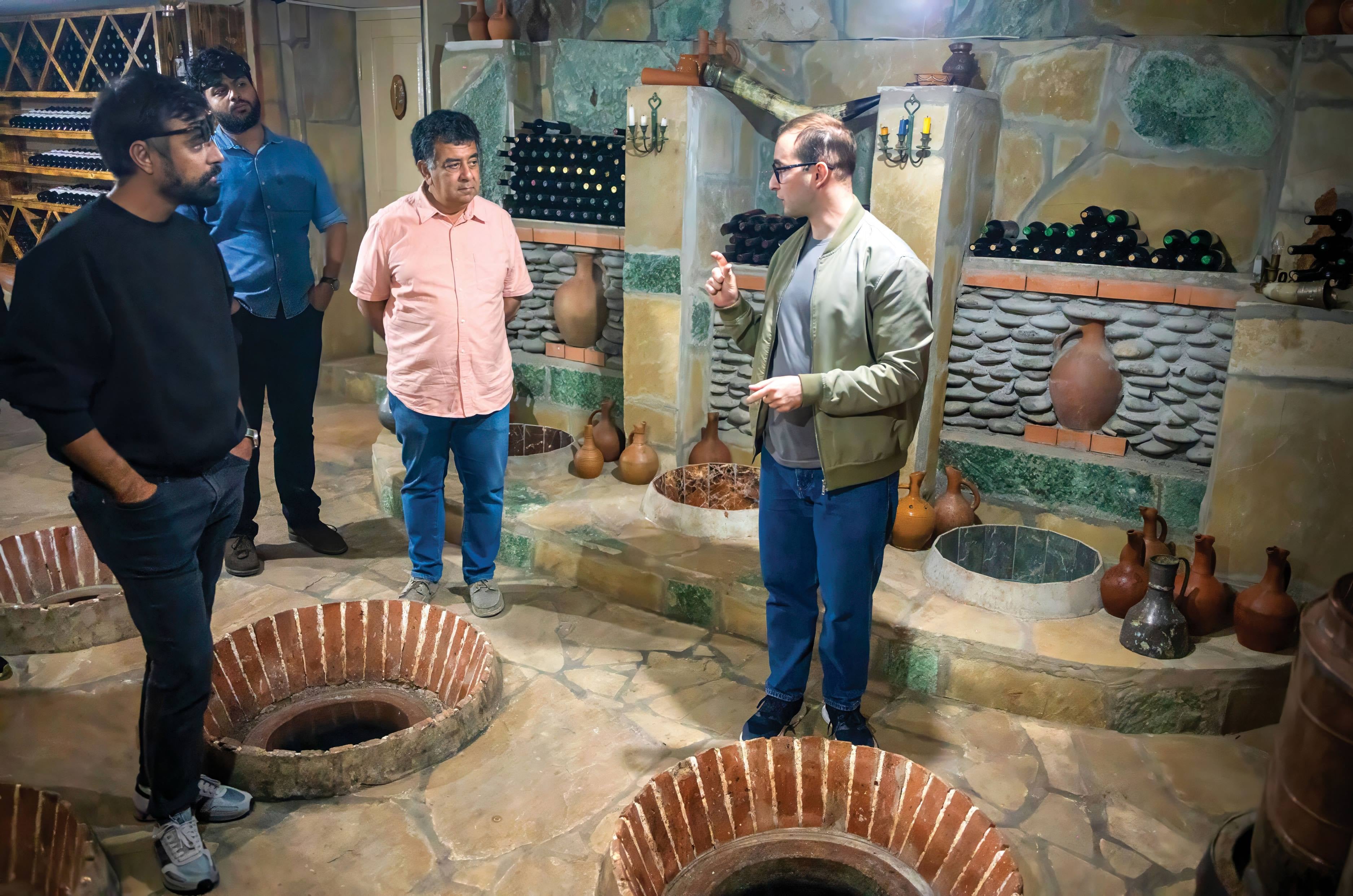
Georgian wine fermented in clay jars buried in the ground.
The Georgians still use the ancient process of fermenting wine in barrels under the floor, but have now blended it with modern technology that allows them to control the temperature and get a more consistent batch each time. Wine connoisseur or not, the experience is enthralling.
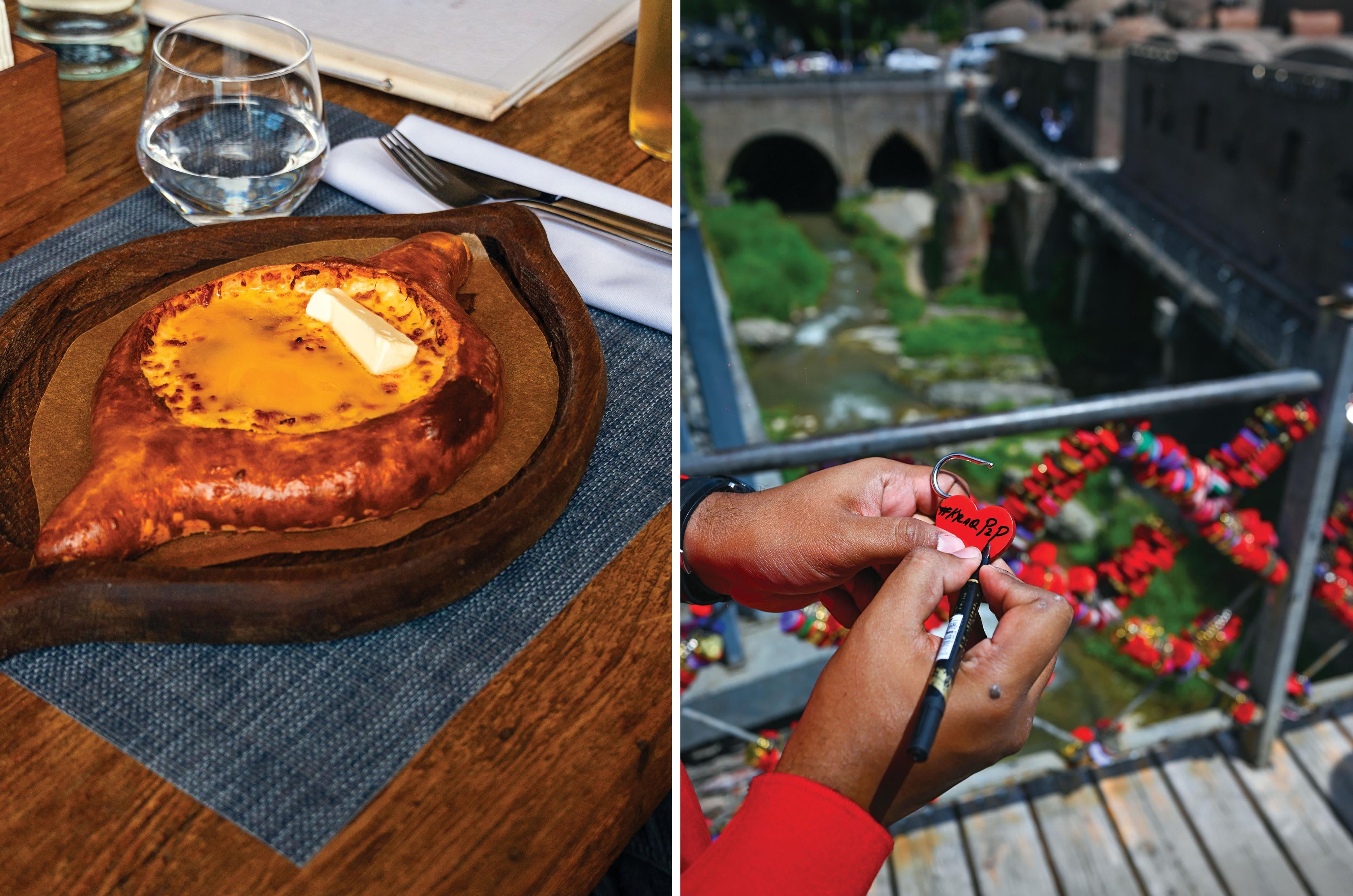
Khachapuri (flatbread with cheese and egg) is Georgia’s national snack.
The city tour built up an appetite, and we followed the scent of fresh bread for some authentic khachapuri. A Georgian flatbread that is hollowed out in the centre and filled with cheese, khachapuri varies depending on the region you’re in. You can have it with an egg cracked into it or with meat, too.
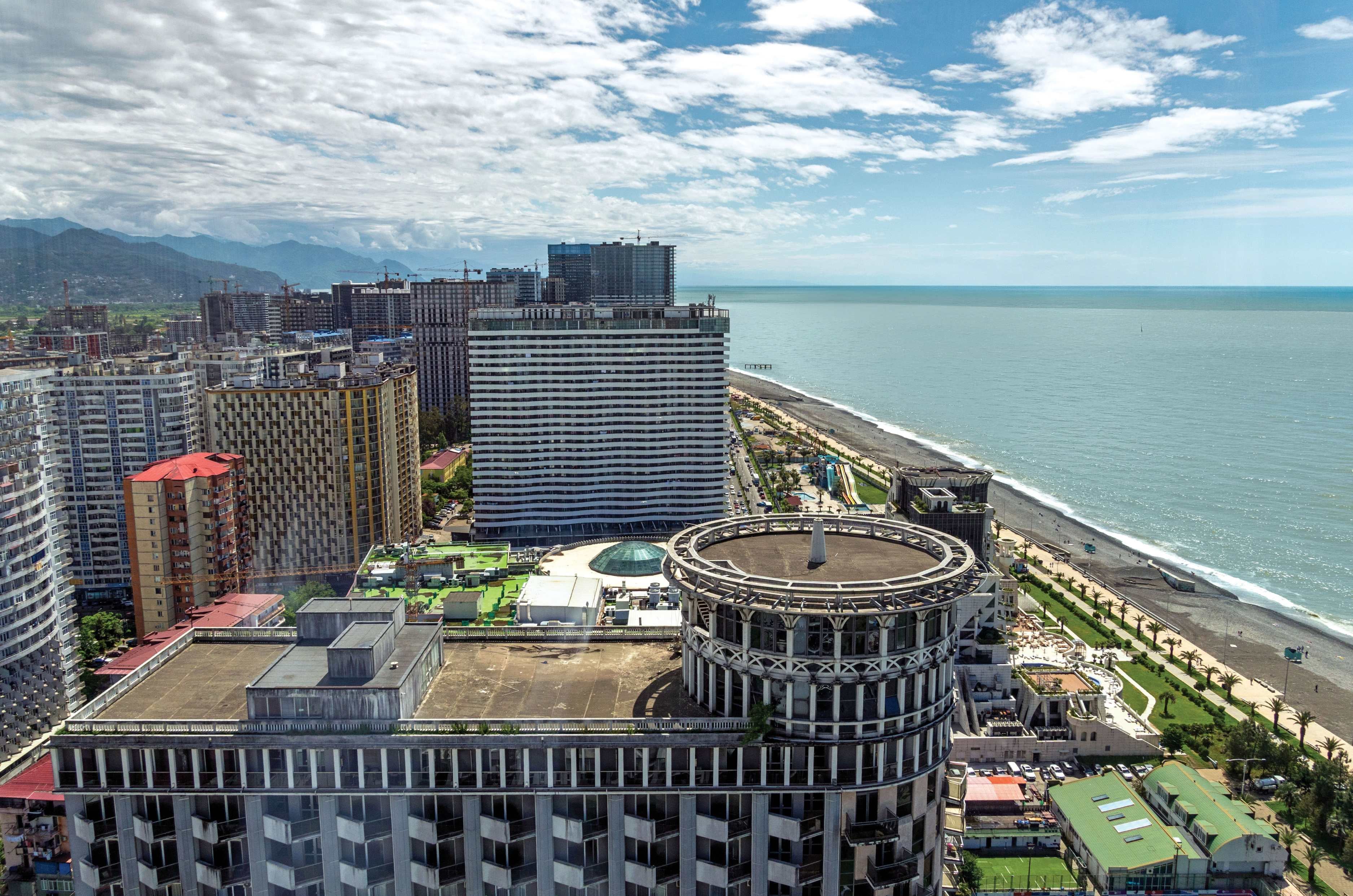
Coastal city of Batumi is a stark contrast of Tbilisi.
With sightseeing done, we drove the next day to the coastal city of Batumi. A vibrant, modern city with a lot more European influence. However, if the roads in Tbilisi were narrow, Batumi was on another level. Despite the compact dimensions of the Kylaq, our hotel parking was a sidewalk cordoned off by the hotel manager, as there simply was no space to park.
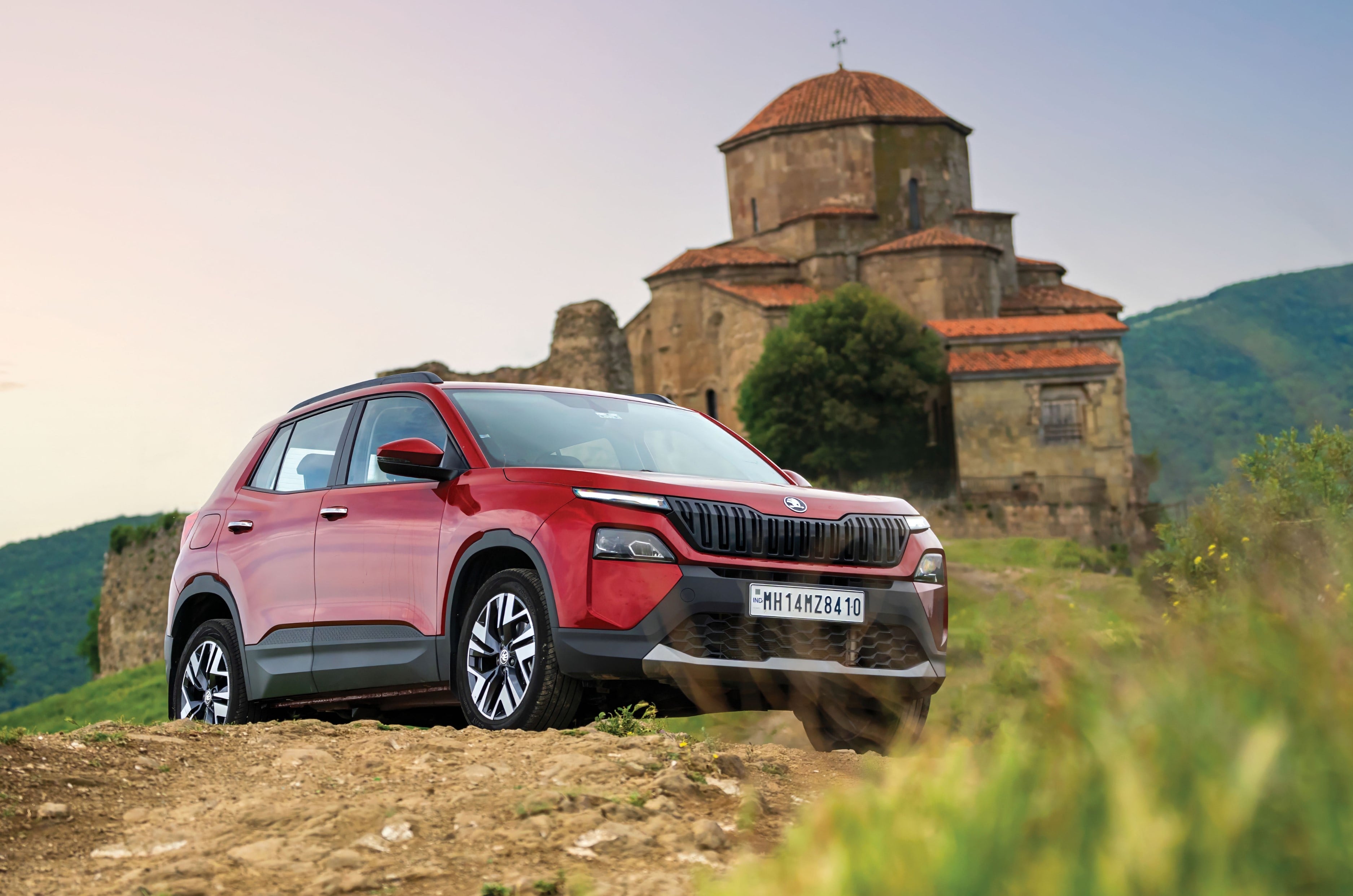
14th-century Gergeti Trinity Church has stunning views of the Caucasus Mountains.
Still, we made the most of it by strolling by the shore of the Black Sea, watching the locals angling for fish. Georgia, just like the Stans, offered a unique glimpse into this part of the world and its diverse culture. For our final stretch before Europe, we had one last country to drive through – the colourful Türkiye.
Georgia in numbers
Tbilisi – Türkiye border
Distance covered
624km
Fuel consumed
58.62 litres
Average fuel economy
10.64kpl
Approx. fuel cost
Rs 7,607
Avg. per-litre fuel cost
Rs 129.78
Total time driven
17.5hrs
Average speed
58.5kph
Türkiye – Gateway to Europe
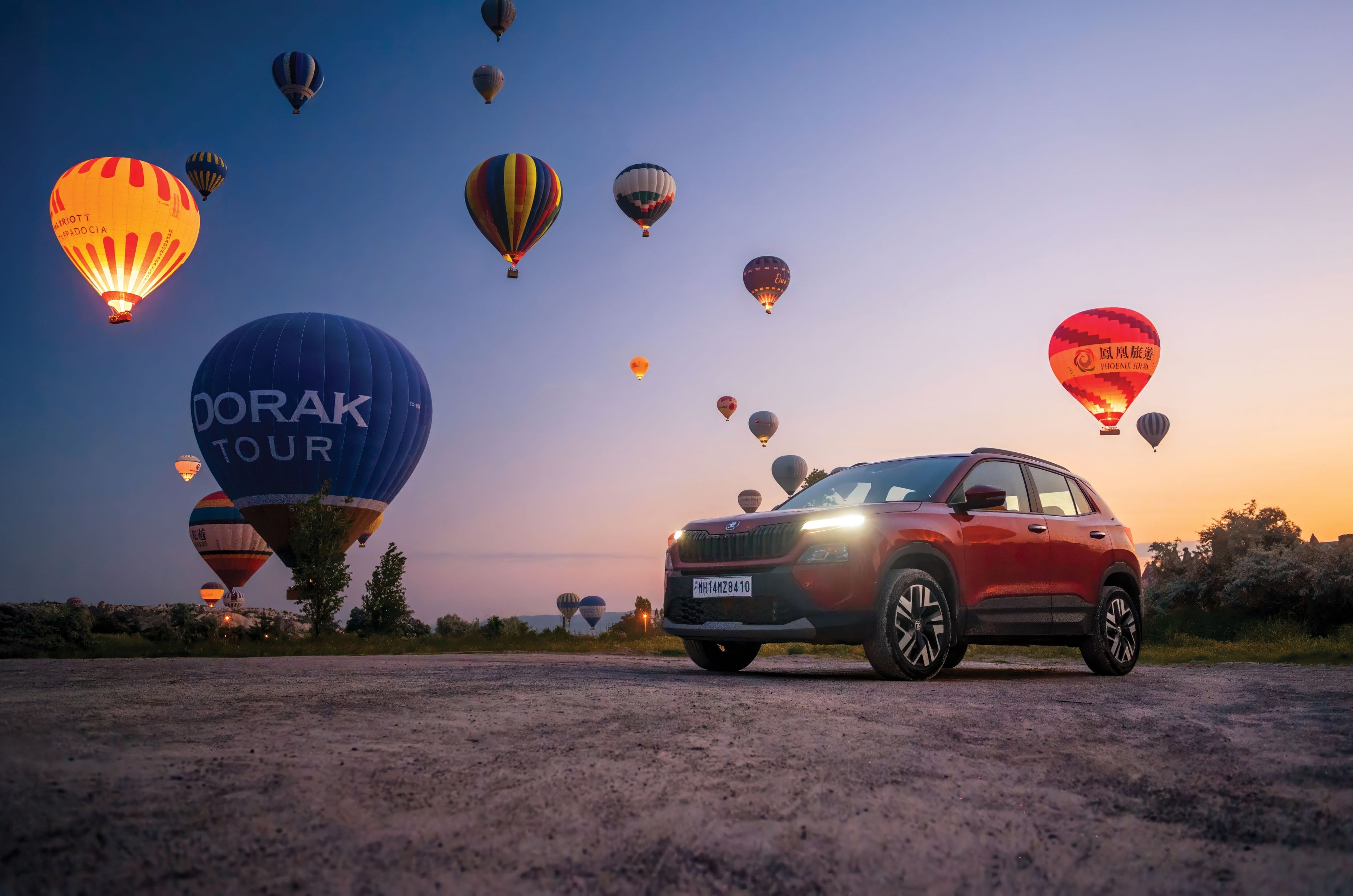
Cappadocia’s claim to fame is well worth the hype.
As the Kylaq crossed into Türkiye, our first stop was in Erzurum. A major winter sports town, but thanks to the time of year, our ski resort was bright, sunny and without an ounce of snow. A quick stroll through the small town and we hit the sack in preparation for a 700km-plus drive to the tourist haven that is Cappadocia.
The next morning, the plan was to do what you must do in Türkiye – take a hot-air-balloon ride. A pre-dawn wake-up call is never comfortable, but the peace was soon shattered by the sound of a group of old diesel Land Rover Defenders revving to keep themselves warm while they waited to transfer tourists to the balloon launch site. The balloon ride is arguably the largest tourist attraction in Türkiye, so there was quite the rush.
We, too, loaded up the Kylaq and hit the road to get the perfect shot of the sun coming up over the hills while the sky was filled with balloons. And boy, did we get it. As the orange tinge hit the fairy chimneys, we saw what the hype was about. The visual is nothing like you have ever seen: watching one colourful hot-air balloon is rare, and here there were over a hundred. We shot GBs worth of images and videos and got back to catch up on the broken sleep from earlier.
Türkiye in numbers
Erzurum – Bulgaria border
Distance covered
1,436km
Fuel consumed
98.1 litres
Average fuel economy
14.63kpl
Approx. fuel cost
17,187
Avg. per-litre fuel cost
Rs 134.19
Total time driven
19.5 hrs
Average speed
73.64kph
A relaxing drive the next day got us to Istanbul, which, to some, might seem like the capital thanks to its bustling character – a glimpse of which we got as we got closer. A traffic jam stretching for more than a couple of kilometres brought the Kylaq to crawling speeds. To avoid the repercussions of driving next to hasty cab drivers, we parked the Kylaq and headed to check out the nightlife, but more importantly, the döner kebab.
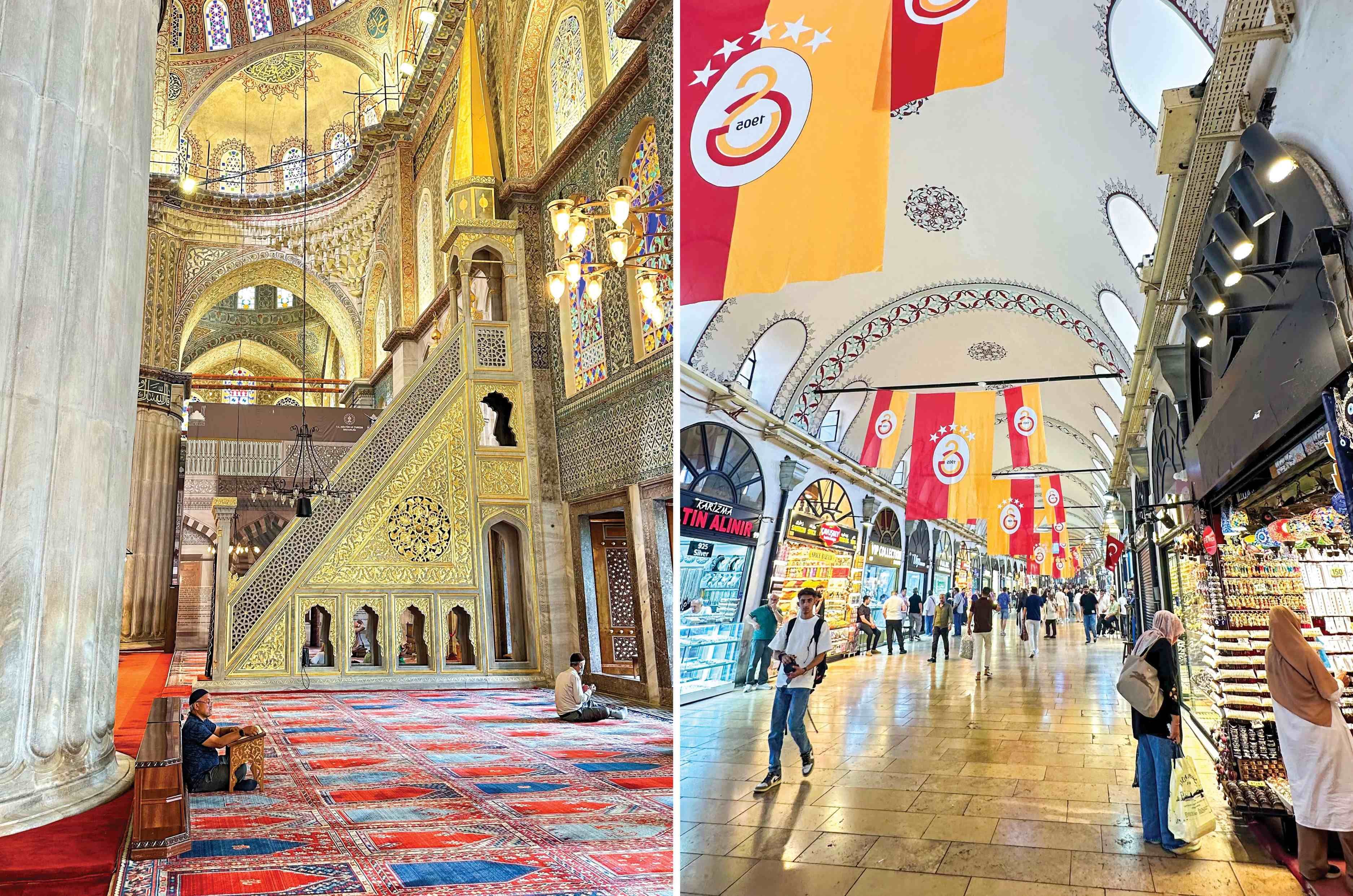
Exceptional interiors and an unbelievable calm in Istanbul.
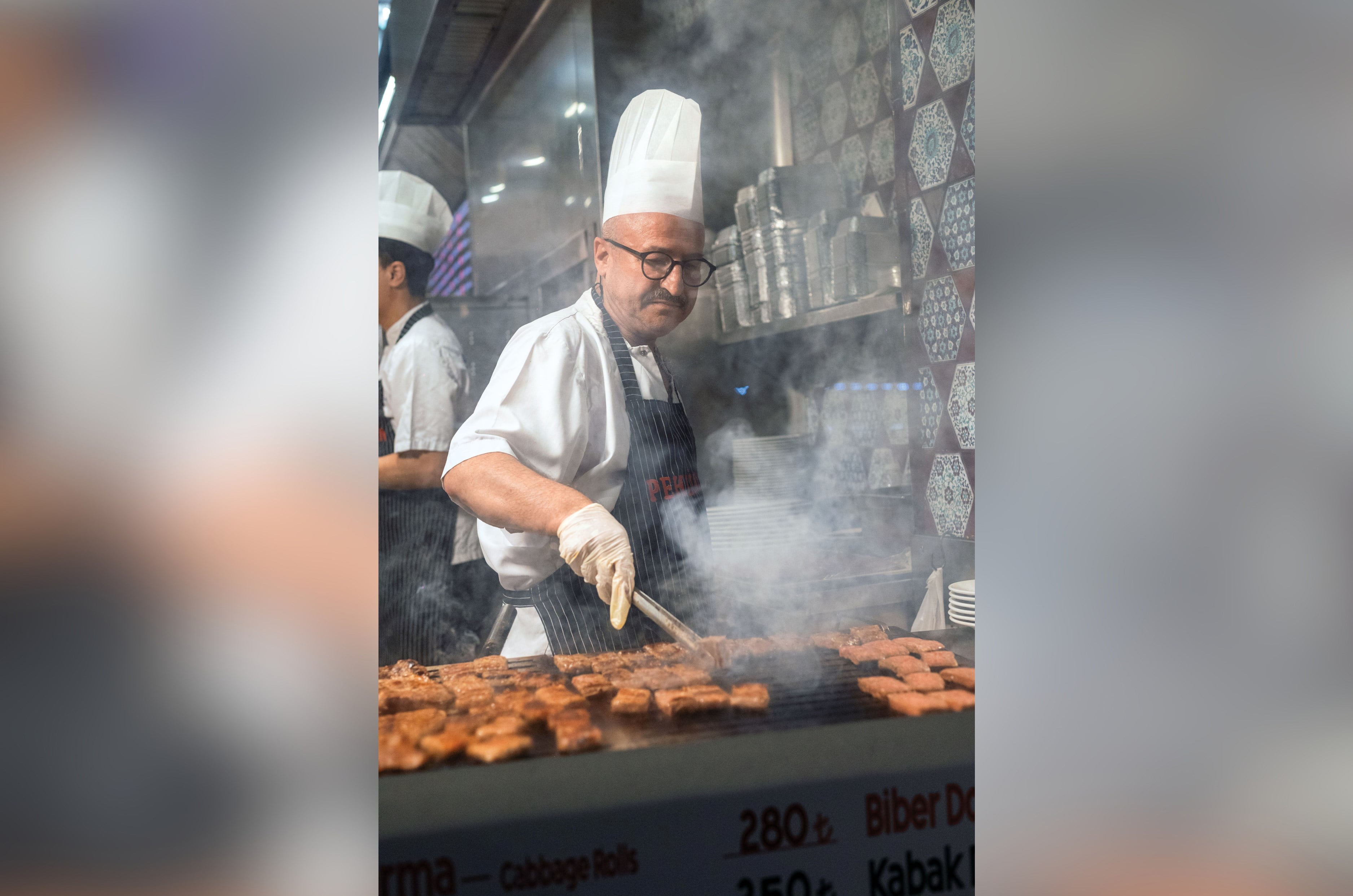
Similar to a shawarma, the döner kebab consists of a pile of meat that is cooked on a rotisserie over a flame. The dripping fat is mopped up by pita bread, which is then loaded with the sliced meat and seasonings. After a long walk through the Grand Bazaar, haggling for a fake Rolex, the döner becomes almost a necessity.
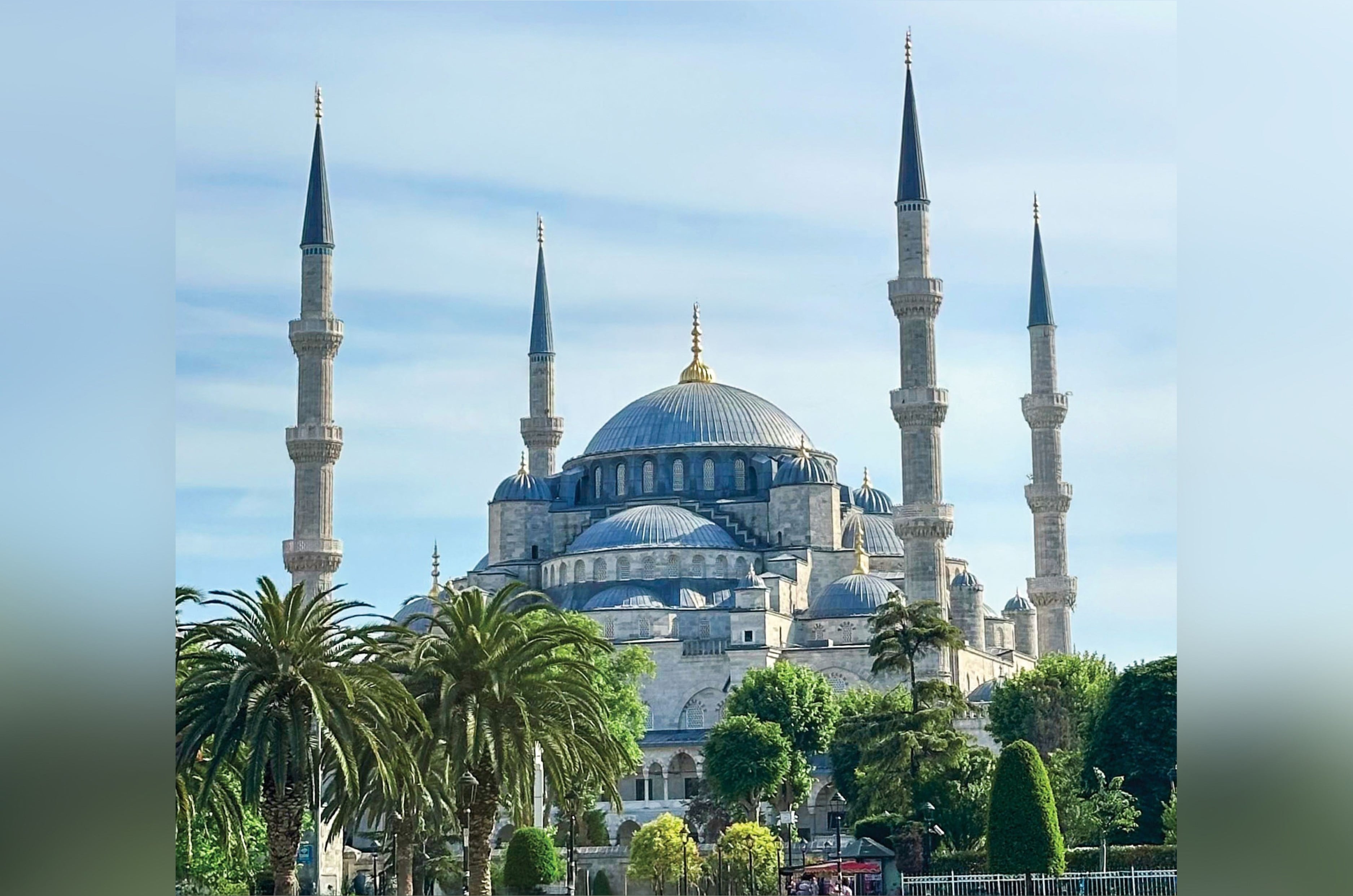
What’s also equally stunning is the Blue Mosque. Known formally as the Sultan Ahmed Mosque, it was constructed between 1609 and 1617 in the Ottoman era by Ahmed I. To get the entire mosque in frame, you need to fall back to the Hagia Sophia Mosque, which is in the same vicinity. Both equally grand, equally detailed and equally important.
The Blue Mosque, built in the Ottoman era, is majestic.
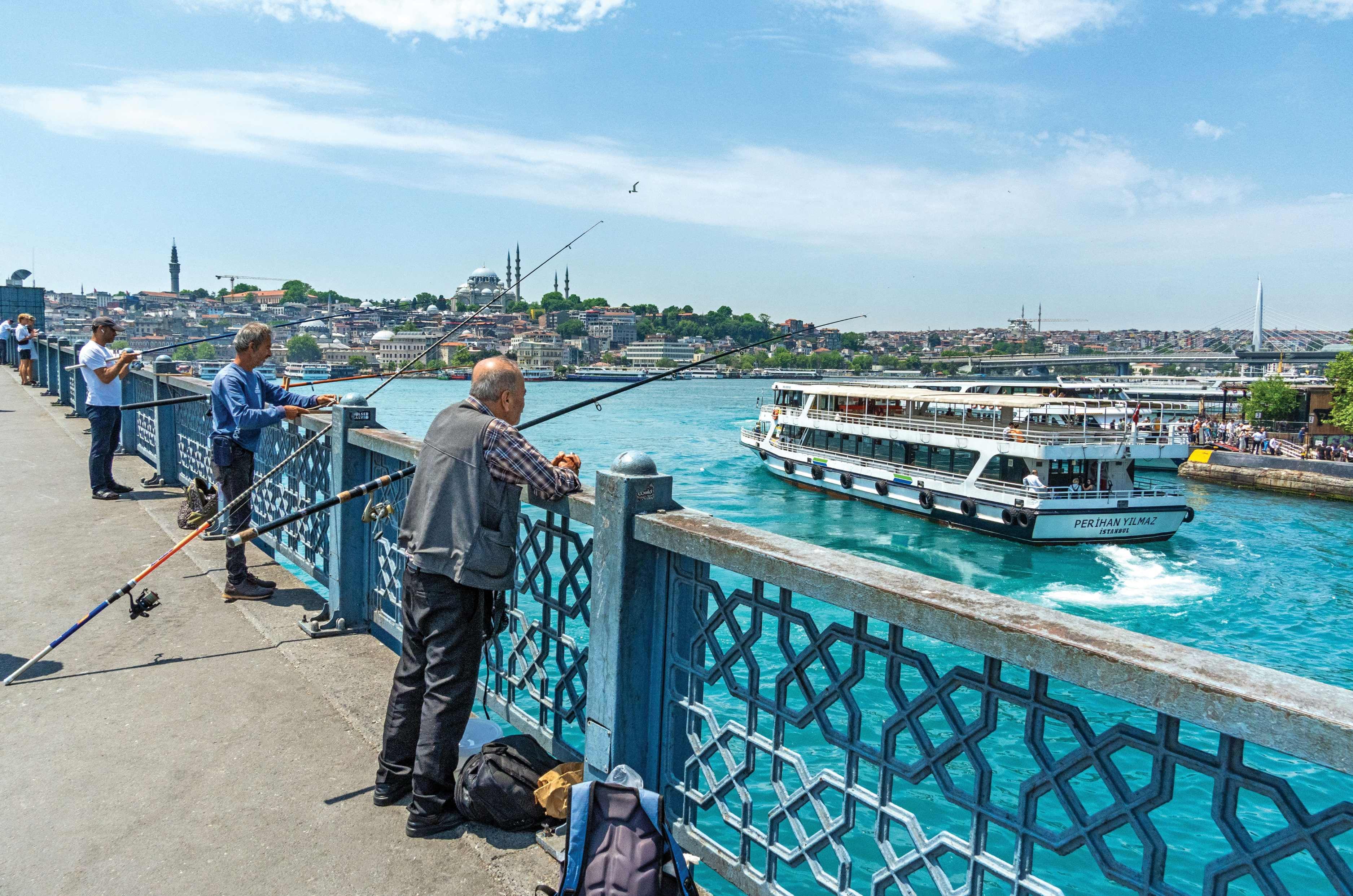
To explore more of Türkiye, we got back into the Kylaq and realised there was a bridge that is unlike any other in the world. The Bosphorus Bridge is located over the Bosphorus Strait, but its claim to fame is that it, quite literally, has one end in Asia and one end in Europe. You can cross the bridge in about two minutes, depending on traffic, but the sense that you can practically drive over from Asia into Europe before you can finish watching a reel is unreal.
Angling over the Bosphorus strait is a common hobby.
Europe – Home Stretch
Bulgaria – Romania – Hungary – Slovakia – Prague
The end of our incredible Pune-to-Prague drive was now a matter of days away. After over two months on the road, we were a couple of thousand kilometres away from the finish line. The excitement that had tapered off midway was back in full force.
We would be entering Europe through Bulgaria, and the border, as expected, was busy. Documentation, carnets, passports, stringent car checks and some explaining later, we were finally in.
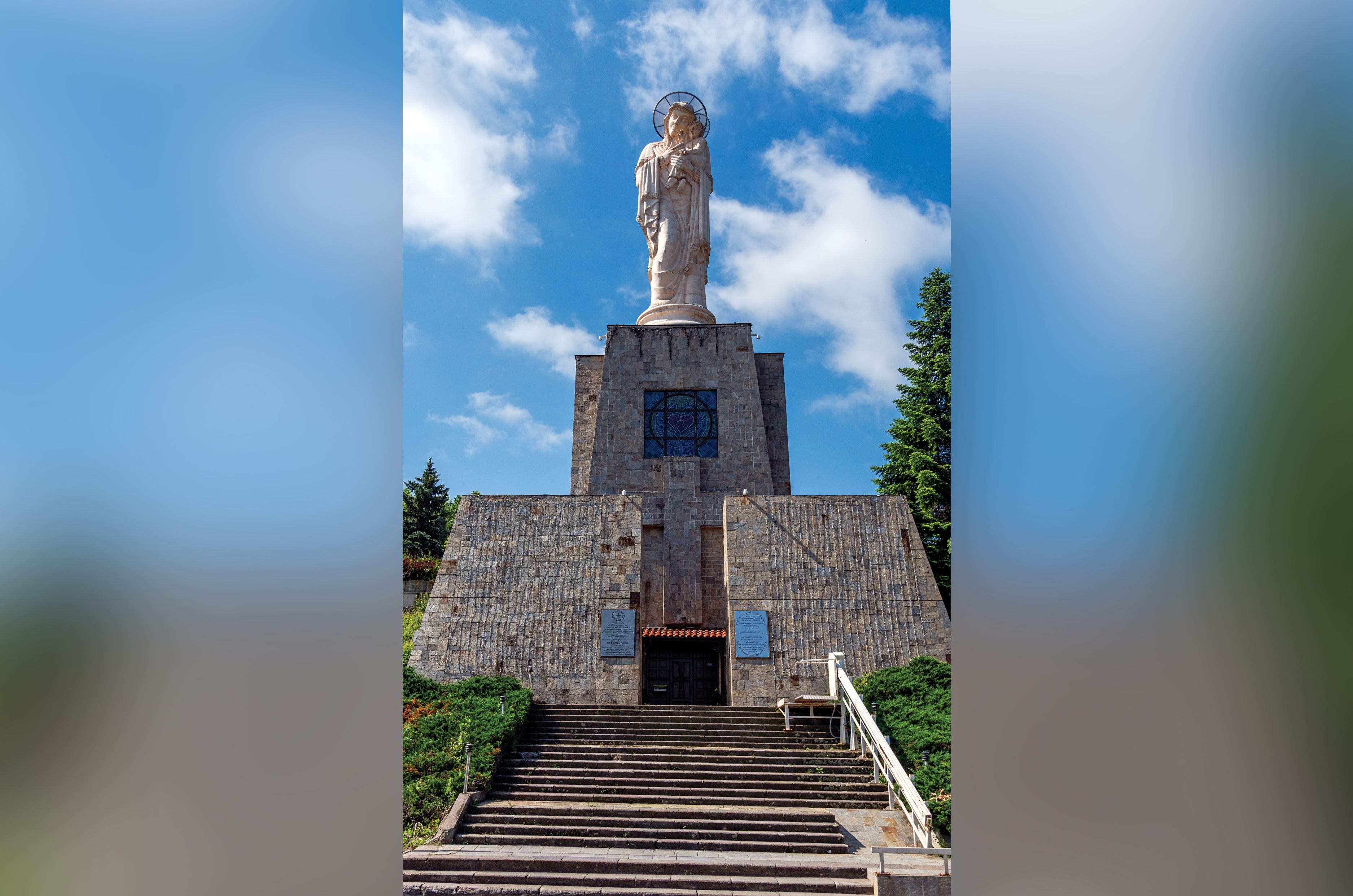
Monument of the Holy Mother of God in Haskovo.
Haskovo is a quaint town with a slow pace and none of the bustle of a European city, but it boasts a Guinness record for having the towering Monument of the Holy Mother of God, the tallest statue of the Virgin Mary and Baby Jesus in the world. Naturally, we had to check it out before we headed further.
Crossing countries in Europe is the equivalent of crossing states in India. There are no significant border checks or passport-control booths. A board with the blue EU flag and the name of the country is all you will see.
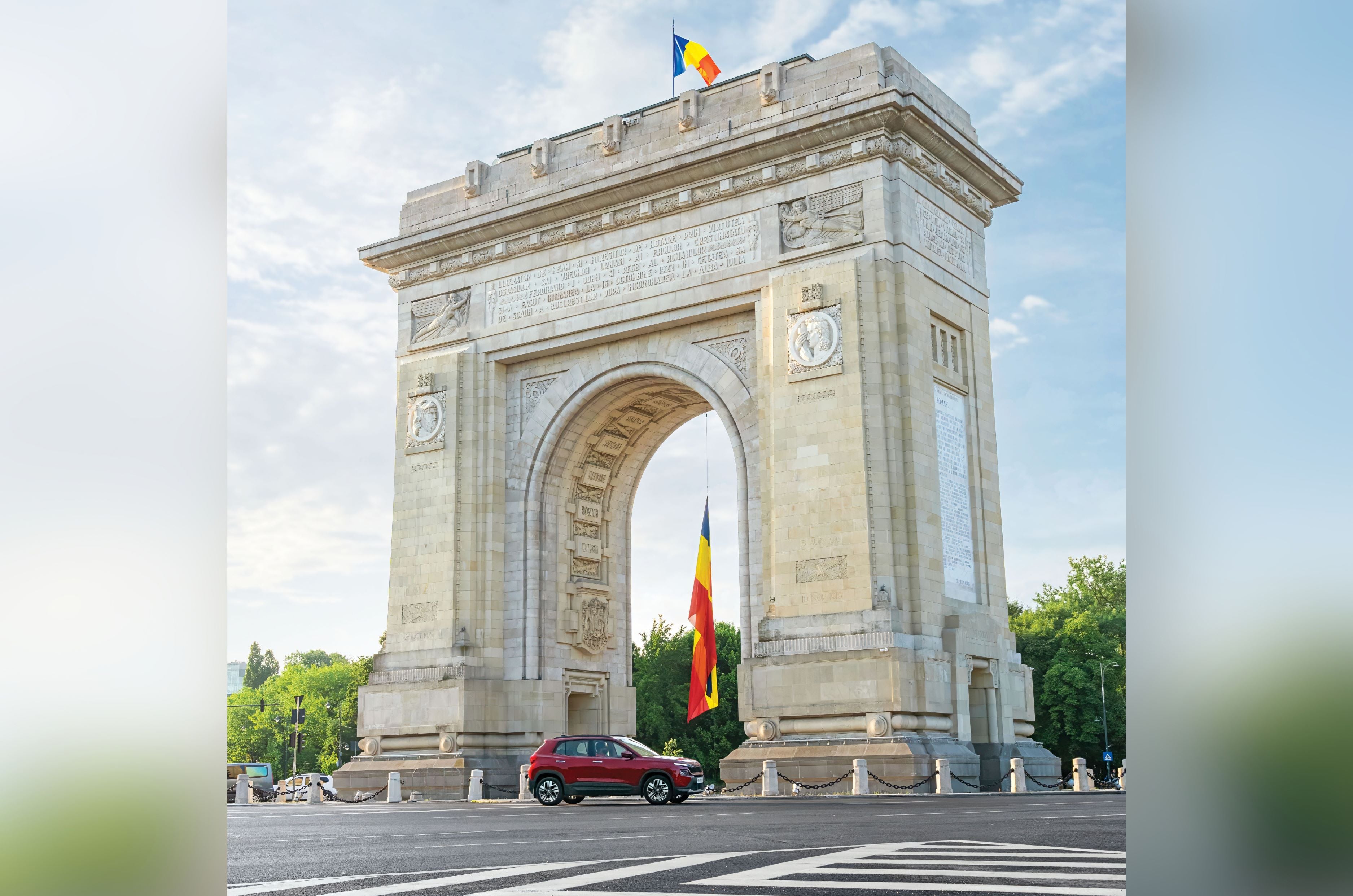
Romania’s Arcul de Triumf an ode to the one in Paris.
We crossed into Romania rather unassumingly and headed for Bucharest. The capital is picturesque and is also colloquially known as “Little Paris”. Like the Arc de Triomphe in Paris, Romania too has its own version. A tad smaller in comparison, but just as iconic.
However, what takes the cake is the Parliament Building, formally known as the Palace of the Parliament, which is also the heaviest building in the world, standing at approximately a ridiculous 4,098,500 tonnes. We couldn’t verify that, but since the Kylaq looked like a mere speck in front of it, it was all the proof we needed.
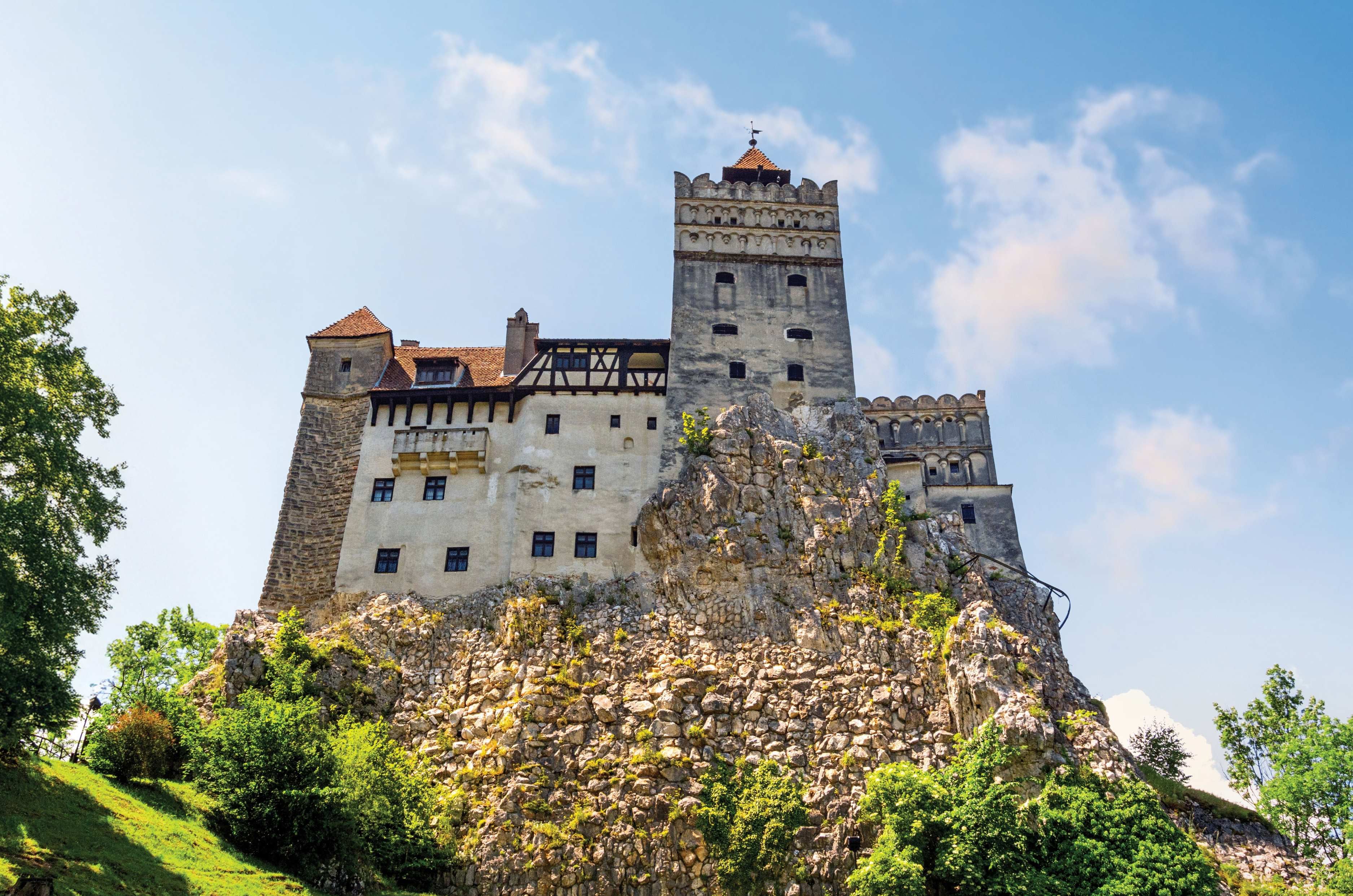
Bran Castle is widely marketed as Dracula’s home.
Bucharest also has a thriving nightlife, with the quiet cobbled streets turning into party hubs post-sunset. As we headed towards Hungary, we couldn’t help but make a stop at Bran Castle. Despite the myth that it was once home to the famous Dracula, there is nothing but merchandise at the foot of the castle to prove that claim. Historians have dismissed the claim and, while it is fascinating, there is plenty of evidence against it. Still, that did not stop us from buying some fake vampire teeth and Dracula magnets.
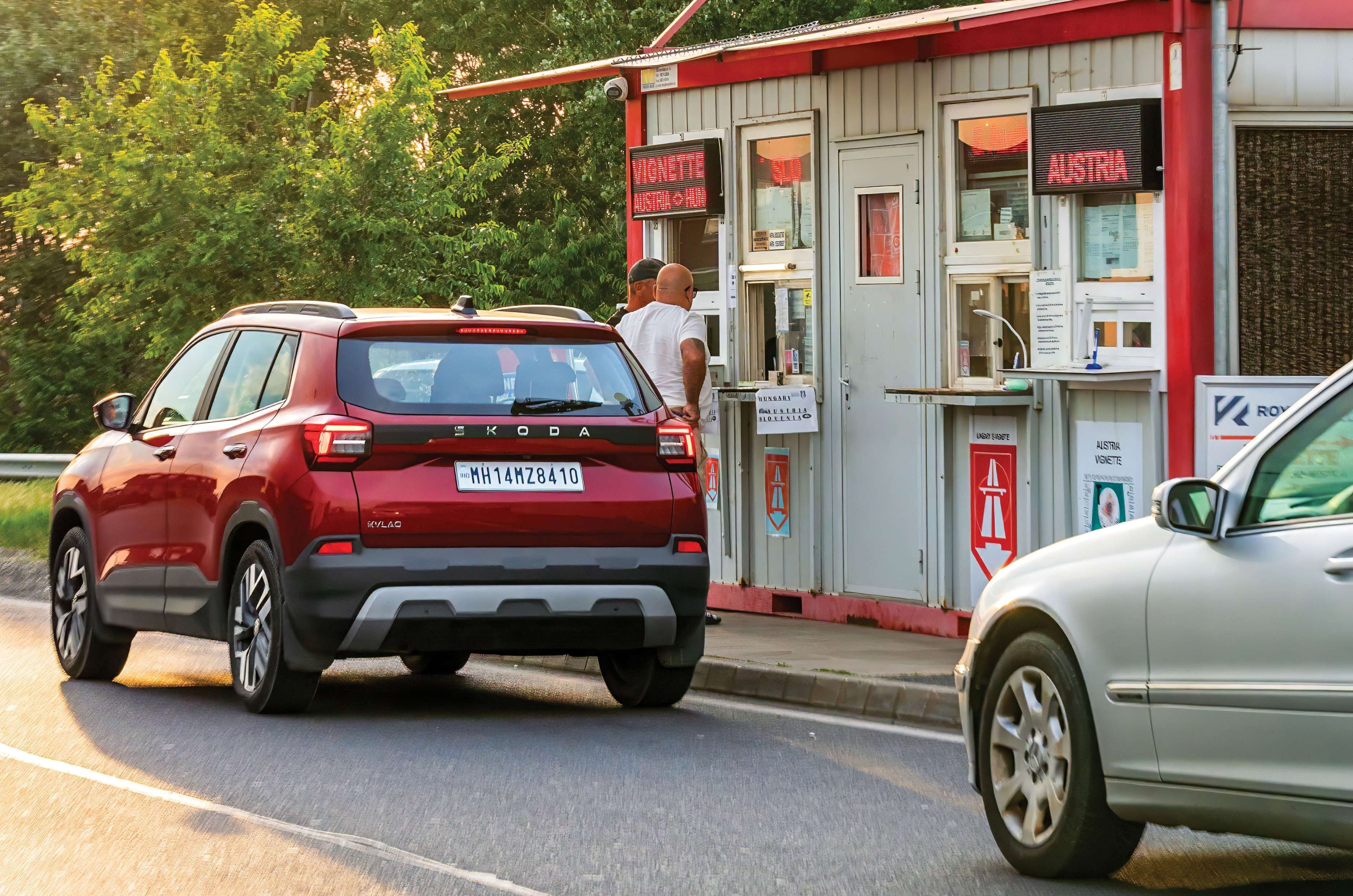
Vignette is Europe’s FASTag and is essential on the freeways.
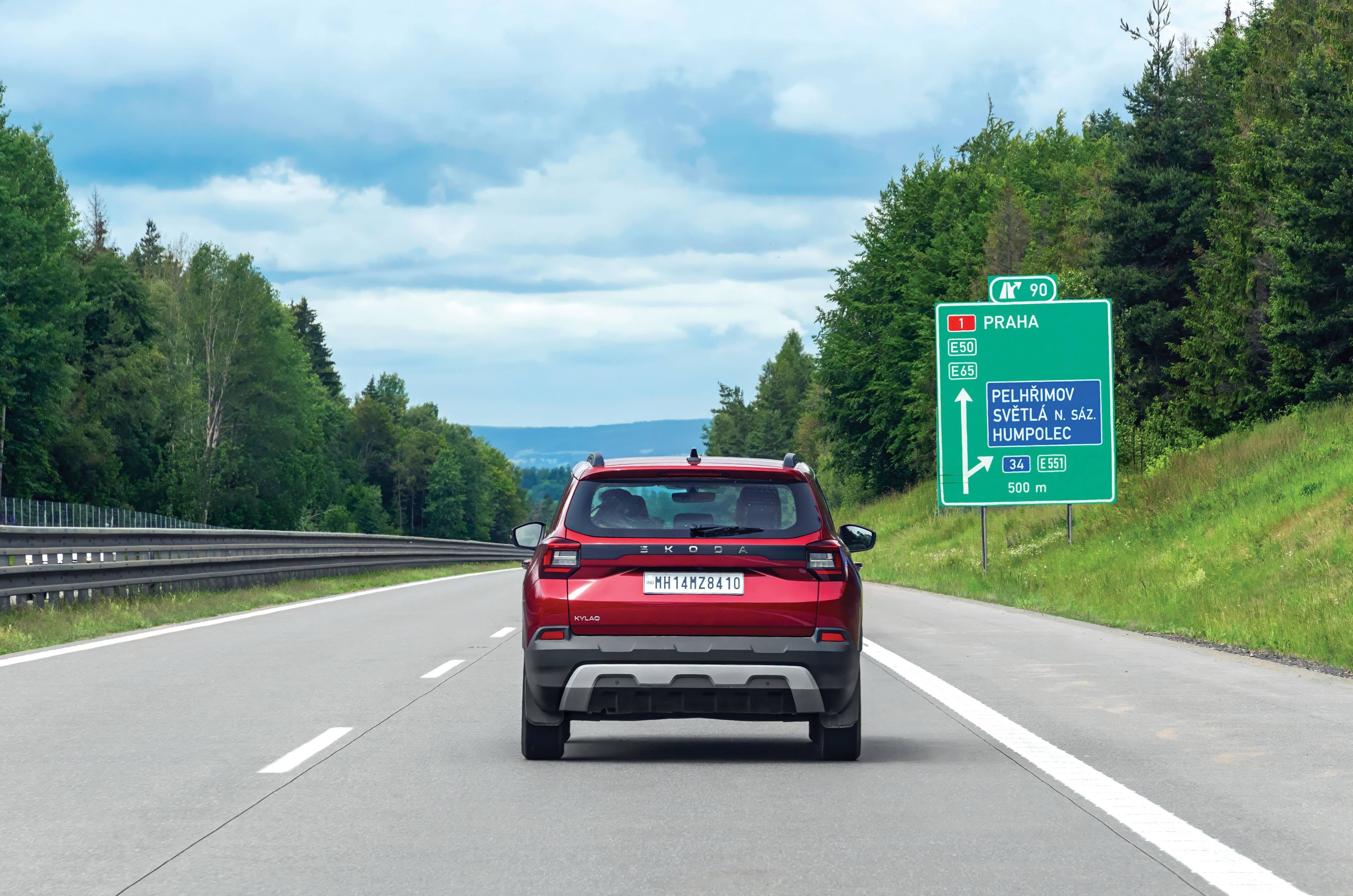
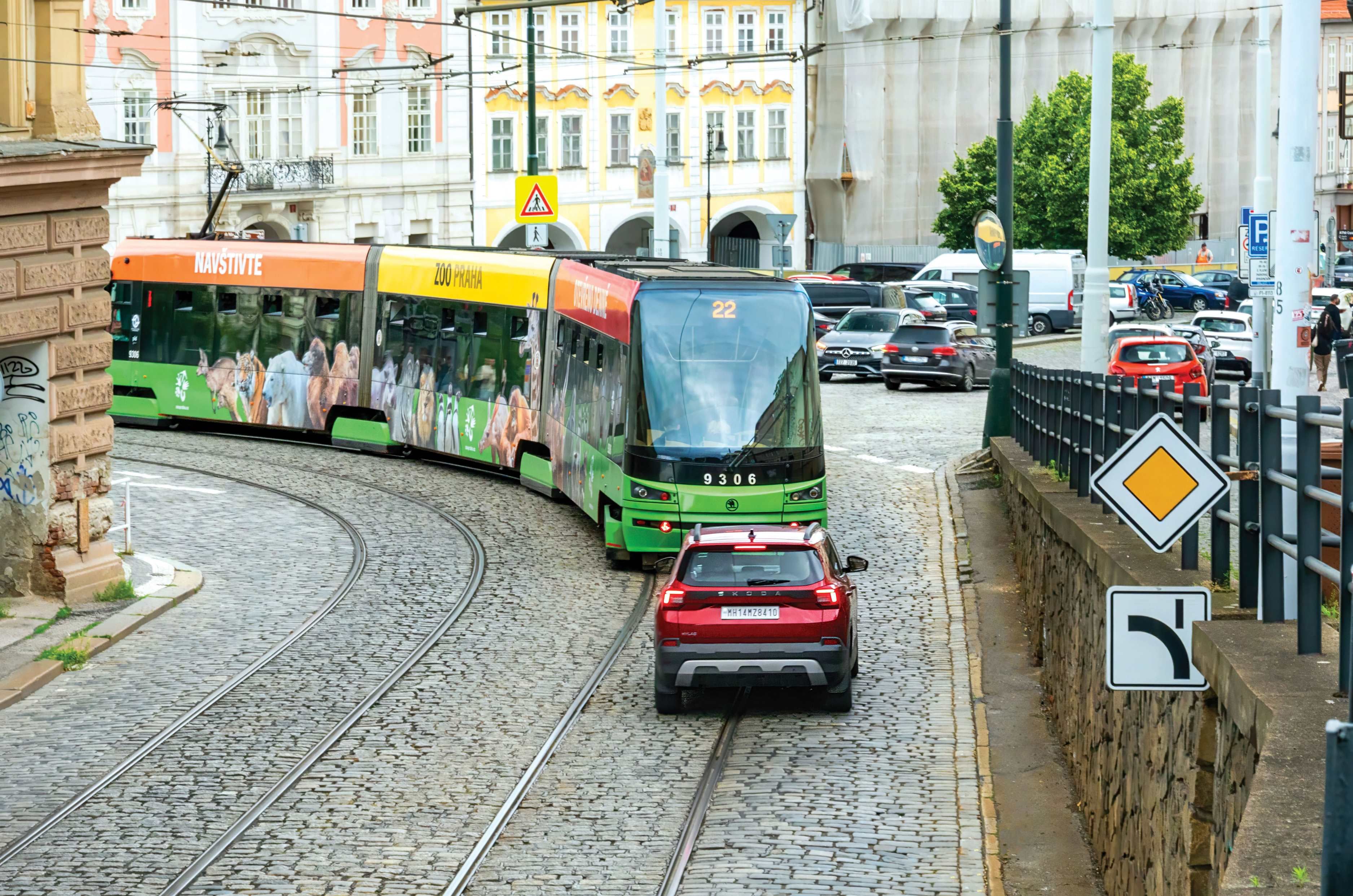
From the shores of the Black Sea, we drove into landlocked Hungary. The drive to Budapest was long, but thanks to Europe’s seamless highways, it was light work for the Kylaq. In Europe, it just blended in with the other cars, and at no point did it feel out of place. It might have been built in India, but it felt every bit as European as it got closer to Prague.
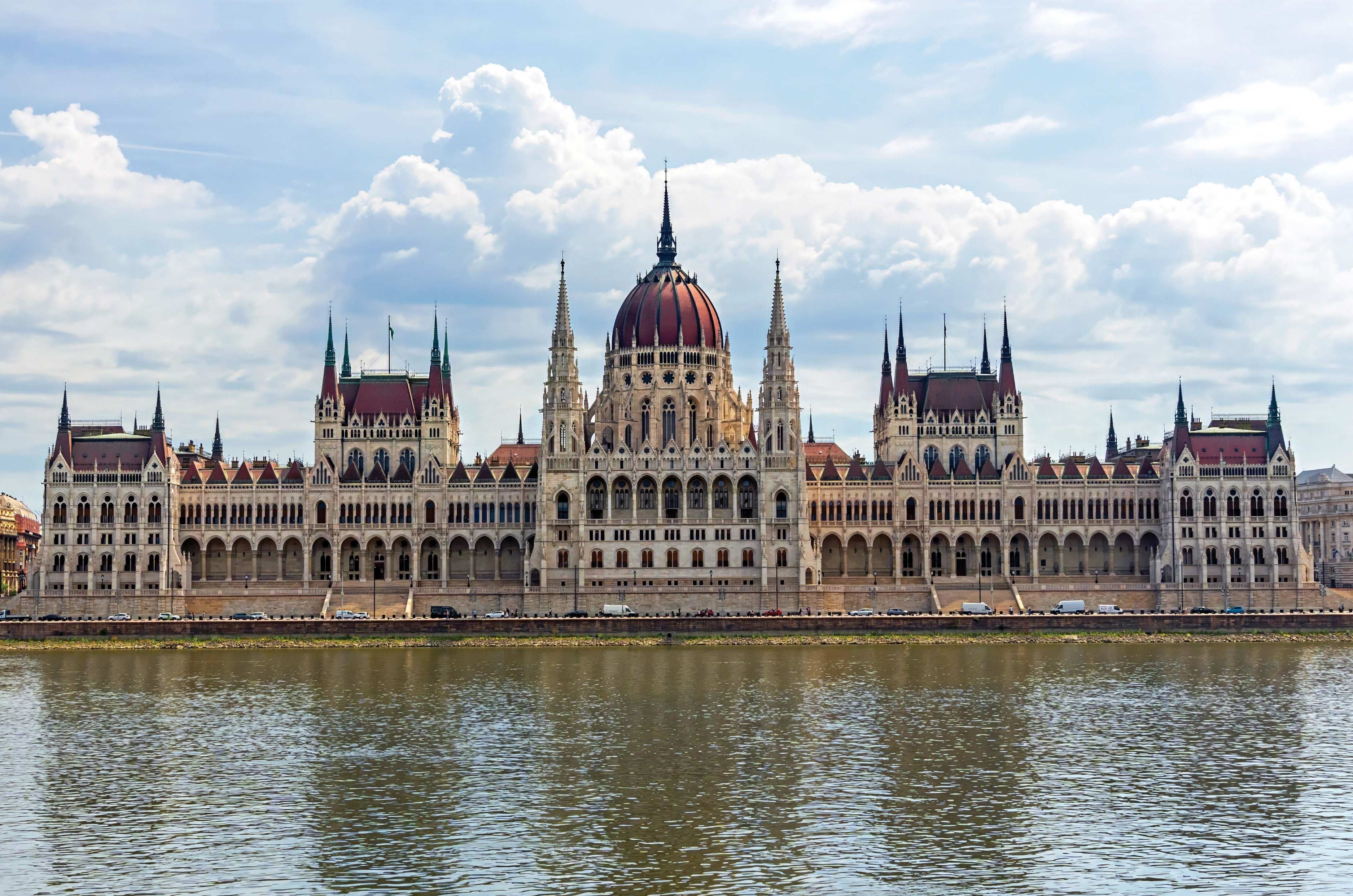
Budapest’s Parliament Building sits by the banks of the Danube River.
As we drove by the banks of the Danube, we were in awe of the stunning Hungarian Parliament Building. Budapest is also known for its bridges, with as many as 13 iconic ones, each with its own identity.
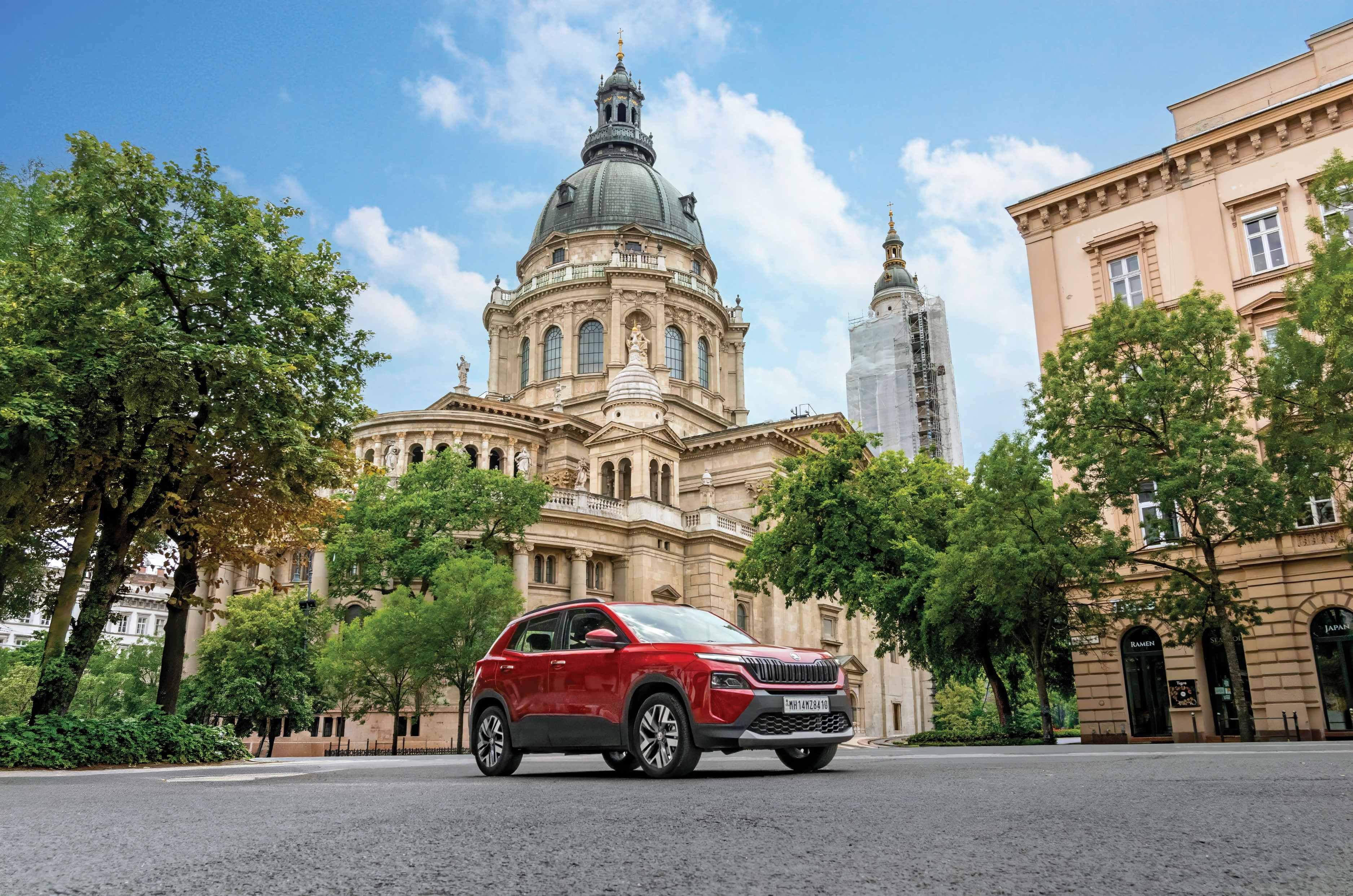
St. Stephen’s Basilica is the largest church in Budapest.
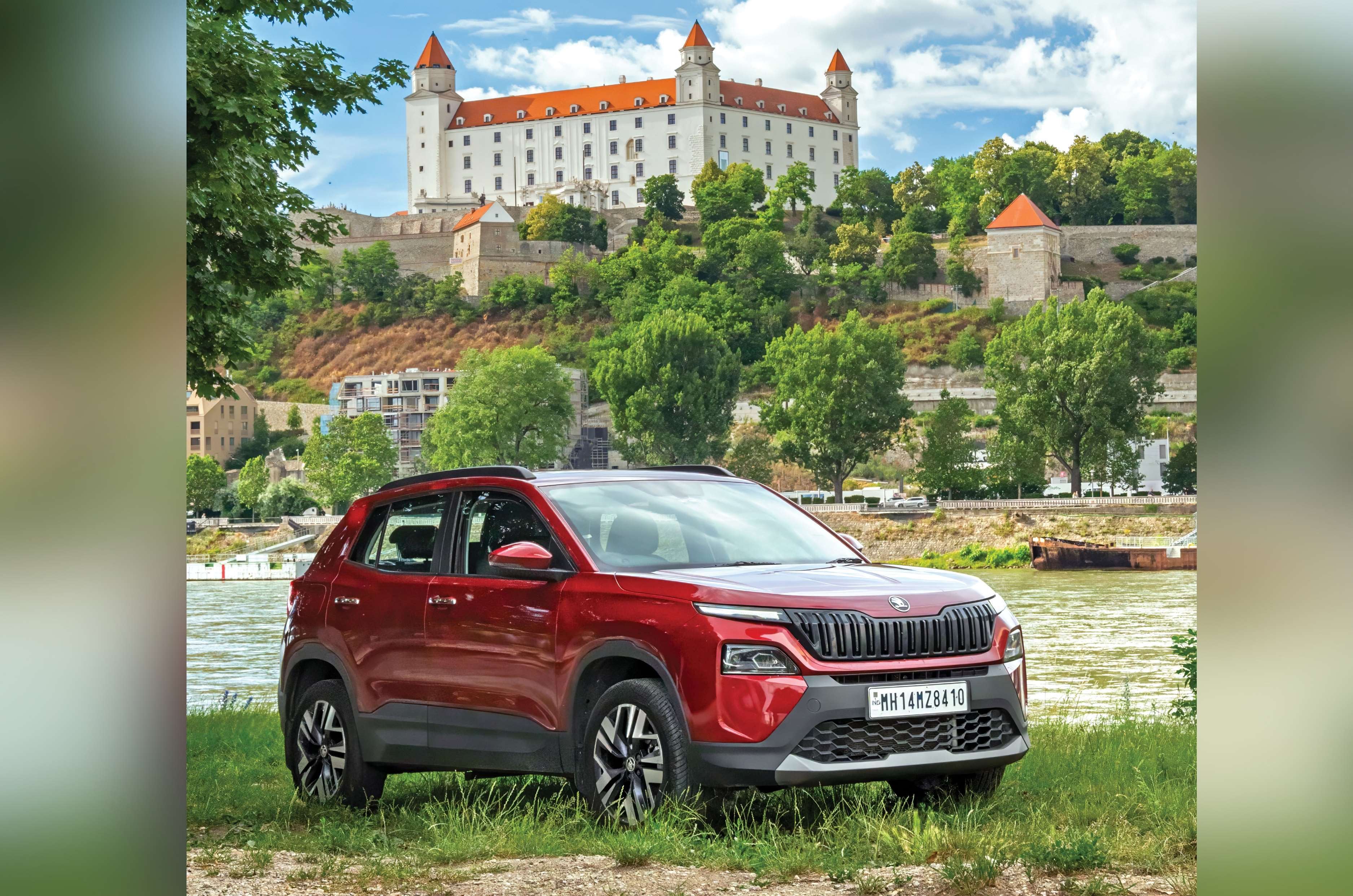
The last country before we entered the Czech Republic was Slovakia. The small country, with a quarter of the population of Mumbai, has a rather interesting Indian connection, as we found out in the pedestrian-only zone of its capital, Bratislava. Bratislava was visited by Pt. Jawaharlal Nehru in 1938, along with a young Indira Gandhi, regarding the freedom movement under British rule.
Bratislava Castle, built in the 13th century on the banks of the Danube, is now a museum.
The town square is also an open market with rich produce, handmade jewellery and a lot more. After buying the last few souvenirs before our bags exploded, we were set for the home stretch.
Prague boards were the beginning of a bittersweet end.
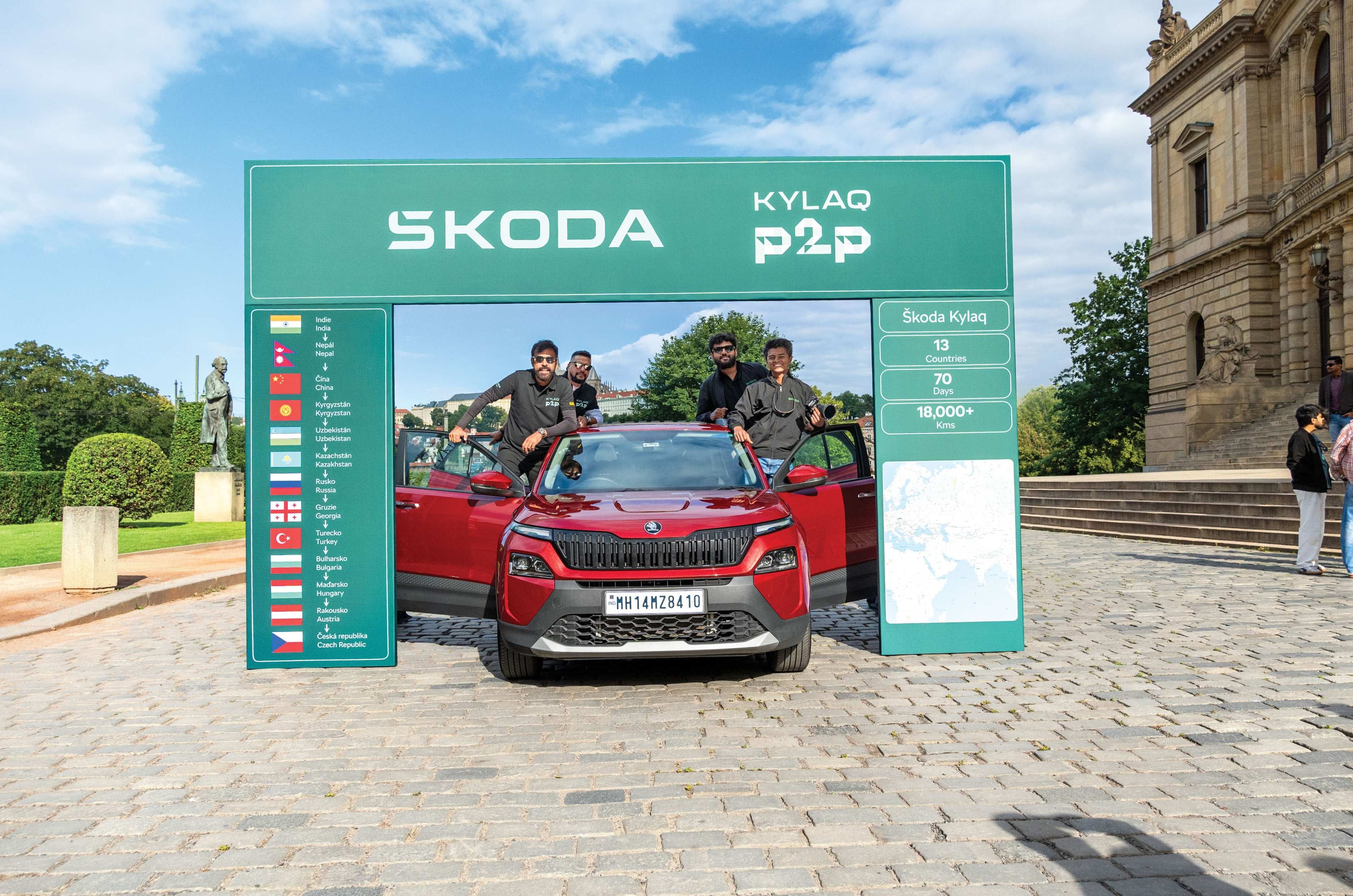
Prague was no more than 200-odd kilometres away, and the bittersweet feeling of it all coming to an end loomed over each and every one of us. As we crossed Brno and got closer to Mlada Boleslav (Skoda’s headquarters), we all reminisced about how gigantic this drive had been. Seventy days, almost 20,000km and not a single fault with the car, not even a puncture.
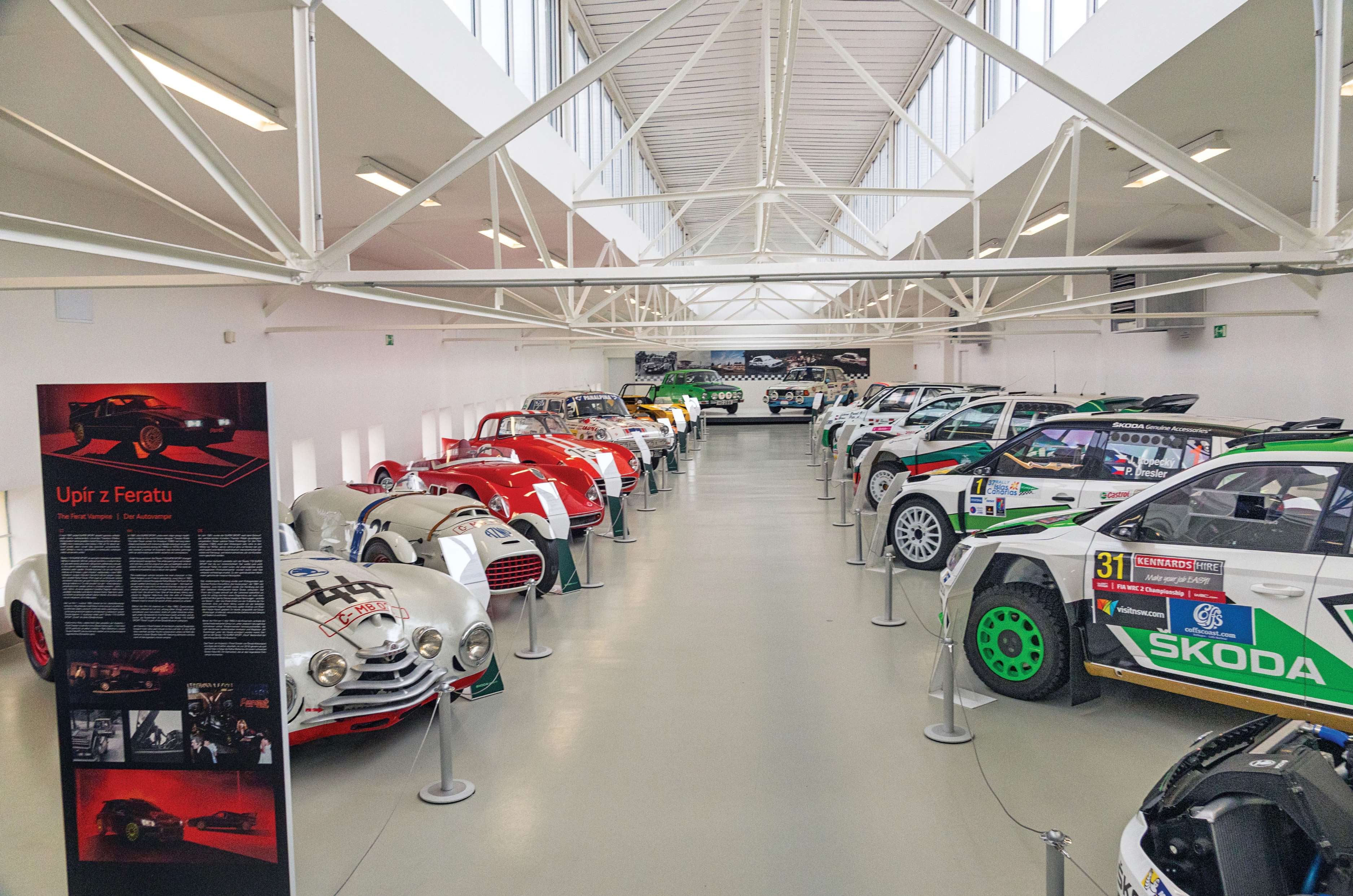
Rich history of rally and motorsport at the Skoda museum.
We crossed the Skoda factory gates with employees gazing in amusement and confusion. They had never seen this car, but strangely, it had a Skoda logo. As we parked the car near the iconic museum that preserves over 130 years of history, we had to peek in and see where it all started.
The fact that a simple bicycle gave birth to one of the largest auto manufacturers in the world is pretty astonishing. Road cars, racing cars and rally legends, Skoda has done it all. A reputation built over a century for being tough, resilient and deeply desirable.
Watching the Indian-made Kylaq sitting proud and faultless in the gleaming sunlight against the backdrop of Prague Castle, looking exactly like it did on the factory floor in Chakan, only proves that the 130-year-old ethos is still the same, no matter where Skoda builds a car.
The final picture in the camera that will always take us back in time
In a world rapidly shifting towards more screens and fewer experiences, a drive like P2P isn’t just a rarity; it’s a statement of defiance: as long as there’s a world to explore, we will find a way to drive across it.
केंद्रीय जांच एजेंसी ED यानी प्रवर्तन निदेशालय के हैदराबाद जोनल ऑफिस ने मनी लॉन्ड्रिंग जांच के तहत पटियाला, चंडीगढ़ और पुणे में तलाशी अभियान चलाया। जांच के दौरान US नागरिकों को निशाना बनाकर ठगी और जबरन वसूली करने वाले संगठित फर्जी कॉल सेंटर नेटवर्क का खुलासा हुआ है। इस मामले में ईडी की तफ्तीश में सामने आया है कि ये कॉल सेंटर कॉरपोरेट कंपनियों की तरह संचालित किए जा रहे थे। इनमें बाकायदा कंप्यूटर, हेडसेट, डायलर और VoIP सिस्टम का इस्तेमाल किया जा रहा था। आरोप है कि नेटवर्क के मास्टरमाइंड गुजरात के अहमदाबाद से इन कॉल सेंटरों को रिमोट तरीके से नियंत्रित कर रहे थे।
पटियाला के दो कॉल सेंटरों में 194 कर्मचारी
ED के मुताबिक, पटियाला के अर्बन एस्टेट फेज-II में DM Web Solutions के नाम से चल रहे दो कॉल सेंटरों में कुल 194 लोग काम कर रहे थे। इन कॉल सेंटरों का संचालन और नियंत्रण अहमदाबाद के हर्षिल रावल और रवि रामी तथा उनके सहयोगियों के हाथ में था। वहीं, पुणे के हिंजवड़ी फेज-II स्थित Gera’s Imperial Complex में चल रहे कॉल सेंटर में 22 लोग काम कर रहे थे। इसे अहमदाबाद के विपुल कोटाडिया और उसके सहयोगियों द्वारा संचालित किए जाने की जानकारी सामने आई है।
नागालैंड, मिजोरम और मणिपुर से युवाओं की भर्ती
जांच में पता चला कि कॉल सेंटरों में काम करने वाले कई कर्मचारियों की पहचान स्थानीय नेटवर्क के जरिए की गई थी। इनमें बड़ी संख्या में नागालैंड, मिजोरम और मणिपुर जैसे पूर्वोत्तर राज्यों से आए लोग शामिल थे। ईडी के मुताबिक, इनमें से ज्यादातर कर्मचारी निम्न आय वर्ग और बेरोजगार पृष्ठभूमि से थे। उन्हें करीब 30 हजार से 50 हजार रुपये मासिक वेतन दिया जाता था। इसके अलावा पीड़ितों से सफलतापूर्वक रकम वसूलने पर इंसेंटिव भी दिया जाता था।
ऐसे चलता था US नागरिकों को ठगने का पूरा खेल
जांच में फर्जी कॉल सेंटर के काम करने का पूरा तरीका सामने आया है। सबसे पहले मास्टरमाइंड कथित तौर पर अमेरिकी नागरिकों का डेटा हासिल करते थे। इसके बाद सिस्टम के जरिए बड़े पैमाने पर स्पैम ई-मेल या कंप्यूटर पर पॉप-अप अलर्ट भेजे जाते थे। इन फर्जी अलर्ट में पीड़ितों को बताया जाता था कि उनके कंप्यूटर में वायरस है, बैंक अकाउंट खतरे में है या उनकी पहचान और कानूनी स्थिति से जुड़ी कोई गंभीर समस्या है। इसके साथ एक फर्जी टोल-फ्री हेल्पलाइन नंबर दिया जाता था। पीड़ित जब उस नंबर पर फोन करता था तो कॉल सेंटर में उसे अलग-अलग स्तर के कर्मचारियों के पास भेजा जाता था।
Opener से Banker और फिर Closer
इस फर्जीवाड़े को तीन चरणों में अंजाम दिया जाता था, उसे हम इस तरह से समझ सकते हैं:-
पहला चरण:- Opener/Dialler.. शुरुआत में Opener पीड़ित से बात करता था। वह खुद को Amazon, Microsoft, PayPal जैसी कंपनियों के टेक्निकल सपोर्ट कर्मचारी के तौर पर पेश कर सकता था। उसका मकसद पीड़ित का भरोसा हासिल करना और उसकी चिंता का स्तर समझना होता था।
दूसरा चरण- Banker: इसके बाद Banker की भूमिका आती थी। वह कथित तौर पर पीड़ित के बैंक अकाउंट, उपलब्ध रकम और चल-अचल संपत्तियों के बारे में जानकारी हासिल करता था, ताकि पैसे वसूलने का तरीका तय किया जा सके।
तीसरा चरण- Closer:- इसके बाद कॉल Closer को ट्रांसफर की जाती थी। Closer पीड़ित पर दबाव बनाने के लिए खुद को अमेरिकी कानून प्रवर्तन एजेंसी, बैंक के फ्रॉड डिविजन या किसी सरकारी एजेंसी का अधिकारी बताकर पेश करता था। पीड़ित को तत्काल भुगतान नहीं करने पर कानूनी या आर्थिक नुकसान की धमकी दी जाती थी।
Gift Card, कैश और गोल्ड के जरिए वसूली
ED की जांच में सामने आया कि पीड़ितों से रकम हासिल करने के लिए पारंपरिक बैंकिंग चैनल के बजाय अलग-अलग तरीकों का इस्तेमाल किया जाता था। पीड़ितों को Apple और Google Play जैसे गिफ्ट कार्ड खरीदने, कैश भेजने या सोना खरीदने के लिए मजबूर किया जाता था। कुछ मामलों में अमेरिका में मौजूद कूरियर के जरिए पीड़ितों से कैश या गोल्ड कलेक्ट करने की व्यवस्था भी की जाती थी। इसके बाद रकम को क्रिप्टोकरेंसी, हवाला और अन्य माध्यमों के जरिए भारत सहित दूसरे देशों में ट्रांसफर कर कथित तौर पर मनी लॉन्ड्रिंग की जाती थी।
Cloud के जरिए रिमोट कंट्रोल
ED के अनुसार, पटियाला और पुणे के कॉल सेंटरों में लगे कंप्यूटरों को मास्टरमाइंड Cloud के जरिए रिमोट तरीके से नियंत्रित करते थे। टारगेट का नाम और संपर्क विवरण भी कर्मचारियों को ऑनलाइन उपलब्ध कराया जाता था। कॉल-ब्लास्ट की शुरुआती प्रक्रिया भी मास्टरमाइंड द्वारा नियंत्रित सिस्टम और IT सपोर्ट टीम के जरिए संचालित की जाती थी। इसके बाद Opener, Banker और Closer की पूरी प्रक्रिया के जरिए पीड़ित से रकम वसूलने का काम होता था।
गुजरात के अहमदाबाद से होता था रकम का प्रोसेसिंग और लेयरिंग
जांच में सामने आया कि कथित तौर पर हर्षिल रावल और रवि रामी पीड़ितों से हासिल रकम के आगे के ट्रांसफर और प्रोसेसिंग की व्यवस्था करते थे। ED के मुताबिक, अपराध से हासिल रकम को विभिन्न माध्यमों से भारतीय मुद्रा में बदला जाता था। इसके बाद इस पैसे का इस्तेमाल चल-अचल संपत्तियां खरीदने में किया जाता था या रकम को क्रिप्टो/बिटकॉइन के रूप में रखा जाता था। कुछ रकम देश के बाहर भी रखे जाने की जानकारी जांच में सामने आई है।
Digital Evidence से सामने आई पूरी चेन
ED की तलाशी के दौरान बड़ी मात्रा में डिजिटल साक्ष्य बरामद हुए हैं। इन साक्ष्यों से कथित तौर पर हवाला ऑपरेटरों, अंगड़िया फर्मों और अमेरिका में पीड़ितों से वसूली गई रकम के कलेक्शन में शामिल लोगों की भूमिका सामने आई है। जांच एजेंसी के मुताबिक, डिजिटल एविडेंस से भारत के अलग-अलग हिस्सों में संचालित फर्जी कॉल सेंटरों के बीच एक संगठित नेटवर्क की जानकारी मिली है।
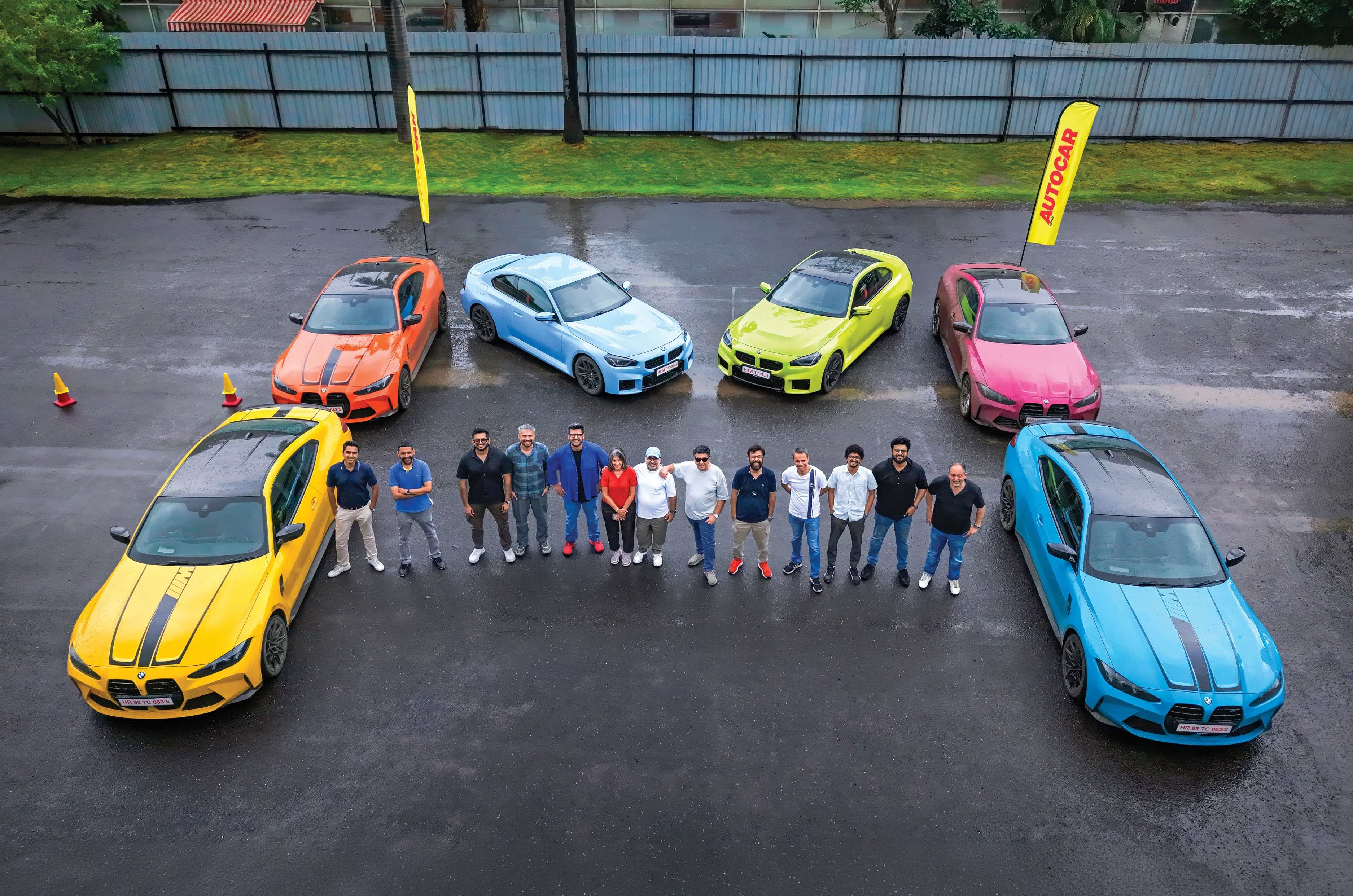
Company off-sites are designed to take employees away from the chaos and stress of everyday work for a few moments of relaxation. At Autocar India, things are a bit different. No cocktails by the pool or playing Housie before dinner. Instead, what we got were six BMW M cars (four M4s and two M2s) and a deserted concrete ground thanks to our friends at Raymond Realty. The day brought pouring rain, wet socks and no breakfast. Sounds like punishment, but not to us.
The objective was simple: pick a car, do your best in the three challenges and earn bragging rights for the rest of the year.
We rarely get to compete against each other, and with equal machinery, there could be no excuses. This was going to be intense.
Challenge 1: The Slalom Switch
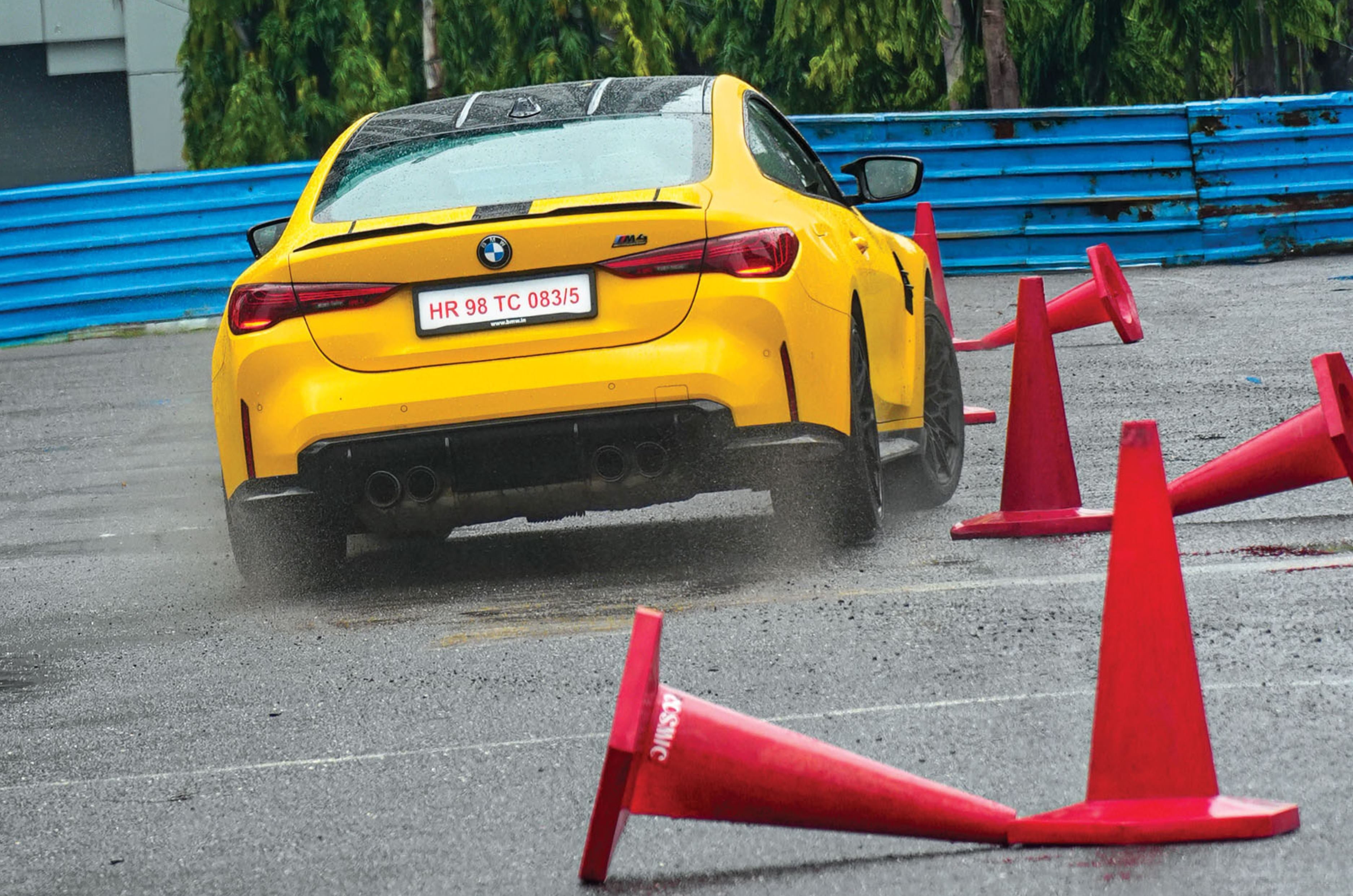
Partners picked by (un)lucky draw from a bag of M&M’s as colourful as our Ms, each pair then picks a BMW and makes their way through the cones to the other side. Switch drivers and race back through the cones, then stop within the start box. Hit a cone or fail to stop within the box and you earn a penalty.
The M4 might be tail-happy, but it can also dance its way through cones with precision.
Gavin and Ameya chose an M2 for its compact size. However, the drivers’ wildly different body sizes would play spoilsport here, as finding a seat position that suited both was an issue. A clean run with decent athleticism resulted in a time of 35.93sec.
Soham and Sergius followed in the other M2, with a bit of wheelspin off the line. A rapid driver change, thanks to their slender builds, meant a quick 34.36sec. The time to beat.
Lenny and I went against conventional wisdom and picked the bigger, more powerful M4 over the compact and nimble M2. It might be heavier, but we wanted the power advantage for off-the-line speed, given that each run had, in reality, two launches. We went through the cones super-quick, but we bungled the driver swap, nearly running into each other, and with Soham slamming the door shut and me spending precious seconds opening it, the time, then, was simply thrown away and, well, not worthy of printing.
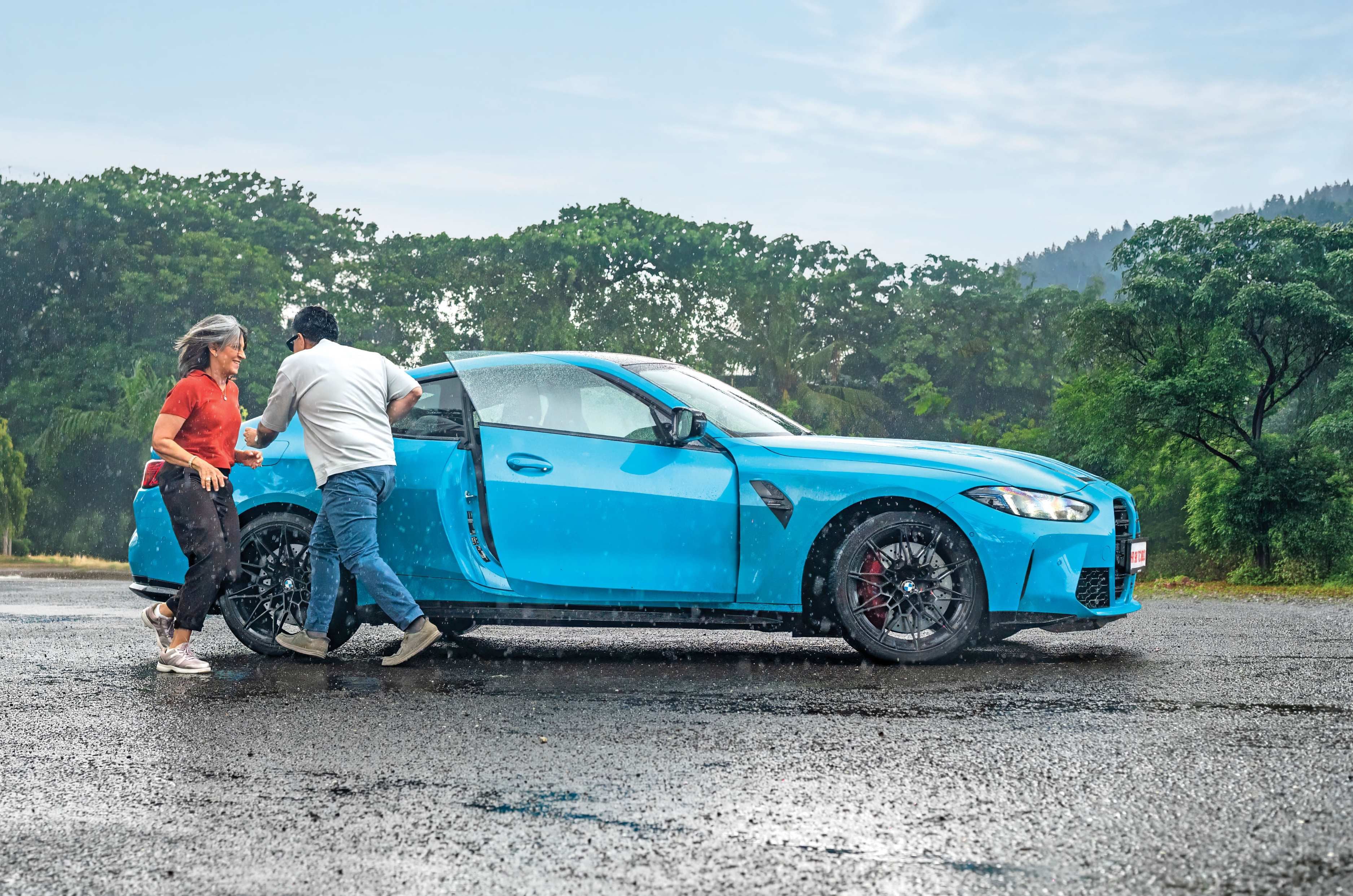
What was meant to be a relaxing team outing turned into a war.
The chaos subsided as Hormazd arrived with Renuka. Ready to prove that experience counts more than anything else, they put in an honest effort with the M4, which was commendable. But on the way back, Renuka clipped a few cones, which added big chunks to their time.
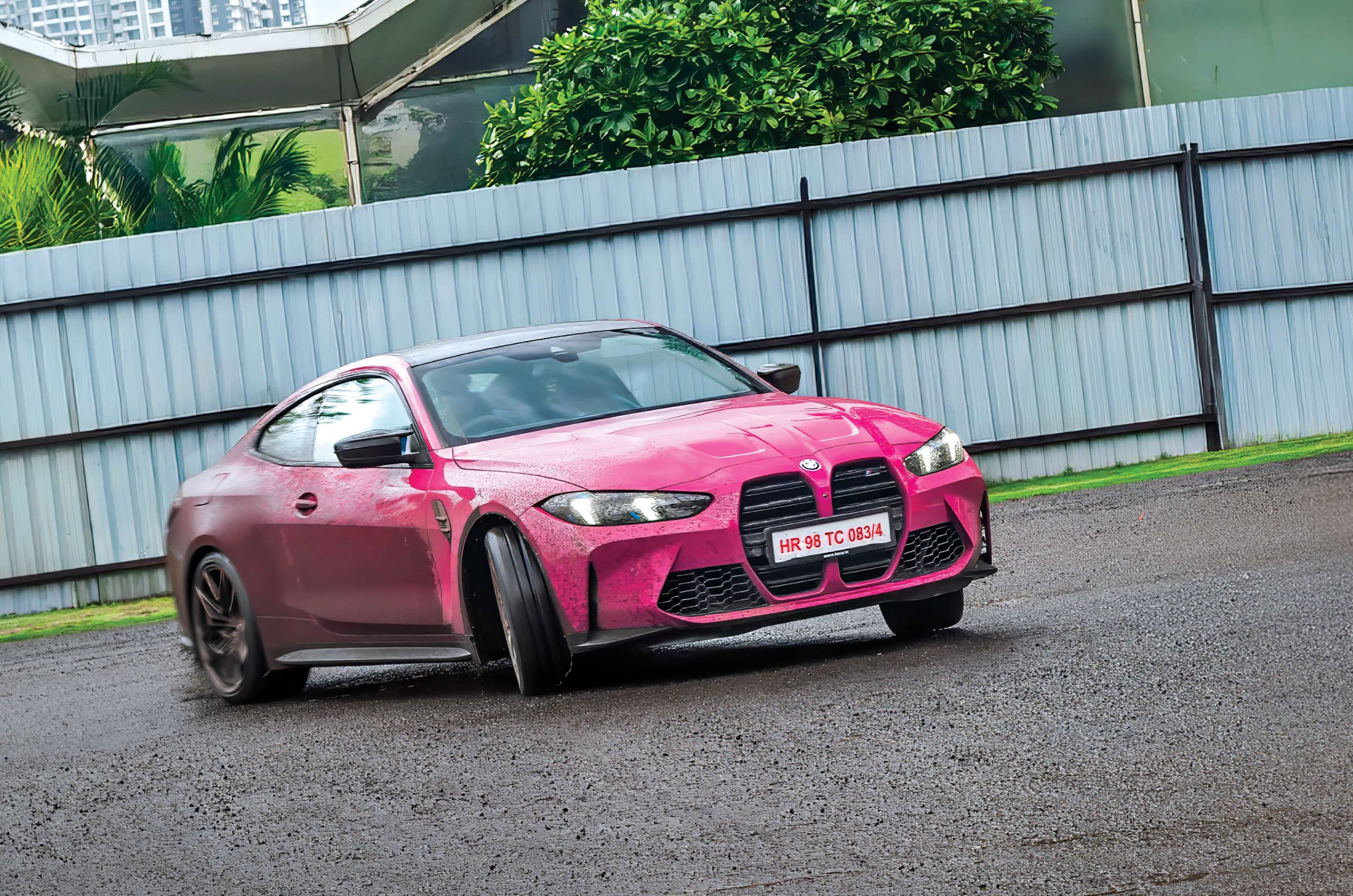
Self-proclaimed racers Saumil and Rahul were confident as they snuck into the fuchsia M4, certain they could put down the power best. A clean run and swap, but a controversial on-the-line stop caused a ruckus. Penalty given; the time was 36.23sec.
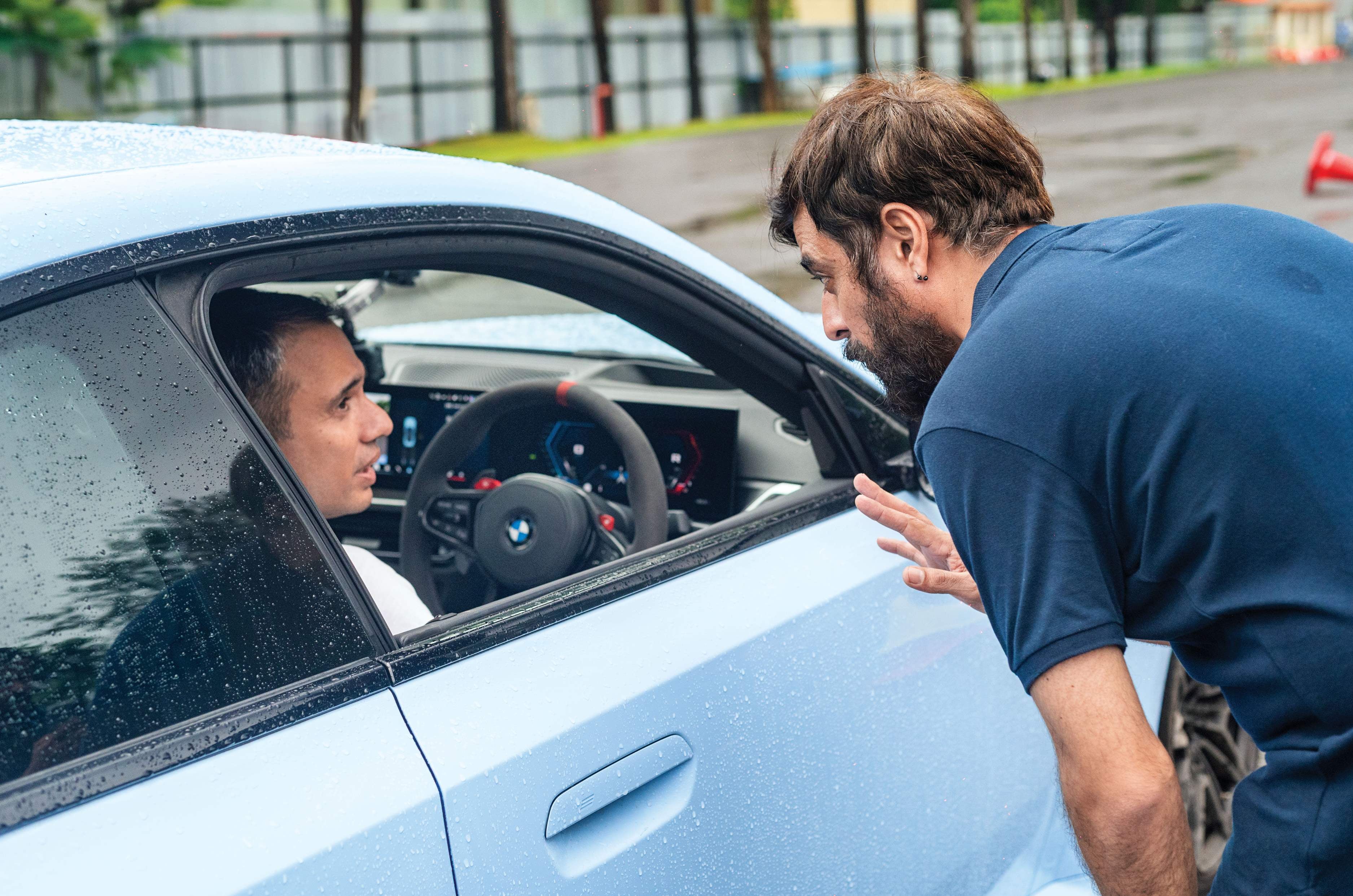
Rahul advising us all before each run, and we dutifully didn’t follow a word of what he said.
Next, Shapur and Nikhil. Power over light weight here, as the pair went for another 530hp M4. The speed gained at launch was soon lost at the driver swap – they both literally ran into each other – and for good measure, hit a cone on the way back, resulting in a penalty and a time of 42.24sec. A new low.
In the end, seeing how incompetent we were at working together, we abandoned teamwork and did the runs by ourselves and agreed the following challenges should be run solo.
Challenge 2: The Free Kick
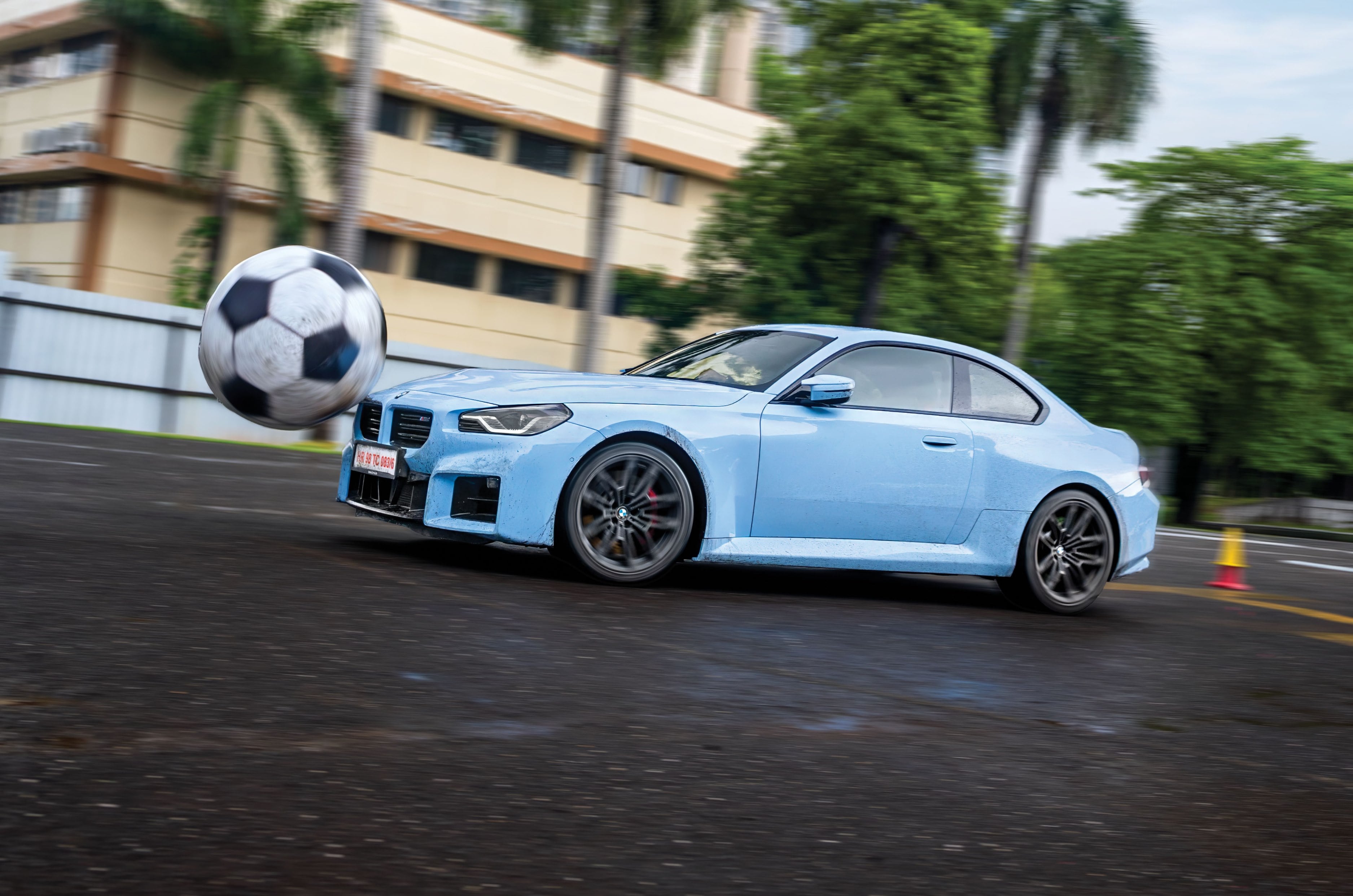
Hop into an M2, line up behind the large inflatable football and race to the finish line, ensuring the ball goes past the flag poles. The fastest to score a goal wins. The M2 was the car of choice, thanks to its upright front-end, which would be a safe bet for pushing a giant football.
The M2 is agile, surefooted and has massive grip.
With the pressure of being from football-crazy Goa, Sergius had his work cut out. But he did Goans proud, guiding the ball with swift, deft steering corrections, and in 9.9sec, we had our first goal and the time to beat. A run-up-style start with a hard launch turned out to be the fastest way, though, as Rahul scored the goal in just over seven seconds. Talk about choosing the wrong career.
A Zidane-style Panenka was Ameya’s strategy as the ball flicked up with none of Zidane’s flair. A poor 16.64sec, but he managed to score. After watching the slow approach fail, Soham powered through the first half, only to lose the ball and have to reverse to get it in. Way off the times set so far. With a smooth start, Gavin lost the ball towards the end and had to waste time getting around it, which took over 18 seconds. At least the goal counts.
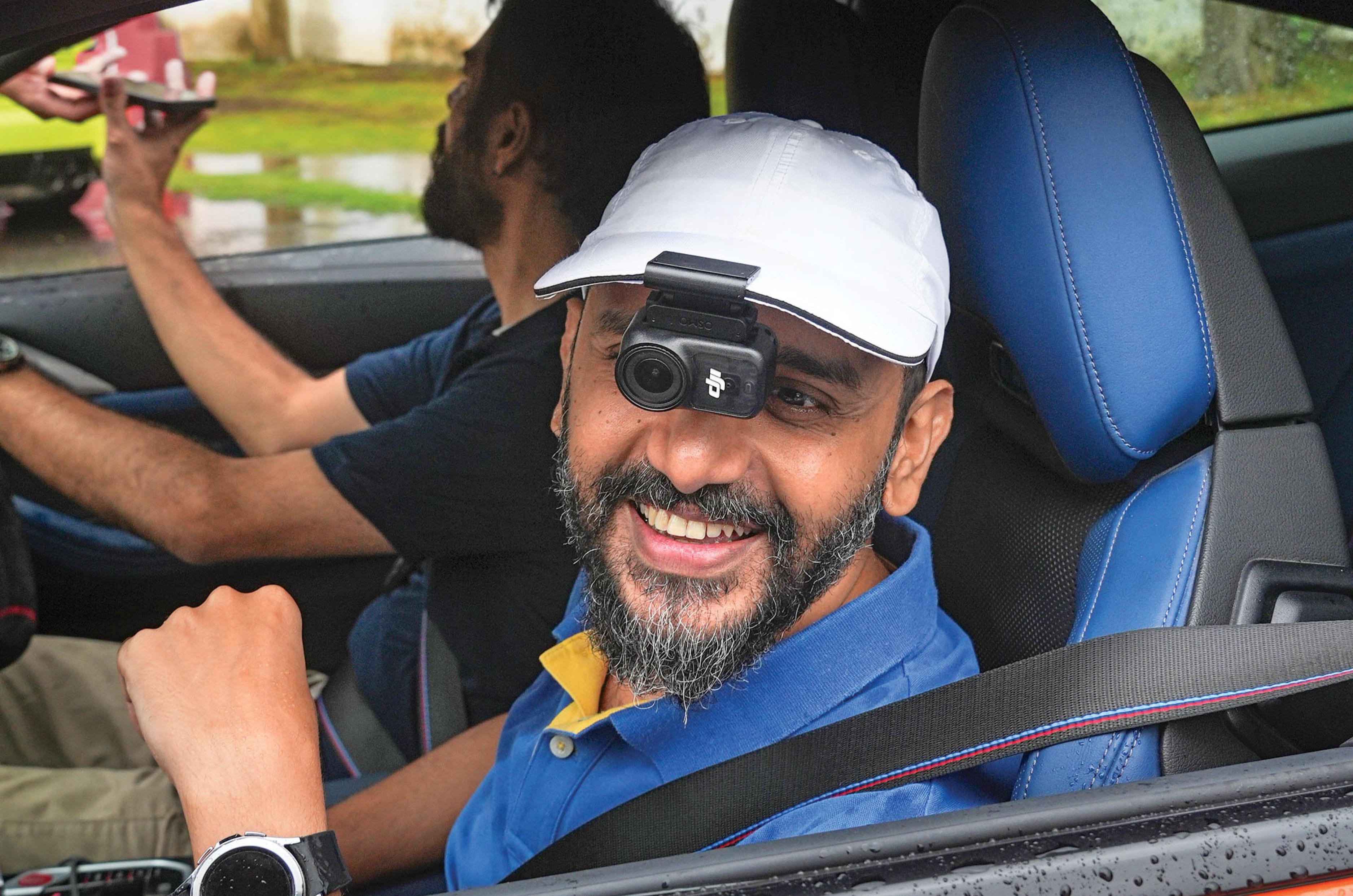
Content is king, and the more angles we have, the more the evidence.
Since the company had paid for the ball (and would also likely have to cover any damage to the car), Hormazd chose the slow-and-steady way. He eased the ball very slowly into the goal, but we cheered louder than we ever had. Appraisals are around the corner. An overly cautious approach, using 4 of the 460hp available, still resulted in Nikhil missing the ball and failing to get it through the posts. Second attempt made it through at a glacial pace.
With enough evidence of how to go about it, I had to choose between rough and smooth, and the former was more enticing. It looked dramatic as the ball flung high, but pushing it through the goal wasted time.
Finally, in an attempt to beat Rahul, using his style, Shapur hit the ball so far off that, by the time it bounced once, he had already reached ahead. He managed to get it in after much effort, but by his next attempt, the ball had deflated. Good riddance.
Challenge 3:The Drift King
Engage ‘Drift Mode’ in the M4 and achieve the best possible score on the Drift Meter.
Rear wheel drive mode and adjustable traction settings allow for some proper tail-out fun on the M4.
Before we got to sideways action, we stopped for some grub. As ridiculous as it sounded to have lunch right before drifting in circles, who can get between a bunch of car journos and brown bags of greasy food? After washing down carbs with sugar, we hopped into the M4s for the ultimate bragging rights. The M4 and M2 are both exceptionally playful, and it doesn’t take a lot to get them to break traction. However, the Drift Meter and the extra power of the M4 made it the default choice for drifting.
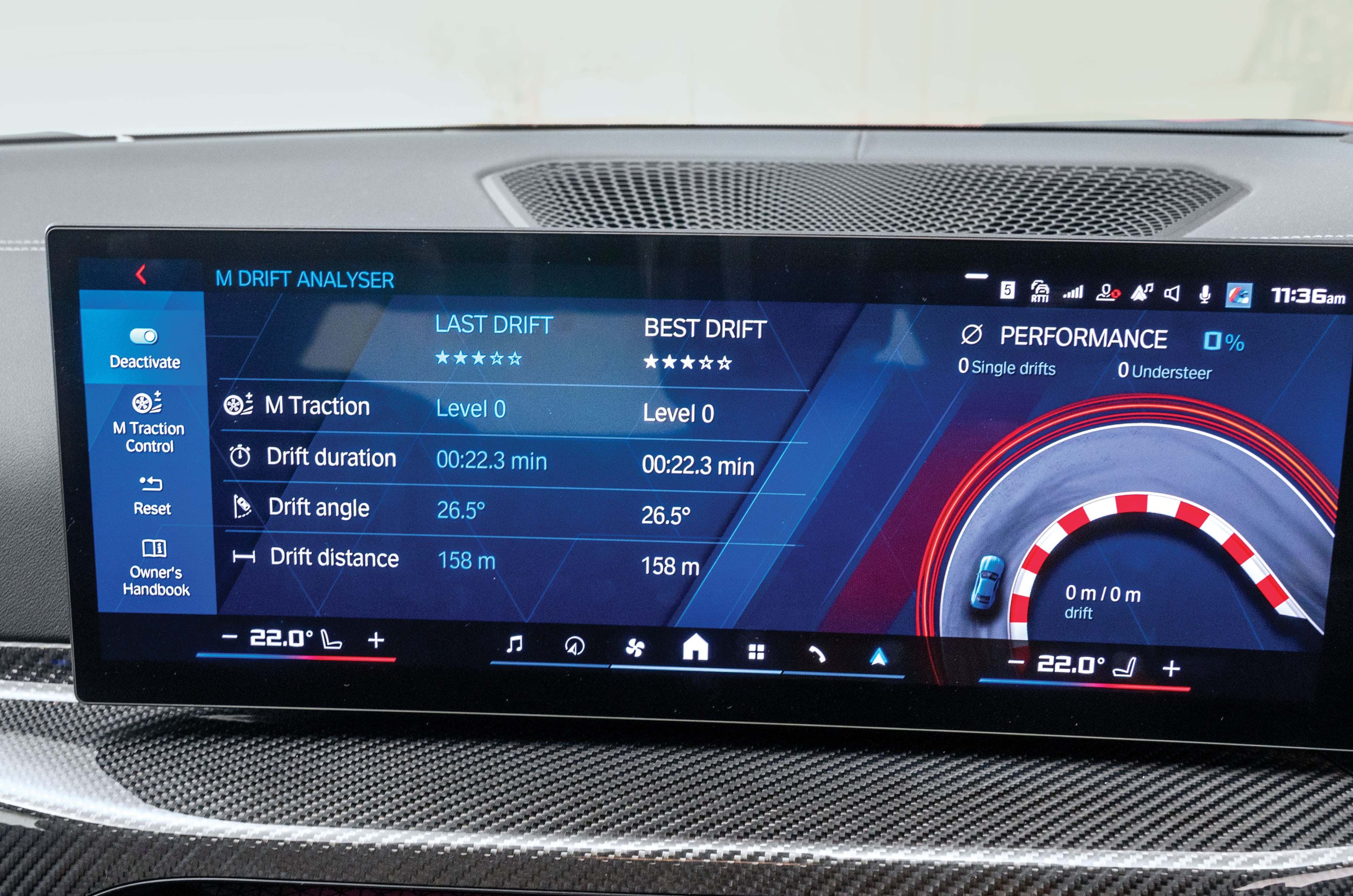
The drift analyser on the M4 gives you a detailed report of your work with no place to hide.
To begin with, we were all pretty rubbish, but the levels of traction control and the incredible steering feel meant it wasn’t long before everyone got meaningful slides in. Holding it and making circles was something only a few of us managed, with the Drift Meter further confusing us all. Still, the table alongside tells the story, and while it will start a new war in the office, it was surely worth it.
Off-sites like these might seem like another day at work, but if the point is to relax and rejuvenate, no beach resort will ever come close to smoking some tyres.
The Range Rover Sport EV has been a long time coming. After what feels like an eternity of teasers and test mules, the electric Range Rovers will finally be launched globally in September this year and should arrive in Indian showrooms around March 2027. Look at the car and you may wonder what took the company so long, because this appears to be just the regular Range Rover Sport. That, as it turns out, is entirely the point.
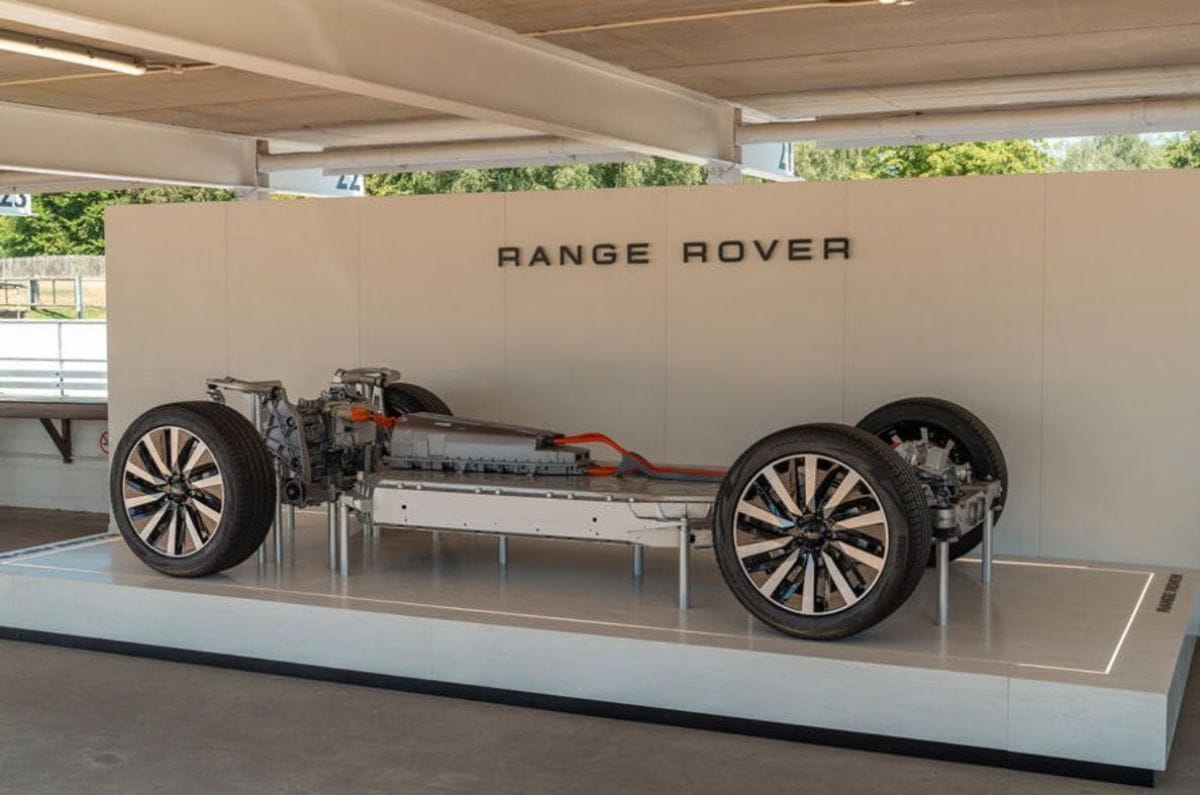
Under the familiar skin sit 300 patents’ worth of tech, a new 800V electrical architecture, two 326hp motors and a 118.5kWh battery, all validated over 60,000 hours of testing, the most for any Range Rover yet. The motors are Land Rover’s own design, developed in-house because nothing off the shelf could deliver the kind of instant, finely controlled torque the brand demanded for serious off-roading. The only real giveaways on the outside are a grille with narrower air slots and a new set of alloys with a more aero design, in keeping with the EV theme. Land Rover deliberately didn’t tamper with the styling because customers were clear – don’t change it, just make it better.
The new architecture, motors and battery have gone through 60,000 hours of testing.
So, is it better? A specially curated lap of the Goodwood circuit, complete with gravel stages and some party tricks, was our chance to find out.
Range Rover Sport Electric Prototype: performance, ride and handling
Set off, and the first impression is of eerie silence. All you can hear is the blower working overtime on a hot Goodwood day. Even when the tarmac ends and the gravel begins, the Sport EV feels like a magic carpet, gliding along on a pillow of velvet. The ride quality is absolutely exceptional, better even than the standard car’s, and that’s saying something.
When you want a quick turn of pace, the combined 550hp and 850Nm don’t leave you wanting. Engage launch control, and the Sport EV catapults forward hard enough to be a genuine shock, though the delivery is measured rather than manic. There is, however, a hint of torque steer from the front axle under hard acceleration, a slight tug at the wheel that reminds you how much force is being exerted. The brakes on our prototype also felt a bit grabby, with a sharp initial bite. Land Rover engineers admit this isn’t the final calibration and say production cars will have a more progressive pedal feel.
The Sport EV feels like a magic carpet, gliding along on a pillow of velvet.
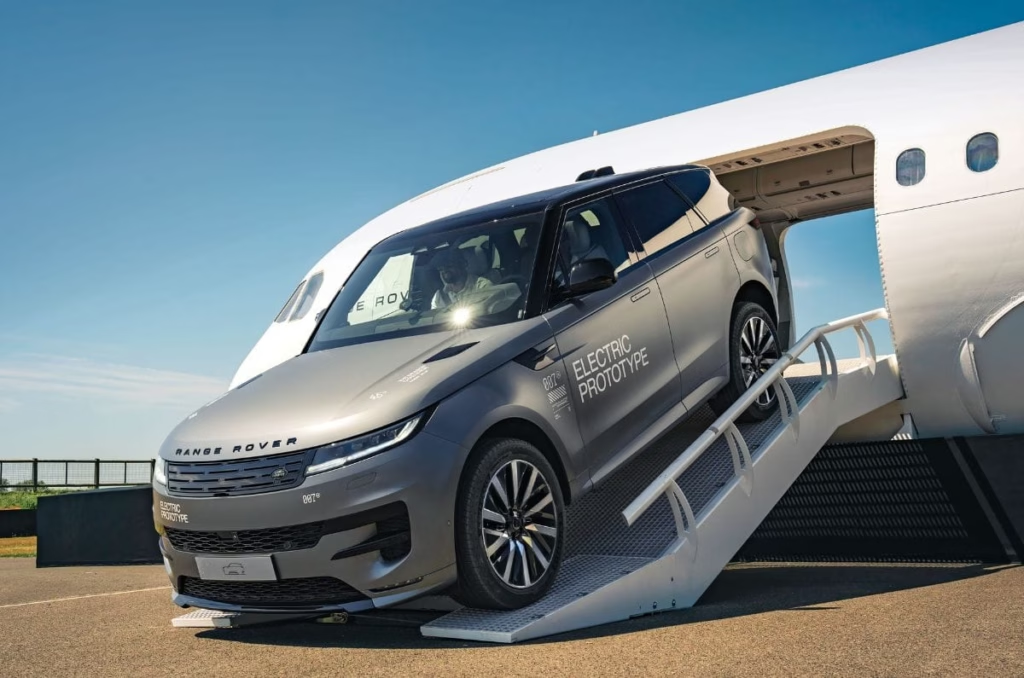
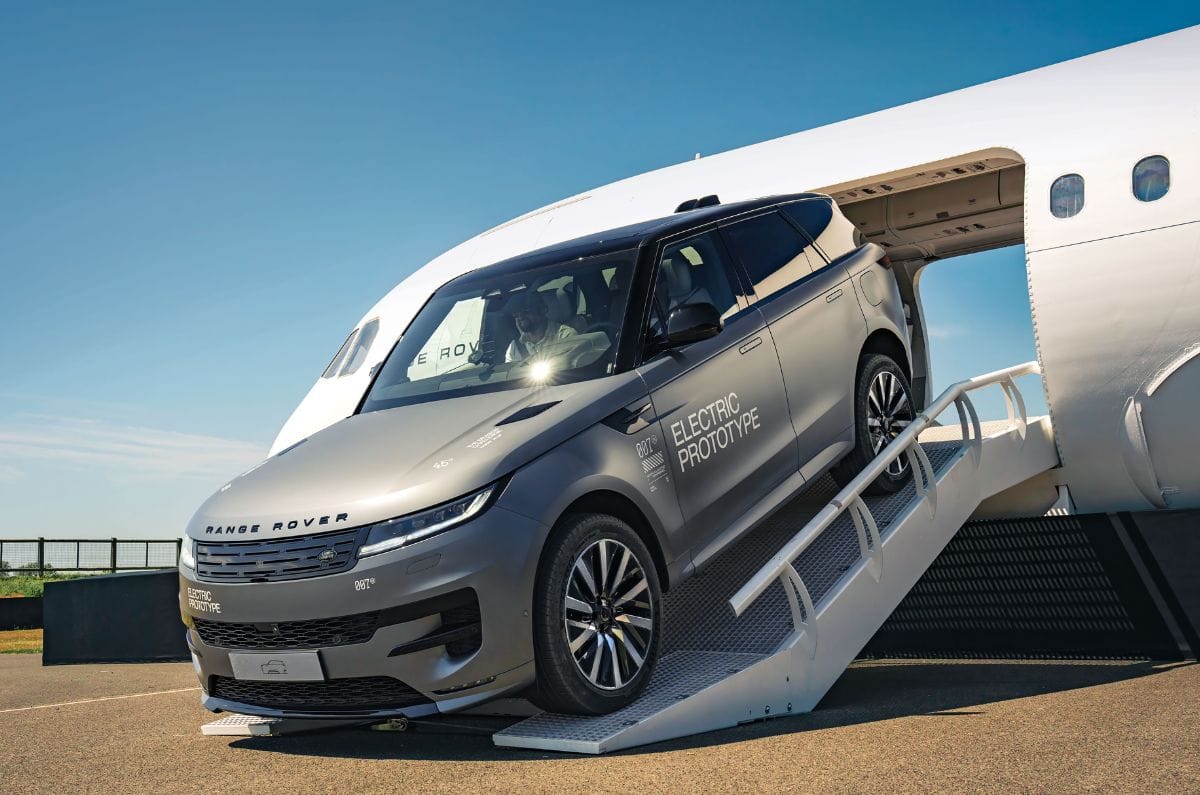
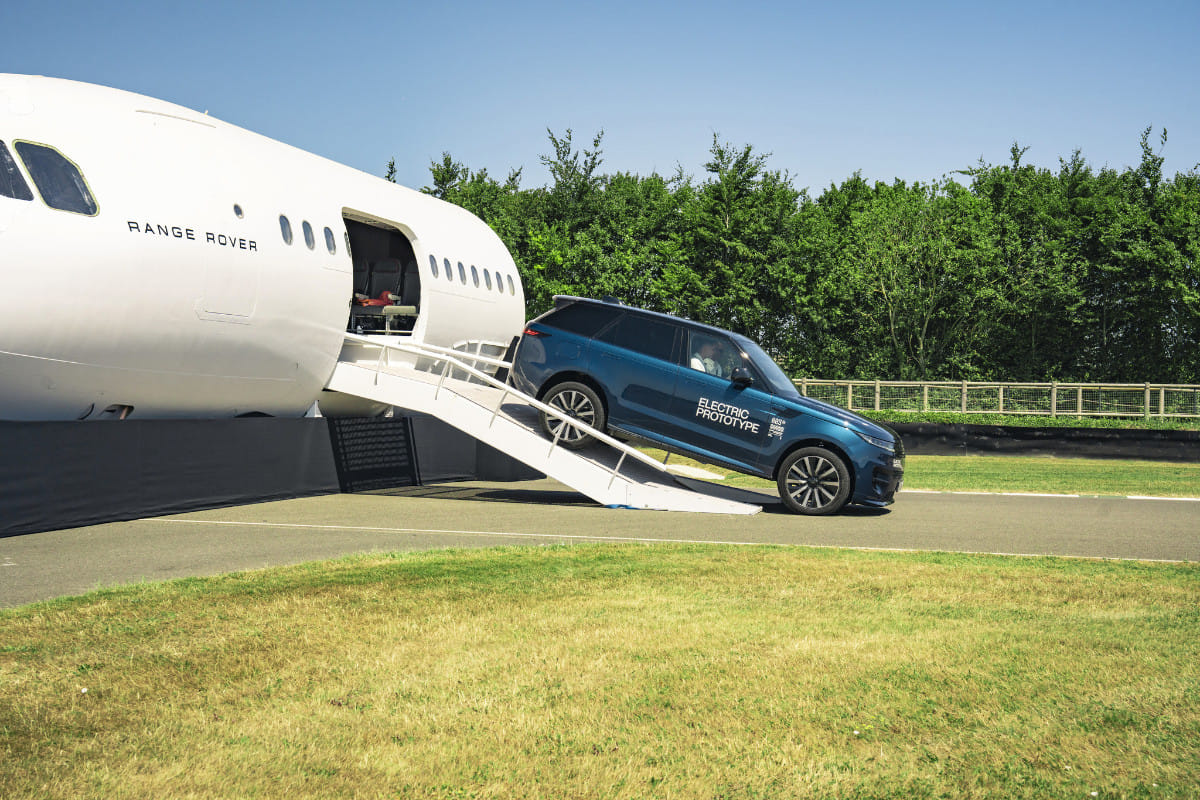
Then came the fun exercises, laid out to prove that this plush, polished and uber-refined Range Rover can do things no owner would ever dare attempt. The Sport EV climbed a staircase – a cheeky nod to the brand’s world record 999-step climb – and we even drove it through the fuselage of an Airbus. Silly? Absolutely. But it showcased what makes an electric drivetrain so effective off road. Torque arrives instantly from zero rpm and builds with perfect linearity, and because the electronics can meter out drive to each motor with such precision, there’s no need for the old hardware of locking diffs and low-range gearboxes. Raise the suspension to off-road height, let the cameras and hill descent control do their thing, and the car simply walks over obstacles. The single-pedal mode is something the engineers have finally nailed too, and it works seamlessly alongside hill descent control when needed.
The big surprise is how tidily this near 2.8-tonne SUV handles. Flick the wheel suddenly, and you can feel the mass move, but otherwise, it stays impressively planted through corners, helped by a centre of gravity that sits a significant 73mm lower than in the combustion car. Range Rovers have always had a top-heavy feel when pushed; this one doesn’t.
Questions remain. A real-world range of 531km is promised, but given the bluff shape and sheer size of this flagship EV, that figure could prove optimistic if driven briskly. Some owners may have liked the convenience of a frunk in their EV, which is absent, and packaging the rear motor has killed off any seven-seat option. Then again, these are misses most owners may not miss at all.
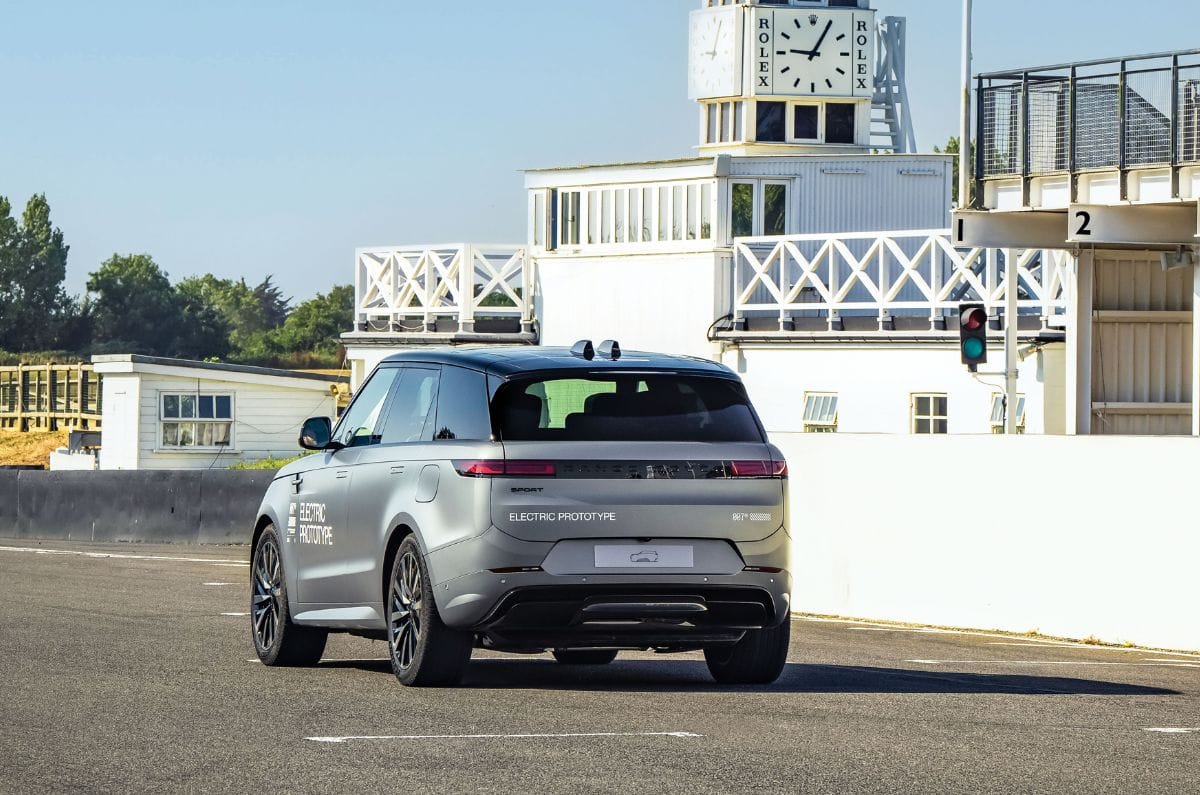
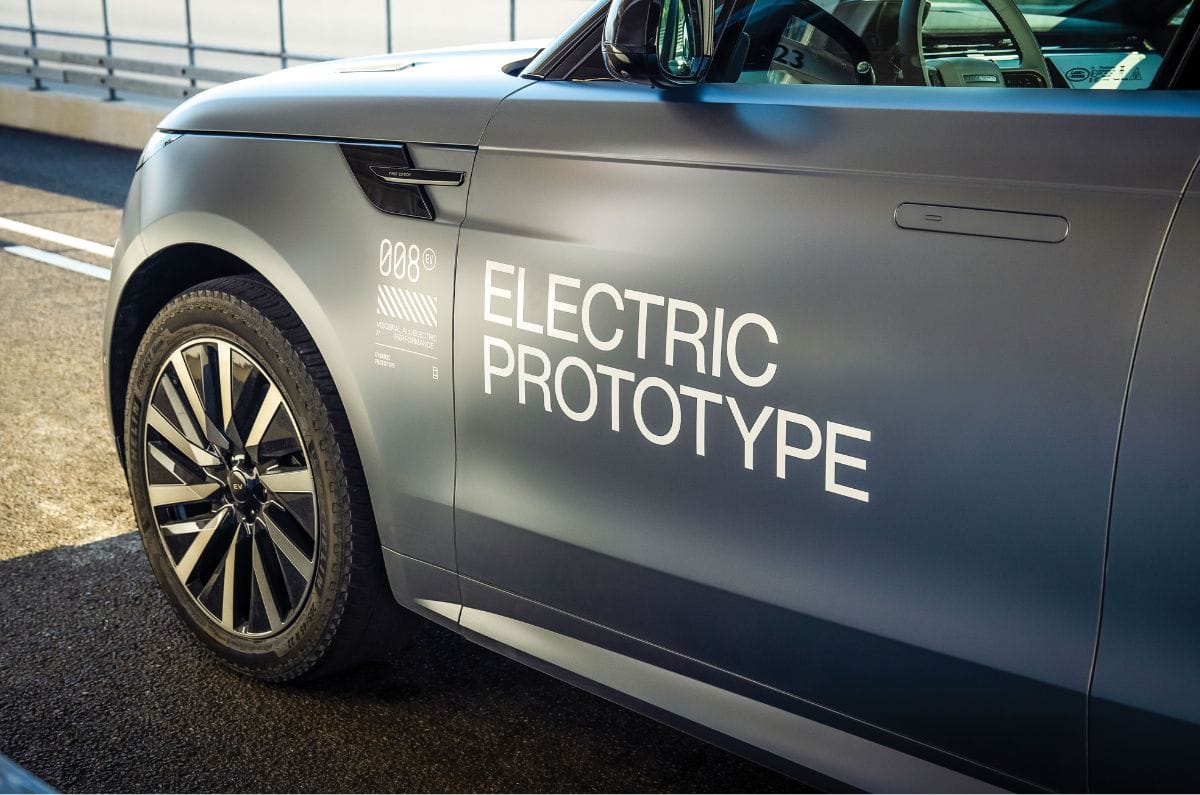
Prototype badging aside, there’s little to separate this from the combustion-engined Sport.
Pricing isn’t announced yet, but expect it to sit above the locally assembled combustion equivalents. More importantly, on this evidence, it will set a new benchmark for luxury for the brand. The electric Range Rover Sport doesn’t reinvent the formula, but it quietly perfects it.
The forced introduction of E20 has set social media ablaze, with outraged car and bike owners complaining bitterly of damage to their vehicles and a drop in fuel efficiency. The anger isn’t irrational. The efficiency drop is real and, going by Autocar India’s own tests, larger than the figures the government itself has acknowledged.
But while there’s no debate over the mileage penalty, the bigger fear is long-term damage to the vast majority of cars on our roads that are not E20-compliant. It’s a worry fanned by social media and by the way the government has handled the concern. Field trials conducted by the Automotive Research Association of India (ARAI) before the rollout reportedly found no major compatibility issues even in legacy vehicles.
However, that report has never been made public, which has only deepened suspicion among car and bike owners. Most damaging of all was the Society of Indian Automobile Manufacturers (SIAM) formally flagging alarming levels of contamination in a letter it was later forced to publicly withdraw. Crucially, SIAM’s concern was contaminated fuel carrying worrying levels of chlorine, not the blend itself. That distinction has been lost in the noise, and it sits at the heart of the confusion, even panic, among customers fearing the worst.
So, is E20 the menace it is being made out to be, or is fuel contamination the bigger issue? The fact is, there is no workshop epidemic yet, though sceptics will argue it’s only a matter of time before engines start giving trouble. What social media is amplifying right now is the theoretical damage of a higher blend. That doesn’t make the concerns baseless, since long-term effects take years to show, but the truth is that panic and outrage are currently running well ahead of the evidence. Which makes it worth studying the one country that actually has the evidence, gathered over 50 years: Brazil.
The Brazil experience
If you think India’s leap from E10 to E20 was abrupt, consider what happened there. In November 1975, squeezed by the oil crisis and desperate to protect its foreign currency reserves, the Brazilian government launched Proalcool and shoved its motorists in at the deep end. “The blends with gasoline started at 20 percent. It went very soon up to 30 percent, and it was imposed by the government,” says Peter Gilbert, head of Operational Marketing and Customer Tech Services at Infineum Brazil, a fuel and lubricant additive specialist company whose business, it should be said, depends on ethanol-blended fuels working well.
The documented history broadly bears him out, with one point worth noting: there was a brief low-blend ramp-up with E10, but that lasted roughly two to three years against the five decades of E20 and above since. Compare that with India, which took nearly two decades from its 2003 blending programme to reach E10. And like India, Brazil never kept an escape hatch. “There was no E0 when E20 was introduced,” says Gilbert, and there is none today: the mandated blend has since climbed through 25, 27 and 30 percent, and since August this year, all pumps in Brazil, including the super-premium ones, dispense E32.
But what is telling is the kind of cars running around on E20 in the late 1970s. Back then, cars were mainly carburetted with no fuel injection, no closed-loop control and no lambda sensors – machinery far cruder than even the oldest E10-era car on Indian roads today. So what broke?
According to Gilbert, remarkably little that could be pinned on E20 itself. “There weren’t any major issues reported,” he says. “There were issues related to the materials of the fuel system, the gaskets and the rubbers used at that time, but that has changed.”
His colleague Leandro Benvenutti, Infineum’s product manager for Latin America, says the trouble in 1970s and 1980s Brazil came almost entirely from dedicated alcohol cars running pure hydrous ethanol (E100), not from petrol cars on E20. “Everything we can remember from that time is related to these alcohol vehicles, not to the gasoline vehicles using E20,” he says. Carburettor corrosion, clogged jets, perished hoses and O-rings: all of it, in their experience, traced back to E100. “If there were problems in the other [non-flex fuel] vehicles, they were really not important at all.”
A caveat both experts volunteer: 1970s Brazil is not 2020s India, and the comparison is not like-for-like. “It’s difficult to correlate to vehicles today,” Gilbert admits. What the Brazilian record offers is not proof that nothing will go wrong here, but a large, long-running natural experiment in which the E20-specific damage everyone feared did not show up.
So what about India’s E10 cars?
Asked what he’d tell a worried Indian owner running an E10-era car on E20, Benvenutti replies, “There is no reason for panic. We don’t expect any immediate impact.” Note the word immediate. The honest answer regarding the long term is unknown, and to their credit, neither of Infineum’s experts pretends otherwise. Over years, rubber components in cars whose materials weren’t specified for E20 may embrittle sooner, and Benvenutti concedes older cars and motorcycles “may see issues with time”. But complicating the issue is attribution – what is due to ethanol and what is not. Rubber parts perish with pure petrol, too.
Benvenutti recalls his father’s flex-fuel car whose fuel hose dried out and leaked after years of use. “Was that really caused by the ethanol, or was that something going to happen anyway after five or ten years?” If there is a cost to owners, in other words, it is most likely a shortened life for cheap parts such as hoses, gaskets and O-rings rather than failures of expensive ones. “The risk for the metal components, the hard components like valves, injectors and pumps, is much lower if you maintain this product within spec,” explains Gilbert. That last clause matters, and we’ll revisit it.
On material margins, Benvenutti is careful not to overclaim. He believes manufacturers build in buffers. “If I am developing an engine, I would prefer to keep some buffer,” he remarks but adds that he is not a materials specialist and that the buffer may mean a component lasting eight years instead of 10. Whether every manufacturer selling in India engineered that headroom is a question only the manufacturers can answer.
Calibration is key
The more concrete near-term issue isn’t corrosion. It’s calibration. E20 carries less energy per litre, so the engine management system must inject more fuel to keep the mixture correct. Most closed-loop systems that have been around since the move to BS-II fuel-injection in 2000 should easily adapt, but if an older car’s injectors or fuel-trim maps run out of adjustment range, the mixture runs lean. The tell-tale? “Probably the most impactful result will be a light on your cluster. You will see the malfunction indication light on,” says Benvenutti. If your check engine light comes on after the switch to E20, that’s your car telling you it can’t fully compensate. Whether yours will is a manufacturer-by-manufacturer, even model-by-model chance.
Then there is Brazil’s import experience, which is genuinely striking and even reassuring. European and Japanese cars homologated for E10 markets are sold in Brazil and run on E30, now E32, every day. “I haven’t seen any report on issues with those engines,” says Gilbert. And there is no exemption at the top of the market. With no E0 sold anywhere in the country, every Ferrari, Lamborghini and Porsche in Brazil fills up on E32; even the super-premium pumps dispense it. Ask whether a supercar owner can escape the blend, and the answer is emphatic. “No way,” says Benvenutti.
Low volumes are no excuse to offer a special blend, unlike in India, where supercars have the safety net of a high-priced E0 premium fuel. Benvenutti points out that even a manufacturer bringing in a handful of sports cars must ensure the car is fit for the market’s fuel. “I would not imagine any OEM bringing one unit and selling it if that’s not prepared for that market.” The one genuine weak spot he flags concerns independent, grey-market imports, which arrive exactly as built for the European or Japanese market with no local adaptation. Much of ethanol’s impact is based on anecdotal data rather than any controlled study, but it is decades of anecdotes across millions of cars, from hatchbacks to hypercars.
How much evidence of ethanol impact is there?
Enough of it to take seriously. Start with a fact that rarely features in the Indian debate: Brazil is not a country of new cars. Punishing taxes on new vehicles and tight credit mean Brazilians hold on to their cars for a long time, and the tax system actively rewards them for doing so. Most states have long exempted the oldest cars from the annual IPVA vehicle tax, and a constitutional amendment now makes that exemption national for anything 20 years or older. The result, as per the Brazilian auto components association Sindipeças, is a fleet averaging over 11 years old, with 7.3 million vehicles past 16 years and some 220,000 past 25. Every one of them fills up on E27-to-E32 petrol because nothing else is sold. No doubt, much of this ageing fleet is flex-fuel, engineered from birth to drink anything up to E100, so their survival may seem overplayed, but only up to a point.
Flex-fuel technology arrived in Brazil only in 2003 with the Volkswagen Golf, which means the country’s first two and a half decades on E20-and-higher blends were served entirely by ordinary petrol cars, and the earliest of those were designed for no ethanol whatsoever; the blend was simply imposed on them, which is exactly what’s happening in India today. The cars that predate the flex era and the imported non-flex cars still running on E32 haven’t seen a trend of ethanol casualties. There is no scrapyard full of ethanol victims; the old cars are still on the road.
Then there’s the formal testing. Before Brazil raised its mandate from E27 to E30 in August 2025, a working group under the country’s Ministry of Mines and Energy ran durability tests on vehicles representative of the national fleet. ANFAVEA, Brazil’s association of vehicle manufacturers (the counterpart to our SIAM), reported that the tests showed no adverse effects on engine durability or performance, with one telling condition attached: provided fuel quality standards are met. Independently, a year-long University of Nebraska-Lincoln study ran E30 in ordinary non-flex-fuel state government vehicles in the US and found no adverse effects either. None of this is a guarantee for every ageing car in India, but it is consistent, multi-source evidence that corroborates Infineum’s findings.
The dangerous C word
So is the all-clear justified? Only conditionally, and the condition is the same one ANFAVEA attached: clean fuel made and blended to specification. And this is where India’s real problem appears to lie. If genuine damage is occurring in Indian fuel systems, the evidence points not to the ethanol blend but to what’s riding along with it: chloride contamination picked up during the production process and from storage tanks. SIAM’s now-withdrawn letter reported chloride levels of up to 500 ppm in samples from vehicle tanks and 350 ppm at retail outlets, figures the petroleum ministry has vehemently contested. Ministry officials say their own testing found high chlorine levels at just two pumps and that plastic sample containers had corrupted some tests and thrown up false readings. Yet, even a fraction of SIAM’s figures would dwarf the 3 ppm the ministry itself treats as the acceptable ceiling.
Also, 3 ppm is only a guideline. India has yet to mandate BIS limits for chloride in fuel ethanol – something Brazil has enforced by law at 1 ppm for years. Chlorides corrode fuel pumps, injectors and valves regardless of whether a car was designed for E10 or E20, which is precisely why blaming the blend misdiagnoses the disease. The Brazilian experience, in short, largely acquits ethanol. It says nothing to acquit the fuel quality actually coming out of Indian pumps, and fixing that is a question of standards and enforcement, not of retreating to E10.
The E20 debate, now thoroughly political, will no doubt rage on: the government and its agencies on one side, and on the other, opposition parties and a swarm of influencers and social media experts riding the outrage for popularity and views, but few of them have bothered to put an independent expert on record. The good thing is that science and first-hand experience – Brazil’s, in this case – take no sides. And that’s the side we are on.
संसद ने इस महीने की शुरुआत में बैंकर्स बुक एविडेंस बिल 2026 (Bankers’ Books Evidence Bill 2026) पारित किया। इसका लक्ष्य बैंक रिकॉर्ड से जुड़े 135 साल पुराने कानून को बदलना और पारंपरिक बैंकिंग रिकॉर्ड को डिजिटल दौर के अनुरूप बनाना है। इससे जुड़ा कानून पहली बार वर्ष 1891 में उस समय पास किया गया था, जब बैंकिंग रिकॉर्ड्स मुख्य रूप से कागजी रूप में रखे जाते थे। अब नए कानून में बैंक के डिजिटल रूप को अधिक महत्ता दी गई है और इससे कोर्ट-कचहरी के मामले में बैंकिंग रिकॉर्ड को हासिल करने तथा इस्तेमाल करने के तरीके में बदलाव होगा। यहां इस कानून से जुड़े पांच अहम पहलू दिए गए हैं। हालांकि इससे ग्राहकों के डेटा की प्राइवेसी को लेकर चर्चा शुरू हो सकती है।
डिजिटल बैंक रिकॉर्ड्स को सबूत के तौर पर मान्यता
सबसे बड़े बदलावों में से एक इलेक्ट्रॉनिक और डिजिटल रिकॉर्ड्स को बैंकर्स बुक्स के तौर पर मान्यता देना है। साल 1891 का कानून फिजिकल बुक्स, लेजर्स और दूसरे ट्रेडिशनल रिकॉर्ड्स को ध्यान में रखकर बनाया गया था। नए बिल के मुताबिक बैंकों को अधिकतर ट्रांजैक्शन और अकाउंट्स की जानकारी इलेक्ट्रॉनिक रूप में रखनी ही होगी। इसका मतलब है कि बैंकों के डिजिटल रिकॉर्ड किसी कानूनी मामले में साक्ष्य के तौर पर इस्तेमाल किए जा सकेंगे।
असली रिकॉर्ड की जगह सर्टिफाइड कॉपी का इस्तेमाल
नए बैंकिंग कानून में मौजूदा नियम को बनाए रखा गया है, जिसके तहत बैंक रिकॉर्ड की सर्टिफाइड कॉपी या उनके किसी हिस्से को सबूत के तौर पर पेश किया जा सकता है। यह इसलिए अहम है क्योंकि बैंकों के पास भारी-भरकम ट्रांजैक्शन डेटा होता है। हर कानूनी मामले के लिए मूल रिकॉर्ड पेश करने बहुत समय लग सकता है। हालांकि अब नई व्यवस्था के तहत असली बैंकर बुक के बजाय सर्टिफाइड कॉपी से काम चल जाएगा, जिससे अदालतों के लिए बैंक ट्रांजैक्शन की जांच करना आसान हो जाएगा। हालांकि इसमें ऐसे प्रावधान भी किया गया है जिससे यह सुनिश्चित किया जा सके कि रिकॉर्ड भरोसेमंद हैं।
कानूनी एजेंसियों की ग्राहकों के खातों की जानकारी मांगना
इस बिल में एक प्रावधान है जिसे लेकर बहस छिड़ सकती है। इसके तहत लॉ एंफोर्समेंट एजेंसियां किसी ग्राहक के बैंक अकाउंट की जानकारी मांग सकते हैं। इस बिल में कुछ खास रैंक के पुलिस अधिकारियों को बिना किसी अदालती आदेश के सीधे बैंक से ही बैंकिंग अकाउंट की जानकारी हासिल करने का अधिकार मिला है। कुछ मामलों में बैंकों को इसके बारे में ग्राहकों को भी बताना होगा लेकिन किसी जांच, वित्तीय अपराध या नेशनल सिक्योरिटीज से जुड़े मामले में ऐसी कोई बाध्यता नहीं है।
बैंक अधिकारियों को बार-बार कोर्ट में पेश होने से राहत
नए बिल में बैंक अधिकारियों को ऐसी स्थितियों में राहत दी गई है, जब उनके इंस्टीट्यूशंस किसी कानूनी कार्यवाही में सीधे तौर पर शामिल न हों। किसी अधिकारी को बैंक के रिकॉर्ड पेश करने या उनमें शामिल लेन-देन को साबित करने के लिए कोर्ट में पेश होने के लिए मजबूर नहीं किया जा सकता है। हालांकि रिकॉर्ड की सत्यता पर संदेह या जांच के आदेश का पालन नही होने की स्थिति में कोर्ट रिकॉर्ड पेश करने का आदेश दे सकता है। इसका लक्ष्य बैंक अधिकारियों पर रूटीन बैंकिंग रिकॉर्ड से जुड़े कोर्ट केस में बार-बार पेश होने का बोझ कम करना है।
फाइनेंस सेक्टर की दूसरी एंटिटीज तक बढ़ा दायरा
नए बिल से केंद्र सरकार को इसके प्रावधान फाइनेंशियल सेक्टर दूसरी एंटिटीज या क्लास ऑफ एंटिटीज जैसे कि NBFC (नॉन-बैंकिंग फाइनेंशियल कंपनीज), पेंशन फंड्स, बीमा कंपनियां इत्यादि पर लागू करने का अधिकार मिलता है। इन एंटिटीज पर कानून लागू करते समय शर्तें, छूट या बदलाव भी तय कर सकती है।