RE Himalayan 440 vs Yezdi Adventure: Price and specifications compared

RE Himalayan 440 vs Yezdi Adventure: Price and specifications compared
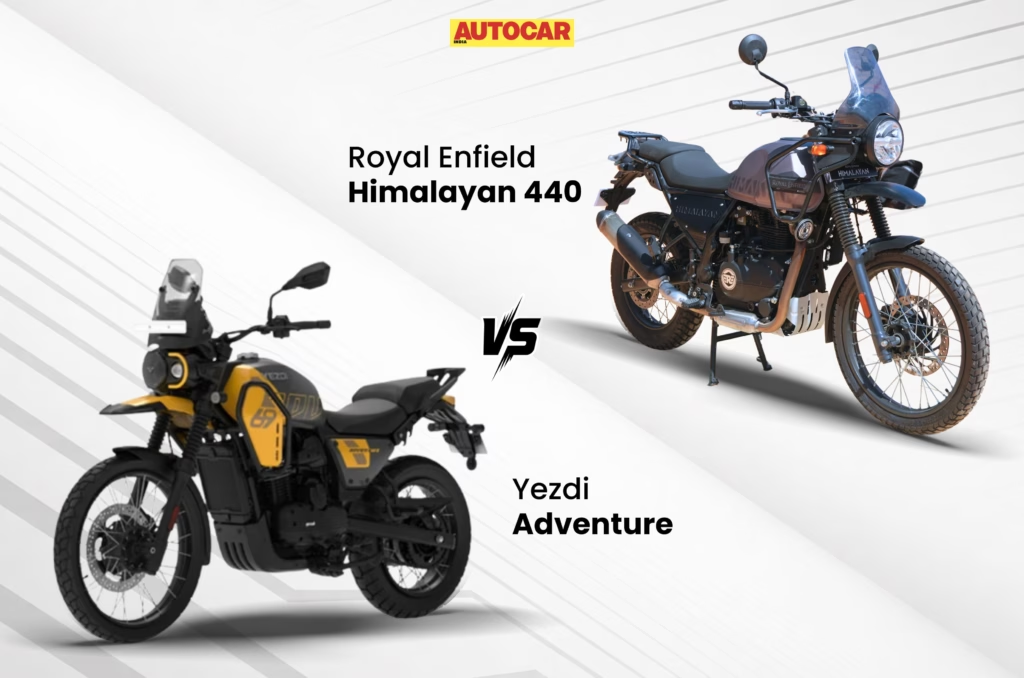
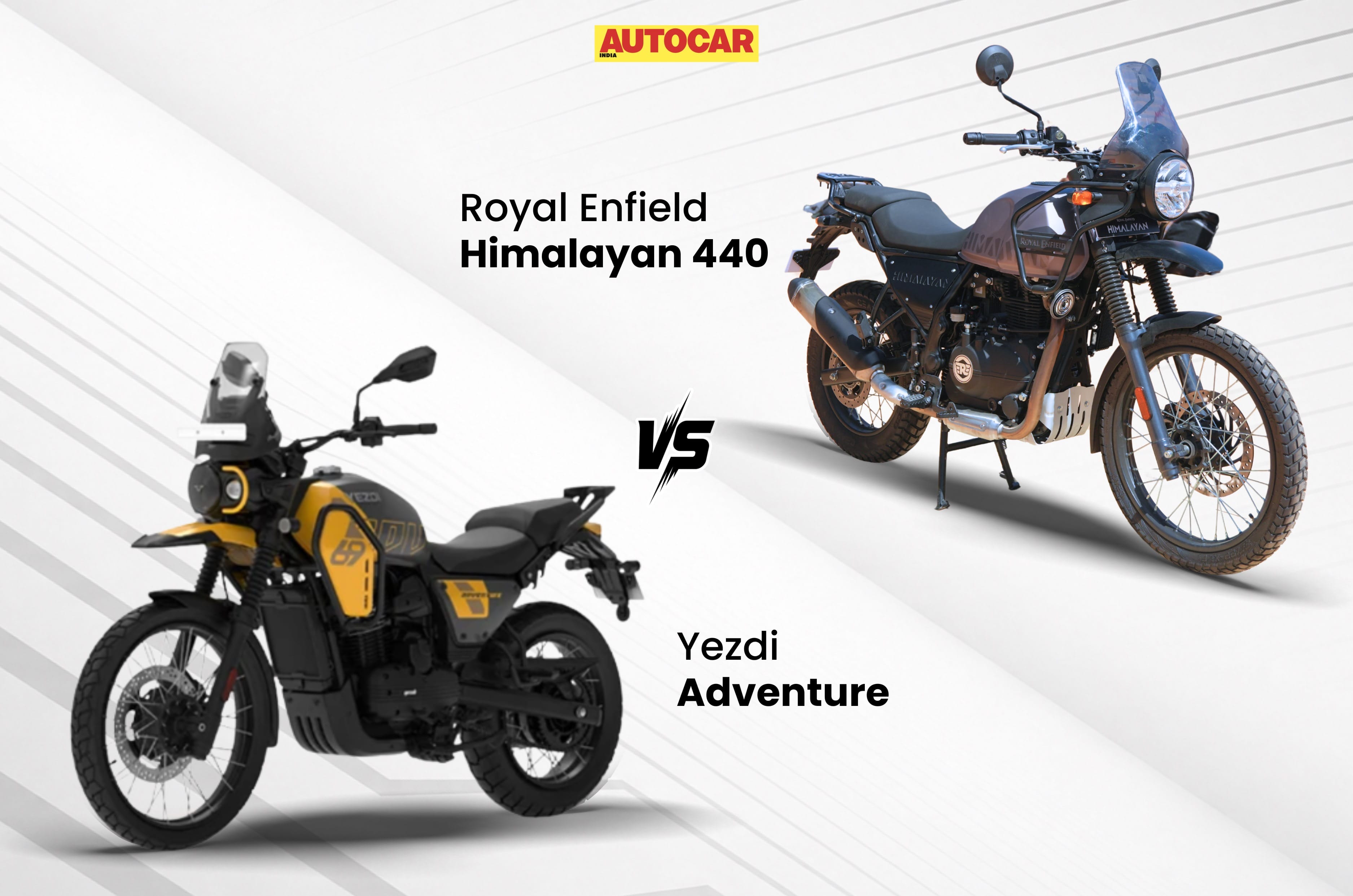
Image showing the Royal Enfield Himalayan 440 in Mustang Brown colour and the Yezdi Adventure in Yellow Falcon colour.

The Royal Enfield Himalayan 440 is back, wearing familiar clothes but a new, improved heart. Debuted first on the Scram 440, the upsized 443cc engine now makes 1.4hp more power and 2Nm of torque over the erstwhile Himalayan 411. Throw in an additional sixth gear and the Himalayan should now be a better tourer than before. But wait, how does this revived ADV compare to its direct rival, the Yezdi Adventure? Let’s find out.

Royal Enfield Himalayan 440 vs Yezdi Adventure: Engine and output

Yezdi makes more power with a liquid-cooled engine


Royal Enfield Himalayan 440

Yezdi Adventure

Engine

443cc single-cylinder, air- and oil-cooled

334cc single-cylinder, liquid-cooled

Power

25.4hp at 6,250rpm

29.6hp at 8,000rpm

Torque

34Nm at 4,000rpm

29.8Nm at 5,800rpm

Transmission

6-speed

6-speed

Power-to-weight ratio

127.64hp/tonne

158.29hp/tonne

On paper, the Yezdi Adventure displaces 109cc less than the Himalayan 440, but the Yezdi starts off strong—quite literally—with more power at a higher redline than the Himalayan 440. Its engine is also liquid-cooled compared to the Himalayan’s air- and oil-cooled mill. Both the motorcycles have six gears, so highway travel shouldn’t be a chore on either.

Royal Enfield Himalayan 440 vs Yezdi Adventure: Dimensions and weight

Himalayan 440 is more accessible


Royal Enfield Himalayan 440

Yezdi Adventure

Fuel tank

15 litres

15.5 litres

Ground clearance

220mm

220mm

Seat height

800mm

815mm

Kerb weight

199kg

187kg

Wheelbase

1460mm

1465mm

Things become a bit more even in this section. Both motorcycles share similar ground clearance numbers, but the Himalayan is more accessible with a 15mm lower saddle height. Yezdi reports 187kg for the Adventure but that’s dry weight. So, with 90 percent fuel, it should weigh just as much, if not more than the Himalayan’s 199kg.

Royal Enfield Himalayan 440 vs Yezdi Adventure: Tyres, brakes and suspension

Both models are (almost) on par


Royal Enfield Himalayan 440

Yezdi Adventure

Tyres (F,R)

90/90-21, 120/90-17

90/90-21, 130/80-17

Brakes (F,R)

300mm front disc, 240mm rear disc

320mm front disc, 240mm rear disc

Suspension (F,R)

Telescopic fork, linkage monoshock

Telescopic fork, linkage monoshock

Once again, the numbers look real similar on this front. The Yezdi Adventure has a slightly larger rear tyre and a slightly larger front disc brake. Speaking of tyres, although both models come with wire spoked rims as standard, the Yezdi Adventure offers cross spoke, tubeless rims as an optional Rs 20,000 add-on; available to the middle and top variants. Over on the Royal Enfield side though, such an upgrade isn’t possible at the moment. Royal Enfield doesn’t offer tubeless rims to the Himalayan 440, even as an accessory; they haven’t confirmed if the Himalayan 450’s tubeless rims can be retrofitted to it either. Suspension is another area where both motorcycles are neck-and-neck with them sharing the same kind of setups on paper, down to the travel.

Royal Enfield Himalayan 440 vs Yezdi Adventure: Features

Yezdi gets more rider aids

The Yezdi offers a more comprehensive feature package compared to the Royal Enfield. The Adventure gives you traction control, adjustable wind shield and instrument cluster, three ride modes (Road, Rain, Off-road); all of which are missing on the Himalayan 440. On the other hand, the Royal Enfield comes with a tripper pod as standard for turn-by-turn navigation, a USB type-C port, and LED headlight and taillight. But if rider aids are what you’re after, the Yezdi has more of them.

Royal Enfield Himalayan 440 vs Yezdi Adventure: Price

Yezdi offers more value for money


Royal Enfield Himalayan 440

Yezdi Adventure

Price (ex-showroom, Tamilnadu)

Rs 2.29 lakh

Rs 2.09 – 2.16 lakh 

Royal Enfield has kept things straightforward with the Himalayan 440 just offering one variant in three colours. All of them share the same price as well. Yezdi offers three variants of the Adventure in four total colours, separated only by the colour choices. Like we had mentioned earlier, you can add cross spoked tubeless wheels to its middle and top variants for Rs 20,000 extra. To conclude, on paper, the Yezdi Adventure puts up quite the fight to the Royal Enfield Himalayan 440 but real-world experiences may vary. It would be prudent to decide between the two after taking test rides.
 

Petrol Diesel Price Today: पेट्रोल-डीजल खरीदने से पहले जान लें आज की कीमत, दिल्ली-NCR समेत प्रमुख शहरों के ताजा रेट यहां देखें

Petrol Diesel Price Today: हर दिन की शुरुआत सिर्फ सूरज की किरणों से नहीं होती, बल्कि पेट्रोल और डीजल की नई कीमतों से भी होती है, जो आम आदमी की जेब पर सीधा असर डालती हैं। सुबह 6 बजे देश की तेल विपणन कंपनियां (OMCs) ताजा दरें जारी करती हैं, जो अंतरराष्ट्रीय बाजार में कच्चे तेल की कीमतों और डॉलर-रुपए की विनिमय दर में आए बदलावों पर आधारित होती हैं। ये बदलाव रोजमर्रा की जिंदगी को प्रभावित करते हैं, चाहे वो ऑफिस जाने वाला व्यक्ति हो या फल-सब्जी बेचने वाला व्यापारी।

ऐसे में हर दिन की कीमतों की जानकारी रखना सिर्फ जरूरी ही नहीं, बल्कि समझदारी भी है। सरकार की यह प्रणाली पारदर्शिता सुनिश्चित करती है ताकि उपभोक्ताओं को किसी तरह की भ्रमित जानकारी न मिले।

आपके शहर में आज का पेट्रोल-डीजल का भाव

ये रहे 05 सितंबर 2026 के प्रमुख शहरों के पेट्रोल-डीजल के ताजा रेट

नई दिल्ली: पेट्रोल ₹102.12 प्रति लीटर और डीजल ₹95.20 प्रति लीटर।

मुंबई: पेट्रोल ₹111.18 और डीजल ₹97.83 प्रति लीटर।

कोलकाता: पेट्रोल ₹113.47 जबकि डीजल ₹99.82 प्रति लीटर।

चेन्नई: पेट्रोल ₹107.77 और डीजल ₹99.55 प्रति लीटर।

गुरुग्राम: पेट्रोल ₹102.77 तथा डीजल ₹95.44 प्रति लीटर।

नोएडा: पेट्रोल ₹102.12 और डीजल ₹95.56 प्रति लीटर।

बेंगलुरु: पेट्रोल ₹110.93 जबकि डीजल ₹98.80 प्रति लीटर।

भुवनेश्वर: पेट्रोल ₹109.92 और डीजल ₹100.92 प्रति लीटर।

चंडीगढ़: पेट्रोल ₹98.10 तथा डीजल ₹86.09 प्रति लीटर।

हैदराबाद: पेट्रोल ₹115.69 और डीजल ₹103.82 प्रति लीटर।

जयपुर: पेट्रोल ₹112.66 जबकि डीजल ₹97.78 प्रति लीटर।

लखनऊ: पेट्रोल ₹102.05 और डीजल ₹95.55 प्रति लीटर।

पटना: पेट्रोल ₹113.35 तथा डीजल ₹99.36 प्रति लीटर।

तिरुवनंतपुरम: पेट्रोल ₹115.49 और डीजल ₹104.40 प्रति लीटर।

पिछले दो साल से स्थिर क्यों हैं कीमतें?

मई 2022 के बाद से केंद्र और कई राज्यों द्वारा टैक्स में कटौती की गई, जिसके बाद पेट्रोल-डीजल की कीमतों में स्थिरता देखी जा रही है। हालांकि अंतरराष्ट्रीय बाजार में उतार-चढ़ाव होता रहता है, फिर भी भारतीय उपभोक्ताओं के लिए कीमतें तुलनात्मक रूप से स्थिर बनी हुई हैं।

किन कारणों से तय होती हैं ईंधन की कीमतें?

  1. कच्चे तेल की कीमतें:

पेट्रोल और डीजल का उत्पादन मुख्य रूप से कच्चे तेल से होता है। जब अंतरराष्ट्रीय स्तर पर कच्चे तेल की कीमतें बढ़ती हैं, तो इसका असर सीधे भारतीय बाजार पर पड़ता है।

  1. डॉलर के मुकाबले रुपया:

भारत अधिकतर कच्चा तेल आयात करता है, और यह डॉलर में खरीदा जाता है। यदि रुपया कमजोर होता है, तो ईंधन महंगा हो जाता है।

  1. सरकारी टैक्स और शुल्क:

केंद्र और राज्य सरकारें पेट्रोल-डीजल पर भारी टैक्स लगाती हैं, जो खुदरा मूल्य का बड़ा हिस्सा होते हैं। यही कारण है कि राज्यों में कीमतों में अंतर होता है।

  1. रिफाइनिंग की लागत:

कच्चे तेल को इस्तेमाल लायक बनाने की प्रक्रिया (रिफाइनिंग) में भी खर्च होता है। ये लागत कच्चे तेल की गुणवत्ता और रिफाइनरी की क्षमता पर निर्भर करती है।

  1. मांग और आपूर्ति का संतुलन:

बाजार में ईंधन की मांग अगर बढ़ जाती है, तो कीमतें भी ऊपर जाने लगती हैं। खासकर त्योहारों, गर्मी या सर्दी के मौसम में ईंधन की खपत ज्यादा होती है।

कैसे करें अपने शहर की कीमतें SMS से चेक?

अगर आप मोबाइल से ईंधन की कीमत जानना चाहते हैं, तो ये प्रक्रिया आसान है:

Indian Oil ग्राहक: अपने शहर का कोड टाइप करें और उसे “RSP” के साथ 9224992249 पर भेजें।

BPCL ग्राहक: “RSP” लिखकर 9223112222 पर भेजें।

HPCL ग्राहक: “HP Price” लिखकर 9222201122 पर भेजें।

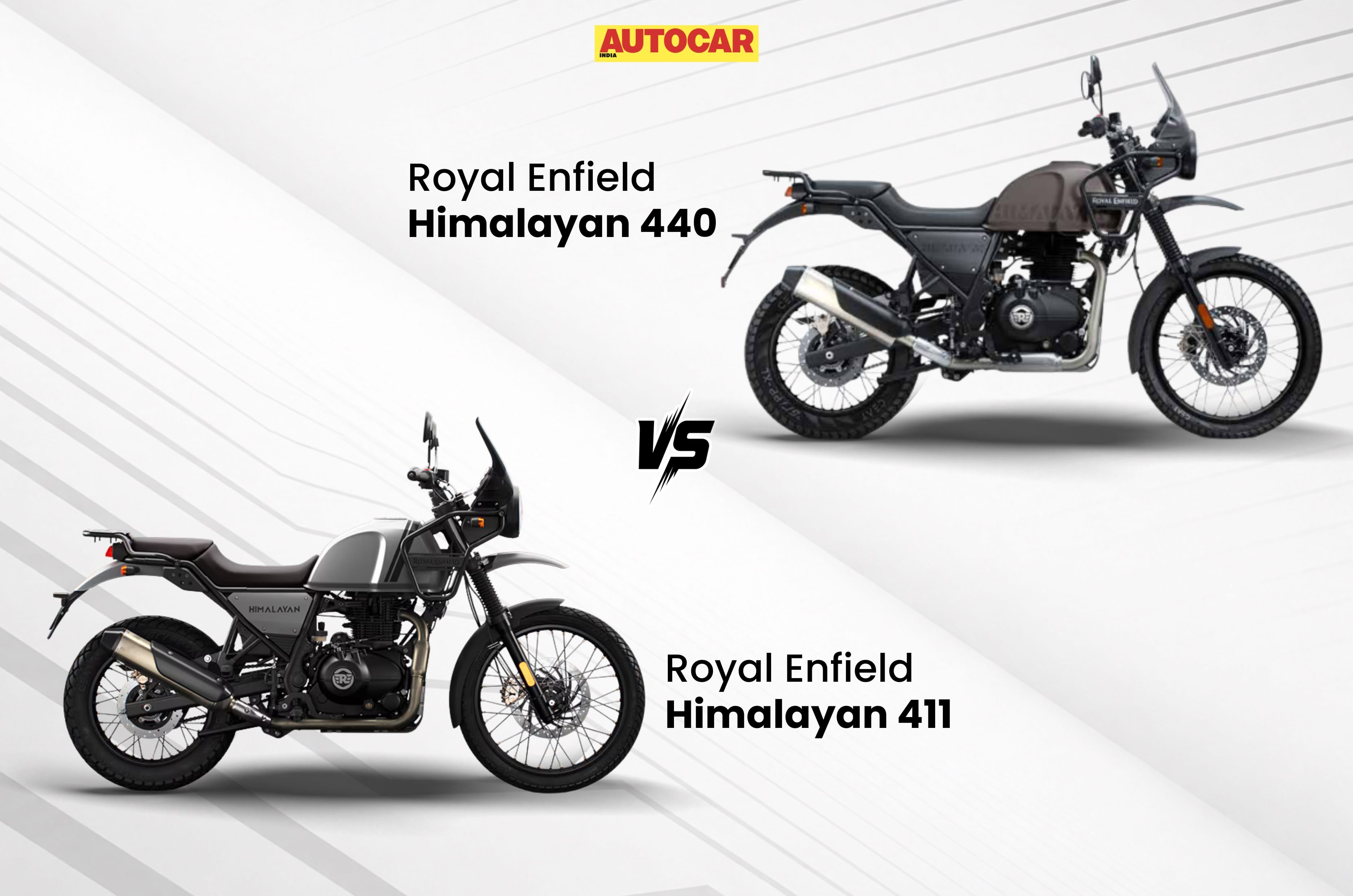
Royal Enfield Himalayan 440 vs Himalayan 411: differences explained

Royal Enfield Himalayan 440 vs Himalayan 411: differences explained
New Himalayan 440 vs Old Himalayan 411

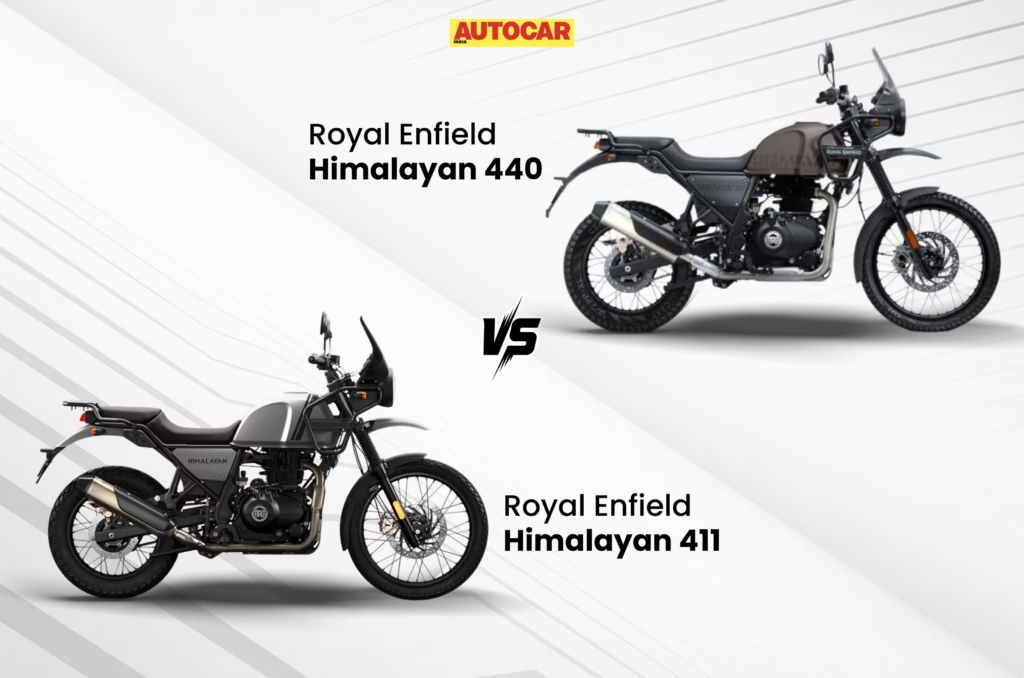
The Royal Enfield Himalayan 411 was discontinued in late 2023, when the significantly more sophisticated Himalayan 450 took its place. However, the added technological complexity also meant that the 450 was considerably more expensive than the bike it replaced, leaving many riders longing for the 411’s simpler, more straightforward character. The new Himalayan 440 is Royal Enfield’s answer to that demand. While it retains the same DNA as the original Himalayan, it brings a number of meaningful updates nearly a decade after the first-generation bike made its debut.

New Himalayan 440 vs Old Himalayan 411: What stays the same?

The core philosophy and most of the cycle parts carry over unchanged

The Himalayan 440 retains its split-cradle frame architecture from the 411, along with the same 21-inch front and 17-inch rear spoked wheel combination. Suspension travel is also unchanged, with 200mm at the front and 180mm at the rear, as is the 220mm ground clearance and the 800mm seat height. In character and purpose, these are the same motorcycle.

New Himalayan 440 vs Old Himalayan 411: Engine and gearbox

The new Himalayan uses the same engine as the Scram 440

The most significant change on the Himalayan is to do with the powertrain, with the bike now using the same powerplant as the Scram 440. The original Himalayan was powered by a 411cc, air/oil-cooled, single-cylinder unit producing 24hp at 6,500rpm and 32Nm at 4,000rpm. The 443cc unit on the new bike makes 25.4hp at 6,250rpm and 34Nm at 4,000rpm – 1.4hp and 2Nm more.

This new engine is paired with a 6-speed gearbox, unlike the 411, which used a 5-speed unit, with revised ratios throughout. The additional gear should make highway cruising more relaxed and touring more comfortable over long distances.

New Himalayan 440 vs Old Himalayan 411: Braking

Gets improved braking hardware and dual-channel switchable ABS

On paper, the braking hardware on the Himalayan 440 seems identical to what the 411 had to offer, with a 300mm disc at the front, 240mm rear disc, and dual-channel ABS. However, Royal Enfield mentions that the hardware now comprises new two-piston Bybre floating calipers with larger pistons, delivering improved braking performance. The dual-channel ABS system is switchable, so you can disengage the rear ABS.

New Himalayan 440 vs Old Himalayan 411: Features and equipment

Gets LED headlight and Tripper navigation among other features

The 440 gets a new LED headlight, and the digital-analogue instrument cluster setup has been updated. It loses the tachometer from the original but gets the brand’s Tripper navigation pod for turn-by-turn navigation. Another notable addition includes a USB Type-C charging port. The Himalayan has always been about long-distance adventure travel and unsurprisingly, the brand is offering a long list of accessories that you can add to the bike, including protection like engine and knuckle guards, as well as luggage like a top box and official panniers.

New Himalayan 440 vs Old Himalayan 411: Price

The Himalayan 440 is priced at Rs 2.29 lakh, making it a substantial Rs 79,000 more affordable than the Himalayan 450’s starting price. In fact, when the Himalayan 411 was discontinued in 2023, it was priced between Rs 2.15 lakh and Rs 2.30 lakh. That makes the new 440’s pricing even more impressive as three years on, it costs virtually the same as its predecessor while offering a more powerful engine, better brakes and several other practical upgrades.

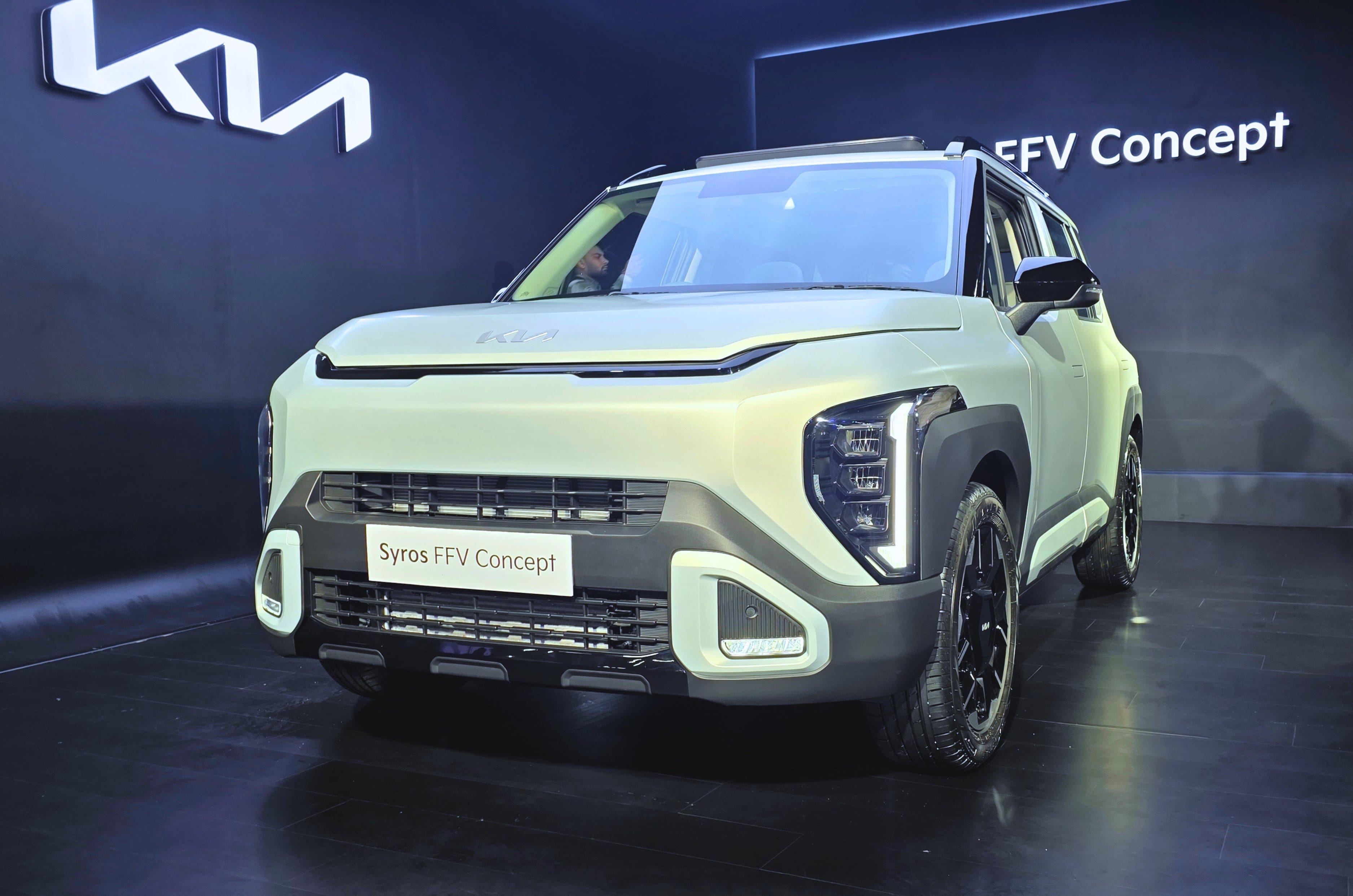
Kia unveils Syros flex-fuel concept

Kia unveils Syros flex-fuel concept
Kia Syros front quarter static

In a bid to join the flex–fuel race in India, Kia has unveiled the Syros FFV concept, its first flex-fuel car in India. The carmaker says that the Syros flex-fuel can run on pure petrol, pure ethanol, and varying ethanol-petrol blends. Kia is yet to confirm when a production-spec version will come to our market.

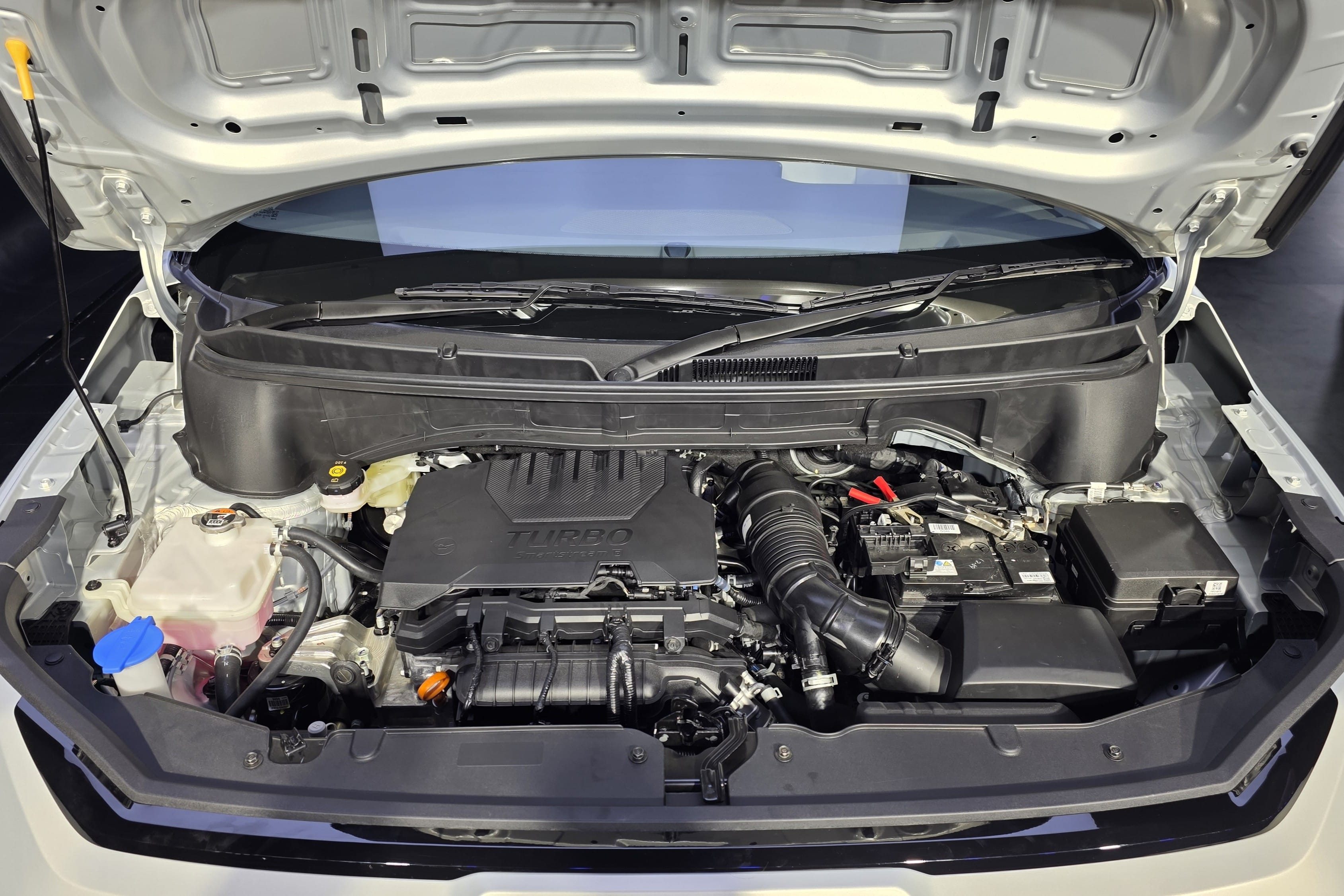
  1. Utilises a 1.0-litre direct-injection turbo-petrol engine.
  2. The engine comes with an upgraded ECU, TCU, and fuel system.
  3.  Transmission duties handled by a 6-speed automatic gearbox.

Kia Syros flex-fuel concept: Powertrain details

Powering the Syros flex-fuel is a 1.0-litre, three-cylinder, direct-injection turbo-petrol engine. However, the carmaker has not confirmed the power outputs of this engine. For compatibility with varying ethanol blends, Kia has tweaked components like its ECU, TCU, and fuel system. Unlike the standard Syros turbo-petrol that’s paired to a 7-speed DCT, the Syros flex fuel is mated with a 6-speed torque converter automatic.

Kia Syros flex-fuel concept: Exterior and interior

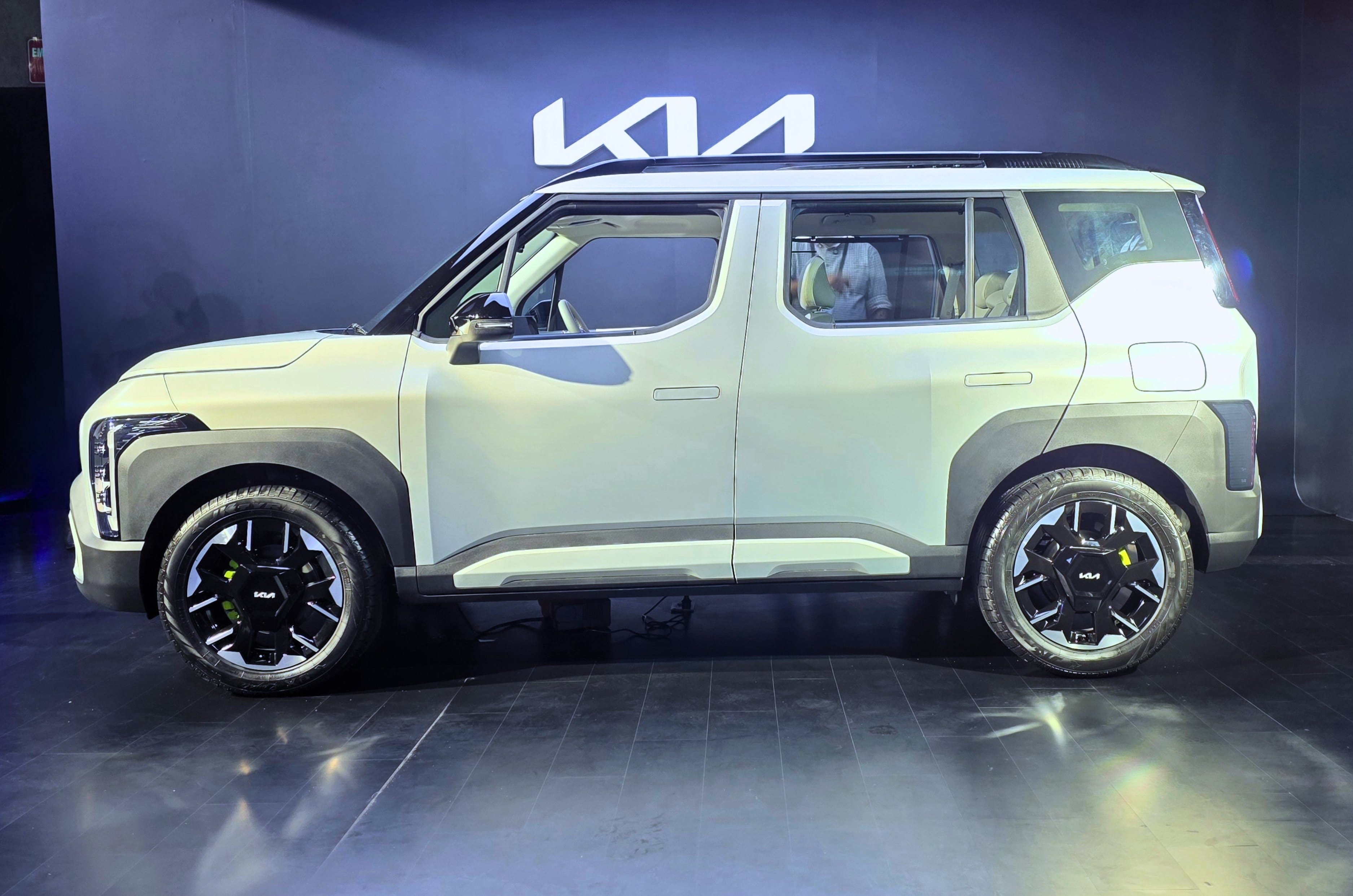
Apart from E85 compatibility, the Syros flex-fuel’s exterior remains unchanged from the standard model. You continue to get the familiar boxy, ‘tall-boy’ silhouette, ice-cube LED headlamps with DRLs, 17-inch dual-tone alloy wheels, roof rails, dual-tone bumpers, and high-mounted L-shaped LED signatures at the back.

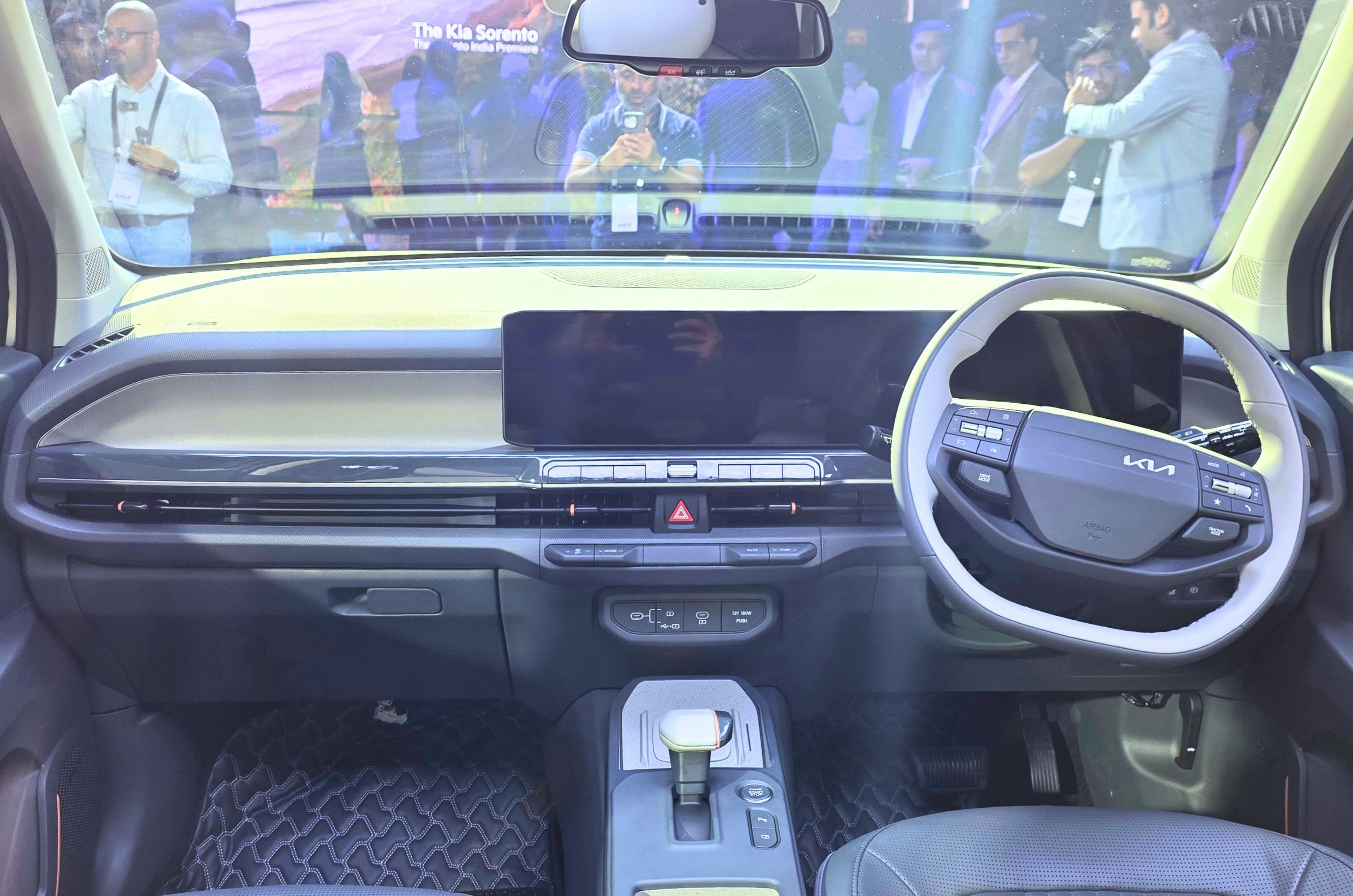
Like the exterior, the interior of the Syros flex-fuel is quite similar to the standard model. The dashboard is dominated by a triple-screen display for the digital instrument cluster, infotainment system, and HVAC controls, while you get an array of physical buttons at the centre. Lower down is a wireless phone charger, the same gear lever, and storage spaces as seen on the standard Syros.

With the debut, Kia is India’s second manufacturer to debut a flex-fuel car. Earlier this year, Maruti Suzuki was the first to unveil the Wagon R flex fuel, which currently retails at Rs 7.24 lakh. Kia joins the list of carmakers who are working on bringing flex fuel cars to India, as the government pushes for higher ethanol-blended petrol in an effort to reduce crude oil imports.

Petrol- Diesel Price Today: 4 सितंबर को कितने बदले पेट्रोल-डीजल के दाम? जानें अपने शहर का नया रेट

Petrol- Diesel Price Today: भारत में पेट्रोल और डीजल के दाम बढ़ने या फिर घटने का सीधा असर आम आदमी की जेब पर पड़ता है। पेट्रोल और डीजल की किमतें बढ़ने से रोजमर्रा की जिंदगी भी प्रभावित करते हैं।भारत में हर दिन सुबह 6 बजे पेट्रोल और डीजल की कीमतें बदलती हैं। देश की तेल विपणन कंपनियां (OMCs) इन दरों को जारी करती हैं। इन दरों में अंतरराष्ट्रीय बाजार में कच्चे तेल की कीमत और डॉलर-रुपए की विनिमय दर में होने वाले बदलाव का असर पड़ता है। वहीं पेट्रोल-डीजल के रेट में होने वाला हर छोटे और बड़े बदलाव पर लोगों की नजर होती है

बता दें आज 4 सितंबर के दिन पेट्रोल और डीजल की कीमतों में कोई बदलाव नहीं किया गया है। दोनों ईंधनों के दाम पुराने स्तर पर ही बने हुए हैं। आइए जानते हैं आपके शहर में कितने में मिल रहा है पेट्रोल और डीजल

आपके शहर पेट्रोल-डीजल के नए रेट

ये रहे 04 सितंबर 2026 के प्रमुख शहरों के पेट्रोल-डीजल के ताजा रेट

नई दिल्ली: पेट्रोल ₹102.12 प्रति लीटर और डीजल ₹95.20 प्रति लीटर।

मुंबई: पेट्रोल ₹111.31 और डीजल ₹97.97 प्रति लीटर।

कोलकाता: पेट्रोल ₹113.47 जबकि डीजल ₹99.82 प्रति लीटर।

चेन्नई: पेट्रोल ₹107.78 और डीजल ₹99.56 प्रति लीटर।

गुरुग्राम: पेट्रोल ₹102.77 तथा डीजल ₹95.44 प्रति लीटर।

नोएडा: पेट्रोल ₹102.12 और डीजल ₹97.92 प्रति लीटर।

बेंगलुरु: पेट्रोल ₹110.93 जबकि डीजल ₹98.80 प्रति लीटर।

भुवनेश्वर: पेट्रोल ₹109.92 और डीजल ₹100.92 प्रति लीटर।

चंडीगढ़: पेट्रोल ₹98.10 तथा डीजल ₹86.09 प्रति लीटर।

हैदराबाद: पेट्रोल ₹115.69 और डीजल ₹103.82 प्रति लीटर।

जयपुर: पेट्रोल ₹112.66 जबकि डीजल ₹97.78 प्रति लीटर।

लखनऊ: पेट्रोल ₹102.05 और डीजल ₹95.55 प्रति लीटर।

पटना: पेट्रोल ₹113.35 तथा डीजल ₹99.36 प्रति लीटर।

तिरुवनंतपुरम: पेट्रोल ₹115.49 और डीजल ₹104.40 प्रति लीटर।

कैसे तय होती हैं ईंधन की कीमतें?

  • पेट्रोल और डीजल का उत्पादन मुख्य रूप से कच्चे तेल से होता है। जब अंतरराष्ट्रीय स्तर पर कच्चे तेल की कीमतें बढ़ती हैं, तो इसका असर सीधे भारतीय बाजार पर पड़ता है।
  • भारत अधिकतर कच्चा तेल आयात करता है, और यह डॉलर में खरीदा जाता है। यदि रुपया कमजोर होता है, तो ईंधन महंगा हो जाता है।
  • केंद्र और राज्य सरकारें पेट्रोल-डीजल पर भारी टैक्स लगाती हैं, जो खुदरा मूल्य का बड़ा हिस्सा होते हैं। यही कारण है कि राज्यों में कीमतों में अंतर होता है।
  • कच्चे तेल को इस्तेमाल लायक बनाने की प्रक्रिया (रिफाइनिंग) में भी खर्च होता है। ये लागत कच्चे तेल की गुणवत्ता और रिफाइनरी की क्षमता पर निर्भर करती है।
  • बाजार में ईंधन की मांग अगर बढ़ जाती है, तो कीमतें भी ऊपर जाने लगती हैं। खासकर त्योहारों, गर्मी या सर्दी के मौसम में ईंधन की खपत ज्यादा होती है।

SMS से कैसे चेक करें अपने शहर की कीमत?

अगर आप मोबाइल से ईंधन की कीमत जानना चाहते हैं, तो इस आसान प्रक्रिया से जान सकते हैं:

  • Indian Oil ग्राहक: अपने शहर का कोड टाइप करें और उसे “RSP” के साथ 9224992249 पर भेजें।
  • BPCL ग्राहक: “RSP” लिखकर 9223112222 पर भेजें।
  • HPCL ग्राहक: “HP Price” लिखकर 9222201122 पर भेजें।

BS7 draft likely in couple of months: MoRTH

BS7 draft likely in couple of months: MoRTH

“We are ready with the next level of Bharat Stage [emission] standards and the final consultations are underway. We hopefully should be in a position to bring out the draft in a couple of months’ time for the BS 7 introduction,” Ministry of Road Transport and Highways (MoRTH) Secretary V Umashankar said at the 2026 SIAM Annual Convention in Delhi. 

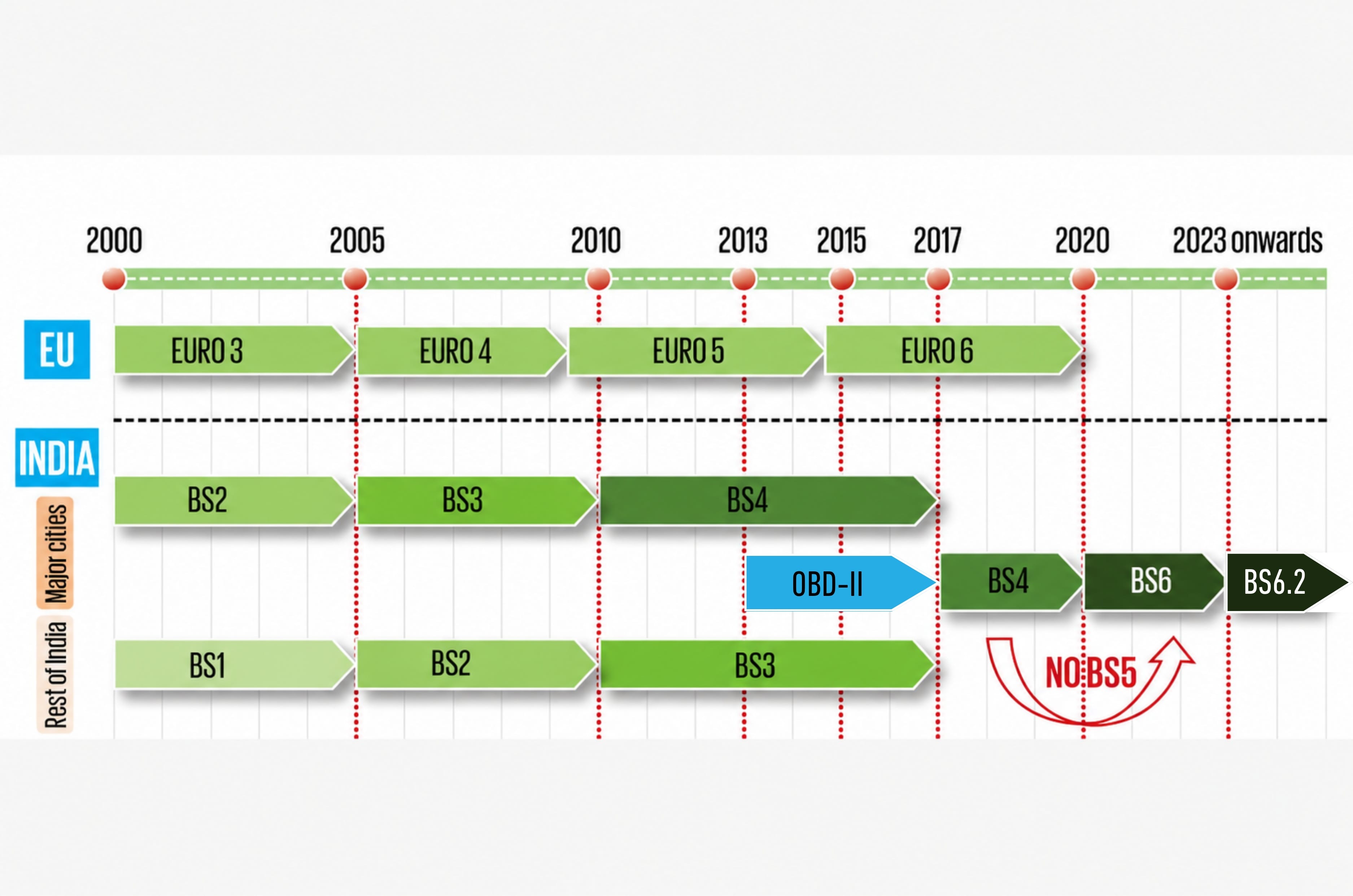
Bharat Stage norms limit the emissions of pollutants like hydrocarbons, sulphur and oxides of nitrogen from vehicles. India currently follows BS6 Phase 2 (or BS6.2) norms, which came into effect on April 1, 2023. “I think the industry is also preparing itself for it. The key challenge there would be the timelines,” Umashankar added.

What changes with BS7?

BS7 will put a greater focus on pollution levels from vehicles in real-world driving conditions rather than laboratory testing. Unlike the dramatic transition from BS4 to BS6, the move to BS7 is a natural progression from BS6. This should put relatively less pressure on manufacturers to upgrade their vehicles. Prices may also go up slightly due to the upgrades. Some models could even be discontinued if upgrading them to meet BS7 norms is not financially viable, something that we saw during the move from BS4 to BS6 in 2020.

Bharat Stage emission norms so far

Bharat Stage emission norms were introduced in India in the year 2000 with the implementation of BS1 standards, while also rolling out BS2 across major cities in a phased manner. BS2 was based on European emission regulations, with the main difference being the test cycle’s top speed – 90kph versus 120kph in Europe.

India remained one stage behind Europe until 2010, after which the oil industry could not supply the low-sulphur fuel needed to progress to BS5 before eventually leapfrogging from BS4 to BS6 in 2020.

How are CAFE norms different from BS standards?

Corporate Average Fuel Economy (CAFE) norms deal with overall fuel consumption, specifically the quantity of fuel consumed. Imposed on a carmaker’s entire fleet, and not on an individual model, it’s a limit set on the total emission of carbon dioxide produced. These norms force manufacturers to make more fuel efficient cars, which impacts many other things. Whereas, Bharat Stage norms measure emissions at a vehicular level.

Updated Hero Mavrick 440 spotted with USD fork and a TFT cluster

Updated Hero Mavrick 440 spotted with USD fork and a TFT cluster
Inside image of the updated Hero Mavrick 440 showing the USD fork and back of the new TFT instrument cluster

Hero Mavrick 440 was the brand’s flagship product at launch, both in terms of price and features. It shared the engine and the platform with the original Harley-Davidson X440 but stuck to a conventional telescopic fork and a simpler LCD instrument cluster. Hero discontinued the Mavrick in India in early 2025, although it continues to be sold as Hunk 440 in the overseas markets. Now, an updated version of the Mavrick 440 has been spotted.

  1. Besides the USD fork and the TFT cluster, likely to get ride by wire
  2. Expected to retain the 440cc engine and the design

Hero bringing Mavrick 440 back in India

The Mavrick was discontinued in early 2025

A social media user has posted a picture of an updated Mavrick 440 with two of the major concerns addressed. First, the conventional right side up (RSU) telescopic fork has been swapped for an upside down (USD) fork. And the instrument cluster has been upgraded to a TFT one, presumably the same one as the Harley-Davidson X440 T, which shares the same platform. With the update, the X440 T got two ride modes and traction control. It remains unclear if the Mavrick 440 will get those extra features too.

The engine likely remains unchanged with the same air- and oil-cooled 440cc single-cylinder mill with 27hp and 38Nm of torque. Nothing on the design front appears to have been updated in any way either. At launch, the Mavrick 440 started at Rs 1.99 lakh, going up to Rs 2.24 lakh for the top variant (both prices ex-showroom, Delhi). With these additional features, the price would have gone up if Hero was planning to relaunch the bike in India. However, we believe that this bike is destined for export markets only, and Hero won’t be launching it here any time soon.

Image credit: xtremeAnkit (Reddit)

Petrol Diesel Price Today: पेट्रोल-डीजल के दाम में कोई बदलाव नहीं, जानें दिल्ली-NCR समेत आपके शहर में आज का रेट

Petrol Diesel Price Today: हर दिन की शुरुआत सिर्फ सूरज की किरणों से नहीं होती, बल्कि पेट्रोल और डीजल की नई कीमतों से भी होती है, जो आम आदमी की जेब पर सीधा असर डालती हैं। सुबह 6 बजे देश की तेल विपणन कंपनियां (OMCs) ताजा दरें जारी करती हैं, जो अंतरराष्ट्रीय बाजार में कच्चे तेल की कीमतों और डॉलर-रुपए की विनिमय दर में आए बदलावों पर आधारित होती हैं। ये बदलाव रोजमर्रा की जिंदगी को प्रभावित करते हैं, चाहे वो ऑफिस जाने वाला व्यक्ति हो या फल-सब्जी बेचने वाला व्यापारी।

ऐसे में हर दिन की कीमतों की जानकारी रखना सिर्फ जरूरी ही नहीं, बल्कि समझदारी भी है। सरकार की यह प्रणाली पारदर्शिता सुनिश्चित करती है ताकि उपभोक्ताओं को किसी तरह की भ्रमित जानकारी न मिले।

आपके शहर में आज का पेट्रोल-डीजल का भाव

ये रहे 03 सितंबर 2026 के प्रमुख शहरों के पेट्रोल-डीजल के ताजा रेट

नई दिल्ली: पेट्रोल ₹102.12 प्रति लीटर और डीजल ₹95.20 प्रति लीटर।

मुंबई: पेट्रोल ₹111.18 और डीजल ₹97.83 प्रति लीटर।

कोलकाता: पेट्रोल ₹113.47 जबकि डीजल ₹99.82 प्रति लीटर।

चेन्नई: पेट्रोल ₹107.77 और डीजल ₹99.55 प्रति लीटर।

गुरुग्राम: पेट्रोल ₹102.77 तथा डीजल ₹95.44 प्रति लीटर।

नोएडा: पेट्रोल ₹102.12 और डीजल ₹95.56 प्रति लीटर।

बेंगलुरु: पेट्रोल ₹110.93 जबकि डीजल ₹98.80 प्रति लीटर।

भुवनेश्वर: पेट्रोल ₹109.92 और डीजल ₹100.92 प्रति लीटर।

चंडीगढ़: पेट्रोल ₹98.10 तथा डीजल ₹86.09 प्रति लीटर।

हैदराबाद: पेट्रोल ₹115.69 और डीजल ₹103.82 प्रति लीटर।

जयपुर: पेट्रोल ₹112.66 जबकि डीजल ₹97.78 प्रति लीटर।

लखनऊ: पेट्रोल ₹102.05 और डीजल ₹95.55 प्रति लीटर।

पटना: पेट्रोल ₹113.35 तथा डीजल ₹99.36 प्रति लीटर।

तिरुवनंतपुरम: पेट्रोल ₹115.49 और डीजल ₹104.40 प्रति लीटर।

पिछले दो साल से स्थिर क्यों हैं कीमतें?

मई 2022 के बाद से केंद्र और कई राज्यों द्वारा टैक्स में कटौती की गई, जिसके बाद पेट्रोल-डीजल की कीमतों में स्थिरता देखी जा रही है। हालांकि अंतरराष्ट्रीय बाजार में उतार-चढ़ाव होता रहता है, फिर भी भारतीय उपभोक्ताओं के लिए कीमतें तुलनात्मक रूप से स्थिर बनी हुई हैं।

किन कारणों से तय होती हैं ईंधन की कीमतें?

  1. कच्चे तेल की कीमतें:

पेट्रोल और डीजल का उत्पादन मुख्य रूप से कच्चे तेल से होता है। जब अंतरराष्ट्रीय स्तर पर कच्चे तेल की कीमतें बढ़ती हैं, तो इसका असर सीधे भारतीय बाजार पर पड़ता है।

  1. डॉलर के मुकाबले रुपया:

भारत अधिकतर कच्चा तेल आयात करता है, और यह डॉलर में खरीदा जाता है। यदि रुपया कमजोर होता है, तो ईंधन महंगा हो जाता है।

  1. सरकारी टैक्स और शुल्क:

केंद्र और राज्य सरकारें पेट्रोल-डीजल पर भारी टैक्स लगाती हैं, जो खुदरा मूल्य का बड़ा हिस्सा होते हैं। यही कारण है कि राज्यों में कीमतों में अंतर होता है।

  1. रिफाइनिंग की लागत:

कच्चे तेल को इस्तेमाल लायक बनाने की प्रक्रिया (रिफाइनिंग) में भी खर्च होता है। ये लागत कच्चे तेल की गुणवत्ता और रिफाइनरी की क्षमता पर निर्भर करती है।

  1. मांग और आपूर्ति का संतुलन:

बाजार में ईंधन की मांग अगर बढ़ जाती है, तो कीमतें भी ऊपर जाने लगती हैं। खासकर त्योहारों, गर्मी या सर्दी के मौसम में ईंधन की खपत ज्यादा होती है।

कैसे करें अपने शहर की कीमतें SMS से चेक?

अगर आप मोबाइल से ईंधन की कीमत जानना चाहते हैं, तो ये प्रक्रिया आसान है:

Indian Oil ग्राहक: अपने शहर का कोड टाइप करें और उसे “RSP” के साथ 9224992249 पर भेजें।

BPCL ग्राहक: “RSP” लिखकर 9223112222 पर भेजें।

HPCL ग्राहक: “HP Price” लिखकर 9222201122 पर भेजें।

Petrol Diesel Price Today: पेट्रोल-डीजल के भाव में राहत या झटका? जानें 2 सितंबर के लेटेस्ट रेट

Petrol Diesel Price Today: हर दिन की शुरुआत सिर्फ सूरज की किरणों से नहीं होती, बल्कि पेट्रोल और डीजल की नई कीमतों से भी होती है, जो आम आदमी की जेब पर सीधा असर डालती हैं। सुबह 6 बजे देश की तेल विपणन कंपनियां (OMCs) ताजा दरें जारी करती हैं, जो अंतरराष्ट्रीय बाजार में कच्चे तेल की कीमतों और डॉलर-रुपए की विनिमय दर में आए बदलावों पर आधारित होती हैं। ये बदलाव रोजमर्रा की जिंदगी को प्रभावित करते हैं, चाहे वो ऑफिस जाने वाला व्यक्ति हो या फल-सब्जी बेचने वाला व्यापारी।

ऐसे में हर दिन की कीमतों की जानकारी रखना सिर्फ जरूरी ही नहीं, बल्कि समझदारी भी है। सरकार की यह प्रणाली पारदर्शिता सुनिश्चित करती है ताकि उपभोक्ताओं को किसी तरह की भ्रमित जानकारी न मिले।

आपके शहर में आज का पेट्रोल-डीजल का भाव

ये रहे 02 सितंबर 2026 के प्रमुख शहरों के पेट्रोल-डीजल के ताजा रेट

नई दिल्ली: पेट्रोल ₹102.12 प्रति लीटर और डीजल ₹95.20 प्रति लीटर।

मुंबई: पेट्रोल ₹111.18 और डीजल ₹97.83 प्रति लीटर।

कोलकाता: पेट्रोल ₹113.47 जबकि डीजल ₹99.82 प्रति लीटर।

चेन्नई: पेट्रोल ₹107.77 और डीजल ₹99.55 प्रति लीटर।

गुरुग्राम: पेट्रोल ₹102.77 तथा डीजल ₹95.44 प्रति लीटर।

नोएडा: पेट्रोल ₹102.12 और डीजल ₹95.56 प्रति लीटर।

बेंगलुरु: पेट्रोल ₹110.93 जबकि डीजल ₹98.80 प्रति लीटर।

भुवनेश्वर: पेट्रोल ₹109.92 और डीजल ₹100.92 प्रति लीटर।

चंडीगढ़: पेट्रोल ₹98.10 तथा डीजल ₹86.09 प्रति लीटर।

हैदराबाद: पेट्रोल ₹115.69 और डीजल ₹103.82 प्रति लीटर।

जयपुर: पेट्रोल ₹112.66 जबकि डीजल ₹97.78 प्रति लीटर।

लखनऊ: पेट्रोल ₹102.05 और डीजल ₹95.55 प्रति लीटर।

पटना: पेट्रोल ₹113.35 तथा डीजल ₹99.36 प्रति लीटर।

तिरुवनंतपुरम: पेट्रोल ₹115.49 और डीजल ₹104.40 प्रति लीटर।

पिछले दो साल से स्थिर क्यों हैं कीमतें?

मई 2022 के बाद से केंद्र और कई राज्यों द्वारा टैक्स में कटौती की गई, जिसके बाद पेट्रोल-डीजल की कीमतों में स्थिरता देखी जा रही है। हालांकि अंतरराष्ट्रीय बाजार में उतार-चढ़ाव होता रहता है, फिर भी भारतीय उपभोक्ताओं के लिए कीमतें तुलनात्मक रूप से स्थिर बनी हुई हैं।

किन कारणों से तय होती हैं ईंधन की कीमतें?

  1. कच्चे तेल की कीमतें:

पेट्रोल और डीजल का उत्पादन मुख्य रूप से कच्चे तेल से होता है। जब अंतरराष्ट्रीय स्तर पर कच्चे तेल की कीमतें बढ़ती हैं, तो इसका असर सीधे भारतीय बाजार पर पड़ता है।

  1. डॉलर के मुकाबले रुपया:

भारत अधिकतर कच्चा तेल आयात करता है, और यह डॉलर में खरीदा जाता है। यदि रुपया कमजोर होता है, तो ईंधन महंगा हो जाता है।

  1. सरकारी टैक्स और शुल्क:

केंद्र और राज्य सरकारें पेट्रोल-डीजल पर भारी टैक्स लगाती हैं, जो खुदरा मूल्य का बड़ा हिस्सा होते हैं। यही कारण है कि राज्यों में कीमतों में अंतर होता है।

  1. रिफाइनिंग की लागत:

कच्चे तेल को इस्तेमाल लायक बनाने की प्रक्रिया (रिफाइनिंग) में भी खर्च होता है। ये लागत कच्चे तेल की गुणवत्ता और रिफाइनरी की क्षमता पर निर्भर करती है।

  1. मांग और आपूर्ति का संतुलन:

बाजार में ईंधन की मांग अगर बढ़ जाती है, तो कीमतें भी ऊपर जाने लगती हैं। खासकर त्योहारों, गर्मी या सर्दी के मौसम में ईंधन की खपत ज्यादा होती है।

कैसे करें अपने शहर की कीमतें SMS से चेक?

अगर आप मोबाइल से ईंधन की कीमत जानना चाहते हैं, तो ये प्रक्रिया आसान है:

Indian Oil ग्राहक: अपने शहर का कोड टाइप करें और उसे “RSP” के साथ 9224992249 पर भेजें।

BPCL ग्राहक: “RSP” लिखकर 9223112222 पर भेजें।

HPCL ग्राहक: “HP Price” लिखकर 9222201122 पर भेजें।

गोदरेज ग्रुप का स्टॉक 55% उछल सकता है, कोटक ने ₹1010 का टारगेट दिया

गोदरेज ग्रुप की कंपनी Godrej Agrovet के शेयर मंगलवार, 1 सितंबर को 12% तक चढ़ गए। हालांकि, बाद में तेजी कुछ कम हुई। शेयर आखिर में 5.96% की बढ़त के साथ ₹652 पर बंद हुआ। कंपनी के शेयर में लगातार दूसरे दिन तेजी देखने को मिली।

Kotak ने टारगेट बढ़ाया

Kotak Institutional Equities ने Godrej Agrovet पर ‘Buy’ रेटिंग बरकरार रखी है। ब्रोकरेज ने शेयर का टारगेट प्राइस बढ़ाकर ₹1,010 कर दिया है।

मंगलवार के क्लोजिंग प्राइस ₹652 के मुकाबले यह टारगेट करीब 55% ज्यादा है। इससे पहले Kotak ने 8 जुलाई 2026 को शेयर का टारगेट ₹850 रखा था। यानी ब्रोकरेज ने नया टारगेट करीब 19% बढ़ा दिया है।

₹4,500 करोड़ EBITDA का अनुमान

Kotak का मानना है कि कंपनी का EBITDA FY31 तक ₹4,500 करोड़ तक पहुंच सकता है। EBITDA मार्जिन 23% से ज्यादा रह सकता है। ब्रोकरेज के मुताबिक, कंपनी की ग्रोथ कम से कम 2040 तक मजबूत बनी रह सकती है।

ब्रोकरेज को खासतौर पर कंपनी के पाम ऑयल कारोबार से बड़ी उम्मीद है।

पाम ऑयल बिजनेस पर बड़ा दांव

Godrej Agrovet के पाम ऑयल बिजनेस ने FY26 में ₹430 करोड़ का EBITDA कमाया था। कंपनी को उम्मीद है कि FY31 तक यह आंकड़ा ₹1,000 करोड़ के पार पहुंच जाएगा।

इसकी बड़ी वजह FFB यानी Fresh Fruit Bunch वॉल्यूम में दोहरे अंकों की ग्रोथ हो सकती है। Kotak का मानना है कि पाम ऑयल कारोबार में लंबी अवधि की मजबूत ग्रोथ की संभावना है। साथ ही मार्जिन भी स्थिर रह सकता है और कैपिटल पर अच्छा रिटर्न मिल सकता है।

ब्रोकरेज का कहना है कि अकेले पाम ऑयल बिजनेस की वैल्यू कंपनी के मौजूदा मार्केट कैप से भी ज्यादा हो सकती है। कंपनी का मार्केट कैप करीब ₹12,872 करोड़ है। स्थानीय स्तर पर मजबूत पकड़ को देखते हुए Kotak ने इस कारोबार के लिए EBITDA मल्टीपल 15 गुना से बढ़ाकर 18 गुना कर दिया है।

वैल्यू-एडेड प्रोडक्ट्स से भी उम्मीद

Kotak ने कहा कि कंपनी के कारोबार में वैल्यू-एडेड प्रोडक्ट्स की हिस्सेदारी बढ़ रही है। इससे आने वाले वर्षों में कमाई और प्रॉफिटेबिलिटी को सपोर्ट मिल सकता है।

पाम ऑयल कारोबार आगे चलकर कंपनी के लिए बड़ा वैल्यू ड्राइवर बन सकता है। स्टॉक को कवर करने वाले 5 अन्य एनालिस्ट भी शेयर पर ‘Buy’ रेटिंग देते हैं।

जून तिमाही में मुनाफा घटा

FY27 की पहली तिमाही में कंपनी के नतीजे मिले-जुले रहे। जून तिमाही में कंसोलिडेटेड नेट प्रॉफिट 13.8% घटकर ₹128.3 करोड़ रह गया। एक साल पहले यह ₹149 करोड़ था।

हालांकि, रेवेन्यू 9.2% बढ़कर ₹2,855.2 करोड़ हो गया। पिछले साल की समान तिमाही में यह ₹2,614.3 करोड़ था।

EBITDA 10.9% घटकर ₹240.1 करोड़ रह गया। एक साल पहले यह ₹269.6 करोड़ था। EBITDA मार्जिन भी घटकर 8.41% रह गया। पिछले साल यह 10.32% था।

शेयर का हाल

Godrej Agrovet का शेयर मंगलवार को इंट्राडे में 12% तक चढ़ा। बाद में इसमें मुनाफावसूली दिखी और तेजी कम हो गई। शेयर आखिर में 5.96% की बढ़त के साथ ₹652 पर बंद हुआ।

पिछले एक महीने में शेयर करीब 22% चढ़ चुका है। यह 52 हफ्ते के हाई ₹760 से करीब 14% नीचे है। वहीं, 52 हफ्ते के लो ₹506.10 से करीब 29% ऊपर कारोबार कर रहा है।

Crude Oil Price: ब्रेंट क्रूड 92 डॉलर के पार, इन कंपनियों के शेयर फिसले, ONGC और ऑयल इंडिया में उछाल

Disclaimer: मनीकंट्रोल.कॉम पर दिए गए सलाह या विचार एक्सपर्ट/ब्रोकरेज फर्म के अपने निजी विचार होते हैं। वेबसाइट या मैनेजमेंट इसके लिए उत्तरदायी नहीं है। यूजर्स को मनीकंट्रोल की सलाह है कि कोई भी निवेश निर्णय लेने से पहले हमेशा सर्टिफाइड एक्सपर्ट की सलाह लें।