



In a bid to join the flex–fuel race in India, Kia has unveiled the Syros FFV concept, its first flex-fuel car in India. The carmaker says that the Syros flex-fuel can run on pure petrol, pure ethanol, and varying ethanol-petrol blends. Kia is yet to confirm when a production-spec version will come to our market.
- Utilises a 1.0-litre direct-injection turbo-petrol engine.
- The engine comes with an upgraded ECU, TCU, and fuel system.
- Transmission duties handled by a 6-speed automatic gearbox.
Kia Syros flex-fuel concept: Powertrain details
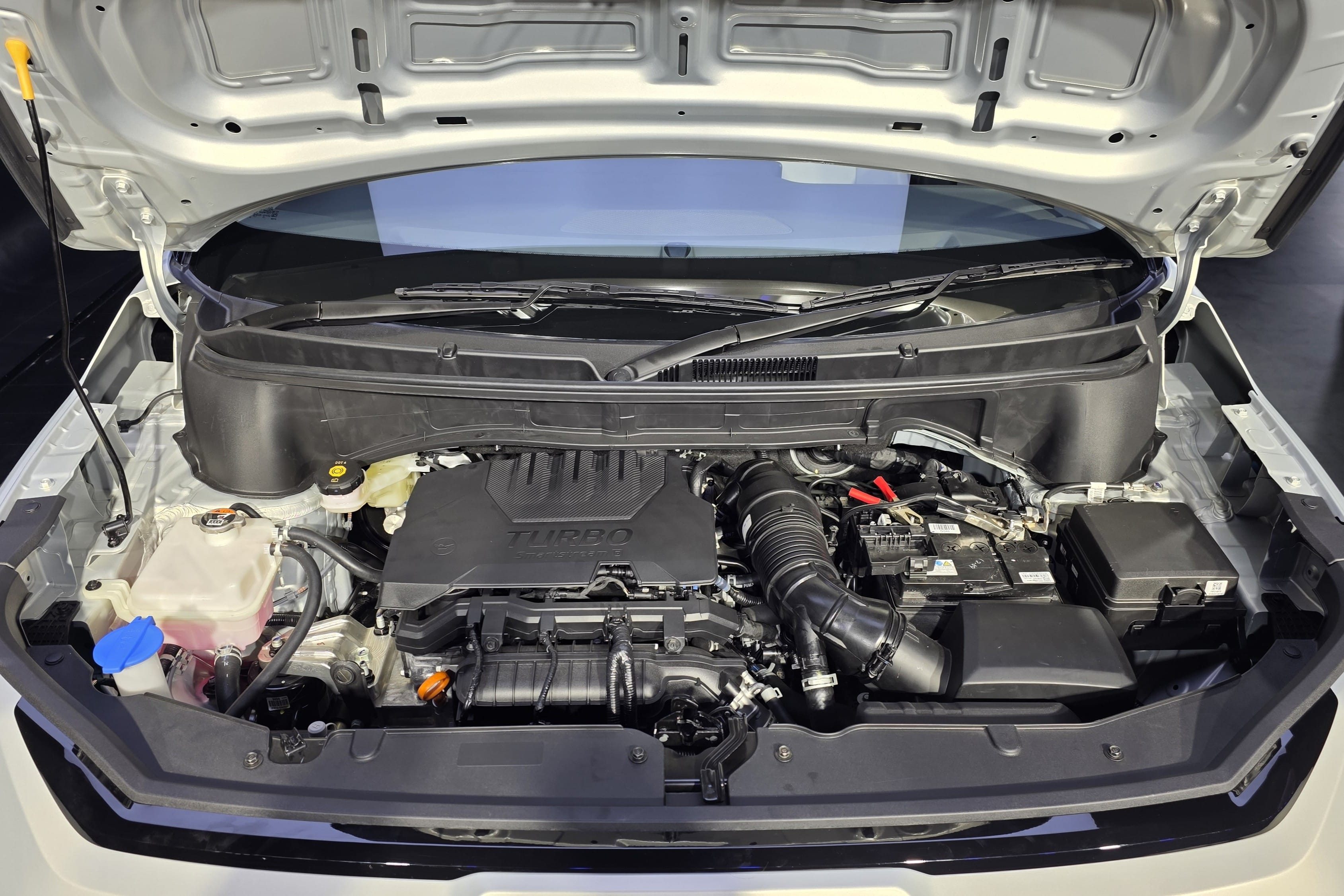
Powering the Syros flex-fuel is a 1.0-litre, three-cylinder, direct-injection turbo-petrol engine. However, the carmaker has not confirmed the power outputs of this engine. For compatibility with varying ethanol blends, Kia has tweaked components like its ECU, TCU, and fuel system. Unlike the standard Syros turbo-petrol that’s paired to a 7-speed DCT, the Syros flex fuel is mated with a 6-speed torque converter automatic.
Kia Syros flex-fuel concept: Exterior and interior
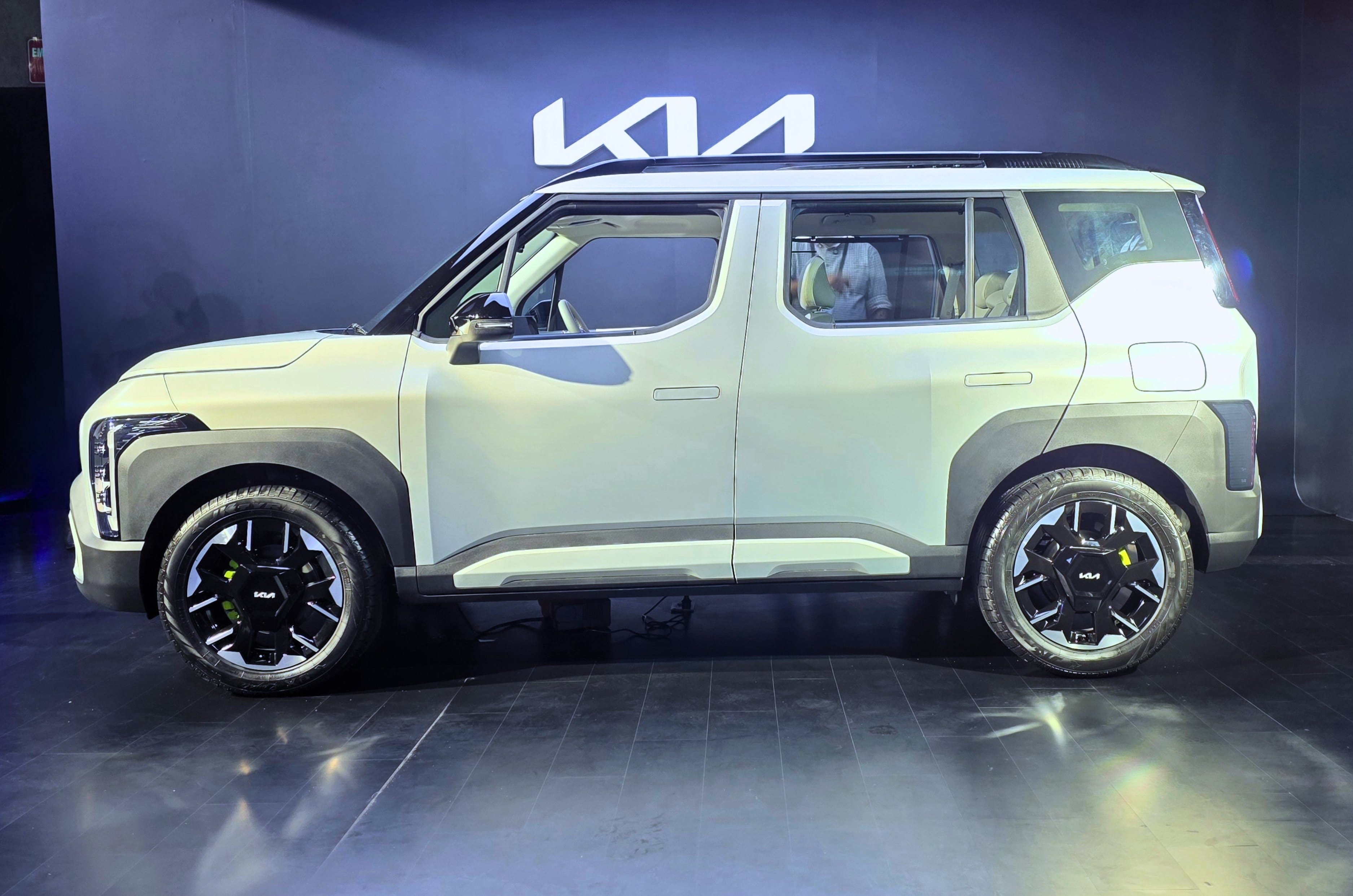
Apart from E85 compatibility, the Syros flex-fuel’s exterior remains unchanged from the standard model. You continue to get the familiar boxy, ‘tall-boy’ silhouette, ice-cube LED headlamps with DRLs, 17-inch dual-tone alloy wheels, roof rails, dual-tone bumpers, and high-mounted L-shaped LED signatures at the back.

Like the exterior, the interior of the Syros flex-fuel is quite similar to the standard model. The dashboard is dominated by a triple-screen display for the digital instrument cluster, infotainment system, and HVAC controls, while you get an array of physical buttons at the centre. Lower down is a wireless phone charger, the same gear lever, and storage spaces as seen on the standard Syros.
With the debut, Kia is India’s second manufacturer to debut a flex-fuel car. Earlier this year, Maruti Suzuki was the first to unveil the Wagon R flex fuel, which currently retails at Rs 7.24 lakh. Kia joins the list of carmakers who are working on bringing flex fuel cars to India, as the government pushes for higher ethanol-blended petrol in an effort to reduce crude oil imports.


