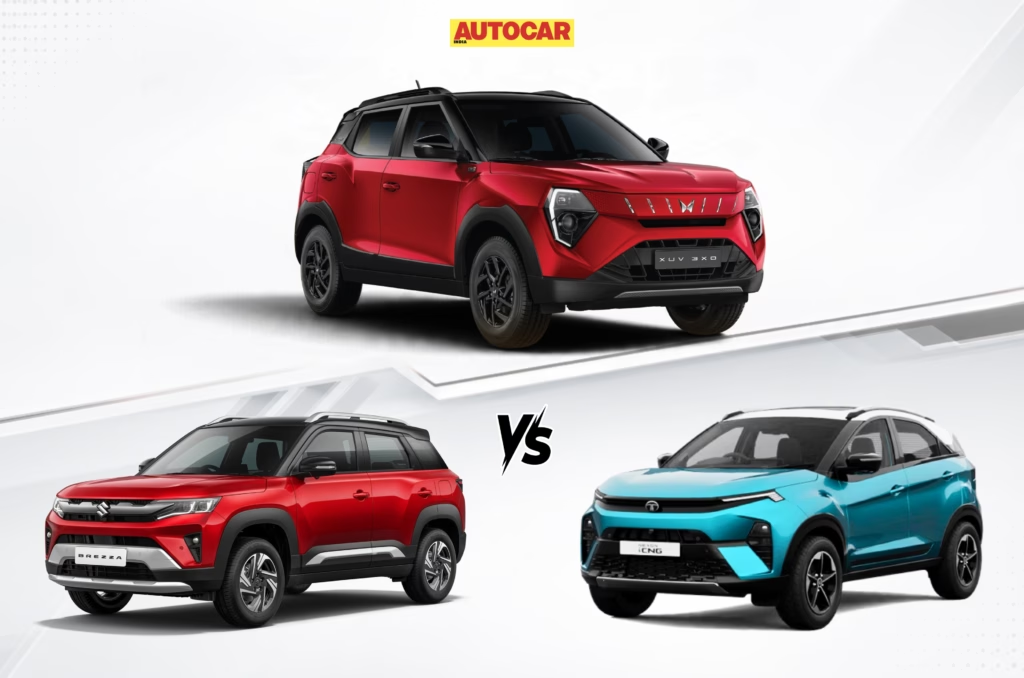
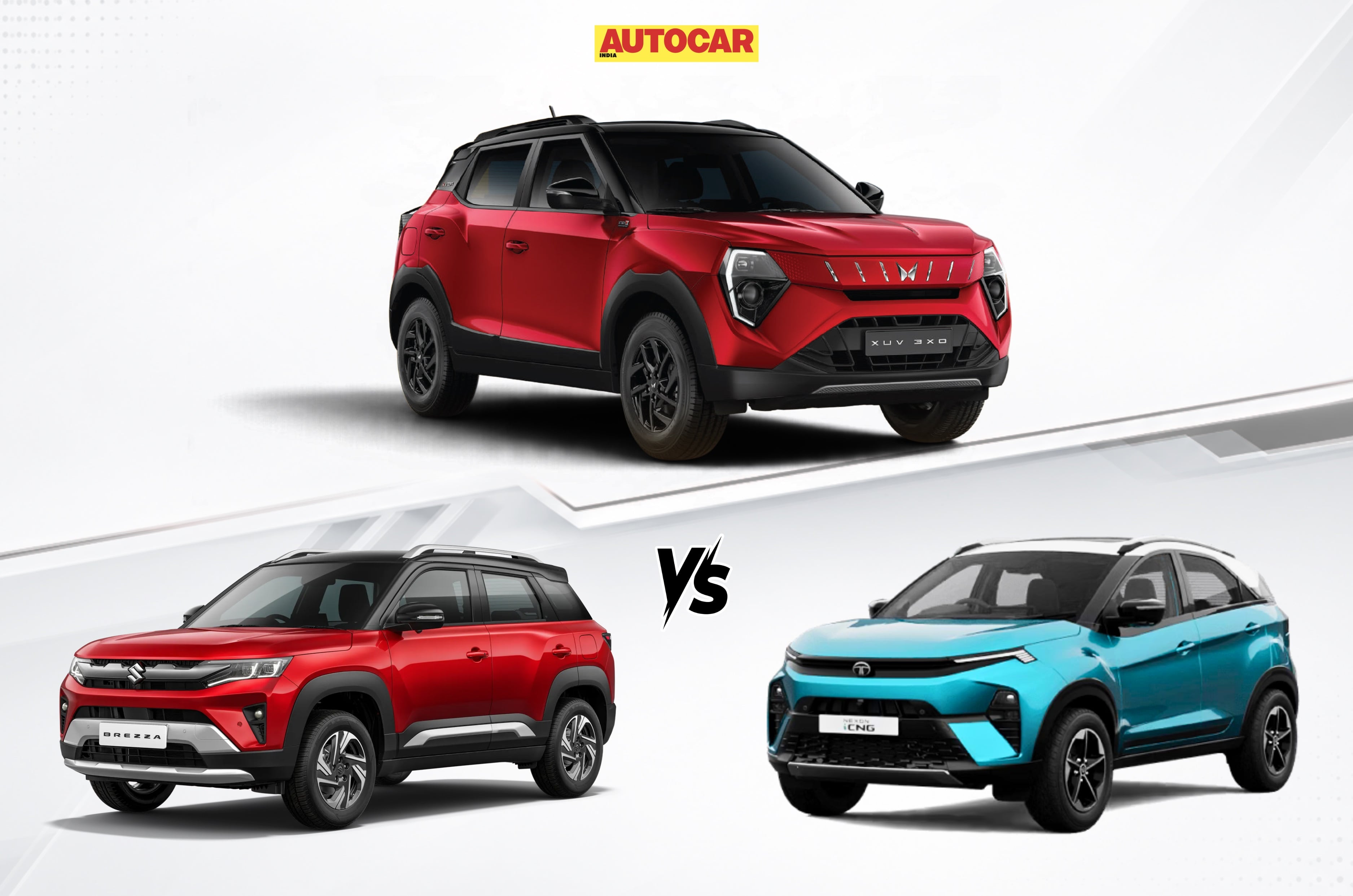
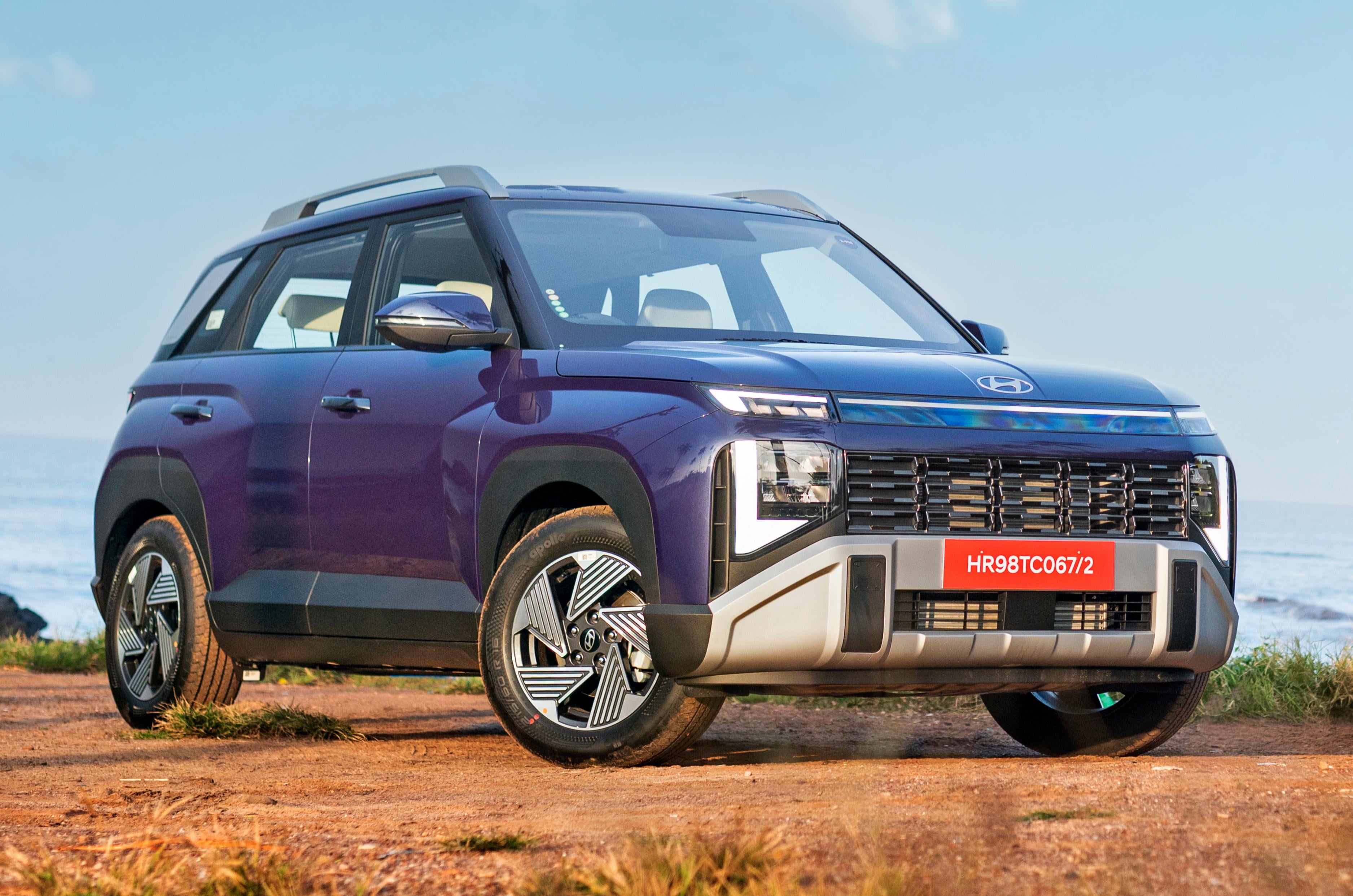
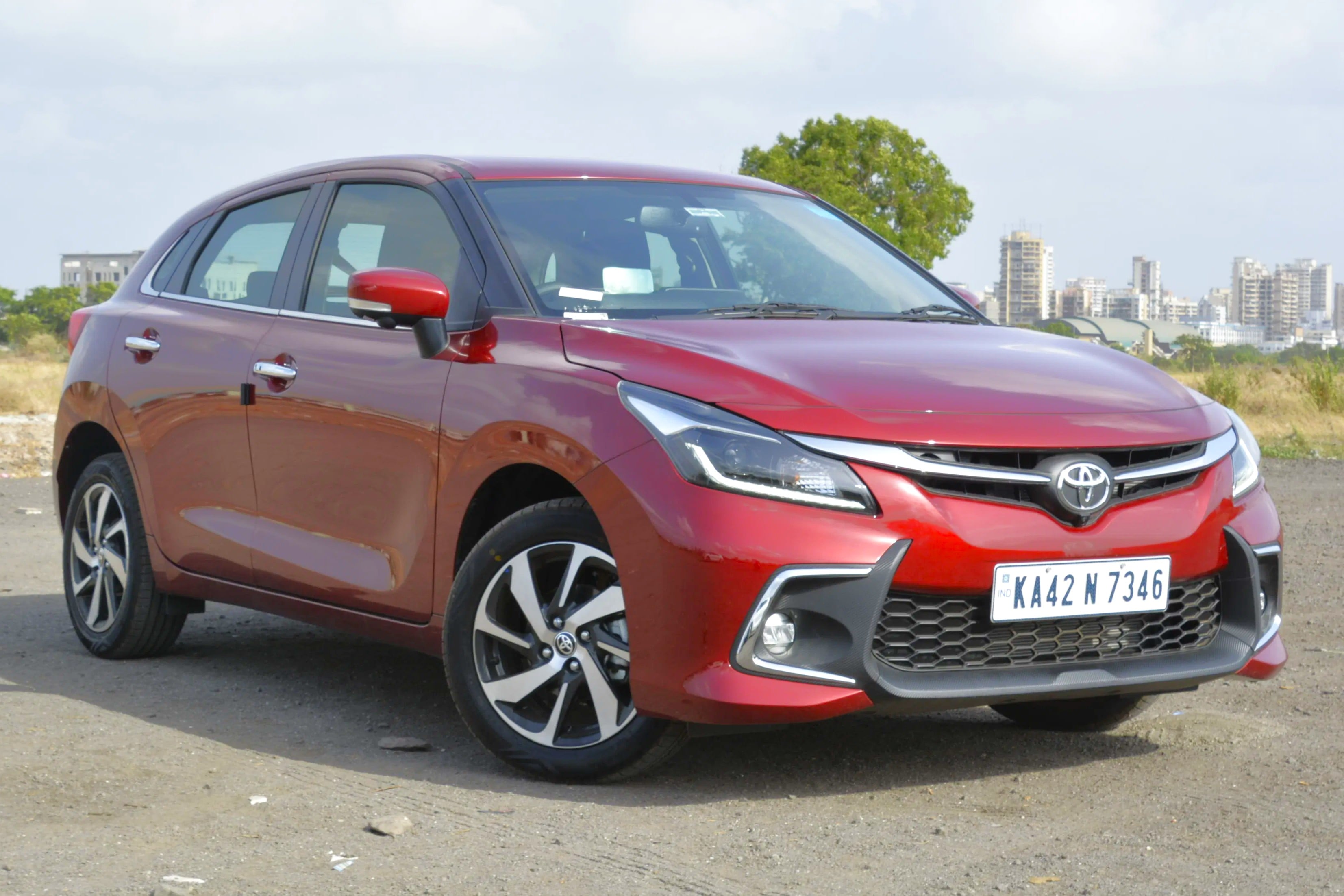
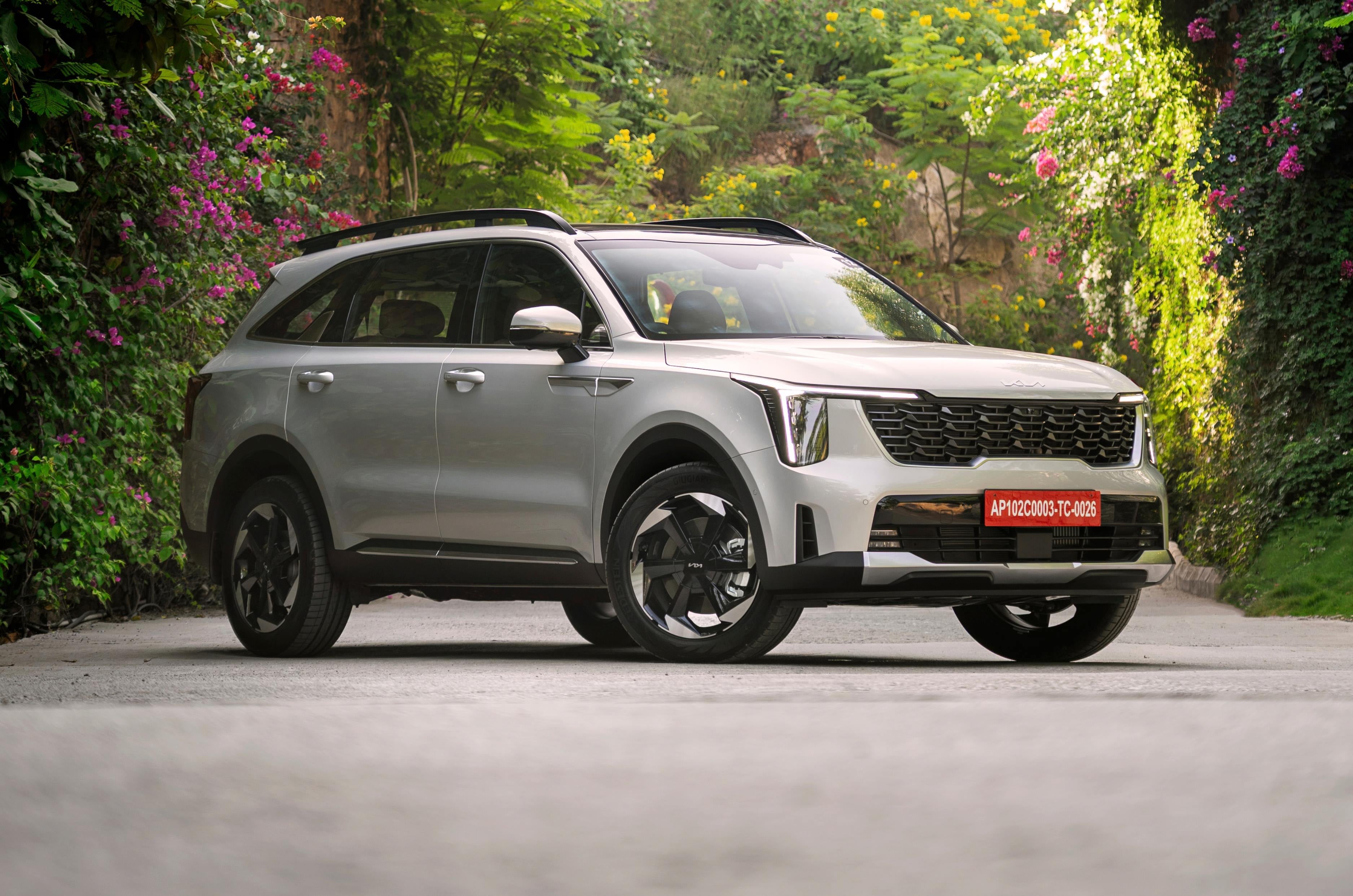
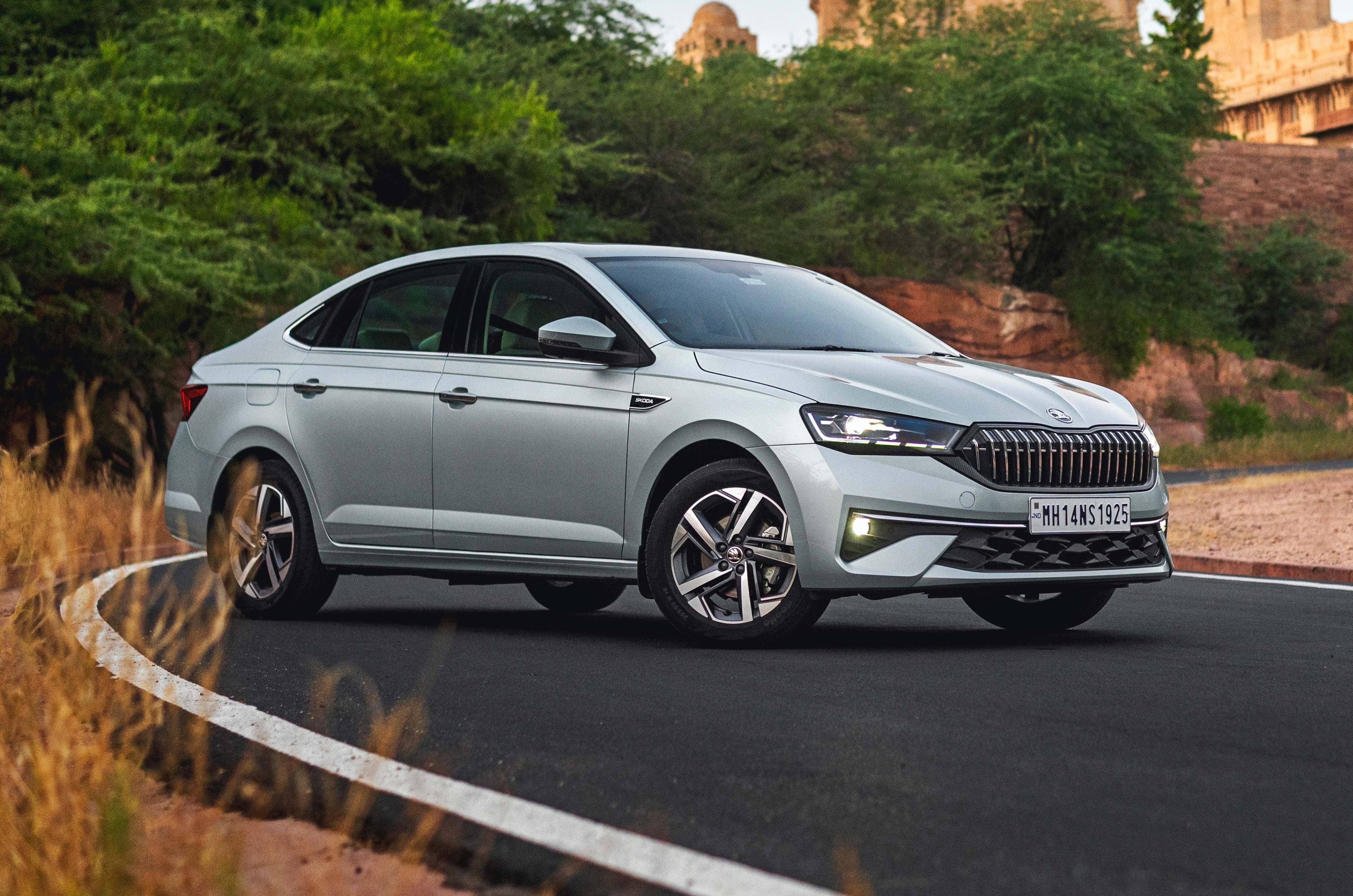
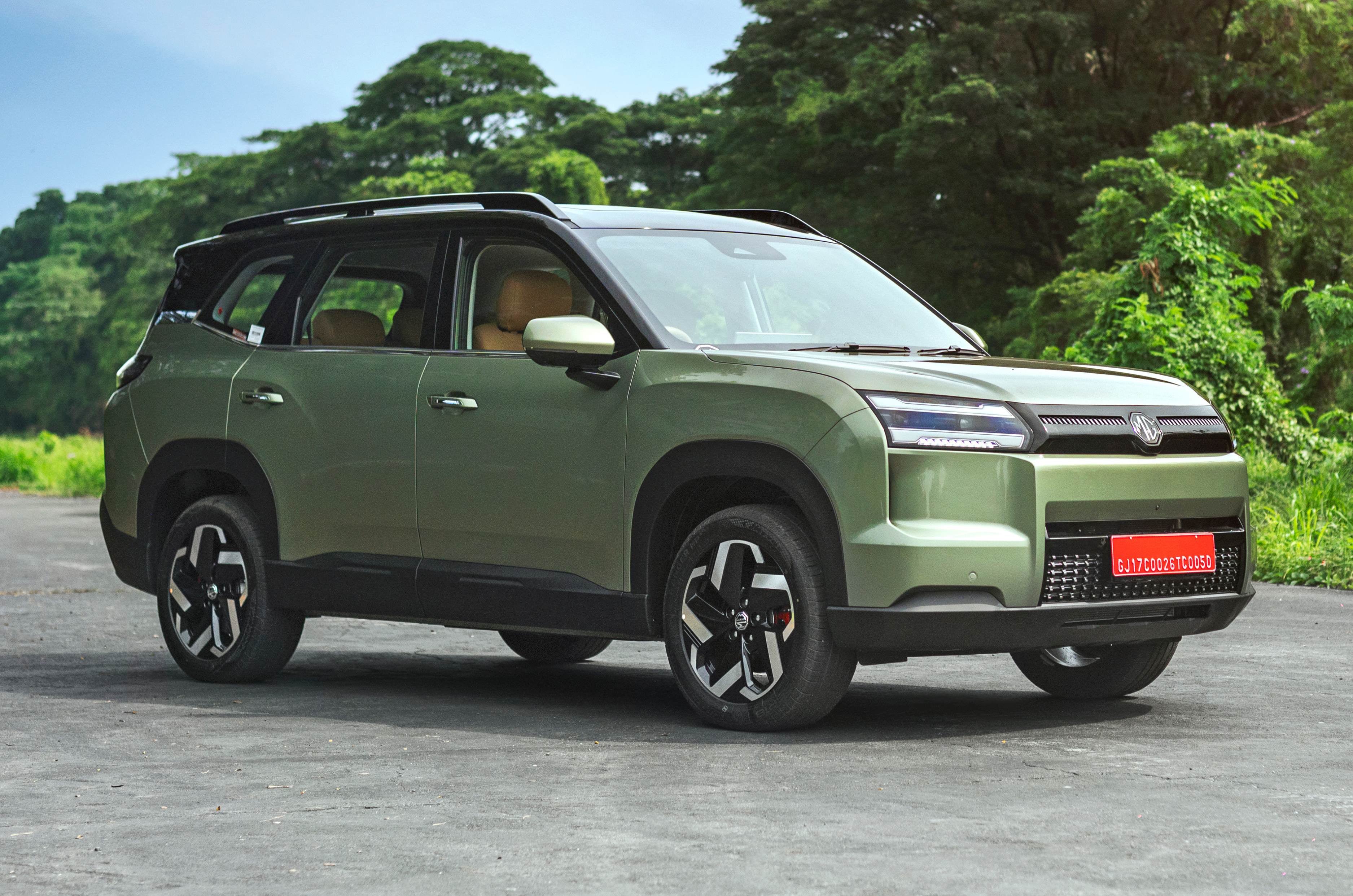
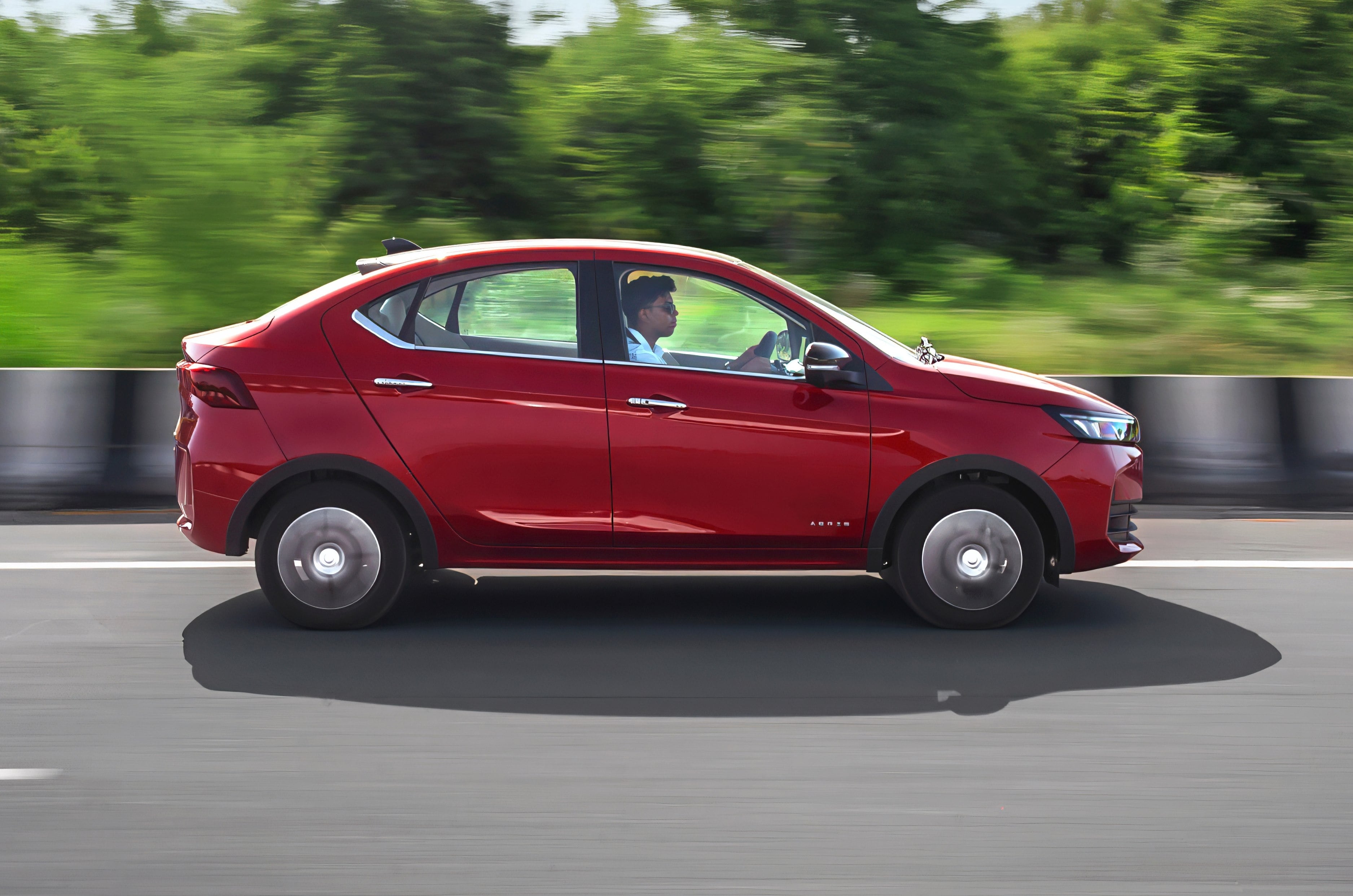
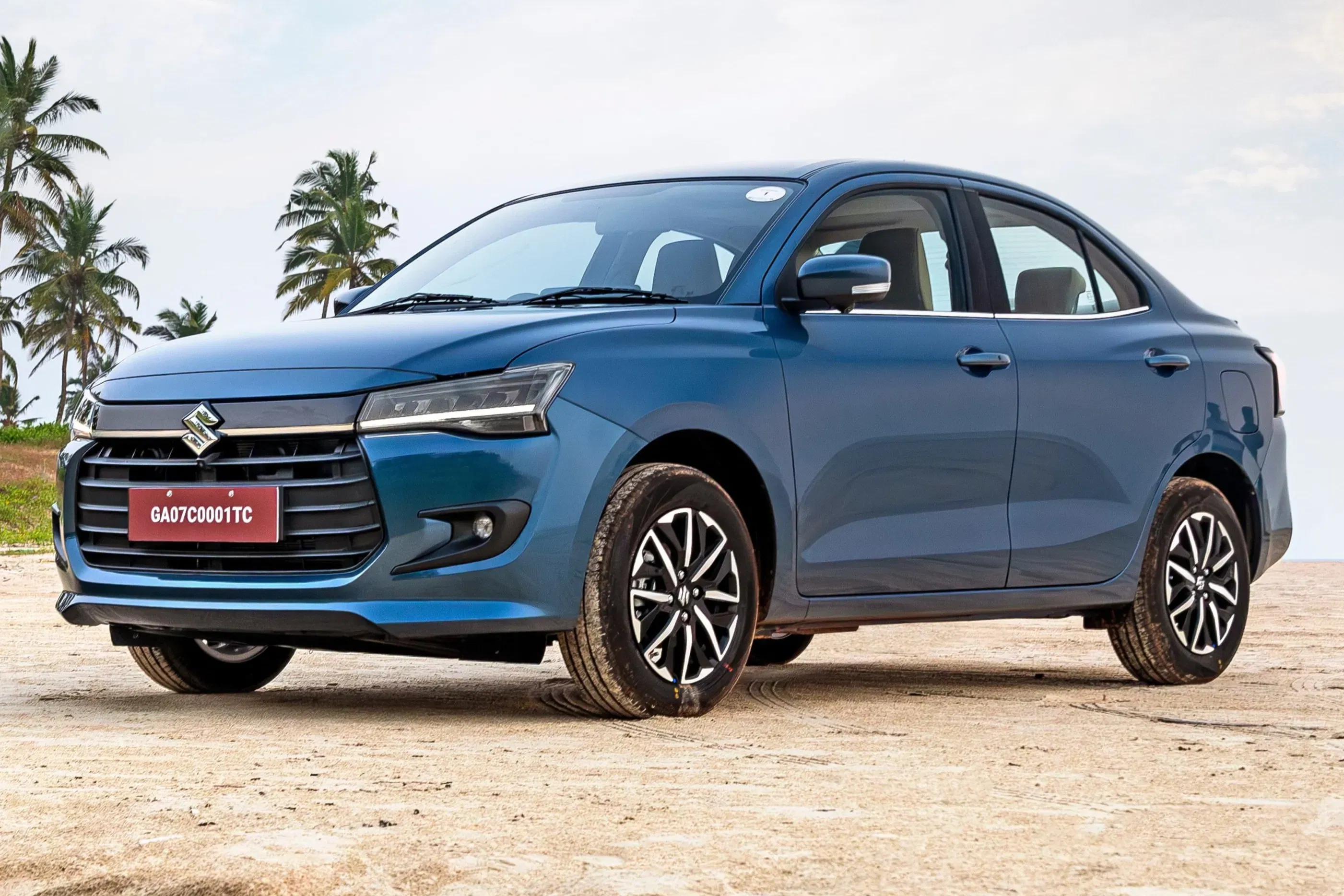
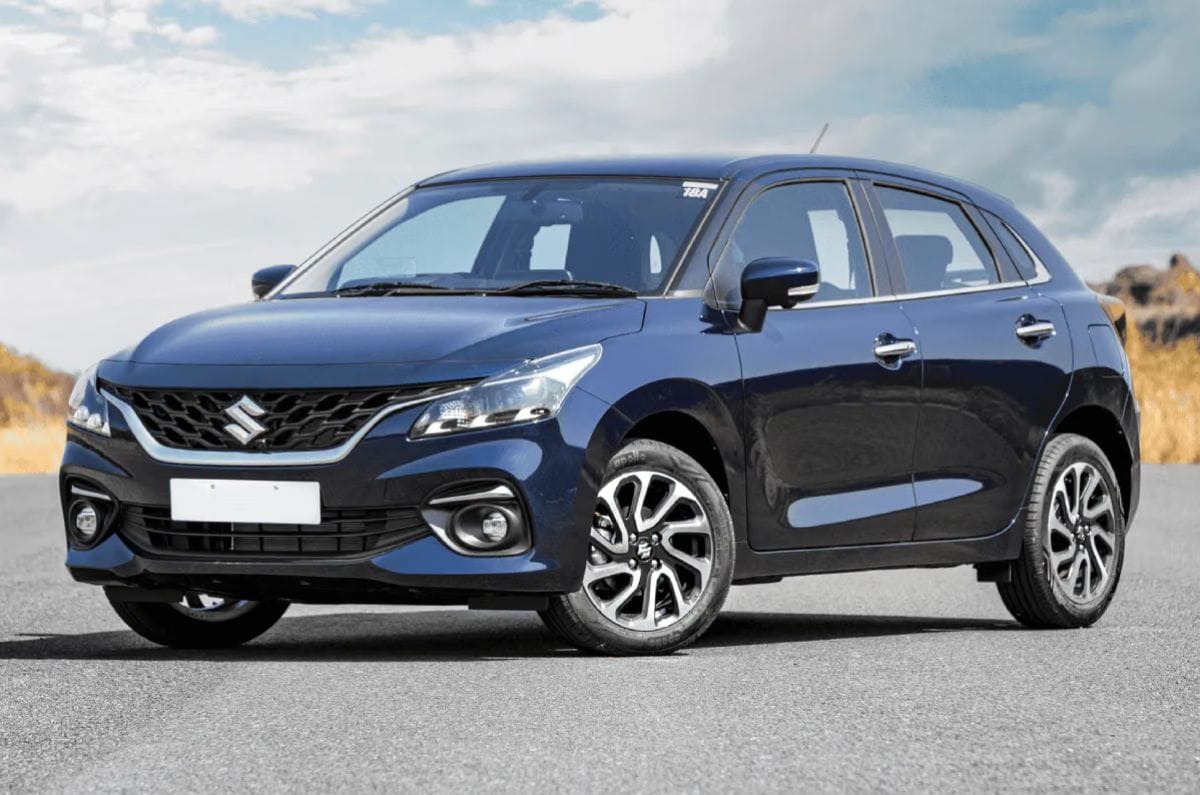
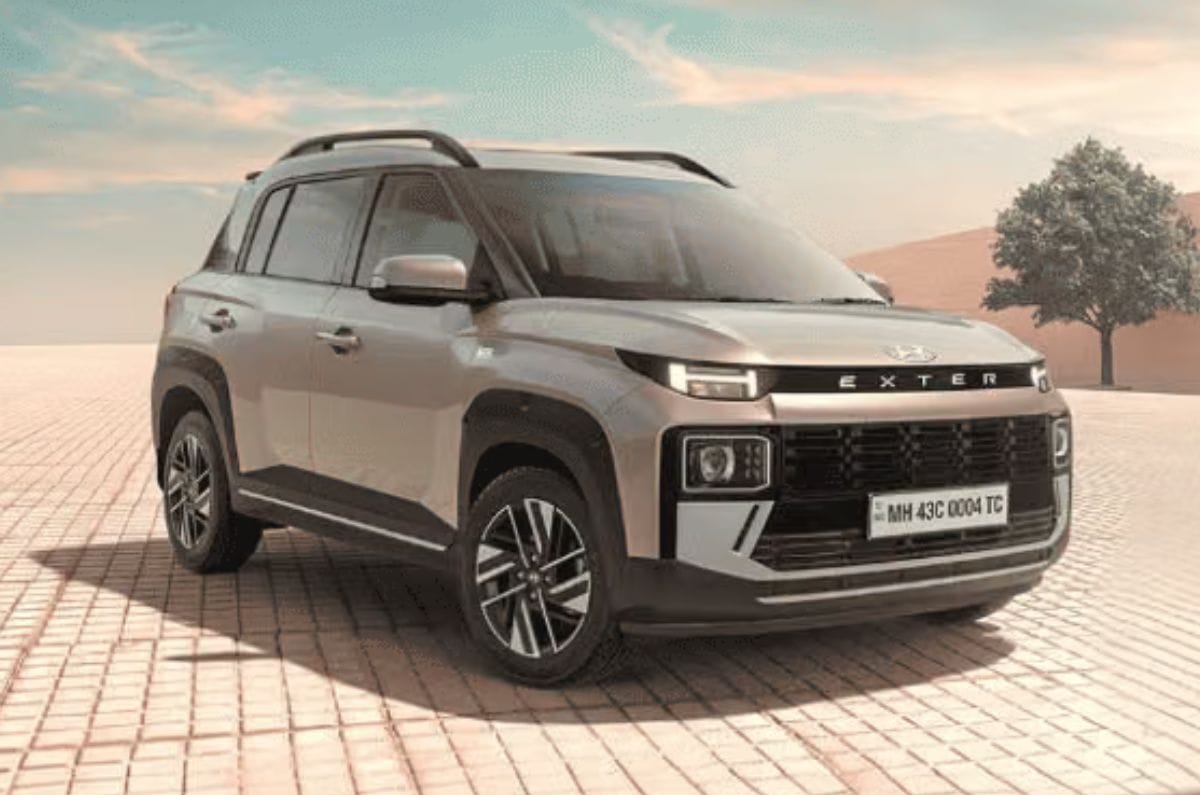
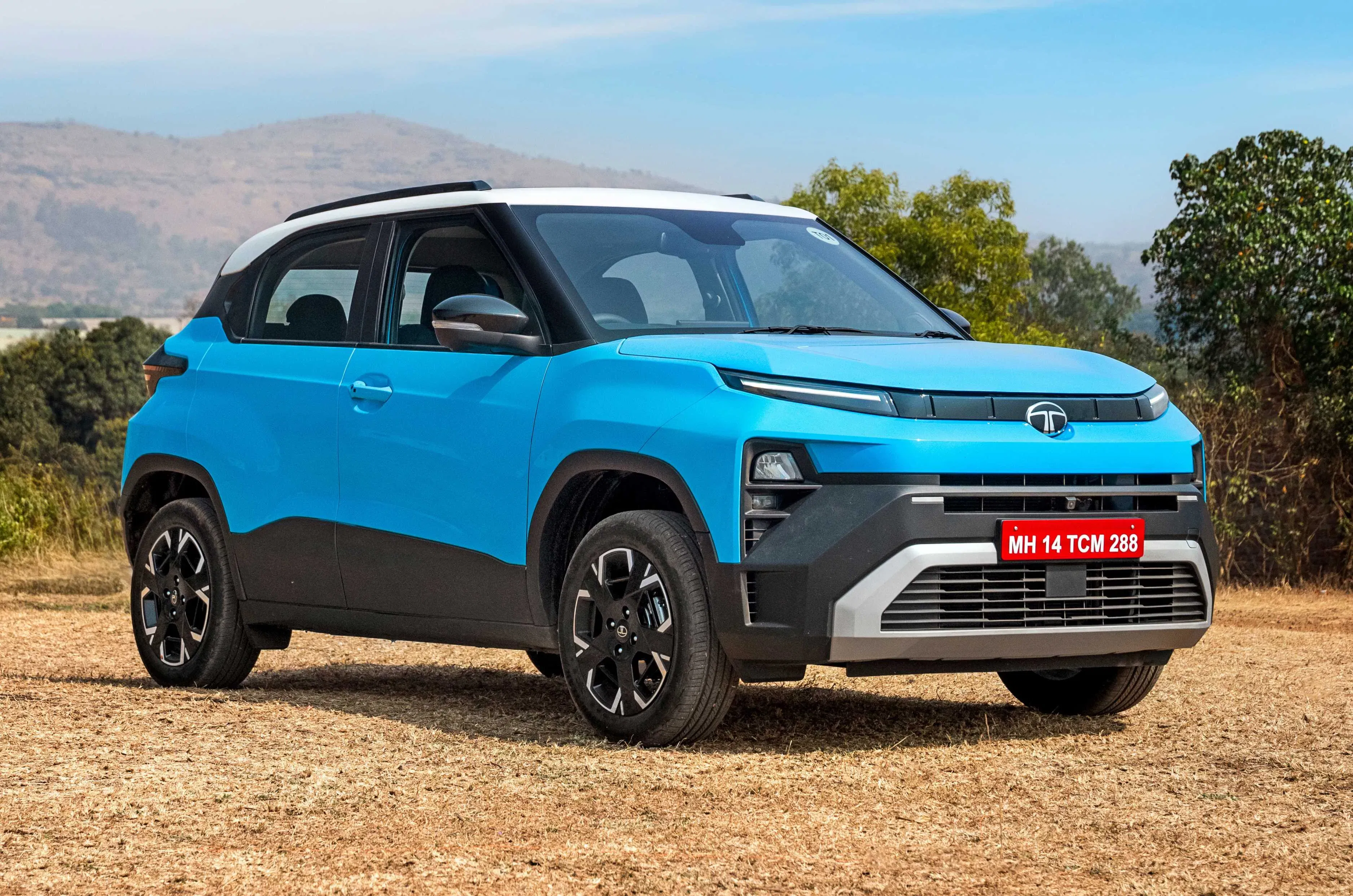
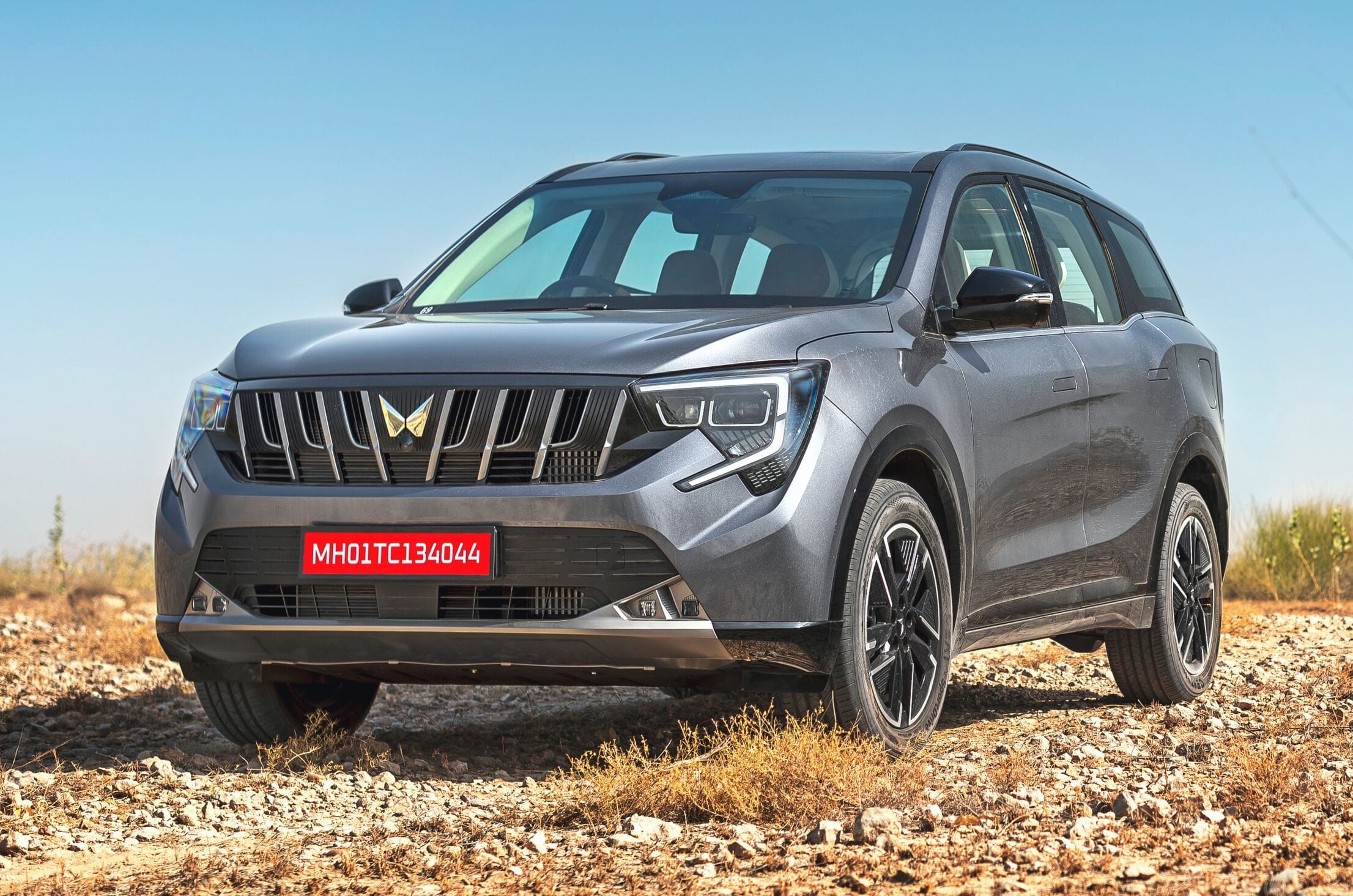
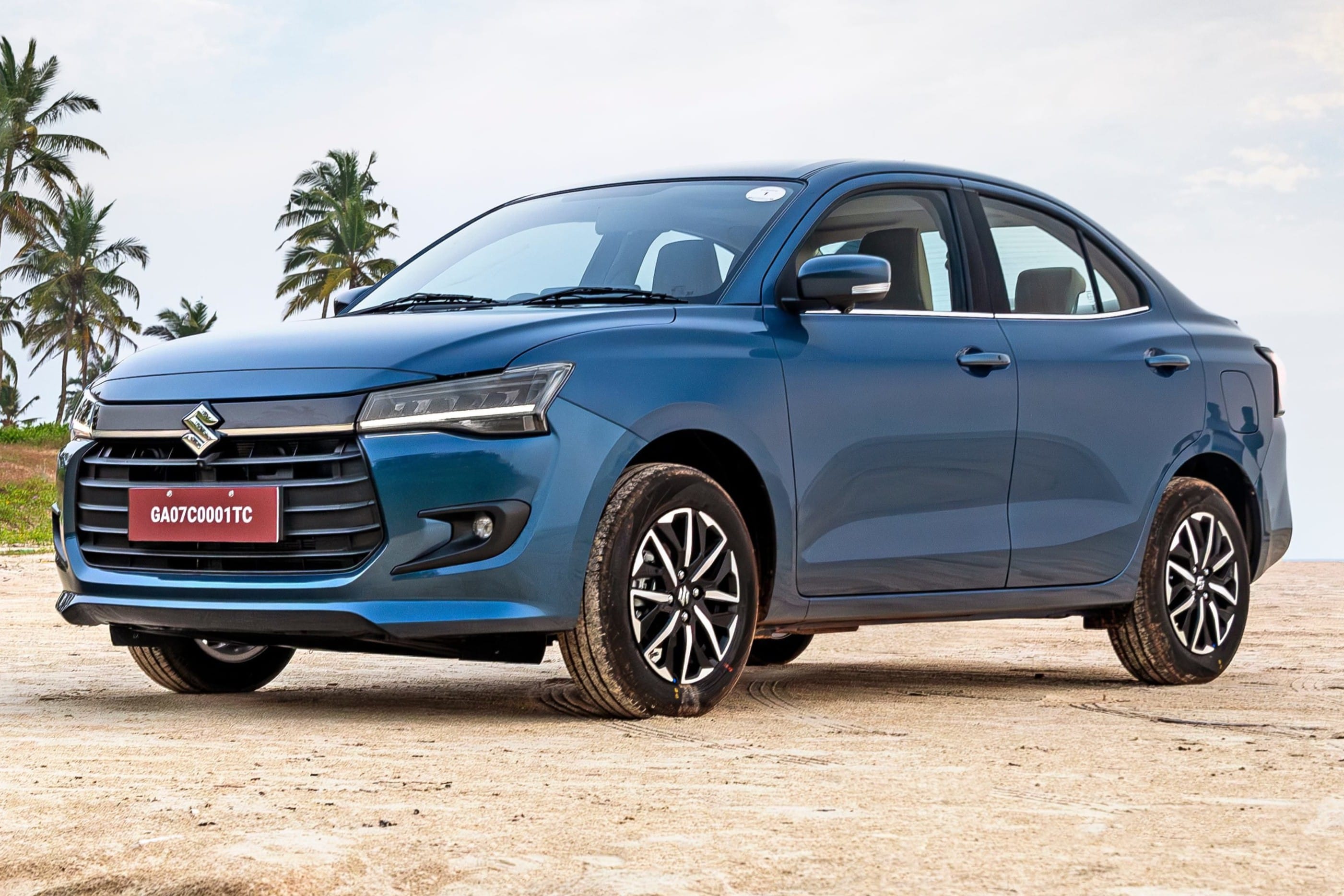
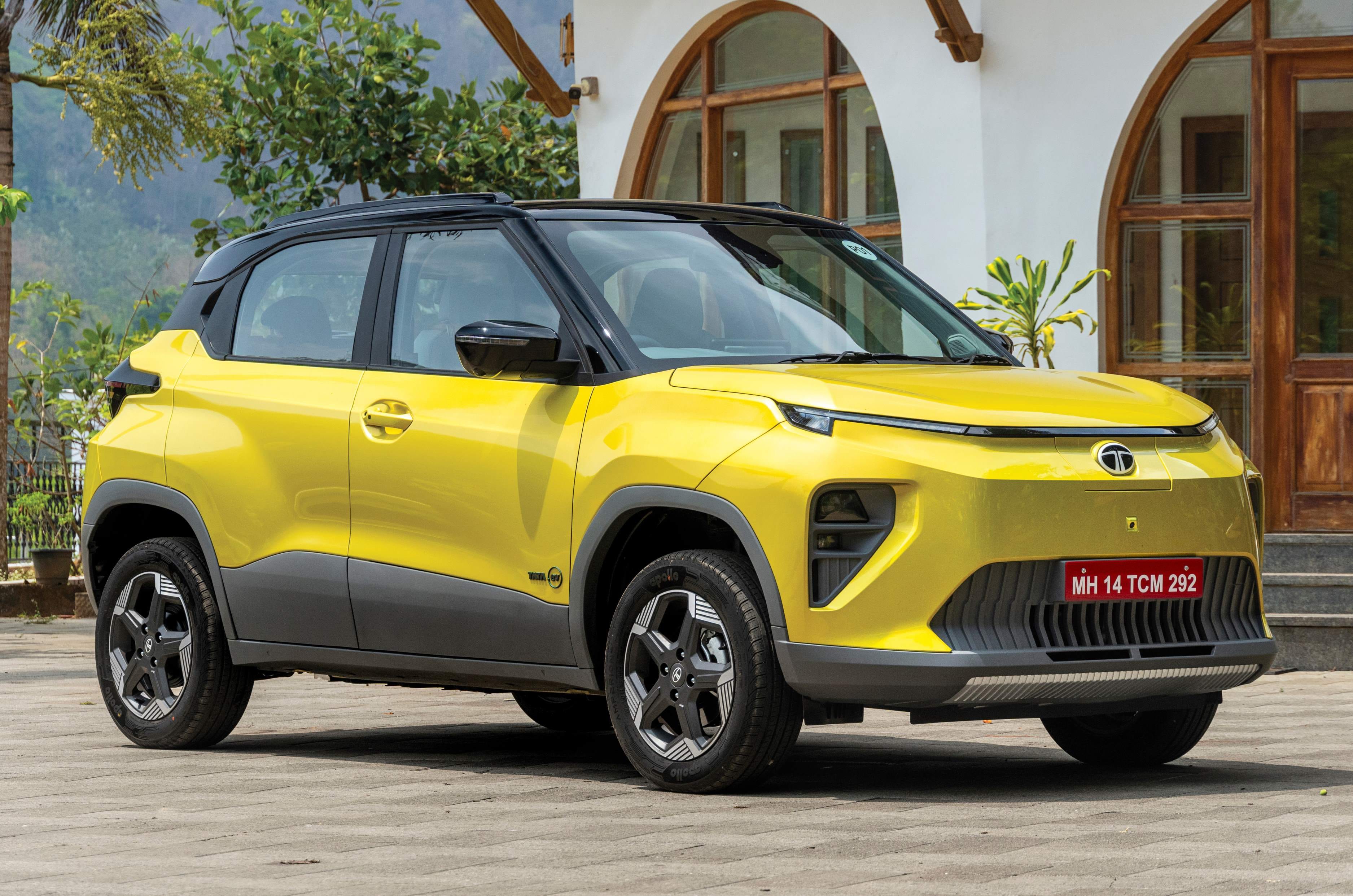
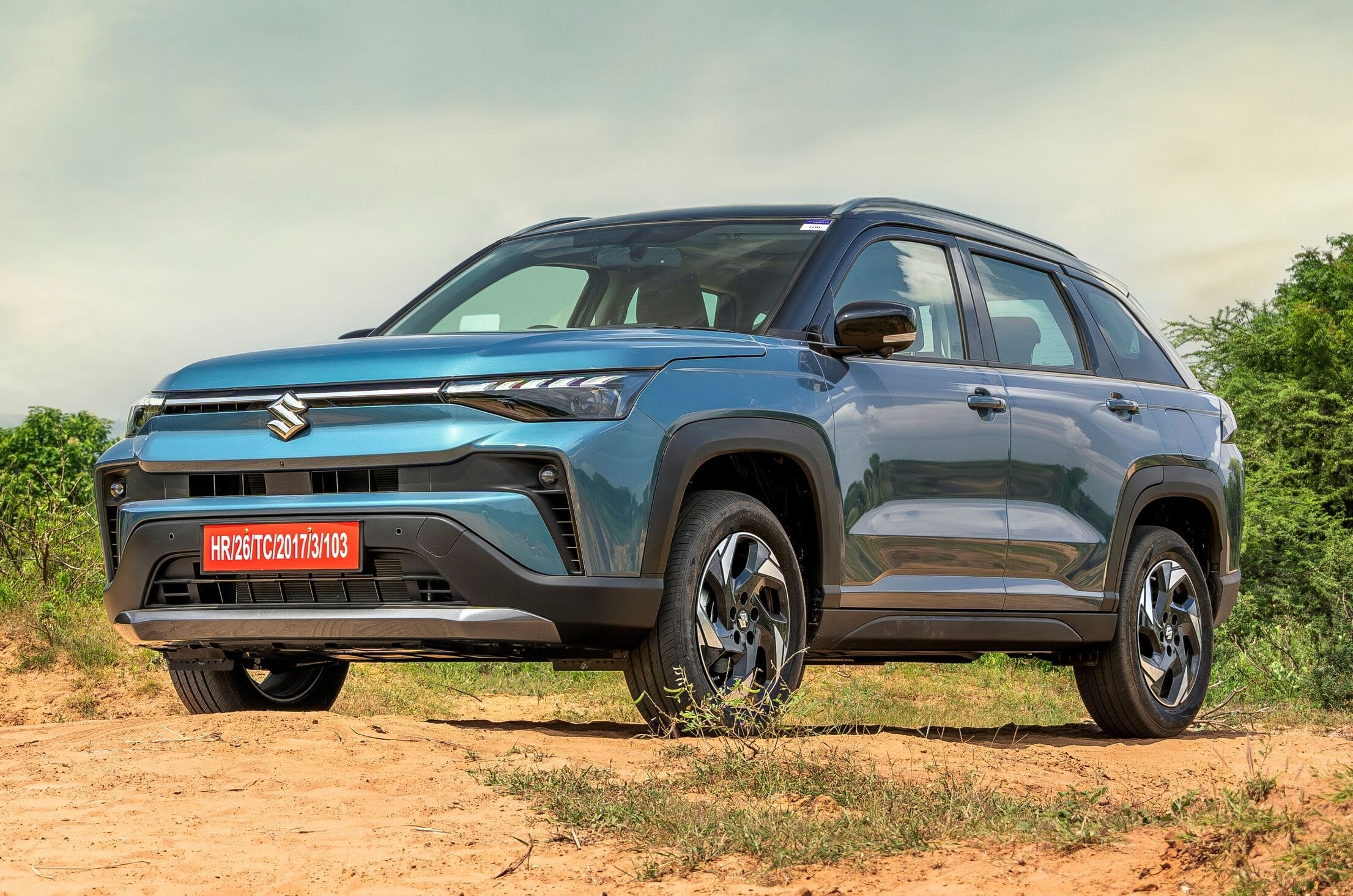
Mahindra’s entry-level offering, the XUV 3XO, is now available with a factory-fitted CNG kit in certain trim levels. This allows the XUV 3XO to directly rival CNG variants of the Tata Nexon and Maruti Suzuki Brezza. We take a look at how Mahindra’s first non-commercial car with a factory-fitted CNG kit fares against its competitors, spec sheet to spec sheet.
Mahindra XUV 3XO CNG vs rivals: Dimensions
XUV 3XO
Brezza
Nexon
Length (mm)
3,990
3,995
3,995
Width (mm)
1,821
1,790
1,804
Height (mm)
1,647
1,685
1,620
Wheelbase (mm)
2,600
2,500
2,498
Wheel size (inches)
16
16
16
Boot space (litres)
270
328
321
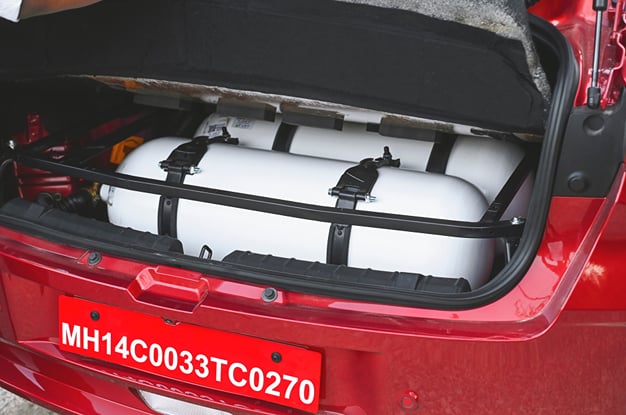
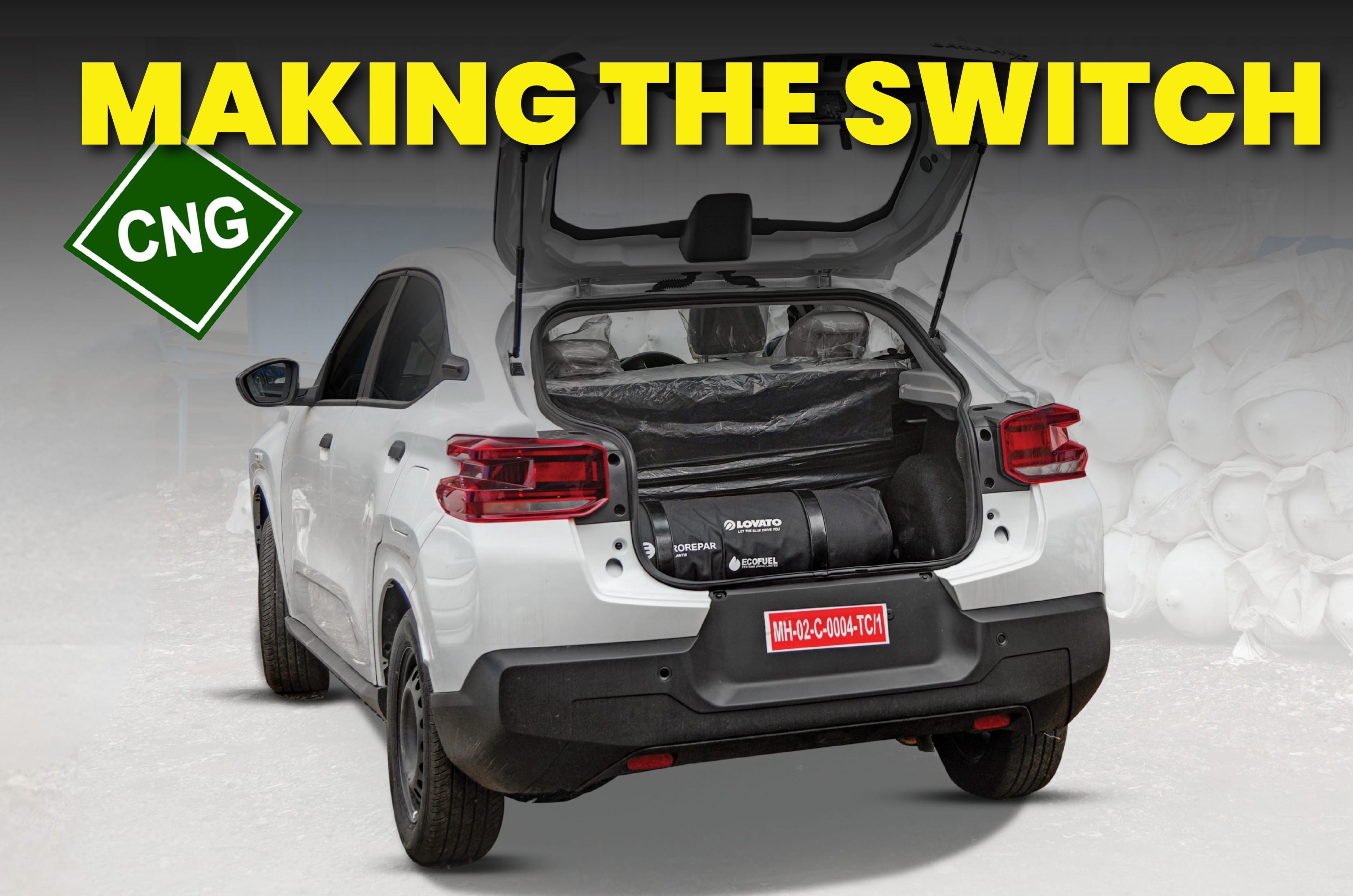
The XUV 3XO is slightly shorter overall than the Nexon and Brezza, but ekes out the longest wheelbase and is the widest compact SUV here. In terms of height, the XUV 3XO falls just short of the Maruti, and all three SUVs offer 16-inch alloy wheels. Coming to boot space, though, the XUV 3XO lags substantially behind its rivals, despite having a similar boot-mounted twin-cylinder setup to the Nexon. The Brezza, meanwhile, has the highest boot space here due to its underbody CNG tank setup.
Mahindra XUV 3XO CNG vs rivals: Engine and gearbox
XUV 3XO
Brezza
Nexon
Engine
1.2 turbo-petrol
1.5 petrol
1.2 turbo-petrol
Cylinder count
3
4
3
Power (hp)
111
88
100
Torque (Nm)
200
121.5
170
Gearbox
6-speed manual
6-speed manual
6-speed manual
Claimed mileage (km/kg)
24.7
26.9
24
Where CNG cars are usually weaker in CNG mode, the XUV 3XO flips the script by outputting identical power and torque figures in its petrol and CNG modes – Mahindra has achieved this by optimising the turbocharger calibration and ECU mapping. Therefore, the XUV 3XO CNG is the most powerful compact SUV here, beating the Nexon CNG by 11hp and 30Nm, and the Brezza CNG by a considerable 23hp and 78.5Nm margin.
That said, the Brezza CNG does claw a point in its favour by offering the biggest engine here and an additional cylinder over its rivals, which could make the driving experience feel smoother and more refined. Another big upside to the Brezza CNG is its segment-best claimed fuel efficiency. The XUV 3XO trails just behind the Brezza on the mileage front, while the Nexon CNG sports the lowest claimed figure.
Mahindra XUV 3XO CNG vs rivals: Price
Price (Rs, lakh)
XUV 3XO
9.99-12.27
Brezza*
9.40-11.60
Nexon*
8.35-13.42
*Excluding premiums for dual-tone paint finishes and/or cosmetic packages.
The XUV 3XO CNG carries the highest starting price compared to its rivals, with the Nexon CNG undercutting it by Rs 1.54 lakh and the Brezza CNG by Rs 59,000. Looking at top-spec variant prices, the order sees a rejig, with the Tata SUV commanding the highest price due to a broader spread of variants. At Rs 13.42 lakh, the range-topping variant of the Nexon CNG is Rs 1.15 lakh pricier than the XUV 3XO CNG’s equivalent version, and Rs 1.82 lakh more expensive than that of the Brezza CNG.
Tata’s passenger vehicle (PV) business grew by 35 percent in its first year after the demerger, which came into effect on October 1, 2025, and separated the commercial vehicle (CV) business from the PV division. Domestic sales between October 2025 and September 2026 stood at 7.44 lakh units, well ahead of the industry’s roughly 22 percent growth. According to the home-grown brand, its market share increased to 14.1 percent, making it India’s second-largest carmaker over this period.
Factors behind the Tata PV business growth
Two SUVs and a GST cut did much of the heavy lifting
One of the major factors behind Tata’s strong numbers is the revised GST rates, which took effect on September 22, 2025. This was shortly before the October 1 demerger, and it made cars more affordable across multiple segments. Despite this, Tata Managing Director Shailesh Chandra admitted to being surprised. “We had not expected 35 percent,” he said.
According to Chandra, monthly bookings topped one lakh more often than not, and more than seven in ten of these typically turned into retail sales. Tata crossed the 70,000-unit mark in a single month twice, and two of its quarters went past two lakh units.
With sales of 2.38 lakh units and 2.33 lakh units respectively, the Nexon and Punch accounted for around 63 percent of Tata’s domestic volumes over this period. Sales of the Sierra, meanwhile, crossed 60,000 units between January and September 2026. This is despite supply being constrained even as production was being scaled up.
Tata EV and CNG sales make up nearly half of volumes
Tata Motors claimed that EVs and CNG cars accounted for 44 percent of its annual volumes, rising to about 51 percent in the July-September quarter. Sales of fully electric models were up 84 percent (at 1.3 lakh units), with the brand claiming a 42 percent share of India’s EV market. Sales of CNG models grew by 31 percent, registering over 2.03 lakh units.
However, each powertrain faces a different set of rivals. “For EVs, my competitors are different,” said Chandra. Product development for all powertrain categories now falls under a single chief product officer, though each gets its own dedicated team.
Tata Motors targets 12 lakh annual sales by FY31
Six new nameplates are on the way
Tata is targeting over 12 lakh units per year by FY31 (financial year 2031), with a 20 percent share of the Indian passenger vehicle market. According to Tata, the plan involves over 20 product refreshes and the introduction of six new nameplates, including the Avinya.
What the brand calls its “15 product interventions” over the past year included models such as the Sierra and Sierra.ev, the updated Punch, Punch.ev, Tiago and Tiago.ev, petrol versions of the Harrier and Safari, and the Aeris. The Indian automaker said that it’s also recalibrating launch timelines. This, it said, is to ensure that each new model gets proper marketing support and that dealers have enough time to sell them.
The recent surge in demand means production capacity has become an immediate priority for Tata Motors. The company stated that its plants and suppliers are stretched thin, particularly smaller tier-two and tier-three firms, and that it has had to work more closely with them to resolve shortages. More capacity will come online at Tata’s existing plants, with the Sanand facility playing a major role. Helped by Tata’s entry into South Africa, exports have nearly doubled, to around 12,000 units.
Tata Motors to triple service network and focus on quality
The brand said that its workshops will grow faster than its showrooms
Apart from focusing on growth, Tata Motors will also be paying attention to addressing the quality and after-sales perception. The quality department now reports directly to Chandra instead of to the manufacturing department, the Managing Director stated. Tata has also set up a central software integration team, which will eventually become a ‘centre of excellence’. Tata now also tests software and hardware together earlier in development. In fact, the Sierra is one of the first models developed this way, the company mentioned.
Another point of attention is the brand’s service network, with Chandra stating that Tata’s workshops now see about six lakh vehicles per month – this is up from around 1.5 lakh in 2021. “My showrooms will increase by two times. But my service centres will increase by three times,” Chandra said. The automaker has addressed 26 of the 30 locations that it flagged as service problem areas, with dealer incentives now placing more weight on customer experience.
Between April and June, the availability of spare parts was an issue. This, the company said, was due to labour constraints, when production was being prioritised. It’s providing existing customers first claim on spare parts even if that affects the production of new cars, with Chandra claiming fill rates are back at around 85-86 percent. Regardless, changes will take time. “The perception will only change after three-four years,” Chandra admitted. “After people really see the consistency of that.”
With inputs from Hormazd Sorabjee and Ketan Thakkar.
According to data released by the Federation of Automobile Dealers Association (FADA), the Indian passenger vehicle market experienced a strong year-on-year (YoY) sales growth of 32.1 percent in September 2026, with a total of 4,27,213 units sold. While the YoY uptick looks very impressive at face value, the reason behind it is a slowdown in demand during September 2025 due to anticipation of imminent price cuts as part of GST 2.0.
Note: Telangana RTO is not included in FADA sales data.
Top 10 best-selling carmakers in September 2026
Carmaker
Sep 2026 sales
MoM change (%)
YoY change (%)
Market share (%)
Maruti Suzuki
1,69,132
+2.38
+30.05
39.59
Mahindra
57,343
+14.13
+38.93
13.42
Tata
57,254
-1.02
+28.66
13.40
Hyundai
50,201
+6.84
+31.46
11.75
Toyota
28,050
+12.85
+21.56
6.57
Kia
26,663
+14.09
+45.91
6.24
Skoda Volkswagen Group
8,479
+13.52
+13.51
1.98
MG
6,475
+11.95
+13.74
1.52
Honda
5,283
+6.34
+42.51
1.24
Renault
3,410
+4.12
+33.10
0.80
1. Maruti Suzuki
1,69,132 units sold, up 30.05 percent YoY
Kicking off the top 10 is market leader Maruti Suzuki, which held on to first place and saw YoY growth in September 2026, although its market share dipped from 40.21 percent in September 2025 to 39.59 percent last month. Still, in terms of overall volume, Maruti Suzuki outsold the next three carmakers combined. The 2.38-percent MoM sales increase is also impressive given the scale of Maruti Suzuki’s volumes. No new Maruti launches are currently known for October 2026, but the carmaker is fresh off the Baleno facelift’s launch.
2. Mahindra
57,343 units sold, up 38.93 percent YoY
Compared to last month’s sales rankings, Mahindra was the only carmaker to experience a change of place on the September 2026 chart. Specifically, Mahindra beat Tata to second place by an ever-so-slight margin of 89 units. If that wasn’t impressive enough, Mahindra also recorded the highest MoM growth among the top 10, and the highest increase in market share – from 12.76 percent last September to 13.42 percent in September 2026. At the moment, Mahindra has not announced any new launches for October, but it did launch the Thar OG (3-door facelift) last month.
3. Tata
57,254 units sold, up 28.66 percent YoY
As mentioned above, Tata slipped from second place in August 2026 to third place in September, though its overall volumes were extremely close to Mahindra’s and YoY sales growth was healthy too. That said, Tata’s market share decreased by a little bit, specifically 13.76 percent in September 2025 to 13.40 percent last month, and it was the only carmaker to witness a MoM sales decline as well. Most recently, Tata launched the Aeris compact sedan, replacing the Tigor.
4. Hyundai
50,201 units sold, up 31.46 percent YoY
Hyundai remained in fourth place in the September 2026 sales rankings, experiencing healthy MoM and YoY upticks. Market share, however, did slide from 11.81 percent in September 2025 to 11.75 percent in September 2026. This month, Hyundai is likely to launch the Bayon midsize SUV, and its impact in the October 2026 sales charts should be interesting to see.
5. Toyota
28,050 units sold, up 21.56 percent YoY
Like last month, Toyota was in fifth place on the September 2026 sales chart. Interestingly, Toyota experienced one of the highest MoM upticks among the carmakers listed here. At the same time, however, the Japanese carmaker’s market share dipped from 7.14 percent in September 2025 to 6.57 percent last month. In October, Toyota is expected to debut the facelifted Glanza, changes for which are likely to mirror those seen in the Maruti Baleno facelift.
6. Kia
26,663 units sold, up 45.91 percent YoY
Thanks to the continued popularity of the second-gen Seltos, Kia recorded the highest YoY sales uptick among the top 10 carmakers in September 2026, while MoM growth was the second-highest – falling just shy of Mahindra. Kia’s market share also grew considerably, from 5.65 percent in September 2025 to 6.24 percent in September 2026. While Kia is fresh off a major launch – the Sorento – the Korean carmaker is likely to announce prices for the Carnival hybrid, though the luxury MPV is not expected to be a major volume driver.
7. Skoda Volkswagen Group
8,479 units sold, up 13.51 percent YoY
Skoda Auto Volkswagen India Private Limited (SAVWIPL) held on to seventh place in September 2026, and even saw a decent 13.52 percent MoM increase in sales. Notably, SAVWIPL’s YoY growth is nearly identical to the MoM one. In terms of market share, SAVWIPL declined from 2.29 percent last September to 1.98 percent in September 2026. As for launches in October, Skoda is fresh off the Slavia facelift’s price reveal, which could rejuvenate some interest in the midsize sedan space.
8. MG
6,475 units sold, up 13.74 percent YoY
Remaining in eighth place, MG experienced relatively moderate levels of MoM and YoY sales growth in September 2026. However, MG’s market share slid from 1.76 percent in September 2025 to 1.52 percent last month. MG launched the Hector Tomahawk EV and PHEV in August, and doesn’t have any new launches lined up for October. That said, deliveries of the Tomahawk PHEV are slated to start from November.
9. Honda
5,283 units sold, up 42.51 percent YoY
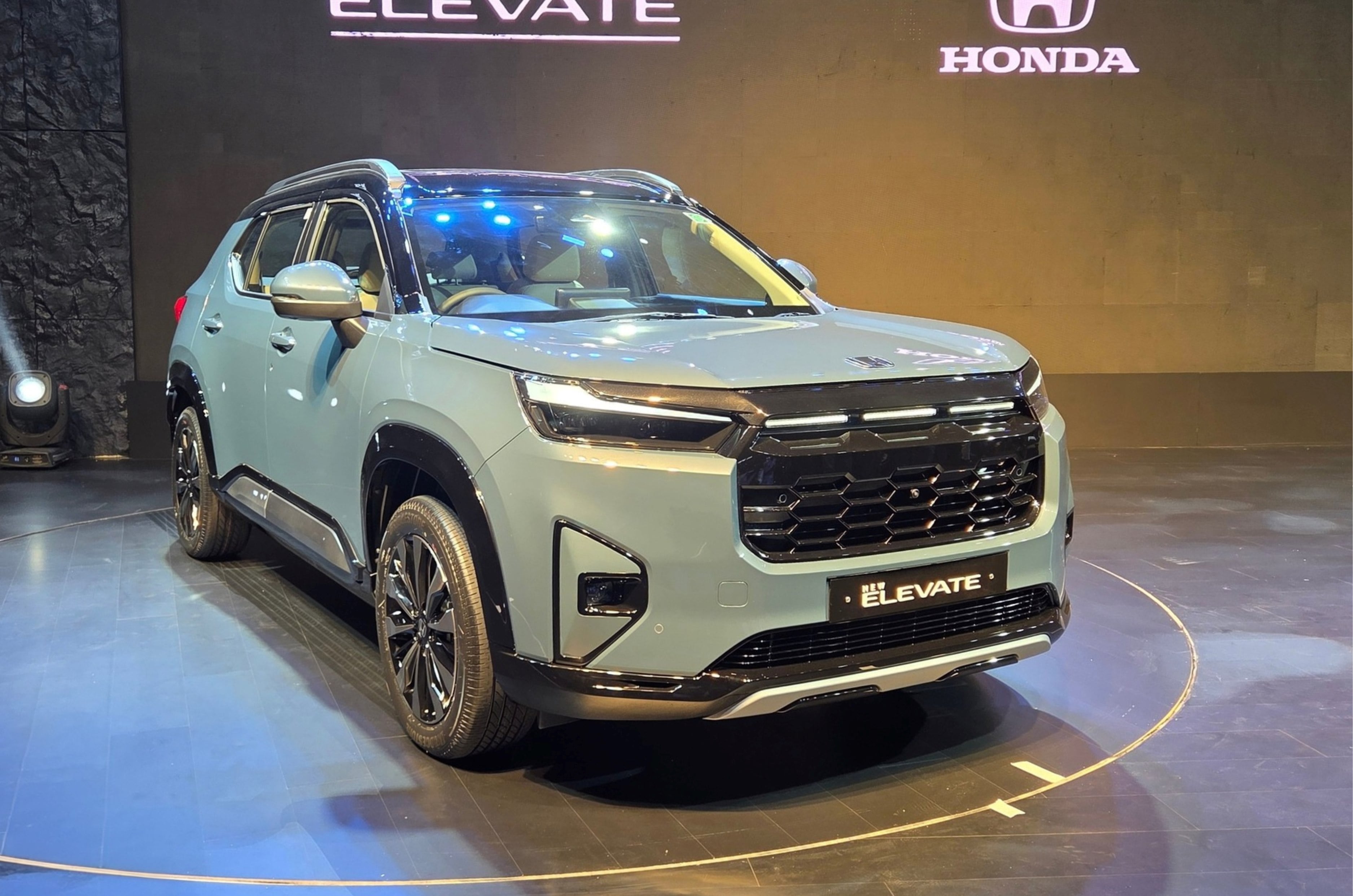
In the penultimate position comes Honda, which saw a mild 6.34 percent MoM increase in sales, but a whopping 42.51 YoY surge. The Japanese carmaker’s market share also grew from 1.15 percent in September 2025 to 1.24 percent in September 2026. Honda is fresh off the launch of the Elevate facelift, and is also expected to bring the Prelude coupe to India in the months to come.
10. Renault
3,410 units sold, up 33.10 percent YoY
Rounding out the top 10 is Renault, which recorded the mildest MoM sales increase (4.12 percent) last month. However, its 33.1-percent YoY growth is quite impressive, and can largely be credited to the new Duster, which went on sale in March 2026. Renault’s market share also saw a very slight increase – from 0.79 percent in September 2025 to 0.8 percent in September 2026. Coming to new launches, Renault announced prices for the Triber turbo in late September, and will launch the Duster hybrid in October.
Petrol cars regain sales majority over alternative fuels, albeit slightly
Sep 2026 share (%)
Aug 2026 share (%)
Sep 2025 share (%)
Petrol/ethanol
41.27
40.85
47.18
Diesel
17.74
17.21
17.76
CNG/LPG
23.11
25.28
22.02
Hybrid
9.44
9.04
7.30
EV
8.45
7.63
5.74
A big talking point in FADA’s August 2026 sales data was alternative-fuel cars (CNG, hybrid, electric) collectively outselling petrol cars for the first time. However, the trend did not continue in September 2026, as the share of petrol cars climbed to 41.27 percent, while alternative-fuel cars stood at a combined 41 percent.
Shares for hybrids and EVs experienced MoM increases in September, but CNG cars saw a downturn on that front. Be that as it may, the difference between petrol and alternative-fuel cars is still very slight, and the buyer shares for the latter are still higher when compared to September 2025’s numbers.
October 2026 will tell the real story for Indian PV market, says FADA
Keeping in mind that September 2026’s YoY growth was driven by a favourable base effect, FADA president Sai Giridhar remarked, “One year on from GST 2.0, affordability remains the single engine of this cycle — and dealers now flag further price increases eroding that very affordability as their foremost risk for the quarter ahead. Protecting the GST gain is, to our mind, the key to converting the festive season into durable growth.”
Over 4,66,800 cars were sold in October 2025 thanks to GST 2.0 and festive demand, making it the best-ever October for the Indian PV market. With several price increases implemented by major carmakers since the introduction of GST 2.0, October 2026 is now shaping up to be the real test of the Indian PV market. It will also be the first month after the one-year anniversary of GST 2.0, thereby providing a clean slate to compare like-for-like YoY growth numbers.
According to FADA, 75.57 percent of dealers expect growth, 19.46 percent anticipate a flat market, and 4.98 percent are bracing for a downturn in sales during October 2026. The overall outlook among dealers is ‘Cautiously Optimistic’.
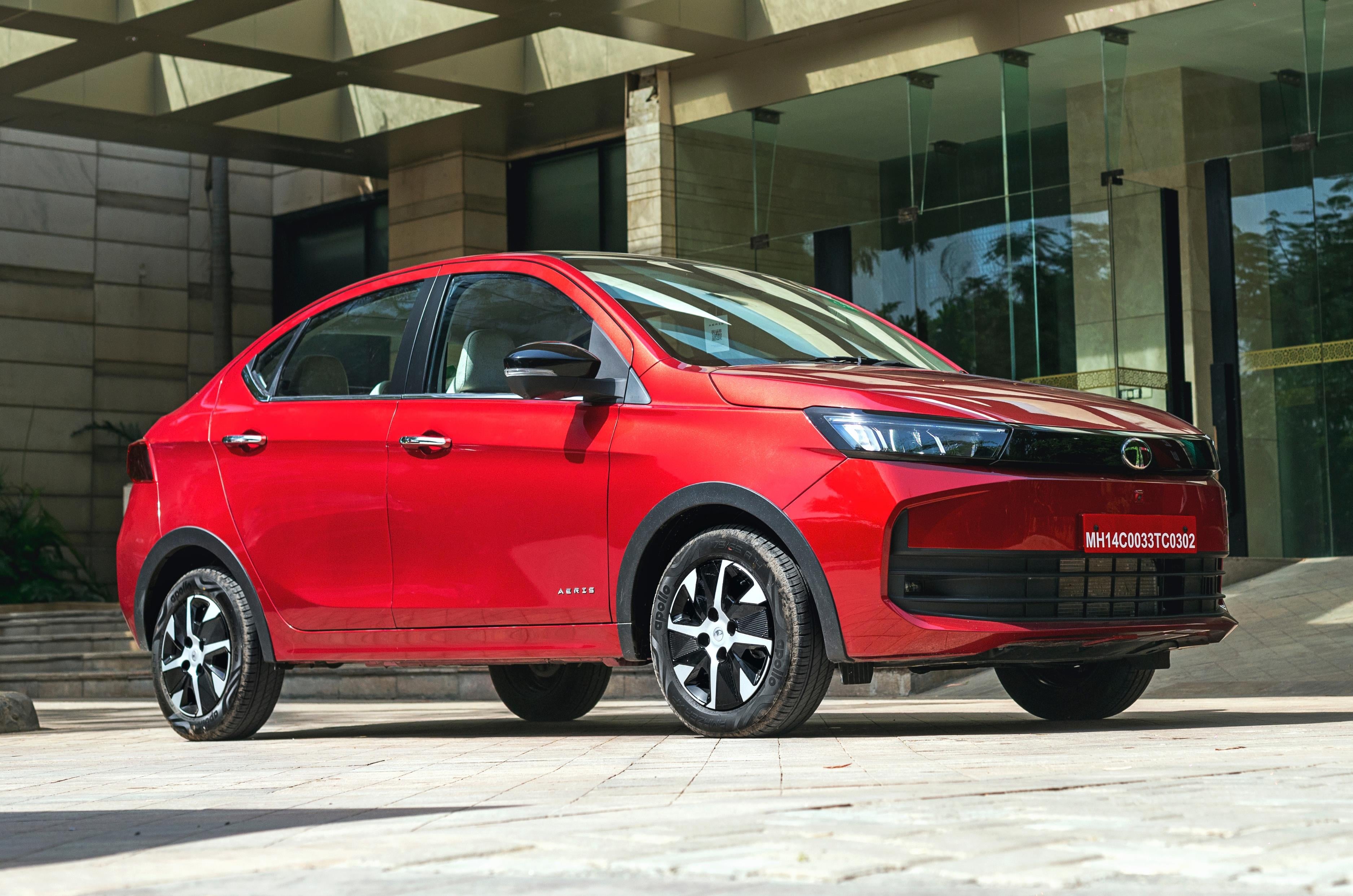
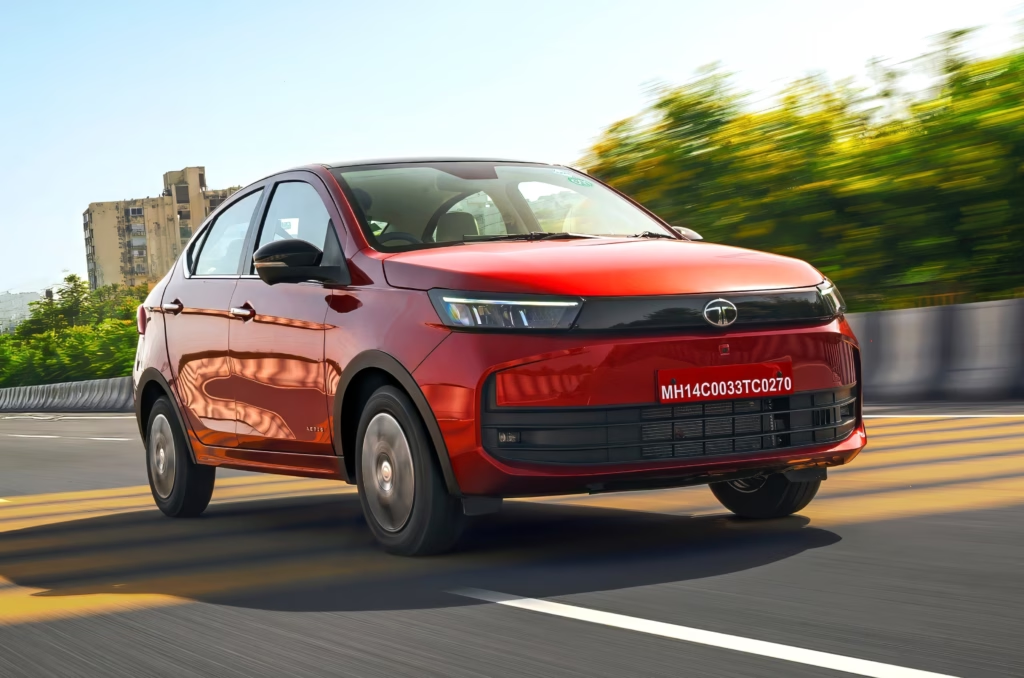
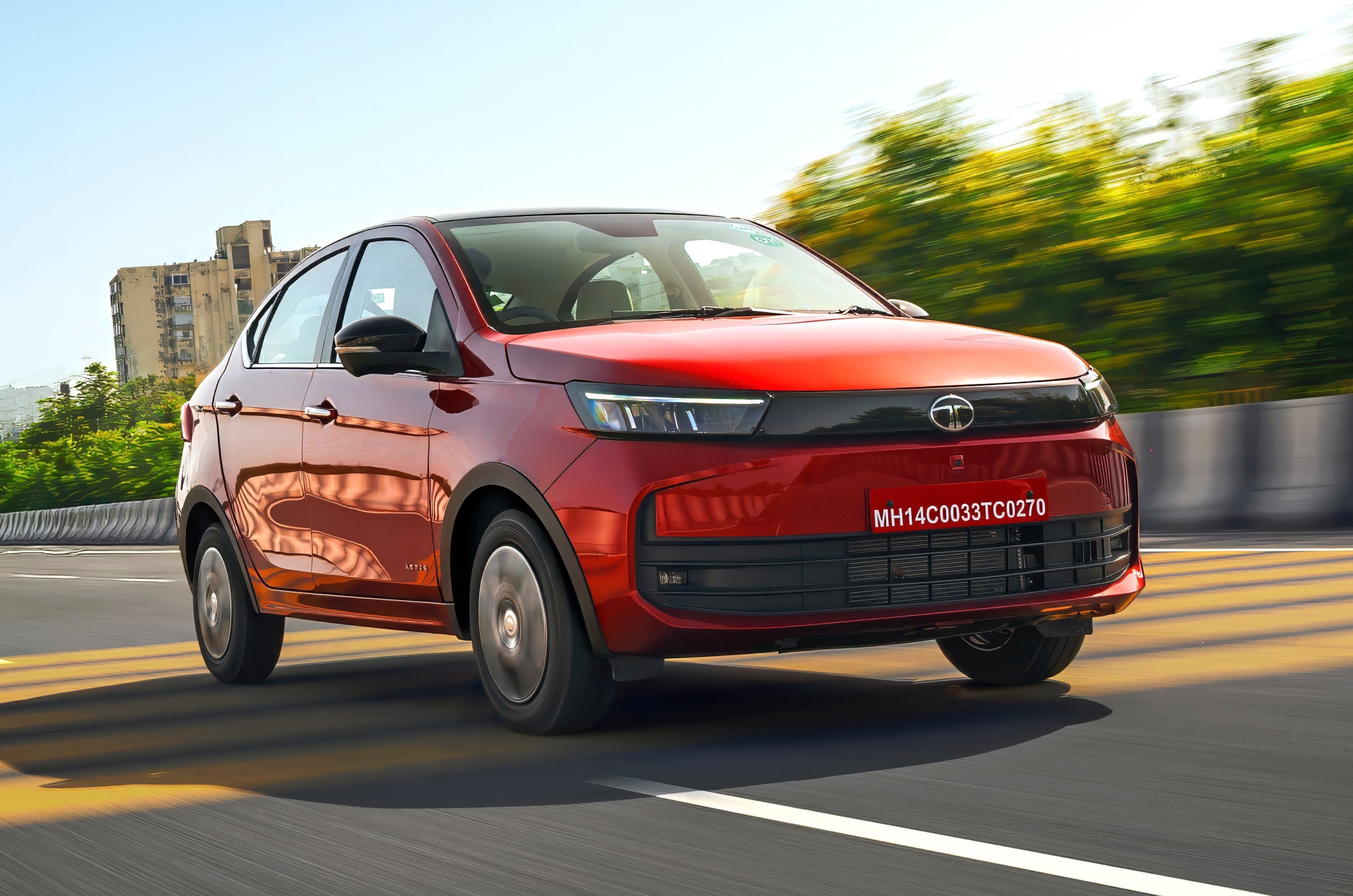
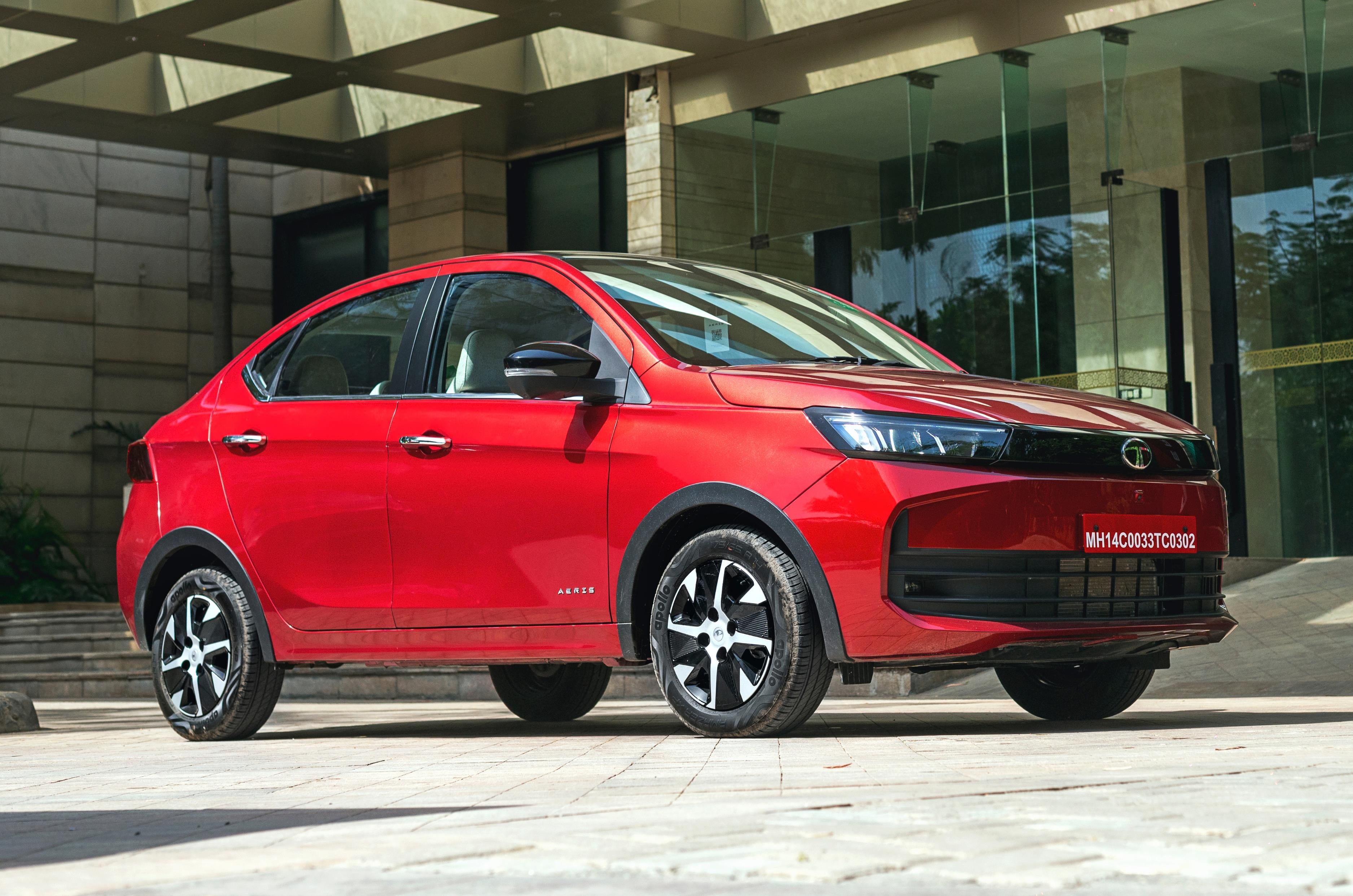
The Tata Tigor never quite made the impact the manufacturer hoped for in the compact sedan segment. Now, Tata has reworked it and given it a new identity as the Aeris, with a fresh design, a more upmarket cabin and a longer list of features. That alone makes the Aeris an interesting proposition, but there is another reason its arrival is well timed.
Tata has a CNG option in a market where demand for the fuel is growing rapidly, with CNG cars accounting for nearly 22 percent of passenger vehicle sales in FY2026, up from around 12-13 percent three years ago in FY2023. That gives the manufacturer an interesting opportunity, but the bigger question is whether the Aeris itself has enough going for it this time around.
Tata Aeris iCNG exterior design and engineering – 8/10
Looks more modern than the Tigor, but the Tiago influence is hard to miss
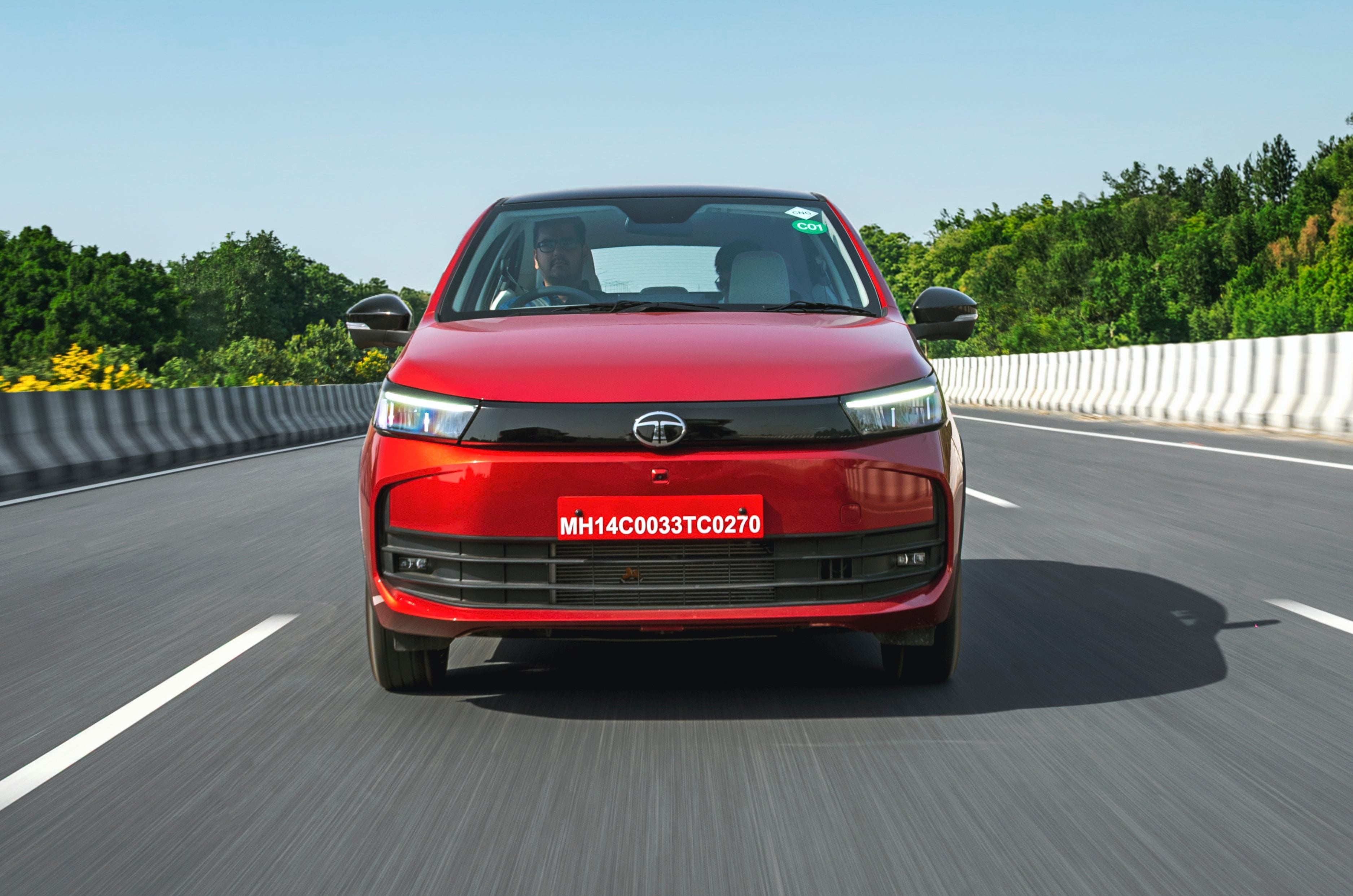
Save for the new bumper, the fascia is similar to the Tiago and looks very modern.
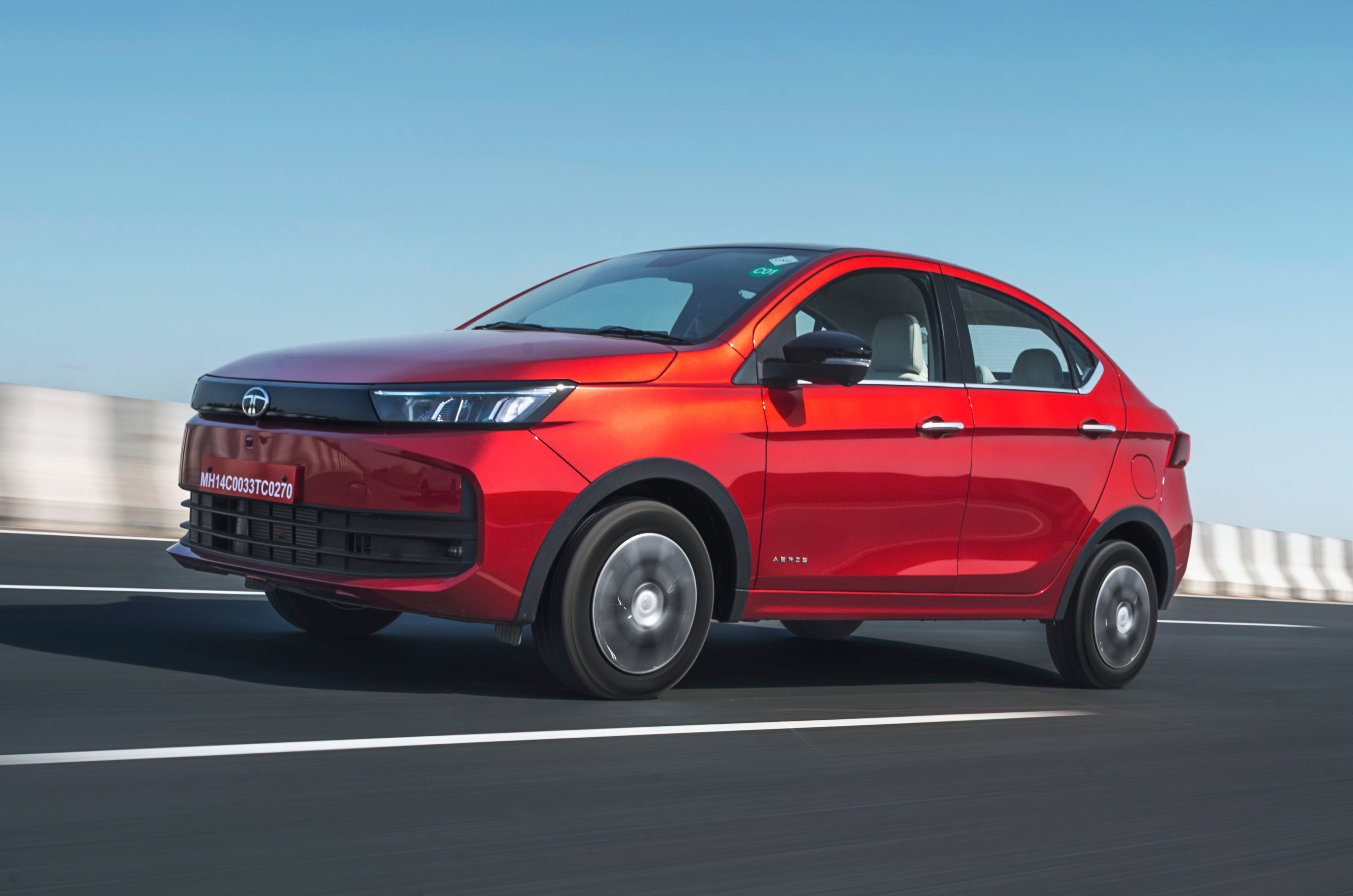
The Tata Aeris looks more modern and sleeker than the older Tigor, but there’s a strong sense of familiarity to its exterior design. It borrows several elements from the Tiago, giving the two cars a similar visual identity, but that also means the Aeris does not look particularly distinctive.
At the front, it gets slim LED headlights with integrated LED DRLs, joined by a gloss black trim, a design treatment that is very similar to the Tiago. What’s new is the front bumper with wider air inlets. It also features fog lamps that get an LED upgrade from the Tigor’s halogens. The Aeris also gets a new clamshell bonnet.
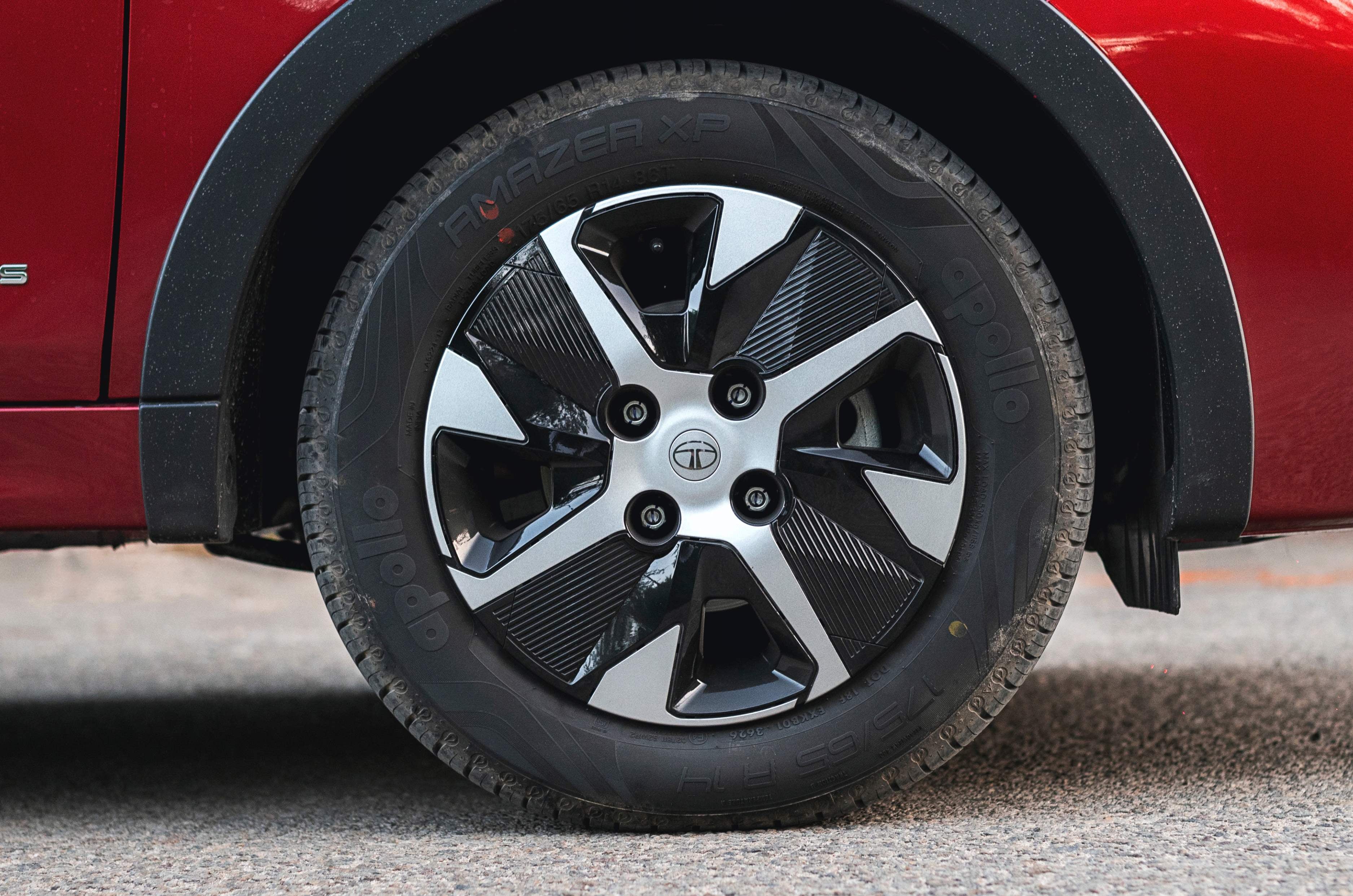
The wheel arch cladding adds contrast, but they make 14-inch wheels look undersized.
In profile, the iCNG gets the 14-inch stylised steel wheels which look undersized, particularly against the prominent wheel-arch cladding. The cladding is made from recycled materials and features a speckled texture. The use of chrome on the door handles and the window line further gives some contrast to the Aeris’ otherwise clean profile.
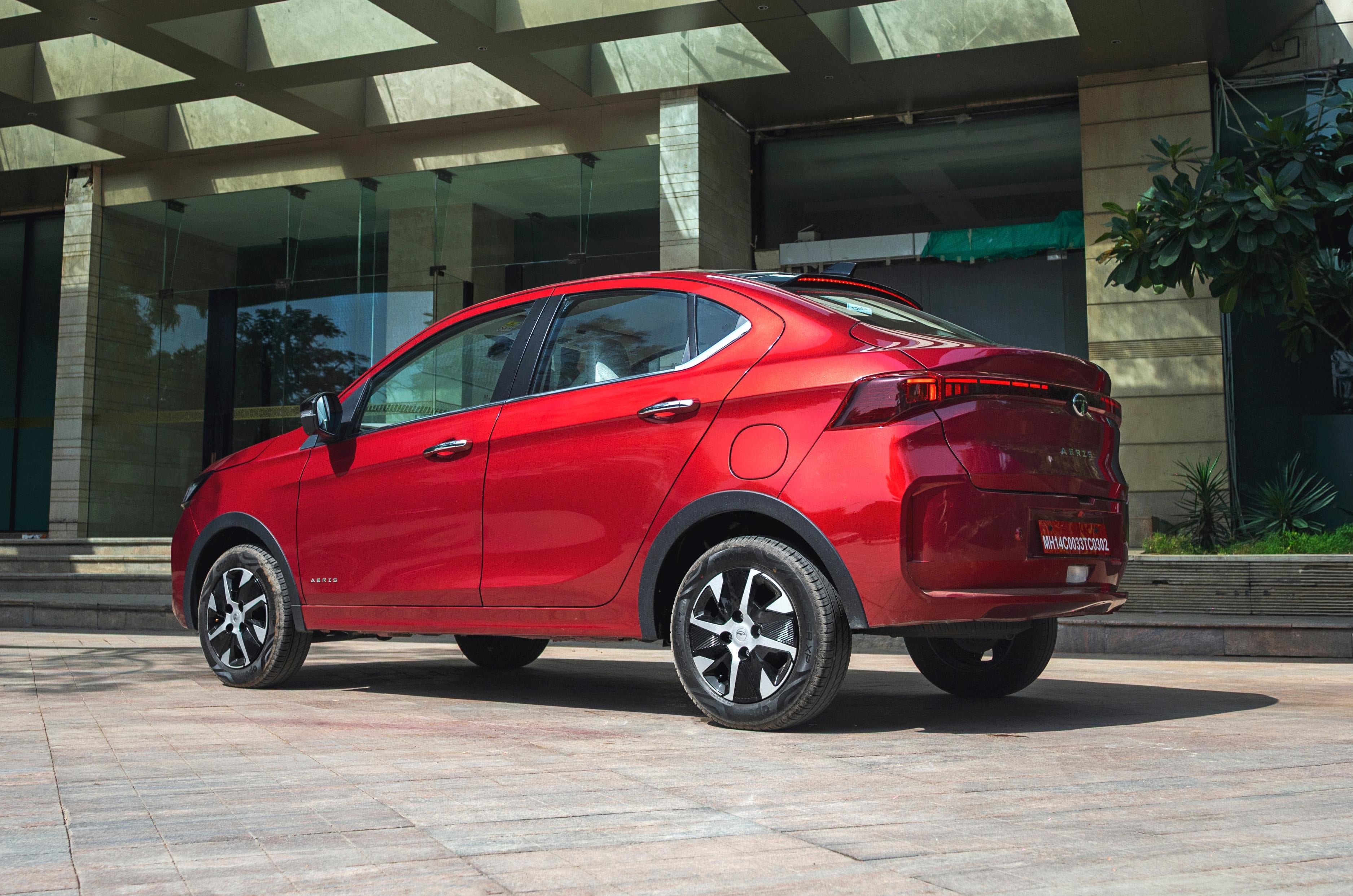
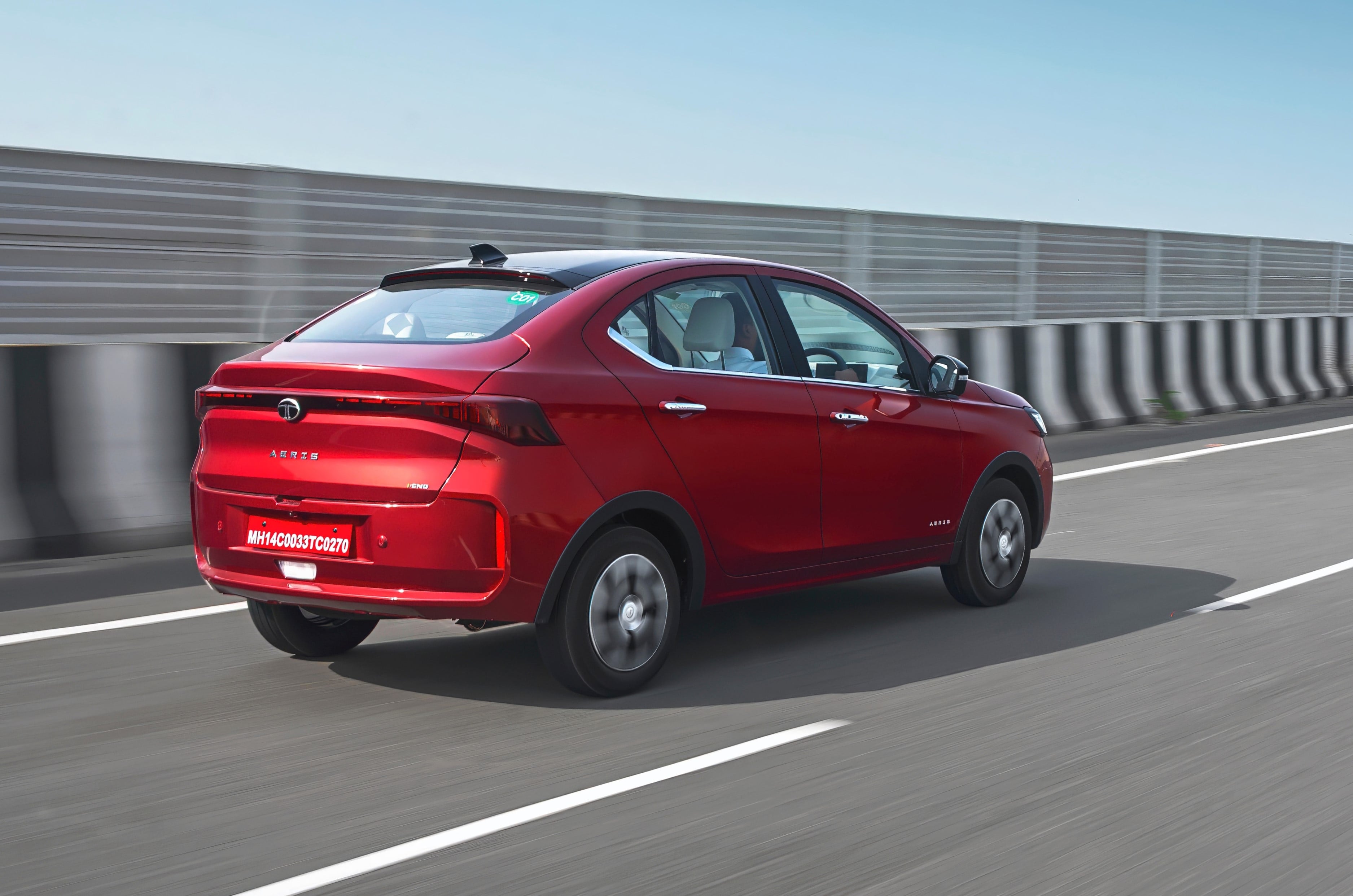
The Aeris retains the Tigor’s distinct coupe-like roof that flows into the tail. The rear features segmented LED taillights joined by red plastic trim, and new Aeris lettering on the centre of the tailgate. The rear bumper features a reverse light and has an overall clean design.
Tigor’s fastback-like sloping roofline is retained; new taillights make it appear larger.
The Aeris is 3,995mm long, 1,684mm wide and stands 1,532mm tall. It has a wheelbase of 2,450mm. These dimensions are similar to the older Tigor. While Tata has not quoted an official ground clearance figure, we found it adequate for broken roads and large speed breakers. All of this is expected to appeal to most buyers.
Tata Aeris iCNG interior space and comfort – 8/10
Lighter theme makes the cabin feel airy, and revised cushioning improves seat comfort
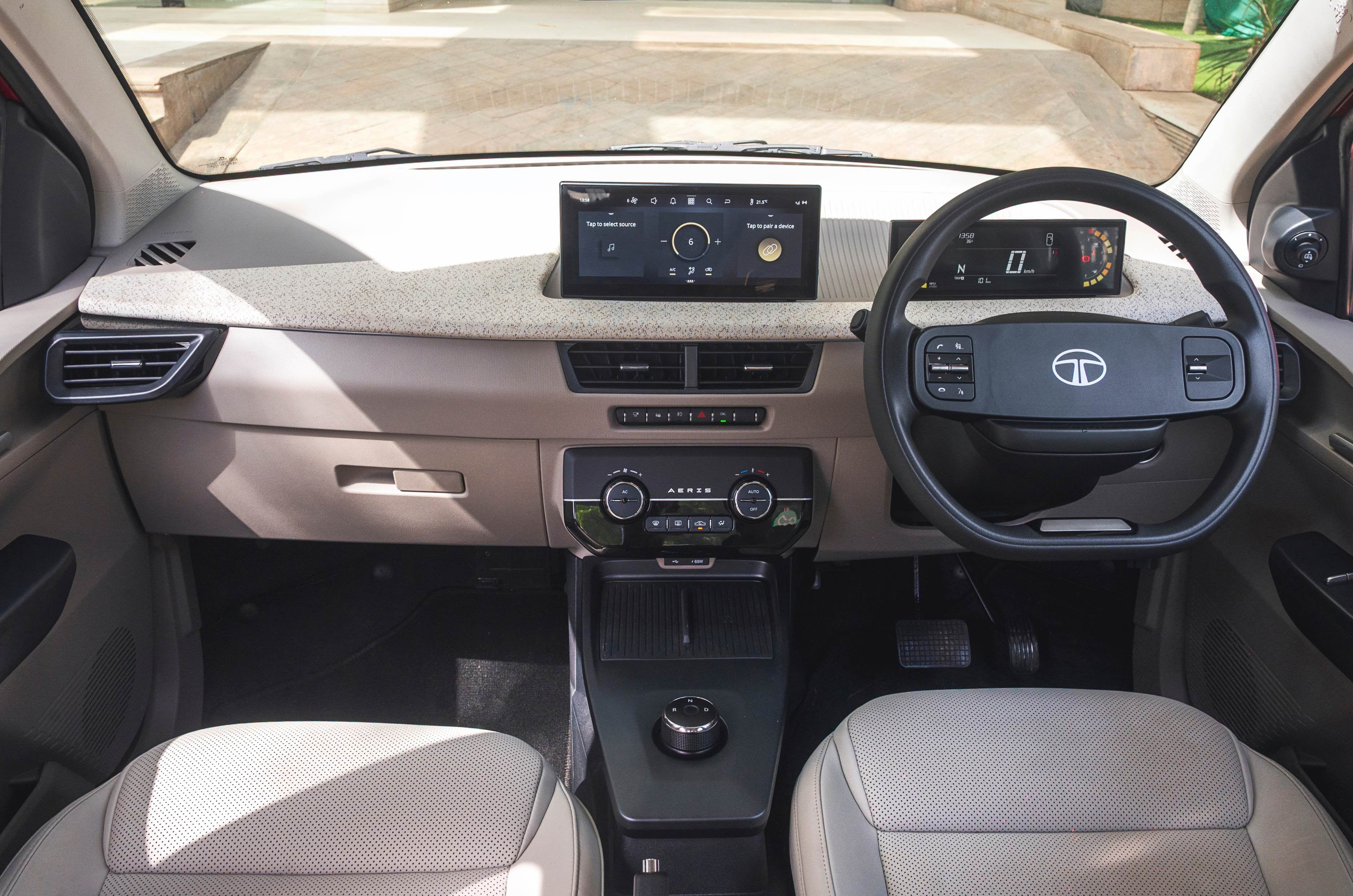
The dashboard looks minimalistic, and the lighter theme makes the cabin feel airy.
The Tata Aeris’ interior layout is the same as the Tiago and looks neat. The lighter beige theme makes the cabin feel airy. However, this same thing might make it difficult to keep the interior spick and span. The dashboard has a clean look, featuring two free-standing displays and a revised 2-spoke steering wheel.
The rotary dial does not have illuminated drive modes, but operating it is a breeze.
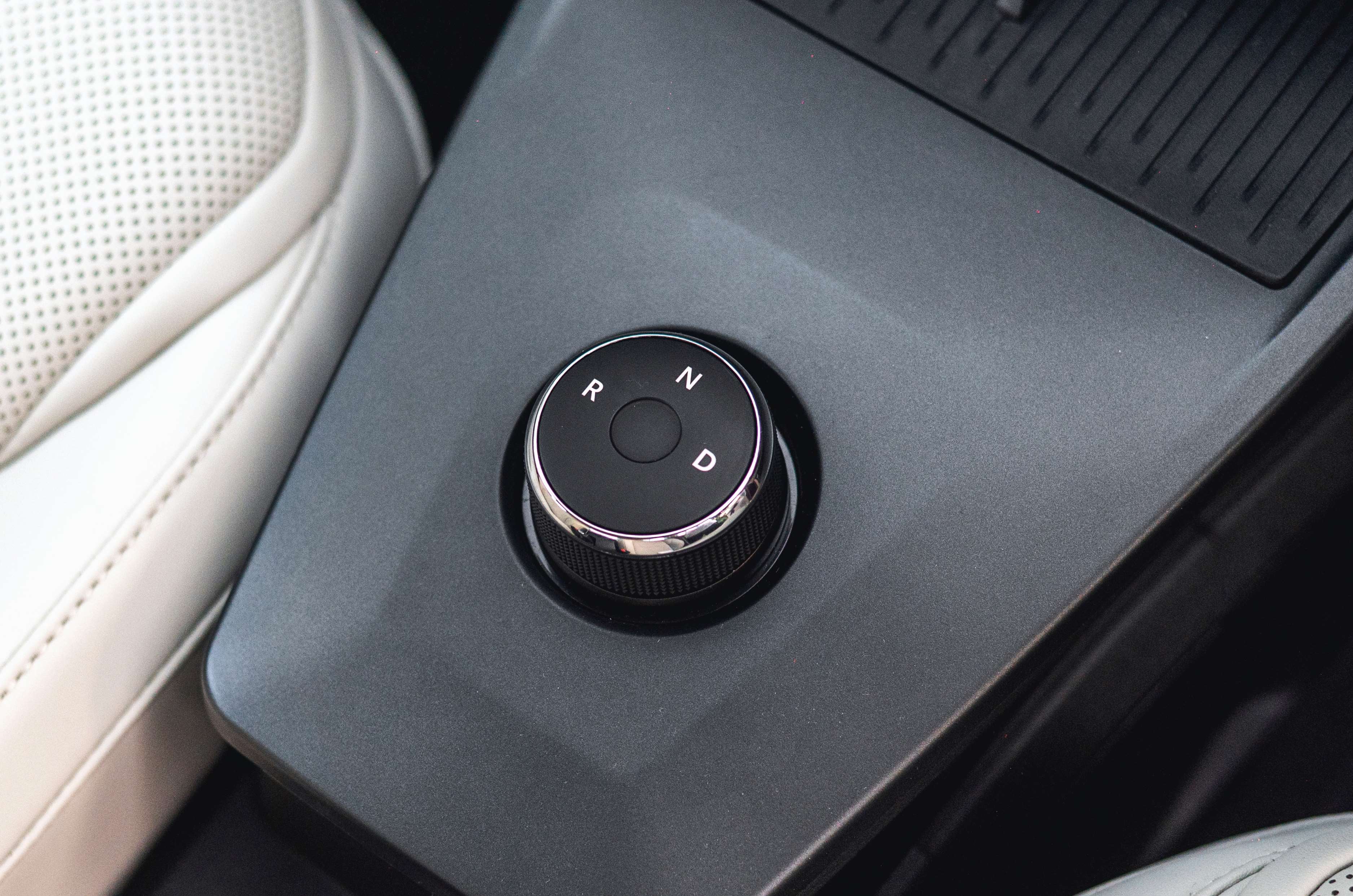
The manual variants feature a new, more premium-looking gear stalk, while the AMT variants get a cleaner-looking rotary drive selector with N (neutral), D (drive) and R (reverse) modes. The rotary dial does not feel finicky, and the modes switch seamlessly. One complaint, however, is that the drive modes (N, D and R) are not illuminated, which means you rely on the instrument cluster to know which mode is selected.
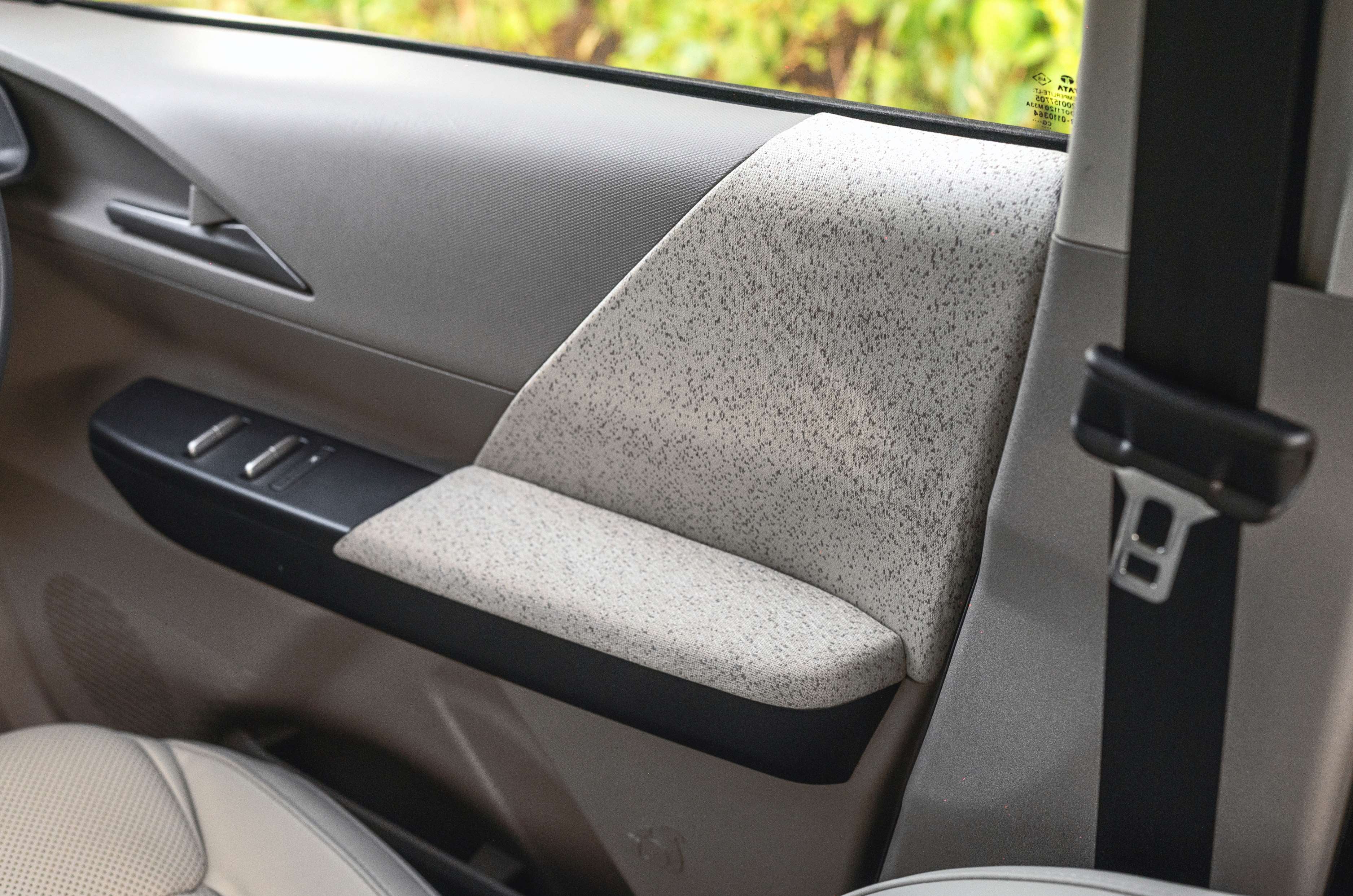
The Aeris gets floating door handles like on the Sierra, which feel sturdy.
The centre console has also been thoroughly redesigned for a cleaner look and a more practical application. It features two rubberised pads to keep phones, one of which gets wireless charging capability in the top-spec Accomplished trim. The centre console also features two cupholders and a leatherette-wrapped centre armrest which integrates a decent cubby space. The doors have floating-style handles integrated with the armrest, which feel sturdy.
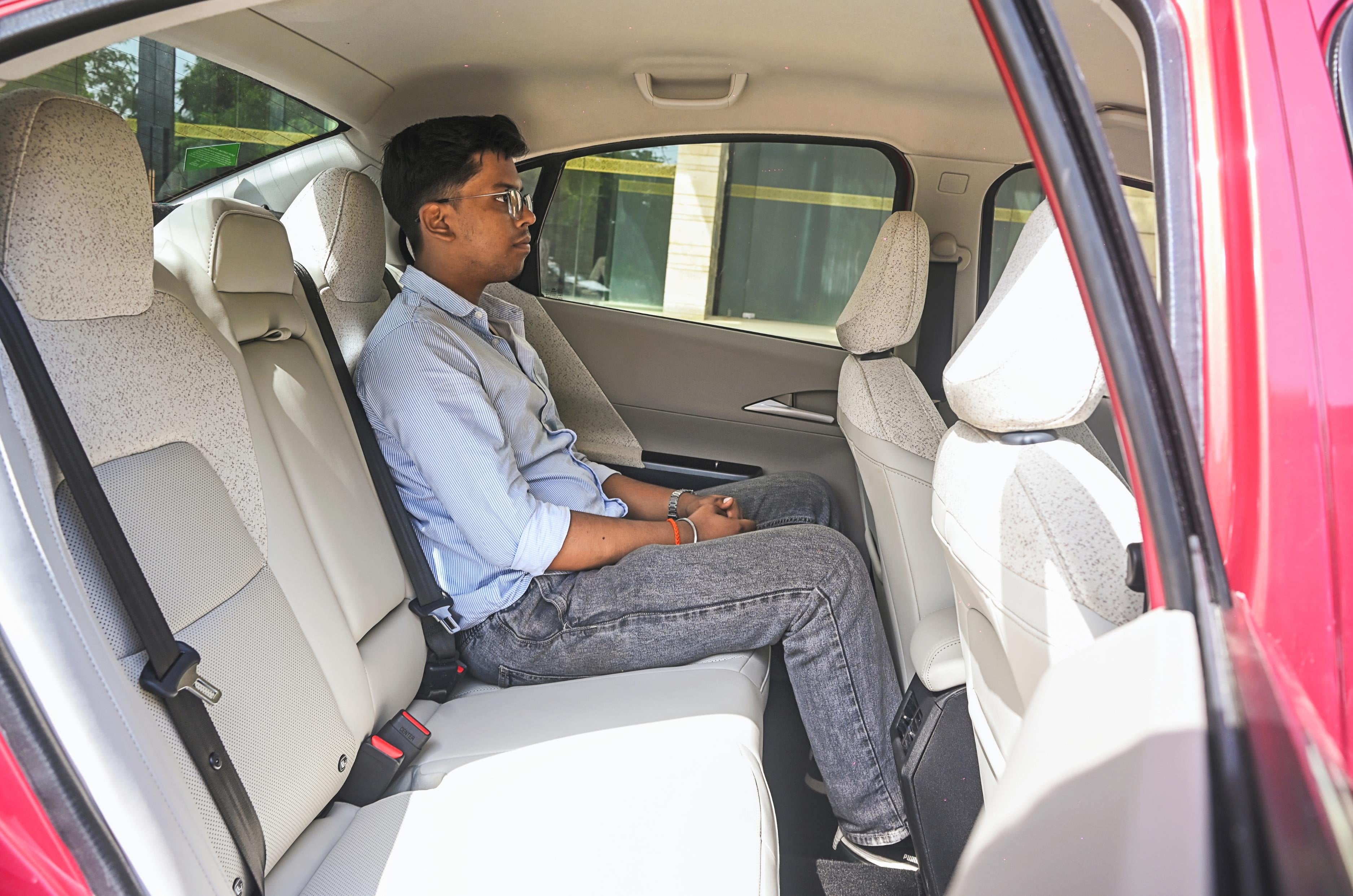
Legroom and kneeroom won’t be an issue for most, but taller passengers could feel the headroom is tight.
The seats feature revised cushions and bolsters that have increased the overall comfort and are wrapped in a part leatherette upholstery that feels premium. The rear seats are comfortable as well and offer good legroom and kneeroom. The headroom, however, could be an issue for passengers over 6 feet tall. The rear passengers benefit from dedicated air vents and a 65-watt Type-C charger. These seats get fixed headrests.
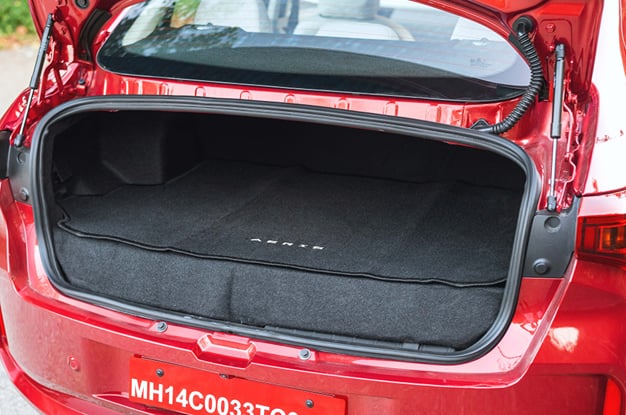
Aeris CNG’s boot space figure is not revealed, but could be similar to the Tigor CNG’s 227-litre space.
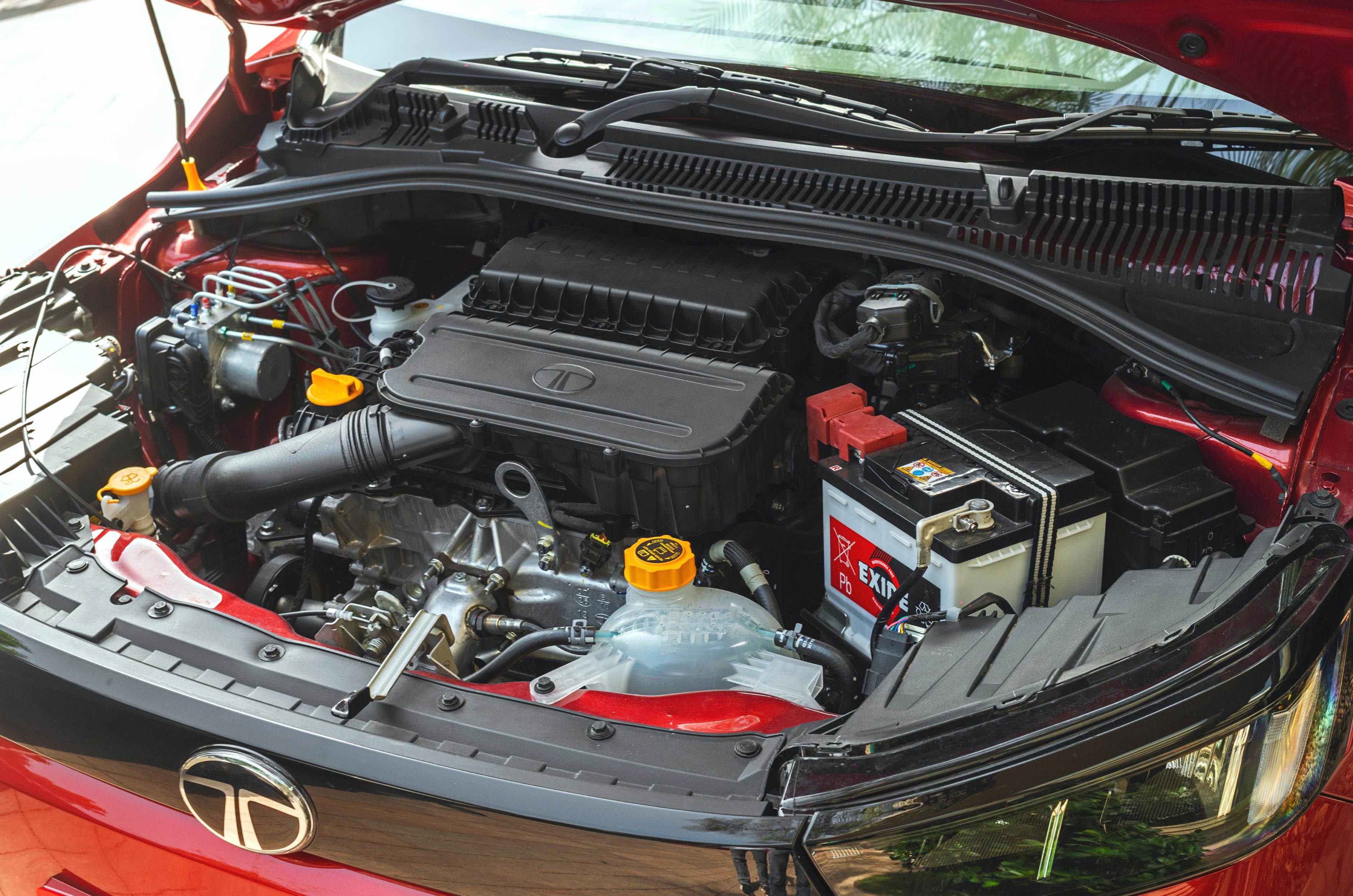
The Aeris iCNG gets a dual-cylinder tank setup inside the boot, unlike its rivals that use a single CNG tank and are left with very little usable boot space. Despite the additional tank, the Aeris has enough room for a couple of backpacks and a small luggage bag. Tata also offers a 13-inch underbody-mounted spare wheel, which is more useful than a puncture repair kit.
Tata Aeris iCNG features and safety – 9/10
Gets a lot of modern-day features, some of which could have better integration
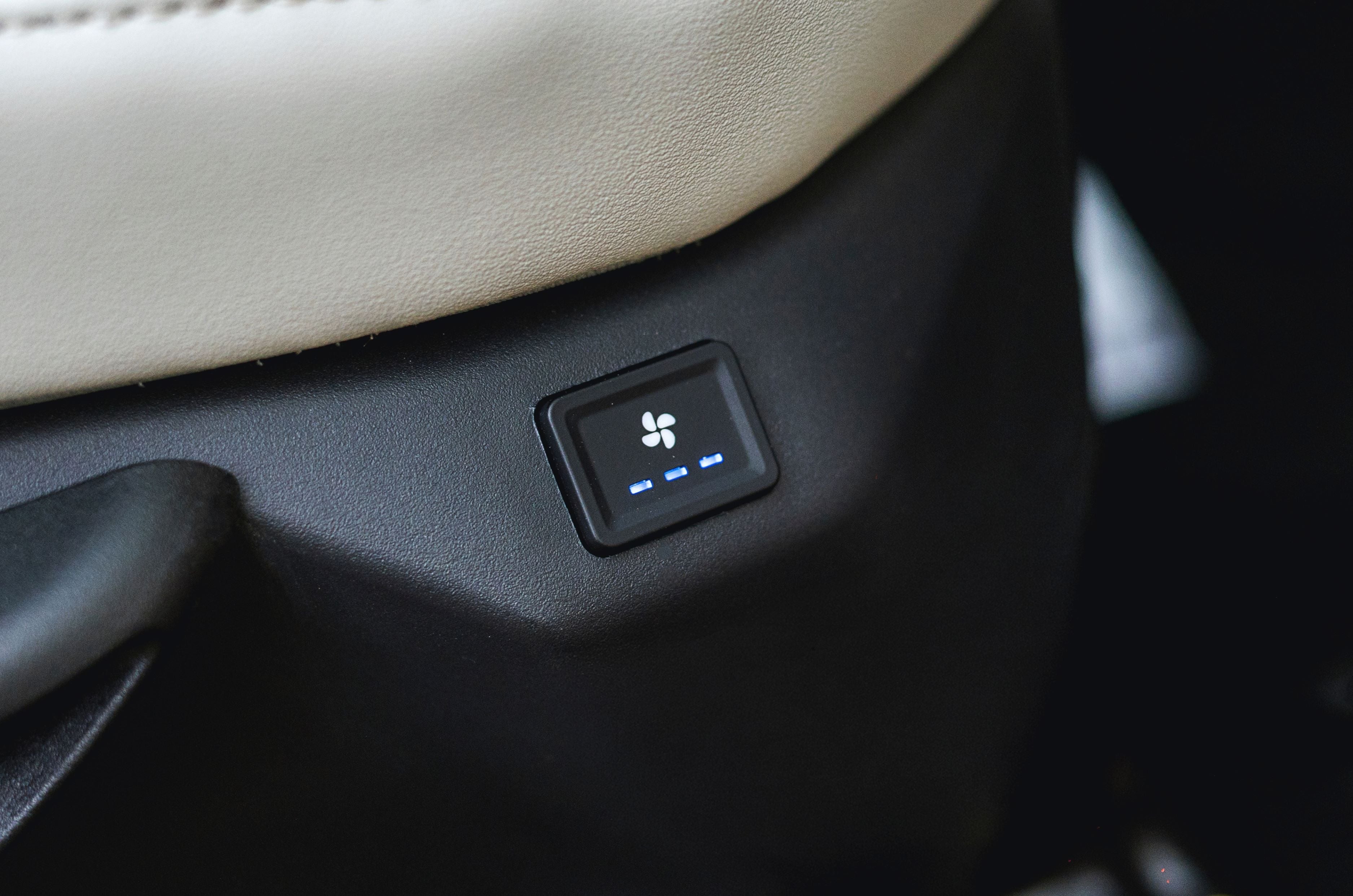
Segment-only ventilated seats cool effectively and mark a step up in the comfort quotient.
Like other Tata cars, the Aeris is filled with features to the brim. It debuts a front seat ventilation function for the compact sedan segment, which is offered with the Aeris’ top Accomplished trim. During our drive, the seat ventilation was very effective in cooling the cabin in Faridabad’s near 40deg ambient temperature. However, there’s no confirmation on the infotainment system or the driver’s display when the feature is engaged or the ventilation level is changed.
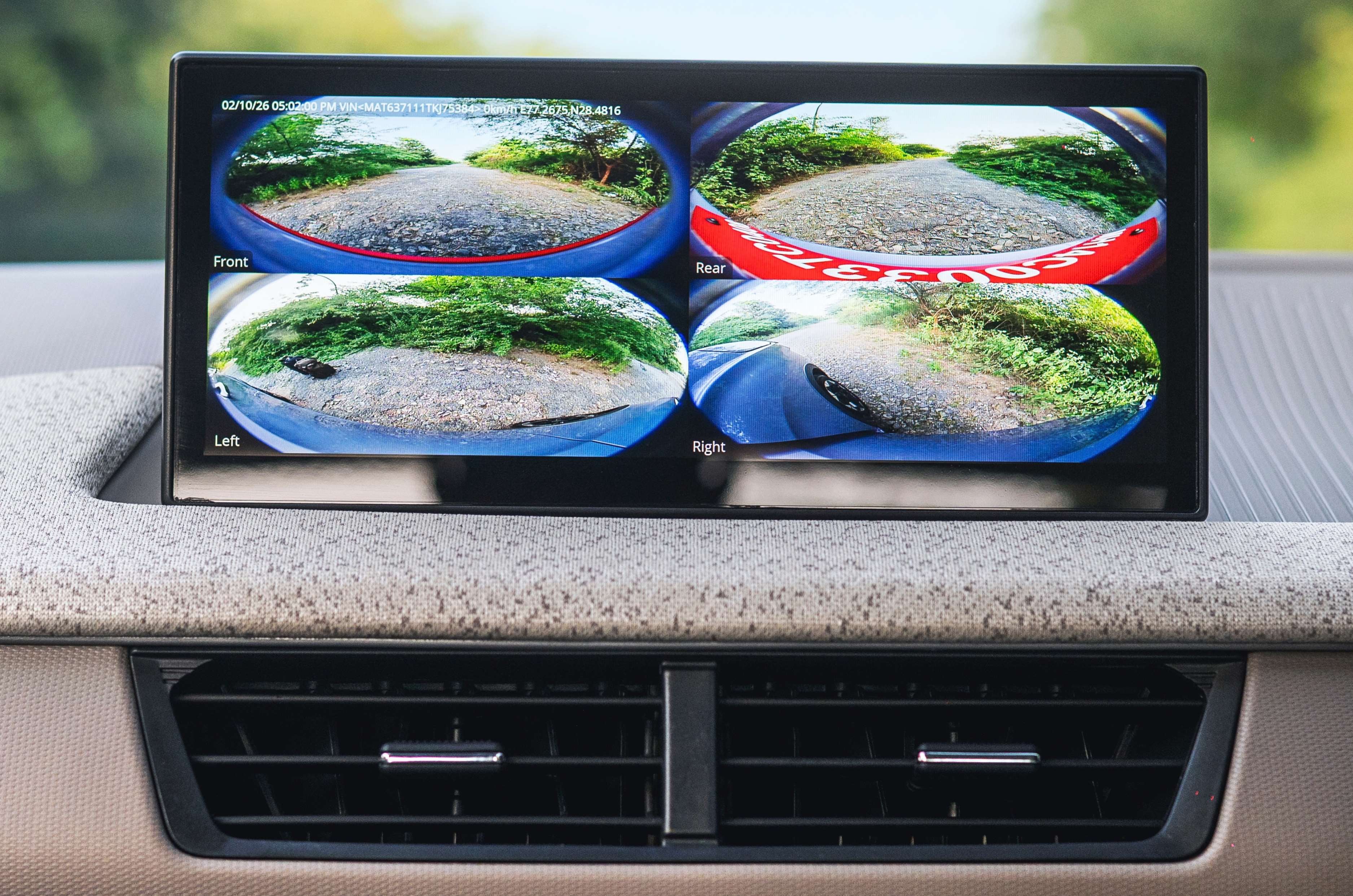
360-degree camera system has a crisp feed and can record the surroundings.
A 10.25-inch infotainment touchscreen is the same as before, which remains slick to use and has no lag even when browsing through multiple menus. The user interface (UI) is also easy to get used to. The Aeris continues with a 360-degree camera setup that is also lag-free and works well even in low-light conditions. Tata has added a new DVR feature, which allows the surround-view cameras to double up as a dashcam and record the surroundings of the car. These recordings can be stored and accessed either on the infotainment touchscreen or a USB drive, and can also be seen on a phone via a QR code.
The instrument cluster has a retro theme and displays all the important driving data, but the steering wheel’s tilt angle and the driver’s seating position sometimes obscure certain details. The steering wheel lacks the leatherette wrap offered with the Tigor, but feels nice to hold nevertheless. The wheel is now free of the Tigor’s scratch-prone gloss black trim and thankfully retains physical controls. It also gets cruise control, but only with the manual variants.
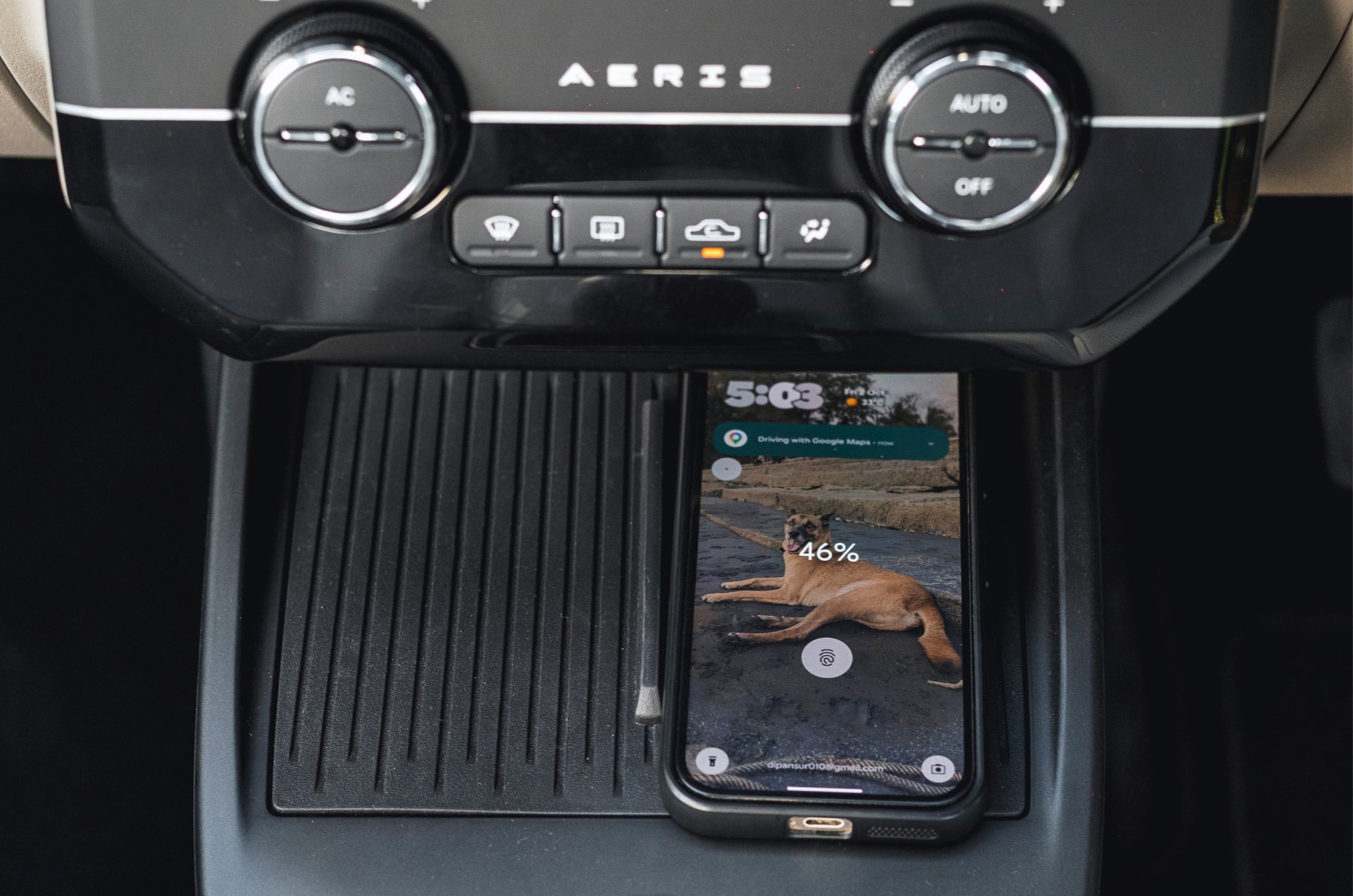
The wireless charger works well, but tends to make the phone hot during prolonged use.
The 4-speaker, 2-tweeter audio system is a step down from the Tigor’s 4-speaker, 4-tweeter setup, although sound quality is still good enough for the price. Certain features also could have been integrated better. The wireless charging pad can also heat up phones, particularly during extended use. Cooling vents near the pad could have fixed the issue. The infotainment system switches to the blind-spot monitor every time the indicators are used, which can be annoying when following navigation. The rear seats also lack pressure sensors, so the seatbelt warning continues to chime until the belts are fastened.
Standard safety features include 6 airbags, ISOFIX child seat anchorages on the rear seats, rear parking sensors and 3-point seatbelts with reminders on all seats. Higher variants equip the Aeris with a 360-degree camera, a day/night inside rearview mirror (IRVM), rain-sensing wipers, rear defogger, a tyre pressure monitoring system (TPMS) and ESP with traction control. The pre-facelift Tigor received a four-star rating from Global NCAP in 2020, but the Aeris has yet to be tested by Bharat NCAP.
Tata Aeris iCNG performance and refinement – 6/10
Performance in the city is adequate, but it feels out of breath if pushed hard
The 3-cylinder engine is not the smoothest in the segment and the NVH levels are also not the best.
The Tata Aeris continues with the Tigor’s 1.2-litre, three-cylinder naturally aspirated engine, producing 76hp and 97Nm in CNG guise. It is offered with a five-speed manual and a five-speed AMT, and we drove the latter.
At city speeds, the engine has enough performance to keep up with traffic, but the CNG-AMT combination is not particularly responsive. There is a noticeable pause between pressing the accelerator and the powertrain responding, which becomes more evident when you need to accelerate quickly.
Performance is adequate in the city, but it feels out of breath during overtakes.
The AMT also makes starts from standstill quite jerky, which can get tiresome in stop-and-go traffic. Once up to speed, however, the Aeris settles into a relaxed rhythm and is comfortable enough when driven at a steady pace. The AMT also gets paddle shifters for manual gear changes, which are useful when you want more control over the gearbox, particularly during overtakes.
On the highway, the lack of response is more noticeable, particularly when overtaking. The Aeris can maintain triple-digit speeds, but building speed takes time, and overtaking requires some planning. The rotary gear selector itself, however, as mentioned above, is neat and easy to use.
As you start driving, the vibrations from the 3-cylinder engine are ironed out till you reach 2,500rpm.
Refinement is another weak point. Refinement is another weak point. The engine feels generally smooth when driven gently, but above 2,500rpm, engine noise and vibrations become quite pronounced. Wind and road noise insulation isn’t particularly strong either, so the cabin gets fairly noisy at higher speeds.
Tata Aeris iCNG ride comfort and handling – 8/10
Has a commendable ride quality for a sedan on both rough roads and highways
Like other Tata cars, the suspension is well tuned to Indian conditions.
The Aeris is particularly impressive over poor roads. The suspension does a good job of absorbing broken surfaces and larger bumps without unsettling the car, while the ground clearance is adequate for tackling rough roads and large speed breakers. Despite being a sedan, it does not feel particularly vulnerable to bad roads.
Out on the highway, the Aeris is equally composed. It stays planted at triple-digit speeds and does not feel floaty or nervous when driven quickly. The steering is also nice to hold and offers decent feedback, although there is some vagueness around the centre that takes away a little from the confidence.
Tata Aeris iCNG mileage and efficiency
We expect it to offer a real-world mileage in the 25-30km/kg range
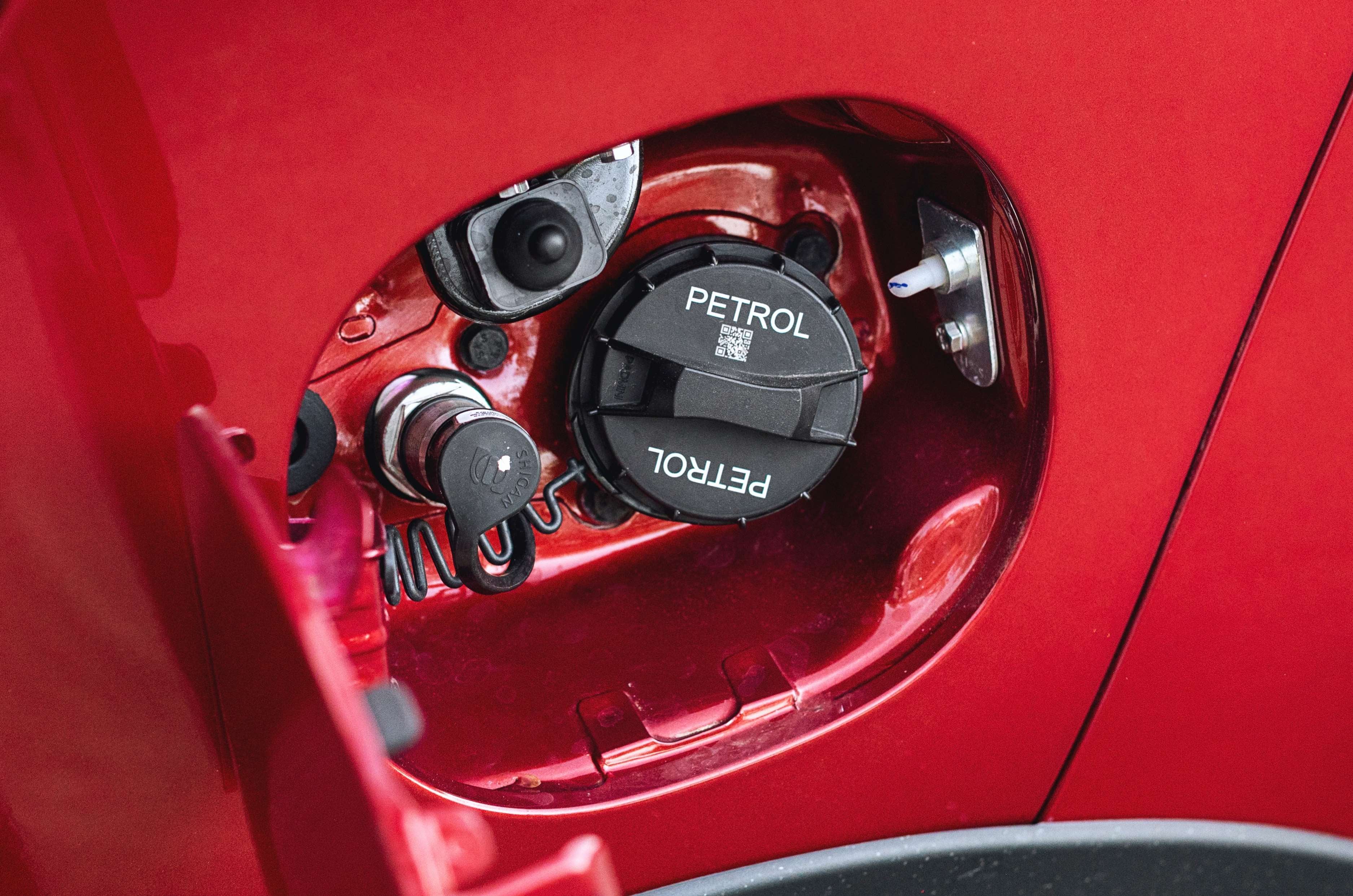
It kills the ignition whenever the fuel lid is opened, offering a layer of safety while filling fuel.
While we haven’t put the Aeris iCNG through our full test yet, its CNG powertrain should make it considerably more economical to run than the petrol version. Tata is yet to reveal an official efficiency figure, but we expect real-world mileage to be in the 25-30km/kg range. We’ll bring you our tested mileage figures once we put the Aeris iCNG through our standardised test procedures.
Tata Aeris iCNG value for money – 8/10
CNG buyers don’t have to compromise on features, but the AMT isn’t ideal
The Aeris CNG offers good value, but AMT should be chosen only if city driving is a priority.
The Aeris, priced from Rs 5.70 lakh to Rs 9.10 lakh (ex-showroom), is a more convincing compact sedan than the Tigor ever was. Its modern design, well-equipped cabin, comfortable ride and, most importantly, useful boot space despite the CNG setup give it plenty going for it. The fact that Tata offers the CNG powertrain with higher-spec variants also means buyers don’t have to sacrifice features for lower running costs.
The CNG-AMT powertrain, however, takes some shine off the package. The slow responses, jerky starts and excessive NVH at higher revs make it better suited to relaxed city driving than frequent highway use. Even so, for buyers looking for a practical and well-equipped CNG sedan, the Aeris does make a stronger case than its predecessor and even against its rivals.
Road trips have a useful way of exposing compromises. A car can feel perfectly adequate around town, but add two people, luggage and a boot full of camera equipment, then point it towards a destination over 350km away, and you soon find out where the corners have been cut.
This was particularly interesting because we weren’t doing it in an ordinary petrol SUV. We were taking the Tata Nexon iCNG from Ahmedabad to Dholavira and back – more than 770km in total – with everything we needed for an overnight stay and a full shoot.
CNG cars traditionally come with a familiar list of compromises. Performance is one. Boot space is another. There is also the assumption that choosing CNG means giving up some of the equipment and driving appeal you would expect from a modern SUV.
The Nexon iCNG takes a different approach. Start with the engine. Its 1.2-litre turbocharged CNG powertrain makes it India’s only Turbo CNG offering, and the difference is noticeable on the open road. The point isn’t to turn a CNG car into a sports car; it is to make sure you don’t have to drive it differently simply because you’re running on CNG – and this makes all the difference when the brief is to drive across the magnificent state of Gujarat.
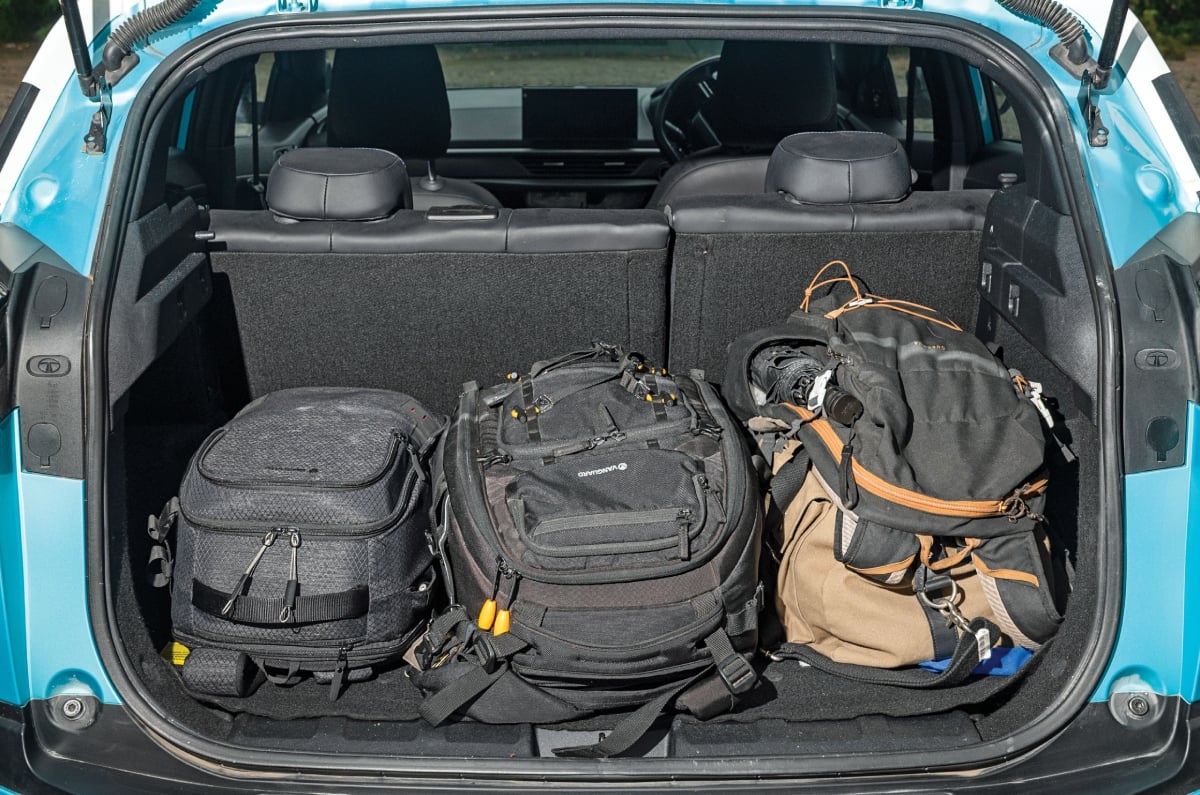
The 321-litre boot is plenty, even when it looks like you’re relocating.
Once Ahmedabad disappeared behind us, the traffic thinned, the roads opened up, and the Nexon settled into an easy long-distance rhythm, with enough performance for overtaking and climbing gradients without the strained feeling you might associate with a CNG car.
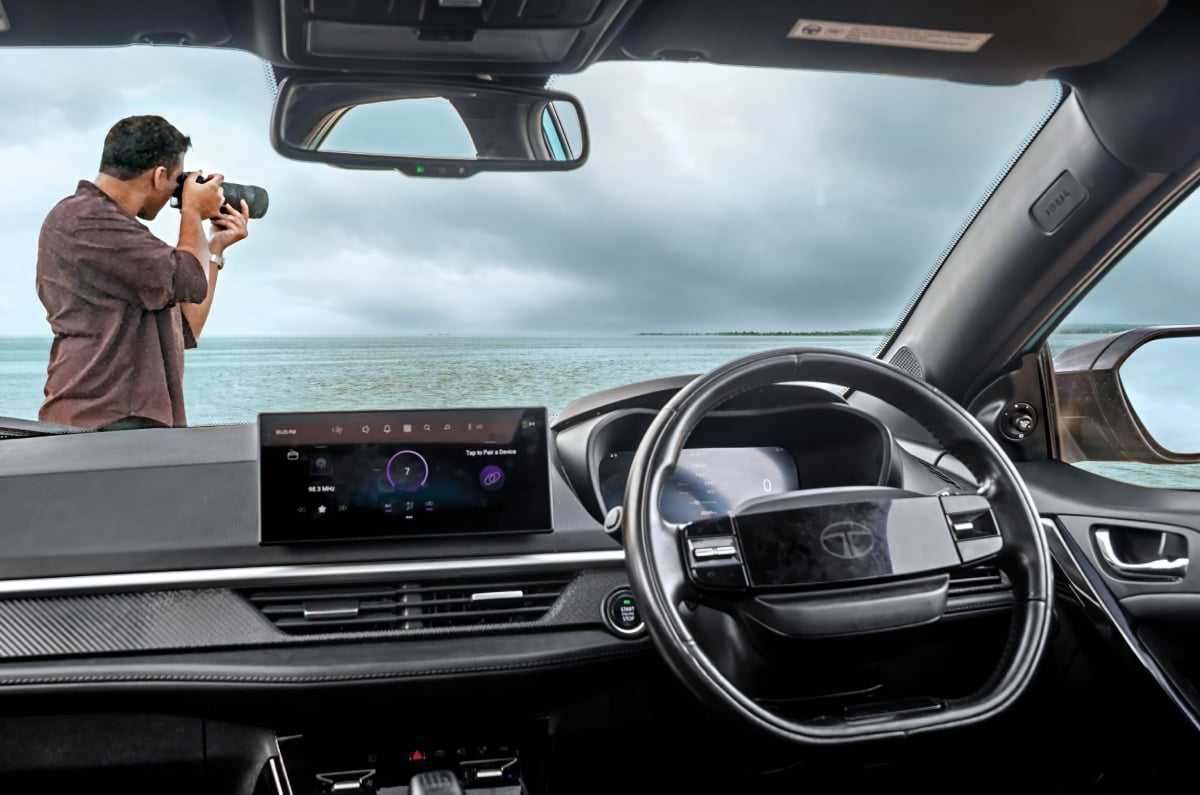
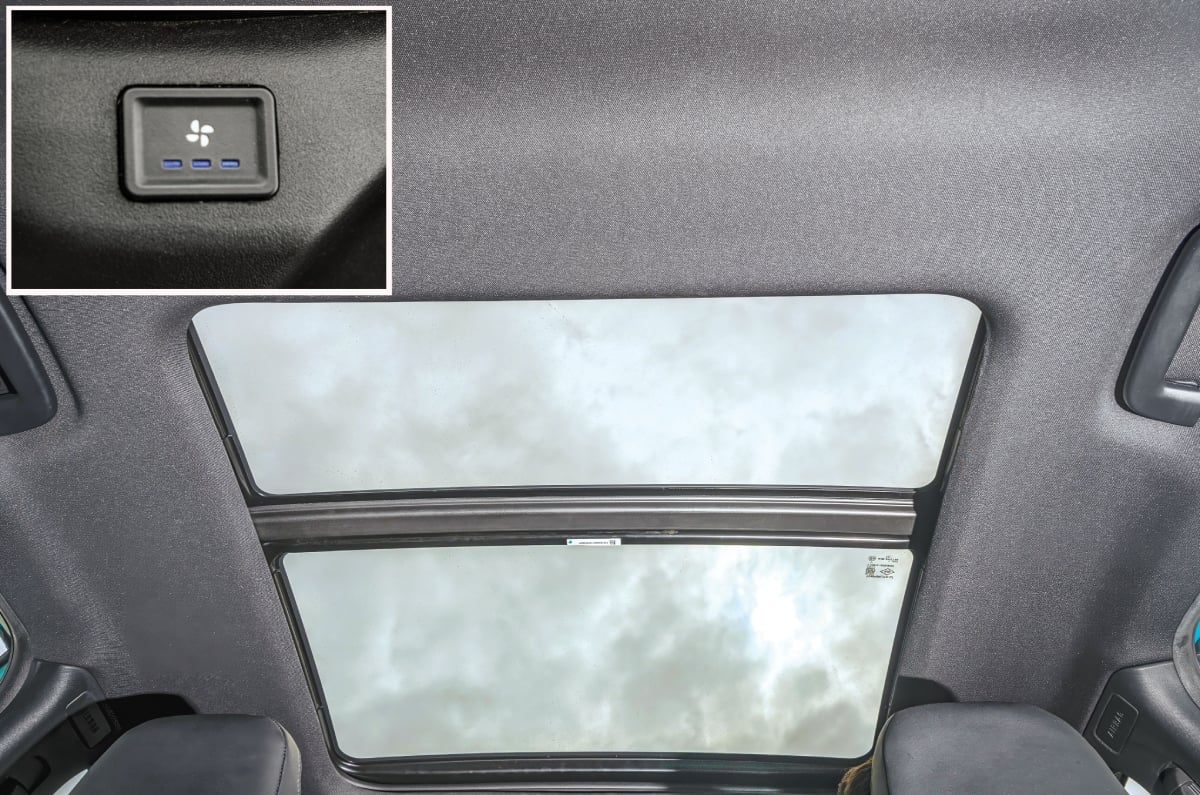
Inside, there is little sense of compromise either. The Nexon iCNG retains the equipment expected of a modern SUV, including its large 10.25-inch touchscreen, digital instrumentation, ventilated seats, voice-assisted panoramic sunroof and 360-degree camera. The latter proved particularly useful when we inevitably found ourselves manoeuvring into tight spaces for photographs.
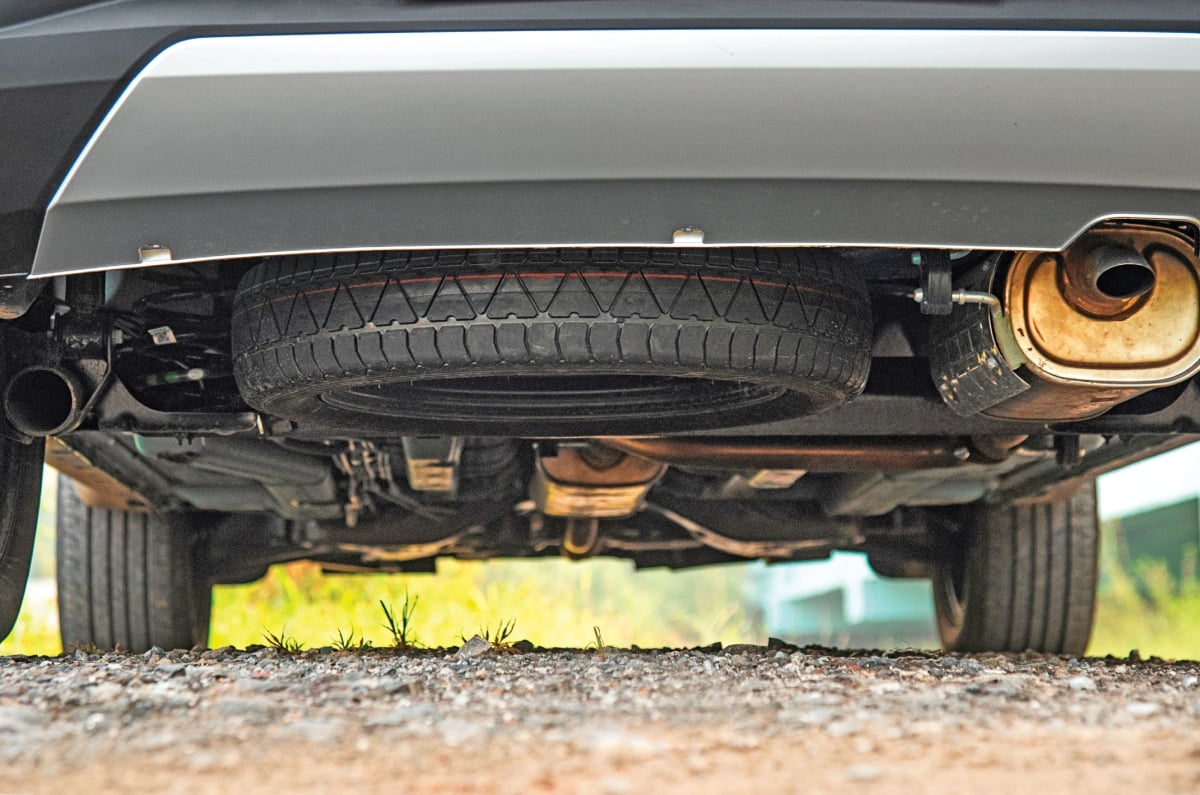
Underbody-mounted spare wheel adds another layer of confidence on long road trips.
Then there is the boot. A conventional CNG cylinder can make luggage space something of an afterthought. The Nexon iCNG’s twin-cylinder layout puts the CNG tanks beneath the boot floor, leaving a proper luggage compartment and a spare wheel. For us, that meant camera bodies, lenses, tripods, overnight bags, and everything else could go in without sacrificing the rear seats.
The system also starts directly in CNG, making the transition almost irrelevant to the driver. And over the first few hundred kilometres, fuel was barely discussed. With CNG and petrol available, there was no need to plan the journey around the next filling station.
The Rann of Kutch is a popular destination for humans and flamingos alike.
The road itself provided more to think about. As we moved towards Kutch, traffic became sparse, villages grew further apart, and the vast Kutch sky revealed itself. Eventually we reached the Road to Heaven. The name is rather grand, but the road itself doesn’t need much embellishment. It runs almost arrow-straight through the Rann, with the white landscape opening out on either side. There is no great corner to attack and no climb to conquer. You simply drive into an enormous amount of empty space. We stopped, naturally. The cameras came out, the light changed into evening, and before we knew it, darkness crept up on us and made us head to our overnight halt.
By nightfall, we had covered more than 350km. We had also spent much of the day not thinking about the fact that this was a CNG SUV. The next morning, we turned around. The return journey passed more quickly, as they tend to. By the time Ahmedabad reappeared, the trip meter showed more than 770km. Two people, luggage and a boot full of camera equipment had gone to Dholavira and back without a fuel stop.
That is perhaps the more interesting measure of what the Nexon iCNG achieved. Not that it can cover 770km, but that doing so doesn’t require the usual concessions we have come to associate with CNG: no cramped boot, no reluctant engine, no sense of a stripped-out cabin and, in our case, no need to organise the journey around fuel.
The voice-activated panoramic sunroof really lets you appreciate the vast Kutch sky; ventilated front seats are a godsend in hot and humid conditions (inset).
We set out to drive to the Road to Heaven and back. And the fact that we did it in a CNG-powered car without actually having to think about it only made the whole thing that much more special.
While aftermarket CNG conversions are not new, with the rise in fuel prices, there has been a noticeable spike in interest surrounding them. Although there are more factory-fitted CNG cars on the market than ever before, several models still do not give you the option. Not to mention, existing car owners are increasingly looking to convert their cars to CNG to reduce running costs.
Naturally, this increased interest brings up several questions about the technology, the installation, the legalities and more. We thus teamed up with Lovato CNG’s authorised distributor in Maharashtra, Blue Drive Traders, as well as Lets Go CNG and its authorised installer in Mumbai, M.S Motors, to answer questions about CNG conversions.
Know your CNG kit
There are three broad types of kits available on the market today. The oldest is the Venturi type, typically used for cars that are Bharat Stage 3-compatible and older. These use a Venturi mixer, similar to a carburettor, that mixes CNG with air before it is injected into the intake manifold. They are the most affordable, usually costing between Rs 30,000 and Rs 40,000, including installation and registration, but they are not the most efficient and bring a significant drop in performance. Since the cars they are compatible with are also reaching the end of their lifecycle, these kits are gradually being phased out.
Modern naturally aspirated MPFI cars require a sequential type kit. These use individual injectors that inject CNG directly into the intake manifold and feature their own ECU that controls timing, volume and other parameters based on RPM and driver inputs. These are much more fuel-efficient, and the drop in performance is nominal in everyday driving conditions. Like the older Venturi kits, these too require the car to be started on petrol before switching over to CNG. However, they automate the process by making the switch once a certain engine temperature is reached. Prices vary depending on the manufacturer and the specifications of each kit, ranging from Rs 40,000-Rs 50,000 for older BS4 cars, to Rs 50,000-Rs 65,000 for smaller BS6 cars, stretching to Rs 70,000-Rs 75,000 for larger cars that require an eight-injector kit.
The newest type of kit to hit the market is the direct-injection kit, used for cars with direct petrol injection. Like sequential kits, these too inject CNG into the intake manifold. However, direct-injection engines cannot run purely on CNG. The fuel injectors in a DI engine sit within the combustion chamber, so to prevent them from overheating, a small amount of petrol still needs to be injected through them even when running on CNG. Therefore, a turbocharged direct-injection engine can only run on a maximum 80:20 ratio of CNG and petrol. As a result, fuel efficiency gains are not quite as high as with a naturally aspirated engine, and kit prices range from Rs 1 lakh to Rs 1.5 lakh, thus pushing the breakeven point further away.
What’s in the box?
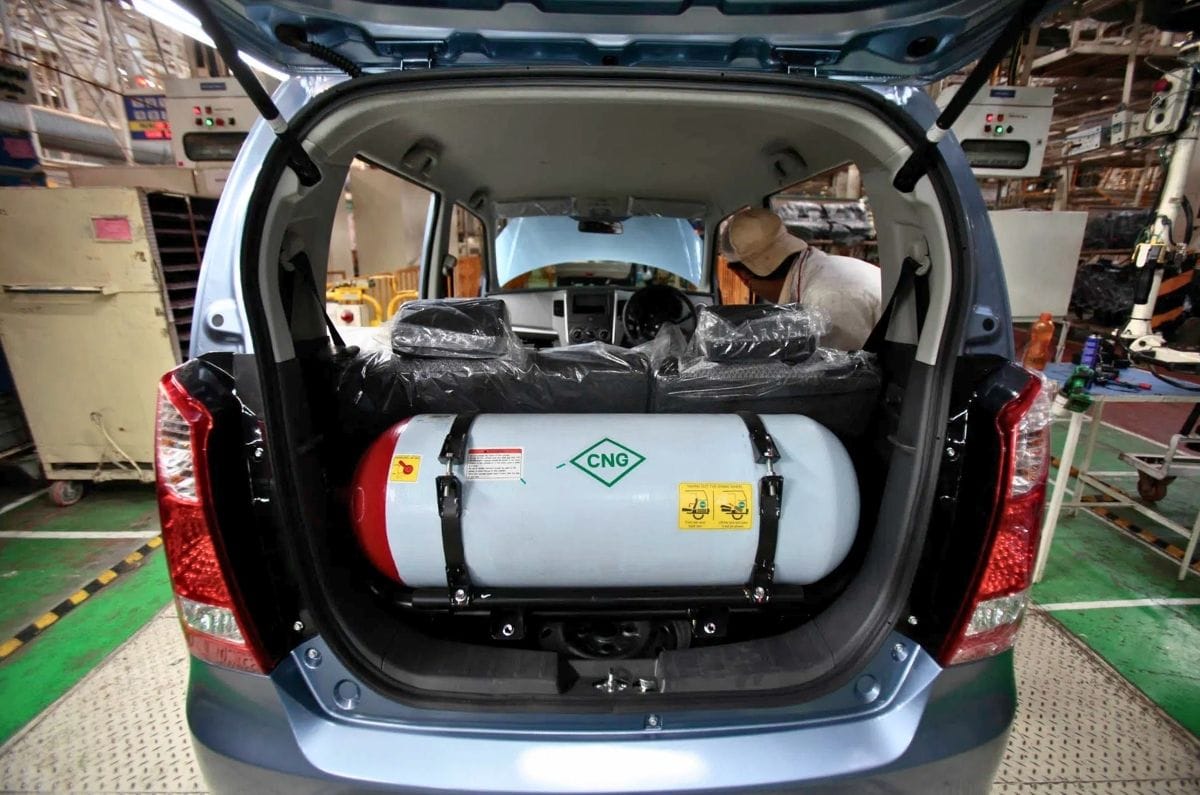
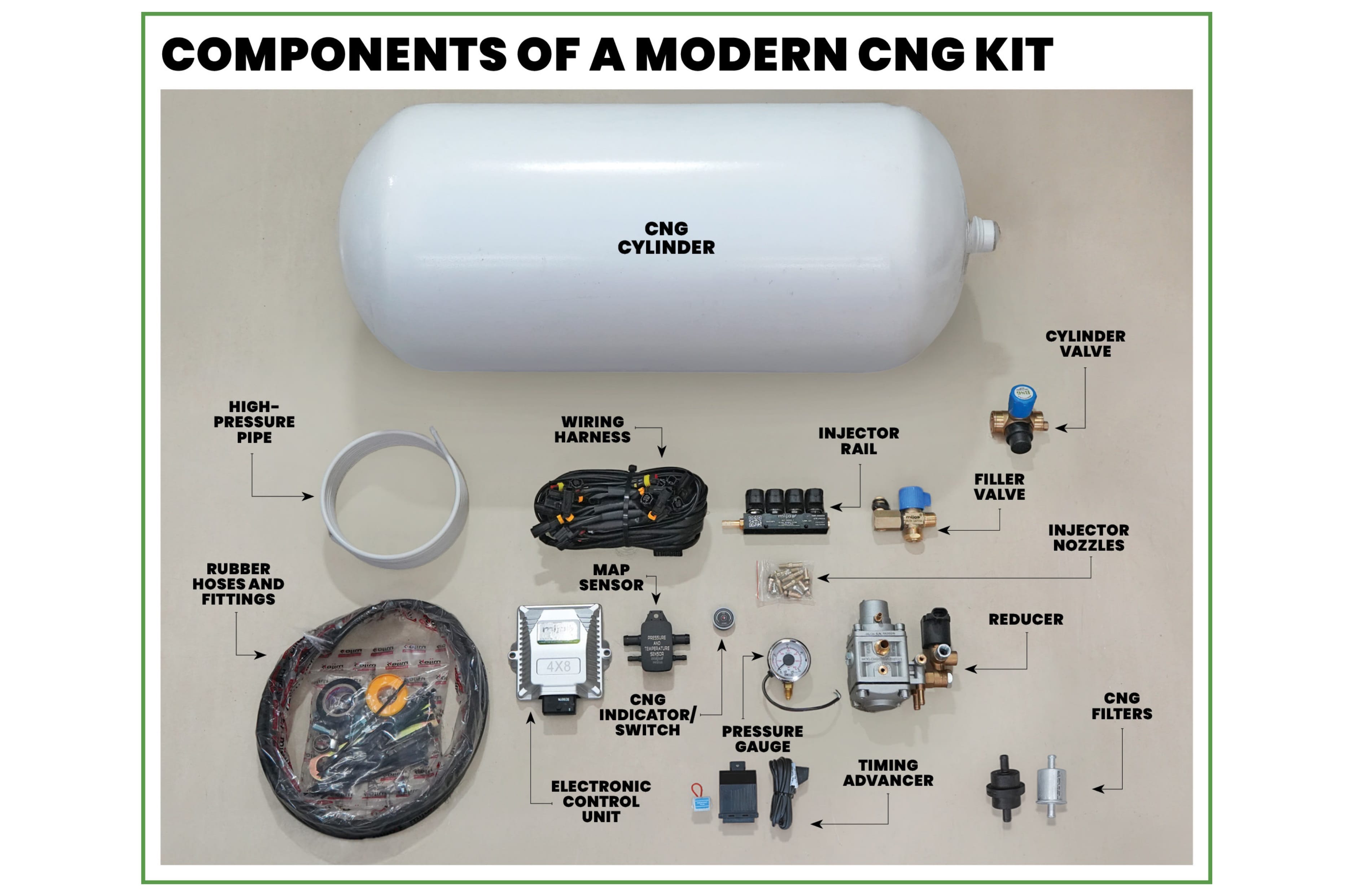
The largest and heaviest component of a typical CNG kit is the tank itself. Made from seamless steel, these can weigh close to 70kg empty, with volumetric capacities ranging from 60 to 65 litres. Metal-lined composite cylinders and carbon fibre-reinforced plastic cylinders are also now available, and while they are significantly lighter, they usually cost two or three times more. Attached to the tank is a valve with a manual shut-off.
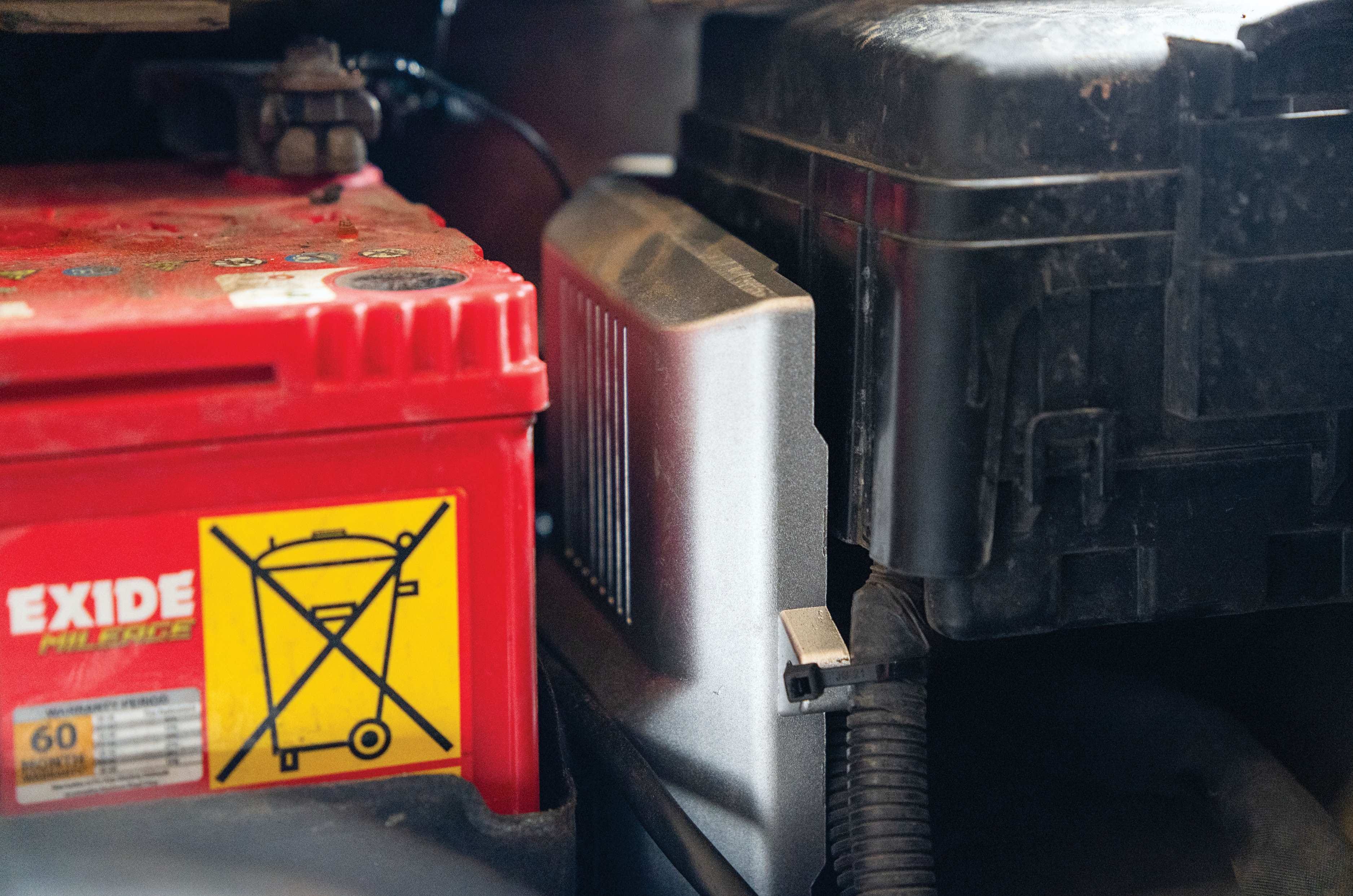
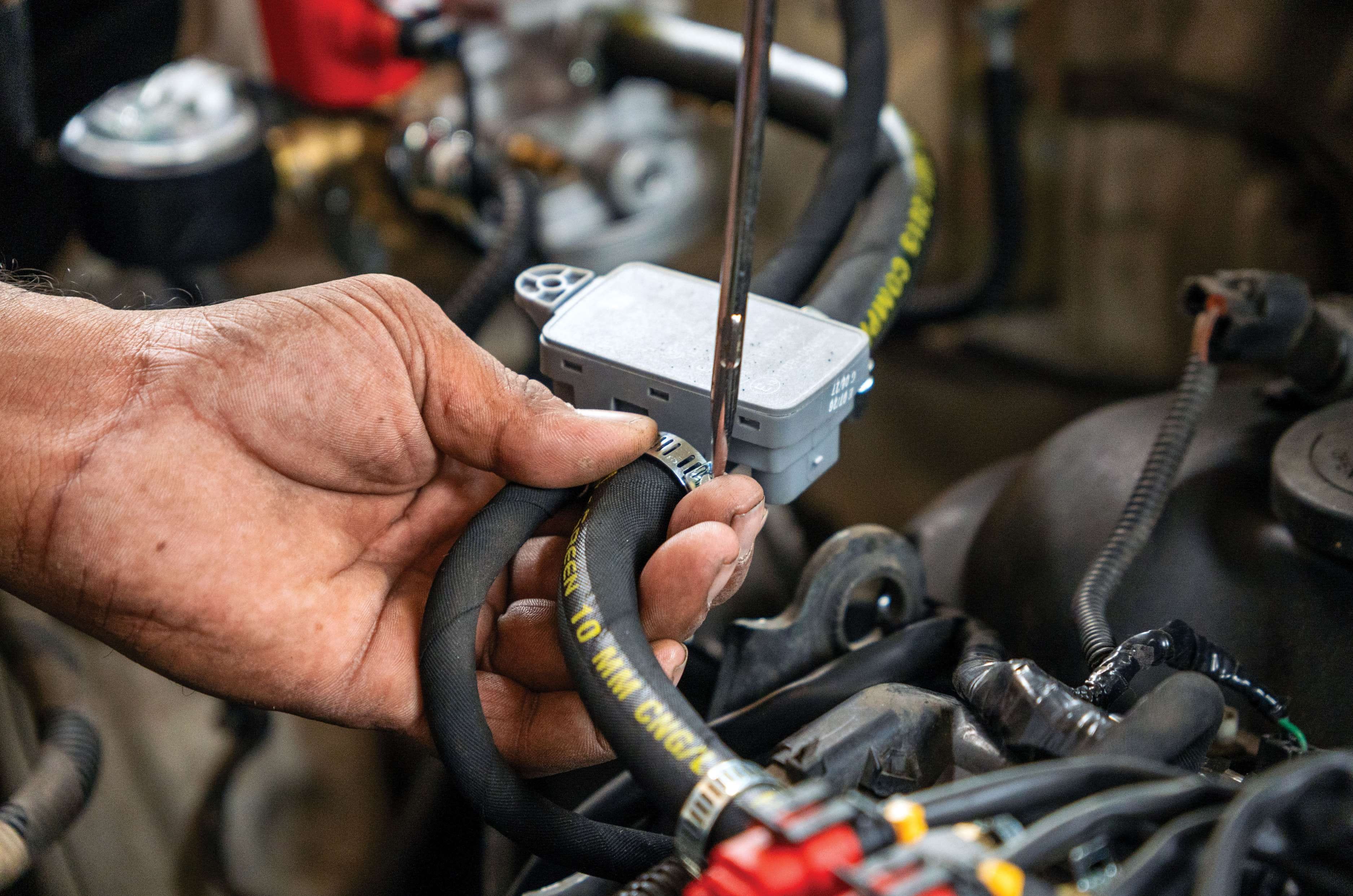
The filling valve, through which CNG is filled, can either be placed under the bonnet or beside the petrol filler cap, depending on the vehicle. Transporting the gas from the tank to the pressure reducer under the bonnet is high-pressure tubing made from carbon steel and coated in polymers. The reducer has a pressure gauge and lowers gas pressure from about 200bar in the tank to a manageable 2-3 bar. From here, the gas is routed to the injector rail that sits atop the engine, which further distributes it to nozzles drilled into the intake manifold via reinforced rubber hoses. Between the reducer and the injector rail sits a Manifold Absolute Pressure (MAP) sensor to measure the pressure as well as the temperature of the gas. There is also an optional filter to remove any impurities in the line.
Controlling the injector rail is an Electronic Control Unit (ECU) that uses signals from the MAP sensor and communicates with the car’s original ECU to dictate the amount of CNG being injected and the timing. Modern kits also come with a comprehensive wiring harness that can plug into the car’s original wiring via OBD connectors. Older pre-BS6 cars, however, may require some wire splicing. Optionally available is an Advancer, which advances ignition timing when running on CNG and negates some of the power loss, particularly on smaller-capacity engines. Some sedans and hatchbacks also require a rear coil spring spacer to compensate for the added weight of the tank in the boot.
How a CNG kit is installed
A professional CNG installation takes around 4 to 5 hours to complete. Here’s what happens behind the workshop doors.
Health check
The engine is inspected to ensure it’s suitable for CNG conversion. A basic service is performed if required, with spark plugs and ignition coils replaced as needed and the throttle body cleaned.
Components positioned
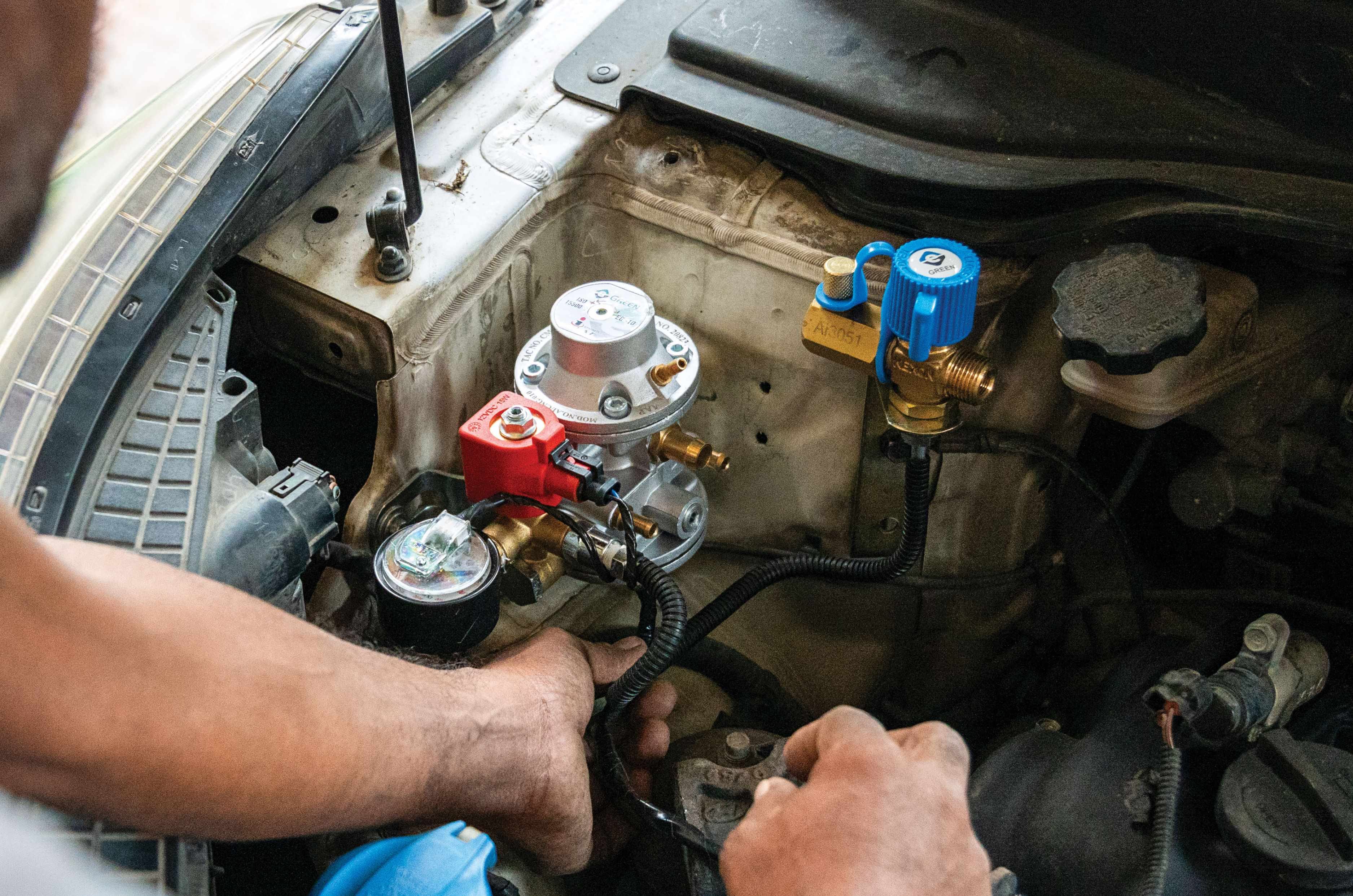
The reducer and its pressure gauge are mocked up in the engine bay before mounting points are marked and drilled. The filler valve may be located alongside them or next to the petrol filler cap, depending on the vehicle.
Injectors installed
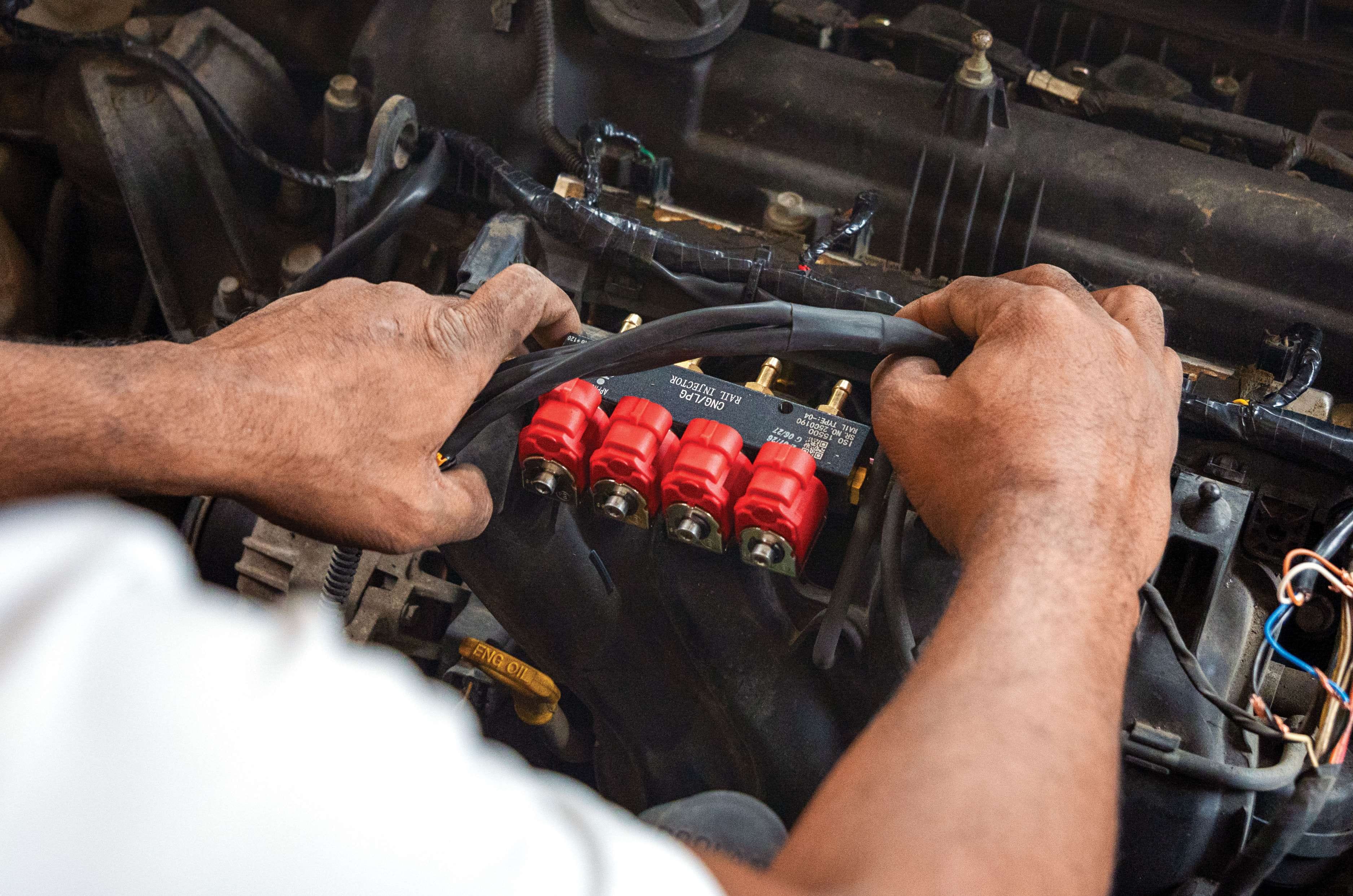
The CNG injector rail is mounted on its dedicated bracket close to the petrol injectors. This will send CNG to corresponding nozzles that are drilled and fitted into the vehicle’s plastic intake manifold.
ECU wired in
The CNG ECU is mounted alongside the factory ECU and connected to the vehicle’s wiring loom. The harness is neatly routed and secured away from heat and moving parts.
Plumbing completed
Reinforced rubber gas hoses are cut to length and connected between the reducer, injector rail and the intake manifold. A MAP sensor and a filter are also installed as part of the system.
Tank prepared
The CNG tank is temporarily mounted to a rig that holds it in place while the shut-off valve and associated fittings are installed before everything is torqued down.
Tank frame installed
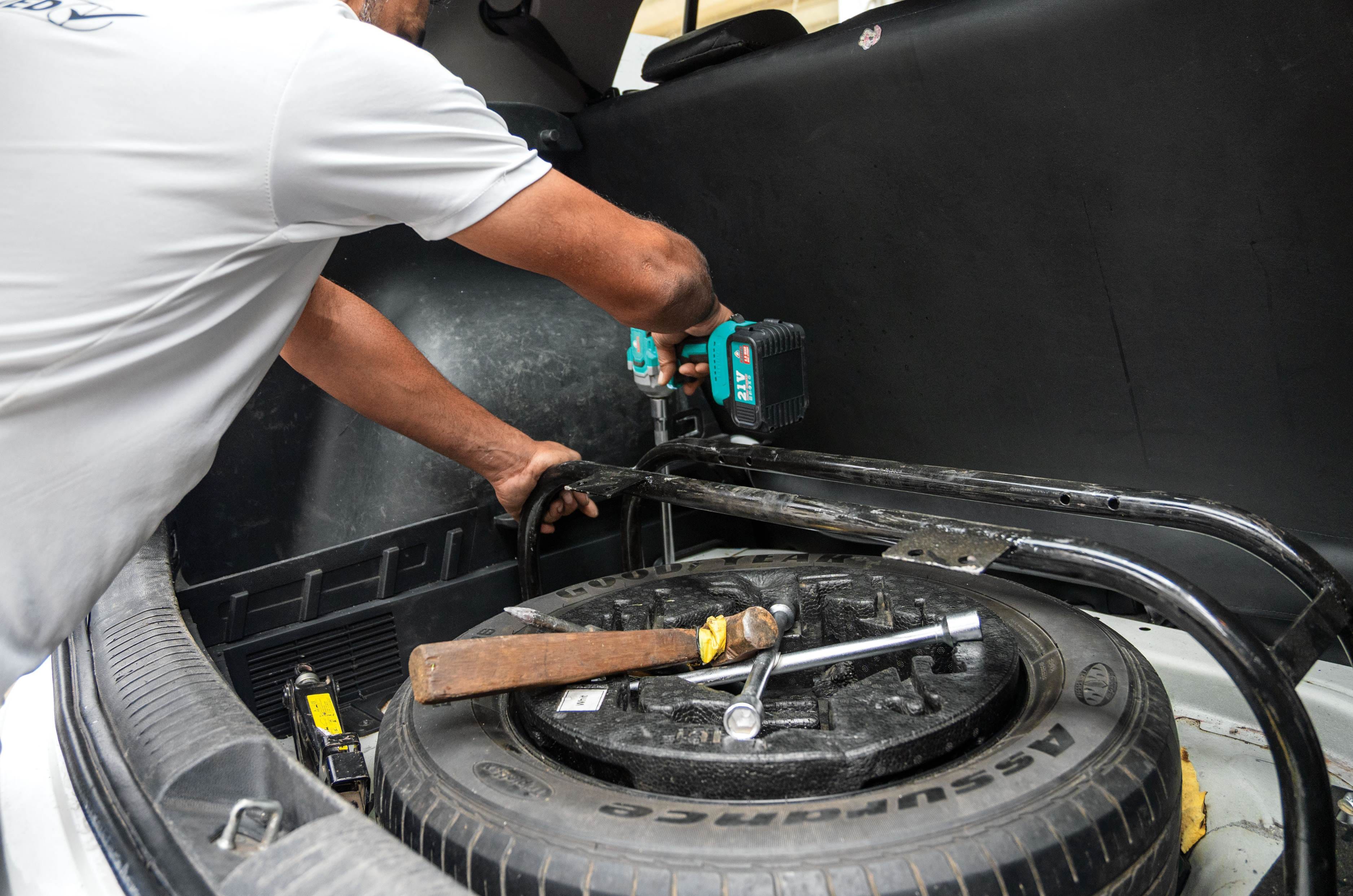
The mounting frame is positioned inside the boot, holes are drilled through the floor, and reinforced brackets securely bolt it to the vehicle’s structure.
Tank fitted
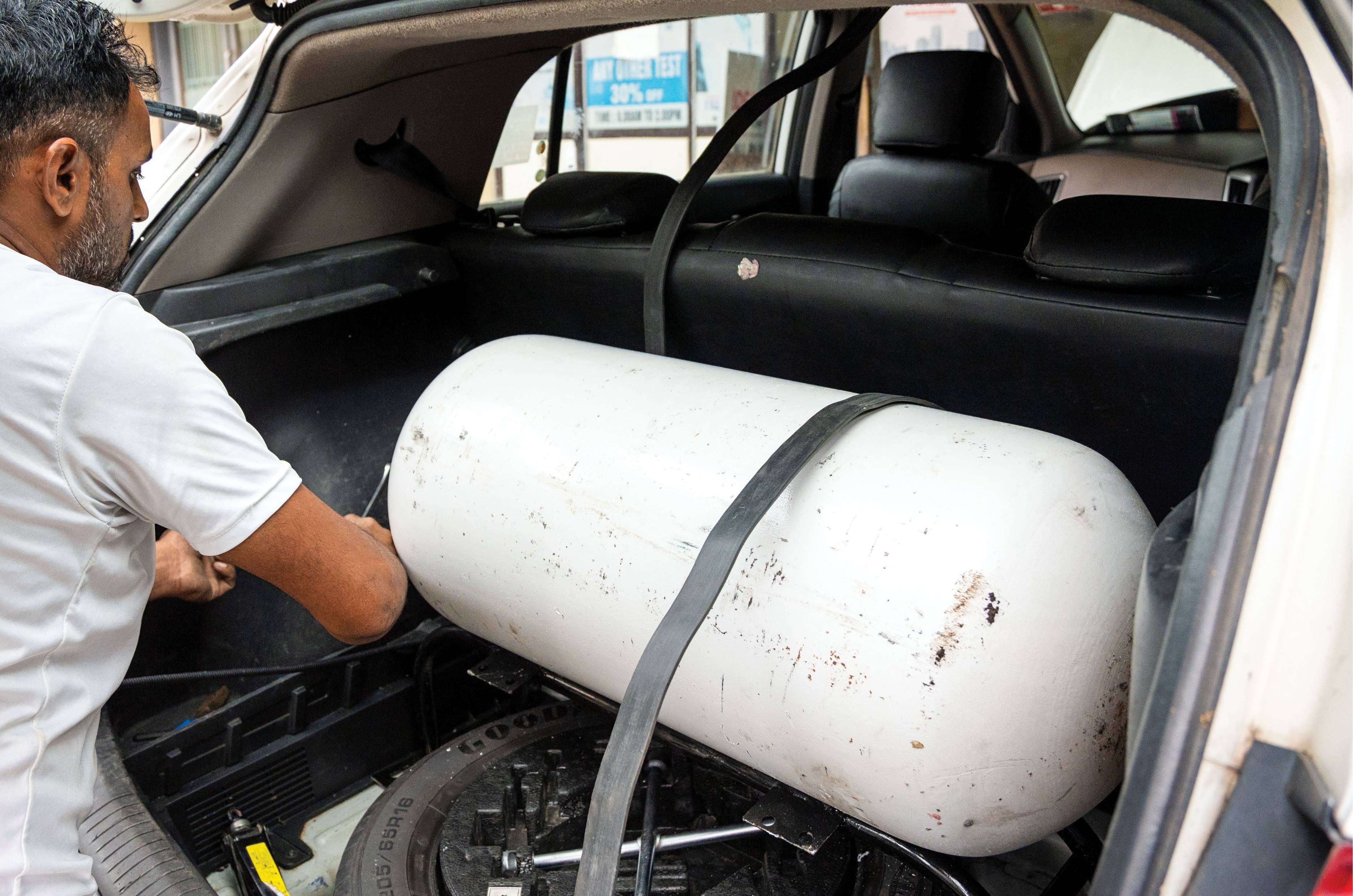
The CNG cylinder is secured to the frame using heavy-duty metal straps and bolts before being covered with a carpeted shroud for a neat factory-like finish.
High-pressure line routed
Polymer-coated steel high-pressure pipes are routed beneath the car, connecting the CNG filler valve, the tank and the reducer under the bonnet.
Electrical connections
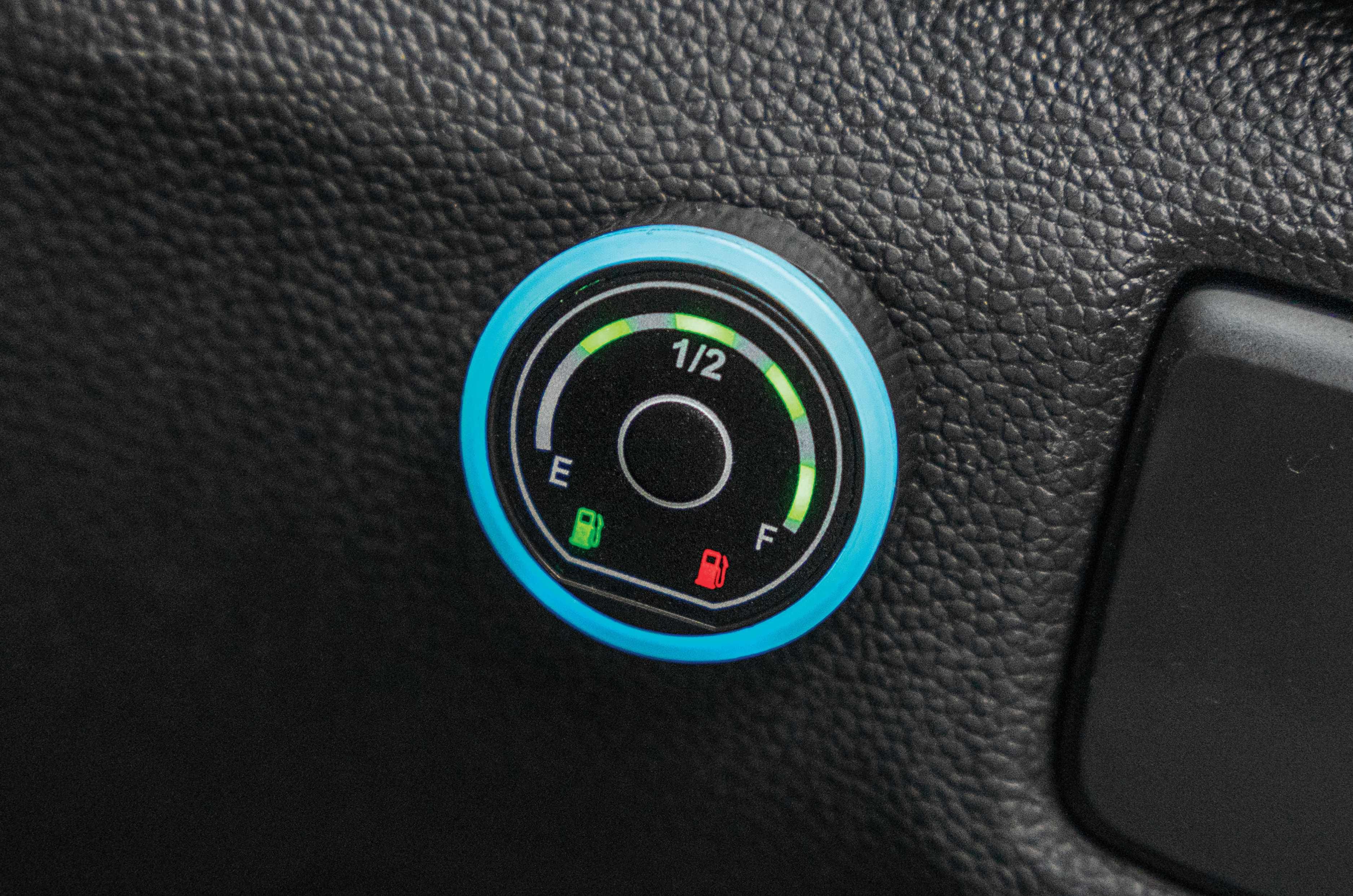
The remaining wiring is completed and a dashboard-mounted CNG switch is installed, allowing the driver to monitor fuel level and switch between petrol and CNG.
Leak test
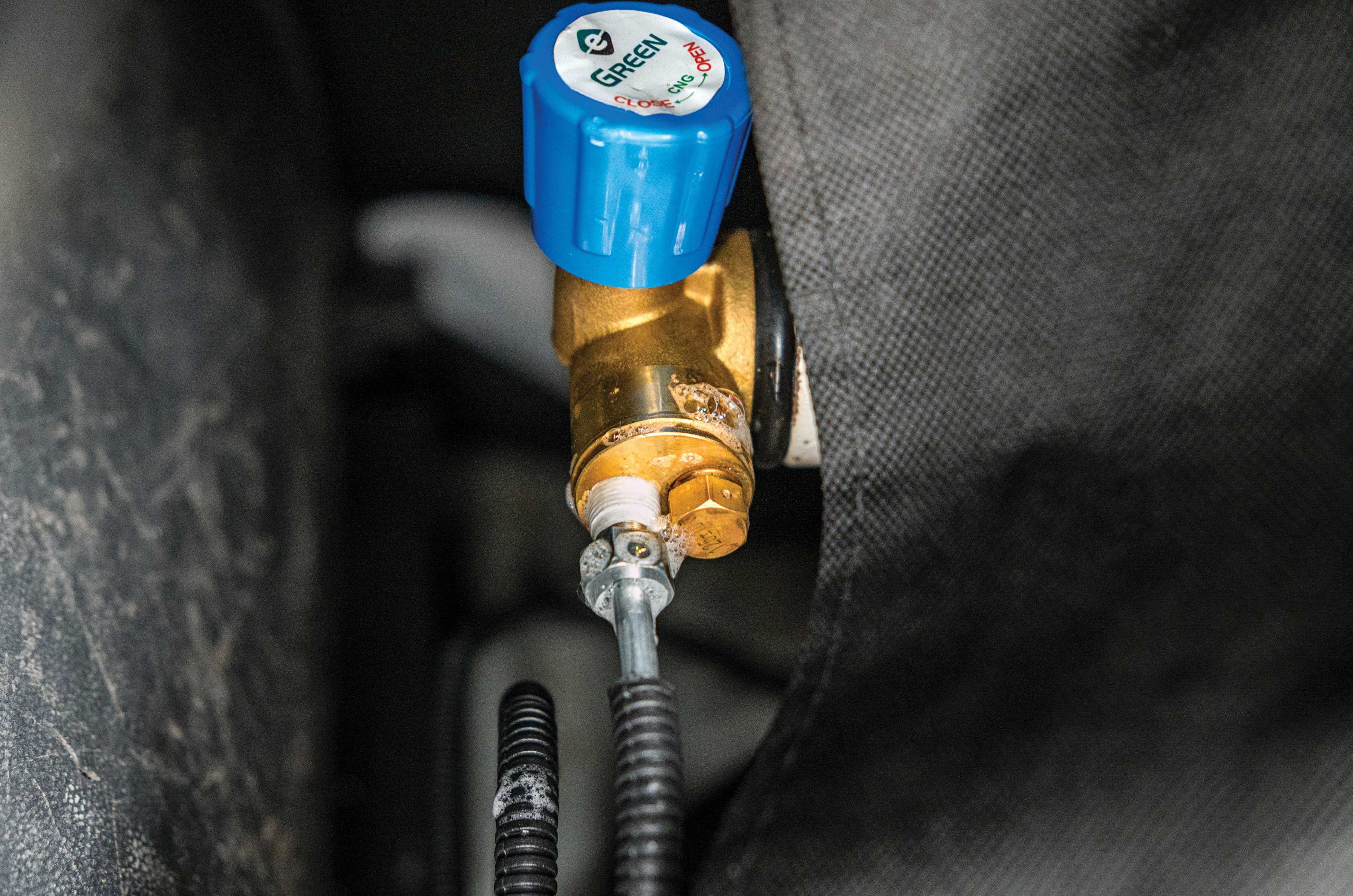
Around 2kg of CNG is added and every connection is checked using an electronic gas detector and good old-fashioned soap solution to ensure the entire system is leak-free.
Calibration and road test
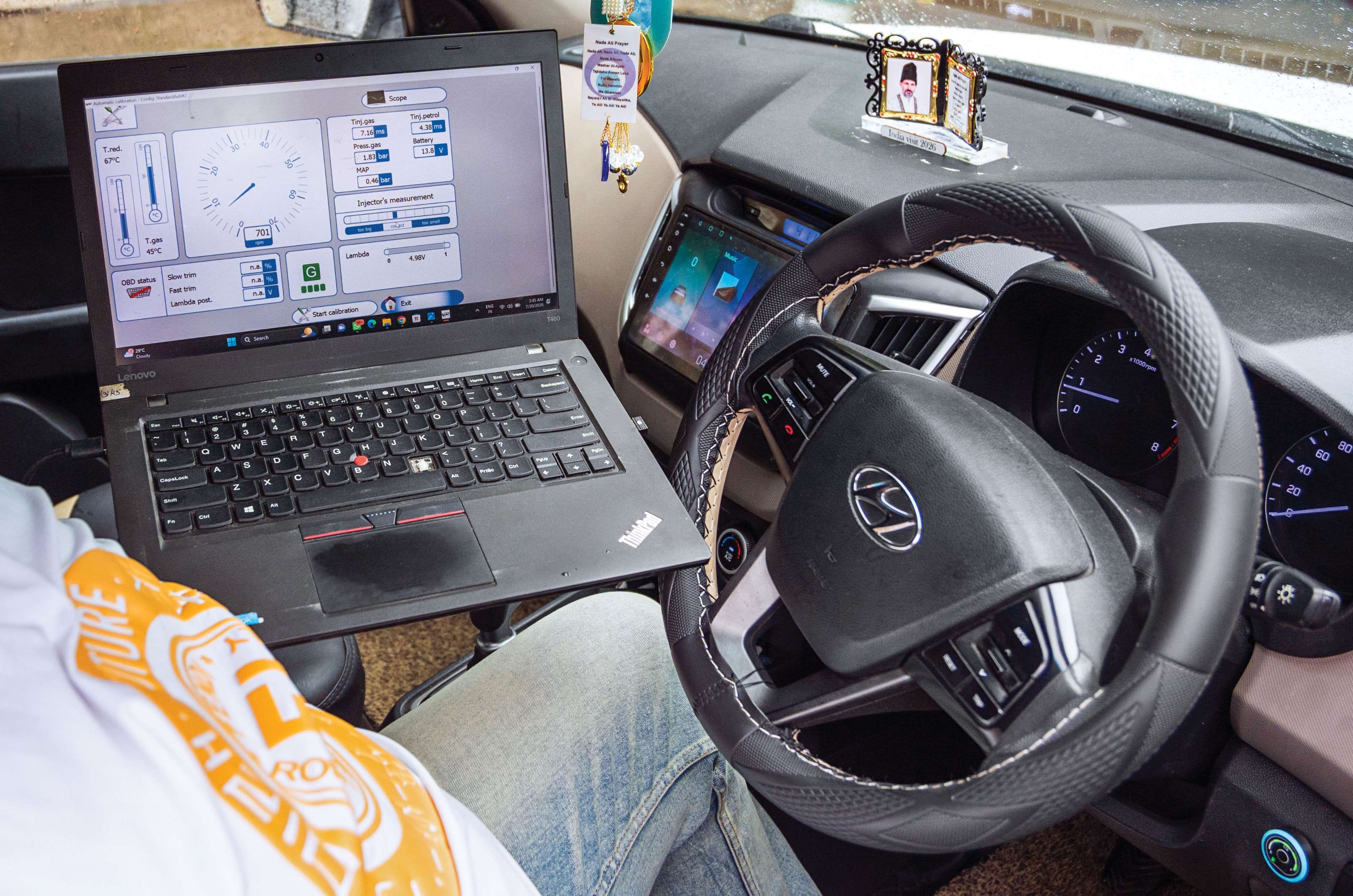
The system is calibrated using dedicated software to optimise fuel delivery and switchover settings. A final road test confirms performance before the vehicle is delivered to the customer.
Why go aftermarket?
On average, an aftermarket CNG installation costs around 25 to 30 percent less than the premium a factory-fitted CNG variant commands over its petrol counterpart. However, this alone is not enough to swing the scales in favour of the aftermarket due to the disadvantages we will get into later. The bigger advantage the aftermarket holds is the ability to convert models or variants that do not come with a CNG option. For instance, Maruti Suzuki only offers its factory-fitted CNG cars with a manual transmission, so if you want one with an automatic, an aftermarket CNG kit is your only option.
Similarly, popular SUVs like the Hyundai Creta and Kia Seltos are not available in CNG guise, which leads many owners to turn to the aftermarket. Owners of older cars, or those buying used cars, can also convert them to CNG for a fairly affordable price and enjoy significantly lower running costs. CNG is spark-ignited, thus only petrol cars can be converted to run on the gas. Since diesel cars use compression-ignition, they would need far too many modifications to make this possible. Strong hybrids are also not recommended for conversions, as here, the engine keeps switching on and off too often, which makes CNG calibration complex. Cars that are not in good mechanical shape should also not be converted to CNG, as the conversion can take a toll on the overall engine health.
For a car in generally good shape, aftermarket kits are proving to be reliable in the long run, provided they are well maintained. Most modern sequential kits from brands like Lovato and Mijo are also comparable in quality to OEM systems, and reputed, authorised installers are able to achieve near-OEM levels of fitment.
The catch
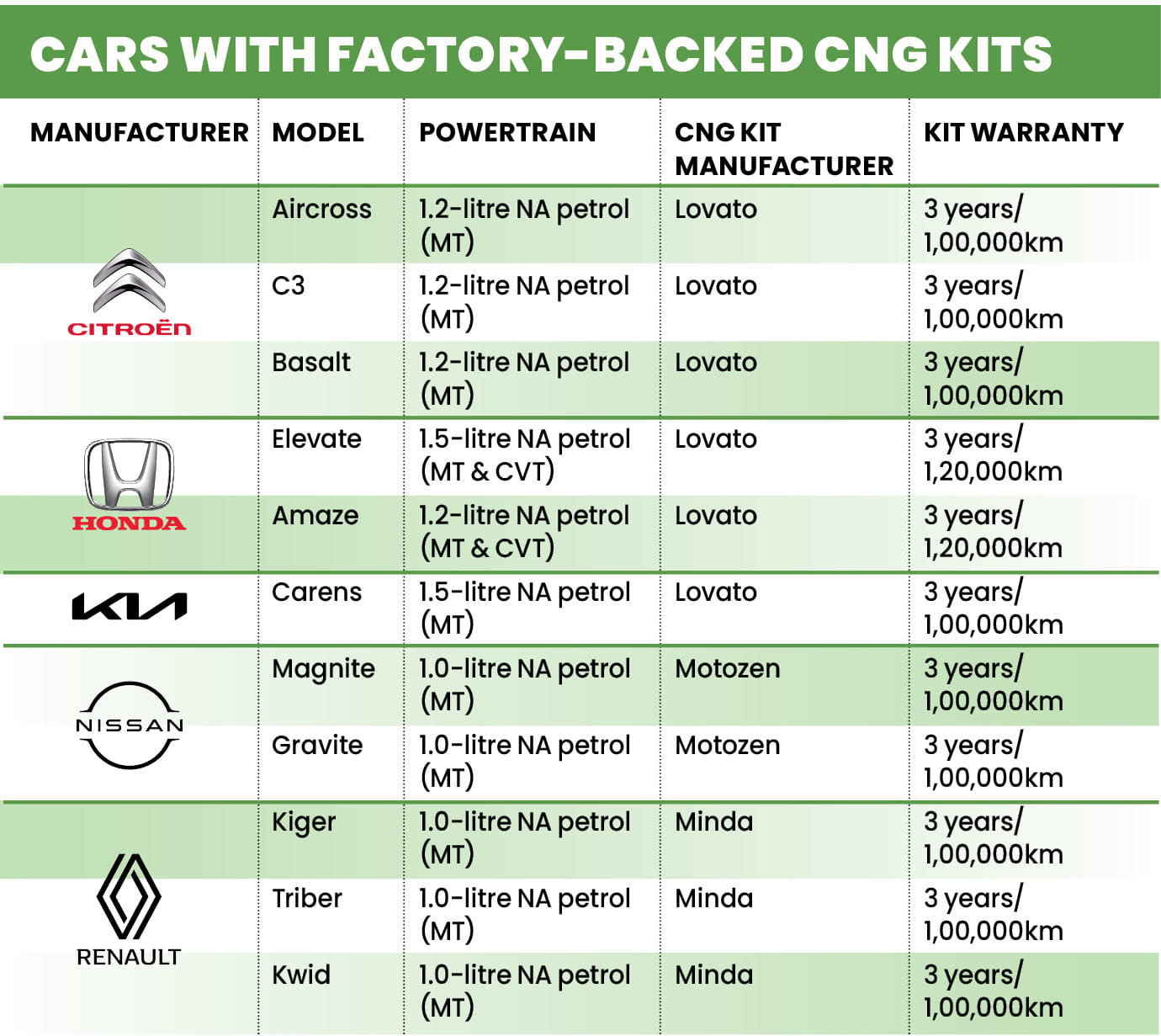
Fitting an aftermarket CNG kit – even if it is government-approved and fitted by an authorised installer – is grounds for the manufacturer warranty to be voided. While some brands may still honour warranty claims that are unrelated to the powertrain, it remains a grey area. Some dealer-fitted CNG kits do retain the factory warranty, while others provide a third-party warranty in its place.
Aftermarket installers have also begun offering third-party warranties in collaboration with insurance companies to provide coverage in place of the factory warranty. This, however, is in addition to the cost of the CNG kit. The kits themselves generally come with a warranty ranging from one to two years.
Packaging is also one area where the aftermarket trails OEMs. While Maruti, Tata and Hyundai are now offering underbody and dual-tank setups to retain a usable boot, the aftermarket still largely uses larger single tanks that take up more space.
Staying fit
As per law, any CNG tank – aftermarket or OEM fit – must be hydrotested every three years. For this, the tank must be removed from the vehicle and sent to a dedicated facility. While the process itself takes only a couple of hours, hydrotesting facilities are usually located outside major cities, adding transport time to the process. A hydrotest typically costs around Rs 3,000 per tank.
The CNG filter should also be replaced at the same three-year or 10,000km interval, whichever comes first. This typically costs under Rs 1,000 and is fairly straightforward. It is also recommended to drive on petrol at least 10 percent of the time to keep the fuel system healthy. Finally, it is important that the engine’s service schedule is strictly followed.
The legal bit
Aftermarket CNG installations are legal as long as the kit is government-approved, fitted by an approved installer and the registration certificate (RC) is updated accordingly. Most approved installers will handle the RC update at the Regional Transport Office (RTO) as part of the service. Once this is complete, the owner must also update the insurance provider.
The verdict
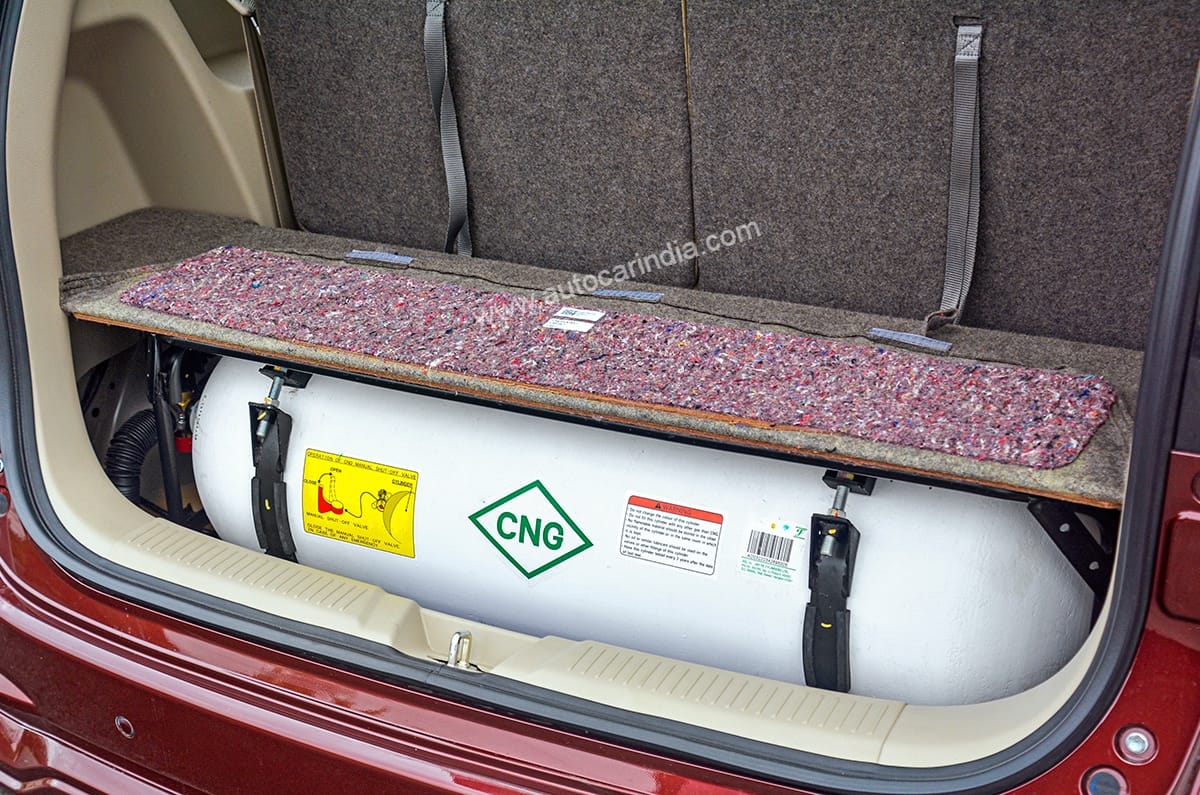
Maruti Ertiga’s factory-fitted CNG tank shown for representative purposes only.
There is no denying the running cost advantage that CNG provides. However, when buying a brand-new car, a factory-fitted CNG version is still preferable to an aftermarket conversion simply because of the peace of mind. Once a car is out of warranty, though, a CNG conversion makes a great deal of sense. In most cases, the cost of the kit can be recouped within a couple of years, even with an average monthly running of around 1,500km.
However, the installer is just as important as the kit. Always opt for government-approved kits installed by approved installers with a strong reputation. Wherever possible, insist the installation is carried out without splicing into the original wiring and follow the recommended service schedule to ensure your car stays reliable.
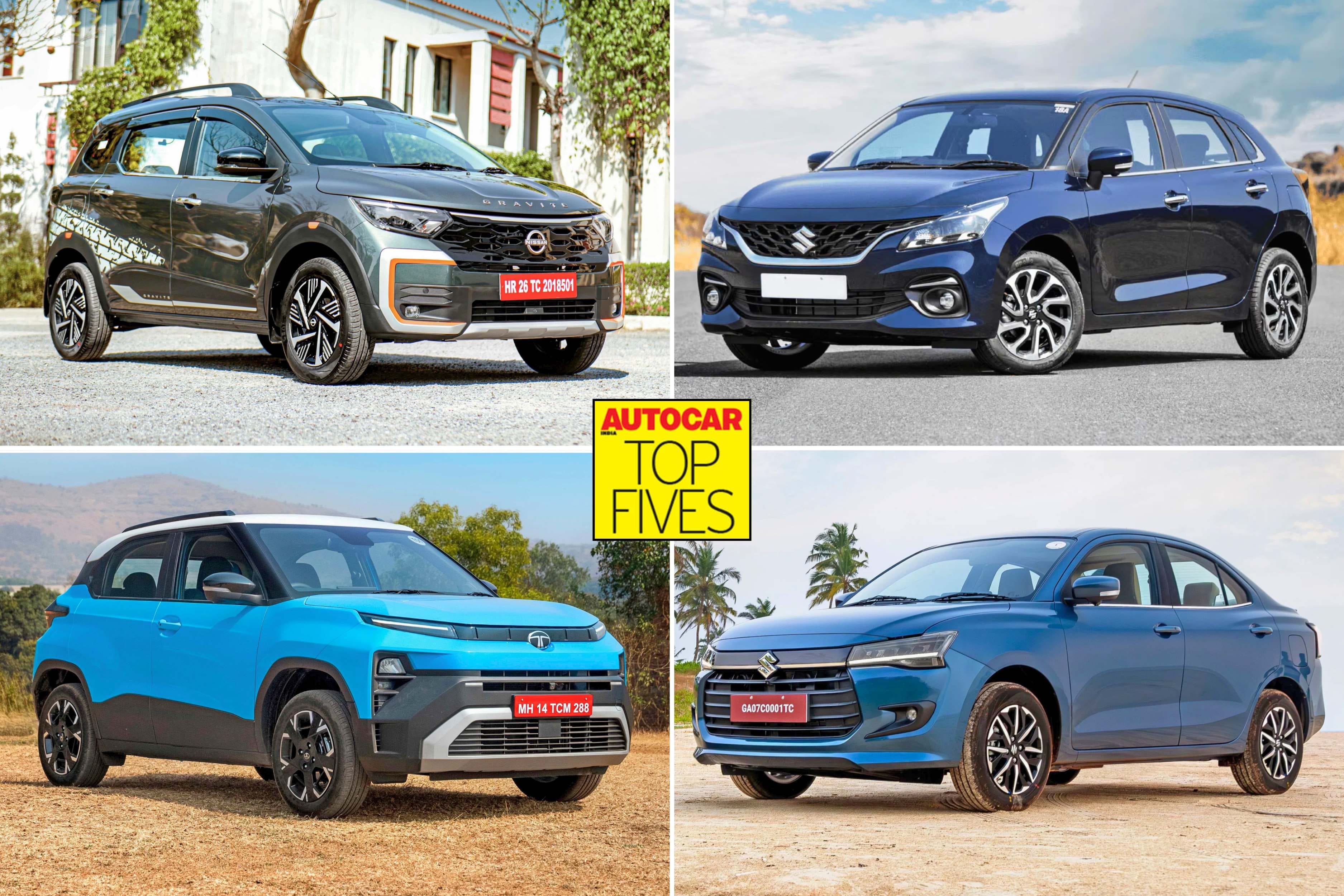
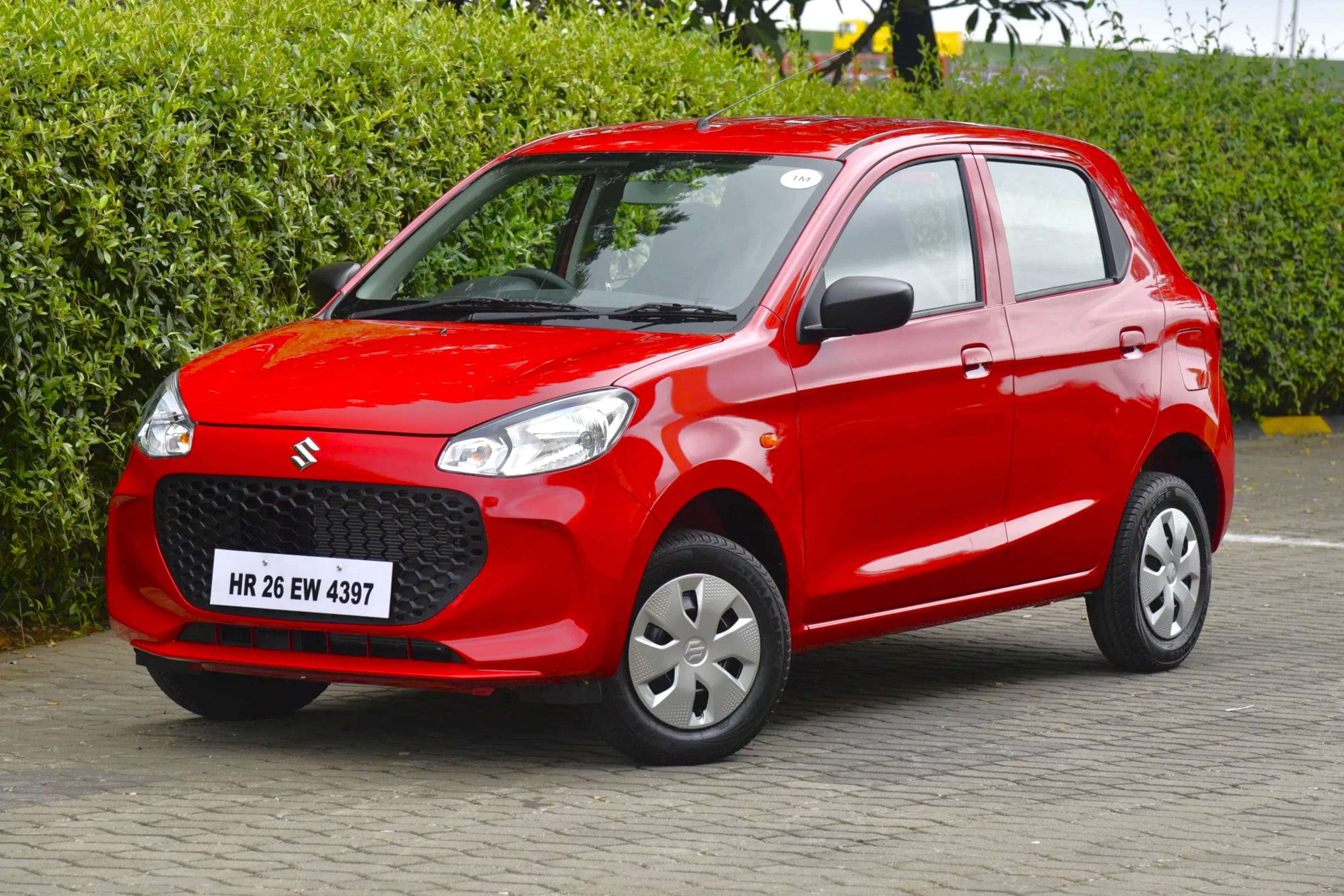
CNG cars are no longer considered budget options like before. Today, they are offered across multiple body styles and price points and even with automatic gearboxes. Moreover, with manufacturers now offering good features across the line-up, along with dual-tank or underbody CNG tank setups that free up boot space, these cars now don’t feel like a compromise made for lower running costs. Here, we have listed the best CNG cars under Rs 10 lakh that you can buy.
1. Maruti Suzuki Dzire CNG
Price: Rs 8.11 lakh-Rs 9.11 lakh
The Maruti Dzire is powered by a 1.2-litre 3-cylinder engine that produces 70hp and 102Nm of torque in the CNG spec. While performance is adequate for everyday driving, the Dzire really impresses with its great ride quality and tidy handling manners. The cabin is spacious, and with CNG available on the mid-spec VXi and ZXi trims, most features are covered, too. The Dzire gets a single large CNG tank in the boot but still offers some usable space.
2. Maruti Suzuki Baleno CNG
Price: Rs 7.77 lakh-Rs 8.67 lakh
The Maruti Baleno uses a 1.2-litre 4-cylinder engine that develops 78hp and 98Nm of torque in the CNG spec. It’s a smooth, refined and efficient CNG powertrain. Like on the Dzire, CNG is available on the mid-spec Delta and Zeta trims that come reasonably well equipped. This car, too, has a very spacious cabin, although its boot space is compromised by a single large CNG tank. One can also consider its Toyota twin, the Glanza, which, too, is available with CNG on the equivalent mid-spec S and G trims.
3. Hyundai Exter CNG
Price: Rs 6.99 lakh-Rs 9.42 lakh
The Hyundai Exter has a 1.2-litre 4-cylinder engine that produces 69hp and 95Nm of peak torque. It has a wide spread of CNG variants, with top trims being particularly well equipped. The Exter also gets twin CNG tanks that don’t take up too much boot space, and its smooth engine and compact dimensions make it very user-friendly. However, interior space isn’t as good as some other cars here.
4. Tata Punch CNG
Price: Rs 6.80 lakh-Rs 10.67 lakh
The Tata Punch uses a 1.2-litre 3-cylinder engine that produces 73hp and 103Nm of torque in CNG mode. The Punch CNG is the only one on this list to offer an AMT gearbox. It’s also the best-equipped CNG model here, with a wide spread of variants, but the top ones are quite expensive. Performance is just about adequate, but ride and handling are good, and twin CNG tanks leave usable boot space.
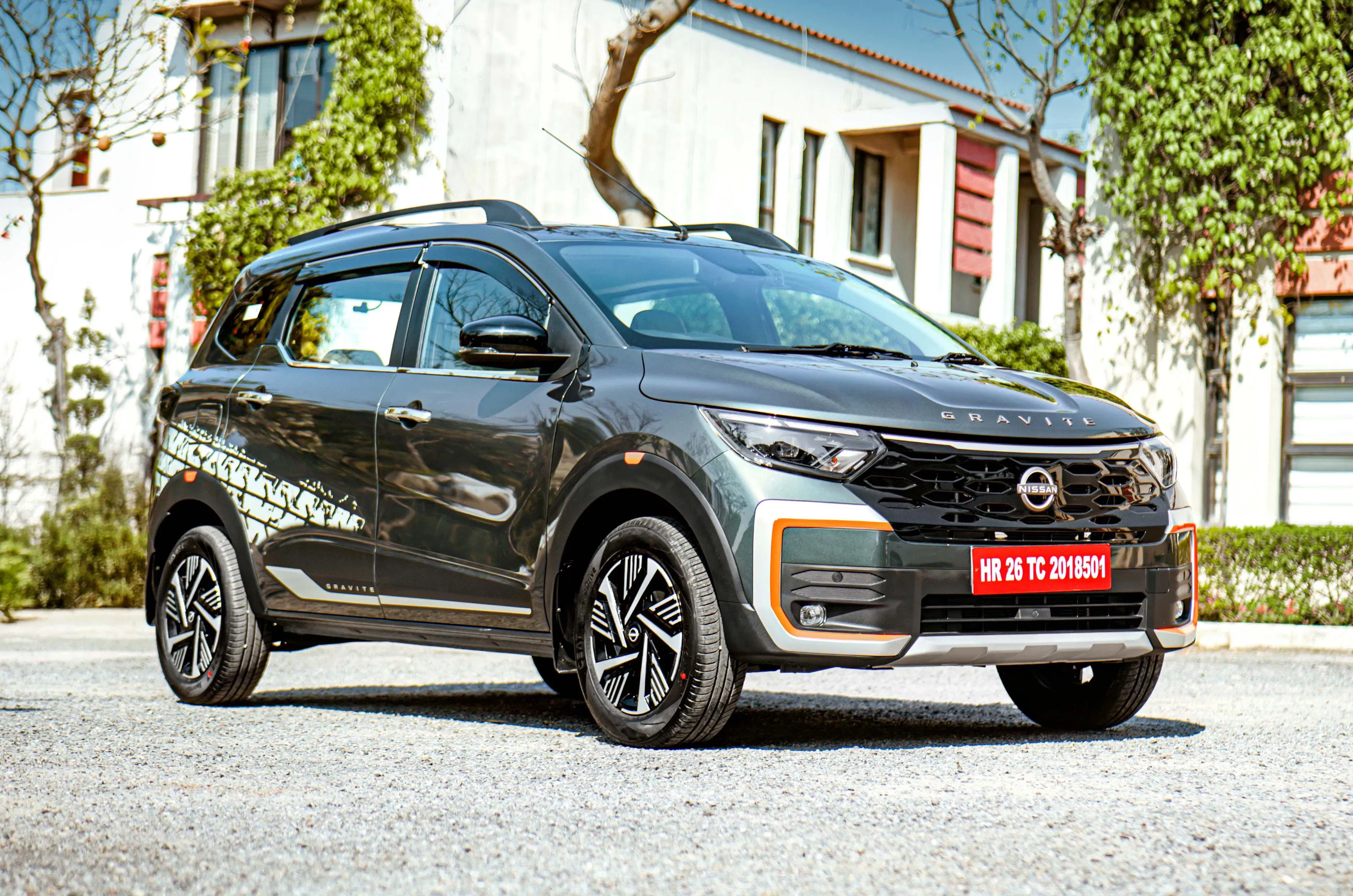
5. Nissan Gravite CNG
Price: Rs 6.59 lakh-Rs 8.94 lakh
The Nissan Gravite is powered by a 1.0-litre 3-cylinder engine. However, since the CNG kit on the Gravite is a dealer-level fitment and has not been homologated, specific power and torque figures aren’t available. The Gravite’s real USP is its excellent packaging and flexible 7-seat configuration. As the CNG kit comes as a dealer fitment, it can be had on all trims. The Gravite is, however, not as well equipped as some other models here; the performance is quite dull, and the twin CNG tanks in the boot leave no usable space.
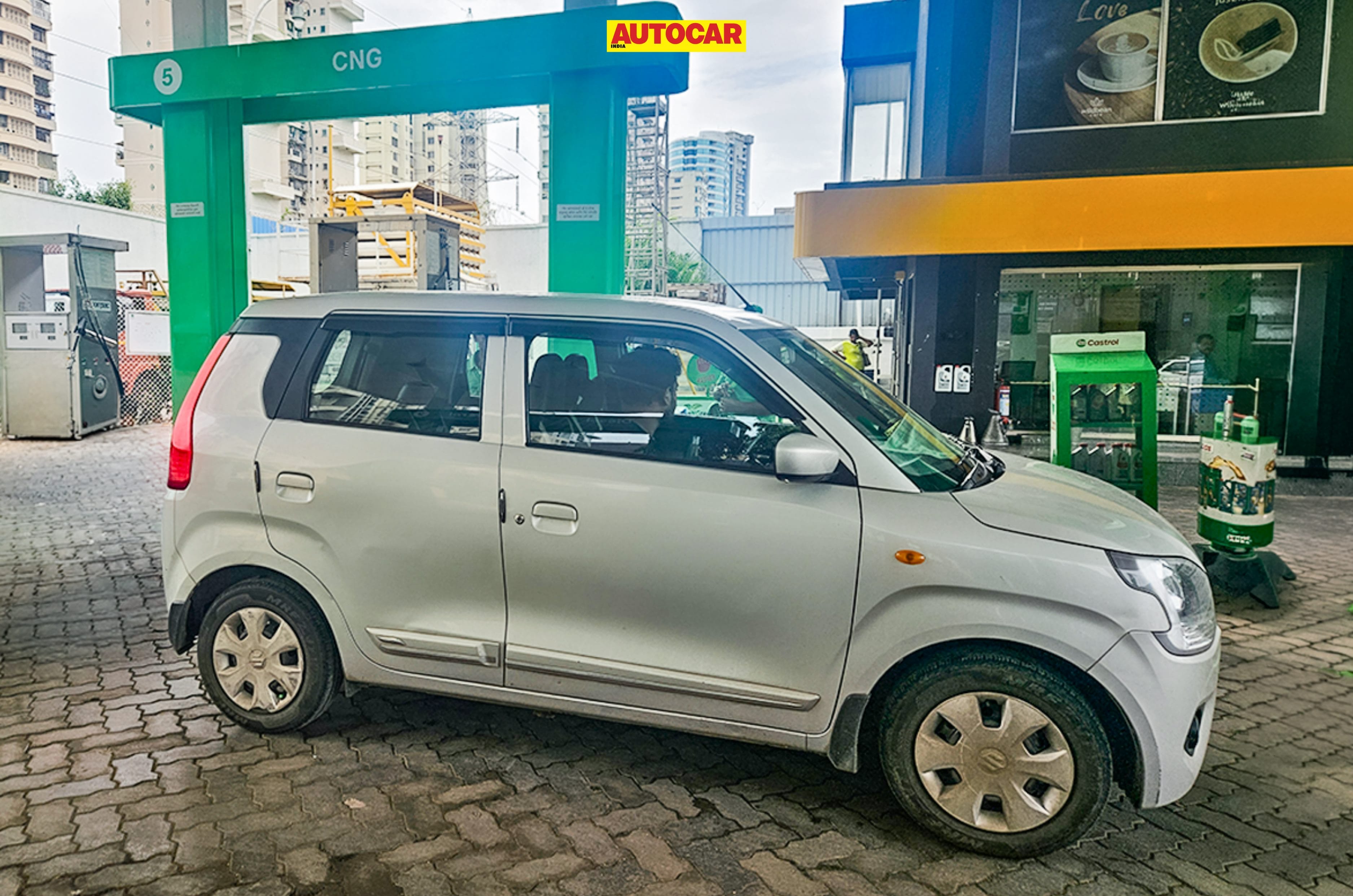
The Maruti Wagon R CNG remains one of India’s best-selling CNG cars. It is offered in two variants – LXi CNG (Rs 5.94 lakh) and VXi CNG (Rs 6.47 lakh) – and commands a premium of Rs 95,000 over the equivalent petrol versions. We put the Wagon R CNG through our real-world fuel-efficiency tests to see how it performs.
No auto engine stop-start system
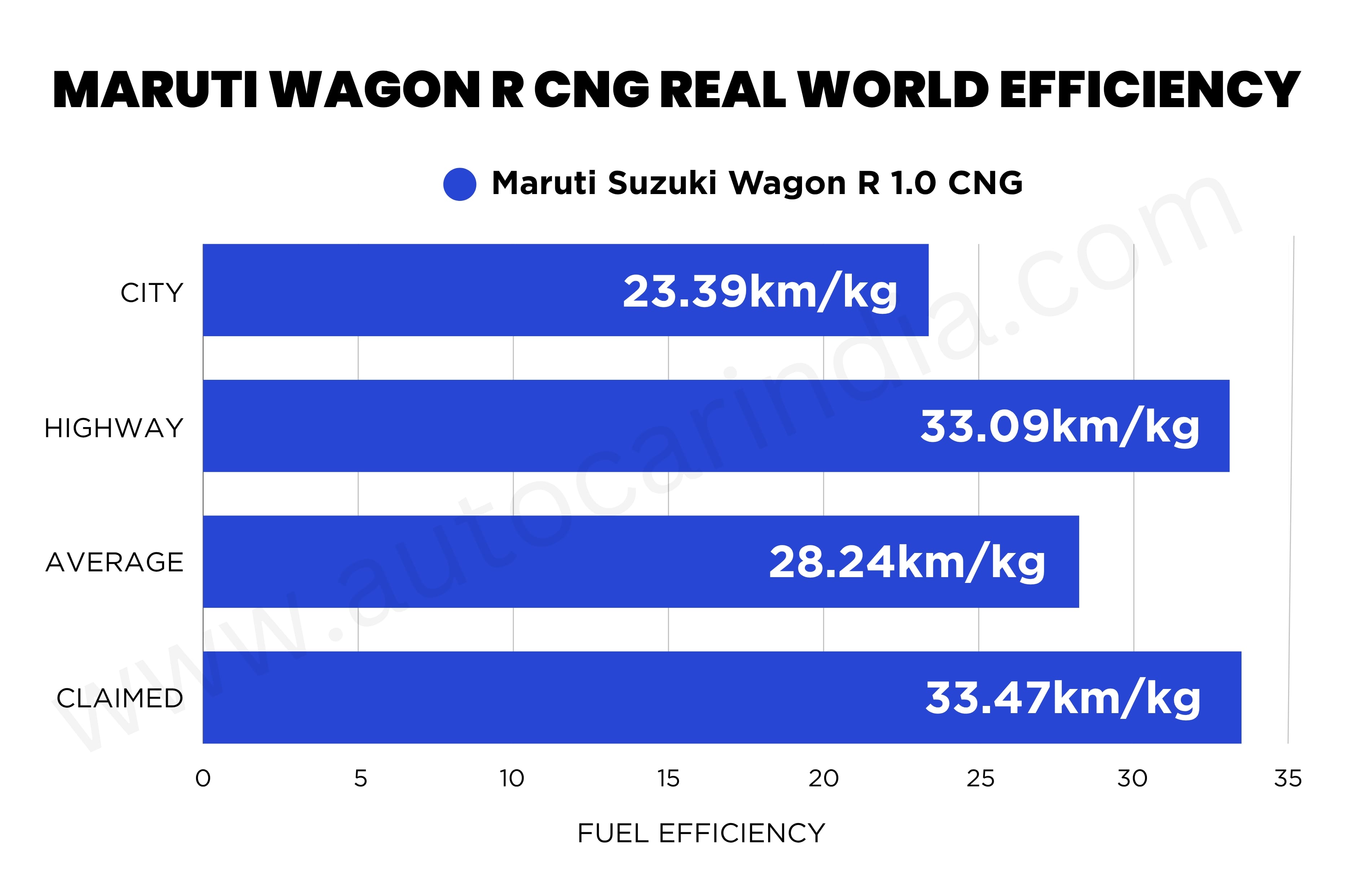
Claimed fuel efficiency: 33.47km/kg
Is 95-100kg heavier than the equivalent petrol version
Maruti Suzuki Wagon R CNG mileage explained
Powering the Wagon R CNG is a 1.0-litre, three-cylinder engine that produces 67.7hp and 91.1Nm in petrol mode, and 56.6hp and 82.1Nm when running on CNG. The CNG variant is available exclusively with a 5-speed manual gearbox. Alongside its petrol fuel tank, the Wagon R gets a 60-litre CNG cylinder mounted in the boot. The added weight of the cylinder and associated hardware makes it about 95-100kg heavier than a comparable petrol model.
In our tests, the Wagon R CNG returned 23.39km/kg in the city and 33.09km/kg on the highway, resulting in an overall average efficiency of 28.24km/kg. Particularly noteworthy is the highway figure, which comes remarkably close to Maruti’s claimed efficiency of 33.47km/kg.
When refilled from empty, the Wagon R’s CNG tank accepted 7.4kg of gas. Under ideal conditions, however, the 60-litre cylinder should be able to hold close to 8kg, depending on factors such as ambient temperature and dispenser pressure. Based on our real-world average efficiency figure of 28.24km/kg, owners can realistically expect a driving range of approximately 210-220km on a full CNG tank.
Autocar India’s fuel-efficiency testing
Since CNG tanks are more difficult to fill consistently due to variables such as ambient temperature and pump pressure, we did not use our standard tankful-to-tankful methodology. Instead, for our real-world tests, we emptied the CNG tank and refilled it with 2kg of CNG. We then drove the vehicle in city conditions until the gas was exhausted. The same process was repeated for the highway run. Throughout both tests, the Wagon R was driven exclusively in CNG mode.
Before our real-world fuel efficiency tests, we maintain tyre pressures based on the manufacturer’s recommendations. These cars are driven in fixed city and highway loops in and around Navi Mumbai, and we maintain certain average speeds. Throughout the tests, there is only one person in each car, and the aircon is set to fan speed 2 with temperature dialed to the lowest position. We operate other electricals, such as the audio system, indicators and wipers, just like a regular user would. Periodic driver swaps further neutralise variations in driver patterns.
During the first half of calendar 2026, the Indian passenger vehicle market recorded total sales of over 25.91 lakh units across petrol, diesel, EV, CNG, and strong hybrid powertrains. Compared to the 21.88 lakh units sold in H1 2025, that’s a healthy YoY increase of around 18.4 percent. Below, we’ve sorted and listed the 10 bestselling cars of each powertrain type in H1 2026 to give you a more in-depth look at the data.
10 bestselling petrol cars in H1 2026
Model
H1 2026 sales
YoY change (%)
Maruti Baleno
83,552
+19
Maruti Swift
81,046
0
Tata Punch
61,701
+29
Maruti Fronx
61,565
-6
Maruti Alto K10
59,165
+38
Hyundai Venue
55,750
+26
Maruti Dzire
50,865
-1
Tata Nexon
50,240
+31
Maruti Brezza
49,096
-14
Hyundai Creta
49,094
-8
The Baleno ascended to the top spot in petrol car sales during H1 2026, followed closely by the Swift, volumes for which interestingly remained flat YoY. However, thanks to the introduction of the updated Punch at the onset of 2026, the subcompact SUV recorded a substantial 29 percent increase in sales and jumped to third position.
Other notable highlights include a 38 percent YoY uptick for the Alto K10, indicating a renewed interest in the entry-level segment, along with a 4 percent drop for the midsize SUV sales champion, the Creta. However, its younger compact SUV sibling, the Venue, did see a 26 percent YoY bump on account of the second-gen model’s launch late last year.
10 bestselling diesel cars in H1 2026
Model
H1 2026 sales
YoY change (%)
Mahindra Scorpio N+Classic
86,403
+7
Mahindra Bolero+Neo
58,457
+16
Mahindra XUV 7XO
42,190
+29
Hyundai Creta
40,116
-4
Mahindra Thar Roxx
37,945
+19
Mahindra Thar
23,860
+35
Kia Seltos
22,906
+54
Tata Sierra
22,764
N/A
Toyota Innova Crysta
18,498
-5
Kia Sonet
18,290
+67
Though diesel offerings remain limited in the Indian mass market, buyers continue to show up for them. All three diesel bestsellers in H1 2026 were made by Mahindra, and all three recorded a YoY growth in sales, with the XUV 7XO achieving the highest uptick among them at 29 percent. The Thar and Thar Roxx also managed to outperform their H1 2025 sales by healthy margins.
In fact, six out of the 10 diesel bestsellers experienced double-digit YoY sales growth, with only the Creta and Innova Crysta undergoing downturns. The Sierra also made it onto this list, but doesn’t rank even among the top 20 petrol bestsellers of H1 2026, suggesting a large chunk of buyers opted for the midsize SUV’s diesel variants. Its direct rival, the Seltos, edged past by fewer than 150 units, but the other Kia SUV here, the Sonet, clocked a whopping 67 percent boost.
10 bestselling CNG cars in H1 2026
Model
H1 2026 sales
YoY change (%)
Maruti Ertiga
78,764
+23
Maruti Dzire
75,339
+69
Maruti Wagon R
54,267
+5
Tata Punch
41,919
+43
Tata Nexon
41,355
+38
Maruti Brezza
39,871
+8
Maruti Victoris
38,806
N/A
Maruti Eeco
36,075
+31
Hyundai Aura
35,089
+29
Maruti Fronx
33,876
+49
CNG cars put up the most impressive performance on the sales charts, with the top 10 achieving substantial YoY gains in volumes during H1 2026. The Dzire led the pack in this regard with a staggering 69 percent surge in sales, followed by the Fronx at 49 percent and then the Punch at 43 percent.
Seven of the top 10 CNG bestsellers are Maruti Suzuki models, two are from Tata, and only one is a Hyundai, reflecting Maruti’s dominance in this space. A likely reason behind the stellar performance is the uncertainty around ethanol blending in petrol, which could be shifting buyers towards CNG.
10 bestselling EV cars in H1 2026
Model
H1 2026 sales
YoY change (%)
MG Windsor EV
19,080
-10
Mahindra XEV 9S
18,074
N/A
Tata Nexon EV
16,567
+78
Tata Punch EV
15,683
+108
Mahindra XEV 9e
11,242
-14
Tata Harrier EV
10,499
+2,110
Maruti e Vitara
8,572
N/A
Tata Curvv EV
7,281
+212
Mahindra BE 6
6,849
+13
Tata Tiago EV
6,816
-19
The Windsor remains untouched as the top selling EV in H1 2026, though it did record a 10 percent YoY drop in sales. Impressively, the XEV 9S finished in second place with over 18,000 units sold – far ahead of the XEV 9e and BE 6. Nexon EV and Punch EV sales saw strong upticks, especially the latter’s whopping 108 percent YoY surge due to its 2026 facelift.
However, the Tiago EV experienced a 19 percent drop in sales despite also being updated this year. It’s worth noting that while the Harrier EV’s 2,110 percent YoY increase looks bonkers, it is a result of the SUV being launched in June 2025 and thereby counted from a relatively miniscule initial figure. Interestingly, the Curvv EV more than tripled its sales YoY, likely due to discounts and the SeriesX variant rejig in 2026.
Bestselling strong hybrid cars in H1 2026
Model
H1 2026 sales
YoY change (%)
Toyota Innova Hycross
27,812
-6
Toyota Hyryder
18,577
+23
Maruti Grand Vitara
4,086
-54
Maruti Victoris
3,231
N/A
Maruti Invicto
1,418
-26
Toyota Camry
1,188
-1
Toyota Vellfire
914
+60
Honda City
659
+22
Only one new strong hybrid car went on sale in India between H1 2025 and H1 2026, the Maruti Victoris, which slotted in fourth position overall. The Innova Hycross continues to be the highest selling strong hybrid car, but did slip 6 percent YoY in sales. Notably, the Innova Hycross’ rebadged sibling, the Invicto, saw a more substantial 26 percent drop.
A similar phenomenon occurred for the Hyryder and Grand Vitara, where the Toyota SUV’s sales grew 23 percent YoY, but the Maruti’s slid by 54 percent. The City hybrid also looks to have piqued buyer interest courtesy of the facelift, recording a 22 percent YoY growth but still selling in the triple digits. Interestingly, the highest YoY sales uptick was achieved by the most expensive strong hybrid here, the Vellfire, showing the growth of the luxury MPV segment.
Combined car sales in H1 2026 by powertrain type
H1 2026 sales
YoY change (%)
Petrol
13,42,304
+10
Diesel
4,56,076
+15
CNG
5,96,236
+40
EV
1,39,065
+65
Strong hybrid
57,885
0
Total
25,91,566
+18.4
While petrol cars remain the largest chunk of the Indian passenger vehicle market by a huge margin, and even clocked a respectable 10 percent YoY growth in H1 2026, CNG saw much bigger gains during the same timeframe and even recorded the highest absolute volume increase among all powertrain types. The electric segment continues to expand at a healthy rate thanks to a proliferation of capable EVs across different price points, which can’t be said for strong hybrids as they barely receive any subsidies or tax breaks. Diesel car sales impressively keep growing too, despite higher upfront costs over equivalent petrol or CNG models.
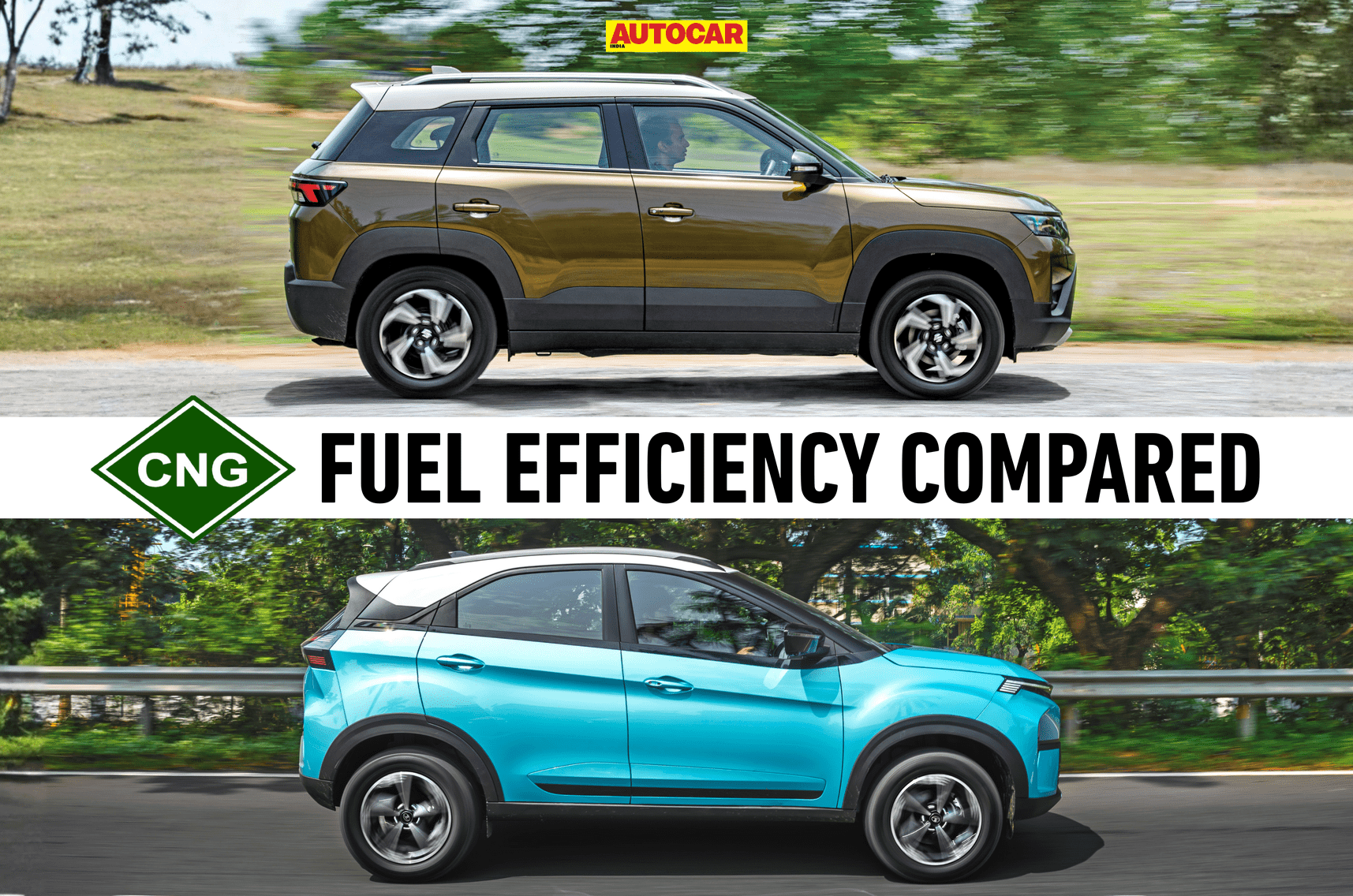
The Maruti Brezza and Tata Nexon are two of the few compact SUVs to offer a factory-fitted CNG kit. Both are also among the best-selling models for their respective brands, and since CNG cars are known to offer good mileage, it makes sense to compare these two and see which is more fuel-efficient in the real world. Keep reading to find out more.
Maruti Brezza CNG vs Tata Nexon CNG: Specs and price
Compact SUV
Brezza
Nexon
Engine
4 cyl, petrol-CNG
3 cyl, petrol-CNG
Turbocharged
No
Yes
Displacement (cc)
1,462
1,199
Power (hp)
101 (petrol), 88 (CNG)
120 (petrol), 100 (CNG)
Torque (Nm)
137 (petrol), 122 (CNG)
170
Transmission
5-speed manual
6-speed manual
Claimed CNG mileage (km/kg)
25.5
24
CNG tank (litres)
55
60
Petrol tank (litres)
48
44
Boot space (litres)
Not disclosed
321
Price range (Rs, lakh)
9.17-11.46
8.3-13.42
While the Brezza uses a four-cylinder naturally aspirated engine, the Nexon gets a three-cylinder turbocharged unit. Notably, no other compact SUV currently offers a CNG kit with a turbocharged engine. The Nexon has a clear performance advantage over the Brezza. In petrol guise, its 1.2-litre turbo-petrol engine produces 120hp and 170Nm, giving it a 19hp and 33Nm edge over the Brezza’s 1.5-litre naturally aspirated petrol engine, which develops 101hp and 137Nm.
In CNG mode too, the Nexon leads with 100hp and 170Nm, compared to the Brezza CNG’s 88hp and 122Nm. That gives the Nexon a 12hp and 48Nm advantage in CNG form. It also gets a 6-speed manual, compared with the Brezza’s 5-speed unit, and a larger 60-litre CNG tank (dual-cylinder setup). The Maruti, meanwhile, uses a more conventional cylinder arrangement.
The Brezza’s 1,462cc engine also crosses the 1,200cc threshold for the lower 18 percent GST slab, so it’s taxed at 40 percent. That shows up in pricing, too, with the Brezza’s entry price sitting Rs 95,000 above the Nexon’s. At the top end, though, the Tata is Rs 2.1 lakh pricier than the equivalent Brezza CNG variant.
Maruti Brezza CNG vs Tata Nexon CNG: Real-world mileage
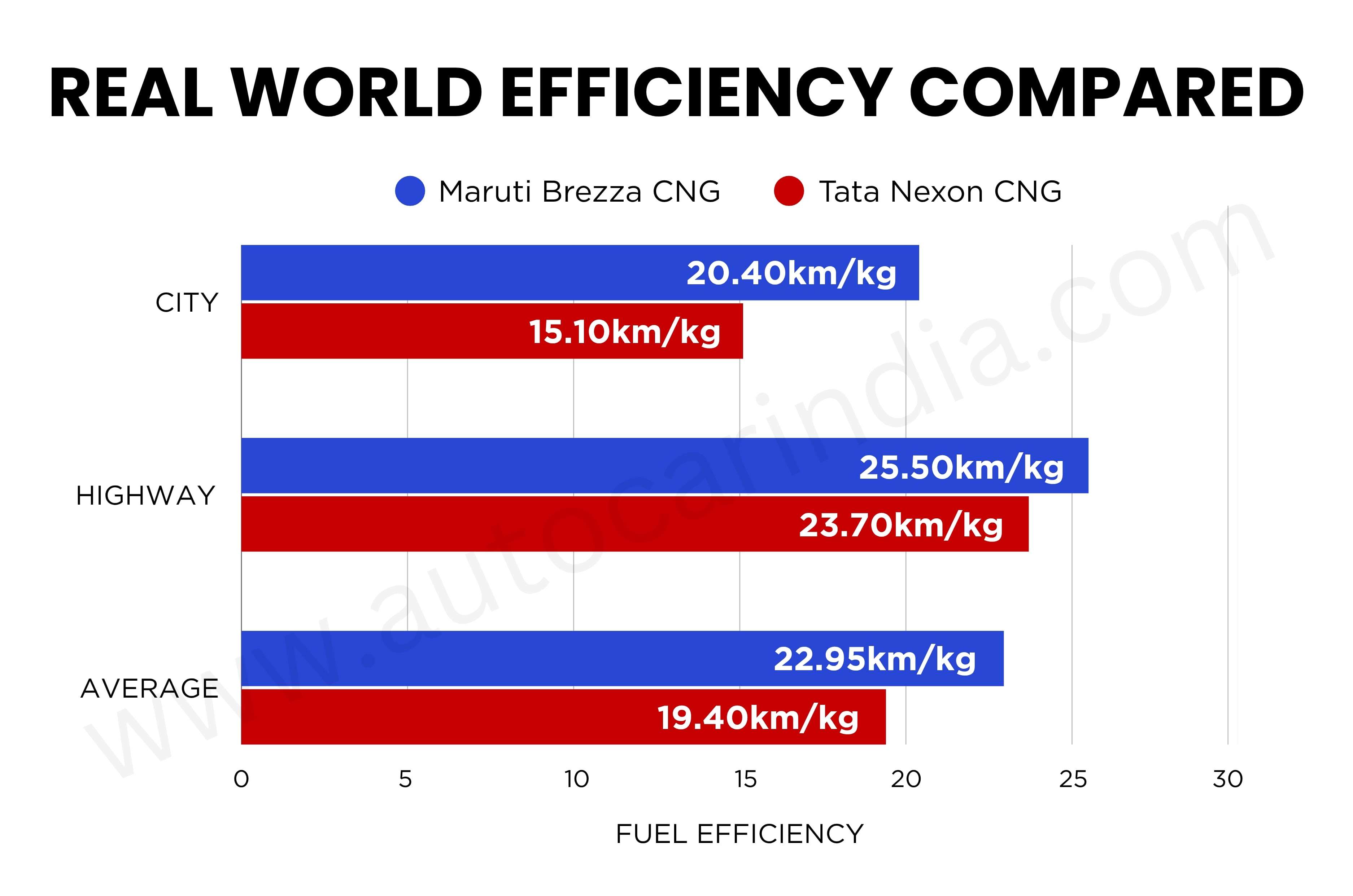
The Brezza CNG is clearly more efficient in real-world use than the Nexon CNG. In the city, it returns 5.3km/kg more than the Tata SUV. The Brezza maintains its lead on the highway as well, but the gap narrows to 1.8km/kg. As a result, the average figure also favours the Brezza, which is ahead by 3.55km/kg.
Part of the Brezza’s efficiency advantage comes from its much lighter kerb weight and a naturally aspirated setup. It should be noted that the Nexon’s CNG setup does not significantly affect drivability or performance in everyday use. It can also be started directly in CNG mode, and even the added weight of the kit – 120kg more than the petrol Nexon – does not make it feel breathless or strained.
Autocar India’s fuel efficiency testing
Before our real-world fuel efficiency tests, we fill our test cars’ tanks to the brim and maintain tyre pressures based on the manufacturer’s recommendations. These cars are driven in fixed city and highway loops in and around Navi Mumbai, and we maintain certain average speeds. Throughout the tests, there is only one person in each car, running the air conditioner and other electricals, such as the audio system, indicators and wipers, when required, just like a regular user would. Periodic driver swaps further neutralise variations in driver patterns. At the end of each cycle, we calculate efficiency by refilling the tanks to full.