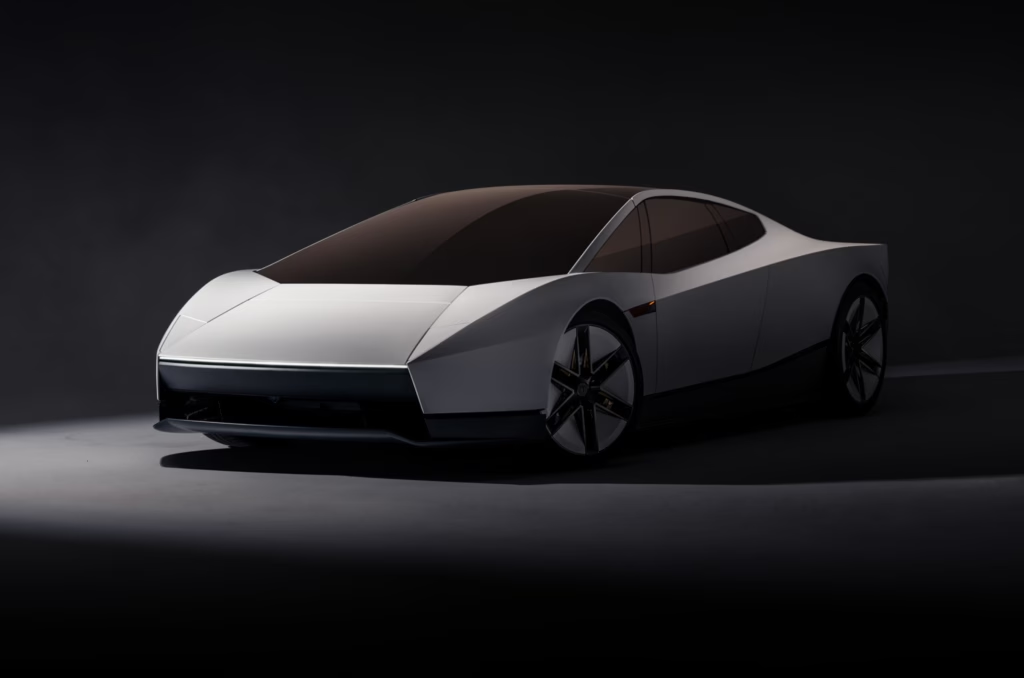
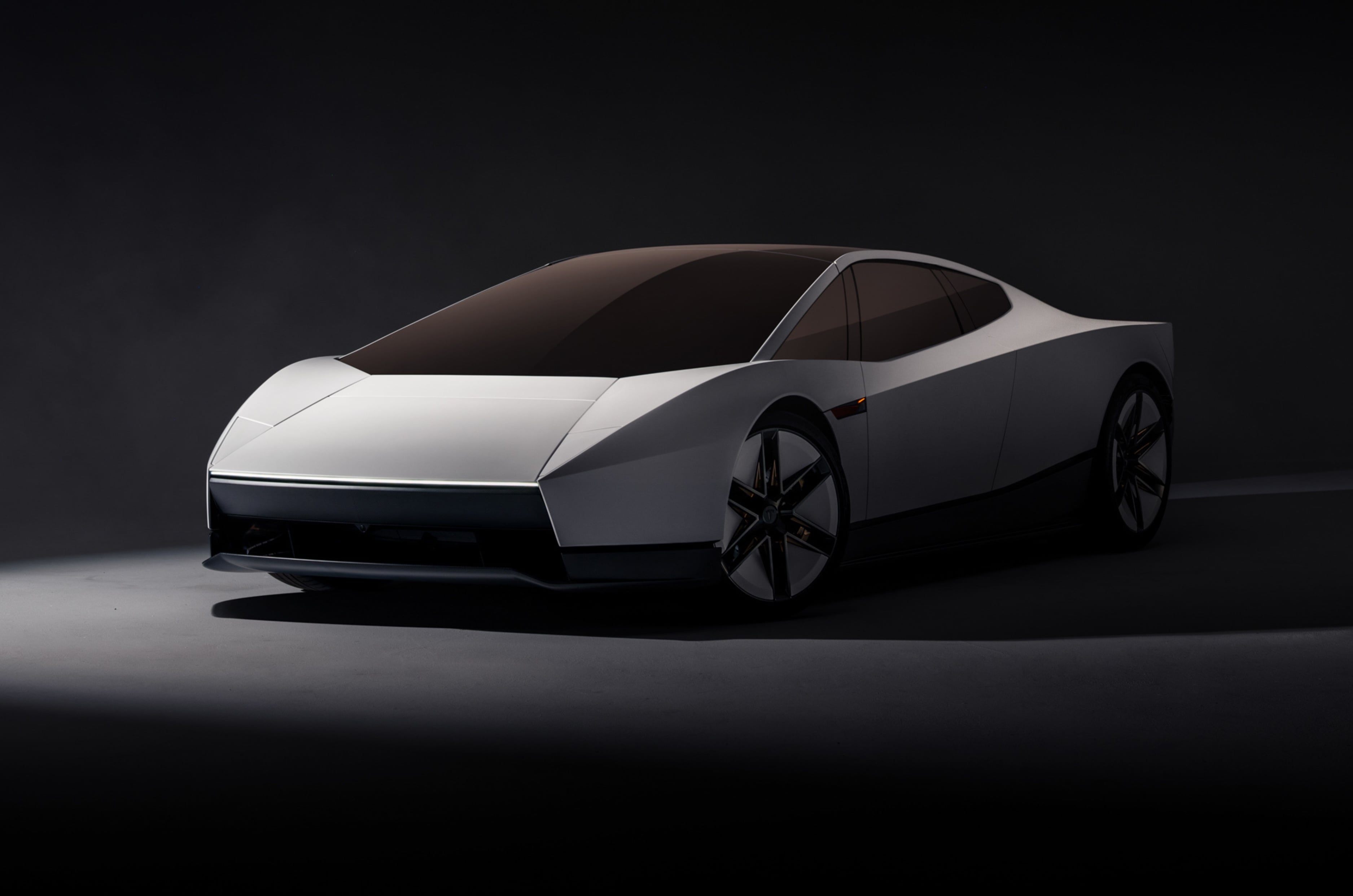
Tesla has unveiled its new Roadster EV, with production set to begin in 2028. It will be the second generation of the Roadster, whose first generation was discontinued in 2012. The new model will be offered in a standard Performance trim, along with Thrust and Rocket packages. Bookings for the Performance trim and Thrust package are open in India at Rs 5 lakh, while the Rocket package is available only by invitation.
Tesla claims the new Roadster can accelerate from 0-100kph in under a second. However, final powertrain details, including battery capacity, motor output and range, are yet to be revealed. The electric sports car also gets an underbody suction fan for extra grip. The Thrust package adds four rear-mounted thrusters, while the Rocket package adds 10 more, allowing the car to perform airborne manoeuvres.
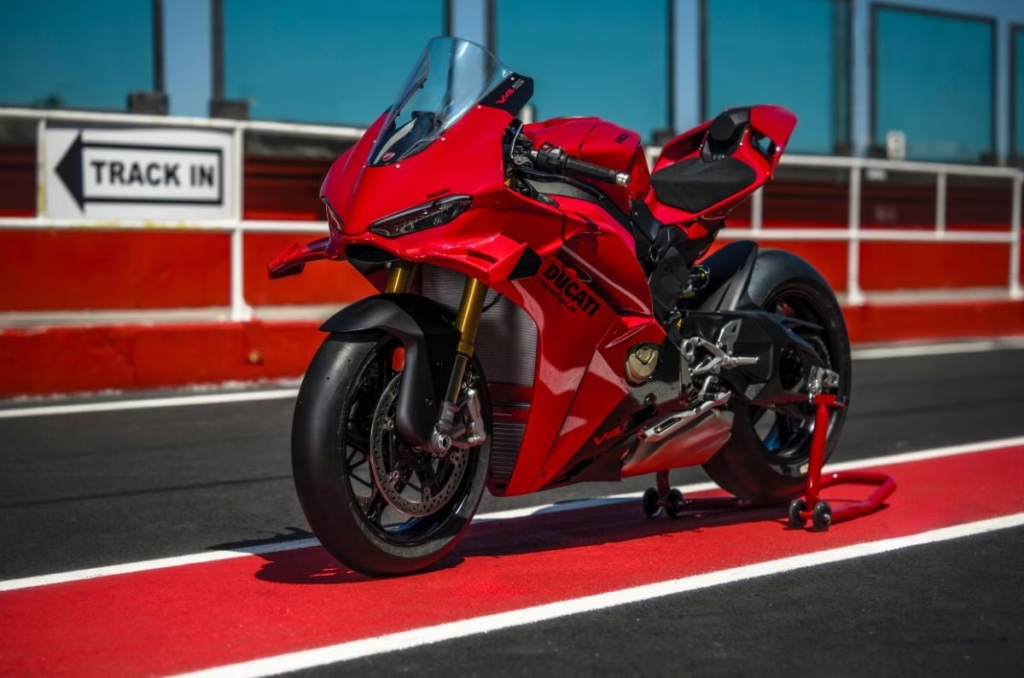
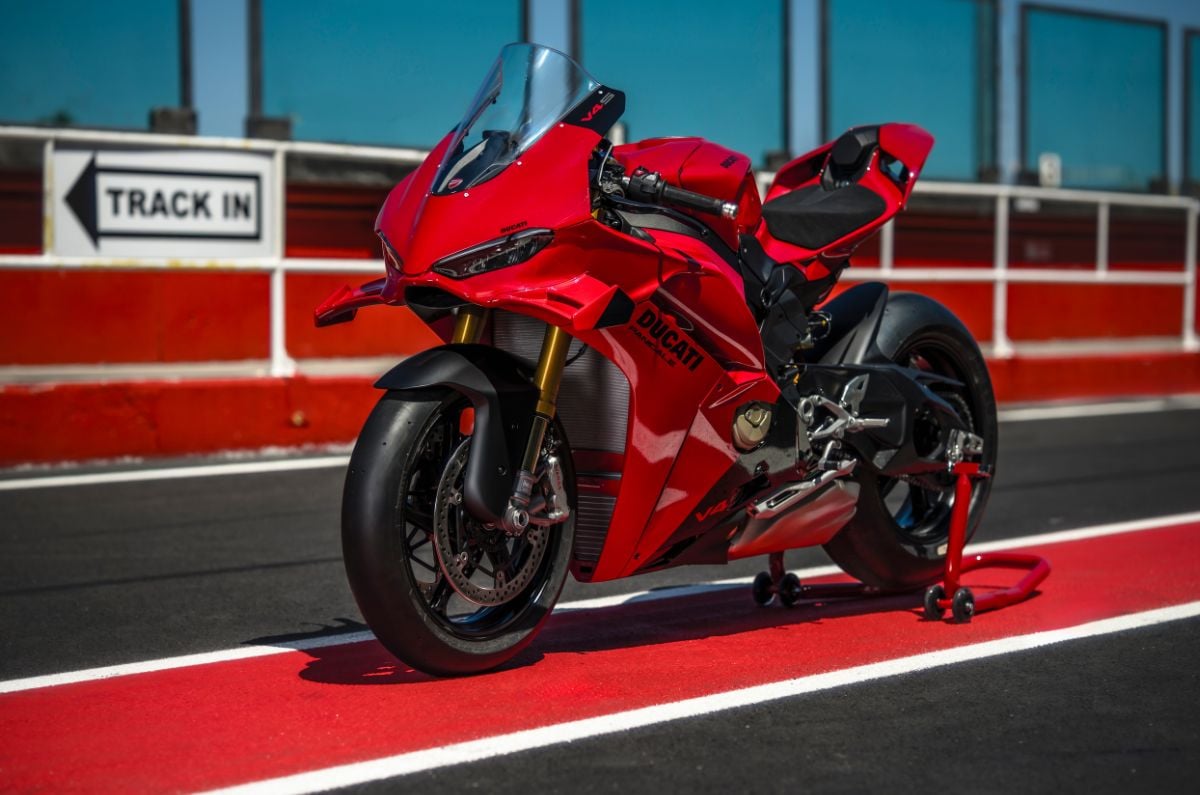
Ducati has been around for forty years, earning countless accolades and recognition for its performance and capability along the way. It would be perfectly reasonable (and debatable) to call the Panigale the present benchmark for that performance, and Ducati, evidently, recognises what that takes. The Borgo Panigale manufacturer has just revealed the 2027 version of it, and appears to have taken a fine-toothed comb to the three pillars of the Panigale V4: the engine, chassis and the electronic suite.
Ducati has worked on reducing power loss; peak power now 218hp
Chassis has been stiffened by 12 percent for better control and feel in corners
Ducati Factory Made program offers vast customisation options for the V4 S
2027 Ducati Panigale V4: What’s new?
An upgrade laser-focused on performance
Starting off with the famed Desmosedici Stradale engine, it continues to be a 1103cc mill, but Ducati has found a way to extract an additional 2hp out of it, raising the peak power to 218hp on the standard model. The Italian manufacturer credits this improvement to a revised air-intake, lubrication circuit and exhaust system, resulting in reduced power loss. In its Euro5-compliant version, the engine makes 218hp at 13,500rpm, with the greatest gains happening between 12,000-14,000rpm. Torque, on the other hand, sees a negligible drop from 120.9Nm at 11,250rpm to 120.6Nm at 11,000rpm.
To complement this change, Ducati has adopted a longer gearing with bigger sprockets at both ends (17/42 now versus 16/41 earlier) and raised the rev limiter to 15,000rpm in gears two through five. As a result, the rider is required to make fewer gear changes in a given lap, as noted in Ducati’s own testing around the Vallelunga circuit; plus an improved lap time by 0.4s compared to the 2026 model. If 218hp is somehow not enough, the new Akrapovič Full Racing Exhaust PRO adds 11hp and 7Nm to the output, and reduces the bike’s weight by 6.6kg from the standard 191kg.
The chassis continues to be monocoque, but Ducati has reduced the lateral stiffness of the front frame by 12 percent, resulting in an improvement of the front grip during high lean angles. Ducati also claims a more precise feel and that the adjusted final drive ratio helps the bike feel more nimble and less physically exerting. The V4 has a fully adjustable Showa USD fork and a Sachs monoshock, also fully adjustable. The V4 S exclusively gets Ohlins suspension units at both ends and uses Smart EC 3.0 control system. Thanks to other performance-oriented equipment, the S weighs 4kg lighter at 187kg without fuel. The V4 S also gets track-use only adjustable clip-on handlebars that raises the height by 10mm – a change inspired by the latest MotoGP bikes – allowing for better leverage, improved control and reduced physical effort during direction changes.
Improved electronic suite
The V4 S is more customisable than ever before
Ducati and electronics go hand in hand and the laundry list of existing rider aids see two new additions: Dynamic Engine Brake and Race Brake Control. The former uses the Ducati Vehicle Observation algorithm to replace Engine Brake Control, and makes the bike more predictable in corners and extreme lean angles. The latter improves the rear wheel’s contribution in stopping the Panigale, and both are present on a Panigale for the first time. The existing suite consisting of numerous control systems – ride/power modes and a bi-directional quickshifter – all continue to be on offer on both the Panigale V4 models.
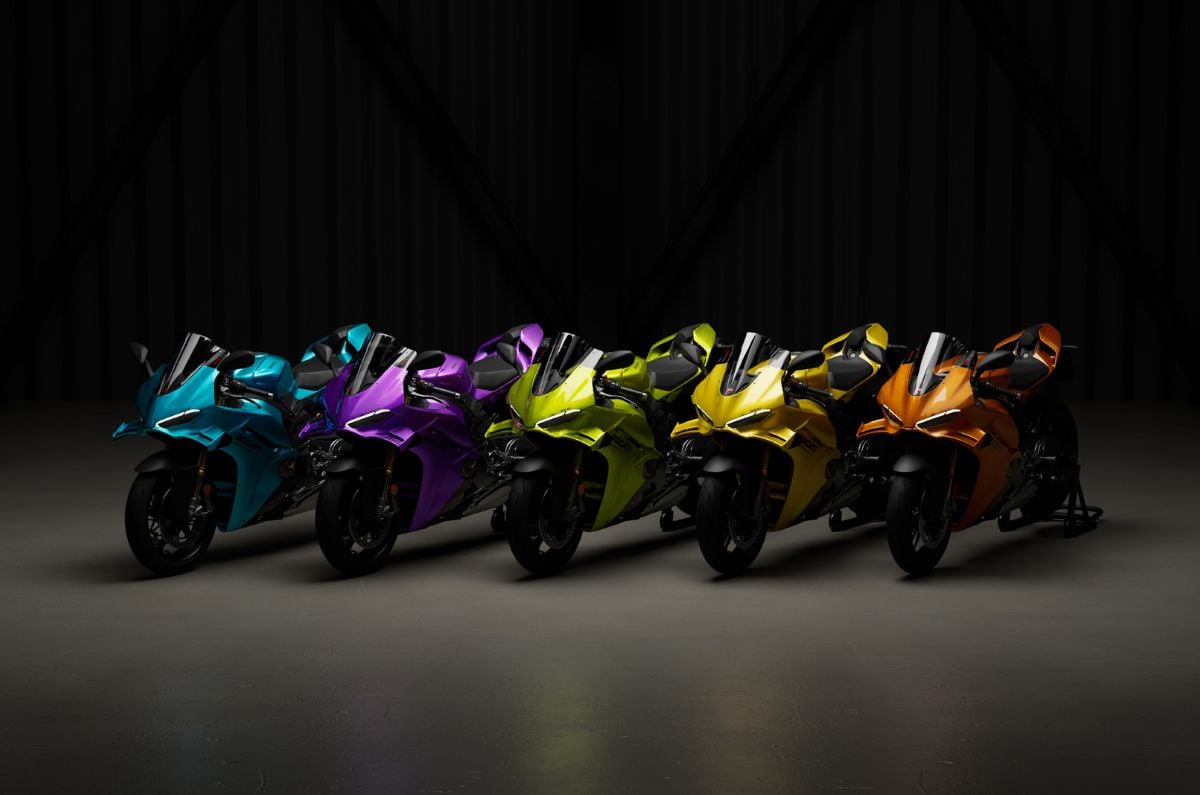
The five colour options directly from the Automobili Lamborghini’s Ad Personam program
For the first time, the Panigale V4 S will be a part of the Ducati Factory Made program, offering multiple customisation options. Through this, riders can choose from a total of 11 colours – five of which are from Automobili Lamborghini’s Ad Personam program – and two liveries, Corse and Performance. Other accessories include Front Brake PRO and PRO+ packages, the STM dry clutch, and adjustable footpegs.
With all the changes, the 2027 Ducati Panigale V4 and the V4 S will reach European dealerships next March, followed by the US in April. In the UK, the V4 costs GBP 25,495 (Rs 32.16 lakh), and the V4 S at GBP 30,995 (Rs 39.10 lakh). Ducati has not revealed a launch timeline for the rest of the world; in India, the 2026 Panigale V4 costs Rs 32.05 lakh for the standard model and Rs 39.01 lakh for the V4 S. When Ducati brings the 2027 versions here, we’d expect these prices to go up.
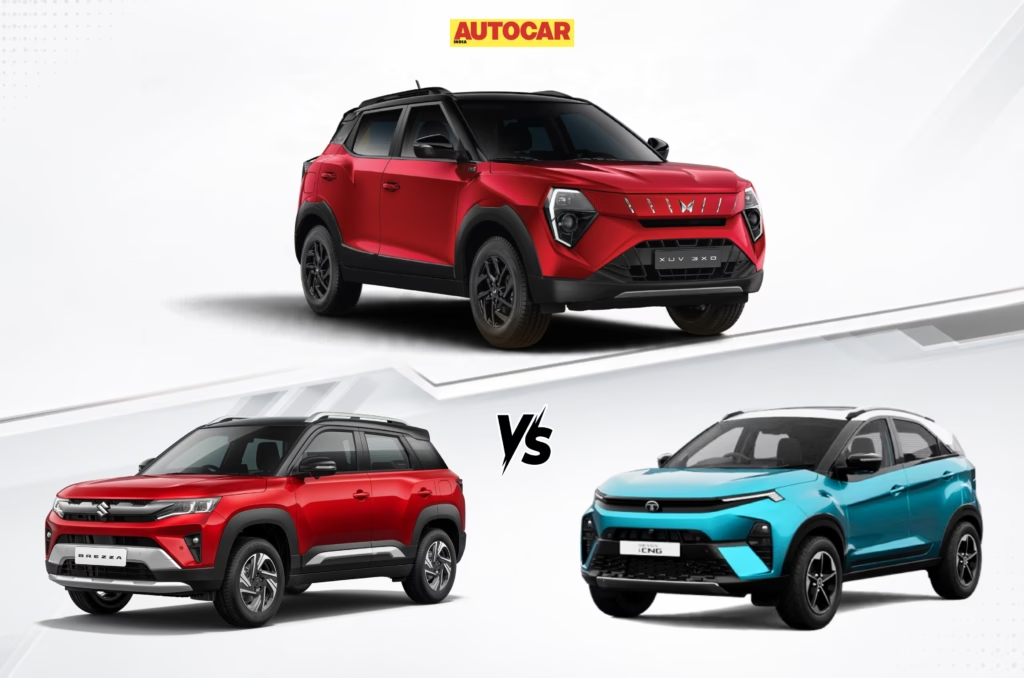
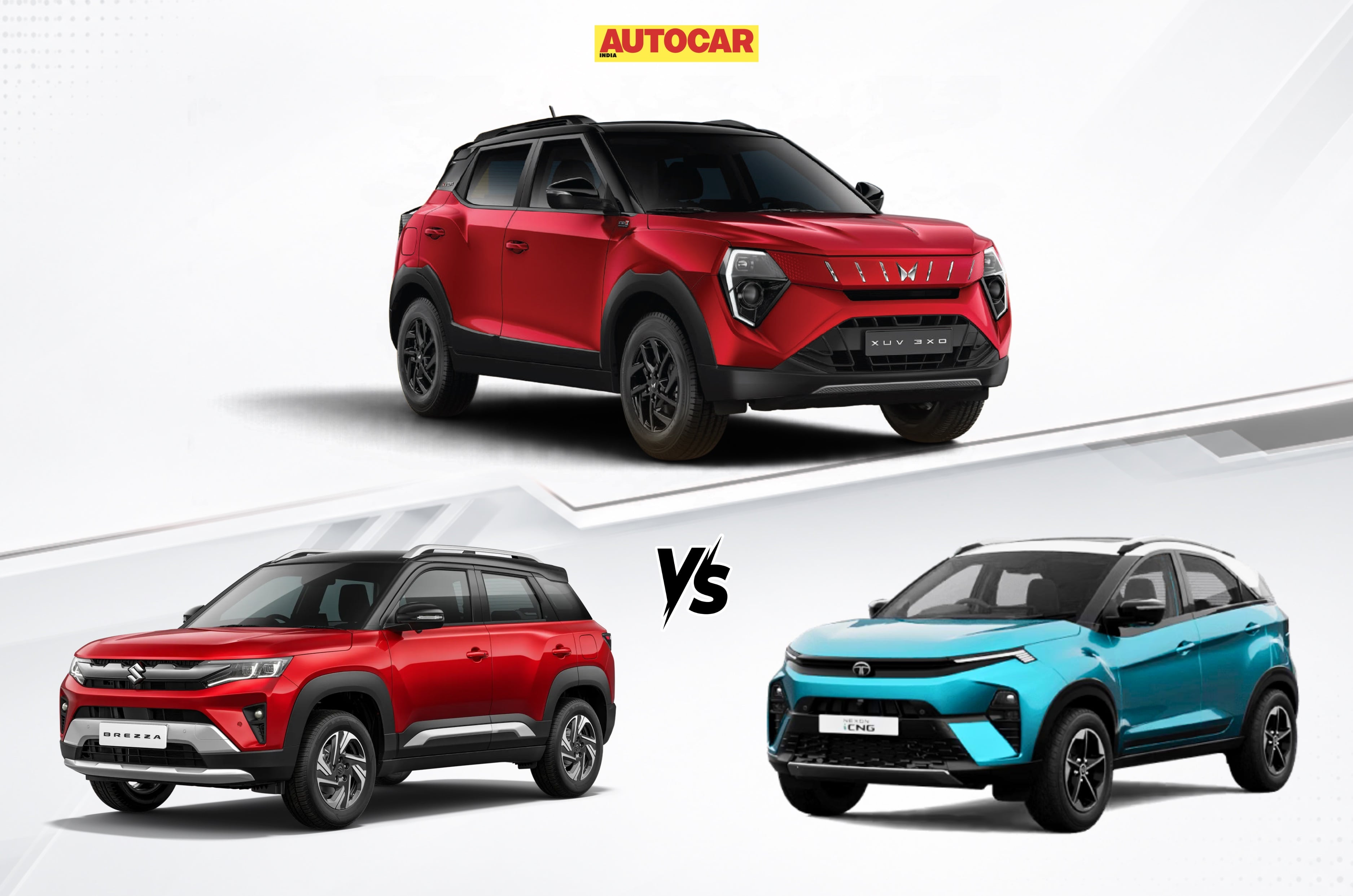
Mahindra’s entry-level offering, the XUV 3XO, is now available with a factory-fitted CNG kit in certain trim levels. This allows the XUV 3XO to directly rival CNG variants of the Tata Nexon and Maruti Suzuki Brezza. We take a look at how Mahindra’s first non-commercial car with a factory-fitted CNG kit fares against its competitors, spec sheet to spec sheet.
Mahindra XUV 3XO CNG vs rivals: Dimensions
XUV 3XO
Brezza
Nexon
Length (mm)
3,990
3,995
3,995
Width (mm)
1,821
1,790
1,804
Height (mm)
1,647
1,685
1,620
Wheelbase (mm)
2,600
2,500
2,498
Wheel size (inches)
16
16
16
Boot space (litres)
270
328
321
The XUV 3XO is slightly shorter overall than the Nexon and Brezza, but ekes out the longest wheelbase and is the widest compact SUV here. In terms of height, the XUV 3XO falls just short of the Maruti, and all three SUVs offer 16-inch alloy wheels. Coming to boot space, though, the XUV 3XO lags substantially behind its rivals, despite having a similar boot-mounted twin-cylinder setup to the Nexon. The Brezza, meanwhile, has the highest boot space here due to its underbody CNG tank setup.
Mahindra XUV 3XO CNG vs rivals: Engine and gearbox
XUV 3XO
Brezza
Nexon
Engine
1.2 turbo-petrol
1.5 petrol
1.2 turbo-petrol
Cylinder count
3
4
3
Power (hp)
111
88
100
Torque (Nm)
200
121.5
170
Gearbox
6-speed manual
6-speed manual
6-speed manual
Claimed mileage (km/kg)
24.7
26.9
24
Where CNG cars are usually weaker in CNG mode, the XUV 3XO flips the script by outputting identical power and torque figures in its petrol and CNG modes – Mahindra has achieved this by optimising the turbocharger calibration and ECU mapping. Therefore, the XUV 3XO CNG is the most powerful compact SUV here, beating the Nexon CNG by 11hp and 30Nm, and the Brezza CNG by a considerable 23hp and 78.5Nm margin.
That said, the Brezza CNG does claw a point in its favour by offering the biggest engine here and an additional cylinder over its rivals, which could make the driving experience feel smoother and more refined. Another big upside to the Brezza CNG is its segment-best claimed fuel efficiency. The XUV 3XO trails just behind the Brezza on the mileage front, while the Nexon CNG sports the lowest claimed figure.
Mahindra XUV 3XO CNG vs rivals: Price
Price (Rs, lakh)
XUV 3XO
9.99-12.27
Brezza*
9.40-11.60
Nexon*
8.35-13.42
*Excluding premiums for dual-tone paint finishes and/or cosmetic packages.
The XUV 3XO CNG carries the highest starting price compared to its rivals, with the Nexon CNG undercutting it by Rs 1.54 lakh and the Brezza CNG by Rs 59,000. Looking at top-spec variant prices, the order sees a rejig, with the Tata SUV commanding the highest price due to a broader spread of variants. At Rs 13.42 lakh, the range-topping variant of the Nexon CNG is Rs 1.15 lakh pricier than the XUV 3XO CNG’s equivalent version, and Rs 1.82 lakh more expensive than that of the Brezza CNG.
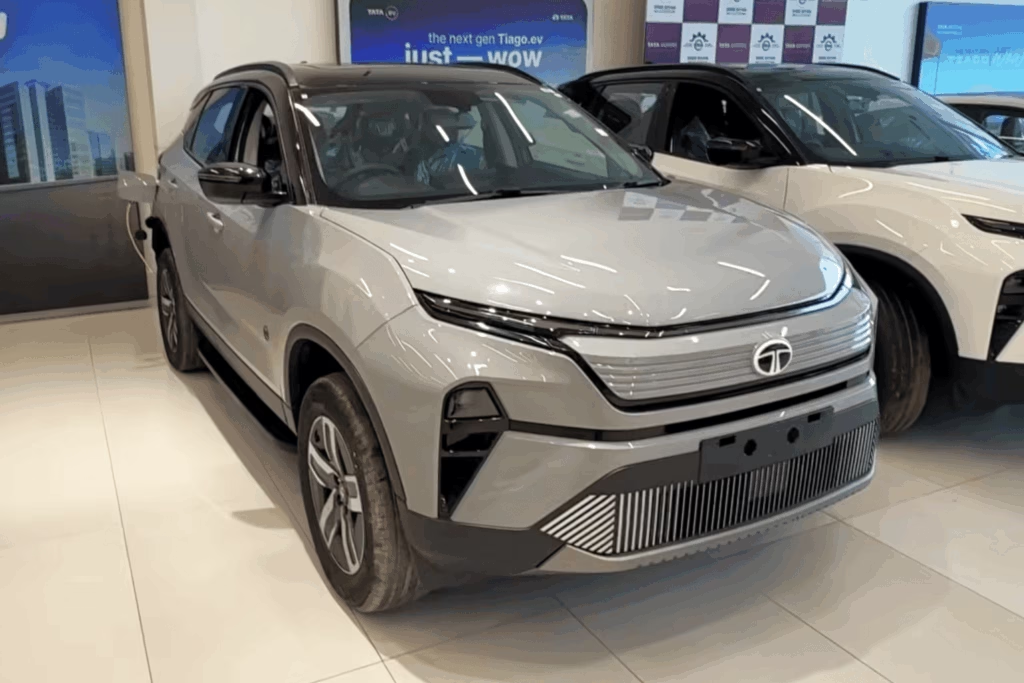
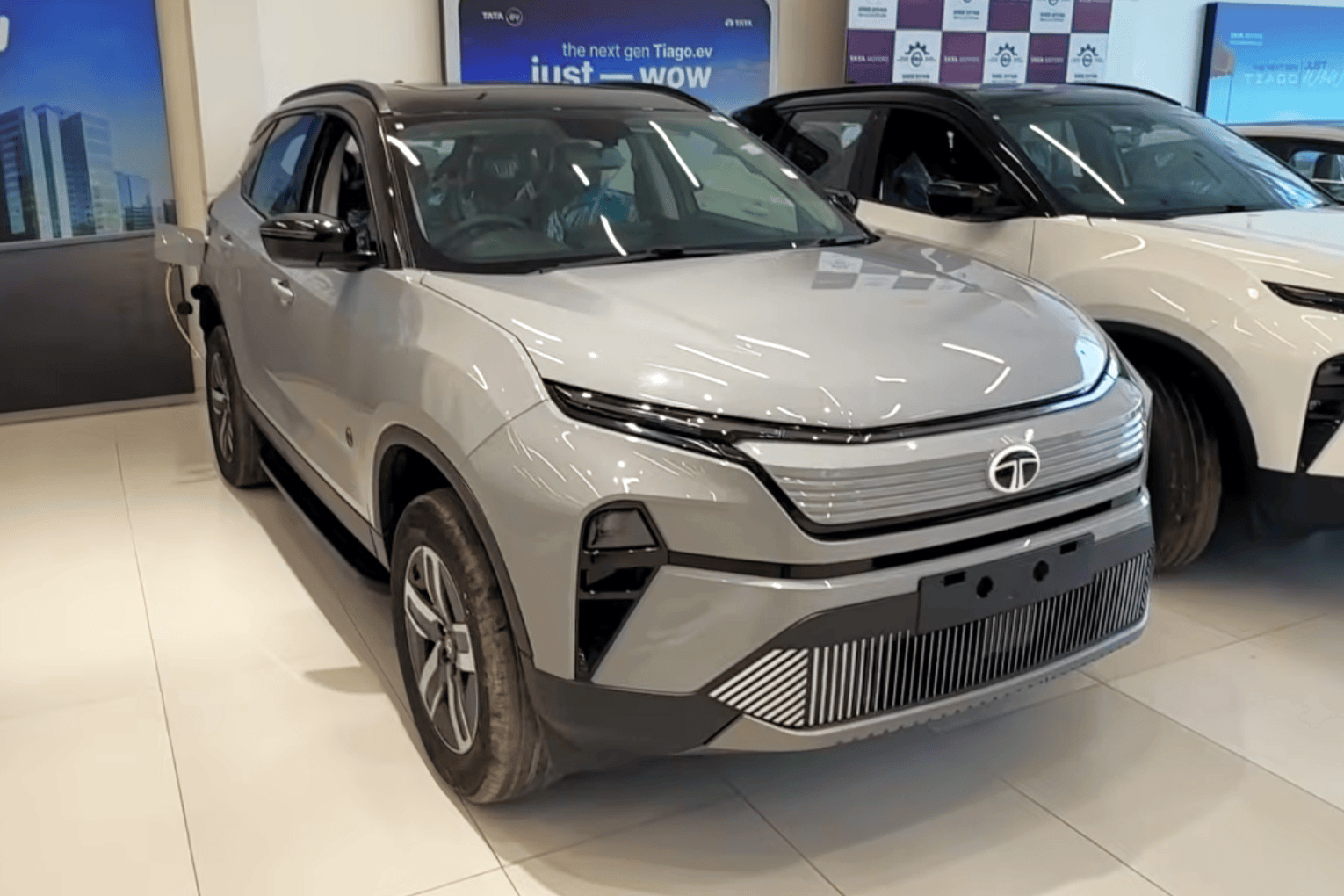
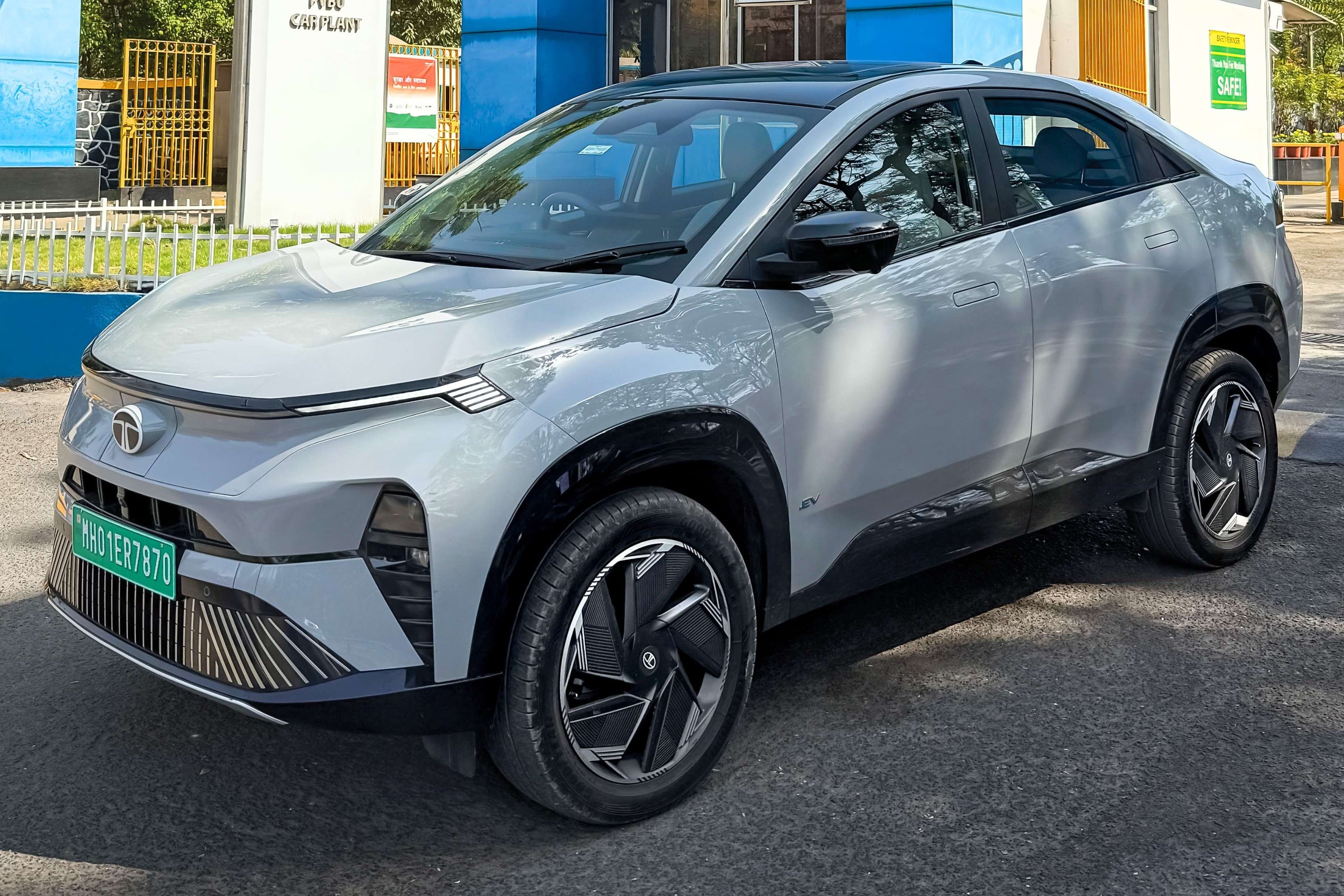
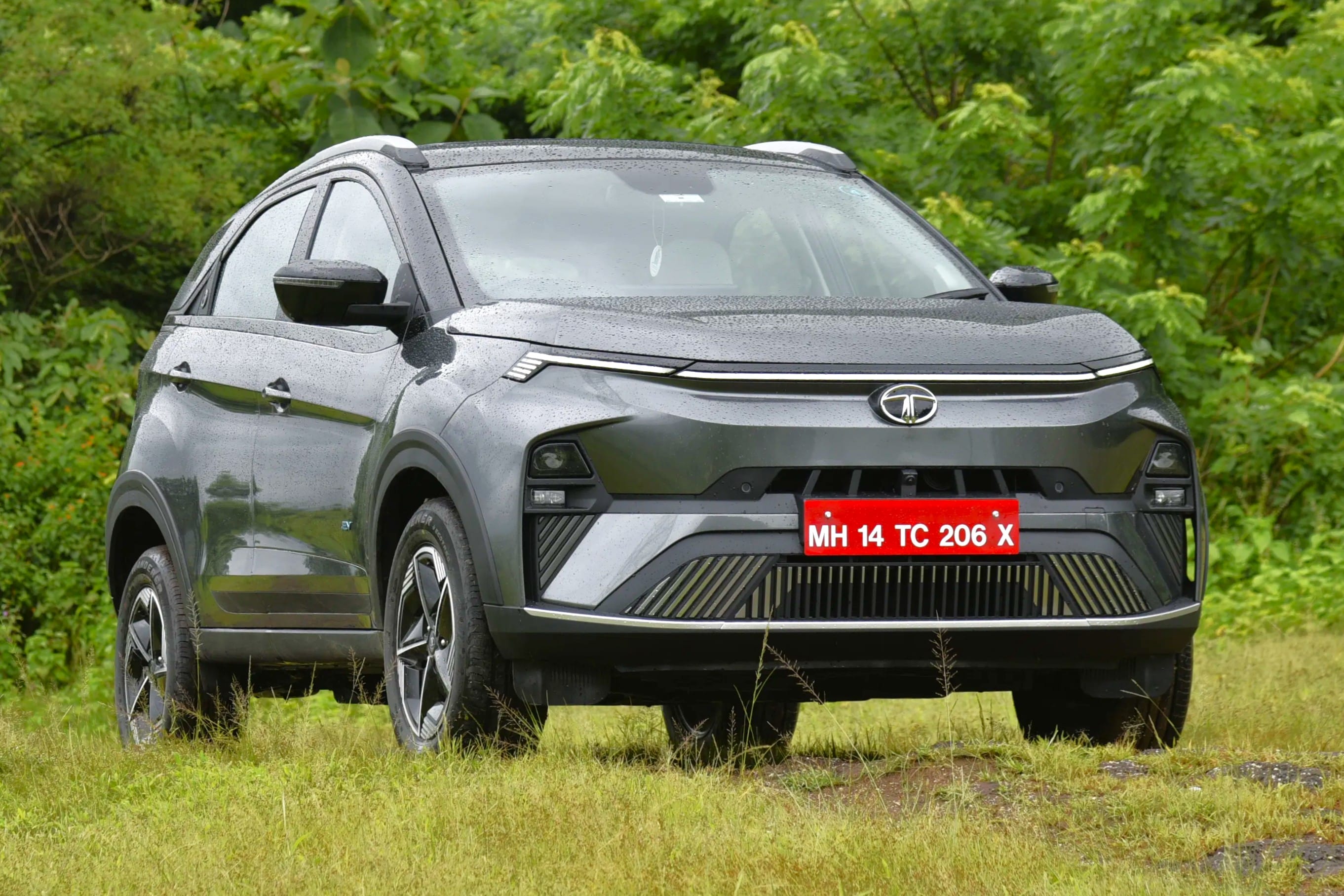
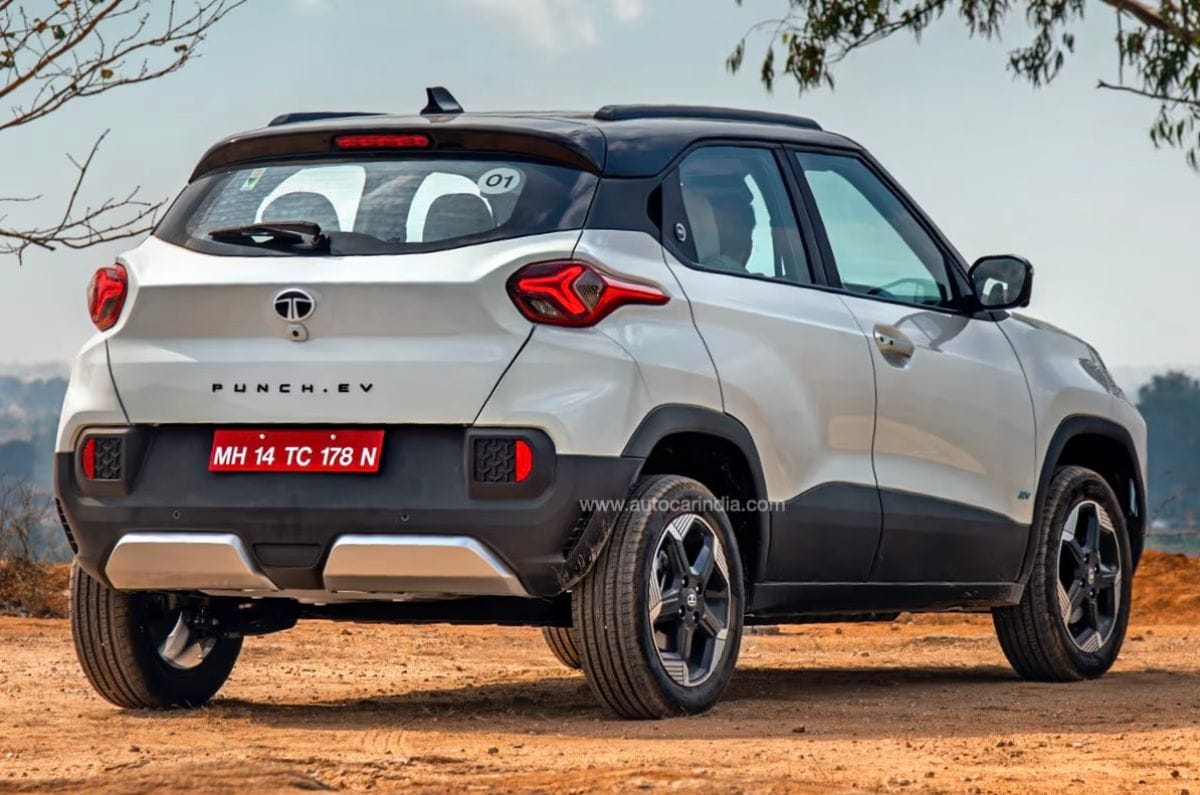
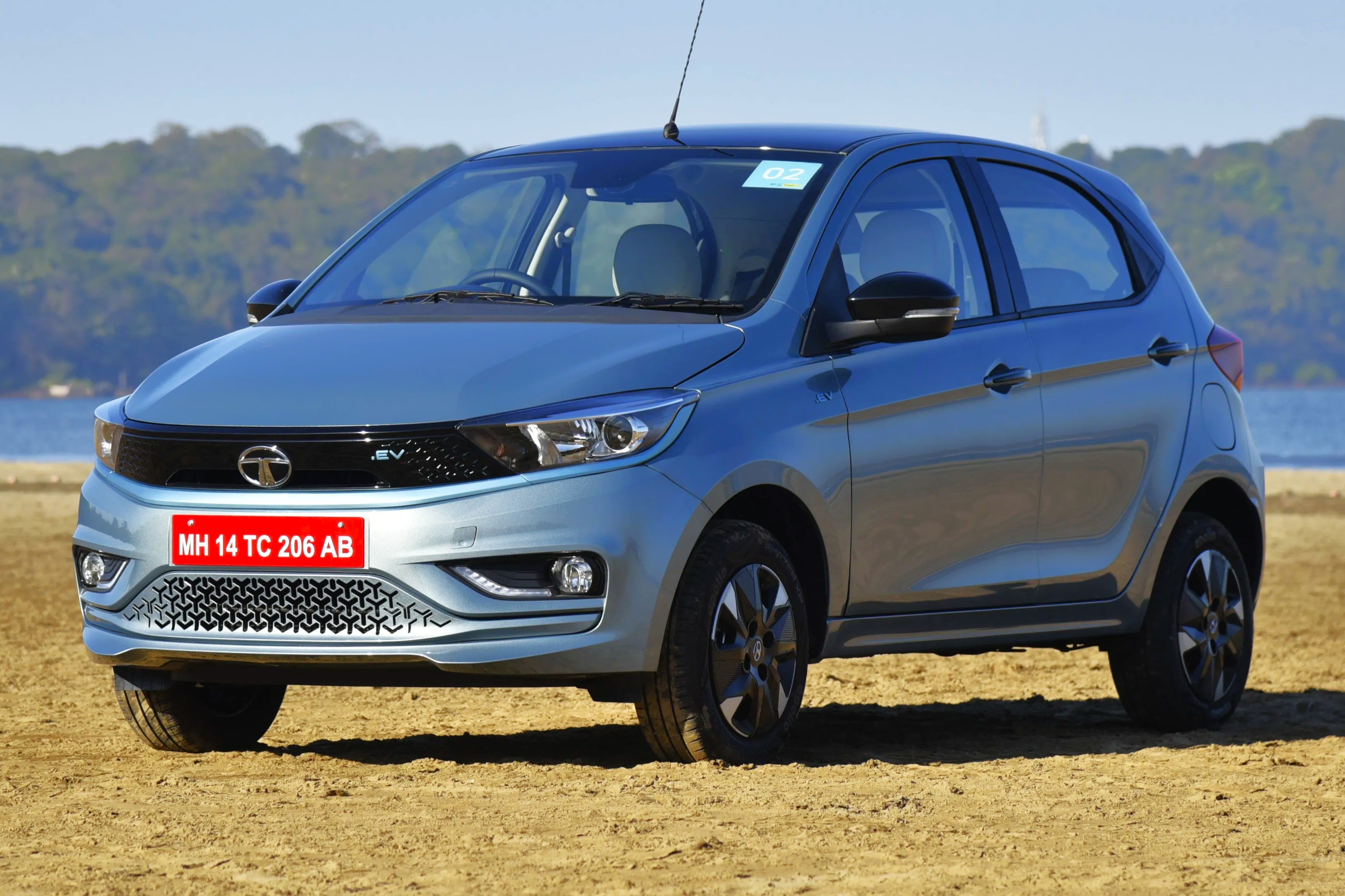
Prospective buyers considering a Tata EV can take advantage of compelling benefits on the Harrier EV, Curvv EV and Nexon EV, among others. These benefits are available throughout October 2026, and depending on the model and variant, they include cash discounts, intervention offers, exchange/scrappage bonuses and loyalty incentives.
Disclaimer: Offers/benefits may vary by city and are subject to stock availability. Buyers are advised to check with their local dealer for exact figures.
Tata Harrier EV discounts in October 2026
Up to Rs 2.75 lakh off
The Harrier EV is available with a maximum benefit of Rs 2.75 lakh for the Fearless+ and Empowered trims. These include an intervention offer of Rs 1 lakh, an exchange/scrappage bonus of up to Rs 75,000 and a loyalty incentive of up to Rs 1 lakh. However, if you’re specifically looking to buy the top-spec Empowered AWD Stealth ACFC variant, you get a lower Rs 50,000 intervention offer, dropping the total benefit to Rs 2.25 lakh.
Lower-spec Adventure variants of the Harrier EV, meanwhile, get a intervention offer of Rs 75,000, bringing the total benefit to Rs 2.5 lakh. Pricing for the Harrier EV starts at Rs 21.79 lakh and tops off at 29.79 lakh, excluding premiums for cosmetic packages.
Tata Curvv EV discounts in October 2026
Up to Rs 3.35 lakh off
For the Curvv EV, benefits extend to Rs 3.35 lakh for variants available prior to the coupe-SUV’s SeriesX update in May 2026. These include a Rs 3 lakh cash discount and an exchange/scrappage bonus of up to Rs 35,000. However, the base Curvv EV Creative variant (pre-SeriesX) features a Rs 2.5 lakh cash discount instead, lowering the total benefit to Rs 2.85 lakh. The Curvv’s current SeriesX variants come with a maximum benefit of Rs 65,000, which comprises an exchange/scrappage offer of up to Rs 35,000 and a Rs 30,000 loyalty incentive. The Curvv EV is priced in the Rs 17.19 lakh-19.39 lakh range.
Tata Nexon EV discounts in October 2026
Up to Rs 45,000 off
All variants of the Nexon EV can be purchased with benefits of up to Rs 45,000 in October. These benefits comprise a cash discount of Rs 10,000 and an exchange/scrappage bonus of up to Rs 35,000. The Nexon EV price starts at Rs 12.49 lakh and tops out at Rs 17.69 lakh, excluding premiums for cosmetic packages.
Tata Punch EV discounts in October 2026
Up to Rs 1.45 lakh off (pre-facelift only)
Long Range (35kWh) variants of the pre-facelift Punch EV are available with benefits of up to Rs 1.45 lakh, which include a Rs 1.1 lakh cash discount and an exchange/scrappage bonus of up to Rs 35,000. Medium Range (25kWh) variants lower the cash discount to Rs 90,000, making for a total benefit of Rs 1.25 lakh. Finally, the base Punch EV Smart variant is available with a Rs 60,000 cash discount, so the total benefit for it works out to Rs 95,000.
Tata Tiago EV discounts in October 2026
Up to Rs 1.45 lakh off (pre-facelift only)
The pre-facelift Tiago EV gets a total benefit of Rs 1.45 lakh for the mid-spec XT Long Range (24kWh) variant. These comprise a Rs 70,000 cash discount, a Rs 50,000 intervention offer and an exchange/scrappage bonus of up to Rs 25,000. The higher-spec XZ+ Long Range variant instead gets a Rs 1 lakh cash discount but no intervention offer, amounting to total benefits of Rs 1.25 lakh. Lastly, all Medium Range (19kWh) variants of the pre-facelift Tiago EV feature a Rs 40,000 cash discount, which means a combined benefit of Rs 65,000.
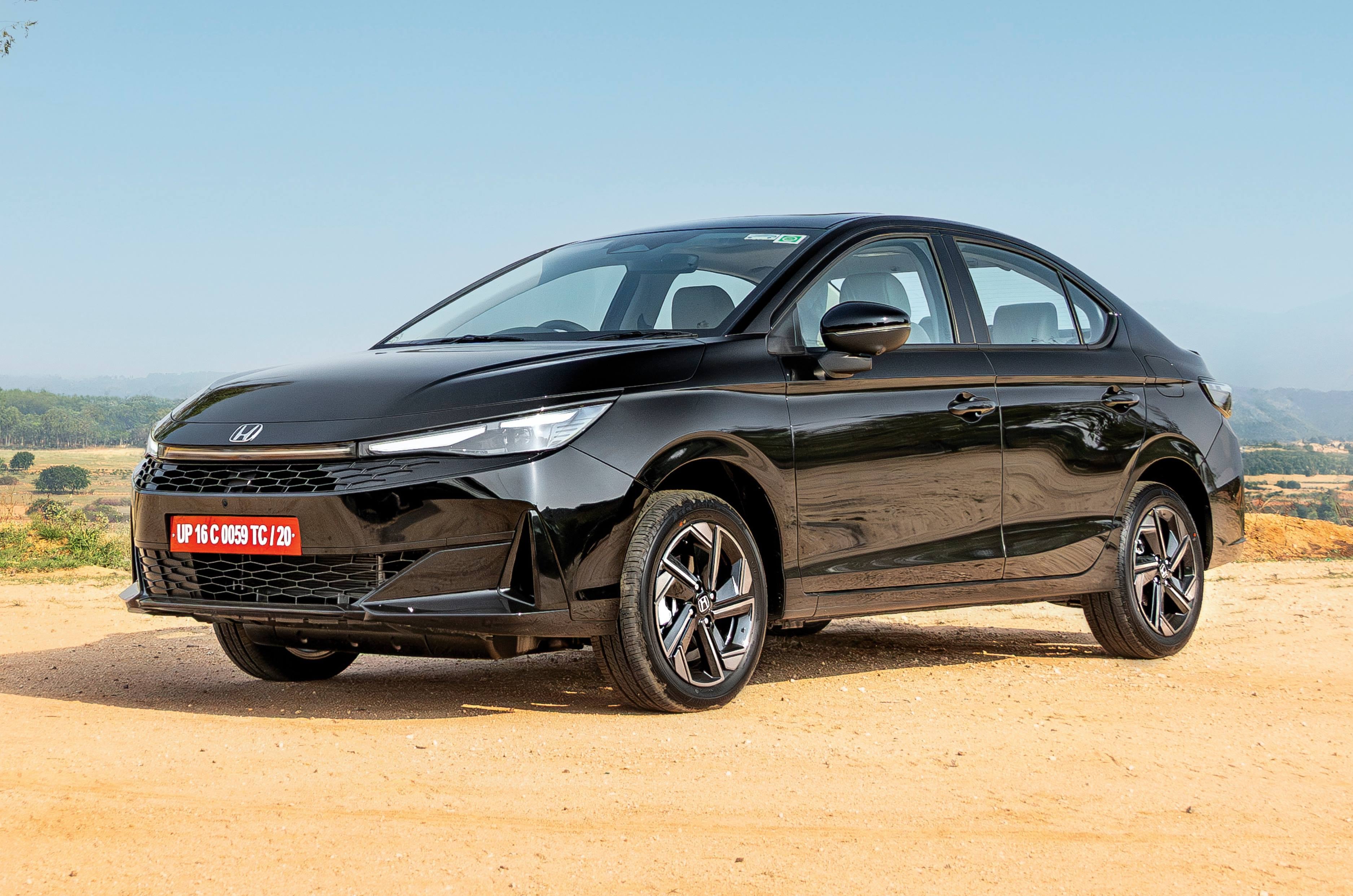
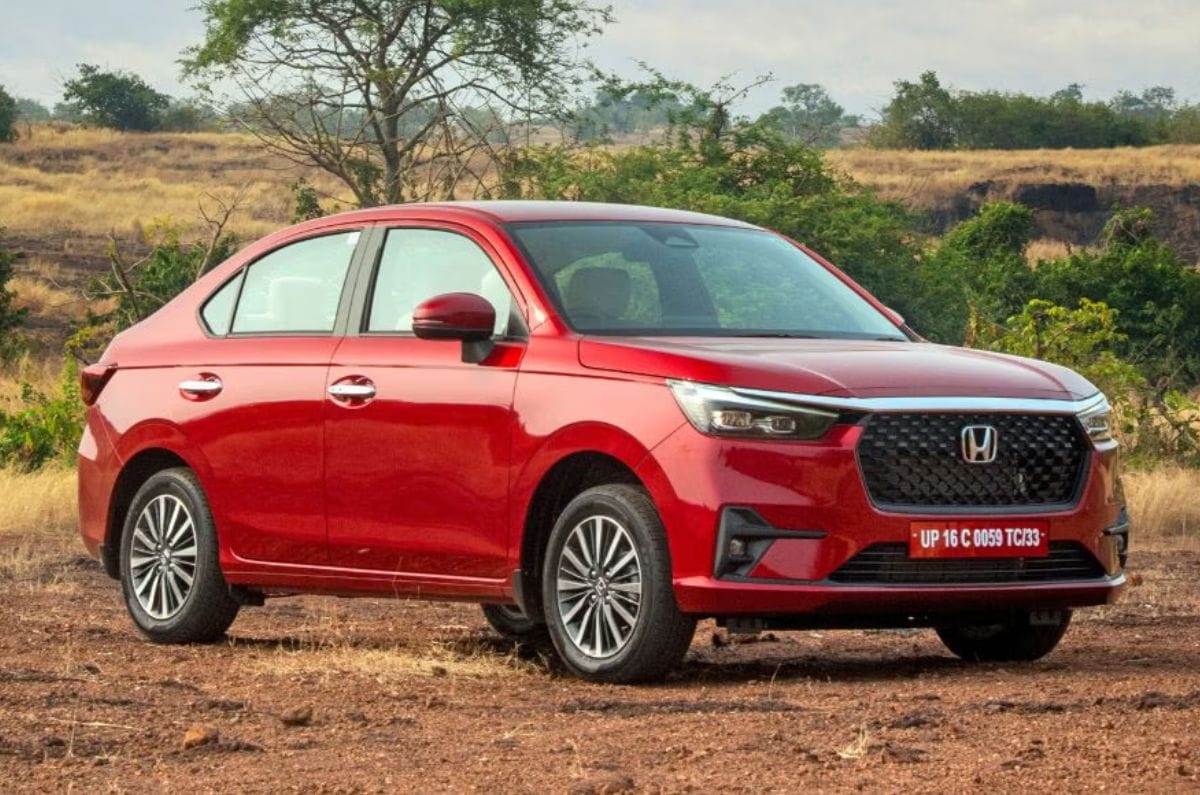
Honda is offering attractive benefits across its vehicle lineup. Models like the outgoing Elevate, the recently facelifted Honda City, and the Amaze are available with cash discounts, exchange bonuses, loyalty benefits, optional feature bundles, and extended warranty packages. Offers are valid until October 31, 2026.
Disclaimer: Offers/benefits may vary by city and are subject to stock availability. Buyers are advised to check with their local dealer for exact figures.
Honda Elevate offers in October 2026
Benefits of up to Rs 2.35 lakh
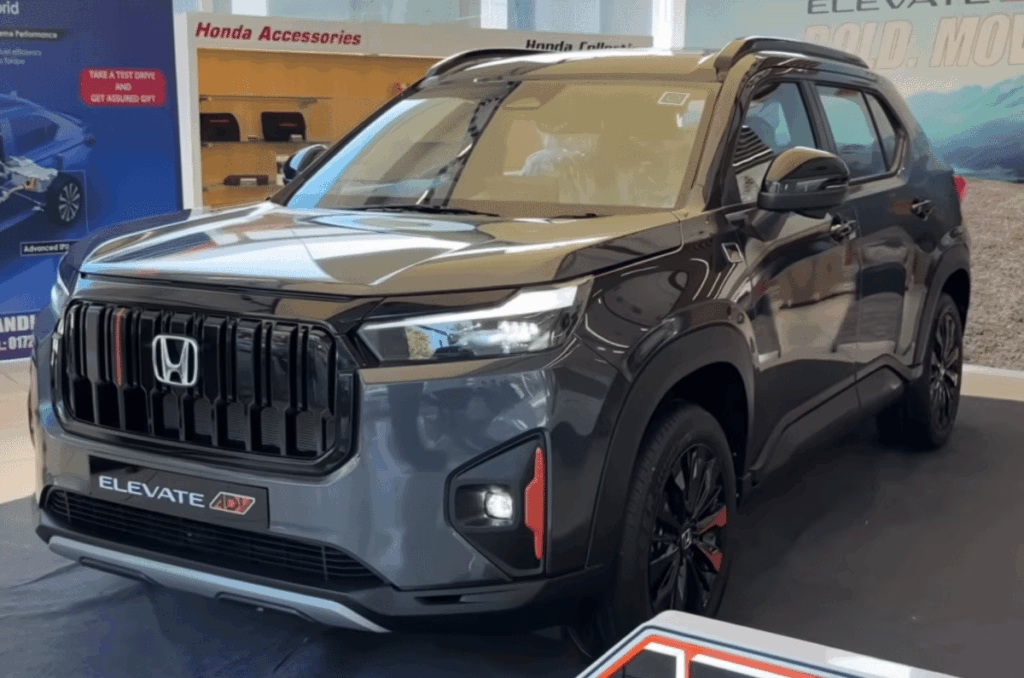
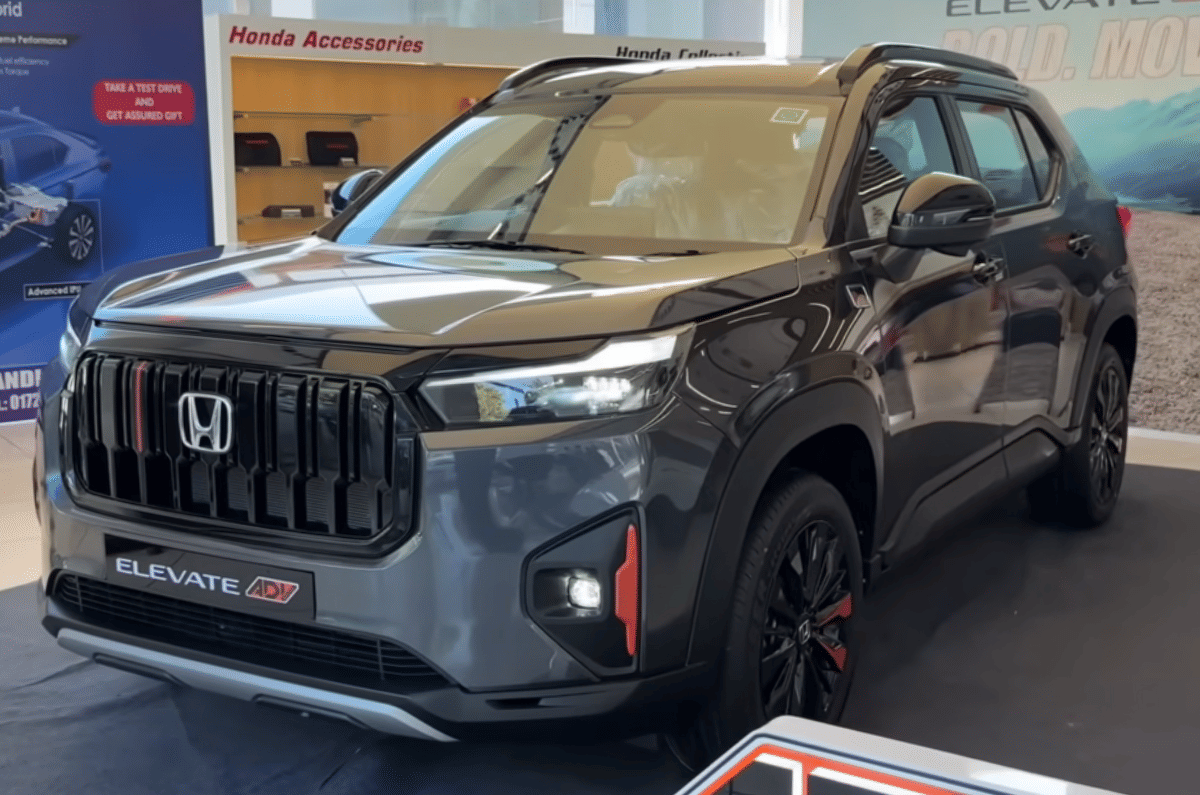
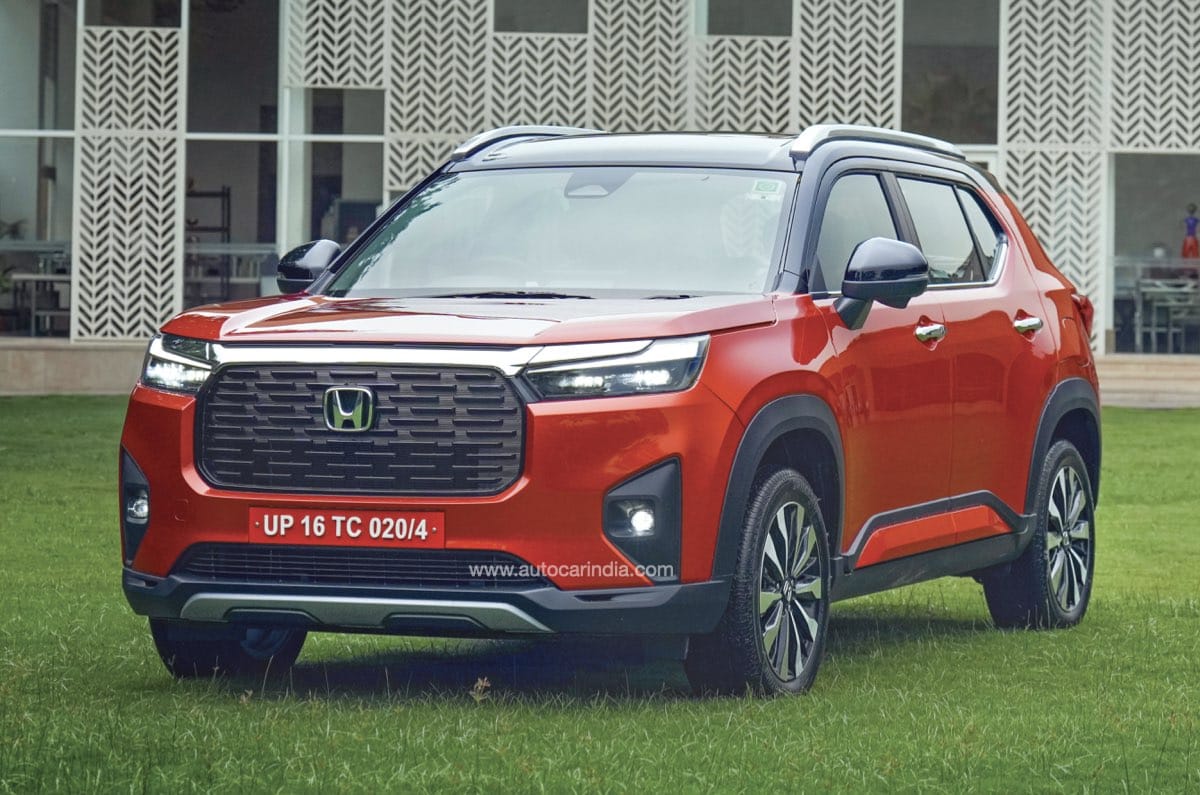
The outgoing Honda Elevate is getting benefits of up to Rs 2.35 lakh. This includes a cash discount of up to Rs 50,000, an exchange bonus of up to Rs 80,000, a loyalty benefit of up to Rs 4,000, a corporate benefit of Rs 5,000, along with other schemes, feature bundles and warranty packages, depending on the variant. The current Elevate is priced between Rs 11.88 lakh and Rs 16.36 lakh. It competes with the likes of the Hyundai Creta, Skoda Kushaq, Volkswagen Taigun, Kia Seltos, Tata Sierra, Maruti Grand Vitara, and Victoris.
Honda City offers in October 2026
Benefits of up to Rs 1.71 lakh
The recently unveiled City facelift gets benefits of up to Rs 1.71 lakh. It comprises a cash discount of up to Rs 60,000, an exchange bonus of up to Rs 50,000, a loyalty benefit of Rs 4,000, and a corporate offer of Rs 5,000. Like the Elevate, there are additional offers available that bring further benefits. The City’s price ranges from Rs 12 lakh and goes all the way up to Rs 21.44 lakh. It takes on rivals like the Skoda Slavia, Volkswagen Virtus, and Hyundai Verna.
Honda Amaze offers in October 2026
Benefits of up to Rs 66,800
Honda’s most affordable model on sale, the Amaze gets benefits of up to Rs 66,800. The latest third-generation model gets a cash discount of up to Rs 15,000, an exchange bonus of up to Rs 15,000, a loyalty benefit of Rs 4,000, a corporate offer of Rs 3,000, and other schemes and extended warranty benefits that increase the total benefits. In contrast, the older second-gen model gets slightly lower benefits of up to Rs 57,600. The third-gen and second-gen Amaze are priced between Rs 7.65 lakh and Rs 10 lakh and Rs 6 lakh and Rs 7.78 lakh, respectively. The Amaze locks horns with the Tata Aeris, Maruti Dzire, and the Hyundai Aura.
Following a rules overhaul, the 2026 F1 pecking order has been shaped significantly by the development race playing out behind the scenes.
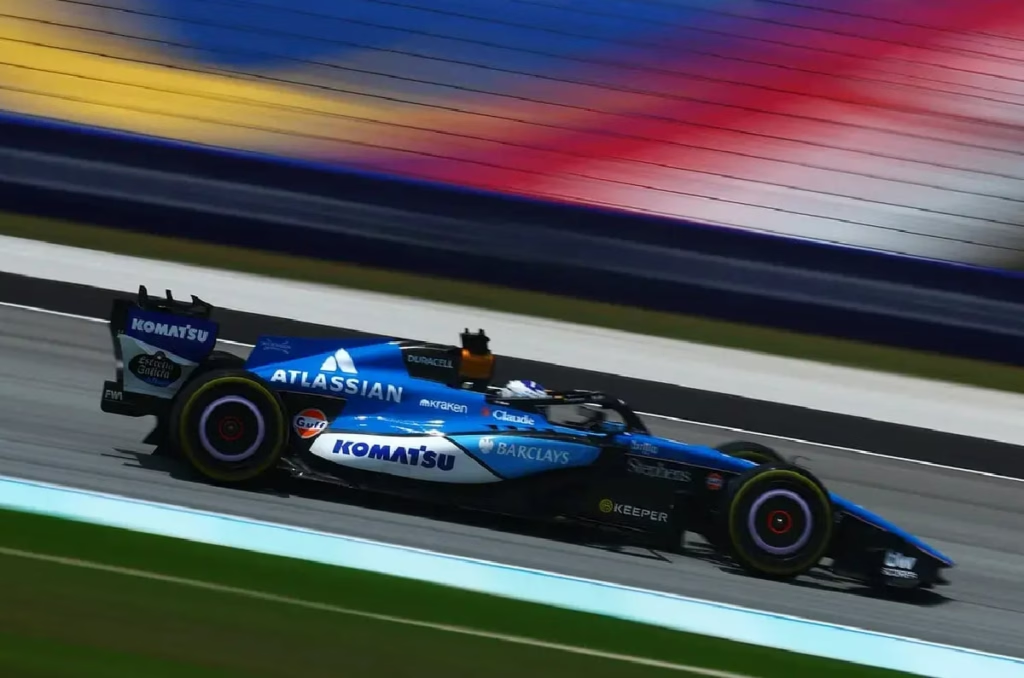
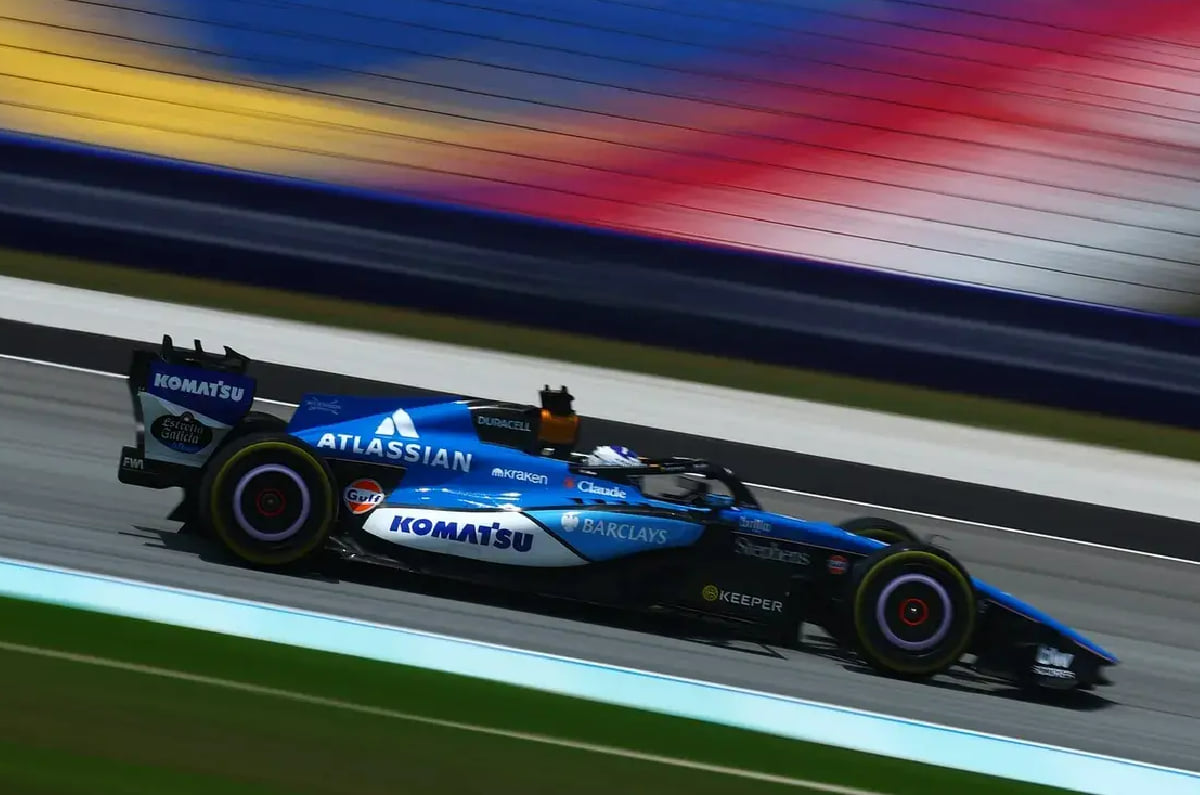
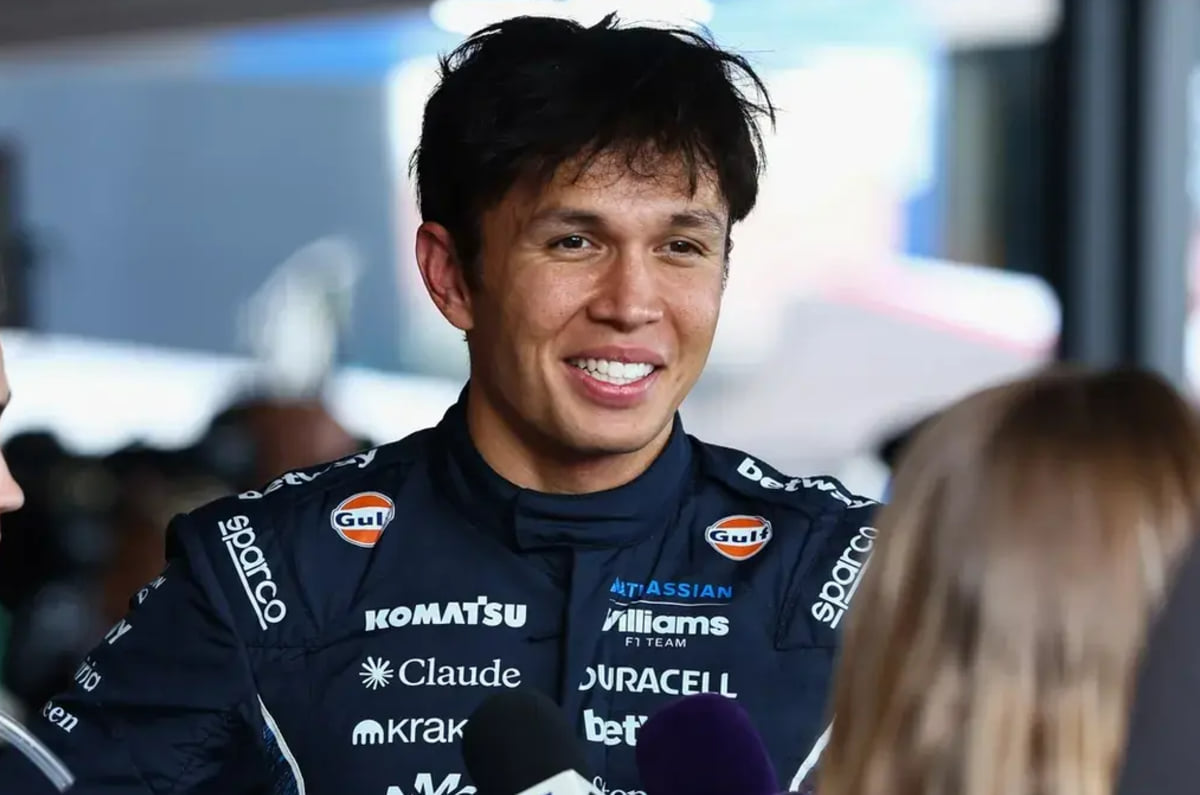
Speaking to media, including Autocar India, ahead of the Bahrain GP in Malaysia, Atlassian Williams F1 Team driver Alex Albon says the rate of development is faster than he’s ever seen before in his career. But rather than keeping pace, the team has decided to stop bringing upgrades this year and put its resources into building a stronger car for 2027.
Alex Albon on F1 2026 development war
In previous years, upgrade packages typically delivered a few hundredths of a second. But with teams still trying to understand the 2026 rules, McLaren boss Andrea Stella reckoned upgrades this year can deliver gains of two to three tenths of a second.
“We’re seeing a huge difference. Even when I think about when the regulations changed in 2022, teams are just getting better at becoming more efficient with bringing upgrades to the car,” Albon said, adding that he believes the rate at which teams are progressing is “at least 3x of last year”.
The $215 million cost cap means teams have adopted varying strategies for how to roll out these upgrades. Ferrari has been quite aggressive with rolling out chassis upgrades. Atlassian Williams, on the other hand, focused most of its resources on bringing one major upgrade package to Round 15 at Azerbaijan. The team has struggled with an overweight car and other performance issues in the first half of the 2026 season. The Azerbaijan upgrade package looked to address these issues and it appears to be a step in the right direction, delivering the team’s very first Q3 appearance of the season back at Baku.
Albon points out that the biggest is in the mid-field. “Last year and previous years that I remember my experience in Formula 1, it was always only the top three or four teams that were capable of achieving four or five big upgrades a season. And now you’re actually getting midfield teams very close to achieving the same amount of development rate,” he shared.
“So, yes, it’s been partly also why as a team we’ve been struggling a little bit, because we are now maybe at a similar pace to last year, which obviously is not enough.”
Atlassian Williams F1 Team switches focus to 2027
Atlassian Williams currently stands ninth overall in the teams’ championship, ahead of Aston Martin and Cadillac. When asked about the team’s targets for the rest of the season, Albon said, “Truthfully, this year, we have calculations of our own development rate versus the top teams and the midfield teams. We know which rate we need to be at to be able to overtake them.”
But the team has decided to sacrifice its 2026 development to deliver a stronger car next year. “We know where we need to be starting next year at Race 1, which is the most important. The best way we can arrive to Race 1 next year competitive is to focus on next year. And that means not bringing upgrades for the rest of the year. That means all the simulator work that we’re doing behind the scenes is now focused on next year’s car.” Albon stated,
“We need to be very ambitious and very aggressive with the rate at which we’re going to develop the car next year because the speed at which teams are able to progress is higher than ever.
Albon: Antonelli, Hamilton’s driving style better suited to new cars
Albon also shared that this year’s cars, with a near 50:50 split between combustion and electric power, have forced him to rethink his own driving style. “I’ve had to change quite a lot,” he said. “I think it’s been the single biggest change for me personally to adapt to a different set of regulations.”
He points to two main factors – the cars are now smaller and the tyres have changed significantly. “I think a lot of the drivers who push [at corner] entries – so if you think famously, someone like Lewis [Hamilton], I think Kimi [Antonelli] does a very similar thing – they’re being rewarded. I think it’s complicated, but basically, it’s because the rear tyres are not as strong this year as they were in previous years, relative to the front tyres,” Albon explained.
“The other thing is obviously the deployment, which a lot of the deployment is down to the drivers – the way the driver downshifts and upshifts. Also, the way the driver brakes and the biggest factor is the way the driver goes on throttle.”
As for adapting his own driving style to suit the new cars, Albon said, “I wouldn’t say it was conscious. In the very beginning, it was very difficult to understand. It was very against my personal driving style. We’re in October now, I only just feel like I’m starting to feel natural in driving a car, which is a lot longer than it takes.”
नवरात्रि का त्योहार आते ही गरबा और डांडिया की रौनक बढ़ जाती है। लोग पारंपरिक कपड़े पहनकर गरबा नाइट में जाने की तैयारी करते हैं। लेकिन कई लोगों के लिए इस दौरान एक अलग ही समस्या सामने आती है गरबा खेलने के लिए पार्टनर कहां से लाएं? इसी परेशानी का एक अनोखा समाधान सोशल मीडिया पर वायरल हो रहा है।
इंस्टाग्राम पर शेयर की गई एक पोस्ट में लोगों को नवरात्रि के दौरान ‘गरबा पार्टनर किराए पर लेने’ का विकल्प दिया गया है। पोस्टर पर लिखा है, “इस नवरात्रि अकेले मत नाचिए!” इसमें तीन अलग-अलग पैकेज बताए गए हैं। इनकी कीमत ₹1,000 से शुरू होकर ₹2,000 तक जाती है और हर पैकेज में अलग-अलग सुविधाएं दी गई हैं।
₹1,000 में दो घंटे गरबा और मैचिंग कपड़े
सबसे सस्ता पैकेज सिल्वर पैकेज है, जिसकी कीमत ₹1,000 है। इसमें दो घंटे तक गरबा खेलने के साथ मैचिंग कपड़े और शुरुआती गरबा डांस सिखाने की सुविधा बताई गई है। इसके अलावा इस पैकेज में साथ में कुछ “अजीब लेकिन प्यारी सेल्फी” लेने का विकल्प भी दिया गया है। यानी गरबा खेलने के साथ सोशल मीडिया के लिए तस्वीरें भी खिंचवाई जा सकती हैं।
₹1,500 के गोल्ड पैकेज में रील और तस्वीरें
दूसरा पैकेज गोल्ड पैकेज है, जिसकी कीमत ₹1,500 रखी गई है। इसमें चार घंटे तक गरबा खेलने के साथ मैचिंग कपड़े, तस्वीरें और इंस्टाग्राम रील बनाने की सुविधा बताई गई है। इस पैकेज में एक और मजेदार चीज शामिल है। पोस्ट के मुताबिक, ग्राहक और पार्टनर की मुलाकात की एक “प्यारी कहानी” भी बनाई जाएगी। जरूरत पड़ने पर पार्टनर ग्राहक के दोस्तों को ‘भाई’ और ‘भाभी’ कहकर बुला सकता है।
₹2,000 में पूरे दिन गरबा, झुमका और दुपट्टा संभालने में भी मदद
सबसे महंगा प्लेटिनम पैकेज ₹2,000 का है। इसमें पूरे दिन गरबा खेलने का दावा किया गया है। साथ ही बेहतरीन गरबा स्टेप्स करने में मदद, दुपट्टा और झुमका ठीक कराने जैसी सुविधाएं भी दी गई हैं। पोस्ट में गरबा खत्म होने के बाद माथे पर किस और घर तक सुरक्षित पहुंचाने के लिए सवारी की सुविधा का भी जिक्र है।
लोगों ने पूछा- ऑफर असली है या मजाक?
पोस्ट सामने आने के बाद कमेंट सेक्शन में लोगों की प्रतिक्रियाएं भी आने लगीं। कई लोगों ने मजाकिया अंदाज में सस्ते पैकेज की मांग की, जबकि कुछ यूजर्स ने पूछा कि यह ऑफर वास्तव में उपलब्ध है या सिर्फ मनोरंजन के लिए बनाया गया है। एक यूजर ने ₹100 वाला पैकेज होने के बारे में पूछा। वहीं दूसरे ने ₹2,000 वाले पैकेज को ₹100 के बजट में देने की बात मजाक में कही। एक अन्य यूजर ने पूछा कि यह असली ऑफर है या सिर्फ प्रैंक, क्योंकि उसे वास्तव में गरबा पार्टनर की जरूरत है।
View this post on Instagram
नवरात्रि से पहले क्यों वायरल हुआ यह आइडिया?
नवरात्रि के दौरान गरबा और डांडिया कार्यक्रमों में बड़ी संख्या में लोग शामिल होते हैं। ऐसे में अकेले गरबा खेलने वालों के लिए पार्टनर ‘किराए’ पर देने का यह अनोखा विचार सोशल मीडिया पर चर्चा का विषय बन गया है।
(डिस्क्लेमर: यह रिपोर्ट सोशल मीडिया पर यूज़र द्वारा शेयर किए गए कंटेंट पर आधारित है। मनीकंट्रोल इन दावों की न तो स्वतंत्र रूप से पुष्टि नहीं करता है और न ही इनका समर्थन करता है।)