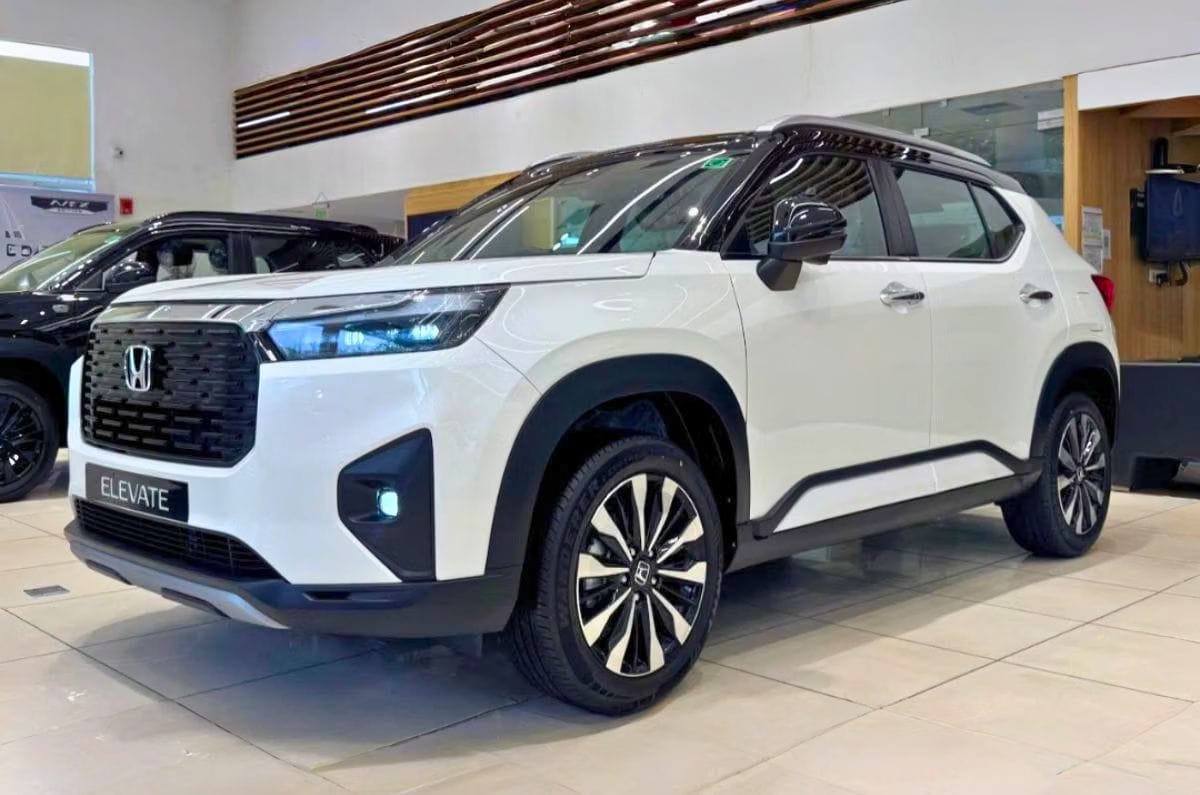
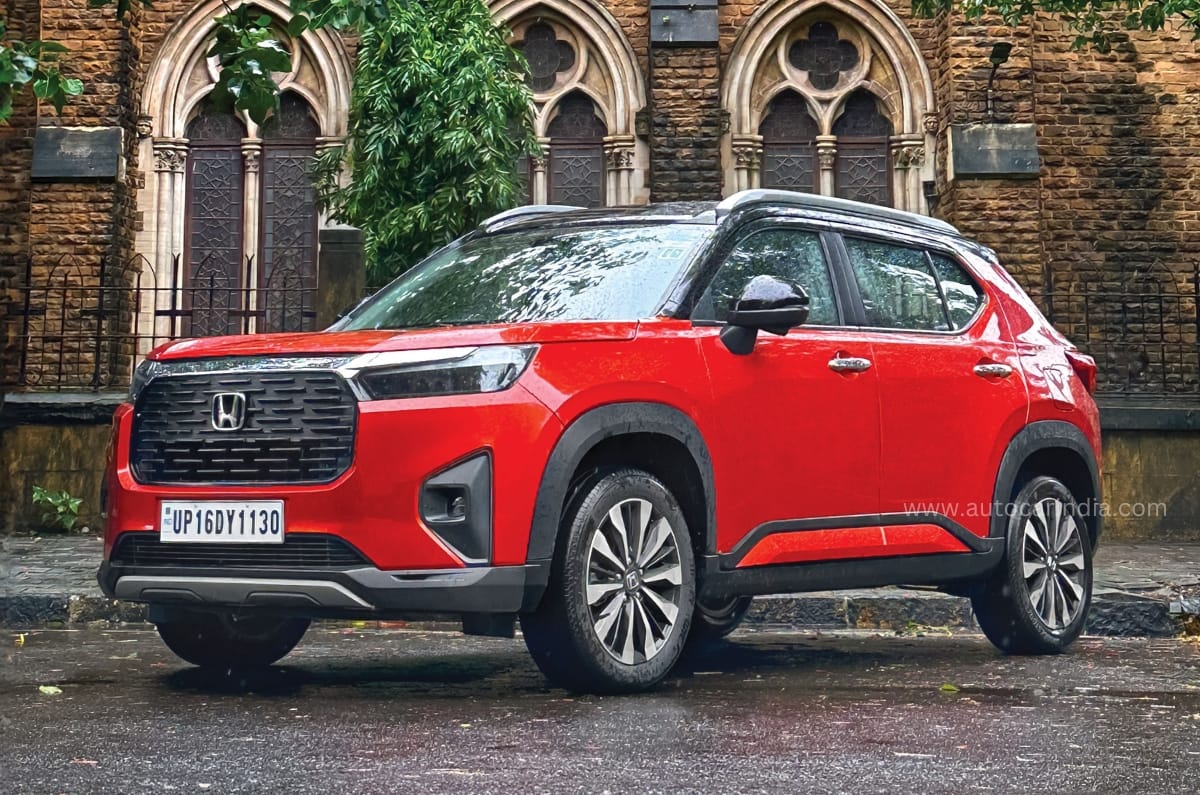
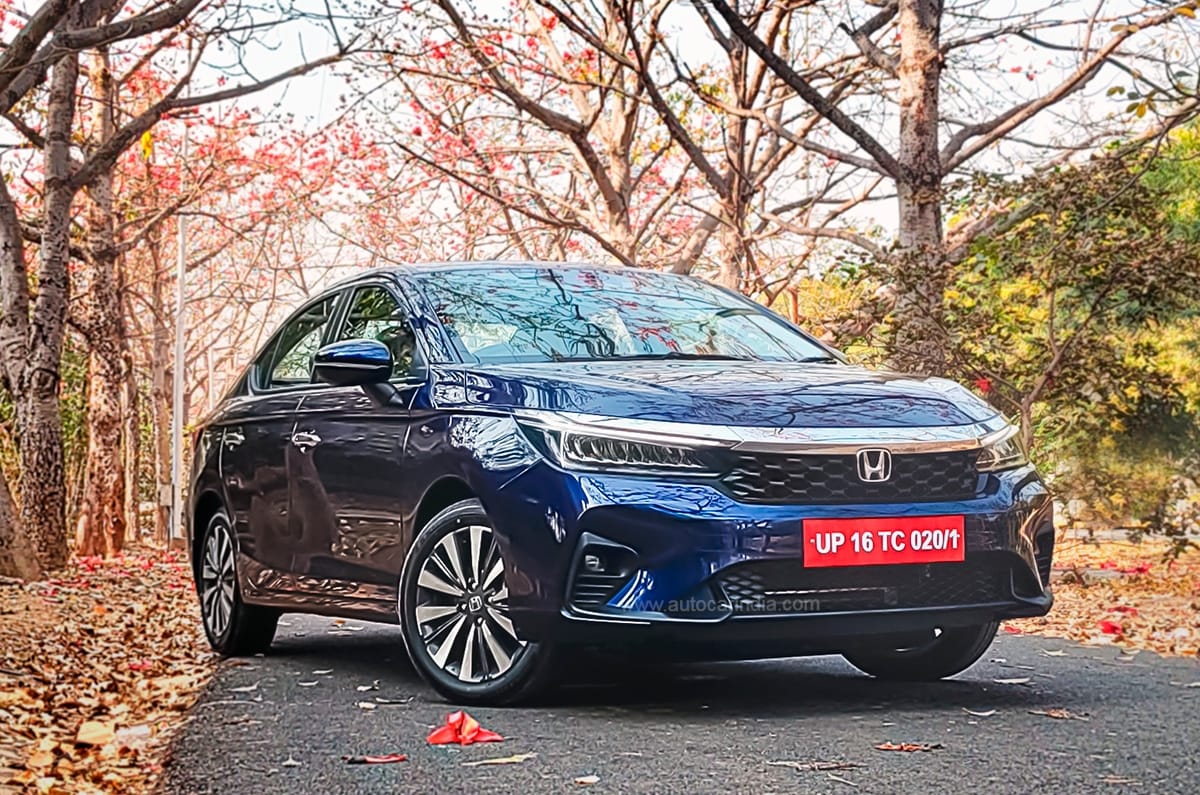
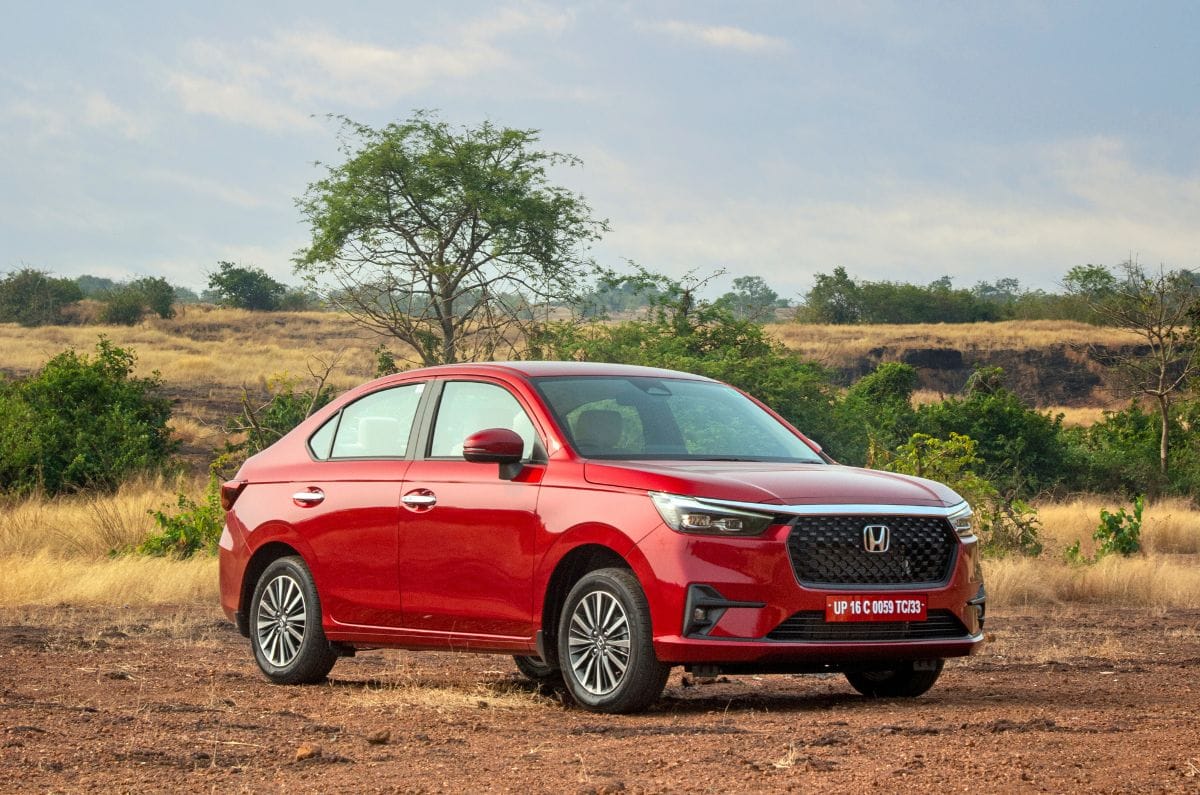
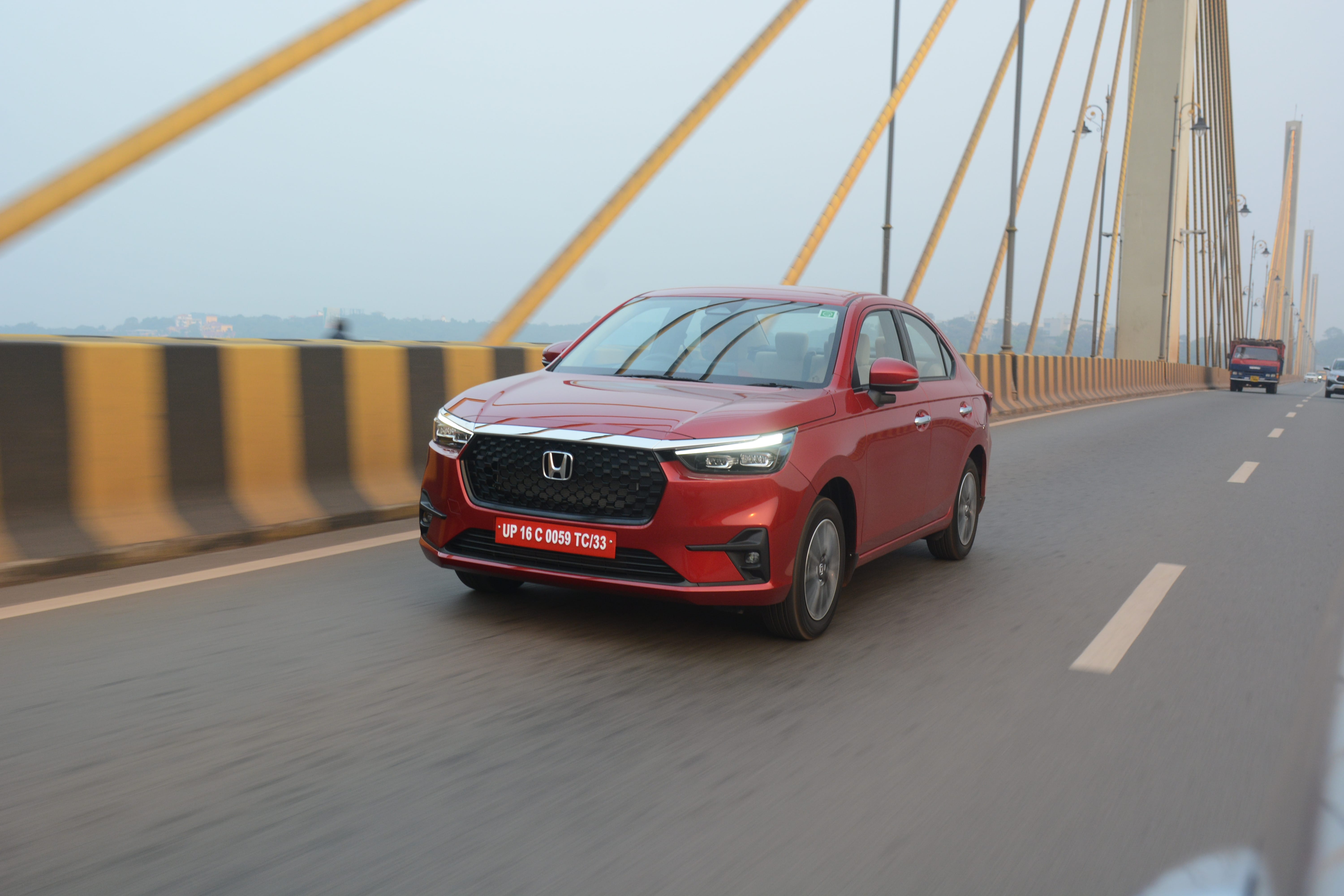
Honda has rolled out discounts for the Amaze, City and Elevate models for September 2026. Of the three, the schemes being offered on the Amaze and Elevate remain more or less the same compared to August 2026. That said, the Japanese automaker is providing higher discounts on the City than it did last month. Note that the offers mentioned here are valid from September 1 to September 30, 2026.
Loyalty and corporate benefits are the same for all three cars
50 percent discount on Honda’s extended 7-year warranty
The City is available with higher discounts this month
Disclaimer: Offers/benefits may vary by city and are subject to stock availability. Buyers are advised to check with their local dealer for exact figures.
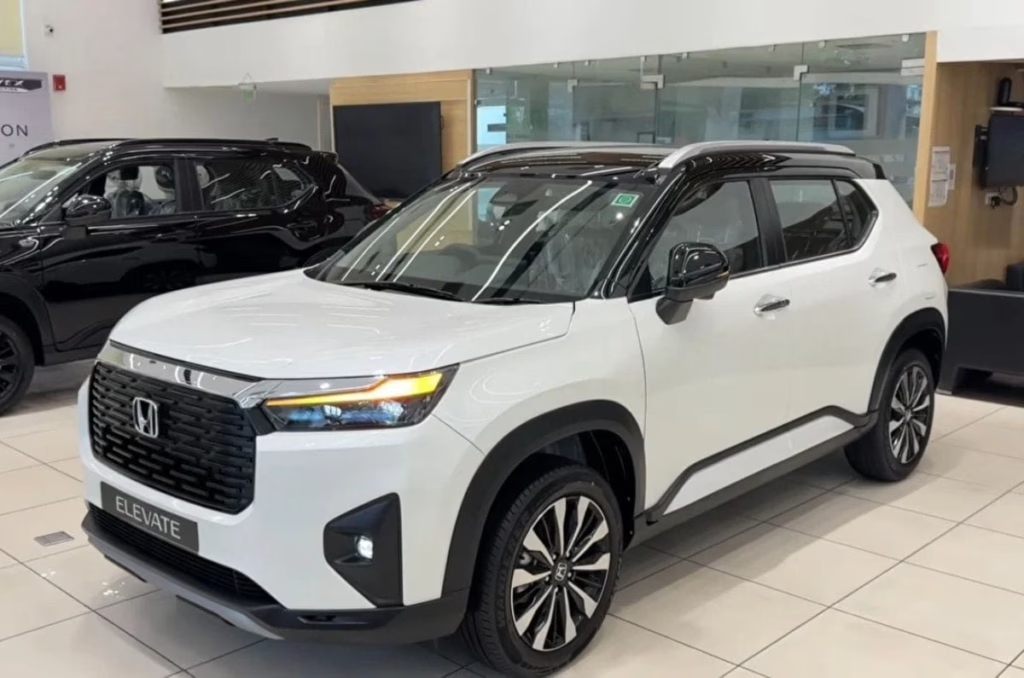
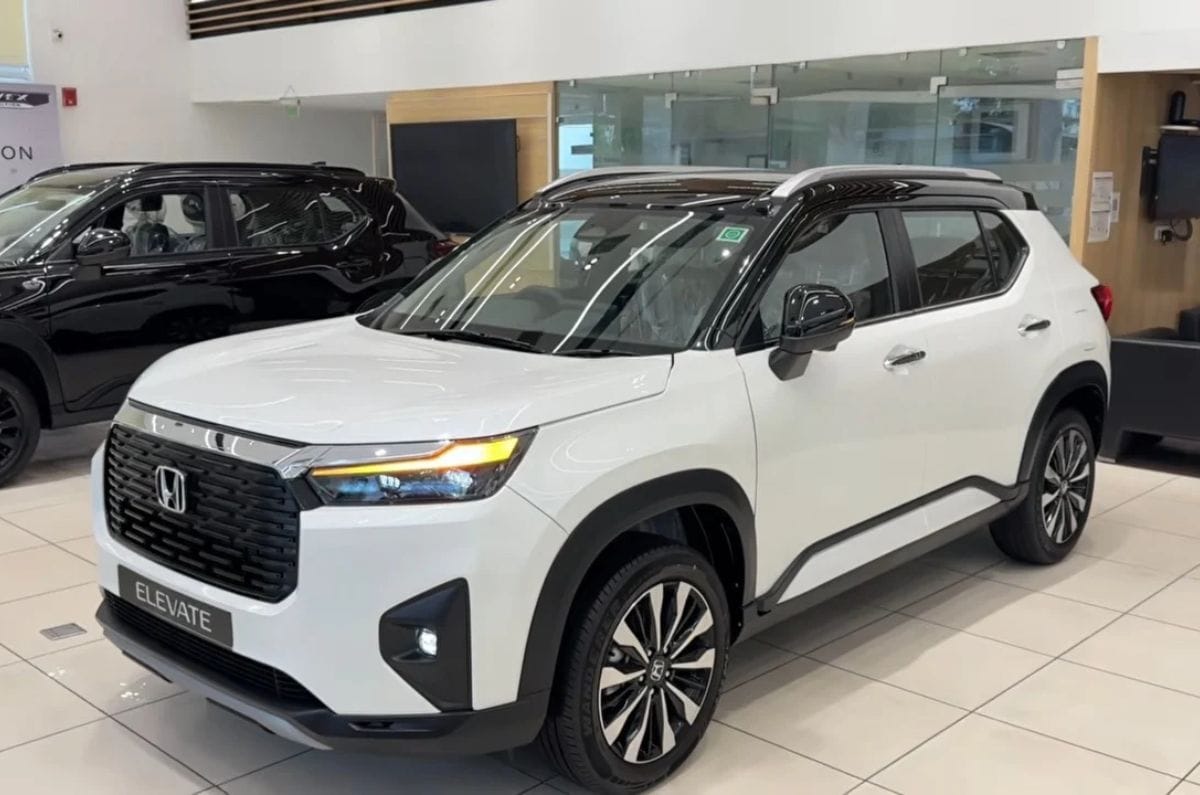
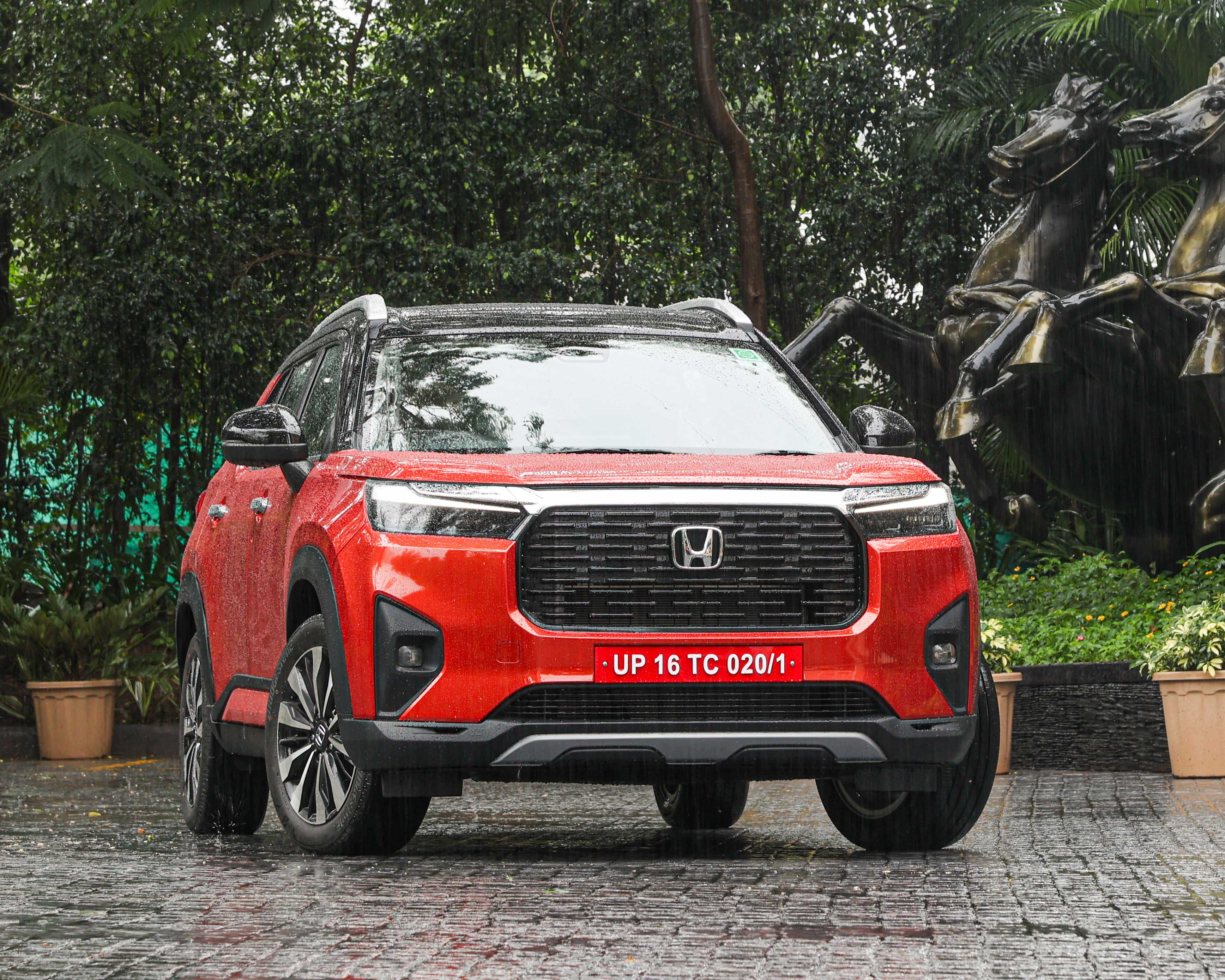
Honda Elevate offers in September 2026
Benefits of up to Rs 1.79 lakh
The Honda Elevate is available with discounts worth up to Rs 1.79 lakh this September, applicable for both MY25 and MY26 cars. These come in the form of cash discounts of up to Rs 60,000, loyalty benefits of Rs 4,000, corporate benefits of up to Rs 10,000 and exchange offers worth up to Rs 1.05 lakh. Honda is also providing buyers of the Elevate with an extended 7-year warranty at up to Rs 18,600, which is inclusive of a 50 percent discount. The price of the Honda Elevate ranges from Rs 11.81 lakh to Rs 16.78 lakh.
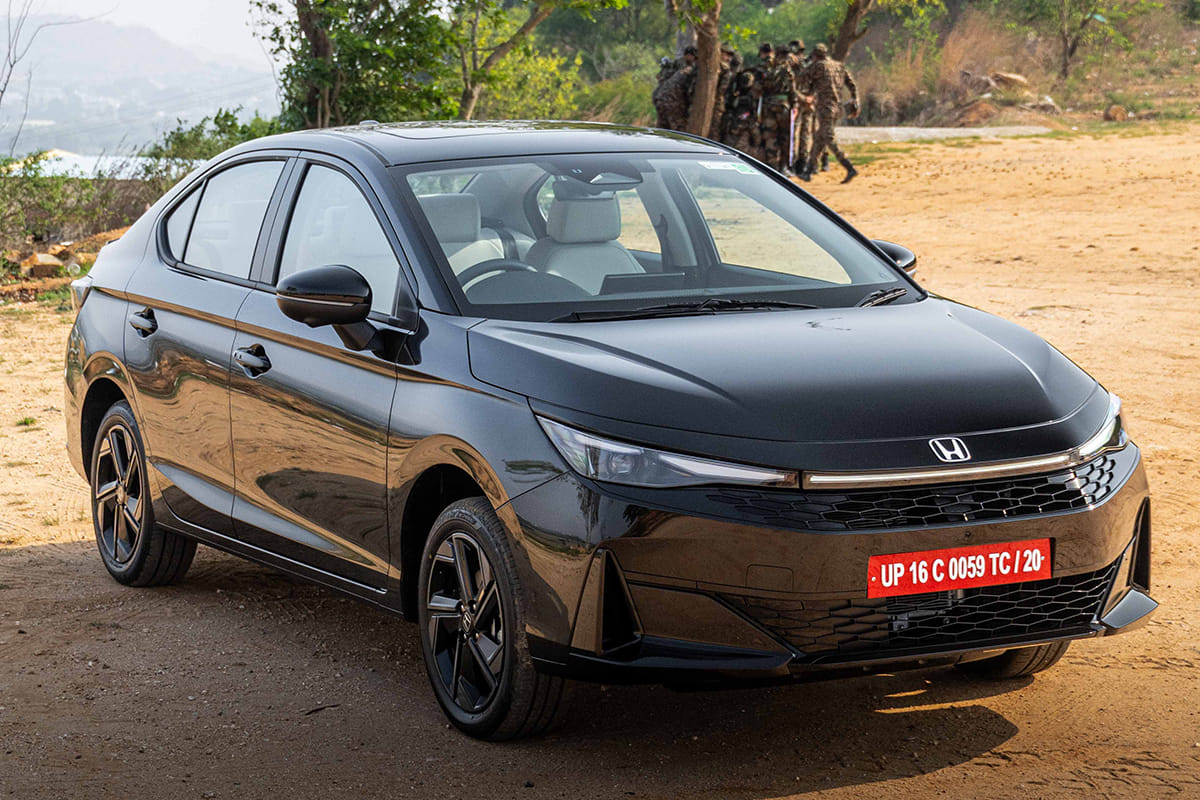
Honda City offers in September 2026
Benefits of up to Rs 1.30 lakh
The top-spec variants of the Honda City are being offered this month with discounts amounting to Rs 1.30 lakh. Customers can avail cash discounts worth up to Rs 60,000 and loyalty incentives of Rs 4,000. There are also exchange benefits worth up to Rs 56,000, while corporate discounts can go up to Rs 10,000. There’s also a 50 percent discount on the extended 7-year warranty, now costing Rs 16,900. The Honda City is priced from Rs 12.08 lakh to Rs 21.44 lakh.
Honda Amaze offers in September 2026
Benefits of up to Rs 50,000
Honda is offering discounts similar to those available last month on both the second-gen and third-gen Amaze in September 2026. Those opting for the former can avail consumer benefits worth up to Rs 40,000, alongside the brand’s extended 7-year warranty with a 50 percent discount, i.e., at Rs 14,600.
Select variants of the third-gen Amaze come with cash discounts of up to Rs 15,000, loyalty benefits of Rs 4,000 and corporate offers of up to Rs 10,000. Exchange bonuses of up to Rs 21,000 are also available. Meanwhile, the extended 7-year warranty is the same as that of the second-gen model. The price of the Honda Amaze second-gen model is from Rs 5.99 lakh to Rs 7.80 lakh while that of the third-gen Amaze is between Rs 7.65 lakh and Rs 10.00 lakh.
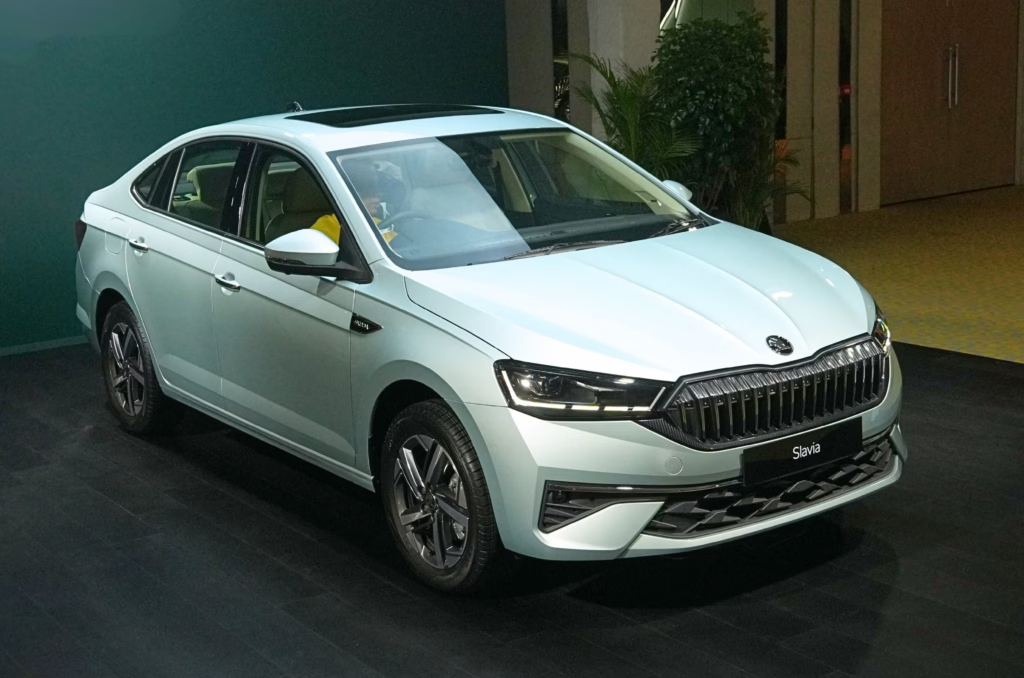
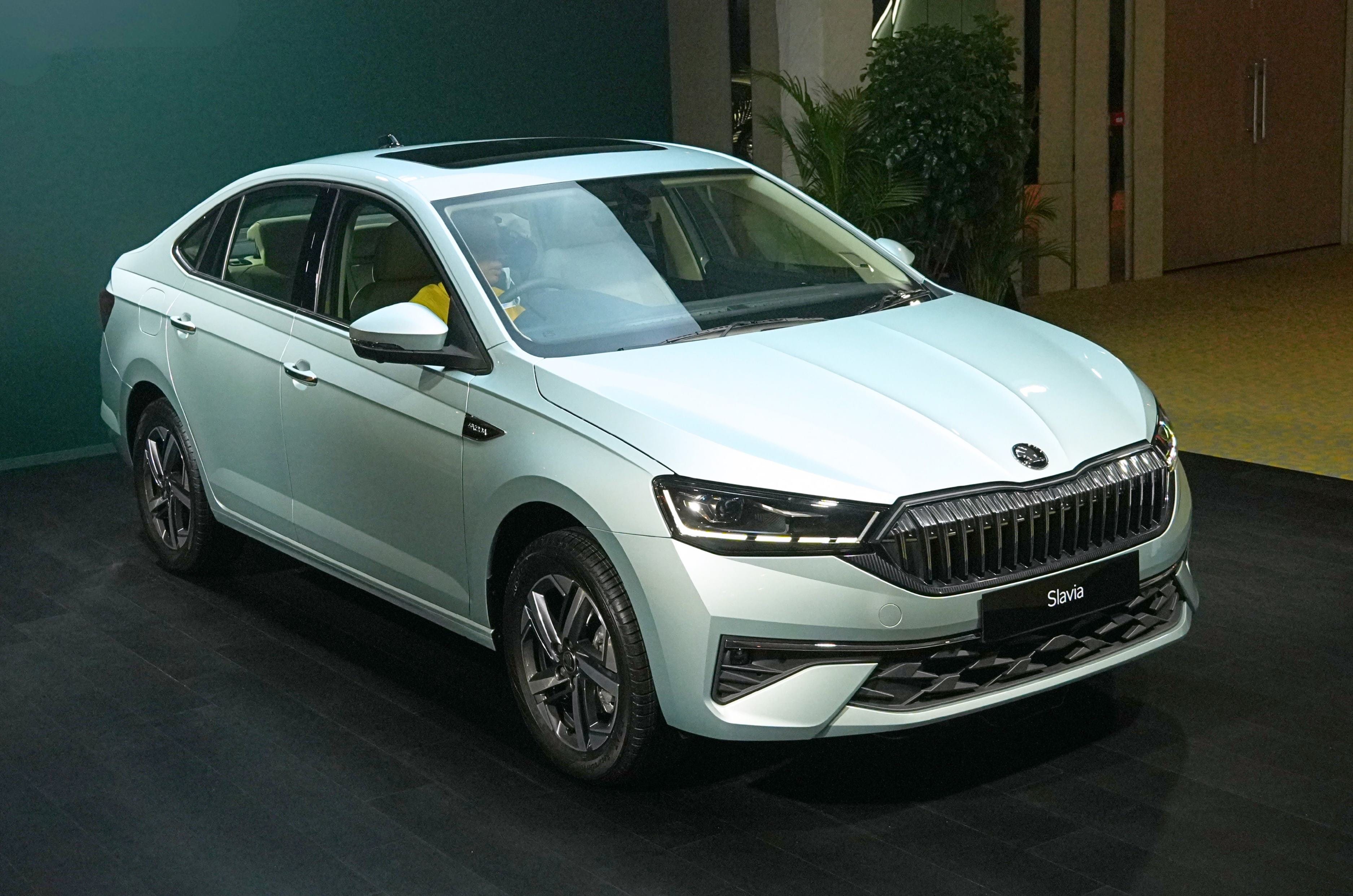
The much-awaited Skoda Slavia facelift has finally been revealed. The mid-lifecycle update brings several cosmetic changes and new features, along with an automatic gearbox upgrade for the 1.0 TSI petrol engine. The prices will be announced in the first week of October and pre-bookings for the Skoda sedan are underway. Meanwhile, deliveries will begin this festive season.
360-degree camera, LEDs integrated into the front grille have been added
Kushaq-like rear sear massaging function available as well
New 8AT option introduced for the 1.0 TSI mill instead of the 6AT unit
New Skoda Slavia exterior highlights
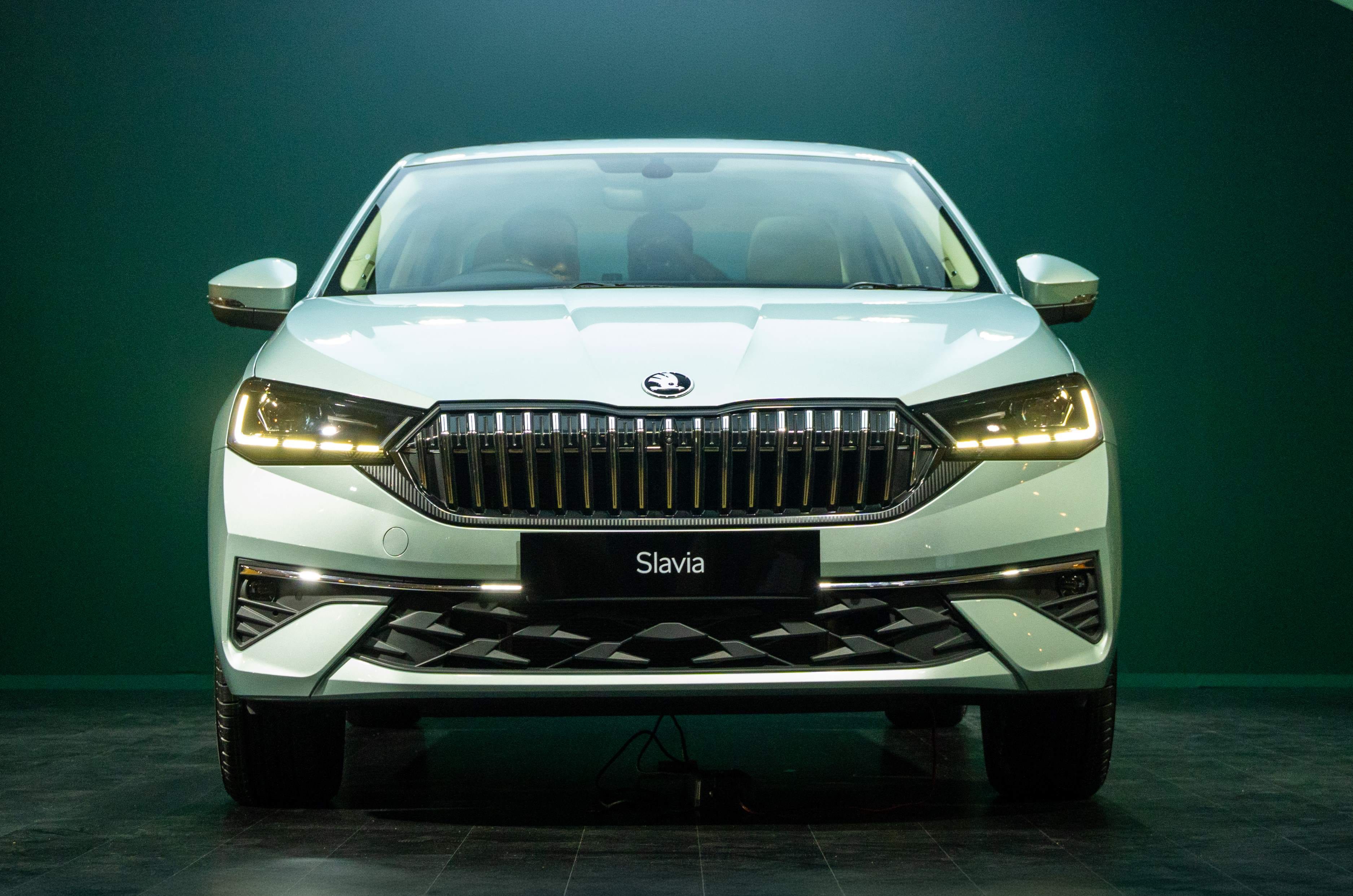
New LED DRL signatures and bumper grille come courtesy of the facelift.
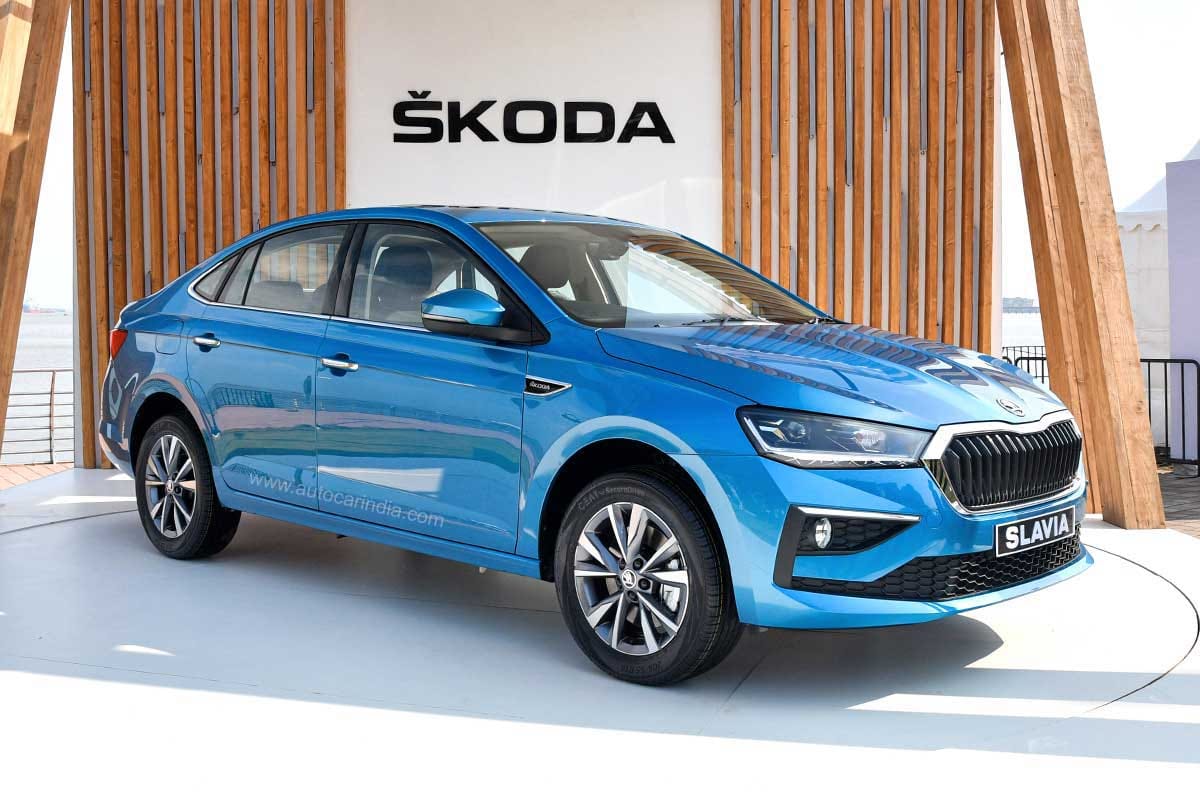
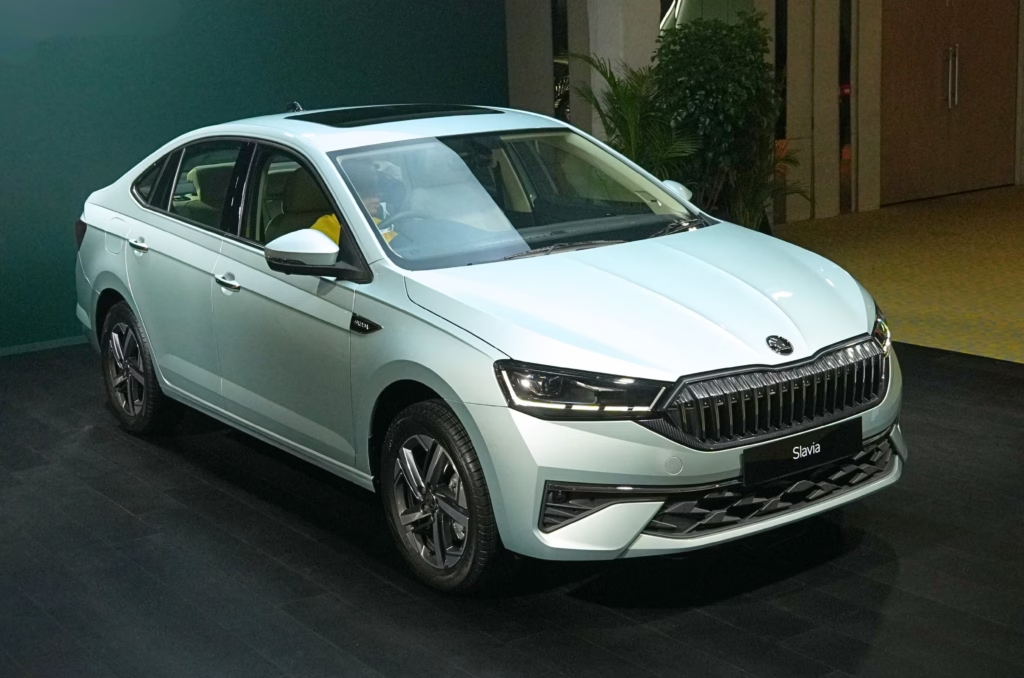
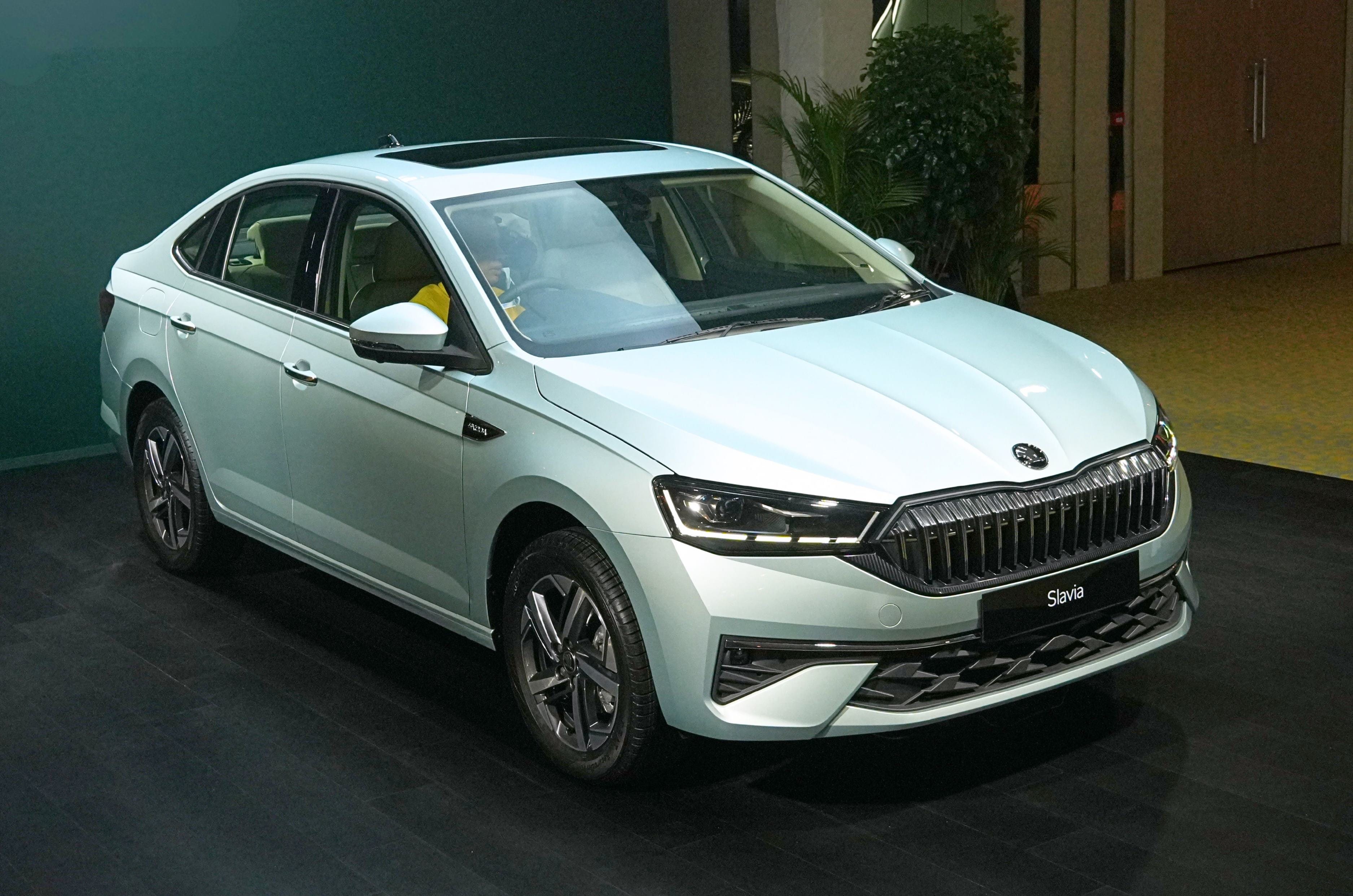
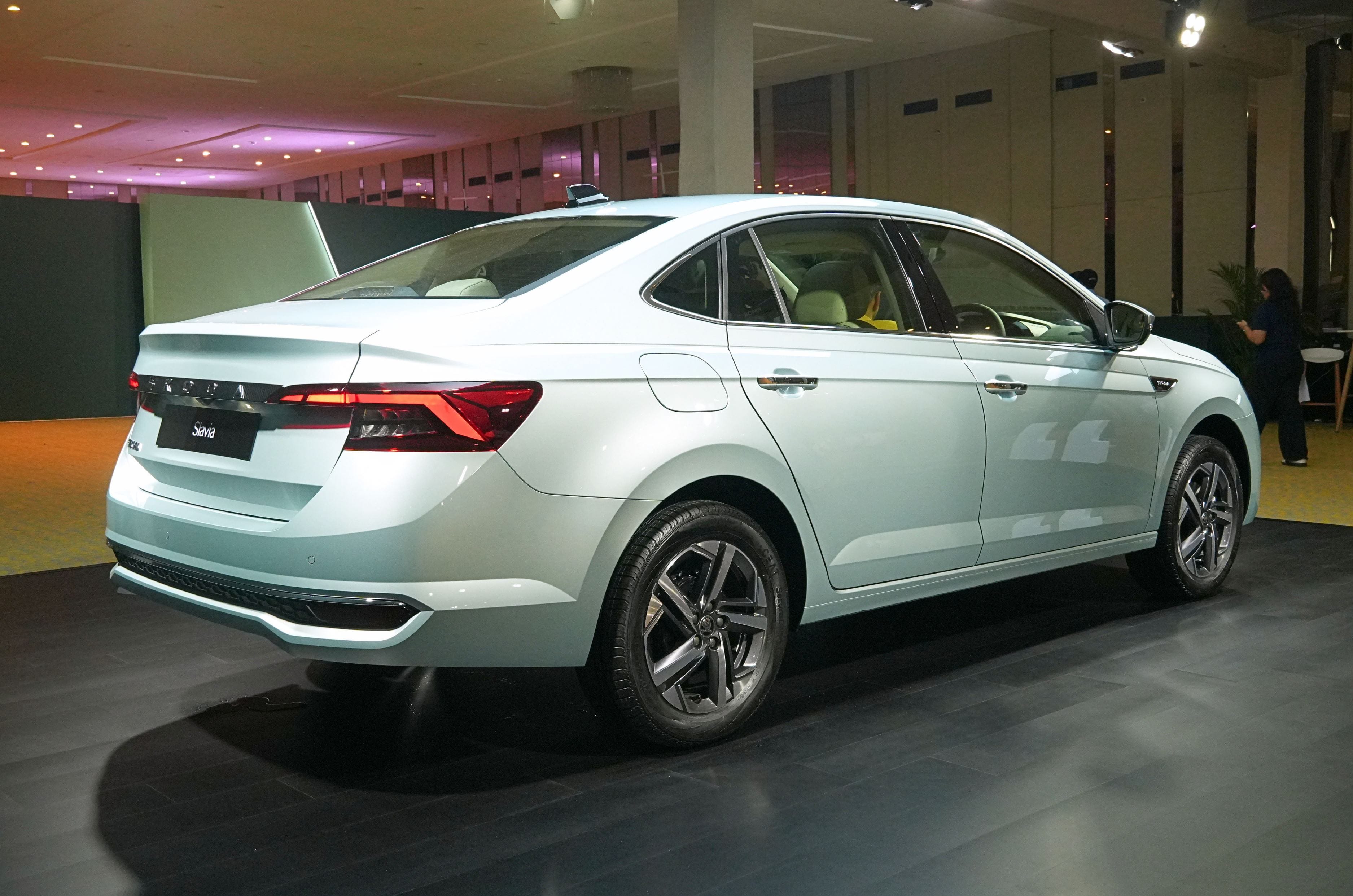
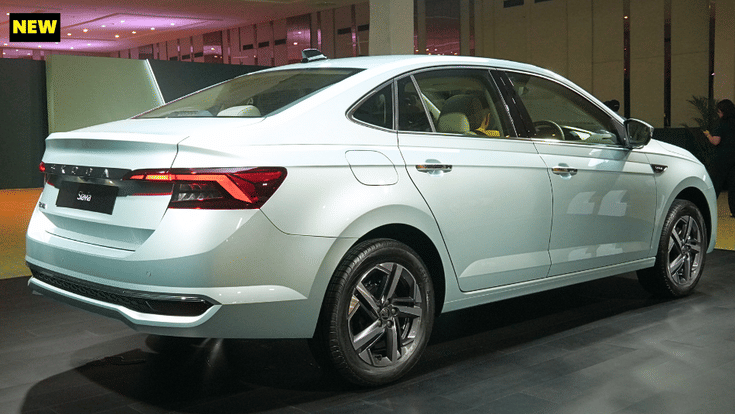
Being a facelift, the overall silhouette of the mid-size sedan has been carried over. Parts like the headlights, tail-lights, front grille and air dam, and alloy wheels have been refreshed. It also gets Skoda Kushaq-like segmented LEDs integrated into the grille and sequential turn indicators at the rear. A new trim between the tail-lights with the ‘SKODA’ lettering has also been added.
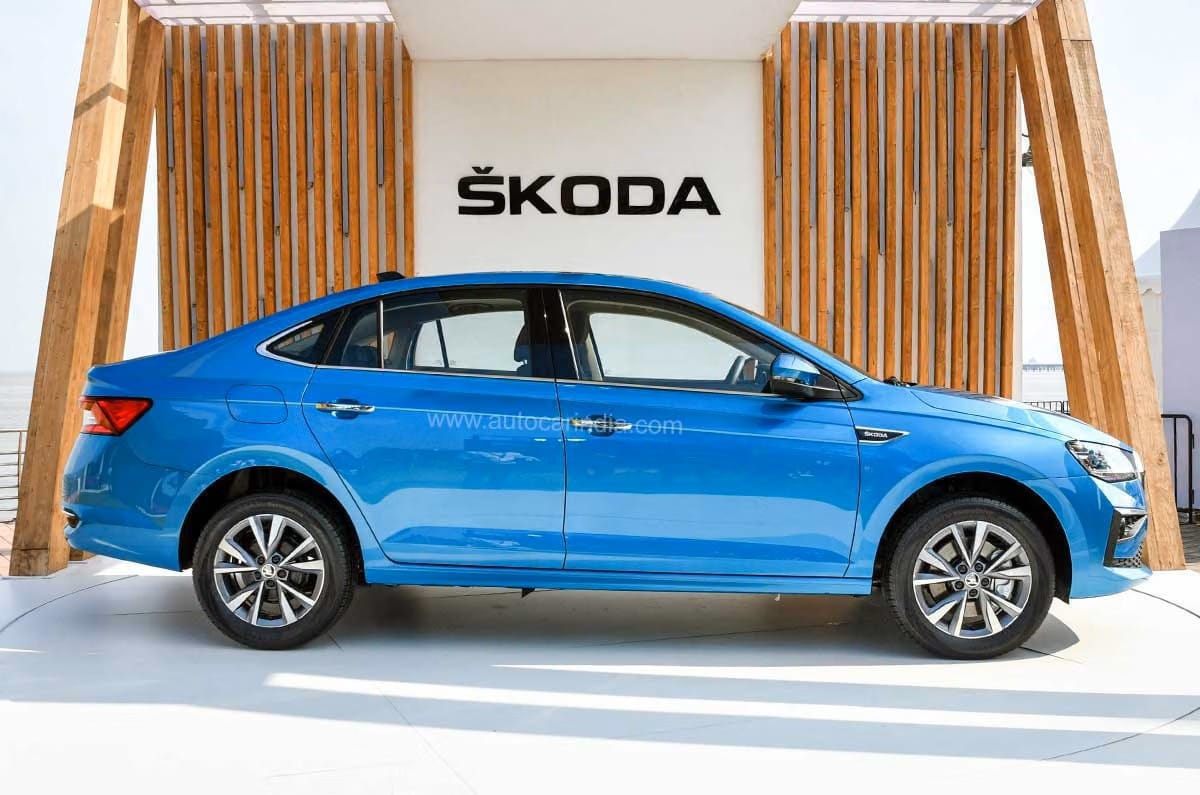
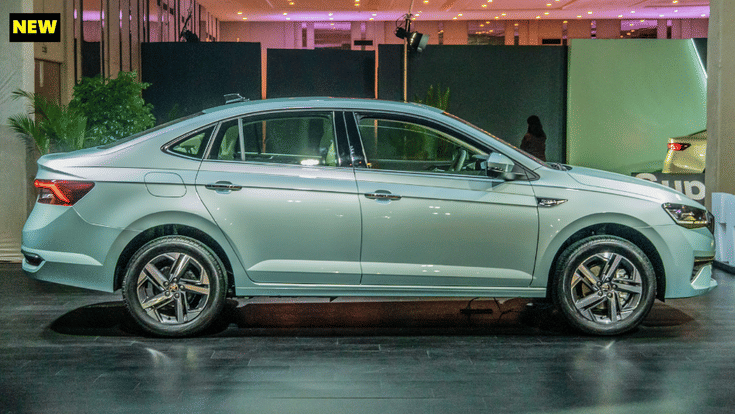
Side profile is largely unchanged.
Arctic Silver and Cappuccino Beige are among the new colours, however, deliveries for the latter will only start from December. Other colour option on offer are Shimla Green, Brilliant Silver, Candy White, Carbon Steel, Steel Grey, Lava Blue, Cherry Red and Deep Black.
New Skoda Slavia interior features
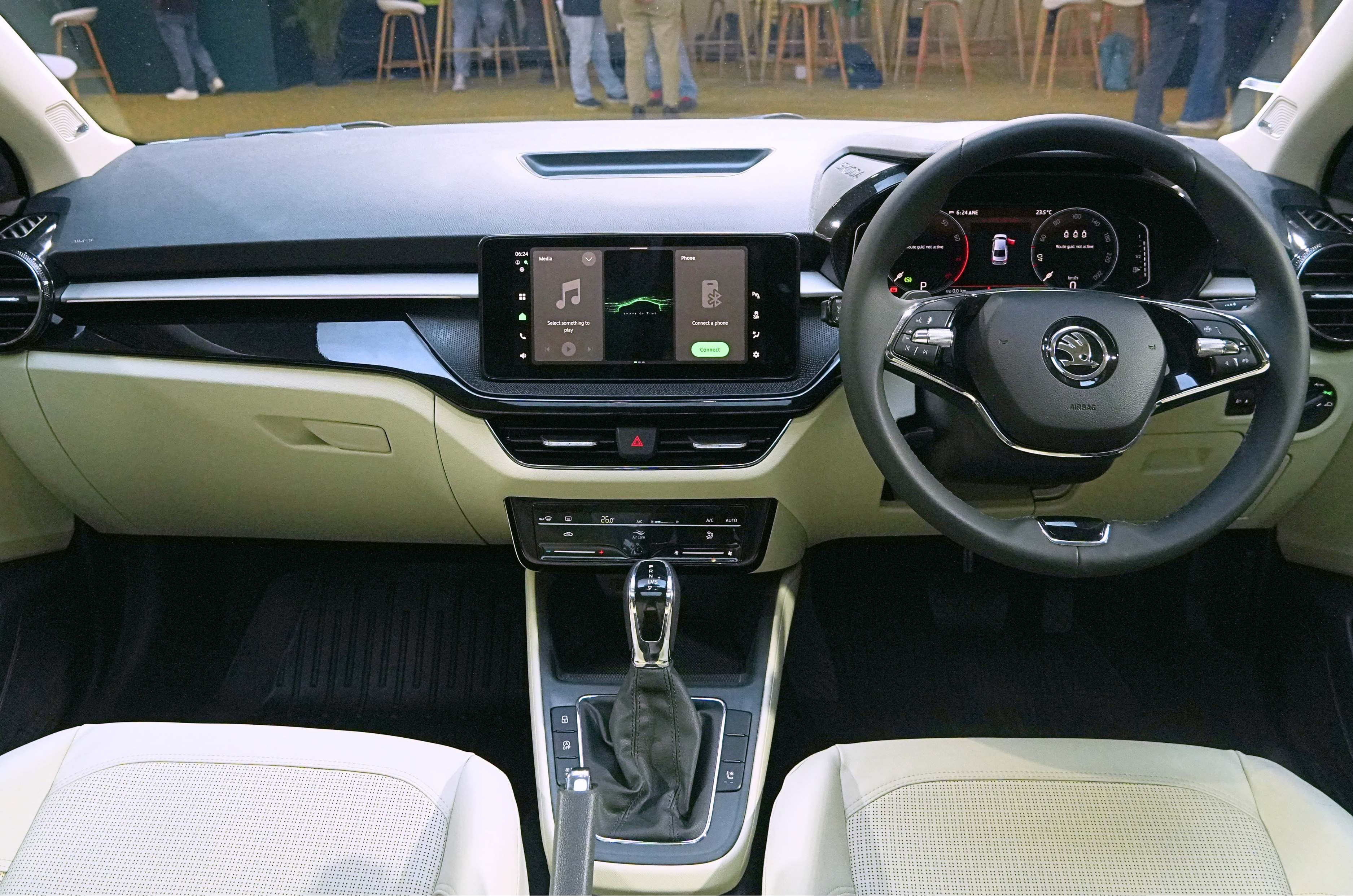
The interior layout has been carried over.
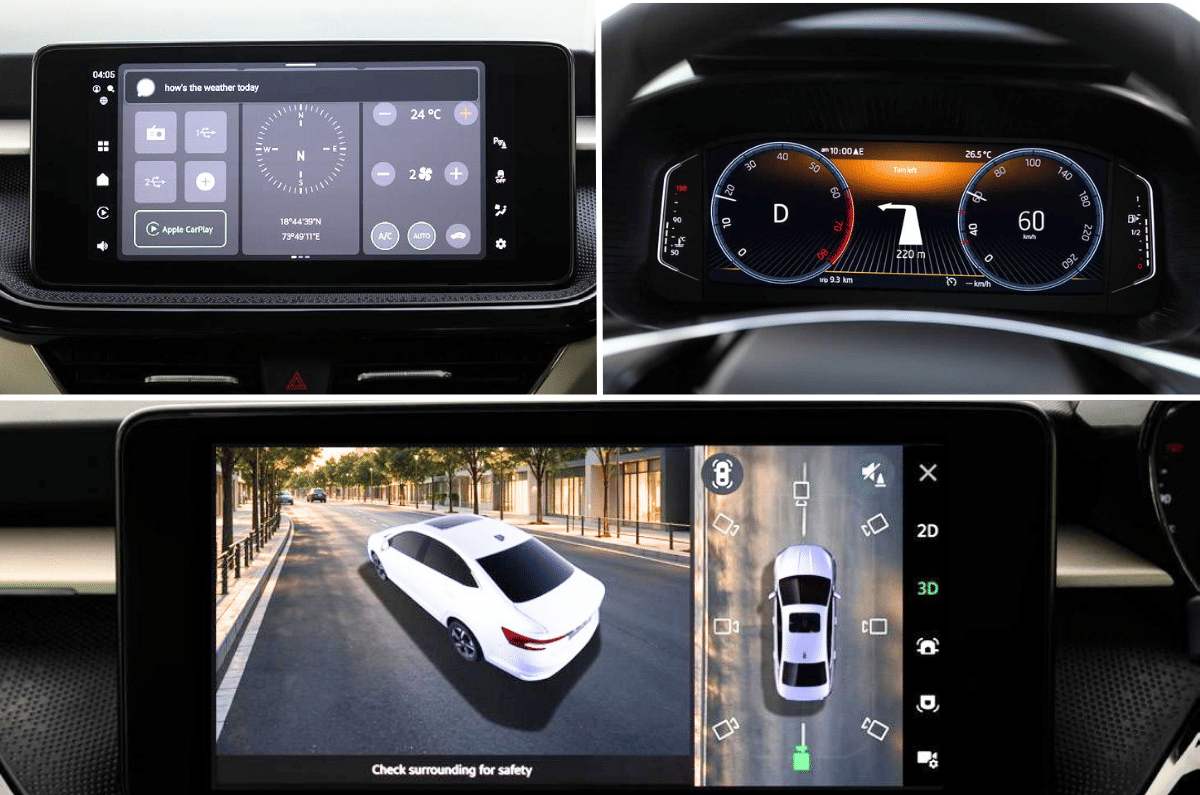
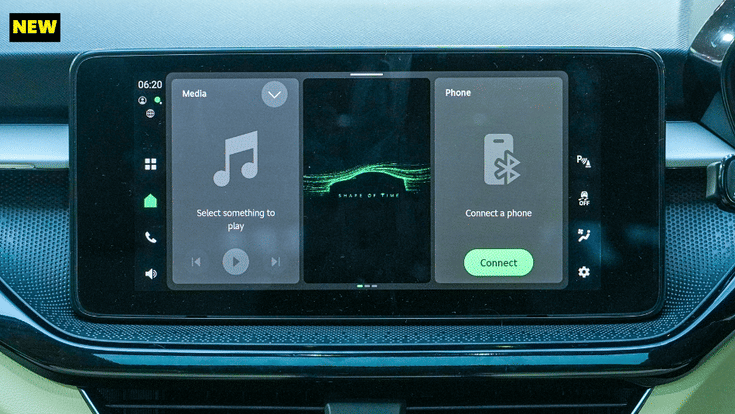
The Slavia facelift gets a segment-first rear-seat massaging function. It also gets larger screens, with a 10.1-inch touchscreen replacing the erstwhile 10-inch unit, while a 10.25-inch driver’s display has been added in place of the 8-inch unit. Both of them come with new graphics and features. A panoramic sunroof is still not part of the package, and it continues with a single-pane unit.
Top: 10.1 inch touchscreen (L), 10.25 inch driver’s display (R); bottom: 360-degree camera view.
A 360-degree camera replaces the previous rear-only unit and like the Kushaq; however, an ADAS suite remains absent.
New Skoda Slavia engine and gearbox choices
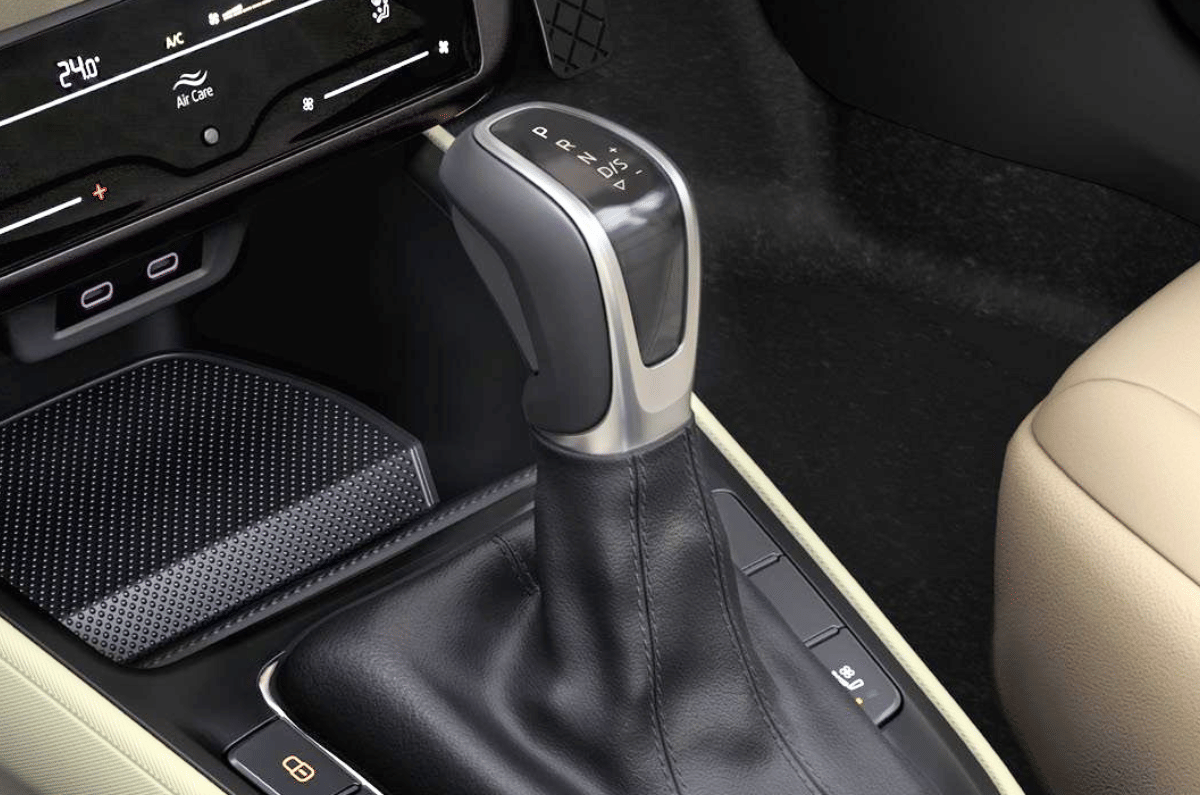
New 8-speed torque converter gearbox replaces the 6-speed unit.
The 2026 Slavia continues with the familiar set of 115hp 1.0 TSI and 150hp 1.5 TSI turbo-petrol engines. The 1.0 TSI gets a 6-speed manual, while the 1.5 TSI continues with a 7-speed dual-clutch automatic. The key change is to the 1.0 TSI automatic, which now is an 8-speed torque-converter unit instead of the earlier 6-speed gearbox.
With this update, Skoda aims to keep the Slavia competitive against the Hyundai Verna and Honda City, both of which received facelifts earlier this year. Meanwhile, the Volkswagen Virtus is likley to get an update later this year. The outgoing Slavia is priced between Rs 10 lakh and Rs 18.19 lakh, ex-showroom. With the facelift, a price hike of up to Rs 85,000 is likely.
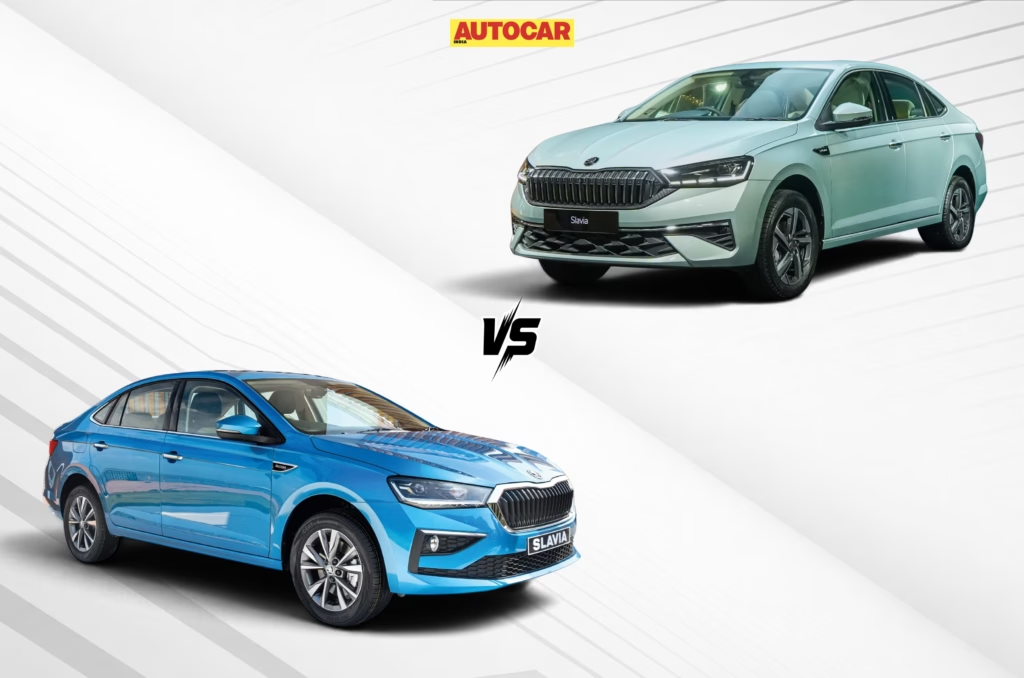
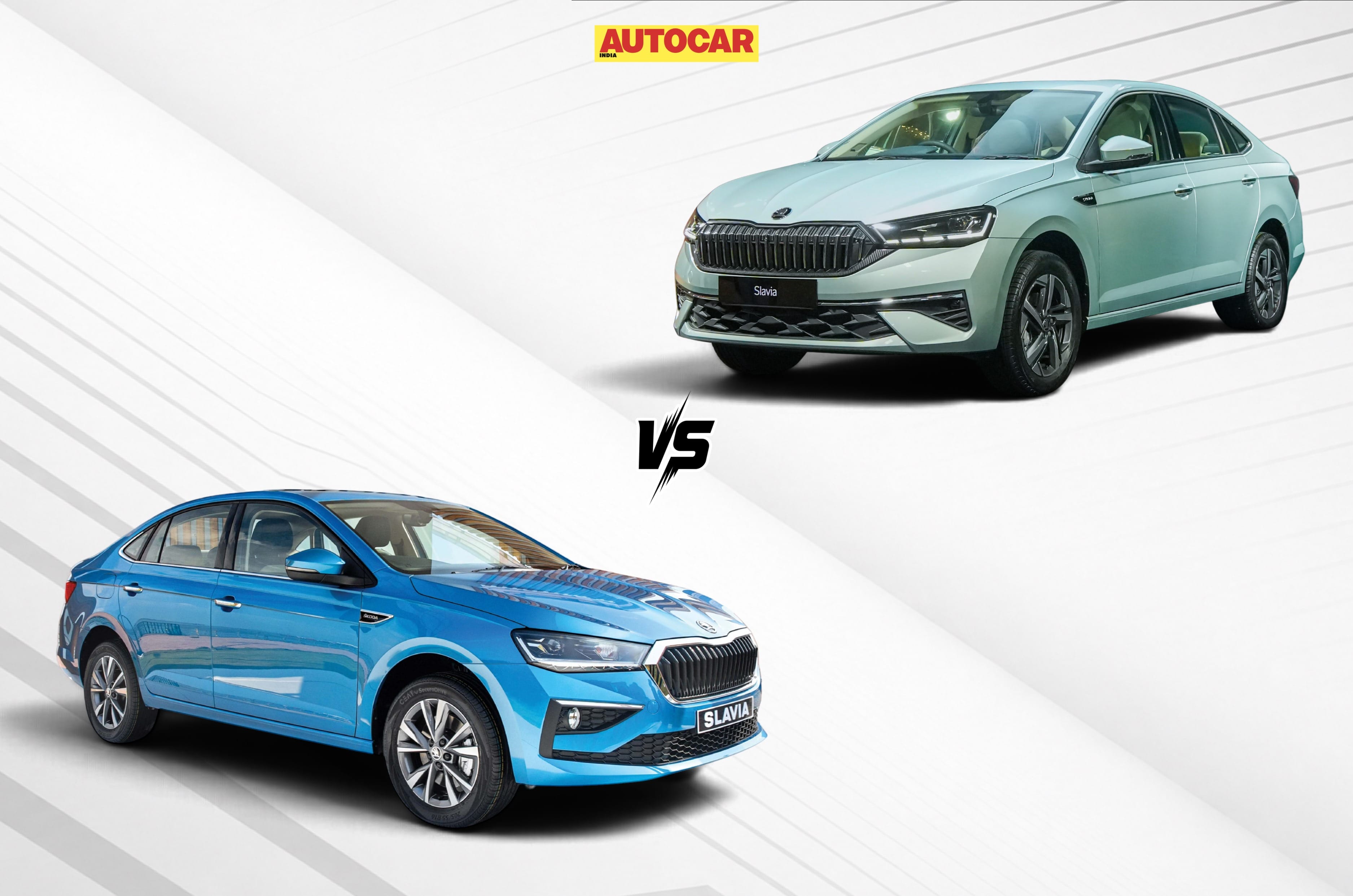
It took Skoda three and a half years to bring the first facelift of the Slavia to market. However, with this mid-cycle update, the Czech carmaker has introduced minor cosmetic tweaks and added a few new features to its midsize sedan. Furthermore, the Skoda Slavia facelift has hit showrooms ahead of the updated Volkswagen Virtus. The Slavia’s competition also includes the Honda City and Hyundai Verna. Without further ado, here are some of the differences and similarities between the old and new Skoda Slavia.
Skoda Slavia new vs old: Exterior design
Changes on the outside are limited to updated bumpers and light signatures
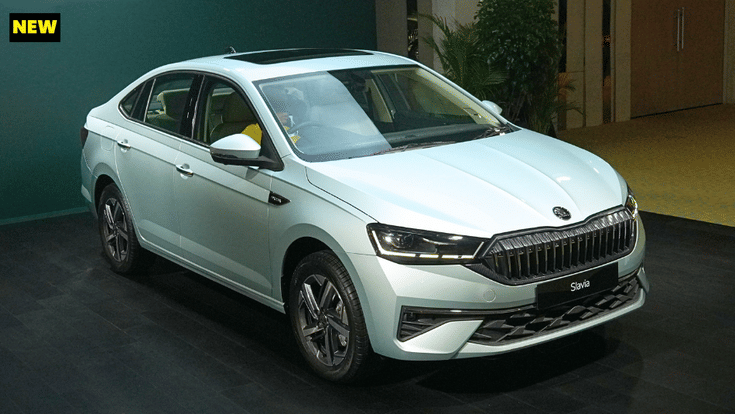
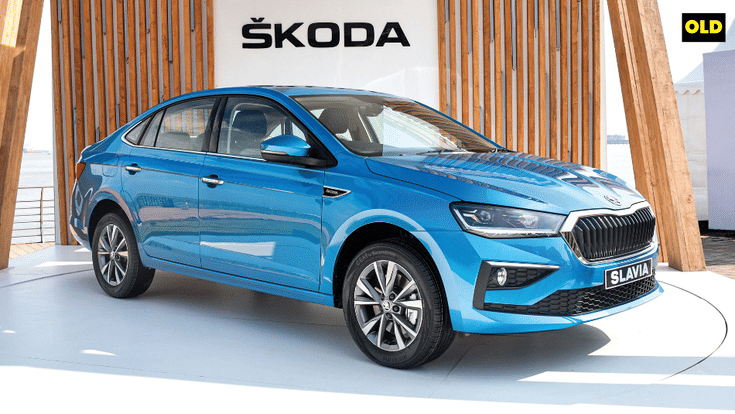
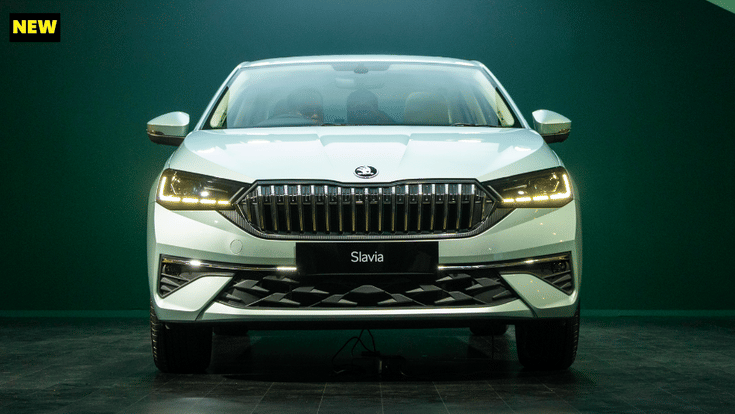
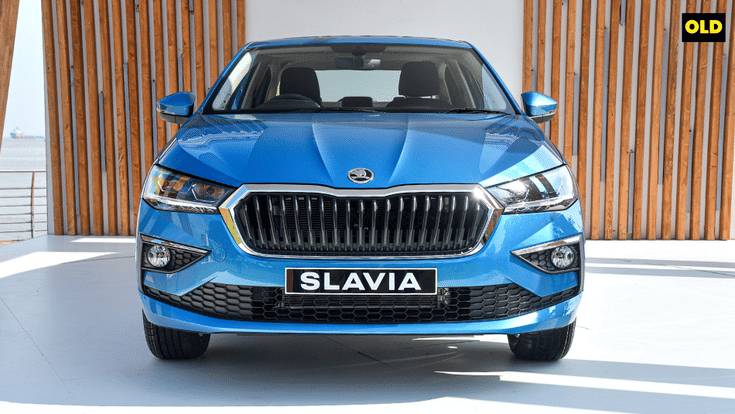
The front of the Skoda Slavia now gets a new bumper with a shiny piece of trim running its full width and small LED fog lamps. The design of the grille hasn’t changed but its chrome surround has been removed in favour of two different black bars. While the shape of the headlamp housing is the same as before, the internals have been revised – the daytime running signatures are different too.
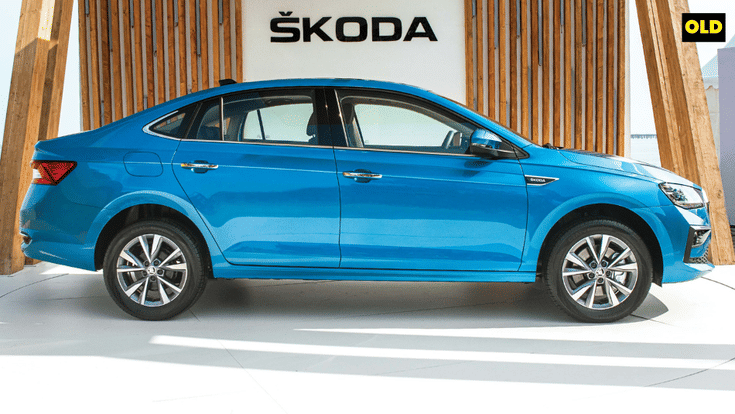
Viewed from the side, the new Slavia carries forward the same silhouette and overall proportions as its predecessor. Details such as the beltline, chrome lining along the windowline, and the ‘Skoda’ plaque above the front fenders remain. However, what has changed is the design of the 16-inch alloy wheels, which now look more bold and sport a two-tone finish.
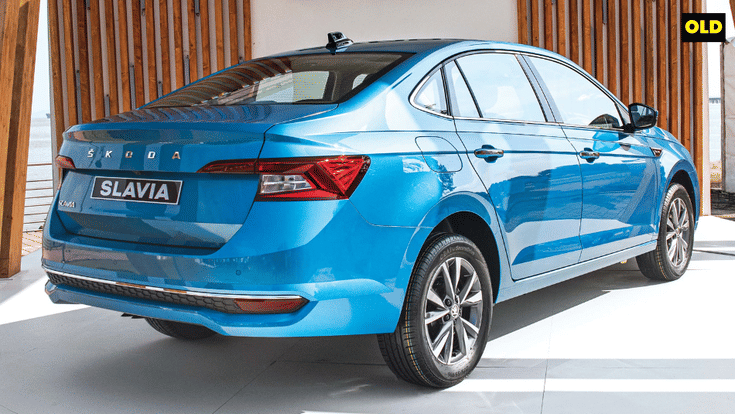
Similar to the front, the lights at the back of the new Slavia feature the same housing as the old model. However, Skoda has tweaked the internal LED elements of the tail-lamps. Compared to the old Slavia that had a prominent ‘SKODA’ lettering across its bootlid, the new model features a piece of plastic trim with the brand name spelled on it. The rear bumper hasn’t been revised in any significant way, though. However, the Slavia does come in two new colours: Arctic Silver and Cappuccino Beige.
Skoda Slavia new vs old: Interior design
The facelift brings a couple of notable updates to the interior over the old model
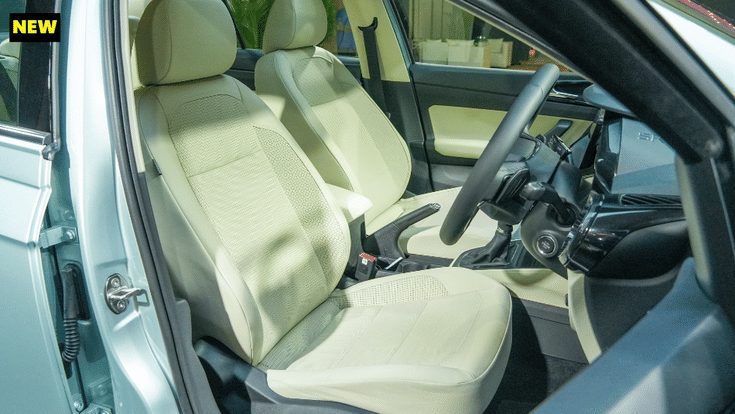
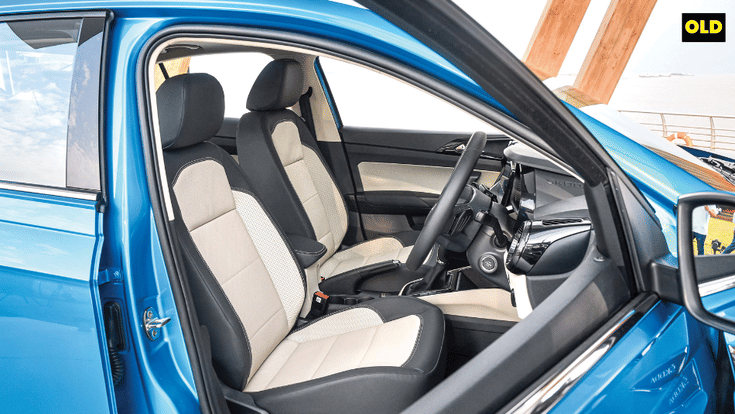
Where the top-spec of the old model offered a beige & black dual-tone leatherette seats, the new Slavia gets fully beige seats. The design of these seats don’t appear to have changed with this facelift, but they do get a new pattern now.
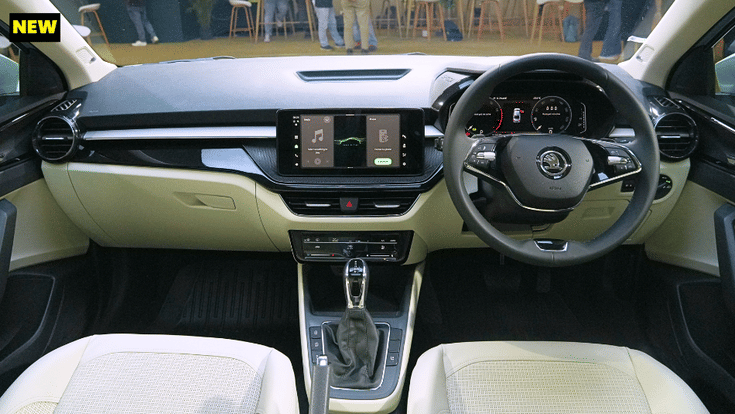
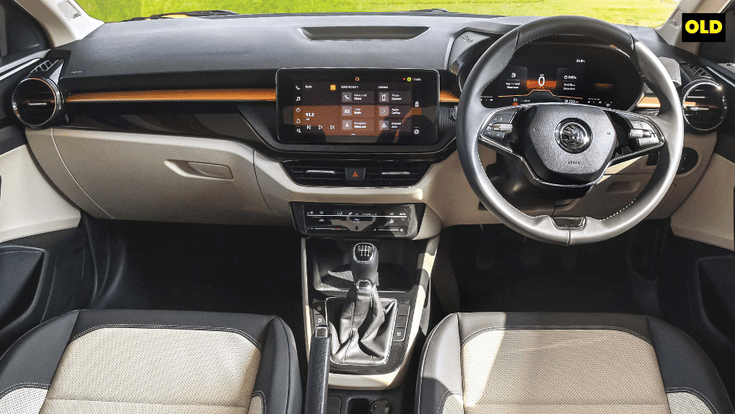
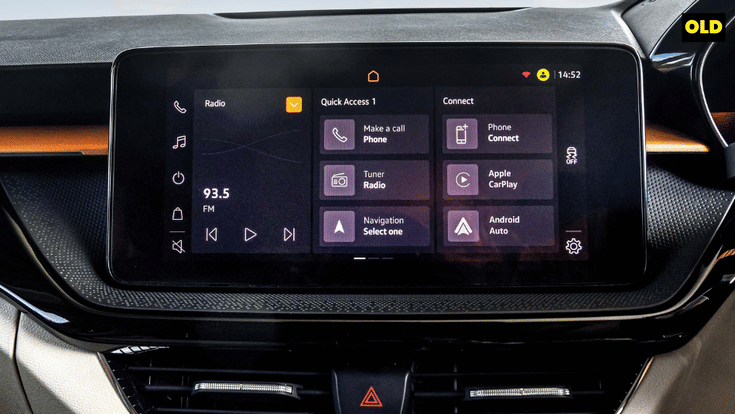
Shifting focus to the dashboard, the new Skoda Slavia is available with a 10.25-inch digital instrument cluster – the old model’s unit maxed out at 8 inches. The infotainment screen has also grown larger by the slightest of margins – from 10 inches to 10.1 inches. The new infotainment system also offers a built-in AI assistant powered by Google Cloud, while the feed from the Slavia’s new 360-degree camera is also displayed on this screen. Finally, the outer seats at the back are now available with a massaging function.
Features such as a cooled glovebox, powered & ventilated front seats, an electric sunroof, wireless Apple CarPlay & Android Auto, automatic climate control, LED ambient lighting, 6 airbags, electronic stability control, hill-hold control and a tyre-pressure monitoring system are offered with both models.
Skoda Slavia new vs old: Engine and gearbox
Engine options remain the same, but a new gearbox comes aboard
The new Skoda Slavia gets the same engine options as its predecessor. The 1.0-litre direct injection three-cylinder turbo-petrol engine makes 115hp and 178Nm, whilst the 1.5-litre direct injection four-cylinder turbo-petrol mill outputs 150hp and 250Nm. While the smaller motor gets a 6-speed manual transmission as standard, it can now be had with an 8-speed torque-converter automatic gearbox. Like before, the larger engine is only available with the 7-speed dual-clutch automatic transmission.
The old Skoda Slavia has been available in Classic, Signature, Sportline, Prestige and Monte Carlo trims. However, there’s now a new Classic+ option as well – slotted between Classic and Signature trims.
The Skoda Slavia facelift comes with a few design tweaks, a new trim level and a couple of new convenience features. Skoda’s midsize sedan continues to compete against the VW Virtus, Honda City and Hyundai Verna. The Slavia facelift continues to be offered with the same 1.0 TSI and 1.5 TSI direct injection turbo-petrol engines, with the former available with a 6-speed manual or a new 8-speed automatic transmission. On the other hand, the larger four-cylinder engine is only offered with a 7-speed dual-clutch automatic gearbox.
Skoda is set to give the Slavia a mid-life update, over four years after it first went on sale in February 2022. It will be the second Skoda model to receive a major update this year, following the Kushaq facelift. From expected pricing and engine options to the new features it could pack, here’s everything we expect from the updated Skoda Slavia.
What new features will the Skoda Slavia facelift add?
Current Skoda Slavia’s interior shown for representation only.
Several new features that were introduced with the 2026 Kushaq could make their way to the Slavia, such as a rear-seat massaging function and sequential turn indicators. The current 10.1-inch touchscreen and 10.25-inch driver’s display are likely to be replaced with larger units featuring new graphics and features. A 360-degree camera upgrade over the presently on offer rear-only unit can also be expected. Like the Kushaq, a variable-displacement compressor instead of the fixed-displacement unit could also be offered with the new Slavia to improve AC performance.
What cosmetic updates are likely with the Skoda Slavia facelift?
Being a facelift, one can expect design tweaks to the illumination bits, including headlights, tail-lights, front grille and alloy wheels. Kushaq-like segmented LED DRLs integrated into the front grille are anticipated, and new colours could also be introduced. On the inside, the overall layout is not likely to undergo any changes with the mid-lifecycle update.
How many engine choices will the Skoda Slavia facelift offer?
Both the 115hp-1.0 TSI and 150hp-1.5 TSI turbo-petrol engine options are expected to be carried over. Like the current car, the facelift may continue to offer a 6-speed manual gearbox with the smaller engine and a 7-speed dual-clutch automatic unit with the larger, more powerful motor. However, the 6-speed torque converter automatic transmission option offered with the Slavia 1.0 TSI will be upgraded with an 8-speed unit, something that we have exclusively reported before.
What is the Skoda Slavia facelift’s expected price?
Current Skoda Slavia.
Being an update, a slight price increase across trims is likely. For reference, the current Slavia starts at Rs 10 lakh and goes up to Rs 18.19 lakh, ex-showroom. The Skoda Slavia goes directly against the Volkswagen Virtus (Rs 10.70 lakh-19.20 lakh), Honda City (Rs 12 lakh-21.44 lakh) and Hyundai Verna (Rs 10.99 lakh-18.26 lakh), the latter two of which received facelifts earlier this year.
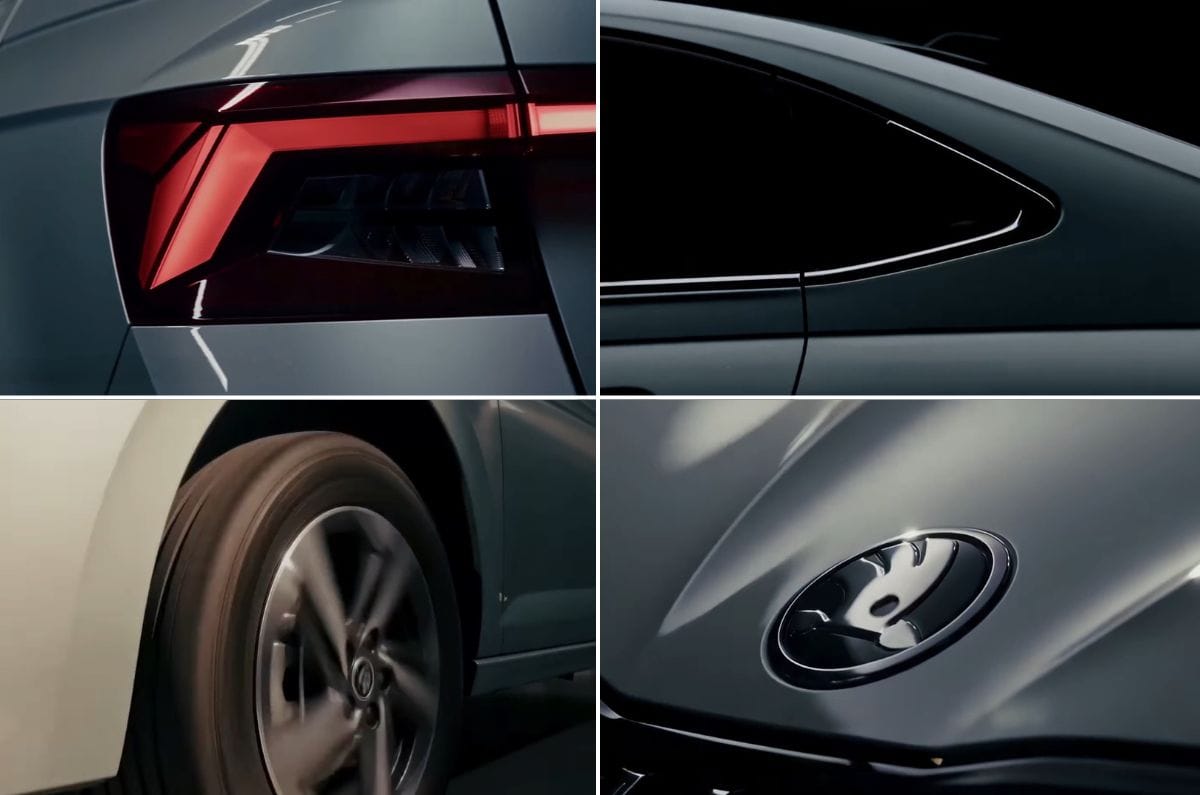
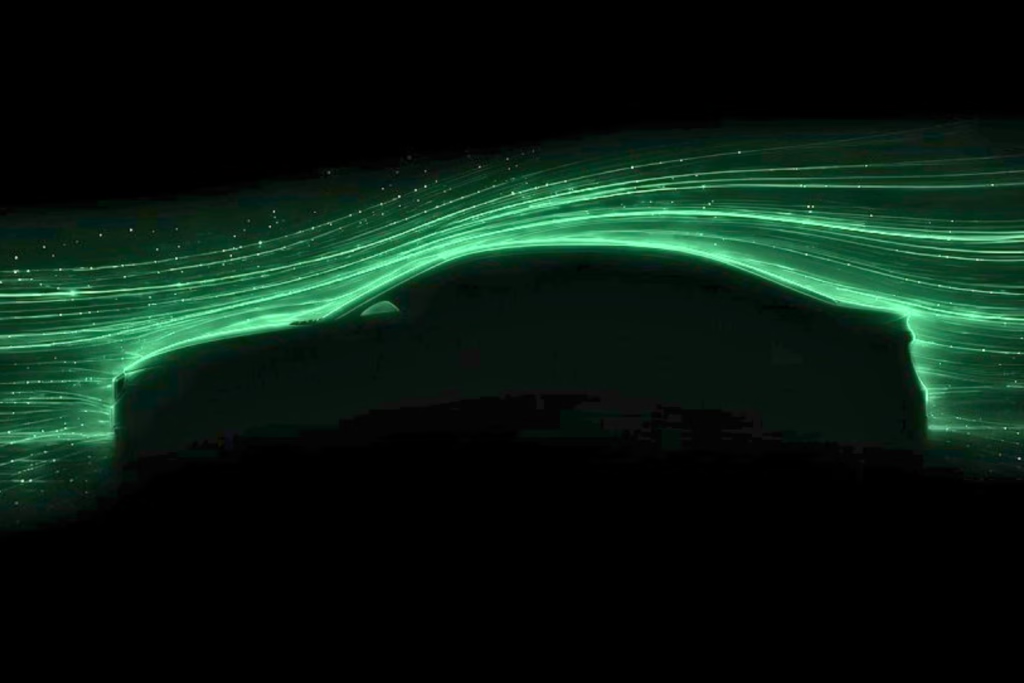
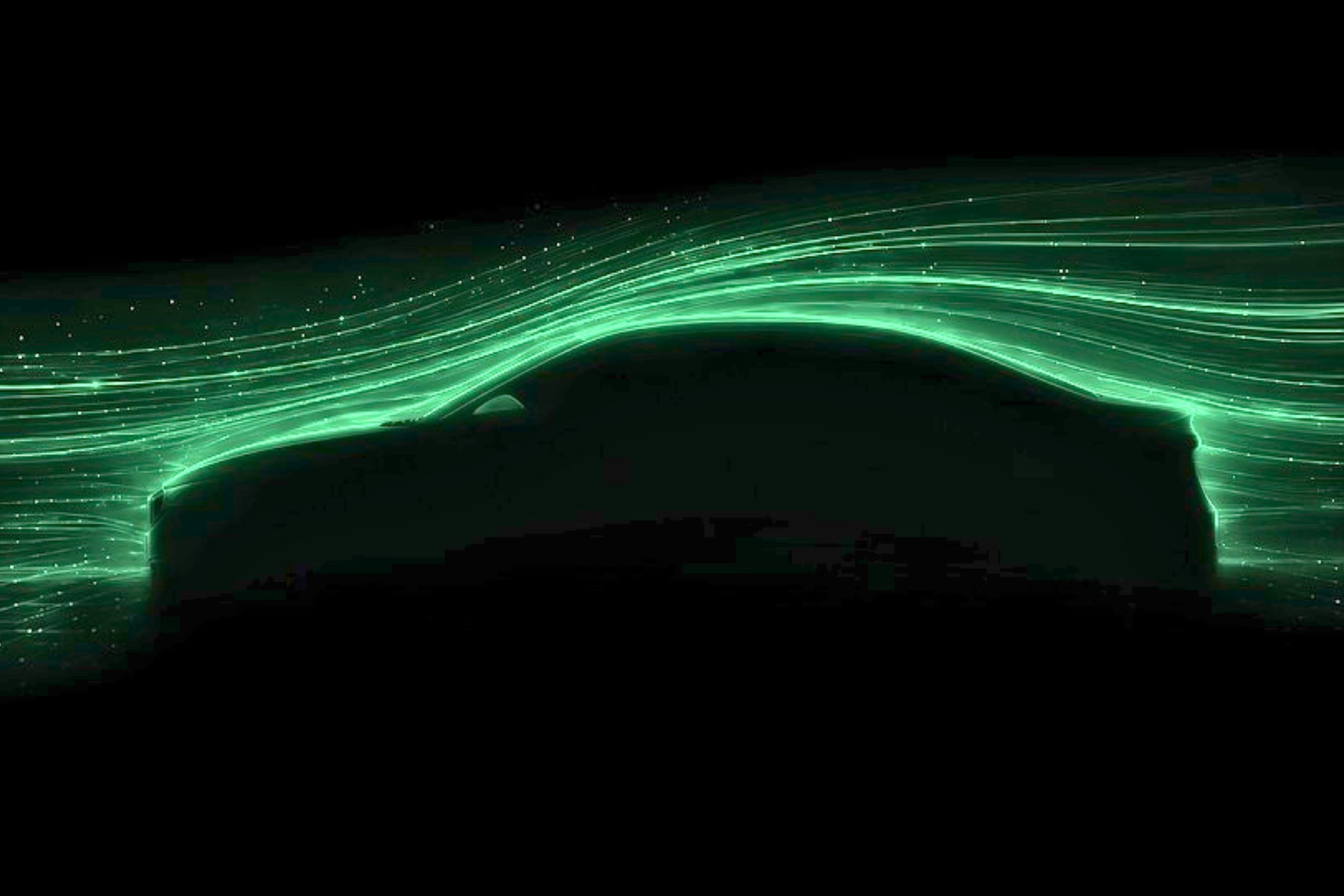
Ahead of its launch on August 18, 2026, Skoda India has shared another teaser of the Slavia facelift. The teaser gives a glimpse of a few design elements that the updated Slavia will receive.
Updated Slavia to have subtly refreshed exterior.
To continue with 1.0 and 1.5-litre turbo-petrol engines.
1.0-litre engine to have a new 8-speed automatic transmission.
Skoda Slavia facelift: What did the teaser reveal?
At the front, the grille was spotted studded with chrome detailing. The Slavia facelift is also expected to have revised detailing for the headlamps and restyled bumpers with new fog lamp housings. The tail-lights were spotted as well with similar detailing as the current version, but it’s yet to be seen if it gets the connected treatment like the Kushaq. Additionally, a new sporty five-spoke design for the alloy wheels was spotted, which will likely continue to be 16 inches in size, like the current version. The facelift continues to get chrome treatment for the window line, like the current version.
Skoda Slavia facelift: What to expect?
Current version’s interior used for representation.
On the inside, the Slavia facelift is likely to continue with the same cabin layout, albeit with updated colours and trim materials. It is expected to borrow the Kushaq’s 10.25-inch digital driver’s display. Whether it gets the Kushaq’s segment-only rear massaging seats is yet to be seen. Meanwhile, features like a single-pane sunroof, powered and ventilated front seats, wireless phone charger will continue to be offered.
Current Slavia 1.0-litre engine used for representation.
As for powertrains, the Slavia facelift will continue to be powered by the current version’s 1.0 and 1.5-litre direct-injection turbo-petrol engines. The former develops 115hp and 178Nm, while the latter delivers 150hp and 250Nm of torque. While the 1.0-litre unit will continue to be paired with a 6-speed manual, automatic versions will get a new 8-speed torque converter gearbox, replacing the current version’s 6-speed unit. On the other hand, the 1.5-litre mill will continue to come solely with a 7-speed DCT.
In terms of price, the Slavia facelift is expected to be slightly pricier than the current version, which retails for Rs 9.99 lakh to Rs 18.19 lakh. It will continue to take on rivals like the Hyundai Verna, Honda City and the Volkswagen Virtus.
Honda is offering the Amaze, City and Elevate with a range of consumer schemes this August. In the case of the Amaze, offers are valid for the second- and third-gen models, whilst offers on the City are primarily for the pre-facelift model. The discount schemes for the Elevate are applicable for the existing model, while all the offers and benefits mentioned here will be valid between August 1 and August 31, 2026.
Elevate offers the most benefits
City discounts are valid on pre-facelift models
Second- and third-gen Amaze both available with discounts
Disclaimer: Offers/benefits may vary by city and are subject to stock availability. Buyers are advised to check with their local dealer for exact figures.
Honda Elevate offers in August 2026
Benefits up to Rs 1.79 lakh
Depending on the variant and model year (MY), the Honda Elevate is being offered with benefits worth up to Rs 1.79 lakh. This includes cash discounts of up to Rs 60,000, exchange bonuses of up to Rs 1.05 lakh, and loyalty benefits of Rs 4,000. Honda is also offering customers with corporate discounts of up to Rs 10,000 and a 50 percent discount on the brand’s 7-year extended warranty, now at Rs 19,000. The Honda Elevate is priced from Rs 11.81 lakh to Rs 16.78 lakh.
Honda City offers in August 2026
Benefits up to Rs 95,000
Select variants of the Honda City are available with a cash offer worth Rs 30,000, exchange bonuses of up to Rs 56,000, and a loyalty incentive worth Rs 4,000. There’s also a corporate discount amounting to Rs 5,000. Overall, the Honda City can be had with discounts of up to Rs 95,000. Meanwhile, the price of the 2026 Honda City ranges between Rs 12.08 lakh and Rs 21.44 lakh.
Honda Amaze offers in August 2026
Benefits up to Rs 50,000
Certain variants of the third-gen Honda Amaze are available this August with benefits going up to Rs 50,000. This takes into account cash discounts of up to Rs 15,000 plus exchange bonuses worth up to Rs 21,000. Furthermore, there’s a loyalty incentive worth Rs 4,000 and corporate benefits of Rs 10,000.
Buyers of select variants of the second-gen Amaze can avail identical exchange, loyalty and corporate benefits, but cash discounts now stand at Rs 10,000. Depending on the model year, Honda’s 50 percent discounted 7-year extended warranty is offered at Rs 15,000. The 2026 Honda Amaze is priced from Rs 7.65 lakh to Rs 10.00 lakh, while the previous-gen Amaze costs between Rs 5.99 lakh and Rs 7.80 lakh.
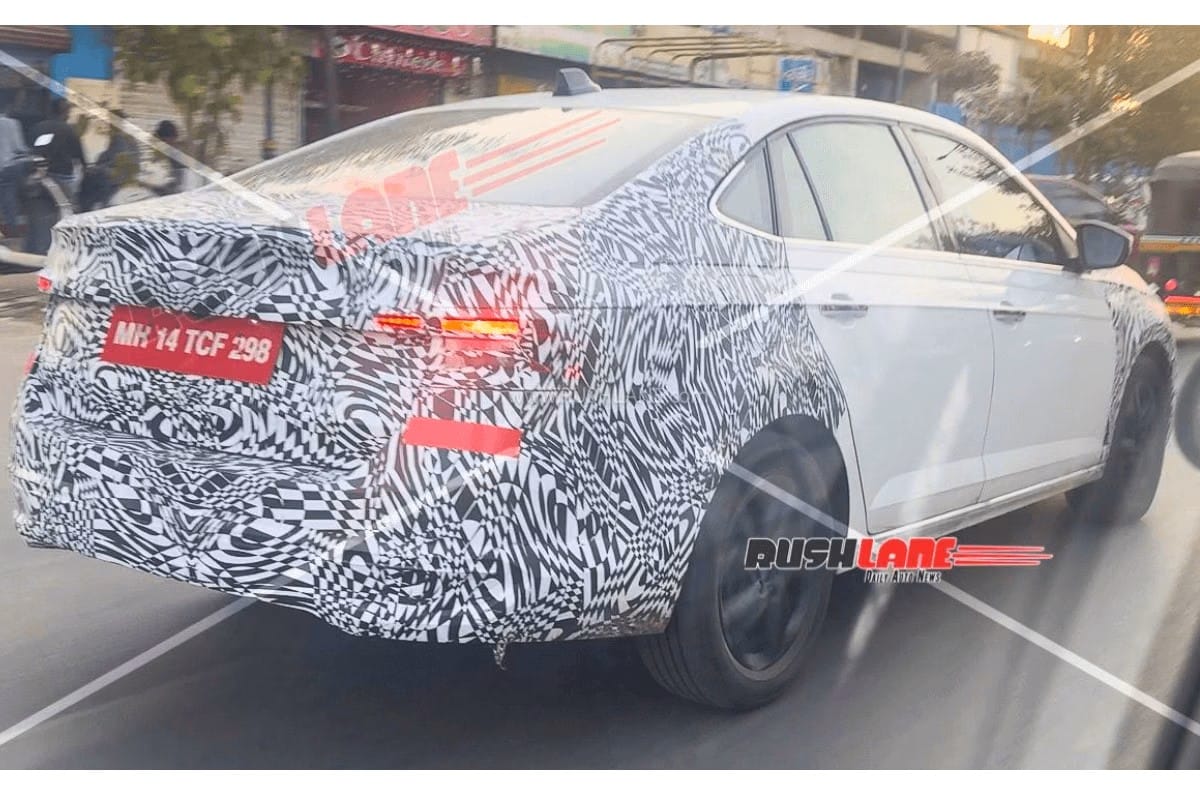
Skoda is set to launch the Slavia facelift on August 18. The updated midsize sedan is expected to receive cosmetic updates, feature additions and a new automatic gearbox for the 1.0-litre turbo-petrol engine, while retaining its existing engine lineup.
New grille, revised lighting and updated bumpers likely
1.0 TSI could replace its 6-speed AT with a new 8-speed unit
It may get a larger digital driver’s display, like the one in the Kushaq
Skoda Slavia facelift: what to expect
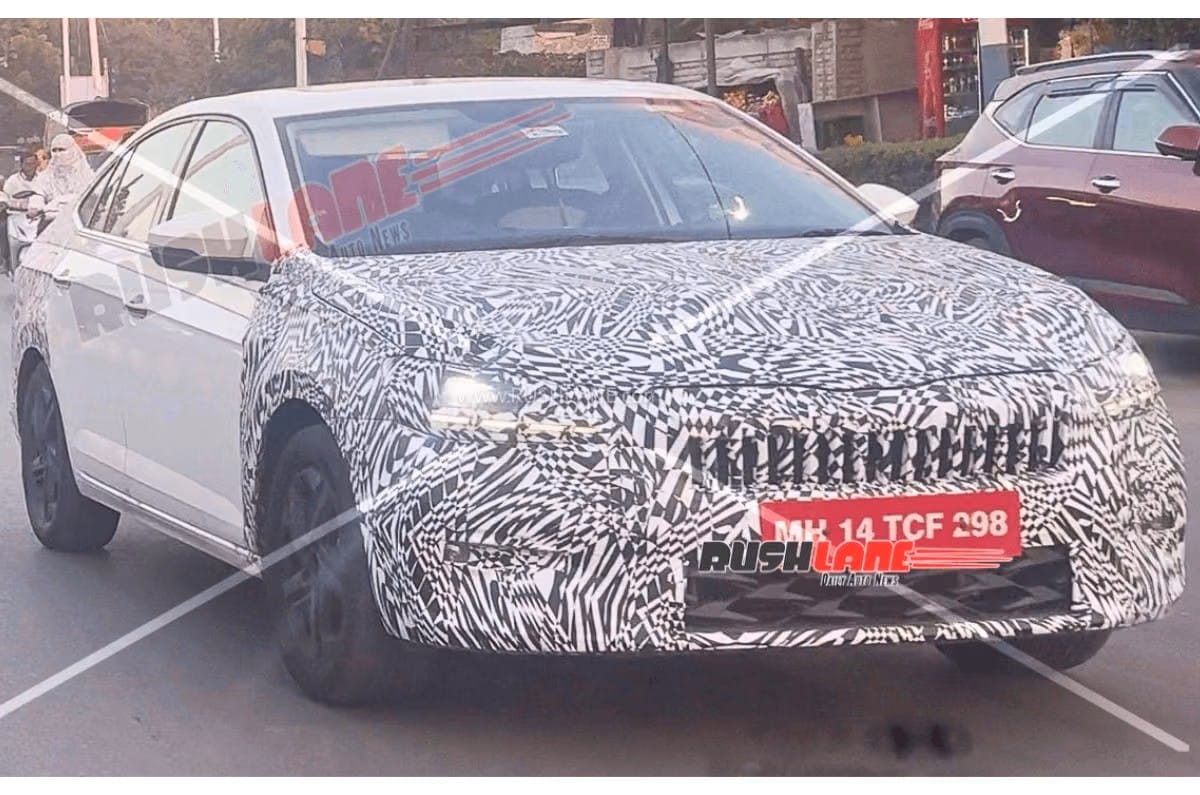
Image source: Rushlane
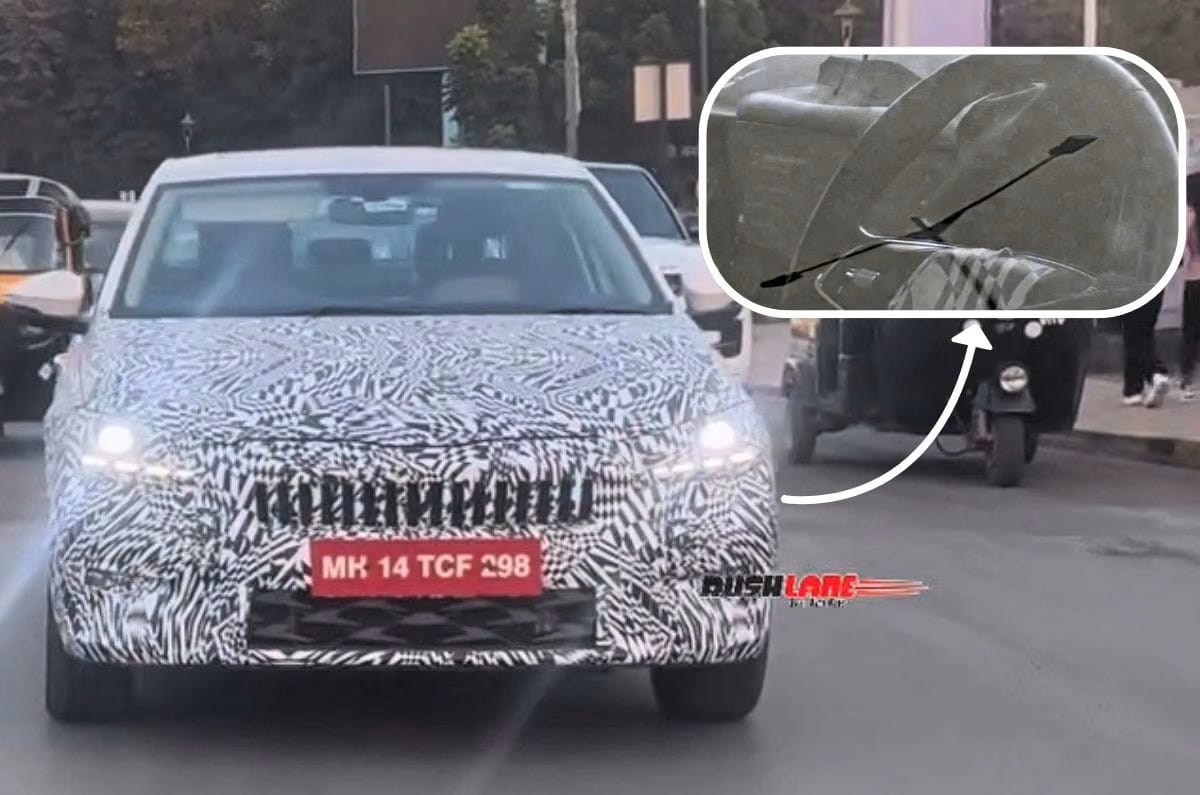
Previous test mules have revealed updated LED lighting elements in the headlamps, a revised tail-lamp design and a new grille with integrated lighting elements, similar to the latest Kushaq and Kodiaq. Redesigned front and rear bumpers, along with a new set of alloy wheels, are also expected.
Image source: Rushlane
Inside, the dashboard layout is expected to remain largely unchanged. However, Skoda could introduce a larger 10.25-inch digital driver’s display, along with revised seat upholstery and front parking sensors. It will be interesting to see whether Skoda adds a rear-seat massage function, as this was introduced to the Kushaq with its facelift in January 2026.
Existing equipment such as the 10.25-inch touchscreen, single-pane sunroof, wireless phone charger, an 8-speaker sound system, automatic climate control with rear vents, six airbags and tyre pressure monitoring system is expected to be carried over.
1.0 TSI expected to get new 8-speed automatic
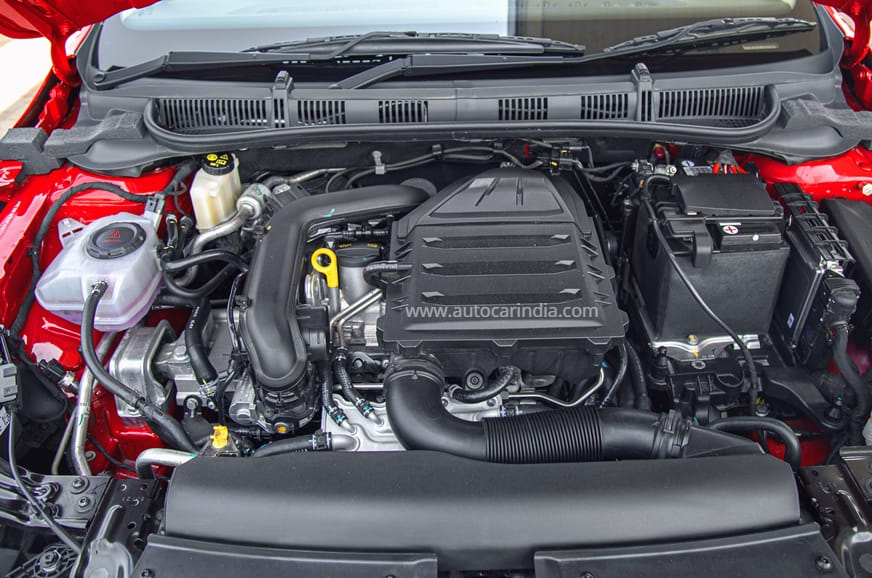
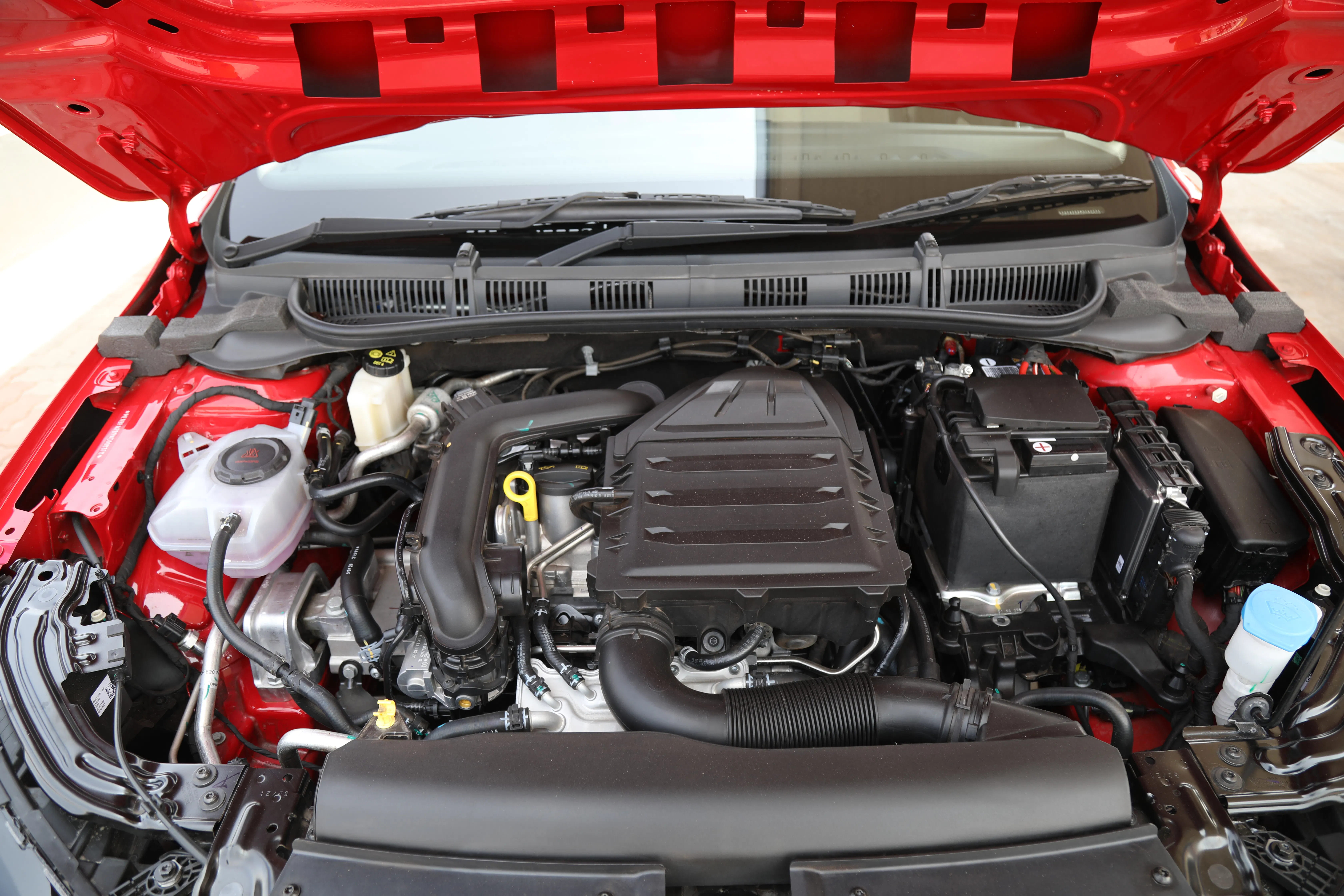
Engine bay of the current Slavia shown for representative purposes only.
The Slavia facelift is likely to continue with the existing 115hp, 1.0-litre TSI and 150hp, 1.5-litre TSI turbo-petrol engines. The key mechanical update is expected to be the replacement of the current 6-speed torque-converter automatic on the 1.0 TSI with the newer 8-speed automatic that debuted on the Kushaq facelift. The 1.5 TSI is expected to continue with the 7-speed dual-clutch automatic transmission (DCT).
Skoda Slavia facelift: expected price
Image source: Rushlane
With the facelift, prices of the Slavia are expected to increase slightly over the current Rs 10 lakh-18.19 lakh (ex-showroom). The facelifted Slavia will continue to compete with the Volkswagen Virtus, Hyundai Verna and Honda City.
Honda is set to launch the ZR-V hybrid SUV in India as the Japanese carmaker’s new flagship offering for our market. The ZR-V will be sold in India as a fully imported CBU model, and is expected to rival the likes of the Volkswagen Tayron, Jeep Meridian, and Skoda Kodiaq. How compelling a package is the ZR-V at that price? We’ve compiled the upcoming Honda’s most notable strengths and weaknesses below.
Pros
Punchy and refined powertrain
The ZR-V comes with a 2.0-litre naturally aspirated petrol-hybrid powertrain that outputs a combined 184hp and 315Nm, which is routed to the front wheels via an e-CVT. During our BIC track drive of the ZR-V, we found that the SUV deploys all of its torque from the off, which makes it feel rather zippy. Power flows to the wheels in a smooth and linear fashion, and part-throttle inputs feel responsive too.
Overall refinement is excellent, with barely any engine, road, or tyre noise making its way through to the cabin. Provided there’s enough charge in the battery, the ZR-V can even run in pure electric mode at low speeds, thereby reducing NVH levels further. Moreover, Honda claims a 22.8kpl fuel efficiency for the ZR-V, which will likely be appreciated by buyers seeking lower running costs.
Relatively agile handling
Despite its higher-up centre of gravity and front-wheel drive layout, the ZR-V felt nimble and enjoyable to drive around the Buddh International Circuit. The well-weighted and precise steering rack ensured stable and predictable handling around corners, and the ZR-V even held its own around a slalom course, with body control kept well in check.
Well-built interior with good ergonomics
Step inside the ZR-V and you’re greeted by a smartly laid-out dashboard with a plethora of soft-touch materials and premium-feeling trim pieces. The 10.25-inch digital driver’s display also looks neat and well-executed, the front seats feel nicely padded and comfortable, and the low-set dash enables great visibility.
The ZR-V’s dashboard layout isn’t as flashy or tech-laden as some of its rivals, but this isn’t all that bad, as it’s packed with tactile physical controls for nearly every function. There’s a lot of storage space too, including a decently sized glovebox and door bins, and a bridge-type transmission tunnel with a cubby underneath.
Cons
Misses out on some crucial features
A downside of not being as tech-laden as its rivals is that the ZR-V lacks quite a lot of features that buyers may expect at this price point. First off, the ZR-V has a 9-inch infotainment touchscreen, which is bright and works perfectly fine, but is quite small by segment standards – even the much cheaper Honda City has a larger 10.1-inch touchscreen.
The ZR-V also doesn’t get a panoramic sunroof or heated, ventilated, and massaging front seats (the City offers ventilated front seats), and its 360-degree camera is quite low-res too.
Rear seat comfort feels lacking
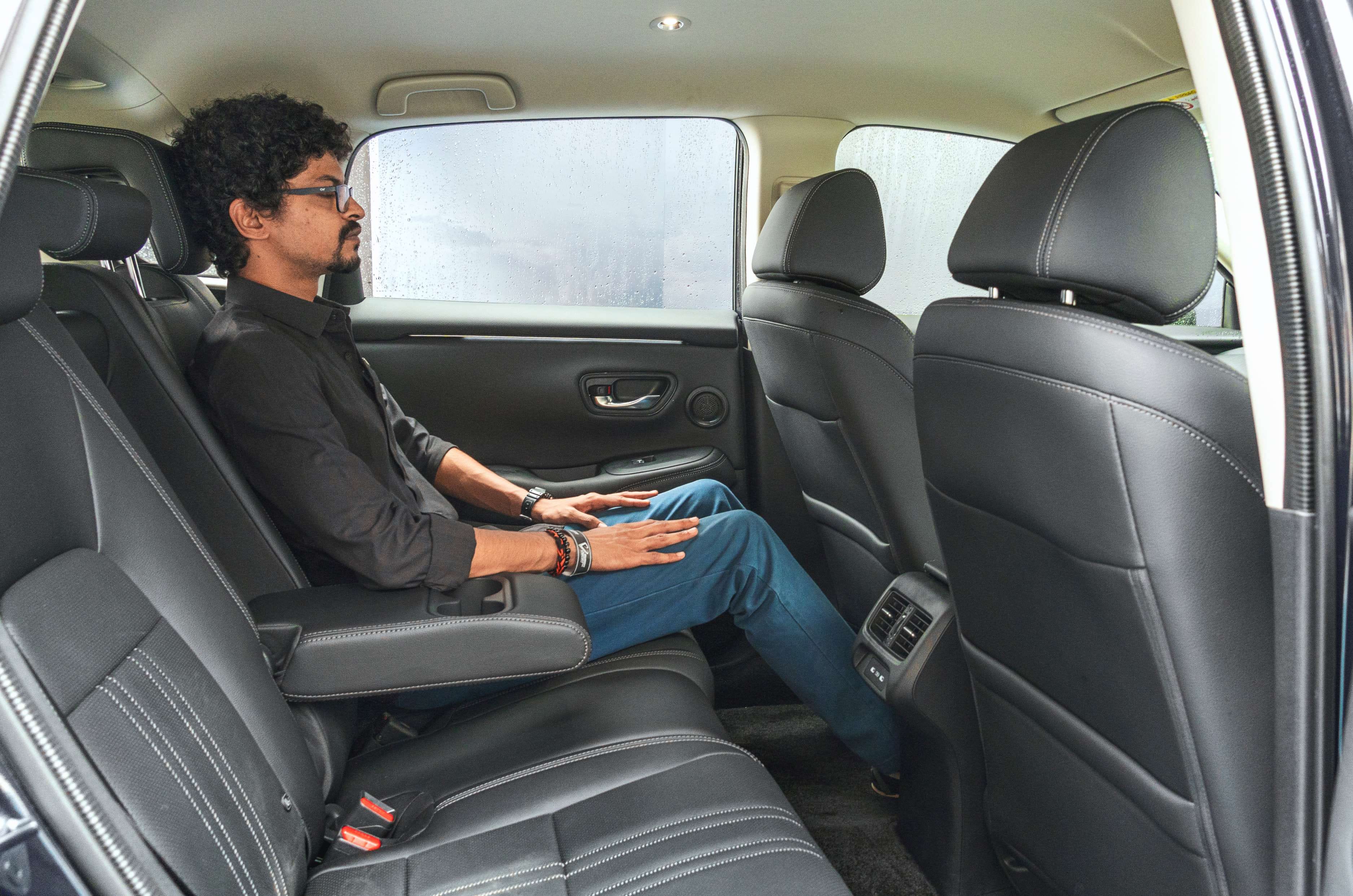
While the ZR-V’s low-set rear bench makes ingress rather easy, it also means that you sit in a somewhat knees-up position, which may not be comfortable over extended periods. There are no rear sunshades to block harsh sunlight either, and the tapering roofline limits headroom for occupants over 6 feet tall.
Expected to be expensive
Since the ZR-V will retail as a CBU, pricing is anticipated to land at around Rs 45 lakh (ex-showroom). At that price, and with all the aforementioned drawbacks, the ZR-V could end up being a hard sell, especially when rivals like the Tayron, Kodiaq, and Meridian are bigger, more feature-loaded, and can even be had as 7-seaters.
The Honda ZR-V is the carmaker’s first hybrid SUV in India and its being brought here via the CBU route from Japan as a brand builder or a halo product. It’s also the first of a few global products being launched in India, so it gives us an idea of what we can expect from Honda in the coming years. Honda says the ZR-V is a “Sports Hybrid” meaning it prioritizes performance and fuel efficiency in equal parts, which is why the company gave us a chance to briefly experience it at the Buddh International Circuit.
Honda ZR-V Exterior Design and Engineering – 8/10
Hybrid powertrain is smooth, seamless, zippy and promises to be efficient as well
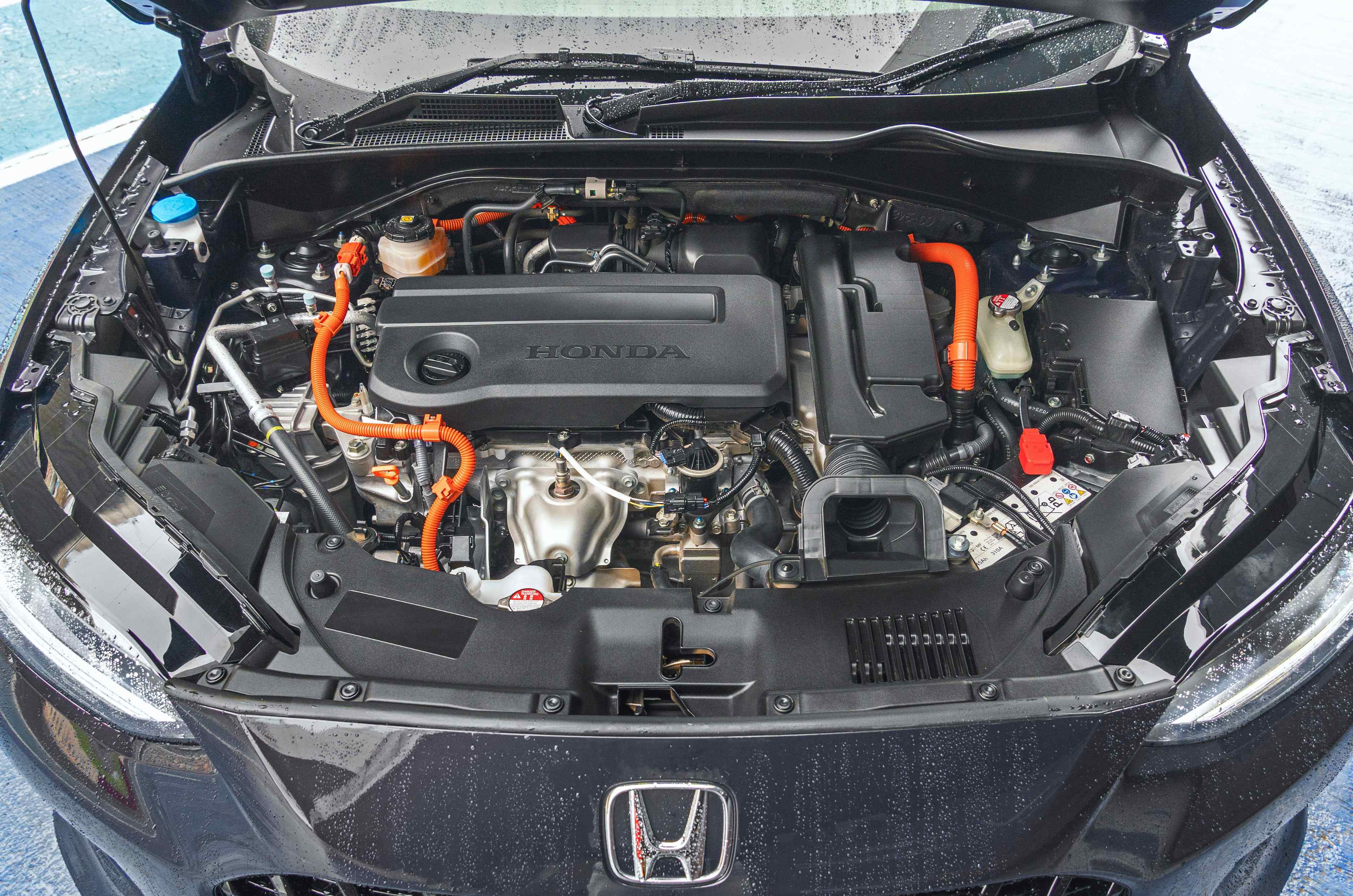
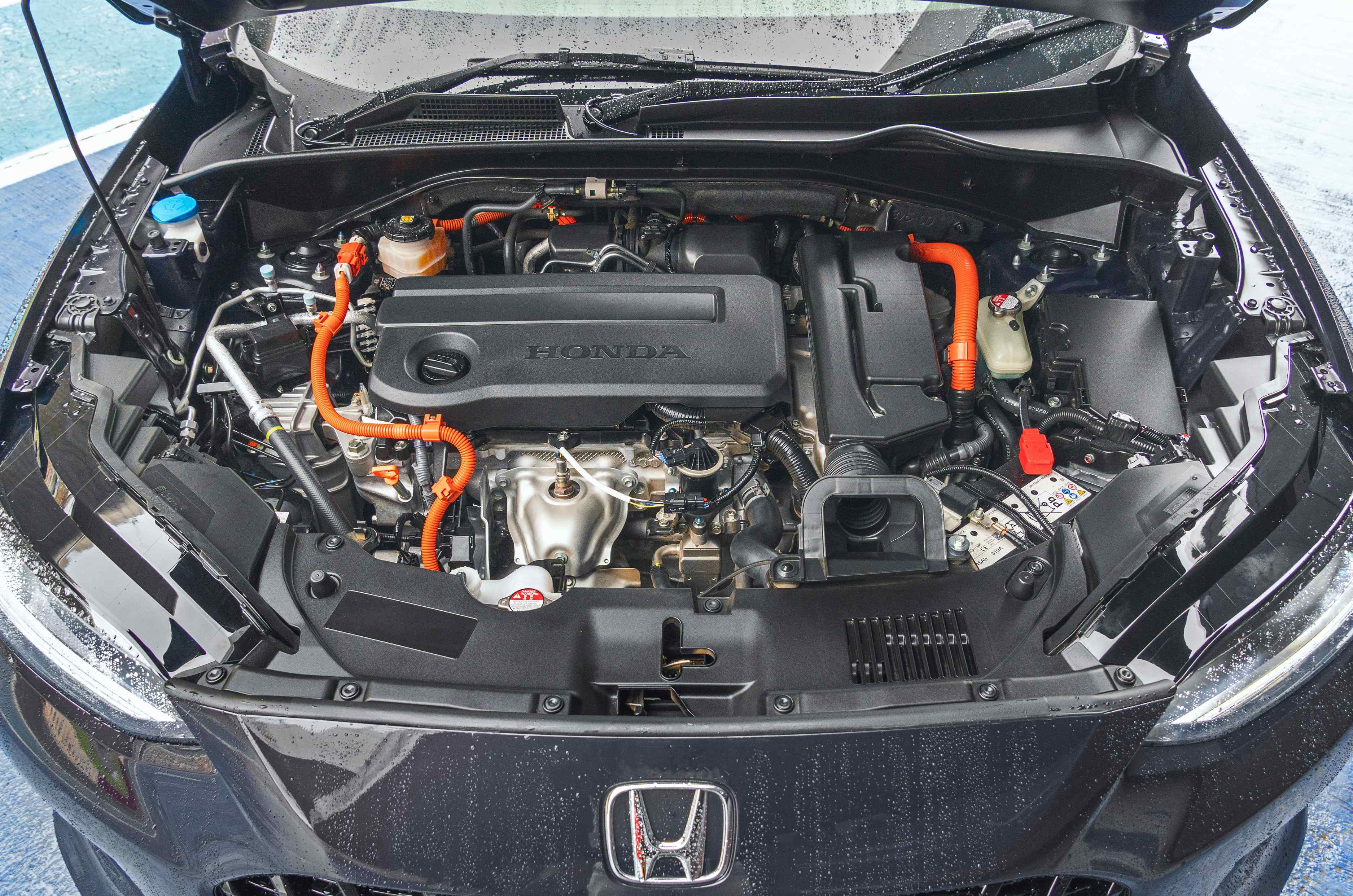
The Honda ZR-V is a strong hybrid SUV that features a 2.0-litre, four-cylinder, direct injection, petrol engine that runs on the more efficient Atkinson cycle and it works in tandem with two, permanent magnet synchronous electric motors. The powertrain produces a max combined output of 184hp and 315Nm which is channeled to the front wheels only via an eCVT transmission. The SUV has a claimed 0-100kph time of 7.9 seconds and an electronically limited top speed of 172kph. Internationally, the ZR-V is also offered with an all-wheel-drive (AWD) setup and a 1.5-litre turbo-petrol engine producing 180hp and 240Nm but that is currently not on the cards for India.
It’s responsive off the line and feels composed at high speeds
The strong hybrid powertrain feels smooth and zippy right from the get-go. What’s great is that it makes all the 315Nm of torque from standstill, so it feels quick right from launch and you’re never left wanting more. Power delivery is smooth and linear and it’s also keen to respond to part-throttle inputs. The powertrain is also very refined with barely any engine, road or tyre noise filtering through.
At low speeds with light throttle inputs, the ZR-V will stay in pure EV mode as long as the battery has enough charge. Unlike some other strong hybrids however, you can’t manually choose EV mode. Push the accelerator harder and the engine will come on, with the SUV moving to the hybrid drive mode. In this mode, the electric motor is still powering the wheels with the engine acting as a generator to keep the battery topped up. Then there’s the engine drive mode, which is specifically used at high speeds. Here, it’s the engine powering the wheels with the electric motor assisting.
However, there are drive modes that you can change – Eco, Normal and Sport – and these don’t have an effect on the output or how the powertrain works but just the response. There’s paddleshifters too, for cycling between the regenerative braking modes and they do work effectively. As for the friction brakes, the ZR-V comes with discs all around and they felt predictable and confidence-inspiring out on track.
Honda ZR-V Mileage and Efficiency – 8/10
Honda claims the ZR-V will do an impressive 22.80kpl. Considering it’s a hybrid, real-world efficiency should be close to the claimed but we’ll have to reserve judgement till we actually subject the SUV to our fuel efficiency tests.
Honda ZR-V Ride Comfort and Handling – 7/10
Considering we drove it on BIC’s smooth tarmac surface and only for a few laps, giving a definitive verdict on its ride comfort is difficult. As for high speed composure, the SUV felt stable.
In terms of handling, the ZR-V felt enjoyable to drive around the corners. Handling on the whole was stable and predictable, thanks to a well-weighted and precise steering. A slalom course also demonstrated its tidy body control and it felt eager to change directions.
Honda ZR-V Exterior Design and Engineering – 7/10
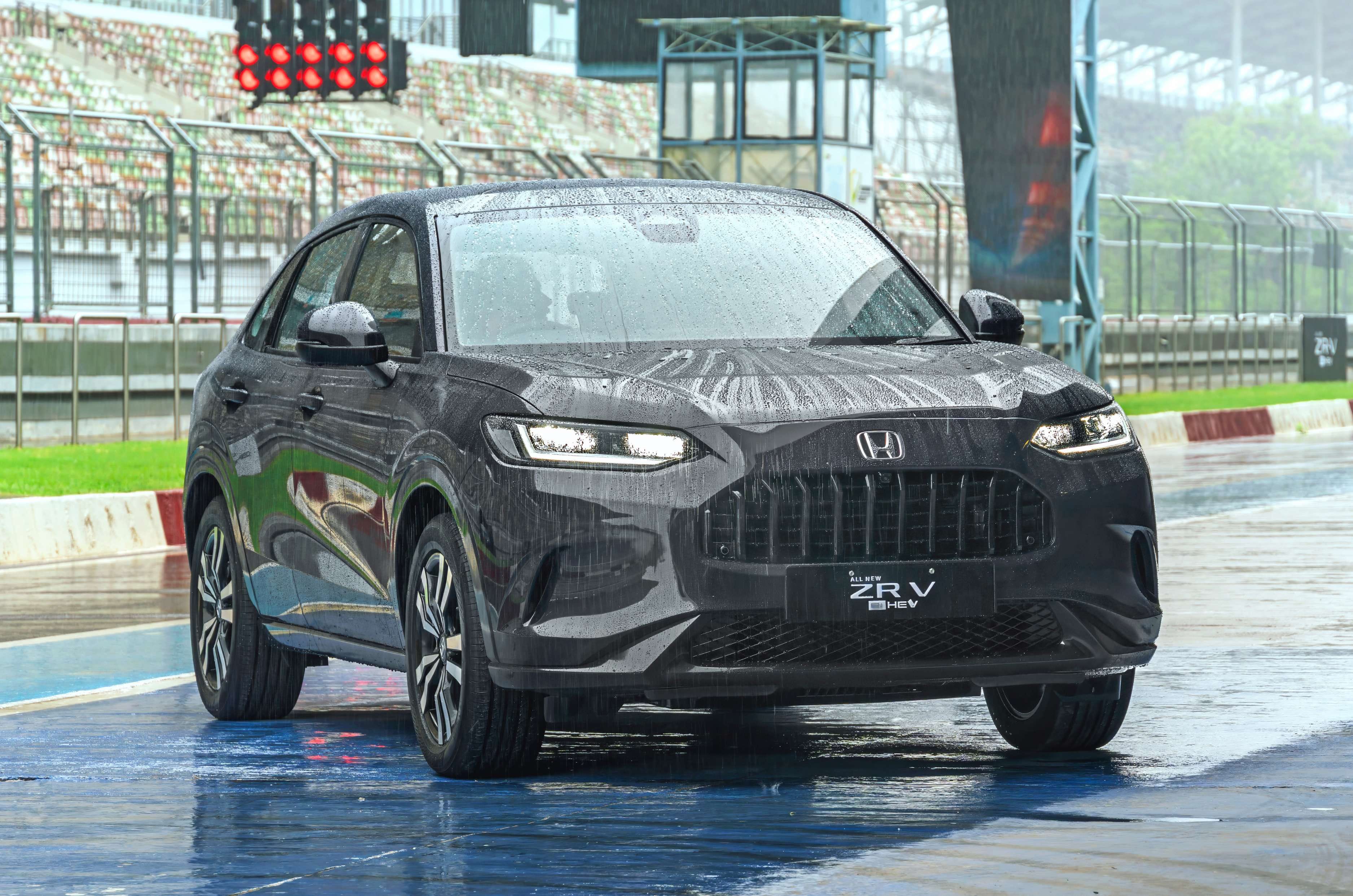
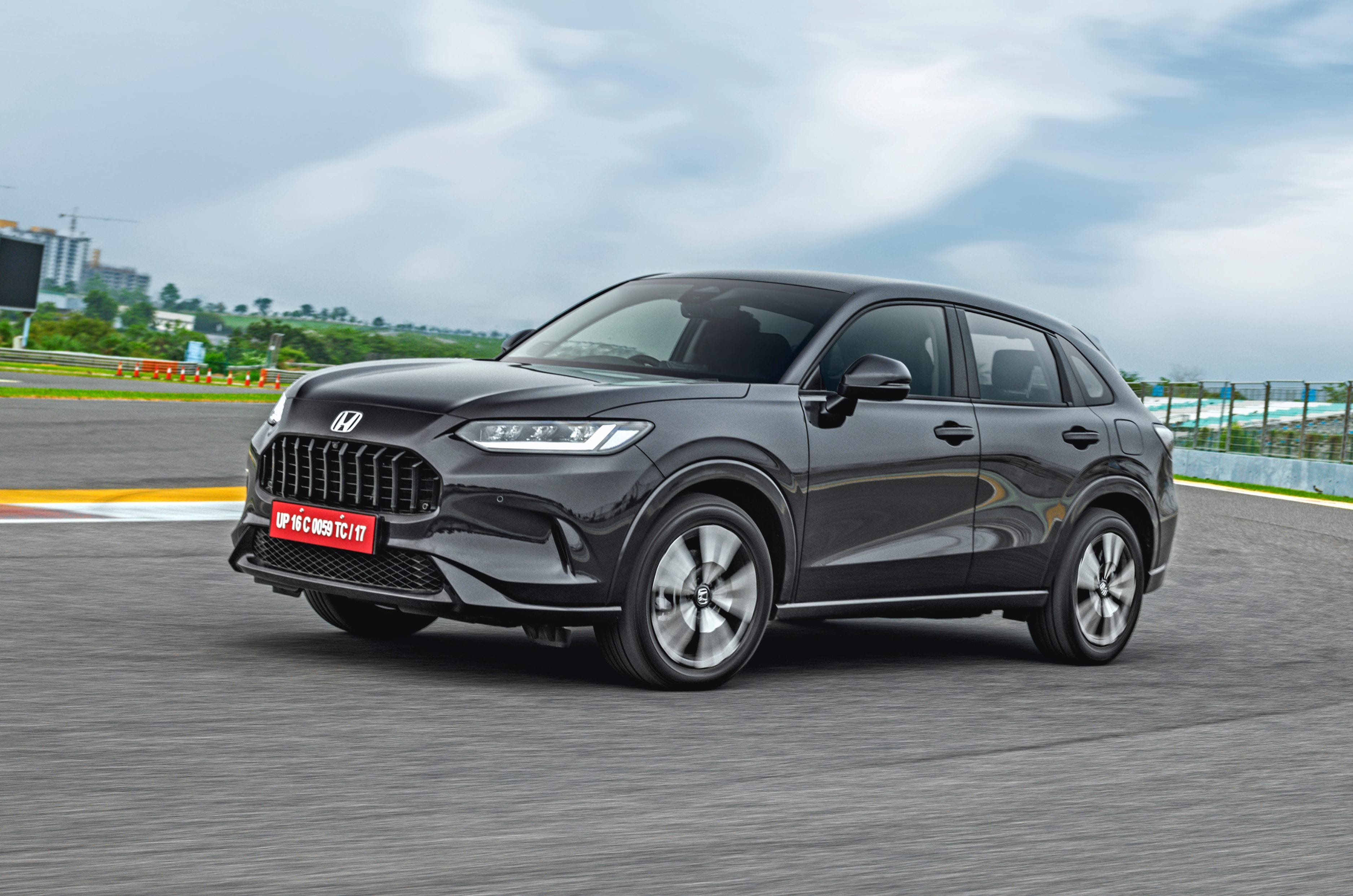
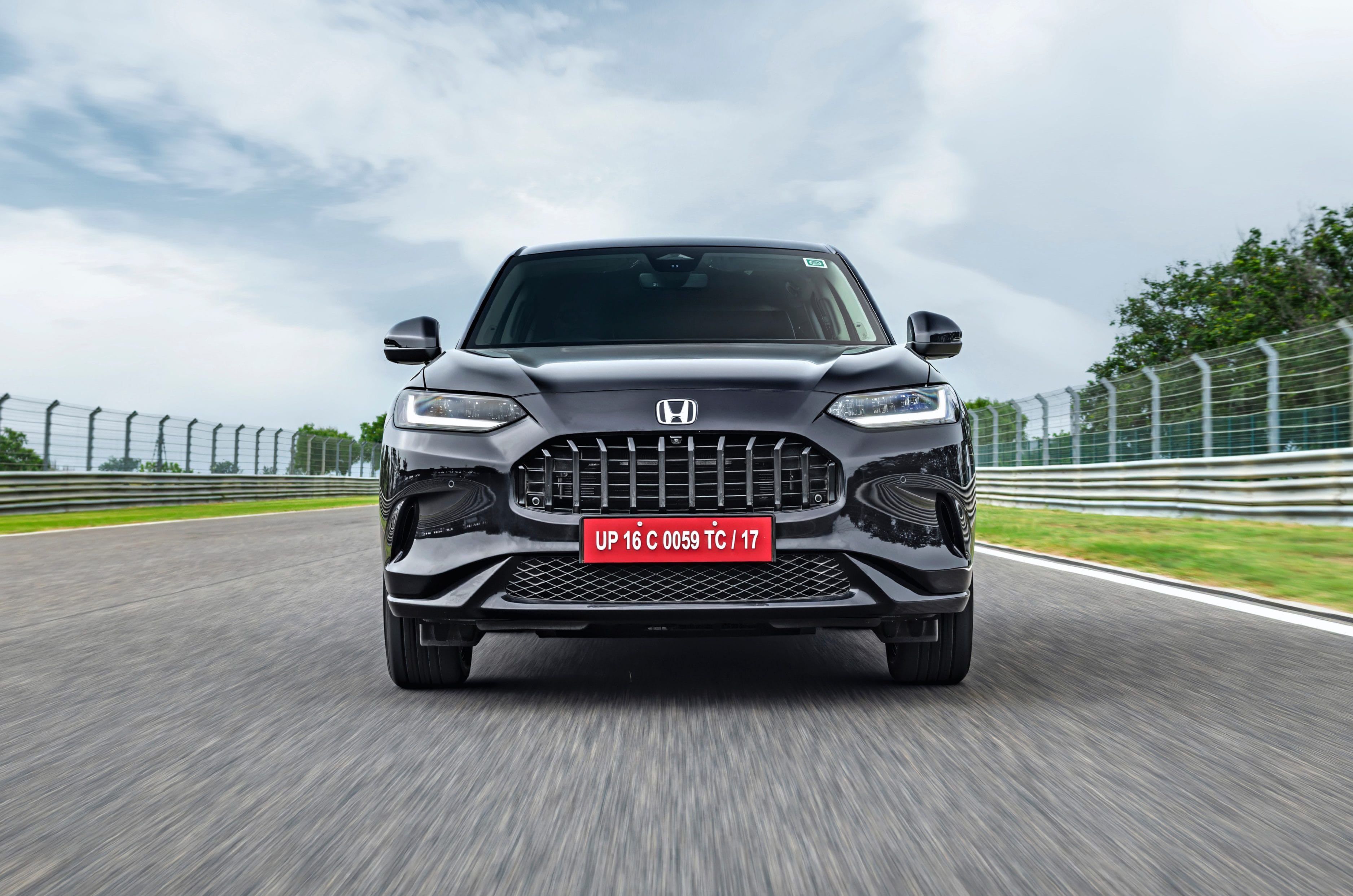
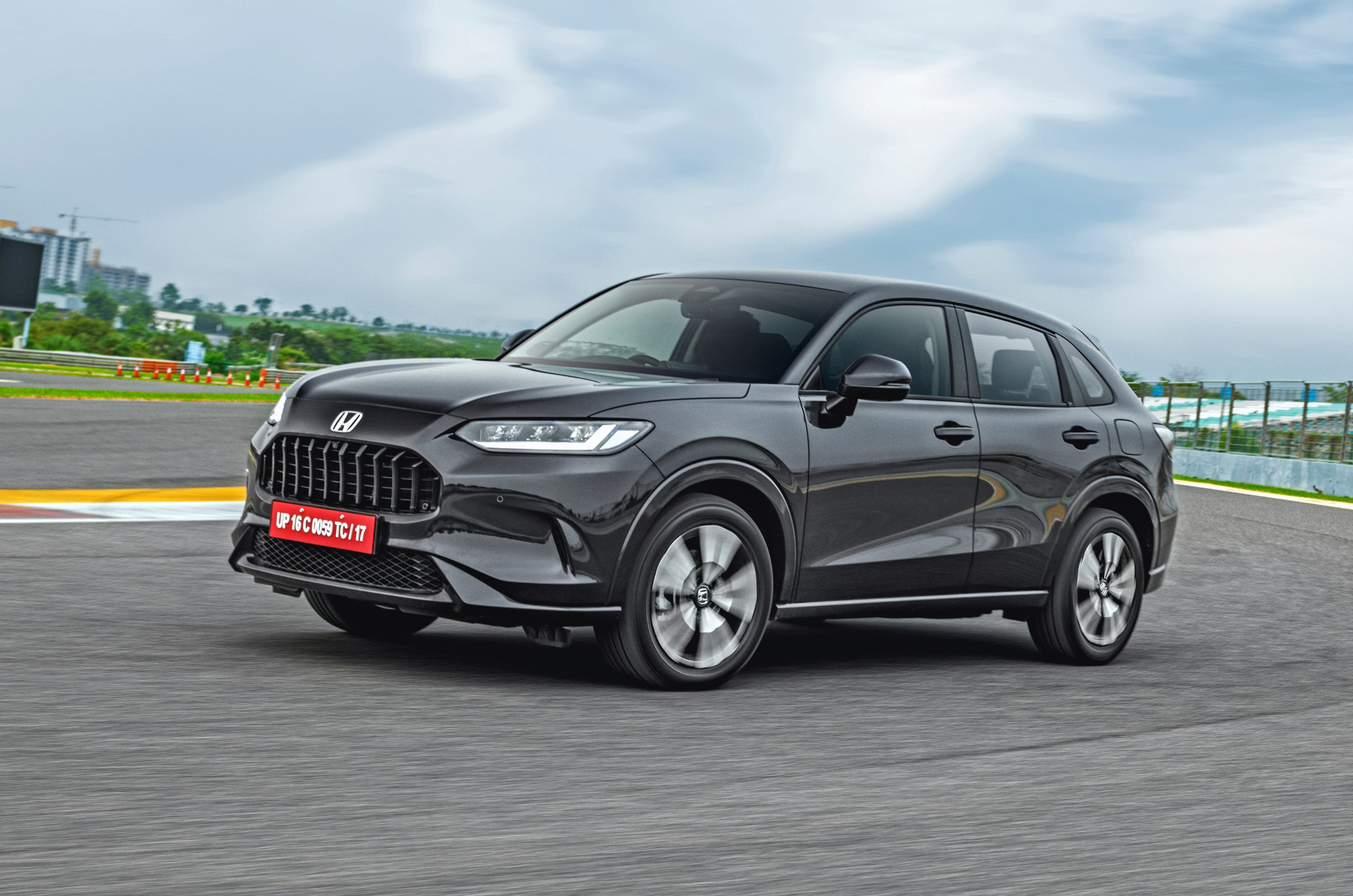
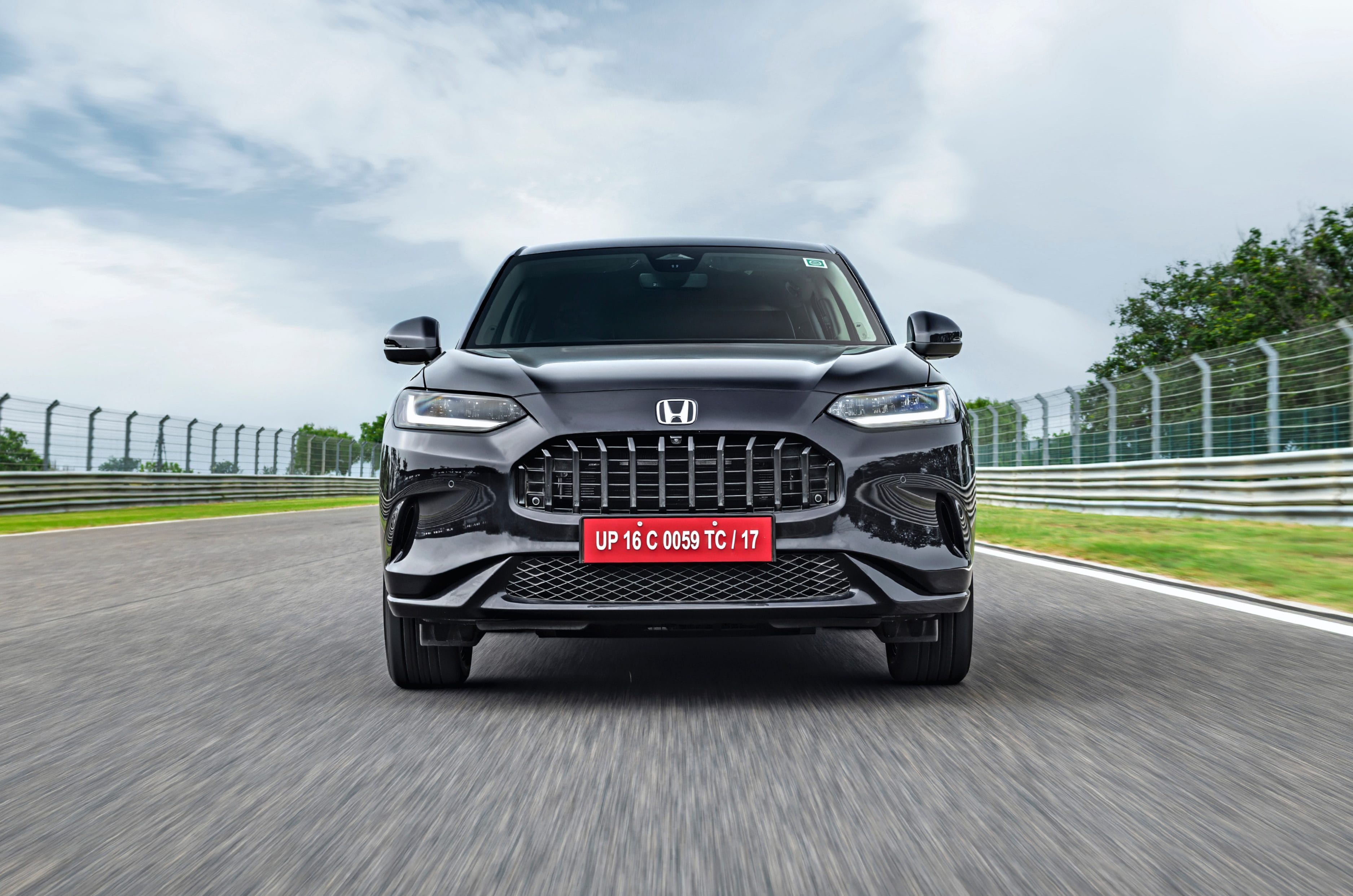
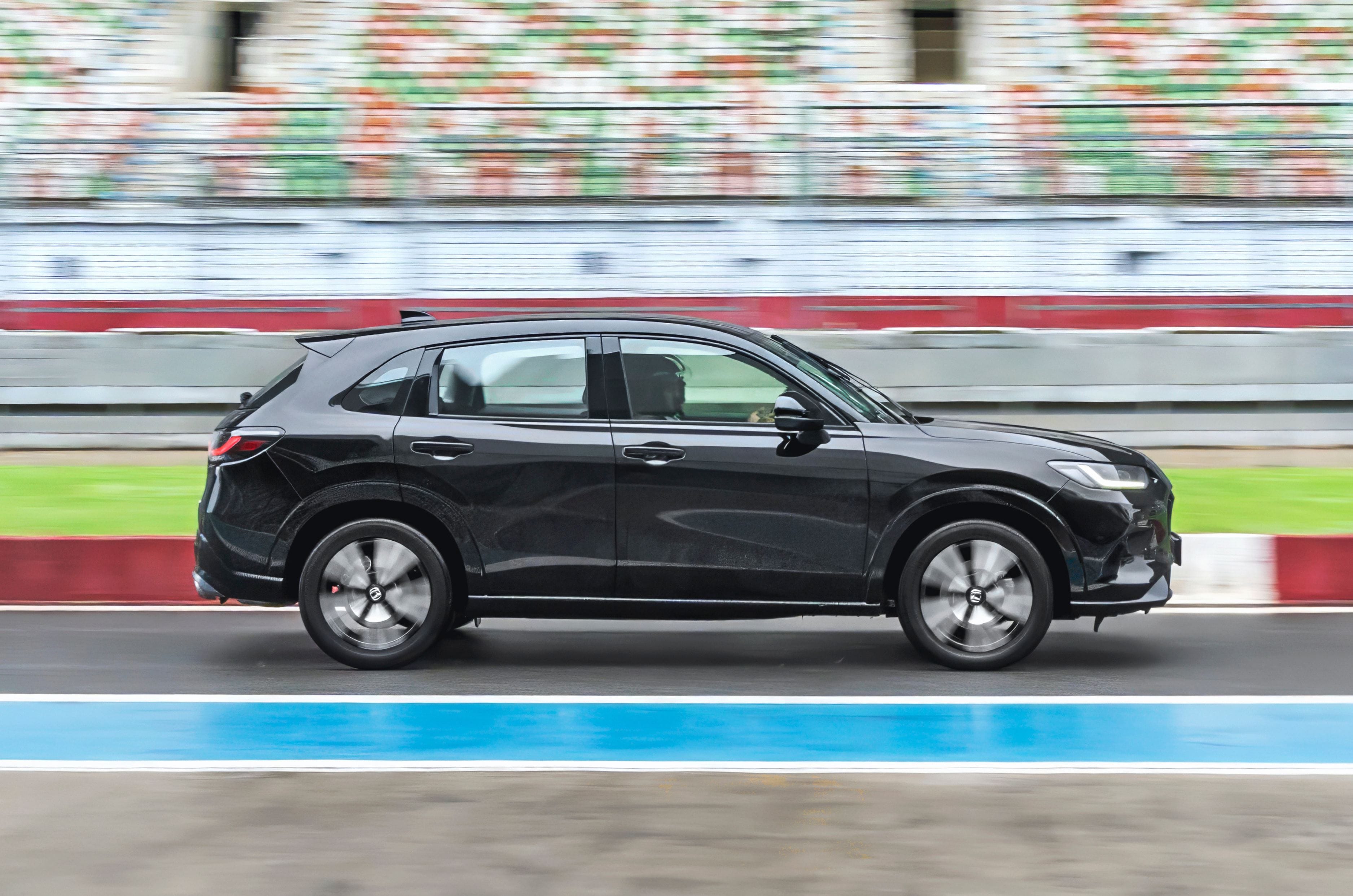
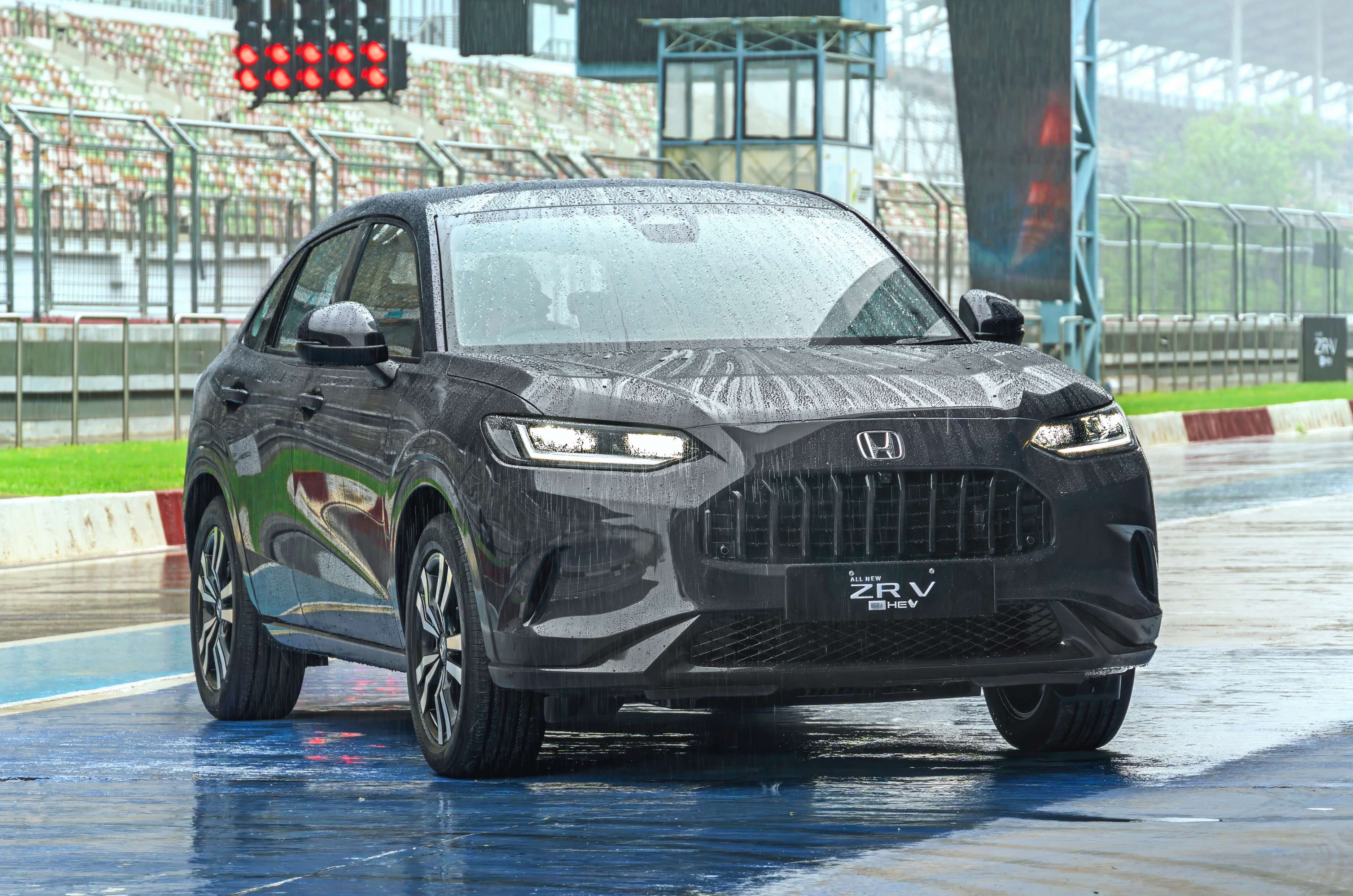
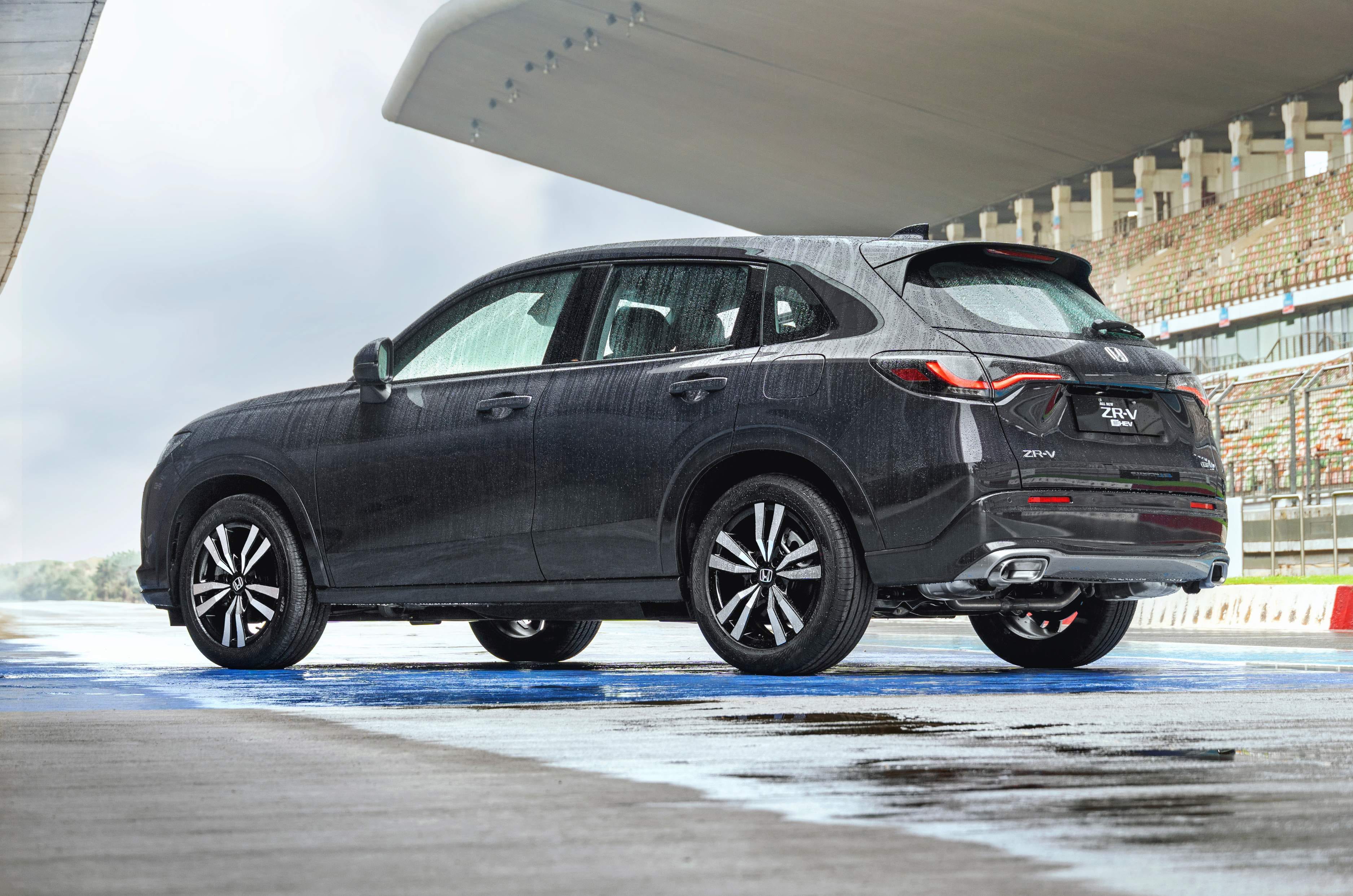
Unlike most SUVs which have a squared-off and upright stance, the Honda ZR-V has a sleek, crossover-like design, with rounded-off and clean surfaces. Up front, it gets slim LED headlights with L-shaped daytime running lamps (DRLs), a black grille with vertical slates and a bumper that houses functional air vents on either side.
ZR-V’s styling is more like a crossover than an upright SUV.
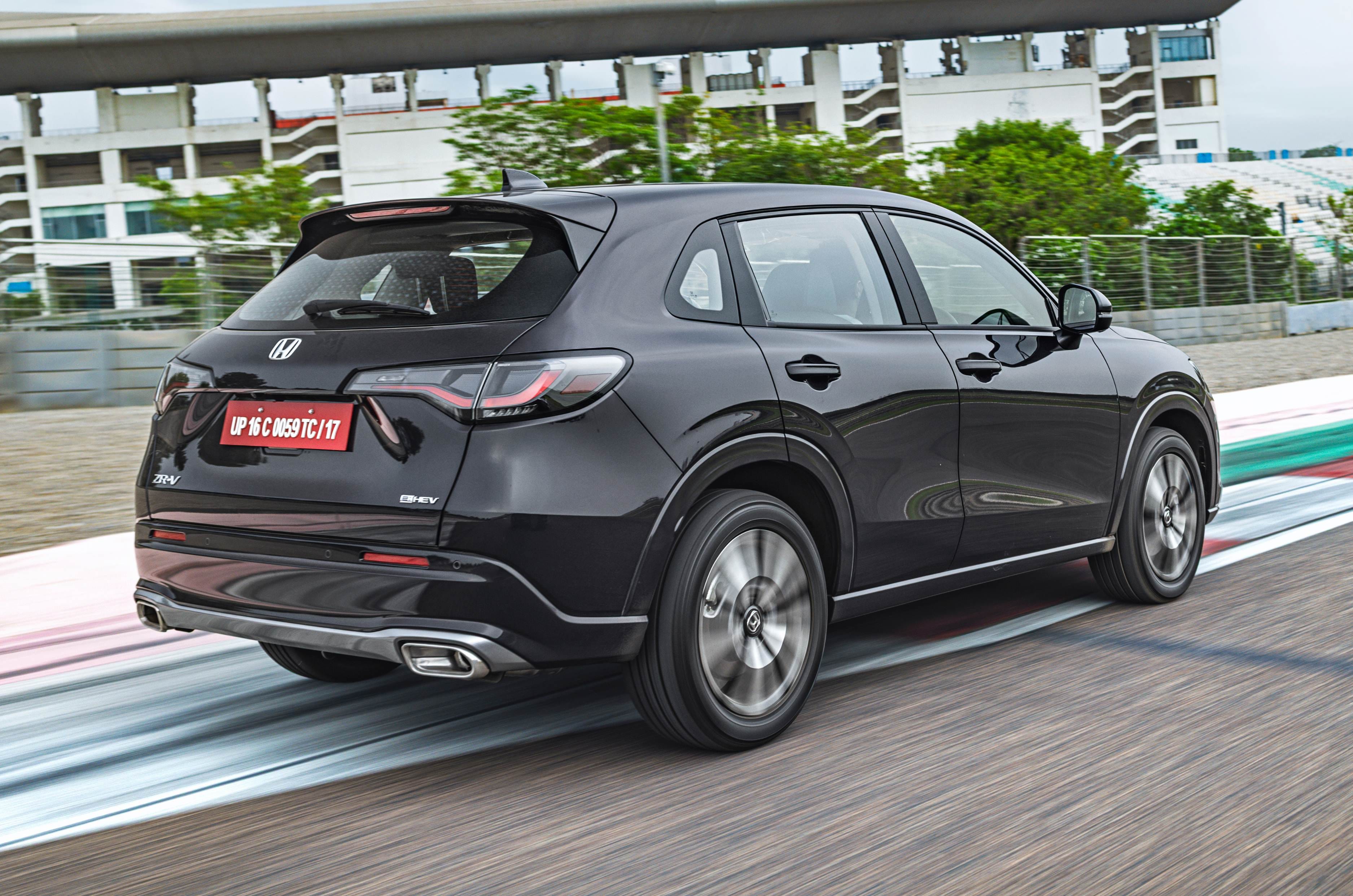
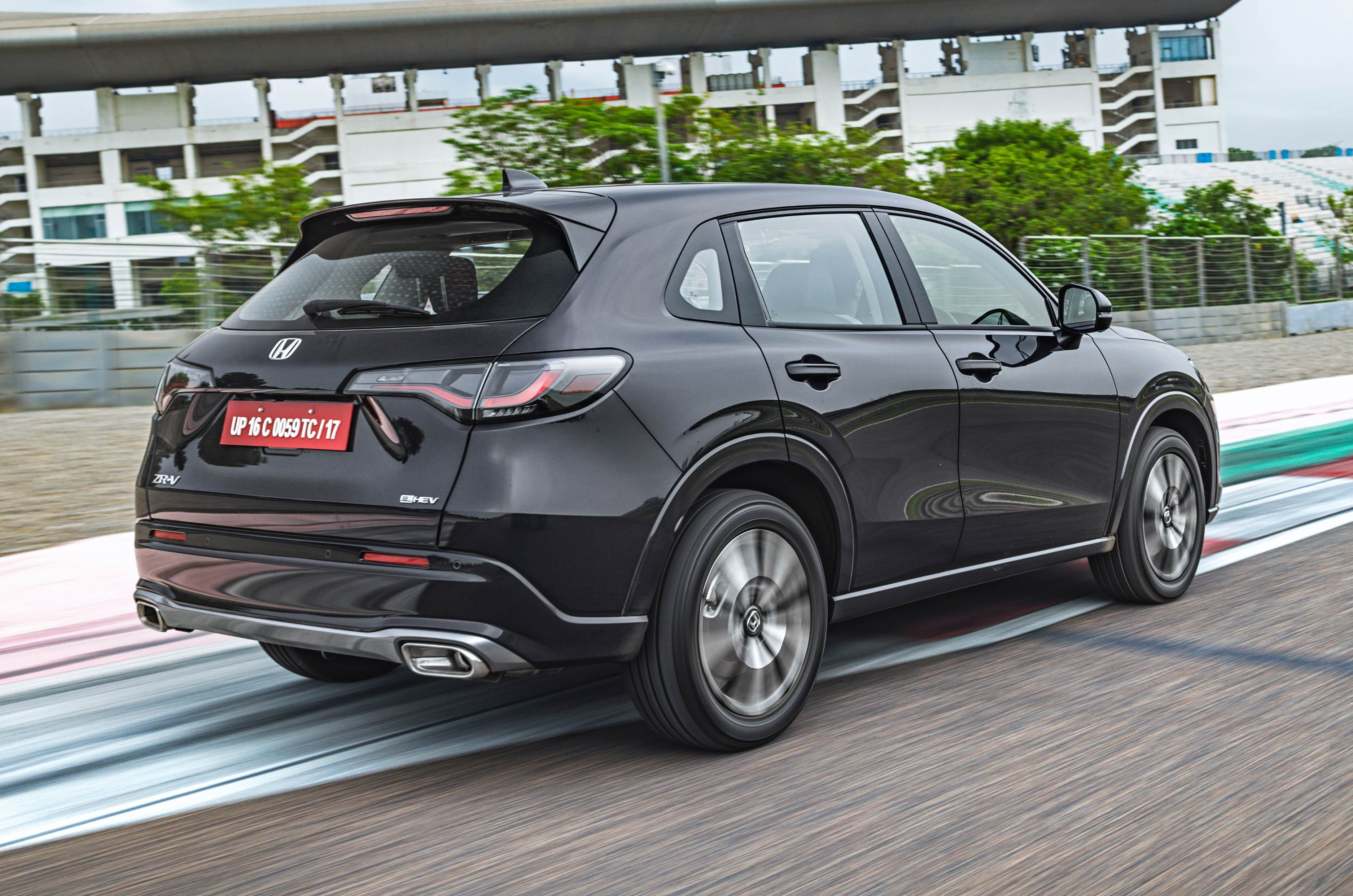
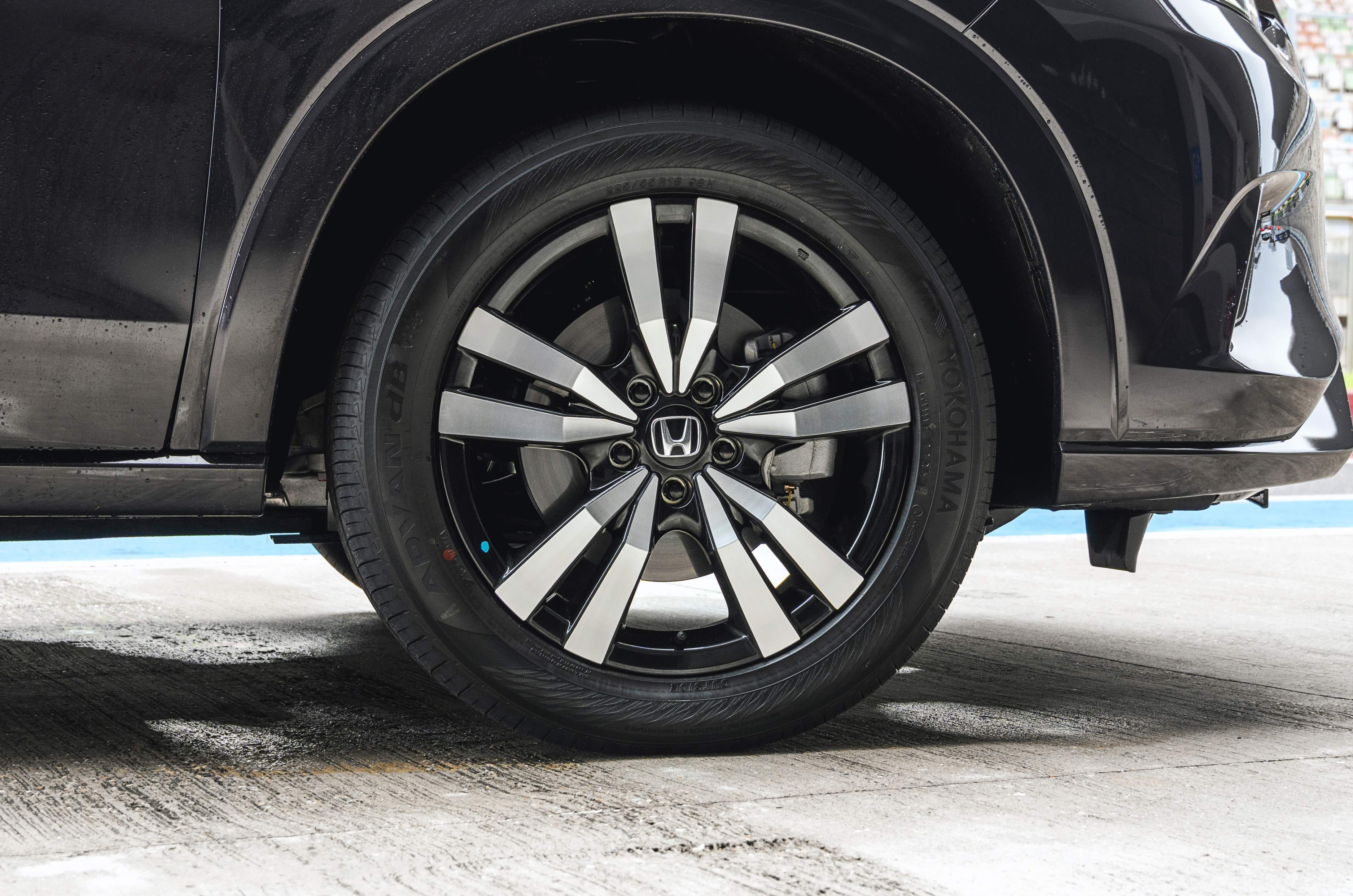
Along the sides, there’s stylish 18-inch alloy wheels with a dual-tone finish, body-coloured cladding around the wheel arches and a tapering roofline at the rear. Unlike most SUVs today, the ZR-V doesn’t get connected tail-lights, instead you get clear-lens taillamps with LED elements. Then there’s a roof-mounted spoiler element and lower down in the bumper, you get dual exhausts.
18-inch alloys get an attractive dual-tone finish.
On the whole, the ZR-V styling comes across as subtle and not striking. And given its dimensions of just over 4.5m in length and 1.8m in width, it doesn’t quite have the presence of its rivals. And it also doesn’t help that Honda is only offering four colours, all of which are subdued.
Honda ZR-V Interior Space and Comfort – 7/10
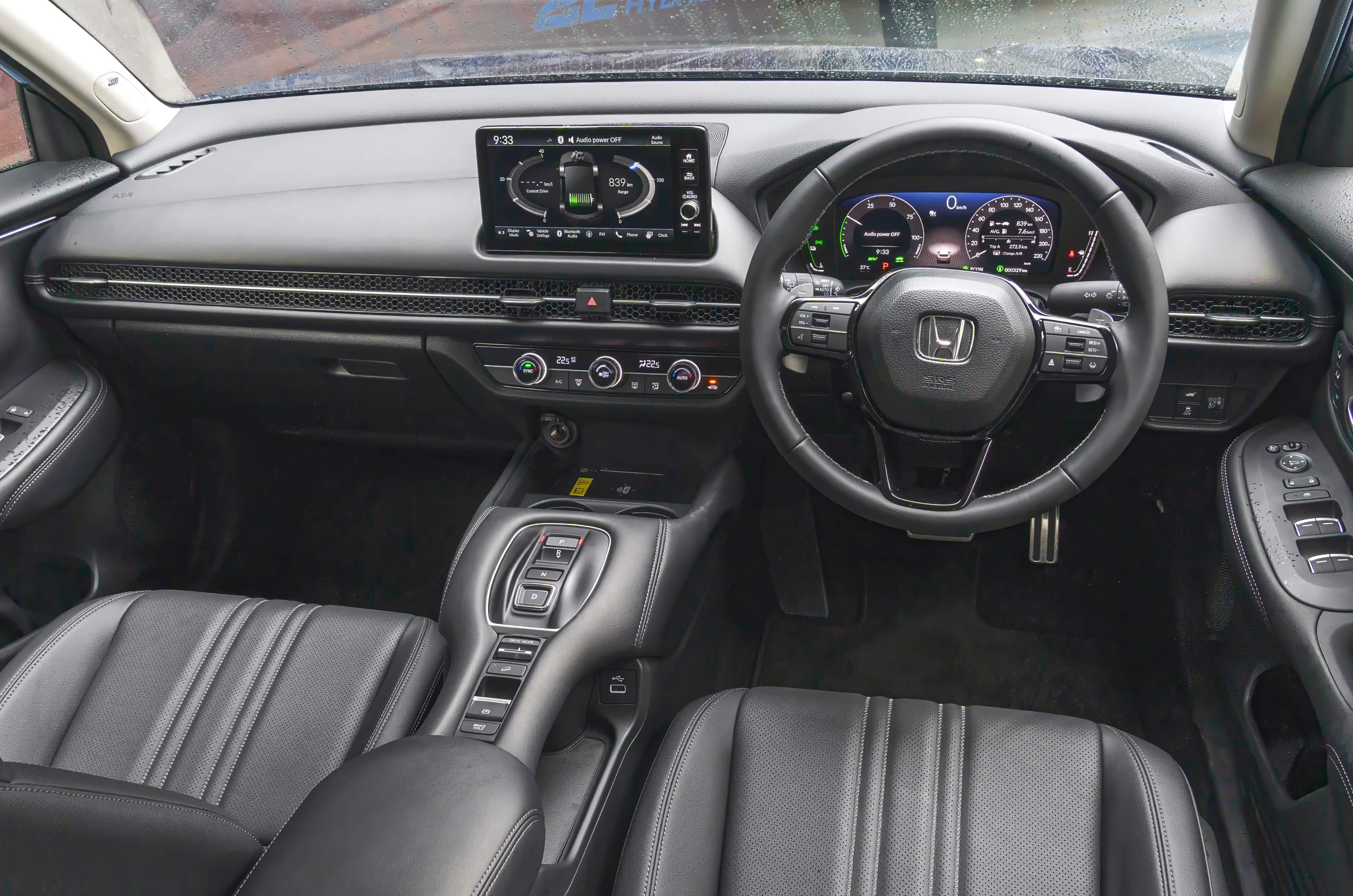
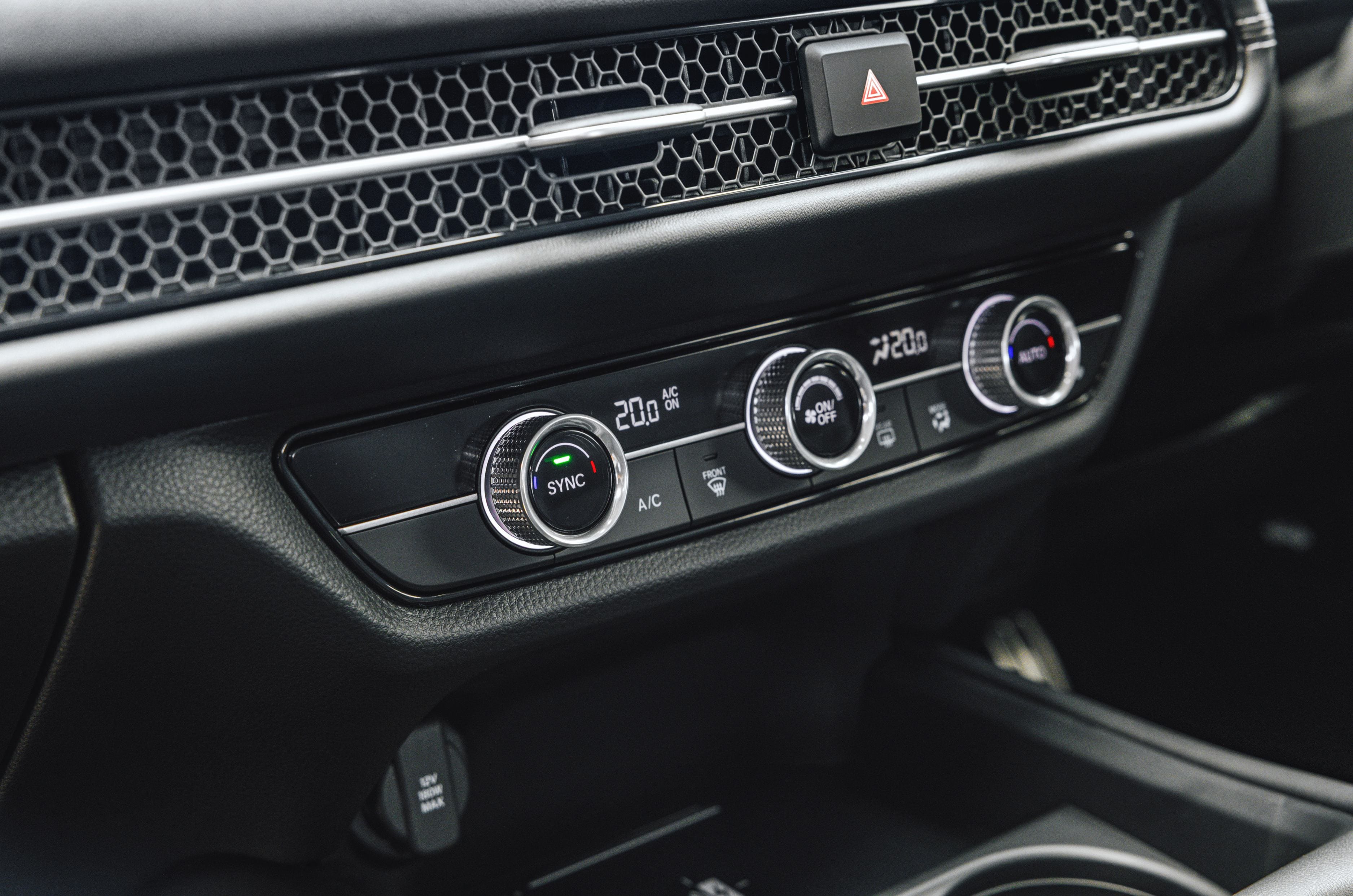
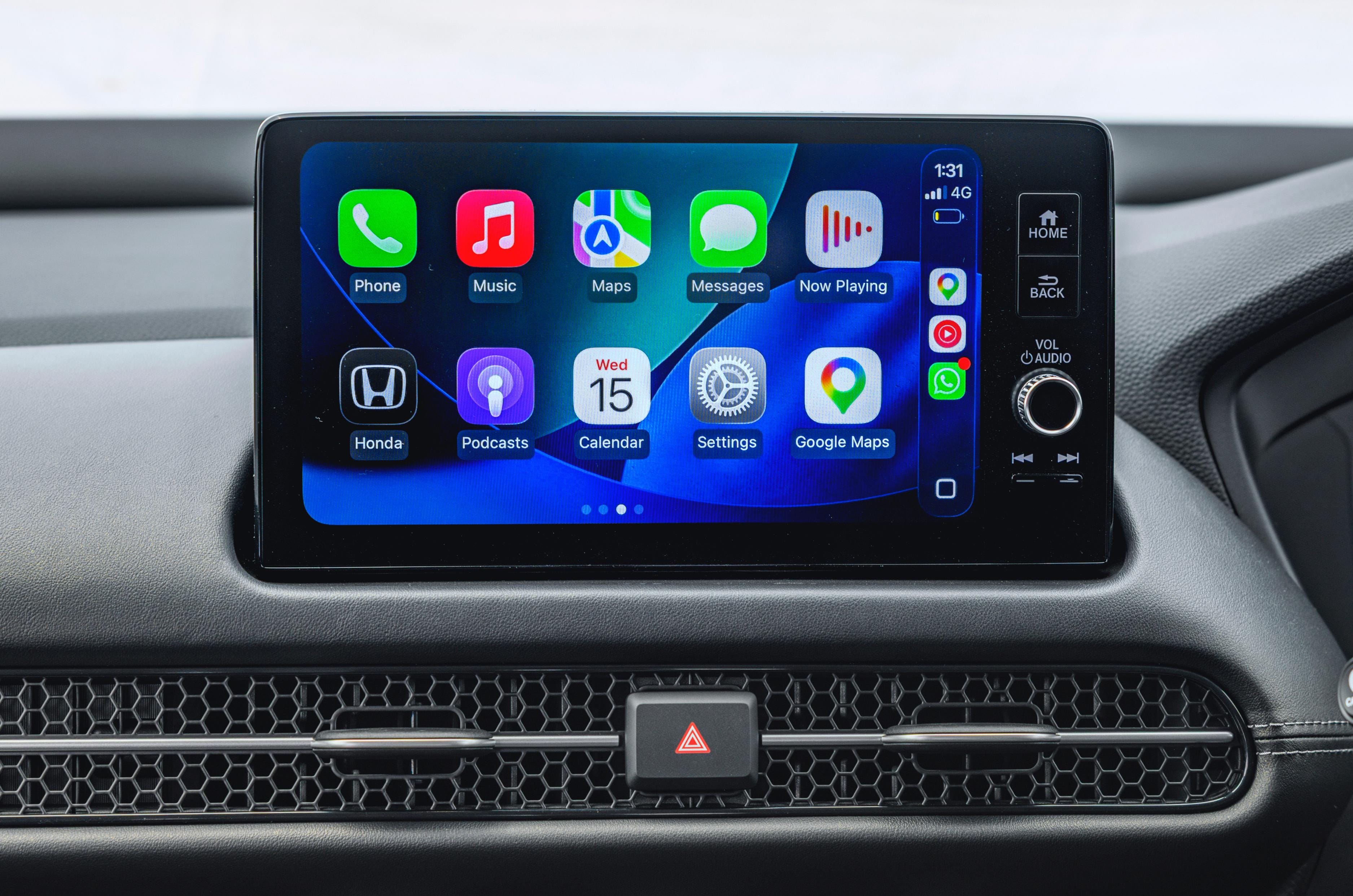
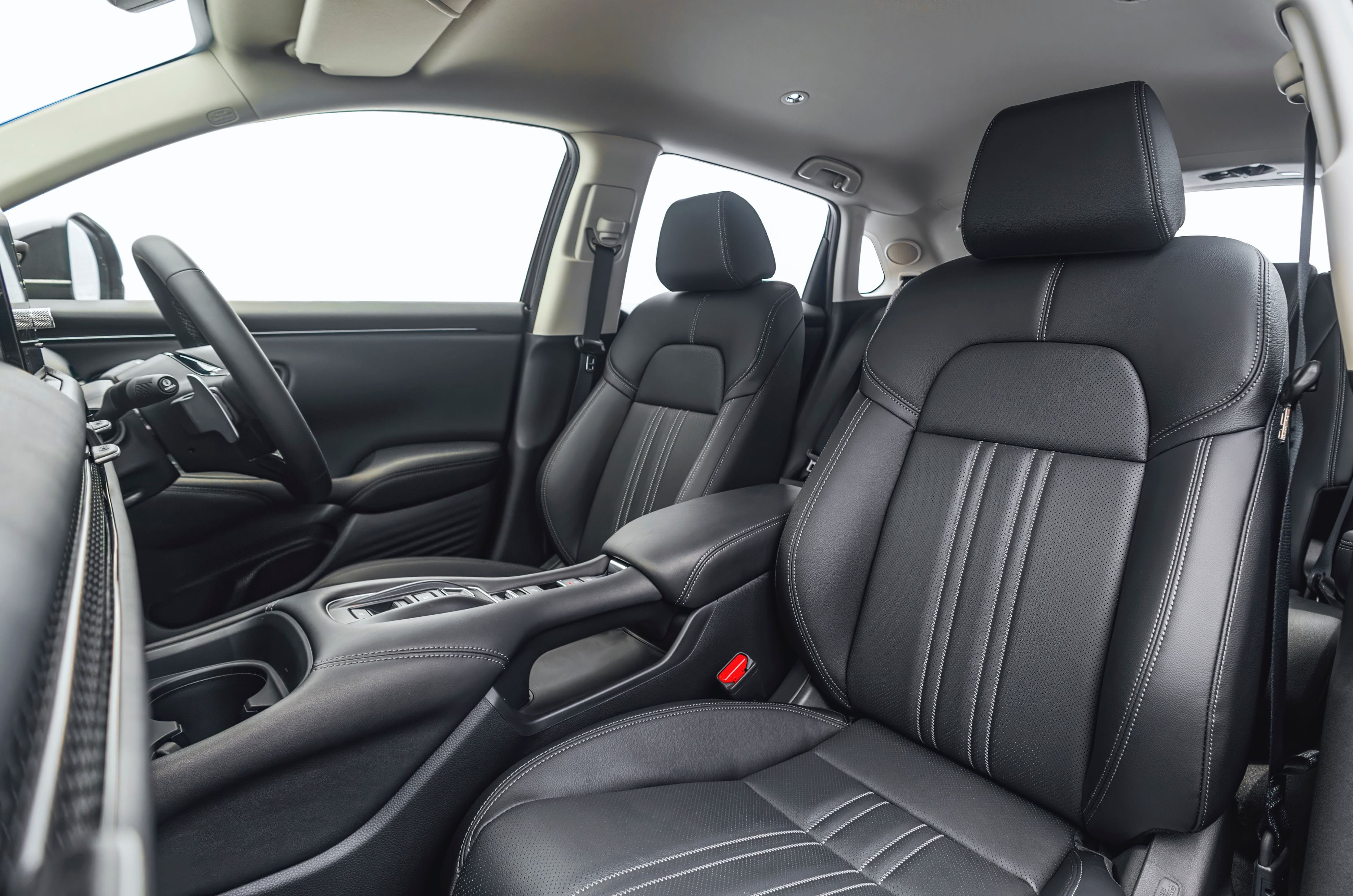
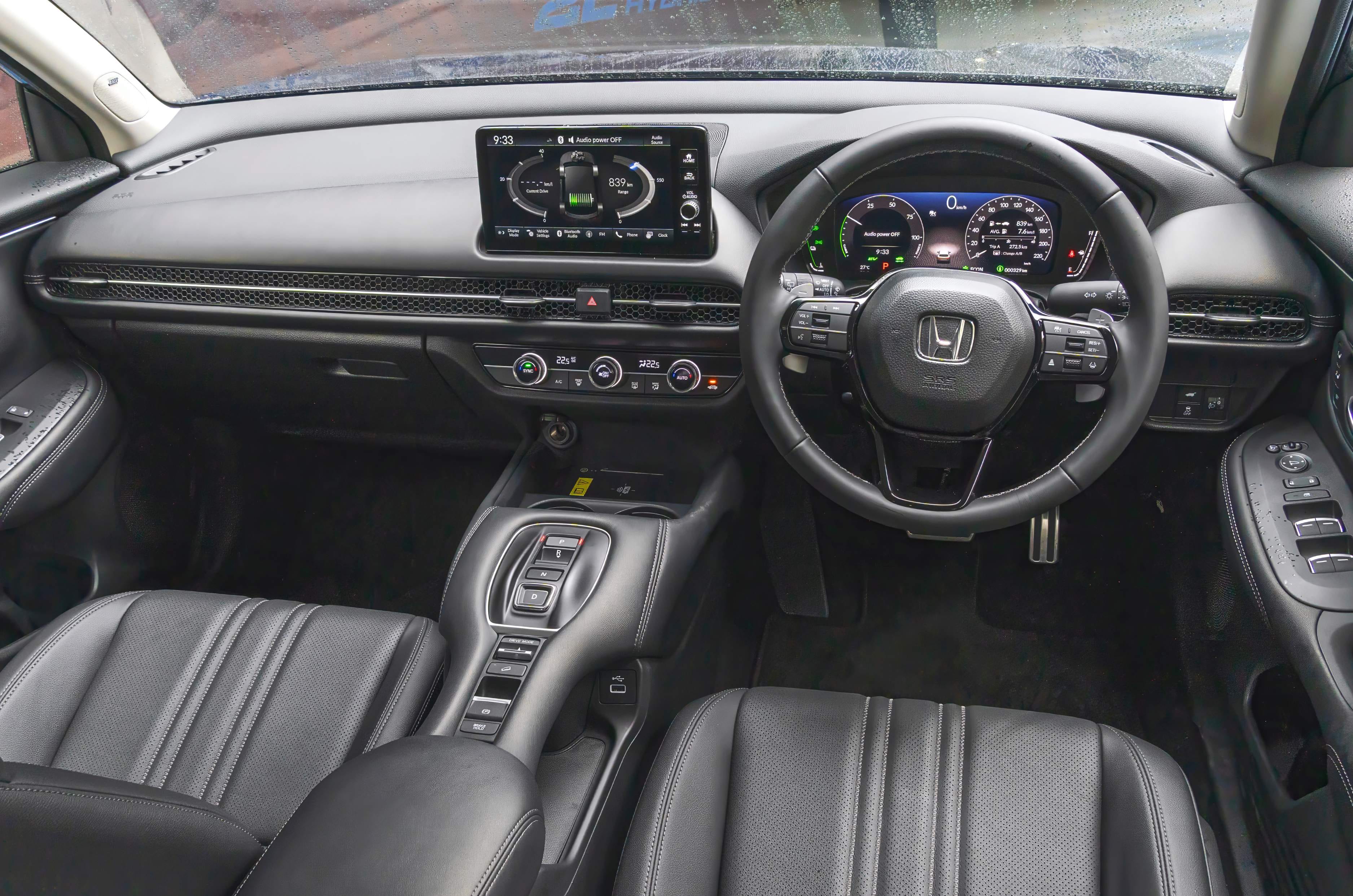
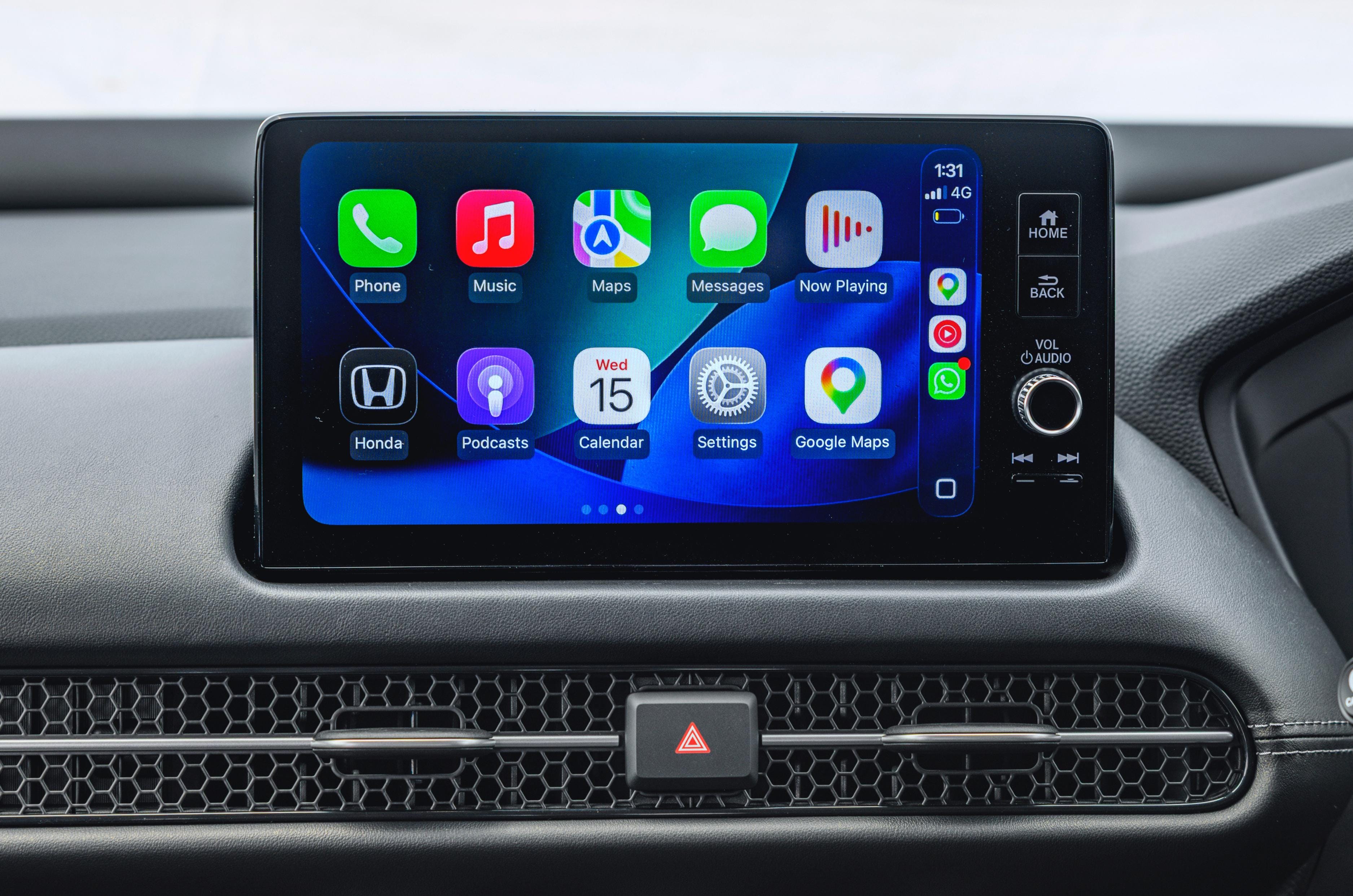
The interior of the ZR-V is typically Honda, which means its practical, comfy and well-finished. There’s plenty of soft touch materials around and I like that the dashboard is low-set which enables a great view out. A 9-inch touchscreen sits on top of the dash, and though it’s nice that it gets physical controls, the size and the UI leaves more to be desired by today’s standards. There’s a honeycomb grille that runs the width of the dash, separated by a silver trim piece which does look premium. Lower down you get similar physical AC controls like on the Honda City with rotary knobs that are satisfying to operate. There’s more buttons on the centre console too, for the drive modes, parking brake and in place of a traditional drive selector.
Cabin is practical and well-finished with plenty of soft-touch materials around
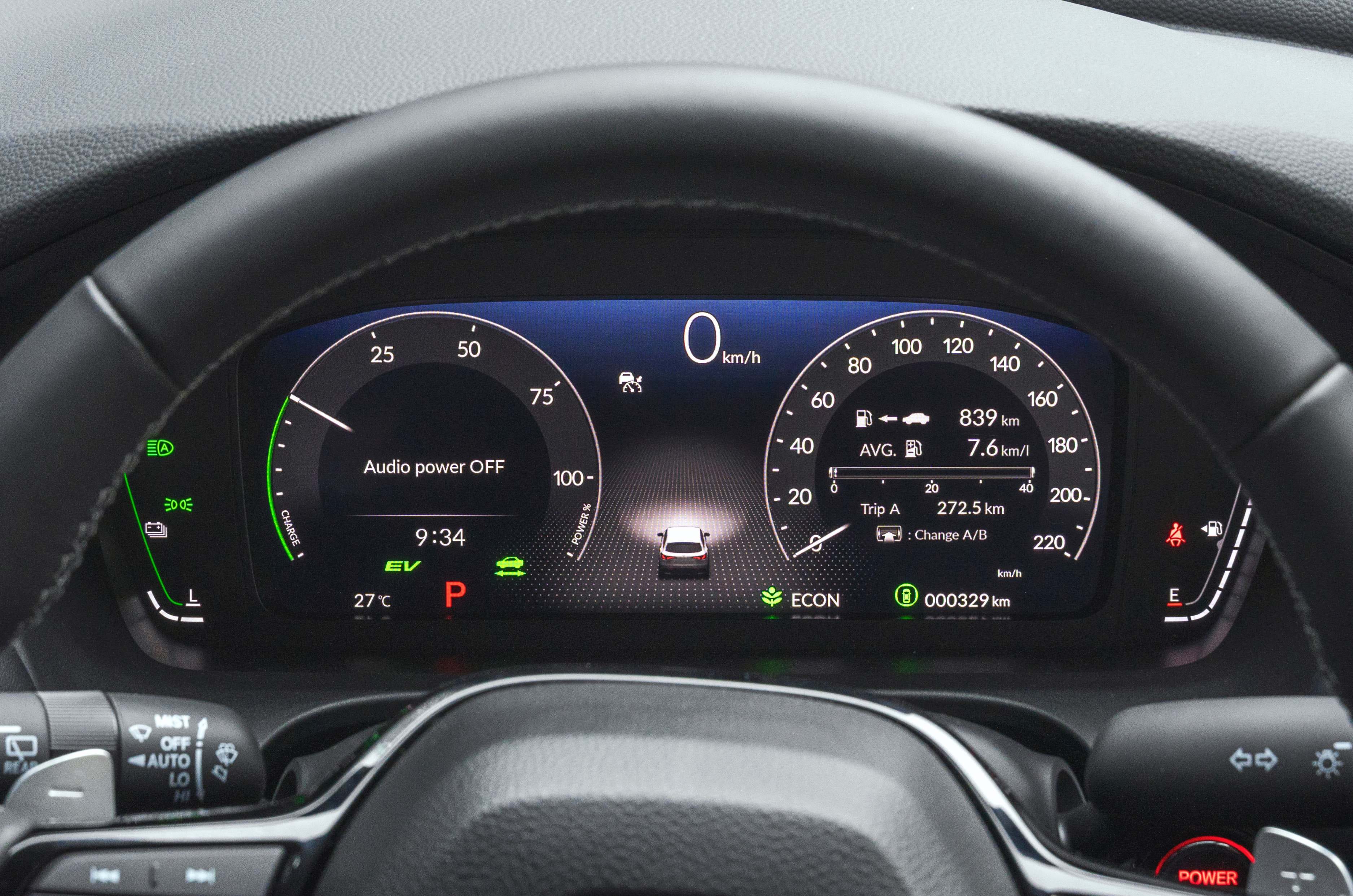
Then you get a well-executed, fully digital instrument cluster that’s customisable and shows you all sorts of driving data, the charge status and a flow chart of the powertrain. The front seats are well-padded, comfortable and feel premium too. Storage spaces are also well thought out, with a decent sized glove box and door bins, storage under the centre armrest and in the centre console.
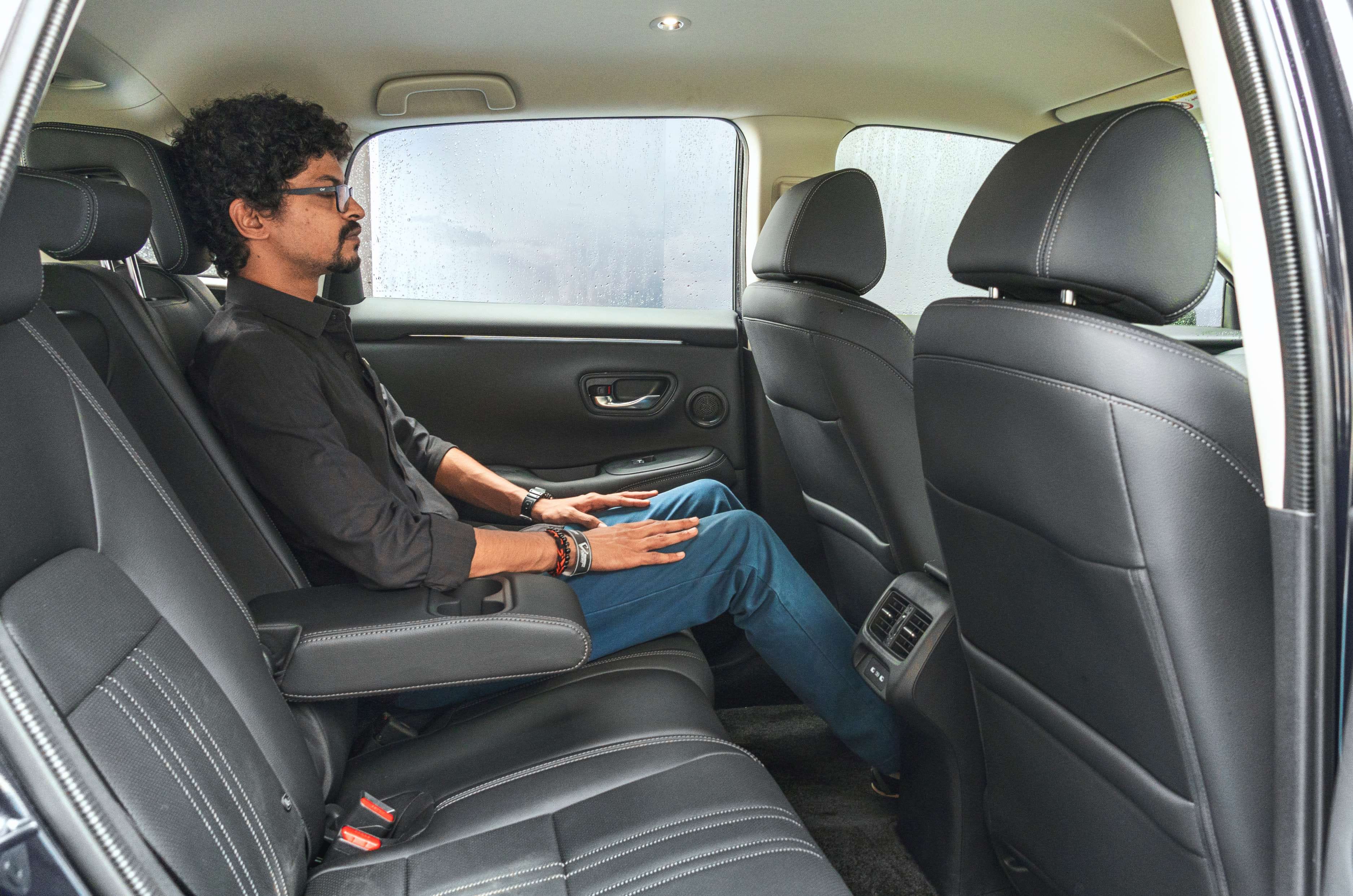
Rear is comfy and spacious enough but low seat results in a bit of a knees-up seating position; also misses sun blinds.
Getting into the rear is quite easy thanks to the low set seat, even though the sill is on the higher side. Once in, you’ll find it a comfy place to be with enough space for three passengers and plenty of legroom. However, the low set seat results in a slightly knees-up seating position, there are no sunblinds and the tapering roofline means people over 6 feet will find the headroom to be tight. As for features here, there’s dedicated AC vents, type C charging ports, a fold-down armrest with cupholders and three-point seatbelts and adjustable headrests for all three passengers.
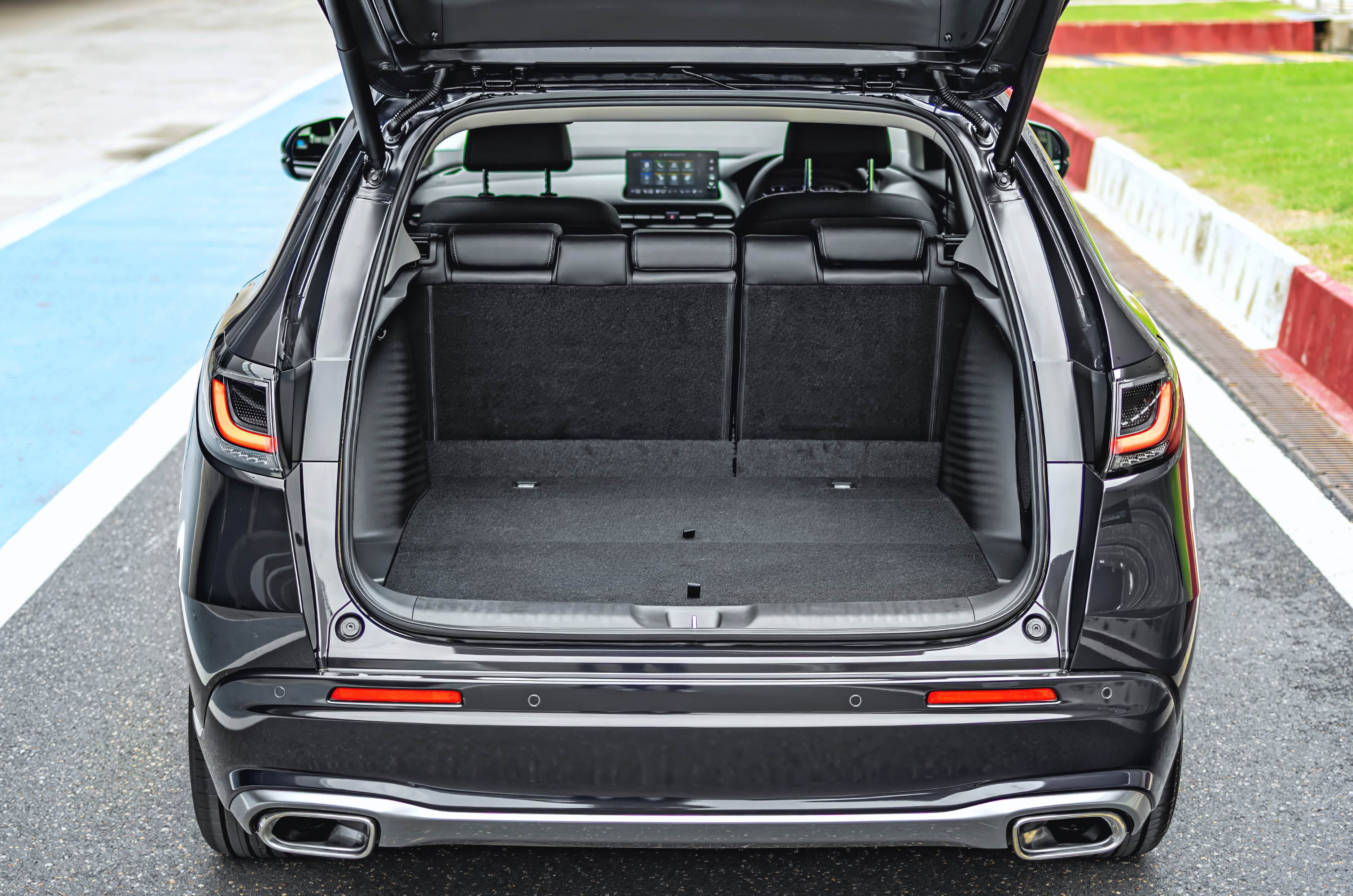
The boot is large too and the loading lip isn’t that high. With the rear seats folded down in a 60:40 split, you can fit in 1313 litres of cargo. There’s no underboot storage though as that’s taken up by the hybrid battery and there’s no spare tyre either.
Honda ZR-V Features and Safety – 6/10
As for features, the ZR-V gets a 10.25-inch digital cluster, a 9-inch touchscreen with Android Auto and Apple CarPlay, a 12-speaker Bose audio system, dual-zone climate control, leatherette upholstery, 8-way powered driver’s seat with memory, 4-way powered front passenger seat, wireless charger, electric tailgate with gesture, electric parking brake and ambient lighting. However, some important features like a panoramic sunroof and heated, ventilated and massaging front seats are missing, all of which could have been offered at the expected price point.
9-inch screen is small by today’s standards but its bright and features physical controls
As for the safety kit, you get a 360-degree parking camera (it is quite low res though), 8 airbags, tyre pressure monitor, hill-start and hill-descent assist, traction control and ISOFIX child seat mounts. It even packs in Level 2 ADAS tech which brings in autonomous emergency braking, lane keep assist, blind spot monitor, adaptive cruise control and more. On the whole though, the ZR-V is under equipped for its expected price.
10.25-inch digital cluster is crisp and shows plenty of info.
Honda ZR-V Value for Money – 5/10
So that’s a brief drive impression of the Honda ZR-V for you. We’ll have to reserve our definitive verdict till we get to experience the SUV out in the real-world and subject it to our performance and fuel efficiency tests.
The ZR-v is being brought as a CBU import from its home market in Japan
The Honda ZR-V has its downsides like the missing features, its relatively compact footprint and lack of road presence and being a full import it’s going to be expensive as well, around the Rs 45 lakh mark. But it has a practical, comfy and well-finished interior and comes with a smooth and seamless hybrid powertrain that is quick and promises to be efficient as well. As such, the Honda ZR-V is going to be a niche product, so it remains to be seen as to how many takers would it find in our market.


.jpg)