भारत संचार निगम लिमिटेड (BSNL) के प्रीपेड मोबाइल यूजर्स अपने रिचार्ज प्लान की वैलिडिटी, मेन बैलेंस और बचे हुए इंटरनेट डेटा की जानकारी आसानी से प्राप्त कर सकते हैं। इसके लिए कंपनी कई विकल्प उपलब्ध कराती है। यूजर्स USSD कोड, WhatsApp, BSNL Selfcare ऐप और कस्टमर केयर की मदद ले सकते हैं।
अगर आप भी BSNL सिम इस्तेमाल करते हैं, तो इन तरीकों की मदद से पता लगा सकते हैं कि आपका रिचार्ज कब तक वैलिड है और कितना डेटा बचा हुआ है। इससे रिचार्ज खत्म होने से पहले नया प्लान चुनने और मोबाइल सेवाएं बिना रुकावट जारी रखने में मदद मिल सकती है।
1. USSD कोड से ऐसे चेक करें BSNL रिचार्ज की वैलिडिटी
अगर आपके फोन में इंटरनेट नहीं चल रहा है, तब भी आप USSD कोड के जरिए बैलेंस और प्लान की जानकारी चेक करने की कोशिश कर सकते हैं। इसके लिए स्मार्टफोन में इंटरनेट कनेक्शन की जरूरत नहीं होती।
इन स्टेप्स को फॉलो करें:
1. अपने मोबाइल फोन का डायलर खोलें।
2. BSNL नंबर से *123# डायल करें।
3. कॉल बटन दबाएं।
4. स्क्रीन पर मेन्यू आने का इंतजार करें।
5. उपलब्ध विकल्पों में मेन बैलेंस और प्लान वैलिडिटी से जुड़ी जानकारी देखें।
BSNL डेटा बैलेंस कैसे चेक करें?
इंटरनेट डेटा बैलेंस की जानकारी के लिए *124# डायल करके देखें। इसके बाद स्क्रीन पर आने वाले निर्देशों का पालन करें।
ध्यान रखें कि USSD कोड और मेन्यू की उपलब्धता सर्किल या टेलीकॉम सेवा के अनुसार अलग-अलग हो सकती है। यदि कोड काम नहीं करता है, तो दूसरे तरीकों का इस्तेमाल करें।
2. WhatsApp से चेक करें BSNL प्लान की डिटेल्स
BSNL यूजर्स WhatsApp के जरिए भी अपने प्लान की जानकारी प्राप्त कर सकते हैं। इसके लिए आधिकारिक BSNL WhatsApp सेवा का इस्तेमाल करना जरूरी है।
कैसे करें चेक?
1. अपने फोन में BSNL की आधिकारिक WhatsApp सेवा का नंबर सेव करें।
2. WhatsApp खोलकर उस नंबर पर मैसेज भेजें।
3. बातचीत शुरू करने के लिए ‘Hi’ लिखकर भेजें।
4. ऑटोमैटिक रिप्लाई में दिए गए विकल्पों को देखें।
5. प्लान, वैलिडिटी या बैलेंस से संबंधित विकल्प चुनें।
इससे जुड़ी जानकारी में 1800-4444 नंबर दिया गया है। हालांकि, इस्तेमाल करने से पहले BSNL की आधिकारिक वेबसाइट या आधिकारिक संचार माध्यम से इस नंबर और उपलब्ध सेवाओं की पुष्टि कर लें। किसी भी अनजान नंबर पर OTP, बैंकिंग जानकारी या अन्य निजी विवरण साझा न करें।
3. BSNL Selfcare ऐप से मिलेगी पूरी जानकारी
अगर आप मोबाइल ऐप के जरिए अपना अकाउंट मैनेज करना पसंद करते हैं, तो BSNL Selfcare ऐप उपयोगी विकल्प हो सकता है। इसमें लॉगिन करने के बाद उपलब्ध सुविधाओं के अनुसार आप अपने मौजूदा प्लान और डेटा बैलेंस की जानकारी देख सकते हैं।
ऐप से जानकारी चेक करने का तरीका:
1. Google Play Store या Apple App Store से आधिकारिक BSNL Selfcare ऐप डाउनलोड करें।
2. ऐप खोलकर अपने BSNL मोबाइल नंबर से लॉगिन करें।
3. जरूरत पड़ने पर OTP वेरिफिकेशन पूरा करें।
4. ऐप के डैशबोर्ड पर अपने मौजूदा प्लान, वैलिडिटी और डेटा बैलेंस से संबंधित जानकारी देखें।
अगर ऐप में जानकारी अपडेट नहीं दिखाई दे रही है, तो उसे रिफ्रेश करें या दोबारा लॉगिन करके देखें। समस्या बनी रहने पर BSNL कस्टमर केयर से संपर्क किया जा सकता है।
4. कस्टमर केयर पर कॉल करके जानें रिचार्ज की वैलिडिटी
अगर USSD कोड, WhatsApp या ऐप से जानकारी नहीं मिल रही है, तो आप BSNL कस्टमर केयर की मदद ले सकते हैं।
– BSNL नंबर से: 1503 पर कॉल करें।
– दूसरे नेटवर्क से: 1800-180-1503 पर संपर्क करने की कोशिश करें।
कॉल करने के बाद वॉयस मेन्यू में बैलेंस, रिचार्ज या प्लान की जानकारी से संबंधित विकल्प चुनें। जरूरत पड़ने पर कस्टमर केयर प्रतिनिधि से बात करने का विकल्प चुन सकते हैं।
कॉल करने से पहले BSNL की आधिकारिक वेबसाइट पर संबंधित हेल्पलाइन नंबर की पुष्टि कर लेना बेहतर है।
BSNL रिचार्ज की वैलिडिटी चेक करना क्यों जरूरी है?
अपने मोबाइल रिचार्ज की वैलिडिटी और डेटा बैलेंस नियमित रूप से चेक करने से कई तरह की परेशानियों से बचा जा सकता है।
– समय पर रिचार्ज: प्लान की वैलिडिटी खत्म होने से पहले नया रिचार्ज करा सकते हैं।
– डेटा की जानकारी: पता चलता है कि कितना इंटरनेट डेटा बचा है।
– कॉलिंग सेवाओं पर नजर: प्लान की शर्तों के अनुसार कॉलिंग सुविधाओं की उपलब्धता समझने में मदद मिलती है।
– सही प्लान का चुनाव: अपनी जरूरत और इस्तेमाल के हिसाब से अगला रिचार्ज चुन सकते हैं।
– सेवाओं में रुकावट से बचाव: वैलिडिटी खत्म होने से पहले रिचार्ज करके मोबाइल सेवाएं जारी रखने में मदद मिलती है।
कुल मिलाकर, BSNL यूजर्स के पास रिचार्ज की जानकारी प्राप्त करने के कई विकल्प हैं। बिना इंटरनेट के USSD कोड आजमा सकते हैं, जबकि ऐप और कस्टमर केयर के जरिए भी जानकारी ली जा सकती है। WhatsApp का इस्तेमाल करने से पहले संबंधित नंबर की आधिकारिक पुष्टि जरूर करें।
अगर आप 20 हजार रुपये से कम कीमत में नया 5G स्मार्टफोन खरीदने की सोच रहे हैं, तो Samsung का नया फोन आपके लिए एक विकल्प हो सकता है। कंपनी ने भारत में Galaxy F70 5G लॉन्च कर दिया है। इस फोन में Super AMOLED डिस्प्ले, OIS सपोर्ट वाला 50MP कैमरा और 5,000mAh की बैटरी दी गई है। खास बात यह है कि लॉन्च ऑफर के साथ इसे और कम कीमत में खरीदा जा सकता है।
Samsung Galaxy F70 5G की भारत में कीमत, ऑफर्स और उपलब्धता
Samsung Galaxy F70 5G के 4GB RAM और 128GB स्टोरेज वाले बेस वेरिएंट की कीमत 19,999 रुपये रखी गई है। वहीं, 6GB RAM और 128GB स्टोरेज वाले वेरिएंट के लिए 22,999 रुपये खर्च करने होंगे।
लॉन्च ऑफर के तहत ग्राहकों को बैंक डिस्काउंट भी मिलेगा। इसके बाद फोन की शुरुआती प्रभावी कीमत घटकर 17,999 रुपये हो जाएगी।
इस स्मार्टफोन की बिक्री भारत में 20 अक्टूबर को दोपहर 12 बजे से Flipkart पर शुरू होगी। यह फोन दो कलर ऑप्शन- Bold Black और Vivid Violet में उपलब्ध होगा।
Samsung Galaxy F70 5G के स्पेसिफिकेशन्स
Samsung Galaxy F70 5G में 90Hz रिफ्रेश रेट वाला 6.7-इंच का फुल HD+ सुपर AMOLED डिस्प्ले दिया गया है। स्क्रीन को खरोंच और रोजमर्रा के नुकसान से बचाने के लिए इस पर कॉर्निंग गोरिल्ला ग्लास विक्टस (Corning Gorilla Glass Victus) की सुरक्षा दी गई है। साथ ही, यह फोन धूल और पानी के छींटों से बचाव के लिए IP54 रेटिंग के साथ आता है।
परफॉर्मेंस के लिए इस स्मार्टफोन में Samsung का Exynos 1330 प्रोसेसर लगा है, जिसे 5nm प्रोसेस का इस्तेमाल करके बनाया गया है। इसमें 6GB तक RAM और 128GB तक इंटरनल स्टोरेज मिलती है। यूजर्स MicroSD कार्ड का इस्तेमाल करके स्टोरेज को 2TB तक बढ़ा भी सकते हैं।
फोटोग्राफी के लिए Samsung Galaxy F70 5G में ट्रिपल रियर कैमरा सेटअप दिया गया है। इसमें OIS सपोर्ट वाला 50MP का प्राइमरी कैमरा, 5MP का अल्ट्रा-वाइड कैमरा और 2MP का मैक्रो सेंसर शामिल है। वहीं, सेल्फी लेने और वीडियो कॉल करने के लिए फोन के फ्रंट में 13MP का कैमरा मिलता है।
बैटरी की बात करें तो इस स्मार्टफोन में 5,000mAh की बैटरी दी गई है, जो 25W वायर्ड चार्जिंग सपोर्ट करती है। फोन में डेटा और डिवाइस की सुरक्षा के लिए Samsung Knox फीचर भी मिलता है। इसके अलावा, Google का Circle to Search फीचर दिया गया है, जिसकी मदद से स्क्रीन पर दिख रही किसी चीज को सर्च करना आसान हो जाता है।
सॉफ्टवेयर अपडेट के मामले में भी कंपनी ने अच्छी सुविधा देने का वादा किया है। Samsung के मुताबिक, Galaxy F70 5G को Android OS के चार बड़े अपग्रेड और पांच साल तक सिक्योरिटी अपडेट मिलेंगे। इससे फोन को लंबे समय तक नए फीचर्स और सुरक्षा अपडेट के साथ इस्तेमाल किया जा सकेगा।
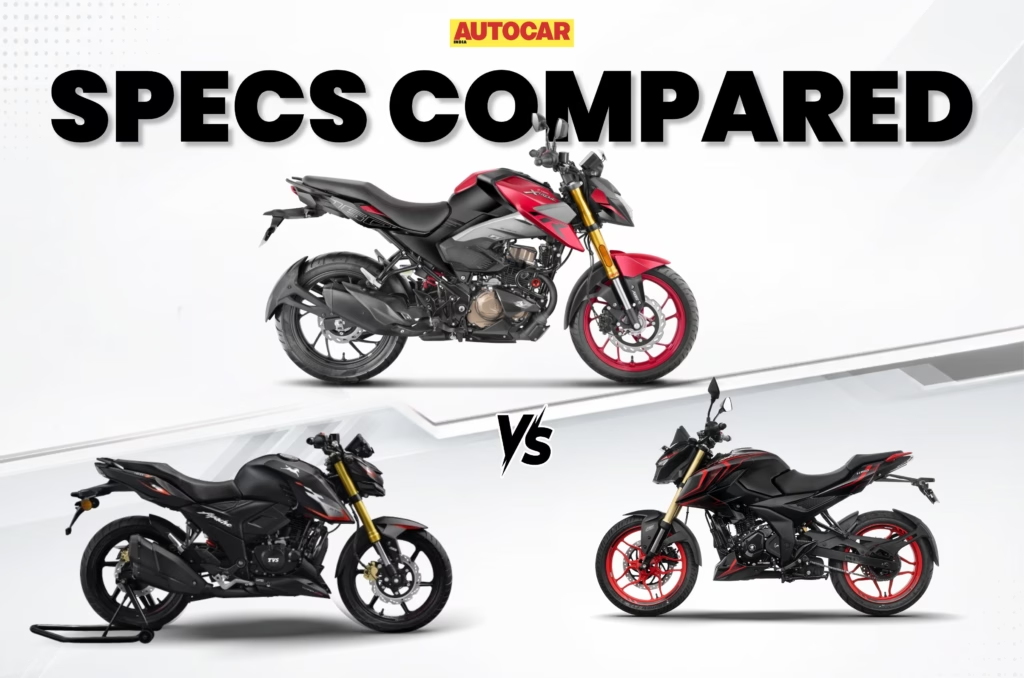
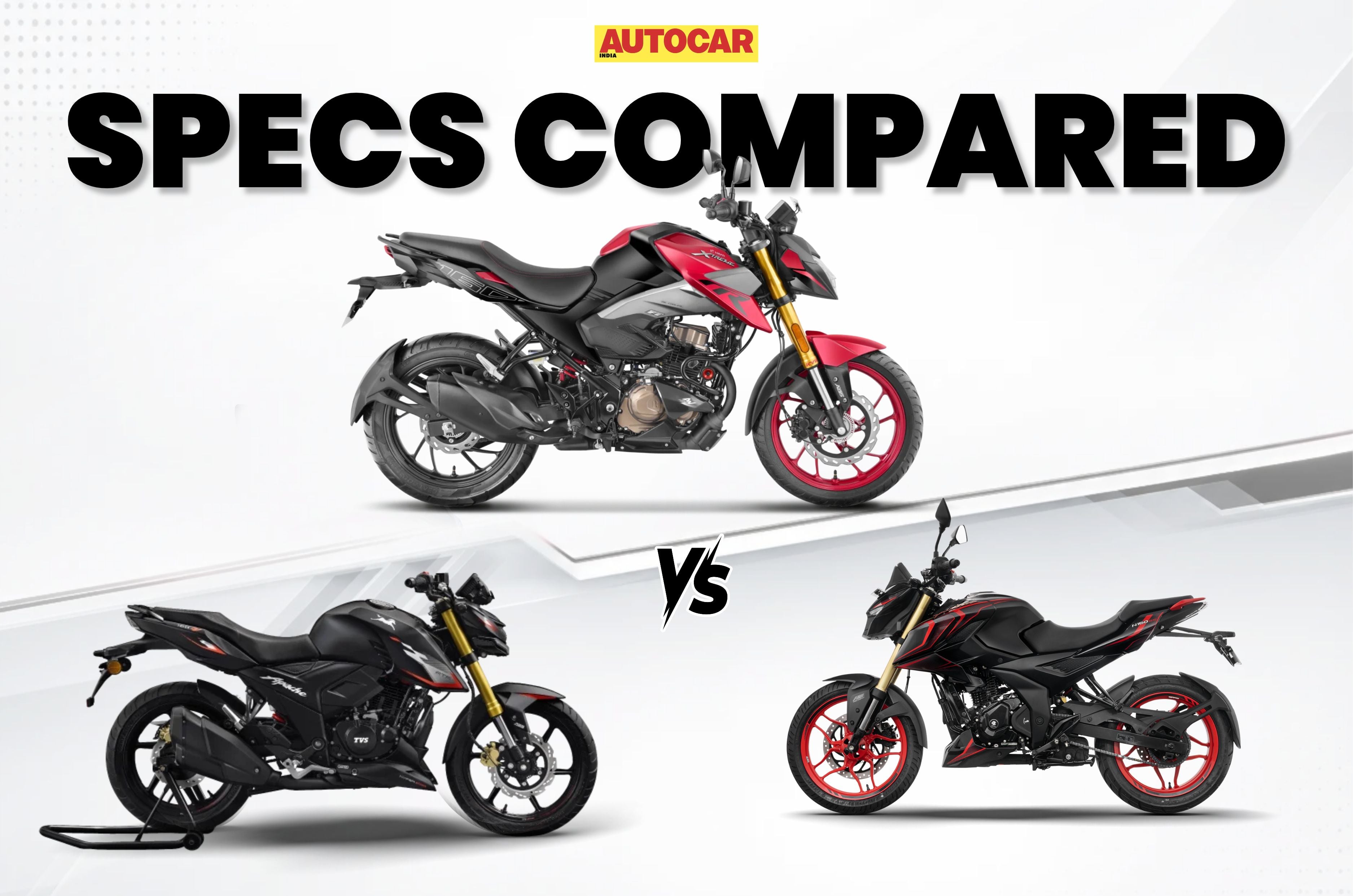
The 160cc segment was kickstarted and subsequently dominated by the TVS Apache RTR 160 and now, the RTR 160 4V is the manufacturer’s best-selling Apache, with the RTR 160 (2V) following in its footsteps. Bajaj has been attacking this duo with a trident of motorcycles, the N160, classic 150, and the NS160. In this fight, Hero’s offering the Xtreme 160R has taken a backseat all this while, but Hero’s looking to get in the front with the newly updated version of its street-naked motorcycle. Does it, really? Let’s see.
Hero Xtreme 160R 4V Carbon vs Rivals: Engine and output
Bajaj has the biggest engine with the most power
Hero Xtreme 160R 4V Carbon
TVS Apache RTR 160 4V
Bajaj Pulsar N160 SS
Engine
163.2cc, single-cylinder, oil-cooled
159.7cc, single-cylinder, oil-cooled
164.9cc, single-cylinder, oil-cooled
Power
17.1hp at 8,750rpm
17.6hp at 8,650rpm
18.5hp at 9,500rpm
Torque
14.6Nm at 6,500rpm
14.7Nm at 7,500rpm
14.4Nm at 8,000rpm
Transmission
5-speed
5-speed
5-speed
Power-to-weight ratio
114.77hp/tonne
120.21hp/tonne
122.52hp/tonne
Hero left the 163.2cc engine almost completely untouched, only raising the peak power output by a meagre 0.2hp compared to earlier. Bajaj’s upgrade to the N160 was more comprehensive than Hero and TVS, even though the other two motorcycles are chronologically newer. Said update has thus helped the N160 SS maintain the highest horsepower of the trio, though it comes in third with respect to torque.
However, the torque race is a very close one and thus unlikely to matter in real-world conditions. The noteworthy jump in power also helps Bajaj maintain a higher power-to-weight ratio, despite being the heaviest of the three motorcycles.
Hero Xtreme 160R 4V Carbon vs rivals: Dimensions and weight
Pulsar is the heaviest, but makes up for it
Hero Xtreme 160R 4V
TVS Apache RTR 160 4V
Bajaj Pulsar N160 SS
Fuel tank capacity
12 litres
12 litres
14 litres
Ground clearance
165mm
180mm
165mm
Kerb weight
149kg
146kg
151kg
Seat height
805mm
790mm
795mm
Wheelbase
1,329mm
1,357mm
1,348mm
None of these motorcycles received a generational change to the platform so the numbers largely remain the same as earlier. Starting off with the Xtreme 160R 4V, Hero has given it some additional features which has made it 1.5kg heavier than the previous Combat Edition and the seat height is a negligible 5mm taller too.
TVS added exactly two new features to the Apache so it remains exactly where it was before and is the motorcycle with the lowest seat height, while having the most amount of ground clearance. The Pulsar N160 is the heaviest of the lot, but also has two additional litres of fuel tank capacity, which is a factor in the additional weight. In this class, that translates to – at the very least – 80km of real-world range so that’s not a small advantage to the Bajaj.
Hero Xtreme 160R 4V Carbon vs Rivals: Tyres, brakes and suspension
Hero has a smaller rear brake and TVS has a narrower front tyre
Hero Xtreme 160R 4V
TVS Apache RTR 160 4V
Bajaj Pulsar N160 SS
Tyres (F, R)
100/80-17, 130/70R17
90/90-17, 130/70R17
100/80-17, 130/70R17
Brakes (F, R)
276mm disc, 220mm disc, dual-channel ABS
270mm disc, 240mm disc, dual-channel ABS
300mm disc, 230mm disc, dual-channel ABS
Suspension (F, R)
37mm USD fork, monoshock
37mm USD fork, monoshock
37mm USD fork, monoshock
Things continue to even out in this section but Bajaj makes a statement with the largest front disc rotor, which is actually from a class above. All three offer dual-channel ABS as standard on the top variants, and all have a lower variant with right-side-up (RSU) telescopic fork and single-channel ABS. Hero is the only manufacturer to offer a KYB, who is a suspension specialist, built fork but also has given the Xtreme 160R the smallest rear disc. TVS technically does have the smallest tyre of the three, but it’s not alarmingly small to imply handling issues.
Hero Xtreme 160R 4V Carbon vs Rivals: Features
Hero’s redemption attempt
This is the area Hero has caught up the most to the other two, after design. Though the Combat Edition added quite a bit to make the Xtreme 160R last year, the fight now feels even across the board, which is a great thing for you and me as consumers.
On the top Carbon variant, you get a 4.2-inch TFT display that goes toe-to-toe with the other two on this list. Xtreme 160R is the only motorcycle in this segment to give you cruise control and TVS, despite technically being the oldest platform of the lot, gives a tough fight to the other two. In terms of outright feature-set, the Bajaj still offers a higher number of features, such as an additional ride mode, document storage on the display and the likes, but TVS and Hero fight valiantly. The Hero still misses out on features such as, a slip-and-assist clutch, a dedicated mode to make low speed riding easier (Crawl mode on Bajaj, GTT on TVS) and Google Maps mirroring. So, if you’re looking for the most feature-loaded Hero, take a gander at the Xtreme 250R, which also got updated with quite a bit of features and is sitting in the segment above.
Hero Xtreme 160R 4V Carbon vs Rivals: Price
Carefully treading the affordable-line
Hero Xtreme 160R 4V
TVS Apache RTR 160 4V
Bajaj Pulsar N160 SS
Price (ex-showroom)
Rs 1.27-1.41 lakh
Rs 1.20-1.42 lakh
Rs 1.22-1.43 lakh
Hero is currently the most expensive of the three, especially if you’re looking to get the base variant; beyond that, digging further into the price difference will be splitting hairs, so look at the other sections to see if they help you make a choice. That being said, the 160cc segment in India is one of, if not, the most competitive one so whichever one you choose, you’re unlikely to make a truly bad one. See which motorcycle catches your eye the fastest and pulls your heart strings the hardest after the test ride, and you’ll probably know what you’re bringing home.
If you’re determined to live in the xtreme, er, extreme, Hero is currently taking bookings for the all-new Xtreme 160R 4V, whereas the other two motorcycles are already available in their respective showrooms. Unlike its bigger brother, the 160R 4V will be available in all Hero showrooms across the country – which is quite a large network. Deliveries for it are expected to begin in November.
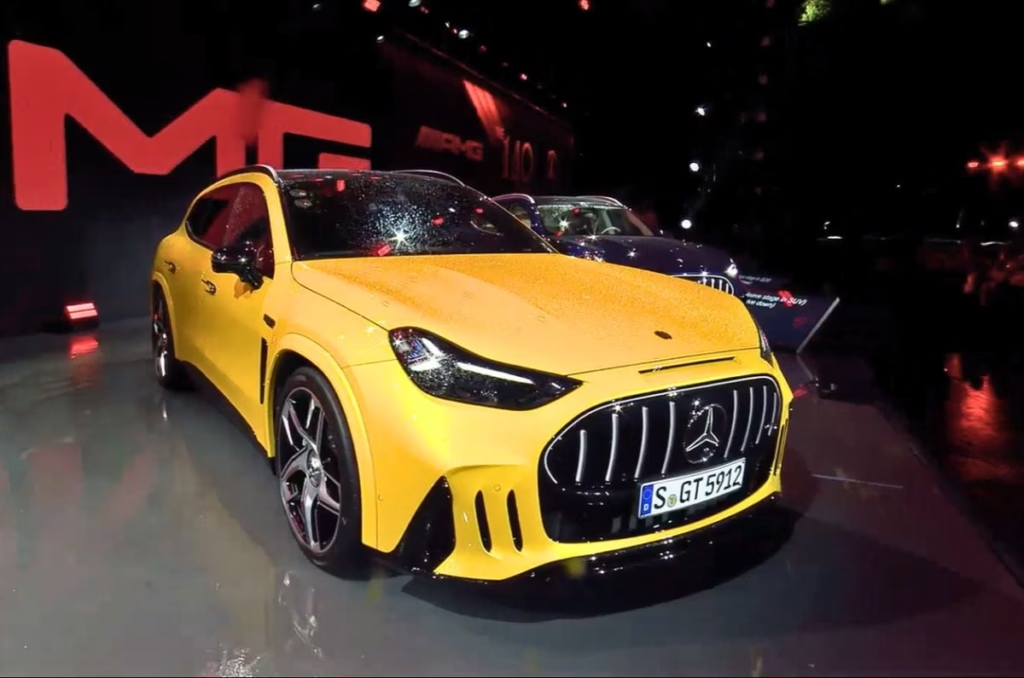
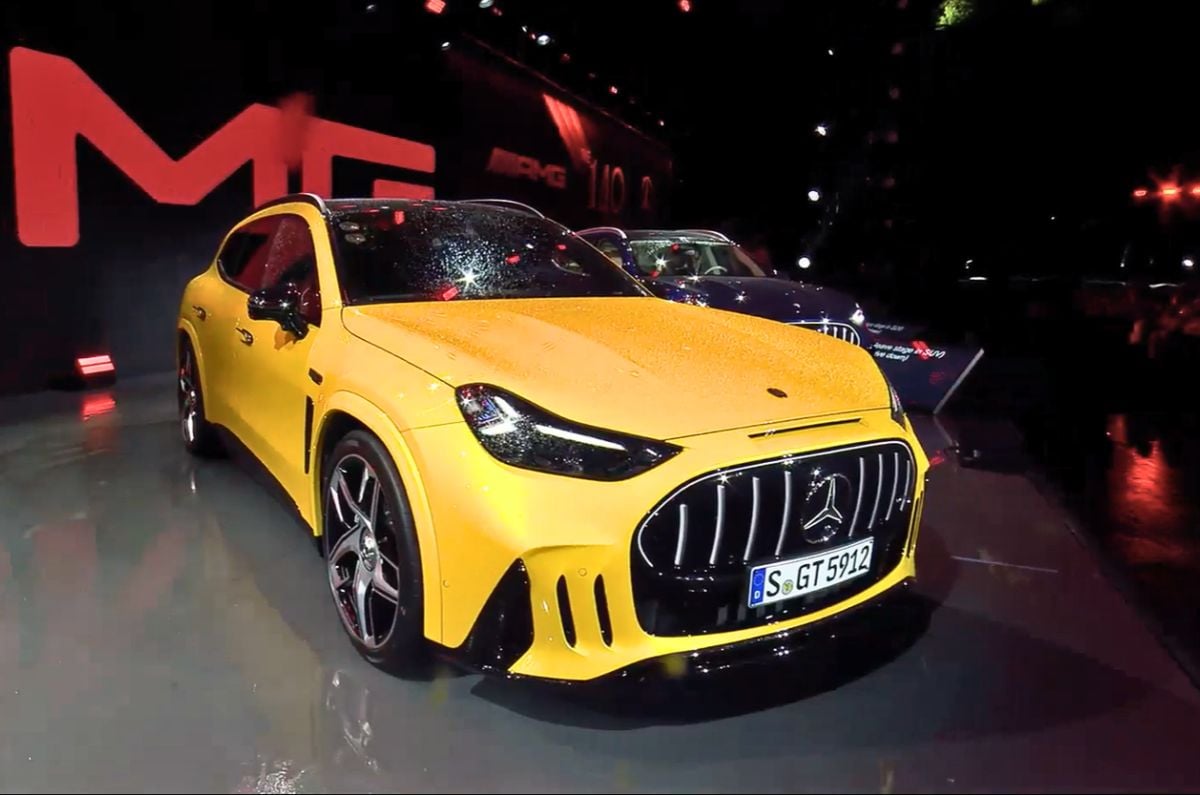
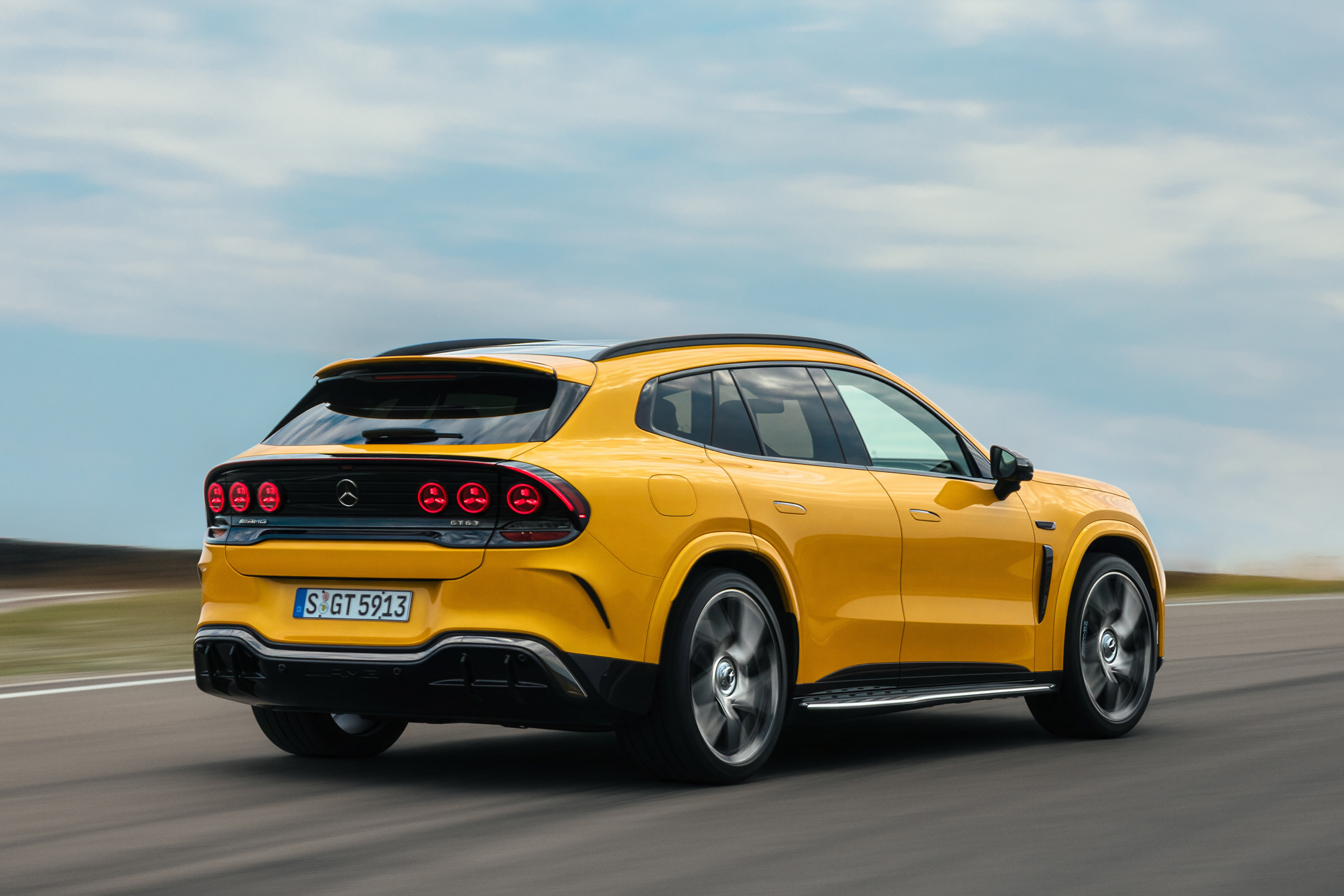
Mercedes has taken the wraps off the AMG GT SUV which, according to the German marque, is the first full-size SUV it has developed completely in-house. The five-seat performance EV shares its underpinnings with the fully electric GT 4-Door Coupe, and will be available in GT 53, GT 55 and GT 63 guises, the last of which makes up to 1,169hp. The GT 53 will be the first to go on sale, with the more powerful variants joining the line-up in spring 2027.
Star-shaped DRLs, illuminated badging, active aero and more.
Personalisation options from the Manufaktur programme.
Three digital displays, built-in AI assistants, AMG-specific apps and more.
Claimed WLTP range of up to 700km, with DC fast charging of up to 710kW.
Mercedes-AMG GT SUV exterior
Illuminated badging, sloping roofline, active aerodynamics, Manufaktur paint options and more
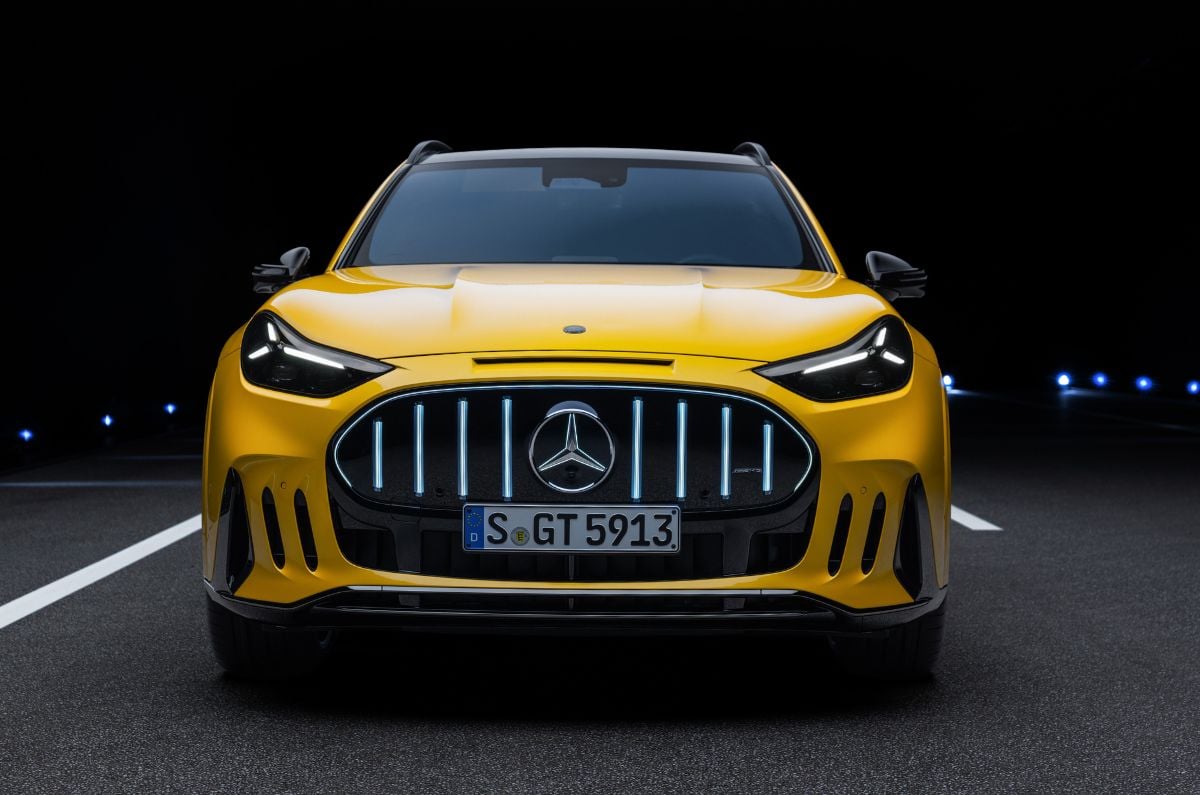
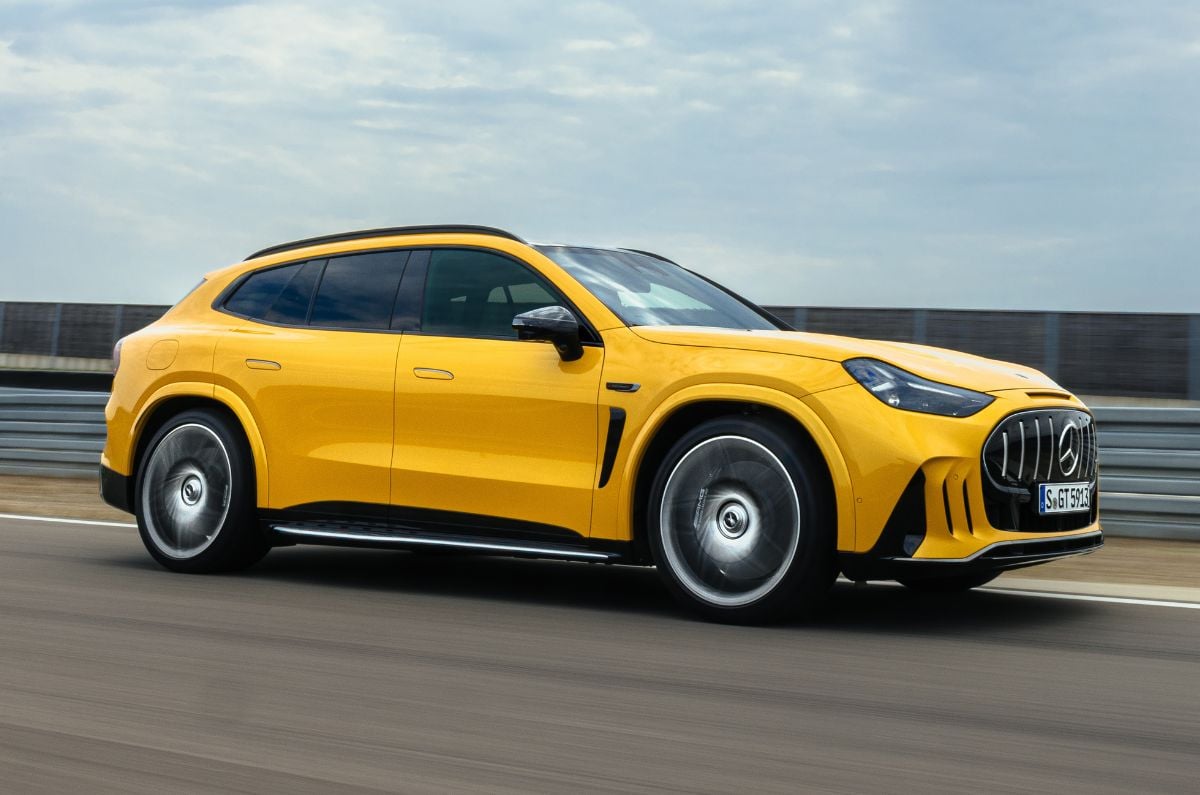
The Mercedes-AMG GT SUV comes in at 5,084mm long, 2,001mm wide and 1,656mm tall, and it has a wheelbase of 3,040mm. The front fascia sports AMG’s vertical-slat grille and Mercedes star, both of which can be optionally illuminated, flanking which are LED headlamps with star-shaped DRLs (daytime running lights). The front bumper features active slats, which only open when components need extra cooling.
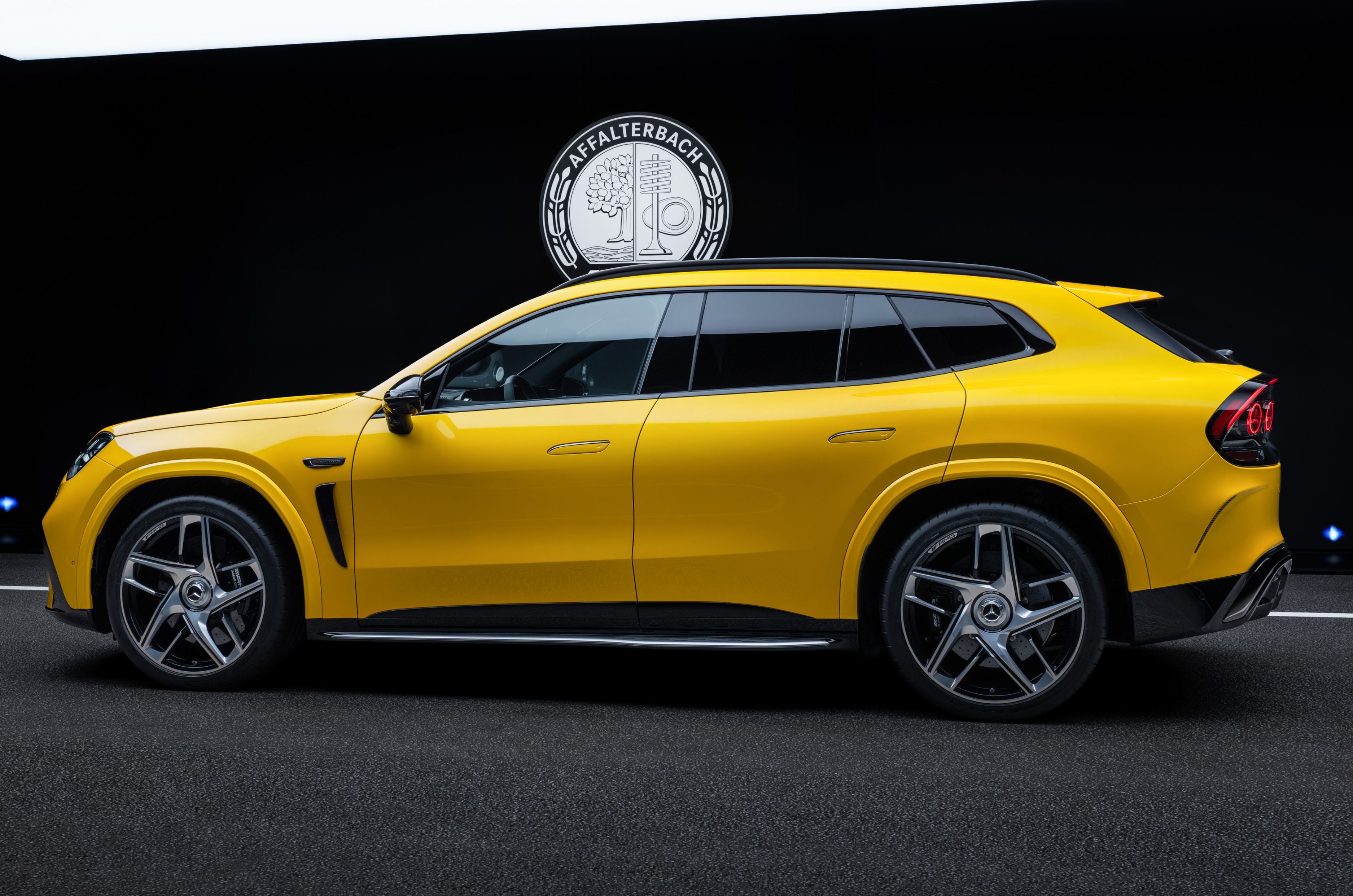
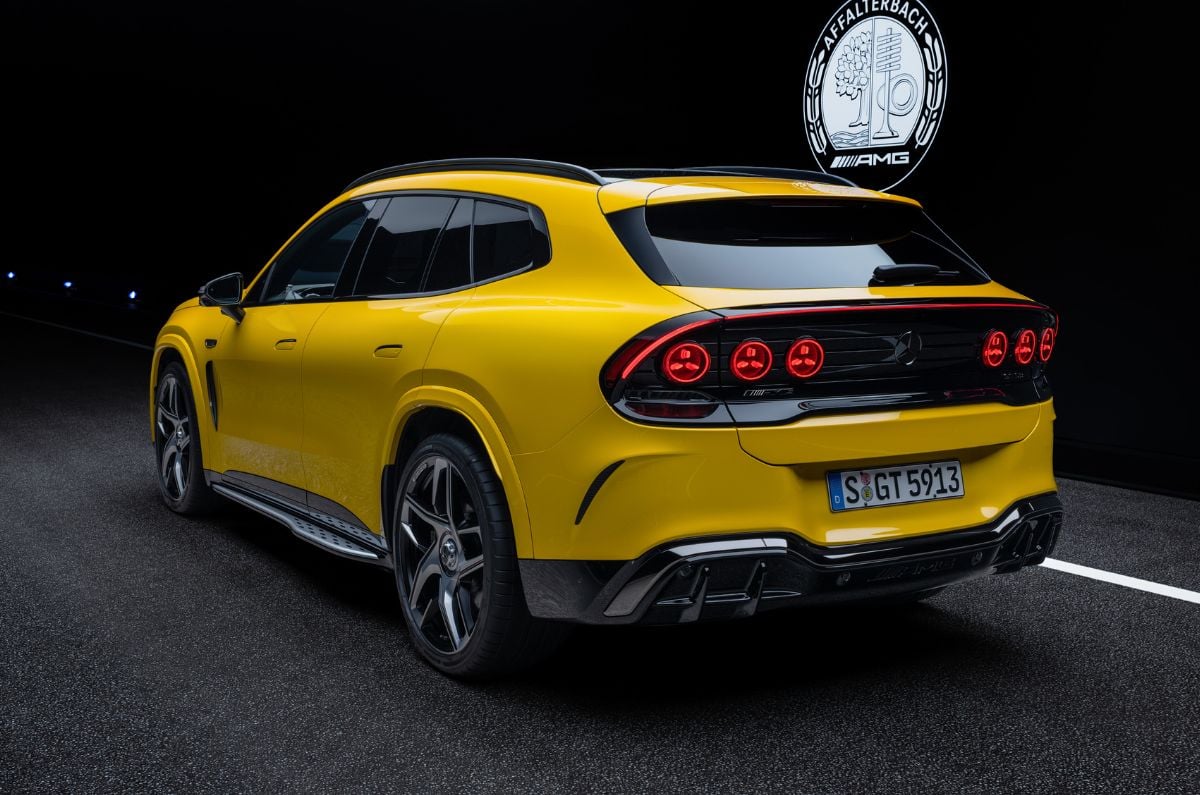
The profile showcases a low-slung roofline that slopes towards the rear along with pronounced wheel arches. Other details here include frameless side windows and compact wing mirrors. Moving to the rear of the AMG GT SUV reveals six circular tail-lamps as seen on the GT 4-Door Coupe, and customers can also opt for a full-width light strip.
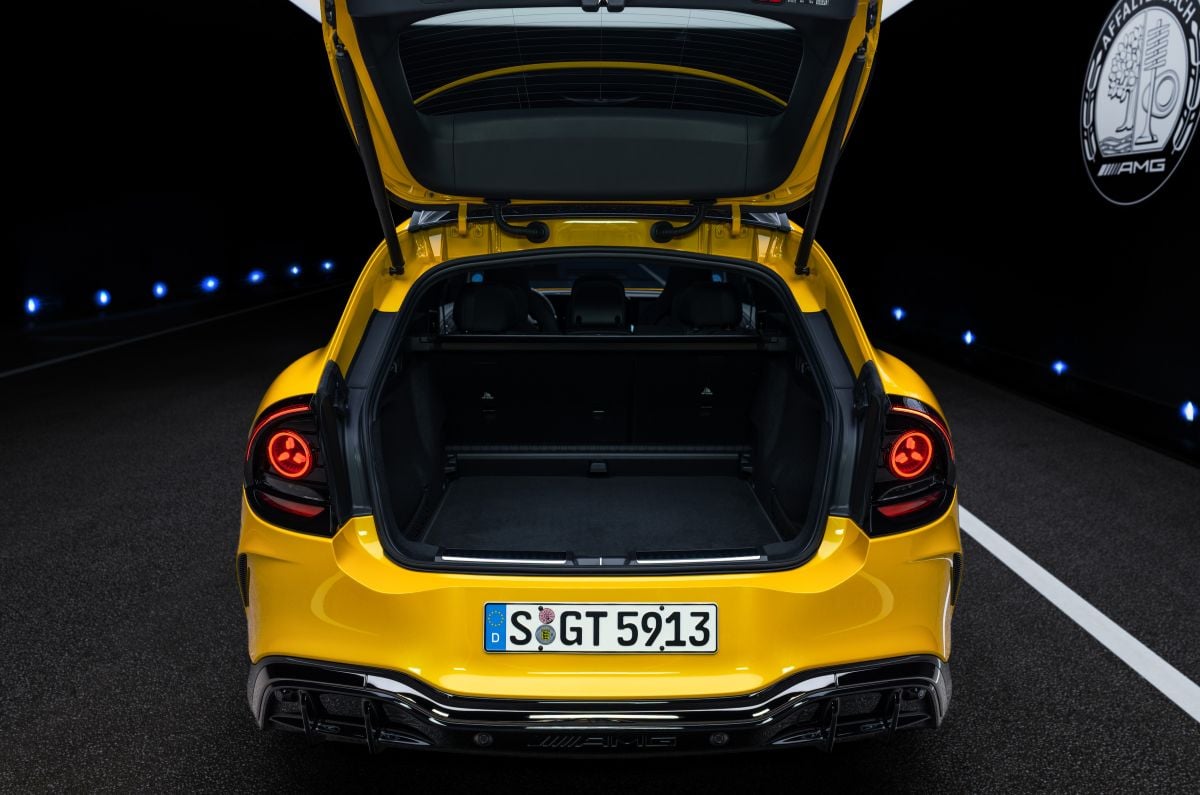
Stepping up to the GT 55 and GT 63 means an active rear spoiler that remains flush with the roof until 150kph, changing its angle depending on the driving scenario. Mercedes-AMG also claims a drag coefficient of 0.28 for the GT 53, while the other two are rated at 0.27. The main boot has a claimed capacity of 607 litres, with the frunk capable of accommodating 78 litres worth of luggage.
Buyers can personalise the GT SUV through the brand’s Manufaktur programme, which presents over 60 paint options. Customers can also opt for AMG’s forged wheels in colour accents, which includes Matt Vanadium Silver and Matt Copper, Matt Black with a rim flange in Angel Blue, Sunny Lime, or Orange Flame.
Mercedes-AMG GT SUV interior and features
Stand-out tech includes dual 14-inch screens, AI assistants and AMG-specific apps
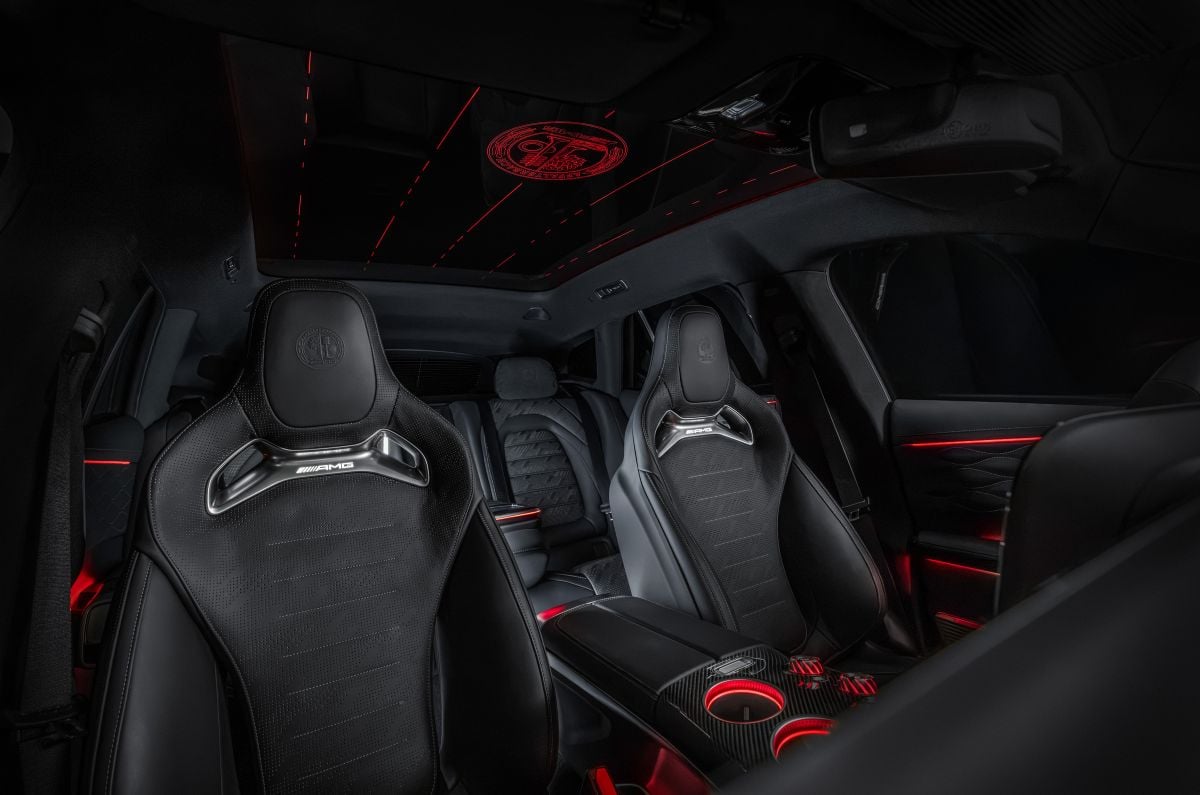
Just like the exterior, the interior of the Mercedes-AMG GT SUV can be personalised using the Manufaktur catalogue. Some of the options that will be offered to customers include accent colours and seatbelts trimmed in Fjord Blue, Green Hell or Orange Flame. The automaker claims that the seating position here is akin to that of a sports car rather than an SUV. Providing comfort up front are multi-way power-adjustable seats, while the three-seat rear bench gets power-folding headrests.
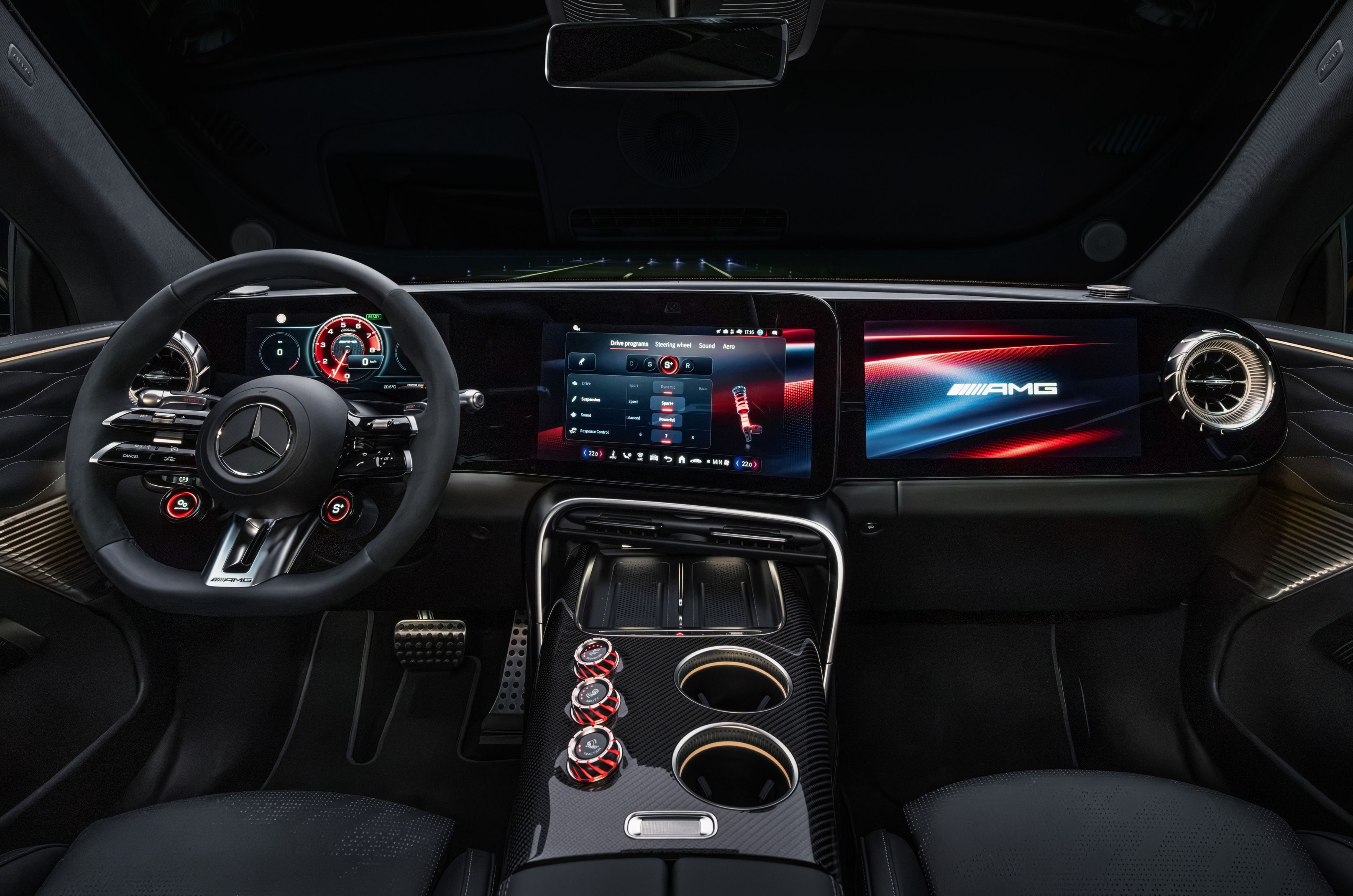
The dashboard pairs a 10.2-inch digital instrument cluster with a 14-inch touchscreen that’s angled towards the driver, while a 14-inch screen is optional for the front occupant. The AMG Performance steering wheel is equipped with paddles to adjust brake-regen levels, while adding to the design are door panels with floating armrests and diamond-pattern stitching. There’s also multi-colour ambient lighting whose colours can be matched to the bevy of displays and controls.
The infotainment system features the German brand’s latest MBUX software, which is based on the MB.OS (Mercedes-Benz Operating System). It integrates AI agents such as ChatGPT, Microsoft Bing and Google Gemini. This luxury SUV also comes with three AMG-specific apps. Firstly, there’s ‘AMG Performance Menu’, which displays real-time data on power, tyre temperatures and active aero status.
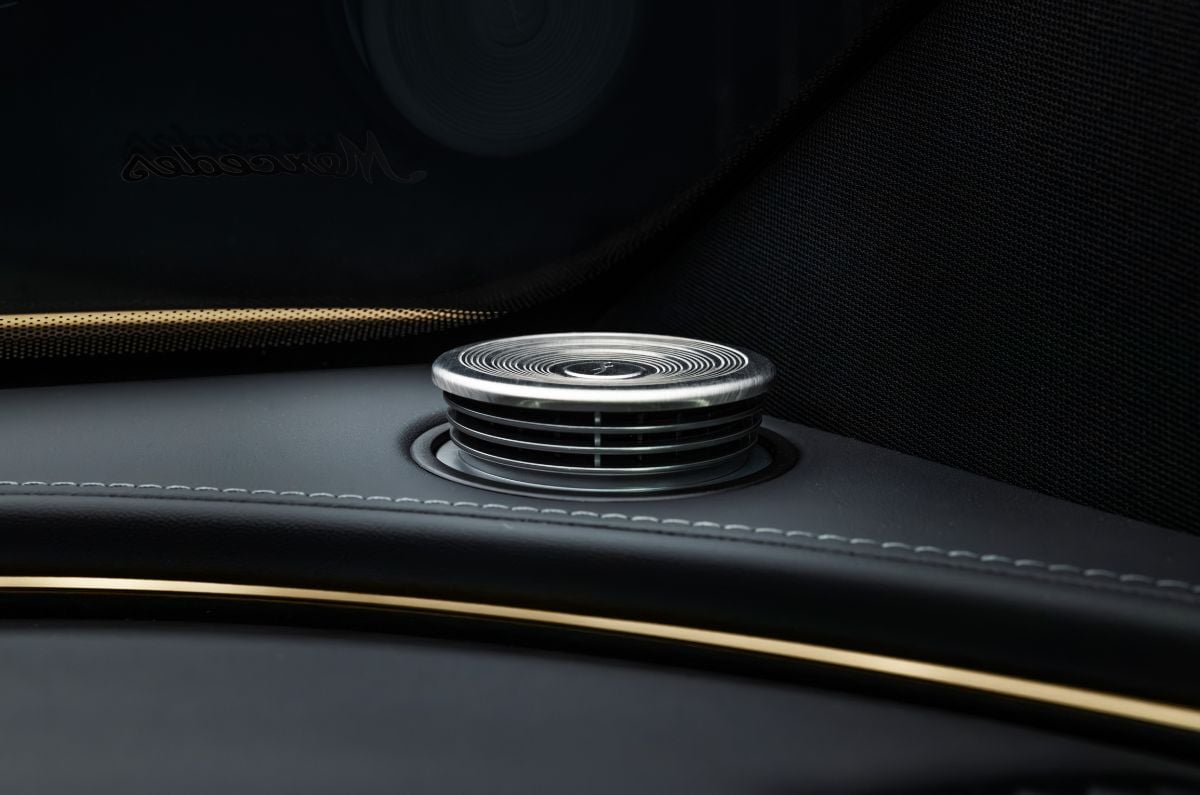
Second is ‘AMG Set-up’ – this lets the driver customise the buttons on the steering wheel as well as aero settings. Finally, there’s ‘AMG Track Pace’, which records lap times and telemetry. Drivers can also use it to show optimal braking points and the ideal racing line in the head-up display. Meanwhile, the optional dashcam allows laps to be recorded with data overlays. The AMG GT SUV is also available with an electrically dimming panoramic glass roof, AMG lighting effects, AMG Performance seats and a Burmester 4D audio system, among many optional features.
Mercedes-AMG GT SUV powertrain and performance
The EV gets up to three electric motors and a WLTP range of up to 700km
The entry-level GT 53 variant of the Mercedes-AMG GT SUV uses two synchronous motors – one on each axle – with a two-speed gearbox located at the rear. Its output is rated at 544hp and 800Nm, with Mercedes-AMG claiming a 0-100kph time of 4.2 seconds and a top speed of 250kph. Then there are the mid-spec GT 55 and the top-spec GT 63. These come with two axial flux motors at the rear and one at the front, the latter disengaging when not needed to save energy.
The tri-motor setup of the GT 55 outputs 816hp and 1,860Nm, allowing for a claimed 0-100kph time of 3.1 seconds. Sitting at the top of the Mercedes-AMG GT SUV line-up is the GT 63, which is rated at 1,169hp and 2,000Nm and does 0-100kph in 2.7 seconds. Regardless, the all-wheel-drive GT 55 and GT 63 have a claimed top speed of 270kph with the optional Driver’s Package.
The GT 53’s 106kWh battery pack offers a claimed WLTP range of up to 668km, while the 128kWh battery of the GT 55 and GT 63 is rated at up to 700km. These 800V packs offer DC fast charging of 600kW and 710kW, respectively. Mercedes-AMG claims that charging these batteries from 10-80 percent takes 11-12 minutes, though it also says that these figures are preliminary.
The GT SUV gets rear-wheel steering as standard while also debuting AMG’s new ‘Active Ride Control+’ suspension. The latter, which is standard on the top-spec GT 63, replaces traditional anti-roll bars with hydraulic units that, according to the automaker, curb body roll and pitch. The top-spec variant also gets carbon-ceramic brakes as standard.
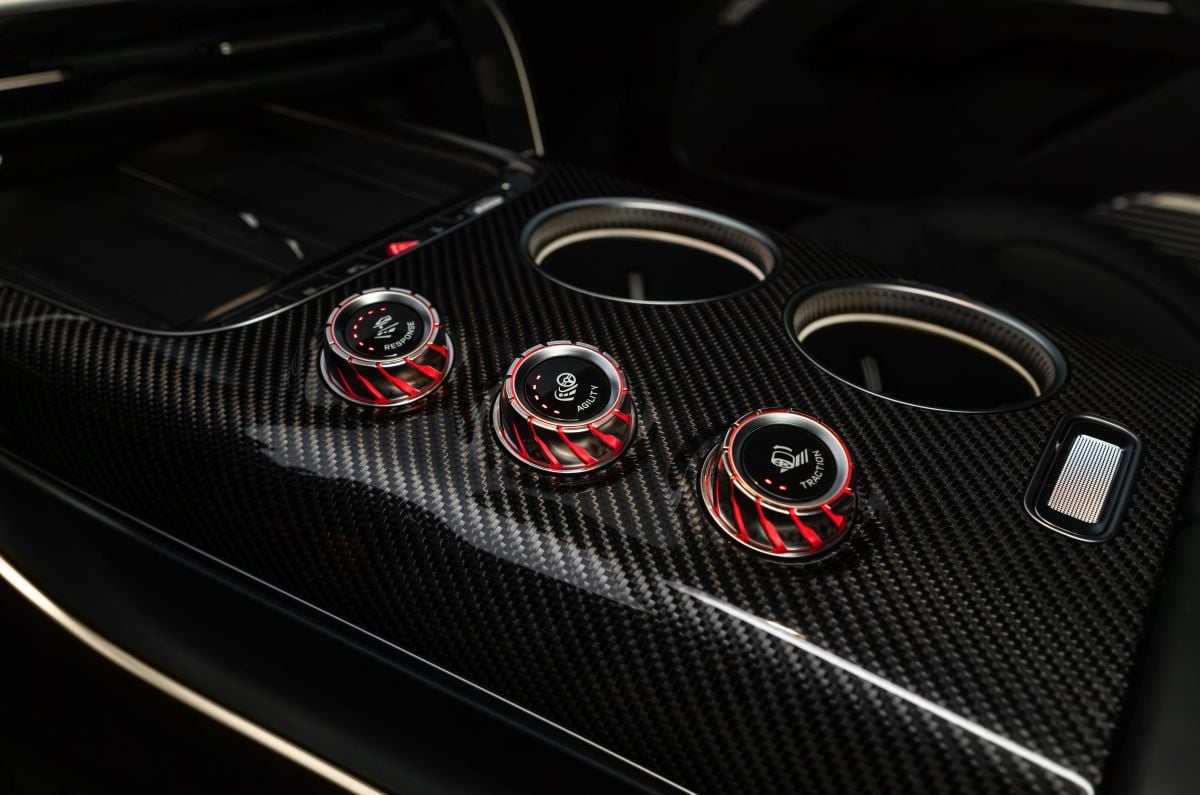
In the tri-motor variants, drivers can adjust the throttle response, cornering behaviour and traction control using dials on the centre console. Mercedes-AMG also said that the ‘AMGForce Sport+’ mode recreates the sound of an AMG V8 (or a six-cylinder in the GT 53) along with simulated gearshifts. As for India, the German marque is yet to reveal its plans for the AMG GT SUV.
सितंबर में iPhone 18 Pro सीरीज और अपने पहले फोल्डेबल फोन iPhone Duo को लॉन्च करने के बाद Apple अब मार्च 2027 में स्टैंडर्ड iPhone 18 लॉन्च करने की तैयारी कर रही है। रिपोर्ट्स के मुताबिक, यह अब तक का सबसे महंगा स्टैंडर्ड iPhone हो सकता है। बता दें कि iPhone 17 को भारत में ₹79,900 की शुरुआती कीमत पर लॉन्च किया गया था। हालांकि, इसकी मौजूदा आधिकारिक कीमत बढ़कर ₹99,900 हो गई है।
लीक हुई जानकारी के अनुसार, iPhone 18 की कीमत भारत में 1 लाख रुपये से ज्यादा हो सकती है। इसकी कीमत ₹1,10,990 से ₹1,19,990 के बीच रहने का अनुमान है। रिपोर्ट्स के मुताबिक, Apple मार्च 2027 में स्टैंडर्ड iPhone 18 के साथ iPhone 18e और iPhone Air 2 भी लॉन्च कर सकती है। कहा जा रहा है कि iPhone 18 का प्रोडक्शन नवंबर 2026 के आखिर में शुरू हो सकता है।
हालांकि, Apple ने अभी तक फोन की लॉन्च डेट और कीमत को लेकर कोई आधिकारिक जानकारी नहीं दी है। ऐसे में इसकी सही कीमत, फीचर्स और लॉन्च डेट जानने के लिए कंपनी की आधिकारिक घोषणा का इंतजार करना बेहतर होगा।
Apple iPhone 18 के अनुमानित फीचर्स
लीक्स के मुताबिक, Apple iPhone 18 में 6.3 इंच की LTPO OLED डिस्प्ले मिल सकती है। इसका स्क्रीन साइज iPhone 17 के जैसा हो सकता है। फोन की स्क्रीन में 120Hz का रिफ्रेश रेट मिलने की उम्मीद है। इससे फोन पर स्क्रॉलिंग करने और स्क्रीन पर एनिमेशन देखने का अनुभव पहले से ज्यादा स्मूद हो सकता है।
इसके अलावा, iPhone 18 में Dynamic Island का साइज छोटा किए जाने की भी चर्चा है। हालांकि, अभी यह साफ नहीं है कि Apple यह बदलाव स्टैंडर्ड मॉडल में भी करेगी या नहीं।
परफॉर्मेंस की बात करें, तो iPhone 18 में कंपनी का नया A20 चिपसेट दिया जा सकता है। रिपोर्ट्स के मुताबिक, यह चिपसेट 2nm टेक्नोलॉजी पर तैयार किया जा सकता है। नया प्रोसेसर फोन की स्पीड और काम करने की क्षमता को बेहतर बनाने के साथ बैटरी की खपत कम करने में भी मदद कर सकता है। हालांकि, इन फीचर्स की अभी आधिकारिक पुष्टि नहीं हुई है।
iPhone बनाने वाली कंपनी इसकी मेमोरी को भी अपग्रेड कर सकती है। विश्लेषक मिंग-ची कुओ ने 9GB RAM का सुझाव दिया है, जबकि विश्लेषक जेफ पु का मानना है कि यह फोन 12GB RAM के साथ आ सकता है। वहीं, फाइनल कॉन्फिगरेशन अभी स्पष्ट नहीं है।
फोटोग्राफी के लिए, उम्मीद है कि iPhone 18 में डुअल रियर कैमरा सेटअप ही रहेगा। इसमें Apple का C2 मॉडेम भी हो सकता है, हालांकि कनेक्टिविटी में सुधार के बारे में अभी कोई पक्की जानकारी नहीं है। कुछ लीक से यह भी पता चलता है कि Apple, iPhone 18 को नए कलर और बेहतर बैटरी क्षमता के साथ पेश कर सकता है।
भारत में नवरात्रि 2026 के जश्न के बीच Google ने दिवाली से पहले ही अपनी सेल शुरू कर दी है। अगर आप Google के नए Pixel 11 स्मार्टफोन खरीदने की सोच रहे हैं, तो यह आपके लिए अच्छा मौका हो सकता है। Google Store पर यह सेल शुरू हो चुकी है और 8 नवंबर 2026 तक चलेगी। इस दौरान ग्राहकों को फोन की कीमत में छूट, बैंक से तुरंत कैशबैक, पुराने फोन को एक्सचेंज करने पर अतिरिक्त छूट और चुनिंदा खरीदारी पर बिना ब्याज वाली EMI जैसे फायदे मिल सकते हैं।
Google Store की जानकारी के मुताबिक, Pixel 11 के 512GB मॉडल पर कुल ₹26,000 तक के ऑफर मिल रहे हैं। इसके अलावा, Pixel 11 Pro, Pixel 11 Pro XL, Pixel 11 Pro Fold और पुराने Pixel स्मार्टफोन पर भी छूट दी जा रही है। Google की यह सेल ऐसे समय में आई है, जब भारत में Amazon और Flipkart की फेस्टिव सेल भी जारी है।
Google Pixel 11 दिवाली सेल: जानें ऑफर्स और डिस्काउंट
भारत में Google Pixel 11 की शुरुआती कीमत ₹89,999 है। दिवाली सेल के दौरान ग्राहक इसके 512GB वेरिएंट पर Google Store से ₹10,000 की छूट पा सकते हैं। इसके अलावा, चुनिंदा पुराने फोन एक्सचेंज करने पर ₹9,000 का अतिरिक्त बोनस भी मिल सकता है। Google Pixel 9 को एक्सचेंज करने पर ₹34,000 तक की कीमत मिल सकती है।
वहीं, HDFC Bank और ICICI Bank के क्रेडिट कार्ड से चुनिंदा EMI ट्रांजैक्शन करने पर ₹7,000 तक का इंस्टेंट कैशबैक मिल सकता है।
दिए गए ऑफर्स के मुताबिक, सभी लागू छूट और कैशबैक को मिलाकर Pixel 11 के 512GB वेरिएंट पर कुल ₹26,000 तक की बचत हो सकती है। इससे फोन की प्रभावी कीमत ₹70,000 से कम हो सकती है। हालांकि, इसका फायदा ग्राहकों की पात्रता और ऑफर की शर्तों पर निर्भर करेगा।
Google Pixel 11 Pro, Pixel 11 Pro XL और Pixel 11 Pro Fold पर ऑफर्स
Google की दिवाली सेल में कंपनी के प्रीमियम स्मार्टफोन पर भी छूट मिल रही है। ग्राहक चुनिंदा बैंक क्रेडिट कार्ड से भुगतान करने पर ₹10,000 तक का इंस्टेंट डिस्काउंट पा सकते हैं। इसके अलावा, चुनिंदा पुराने फोन एक्सचेंज करने पर ₹9,000 का अतिरिक्त बोनस भी मिल सकता है।
Google के मुताबिक, Pixel 9 को एक्सचेंज करने वाले ग्राहकों को अलग-अलग ऑफर्स मिलाकर कुल ₹46,000 तक की बचत हो सकती है। Google Store की वेबसाइट पर बिना ब्याज वाली EMI का विकल्प भी दिया जा रहा है। हालांकि, ये सभी फायदे ऑफर की शर्तों पर निर्भर करेंगे।
कीमत की बात करें तो Google Pixel 11 Pro की कीमत ₹1,19,999 और Pixel 11 Pro XL की कीमत ₹1,34,999 है। वहीं, Google Store India की वेबसाइट पर Pixel 11 Pro Fold को ₹1,86,999 में लिस्ट किया गया है।
ग्राहकों को फोन कितने में पड़ेगा, यह उनके चुने गए मॉडल, भुगतान के तरीके और पुराने फोन की एक्सचेंज वैल्यू पर निर्भर करेगा।
Google दिवाली सेल: Pixel 10 और Pixel 10a पर छूट
जो ग्राहक Google के पुराने स्मार्टफोन खरीदना चाहते हैं, उनके लिए भी दिवाली सेल में अच्छे ऑफर्स मिल रहे हैं। Google Pixel 10 को ₹64,000 से कम और Pixel 10a को ₹46,000 से कम कीमत में खरीदा जा सकता है। इन कीमतों का फायदा Google Store की छूट, बैंक से मिलने वाले इंस्टेंट कैशबैक और पुराने फोन को एक्सचेंज करने पर मिलने वाले बोनस के साथ मिल सकता है।
हालांकि, कितनी बचत होगी, यह फोन के मॉडल, उपलब्ध ऑफर्स और ग्राहक की पात्रता पर निर्भर करेगा। इसलिए ऑर्डर करने से पहले Google Store के चेकआउट पेज पर दिखाई देने वाली अंतिम कीमत जरूर देख लें।
Google की इस दिवाली सेल में Pixel स्मार्टवॉच पर भी छूट मिल रही है। ग्राहक Pixel Watch 5 पर ₹2,500 तक और Pixel Watch 4 पर ₹1,500 तक का बैंक डिस्काउंट पा सकते हैं। Google Store India की वेबसाइट पर Pixel Watch 5 की कीमत ₹42,900 और Pixel Watch 4 की कीमत ₹39,900 है।
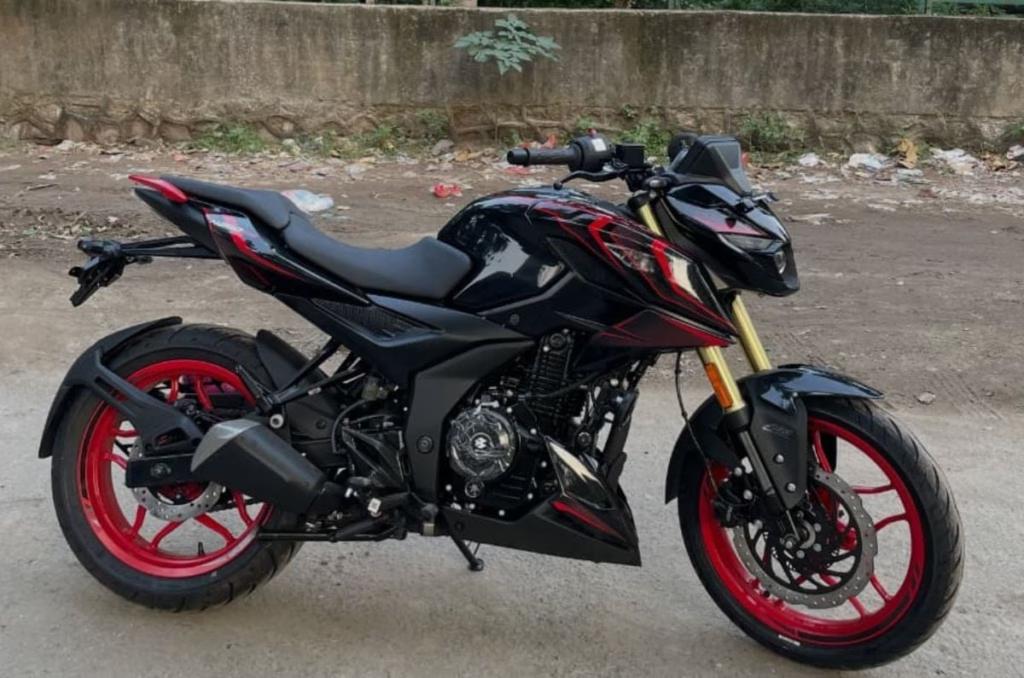
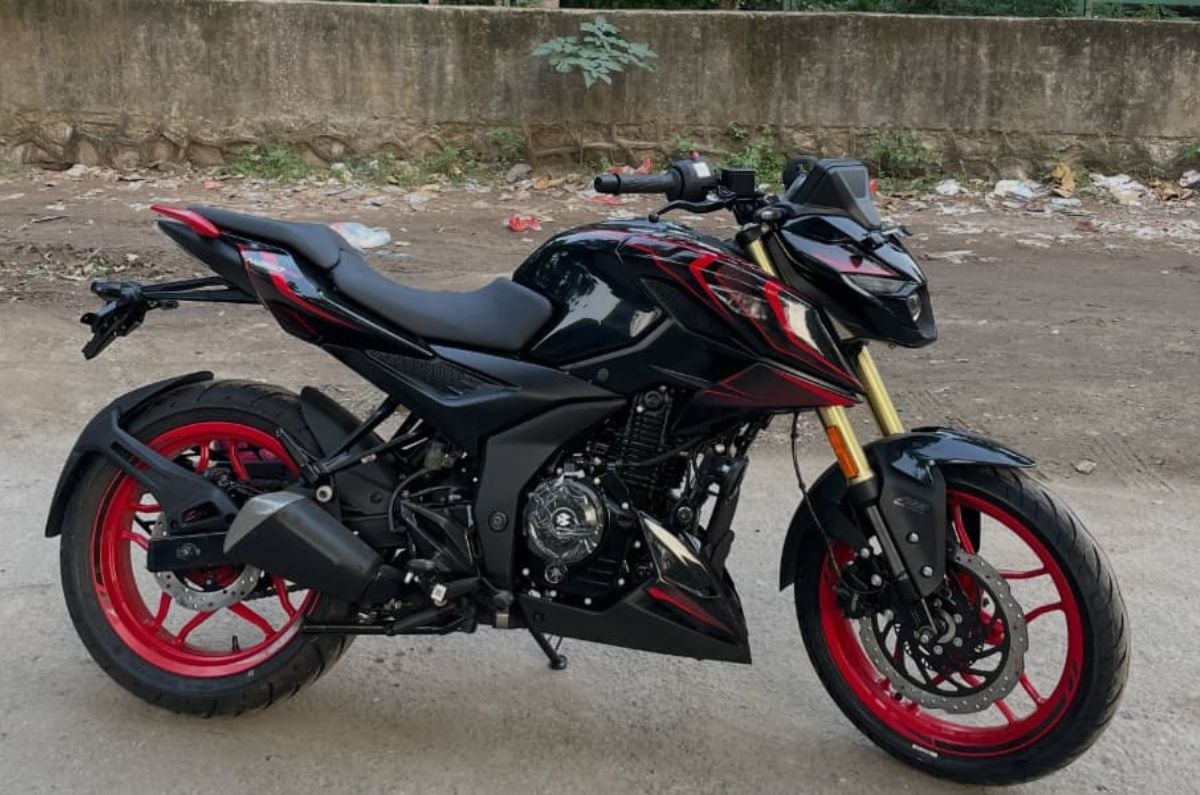
Bajaj continues its update marathon for the Pulsar line-up. After being spotted testing alongside the NS200 last month, a new SS variant of the N250 has reached dealerships. An updated Pulsar RS200 was also seen testing recently, but no official information is available on that model either.
Gets a new 6-speed gearbox with a quickshifter
Adds a TFT display, 5 ride modes and traction control
Now gets a radial rear tyre, adjustable levers and a Type-C charger
Bajaj Pulsar N250: What are the changes?
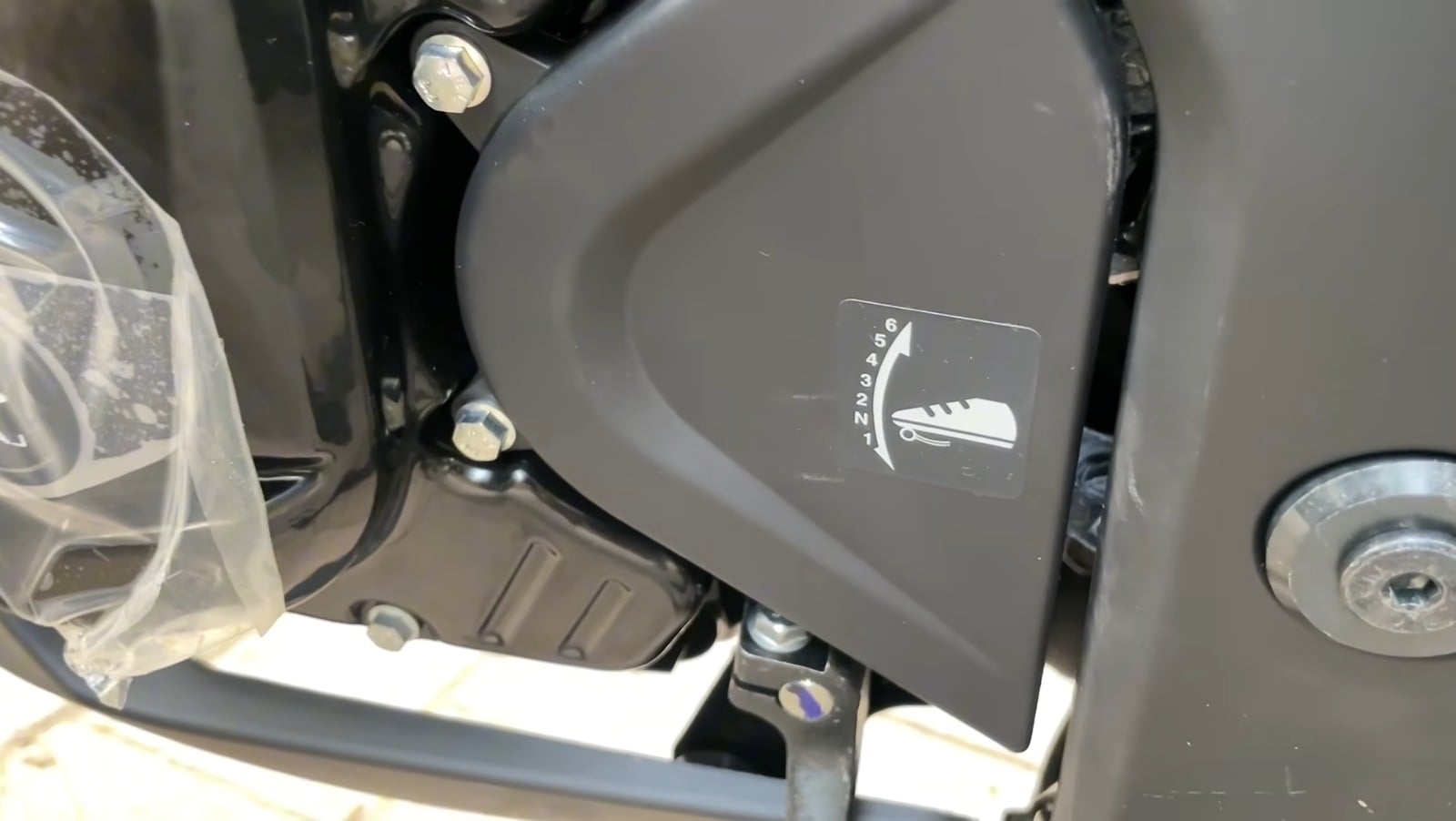
The 249cc air/oil-cooled engine is now paired with a new 6-speed gearbox.
One of the major changes is a new 6-speed gearbox replacing the 5-speed unit. This should help the motorcycle cruise more comfortably at highway speeds. Along with the new gearbox, we could also see a slight bump in performance from the current 24.5hp and 21.5Nm. A new rear radial tyre is also a welcome addition.
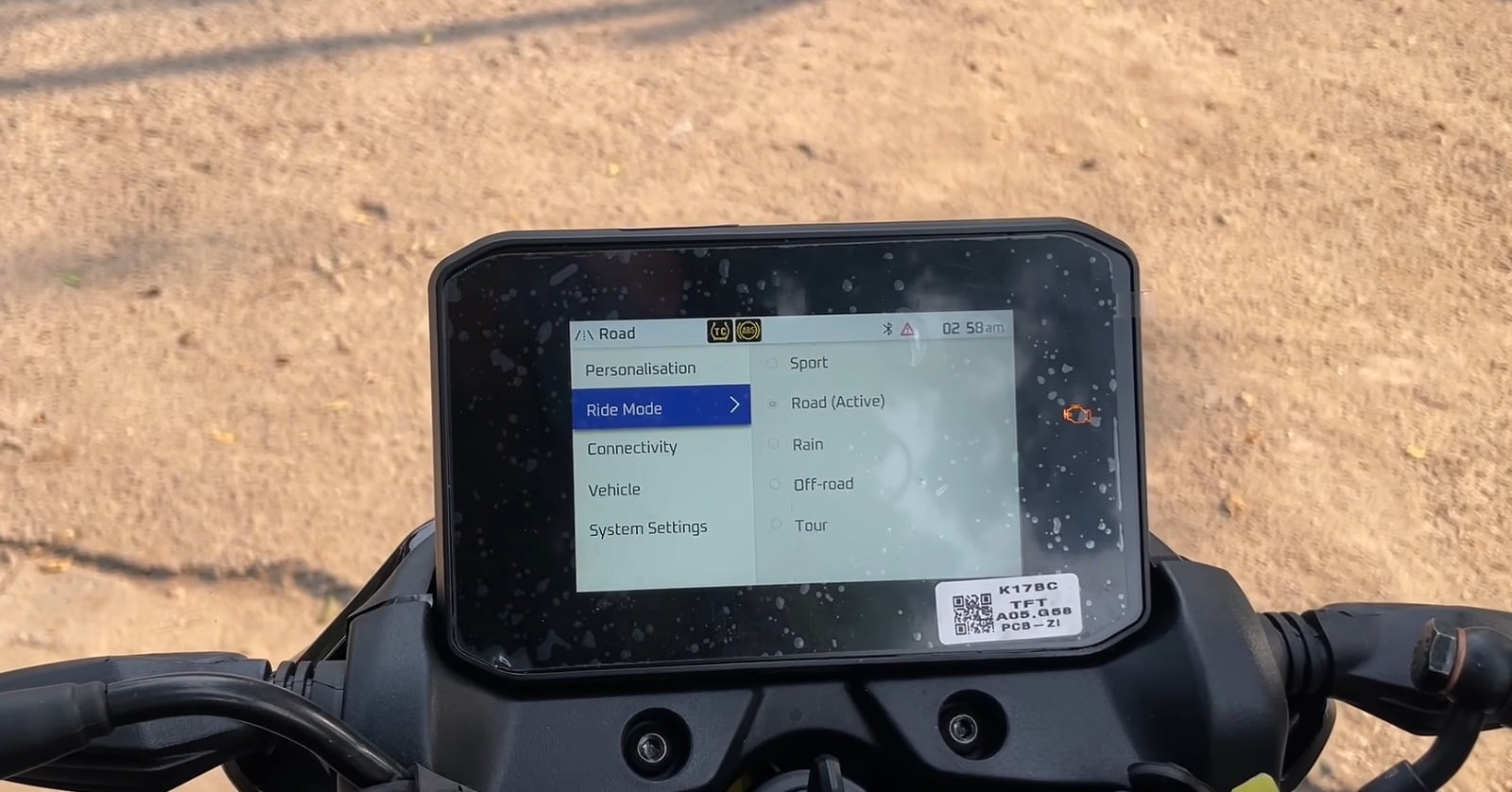
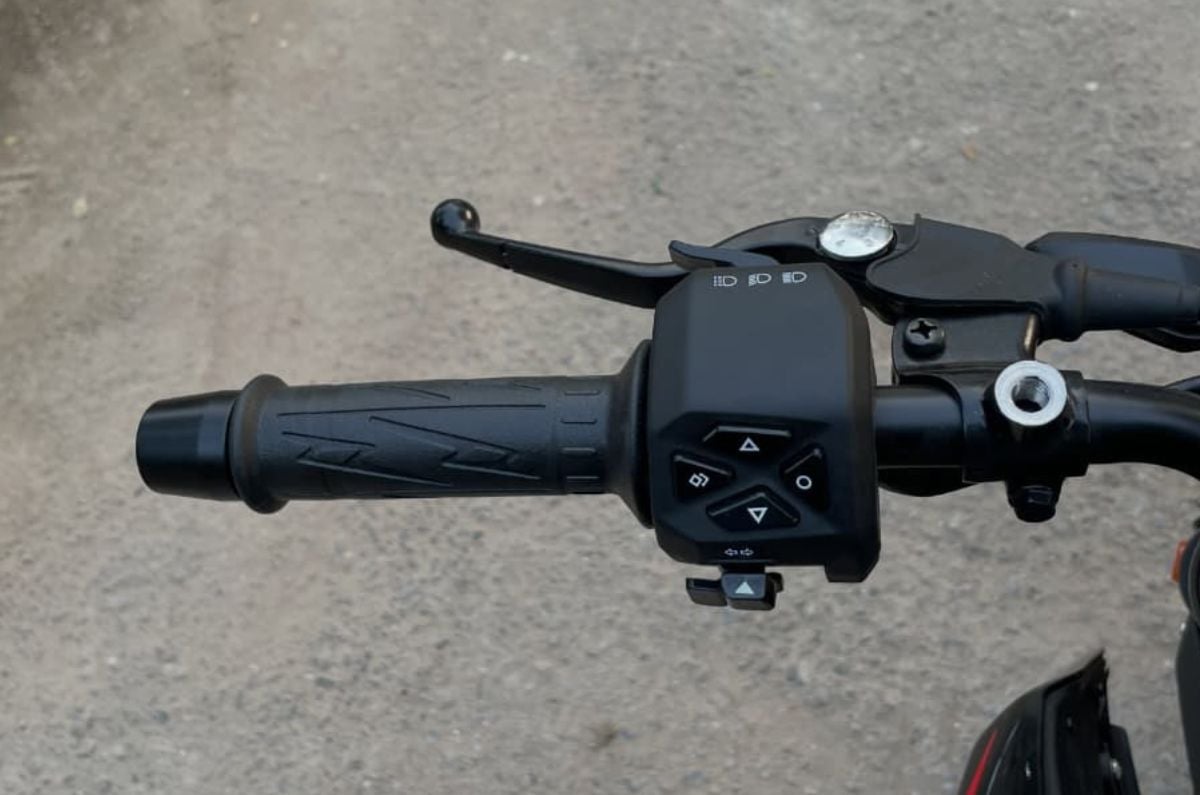
Like the other updated Pulsars, the N250 also gets an electronic suite. It comprises a 5-inch TFT instrument cluster with Google Maps mirroring, 5 riding modes (Sport, Road, Rain, Off-road and Tour), traction control, a bidirectional quickshifter, a USB Type-C charger, updated switchgear and adjustable clutch and brake levers.
For now, the new variant has reached dealerships, but Bajaj hasn’t made an official announcement yet. Currently, the standard Pulsar N250 is priced at Rs 1.45 lakh, and its chief rival, the Suzuki Gixxer 250, costs Rs 1.85 lakh. However, given the new gearbox and additional features, the upcoming SS variant will likely have a slightly higher price than the standard variant.
Image source: Machine Rules on Instagram. All prices are ex-showroom, Delhi.
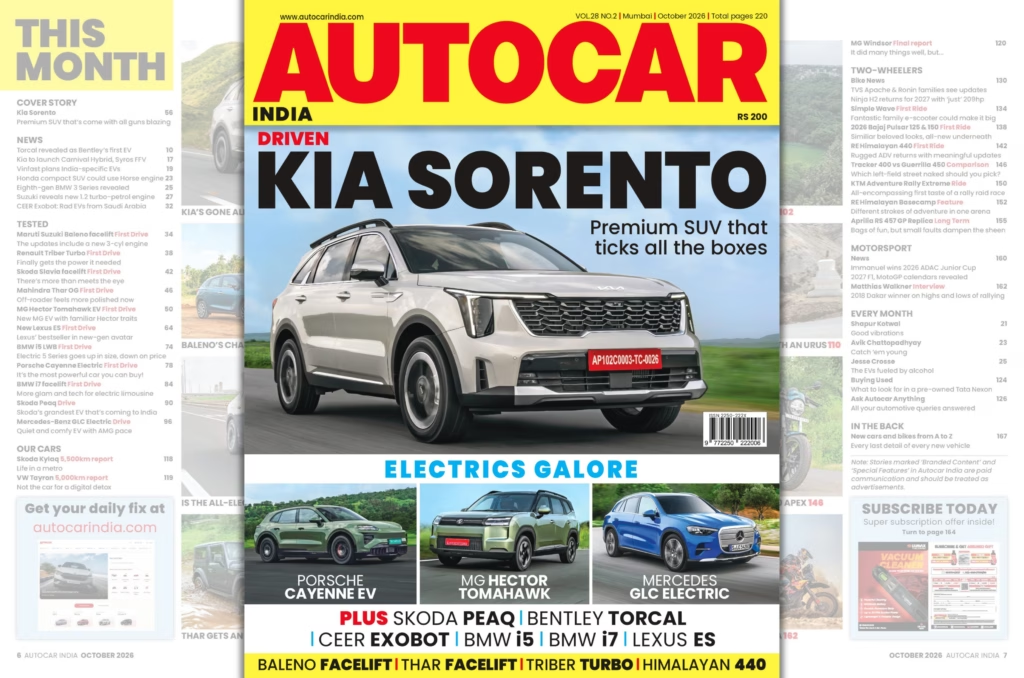
This month, we go big on power and even bigger on premium metal. The cover story is Kia’s biggest swing yet at the executive SUV segment, and then there’s a family SUV with more horsepower than a Lamborghini, and BMW’s electric onslaught continues with a new long-wheelbase sedan and a sharper flagship limousine.
Kia Sorento: Cover Story
Six trims, two powertrains, up to seven seats and 32 variants in all. Kia isn’t dipping a toe into the premium SUV pool; it’s diving straight in, locally assembling the Sorento from Rs 27.99 lakh to take on the Skoda Kodiaq and VW Tayron. Has Kia cracked the code, or has it bitten off more than it can chew?
Porsche Cayenne Electric: First Drive
Forget hypercars. The most powerful vehicle currently on sale in India is a family SUV, the Cayenne Electric, with more horsepower than your senses can fathom. We took it to an airstrip to see what that actually does to your stomach.
BMW i5 LWB & i7 Facelift: First Drives
BMW’s electric push continues, with a long-wheelbase i5 slotting in between the iX1 and flagship i7. Can BMW’s long-wheelbase playbook continue to work? And there’s also the i7 getting a sharper face and more tech to go with it, like it didn’t have enough already.
Mercedes-Benz GLC Electric: Drive
The first-gen electric GLC was far from ideal. The new one, however, is a completely new generation with an 800V architecture, 330kW charging and a claimed 715km range. We took all 489 of its horses to the Autobahn to see how much of an improvement it has been over its predecessor.
MG Hector Tomahawk EV: First Drive
Don’t let the familiar name fool you. The Hector Tomahawk EV rides on MG’s all-new ADAPT platform, bigger than the Mahindra XEV 9S in every dimension, with a PHEV sibling already waiting in the wings.
Maruti Suzuki Baleno, Renault Triber Turbo and Skoda Slavia: First Drives
India’s favourite premium hatch, the Baleno, gets a new engine and ADAS, the budget-friendly Triber finally gets the power it’s been begging for, and the Slavia’s facelift turns out to be more than skin-deep.
Mahindra Thar OG: First Drive
The original three-door Thar gets another round of updates, bringing changes to its engines, equipment and chassis. With the off-road icon continuing to evolve, we head out to discover what this latest iteration brings to the table.
Taking the High Road: Features
Goa’s new Porvorim Elevated Corridor opens on NH66, and we test it in two ways: solo against Google Maps’ ETA in an MG Cyberster, and then flanked by a dozen supercars, Ferraris, a McLaren 750S and a Lamborghini Huracan among them, for its proper initiation.
Rocket Ship to the Moon: Feature
A Lamborghini SUV is already an exercise in excess. Take it somewhere unexpected, add a little spectacle, and you have the ingredients for an automotive adventure that refuses to be ordinary.
Royal Enfield Himalayan 440
The original Himalayan is back with a bigger engine and a handful of meaningful changes. In a world where adventure bikes keep getting more complicated, there’s something rather appealing about going back to basics.
Tracker 400 vs Guerrilla 450: Comparison
Two left-field street nakeds, the Triumph Tracker 400 and Royal Enfield Guerrilla 450, go head-to-head. One takes its inspiration from flat-track racers, while the other fancies itself a sporty roadster. Both want your money, and neither is particularly interested in being sensible about it.
KTM Adventure Rally Extreme: Ride
Adventure riding is all well and good until the road disappears, the terrain turns hostile and you begin questioning your life choices. We get a taste of KTM’s rally raid experience, where the only shortcut is having the skill to take one.
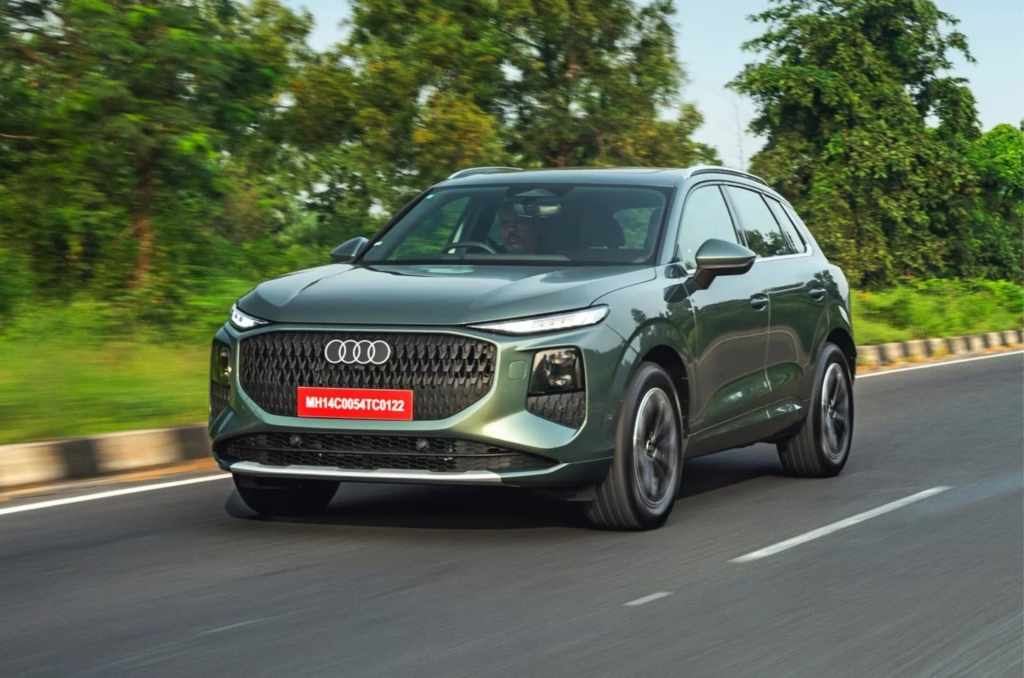
It would be easy to file the third-generation Q3 as just another new model but it isn’t. For Audi India, this is closer to a reset. The brand has spent the past few years soldiering on with ageing, outdated products and its showroom traffic has paid the price for this freeze in new products. But that’s all changed now. With fresh investment pouring in from its headquarters, Audi is on a new product offensive which has been kicked started with the Q3. This compact SUV is also the entry point into the brand, so it carries the burden of deliveringthe maximum sales. There’s a lot riding on the Q3’s gentle shoulders and Audi is hopeful that this will model will mark the turning point for the brand. But first, Audi has to convince customers. Is the new Q3 a quantum leap over the past Q3? We drove it in Goa to find out.
Audi Q3 Exterior Design and Engineering – 8/10
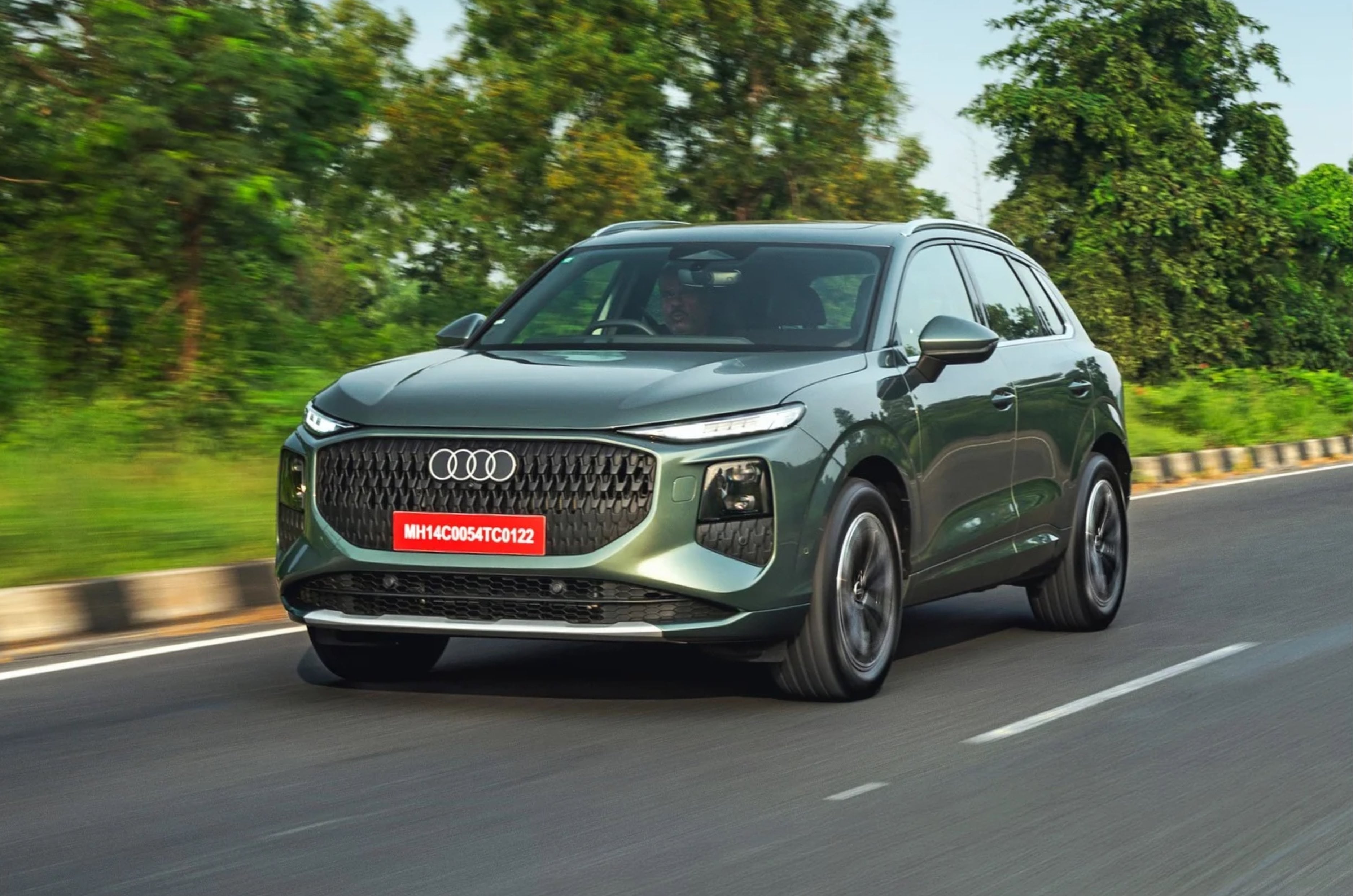
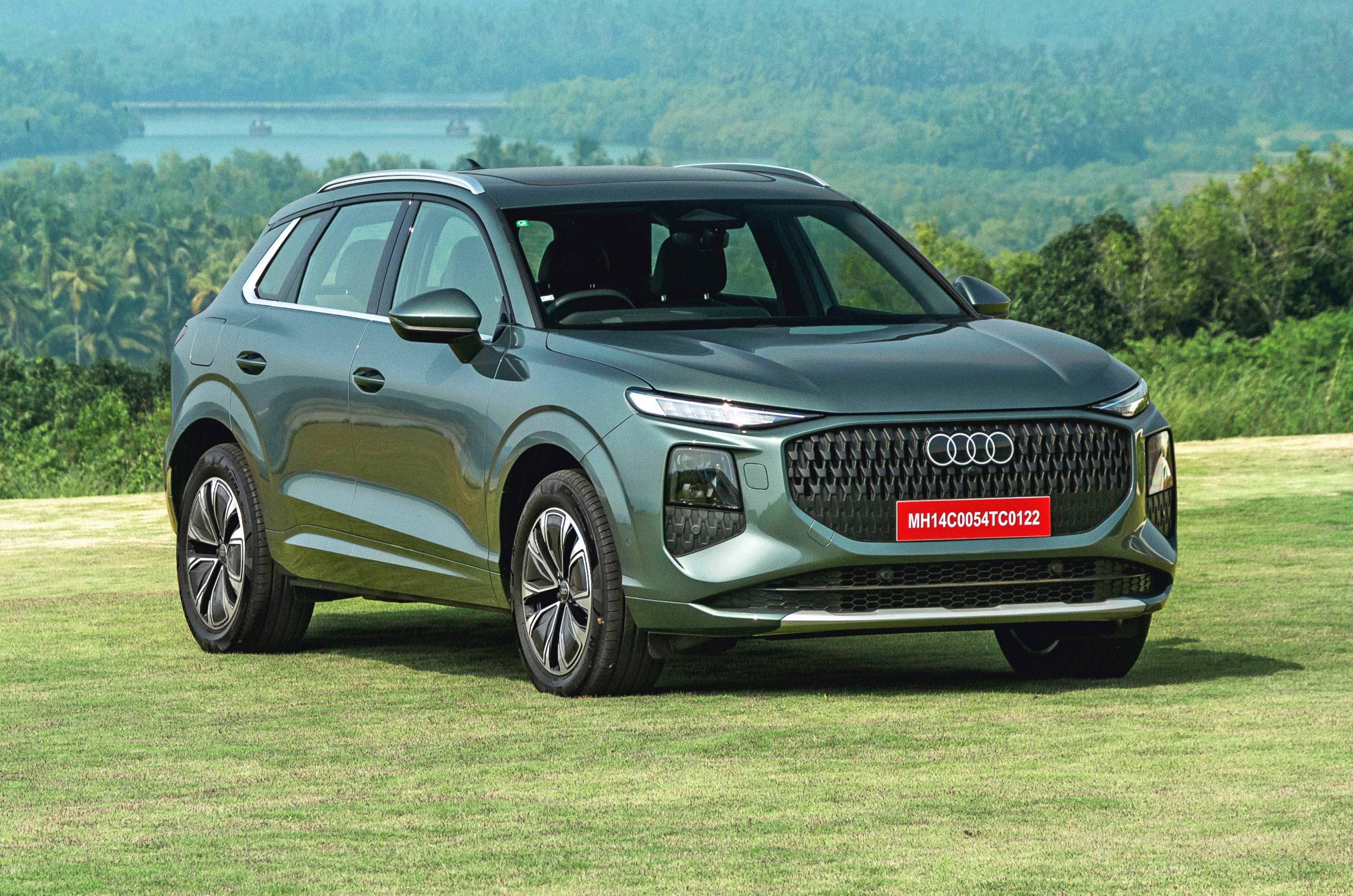
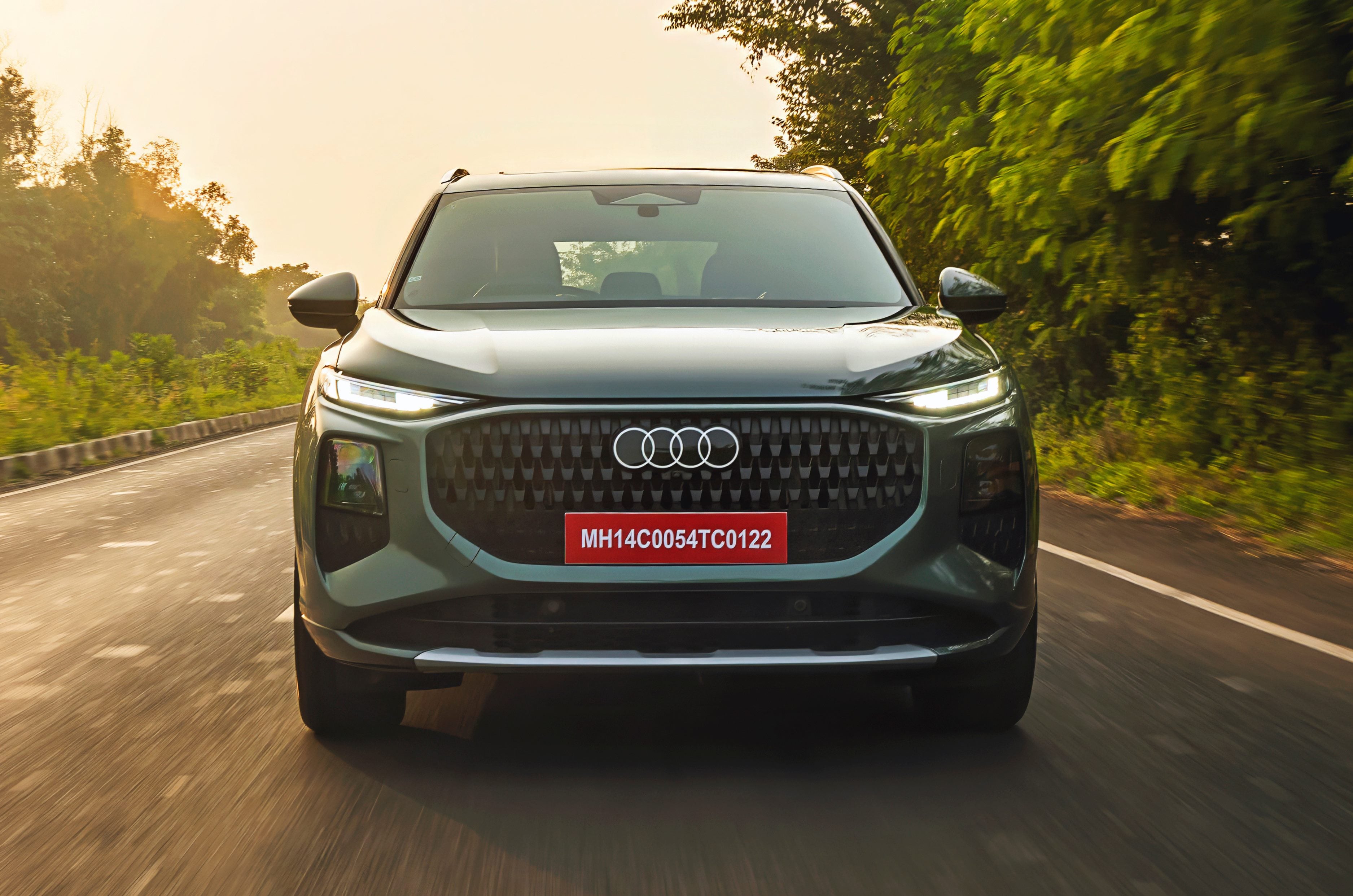
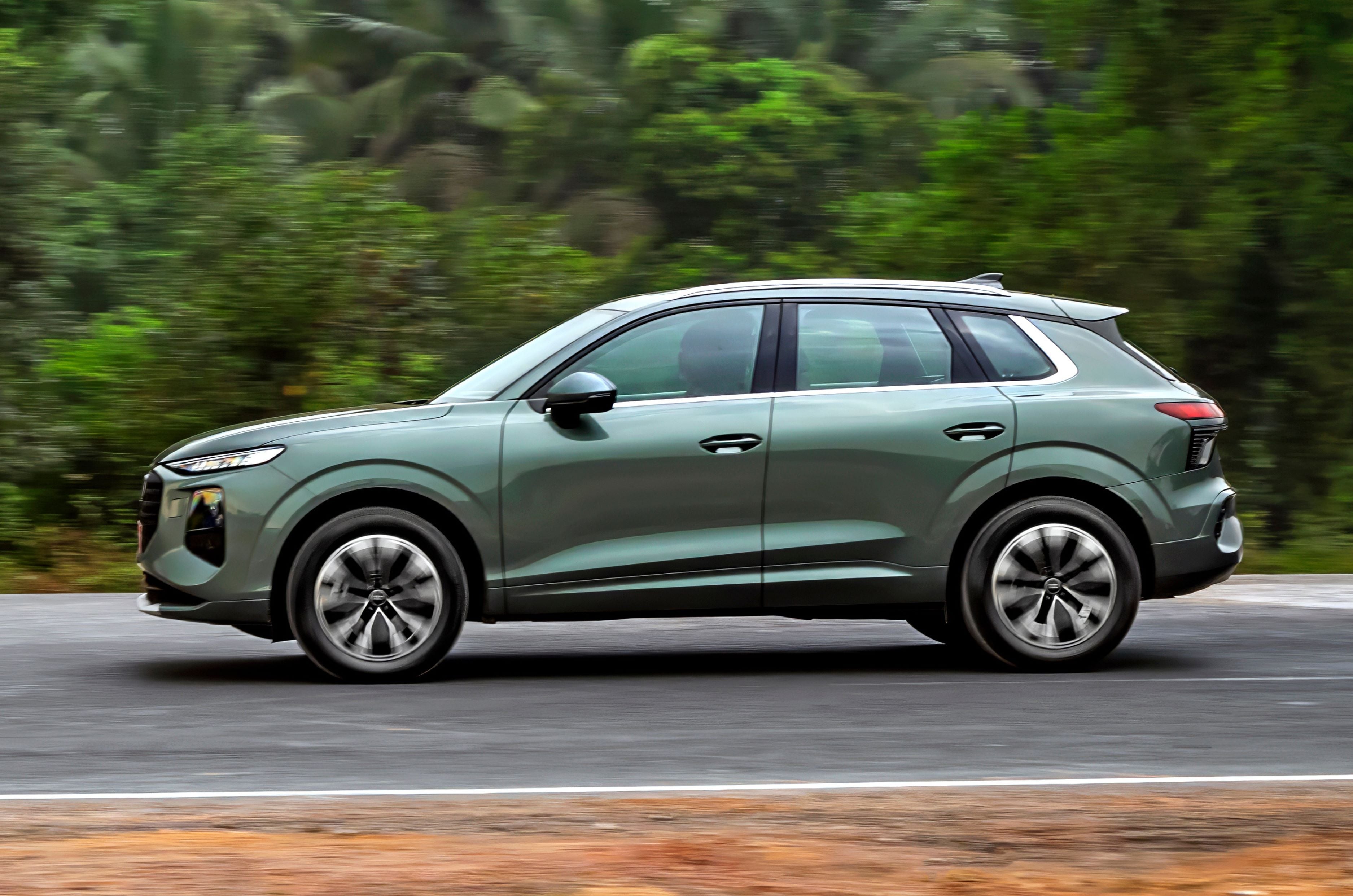
The crisp, edgy lines of the old car have made way for something more fluid and flamboyant. The new Q3 has grown marginally in every dimension, but the 2,681mm wheelbase is unchanged, so it keeps the compact footprint its urban buyers like.
A fluid and flamboyant new design language replaces the edgy styling of the old car
The face is split in two. Slim LED daytime running lights sit up top and double as dynamic indicators, while the main headlamps are stacked below. The wide honeycomb grille certainly makes a statement, and its flat 2D logo hides the ADAS radar. Up close, though, the grille’s finish looks a touch plasticky for a car wearing four rings.
Lighting is the real party piece. The Digital Matrix LED units use micro-LED technology, with some 25,600 individually controlled pixels per headlamp. That lets them do far more than dip and glare-free high beam. They can project a carpet of light in your own lane, and when you flick the indicator, the beam stretches across to illuminate the lane you are moving into. It’s a clever way to flag your intent and place the car on dark, unlit roads. The DRLs also offer four selectable light signatures via the touchscreen. There is a caveat. The projection tricks are at their best on pitch-black roads; with streetlights around, the effect is largely lost.
Trick Digital Matrix LED headlights use 25,600 individually controlled pixels per side
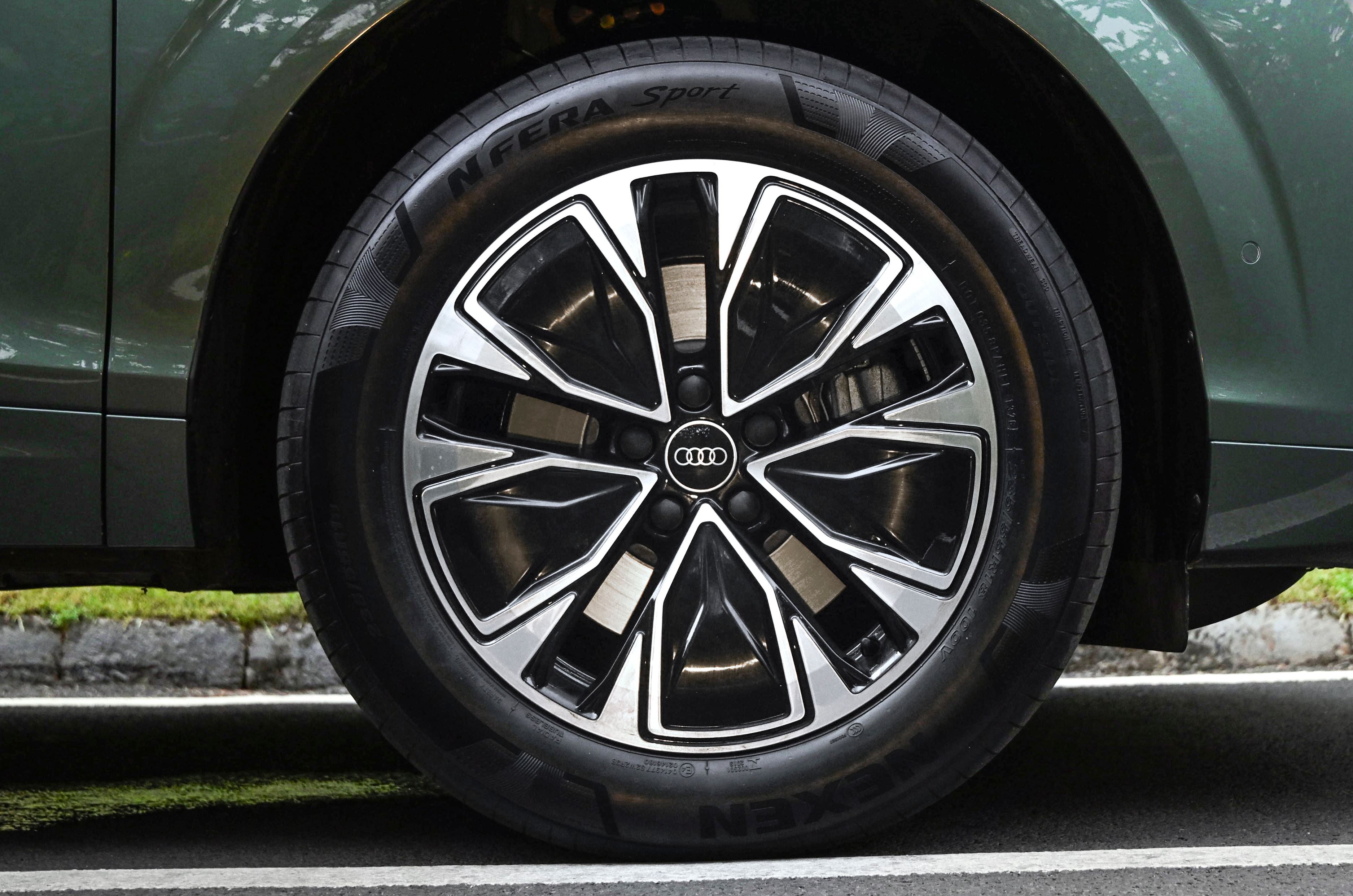
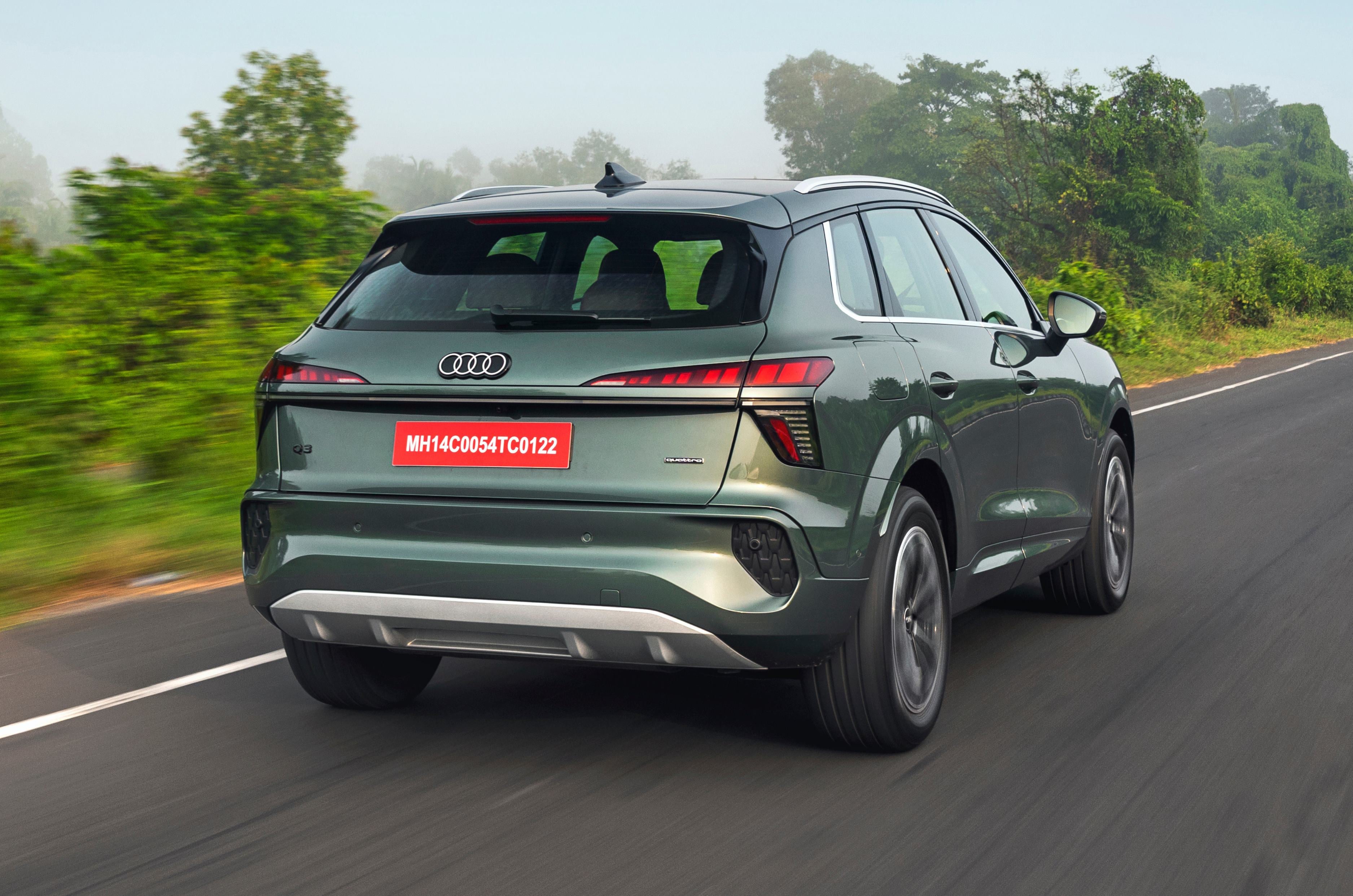
In profile, brushed aluminium below the windows and gloss black above create a floating-roof effect, and the rear haunches add a hint of muscle. For once, the wheels deserve a mention too. Audi has rarely nailed its alloy designs, but these are genuinely striking, wrapped in chunky, high-profile rubber. At the back, split LED tail-lamps are joined by a slim light bar and an illuminated Audi logo, and the tailgate is powered.
Stunning 18-inch alloys get self-leveling centre caps and are wrapped in high-profile tyres
Audi Q3 Interior Space and Comfort – 8/10
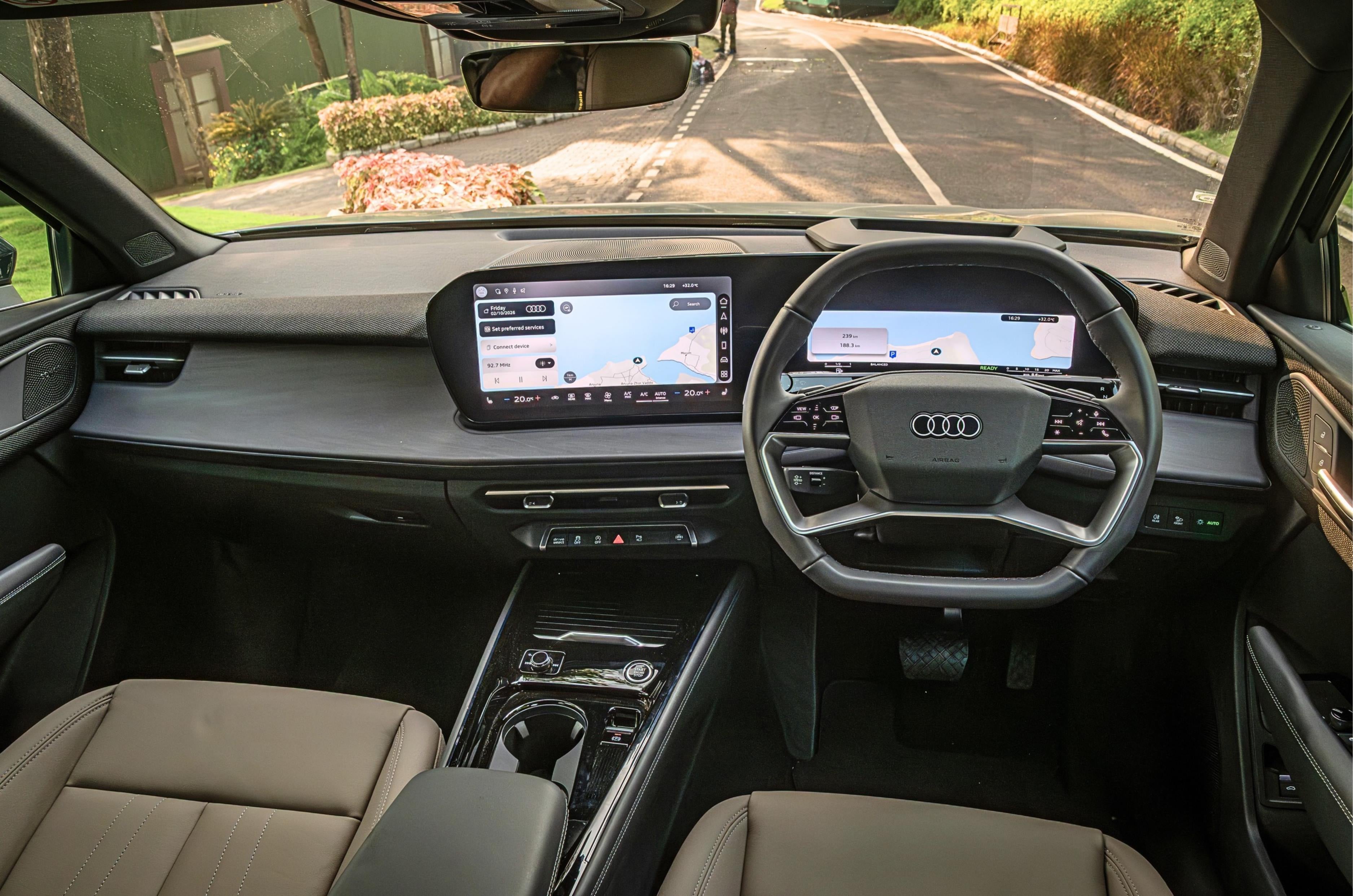
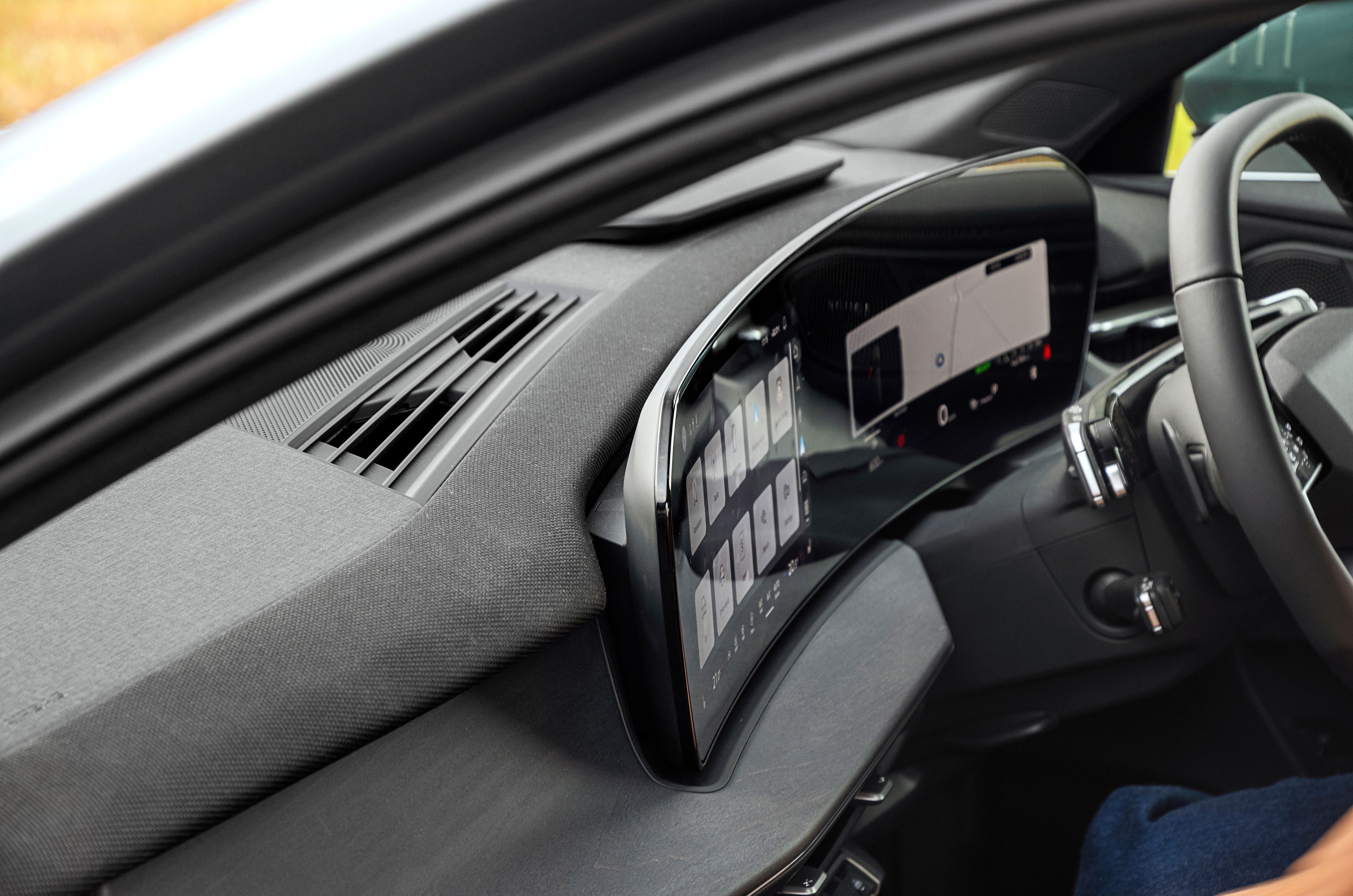
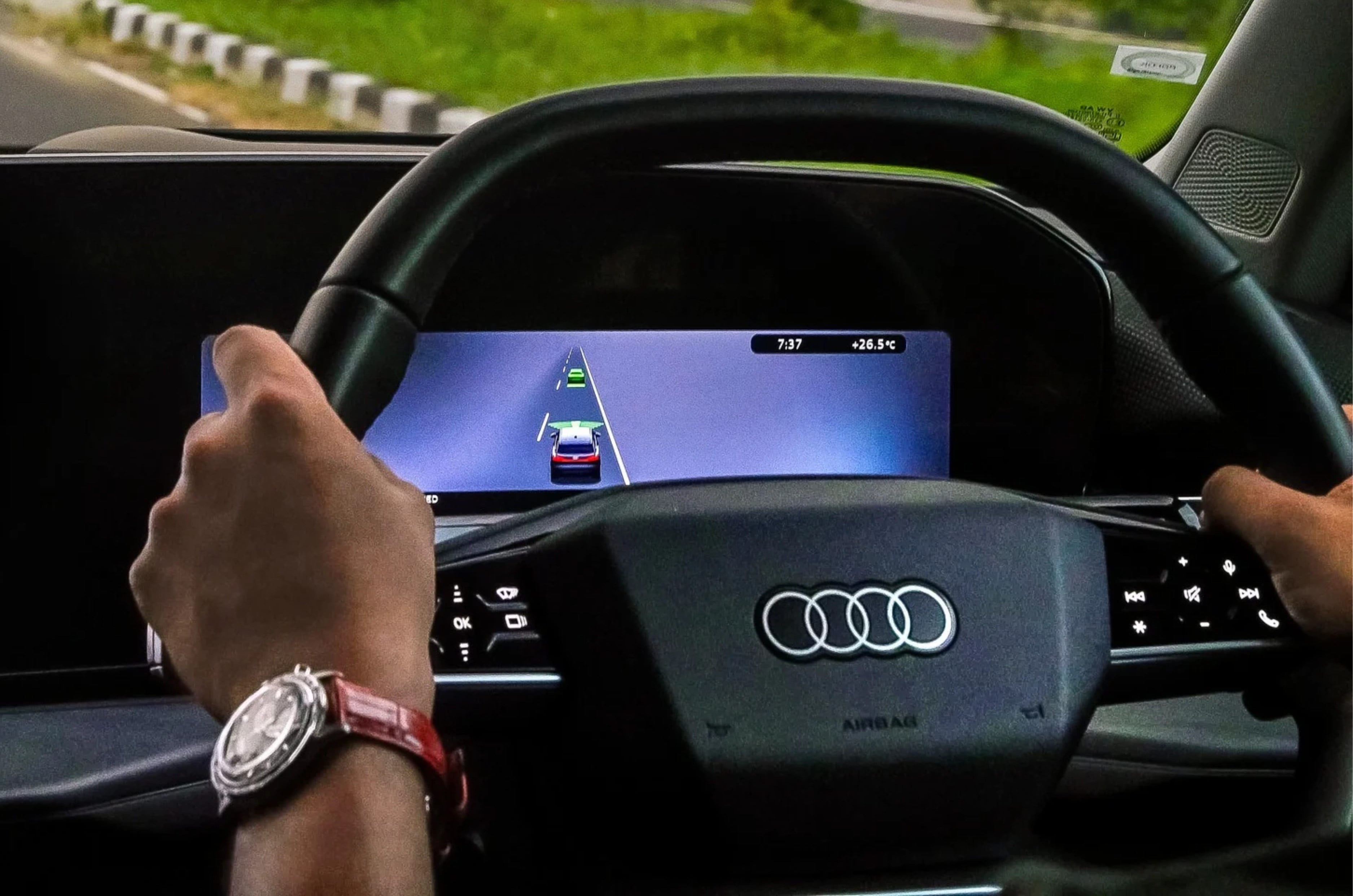
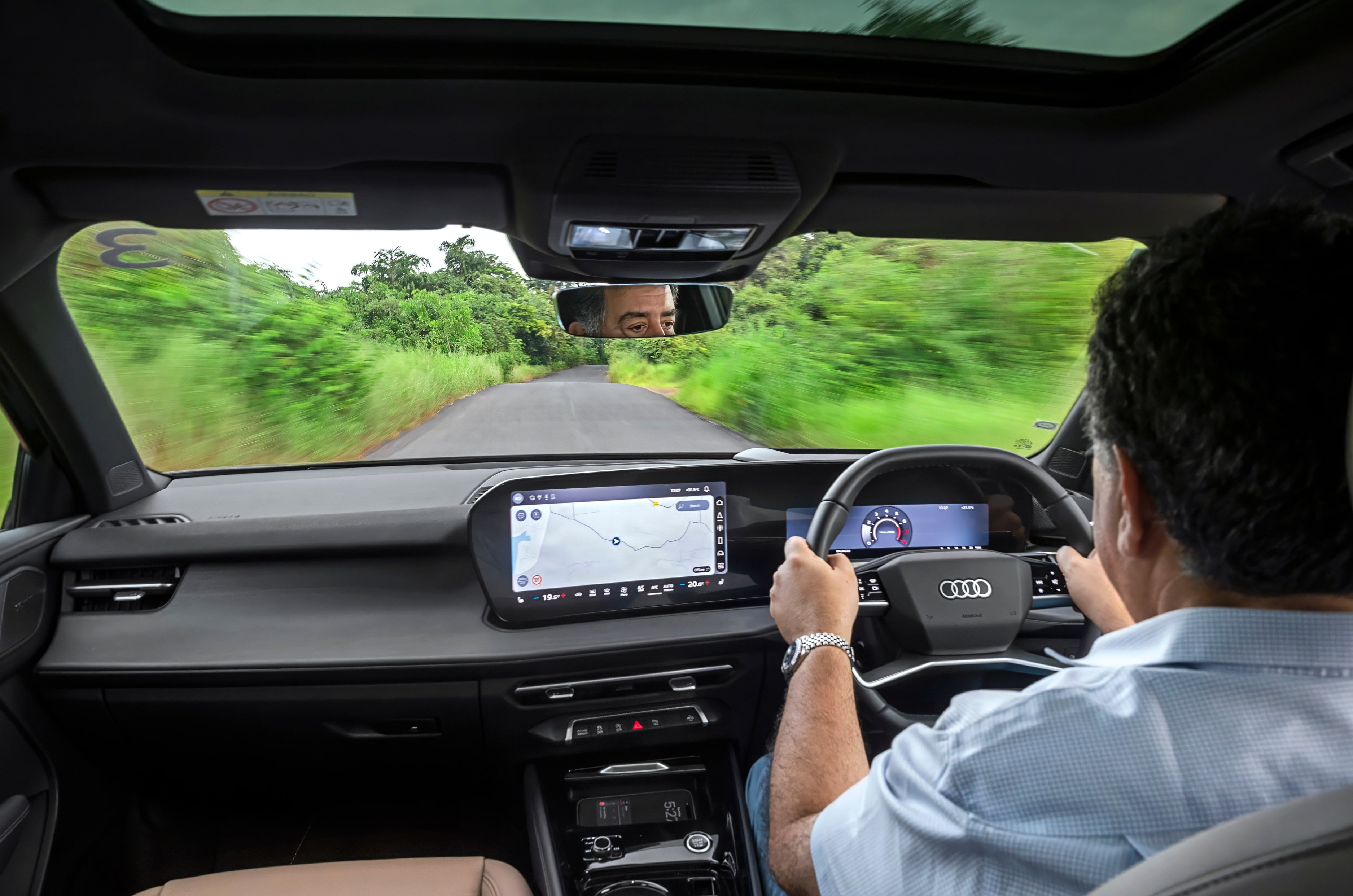
Step inside and the leap over the old Q3 is obvious. The dashboard is clean and contemporary, anchored by a curved panel that houses an 11.9-inch driver’s display and a 12.8-inch touchscreen. Fabric replaces leather across much of the cabin and the lower plastics are on the hard side. Yet the overall impression is of a cabin that’s solidly screwed together, and it feels more robust than its German rivals. Small details help: the fat tabs that adjust the air-con vents have a reassuringly substantial action.
New interior is a big leap over the last model and feels better built than its German rivals
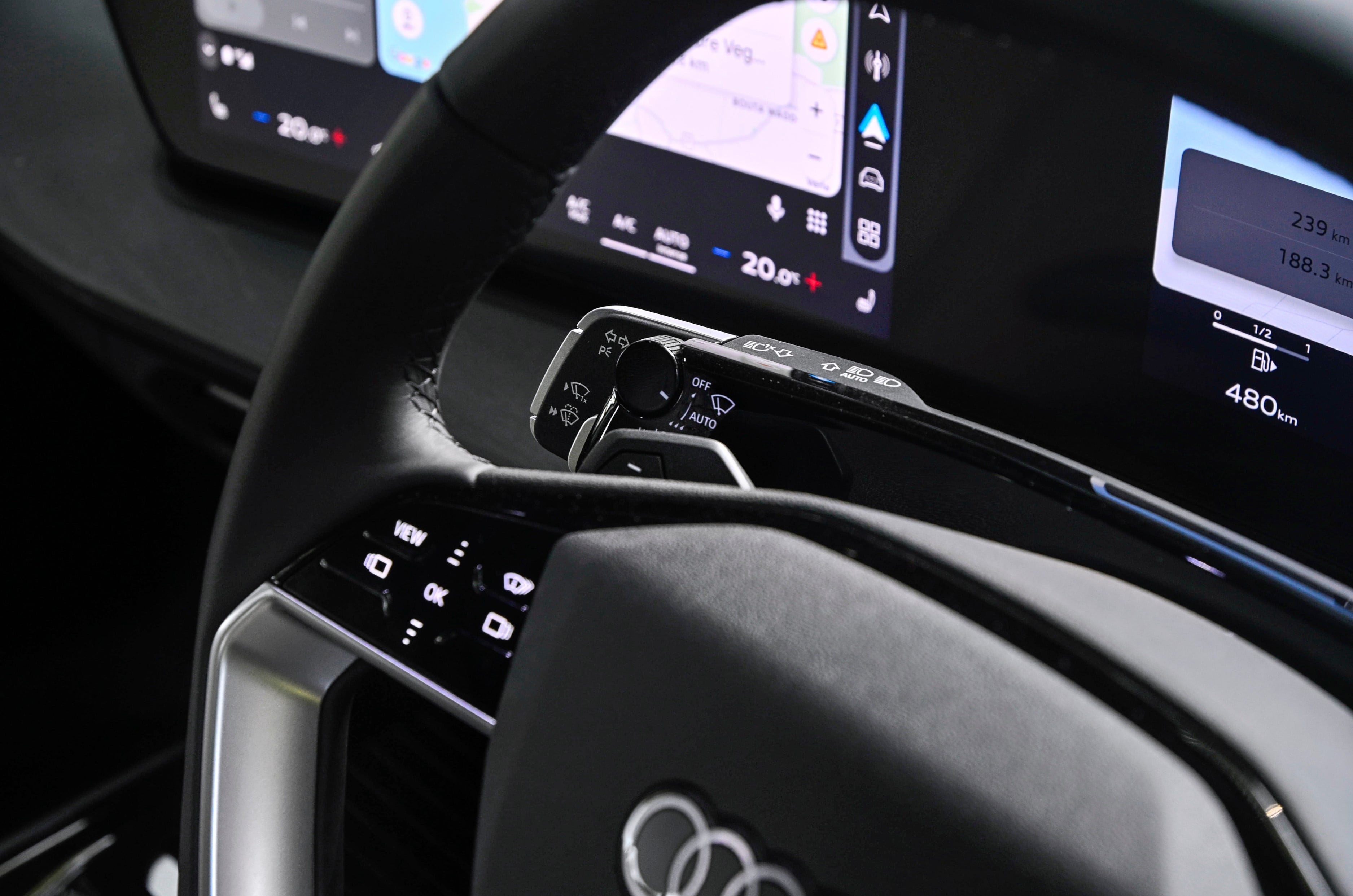
The hexagonal steering wheel takes some getting used to. So does the new control stalk, which Audi has loaded with an astonishing number of jobs: indicators, front and rear wipers and headlamp controls all live on one chunky lever. The gear selector moves to a stalk of its own on the other side. It feels awkward at first, but within a day it becomes second nature.
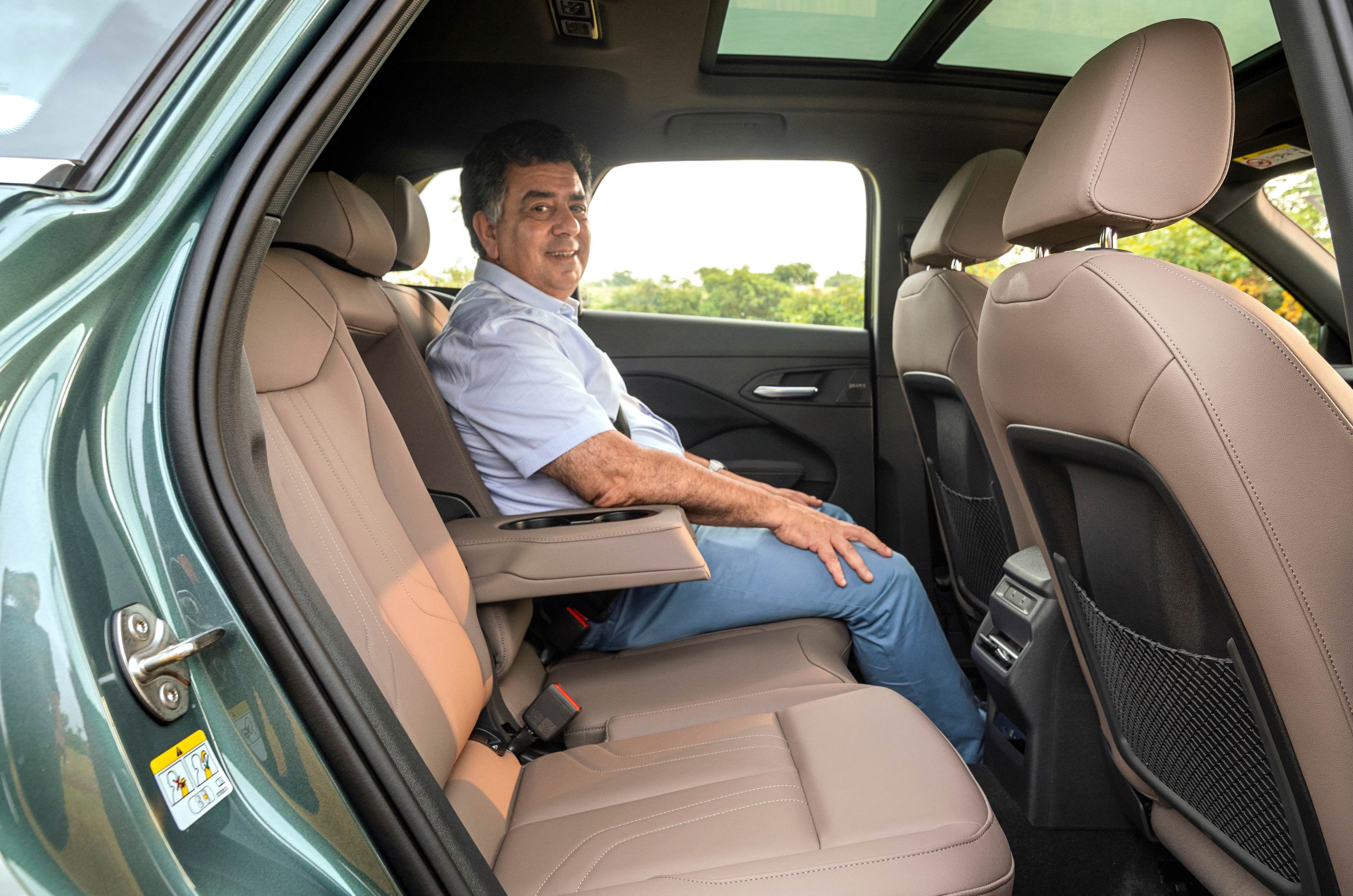
Two adults will be comfortable in the back seat, but a third will feel like a sqeeze
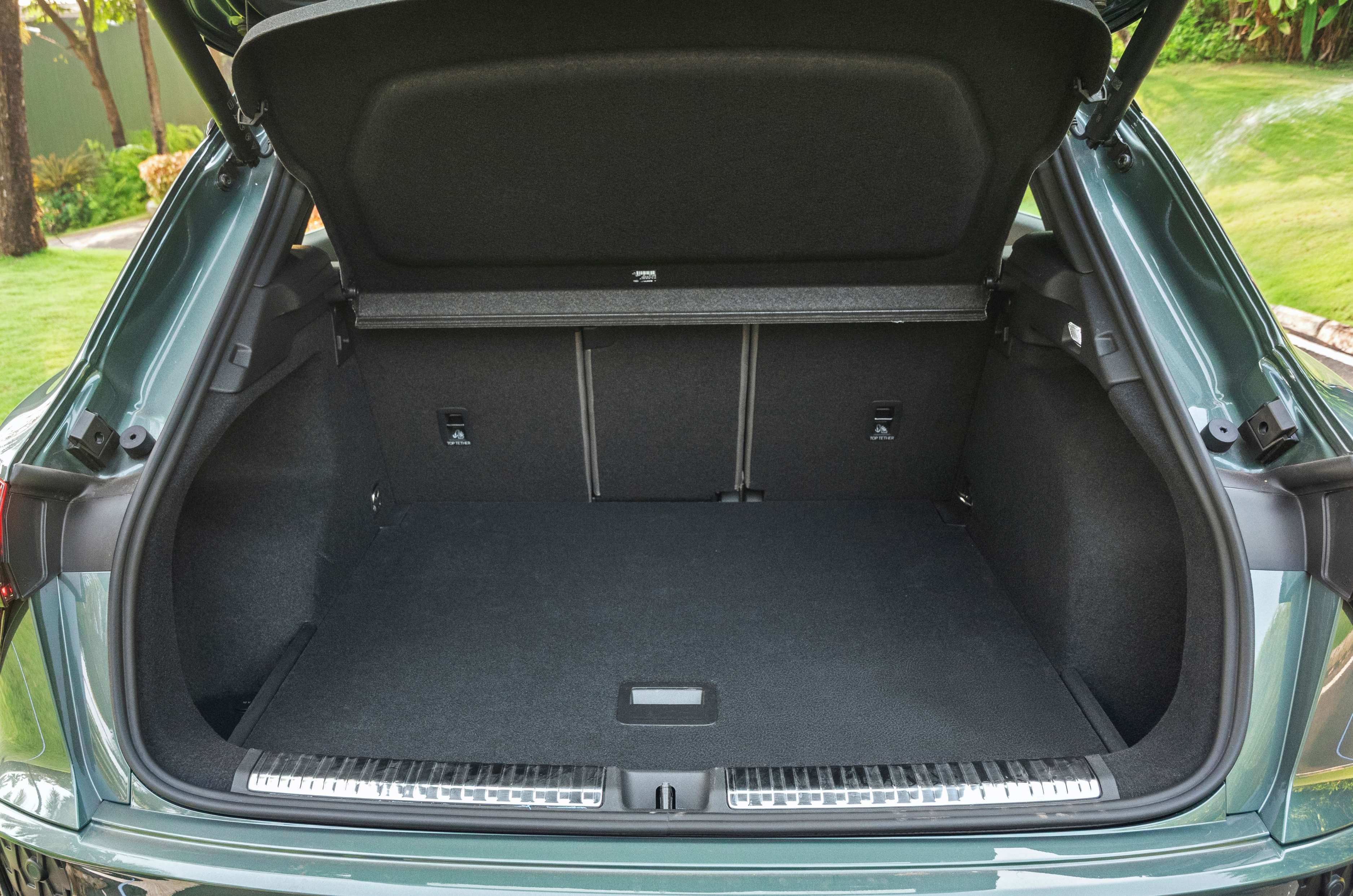
The front seats are generous, well bolstered and very comfortable over long stints. The rear hasn’t moved on much from the old car. Two large adults will be fine, but three is a squeeze; think of it as a four-seater with an occasional fifth. Rear passengers do get a third climate zone and two USB-C ports. The boot is spacious, and it’s good to find a space-saver spare under the floor.
Powered tailgate opens to a large 488-litre boot; seats split 40:20:40 for longer items
Audi Q3 Features and Safety – 7/10
The curved touchscreen works well, and the curvature itself cuts out glare and reflections. Response is smooth and quick, though the icons are, in typical Audi fashion, a bit subdued and not instantly distinguishable. Physical buttons are fewer, but the climate controls sit permanently at the base of the screen, so you never dig through menus to change the temperature or blower speed.A head-up display brings key information into your line of sight and the fonts are crisp and sharp.
Curved display cuts out glare and reflections
Audi’s own navigation is good, but integrated Google Maps, increasingly the benchmark, is expensive to licence and hence missing. The instrument cluster is surprisingly basic too, with little configurability and minimal choice of layouts and that’s a let-down from the brand that pioneered the virtual cockpit.
We also hit a software glitch with our iPhones. Wireless phone mirroring connected initially, then dropped out and refused to reconnect, prompting a switch to USB. It’s the sort of bug an over-the-air update should fix.
Lighting and wiper controls are odd at first but easy to get used to
The equipment list isn’t thin. There’s a superb-sounding 12-speaker Sonos system, a large panoramic sunroof, powered and heated front seats with driver memory, nine airbags and adaptive cruise control. That cruise works well, too. But for a car costing over Rs 50 lakh and launching in 2026, there gaps that are hard to overlook.
There is no lane-keep assist, so the ADAS suite stops at adaptive cruise. A full Level 2+ package is now table stakes in this class, all the more so when far cheaper mass-market cars offer one. There are no ventilated seats either, near-essential in our climate. The biggest miss, though, is a 360-degree camera, something a great many buyers actively look for. The reversing camera’s resolution is disappointing, although there is an auto-park function.
ADAS kit limited to auto emergency braking and adaptive cruise control
None of this is unusual for its rivals. But as the newest kid on the block, the Q3 should have moved the game on, and here it hasn’t.
Audi Q3 Performance and Refinement – 9/10
The engine is the star of the show. Audi’s 2.0 TFSI makes 201bhp and 320Nm, and it is smooth, strong and refined. That alone hands the Q3 a massive edge over the underwhelming, smaller-capacity motors in the X1 and GLA.
Strong and refined 2.0 TFSI makes 204hp and 320Nm, enough for 0-100kph in 7.1 seconds
It isn’t flawless. At low revs there’s a brief hesitation before it gathers itself and pulls smartly, which is why we left it in Dynamic mode most of the time. Once on the boil, though, it is eager and free-revving, a reminder of why this is the best 2-litre turbo-petrol in the business. Around town it feels responsive; on the highway it builds pace effortlessly. Audi claims 0-100kph in 7.1sec, which puts the Q3 at the top of its class.
The 7-speed dual-clutch remains a fine partner, eager to drop a gear to keep the engine in its powerband. Flick it into Sport or reach for the paddles if you want to take charge. Quattro all-wheel drive is now standard on every Q3, not an option, and there’s a range of drive modes including an off-road setting to make the most of it. It’s good insurance on slippery surfaces and gives the Q3 an edge over rivals when conditions turn tricky. Whether many owners need it, or more importantly will pay extra for it, is another question.
Strikes a great balance of ride and handling; gets Quattro all-wheel drive as standard
Audi Q3 Ride Comfort and Handling – 9/10
The big surprise is the handling. The variable-ratio steering adjusts its response to both speed and lock, so its light and effortless at parking speeds, then quicker and more direct as you wind on more lock. Barring a touch of slack around the straight-ahead, it is accurate and weights up superbly.
Quick steering often makes a car nervous at speed. Not here. The Q3 stays stable and reassuring when the needle climbs, yet changes direction with an agility you simply don’t expect from an Audi SUV.
New Progressive Steering is light at parking speeds, but gets sharper and more direct as speeds rise
What you do expect from an Audi is a good ride, and the Q3 delivers. It is on the firm side but never uncomfortable, soaking up potholes and broken patches with real composure. A big help is the 55-profile tyres. Their roughly 130mm sidewall is the first line of defence, absorbing much of the shock before it reaches the suspension and, ultimately, the cabin.
Audi Q3 Value for Money – 8/10
The new Q3 is a superbly engineered car, and its mechanical package sits well ahead of its rivals. The cabin is a big step up too, but given its timing, the Q3 doesn’t quite leapfrog the competition here; it lands a little short on equipment.
What it does do is drive brilliantly. It is by far the nicest car to drive in its class, and that matters, because Audi says 84 percent of Q3 owners drive themselves.
Easily the nicest car to drive in its class, but doesn’t leapfrog the competition in terms of features
A lot now rides on price. At around Rs 65 lakh on-road, it is steep. Not because the car isn’t worth it, but because buyers may balk at paying so much more than the outgoing Q3, whose transaction price had slipped to around Rs 40 lakh.
On the product front, though, Audi has come back with a bang. A brilliant powertrain, a superb blend of ride and handling and a genuinely classy feel make the Q3 the enthusiast’s pick of the class. If this is the opening act, Audi’s reset is off to a promising start.
Flipkart Big Billion Days Sale: इस फेस्टिव सीजन Flipkart अपने Big Billion Days Sale में स्मार्टफोन से लेकर स्मार्टवॉच, लैपटॉप और दूसरे इलेक्ट्रॉनिक प्रोडक्ट्स पर शानदार डिस्काउंट दे रहा है। ऐसे में अगर आप नया स्मार्टफोन खरीदने का प्लान बना रहे हैं, तो यह सले आपके लिए किफायती साबित हो सकती है। इस आर्टिकल में हम आपके लिए मिड-रेंज से लेकर प्रीमियम कैटेगरी तक के कुछ ऐसे स्मार्टफोन लेकर आए हैं, जिन पर सेल के दौरान अच्छी डील मिल रही है।
Samsung Galaxy S25 FE 5G
Samsung Galaxy S25 FE 5G का 8GB + 128GB वेरिएंट अभी 89,999 रुपये की जगह 46,999 रुपये में मिल रहा है। इसकी कीमत और कम करने के लिए, आप Flipkart Axis Bank क्रेडिट कार्ड का इस्तेमाल करके 2,350 रुपये तक का कैशबैक पा सकते हैं। इसके अलावा, आप अपना पुराना स्मार्टफोन एक्सचेंज कर के 35,300 रुपये तक की बचत भी कर सकते हैं। इन सभी ऑफर्स को मिलाकर, आप यह डिवाइस आसानी से 35,000 रुपये से कम में खरीद सकते हैं।
Apple iPhone 15
Apple iPhone 15 का 128GB वेरिएंट ₹74,900 की जगह ₹67,999 में मिल रहा है। इसकी कीमत और कम करने के लिए, आप Flipkart Axis बैंक क्रेडिट कार्ड का इस्तेमाल करके ₹4,350 तक का कैशबैक पा सकते हैं। इसके अलावा, आप अपना पुराना स्मार्टफोन ₹45,050 तक की कीमत में एक्सचेंज कर सकते हैं। सभी ऑफर मिलाकर, आप यह डिवाइस ₹50,000 से कम में पा सकते हैं।
Google Pixel 10a
Google Pixel 10a का 8GB + 256GB वेरिएंट Flipkart पर ₹47,999 में मिल रहा है। इस डिवाइस पर Flipkart Axis क्रेडिट कार्ड का इस्तेमाल करने पर ₹6,200 तक का बैंक ऑफर भी मिलेगा। इसके अलावा, आप अपने पुराने स्मार्टफोन को ₹37,400 तक की कीमत में एक्सचेंज भी कर सकते हैं।
Oppo Find X9s
अगर आप प्रीमियम सेगमेंट का स्मार्टफोन खरीदना चाहते हैं, तो Oppo Find X9s पर भी बड़ी छूट मिल रही है। Flipkart पर इसके 12GB रैम और 256GB स्टोरेज वाले वेरिएंट की कीमत घटकर 84,999 रुपये रह गई है, जबकि इसकी पुरानी कीमत 1,39,999 रुपये थी।
इसके अलावा, SBI क्रेडिट और डेबिट कार्ड से खरीदारी करने पर 8,500 रुपये तक की छूट मिल सकती है। कुछ चुनिंदा पिन कोड पर रहने वाले ग्राहक अपना पुराना स्मार्टफोन एक्सचेंज करके 64,500 रुपये तक की वैल्यू भी पा सकते हैं। ध्यान दें कि एक्सचेंज ऑफर और बैंक डिस्काउंट की शर्तें लागू होंगी।
Redmi Note 15 Pro+ 5G Special Edition
अगर आप स्टाइलिश डिजाइन और अच्छे फीचर्स वाला स्मार्टफोन खरीदना चाहते हैं, तो Redmi Note 15 Pro+ 5G Special Edition पर मिल रही डील देख सकते हैं। इसका Coffee Mocha कलर वेरिएंट Flipkart पर 49,999 रुपये में मिल रहा है।
इसके अलावा, ICICI क्रेडिट कार्ड से पेमेंट करने पर 2,750 रुपये तक की अतिरिक्त छूट मिल सकती है। वहीं, पुराने स्मार्टफोन को एक्सचेंज करने पर 37,700 रुपये तक की वैल्यू मिल सकती है। हालांकि, एक्सचेंज में मिलने वाली रकम आपके पुराने फोन के मॉडल और उसकी स्थिति पर निर्भर करेगी।