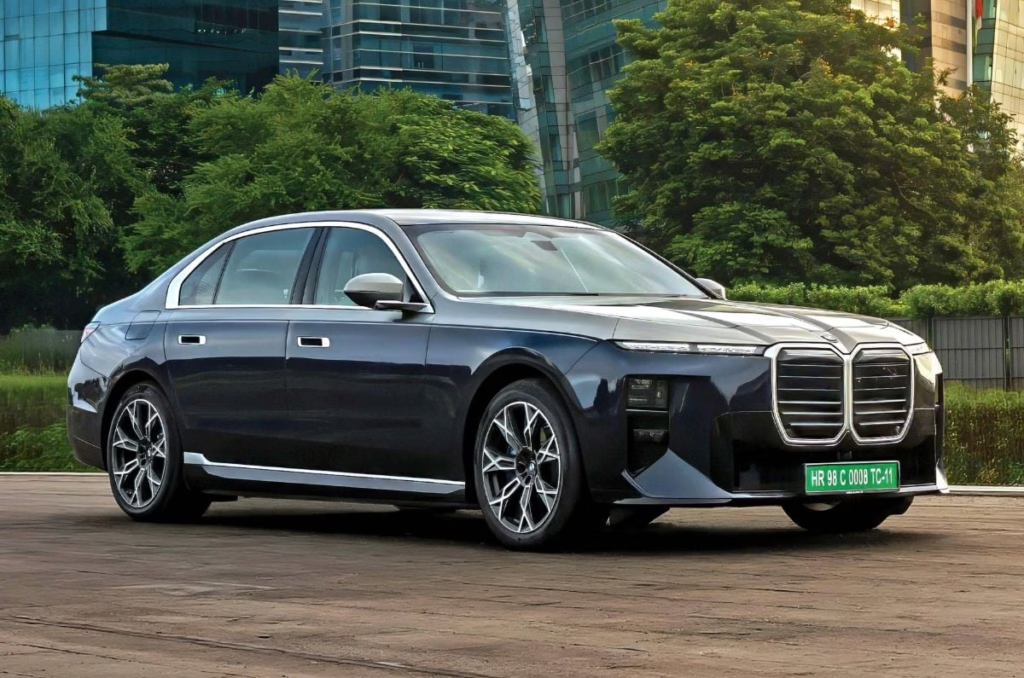
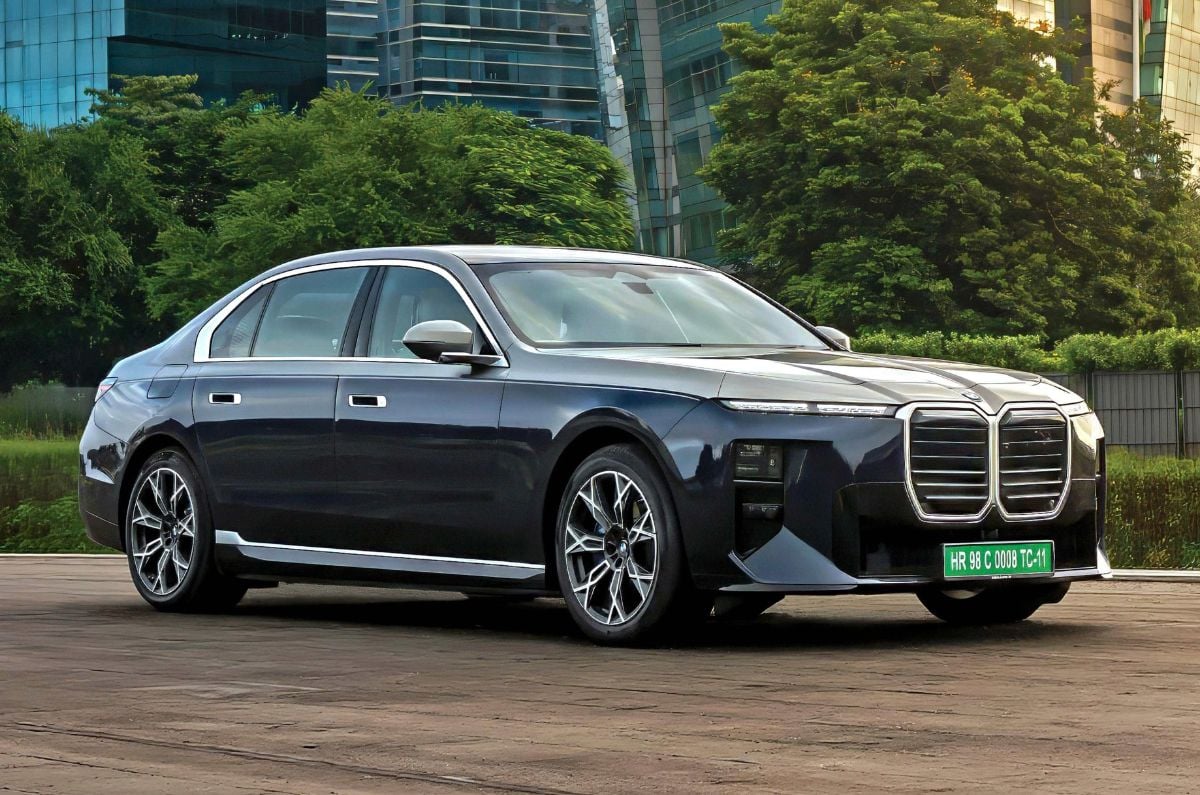
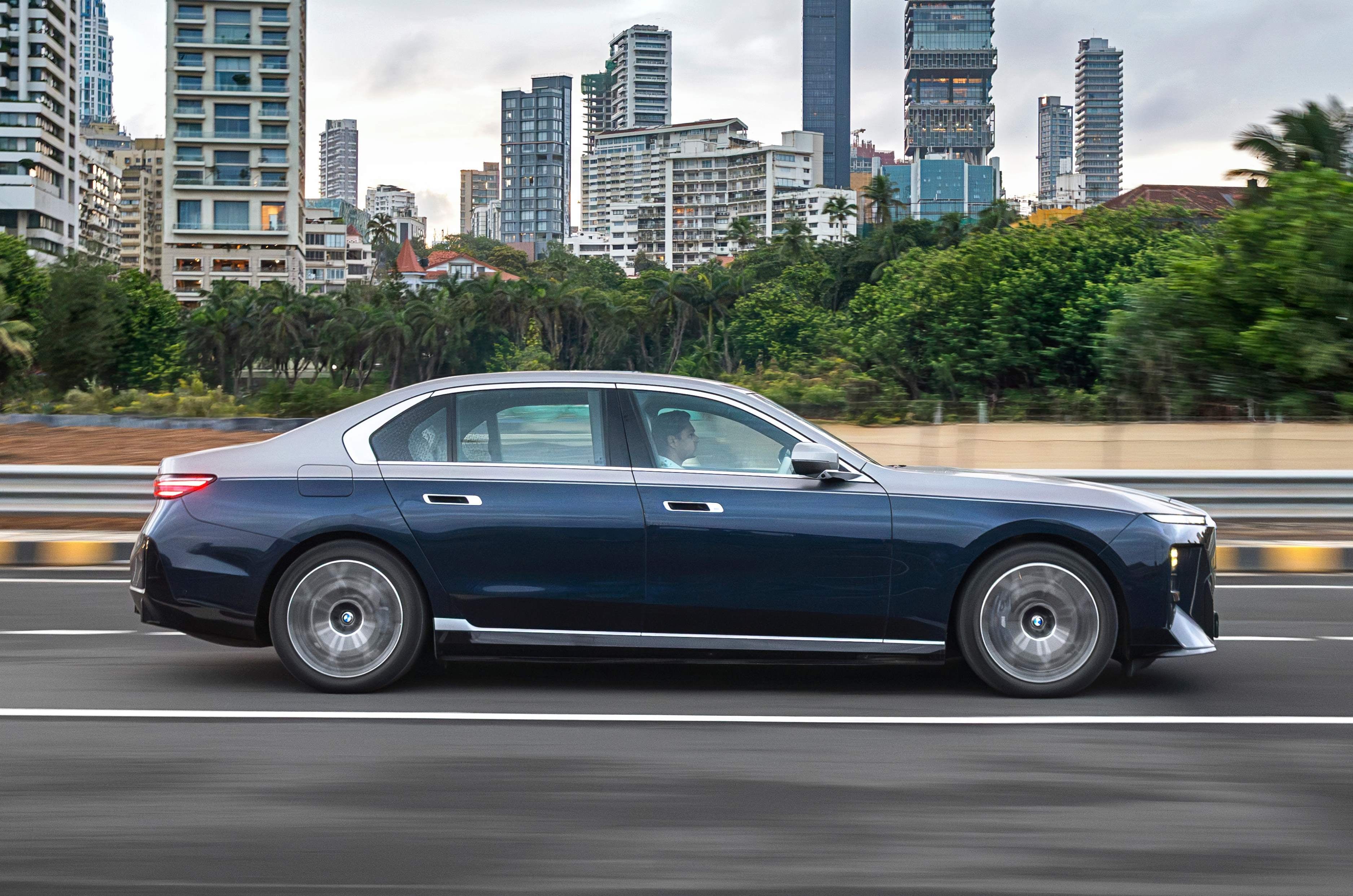
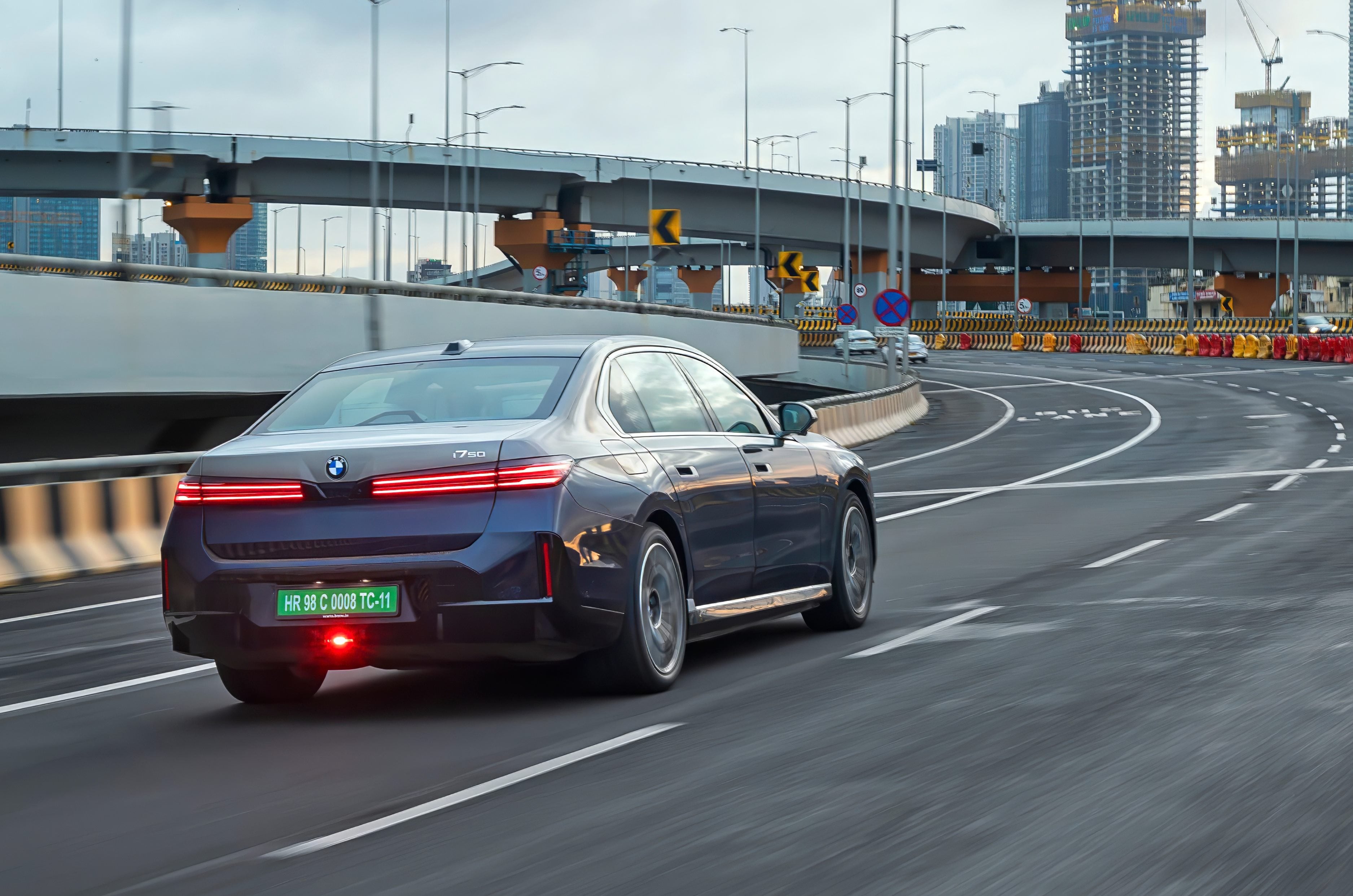
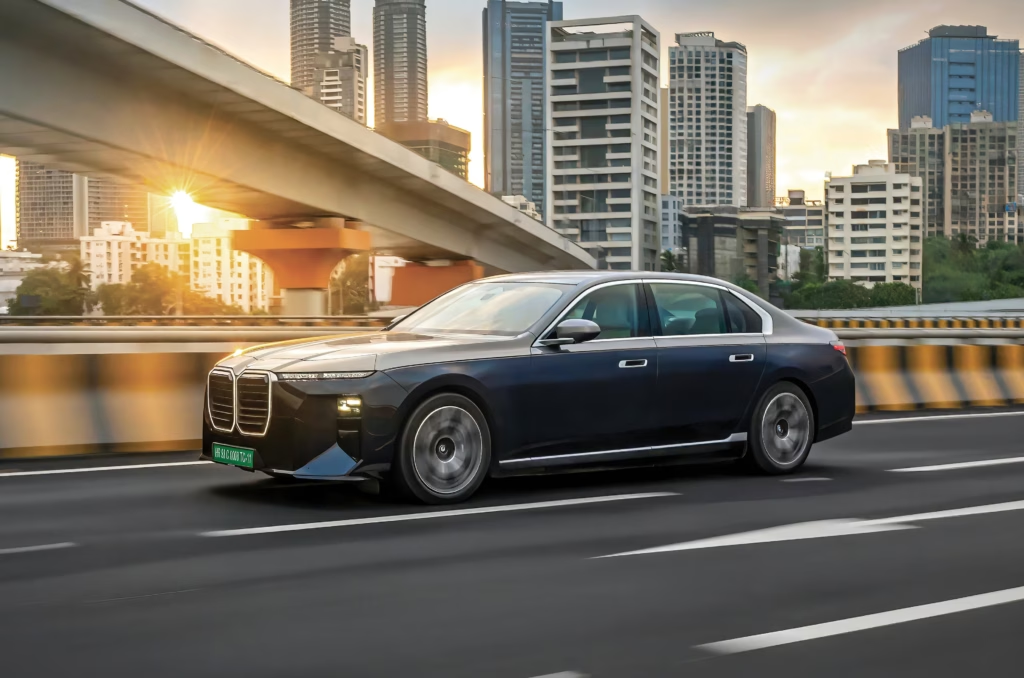
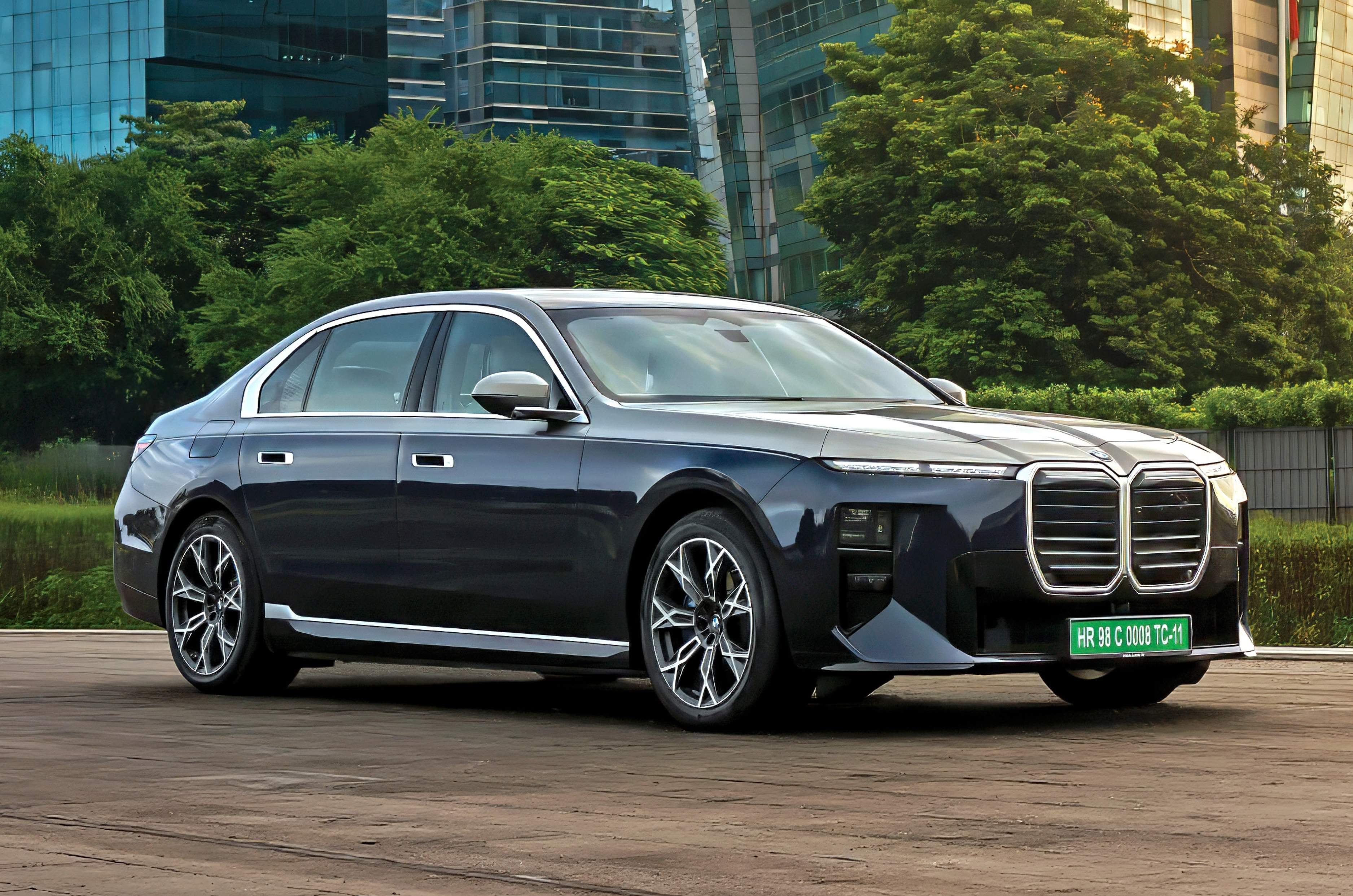
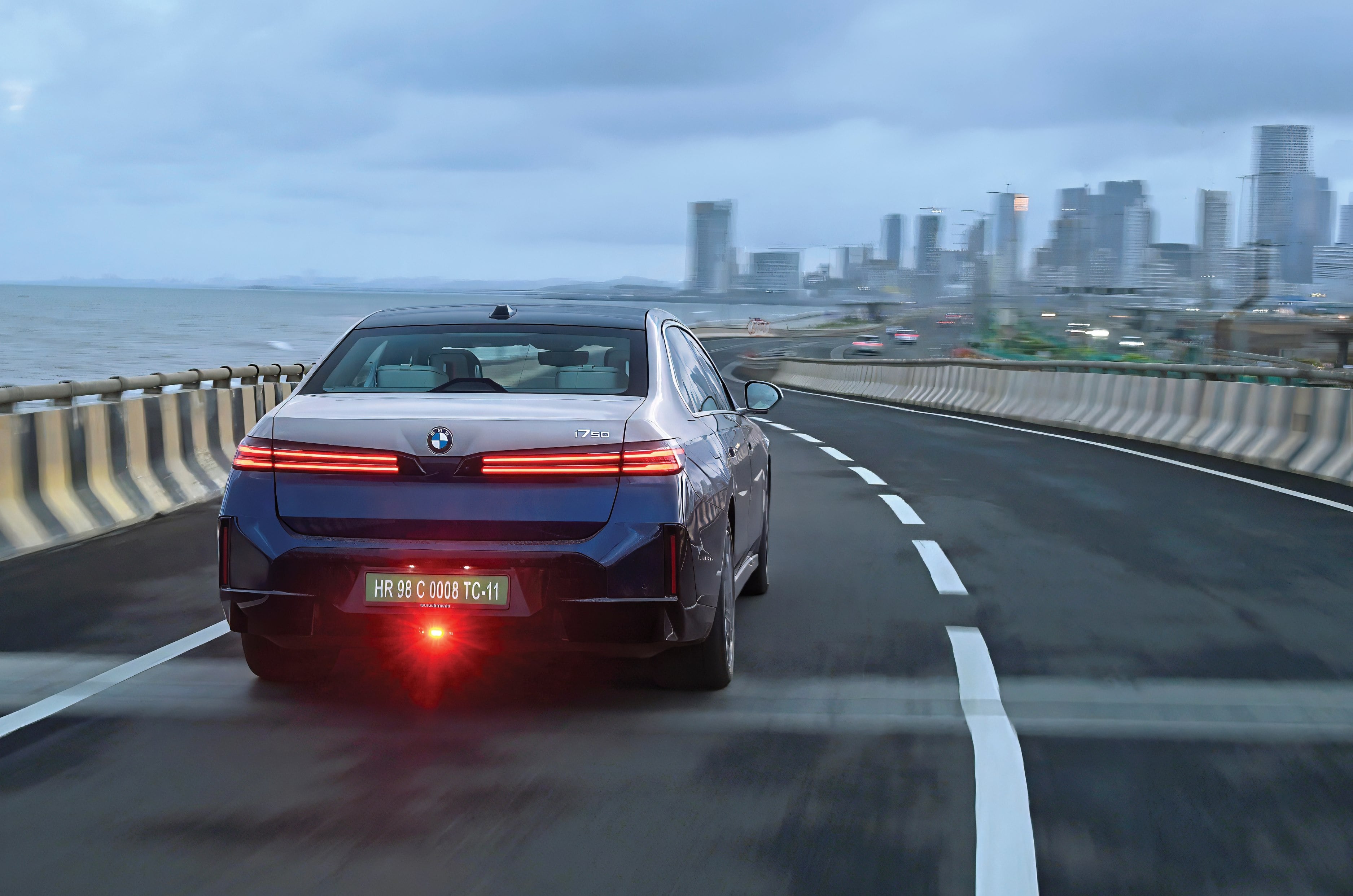
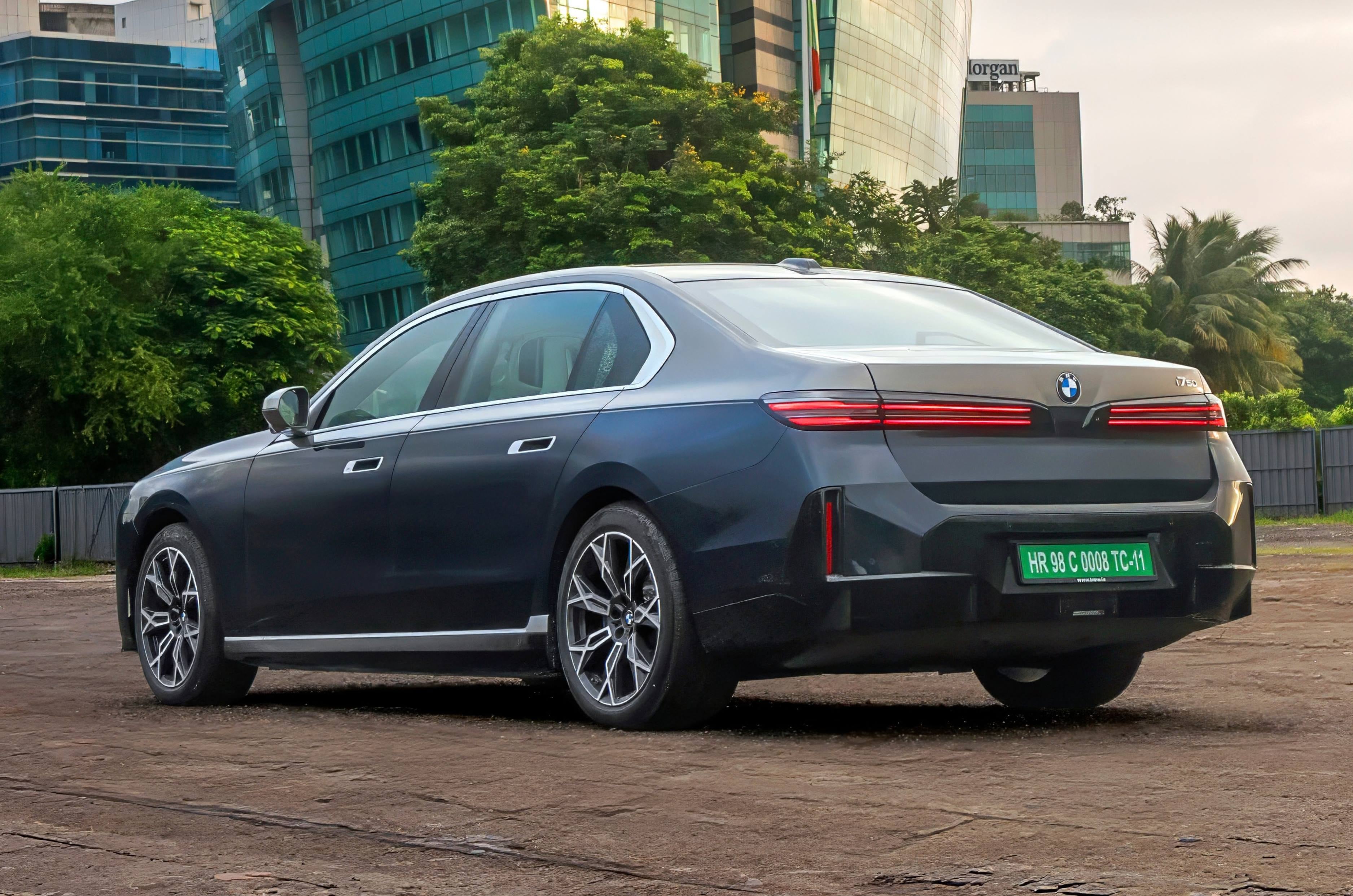
The i7 has been updated for 2026, and BMW now assembles its flagship electric luxury sedan locally. The i7 50 xDrive is priced at Rs 1.95 crore (ex-showroom), while its fully imported i7 M70 xDrive sibling comes in at Rs 2.65 crore. Meanwhile, the Mercedes-Benz S-Class range kicks off at Rs 2.2 crore. Before you decide to buy the BMW i7, here are a few things to keep in mind.
Reasons to buy the BMW i7
Plush ride and confident handling
The i7 deals well with bad roads while also being easier to drive despite its size
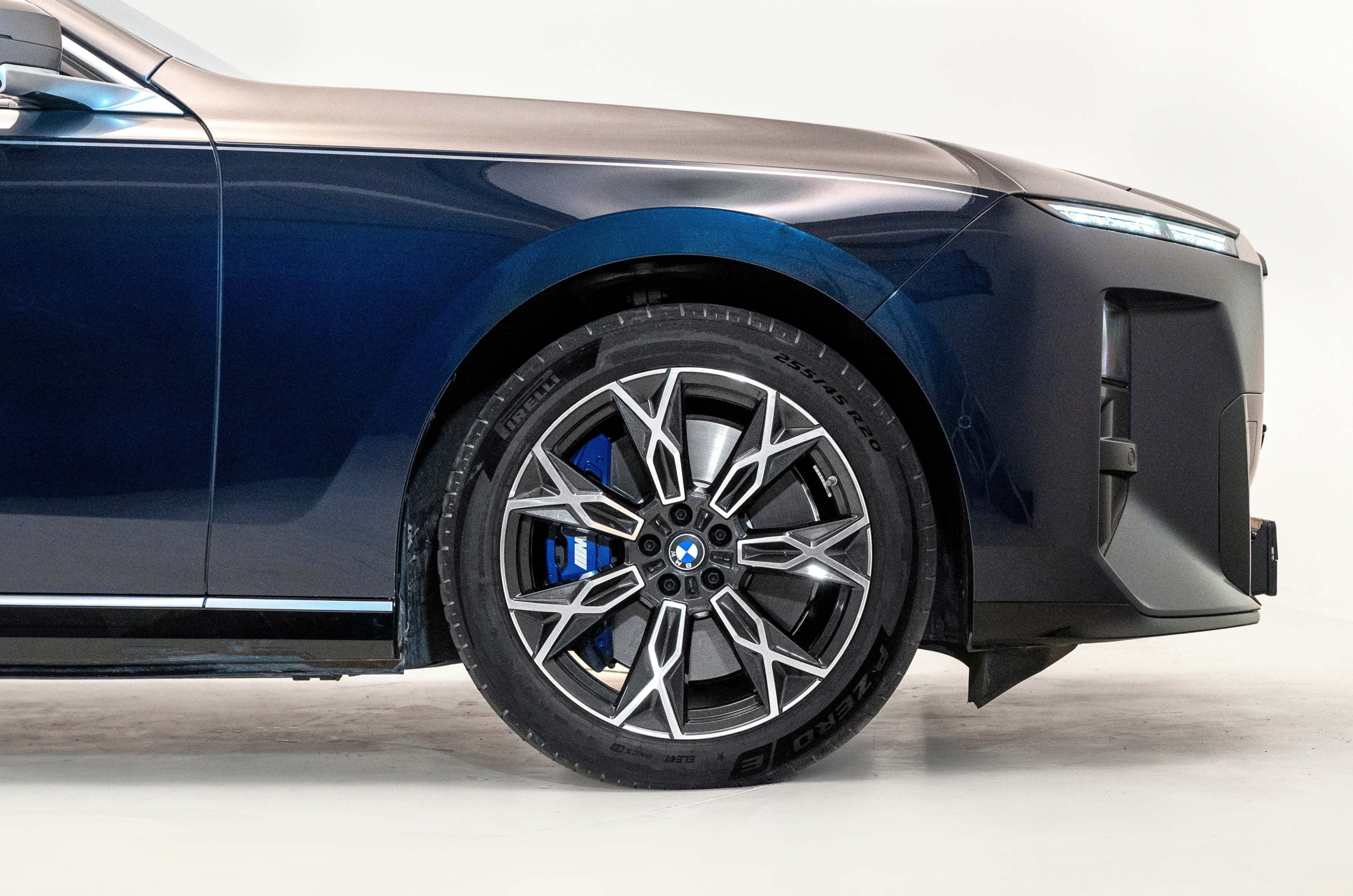
One of the BMW i7’s biggest fortes is its ride quality. The adaptive air suspension deals with rough roads and potholes without complaints, while the thicker sidewalls of the tyres wrapped around the 20-inch wheels add to the cushioning. The i7’s body movements are contained well enough to prevent the occupants from getting tossed about when driving over uneven surfaces. Switching to ‘Sport’ mode stiffens up the suspension for better body control without really hampering the ride quality.
Despite its 2.8-tonne kerb weight, the BMW i7 remains an easy luxury sedan to drive. Equipped with rear-axle steering that can turn the rear wheels by up to 3.5 degrees, the i7 ends up feeling smaller than its dimensions and mass would otherwise suggest. Aiding manoeuvrability further is the light steering. BMW’s xDrive all-wheel-drive (AWD) system provides plenty of traction, which helps this large luxury sedan track neatly through corners.
Lavish and tech-rich cabin
The updated i7 gets a redesigned dashboard and plenty of creature comforts
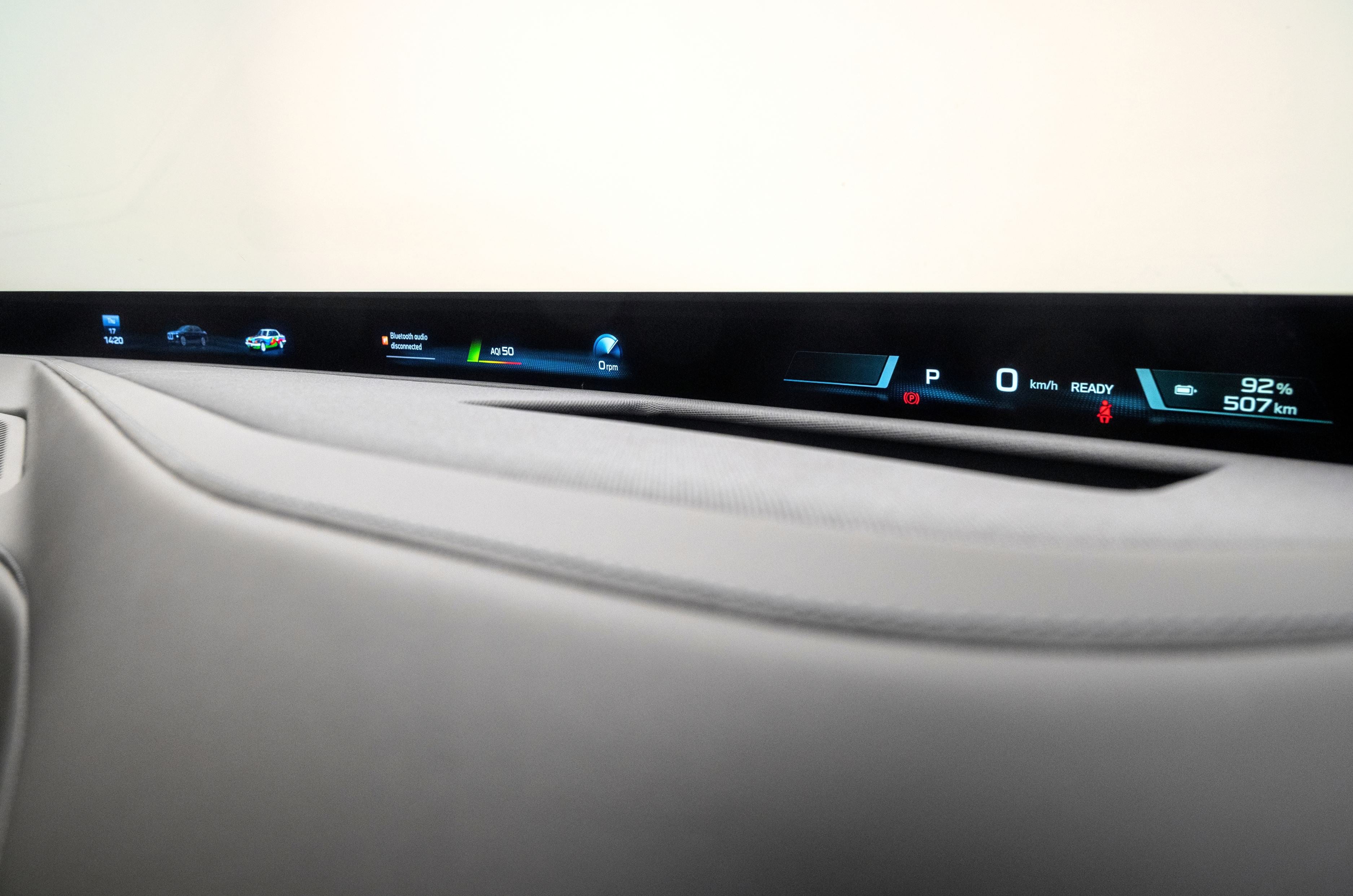
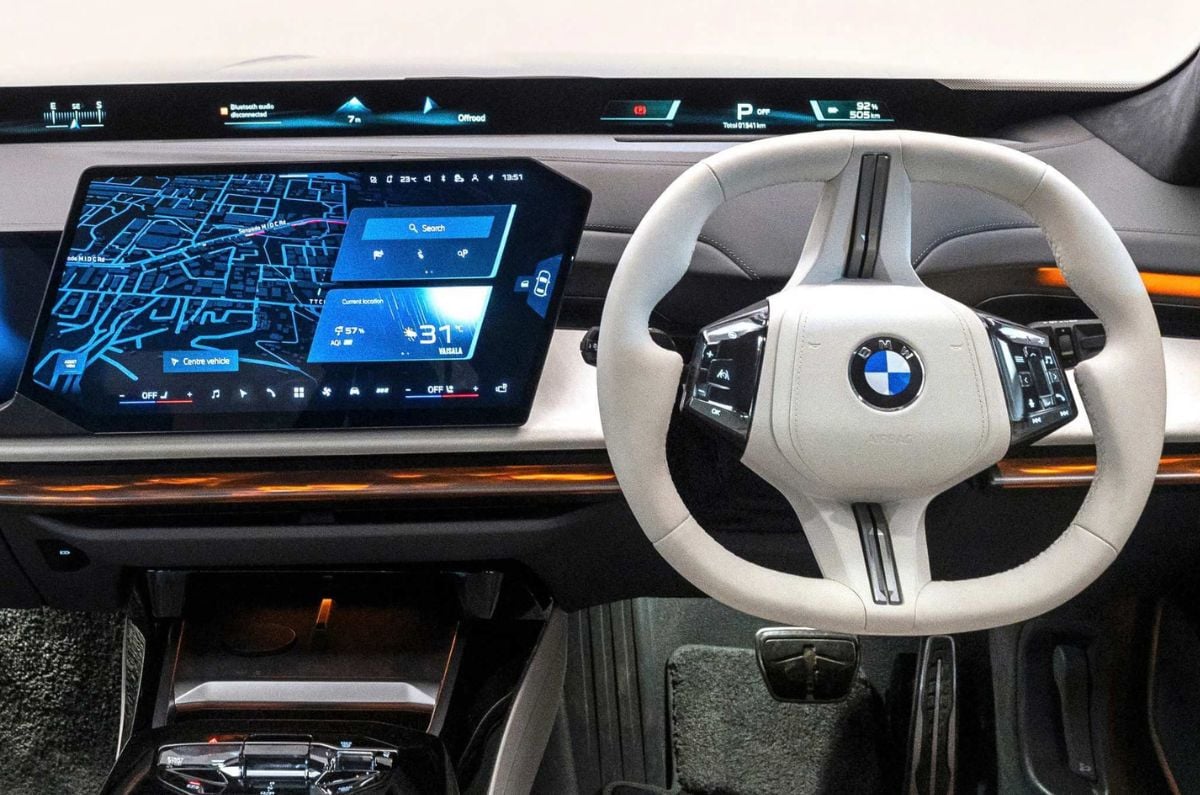
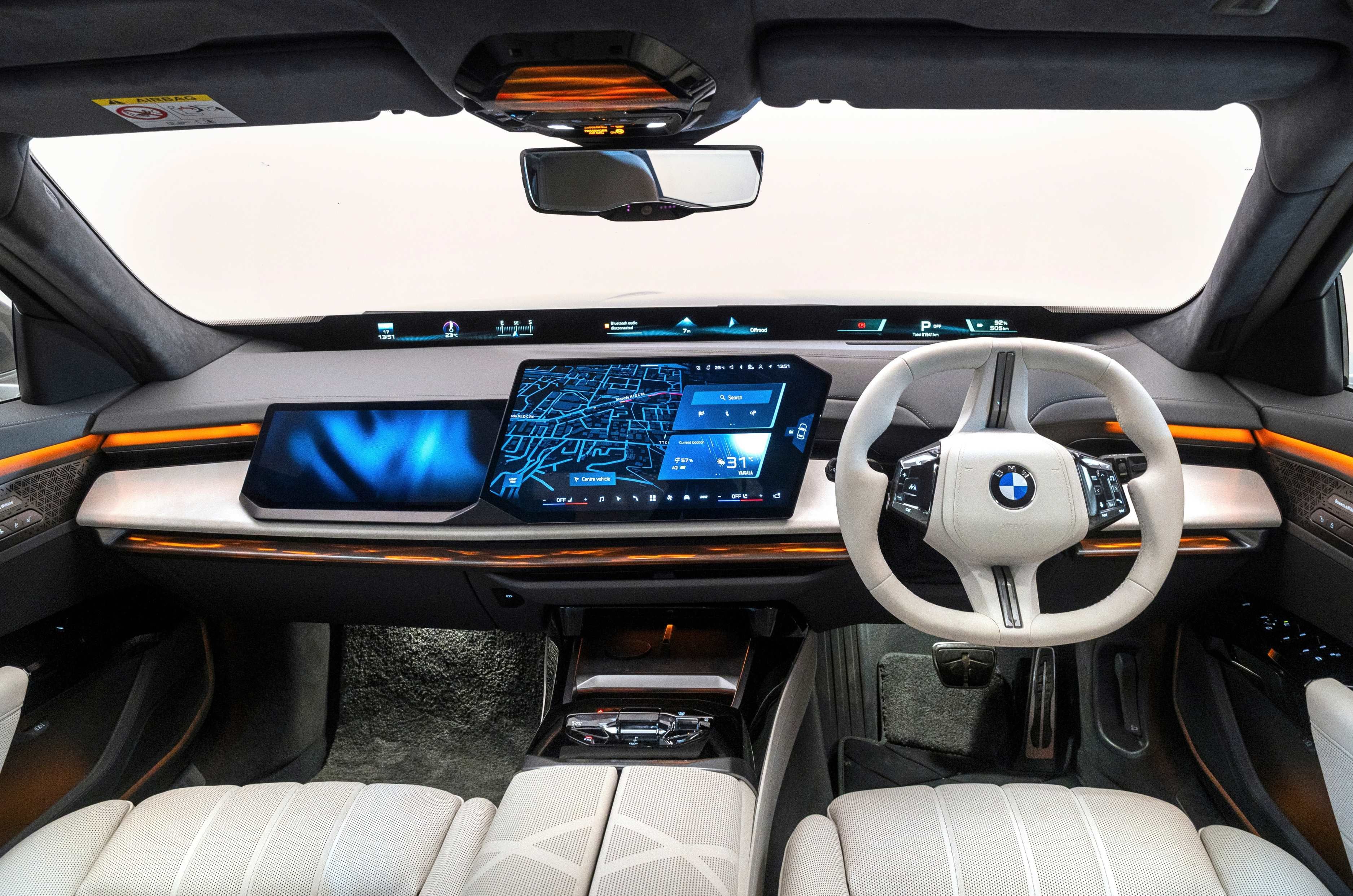
With the 2026 update, BMW has redesigned the dashboard so there’s no conventional instrument cluster with the i7 anymore. Key information is now projected onto a wide head-up display along the bottom of the windscreen, appearing crisp and in the driver’s line of sight. Users can have details such as navigation, audio, speed and battery level displayed here – all of which can be customised.
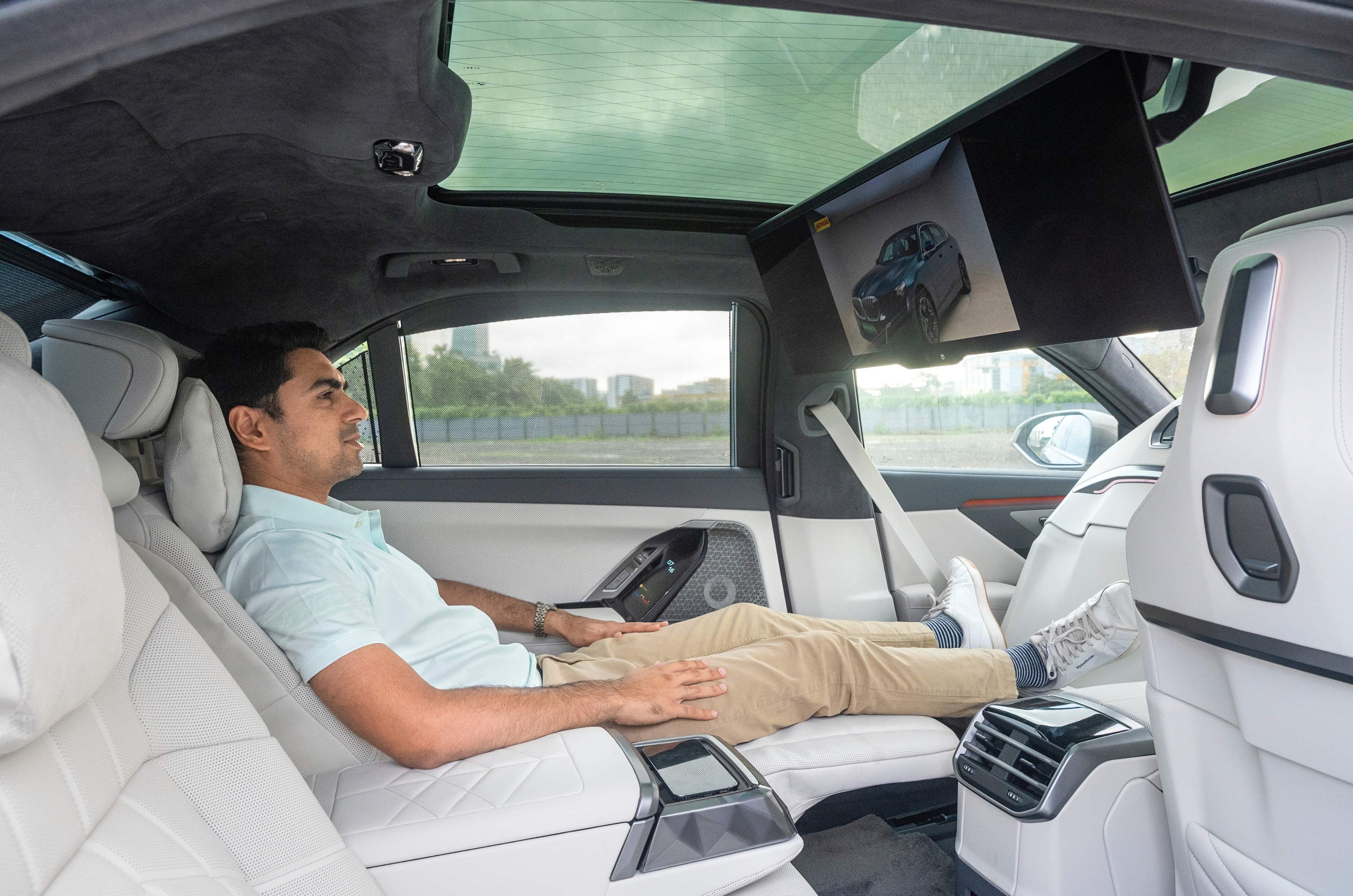
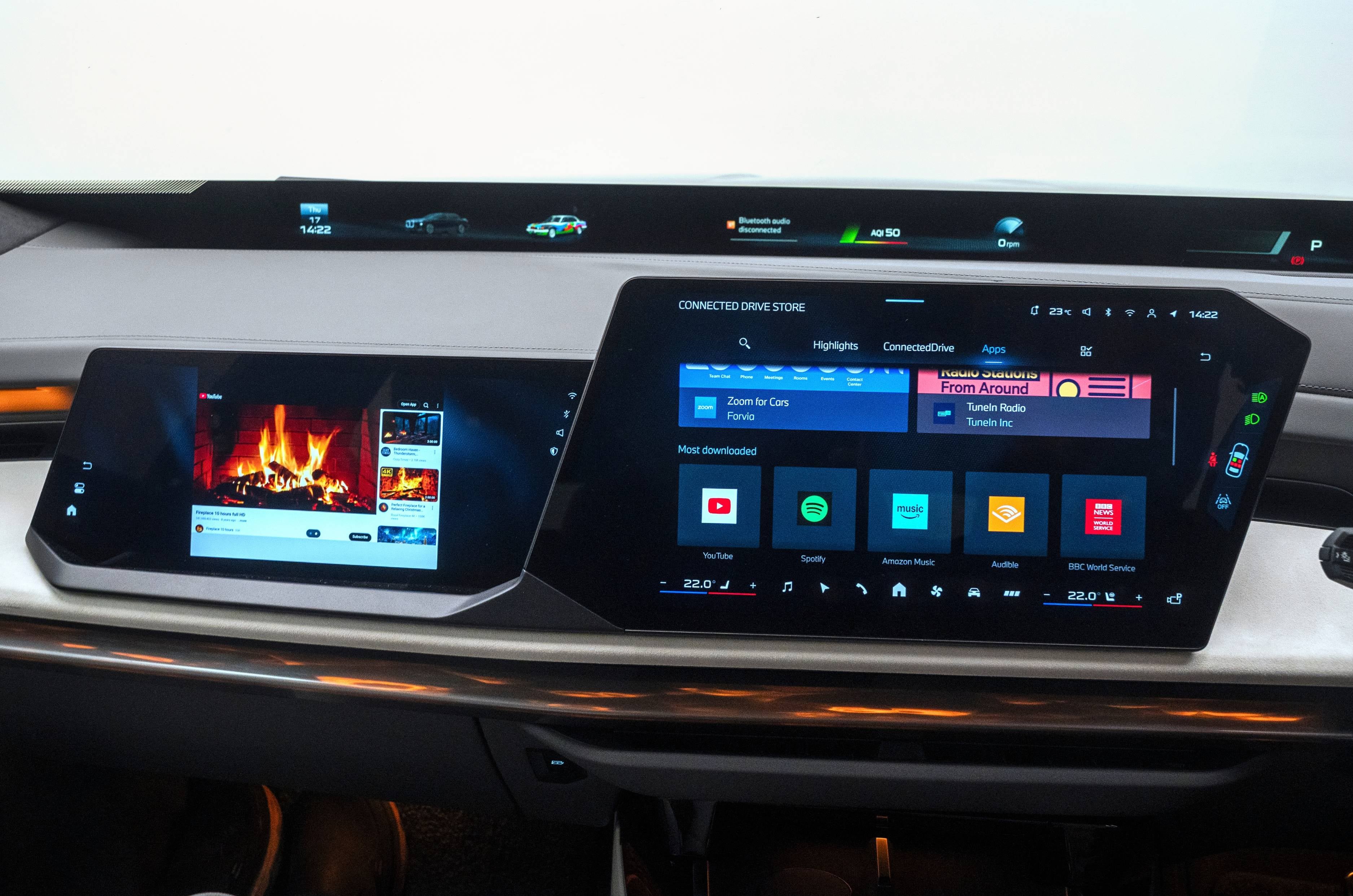
Occupying a substantial portion of the dash are a 17.9-inch touchscreen and a front-passenger display. Apart from being heated and cooled, the four main seats of the BMW i7 can also offer massages. For maximum space and comfort, the rear-left occupant can electrically push the front-passenger seat all the way forward whilst also deploying an ottoman and a fold-down footrest. The i7’s doors can be opened or closed electrically as well.
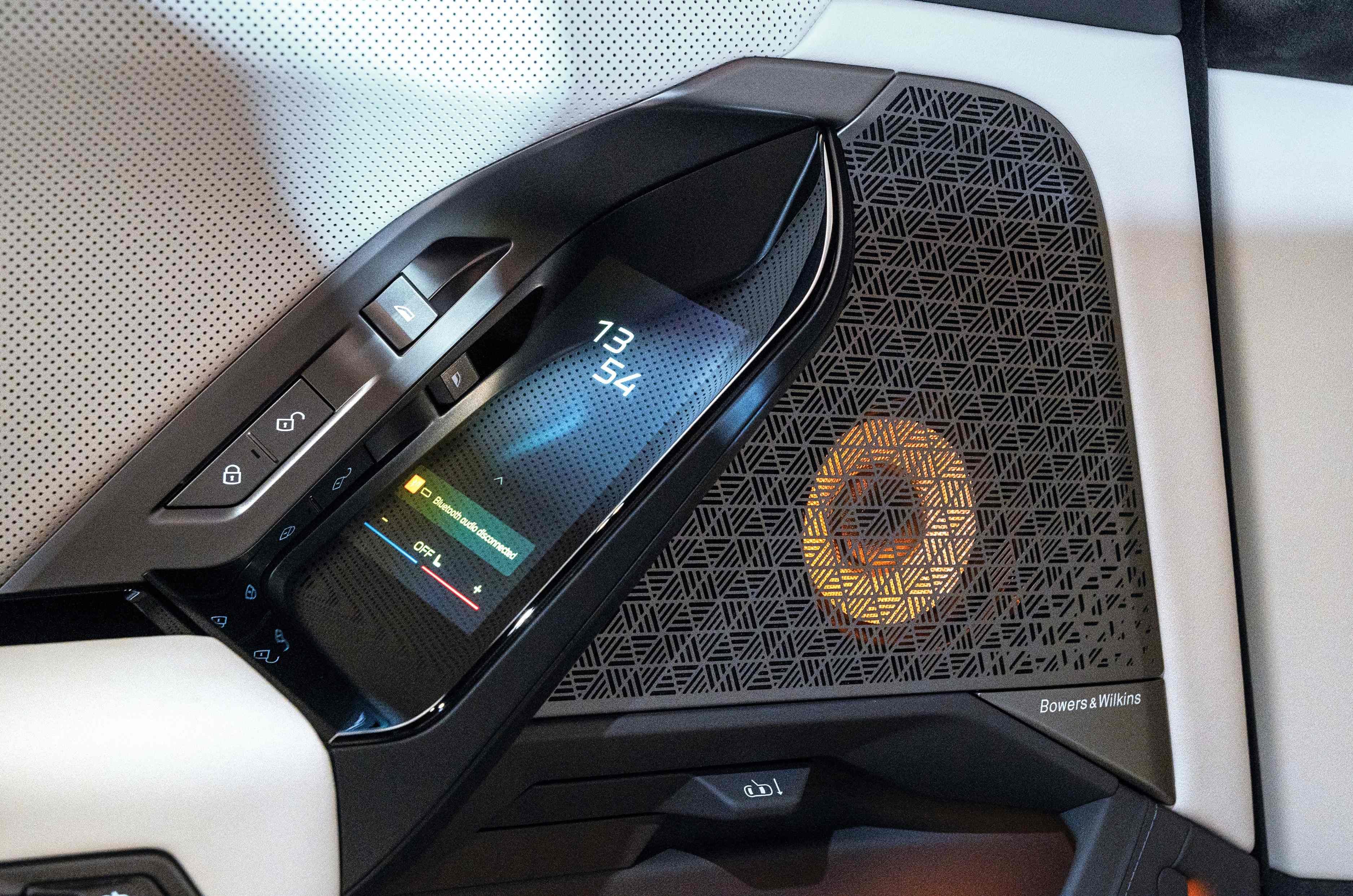
Some of the other feature highlights here include the 31.3-inch 8K rear screen, a thumping 35-speaker Bowers & Wilkins audio system with Dolby Atmos, a multi-colour ambient lighting system, a four-zone climate-control system and more. The cabin of the BMW i7 is really well insulated too, as very little in the way of tyre, wind or traffic noise makes its way inside.
Rapid acceleration and impressive range
The i7 50 xDrive is quick for its size and offers a claimed range of over 700km
The BMW i7 in its 50 xDrive avatar pairs two electric motors for a total output of 483hp and 660Nm. This allows for a 0-100kph time of 5.5 seconds and 200kph comes up in under 19 seconds – plenty quick for a car this large and heavy. Most drivers would be fine leaving the drive mode in ‘Efficient’, owing to the abundance of torque on hand.
When driving around at normal speeds, the accelerator pedal feels smooth and predictable, with performance rising sharply beyond the pedal’s halfway point. The i7’s adaptive regen is well judged, while the one-pedal ‘B’ mode allows one to drive and stop the car using just the accelerator.
The 112.5kWh battery pack of the BMW i7 offers a claimed range of up to 728km on a full charge. The carmaker also claims a 10-80 percent DC fast-charging time of 28 minutes on a 250kW outlet, with a full charge on a 22kW AC system taking about 6 hours.
Reasons not to buy the BMW i7
Low ride height
The i7 needs to be driven carefully over speed breakers
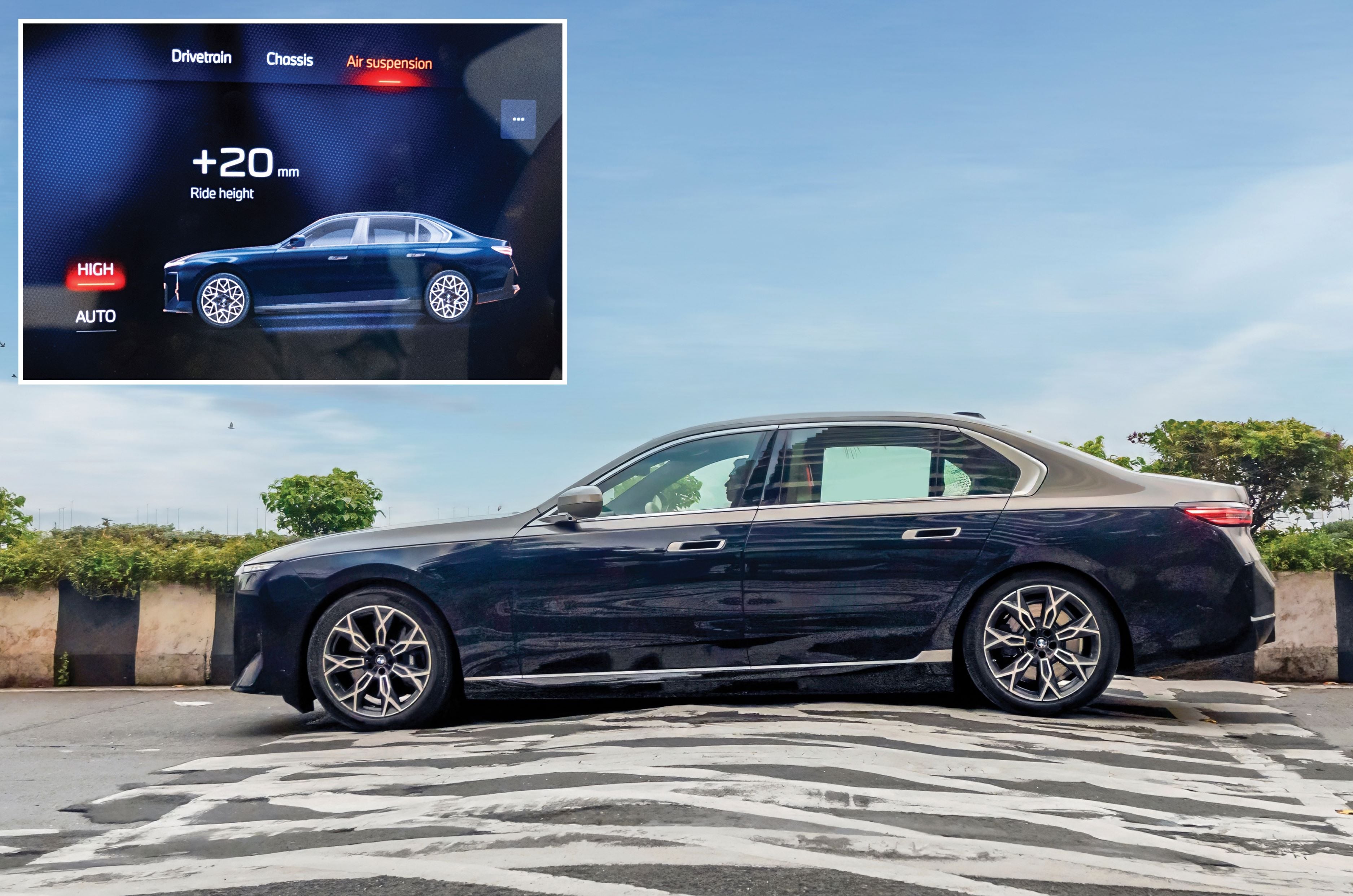
The BMW i7’s standard ground clearance of 136mm can be lowered by 10mm in ‘Sport’ mode. This is low enough that you risk scraping the underbody even over modestly sized speed breakers. Even raising the luxury sedan by 20mm above its standard ride height doesn’t fully guarantee clearance over the worst of speed breakers.
Limited luggage room
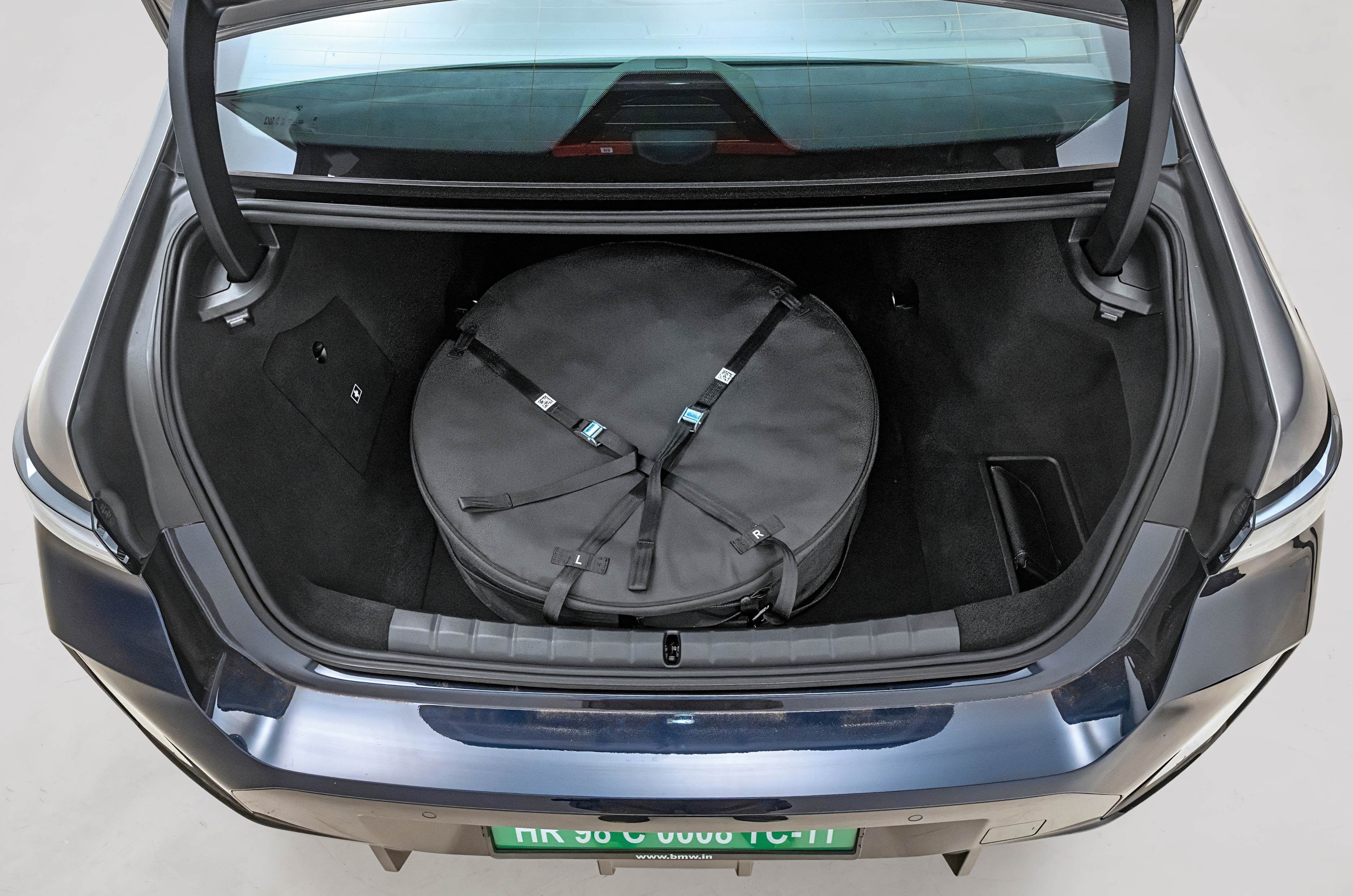
The spare wheel eats into the i7’s boot space
The BMW i7’s spare wheel sits on the boot floor, which reduces the overall luggage capacity by a fair bit. This was an issue with the previous model as well.
Touchscreen and steering wheel gripes
A couple of areas in this cabin could have been better
While the large primary display gets permanently stationed climate controls and a few other shortcut buttons, the interface is still not the easiest to use. Several functions are hidden a few layers deep, which can be confusing, and the Mercedes-Benz S-Class’s system is easier to use. The steering wheel’s light shade could make it a challenge to keep spotless, while its octagonal design and vertical spokes may divide opinions.
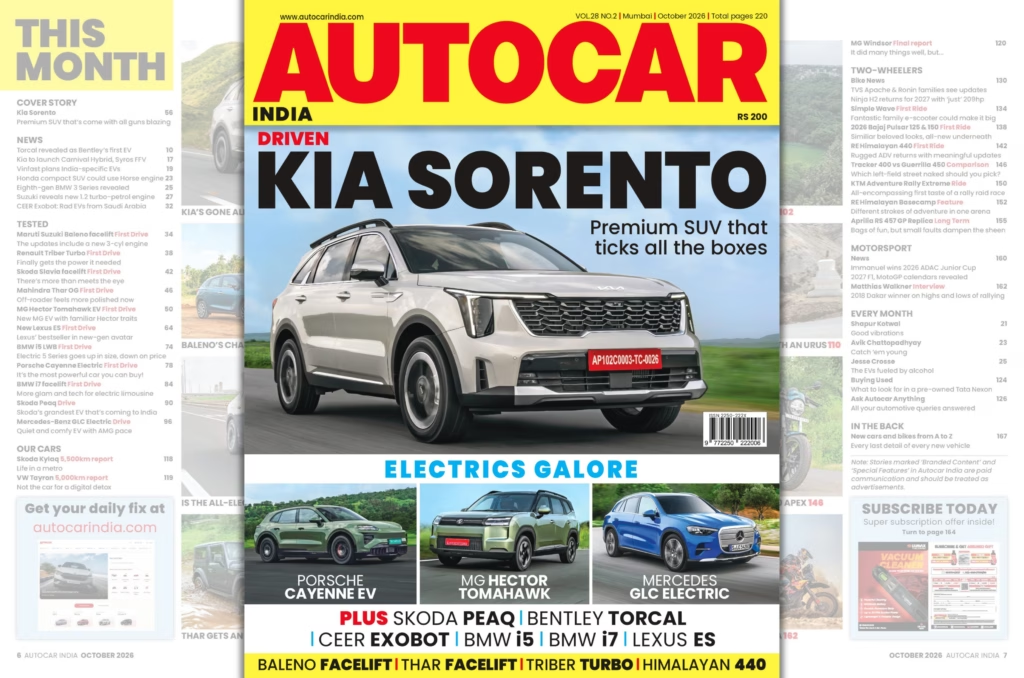
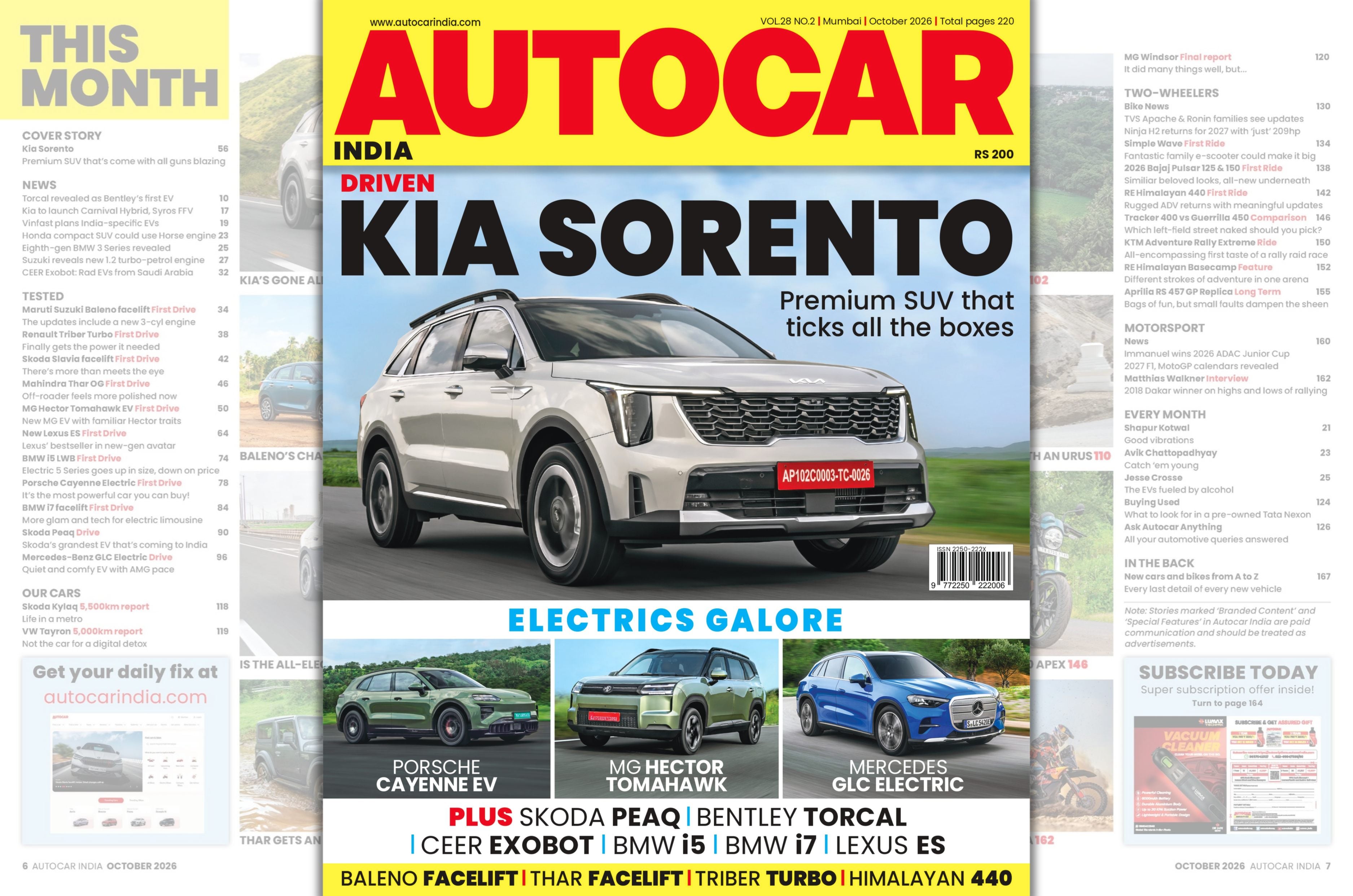
This month, we go big on power and even bigger on premium metal. The cover story is Kia’s biggest swing yet at the executive SUV segment, and then there’s a family SUV with more horsepower than a Lamborghini, and BMW’s electric onslaught continues with a new long-wheelbase sedan and a sharper flagship limousine.
Kia Sorento: Cover Story
Six trims, two powertrains, up to seven seats and 32 variants in all. Kia isn’t dipping a toe into the premium SUV pool; it’s diving straight in, locally assembling the Sorento from Rs 27.99 lakh to take on the Skoda Kodiaq and VW Tayron. Has Kia cracked the code, or has it bitten off more than it can chew?
Porsche Cayenne Electric: First Drive
Forget hypercars. The most powerful vehicle currently on sale in India is a family SUV, the Cayenne Electric, with more horsepower than your senses can fathom. We took it to an airstrip to see what that actually does to your stomach.
BMW i5 LWB & i7 Facelift: First Drives
BMW’s electric push continues, with a long-wheelbase i5 slotting in between the iX1 and flagship i7. Can BMW’s long-wheelbase playbook continue to work? And there’s also the i7 getting a sharper face and more tech to go with it, like it didn’t have enough already.
Mercedes-Benz GLC Electric: Drive
The first-gen electric GLC was far from ideal. The new one, however, is a completely new generation with an 800V architecture, 330kW charging and a claimed 715km range. We took all 489 of its horses to the Autobahn to see how much of an improvement it has been over its predecessor.
MG Hector Tomahawk EV: First Drive
Don’t let the familiar name fool you. The Hector Tomahawk EV rides on MG’s all-new ADAPT platform, bigger than the Mahindra XEV 9S in every dimension, with a PHEV sibling already waiting in the wings.
Maruti Suzuki Baleno, Renault Triber Turbo and Skoda Slavia: First Drives
India’s favourite premium hatch, the Baleno, gets a new engine and ADAS, the budget-friendly Triber finally gets the power it’s been begging for, and the Slavia’s facelift turns out to be more than skin-deep.
Mahindra Thar OG: First Drive
The original three-door Thar gets another round of updates, bringing changes to its engines, equipment and chassis. With the off-road icon continuing to evolve, we head out to discover what this latest iteration brings to the table.
Taking the High Road: Features
Goa’s new Porvorim Elevated Corridor opens on NH66, and we test it in two ways: solo against Google Maps’ ETA in an MG Cyberster, and then flanked by a dozen supercars, Ferraris, a McLaren 750S and a Lamborghini Huracan among them, for its proper initiation.
Rocket Ship to the Moon: Feature
A Lamborghini SUV is already an exercise in excess. Take it somewhere unexpected, add a little spectacle, and you have the ingredients for an automotive adventure that refuses to be ordinary.
Royal Enfield Himalayan 440
The original Himalayan is back with a bigger engine and a handful of meaningful changes. In a world where adventure bikes keep getting more complicated, there’s something rather appealing about going back to basics.
Tracker 400 vs Guerrilla 450: Comparison
Two left-field street nakeds, the Triumph Tracker 400 and Royal Enfield Guerrilla 450, go head-to-head. One takes its inspiration from flat-track racers, while the other fancies itself a sporty roadster. Both want your money, and neither is particularly interested in being sensible about it.
KTM Adventure Rally Extreme: Ride
Adventure riding is all well and good until the road disappears, the terrain turns hostile and you begin questioning your life choices. We get a taste of KTM’s rally raid experience, where the only shortcut is having the skill to take one.
आज के दौर में लोग पैसे देकर सिर्फ सुविधाएं नहीं, बल्कि अपना कीमती समय भी बचाना चाहते हैं। बेंगलुरु की एक महिला की पोस्ट ने इसी बदलती सोच को सामने ला दिया है। उन्होंने बताया कि दो लोगों के लिए घर पर खाना बनाने वाला कुक रखने का खर्च हर महीने 7 से 8 हजार रुपये तक पहुंच जाता है। इसके बावजूद खाने का स्वाद हमेशा लाजवाब नहीं होता। फिर भी लोग यह खर्च उठाने को तैयार हैं।
आखिर जब खाने की क्वालिटी पर सवाल है, तो कुक रखने के लिए हर महीने इतनी बड़ी रकम क्यों दी जा रही है? महिला की बात ने शहरों में रहने वाले नौकरीपेशा लोगों की जिंदगी और उनकी प्राथमिकताओं पर दिलचस्प चर्चा छेड़ दी है।
दो लोगों के लिए कुक की फीस 8 हजार रुपये तक
बेंगलुरु में रहने वाली मेघा ने सोशल मीडिया प्लेटफॉर्म X पर बताया कि दो लोगों के घर में खाना बनाने वाले कुक की फीस लगभग 7,000 से 8,000 रुपये प्रति माह हो सकती है। कुक आमतौर पर दिन में दो बार घर आता है, सब्जियां काटता है, दो तरह के व्यंजन बनाता है और फिर दूसरे घर में काम करने निकल जाता है। रविवार को उसकी छुट्टी रहती है।
मेघा के मुताबिक, यह व्यवस्था शहर में रहने वाले उन लोगों के लिए आम है, जो नौकरी और दूसरी जिम्मेदारियों के कारण रोजाना खाना बनाने के लिए पर्याप्त समय नहीं निकाल पाते।
प्रेशर कुकर में बनता है सबकुछ, स्वाद को लेकर भी शिकायत
मेघा ने अपनी पोस्ट में खाना बनाने के तरीके पर भी टिप्पणी की। उनके मुताबिक, दाल, आलू, सोया और यहां तक कि चिकन बनाने में भी प्रेशर कुकर का खूब इस्तेमाल होता है। ऐसे में खाने का स्वाद कई बार औसत रह जाता है।
उन्होंने यह भी कहा कि मनपसंद स्वाद पाने के लिए कुक को बार-बार अपनी पसंद समझानी पड़ सकती है। वहीं, स्वाद बढ़ाने के लिए ज्यादा तेल और मसालों का इस्तेमाल भी परेशानी बन सकता है।
हालांकि, मेघा की यह टिप्पणी उनके निजी अनुभव पर आधारित है। हर कुक का खाना बनाने का तरीका और स्वाद अलग हो सकता है।
जब खाना औसत है, तो लोग आखिर पैसे क्यों दे रहे हैं?
मेघा की पोस्ट का सबसे दिलचस्प पहलू यही है। उन्होंने महसूस किया कि लोग हर महीने हजारों रुपये सिर्फ स्वादिष्ट खाने के लिए नहीं देते, बल्कि दिन में दो बार खाना बनाने की चिंता से छुटकारा पाने के लिए भी खर्च करते हैं।
हर दिन क्या बनाना है, सब्जियां कब काटनी हैं, खाना कब तैयार करना है और रसोई की जिम्मेदारी कैसे संभालनी है इन सवालों से बचने के लिए लोग कुक पर निर्भर रहते हैं। यानी कई लोगों के लिए यह खर्च स्वाद से ज्यादा समय और सुविधा खरीदने जैसा है।
Bengaluru cook economics are crazy actually.
For 2 people, around ₹7–8k/month, 2 visits a day, Sunday off.
They come in, chop vegetables , make 2 dishes quickly and move on to the next house.
Pressure cooker is basically their Astra , dal, aloo, soya, chicken… everything somehow ends up in it!
Taste is usually average unless you keep explaining how you want it. Otherwise more oil + more masala seems to be the shortcut.
And yet we continue.
Because I realised we’re not really paying ₹8k for amazing food.
We’re paying ₹8k to not have to think about cooking twice every single day.
सोशल मीडिया पर छिड़ी चर्चा, लोगों ने भी रखी अपनी राय
मेघा की पोस्ट सामने आने के बाद सोशल मीडिया पर लोगों ने अलग-अलग प्रतिक्रियाएं दीं। कुछ यूजर्स ने माना कि घरेलू मदद की कीमत चुकाना आसान नहीं, लेकिन कई बार परिस्थितियों के चलते ऐसा करना जरूरी हो जाता है।
एक यूजर ने कहा कि लोग रोजाना रसोई से जुड़े फैसलों से आजादी पाने के लिए पैसे खर्च करते हैं। वहीं, एक अन्य यूजर ने तर्क दिया कि घर का बना खाना स्वाद में भले ही हमेशा बेहतरीन न हो, लेकिन कई बार डिलीवरी ऐप से मंगाए गए खाने के मुकाबले बेहतर विकल्प हो सकता है।
The BMW i7 has been embraced wholeheartedly by India’s ultra-high-net-worth buyers. Since its launch in 2023, it has dominated the high-end luxury sedan space, and interestingly, has consistently outsold its own petrol sibling. In fact, around 60 percent of 7 Series buyers have opted for the EV. With the 2026 i7 now being locally assembled in India and the i7 50 xDrive priced at Rs 1.95 crore, exactly at par with the petrol 740, BMW expects the scales to tilt even further in favour of the electric version.
BMW has also introduced the significantly more powerful i7 M70 xDrive. However, as a full import priced at Rs 2.65 crore, it commands a substantial Rs 70 lakh premium, which is likely to limit its appeal. For most buyers then, the locally assembled i7 50 xDrive is expected to remain the sweet spot of the range.
BMW i7 50 xDrive Exterior Design and Engineering – 8/10
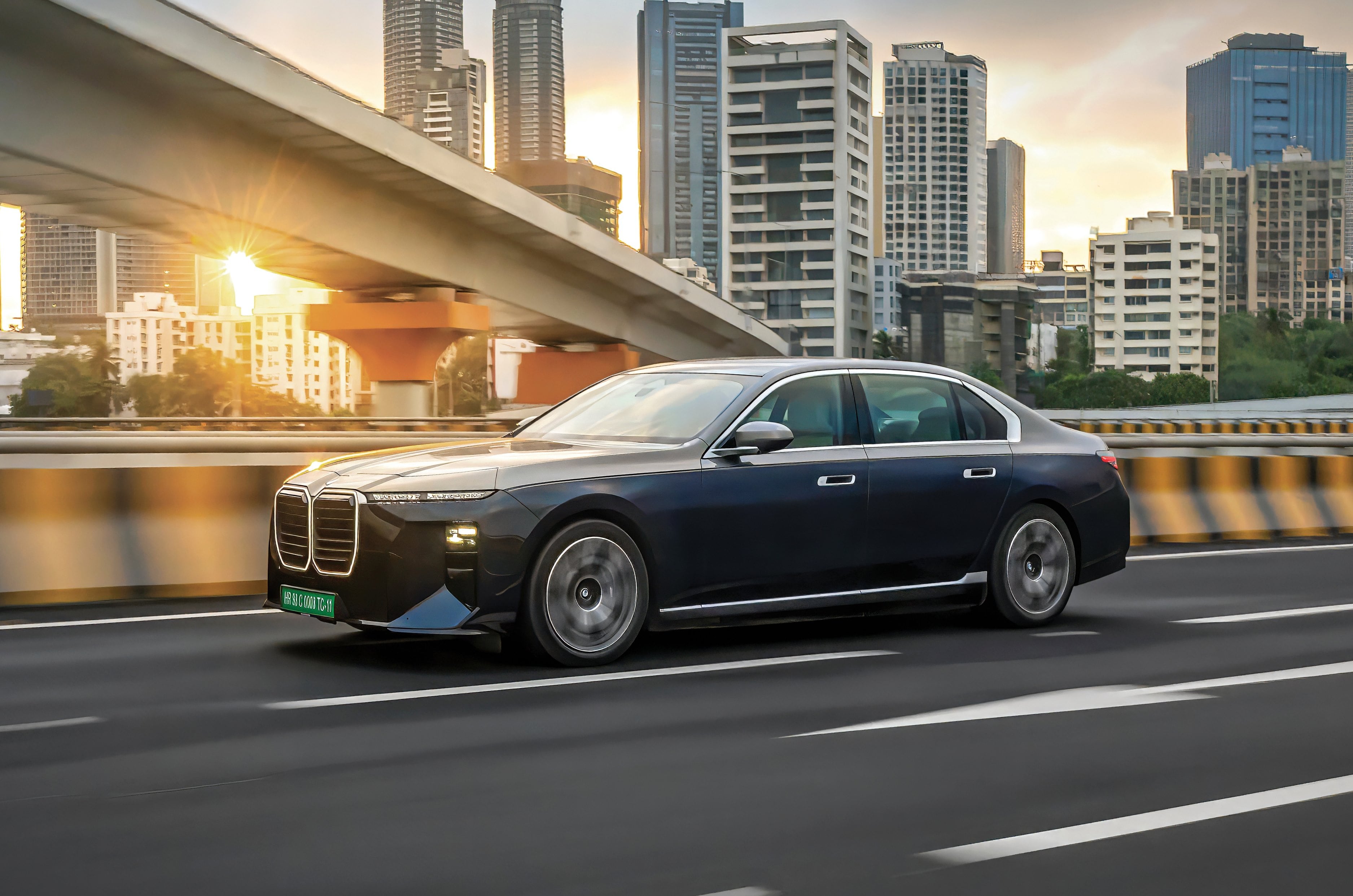
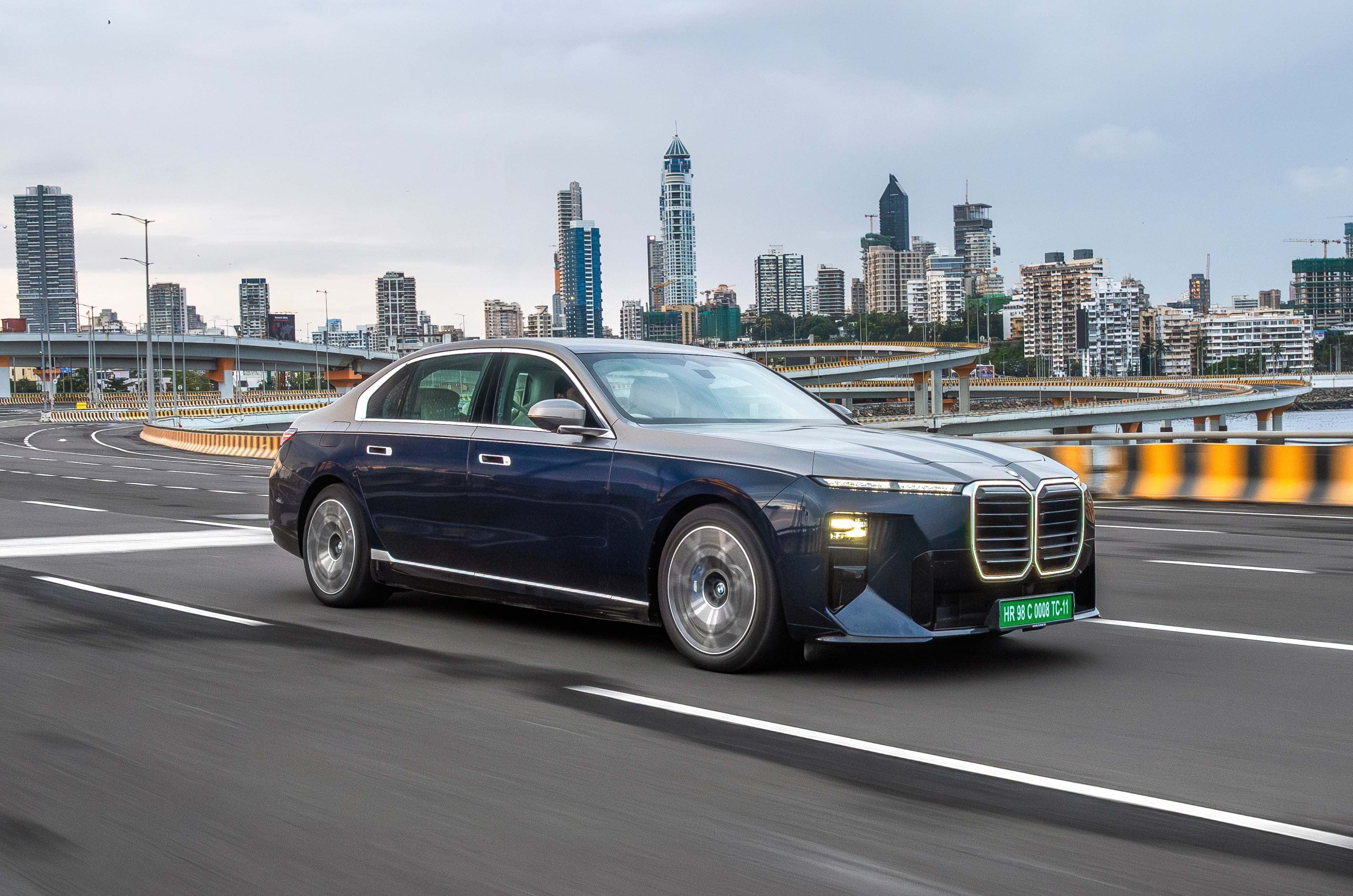
The cleaned-up styling looks significantly more palatable than its predecessor.
BMW has made substantial changes to the i7’s styling. The DRLs are now longer and slimmer, and feature a crystalline effect that looks absolutely stunning up close. The oversized kidney grille has also been redesigned and, like before, remains illuminated. The air dam adopts a more rectangular design, the headlamps are vertically oriented, and the excessive black treatment has been done away with completely.
The tyres appear undersized but owners are unlikely to complain given the ride comfort benefits that come with the higher-profile tyres.
New 20-inch alloy wheels replace the outgoing version’s 21-inch units. While some might argue they appear slightly undersized, owners are unlikely to complain given the ride comfort benefits that come with the higher-profile tyres.
Like the front, the rear has also been cleaned up. There’s a new diffuser, broader tail-lamps, and a neater bumper design. Overall, this iteration looks significantly more palatable than its predecessor, and in the optional two-tone paint finish of our test car, road presence was immense.
BMW i7 50 xDrive Interior Space and Comfort – 9/10
The redesigned dashboard adds freshness and previews the direction BMW’s future interiors are expected to take.
The i7’s dashboard has been completely redesigned, adding much-needed freshness while also previewing the direction BMW’s future interiors are expected to take. The biggest talking point is the deletion of the conventional instrument cluster. In its place sits a new panoramic head-up display positioned right at the base of the windscreen, projecting a wealth of information. It is highly customisable and, besides essentials like speed, charge status and warnings, can display motor speed, navigation, compass information, audio details, date and time, outside temperature, air quality, or even one of BMW’s Art Cars as a decorative element in the remaining six slots. The display is sharp, brilliantly executed, and sits naturally within your field of vision without becoming distracting.
A panoramic head-up display projects a wealth of information, it’s highly customisable and the display is sharp and brilliantly executed.
As for design, the new steering wheel is far more divisive. Its octagonal shape, combined with spokes extending from the horn boss at the 12 and 6 o’clock positions, makes it look unconventional. The light-coloured finish is also likely to be difficult to keep clean — you may even find yourself asking your chauffeur to wear gloves. On the plus side, it feels pleasant to hold, and the controls, though limited in number and not individual buttons, are satisfying to use.
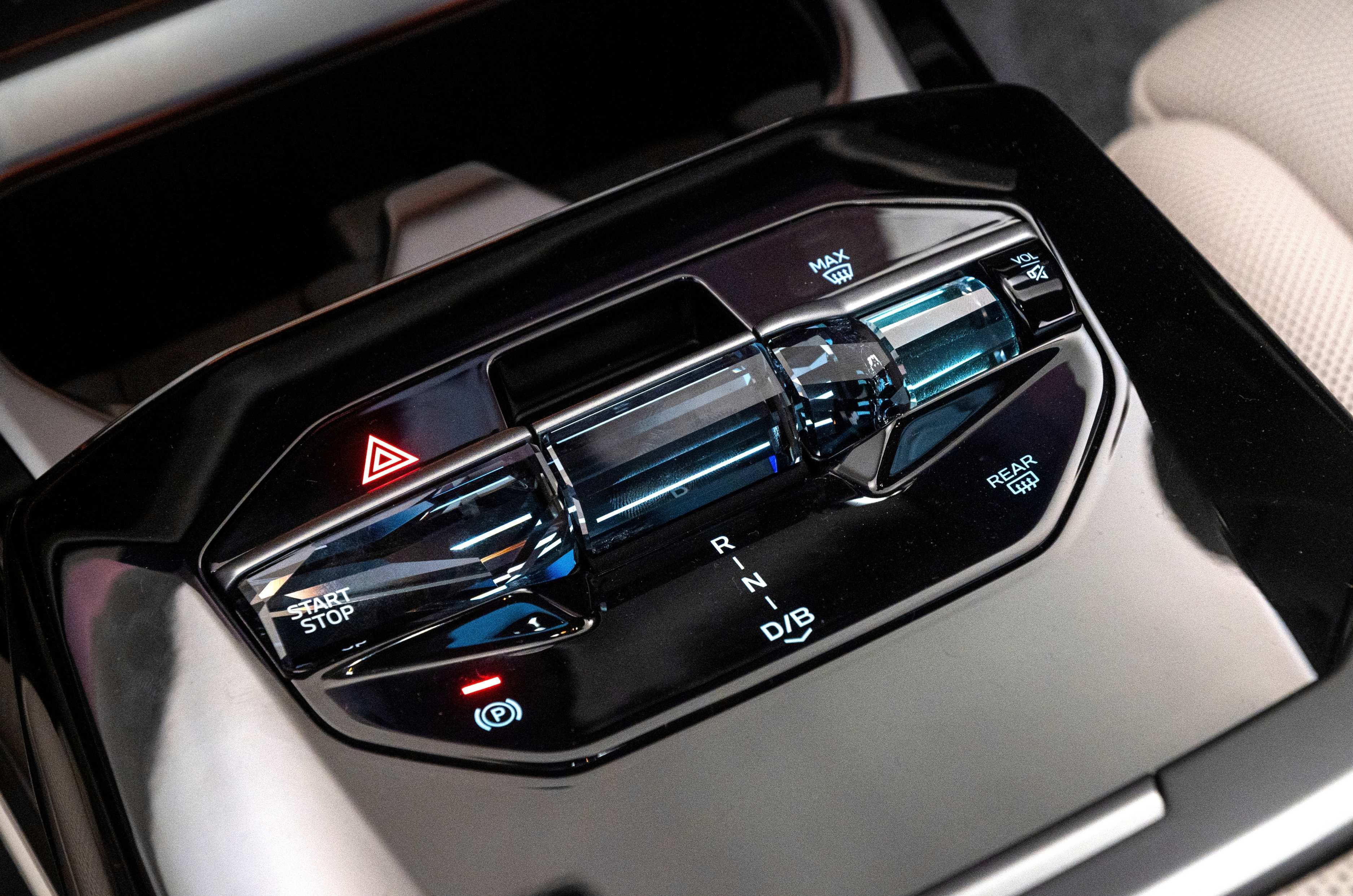
There’s also a new 17.9-inch free-standing touchscreen along with a smaller passenger display, both adopting a parallelogram shape. Curiously, the top-right corner of the central screen appears as though it has been chipped off, although that isn’t actually the case. Generous ambient lighting, crystalline detailing for the drive selector, volume controller and start-stop button, silver speaker grilles, and an overall light-coloured cabin theme further elevate the sense of luxury.
A one-touch relaxation mode transforms the rear seat into a lounge-like position. Updated 8K theatre screen is still part of the package.
Expectedly, the seats are supremely comfortable. All four seats get heating, ventilation and massage functions. Additionally, the rear-left seat features a one-touch relaxation mode that transforms it into a lounge-like position, complete with a raised ottoman, a fully-forward front passenger seat, and a fold-down footrest. Sadly, like the outgoing model, the spare wheel remains mounted on the boot floor, significantly compromising luggage capacity.
BMW i7 50 xDrive Features and Safety – 10/10
The i7 50 M Sport comes loaded with virtually every feature luxury sedan buyers could ask for. The new panoramic end-to-end head-up display replaces the conventional instrument cluster and is not only unique and highly customisable, but also exceptionally well executed. The 17.9-inch touchscreen is new too, and now benefits from additional shortcut keys in addition to permanently displayed climate-control functions, making it marginally easier to operate than before. However, the user interface still feels somewhat overwhelming, with an abundance of functions buried within multiple sub-menus.
The central screen is marginally easier to operate than before. The new front passenger entertainment display is likely to be of limited relevance to most owners.
Also new is a front passenger entertainment display, though we suspect it will be of limited relevance to most owners. The new 31.3-inch 8K rear theatre screen, on the other hand, is likely to see much greater use, particularly on longer journeys.
Carried over from the outgoing version and continuing to add a sense of occasion are the powered doors, which open and close at the touch of a button.
Its Bowers & Wilkins Diamond Surround Sound System with Dolby Atmos delivers an incredibly immersive audio experience.
The highlight, however, is the outstanding Bowers & Wilkins Diamond Surround Sound System with Dolby Atmos and a whopping 35 speakers. It even delivers a 4D experience, with a pronounced thump felt through all four seats. The result is an incredibly immersive audio experience that is sure to impress even the most discerning audiophile.
BMW i7 50 xDrive Performance and Refinement – 9/10
Its performance feels effortless and reassuring, while the accelerator calibration is smooth and progressive for everyday driving.
The i7 50 xDrive uses a dual-motor setup producing a combined 483hp and 660Nm, which is more than adequate for a luxury sedan of this nature. There’s rarely any need to switch out of Efficient mode because there is always a vast reserve of torque available. The effortless performance feels reassuring, while the accelerator calibration is smooth and progressive during everyday driving.
Press the accelerator beyond the halfway mark and the i7 takes off like a scalded cat. Acceleration is rapid, with this 2.8-tonne luxury sedan sprinting from 0-100kph in just 5.5 seconds and reaching 200kph in a shade under 19 seconds. Owners can also choose to activate synthetic motor sounds that play through the speakers, adding a dramatic, sci-fi soundtrack to acceleration. These can be switched off entirely for a completely silent experience.
There are multiple regenerative braking settings, including Adaptive, High, Mid and Low. Of these, Adaptive stands out for its excellent calibration, intelligently varying regeneration and coasting based on traffic and road conditions. There’s also a dedicated one-pedal ‘B’ mode selectable via the drive selector. It delivers regeneration similar to the High setting but, unlike it, can bring the car to a complete stop without any brake pedal input.
BMW i7 50 xDrive Range and Efficiency – 9/10
The i7 50 xDrive gets a larger 112.5kWh battery pack with NMC cell chemistry, replacing the outgoing version’s 101.7kWh unit. As a result, this version claims a WLTP range of up to 728km. Although we haven’t yet subjected it to our range tests, we expect it to comfortably deliver over 500km in real-world conditions, which is more than sufficient for most users. BMW claims the battery can charge from 10-80 percent in 28 minutes using a 250kW (or higher) DC fast charger. On a 22kW AC charger, a full charge takes approximately six hours.
BMW i7 50 xDrive Ride Comfort and Handling – 10/10
What’s truly impressive is the pillowy ride quality. It shrugs off badly broken roads with ease, and maintains excellent body control.
Piloting the i7 may initially seem intimidating given its considerable dimensions, but its light steering and rear-axle steering significantly aid manoeuvrability. The latter allows the rear wheels to turn either with or against the fronts by up to 3.5 degrees, helping the car feel remarkably agile for its size.
What’s truly impressive is the pillowy ride quality. The thick, high-profile tyres add another layer of cushioning, allowing the i7 to shrug off even badly broken roads with ease. It absorbs potholes effortlessly, keeps road shocks well isolated, and maintains excellent body control. Passengers are also spared the uncomfortable side-to-side movements over unusually rough patches.
Selecting Sport mode does firm things up slightly, but while the air suspension becomes tauter and body control improves further, ride comfort never suffers. Handling feels predictable and, thanks to xDrive all-wheel drive, the i7 feels exceptionally planted and offers impressive grip when tackling corners. Rear-wheel steering also does a remarkable job of disguising its size.
In short, the i7 can be driven surprisingly enthusiastically, and for a luxo-barge, it drives exceptionally well. We would, however, recommend leaving the steering in Comfort mode, as it feels unnecessarily heavy in Sport.
The suspension raises by 20mm over the 136mm standard setting, allowing it to clear all but the most poorly designed obstacles.
Sport mode also lowers the ride height by 10mm from the standard 136mm setting. While beneficial for dynamics, it makes the underbody vulnerable even on relatively small speed breakers. Thankfully, two taps on the touchscreen raise the suspension by 20mm over the standard setting, allowing it to clear all but the most poorly designed obstacles. Cabin insulation is outstanding too, keeping road, wind and ambient noise effectively isolated from occupants.
BMW i7 50 xDrive Price and Verdict – 9/10
At Rs 1.95 crore, the locally assembled i7 50 xDrive is priced exactly at par with the petrol-powered 740 and is even a few lakhs more affordable than its chief rival, the Mercedes-Benz S-Class. Yet pricing alone isn’t what makes the i7 such a compelling proposition.
What truly sets it apart is the sheer sense of occasion it delivers. Its styling is bold, the cabin feels genuinely special, ride comfort is exceptional, and the level of technology on offer significantly elevates its desirability. Add to that an extraordinary audio system and the effortless refinement that only a luxury EV can deliver, and the i7 feels every bit the flagship it is.
Yes, luggage space remains compromised by the spare wheel placement, and the touchscreen interface isn’t quite as intuitive as that of its chief rival. But in this segment, neither is likely to be a deal-breaker.
The bigger takeaway is that BMW has successfully made the electric version of its flagship sedan the more desirable one. For buyers seeking luxury, comfort and technology, the i7 50 xDrive isn’t merely an excellent EV, it’s quite simply all the luxury car you’ll ever need.
Mahindra will be launching the Thar facelift on September 22, 2026 – barely a year after the first update broke cover. As is customary for the Indian automaker, Mahindra has released a couple of teasers of the upcoming Thar 3-door facelift via its official social media channels, giving us glimpses of what this body-on-frame SUV will look like.
1. What has changed on the outside with the Mahindra Thar facelift?
Differences over the pre-facelift model include a revised front fascia and new wheels
The first teaser revealed a revised front fascia that now features new LED elements for the headlamps with a stylish projector setup and C-shaped daytime running lights, an updated air intake grille and redesigned alloy wheels. The boxy tail-lamps also get C-shaped DRL elements, while Mahindra is expected to have tweaked the front and rear bumpers as well. New colour options are also likely on the cards.
2. How different is the interior of the Mahindra Thar facelift?
The interior design and layout mostly retain the familiarity of the pre-facelift model
The second trailer reveals some of the interior bits and pieces of the upcoming Thar facelift. These include the familiar-looking touch-infotainment unit with physical shortcut keys, button placement on the centre console, circular AC vents and manually operable climate control. Mahindra may offer leatherette upholstery on select trims for a more premium feel, while the brand’s signature ‘Twin Peaks’ logo on the steering wheel now appears to be finished in gloss black.
3. Will the Mahindra Thar facelift get mechanical updates?
Minor tweaks to improve overall ownership experience could make their way with this facelift
The Thar facelift is expected to retain the engines offered with the pre-facelift model. These will include the familiar 2.0-litre direct-injection turbo-petrol (mStallion) mill, along with the base 1.5-litre diesel and the range-topping 2.2-litre diesel (mHawk) engine options. Depending on the variant, the 6-speed manual and 6-speed torque-converter automatic transmissions are expected to be carried over. While Mahindra hasn’t confirmed any of this yet, the 3-door Thar facelift could feature improved ride quality and cabin insulation for a better ownership experience.
4. What is the expected price of the Mahindra Thar facelift?
Feature additions could lead to a price hike over the pre-facelift model
Styling revisions and the likelihood of an updated feature set could lead to the prices of the upcoming Mahindra Thar facelift to go up. For reference, the pre-facelift Thar 3-door is priced between Rs 10.32 lakh to Rs 18.00 lakh (ex-showroom). The facelifted model will continue to compete against the Force Gurkha and Maruti Suzuki Jimny.
PM Modi message to reel-loving Gen Z: प्रधानमंत्री नरेंद्र मोदी ने युवाओं से आत्मकथाएं पढ़ने और दूसरों के संघर्षों से सीखने की अपील। एक कार्यक्रम के दौरान अपने संबोधन में पीएम मोदी ने बुधवार (12 अगस्त) को अपील करते हुए कहा कि रील के युग में रह रहे युवाओं को याद रखना चाहिए कि शॉर्टकट आपको नुकसान पहुंचा सकता है।
PM मोदी ने पूर्व राष्ट्रपति रामनाथ कोविंद की आत्मकथा ‘ट्रायम्फ ऑफ द इंडियन रिपब्लिक: माय लाइफ, माय स्ट्रगल्स’ के विमोचन कार्यक्रम को संबोधित करते हुए कहा कि कोविंद का जीवन दिखाता है कि दृढ़ संकल्प किसी व्यक्ति को मुश्किलों से उबरने और सर्वोच्च संवैधानिक पद तक पहुंचने में कैसे मदद कर सकता है।
प्रधानमंत्री ने राष्ट्रपति पद छोड़ने के बाद भी कोविंद के लगातार सार्वजनिक जीवन में सक्रिय रहने का जिक्र करते हुए कहा कि पद छोड़ने के बाद भी उन्होंने आराम नहीं किया। बल्कि ‘एक राष्ट्र, एक चुनाव’ पहल पर काम कर रहे हैं, जो भारतीय लोकतंत्र में एक नया अध्याय खोल सकती है। पीएम मोदी ने कहा कि इस मुद्दे पर पूर्व राष्ट्रपति के प्रयास भारतीय लोकतंत्र को मजबूत करने में उनके निरंतर योगदान का हिस्सा हैं।
युवाओं से आत्मकथाएं पढ़ने की अपील
प्रधानमंत्री ने युवाओं से आत्मकथाएं पढ़ने की अपील की। उन्होंने कहा कि इनसे किसी खास दौर को उस व्यक्ति के जीवन के जरिए समझने का मौका मिलता है जिसने उसे खुद अनुभव किया हो। उन्होंने कहा, “आज रील का जमाना है, सोशल मीडिया इन्फ्लुएंसर आपको कहीं न कहीं खींच ले जाते हैं लेकिन इस दौर में भी, रेलवे स्टेशन पर लिखी बात याद रखें, ‘शॉर्टकट’ आपको नुकसान पहुंचा सकता है।”
PM मोदी की यह टिप्पणी ऐसे समय आई है जब सरकार और सत्तारूढ़ भारतीय जनता पार्टी (BJP) ने सोशल मीडिया पर ‘जेन जी’ से जुड़ने की कोशिशें तेज कर दी हैं। नीट का पेपर लीक होने के खिलाफ पिछले महीने हुए विरोध-प्रदर्शनों के बाद पीएम मोदी ने अपने मंत्रियों से कहा था कि वे युवाओं से जुड़ने के लिए इंस्टाग्राम का सक्रिय रूप से इस्तेमाल करें और रील पोस्ट करें।
पीएम मोदी भी शेयर कर रहे हैं रील्स
हाल के हफ्तों में पीएम मोदी ने स्वयं युवाओं को संबोधित करते हुए कई बार रील शेयर की हैं। प्रधानमंत्री ने कहा कि कोविंद की आत्मकथा भारतीय लोकतंत्र की धरोहर बनेगी। साथ ही नई पीढ़ी को इससे बहुत कुछ सीखने को मिलेगा।
पीएम मोदी ने कहा, “हमें भविष्य में और ऐसे कई युवाओं की जरूरत है जो कोविंद की हों। ऐसे लोग जो हालात से हार न मानें, बल्कि हर चुनौती से पार पाने का पुख्ता इरादा रखें। वे आत्मनिर्भर भारत का रास्ता बनाएंगे और यह आत्मकथा युवाओं के लिए प्रेरणा का स्रोत बनेगी।”
उन्होंने कहा कि आत्मकथा का शीर्षक बिल्कुल सही है क्योंकि कोविंद का जीवन और संघर्ष भले ही व्यक्तिगत थे। लेकिन उन संघर्षों की जीत भारतीय लोकतंत्र की है। पीएम मोदी ने याद किया कि बचपन में घर का सामान बचाने की कोशिश के दौरान लगी आग में कोविंद ने अपनी मां को खो दिया था। प्रधानमंत्री ने कहा कि यह दुखद घटना कोविंद को तोड़ सकती थी। लेकिन इसके बजाय इसने उन्हें और मजबूत बनाया।
अच्छे संस्कार का किया जिक्र
पीएम मोदी ने कहा कि कोविंद में अच्छे संस्कार डालने में उनके पिता की अहम भूमिका रही। प्रधानमंत्री ने राष्ट्रपति भवन में कोविंद के साथ अपनी मुलाकातों को याद करते हुए कहा कि पूर्व राष्ट्रपति उनसे ऐसी बातें करते थे जिनकी प्रोटोकॉल के तहत आम तौर पर अनुमति नहीं होती थी। PM मोदी के मना करने के बावजूद वे उन्हें खुद कार तक छोड़ने आते थे। कोविंद ने इस अवसर पर अपने बचपन की मुश्किलों और अपने आस-पास के माहौल से मिली सीख को याद किया।
उन्होंने याद किया कि कैसे उनके घर की छत से बारिश का पानी टपकता था। उनका परिवार बारिश रुकने का इंतजार करता था। कोविंद ने कहा कि सरकारी आवास योजनाओं के तहत करोड़ों गरीब परिवारों को सिर पर छत मिली है और उन्हें सम्मान के साथ जीने का मौका मिला है। कोविंद ने कहा कि वह BJP से इसलिए जुड़े क्योंकि उनकी नजर में यह पार्टी परिवार या समुदाय के हितों से ऊपर देश को रखती है।