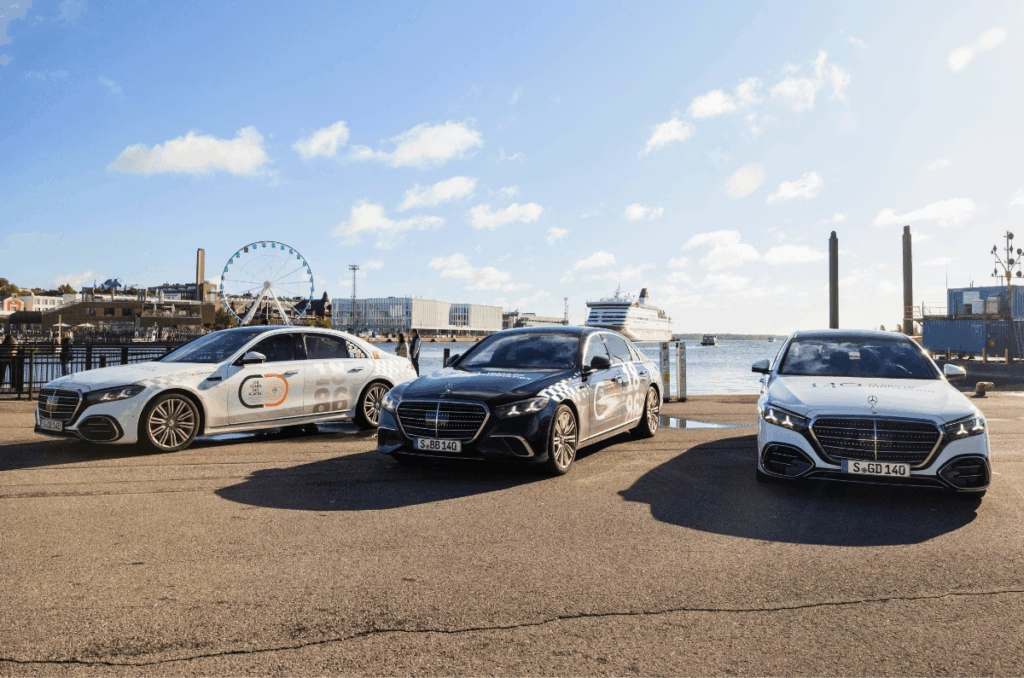
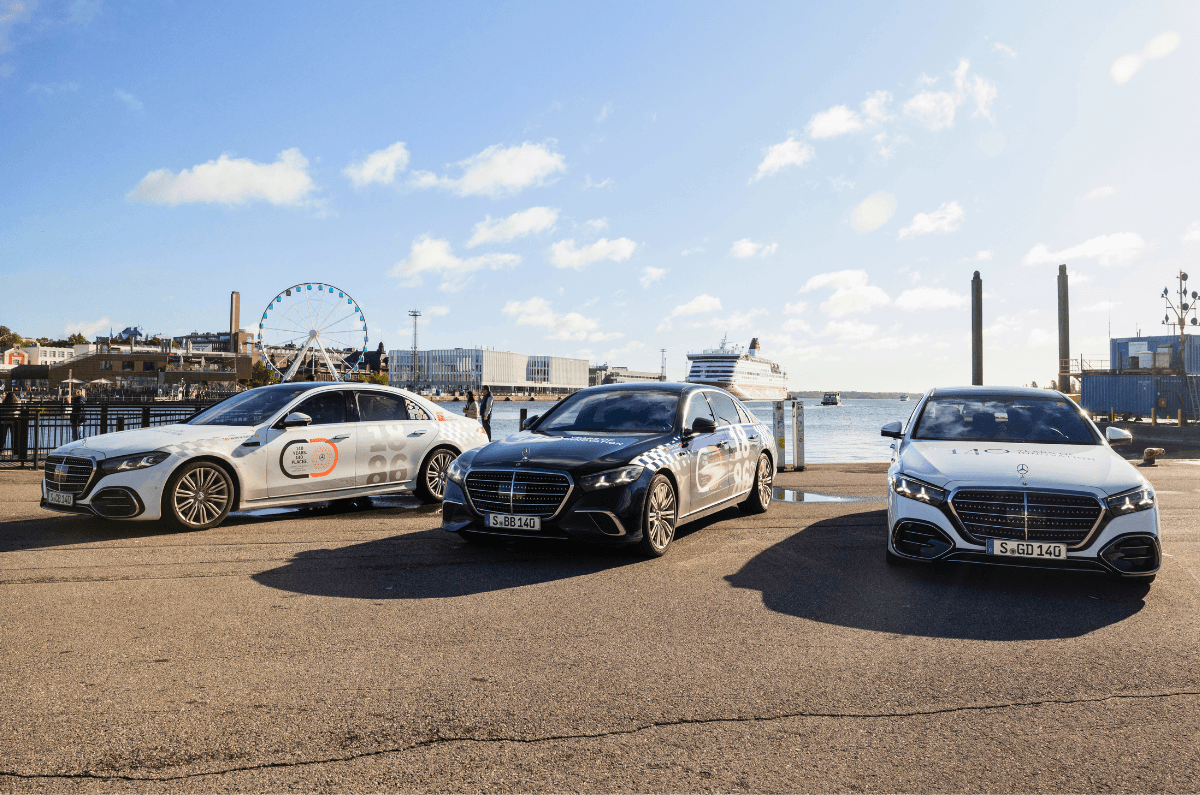
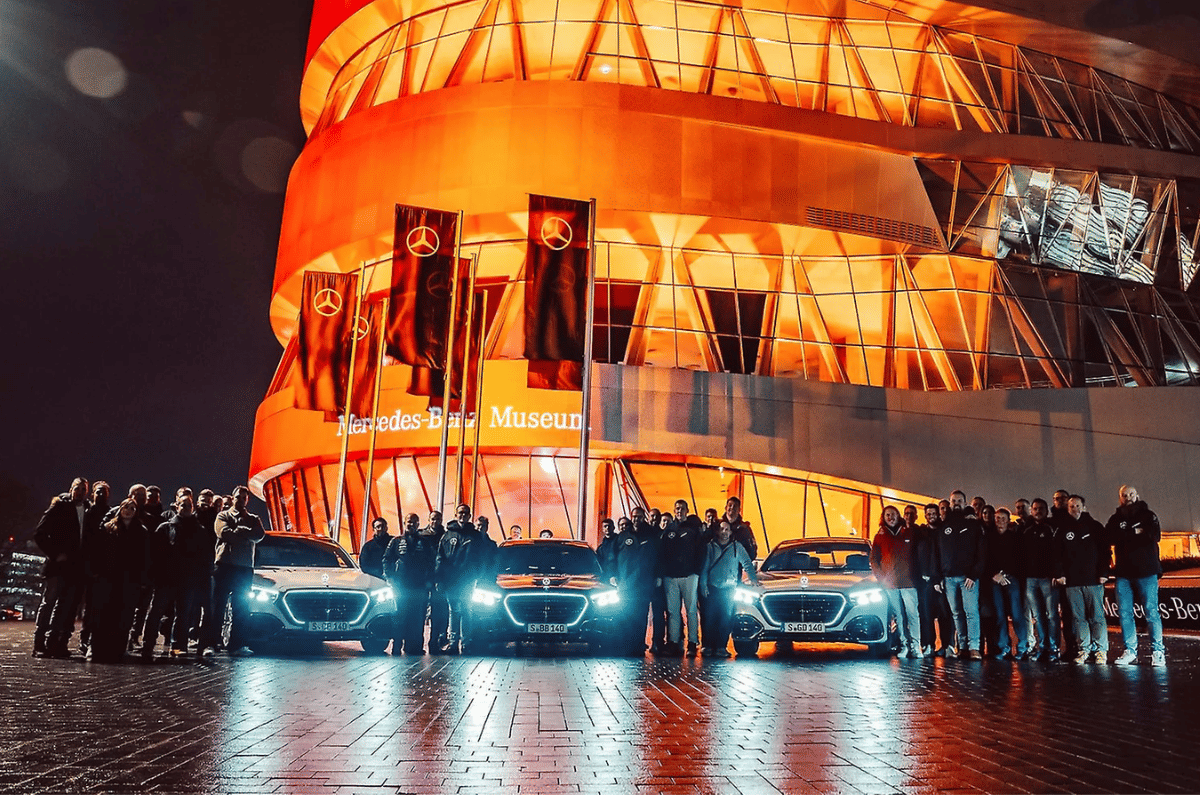
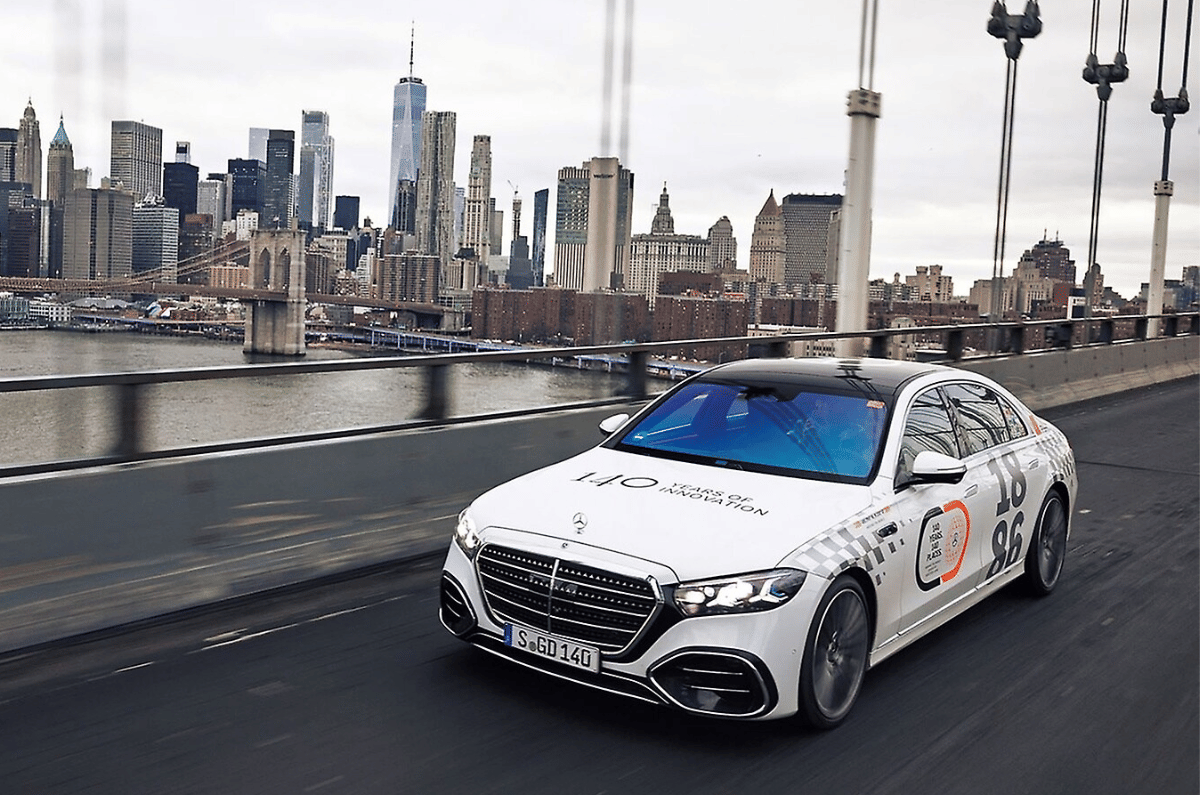
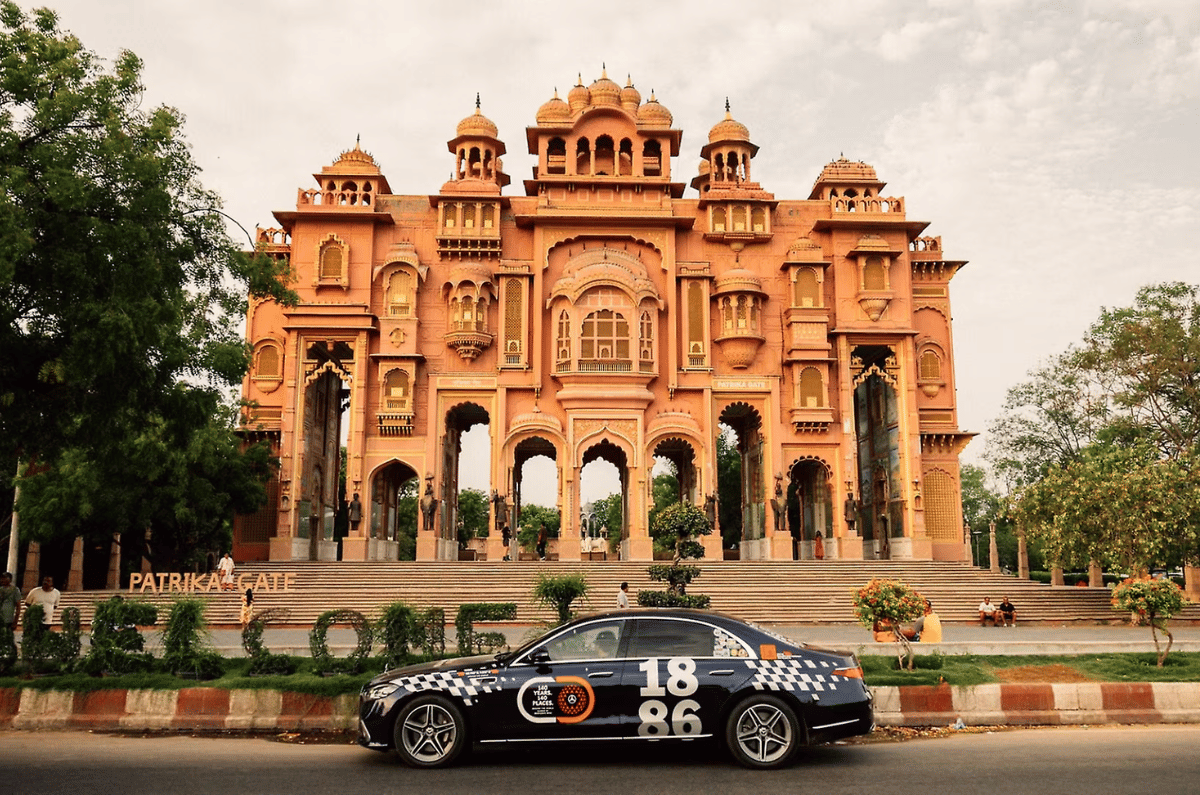
Mercedes-Benz has concluded its ‘140 Years. 140 Places.’ global tour, organised to commemorate 140 years since Carl Benz filed the patent for his Motorwagen in 1886. Three S-Class sedans returned to the Mercedes-Benz Museum in Stuttgart, Germany, on October 17, after covering more than 65,000km across 55 countries and six continents over nearly nine months. Approximately 20,000 guests attended the homecoming event, which also featured the global debut of the new Mercedes-AMG GT SUV.
Mercedes-Benz 140 Years, 140 Places: All you need to know
Tour marks 140 years since Carl Benz’s Patent-Motorwagen
The expedition began in Stuttgart on January 29, 2026, with three S-Class sedans named Bertha, Carl and Gottlieb. The tour visited more than 140 locations across six continents, crossing 67 national borders and 13 climate zones.
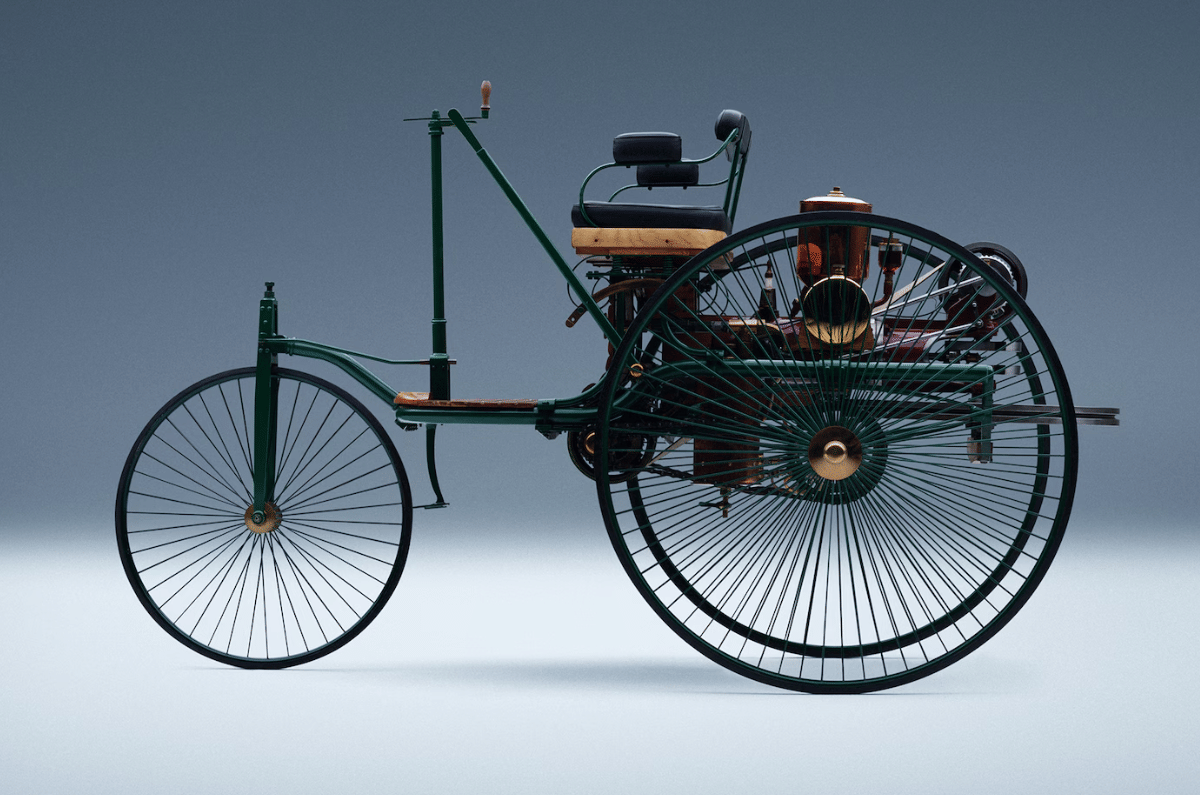
The route covered cities including New York, Tokyo, Mumbai, Nairobi and Sao Paulo. The cars returned to Stuttgart in a convoy of 140 historic and current vehicles, including a replica of the 1886 Benz Patent-Motorwagen, the Mercedes-Benz 300 SLR Uhlenhaut Coupé, a Ponton 220 S, the C 111 experimental vehicle, and the electric G-Class and C-Class.
Mercedes-Benz says tour tested S-Class under challenging conditions
Mercedes-Benz said the expedition provided insights into the S-Class under real-world conditions beyond those covered by its regular development testing in extreme temperatures and simulation chambers.
During the India leg, the cars travelled to Umling La, at approximately 5,800 metres above sea level, and encountered monsoon conditions and flooded roads. In Kenya, Tanzania and Zambia, the route included unpaved and uneven surfaces. Mercedes-Benz said the journey also exposed the cars to temperatures varying by more than 50deg C across desert and tropical climates.
Autocar India participated in the India Leg
We also participated in the India leg of the expedition, driving the pre-production S-Class sedans through Udaipur and Ahmedabad. The drive provided an opportunity to experience the updated luxury sedan’s performance, ride comfort and technology.
Anniversary activities continue through December
Mercedes-Benz will continue its ‘140 Years of Innovation’ anniversary programme through the end of 2026. Mercedes-Benz plans further studios in international cities following launches in Copenhagen, Los Angeles, Sydney and Delhi.
In December, the company will convert the approximately 145-metre-long glass facade of its dealership at Donnersbergerbrucke in Munich into an oversized Advent calendar. Mercedes-Benz is also planning a coffee-table book documenting the expedition, its stops, and its encounters along the route.
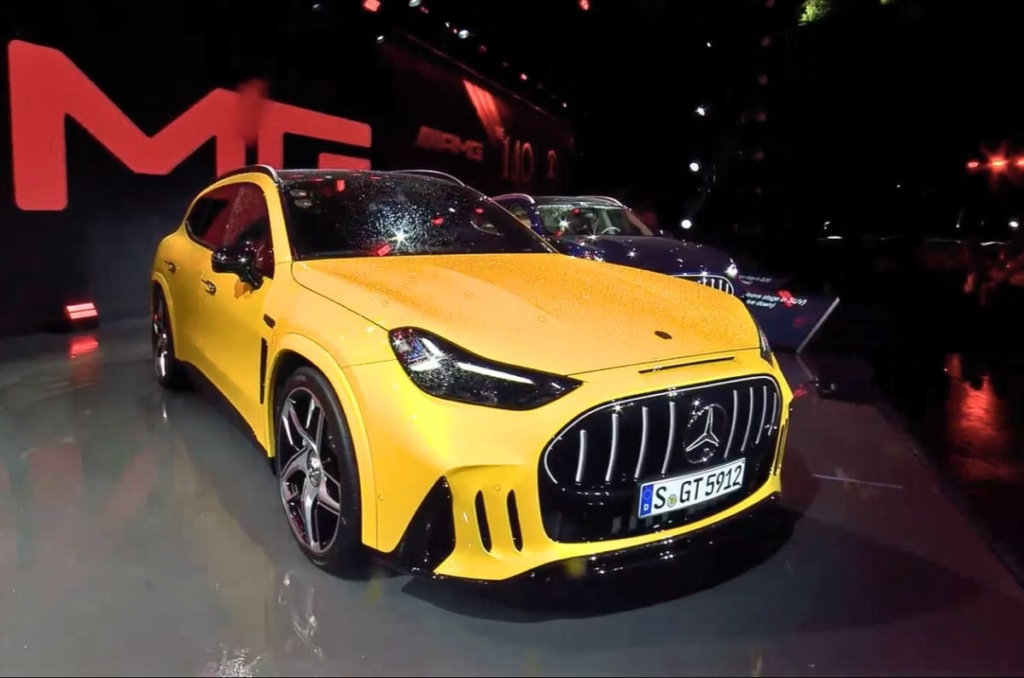
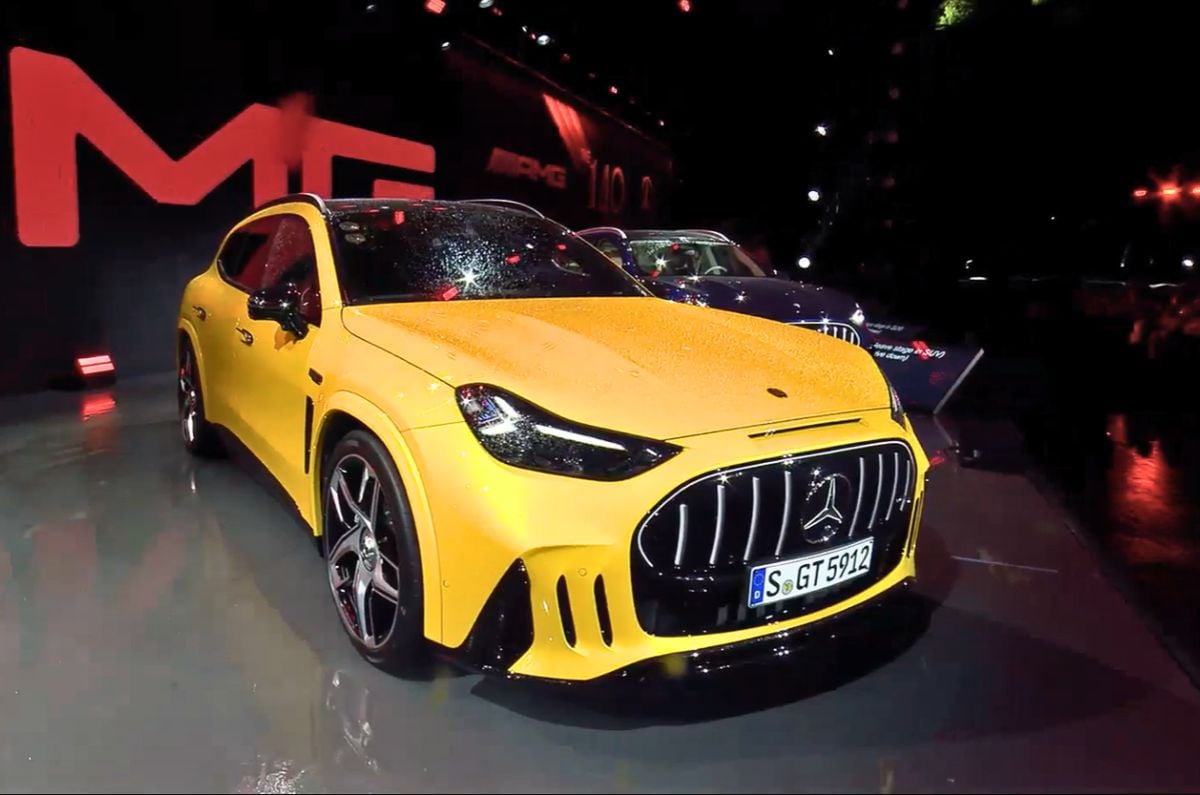
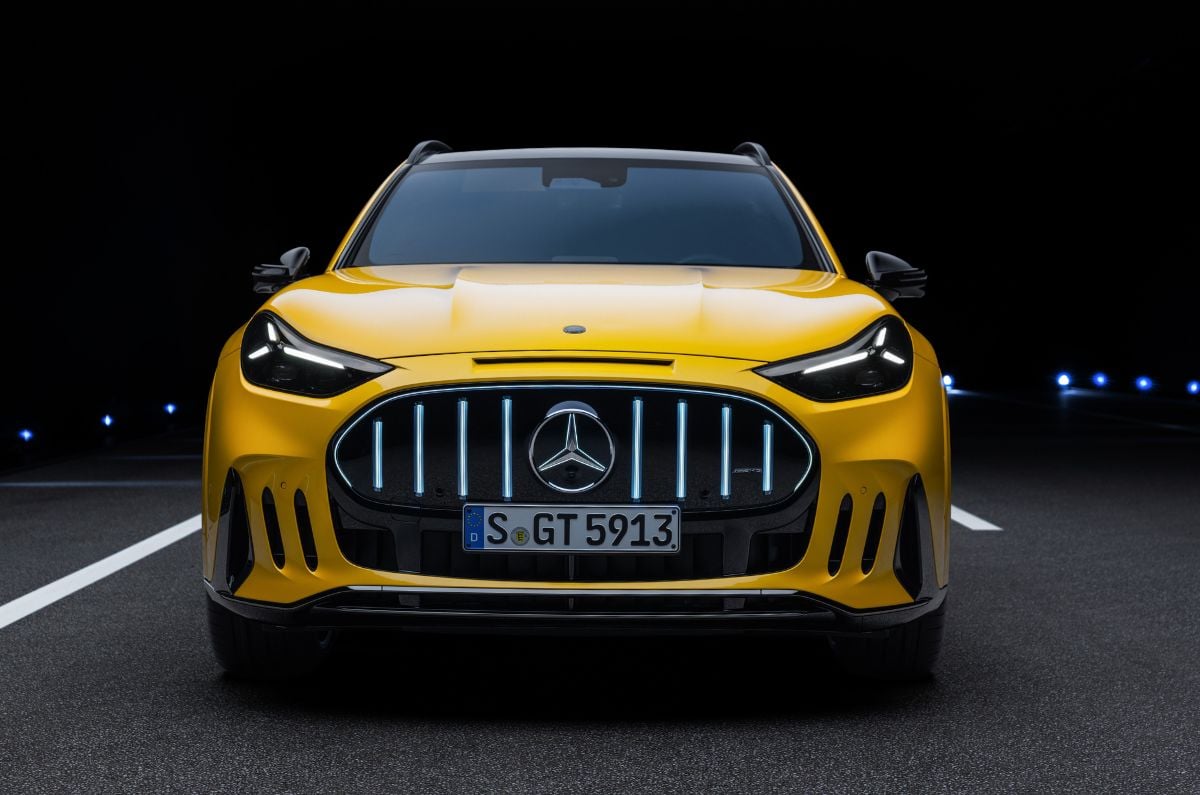
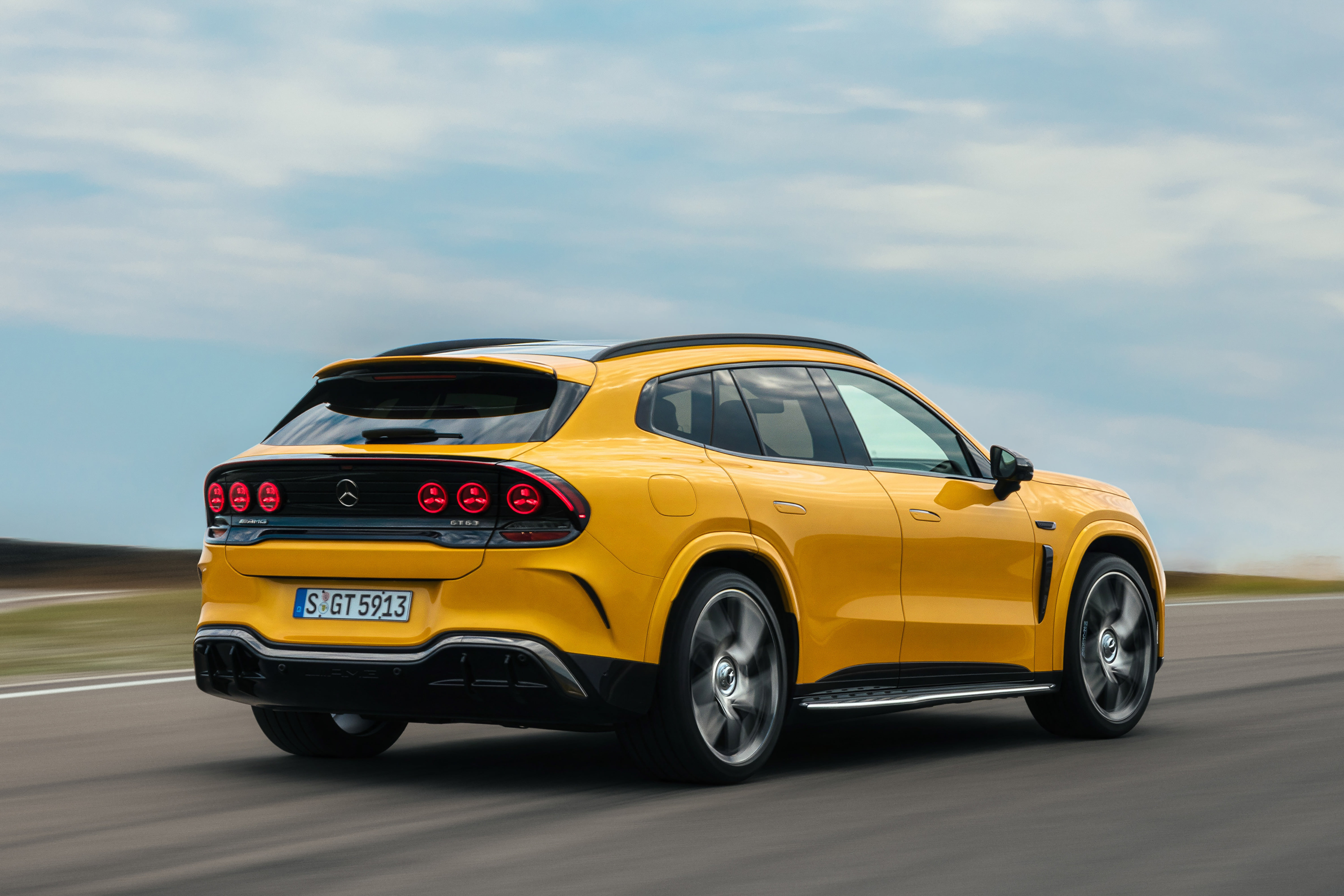
Mercedes has taken the wraps off the AMG GT SUV which, according to the German marque, is the first full-size SUV it has developed completely in-house. The five-seat performance EV shares its underpinnings with the fully electric GT 4-Door Coupe, and will be available in GT 53, GT 55 and GT 63 guises, the last of which makes up to 1,169hp. The GT 53 will be the first to go on sale, with the more powerful variants joining the line-up in spring 2027.
Star-shaped DRLs, illuminated badging, active aero and more.
Personalisation options from the Manufaktur programme.
Three digital displays, built-in AI assistants, AMG-specific apps and more.
Claimed WLTP range of up to 700km, with DC fast charging of up to 710kW.
Mercedes-AMG GT SUV exterior
Illuminated badging, sloping roofline, active aerodynamics, Manufaktur paint options and more
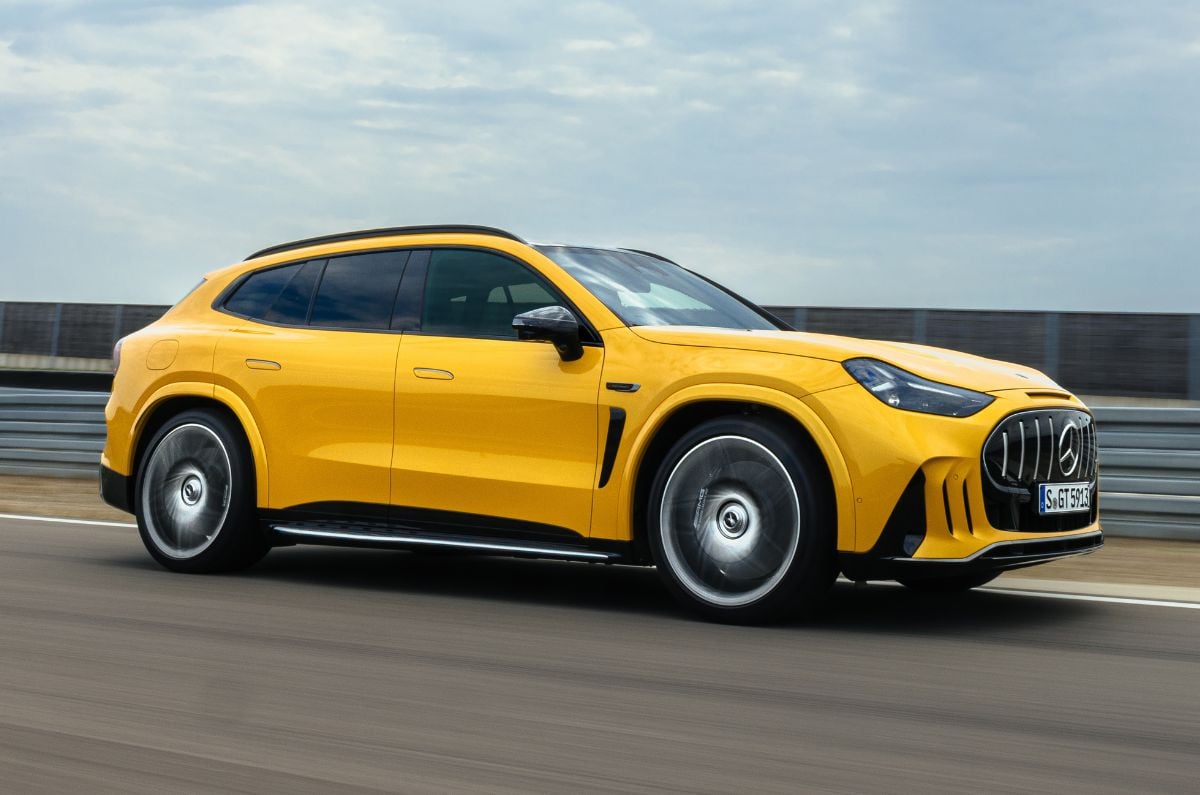
The Mercedes-AMG GT SUV comes in at 5,084mm long, 2,001mm wide and 1,656mm tall, and it has a wheelbase of 3,040mm. The front fascia sports AMG’s vertical-slat grille and Mercedes star, both of which can be optionally illuminated, flanking which are LED headlamps with star-shaped DRLs (daytime running lights). The front bumper features active slats, which only open when components need extra cooling.
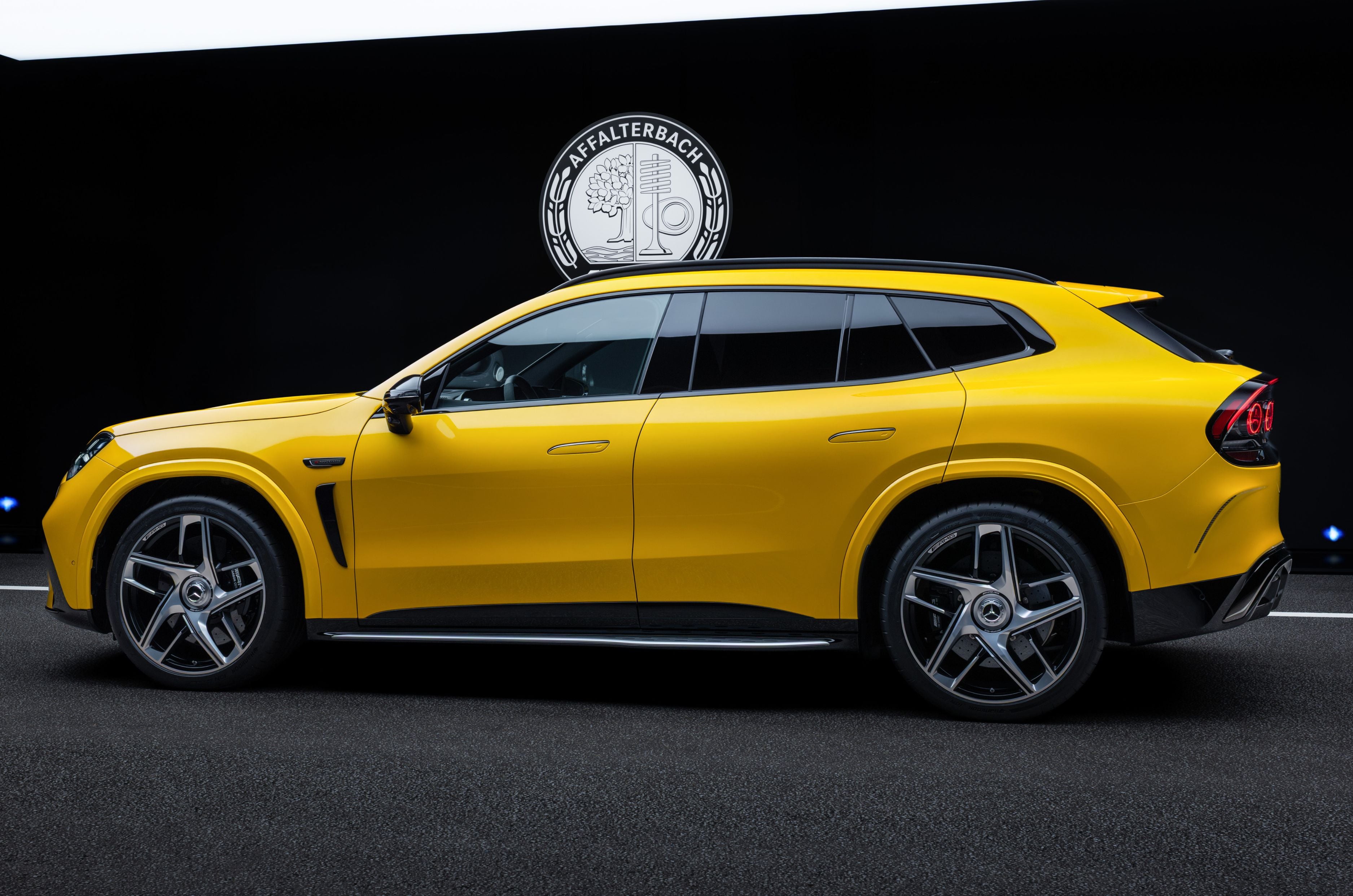
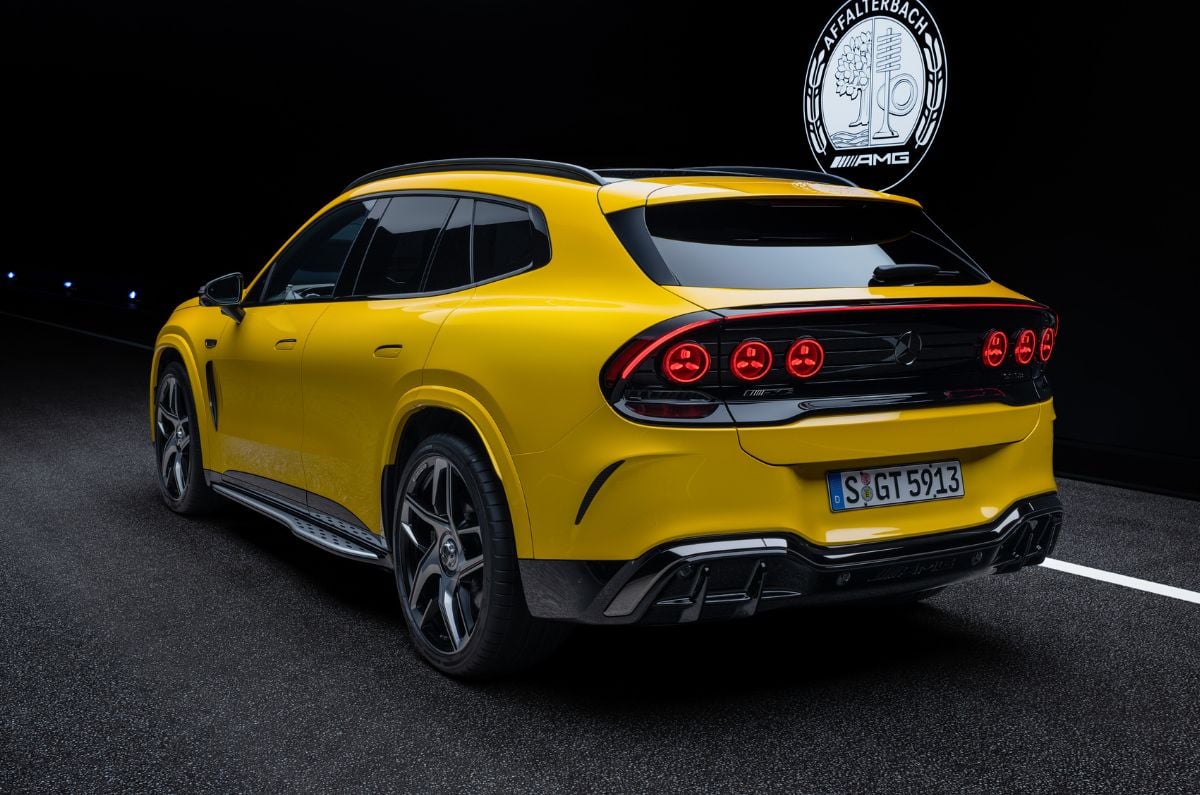
The profile showcases a low-slung roofline that slopes towards the rear along with pronounced wheel arches. Other details here include frameless side windows and compact wing mirrors. Moving to the rear of the AMG GT SUV reveals six circular tail-lamps as seen on the GT 4-Door Coupe, and customers can also opt for a full-width light strip.
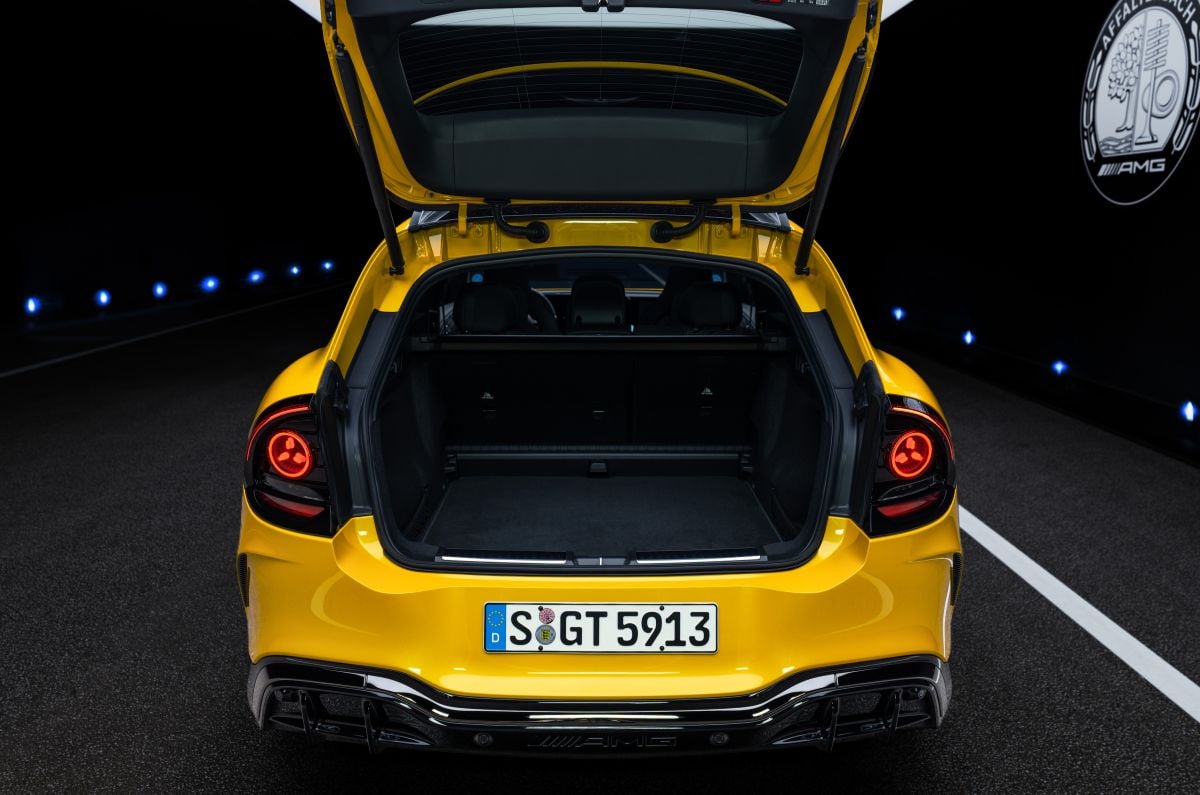
Stepping up to the GT 55 and GT 63 means an active rear spoiler that remains flush with the roof until 150kph, changing its angle depending on the driving scenario. Mercedes-AMG also claims a drag coefficient of 0.28 for the GT 53, while the other two are rated at 0.27. The main boot has a claimed capacity of 607 litres, with the frunk capable of accommodating 78 litres worth of luggage.
Buyers can personalise the GT SUV through the brand’s Manufaktur programme, which presents over 60 paint options. Customers can also opt for AMG’s forged wheels in colour accents, which includes Matt Vanadium Silver and Matt Copper, Matt Black with a rim flange in Angel Blue, Sunny Lime, or Orange Flame.
Mercedes-AMG GT SUV interior and features
Stand-out tech includes dual 14-inch screens, AI assistants and AMG-specific apps
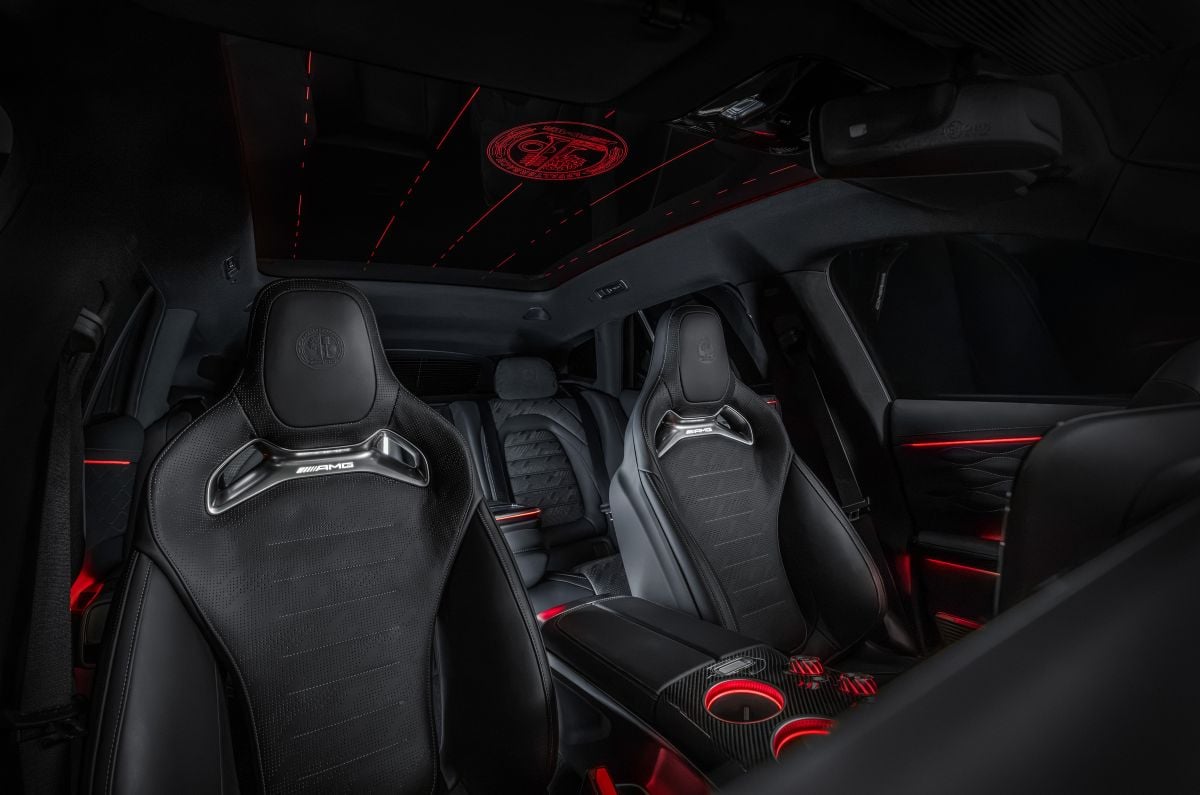
Just like the exterior, the interior of the Mercedes-AMG GT SUV can be personalised using the Manufaktur catalogue. Some of the options that will be offered to customers include accent colours and seatbelts trimmed in Fjord Blue, Green Hell or Orange Flame. The automaker claims that the seating position here is akin to that of a sports car rather than an SUV. Providing comfort up front are multi-way power-adjustable seats, while the three-seat rear bench gets power-folding headrests.
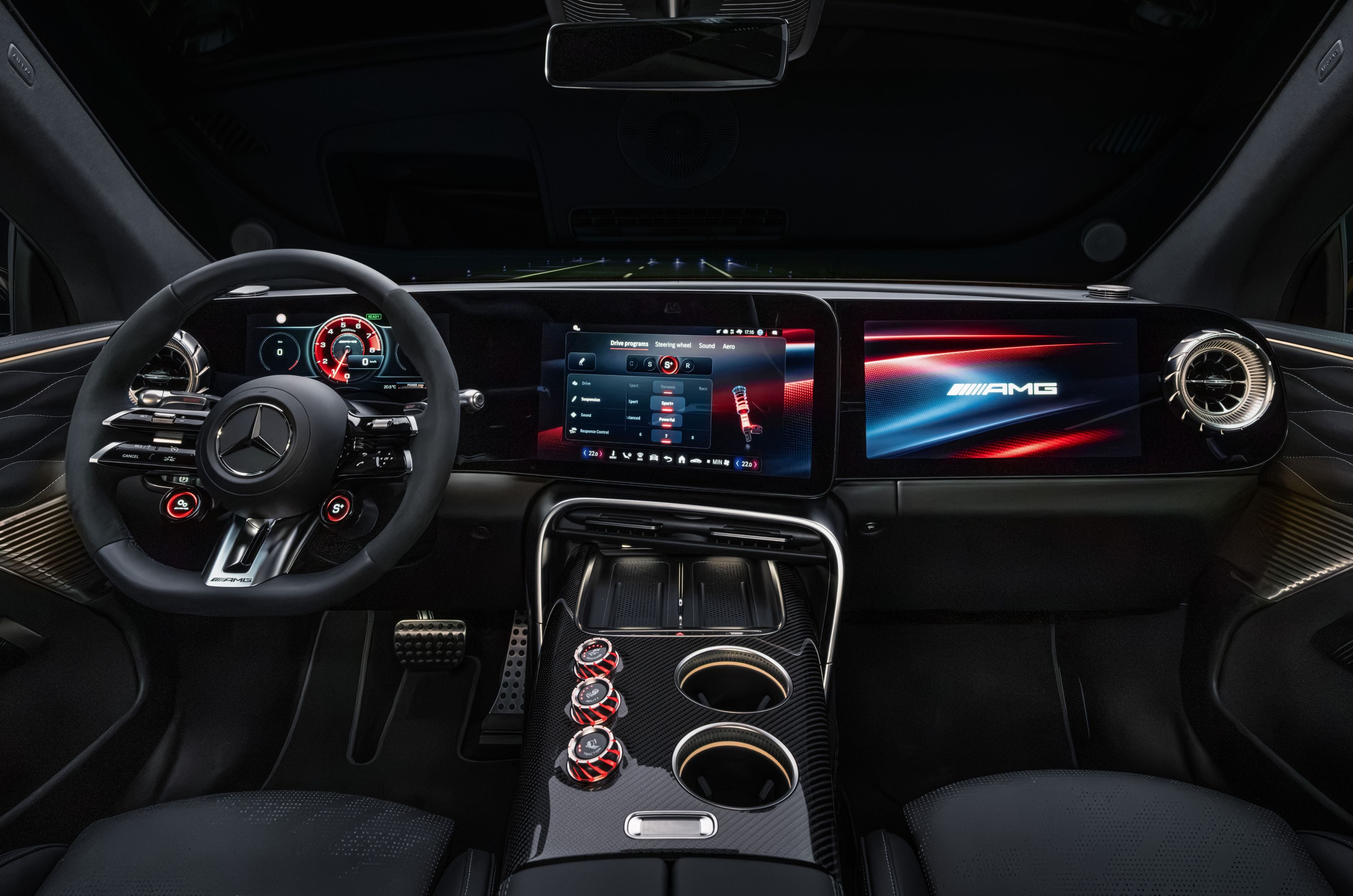
The dashboard pairs a 10.2-inch digital instrument cluster with a 14-inch touchscreen that’s angled towards the driver, while a 14-inch screen is optional for the front occupant. The AMG Performance steering wheel is equipped with paddles to adjust brake-regen levels, while adding to the design are door panels with floating armrests and diamond-pattern stitching. There’s also multi-colour ambient lighting whose colours can be matched to the bevy of displays and controls.
The infotainment system features the German brand’s latest MBUX software, which is based on the MB.OS (Mercedes-Benz Operating System). It integrates AI agents such as ChatGPT, Microsoft Bing and Google Gemini. This luxury SUV also comes with three AMG-specific apps. Firstly, there’s ‘AMG Performance Menu’, which displays real-time data on power, tyre temperatures and active aero status.
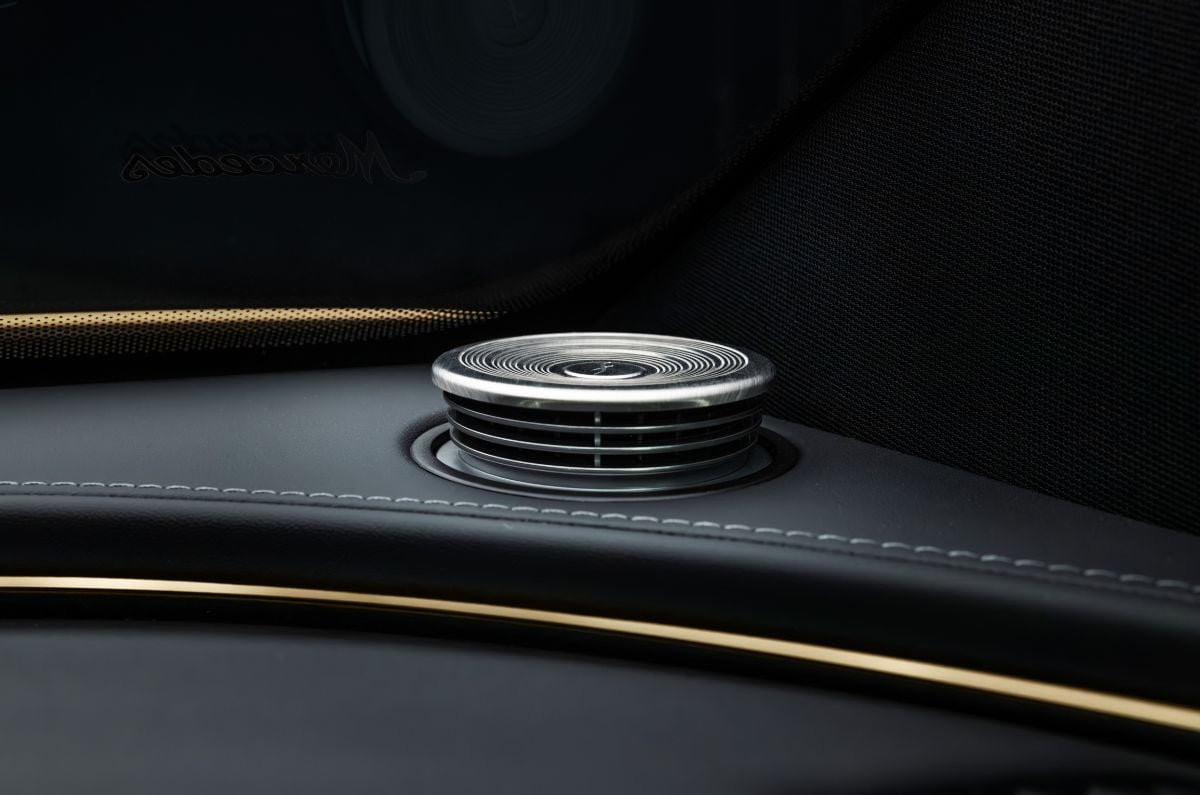
Second is ‘AMG Set-up’ – this lets the driver customise the buttons on the steering wheel as well as aero settings. Finally, there’s ‘AMG Track Pace’, which records lap times and telemetry. Drivers can also use it to show optimal braking points and the ideal racing line in the head-up display. Meanwhile, the optional dashcam allows laps to be recorded with data overlays. The AMG GT SUV is also available with an electrically dimming panoramic glass roof, AMG lighting effects, AMG Performance seats and a Burmester 4D audio system, among many optional features.
Mercedes-AMG GT SUV powertrain and performance
The EV gets up to three electric motors and a WLTP range of up to 700km
The entry-level GT 53 variant of the Mercedes-AMG GT SUV uses two synchronous motors – one on each axle – with a two-speed gearbox located at the rear. Its output is rated at 544hp and 800Nm, with Mercedes-AMG claiming a 0-100kph time of 4.2 seconds and a top speed of 250kph. Then there are the mid-spec GT 55 and the top-spec GT 63. These come with two axial flux motors at the rear and one at the front, the latter disengaging when not needed to save energy.
The tri-motor setup of the GT 55 outputs 816hp and 1,860Nm, allowing for a claimed 0-100kph time of 3.1 seconds. Sitting at the top of the Mercedes-AMG GT SUV line-up is the GT 63, which is rated at 1,169hp and 2,000Nm and does 0-100kph in 2.7 seconds. Regardless, the all-wheel-drive GT 55 and GT 63 have a claimed top speed of 270kph with the optional Driver’s Package.
The GT 53’s 106kWh battery pack offers a claimed WLTP range of up to 668km, while the 128kWh battery of the GT 55 and GT 63 is rated at up to 700km. These 800V packs offer DC fast charging of 600kW and 710kW, respectively. Mercedes-AMG claims that charging these batteries from 10-80 percent takes 11-12 minutes, though it also says that these figures are preliminary.
The GT SUV gets rear-wheel steering as standard while also debuting AMG’s new ‘Active Ride Control+’ suspension. The latter, which is standard on the top-spec GT 63, replaces traditional anti-roll bars with hydraulic units that, according to the automaker, curb body roll and pitch. The top-spec variant also gets carbon-ceramic brakes as standard.
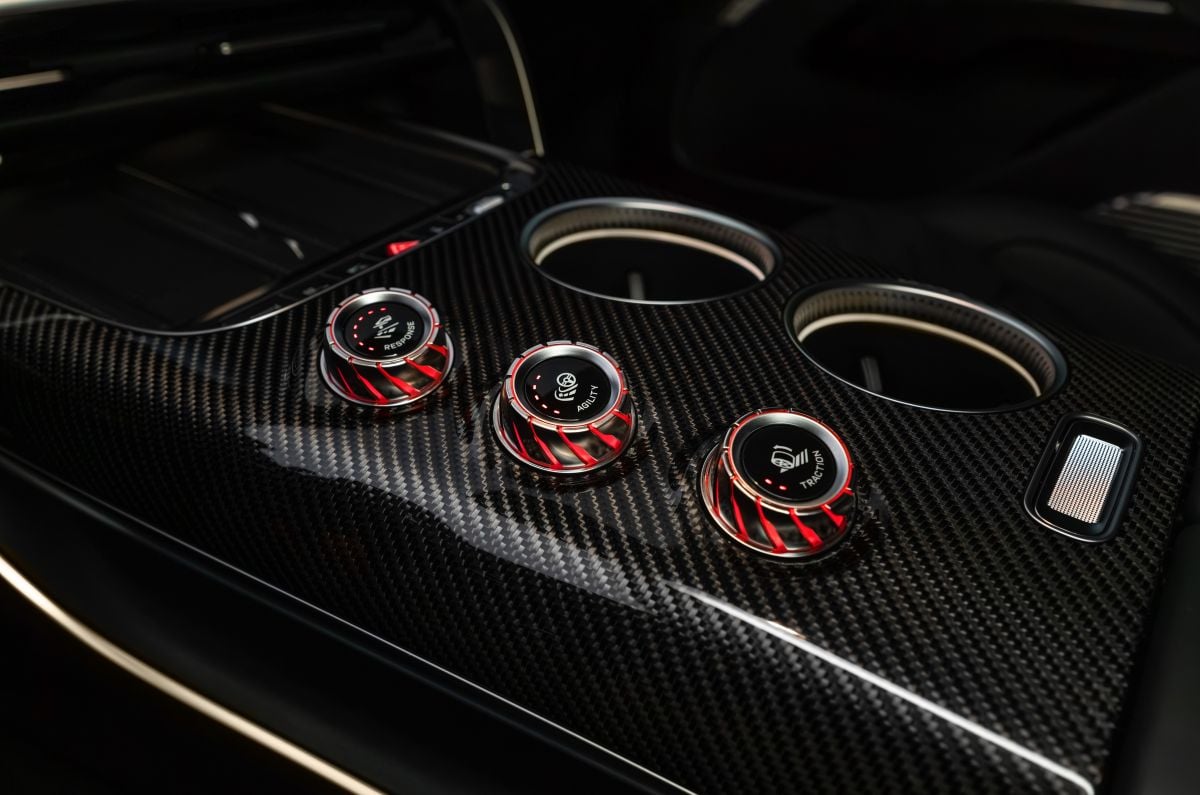
In the tri-motor variants, drivers can adjust the throttle response, cornering behaviour and traction control using dials on the centre console. Mercedes-AMG also said that the ‘AMGForce Sport+’ mode recreates the sound of an AMG V8 (or a six-cylinder in the GT 53) along with simulated gearshifts. As for India, the German marque is yet to reveal its plans for the AMG GT SUV.
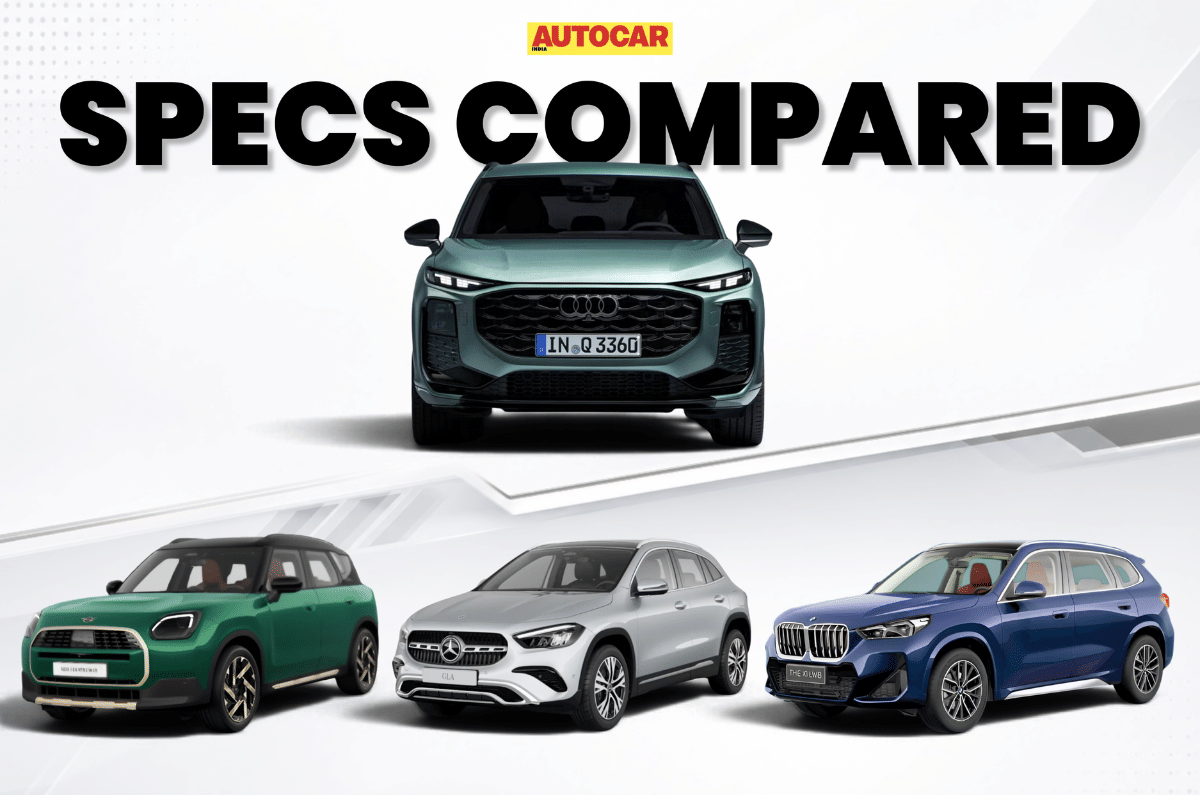
Audi India has launched the new Q3, replacing its predecessor after over four years. The entry-level luxury SUV gets a fresh exterior, a revamped interior and feature additions. But how does the new Q3 compare against its rivals on paper? Let’s stack it up against the BMW X1 and X1 LWB, Mini Countryman C, and Mercedes-Benz GLA.
Audi Q3 vs rivals: Dimensions
Audi Q3 vs rivals: Dimensions
Audi Q3
BMW X1 | X1 LWB
Mini Countryman C
Mercedes-Benz GLA
Length (mm)
4,530
4,500 | 4,616
4,447
4,412
Width (mm)
1,890
1,845 | 1,845
1,843
1,834
Height (mm)
1,610
1,630 | 1,641
1,661
1,616
Wheelbase (mm)
2,681
2,692 | 2,800
2,692
2,729
Ground clearance (mm)
TBC
190 | 190
190
183
Boot space (litres)
TBC
476 | 540
505
425
Wheel size (inches)
18
18 | 18
19
18 – 19
Despite having the shortest wheelbase in this comparison, the Audi Q3 is the overall second-longest model here, next only to the BMW X1 LWB. It is also the widest in the segment. Audi has yet to confirm the ground clearance and boot space figures for the Q3. Of the rest, the BMW X1 LWB and Mini Countryman C ride highest off the ground, and the former also has the largest boot in this comparison. Meanwhile, the Mercedes-Benz GLA is the only one to offer 18- and 19-inch wheel size options; others come with one or the other.
Audi Q3 vs rivals: Powertrain options
Audi Q3 vs rivals: Powertrain options
Audi Q3
BMW X1
BMW X1 LWB
Mini Countryman C
Mercedes-Benz GLA
Engine
2.0 turbo-petrol
1.5 turbo-petrol | 2.0 turbo-diesel
1.5 turbo-petrol
1.5 turbo-petrol
1.3 turbo-petrol | 2.0 turbo-diesel
Power (hp)
204
136 | 148
156
156
163 | 190
Torque (Nm)
320
230 | 360
230
240
270 | 400
Drive layout
AWD
FWD
FWD
FWD
FWD
Transmission
7DCT
7DCT
7DCT
7DCT
7DCT | 8DCT
Like its rivals, the Audi Q3 is powered by a direct-injection turbo-petrol engine, and it’s the only option that it offers. The X1 in standard wheelbase (SWB) guise and the Mercedes-Benz GLA are available with a turbo-diesel as well. Comparing the turbo-petrol engines only, the Q3 has the largest and most powerful mill here. Additionally, it gets an all-wheel-drive (AWD) layout as standard; rivals have front-wheel-drive (FWD) setups. The BMWs are the least powerful here.
Audi Q3 vs rivals: Price
Audi Q3 vs rivals: Price (Rs lakh)
Audi Q3
BMW X1
BMW X1 LWB
Mini Countryman C
Mercedes-Benz GLA
Petrol
51.99
50.9
49.90
47.5
51.8
Diesel
–
52.9
–
53 to 55
Among petrol-run entry-level luxury SUVs, the Rs 51.99 lakh-Audi Q3 sits at the higher end of the price range. The Q3 is not offered with a diesel engine, unlike the BMW X1 and Mercedes-Benz GLA.
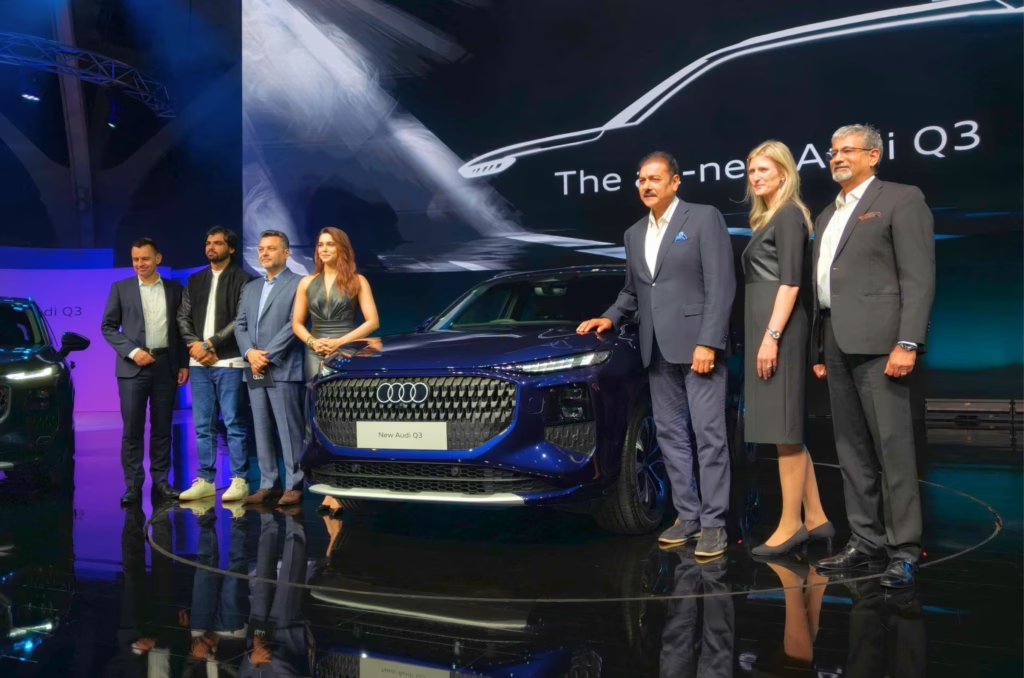
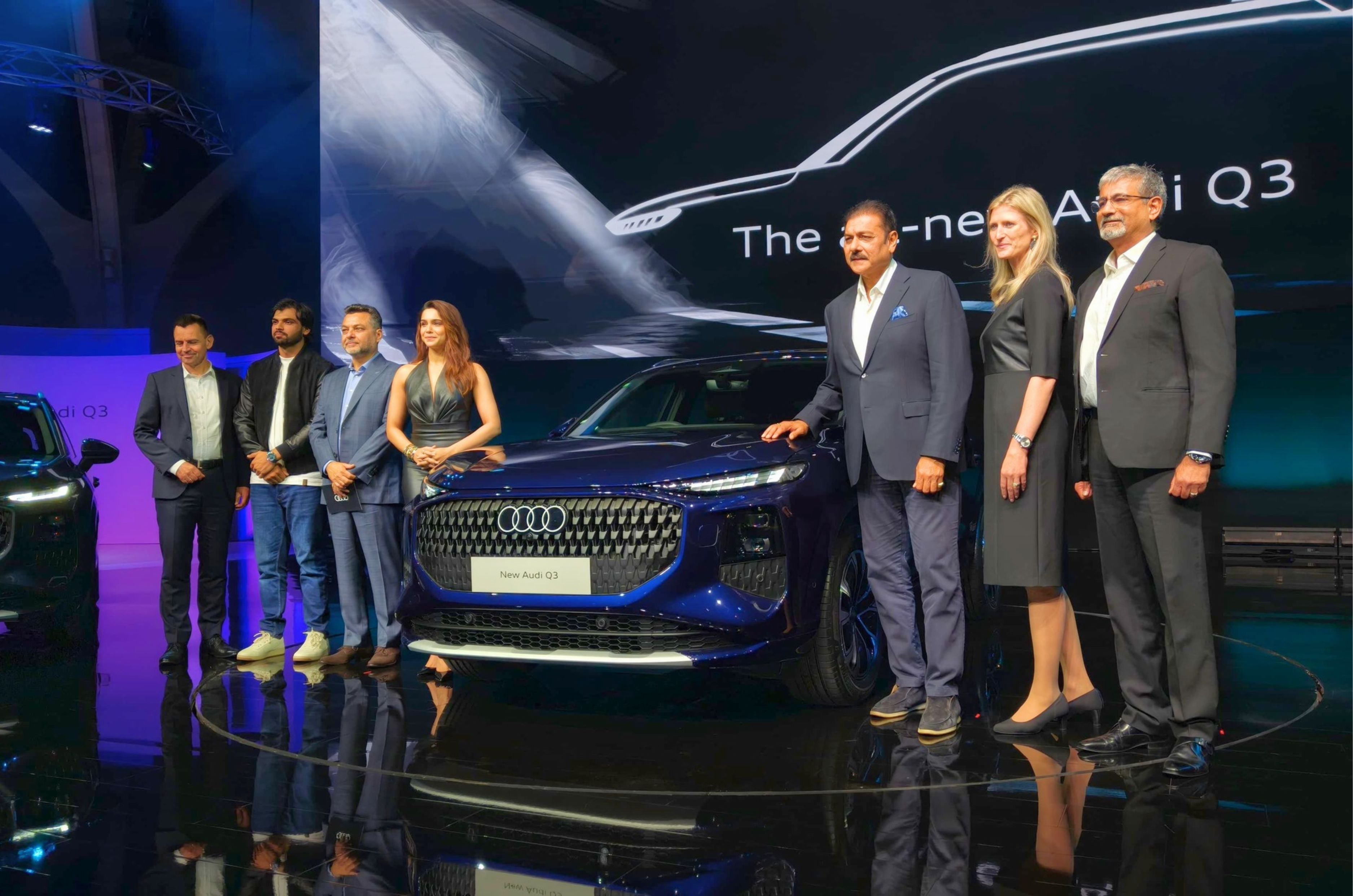
Audi has launched the 2026 Q3 in India at Rs 51.99 lakh (ex-showroom). This is the third-generation entry-level luxury SUV in India, which is being offered in two trims: Nova and Zenith, and the latter’s price is yet to be revealed. It sports extensive design changes inside and outside, additional features and a turbo-petrol engine option only. The 2026 Audi Q3 is being assembled at the manufacturer’s Chhatrapati Sambhajinagar plant in Maharashtra, and its deliveries are also underway.
Only luxury car in its segment with an AWD setup
Features split-style headlights and 18-inch alloy wheels
Gets dual digital screens, panoramic sunroof, 3-zone AC
2026 Audi Q3 exterior design
Gets split-style headlights, taillights and 18-inch alloy wheels
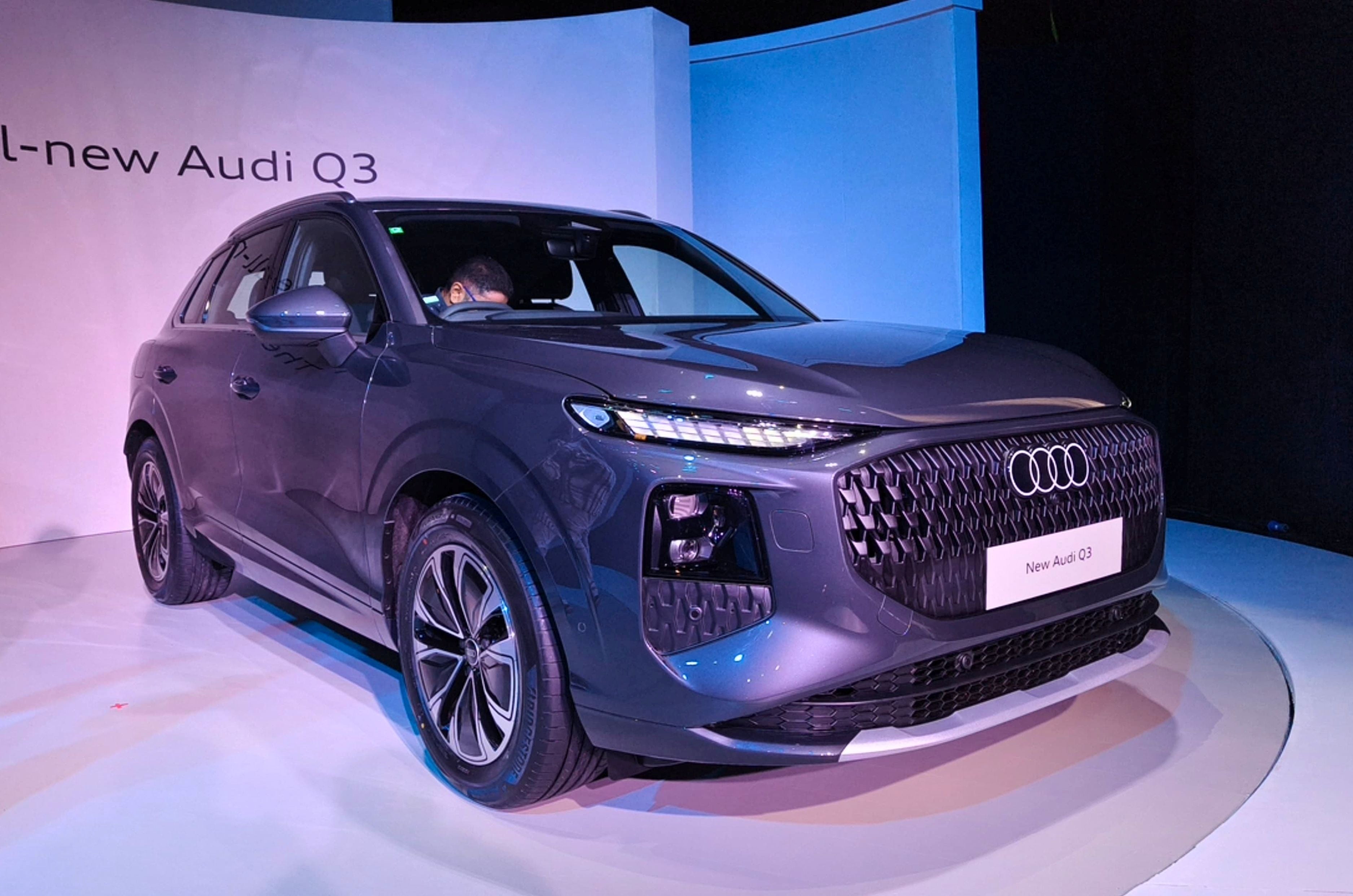
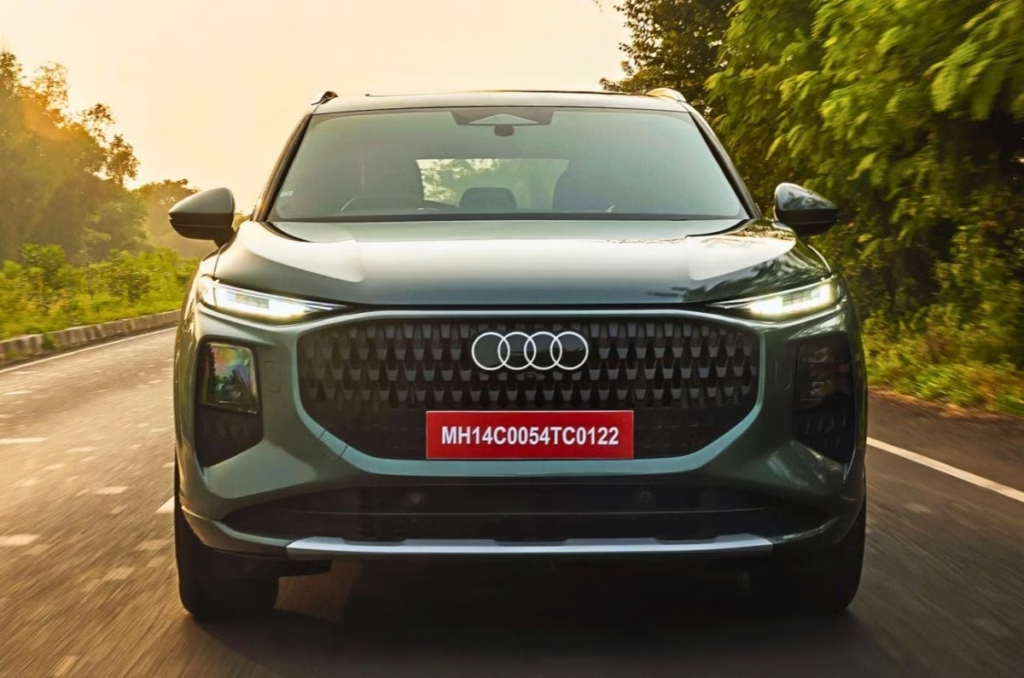
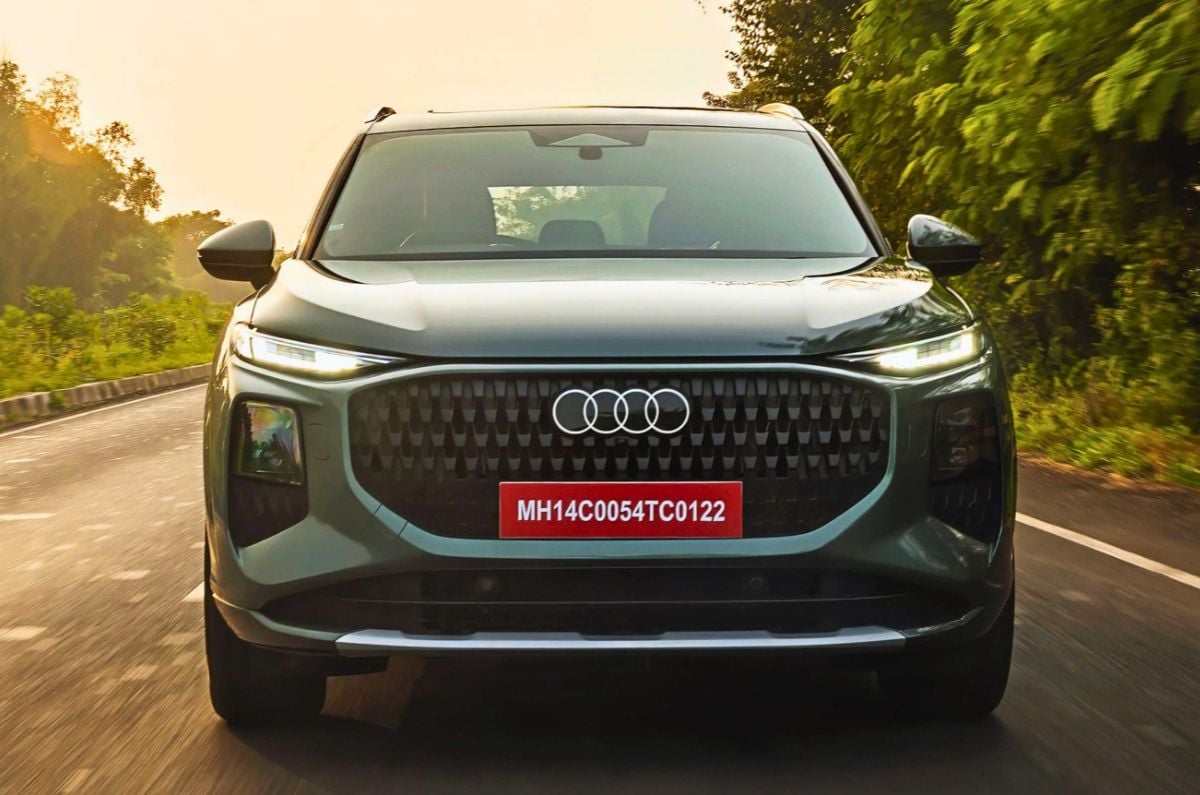
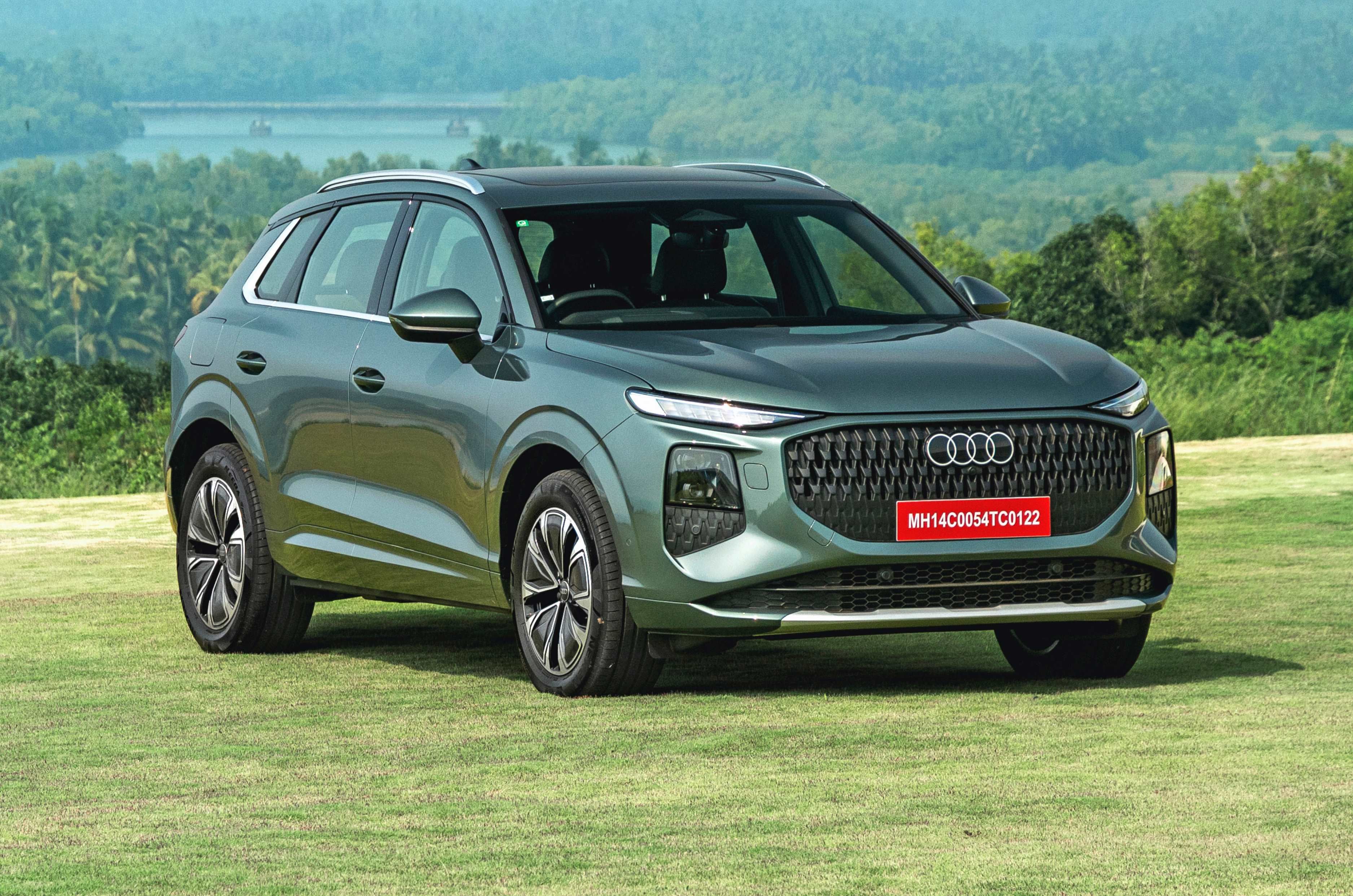
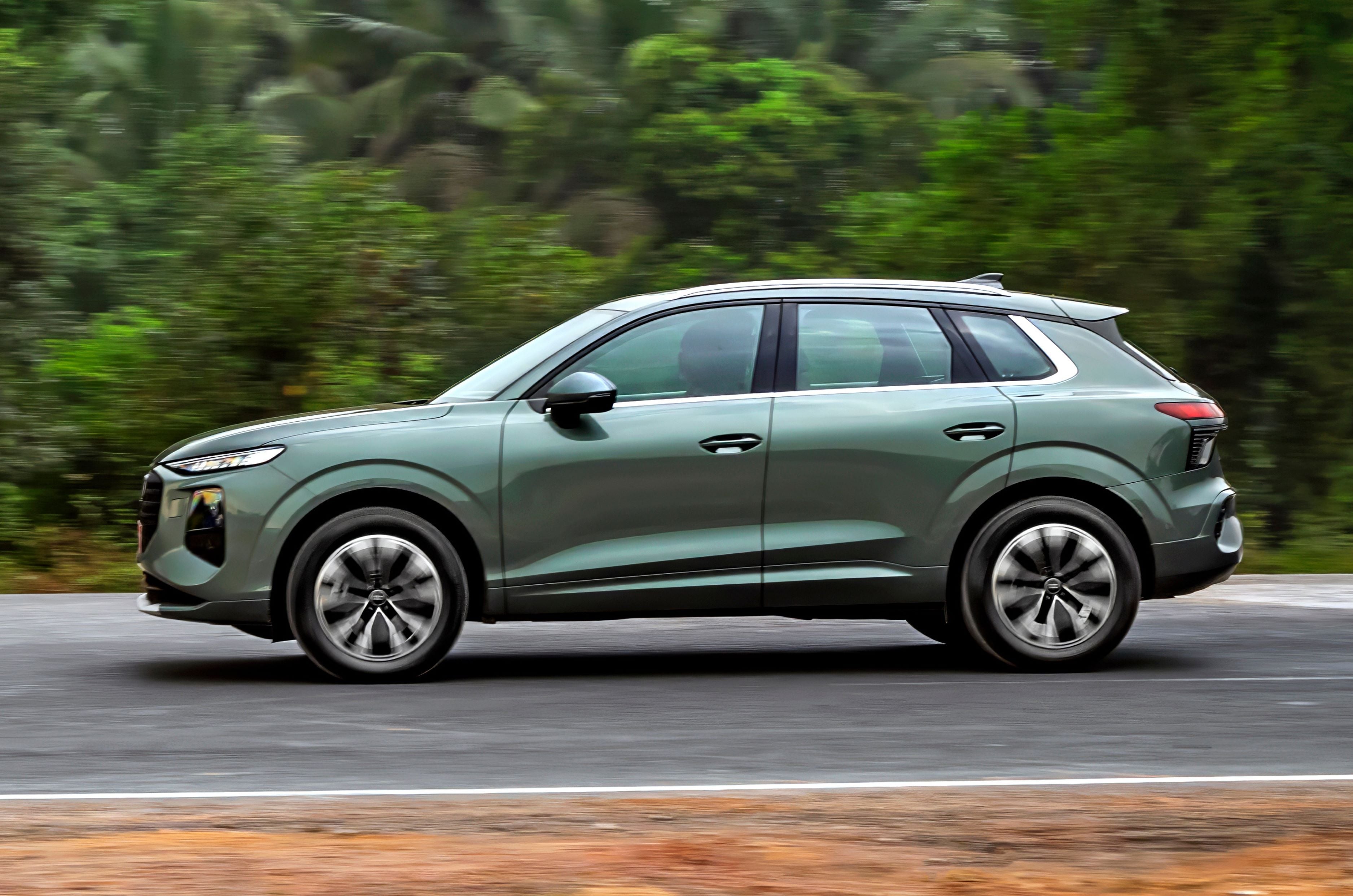
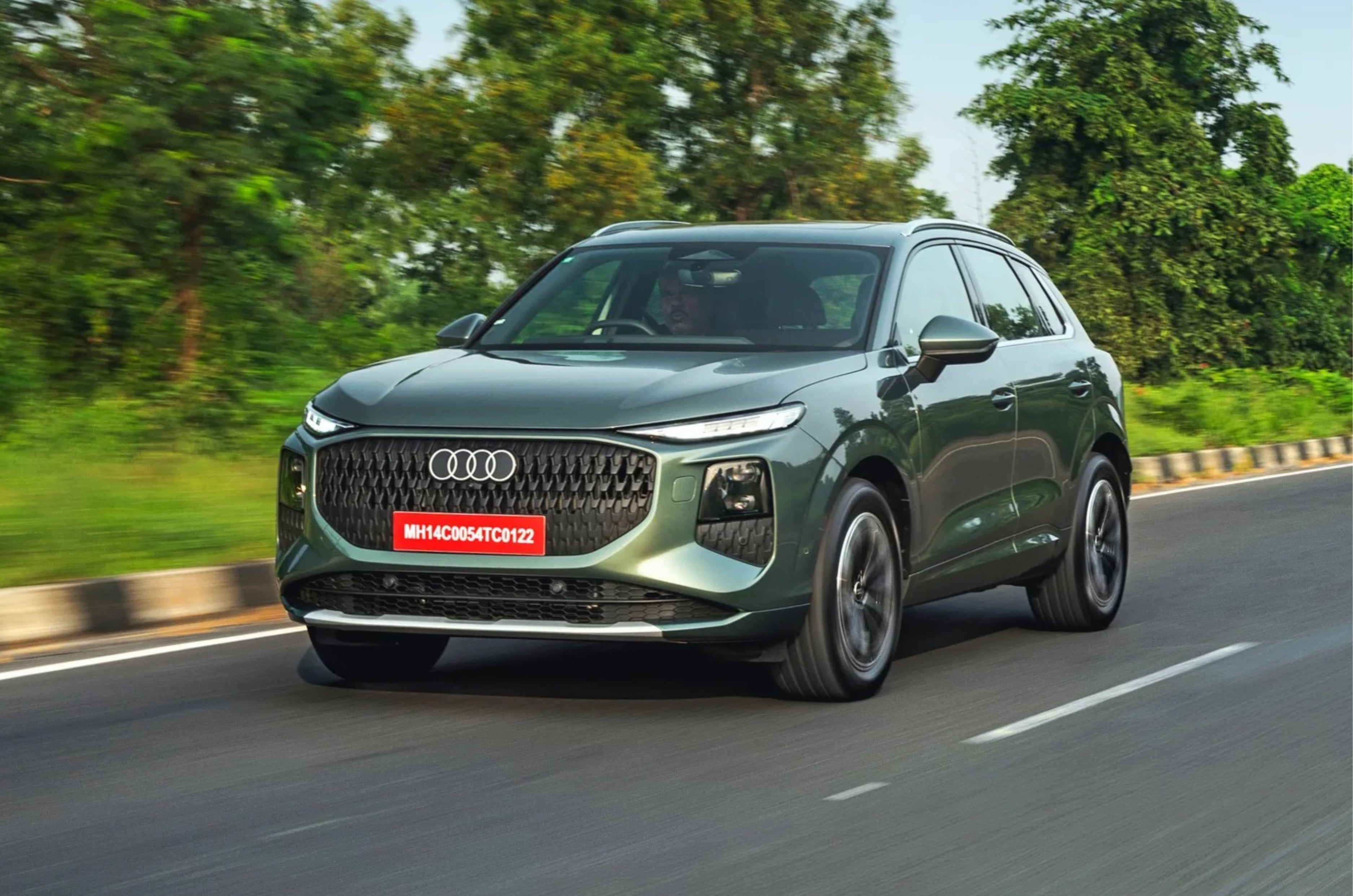
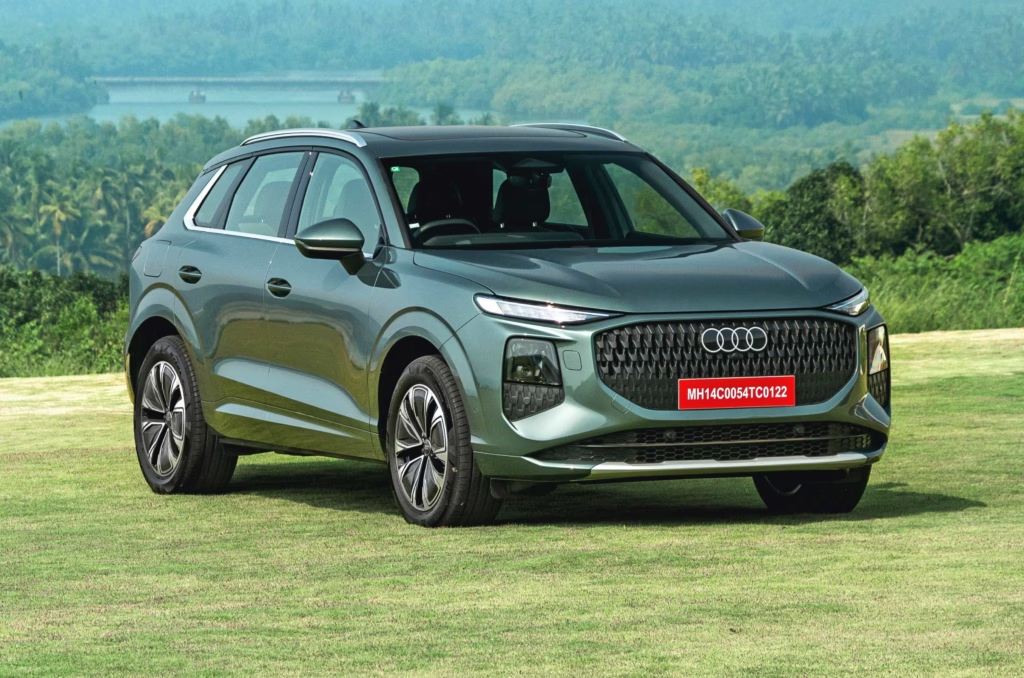
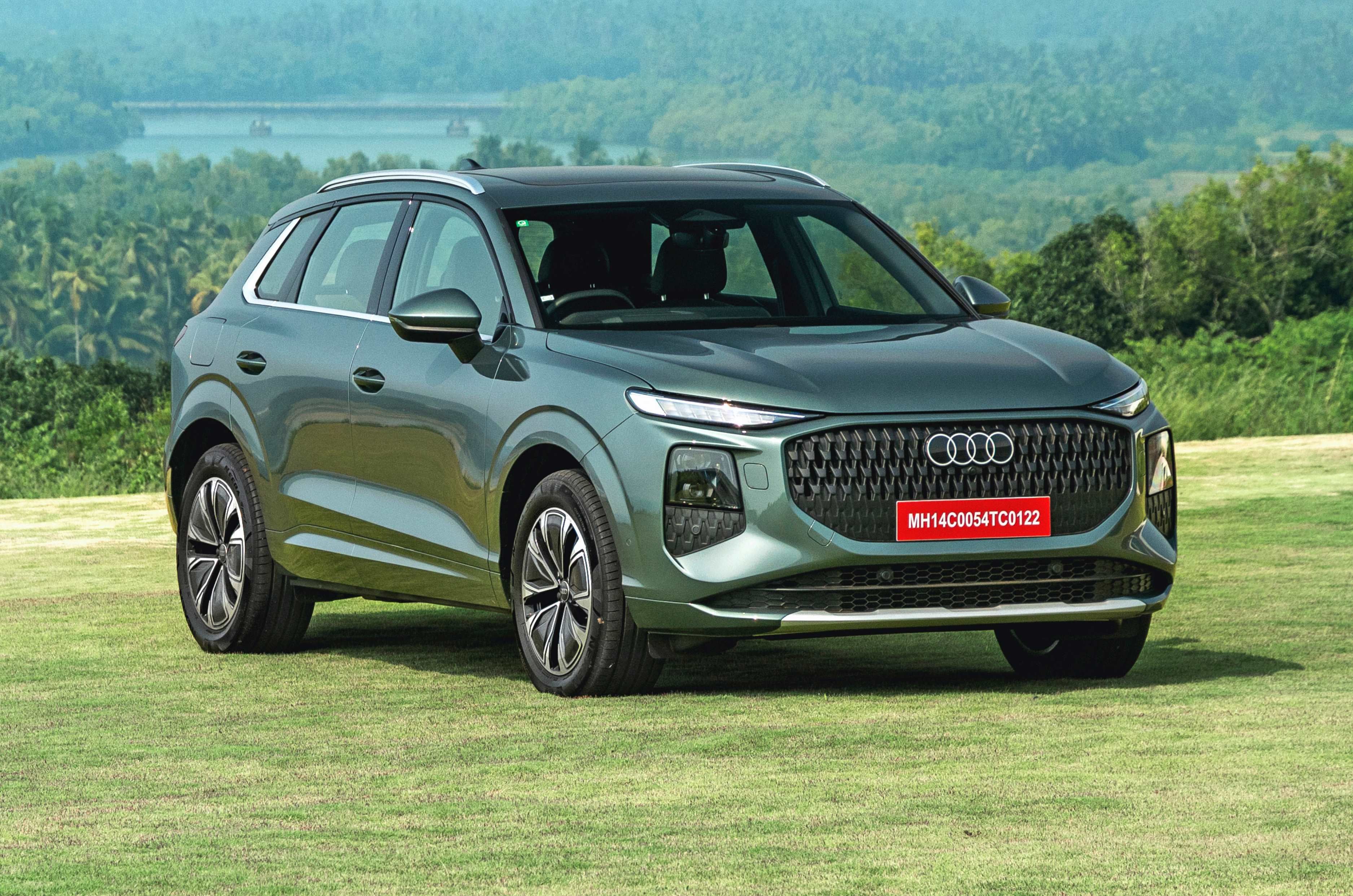
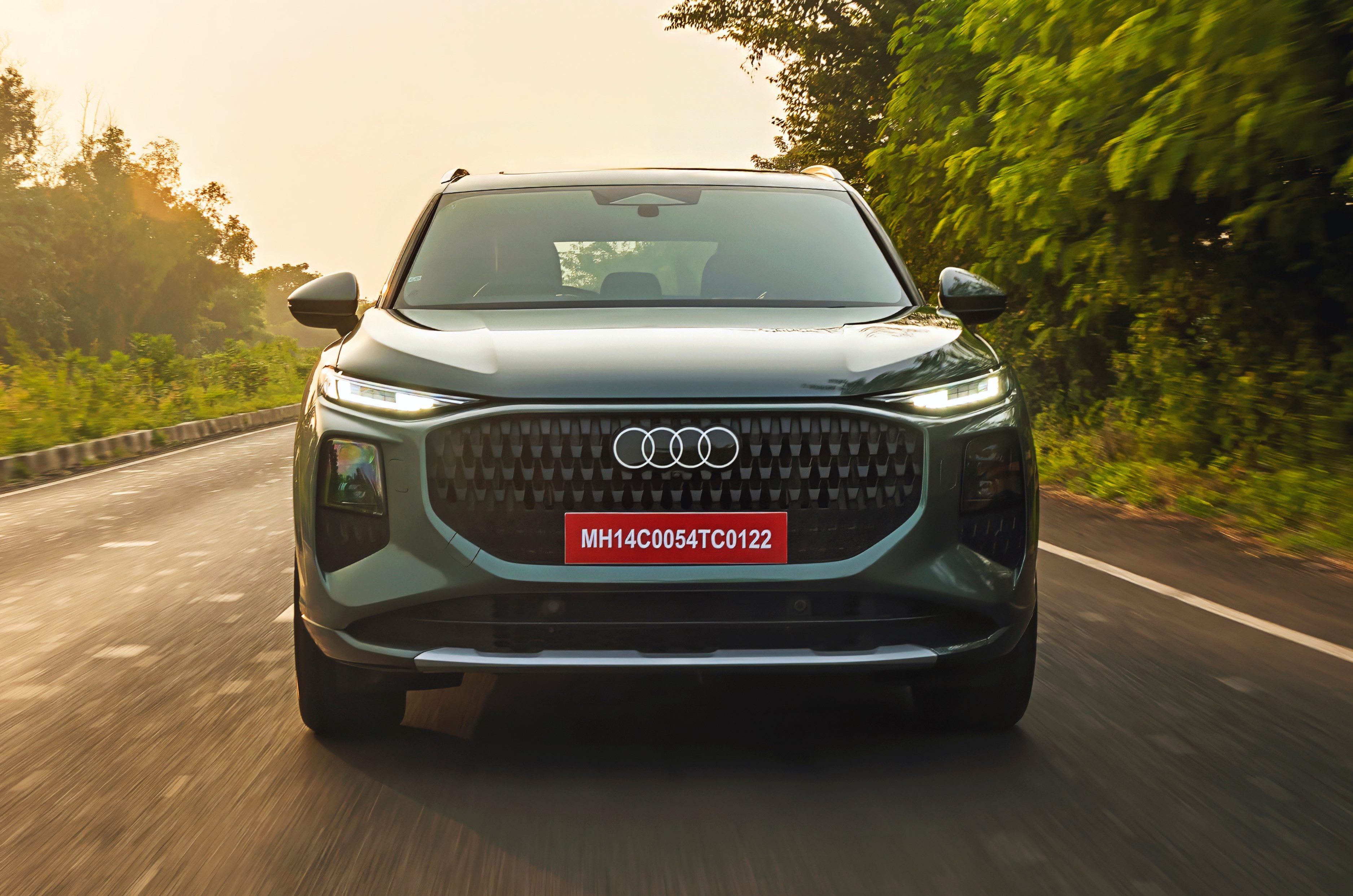
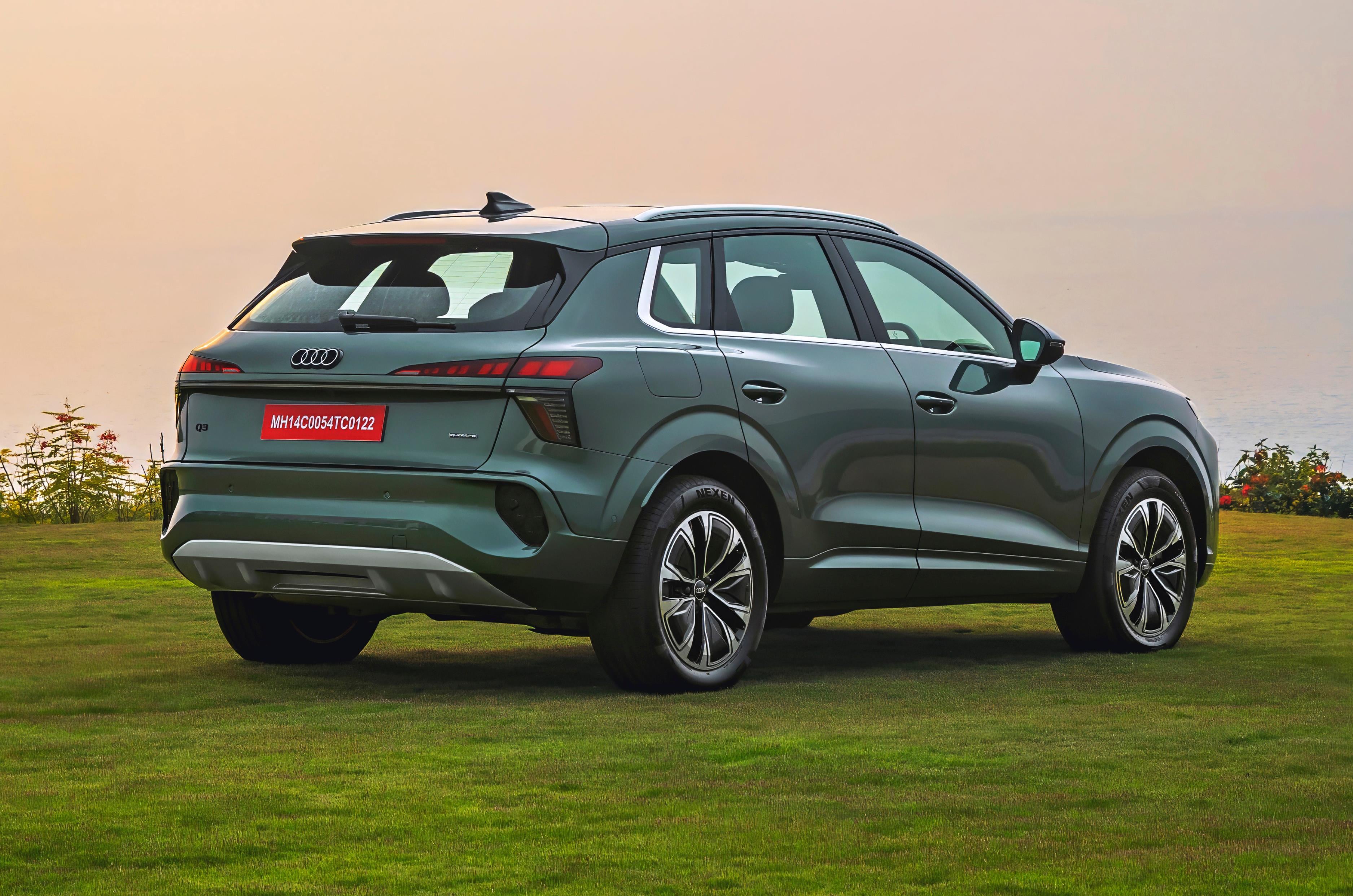
Being a generation update, the 2026 Audi Q3 comes with a thoroughly redesigned exterior. It gets split-style headlights, with LED DRLs at the top and the main digital Matrix LED headlights on the bumper with dedicated washers. The LED DRLs and headlights feature lighting signatures, and in fact the latter can even project important ADAS information on the road in the driver’s direct field of vision for improved safety. It also gets a large grille with honeycomb mesh elements and similar air intakes on the lower section of the bumper.
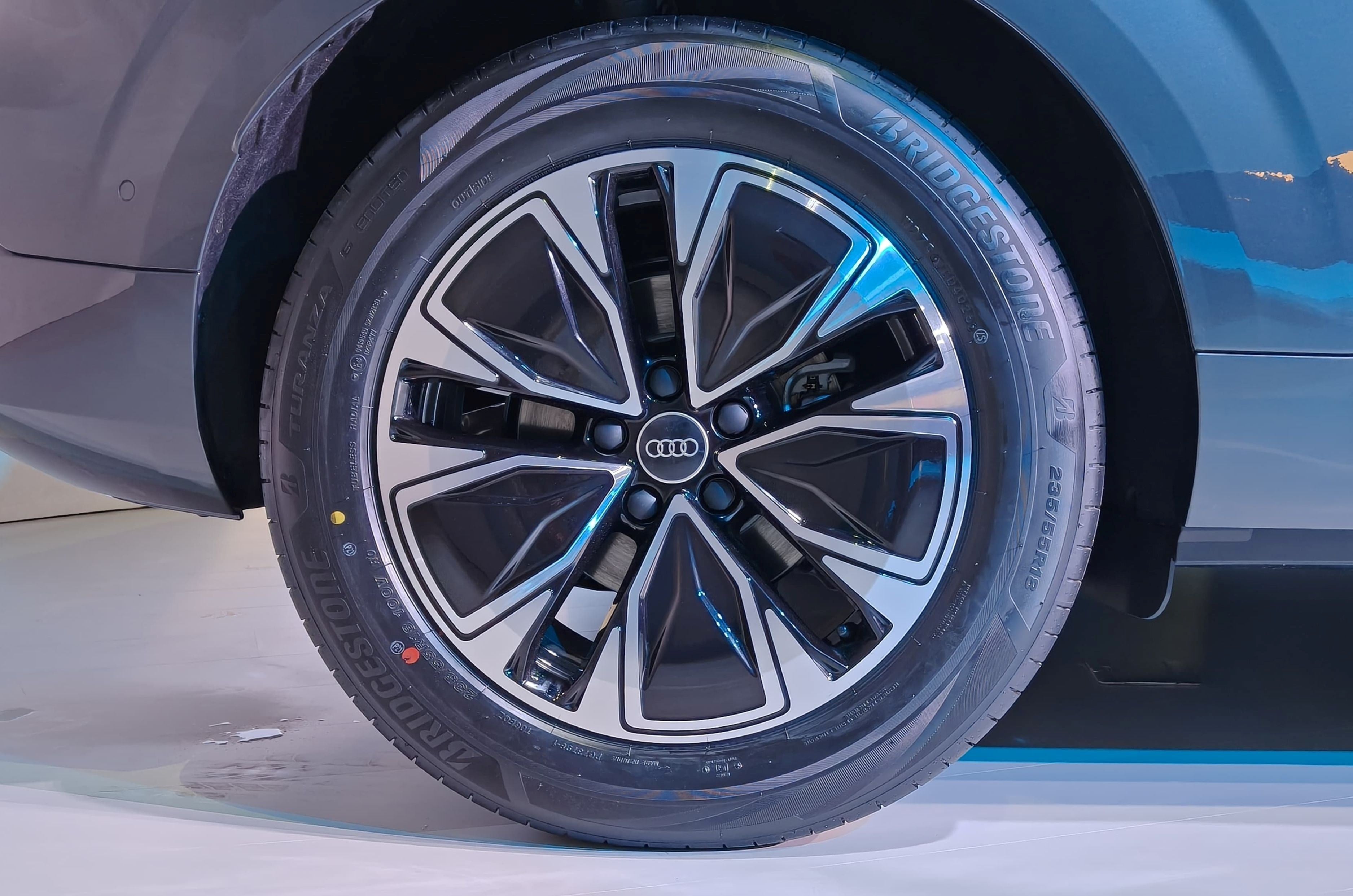
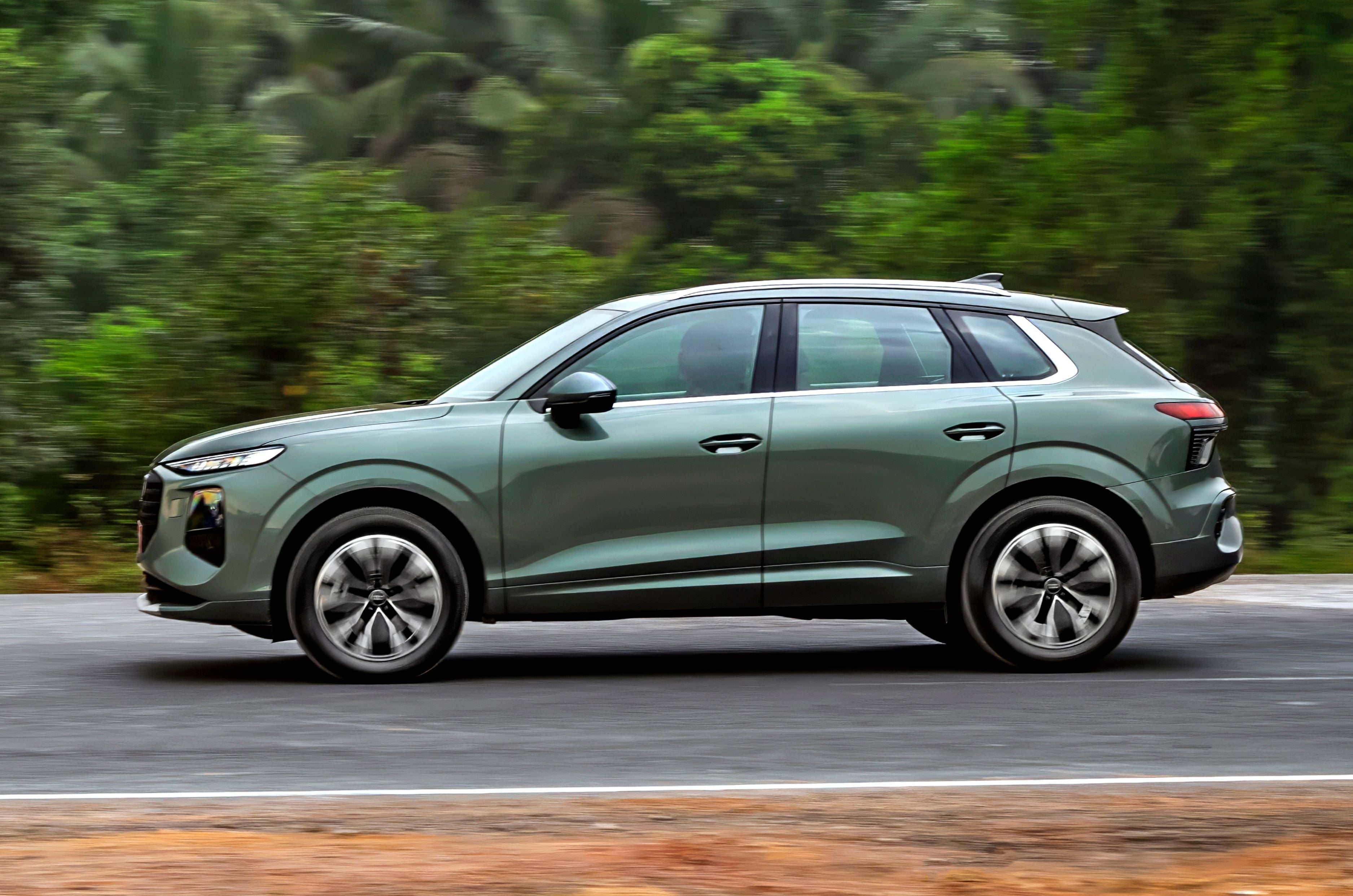
In profile, the Q3 features 18-inch alloy wheels as standard with self-centring hubcaps. It also gets a chrome windowline, slim roof rails and slightly flared wheel arches.
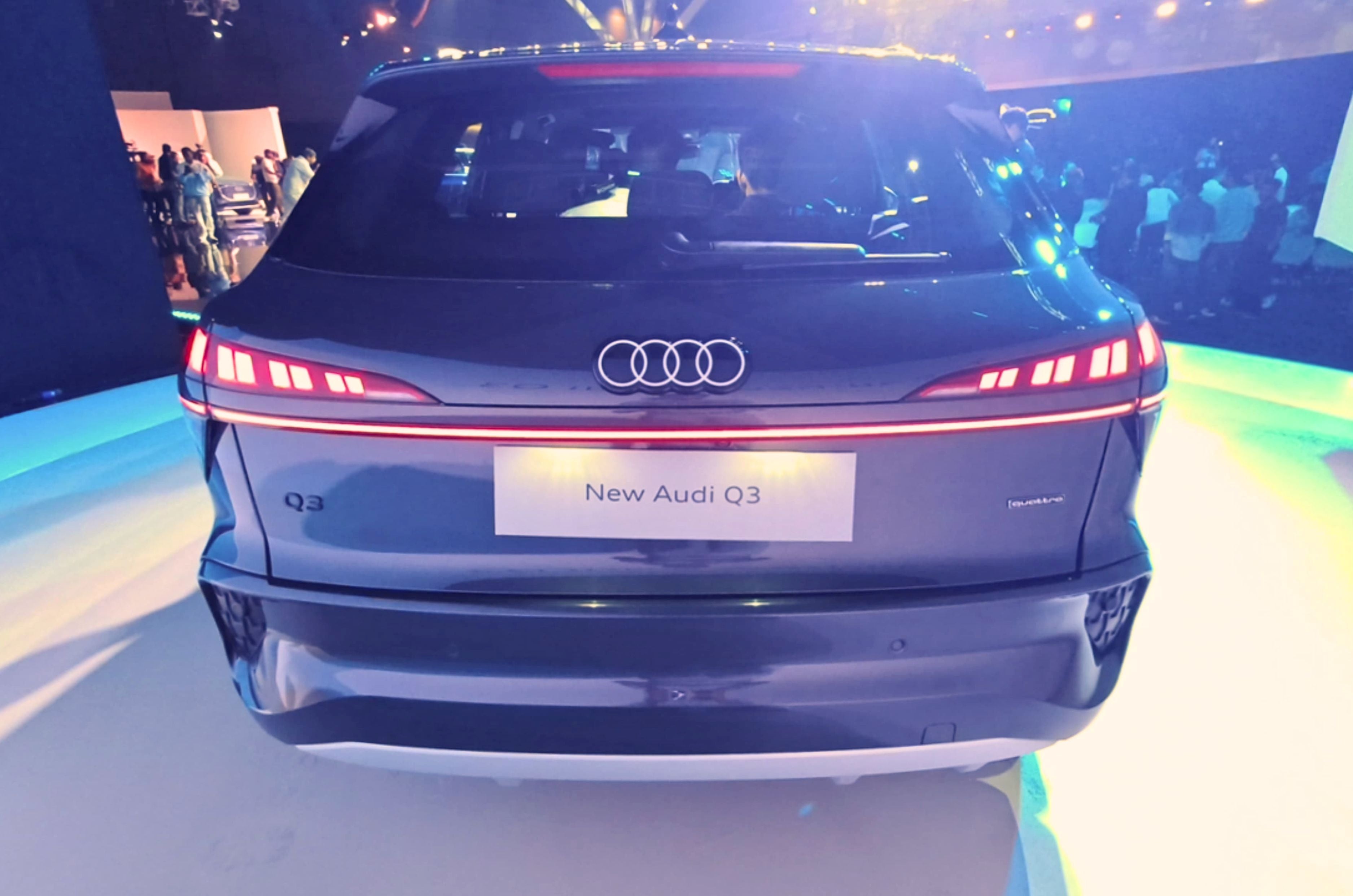
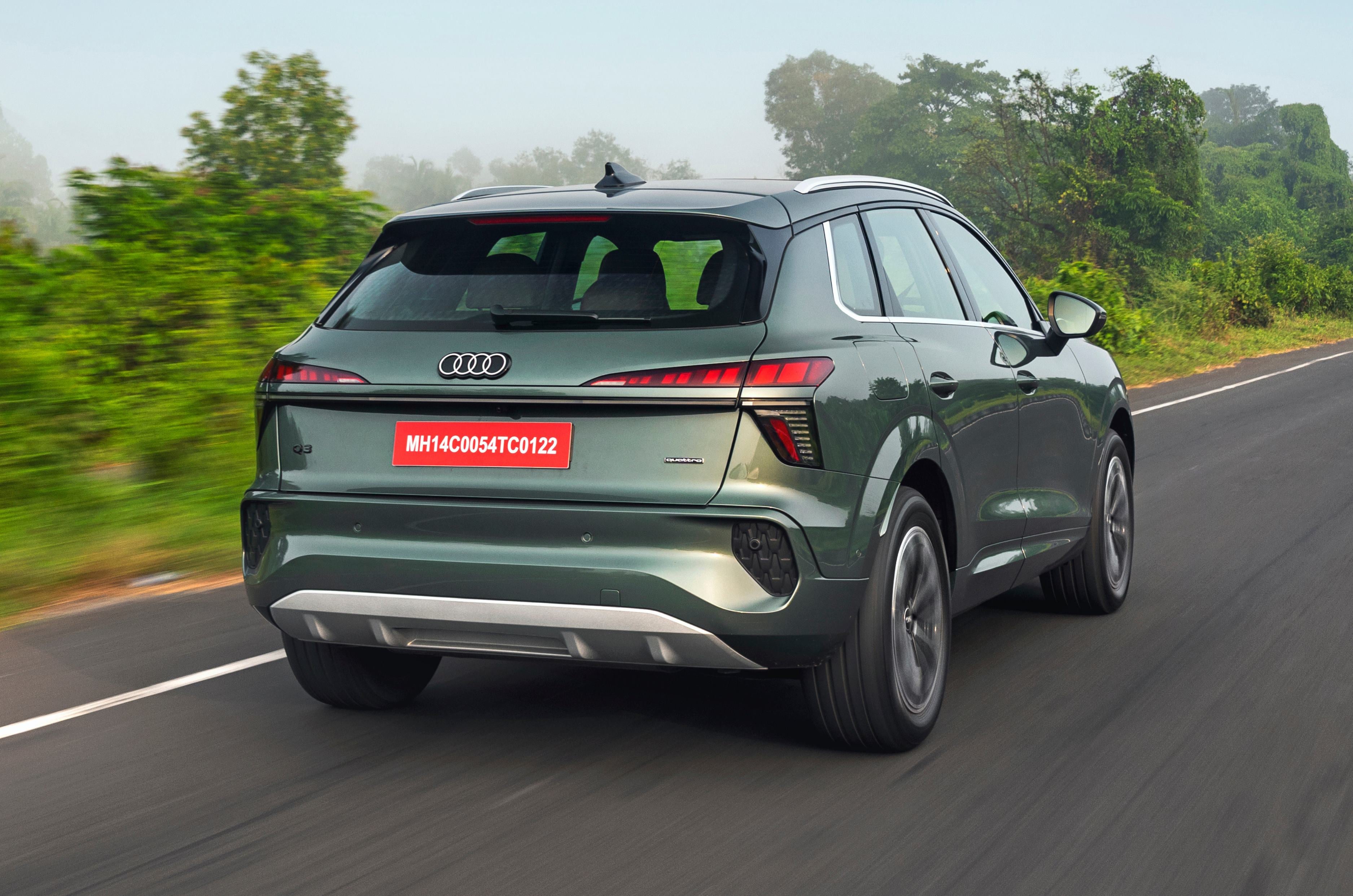
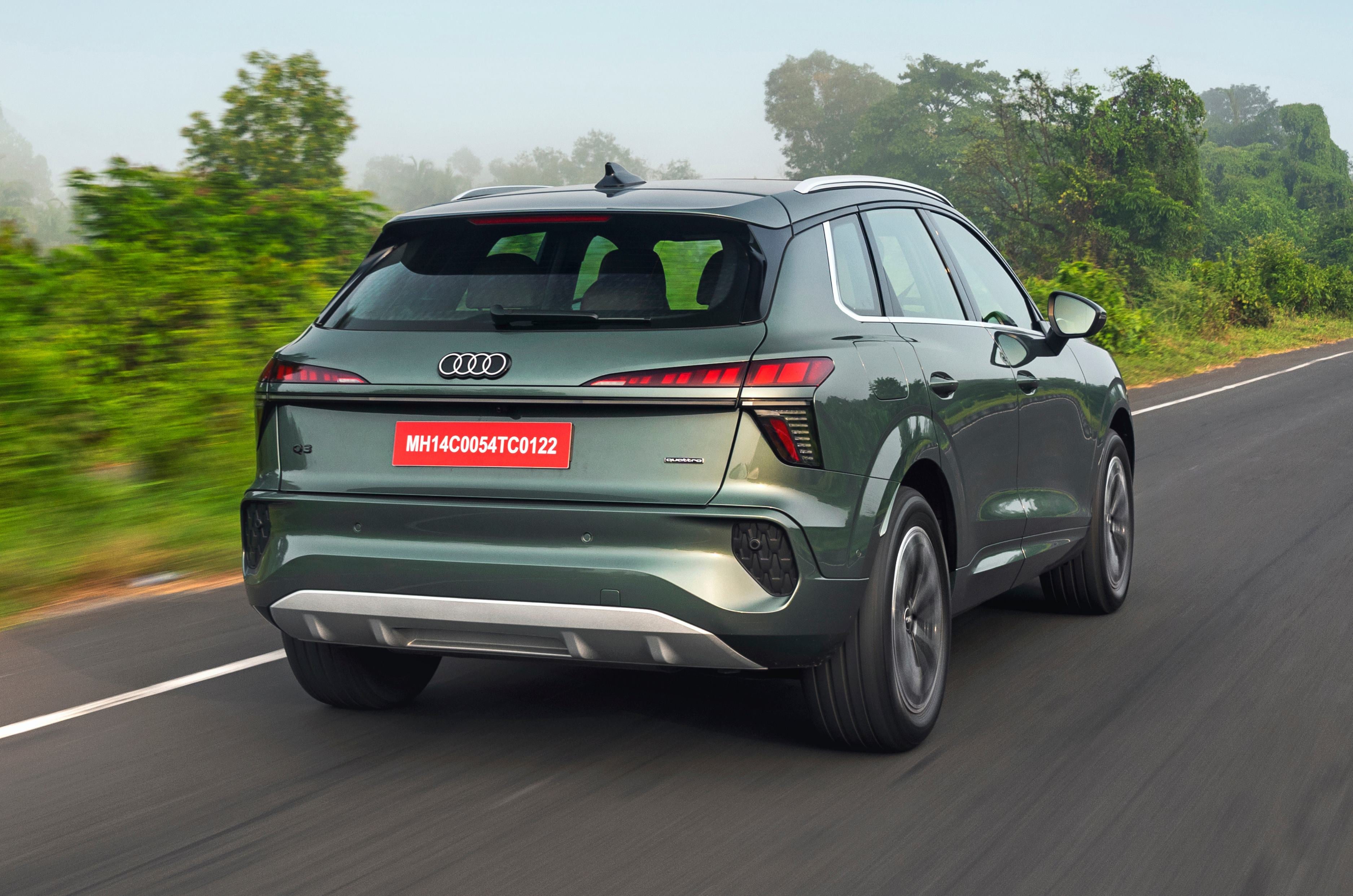
At the rear, it features split LED taillights; the lower unit is connected by a thin strip of light bar. The Audi logo at the rear is illuminated. Audi is also offering a roof-mounted spoiler and a rear wiper and washer.
Here are the dimensions and other specifications of the 2026 Audi Q3:
2026 Audi Q3 dimensions and other specifications
Length
4,531mm
Width
1,859mm
Height
1,601mm
Wheelbase
2,681mm
Boot space
488 litres
2026 Audi Q3 interior design and features
Gets a hexagonal steering wheel, curved displays and a decently equipped cabin
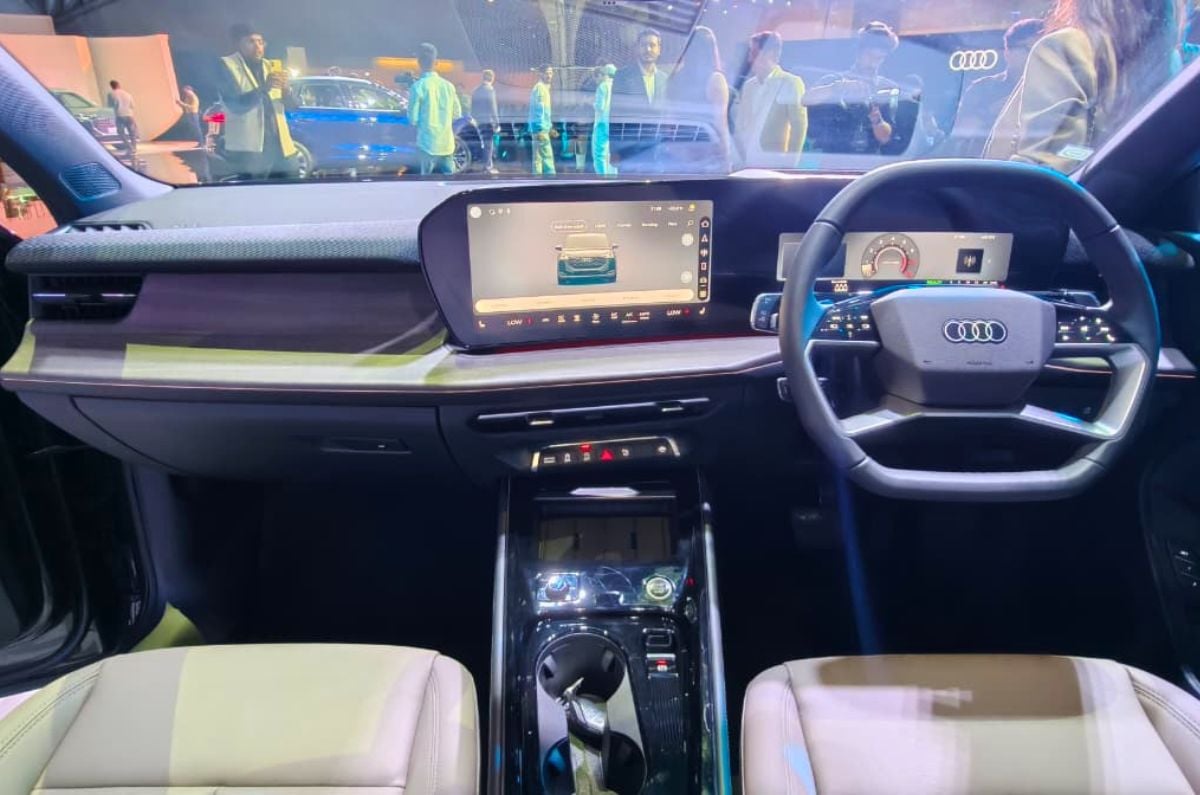
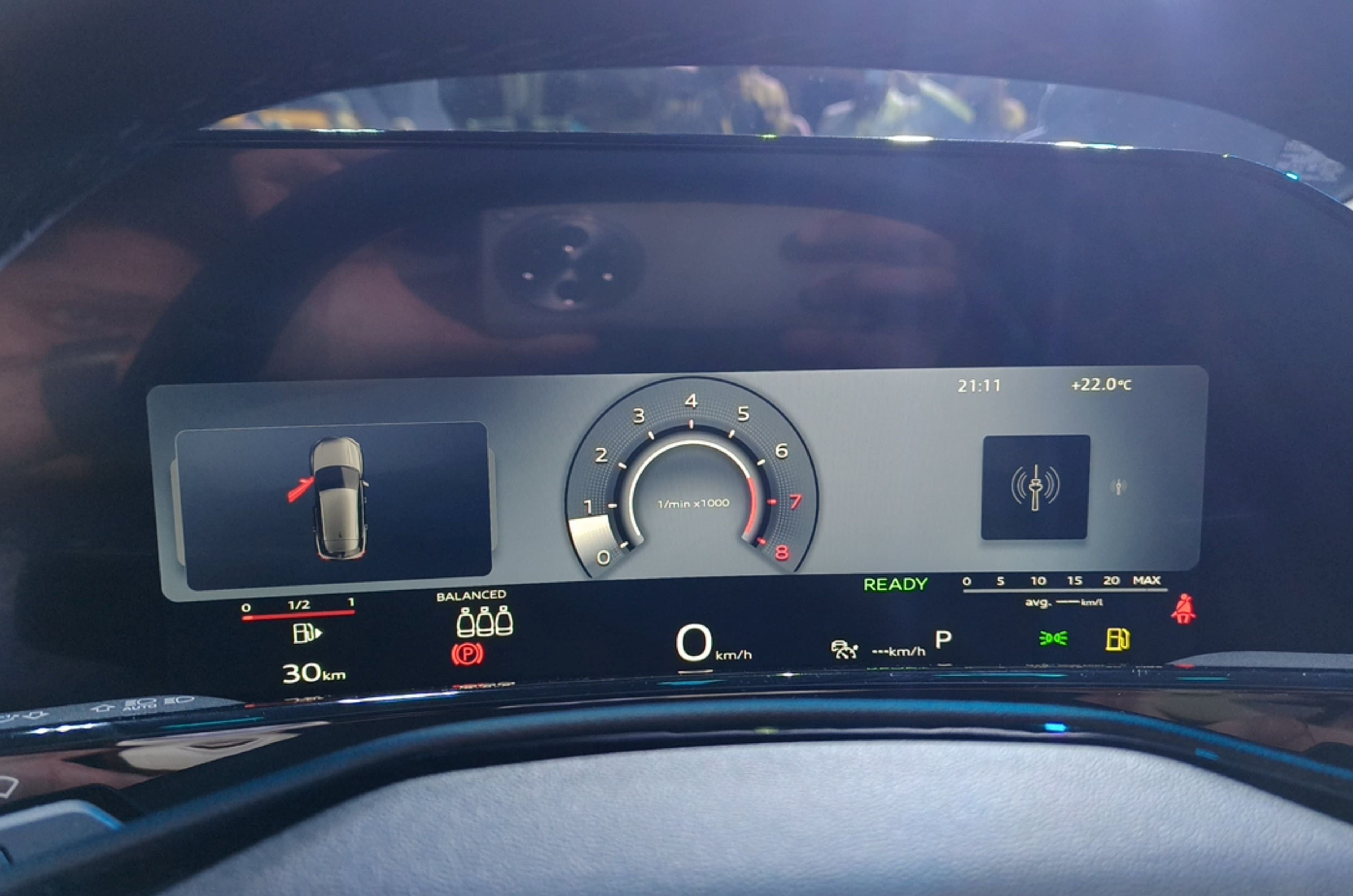
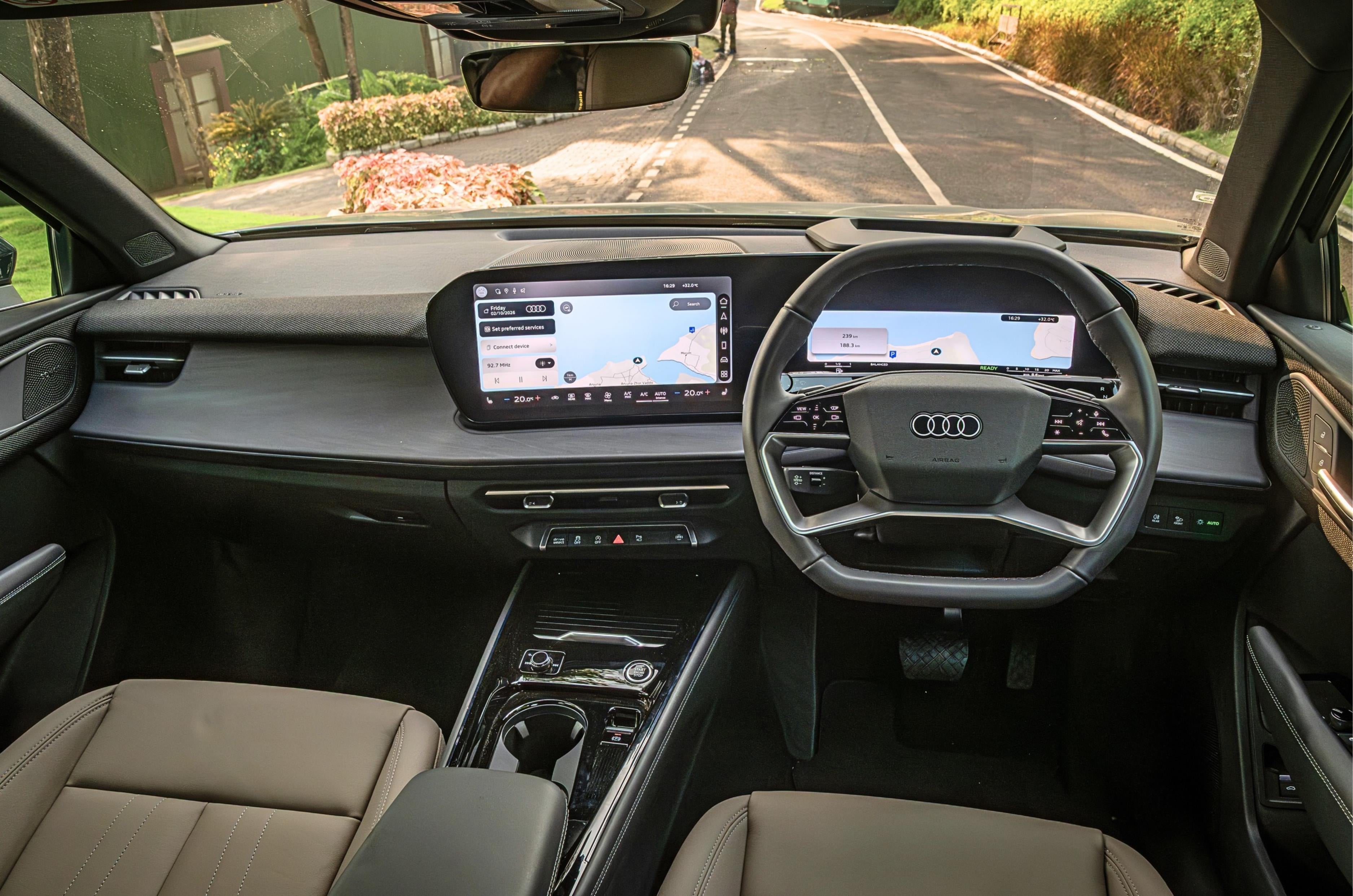
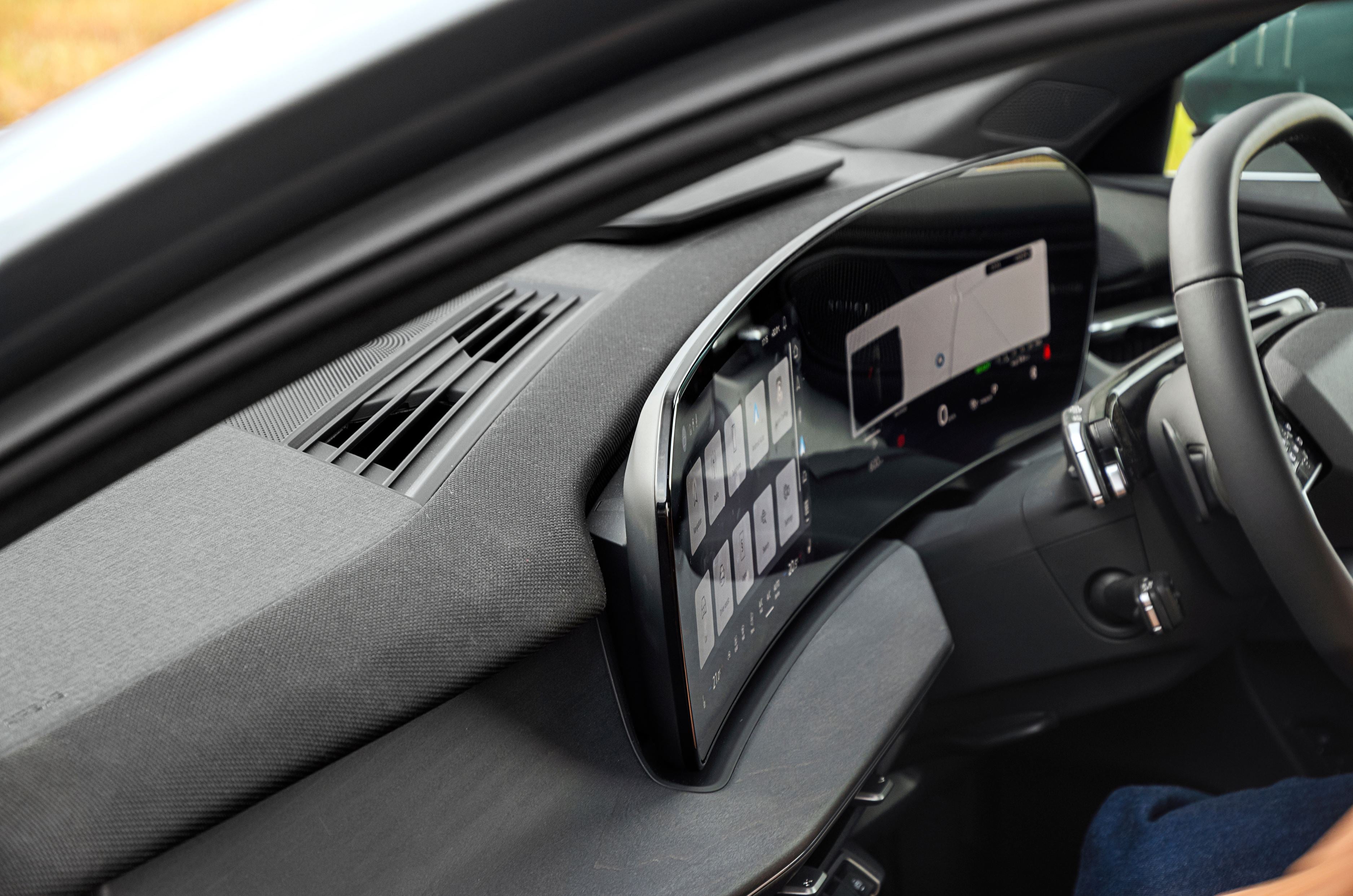
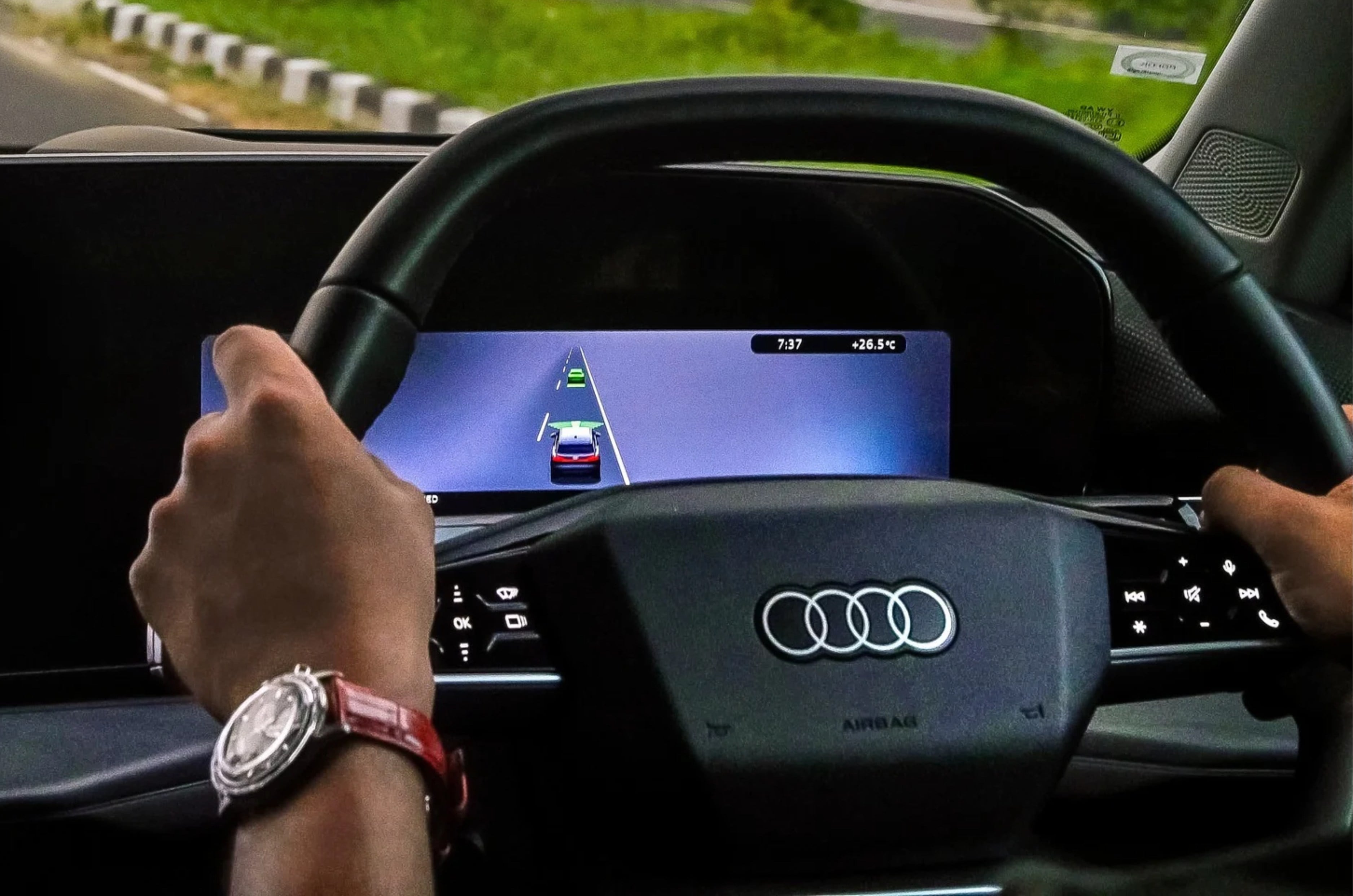
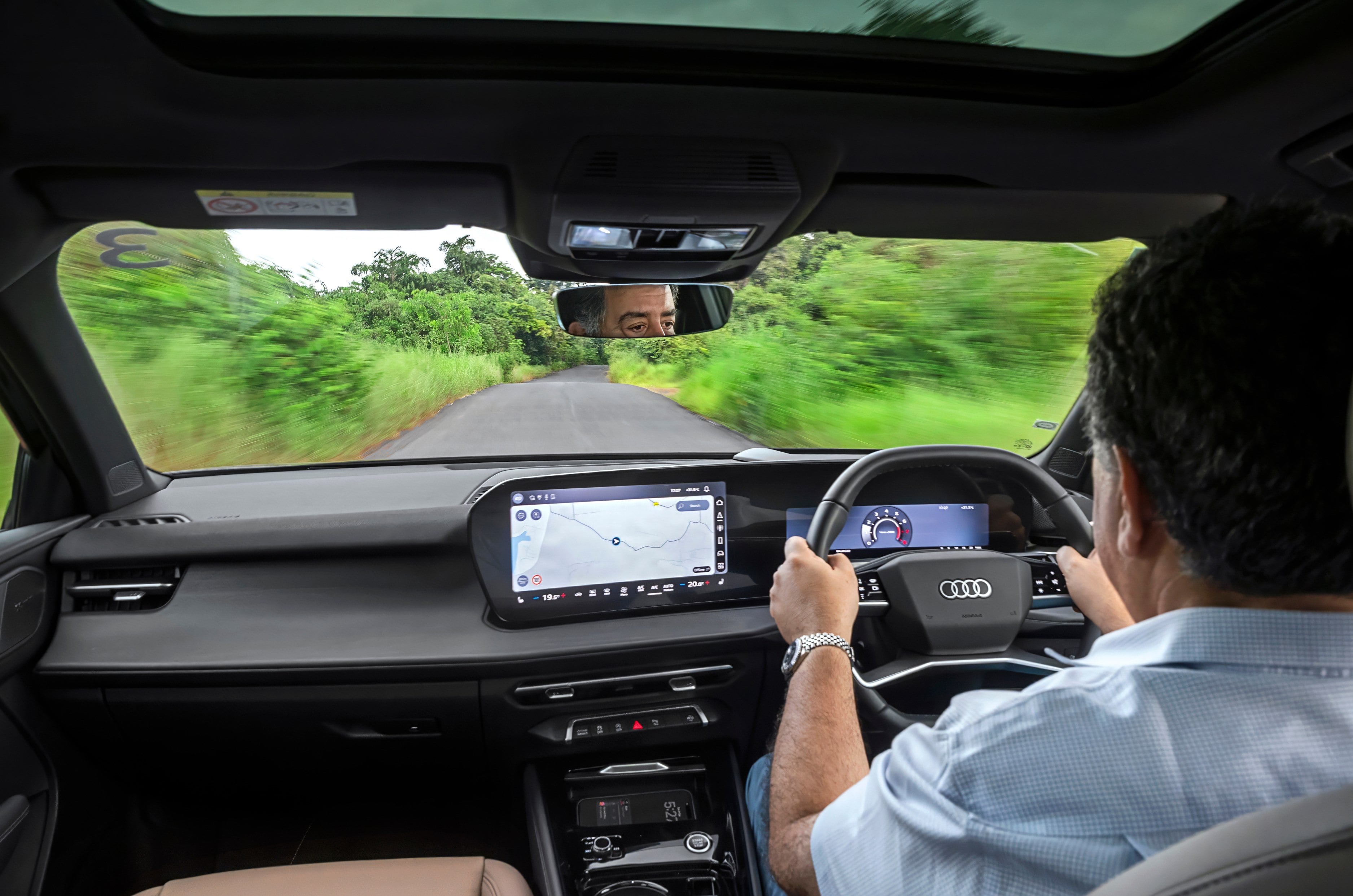
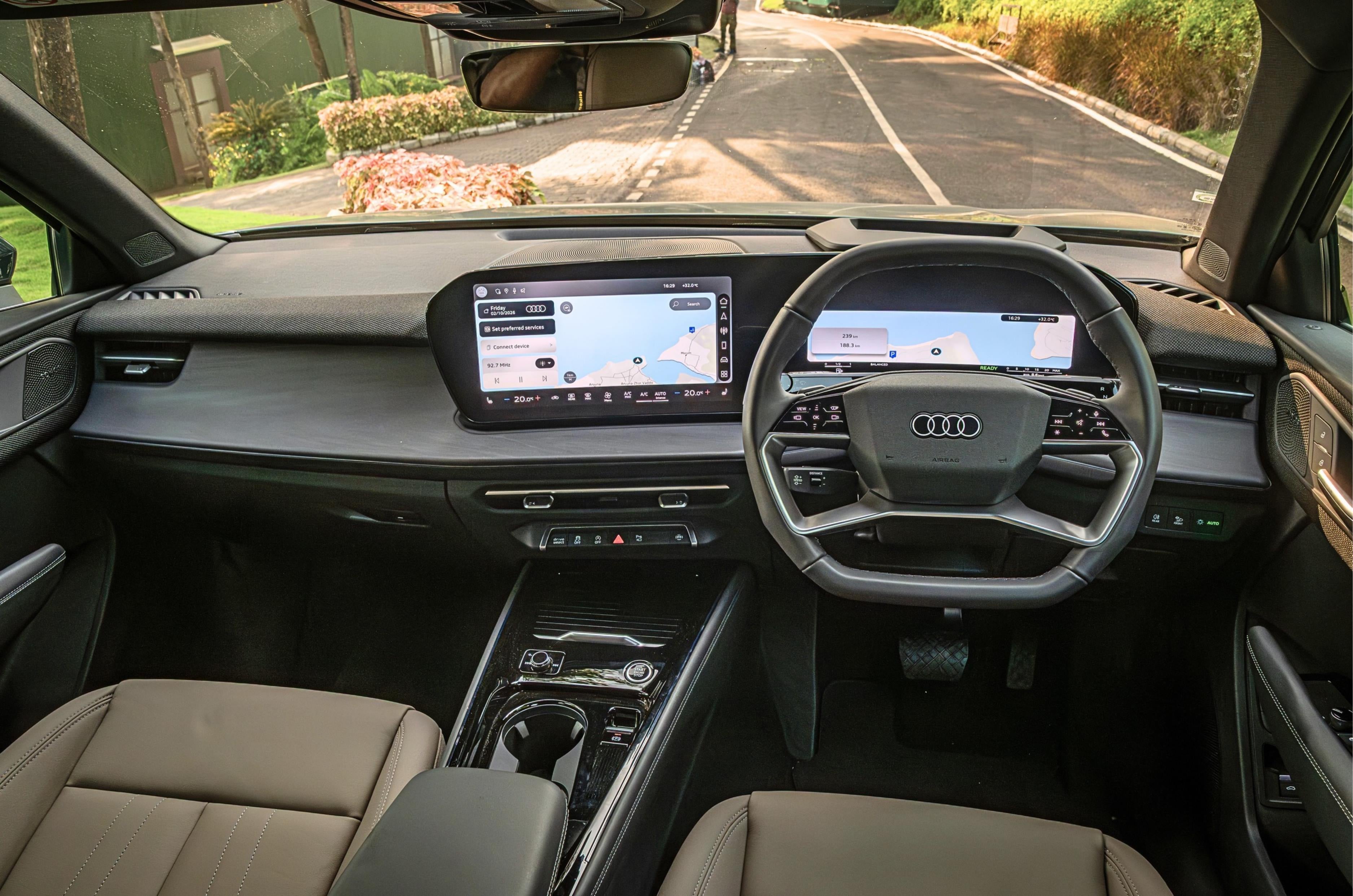
Inside, the Audi Q3 has a minimalistic dashboard and features dual digital screens (a 12.8-inch infotainment touchscreen and an 11.9-inch digital driver’s display) arranged in a curved setup. It also gets a 4-spoke hexagonal steering wheel with touch-enabled controls. Notably, the right-side stalk on the steering wheel works as a drive selector, while the left one can be used to control the headlights and turn indicators.
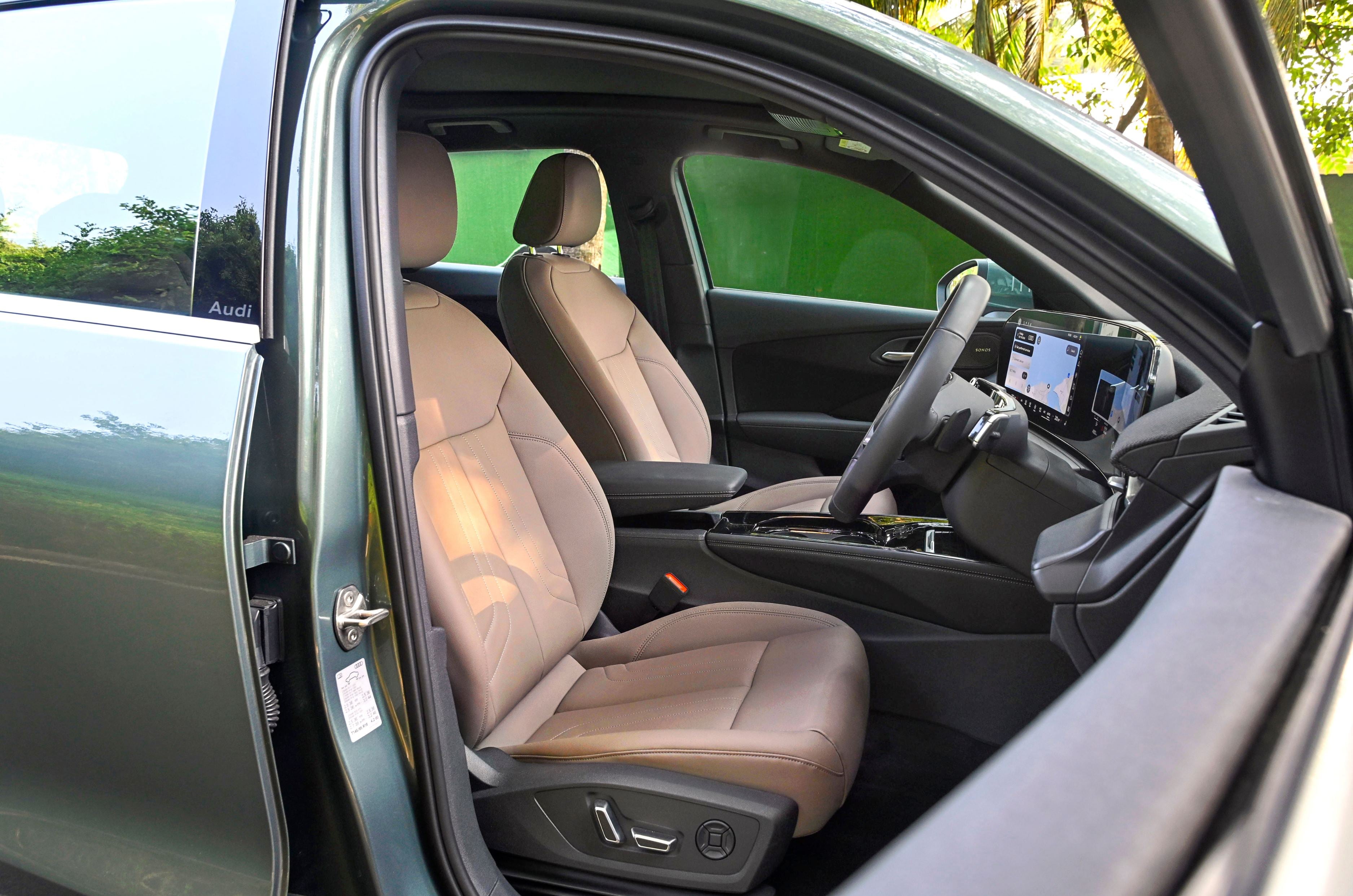
The drive selector on the steering column has enabled a cleaner centre console, featuring a wireless phone charger, two cupholders, and an electronic parking brake. The centre console extends to a centre armrest for front passengers. The seats get leatherette upholstery, and the front seats are powered and heated. The driver’s seat has a memory function that is also tied to the powered outside rearview mirrors (ORVMs).
On the feature front, it is equipped with a 3-zone climate control, a panoramic sunroof, a 12-speaker Sonos sound system, a coloured head-up display (HUD), and a powered tailgate. Safety-wise, it gets 9 airbags, a rear parking camera (not a 360-degree surround-view system), hill hold and hill climb assists, and an advanced driver assistance systems (ADAS) suite.
2026 Audi Q3 powertrain
Gets a 2.0-litre turbo-petrol engine and an AWD setup
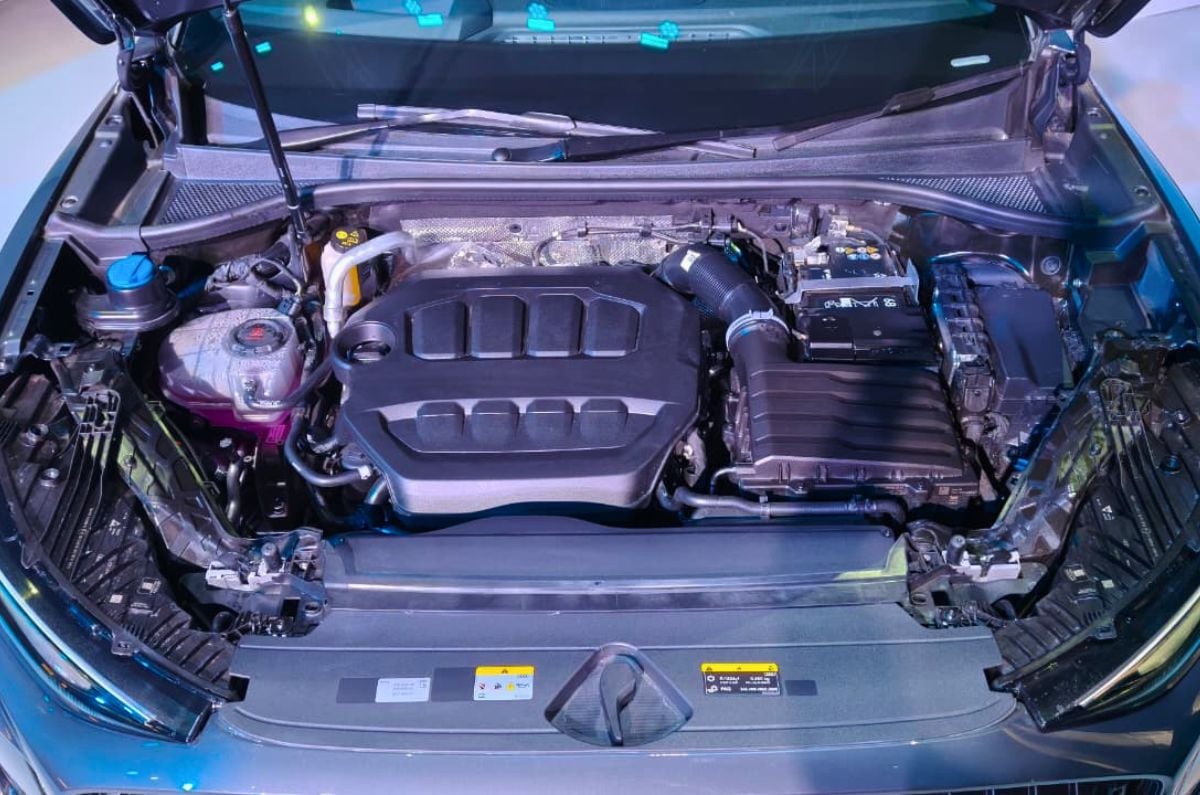
The 2026 Audi Q3 is powered by a 2.0-litre direct-injection turbo-petrol engine that produces 204hp and 320Nm. It is mated to a 7-speed dual-clutch automatic transmission (AT) which sends power to all wheels (AWD). This powertrain enables a claimed 0-100kph sprint of 7.1 seconds and a top speed of 229kph.
The Audi Q3 is the only rival in the segment to offer AWD. Rivals like the BMW X1 and Mercedes-Benz GLA are front-wheel-drive (FWD) only.
Audi is all set to launch the new Q3 in India on October 16, 2026. The third-generation model is the German luxury marque’s entry-level SUV for India, and its first model for our market as part of its new product offensive. The upcoming Audi Q3 sports a completely new design both inside and out, an updated feature set and a single turbo-petrol powertrain. Here’s a closer look at what to expect from this compact luxury SUV.
1. What does the new Audi Q3 look like?
Now gets split headlamps, Digital Matrix LEDs, an updated grille and more
The third-gen Audi Q3 has ditched the conventional placement for the headlamps. Instead, it sports a split arrangement with the new Digital Matrix LED units located in the bumper and slim LED DRLs placed above them. The former houses 25,600 individually controlled pixels, while the latter double up as turn indicators and offer four light signatures. The wide honeycomb grille of the Q3 now gets the brand’s new 2D logo with an integrated radar for the ADAS suite.
Design highlights along the sides include the 18-inch alloy wheels with self-levelling centre caps, silver roof rails and shiny trim stretching between the A pillar and the roof. The rear of the new Q3 features split LED tail-lamps connected by a sleek light bar, an illuminated Audi logo on the tailgate, and a silver skid plate in the bumper. The new Q3 looks bigger than the outgoing model, though its 2,681mm wheelbase is unchanged.
2. How is the interior of the new Audi Q3?
A spacious boot, solid build, curved displays and a new gear selector are some of the highlights
The boot of the new Audi Q3 has a capacity of 488 litres, which can be further expanded by folding down the 40:20:40 rear seats. There’s also a space-saver spare under the boot floor. This is a modern-looking interior, sporting an angled dashboard and centre console, curved digital displays and a hexagonal steering wheel. Meanwhile, placed on the steering column is the new stalk-type gear selector.
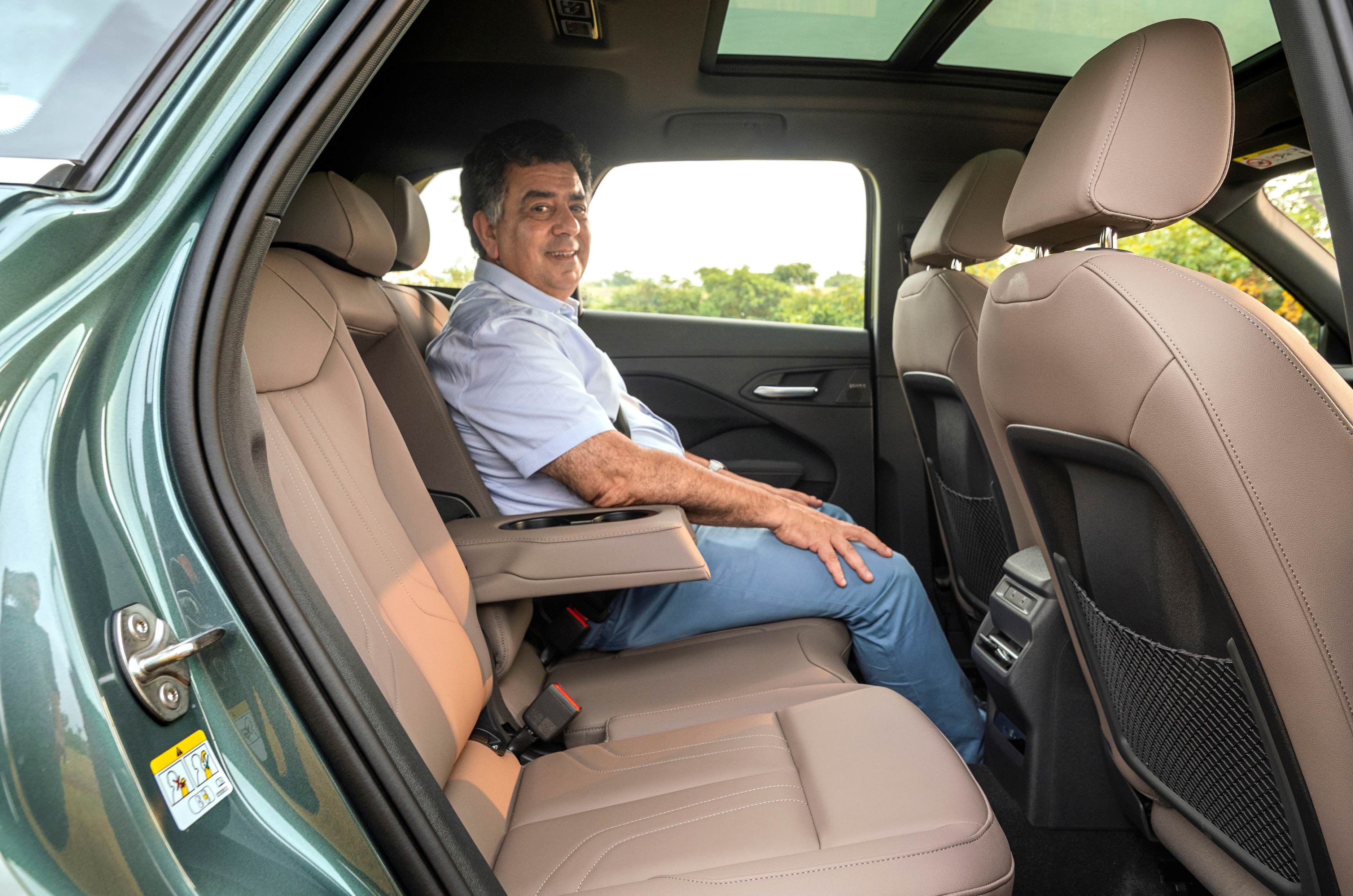
Leather upholstery aside, this interior also gets fabric and wood trim. There are hard plastics lower down in the cabin, but the overall build quality is impressive. The front seats are well-bolstered and will be comfortable even on long drives, but the rear ones are best reserved for two adults. Conveniences at the back include a fold-down armrest with cupholders, two USB-C outlets, seat-back pockets and rear AC vents.
3. What features does the new Audi Q3 offer?
Headline tech includes a 12-speaker Sonos audio system, panoramic sunroof, head-up display and 9 airbags
The new Audi Q3 offers a range of conveniences and tech – including a powered tailgate, multi-zone automatic climate control, powered & heated front seats with memory, and a 12-speaker Sonos audio system. There’s also a panoramic sunroof, a 12.8-inch touch-infotainment system, and an 11.9-inch digital driver’s display.
Rounding off the tech features of the Audi Q3 are 9 airbags, an auto-park function, and ADAS (advanced driver assistance systems) with adaptive cruise control and auto-emergency braking. Surprisingly, the new Q3 doesn’t get lane-keep assist, a 360-degree camera, or even ventilated seats.
4. What engine and gearbox does the new Audi Q3 get?
The new Q3 will only be offered with a 204hp turbo-petrol engine and quattro all-wheel drive
Under the bonnet of the new Audi Q3 is a 2.0-litre turbo-petrol engine with direct injection, rated at 204hp and 320Nm. Mated to this TFSI mill is a 7-speed dual-clutch automatic gearbox with paddle shifters, while drive is sent to all four wheels via Audi’s quattro all-wheel-drive system.
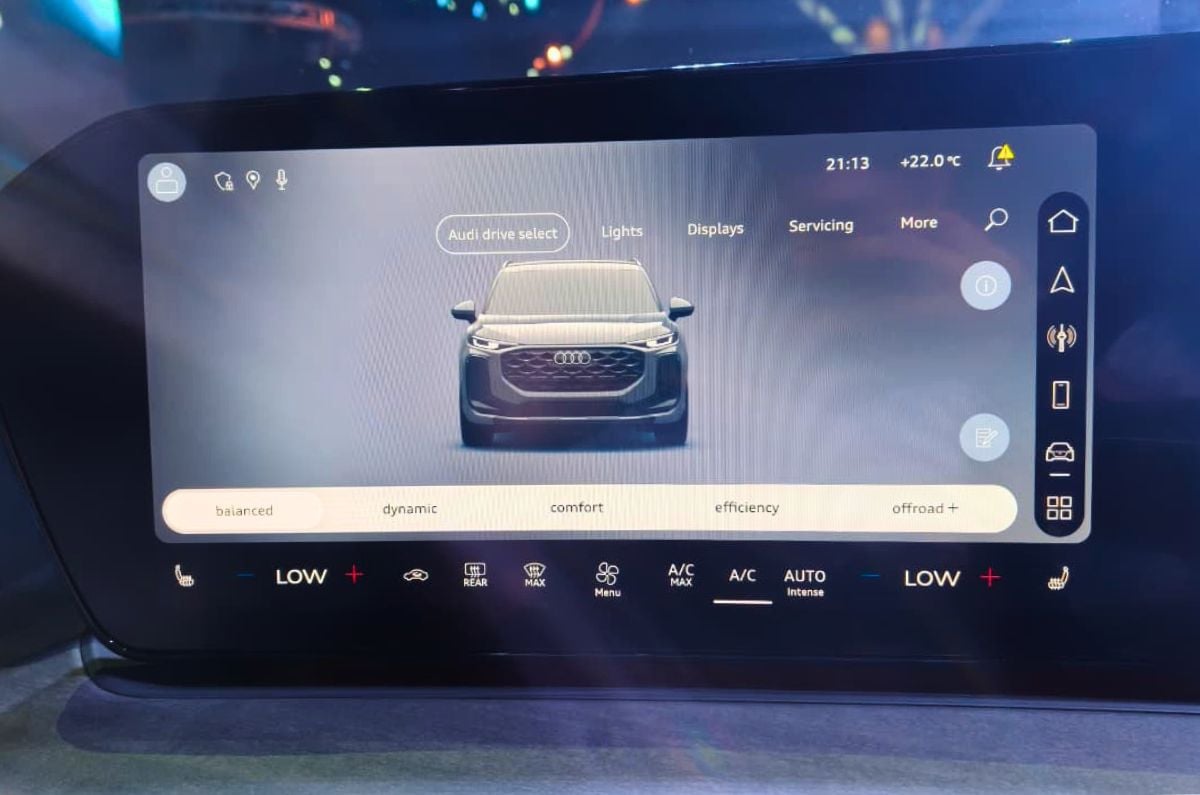
There are multiple drive modes as well, including an ‘off-road’ setting. Audi claims a 0-100kph time of 7.1 seconds for the new Q3. However, there will be no diesel, hybrid or fully electric powertrains at launch.
5. What is the expected price of the new Audi Q3?
The new model is to be pricier than the outgoing Q3
The new Audi Q3 is expected to come at a premium over the outgoing model, which is priced between Rs 43.67 lakh and Rs 53 lakh (ex-showroom). The closest rivals of the Q3 will include the BMW X1 and Mercedes-Benz GLA.
Audi India is set to launch the third-gen Q3 on Friday, 16 October. It will replace the current Q3, which has been around for quite a while, as Audi India’s entry-level SUV. More importantly, the third-gen Q3 will usher in some of the latest tech that Audi offers, which should make the SUV much more competitive against rivals like the Mercedes-Benz GLA and BMW X1. But will it? Now that we’ve reviewed the new Q3, here are three reasons why you should consider it over rivals, and two reasons why you may want to think twice about buying one.
Pros
Punchy turbo-petrol engine
Like its predecessor, the third-gen Q3 is powered by a 2.0-litre four-cylinder direct-injection turbo-petrol engine developing 204hp and 320Nm. It’s the biggest and strongest engine in its segment, and save for some brief hesitation at low revs, remains a gem. As soon as the turbo is on song, this engine is eager and free-revving, responding promptly in the city and building speed easily on the highway. Audi claims a 0-100kph time of 7.1 seconds for the new Q3 – a segment-best figure.
The Q3’s engine continues to be paired with a 7-speed dual-clutch automatic, which is a great companion. Downshifts are quick and easy, and engaging Sport mode or flicking the paddle shifters will give you full control. Audi’s Quattro all-wheel drive system is standard fit for the Q3 as well, giving you more confidence when driving on slippery surfaces.
Excellent ride and handling balance
Audi has tuned the new Q3’s suspension very well. The setup has the typical firmness you expect from a European car, but it’s never uncomfortable and absorbs potholes and broken roads with great composure. Part of the credit goes to the 55-profile tyres too, as their thick sidewalls soak up much of the shock before it reaches the suspension.
The handling of the new Q3 is surprisingly good too, with the variable-ratio steering effectively loosening at low speeds and weighing up as you increase the pace. There’s a slight amount of slack around the straight-ahead position, but the steering remains very accurate and direct regardless. Despite its quick steering, the Q3 also remains stable at highway speeds and changes lanes with ease and agility.
Well-built interior
Among the most noticeable leaps of the new Q3 over the outgoing model is on the inside. The dashboard sports a cleaner and more modern layout, housing an 12.8-inch infotainment touchscreen and 11.9-inch digital driver’s display. Much of the leather in the cabin has been ditched in favour of fabric, and plastic quality isn’t that great in the lower regions, but even so, the Q3’s interior feels well put-together and more robust than those of its rivals.
Cons
Lack of powertrain options
The Q3’s turbo-petrol engine is undoubtedly lovely, but that’s about it as far as powertrain options go. There will be no diesel, hybrid, or electric versions of the India-spec Q3, at least at launch. This puts the Audi SUV at a disadvantage, since the GLA and X1 can be had with diesel engines – the BMW is available as a long-wheelbase EV too (iX1 LWB). Offering Quattro as standard may also drive up the price of the new Q3, which could dissuade buyers who prefer a lower price tag over all-wheel drive.
Some features still missing
While the Q3 has a decent list of equipment, including a 12-speaker Sonos sound system, a panoramic sunroof, powered and heated front seats, dual-zone climate control, adaptive cruise control, auto-park assist, and more, there are still some features that Audi missed out on.
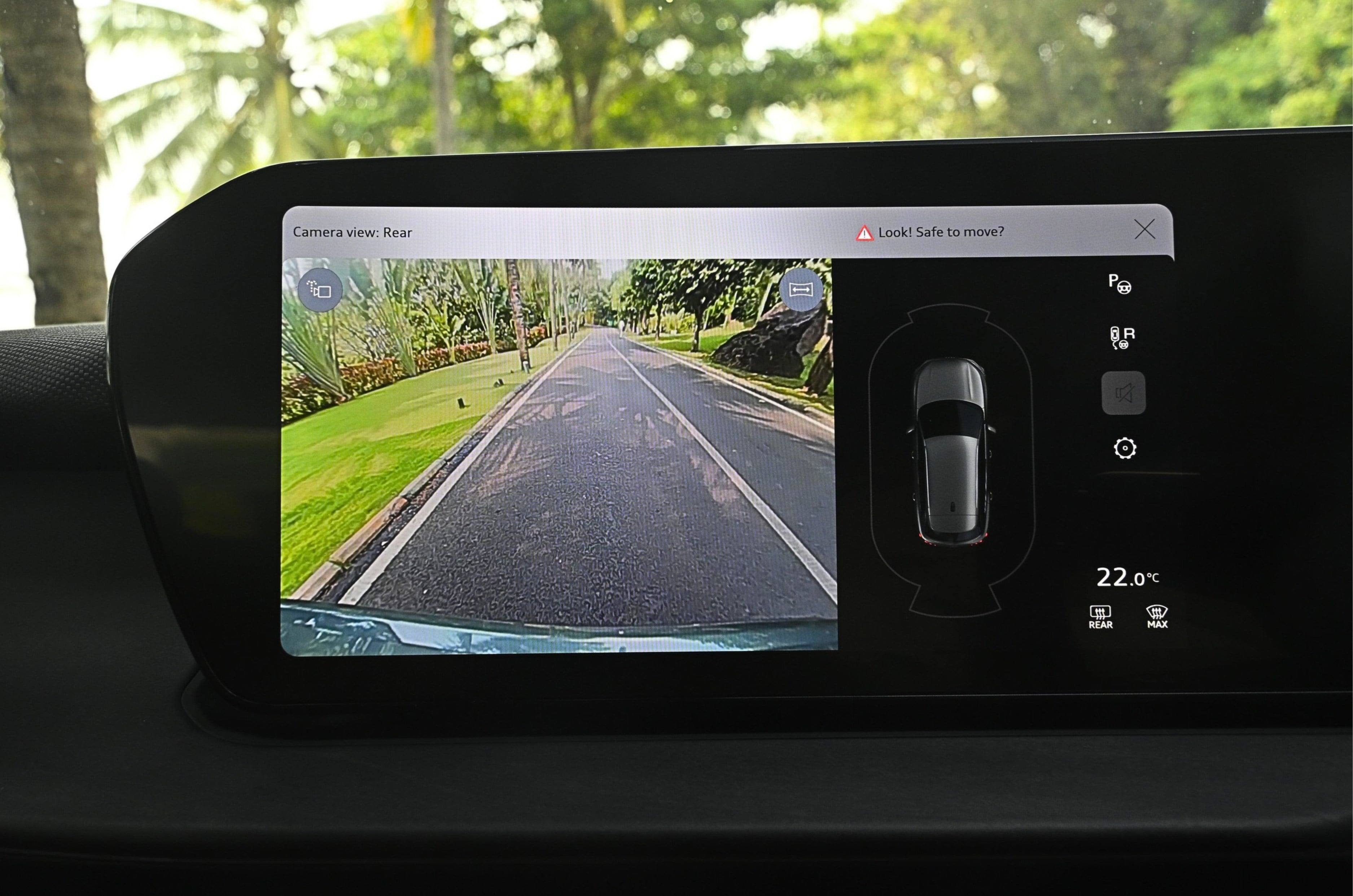
Chief among them is seat ventilation, which makes much more sense than heated seats in our climate conditions. Another big miss is a 360-degree camera, as it greatly helps with maneuovring and parking in tight spaces. The included rear camera’s resolution (pictured above) is disappointing too. Lastly, there are no ADAS features aside from adaptive cruise control – lane-keep assist and blind-spot monitoring would’ve come in handy.
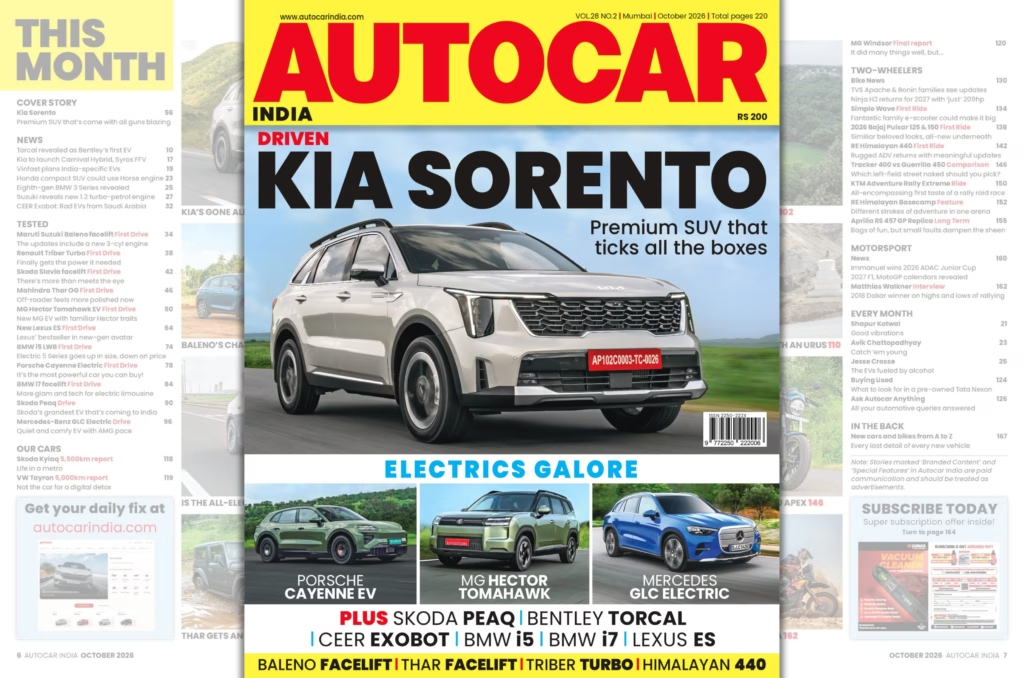
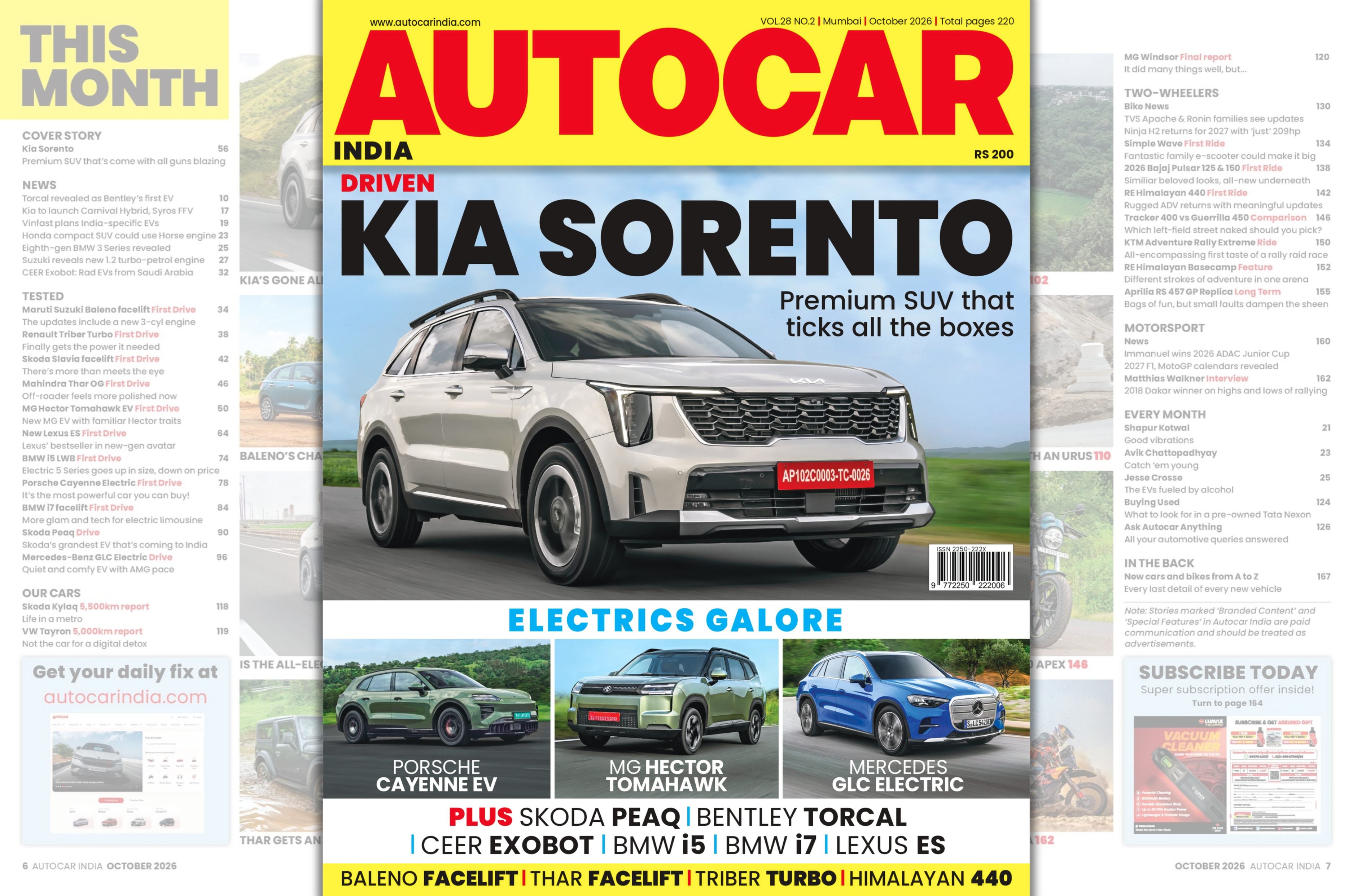
This month, we go big on power and even bigger on premium metal. The cover story is Kia’s biggest swing yet at the executive SUV segment, and then there’s a family SUV with more horsepower than a Lamborghini, and BMW’s electric onslaught continues with a new long-wheelbase sedan and a sharper flagship limousine.
Kia Sorento: Cover Story
Six trims, two powertrains, up to seven seats and 32 variants in all. Kia isn’t dipping a toe into the premium SUV pool; it’s diving straight in, locally assembling the Sorento from Rs 27.99 lakh to take on the Skoda Kodiaq and VW Tayron. Has Kia cracked the code, or has it bitten off more than it can chew?
Porsche Cayenne Electric: First Drive
Forget hypercars. The most powerful vehicle currently on sale in India is a family SUV, the Cayenne Electric, with more horsepower than your senses can fathom. We took it to an airstrip to see what that actually does to your stomach.
BMW i5 LWB & i7 Facelift: First Drives
BMW’s electric push continues, with a long-wheelbase i5 slotting in between the iX1 and flagship i7. Can BMW’s long-wheelbase playbook continue to work? And there’s also the i7 getting a sharper face and more tech to go with it, like it didn’t have enough already.
Mercedes-Benz GLC Electric: Drive
The first-gen electric GLC was far from ideal. The new one, however, is a completely new generation with an 800V architecture, 330kW charging and a claimed 715km range. We took all 489 of its horses to the Autobahn to see how much of an improvement it has been over its predecessor.
MG Hector Tomahawk EV: First Drive
Don’t let the familiar name fool you. The Hector Tomahawk EV rides on MG’s all-new ADAPT platform, bigger than the Mahindra XEV 9S in every dimension, with a PHEV sibling already waiting in the wings.
Maruti Suzuki Baleno, Renault Triber Turbo and Skoda Slavia: First Drives
India’s favourite premium hatch, the Baleno, gets a new engine and ADAS, the budget-friendly Triber finally gets the power it’s been begging for, and the Slavia’s facelift turns out to be more than skin-deep.
Mahindra Thar OG: First Drive
The original three-door Thar gets another round of updates, bringing changes to its engines, equipment and chassis. With the off-road icon continuing to evolve, we head out to discover what this latest iteration brings to the table.
Taking the High Road: Features
Goa’s new Porvorim Elevated Corridor opens on NH66, and we test it in two ways: solo against Google Maps’ ETA in an MG Cyberster, and then flanked by a dozen supercars, Ferraris, a McLaren 750S and a Lamborghini Huracan among them, for its proper initiation.
Rocket Ship to the Moon: Feature
A Lamborghini SUV is already an exercise in excess. Take it somewhere unexpected, add a little spectacle, and you have the ingredients for an automotive adventure that refuses to be ordinary.
Royal Enfield Himalayan 440
The original Himalayan is back with a bigger engine and a handful of meaningful changes. In a world where adventure bikes keep getting more complicated, there’s something rather appealing about going back to basics.
Tracker 400 vs Guerrilla 450: Comparison
Two left-field street nakeds, the Triumph Tracker 400 and Royal Enfield Guerrilla 450, go head-to-head. One takes its inspiration from flat-track racers, while the other fancies itself a sporty roadster. Both want your money, and neither is particularly interested in being sensible about it.
KTM Adventure Rally Extreme: Ride
Adventure riding is all well and good until the road disappears, the terrain turns hostile and you begin questioning your life choices. We get a taste of KTM’s rally raid experience, where the only shortcut is having the skill to take one.
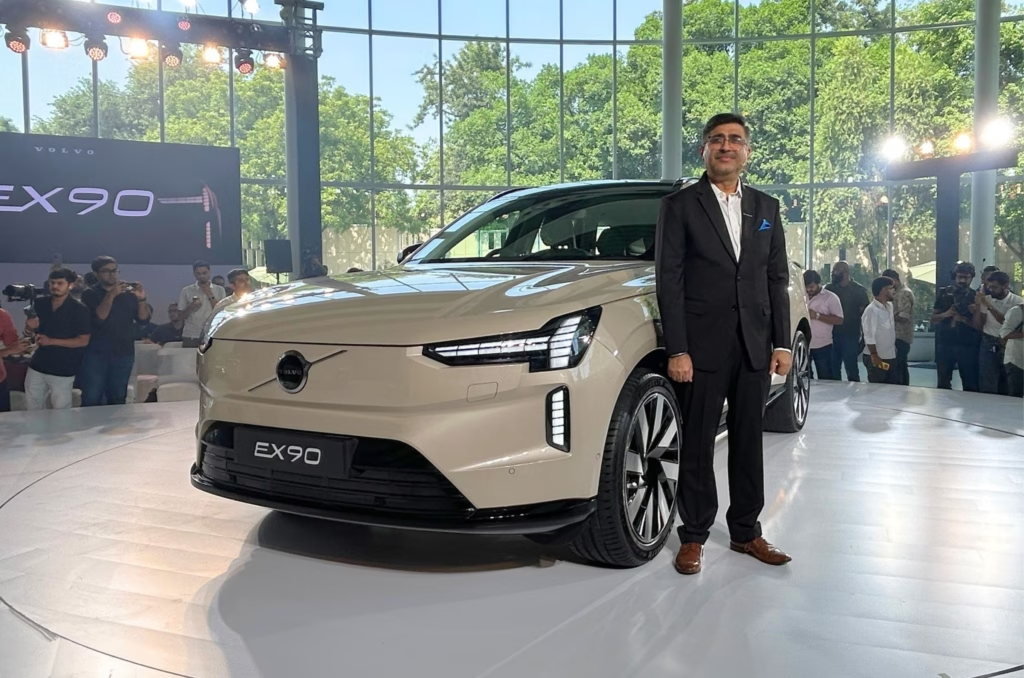
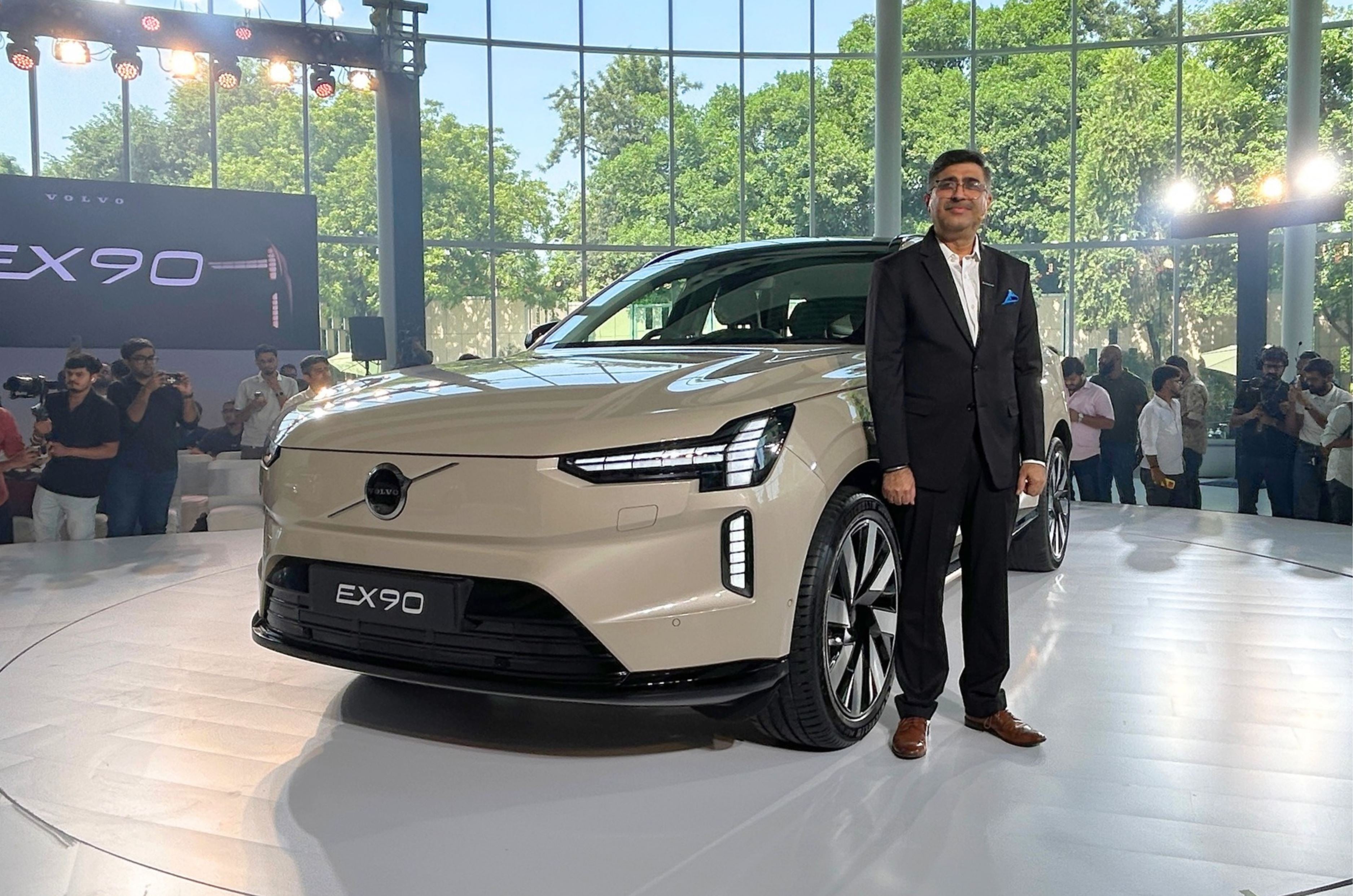
Volvo India has launched the EX90 electric SUV at Rs 1.26 crore as the Swedish carmaker’s new range-topper. The EX90 is Rs 27.2 lakh more expensive than its combustion-powered equivalent, the XC90. However, that’s on account of the EX90 being much more modern and tech-loaded than the XC90, the current generation of which has been around for more than a decade.
As part of an introductory offer for bookings placed before 31 December, 2026, Volvo will bundle an 11kW home charger, a 3-year service package, and assured buyback scheme (65 percent / 3 years) for every EX90 buyer.
Volvo EX90 battery and range
The EX90 is available with a sole 106kWh battery pack powering a dual-motor all-wheel drive setup. Combined output is 456hp and 670Nm, which is good for a claimed 0-100kph time of 5.5 seconds and a top speed of 180kph. The WLTP-rated range is 625km, and in our EX90 review, the SUV returned an efficiency of roughly 5.5km/kWh, which translates to a real-world range of around 580km.
As for charging, an 11kW AC wallbox takes approximately 11 hours for a full charge. Thanks to its 800-volt SPA2 architecture, the EX90 can also charge at up to 350kW from a DC source, at which speed a 10 to 80 percent top-up takes just 22 minutes.
Volvo EX90 exterior design
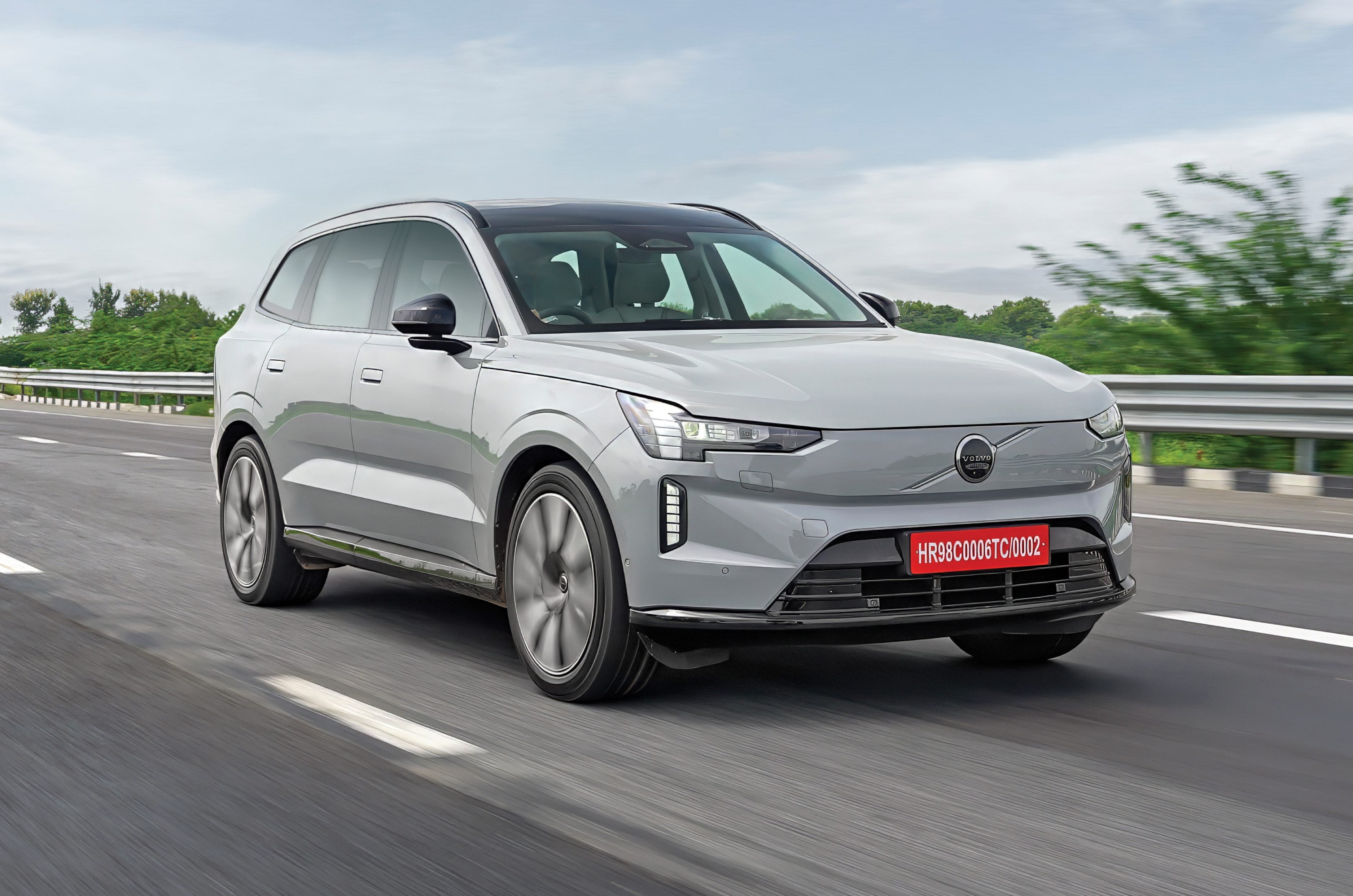
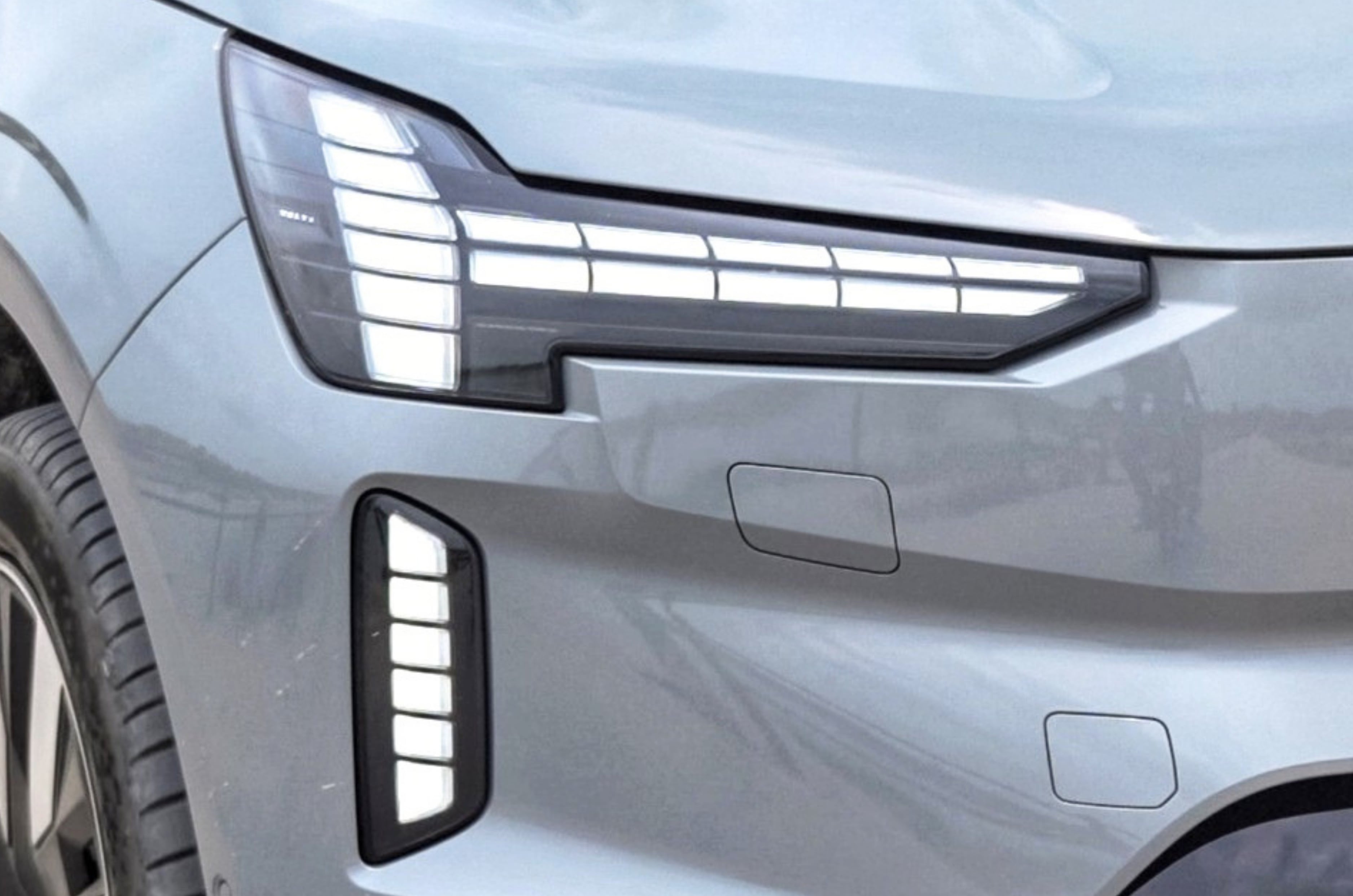
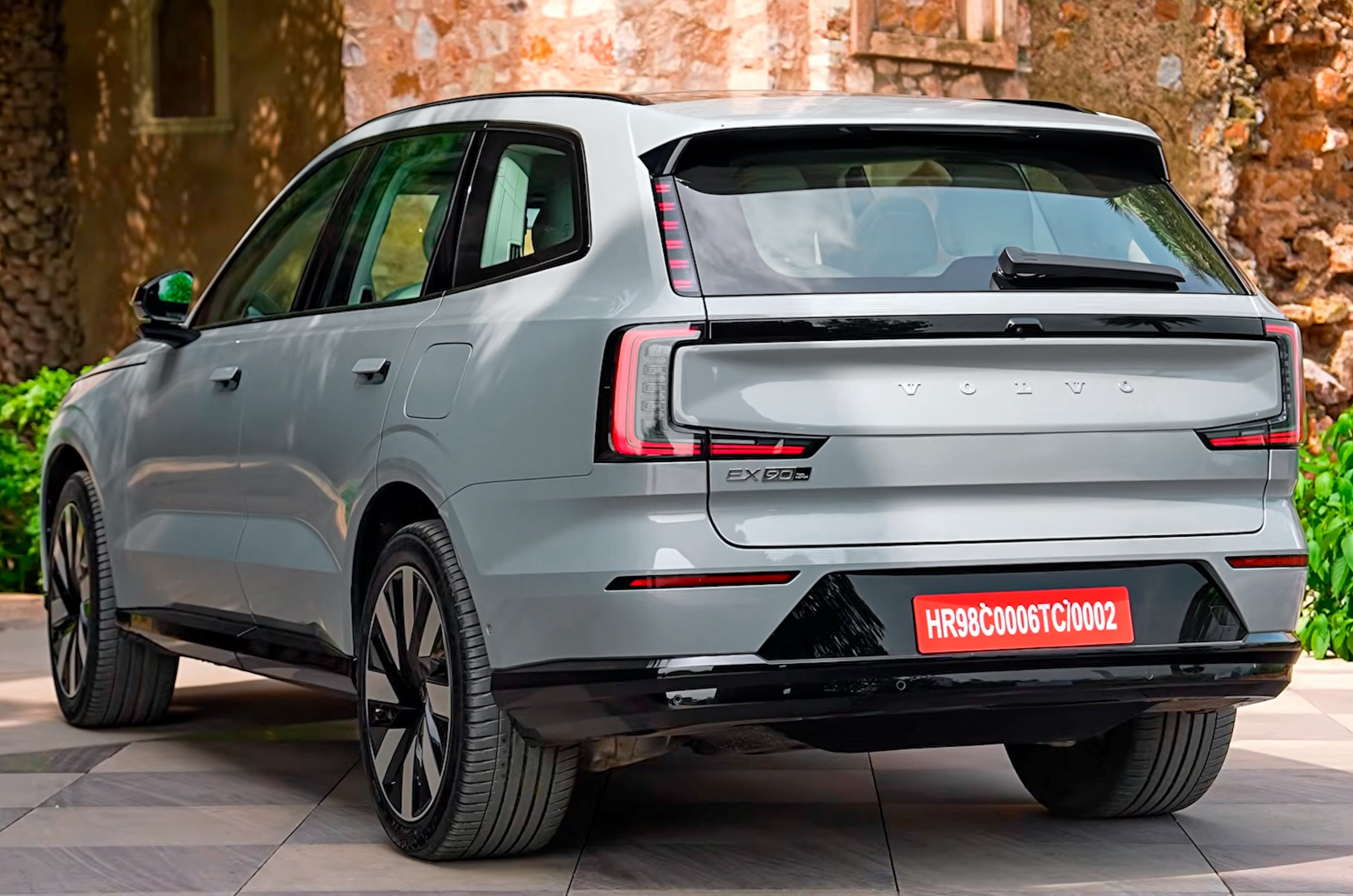
On the outside, the EX90 carries forward Volvo’s hallmark minimalistic styling, but with some new-age touches. The front end gets T-shaped LED headlamps with pixel-like DRL signatures, below which sit slim, vertically oriented fog lamps. There’s no grille on the fascia, only the Volvo emblem in the centre and a trapezoidal air dam lower down.
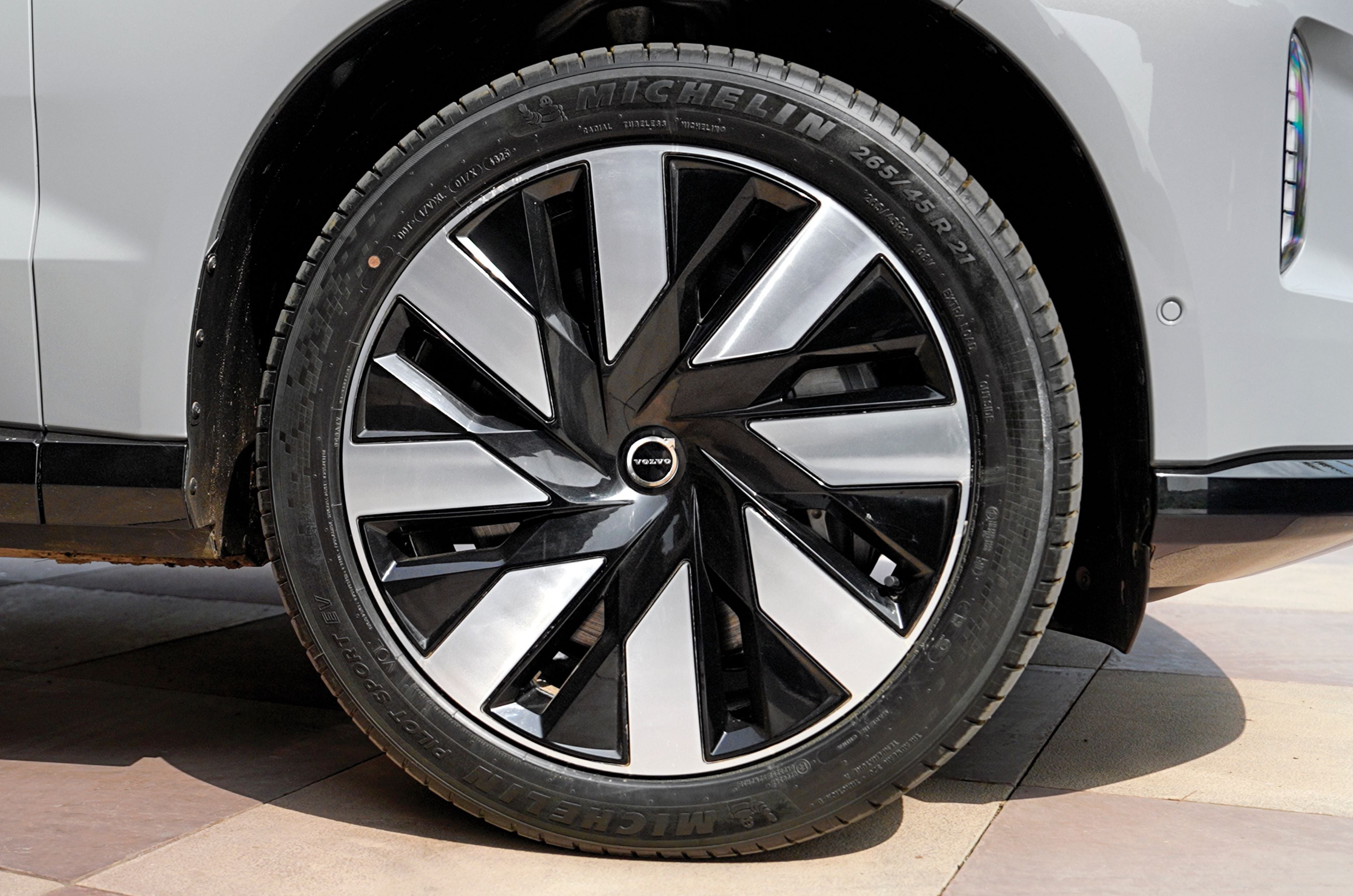
The side profile is clean and upright, with a 2,985mm wheelbase, 21-inch alloy wheels as standard, and a 210mm ground clearance. Air suspension is standard fit on the EX90 too, allowing you to raise the ground clearance to a maximum of 250mm.
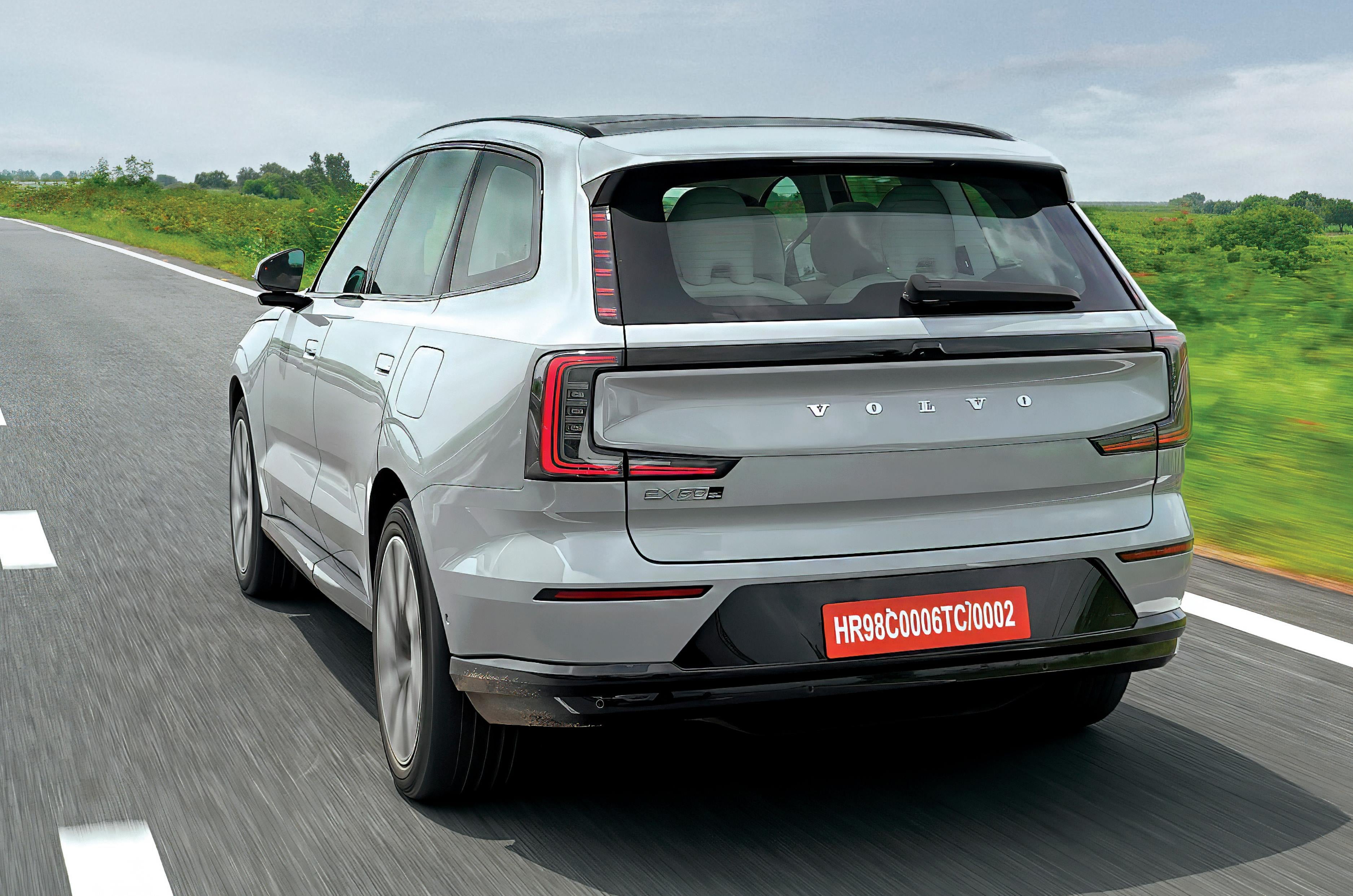
At the back, the EX90 features C-shaped LED tail-lamps connected by a black strip, along with LED arrays flanking the rear windscreen. A Volvo wordmark sits proud in the centre of the bootlid, and the bumper has a neat and discreet design. Colour options for the EX90 comprise Crystal White, Denim Blue, Mulberry Red, Onyx Black, Sand Dune, and Vapour Grey.
Volvo EX90 interior and features
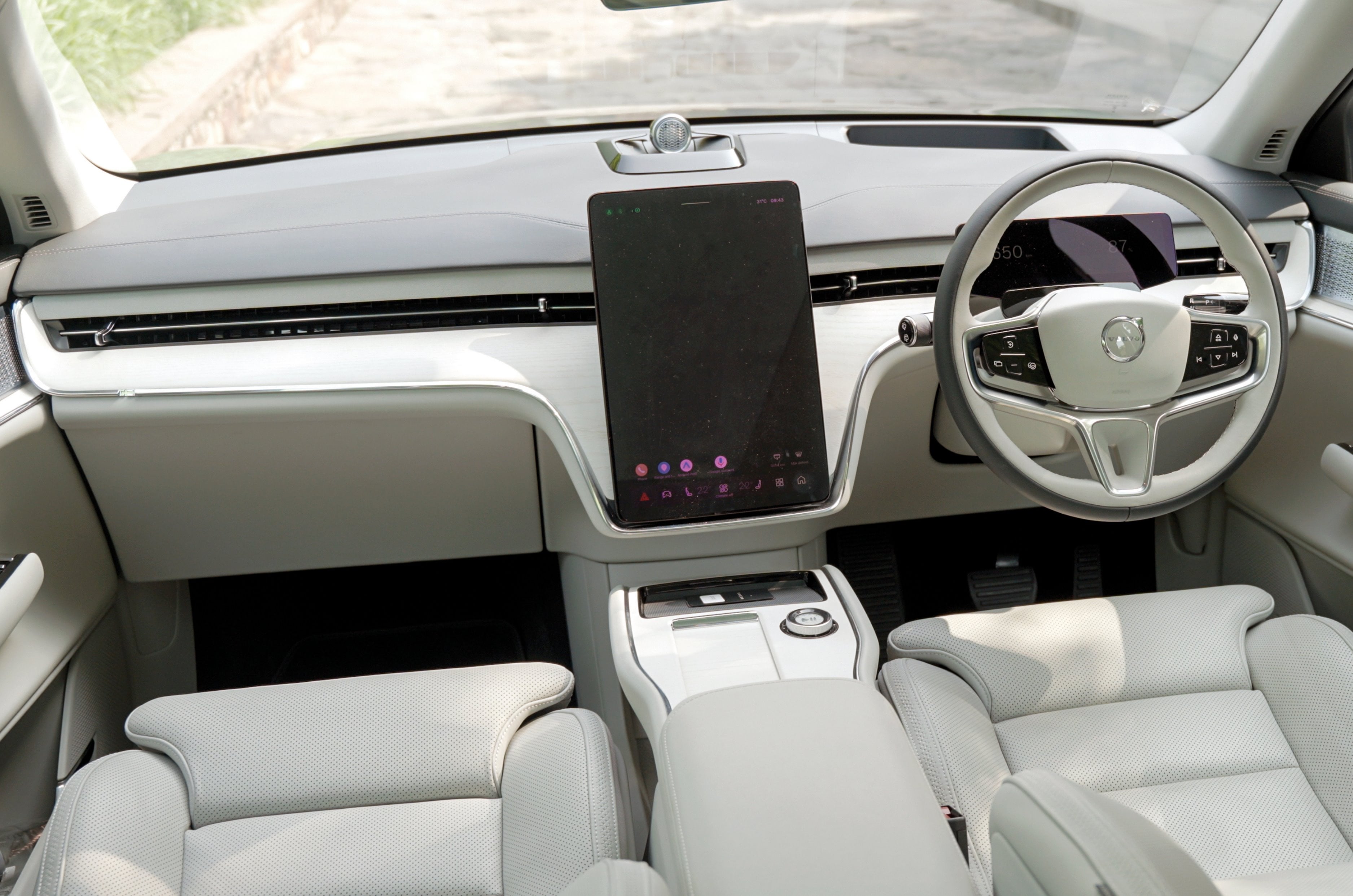
Volvo’s minimalist design philosophy extends to the EX90’s cabin, with a clean dashboard layout that incorporates rich two-tone Nappa leather upholstery, a three-spoke steering wheel, brushed aluminium trim pieces, a huge 14.5-inch vertically oriented infotainment touchscreen, and a slimmer 9-inch driver’s display. Physical controls are a rare sight in the cabin, as most of the in-car functions have been folded into the central touchscreen.
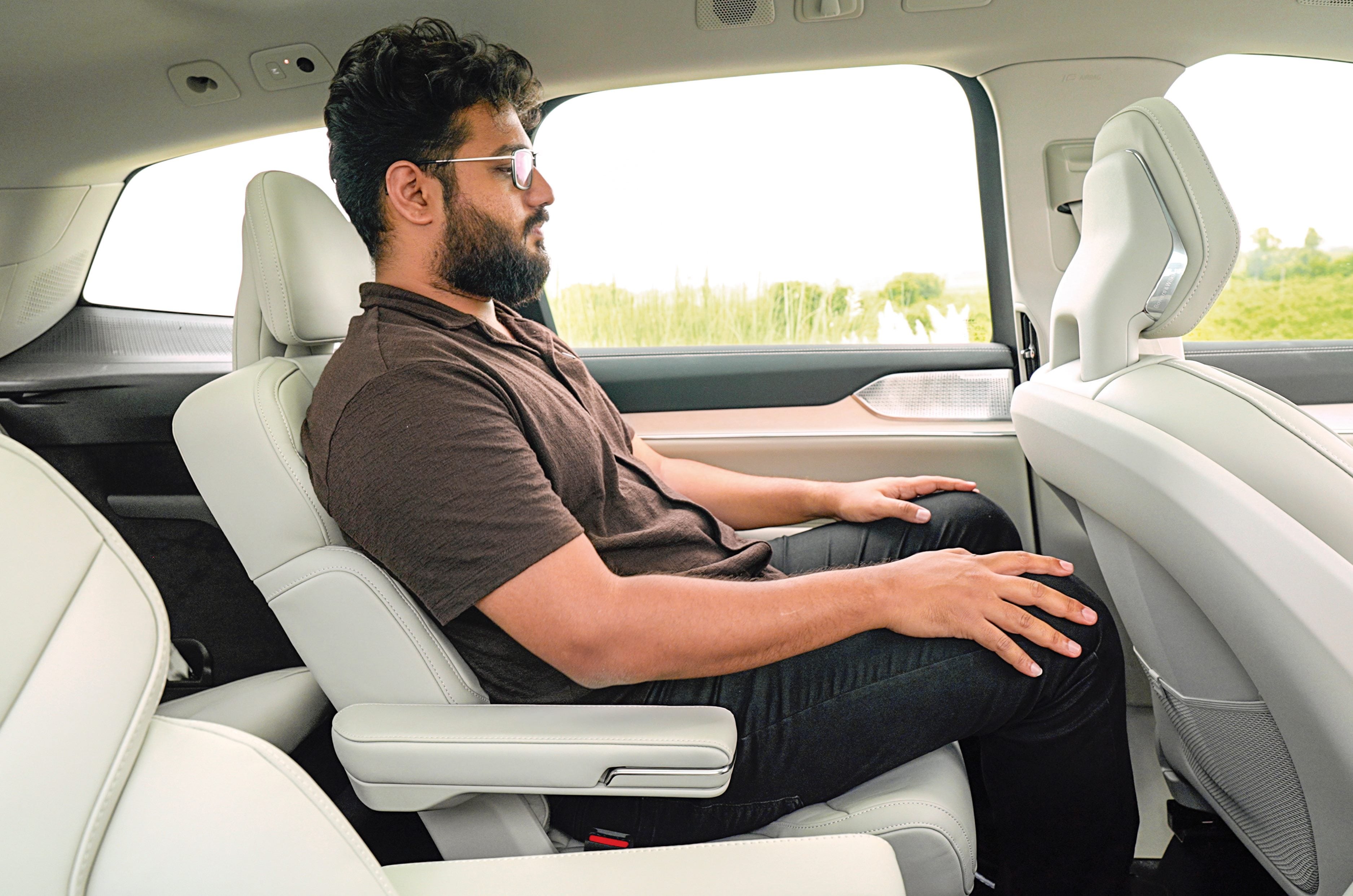
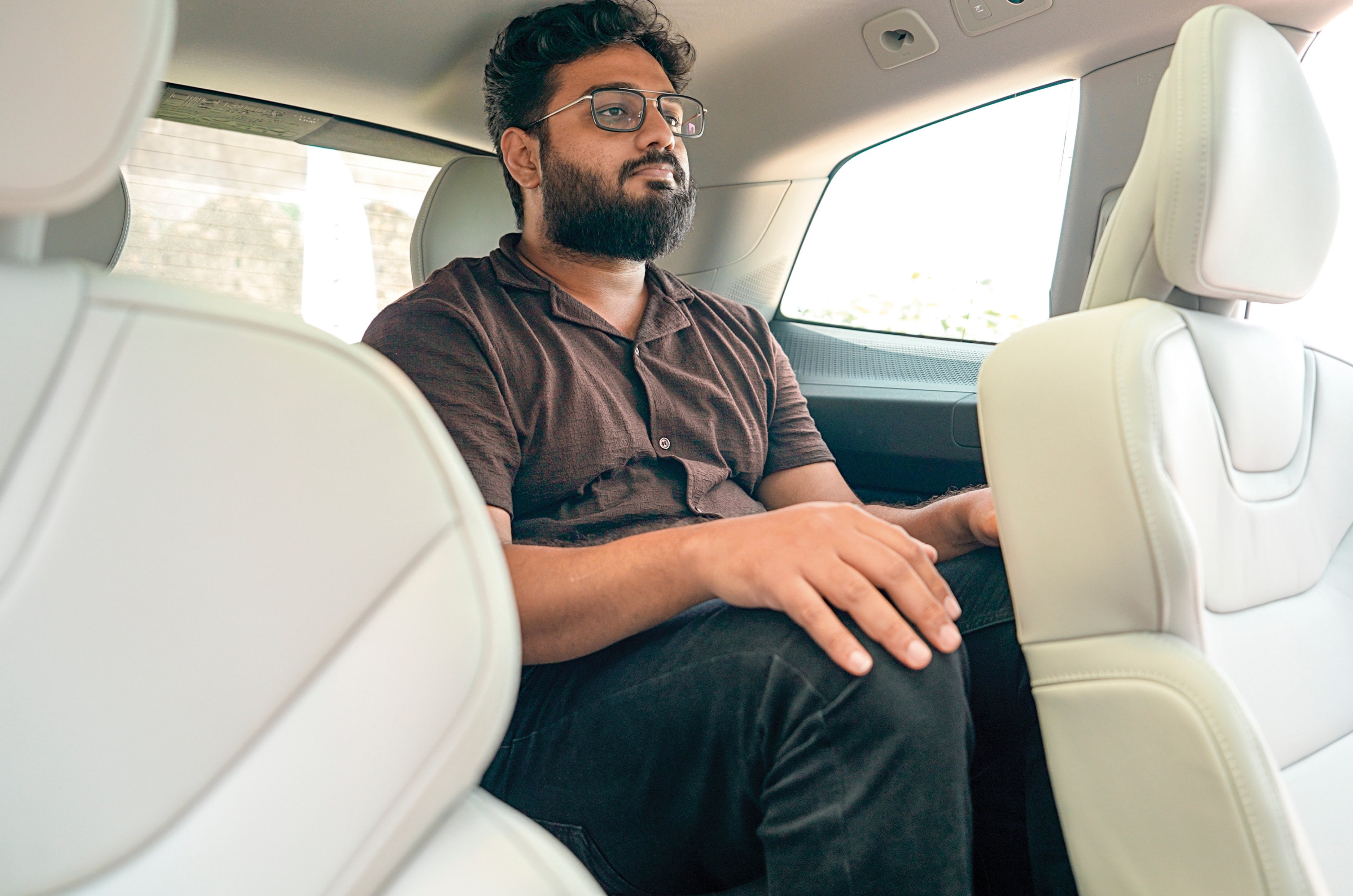
As noted previously, the India-spec EX90 is offered solely as a 6-seater with second-row captain’s chairs that slide and recline. There’s good space and comfort for second-row occupants, but these captain’s chairs don’t get the electrical adjustment, ventilation, heating, and massage functions that the front seats do. There are no sunshades for the rear windows, either, but you do get a large panoramic sunroof with switchable transparency.
Coming to the third row, access is easy by way of the space between the captain’s chairs (they don’t fold down, though). Once you’re there, however, the space on offer is best-suited to kids, or adults on short drives. Boot space is rated at 324 litres with the third row up, and if you fold that down, the capacity increases to 690 litres. You get a 46-litre frunk as well.
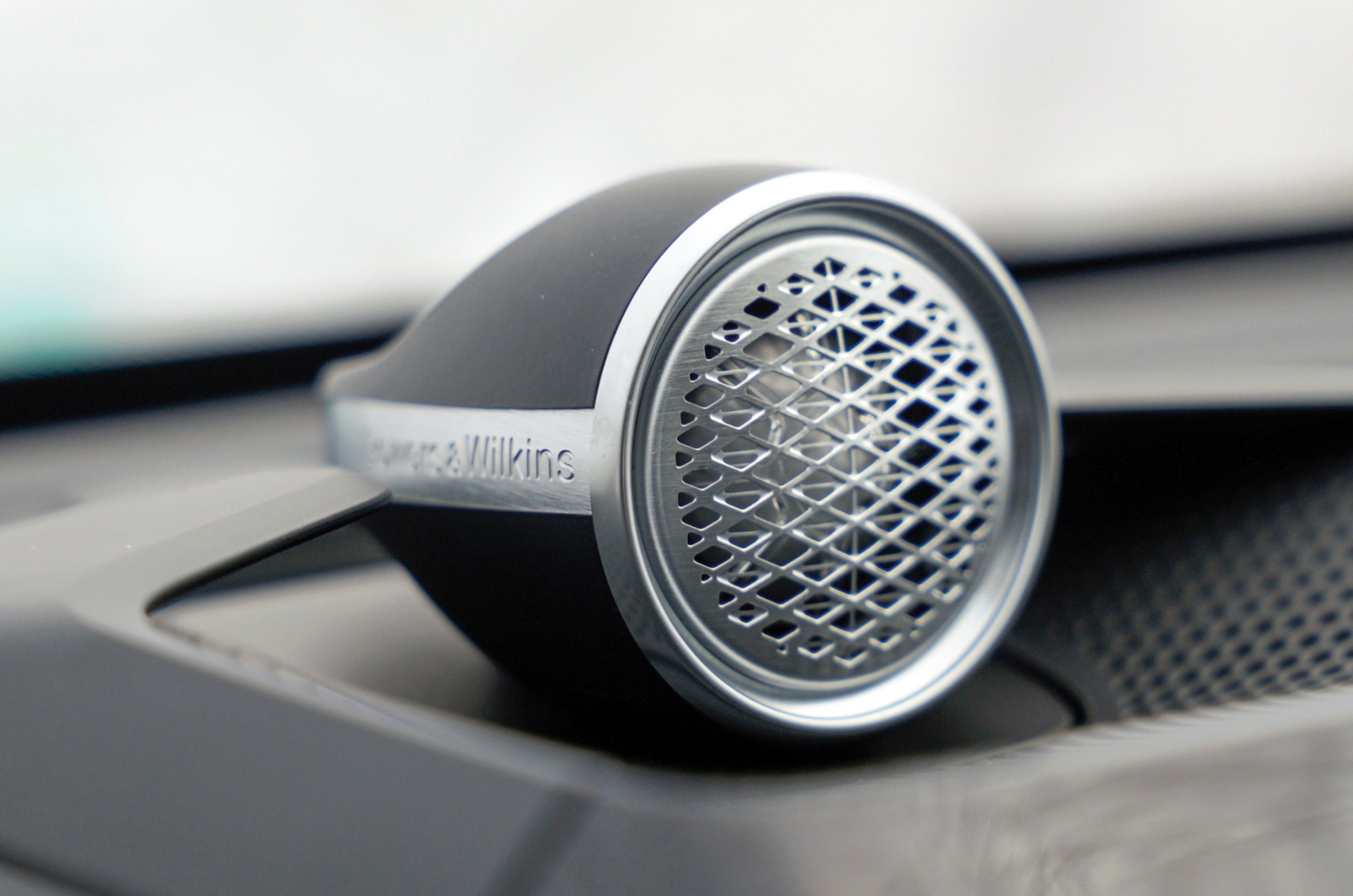
In addition to the features mentioned above, the EX90 comes packed with four-zone climate control, a 25-speaker Bowers & Wilkins sound system, configurable ambient lighting, 9 airbags, an ADAS suite, wireless Apple CarPlay and Android Auto, a 360-degree camera, auto park assist, a digital key, a wireless charging pad, a cabin air purifier, and more.
The Volvo EX90 rivals electric luxury SUVs like the Mercedes-Benz EQS SUV 580 and Kia EV9, which are priced at Rs 1.49 crore and Rs 1.30 crore, respectively. With its Rs 1.26 crore price tag, the EX90 undercuts both of its chief rivals.
This month, we go big on power and even bigger on premium metal. The cover story is Kia’s biggest swing yet at the executive SUV segment, and then there’s a family SUV with more horsepower than a Lamborghini, and BMW’s electric onslaught continues with a new long-wheelbase sedan and a sharper flagship limousine.
Kia Sorento: Cover Story
Six trims, two powertrains, up to seven seats and 32 variants in all. Kia isn’t dipping a toe into the premium SUV pool; it’s diving straight in, locally assembling the Sorento from Rs 27.99 lakh to take on the Skoda Kodiaq and VW Tayron. Has Kia cracked the code, or has it bitten off more than it can chew?
Porsche Cayenne Electric: First Drive
Forget hypercars. The most powerful vehicle currently on sale in India is a family SUV, the Cayenne Electric, with more horsepower than your senses can fathom. We took it to an airstrip to see what that actually does to your stomach.
BMW i5 LWB & i7 Facelift: First Drives
BMW’s electric push continues, with a long-wheelbase i5 slotting in between the iX1 and flagship i7. Can BMW’s long-wheelbase playbook continue to work? And there’s also the i7 getting a sharper face and more tech to go with it, like it didn’t have enough already.
Mercedes-Benz GLC Electric: Drive
The first-gen electric GLC was far from ideal. The new one, however, is a completely new generation with an 800V architecture, 330kW charging and a claimed 715km range. We took all 489 of its horses to the Autobahn to see how much of an improvement it has been over its predecessor.
MG Hector Tomahawk EV: First Drive
Don’t let the familiar name fool you. The Hector Tomahawk EV rides on MG’s all-new ADAPT platform, bigger than the Mahindra XEV 9S in every dimension, with a PHEV sibling already waiting in the wings.
Maruti Suzuki Baleno, Renault Triber Turbo and Skoda Slavia: First Drives
India’s favourite premium hatch, the Baleno, gets a new engine and ADAS, the budget-friendly Triber finally gets the power it’s been begging for, and the Slavia’s facelift turns out to be more than skin-deep.
Mahindra Thar OG: First Drive
The original three-door Thar gets another round of updates, bringing changes to its engines, equipment and chassis. With the off-road icon continuing to evolve, we head out to discover what this latest iteration brings to the table.
Taking the High Road: Features
Goa’s new Porvorim Elevated Corridor opens on NH66, and we test it in two ways: solo against Google Maps’ ETA in an MG Cyberster, and then flanked by a dozen supercars, Ferraris, a McLaren 750S and a Lamborghini Huracan among them, for its proper initiation.
Rocket Ship to the Moon: Feature
A Lamborghini SUV is already an exercise in excess. Take it somewhere unexpected, add a little spectacle, and you have the ingredients for an automotive adventure that refuses to be ordinary.
Royal Enfield Himalayan 440
The original Himalayan is back with a bigger engine and a handful of meaningful changes. In a world where adventure bikes keep getting more complicated, there’s something rather appealing about going back to basics.
Tracker 400 vs Guerrilla 450: Comparison
Two left-field street nakeds, the Triumph Tracker 400 and Royal Enfield Guerrilla 450, go head-to-head. One takes its inspiration from flat-track racers, while the other fancies itself a sporty roadster. Both want your money, and neither is particularly interested in being sensible about it.
KTM Adventure Rally Extreme: Ride
Adventure riding is all well and good until the road disappears, the terrain turns hostile and you begin questioning your life choices. We get a taste of KTM’s rally raid experience, where the only shortcut is having the skill to take one.
The Volvo ES90 will be launched in India tomorrow, marking a comeback for a Volvo sedan in the country after the S90’s discontinuation in 2024. Upon launch, it will serve as the manufacturer’s flagship EV alongside the EX90 SUV, which will also be launched alongside the ES90 sedan. Here’s everything you need to know about the upcoming Volvo ES90 ahead of its launch tomorrow.
1. What is the expected price of the Volvo ES90?
Prices are expected to be in the Rs 1 crore to Rs 1.20 crore range (ex-showroom)
The Volvo ES90 will arrive in India as a completely built unit (CBU) import. It is expected to be priced in the Rs 1 crore to Rs 1.20 crore range (ex-showroom) in the country.
2. What powertrain option will the India-spec Volvo ES90 get?
Gets two battery pack options and choices between RWD and AWD internationally
The Volvo ES90 is built on the manufacturer’s 800-volt SPA2 architecture shared with the EX90 eSUV. Internationally, the ES90 is offered with either a 92kWh or a 106kWh battery. The smaller battery has a claimed WLTP range of 664km and is paired with a rear-axle-mounted (RWD) electric motor that produces 333hp and 480Nm. It has a claimed 0-100kph time of 6.6 seconds and has a 180kph capped top speed. It supports up to 350kW DC fast charging, which can replenish the battery from 10-80 percent in 22 minutes.
The larger 106kWh battery has a claimed WLTP range of 702km, and is offered with a dual-motor all-wheel-drive (AWD) setup producing either 456hp and 670Nm, or 680hp and 870Nm, with claimed 0-100kph sprint times of 5.4 seconds and 4 seconds, respectively, depending on the chosen trim. 180kph capped top speed, 350kW DC fast-charging capability, and 22-minute 10-80 percent charging time are the same as the smaller battery version.
Volvo is yet to reveal which powertrain option will be offered with the India-spec ES90 sedan.
3. What are the design highlights of the Volvo ES90?
Gets LED lights all around, with a rather simple and elegant design
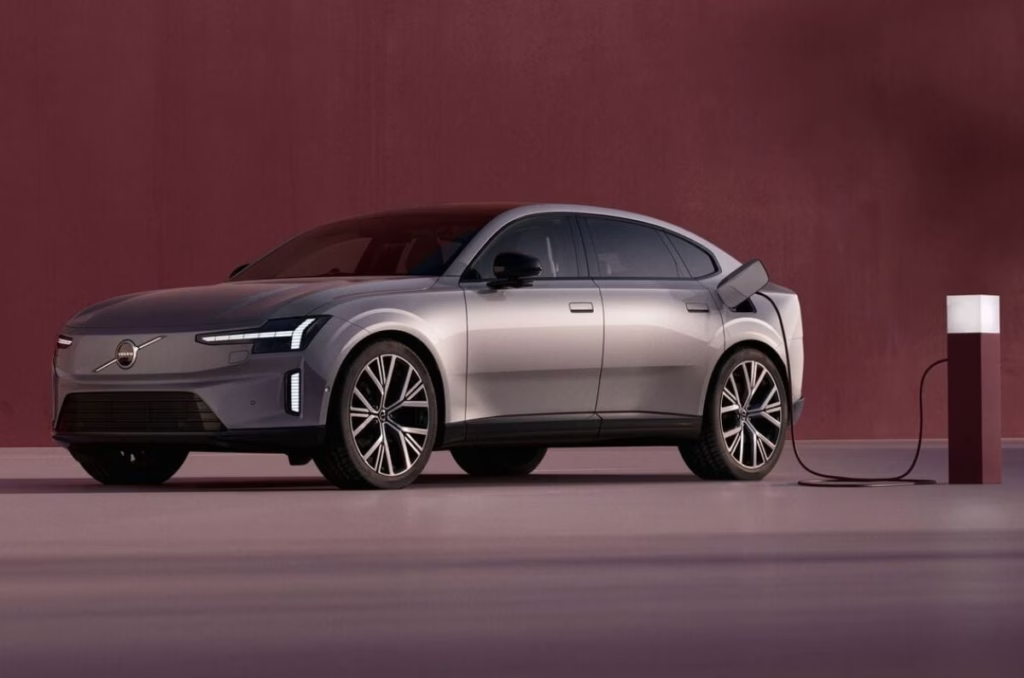
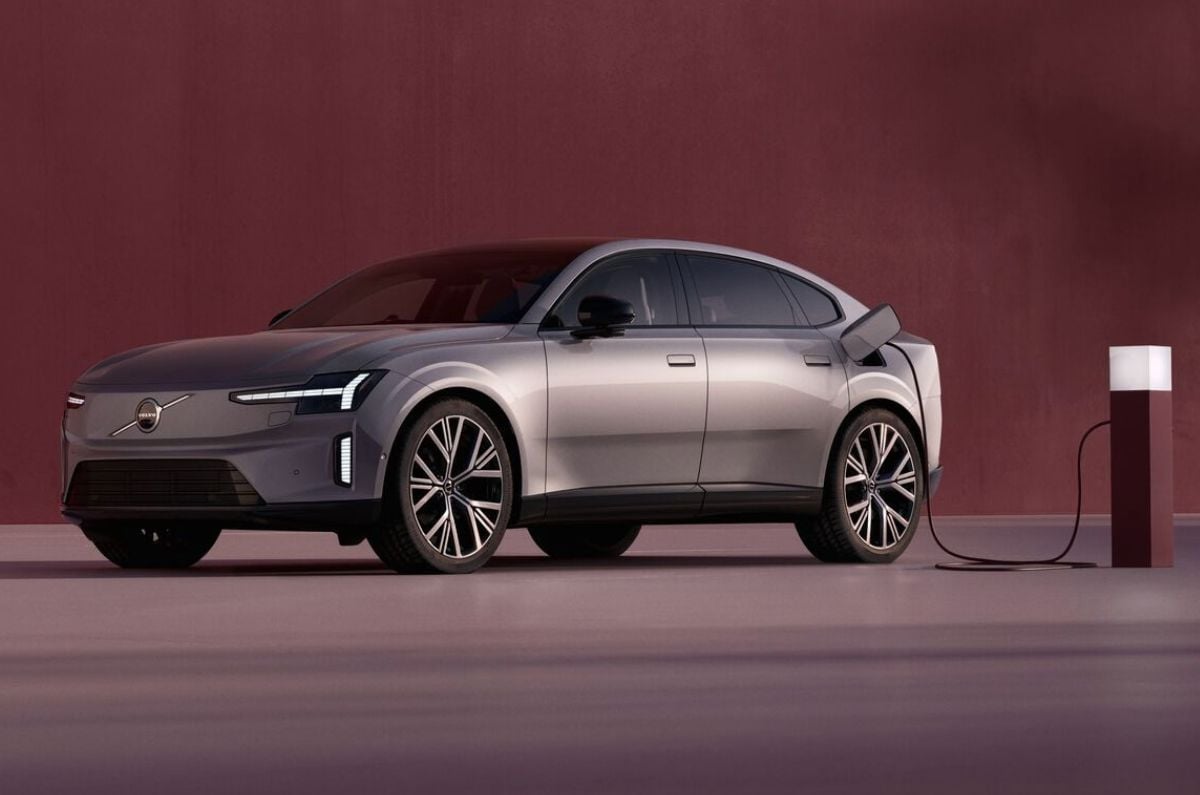
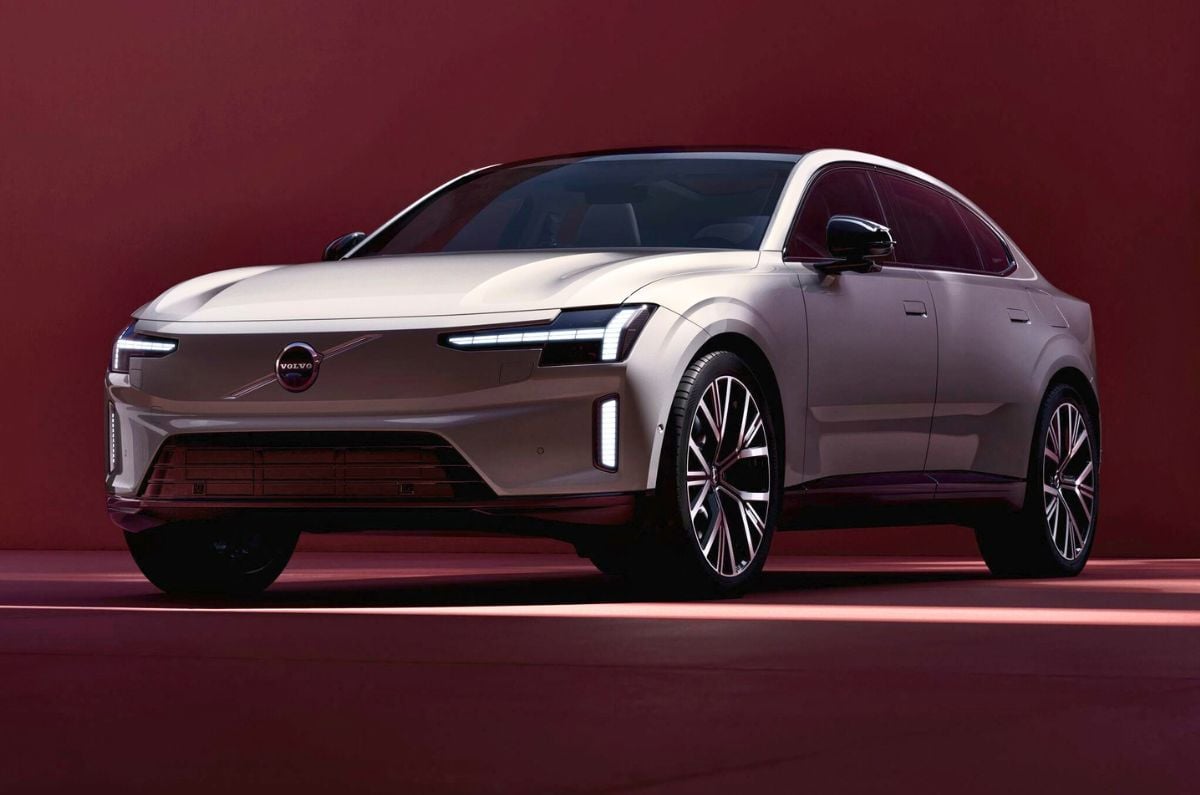
The Volvo ES90 features a blanked-off body-coloured grille with a Volvo logo in the centre, flanked by LED headlights with segmented Thor’s hammer LED DRLs on both ends. The bumper has air inlets in the centre to cool the internals and features vertically stacked LED fog lamps similar to those on the EX90. A LiDAR sensor was previously mounted on the edge of the roof, but is no longer offered on Volvo’s MY2026 models in international markets, following the termination of Volvo’s contract with its supplier, Luminar, after the latter filed for bankruptcy.
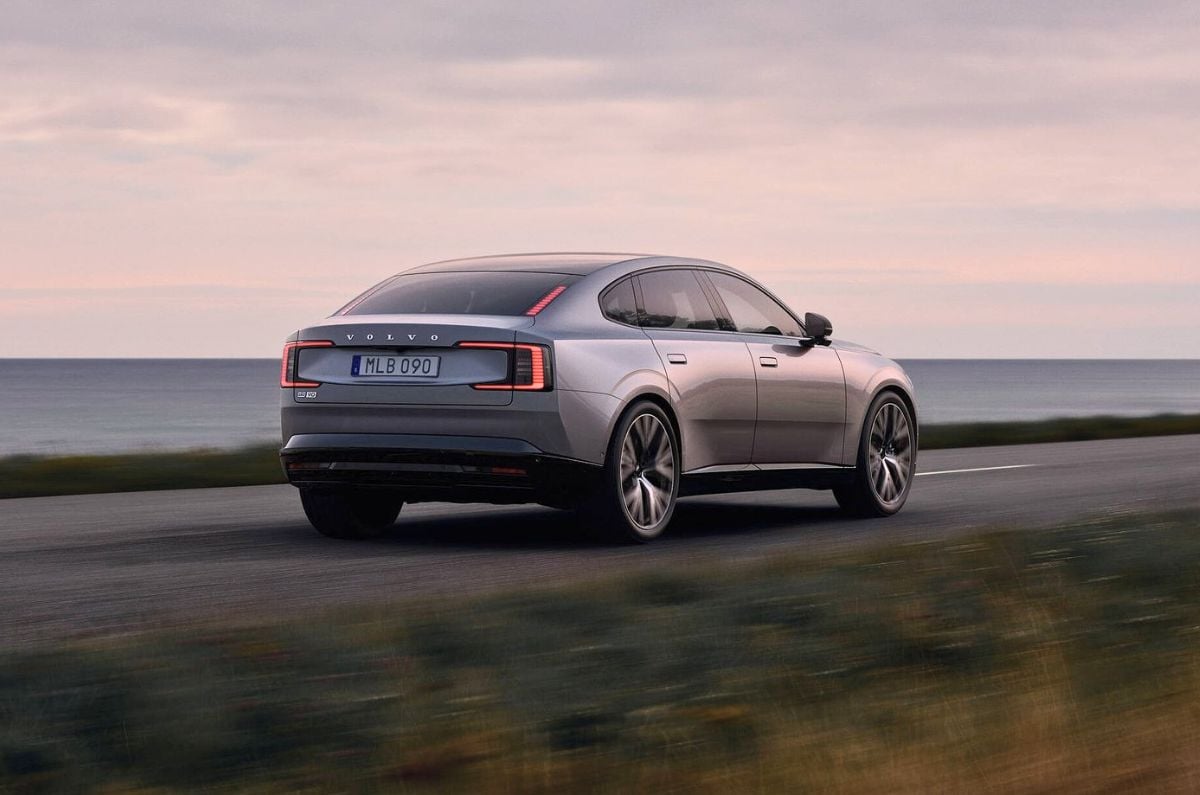
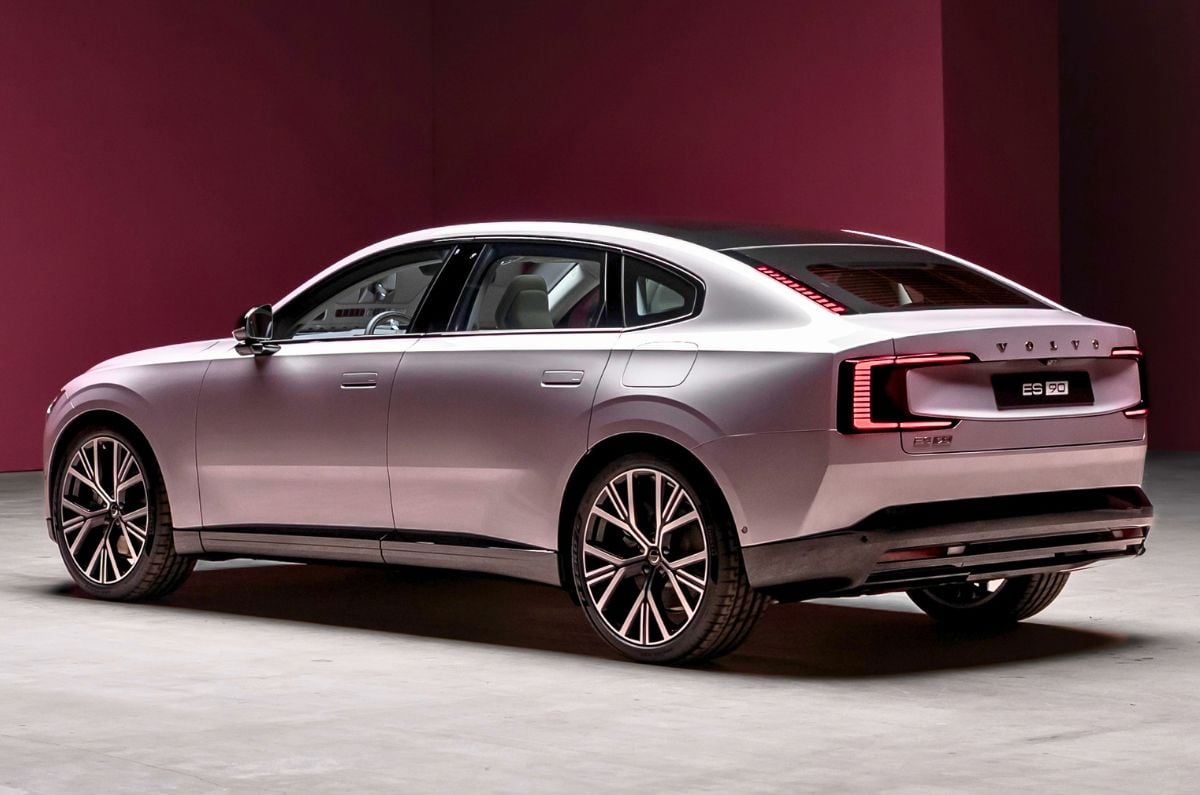
In profile, it offers wheel sizes ranging from 20 to 22 inches, all with aerodynamic inserts. It gets a gloss black section on the lower portion of the doors, along with black outside rearview mirrors (ORVMs) and a blacked-out roof, which add contrast. It gets sleek pull-type door handles. Interestingly, the ES90 has a drag coefficient (Cd) of 0.25, making it Volvo’s most aerodynamic production car yet.
At the rear, it features C-shaped wraparound LED taillights and LED stop lights on both sides of the rear windscreen, similar to the EX90. The rear bumper features a gloss black portion that gives a nice contrast to the otherwise simple design.
4. What features will the Volvo ES90 offer?
Features two free-standing screens, 4-zone AC, and up to 25 speakers
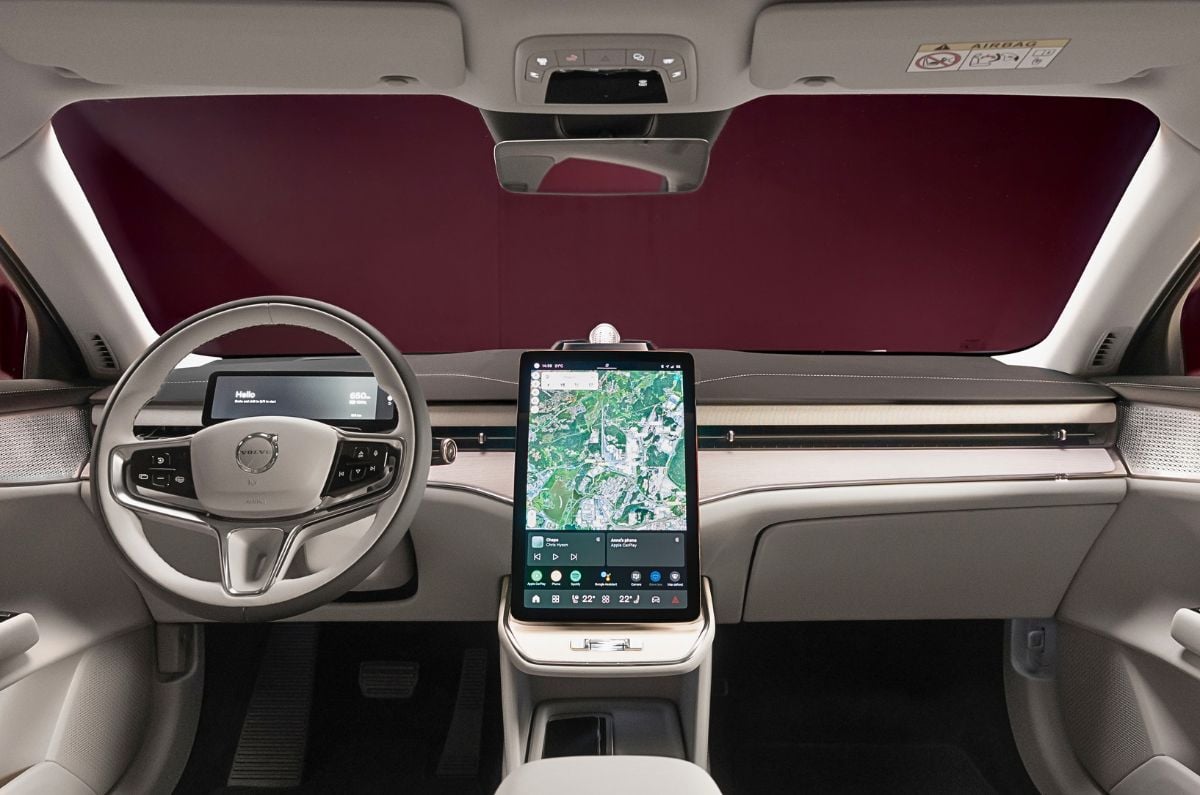
Inside, the Volvo ES90 has a clean design and is filled to the brim with modern-day features. These include a 14.5-inch portrait-oriented, free-standing infotainment touchscreen, a 9-inch digital driver’s display, a 13.2-inch coloured head-up display (HUD), and a 14-speaker Bose sound system, which can be upgraded to a 25-speaker Bowers & Wilkins audio setup. Other features include a wireless phone charger, a powered tailgate, a 4-zone climate control and a digital key. The front seats are powered, heated, ventilated and offer a massage function with powered lumbar support. The rear seats are electrically reclinable, have powered side bolsters, and are offered with heating and ventilation functions.
Most of these features are expected to be a part of the India-spec Volvo ES90.
5. Which cars will the Volvo ES90 rival in India
Will be a more affordable alternative to full-size BMW and Mercedes-Benz electric sedans
The Volvo ES90 will be a more reasonably priced alternative to the Mercedes-Benz EQS sedan (Rs 1.30 crore) and the BMW i7 (Rs 1.95 crore).