Tesla Model Y vs Mercedes CLA EV real-world range compared

Tesla Model Y vs Mercedes CLA EV real-world range compared

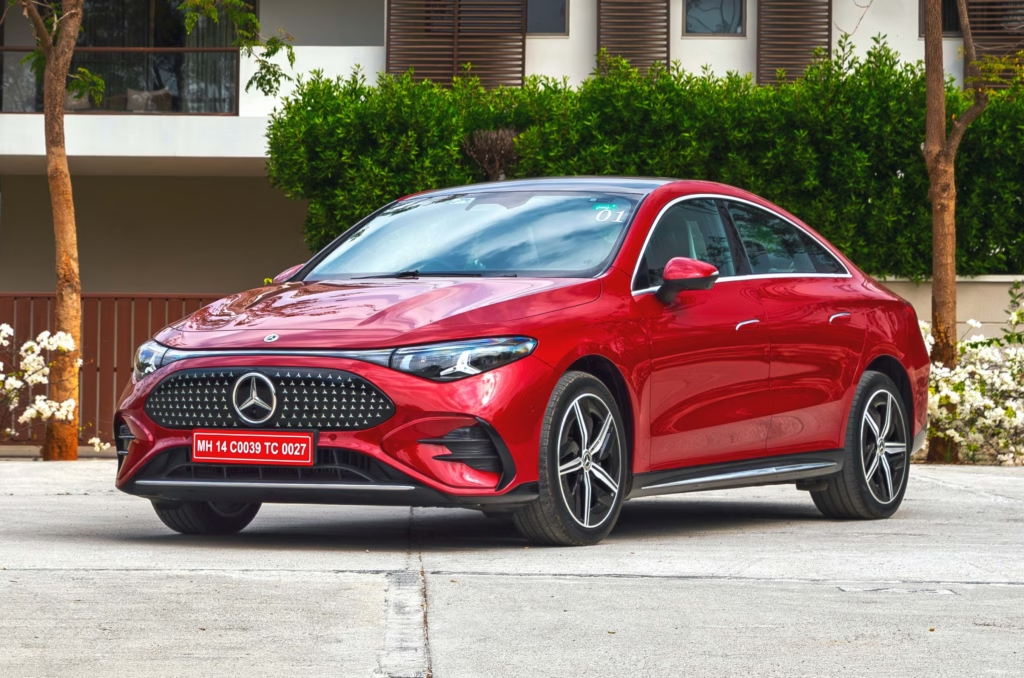
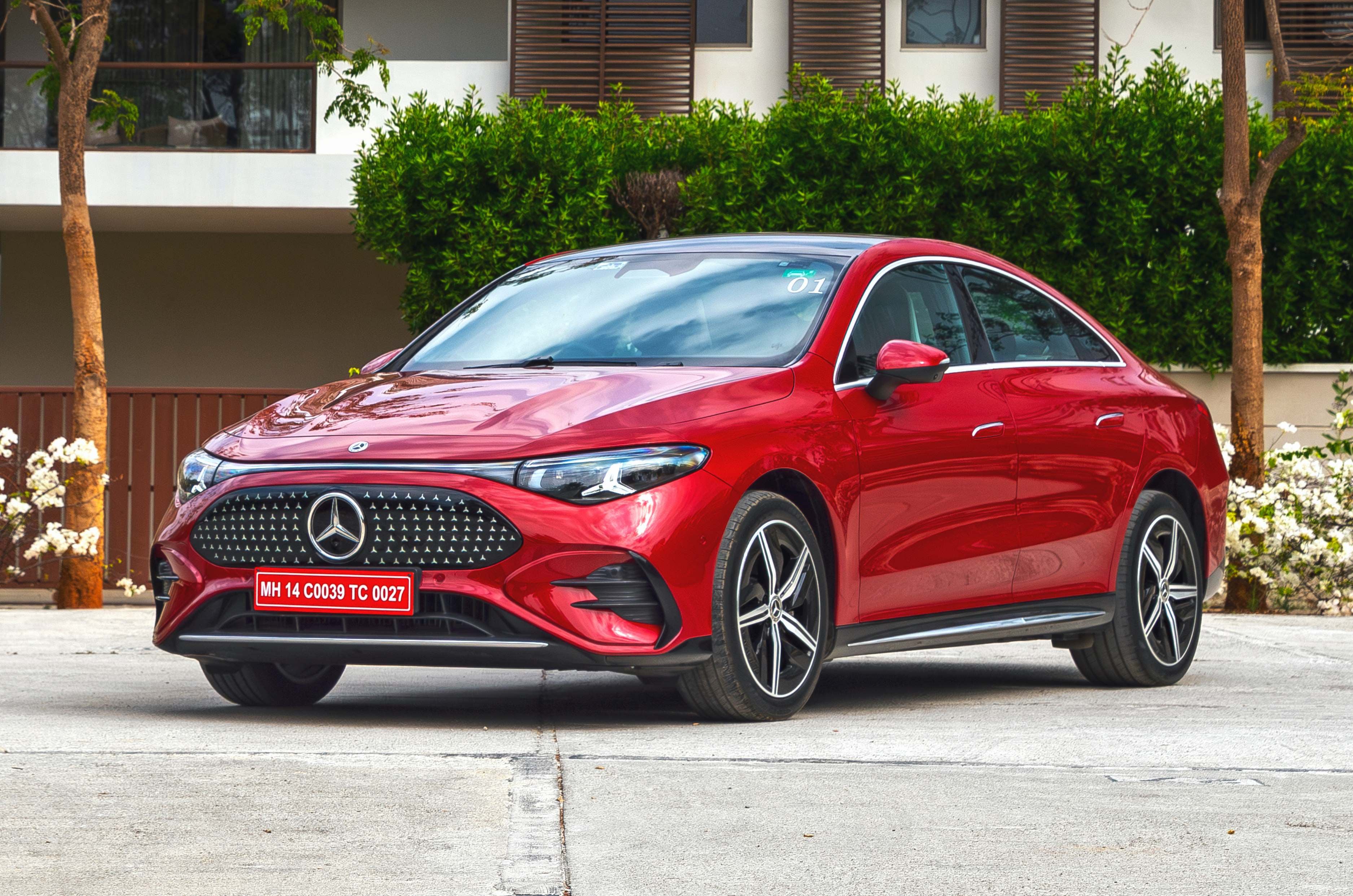
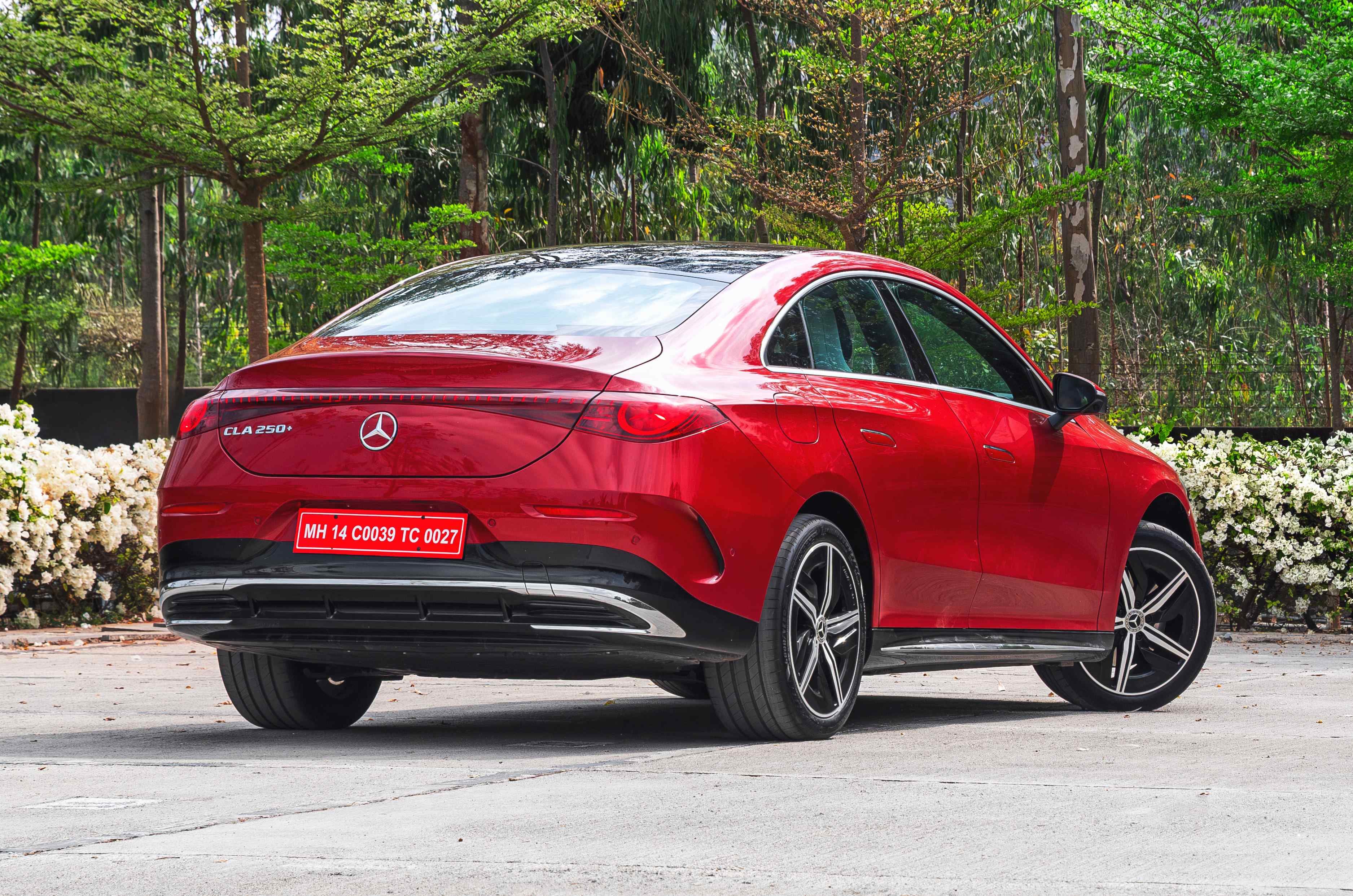
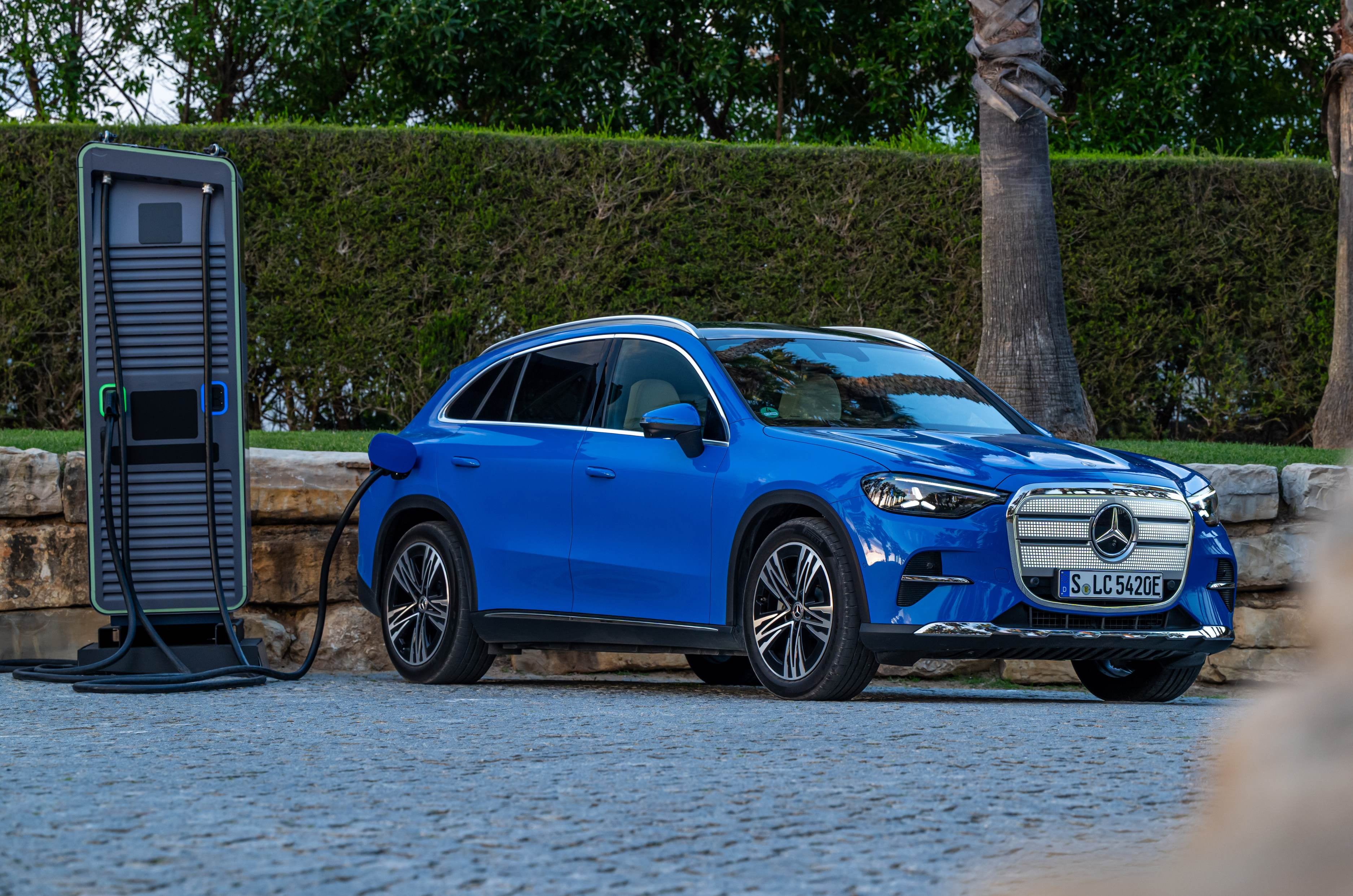
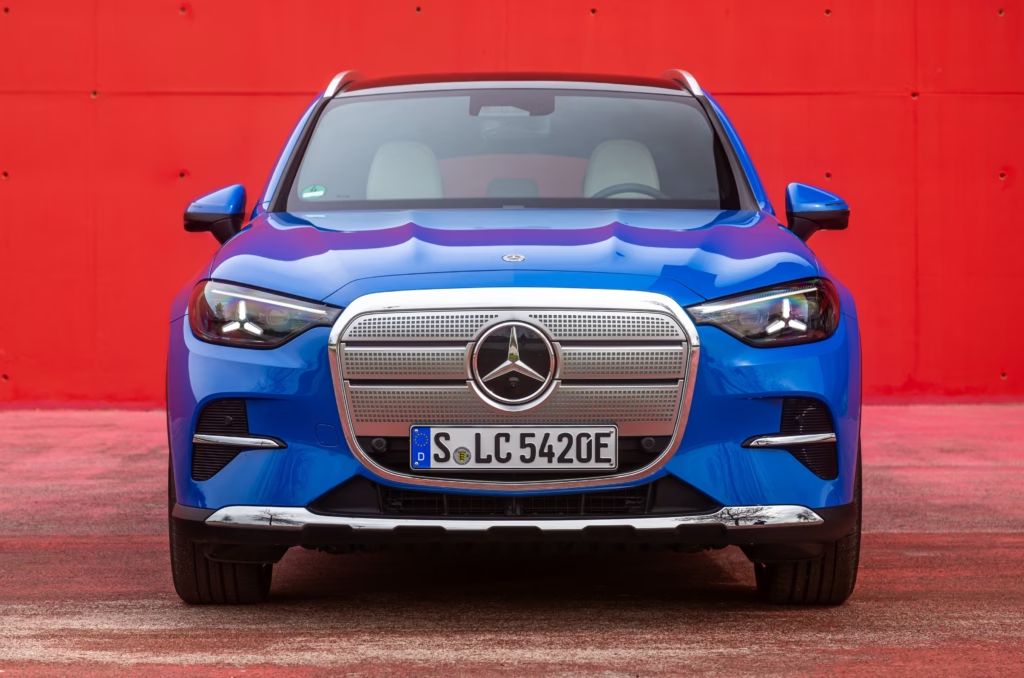
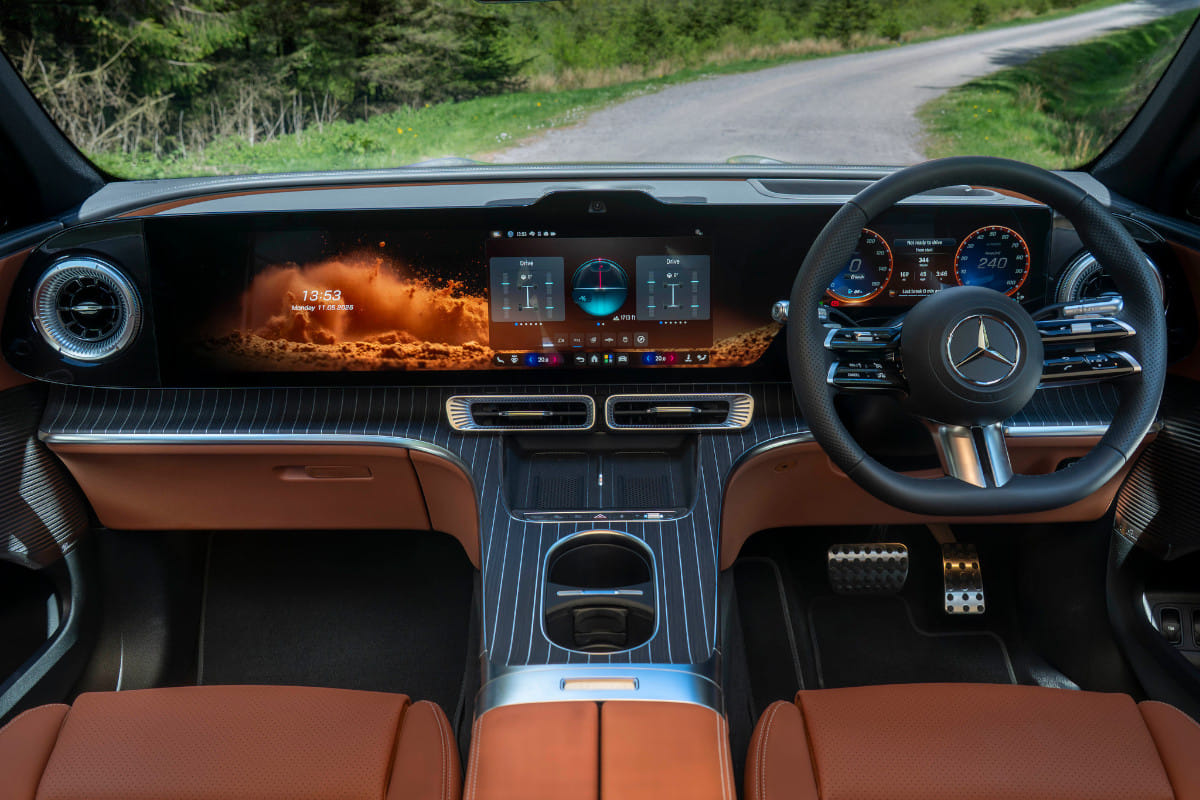
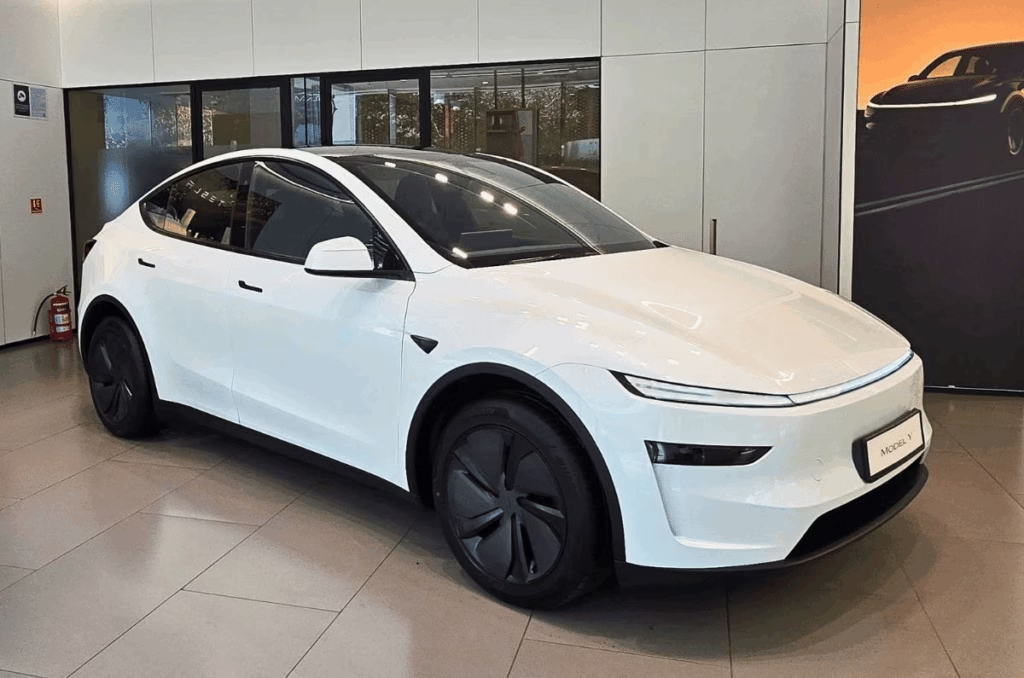
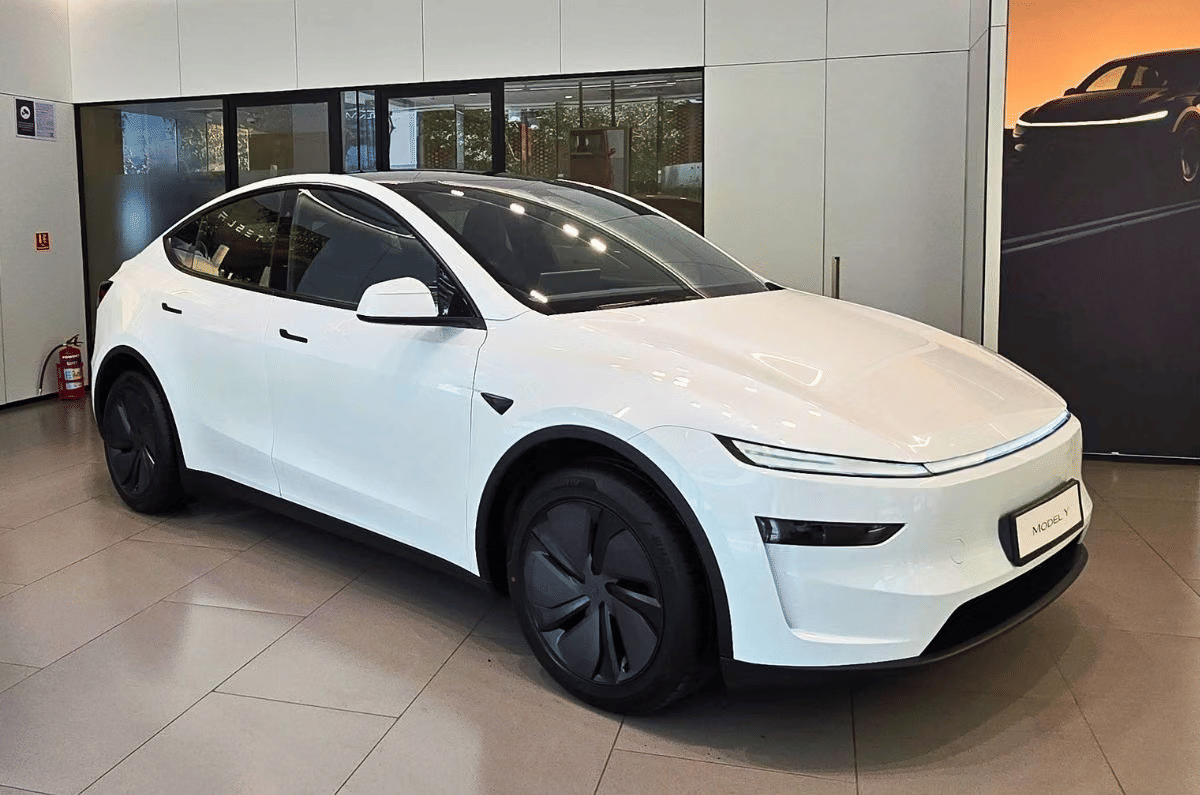
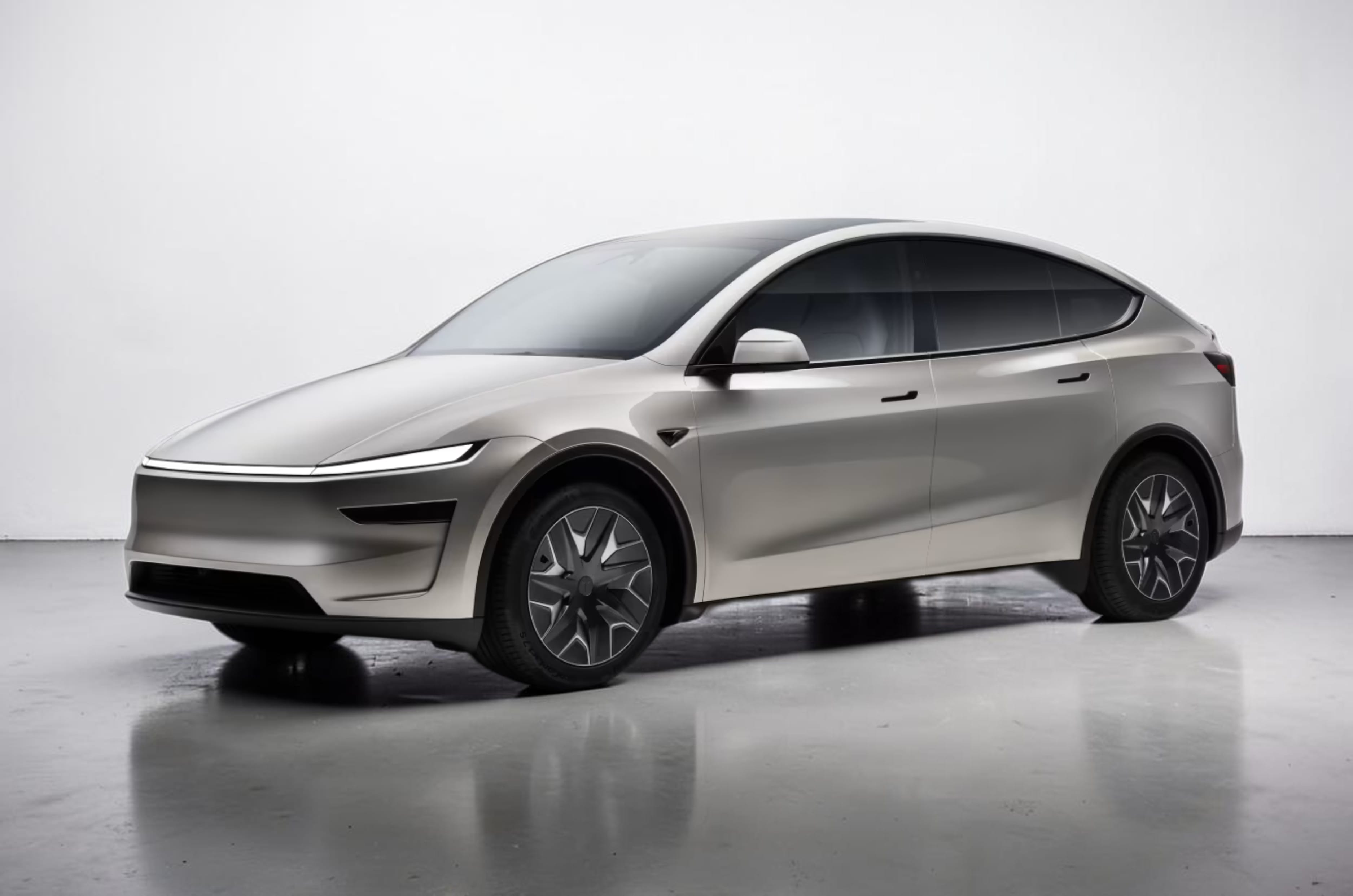
The Tesla Model Y and Mercedes-Benz CLA EV are two zero-emission offerings priced below Rs 65 lakh, but they take very different approaches. The Model Y is a crossover and Tesla’s only model on sale in India, while the CLA sedan is the entry point to Mercedes-Benz’s EV range. They also use different battery sizes and claim different ranges. We recently put both to our comprehensive range tests to see how they compare in the real world.

Tesla Model Y vs Mercedes CLA EV: Specifications, price

 Model Y PremiumCLA EV 250+ AMG Line
Battery size (kWh)6085
Power (hp)299272
Torque (Nm)420335
Drive layoutRWDRWD
Claimed range (km)500792
Kerb weight (kg)1,9282,055
Price (in Rs lakh)50.8960.50

Both are rear-wheel-drive electric vehicles, but the CLA 250+ AMG Line has a much larger 85kWh battery compared to the Model Y Premium RWD’s 60kWh unit. This gives the CLA a claimed range of 792km, significantly higher than the Model Y’s 500km.

The Tesla, however, makes more power and torque at 299hp and 420Nm, compared with 272hp and 335Nm for the CLA. The Model Y is also lighter at 1,928kg versus 2,055kg for the CLA.

There is also a noticeable price difference. The Model Y Premium RWD costs Rs 50.89 lakh – Rs 9.61 lakh less than the CLA 250+ AMG Line, which is priced at Rs 60.50 lakh.

Tesla Model Y vs Mercedes CLA EV: Real-world range

 Model Y PremiumCLA EV 250+ AMG Line
City (km)350584
Highway (km)391639
Average (km)370611.5

Clearly, the CLA 250+, with its larger battery pack, has the upper hand in real-world range despite weighing more. In our tests, it managed 584km in the city and 639km on the highway, compared with 350km and 391km, respectively, for the Model Y. The two-speed gearbox, with its taller 5:1 second gear that enables greater efficiency at higher speeds, also contributed to the EV’s highway efficiency. This gives the CLA an average real-world range of 611.5km, which is 241.5km more than the Model Y’s 370km.

Its slightly lower drag coefficient of 0.21 versus 0.22 for the Model Y is also a contributor to its higher range. That said, a 0.22Cd figure is still excellent for a crossover.

Tesla Model Y vs Mercedes CLA EV real-world range compared

The Mercedes sedan also has stronger regenerative braking. In the strongest regen mode, the CLA EV slowed from 80kph to 20kph in 6.98 seconds, covering 96.36 metres. The Tesla Model Y took 8.28 seconds and needed 116.71 metres to cover the same speed reduction. One-pedal driving is available on both EVs.

Autocar India’s range testing

For our real-world range comparisons, we begin with each car’s battery fully charged and tyre pressures set as per the manufacturer’s recommendations. We drive the cars on a fixed loop covering both city and highway stretches while maintaining set average speeds. We then calculate the range based on the percentage of charge consumed. The AC is set to 22deg C in auto mode, and we use features such as the music system, lights and ventilated seats as needed, just as a regular user would. This approach ensures consistency and gives a clear idea of what to expect in actual conditions.

Ex-showroom prices mentioned above are as of August 20, 2026.

Volvo EX90, ES90 India launch on October 12

Volvo EX90, ES90 India launch on October 12
volvo ex90 es90 india launch

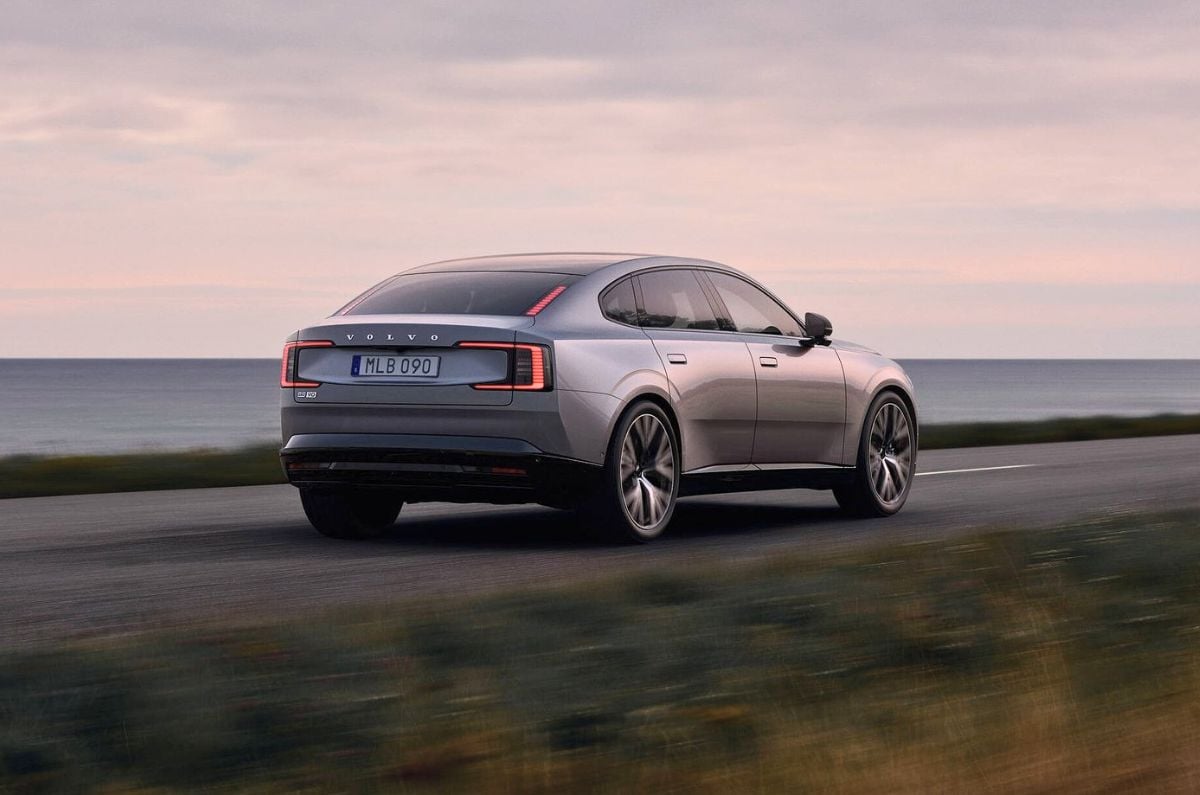
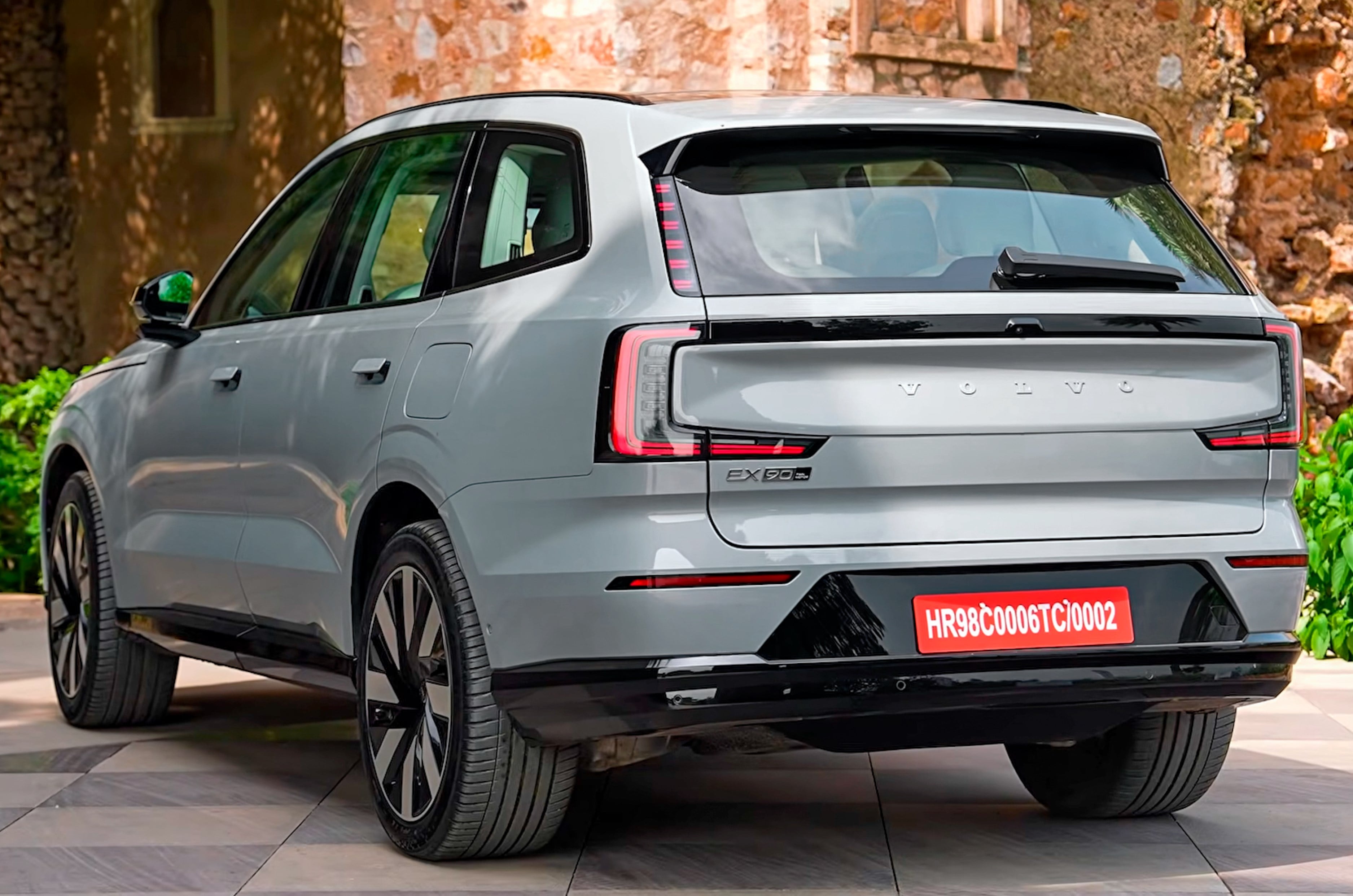
Volvo has confirmed that it will launch two new EVs, the EX90 SUV and the ES90 sedan, in India on October 12, 2026. The EX90 and ES90 will serve as Volvo’s flagship electric offerings for the Indian market. Notably, the ES90 will mark Volvo India’s return to the luxury sedan space, following the discontinuation of the S90 in June 2025. The EX90 is expected to rival the likes of the Mercedes-Benz EQS and Kia EV9, while the ES90 is likely to go up against the BMW i5.

Volvo EX90, ES90 battery and range

Identical 92kWh RWD and 106kWh AWD powertrains

The EX90 and ES90 are both underpinned by Volvo’s SPA2 platform, which features as 800V electrical architecture. In global markets, both EVs can be had in 92kWh (Single Motor) and 106kWh (Twin Motor) guises. In 92kWh spec, the EX90 and ES90 get a single rear-mounted motor (RWD) outputting 333hp and 480Nm. Meanwhile, the 106kWh battery option is split into Twin Motor and Twin Motor Performance variants, developing 456hp/670Nm and 680hp/870Nm, respectively.

For the EX90, 0-100kph comes up in a claimed 6.6 seconds for the 92kWh, 5.3 seconds for the 106kWh Twin Motor, and 4 seconds for the Twin Motor Performance. The ES90 Twin Motor is slightly slower from 0-100kph at 5.4 seconds, but mirrors the EX90 for the other variants.

As for WLTP range, the EX90 92kWh is rated at 565km, while the Twin Motor and Twin Motor Performance trims manage 608km and 602km, respectively. Meanwhile, the ES90’s WLTP range is certified at 664km for the 92kWh variant and 696km for the 106kWh versions.

Coming to charging speeds, both the EX90 and ES90 can utilise up to 350kW DC charging, and take 22 minutes for a 10-80 percent charge across all variants.

Volvo EX90, ES90 exterior design

Look quite different compared to the XC90 and S90

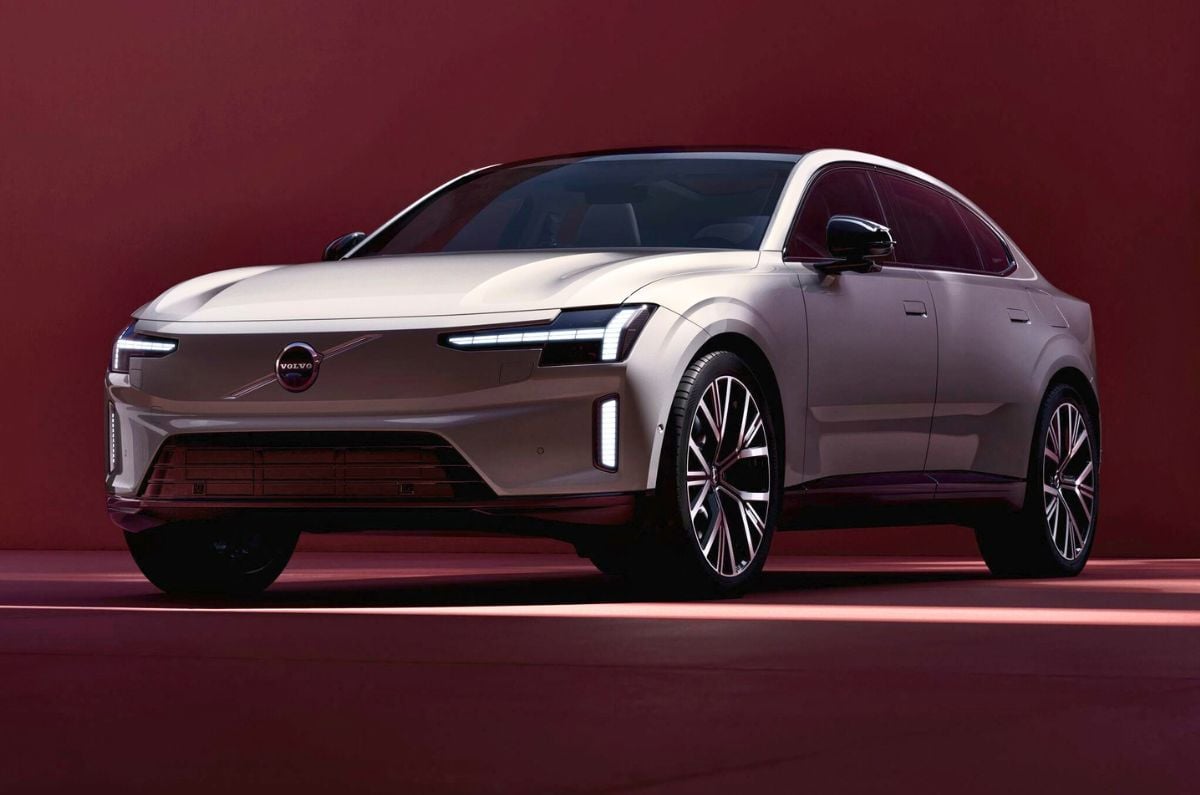
Measuring 5,037mm in length, 1,964mm in width, 1,744mm in height, and 2,985mm in wheelbase, the EX90 is dimensionally similar to the XC90, but sports a distinct design. Up front, the EX90 has sleeker T-shaped headlamps with pixel-like ‘Thor’s Hammer’ DRL signatures, below which sits a pair of slim vertically-arranged fog lamps. The Volvo badge is placed front and centre on the grille-less fascia, with a discreet air dam underneath. A LiDAR sensor can also be spotted on the leading edge of the roof.

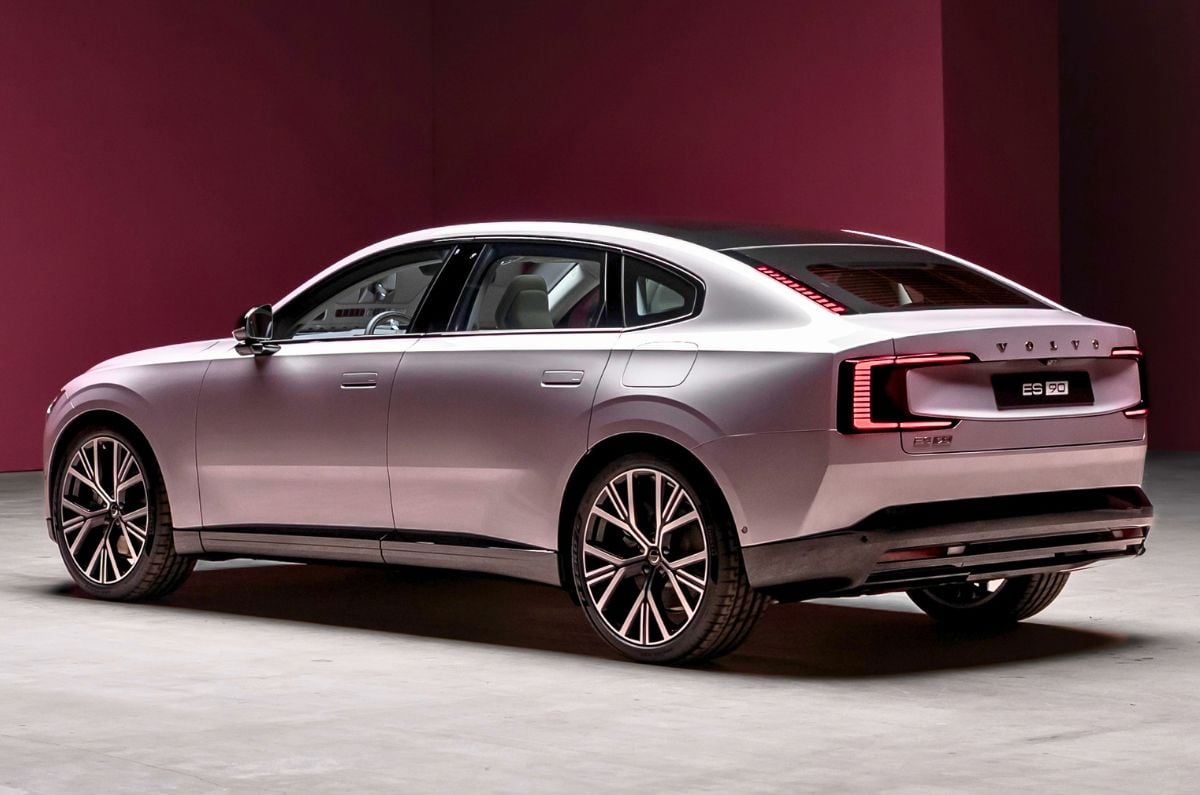
The side profile of the EX90 is cleanly-styled, with a prominent shoulder line and gently rising glass area, and there’s not much in the way of body cladding Volvo claims a drag coefficient of 0.29Cd. 20-inch alloy wheels are fitted as standard, with 21- and 22-inchers optionally available. Over to the rear, the EX90 gets C-shaped LED tail-lamps with an additional vertical row of brake lights flanking the rear windscreen. Other styling elements of note include a sizable roof spoiler and a Volvo wordmark on the bootlid.

Coming to the ES90, it adopts very similar styling cues to the EX90, like the Thor’s Hammer DRLs, vertical fog lamps, grille-less fascia, brake lights around the rear windshield, Volvo wordmark on the bootlid, gloss black bumpers and skirts, and more. However, the ES90 sets itself apart with slightly reshaped headlamps and tail-lamps, different alloy wheel designs (sizes range from 20 to 22 inches), and of course, its sedan form factor.

Thanks to its more low-slung proportions, the ES90 sports a drag coefficient of 0.25, which makes it the most aerodynamic Volvo car to date.

Volvo EX90, ES90 interior and features

14.5-inch infotainment touchscreen sits front and centre on the dash

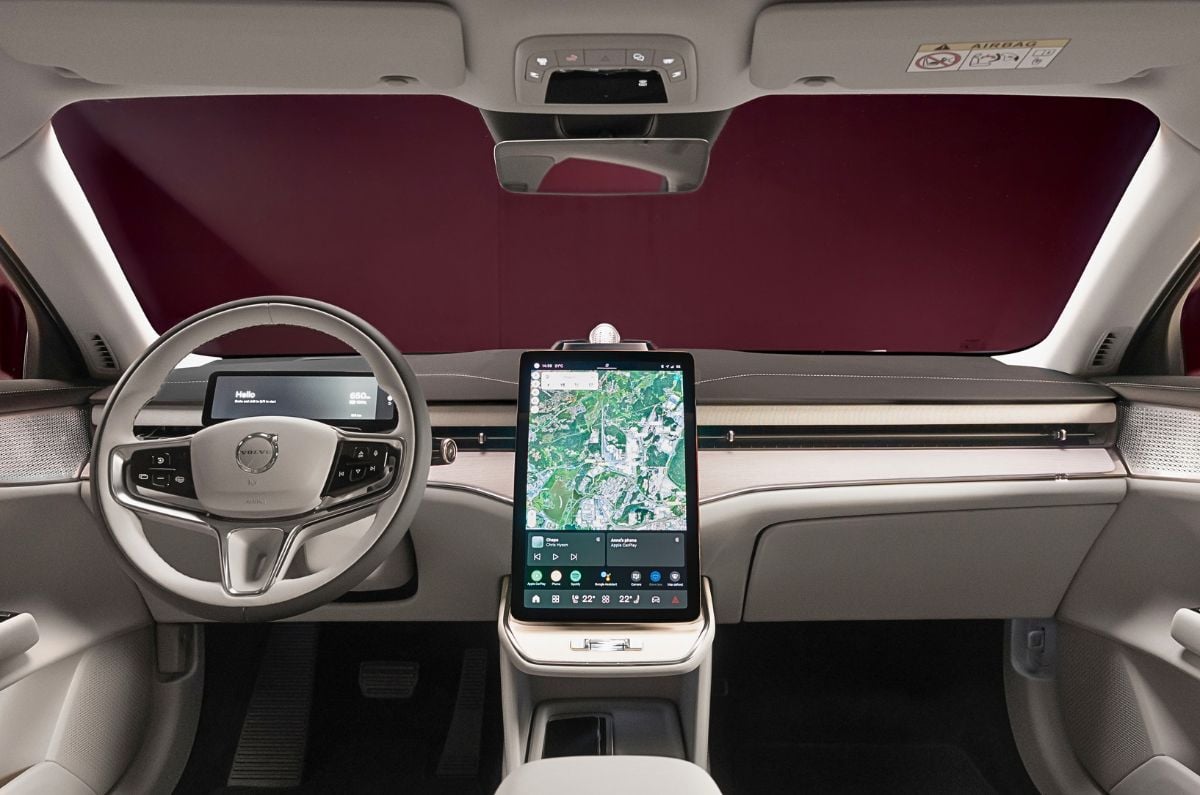
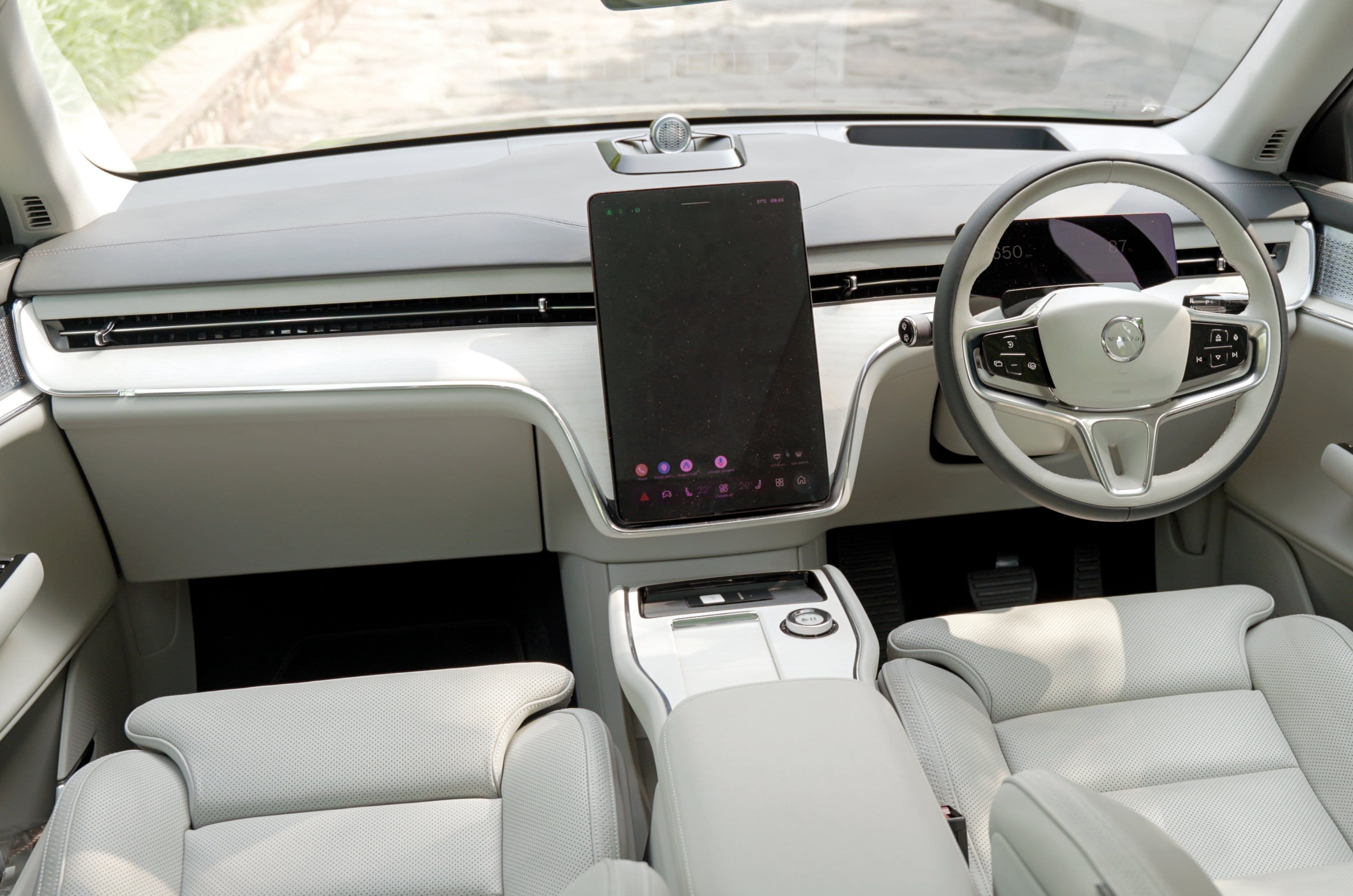
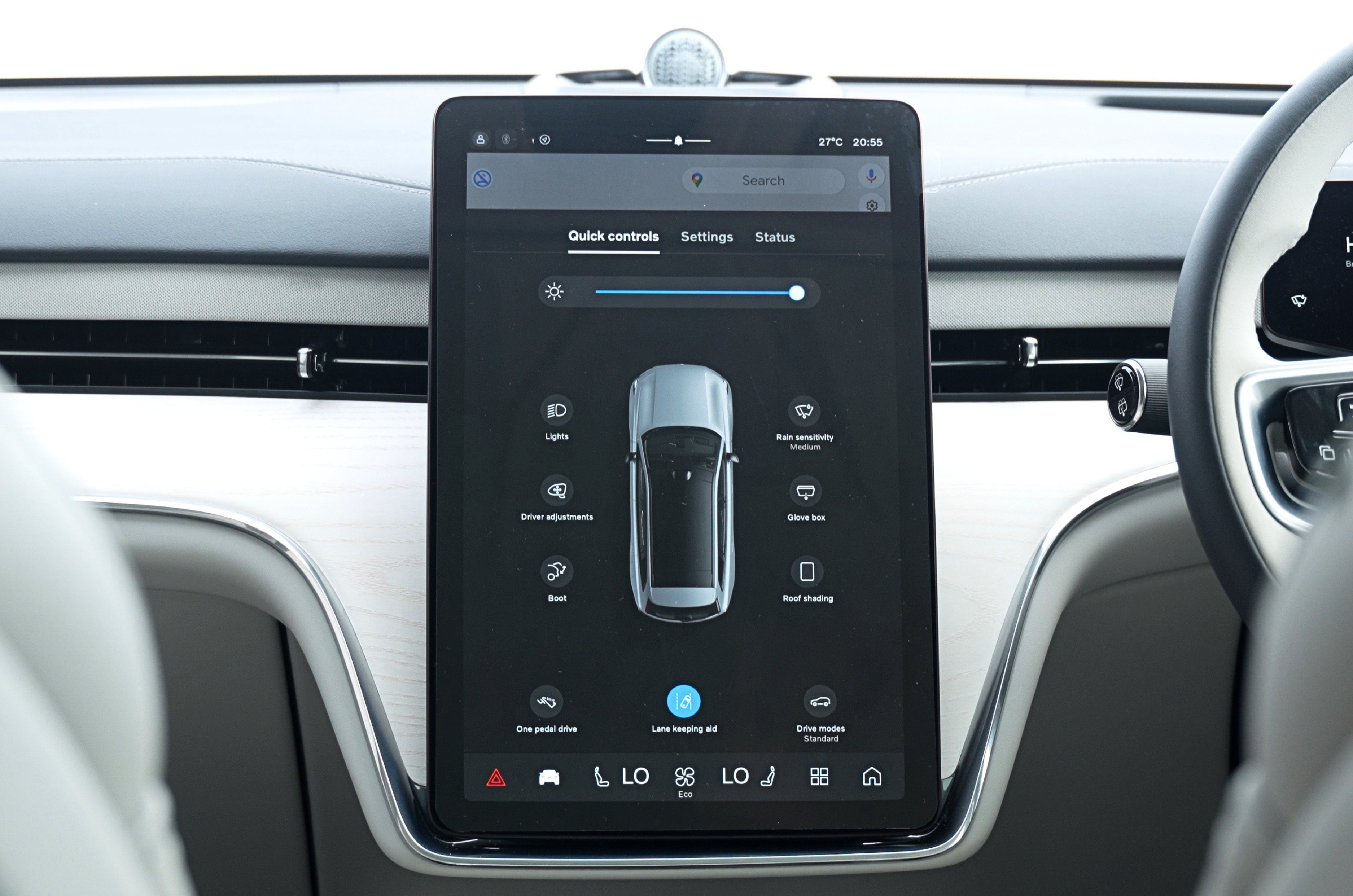
Inside, the EX90 and ES90 are very similar in terms of dashboard layout. Both get a minimalistic dashboard dominated by a 14.5-inch Google-based portrait touchscreen that incorporates much of the in-car functionality physical controls are few and far between. There’s also a floating centre console, a three-spoke steering wheel with a neat layered design, a slim 9-inch digital driver’s display, and a 13.2-inch heads-up display.

The area between the portrait screen and centre console, however, differs between the two. The EX90 has a split design with a more open cubby, whereas the ES90 has a more enclosed storage space with two buttons underneath the touchscreen.

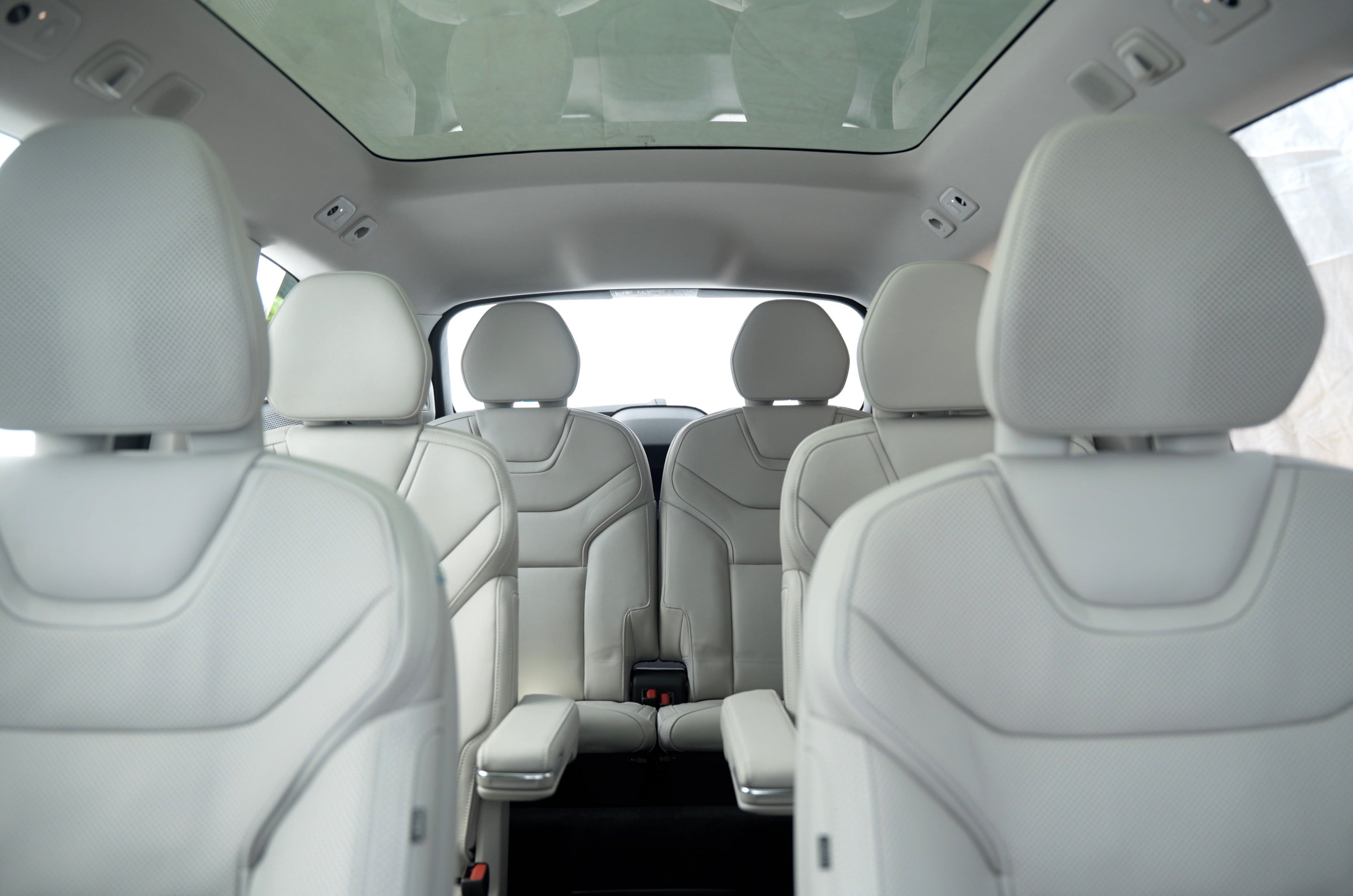
While the ES90 is a 5-seater, the EX90 is a 7-seater as standard, with certain variants offering a 6-seat configuration with captain’s chairs for the second row. In some markets, Volvo even offers a 4-seater version of the EX90 with a rear centre console that integrates a refrigerator, rivalling the likes of the Mercedes Maybach EQS SUV. Boot space is pegged at up to 384 litres with all three rows up for the EX90 and 424 litres for the ES90. The EX90 additionally gets a 45-litre frunk, while the ES90 features a 27-litre space.

As for creature comforts, both EVs pack a 5G connection to aid OTA updates, a digital key, ambient lighting, four-zone climate control, a cabin air purifier, a wireless charging pad, a 360-degree camera, powered front seats, a panoramic glass roof, a Bose sound system, connected car tech, auto park assist, Level-3 ADAS, V2L functionality, and lots more. The EX90 is touted to be Volvo’s safest car to date, holding 5-star crash safety ratings from Euro NCAP and NCAP. The ES90, however, is yet to be crash-tested by an NCAP agency.

3 reasons to buy the 2026 Mini Countryman C and 2 reasons not to

3 reasons to buy the 2026 Mini Countryman C and 2 reasons not to
2026 Mini Countryman C

The third-generation Mini Countryman C is the most accessible version of the entry-level luxury SUV sold here, positioned below the JCW All4. Like any car, the Countryman C has its share of strengths and weaknesses. Here are three reasons to consider the Mini SUV, along with two reasons why you might want to look at the Mercedes-Benz GLA, Audi Q3 or BMW X1.

Funky yet premium look

2026 Mini Countryman C front

The new Countryman looks sharper, boxier and larger than before. It has grown in size and is now the tallest SUV in the segment while also offering the highest ground clearance. However, Mini has also made it look large, replacing the rounder styling of the earlier model with smaller, sharper and more angular details.

2026 Mini Countryman C rear

Even the headlights, grille and roofline now have a boxier design. From the rear, it is easily identifiable as a Mini, thanks to the contrast roof, ‘Countryman’ lettering on the tailgate and Union Jack-style tail-lamps. It also gets champagne-coloured accents, a contrast roof and large 19-inch dual-tone alloy wheels. There are five exterior colours to choose from, with more expressive shades than those usually seen on conventional luxury SUVs.

Loaded with features

The Countryman C comes with a generous list of features, including wireless Apple CarPlay and Android Auto, powered front seats with memory and a massage function for the driver, a surround-view camera with auto park, a Harman Kardon sound system, a heated steering wheel, a panoramic sunroof, a head-up display, a voice assistant, wireless phone charging and a digital key.

Good space and practicality

2026 Mini Countryman C rear seat space

It feels roomier and more open than any previous Countryman, and it also has an advantage over some rivals in this area. Compared to the Countryman Electric, the Countryman C’s floor sits lower, making the seating position more comfortable. The large panoramic sunroof also makes the cabin feel brighter.

Boot space is another area where the Countryman C has an edge over the EV. Capacity has increased by 50 litres to 505 litres, and sliding the rear seats forward can free up even more space. It also comes with a space-saver spare wheel, which the EV does not get. 

Practicality has also been well thought out, with an open centre console, a covered storage box and a sliding armrest. The front seats are large and comfortable, while the high seating position gives a good view outside.

Reasons to avoid the 2026 Mini Countryman C

Engine, gearbox clunky at low speeds

The Experience Modes are also mostly cosmetic. Only Green (Eco) and Go Kart (Sport) modes change drive performance. Eco makes the powertrain calmer, while Go Kart makes it more responsive. There is no option to adjust individual settings, and ESC is switched off by default in Go Kart mode, with no option to turn it back on.

There are no paddleshifters either or any other way to change gears manually. The gearbox is generally quick and easy to work with, but at very low speeds, the powertrain suffers from turbo lag and gearbox hesitation.

Large wheels hurt ride quality

2026 Mini Countryman C alloy wheels

Yes, the 19-inch wheels look great, but they do affect the ride. They crash hard through potholes and even over some steeper speed breakers. That said, the suspension keeps the SUV controlled around corners with limited body roll despite being tuned to be more comfortable and compliant than the previous Countryman.

Tesla Model Y India sales cross 600 units with 115 delivered in July

Tesla Model Y India sales cross 600 units with 115 delivered in July
Tesla

Tesla India recorded its highest-ever monthly retail sales in July 2026, delivering 115 Model Y SUVs according to Vahan data. The American EV maker’s previous best stood at 69 units, achieved in September and December 2025. The strong performance follows Tesla’s Rs 9 lakh price cut for the Model Y in June, which lowered its starting price to Rs 50.89 lakh (ex-showroom).

  1. Tesla holds a 16 percent share of the luxury EVs sold in July
  2. Over 600 units of cumulative sales so far
  3. Tesla Model Y priced between Rs 50.89 lakh and Rs 61.99 lakh (ex-showroom)

Tesla Model Y price cut drives July sales

Tesla delivered 115 Model Ys in July, up 203 percent from 38 units sold in June. The sharp increase came after the company reduced the Model Y’s starting price by Rs 9 lakh to Rs 50.89 lakh in June, improving its competitiveness in the luxury EV segment. Before the price revision, demand for the electric SUV had remained relatively limited.

Tesla becomes third-largest luxury EV brand

The July performance gave Tesla a 16 percent share of the 736 luxury electric passenger vehicles retailed during the month, placing it behind BMW India (390 units) and Mercedes-Benz India (174 units), while ahead of Volvo Auto India (51 units). Tesla’s cumulative India sales have now reached 578 units since deliveries began in September 2025, giving it an 8 percent share of the 6,825 luxury EVs sold during the same period. The company has already retailed 60 vehicles in the first 16 days of August, taking cumulative sales past the 600-unit mark.

Tesla’s record monthly sales also contributed to India’s highest-ever monthly electric passenger vehicle retail sales of 34,033 units in July. The company accounted for 0.33 percent of the overall electric passenger vehicle market during the month.

Tesla currently offers the Model Y in five-seat and six-seat Model Y L versions, priced between Rs 50.89 lakh and Rs 61.99 lakh (ex-showroom). The five-seat Premium RWD variant uses a 64kWh battery with a claimed 500km WLTP range, while the Premium Long Range RWD gets an 84.2kWh battery with a claimed 661km WLTP range. Tesla says the six-seat Model Y L features a dual-motor all-wheel-drive setup with a claimed 681km WLTP range. The Model Y also is now available in India with new artificial intelligence features, the most significant being the Grok AI assistant. 

With inputs from Dhruv Dhaka

Mercedes C-Class facelift debuts with upgraded engines, more features

Mercedes C-Class facelift debuts with upgraded engines, more features
2026 Mercedes C-Class facelift

Mercedes-Benz has introduced a thorough facelift for the C-Class sedan for 2026 and beyond. As part of the update, the C-Class features significantly revised styling inspired by the likes of the larger S-Class, a longer list of features, and an upgraded set of petrol, diesel, and plug-in hybrid powertrains. Prices for the 2026 Mercedes-Benz C-Class start at 41,045 euros (Rs 45.43 lakh) in Germany.

Audi India teases next-gen Q3 ahead of debut

Audi India teases next-gen Q3 ahead of debut
Audi Q3 teaser

Audi India has shared a teaser of the next-generation Q3, hinting at its design elements ahead of its official debut. It will replace the second-generation Q3, which has been on the market for four years. Secondly, the new Q3 will lead the German carmaker’s product onslaught in our market.

  1. Next-gen Q3 will have an all-new aggressive exterior design.
  2. Likely to continue with the previous-gen’s 2.0-litre turbo-petrol engine with AWD.
  3. Expected to be priced at Rs 60 lakh ex-showroom.

Next-generation Audi Q3: What to expect?

Global-spec Q3 used for reference.

The next-gen Q3 will have an all-new exterior design that’s more aggressive than its predecessor. For reference, the global-spec version’s front end ditches the traditional headlamp design for a split setup. At the same time, the grille is larger and sports a hexagonal pattern with the 2D Audi badge. The sides are replete with moulding for the wheel arches and lower sides of the doors, and a subtle character line on the rear fender. While the global-spec version has wheel sizes ranging from 17 to 20 inches, the India-spec model is expected to have 18-inch ones. Like the front, the rear features a split-lamp design, comprising a connected LED strip and the main units above it, with an illuminated Audi badge.

On the inside, the next-gen Q3 will have a revamped look with a tech-laden cabin. Dominating the dashboard is an 11.9-inch digital driver’s display and a 12.8-inch infotainment screen. You get a new three-spoke steering wheel, which sports a unique column-mounted stalk setup for light and wiper controls, while the layered dashboard is angled slightly toward the driver. Expect features like wireless Apple CarPlay and Android Auto, a panoramic sunroof, powered and ventilated front seats, a 360-degree camera and level 2 ADAS to be onboard.

As far as powertrains are concerned, the India-spec Audi Q3 is expected to continue with the predecessor’s 2.0-litre direct-injection turbo-petrol engine, which produces 204hp and 320Nm of torque. It is mated to a 7-speed DCT gearbox, sending power to all wheels with Audi’s Quattro AWD system.

With the generational update, Audi is likely to price the new Q3 from Rs 60 lakh. It will continue to take on the likes of rivals such as the Mercedes-Benz GLA and the BMW X1. 

All prices are ex-showroom, India

2026 Mini Countryman C Review – Can it be a serious luxury SUV?

2026 Mini Countryman C Review – Can it be a serious luxury SUV?
2026 Mini Countryman C driving

It’s all too easy to start every review of the Mini Countryman with some variation of the phrase ‘the Mini that’s not so mini’, because that’s always been true. The SUV of the Mini range, by definition, is always going to fit that description; the difference this time is that Mini itself is onboard with the idea. Where previously it was always marketed as a Mini first and an SUV second, this time the script has been flipped. No longer content with being a niche offering for the fashion forward, they want this to be your family car, or more specifically your first luxury SUV. You’ll see how the vehicle attempts to achieve that in the paragraphs ahead, but the intent is clear with the price of this locally assembled third-generation ‘U25’ Countryman C, which at Rs 47 lakh (ex-showroom), is bang on par with ‘conventional’ entry luxury SUVs, like the Mercedes-Benz GLA, Audi Q3 and even its own cousin, the BMW X1.

2026 Mini Countryman C Exterior Design and Engineering – 9/10

Clearly prioritises practicality more this time, but retains that Mini charm.

Looks sharper, boxier and visibly larger than before. 

As with every successive generation, the new Countryman has grown (it’s now the tallest SUV in the class, with the highest ground clearance), but this time it has deliberately been made to ‘look’ large as well. Gone are the cartoonish and bulbous features of previous models, and in their place are smaller, sharper, more angular elements. The headlamps, grille and even the roofline have a boxier look, and this points to the greater space inside. It’s more recognisable as a Mini from the rear, where the familiar cues of a contrast roof, ‘Countryman’ lettering on the tailgate and Union Jack tail-lamps are easy to spot. 

We’ve seen this look already in the Countryman Electric, and all that’s changed here is the grille that isn’t closed off. We’ve also already seen it on the CBU-imported Countryman JCW All4, which, apart from its more powerful engine and AWD, gets a sportier body kit.

19-inch alloys look great, but they hurt ride quality. 

This one being a locally assembled model, however, it’s available in a single, fully loaded ‘Favoured’ spec with no optional extras, save for some accessories. It looks the business, however, with champagne-coloured accents all around, the contrast roof as well as huge 19-inch dual-tone alloy wheels. You get a choice of five colours, but Mini has been sure to pick more extroverted options than conventional luxury SUVs – British Racing Green is still the most popular Mini colour bought in India.
2026 Mini Countryman C Interior Space and Comfort – 8/10

Genuinely usable space and practicality make it feasible as a luxury SUV.

Generous headroom and legroom at the rear, though thigh support is not the best.

The results of the grown dimensions are immediately obvious in the greater interior space. It feels larger and airier than any Countryman before it, and betters some rivals in this regard. Without the battery of the EV, the floor is lower, giving a comfier seating position, though rear-seat thigh support is still not the best. And though the huge panoramic sunroof lets some light in, we wish the windows were a touch larger. Still, this can realistically be used as a chauffeur-driven car now.

The other area where it delivers more than the EV is the boot, whose volume has gone up by 50 litres to 505 litres. You can free up some more by sliding the rear seat forward on rails, and what’s more, they’ve even included a space-saver spare tyre, which you don’t get in the EV.

In the front seat, there’s no mistaking this for anything but a Mini, thanks to the clean dashboard with a big circular touchscreen at the centre. While this does function as the speedometer, a nod to the original Mini, there is also a flip-up HUD, which presents the info in your line of sight.

Knitted fabric on the door cards and dashboard lends the cabin an upmarket feel. 

The dash is trimmed in an upmarket-feeling knitted fabric, which then extends onto the door cards, where it blends from blue to brown in colour. There are plenty of uniquely Mini touches, like slim, vertical AC vents, a row of toggle switches to start the car and change modes, more champagne gold trim and vertical inside door handles. But there is also more BMW switchgear than ever before, which, though high quality, looks a bit ordinary.

Storage space and ergonomics are well thought out, with an open centre console, a neat covered storage box and a sliding armrest. The front seats, meanwhile, are large and accommodating and give a commanding view outward.

2026 Mini Countryman C Features and Safety – 8/10

Generously kitted out with lots of standard equipment, on par with rivals.

Edge-to-edge circular screen is responsive, high-res and full of cutesy graphics. 

As mentioned before, there is only one variant of the Countryman C, with a fixed features list and no optional add-ons. It’s a generous spec that features more than what some rivals offer, including wireless Apple CarPlay and Android Auto, powered front seats with memory and massage function for the driver, surround camera with auto park function, a Harman/Kardon audio system, heated steering wheel, panoramic sunroof, 13.7-inch diameter OLED touchscreen, heads-up display, voice assistant, wireless phone charging and a digital key system, to name a few. 

As seen on all current-generation Minis, the dish-like circular touchscreen is a work of art. Where the previous generation housed a rectangular touchscreen within the circle, the new one is an edge-to-edge circular screen. It’s responsive, bright, high of resolution and full of Mini-typical cutesy graphics. Even the audio cues aren’t like normal cars, with cute ethereal chimes replacing boring warning beeps. There aren’t drive modes but Experience Modes (more on these later), which not only change the colour of the ambient lighting, but the screen display and can even activate certain features, like the seat massage. 

Hard buttons only for few functions such as media controls and Experience Modes

However, once the novelty fades, you start to realise this circular design isn’t great ergonomically. While there, thankfully, are hard buttons for music volume and track control, as well as dri- sorry, Experience Modes, AC controls and all other functions are on the screen. With no bezel or edge to rest your hand on, and small, rounded graphics to tap, it is quite tricky to perform basic functions on the move. And as it’s based on BMW’s current i-Drive system, there are far too many sub-menus to go through.

2026 Mini Countryman C Performance and Refinement – 7/10

Downsized turbo-petrol engine lacks the zest associated with a Mini.

Performance feels merely adequate from the 156hp, 1.5-litre turbo-petrol engine. 

This car shares its UKL1 architecture with the BMW X1, as well as its 1.5-litre three-cylinder direct-injection turbo-petrol engine. As in the BMW, it produces 156hp and 240Nm, sent to the front wheels via a 7-speed dual-clutch automatic gearbox, and as in the BMW, it feels merely adequate. While easier to digest in the X1, which has long since transitioned from ‘Ultimate Driving Machine’ to comfy family cruiser, the Mini’s go-kart intentions are still on display, and the expectation for more performance is higher. 

Like in modern BMWs, the Experience Modes are mostly cosmetic, with only Green (Eco) and Go Kart (Sport) altering drive performance. Expectedly, the former dulls things down, while the latter primes the engine and gearbox to be more reactive, and they work as expected. There is, however, no scope to set individual parameters in any mode; for instance, ESC is off by default in Go Kart mode and you can’t turn it back on.

Gearbox is intuitive and quick, but there’s no manual control whatsover. 

Also missed are paddle shifters, or in fact any means of shifting manually, though the gearbox is quite intuitive and quick to shift for the most part. It’s only at crawling speeds where this powertrain falls into the triple-whammy trap of turbo lag, gearbox hesitation and no off-boost power that’s typical of downsized engines. Things improve drastically in the mid-range, where the Countryman C feels most comfortable.

The engine also remains pretty refined for the most part, and it’s only if you absolutely stretch it out that you’re made aware it’s a three-cylinder unit.

2026 Mini Countryman C Mileage and Range – 8/10

Decent for a reasonably large turbocharged petrol luxury SUV.

Fuel economy is officially rated at 15.92kpl. 

The advantage of the sizing-down is, of course, fuel economy, which will no doubt be better than with a larger 2.0-litre engine. It’s officially rated at 15.92kpl, which is not bad for a turbo petrol luxury SUV, and you realise that it’s because it’s not too heavy – clocking in at around 1,700kg. Other factors helping this include a quick-acting engine stop/start system and a good drag coefficient of just 0.26. Expect a real-world average comfortably in the two digits. And like all new BMW cars, this one is E25 compliant.

2026 Mini Countryman C Ride Comfort and Handling – 7/10

Still fun, but drives like a big car now; large wheels hurt ride quality.

Handling is a noticeable departure from the Go Kart feel that’s typified all modern Minis. 

More so even than the powertrain, the Go Kart feel that’s typified all modern Minis comes from the chassis setup and handling, and this new Countryman represents the first noticeable departure. But that’s not necessarily a bad thing, and is in keeping with its new, more grown-up luxury-SUV persona.
The steering is much lighter and not as tightly wound as before, for a start, and that means despite the increased size, the Countryman is even easier to manoeuvre. What you lose in the process is some urgency in direction changes and some agility, but you don’t mind that thanks to the aforementioned benefits. 
It feels reassuring and has great road-holding at highway speeds,

The good news is the suspension setup still allows it to handle corners tidily and with not too much body roll. And this despite being slackened off quite a bit to be noticeably comfier and more compliant than the previous Countryman. It also has great road-holding at high speeds and feels far more reassuring at highway speeds, and the overall sensation is that you’re commandeering a proper SUV rather than a high-riding hatchback. The only spoilsport here are the 19-inch wheels; while they look great, they crash hard through potholes and even over some steeper speed breakers.

2026 Mini Countryman C Price and Verdict – 8/10

Competitive pricing and big space make it a credible rival to other entry luxury SUVs.

The Mini Countryman C is priced at Rs 47.5 lakh (ex-showroom, India) which is incredibly competitive. It ducks under both, the Mercedes GLA and BMW X1, with only the entry-level version of the Audi Q3 being slightly cheaper. The best part is that, where previous locally assembled Countrymans (Countrymen?) felt stripped down compared to their CBU counterparts, here you get a well turned out and generously equipped luxury SUV that doesn’t leave you wanting.

It’s clear that Mini is on a war footing to break into the mainstream, and that’s something it certainly can’t do with its hatchbacks, which remain fun to drive and upmarket, but ultimately niche fashion statements. The Countryman C delivers on space, features, luxury and comfort that’s more than a match for others in the segment, and despite a slightly underwhelming engine, adds some much-needed pizzazz to the ranks of entry level luxury SUVs.

Mahindra BE 07 spied, offers clearest look yet at exterior design

Mahindra BE 07 spied, offers clearest look yet at exterior design
Spied Mahindra BE 07 front quarter static

Mahindra’s upcoming BE 07 electric SUV has been spotted testing again, this time offering the clearest look yet at its exterior design. The latest test mule appears to feature a close-to-production version of the exterior design, while also providing a brief glimpse of the cabin.

  1. The front lighting elements and retractable door handles can be seen
  2. Three screens on the dashboard can also be spotted 

Mahindra BE 07 spied: What could be seen?

The front lighting and Mercedes-like retractable handles can be seen

Image source: @AutoVerseByShrey on YouTube

Despite the heavy camouflage, the latest spy shots provide a clearer look at the BE 07’s exterior design. At the front, the SUV features slim LED DRLs, which are expected to resemble the C-shaped units seen on the BE 6. The headlights are positioned vertically beneath the DRLs. As expected of an EV, the grille is largely blanked off, while air inlets in the lower section of the bumper help cool the internal components. The lower bumper also features two distinct crevices, which could house the BE 07’s fog lamps.

Image source: @AutoVerseByShrey on YouTube

In profile, one of the most interesting details is the set of retractable door handles, which appear to draw inspiration from those seen on more premium Mercedes-Benz models. The BE 07 also gets aero-optimised alloy wheels, along with heavily creased cladding around the wheel arches and along the lower section of the body. The outside rear-view mirrors (ORVMs) also feature camera pods, confirming a surround-view camera system.

Image source: @AutoVerseByShrey on YouTube

The rear design of the BE 07 EV could also be seen with makeshift taillights generally associated with an early test mule. The rear wiper is expected to be positioned such that it is hidden under the rear spoiler of the production model. A prominent bulge on the tailgate and the simple rear bumper can also be seen. 

A triple-screen layout on the dashboard could be seen

Image source: @AutoVerseByShrey on YouTube

A previous test mule sported a triple-screen setup on the dashboard, which is also present in the recently spied prototype. Other expected elements likely to be present on the production-spec model include a modern-looking steering wheel with an illuminated ‘BE’ logo, multicolour ambient lighting, a glass roof with illuminated elements, a wireless phone charger and a 5-seat configuration.  

Mahindra BE 07: Other details

Expected to borrow the BE 6’s platform and battery options

The Mahindra BE 07 is expected to go on sale in 2027. It will be based on the INGLO platform, which also underpins the BE 6, XEV 9e and XEV 9S. It is likely to use the same 59kWh and 79kWh battery packs as the BE 6, although its larger size and body are expected to result in a slightly lower claimed range. The BE 07 will rival the Mahindra XEV 9e, VinFast VF7, Tata Harrier EV and BYD Atto 3.

Mercedes-Benz India unveils AI-powered car scanner for servicing

Mercedes-Benz India unveils AI-powered car scanner for servicing

Mercedes-Benz India has revealed an AI-powered device that enables quicker vehicle inspection upon entry to its service centre. Dubbed the XENTRY Scanner, the service debuted at the brand’s newly established centre by Landmark Cars in Jogeshwari, Mumbai.

  1. Mercedes’ first AI-powered car scanning system arrives at its largest workshop in Mumbai.
  2. Uses a 360-degree camera system to identify damage on a car’s exterior.
  3. Service Select debuts as a new scheme for older Mercedes vehicles.

Currently, the scanner is the only one of its kind in India at this service centre, which spans around 58,000 sq. ft., making it the brand’s largest in Mumbai. This facility consists of 16 preventive maintenance and general repair bays, 9 body and paint bays and 9 supporting bays, supported by a dedicated 6,000 sq. ft. spare-parts area.

How does Mercedes’ XENTRY Car Scanner work?

The brand calls it an MRI scanner for its cars

Mercedes-Benz’s XENTRY car scanner.

As the car enters the workshop, it is made to pass through the XENTRY scanner. The scanner utilises a 360-degree high-resolution camera system comprising 13 cameras and a LiDAR sensor. Images of the car are captured and analysed across four categories: body, underbody, windshield and tyres. The system captures 150 images within 3 to 5 seconds and then transmits the data to the Mercedes-Benz cloud.

Artificial intelligence then comes into play, identifying every kind of damage on the car’s exterior, even the ones that aren’t visible to the naked eye. It also provides in-depth tyre information, including their health, tread depth and braking performance. To maintain privacy, the system does not capture images of the driver. The findings are added directly to the job card of the particular car without manual entry, enabling better co-ordinated workshop processes. Mercedes says the process is entirely paperless, reducing walking distances, waiting times and paperwork that traditionally accompanied service reception.

Speaking about the thinking behind such initiatives, Mr Santosh Iyer, MD and CEO, Mercedes-Benz India said, “Productivity has to be the core. Reason being, from a real estate perspective, you need to turn cars around faster, while initiatives like the car scanner are more of a productivity enhancement. But on the customer side too, they expect the car to be turned around quickly, which is a pure mobility requirement for the customer.”

Through AI, external wear and tear is automatically detected by the XENTRY car scanner.

Next, a service advisor receives all the information on a tablet and informs the customer of a detailed list of vehicle wear and tear. It is then up to the customer to approve servicing of the concerned parts on the spot. The brand claims that a digital record of service status eliminates the need for manual inspections by the customer.

Interestingly, Landmark’s own internal research points to a shift in service revenue coming from EV adoption growth. “Landmark did a study of the service cost of EV versus ICE. Over the last six months, they’ve seen that the cost is the same in terms of maintenance. But this isn’t coming from maintenance; it’s coming from the body shop. More of the latter is done on EVs compared to ICE cars, said Mr Iyer.

At around 58,000 sq ft, the Landmark Cars workshop in Jogeshwari is the brand’s largest in Mumbai.

India now adds to the list of countries to offer Mercedes’ XENTRY scanner. Previously, the tech was available in international markets like Germany, Italy, Korea, the Netherlands, Switzerland, and Turkey. Furthermore, Mercedes-Benz plans to expand to more than 20 ‘world-class’ luxury outlets in 2026 in India, supported by an investment of more than Rs 450 crore by franchise partners over the next two years.

Mercedes Service Select: A service plan for older Mercedes vehicles

While Mercedes-Benz provides a standard 3-year warranty on new cars, it has also introduced a new service scheme for older vehicles. Called ‘Service Select’, Mercedes cars 7 years or older are eligible for this service. The scheme enables up to 25 percent savings for periodic service and brake care, a 2-year warranty on spare parts, benefits of its ‘Mobilio Lite’ service facility, and residual value protection of the vehicle.

With inputs from Hormazd Sorabjee

Yokohama launches Geolandar X-CV tyre range

Yokohama launches Geolandar X-CV tyre range
Yokohama

Yokohama India has launched the Geolandar X-CV tyre range for crossover and premium SUVs. Originally developed for larger luxury SUVs, the locally manufactured Geolandar X-CV is now being offered in 16-inch wheel sizes for the first time, expanding its reach to compact and midsize SUVs. The range will eventually be available in 32 sizes spanning 16 to 20 inches, with 17 sizes available immediately and the remaining 15 sizes set to be introduced over the next two to three months. Yokohama claims the new tyre delivers 20 percent better wet grip and 10 percent longer tyre life than its conventional tyre, based on the company’s internal testing.

  1. Available in 32 sizes from 16-20 inches
  2. Claimed 20 percent better wet grip and 10 percent longer tyre life
  3. 17 sizes available now; remaining to follow 

Yokohama Geolandar X-CV: what does it fit?

The Geolandar X-CV has been developed for a wide range of crossover and premium SUVs. Yokohama says it is suitable for compact and midsize models such as the Maruti Suzuki Brezza, Kia Sonet, Tata Nexon EV, Harrier EV, Mahindra XUV700 and Kia Seltos, while also catering to luxury SUVs including the BMW X5, Porsche Cayenne, Volvo XC90, Mercedes-Benz GLS, Audi Q7 and Range Rover models.

Yokohama Geolandar X-CV: features

According to Yokohama, the Geolandar X-CV has been developed to meet the requirements of crossover SUVs and electric vehicles. It features an asymmetric tread pattern, four wide circumferential grooves, Micro Silica compound, 2D and 3D sipes, five-pitch variation technology, a reinforced two-ply sidewall and a full nylon cover. The company says these technologies are designed to improve wet grip, cornering stability, braking performance, wear characteristics, durability, high-speed stability and cabin refinement.

The tyre is also EV-compatible, with its construction designed to handle the higher weight and instant torque characteristics of electric SUVs while maintaining durability and driving refinement. The Geolandar X-CV will be available from August 2026 through Yokohama Club Network outlets and select authorised dealers, with a no-cost EMI offer available at launch.