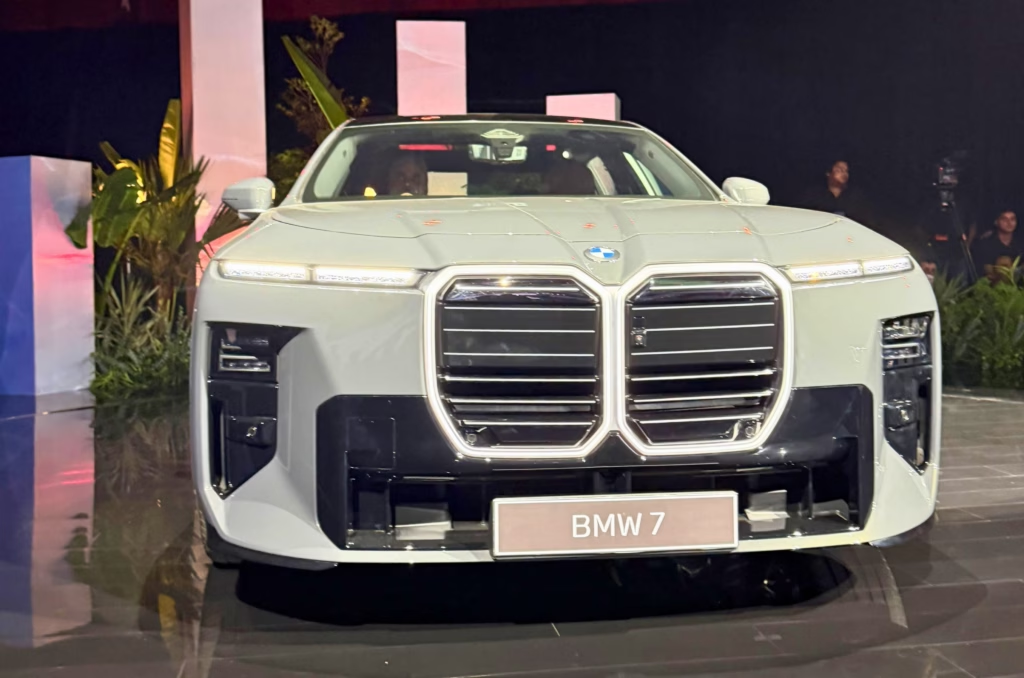
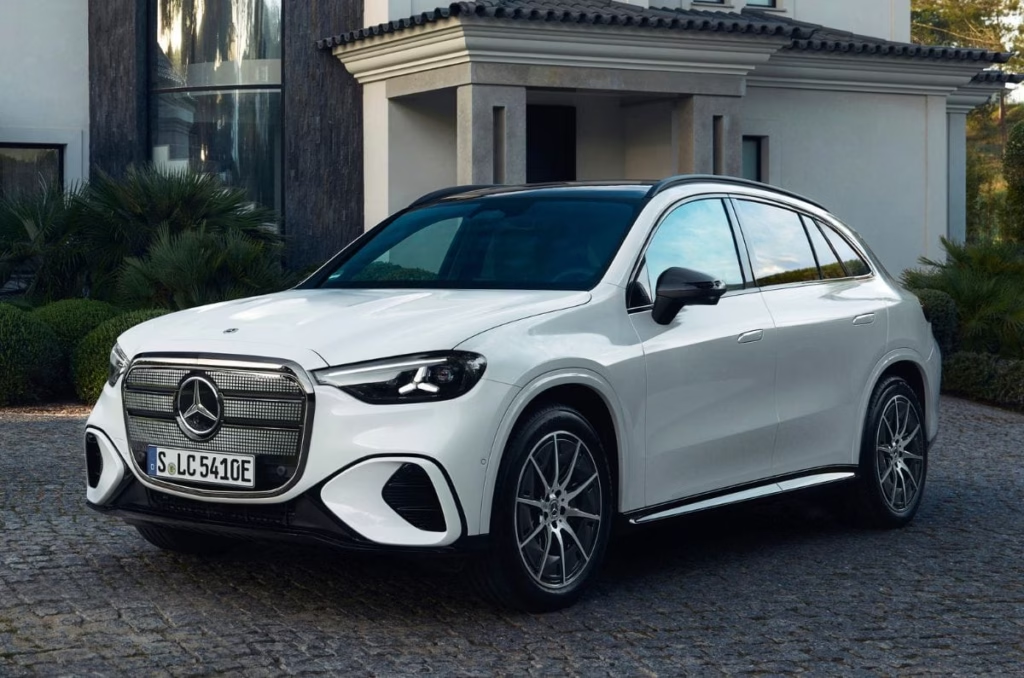
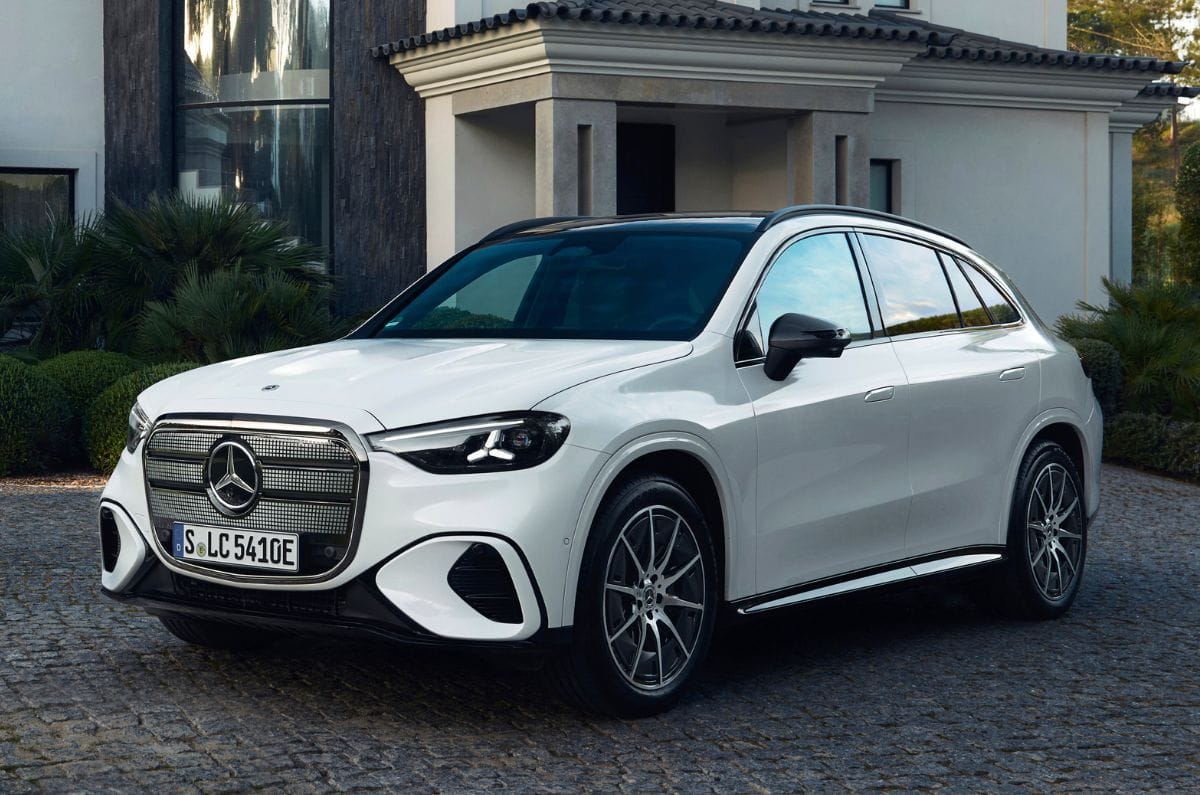
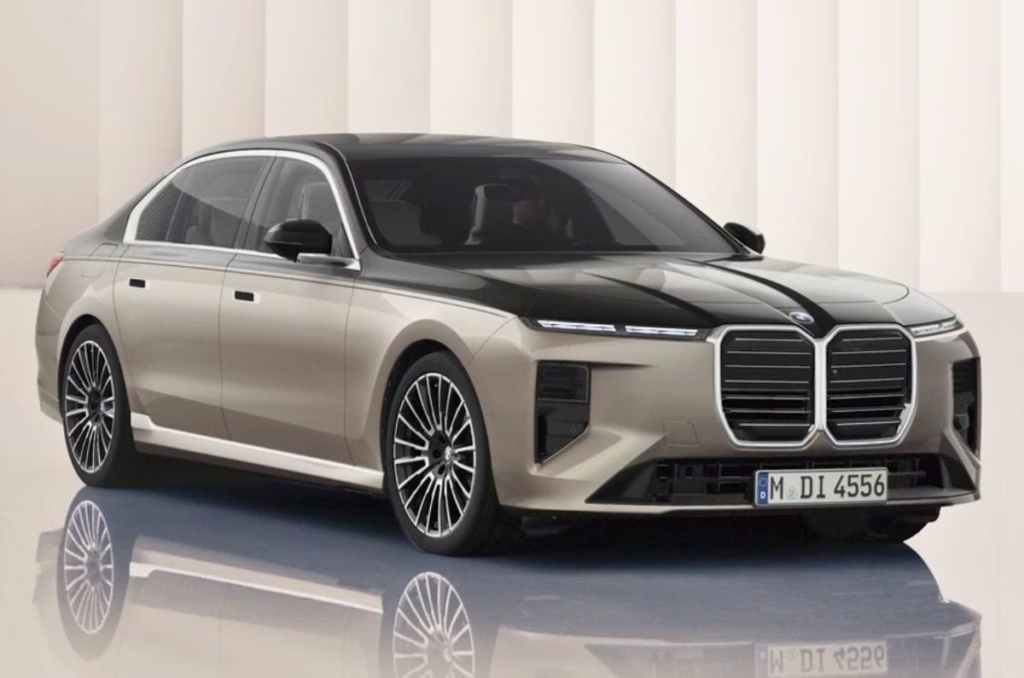
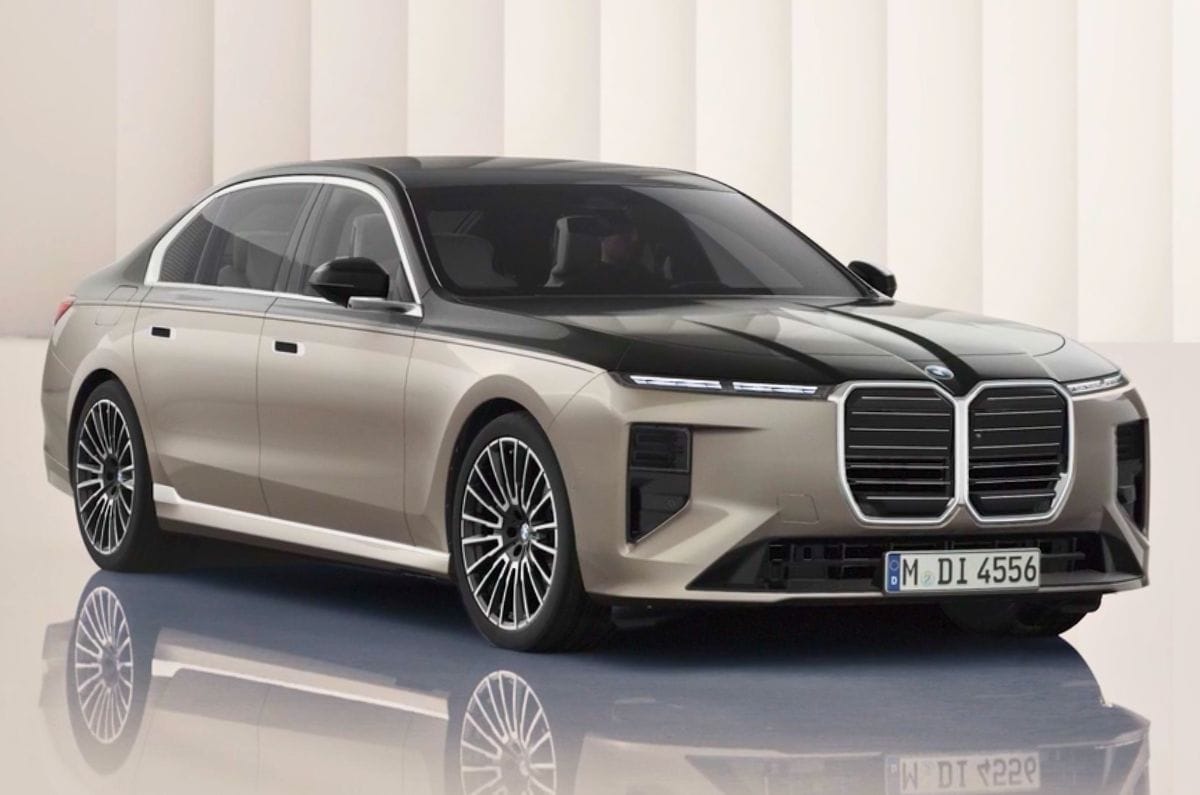
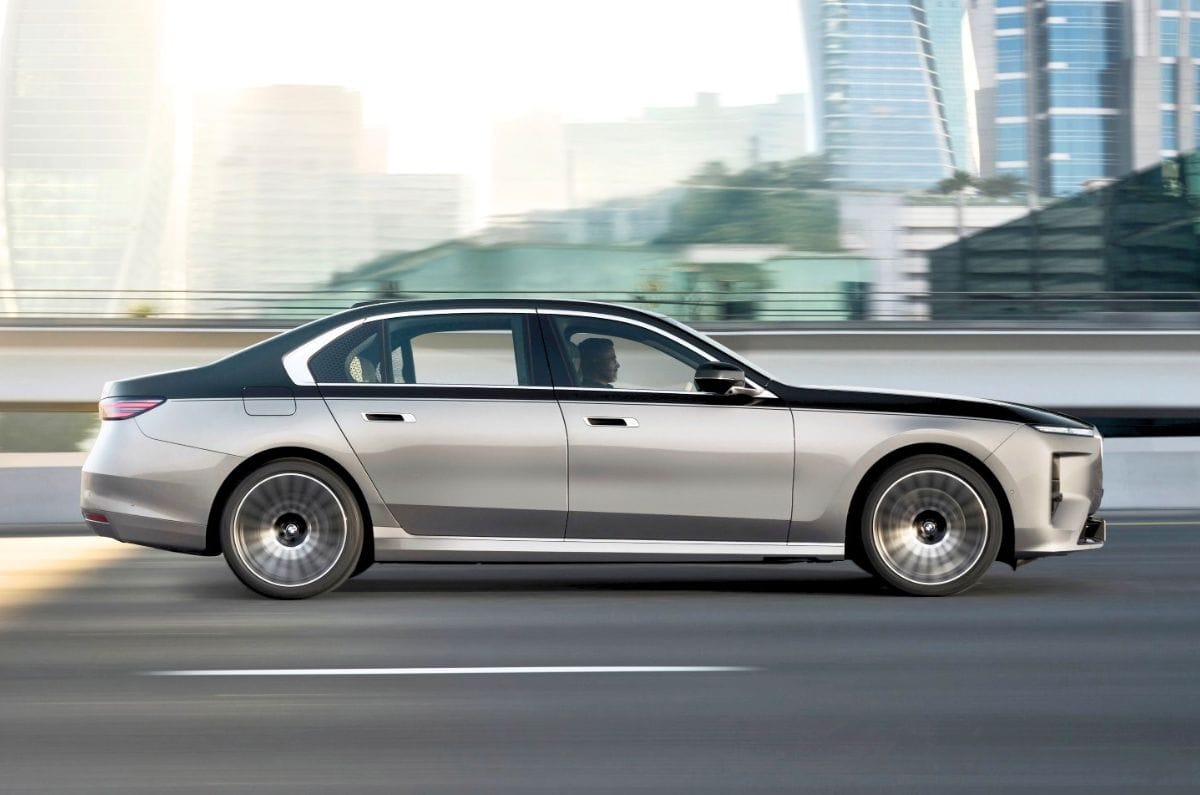
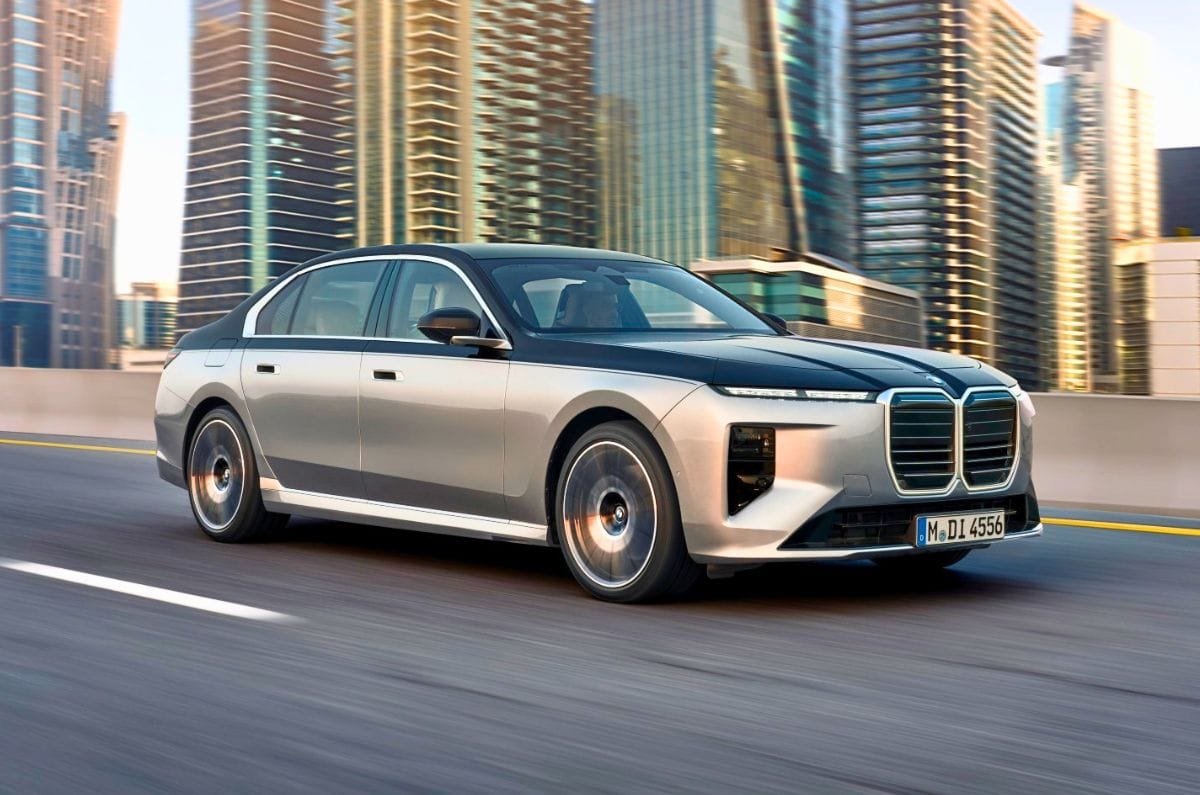
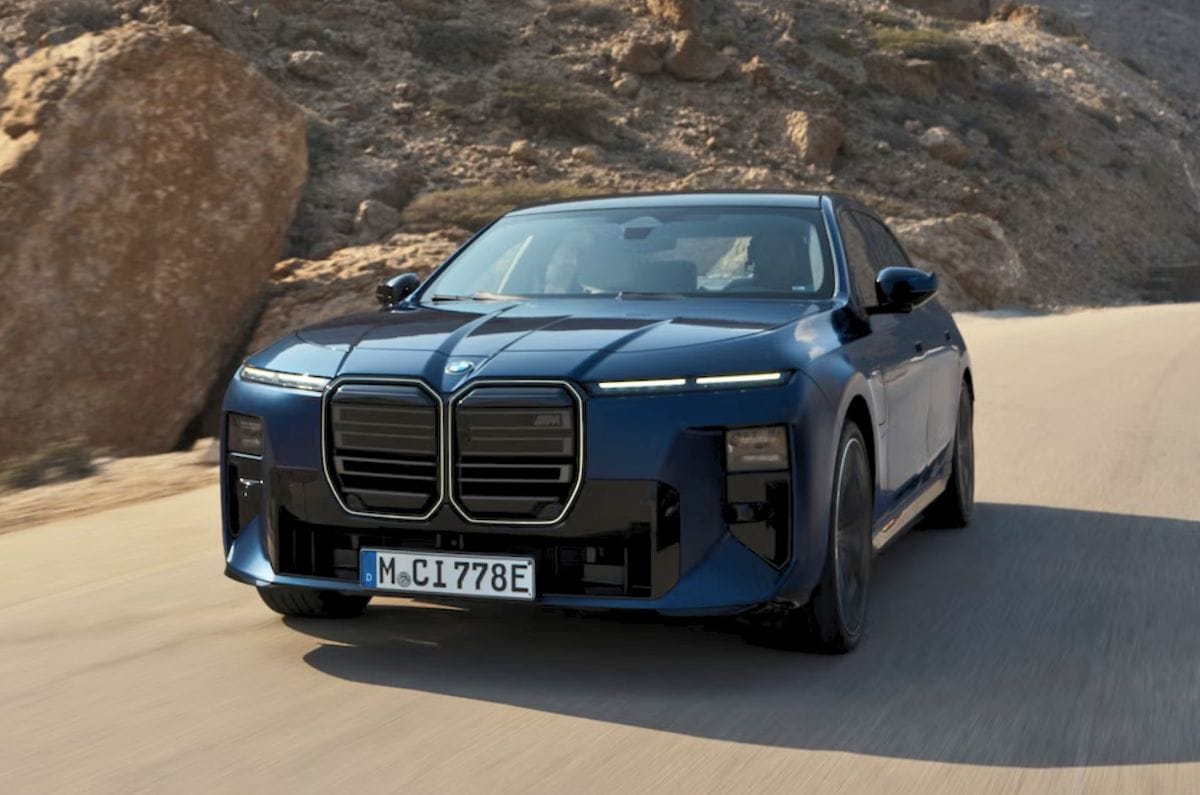
BMW has launched the 2026 7 Series facelift in India at a starting price of Rs 1.95 crore. Globally unveiled earlier this year, the 7 Series facelift brings a slew of changes to the flagship sedan’s exterior and interior, along with some powertrain upgrades. The 7 Series continues to rival the Mercedes-Benz S-Class, a facelift of which also went on sale in India a few months ago.
In addition to the ICE-powered 7 Series, BMW launched the luxury sedan’s updated all-electric counterpart, the i7, in eDrive50 and M70 guises. The 7 Series and i7 eDrive50 will be locally assembled at BMW’s Chennai plant.
2026 BMW 7 Series facelift price list
Variant
Price (Rs, crore)
740
1.95
The ICE-powered 7 Series facelift is available in only one variant in India: the petrol-powered ‘740’. BMW has dropped the prior model’s ‘740d’ diesel version. Compared to the outgoing 7 Series, which was priced at Rs 1.85 crore, the facelift is pricier by Rs 10 lakh. Compared to the S-Class, which costs Rs 2.20 crore-2.38 crore, the 2026 7 Series is up to Rs 43 lakh more affordable.
2026 BMW 7 Series facelift exterior changes
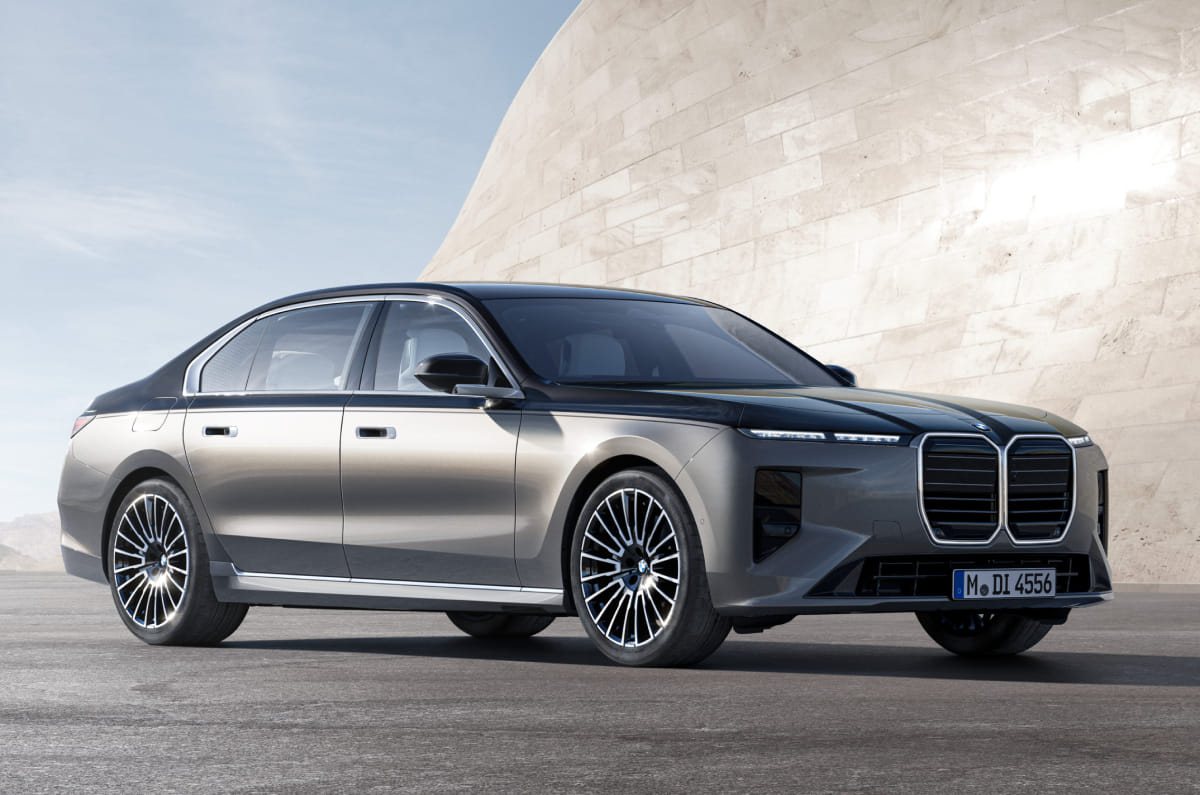
The front end of the 7 Series facelift sees the most drastic changes, with a more slab-sided and imposing look. BMW has revised the split headlamps, with a slim pair of DRLs extending outwards from the top of the grille, and the main LED units relocated right above the redesigned vertical air intakes. The kidney grilles are now more squared-off and have horizontal slats, and continue to get an illuminated surround. Lastly, the air dam below the grille is much wider.
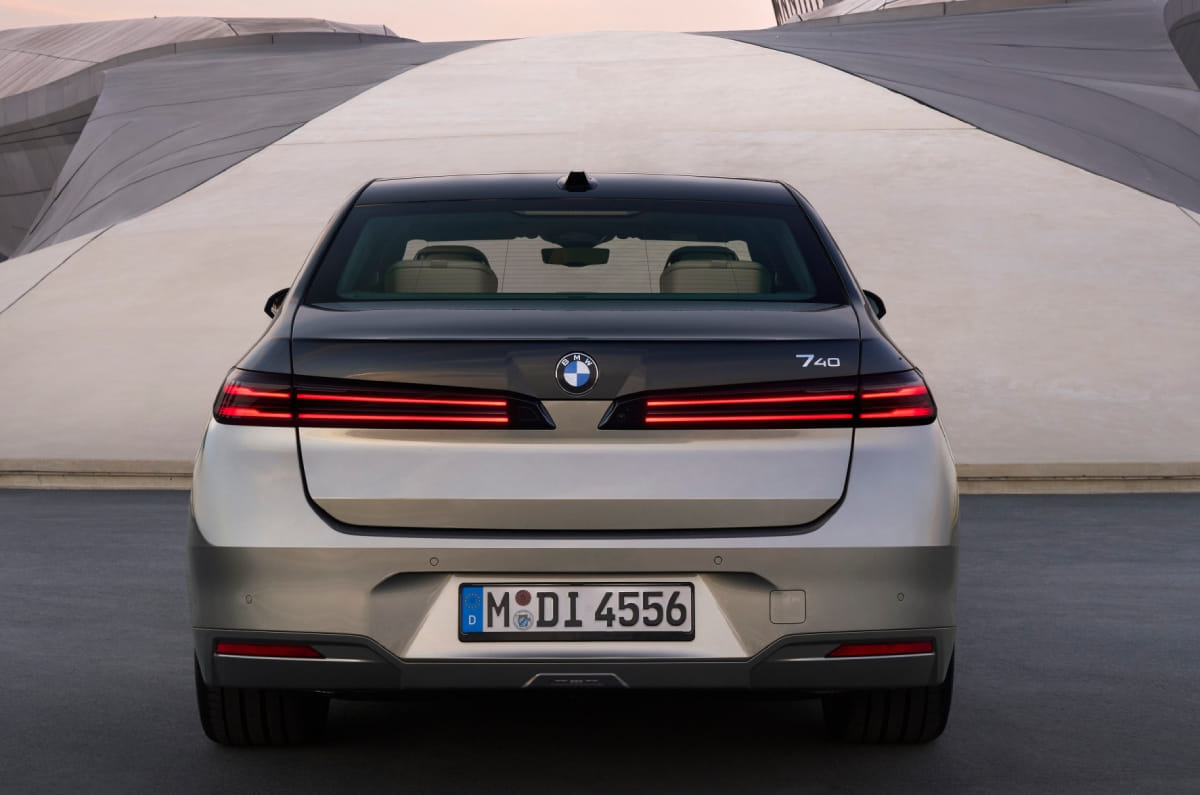
Over to the side, the 7 Series facelift gets updated side skirts and new alloy wheel designs – 20-inchers are fitted as standard, which can be optioned up to 22 inches. The rear end, meanwhile, features a pair of new wide LED tail-lamps and a smoother-looking bumper.
2026 BMW 7 Series facelift interior changes
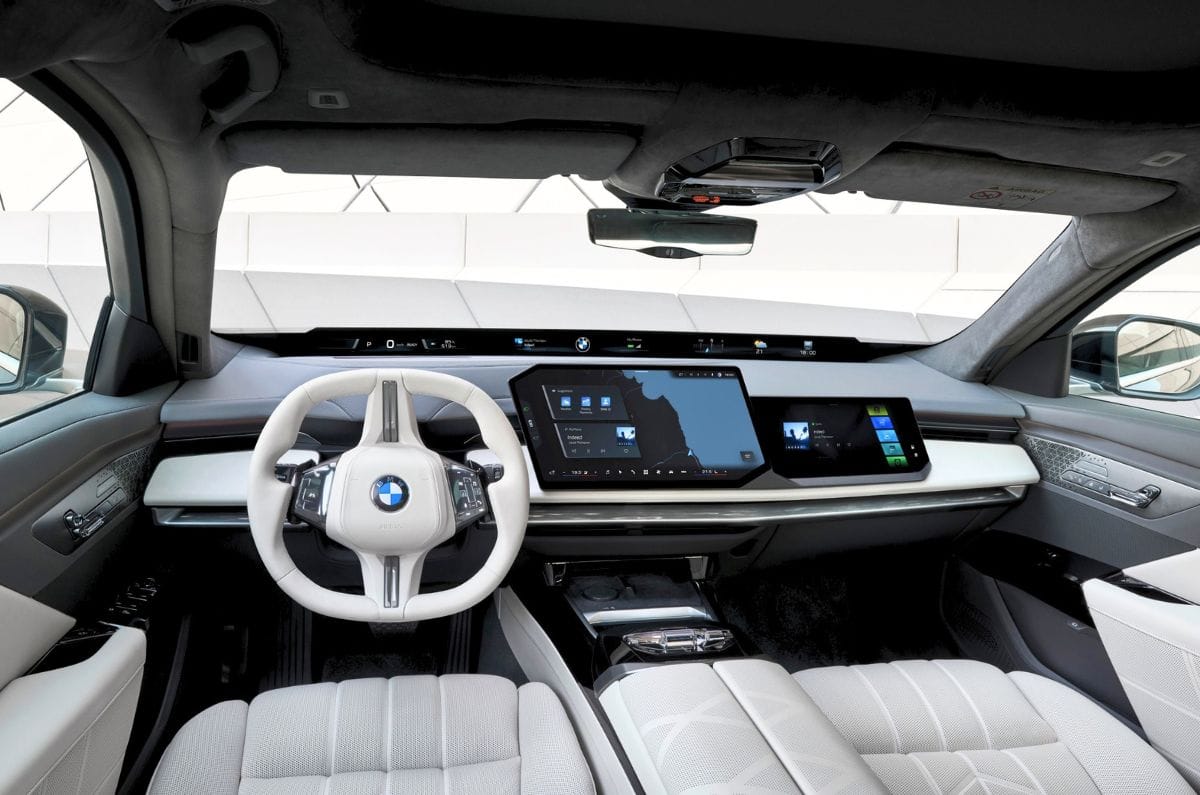
On the inside, the 7 Series facelift has been updated to resemble BMW’s newer Neue Klasse models. The dashboard notably features a rhomboidal 17.9-inch infotainment touchscreen, a 14.6-inch passenger screen, a pillar-to-pillar Panoramic Vision display, and a four-spoke steering wheel. Lower down, the centre console has been redesigned with a larger storage space, fewer buttons, and a new cylindrical rotary drive selector.
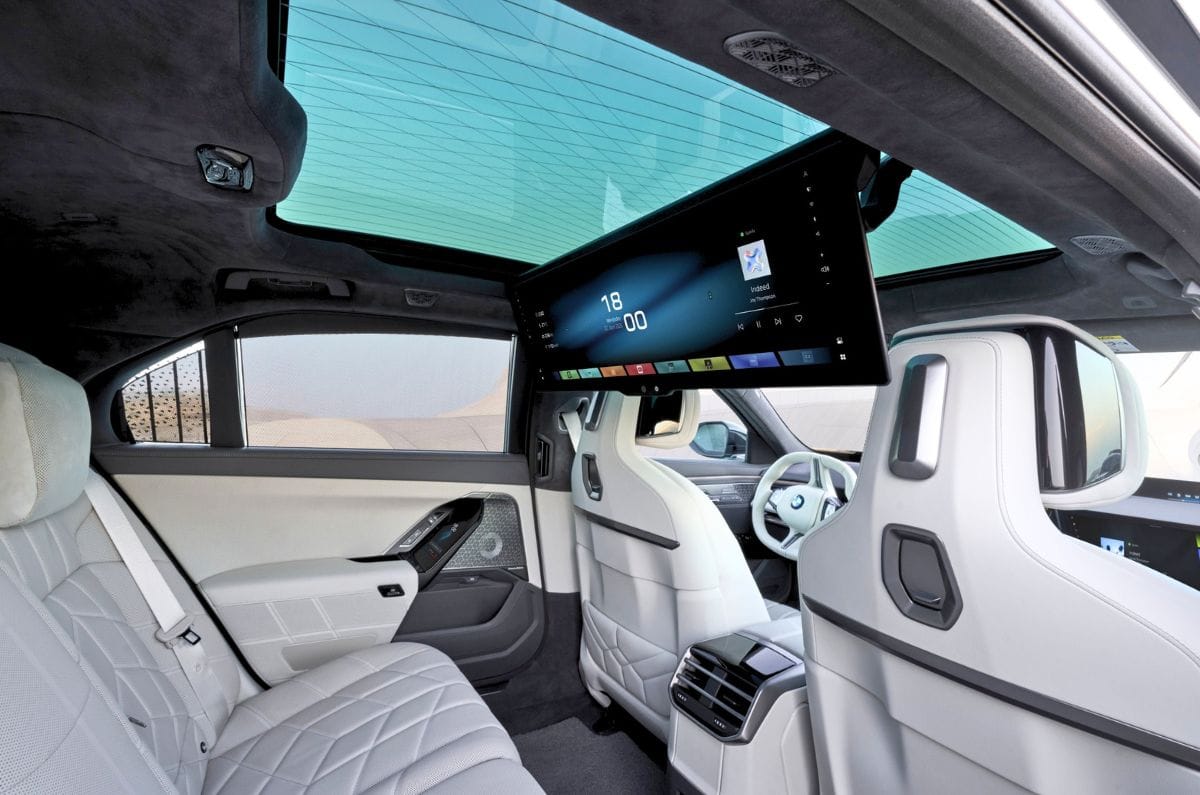
As for features, the facelifted 7 Series packs an 18-speaker Bowers & Wilkins surround sound system, ambient lighting, powered doors, wireless Apple CarPlay and Android Auto, over-the-air updates, a fixed panoramic glass roof, Boss mode, powered leg rests, connected car tech, Level 2 ADAS, and powered, heated, ventilated, and massaging seats. Buyers can also opt for a 31.3-inch 8K rear entertainment screen and embedded LEDs for the fixed panoramic glass roof that sync up with the ambient lighting.
2026 BMW 7 Series facelift engine and gearbox
The 7 Series facelift carries forward the outgoing model’s 3.0-litre direct-injection turbo-petrol straight-six, which is mated to a 48-volt mild hybrid system. Thanks to internal upgrades, the 740 now produces up to 400hp and 540Nm – up 19hp and 20Nm over its predecessor. As noted previously, the 2026 7 Series facelift is not available with a diesel engine in India, even though the option is offered in some global markets.
An 8-speed torque converter automatic sends power to the rear wheels, enabling a claimed 0-100kph time of 5.4 seconds for the 740. Top speed is electronically limited to 250kph. Additionally, the 7 Series facelift packs rear-wheel steering and adaptive suspension.
Mercedes-AMG has revealed the CLE 646 Spezialanfertigung, a limited-run version of the CLE powered by a 4.0-litre twin-turbo V8. The engine produces 646hp and 850Nm, with power sent exclusively to the rear wheels. Only 30 units will be built, and all have already been sold.
The CLE 646 is based on the AMG CLE 53 but gets extensive changes to its powertrain, suspension, body and interior. It is the second model in Mercedes-Benz’s Mythos series, following the AMG PureSpeed.
Mercedes-Benz has announced that it will commence bookings for the new GLC electric in India from the first week of October, with the launch scheduled to take place towards the end of the year. The new all-electric GLC will be locally assembled in India. Mercedes has also confirmed that it will be offered in 400 4Matic guise that comes with a 94kWh NMC battery and is claimed to return up to 715km of range on the WLTP cycle.
Mercedes also says this is the fastest a global vehicle will come to India as an assembled model, within just six months of sales commencing in Europe.
Launched in 2023, the seventh-generation BMW 7 Series and i7 are set to receive a facelift on September 11. The updated versions were unveiled internationally in April 2026 and feature revised exterior styling, a significantly updated cabin with Neue Klasse-inspired elements, and upgrades to both combustion and electric powertrains. Here’s everything you need to know about the new BMW 7 Series and i7 ahead of their launch tomorrow.
1. What are the expected prices of the BMW 7 Series, i7 facelifts?
Expected to have a significant hike over the outgoing model’s prices
International-spec model has been used for representative purposes only.
The outgoing BMW 7 Series was priced at Rs 1.85 crore (ex-showroom) for both the petrol and diesel variants, while the i7 was priced between Rs 2.10 crore and Rs 2.58 crore. Owing to the updated styling, additional technology and powertrain changes, BMW is expected to increase the prices of both models by a considerable margin.
2. What powertrain options will the facelifted BMW 7 Series, i7 offer?
Expected to be offered with more powerful and newer versions of the same powertrains
BMW has not yet revealed the official powertrain details of the India-spec 7 Series and i7 facelifts. However, the international models give us an idea of what to expect in India.
International-spec model has been used for representative purposes only.
In India, the 7 Series was offered with 740i and 740d powertrains. Internationally, the updated 740i is now called the 740 xDrive and uses the same 3.0-litre, six-cylinder turbo-petrol engine. It produces 400hp and 580Nm, up by 19hp and 60Nm. The 740d continues with its 3.0-litre, six-cylinder diesel engine and produces 313hp and 670Nm, up by 27hp and 20Nm.
The BMW i7 also gets updated powertrains. The eDrive50 is now called the 50 xDrive and switches from rear-wheel drive (RWD) to all-wheel drive (AWD). It gets a larger 112.4kWh battery from the previous 101.7kWh unit. Its dual-motor setup produces 445hp (3hp less) and 660Nm (10Nm more). Its claimed WLTP-claimed range is 727km, up by 103km.
The i7 M70 xDrive also gets the larger 112.4kWh battery and continues with an AWD setup. It produces 680hp and 1,015Nm, 30hp more than before, while torque remains unchanged. Its claimed WLTP-claimed range has increased by 62km to 686km.
The India-spec 7 Series and i7 are expected to get the same powertrain specifications as the international models.
3. Will BMW offer the 7 Series facelift with a plug-in hybrid powertrain?
BMW is yet to reveal whether such a powertrain will be offered in India
BMW M760e xDrive shown for representative purposes only.
As mentioned earlier, BMW has not yet revealed the exact powertrain specifications for the 7 Series facelift. Internationally, the model is available with a plug-in hybrid (PHEV) powertrain. The 612hp, M760e xDrive is already available internationally, and 483hp, 750e xDrive variants are also expected to join the international lineup by 2027.
It remains to be seen whether BMW will bring a PHEV version of the 7 Series to India, especially since the Mercedes-Benz S-Class is already available with a plug-in hybrid powertrain in the country.
4. What exterior changes are expected on the BMW 7 Series, i7 facelifts?
Gets new lighting elements, redesigned bumpers, and fresh alloy wheels
International-spec model has been used for representative purposes only.
BMW has made subtle changes to the exterior design of the facelifted 7 Series and i7, while keeping the overall look largely unchanged. At the front, the cars get a boxier grille with new horizontal elements and an illuminated surround. The split LED headlights have also been updated, with slimmer LED DRLs at the top and vertically stacked headlights below.
International-spec model has been used for representative purposes only.
The side profile remains mostly unchanged, apart from the updated alloy wheel designs. The flush-fitting door handles with illumination have been retained. At the rear, the wraparound taillights now feature new LED elements, while the bumper has been redesigned with a cleaner look and without the black trims seen on the previous model.
5. What interior changes are expected on the BMW 7 Series, i7 facelifts?
Gets BMW’s ‘Panoramic iDrive’ that replaces a traditional driver’s display
International-spec model has been used for representative purposes only.
The facelifted 7 Series and i7 get most of their updates inside the cabin. The biggest change is BMW’s new Panoramic iDrive, which replaces the conventional digital instrument cluster with a full-width display at the base of the windscreen. A new 17.9-inch central touchscreen infotainment system and a 14.6-inch front passenger display, both running BMW’s latest Operating System X, are also on offer.
The facelift also gets a new four-spoke steering wheel and an updated ambient lighting system that runs across the dashboard, extends to the rear speaker grilles and adds lighting behind the front seats. The seats continue to offer electric adjustment, heating, ventilation, massage, lumbar support and heated armrests as standard. The front passenger seat can also move fully forward to provide more legroom for the passenger seated behind.
International-spec model has been used for representative purposes only.
The optional rear-seat Theatre Screen has grown to 31.3 inches and now features an 8K resolution, with support for video calls, streaming and gaming. The screens in the rear doors have also been updated, allowing passengers to adjust the Theatre Screen’s position and viewing angle, as well as control other cabin functions. BMW has also revised the automatic door controls, with the open and close buttons moved to a more convenient position.
Electric vehicles have skyrocketed in significance over the past decade, particularly in light of global issues like climate change and pollution. EVs require no fossil fuels to run, and therefore emit zero harmful pollutants into the atmosphere. To promote the adoption of EVs, September 9 was designated ‘World EV Day’ six years ago by sustainability-focused companies Green.TV and ABB Group, and is recognised worldwide.
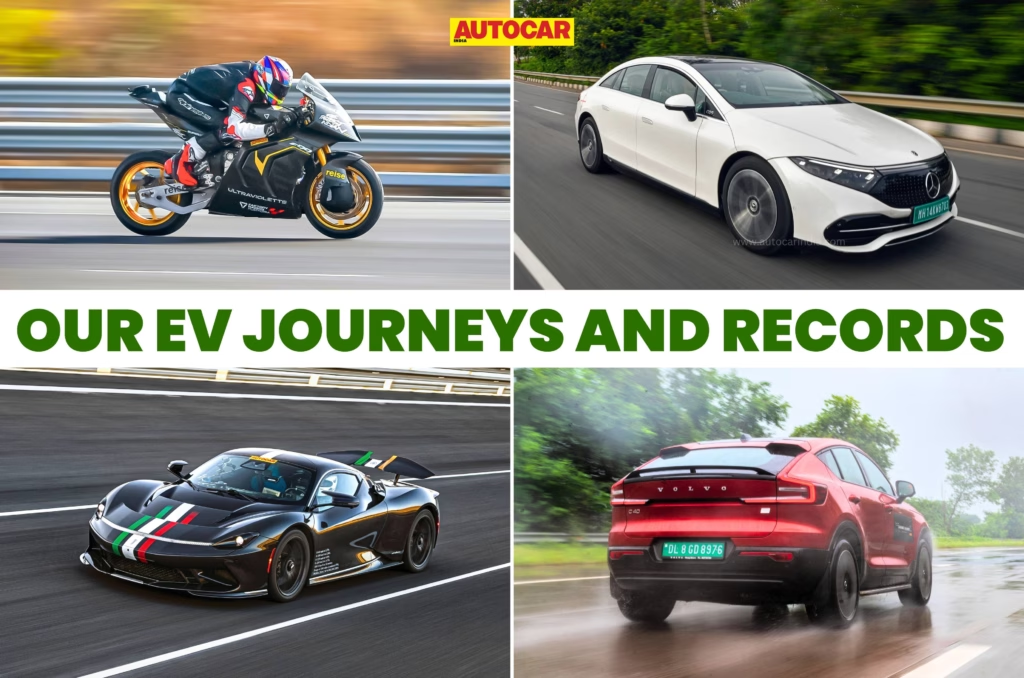
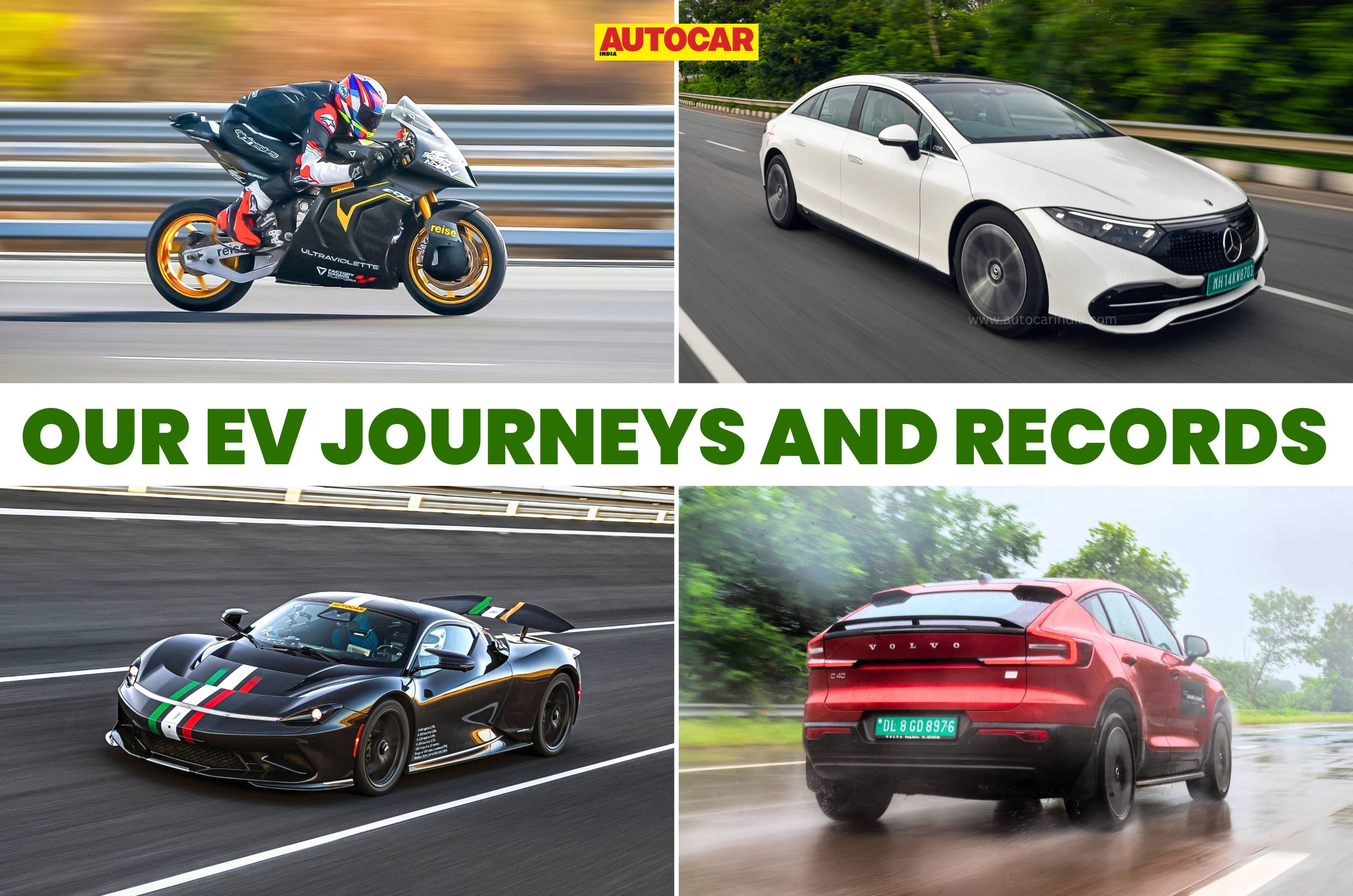
On the sixth iteration of World EV Day, let’s take a look at some of Autocar India’s most notable achievements in the all-electric mobility space.
1. Mercedes Benz EQC clean energy charging
Hydro, wind and solar energy were the only means of charging we used
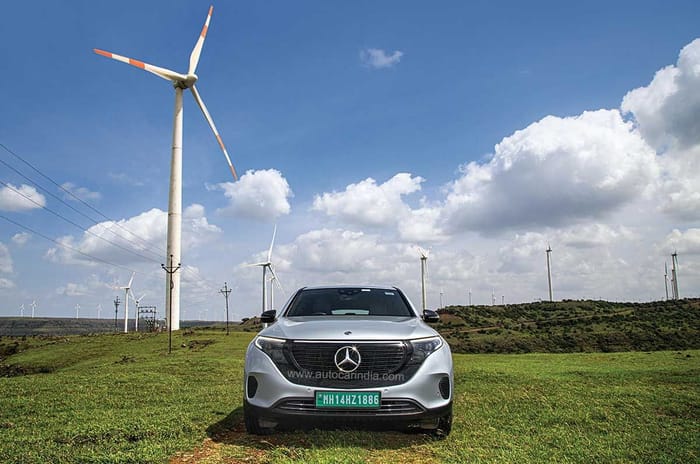
In 2021, we set out on a journey in the Mercedes-Benz EQC to explore how truly “green” EVs can be when powered by renewable energy only; at present, coal is the primary source of energy production. We departed from the Mercedes-Benz facility in Chakan with a full charge, heading to Tata Power’s Khopoli hydroelectric plant, Agaswadi wind farm and Mulshi solar farm.
Along the way, we investigated clean power sources – hydro, wind and solar – that could sustainably fuel EVs in India. While the EQC couldn’t be charged directly from the hydro grid since it mixes with the main grid, we were able to charge the SUV via a 15A plug at Tata Power. However, we did tap charging power directly from wind turbines and solar panels for the EQC. Ultimately, this trip showed us that our EVs could soon be truly emissions-free – not just at the tailpipe, but across the entire power chain.
2. Green Mumbai Drive 2021
30 EVs quietly trundling through the Sanjay Gandhi National Park
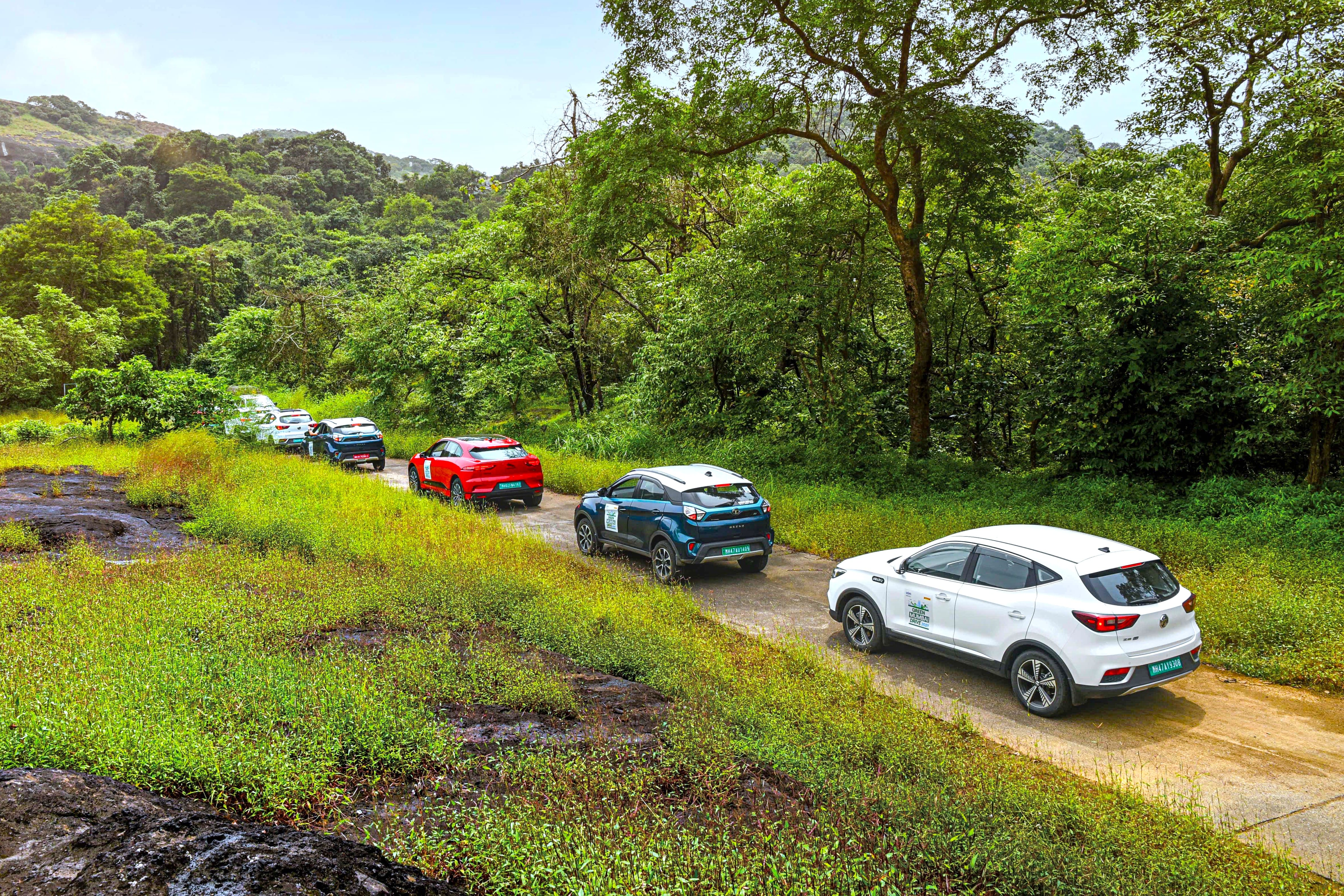
We achieved a rare feat by bringing together every EV that was on sale in India at the time and driving them across Mumbai and through the protected Sanjay Gandhi National Park in Borivali. 30 EVs were part of the drive, including the Hyundai Kona, Tata Nexon EV, MG ZS EV, Mercedes-Benz EQC, Jaguar i-Pace, Audi e-tron GT, and even a Tesla Model X.
The Green Mumbai Drive was flagged off from the Mahalakshmi Racecourse by Aditya Thackeray, MoS for Tourism, Environment and Protocol, and Jeet Adani, director of Adani Electricity. Notable auto industry executives like Santosh Iyer (Mercedes-Benz India), Balbir Singh Dhillon (Audi India), Rohit Suri (JLR India), and Amit Suri (Volvo India) were also part of the event.
3. Debuting EVs in two different national parks
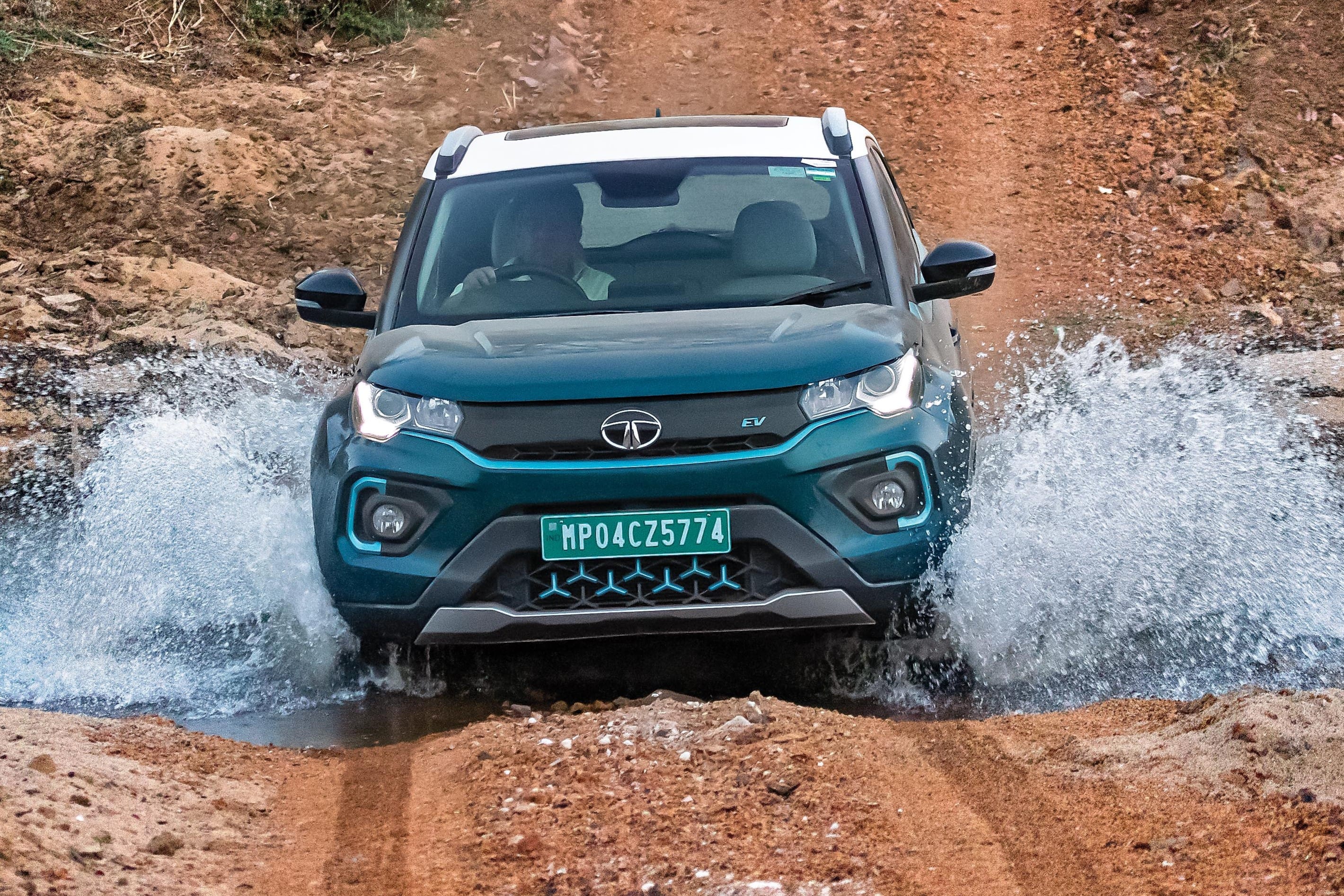
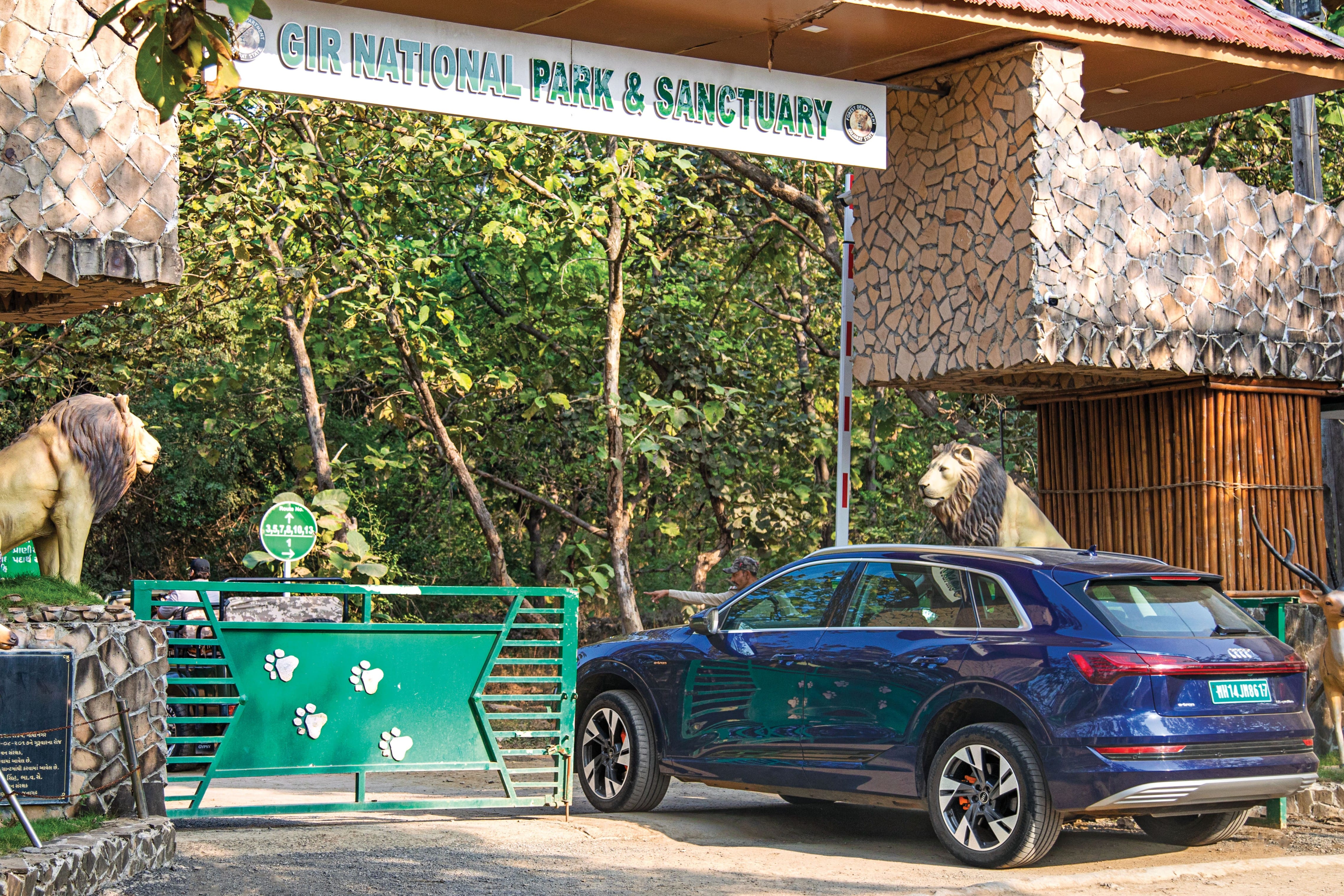
Tata Nexon EV in Satpura Tiger Reserve, Audi e-tron in Gir National Park
In 2021, we were the first to drive an electric car (specifically, the Tata Nexon EV) into Madhya Pradesh’s Satpura Tiger Reserve. The roughly 140km drive from Bhopal to Forsyth Lodge was completed with around 30km of range remaining, despite starting with the battery at 92 percent. With no fast-charging infrastructure nearby, the Nexon EV had to be charged overnight using a 15A socket. During the safari, the torquey and compact EV performed well on steep inclines and narrow forest trails, and its silent operation allowed it to approach wildlife like sambars, gaurs, wild pigs, and even a leopard without the noise of an idling engine – no tiger, though.
Then, in 2022, we were yet again the first to drive an EV into Gujarat’s Gir National Park, this time in an Audi e-tron. Reaching our accommodation induced a great deal of range anxiety due to faulty chargers along the way, but we managed to get there with around 20 percent of charge remaining. Once we reached, the e-tron was an excellent companion to tour the park with, helping us spot wildlife like chital, crocodiles, lions, and more.
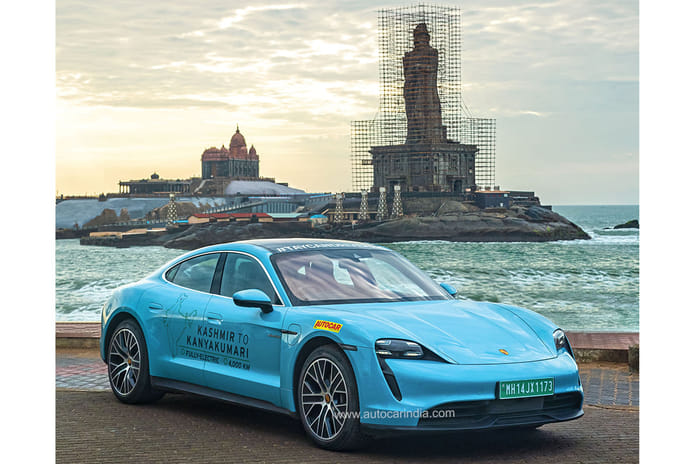
4. Porsche Taycan Kashmir to Kanyakumari road trip
Nearly 4,500km in a performance EV
2022 saw us take one of our most ambitious roadtrips to date: 4,467km from Kashmir to Kanyakumari in a Porsche Taycan. Despite challenges like landslides in Jammu, flooded roads in Punjab, and power outages at certain charging spots, the Taycan handled the journey with ease. On one of the most efficient legs, the Porsche EV delivered 7.1km/kWh, working out to an indicated range of 475km.
Comfort mode was the default setting, but we did have lots of fun in some stretches courtesy of the Taycan’s Sport Plus drive mode. Up to 225kW of fast charging bolstered convenience, and total charging expenses tallied up to just Rs 15,422 – cheaper than fuel for an equivalent petrol car. More than just distance, the trip proved that combining sports car-like performance with electric efficiency works perfectly in real-world conditions, and that the Taycan is more durable than you may think.
5. Pininfarina Battista India top speed record
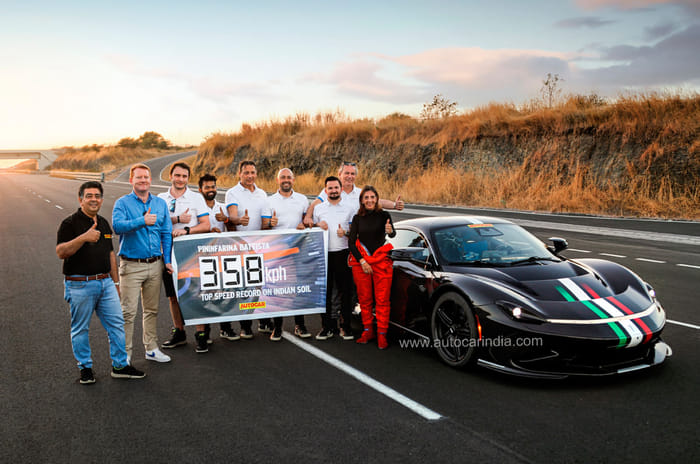
1900hp, quad-motor hypercar achieved a 358.03kph top speed
Back in early 2023, we set a new Indian top-speed record with the 1,900hp Pininfarina Battista electric hypercar at the NATRAX high-speed oval near Indore. Achieving an impressive v-max of 358.03kph, the Battista blitzed past the previous record of 332.20kph, which was also set by us in 2016 in an Audi R8 V10 Plus.
The Battista top-speed run also ended up establishing new world records for a production car: 0-300kph in 10.49 seconds and a quarter-mile time of 8.55 seconds, all verified by the Federation of Motor Sports Clubs of India (FMSCI).
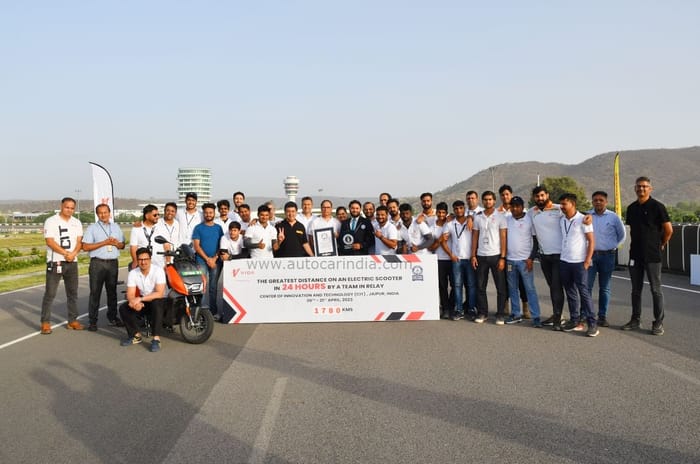
6. Hero Vida V1 Pro longest distance in 24 hours record
The e-scooter travelled just shy of a whopping 1,800km
The endurance challenge relied on swift battery swaps and flawless coordination, with the pit crew achieving 38 battery changes in under 20 seconds – quite impressive considering the extreme heat, rider fatigue, and complexity involved. Moreover, the Vida V1 Pro ran flawlessly throughout, handling the gruelling conditions with ease and maintaining performance consistently.
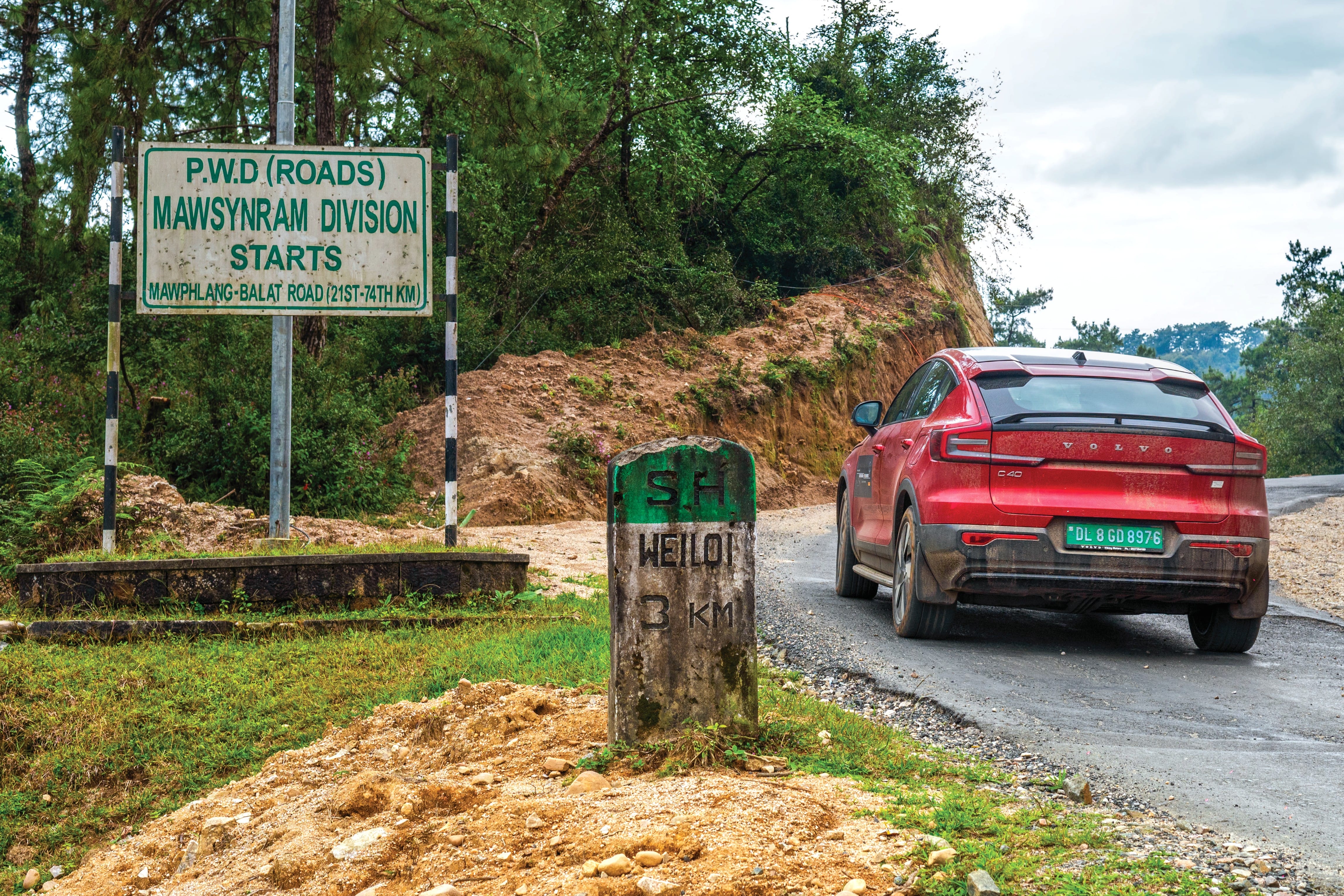
7. Volvo EC40 Jaisalmer to Mawsynram road trip
From India’s driest region to its wettest
In 2024, we took the Volvo EC40 (formerly known as the C40 Recharge) on a roughly 3,000km road trip from Jaisalmer in Rajasthan – one of India’s driest locations – to Mawsynram in Meghalaya, widely recognised as the country’s wettest. The route included a detour to Ghaziabad’s Volvo Reverse Project, a former dumping ground where around 10,000 trees had been planted as part of the company’s reforestation initiative.
Charging was carried out mainly overnight with DC fast chargers also used along the route, and the EC40 posed no issues during the journey. Ironically, we encountered heavy rain and waterlogging in Jaisalmer but surprisingly little rainfall in Mawsynram.
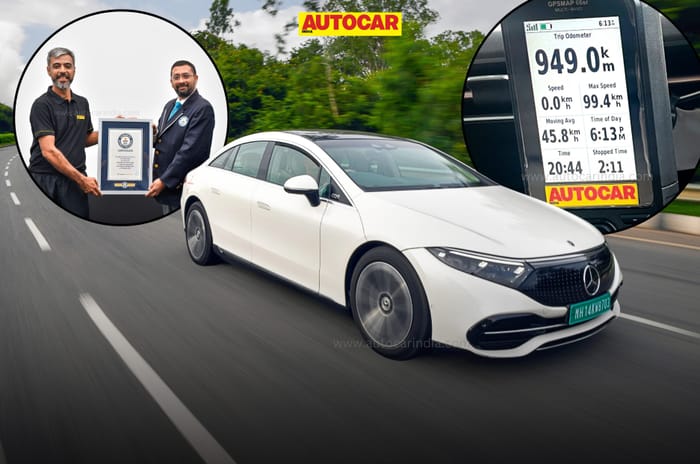
8. Mercedes Benz EQS sedan longest distance world record
Setting off from Bangalore on a full charge, the EQS 580 covered a distance of 949km when it reached its destination in Navi Mumbai, beating the previous Guinness World Record for the same by 32.26km. Impressively, the 949km real-world range exceeds EQS 580’s claimed range of 817km by just over 16 percent. It’s also worth mentioning that the two-day journey was completed under arduous conditions like heavy rainfall, lots of traffic, broken roads, and even a flat tyre.
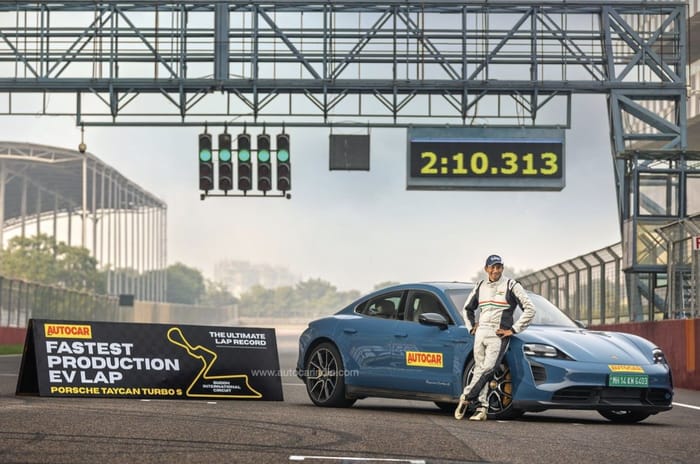
9. Porsche Taycan BIC EV lap record
2:10.313 lap time makes the Taycan the fastest EV around BIC so far
At the Buddh International Circuit in Greater Noida, we lapped a Porsche Taycan Turbo S and clocked a time of 2:10.313 minutes – the first-ever EV lap record around the 5.125km track. Despite its rather portly kerb weight of 2,370kg, the Taycan delivered unexpectedly sharp performance at BIC thanks to 761hp and 1,050Nm, a low centre of gravity (aided by the heavy 93.4 kWh battery), precise steering, and superb balance.
Upon hitting the apex and pinning the throttle, the Taycan belied physics the way it propelled out of corners with explosive speed, and despite weighing 845kg more, the EV achieved nearly the same top speed as the 911 GT3 RS at the end of BIC’s main straight.
10. Ultraviolette F99 India top speed record
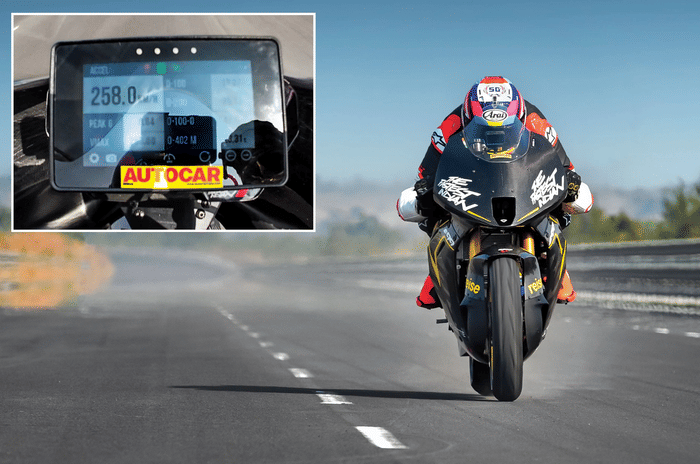
258kph around NATRAX and a 100-200kph run of 6.2 seconds
One of our more recent records entailed setting a new benchmark for made-in-India two-wheelers by hitting a top speed of 258kph on the Ultraviolette F99 at the NATRAX oval. Designed around a 400V architecture with a liquid-cooled powertrain, the purpose-built F99 packs 120hp and an astounding 972Nm (measured at the rear wheel).
The F99’s custom trellis frame, forged carbon-fibre bodywork, Brembo brakes, and Ohlins suspension helped the bike remain stable at high speeds, culminating in a clean record run captured via precision V-Box data. It also achieved a blistering 0-200kph run in under 10 seconds and 100-200kph in just 6.2 seconds, smashing previous Indian motorcycle speed records.
11. Mercedes Benz EQS SUV temperature change record
From the sweltering heat of Rajasthan to the sub-zero chill of Ladakh
Our 2025 Guinness World Record saw us achieving the greatest temperature change endured by a production EV. We accomplished this using the Mercedes-Benz EQS 450 SUV, driving from the scorching heat of 47.5 deg-C in Rajasthan to the below-freezing chill of -3.7 deg-C in Ladakh, for an impressive overall temperature swing of 51.2 deg-C.
The journey tested the limits of the EQS 450 SUV, especially its 122kWh battery’s thermal management system. Despite extreme variations in temperature, the climate control and battery systems kept the EQS 450 SUV performing smoothly and safely.
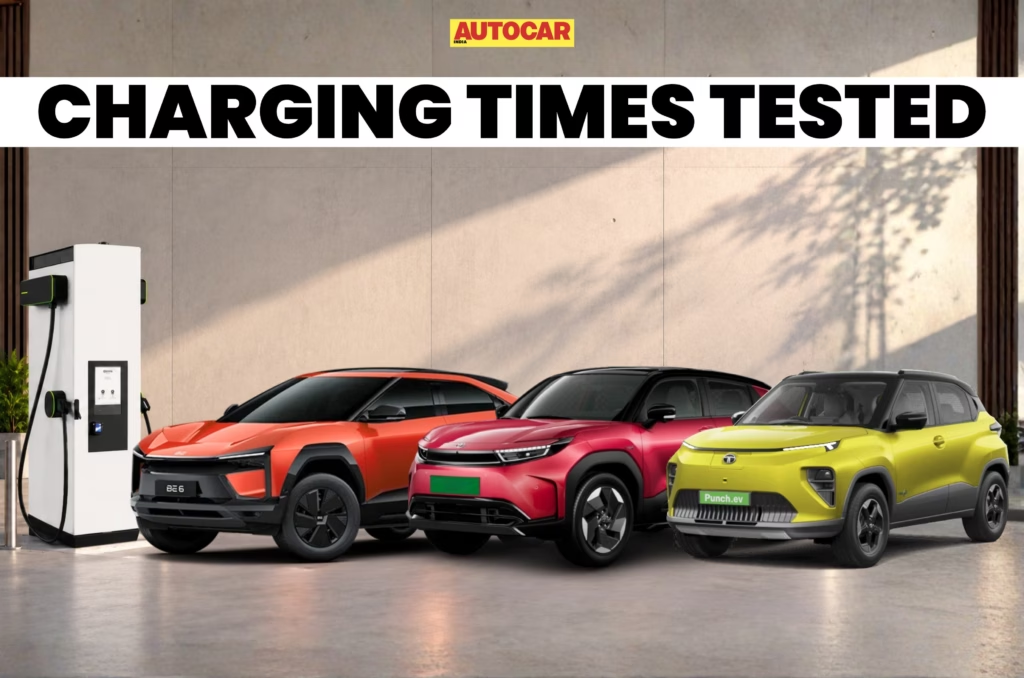
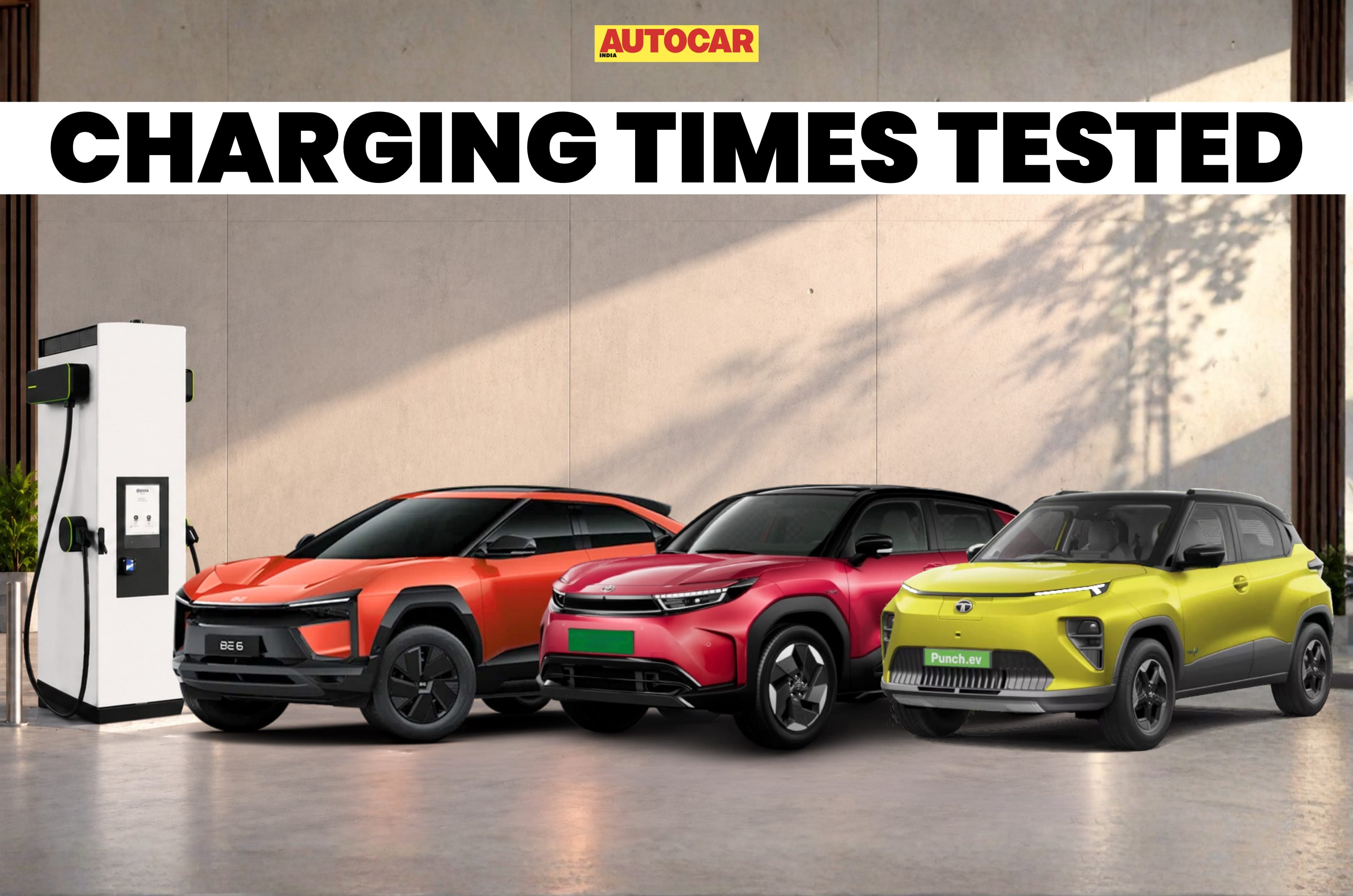
We’ve tested the charging performance of seven EVs so far in 2026, spanning a range of battery capacities and DC fast-charging capabilities. We recorded their 20-80 percent charging times as well as their peak charging speeds. Here’s how they rank from the slowest to the fastest.
7. Tata Punch EV
Prices: Rs 9.79 lakh to Rs 12.99 lakh
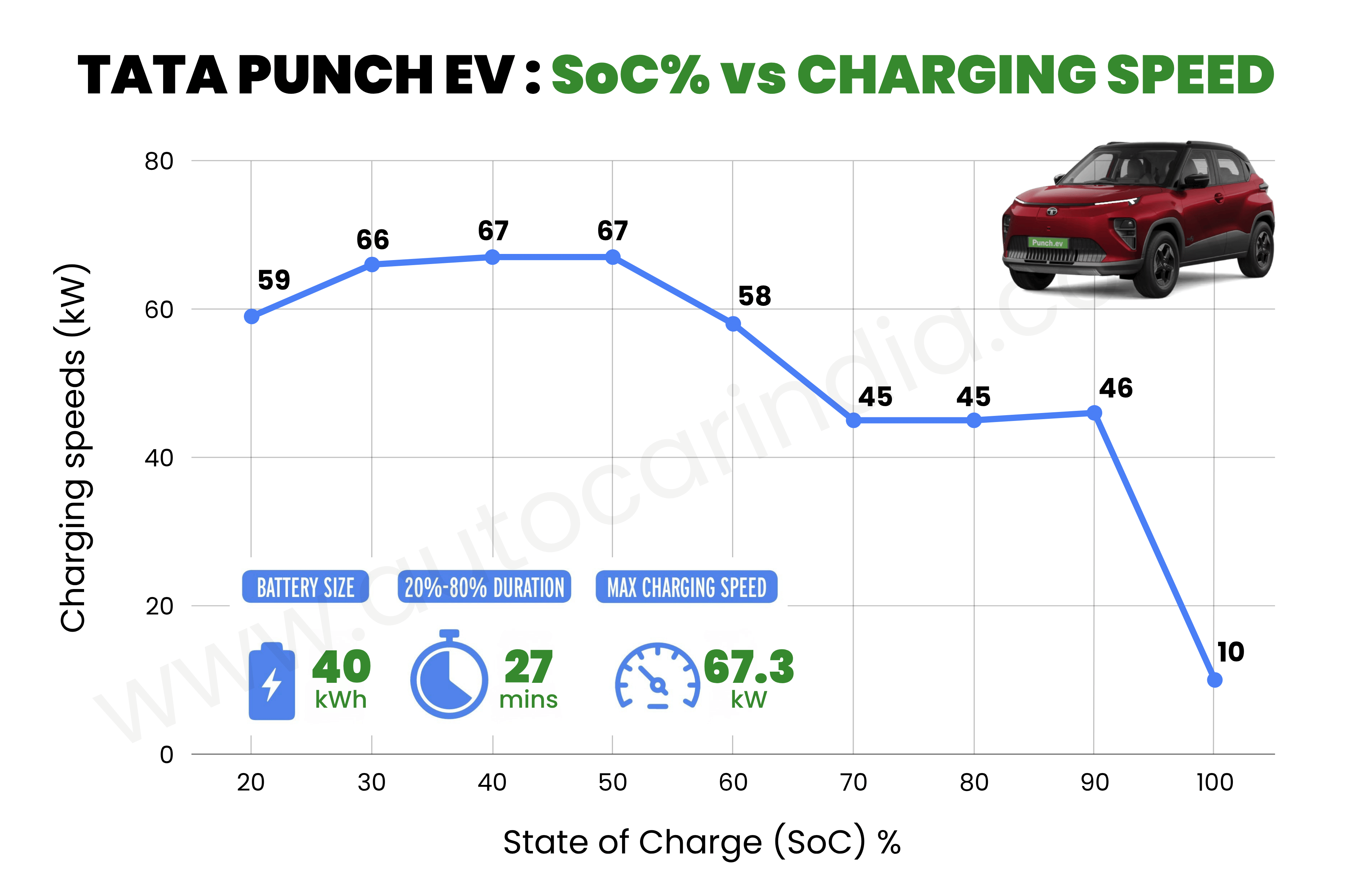
Tata updated the Punch EV earlier this year, bringing with it larger battery packs (30kWh and 40kWh), among other updates. Besides being the most affordable EV here, it’s also the slowest-charging car on this list. That said, its performance remains respectable by segment standards.
Using a 180kW DC fast charger, charging speeds hovered between 65-67kW from 25-50 percent state of charge, before tapering off beyond 50 percent and dropping sharply after 90 percent. Its 40kWh battery pack took 27 minutes to charge from 20-80 percent, and another 31 minutes to reach 100 percent. We also observed a peak charging speed of 67.3kW, slightly exceeding Tata’s claimed 65kW.
6. Toyota Urban Cruiser Ebella
Price: Rs 23.60 lakh
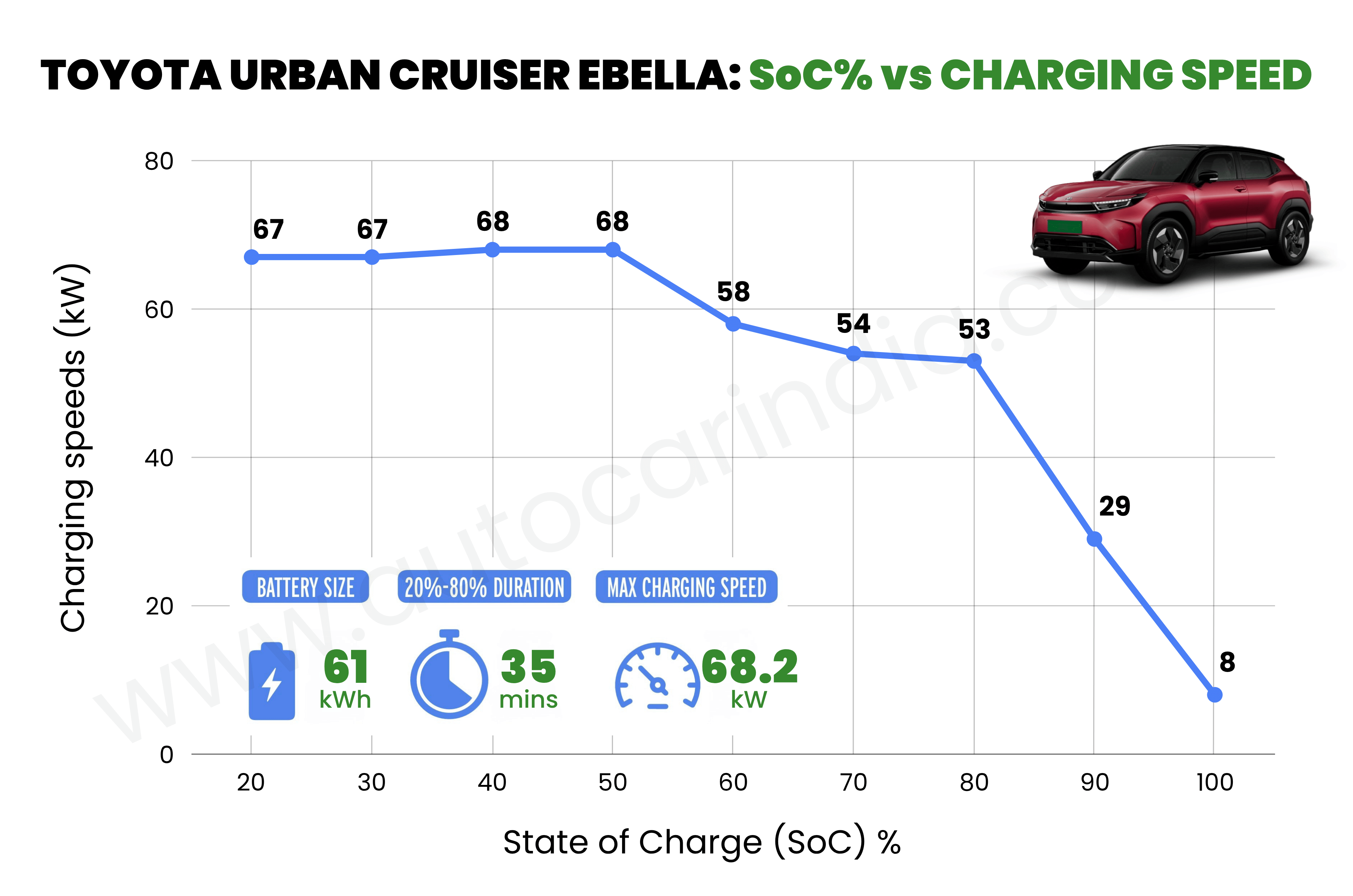
The Urban Cruiser Ebella is Toyota’s only EV on sale in India and is offered in a single variant with a 61kWh battery pack.
Using a 90kW DC fast charger, we recorded a peak charging speed of 68.2kW. Charging the 61kWh battery from 20-80 percent took 35 minutes, while the final 20 percent required another 36 minutes. Impressively, charging speeds remained consistently between 67-68kW from 20-50 percent state of charge.
You can expect similar charging performance from the Maruti Suzuki e Vitara, as the two models are essentially the same vehicle.
5. Mahindra BE 6 Sporteq
Prices: Rs 19.45 lakh to Rs 26.95 lakh
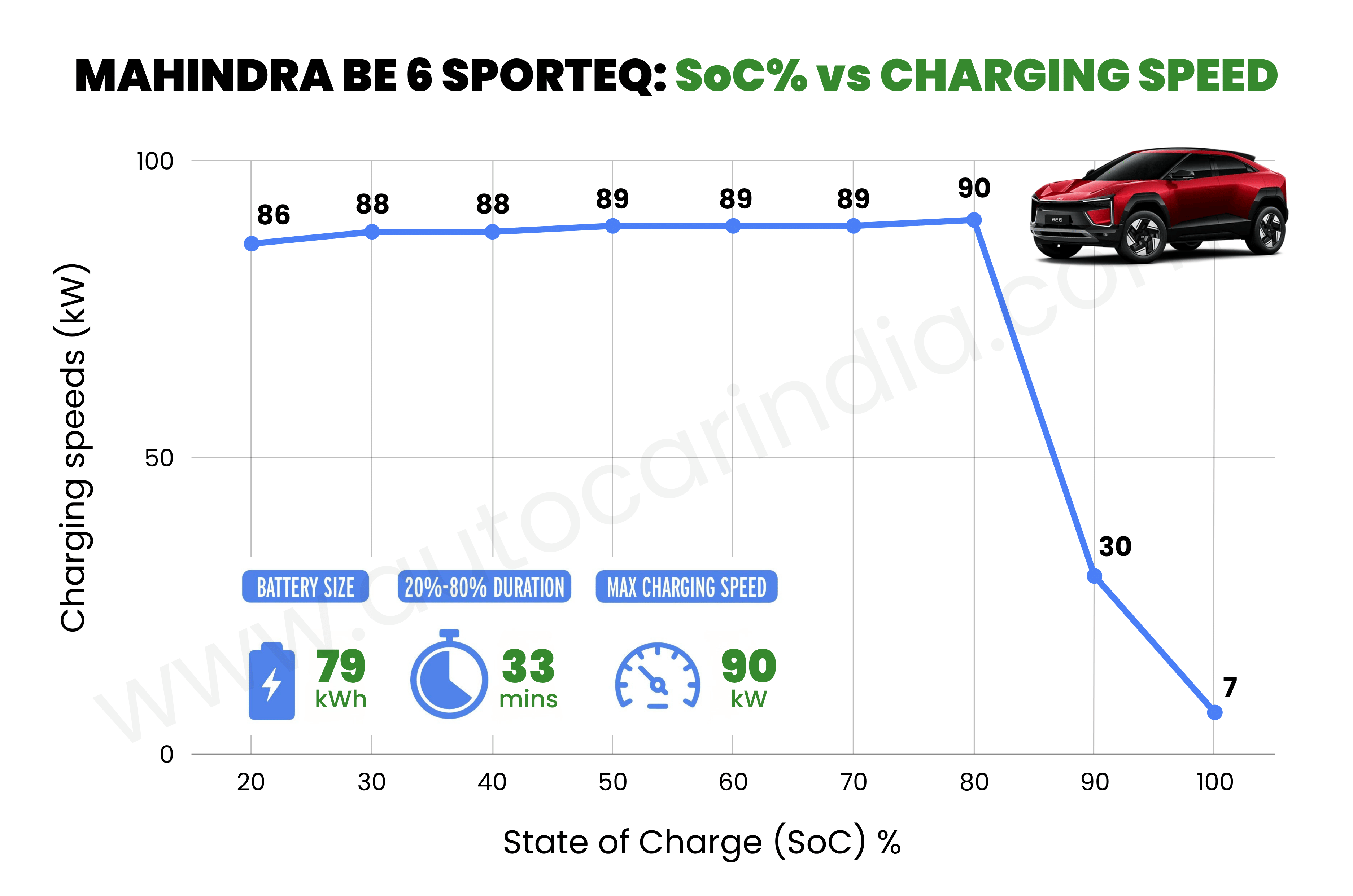
We charged the Mahindra BE 6 Sporteq, equipped with the 79kWh battery pack, using a 150kW DC fast charger. During the test, we recorded a peak charging speed of around 90kW, which is roughly half of Mahindra’s claimed figure. That said, charging speeds remained consistent at around 87-89kW from 20-80 percent state of charge, which is commendable.
The BE 6 took 33 minutes to charge from 20-80 percent and another 35 minutes to go from 80-100 percent.
Notably, owners have reported higher charging speeds, closer to the claimed 180kW, when using Mahindra and Zeon charging stations.
4. Vinfast VF7
Prices: Rs 22.99 lakh to Rs 28.09 lakh
We tested the dual-motor Vinfast VF7, equipped with a 70kWh battery, using a 180kW DC fast charger and observed a peak charging speed of 95.4kW.
Vinfast claims that charging from 10-70 percent takes 28 minutes. In our test, the VF7 required 38 minutes to charge from 20-80 percent using the same 180kW charger.
3. Mercedes-Benz CLA 250+
Price: Rs 60.50 lakh
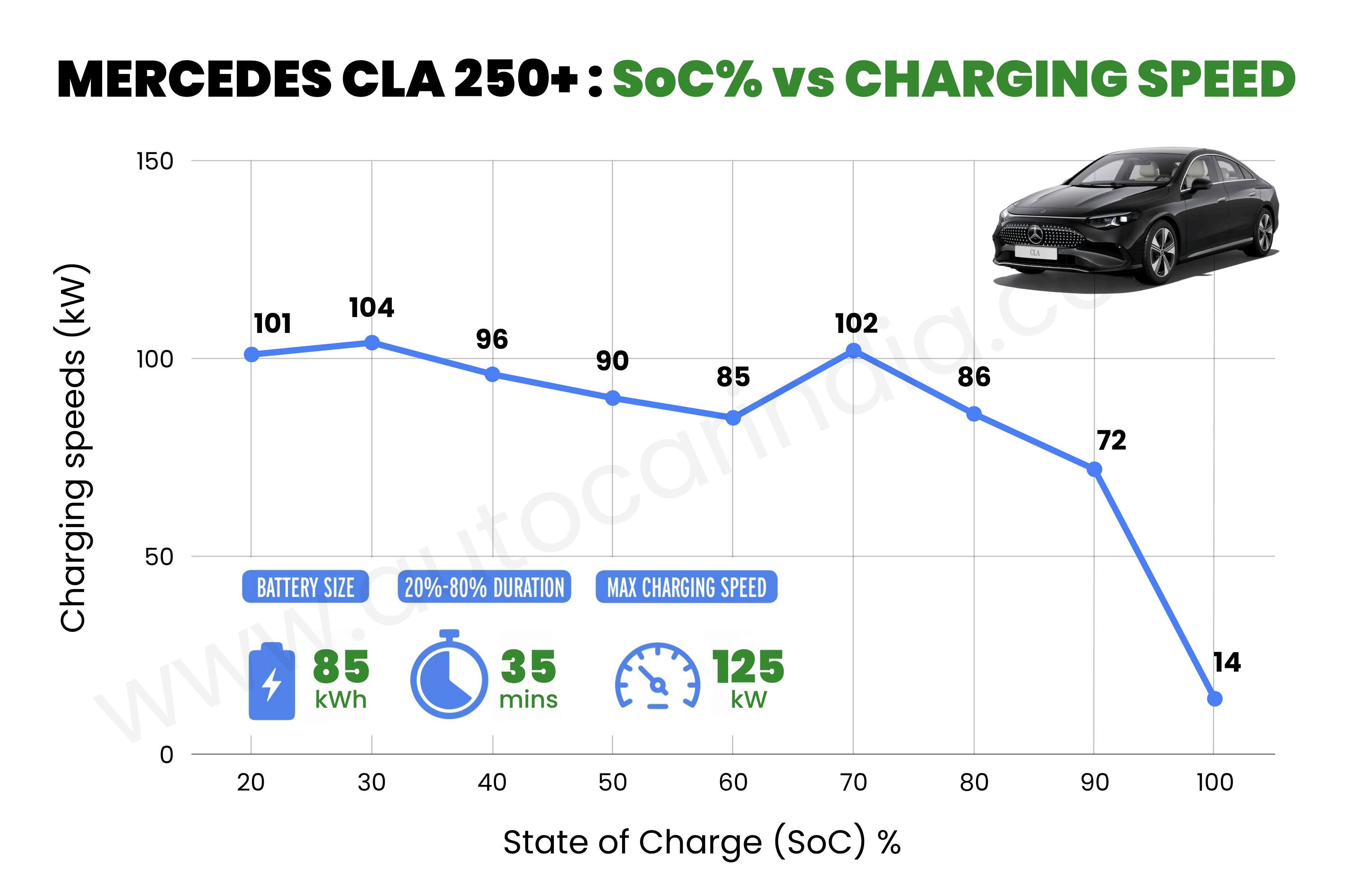
The Mercedes-Benz CLA 250+ is equipped with an 85kWh battery pack and an 800-volt electrical architecture, enabling charging speeds of up to 320kW. Mercedes claims a 10-80 percent charging time of just 22 minutes.
For our test, we used a 150kW DC fast charger, and the CLA’s 85kWh battery charged from 20-80 percent in 35 minutes and reached 100 percent after another 34 minutes. We recorded a peak charging speed of 125kW, with the charging rate averaging 96kW between 20-70 percent state of charge.
2. Tesla Model Y RWD:
Price: Rs 50.89 lakh
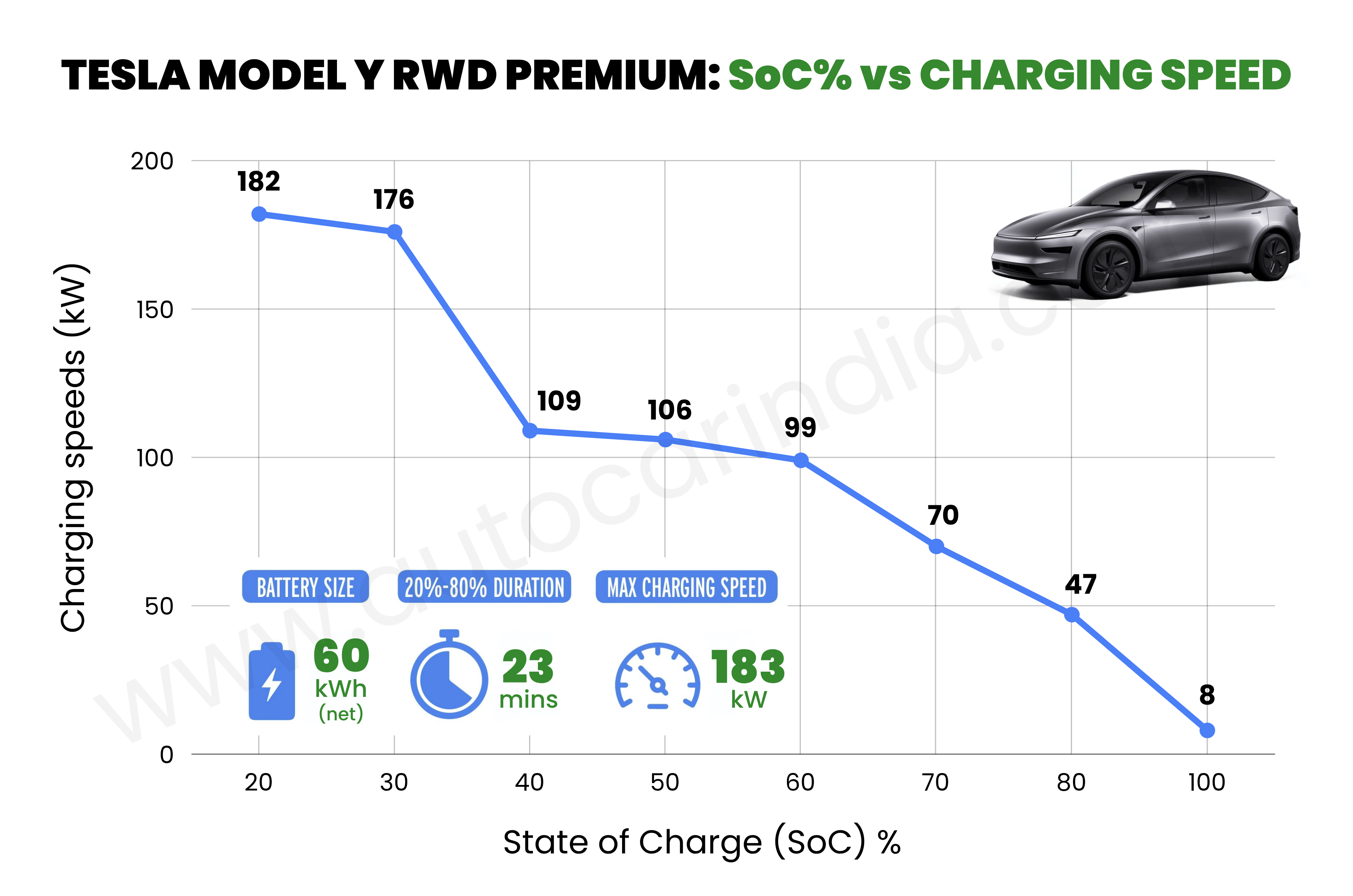
Tesla currently offers the 2026 Model Y in India with a single rear-mounted motor and a 60kWh LFP battery (64kWh gross). Using a 250kW Tesla Supercharger, the battery initially charged at an impressive rate. However, charging speeds dropped rapidly from 176kW at 30 percent state of charge to 109kW at 40 percent, before continuing to taper off thereafter.
In terms of charging times, the Model Y took 23 minutes to charge from 20-80 percent, while the final 20 percent required another 30 minutes.
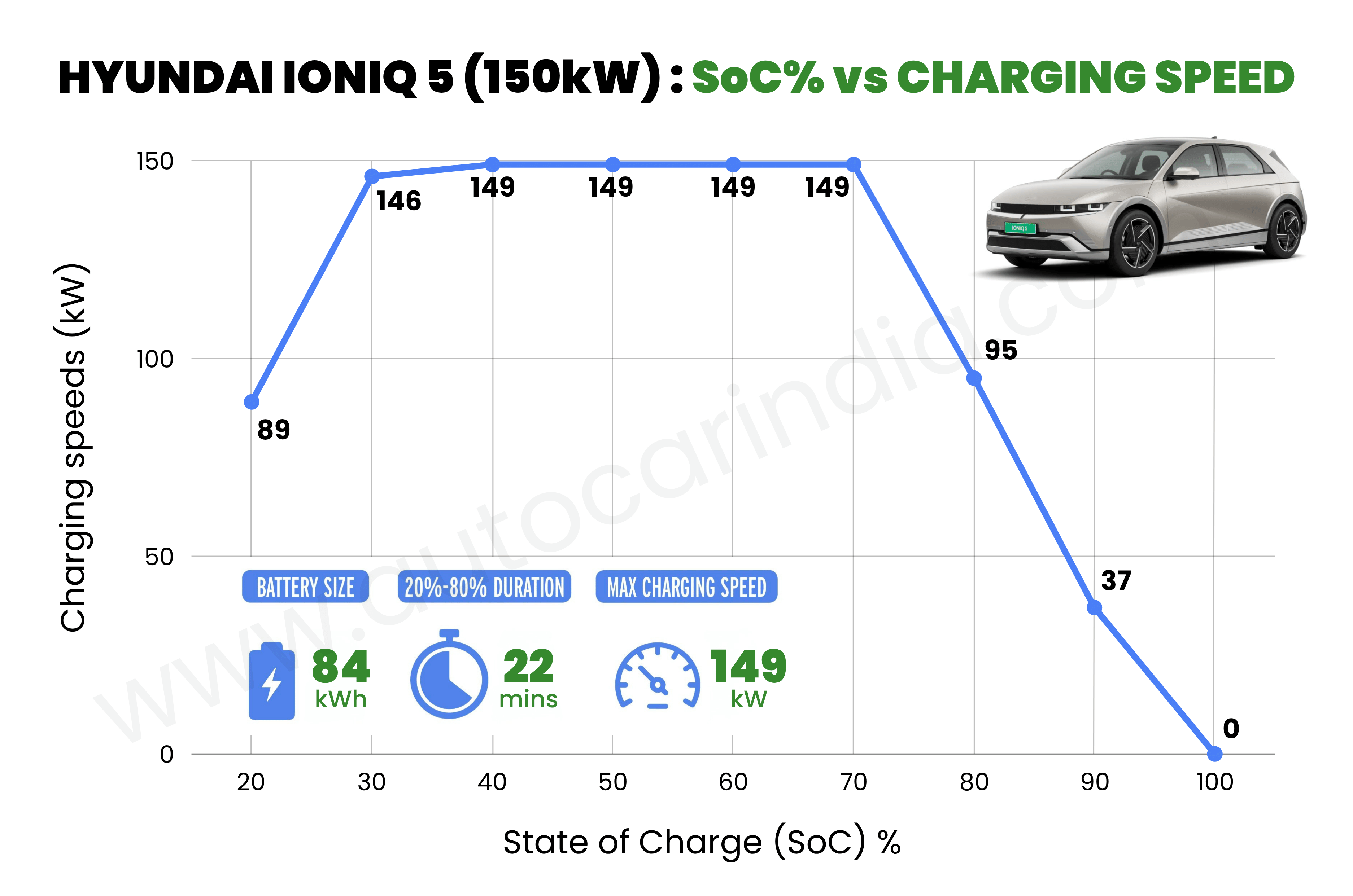
1. Hyundai Ioniq 5:
Price: Rs 55.71 lakh
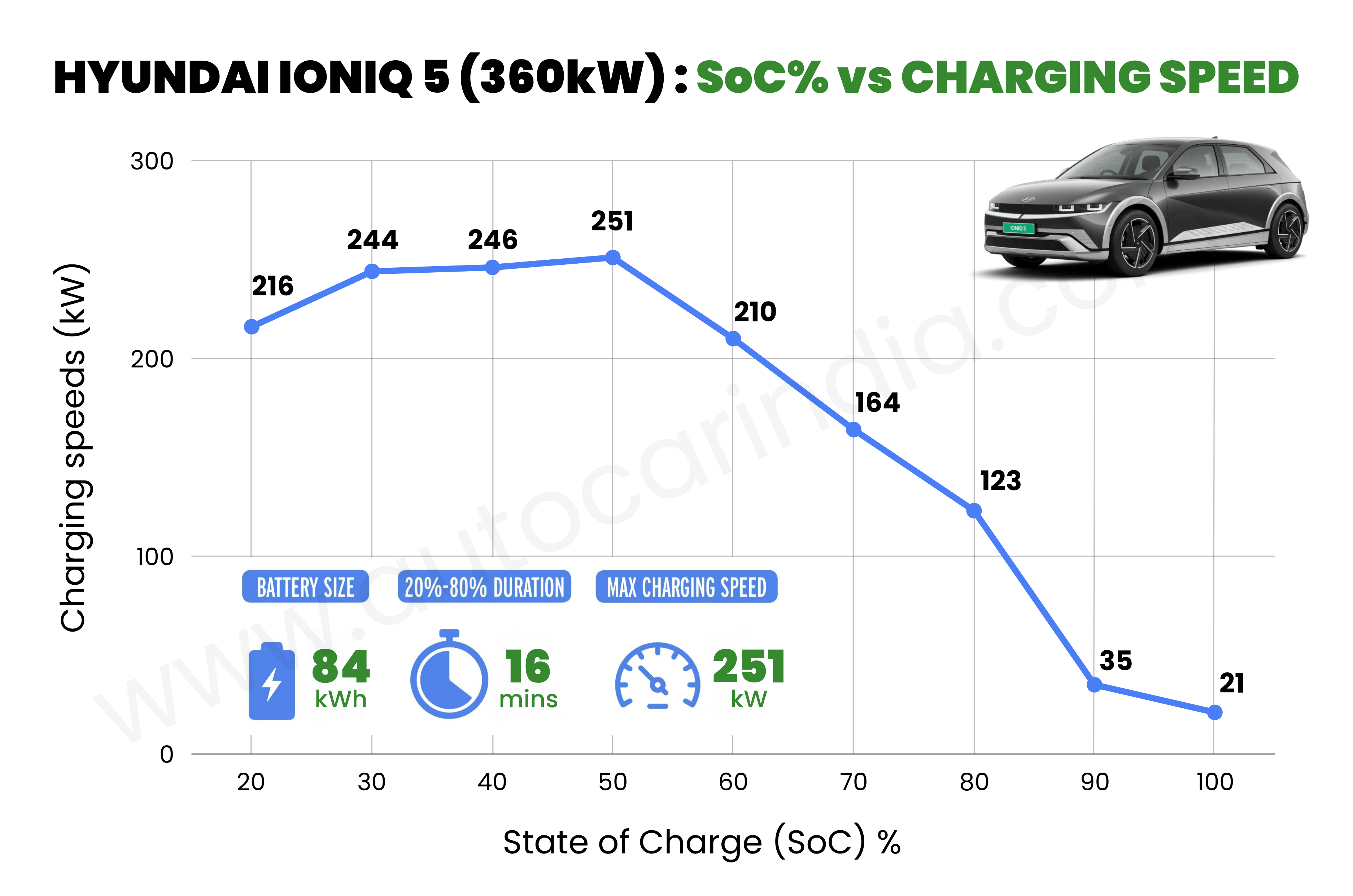
The Hyundai Ioniq 5 is the fastest-charging EV we’ve tested so far in 2026. The updated model features a larger 84kWh battery pack, up from 72.6kWh in the previous version. Using a 360kW DC fast charger, charging speeds remained between 240-250kW from 30-50 percent state of charge before dropping sharply. We also recorded a peak charging speed of 251kW at around 50 percent state of charge.
As for charging times, the Ioniq 5 took just 16 minutes to charge from 20-80 percent – quickest we’ve seen to date; while reaching 100 percent required another 33 minutes.
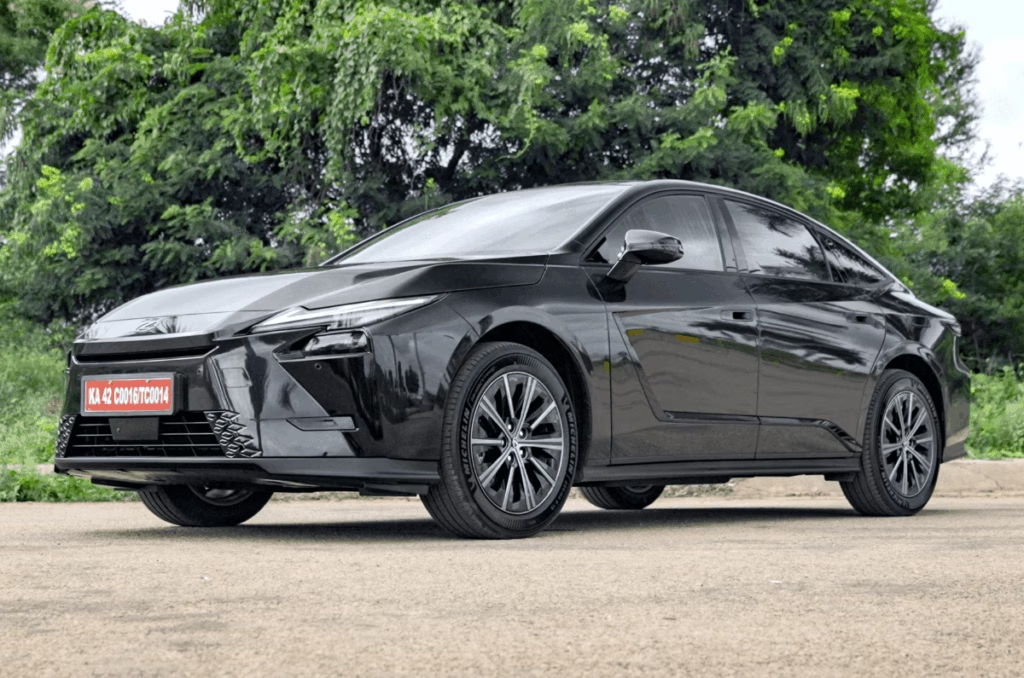
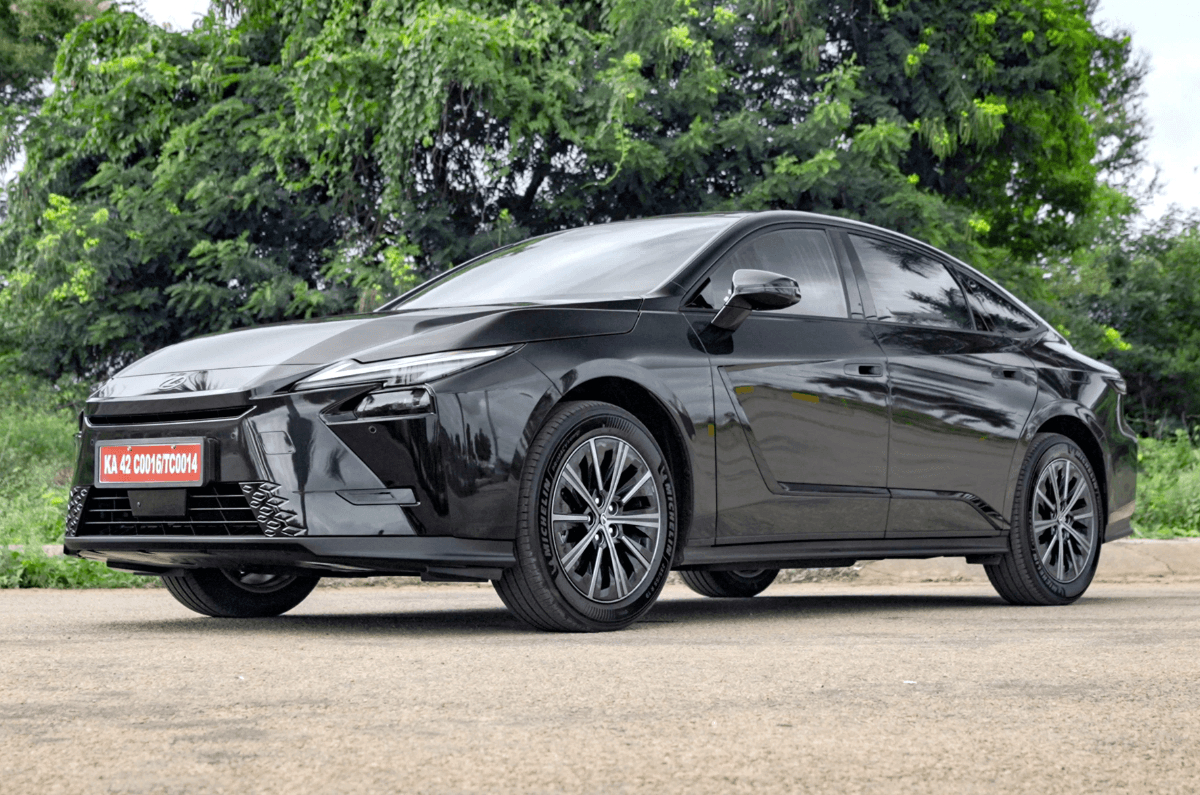
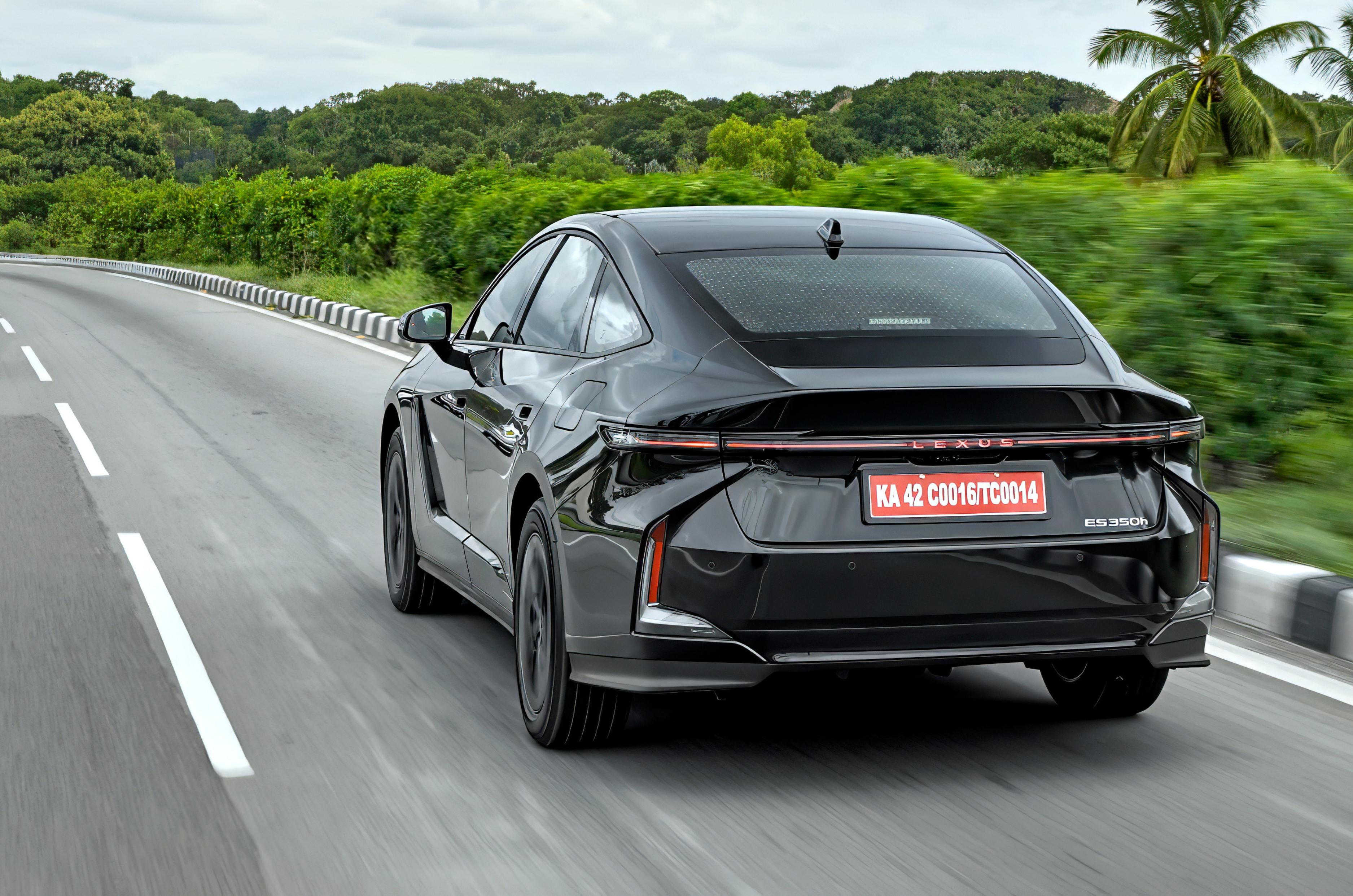
The eighth-generation Lexus ES is based on a new platform, gets an all-new design and is available in both strong-hybrid (350h) and EV (500e) guises. Since the core Lexus ES fanbase is all about the hybrid, we are focusing on the ES 350h here. We look at three reasons why the hybrid sedan deserves a spot in your garage, and two reasons why you may want to skip it.
Reasons to buy the Lexus ES 350h
Fuel-efficient powertrain
A hybrid powertrain’s advantage is its range and the ability to ability to skip fuel pumps. While saving on fuel would not be a priority for luxury sedan buyers, it is still a good bonus and can significantly reduce the fuel bill. On a full tank of petrol, you can expect a range of around 800 kilometres. In the city, you can easily run on electric power from home to work without using any fuel. A result of its silent running is the excellent refinement, adding a layer of luxury to the experience.
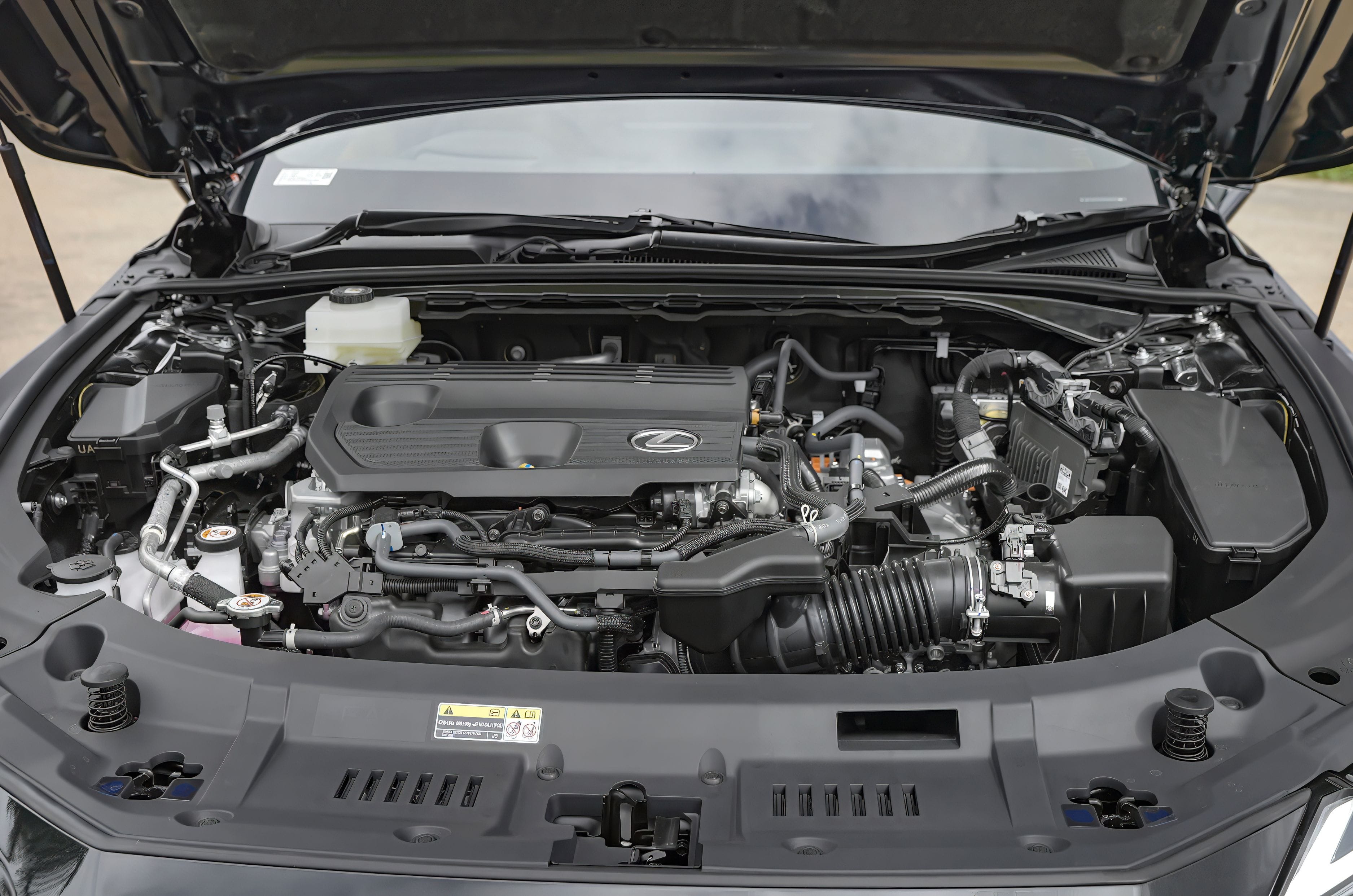
Speaking of technical specifications, the ES 350h’s hybrid powertrain comprises a 2.5-litre, 4-cylinder petrol engine and a permanent magnet synchronous electric motor. Together, this hybrid setup develops 247hp, and gearbox duties are handled by an e-CVT.
Impressive ride comfort
Lexus has equipped the ES 350h with a soft suspension setup, which, combined with the 19-inch wheels with a tall tyre sidewall, leads to a comfortable ride at low speeds. Even over speed bumps and potholes, the 350h is impressive. It feels composed and confident even at highway speeds, with none of the floating usually associated with low-slung sedans.
Less expensive than rivals
At Rs 66.10 lakh, ex-showroom, for the range-starting Exquisite trim, the ES 350h is extremely well priced. For someone looking for a spacious, refined and reliable luxury sedan for the long run, it makes a strong case.
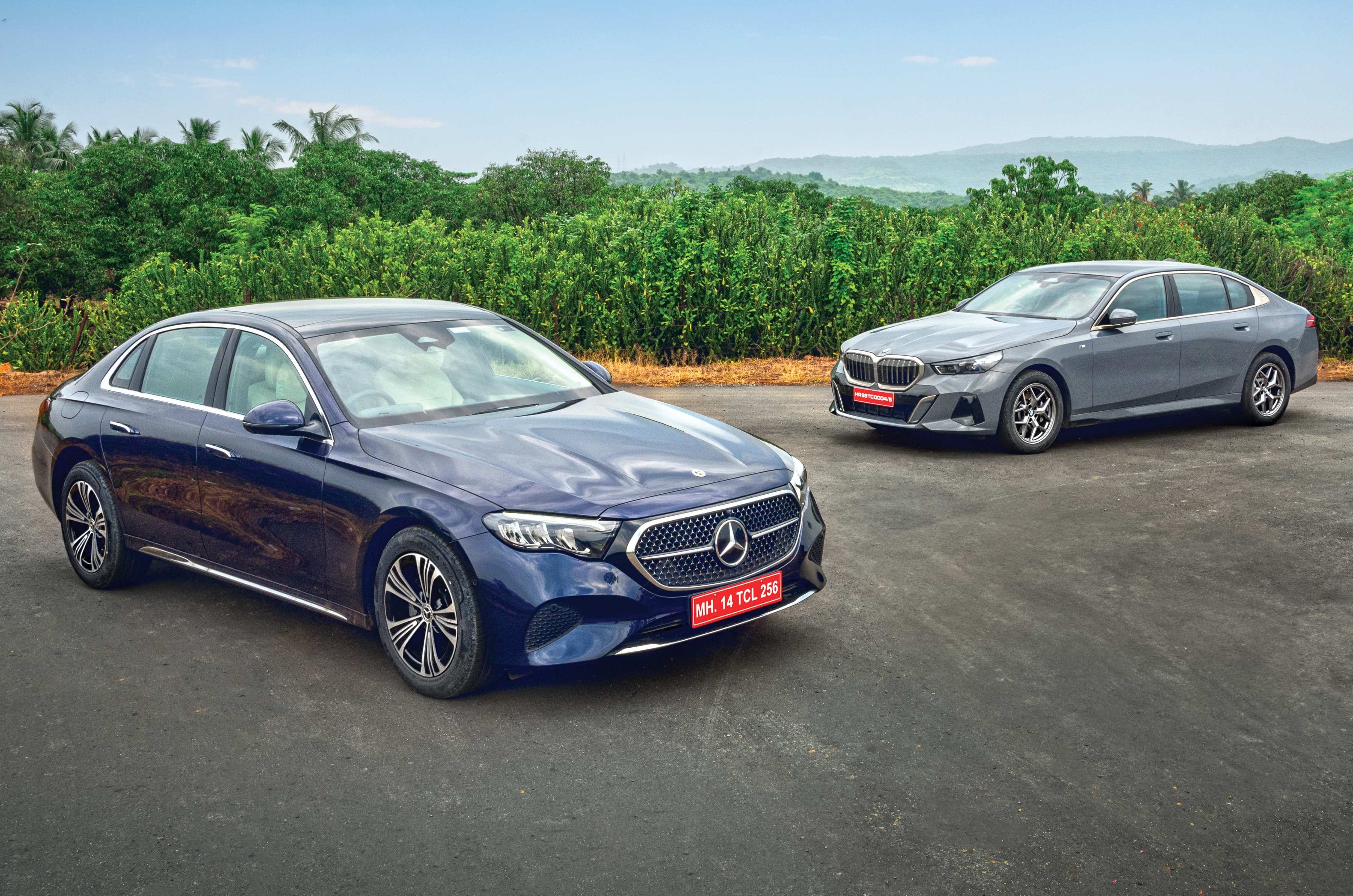
Mercedes E-Class (left), BMW 5 Series LWB (right).
The top-spec Luxury trim costs Rs 71.80 lakh, ex-showroom, and gets a decent set of features, while still being considerably less expensive than similarly sized rivals like the Mercedes-Benz E-Class and BMW 5 Series LWB. For those who are not chasing badge value and value longevity over flash, the ES 350h is worth a strong consideration.
Like any other car, the Lexus ES 350h has a few limitations. Let us look at a few reasons why you might want to skip it.
Reasons not to buy the Lexus ES 350h
Misses out on some features compared to rivals
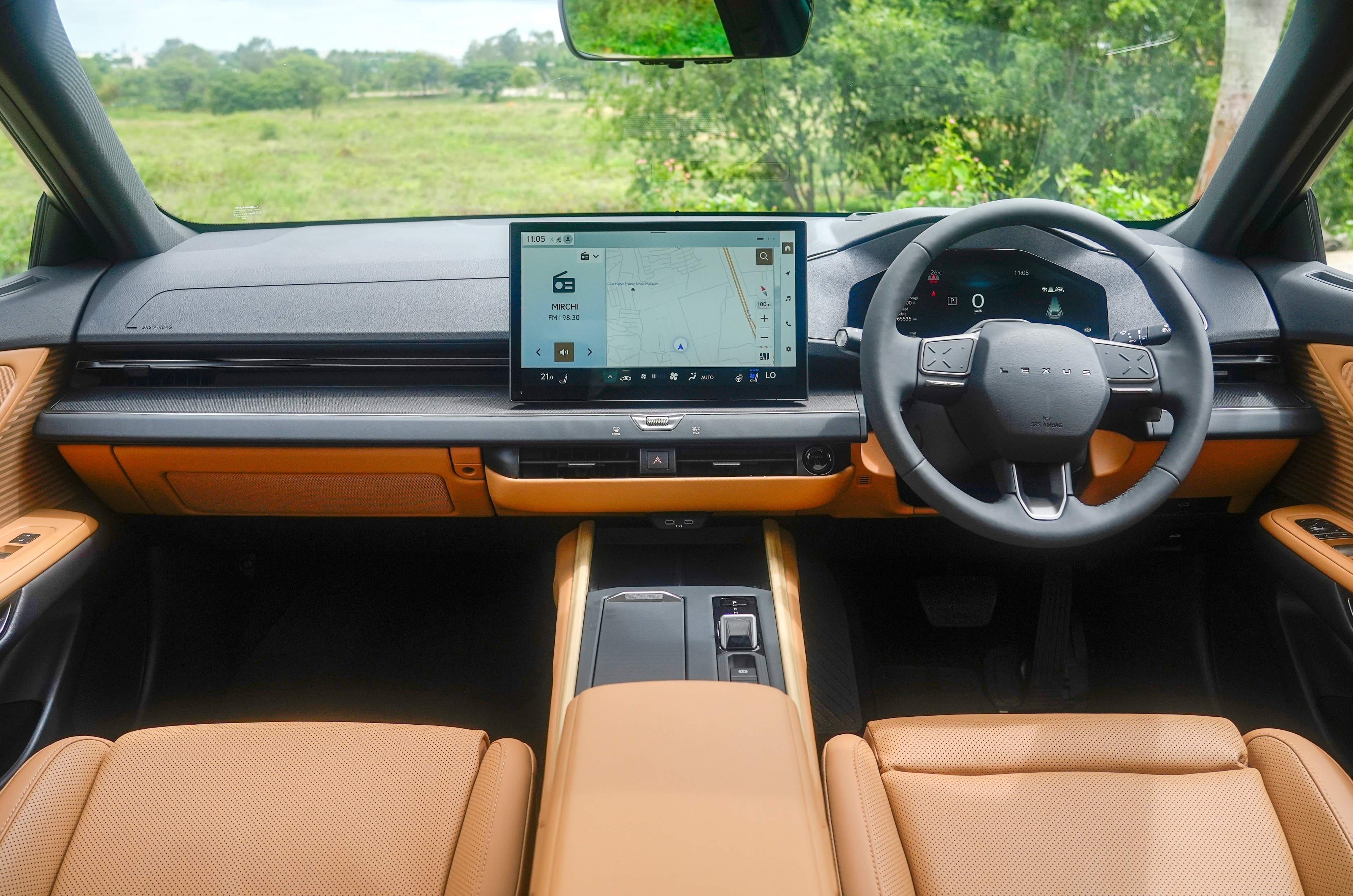
The passenger display in the Mercedes E-Class, part of its Superscreen setup, adds to the wow factor; the ES, meanwhile, gets a touchscreen and a digital driver’s display. The ES gets a single-pane sunroof, but a panoramic or even a split-pane sunroof would have helped open up the cabin during the daytime. In comparison, the E-Class gets a panoramic sunroof, while the 5 Series LWB gets a fixed panoramic glass roof. Strangely, even sunblinds are absent from the 350h; the Mercedes sedan offers powered blinds.
What’s interesting is that the ES’ older version (the seventh-generation facelift) did pamper chauffeur-driven passengers with sunblinds and even media controls. Now, however, AC vents with two Type-C ports are all that is available.
Rear seat comfort not as good as rivals
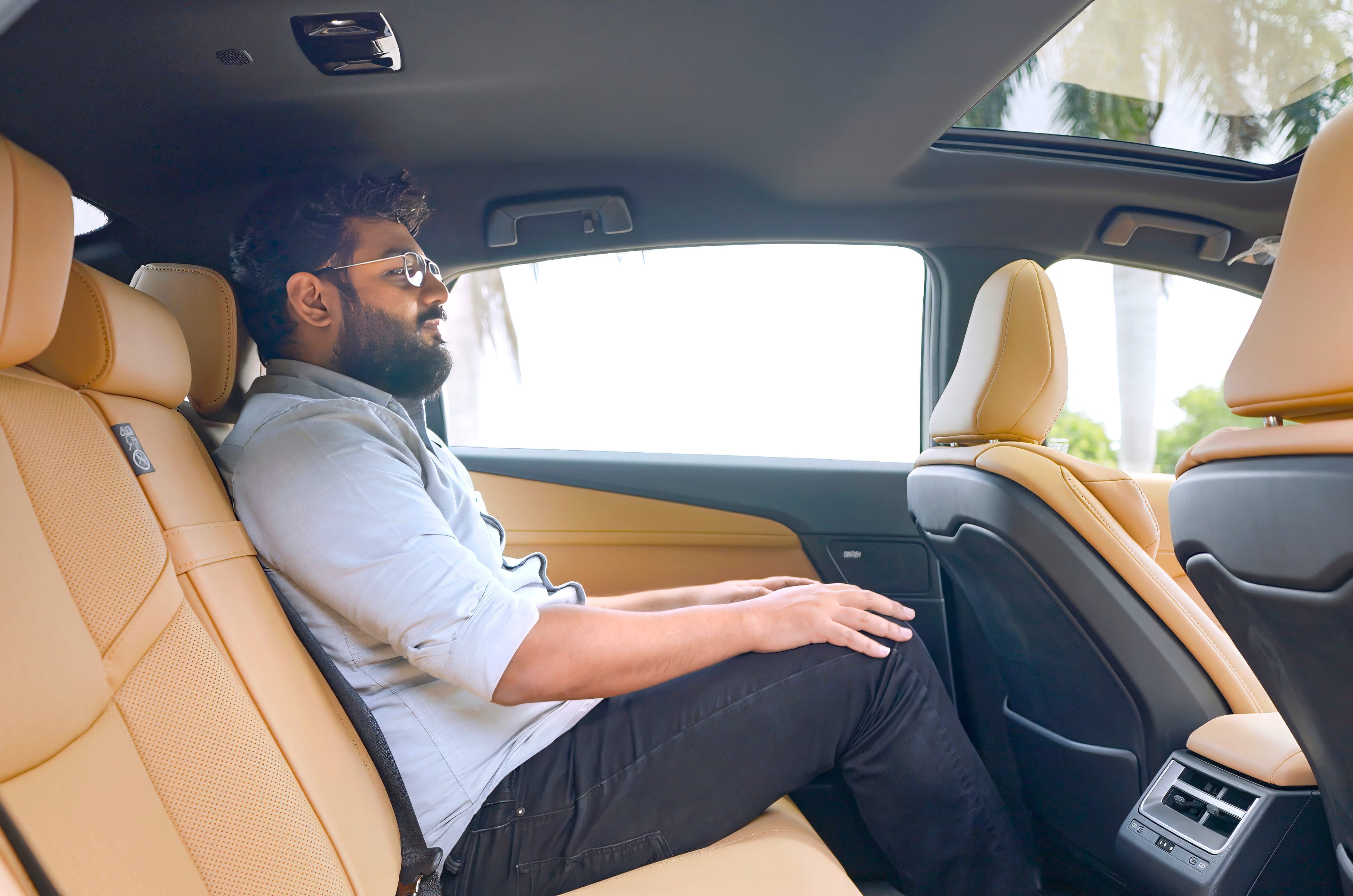
While legroom at the rear is plentiful, the raised floor, however, means the rear passengers sit in a knees-up position, and there is no recline function for the backrest. This does not work in favour of the ES, as both the Mercedes E-Class and BMW 5 Series are known for their impressive rear-seat experience, which is important for those who prefer to be chauffeur-driven.
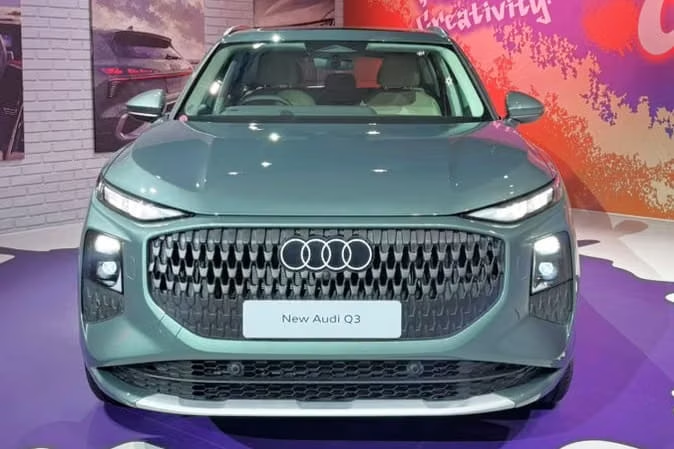
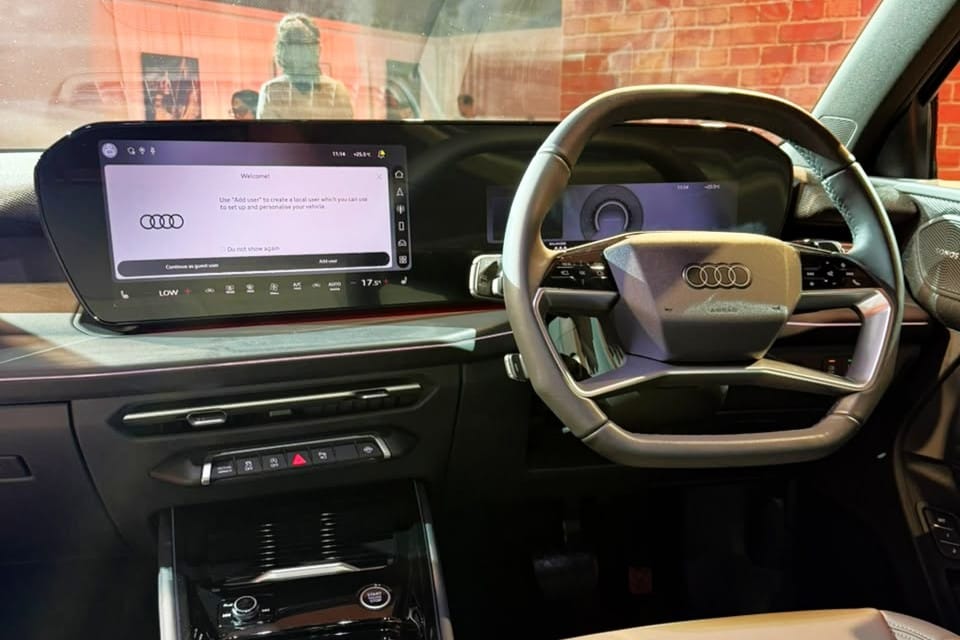
Audi India is slated to launch the new Q3 on October 16, 2026. The India-spec Q3 debuted in August 2026 and is the first of all-new Audis to arrive in India. The German carmaker’s entry-level luxury replaces its second-generation version, which has been on sale for four years and will be locally assembled.
To be powered solely by a turbo-petrol engine
The third-generation Audi Q3 is powered by a 2.0-litre direct-injection turbo-petrol engine. Though power figures are yet to be confirmed, it is expected to produce 204hp and 320Nm. A 7-speed DCT sends power to all wheels via Audi’s Quattro AWD system that’s likely to be standard fitment across the Q3 range.
Gets an aggressive exterior and a tech-laden interior
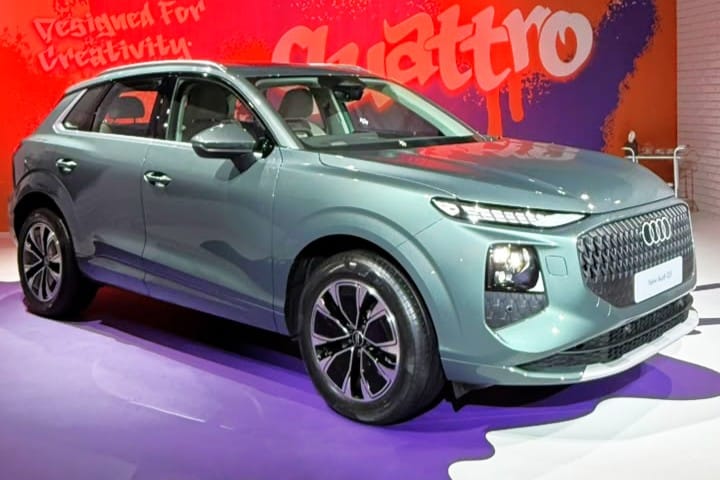
The new Q3’s exterior bears a more imposing look than its predecessor. Unlike its rivals that sport a traditional headlamp setup, the Q3 gets a split headlamp design with configurable DRLs. In profile, there’s body-coloured cladding, a chrome beltline, 18-inch dual-tone alloy wheels, and a black trim across the side windows and rear windscreen. The back comes with a split design for the tail-lamps, an illuminated Audi logo, and a spoiler.
Inside, the Q3 gets an upmarket interior with a dual-screen setup for the digital driver’s display and infotainment screen. There’s also a four-spoke steering wheel, a steering column-mounted gear lever, and features like a Sonos sound system, a panoramic sunroof, wireless Apple CarPlay and Android Auto, dual-zone climate control, and a 360-degree camera setup.
Expected to be priced at around Rs 55 lakh
With an all-new generation inbound, the new Audi Q3 is likely to command a premium over the current version that retails between Rs 43.67 lakh and Rs 53 lakh. The new Q3 is expected to be priced at around Rs 55 lakh -60 lakh (ex-showroom). It will continue to take on the likes of the BMW X1, Mercedes-Benz GLA, and the Mini Countryman C.
The Society of India Automobile Manufacturers (SIAM) elected Shenu Agarwal, Managing Director and Chief Executive Officer of Ashok Leyland, as President for the 2026-27 term. SIAM is the apex national body representing all major vehicle and vehicular engine manufacturers in India. The decision was finalised at an executive committee meeting during the 2026 SIAM Annual Convention on Thursday.
Shenu Agarwal succeeds Tata Motors’s Shailesh Chandra as SIAM President
Agarwal served as SIAM Vice President during his previous term
Agarwal has served as SIAM Vice President during his previous term. Taking over as President, he succeeds Shailesh Chandra, Managing Director and CEO of Tata Motors Passenger Vehicles.
K N Radhakrishnan (left), Santosh Iyer (right).
K N Radhakrishnan, Director and CEO of TVS Motor, was elected Vice President by SIAM. Santosh Iyer, Managing Director and CEO of Mercedes-Benz India, took over as Treasurer for the current term.
The EX90 is Volvo’s latest offering in India and also its most premium one. The EX30 and EC40 compete in the entry-level luxury EV segment, but the EX90 is the brand’s flagship electric SUV. It comes in a single, fully loaded variant with all the bells and whistles, along with a dual-motor setup and a claimed range of over 600km. Can it bring in a new audience or convert some XC90 customers? It certainly has the traits to do both.
EX90 Exterior Design and Engineering – 9/10
Built on Volvo’s SPA2 dedicated EV platform that has hints of the XC90.
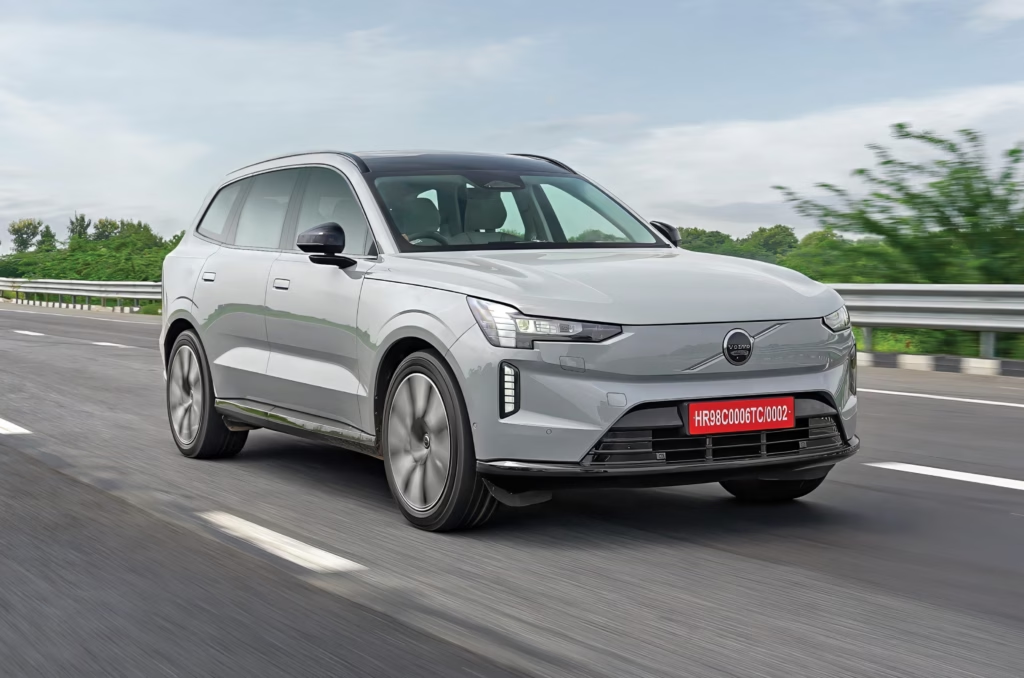
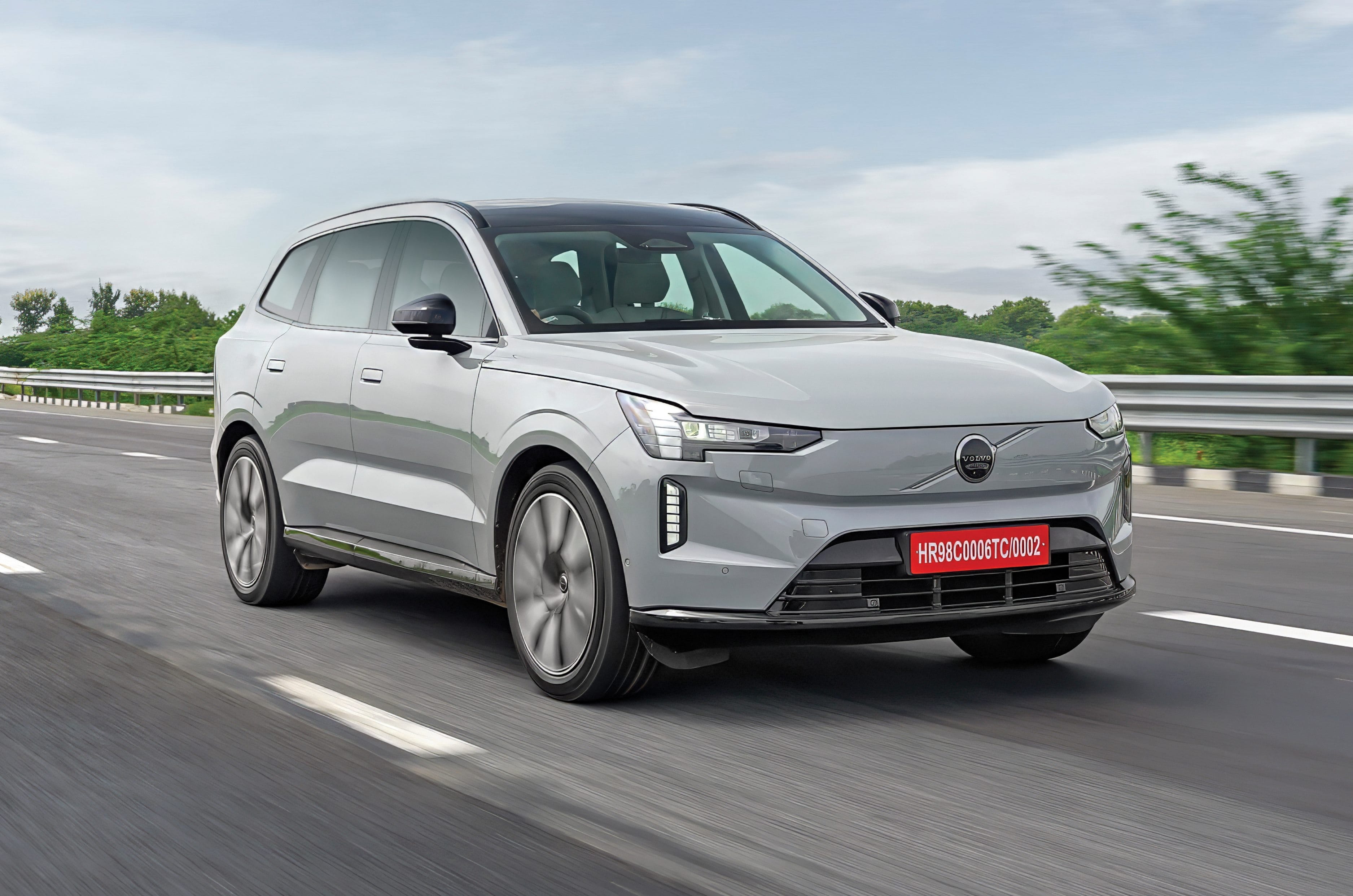
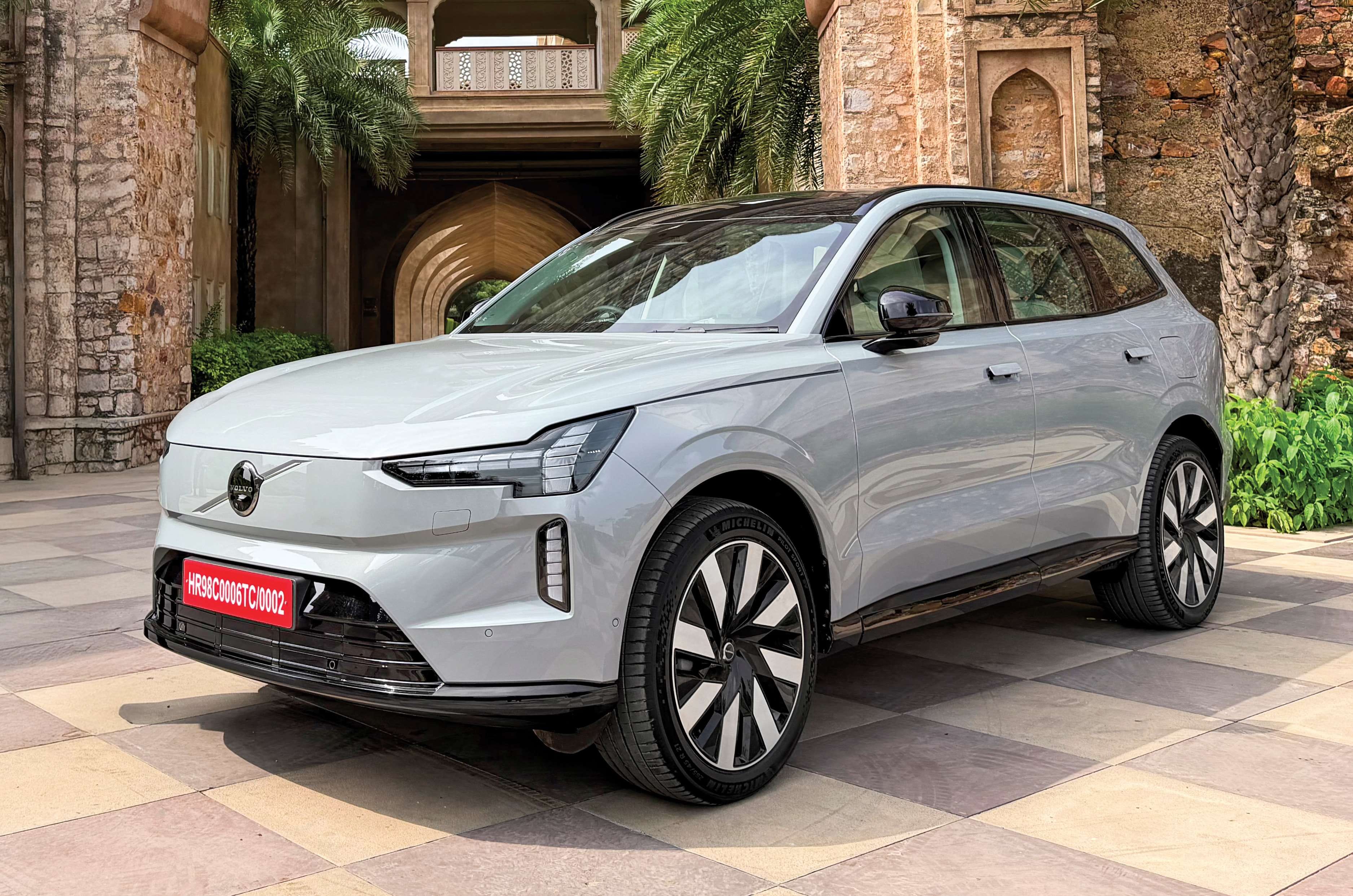
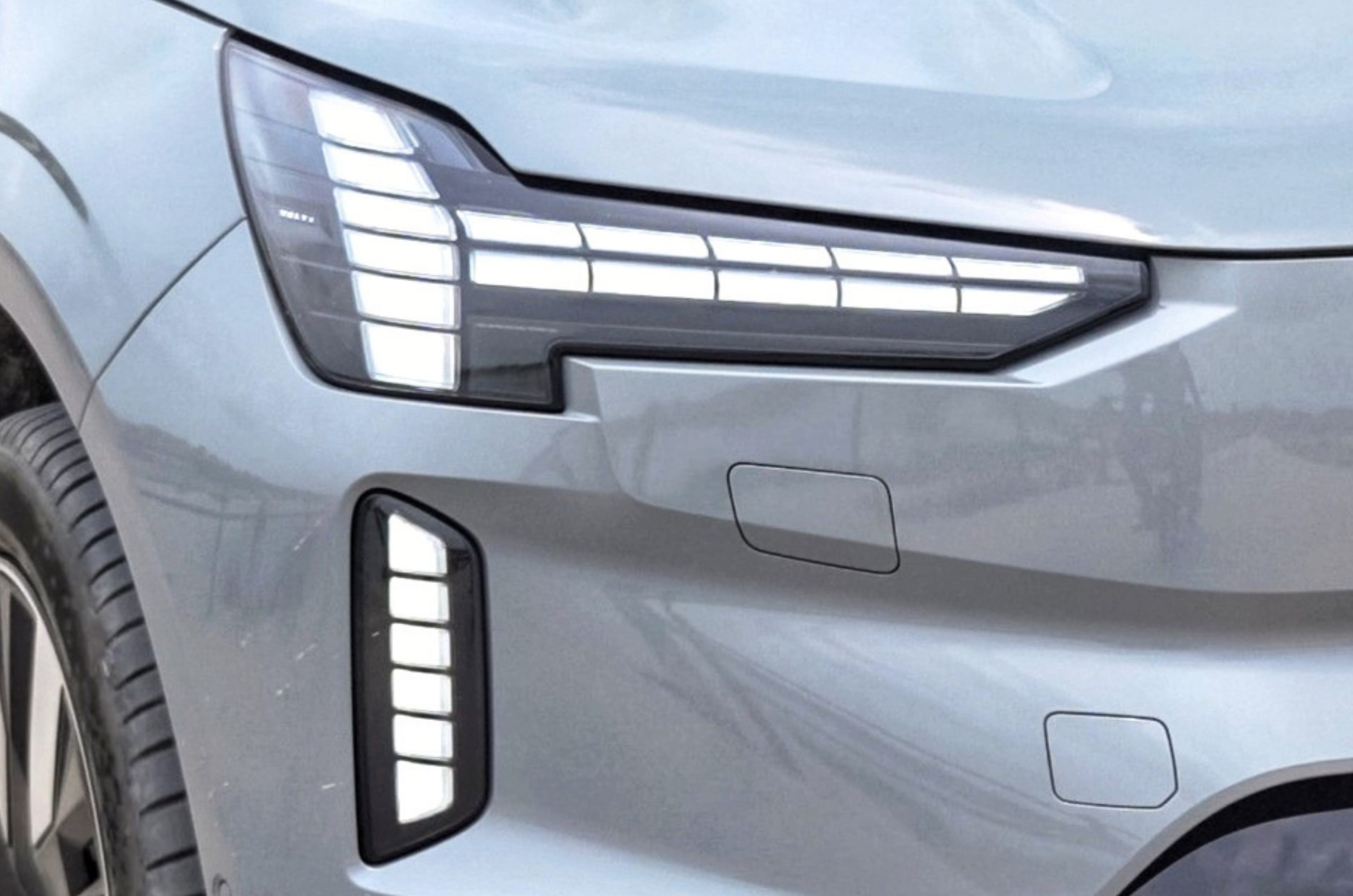
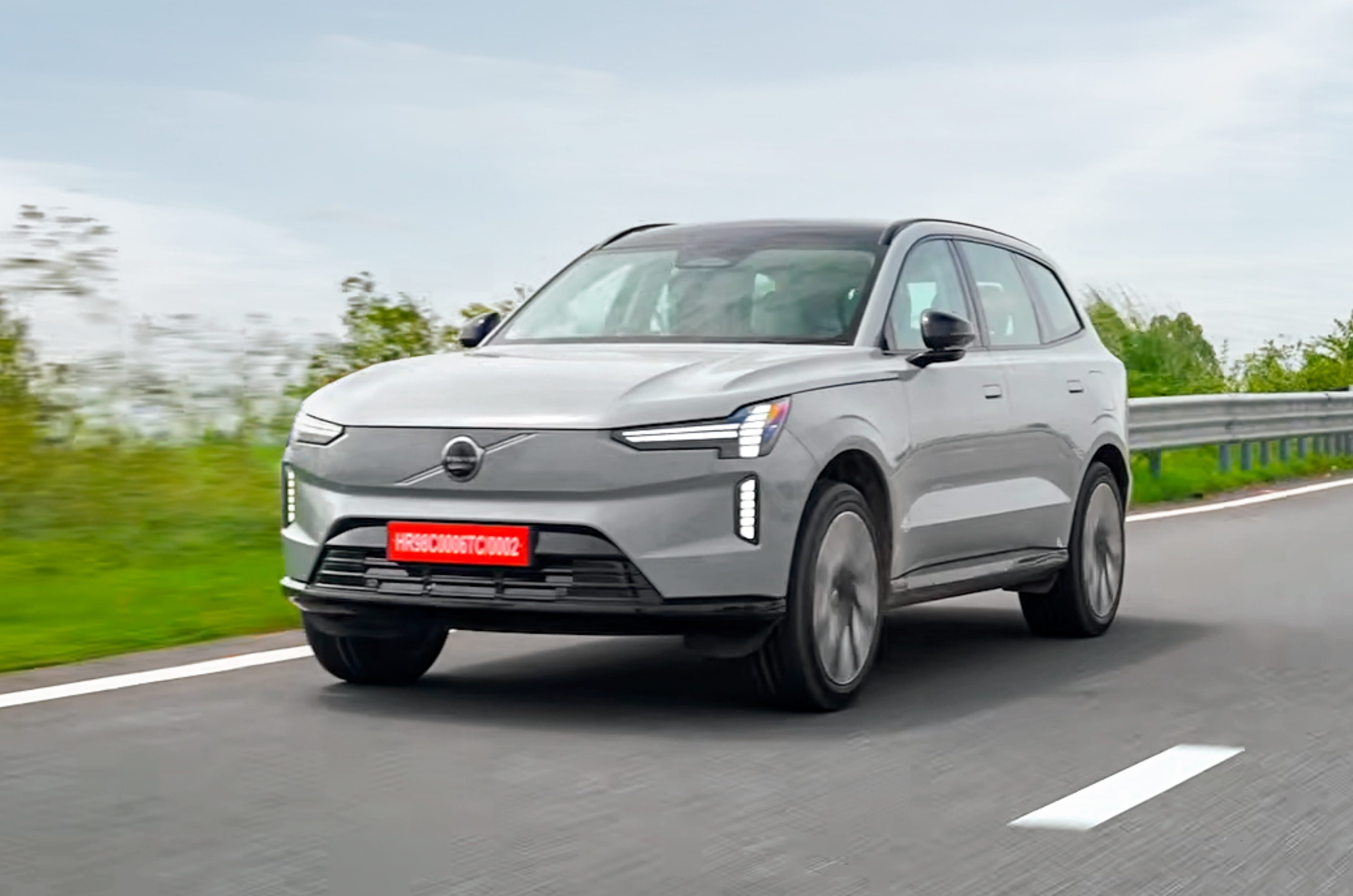
Based on the new SPA2 architecture, which has its roots in the previous SPA platform but is built specifically for EVs, the EX90 does share some resemblance to the XC90 in its shape and form factor. However, the details are different. As expected, the overall design is simple and far from outlandish or attention-seeking. This is in keeping with the brand’s image, and the restraint actually works. The flat, closed-off front end dismisses any chances of a blingy chrome grille, and what adds drama instead are the LED lights that split open to reveal the main headlamps behind. These, too, have an impressive party trick; with over a million pixels, they can individually light up or switch off and constantly shape a light beam to avoid dazzling oncoming traffic. Further down, you get some more DRL strips, one on each side, and a rather simple, fuss-free bumper.
DRLs that spilt open to reveal headlamps add drama.
Over to the side, the EX90 is slightly longer than the XC90, while the rest of its dimensions see a marginal bump. 21-inch wheels are standard, and the 210mm of ground clearance at its lowest setting is plenty. The air suspension also allows you to raise the car up to 250mm for off-road use. The door handles are pop-up, flip-up-style units, and you no longer get a key. Instead, you get a card that you need to tap at the right spot, with the Volvo logo facing the right way, for the handle to pop up. Alternatively, you can simply link your phone to the car and use it as a key. It seems convenient on paper, but the card system needs to be a lot more seamless to be hassle-free.
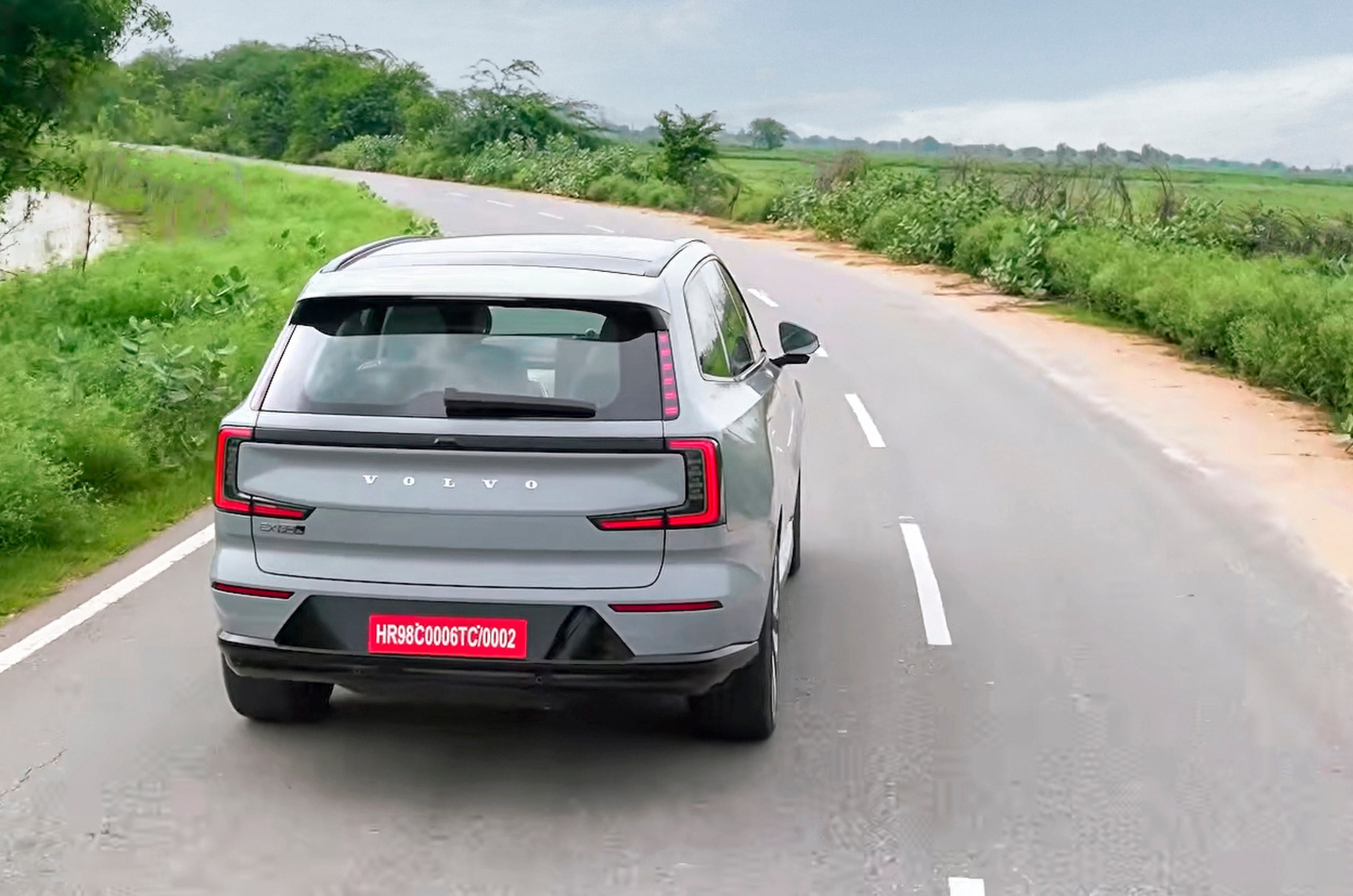
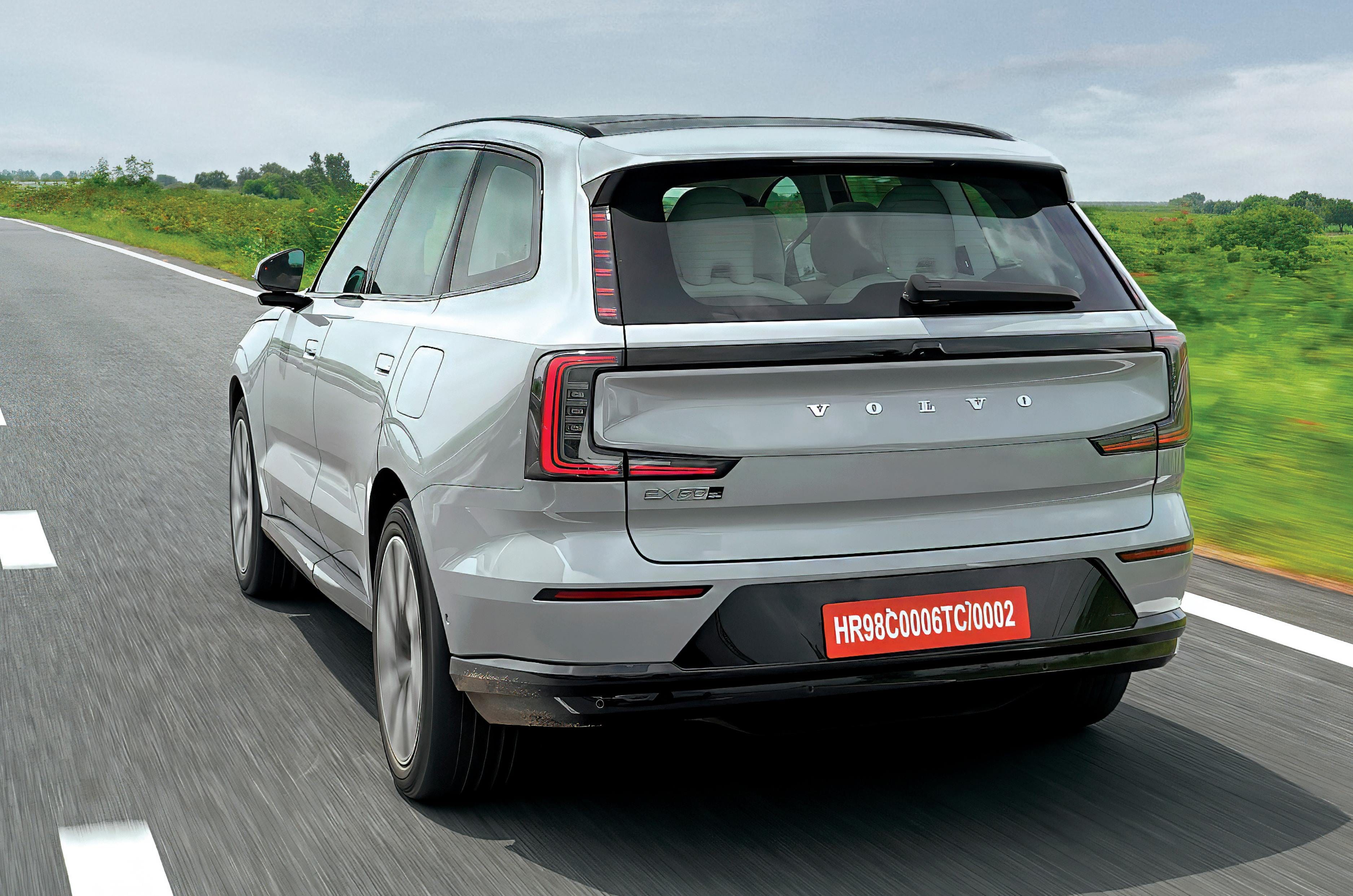
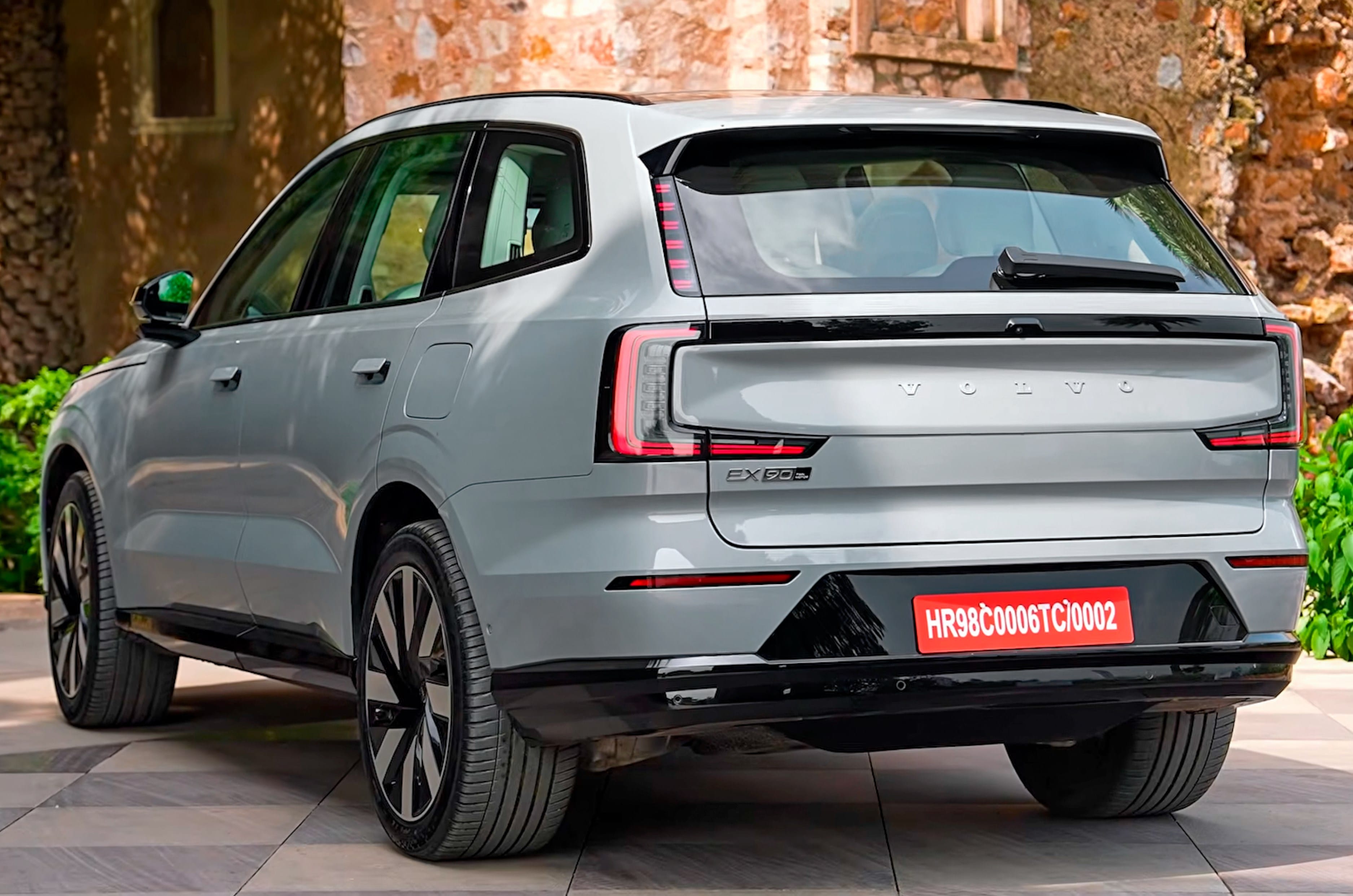
At the rear, it gets a split setup for the LED tail-lamps, with C-shaped LEDs on the lower half and vertically stacked LEDs in the D-pillar. There isn’t a single strip of chrome, and even the cladding is minimal. Subtlety is what Volvo aims for with its design, and the EX90 offers just that.
EX90 Interior Space and Comfort – 8/10
Two-tone upholstery looks rich and materials feel plush.
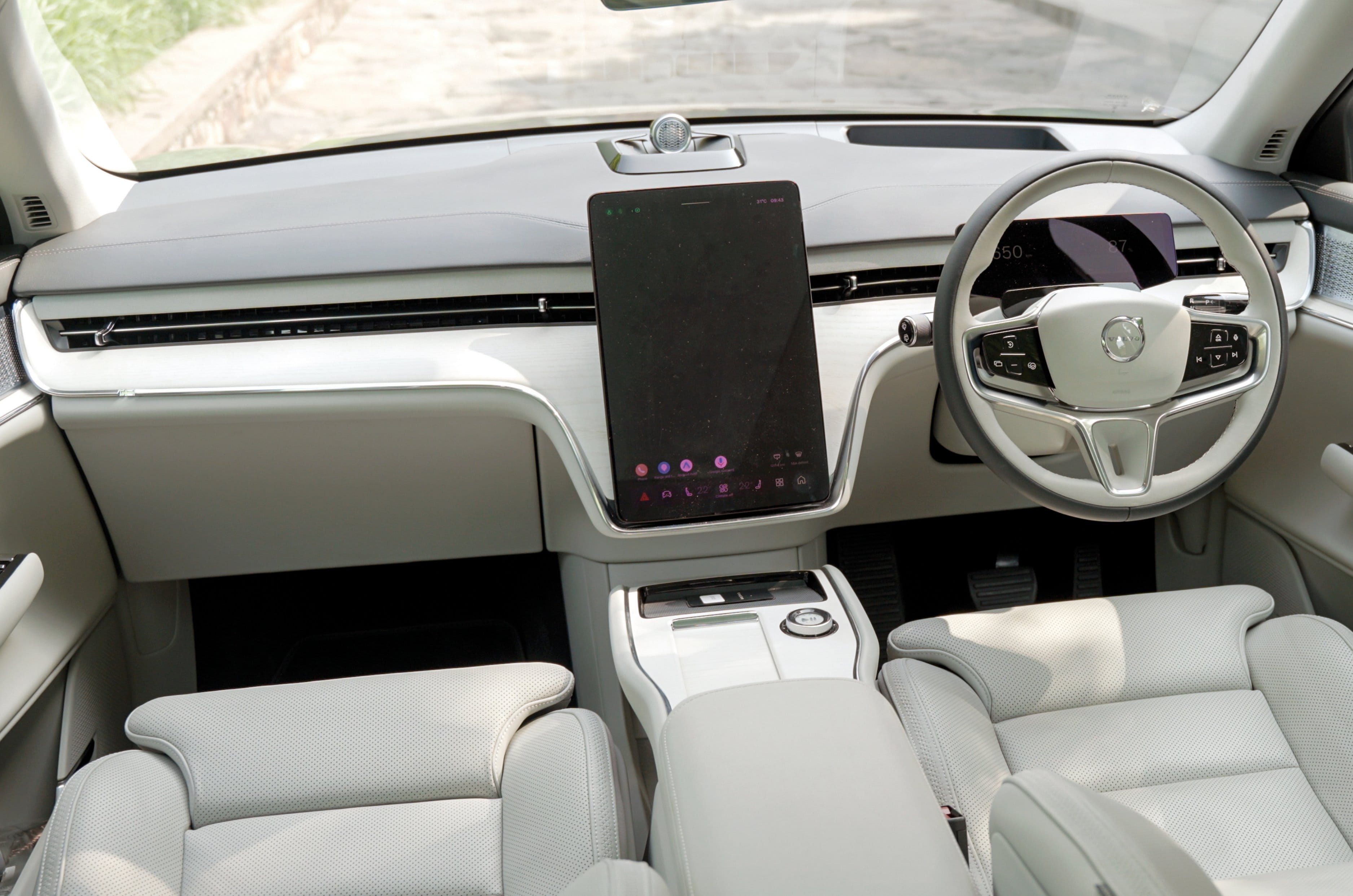
Inside, the minimalist approach continues and even takes precedence. The dashboard is devoid of any buttons whatsoever, and the majority of the real estate is taken up by the 14.5-inch touchscreen. However, the bright seats and upholstery, along with the bright open-pore wood, lift the cabin ambience significantly. There is generous use of brushed aluminium as well, and the Nappa leather is fantastic to the touch. The centre console also features wireless charging and a rotary knob for media control.
There is plenty in the front seats to pamper you. They offer excellent support, and feature heating, ventilation and a whole host of massage options. Plenty of electric adjustment also means finding an accurate driving position is easy, and all-round visibility is very good.
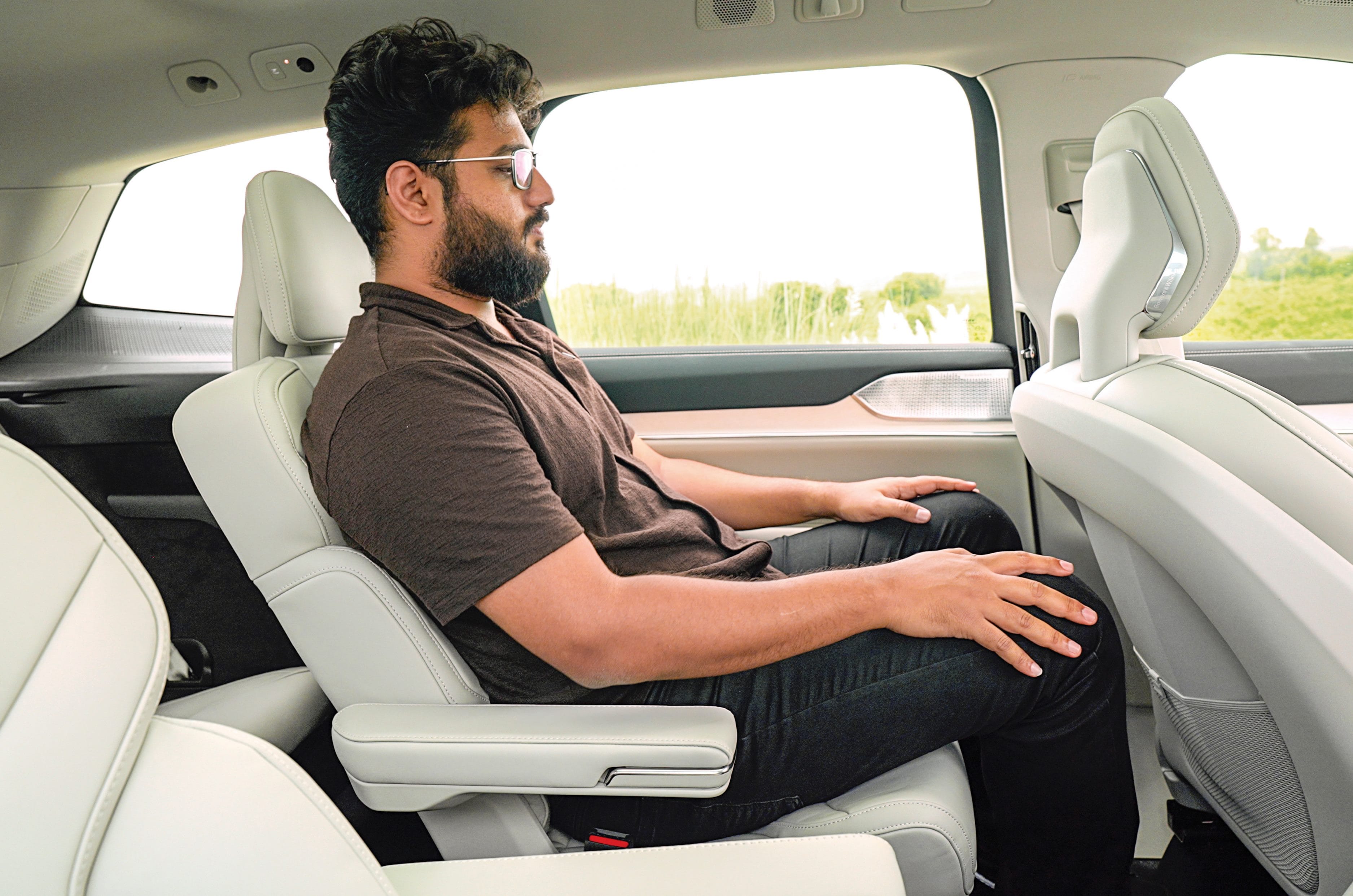
Exclusively a six-seater with good space and comfort.
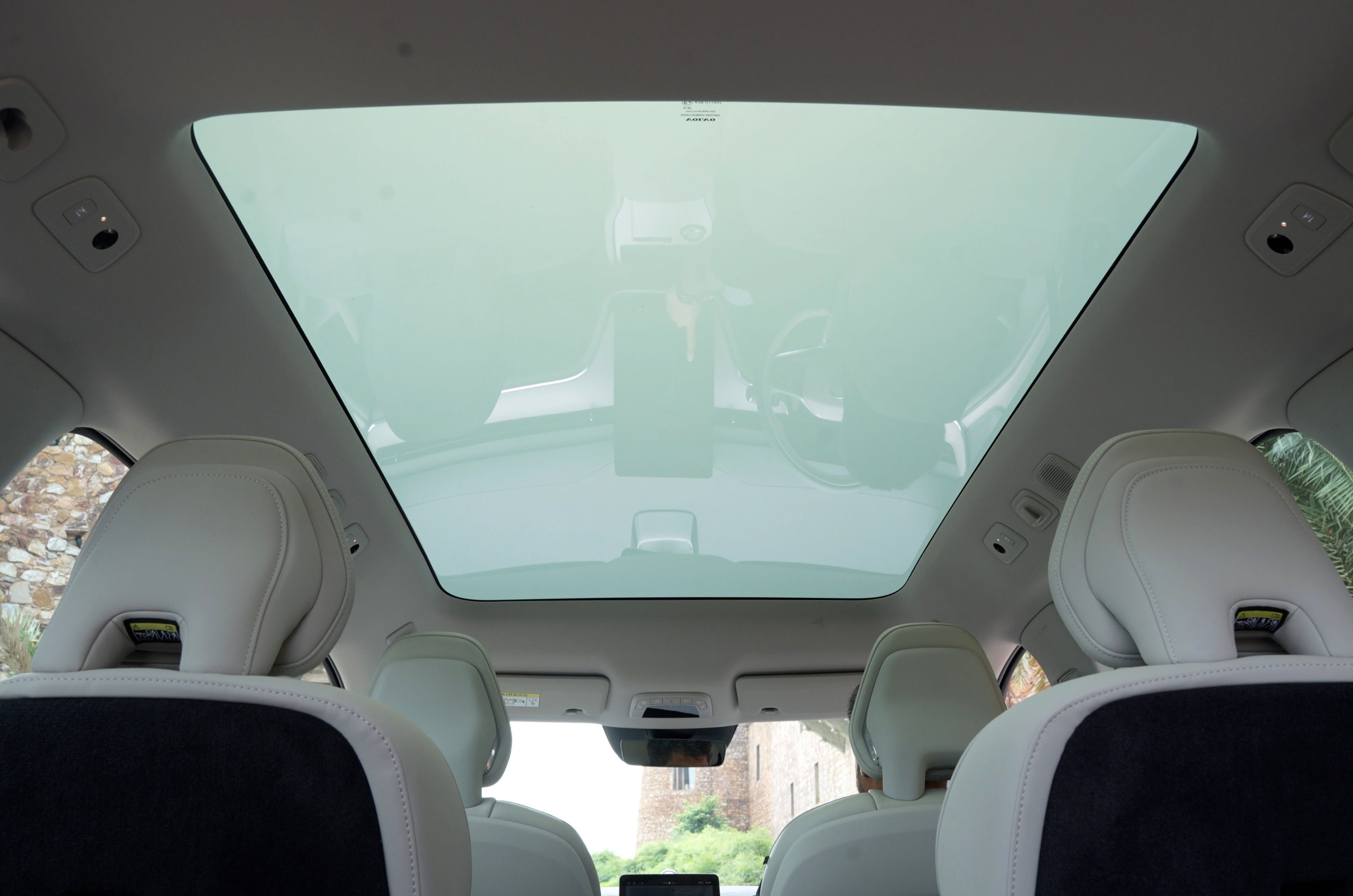
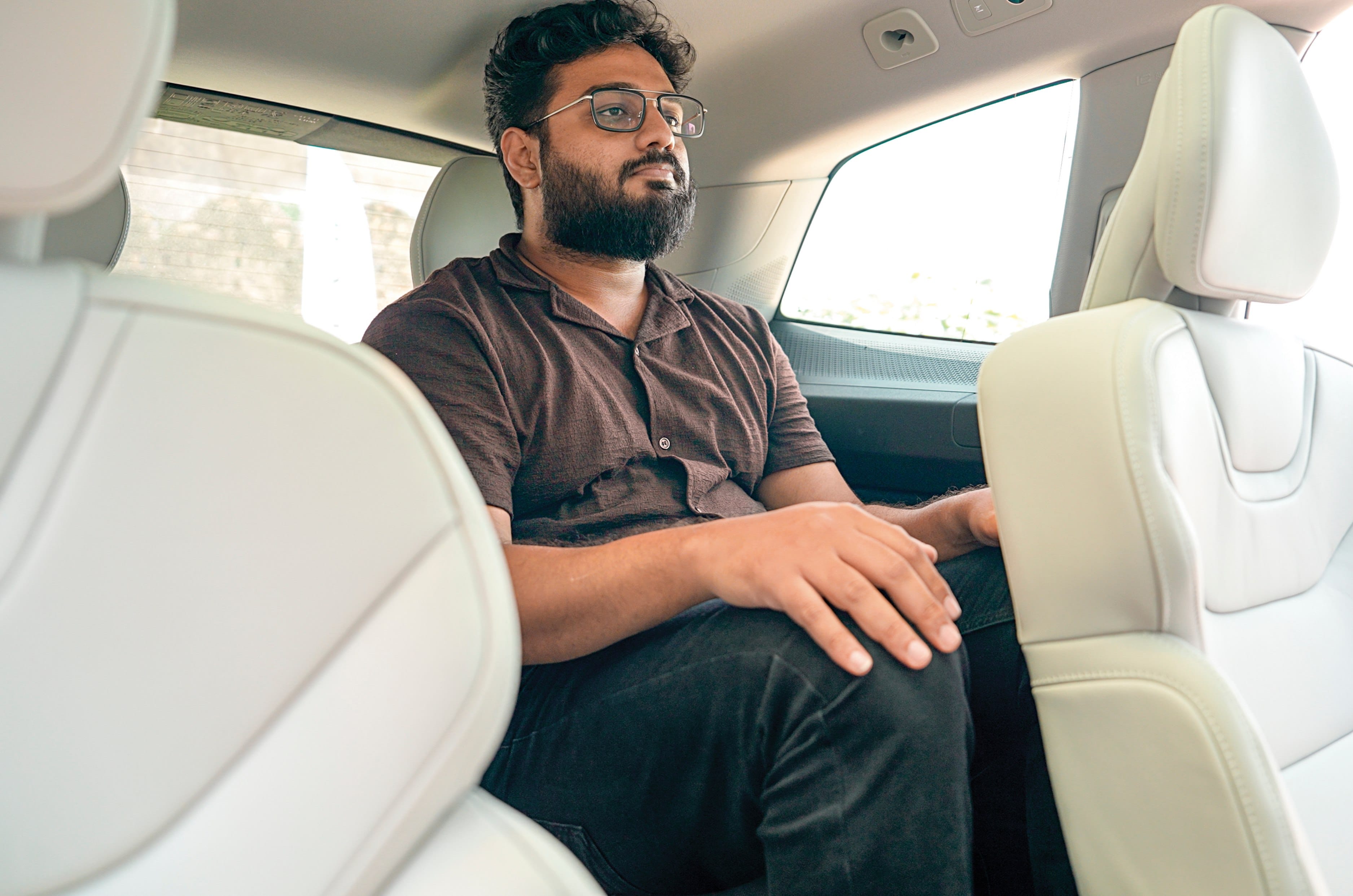
The EX90 is only available as a six-seater, so in the middle row you get captain’s chairs, but these would feel snug for some, and for a luxury car that would be chauffeur-driven, you don’t get the same level of pampering as in the front seats. There is no electric adjustment, heating, ventilation or massage either. There aren’t any sunblinds for the windows too, and even though the huge panoramic sunroof is electrochromic, at the tap of a button you get a bit of tint in the glass, on a hot day with the sun overhead, you will need more.
Massive panoramic glassroof gets electrochromic shade. Physical sunshade is an accessory.
The accessories list has a proper roof shade to protect you from that, and it is an extra we recommend you select. On the plus side, space is good, and the seats can be adjusted for legroom and recline too. You get four-zone climate control, with AC vents in the pillars that are a lot more effective, and cupholders stowed within the armrests. Also, being a modified platform, the floor is raised, and you notice this while getting in and out of the car.
Access to the third row is easy from between the captain’s chairs, thanks to the flat floor, but there is no tumble feature for the seats. Instead, they only slide forward, opening a cavity to get in. Room in the last row is at a premium for tall adults, but kids or shorter adults will do just fine with a little adjustment to the middle row.
Third row best suited for kids or short adults over quick drives.
With all three rows up, boot space stands at a healthy 324 litres, and with the third row folded away, it is a sufficient 690 litres. There is a 46-litre frunk too for stowing charging cables. Impressively, there is a full-size spare wheel as standard, which will eat up some boot space but is a huge relief given the low-profile tyres and our roads.
EX90 Features and Safety – 8/10
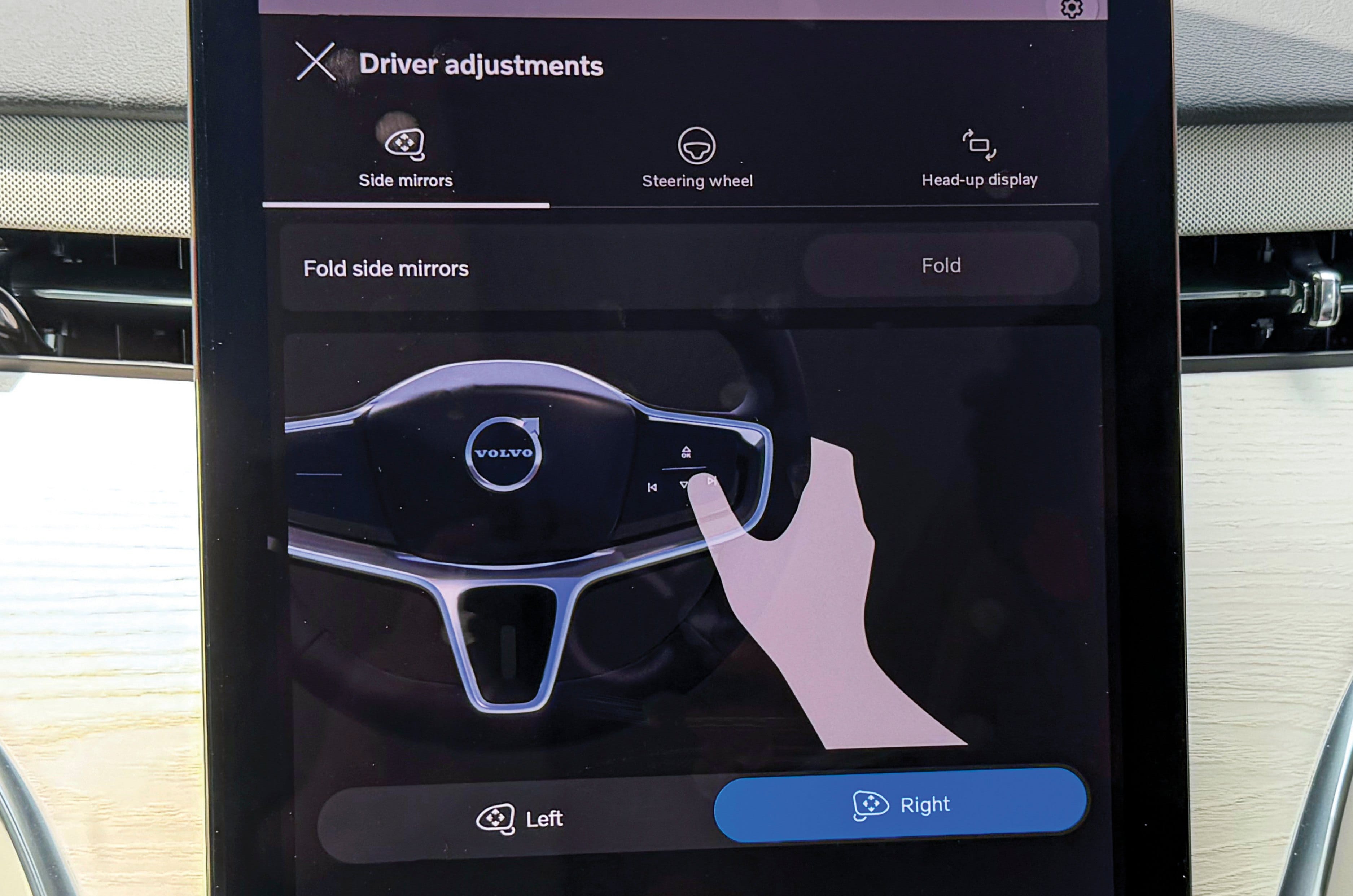
Annoyingly every control is within the 14.5-inch Google-powered screen.
Most of the EX90’s features are accessed through the massive, vertically oriented touchscreen. Being Google-powered, it runs a smooth OS, but simple tasks like adjusting the ORVMs require multiple inputs and navigation through the menus, which isn’t easy while on the move. There are some hard-coded functions at the bottom of the touchscreen, such as climate control, but you still need to focus on the screen and cannot operate them easily while driving. There is also a 9-inch driver display with nothing but the absolute necessary figures, such as range, speed and battery percentage. You can also load up the maps there, and it displays the traffic around you too. However, don’t expect multiple dials and a loaded, fighter-jet-like cockpit experience, the instrumentation is all minimal but feels sparse too.
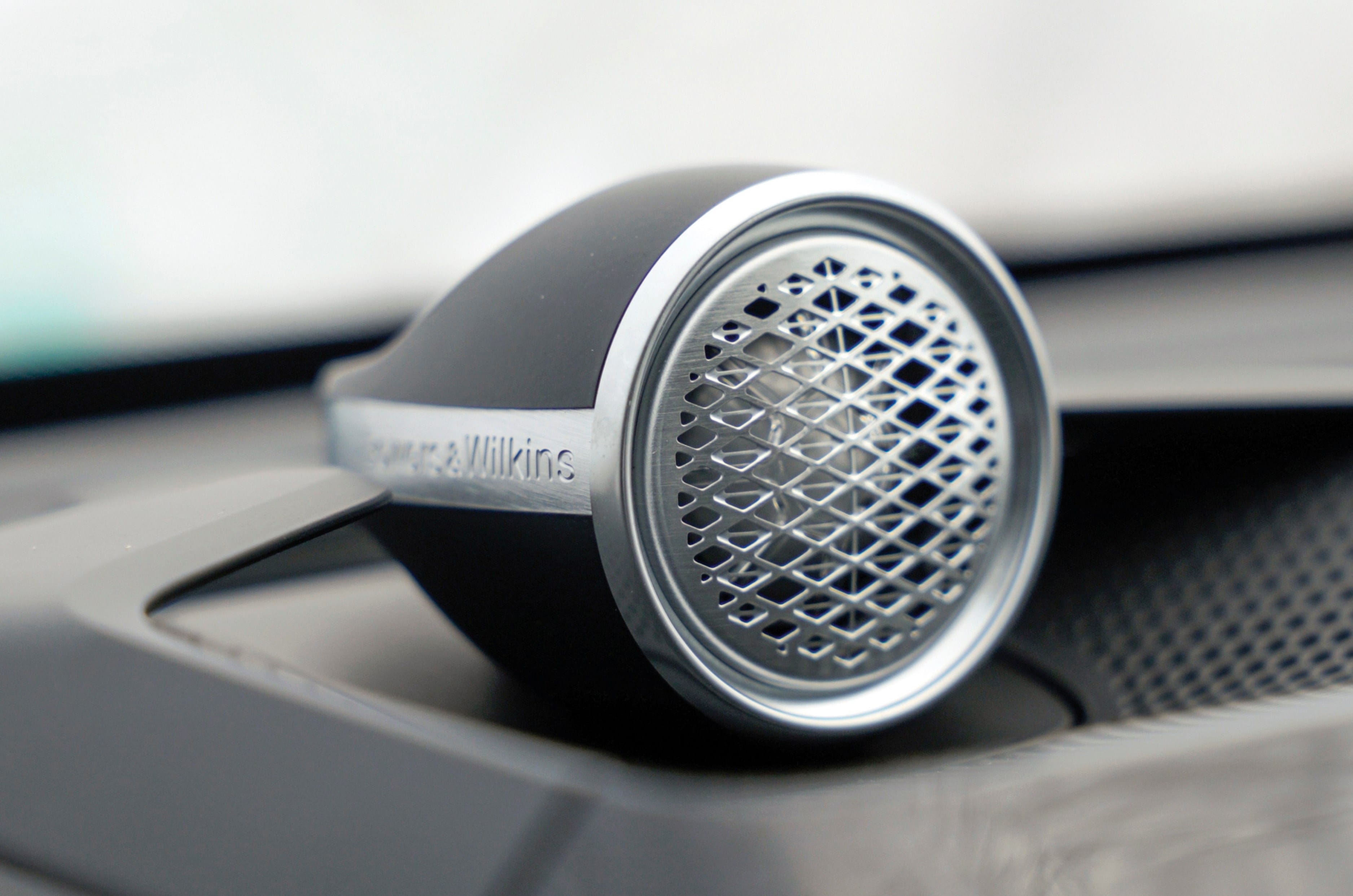
Bowers & Wilkins Hi-Fi audio system is epic.
What is excellent, however, is the music system: a 1,610W, 25-speaker Bowers & Wilkins Hi-Fi audio system with custom presets and modes that truly transform the cabin. If you enjoy your music, there are few cars in the world that offer something at this level or better. Safety is where Volvo excels, and the EX90, being the flagship, has all the bells and whistles – active and passive. Nine airbags, five cameras, five radars and 12 ultrasonic sensors, powering a full ADAS suite including door-opening alert and post-impact braking, make it exceptionally well equipped. Essentials like a 360-degree camera and auto-parking further make it easy to live with.
EX90 Performance and Refinement – 9/10
It is just as nice to drive as it is to be chauffeured in.
The EX90 comes in a single variant in India, with a dual-motor setup and a 106kWh battery pack. It develops 456hp and 670Nm, making it quick off the line. 0-100kph takes just 5.5sec, which, given its size and type, is pretty impressive. However, from behind the wheel, the experience aligns with its laid back character. You can alter the dynamics using the four drive modes. ‘Range’ prioritises efficiency, and power and torque are heavily restrained, although in bumper-to-bumper traffic, you will not notice the dip. There is a creep function too for peak-hour jams. ‘Standard’ is a balance that suits the car well for the most part, while ‘Performance’ is for that rare time when you want to add some enthusiasm.
Despite its strong power figures, performance feels more like an airliner than a fighter jet.
Don’t expect fighter-jet levels of reactions, though. Even in ‘Performance’ and with a heavy right foot, the EX90 builds pace gradually. It is almost like taking off in an aeroplane, where the speed rises in a strong and linear manner. This mode zaps power swiftly, so it is best to use the ‘Standard’ mode and get the best of all worlds. If you end up venturing off the tarmac, the ‘Off-road’ mode allows for more ground clearance (250mm), and it alters traction control and ESP settings to allow for more traction on loose surfaces.
Once on the move, what is extremely impressive is cabin refinement. With no engine sound to distract you, EV cabins amplify ambient sounds like wind and road noise, especially with large tyres, but the EX90 is a different story. Cabin insulation is top-notch, and it is near-silent on the inside. It also has a neat trick, microphones all around the car can relay conversations via the speakers clearly no matter where you are seated. You only have to talk in your natural tone for your voice to clearly go through the microphone and speakers. So passengers sitting at the first and third row can have a conversation without having to speak loudly.
EX90 Mileage / Range and Efficiency – 9/10
The 106kWh battery can eke out 625km according to the WLTP cycle. In our short test drive, we saw an efficiency of 5km/kWh in mixed driving conditions, resulting in a range of 530km. That is rather respectable, and considering a majority of our drive was on the highway, this number should only get better in the city.
The EX90 also has regenerative braking, and you can go from having it completely off to low or high, or just leave it in Auto, where it does all the thinking for you. Feel, though, leaves a lot to be desired, the pedal never feels consistent in its bite point. You get an 11kW AC charger for your home or office, which takes 11 hours for 0-100 percent. But being an 800V system, it can charge at up to 350kW on a DC charger, taking just 23 minutes for 10-80 percent. The car will also pre-condition the battery, meaning it gets the battery up to its optimum temperature to charge as quickly as possible.
EX90 Ride Comfort and Handling – 8/10
The EX90 rides on air suspension, which, over broken roads at medium or high speeds, is excellent. The car adjusts within microseconds, and you barely feel bumps inside. You can firm it up for the highway, so there is none of the wallowy feel associated with a softly sprung setup. Three modes to choose from give you flexibility depending on the road surface. ‘Standard’ offers the best balance, as it has the softness without feeling overly soft in the corners, while ‘Firm’ adds a layer of stability at speed and on fast bends. ‘Soft’ is a bit too soft, and the car ends up diving or rolling a tad more than necessary. In the city, there is none of the harshness over low-speed bumps, and the composed nature of the suspension is its highlight.
EX90 Value for Money – 8/10
The EX90 offers just about everything you need in a luxury EV
Prices for the EX90 will be out in October, and it will be the brand’s flagship SUV, sitting above the XC90. If you are looking for a chauffeur-driven luxury EV, it will tick the right boxes. That said, sunblinds would have been nice, and as a driver, it will frustrate you with an over-reliance on the touchscreen and a fiddly key card. On the whole, though, it does a lot to impress and allows you to forgive these shortcomings. You get everything you expect from a luxury EV, the cabin is plush and comfortable, the materials and feel are excellent, the design is subtle but svelte, and the ride comfort is truly impressive. It rivals the Mercedes-Benz EQS and BMW iX, and while it may not be as feature-loaded in the rear seat as the EQS or as powerful and fun to drive as the iX, it does find a very nice middle ground and would be top of the list for those looking for minimalist class and luxury.